Home Blog Page 118

Best 300 Blackout Ammo For Any Application

0

There’s no shortage of 300 Blackout ammo options, we share our six favorite—both super- and sub-sonic.

What Are The Best 300 Blackout Ammo Options:

Hunting

Home Defense

Target

The quiet child of the 5.56 NATO, the 300 Blackout is mainly thought of as a specialist. Slap a can on your rifle and the short .30-caliber whispers hell downrange. Perfect for special operations and other clandestine applications.

True enough, the roots of the cartridge are firmly planted in this brand of action, but as a mature and widely-accepted AR-15 option it’s branched out to many other uses. Deer hunting, home defense, even plain old plinking. Have a reason to pull the trigger at short-medium or close range, the .30-caliber most likely fits the bill. Especially with today’s choices of 300 Blackout ammo.

Today, we look at six of our favorites—both super- and sub-sonic—for three popular applications of the cartridge. Suppressed or unsuppressed, these options will get you on target.

Hunting Ammunition

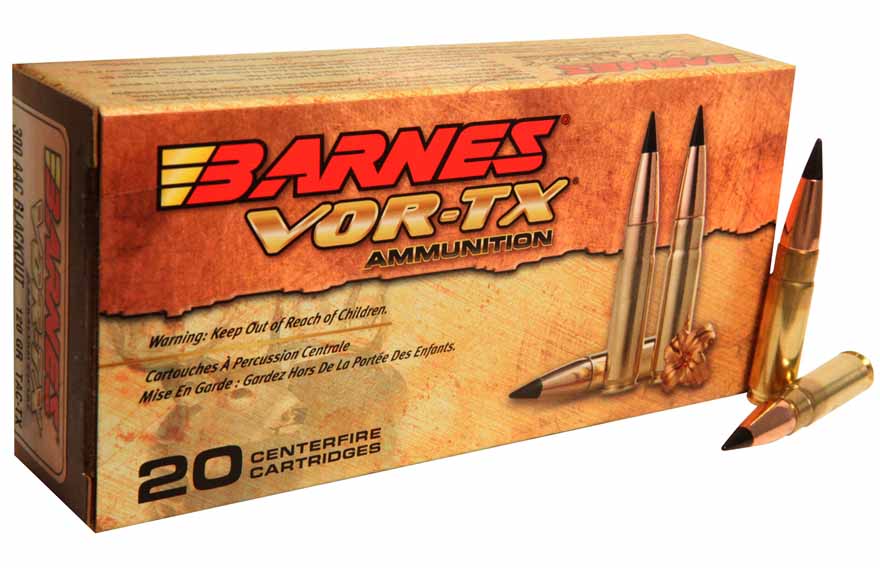
Barnes 120-Grain VOR-TX
Barnes

Up to whitetail deer, Barnes has nearly the perfect 300 Blackout ammo. Across all calibers, VOR-TX ammunition has built a solid reputation but especially shines in the Blackout. The excellent penetration expected out of solid-copper projectiles, combine with the ability to expand at the cartridge’s middling velocities, is a potent mix. Much of the bullet’s terminal consistency is thanks to a specially designed nose cavity, with mushrooming hastened on by its polymer tip. The nose cone also makes the projectile a ballistic wunderkind, with a .358 ballistic coefficient (BC). Not to mention, at 120 grains, it’s an exceptionally pleasant round to shoot. Quick on follow-ups, too. Barnes offers a lighter option—110 grains—which is ideal for smaller fair such as coyotes and varmints.

Sig Sauer 205-Grain Tipped Subsonic
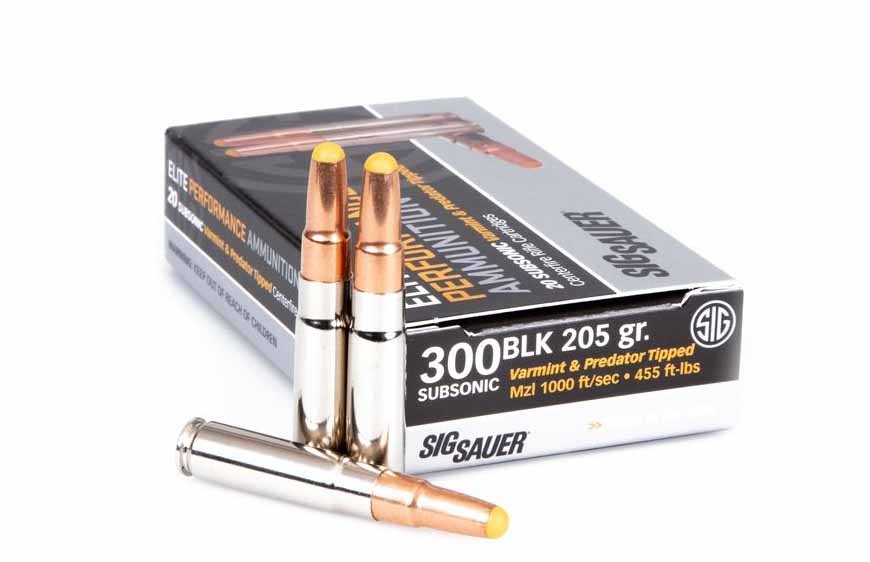
300 Blackout Sig Sauer

Limited in effective range, hunters are best served by super-sonic 300 Blackout ammunition. However, there are times the hushable fodder excels in the field. Up-close hog busting, for instance. Go this route, bullet design becomes imperative, which is why we favor Sig’s sub-sonic hunting option. A wide polymer tip ensures consistent and devastating expansion, even at the low operating velocities of this class of ammo. While the step-side design is mainly to ensure a full 30-rounds in a standard AR magazine, it also plays a role in excellent terminal ballistics, ensuring the core and jacket don’t separate in the target. As to suppressibility, it’s excellent.
Sig pushes it, however, loading the round to the cusp of super-sonic—1,000 fps muzzle velocity.


Bone Up On AR-15 Cartridges:


Home Defense Ammunition

Speer 150-Grain Gold Dot Duty
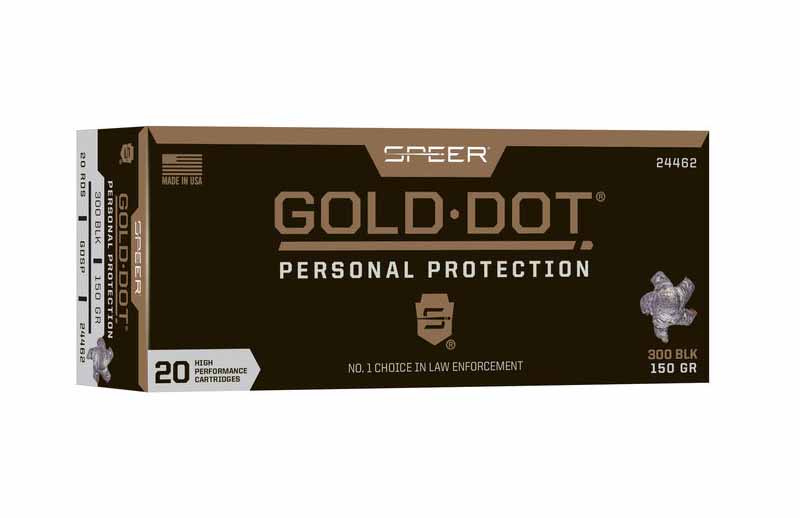
Speer

Despite the close-quarters cred the 300 Blackout brings to the table, ammo tailored for defensive purposes are few and far between. Speer Gold Dot is a marked exception. Optimized for expansion at a range of velocities out to 200 yards, the 150-grain load (.330 BC) is the ideal up-close option to protect hearth and home. Particularly nice, Speer has optimized Gold Dot to perform out of shorter-barreled rifles, down to 10-inches, ensuring top performance out of the most nimble platforms. Similar to the handgun line, the 300 Blackout ammo features bonded-core bullets, which eliminates the No. 1 cause of bullet failure—jack and core separation. Additionally, the design feature ensures impressive weight retention once at its terminal destination, as well as through common barriers, such as auto glass.

Hornady 190-Grain Sub-X
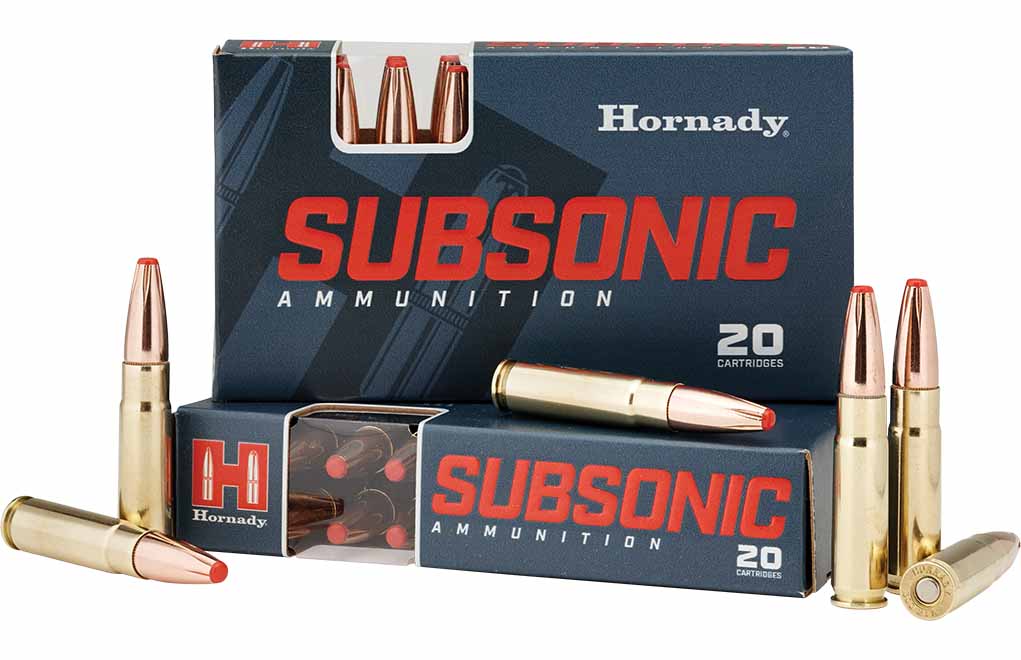
300 Blackout Hornady

Sub-sonic 300 Blackout ammo, in many respects, is an ideal home-defense option. Highly controllable, with a reduced muzzle flash and next to nothing in recoil, the suppressible stuff allows for fast and accurate close-quarter hits. Making certain those hits count, Hornady Subsonic Ammunition (.437 BC). The 190-grain load features the ammo company’s XTP bullets, engineered for lower velocity performance. Much like Hornady’s Critical Defense handgun ammo, the projectile utilizes a Flex Tip insert in its hollow-point cavity. Resisting fouling from clothing or other material, the polymer ensures the reliable and explosive expansion shot in and out. Also aiding in Hornady Subsonic’s performance is a flat, energy dumping tip, as well as long skivying in the jacket, allowing for controlled expansion. Loaded for a 1,050 fps muzzle velocity, keeps the cartridge’s report very suppressible, while delivering plenty of energy on target.

Target Ammunition

American Eagle 150-Grain FMJ
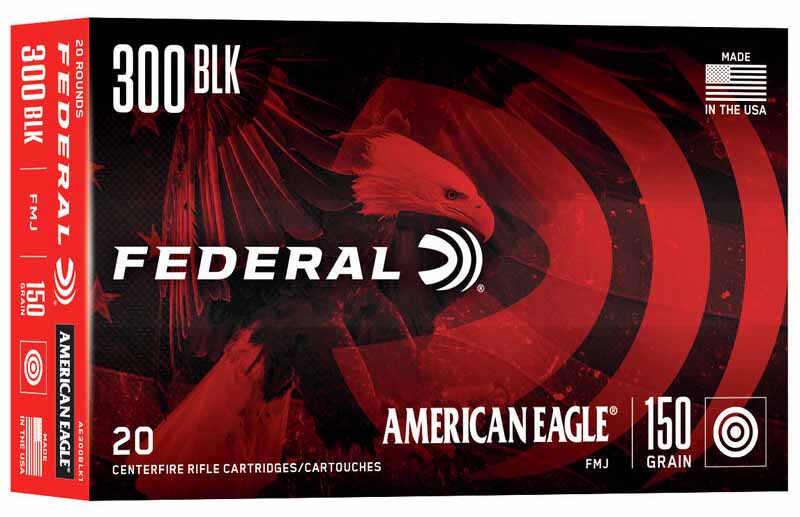
American Eagle

As usual, American Eagle offers up an excellent choice for range fodder. There isn’t a ton to talk about in its 150-grain load (.406 BC), it’s what most shooters would expect out of a full-metal jacket, boattail target option. Federal loads it respectably, with an average muzzle velocity of 1,900 fps, which combined with bullet weight creates a fairly accurate load out to 200 yards or so. Best of all, American Eagle is typically inexpensive (outside ammo runs such as 2021).

Magtech 200-Grain First Defense Tactical
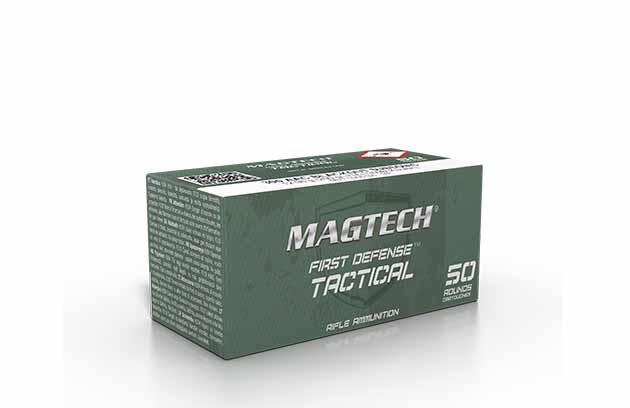
300 blackout ammo Magtech

There’s no need to pitch premium sub-sonic when messing around at the range. Magtech’s affordable 200-grain suppressible FMJ load (.560 BC) frees shooters from breaking the bank when sharpening their skills. Loaded with a 200-grain FMJ bullet and loaded to 1,050 fps muzzle velocity, the load offers short-mid and close range perform that’s easily hushed up. Magtech anneals the cases as well, offering more consistent performance shot to shot and longer case life for those who reload.
The Art Of A Lightning-Fast Revolver Reload

0
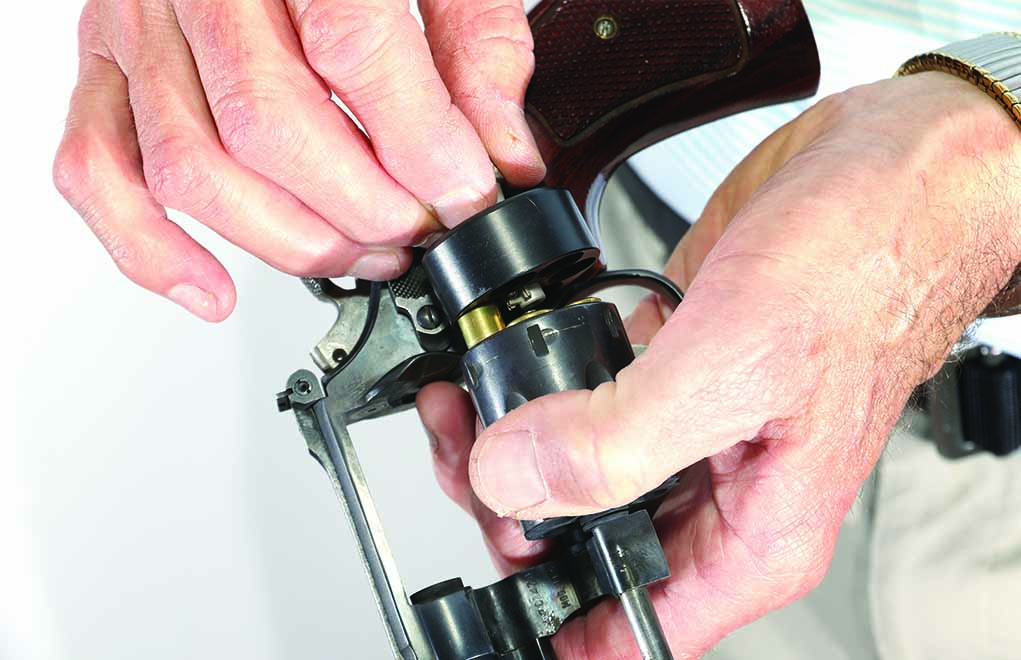
Once you’ve turned the knob on the speedloader, let go of it and let it drop. If you try to “speed things up” by lifting it away, you’ll probably hook a cartridge and lift a round clear, such as this one.

We give you three lightning-fast revolver reload techniques to swap six in a hurry.

What Are The Techniques For Reloading A Revolver:

For this bit of instruction, we’re going to ignore reloading with loose rounds, such as from a box or bucket … or (horrors!) a pocket.

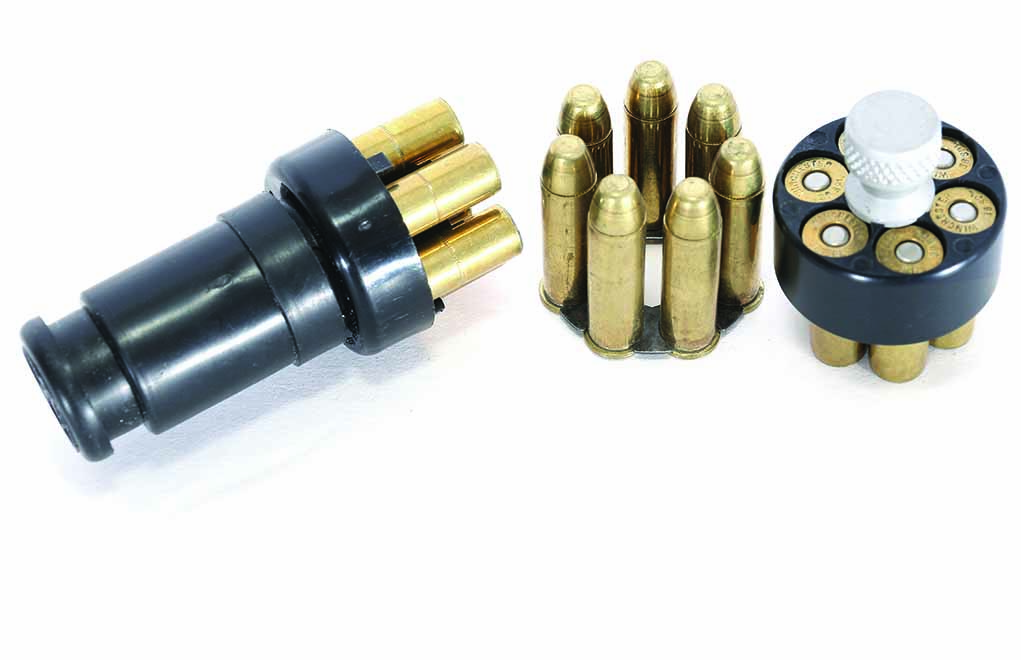
As far as equipment is concerned, you’ve got two choices for doing it quickly: first, a gizmo called a “speedloader.” This holds six rounds in a pattern identical to the diameter and spacing of the cylinder. This is important, because there’s no “one-size-fits-all” when it comes to speedloaders. You need one specific to your wheelgun.

The other piece of equipment is a “moon clip,” which can be a half-moon or a full-moon version. Obviously, a half-moon holds a half-cylinder full of bullets, and a full moon clip … well, full.

There are two, solid, dependable methods of revolver reloading, along with one that’s faster but requires a whole lot of practice. We’ll do the solid ones first.

Method #1: The Thumb Press

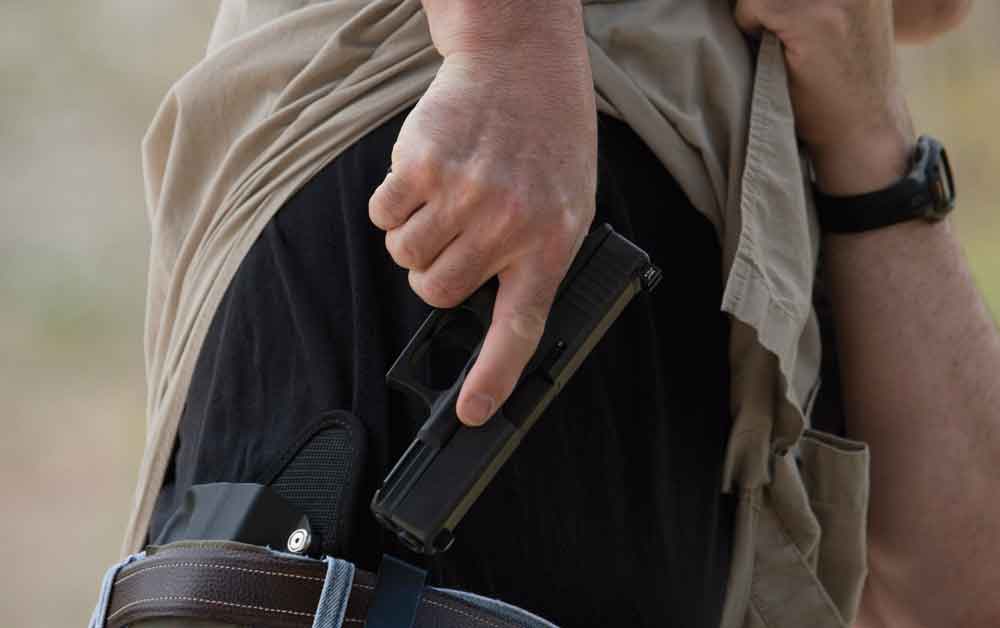
You’ve just fired your last round in the cylinder. Slide your left hand (we’ll assume you’re right-handed, because lefties have to go through a whole lot of contortions to reload) off the grip and forward a bit while you use your shooting hand to press the cylinder latch. Your left hand cups under the trigger guard and, as the cylinder unlocks, you push the cylinder open with the fingertips of your left hand.

Reloading Relover 4
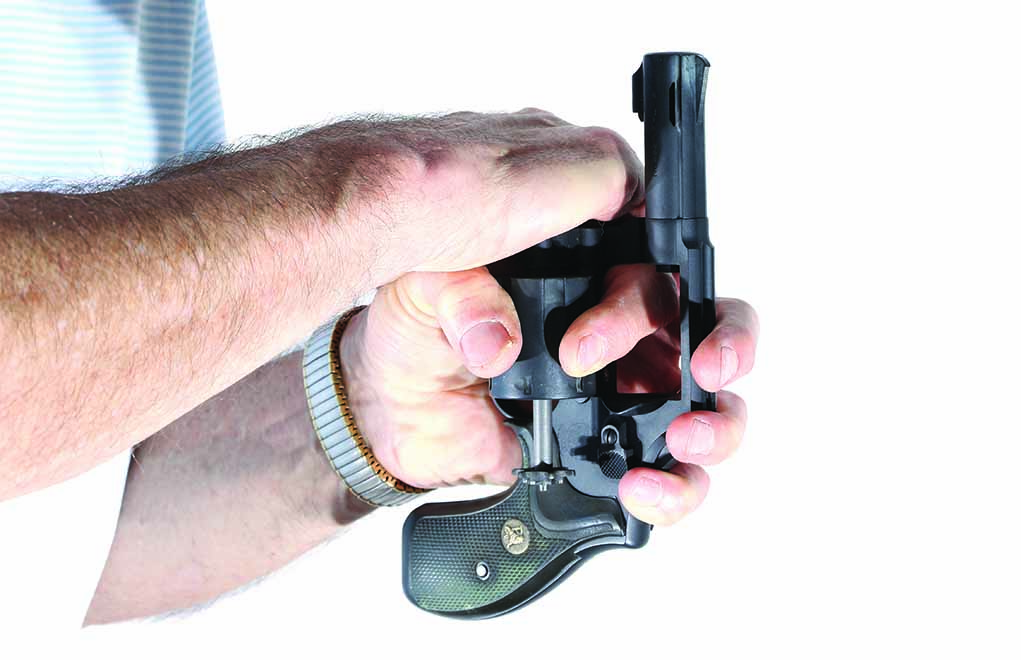
The second method makes sure that all cases are fully ejected from the cylinder. Briskly slap your palm down onto the ejector rod while the muzzle is vertical, and you’ll be done with those pesky empties!

Push the cylinder open and then your fingers through the frame opening while you let go with your shooting hand.

So far, both methods are the same.

The first, and traditional, method is to push the ejector rod with the thumb of your left hand as you turn the revolver muzzle-up. Do this so the empties will fall to the ground and not get hung up on the grips. As you do this, your right hand is reaching for the speedloader or moon clip, so you have more ammo ready just as soon as you rotate the muzzle back down to load.

Method #2: The Palm Punch

The second method is to turn the muzzle up and use the palm of your shooting hand to briskly punch the ejector rod. This revolver reloading technique is favored by those who’re shooting full-power magnum ammunition, because the thumb-press method might not get the fully expanded empties out. Also, some revolvers—snubbies, in particular—don’t have a full-length ejector rod. By briskly whacking the ejector rod, in both cases, you make sure they have enough momentum to get clear of the cylinder.

The method you use depends on the equipment you have, along with the situation you’re in. For competition, if you don’t have moon clips (center), your scores will suffer.

In the second method, you reach for the speedloader after you’ve punched the empties out. This method is a bit slower, but the speed loss is the cost of reliably ejecting the empties every, single time.

Finessing for More Ammo
Getting more ammo into your revolver requires just a bit of finesse.

With pistols, reloading is “fast-slow-fast.” You get the next magazine out and up to the pistol fast; you slow down to align it; and then, you slam it home in one move. With revolvers, you go “fast-slow-hands off.”

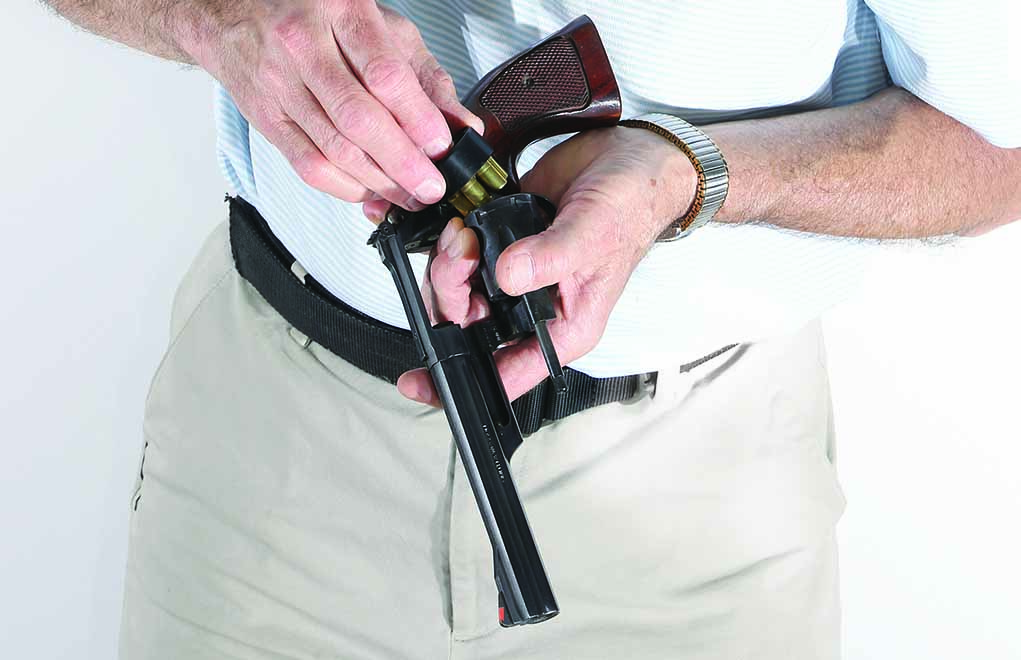
Get your hand to the speedloader fast, and get a good hold. Snatch it off your belt or out of the holder and get it to the cylinder quickly. Then, slow down. Tip the speedloader at a slight angle and line up two of the cartridges. No, not all six—just two. Once you get those two started, bring the speedloader into alignment with the cylinder and press it forward. And, during this time, you do not take your eyes off the loading process: Glancing up, even briefly, is likely to make you mess up the reload.
At this point, you also have two equipment choices to hasten revolver reloading (well, you’ve made the choice already, but they work differently here).

One is the spring-loaded speedloader. As you press the loader fully forward, the latching mechanism releases the rounds, and the built-in spring pushes them home.

For the other type, you’ll have to turn a knob or press a button. (The button-press ones are old tech, and you might not encounter them these days.)

In either case, spring or knob, you push the speedloader all the way to the cylinder, and then you come to the most important detail of all—one that requires its own, separate paragraph:

Let go of the speedloader! Do not lift the speedloader from the cylinder or try to do anything with it except let go of it and let it fall to the ground. Any extra handling you do risks binding a cartridge rim inside the speedloader and lifting it partially or fully clear of the cylinder. If you do that, you’ve either created a malfunction or dropped as much as 20 percent of your ammo onto the ground.

Once the spring pushes them in—or you turn the knob—let go and let the speedloader fall to the ground. By letting go of it, you ensure each cartridge can cleanly leave the speedloader on its own.


Take A Spin With More Revolver Content:


Moon Clip
The process is the same right up until you introduce the rounds to the cylinder. If you’re using round-nosed FMJ bullets (this would most likely be for competition work), the rounds are, in all likelihood, self-centering, and you simply have to get any one of them started. Gravity will do the rest.

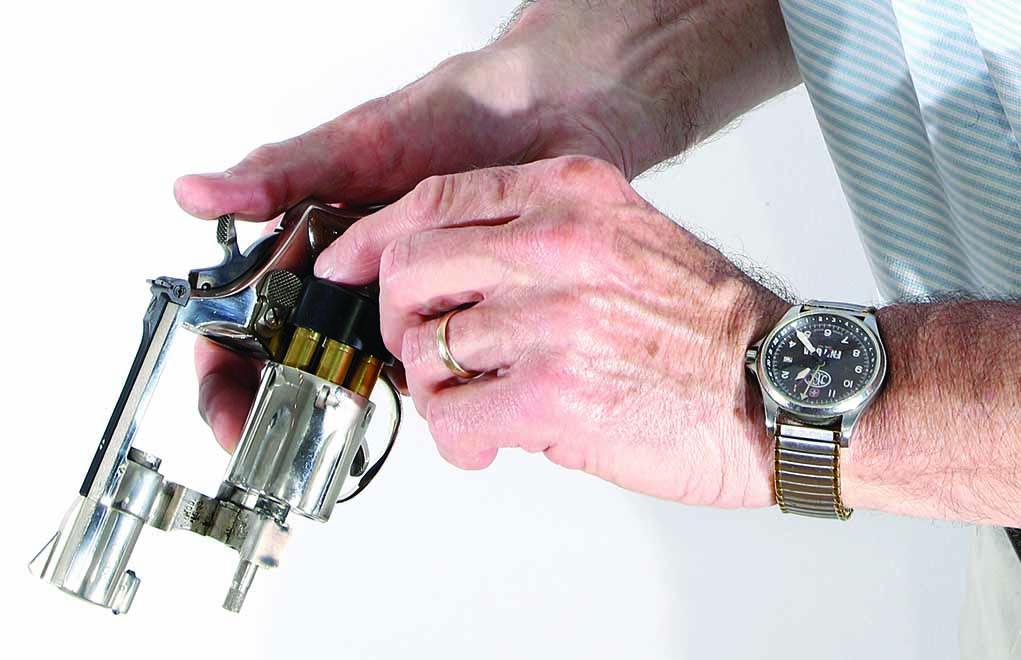
Here’s the speed load—competition style. With this method, you don’t let go of the revolver with your firing hand and you do the ejecting and loading with your other hand. Notice that the trigger finger keeps the cylinder from rotating when it comes time to turn the speedloader knob.

My friend, Jerry Miculek, has reloaded a .45 revolver so many times that he really just drops the moon clip from several inches away and it self-centers and slides home. (Practice 100,000 times, and that will probably work for you, too!)

If you’re using JHPs, you’ll have to use your moon clip the same way as you would a speedloader: Get two started—on an angle— and then align and press home.

Both of these methods require that you, having reloaded, get your firing hand back onto the grips while moving your left hand to close the cylinder and then slide it back into your firing grip.

Method #3: The Strong-Hand Method

The speedier method is one I thought I’d learned from Jerry Miculek when we were both shooting bowling pins back at the old Second Chance match. There, a single run was your score for the revolver event. You could shoot it many times, but only one run (your best) counted for score. So, saving even a single tenth of a second was important.

Having dumped the empties, you introduce Mr. Wheelgun to Mr. Speedloader. This is the loading process for both the first and second methods. To make sure you get a smooth and fast reload, tip the speedloader into the cylinder. Catch two rounds and line them up. Then, bring the speedloader into alignment and press it forward.

With the speed method, you do some things the same way, but your firing hand never leaves the grips. Your left hand pops open the cylinder, but you also use your left hand to snap the ejector rod to clear the empties. The muzzle can’t point down very much and, as a result, this works best with moon clip revolvers. Then, with your left hand, grab a new moon clip, toss it into the cylinder, and close up.

When I was reloading wheelguns this way in IPSC competition at World Shoots, the moon clips would sometimes sail past my head, making the RO have to duck occasionally. It’s difficult to load this way with speedloaders, because you can’t guarantee that every empty exits (because they aren’t all clipped into a moon clip). And, the speedloader has to have the cylinder gripped so it can’t rotate as it feeds in. Moon clips don’t care. I learned to use the tip of my trigger finger to keep the cylinder from rotating.

When this is all working smoothly, you do save a tenth to a half a second on a reload, compared to an equal speedloader reload. But, it’s a high-wire act; and, if anything goes wrong, you lose more time than a dozen reloads completed this way saved you.
In talking with Jerry many years after the old pin shoot (there’s a new pin shoot now, held in the same place as the old one), he told me he never reloaded that way. So, I clearly must have made it up to try and catch him, or I stole it from someone else (whose name is now lost to history).

Wheelguns might only hold five, six, seven or eight rounds, but you can get them stoked back quickly if you know how—and you practice.

The article originally appeared in the August 2020 issue of Gun Digest the Magazine.

Kit Up: Best Gun Gear Reviews

0

Hornady A-tip, Gear Reviews

Find that perfect piece of kit to improve your shooting with the help of our best gun gear reviews from the past year.

As you most likely know, the past year saw record gun sales. Brace yourself, the market doesn’t show any sign of letting up as we plunge into the roaring ‘20s. This means discretion is imperative.

Spotty availability of guns, ammo and accessories for the foreseeable future means you should get your mind right on what you need—and which brand best provides it. Education is the key and we’re here to help you down this path.
We’ve gathered up our best ammo and gun gear reviews and buyer’s guides from the past year to pull back the veil on what’s out there right now. Do your research and critically consider what will enhance your performance—be it hunting, self-defense or plain old plinking—and you’ll get the kit you need.


Check Out Other Review Roundups:


Gear Buyer’s Guides

10 EDC Tools You Didn’t Know You Needed

EDC tools designed to help you solve problems that bullets don’t.

How To Select The Best Shooting Targets For Your Needs

If you’re planning some trigger time you need to consider what you’ll pitch rounds toward. Here’s everything you need to know about shooting targets and then some.

5 Best Steel Targets For Years Of Shooting Fun

Nothing beats the sweet sound of copper-jacketed lead ringing off steel targets. Here’s what you need to know and the models to spend your money on for years of shooting enjoyment.

Best Pistol Targets To Sharpen Your Handgun Skills

If you plan to get the most out of your handgun, you need to think about what pistol targets will up your game. Here’s what you need to know and the ones to look at.

.30-06 Ammo: Turn The Warhorse Into A Thoroughbred

Find out the .30-06 ammo that gets the more than century-old cartridge shooting with the best of them.

Best 6.5 PRC Ammo Available Right Now

Load up on the right 6.5 PRC ammo and you take your shooting to a new level.

8mm Mauser Ammo That’s Right On Target

Find the 8mm Mauser ammo that gets the old warhorse running like a thoroughbred.

6 Top Performing 6.5 Grendel Ammo Choices

Whether you’re sniping swine or looking to go the distance with your AR-15, these 6.5 Grendel Ammo options are sweet shooters.

M1 Garand Ammo: What Should You Shoot in Your M1?

As supplies of M2 Ball ammo dwindle, knowing what M1 Garand ammo you can safely fire in your military surplus rifle is critical.

Best .22 Ammo For Every Application

Not all .22 Ammo is created equal. Here are the top match, hunting and self-defense options for your .22 pistol or rifle.

4 Must-Have Concealed Carry Upgrades

No need to break the bank. These four concealed carry upgrades will have you carrying like a pro on the cheap.

7 Shoulder Holster Options To Carry Up Top Like A Pro

The shoulder holster isn’t just for cinematic good and bad guys. It has a role in real life as these seven upper-body rigs prove.

What Is The Best Concealed Carry Holster?

When it comes to choosing the best concealed carry holster, the process has never been more difficult.

10 Pocket Holsters For Easy Everyday Carry

Here are several pocket holsters that simplify carrying a self-defense gun and keep it at the ready.

Quiet Advantage: Best AR-15 Suppressor Options

Looking to keep a lid on your black rifle? Here are some of the best AR-15 suppressor choices around.

Best .22 Suppressor Choices To Mute Your Plinker

Get a handle on your rimfire’s report with these top .22 suppressor options.

Upgrades: Top AR-15 Parts And Accessories

No need to settle for a stock carbine. We’ve got the AR-15 parts and accessories that will get you rifle humming.

Got-To-Have Long-Range Shooting Gear

Marine Corps veteran sniper Frank Galli highlights the past year’s top long-range shooting gear, from the must-have ammo to the on-target stocks and scopes.

Gun Gear Review

Gear Review: Thumbs-Up To Ben’s Easy Magazine Loader

Ben’s Easy Magazine Loader it’s exactly as it sounds.

Real Avid Gun Tool Core: Shooter’s “Duct Tape”

The Real Avid Gun Tool Core: something you need, will want … and must acquire.

Fix-It Sticks Kits Keep Nearly Any Gun Running Like A Top

Fix It Sticks introduces competition-inspired 3-Gun and Long-Range kits, giving shooters the tools to troubleshoot their guns anywhere.

KonusPro EL-30: One Riflescope, 10 Reticles

No matter your shooting situation (or range) the Konus EL-30 sets you up for success with a multitude of reticle options at the push of a button.

Snap Safe TrekLite: Gun Security On The Go

Composed of rugged polycarbonate and securable nearly anywhere, the Snap Safe TrekLite keeps your gun under lock and key anywhere you roam.

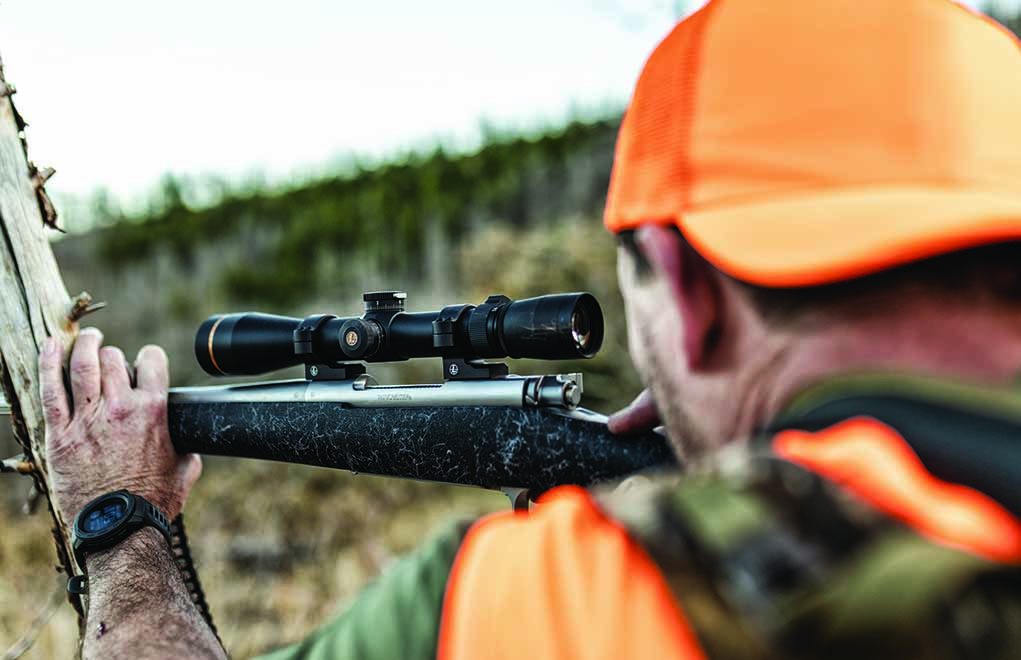
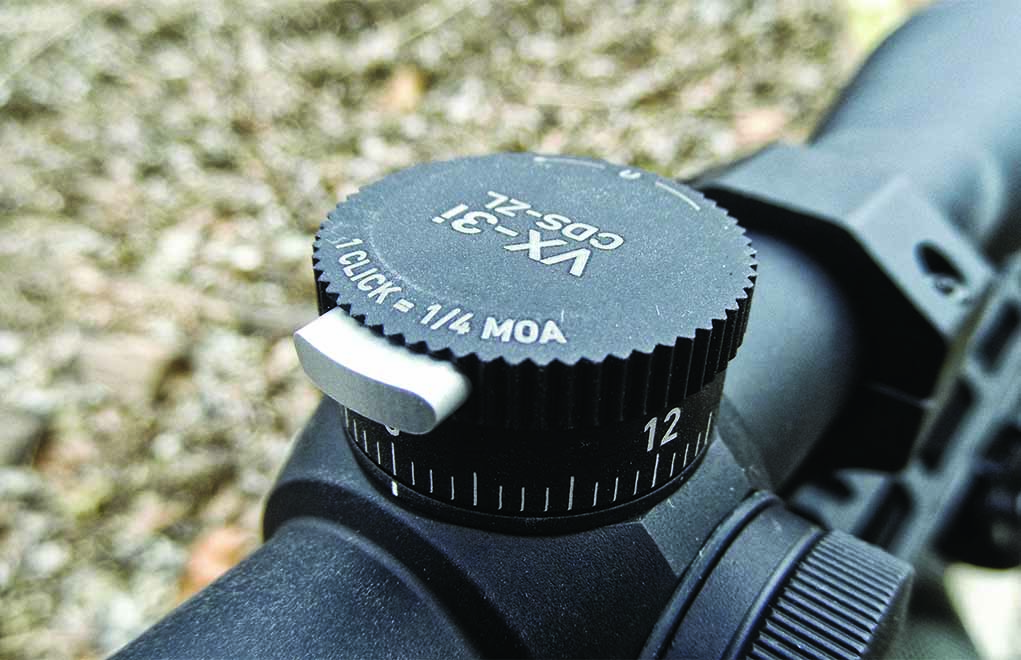
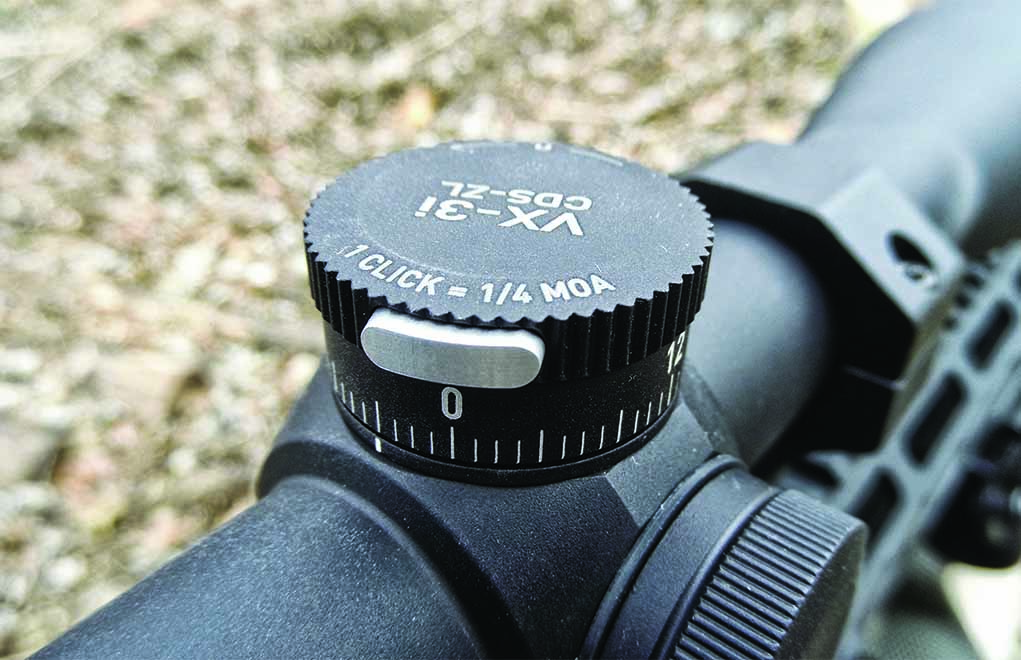
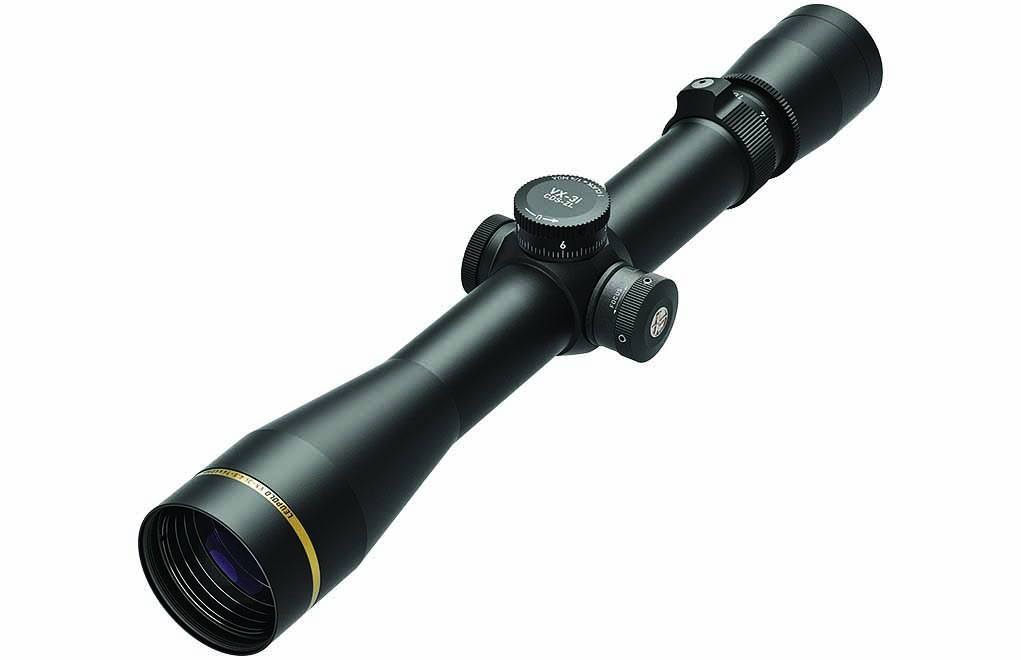
Scope Review: Leupold VX-3i CDS-ZL Optics Line

Sporting the high-end features of their military cousins, Leupold’s VX-3i CDS-ZL line takes shooting to a different level without breaking the bank.

Gear Review: AR-15 Brass Deflector, A Neat Solution From KET

So, picking up spent cases is a drag, particularly if your AR kicks them all over hell and high water. Which is what makes Kinetic Energy Tools brass deflector an out-and-out godsend.

The Godsend: The Delta Series Compact AR Tool

Wheeler Engineering offers that one little piece of gear you can’t live without in the Delta Series Compact AR Tool.

Is The Trijicon Huron The Ultimate Whitetail Optic?

In sub-zero conditions, the Trijicon Huron riflescope still put whitetails on ice.

Mantis X10 Elite: Training Speed And Accuracy

With tools to improve recoil management, the Mantis X10 Elite gets you on target again and again … fast.

Dry-Fire 2.0: Getting On Target With The ELMS By G-Sight

No ammo? No problem! G-Sight ELMS allows you to sharpen accuracy while dry-firing for minimal startup cost.

Gear Review: Recoiling Recoil With Kick-Eez Grind-To-Fit Pads

Constructed of a cutting-edge polymer, Kick-Eez Grind-To-Fit recoil pads take a bite out of your gun’s kick.

On The Hunt With Sierra Prairie Enemy

If Prairie Enemy varmint ammo is any indication of what’s to come, shooters are very lucky Sierra Bullets has entered the ammunition manufacturing game.

Gun Maintenance On The Go With Wheeler Engineering

How do you face gun trouble on the go? The Wheeler Engineering Micro Precision Multi-Driver Tool Pen is one of the answers.

Gaining A Ballistic Data Edge With Labradar

Forget traditional chronographes and their potentially shaky readings. The cutting-edge Labradar makes collecting critical data easy.

Best Revolver Reviews To Pick The Perfect Wheelgun

0

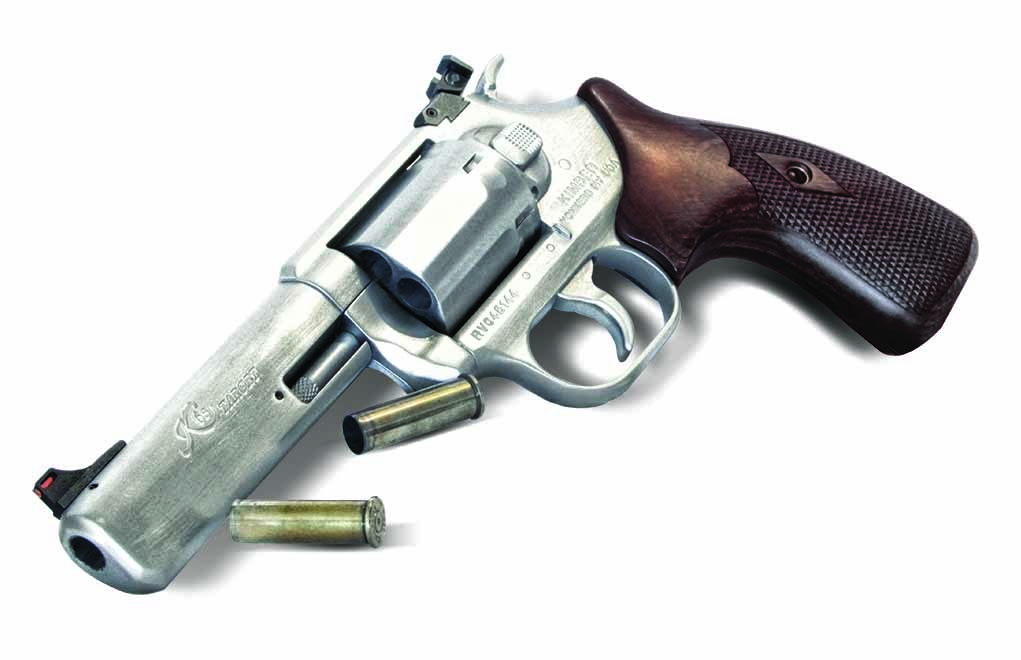
Kimber K6s Target Revolver Reviews

Don’t know which wheelgun to hang in your holster or hit the field hunting with? Check out our best revolver reviews from the past year to get the inside scoop.

There’s never been quite a year like 2020. No, not the incessant rioting and worldwide pandemic. Violence and disease are old as mankind. Instead, the hallmark of the past year was gun sales. There was a lot of them … more than any other year on record.

While nice the ranks of gun owners have been bolstered it did create quite a few headaches. For many the cupboard was bear when at their local gun store. Newsflash: the market should prove equally this in 2021. This means you should have your ducks in a row when you go shopping.

We’re here to lend a hand. We’ve compiled our best revolver reviews and lists from the past year to give you the inside edge on the hottest wheelguns donning your local gun store’s display cases this coming year. Be it a big-bore hand cannon, a svelte snubbie or a rugged six-shooter, you’re certain to find the right revolver for your next buy.

Revolver Buyer’s Guides

9 Standout Concealed Carry Revolvers For Personal Defense

Semi-automatic pistols have ruled the roost when it comes to self-defense guns in recent years, but concealed carry revolvers still hold their own.

5 9mm Revolver Options Sized Right For Everyday Carry

What do you get when you cross a time-tested platform with the most popular centerfire handgun cartridge? The 9mm revolver. Here are five that are fit to cover your six.

Top Affordable .38 Special Revolver Options To Protect Your Six

Go small and reliable with these excellent snub-nose .38 Special Revolver options.

Handgun Hunting: 10 Best Hunting Revolver Options

You don’t want to choose the wrong tool for your next handgun hunting adventure, and you won’t with these top-notch hunting revolver options.


Check Out Other Review Roundups:


Revolver Reviews

Colt Python: Is The Reboot Revolver A Plum Or Lemon?

The re-introduction of the Colt Python has been a rollercoaster of excitement and disappointment. So what’s the story: is this the second coming or a troubled handgun?

Revolver Review: The Ruger Wrangler Single-Action Rimfire

Cutting out the usual price factor of a single-action rimfire, the Ruger Wrangler revolver is an everyday tool for outdoorsmen.

Ruger Bisley: Battle Of .45 Colt And .44 Mag Custom Builds

The “opposite but equal” custom Ruger Bisley build: a .44 Rem. Mag and a .45 Colt. Which one of these beautiful brutes comes out on top?

Taurus Model 942: An Absolute Bull Of A Snubbie Rimfire

Available in both .22 LR and .22 WMR, the Taurus Model 942 revolver exceeds expectations and should have shooters looking differently at the Brazilian gunmaker.

Colt Single-Action Army: Owning The Enduring Legend

The Colt Single-Action Army revolver remains among the most coveted handguns of all time. But what’s worth spending your money on?

Belt Artillery: Smith & Wesson 460 XVR

A veritable hand-held howitzer, the Smith & Wesson Model 460 XVR X-framed revolver is summed up in two words: More. Power.

Nimble Monster: Taurus’ Raging Hunter Revolver

The Taurus Raging Hunter .44 Rem. Mag. delivers blows well outside its weight class and price tag.

Smith & Wesson R8: Above And Beyond The Iconic Model 19

As far as competition revolvers are concerned, the Smith & Wesson R8 is everything the legendary Model 19 was … and more.

Full-Sized Hot Rod: The Kimber 4-inch K6s Target

With excellent lines and accuracy to boot, Kimber’s new 4-inch K6s Target has speed and performance worth bragging about.

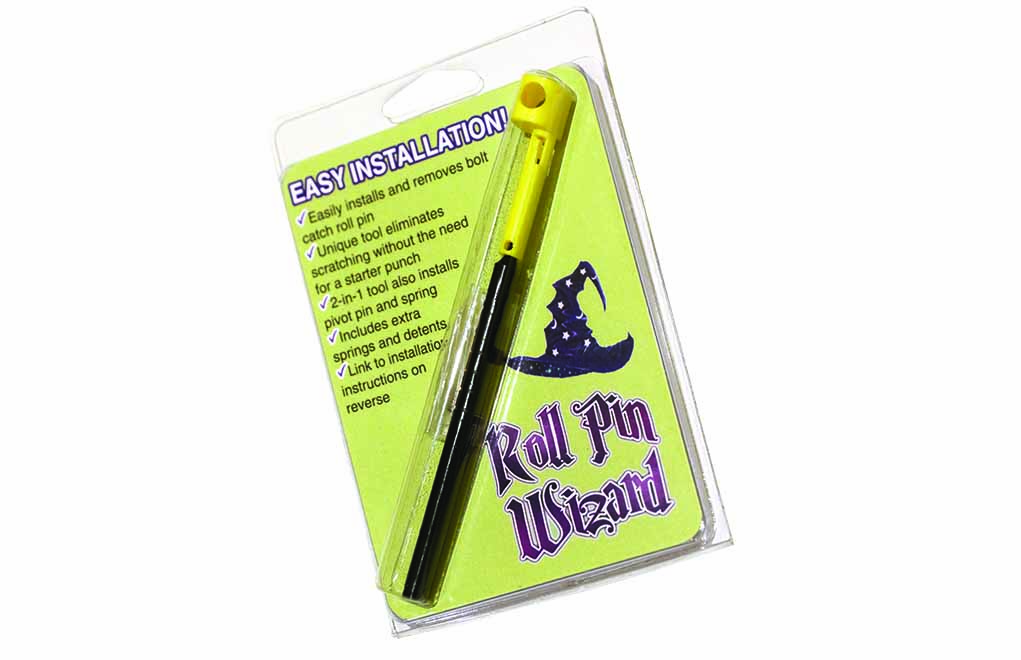
The AR Builder’s Secret: Roll Pin Wizard

0

The Roll Pin Wizard saves your gun from unnecessary abuse during routine maintenance.

In the old days, you’d see a lot of really ugly ARs. (One might say there are ugly ones today, but that’s another discussion.)

One mar on an AR build was the various and sundry scratches you’d see from someone trying to install the bolt hold-open roll pin. Basically, you’re trying to use a part to compress a spring that’s driven by a plunger, line up the hole in the part and then drive a small roll pin through the holes—all with a small, lightweight aluminum part you can’t easily hold.

Back when I was early to wrenching on ARs, I had an elaborate assemblage of old towels in a vice that would hold the receiver, along with small blocks, with masking tape to hold the parts in place … while I tried to find a third hand for the roll pin, hammer and punch.

Well, no more.

Roll Pin Wizard Magic

The Roll Pin Wizard holds the punch in place. It keeps it aligned. The roll pin tip holds the pin in place well enough, because the front end of the pin is sitting in the receiver hole for it.

The Wizard comes to you from the fertile mind of the Gas Block Genie—a simple tool (I wish I had thought of it!) that lets you line up the gas port and gas block on that part of the assembly.

Using the Wizard is easy: Insert the guide in the rear takedown pinhole. Stand the receiver up on the front face. Line up the pin and use the punch, once you’ve slid it through the guide, to hold the pin in place.

Now, place the spring and plunger into the receiver and press the bolt hold-open onto them. Wrap your hand around the receiver and use your thumb to compress the bolt hold-open into alignment. You can use a small drift punch from the other side to get things lined up. Then, press and hold.

The Roll Pin Wizard has both the guide and the roll pin punch you’ll need for a clean build.

Now, with one hand holding the parts in place, pick up your hammer and tap the punch that will press in the roll pin. Your “third hand”—the Roll Pin Wizard—will be keeping things lined up … as long as you don’t hit too hard or off-line.

I know this sounds a bit complicated, but it’s a piece of cake compared to what we did in the old days (well, for those of us who didn’t have a benchtop fixture that held everything in place with clamps).


Raise Your Gear IQ:


Looking Good Is The Point

This is a simple piece of plastic, and it costs you $18; to some, that might seem a bit much.

Sure, you could make one … if you had a lathe and a milling machined to fabricate the part out of a billet of aluminum or mild steel. But that’s just the guide you’re making. You’ll still have to buy a roll pin punch, which chops that “$18 savings” in half.

If you already have those power tools, saving $18 might seem like an afternoon’s entertainment. To the rest of us, investing $3,000 to $4,000 just to save $18 or less sounds like the sort of thing a lifelong politician might suggest.

Man up and reward ingenuity: Spend that $18 to avoid scratching your receiver on your next build. And, while you’re at it, spring for the Gas Block Genie.

The Roll Pin Wizard is available online. And, as long as you keep it a secret from the others at your club, your builds will be good-looking (well, no scratches, anyway), and everyone will think you’re the king of the AR builders.

The article originally appeared in the April 2020 issue of Gun Digest the Magazine.

First Look: Savage Arms Impulse Straight Pull Rifle

0

Savage Impulse Straight Pull 1

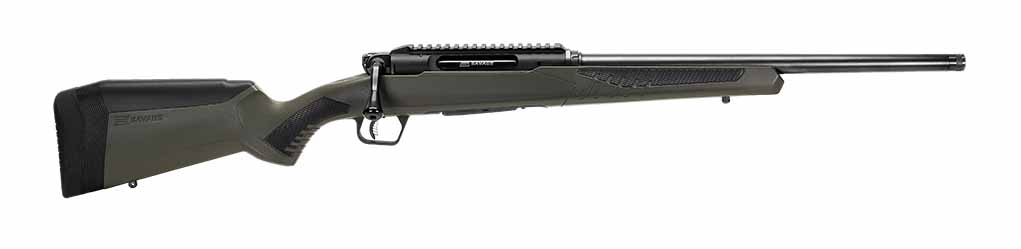
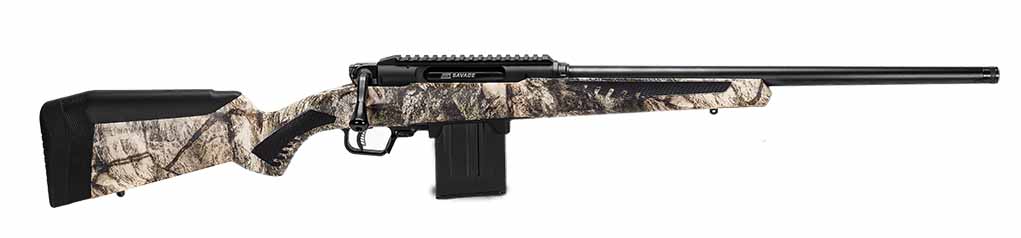
Does the Savage Arms Impulse Straight Pull Rifle have what it takes to nudge American shooters over to the style of rifle?

The pantheon of American firearms is vast and none too discriminating. That is, a tinker cooks up a bang stick, in all likelihood a niche of Yankees will sustain his efforts. Except, that is, the straight-pull rifle.

Quick and accurate as the style of rifle is, it hasn’t found fertile ground in the United States (blame the lever-action). Or at least not as fecund as Europe, where the flavor of long gun flourishes and is even celebrated, particularly the corners where driven game is the norm. In turn, statesiders interested in the unique fast-operating systems are forced to old-world gunmakers to scratch that particular itch. Not anymore.

Going out on a limb, Savage Arms is betting the time is right for a Yankee rendition of the rifle with the introduction of the Impulse Straight Pull. By no means is this the first crack by an American manufacturer at the style of rifle; Winchester turned them out more than a century ago—the obscure but legendary M1895 Lee Navy. But in the modern era, outside of straight-pull ARs, Savage is pretty much the only game in town. And has a leg up on its competitors from across the pond. Whereas a Blaser or Anschutz take a second mortgage to shoehorn into a safe, the Impulse leaves a little money in the shooter’s pocket. Though, with its most affordable models coming in at $1,379, they still aren’t exactly bargain-rack ventures.

Impulse Straight Pull Big Game

The Impulse Straight Pull is Savage’s first foray into the design and their engineers pull out all the stops, with the rifle boasting 13 patents. Of particular note is the locking apparatus. Dubbed the “Hexlock”, the rifle utilizes six hardened bearings to lock the bolt in place inside the receiver’s barrel extension. It’s a bit of a whack-a-mole system, where the bearings pop out and retract into the bolt head. One advantage of the system, it does away with the complex cams rotating bolt straight pulls rely on. Furthermore, Savage states it creates a more secure lockup. As the company describes it, “As pressure increases, Hexlock’s hold tightens, ensuring that there can be no rearward movement of the bolt. Once the round has left the barrel, the pressure subsides, and the action can safely open again with the straight pull of the bolt handle.”
Impulse Straight Pull Hog Hunter

Speed is another asset of the Impulse Straight Pull’s bearing system. Offering a true linear throw, with nothing to get hung up on, the rifle reduces split times and has the potential to improve accuracy after the first shot. To the latter facet, the Impulse is designed to cycle without a shooter losing his cheek weld, thus his eye is always on target.

Impulse Straight Pull Predator

Other notables on the rifle include an ambidextrous bolt handle, which is also cant adjustable. Additionally, the Impulse Straight Pull comes with all the “Accu” features Savage is famous for—AccuFit adjustable stock, AccuStock internal aluminum rail system and AccuTrigger adjustable trigger. Savage is offering up three models of the rifle—Big Game, Hog Hunter and Predator—tailoring it for a majority of North American hunting. And it’s available in seven chamberings, including .22-250 Remington, 6.5 Creedmoor, .243 Winchester, .308 Winchester, .30-06 Springfield, .300 Winchester Magnum and .300 WSM. The Hog Hunter and Predator variations of the Impulse $1,379, while the Big Game rings up at $1,449.

Priced competitive for the style of rifle, time will tell if Savage can turn the American shooter on the straight-pull rifle.

For more information on the Impulse Straight Pull Rifle, please visit savagearms.com.


Take Aim At Rifles:

Big-Bore Lever-Actions: Steel Henry .45-70 Is Golden

0

Economical, effective and just plain powerful, the Henry .45-70 is the epitome of a modern big-bore lever-action.

Why the Henry .45-70 steel is among the best:

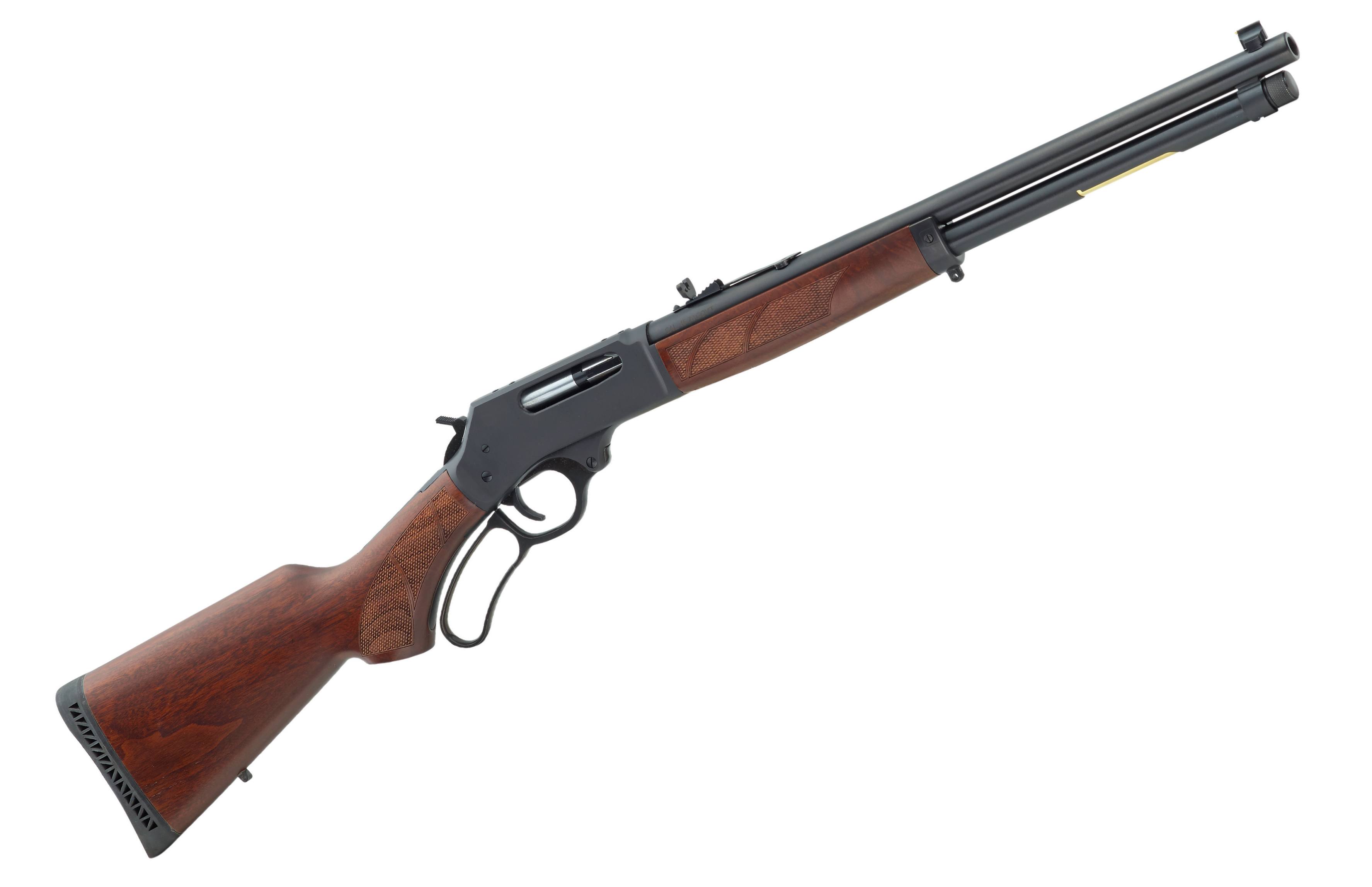
  • 18-inch barrel Guide Gun configuration.
  • 7-pounds, light enough for ease of carry.
  • Enough mass to mitigate recoil.
  • 4-round capacity.
  • Now features a side loading gate for fast reloads.
  • Capable of single-round loading through ejection port.
  • American walnut stock and richly blued metal components.
  • Semi-buckhorn sights for fast target acquisition.
  • Diamond insert draws eye to rear sight’s notch.
  • Capable of handling all but the hottest and longest .45-70 loads.
  • Viable hunting rifle for every species on earth with proper ammo and where legal.
Updated 1/5/21

Big hunks of metal.

Plain and simple, it’s what captures the imagination of big bore enthusiasts, sends their hearts aflutter and makes them more than willing to endure, in many cases, mule-kick level punishment. The abuse is worth it, painfully satisfying some might say. A rifle at the shoulder proficient enough to plant anything that might tread upon God’s green earth like it’d been struck by his wrath, that’s mighty reassuring… even addictive.

Henry .45-70 Steel Lever-Action

While there are many behemoths worth celebrating, if you have an ounce of Yankee blood pumping in your veins then it’s a fair bet you have a soft spot for a big-bore legend born and breed on our own soil. The .45-70 Government still reeks of bison dung and can’t help but stir the fancy of a simpler time, when lone men carved the nation one trigger-pull at a time.

Arguably outclassed in the modern era, the one-time military cartridge soldiers on 145 years since its advent and continues to prove its mettle. There isn’t a critter from the Yucatan to Yukon Territory and beyond it can’t handle. And, since its rebirth in the early 1970s, there’s no better time to fall in love with the old warhorse than now.

Lever-actions — that most American of rifles — have saved the .45-70 Gov’t. from obscurity. In the process, they’ve armed hunters with a round in the upper echelons of potency, and a way to deliver it at just short a Gatling-Gun rate. And of the choices of the iconic rifles chambered for the big-bore bruiser today, few offer the class and performance of the Henry .45-70.

Henry And The .45-70 Government

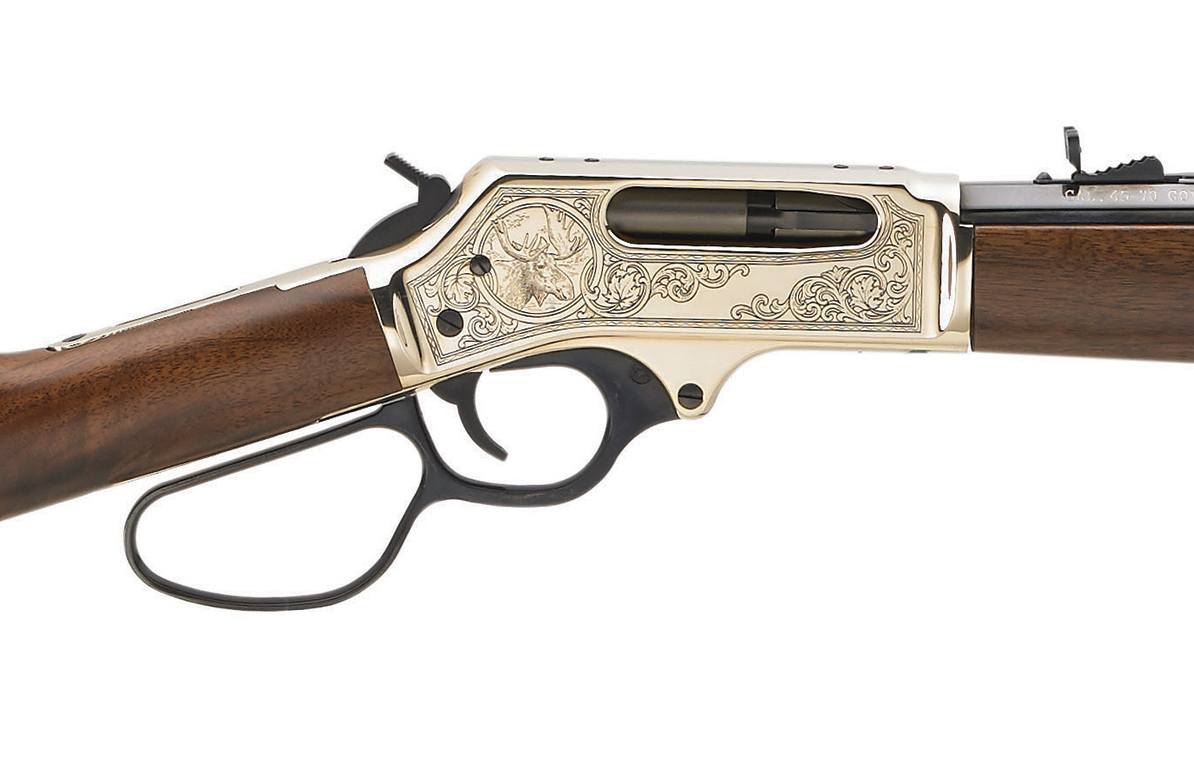
Introduced this past decade, the .45-70 has become among the company’s most popular calibers. In all, the New Jersey gunmaker offers five repeaters in the caliber, which beyond the original brass and steel models includes the All-Weather, Color Case Hardened, Steel Wildlife Edition and Brass Wildlife Edition. More recently, the gunmaker’s newish Single Shot break-action rifle line has also gone the way of the Government.

Richly engraved Henry .45-70 Brass Wildlife Edition. Nice Moose.

With typical Henry flourish, there are plenty of embellishments available for the shooter who requires a functional firearm with wall-hanger good looks. From rich engravings and inlays, classic octagon barrels, longer 22-inch barrels and hard-chrome plating (All-Weather), the company offers an impressive selection of fairly economical upgrades. But the pennywise shooter might get the gem of the pack.

Elegantly utilitarian, the original steel model is quite possibly the best of Henry’s big-bore repeaters available today, and not simply due to its reasonable-for-class $969 MSRP. Sized right and made with Henry’s usual eye toward quality, the completely American made rifle offers most everything shooters desire in a modern-day .45-70 lever-action.

How Henry Struck Gold With Steel

Not that long ago, the Government was shot from rifles equal in stature to the cartridge itself. Lengthy barrels, 20-inches plus, were the standard. Effective, but unwieldy. It was as if gunmakers still envisioned sentinels on prairie bluffs taking long shots at bison herds. But in the era of high-velocity cartridges, the .45-70’s rainbow trajectory wasn’t as sexy as it was in its blackpowder days.
Leading the way in the late 1990s, Marlin re-envisioned what a .45-70 could and should be in the modern era when it introduced its 1895 Guide Gun. Nimble and fast, the shorter-barreled rifle was ideal for up-close snapshots delivered with all the authority and finality of judgment day. A 300- to 500-grain bullet moving upwards of 1,400 and 2,000 fps 100 yards in is a comforting security blanket against equally devastating threats — a brown bear charging from the elders or a bull moose with blood on his mind. It also made the .45-70 a much more practical option for African game, at least the variety that requires close stalking and a second or third shot to persuade the critter not to make you mush — that is, where it’s deemed powerful enough.

Short and quick, the steel Henry .45-70 is the epitome of modern big-bore lever-actions.

This is where Henry began. Outfitted with an 18-inch round barrel, the steel Henry .45-70’s swiftness tracking and acquiring a target is limited only by the man or woman behind the trigger. Furthermore, at 7 pounds, it’s lighter than many in its class without losing the heft required to make recoil manageable, thus allowing fast follow-up shots. (To be truthful, the low-pressure, straight-walled .45-70 cartridge is very shootable, with recoil a hair above the .30-06.)

All well and good, but unless home base is Alaska’s Kenai Peninsula, how many rouge coastal browns is the average hunter likely to encounter? Outside a zoo, admittedly not many. However, the big-bore cartridge is plenty capable of wearing more hats than last-second lifesaver. The odd branch or brush are mere afterthoughts for the cartridge when chasing pre-rut elk in tall timber. And while lesser calibers will, shall we say, bring home the bacon on a hog hunt, but there’s nothing quite as final or fun as big boring a boar. With sharp woodcraft and stealthy stalking, the Henry .45-70’s potential is restricted purely by the shooter him or herself, though rock chucks are a stretch.

Henry .45-70 Inside Out

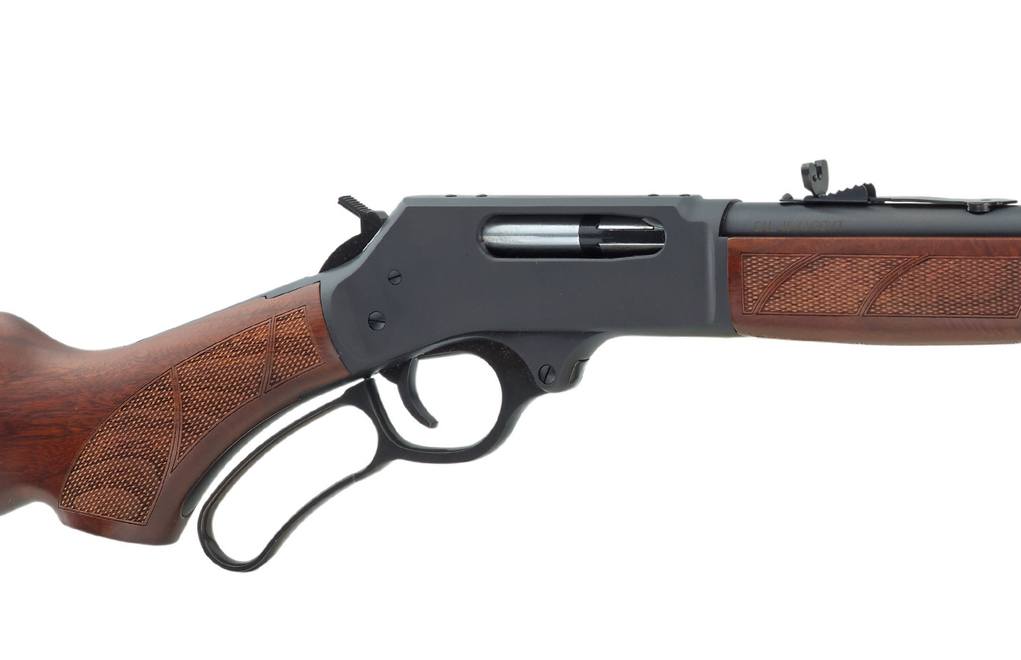
If there’s a facet Henry has down pat in the art and science of gun making, it’s aesthetics. This holds true even if you aim at one of their entry-level models. Walnut, bluing, sweeping gunny lines — they’re all there on every model turned out. With an eye-catching, fine-grained and checkered American Walnut stock and a rich finish up to most any environments short of blue-water naval service, the Henry .45-70 steel has the allure of a collector’s piece with field-gun performance. Additionally, there are the little extras that keep the rifle highly functional, while adding to its classic appearance.

For those who don’t utilize the drilled and tapped receiver, chief among these are the rifle’s iron sights. Originally the Henry .45-70 utilized a rear ghost-ring and white-striped front blade. Henry later switched gears to a system more familiar. Some might scoff at the semi-buckhorn rear sight as an upgrade, but it’s difficult to quarrel over its speed once fully mastered. Complete with a diamond insert that draws the eye to the center of the notch and a bright brass bead on the front blade, the sight picture is frighteningly intuitive and quick as a heartbeat. To boot, it makes the big-bore look more “Henry.”

The Henry .45-70's semi-buckhorn rear sights are fast adds to the rifle's classic appeal.
The Henry .45-70’s semi-buckhorn rear sight is fast and adds to the rifle’s classic appeal.

Thankfully, the gunmaker addressed the gun’s main drawback. Previously, loading the Henry .45-70—like all the company’s lever-actions — was a bear. All four rounds use to loaded through the rifle’s tubular magazine, which will set the impatient to jitters and raise two particular issues. First, topping off the magazine is a long process by today’s standards. Second, there’s really no safe way to load the rifle 4+1; no matter how you cut it, you’ll muzzle sweep your hand with a loaded chamber.

As of 2020, Herny broke from tradition and rectified this issue, introducing a side loading gate. Yeah, that’s a Winchester addition to Henry’s original design, but there have been few complaints from end-users. It breaks from Henry’s original formula, but makes the rifle all the quicker and more appealing to modern shooters.

Now the main hitch in the Henry’s giddyap — all lever-action Henry rifles for that matter — is trying the nerves of lefties. Considering there are no southpaw models and the ejection port is on the right, hot brass flying in front of even on to the bridge of the nose is a fact of life. That may be acceptable with Henry’s pistol-caliber Big Boy or .410 lever-action. But the .45-70 case is more than 2-inches in length, which ups the ante.

The other aspect of the Henry .45-70 — common to all the company’s wares — is that it does not have the dreaded cross-bolt safety (we’ll throw in an amen). This unfortunate side-effect of our warning-labels-on-buckets society might give lawyers a case of screaming abdabs, but for lever purists it’s bliss. The safety conscious should fear not, because the gun is still secure to carry chambered, hammer down, thanks to a transfer-bar safety. In turn, the rifle is virtually ready to go the moment you are.

.45-70 Ammo

In recent times, Black Hills Ammunition released the first rifle round of its popular Honey Badger line. What chambering did they choose for the monometal wonder? Why the .45-70 Government, of course. Not only is this a testament to the longevity of the cartridge, but the growing potential of the caliber.

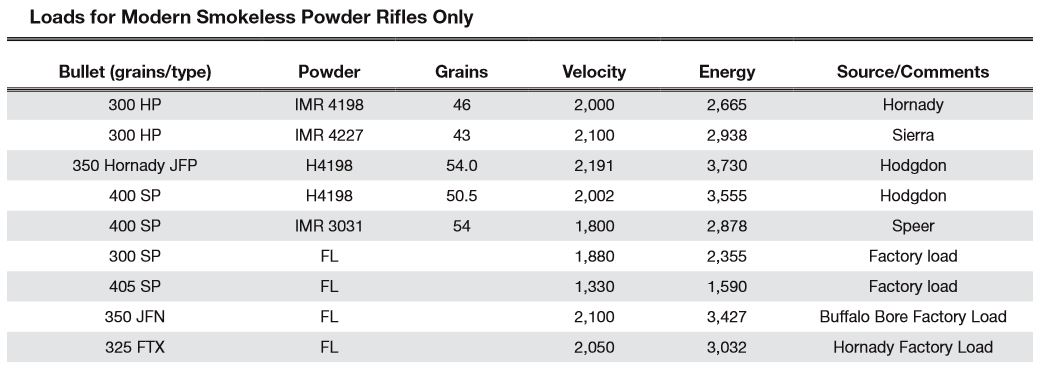
45-70 load data
From Cartridges of the World 15th Edition.

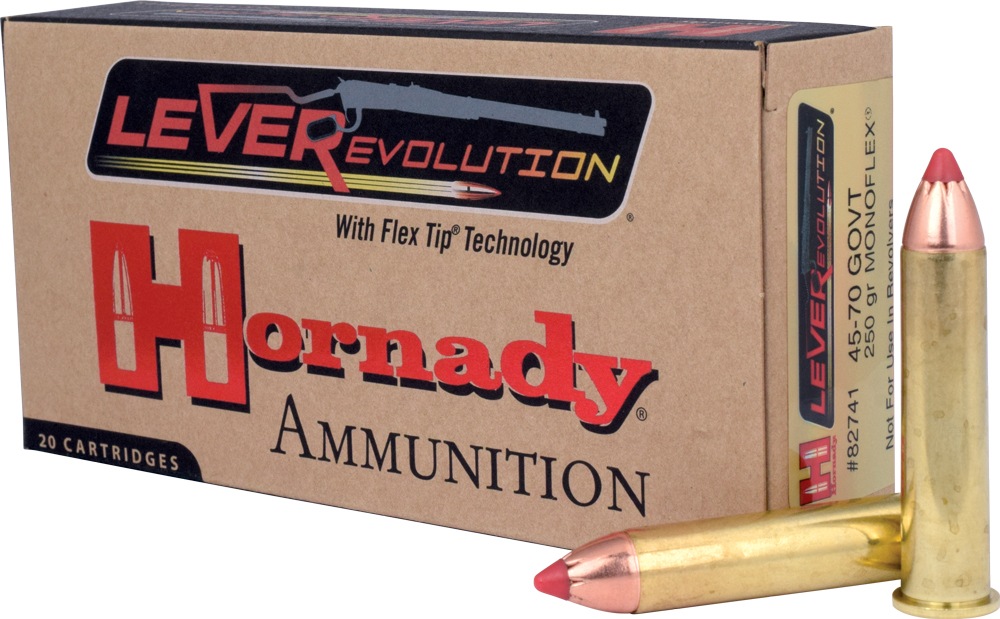
From relatively mild Black Hills’ 405-grain Cowboy Action to Hornady’s moderate 250-grain Leverevolution to hot Buffalo Bore 300-grain Magnum Lever-Action, ammo is abundant. So are bullet weights and styles, ranging from 250 to 500 grains. Shooters have the option of soft lead, hard-cast lead, jacketed hollow point, polymer tipped hollow point, monometal, etc. You won’t run short on shooting fodder.

However, .45-70 ammunition deserves a word of caution — not all of it works for all guns.

Given the longevity of the cartridge and firearms and ammunition advancements, some guns can’t handle what a particular round brings to the table. For instance, an old Springfield Trapdoor would pop like a firecracker with most modern ammunition. And some of the hotter and heavier dangerous-game loads will do the same to a lever-action. Heck, some won’t even chamber due to length.

Generally speaking, there are three ammunition categories for the .45-70: rounds meant strictly for old blackpowder rifles, rounds for modern lever-actions, and rounds tested for the Ruger No. 1 (which don’t work in the other two). Most ammunition companies are upfront about what works in what, and care should always be paid when shopping for .45-70 rounds.

Parting Shot

In the 1930s, the future appeared dim for the .45-70. The age of high-velocity cartridges appeared to have left the brute wallowing, with major gun manufacturers dropping the chambering from their lines. The cartridge was a few rusted actions away from a footnote in gun history.

Then something miraculous happened. Blessedly, modern man discovered his forefathers weren’t as ignorant as his high school history teacher promised and found age-old cartridges in age-old action designs could still hold their own.

45-70-ammo
No shortage of ammunition options for your Henry .45-70.

We were better for it. Some classic contemporary rifles were the result, chief among them the Henry .45-70. And one needn’t have his or her sights set on Africa’s Big Five or search out a buffalo hunt to appreciate what the New Jersey-born beast offers. A love for tradition and big hunks of metal, plus a stout clavicle are all that are required.

Henry .45-70 Steel Specs:

Barrel Length: 18.43 inches
Barrel Type: Round Blued Steel
Rate of Twist: 1:20
Overall Length: 37.5 inches
Weight: 7.08 pounds.
Receiver Finish: Blued Steel
Rear Sight: Fully Adj. Semi-Buckhorn w/ Diamond Insert
Front Sight: Brass Bead
Scopeability: Drilled and Tapped
Stock Material: American Walnut
Buttplate/Pad: Black Ventilated Rubber Recoil Pad
Length of Pull: 14 inches
Safety: Transfer Bar
MSRP: $969
henryusa.com

First Look: Leupold DeltaPoint Micro Red Dot

0

DeltaPoint-Micro-3

Among the lowest-profile options available, the Leupold DeltaPoint Micro Red Dot gives shooters a carry-ready aiming solution.

Evolving from novelty to critical upgrade, red dots have come a long way. Look no further to the contemporary handgun market as proof. Not only have rugged and carry-friendly sights swamped the market in recent years, but the aiming solution has also literally redesigned firearms. What major manufacturer doesn’t offer a slide-cut, optics-ready iteration of their most popular pistols?

The crowd has spoken on red dots—they’re the wave of the future. Or are they? Despite their potential to enhance accuracy and their improved designs, a majority of handguns of a practical bent cruise around without one. Even in the most micro format the sights are clunkier than irons—a deal-breaker for many. Though, Leupold might have changed the game.

Shake hands with the DeltaPoint Micro Red Dot Sight. Breaking from convention, the famed optics maker rethought the sighting system and in doing so aimed at creating the most carry compatible option available. At least when it comes to size.

Certainly, the length of the DeltaPoint Micro Red Dot is greater than a rear iron sight, but it’s height isn’t. At 1.25-inches tall, it is among the most compact systems on the market today, which vastly improves its potential on defensive pistols. On a gun that can’t get hung up on the draw, the new DeltaPoint cuts down on the probability of being a snag-o-matic upgrade.

DeltaPoint Micro 1

Of course, there are trade-offs. Again, the DeltaPoint’s length—2.25 inches—is greater than all but vintage specimens of traditional red dots. Much of this is due to Leupold moving the battery housing and adjustment controls to the rear of the slide. The fly in the ointment here is it potentially raises the specter of a pistol printing, particularly under lighter garb. Furthermore, it renders most retention holsters incompatible. The focal point of the Delta Point might prove an issue too, given the window is much more abbreviated than what has previously been offered.

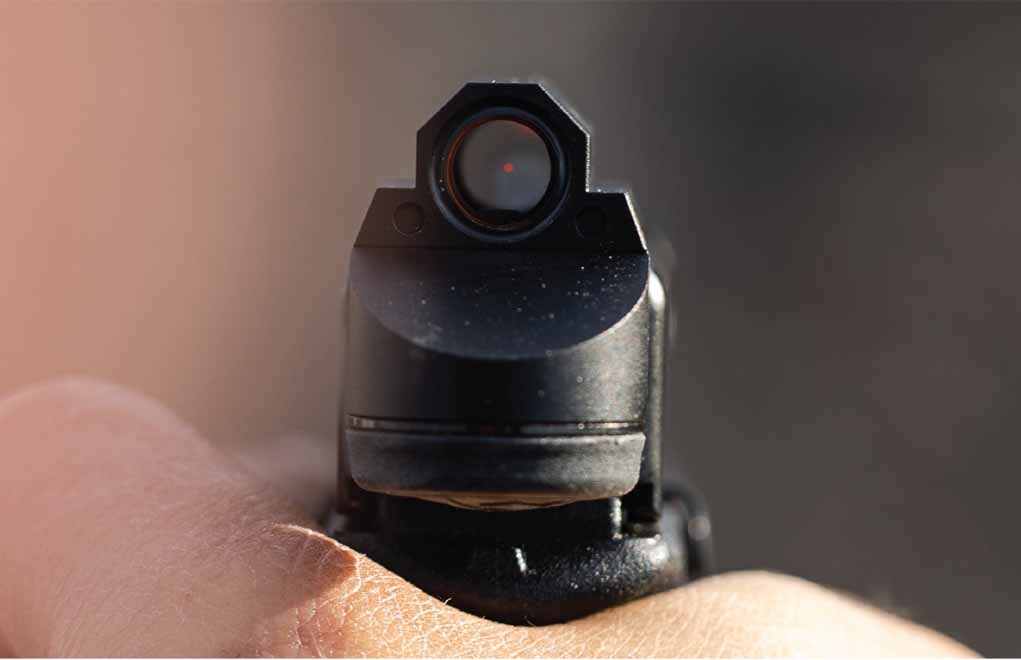
Leupold took real-world resilience into account in the micro red dot’s design. The DeltaPoint is completely enclosed, lessening the possibility to lens damage or fouling that impedes traditional red dots’ performance. Furthermore, the company has done away with the need to upgrade your backup sighting system. Essentially, if the DeltaPoint poops out for whatever reason you simply use it as a ghost ring with your front sight. Redundancy as elegant as it is simple.

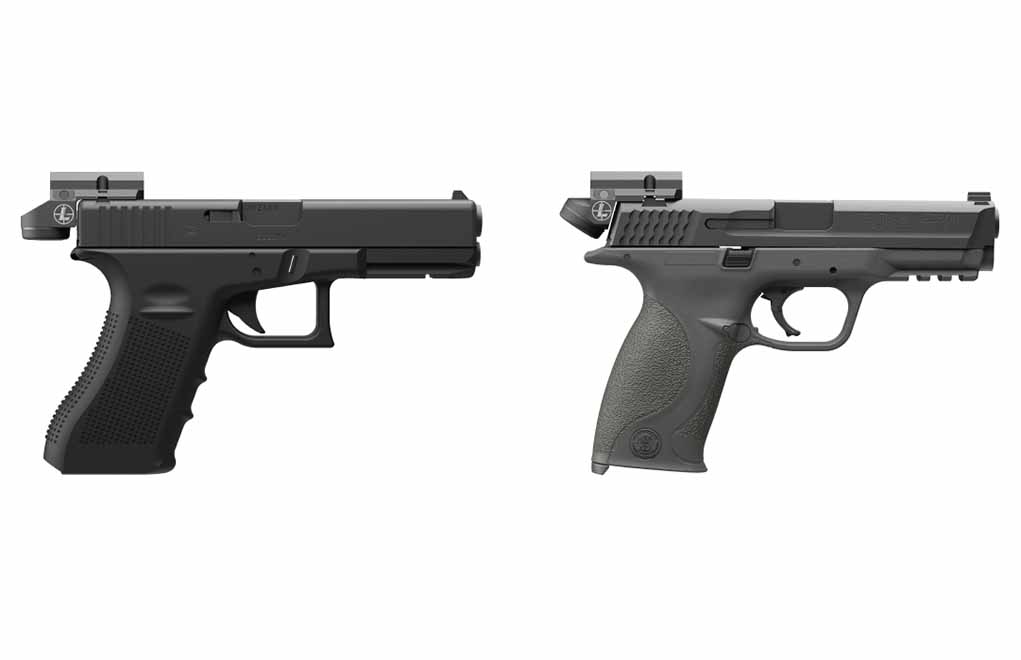
As to installation, Leupold reduced the headache by a magnitude. No mounting plates or slide-cut specific to a particular red-dot footprint, instead it utilizes the pistol’s existing rear-sight dovetail.

Other notables of the Leupold sight include 3 MOA dot, 8 brightness settings, 3.5-year battery (CR1632) life, motion senor power and DiamondCoat II scratch-resistant lenses. At present, the DeltaPoint Micro Red Dot is available for Glock and Smith & Wesson pistols. It also carries a hefty price tag, with an MSRP of $519.

For more information on the Leupold DeltaPoint Micro Red Dot, please visit leupold.com.


Zero In On Aiming Solutions:

  • Best Concealed Carry Optics: Red Dot, Green Dot Or Iron Sights?
  • 7 Out-Of-Sight Optics For Every Range And Budget
  • Red Dot Optics And MOA
  • Gear: Lighting It Up With A Laser Sight

Best Rifle Reviews To Help You Take Aim At A Top Iron

0

Henry Long Ranger 2

Looking to add a hot new rifle to your gun safe? Find the perfect bullseyes driller with our best rifle reviews, lists and videos.

Bustling with new and existing gun buyers, 2020 turned out to be something else. As a nation, Americans purchased more firearms than any other previous year, creating a jaw-dropping year in gun sales. You might have run up against it yourself. You went to your favorite gun retailer to add a new gem to your collection. Instead, you were met with empty shelves.

Christening a new year, hopes are the bounty of guns and ammo will return. Those chances are slim, at least for the time being. A Federal Government hostile to the Second Amendment, as well as the persisting pandemic and urban riots, likely will keep the market red hot. Which is to say, you’d better kick your evaluation skills up a notch to get what you truly want in 2021.

That said, we’re here to make the job a bit easier. We’ve collected our best rifle reviews, videos and product announcements from the past year to give you a solid handle on the hot tack drivers out today. From heirloom-quality single-shot hunters to hair-splitting 6.5 Creedmoors and tactically-talented pistol-caliber carbines—it’s all here. All you need to decide is what to add to your collection.

Rifle Buyers Guides

Top 16 Affordable Precision Rifles — Bolt-Action Edition

Precision rifles can cost you an arm and a leg, but there are top-notch and highly accurate options that will still leave you with money for ammunition.

Top 22 Sharp-Shooting 6.5 Creedmoor Rifles

Choices abound when it comes to top 6.5 Creedmoor rifles. Here are some of the best to get the red-hot round dead on target.


Check Out Other Review Roundups:


11 Affordable 9mm Carbine Options

Test the waters with these economical 9mm carbine options.

8 Affordable 6.5 PRC Rifle Options For Precision Work

These 6.5 PRC rifle options hit the mark for affordability and accuracy.

Best Affordable .308 Rifle Options For The Hunt

Well made and reasonably priced, these .308 rifle options will keep you on the hunt for years to come.

.30-06 Rifle: Going Long In .30-Caliber Semi-Autos

While gun stores aren’t bristling with .30-06 rifles of the semi-auto variety, they can be found and are spectacular.

5 Best AR-10 Options You Can Actually Afford

The AR-10 is many things, cheap isn’t usually one of them. But we dig up the best AR-10 choices that won’t put you in the poorhouse.

5 Best Precision .22 Rifle Options Designed To Drive Tacks

No longer is the .22 rifle a simple plinker with which to while away the time. The long gun has become a hair-splittingly precise instrument, fit for competition.

Nimble Advantage: Best Bullpup Rifle Options

Compact and nimble, there are certain advantages in wielding a bullpup rifle. We give you five of the best to take aim at.

10mm Carbine: What Are Your Options?

The market isn’t bristling with 10mm carbine options, but there are long-guns that pitch “Perfect 10” if you look.

8 Budget AR-15 Options: More Bang For The Buck

No need to break the bank, these 8 budget AR-15 options will get you on target and leave money for ammo.

8 Favorite Truck Gun Options For Protection On The Go

Whether a survival gun, something to control varmints or a self-defense option, the truck gun is a vital tool for those on the go.

Rifle Reviews

FN SCAR 20S: Out-Of-The-Box Precision

Over-engineered and made battle tough, the FN SCAR 20S offers a superb trigger and great accuracy, as well as a lot of fun.

On The Trail Of The Kimber Open Country

For the discerning hunter looking for a rifle that goes the extra mile, the Kimber Open Country stands in a class of its own.

Steyr Pro THB McMillan Review

In this Steyr Pro THB review, see why the new tactical Steyr rifles are giving competitors a run for their money. This test looks at a new model set in a McMillan stock.

Light And Right: Nosler M48 Mountain Carbon

Light as a feather, the Nosler M48 Mountain Carbon is more than just a dream to carry into the backcountry. It’s also a dream to shoot.

Sako S20: First True Hybrid Bolt-Action Rifle?

The Sako S20 accepts one of two available stocks — one for hunting, the other a tactical-precision style.

Is There A Better Browning BLR Than The Lightweight ’81 Takedown?

A look back at the idiosyncratic and effective Browning BLR Lightweight ’81 Stainless Takedown.

Rossler Titan 6: Practically Any Rifle You Want It To Be

As any campfire debate will attest to, there’s no one rifle cartridge that can do it all. There might be one gun, however: Meet the Roessler Titan 6.

Sig Cross: The Bolt-Action Re-Imagined

It’s been a 20-year wait for Sig to re-enter the bolt-action market and it’s done so in style. Innovative and accurate, the Sig Cross rethinks what the rifle can be.

Fit For A King: Merkel K3 Stutzen

Manufactured to exacting standards and as classy as come, the Merkel K3 is truly rifle royalty.

Lipsey’s Ruger No. 1: Not Just Another .30-30

Lipsey’s Ruger No. 1 K1A Light Sporter in .30-30 Winchester offers single-shot elegance.

Breaking New Ground With The Benelli Lupo Bolt-Action Rifle

The Benelli Lupo marks the gunmaker’s first foray into bolt-action rifles and offers shooters much more than an accurate shooter.

The Supreme Versatility Of The Blaser R8 Ultimate

One gun to do it all? The Blaser R8 Ultimate switch-barrel, straight-pull rifle might not cover every base, but it gets pretty darn close.

Gaining Leverage: The Henry Long Ranger In 6.5 Creedmoor

A precision lever-action rifle? You’d better believe it. The Henry Long Ranger in 6.5 Creedmoor is proof.

Testfire: Remington Model 700 American Hunter

NRA editors and Remington designers collaborate to build a perfect rifle for hunting whitetail deer. Shake hands with the Remington 700 American Hunter.

Two Of A Kind: Hoenig Rotary Round-Action Double Rifle

Utterly unique and strong as bull, Hoenig’s Rotary Round-Action Double Rifle is the definition of a modern classic.

Modern-Day .30-30: Smith & Wesson M&P15 In .300 Blackout

A lightweight carbine, and one with soft recoil, the S&W M&P15 in .300 Blackout is a stellar tool.

The Dime Busting Savage B22 Precision Chassis Rimfire

Economical and absolutely on target, the Savage B22 Precision redefines the affordable match rimfire rifle.

Savage AccuFit: Accuracy Within Reach Of Every Shooter

1
Sponsored Content

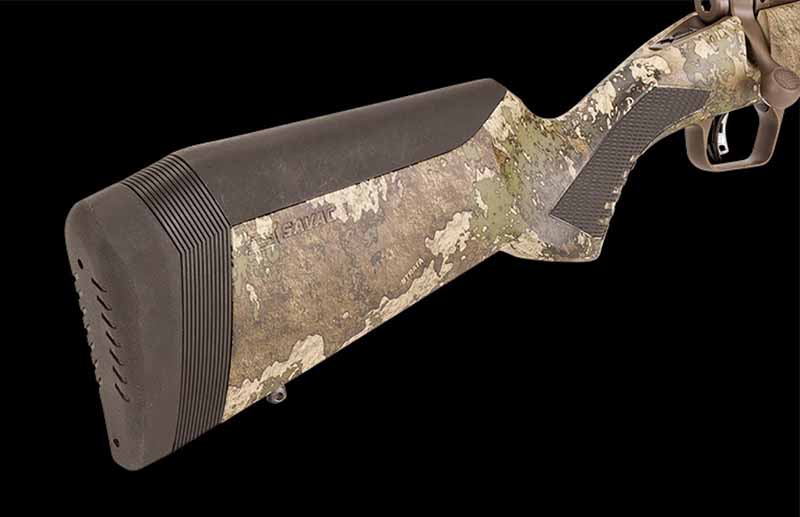
Savage’s simple and robust AccuFit stock gives you a custom-gun fit with a production-rifle price tag.

How The AccuFit System Increases A Rifle’s Accuracy Potential:

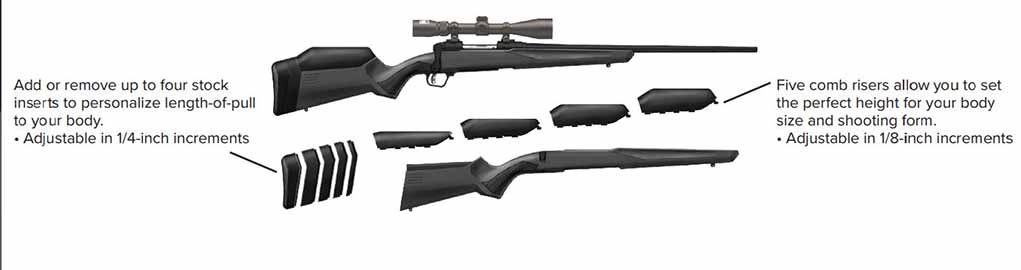
  • Offers 1-inch of LOP and comb rise adjustment.
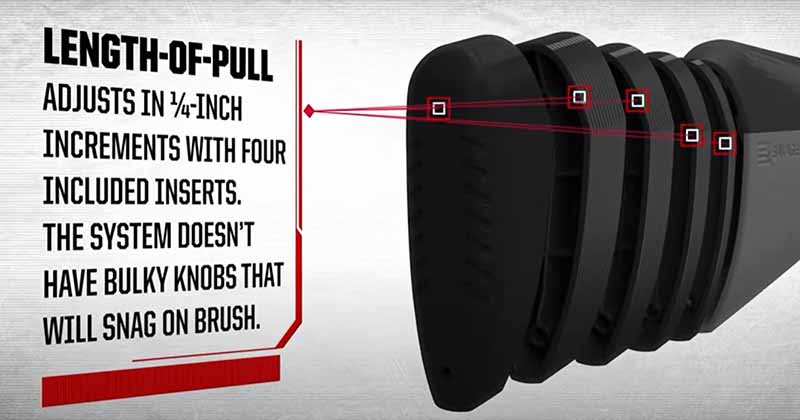
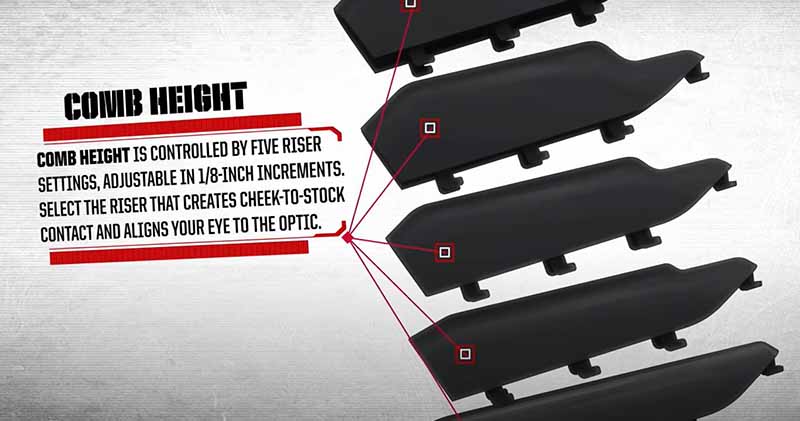
  • Each can be fine-tuned, LOP in 1/4-inch increments and comb in 1/8-inch.
  • The entire system is modifiable with little more than a Phillips screwdriver.
  • Available on a good selection of Savage’s legendary Model 110 rifles and new straight-pull Impulse rifles.

Have you ever attempted to go off the tee with a driver that doesn’t fit? You don’t exactly cover yourself in glory. Too long or too short, your swing feels wonky and you sure as heck don’t send the ball flying. Funny as it might sound, a wrong-sized wood has a lot in common with a wrong-sized rifle stock.

Savage's AccuFit system allows you to adjust for both length of pull and comb height.
Savage’s AccuFit system allows you to adjust for both length of pull and comb height.

Synthetic or wood, if the platform doesn’t fit, your consistency behind the trigger goes out the window. Historically, there’s been no cheap and easy cure to the age-old conundrum—basically an aftermarket custom stock or fully-adjustable production model. Neither is cheap and the aftermarket option costs time.

It’s a frustrating dichotomy, but one, to a certain extent, Savage Arms has eliminated. Now a little over a year since its release, Savage Arms’ AccuFit system has essentially rethought the adjustable stock. And more importantly, it’s put it within reach of nearly every shooter. That’s powerful.

What Is The Savage AccuFit?

Simply put, Savage’s AccuFit is a customizable stock, giving you the ability to modify its two most important dimensions—length of pull (LOP) and comb height. At the same tick, the system is extremely affordable, doing little to ratchet up the price of the select Savage Model 110 rifles it’s found on.

A Phillips screwdriver is all that's required to ensure a tailored length of pull.
A Phillips screwdriver is all that’s required to ensure a tailored length of pull.

Savage accomplished this by keeping the AccuFit basic… barebones basic. Instead of turning to slip nuts and screw controls, the gunmaker utilizes spacers and risers to get the stock set to your frame. And while it doesn’t offer the luxury of toolless adjustment (it requires a Phillips screwdriver), it nevertheless has enough wiggle room to fit anybody behind its business end.

In all, an AccuFit stock comes with five comb risers and four LOP inserts. This allows for ½- to 1-inch of elevation adjustment at the comb in 1/8-inch increments, and a full inch of play in LOP, adjustable in ¼-inch increments. For all but extreme cases, this is enough to tailor a rifle to most men and women. Certainly more than the average 13.5-inch LOP and variable comb height of most off-the-shelf choices.

Importance of LOP And Comb Height

Some might ask, exactly why are these facets of a stock so important? Perhaps a brief mind experiment will shed some light.

Imagine squeezing down behind a rifle too small for your frame. What happens? Besides being a pain, it takes a share of wiggling and scrunching around the butt to get the thing into your shoulder pocket. Worse yet, you jiggle your head around before you find a clear sight. That’s bad. But now consider you’ll do this dance after every shot, at the same tick expect accurate results. There’s one word for that—impossible.

The AccuFit system is available on all Model 110 guns, as well as Savage's new Impulse rifles.
The AccuFit system is available on all synthetic-stock Model 110 guns, as well as Savage’s new Impulse rifles.

Correctly calibrated length of pull and comb rise take this guesswork out of mounting a rifle. More importantly, it introduces repeatability to the equation. If you haven’t heard, after shooting fundamentals—breath control, trigger discipline, etc.—consistency is the key element of accuracy.

Yet, a correctly fitted stock’s benefits don’t stop with downrange results. It also makes shooting more enjoyable. Tailored to your frame, a stock mitigates recoil, enhances target acquisition and adds more overall control of the gun.

Essentially, it will make your rifle faster and more accurate. Who doesn’t want that?

Getting The Most Out Of The Savage AccuFit

As is the case with any adjustable stock, the AccuFit requires you get intimate with yourself… at least your upper body.

If you’ve never done it, getting professionally measured for a rifle is a worthwhile exercise. At the very least, you’ll have dead-nuts dimensions to work with. But if you haven’t the time or money, you can gather the tale of the tape yourself.


Learn More About Savage’s Guns:


The quick and dirty method to determine LOP is to hold your rifle (UNLOADED) in your dominant hand, with your arm bent up at 90 degrees. From this position, you can add or subtract AccuFit spacers until the middle of your trigger finger pad is even with the trigger, with the buttstock resting in the crook of your elbow. However, don’t go by this alone.

AccuFit 4

Take the time to shoulder the rifle and experiment with the AccuFit spacer system until you find the most comfortable combination. The rifle should feel natural to your shoulder, your trigger finger should intuitively find its place and you shouldn’t have to crane your neck to look down the barrel.

Comb height is a bit more subjective. You’ll have to play around with your AccuFit’s riser until you find the right elevation. But there are some simple guidelines to look for to know you’re dialing it in.

First, your cheekbone should contact the riser, at the same time you should have a clear sight down the scope. A good double-check to see if you have it right is shouldering your rifle and initiating a cheek weld with your eyes closed. If you open them and you can see down your scope unimpeded, you’ve got it right. Dark crescent somewhere in your field of view, it’s most likely too high or low.

Parting Shot

For more than 50-years, the Savage has put accuracy within every shooter’s reach. And the gunmaker doesn’t show any signs of letting up. AccuTrigger adjustable trigger, AccuStock internal chassis and now the AccuFit. The gunmaker has given shooters the tools to hit the mark. All they have to do is get on target.

For more information on Savage’s AccuFit system, please visit www.savagearms.com.

Far-Out Firearms: Dardick And Gyrojet Guns

0

The gun world is rife with oddities, but few compare in peculiarity to the firearms designed to shoot the unique Dardick and Gyrojet cartridges.

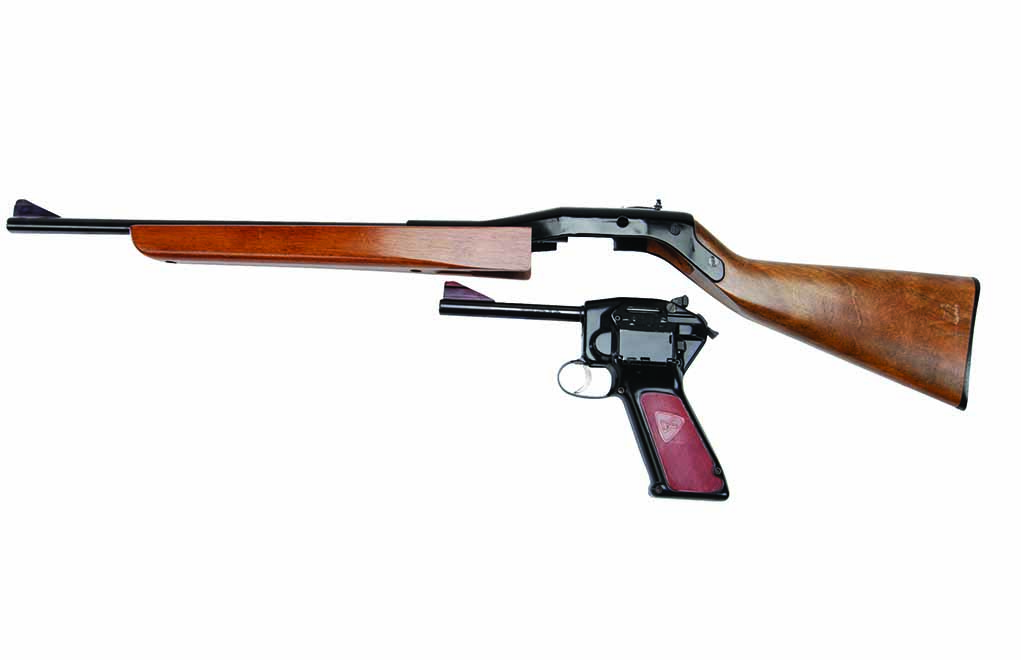
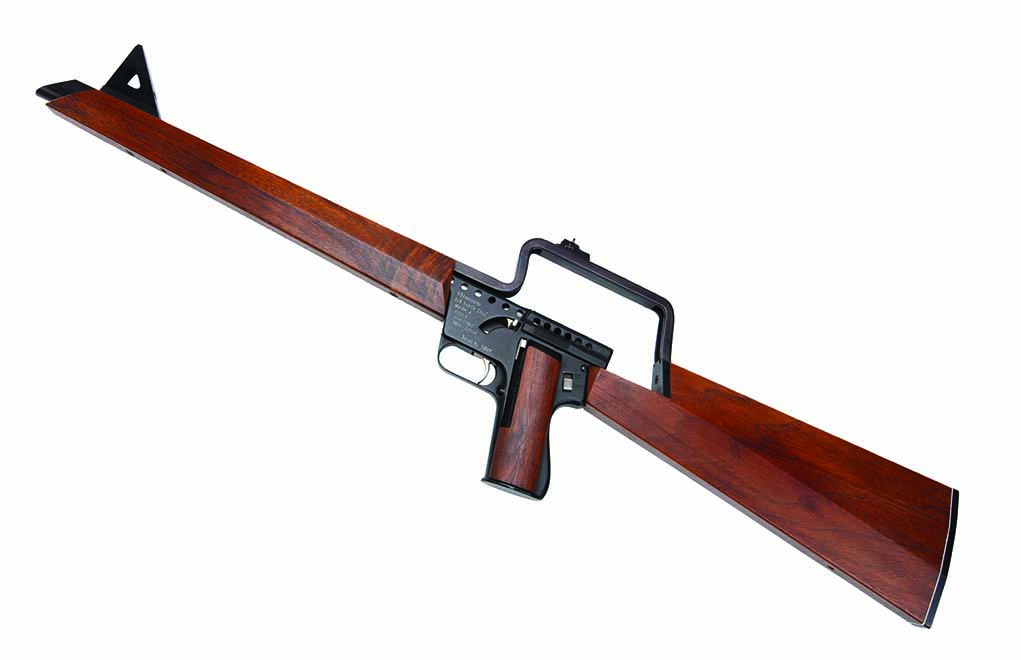
Dardick: In 1950, the U.S. military was looking at alternative feeding devices for firearms and found that a triangular-cased cartridge used less room in a magazine than a cylindrical one. The military didn’t use it … but David Dardick did. He also decided to use a plastic called “Celanese Fortiflex” to replace the expensive brass casing. The triangular cartridge had a lead .38 bullet in it. His revolver cylinder had three open, pie-shaped chambers and an 11- or 15-round magazine to feed it, resulting in a magazine-fed revolver. The ammo was nicknamed “trounds” for “triangular rounds.”

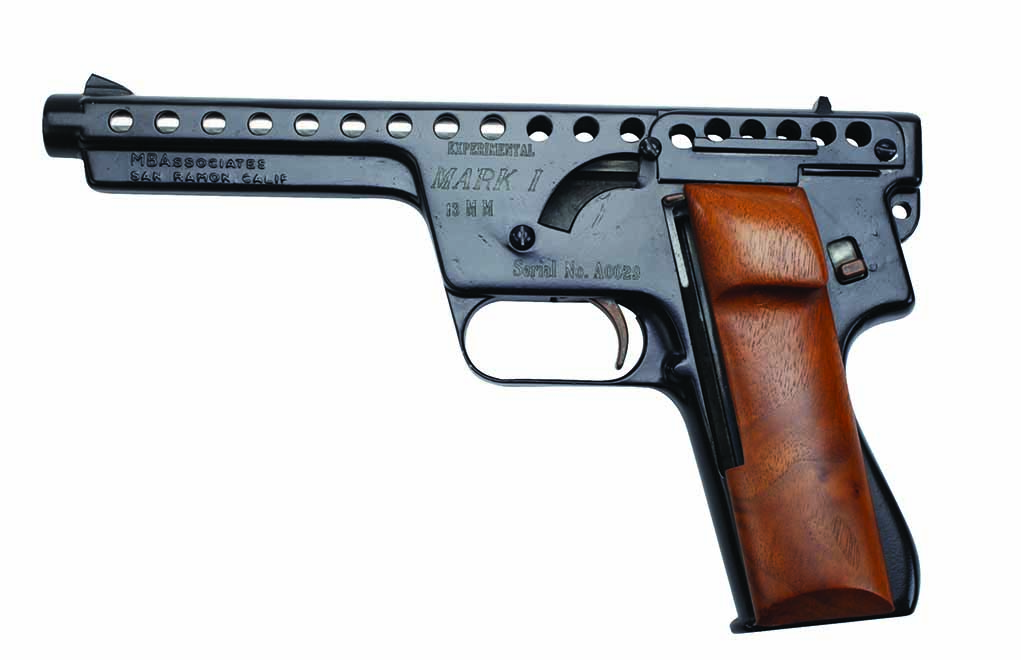
Gyrojet:The 1950s and ’60s comprised the age of rocketry. Everything was going to be rocket powered — cars, planes, trains and even firearms. In 1963, MBA Inc. started producing rocket-firing pistols for the public called “Gyro Jets.” The solid-nose, 13mm rocket round has a cylinder of solid rocket fuel in its hollow base and is ignited by a standard pistol primer. The barrels were smooth-bore. Instead of having rifling in the barrel, the rocket nozzle on the base of each round was angled to make the rocket spin in flight and stabilize it. The rockets left the muzzle at 350 fps and accelerated to 1,250 fps. Because there was no empty case to eject, functioning was simplified. The hammer drove the projectile rearward against a fixed firing pin in the breechface. As the projectile moved forward, it rode over the hammer, forcing it back down into the “cocked” position, allowing the next round to be raised into position by the spring-fed magazine follower.


More Unique Guns:


Dardick Series 1500 Pistol

.38 Dardick Tround

Dardick Series 1500 Pistol (Double-Action, Magazine-Fed Revolver). .38 Dardick Tround; circa 1958–1960 Dardick pistols could be converted to carbine configuration by replacing the pistol barrel with a long barrel-and-stock assembly.

Gyrojet Mk I Model B

Gyrojet 4

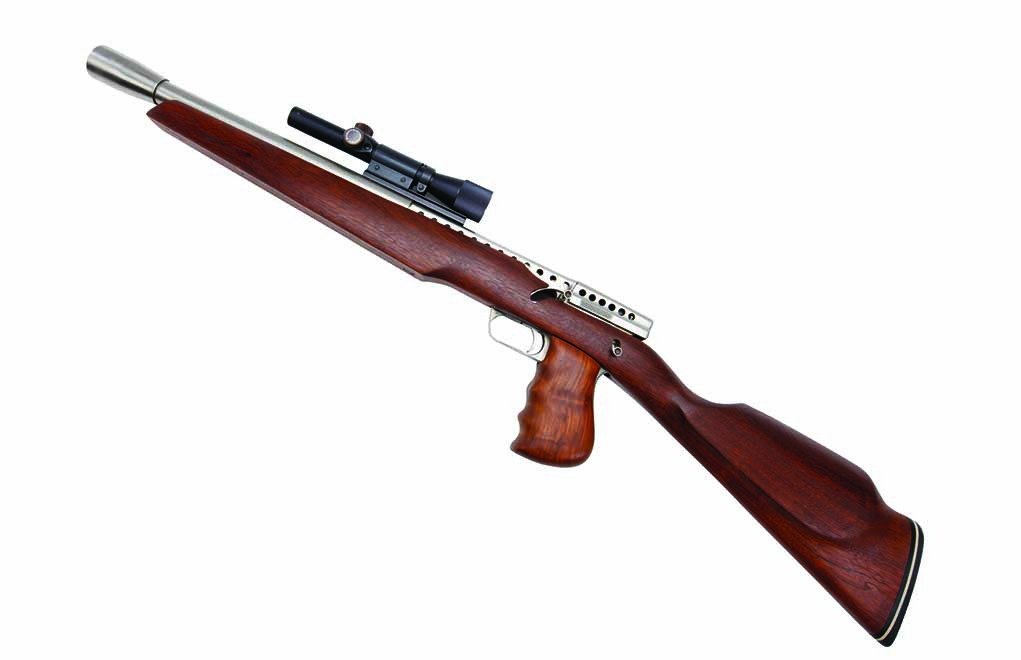
MB Associates Gyrojet Mk I Model B 007 Semi-Automatic Carbine 13mm Gyrojet; circa 1966–1967. This carbine was made for a James Bond movie with SN 007.

Gyrojet Semi-Automatic Carbine

Gyrojet 1

MB Associates Gyrojet Semi-Automatic Carbine; 13mm Gyrojet; circa 1966–1967. With scope.

Gyrojet Mark I Pistol

Gyrojet 3

MB Associates Gyrojet Mark I Pistol 13mm Gyrojet; circa 1966–1967. This pistol was also manufactured in 12mm due to concerns that the 13mm chambering might run afoul of regulations restricting caliber of handguns.

Editor’s Note: This article is an excerpt from The Illustrated History of Firearms, 2nd Edition available at GunDigestStore.com.

Bowling Pin Shooting’s High-Powered Renaissance

0
If you expect to rudely shove a bowling pin 15 feet to the rear, you’d better be bringing some serious horsepower to the task. The .460 S&W Magnum, in a .460 XVR, can do that.

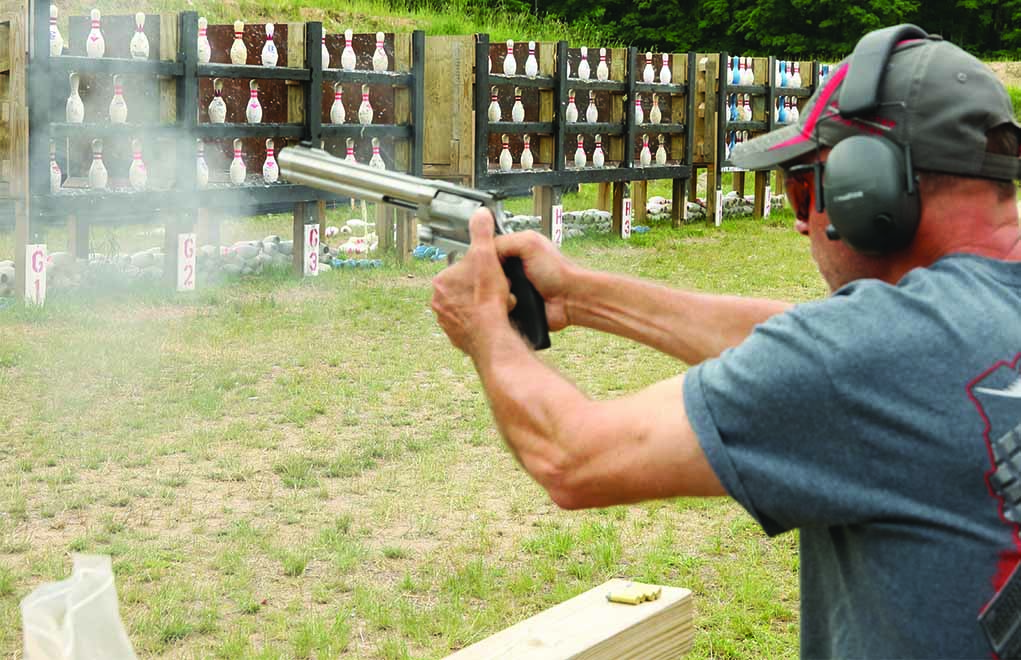
If you enjoy pure, unadulterated handgun power then Big Push Bowling Pin Shooting is your game.

Bowling pin shooting went through an almost 20-year hiatus. When it came back, some of the events were left almost unchanged, some were changed quite a bit, and some new ones got added (there are several different bowling pin categories or events you can enter—kind of like stages in a match—but each event is scored separately and has its own prize table).

One of the new ones is “The Big Push.” In regular pin shooting, you have to knock the pins, five to eight of them, off of a flat, but sided, table. These are the major-power events, and they require pushing the pin back 3 feet. The minor-power events simply call for tipping them over.


GO BIG!:


The Big Push involves only three pins. However, the table is a trough … and the trough is 14.5 feet long. No, that isn’t a typo: You have to push the pins almost the length of a Toyota Corolla. A full-house .44 Magnum gets them halfway there. A .454 Casull gets them to the back, and often off, but not quickly. If you want to broom the trio of pins off—and immediately—you’d better be using something like, or exactly like, the .460 S&W magnum with full-power ammunition.

While watching competitors lined up to shoot, a friend of mine once remarked, “Half of the .460 and .500 S&W ammunition shot each year is probably shot right here, this week.” OK, this was a slight exaggeration, but not much.

This event has been held for three years now, and it’s always entertaining. When a full-house S&W (.460 or .500) hits a pin solidly, that pin is gone! Edge hits cause chips and splinters to fly, and the pin spins madly—sometimes walking itself off of the table just through high-rpm rotation. Then, there’s the inevitable disappointment of those who have ammo that’s “almost,” but not quite, up to the task.

If you like shooting the heavy-hitters—if you like shooting fast double-action, or if you just like having fun shooting—this event should be on your list (it takes place in northern Michigan, near Traverse City, June 6–12, 2020.

Just listen for the shooting and cheering … or visit the website: PinShoot.com.

The article originally appeared in the May 2020 issue of Gun Digest the Magazine.

4 Classic Hunting Bullets To Fill Your Tag

0

Hunting Bullet 1

Mainstays for decades, these four time-tested hunting bullets still prove among the best for putting meat on the table year in and out.

What Are The Best Classic Hunting Bullets:

Bonus: Classic Match Bullet

In his thick Scottish accent, Ronnie Hepburn asked me a simple question: “Can you shoot with all these midgies!?”

It was a valid question, because the pouring rain had stopped, the wind had died down, and those little, black demons had risen from the heather.

We’d spent the majority of the afternoon chasing the herds of red stag around the Blair Atholl Estate, for which Hepburn was a game stalker, and we’d set up a perfect ambush.

With the old stag, which had been rolling in the peat while tending his hinds, facing head on at 245 yards, I leaned the forend of the graceful Rigby Highland Stalker on Hepburn’s pack, let my breath halfway out, gave the stag 6 inches of elevation and squeezed the trigger.

Hornady’s Custom load for the .275 Rigby is built around the 140-grain InterLock and gave 1/3 MOA from this Highland Stalker.

The sound of the Hornady 165-grain InterLock from the .30-06 Springfield striking flesh was undeniable and, within 25 yards, the stag was down for good. Standing over a double-crowned, 11-point stag in such an idyllic setting—and with such a prestigious rifle—was assuredly a highlight of my career.

Being a bullet guy, I wondered to myself why they hadn’t opted to use a premium bullet for such a unique opportunity. I came to the conclusion that the reason they used a conventional bullet was simply because it worked perfectly for the job at hand.

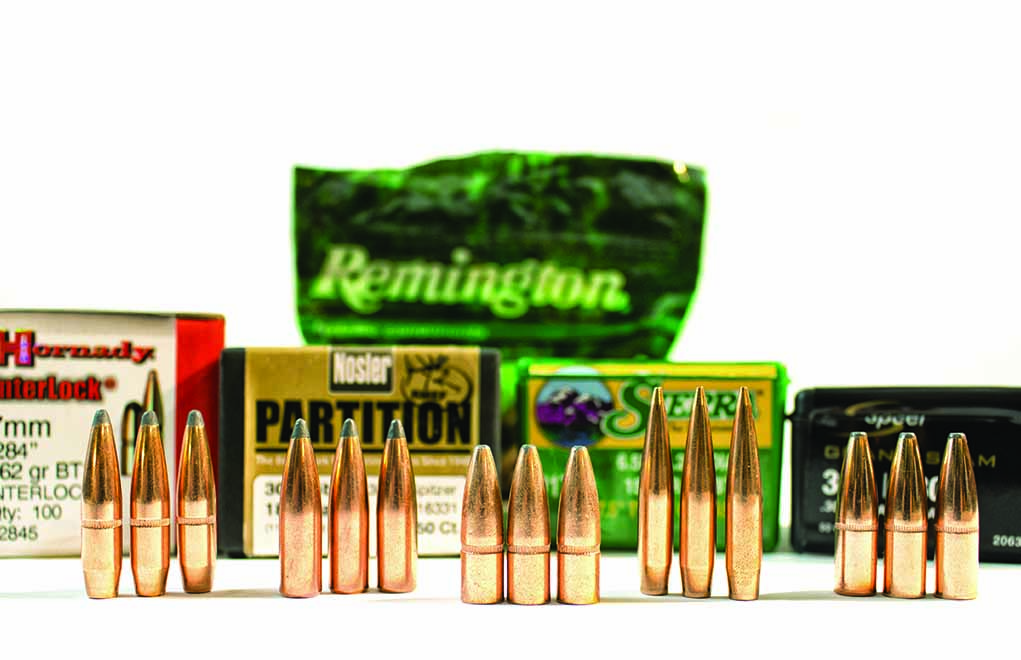
We’re undeniably living in the “golden age” of projectile design, with more choices available to us than we’ve ever had. Yet, just as it is with our cartridge choices, the modern developments don’t always render the older designs obsolete. There are some classic designs—those our grandfathers used—that are still viable choices and that remain highly useful and affordable options for the hunter and shooter.

Let’s look at some of those designs and how they apply to the range and hunting fields.

Hornady InterLock

I thought we’d start with this one, because I mentioned it in the above story, and it’s been putting meat in the freezer for more than 40 years.

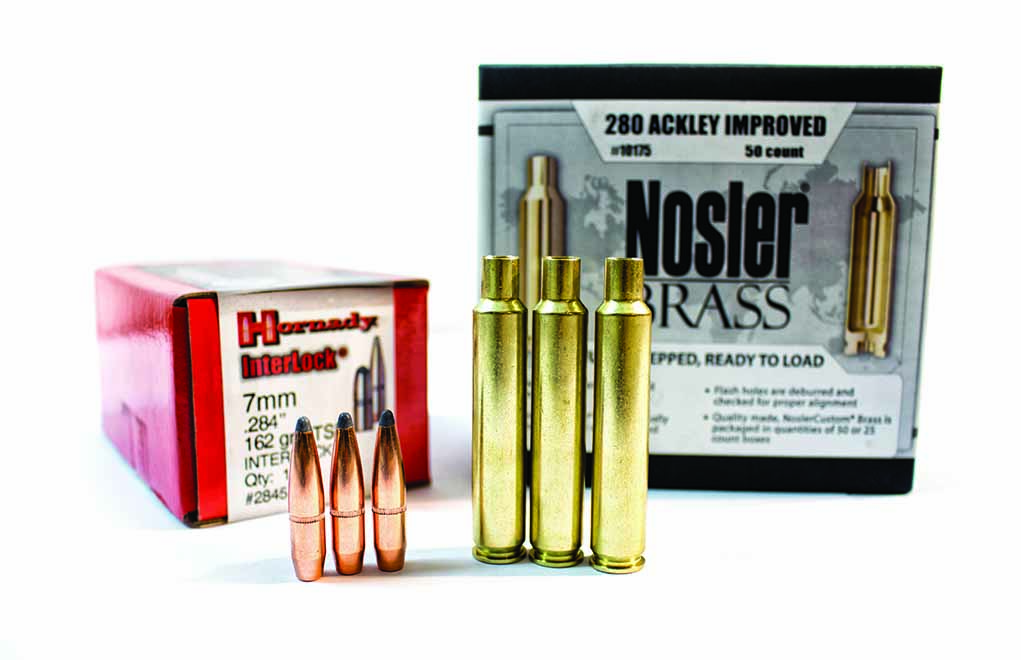
The .280 Ackley Improved mates well with the 162-grain Hornady InterLock spitzer boattail.

Joyce W. Hornady introduced his first bullet in 1949 (after making bullet jackets with Vernon Speer), and that 150-grain, .308-inch-caliber spire-point developed his reputation.

Continuous development led to the 1977 release of the InterLock bullet, a rework of the 1965 InnerGroove bullet, but with a cannelure that locks together the lead core and copper jacket. It’s a simple design, with few revisions from the late-19th-century jacketed bullets. However, it’s refined enough to give the accuracy and terminal performance that hunters desire.

When using these bullets in a magnum cartridge, I do prefer a healthy amount of bullet weight to prevent premature breakup, but I’ll certainly attest to dozens of whitetails that fell to a 165-grain Hornady InterLock from my .308 Winchester. It was the first component bullet I ever loaded and hunted with. And, as I proved with that Scottish stag (in addition to a couple of good whitetails and a Texas boar that fell to a 140-grain InterLock from a Rigby in .275 Rigby), it’s “enough” bullet.

Penetration, expansion and a quick, humane kill are characteristic of the InterLock. Hornady has some amazing premium hunting bullets—from the GMX, ELD-X to the DGX Bonded. But, for the annual fall deer hunt, it’s hard to argue with the InterLock.


On-Target Bullet Info:


Nosler Partition

Perhaps on the other end of the spectrum, John A. Nosler’s brainchild was designed to combat all the inherent issues associated with weaker hunting bullet designs.

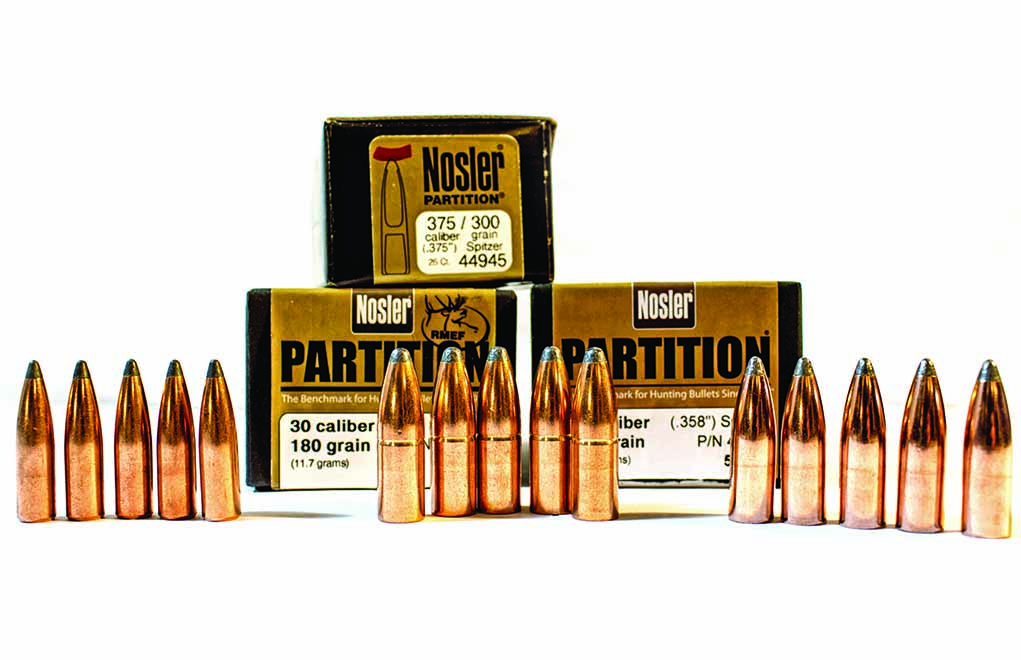
Success: 180-grain .30s, 300-grain .375s and 250-grain .358s—all are good big-game choices, and the Nosler Partition design makes them better.

Nosler was carrying a .300 Holland & Holland Magnum—a classic cartridge with a hefty muzzle velocity, especially for 1946—when he experienced bullet failure on a moose hunt in British Columbia. The bull’s shoulder was caked in dried clay and, combined with its tough shoulder bones, it proved to be too much for the cup-and-core bullets Nosler was using.

Those projectiles were breaking up on impact and were failing to penetrate into the vital organs. Nosler decided to build a bullet that couldn’t fail—and he did so. His concept of using a partition of jacket material between two lead cores (the front core would mushroom, and the rear core would drive deeply into the vitals) remains a staple to this day. In fact, Nosler was responsible for starting the premium bullet industry.

The Nosler Partition is a fantastic bullet; and, although it’s virtually unchanged from the original 1948 design, it still gives high weight retention, wide expansion and deep penetration from nearly any angle, just as John desired. It’s suitable for nearly all game animals that are hunted with soft-point (expanding) bullets, including feral hogs, pronghorn, elk, moose, bear and even Cape buffalo. While it might not have eye-popping B.C. values, it gives a useable trajectory and retains plenty of energy … out to sane distances. I used a Nosler Partition to take my best whitetail buck in my native New York’s famous Catskill Mountains, where the black bears grow to “respectable” proportions.

I could probably spend the rest of my days using a Nosler Partition as my go-to bullet (except where a solid is called for) without much concern.

Remington Core-Lokt

“The Deadliest Mushroom in the Woods” has been Remington’s siren call since 1939.

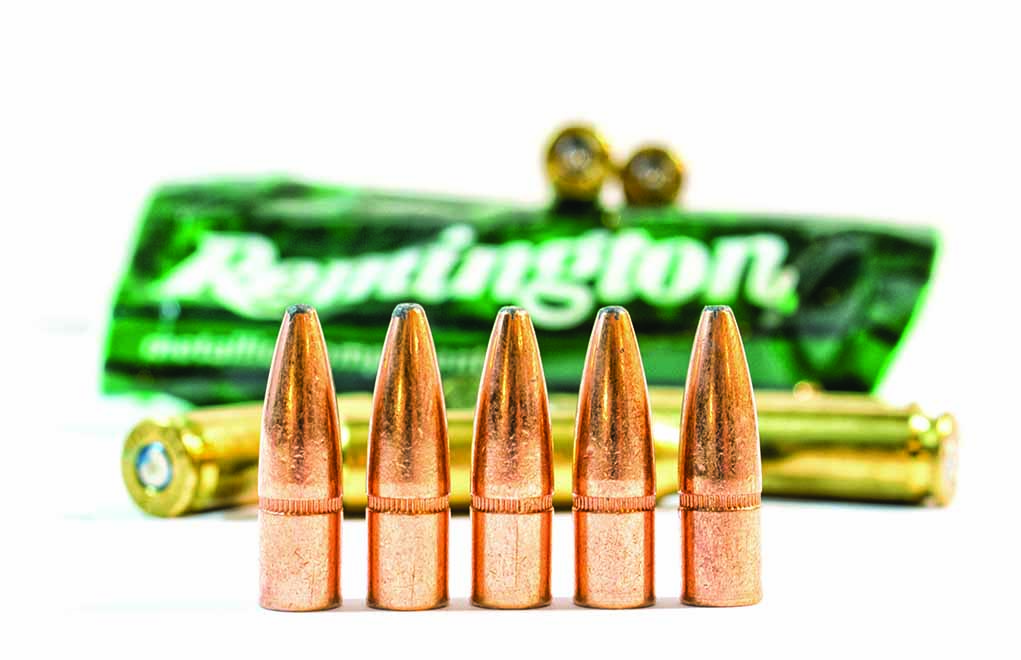
While that point might be debatable now, in the years before World War II, the Core-Lokt quickly earned a solid reputation for reliability. Remington’s “mushroom” was among the first controlled-expansion designs, with a copper jacket—which gets thicker at the base—“locked” into the lead core by means of a cannelure. Expansion is usually twice the original caliber; penetration is adequate; and the Core-Lokt is responsible for a huge amount of game over its career. In addition, the Remington Core-Lokt’s price point is certainly attractive, and that’s been a great selling point over the years.

The famous Remington Core-Lokt, shown here in .308-inch diameter and 165 grains, remains a great choice for deer and black bear.

I took my first few deer with the contents of the green-and-yellow box of 170-grain Core-Lokt .30-30 Winchester ammo, so it has a special place in my hunting memories.

Is it a great choice for heavyweights such as brown bear and bison? Frankly, there are better choices for that job, but the Core-Lokt is one helluva deer bullet. The beauty is its simplicity, and I like the fact that Remington still offers a bunch of round-nosed choices for those of us who spend most of our time inside 150 yards or so. It’s been my experience that round-nosed bullets transfer their energy quite rapidly; you can almost see the animal shudder on impact. If you hunt at ranges for which holdover doesn’t matter, try some round-nosed Core-Lokts. You could quickly become a fan.

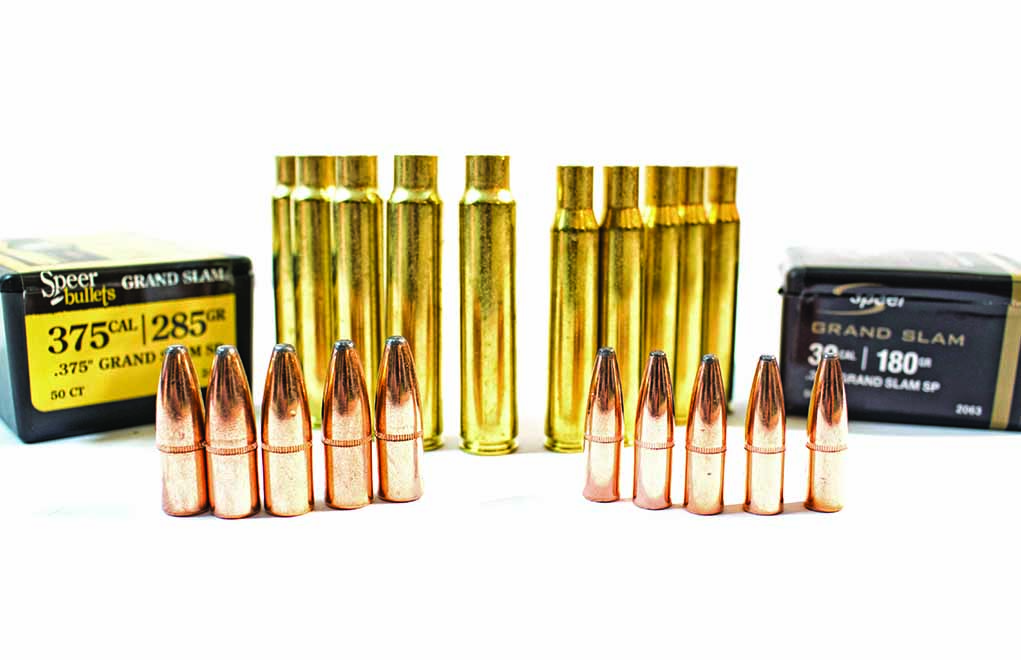
Speer Grand Slam

Vernon Speer was a pioneer in the component bullet industry. Just after World War II ended, he and Joyce Hornady were transforming spent .22 LR cases into bullet jackets. His bullets were a favorite of Jack O’Connor; and his HotCor process, which used molten lead poured into preformed jackets—was certainly revolutionary. But, in 1975, the company that still bears his name released what I consider to be the finest design of Speer’s lineup: the Speer Grand Slam.

The Speer Grand Slam is affordable, accurate and available in calibers suitable for all sorts of big-game applications.
The Speer Grand Slam is affordable and accurate hunting bullet. It’s available in calibers suitable for all sorts of big-game applications.

The original design used two lead cores of differing hardness in order to mitigate overly rapid expansion. Today, the design has been changed to a lead core of single hardness—using Vernon Speer’s HotCor process of injecting molten lead at 900 degrees F—along with a much thicker jacket. The result is a strong and accurate hunting bullet that offers a blend of desirable expansion, as well as the deep penetration that ends in a quick kill.

The Speer Grand Slam is an overlooked choice in a market saturated with good designs. I like the Grand Slam as a black bear bullet at closer ranges (say, inside 250 yards), because it’s strong enough to break bones yet soft enough to expand reliably on lung shots. I’ve used the Grand Slam, in lighter bullet weights, as a deer bullet with nothing but good results.

These bullets are wonderfully affordable, with a box of 50 ranging from $15 to $27, and are available in many of the common diameters and weights. Want a great practice/plains game bullet for your .375 H&H or .375 Ruger? Look to the 285-grain Speer Grand Slam.

If you’re hunting bears on a budget with your .308 or .30-06, 165- or 180-grain Grand Slam engenders all sorts of confidence. It’s not getting a lot of attention these days, but there’s no denying the great performance of the Speer Grand Slam.

Bonus: Classic Match Bullet

Sierra MatchKing

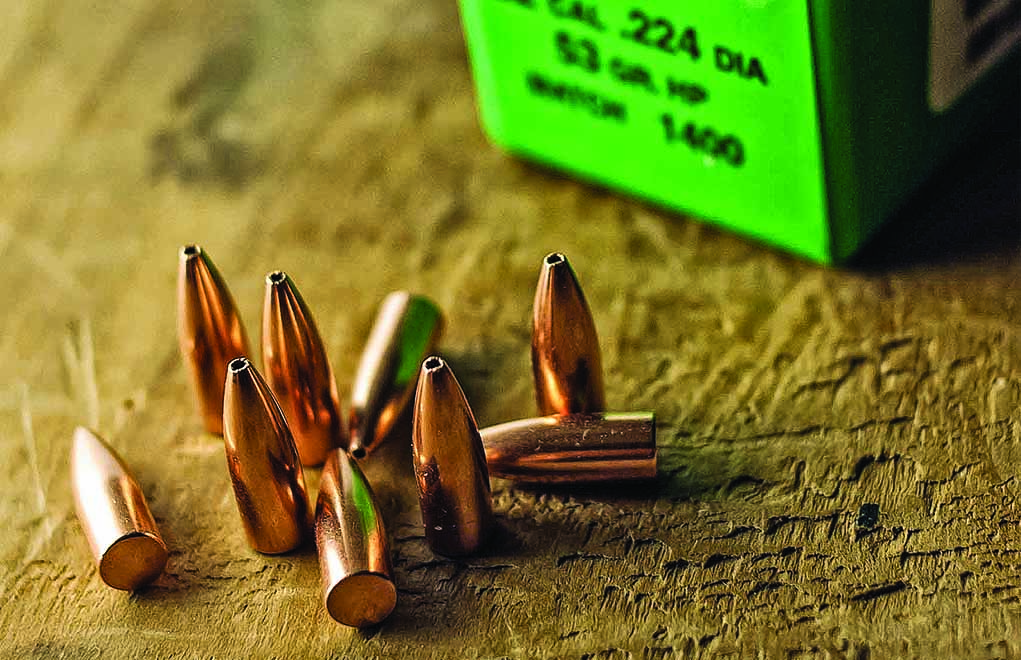
In the post-World War II boom, three partners gathered in a Quonset hut and developed a bullet that would set the shooting world on its ear. That bullet—the #1400 .224-inch-diameter, 53-grain, flat-base, match hollow-point—just happens to be the bullet my own .22-250 Remington likes best. Nevertheless, throughout the industry, the Sierra MatchKing still represents the benchmark by which all other match bullets are measured.

Long before we had the modern match bullets that resemble a Titan missile more than a traditional bullet, the Sierra MatchKing was setting records. The 168-grain, .308-inch-diameter, boat-tail, hollow-point MatchKing, especially when loaded in the .308 Winchester, remains a major player.

Sierra’s #1400—the first MatchKing. A 53-grain, flat-base hollow-point, it’s the author’s bullet-of-choice for the .22-250 Remington.

My dad still has a 1970s-vintage box of .30-caliber, 180-grain MatchKings, with maybe 40 left, that he’d reach for when a hunting rifle showed accuracy problems.

“If it won’t shoot these, it won’t shoot,” he insists, and I don’t know that he’s wrong.

Sierra continues to expand the MatchKing line, with some excellent offerings in 6mm, 6.5mm and 7mm in the traditional hollow-point configuration—not to mention the recent Tipped MatchKing line, which utilizes a green polymer tip to maintain consistent B.C. values. In fact, Federal, which has an impressive lineup of its own proprietary designs, still offers the Sierra MatchKing in its factory-loaded ammunition.

Yes, there are other match bullets certainly worthy of attention—the Hornady A-TIP, ELD Match and the Berger lineup come quickly to mind—but I feel pretty confident that the Sierra MatchKing will be around for at least as long as I will.

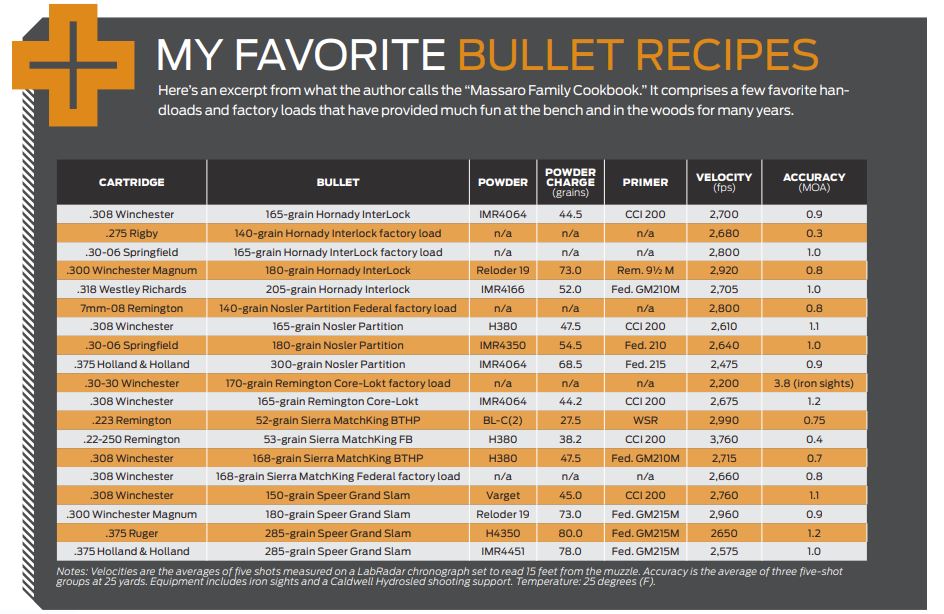
Hunting Bullet Load Data

Editor’s Note: This article originally appeared in the July 2020 issue of Gun Digest the Magazine.

5 Things You Must Know About Concealed Carry Insurance

2

Concealed Carry Insurance is important if you are an armed citizen

Simply because you’ve got a pistol you can use and a comfortable rig to carry it in doesn’t mean you’re a prepared armed citizen. You need to consider your concealed carry insurance options.

What You Need To Know About CCW Insurance:

Let’s look at five things you need to understand when shopping for concealed carry insurance plans. Like any other topic, knowledge is power.

How Concealed Carry Insurance Works

Most concealed carry insurance plans pay for two parts of your legal expenses. Initially, they’ll pay your attorney’s retainer up front, ensuring you have legal defense from the get-go. Then, most companies pay the balance or a percentage of your attorney fees after your acquittal. Additionally, there’s generally an element that covers your legal defense in a civil suit.

Read Also: 6 Concealed Carry Insurance Options To Protect Your Six

Overall, what’s covered and how much of it is covered varies company to company and plan to plan. Pay attention to CCW insurance policies’ caps and ask yourself, “Will it be enough?” Because once you reach those amounts your plan won’t pay anything further and you’ll be on the hook. This fine print is well-worth studying, keeping in mind a criminal defense lawyer can easily run into the hundreds of thousands of dollars if your case goes to trial.

Policies Often Cover More Than Legal Expenses

Some concealed carry insurance goes beyond legal expenses and covers a number of other aspects you might encounter, including but not limited to:

  • Initial Bail Bond
  • Crime Scene Clean Up
  • Negligent Discharge
  • Spouse And Family Self-Defense
  • Property Damage
  • Firearms Replacement
  • Work Loss Coverage

CCW insurance helps defuse legal bills if you have to employ deadly force

There are quite a few other often under-considered areas concealed carry insurance covers. Some of these fall within the bounds of the initial policy, while others are add-ons and cost extra. Though, having more complete coverage at your disposal is heartening, given how quickly expenses – most of them unexpected – add up.

Arm Yourself With More Concealed Carry Knowledge

They Provide Expert Resources

In addition to pure financial coverage for legal expenses, many concealed carry insurance plans offer a host of other resources.
Initially, most provide you with extensive information concerning armed defense and use of deadly force. Furthermore, the companies usually have regular newsletters, keeping you abreast of changes in self-defense and concealed carry laws across the country. That is important given how legislation – especially in states other than yours – can easily fly under your radar.

In addition to this, CCW insurance companies typically have a host of expert witnesses on retainer for trials or will pay for them. They also maintain a network of criminal defense attorneys and will vet yours if you choose someone outside their system. A boon, given this attorney is likely the most important you’ll ever hire.

Costs Can Vary

Similar to most insurance, the concealed carry variety runs the gamut in cost. It all depends on how much coverage you require and the add-ons you opt to tack on your policy. That said, on the low end, it runs around $11 a month and at the high well over $50. However, most companies charge an annual rate, so expect to spend around $130 and up right off the bat. Yes, this is your cold-hard cash and a policy quickly adds up. But compared to the expense if you go to trial, self-defense insurance is peanuts.

It's important to fully understand your concealed carry insurance policy to ensure you have the appropriate coverage

You Need To Know The Law And Your Policy

Gun, self-defense and insurance laws differ from state to state. In turn, you need to know how the three intersect in your particular location. A policy might be legally sold in your state, but have aspects that disqualify certain coverage. In other circumstances, you could travel to another state where the policy is invalid. Not good if you vacation a lot. With this in mind, it’s not only worth your time reading everything a certain policy offers, but also calling the company if you’re unclear on anything that’s in the policy.

Parting Shot

Concealed carry insurance is akin to your self-defense gun; it’s unlikely you’ll ever need it, but if you do, you really need it. Given the weight of the matter, don’t jump into a plan simply because of flashy graphics, big names associated with it and huge promises. Remember, “Large print giveth, small print taketh away.” Be sure you read everything and have all your questions answered before making a final decision. Your life – at least as you know it – depends upon it.


  • 11 Top Picks For Concealed Carry Handguns (2019)
  • 7 Standout Concealed Carry Revolvers For Personal Defense
  • Carry Right With 8 Top Concealed Carry Holsters
  • 6 Top Micro 9mm Handguns For Everyday Carry
  • 4 Must-Have Concealed Carry Upgrades
  • Gallery: 9 Greatest 9mm Single Stacks
  • Best Caliber for Self Defense: 9mm, .40 S&W or .45 ACP?
  • Concealed Carry: Is The .380 ACP Enough For Self-Defense?
  • Concealed Carry: What About +P Ammo?

  • Put Your Practical Rifle Marksmanship To The Test

    0

    Rifle Marksmanship 2

    Think you’re slick with your iron? It’s time to put your rifle marksmanship to the test to truly show what you’ve got.

    How good a rifle shot are you? Do you really know?

    It’s a valid question, because you need to know your capabilities before you have to pull a trigger when it matters.

    Since I became involved in writing about guns, I’ve been looking for a protocol I could use to evaluate the suitability of a practical rifle; more specifically—how the rifle interfaces with the shooter.

    The first stage of the Rifleman Test involves shooting from the standing, unsupported position.
    The first stage of the Rifleman Test involves shooting from the standing, unsupported position.

    Sometime back, I settled on the Forty-Five Drill to do exactly the same thing with defensive handguns. I also found it to be an excellent tool to evaluate shooter skill. I wanted the same simple drill—sort of a qualification course—I could use for the same purpose with rifles and riflemen.

    The Logic of Qualification

    There are many different qualification courses for the rifleman. The Army requires a soldier to hit 23 out of 40 pop-up silhouette targets from between 5 and 300 meters. With a 90 percent success rate, a solider receives an “expert” ranking. The Marines use a similar, but tougher, course that’s arguably less practical. And the NRA offers a four-position, high-power rifle qualification that requires 50 shots fired at distances from 200 to 600 yards. Target type varies with distance, and an 80 percent score makes you an expert.

    All these courses require lots of shooting. They also allow you to miss targets and still rank as expert. I fail to see the logic here; as Jeff Cooper said, “The purpose of shooting is hitting.” I believe a marksmanship test should require every round fired to hit the target.

    The second engagement of the rifle marksmanship evaluation involves a shot from the kneeling position.
    The second engagement of the rifle marksmanship evaluation involves a shot from the kneeling position.

    Why? Well, Cooper was right: The purpose of shooting is hitting. Failure to hit your target represents either a miscarriage of instruction or a failure to learn.

    Let’s look at it another way. If a police officer is allowed to qualify with misses, how can you defend the officer who shot at a bad guy, missed and hit an innocent bystander? The same applies to soldiers: If you allow them to qualify with misses, don’t be upset when they don’t hit the enemy; you knew it was coming. With hunters, it’s no different, and it’s one reason that too many take shots they know they can’t make.


    Improve Your Rifle Marksmanship:


    Testing Practical Rifle Marksmanship

    In order to test a rifleman, you must know what a “rifleman” is. The dictionary definition is: (1) a solider armed with a rifle; (2) a person skilled in the use of a rifle. This is a very general definition and is akin to calling a man who’s skilled with a sharp cutting instrument a “surgeon.”

    A good shooting sling can make all the difference when field shooting. To use it quickly and effectively, it needs to be adjusted properly.
    A good shooting sling can make all the difference when field shooting. To use it quickly and effectively, it needs to be adjusted properly.

    I believe a rifleman should be able to hit his target from common positions—standing, kneeling, sitting and prone. I’m talking about basic rifleman skills anyone considered a “rifleman” should be able to demonstrate on demand. “On demand” means fulfilling an urgent or pressing need—right now, without warm-up. This “urgent or pressing need” establishes that the shooting must occur in a hurry or within a certain amount of time. Regardless of the situation, if time isn’t an issue, shooting is probably not needed.

    This leaves us with determining the target to be hit and the distance at which it should be shot. However, beyond their practicality, neither is that important. It’s just as hard to hit a 3-inch target at 25 yards as it is a 12-inch target at 100 yards. If you increase the distance and target size by a factor of four, the difficulty remains the same.

    With that in mind, few practical applications of a rifle require a target any smaller than 3 inches in diameter to be hit. If you can hit a snuff can quickly—and on demand—you’re demonstrating practical rifle application.

    Practical Rifleman, Practical Test

    If we’re to measure the practical rifle marksmanship, the test should also be practical. There’s no call for firing several boxes of ammunition, and there’s no need for shooting at excessive distances. The goal is to see if the shooter can hit targets—quickly—from the four basic positions. So, a practical test should not necessitate impractical resources.

    The third engagement within the rifle marksmanship test is fired from the seated position. This can be a very stable position. It’s also flexible, allowing for different positioning of the legs to suit the shooter and situation.
    The third engagement within the rifle marksmanship test is fired from the seated position. This can be a very stable position. It’s also flexible, allowing for different positioning of the legs to suit the shooter and situation.

    Most shooters have access to a 100-yard range and a box of ammunition. If you can’t measure practical rifle skill within those confines, the test or qualification is, well, impractical.

    Additionally, a practical qualification should be hard. I don’t mean hard to take, but hard to complete with a passing or positive rating. You wouldn’t consider the skills of an unpracticed rifleman to be practical, and you’d expect an unpracticed rifleman to fail any test designed to measure practical abilities.

    The Qualification

    With influence from Jeff Cooper and a practice regime used by the great and early-1900s adventurer and marksman, Stewart Edward White, I developed the Rifleman Test. It reflects the practical application of a rifle and is built around four single-shot engagements that represent real-world scenarios. The exercise is also timed because, as we’ve established, if time isn’t an issue, shooting probably isn’t necessary.

    With field shooting, the position that puts your barrel closest to the ground will be the steadiest.
    With field shooting, the position that puts your barrel closest to the ground will be the steadiest.

    Engagement #1—The Snapshot: With a par time of three seconds, start with the rifle at the high-ready position. At the signal, fire a single shot from the standing position at a 12-inch target placed at 100 yards. This is a variation of a drill Jeff Cooper promoted. The concept is that you might have to quickly shoot a dangerous-game animal that’s charging and near or a human threat at a greater distance.

    Engagement #2—Kneeling: Start in the same position, but at the buzzer, hit a 9-inch circle at 100 yards from the kneeling position within eight seconds. Although kneeling is better than standing, it’s not the most stable intermediate position. However, it provides the ability to utilize low concealment when hunting or low cover in a fight. It’s also the fastest intermediate position to assume.

    Engagement #3—Sitting: The seated position is the most stable intermediate position and is best used in conjunction with cover or concealment too high to permit shooting from prone, but not high enough to necessitate kneeling. Starting at high-ready, acquire the seated position and hit a 6-inch target at 100 yards in fewer than nine seconds.

    Engagement #4—Prone: As the most stable field position, prone provides the best chance for hitting. Start by standing at high-ready, drop prone and hit a 3-inch circle at 100 yards in fewer than 10 seconds. Why not a use a smaller target? Because, practically speaking, that level of precision isn’t necessary. For hunting or fighting, a bullet that lands within 1.5 inches of the desired point of aim is sufficient. (By the way, bipods are permitted but can’t be deployed before the timer starts.)

    The seated shooting position can be greatly enhanced with a quality and properly adjusted shooting sling. Learn to use one well so it doesn’t take you too long to sling-up.
    The seated shooting position can be greatly enhanced with a quality and properly adjusted shooting sling. Learn to use one well so it doesn’t take you too long to sling-up.

    Now, while these drills can be performed individually, ideally, they’re combined with a par time of 30 seconds. This adds stress and requires the rifleman to move fluidly between field positions. To conduct the test, you need a proper target, a 100-yard range, a shot timer and a box of ammunition.

    The target should be a circle with 3-, 6-, 9- and 12-inch scoring rings. For a while, I made these by drawing on a cardboard IPSC target, but this was unpractical as hell: It took longer to make the target than to shoot at it! After some searching, I found the Birchwood Casey DirtyBird target (stock number: BC-35830) with scoring rings of the proper diameter.

    Scoring

    Shots inside the 3-inch circle count for 20; inside the 6-inch ring, 15; 10 for inside the 9-inch ring and 5 for hits inside the 12-inch ring.

    Man-made targets such as this one were originally used for the Rifleman Test. They work great but take too long to make.
    Man-made targets such as this one were originally used for the Rifleman Test. They work great but take too long to make.

    I know what you’re thinking: Each stage shoots at an increasingly smaller target. So, if you shoot a string of four shots at one target, how will you know which shot landed in which ring? You won’t, and it doesn’t matter. As they say, “A blind squirrel can sometimes find a nut.” What this means is that sometimes, a shooter of only moderate skill can make a great shot. When that happens, that shot counts no more or less than when a shooter of superior skill makes it.

    With exceptional shooting, 80 points (four hits inside the 3-inch ring) are possible. To qualify, a minimum of 50—with at least one hit within each circle with no misses—is required. Referring back to the “blind squirrel” philosophy, if a rifleman can obtain 50 points in 30 seconds with no misses, it doesn’t matter how those points are obtained. Additionally, for every full second less than 30, add two points; and for every full second over 30, subtract two points.

    There are two ways to run this qualification. The first is to perform a single run/four shots. As with the Forty-Five Drill, this gives the rifleman a one-time—on-demand—opportunity to exhibit their skill level. On the other hand, you can run the drill five times (20 shots) to establish an aggregate score.

    Lessons Learned

    I’ve been running similar drills for years, and the first time I tried the Rifleman Test, I used my Wilson Combat AR15 in .300 Hamr and managed 75 points. But, it took me too long—45 seconds. So, my final score was a failing 45. I ran it four more times for an average score of 54.6, with a best run of 65.

    On this run through the rifle marksmanship evaluation, 65 points were scored by shooting, with four additional points added for completing the drill a full two seconds less than 30.
    On this run through the rifle marksmanship evaluation, 65 points were scored by shooting, with four additional points added for completing the drill a full two seconds less than 30.

    What did I learn? The same things you can learn from performing this qualification. I found out my shooting was not the problem; rather, my weakness was not assuming the positions fast enough to give me the necessary time to make a good shot. I also learned that I really needed to sling-up to make a good shot from a kneeling position and that I had to get better (faster) at doing that.

    Running the course with my Model Seven Scout Rifle from the Remington Custom Shop, I found that for best performance, I needed to keep the 2-7X Scout scope set at a midrange magnification and that I had to concentrate on working the bolt quickly as part of shot follow-through. In my best run, I scored 65. Four runs with a Marlin 336 Dark in .30-30 Winchester produced an average score of 45 and a best of 60. Interestingly, average times with all three rifles were within seconds of each other, and my weaknesses were similar.

    Rifle Marksmanship Rankings

    The best use of this qualification—any qualification—is self-evaluation. But shooters like to know how they stack up. You can rate your performance with a score of 50 to 59 as “rifleman,” 60 to 69 as “marksman,” 70 to 79 as “expert”; and, if you can get four hits inside the 3-inch circle in 30 seconds—80 points—you’re a damned fine rifleman and should be considered to be of a distinguished skill level.

    To score the Rifleman Test, total the points from all four shots and add two points for every full second less than 30. Alternatively, subtract two points for every full second over 30. (If you’re mathematically challenged, consult this table.)
    To score the Rifleman Test, total the points from all four shots and add two points for every full second less than 30. Alternatively, subtract two points for every full second over 30. (If you’re mathematically challenged, consult this table.)

    My suggestion is that you film your attempts. That’s easy, now that we all have smartphones. This allows you to use the video to self-critique your performance. You’ll see how long it takes you to transition between positions, sling-up and operate your rifle’s action. This will help you perform better in the field—when it really matters.

    How do you get better at getting the good hits? Hell, that’s simple: Perfect your ability to hold the sights on the target as you press the trigger.

    Editor’s Note: This article originally appeared in the July 2020 issue of Gun Digest the Magazine.

    Scope Review: Leupold VX-3i CDS-ZL Optics Line

    0
    This ultra-light rifle was built with parts available from Brownells. The nice part about today’s AR platform is that it can be readily modified for virtually any end use. While a light, short barrel isn’t always the best when it comes to accuracy, it’s very practical for hunters and shooters on the move.
    This ultra-light rifle was built with parts available from Brownells. The nice part about today’s AR platform is that it can be readily modified for virtually any end use. While a light, short barrel isn’t always the best when it comes to accuracy, it’s very practical for hunters and shooters on the move.

    Sporting the high-end features of their military cousins, Leupold’s VX-3i CDS-ZL line takes shooting to a different level without breaking the bank.

    Leupold has a long and storied history of innovation in the optics industry. While it was certainly not the first company to come out with scopes for rifles, it could be argued that today, it’s one of the most extensive and most widely trusted brands in that industry.

    For a great many shooters, the scopes with the gold ring are the only choices when it’s time to embark on that annual tradition that sees late nights around the campfire and early mornings with a cup of coffee in the stand. I’m a big believer in Leupold’s quality.

    It’s hard to find scopes that hold up in tough field conditions, and it’s even harder to find them with useful features that create confidence for difficult shots. Now, for the first time, Leupold is bringing some of the best features of its high-end scopes to optics that are of great interest to the largest number of shooters and hunters: the VX-3i CDS-ZL line.

    Features To Suit You

    There are currently four VX-3i CDS-ZL models available. Two models are built on a 30mm main tube; the other two are based around the classic 1-inch diameter. The 30mm models will be available with a side focus knob. The model featured in this article is the 1-inch 4.5-14x, which is a model well-suited to hunting and shooting in a variety of conditions.

    ‘Weighty’ Considerations

    Having both turrets capped ensures that the windage and elevation dials won’t have a chance to move if they’re bumped in the field. This has been a big problem when it comes to the previous generation of target and tactical scopes. There was a time when it seemed as if turrets were only getting larger, and it was easy to get lost in rotations if you were shooting a lot at various distances.

    The trusted gold ring is present on this fine scope. Many hunters will be pleased to have the added benefits on their rifle, while target shooters will enjoy the durability and repeatability in their matches.
    The trusted gold ring is present on this fine scope. Many hunters will be pleased to have the added benefits on their rifle, while target shooters will enjoy the durability and repeatability in their matches.

    A lot of these early-generation tactical scopes began to integrate zero stops and other such upgrades, but those features often came with a high price tag. Many recreational shooters simply had to settle for large and ungainly scopes, which can sometimes add more than 2 pounds to the weight of a rifle.

    As a result of the disparity in technology, some shooters end up with rifles weighing more than their military counterparts did. It’s not uncommon to find rifles that weigh more than 10 pounds. The result of increased rifle weight has made many types of hunting and shooting a stationary practice.

    Improvements for Success

    Just as scopes have gotten lighter and more feature-rich, the technology of varmint rifles has also improved. For the purposes of this article, I assembled a rifle with the help of Brownells that was meant to be as light as possible while still offering solid accuracy.

    The rifle comes in empty at slightly more than 41/2 pounds fully kitted, but it offers 1 MOA accuracy at 100 yards and is extremely compact. The rifle features a set of V7 receivers made of a special, lighter-than-aluminum alloy. They are so light that they almost feel as if they’re made of papier-mâché when you handle them stripped.

    The magnification range is impressive on the VX-3i. It’s rare to find a 1-inch scope with a range of 4.5-14x. This is a big plus for all hunters, because it has the ability to be used at 4.5x—which is what many people hunt with—and up to 14x, where many varminters “live and breathe.”
    The magnification range is impressive on the VX-3i. It’s rare to find a 1-inch scope with a range of 4.5-14x. This is a big plus for all hunters, because it has the ability to be used at 4.5x—which is what many people hunt with—and up to 14x, where many varminters “live and breathe.”

    Most of the lower parts are not special or lightweight. The rifle’s fire control is all Geissele Automatics, as are the buffer and spring. The quality of Geissele parts and triggers can’t be overstated.

    Compact Magpul furniture was also chosen, but the K2 grip was made large enough that it could be easily manipulated in the field, where the smaller MOE-K doesn’t offer enough surface area for gloved hands. It was a small penalty in ounces for a great deal more function. A vertical grip was also added to the bipod; it also works as a barrier stop when shooting off of low branches. Putting the rifle’s magazine well up against a branch can put strain on the receivers and throw a shot as a result.

    The upper receiver contained a Faxon Firearms ultralight bolt carrier group and a Faxon barrel, which is extremely light and compact. The barrel features a factory-pinned and -welded low-profile flash hider that extends the overall length to 16 inches. What’s remarkable is that you can still slide a gas block over the flash hider to assemble the rifle.


    Scope Out More Optics Info:

    • 8 Revolutionary Reticles For Long-Range Accuracy
    • Buying the Perfect Precision Scope
    • The Best Tactical Red-Dot Performance-to-Price Option?
    • Shifting Winds: SIG BDX Changing Shooting For The Better

    Testing the Rifle and Scope

    At half the weight of a traditional varmint rifle, this special build and the new Leupold VX-3i were put to the test to see how well they stacked up comprising a serious hunting rifle.

    Leupold VX-3i CDS-ZL 8

    The first thing was to find some ammunition to test the gun with. I chose Black Hills Ammunition and got my hands on some of its fantastic hunting line. As far as accuracy is concerned, the load that performed the best was the 50-grain VMAX, which also suited the rifle’s intended purpose as a compact, low-recoil varmint eliminator.

    Mounting the scope was like any other, but getting it zeroed was a bit different.

    The VX-3i borrows from the Mark 5 line, in that it has a solid zero stop that’s both tactile and audible. The turret has small screws around its circumference that, when loosened, allow the turret assembly to be set back to zero. Tightening everything down is all you have to do to finish up. There’s no shimming or any other imprecise methods to worry about.

    Adjusting windage was very typical, as on any scope. But it thoughtfully makes use of a cap, which is advantageous to the hunter, because windage is seldom, if ever, adjusted in the field. Most hunting ranges, especially for coyote, are inside 200 yards. Out West, you might see longer shots, but they aren’t the norm. Still, adjusting for windage in a hunting situation is a timely chore when shot opportunities are fleeting.

    The gray button is popped out when it’s locked at zero. This is an instant and easy way for the shooter to discern that the scope is ready to rock.
    The gray button is popped out when it’s locked at zero. This is an instant and easy way for the shooter to discern that the scope is ready to rock.

    Elevation is another story. While bullets might drift, they always drop. One of the worst things about the prior generation of scopes was that zero was hard to find in the field. If you bumped your elevation turret and it spun, you sometimes had no way of knowing if your zero was to the left or right.

    The problem became worse if you’d already dialed in for a shot. There’s nothing worse than being off an entire revolution when that next shot comes around. The fact that, for a relatively inexpensive scope, there’s a discernible and lockable elevation zero is a game-changer. All you have to do after dialing your elevation is simply wind back until you hear a click.

    Scope Performance

    The VX-3i I received was one of the first produced. It can’t necessarily be called a “prototype”; it’s a production model. But, in my experience, I’ve noted that there’s been trouble with advanced features on mid-priced scopes when they first come out.

    That’s not the case here. The rifle was zeroed at 100 yards from the bipod using the Black Hills 50-grain VMAX. The average group size with this combination was just under 1 MOA. The accuracy carried over to 200 yards as well. Five-shot groups averaged just under 2 inches. After dialing repeatedly, the gun always returned to zero without failure. Tracking was also exceptionally accurate.

    The scope turret in rotated position. The button is depressed when in use and stays that way, even if the turret is a full revolution in the wrong direction. Simply turn it all the way back; it clicks and locks back to zero.
    The scope turret in rotated position. The button is depressed when in use and stays that way, even if the turret is a full revolution in the wrong direction. Simply turn it all the way back; it clicks and locks back to zero.

    After it was zeroed, I took it out to some unknown-distance targets that approximated the chest size and height from the ground of a typical coyote. Using a laser rangefinder, the scope was easy to dial in and extremely quick on target. While the targets were stationary, I achieved hits from a field position at a ratio of 95 percent at distances out to 400 yards using the CDS turret system. For any true hunter used to stalk-hunting, that’s an impressive number.

    Note: The VX-3i is second focal plane, meaning that the crosshairs remain the same relative to the shooter’s eye, as opposed to zooming in and out with the background. As a result, the reticle can’t be relied upon for accurate holdovers. The fact that it’s primarily designed to be used with the elevation turret is a plus: While a first focal plane scope is always desirable, many aren’t in the price range with the same feature set that this scope has.

    Leupold VX-3i CDS-ZL 9

    Eye relief is comfortably long at approximately 4½ inches. For guns with telescoping or adjustable stocks, this is a big plus. The VX-3i can be mounted quite far forward on an AR-type rifle, which greatly increases shooter comfort—especially in confined spaces in which a hunter might be concerned about getting whacked in the eye under recoil.

    Doable Price

    The overall package gives today’s discerning hunter a remarkably light and compact scope that has an impressive range of magnification and light transmission. I did quite a bit of shooting with it in low light and found that it was still easy to distinguish targets, even as darkness began to set in.

    You might assume that, given its many features, this VX-3i would retail at more than $1,200. However, the MSRP should be in the $500 to $700 range (depending on the model). At that price, it’s hard to deny that Leupold is leading the industry in features that others will soon be forced to offer … in the same cost range. The fact that your rifle can sport what are essentially the same high-end features found on Leupold’s top-of-the-line military optics—without breaking the bank—is extraordinary!

    For more information on the Leupold VX-3i CDS-ZL, please visit leupold.com.

    Editor’s Note: This article originally appeared in the 2020 Long-Range Shooting issue of Gun Digest the Magazine.

    MUST READ ARTICLES