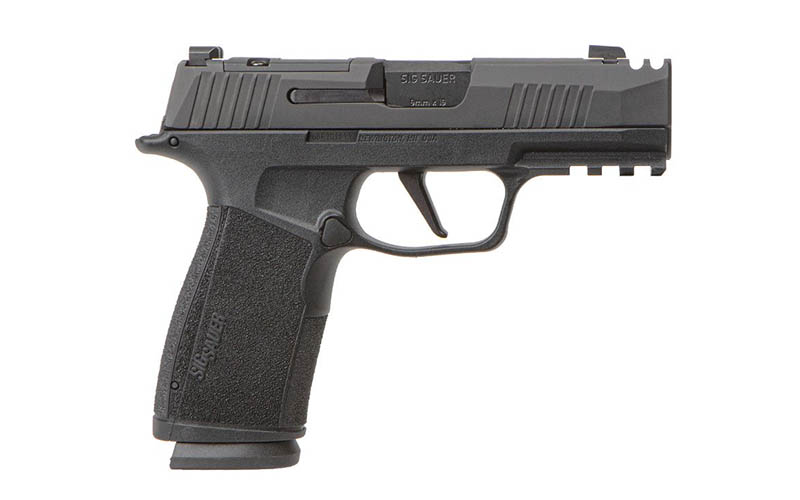
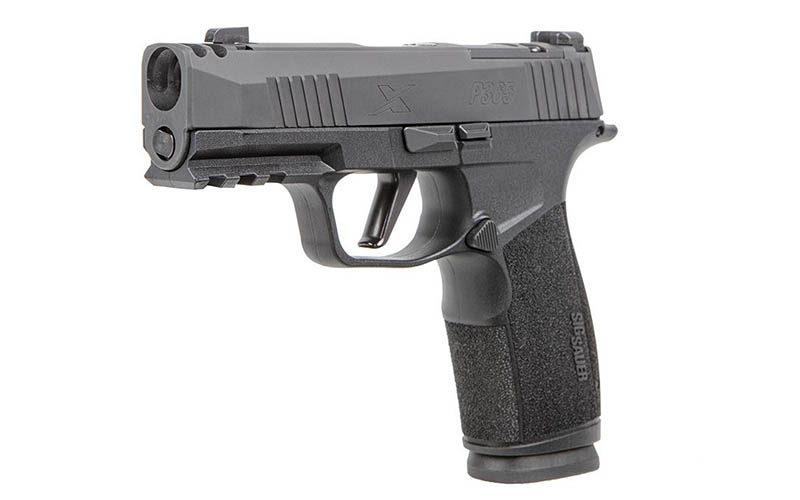
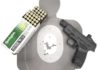
Sig Sauer has just released the P365-XMACRO pistol, a new member of the P365 family that boasts a 17+1 capacity of 9mm.
It’s no secret that Sig Sauer has been dominating the carry gun market these past few years, with the P365, P365 XL and other variants providing concealed carriers with small, light guns with large ammunition capacities for their respective sizes. For those who prefer carrying larger handguns with even higher capacities, however, Sig has just released the P365-XMACRO.
Like the P365s that came before it, the P365-XMACRO is a striker-fired 9mm with a polymer frame. It shares the same slim, 1-inch thickness as the older models, but now has a taller frame to accommodate the new 17-round magazines. Other features include an integrally compensated slide, XRAY3 day/night sights, a flat trigger and three interchangeable backstraps for the Macro-Compact grip module. Each P365-XMACRO also features a standard accessory rail and an optics-ready slide with a ROMEOZero/Shield RMSc footprint.
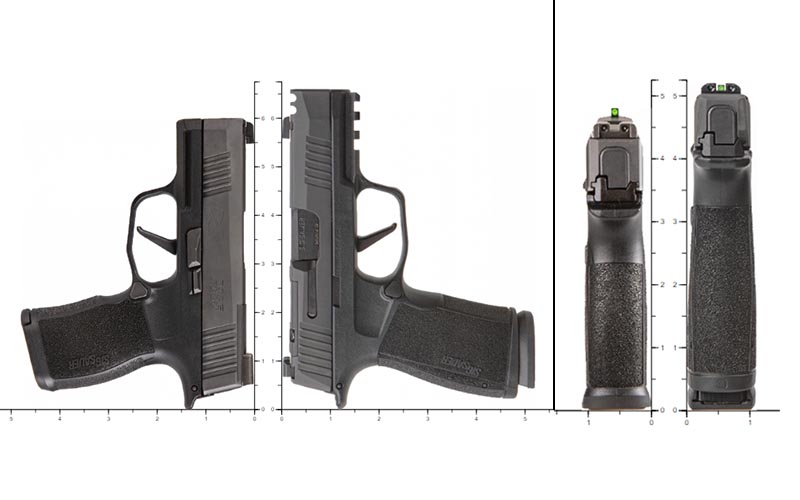
While not quite as small as the original P365 models, the P365-XMACRO boasts increased shootability and a larger capacity with flush-fitting mags. Original P365s may have been capable of holding 16 rounds on tap when using one of the extended 15-round mags, but that makes their grips nearly as long as the P365-XMACRO’s which holds two more rounds with flush-fitting magazines.
Size comparison between a Sig P365X and the Sig P365-XMACRO. Photo: HandgunHero.com.
Chief Marketing Officer and Executive Vice President of Commercial Sales at Sig Sauer, Tom Taylor, said this on the new pistol’s primary selling point:
The innovative magazine design of the P365-XMACRO delivers on capacity while maintaining the slim design, making it more comfortable and more concealable than any other 17+1-round pistol on the market.
Each Sig P365-XMACRO includes two 17-round mags and three interchangeable backstraps. It has an MSRP of $799.99 and it’s available now.
Are the most expensive hunting rifle models worth their price?
At one point in time, in the not too distant past, cheap rifles were exactly that: cheap. Generally speaking, the inexpensive hunting rifles of yesteryear left an awful lot to be desired. And while quite a lot of meat was made in my hunting circles with those budget-friendly guns, we could’ve done with a bit of improvement in the accuracy department.
Fast-forward to the past decade or so, and the improvement in inexpensive rifles has shot up faster than the recent prices at the pump. You can cobble together a viable 1,000-yard-capable rig for under $1,000, and that just wasn’t the case when I was young.
So, the question has popped up several times around the campfire: Are the expensive rifles still worth the price?
The Heym Model 89B is a great value in the double rifle market, though will still cost the hunter over $20,000. It has many features of rifles costing well over $50,000. Photo credit: Doug King.
Trading Dollars For Performance
To be completely honest, I’ve owned and/or hunted with some rifles that were downright embarrassing, and some that were very costly … at least for a man of my means. Odds are pretty good that I’ll never be the owner of a Holland & Holland Royal double rifle or a Rigby Rising Bite.
I did, however, invest in a Heym Model 89B double gun as well as one of Heym’s Express by Martini bolt rifles and consider them to be prized possessions. I also take off-the-shelf Savages, Rugers, Winchesters and Brownings and a number of other brands afield each year, and the game animals couldn’t care less which logo the rifle carries.
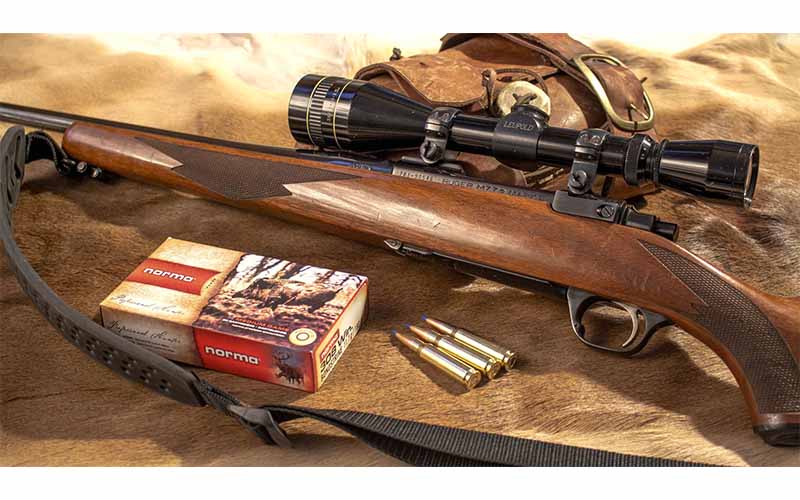
The author’s Ruger Model 77 MKII in .308 Winchester isn’t expensive but will assuredly give a lifetime of good service if properly cared for. Photo credit: Massaro Media Group.
Looking at the wide spectrum of hunting rifles available, with their equally wide spectrum of price tags, the buyer needs to ask which features they’d like, which features they’d need and which are frivolities. I know hunters who wouldn’t consider the prospect of putting a “Tupperware” stock in their gun safe, and I know others who feel that deep chocolate mineral streaks in a piece of mesmerizing walnut is best reserved for fine furniture and other museum pieces.
To some hunters—my father, Ol’ Grumpy Pants, comes quickly to mind—a rifle is a bullet launcher; no more and no less. To others (me, for sure), a rifle has life. It’s the partner on a million adventures, and the sight, feel and even smell of that rifle conjures countless memories of days afield with hunting friends both present and past, or those times spent alone in precarious situations only you will remember.
I don’t ever judge a hunter on the cost of his or her rifle, having been the guy embarrassed by what I could afford. And much like the world of guitar players, the ability to buy a premium vintage Gibson or Fender certainly doesn’t give you the ability to play it like Jimmy Page or Jeff Beck.
I’ve missed easy shots with expensive rifles and made near-impossible ones with budget guns. I strive to have gear that’s better than I am in order to make my shooting or hunting ability the weak link in the chain, but I can’t and will not try to financially compensate for a lack of either of those skills no more than I would choose a larger cartridge with a heavier bullet to make up for poor shot placement.
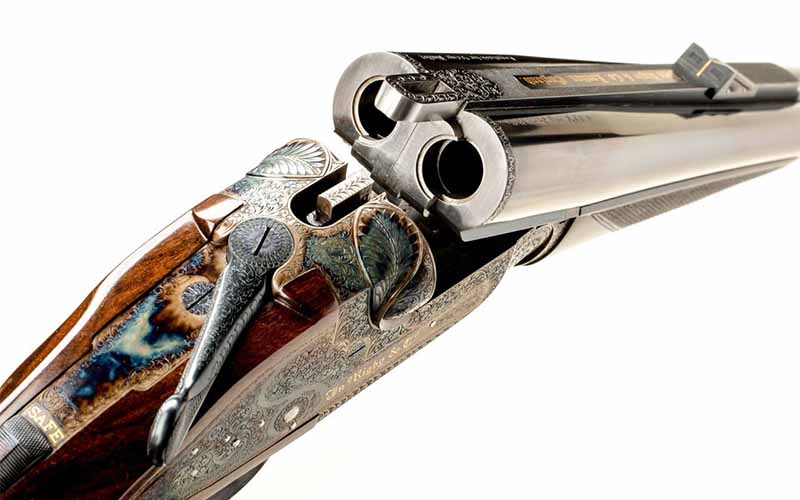
Among double rifles, the Heym Model 89B gives the best value on the market right now, carrying a price tag affordable when compared to other double rifles, yet carrying many of the features of a rifle twice its price. Photo credit: Massaro Media Group.
What Exactly Defines ‘Expensive?’
Let’s also define expensive. Merriam-Webster defines it as an adjective, “involving high cost or sacrifice.” I can agree with that completely for our purposes.
For example, a premium-quality bespoke bolt-action rifle can have a price tag approaching $50,000 or more, and a double rifle can easily get into the six-figure range. I’ve held a Holland & Holland with a price tag of nearly $400,000, and yes, my hands were trembling.
What’s expensive to one person may be just a dream for another, or sometimes the price wouldn’t dent the yearly budget. To further qualify my personal decisions, I’d rather own a few serviceable rifles and travel to hunt the species I’ve always dreamed about in those places I’d love to see than have a safe full of valuable queens that never see an airport.
What justifies the wide range of prices among hunting rifles? Well, labor has become incredibly expensive, and the more handwork and attention to detail a rifle has, the higher the price tag will be. Additionally, the supply of premium walnut for those stocks that so many of us find attractive is drying up; we’re simply consuming walnut at a faster rate than it can grow.
For those who wish to own a pretty stick of wood on their rifle, there’ll be a premium attached. Is that worthwhile? Well, I can say that highly figured walnut doesn’t increase or decrease accuracy or velocity, but it sure is pretty to look at and seems to age like a fine wine. That said, I have synthetic-stocked rifles with which I have shared some indelible memories.
Memories can be made with all sorts of rifles; the author took this Zimbabwean kudu bull with a custom rifle based on a 1916 Mauser Gewehr 98 action, re-barreled to the obscure .318 Westley Richards and done on a budget. Photo credit: Massaro Media Group.
Hunting Rifle Must-Haves And No-Ways
There are features in a rifle I’m completely willing to pay for or avoid if they aren’t designed properly. One pet peeve of mine is feeding. If a rifle doesn’t feed properly—and you’d be surprised how many don’t feed the way they should—it’s a complete source of frustration.
One of the most appreciable features of the Heym Express by Martini is the way the rifle feeds. Now, the .404 Jeffery has a reputation for feeding well to begin with, but the folks at Heym are extremely particular about the way their rifles feed, to the point where each cartridge has its own unique magazine geometry.
Where some companies will use one magazine design for the full-length belted magnums such as the .300 Weatherby, .375 Holland & Holland, .416 Remington Magnum and .458 Lott, Heym creates a unique magazine design for each cartridge they offer in the Express. This is a very important feature for me, as my Heym .404 Jeffery is a dangerous game rifle, and a feeding issue could cost a life.
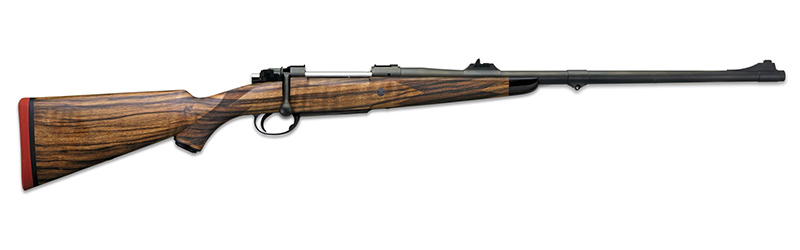
With a bespoke controlled-round feed action, a magazine unique to each particular cartridge and a classy stock designed by famed gunsmith Ralf Martini, the Heym Express by Martini is one of the best buys on the market right now. Photo credit: Massaro Media Group.
Inexpensive polymer magazines are another feature I tend to avoid. I understand the ease of manufacture and affordability aspects, but when those little tabs break off, rendering the magazine useless, the savings up front tend to go out the window. Give me a good old-fashioned hinged floorplate like the Winchester 70 had. Perhaps it’s more expensive to manufacture, but I’ll pay that price happily.
And while we’re at it, I really like those manufacturers who take the time to ensure that their magazine followers will operate flawlessly. I remember when Mark Bansner was adjusting the stock length of my Bansner & Co. .404 Jeffery. He was fiddling with the magazine follower when he looked at me and said, “This isn’t quite right; give me a couple minutes to sort this out.” The rifle fed well to begin with, but after Bansner’s tweaks, it feeds like grease. Bottom line: Cheap rifles don’t always feed well, and I can’t deal with that.
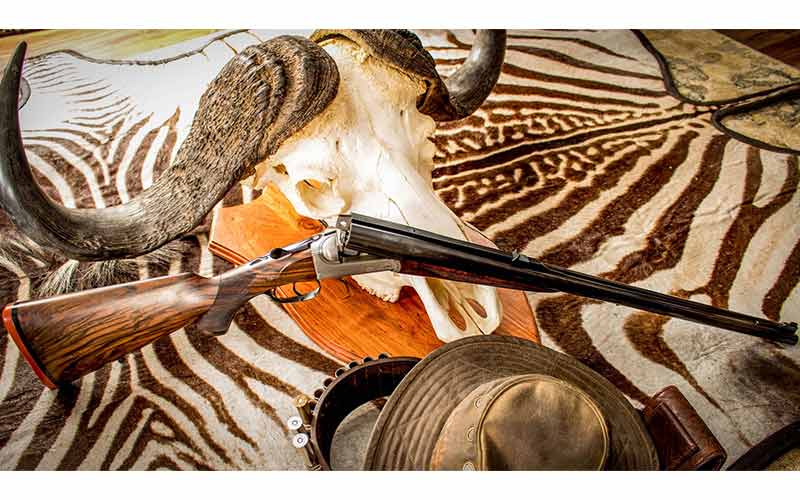
The author’s Heym Model 89B in .470 Nitro Express is perfect Cape buffalo medicine and represents a classic hunting experience. Photo credit: Massaro Media Group.
Personal Preferences
Among hunting rifles, the bolt-action undoubtedly reigns supreme, in spite of the fact that the controlled-round feed (CRF) versus push-feed rages on to this day. I’m firmly planted in the CRF camp, though I do cross party lines and enjoy the use of several push-feed model rifles.
My Tikka T3X Lite 7mm-08 Remington, Browning X-Bolt 6.8 Western and Winchester Model 70 XTR Sporter all feed and extract reliably, and together we’ve made a ton of great memories around the world. However, when the game animal has teeth, claws or horns that can end a hunter’s life, I much prefer the security of controlled-round feed.
Stock design is another feature where I’m not comfortable compromising. Looking at some of the more “affordable” expensive rifles—meaning we aren’t talking about custom guns in the $30,000 to $50,000 range—the stock designs and options are next level in comparison to the majority of off-the-shelf rifles.
Every hunting rifle is capable of creating memories, whether it cost $400 … or $10,000. Photo credit: Massaro Media Group.
American rifles seem to be married to the 13¾-inch length of pull; just like all blue jeans shouldn’t have a 34-inch waist and 30-inch inseam, our rifle stocks really shouldn’t be one-size-fits-all. Unless I’m planning on wearing a very heavy hunting coat, my length of pull runs between 14¼ and 14½ inches. I can compensate for it, but the longer stocks feel much nicer.
I appreciate the adjustable stocks on rifles like the Savage models, which have the AccuStock, and the small details in rifles like the Tikka T3X and Browning X-Bolt, which add a palm-swell to the pistol grip. But, once you’ve had the experience, there’s nothing like a stock made for your frame. Heym made my 89B double rifle to my dimensions, and Mark Bansner set that .404 Jeffery up to fit like a glove, proving that even a synthetic stock can make a hunter smile.
Some of the more affordable rifles will make a single stock design, which can handle the heaviest cartridge they load for and put that same stock on the entire product line; the Czechoslovakian CZ550 comes quickly to mind in that respect. But looking at the sales numbers of the CZ550, and how many hunters have embraced its blend of affordability and reliability, there’s quite obviously something to that formula.
I also like a rifle to balance properly; when it comes to the shoulder as if it were part of a dance routine, to the point where you don’t even think about it, it’s a wonderful thing. Few entry-level rifles take balance into consideration—or so it seems—or at least they don’t pay nearly as much attention as the smaller shops, and perhaps that’s reflected in the price point.
Rigby’s Highland Stalker isn’t a cheap rifle, but has such clean lines and impressive performance that it’ll easily become an heirloom. Photo credit: Massaro Media Group.
Handling the Rigby Highland Stalker—which carries a price tag at or near the $10,000 mark—you’ll immediately notice how the rifle balances properly, with a stock design that feels immediately comfortable.
So, I vote yes: An expensive rifle can and will be a game changer in your hunting career, while still being a great value in the end. I hope all of you can have the opportunity to own one heirloom rifle worthy of handing down when your days afield are over.
Photo credit: Massaro Media Group.
Gunsmiths like Ralf Martini, Todd Ramirez, Mark Bansner and an untold horde of talented individuals who are fully capable of creating functional art in the form of a rifle are more than willing to make your dreams come true, with your checkbook balance being the limiting factor.
Head to the big shows—like the Dallas Safari Club convention each January—and take the time to meet and talk with the companies that produce these great hunting rifles; you’ll be glad you did.
Editor’s Note: This article originally appeared in the December 2021 issue of Gun Digest the Magazine.
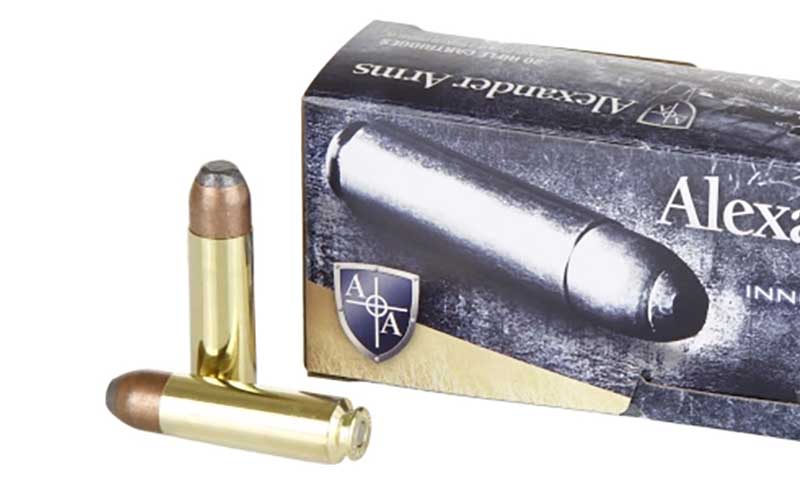
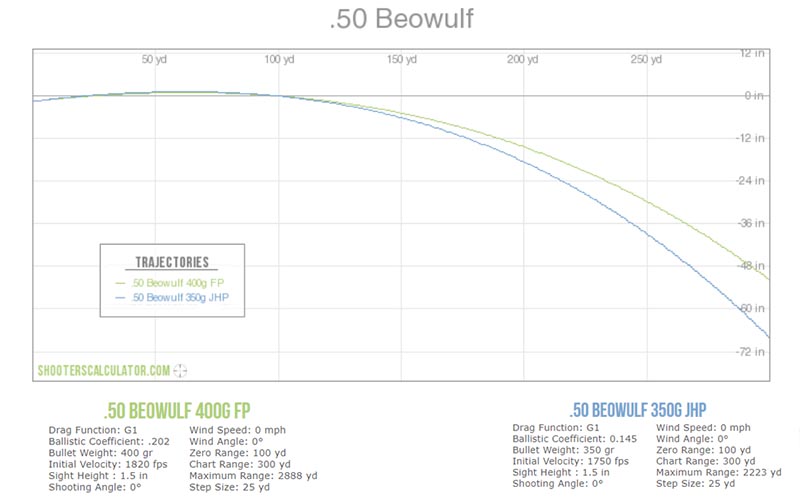
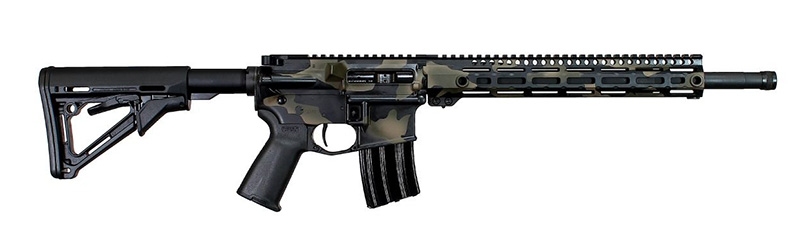
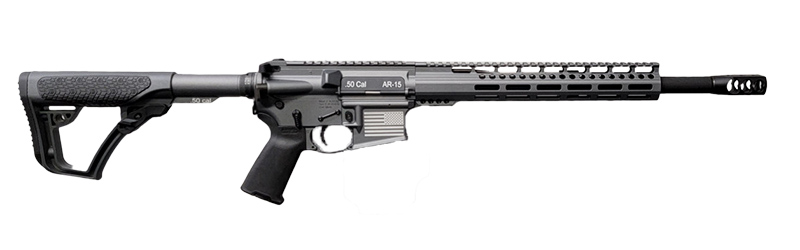
Want to build a .50 Beowulf AR or convert one you already own? You’ll need a .50 Beowulf upper. Here are some of the best on the market.
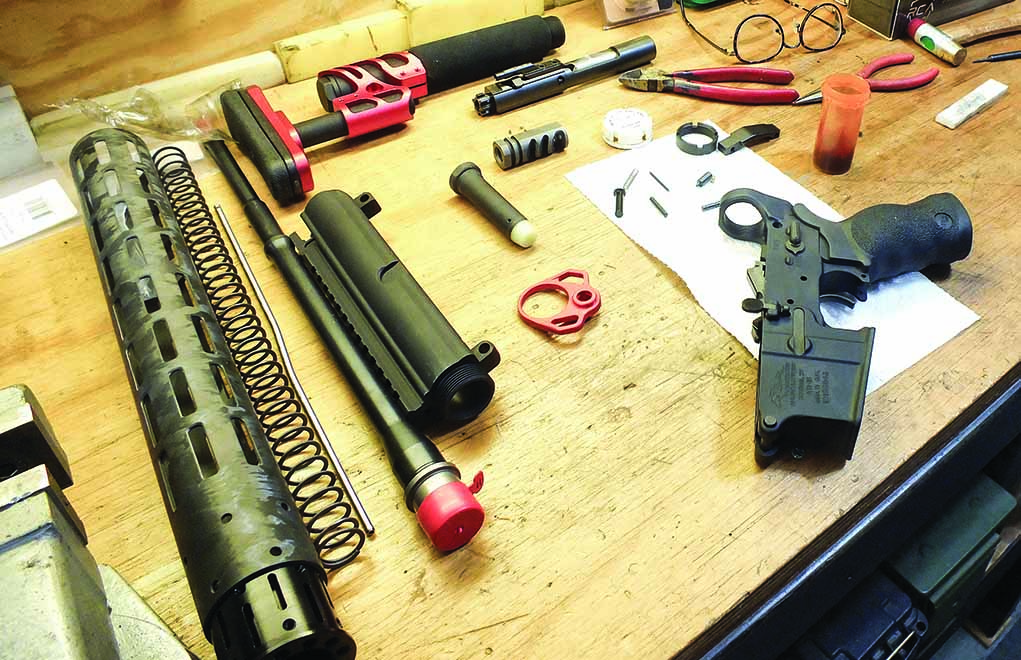
As discussed in our first .50 Beowulf article, one of the appeals of this cartridge is its compatibility with standard AR-15 lowers. When all it takes to convert an existing 5.56 NATO AR into a big-bore thumper is a .50 Beowulf upper, a new bolt and maybe a new magazine, it gives plenty of incentive to take the plunge.
Whether you’re looking to convert an AR you already own or build a whole new gun from scratch, we’ll go over what you need to know to pick the right parts to build or buy a .50 Beowulf upper.
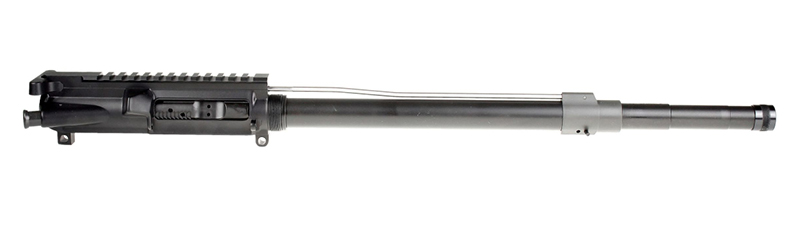
Alexander Arms’ SBR .50 Beowulf upper.
What To Keep In Mind When Picking Or Building A .50 Beowulf Upper
The first thing to keep in mind when shopping for an upper—or piecing one together to assemble yourself—is what you’re going to use the finished firearm for.
Is this a hunting gun? Is it for defense? Will it be a rifle, a carbine or a pistol?
If you have a serious purpose in mind, what you don’t want to do is take chances on budget parts, a budget upper or on your skill as a builder–unless you’re already well experienced. For most shooters who have serious work in mind for their big-bore AR, a quality .50 Beowulf upper that’s been preassembled by a reputable manufacturer will be the best bet.
A complete .50 Beowulf pistol from Alexander Arms.
You should also consider where you source your parts from. Because Alexander Arms is the inventor of the cartridge, it is considered the go-to for all .50 Beowulf guns, parts and ammo. This isn’t to say that other companies don’t make fine products as well, but it’s hard to shake the sense that the original manufacturer will have the most experience when it comes to making the best possible parts.
.50 Beowulf Upper: Build Or Buy?
When deliberating between building or buying any AR upper, it comes down to customization and cost savings versus quality assurance. It’s just as true for .50 Beowulf uppers as it is for standard 5.56 NATO.
The choice is obviously yours, but if you intend to use your ‘Wulf in any setting where a malfunction would be more than a minor inconvenience, paying a bit more for a factory-assembled upper is probably the safer option.
Whether you’re a bear hunter trying to put meat on the table or a SWAT officer in need of a reliable breaching gun, it would be smart to buy premade and to buy quality.
Most prospective .50 Beo buyers don’t fall into one of those categories, however. So if you’re looking to build one for more casual reasons then piecing your own stripped upper together from parts can save you money and enable more creative freedom.
Pitfalls Of .50 Beowulf Uppers For The 5.56 Builder
Because the AR market is so dominated by 5.56x45mm components, there are a few important differences to keep in mind when dealing with .50 Beowulf parts compatibility.
.50 Beowulf BCGs And Bolts
The .50 Beowulf is something of a hybrid cartridge, as the case starts its life as .50 AE brass that’s trimmed back and has its rim rebated to roughly the same diameter as 6.5mm Grendel.
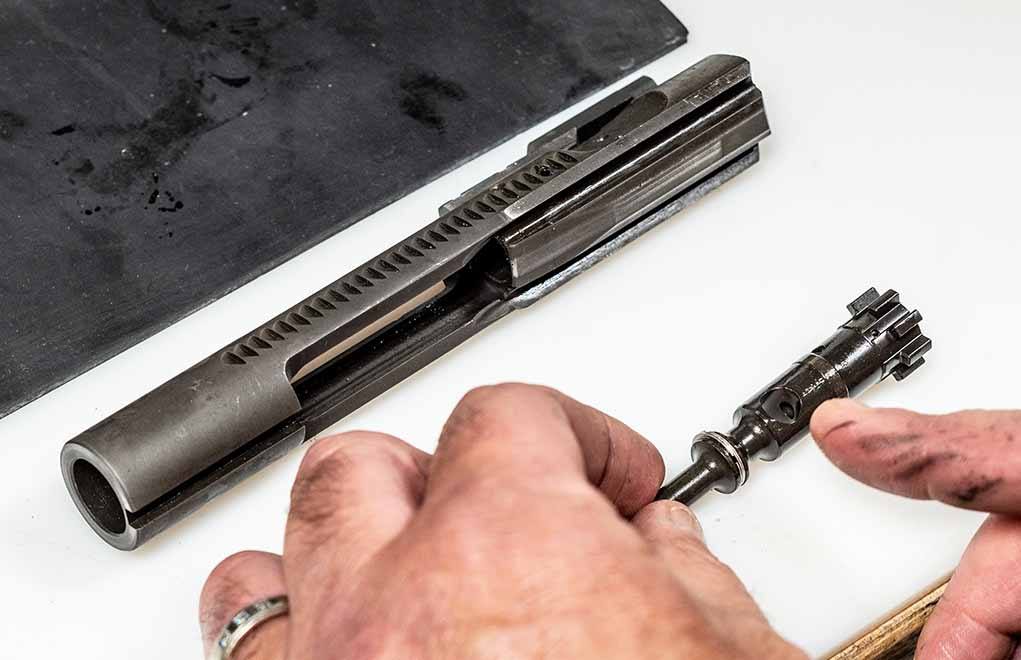
The OEM bolt carrier group is a 6.5mm Grendel bolt with a .50 Beowulf bolt head. Since the rim is rebated to 6.5mm in diameter but a different thickness, you need a .50 Beowulf bolt. At a minimum, you might get away with a .50 Beowulf extractor on a 6.5mm Grendel bolt, but getting the purpose-built .50 Beowulf bolt itself is a good idea.
The extractor is a critical element to the proper functioning of the AR’s gas impingement system. Its function is to grab the base of the cartridge casing and mechanically escort it into and out of the AR’s action during the firing sequence, so it must be the proper size for the cartridge it’s extracting.
Some owners report cycling issues when using bolts and carrier groups not made by Alexander Arms (differentiated by being labeled 12.7x42mm rather than .50 Beowulf to avoid infringement), especially those based on 7.62mm AR BCGs.
Of these owners, a number have reported fixing the issue by replacing their bolt and/or BCG with an Alexander Arms-branded one. With a cartridge this unique and proprietary, it, unfortunately, seems buying OEM parts may be the best route to ensure reliability.
.50 Beowulf Handguards
When building a .50 Beowulf upper from scratch or modifying an existing one, handguards must be selected carefully. While many standard AR-15 handguards will work, many others will not as the interior diameter is too narrow to slide over the barrel and the gas tube. Before buying, make sure the model you’re considering has enough clearance for the thicker parts.
.50 Beowulf Magazines
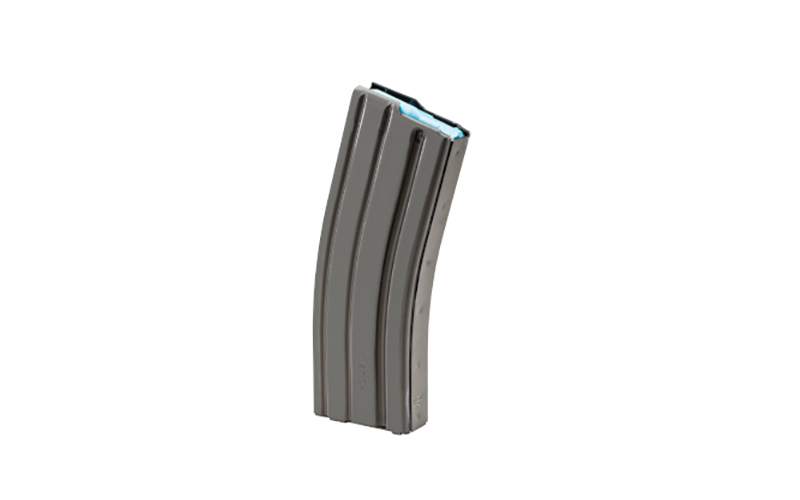
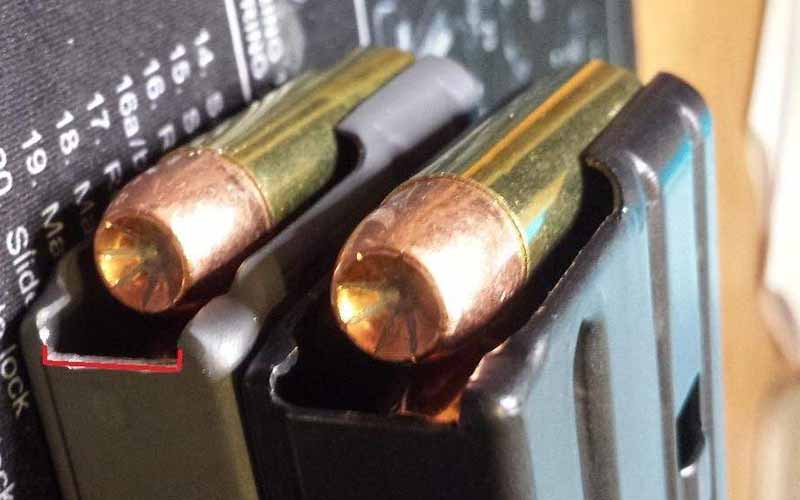
Another common issue experienced with .50 Beowulf guns pertains to their magazines, but that is true of all semi-automatic firearms to a degree. Make sure you get quality magazines and vet them with your rifle and ammunition. If a manufacturer recommends a particular magazine, stick to it.
An Alexander Arms .50 Beowulf 10-round magazine.
.50 Beowulf Barrels
More companies than you might expect manufacture barrels for .50 Beowulf (or 12.7x42mm), so there are options out there.
Most .50 Beowulf barrels have a 1:19 or a 1:20 twist rate, and 16 inches is the most common length. It should be noted that shorter and longer barrels exist as well. Stainless and chrome-moly steel are both available, as well as different barrel contours, optional fluting and even integral muzzle brakes.
The usual gas journal diameter is 0.875″ (there are some larger) and adjustable gas blocks are available from a number of manufacturers. Note, some barrel makers offer them as an upgrade with your order. It’s worth thinking about the upgrade, especially if you’re going to add a suppressor.
Fluting and other weight-reducing additions (or rather subtractions!) are available from some manufacturers, and this would be a good option to consider if you carry your carbine in the field.
When choosing a barrel material, keep in mind that even match-quality stainless steel barrels have a shorter service life before accuracy diminishes. The lower-cost 416R barrels wear even faster. A chrome-moly-vanadium (CMV barrel) with a nitride finish will retain accuracy the longest.
Other .50 Beowulf Parts
Aside from those components, the upper receiver itself remains the same, the dust cover is unchanged and all the lower receiver parts are the same spec as for 5.56 NATO builds. It is, however, recommended that you use a heavier buffer (H2 or H3) and a quality buffer spring (such as Springco Blue or Red springs) to improve reliability, as well as a good pad on the stock to help tame recoil.
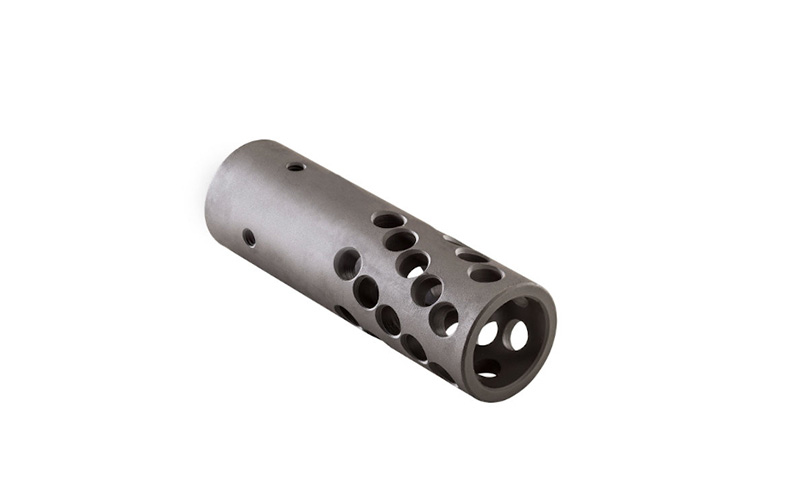
A .50 Beowulf Pepper Pot muzzle brake from Alexander Arms.
The final consideration is the muzzle brake, which obviously must be large enough to accommodate the large-bore .50 Beowulf projectile and have a thread pitch compatible with your gun.
The 5 Best .50 Beowulf Uppers
Alexander Arms 16-Inch DIY Kit
Alexander Arms, the original creator of the cartridge, has several .50 Beowulf uppers for sale that can be mated with one of the company’s own lower receivers or any standard AR lower.
The 16-inch DIY kit includes a 16-inch barrel, a gas block, a gas tube, a BCG, a charging handle and a forward assist as well as a flat-top upper receiver, along with some other small parts. All you need to complete this kit is an assembled lower and a handguard of your choice.
A 12-inch DIY kit is available as well, in case you prefer a pistol version or perhaps an SBR with the appropriate tax stamp.
Upgrade options available include the ability to add a Radian ambidextrous charging handle, a muzzle brake and a free Alexander Arms hat.
Atheris has AR-platform rifles for sale in multiple calibers, including 12.7x42mm which is—of course—the generic equivalent of .50 Beowulf since Alexander Arms still holds the patent.
Atheris offers multiple barrel lengths, including 7.5-, 10.5-, 16- and 18-inch barrels. You can also choose to add a three-port muzzle brake (a good idea for this cartridge) as well as a Cerakote finish on the barrel, upper or both.
The Atheris upper includes a 416R stainless steel barrel, a nitrided Atheris BCG, a nitrided gas block, an ambidextrous charging handle, an Atheris M-LOK handguard and a flat-top receiver with a Strike Industries dust cover.
Pro 2A Tactical offers three different uppers for 12.7x42mm, in 10.5-inch, 16-inch and 18-inch barrel lengths.
Flat-top upper receivers and M-LOK handguards by Bowden Tactical are standard, along with a CMV barrel with a heavy profile, 1:20 twist, low-profile gas block and a three-port muzzle brake.
The base uppers are flat black and come with no charging handle or bolt carrier group, but when ordering there are options for adding an FDE Cerakote finish as well as a mil-spec charging handle and BCG.
MMC Armory offers multiple build kits for 12.7x42mm, including 10.5-, 16- and 18-inch barrel kits, with different handguards and muzzle devices for each respective barrel length.
All MMC Armory build kits feature either an Aero Precision or Davidson Defense upper receiver, a CMV barrel, a low-profile gas block and M-LOK handguards. The exact barrel and make/model/length of handguard depend on which build package you choose.
You can order the kit unassembled for the base price, assembled for an additional $19 or assembled and test-fired for an additional $49.99. One can also add a Swampfox red dot for an additional $130. To complete one of these kits, all you’ll need is an assembled lower receiver, a bolt carrier group and a charging handle.
The top of the Alexander Arms range in terms of uppers is the AWS (Advanced Weapon System) upper, which features a 16-inch barrel, Midwest Industries M-LOK handguard and a Radian Arms Raptor charging handle.
You also have the option—as with all Alexander Arms .50 Beowulf rifles, pistols and uppers—to add your choice of muzzle device (Tank brake, Millennium compensator, or Pepper Pot brake) and whether or not you would like a complimentary Alexander Arms hat.
This is the most expensive .50 Beowulf upper on this list, but it is the OEM for the caliber. If you wanted a fighting or working carbine-length gun that’s ready to go out of the box…this would be a top choice.
Luth-AR has just released the Sidekick Balance Weight for MBA-1 and MBA-2 rifle stocks.
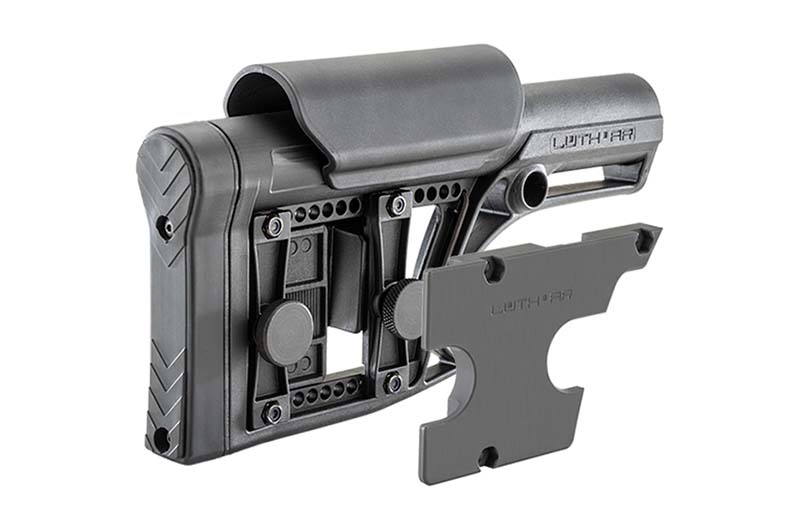
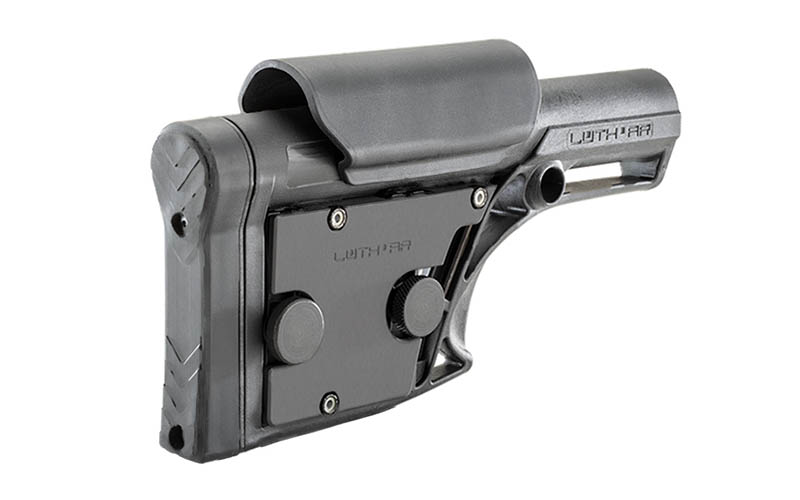
The MBA-1 and MBA-2 from Luth-AR are two very popular choices for aftermarket precision AR stocks. Besides providing a height-adjustable cheek riser, the MBA-1 also features length of pull adjustability and attachment points for QD sling cups and an accessory rail. The MBA-2 has essentially the same features but an even greater degree of modularity. One more accessory option has just been added to the lineup, however, and that’s the Luth-AR Sidekick Balance Weight.
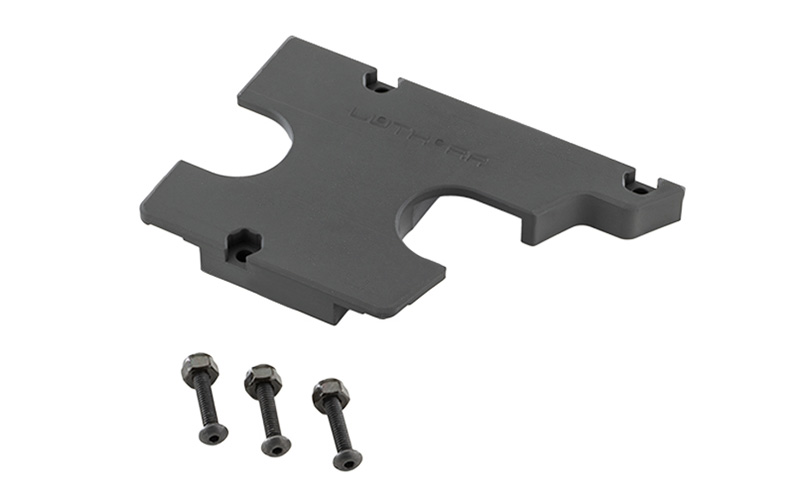
The Sidekick Balance Weight attaches to any MBA-1 or MBA-2 buttstock via three included bolts, so assembly is quick and easy. Once installed, the weight adds 14.5 ounces (0.91 pounds) to the buttstock. While this isn’t an accessory that everyone could benefit from, for certain precision shooters it could be very useful. Whether looking to mitigate the recoil of a bench rifle or improve the balance of a front-heavy build, the Sidekick Balance Weight is an easy and inexpensive way to accomplish it for those who use Luth-AR MBA-1 or MBA-2 buttstocks.
It makes sense that these are the stock systems that the weight was first developed for, as they are the two models compatible with A2-length buffer tubes and are what would most commonly be found on precision rifle builds. The Luth-AR MBA-3, -4 and -5 stocks may be designed for carbines, but the eventual release of a weight system that is compatible with some or all of those models would not be unwelcomed.
The Sidekick Balance Weight is made in America, constructed of carbon steel with a manganese phosphate finish and has an MSRP of $69.95. It’s available now.
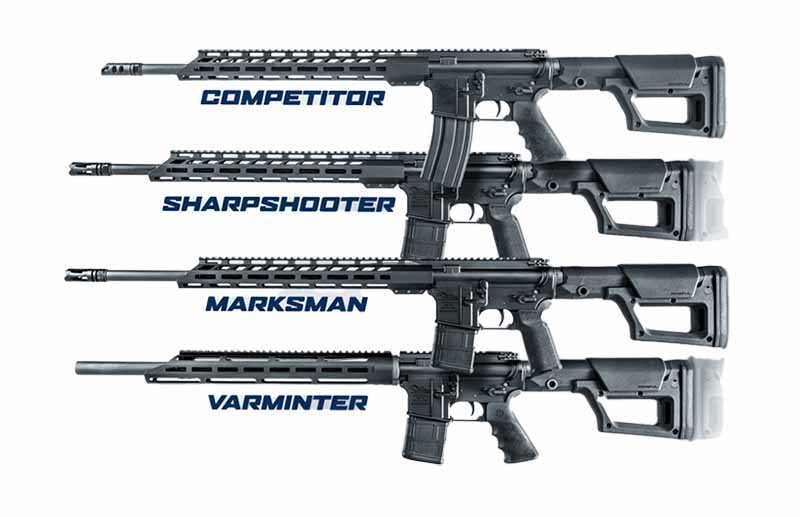
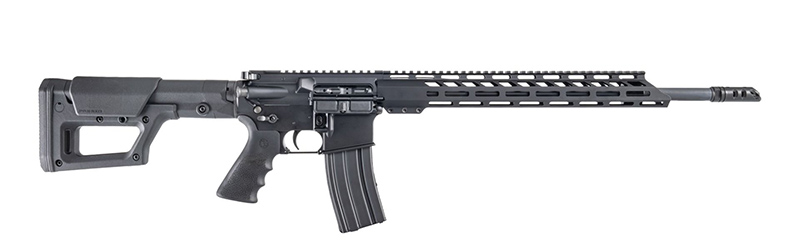
Anderson Manufacturing has just announced the AM-15 Precision Series, featuring four new rifle models designed to provide precision at an affordable price.
Anderson Manufacturing’s AM-15 AR-style rifles have a solid reputation among affordable AR-15s, and the company has just announced the line’s expansion with the AM-15 Precision Series. Featuring four new rifle models, the Precision Series was designed to provide shooters with affordable yet accurate AR-15 options.
Each of the four new AM-15 Precision rifles will feature a Schmid Tool two-stage trigger and a Magpul PRS Lite stock. The trigger has a crisp 4.5-pound pull with a short reset and the stock is adjustable for comb height and length of pull. The stock is also ambidextrous, includes QD sling mount points and has an adjustable rubber butt-pad. All AM-15 Precision Series models are also chambered for 5.56x45mm NATO, but most other major features differ between the variants.
AM-15 Marksman.
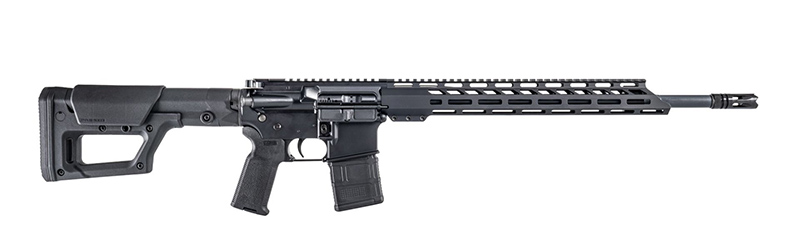
The first model in the AM-15 Precision Series lineup is the Marksman, and it features an 18-inch taper-profile barrel, a 15-inch M-LOK handguard and a Night Stalker flash hider. It also includes a Magpul K2 grip and 20-round PMAG. MSRP is $899.99.
AM-15 Sharpshooter.
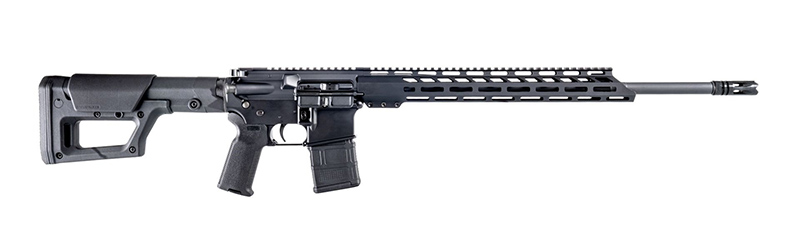
The AM-15 Precision Sharpshooter, as the name implies, is more geared toward long-range shooting. The only discernable difference between this model and the Marksman is that the Sharpshooter includes a 20-inch taper-profile barrel to provide extra velocity for increased accuracy at range. MSRP is also $899.99.
AM-15 Varminter.
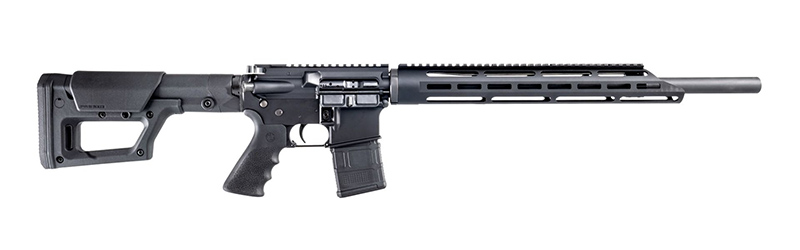
The AM-15 Precision Varminter also includes a 20-inch barrel, but it’s a bull barrel profile instead to allow for a greater volume of fire before noticeable impact shift occurs. As its name suggests, this is a great feature for varmint hunters who may have shot opportunities arise while their barrel is still hot from previous engagements. Other distinct features on the Varminter were chosen for their increased ergonomics, including a Hogue overmolded rubber beavertail grip and a round tube handguard rather than an angled one. The handguard still features M-LOK slots and is made out of the same lightweight T6 aluminum as the other models, however. A Magpul 20-round mag is also included and the MSRP is $949.99.
AM-15 Competitor.
The final AM-15 Precision Series rifle is the Competitor, and it has the most unique features of the whole lineup. Designed for competition use, the Competitor features the same 18-inch taper-profile barrel as the Marksman, but it also includes an adjustable Anderson gas block, a low-mass Anderson bolt carrier group and Anderson’s Stallion muzzle brake to mitigate recoil. Otherwise, it features the same rubber Hogue grip as the Varminter and the same 15-inch M-LOK handguard as the Sharpshooter and the Marksman. The Competitor also has an ambidextrous selector and comes with a 30-round STANAG magazine. MSRP is $919.99.
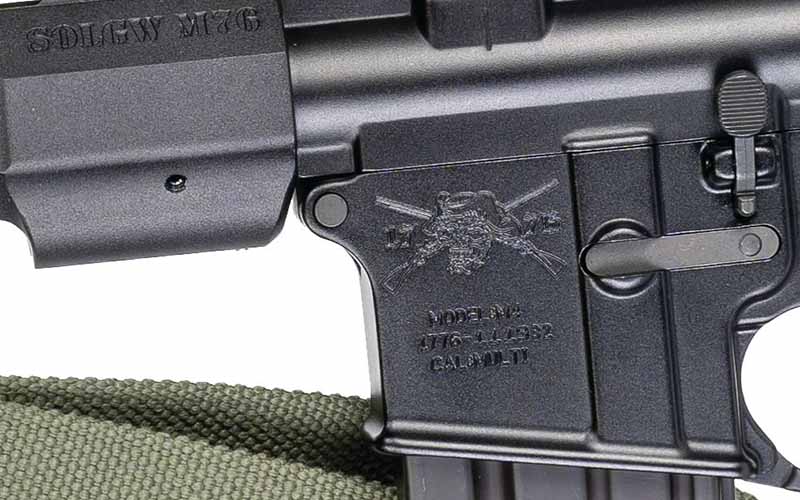
A look at the SOLGW M4-76 AR-15 and the company that makes it, Sons of Liberty Gun Works.
Like it or not, not all AR-15s are created equal.
Some rifle manufacturers are content with putting out guns that are just good enough to have the misleading “mil-spec” marketing label slapped on them. Consumers sometimes read that as some mark of quality, but the truth is that the mil-spec claim is nothing more than a flashy way of saying, “This might work with other mil-spec things.”
The reality is, few manufacturers build their M4-like carbines to a standard even remotely close to the actual military specification for the M4A1, MIL-DTL-71186B. Fewer still will take the rifle to the next level of hard-use performance.
The boys at Sons of Liberty Gun Works (SOLGW) make that list. As much as I want to gush about my personal M4-76 rifle, the story of how the Sons came to be is equally as impressive.
Humble Origins
Sons of Liberty Gun Works is the American dream. Let’s be real about it: If you reduce the company’s start to a Netflix show description, it sounds too ridiculous to be a true story.
“With only $7,000 in his pocket after selling his car, Mike partnered up with a friend in the basement of a lumber yard to take on the biggest AR-15 manufacturers in the world. His quest? To become the best rifle company. Either they sell the whole batch of 10 rifles, or it will be game over.”
Pure insanity, but it’s the truth.
Like any good story, there’s a moment that speaks to our hero and motivates them to do something epic; in this case, it was an armorer’s course taught by the late Will Larson of Semper Paratus Arms. Mike Mihalski borrowed a friend’s AR-15, enrolled in the two-day course and learned far more than he could’ve imagined. I say this with some authority, because I also took Larson’s armorer course with a borrowed rifle and can attest to it being an eye-opening experience.
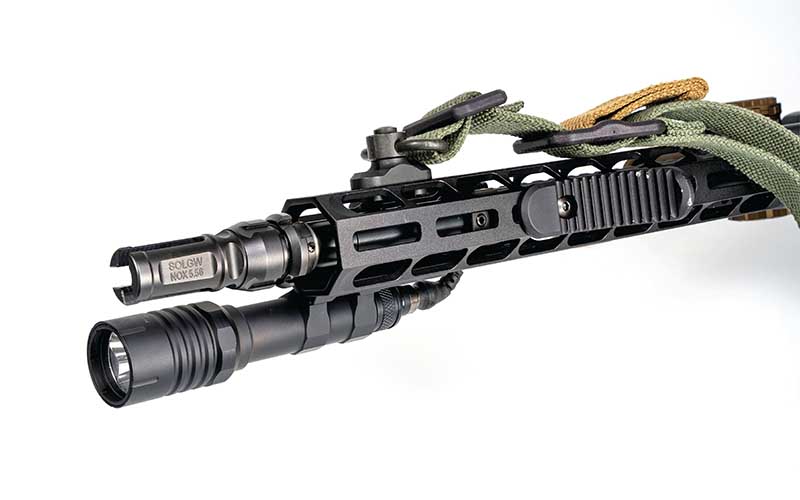
The 13-inch M76 handguard is perfect for the 13.7-inch barrel and NOX muzzle device combo.
Mike saw the AR-15 in a new light and decided he wanted to get into the gun business. His dream of starting a gun company—building the best AR-15s he possibly could—started floating around in his head. Talking more about it with his best friend, a Navy SEAL, he eventually was introduced to Kyle Grothues; the trio had big dreams about taking on the big names in the AR industry. Mike sold his car, netting him $7,000, and Kyle brought a little more cash to the table and some space in the family-owned lumber company his great-grandfather founded in 1933.
With limited funds and no standing purchase orders, the boys had some serious work ahead of them. The limited funds were a pretty significant hurdle initially, especially since most of the suppliers of components that Mike felt acceptable enough to put in a rifle he was building had order minimums in the hundreds. The Sons only had the cash for 10 guns worth of parts. Rather than let his standards slip, Mike hounded suppliers and willed those first 10 rifles into existence.
Common sense upgrades to the time- proven M4 design, like making the takedown pin lugs a bit wider than TDP standards, create an incredibly smooth-firing rifle.
Some of the first 10 went to friends of Mike and Kyle, and the remaining rifles found a home with some men who know what a hard-use rifle needs to be: The Navy SEALs and Marines who bought one of the Sons’ first rifles spread the good word. It didn’t take long for other guys looking for a no-nonsense duty rifle to reach out to Sons of Liberty; the endorsement of Navy SEALs and Marines can be a powerful marketing tool.
Orders for more guns came rolling in.
Making Their Mark
You might be wondering what’s so damned special about some dudes in a lumberyard with an FFL and a few AR-15 parts. The Sons saw a gap in the market for hard-use rifles suitable for defensive or duty use that could be customized. Until now, if you wanted a hard-use rifle, the most ideal move was to buy something like a Colt 6920 and replace half the rifle to get it to where you wanted. The Sons’ crazy idea was to offer the same quality as Colt, but with the addition of allowing the end-user to configure their rifle how they wanted direct from the manufacturer.
Through continued research, daily conversations with Will Larson and their rifle rebuild program, Mike gathered data on what worked well and what didn’t. Eventually, Sons of Liberty Gun Works took what they learned and started developing parts of their very own, with the goal of building the best damn rifle in America.
At the core of their success is the quality control that goes into each and every rifle. It isn’t just grabbing parts from a bin and slapping a rifle together; each part is inspected multiple times to ensure it’s within acceptable specs. If the part isn’t up to their high standards, it isn’t used.
Their commitment to quality goes beyond just measuring parts. More durable anodizing, slightly tweaked upper receiver dimensions to remove the wobble found on almost every AR-15, and ensuring their components are made of the best materials for that particular use, take the SOLGW rifles and components to the next level.
Once you have top-tier components, the only thing holding a rifle back from being the best it possibly can be is how those parts are assembled—you can’t just slap a rifle together at your kitchen table and expect world-class performance. I was given a chance to visit the SOLGW factory, and I can’t overstate the meticulous care given to each and every stage of the build process.
Everyone knew proper torque values at the snap of a finger—and why each one was important. The tools they were using weren’t the cheapest thing they could get, and every rifle went together with the same level of attention. I was especially fascinated with their endplate staking. Mike and I see eye to eye on the importance of staking, but he took it a bit further and incorporated Forward Controls Design castle nuts that allow three places to stake rather than the two required to meet MIL-STD-DTL-71186B.
The SOLGW M4-76
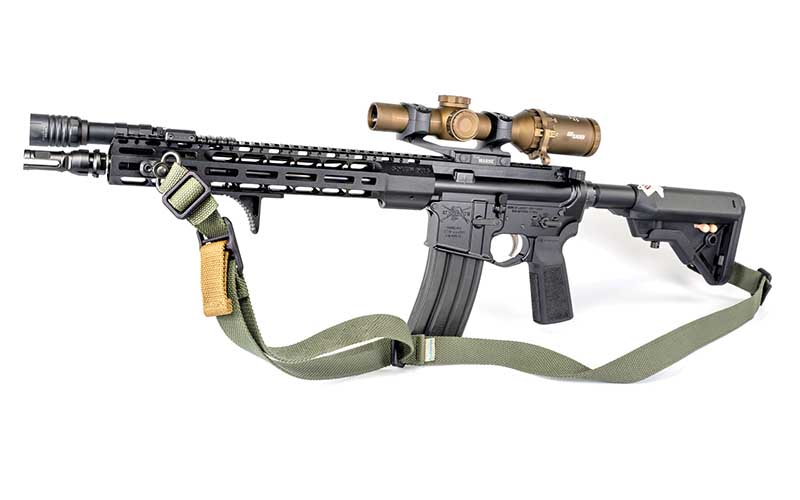
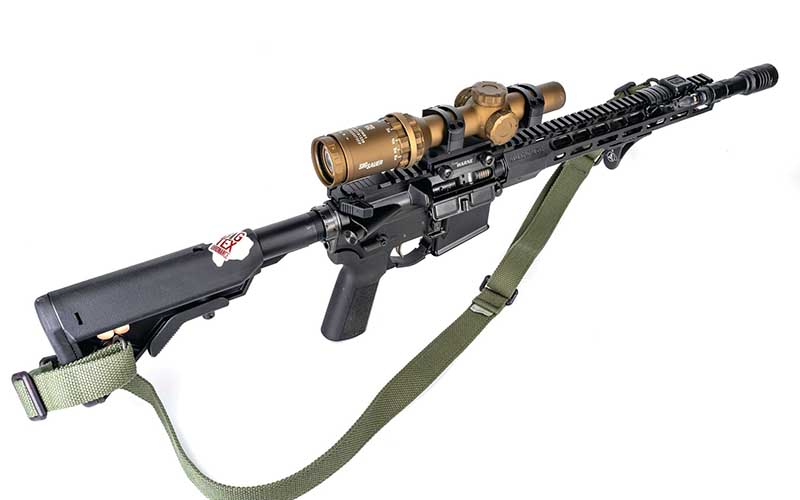
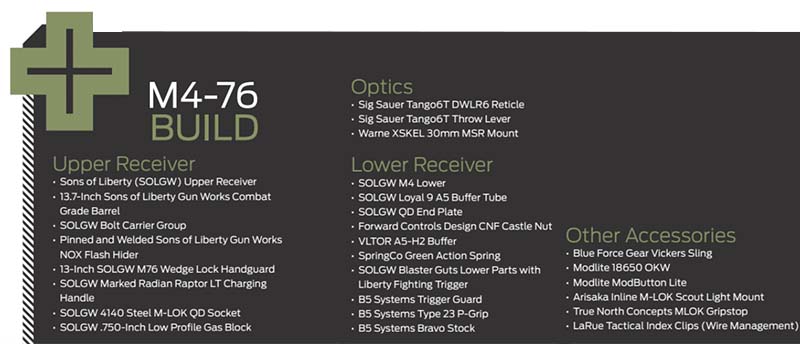
If, for some reason, I had to choose only one rifle to be my companion in some real-life version of I Am Legend, there’s only one choice: a 13.7-inch-barreled Sons of Liberty Gun Works M4-76 with their nine-position A5 buffer tube paired with a VLTOR A5 Buffer and their NOX muzzle device pinned and welded to bring it to non-NFA length. For a pure fighting rifle, I struggle to think of a more versatile option.
The Sons of Liberty Gun Works NOX is more than a cool flash hider; it also accepts Dead Air KeyMo-equipped suppressors.
As you unbox your rifle, you’re met with a soft-side rifle case inside the cardboard box rather than a bunch of foam, which is fantastic for those who don’t have several rifle bags or cases already. On the outside of that soft case are three stainless steel magazines in the mag pouches, complete with SOLGW-marked floorplates and a small baggie containing a single fired case, a small bottle of lube and a Sons of Liberty Gun Works patch.
Nestled inside your soft case is the rifle. Remove the case from the box and you’ll find a lifetime warranty certificate signed by four people: the armorer who built your gun, the person who inspected the finished product and test-fired it, and the two owners of the company—stating that if you don’t start “fixing” your rifle by swapping parts around, they’ll fix the gun for life regardless of round count. Yes, that includes gas rings, barrel, bolt carrier group and springs.
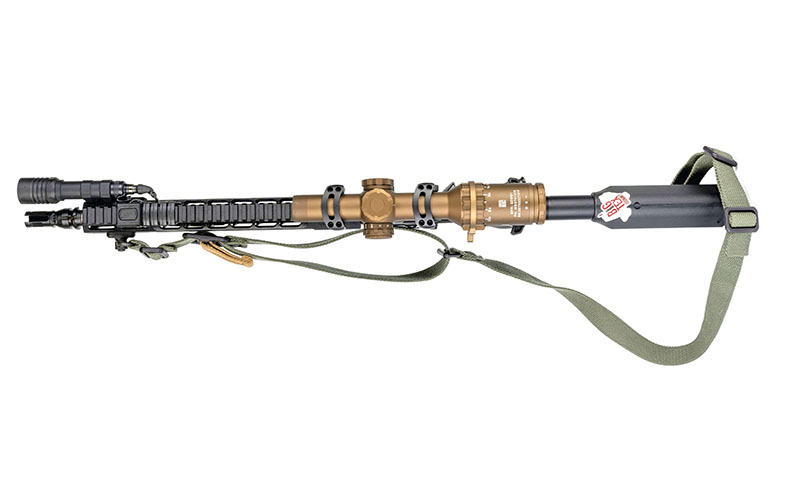
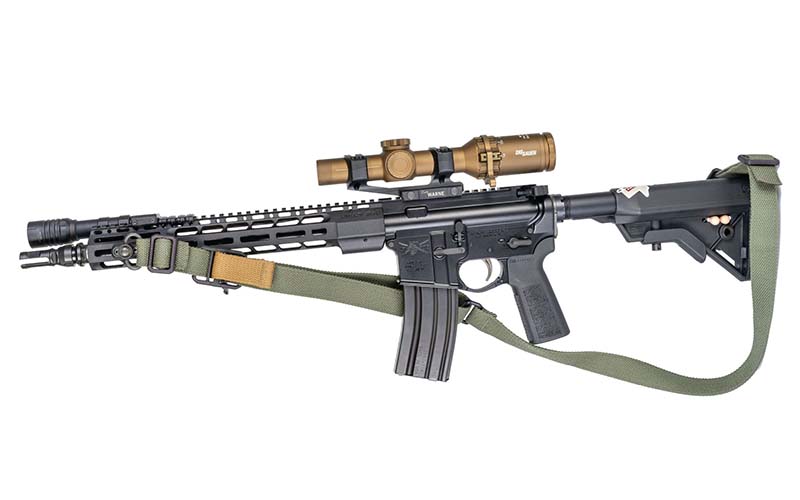
The rifle was configured with the Sig Tango6T 1-6 power scope for the majority of the testing and performed beautifully.
I installed a SIG Sauer Tango6T 1-6x24mm scope in an old Warne mount that wasn’t doing anything in my gun room. The only other accessories I added were a Modlite OKW paired with a ModButton Lite and an Arisaka inline mount, and a Blue Force Gear Vickers sling.
During the zero process, the first several rounds I sent downrange surprised me. There was near no recoil. We can thank SOLGW for taking gas port size seriously and not building rifles to run on any random ammunition you can find. Will it run the cheap stuff? Probably. I was elated that it wasn’t heavily over-gassed like many commercial rifles.
But recoil mitigation isn’t just about gas-port sizing: The mid-length gas system, highly efficient NOX muzzle device, a SpringCo green buffer spring, nine-position A5 buffer tube and VLTOR A5-H2 buffer all play a role in keeping the rifle on target during fast strings of fire. All my shooting was faster-paced drills at 25 yards, and I haven’t seen a single malfunction.
The rifle is reasonably light, shoots soft and flat, is more than accurate at the defensive distances the average citizen would likely see if they were unfortunate enough to need to use a firearm in defense of their life, and it handles like a dream thanks to that 13.7-inch barrel with the pinned and welded NOX flash hider. Overall, this is the best AR-15 carbine I’ve had the pleasure to shoot to date.
They Do God’s Work
There just isn’t enough room here to talk about all the 2nd Amendment advocacy work Mike, Kyle and the Sons of Liberty Gun Works crew do. Never mind the massive amount of support they give law enforcement, their involvement in politics at all levels, support for gun-loving Americans or the Sons of Liberty Gun Works Carbine Series competition. They’re some of the most active and amazing people in the firearms industry.
Topping the 13.7-inch M4-76 with a LPVO creates the ability to make precise shots out past 500 yards without much trouble.
As for my experience with the M4-76 rifle, I fully intend on purchasing a second and possibly third copy of the very same rifle for my son’s first AR-15 and maybe one for the wife … maybe.
Editor’s Note: This article originally appeared in the June 2021 issue of Gun Digest the Magazine.
Some tips on gear selection and methodology for a more comfortable concealed carry experience.
One serious consideration regarding holster selection is how easy the holster is to put on or take off. To the novice concealed carrier, this might not seem important, but it won’t be long until you realize there are times you need to take your gun off for a short time, and having to undo your belt to make that happen isn’t ideal.
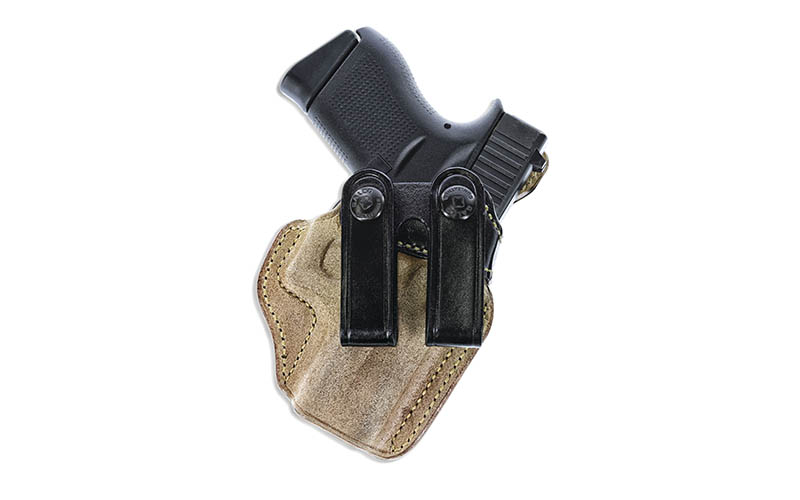
The Galco Royal Guard is a very well-constructed IWB holster that can easily be removed or put on with the two external snap straps.
I’ve been working with a Glock 43 a bit, and two holsters I’ve been using make this process seamless. The first is the Galco Royal Guard, an inside the waistband (IWB) holster. The two exterior straps are easy to undo, and the holster can simply be pulled out of the pants. It’s just as easy to put back on as well—and you never have to unfasten your belt. Well … you might need to tighten or loosen it for comfort.
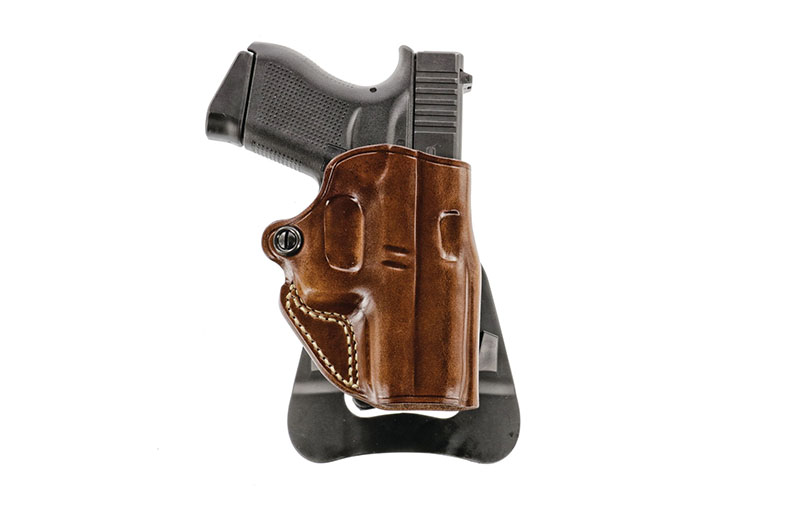
The other is the Galco paddle holster. Paddle holsters sandwich the belt and pants between the holster and a paddle that fits on the inside of the pants. They’re incredibly comfortable—maybe the most comfortable way to carry OWB of any holster. A hook on the paddle helps hold the holster in place and keeps it from slipping out of your pants. It takes both hands to put this holster on or take it off, but you can do so without undoing your belt, and you won’t have to readjust your belt with or without the holster.
A high-quality paddle holster, such as this Galco Speed Paddle, might be the easiest to put on or take off. It may not be the holster you wear the most, but it should probably be one of the holsters you have on hand.
Multiple holsters are something to consider when it comes to concealed carry. In the summer, when you’re not wearing a long cover garment, a holster like the Royal Guard that can be concealed by an untucked shirt makes good sense. In colder months, when you’re wearing a jacket, a paddle holster positions the gun just under the jacket for easy access. I always keep an IWB and an OWB holster for the gun I’m carrying in my truck, so that I can adjust my carry method for the situation and the weather.
CCW Clothing
I’ve mentioned the Barranti Leather Swift Cover Vest here before, but I think it, along with some thoughts about clothing for concealed carry, deserve revisiting. Most of the discussions about concealed carry revolve around the holster and carry location; what we often neglect is that it’s the clothing you wear that actually conceals the handgun.
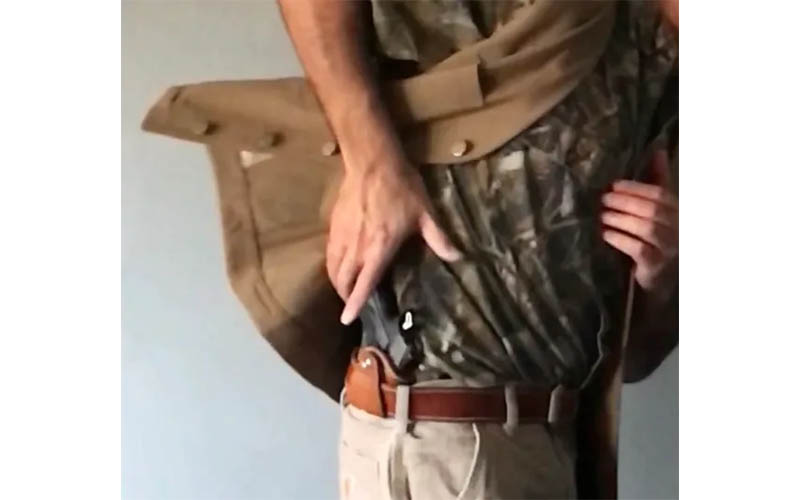
A lightweight vest, like the Barranti Swift Cover Vest, that’ll conceal your handgun during normal activities without restricting your movements or being too warm for indoor wear, is a good and stylish idea.
Jackets are a great way to hide a handgun regardless of where you carry it, but what happens when you get to where you’re going and have to remove your jacket? A vest—one that’s not heavy or too hot to wear—is a great solution.
That Barranti Swift Cover Vest is constructed of sturdy, lightweight canvas and is available in two colors: nutmeg or stone. Designed by a man who makes holsters—some of the best holsters in the world—for a living, it’s cut at just the right length to hide a handgun carried IWB and even OWB, depending on the holster and size of the gun. It also has small weights perfectly positioned to keep the vest in place and help with sweeping it out of the way when you’re drawing your gun. And, just as importantly, this vest looks pretty damned classy. It retails for $125 and is available with or without a lapel.
The point of mentioning this vest is twofold. For starters, if it’s something that fits your lifestyle (and likely your taste), I’d suggest ordering one. Secondly, all of this should make you think about the clothing you wear when you’re carrying concealed. Pay attention to how long a coat or vest you might be considering is when you purchase it. Think about its material. Is it something that’ll hang up on your gun when you’re attempting to draw? Is it of a material that’ll stand up to the constant contact and rubbing of the grip of your handgun?
A comfortable holster is a damned important consideration for the concealed carrier. But the clothing you wear to hide your gun is just as important. Coats do a great job of hiding guns in cold weather, but what’ll you wear in the spring and summer? None of us want to dress like a tactard; we want to fit in and appear, well, normal.
Extra Ammunition
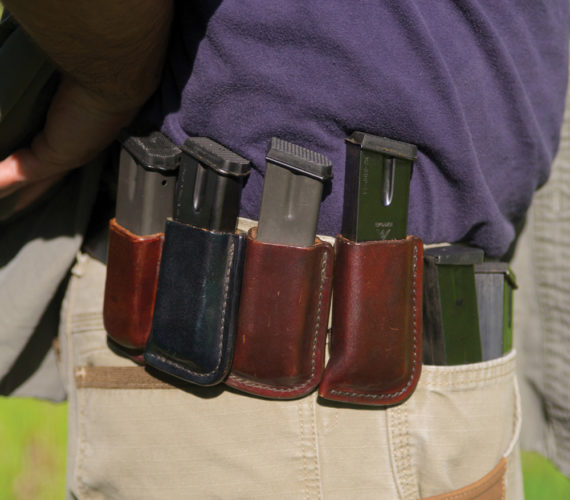
Another thing to consider when carrying concealed is if you’re going to carry extra ammunition … and where. There are lots of magazine and speed loader pouches on the market, and most will carry them on their offside. But you’ll need to conceal your reload, too.
I wore a duty belt for 13 years, and it provided me with a means to carry all of my essential gear. I don’t do that anymore; now I work to find the best balance of comfort and security. Sometimes I’ll wear a pouch on my belt, but most often the reload goes in the pocket of my cover garment. This is another reason a lightweight vest makes sense.
Of course, you can get down a rabbit hole really quick here. Some will argue that, in addition to a reload, you need to carry a second reload, a second gun, a reload for the second gun, a less than lethal option (like pepper spray) and maybe even an impact weapon as well. In addition to that, they’ll suggest a pocketknife and a fighting knife. And let’s not forget, you’ll have a cell phone and a wallet that goes with you everywhere, every day, as well.
Somewhere within all this security, you must find some comfort and common sense. But maybe that’s best left as a topic for another time.
Editor’s Note: This article originally appeared in the 2021 CCW special issue of Gun Digest the Magazine.
For more information on concealed carry holsters check out:
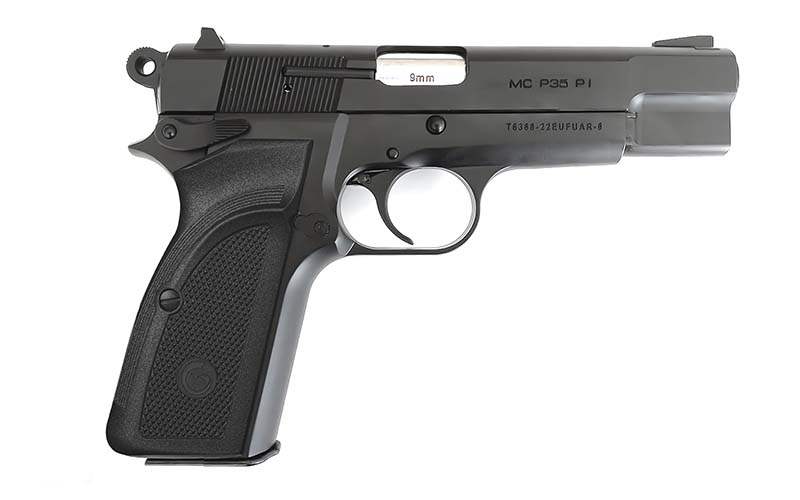
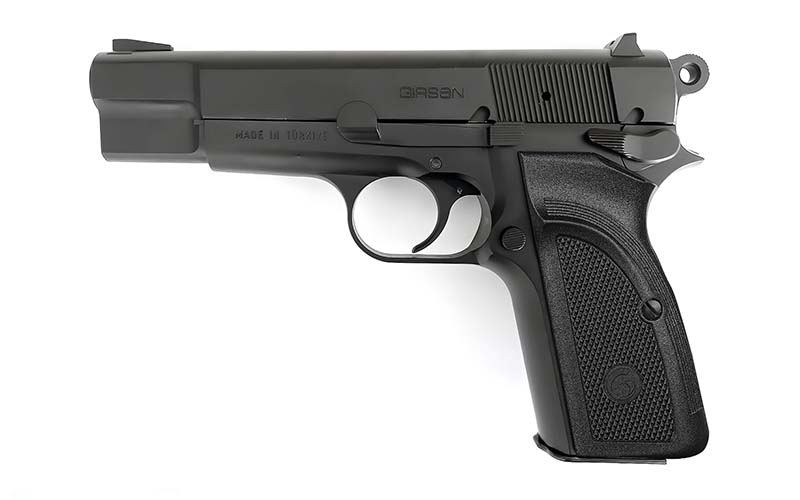
EAA has just announced the importation of the Girsan MCP35 PI, a short-barreled Browning Hi Power clone designed for concealed carry.
Hi Powers have come back in a big way over the past few years, with Springfield, FN and the Turkish company Girsan all iterating on the design with new models. While Springfield’s SA35 is a mostly traditional model and FN’s is a near-total reimagining, Girsan seems to be aiming for the Goldilocks zone between originality and innovation. The newest model in Girsan’s lineup to be imported by EAA is called the MCP35 PI, and it features a shorter barrel for easier carry.
This isn’t the first Hi Power with a short barrel to be produced, and the “PI” in the new MCP35 PI’s name is likely a reference to the short “Detective” models that preceded it. In most ways it’s just a standard Hi Power clone, meaning that it has much in common with Girsan’s full-size model. Both the MCP35 and MCP35 PI have a windage-adjustable rear drift sight, an ambidextrous safety, a slim trigger and a ring-style hammer to prevent bite. They’re both chambered for 9mm Parabellum, but the MCP35 PI features a 3.88-inch barrel instead of a 4.87-inch one. Both models also have full-size frames and feed from modern 15-round Hi Power mags which have become the standard.
Chase Duffey, National Sales and Import Manager at EAA Corp., said this about the new model:
Not only did Girsan find a way to make the already popular MCP35 family of handguns easier to carry but they have found another great market for our retailers to capitalize on…We’ve already seen a huge demand for the more compact MCP35 PI.
The MCP35 PI is not yet available, but EAA promises they should be hitting store shelves soon. The MSRP is also not yet known but it will likely not be significantly higher than the full-size model’s MSRP of $563.
These simple 1911 upgrades can improve the feel and performance of your 1911 with little to no hand-fitting required.
When we talk about upgrading the 1911, it’s often not an easy process. As I detailed in my recent article, “So, You Want to Build a 1911?”, there’s rarely such a thing as a true “drop-in” part for a 1911. Those looking to make upgrades are thus in for a bit of work, sometimes in the form of a major project and others as a simple bit of file work.
But here’s the good news: Upgrading your 1911 isn’t difficult if you have some patience and know where to make an educated, low-effort change that enhances performance.
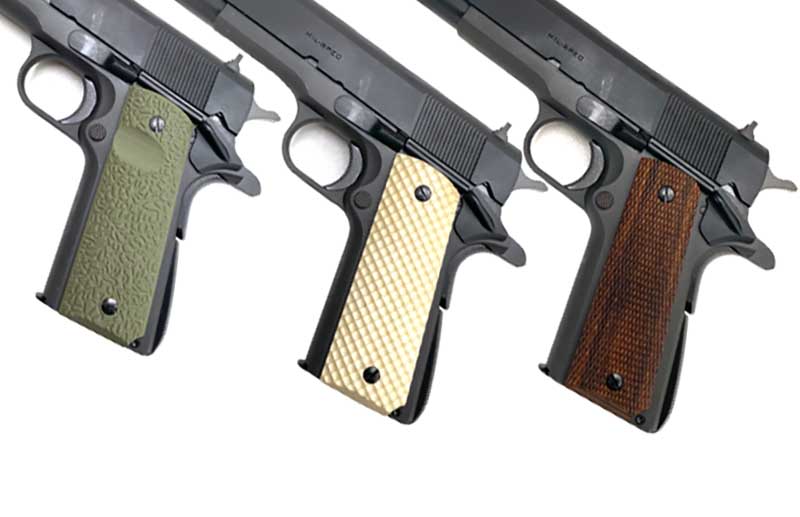
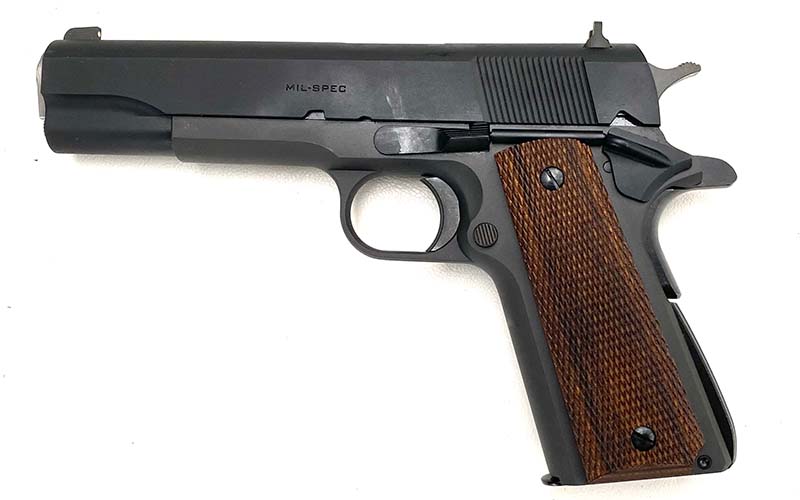
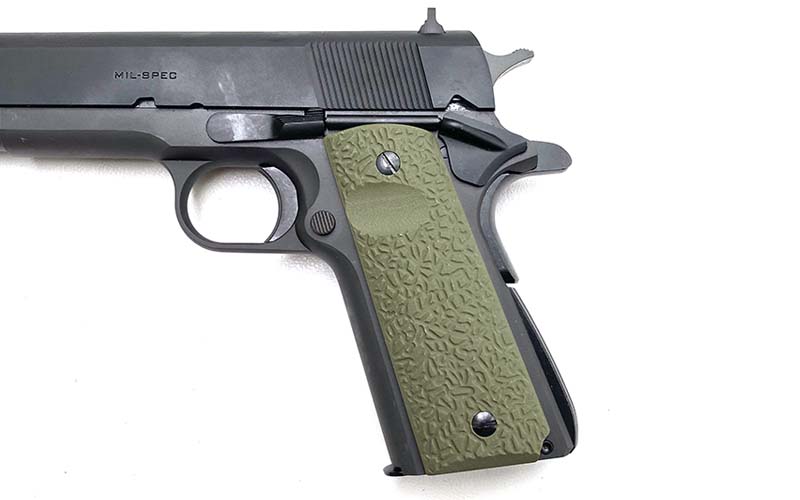
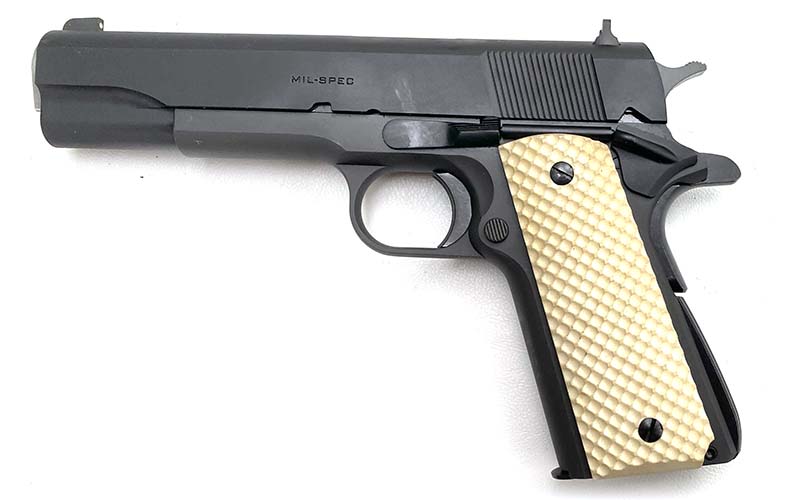
These are all the same 1911, showing a host of various grip options and colors, illustrating how one gun can look and feel different with just the simple swapping of grip panels.
Wilson Combat’s Quick Fixes For Function
Unlike today’s newly designed guns, the century-old 1911 design doesn’t always come out of the box running well. I’ve had some versions of the old warhorse that, as it turns out, were expensive paperweights.
These guns were delivered from some well-known, name-brand makers. Yes, it’s regrettable and fully possible that $1,200 gun you saw at the gun shop will malfunction with hollow points. The old man remedy is to polish the feed ramp or “break it in” for reliability, but if your gun needs a 500-round break-in period (easily $300 to $750 in today’s ammo prices), what you’re really getting is a gun that has corners cut in manufacturing, and the burden of performance is on you, the buyer, not the maker.
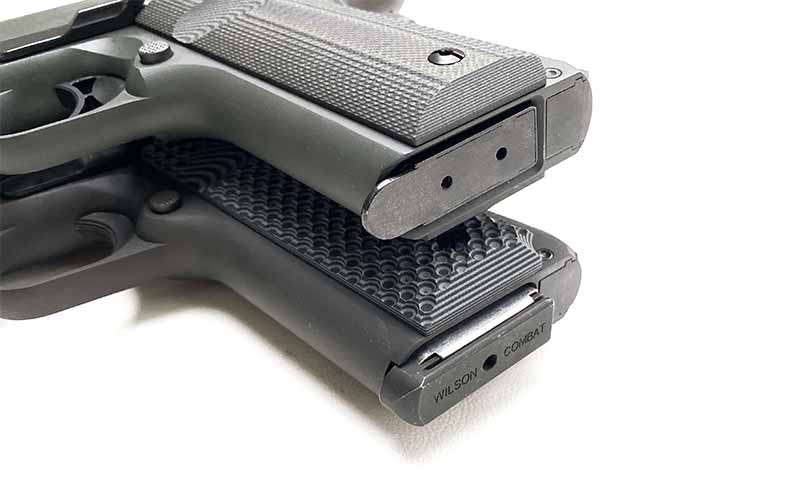
The Wilson mags stick out just a hair as opposed to a GI mag. The added length doesn’t really make a difference for carry, and it’s nice to be able to do a “slap home” magazine seat should it be sticking a bit.
I’ve got little time for excuses. My prized Colt M45A1 you’ve likely seen grace these pages has seen 15,000 rounds with no malfunctions to speak of, and this from a gun that came off the standard Colt assembly line. Brand notwithstanding, this is how a 1911 should perform in the 2020s; there’s simply no excuse for a modern gun to require a break-in for function.
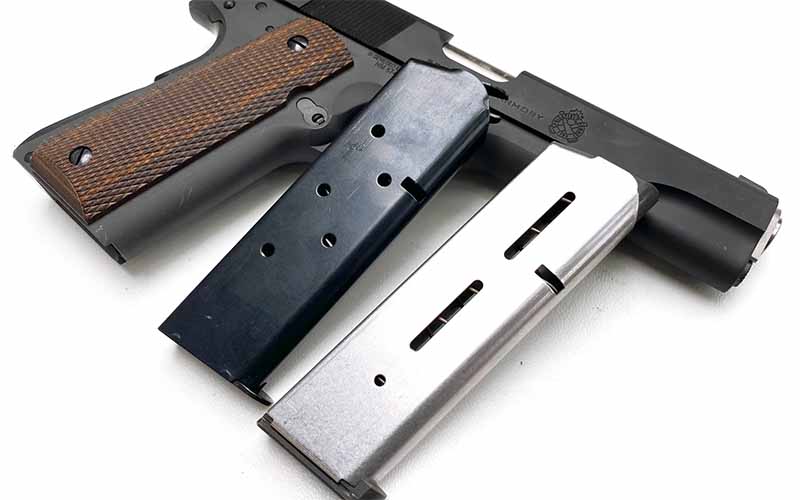
If you’re having reliability issues, the first thing I’d do is upgrade to Wilson Combat magazines. When I get a 1911 in for testing, I never use the factory mags because the only brand of 1911 mags I trust is Wilson. These mags are superior in design and execution, and even in troubled 1911s that have feed issues with different bullet shapes, I’ve noticed most problems go away instantly. I like to replace the plastic base pad on mine with the steel version. It’s low profile and aesthetically pleasing while still allowing enough protrusion to allow you to slam it home.
Wilson mags are the best in the business in this author’s opinion. They last just about forever, are extremely durable and increase feeding and reliability in most 1911s. The basic 1911 mag on the left is just fine but, depending on the manufacturer, quality may vary.
The magazine issues are also sometimes tied to the magazine release itself. Again, I look to companies like Wilson Combat for their Bulletproof line of parts. They make several lengths of releases depending on if you’re looking for something for competition or carry, but I’m more concerned with the internal geometry.
Many 1911s have issues with seating the magazine or allowing an empty mag to drop free. If I’m experiencing this issue, my go-to fix is to upgrade to one of the Wilson releases. They’re better made as far as the internal angles, and they immediately remedy hard seating or mag sticking.
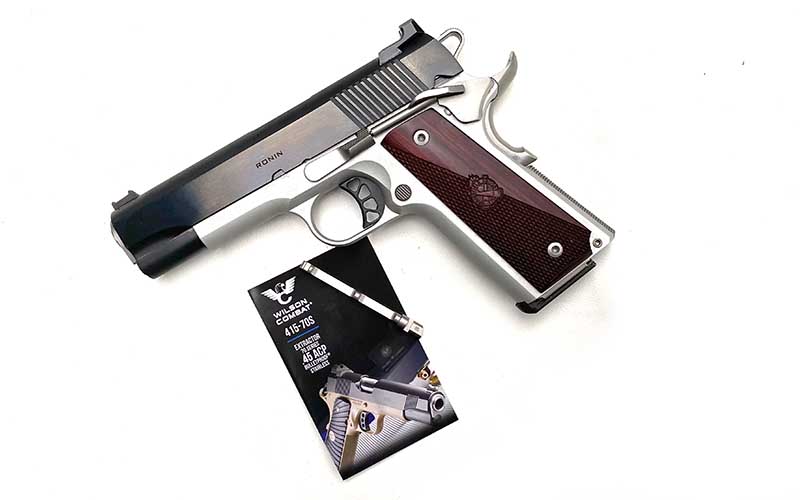
The factory 1911, here an alloy frame Springfield Armory .45 ACP Ronin in commander length, is a fine gun, but it never hurts to drop in something like a Wilson extractor.
If I’m experiencing extraction issues, I’ll immediately drop in a Wilson Bulletproof extractor. This is a completely drop-in upgrade that’ll improve ejection and feeding issues if you’re having lock-up problems or failure of the slide to go into battery. I heartily recommend this for all 1911s; the part is just so cheap and so good that including it makes complete sense, especially when looking to spruce up a used gun or a gun show find.
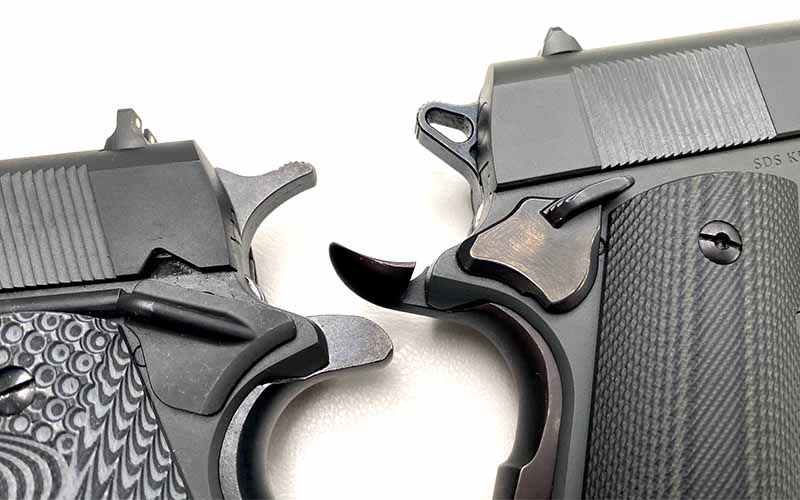
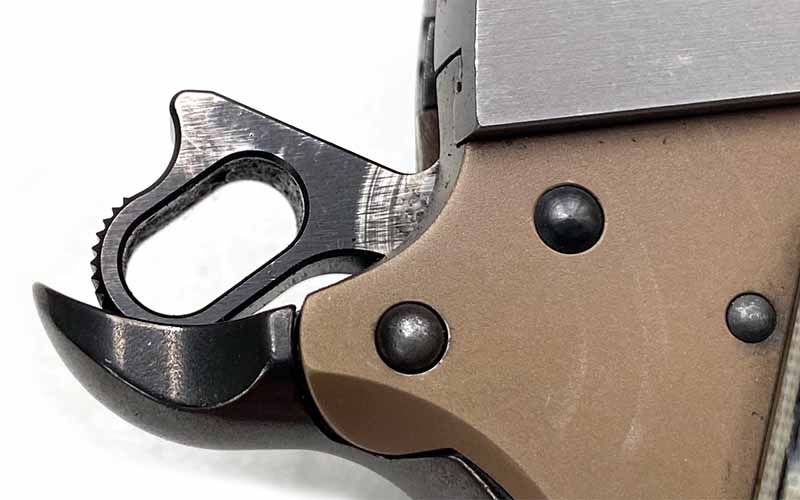
The last Wilson part I’ll address is the drop-in beavertail safety for GI-type frames. This is a no-gunsmith option that allows you to switch from the uncomfortable and often hand-biting GI grip safety and provides the shooter with greater control and comfort. The only issue with this part is that it’s quite obviously designed for some variance in frames and, as such, there’s a gap between the beavertail and the frame. This is largely cosmetic, but for some people that’s a deal-breaker. A note here is that you’ll also need to swap out the hammer to a modern style; the spurred GI type won’t work with the beavertail.
The Wilson Combat drop-in beavertail is a quick addition to a GI 1911 that makes it just a bit more comfortable to shoot. If you’re prone to hammer bite on GI guns, this is a great addition.
Cylinder & Slide Has The Guts To Perform
The internals of the 1911 can be frightening when they all come spilling out. I recall being dumbfounded as I did a full disassembly on my first one. Once you get the hang of how they all fit together, it usually goes in a wide bell curve of dread to confidence then back to dread. At the peak of our Gaussian curve, we look at it with understanding, but in my hard-earned and advanced skill set I’ve gone back to terror in knowing just how much can go wrong if I make one errant file stroke.
Suffice to say, my days of hand-fitting internals for fun are over. I very much prefer what are known as “trigger pull kits,” like those made by Cylinder & Slide. These are top-notch parts that are of extremely high quality and hardness. I’ve fitted many of these kits over the years and can say that for virtually all factory frame guns there’s very little, if any, fitting to be done. Note: I’m not saying these are truly drop-in, but they’re extremely close.
Cylinder & Slide makes some very rugged internals that aren’t only extremely high quality, but are also hard steel and should offer a lifetime of service. This hammer on the author’s custom 1911 has seen close to 20,000 rounds of use.
If you want a substantial upgrade over factory triggers, this is a safe way to go, and the C&S parts do exactly as they advertise. My go-to kit is the 4-pound version for .45 ACP. I also have a fondness for the three-part MARSOC pull kit, though this is just the hammer, sear and disconnector. I prefer a stiff, crisp pull on my 1911s for carry, but for field use I like just a hair of take-up and overtravel. The C&S kits can be used in tandem with each other, though your end result may be a bit different than advertised.
Grips: More Than Looks
The simplest and probably most overlooked drop-in upgrade you can make to your 1911 for functional improvement is the grips. The grip is your interface with the gun. Yet, grips are overlooked today with polymer-framed guns being popular. It’s exceedingly common to send your Glock out to have the frame stippled for better grip, likewise to see people add stick-on textured grip wraps or even add rubber sleeves to improve their relationship to their piece.
The 1911 is blessed with simple stock panels. All you need to do to dramatically change how your gun fits your hand is spin four screws.
A 1911 with standard GI wood grips.
LOK grips is my go-to company due to the sheer amount of options they offer for the 1911, employing a group of skilled craft artisans and artists who can make just about any grip with any type of inlay you can imagine. I toured their facility and was impressed at not only their production capabilities, but also the amount of effort they put into making something as seemingly benign as gun grips. Another company that offers a tremendous amount of 1911 grip options is VZ Grips.
The general problem with gun grips is that they’re a benign proposition; some people don’t change them or even know they can. The 1911 is so easy to change in this department that I sometimes will buy one I like for the general features, then change grips to make it look and feel how I want in the hand.
I’m all about how my guns look. An old man I knew once said he couldn’t stand modern polymer guns because they gave him nothing to look at, and, in his opinion, a gun was 1 percent shooting, 99 percent being looked at or fiddled with—a notion that I tend to agree with.
The same 1911 from above but with LOK Mayhem G10 grips in green.
The functional angle of 1911 grips comes from what you intend to do with them. If I’m carrying one, I like it to be a smoother grip that won’t snag on clothing or chafe my sides. I prefer a mild texture for field guns with no mag release cutout, something that will allow a good grip for steadying a shot without being so aggressive that it’s uncomfortable or sharp if I’m in deep cold.
For guns I shoot for work or competition, I like a very aggressive texture with a thumb cutout for the magazine release. On these guns, I also like a palm swell or a taper that drives my hand up into the beavertail safety, thus allowing me to keep a high grip for fast shooting.
The same GI 1911 but with ivory-colored LOK Bogies G10 grips.
Gotta Enjoy the Little Things
I have to make a short list of drop-in improvements that often go overlooked. The little plunger tube spring (a $3 part at most) could do for a change on most 1911s after a few years. Refresher spring packs are available from most places, and Brownells stocks many brands like Wolff, Ed Brown, Wilson and more. The springs on a 1911 can be easily swapped out in regular maintenance. I personally do mine on an as-needed basis, not really on a specific round count.
Sights are one of those things that are occasionally harder to change on a 1911, but it can be done. You’ll need to pay particular attention to the sight cut and dovetail type. If I were you, I’d decide if sight type is important to you from the start or be prepared to have a gunsmith install a set for you. If you want night sights on a 1911, it may be better to buy one with them factory installed. It can be a real pain to find the correct dovetails; many companies make their own versions that aren’t interchangeable with aftermarket—or at least not easily.
Editor’s Note: This article originally appeared in the 2021 December issue of Gun Digest the Magazine.
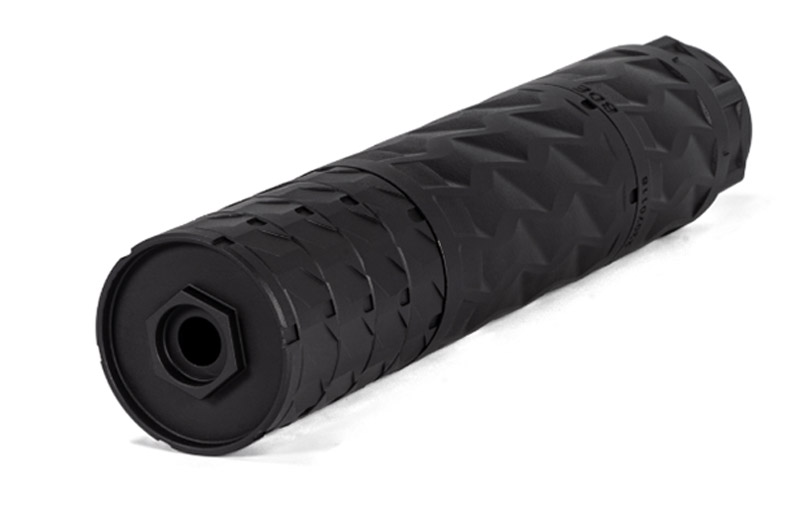
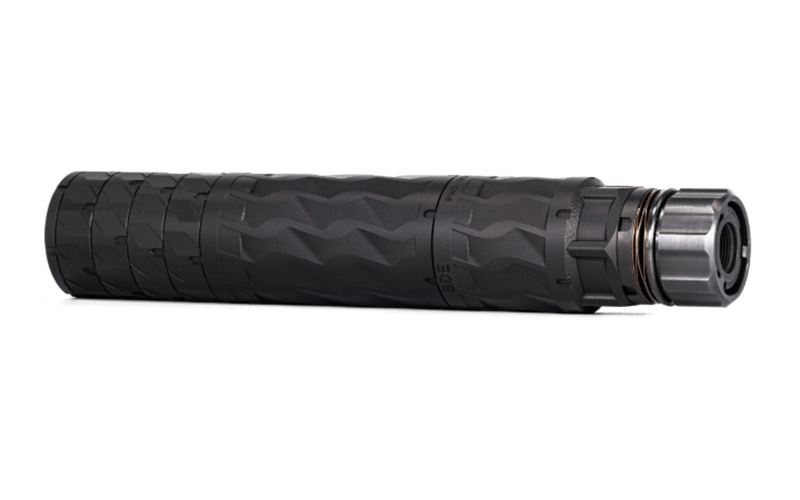
Primary Weapons Systems has now entered the silencer game with the launch of the BDE Suppressor line, starting with the BDE 762.
Primary Weapons Systems has just announced its entry into the suppressor market with the launch of the BDE Suppressor line. The first can in the lineup is the BDE 762, a .30-caliber, modular suppressor made from titanium alloy.
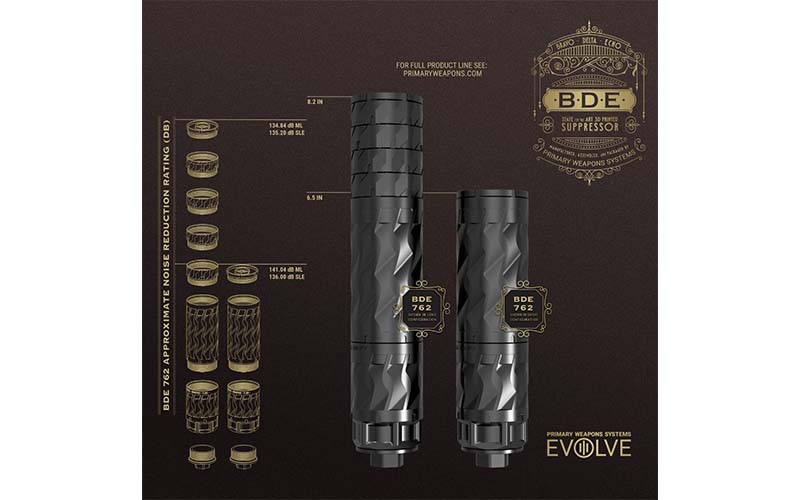
The BDE 762 is a modular design that ships with four removable baffles. The included set of wrenches allows for easy configuration in the field, adding or removing baffles as desired to decrease length or increase sound suppression capabilities. The baffles are made of titanium alloy and produced using 3D printing technology. This construction technique combined with the state-of-the-art material allows for the components to be durable, lightweight and very effective at reducing noise output thanks to the more complex internal design enabled by 3D printing. Depending on the number of baffles attached, the BDE 762 ranges from 6.5 to 8.2 inches in length and 12.7 to 17.4 ounces in weight. They also feature a universal 1.375×24 thread pitch, making them compatible with most suppressor mounts.
PWS implemented some other smart choices into the BDE 762 design as well. The baffles are taper-threaded to prevent loosening and reduce carbon buildup that leads to locking, and they feature symmetrical notches to ensure there’s no impact shift. The outside of the BDE 762 also sports a unique design that will supposedly help reduce heat mirage. The titanium components are anodized and the whole can is finished with black Cerakote.
Nate Treadaway, CEO of PWS, said this about the company’s new suppressor:
One of the things I’ve always admired about PWS has been the ability to innovate. The addition of additive manufacturing (3D printing) capabilities to our Boise facility will further accelerate that commitment…We feel confident that the BDE 762 has versatility and performance characteristics that simply can’t be replicated with traditional suppressor manufacturing processes.
The BDE 762 has an MSRP of $1,099.95 and it’s available now.
Langdon Tactical has just partnered with Heckler & Koch to offer customizations for the HK P30 and P2000 pistol series.
Langdon Tactical is best known for the custom work they perform on Beretta 92s, offering excellent trigger upgrade jobs and red dot mounting solutions. Now, the company is setting its skills loose on some more Teutonic handguns. Announced just today (August 4th), Langdon Tactical is partnering with H&K to offer a whole suite of upgrades for the HK P30 and P2000 pistols series in what will be known as the LTT P30 line.
The press release claims that customers will have access to over 200 customization options for the HK P30, P30L, P30SK and California-compliant P2000. Langdon Tactical has referred to the number of unique upgrade combinations as “infinitely customizable,” and while that’s not technically mathematically correct, the real number is so large that it might as well be. If nothing else, a combination exists that will suit every shooter’s wants and needs. LTT P30 models will be available with both DA/SA triggers as well as HK’s LEM trigger configuration.
Aimee Langdon, Vice President of LTT, said this about the new partnership:
We are incredibly excited to bring this project to market…a ton of time, R&D, and hard work went into making this happen, and we are pleased to finally debut these extraordinary pistols!
Langdon Tactical has also stated that custom work will be available for existing, factory HK P30 and P2000 pistols. Current owners will be able to send them in to have work done, including trigger jobs, night sight installation and red dot mounting solutions. The new custom LTT P30 and P2000 pistols are available to order now and have MSRPs ranging from $999.50 to $1,408 depending on the options selected.
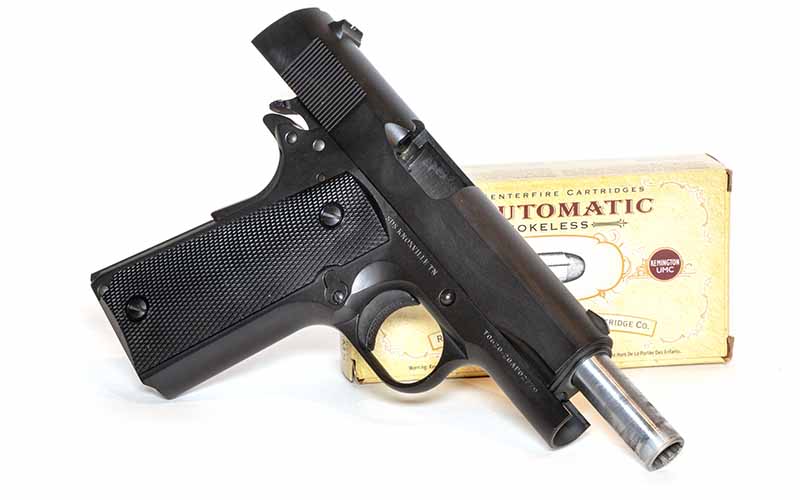
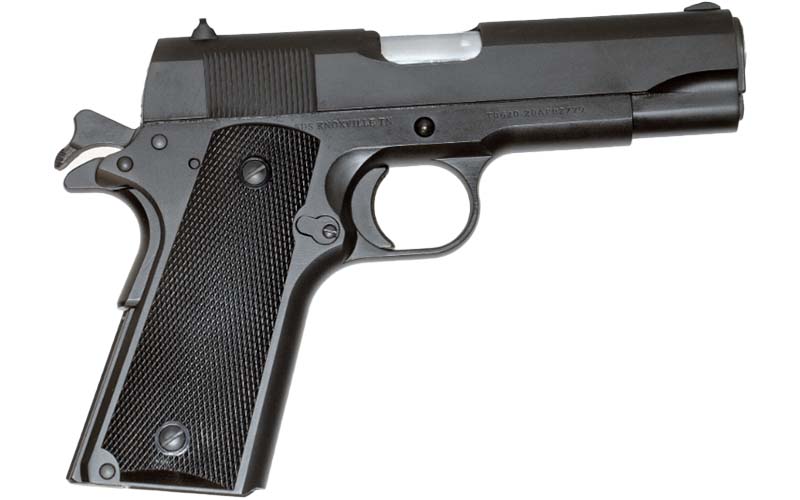
Made in Turkey by Tisas and brought in by SDS Imports, the 1911 A1 Tanker is a superb, no-frills 1911 for an affordable price.
The Colt Commander was the first mass-produced pistol with an aluminum alloy frame, and it was also the first pistol manufactured by Colt chambered for the 9mm. The Commander was indeed a 1911, but a 1911 with a shorter slide, and 4.25-inch as opposed to a 5.00-inch barrel. The Commander came about due to a request from the military for a more compact pistol, chambered in 9mm, that could be issued to officers. The Colt Commander was first produced in 1950 and was available in 9mm, .38 Super and .45 Auto.
In 1970, Colt introduced what would come to be known as the Combat Commander. The Combat Commander had a steel, as opposed to aluminum, alloy frame. To better differentiate between the two Commanders, Colt renamed the original Commander the Lightweight Commander. Both have become what clearly offers the best balance of carry comfort and shootability when it comes to the 1911. Chambered in .45 Auto, the Lightweight Commander is considered by many to be the epitome of a concealed-carry handgun.
The Tanker was very reliable with standard power and +P loads, but it might need a lighter recoil spring to handle light plinking ammunition.
Due to the immense popularity of their very affordable full-size 1911 GI-style pistols, SDS Imports decided that a Commander-sized version was the logical next step. But, instead of calling this pistol a Commander, SDS Imports named their GI-style, reduced-size 1911, the Tanker. This is a fitting name because it reflects the need for a more compact pistol by those who live inside small steel boxes. And, it has a special appeal to me because my MOS (military occupational specialty) was originally 19E and later a 19K. For those not acquainted with military lingo, a 19E was an armor crewman for M48/M60 series tanks, and 19K represented an armor crewman for a M1 tank.
SDS Imports
But before we delve into the 1911 A1 Tanker, you should know a little bit about SDS Imports, the company that set the design parameters for this pistol and also imports it into the United States. SDS Imports was started by three partners with years of manufacturing and import experience who saw that there was a demand for pistols and shotguns that wasn’t being met. They decided to leverage their contacts and experience to help meet that demand, and 1911 handguns were on the top of the list of what they wanted to offer.
Just to give you an idea of who is behind SDS Imports, Scott Huff is a West Point graduate and engineer. Tim Mulverhill is the former head of product development at Kimber. Gaines Davis is an engineer and competitive shooter, and both he and Tim are firearms instructors. And Dave Biggers, who handles sales and marketing, is a former Army officer as well. To get where they wanted to go, these guys needed a manufacturing partner, and they found one in Turkey.
Few things go together as well as an originally-styled 1911 and ball ammunition.
TISAS
To build their 1911s, SDS Imports partnered with TISAS, which was established in Trabzon, Turkey, in 1993. They’ve been building pistols since 1994 and currently offer a wide selection of handguns and even semi-automatic rifles. TISAS is considered one of the top firearms manufacturers in Turkey and worldwide as well.
Essentially, SDS Imports sent their smart guys to TISAS and showed them how to build 1911s the right way. Two of the engineers at SDS Imports, Scott Huff and Gaines Davis, rotate between Knoxville, Tennessee, and Turkey to make sure TISAS is building 1911s to the high standards SDS Imports have set. These engineers literally look over the shoulders of the workers at TISAS and have instituted high quality control standards that must be met before the handguns are shipped to the United States.
The Tanker
There’s no need to go into a full detailed description of this pistol. It is, after all, mostly a 1911 A1 clone—a pistol that has been in continuous production since 1924. Books—many books—have been written about the 1911, and there’s no need for me to attempt to offer a synopsis here. What is notable and may be overlooked about the Tanker is that it’s what’s known as a Series 70, 1911. This means that it doesn’t have the modern firing pin block safety that’s infamous for making 1911 triggers hard to tune.
SDS Imports’ Tanker is a Commander-sized version of an original 1911 A1, with only a few minor enhancements.
The Tanker has a 4.25-inch hammer-forged, chrome-plated barrel, and a hammer-forged frame and slide. It’s fitted with GI-style sights and checkered plastic grips, and it’s shipped with a single eight-round magazine. However, there are a few diversions from what would be considered a true 1911 A1 clone. The ejection port has been flared and lowered, the magazine well has been beveled, and the feed ramp has been polished. Also, instead of a Parkerized finish, this pistol has been fully Cerakoted, which is alone at least a $125 value! Yes, these enhancements aren’t in line with an original 1911 A1, but they do augment the functioning of the pistol. That’s not a bad thing and was a good call on the part of SDS Imports.
The Good
The trigger on the Tanker was crisp and broke at just a shade more than 4 pounds, which for most is about ideal for a defensive handgun. Also, unlike early and even current base-model Colt handguns, there were no sharp edges on this pistol to cause injury to your hands during firearm manipulation. The pistol also delivered great precision; even with the near non-existent GI-style sights, I could easily ring 4-inch steel plates at 25 yards, offhand. Slide to frame fit was very good and even maybe exceptional considering the price tag, and the barrel bushing could be removed without the aid of a bushing wrench.
If you’re looking for an entry-level 1911 you can trust and maybe use as a base for a custom build, the SDS Imports Tanker is a good place to start that search.
The Tanker was also very reliable. I filled several magazines with a collection of defensive loads, with bullet weights ranging from 160 to 230 grains and experienced no malfunctions; the gun ran like a top. I did, however, have a few failures to feed with some lightly loaded 200-grain lead SWC loads. However, this pistol has a very stiff recoil spring—about 24 pounds, I suspect. This is a workable recoil spring weight for full power loads but too heavy for plinking loads. Fortunately, you can replace the recoil spring with whatever weight you desire to best suit your needs.
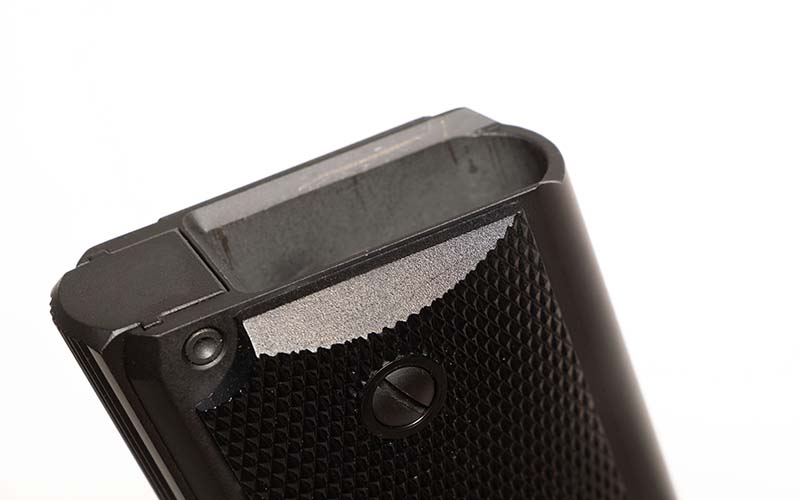
In addition to the lowered and flared ejection port, SDS Imports also specified a beveled magazine well, which is a smart enhancement that takes nothing away from the pistol’s GI persona.
The Bad
I had one functionality issue with the Tanker. On occasion, if my support hand thumb encountered the slide stop during recoil, it’d engage. Similarly, if I cycled the slide gently with an empty magazine in place, the slide stop could engage at the takedown notch. Considering you shouldn’t let your support thumb contact the slide stop when shooting, or that you shouldn’t cycle the slide gently, this isn’t a serious issue. SDS Imports is aware of the issue and are addressing it. A competent gunsmith can easily correct it too by dimpling the face of the slide stop or by just replacing the part all together. Wilson Combat offers the best slide stops in the world for about $60.
The Ugly
I’ll mention two things. This is a GI-style pistol with no frills. It comes in basic black and doesn’t have fancy grips or anything else to make it exceptionally attractive. It’s a fighting gun, and it looks like a fighting gun—like a gun you’d pull from the jungle mud and use to fight your way to an LZ.
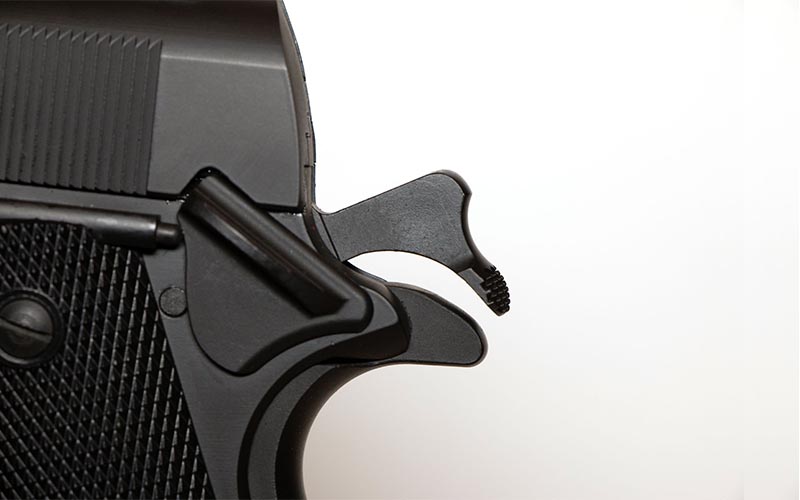
The only real ugly you’re going to get with the Tanker is the hammer bite in the web of the hand, which is endemic to all GI-style 1911 A1 pistols.
Some might consider that ugly; others might consider it pretty as hell. The ugliest aspect of this pistol is the lack of an upswept grip safety to prevent hammer bite. This isn’t specific to the Tanker; it is a characteristic of all GI-style 1911 handguns. If you shoot any original-style 1911 A1 with a high grip, the hammer will bite the web of your hand.
All GI-style 1911s that aren’t fitted with a wide or upswept grip safety tend to bite the web of the hand if you have large hands or utilize a very high grip.
Final Impression
These pistols are crossing counters for less than $400 (current MSRP is $429.95). Given the quality of manufacture, and the fact that they’re a true 70-Series style 1911 that’s reliable and dependable, it’s almost like folks are stealing them. If you’re looking to build a custom 1911 Commander, you could do a lot worse and spend a lot more money than if you started with the Tanker 45.
As with the rear sight and all GI-style 1911 A1 handguns, there’s not much front sight to see on the Tanker.
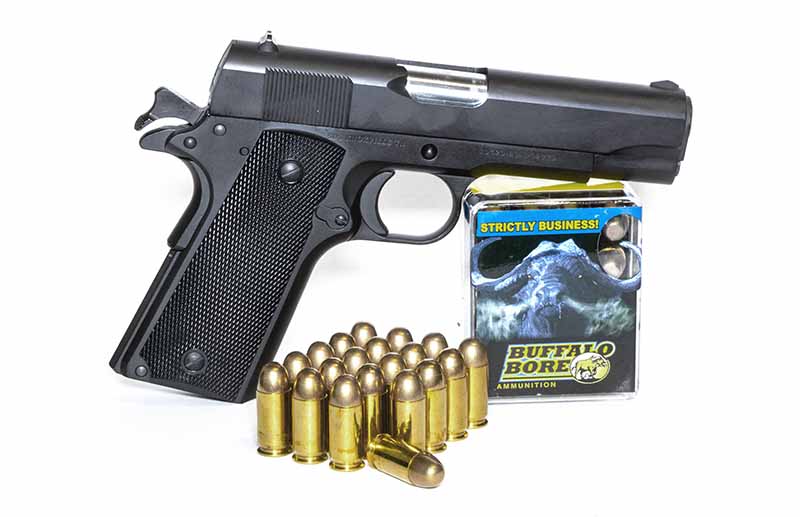
After satisfying myself that the SDS Imports Tanker was a pistol I could trust, my initial plan was to send it to Dave Fink at Fink’s Custom Guns, who is also the smithy at Gunsite Academy, and have him do a few modifications to include the milling of the slide for a reflex sight. However, my best friend who lives in Kodiak, Alaska, has a thing for GI-style 1911s and when I showed him the Tanker, he said he had to have it. So, it’ll fly to a little island off the coast of Alaska, be loaded with Buffalo Bore .45 Auto Outdoorsman ammo, and might very well be used to stop a bad guy or charging grizzly. My friend has already had to shoot one marauding bear.
If you’re like my friend and looking for a trustworthy GI-style 1911 of Commander size, this pistol has lots of appeal. You might replace the hammer or install an upswept grip safety to avoid hammer bite. You might also replace the sights with something a bit more modern and easier to see. The trigger—in my opinion—is good to go. Like Jeff Cooper told us, all a 1911 really needs is a good trigger, sights you can see, and all the sharp edges knocked off. Out of the box, the Tanker 45 is already two-thirds of the way there for the same amount of money you’d spend on just a carry bevel package, refinishing and trigger job.
The SDS Imports Tanker is a compact 1911 that’s reliable and very affordable.
This pistol won’t win a beauty contest, but it’ll save your life. And, well, that’s what pistols are really for. SDS Imports offers several other 1911s with various upgrades, to include their new Carry Bantam, which at $1,200 is configured to compete with top-end 1911s costing twice as much.
Editor’s Note: This article originally appeared in the 2021 October issue of Gun Digest the Magazine.
Looking to trick out your Ruger 10/22? Here are 10 top Ruger 10/22 accessories that can bring your plinker to the next level.
If there are two things that American shooters love, it’s Ruger 10/22s and accessorizing their guns. It’s only natural then that there exists a veritable sea of aftermarket 10/22 accessories to choose from.
While looking at 10/22 stocks, 10/22 receivers and 10/22 triggers, we covered how this popular gun can be entirely built today without using a single Ruger factory component. The customization possibilities don’t end there.
Today, we’ll look at some of the smaller 10/22 accessories that bring your plinker to the next level.
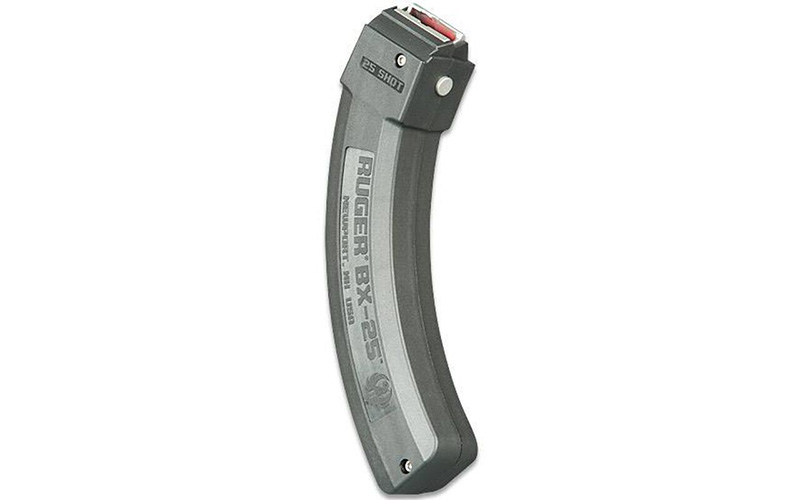
This is arguably the most important and practical of the 10/22 accessories on this list. If you own a 10/22 but don’t have any BX25 mags, it’s either because you live in a state that prohibits them or you’ve been asleep at the wheel. While .22-caliber plinkers don’t necessarily need a higher capacity than what the standard 10-round mags provide, more ammo on tap is never a bad option.
Whether you want to reduce the frequency of reloading in the field during a varmint hunt or just want more trigger time between reloads at the bench, Ruger-branded 25-round BX25 mags are a reliable way to accomplish it. They’re made of durable polymer and compatible with nearly every 10/22-based rifle and 22 Charger pistol on the market.
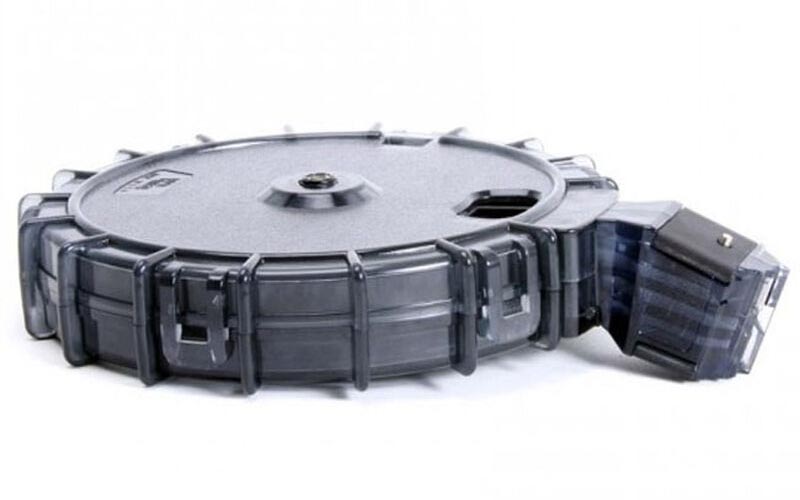
If 25 rounds are good, then 55 rounds are double-plus-good. If shooting a high volume of cheap .22 LR is one of your pastimes, this ProMag 55-round drum should only add to your enjoyment.
Unfortunately, drum mags of all kinds are inherently less reliable than their stick-mag counterparts. Because of this, these drums are probably better reserved for recreation than any sort of serious use. That said, they make an excellent addition to any 10/22 setup if for no other reason than the cool factor. One would also pair very nicely with a binary trigger.
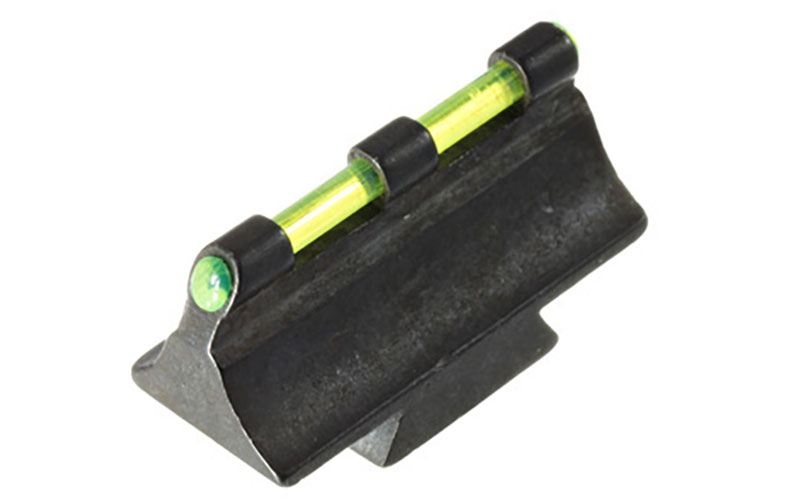
For those who prefer irons over optics but still want an upgrade, a fiber optic front sight is a worthy addition. This model is made in America by the Williams Gunsight Company, but is sold through Ruger as a “Genuine Ruger Factory Accessory.” It installs by simply replacing the original front sight via a dovetail.
If any of your 10/22 shooting relies on quick acquisition, then a fiber optic sight such as this helps pick up the pace without the complexity or expense of a red dot. Other models and colors are available as well.
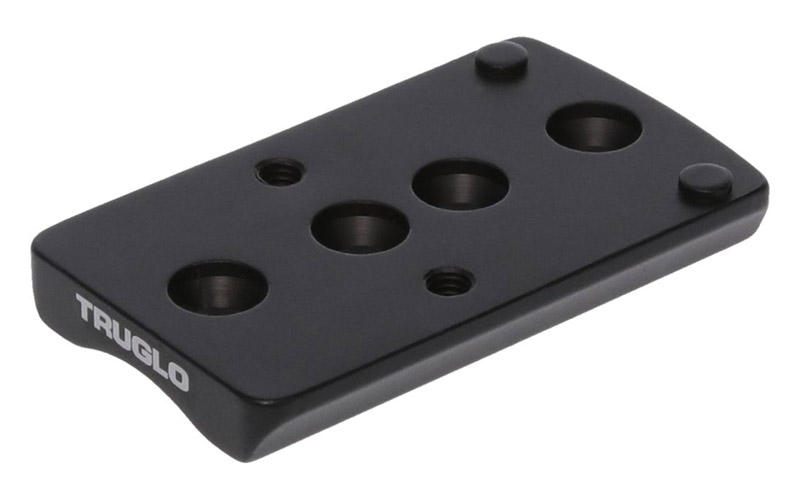
If you do want to mount a red dot on your 10/22, there are a few ways to accomplish it. The easiest and most common method is simply using the rail that comes standard with every 10/22 today, but this is best suited for rifle-size red dots and scopes. If you want something smaller, however, a new mounting solution is required.
The TRUGLO Dot-Optic mount installs directly to a 10/22’s drilled and tapped receiver, but rather than providing a rail, it instead features a Trijicon RMR footprint for mounting compatible pistol micro red dots. Micro red dots have become popular on certain rifle setups, and using one on a 10/22 will help keep the already lightweight rifle stay trim.
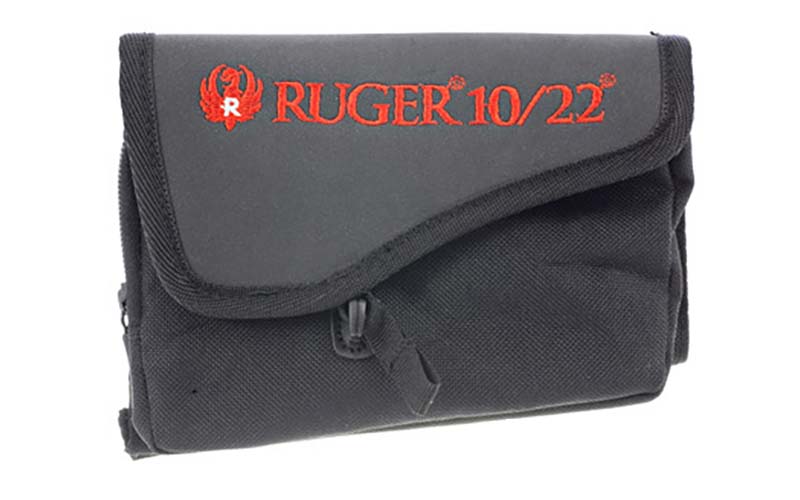
When it comes to keeping your rifle fed, larger mags will only go so far. Retaining spare ammo directly on your gun is a good way to supplement that. This inexpensive solution made by Ruger slips directly over the buttstock and provides some extra storage space. It can fit at least six 10-round rotary mags, spare boxes of ammo or anything else you might want to keep handy in the field.
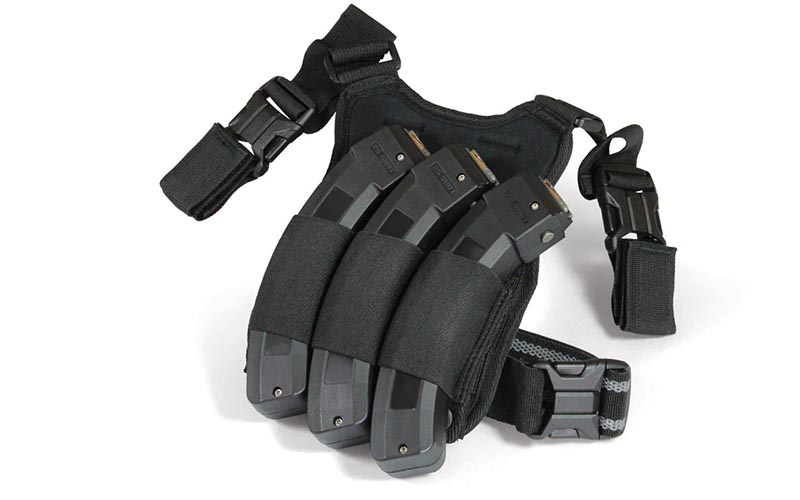
In the same theme as the buttstock pouch but with a bit more tactical flair, the Triple Mag Drop-Leg Pouch from Adaptive Tactical retains up to three BX25 magazines. It uses elastic to keep the mags in place, making them quick to retrieve, and the drop-leg platform feature allows them to be comfortably carried in the field or during competition.
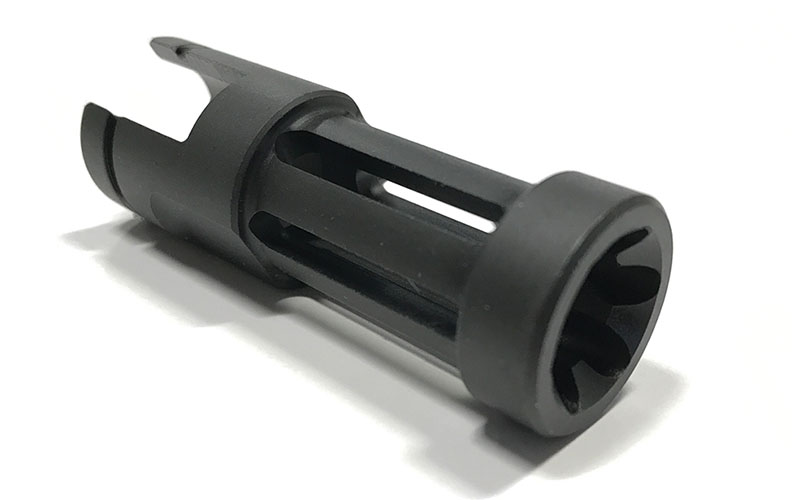
While there are compensators available for the 10/22, they’re a bit superfluous on a .22 LR rifle. Mitigating flash is a much more logical reason to utilize a muzzle device. Ruger makes one as well, but it’s designed for threaded barrel models. The beauty of the Samson Manufacturing flash hider is that it slips right over an unthreaded barrel and secures using a single set screw. Besides helping to reduce flash, this is a very simple way to customize the look of your gun. It’s available with either a black or stainless finish.
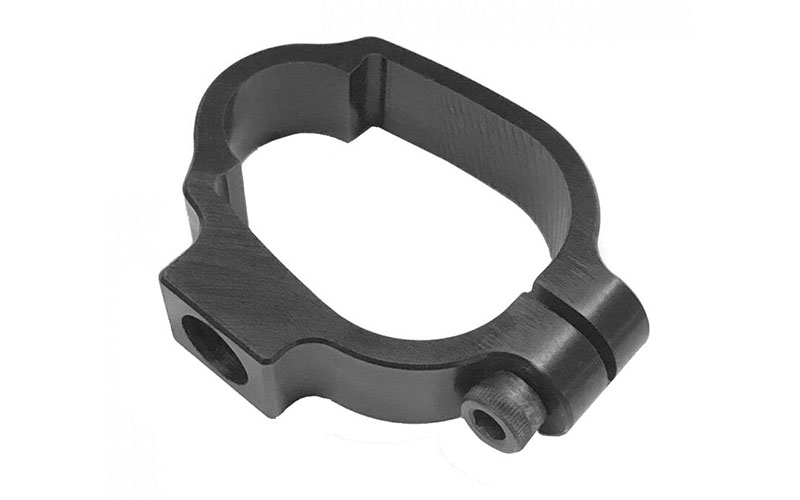
Another product from Samson Manufacturing, the B-TM QD sling barrel band is an easy way to add quick-detach sling capabilities to your 10/22. It simply replaces the factory barrel band and can be installed with the QD point facing either left or right. Making this small change to your gun will open you to a much wider world of tactical rifle slings, no longer limiting you to only using traditional styles. Like the Samson flash hider, this barrel band is offered in two colors as well.
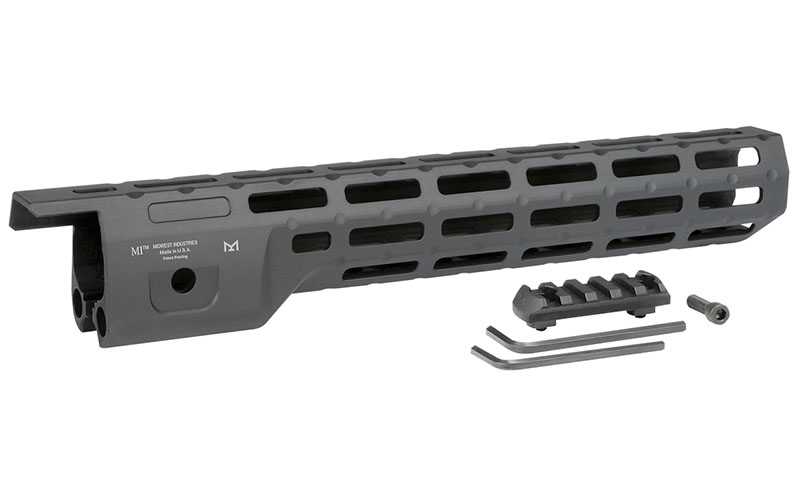
If making your 10/22 as tactical as possible is your aim, then it wouldn’t be complete without a railed handguard. This model from Midwest Industries is machined from 6061 T6 aluminum, keeping it both strong and lightweight while providing 13 inches M-LOK slots for accessories as well as two QD sling mounting points. If mounting a flashlight or laser on your 10/22 is something that you’d like to do, a railed handguard like this would be one of the easiest and most versatile ways to accomplish it.
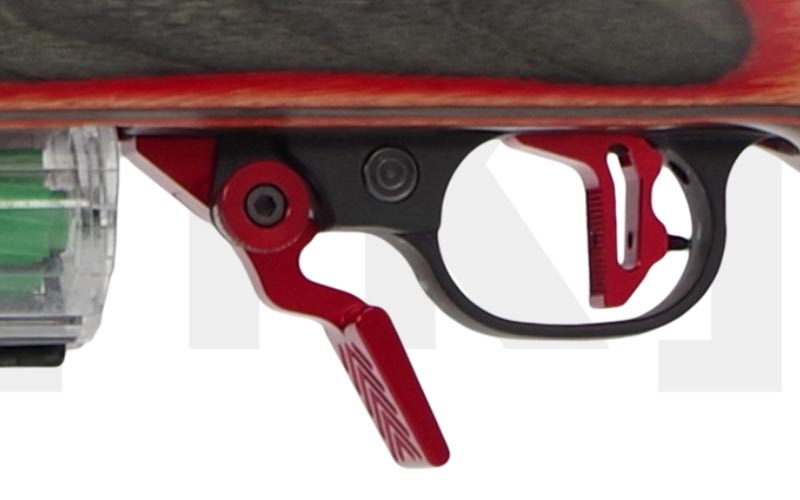
All those extended magazines and tactical mag pouches won’t do much good during a competition if you’re slow on the reload, and the factory 10/22 mag release is on the small side. This easy-to-install solution from Tandemkross remedies that by providing a much larger magazine release lever. It sticks out a decent amount from the bottom of the gun, so it’s not ideal for field use, but for competition or just plinking on the range it can make one’s life much easier. It’s available in both black and red.
CZ-USA has just released the CZ 600 Lux, a new bolt-action rifle with a wooden stock available in four chamberings.
In late 2021, CZ-USA announced that the new 600 Series of bolt-action rifles would be replacing the famed CZ 527 and CZ 557 series. Five models were originally shown, but they were slated to only begin hitting store shelves in 2022. The CZ 600 Lux, arguably the most traditional entry in the lineup, is now widely available.
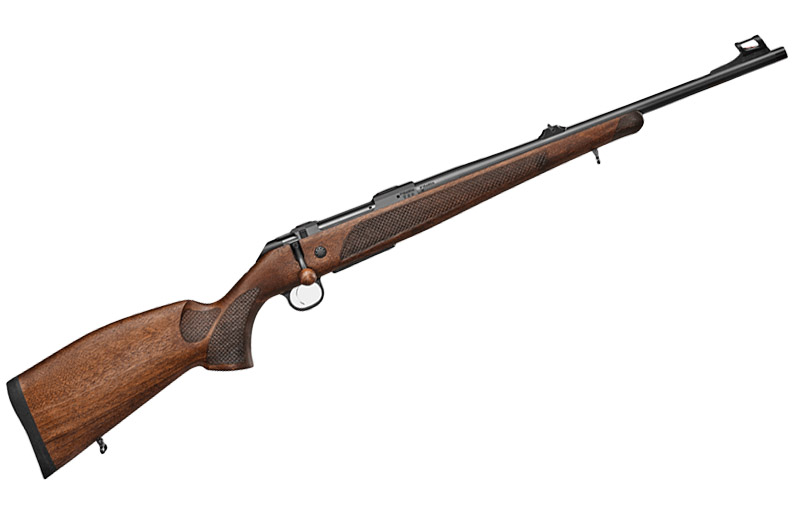
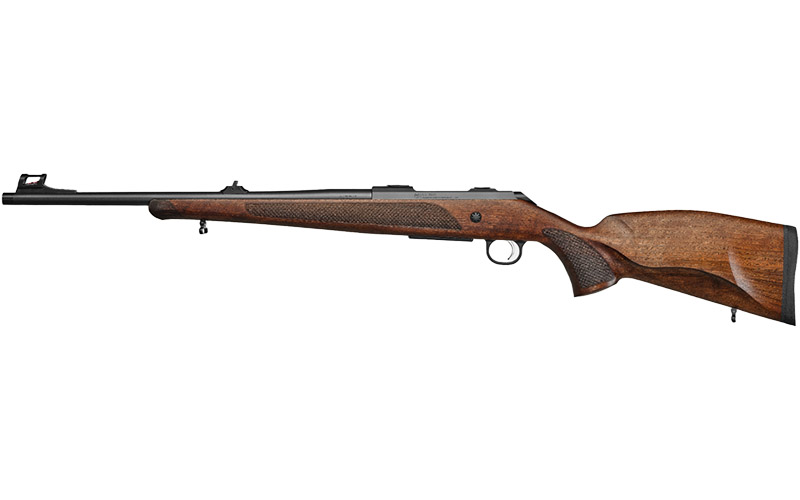
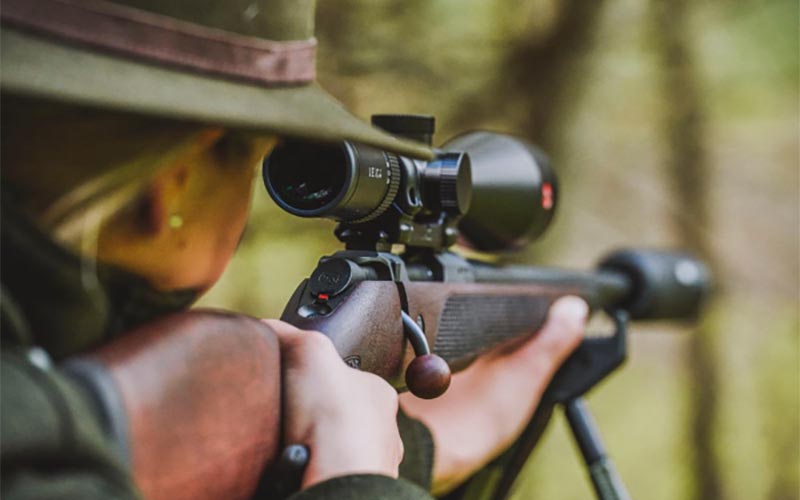
The CZ 600 Lux may look like a traditional European centerfire hunting rifle with its oil-finished and checkered Bavarian-style walnut stock, but several modern innovations have improved its functionality as well. The design features a new 60-degree bolt throw for faster and smoother cycling, an oversized wooden bolt knob for easier operation and a 2-position safety that is nearly silent to prevent spooking game in the field.
It feeds from detachable box magazines that can be topped off through the ejection port and has 5-round capacities in .223 Remington, .308 Winchester and .30-06 Springfield, and a 3-round capacity in .300 Win. Mag. All CZ 600 Lux rifles also feature a fiber optic front sight and are drilled and tapped for Remington 700-style scope bases.
The cherry on top of the CZ 600 Lux is its sub-MOA accuracy guarantee at 100 meters. Much of this is due to the barrels, which are cold hammer-forged, sporter-contoured and threaded M15x1 to be ready to accept suppressors. Both the .30-06 and .308 models feature 20-inch barrels with a 1:10 twist, the .223 Remington version has a 20-inch barrel and a 1:9 twist and the .300 Win. Mag. model sports a 24-inch barrel with a 1:10 twist. Each was chosen to extract the optimum performance from their respective cartridges. All models have an MSRP of $849 and are available now.
There are a number of big-bore cartridges available for the AR-15 platform, but perhaps the most mysterious is .50 Beowulf.
Notoriously tight-lipped about it, the .50 Beowulf is a brainchild of Alexander Arms. However, there is a certain lineage that would inform its development and usage, which can help you understand its purpose and best-use applications.
Is it a good cartridge for you? Should you get an AR-15 (or maybe an upper) in .50 Beowulf? What are some good factory rifles in .50 Beowulf? Let’s dig in a little bit more and see if you want to add one to your safe.
.50 Beowulf has a similar origin story to .450 Bushmaster and .458 SOCOM, relying on a proven caliber recipe used for more than a century and a half. Basically, a large-bore cartridge with a heavy projectile loaded to medium velocity. Cartridges meeting a similar description have been common fare since the late 19th Century.
Such long-time standbys such as the .50-90 Sharps, .50-70 and .45-70 Government all push a large, heavy projectile (.45 to .50 caliber) of 300 to 500 grains loaded to velocities approaching 2,000 feet per second.
The concept of a larger, heavier intermediate cartridge in a semi-auto carbine isn’t even that new either. Winchester created the .401 Self-Loading for the Model 1910 rifle, which sent a .40-caliber bullet of 200 to 250 grains downrange at just under 2000 fps.
Big, heavy bullets at medium velocities put holes in stuff really well after all.
.50 Beowulf Development
The designer of the cartridge and the rifles, Bill Alexander, was an armorer (or rather the armourer) and designer in the UK, who emigrated to the United States to have a bit more freedom to design what he wanted.
Alexander had previously designed 6.5mm Grendel to address the medium-range deficiencies of 5.56mm NATO. He created .50 Beowulf to address its deficiencies at a closer range. Specifically, barrier defeat, vehicle defeat and “stopping power” at close quarters. His idea was to allow the operator to change calibers by merely switching the upper, as 5.56mm magazines feed both cartridge types.
Not to take anything away from .50 Beowulf, but it wasn’t the first…but it certainly is the biggest!
The first attempt to put a big-bore cartridge in the AR-15 was the .45 Professional. A wildcat cartridge developed by Tim LeGendre in the 1990s, the cartridge aimed to satisfy the “Thumper” concept proposed by Jeff Cooper. Cooper envisioned (more or less) an M1 Carbine in .44 Magnum, firing a heavy bullet at modest velocity with an effective range of about 200 yards.
The .45 Professional is/was a prototype of .450 Bushmaster, made for the AR-15 platform and likewise only requiring the user to switch to a .45 Professional upper. However, the proprietary parts required proved problematic to source. That lead to LeGendre redesigning the cartridge in conjunction with Bushmaster and Hornady to create .450 Bushmaster.
Similarly, .458 SOCOM came about to address the limitations of 5.56mm NATO in close quarters based on the US Army’s experience in Somalia during Operation Gothic Serpent. The much-ballyhooed green tip was lackluster at barrier defeat and vehicle defeat, as well as lacking sufficient impact at close quarters. The SOCOM cartridge and the upper were designed in the late ‘90s and began testing in early 2001.
So, .50 Beowulf relies on a time-honored cartridge design (big, heavy bullet at modest speed) and puts it in an AR-platform rifle.
.50 Beowulf Ammo And Specs
Both .50 Beowulf and .458 SOCOM are based on .50 Action Express brass, with a rebated rim. While SOCOM uses a different rim specification, the rim of .50 Beowulf is turned down to nearly the same diameter as 6.5mm Grendel. This allows the use of a 6.5mm bolt head, just with a .50 Beowulf extractor.
The .50 Beowulf cartridge is proprietary, and Alexander Arms is the sole manufacturer of official .50 Beowulf ammunition.
The ammunition industry, however, reverse engineered it, and you can get 12.7x42mm ammunition—the same cartridge just with a metric naming scheme to get around any patent issues—from multiple manufacturers.
Alexander Arms sells proprietary .50 Beowulf magazines, but they are nearly identical to STANAG 5.56 models. While some users report being able to use standard, unmodified mags in their guns, Alexander Arms’ website and online forums both discuss the modifications required for STANAG mags to reliably feed .50 Beo.
Due to the girth of the cartridge, however, they function as single-stack mags instead, reducing the capacity of 30-rounders down to 10.
An Alexander Arms .50 Beowulf magazine (right) versus a modified STANAG mag (left), the red line shows where material was removed. Photo: User “Bolus” on NorthWest Firearms forums.
.50 Beowulf Ballistics
Typical loadings are 300- to 400-grain projectiles, loaded to about 1,700 to 1,900 fps from a 16-inch barrel. This produces 2,300 to 2,900 ft-lbs of energy, at the muzzle.
The cost of all the lead moving out of an AR-15 is a drop over distance. The Beowulf sinks like a stone. The two loads shown in this Shooter’s Calculator graph drop anywhere from 15 to 20 inches at 200 yards, and well over 50 inches at 300 yards.
Feats of long-range accuracy with the buffalo rifles of yore certainly weren’t impossible (Billy Dixon at the Second Battle of Adobe Walls comes to mind). However, the .50 Beowulf’s primary purpose is as a shorter-range cartridge. Around 200 yards and in is where it does its best work.
Who Uses .50 Beowulf?
When it comes to professional or sporting use, .50 Beowulf has a certain niche. Created for a specific role, within that it can be very useful.
LE And Military
Small Arms Review wrote in 2013, the .50 Beowulf found use by a limited number of military personnel in the field. Though very little has emerged since then on any further field use.
From a military or LE standpoint, the caliber has narrow applications. The best use-case would be for CQB, breaching, and checkpoints where vehicle defeat (stopping the vehicle or shooting through to the occupants inside it) were ballistic needs.
The most obvious benefit, of course, is that the operator can just swap an M4 upper for a .50 Beowulf upper in seconds. But an additional benefit is the .50 Beowulf (in theory) would abrogate most roles for a combat shotgun.
Just switch uppers, get the same capabilities and not need to know a whole other manual of arms–why bother with a whole other weapon system?
Hunting
As for sporting use, it has a niche as a hunting caliber. It’s legal in straight-wall jurisdictions, and would certainly be viable for bear defense in Alaska and the select other states with extant grizzly bear populations.
Brush deflection would certainly not concern a hunter ever again!
It’s a bit large for whitetail deer and other medium-sized game such as black bear and hogs. Though mild loads of .45-70 and other large-bore, mild-velocity cartridges don’t destroy as much meat as one might assume.
Why Would YOU Want A .50 Beowulf Rifle?
If you just want one just because…get one! Enjoy it! After all of one’s practical bases are covered in their arsenal, there’s nothing wrong with owning other guns that don’t have a specific purpose. That said, .50 Beowulf may still have something to offer you…
It is a hammer, and anything in close will be bashed flat.
Hunting The Beowulf
As a game cartridge, it would be an excellent choice for brush hunting where close shots—inside 200 yards—were literally the only shot opportunities you’d be getting and brush deflection was all but assured. It will also excel on larger game such as elk, moose and bears.
It loses some ground to other straight-wall cartridges for medium game. This includes the .350 Legend (which has less recoil and flatter trajectory), .450 Bushmaster and, certainly on a cost basis, a rifled slug gun. The final has similar ballistics but is cheaper to buy and shoot.
It would be an excellent choice of bear rifle in grizzly country. Guides in Alaska are known to prefer heavier, more powerful cartridges like .45-70, .416 Ruger and .375 H&H Magnum. The .50 Beowulf would be a natural fit in that role.
Personal Defense Applications
As far as personal defense–either as a home defense weapon or in the ever-popular hypothetical SHTF scenario–the truth is it’s not the best choice in either case.
The problem with rifle cartridges is formal testing indicates many of them are prone to penetration in excess (far in excess in some cases) of the FBI standard of 12 to 18 inches of calibrated gelatin through four layers of denim.
Ballistic gel test of .50 Beowulf 200g ARX ammo. Photo: Alexander Arms.
A bullet that does so will exit a body with enough force to injure or kill another person. Since the armed civilian is responsible for every shot they fire, using something like .50 Beowulf for defense with neighbors around carries a lot of unnecessary risks.
The ballistic testing that other calibers have in spades just doesn’t exist for .50 Beowulf. Amature tests aside, there isn’t enough reliable, repeatable information to say it is or isn’t an appropriate choice. Plenty of data indicates other calibers already fit the bill. Therefore, stick with the proven.
Prepper Gun
As for SHTF…well, the reality is a more versatile caliber, more easily resupplied is more advantageous. 5.56mm, .308, .30-06 and so on are superior in that regard, and not to mention cheaper.
That also presumes a very specific version of “SHTF” that has little to do with probable or remotely possible versions of future events based on reality. Mad Max is a fantastic series of movies, but the way the S is likely to HTF is closer to The Grapes of Wrath than anything else.
The 5 Best .50 Beowulf Rifles: A Buyer’s Guide
Alexander Arms AWS
The AWS series by Alexander Arms—the company that invented the cartridge—is their top-of-the-line model. It boasts a 16-inch chrome-moly barrel with a threaded muzzle and thread protector and a mid-length gas system.
The furniture is by Magpul (CTR stock, MOE grip and winter trigger guard) with a Radian charging handle, Midwest Industries M-LOK handguard, and a 3-pound single-stage trigger by Velocity Precision. You can add your choice of a tank or pepper pot brake or a Millennium compensator. It ships with one 7-round magazine, and while the price may be high, at least all Alexander Arms rifles come with the option of a free hat.
ExoticAR15 specializes in .50-caliber AR-platform rifles and pistols, chambered in 12.7x42mm for the reasons mentioned rather than the official .50 Beowulf. In any event, their rifles offer a bit more in terms of features for the price paid.
A mid-length gas 16-inch barrel is free-floated with a Timber Creek Heart Breaker Tanker muzzle brake standard on most models. The upper and lower are matched for zero play, as well as color-matched, with a 12-inch M-LOK railed handguard.
A Daniel Defense stock and Magpul MOE grip make up the furniture, along with an ambidextrous safety, anti-walk pins and an adjustable competition trigger.
The rifle is offered in several different colors of Cerakote finish, and an 18-inch barrel model is available as well.
The Highlander is Alexander Arms’ pistol version, with an SB Tactical SBA3 brace and Ergo rubber grip. The M-LOK handguard is made by TCE for Alexander Arms.
The Highlander pistol has a 12-inch barrel, with a threaded muzzle and thread protector on the base model. You can add your choice of muzzle device as mentioned above, as well as a 3-pound single-stage Velocity trigger. Like the rifle, it’s also offered with different Cerakote finishes and ships with a 7-round mag.
If you wanted to get into .50 Beowulf (or 12.7x42mm) for a bit less, Bear Creek Arsenal offers their BC-15 in this caliber.
You get a 16-inch CMV barrel with a carbine-length gas system, birdcage-style flash hider, 15-inch M-LOK handguard and Bear Creek’s signature side-charging upper. The furniture is an M4 stock, A2-style grip, winter trigger guard and a mil-spec trigger group.
Alexander Arms’ entry-level model is the Hunter Standard. The rifle has a 16-inch barrel and mid-length gas system, with an Alexander Arms-branded handguard with M-LOK slots at the 9- and 3-o’clock positions. Furniture is an Adaptive Tactical stock, an ergonomic rubber grip and a mil-spec charging handle, safety and trigger.
It’s a more basic black rifle with a black anodized finish instead of Cerakote. However, you have the option to upgrade by adding a muzzle device or a Radian Raptor ambidextrous charging handle.
Retro AR parts now are back on the market as H&R begins shipping lower receivers.
It came to light not too far back that JJE, the parent company that owns Palmetto State Armory, had acquired NoDak Spud as well as the rights to Harrington & Richardson. For those who haven’t dived into the world of retro AR-15s, NoDak Spud has been the primary source for historically-accurate AR-15 receivers for many years. For anyone who was looking to build a clone of a military or police AR from the ‘60s through the ‘80s, NoDak was the place to go. H&R was also one of the original manufacturers of M16 rifles, and most of those used in Vietnam bore their mark.
Retro AR cloners can get quite obsessive about having the correct roll marks, and this merger will allow for H&R-marked receivers without causing any copyright controversies. By combining NoDak Spud’s know-how with the legally-owned H&R brand name and JJE’s production capacities, it means that some very historically-correct, mass-produced retro AR rifles and parts are about to become a reality.
While the new H&R promises that nearly the full catalog of old NoDak Spud components will eventually become available, tooling up to do so will take some time. The company decided to start with M16A1 parts, and the first batch of H&R-marked lower receivers was listed on July 22nd. They sold out incredibly fast, as many builders had been anticipating this for some time, but it’s a sure sign that production has officially begun. A1 uppers will supposedly be the next component to be released.
Complete rifles will eventually be offered as well, such as the M16A1 that was featured at SHOT Show 2022. A2-series, C7 and even some more experimental receivers are supposedly in the pipeline too. Retro ARs have only grown more popular over the past few years, but the market has been devoid of affordable parts to build them with. This release of H&R lowers hopefully marks the beginning of a new era of accessible retro rifles that won’t break the bank. MSRP for the new lower is $159.99.
Looking to go armed, but are stuck in the weeds as to what to arm yourself with? Here are 20 of the best concealed carry gun options that will keep you on the defensive.