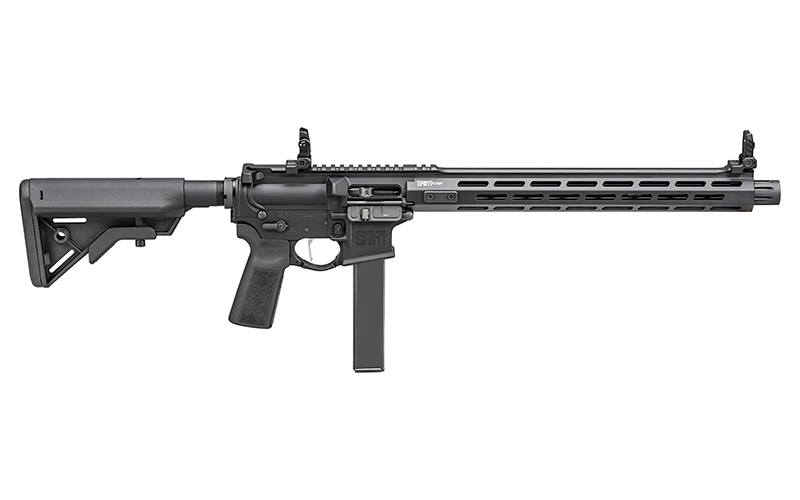
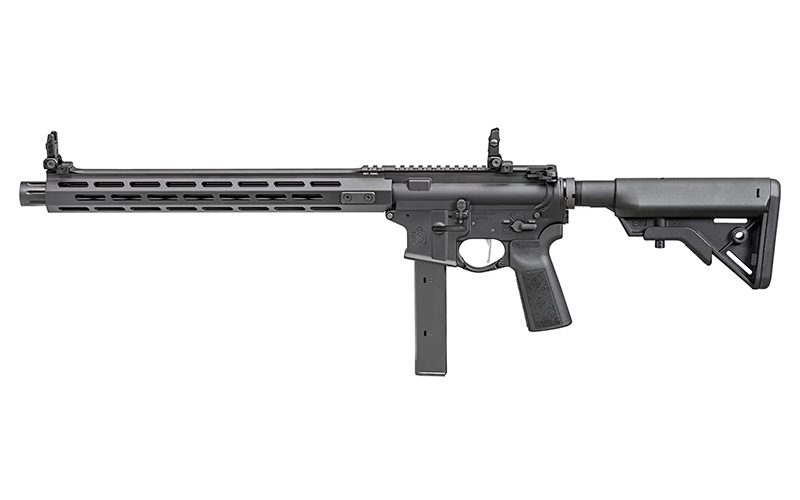
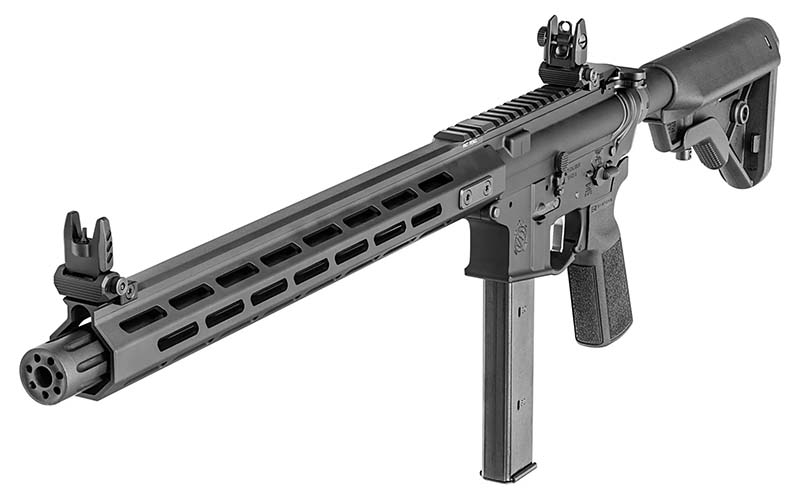
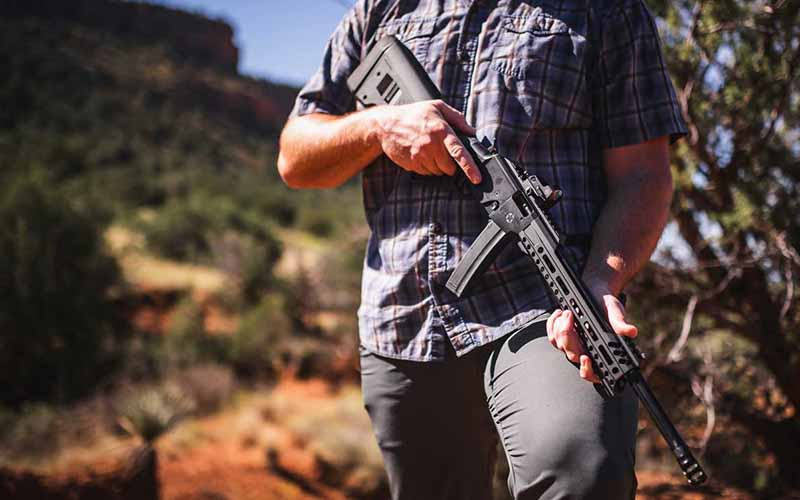
Springfield Armory has recently added a PCC model to its AR lineup in the form of the SAINT Victor 9mm Carbine.
Springfield Armory’s SAINT Victor series of ARs have been popular enough for the company to expand the lineup to other form factors and calibers. So far this has included scaled-up models such as .308 rifles, .308 pistols and the precision-oriented SAINT Edge ATC. The newest firearm to join the family, however, was scaled down to a PCC instead. It’s called the SAINT Victor 9mm Carbine.
The SAINT Victor 9mm Carbine features a dedicated 9mm upper and lower receiver, both made from forged 7075 T6 aluminum. It operates using a direct blowback system for simplicity and reliability, and the system feeds from Colt-pattern 32-round stick magazines. The 16-inch barrel is Melonite coated and features a Springfield Armory Forward Blast Diverter, and the full-length M-LOK handguard is free-floated. Other features include spring-loaded flip-up iron sights, a six-position collapsible B5 Systems Bravo Stock, a B5 Systems Type 23 P-Grip, a B5 Systems trigger guard and an ambidextrous safety.
Steve Kramer, Vice President of Marketing for Springfield Armory, said this about the new PCC:
The new SAINT Victor 9mm Carbine adds yet another layer of capability to the SAINT Victor line…Combining the familiar handling characteristics and proven design of an AR with the rugged performance of a direct blowback system, the SAINT Victor in 9mm would make for a great addition to any shooter’s firearms collection.
The Springfield Armory SAINT Victor 9mm Carbine is available now and has an MSRP of $1,299.
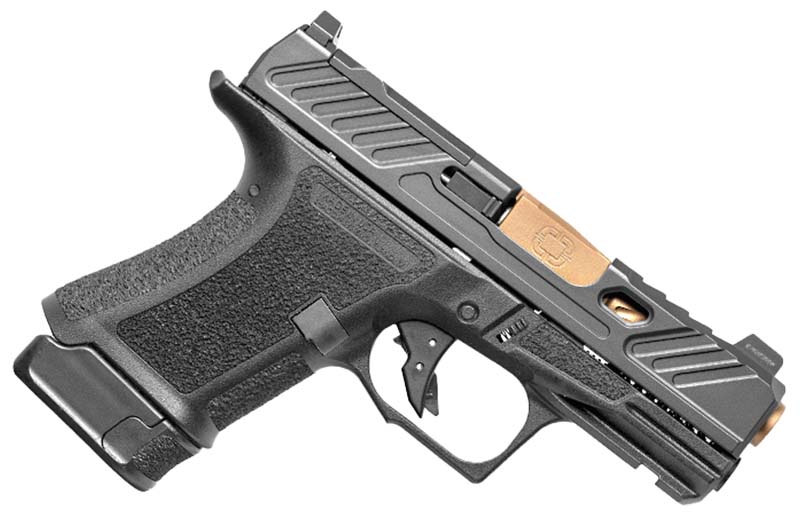
In this Shadow Systems CR920 review, the author shines a light on the company’s 9mm compact concealed carry pistol.
The gun world, as I’m sure you know by now, is rife with marketing jargon and gimmicks. Bullets that are more this or barrels that are more that. Much of it is hyperbole, even if some companies actually deliver on the promises that they make.
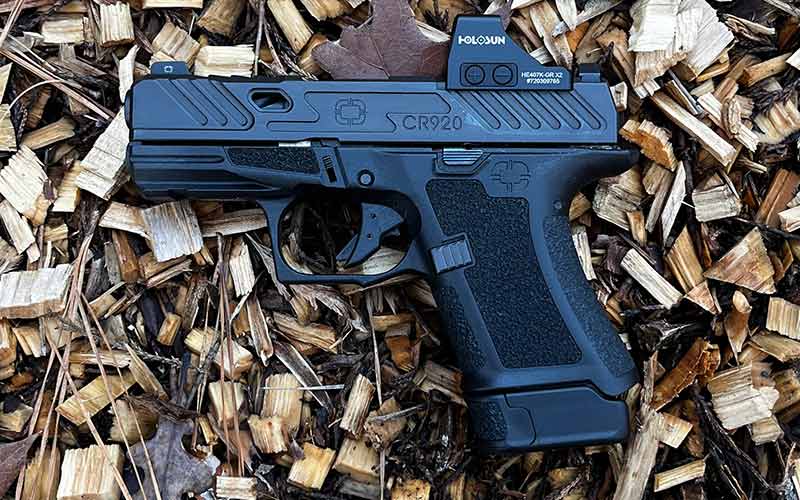
“A subcompact that shoots like a full size.” That’s what the Shadow Systems CR920 is marketed as. In many ways, this is not the hyperbole that I just outlined. This is likely one of the most shootable subcompacts you can buy.
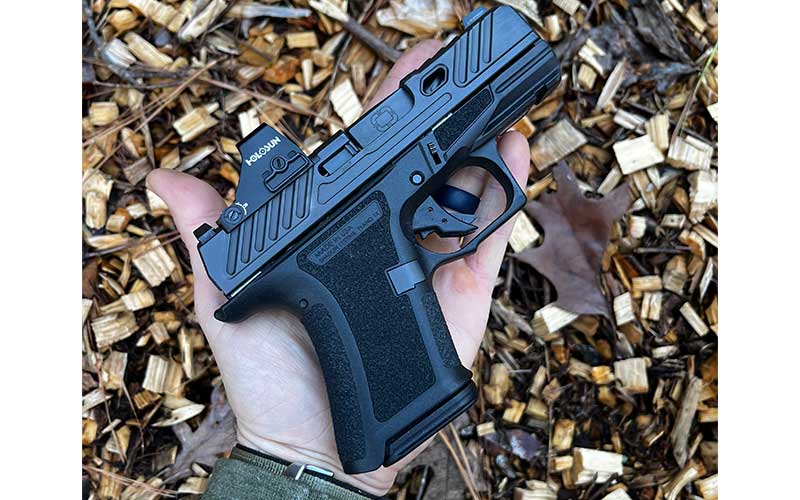
The Shadow Systems CR920 Elite with a bronze TiCN barrel.
Don’t get me wrong, I have no desire to shoot any subcompact all day—they’re not made for that after all. They’re designed to be concealable and easily deployed. Check and check, with the CR920.
It is flat shooting, optics-ready in a discreet package that has a very respectable magazine capacity of 10 rounds in the flush-fit model and 13 rounds in the extended flavor. But that’s not the most remarkable thing about the pistol. After all, you can get that type of capacity from a Glock 26 or Sig P365.
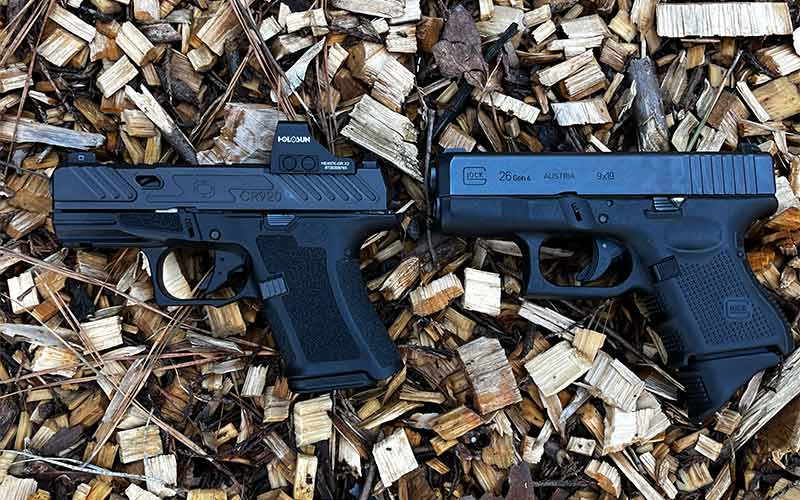
One of the most remarkable things about the Shadow Systems CR920 is that they crammed this capacity in something slightly smaller than a Glock 43 with a pinky extension and about the same thickness (1.06-inch for Glock versus 1.05-inch for CR920). You get one of the smallest CCW pistols on the market loaded with features, and it has an MSRP of $799 for the combat (non-optics ready) version and $940 for the Elite version.
Grip Frame And Ergonomics
Like most subcompacts, the 10-round flush-fit magazine only offers about 3 fingers of real estate. They do sell a pinky extension now, but I haven’t outfitted any of my magazines with this accessory. The extended 13-round magazine does have much better ergs, allows the shooter a full grip and makes it much more comfortable to draw and shoot. Like any other subcompact, the user can choose to carry the firearm either with easier-to-conceal but harder-to-grip flush-fit mags, or the harder-to-conceal but easier-to-shoot-with extended magazines. Depending on what I was wearing, I rocked both while testing this gun.
As far as the ergs, it’s like they took a Shadow Systems MR920 and hit it with a shrink ray. All the familiar stippling is there, yet in a slightly smaller package, along with the extra material under the slide stop (which is very welcome in such a small pistol). There is texturing where the “accelerator cuts” usually are, but not the standard ledge that comes with the MR/XR/DR series.
Unlike its bigger brothers, there is no NPOA system with interchangeable backstraps—there simply isn’t enough real estate for it. However, when compared to the Glock 26 this pistol is unequivocally more comfortable to shoot since it has better ergonomics than a stone block, with a grip that is much more refined than that of a Glock 43.
The Slide
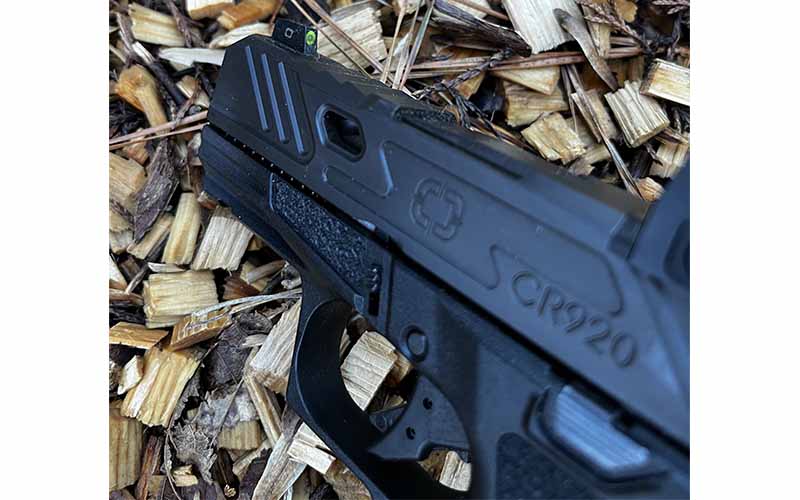
Once more, this gun feels like Rick Moranis’ character from the Honey, I Shrunk The Kids was on the design team—the slide is just like the MR920 Elite, but smaller. The machining is just as superb, and it comes with lightning cuts (albeit small ones) and directional serrations on the top, front and rear of the slide.
Again, this has a whole bunch of science behind it regarding reciprocating mass and it makes the gun more shootable and less snappy. We’ll get into the shootability of this pistol later, of course. But for the size, this pistol doesn’t leave much to be desired in the realm of attention to detail. The slide is well machined, I can’t find a tooling mark anywhere, and directional serrations are a welcome addition to a pistol that is only a hair over 6 inches in length.
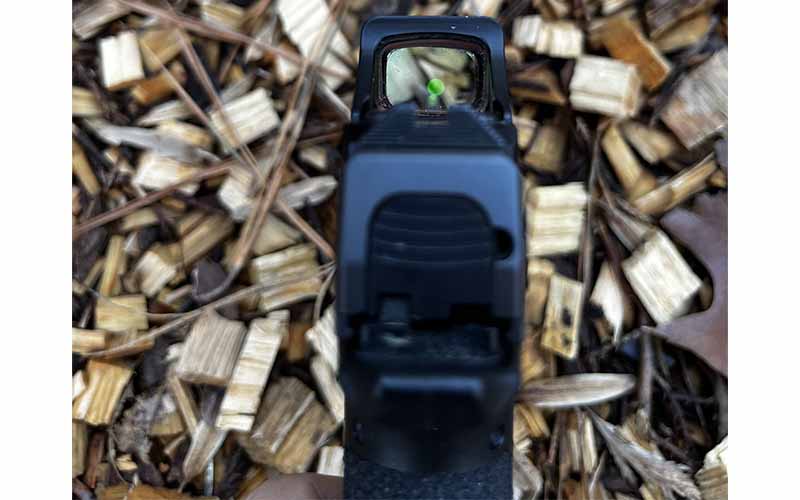
From an optics mounting POV, this gun accepts nearly every micro RDS pattern currently on the market besides the RMRcc. I have a 407k Holosun with a 6-MOA dot mounted to mine, and I’ve put it to use shooting bowling pins at 25+ meters without missing. I also carry this pistol relatively frequently and don’t exactly baby it when taking it on and off, and it’s held its zero just fine. Much like the Shadow Systems CR920’s bigger brothers, again, this gun runs like a top.
From an iron sight perspective, the gun does ship with a blacked-out rear and tritium front sight, making it good to go for low-light conditions right out of the box. The sights on it are more than serviceable and ready for any CCW application. You get a co-witness with iron sights and an optic as well, which is kind of a must for me with any carry gun. Red dots, although technology has come a long way, are battery-operated and can fail. It’s good to know I can still get a sight picture no matter what, especially with a gun designed specifically for concealed carry.
The Barrel
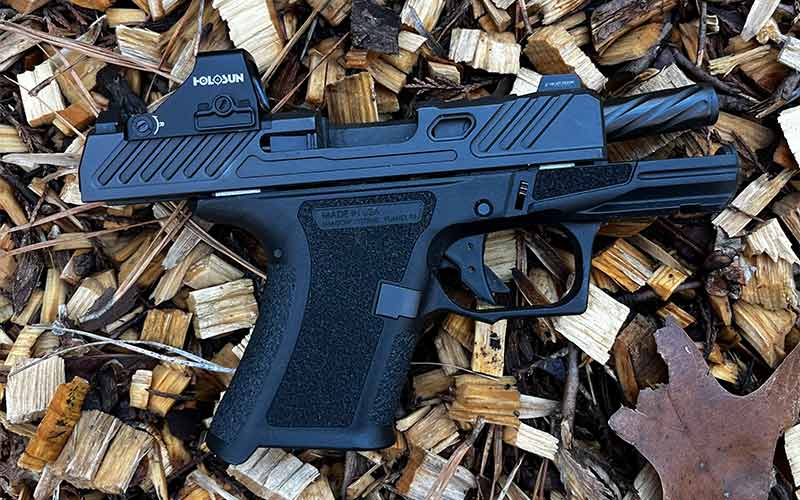
The barrel is Shadow Systems’ trademark TiNi spiral-fluted, match-grade barrel, and in the CR920’s case it’s 3.41 inches long. That’s the exact same length as a Glock 43 series barrel and in the same ballpark as the Glock 26 and Sig P365 (3.4 inches and 3.42 inches respectively).
These do not come with threaded barrels, but considering the application and intended use, that’s not a surprise. They are plenty accurate, especially for a subcompact, and I’ve had no problem making precise shots into the A zone in a USPSA target on both the chest and head at good distances. For real-world applications, this barrel gets the job done just fine.
Shootability
As I said at the outset, this gun was billed as a “subcompact that shoots like a full-size.” While I wouldn’t want to put 500+ rounds through this thing in a session as I would with one of my CZ’s or full-size Shadow Systems pistols, it is far and away much more comfortable to shoot than any other subcompact I own or have shot (and I’m including .380s in that statement).
It has better ergs and is lighter, smaller and higher capacity than a Glock 26, and the stippling, index points and slide machining make it more fun to shoot than a Glock 43/43x too. The texturing vaguely reminds me of a Sig P365, and the grip frame is a tad bigger, but I welcome that since I have large hands. I also found the pistol easier to index than its Sig compatriot and more pointable too, likely mostly due to my greater experience with Glocks and the thousands of reps of dry fire I’ve performed with them.
When doing live fire, I found myself wondering “where the hell is the recoil?” The Shadow Systems CR920 is light, an ounce lighter than a Glock 26, but is somehow also much softer shooting and easier to get back on target for follow-up shots. Also, mag dumps all hit the same place on the steel torso I was practicing on, making one big splotch of 10 rounds at center mass. There’s some engineering wizardry afoot leveraging grip angle, bore axis, and reciprocating mass that I only tacitly understand. But take my word for it, for a subcompact, it’s surprisingly controllable.
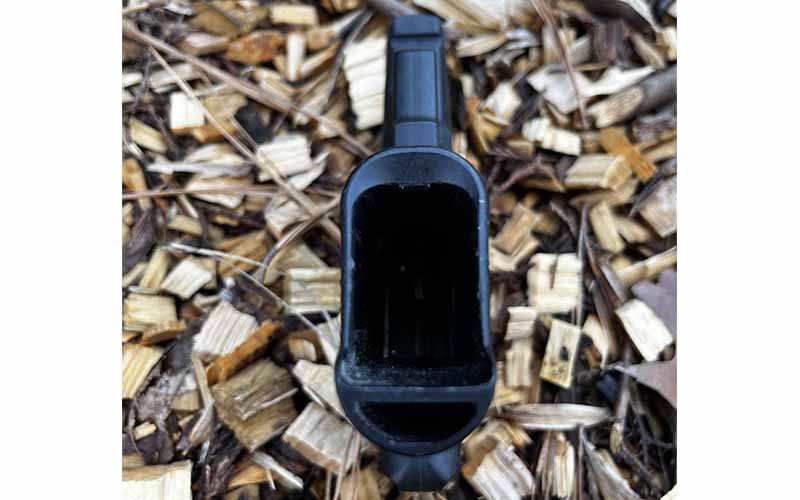
One feature that I appreciate, but wasn’t sure whether to mention, is the slight beveling at the front of the magwell. This allows for quick reloads as the semi-circle funnel helps to guide in fresh magazines. What’s more, the material on the back of the grip minimized the pinch you get when slamming home a new mag, which to me aids in its shootability and desire to put rounds through it.
Concealability
Typically I review accuracy at this point, but I touched on that, and let’s be real—this gun is made for deep concealment. The CR in CR920 stands for Covert Role after all (fun piece of trivia: MR stands for Multi-Role and DR for Duty Role in the Shadow Systems lexicon). This gun might as well be made of fabric because it disappears when you put it on. It is cross-compatible with most Glock 43x holsters, and I have one that I hate for the 43x, but even when using that one this pistol still virtually disappears.
With the holsters that I do like, I can even forget that I’m wearing a gun. The pistol is only 4.2 inches tall with the flush-fit mag, and 4.7 inches tall with the extended magazine with an overall length of just under 6.5 inches. As you can see here, it basically fits in the palm of my hand. Appendix or 3-4 o’clock carry, it doesn’t matter. This gun is like Houdini—it just disappears. It even makes a fine candidate for pocket carry, but that’s just not my jam.
As with most Shadow Systems pistols, this thing feels over-engineered, but that’s not a bad thing at all. You have all the bells and whistles from the MR/DR Elite series, just shrunken down in a concealable, easy-to-shoot, high-capacity (for a subcompact) package. With optics readiness out of the box, night sights, directional serrations and interoperability with Glock 43x accessories, what’s not to like?
There’s one thing you’ll probably read about on the interwebs that has Fudds and Tacti-bros alike screaming into the proverbial void: proprietary magazines. Yes, you need to buy *gasp* $29 magazines if you want something more than the 10-round and 13-round magazines that the CR920 ships with. But I didn’t see anybody freaking out when Glock dropped their 43/43x line with proprietary single-stacks, nor did I see anybody losing it when Sig came out with a new gun with no interoperability. Could it be a drawback? Sure. But I always buy extra mags anyway so it’s not a dealbreaker.
As is my experience with some other Shadow Systems products, there were some FTEs in the first few rounds. Scratch that, the very first round I shot from this gun failed to eject. This is due to the extremely tight tolerances, and consequently, Shadow Systems recommends a break-in period. If you’ve read my other pieces, you would know that I would recommend you put at least 200-400 rounds through any carry gun before you wore it out in the world. It must prove itself to you. Thankfully, the steel sights that come standard were capable of grabbing onto a range table and racking that first round out. Since then, it runs like a Singer. That’s a sewing machine if you didn’t catch the reference.
Shadow Systems CR920 Final Thoughts
The CR920 is elbowing its way into an already crowded and gimmicky subcompact concealed carry market. We have seen a virtual (small) arms race of capacity that started a few years ago with Sig waving a magic wand and cramming 10-12 rounds into a grip frame that you’d swear was a single stack, and since then, CCW pistols seemed to have inched closer to the size of a Glock 19. Conversely, the Glock 43 was one of the smallest 9mms on the market, but its stock magazine capacity of 6 rounds left a lot to be desired.
With a higher capacity and features like an optics-ready slide and steel night sights right out of the box, the Shadow Systems CR920 is one very capable concealed carry pistol.
Meopta has just announced the MeoSight IV pistol red dot sight, boasting the smallest dimensions and lowest profile of any of the company’s electronic optics.
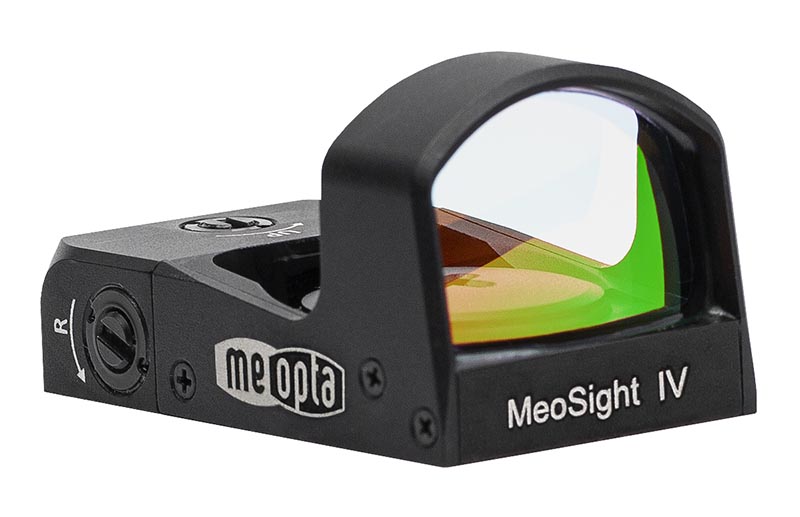
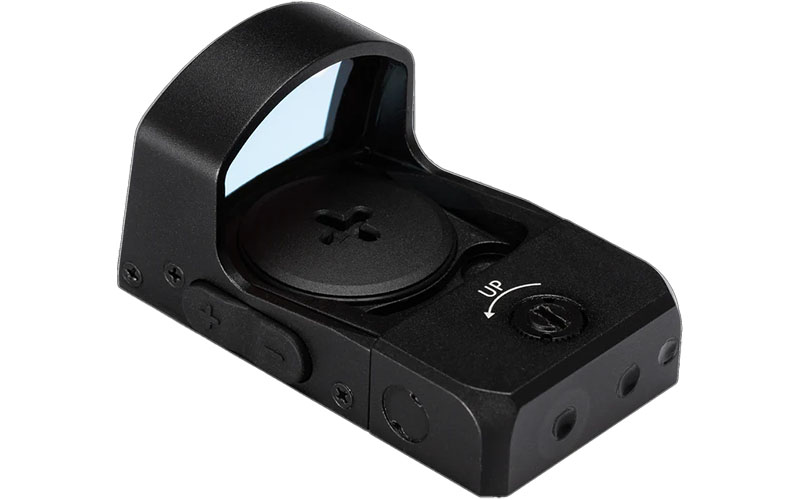
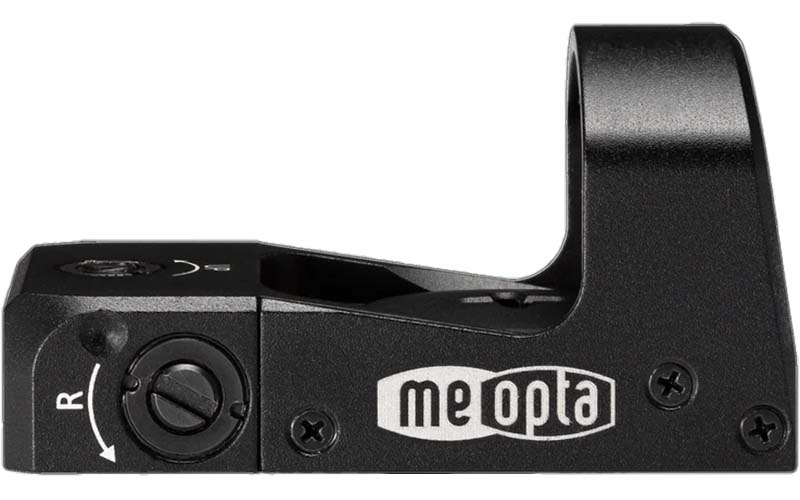
The MeoSight IV is Meopta’s newest pistol red dot sight, and it has the smallest dimensions, lightest weight and lowest profile in the company’s lineup of electronic optics. The red dot is primarily designed for use with handguns, but it comes with provisions for mounting it on long guns as well.
Weighing in at only 1.2 ounces, the MeoSight IV has a length of 1.89 inches and a width of 1.41 inches. It has a 3-MOA red dot that’s displayed in the 0.93 x 0.67-inch viewing window, and the dot has a 120-MOA windage and elevation adjustment range. The dot is powered by a single Cr 1632 battery and Meopta claims that it can provide up to 30,000 hours of use, and it can be replaced without removing the optic from its host weapon. The MeoSight IV also features five levels of illumination intensity that can either be set to automatically adjust to the ambient light level or be changed manually via buttons on the side. To save battery, the optic also automatically shuts off after four hours if the function button has not been used.
Erik Muller, Product Specialist at Meopta Sport Optics, said this about the new red dot:
We designed the MeoSight IV to significantly increase shooter accuracy and speed whether used in handgun competitions, for personal defense, or in law enforcement situations…This newest generation MeoSight features premium, scratch-resistant optics and a wide sight picture for such a compact sight, facilitating fast and accurate shooting on the move.
The MeoSight IV can be mounted on any pistol that can accept a Docter-pattern adaptor plate and the optic also ships with a Picatinny mount for use on other types of firearms. It has an MSRP of $299 and is available now.
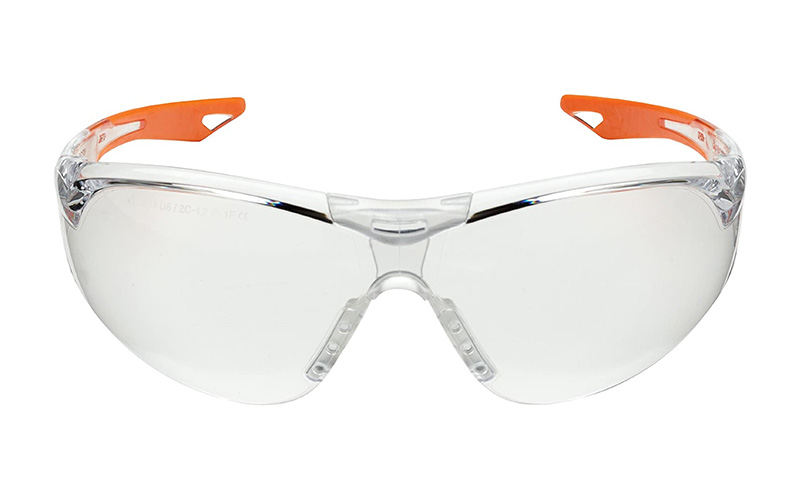
Training without PPE is a bad idea, so here’s a look at the best shooting glasses for protecting your peepers.
Shooting is one of the most dangerous hobbies in terms of the kind of damage it can do to your eyeballs, so shooting glasses are a good thing to have.
We’ll be going over exactly why using them is a smart idea, the various types in existence and some features to consider before buying a pair. Finally, we’ll look at our top picks for the best shooting glasses out there.
Why You Should Use Shooting Glasses
It’s estimated that up to 30,000 eye injuries occur around shooting sports every year.
Those injuries range from corneal abrasion/corneal edema, sclopetaria (a bruised eye), hyphema (blood in the eye), traumatic cataracts, traumatic optic neuropathy (optic nerve damage) and even globe rupture.
Any of these can occur when something touches your eye that shouldn’t, and when it comes to shooting guns, opportunities for that to happen are unfortunately plentiful. As a cartridge detonates, carbon and other detritus can be launched toward the shooter’s face. If it’s a semi-auto, the hot brass may be ejected at a dangerous angle as well. When the bullet hits a target, some or all of the bullet may come back the way it came in the form of shrapnel or a ricochet. All of these dangers exist when the firearm is working as it should, and many more can occur when a gun malfunctions.
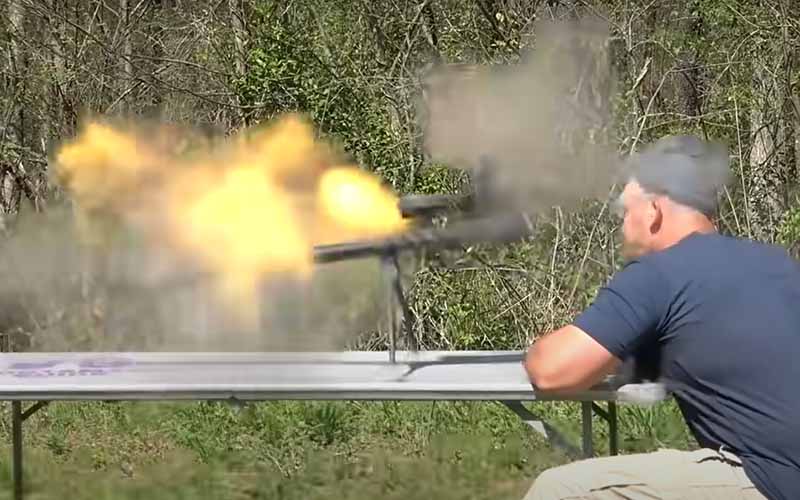
If Kentucky Ballistics hadn’t been wearing his eye protection when his .50-caliber Serbu RN-50 exploded, there’s a good chance he would have lost an eye in addition to almost dying.
Kentucky Ballistics’ .50 BMG rifle exploded from a hot SLAP round, seriously injuring him. Image source and further info: Kentucky Ballistics.
In short, the permanent damage that can occur while training just doesn’t make eschewing shooting glasses worth it.
What To Look For When Picking Shooting Glasses
The first consideration is obvious, but your shooting glasses need to fit your face. The nose bridge should be just tight enough to hold securely, but not so tight that they’re uncomfortable. The frames should find your ears naturally, without having to flex to fit. The more uncomfortable your glasses are the more likely you are to take them off during long sessions at the range, so it’s best to try different models until you find a pair that you can forget you’re wearing over extended periods of use.
Secondly, your shooting glasses should be of the wraparound style. This is because a study found in the journal Ophthalmology determined that having both frontal and side protection greatly reduced the chances of skeet and trap shooters sustaining an eye injury if anything should be directed back at them. Whether you’re trap shooting or testing your pistol skills on steel, protecting the eyes from all angles is a must.
These Hunters HD Gold shooting glasses have some great features, but because they’re not a wraparound style they’re not as protective as they could be.
The next important consideration is the protection rating.
At a minimum, you want shooting glasses that meet or exceed ANSI Z87.1, the industrial standards for eye protection. This will include most eye-pro that you can buy at the hardware store.
However, if possible, you should purchase shooting glasses that pass or exceed MIL-PRF 32432 Ballistic Fragmentation standards. The military standard subjects eye protection to seven times the impact force of ANSI Z87.1, meaning that any goggles with this rating must be capable of withstanding a .22-caliber projectile at 560 fps and spectacles (glasses) must be able to withstand a 3.88mm projectile at 640 fps.
If you must purchase eyewear that is only ANSI-rated, look for those rated Z87+. That rating indicates a high-velocity impact rating. For prescription safety glasses, the high-velocity impact rating is Z87-2+.
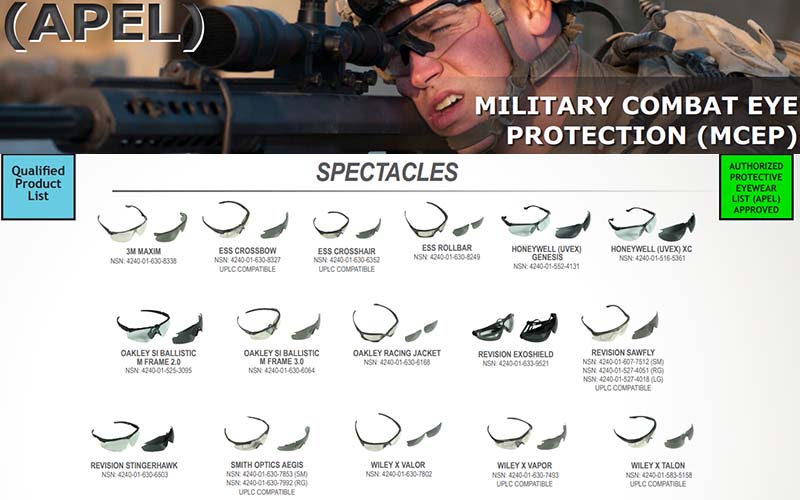
To see if eye protection has passed military certification, it will be on the Authorized Protective Eyewear List. The APEL list can be found here, and the glasses will be marked APEL on the frame as well.
The spectacles section of the 2015 APEL. Source: U.S. Army.
For those of us with four eyes instead of the customary two, there are the questions of whether you can A.) get away with just wearing your glasses, and B.) whether you should get over-glasses or chunk up for prescription shooting glasses.
Most polycarbonate prescription eyeglasses pass basic ANSI standards (but not high-impact standards) and seldom protect the sides of your eyes. Therefore, it’s not a good idea.
As to whether you should pony up or deal with goggles that go over your glasses, prescription lenses are better. Not all goggles or over-glasses will fit over your glasses, and they are not comfortable to wear.
Since you should always be wearing both while you’re at the range, it’s important to choose eye protection that’s comfortable to wear with your favorite hearing protection as well.
A young shooter training while wearing both shooting glasses and earmuffs. If you ever take kids to the range, be sure to have eye protection that fits them too.
What Kind Of Shooting Glasses Are Out There
Shooting eye protection essentially breaks down into two categories: glasses and goggles.
Glasses/spectacles are just what you think they are, and many are little more than generic safety glasses marketed to the shooting community. Some, however, do have some extra touches for shooters including thin frames (for use under earmuffs) and coatings to prevent scratches and visual distortions that are commonly seen with the hardware store variety.
Goggle variants are barely any different than snow goggles, and none would look out of place on the slopes. The advantage is that these have much thicker lenses than glasses, providing them with increased durability.
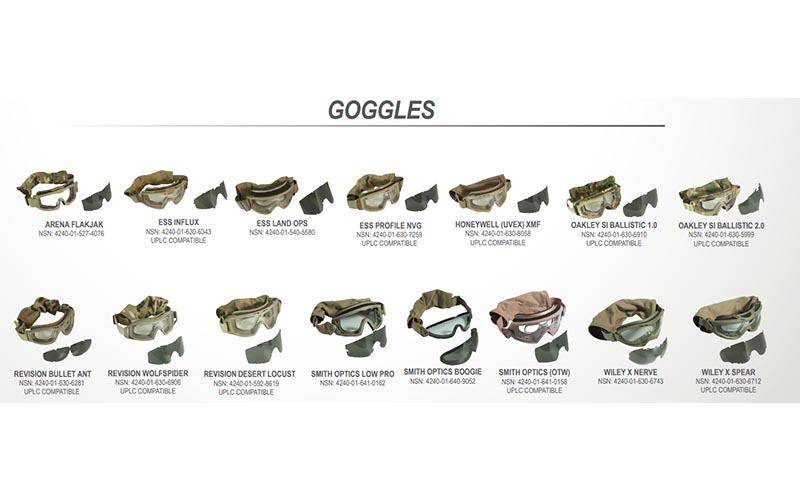
The goggles section of the 2015 APEL. Source: U.S. Army.
While common in the military, they are a bit much to deal with for the typical civilian shooter. Since they’re also more expensive, you might as well not bother unless you have a good reason to prefer them.
As for shooting glasses features that are unrelated to safety ratings, it mostly come down to personal preference. Do you want the ability to swap lenses, or are you fine with lenses that are permanently clear or tinted? Do you need them to work in conjunction with prescription glasses or night vision, or will a more basic pair satisfy your needs? The answers to these questions can only be determined by you, so keep them in mind as you peruse the options.
So, with that said…what are the best shooting glasses to get?
The Top 10 Shooting Glasses
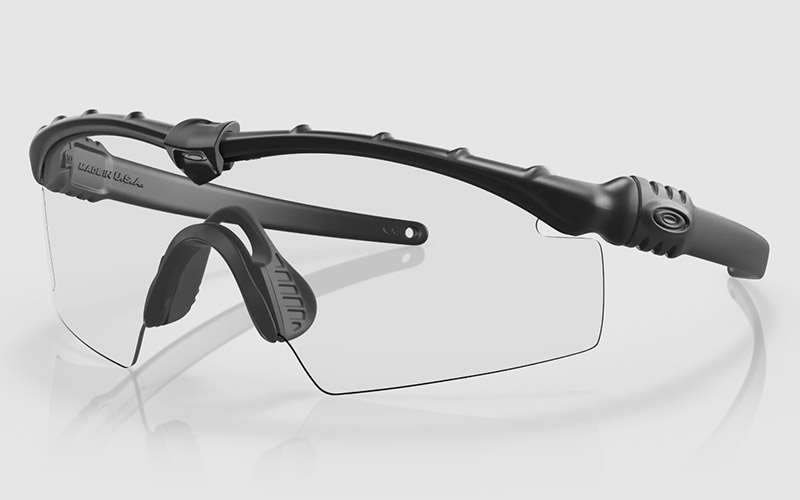
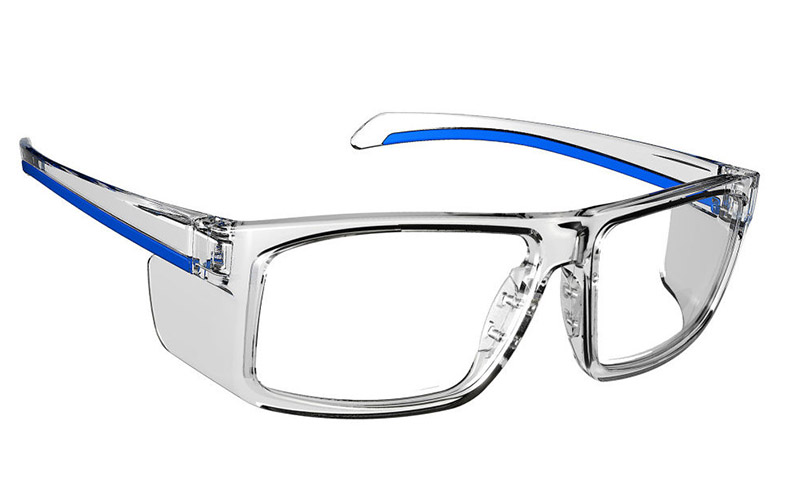
Oakley SI Ballistic M Frame 3.0
The M Frame 3.0 uses a modular lens that can be swapped for clear or tinted for use as sunglasses.
You can purchase replacement/additional lenses from Oakley, or get a kit version (called an Array) with multiple frames and lenses. All lenses have a coating for UV, anti-scratch and anti-fog protection. They are available with prescription lenses through specialty retailers as well.
The Array kits can be found for $250 to $300, but single pairs (usually black frames with clear lenses) can be had for around $100 to $130.
Champion Traps And Targets Youth Clear Shooting Glasses
Kids need eye protection too, and Champion Target makes these “fold smart” youth shooting glasses with clear lenses and many frame color options. The lenses are full-wrap, have a scratch-resistant coating and are ANSI Z87.1+ rated for impact protection.
They’re available for around $10 through most retailers.
ArmouRx 5003 Safety Glasses
ArmouRx glasses are available in prescription and non-prescription form with an ANSI Z87+ high-impact rating. They’re available with multiple lens and frame colors and can generally be had for around $30.
They have a side shield, a UV/anti-scratch coating on the outside and a durable polymer frame helping them stay lightweight.
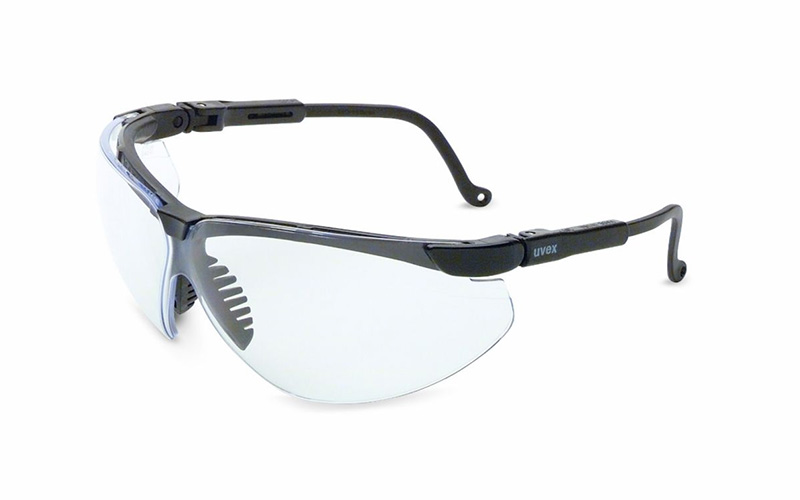
Honeywell UVEX XC Safety Glasses
Honeywell UVEX XC safety glasses have two excellent attributes. They’re on the APEL, meeting military standards for spectacles, and they’re easily found for less than $20.
UVEX XC glasses have interchangeable lenses, much like the Oakleys, and similarly have a coating that guards against scratches and fogging as well as provides UVA/UVB light protection. Multiple frame and lens colors are available, including clear and tinted.
The only drawback is they aren’t available with prescription lenses. The frame can extend to fit over glasses, and Honeywell does make an RX lens insert to attach RX lenses to them, but that’s it.
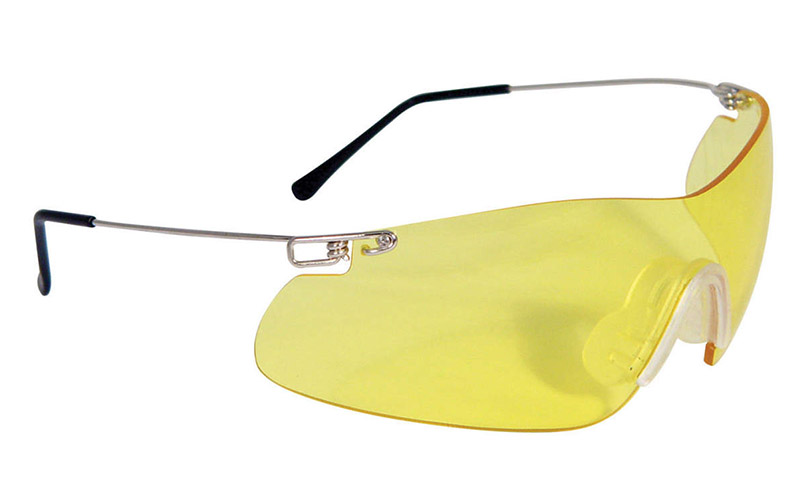
Radians Clay Pro Shooting Glasses
Sporting clay shooters have long been a specially catered-to market when it comes to shooting glasses. Radians Clay Pro Shooting Glasses are a great entry-level set for the shotgunner, though they may turn some people off.
The Radians Clay Pro comes with a vermillion (kind of a pink color) tint, with full wrap lenses and spring hinges for a secure fit, with no top frame to keep vision from being obstructed. The thin (almost wire-like) frame fits easily under any earmuffs.
They’re rated at ANSI Z87.1+ for impact protection. As a bonus, the vermillion tint is supposedly beneficial for people with red/green colorblindness. A solid entry-level set that goes for about $15.
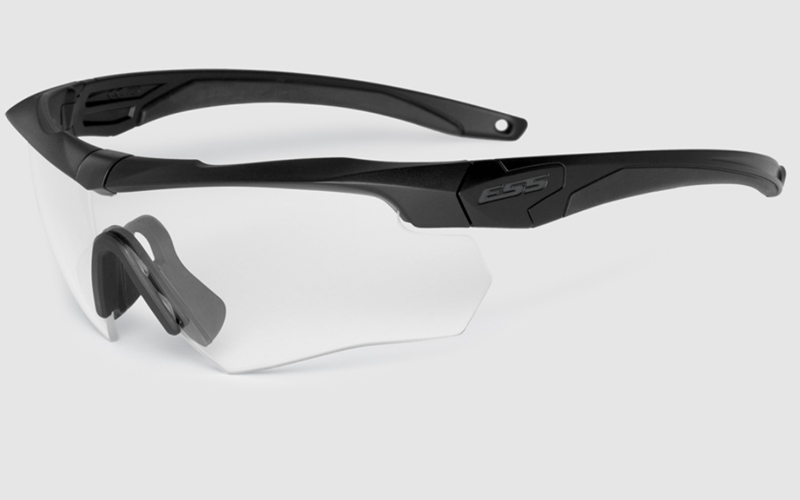
ESS Crossbow
ESS, a subsidiary of Oakley, is an eye protection manufacturer that specializes in ballistic eye protection and has models listed on the APEL. The Crossbow series is a good mid-shelf option.
The lenses are swappable and have a UVA/UVB blocking/anti-fog/anti-scratch coating, however, only the Clear and Smoke Grey lenses and Black frames are APEL-approved. Prescription lenses are available as well.
Prices start around $40 for a basic black frame with clear lenses.
Caldwell Adjustable Pro Range Glasses
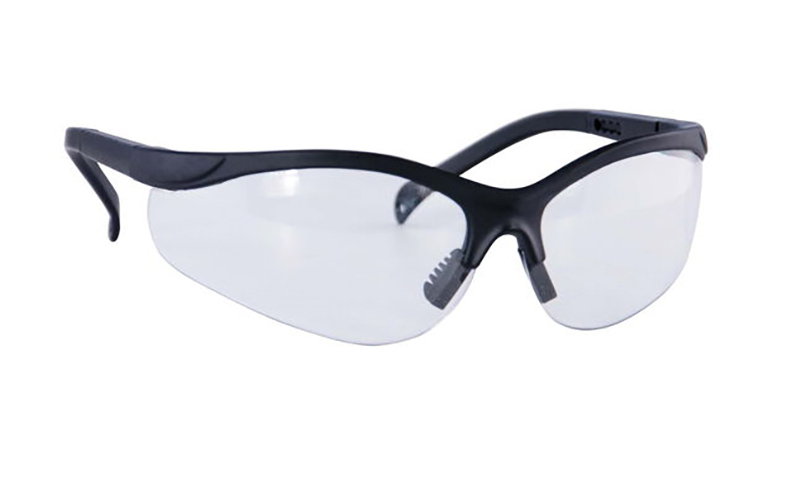
Caldwell Adjustable Pro Range Glasses are ANSI Z87.1 certified for high-impact resistance, have UV-blocking lenses that wrap around the side and have an adjustable nose piece to dial in the fit.
Best of all, they meet the basic requirements for less than $10, and less than $5 from many retailers.
Magpul Rift
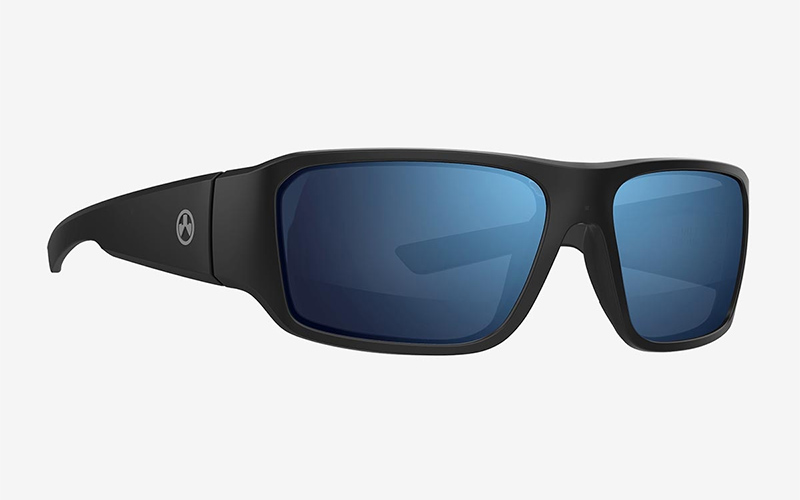
Magpul knows how to make some seriously tough gear out of polymer, including safety glasses. The Rift model, available with both standard and Rx lenses, is ANSI Z87 high impact rated and is billed as being compliant with MIL-PRF 32432, but is not on the APEL.
They have side protection, UV-blocking and scratch-resistant lens coating (as well as anti-fog) and can be had with several different lens/frame options including polarized and non-polarized lenses.
They also look a bit like vintage Ray-Bans, so you are guaranteed to look cool. Everyone knows that makes you shoot better. Non-polarized lenses start at around $100, and polarized lenses start at around $140.
Wiley X Romer 3 Shooting Glasses
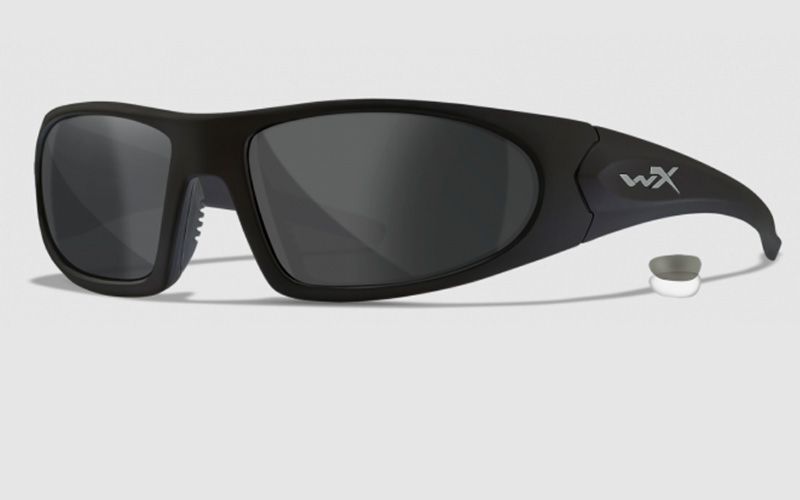
Wiley X is an eye-pro brand that is on the APEL, including the X Romer 3 set. They’re designed to be wearable under ear muffs and with NVGs if needs be, and can be ordered with prescription lenses so long as your PD (pupillary distance) is more than 64mm.
They have all the usual specs, including UV-blocking and anti-scratch coating on the outside, and an anti-fog coating on the inside. The non-prescription set has interchangeable lenses should you want to switch between smoke (tinted) and clear lenses.
Prices are between $70 and $100, depending on the options.
Howard Leight Genesis Sharp Shooter By Honeywell
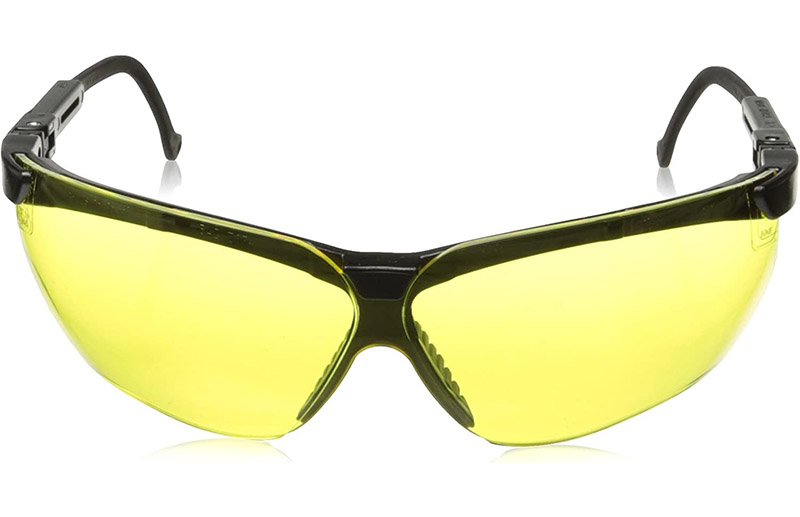
Howard Leight, a division of Honeywell (the industrial safety equipment manufacturer) is another rock-solid budget option that is ANSI Z87.1 rated (high-impact) and passes military standards.
The Genesis Sharp Shooter glasses are available with or without tinted lenses and have anti-fog, anti-scratch and UV-blocking coatings. The thin frame will work under earmuffs and the frame can be adjusted out to wear over eyeglasses, but can’t be had with Rx lenses.
Keeping the .22 LR platform nimble and keeping it more shootable, the Integra 15-22 Suppressed Upper is a worthy investment for the MP15-22.
Let’s face it… if you aren’t shooting rimfire suppressed nowadays, you aren’t shooting rimfire. Yes, the gritting of teeth among the traditionalists out there is deafening and certainly, you can still pitch lead without a can. Yet, not taking advantage of the shooting tech available today, well, it makes about as much sense as staying wed to black powder after the advent of nitrocellulose.
Nowhere is this more evident than in adding a suppression system to a rimfire. Less recoil, dampened report, faster shooting, improved accuracy potential… the list of benefits goes on and on. While a bold statement, almost nothing beats shooting a suppressed rimfire. Well… perhaps one thing—shooting an integrally suppressed rimfire.
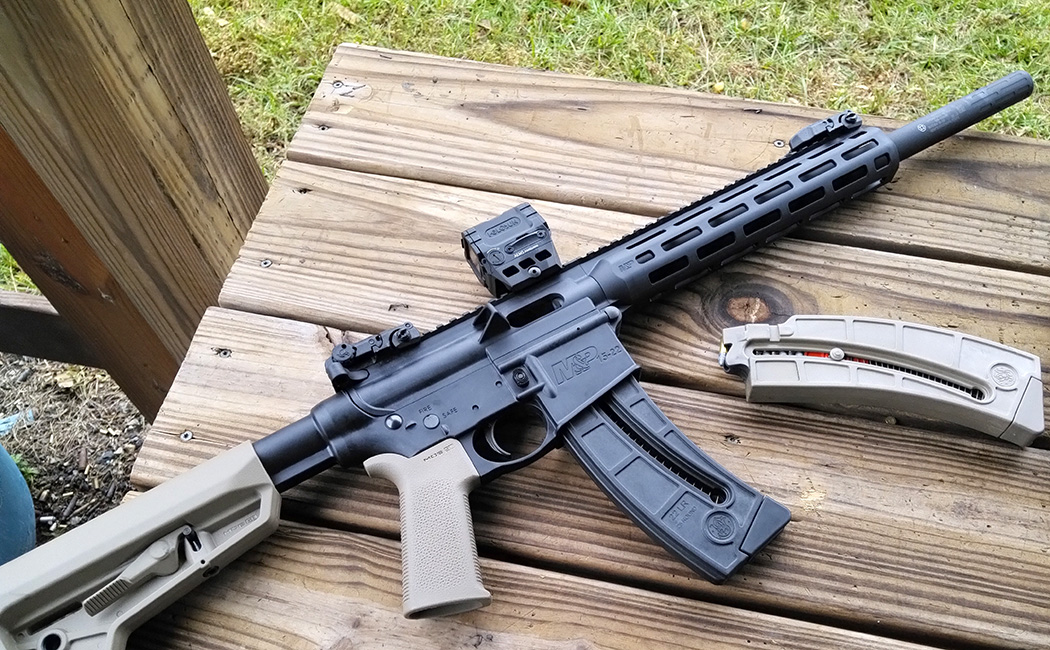
For devotees of Smith & Wesson’s snappy little AR-style .22 LR, the MP15-22, things couldn’t be better in this arena thanks to the company’s subsidiary Gemtech. Launched earlier this year, the company’s Integra 15-22 Suppressed Upper kicks the already solid carbine’s game up a notch, not only offering exceptional sound suppression but in an inconspicuous package that maintains the integrity of the platform. In short, it makes an already sweet rimfire even sweeter.
Why Go Integral?
Truth told, there are a slew of top-notch direct-thread and QD options for the .22LR available today—many quite a smidgen easier on the pocketbook. This piques the question, why go all top shelf and pony up $654 (MSRP) for the Integra? For the MP15-22 owner the answer is performance, but perhaps not in the manner you first might guess. Yeah, it hits the aforementioned notes—we’ll get to those in a moment—but where the system excels is in maintaining a nimble and deft platform.
Consider this, most rimfire cans are going to add anywhere from 5 to 7 inches of length to a barrel. In the case of the MP15-22, this takes a 16.5-inch carbine and modifies it into anywhere from a 21- to 23-inch rifle. Furthermore, with roughly 3 or 4 ounces of weight getting tacked on past the muzzle, the balance of the rifle is thrown all out of whack. On the other hand, at just .25 inches longer in overall length and tipping the scales at nearly the same weight as a stock 15-22 upper, Integra seamlessly interfaces with the platform.
Any practical use—picking off varmints or competition—this advantage pays dividends, maintaining the carbine’s inherent dexterity. This is particularly notable shooting the Integra offhand, with gun’s fulcrum perhaps a few fractions forward, but not enough to make a marked difference shooting. For many, that alone is worth the price for entry.
Integra Breakdown
Certainly, preserving the nimbleness and feel of the 15-22 is important, but the Integra brings some other assets to the table. To get to these, however, we should touch on a few points of its construction.
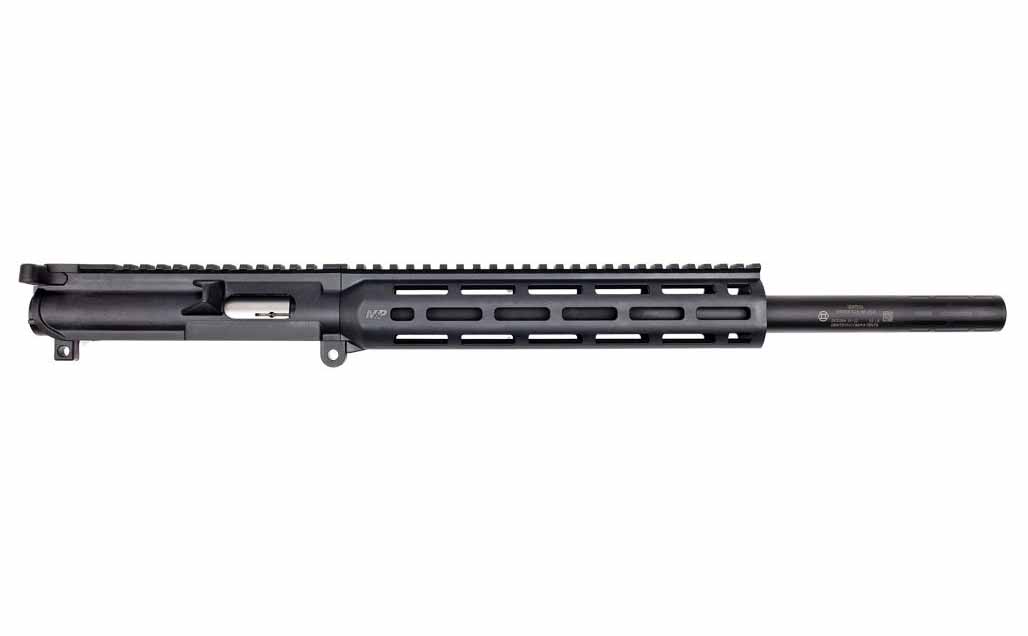
Matted to a 15-22 upper is a 9-inch barrel that is pinned and welded to a 7.9-inch monocore baffle, this ensures the upper meets the 16-inch minimum length and keeps it a “one-stamp” purchase. The ample monocore gives the upper a one-two punch. The more notable is it cuts the carbine’s report down to safe levels—so safe that when tested at Cancon the folks a Gemtech insisted on the removal of electronic ear protection, which would have amplified the report.
A less considered point of the ample monocore, it has the potential to cut down on the need for cleaning, as fouling is less apt to clog it in a short period of time. Furthermore, made of 17-4 PH stainless steel, the monocore resists overheating quickly—given the thermal-resistant nature of the material.
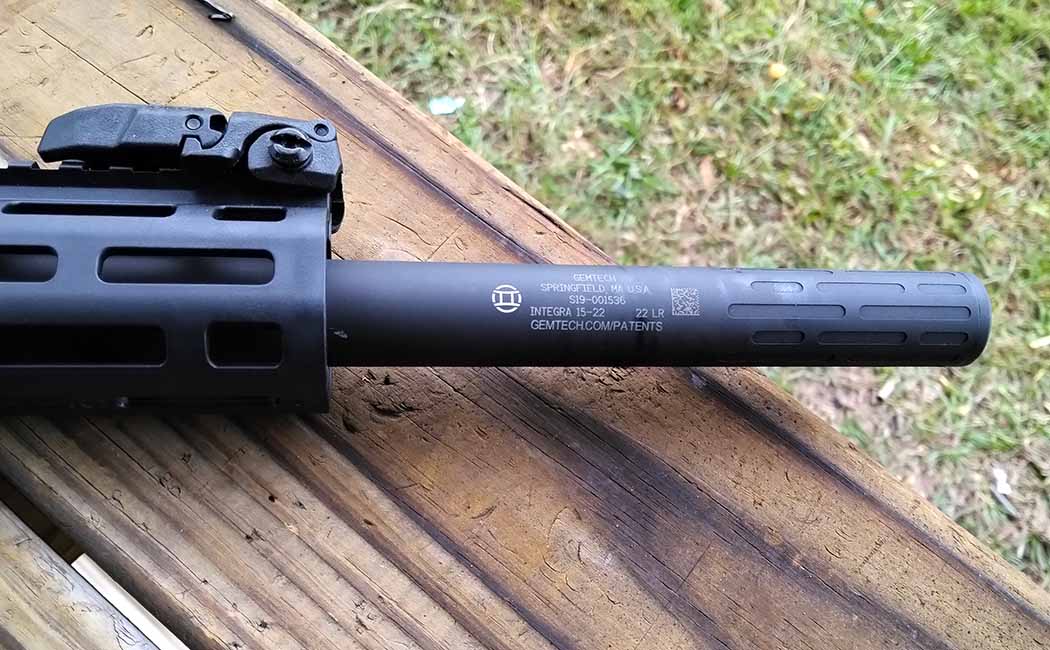
Encasing the monocore is a lightweight .925-inch aluminum tube, that fits snugly around the internals. It is black-oxide finished and interestingly has no gas seal. This is a benefit to its sound suppression, expanding the overall size of the expansion chamber, but means fouling does have a way of finding its way into nooks and crannies.
This all sits in what is essentially the stock MP15-22 handguard, a slimmed-down affair that offers plenty of accessory mounting options thanks to M-Lok slots at the 3-, 6- and 9-o’clock positions. Up top, there’s a full-length Picatinny rail and flat-top receiver, making the addition of an aim solution easy to install and flexible to modify.
At The Range With The Integra
Getting the chance to run the Integra at Cancon, in Savannah, Ga., in October, one couldn’t but walk away impressed. As has been ballyhooed repeatedly, the upper offers unparalleled sound suppression, making the MP15-22 positively safe for naked ears. This lends a lot to a plinker, making it an ideal option for beginning shooters to cut their teeth with almost no perceptible recoil and very little report, thus eliminating flinch. Also, for a long afternoon sending ground squirrels to varmint Valhalla, well the Integra makes for comfortable shooting sans muffs or plugs.
Veteran shooters have plenty to appreciate in the integral upper as well. This is particularly true if they want to really run the gun, and accurately so. With little to no kick or muzzle rise, you have the ability to work the trigger and fast, something put to the test at Cancon. Suffice it to say, emptying the magazine in the first run on a steel popper was one long stream of pings of lead smashing into steel. That sort of experience should be enough to sell anyone on the Integra.
Parting Shot
Obviously, if you can’t pick a nit on any gun, accessory or component, then likely you aren’t looking closely enough. And there is one aspect of the Integra 15-22 Suppressed Upper some might not cotton to—it’s only compatible with the MP15-22. Hey, Gemtech is a Smith & Wesson company, can’t blame them for keeping it in the family.
While this might not sit well with owners of other AR-style rimfires, it doesn’t diminish what the Integra brings to the table. Furthermore, for those whose interest is piqued, it’s a great excuse to add a 15-22 to your arsenal. The gun is a slugger in and of itself but takes on a whole new dimension when paired with the Integra upper.
Integra Suppressed Upper Specs Caliber: .22LR Diameter: .925 inches Overall Length: 23.75 inches (Overall Length of the Suppressed Upper 17.5-inch Barrel Length) Weight: 2.7 pounds (Includes charging handle and bolt carrier assembly) Mount Type: Fits M&P15-22 lower receiver Tube Material: 6061 T6 Aluminum Full Auto Rated: No Tube Finish: Matte Black Hard Coat Anodized MSRP: $654
The Suppressor: How They’re Made, How They Work, And How To Buy One
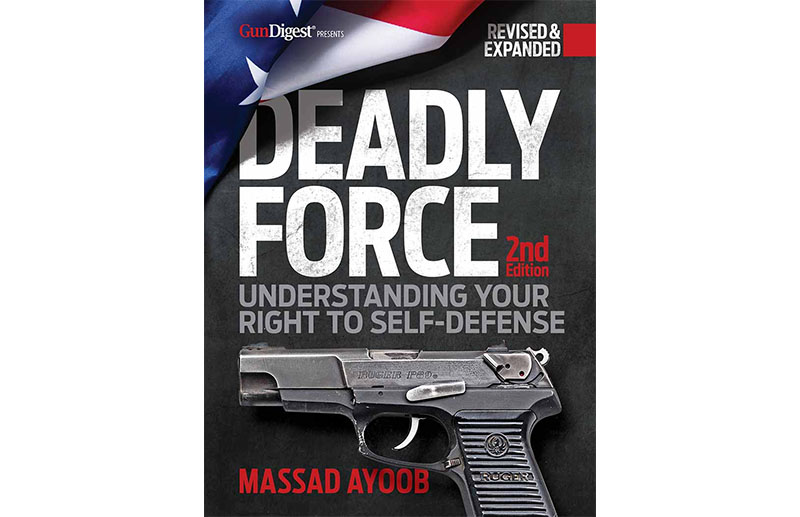
The 2nd Edition of Massad Ayoob’s Deadly Force: Understanding Your Right To Self Defense is now available, updated and expanded with the latest advice for handling a lethal force encounter.
The first edition of Gun Digest’s Deadly Force: Understanding Your Right To Self Defense brought you expert advice from Massad Ayoob on how to best handle a lethal force encounter, but plenty more has happened in the world since it was released. Now updated and expanded for its second edition, Deadly Force: Understanding Your Right To Self Defense is more comprehensive than ever before.
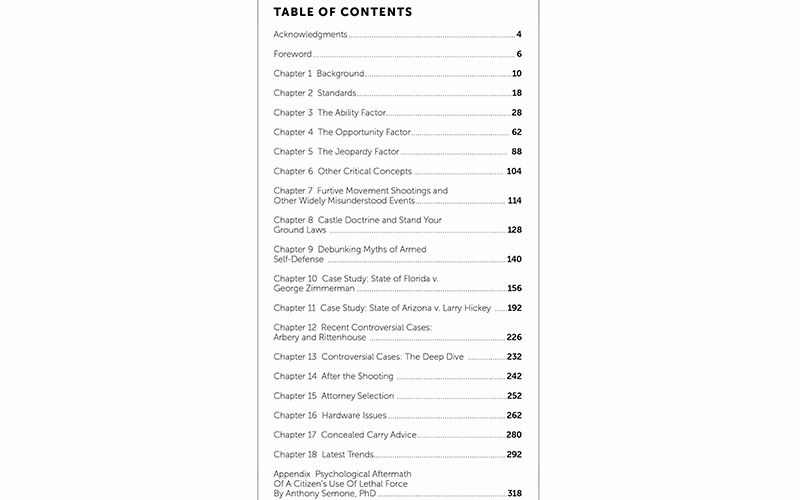
In its over 300 pages, the revised book walks you through the grave responsibility and laws surrounding the application of lethal force. A must-have for any concealed carrier, Ayoob lays down what you need to think, do and say before and after surviving a deadly force encounter. Besides the author’s established wisdom concerning how to remain within the bounds of the law, Deadly Force: Understanding Your Right To Self Defense, 2nd Edition now also includes commentary and conclusions drawn from recent high-profile shooting cases such as those involving Kyle Rittenhouse and Ahmaud Arbery.
Whether you’re a seasoned concealed carrier or only recently strapped on your first iron, this updated guide will help you do it right.
This updated edition includes deep dives into the:
Kyle Rittenhouse trial
Ahmaud Arbery shooting
SCOTUS’ New York State Rifle and Pistol Association v. Bruen ruling
Legal standards for self-defense
Castle doctrine and stand your ground laws
Debunking self-defense myths
Realities of post-shooting psychological trauma
Commentary on problematic hardware
And More!
The book is currently available for purchase on the Gun Digest Store!
Looking for a new iron or piece of kit to enhance the one you already own? Check out these 7 new bits of guns and gear to grow your firearms wish list.
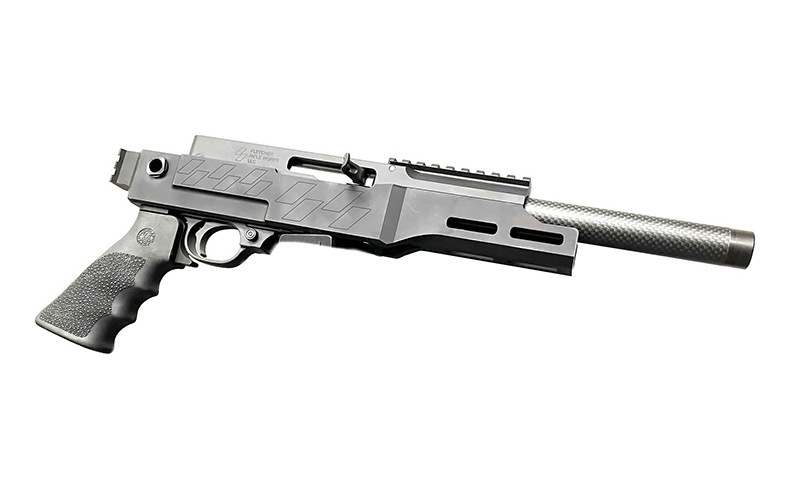
Rimfire geeks might be familiar with Fletcher Rifle Works open-top 11/22. In simple terms, it improves upon the Ruger 10/22 by allowing access to the bolt, extractor and firing pin without removing the trigger or separating the receiver from the stock. Handy. Bandera has embraced the concept, releasing it in the form of the 11/22 pistol. Aside from its ease of maintenance, the Charger-esque offering has a slew of other assets. Topping this list is a receiver CNC machined from 6061-T6 aluminum, stainless-steel pins, springs and detents, and a 9-inch carbon-fiber-wrapped barrel with 1/2×28 thread for accessories. Bandera further enhances this with a Ruger BX trigger and shock-absorbing recoil buffer pin. MSRP: $975
Masterpiece Arms ESR Rimfire Rifle
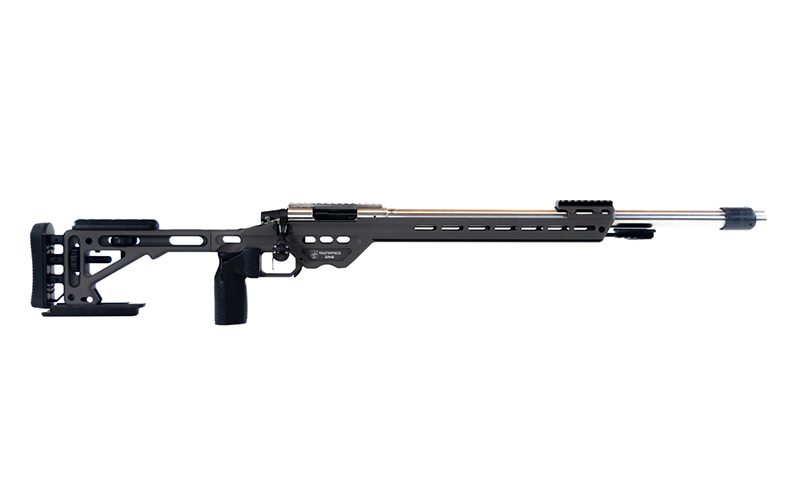
With the rise of NRL22 matches, precision rifles have begun calling the tune in the rimfire market. With that in mind, it’s little surprise Masterpiece Arms (MPA) has jumped into purveying top-notch precision rimfire guns. To this end, the company’s ESR Chassis turns heads and more than has the chops to take the humble .22 LR the distance … and then some. Built upon the MPA’s ESR chassis, it features an MPA/Curtis Action, a Curtis Rimfire bolt, an MPA heavy-profile barrel and is compatible with Vudoo rimfire magazines. For good measure, the gunmaker throws in an ATS barrel tuner. Specialized for competition, the 12-pound rig demands a premium price—it isn’t an everyday plinker. But, those who take rimfire precision seriously will appreciate everything the ESR brings to the table. MSRP: $3,000
Savage Arms 64 Precision
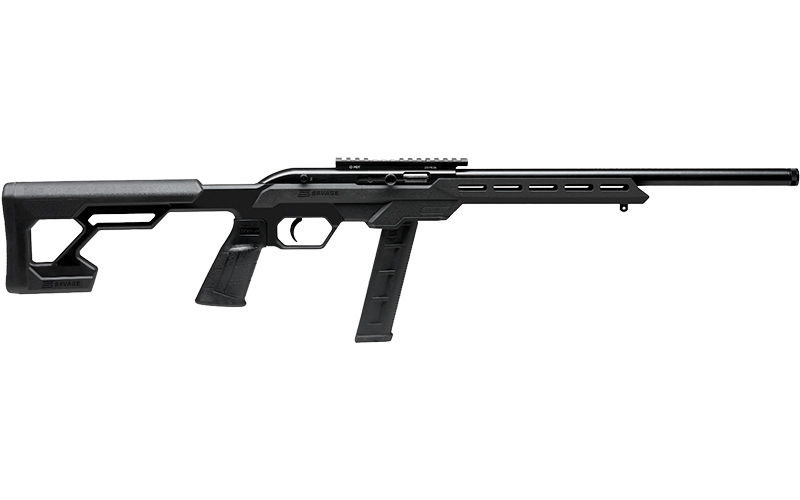
Yes, precision rimfire shooting is all the rage, but not everyone can afford the Cadillac options in this category. What to do? Savage’s 64 Precision is one answer, offering shooters a lights-out package at a price nearly anyone can afford. Featuring a glass-filled nylon chassis, a 16.5-inch heavy barrel and a well-formed pistol grip, the semi-auto .22 LR extends shooters’ reach and provides consistency on target. Savage has threaded the muzzle, making adding a can a snap, as well as pre-drilled and tapped the receiver and topped it with a Picatinny rail for the easy addition of optics. While the stock is fixed on the chassis, it’s M-Lok compatible, with slots at the 3-, 6- and 9-o’clock positions. It also sports a barricade stop for steady support shooting. MSRP: $300
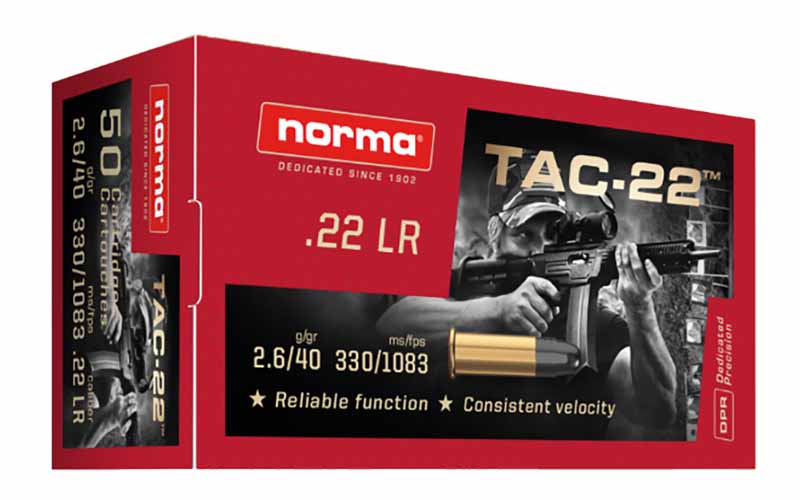
Norma TAC-22 Subsonic 40-Grain .22 LR Ammunition
Norma is renowned for across-the-board top-shelf ammo. So, when the manufacturer turns its attention to rimfire, you know it’s going to be different … and likely a bull’s-eye. Right on both counts with Norma’s introduction of TAC-22 Subsonic 44-grain .22 LR HP. Clocked at well under the sound barrier (1,033 fps), the stuff is tailor-made to bring the best out in your suppressed .22, while not compromising on performance. Much of this is thanks to the 44-grain hollow-point bullet, which provides the utmost stability at lower velocities. It also thumps its terminal destination like the dickens. Best of all, Norma far from extracts a pound when it comes to price. MSRP: $8 per box of 50
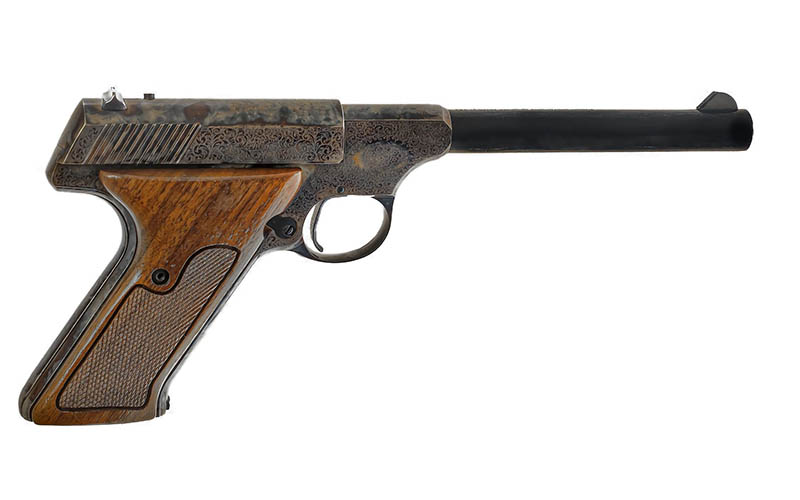
Standard SG22 Pistol
The best .22 LR pistol? That’s not getting hashed out in this space. But it’s fair to say, the Colt Woodsman would likely end up in the debate, which makes the news out of Standard Manufacturing fairly exciting. The company’s recently launched SG22 is a dead-ringer for one of the all-time classic rimfire pistols—a plus for both performance and aesthetics. Available in three variations—blued, color-case hardened and color-case hardened engraved—the pistols have several attractive features. Some of these include a 6 5/8-inch barrel, target-style walnut grips, crisp trigger and target sights. While a bit on the spendy side, the SG22 most likely will win favor among discerning rimfire pistol shooters. MSRP: Starting at $1,000
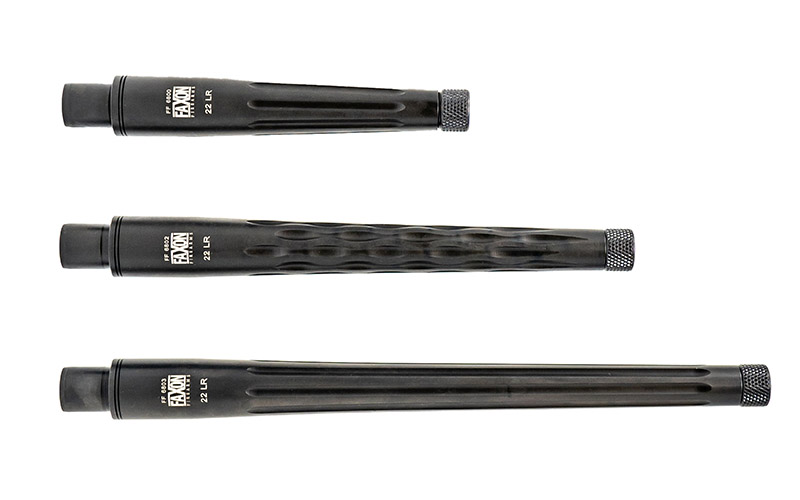
Faxon Rimfire Short Barrel Line
With modularity baked into the cake, there’s no need to settle for a stock Ruger 10/22. This is where Faxon Firearms’ recent offerings give shooters a definite twist in configuring the standby .22 LR semi-auto. Meet the company’s short-barrel lineup: Offered in 6-, 8.5- and 10.5-inch models, the stainless-steel firetubes offer an excellent option to build out a 10/22 shorty—be it pistol or SBR. The nice part, Faxon loads them with extras, including threaded and capped muzzles, fluting (flame design in the 8.5-inch barrel) and recessed target crowns. Available with salt bath nitride or PVD coatings, the Faxon barrels are also up to rough use. MSRP: 6-inch $220, 8.5-inch $255, 10-inch $250
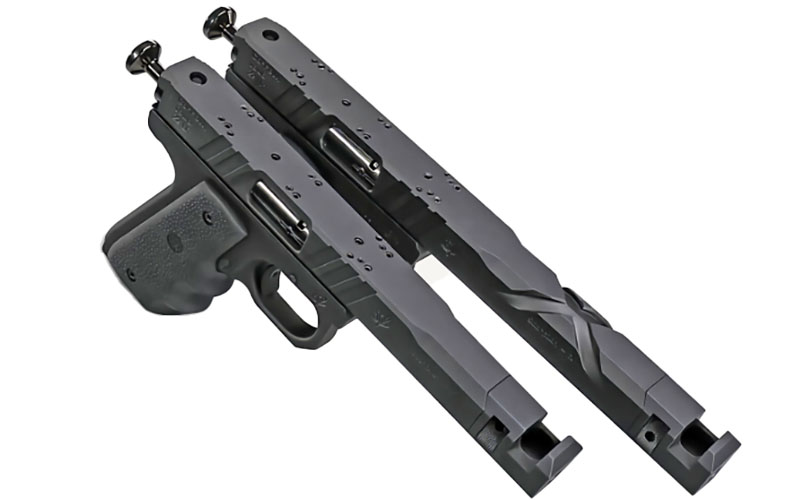
Volquartsen Scorpion-X Pistol
The Volquartsen Scorpion has more than made its bones as a top-performing varmint and competition rimfire pistol. Few would say there’s any room for improvement. But the innovative Iowa gunmaker has found a way—the Scorpion-X. The flat-top iteration of the .22 pistol gives the gun an important advantage: the ability to mount a slew of different red-dots in several different configurations. The secret sauce is multiple mounting holes on the LLV-X upper. Further enhancing the handgun, Volquartsen offers it in 4.5- and 6-inch barrel configurations, a threaded muzzle and a sweet trigger with a 2.25-pound break. The company also offers the upper as a stand-alone component, compatible with Ruger MKII, MKIII and older Scorpions. MSRP: $1,410 complete pistol, $514 stand-alone upper
Editor’s Note: This article originally appeared in the January 2023 issue of Gun Digest the Magazine.
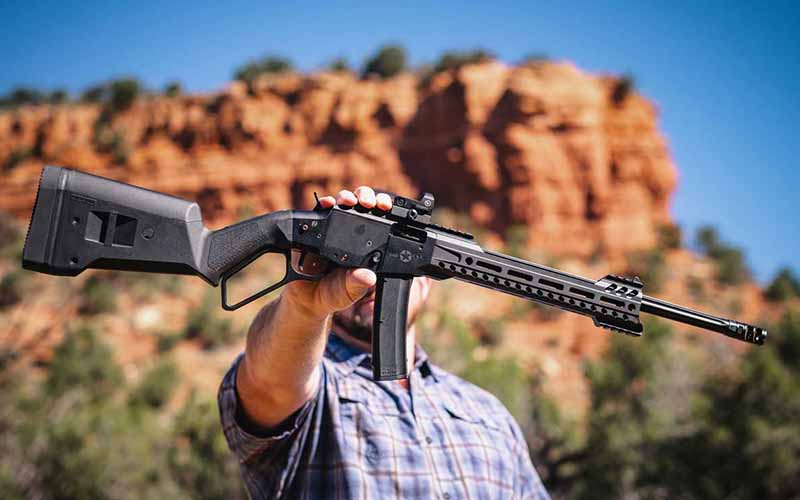
POF-USA has just unveiled the Tombstone, a lever-action 9mm rifle that feeds from box magazines.
It doesn’t seem that long ago that you first started to see people putting rails on lever-action rifles. While sacrilege to most lever-gun appreciators, the “space cowboy” trend appears to be picking up steam. The latest example, and the most radical departure from the traditional design that we’ve seen yet, is the POF-USA Tombstone – a lever-action 9mm rifle that feeds from box magazines, and yes, it has plenty of rails too.
Until now, Patriot Ordnance Factory has exclusively been a purveyor of AR-based firearms, so it’s quite a surprise to see the company branching out into lever-guns. What makes it less surprising is that the POF-USA Tombstone is far more tactical than traditional.
The new lever-action rifle is chambered for 9mm and feeds from box magazines (proprietary design), comes with XS Ghost Ring Sights and has a total weight of only 5.75 pounds (unloaded). The 16.5-inch barrel is free-floated, threaded 1/2×28 and comes with a dual-port muzzle brake. As for customizability, the receiver features a Picatinny rail for mounting optics and the monolithic 10.5-inch handguard features MLOK slots on the sides and Picatinny rails on the top and bottom for mounting accessories. The POF-USA Tombstone ships with a Magpul SGA 870 nylon stock, but it can be replaced with any compatible model.
Jeremy Selting, Vice President of Sales and Marketing at POF-USA, said this about the new rifle:
The Tombstone has been in the works for quite a while now and its truly representative of what POF-USA is all about, revolutionizing the original lever-action design with enhancements…The feedback from writers who have reviewed the Tombstone has been extremely positive with the common theme being that the rifle is extremely enjoyable and fun to shoot.
The POF-USA Tombstone is available now and has an MSRP of $1,962 for the black version and $2,097 for one with an FDE finish. The standard variants ship with a 20-round magazine but a 10-round option exists for ban states as well. Magazines in both capacities, as well as a 35-rounder, are also all currently available on the company’s website for $35 each.
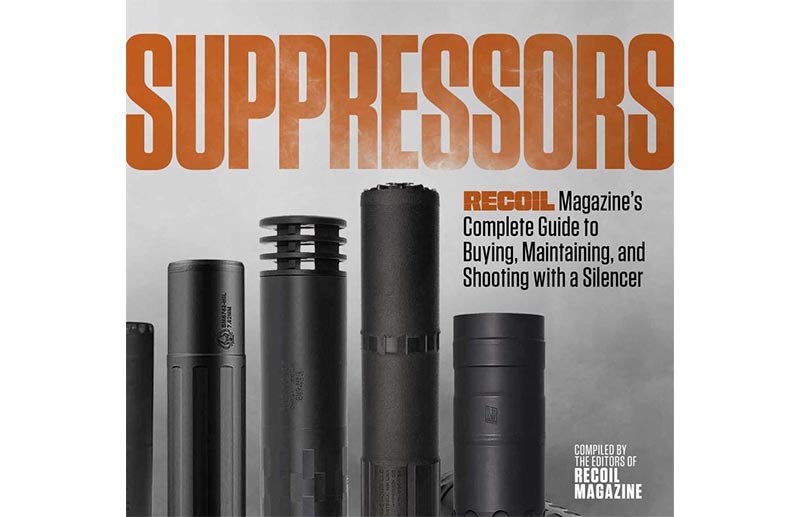
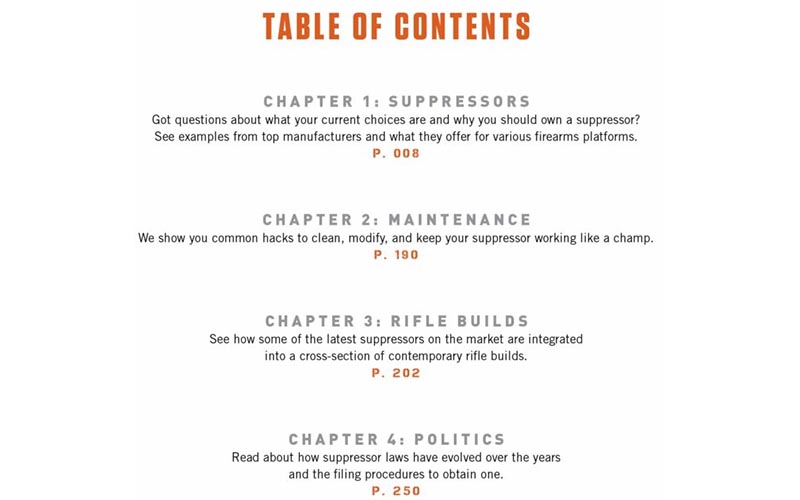
From the editors of RECOIL Magazine comes SUPPRESSORS! A complete guide to everything you need to know about buying, owning, and caring for your suppressors.
For over a decade, RECOIL Magazine and our sister publications, CARNIVORE and CONCEALMENT, have published some of the definitive articles on every aspect of suppressors. Now all of that knowledge can be found in one place, SUPPRESSORS!
No matter how new or experienced you are to the world of the NFA and suppressors; you’ll find helpful and useful information contained within these pages. Expert advice on what to purchase, the current legal standings of components, how to choose the right suppressor for your needs, and a whole lot more.
The author once called the EDC X9 “the best pistol ever made,” but could the Wilson Combat SFX9 be even better?
In January of 2018, an article appeared in these pages with the title, “The Best Pistol Ever Made.” I wrote that article and it was about the then new Wilson Combat EDC X9. I believed what I wrote then and have stood by those words ever since. In fact, I believed it so much that I convinced several shooters to buy an EDC X9. How did I do that? I just let them shoot mine. Now, four years later, I’m having to reevaluate that opinion.
With its 4-inch barrel and 15+1 capacity, the SFX9 is ideally configured for personal protection and sized right for concealed carry.
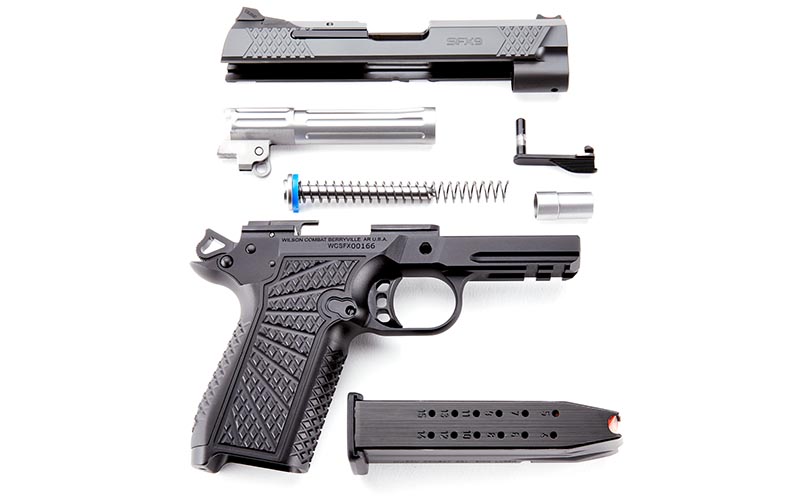
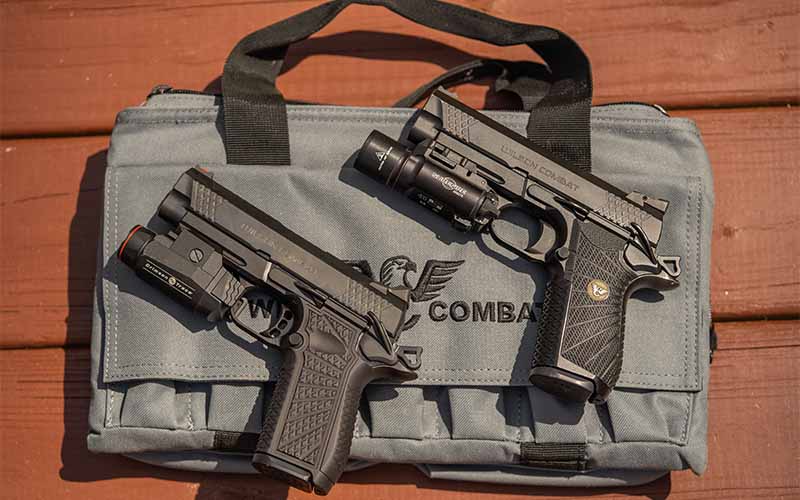
For 2022, Wilson Combat introduced a 4-inch, 15-round version of their SFX9. The SFX9 is slightly different from the EDC X9. Where the EDC X9 has a grip frame that accepts grip panels, the SFX9’s grip frame, similar to modern polymer pistols like the Glock, is solid. In fact, SF stands for “solid frame” and, with this 4-inch, 15-shot version, Wilson Combat now has three solid frame SFX9mm pistols: there’s a 3.25-inch, 4-inch and a 5-inch.
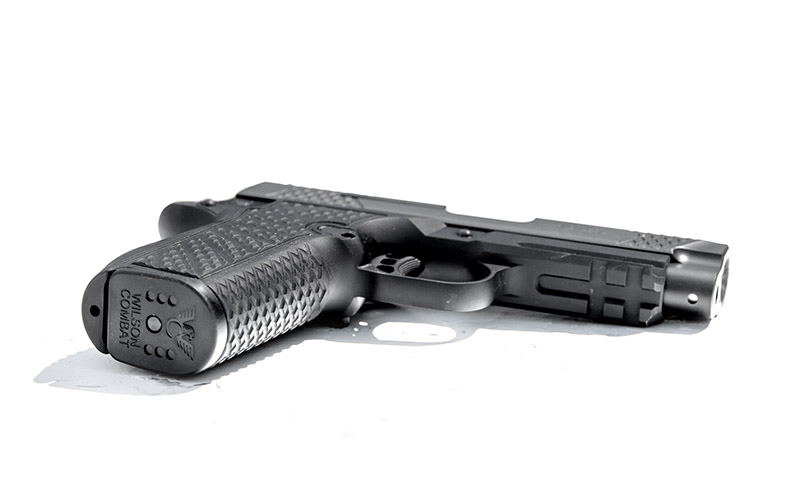
So, how different are the 3-inch EDC X9 and SFX9 pistols? With the EDC X9, you can remove/replace the side grip panels or grip scales. This is accomplished by depressing a release at the bottom of what would be called the mainspring housing on a conventional 1911. Once this release is pressed, the backstrap swings up and out of the way, allowing access to the mainspring and sear spring. With the newer solid frame SFX versions, there are no grip panels to remove. With the exception of the pivoting backstrap, the SFX9’s grip is a monolithic unit.
The only other differences I noted between the EDC X9 and SFX9 were the slot spacing on the accessory rails and the sights. With the SFX9, the accessory rail slots were a bit closer together. As for the sights, the EDC X9 comes with a Wilson Combat elevation adjustable Tactical rear Battlesight and the SFX9 comes with a fixed rear, Wilson Combat Concealment Battlesight. Other than that, the guns seem identical and use the same magazines.
One difference in the SFX9 (front) and EDC X9 (rear) is that the slots in the accessory rail are a bit different. With the SFX9, they’re a bit closer together.
Small, But Significant
So, why am I questioning my earlier opinion? There are three reasons.
First is the fact that the grip of the SFX9 is thinner by 0.164 inch. That’s not a lot, but for some hands it might matter. The second reason is that the SFX9 doesn’t have an adjustable rear sight, which is—arguably—just another part that can break. (For what it’s worth, I’ve never seen an adjustable rear sight on a Wilson Combat pistol break.) The final reason isn’t the most or least important, and in fact, if you can afford a Wilson Combat handgun, it’s probably of no consequence. That said, the SFX9 has a suggested retail price that’s $100 less than the EDC X9. Of course, in today’s world, a hundred bucks will buy nearly 300 rounds of 9mm ammunition, and that’s important.
The SFX9 comes with a Wilson Combat Concealment Battlesight. Out of the box, it was zeroed dead on at 10 yards.
What it really comes down to is how the gun feels in your hand, and this is something that’s frequently overlooked. User interface can be directly linked to shooting performance; if a gun doesn’t fit your hand comfortably, you’ll not shoot it as well as you possibly can. The flat-sided Glockish feeling grip frame of the SFX9 might very well fit your hand better than the more rounded EDC X9 grip. If you’ve been a Glock shooter and like the way Glocks feel in your hand, this is almost a given. I’ve never liked the way a Glock felt in my hand, so it should come as no surprise that I prefer the more rounded grip of the EDC X9.
In my 2018 article, I wrote that the EDC X9 could’ve been the result of a ménage à trois among a 1911, a Browning Hi Power and a Glock 19. I wrote that because the EDC X9 is a single-action pistol with a straight-pull trigger like the 1911. It also has the manual thumb safety of the 1911 and the Hi Power, but like the Hi Power, there’s no grip safety. And finally, the EDC X9 was sized almost identically to the Glock 19 and shared the 19’s and the Hi Power’s high capacity. I carry a Hi Power a lot and felt that from the standpoint of feel, the Hi Power was the dominate partner in this three-way creation. That’s not the case with the SFX9. The way its blocky grip feels in my hand, I immediately think “Glock.”
SFX9 Vs. EDC X9 On The Range
I couldn’t resist the urge to continue the comparison of these two handguns on the range. They’re so similar, and with what’s at stake so important, they’re just begging to go head-to-head. My standard defensive handgun test drill is what I call the Forty-Five Drill. I call it that because it’s made up of four elements of five. With it, the goal is to draw from the holster and hit a 5-inch circle, at 5 yards, five times, in less than 5 seconds. It sounds easy—but it’s not. Trust me when I say many police officers can’t conduct this drill to standard on their first or second attempt.
The SFX9 (left) is very similar to the EDC X9 (right). The primary difference is that the SFX9 has a solid frame without interchangeable grip panels.
I ran this drill 10 times with the EDC X9 and 10 times with the SFX9, alternating between pistols after each run. My average time with the EDC X9 was 3.09 seconds, with 47 hits out of 50 shots. My average time with the SFX9 was 3.05 seconds with 45 hits out of 50 shots. From a practical perspective, there was no difference at all in how these handguns performed for me. I also shot the SFX9 a lot more after that test, which given the availability of ammunition nowadays isn’t an easy thing to do. Combined with some other ammo I had on hand, I fired 450 rounds through the SFX9 without as much as wiping it down … and I experienced no stoppages.
Final Thoughts
I would like to offer one other observation between these two pistols: My EDC X9 is outfitted with a green fiber-optic front sight. The SFX9 came with a red fiber-optic front sight. Though while based on the range results there seemed to be no difference at all between the two, I felt that the red fiber-optic sight was twice as easy to see as was the green fiber optic sight—in all lighting situations. Take that for what you think it’s worth.
If you’re going to trust your life to a handgun, why would you settle for anything less than the best?
Bill Wilson believes the SFX9 is the best personal protection pistol offered by Wilson Combat, and who am I to argue with Wilson? The thing is, I like my EDC X9 better because it feels better in my hand. Of course, I should say that I carried a Glock for 13 years as a police officer and never liked the way the damn thing felt. It’s a matter of personal preference, and understating this opinion is coming from someone hopelessly in love with the Browning Hi Power should help explain my position.
However, I’d bet that many younger shooters, especially those who grew up with a Glock but always wanted something better, will think this new SFX9 from Wilson Combat is nothing short of marvelous. I wouldn’t argue with them, either.
With its 1911-like operation, Hi Power capacity and Glockish feeling frame, the SFX9 is a combination of three of the best fighting pistols ever created.
If you and I were walking down Fremont Street in Tombstone, Arizona, toward a vacant lot near the O.K. Corral, to face off against the Clantons and McLaurys or even some modern-day hoodlums—and if the only two guns we had were a SFX9 and an EDC X9—I might ask for the one with the red fiber-optic front sight, but I’d be happy with either gun. I believe the EDC X9 and the SFX9—4-inch/15-shot handguns—are the two best self-defense handguns ever made. Pick the one that fits your hand the best and you’ll be able to feel confident your money has been well spent.
Editor’s Note: This article originally appeared in the 2022 USA Special issue of Gun Digest the Magazine.
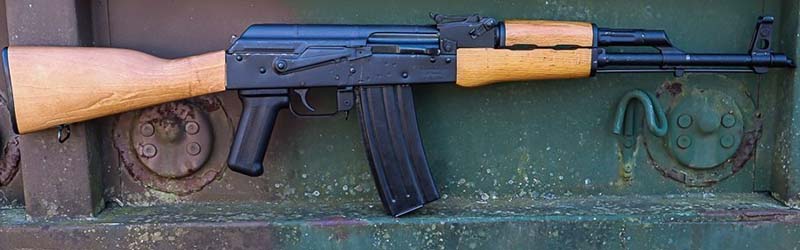
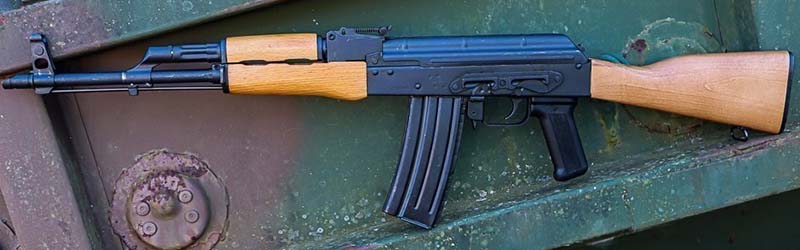
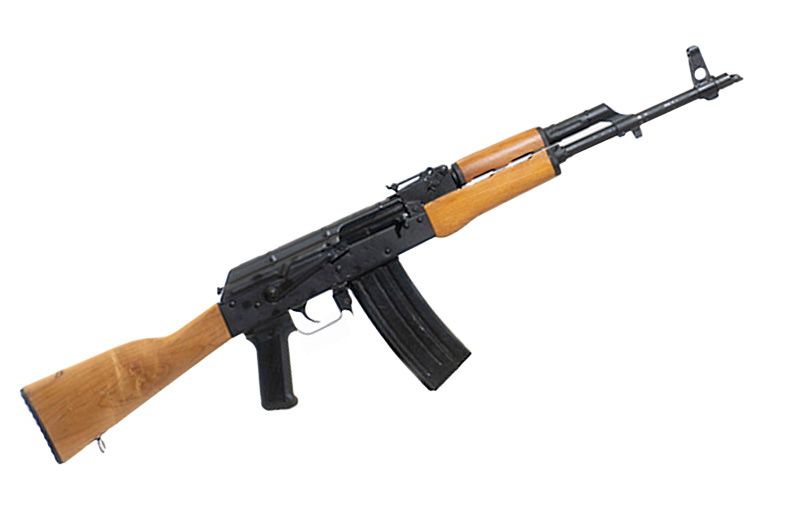
After a several-year gap, Century Arms has just resumed importation of the Cugir WASR 3 5.56x45mm AK from Romania.
Many Kalashnikov enthusiasts believe that Romanian AKs from the Cugir factory, such as the WASR-10, have consistently been some of the best-value options in the U.S. since Century Arms first began importing them in the 1990s. The guns are often derided for their lackluster finishes, and people are quick to bring up the risk of getting one with canted sights. The reality is that the finish is made for utility rather than aesthetics, and the issue of canted sights was never as severe as it was made out to be (not to mention mostly limited to rifles produced around 2008).
Today, Cugir’s QC appears to be as good as ever, and the company is still cranking out supremely reliable AKs built to the old Soviet spec. For many years now, however, Cugir’s AKs have been limited to 7.62x39mm, but Century Arms has just resumed importation of the WASR 3 in 5.56x45mm.
Since the first semi-auto Romanian AK rifles hit U.S. shores, there has been a 7.62x39mm option. The rifle has had a few different names over the years, from SAR-1 to CUR-1 to WUM-1 to WASR-10, but it’s always been available. What’s been less consistent, however, is the availability of this gun’s differently-chambered brothers. Namely, the WASR 2 in 5.45x39mm and the WASR 3 in 5.56x45mm NATO. For several years now, both have only been available on the secondhand market. That’s why it came as a shock to see new-production WASR 3 rifles being sold recently without any sort of official announcement from Century. As of this writing, it doesn’t even have a listing on the company’s website.
Despite this, WASR 3 rifles are currently available from various online retailers. As for details on the gun itself, there isn’t much to say besides that it’s essentially a WASR-10 chambered for 5.56x45mm. In other words, it takes standard AKM-pattern furniture, comes with a side rail for optics and has a 16-inch barrel that’s threaded 14×1 LH. Whether the barrel is chrome-lined like the original import’s was is yet to be known. The WASR 3 will ship with one 30-round magazine, but hopefully the rifle has been tweaked to have better compatibility with 5.56 AK mags as the original was known to be finicky.
As for price, the WASR 3 is currently being sold for around $1,200, but that is likely to drop over time as it did with the recent WASR underfolder models. At $1,200, the value is questionable in comparison to other available 5.56 AK imports like the WBP Jack or Zastava M90. For the WASR 3 to be competitive, its cost will have to drop below that of the other two options.
These two classic Winchester cartridges excel in different areas, but when it comes to .300 Win. Mag. vs. .308, which will serve you best?
Is there a reason to get a .300 Winchester Magnum instead of a .308? While it’s more powerful and has longer legs, it also kicks more, costs more, and doesn’t have as many semi-auto firearms chambered for it.
On paper, the magnum has plenty of advantages, but the question is whether those advantages will outweigh its disadvantages for your particular shooting needs.
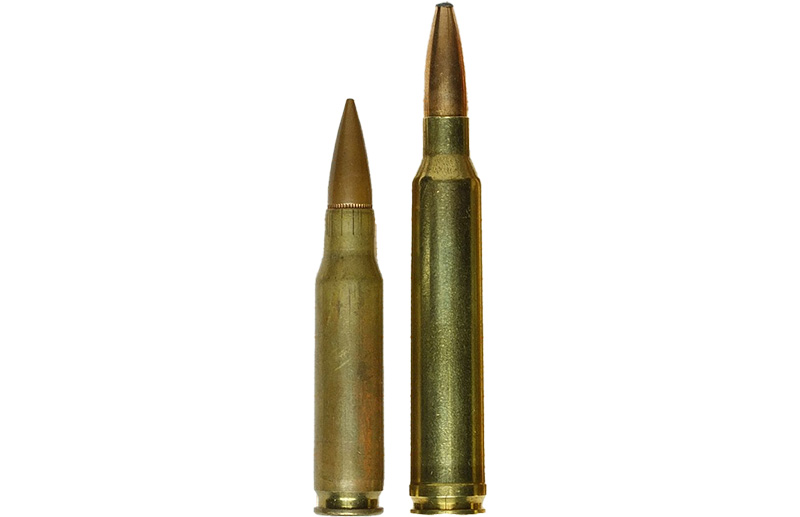
.308 Winchester (left) and .300 Winchester Magnum (right). Photo: Wikipedia.
.300 Winchester Magnum: History, Development And Use
The .300 Winchester Magnum was developed in the early 1960s as part of the Magnum craze in hunting rifles and cartridges. Since projectile technology back then wasn’t what it is today, putting more powder behind a crappy bullet produced better results.
Early .30-caliber magnums emerged in the first part of the 20th century (such as .30 Newton in 1913 and .300 H&H Magnum in 1925) so the idea wasn’t new. However, what Winchester wanted to create was a medium-bore magnum that fit in a standard-length action to compete with the .300 Weatherby Magnum.
The recipe was trimming back and necking down a .375 H&H Magnum case to seat a .308-caliber bullet. Winchester released the cartridge in 1963 to modest fanfare as a new magnum cartridge for the Model 70 rifle.
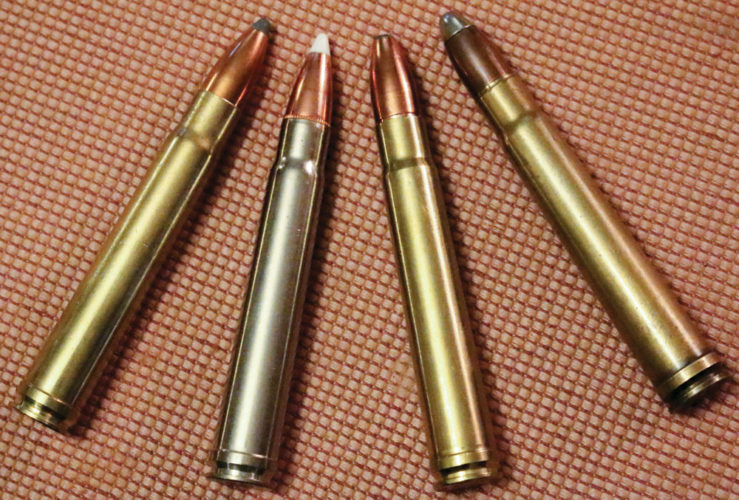
A spread of .375 H&H Mangum rounds. Photo: Massaro Media Group.
However, Winchester’s top brass infamously decided to change the Model 70 two years later and suffered for their hubris. It also had a slow start thanks to the 7mm Remington Magnum.
The .300 Win. Mag. took some time to catch on, but it won over big game hunters (on multiple continents) for being highly accurate, excellent for long-range applications, deadly effective on game of nearly any size (everything short of the African Big Five) and for being tolerable in terms of recoil.
Eventually, long-range competition shooters noticed its excellent performance in 1,000-yard matches as well. Many of the world’s military and police forces did too, and some adopted it as a medium- to long-range sniper cartridge. It’s considered to be combat effective to 1,400 yards depending on load and conditions.
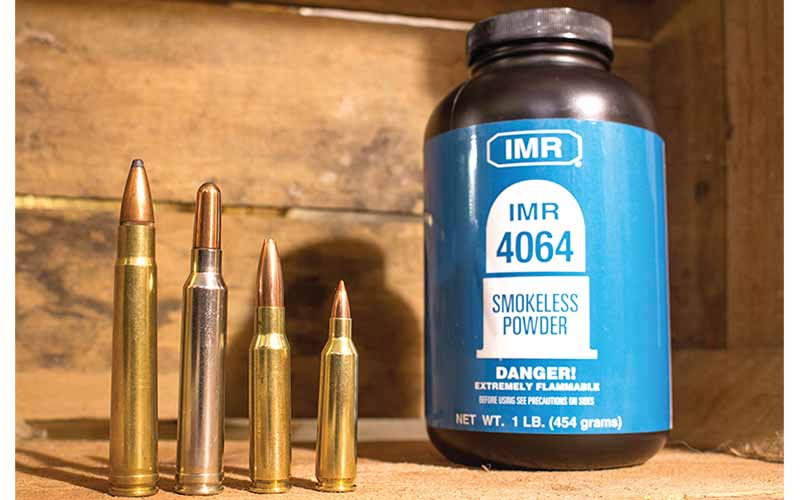
From left to right: .375 H&H Magnum, .300 Winchester Magnum, .308 Winchester and .22-250 Remington. Photo: Massaro Media Group.
.30-06’s Little Brother: .308 Winchester
The origin of .308 Winchester is that the US military was trying to replicate the M2 ball load of God’s Cartridge, aka .30-06 Springfield (a 150-grain projectile with a minimum muzzle velocity of 2,700 fps). The trick of it was that they also wanted it all to fit inside a shorter case, an idea inspired by the .300 Savage. Work on the experimental new cartridge eventually succeeded when they developed a load that could send a 147-grain bullet at 2,800 fps at the muzzle. Shortly after in 1952, Winchester dubbed it as .308 Winchester and released it on the commercial market. Two years later, essentially the same cartridge (with a few minor changes) was adopted by the North Atlantic Treaty Organization as 7.62x51mm NATO.
Wasting no time to capitalize on the new round, Winchester released the new short-action Model 70 rifle to go with it at about the same time.
The civilian .308 Winchester has slightly more powder, velocity and pressure, which is why it’s advised not to fire these loads through military rifles that are specifically chambered for 7.62mm NATO.
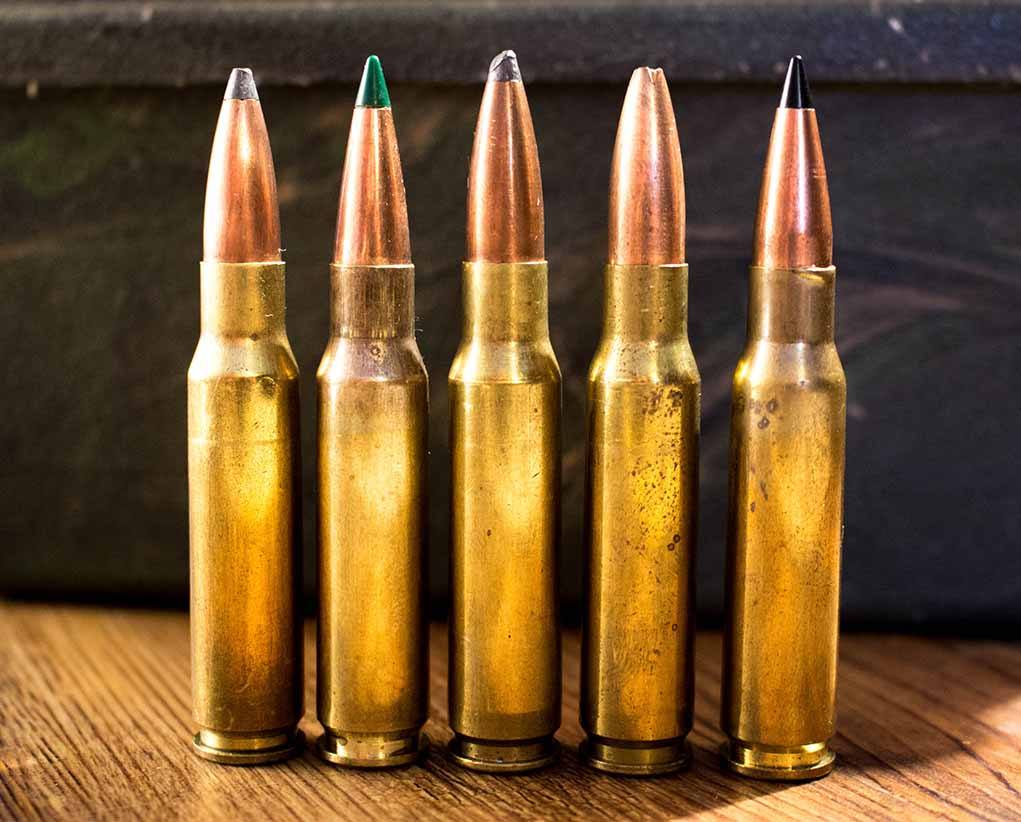
A spread of .308 Winchester ammunition. Photo: Massaro Media Group.
It didn’t take long for .308 Winchester to become known as a very accurate cartridge that was effective to 1,000 yards with a proficient shooter, and one that could take most species save for the great bears and some other large, dangerous game.
With that all said, how does its performance stack up against .300 Winchester Magnum?
.300 Win. Mag. Vs. .308 Ballistics
Bear in mind that on-paper figures may not match your real-world results, and there are many loads of both cartridges, so these tables should be taken as illustrative rather than gospel.
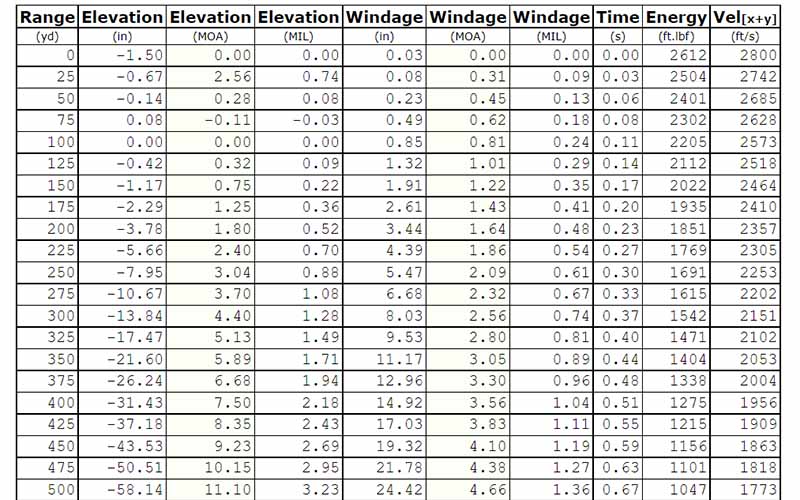
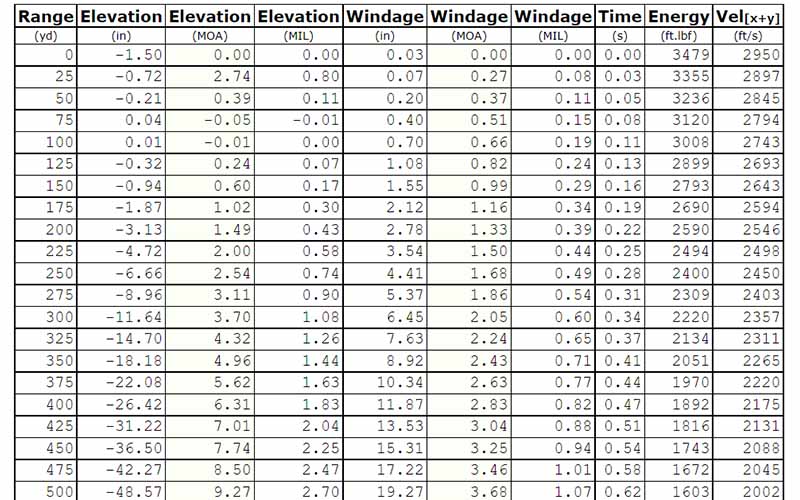
All 500-yard trajectory tables were made using ShootersCalculator and were calculated presuming a 100-yard zero, a 1.5-inch sight height, a 10 mph 90-degree crosswind and no corrections for atmosphere.
The .308 Winchester bullet used for calculations was a typical 150-grain FMJ with a G1 BC of .398 and a muzzle velocity of 2,800 fps:
The .300 Win. Mag. bullet used for this table was a typical 180-grain boat tail round with a G1 BC of .453 and a muzzle velocity of 2,950 fps:
As you can see, the additional velocity gives the classic .300 Win. Mag. load less drop over distance compared to .308 Winchester, and it doesn’t get pushed around as much by the wind.
However, modern high-BC bullets can make a drastic difference, especially when it comes to long-range performance.
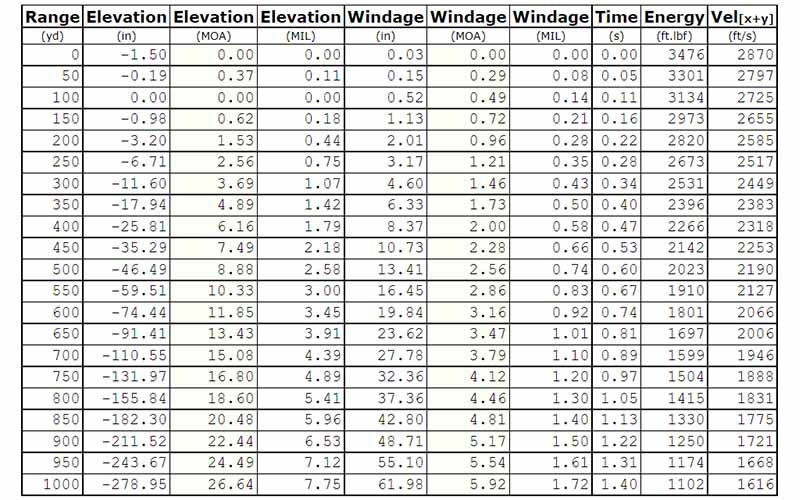
This is .300 Win. Mag. with the 190-grain Nosler AccuBond Long Range load, with a G1 BC of 0.64 and a muzzle velocity of 2,870 fps:
The bullet doesn’t go transonic until 1,625 yards and maintains the 1,000-foot-pound minimum that some states have for big game cartridges until almost 1,100 yards. At 1,400 yards, it still has more energy than a .357 Magnum at the muzzle.
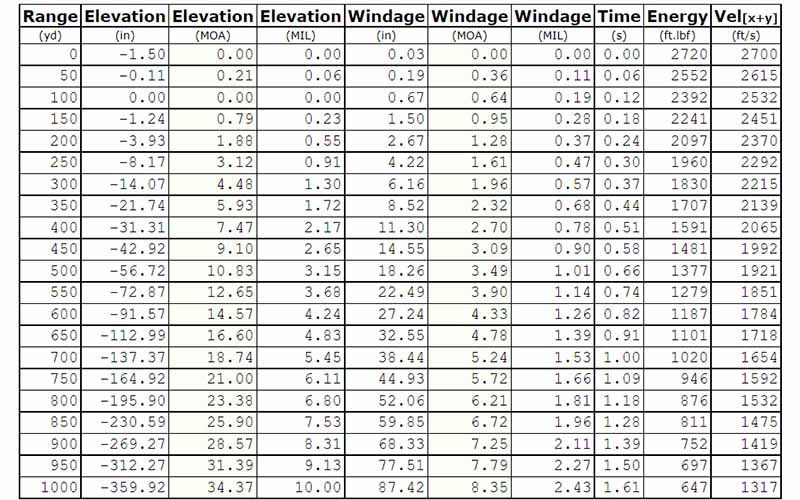
However, .308 Winchester with the right load is no slouch. Here’s a 1,000-yard table for Hornady 168-grain ELD Match, which has a G1 BC .53 and a muzzle velocity of 2,700 fps:
This .308 Winchester load goes transonic at just past 1,200 yards, and still has more energy at 1,000 yards than a .357 Magnum does at the muzzle. However, compared to the high-BC .300 Win. Mag. load, it still loses more velocity, more elevation and is more susceptible to the wind.
While .300 Win. Mag. still takes the lead in long-range performance that should rarely be the only consideration when selecting a cartridge. One should also keep in mind cost, recoil, weight and rifle selection.
An average 8.5-pound .300 Win. Mag rifle firing typical 190-grain ammo will produce 25.9 foot-pounds of recoil energy, and according to AmmoSeek, the least expensive ammo available online at the time of writing is about $1.30 per round.
Compare this to an average 8-pound .308 Winchester rifle firing 165-grain ammunition which produces only 17.5 foot-pounds of recoil energy. As for cost, the cheapest .308 available online is about 60 cents per round. Even when comparing the least expensive loads of each caliber from the same manufacturer such as Hornady, .300 Win. Mag. costs about 80 cents per round more.
These details make .300 Win. Mag. much more painful to shoot than .308, both on the shoulder and on the wallet.
With all that in mind, what you’re hopefully gathering is that both are completely capable of putting down most game at reasonable ranges. It’s you that’s the question mark. In a match rifle, both are capable of putting hits on targets at 1,000 yards. It’s whether or not you are capable of pulling it off. Snipers are said to be capable of effective hits out to 1,500 meters with the Win. Mag., but only to about 1,000 meters with .308. Both are used in Palma and F-Class matches.
There’s no question that .300 Win. Mag. is better for shooting things at much longer distances, but the real question is whether that will benefit you in the real world. For most people…probably not.
.300 Win. Mag. Vs. .308 Winchester
What .308 brings to the table is less recoil, less cost, inarguable efficacy at killing game at reasonable distances, inarguable efficacy at disposing of hostile personnel at reasonable ranges and a staggering selection of rifles to boot.
The drawbacks are that the heavier-for-caliber/highest-BC bullets aren’t offered for .308; there’s just not enough case to seat the bullet and have enough room for propellant.
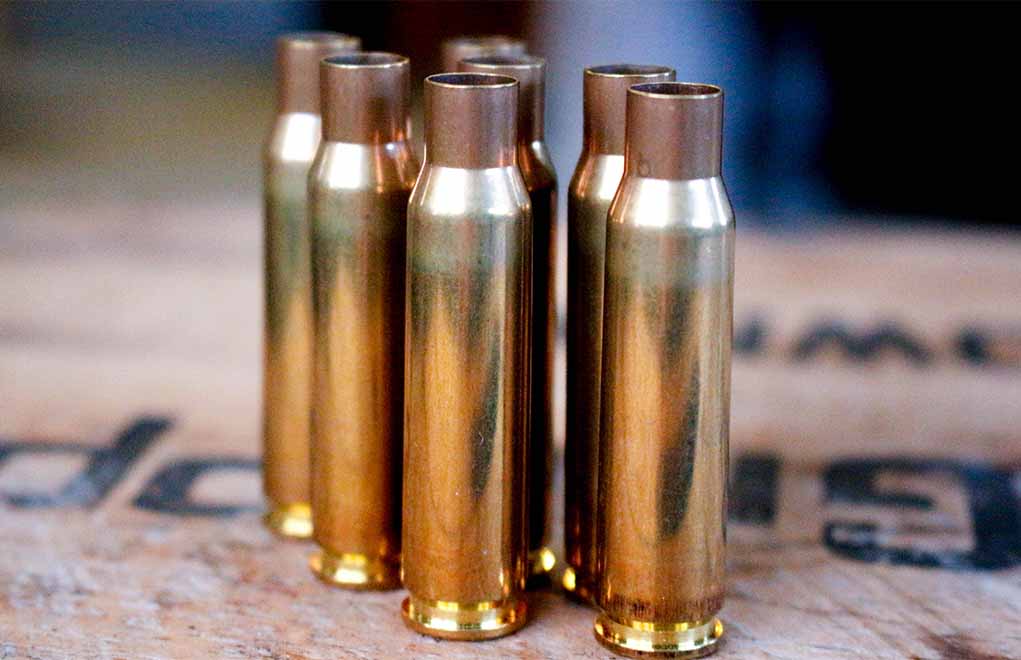
Lapua .308 Winchester brass. Photo: Massaro Media Group.
The semi-auto rifles, however awesome, can introduce some other problems. The SCAR consumes optics like a Jeep consumes man hours at shop rates. The FAL is not as accurate as many would like, the standard G3 is an ergonomic nightmare (the HK slap is cool but running that charging handle SUCKS) and M14/M1A rifles can lose their zero sitting in a climate-controlled vacuum in an underground bunker in an area that has never had an earthquake. While these are not the best options for achieving maximum accuracy, .308 Winchester at least has a plethora of semi-autos chambered for it.
The .300 Win. Mag. gives you higher velocity, far more muzzle energy, and the arguable perfect middle ground for getting the best of modern, high-BC projectiles. But it kicks—23 to 27 foot-pounds of recoil depending on the load and rifle—essentially existing at the edge of what most shooters can tolerate.
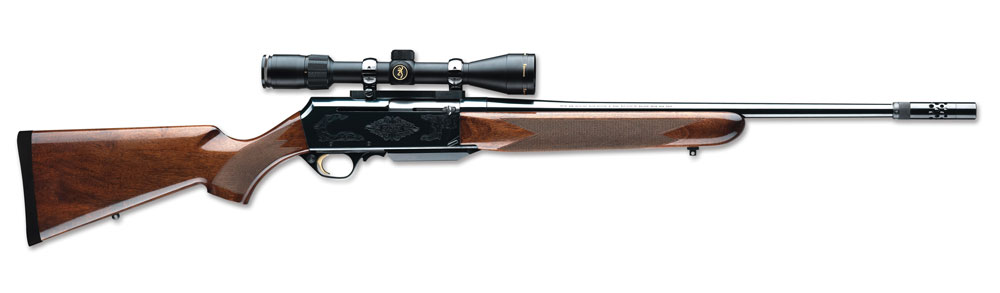
Besides recoil, the downsides of Win. Mag. are its cost and the available rifles. If you want to get into this cartridge, hopefully, you’re okay with bolt-actions, because that’s pretty much all there is. The only semi-auto rifles for this cartridge are the Browning BAR and some very expensive AR-10s.
The Browning BAR Mark II Safari, a variant of one of the few semi-auto rifles available for .300 Win. Mag.
.300 Win. Mag. rifles also tend to be heavy, typically over 8.5 pounds. Hauling one around can get old quickly, and any attempts to lighten the setup will only result in a bruised shoulder without the assistance of a muzzle brake.
Is .300 Win. Mag. Still Worth It?
There’s no question .300 Win. Mag. is a great cartridge. It has and does put game on the table from Texas to Denali to the Transvaal. It has put some very evil men in the grave. It has rung steel and poked paper at long ranges all over the world. It will do its job if you do yours.
But so will .308, which begs the question of whether .300 Win. Mag. is so good that you can’t get any or all of those things from another caliber, much less one that kicks less and/or costs less.
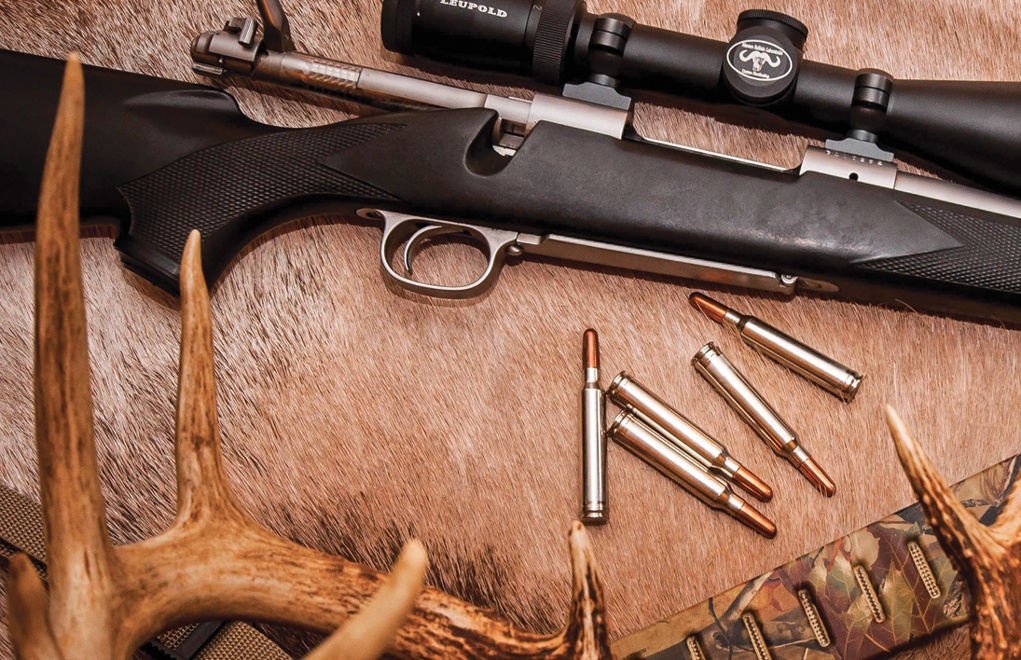
A Winchester Model 70 Classic Stainless chambered in .300 Win. Mag.
The thing is, you can. .308 is every bit as capable for hunting when used with quality ammunition and good shot placement. You can easily plink at 1,000 yards with it or even shoot in matches.
If you just can’t stand the shorter case, modern high-BC loads of .30-06 nip at the Win. Mag.’s heels in every measurable way, all while kicking less and costing less.
.338 Lapua has longer legs, and .338 Win. Mag. will flatten everything short of the African Big Five including the large bruins.
.300 Win. Mag. is an all-time great, to be sure, but is the cost and the pain worth it? In the 1960s, it was for a lot of people. Today, most shooters will probably be better off looking elsewhere.
Here’s how to use micro adjustments to fine-tune your reloading and your accuracy.
Sometimes, an innovator will get a product right the first time—and I’d cite the .30-06 Springfield cartridge, the Fender Telecaster guitar and Mauser’s Model 98 bolt-action rifle. Other times, the tools and gear we use have evolved to the point that you might often look back and wonder how we used such archaic gear with any success at all.
Riflescopes are a great example of this: I looked through one of my father’s ¾-inch tube rimfire scopes the other day and felt like my vision was plagued by cataracts. I can only imagine the difficulty picking out a squirrel’s head in the top of an oak tree, especially in comparison to the 1-4x20mm that rides atop my Ruger 77/22 today.
I feel that reloading gear sits in between those two extremes. In some aspects, the gear of the 1970s and 1980s is completely unchanged and still in good working order. I have a RCBS single-stage press that might be as old as I am, and it still makes great ammo—though in all fairness it’s a simple machine.
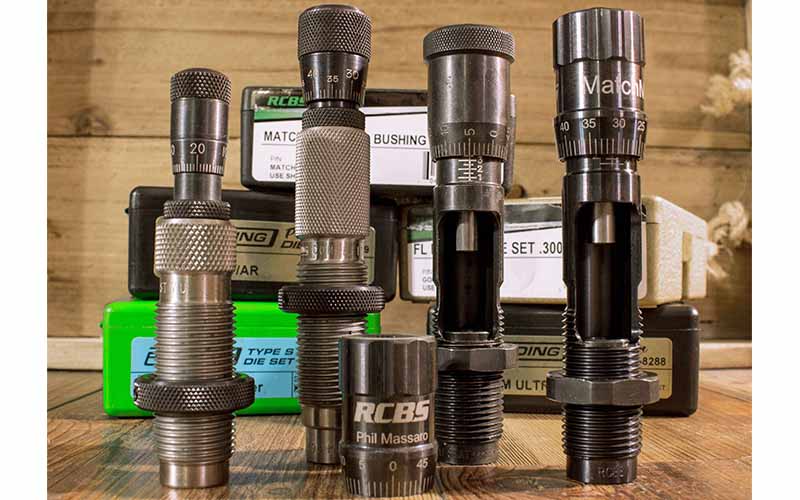
But, when it comes to the fine-tuning, I think our reloading gear has evolved into a different set of tools altogether. I have die sets from 1960s that still work fine, but when I compare them to the modern dies, replete with micrometer adjustment dials and bushings to help preserve brass, it’s no wonder why today’s ammunition is so much more consistent.
A selection of micrometer-adjustable seating dies from Redding and RCBS; these allow for precise adjustment of bullet seating depth. Photo: Massaro Media Group.
The modern dies are one facet of reloading where I feel that an upgrade might be warranted, for the ease and accuracy of adjustment alone. With the basic bullet seating die and the simple threaded rod held in place by a nut, adjustments to seating depth are made in a sort of trial-and-error manner. Set your approximate depth, seat a bullet, observe the variance from your target depth and raise or lower the seating cup by turning the adjustment. Rinse and repeat.
Now, it’s not that you couldn’t achieve a consistent seating depth—it’s that getting there was (and still is) a pain. Welcome the micrometer-adjustable seating dies, with much rejoicing from my reloading bench.
Baby Steps
I first experienced the micrometer adjustment when I ordered a set of Redding Competition dies; the difference was immediately evident. My ammunition became more consistent, and the time spent getting to the proper dimension—cartridge base to ogive—was drastically reduced. In addition, the seating cup seems to stay put, perhaps from the spring tension on the seating plug.
When I’m loading several different bullets for the same cartridge, which happens quite often, I make notes as to the micrometer setting for each different projectile and its correlative overall length. This allows for the speedy and accurate adjustment of my seating dies, with little or no adjustment needed.
Micrometer adjustable dies are available from most manufacturers, either as a part of one of their existing dies, or as an addition to a standard seating die. RCBS has their Gold Medal and Competition series, which have a neat window cut into the side of the die body so you can place the bullet to be loaded from the side instead of underneath.
Hornady offers their Microjust Seating Stem, which can be added to their existing seating dies and gives marked adjustments to 0.001 inch. Redding offers both, with some dies coming equipped with the micrometer adjustment, and another as a replacement for their conventional seating plug. I especially like the Redding micrometer, as it’s spring-loaded and seems to be the most consistent, in my opinion. Forster has their Bench Rest Ultra Micrometer Seater Die, graduated down to 0.0005-inch increments, and while it’d be difficult to say that level of precision is both observable and repeatable, I like the effort put forth by Forster to give the reloader the control we all desire.
Looking at the moving parts of a seating die, there isn’t really a whole lot going on; once the lock ring is set to the desired depth—generally speaking, to roll crimp or not to roll crimp—it’s just the seating plug that’s the variable. The more control the reloader has over the seating depth, the better his or her handloaded ammunition will be, and a good spring-loaded seating die will certainly check all the boxes.
Micro Diversification
But a seating die isn’t the only place you’ll find a worthy application for a micrometer; Redding has applied the technology to their taper crimp die. When using a taper crimp on those pistol cartridges that headspace off the case mouth—like the 9mm Luger, .40 S&W and the .45 ACP—it’s wonderfully convenient to adjust the amount of crimp applied via a micrometer, especially when using a progressive press and switching brands of brass. If the brass is a bit thicker, dial in a tad more taper crimp; if it turns out to be thinner, back it off. Either way the micrometer adjustment lends itself as a very useful tool.
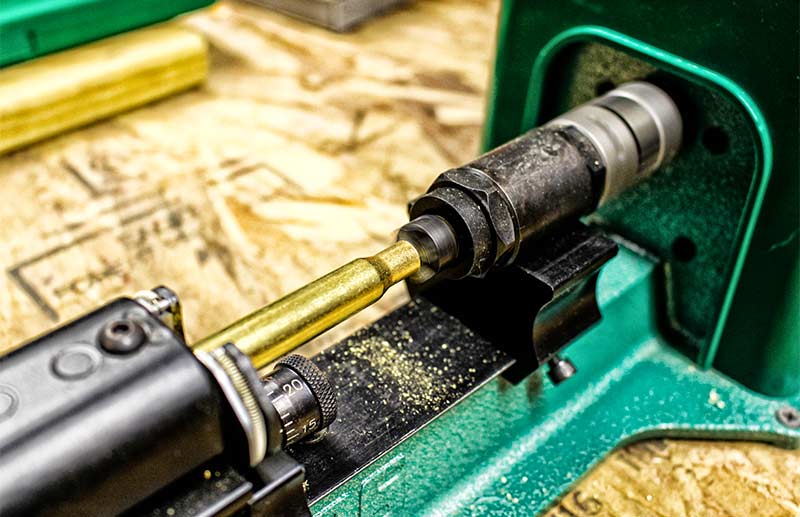
The RCBS Universal Case Prep Station has a micrometer adjustment—located just below the case being trimmed—to dial in the final trimmed case length. Photo: Massaro Media Group.
Trimming brass is another aspect of reloading where a micrometer adjustment isn’t only welcome, but might be considered necessary. I love my RCBS Universal Case Prep Center for its speed, its convenience and its accuracy, but most of all for its micrometer adjustment. When I have to trim cases to a particular length, it’s fantastic to be able to dial in the level of brass I need trimmed off and trust the machine to do exactly what I’ve asked of it, with the results turning out not only consistent but correct.
Looking at how consistent and reliable the micrometer-adjustable reloading tools are, does it warrant the abandonment of all the older designs? Well, it depends on the level of precision you’re looking for. If, like me, you pursue the utmost in accuracy, precision and consistency, then the micrometer-adjustable tools are assuredly a worthy investment.
I can confidently say this: If you’re looking to purchase any sort of new reloading tools, the micrometer-adjustable models are certainly the way to go—the additional investment will be recouped in a short amount of time.
Editor’s Note: This article originally appeared in the March 2022 issue of Gun Digest the Magazine.
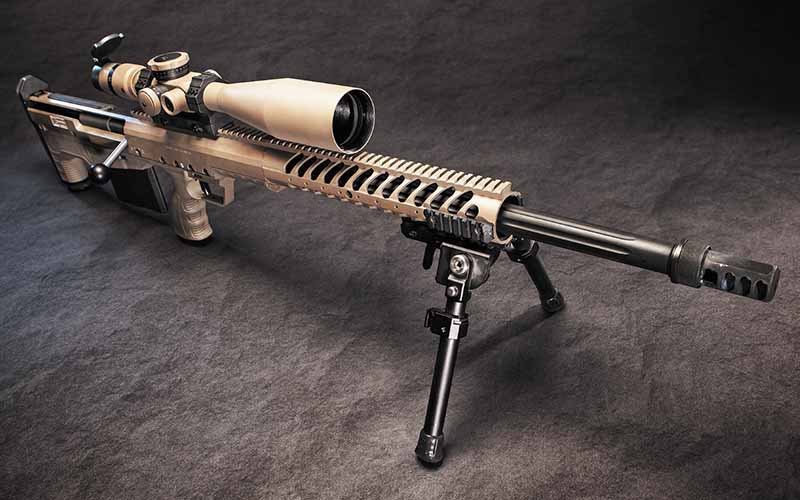
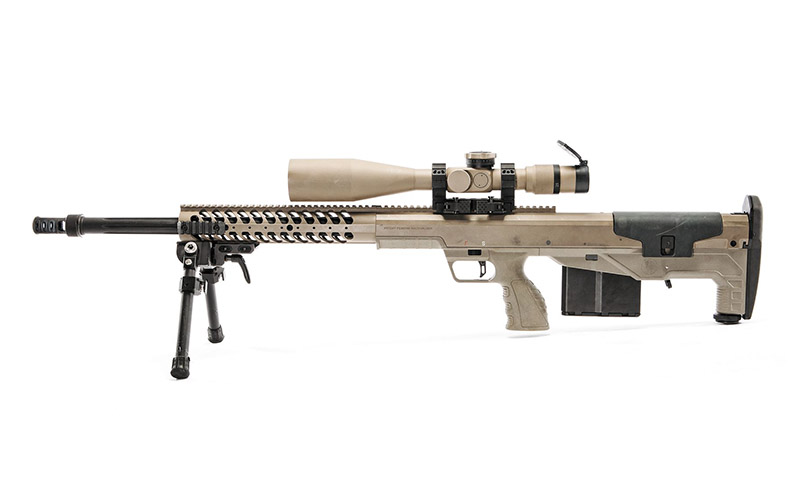
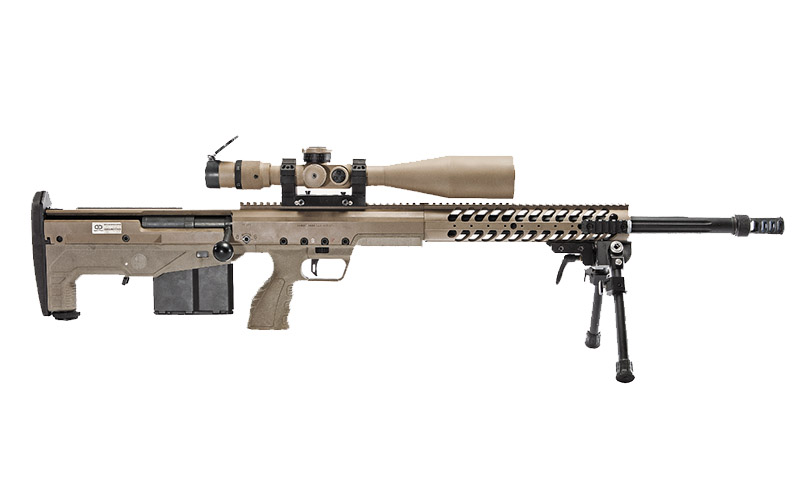
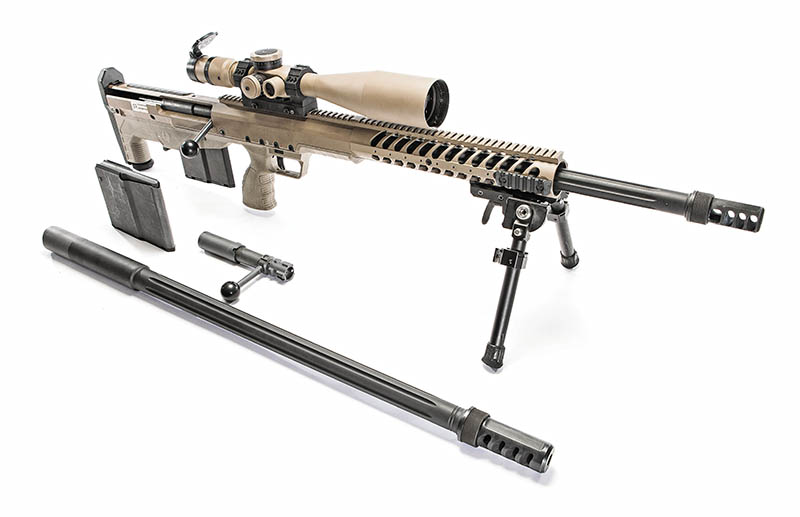
The Desert Tech HTI, or Hard Target Interdiction, blurs the line between precision rifle and portable artillery.
For some shooters, long range just doesn’t cut it. There are simply never enough foot-pounds or feet-per-second to satisfy these people. It’s a uniquely American dilemma and we, for one, admire those esoteric shooters and savvy engineers, pushing the very ragged edge of handheld ballistics. But where do you turn when you want something that flies like a fighter jet and hits like a freight train? Two words: Desert Tech (DT).
The folks at DT are artisans of the bullpup rifle, particularly those who are intended to shoot far …very far. They’re a relatively young company, less than a decade old, but have excelled in their very narrow niche of extended-range bullpup bolt guns. Its product line is essentially three separate chassis systems available in a total of 13 calibers. That’s not a whole lot and, from a business viewpoint, there’s little margin for error. But DT is equal parts manufacturer and ballistic think tank. Its products offer innovative features and an über-long-range capability that few other gun makers can claim to match. To be perfectly blunt, DT’s weapons impress the hell out of us.
Living Out a Fantasy
The crown jewel in Desert Tech’s current lineup is its HTI—the Hard Target Interdiction rifle. It is a scaled-up version of its original rifle (the SRS) intended to push massive bullets to mile-plus ranges. It’s the biggest firearm that I’ve ever tested and, even though I’ve eschewed bullpup guns for the most part, I was pleasantly surprised and impressed by the HTI’s suite of features.
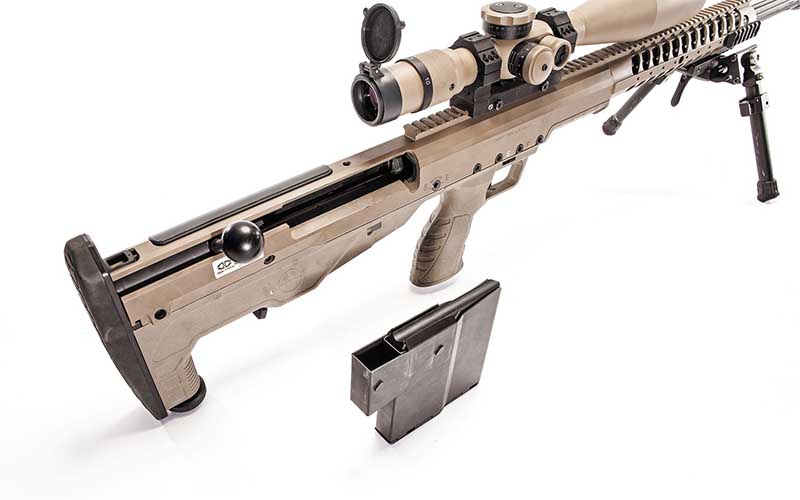
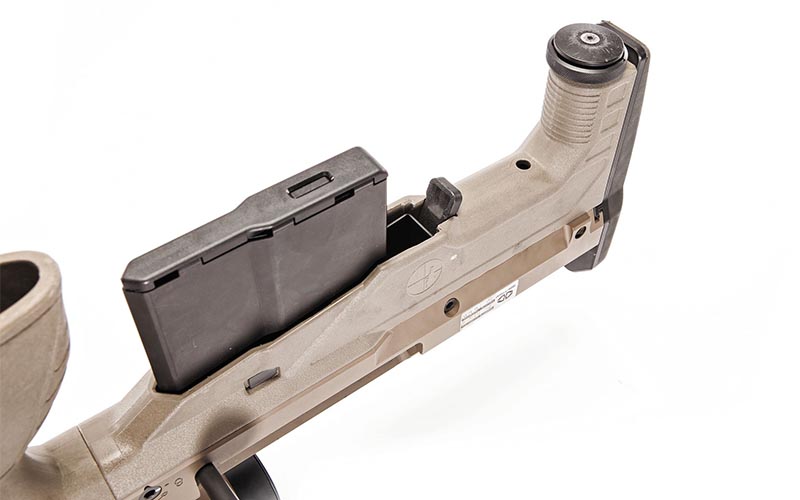
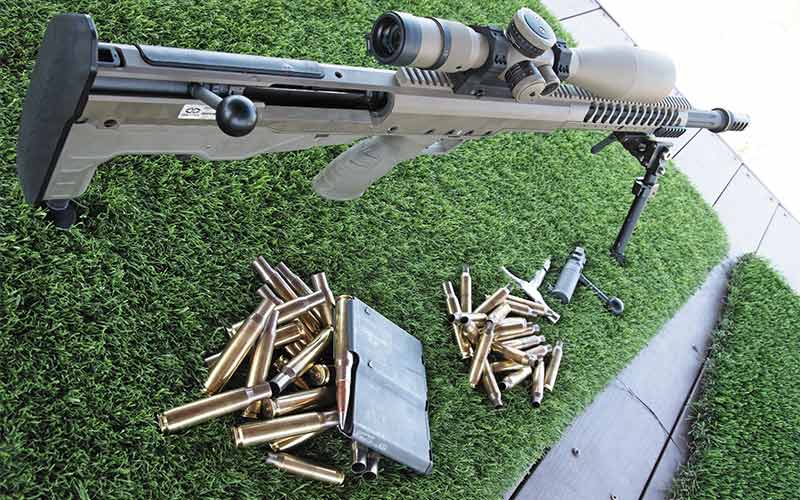
Any caliber shorter than .50 BMG uses a magazine that employs a spacer to shift the cases forward.
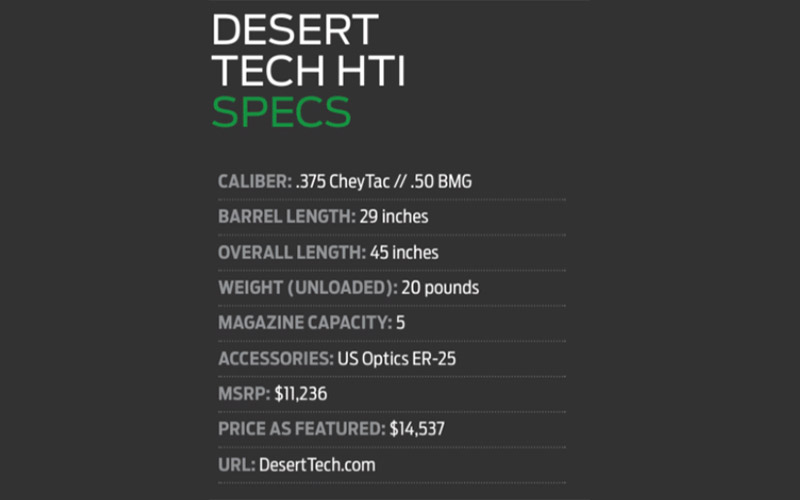
The HTI is available in four calibers: .375 CheyTac, .408 CheyTac, .416 Barrett and .50 BMG. In the latter, the HTI is entirely capable of being employed as an anti-materiel rifle without missing a beat, and we wouldn’t be surprised if someone somewhere has purchased a squad’s worth of them for that purpose. Unfortunately due to time and ammo constraints, and a lack of enemy light armor in our A.O., we weren’t able to evaluate this particular capability. What we offer you instead is a brief but poignant long-distance accuracy evaluation.
We had a total of 40 rounds to put through this rifle—generously provided by Desert Tech. (Yes, the folks there make their own long-range ammo, as well. We’ll get back to that in a moment.) As most of our T&E’s go, 40 rounds is barely a break-in period.
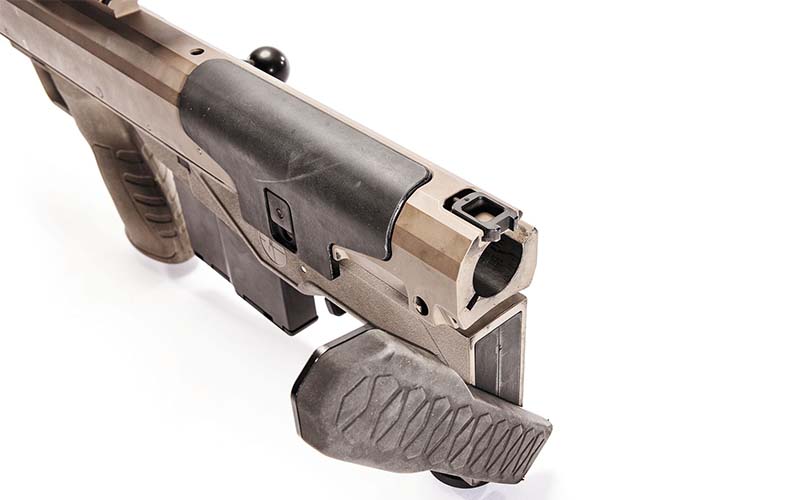
But, in the end, this turned out to be more than enough to give us a deep appreciation of this rifle’s potential. Once you purchase the HTI, chassis conversion kits are available through DT (and authorized dealers) and all that’s required is a bolt, barrel, and magazine change to go from one caliber to another. It’s not specifically billed by DT as a “quick change” system, but our experience was that it was pretty damn quick. We were able to do it in just a couple minutes—and that was while being hot, tired and not exactly in a rush under the midday sun. Our test gun showed up in .375 CheyTac with a conversion set for .50 BMG. We had 20 rounds in each caliber to make our case.
Bolts are swapped by swinging the buttpad to the side. The entire caliber change process can be achieved in a couple of minutes.
Sticking ’Em Up, Knocking ’Em Down
We took the HTI to Cowtown Range in Arizona. It was one of the few ranges we could find within driving distance that has steel set up all the way out to 1,600 meters—the perfect place to let Desert Tech’s big boy stretch his legs out. We started with the .375 CheyTac. The DT ammo that came with our test gun consisted of a 352-grain open-tip boat-tail slug that screams past the muzzle at 3,080 fps. A convenient DOPE (data on previous engagement) chart is included on the side of the box and this loading is listed as zero-drop out to 500 yards. Also, for those who are concerned, the 352-grain OTM projectile has a G1 coefficient of 0.89 and a G7 coefficient of 0.408.
In 20 rounds, we were able to achieve hits at 573, 707 and 1,100 meters. Unfortunately, we were DOPE’ing our gun on the fly against aggressive terrain with fish-tailing winds. As such, we were unable to reach out any further before running out of ammo. At the risk of sounding like a kiss-ass, I’m going to take a moment to say that our editor from the land of the Union Jack is an absolutely gifted spotter, and I would’ve been hard-pressed to get any of those hits without his wind calls.
Furthermore, said editor says he had previously made an 1,800-meter shot with an HTI in this caliber at a media demo day. After running the HTI myself, and shooting alongside Iain, I will vouch that both shooter and rifle are well capable of such a feat.
Having exhausted our supply of .375 CheyTac ammo, and gotten a satisfying hit past the one-click line, we swapped calibers and snuggled in behind the .50…
Big Gun Kick the Hell Out of You
Here’s the technical data for all you benchrest ballisticians out there. Desert Tech’s .50 BMG loading is a 750-grain tipped super-match boat- tail that’s heading for the horizon at 2,700 fps. The G1 coefficient is 1.050 and G7 is 0.581.
What’s that mean for the rest of us? The .50 BMG, or Browning Machine Gun, was originally designed for the machine guns (go figure!) of aircraft and armored vehicles. Despite its current employment in precision weapons, it was not built from the outset for that purpose. So, getting .50 BMG ammunition to turn out precision performance has been something of a process over the years. Desert Tech has worked its alchemy and assembled a cartridge they think can do it better. We think they may have cracked the code.
One round left. Any takers?
Three of us were on the platform that day. Yours truly, your editor-in-chief, and our shooting partner and close personal friend whom we’ll refer to as KJ. KJ is a retired federal corrections officer with an entire lifetime of shooting experience under his belt. However, this was his first opportunity to get behind a .50-cal., and we were happy to get his input about the experience.
I personally shot all 20 rounds of CheyTac and was 10 rounds into our supply of .50 BMG when my shoulder finally said enough is enough. Iain settled in behind the gun and shot eight rounds of his own and, once we both had hits at distance, we plucked the last two rounds out of the box for KJ, who had gotten shorted out of the .375 because of said DOPE’ing process.
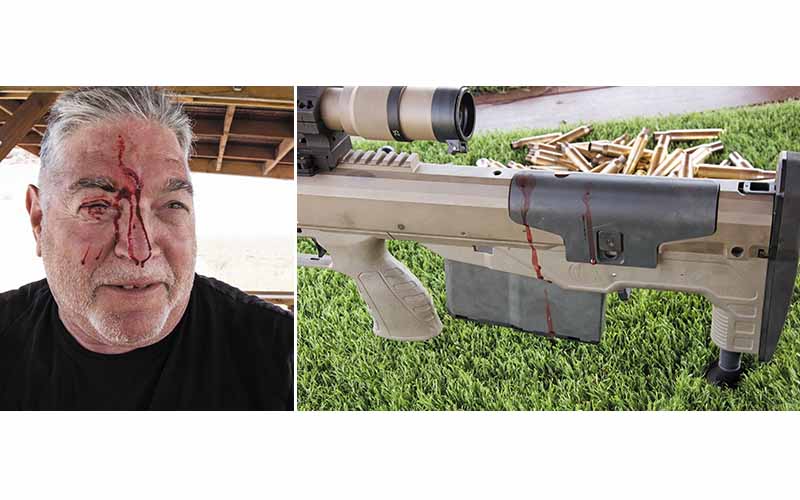
As KJ settled in behind the HTI we coached him into position. I used the spotting scope to box him in on target, and Iain gave him the down-and-dirty on mils and holdovers. The very last thing Iain said to KJ before the shot was, “Make sure you get your head far back from that scope. This thing kicks and, if you’re too close, it’s a self-correcting mistake.”
I was on glass and gave KJ his final wind call. KJ touched off the shot and all we heard after the bang is, “Well … you’re right … that’s a self-correcting mistake.” I looked over just in time to see our poor comrade come off scope with his face, and half the buttstock, dripping blood. We immediately triaged the magnificent gouge just above his eyebrow. Our practice of keeping first-aid gear in our range bag quickly paid off. As soon as we staunched the bleeding and determined there was no concussive or ocular damage, the boss man went hot on the Nikon and snapped the awesome shots you see here.
KJ’s unwanted third eyebrow.
KJ was an excellent sport about the whole thing, and we spent the next five minutes laughing our collective asses off and congratulating him on a successful first-round hit at 1,240 meters. He tied Iain and me for longest shot of the day. It was KJ’s first (and, to date, only) shot from a .50 BMG precision gun ever, so we promised him we’d publish the exact distance for official record. We gave him two rounds but, after the first one, we called it cold and a single round of 750-grain .50 BMG is still rolling around in the HTI’s Pelican case as this goes to press.
Once we cleaned up the blood and dust, KJ provided a piece of input that we nearly overlooked: the trigger! The trigger on the HTI is absolutely fantastic. The gun weighs over 20 pounds, before mounting the US Optics 5-25x scope, and has a 29-inch barrel. Looking at this gun across a room, you’d expect the trigger to feel like a hand crank. But it consistently breaks on a Lyman gauge between 2 and 2¼ pounds. It’s a single-stage trigger that breaks softly with zero stacking and just a touch of over-travel. Kudos to Desert Tech for getting that pussycat trigger into that beastly rifle.
The HTI’s barrels swap out with a minimum of effort. That enormously long barrel tenon makes for impressive repeatability—after swapping the .375 CheyTac barrel for the .50 BMG, there was no detectable shift in windage at 1,000 yards.
Setting Off, Doing No Good
Desert Tech’s website features a rifle builder. Configuring a gun exactly like our test sample, including spare caliber conversion, scope base, torque wrench (for barrel changes), color preferences and bipod, the total came to $11,234 … sans scope. The glass on our gun was a US Optics ER-25, which will run you an additional $3,301. Also, for reference, the two boxes of .375 CheyTac are $99 each, plus $74.50 for each of the two boxes of .50 BMG match. That makes the total cost of this T&E just shy of $15,000 give or take the cost of food and gas. If you ask us, “Who the hell is buying these guns?” Our honest-to-God answer is, “We don’t know.”
Aside from organizational purchases (military and law enforcement customers), we’re not sure who has that kind of coin to drop on a rifle that will literally punch you in the face if you don’t shoot it the way it wants to be shot. But if you’re out there, reading this story, there’s an opportunity for you. But make sure you get proper eye relief. And bring Band-Aids. Just in case.
Editor’s Note: This article originally appeared in RECOIL Issue 27.
ERGO has just released the O-Grip, a new zero-angle AR grip designed for precision and bench shooting.
ERGO manufactures a slew of different aftermarket accessories for AR-15s and other common rifles. As the company’s name implies, its products are designed to increase the ergonomics of your setup. Usually when you see an ERGO grip in the wild it’s one of the more traditionally shaped rubber models intended more for carbines, but the company’s new O-Grip is designed for precision and bench shooting instead.
The ERGO O-Grip is a zero-angle grip with a circular, rigid nylon handle. The company describes it as being similar to its TDX-0 grip, but the O-Grip appears to have the benefit of more modularity. While the TDX-0 is rubber and therefore should provide good purchase, some shooters may prefer a larger or smaller diameter. To solve this, the O-Grip is instead made of hard Nylon and features three channels for accepting replaceable rubber grip bands. It’s not exactly modular yet, however, as ERGO is yet to offer any other sizes of grip bands for purchase. The grip currently includes a set of three medium-sized bands, but presumably large and small sizes will be sold in the future as well.
The O-Grip is available now and is compatible with any firearm that accepts standard AR-pattern grips. MSRP is $62.99.
Whether you’ve just bought yourself a .50-cal. rifle or are considering getting one, here’s the best .50 BMG ammo on the market.
For most, .50 BMG is a niche cartridge with little practical use. Regardless, many still enjoy shooting it, even if it’s for no other reason than to experience its awesome power. Others appreciate it for some of its lesser-known ballistic qualities.
We’re going to go over what kind of loads are out there and what they’re useful for, the cartridge’s general utility and a selection of .50 BMG ammo to fit several purposes and budgets.
A .50 BMG round next to a 1 euro coin. Photo: Wikipedia.
A Brief Guide To .50 BMG and .50 BMG History
.50 BMG, or .50 caliber Browning Machine Gun (aka 12.7x99mm NATO and .50 Browning), was developed for use in a heavy machine gun. The initial design work was done by John Moses Browning at the request of Gen. John “Blackjack” Pershing shortly after the end of World War I.
The idea was to have a heavier machine gun that fired ammunition heavy and powerful enough to penetrate the armor of the day, primarily tanks that entered common use in WWI. Pershing specified a caliber of 0.50 and a muzzle velocity of 2,700 feet per second based on the German 13.2mm TuF (Tank und Flieger, “tank and aircraft”) and 11mm Vickers rounds.
.303 British next to a 13.2mm TuF round. Photo: Wikipedia.
Browning worked on the gun while Winchester developed the ammunition. You might have heard that .50 BMG is a “scaled-up .30-06,” and in a lot of regards…it is. The reason why is the gun that Browning designed for it.
His idea was to scale up the M1917 .30-06 water-cooled machine gun— which he did—and the weapon was adopted as the M1921. The M1921 worked, but it was still a large, heavy, water-cooled belt-fed machine gun and as such was desperately impractical.
Winchester eventually was able to achieve 2,750 fps with a 660-grain FMJ bullet. The armor-piercing load was proven capable of penetrating 1 inch of rolled steel at 200 meters and 0.75 inches at 500 meters.
The US Army knew the M1921 wasn’t sustainable, so it began the process of replacing it. Unfortunately, Browning died in 1926, and the design work was picked up by others, eventually culminating in the M2 Browning machine gun.
Further load development besides standard ball ammo includes multiple iterations of armor-piercing projectiles, incendiary, incendiary armor piercing, tracers, sabot light armor piercing and sniper rounds.
A spread of various linked .50 BMG cartridges behind some 5.56 and a .500 S&W Magnum. A .50-caliber SLAP round is third from the right. Photo: Wikipedia.
Stay Away From SLAP Rounds
Just like AR shooters have what we’ll call a strange fondness for green-tip 62-grain ammunition (which is rarely very good, can cause feeding issues and can actually damage your rifle in some cases), some .50 BMG shooters are fascinated with SLAP tracers.
Sabot Light Armor Penetrating rounds are very hard to come by on the commercial market. Most lots of it are either very old (and therefore its condition and safety for use are unknown) or are counterfeits, and the problems that beset Bubba’s Wicked Hot Handloads in other calibers are certainly present with .50 BMG ammunition as well.
There’s nothing wrong with firing AP to blow up bowling balls or tracers because you just want to, but a look at Kentucky Ballistics’ throat may help you reconsider. The YouTuber had his Serbu RN-50 detonate on film thanks to a SLAP round.
Kentucky Ballistics’ .50 BMG rifle exploded from a hot SLAP round, seriously injuring him. Image source and further info: Kentucky Ballistics.
The .50 BMG Blossoms Into A Long-Range Cartridge
One of the best-known early uses of the .50 BMG as a sniper round was in the Vietnam War when Sgt. Carlos Hathcock mounted a scope on an M2 and successfully made a shot at 1.3 miles.
In any event, the idea began to dawn on the world’s militaries that .50 BMG was maybe good for more than just shooting planes and light armored vehicles. Over time, it was also adopted for long-range sniping and anti-materiel/anti-vehicle use where it has since excelled at the role.
In fact, almost all the records for long-range sniper kills at distances greater than a mile were accomplished with a rifle chambered in .50 BMG.
And it is so darned good at it because of an insane ballistic coefficient. The long bullet length (up to 2.27 inches) and ample mass give a .50 BMG load a G1 ballistic coefficient anywhere from 0.7 to over 1.0.
In other words, it slices through the air like a hot knife through butter, losing velocity at a slower rate than almost any other cartridge. It can even stay supersonic to 3,500 yards depending on the load, and at that distance still carries more energy than a 5.56mm M193 bullet does at the muzzle.
Here’s a trajectory table for Hornady’s A-Max load of .50 BMG ammo, which uses a 750-grain bullet at a nominal 2,910 fps and a G1 BC of 1.05:
(All calculations made using ShootersCalculator with a 1.5-inch sight height, a 10 mph 90-degree crosswind and no corrections for atmosphere)
As you can see, it drops at a rate not too dissimilar to other bullets…but loses less than 100 fps per 100 yards. There are few cartridges in the same league when it comes to long-range shooting, which is why it was used as a sniper round in the GWOT as well as its typical anti-material roles. If you want to reach way out and touch something, it’s one of the best tools for the task.
Reasons To Own A .50 BMG Rifle
Is there a practical reason for owning one besides shooting bowling balls or shooting steel at a really, really, really, really long way out?
No, not really. It’s one thing if you’re the armorer of a SWAT team in an area where vehicle defeat is a potential concern, but that obviously doesn’t apply to most shooters.
While it would ostensibly be the dangerous game cartridge to end all dangerous game cartridges, the sheer size and weight of the rifles—the lightest probably being the Serbu RN-50 which comes in at 12.75-pounds—make it a non-starter as a weapon you’d fire free-hand or trek with for long distances.
Consider also that shooting an elk at 3,500 yards also means you have to walk 3,500 yards to start processing it and then start hauling it out. That would be awful.
That also presumes you’d even be able to make an ethical hit on an animal at that range. To break that down, rest assured buying a black Stratocaster will not make you sound like Dave Gilmour.
With that all said…who cares? Practicality isn’t everything. If you want a .50 BMG rifle just because…by Jove, go ahead and do it and be happy. Besides, on the off chance that the country goes the way of Mad Max, it may prove itself incredibly useful against all those up-armored muscle cars.
5 Best Loads Of .50 BMG Ammo
Lake City M33 Ball
There is no such thing as cheap range ammo in .50 BMG. There is only less exorbitantly expensive .50 BMG ammo. One of the least costly is Lake City’s M33 ball load, military surplus from the lots of ammunition that Lake City manufactures for the government.
M33 ball is a 660-grain FMJ bullet with a steel core and a flat lead base, nominally loaded to 2,910 feet per second. M33 ball is capable of barrier defeat, but the principle selling point is the cost. You can find it online for somewhere between $415 to $450 for 150 rounds, just under $3 per.
That’s about as inexpensive as it gets.
Hornady Match Ammunition 750-Grain A-Max .50 BMG
Hornady’s A-Max 750-grain load is one of the best long-range loads available, with a G1 BC of 1.05 (see above for the drop table). If you want to reach out and touch something, this is about as good as it gets.
The A-Max load is a ballistic-tipped hollow point boat tail, with a 750-grain projectile loaded to an advertised 2,820 feet per second and 13,241 foot-pounds of energy at the muzzle. If ringing steel a mile away is what you want to do, there aren’t too many better choices.
It’s gonna cost you, though! MSRP ranges from about $70 to $90 per box of 10.
PMC 660-Grain FMJBT
One of the most common types of ammunition in .50 BMG is ball ammunition, and PMC’s 660-grain FMJBT (an M33 ball clone) is another common box and brand that won’t leave your finances for dead.
It’s advertised as being loaded to 3,080 feet per second and 13,688 foot pounds at the muzzle. Boxes of 10 to 200 are common, usually with a cost of somewhere between $3.25 to $3.75 per round. A little more expensive than Lake City surplus, but it has a little more oomph behind it too.
Freedom Munitions API 647 Grain FMJ
One of the benefits of .50 BMG is all the different kinds of projectiles that normally just aren’t available in other calibers, especially the selection of .50 BMG armor piercing ammunition that’s available to the civilian market.
Want to punch holes in stuff and set it on fire? Freedom Munitions API (Armor Piercing Incendiary) is made to do both, with a 647-grain bullet loaded to 2,750 fps. This would be the ideal for barrier defeat…just be careful of the environment you shoot it in.
Freedom Munitions sells a variety of .50 BMG AP (including armor-piercing tracers!) and the API load is fairly good value for money at $450 per box of 150. It’s also available linked if you have a belt-fed to send it through.
Lake City M17 Tracer 643-Grain
Another variety of surplus .50 BMG ammo to look for if you want to get into the really cool stuff is Lake City M17 643-grain tracer. It will look like death warmed over, with obvious signs of annealing (required by military contract) and mixed tips (some painted, some not) so don’t get your hopes up for picture-perfect.
What you can expect is a .50 BMG tracer round, with a typical cost of just under $3 per from most outlets. However, exercise extreme discretion while firing it as the pyrotechnic charge that creates the trace burns at very high temperatures and it has caused wildfires.
Looking to go armed, but are stuck in the weeds as to what to arm yourself with? Here are 20 of the best concealed carry gun options that will keep you on the defensive.