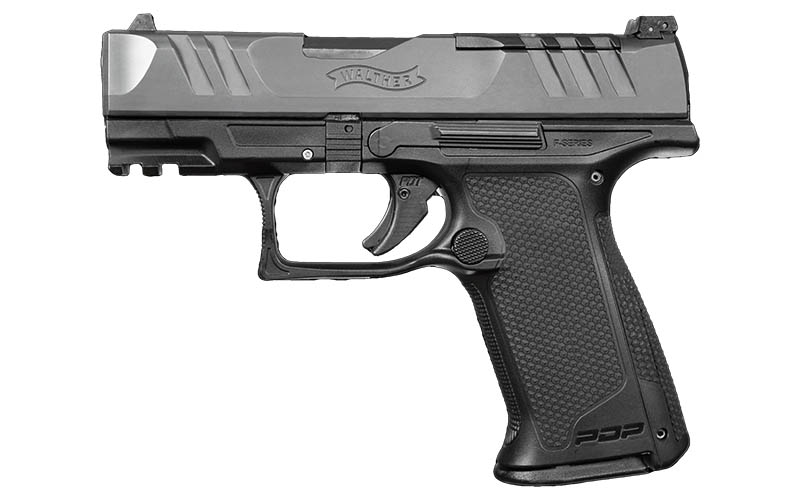
Common handguns aren’t always viable for people with smaller hands or a weaker grip, but the new Walther PDP F-Series was designed to be usable by nearly anyone.
Walther released the PDP (Personal Defense Pistol) in early 2021 to replace the PPQ, and it offered several areas of improvement over the older handgun. Redesigned, aggressive grip texturing was added, along with enhanced slide serrations, ambidextrous controls and an optics-ready slide. The standard PDP is available with a few different barrel lengths and frame sizes, but Walther has just announced the line’s expansion with the PDP F-Series.
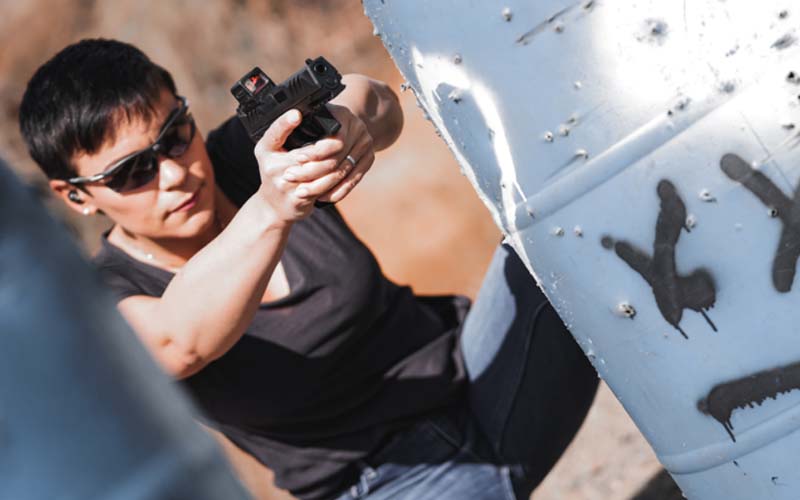
The tagline of the PDP F-Series is “engineered for women’s hands”, and several changes have been made to make the pistol more usable by individuals with smaller hands and weaker grip strength. Like the original PDP, the F-Series is chambered for 9mm and available with a 3.5- or 4-inch barrel. Unlike the standard models, however, the F-Series is not available with 4.5- or 5-inch barrels or 18-round capacity frames. Designed primarily for concealed carry, the PDP F-Series is currently restricted to two compact-sized options. This is partly due to the redesigned grip frame which was made small enough to be comfortably gripped by a woman’s hands while retaining the impressive 15+1 capacity of 9mm. Other standard PDP features like the aggressive texturing and optics-ready slide are still present on the F-Series guns as well.
The other design changes incorporated into the F-Series to accommodate female shooters include the trigger and the strength required to rack the slide. Walther is calling the new version of the Performance Duty Trigger the Reduced Reach Trigger, and as the name implies it was engineered to enable shooters with smaller hands to still achieve smooth, consistent and fast trigger pulls. The force required to rack the slide has also been reduced by about 20 percent. Combined with the protruding front and rear slide serrations, charging the pistol should be possible, if not easy, for almost anyone.
Both the 3.5- and 4-inch barrel models of the PDP F-Series should be available soon, and both will be available in “compliant” 10-round capacity versions as well. MSRP for all models is $699.
Thinking about mounting an optic on your carry pistol? Here’s how to get the most out of the CCW red dot.
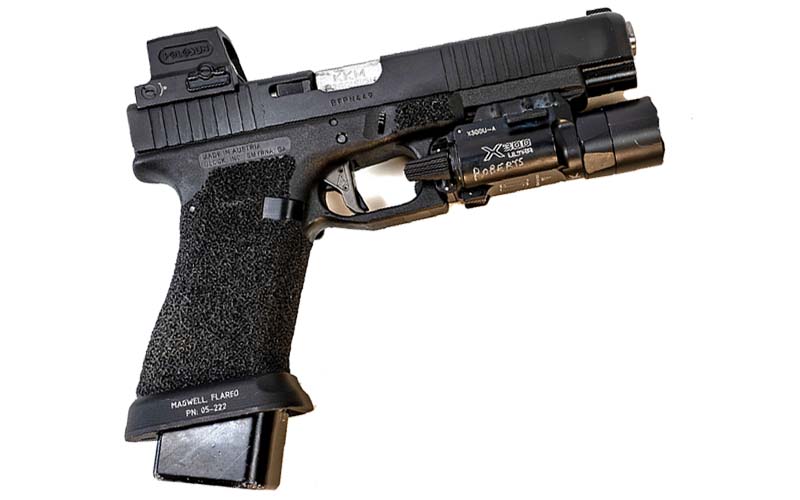
Mini red dot sights (MRDS) on a pistol slide aren’t a new concept, but it’s only been the past few years that we’ve seen mass adoption of the magic floating dot. If you understand how to get the most out of the dot it can be a huge advantage, but some bad advice can turn that advantage into a disadvantage quickly. We won’t dive into any MRDS topics that have been beaten to death, talking you through some of the math that I have found useful is far more interesting.
The gun industry doesn’t make it any easier with the breakneck pace of introducing new products, some good and others bad. Don’t be dissuaded though; there’s a lot to be learned from doing something wrong as long as you can be humble enough to find the lesson in failure.
The more you learn, the less likely failure is. Regardless of your skill level, a deeper understanding of the math that makes the dot so great is bound to translate to a better result on the range…maybe.
What Even Is MOA?
In the plainest terms, minute of angle or MOA is an angular measurement that equates to 1.047 inches per 100 yards; or more accurately, one MOA is 1/60 of a degree (that’s 0.01666666666 degrees) with a total of 21,600 MOA in a 360-degree circle. Unfortunately, the common misunderstanding that MOA means “about 1 inch at 100 yards” does a piss-poor job of conveying that it isn’t a linear measurement, but rather a conical one.
With the understanding that MOA is angular, we can establish that its value in inches will either grow or shrink based on distance. It’s important to remember that MOA is always a cone-shaped measurement, even though it’s often used as a two-dimensional measurement.
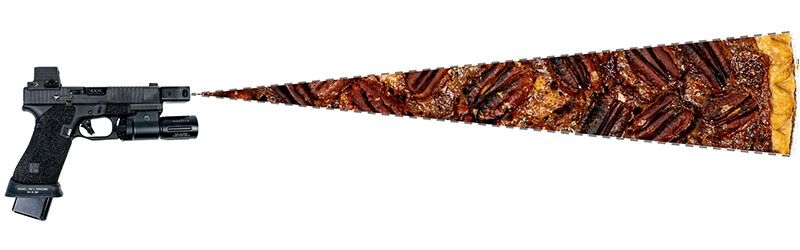
As a two-dimensional measurement, MOA is often used to describe windage and elevation adjustments, which will come in handy when we talk about zeroing your pistol. When you think of the two-dimensional MOA like a pie, picture a disappointingly skinny slice of pie with the crust pointing away from you.
Even though the slice of pie gets wider as distance increases, the MOA value of its width is constant.
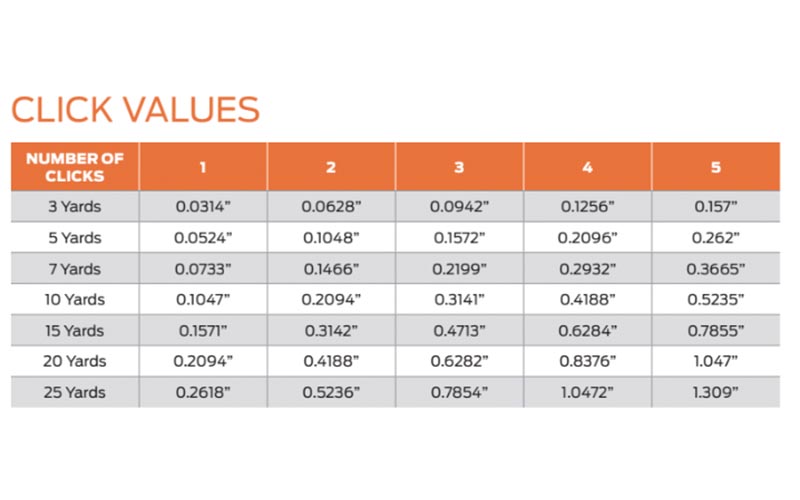
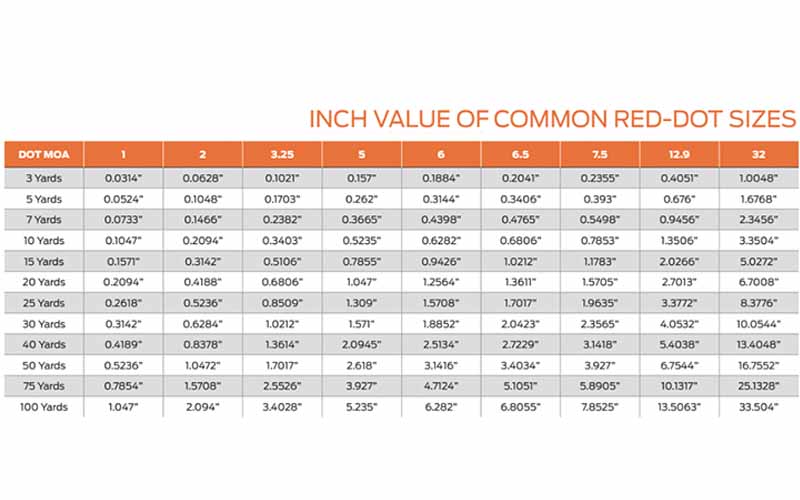
The crust on that 1 MOA piece of pie at the generally accepted “typical gunfight distance” of 7 yards equals 0.0733-inch crust. At 15 yards, your 1 MOA slice of pie equals 0.1571 inch of crust, and at 25 yards, it equals a mere 0.2618 inch of pie crust. Now take those same measurements and apply them to a birthday hat’s open end. That MOA birthday hat can be used to measure the reticle’s size, target size, group size and even the bullet hole size.
Right now, you’re wondering what the hell a birthday hat and pie have to do with guns? Nothing. Birthday hats are fun, and pie is delicious.
Zeroing Your CCW Red Dot With Pie
So, we have established that MOA is an angular measurement, how does that impact the value of adjustment clicks at a known distance? Since nearly every MRDS on the market uses a 1 MOA per click value, we know that translates to 1.047 inches of movement at 100 yards per click. Moving the target to the 10-yard line means that the 1 MOA click is now worth 0.1047 inch.
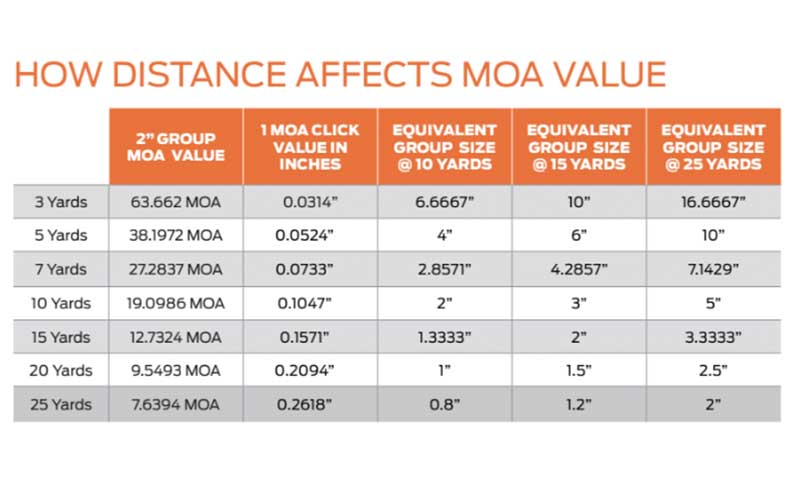
You might think that having super fine adjustments is a benefit, and if that were all that changed with distance, you’d be right. The reality is everything’s MOA value changes with distance. Say you shoot a nice tight 1-inch group at 10 yards, why is zeroing off that 1-inch ragged hole less useful than a 2.5-inch group at 25 yards? You get the same amount of clicks within each 9.5493 MOA group, why would the 25-yard group be better suited?
Choose your red-dot wisely. Some, like this Shield RMSw, have a slow refresh rate and require a silly, easy-to-lose tool for its click-less adjustment screws.
Simply put, the 2.5-inch group has more dispersion, which will help you identify the true point of impact which might not be in the middle of the group depending on how you pulled some of the shots. Another benefit to that 25-yard group is that the diameter of the bullet hole has less of an impact on the perceived size of the group.
Eyeballing the distance from the group to the desired point of aim is going to be a hell of a lot easier when you have to guesstimate to the nearest 0.2618 inch than it is to guess to the nearest 0.1047 inch. As you increase distance, the cone of fire widens just like the click values since everything we’re doing is dependent on the angular deviation of the muzzle from the center of the target when the shot goes bang.
If you haven’t eaten your pie yet, put it in your range bag, use Google to find a printable NRA B8 repair center if you don’t have some and let’s go zero your red dot pistol.
What The Zero Process Looks Like
There isn’t just one “right” way to zero a CCW red dot, but there sure as heck are some wrong ways. The biggest mistake you could make when zeroing your dot is to shoot it without using a bag or rest to support the gun. I don’t use a rest until the target is at 25 yards, when you add in the rest is dependent on the shooter’s skill.
Choose wisely, young Padawan: If you tough it out and refuse the rest, you may end up zeroing to accommodate your shooting deficiencies rather than getting the point of aim as close to the point of impact as possible. You don’t want to zero to your shooting deficiencies like a flinch right? If you think you’re always shooting point of aim but your zero accounts for a flinch, how are you supposed to get better?
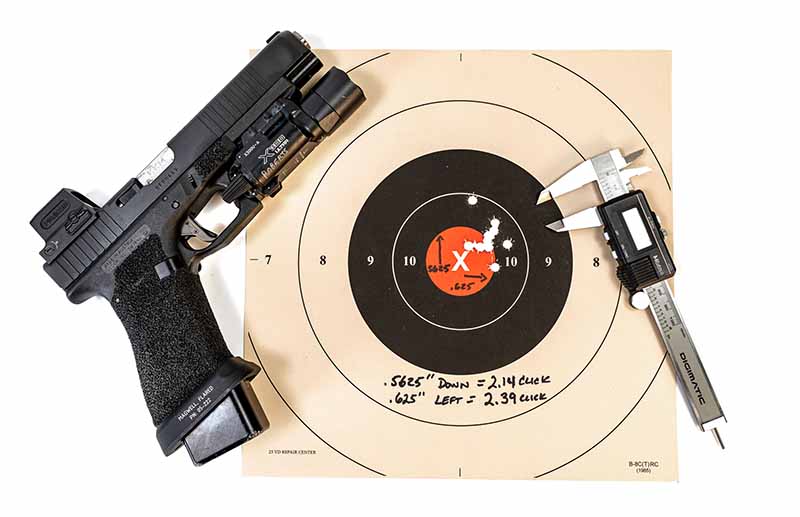
While you can eyeball the clicks needed to zero, a measurement device can give you exactly the clicks needed for a zero.
Start at 5 to 10 yards, based on your skill, and shoot five rounds holding the dot on the center of the target. Make sure to dim the red dot till it’s barely visible—we’ll get into why in a moment. After shooting you five-round string, bring the target back and use the click value chart in this article and a measuring device to determine the correct adjustment. Send the target back to the same yard marker and fire three to five rounds to confirm you’re on target.
Replace your target with a fresh one and send it to the 15- yard or 25-yard line, depending on your shooting skill and available distance. This time you’ll be shooting from a rest so either use your range bag or find a rest to shoot from and send five rounds while supporting the pistol. Retrieve the target and again use the click value chart and a measuring device to apply the correct amount of clicks. Send the target back downrange after marking your hits and confirm.
If you happen to be at the limit of your skill or have limited out the available distance on your range, now is when you will confirm the zero without the rest. Again, send a fresh target to the 25-yard line or as far as your range allows and shoot a string of 10 rounds (slow fire, take breaks as needed) to see where those bullets impact. Use your best judgment when deciding if you think adjustment is needed, remember now your movements are impacting where the bullets impact.
Your Dot Shouldn’t Look Like A Red Dwarf Star
Curious why you should dim your red dot when zeroing? As you increase brightness on your red dot, the dot will begin to blow or spread into a perceptibly larger dot through a process called diffraction. When you view a light source significantly brighter than the ambient light, the light bends as it’s entering your eye, creating a starburst effect. If the starburst was perfectly uniform, it would just make the dot appear larger without any negative effects.
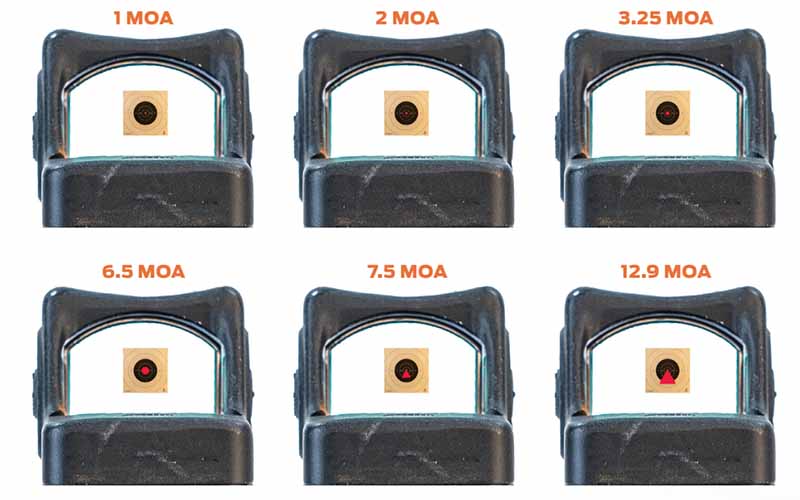
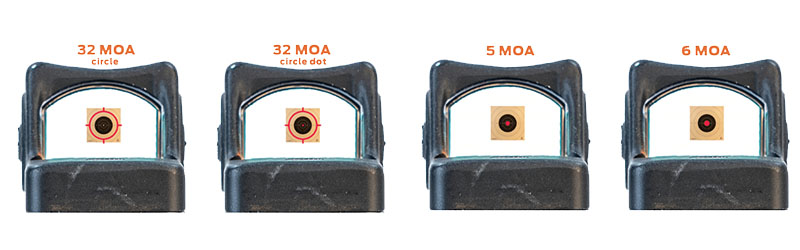
Your choice in red dot size depends on your needs, dot and target sizes are as they appear at 25 yards. (Dot images simulated).
Unfortunately, the possibility of it appearing perfectly uniform is almost impossible thanks to very tiny imperfections in your cornea. If you pay attention to the shape of your red dot as you increase brightness, you’ll notice one side grow more as you press the brightness button. That uneven blooming effect will cost you the ability to make precise shots at distance, like when zeroing the gun.
Now if you’re shooting for speed up close, crank that dot up and get your John Wick on. Diffraction affects smaller dots more than larger dots, so if you like a larger or brighter dot but want to retain the ability to place precise shots, you might want to choose a CCW red dot with a 5 MOA or larger reticle.
No Blinky Dots
While refresh rate of a red dot isn’t directly related to today’s math lesson, it’ll impact your ability to place accurate shots. Refresh rate is a result of how LEDs are dimmed for the human eye through a process called pulse width modulation.
As the dot’s brightness decreases, the length of the on-off-on cycle increases, giving a dimming effect that generally happens faster than you can see. Depending on how your red dot is made, you may be able to see the gaps between pulses. That can cost you the ability to call your shots during the string…or even impact your ability to place a shot accurately because the pulse width is too long.
If you can see the dot pulsing during recoil, you may want to consider another brand or model of MRDS. Without the ability to call your shots, figuring out why two shots hit the target low left is going to be hard as hell. With a properly functioning MRDS, you can watch the red streak and identify where that red streak came from and determine what shots you sent into Shanksville.
Looking At Pistols From A New Angle
Now that you see (hopefully) the value in this pocket protector-level pistol nerd stuff, remember that angular measurements are the cornerstone of accurate shooting with both pistols and rifles.
The precision rifle guys don’t have a monopoly on MOA…or pie.
Editor’s Note: This article originally appeared in the CCW 2022 special issue of Gun Digest the Magazine.
At one time considered a generalist, in its modern iteration, the shotgun has become a specialized too. Gone are the days when your granddad would shoulder his good ol’ Browning Auto 5 to bag anything with feathers or fur.
Waterfowlers in particular finicky about what smoothbore they take with them into the blind.
And why not? A shotgun meant to knock down quails on the wing most likely won’t excel at taking down a goose on a high pass shot. With that in mind, we’ve put together the top waterfowl hunting shotguns available today. The guns are tailormade to survive the harsh conditions of the duck marsh and put meat on the table.
Browning BPS
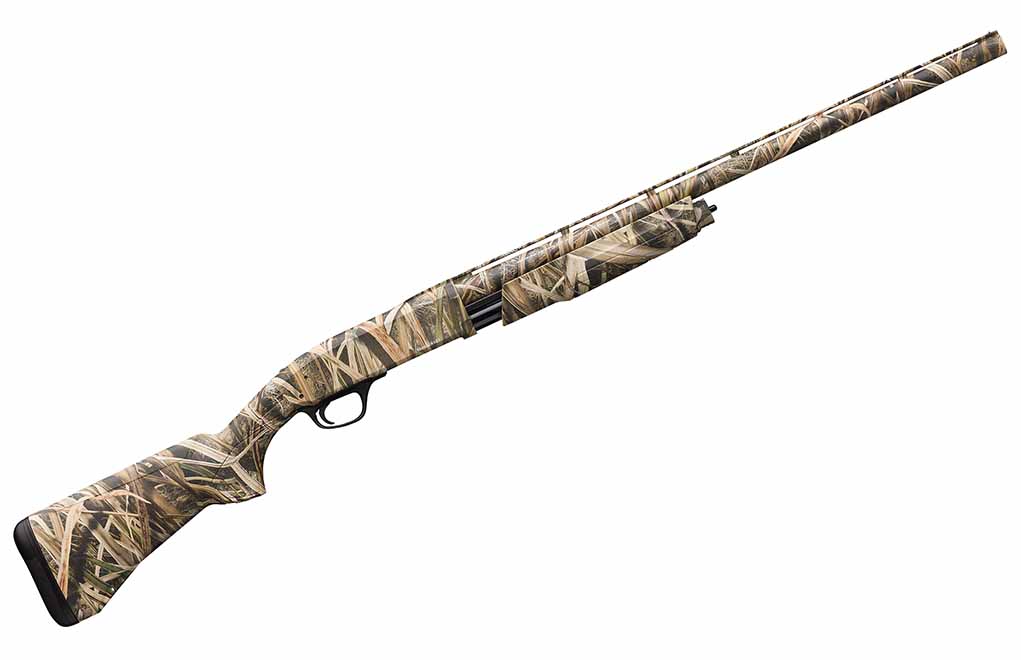
The Browning BPS (Browning Pump Shotgun) has been around for more than 50 years and has proved itself in the field. Browning saw fit this year to make a few improvements to this shotgun—which is no stranger to the duck marsh. A redesigned stock and forearms, the addition of Browning’s Inflex recoil system and a larger, more glove-friendly trigger guard are all changes the duck and goose hunter will have no problem with.
The BPS is also now available with a Mossy Oak Shadow Grass Habitat camo pattern for waterfowlers. This model weighs 8 pounds and has a 3½-inch chamber for when you want to shoot the big stuff on geese. It ships with three Invector Plus chokes, has a 26-inch barrel, 14½-inch length of pull and comes with sling swivel studs to better pack it through the swamp. This is a lot of shotgun. MSRP: $829.99; Browning.com
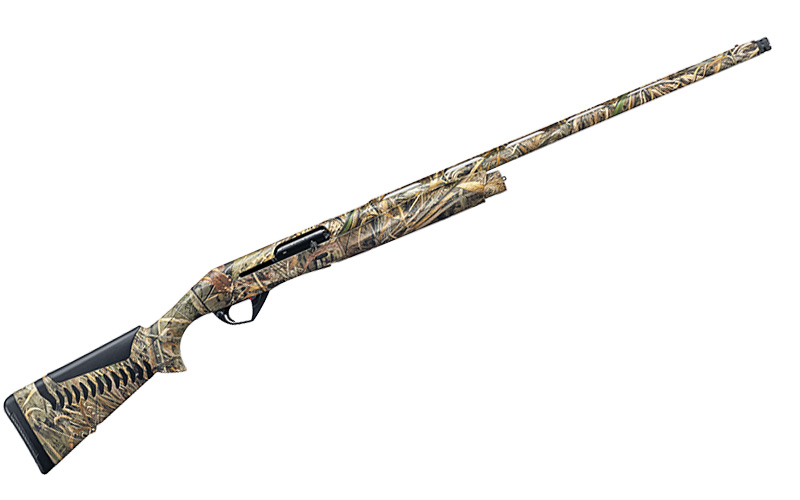
Benelli Super Black Eagle 3
There’s no question about the quality of Benelli shotguns. From hunting to sporting to tactical applications, Benelli is sure to have a model that is considered to be at the top of its class. When it comes to waterfowl shotguns, that model is the Super Black Eagle 3. The standard model is 12-gauge and features a 3.5-inch chamber, but 20- and 28-gauge offerings are available with a variety of chamber sizes as well. Speaking of options, the Super Black Eagle 3 is also offered with several different finishes, barrel lengths and in both right- and left-handed configurations.
The SBE 3 should be incredibly ergonomic as well, thanks to its stock, controls and redesigned loading system. They call the stock the Comfort Tech 3, and it was designed to dramatically mitigate recoil by way of embedded shock-absorbing inserts and a butt pad. The latest iteration now also incorporates a cheek comb pad to soften impacts on the face. The shotgun also features an oversized safety and bolt handle for easier manipulation of the weapon, and Benelli claims that the new loading system makes reloading effortless. MSRP: Starts at $1,799; BenelliUSA.com
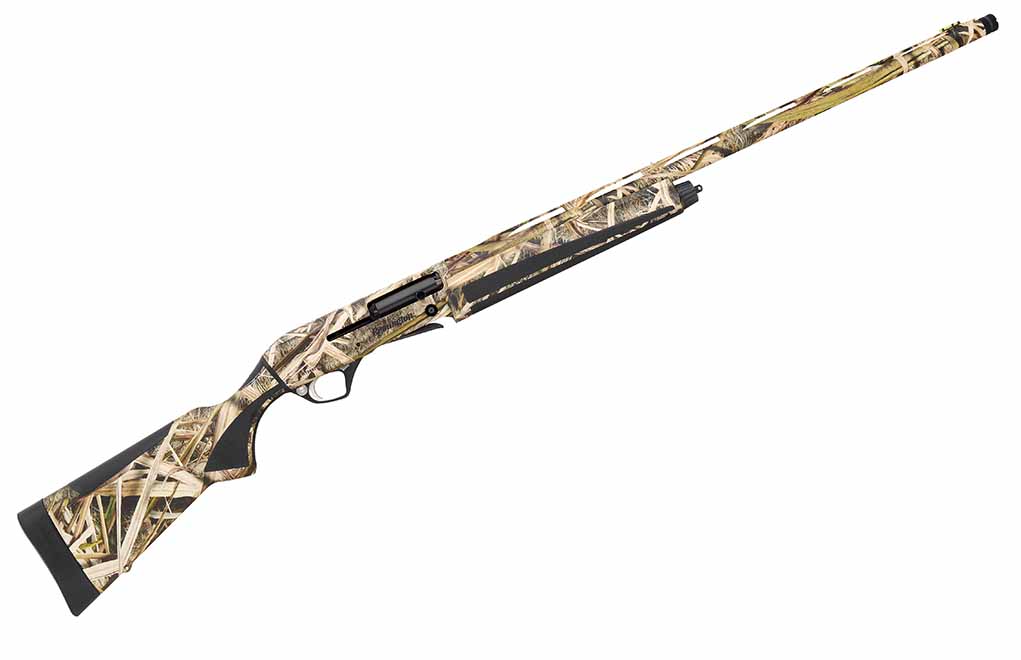
Remington V3 Pro Waterfowl
Following on the heels of its daddy (the VersaMax), the V3 has established its place in the world as a soft-shooter. The revolutionary VersaPort Gas system enables this shotgun to shoot the lightest target and dove loads while also handling magnum goose and turkey loads.
Remington stepped up its game with the advent of the V3 Pro series, adding an oversized bolt handle, safety button and bolt release, along with carving out the loading port for easier loading with bulky gloves. The real deal here for duck hunters is the Cerakoted receiver inside and out, because nobody is as hard on a shotgun as a duck and goose hunter.
The V3 Pro Waterfowl includes three black, extended chokes—improved modified, modified and full—and shims to adjust drop and cast on the stock. The barrel is 28 inches long, and the length of pull is 14¼ inches. This could be the indestructible duck gun you’ve been looking for. MSRP: $999; Remington.com
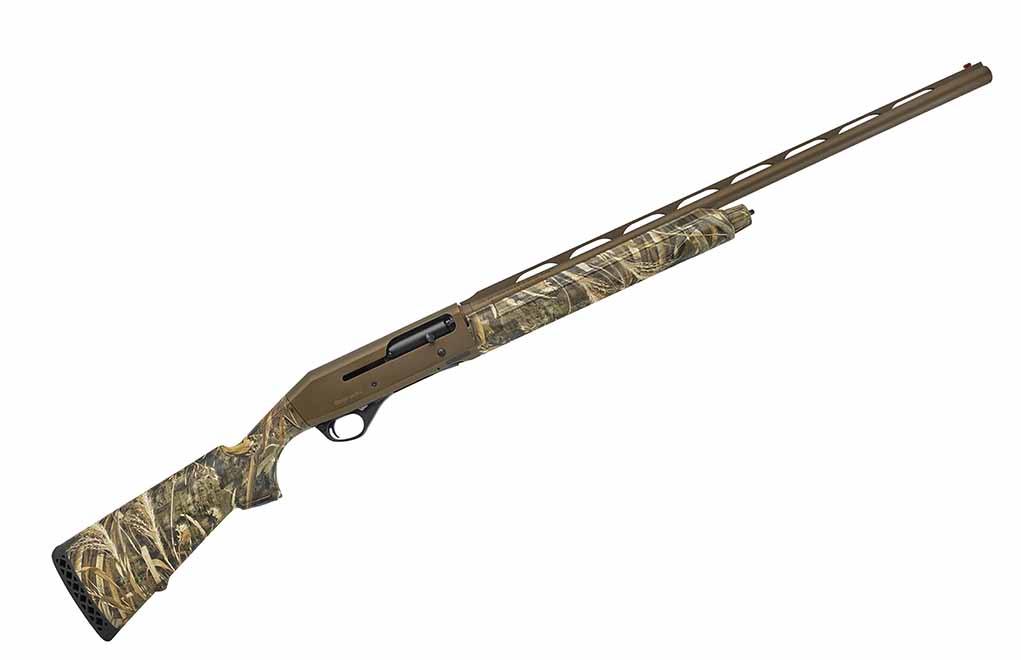
Stoeger answered the call from waterfowlers in 2019 with new features on its M3500 Waterfowl shotgun. In my view, the biggest advantage for the waterfowl hunter here is the Cerakoted barrel and receiver in Flat Dark Earth finish. The stock and forend are Realtree MAX-5 camo.
The M3500 is an inertia-driven gun, and loading, unloading and operating it in cold weather is made easier by the oversized bolt handle and bolt-release button. A specially machined and beveled loading port makes feeding shells into the magazine tube with gloved hands quick and efficient. Five (IC, M, XFT, close-range and mid-range) extended choke tubes and a wrench come standard with the Waterfowler.
A shim kit is also included; it allows for adjustment of the gun for drop and cast. The full-length vented rib is topped with an easy-to-see red-bar front sight that stands out in low light. The receiver is drilled and tapped for the addition of an optic, and it ships with a paracord sling. The M3500 shoots 2¾-, 3- and 3½-inch ammo, has a 14 3/8-inch length of pull, weighs 7.8 pounds and comes with a five-year warranty. This is a lot of duck gun. MSRP: $849; StoegerIndustries.com
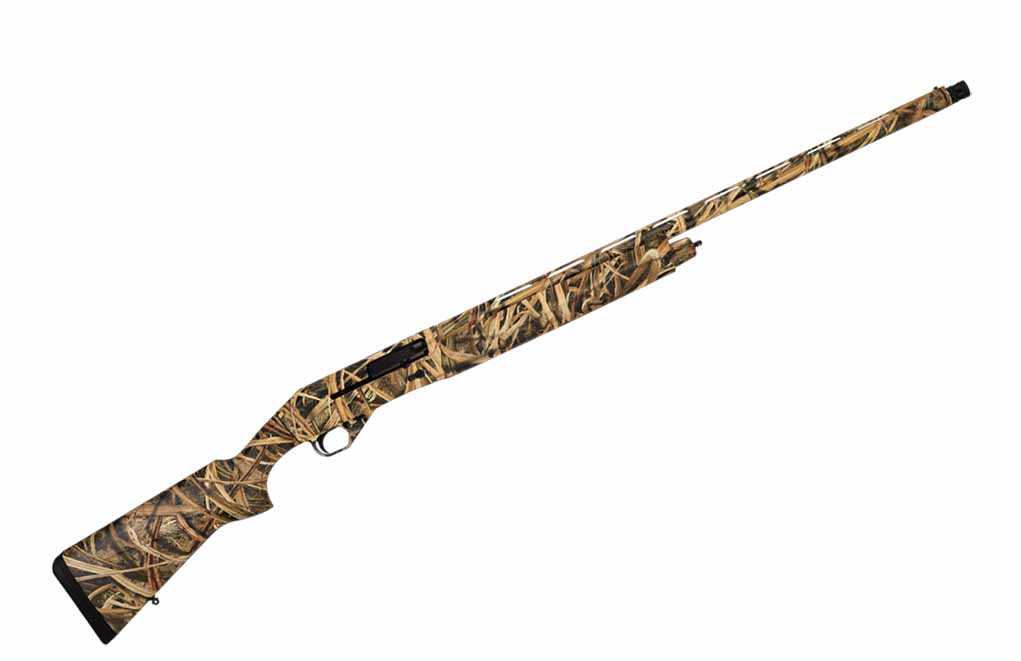
CZ-USA 1012 Synthetic Mossy Oak Bottomland Camo
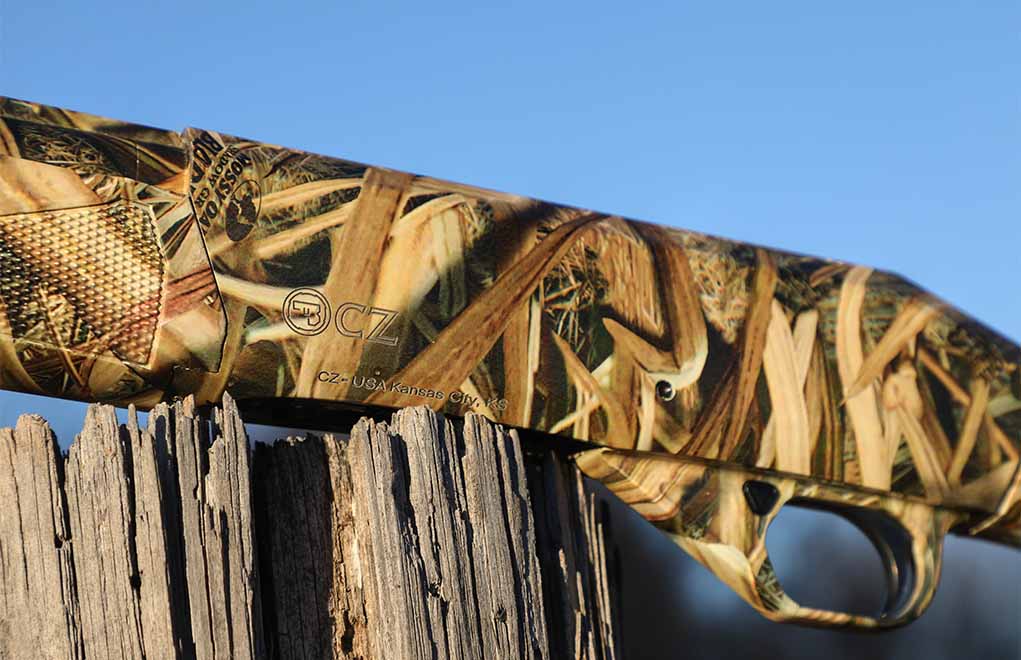
Hunting shotguns should do one thing without fail: go boom! every time you pull the trigger. The new CZ-USA 1012 in Mossy Oak Bottomland camo is a semi-auto that will shoot whatever you stick in it—from light, 2¾-inch loads to heavy, 3-inch Magnums.
This isn’t a gas-powered shotgun that can be a little finicky when it gets dirty; the 1012 uses the energy of the recoil to eject the spent shell and load the next round. CZ-USA put the 1012 through the wringer—firing more than 5,000 rounds without cleaning or any lubricant. The 1012 Synthetic has a 14½-inch length of pull, 8mm flat vent rib, 28-inch barrel, extended black chokes and weighs a surprising 6.5 pounds. MSRP: $749; CZ-usa.com
TriStar Viper Max 3½-Inch Magnum
TriStar has added a 3½-inch, chambered gun to its semi-auto line for the waterfowl hunter. The Viper Max allows you to shoot light target loads to heavy waterfowl loads utilizing a two-piston system. The Viper Max comes with light- and heavy-load pistons.
The light-load piston is used for 2¾-inch shells; heavier magnum rounds use the heavy-load piston. The secondary piston can be stored in the forearm for easy retrieval. The Viper Max comes with four Beretta/Benelli Mobil Chokes (SK, IC, M, F), as well as overmolded rubber grips on the stock and forearm for added comfort.
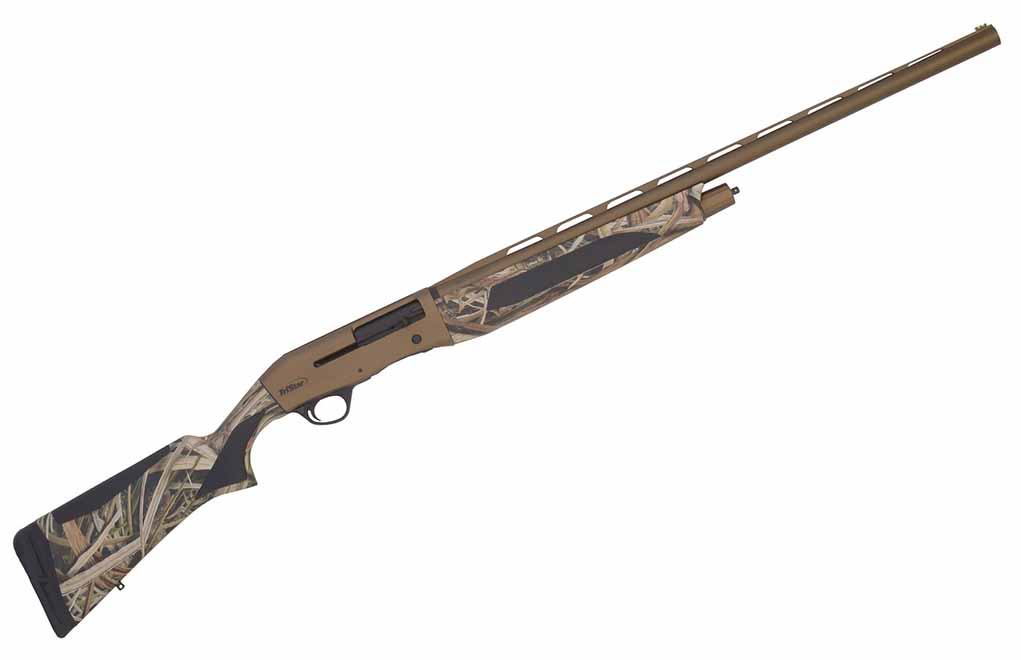
A newly developed recoil pad and swivel studs are also included, and the Viper Max is backed by a five-year warranty. MSRP: $825 (for the Bronze or Mossy Oak Blade model); TristarArms.com
SAR USA has just announced the SAR9 Compact X, a new compact 9mm CCW pistol for the U.S. market.
SAR USA imports SARSILMAZ firearms out of Turkey, and many of the company’s pistols and shotguns have been very popular on the U.S. market for the past several years. One of those pistol series is the SAR 9, and a new model has just been added to the lineup with the announcement of the SAR9 Compact X.
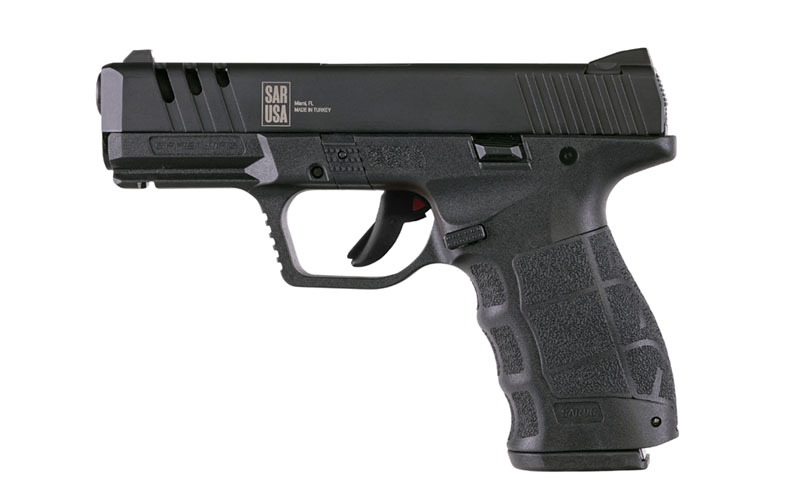
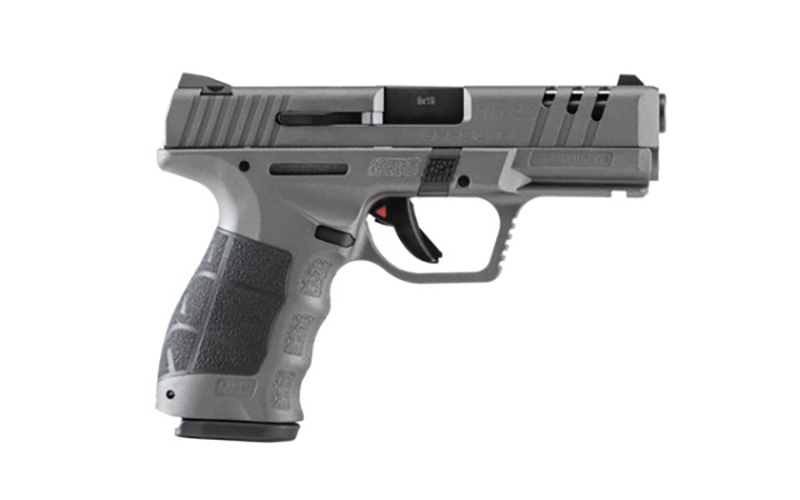
There has been a compact variant of the SAR9 on the market since 2021 but the new Compact X model has several extra features and options, and it comes with a lot more in the box than the standard version. Like the older model, the SAR9 Compact X is a polymer-framed, striker-fired 9mm with a 4-inch barrel and a 15-round magazine capacity. It has the same two safety mechanisms (trigger and manual thumb) and includes interchangeable backstraps and grip panels as well.
The new features of the SAR9 Compact X include lightning cuts on the front of the slide and several different color options for the Cerakote finish. Much of what differentiates the new “X” model from the standard variant is what’s included in the box, as the Compact X is aiming to be a complete carry package. Besides the two 15-round mags included, each pistol also comes with a holster, flashlight for the accessory rail, magazine pouch and a mag loader, all packed into a carrying case. The press release also mentioned the Compact X including an optics-ready slide, but this is not supported by other available information. If true, it would be a much-appreciated extra feature. MSRP for the whole package is $632.
Muzzleloader technology may be old, but it’s far from useless. Here are a few of the best muzzleloader options for the hunt.
There’s something about a muzzleloader that inspires a sickening form of nostalgia. There is just something so right about sitting in the woods with a light flurry of snow in the air and a warm pot of chili waiting for you back inside. Rarely does the image conjure with a modern gun made of machined aluminum and chambered in this year’s fad cartridge. Instead, the most appealing aspect of this fantasy involves a soot-stained walnut stock that’s cradling a patina-covered barrel.
It isn’t just about the sit or the shot, rather the entire experience of hunting with a muzzleloader: the smoke, grease, and acrid flavor of the air after your one shot goes off. Hunting with a muzzleloader doesn’t have to be a fantasy of yesteryear, but just like in those halcyon days, it will be a tremendous challenge.
Traditional Vs. Modern Muzzleloaders
Muzzleloaders can be generally broken down into two groups: traditional and modern. While there are indeed traditional guns made with modern materials such as synthetic stocks, what really makes them different is their priming method. The traditional guns have an exposed lock, either flint or percussion. To prime these guns, you must either pour powder into the pan or place a cap on the nipple, respectively. Modern in-line muzzleloaders usually have a break action that allows a shotgun-type 209 primer to be inserted. When closed, this primer is protected from the elements. As can be imagined, the side-lock traditional guns are more susceptible to moisture and bad weather. The different ignition types are the main distinction, but there is much more to consider when deciding what kind to buy and hunt.
There is a great divide between proponents of traditional and modern muzzleloaders, and they’ve even been known to disagree on what exactly constitutes a muzzleloader to begin with. The traditionalists maintain that the exposed hammer side-lock, either percussion or flint, is the only way to really do it right. This school operates under the impression that there is a spirit to the hunt, a worthy challenge that demands adherence to tradition and old methods. Among traditionalists, there is a prevailing view that modern in-line muzzleloaders are designed to skirt the spirit of the hunt and introduce modern materials and methods that give the hunter the same or similar advantages to hunting with a regular centerfire rifle in, say, .45-70 or .30-06.
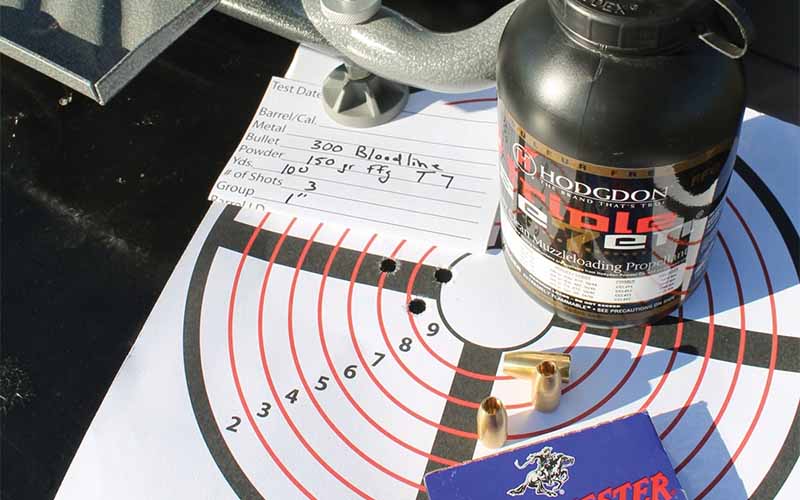
There is some merit to this, as aside from loading from the muzzle, there are few similarities between traditional muzzleloaders and modern in-line rifles. While there are of course some types of crossover models, the traditional muzzleloader can be thought of as a primitive, individual weapon in respect to its style and ammunition, whereas the modern ones can be thought of as standardized systems that just use a slow method of reloading. Modern muzzleloaders are in fact very, very advanced and can offer accuracy better than 1-inch for three shots at 100 yards. A great deal of research and testing has gone into making the pre-weighed powder charges, bullets and sabots as consistent and easy-to-use as possible. Again, while not as easy as a cartridge gun, modern in-line rifles are substantially faster and more accurate than traditional muzzleloaders.
Muzzleloader Accessories Worth Having
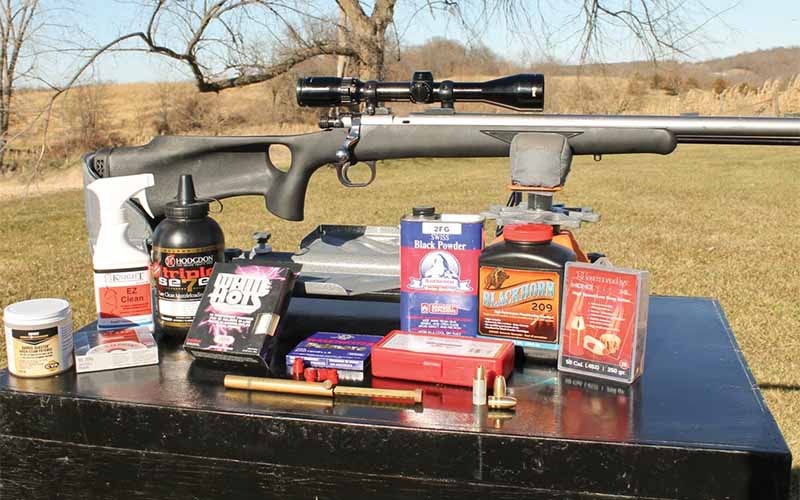
Since there is such a large degree of difference between traditional and modern muzzleloaders, their accessories are not exactly the same either. However, there are some universally useful items for both types and specialized tools for both traditional and in-line muzzleloaders. The first of these is a range rod, a longer, more easily used ramrod that facilitates faster loading during practice. While it may seem like a waste considering that muzzleloaders come with a ramrod, the ones stowed on the gun are really for field use. Traditional muzzleloaders often have a wooden ramrod and, while historically accurate, are quite fragile. Range rods are usually thicker and made of a durable polymerized material or nylon and have interchangeable ends to load different bullet types. Range rods can also be fitted with jags for cleaning.
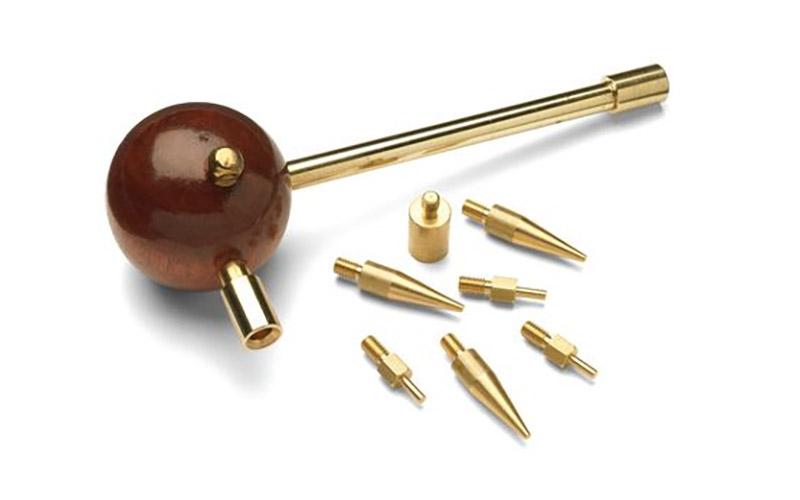
Another great universal tool is a bullet starter. Because the bullet and patch/sabot fit very tightly in the bore, it takes considerable force to get them started. This is also a time when the bullets can become deformed from repeated strikes against their tip or exposed surface. While it is not impossible to load using just the ramrod, it is awkward at the very least and can become frustrating if you are trying to load in a densely wooded area and keep getting your rod caught on branches. The bullet starter is basically just a wide, comfortable ball with a peg that is used to knock the ball in the first three inches or so. Many hunters carry this tool on a lanyard around their neck as to not lose it in the field.
When it comes to specialty gear for traditional guns, you’re going to want to make sure you have a safe way to carry your loose powder, balls, and patches. The thing about these guns is that there isn’t really a good way to make cartridges for them and achieve any real accuracy; about the best you can do is pre-measure your powder and roll your own paper cartridges using a dowel rod and some tape. Even then, this isn’t necessarily faster than just pouring from a powder horn or flask and individual paper packets can more easily get exposed to moisture. It should be noted that unless you are loading with paper that is instantly combustible, you shouldn’t be ramming the entire packet down the barrel. What the old-timers call a “possible bag” is a good choice for carrying these items and has been used throughout history.
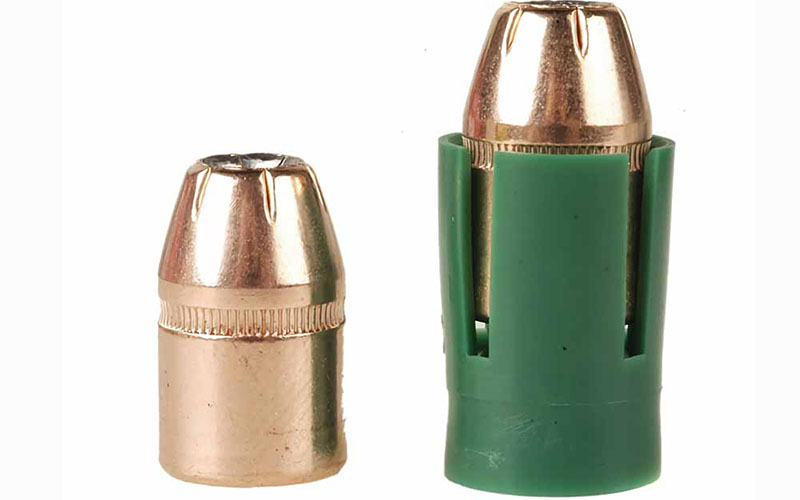
Sabot bullets.
Modern in-line muzzleloaders can take advantage of ready-made sabot rounds that are comprised of cylindrical-shaped columns of powder around a plastic sabot that contains the bullet. They can be carried in plastic tubes and are ready to load instantly. Simply stick the powder end in and start the sabot and it will slide down the barrel. It is very, very fast and, while not as fast as a cartridge rifle, it is ten times quicker than the traditional method with loose powder and patched balls. Because they are essentially modern guns, in-line muzzleloaders can often be outfitted with optics, bipods and other modern accessories without issue.
Performance Details
Today’s technology has allowed the muzzleloader to become a precision instrument. It is fully possible to use a high-end in-line to make clean kills out to 300 yards and beyond. While still not ideal for long-range shooting, a hunter armed with an in-line muzzleloader has very good odds of putting meat in their freezer.
Mike Mattly with the deer he shot at at 296 yards with a Knight .52-caliber Disc Extreme muzzleloader.
A great deal of effort has gone into making the modern in-line a high-performance antique. In reality, the muzzleloader has been obsolescent since before the Civil War, as breech-loaders and cartridge rifles were already in production at that time. The black powder era would see the first bolt action rifles, lever guns and even machine guns. As far as muzzleloader technology goes, it effectively stopped advancing in 1865. When muzzleloaders became popular again for certain hunting areas and seasons, they were reimagined through a new lens and became what we have today.
In setting regulations for hunting seasons and preventing overhunting, many agencies began implementing primitive seasons, resulting in the muzzleloader growing in popularity once again. This phenomenon dates back to the 1950s and ‘60s with America’s fascination with its frontier past. Some states even went so far as to mandate flintlocks with no optics as part of their initiative, such as Pennsylvania. While it may seem extreme to limit one to such a primitive gun, what it really does is remove all the modern advantages of the in-line and forces the hunter to get much closer.
Of note is that the traditional muzzleloader isn’t at all a weak-sauce rifle and is in fact exceedingly powerful for the task at hand, even for large game. When making a load for the traditional rifle, 100 yards is certainly in the envelope of performance. Beyond that, however, things drop off rapidly, both literally and figuratively. The trajectory of the patched round ball leaves much to be desired, however, if zeroed for 100 yards any shot inside that and out to 125 yards should achievable when using the same hold. The most common calibers are .45 and .50 for the traditional guns, but .54 and .58 are extremely effective too. There is some debate over whether .58 is really better given that it is not necessarily faster at the same ranges as .54-caliber, and is not especially heavier. A .54-caliber patched ball will get the job done at 100 yards on most, if not all, large game species.
Why The Muzzleloader
When picking a muzzleloader, you must first ask yourself what you intend to get out of the hunt. A traditional muzzleloader is a somewhat difficult rifle to master, as a substantial amount of individual attention must be paid to it to make it shoot well. Even then, it is limited to an effective range of 150-yards at a maximum, and 75-yards is far more ideal. If using a 1750s-style flintlock long rifle appeals to you, you need to devote a considerable amount of time and energy to get that rifle to perform at what is essentially one-quarter of the effective range of a modern in-line muzzleloader.
The appeal of the traditional muzzleloader is not in its long-range killing ability, but rather what it inspires in the individual hunting with it. Virtually all those that hunt with such a gun are not hunting to fill the freezer. Instead, they want a certain experience out of the hunt. They want to feel more attached to the land and the game and to feel what hunting was like in the age of their forefathers. In some areas of the country, there are flintlock-only seasons, but these don’t account for the majority of flintlock owners by any stretch. Conversely, the appeal of the modern in-line muzzleloader is precisely its ability to put meat in the freezer, as it is hardly different in terms of accuracy and handling compared to a common centerfire rifle.
Knowing a traditional muzzleloader will be less efficient in the field is a handicap that some are willing to accept. Due to the fact that scopes of any kind are rare on flint and cap locks, a major limiting factor is the iron sights on the rifle itself. Shadows at dusk can completely ruin a sight picture and, unless you’re using fiber optic sights, there is not much of anything that can be done to create contrast between the sights and game. This is further compounded with distance. If using a flintlock, you will almost certainly lose sight of the game upon firing, making the precision of the iron sights even more important. You want to ensure that your shot placement is as good as can be, and to gain that with iron sights and a side-lock you will need to close the distance considerably.
Upgrading muzzleloader iron sights.
It is safe to say that the modern in-line is a hunting tool, not a nostalgic element of our past. This type of muzzleloader mostly exists to increase efficiency while still playing by the rules of muzzleloader-only seasons. In reality, they are modern guns with modern accuracy that simply load in an antiquated way. You will have a greater likelihood of putting meat in the freezer with an in-line as a matter of the bullets alone; flatter trajectories and high-tech projectiles mean you’ll have more chances to make a hit at all distances where the bullet still carries energy. If you are a meat hunter or want that trophy buck, you’ll probably want an in-line.
Discussion On The 209 Primer
The 209 shotgun shell primer is a common, very reliable means of ignition. By adapting its use for Muzzleloaders, not only was ignition efficiency increased but it also increased accuracy with a more even burn rate. The use of the 209 primer as opposed to other ignition sources has allowed a great many advances in muzzleloader technology, including the pre-made powder pellets common to their sabot loads. A more consistent burn means a more consistent velocity leaving the muzzle, and virtually all modern muzzleloaders will shoot inside 2-inches at 100 yards using 3 Pyrodex-loaded pellets.
Another advantage to the use of an enclosed priming system is that there is no flash on the side of the gun and no pieces of the cap or spark that can come back into your face like on a side-lock gun. A large reason why a flintlock is hard to master is that you quite literally have to deal with powder exploding inches from your eye. Flintlock shooters as a result usually go for set triggers on their guns. Keeping the trigger pull as light as possible helps keep the sights on target as the gun fires, which can take an entire second in some cases. This is yet another reason why the modern in-line is far more similar to a centerfire rifle than its sidelock cousins.
Discussions On Powder
Real and true black powder is still relatively common and can be found on shelves all over the country, but it is not the primary choice for muzzleloader enthusiasts these days. Black powder substitutes are abundantly common and far easier to clean up after. They also generate less smoke than pure black powder. As far as performance goes, there isn’t too much difference in the results on-target; it is far more about the overall user experience.
If you want the truest experience or to have a historically correct piece, you may want to go with real black powder. With a modern in-line, it is the safest bet to go with pellets and sabots. This will maximize the performance of your modern gun and let you stretch it out further and with greater accuracy. For shooting at iron-sight distances using a flintlock or percussion gun, there won’t be a noticeable difference in accuracy in a practical sense. Some European varieties of true black powder are made to an exceedingly high standard and can deliver better accuracy than off-the-shelf substitutes, though they can be harder to come by in the States.
Black powder substitutes like Pyrodex generally behave in the same way as real black powder and loads identically in that it needs to be compressed under the ball to provide a clean burn. Substitutes have a reputation of not being great in flintlocks because they seem to not ignite as readily from the shower of sparks generated by the flint itself. Shooters wanting a cleaner flintlock experience will sometimes load the main charge using a substitute and prime the pan with fine true black powder. This seems to alleviate any ignition problems with flintlocks, but this solution really does depend on the quality of the lock and flint as much as the powder being used to prime.
Muzzleloader Care
Despite being so simple, muzzleloaders are relatively intensive when it comes to maintenance. Black powder and its substitutes are not inherently corrosive, but they do leave a porous, salty cake-like residue behind after firing that attracts moisture like there’s no tomorrow. Cleaning a traditional muzzleloader is relatively easy in that it can be simply flushed out with hot, soapy water and then oiled. Some people think that the old guns take a day to clean, but this is just not true, and even things like glass cleaner with ammonia can be used to flush the bore and wipe the metal parts down.
On a modern in-line you’ll need to spend a bit more time cleaning, but most have a removable breech that you can take out to clean the barrel back-to-front. Many people unscrew the breech plug, soak it in hot water and soap, and run a hose through the barrel to flush out the residue. Cleaning even a modern in-line shouldn’t take longer than fifteen minutes, though care must be taken on new rifles to avoid getting harsh chemicals and soap on your optics and finish.
If hunting, it is a good idea to fire a fouling shot to help season the bore and blow out oils and grease. This of course means that you’ll be hunting with a ‘dirty’ gun, but your odds of making a first-round hit on a clean barrel are low, as that shot can occasionally be thrown inches off zero. Some hunters will discharge their muzzleloader at the end of each day hunting and reload it in the morning. There is debate over whether it is necessary to go this route, but if you’re not in an especially humid or wet part of the country there isn’t a particular need to discharge the gun as soon as you’re done for the night. Many people just remove the cap and leave the charge in the barrel for their next sit.
For long-term storage you should store all muzzleloader types with the bore wiped down heavily in a protective oil as well as all the internals of the action itself. Even on a flintlock or percussion gun it is a good idea to fully disassemble it at the end of the season and to clean and oil all parts. The most damage the average muzzleloader will accumulate is not going to be in the field, rather it is when left to sit for months at a time.
Best Muzzleloaders For The Hunt:
CVA Paramount Pro .40-Caliber The CVA Paramount Pro is one of the most (if not THE most) advanced muzzleloaders currently made. CVA has spent a tremendous amount of effort into perfecting not just the design of the muzzleloader itself, but also the bullets it fires. It is designed around the new .40-caliber PowerBelt ELR projectiles. These new loads are designed around aerodynamic profiles, enabling them to carry more energy over longer ranges with flatter trajectories than ever before. Not only is this new setup able to offer a dramatic ballistic advantage, it does so with even less recoil than .50- and .54-caliber versions. MSRP: $1,905 // cva.bpishopping.com.
Traditions NitroFire VAPR Twist .50-Caliber Package Traditions is a well-established brand in the muzzleloader community and offers great products at reasonable prices. The NitroFire package features a 3-9x scope and a unique loading system. The rifle is designed to be a combination breech/muzzleloader. You will load the bullet only down the barrel until it stops on a shoulder near the breech. The action is then opened, and a self-contained Federal Firestick can be inserted followed by a 209 primer. This allows the rifle to be very consistent when loading for increased accuracy and ease of use. MSRP: $635 // traditionsfirearms.com.
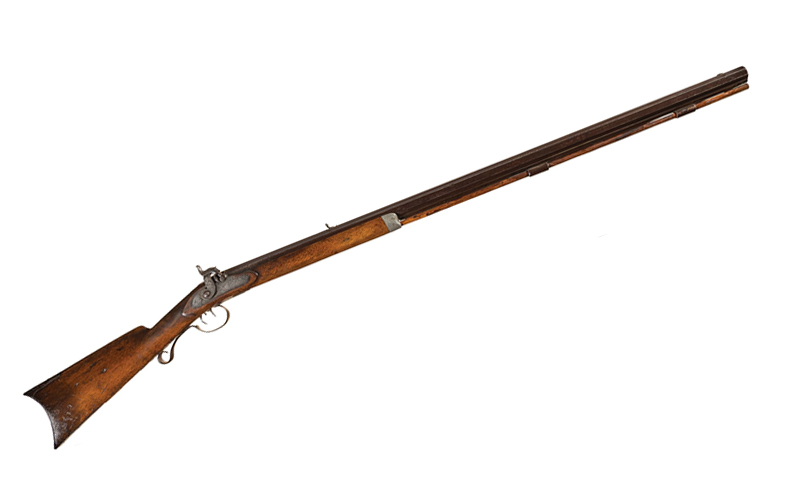
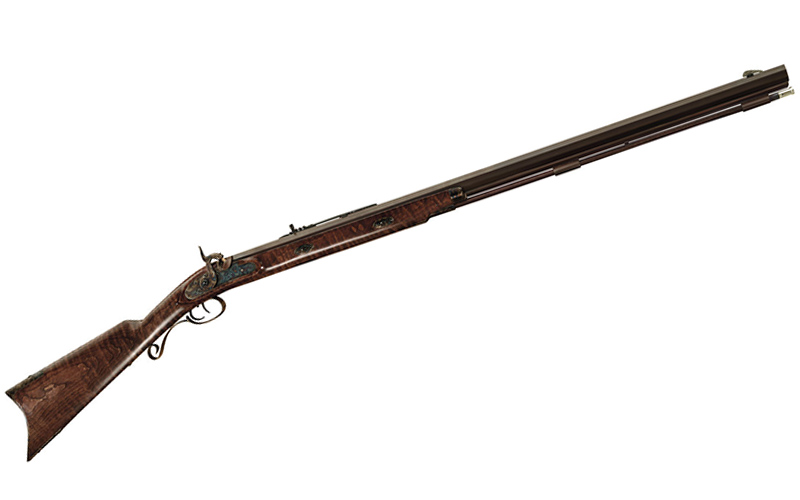
Pedersoli Missouri River Hawken Percussion Rifle If you want to get your Jeremiah Johnson on, this traditional front-loader from Pedersoli is a faithful representation of the type of large-caliber rifle that ventured west during the 1840s and 1850s. It is bored for .45-caliber and takes standard no. 11 percussion caps making it easy to load for and become proficient with. It is an iron-sighted rifle, but thanks to its double-set triggers and heavy contour 30-inch barrel it can deliver excellent accuracy and power at 200 yards. MSRP: $1,299 // davide-perdersoli.com.
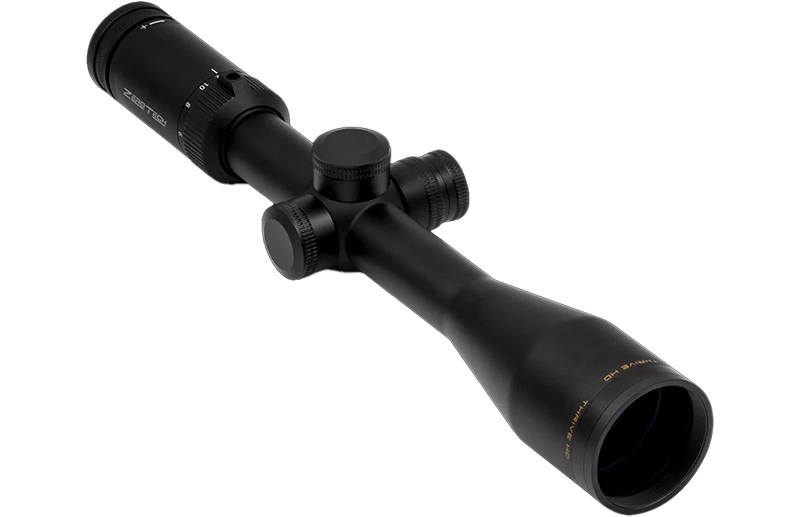
ZeroTech Optics has just expanded its catalog with the LR Hunter series of rifle scopes, a hybrid optics line that aims to do it all.
ZeroTech Optics is an Australian company with a focus on hunting scopes, so it only makes sense that their products are as versatile and rugged as the land they’re designed in. Their latest riflescope series is called the LR Hunter line, and the optics have an interesting set of features that could be appreciated by anyone who hunts in a variety of different environments and ranges.
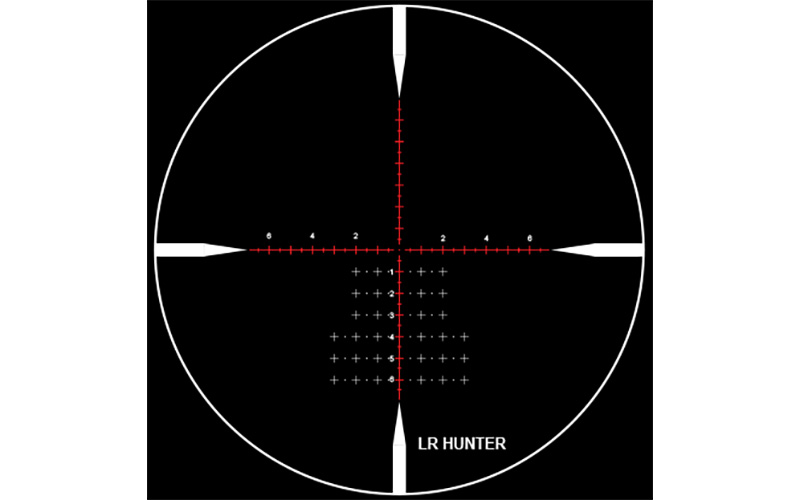
At launch, the LR Hunter series features two scopes, both called the Thrive HD. One is in 4-16x44mm, and the other is in 6-24x50mm. Both models, however, are First Focal Plane (FFP) designs and use the LR Hunter glass-etched, illuminated reticle. ZeroTech claims that by incorporating an illuminated reticle into an FFP scope design, they’ve created a true hybrid, “do it all” hunting scope.
The LR Hunter scopes achieve this by providing a more traditional sight picture on lower magnification levels but enabling better precision when used with greater magnification at longer ranges. This is a great feature not only for Australian hunters, but many American hunters as well. When chasing certain kinds of game found in both countries, you never know when you’ll be presented with a shot very close by or at the very edge of your maximum engagement distance. The LR Hunter scopes should make either shot equally achievable.
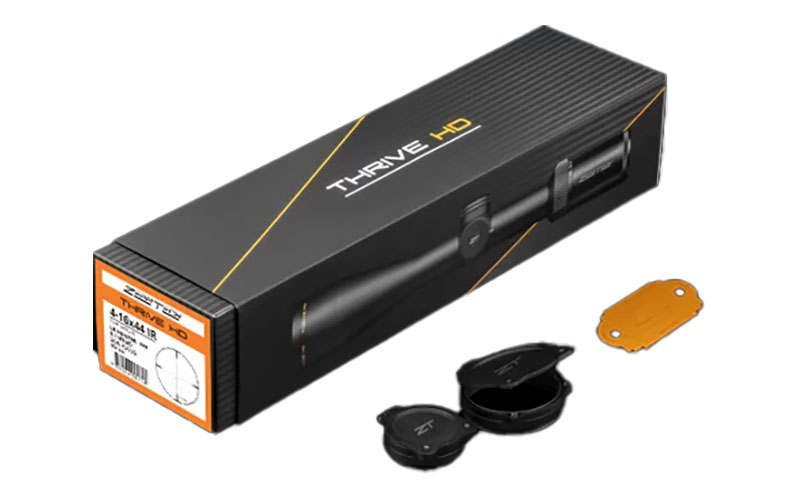
Both scope models in the LR Hunter series will include a set of metal flip-up lens covers, a scope multitool, an instruction manual, reticle range chart and a microfiber cloth. MSRPs are not yet available.
Ringing steel is great, but the humble paper target still has a lot to offer when it comes to improving your shooting skills.
How do you practice shooting targets at long range? Common sense would say, by shooting targets at long range. But not everyone has access to long-distance ranges. So, how can we train ourselves to succeed when the range is less than 200 yards?
Maximize Paper
I love to shoot on paper. Paper targets don’t lie to you—there’s no place to hide with it. However, we’re seeing increased pushback toward shooting paper. For many long-range shooters, steel is a much easier target to manage. But paper tells a story, and it’s one worth listening to.
Putting up a paper target at 100 yards is very easy. The average range in the United States is 200 yards. There’s a lot of very productive work you can accomplish inside these distances. I’d highly recommend you stop shooting prone or bench-style groups at 100 yards unless you zero the scope.
You may be surprised by a new shooter’s difference in group size when comparing 100-yard versus 200-yard results. While the mindset everyone uses is 1 inch at 100 becomes 2 inches at 200, this rarely plays out in real life when it relates to group size. Instead, we see a student with a .65-inch group at 100 shoots 2 inches at 200 yards. Two hundred is a much more difficult distance for groups. This very reason is why we recommend groups at 200 instead of 100.
What we see in terms of practice success at 100 yards is positional shooting.
Build and Break Drills
Building and breaking drills means you step back from your position and rebuild that position for every new shot or series. It’s creating positive repetitions, so you’ll revert to muscle memory when faced with a similar scenario under less-than-ideal conditions.
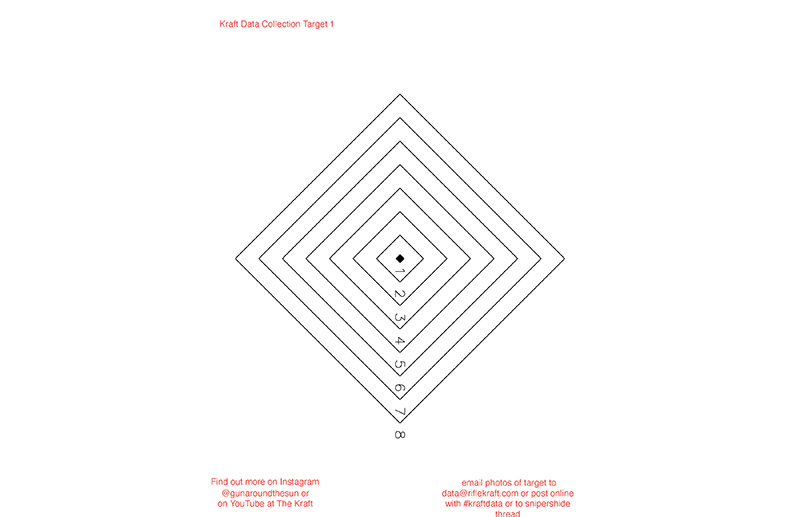
Here’s the original Kraft Data target. Some shooters found the center difficult to see, so the contrast was increased in the other versions.
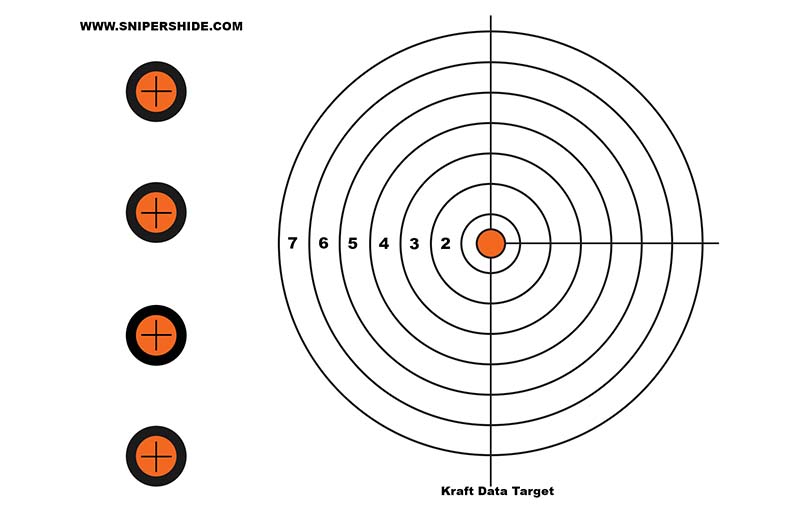
Local competitor Chris Way has introduced the Kraft Data Challenge that many of us are using today. This target gives the shooter an instant visual to diagnose shooting problems. Using his uniquely styled target, the shooter takes three shots from sitting, kneeling, standing and prone to identify accuracy and precision. Accuracy tells us how close to the center of our aiming point we’re impacting, while precision identifies the group size.
Here’s the Sniper’s Hide updated version of the Kraft Target. The rings are used to score the drill.
Dot Drills
For some of us, shooting groups is a lesson in frustration. Not every shooting discipline uses groups as a metric for success. The tactical shooter and hunter are “one hit, one kill” types. Hunting rifles aren’t designed to shoot groups; the barrels are too thin, heat too fast and can walk. That brings us to the Sniper’s Hide Dot Drill.
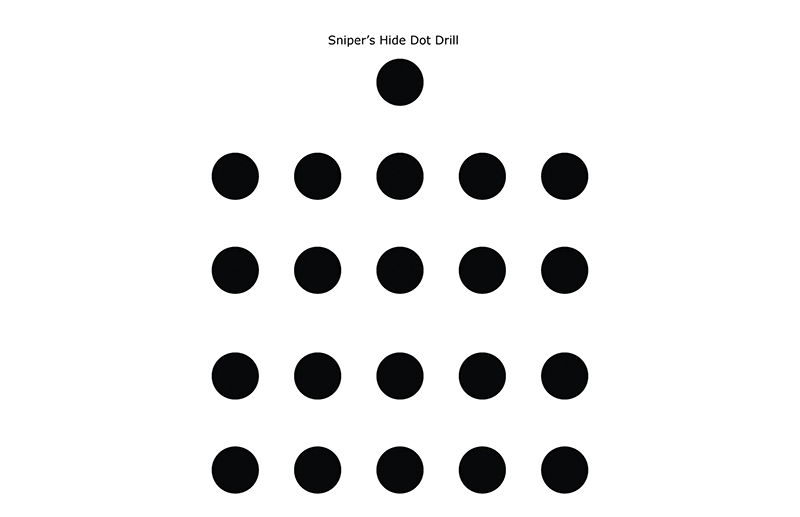
Here’s the original 21 Dot Drill target from Sniper’s Hide. Your only limitation is your imagination when it comes to shooting paper.
When I worked in Texas at Rifles Only, I designed the Dot Drill. The majority of our classes were military and law enforcement—the single-shot crowd. On top of that, these shooters are dynamic; their training requires them to get on target as quickly as possible. Speed wins in this case.
The Dot Drill was designed to put one round on each target. The original sheet was all 1-inch dots. It has since been modified and adapted by numerous groups of shooters. Each row of five targets was designed as a single drill. The first row would slow fire, giving 1 minute. The second row might be the support side—right-handed shooters use their left. The next row was the up-and-down drill.
The up-and-down drill starts with the shooter standing behind the rifle, magazine in and bolt back. On the Gun Command, the shooter drops down and fires one round in 15 seconds. The drill is then reset, and the next gun command gives 12 seconds for the next target. After each reset, you reduce the time: 10 seconds, 8 seconds … and finally, 6 seconds. Try it—it’s a great drill for working at 100 yards and will make you much faster on the rifle.
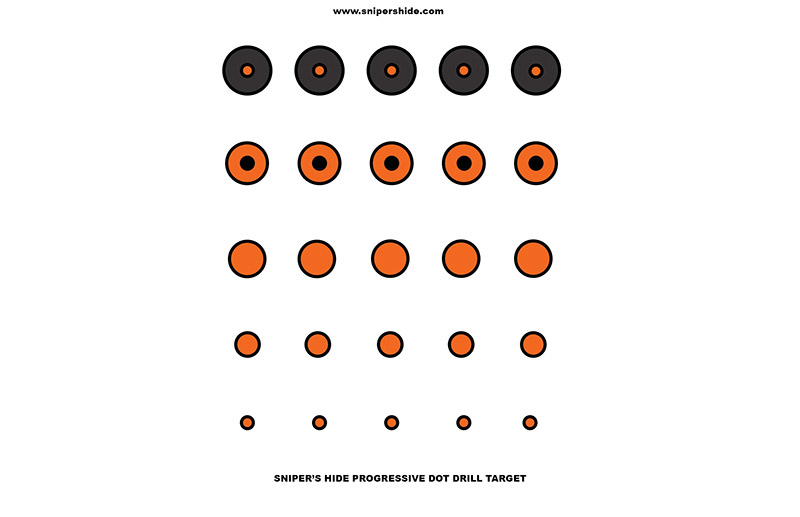
The Progressive Dot Drill is designed to increase the difficulty. The ¼-inch targets are extremely hard to hit even under the best conditions.
Mix And Match
Mix up your training; a combination of both steel and paper targets is a great way to improve. Paper is cinematic storytelling, while steel is the equivalent of a wolf whistle. The report back of an impact can be satisfying, but all you know about the shot is that it worked.
Paper explains the process. Are you strung vertically or more so horizontally? Do you have multiple groups, two touching here with the other three scattered? Each pattern is an explanation of what the shooter is doing behind the rifle. Please don’t ignore this valuable information when it’s available.
Training is essential—the best way to improve is through practice. How you practice has a bearing on the results and your long-term success.
Editor’s Note: This article originally appeared in the April 2021 issue of Gun Digest the Magazine.
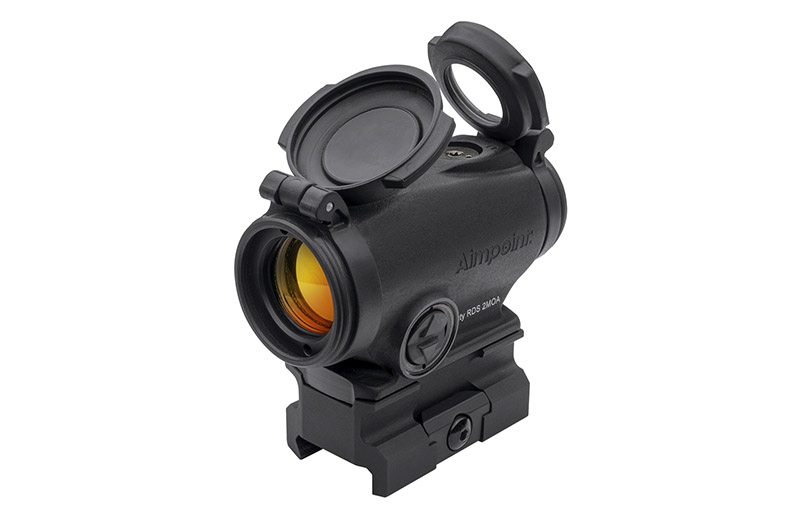
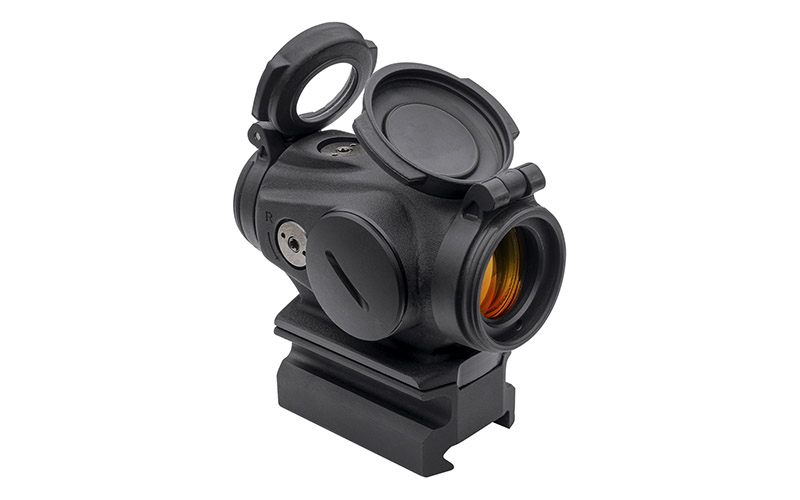
Originally only available to law enforcement, Aimpoint’s Duty RDS red dot sight can now be purchased on the commercial market.
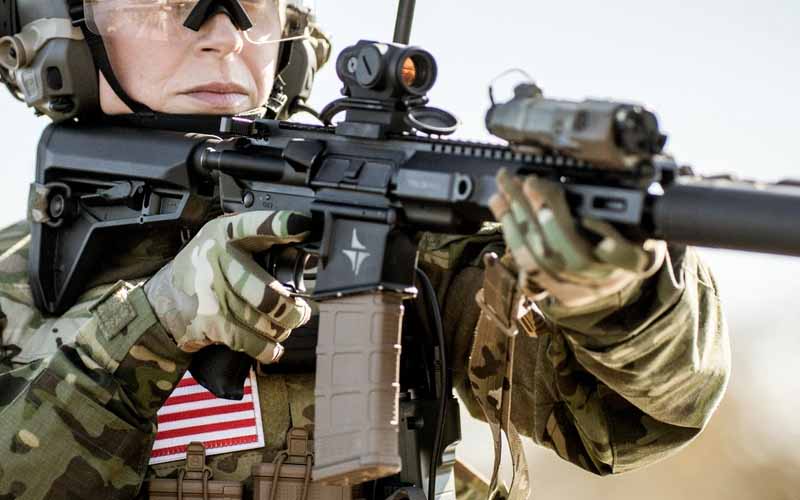
Founded in Sweden in 1974, Aimpoint got its start developing red dot sights for hunting and sporting purposes. Eventually, the technology caught on with warfighters too, and by the late 1990s Aimpoint was under contract to produce red dot sights for the U.S. Army. Jump to 2022, and red dot-equipped rifles seem more commonplace than iron-sighted ones, and Aimpoint is still at the forefront of the technology’s progression. This is evidenced not only by the company still serving as the gold standard of the electronic optic industry, but by their continued procurement of government contracts. The most recent of these was the Aimpoint Duty RDS. The red dot was developed to meet the requirements of law enforcement agencies and became exclusively available to them in January of 2022. Now, four months later, the Duty RDS is finally available on the commercial market as well.
The Duty RDS features a 2-MOA red dot reticle with 10 brightness settings; four are for use with night vision and six are for daytime conditions. The sight is powered by a single CR2032 battery and can stay illuminated for over three years on brightness setting seven. The battery can also be replaced without removing the optic thanks to its side-mounted battery compartment.
Developed for duty-use, as its name implies, the Duty RDS is incredibly tough and resistant to the elements. The optic features a pressure-forged aluminum housing that can withstand most temperatures found on Earth, and it can survive being submerged in up to 80 feet of water. Despite being so rugged, the red dot sight manages to remain very light as well, weighing only 3.8-ounces without its mount.
Each Duty RDS includes one single-piece mount/spacer, two flip-up lens covers, one battery and an Allen T10 wrench. The sight is now available to the U.S. commercial market and has an MSRP of $499.
Zeroing your rifle is one of the most fundamental skills a shooter can have, yet many still lack the knowledge to do so.
A rifle that doesn’t hit to the sights isn’t of much use. I saw a lot of those as a gunsmith, and I spent a lot of my time handling that chore for customers. No, really: You’d be surprised how many hunters back then (and for all I know, today) buy a rifle, scope, mount and ammo, and ask, “Can you sight it in for me?” Sometimes, they even have detailed instructions for that outcome: “I want it 2 inches high at 200 yards.” (No idea why that was a common request, but it was. Someday, I’ll run the math and see what it gets you.)
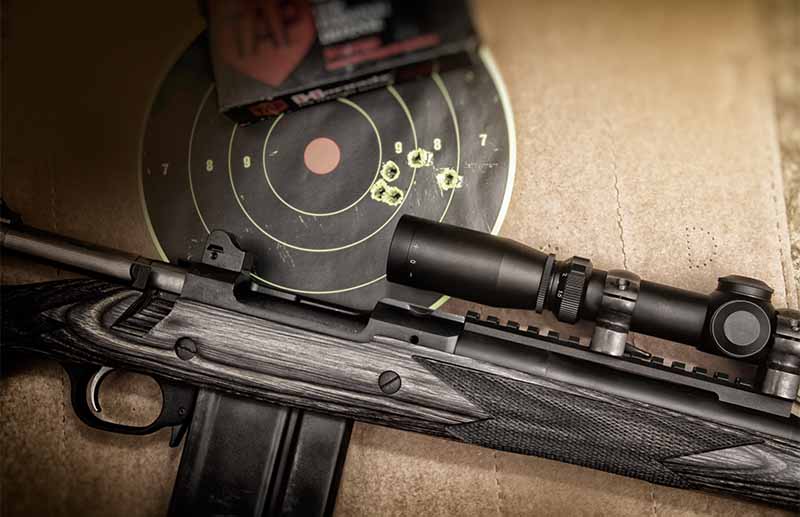
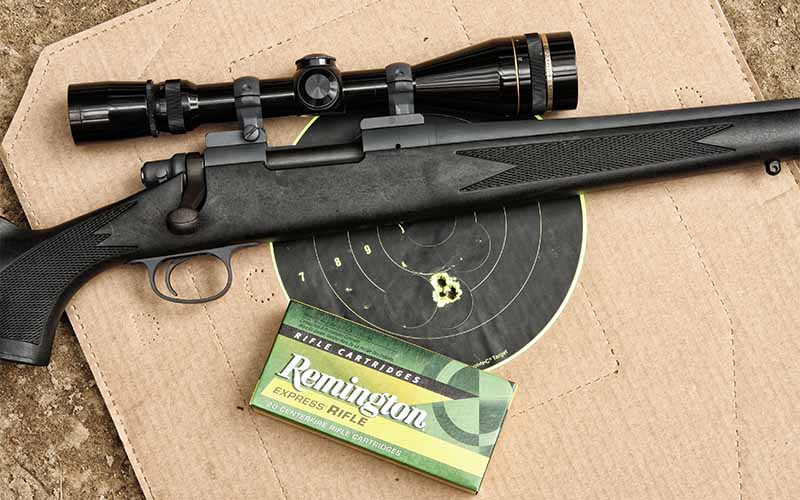
If you do a proper job at 25 yards, your 100-yard target will be close enough to the center that it’ll take just a few clicks to get it on zero. If you start at 100 yards, it might be several boxes of ammo before you see something like this.
So, once a week, leading up to Opening Day, I’d load up my pickup truck with guns to be sighted in and head off to the gun club. Zeroing a rifle (or shotgun or handgun) ends up being one of two processes, one of them easy and one of them hard.
The easy one? Checking something that was already sighted in and hadn’t been changed since then. A previously zeroed rifle that has been in the rack or gun safe since the end of last hunting season isn’t likely to have changed its zero. So, you just post a target (usually at 100 yards) and shoot as many rounds as it takes to determine to your satisfaction that it was still zeroed. For me, that was a grand total of three rounds.
The hard ones? Those where the scope has just been mounted. Or the owner says, “I don’t know where it’s hitting.” On those, posting a target at 100 yards was almost always a waste of time.
Before we get started, here’s a reminder: There’s no such thing as “offhand zero.” You don’t check the zero of a rifle standing, kneeling, sitting…and rarely even prone. Get a solid bench, use sandbags or a shooting support. Get the rifle as solid and unmoving as you can. Then, you can shoot.
There are two ways of dealing with this. Both are easy at some ranges and really tough at others, for different reasons.
You want to have a solid, comfortable and stable position when you go to zero. No doing it offhand or in a “handy” rest. Get solid.
The 25-Yard Approach
Post a target at 25 yards. Carefully shoot a group (three shots will do) and see where it’s hitting. Given a foot-square target, on a 2-, 3- or 4-foot square target holder, you’re going to get hits somewhere. Then, you crank the sights or scope around until you’re as close to your point of aim a 25-yard target can get you.
Quick tip: You probably want to be about an inch or so low at 25 yards, to be dead-on at 100.
Oh, and remember: The scope units of adjustment are predicated on a 100-yard distance. So, if your group is 1 inch from the point of aim at 25 yards, you have to crank in 4 inches of scope adjustment. If the scope instructions read “four clicks per inch,” that means 16 clicks. And don’t be bashful—don’t “sneak up on it.” If the group looks an inch off at 25 yards, give the scope the full 4 inches of correction for your 100-yard target testing.
Now, you can go out to 100 yards and do a final check.
Eye relief is important. If you’re too close, the scope will hit you in the face. If you’re too far away, you don’t get the full field of view through the scope.
When doesn’t this work? When the range setup or organization doesn’t permit a 25-yard rifle target check. If it’s 100 yards or nothing, then you have your work cut out for you.
The ‘Getting Dirty’ Method
The other method is what I called the “dirt splash” method.
First, I’d post a half-dozen targets at 100 yards and set up my spotting scope. I’d then set up my gear (and the pile of rifles) at the 100-yard firing line of my gun club, and as soon as shooting time rolled around in the morning, I’d get started. I’d pick a spot on the backstop (our club had a 60-foot backstop, with mature pine trees on top), and from a sandbagged shooting position, I’d fire a shot. I’d compare the hit to the aiming point and crank the scope over. If the next one obliterated the dirt clod, I’d then pick one of the targets and fire a shot.
Make sure the scope mount, or base, is solidly attached to the rifle. If not, your zero won’t be. This is a Scout Rifle setup, but the same rule applies: It must be solid.
From there, it was simple: Plot the hit, make a correction and fire another shot. I could, when things worked out, get a rifle on-center in three shots. If it took more, then I’d shoot more. When a target got too many hits on it to keep track (even plotting the hits on a chart on the shooting bench, it got messy), I’d switch to the next target. Each target was good for two, three or four rifles.
It’d take me a couple of hours to zero a truckload of rifles. I’d stack them back in their cases, in the truck, and get back to the shop to write them up and put them in the rack.
When doesn’t the dirt-splash method work? When the light or the condition of the dirt doesn’t let you see the splashes. Back before cheap digital video, this was sometimes a problem. Now, I’d just set up a camera, video the shot into the dirt and play it back. Sometimes, technology is wondrous. Sometimes.
The scope rings must be tight enough to hold the scope securely. If not, it’ll slip or vibrate, and both mean a non-zero zero.
Last-Resort Troubleshooting
What if a rifle just won’t zero? There are a few reasons that are simple … and one that you don’t want to be telling people about. First, check the action screws. If it’s a bolt-action rifle, are the screws holding it in the stock all tight? If it’s a two-piece stock, is the stock tight and the forearm snug? Loose screws cause problems. Yes, obvious, I know, but you’d be surprised how many people don’t check.
Next, check the scope mount and ring screws. Anything loose here causes problems.
I was at a gun writer event and took a few shots on a manufacturer’s .338 Lapua, at a steel plate in the next zip code. My third shot was high-right. “Hmm, I held center on that.” My spotter remarked, “It did the same thing, low-left, to me.” Yep, a loose scope base was the problem.
So, check those screws and make sure they’re tight. A busted scope? There’s nothing you can do about that but send it back to the manufacturer.
The action screws must be tight or your accuracy will go away. It might not change the zero, but a “zeroed” rifle that shoots 10-inch groups is rarely useful.
The last one is simple: wrong ammo. In an AR-15, putting “green tip” 62-grain ammo in a 1:12 twist rifle will get you keyholes at 25 yards and nothing on paper at 100. There are some rifles with too-slow twists, and if you aren’t careful, using a bullet that’s too heavy can cause problems.
But the classic instance I experienced was a customer who brought in his Marlin lever-action because “it won’t hit the target.” I checked it out, took it to the range, and printed three shots touching at 50 yards, on-center. He picked it up and, later that afternoon, came back saying, “Won’t hit the target.” I finally got around to asking about his ammo, and he produced an ancient box of .30-30 170-grain soft-points. That’s great deer ammo, but it’s not at all suited for a rifle chambered in .35 Remington. He had only ever known of lever-action rifles being chambered in .30-30 Winchester, so that was the ammo he bought for his new rifle. No wonder it wouldn’t hit the target. A .308-inch bullet going down a .358-inch bore isn’t going to receive much in the way of guidance or stabilization.
In a pinch (but I don’t recommend it), you can get a good zero from prone, with a support under your off-hand … but do it only if that’s the only choice.
You Get to Define Accuracy
Oh, and how much is “enough” accuracy?” That depends. I had another customer who, by the 1980s, had gotten a deer each hunting season since the Eisenhower administration. His kids were embarrassed at how grubby his rifle was, and finally prevailed on his bringing it in for a cleaning and checkup.
It was a worn-to-white-steel Winchester 94 rifle in .32 Special. I scrubbed it up, checked the bore and, just out of curiosity, took it to the range. That rifle shot 8- to 10-inch groups at 100 yards. When he picked it up, I mentioned that I had range-tested it. “You didn’t change my sights, did you?” Nope. But how did he get a deer each year with accuracy like that. “I neck-shoot them in the swamps” was his reply.
If this is your 25-yard target, then you are in business. From this, you can adjust to be on paper at 100 yards.
Well, 8 to 10 inches at 100 yards doesn’t seem like much, but if you’re ghosting in the swamp and shoot a deer at 50 feet, you have plenty of accuracy. The man was a hunter, not a rifleman.
So, when you’re fussing over your zero, trying to get the last half-inch of precision at 100 yards, keep in mind that the “A” zone of a whitetail is about the size of a basketball. If you can keep your shot within 3 or 4 inches of your point of aim, you’re going to get the job done. Well, the shooting part. Then, there’s the tracking, tagging, cleaning and hauling.
Once your rifle is zeroed, the rest, of course, is on you.
Editor’s Note: This article originally appeared in the September 2021 issue of Gun Digest the Magazine.
Sig Sauer has just been announced as the winner of the U.S. Army’s Next Generation Squad Weapon (NGSW) Program.
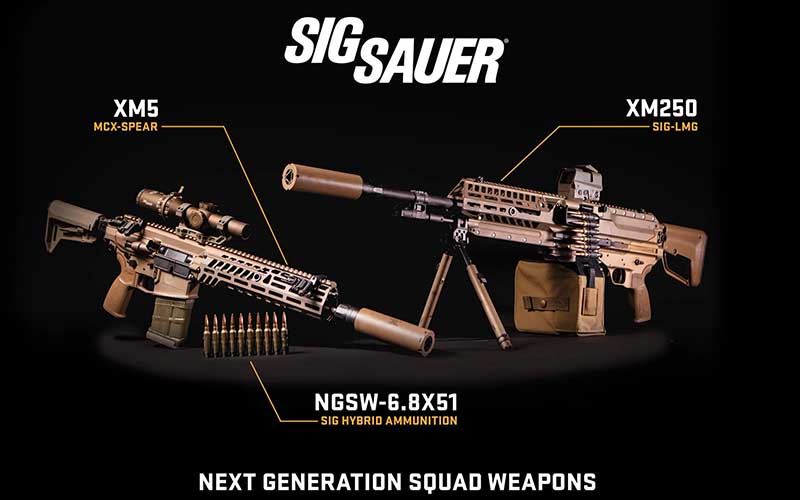
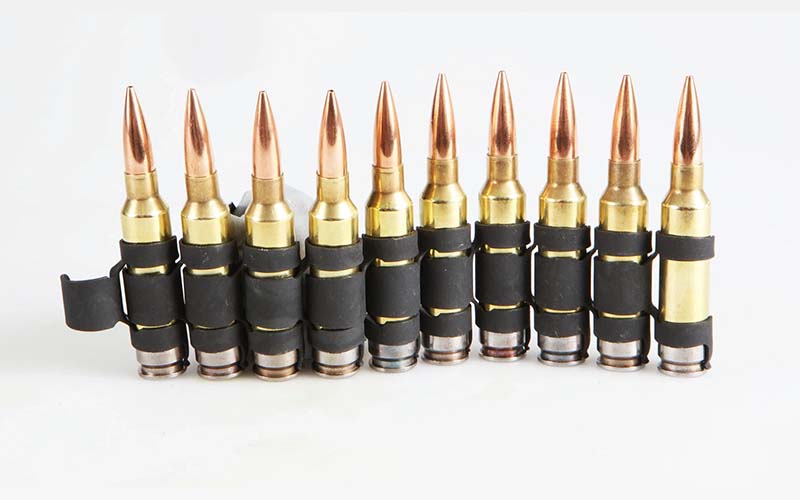
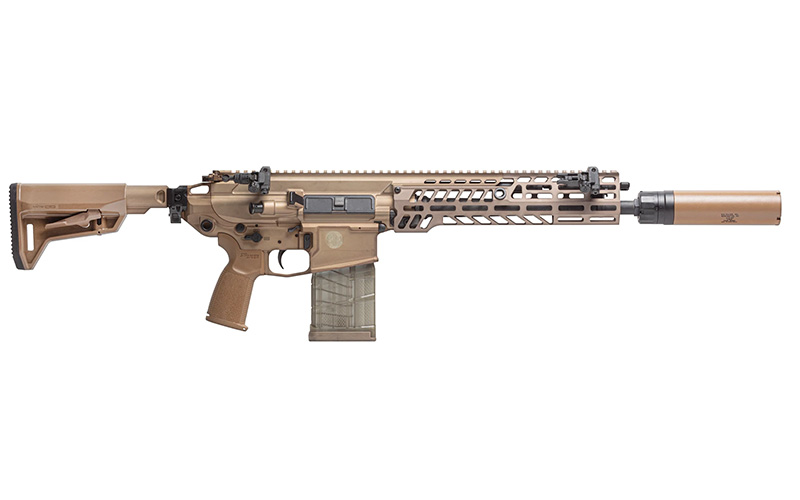
The Next Generation Squad Weapon Program, or NGSW, was announced by the U.S. military in 2017. The goal of the initiative was to find replacements for the currently issued service rifle, light machinegun and their shared 5.56x45mm cartridge. After 27 months of testing design submissions from at least five different companies, the U.S. Army has finally announced the winner. Sig Sauer’s MCX-SPEAR (XM5) rifle is slated to replace the M4, their SIG-LMG (XM250) will replace the M249 and both new weapons will fire Sig’s 6.8×51 FURY Hybrid Ammunition (6.8mm Common Cartridge). SIG SLX suppressors were also selected to be used with the weapon system.
The benefits offered by the new equipment are multi-faceted, but the 6.8mm cartridge is the heart of the upgrade. It was designed to be flat-shooting and powerful enough to defeat modern body armor without a dramatic increase in recoil, and the hybrid nature of the case allows for a much higher chamber pressure without significantly increasing weight.
It’s not surprising that the Army ended up selecting Sig’s rifle design over the other manufacturers’ submissions, as the MCX-SPEAR’s manual of arms is the most similar to the AR family of weapons. For those interested in owning their own Next Generation Squad Weapon, Sig has already made commercial variants of the rifle and ammunition available for purchase. As for those who are issued their gear, it will likely be quite a long time until we actually start to see these new weapons in soldiers’ hands.
Ron Cohen, President and CEO of Sig Sauer, said this in response to the company being awarded the contract:
The U.S. Army is taking a bold step toward command of the 21st century battlefield and SIG SAUER is immensely proud to be the selected provider for this historic revolution in infantry weapons. The fielding of the SIG SAUER Next Generation Squad Weapons System will forever change the dynamic of military engagement for America’s warfighters with American innovation and manufacturing,
Once the gentleman’s way to carry concealed, pocket pistols have fallen out of style. Should they be left to rest, or do they still have merit as defensive weapons?
Updated 4/21/2022
Defining Characteristics Of Pocket Pistols:
Small enough to be comfortably concealed in a pocket.
Typically semi-automatic if not a Derringer.
Commonly chambered for .22, .25 ACP, .32 ACP, or .380 ACP.
Have been replaced in common usage by subcompact 9mm pistols.
These days we take holsters for granted. Whatever model of pistol you’ve chosen to carry, odds are you’ll have no trouble finding a holster that was made for it. For much of modern history, however, the only holster choices were the military belt-style which are worn on display for the world to see. Until recently, those who wished to conceal a handgun did so by either tucking the gun in their waistline “Mexican style,” or by choosing a pistol small enough to be carried in a pocket. Unergonomic and chambered for anemic calibers, it’s understandable why the world moved on as technology progressed, but this ultra-small class of pocket pistols may still have their place.
The greatest argument against pocket pistols is the fact that they are chambered for calibers considered far too anemic for proper self-defense today. Colonel Jeff Cooper once said this on the subject:
“Carry a .25 if it makes you feel good, but do not ever load it. If you load it you may shoot it. If you shoot it you may hit somebody, and if you hit somebody, and he finds out about it, he may be very angry with you.”
It’s a funny quote, and there’s some truth to it, but it is directly at odds with another common adage:
Rule #1 of a gunfight: Bring a gun.
So, which to listen to? Ideally, both. While it’s true that a pocket pistol of any kind would prove too weak to dissuade a bear from mauling you, humans are not so resilient. During the pocket pistol’s heyday, they were as popular with grandmas as they were with criminals, and any coroner from this era will tell you that these mouse guns have put more than their fair share of people in the ground. Ultimately, shot placement if far more important than ballistic capability regardless of the round being fired. The efficiency of modern bullet construction has placed less emphasis on pistol marksmanship than there was during the days of FMJs, but it hasn’t changed the reality that a .22 in the eye will kill someone just as dead as emptying a box of 9mm into their chest.
This obviously is not an argument against carrying more powerful calibers with modern defensive loads, but it is an argument that having a pocket pistol is better than only having a knife or your fists.
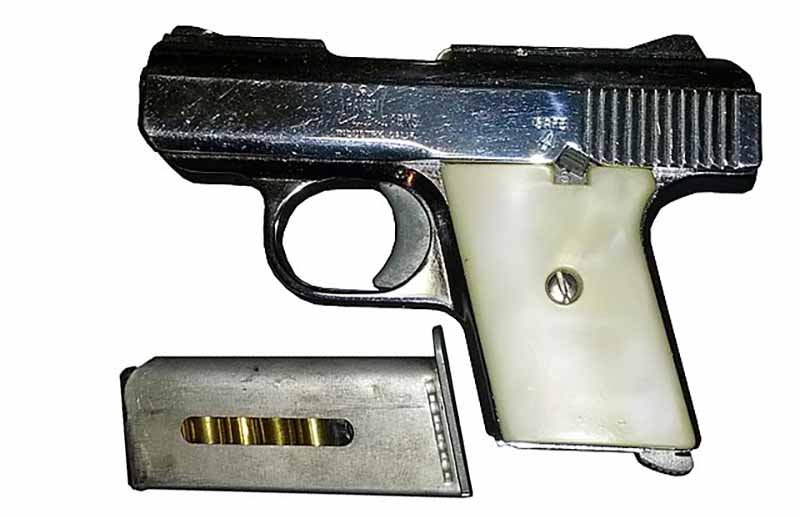
Raven MP-25 “Saturday night special”. Photo: Wikipedia
Better Than Nothin’
How many times have you stepped out of your house unarmed because you’re “only checking the mail?” While it’s a pretty safe bet that your trip to the end of the driveway will be uneventful, you never know for sure. Pocket pistols fill that niche between “I want to be armed” and “I don’t want to get dressed”, offering a convenient way to carry a lethal weapon without donning jeans and a belt.
Pocket pistols’ primary draw is their unparalleled concealability. Whether being carried in an ankle holster, stuffed in a pocket or affixed to a spring-loaded arm contraption à la Travis Bickle, you’d be hard-pressed to find a better gun to do it with than a pocket pistol.
Robert De Niro in Taxi Driver with his S&W Escort. Photo: IMFDB
Picking The Best Pocket Pistol
For a class of gun that’s existence is justified by an “it’s better than nothing” attitude, some might feel that not too much thought needs to be given to the selection process. Pocket pistols are also often used as backup guns, however, and even your plan B needs to be reliable. There are a wide variety of pocket pistols in existence, spanning a slew of different calibers, makes, models and designs. The issue is further complicated by the fact that many of these pistols are no longer in production and are only available used. Thankfully, however, there are still some good options on the market.
5 Great Pocket Pistol Options For 2022:
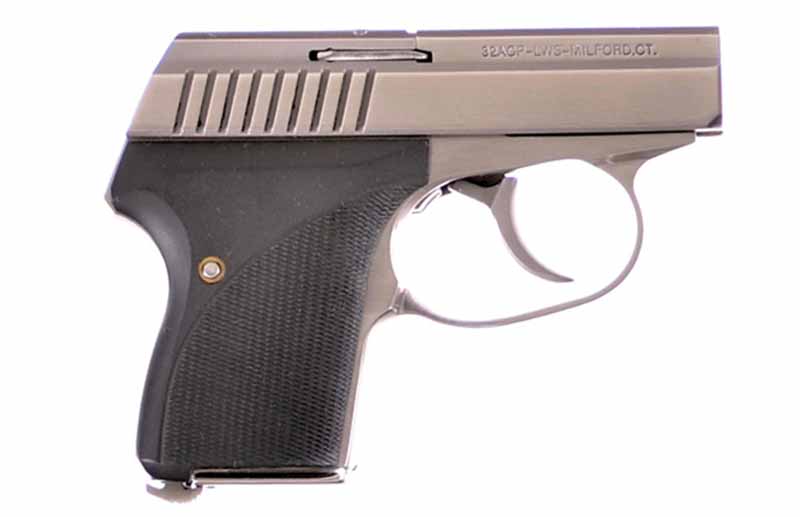
L.W. Seecamp Model 32 These little guns have been renowned in the pocket pistol world since they were first introduced around 1985. During pocket pistols’ height of popularity in the U.S., most models were imported out of Europe, and most of those were very cheap. This style of gun is what coined the phrase “Saturday night special”, and their importation was banned following the Gun Control Act of 1968. This law definitely contributed to the decline of pocket pistols’ popularity in the following decades, but Seecamp attempted to revive the concept by domestically producing their own take on it.
The most popular model, both then and now, is their Model 32. Chambered for .32 ACP. these pistols are double-action-only, delayed-blowback and have a six-round magazine capacity. They weigh less than 12-ounces unloaded, have an overall length of 4.25-inches and a width of less than 1-inch at their thickest point. Seecamp pistols have been extremely popular backup guns with law enforcement since their introduction, and most who own them find that they are very reliable with the right kind of ammunition. While most older models of pocket pistols will need to be hunted down on the second-hand market, these guys can still be bought new and have an MSRP of $510.
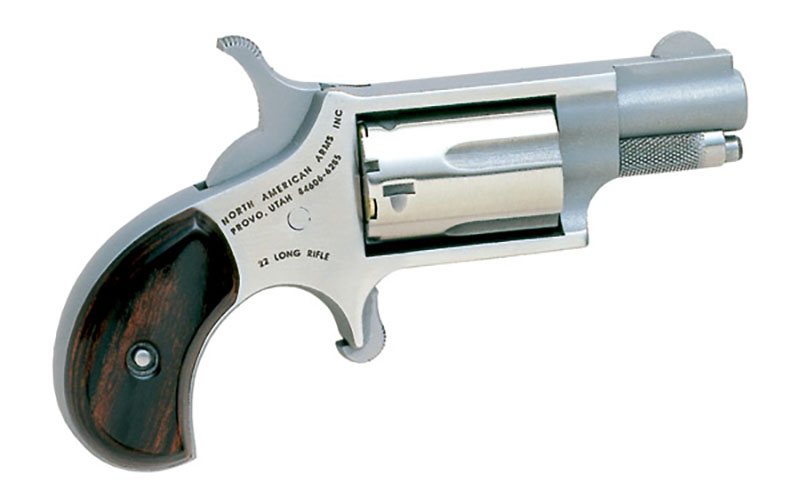
NAA Mini Revolvers One of the weakest points of pocket pistols is often their reliability. With most designs being automatics, there are a lot of moving parts that need to fit into a very small amount of space. While some auto pocket pistols can be extremely reliable, many shooters still have more faith in a wheelgun. Here’s where North American Arms comes in with their slew of different mini revolver designs. These guns are available in .22 Short, .22 LR and .22 Magnum, and they even have options for folding pistol grips and belt buckle holsters. The standard .22 LR version has a 5-shot cylinder, 4-inch length and a weight of 4.6-ounces unloaded. While these aren’t exactly hand-cannons, they are certainly lethal and enable their owners to comfortably conceal a reliable tool for self-defense. On top of all that, these are affordable and available as well, as they are still in production and have an MSRP of $239 for the most basic model.
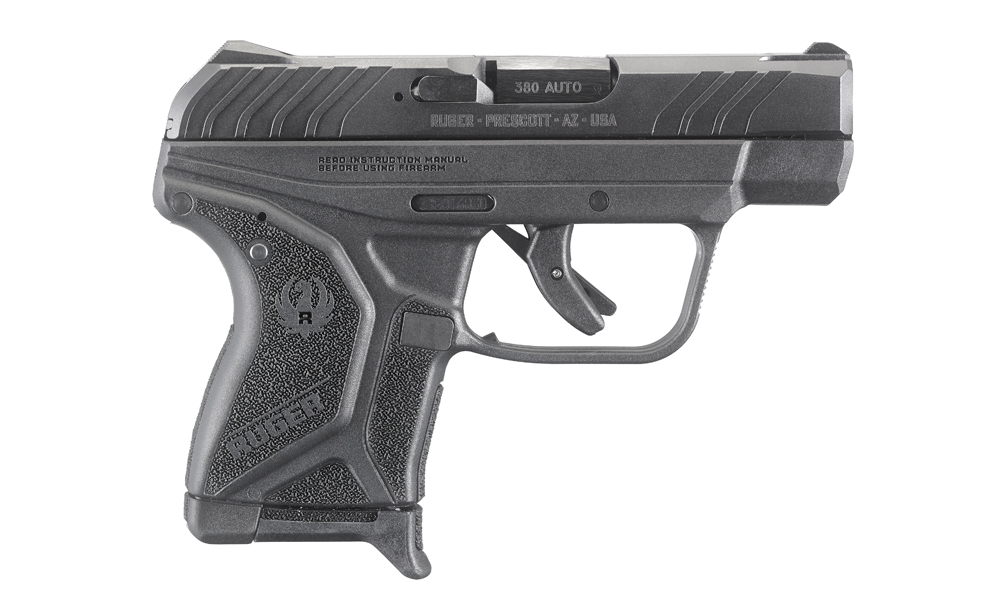
Ruger LCP II Firearms design is all about compromise, and choosing the right model for you depends on what traits you value the most. While the Ruger LCP II is a bit larger than what many think of when they hear “pocket pistol,” it more than compensates for its size in other areas. Its overall length of 5.17-inches makes it about an inch longer than the Seecamp, but it can still fit in a pocket and its polymer frame helps keep it light. As one of the most modern guns on the list, the LCP II is held to contemporary standards of reliability, and its slightly larger size likely helps to facilitate that quality as well. While it has the same 6-round magazine capacity as the Seecamp, what sets the LCP II apart from the rest on this list is the fact that it is chambered for .380 ACP. A more powerful round means more recoil, but obviously provides better results on target as well. These guns are also still in production and the standard model has an MSRP of $419.
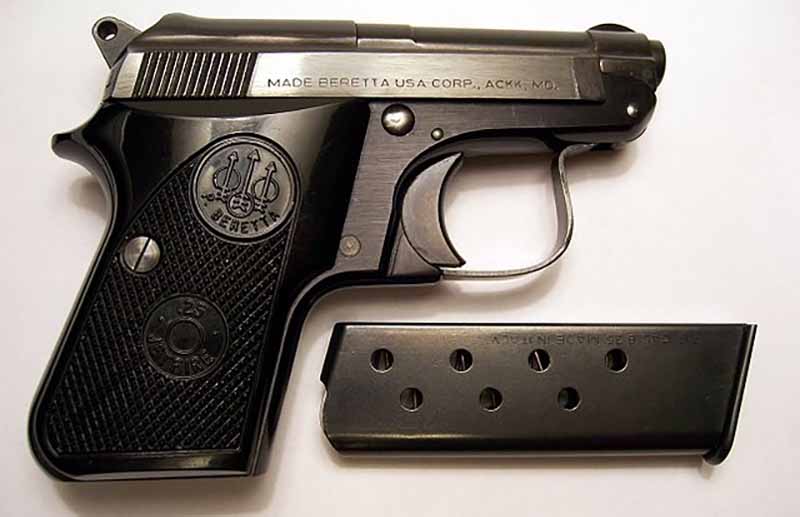
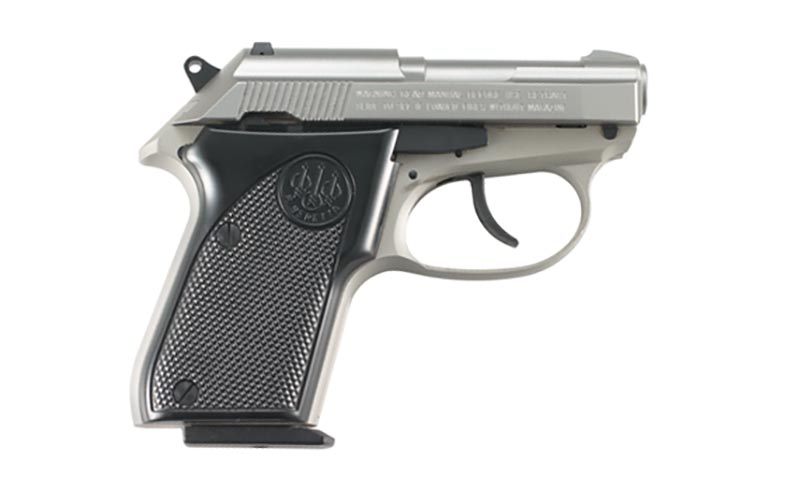
Beretta 3032 Tomcat Beretta has made pocket pistols for quite a long time, and they still have a few models in production. One of those is the 3032 Tomcat, a .32 ACP DA/SA pistol that feeds from a 7-round magazine. This gives it a higher capacity than the otherwise similar .32 Seecamp, but it’s also a bit larger and heavier as a result. If compactness isn’t your number one priority in a pocket pistol, however, the Tomcat has some features that keep it in the running as an interesting option. Firstly, as a DA/SA hammer-fired pistol with a manual thumb safety, the manual of arms is far more similar to common full-size pistols than most other pocket guns. Tomcats also feature a tip-up barrel design that enables them to be chambered without ever manually racking the slide. These are still available new and they have an MSRP of $539.
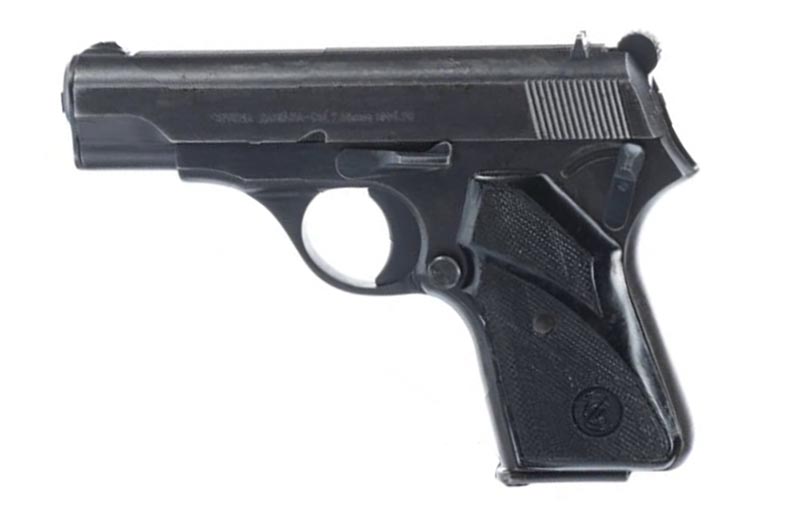
Zastava M70 The last position on this list is reserved for an oddball choice, because I can’t resist including at least one surplus Combloc gun. The Zastava M70 is the only pocket pistol featured here that is not available new, but enough were produced and imported that they are still available and affordable on the U.S. market. The biggest draw these still have in the current year is their price point, as they can still be commonly found for around $200. The M70 isn’t the smallest, lightest or most ergonomic pocket pistol you could get, but if you’re just looking for a cheap backup .32 that can still be comfortably carried in your trousers, you’d be hard-pressed to find a better option. These are single-action-only guns that descended from the Tokarev family, and the lineage is apparent when looking at one. While the M70 is a certifiable brick by comparison, for a similar price they offer a lot more firepower than an NAA Mini Revolver in .22 LR. These blowback pistols have 8-round magazine capacities, which helps compensate for their heft and size. While you would definitely notice one of these in your pocket more than the other options on this list, they’re at least cheap, reliable and still relatively compact.
What it takes to turn a muzzleloader kit into a functioning black powder firearm.
Fortunately for enthusiasts interested in making their own muzzleloader, there are a plethora of kits available on today’s market. Building a muzzleloader kit has always been something of a pastime between fathers and sons (and daughters), and it used to be something of a rite of passage for a kid to take their own gun out hunting. Because these are a relatively simple type of gun, building them from kits is relatively easy… except when it isn’t. To do it correctly can be time-consuming and, unlike more modular and common guns like the AR-15, each kit is going to be something of a unique case.
Building guns at home is a very fun hobby, but as time has gone on, the skills and tools required to do so have drastically changed. The increased modularity of modern firearms means that most rifle builds today are going to be accurate without glass bedding or adding pillars to the stock. The skills required to do these things have started to become rarer as fewer people have invested time in learning them. While installing an aluminum chassis on your bolt action requires nothing more than a few turns of an Allen key, building a muzzleloader kit usually isn’t that simple.
If you already have the skills to work wood and metal, making a muzzleloader from a kit can be easy. If you don’t have those skills, well, a muzzleloader kit is a great place to learn because they are relatively low risk and can be completed in a few different ways.
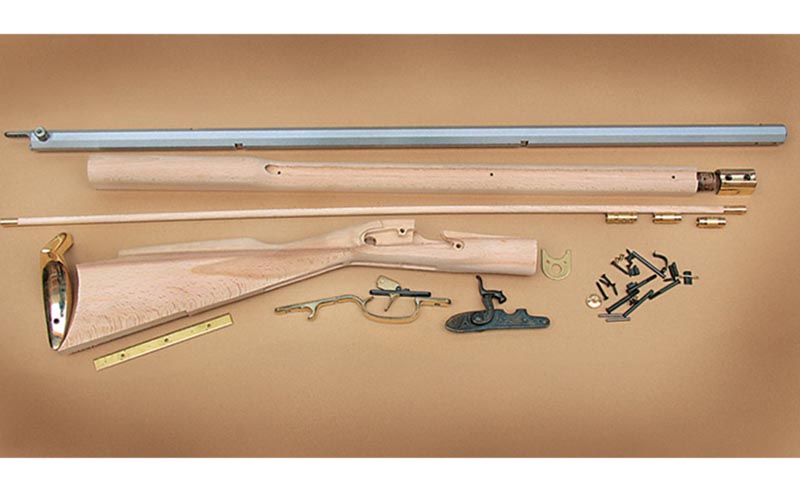
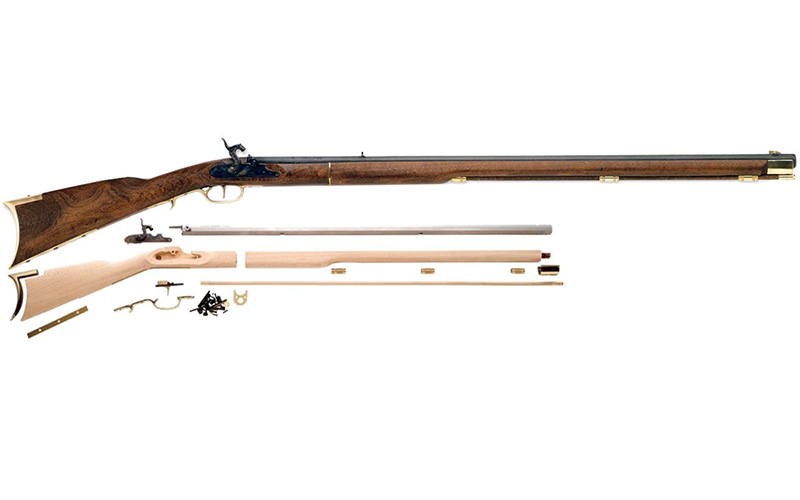
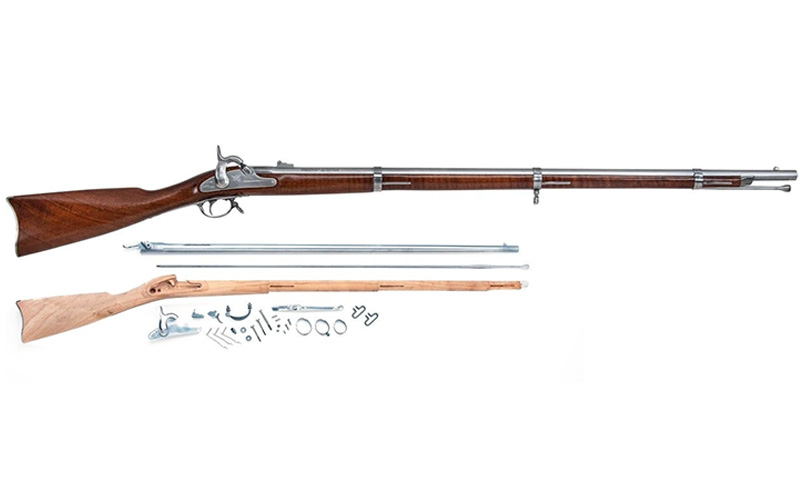
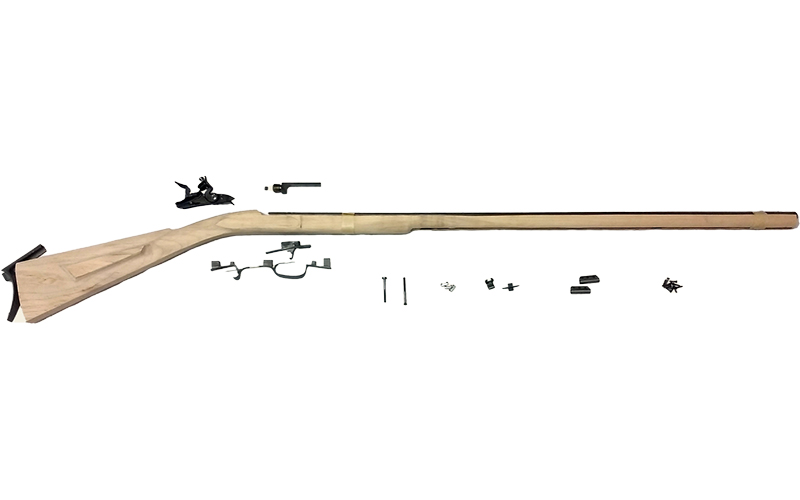
Most who decide to build a muzzleloader will end up starting with one of the kits commonly available at sporting goods stores, typically being either .45 or .50 caliber and featuring a Hawken-style half stock. These kits usually contain most of what you need to finish the gun immediately, and at their core are really just disassembled pre-fit builds. Very few of these kits require a huge amount of material removal and will likely only need some sanding, staining and light metal finish work. These types of muzzleloader kits are what you’d probably think of as the ‘Boyscout Special’.
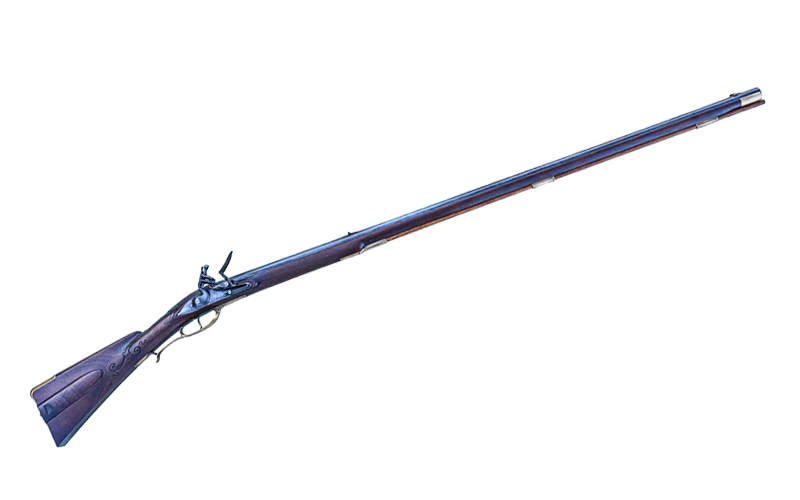
Moving up in difficulty are muzzleloader kits that prioritize historical accuracy over being a simple project. Getting one of these built isn’t hard, but making it look right is not an easy task if you want a beautiful heirloom.There are several models of this style, and historical reenactment groups often recommend them to new members looking to join their ranks. Several companies make kits for the Civil War Springfield and Enfield rifle-muskets, while others produce variations of the German Jaeger flintlocks and various mainland European muskets. There are far too many to list here, but if you enjoy history and period-correct replicas, this is a rewarding challenge. For those who are truly committed, you could even try to replicate markings or simulate battle wear.
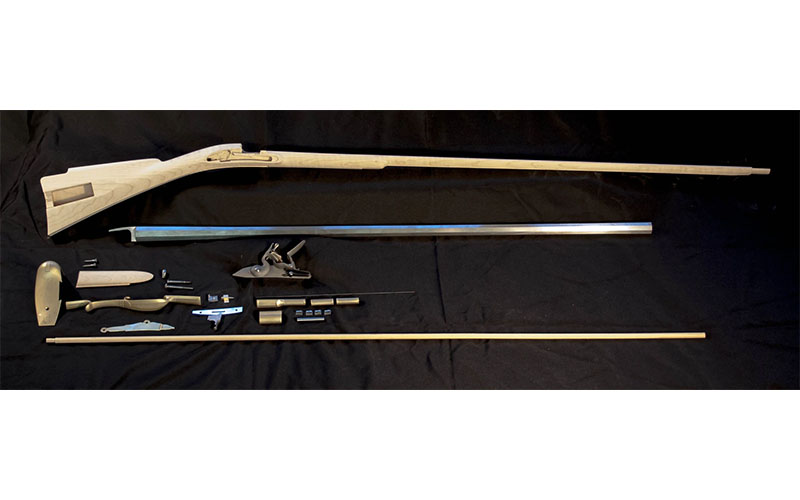
Many of these kits, most notably from makers like Kibler’s Longrifles, are completely modern, meticulously made semi-replicas that are among the most accurate for hunting and field use. These are kits similar to what you may see on the shelf at your nearby hardware store, but can cost upwards of ten times as much in some cases. However, they will likely last ten times as long too.
It is in this level of kit that you really begin to see cost climb as well as difficulty if you’re doing it historically right. Even though these kits are almost drop-in, they do require a deep knowledge of traditional metalworking and woodworking to make them fit precisely and look correct. You’d not want to mess up the fit with globs of polyurethane or a cold blue wipedown.
Because their most critical parts are CNC machined to the highest quality, you’ll end up with a wood-to-metal fit that looks absolutely perfect, however the devil is in the details as you’ll need to make all your material removal laser-precise when engraving or adding inlays. Tuning these guns can result in extreme accuracy for what they are, and thanks to modern materials, the ignition, especially on the flint guns, is far better than it would be on originals. You begin to see things like enhanced nipples and flash holes on these high-end kits, and you should also see wonderful accuracy.
The last muzzleloader kit style worth mentioning is those that are in very rough shape. These are for experts only, and you really need a full shop with a slew of wood and metalworking tools to finish these. In this type of kit, the wood will arrive inletted, but not all the way. You’ll need to finish it all yourself, and you’d best be skilled with everything from Dremel tools to hand chisels to do so. The metal also arrives in what appears to be sorry shape. Brass, bronze, and iron fittings are usually sand cast and will come to you unfinished. You’ll need to even the surfaces out and polish them yourself. This advanced type of kit isn’t something a beginner would have fun with unless they know how to shape the materials. It may seem like a breeze to just deburr a buttplate, but it isn’t as easy as it looks. While some of the simpler kits can be completed in a weekend, expect a roughly finished kit to take much longer. You’ll be hand-fitting literally every part with sometimes very small tools, so if you want a long winter project with lots of on-the-job learning, this may fit your bill.
The Top Muzzleloader Kits And What They Require To Complete:
Traditions Kentucky Rifle Percussion Muzzleloader Kit This muzzleloader kit comes with the entire gun in the white and is about 95 percent ready for assembly. This is a 2/10 difficulty project and could be accomplished in a weekend.
Tools and Materials Needed: 80-, 120-, and 220-grit sandpaper, punch set, oil stain for the stock, brass polish compound, a screwdriver and a hand drill. Optional steps would require bluing or browning compound for the barrel. MSRP: $373 //traditionsfirearms.com.
Traditions 1861 Rifle Musket Kit This muzzleloader kit has all the parts necessary to construct a North-South Skirmish Association (N-SSA) approved rifle-musket in .58 caliber. This kit is about a 5/10 difficulty level if you’re concerned with historical accuracy, as it will need to be period-correct if you plan on taking it to any reenactment events. This kit is pre-fit at the factory, but it will still need to be finished.
Tools and Materials Needed: 80-, 120-, and 220-grit sandpaper, punch set, oil-based stain, a screwdriver and steel polishing compound. Historically, these guns were not blued, but you will want a period correct sling and bayonet to finish it out. MSRP: $975 //traditionsfirearms.com.
Kibler’s Longrifles Colonial Rifle Flintlock Kit While not an exact copy of any specific rifle, these flintlock kits are among the very best and offer a wide number of options and wood species from plain walnut to cherry to fancy maple. They are offered with smoothbore or rifled barrels in calibers up to .58. These are CNC machined, but the parts will still need to be lovingly fitted together. The difficulty level to just assemble one of these kits is only a 3/10, but doing traditional metal finishing and inlays would raise it to a 7/10.
Tools and Materials Needed: 80-, 120-, and 220-grit sandpaper, punch set, oil-based stain, a screwdriver and steel/brass polishing compound. You will also certainly want to put a browned finish on these barrels for an authentic look. For that, you will need compound and a heat source such as a torch, though there are ways to do this in a heated tank. Knowledge of special stains to use with certain types of wood is very beneficial here as are traditional metal finishing techniques. MSRP: $1,075-1,325 //kiblerslongrifles.com.
Tennessee Valley Muzzleloading Builder’s Kit This muzzleloader kit is the least finished on this list. It will require you to fit and finish everything, including inletting the stock and installing the breech plug on the barrel. This is a 10/10 difficulty kit.
Tools and Materials Needed: Just about everything you have. You’ll probably need to buy tools to finish this out unless you already have a full machine and wood shop. Advanced gunsmithing skills are also necessary. This will not be easy, but it provides the advanced craftsman with greater flexibility in making a custom rifle. MSRP: $950 //tvmnatchez.com.
Snub-nose revolvers are a staple of the defensive handgun world, but are they still worth carrying given other available options?
Commonly referred to as “snub-nose” or “snubby,” the sub-3-inch revolver has been a mainstay of self-defense for over 150 years and is even now a common, everyday item for millions of Americans. The thing about these guns is that they’ve always been a severe compromise and are, in terms of overall features and ammunition, something of a vestigial holdover of two bygone centuries. Nevertheless, we love these guns and their cartridges, and the technology around them has continued to improve.
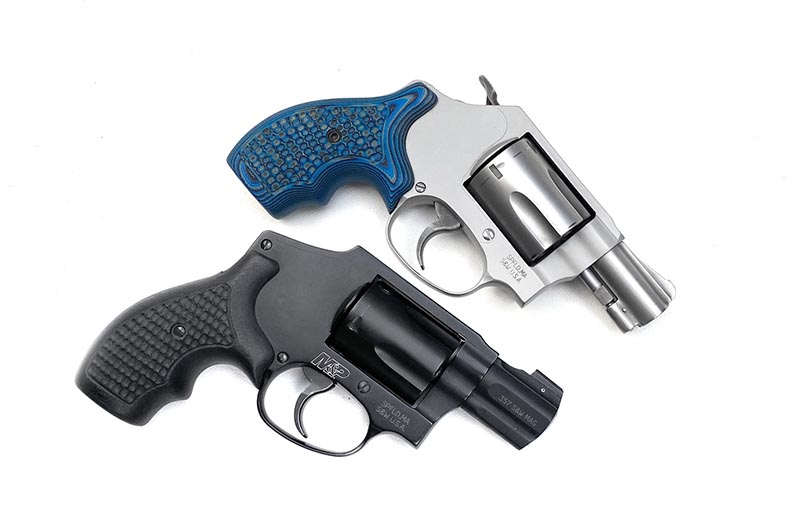
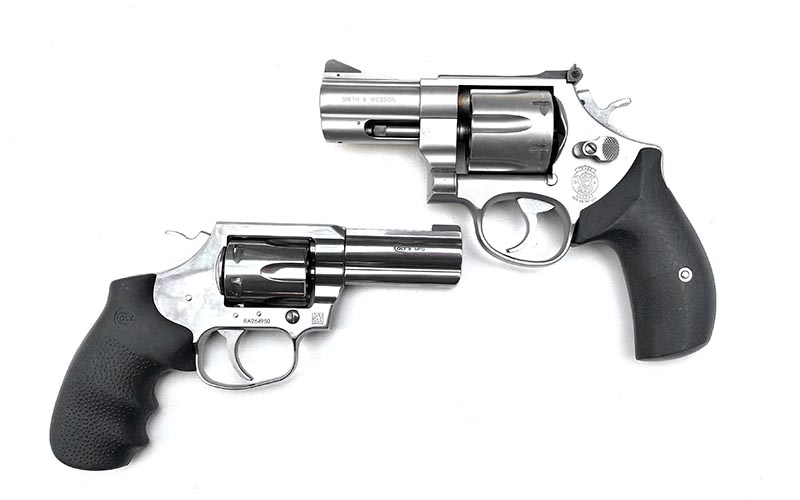
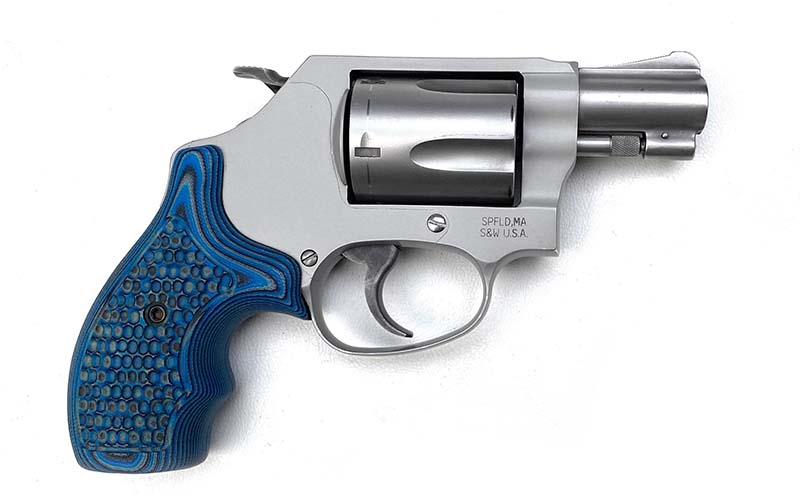
S&W makes many flavors of J-frames, in various finishes and chamberings. The most practical is the .357 Mag., due to the fact that it can also chamber .38 Special, but there’s nothing wrong with carrying a straight .38 either.
Tradition Or Travesty?
Revolvers are deeply entrenched in the American mind—and for good reason. We relied on them on the frontier and while our nation expanded. Indeed, the brands in this article, Smith & Wesson and Colt, were present in these foundational episodes. There’s certainly a sentimentality about revolvers in this country, and this drives both dreams of yesteryear and ideas to make these guns more relevant in a semi-auto era.
I don’t see the development of new revolvers and ammunition as a net negative, nor do I feel that they are irrelevant for self-defense. If you spend a moment in the gun community, you’ll see that we have indeed come a long way in terms of how much ammo can be fit into a tiny polymer gun. Sig Sauer’s P365 is a perfect example, itself a trendsetter in that it opened a new competitive market for high-capacity micro nines. I have a P365 and carry it regularly; it holds 12+1 rounds as opposed to five with my favorite J-frame. Yet, when I go about town, I usually have the latter on me.
Colt has reintroduced much of their famous Snake Gun lineup. Both of these guns, the Colt King Cobra and the rare S&W Model 1989, have 3-inch barrels, which the author considers the absolute limit to merit a “snub nose” classification.
There’s a prevailing mindset that five shots are simply not enough. We live in a world where looters and rioters are apparently allowed to have the run of a whole city, and you may end up facing an armed mob of dozens. An old friend of mine once told me that in the modern day, a revolver is a gun you carry among civilized people in case of an anomaly, not something you have if you’re expecting violence in bad places. I don’t know how true this is overall, but the philosophy should be to have a gun in the first place, even if that gun isn’t the most advanced on the market.
Considerations For .38 & .357 Snub-Nose Revolvers
I carry a revolver most days as a regular item about my person. For me, the J-frame M&P 340 (no lock version) in .357 Mag. is just about ideal for going about my day. It’s exceedingly light and fits in a pocket. This merit alone ensures I have a supremely reliable self-defense gun on me, especially when I don’t feel like dealing with the weight of something larger. The size factor alone, combined with the reliability of a revolver, is the reason I carry it. I have plenty of other options; however, for my considerations and lifestyle, it’s excellent.
What I consider a strong benefit of these guns is ammunition variety. It’s true that there isn’t a huge amount of dedicated ammunition out there for short-barreled revolvers—most is geared to 4-inch guns or longer. Most .357 Mag. ammo out there is wasted in a short barrel in that, while it produces higher velocity and energy as compared to a .38 Special or .38 +P, it’s not often ideal for such small guns. I like that the S&W 340 has the ability to chamber and fire .357 Mag, but I don’t make a habit out of it, nor do I often carry it with anything other than .38 +P.
The .357 Mag. is welcome in a snub nose, but it’s really not at home. The author prefers this cartridge in a gun longer than 3 inches, as the velocity numbers increase exponentially with each inch gained. You can use these in a snubby, but you’re going to pay for it in recoil.
I really like the .357 Mag., but I like it most in guns over 3 inches just from a standpoint of getting more speed for the price paid in recoil. Dedicated .357 short-barrel loads are hard to come by, but they do exist. Buffalo Bore makes two loads advertised for the 2-inch class short-barrel .357 Mag., both featuring Barnes bullets, these being the XPB 125-grain and 140-grain at 1,225 fps and 1,150 fps, respectively.
These two 158-grain cast loads, from Federal (left) and Buffalo Bore (right), are hard to beat in a snubby. The Buffalo Bore load is hard cast and will drive deep, while the hollow point on the Federal load will more than likely expand and stop in an attacker thanks to its soft material.
I’ve tested these loads from several .357 Mag. revolvers and found that, while the velocity is definitely there, it’s the mechanical function of the bullet that sometimes isn’t. I’ve shot these loads in the 340, as well as the shorty eight-shot 327. About half the bullets failed to expand, even at point-blank range in bare gel, and offered penetration generally between 12 and 14 inches. Moving to a slightly longer barrel or a standard 4-inch yielded substantially better results.
In testing a wide variety of .38 Special and .357 Mag. ammo in short barrels, I’ve concluded that the only way to really get effective performance is to accept that you’re working with a compromise and reduce your variables accordingly.
Tried And True
There are plenty of good and great options out there for this class of firearm. I think that the ammunition variety alone is a reason to have one in that it’s not at all picky about what you put through it. While firing isn’t usually the problem, what that bullet does when it hits is another story.
Various .38 Special loads that perform well in a short barrel can take many forms and make use of vastly different types of bullets.
I’ve tested so many kinds of ammo from snubbies in gel and material that I need a full notebook to keep track of it. Failure rate of projectiles is high, a failure being constituted by a bullet not expanding, breaking apart or not offering sufficient penetration. Bullets are one of those things rarely tested by a third party.
In most of my testing in gel and materials, I’ve come to expect a 25-percent failure rate for any given projectile, but I’m confident in saying that it’s a much higher failure rate for snubby ammo. This has to do with the fact that most of these bullets are either too soft and break apart, sometimes on impact, or too hard to expand and deliver energy into tissue. The main culprit is that much of the advertising out there only looks at bare gel—the second you introduce even a basic T-shirt, the wheels start to fall off.
I look at it pragmatically: If you can’t guarantee a velocity necessary to allow for a bullet to expand reliably, you need to remove that from the equation. The technology around short-barreled revolvers should, in my opinion, be focused entirely on penetration and nothing else. Expansion is great, but if you’re starting with as little barrel as you can physically have, there needs to be something that gives. This is the case in point for why this technology was perfected so long ago, but at the time it wasn’t known to be at its peak.
Modern bullet construction has greatly helped the issues with bullet failure. Hornady Critical Defense and Critical Duty loads are tough and reliable in terms of expansion. They are a choice load for most revolvers in general.
Big-Bore Snubs
The weird world of revolvers encompasses guns so small they fit on a belt buckle … and guns so large they’re chambered in the likes of .45-70 Government. There are plenty of guns we count as “big-bore” that fit into the snub-nose category. Many of these are specially made pieces in .44 Special or .44 Magnum, .41 Mag., and even rounds like .480 Ruger. These sub-3-inch guns are almost universally meant for self-defense in places where you have a greater chance of getting eaten than robbed.
Keith bullets in .38 Special and .44 Special are very hard to beat. These are both factory Buffalo Bore loads, and they’re as potent in energy and lethal on target just as they were decades ago.
The .44 Special is one of the unsung heroes of the snubby world. On merit of size and ballistics, it’s almost impossible to beat. Not only can it launch 200-grain bullets at 1,000 fps from a 2.75-inch barrel, but it also offers low recoil and is quite easy to master for most shooters. Smith & Wesson makes a gun called the 69 Combat Magnum (it’s in fact chambered for .44 Mag. but can shoot .44 Special). I’ve put countless rounds through it and love everything about it—except that it’s made of steel and weighs 35 ounces. What I want is that exact profile but with a 2-inch barrel and made in scandium and titanium, ideally in the 20-ounce range.
While I can keep dreaming about my ideal .44 Special, there are plenty of other short-barreled revolvers out there in more practical offerings like .45 ACP. I have a rare Model 1989 in .45 ACP with a 3-inch barrel. While on the edge of what we call a snubby, it’s fantastic using .45 Auto Rim brass for heavy loads. I use a jacketed Hornady 200-grain XTP .451-inch bullet in this for 1,150 fps, and it shoots point of aim to 50 yards.
The author’s rare S&W Model of 1989 in .45 ACP.
Notable Snubbies
Kimber has pleasantly surprised me with their K6. Not only is it a very well made and reliable gun, it also holds six rounds in the same general size as the five in a Smith J-frame. I really like that they pulled this off, and the ones that I’ve handled and fired have been very nice considering that Kimber is so new to the revolver game. It’s slightly heavy as compared to a comparable Smith, but it’s an entirely new design.
Colt has recently come back swinging with their revolver offerings. I’ve had the pleasure of firing most of their new “classics” and found them to be very slick. Like the K6, they boast a six-shot capacity but are again slightly larger than the J-frame. I really appreciate that Colt has come back with these; collectors and purists aren’t exactly happy, but I’m completely fine with them. I especially like their Night Cobra.
Smith & Wesson’s J-frame is one of the most common and popular snubbies available. This one has seen thousands of rounds and has been exceptionally accurate and reliable.
Ruger has always had some great snubbies—their LCR redefined the class when it was introduced. If you count their large guns as “short barreled,” they make some of the most powerful sub-3-inch guns around.
Well, Should You?
With all the exceptional polymer concealed carry guns available, carrying a snubby these days is certainly controversial, especially when considering ammunition to feed it. My best advice is to do your homework, determine what works best for you and your lifestyle … and then train like your life depends on it, because it might.
Without that training, hitting a target (imminent threat) while under a tremendous amount of stress means that errant rounds are going to be as much of a concern as potential over-penetration.
Editor’s Note: This article originally appeared in the CCW 2022 special issue of Gun Digest the Magazine.
Federal has announced that 30 Super Carry is now available in both their American Eagle and HST ammunition lines, making it ready for both training and defense.
Federal Ammunition officially unveiled their new cartridge, 30 Super Carry, at SHOT Show 2022. Many walked away impressed, but others had their doubts about its viability given that the defensive handgun market has seemingly already crowned 9mm as king of the jungle. Regardless, only time will tell if 30 Super Carry can make the cut or if it will go the way of .45 GAP and .357 SIG. Since Federal has just announced the addition of 30 SC to both their American Eagle and HST ammunition lines, shooters will finally be able to start testing this new cartridge the way it deserves.
For Training
A defensive handgun is useless without the ability to train with it, so relatively affordable ammunition is a must for any cartridge intended for such a role. With Federal’s announcement that 30 Super Carry will soon be available in their American Eagle line, this new cartridge will suddenly become a more viable option. American Eagle 30 SC will feature 100-grain, full metal jacket projectiles that have an advertised muzzle velocity of 1,250 feet per second. They will be available in boxes of 50 with an MSRP of $31.99, giving the bullets a cost of about 64 cents per round.
For Defense
Federal’s HST line has become one of the standard defensive loads in the handgun world, so it was no surprise when 30 Super Carry was added to the list of available calibers. This variety of 30 SC will also feature 100-grain projectiles with an advertised muzzle velocity of 1,250 fps, but naturally will be loaded with HST jacketed hollow points instead of FMJs. 30 Super Carry HSTs are available in 20-round boxes with an MSRP of $36.99, giving each round a price tag of about $1.85.
It’s not easy to build a 1911, but if you want a custom gun with a personal touch, it can be a worthy pursuit.
I’m something of a new dinosaur in my generation. I don’t own much technology, I hunt and grow much of my own food, and I have a deep-set love for the 1911. I’m an old man at an early age, apparently. In the course of my experiences with this venerable platform, I’ve come to respect it for its reliable performance, both mechanically and in terms of accuracy.
That said, I’ve also come to understand the valley between working on modern guns, such as a Glock or P320, and the 1911. I have hundreds of working hours on the 1911, and I can honestly say that 90 percent of those hours were spent screwing something up.
Building a 1911 offers many options, but a finished product takes a great deal of time.
1911 Building Vs. Buying
Building a 1911 by hand doesn’t mean it’ll turn out functional or accurate. The crux of the argument here is that, in theory, a hand-built 1911 will give you pride in ownership as well as bragging rights in addition to tighter tolerances. Some would consider it to be an apex of personal ability to get one of these guns up and running from their choice parts, and for many this is true. I love the pistols I’ve put sweat and blood into, but there’s always the nagging doubt that I didn’t do something correctly.
The first consideration you’ll need to make when looking at a project like this is just what you plan to get out of it. If it is, in fact, the journey you seek, then by all means put in the effort. If you’re trying to save a dollar, this isn’t the way to go. I really can’t make sense of people who think they’re somehow saving money by spending a minimum of 40 hours, maybe more, on top of parts cost, to come out with a gun that might—and might is a strong word here—be better performing than a factory gun.
The Colt M45A1 is a good-to-go 1911 right out of the box. A factory-built pistol like this comes with night sights, a match barrel and a great trigger. For the cost of a gun like this, you get pretty much everything you need. Can you build one better? Maybe, but it’ll get expensive.
I’m never one to judge a person’s financial status, and it’s true that not everyone can afford a $4,000 1911; however, there are many wrong ways to go about this. It’s not just the finished product you’ll end up with, but also a host of specialized tools necessary to make this old warhorse start running. I’ve done it with a few tools, the wrong tools and the right tools, and somehow there’s little difference: You’ll make a mistake, regardless of how well prepared you are.
Are you willing to eat the cost of a barrel you incorrectly machined? How about a frame or a slide? The associated cost of building one of these guns can be a deterrent, and you might end up with more money in tools than you have in the gun.
What I’d recommend is to write down a list of features you want your 1911 to have, such as barrel length, caliber, hammer and trigger style, and then look for a factory gun that closely approximates what you want. It might surprise you when you total up the shopping cart that your dream gun is as much as 50 percent more expensive than just biting the bullet and going with a full-featured factory gun.
With all that said, the reward of shooting a gun you built is substantial. Again, I don’t intend this to be a deterrent, but rather a call to fully investigate the requirements. Let’s have a look.
Diligence Required
To build a 1911—at a bare minimum—you’ll need a Dremel tool with basically every attachment made, a good table-top vice, drill press, files, sandpaper, lapping compound, staking tool, radius cutting jig, various punches and drift tools, calipers, lug cutters, a case of beer for your frustrations and a good bit of time on your calendar.
This isn’t a fast process; the fastest I ever built was 3 weeks, working on it a piece at a time. Average time spent on one is probably 3 to 6 months.
Fully customizing a frame is an easy route to success. Here, the author’s 1911 sports LOK grips, Cylinder & Slide internals, a checkered mainspring housing and a cleanly hand-fit RMR slide from Brownells. The only Sig part on the gun is the frame; the rest is aftermarket.
A lot of the problem with building a full pistol is that, if it’s your first build, you’ll also be learning how to use the tools. Instruction videos are a great resource, but they don’t allow you to get a proper feel for how the parts should look after they’ve been worked on by specialized tools.
I find this to be the hardest part of the whole process, because there’s a wide degree of variance between parts across manufacturers, and this can lead to problems on a wide scale. What if the slide you bought allows your barrel to drop right in? Is something very right or very wrong? I’ve had it happen where the lugs on the barrel were correct, but the lugs in the slide were too large. I thought it was an incorrect fit on the barrel and began working it over. You can guess what that bad calculation cost me.
Unlike today’s drop-in parts on the AR and Glock, the 1911 requires every part to be measured and looked at in detail. I don’t want to come across as pessimistic here, but you must check every single thing, even the tension of springs and how they work together. Building one of these guns can be so frustrating that you might end up just putting the parts in a bin and using them as replacements for your factory guns as need be. I’ve been there myself.
A radius jig is needed to cut a proper angle for installing a safety into the frame. You can get away with drop-in safeties, but they don’t look as clean or have as nice of a feel to them. This is an example of a tool you can’t get away without using.
The Cheater’s Way
If you want a custom 1911 but don’t want to mess around with the heavy lifting, I have a method that I greatly prefer. Some purists will call me a cheater for doing things this way, but I think my version of custom building is perfectly sensible—and it results in an accurate and reliable pistol virtually every time.
My method is to locate used 1911s at my local stores or online listings and completely strip them down to the frame. Why would I waste my time with this when I basically bought a 1911 used and have a working gun? Well, what I’m after is the frame here because many of the factory guns I find out there are lacking in features and have subpar internal parts. What I enjoy about a factory frame is that it’s finished with parts that I know fit.
Starting off with a frame is a large undertaking. Note that this one has fitted rails, but the slide in question was severely damaged because of a bad measurement. Mistakes happen, and they can be costly with the 1911.
When I go in and measure the new parts, I can compare them to the old ones to draw exact numbers and specs, and then I can go about fitting them. If I want to go tighter, I can … knowing how much space I have to work with.
This way of doing things creates little if any frame work to be done, and the most labor will be fitting the new slide and barrel, which again should be easy, considering that the correct measurements are right there on the original parts.
My personal preference of frames is Sig Sauer. It’s a personal thing, but I dislike the “profile” on their slides and external extractors. I’m also not a fan of the Series 80 safety internals … but I like those Sig frames. The best part about going with a Sig frame is that it’s hard stainless steel, and the frame rails are usually just a hair (actually less than a hair) oversized, which really lets me get in there and make a precision fit to the slide. The fact that the Sig frames usually come pre-checkered on the front of the grip is also a plus for me because I can ensure my finished pistol has a coherent and functional wrap-around texture.
I’ve used other frames for this type of work in the past; many don’t require any modification at all and will readily accept new slides and barrels. In these cases, the pleasure of building the pistol is often over too quickly, and I’m left with a great gun but empty project hours.
What about the extra parts from the stripped frame? Well, I keep these as backups in case something goes wrong with the custom gun. If I need them, the extra parts are ready to go. Selling them is another option, and you might actually be able to fund most of the new parts by selling the old ones.
The Brownells staking tool is critical for a 1911 build. You can also use this tool to replace or repair plunger tubes on used guns. It’s a specialized tool that every 1911 enthusiast should own. I can’t even recall the number of used guns I’ve seen with loose tubes out there.
A Build By Any Other Name
The prevailing idea among 1911 guys is that my “cheater” method is somehow the wrong way to do it. I counter this with asking if it’s any less of a build to start a bolt-action on a custom action, or an AR on a stripped receiver. A custom bolt-action build is usually just a matter of attaching a barrel and chambering it, but how about a Remington build? Never has a person told me that buying a factory 700 and sending it in to be rebarreled and trued out is the “wrong” way to do it.
I ask the 1911 purists just how many parts need to be hand-fitted for a pistol to be custom, or how many factory parts are allowed to remain? I can’t get a clear answer, so I take my method as being effective and safe for the home builder to learn the craft. When it comes down to it, there’s just so much that can go wrong on a hand-build that taking this mid-level step is important to understand how the 1911 works.
If you have a new slide you want installed and know that your frame is fitted and working, you can focus on just fitting that slide. Once you have that knowledge, you can work on the barrel and so on and so forth. It’s easier to learn one step at a time and piece by piece than it is to take on the whole elephant. Is your 1911 “custom” with a new safety? I’d say maybe not, but even I don’t know where the line is between an accessorized factory gun and a custom gun on a factory frame.
1911 Builder Beware
If you do decide to take on this mighty challenge, I’d start small and buy a 1911 to begin fitting custom parts to. You can always put the old ones back on if you need to. Building is and always will be a rewarding experience, and it’s my advice to ask for help when you have a question. Messing up is never more than a Dremel slip away … and that can be costly.
The true cost to build a 1911 is in the tooling, and you must also beware that these tools will get you close, but perhaps not all the way. The little bits of missing know-how are what’ll hang you up, and just having all the tools isn’t enough to make a perfect build.
This is a skilled undertaking, and often not a quick plug-and-play tabletop project. So long as you’re aware of this, you’ll likely make the 1911 gods happy with your offering.
Editor’s Note: This article originally appeared in the October 2021 issue of Gun Digest the Magazine.
Want a black powder revolver but don’t know where to start? Here are a few of the best models currently on the market.
A common stereotype regarding black powder revolvers is they are dirty, slow loading and inaccurate. Luckily, only two of those things are true. You can expect excellent accuracy out of these old wheelguns if you know how to load them properly, but the affair will be neither clean nor fast. As firearms technology progressed over the years, a great deal of knowledge concerning black powder revolvers has been lost. While their designs are antiquated today, even some of history’s most famous duelists, such as Wild Bill Hickok, used cap-and-ball revolvers well into the cartridge era. This brings us to the first of five highly recommended black powder revolvers.
Uberti 1851 Navy .36 Caliber
Wild Bill’s favorite pistols were Navy revolvers, and he had one on him during his famous duel with Davis Tutt—widely considered the first-ever quickdraw showdown. Tutt was shot once in the chest at 75 yards and was killed near-instantly. Many folks today wouldn’t believe that a little .36-caliber ball has that capability. However, when the Colt Navy was introduced in 1850, it was the premier weapon of its day and is mentioned substantially in period literature where it is praised, even over the later Army version. You too can get in on the action for a relatively low buy-in price. Not only is the Uberti Navy affordable, but it is also quite cheap to shoot and very accurate to boot! This is a great starter gun for new black powder revolver shooters and easy to become proficient with. MSRP: $349-399
Taylor’s & CO 1858 Remington Target
If you have a flair for the old but want some of the features of the new, the Taylor’s 1858 Target is the gun for you. It is a cap-and-ball revolver but features modern-style target sights that are fully adjustable. A large part of the difficulty surrounding fixed-sight black powder revolvers is that their point of aim and point of impact may vary by a magnitude of feet past a certain range. For those who want the extra challenge of hunting with a black powder revolver, this particular model makes it easier to get on target and stay there. Taylor’s also has a conversion cylinder that allows this model to fire low-pressure .45 Colt cartridges. MSRP: $607.88
Taylor’s LeMat Cavalry Revolver
The LeMat is certain to draw attention at the range… or wherever else you want to take it. Not only is it a staggering 9-shot .44 caliber revolver, but it also has an integrated 20ga smoothbore barrel! You’re packing ten rounds with this bad boy, one potentially a load of buckshot. This pistol isn’t a new invention, utilized by Confederate cavalry during the Civil War. It is certainly the most expensive black powder revolver on this list, but it is arguably the most unique and visually striking as well. MSRP: $1,383.53
Pietta 1836 Texas Paterson
The Colt-Paterson revolver is considered to be the first successful revolver design in history. It was patented by Samuel Colt in 1836 and is the ancestor of all modern revolvers we have today. It has a ‘hidden trigger’ that pops out when the hammer is cocked, making for a rather unique appearance. This Pietta is a working and firing copy of the original design and would make a rather good conversation piece at the range. Of interest is that the Paterson was created concurrent to the fall of the Alamo, which also occurred in 1836. The parties involved largely had flintlocks, which few realize overlapped with the original Colt revolvers. MSRP: $890
Dixie/Pietta Revolver Kits
If you are in the mood to try a revolver build or learn more about their internal workings, the Dixie build kits are worth considering. Available in various models, they come pre-fit but unfinished and without engraving. They present a great opportunity to experiment with metal finishing and various types of scrollwork, should you want to get practice on a real gun without having to buy and strip down finished examples. It’s not particularly challenging to put one of these kits into working order, but for many, the real work is in creating a visually appealing final product. MSRP: $245
A bonus pick is the Taylor’s Howdah black powder pistol. While not a revolver, it is a pretty cool little gun that has a great deal of history behind it. It was designed as a self-defense gun for hunters riding on the backs of elephants, mainly as a deterrent against tigers. It has 20-gauge smoothbore barrels and can use a variety of shot types. Because it uses standard revolver caps, it is a good companion for your other black powder revolvers. MSRP: $1,036.21
Looking to go armed, but are stuck in the weeds as to what to arm yourself with? Here are 20 of the best concealed carry gun options that will keep you on the defensive.