Home Blog Page 90

DS Arms: American FALs For The 21st Century

1

The FAL is a legendary battle rifle still sought after by many, but for the average American, the most obtainable examples will be from DS Arms.


DSA FAL Options:

  • Traditional FAL Rifles
  • Modernized FAL Rifles
  • Folding-Stocked FAL Rifles
  • FAL Pistols
  • FAL SBRs

As the world’s most iconic battle rifle, it is no surprise that the FAL is still a very sought-after weapon. Whether because of their historical provenance or the quality of their design, FALs sit atop many’s dream gun wishlists even in the modern era. Unfortunately, the golden age of imported FALs is long over. There was a time when everything from original Belgian-made FN examples to Brazilian IMBELs were being imported, but these days even parts kits are relatively scarce. This means that getting a FAL isn’t going to be cheap, but they don’t have to cost as much as the old collectible imports do. DS Arms is an American company building FALs from scratch, and it will be the easiest and most affordable way for the average shooter to get into the platform. With a DS Arms FAL, you can scratch a lot of different itches: traditional military clones, modernized fighting carbines, DMRs and more. So, whether you’re in the market for one of these cold warriors to LARP as a Selous Scout or just want something cooler than an AR-10 to fling steel downrange with, DSA is a company worth looking at.

DSA Classic FAL

About DS Arms

Headquartered in Illinois since they set up shop in the early 90s, DS Arms is America’s premier FAL manufacturer. While some smaller shops will build you a FAL too, none have the scale of industry like DSA. DS Arms builds their FALs using new tooling and a modernized manufacturing process, making most of their parts in-house and domestically outsourcing a few others like barrels. This means that their guns are 100% American-made and are not subject to 922r or any other asinine import restrictions.

DS Arms builds their FALs to metric specs and are closest in form to the Austrian StG-58 FAL variant, explaining the SA58 name behind DSA’s guns. Besides being the primary supplier of FALs for the civilian market, DSA FAL rifles have also been purchased by the U.S. Army for training foreign militaries as well.

The build quality of DS Arms guns is generally considered to be good for the price, but it is not uncommon for users to experience some issues, especially with a brand-new rifle. Supposedly their customer service is excellent, however, and will gladly take the rifle back to fix any issues before returning it. If that happens to you, consider yourself unlucky that you’re forced to wait longer but find solace in the fact that you will have a solid rifle at the end of the process. Besides, for the money, you don’t really have any other options.

DSA PARA FAL

The Traditional DSA FAL

The most traditional FAL rifles available from DS Arms feature a fixed stock, 21-inch-long barrel, carry handle and classic profile furniture. They also have some variations on the theme, with some mostly traditional models with one or two historically inaccurate features such as a railed top cover or a shorter barrel. Keep in mind, however, that even their most traditional offerings have some modern improvements that may bother those who obsess over clone-correct details, such as sand cuts in the bolt carrier. Frankly, if you want your FAL to be authentic down to the last detail, a DSA isn’t for you. These are entry-level shooter guns that can easily be made close enough to a military clone to satisfy most shooters, but pedants are better off scouring the secondhand market instead.

Some other almost-authentic FALs DSA has to offer are some of their folding stock “paratrooper” models that mimic original FN designs. They also sometimes build unique examples using parts kits when they have the opportunity, such as their Israeli FALs being sold a couple of years back. They also sometimes include surplus parts when they’re available, such as the Argentine bipods included with their current 21-inch classic edition rifles.

Israeli FAL
DSA Israeli FAL built on surplus parts.

After obtaining one, these traditional-style FAL rifles can be dressed up in a few different ways depending on your taste. When left in their original black plastic furniture, they already very closely resemble the current-issue FALs of several different nations, but in a world filled with black plastic it's nice to mix things up now and then. Metric-pattern wood furniture can be installed to give your DSA FAL a more classic appearance, while painting it iconic baby poop green camo will imbue it with some Rhodesian flair.

DSA FAL wood furniture
DSA FAL with wood furniture. Photo:Rock Island Auction Company.

Going Modern

If the FAL platform attracts you for reasons besides historical, DSA also likely has a configuration to suit your needs. While not the most accurate battle rifle ever made, FALs still have acceptable enough accuracy to serve in a DMR role with the right rifle and accessories. FALs being used by militaries in this way typically attached their scopes using old-school claw mounts, but DSA has more modern solutions like railed top covers. Modern stocks and bipods also help the FAL become a more practical DMR option.

For those who want their FAL for some high-speed, low drag operating, DS Arms has plenty of tactical short-barreled options as well. The term short-barreled is relative here because compared to the FAL’s original 21-inch-long barrel even the 18-inch models can be considered short. The shortest DSA rifle has an 11-inch barrel and their shortest FAL pistol’s is 8.25. The rifle models with barrel lengths less than 16 inches are factory SBRs and therefore must be registered NFA items to be legally acquired. Most of these tactical FAL models feature upgraded furniture which enables the mounting of accessories and optics. They can also have more ergonomic, modern-style folding stocks.

DSA FAL SBR

Besides the modernization features that DS Arms has to offer, these days there is also a sizeable market for aftermarket FAL parts and upgrades. Much like what has happened to AKs over the years, it is no longer difficult to bring a FAL into the 21st century.

FALs are great, timeless battle rifles that will likely never completely fall out of style. For as long as kids are growing up watching movies, seeing the news or playing video games, there will be individuals who feel the call to own one themselves. That’s why DSA FAL rifles play such an important role in keeping the platform alive, as the volatility of imports can never replace the stability of domestic production. Whatever reason you have for wanting to dip your toes into this interesting platform, DS Arms is a great place to start looking.

For more information, please visit dsarms.com.


More On Battle Rifles:

The S&W M&P 12: Big Firepower In A Small Package

3

Capable of fitting 15 12-gauge shells in a package barely over two feet long, the new S&W M&P 12 bullpup is a niche weapon that serves its role well.


S&W M&P 12 Features:

  • OAL: 27.8 Inches
  • Barrel Length: 19 Inches
  • Weight: 8.3 Pounds
  • 12-Gauge, 3-Inch Chamber
  • 6 3-Inch Shells Or 7 2 3/4 -Inch Shells Per Tube

Shotguns are one of the most versatile and useful categories of firearms. What we think of as a modern, smokeless-powder 12-gauge has been getting put to devastating effect against both animals and humans since at least 1897 without ever seeing a serious dip in popularity. They are typically simple, cheap and very effective. Over one hundred years after John Browning’s first practical pump-action was being used to defend stagecoaches, 12-gauge pump-action shotguns are still serving in tactical defensive roles today. Smith & Wesson recently released their radical new M&P 12 bullpup to the market, but how does it compare to other contemporary tactical shotguns?

SW MP 12

Where The M&P 12 Shines

Bullpups, whether they be rifles or shotguns, are a contentious topic. Some believe that they offer the best of both worlds—the compact length of a CQB weapon but the ballistic advantage of a full-size barrel. Others dismiss bullpups as gimmicks that don’t offer enough benefit to make up for their awkward ergonomics or poor triggers. For those who have already decided they want a high-capacity bullpup shotgun, however, the M&P 12 is one of only a few available options. IWI and UTAS have similar offerings on the market, but they are both significantly bulkier than the M&P 12. The closest existing firearm to the M&P 12 is obviously the Kel-Tec KSG, but Smith & Wesson brings more to their new gun than name recognition and a higher price tag.

The KSG and M&P 12 share the same capacities between their dual-tube feed systems, but the KSG is about two inches shorter while the M&P 12 is over a pound heavier. The extra weight comes from the M&P’s more solid, metal construction which features a steel receiver that should result in less recoil and greater durability.

Compared to more traditional shotgun designs, bullpup shotguns can have features that would otherwise be mutually exclusive. In a traditional, tube-fed shotgun, magazine size is directly correlated to their overall length. This means that a pump-action that’s been sawed down to the size of an M&P 12 would only have a capacity of four or five shells, or it would need to be ridiculously long to even begin to rival the M&P 12’s capacity. Conversely, magazine-fed shotguns can have a similarly short overall length but suffer in bulk due to the size of high-capacity shotgun mags. Drum magazines are notoriously bulky, awkward and less reliable than most other designs, making the M&P 12’s 14+1 capacity an attractive solution. This design is essentially the only way to have your cake and eat it too when it comes to owning a compact yet high-capacity shotgun.

MP-12

Another advantage of the M&P 12 dual-tube feed system is the ability to carry multiple kinds of ammunition. A selector button allows for the magazine tube in use to be quickly and easily switched between, enabling the user to carry and choose between two ammunition types. If you’re a law enforcement officer this could mean carrying lethal and less-lethal loads, or dragon’s breath rounds and flechettes if you’re imitating your favorite video game.

MP 12 Tube Switch Button
Tube-switch button being activated by shooter on M&P 12.

Is The M&P 12 Right For You?

The M&P 12 is a niche weapon. It sacrifices a lot over other tactical shotgun choices to excel in just two areas: compactness and capacity. Any traditional shotgun that takes up as little space as the M&P 12 is going to have a very low capacity, and anything that rivals the M&P’s capacity will invariably be either longer or bulkier. But for those that need a small, reliable shotgun with a high capacity and a lot of firepower, the M&P 12 is likely the current best option on the market. While slightly longer and heavier than the KSG, it is reportedly more reliable, durable, modular and ergonomic. It can easily mount an optic, foregrip and weapon light for clearing tight, indoor spaces, or can be left stock to be easily stowed inside of a vehicle. If you were ever forced to use it, it would likely offer sufficient capacity to survive the encounter, but if you were forced to reload, the tedium of that task would probably spell your demise.

The M&P 12 probably wouldn't excel on a 3-gun course or in a duck blind, but it does what it was designed to do very well—clearing hallways and being stowed in tight spaces as an emergency defensive tool with some major firepower.

For more, please visit smith-wesson.com.


More Tactical Shotguns:

5 Best New Shotgun Loads

0

Despite ammo being thin, manufacturers are tuning out new offerings this year. Here are 5 of the best shotgun loads for 2021.

What Are The Top Shotgun Loads:
Self-Defense

Turkey Hunting

Clays/Upland

It could be argued that, during the past two decades, the most noteworthy firearm-related advancements have been with ammunition. Somewhat of an ammunition geek, every year I’m excited to see what new loads will be introduced. Right now, though, some folks could care less about new loads—they just want to buy one box of 9mm or .223 ammunition.

For 2021, things are going to be a little thin; the panic buying spurred by the pandemic and the election have manufacturers so busy trying to meet demand they have little time for new product development or introductions. In fact, some ammunition manufacturers never got around to distributing some of the loads announced for 2020.

Here’s a look at some new shotgun load offerings we hope make it to the shelves before some other tragedy hits and makes ammunition even harder to come by.

Best Shotgun Loads For 2021

New Shotgun Loads from front to back: Winchester Double X 3-inch .410 Turkey Load; Winchester AA Diamond Grade Elite Trap; Browning Wicked Blend; Federal/NRA 2¾-inch Buckshot Load; Federal 3-inch Heavyweight TSS 12-Gauge.

Self-Defense: Federal/NRA 2¾-inch Buckshot Load

For self-defense applications, there’s a new offering from Federal. They’ve teamed with the NRA on a new Buckshot load. This is a 2¾-inch 12-gauge load that contains nine 00-buck pellets and the FliteControl wad to deliver tight and uniform patterns. A portion of the proceeds for every box sold supports the NRA’s mission to preserve and enhance gun rights.

Turkey Hunting: Winchester Double X 3-inch .410 Turkey Load & Federal 3-inch Heavyweight TSS 12-Gauge

Regardless of the situation, a year cannot go by without the introduction of new loads for turkey hunting. Winchester has a new 3-inch, ¾-ounce, .410 bore load, featuring No. 7.5 Diamond Grade shot at 1,100 fps for tight patterns. And Federal will be introducing a new 3-inch Heavyweight TSS load for the 12-gauge. It’s packed with 2 ounces of No. 7 and No. 9 shot and a FliteControl wad at an advertised muzzle velocity of 1,150 fps.

Clays/Upland: Browning Wicked Blend & Winchester AA Diamond Grade Elite

With regard to clays and birds, there are several new offerings from Browning, Federal and Winchester. Browning has rebranded their Wicked Wing line as Wicked Wing, Wicked Wing XD and Wicked Blend—now providing good, better and best options. In the Wicked Blend line, there will be four 12-gauge loads and a single 20-gauge load, all delivering precision round bismuth shot paired with precision round steel shot for ultimate pattern density. They also have two additions to the Upland Steel line, both featuring 1-ounce loads that are ideally suited to, and priced for, high-volume dove hunting.

There are a number of new shotshell offerings from Winchester, including a new 12-gauge 2¾-inch, 1⅛-ounce, 7.5-shot AA Diamond Grade load with a muzzle velocity of 1,250 fps, which is loaded with the hardest antimony shot available. There’s also a 16-gauge 2¾-inch 15/16-ounce load of No. 6 steel—perfect for clay targets or upland hunting.

The article originally appeared in the February 2021 issue of Gun Digest the Magazine.


Draw A Bead On Shotguns:


Classics: Smith & Wesson’s Victory Revolver in .38 S&W

5

A wartime version of the original Model 10, the Smith & Wesson Victory model is a class WWII collectible.

How To Know It's A S&W Victory Model:

  • They have a “V” prefix in the serial number.
  • U.S.-purchased guns have “US Government Property” roll-marked on the topstrap.
  • As well as the flaming bomb ordnance mark and the inspector’s initials.
  • Ones made for Commonwealth often have markings from British services.
  • Some will have both U.S. and British markings.

There have always been Luger collectors. They’re the hot, sexy redheads of the handgun world—and good for those who have them. Of course, there are other collectible handguns as well, such as the ones made for Allied use in World War II.

At the start of WWII, we had a problem. Oh, we’d been here before—the one they had called The Great War. We didn’t have enough firearms. (I’m sure the next time we have a big war, we’ll have the exact same problem.) With all the services mobilizing and expanding, we needed guns. Smith & Wesson didn’t drop everything and begin making 1911s, machine guns and artillery pieces. They were set up to make revolvers, and there were plenty of uses for firearms that didn’t necessarily call for something chambered in .45 ACP. And plenty who wanted them.

So, S&W kept making revolvers.

The first production batches shipped to eager military buyers were simply the same M&P revolvers that S&W had been making, in the same high-polish blue, because that’s what they made. But the need for wartime production rates and a more durable finish soon had the revolvers sporting parkerized finishes and plain wooden grips.

Meanwhile, the British had also been busy.

The production of revolvers by S&W for the British was easy. The standard U.S. revolvers were all chambered in .38 Special, also known as .38 S&W Special. The British revolvers of the time, the Enfield, were chambered for the cartridge the British had adopted in the 1920s, the .38-200, known here as the .38 S&W (no Special).

It may have been made for Lend-Lease shipment, but S&W made it, and they were proud of it. They still put their logo on the sideplate. Note the four screws holding the sideplate on.

The origins of the .38 S&W date back to 1877, and since that time, the loadings here in the U.S. had been kept mild in deference to the original black powder revolvers and the later top-break “bulldog”-type revolvers. So, the U.S. loading was (and still is) a 146- or 148-grain round-nose lead bullet at a nominal 650 fps. The British adopted the same cartridge case, but loaded it with a 200-grain bullet at 650 fps. They called it the .38-200.

Now, a brief aside here: If you do find any actual, real, .38-200 ammunition, or the later FMJ version of it, do not—under any circumstances—fire it in a clanky old Iver Johnson or other top-break revolver … even a S&W top-break. The original .38 S&W is held to a paltry 13,000 psi, out of deference to the old top-breaks. The Smith & Wesson Victory Model and the Enfields can take full .38 Special pressures, which the .38-200 mostly reaches for. Oh, and it’s all rare collectible ammo, as well.

Striving For Victory

Why “Victory” model? Really? You have to ask? There was a war on. Well, that, and S&W had hit the million-number-mark in serial numbers early in the war, and they had to do something. So, they added a “V” as a prefix and started over, with the Smith & Wesson Victory Model revolvers all being parkerized with smooth wooden grips. The serial number is on the bottom of the frame, with the V sometimes on one side of the lanyard loop, and the serial number on the other. Or not. I’ve seen both. The U.S. Navy had a corpsman die from a dropped revolver discharging, and S&W underwent a crash program to redesign the hammer block. The ones made after the design change have a “VS” as the prefix.

Minding Specifics

OK, now for the details. The U.S.-purchased ones will have “US Government Property” roll-marked on the topstrap, along with the flaming bomb ordnance mark and the inspector’s initials. They’ll have 4-inch barrels, although a small batch were made with 2-inch barrels near the end of the war with the regular square-butt frame. The ones made for Commonwealth purchase had 5-inch barrels; they initially lacked the “US Government Property” markings, and they acquired others when accepted by the various British services. Some will have both U.S. and British markings. These would’ve been the Lend-Lease revolvers provided as loans to the British for the war.

The frame, barrel and cylinder were all marked with the serial number, and they match on this one.

The markings on my Smith & Wesson Victory model tell quite the tale. Marked on the lower right front side of the frame, there’s the D-arrow-D, indicating it was accepted for use by Australia during the war. Below that, there’s the FTR/MA 54. This indicates that it received a through factory inspection or overhaul, in 1954, at the Lithgow Arsenal. (FTR: Thorough Factory Repair.)

Then, there’s the L-arrow-19 marking and another arrow next to it, which is more info. The L-arrow-19 is the inspector’s markings, indicating that it passed its inspection after rebuild, and the arrow next to it is the property mark used by Australia after the war. S&W provided some 571,000 revolvers to the British, but of those, only 8,000 went to Australia, so that makes the non-U.S. marked ones rare. Mine has both markings, so it’s one of the Lend-Lease revolvers.

The FTR on mine probably required a re-parkerizing, because the US Property stamping is rather light, even though mine is in the half-million range of serial numbers. So, in 1954, it got pulled out of whatever depot it was in, inspected, rebuilt, parkerized and sent back into inventory.

The serial numbers on the frame, barrel and cylinder all match, as they should, on any prewar or wartime revolver, also known as the “five-screw” model—so-called because there are four screws holding the sideplate on and another on the front of the frame to tension the cylinder lock bolt spring. On the left side is Vega Sac Ca., which was the importer who brought a bunch of these Australian revolvers into the U.S. back in the 1980s.

The barrel is marked “38 S&W Ctg,” which means no Special.

It was relatively common back in the 1950s and 1960s to find the Commonwealth Victory Models with reamed chambers. The .38 S&W ammo wasn’t common and less powerful than .38 Special. So, enterprising hacks would pop a .38 Special reamer into the chambers and lengthen them enough to accept .38 Special ammo.

The result was a revolver that was less accurate, but superb at destroying brass. The .38 S&W case is larger in diameter than the Special, in order to accept the .360- to .361-inch diameter bullets. The Special case expands into the larger chamber, at least up to the point where the Special reamer made the cylinder the “proper” diameter. Fired cases in such a revolver are ugly and ruined. But, back in the ’50s and ’60s, few reloaded, and those who had such a Smith & Wesson Victory model didn’t care.

Respect Your Elders

As indicated by the markings, mine was imported by the Vega company, out of Sacramento, California (before the West Coast went completely crazy). It’s still in .38 S&W—which is a good thing, because it’s amazingly accurate. For a revolver that’s now over 75 years old, chambered in a cartridge designed almost a century and a half ago, it’s a tack-driver. One group in particular I have to keep as a bragging group: Five shots, 25 yards, over sandbags, all into a one-hole group.

Now, a 146-grain bullet at a paltry 600 fps isn’t exactly the hammer of Thor. However, it’s a tack-driver, and once I get some Commonwealth-equivalent ammo loaded up, I’ll be stylin’. That one calls for a 200-grain lead round-nosed bullet at something like 650 fps, which still isn’t a magnum, but was deemed good enough for the British. I’ve got bullets coming from Matt’s Bullets of the proper type and dies from RCBS, and once they’re here, we’ll see what a pinch or a pinch and a half of fast-burning powder gets us.

A group like this makes it hard not to brag. But this is mostly the doing of the Victory Model.

The Luger gets the glory. The 1911 got IPSC. Various .38 Specials won bull’s-eye and PPC matches for decades, and still do. But this Victory model might well have ridden in a holster across the Pacific, dodging kamikazes, assaulting islands, or riding in aircraft. Heck, even if it spent the entire war just guarding supplies, that’s honest service, and that’s enough to make it collectible.

I still haven’t found the answer to why, when they switched from 200-grain lead bullets to FMJ bullets, the British and their allies dropped the weight down to 178 grains. I mean, really? But if I do ever find out, I’ll let you know.

SW Data

S&W Victory Model Specs:
Action: Double-Action
Caliber: .38 S&W
Capacity: 6 rounds
Barrel: 5 inches
Length: 9.75 inches
Weight: 26 ounces
Trigger: 5 pounds, 2 ounces SA; 12 pounds DA
Finish: Parkerized

The article originally appeared in the March 2021 issue of Gun Digest the Magazine.


Raise Your Smith & Wesson IQ:

First Look: Sig Sauer SLX And SLH Suppressor Series

0

Born from Sig’s participation in the Army’s Next Generation Squad Weapons Program, the new SLX and SLH suppressors are a glimpse into the future.

SLX And SLH Suppressor Features:

  • Available In 3 Caliber Options
  • Two Mounting Styles
  • Monolithic Core Construction
  • Superior Sound, Flash And Gas Reduction

The currently ongoing Next Generation Squad Weapons Program has certainly sparked innovation within the gun industry, and the effects are even being felt on the civilian side. While the actual automatic weapons being developed for the program remain out of reach, things like optics, suppressors and ammo have gotten people excited. We’ve already looked at the composite-cased ammunition developed for the program which recently became commercially available, but now two innovative new suppressors from Sig Sauer are about to hit the market as well—the SLX and SLH.

Sig SLX

Next-Gen Construction


Made using innovative Direct Metal Laser Sintering (DMLS) technology, the SLX and SLH suppressors are able to overcome many of the issues inherent to traditional suppressor designs. Without the need to weld baffles in place thanks to their monolithic construction, the SLX and SLH can reduce the noise, flash and amount of toxic fumes launched back at the shooter. This also makes the suppressors rugged enough for real battlefield use.

It seems that the primary benefit of the DMLS construction used with the SLX and SLH is the reduction of hot gases blown back into the shooter’s face. This is an issue on a variety of suppressors and weapon platforms, but Sig’s new designs incorporate a multi-flow exhaust path to expel gasses before they have a chance to annoy or injure the user. According to Sig, this can only be accomplished using their new DMLS construction techniques.

SLX-FLIR

Which One?


The SLX and SLH suppressors share many qualities, but they are different. Because they both feature a monolithic core and are made using DMLS, they have military-level durability, but the SLX prioritizes gas redirection while the SLH was made to be as quiet as possible. The SLX is available in 5.56 and 7.62 NATO while the SLH comes in 300BLK and 7.62 NATO for maximum sound reduction. Both the SLX and SLH are available with either Sig’s new Clutch-Lock QD mounting system or traditional direct thread.

Sig SLH

Designed to meet military requirements, the SLX and SLH suppressors are tough, efficient and innovative. Whether you need a versatile, do-it-all can or a suppressor that’s as quiet as possible, these new offerings from Sig will get the job done. No MSRP is stated but they seem to be listed online at around $1,000 depending on options and are available now.

For more information, please visit sigsauer.com.


Get More Suppressor Info:

Steiner Optics Releases Predator 4 Hunting Riflescopes

0

With unparalleled glass clarity, a lightweight package and military durability, the new Predator 4 riflescopes from Steiner Optics are a clear choice for hunters seeking an edge.
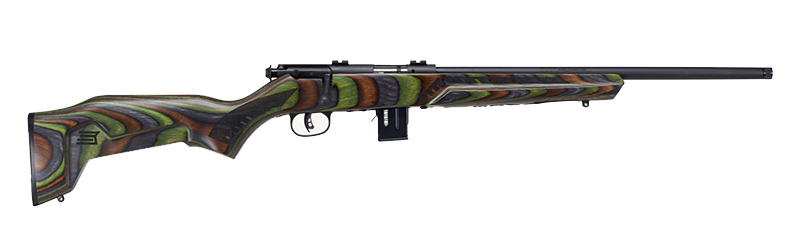
Steiner Predator 4 Scope Options:

  • 2.5-10×42 | MSRP: $1,039.99
  • 4-16×50 | MSRP: $1,099.99
  • 6-24×50 | MSRP: $1,149.99

Steiner Optics of Germany are renowned for their high-quality glass. Whether in the form of binoculars, magnified hunting scopes or combat-oriented battle sights, Steiner products are regarded as some of the best. Their newly released Predator 4 riflescope series combines two of Steiner’s strong suits into a single family of optics—clarity and durability. Designed for serious hunters who need a scope that can survive the harshest of expeditions, the Predator 4 series takes Steiner’s experience making military-quality optics and puts it into hunting scopes with their signature, ultra-clear glass. The result is three new riflescopes that are ready for just about anything.

Predator 4 main

Alles Klar?


All three of the new Predator 4 riflescopes come with Steiner’s patented Diamond Coating on their already HD glass lenses. The coating not only protects the glass, but aids in light transmission as well to provide the clearest picture possible. This is even more important for those who hunt at the crack of dawn or just before sunset, as the extra light transmission in low-light environments may make the difference between spotting one’s target or not. Steiner claims that all their scopes, not just the Predator 4 series, lead the industry in terms of light transmission.

Predator 4 feature

Reticle


All Predator 4 scopes also include a reticle designed to assist with low-light shooting—the illuminated E3. It’s a second focal plane reticle with eleven brightness settings and has ballistic holdover compensation for up to 400 yards. It also features windage dots to help adjust for crosswinds.

E3 reticle

These three new Predator 4 riflescopes are the complete package. They’re light and compact enough to be easily carried during long and difficult treks, and their glass is clear enough to provide excellent sight pictures even at long range in poor lighting. Whether you’re looking for an optic to hunt vast Western plains, dense Eastern forests or anything in between, one of the new Predator 4 scopes will get the job done. Each Steiner scope comes with Steiner’s transferable lifetime warranty, and MSRP for the Predator 4 series starts at $1,039.99.

For more on Steiner Optics, please visit steiner-optics.com.


More Long-Range Glass

First Look: Weatherby Backcountry 2.0 Rifle Family

1

Lightweight, rugged and now available in more chamberings, the new Weatherby Backcountry 2.0 rifles are ready for anything.

Weatherby Backcountry 2.0 Configurations:

  • Backcountry 2.0 – MSRP: $2,499
  • Backcountry Ti 2.0 – MSRP: $3,349
  • Backcountry 2.0 Carbon – MSRP: $2,999
  • Backcountry 2.0 Ti Carbon – MSRP: $3,749

Weatherby is an American hunting legend, having produced premium magnum-powered bolt guns since the end of WWII. These exceptional hunting instruments have been used to take game with great effect on nearly every continent since their introduction, and their rifles seem to only be getting better. While the company naturally focused on traditional, wood-stocked guns for most of its existence, their use of modern construction materials in recent designs has enabled them to produce even more efficient and capable hunting rifles. Weatherby’s recently announced Backcountry 2.0 rifle family takes things to the next level. Building off the success of the original Mark V Backcountry line, the new Backcountry 2.0 rifles are now available with titanium receivers, carbon fiber components and more caliber options.

Backcountry 2 ti carbon

Lightweight, Low Recoil


All Backcountry 2.0 rifles come with the new carbon fiber Blacktooth stock, with the choice of a titanium receiver or carbon fiber barrel for further weight reduction. Depending on options, the Backcountry 2.0 can weigh in at as little as 4.7 pounds.
Creating ultra-light rifles chambered for magnum caliber loads is a recipe for bruised shoulders, so Weatherby remedied this by incorporating an innovative recoil pad and muzzle brake into the Backcountry 2.0 family. The recoil pad is 3D printed using a honeycomb pattern, designed to compress and prolong the recoil impulse, distributing the same energy over a greater period of time. The 30 symmetrically-spaced gas ports on the Accubrake ST muzzle device further help to reduce recoil.
Backcountry 2 Carbon

Accurate And Hard-Hitting

The BSF tensioned carbon fiber barrel system available for the new Backcountry managed to achieve a .06-inch group at 100 yards during Weatherby’s testing. This example set the company's accuracy record and was accomplished using Weatherby Select Plus ammo but is still an impressive demonstration of the rifle’s potential for high mechanical accuracy.

The rifle’s practical accuracy is aided by its TriggerTech adjustable single-stage trigger, which provides a crisp and light break. This should make taking game at long ranges as easy as possible and is a perfect match for some of the new calibers the Backcountry 2.0 is offered in, such as the fast and flat-shooting .30-378 Weatherby Magnum.

Backcountry 2 ti

The new Weatherby Backcountry rifles will be available in four configurations and several different caliber options. Just in time for this year’s hunting season, this new family of lightweight yet rugged rifles is set to hit store shelves in early Fall of this year.

For more, please visit weatherby.com.


More Weatherby Rifles:

Weapon-Mounted Lasers: Learn To Use Them To Your Advantage

0

Learn when, where and how to utilize a weapon-mounted laser sight to gain the maximum tactical advantage.

The movie scene is so common that we all let it pass without notice: The entry team goes through the door and into a dark space with multiple laser beams slashing across the interior. The team is here, and they mean business. Sound familiar?

(Above) With the laser beam close to the bore line, you can be sure you have less or no problems with close-range parallax.

Well, there’s actually a lot wrong with that. First of all, the cinematographer has a real headache when the director wants it. Lasers don’t show up in clean air. Without something in the air, the laser being projected doesn’t “appear” until it strikes the object being aimed at, be it bad guy, wall or target. So, in order for the laser to appear for the camera, the space has to be flooded with smoke, dust or such a high humidity level that it isn’t so much breathing air as swallowing wet air.

But what about real life?

That’s a problem, both in lasers not appearing and lasers “appearing.”

The thing to remember, which applies to both lasers and illumination, is that you leave it off until you need it—and you only have it on as long as you need it. Otherwise, you’re letting the whole world know “Here I am.”

Again, let’s consider our movie entry team. They proceed down the hallway, with laser dots dancing on the walls. At the end, someone is lurking in a room, and he or she counts the dots on the wall. How many? Three? Four? Five? They know the exact count of the team and can gauge distance, so when they pop out, they have a distinct advantage. You, doing a quiet sweep of your house because you heard a noise, are doing the same thing if you leave your laser on.

So, don’t.

Learn the switch location and options on your laser. When you need it isn’t the time you want to be consulting the owner’s manual. It sounds simple, but using a laser isn’t as simple as just turning it on and pointing.

The best laser location would be right on the bore centerline. Well, we can’t do that, but this comes really close—usefully close, and perhaps even ideally close.

It’s also extremely important that you know the law in your jurisdiction. I’ve been reading on a regular basis the discussions and court opinions on how police use lights and lasers. A bit of historical background: It has been customary for police officers in the past to arrest people by pointing firearms at them. That the person in question might not have done anything at the moment to justify the use of deadly force didn’t matter.

Not so with those of us non-sworn. (Not “civilian,” but that’s a subject for another time.) For those not wearing a badge, pointing a firearm at someone is (and pretty much has always been) assault with a deadly weapon.

That you have a light or laser attached to it and you’re using it for illumination or intimidation doesn’t matter. You’re pointing a firearm at someone. You have to know the legal restrictions on such use and the allowed exceptions. Otherwise, you’ll find yourself in hot water, having assaulted someone. “But a laser is intimidation, and how can I use it without pointing a firearm at someone?” You can’t, as long as it’s attached to the firearm. So, know the law.

Tactful Use Of Weapon-Mounted Lasers

When do you use a laser? Simply put: When the sights aren’t easy to use or impossible to see.

If I mount on an accessory rail, I want the laser (or light) back from the muzzle. On compact guns, that isn’t easy, but on full-sized guns it’s a snap.

For example, when you’re shooting from awkward positions. Let’s say, just as an example, you’ve fallen or been knocked down in the middle of the street. It’s dark, and the streetlights may not provide enough light to see your sights. (I know, this seems a bit far-fetched, but you never know when it might happen.) As the buddies of the guy who knocked you down are rushing in, flipping the laser on gives you the point of impact indication you need to then decide if you’re in fear of your life and to shoot or not to shoot.

Or, let’s say you’re in a struggle where your attacker has tried to take your firearm. You won’t be able to see the sights, and in the jumble of arms, hands, body checks and bad breath, you might shoot yourself. (Also, a problem when on the ground, and the bad guys are rushing in.)

This is something that happens in force-on-force, and the paint pellets from sims cartridges hurt when you shoot yourself.
In the struggle or on the ground, if you see a laser on the other guy and not on you, then you know you won’t be inadvertently shooting yourself—which is always a good thing.

Mindful Laser Mounting

And that leads me to the next detail: mounting. Install a laser on your defensive weapon close to the bore line, as close as you can manage. A friend of mine has spent some time and effort trying to design and fabricate a mounting system to put the laser directly onto the barrel of his AR-15.

Lights and lasers need to be close to the bore axis for durability as well as alignment. The further out they are, the more likely they are to get damaged.

His thought is simple and obvious: You can’t get much closer than right on the barrel. Alas, heat and vibration create insurmountable problems with the idea. However, you should keep in mind that you want the line of your laser beam to be as close to the bore line as possible. You do this for two reasons.

The first is simple: offset. Just as the high-position AR-15 sights make long-range easier, they make close-quarter hits more difficult. You have to remember, inside of 25 yards, the trajectory and line-of-sight through the sights can differ by as much as 2½ inches.

The whole point of a laser is that it’s most useful under the most stressful of situations, situations where you might not remember, oh, that’s right, my laser is 3 inches to the left of my bullet trajectory. That offset is particularly important in the struggle over a firearm, or the hand-to-hand where a laser is useful. Forgetting the offset and shooting yourself isn’t the way to win fights.

The second is that the more off-axis a laser is, the more likely the mount is exposed, sticking out from the firearm, and prone to getting bumped, whacked and banged out of alignment. A laser bumped out of alignment is not only not useful, but it can also be hazardous, as in being in the path of your own bullet we just discussed.

Weapon-Mounted Laser 5

So, on pistols with accessory rails, I like to have the laser back as far from the muzzle as possible, so it’s protected from impact and powder residue. On both pistols and revolvers, I’m particularly fond of the Crimson Trace lasers that are built into the grips. The laser beam is as close as a revolver can get, and closer on pistols than many of the rail-mounted lasers. Their Lasersaddle mounts for shotguns are particularly good in this regard.

Oh, and on shotguns: Don’t believe the “flying cloud of shot” theory of pattern. I’ve shot too many bowling pins (at 25 feet) and seen others miss, to believe that shotgun spread is useful. You can miss with a shotgun—and miss wildly. You use a shotgun for the power, not the “carpet the zip code” pattern spread. The laser tells you where the power will be. Use it.

Adding a laser to your defensive handgun is not a difficult task, neither is learning to effectively use said laser once it’s affixed to your defensive weapon. But when it comes to lasers, it’s always important to sweat the details. A laser will make you more skilled with a defensive weapon … but only after you learn how to properly use it.

The article originally appeared in the November 2020 issue of Gun Digest the Magazine.


Take Aim At Aiming Solutions:

The FN FAL: The AK Of The West

4

Originally intended to use an intermediate cartridge, the FN FAL ended up sparking the battle rifle trend that would see them featured in global conflicts for decades to come.


FN FAL Quick Facts:

  • FAL=Fusil Automatique Léger= Light Automatic Rifle
  • 7.62x51mm Rifle Using Short-Stroke Gas Piston System
  • First Prototype Designed By Dieudonné Saive In 1946
  • Adopted By Over 90 Countries
  • Seen Use In Conflicts From Mid-1950s To Today

Plagued by politics and bureaucracy, the development of the FN FAL seemed doomed to fail from the start. While it may have missed out on realizing its full potential, the FN FAL still ended up being one of the most successful military rifles ever produced, likely only taking second place in terms of proliferation to the Kalashnikov. The FAL’s widespread adoption helped start the trend of battle rifles chambered in full-power cartridges which would be featured front and center in the world’s conflict zones from the 50s to the 80s and beyond. While the FN FAL has mostly fallen out of mainline military service, it is still appreciated around the globe by combatants and firearms enthusiasts alike for its rugged reliability, good ergonomics and raw sex appeal.

FN FAL main
G-Series FN FAL. Photo:Rock Island Auction Company.

The Post War Dream

In the wake of WWII, it was no secret that the Germans had come up with a winning design with their StG 44. As the first practical execution of the assault rifle concept, it served as inspiration in both the East and the West for the respective nations’ next infantry weapon. The intermediate caliber, the select-fire rifle that the USSR came up with was the AK of course, but what is often forgotten is that the FN FAL began its life the same way.

The first FAL prototype produced in 1946 was chambered in 8mm Kurz, the same round used in the StG 44 that would go on to be known as the father of all intermediate cartridges. If development would have continued down this path, the FN FAL would have likely been adopted chambered in .280 British, resulting in a rifle that would have handled similarly to an AK—more controllable full-auto fire, larger magazines and lighter ammo. Instead, politics and American stubbornness forced the FN FAL to become what we know today as a battle rifle instead of an assault rifle, accidentally starting a weapon trend that would come to dominate small arms proliferation until at least the 1980s.

280 FAL
Early Prototype FAL in .280 British. Photo:Forgotten Weapons.

FAL Development

Work on the FAL began in Belgium at FN Herstal where its development was headed by Dieudonné Saive, John Browning’s old protégé who helped make the Hi-Power such a success. Development began almost immediately following WWII in 1946, but the design was not considered finished until 1951 and not formally adopted by any military until the Canadians did so in 1955 in the guise of their slightly modified C1.

The drive behind the FN FAL’s development was NATO standardization. Much like the STANAG concept of standardized magazines and ammunition that was introduced in the 1980s, following WWII NATO was also attempting to standardize all member states on the same weapon platform and cartridge. Unfortunately for them, it didn’t quite go as planned. The United States insisted that the standard NATO cartridge must maintain the ballistic capabilities of .30-06, essentially forcing NATO’s adoption of 7.62x51mm. It was this demand that resulted in the FAL’s redesign into what we know it as today—a battle rifle chambered for the full-power 7.62 NATO round. This change was predicated on the assumption that the United States would then be willing to adopt the FN FAL as their standard infantry rifle as well, but again America decided to go their own way and adopt the M14.

Canadian C1 FAL
Early Canadian C1 FAL variant tested in Swedish trials. Photo: Wikipedia

To NATO’s chagrin, their standardization efforts only resulted in the widespread adoption of the FAL chambered for a cartridge they did not originally intend, several FAL variants with differently-specced parts and NATO’s largest military member not using the rifle at all. The only lasting standard from this attempt was the cartridge which still serves as NATO’s primary machinegun round today.

Despite all this, the FN FAL is still considered to be a very successful design. It was well-loved by many of its users and saw fighting in nearly every corner of the globe. Being the first widespread battle rifle, the FAL would also serve as conceptual inspiration for several other successful rifle platforms such as the CETME Model 58, H&K G3 and the FN SCAR-H.

L1A1 stripped
British L1A1 FAL stripped. Photo: Wikipedia

FN FAL Design Principles

The FN FAL operates using a short-stroke gas piston inspired by the Soviet SVT-40. It was a good enough system to be copied by the Germans during WWII with their G43 rifles and was also recycled by the Soviets later in the SKS. It is considered to be a very robust and reliable system, especially in the hands of a trained user who knows how to properly adjust the gas regulator. When the FAL’s gas is properly tuned for the ammunition, environment and weapon condition, it is extremely reliable and pleasant to shoot. The regulator is adjustable enough to let the rifle run reliably even in cold conditions with weak ammo and a dirty rifle, or to have minimum felt recoil with hotter ammo and a clean gun.

Despite the gas regulator, the FAL’s recoil is still a lot to manage in full auto, as is true of any full-power rifle. Because of this, most countries to adopt the FN FAL did so as a semi-automatic only rifle, sometimes opting to adopt a second LMG-configuration FAL in select-fire as a support weapon alongside it. If adopted in its original .280 British guise, there’s no question that all nations would have retained the rifle’s select-fire capabilities.

In its standard infantry rifle configuration, the FN FAL sports a 21-inch-long barrel and feeds from 20-round box magazines. Some later variants would also incorporate folding stocks. Depending on their country of origin or place of adoption, FALs can also feature bipods, carry handles, extended mags and different barrel lengths and handguards.

The greatest distinction between different FN FAL variants is the spec which they were built to, however. There are generally two patterns of FAL—metric and inch. Metric-pattern guns trace their roots back to the original Belgian-made FN models, while inch-patterns are derived from the British L1A1 SLR variant that would be used in Commonwealth nations like Australia and India. Even the magazines between these two patterns are not interchangeable, so be aware of this detail when shopping for a FAL for yourself.

FAL folding stock
G-Series Paratrooper FN FAL with folding stock and scope. Photo:Rock Island Auction Company.

Around The Globe

From the Mau Mau Uprising to the current conflict in Syria, from the professional armies of the United Kingdom to guerrilla forces and mercenaries, the FN FAL has seen some action. Designed to function reliably in the frozen tundra of the Soviet Union, it also performed admirably from the wet jungles of Vietnam to the arid African bush, seemingly only falling short in very sandy environments. Despite the reliability issues experienced in the desert, the FN FAL can still be found being used in the conflicts in Syria, Libya and Yemen.

Mau-Mau-Uprising
British troops with early FN FALs, Mau Mau Uprising, 1950s. Photo: Wikipedia

The most notable conflicts in which the FN FAL was prominently featured were the Cuban Revolution, Vietnam War, the Rhodesian Bush War and the Falklands War. Since its invention, the FAL has been adopted by over 90 countries, used by several non-state actors and produced by at least 10 different nations.

Today, the FN FAL is still the standard infantry rifle of several poorer nations and serves as a police rifle for some others who had enough to spare. Otherwise, it is still commonly used by guerilla forces as well as civilian sports shooters.

YPG-Fighter-FAL
YPG fighter with FAL with scope. Photo: Wikipedia

Owning A FAL Today

For those Americans who would like to own an FN FAL, there are two basic paths one can go down depending on where one’s interests lie. For those who appreciate military history or accurate clones, there are a variety of different FAL variants available on the secondhand market ranging from original Belgian examples to Commonwealth SLRs. Unfortunately, it has been quite some time since any FALs were imported and those who would like an interesting foreign-made rifle are limited to the used market and kit builds.

The more practical approach in 2021 is to buy one from America’s premier FAL manufacturer—DS Arms. DSA FALs come in a variety of flavors ranging from traditional to modern tactical and everything in between. If you’re in the market for a FAL to shoot, this is the best place to start.

DSA FN FAL SBR
DS Arms tactical SBR FAL variant. Photo: DS Arms

The history of the FN FAL is a long and complicated one. Its fingers are stuck in everything from post-WWII geopolitics to Cold War proxy conflicts, and its development process highlights some of the diplomatic difficulties experienced by NATO in its infancy. The FAL as it was adopted was never meant to exist in the eyes of its creator, but it nevertheless went on to be one of the most successful, widespread and influential military rifles ever invented.

Its unintended use of the 7.62x51mm cartridge sparked the battle rifle trend that would define NATO small arms until the Americans began experimenting with 5.56 in Vietnam. Almost as iconic as the Kalashnikov, the FN FAL has become a symbol intrinsically associated with the ideas of freedom, democracy and anti-communism, and in Western-allied nations, it became almost as ubiquitous as the AK as well. Today, the FAL is still serving dutifully in the hands of soldiers, police, guerillas and hobbyists, and it will continue to do so for decades to come.


More On Battle Rifles:

Beretta USA Announces Optics-Ready M9A4 Pistol

2

The newest iteration of the iconic M9 service pistol, the Beretta M9A4 now comes optics-ready and even more combat-oriented.

Beretta M9A4 Features:

  • 9mm, 18+1 Capacity
  • Tritium Night Sights
  • Optics-Ready
  • Threaded Barrel
  • Xtreme Short Reset Trigger
  • MSRP: $1,099

The newest member of the Beretta 92 family is here, a bit late to continue the tradition of military service, but just in time for the civilian red dot sighted pistol craze. The Beretta 92 has been in a constant state of development since it was first adopted as the M9 in 1985, and all the upgrades it received along the way have come together to make the new Beretta M9A4 a truly modern pistol.

M9A4

What’s New?


As is true with anything that receives generational updates, the M9A4 is essentially just an improved Beretta M9A3. It still has the ergonomic improvements of the aggressively textured Vertec-style grip, a threaded barrel for mounting suppressors or compensators and a beveled magazine well. It also still comes with tritium night sights, a segment of Picatinny rail and oversized controls. The substantial upgrades that set the M9A4 apart and allow it to sit at the table with other contemporary tactical pistols are found on the slide, in the trigger and in the magazine.

By far the most significant and apparent upgrade found on the M9A4 is its ability to accept a pistol red dot. The slide is cut to accept a variety of mounting plates available from Beretta, enabling you to mount virtually any model of modern pistol red dot sight. The trigger has also been improved over the stock variety that was found in the A3 series, with the M9A4 now featuring an Xtreme short reset trigger for faster follow up shots.

The M9A4 can now also fit one additional round in its magazine and has a decocker only slide.

M9A4 with optic

Does It Come In Black?


No, it does not. While the A3 variant was available in either classic black or with an FDE wear-resistant finish, the M9A4 only comes in FDE. While wear resistance is nice, FDE sticks out like a sore thumb outside of the desert. I’m sure that a black M9A4 option would have been appreciated by shooters who don’t live in arid environments as well as by law enforcement.

M9A4 dissasembled

The new M9A4 would make for a top-tier home defense or duty pistol after being outfitted with the proper accoutrements. It comes with a hefty price tag, but if you’re looking for a reliable, high-capacity and controllable pistol that can mount optics, suppressors and lights, the M9A4 is worth considering.

For more information, please visit beretta.com.


More Optics Ready Pistols:

HIPERFIRE Releases Upgraded HIPERCOMP Compensators

0

HIPERFIRE’s newest generation of HIPERCOMP compensators are now more effective, cheaper and now come in two flavors of 7.62.

Next Gen HIPERCOMP Options:

CaliberMSRP
5.56/.223$69
9mm$69
7.62 NATO$79
7.62 Russian$79

While they’re better known for their upgraded AR-15 triggers, when HIPERFIRE began making compensators as well their efforts were met with positive feedback. While excellent at mitigating recoil, customers thought that the first-generation HIPERCOMPs were too expensive and unnecessarily bulky. In response, HIPERFIRE has just released the next generation of HIPERCOMP, and they’re better in every possible way.

HIPERCOMP feat
HIPERCOMP 556 Next Gen

Made In The Matrix

HIPERFIRE claims that the primary reason for the lower price on the next-gen HIPERCOMPs comes from their innovative development process. Rather than using the traditional trial-and-error testing method, they used “Fluent computational fluid dynamics software” to virtually test their compensator designs within a simulated computer environment. The efficiency of this allowed HIPERFIRE to shed less sweat and waste less time and resources on the development process, passing the savings on to the customer.

The first generation of HIPERCOMP was only available for 5.56 and 9mm, but this next-gen update has added 7.62×51 NATO and 7.62×39 to the lineup as well.

762 AK HIPERCOMP
HIPERCOMP 762 Next Gen AK

Universal Improvement


Using the advanced methods described above, HIPERFIRE was able to improve every iteration of the HIPERCOMP across every metric while also adding two new models. Not only does the next-gen HIPERCOMP do a better job of reducing recoil than the original version, but HIPERFIRE claims that they are better than anything else on the market, too. While many competing muzzle devices seem to get larger to become more effective, the HIPERCOMP managed to get smaller during its upgrade process. Not only has it become lighter, dimensionally smaller and more aesthetically pleasing, but the 5.56 and 9mm versions are now also compatible with standard M-16 bayonets and armorer’s wrenches. HIPERCOMP comparison chart

These next-gen HIPERCOMPs may become a new industry standard if they perform as well as advertised. They’re light, efficient and roughly the same size as a MILSPEC birdcage, all while remaining decently priced. All models include a crush washer and are threaded for the most common pitch for their respective caliber.

For more info, please visit hiperfire.com.

More AR Upgrades:

Is There A Secret To Top-Notch Trigger Control?

2

Trigger Control is the foundation upon which all other skills are built. Is there a way to ensure a precision press each and every time?

What Are The Difficulties In Learning Trigger Control:

  • The skill is difficult to grasp, given there is no simple way to explain the process.
  • Practic, and plenty of it, is the only way to hone a proper trigger press.
  • Even then, it's impossible to expect a perfect press each and every time.

Instructors have been preaching it for years, and in my 2013 book, Handgun Training for Personal Protection, I called it “the secret.” The single, most important skill you must master with a handgun is the ability to operate the trigger—make the handgun fire—without disturbing the sight picture.

Many would consider this an excellent example of aligning the sights and pulling the trigger. However, for defensive purposes, this is mostly an example of shooting too slow.

As simple as it sounds, this single task is the most difficult part of becoming proficient with a defensive handgun. It’s the foundation that must be laid before any other skills can be built. Anything you build on a foundation that’s not up to par is doomed; at some point, you’ll add something to this—less-than-ideal—foundation, which will cause it to collapse. It might be stress, unique positions, low light or a host of other circumstances through which you must perform.

Sight alignment and trigger control are indeed the secrets to shooting. Of course, there are other things like stance, grip and breathing that influence marksmanship, but in the end, it all comes back to your ability to press the trigger without disturbing the alignment of the sights.

The Simplicity Of Sight Alignment

However, the problem is that many instructors and most shooters believe that this is a 50/50 function; they think you must concentrate equally on the sights and the trigger in order to get your hits. This notion of equality is the primary reason so many defensive handgun shooters have trouble becoming proficient. Sure, in the beginning when you’re just learning to shoot a defensive handgun you must balance the concentration you devote to these two physical activities. Typically, it takes only a little bit of time on the range until you understand the concept; after that, the trigger is what should be getting damn near all of your attention.

Consider this: I, or any other reasonably qualified instructor, can teach you what proper sight alignment is in less than five minutes. In fact, if you can read, you can learn it yourself. Hell, easier than reading, all you really need to do is look at a picture to understand what proper sight alignment looks like. Then, for the rest of your life you should easily be able to demonstrate proper sight alignment on demand and without fail.

The Complexity Of Trigger Control

Teaching someone how to pull a trigger isn’t as simple. Considering that I’ve been pulling handgun triggers for half a century and still mess it up should be evidence enough to prove that you can never really learn to pull a trigger as well as you can learn to line up sights. In 1999, I won the West Virginia National Guard State Pistol Match. That would seem to suggest that I know how to pull a trigger. The problem is that knowing how to pull a trigger and pulling a trigger correctly every time is not the same thing. In fact, during that match, I made numerous trigger-pulling mistakes, which is why my score wasn’t perfect.

It’s all about pulling the trigger, because when it comes to shooting a defensive handgun, pulling a trigger correctly is the hardest thing to learn.

Here’s the thing, in only a few words or with a simple diagram, sight alignment is simplified. You cannot do the same when it comes to pulling a trigger. The words to perfectly describe it have never been assembled, and no diagram can effectively convey the lesson. Pulling a trigger correctly is something learned by feel, and the only way to learn to feel it is to do a hell of a lot of it.
Pull? Press? Neither.

Some instructors will chastise others for using the term “pull” when it comes to describing the action of manipulating a trigger to make a handgun go bang. They’ll insist the word “press” is the proper term. Do you really think that either of these words simplifies the description of the action to the point it makes the stroke easier to learn? No. Maybe “manipulate” is a better word than pull or press, because manipulate doesn’t seem to describe a physical action that might be strong enough to negatively impact sight alignment.

I really don’t think the word that’s used matters; it’s pretty obvious what needs to happen. The trigger must be moved far enough to the rear, to make the pistol fire fast enough, to solve the problem, without disturbing the sight picture. There are all sorts of reasons this is difficult. Recoil anticipation, target panic, grip intensification, improper finger positioning and available time are just a few of the things that result in bad trigger pulls. I’ve been pulling handgun triggers for a long time, and, on occasion, all of these things cause me problems.

Why? Because I don’t practice pulling triggers enough. Let’s use a free throw in basketball as an analogy. If you practice it enough, you can become very good at it, but no matter how much you practice it you’ll never become perfect. Just consider professional basketball players, the best in the business are only 90 percent successful. The late Tom Amberry holds the Guinness world record; he made 2,750 free throws in a row. He was 71 when he did it so we must assume he practiced a lot. However, he didn’t practice enough to make number 2,571!

The Secret To Trigger Control

So, if the secret to shooting is sight alignment and trigger control, what’s the secret to the secret? It’s learning to pull the trigger, and the only way you can learn to pull a trigger is to pull a trigger. It cannot be learned by reading, watching or osmosis.

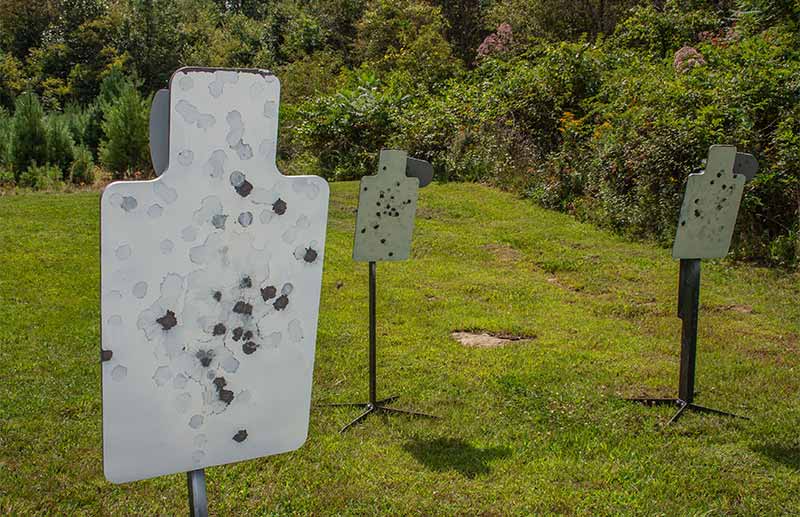
This target is an almost ideal representation of what good sight alignment and trigger pulling looks like with regard to defensive shooting; it exemplifies a good balance of speed and accuracy.

Dry practice or dry-fire is a fantastic way to do this, because it costs a lot less than actual shooting. But you don’t have to practice pulling the trigger while the sights are on the target to get better at pulling the trigger; you can improve your ability to pull a trigger correctly by pulling the trigger lots of times. The more you do it, the better you’ll get.

However, you must be prepared for failure; no matter how good you get a pulling a trigger you will at some point pull one incorrectly. Practice is how you get to the point where the good pulls far outweigh the bad ones.

Editor's Note: This article originally appeared in the January 2021 issue of Gun Digest the Magazine.


More On Handgun Training:

Viridian HS1 Hand Stop Lasers Now Available In IR

1

Viridian’s HS1 combination hand stop/laser aiming unit is now night vision-compatible thanks to their new HS1 IR.

Viridian HS1 IR Features:

  • Battery Life: 1.5-Hours Constant Use
  • Battery Type: 1/3 n
  • Mounting Options: M-LOK (Picatinny Adapters Available)
  • Range: Up To 2 Miles At Night
  • MSRP: $249

Hand stops are a popular ergonomic accessory that can help the shooter maintain control of their rifle while firing. Viridian Weapon Technologies asked themselves, why waste room inside the hand stop when it could be pulling double duty? This is what led to the development of the original HS1, a combination hand stop and laser aiming unit that was available with either a red or green visible laser. While the tactical world has been hesitant to seriously use laser aiming devices of any kind during daylight operations, their usefulness at nighttime is a different story. Those familiar with night vision know that infrared lasers have proven to be invaluable force multipliers on the battlefield, allowing a soldier equipped with night vision to deliver accurate fire without the use of an optic, cheek weld or any kind of proper sight picture. As the use of night vision grows in popularity and accessibility within the civilian world as well, Viridian has decided to begin offering the HS1 IR.

HS1 IR
HS1 IR device mounted to rifle. Purple laser is representative of invisible IR beam.

Own The Night


Now available with an infrared laser, the HS1 IR was designed to simultaneously improve the shooter’s control of their weapon while also providing a clear indication of the weapon’s point of aim. Unlike visible lasers which can only effectively place a dot on their target during daylight conditions, IR laser aimers used in conjunction with night vision can show a clear beam extending from the end of their emitter to where it is being aimed, up to two miles away in the case of the HS1 IR. Whether you enjoy hunting hogs in complete darkness or just want to be ready to go bump in the night if the need ever arose, the Viridian HS1 IR seems ready for serious use.

HS1 IR aiming
HS1 green laser version, HS1 IR laser is invisible to naked eye.

The HS1 IR is activated automatically when the hand stop is gripped in a shooting position, instantly assisting with target acquisition as well as recoil control. This combo unit is also lighter, more compact and less expensive than many similar devices in its class, and it’s the only one that doubles as a hand stop. It mounts using two slots of M-LOK, but a Picatinny rail adaptor is available as well. The HS1 IR can operate for 1.5 hours while turned on, but the automatic activation and deactivation should preserve the battery for a longer amount of time of real use. It is powered by a single 1/3 n battery.

HS1 IR angled

The hand stop housing is available in either black or FDE, and the IR beam is adjustable for both windage and elevation. The HS1 IR has an MSRP of $249 and includes a 7-year warranty. While the visible laser variants of the HS1 may be more tacticool than genuinely useful, the new HS1 IR has the potential to become a serious piece of night vision kit for users to consider.

For more, please visit viridianweapontech.com.


More On Laser Aiming Devices:

Rimfire Barrel Conditioning For Supreme Accuracy

2

Conditioning a rimfire barrel? Pish if your aim is perforating tin cans. But if maximum accuracy is your goal you'd better listen up.

What You Need To Know About Conditioning a Rimfire Barrel:

  • Lubricant on the outside of .22 LR is what causes accuracy issues between loads.
  • In most cases, this is overcome by shooting a number of rounds to condition the barrel to the particular load.
  • It can take as many as 40 rounds before the ammo/gun finds its groove.
  • Many veteran shooters won't clean the bores of their rimfire in fear of upsetting its conditioning.

I shot my first IPSC match in the fall of 1977. I won it, and that was that; I was hooked.

Aiming for maximum accuracy, ensuring your conditioning your rimfire's barrel for specific loads Is a must.

By 1986, I had been on a roll for a few years. I attended three U.S. IPSC Nationals and had a slot for a fourth. I shot in local matches in two states and the Second Chance Combat Match. I suddenly had an invitation to the inaugural Masters in my mailbox. Woo-hoo!

But I needed a rimfire pistol.

As luck would have it, I had just acquired an S&W M-41. I proceeded to the gun club with my also-new Ransom rest and proceeded to make myself crazy. Nothing would shoot well enough for the match, and nothing shot as well as the pistol or the ammo makers promised. Even the good stuff printed groups on the lines of 3 inches at 50 yards.

I was about to give up when I remembered reading about small-bore rifle competitors. They’d test various batches of ammo for accuracy, and when they found the best available for their rifle (this was in the early Paleolithic era for ammunition accuracy), they’d buy a metric truckload of it.

And not just that load but that production lot.

The important thing was this: They had learned the necessity to “condition” a rimfire barrel for each ammo tested. That is, they’d either run a patch down the bore and then shoot the next load (rare in small-bore circles) or just start shooting the next load. But they wouldn’t measure groups with the next load until the load had time to deposit its own mixture of lube and residue in the bore—its own mojo, if you will.

That was the step I was missing.

By shooting two, three or four groups with a given load, and then switching to the next, I wasn’t giving my M-41 time to settle down with a particular batch of rimfire and get into the mood. It was always just about set, and then I’d go and change things.

You have to get to know your rimfire firearm in order to extract maximum accuracy out of it. Some are easy-going, and some will sulk.

Oh, the impatience of youth.

Rimfire Barrel Conditioning

Why do firearms do this, and in particular, rimfire firearms?

Simple: .22 Long Rifle ammunition is, as we all know, outside-lubed. Unlike centerfire ammunition, where the case encloses the lubricant, on a rimfire, it’s right out there, in front of God and everybody else.

Every maker has their own “secret sauce” of lube—what works, what’s cheap and what stays in place during manufacture, shipment, storage … who knows? They make their own, and if there are still traces (or more than traces) of lube or something else from the previous load tested, the bullet can’t really do its job.


More On-Target Rimfire Info:

The lubrication issue is exacerbated by the pretty much pure lead composition of the bullet. They’re made soft because it’s cheap, and soft bullets are easier to swage into shape. But they’re also made soft so they’ll upset, or obdurate, in ballisticians parlance, to fit the bore.

Having some other lubricant interferes with the smooth progression of this part of the bullet’s travel. We are, after all, talking about the last bits of accuracy, so anything that interferes with the process makes a difference on the last few percentage points of performance.

Sweat The Small Stuff

This means that, in order to wring the most accuracy out of a given load, you have to shoot enough of it so that the lube-size-bore-fit-travel equation is to the satisfaction of the firearm in question.

The author is a big fan of Eley Tenex because they often deliver groups like this at 50 yards. However, when switching to another batch of Tenex, he’ll recondition the bore again.

What about cleaning the bore? First of all, at that time (I don’t know about now) most small-bore shooters would look at you with a mixture of horror and pity were you to broach the subject of cleaning rods, solvents and patches. Brushes down the bore was simply a taboo subject. The risk of wear to the throat or muzzle of their rifle was too great, in their opinion—better to simply shoot more ammo.

As far as cleaning the rest of the rifle or pistol was concerned, that wasn’t a problem. And if any cleaning solvent or oil found its way into the chamber or down the bore, well, the solution to every problem was to shoot enough rounds to “clean it up” and “recondition” the bore. Back when “expensive” rimfire ammo might cost you a nickel a shot, “shooting more” was inexpensive advice.

Defining Accuracy

As I told you, this was the early Paleolithic as far as bores, lube, cleaning and accuracy were concerned. Today, things may or may not have changed; it depends on what you think “accuracy” is and who you’re shooting with. The last time I was shooting accurate rimfire rifles (scarily accurate, at that) we were connecting on plates out to 400 yards, as long as the wind cooperated. We didn’t change ammunition, however, and we didn’t put anything down the bore but more ammo.

Now, does this matter today? That depends. If you’re out for an afternoon of plinking or teaching a new shooter how things work, no. Minute-of-tin-can is going to be plenty accurate, and using whatever ammo is available, inexpensive or reliable is what’ll get the job done.

However, if you’re trying to improve your skills in the form of using a duplicate rimfire to your centerfire pistol or rifle, then maybe. If the accuracy level of the mismatch ammo to bore is still smaller than your aiming error, you’re in the same boat as the plinker or new shooter—you won’t notice a thing.

However, if you’re shooting in competition or you’re trying to find what an otherwise accurate pistol or rifle will do at its best, then, yes, you have to condition the bore. And recondition with the next load.

Once the author has conditioned the bore of his M-41 to Federal Gold Medal, it’ll deliver groups like this at 50 yards from the Ransom rest.

What I found was that my M-41 was the equivalent of a redheaded supermodel when it came to rimfire ammunition and accuracy. It’d take me 20 to 30 rounds of the next load before it’d settle down, and then it might or might not like what I was feeding it. I finally found that there was a correlation: The more expensive the ammunition, the better the chances it would deign to shoot it well.

Sigh.

I used the cheap-but-accurate-enough ammo for practice, and then I made sure I reconditioned the rimfire's barrel thoroughly with the expensive stuff before loading up the car and driving to Quincy, Illinois. I did well enough that, after three years, they bumped me up from amateur to professional. I couldn’t be both a full-time gunsmith and a professional shooter, so I had pick one and bowed out of the pro division.

Oh, and the redhead comparison? I had by then been living in a university town for a number of years. While my sample size wasn’t statistically significant, there were some correlations. And yes, there were levelheaded redheads and crazy brunettes (we won’t speak of blondes at this time), but the odds were, well … with the stereotype.

Editor's Note: This article originally appeared in the January 2021 issue of Gun Digest the Magazine.

CZ Releases Competition Ready P-10 F Pistol

0

Originally designed for self-defense, the CZ P-10 series is now competition-ready with the new P-10 F.

CZ P-10 F Features:

  • 9mm, 19+1 Capacity
  • Striker-Fired
  • 5-Inch Barrel
  • Fiber Optic Front Sight, Optics-Cut Slide
  • MSRP: $999

CZ’s flagship pistol, the CZ-75, began its life as a military and defensive handgun only for it to eventually evolve into the slew of competition-oriented variants that exist today. Now, their P-10 striker-fired series has begun the same process. The CZ P-10 F is their first competition-ready striker-fired pistol to come to market, and time will tell if it proves to be as popular as the Shadow or Tactical Sport series.

CZ P-10 F

Improved Accuracy


Both the mechanical and practical accuracies of the CZ P-10 F have been improved over the standard model, primarily due to its longer barrel and sight radius. The new cold hammer-forged 5-inch barrel also features a 9mm match chamber for increased consistency and improved feed ramp geometry for more reliability.

Practical accuracy was further improved by the P-10 F’s standard fiber-optic front sight and flat HB Industries trigger. The slide has also been cut to accept a variety of pistol red dot sights.

CZ P-10 F optic

Upgraded Ergos


Like the original P-10, the P-10 F has a polymer frame and comes with three interchangeable backstraps. It also still has a reversible magazine release and an ambidextrous slide release lever, except they are now made by Apex Tactical and feature enlarged, easier to access controls. Like the original iteration, the P-10 F also still has forward and rear slide serrations, but they appear to be more aggressive on the new competition model.

CZ P-10 F left

If you participate in any kind of pistol shooting competitions and enjoy the CZ P-10 platform, the P-10 F is for you. It offers familiar ergonomics and controls to the standard defensive model but has been improved for competition use. Its gold accents and MSRP of $999 ensure that you won’t forget that fact. Ten-round magazines are also available for ban-state residents. If the new CZ P-10 F proves a popular piece for competitors, it will be interesting to see how CZ’s competition striker-fired line expands and develops.

To learn more, please visit cz-usa.com.


More Competition Handguns And Upgrades:

Rimfires For Self-Defense … Does It Make Sense?

0

Rimfires for self-defense might be met by a chorus of clucking tongues, but when lives are on the line, ‘small' is better than nothing at all.

Scott Reidy, director of training at Sig Sauer Academy, spent 21 years as a police officer in Nashua, New Hampshire, where winters are cold and clothing is heavy. He’s spent most of the last 10 years as a full-time firearms instructor.

Rimfires for self-defense

“Last year, we had 14,000 students through our concealed carry program,” he said. “We teach heavily on acceptable caliber and recommend no lower than a .380, but there are some big caveats there. Can you safely manipulate the gun? Manage the recoil? How small does the gun need to be to conceal?”

In other words, there are scenarios where rimfires for self-defense make sense, rare as they might be. Older arthritic hands that can’t handle the snap of a micro .380 or 9mm might be OK with a low-recoil .22 WMR or .22 LR. Disabled or injured shooters with limited hand mobility may be able to safely manipulate a small and light pistol, with limited recoil.

Then, there are deep concealment scenarios that call for a positively tiny piece—a boot or even a belt-buckle gun. This all boils down to the idea that a small gun a shooter can shoot accurately, reliably and quickly is better than a larger caliber they can’t shoot well at all. Hitting is better than missing. One gun is better than no gun.

When looking for penetration from a .22-caliber bullet, think speed. CCI's Stinger and Velocitor rounds are designed with velocity in mind.

And, two guns are better than one gun. A friend of mine in Georgia does just this, carrying a concealed Sig P365 on his hip every time he steps out of the house, along with a Ruger LCR in .22 WMR in an ankle holster when about town with his wife, who knows how to shoot but doesn’t like to carry.

“If something terrible happens, and we’re in a shopping mall, say, I can get her to a safe place, arm her with that little gun she likes to shoot at the range, and situationally we’re better off,” he said. “Two guns are better than one.”

Limited as it might be, rimfires have a particular use case in the self-defense world.

.22 Magnum For Self-Defense

Considering rimfires for self-defense, we’re really lumping together the two .22s—the .22 WMR and the .22 LR. This is largely unfair because as all Gun Digest readers know, ballistically they’re very different. Most won’t argue the adequacies of .22 WMR for self-defense, and some will say its power versus cost versus weight make it the ideal SHTF survival round.

Consider how the .22 WMR holds up to the old-school pocket gun rounds like the .25 Auto and .32 Auto, as tested by engineers at Federal Ammunition at the Federal Factory in Anoka, Minnesota.

Rimfire for self-defense, a .22 magnum load

“Our Gold Dot .22 Magnum load, which we’ve had in the lineup for years, will go toe-to-toe with any .32 Auto or .25 Auto any day of the week,” said Dan Compton, product manager for rimfire and shotshell with Federal. “Our main goal was penetration, even at the sacrifice of expansion. The light bullet with flat profile really gave us that penetration.”

Federal found that the 40-grain .22 WMR running 1,500 fps penetrated 2.5 inches more than the heavier, slower 60-grain .32 Auto load running just 725 fps. Talented gun writers like our own Richard Mann have corroborated these findings from as early as 2013, how the .22 WMR with loads like Gold Dot and Hornady Critical Defense have killing penetration when placed correctly, with adequate expansion from handgun-length barrels.

.22 LR For Self-Defense

A more debated topic is the viability of .22 LR for self-defense applications. While no dedicated .22 LR self-defense loads are currently on the market, it wouldn’t surprise me if we see them trickle out in the new year.

If the main goal remains penetration, as it was for Federal on .22 WMR project, it’s likely a self-defense .22 LR will be a fast, light load—something hyper-velocity like a CCI Stinger or Velocitor. Both loads have been widely tested by engineers and gun writers alike for self-defense applications, and, in the best cases, penetrate ballistic gel just 6 inches.

CCI’s Stinger load is a wonderful option for the .22 LR. It hits a little harder than the Velocitor load, but won’t penetrate as deep.

To this point, Reidy has seen cases on the street where .22 LR rounds have failed to penetrate heavy leather jackets. One of my most memorable police stories as a daily newspaper reporter was a guy shot randomly in the back of the head with a .22 LR while running down the street. The shooter was an estimated 50 to 100 yards away when his 40-grain soft point connected dead center in the back of the runner’s head. The bullet broke the skin, but not the skull, and stuck there like bent tin can. The cell phone photo his girlfriend had taken of the bullet lodged in his head was graphic, and the newspaper declined to run it. The runner, for what it’s worth, thought he was stung by some giant hornet and was seen, patched up and pushed out of the emergency room in a few hours.

Not all .22 LR loads are equal, of course. Damage from a bulk-pack load at 100 yards is nothing like that from a hyper-velocity round at 10 steps. At bad-breath distances, the right .22 LR could be potent. As David Petzal has written, “They’ve killed African lions and Alaskan grizzlies and who knows how many unfortunate human beings.”

With a big trend in the firearm industry currently being all things .22 LR, and the release over the past year or so of new .22 LR pistols from Glock, Ruger, Taurus, Kel-Tec and others, rest assured the discussion of .22 LR as a viable and deadly self-defense round is only just beginning.

Editor's Note: This article originally appeared in the 2020 EDC issue of Gun Digest the Magazine.


More On Rimfires:

MUST READ ARTICLES