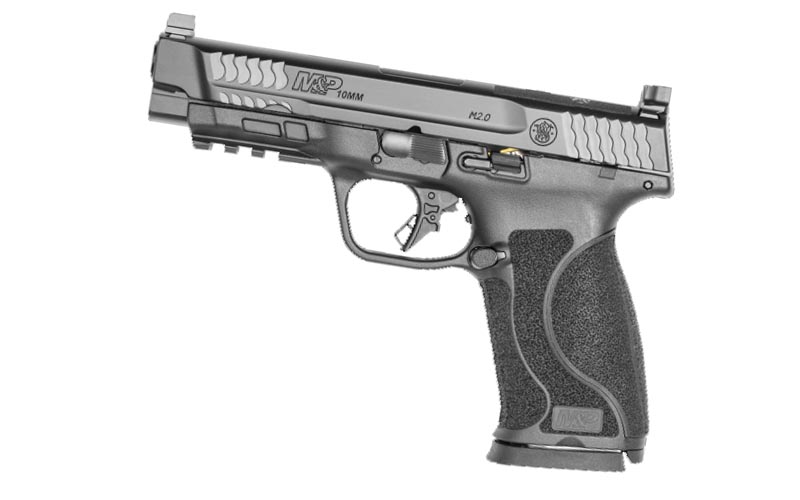
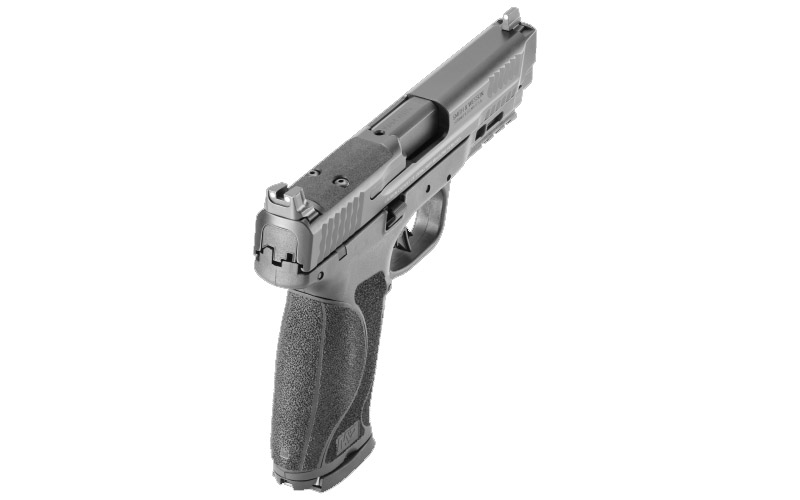
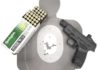
Smith & Wesson has just unexpectedly released a 10mm M&P 2.0, helping to keep the cartridge relevant and providing a new powerful carry option for those that seek it.
Made famous by the FBI’s adoption of the caliber following the Miami-Dade shootout in 1986, 10mm Auto has been contentious since the beginning. Many deemed it too powerful for the average shooter to realistically control, but others were impressed by its ballistic performance and were quick to adopt it as their primary handgun caliber. 10mm may have never fully caught on, but it never really died out either. Helping to keep it from falling by the wayside, Smith & Wesson have just released a 10mm M&P 2.0. As one of the most popular pistol platforms in the country, the M&P is already very familiar to many concealed carriers and law enforcement alike, so the addition of a 10mm chambering to the lineup will be very welcome to those seeking a bit more stopping power from their sidearm.
The 10mm M&P 2.0 is available in a few different configurations. It can come either with or without a manual safety and with either a 4-inch or 4.6-inch-long barrel, making a total of 4 models to choose from. All 10mm M&P models are also optics-ready and come standard with suppressor height sights. The trigger has also been redesigned into a flat-face style with the intention of providing a more consistent pull for more accurate shooting. Like all M&P pistols, the ergonomic grip inserts are interchangeable as well.
With a magazine capacity of 15 rounds, the 10mm M&P can pack quite a bit of firepower in a pretty compact package. Between the choices in barrel length and the ability to mount a red dot sight straight from the factory, the 10mm M&P could make for both a fine CCW piece or duty gun. MSRP starts at $654 and it’s available now.
For more about Smith & Wesson’s new 10mm M&P 2.0, please visit smith-wesson.com.
Editor’s Note: When originally published this article contained a mistake regarding when 10mm Auto was introduced. Thank you to the reader who helped remind the author that the cartridge was developed before being made famous by the FBI’s adoption of it in 1989. The incorrect information has been removed.
Find out what new long-range shooting equipment former Marine sniper Frank Galli thinks is worth investing your hard-earned money.
What’s The New Long-Range Shooting Equipment:
X7 Riton Optics Conqueror
Arken Optics 4-16x50mm FFP
Hoplite Arms Rifles
Genesis Ballistics Calculator
Vectronix Terrapin X Rangefinder
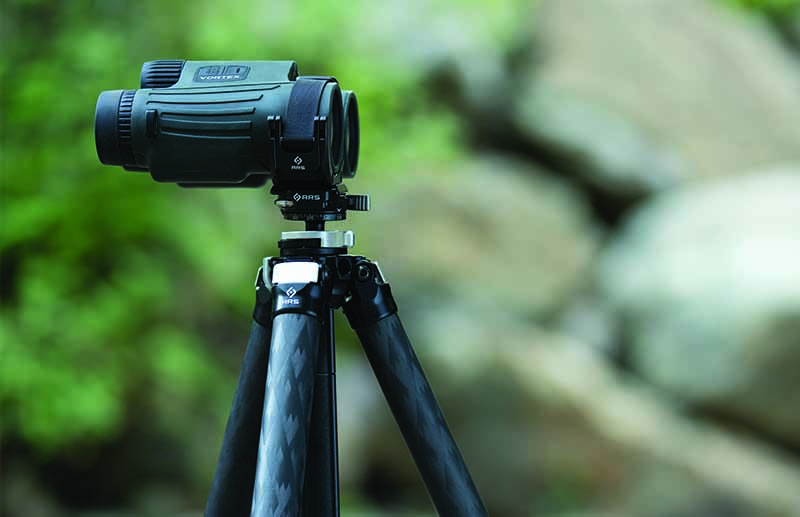
Really Right Stuff Ascend Tripod
In a normal year, our look at the future begins with SHOT Show. Typically held in January, we get to see what companies are preparing to release that year. Secret projects are revealed, and there’s always some interesting surprises when a company succeeds in preventing leaks.
SHOT Show 2021 was canceled. To make matters worse, many of the products from 2020 never made it to the market. We were teased last SHOT Show, then the lockdowns happened and everything evaporated. In fact, I ordered several new products last year, and they were never delivered. The supply chain is the biggest issue: You cannot build a new product if you can’t get the materials or the government has ordered your business closed until further notice.
With the model for new product releases changing, we’re seeing more incremental upgrades, at least at the moment. The shutdowns have allowed some companies to move forward in design and testing, and other companies are just trying to deliver. With the current political climate, demand has also increased, creating a double-sided problem.
It’s not all bad; demand is up, supply is down—but innovation moves forward. Let’s look at what we did see in 2021.
OEM Scopes
I’m starting with optics because this sector has had the most movement. An OEM scope is one build for a specific company. It’s not designed from a scope manufacturer, instead, a specification on features is chosen from a list, and the builder then brands that optic to the company.
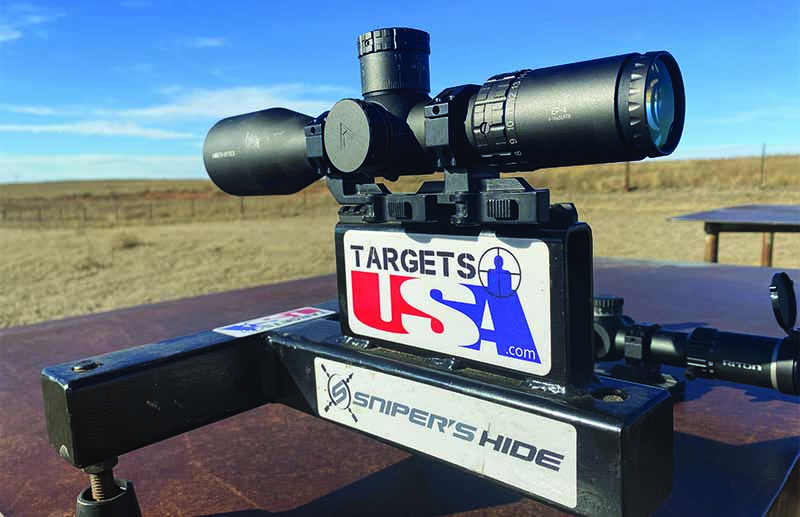
When testing the new group of OEM scopes, we track test them using a 30LBS fixture for stability and accuracy. The Arken scope scored 100 percent despite its low cost and proves a great value in the usually expensive realm of long-range shooting equipment.
It’s a great way to get into the industry, and often these scopes are less expensive than the original that inspired them. When a large manufacturer requisitions a design by an overseas builder, those designs can then be resold to others.
The most popular in this category is probably Athlon, who makes a solid product with a proven track record. Their entry into the industry has prompted several others to follow, and those companies are releasing new products and design adjustment upgrades to their existing lines.
X7 Riton Optics Conqueror The X7 Riton Optics Conqueror is a 3-24x56mm Front Focal Plane scope, retailing for $2,250. There are several new models in the Riton lineup, the X7 being the top-of-the-line models. This scope features improved internals, 120-MOA adjustment and holdover-style reticle. With a 34mm main tube with illumination and choices in both MRAD and MOA, it checks all the boxes.
It’s a solid entry into the market—the right size, weight and specifications to satisfy most precision rifle shooters. There are plenty of magnification options to choose from, including 4-32x and 3-18x versions.
Get On Target With Frank Galli:
Mils vs. MOA: Which Is The Best Long-Range Language?
Arken Optics Another company to look at in this market is Arken Optics. They’re different from most brands as they’re using lower-cost Chinese-built scopes. The difference is the reliability they’ve specified for their products. If you think of it as an à la carte menu, you can easily put your money in glass, internals or other features. Focusing on the internals is where Arken invested, and it shows.
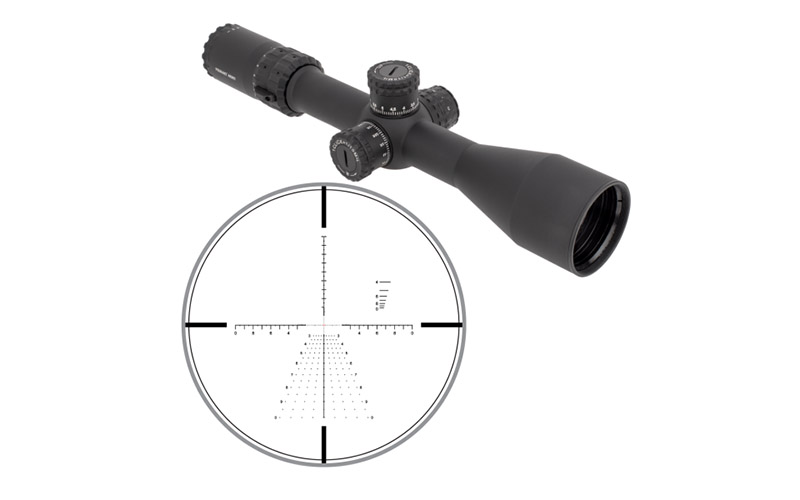
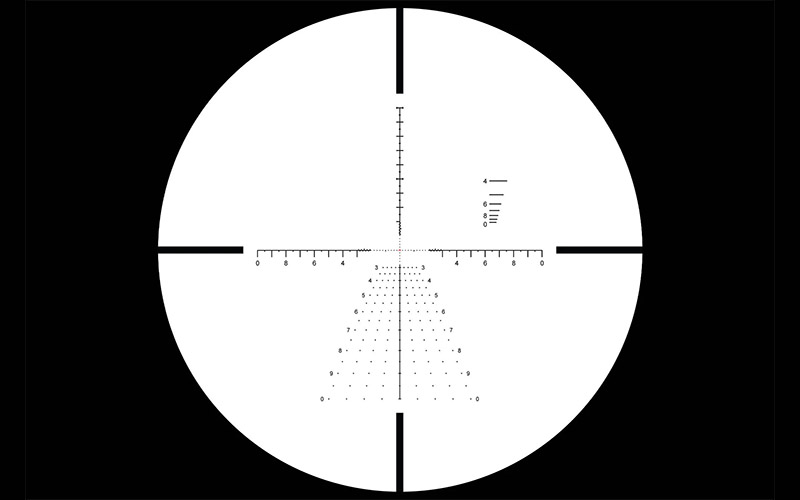
I have the Arken Optics 4-16x50mm Front Focal Plane scope. This scope retails for the low cost of $399, and it’s a very good entry-level scope. I’d highly recommend it for those with budgets that fall into this bucket.
Arken Optics fills a very specific need, since not everyone has to spend $2,000 on a scope. In the past, the choices for sub $500 scopes were terrible. The reliability at this price range suffered. Putting the Arken to the test using our Sniper’s Hide Scope tool, we found it to track with 100 percent reliability. With the pandemic limiting supply, it afforded the company to change the reticle. They took end-user feedback and modified the reticle to something more popular, so moving forward you’ll have access to that upgrade.
There are several other scopes in this category. You have companies like Tract, Maven and Athlon (as noted earlier) all offering very good optics at a variety of price points. My advice for you is to look at the specs in the following ways:
Budget: Determine your budget.
Reticle: The reticle is a main area of focus; we interact with the reticle, so make sure it speaks to you.
MRAD or MOA: Most modern optics offer both. Be sure to check point two as MOA reticle choices are often limited versus their mil-based counterparts.
Features: The features are often very similar, as many OEM scopes are based off a specific model to begin with; look at the tube size, turret design and ocular adjustments.
Glass: Glass is the last thing I consider; current specifications have improved over the years. HD glass is quite common.
Long-Range Rifles
Rifles are a tough call for 2021. Gun sales surged in 2020; the previous record was 2016. More than 15 million background checks were completed in that year; 2020 exceeded 17 million background checks.
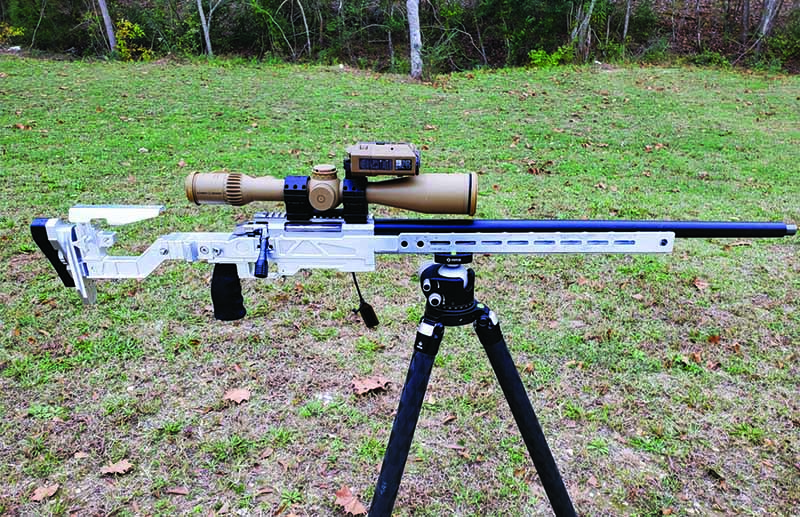
On-target long-range shooting equipment: Hoplite Arms has designed several new rifle systems from the ground up. The action, chassis and design are all tested prior to release.
Supply is difficult, so companies are focusing on that with research and development taking a backseat. It seems that the only long-range rifles being released are ones that were in the pipeline prior to 2020.
Hoplite Arms I spoke to Hoplite Arms about their new rifle systems to be released in 2021 that were poised for SHOT Show: “Initially, Hoplite Arms will offer complete weapon systems and will not be offering actions alone,” said a member of the Hoplite R&D team. “By offering a complete weapon system from the onset, we can ensure that our design is not left vulnerable to issues that have plagued certain sectors of our industry. Hoplite Arms criteria and performance targets for these new projects (Kopis, Aspis and Phalanx weapon systems) has been aimed at not only adding value and increasing reliability, but also to enlarge and exceed the current performance envelope. We are achieving unheard of action strength via the alloy choices of critical components, such as the bolt and the breech cylinder. Both of those alloys are Aermet 100, which has great strength—without brittleness.”
Ballistic Calculators
Genesis Ballistics
Hoplite Arms is also releasing a new version of Patagonia Ballistics ColdBore 2.0 via smartphones. Patagonia Ballistics is one of the oldest ballistic solvers on the market. In fact, they were right there with CheyTac’s ABC system and Gerald Perry’s ExBal. The issue with it was that it used a Windows mobile-based system. Many of us consider ColdBore the best ballistic software on the market, if we only didn’t have to deal with Windows. We use it with Trimble units, but they’re big and heavy devices. Porting the software for iPhones and Androids is a welcome upgrade.
Enter Genesis Ballistics, a full-featured ballistic app that’ll run on your smartphone. Genesis builds off the Patagonia software; it has tools and features not found in other solvers, like the Scope Tracking Utility.
Rangefinders
We see a lot of companies offering small incremental updates to products, especially around ballistic software. One area where a company can grab attention is connectivity … linking one product to another.
Vectronix Terrapin X Rangefinder Vectronix is very good at this, especially with the Terrapin X rangefinder, a consumer-based unit that doesn’t include propriety software, but rather focuses on feeding the different programs data. Recently, they added connectivity to a host of new products, including the Garmin Applied Ballistic smartwatch.
Setting the watch to your Applied Ballistic profile, you can easily range a target, flip your wrist and the solution is presented to you. Connectivity across multiple devices means you’re future-proof versus investing in proprietary solutions. The Garmin Tactix Delta with Applied Ballistics is a fully featured ballistic solver; it’s not a lite version as found in devices of the past. I’m huge fan of the Garmin smartwatches. The Tactix Delta is very similar to the Fenix 6; it includes the solar glass for charging and with that option, the watch will stay charged for more than 25 days.
Tripods And Bipods
Really Right Stuff Ascend Really Right Stuff has several new products dropping this year. Sticking with what works—tripods—they’re releasing a small, compact hunting tripod called the Ascend. It’s the pinnacle of a modern shooting tripod in a lightweight and compact design.
The Really Right Stuff Ascend Tripod with Cinch is and essential piece of long-range shooting equipment and the perfect hunting tripod.
Along with the Ascend, Really Right Stuff has two options for mounting binoculars to include laser rangefinder ones that have those odd-shaped housings. The Cinch Elite is the aluminum version, and the LR is the polymer model. The polymer model has been priced for the everyman. Many people lament the cost of Really Right Stuff products, but we pay them because they work. Really Right Stuff has a host of new products and accessories designed to bridge the interface between shooter and tripod.
Long-Range Shooting Equipment Doldrums
The pandemic really threw a curve in our supply chain. Combine this with an election that’ll hold big consequences for the gun industry, and it’s just a recipe for disaster in terms of new product releases.
However, it’s not all bad news: The change in strategy we’re seeing, with companies not focusing on a specific release point but instead bringing the products to market when complete, is going to work out well in the long run. Staggering releases may mean more opportunity.
Editor’s Note: This article originally appeared in the February 2021 issue of Gun Digest the Magazine.
Questions arise after leaked documents show ATF collected records on over 54 million gun owners in the last year alone.
Here are two facts that seem to be mutually exclusive, but apparently are not: It is illegal for the U.S. government to create a national database of gun owners, and the ATF has a building in West Virginia so bloated with American gun owners’ records that a floor collapsed several years ago.
The ATF maintains that a database is easily searchable, however, and because their dragon’s hoard of unconstitutionally collected data is too thick to even wade through, it does not technically constitute one. If the ATF considers this data to be useless, however, it raises the question as to why they would waste the manpower collecting it.
It’s no secret that many government employees receive large salaries for doing very little work, but it seems that those at the ATF are no slackers. They were hard at work during the 2021 fiscal year snatching up every gun-related record they could get their hands on, and a leaked internal document obtained by the Gun Owners of America and the Washington Free Beacon has just revealed exactly how busy they were.
Leaked internal ATF document obtained by GOA, click HERE to read full original.
Over 54 million records, mostly paper but some electronic, were obtained and stored this past year by the ATF. The ATF’s spokesperson said, of course, that these records do not indicate the existence of or creation of a registry, but this is the same organization that claimed the Branch Davidians opened fire first, so you be the judge.
As evidenced by both Joe Biden’s presidential campaign and his time so far in office, gun rights are on the chopping block for this administration. Between unconstitutional rule change proposals, the nomination of a radical gun-grabber to head the ATF and the import ban on Russian ammo, the agenda has become quite clear. Considering these facts, it is not unreasonable for any American gun owner to be suspicious about such a massive record-collecting operation as this. Those who are aware of how infrequently gun records lead to arrests of violent criminals should be doubly suspicious, as it implies that the ATF had other reasons for putting in such an effort. Reasons that should have every American concerned about future federal actions regarding firearms.
The current administration has already proposed banning pistol-stabilizing braces, a common-use item that helps many physically disabled Americans defend themselves and participate in shooting sports. Now they’ve gone on to propose that gun stores would no longer be allowed to destroy their records after 20 years (the current rule) and would have to maintain them permanently until they’ve relinquished their FFL licensure. The 54 million records that were obtained this year were received from FFLs who had gone out of business, and if this new rule change were to be implemented, future years may see even more than 54 million records being collected.
We can’t be sure of how the ATF plans on using this information or why they are so keen on acquiring even more of it, but the agency’s history shows that it likely isn’t for anything good.
To read the original article containing the leaked document, please visit freebeacon.com.
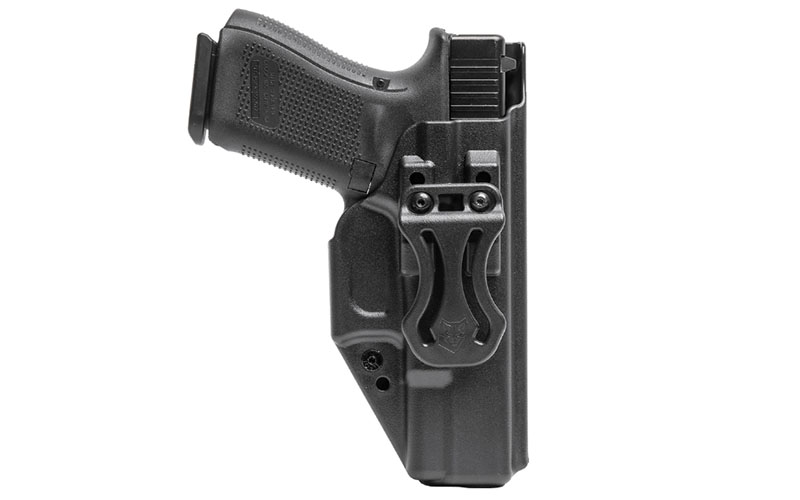
The new Warcat Tactical IWB holster has everything you need in a modern CCW holster, with a claw, wedge and optics-ready option right out of the box.
Warcat Tactical is the newest brand under the Tedder Industries holding company, the owners of Alien Gear and Rapid Force. The company is introducing itself with the Warcat Tactical holster, a new IWB holster with features tailored to the modern concealed carrier. Designed and manufactured in Post Falls, Idaho, the Warcat Tactical holster claims to be better, faster and stronger than any of its competitors.
Modern Features
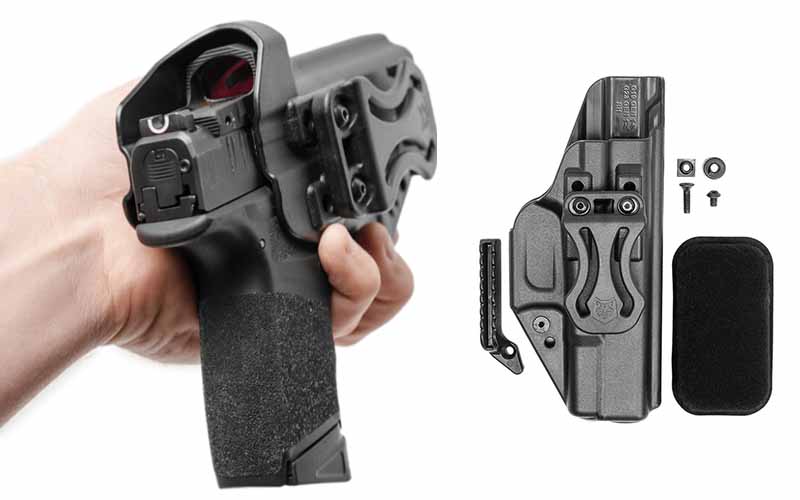
Because the popular models of CCW pistols are ever changing, so too must the holsters that carry them. This is why certain features that were previously considered luxury editions on other holsters are now included standard on the Warcat Tactical IWB. The first of these is the “claw”, an optional device that protrudes off the side of the holster to help with concealment. When installed, the belt pushes down on the claw and forces the entire holster to rotate closer to the wearer’s body. Twisting the butt of the pistol closer to the user reduces printing and increases concealability. The second feature that now comes standard on the Warcat is the “wedge”, and it’s essentially just a soft pad that makes carrying IWB more comfortable.
The Warcat Tactical can also be ordered for either left or right-hand draw as well as with either a 1.5 or 1.75-inch belt clip. For compatible pistol fits, the Warcat can also be ordered with an MRDS Hood. Rather than a standard “optics cutout” in the holster, the MRDS Hood is specially molded to better protect a micro red dot and can make carrying one more comfortable too.
Better Plastic
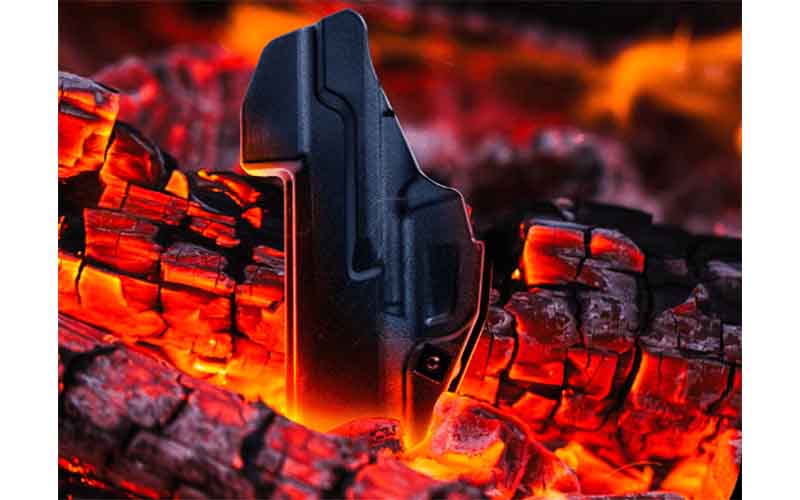
Warcat Tactical holsters are made using a kind of polymer that the company claims is not only 20% lighter than their competitors’ holsters, but also 40% tougher and 80% more heat resistant. Being both lighter and stronger are obvious advantages, but if it’s hot enough to melt a normal holster you likely have bigger problems to contend with.
The Warcat Tactical IWB is currently available for several popular carry models of Glock, S&W, Sig and Springfield and each comes with the company’s “9-Lives Warranty”. The holsters are available now and have a temporary, patriotic launch price of $17.76.
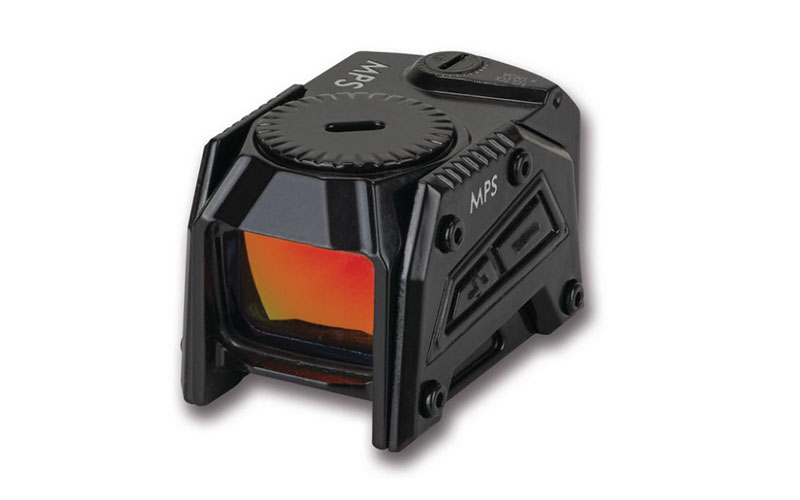
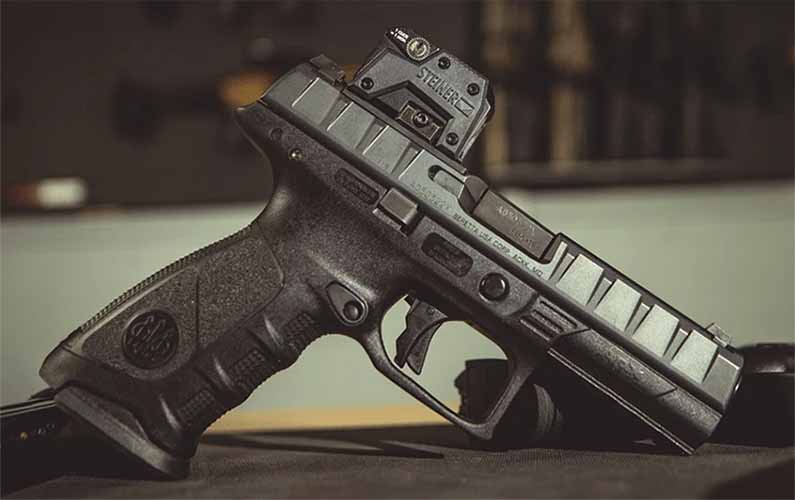
The new MPS pistol red dot from Steiner Optics features a metal, fully enclosed construction to endure the rigors of combat in any environment.
Dauerhaft is German for “durable”, and it’s clearly the word Steiner had in mind while developing the new MPS (Micro Pistol Sight) red dot. The past few years have seen pistol red dots bifurcate into two general styles: open and enclosed. While open-style sights can be smaller and lighter, they don’t offer the same amount of toughness as closed-style sights do. Since Steiner is no stranger to equipping military and police forces, it’s not surprising that they would opt for the more rugged design with the new MPS.
Built Tough
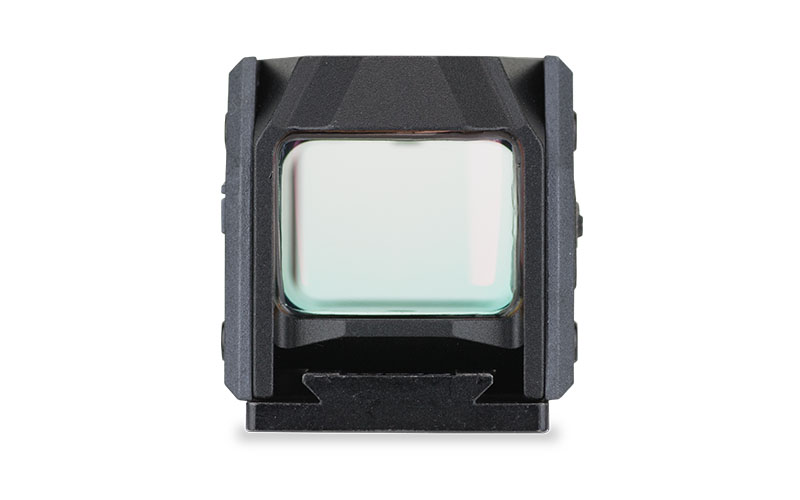
Designed to withstand real-world combat abuse, the Steiner MPS features an all-metal construction that is reinforced by two metal sidewalls and a hood. The sight window is completely sealed and recessed beyond the hood, protecting both the lens and the emitter from becoming obstructed. The MPS is also waterproof up to 10 meters and has a best-in-class shock rating.
Steiner MPS Features
Like all Steiner red dots, the MPS has impeccable glass quality with true 1X magnification. The emitter produces a 3.3 MOA dot that has six daylight and two night vision brightness settings, easily adjusted with buttons on the side of the housing. Switching the CR1632 battery is painless since the compartment is on top of the optic, but its 13,000-hour battery life on the medium setting means you won’t have to change it too often anyway. The battery life can also be further extended by utilizing the optional auto-off feature that’s on a 13-hour timer.
Despite being a metal, fully enclosed optic, the Steiner MPS still manages to be quite trim weighing only 58 grams. It’s compatible with most existing optics-ready pistols, has an MSRP of $574.99 and is available now.
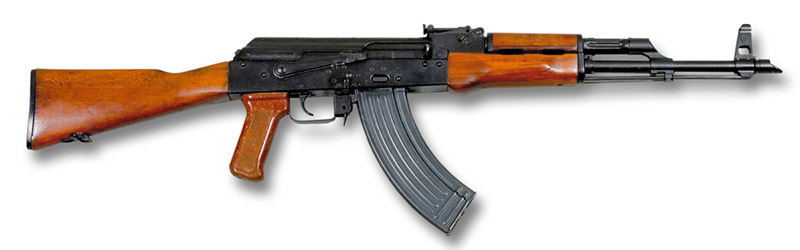
There are many good Kalashnikovs, but being the most-produced rifle variant of all time has its perks. Here’s why the AKM is still the gold standard of the global small arms world.
The AKM could be compared to a virus. Not in any negative sense or as a comment on its lethality, but to highlight their endurance and ability to propagate. This is because by the time the Soviet Union had been “infected” by the AKM, it had already begun to spread beyond its host.
Distributed to allies in Asia, Africa and the Middle East shortly after its adoption by the Soviets in 1959, this rifle saw more action in its infancy than many other rifles would during the entirety of their existence. The Soviet Union alone produced over 10 million AKM rifles, and licensed production from other nations puts the total figure well beyond that. When you begin to include unlicensed copies and pseudo-AKM clones like the Chinese Type 56, the sheer number of AKMs in global circulation becomes almost unfathomable.
With such high production numbers and such widespread proliferation, it’s no surprise that the AKM has become the gold standard of small arms around the world. Like a positive feedback loop, the AKM’s initial global popularity has resulted in it staying just as relevant today as it was sixty years ago.
Technically speaking, the AKM is a specific select-fire AK variant that was produced at the Tula and Izhmash arms factories between the years of 1959 and 1977. While true AKMs like this are commonplace throughout the world, it’s generally not exactly what people mean when they say “AKM”. AKM has become the catch-all term for the AKM-pattern of rifle, a pattern that has, for the most part, universally interchangeable parts and is manufactured based on the original Soviet design. Using that definition, we can eliminate any pedantry and understand that whether it’s technically a Russian AKMS variant, an Egyptian MISR or a semi-auto WASR-10, they can all be considered AKMs.
As a rule of thumb, all AKM components are interchangeable with one another. There are some obvious caveats, like possibly needing to re-headspace when swapping bolts and automatic FCGs being different than semi-auto ones. But generally speaking an AKM from one country could be repaired using parts from any other.
AKM Development
Ahead of its time, the very first generation of AK rifles (informally known as AK-47s) utilized a stamped sheet metal receiver, but insufficient manufacturing techniques led to issues. This is why Type 2 and Type 3 “AK-47s” used a milled receiver instead. The most significant change to be found on the AKM was its return to the original stamped receiver design, as it had become feasible to produce by 1959. Bent into the proper shape from a 1mm-thick steel sheet and then riveted to a front and rear trunnion, the AKM receiver was not only significantly cheaper to produce than its milled receiver counterpart, but lighter too.
Several other changes were made, but most impacted the manufacturing process more than the end-user. The result was a rifle that was just as reliable and easy to use as the AK-47, but one that was now well-suited for cheap, large-scale mass production in Russia and abroad. The AKM was conceptualized by its creator as his home was being occupied by a foreign power who invaded them while they were woefully under-armed. Mikhail Kalashnikov never wanted to see that happen again, so a primary goal of his new rifle was mass production. When the AKM came online in 1959, his dream was finally realized.
A milled Type 2 AK-47 (top) vs. a stamped AKM (bottom). Photos: Wikipedia
AKM Modularity
Standardization of arms between allies is often a goal of modern militaries. NATO attempted to do it with the adoption of the FN FAL, but never fully achieved it. Standardization was a happy accident for the Soviets and their allies. This is because all AKM rifles were based on the original Russian specs. It didn’t matter if they were officially licensed or bootlegs, the blueprints will be nearly identical.
Standardization would have a positive but unintended effect on the AKM’s popularity. The ability to easily swap furniture and other parts helped to lay the groundwork for what is now a very customizable weapon system. One only needs to look at a small selection of AKs used around the world to see how much customization can be completed using only original factory parts. A standard fixed-stock AKM can become quite a bit more tactical by adding an East German-style side folder and Romanian dong grip, for example.
A Somalian soldier with a Chinese reverse-engineered Type 56 AKM copy modified with East German plastic “pebble” furniture. Photo: Wikipedia
In 2021, the AKM doesn’t limit shooters to strictly factory parts. Thanks to the continued use of the AK by government forces as well as the private sector, the amount of available aftermarket accessories has exploded. Firearms accessory companies of all sizes from all around the globe produce modern, tactical upgrades that can bring old AKMs into the 21st century.
AKM Ammunition and Magazines
Whether your AKM has been modified or not, it’s useless without ammo or magazines. This is another positive byproduct of the AKM’s widespread adoption, its cartridge and feeding device have become equally as abundant. Several decently sized nations have so much 7.62×39 stockpiled that they refuse to abandon the caliber for economic reasons alone. Some of these nations have stuck with their old AKMs as well, but others like Venezuela and Nigeria have purchased more modern AK variants that still use the old caliber and magazine. Even nations like Russia that long ago moved to 5.45 still issue 7.62 AKs in certain situations. Some Spetsnaz in Syria have been seen favoring them due to their increased barrier penetration, so the platform is still certainly viable in modern combat.
Even certain Western soldiers have put the AKM to good use, and some still do today. It was used by some American special forces in Vietnam, by some Rhodesians during the Bush War and even many modern PMCs in the Middle East.
AKM In America
The same reasons that have made the AKM such a common and popular rifle abroad are the same ones that made it popular in America. Sure, there are devotees to milled AKs and Yugoslavian-pattern rifles in the U.S. too, but at the end of the day, the AKM is still king. While there certainly are aftermarket options available for the other patterns now as well, none are or ever will be as common as their AKM-pattern equivalents. The same can be said about 7.62×39 magazines versus the other two popular calibers options. This doesn’t mean that Zastava or Arsenal rifles aren’t good, but it does mean that for an American looking for the most quintessential AK he can buy new in 2021, he’d scratch that itch better with a WASR or WBP Fox.
The AKM has been used in every significant human conflict on Earth since its invention. If there are ever human conflicts that are not on Earth, it will likely see action in those as well. Nothing could have prepared the team that designed the AKM for what was to become of their humble little assault rifle. What was initially intended to arm Soviet troops and their allies eventually became nearly synonymous with the concept of a gun itself. The firearm illiterate like to call anything that takes a magazine an “AK”, and villagers on the other side of the world who have never seen a TV know how to take one apart. Regardless of what you think of the AKM’s mechanical merits, no other gun has ever been emblazoned on a country’s flag before, and that does mean something.
Flag of Mozambique, featuring a Kalashnikov. Photo: Wikipedia.
In 2021, whether you’re a conscript in a poorer nation’s army or a Western advisor, a Somali pirate or just a civilian hobby shooter, you are probably familiar with the AKM. While there have undoubtedly been improvements made since the original design, implemented in things like the AK-100 series, none of these will ever reach the same mythic status as the AKM. Born in the right time and at the right place, there will likely never be another gun that sees the same success as the AKM. No matter who you are, where you are or what you’re doing, an AKM will always be a solid choice.
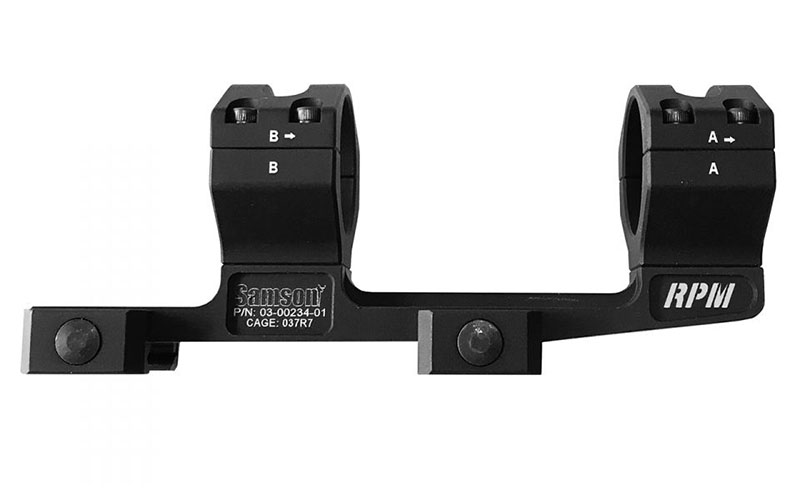
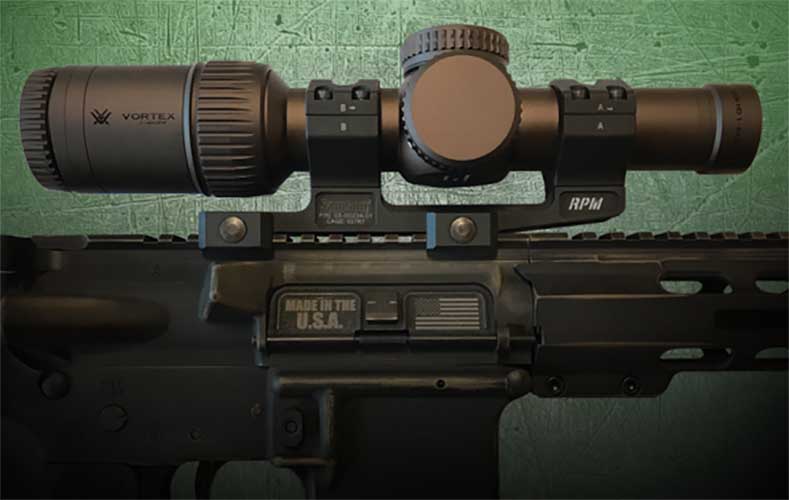
Samson Manufacturing has just released the first of their Rapid Precision Mounts, and it’s lightweight, durable and holds its zero under heavy recoil.
Scope mounts are simple in theory, but aficionados of long-range glass understand that an optic can only do its job when properly secured to the rifle. Durable and rugged scope mounts that can sustain abuse in the field are typically heavy, and lighter ones are prone to getting knocked and losing their zero. The ideal scope mount is as lightweight as possible while remaining durable and solid, and that’s exactly what Samson Manufacturing set out to make with their new series of Rapid Precision Mounts.
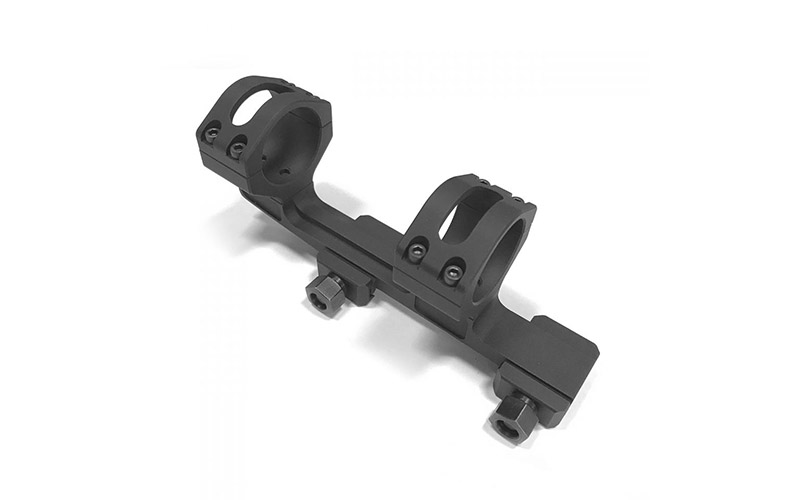
Featuring a 2-inch offset for ideal eye relief, Samson’s Rapid Precision Mounts are currently only available with 30mm rings, but three larger sizes are planned for the future as well. Rapid Precision Mounts are machined from 6160-T6 aluminum and engineered to use as little material as possible while still maintaining their zero under heavy recoil. Samson was able to make the mounts even lighter by incorporating steel recoil lugs into the cross bolts, which help keep the scope base solidly in place. The Rapid Precision Mounts attach using standard 1913 Picatinny rail, and the ring base also includes a threaded steel insert to prevent stripping if you choose to change out the optic.
MSRP for the Samson Rapid Precision Mount is $148.99 and it can be installed with a 7/64″ hex wrench and a 1/2″ wrench. 34mm, 35mm and 1-inch rings will eventually be for sale as well.
Designed specifically for use in harsh, maritime environments, Saltwater Arms has recently expanded its Blackfin line with the new Blackfin pistol.
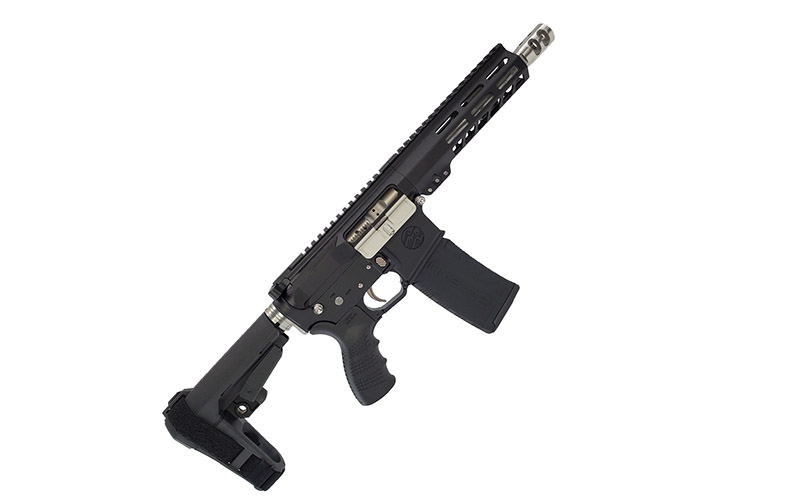
Saltwater Arms, a division of DRG Manufacturing, had already made waves with the introduction of their Blackfin and Barracuda AR-style rifles back in August. Made with stainless steel and other corrosion-resistant materials, the Saltwater Arms rifles were designed for use in maritime and other harsh environments. Sometimes one finds themselves needing to be armed when near or on the sea, and the last thing you would want to discover if it came time to use your rifle is that the chamber had rusted shut. The Barracuda and Blackfin rifles offered a good solution for those who found themselves in that boat, but some boats are smaller than others. Now Saltwater Arms has introduced the Blackfin AR pistol, ideal for those who require compactness as well as resilience.
The Blackfin pistol shares much in common with its larger brothers, with only its 7.5-inch barrel length and legal classification as a pistol differentiating them. The important components have all been either made from stainless steel or coated with corrosion-resistant Nickel Boron, and the aluminum parts feature a hard coat anodized finish. The Blackfin pistol otherwise has mostly standard features for a 5.56 AR, but it also has an enlarged trigger guard and beveled magwell. Other features include a 2-port stainless steel muzzle device, M-LOK handguards and an SBA3 adjustable pistol brace.
Each Saltwater Arms rifle and pistol is made in America, comes with a 30-round magazine and includes a lifetime warranty from the company. MSRP for the Blackfin AR-15 Pistol is $1,229.95 and it is available now, offering the ideal home or boat defense weapon for those in salty environments.
Primary Arms’ new reticle, the ACSS Apollo .308/6.5GRN, features an advanced holdover system designed to make shooting out to a thousand yards as easy as can be.
A scope is only as good as its reticle, and unlike the barebones crosshairs typically used by snipers in movies, true marksmanship requires more information to achieve. That’s what makes Primary Arms’ new ACSS Apollo reticle such an enticing option for long-range shooters, as its advanced holdover system enables its user to make several important determinations and calculations without ever taking their eye off the scope.
Creator of the ACSS Apollo reticle, Dimitri Mikroulis, had this to say about the new design:
The ACSS Apollo .308/6.5GRN reticle is a crossover DMR/precision reticle with a fast auto-ranging BDC and integrated wind holds…This reticle uses exact MIL/MIL firing solutions to match .308 Winchester and 6.5 Grendel cartridges.
The ACSS Apollo reticle design is more intuitive than that found on many other long-range optics. Its center chevron has BDC holdovers ranging from 300 to 1000 yards, as well as wind correction holdovers for crosswinds ranging from 5 to 20mph. These features combined with the built-in ranging ladder can allow its user to quickly and accurately adjust their hold. Primary Arms claims that with this reticle, any capable marksman can easily make good hits out to 1000 yards.
The new reticle is currently only available in the Primary Arms SLx 3-18x50mm FFP scope, but it’s expected to be available in more models in the future as well. The SLx scope also includes a powerfully illuminated reticle capable of daytime use as well as Primary Arms’ standard lifetime warranty. With an MSRP of $479.99, the new ACSS Apollo SLx scope is a very competitively priced option for the features it includes. The intuitiveness of this new reticle design makes it a good choice for anyone looking to get into competitive long-range precision rifle shooting.
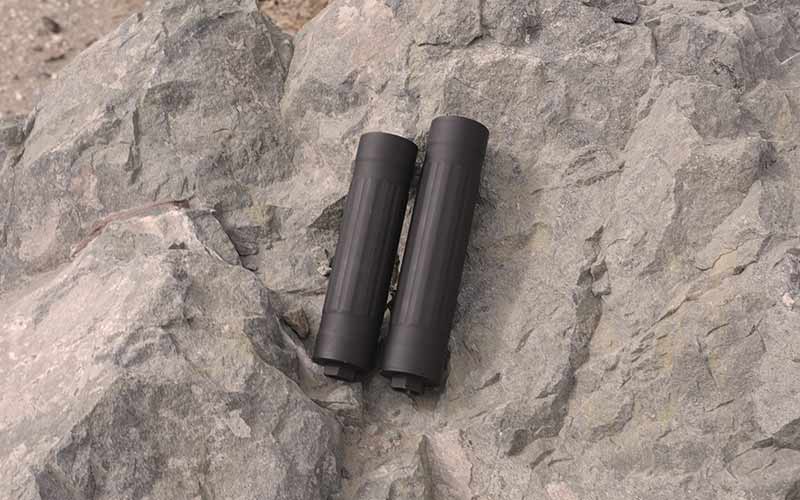
Bushmaster has announced their entry into the suppressor game with the release of their new Muta BM30 and BM556.
Bushmaster Firearms sells AR-15s and AR-15 accessories, but their lineup just got a whole lot more interesting. With more people buying NFA items than ever before, Bushmaster picked a good time to delve into the suppressor game. The new Muta line of suppressors from Bushmaster include the BM30 and BM556 which are .30 caliber and 5.56-rated cans, respectively. Competitively priced and made in America, the new Muta cans are ready to be thrown on an AR-10 or AR-15 to bring down the decibel level of any situation.
Bushmaster CEO Sam Naegele said that the company is always looking to expand its product line to better suit all of its customers. Since their list of customers includes both law enforcement and civilians, their new suppressors had to be ready to satisfy both groups as well. That’s why the new Muta suppressors are made from 17-4 H1150 stainless steel and finished with temperature-resistant Cerakote, making them extremely durable and rated for full-auto fire. Both Muta cans also include a removable end cap, facilitating easy cleaning and replacement.
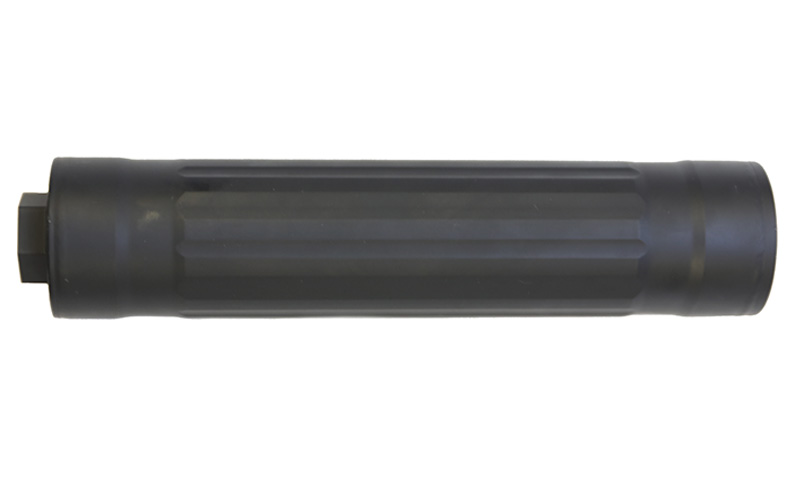
Muta BM556.
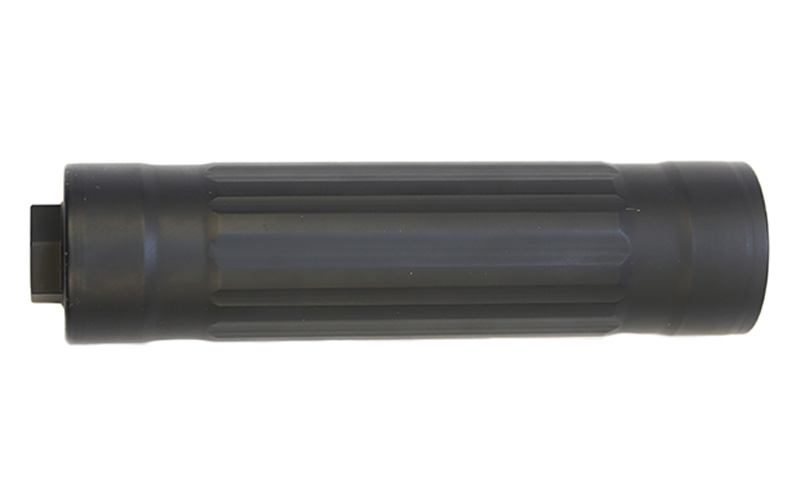
The Muta BM30 and BM556 are both direct-thread suppressors, but the .30 caliber model is threaded 5/8”-24 while the 5.56 can is threaded the expected ½”-28. The BM30 is 6.8-inches long and weighs 18.9 ounces while the BM556 is 6-inches long and 16.9 ounces in weight. Bushmaster claims to manufacture these new cans with extremely tight tolerances, eliminating concentricity issues while maintaining accuracy.
Muta BM30.
MSRPs are $599.99 for the Muta BM30 and $499.99 for the BM556, making them a good economically priced option for anyone looking to put a muffler on their rifle.
Little gadgets can make a big difference when dealing with firearms, so here are some must-have tools and accessories to help make your shooting life a little easier.
FIX-IT STICK Tools
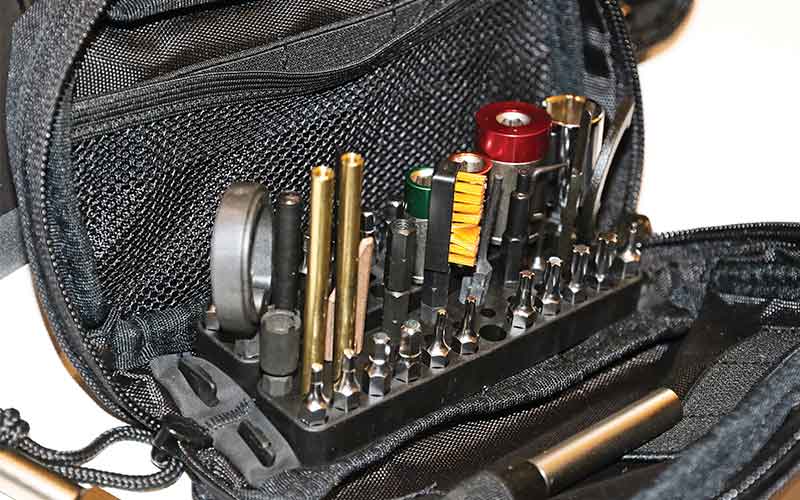
If you own guns, you’ll sooner or later have to be working on guns. Fix-It Sticks makes the task or tasks, whatever they are, easier. One in particular is called The Works. It contains three different pre-set torque limiters, (65, 45 and 25 in-lb) a 1911 bushing tool, ½-inch socket and adapter, bolt carrier scraper, picks and pry-bar, and an array of tips, bladed and Torx. You can adjust sights, optic and iron, install scope mounts and rings, and tighten up receiver screws to the chassis—everything but overhaul an engine, apparently. All this comes in a zippered pouch that keeps them all together, with room for extras, should you have specialized needs. Where did I put that T1 bit meant for the imported red-dot sight I’ve been testing?
BADGER ORDNANCE DEAD LEVEL
Getting scope reticles level is a task that seems like magic to some. To make the task easier, Badger Ordnance took a page from the machine tool industry and made the Dead Level. In concept, it’s simple: a level rail that you mount your scope to and then make the reticle level. To make one requires precision, which is well within the capabilities of Badger Ordnance. It’s a triangular plate with leveling feet on two corners and an indicator on the third. You simply mount your scope mount, or rings, on the rail that’s attached to the plate, then use the leveling screws until the bubble is dead center in the indicator ring. Once you know the mounts and or rings are level, you then adjust the reticle until it’s level. Bingo-bango, your scope is level. There’s no guarantee the receiver is level, which is always a problem, but at least you know the scope and mount isn’t the source of that problem.
PRI GASBUSTER
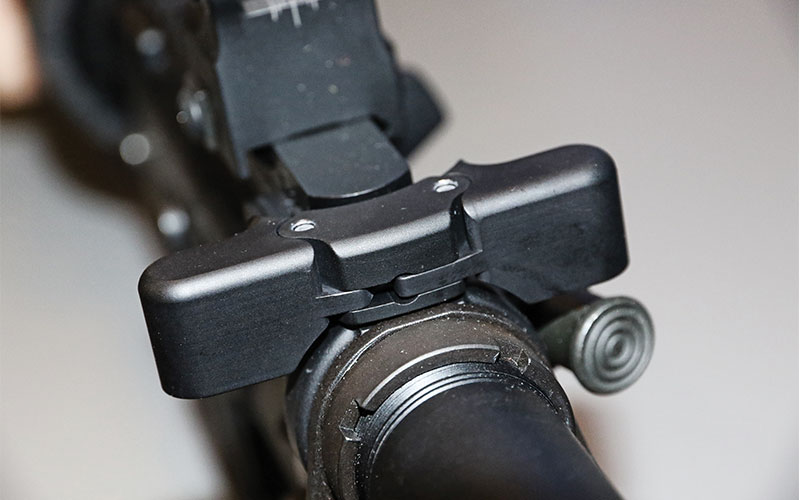
OK, you’ve finally gotten your suppressor, and now you have gas problems. One location the gas comes at you is out of the gaps between the upper and lower on your AR, and the PRI Gasbuster tames that. The Gasbuster is a charging handle with a machined lip on the bottom rear, to block and divert gases coming out of the gap. Now, short of making your upper and lower one piece (and wouldn’t that be a bear to assemble and clean?), no one can stop it all, but the Gasbuster stops a lot, and most of that gas comes jetting back into your face from the gap at the rear. There’s no assembly, fitting or installation of the Gasbuster. Just take out your old charging handle and carrier assembly, and install the Gasbuster when you reassemble. And now PRI offers it in an ambidextrous version, with unlocking paddles on both sides.
SAMSON MANUFACTURING
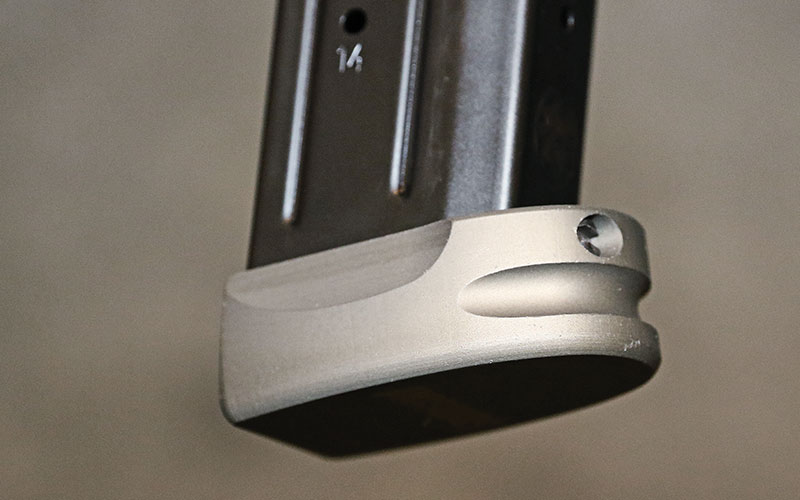
Some is good, more is better and too much isn’t enough. Yes, the rock ’n’ roll motto. But it also applies to ammunition. If a regular magazine isn’t enough, and you want more, then Samson can help you with your S&W M&P situation. Their frame-contour +3 magazine extension adds three more rounds to the capacity of your magazine (9mm, because the 40 is dead and gone now) and follows the frame outline. The baseplate also has sculpted recesses on the top edge, so if you need to yank the old magazine out, your fingers have a purchase ledge for that effort. The preproduction prototype I was shown was done up in Natural Gray, but Samson, ever the clever dudes, also offer it in black. Because if your pistol is formal black, you want your mag extensions to match, right? And it uses the factory follower and spring, making it a simple baseplate swap.
TRIGGERSAFE
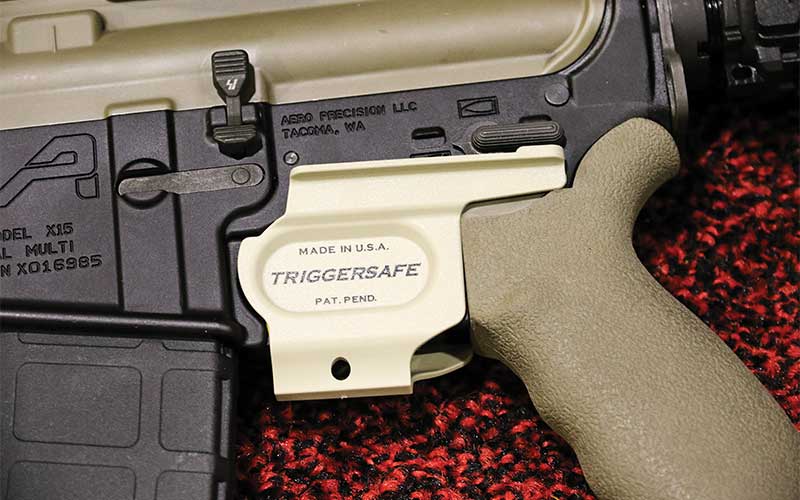
Every gun shop I’ve ever been in had loaded firearms at the ready, strategically positioned around the store. Sitting on shelves or in racks, out of customer sight and reach, they were known by the staff to be loaded and ready. And unless they were a pistol in a holster bolted to the wall that had the trigger covered, all had triggers and safeties exposed. Now, you can use Triggersafe and have that handled. No worries about inadvertently brushing the safety or trigger, because they’re now covered or blocked. The AR-15 one (they also offer models for the Glock and a host of shotguns) covers the trigger guard completely, and blocks movement of the selector. But the natural movement of your hand, in grasping the pistol grip and getting ready to use it, moves the Triggersafe off of the receiver. An inadvertent brushing of the firearm won’t make it fall off but grabbing it will. The Glock version has a very useful lanyard attachment, so you have the Triggersafe snatched off the frame by the lanyard when you pull the Glock from its storage space.
MAG STORAGE SOLUTIONS
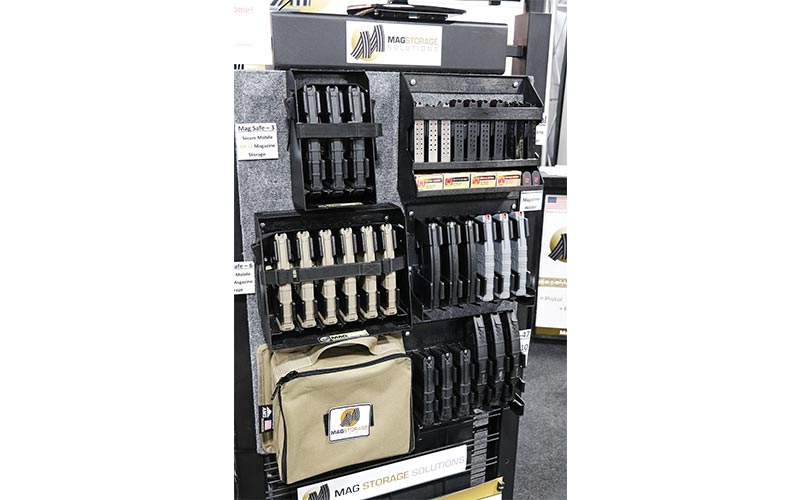
You’ve heard the observation “as dumb as a bag of hammers.” That’s because they get tangled and locked in a mass, and you can’t just conveniently pull one, any one, out of the bag when needed. Don’t do that with magazines. If you want to have magazines at the ready, but don’t want them in a jumble inside of a bag or a plastic box, then Mag Storage Solutions have a host of options for you. They make storage racks for magazines, racks that hold the mags in a convenient orientation. You can mount the racks on the inside of the door to your gun safe or gun room. They even make a convenient carry bag that holds a rack and allows you to have magazines at the ready, inside the zippered bag but not jumbled in a pile. Each magazine is racked with enough space to get your hand on a firm grasp of the magazine, to snatch it out of the rack.
REAL AVID MASTER SIGHT PUSHER
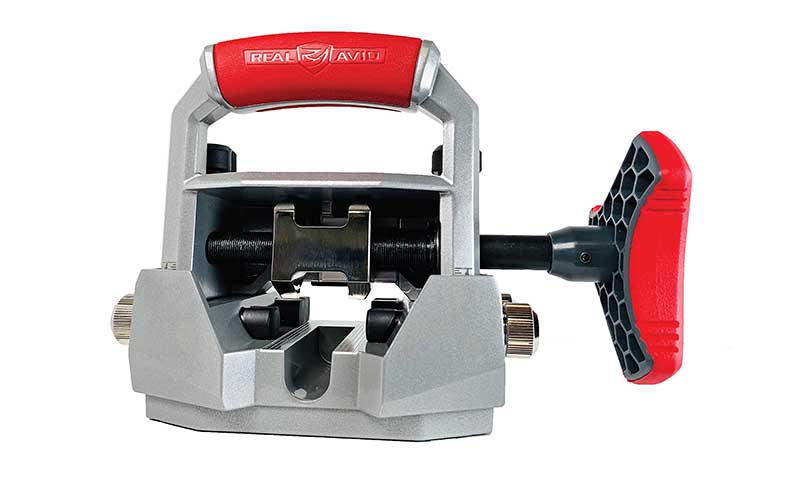
The whole CSI aspect of our modern justice system came about because a French detective, a century-plus ago, postulated that nothing can happen without whatever made it happen leaving some mark, trace or evidence. For finding the perpetrators of a crime, that’s good. When installing or adjusting sights, that’s bad. Far too many times when I was a gunsmith I saw customers’ guns come in with hammer marks, or brass or aluminum scuffs on the sights, from someone trying to make adjustments and leaving evidence. Or worse, sights so battered from being adjusted left-right-left-right and never finding center. Real Avid makes an industrial level sight pusher that offers precise adjustments without hammers, punches and scuff marks. Fair warning: It’s heavy enough that you can make adjustments without having the tool (and slide clamped within) moving all over the bench as you crank the adjustment handle. Which means it isn’t going to conveniently fit into your range bag, unnoticed, when you head to the gun club to get in some practice and zeroing. But a little bit of inconvenient weight is a good thing, when we’re talking sight adjustment tools.
Editor’s Note: This article originally appeared in the February 2021 issue of Gun Digest the Magazine.
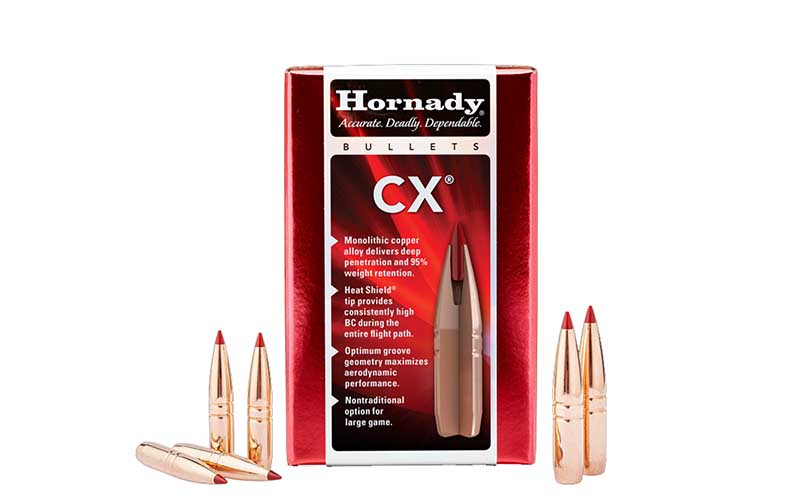
Hornady has just announced the release of CX bullets and pre-loaded ammunition, offering great expansion, penetration and aerodynamic performance in a wide variety of popular hunting calibers.
Some consider Hornady to be the acme of high-performance projectiles. Whether talking about defensive handgun ammo or premium hunting bullets, one of their products is bound to be acknowledged. Now the company has announced a new line of projectiles and ammunition called CX bullets, engineered to deliver outstanding terminal performance, a consistently stable ballistic coefficient and even reduce fouling. Available in several calibers as either reloading components or Hornady-loaded ammunition, CX bullets are now the most advanced projectile in their class.
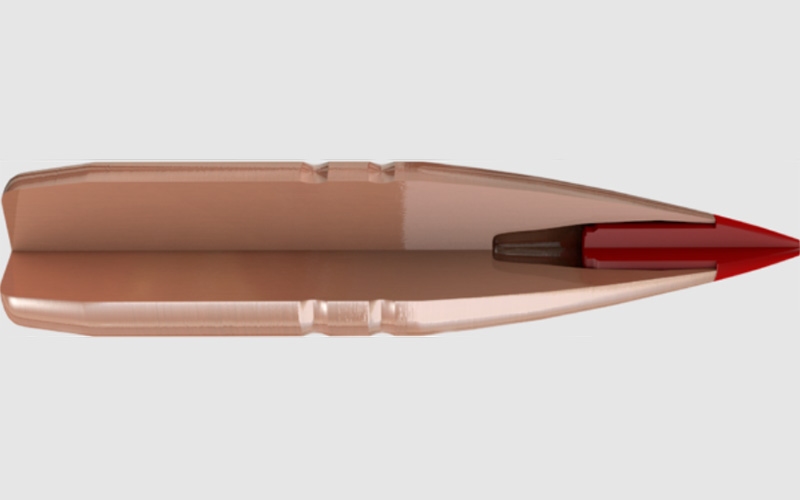
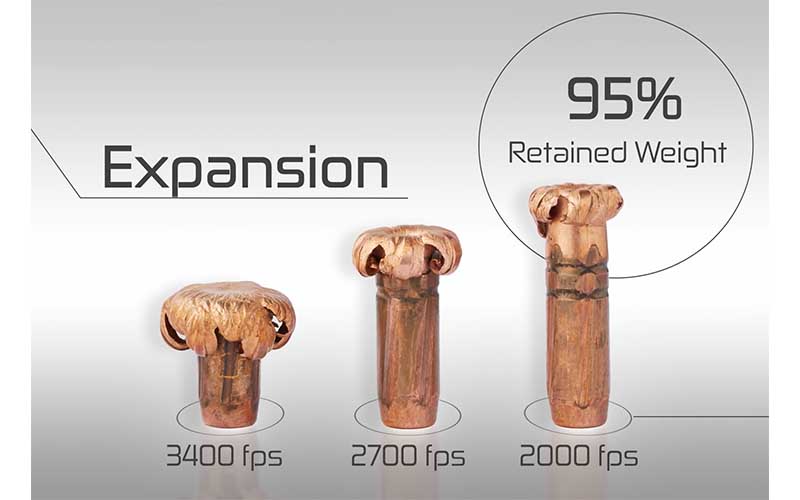
The CX bullets are of a monolithic design and are made of copper alloy. The result is a projectile that penetrates deep, doesn’t disintegrate upon impact and delivers devastating effects on target. It uses the Hornady Heat Shield Tip used on many of their other bullets, which due to its heat-resistant polymer construction can maintain a high and consistent ballistic coefficient throughout the entire flight. This all comes together to make the new CX bullets both accurate and effective. Redesigned groove geometry results in less copper fouling as well.
CX bullets are available either in the form of projectiles as reloading components or as complete ammunition in Hornady’s Outfitter, Custom and Superformance lines. They offer one subsonic loading in 350 Legend as well. The biggest shakeup to Hornady’s existing lineup is the incorporation of CX bullets into all existing Outfitter line loads. Made with watertight nickel-plated cases, Outfitter ammo is available in 243 Winchester up to 375 H&H Magnum as well as most popular hunting cartridges that fall in between. Now with all calibers loaded with the high-performance CX bullets, the Outfitter line has whatever you need to take medium to large game. The monolithic copper construction means they are legal to hunt with in areas that require the use of lead-free projectiles too.
Whether you load your own ammo or buy it pre-manufactured, the new CX bullets are ready to deliver excellent performance across the board. Hornady claims that these new projectiles only feature a few incremental improvements, but hunters who are used to the old GMX bullets are bound to notice the greater terminal performance at longer ranges.
To see all available calibers and loadings of CX bullets, please visit hornady.com.
A versatile new holster made for today’s most popular CCW options, the Bianchi Shenandoah blends old and new materials and can be configured for either IWB or OWB carry.
Bianchi has been a big name in holsters for some time now, and while their classic leather holsters are timeless there are many concealed carriers in 2021 looking for something more modern. Que the Bianchi Shenandoah, their newest holster which blends leather and plastic to bring something with both timeless aesthetics and contemporary functionality.
Eric Gasvoda of the Safariland Group had this to say on Bianchi’s new holster:
The Shenandoah is a bold representation of the new direction of Bianchi Leather…Bianchi is staying true to its roots with the leather build of Shenandoah, but we’re integrating new materials and customizable elements that allow for an increase in functionality for those who want flexibility from their EDC holster.
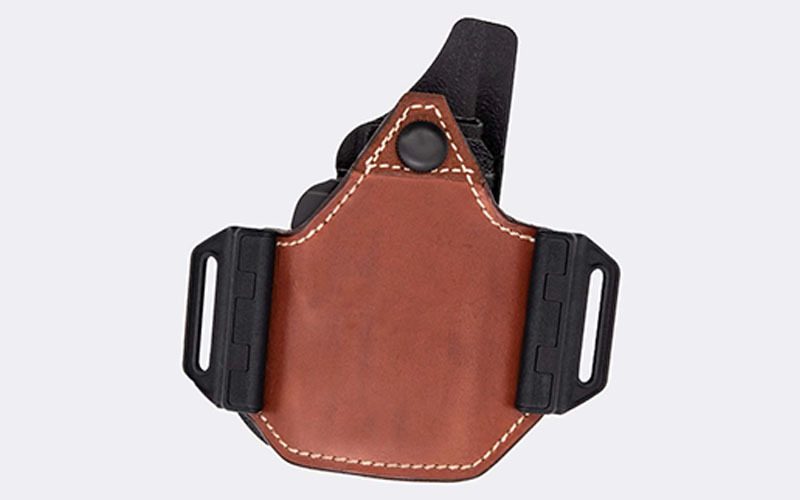
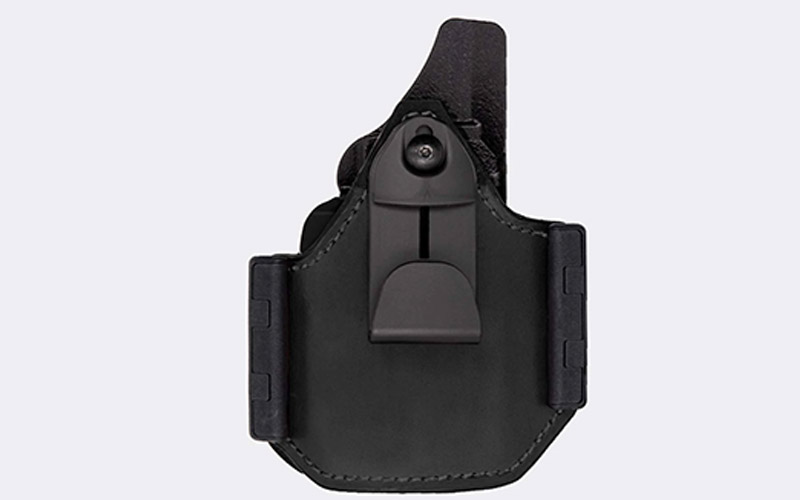
The new holster was designed to accommodate the most popular micro-9s on the market today, including the Glock 43, Sig P365, S&W M&P Shield and the Springfield Hellcat. It’s also compatible with slide-mounted optics. The Shenandoah features a full-grain leather exterior, a suede-lined injection-molded interior and is available in either brown or black.
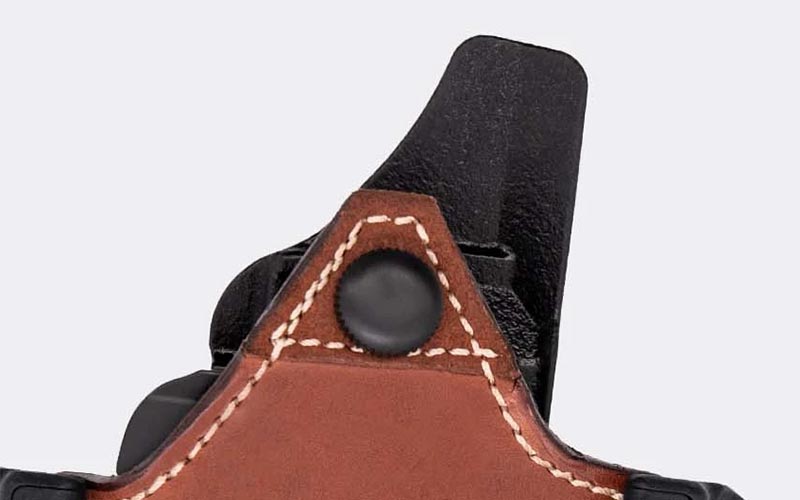
The biggest advantage of the Shenandoah holster is its versatility, capable of being configured for either OWB or IWB carry. Included with each holster there are OWB belt loops, IWB adapters, an IWB J-hook, a wedge device and a foam AIWB pad. With only a screwdriver, these different pieces can be swapped around into several configurations to match your ideal CCW method. And unlike on previous Bianchi holsters, the Shenandoah features a retention system as well. Bianchi calls it their “Pinch Retention Device” and it works with the simple click of a dial. Once holstered, the dial can be spun to engage the device with the gun’s trigger guard to provide extra retention and a secure fit.
Precision Retention Device dial.
The new Bianchi Shenandoah may not work with every gun or every CCW method, but it covers a lot more than most holsters do. This appears to be a good option for someone with a modern micro-9 who’s looking for a good do-it-all holster that provides a lot of options. MSRP is $78 and it’s available now.
One of the less orthodox methods of concealed carry, belly band holsters offer both distinct advantages and disadvantages that may or may not suit your lifestyle and body.
Comfortably carrying and concealing a pistol is more difficult than most people imagine. For most carry setups an individual must be wearing pants with belt loops, a gun belt, some form of holster and a cover garment. Besides the extra cost this gear incurs, it can be uncomfortable or impossible to wear in certain environments. If you live in a very hot climate or are engaging in physical activity like jogging, wearing jeans, a leather belt and an overshirt or jacket may just be downright unhealthy. Many of those who would like to stay strapped in situations like these have turned to belly band holsters, a retention system that as the name implies is a band stretched around one’s belly. Available in a variety of styles, materials and price points, there doesn’t seem to be a clear consensus on their viability. Some view them as a gimmick reserved for those who don’t know any better, while others see them as an ingenious solution to the issue of carrying while wearing less than ideal clothing. Before you pass judgment, there are a few things you should know before purchasing one or rejecting them entirely.
Belly Band Holster Pros
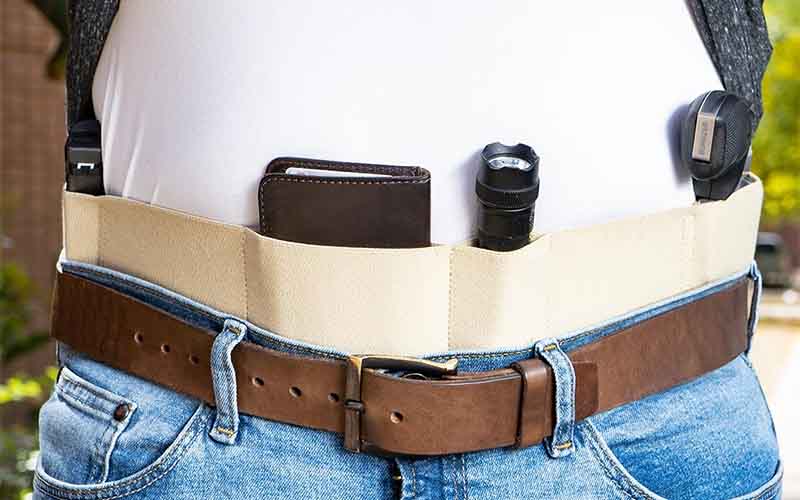
One of the greatest benefits of belly band holsters is that they don’t require any additional gear for them to work. Whether you typically carry inside the waistband, outside the waistband or in a should holster, they all require a pant with belt loops and a belt in order to function properly. The self-contained nature of belly band holsters eliminates this need, allowing the user to simply strap it to their body. Another advantage provided when they’re worn is that belly bands typically have enough space and pockets to carry much more than just a gun. Spare mags, tools, your wallet or your phone could also be carried in many of these setups.
When worn under one’s pants at beltline height they can also typically be concealed with just a t-shirt depending on the user’s gun and body type. This helps to make them a good option while doing physical activity that would otherwise make wearing a cover garment uncomfortable.
Many women also prefer belly band carry since they can be worn with a greater variety of clothing types.
Belly Band Holster Cons
While belly band holsters do make it easier to carry in hot weather or when doing strenuous activity, there are also some drawbacks. Just as socked feet tend to get hotter and sweatier than the rest of your body, the same is true for a torso covered by a belly band. The nature of these holsters requires them to be strapped relatively snugly to their wearer, resulting in the covered area getting more uncomfortable and wet in the heat than the rest of you.
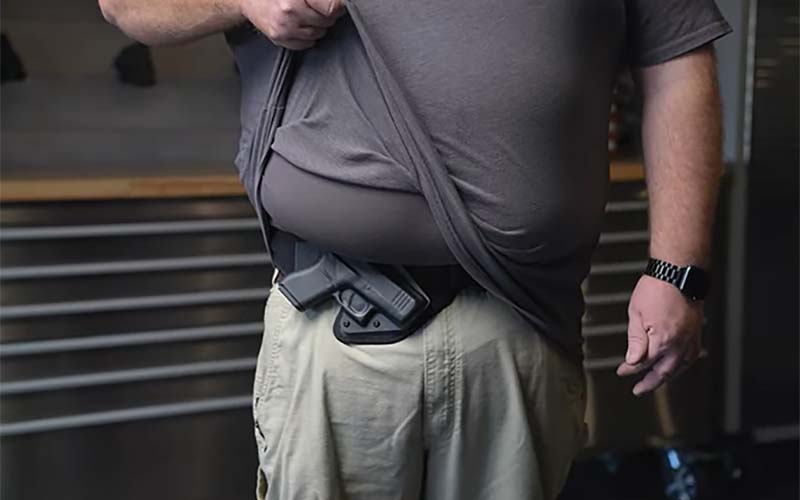
Also, depending on the height and orientation that one wears a belly band, drawing can be difficult to accomplish when compared to a traditional setup. If worn higher than the beltline, clearing one’s garment can take extra time and effort. Also, cheaper belly band holsters typically aren’t fitted for a specific pistol, meaning the loose pocket intended for it may not support your gun well or provide for an easy draw.
Something else to keep in mind for those with a larger than average stomach circumference is that you may be limited in the ways you can utilize a belly band. Most nicer models come in a variety of sizes, but even the largest models weren’t designed to be worn high on the torso of those with large bellies. It doesn’t make these holsters impossible to wear, but you’ll likely be limited to positioning it low on your beltline.
Best Belly Band Holster Options
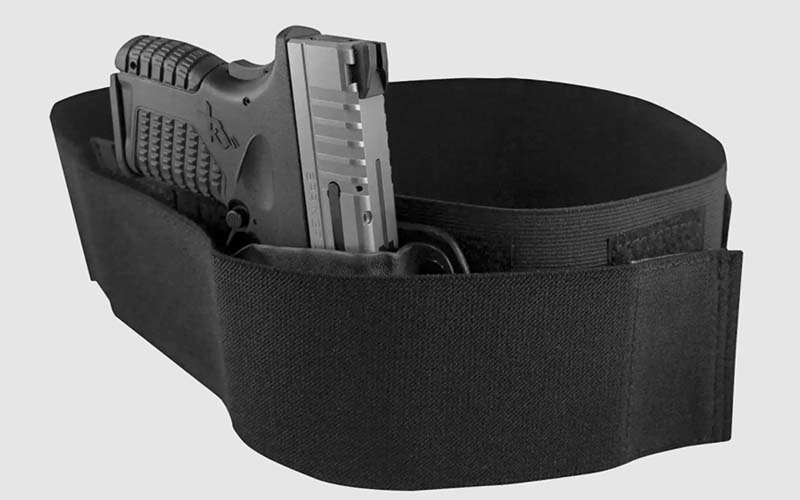
If a belly band holster still sounds like a good fit for your lifestyle, there are some things to look for when deciding on a model. Firstly, many cheaper options come with a generic-sized holster intended to fit “most firearms”. In these, retention is usually accomplished by incorporating some sort of thumb-break snap. These are less than ideal, as they still typically don’t retain the firearm as well as they should and add another step in the already decently arduous process of drawing from a belly band. If you’ve decided that a holster like this will suit you well it’s worth investing in a model designed to specifically accommodate your gun. Whether that be in a fitted Kydex sheath or just a properly sized and shaped pocket, the holster should hold the gun snug enough to retain it but still allow for an easy one-handed draw. Here are three belly band holster options worth taking a look at:
Galco Underwraps 2.0 Galco’s belly band holster is similar to some of the simpler, cheaper designs but is more thought out and better made. Made of elastic nylon and leather, the Galco belly band is available in four sizes, two colors and are made to accommodate a wide variety of makes and models. These come with two leather pockets intended for the firearm of your choice as well as several nylon pockets for whatever else you may want to carry. MSRP is $64.
Crossbreed Modular Crossbreed’s belly band is a modular design, and it can be purchased either as a package or parted out separately. The reason it’s modular is that this style uses Kydex holsters that are specifically fitted to your model of gun. While this limits what kind of gun you can carry in it, it provides the best retention and draw of any of the styles listed. Holsters for different guns can be purchased individually and then installed on the modular belly band system. These can be ordered as either left or right-handed and have a choice of an extra mag carrier. MSRP for Crossbreed’s belly band starts at $69.95 and goes up depending on options.
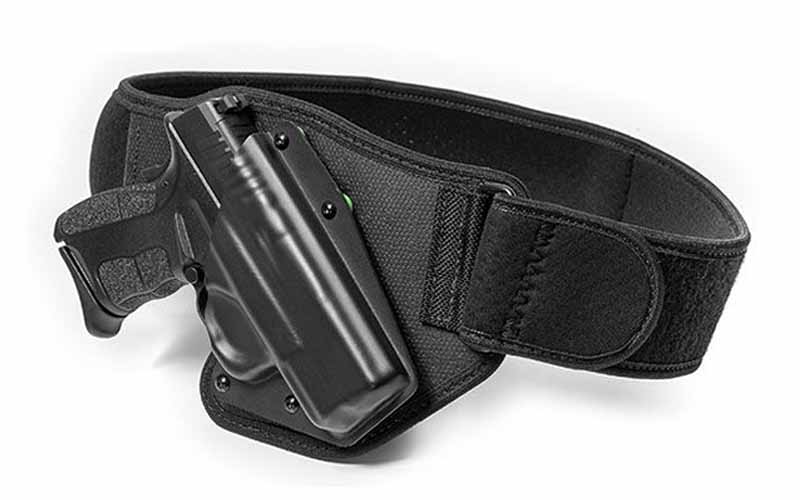
Alien Gear Low-Pro The Alien Gear belly band is similar to the Crossbreed in that they both use Kydex holsters, but the Alien Gear model sits at a different angle. Designed for cross-draw, Alien Gear’s belly band is better suited for carrying above the beltline than other models are. For more of a torso-height carry, this will likely provide the best draw of the bunch. Like the Crossbreed, this belly band can be ordered for a variety of weapon models, different band sizes and a right or left-hand draw. MSRP is $87.88.
Parting Thought
Belly band holsters certainly aren’t the ideal method of concealed carry for most individuals, but there are certain people and situations in which they work extremely well. Whether your lifestyle dictates that this will be your primary way to conceal a firearm or you want one just for mowing the lawn, it’s worth getting one that will be comfortable and support your specific gun well. Belly bands aren’t without their uses, and for some, they may be perfect, but for most people in most environments, a proper belt and holster setup will remain the superior alternative.
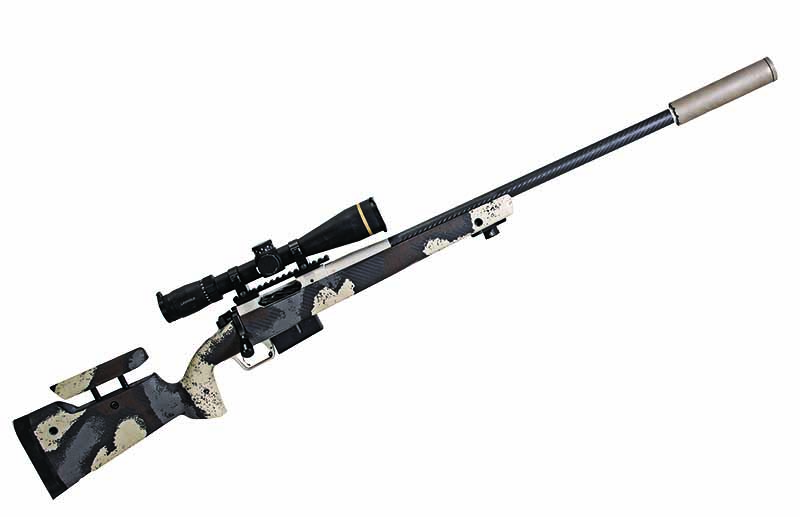
Springfield Armory is back in the bolt gun business with the 2020 Waypoint. It has the looks, but does the rifle perform?
The last bolt gun to carry the Springfield name was made over a century ago. And yes, we know there’s been a few changes in ownership of that particular brand in the past 117 trips around the sun, but it’s significant nonetheless. During a recent conversation with colleagues, one quipped that Springfield was continuing in its time-honored tradition of ripping off other companies’ bolt action designs—last time it was Mauser, this century, Remington gets the honor. A little harsh, perhaps.
Photo: Kenda Lenseigne and Brian Butler
There are no shortage of outfits making R700 pattern actions these days, almost all of which improve on the original and can be used to create a rifle to your exact specification, and with the advent of pre-fit barrels and drop-in stocks, bolt guns are becoming easy to work on. Which begs the question of why would anyone buy when they could build? Springfield’s answer to this is pretty simple: cost. With the 2020, they’re delivering an off-the-shelf rifle with custom features for less than the average consumer can buy the individual components that go to make it. And they’re backing it with full factory support and a .75 MOA accuracy guarantee. For all but the most hard core of DIYers, that’s pretty hard to beat.
Model 2020 Action
At the heart of the rifle is its action, and this one follows the R700 footprint, but with a few tweaks to make it stiffer and easier to use. For example, the front receiver ring incorporates additional material for a little more rigidity and features an extra gas port on the left side in order to mitigate the effects of a case head separation. The Waypoint’s recoil lug is machined as an integral part of the action, with no separate piece of stamped sheet steel, sandwiched between the barrel shoulder and action, as in the original. Rather than rely on Remington’s thin bolt stop in the left raceway, there’s a meatier version which is easier to access on the side of the rear receiver and looks like it’s been borrowed from Tikka.
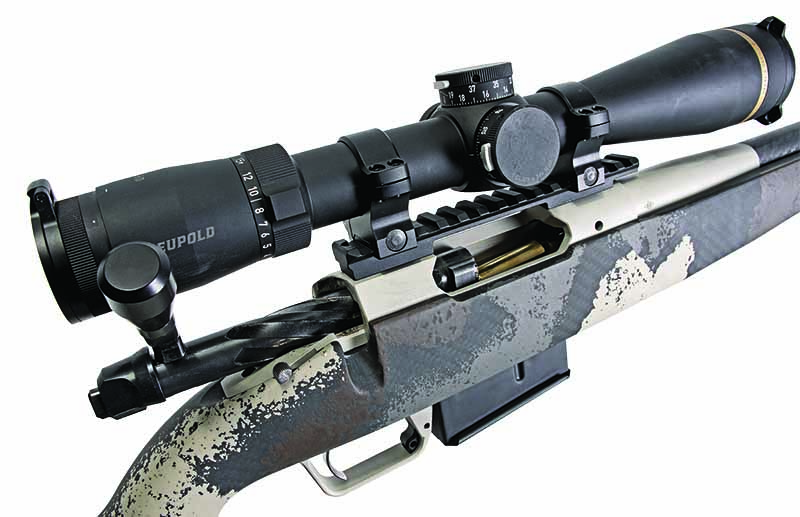
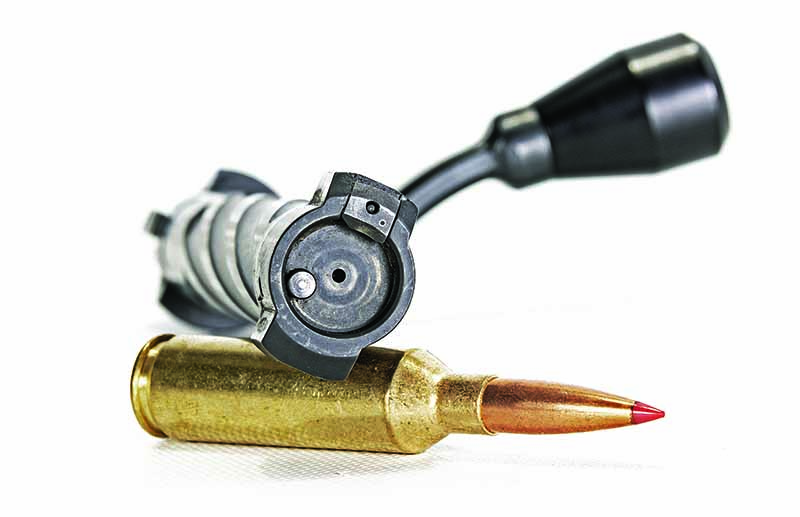
While the R700 relies on a fairly abrupt cam path to provide primary extraction, the bolt handle on the Waypoint engages a much gentler profile, which should limit chances for sticky spent cases to get hung up and reduce the effort needed to pop them free. That bolt handle, by the way, is mortised all the way through the bolt body, rather than being brazed to the outside, so in the event of you needing to apply greater force than usual, it’s not going to break off. At its other end is an oversized knob, which is both easy to grab with gloved hands and threaded so that it can be swapped for a replacement, should you not care for its contours or material.
Photo: Kenda Lenseigne and Brian Butler
The bolt itself is spirally fluted to reduce drag, which is further reduced by polishing, and finally, nitride treating. It feels like a regular 700 that’s had a couple of hours with a Flitz cloth, and it glides in raceways formed by an EDM machine, which, unlike a R700 are cut after heat treatment—one of the reasons for the cottage industry of blueprinting actions is that they tend to warp in the heat-treat oven. The bolt face has a Sako-style extractor let into its right lug, rather than the usual spring clip; another custom touch included in the price tag. Releasing the striker is taken care of by a TriggerTech adjustable trigger, which we dialed down to 3.1 pounds for a very crisp single-stage break with about 1/16 inch of travel, measured from the tip of the blade.
Waypoint Stock
A carbon-fiber stock from AG Composites is part of the package, finished in gray and brown camo and inlet for AICS pattern bottom metal. Five flush cups give plenty of options for sling mounting, and if you want more, there’s four M-lok slots at the 6 o’clock position on the forend to add your own. We used them to add an adapter for the Spartan Precision bipod system, which has become a staple of our hunts, but Pic rails and other sundries can be bolted up to your heart’s content. An adjustable cheek riser adds around 9 ounces to the weight tally, but it’s worth it to be able to fit the gun to your physique. We wish the maker had included a recess for the bolt—as it stands, you’ll need to remove the cheekpiece in order to run a cleaning rod through the bore—but this is a minor complaint. A Pachmayr recoil pad caps off the butt, and there’s room for spacers should you want to extend the 13.5-inch LOP.
The 2020’s Barrel
The Waypoint’s barrel is made by BSF and while it looks carbon-wrapped, it actually features a carbon sleeve slid over a conventional, button rifled stainless tube, which is tensioned by means of a nut which engages 5/8-24 threads at the muzzle. Tensioned barrels are nothing new, and claim to offer greater consistency as things heat up—we didn’t do any 6.5 mag dumps as part of our testing, but the very first group we shot came in at 0.65 inch, and things stayed right around the half-inch mark after that using Hornady ELD-M and ELD-X bullets. A condition of the mountain goat cull hunt we took the rifle on was the use of non-lead bullets, so a handload using Barnes 127-grain LRX bullets was thrown together at the last minute, and we experienced a little vertical stringing, which usually indicates a need to be driven faster. Due to time constraints, we never quite got that hammered out, but a group of 2.25 inches at 300 yards was good enough for our purposes. Bottom line: The Waypoint can shoot.
Photo: Kenda Lenseigne and Brian Butler
Final Thoughts
There are a lot of good rifles in the marketplace right now, and for a company with no history of making bolt guns (at least, not in the past century) to jump in with both feet is a pretty ballsy move. Fortunately, the product they chose to introduce is pretty damn good, and when you add up the cost of a carbon-fiber stock, aftermarket trigger, sight bases, trick barrel and custom action, it becomes an even more attractive proposition.
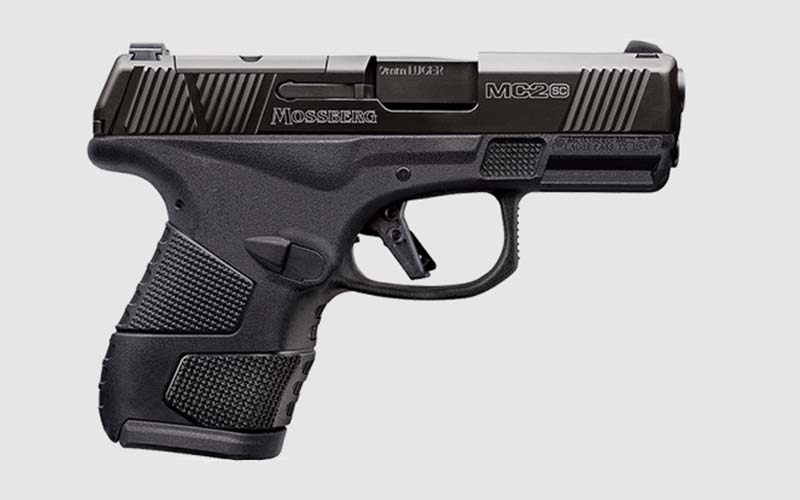
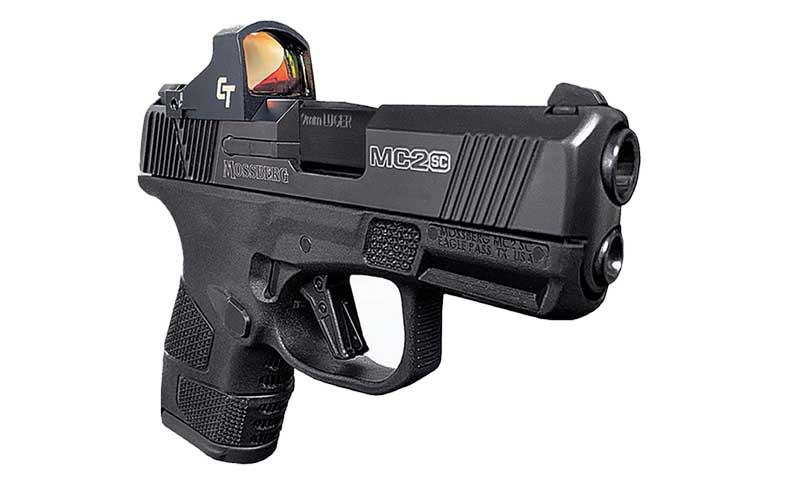
Mossberg’s new MC2sc is the latest optics-ready micro-compact 9mm carry pistol, and its features make it a serious contender in the ongoing battle for the best micro-9.
When a new handgun is released in the current CCW market, it doesn’t take an oracle to know that it’s likely a polymer-framed, micro-compact, striker-fired 9mm with a double-stack magazine and an optics-ready slide. While it’s true that the new MC2sc falls into this category as well, Mossberg managed to incorporate some features that still make this a fresh design that’s worth considering for anyone in the market for a modern carry pistol.
The original MC1sc was designed to compete with the Glock 43, resulting in both pistols using single-stack magazines of similar capacities. The MC2c came later in response to the influx of high-capacity micro-9s and had a larger magazine but a proportionally larger frame as well. While neither pistol came to dominate the contemporary CCW market, the new MC2sc has what it takes to be a serious contender. In terms of size, it falls squarely between the Springfield Hellcat and the Sig P365XL, and it comes from the factory with an optics-ready slide and both flush-fit and extended magazines. Its flush-fit mags hold 11 rounds of ammo and the extended can hold 14, again putting the MC2sc in between the Hellcat and P365XL in terms of capacity. Other features include an accessory rail and front and back slide serrations.
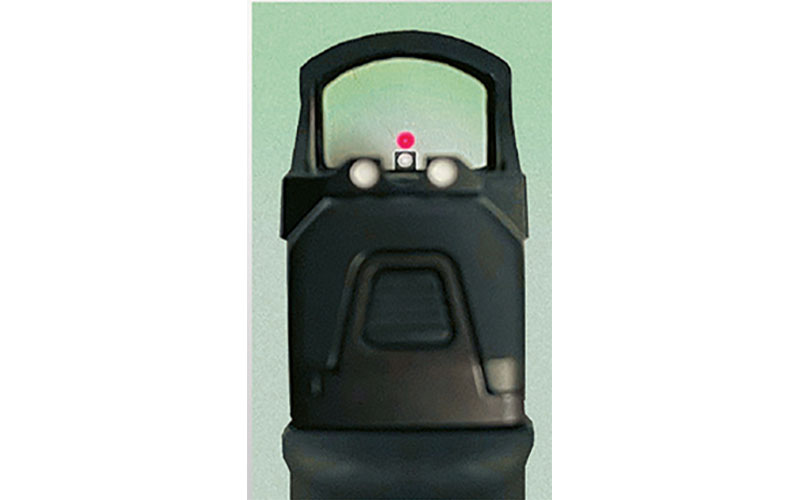
The Mossberg MC2sc has a few different configurations available. It can be had either with or without a manual cross-bolt safety, and the sights can either be standard white 3-dot sights or TRUGLO tritium night sights. Every MC2sc model comes with an optics-ready slide, however, and that’s one of this gun’s most notable features. While most carry pistols in this form factor come optics-ready in 2021, what’s unique about the MC2sc is that Mossberg managed to achieve total co-witness when using an optic with standard-height iron sights. Achieved by mounting the optic lower than on any other pistol, the iron sights are completely visible and usable while looking through a red dot’s viewing window. The MC2sc uses a Shield RSMC optic footprint and is ready to mount a wide variety of compatible optics.
The new Mossberg MC2sc has managed to squeeze in just enough new features and upgrades to make this pistol worth considering for those who were in the market for a similar gun. Its small size, optics-ready capability and relatively high capacity are exactly what the contemporary CCW market is looking for, and as long as there are decent holster options available the MC2sc will likely be one of the next popular carry gun choices. The standard-sighted versions all have an MSRP of $556 and the night-sighted model is listed at $662.
Looking to go armed, but are stuck in the weeds as to what to arm yourself with? Here are 20 of the best concealed carry gun options that will keep you on the defensive.