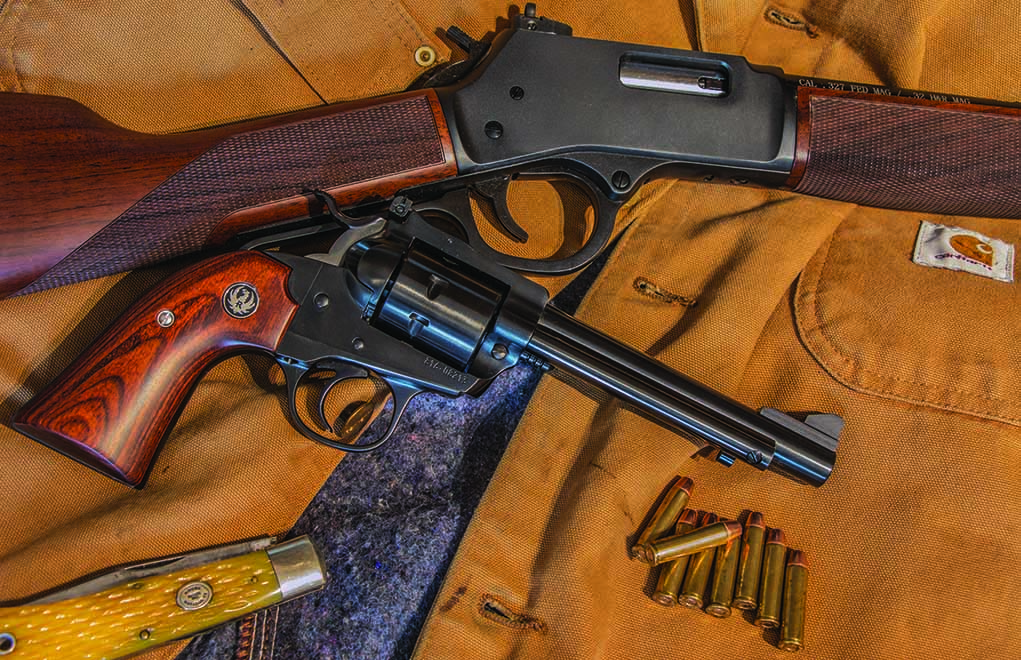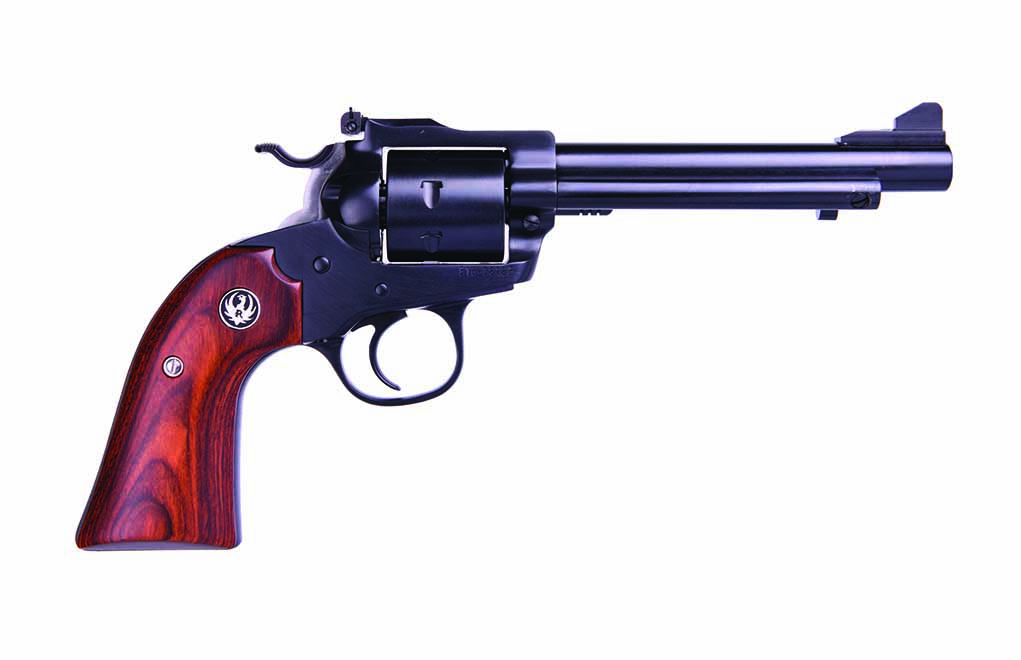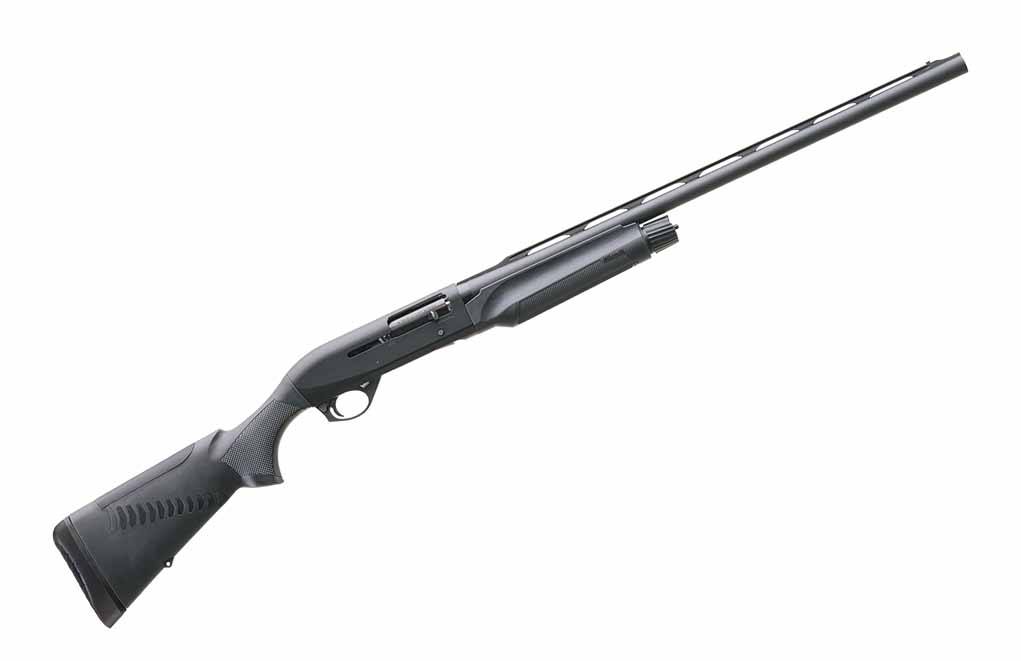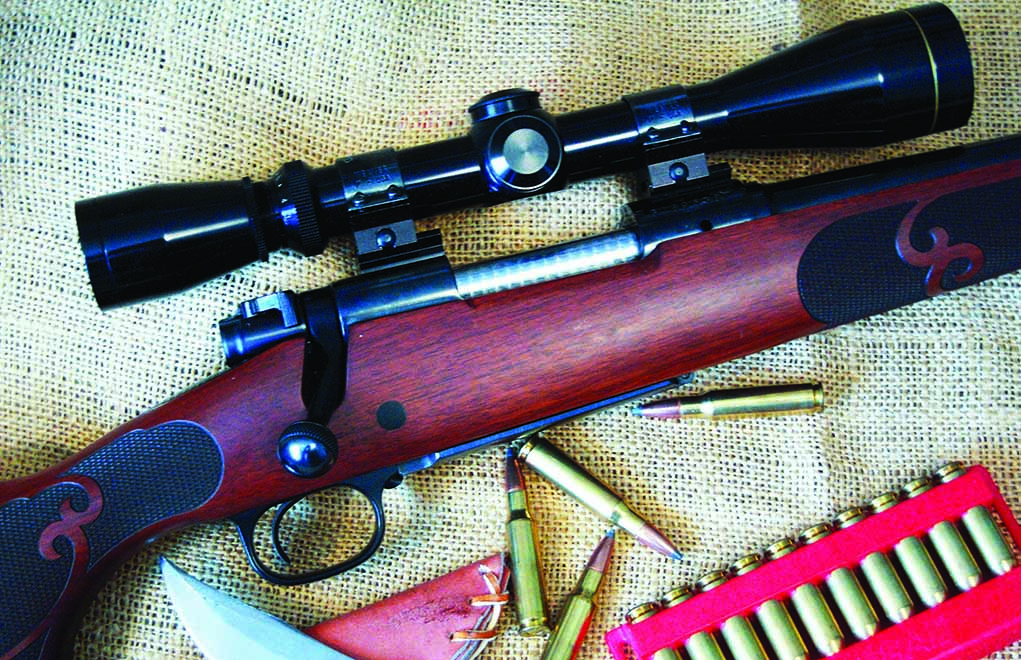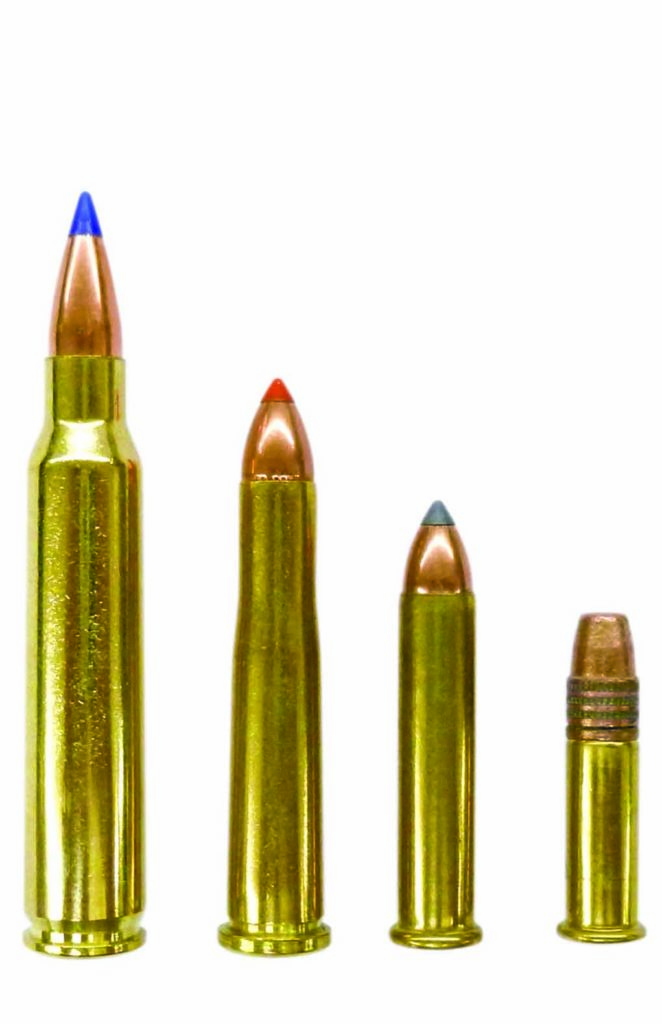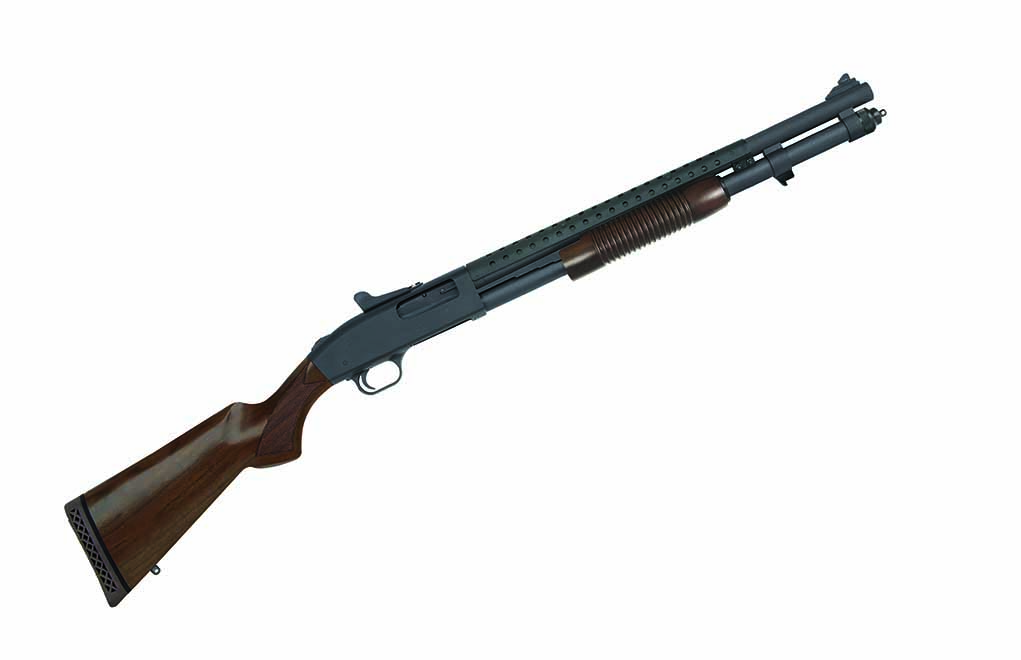
Don’t overlook this Henry single-shot .243 rifle for simplicity during the hunting season.
Henry’s handy little single-shot rifles are available in blued or stainless steel, in a variety of common centerfire hunting calibers. Photo: Henry Repeating Arms
In a field where “tacticool” has become more than just a popular buzzword for marketers, why would a company produce a new line of firearms that could fit right in with the gun market of 1905?
Every Henry Repeating Arms gun is made in America.
Check out the extensive selection of single-shot rifles and shotguns from Henry Repeating Arms that fits this description.
These old-style singles come in five calibers — .223, .243, .308, .44 Magnum and .45-70 — and debuted in late 2017. Henry sent a .243 model for review,and several things were obvious even before I took the gun to the range.
Single-shot rifles work very well for left-handers.
The rifle’s wood was dense, dark and nicely grained, which seems to be the rule with Henry products. At a time when black polymer stocks are quite popular, seeing wood on a rifle can be a flashback experience, and even more so when a prime cut has been turned into a stock.
The first three shots out of the box with the Henry .243 single shot. Recoil was modest.
Likewise, the rich bluing was pleasing to the eye. Amazingly, all of this came on a gun with a manufacturer’s suggested retail price of just $448.
It would be easy to assume that Henry obtains wood from the abundant tree crop near its Rice Lake, Wisconsin, assembly plant, but the company relies on other suppliers.
“We use American black walnut sourced from Missouri, Nebraska and Kansas,” said Henry Arms owner Anthony Imperato. American is the operative word here, Henry’s motto is “Made in America, or not made at all.”
The black walnut stock is checkered to provide a more secure grip.
Henry’s new line of singles comes with ambidextrous locking lever that opens the action when pushed to the left or right. Since there is no bolt in the face, this type of action is especially well suited for left-handers.
Upper Midwest winter weather made it difficult to take the rifle out for testing. A brief trip to the range on a blustery day provided some trigger time with the Henry. Giving up deer hunting many years ago meant I was rusty on shooting guns made for the field, so there was a certain eagerness to try this one out.
Henry sources American black walnut from Missouri, Nebraska, and Kansas, for use in its stocks.
The mild recoil of the .243 Winchester cartridge combined with an ample rubber recoil pad made the Henry soft on the shoulder. Clearly, this single shot would be a good choice for a wide range of hunters.
It’s capable of bagging whitetail or mule deer, pronghorn antelope and small- to medium-sized hogs.
Testing was done with an adjustable folding rear leaf sight paired with a brass bead at the tip of the barrel. This setup will work at short range, but the rifle comes drilled and tapped with three holes accommodate optics mounts, so most hunters will opt for a scope mounted on a Weaver 82 rail.
Some experimenters have gone to a red-dot sight on a Picatinny rail, which might seem odd on such an old school rifle. It isn’t difficult to visualize an adjustable peep sight on the Henry as a classier option.
My first few offhand shots were in the 2-inch range from 50 yards offhand, but cold and shooter error are to blame for groups opening up after that. Winchester and Remington 100-grain ammo was used.
With more practice time in a warmer climate and the addition of a scope, there’s no doubt the Henry has minute of angle potential.
This target includes a trio of 3-shot groups from a benchrest at 50 yards. The two groups on the right were shot with Winchester 100-grain ammo, while the center triangle is from Remington 100-grain rounds.
The 22-inch barrel has a twist rate of 1:10 and, when combined with the short action of a single shot, makes for a dandy rifle that handles smoothly and carries nicely while hiking in the woods. I didn’t put a gauge on the trigger, but it broke around 6 to 7 pounds — lighter than a double-action revolver.
Generous checkering provides a firm grip, and everything was assembled to tight tolerances. My only complaint was Henry’s choice of an extractor rather than an ejector for spent cases.
The blued version of the Henry Rifles single shot.
All calibers are available with steel frames, but collectors might prefer the brass-framed version available in .44 Magnum and .45-70. (The MSRP is $576 for brass models.) Henry also produces a brass-framed single-shot shotgun in 12, and .410 gauges. Prices for steel and brass-framed shotguns are identical to the single-shot rifles.
One-round rifles are a niche market with dedicated fans. When Harrington & Richardson — the former leader in single-shot sales by volume — left that market a few years ago, it created a void that begged to be filled.
Is that why Henry chose to add this new line of hunting arms?
Known for its lever-action rifles and carbines, Henry also makes a line of very classy and affordable single-shot shotguns, like this attractive brass receiver model. Photo: Henry Repeating Arms
“Consumers and some of our dealers asked us to make single shots,” Imperato said. Since Henry is known for traditional lever-action rifles, extending the firm’s line to single-shots made sense.
Hunters who enjoy the challenge of going afield with just one round on tap have other reasons to opt for a single shot. These rifles are sleek and handle smoothly. A well-made single-shot is much more than a utilitarian game getter.
Looking for more of a hunting challenge? Take a Henry single-shot rifle or shotgun on your next trip. It combines simplicity and the art of the gunmaker.
The H-S Precision HRT (Hostage Rescue Team) .308 sniper rifle is today’s current-issue for Bureau SWAT team snipers. It’s a far cry from the agency’s first sniper rifle — a Remington pump-action Model 760 with a 4x scope! Photo: H-S Precision
The classic FBI hip shooting position seems awkward now. One wonders why it lasted so long. It couldn’t be used effectively if the target was at an angle up or down to the shooter, as on a stairway. Photos: FBI unless otherwise noted.
Lester Limerick, an FBI gunsmith, later became the supervisor of the Gun Vault and held that position for many years.
Agents are now taught the Isosceles position and shoot Glock G17 and G19 Gen 5 9mms.
New agents fire ARs on semi-automatic only. Iron sights are used on the training ARs. The yellow painted stock identifies this as a school gun.
Agents are required to shoot onehanded with both strong and weak hand. Note: In training and during the PQC (Pistol Qualification Course), the agents are required to wear a jacket to cover their handguns.
The FBI Firearms Training Unit staff in the mid–1960s. Front, L to R; Al Booth, Don Hoeting, Don Warter. Back; Bill Ahrens, Bob Cohrs, Bob Monroe, Larry Schmidle.
The tactical shotgun still has a place in the FBI, but training is done more for familiarization than actual use.
FBI Agent Walter Walsh’s registered .357 Magnum revolver. Photo by author
An old postcard shows what an agent might have seen at the old FBI Academy.
A well-known sight to students as they arrive at the FBI Academy.
Author during ammunition tests with shot up ballistic gelatin.
These three rounds were the principal subjects of the ballistic testing at Quantico — 9mm, 10mm, and .45 Auto. Photo by author
Delf “Jelly” Bryce had killed several men while with the Oklahoma City PD and more while with the FBI.
After the Underhill shootout in December, 1933. Front row, L to R, FBI Special Agent in Charge Ralph Colvin and Detective D. A. “Jelly” Bryce, OKCPD. Back row, Special Agent Paul Hansen, Detective Clarence Hurt, OKCPD and Special Agent Kelly Deaderick. Not pictured was Special Agent George Franklin.
Baby Face Nelson’s mug shot. He would kill two FBI Agents and countless civilians before he died.
Special Agent John W. Core firing a Colt Monitor at Quantico in 1936. His son would fire what is probably the same gun five decades later.
New agents in the mid–1980s firing S&W Model 13s.
This set of bookends was made by the Gun Vault and FBI Exhibits Section, using two Colt Official Police revolvers from excess stock. The set was presented to Director J. Edgar Hoover and was displayed in his office for many years. Both revolvers were part of a shipment from Colt to the FBI dated February 23, 1951. This set was shown in the Rock Island Auction Company catalog of September 2015. Photo courtesy of Rock Island Auction Company
This S&W Model 19, heavily engraved, was presented to FBI Director Hoover in 1958 by William Sweet, a Smith & Wesson sales representative. The gun was sold by Rock Island Auction Company in its December 2017 catalog. Photos courtesy of Rock Island Auction Co.
Both Kimber Micro 9 and SIG P938 are slim and potent concealed carry pieces, but which one comes out on top?
Commonground between the Kimber Micro 9 and SIG P938:
Both use a 1911-style platform.
Each has barrels at or near 3-inches.
They utilize single-stack magazines.
The pistols have full-sized sights.
Each has 1911 controls.
Both have sarrated triggers.
The Kimber Micro 9 Desert Tan.
Although both the SIG Emporer Scorpion P938 and Kimber Micro 9 use a 1911-style platform, what separates these two micro shooters is aesthetics, controls and ergonomics. The Kimber Micro 9 Desert Tan (LG) with laser grip and the SIG Emperor Scorpion P938 are both micro 9mm pistols with barrels that measure 3- and 3.3-inches, respectively, and have a single-stack magazine — clearly designed for concealed carry.
These micro 1911s look similar to the full size, but the systems are quite different.
Scaled down for concealment, the Kimber and SIG are packed with 1911 design elements. Those include the controls, single-action trigger, and grip angle, all adding up to make a truly backup-sized 1911. If you are familiar with the 1911 then the transition to one of the micro 1911s will be seamless.
The Kimber Micro 9 Two-Tone (DN) is a subcompact single-action 9mm based on the 1911. The large TruGlo sights make it feel like you are aiming a full-size handgun.
The thumb safety, slide release and magazine release are just like those in the 1911 design. These mini 9mms disassemble with ease so maintenance is not a chore.
For speed testing, I performed the Bill Drill at 7 yards, firing a magazine as fast as I could while keeping hits in an 8-inch circle. The intent of this drill is to improve speed without eroding accuracy.
It also was an opportunity to run the pistols dry, check for slide lock-back, perform numerous magazine changes, and repeatedly use the slide release as well as test rapid sight alignment and trigger press. I started at the low-ready position. Here’s what I found running these micros muzzle to muzzle.
The Kimber Micro 9 Desert Tan (LG) looks like a shrunken Government 1911 model with its rounded slide top and internal extractor. The fit and finish are well executed and held up during testing. The model was equipped with Crimson Trace laser grips, which in my opinion enhances the shootability of the tiny handgun at close range.
The pistol came in a soft case with two magazines, each of which had an extended rubber bumper floorplate that act as a finger rest. The floorplate is rounded on all edges. In fact, the edges of the Micro 9 are rounded making it snag-free for a smooth draw from deep concealment.
I liked the large 3-dot sights. Speaking of sights, those found on both the Kimber and SIG are similar in size to ones used on full-sized guns, which made shooting easier.
The Kimber has a left-side thumb safety like the setup on a Government 1911A1. It’s easy for a right-handed shooter to manipulate the safety with the thumb of their shooting hand, though the SIG provides a bit more safety lever surface area and was slightly easier to manipulate.
A button on the front strap activates the laser grips. Simply grasping the pistol activates the laser. I could also loosen my grip and turn it off. I liked the ease of activation and use. A switch on the left grip allowed me to completely turn off the laser.
The Kimber Micro 9 is a joy to conceal, and accuracy at 25 yards was quite good.
The grips themselves have textured polymer and felt thicker in my hands compared to the SIG. The SIG felt thin and flat. Its mag release button was simple to work and dumped the stainless magazines freely.
The Micro 9 has slightly more hammer surface area for texture than the SIG, so it is a bit easier to cock, though neither were difficult. The Micro 9 has a slightly larger beavertail than the SIG so ham-fisted testers feel more comfortable shooting the Kimber.
The trigger is serrated so your trigger finger pad or first knuckle stick to it better during recoil. There is a polymer insert in the rear strap with fine checkering that helps keep a grip on the gun when shooting. Field stripping is easier than a Government 1911 and is the same for both pistols.
In hand, I liked both guns but be aware these lightweight 9mms can produce recoil. That said, the recoil from either was controllable, even pleasant. The Kimber slide required 14 pounds of force to rack and cock, slightly less than the SIG.
Twenty-five yards is pushing the range of these small pistols but, due to the single-action trigger, large sights, and a rest, I was able to shoot five-shot groups that averaged 4 inches. My best group was with Aguila 124-grain FMJ ammo — a 3.2-inch group. In close range, I was able to shoot them fast and accurately.
SPECIFICATIONS MODEL: Kimber, Micro 9 Desert Tan (LG) CALIBER: 9mm ACTION: Short Recoil, Locked Breech TRIGGER: Single Action BARREL LENGTH: 3.15 in. OVERALL LENGTH: 6.1 in. WEIGHT: 15.6 oz. (unloaded) GRIPS: Checkered Polymer Crimson Trace Laser Grips SIGHTS: 3-Dot, Laser Pointer FINISH: Desert Tan/Matte Black CAPACITY: 6+1, Single-Stack Magazine
The SIG P938 Emperor Scorpion in 9mm.
SIG Sauer P938 Emperor Scorpion
The SIG Sauer P938 Emperor Scorpion is striking in appearance with an FDE (flat dark earth) finish and G10 grips. It comes in a hard case with two stainless-steel magazines; one with a finger rest and one without, the latter of which fits flush in the butt. In the case was a SIG polymer OWB (outside-the-waistband) holster.
I used the magazine with the floorplate finger rest for most of the testing since I liked this setup the best. The finish was well executed on the SIG — no surprise there. I expected the SIG to run and it did. But first, let’s get into what makes the SIG different from the Kimber.
The slide of the little SIG is shaped like those found on SIG’s other models. That is, blockier and squared off. Sights are large, allowing you to be in charge. This model features Siglite 3-dot night sights. It took about 15 pounds of effort to rack the slide and cock it.
I liked the fact the SIG had serrations at the muzzle and rear of the slide. (The Kimber had serrations only at the rear.) I appreciated being able to rack the slide using a variety of methods. I also found the larger sights allowed me to rack the slide on the edge of a Kydex holster, tabletop, and nearly any edge. The outside edges of the SIG are sharper and less smooth than the Kimber.
The SIG features an external extractor and an ambidextrous thumb safety that is slightly easier to manipulate than the Kimber. There is a bit more metal to allow me to flick it on and off without drastically changing my grip.
The serrated hammer has a bit less surface area to grasp and cock than the Kimber. The beavertail is smaller than the Kimber’s, but I did not experience hammer bite. The face of the trigger is serrated, useful when shooting for speed.
The SIG is much flatter and thinner. The rest found on the floorplate is handy — it makes the pistol feel like a larger piece. What set these micro nines apart from other striker-fire or DAO 9mm pistols is their relatively large sights. The SIG is a small pistol, but it feels like a large one and is easier to shoot. Using a rest and shooting out to 25 yards, the SIG was a pleasure to shoot due to its grip, sights and crisp single-action trigger.
I was able to put five rounds into a 3.1-inch group with Armscor 124-grain FMJ ammunition. On average, the handgun grouped 3.5 inches. In terms of accuracy, I would say the SIG and Kimber were comparable. For the speed shooting phase of testing, I favored the toothy texture of the SIG as it stayed adhered to my hand with no discomfort. The front grip strap is checkered, and it has a plastic checkered insert in the rear strap — lots of texture without being raspy to the hand. The Kimber laser grips are slicker to the grasp.
Both pistols performed flawlessly. At close range, the Kimber Micro 9mm is accurate and easy to handle. The laser allows faster aiming in dark conditions while the full-size sights make aiming easier. I like all the smoothed edges and the beavertail.
The SIG feels thinner and has a better texture than the Kimber. The SIG has large night sights that served me well. Recoil is pleasant but more noticeable with these lightweight micro nines.
SPECIFICATIONS MODEL: SIG Sauer P938 Emperor Scorpion CALIBER: 9mm ACTION: Short Recoil, Locked Breech TRIGGER: Single Action BARREL LENGTH: 3.0 in. OVERALL LENGTH: 6.0 in. WEIGHT: 16.0 oz. (unloaded) GRIPS: Piranha G10 with Medallion SIGHTS: 3-Dot, Siglite Night Sights FINISH: FDE CAPACITY: 6+1, Single-Stack Magazine
Once nearly forgotten, the AR-10 has risen to become a military and civilian favorite.
The history of the AR-10 and variants:
Eugene Stoner designed the AR-10 in 1955.
Competed against M14 and FAL to replace the M1 Garand as U.S. Military's battle rifle.
Failed to in part due to a barrel rupture.
Refined, the rifle saw action with a number of other militaries.
Languished from early 1960s to mid-1990s until Knight Armament dusted off the design.
Stoner aided design in what became the SR-25.
Rifle was enhanced for long-range shooting and partial AR-15 compatibility.
The U.S. Military adopted it designated as Mk11 Mod 0.
Later variant, Model M110 SASS, replaced the M24 Sniper Weapon System.
The winds of change have swept across the AR world in recent years. No longer simply content with enhanced ways to pitch the same ol' 5.56 NATO ammunition, shooters have scoured the market for new, bigger and meaner cartridges to feed their beasts.
Rifle is the Armalite AR-10 NM with Leatherwood M1000 ART Scope.
For the AR-15, this is a relatively new trend that has resulted in some interesting options — 300 Blackout, 6.8 SPC, .224 Valkyrie. However, caliber flexibility is nothing new to this branch of the black rifle family. The AR-15’s bigger and older brother has been doing it for years.
With more room to work in the receiver, the AR-10 has historically proven more supple when breaking the bonds of its original chambering — .308 Win./7.62x51mm NATO. Aiding its cause, the number of cartridges to come down the line based off the venerable .308 that were naturals in adapting to the semi-automatic rifle — the .260 Rem. and 7mm-08 come to mind. However, those are just the tip of the iceberg with the highly malleable platform.
Capable of digesting everything from a short- to long-action cartridges, the AR-10 has chewed through ammunition as diverse as the iconic .30-06 to modified .45-70 Govt., and even .338 Lapua Magnum. Definitely an asset in a landscape where shooters demand specific rifles, calibers and configurations to meet their purposes. Hence, the AR-10 continues to gain traction with those who demand specific tools for their jobs, be it for whitetail season or a long-range shooting match.
Though, the AR-10 climbing star is a bit surprising. Despite boasting the attributes many modern shooters go to great lengths to explicitly search out, the rifle has had to rise from its own ashes to reach its current popularity. Hard to fathom, but just before the turn of the century the AR-10 was all but set to become a footnote in firearms design.
AR-10 Development
To know the AR-15 is to somewhat know the AR-10. Their stories are somewhat similar, though the larger-caliber direct-impingement rifle’s tale began earlier and was more definitive. At least in terms of its attempt at becoming the U.S. Military’s battle rifle.
Left side view of “Hollywood” AR-10 prototype. Note the gas tube situated on the left of the barrel. Photo: Imgur
Designed by Eugene Stoner in 1955 and produced by ArmaLite, a subsidiary of Fairchild Engine and Airplane Corporation, it was the company’s attempt to replace a legend — the M1 Garand. It was a vast departure from previous rifle designs, not simply for embracing a unique operating system — what Stoner described as “expanding gas system instead of the conventional impinging gas system” — but also for materials used.
Aluminum alloy receiver and woven fiberglass grip, stock, handguards, even in the dawning of the “Space Age,” must have seemed a galaxy away, particularly to the more traditional ordinance officers. The advanced design and materials, however, endowed the AR-10 with unique properties — not least among them weight. The rifle was nearly 2-pounds lighter than most Garands, a welcome attribute given military mobility had grown in and since World War II.
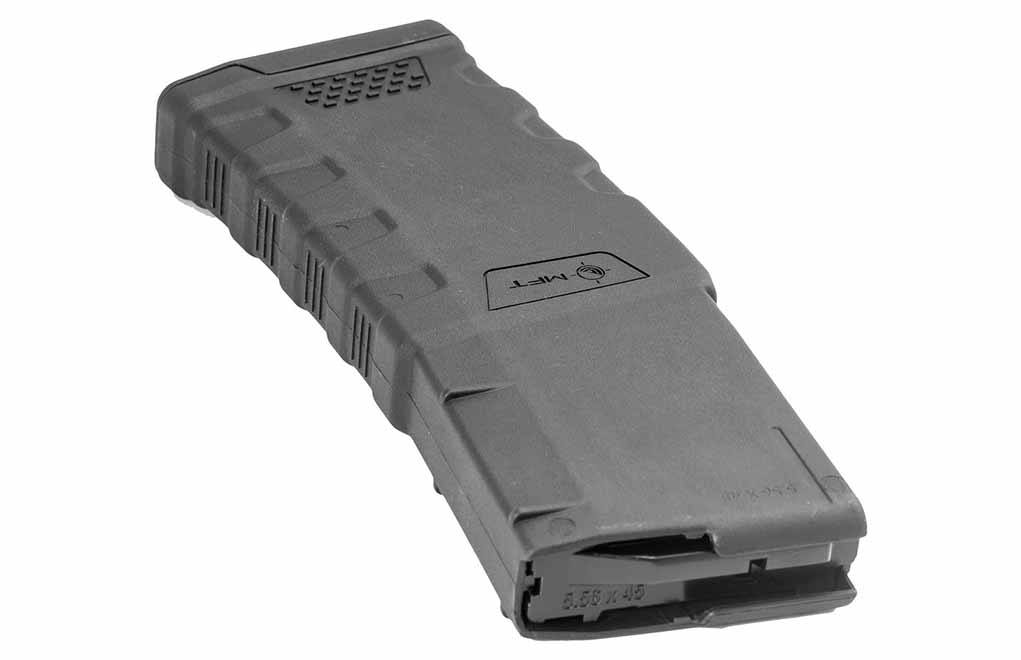
The two hand-build guns of the fourth prototype submitted to the trials were very similar to the AR-10s we know today, including a non-reciprocating charging handle and hinged upper and lower receivers. Additionally, they fed from the original waffle-pattern 20-round magazine (named such for the structural pattern pressed into them). This is the pattern the most widely used magazines are based off today, such as Magpul’s SR/LR PMAGs.
ArmaLite, to Stoner’s objection, pushed the cutting-edge aspects of the rifle too far in the submitted prototypes, proving the AR-10’s downfall. In particular, its aluminum-steel composite barrel, the first of its kind, burst during the 1957 torture test. The failure marred the AR-10 for the remainder of the trials and the rifle never recovered in the eyes of the military, even with ArmaLite replacing them with steel barrels after the incident.
Newly manufactured waffle-pattern AR-10 magazine from Brownells.
It must have been a bitter pill for Stoner to swallow, given his rifle had won high marks up to that point. Gun writers of the time noted testers were impressed with his creation, even going so far as to say it was the best battle rifles ever put through its paces at the Springfield Armory. High praise, especially since it was up against other legendary rifles, such as Fabrique Nationale’s FAL and the trial’s eventual winner the M14.
The AR-10 didn’t go down in the annals of U.S. Military history itself, however, it still left its mark. A scaled-down version of the design, what we know as the AR-15, was submitted to the military trials and was eventually adopted by the military, designated as the M-16 in the mid-1960s.
Service History
Despite missing its opportunity to serve as the U.S. Military’s primary arm, the AR-10 nevertheless saw its share of action. ArmaLite licensed the design to the Dutch manufacturer Artillerie-Inrichtingen, where variations found their way into military service on every continent, the first being in Africa.
Sudan bought the first batch of Dutch-made AR-10s — 2,500 of them — in 1958. This rifle, known logically as the Sudanese model, featured a flash suppressor instead of the original muzzle compensator, a fluted steel barrel to reduce weight, bayonet lug, sight graduations in Arabic and a steel butt plate. Additionally, the gas tube was moved from the left of the rifle to the top in the configuration familiar today.
Artillerie Inrichtingen manufactured AR-10. Photo: Wikipedia
The other well-known configuration named for a nation who purchased it was the Portuguese model. Procured in 1960, the rifle included a telescoping charging handle that doubled as a forward assist and also featured beefed up locking lugs (enhancing the bolt’s strength), improved extractor and simplified three-position gas regulator. Additionally, it had a chrome-lined barrel to help resist fouling and erosion, a feature that would eventually become standard on the early military versions its little brother — the AR-15.
Other countries — Guatemala, Burma, Italy, Cuba — purchased the rifle, but it perhaps saw the most live action in Africa. In Sudan, it was used by the country’s special forces until 1985 and was employed against guerrilla forces and clashes with neighboring countries. The AR-10 was also a mainstay in the Sudanese Civil Wars. In Portuguese hands, it fought nearly 13-year Portuguese Colonial War in Angola, Guinea-Bissau and Mozambique.
Despite gaining some international military traction, the ArmaLite focused on to what it believed to be its more gifted child — the AR-15. The move left the AR-10 to languish from early 1960 on through the 1990s.
The design’s prospected lightened near the mid 1990s, when Knight Armament teamed up with Eugene Stoner to resurrect the AR-10. However, the focus of the rifle changed somewhat, from battle to sniper rifle. Pegged as the SR-25 (Stoner Rifle), the revamped design featured a number of accuracy enhancements, including a longer heavier barrel. Furthermore, it was 60-percent compatible with the ubiquitous Mil-Spec AR-15 making it easier to manufacture and maintain.
U.S. Marine Maj. Gen. Douglas V. O'Dell shoots a 7.62mm KAC (Knight's Armament Company) SR-25 sniper rifle.
The SR-25 caught the attention of the right people. Eventually, it was adopted by the United States Special Operations Command and designated as the Mk11 Mod 0 sniper rifle. More recently, the U.S. Army replaced its long-toothed M24 Sniper Weapon System with an evolution of the Mk11, the M110 SASS (Semi-Automatic Sniper System).
In some respects, the rifle had come full circle, though it took a half-century. But the long, strange trip in the U.S. Military’s hands didn’t end up simplifying the AR-10 for the civilian world. If anything, it most likely complicated matters much more.
Pattern Differences
The AR-10’s scant military service has done more than belated its embrace by the greater shooting world. It’s made the modular system a plum mess when it comes to building, upgrading and maintaining a system that shooters have become accustomed to picking and placing parts on. The difficulty lies in there is really not one AR-10.
In essences, it’s a misnomer to call anything but the AR-10 — the ArmaLite AR-10 — an AR-10.
It is a trademarked variation of Eugene Stoner’s original rifle and is only compatible with a certain pattern of firearms built to similar specs. In the case of the ArmaLite AR-10, these are Knight’s Armament, LaRue Tactical, Eagle Arms and Mega Arms. Luckily, there is only one other dominant pattern of the rifle out there, the DPMS or LR-308. Examples of players on this team include Palmetto State Armory, Aero Precision, CMMG, Fulton Armory, Falkor and JP Enterprises.
The most notable difference is at the heart of each pattern, their receivers. The AR-10 upper and lower receivers have an angular rear cut, while the LR-308 has an elliptical one. This, for the most part, makes each incompatible with the other — though there are inadvisable exceptions to the rule. Same goes for all the parts — which tend to only play nice with others of their own kind. Furthermore, there are some AR-15 parts that function on its bigger brother — helpful given their abundance — but not all. If that’s not complex enough for you, there are highly proprietary renditions of the original ArmaLite AR-10 that are absolutely anti-social with the rest of the larger-caliber rifle world.
In short, perhaps more than any other modern modular system, the AR-10 — or LR-308, if you like — takes more consideration. Is one particular pattern better than another? Depends on what better is. If it is to stay true to Stoner’s original vision, then the ArmaLite AR-10 might be the better bet. If it is greater access to a variety of upgrades and parts, then you might consider the LR-308.
Whatever your choice, research is the word and diligence the action.
Rifle's Present And Future
Mil-Spec spoiled us. As long as your carbine or a part has those two little abbreviations then the world is your oyster. A matter of finding what you like to enhance your AR-15 and simply installing it on your carbine. That’s quite a luxury. Not one shared by the AR-10 or LR-308 or any other variation completely, but close enough that they remain among the most flexible and versatile rifles available today.
CMMG Mk3 .308.
True enough, a CQB carbine an AR-10 will not make and that’s OK. Because of the rifle’s talents at mid- to long-range more than makes up for this shortcoming. The U.S. Military realized this with the adoption of the M110 SASS, which not only delivers laser-like accuracy, but also brush-fire fast follow-up shots. For civilian shooters, this translates to a superior rifle for a number of applications — from hunting to long-range competitions. Even general plinking is kicked up a notch with an AR-10, LR-308 or what have you.
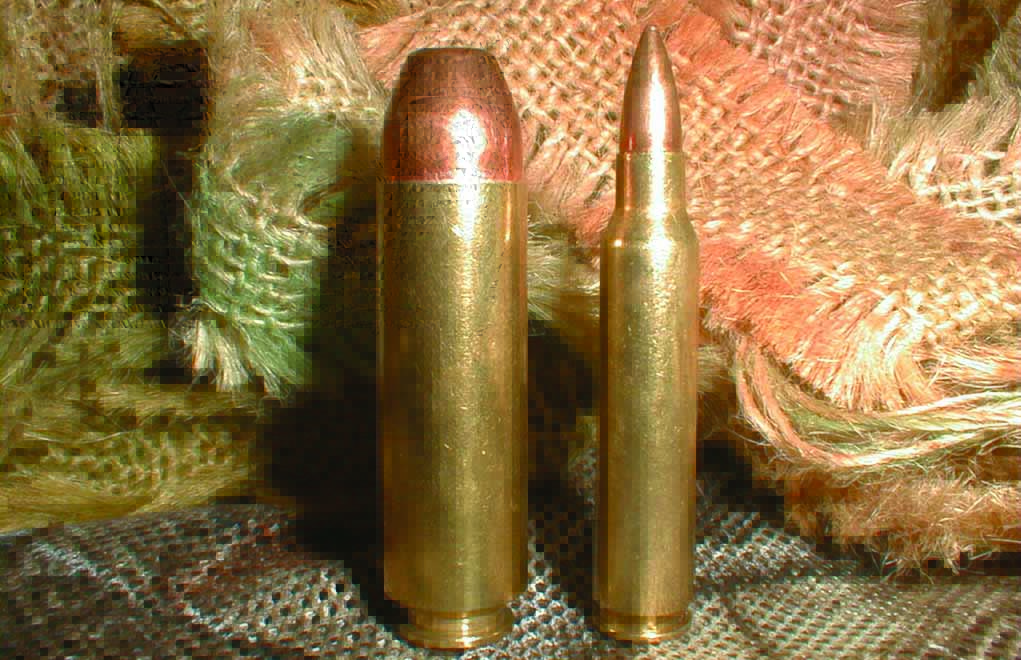
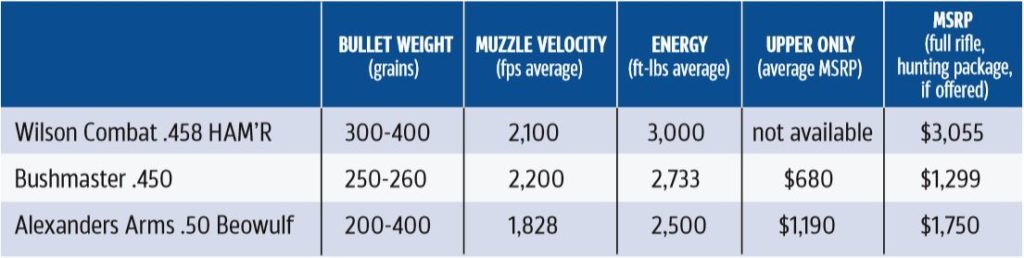
Furthermore, the AR-10 caliber selection is unparalleled. In addition to the previously mentioned chamberings, the rifle is available in 6.5 Creedmoor, .22-250 Rem., .300 Win. Mag … the list goes on and on. And it keeps getting better with new and innovative ammunition such as Wilson Combat’s .458 HAM’R coming out every year. A trend likely to continue into the foreseeable future.
The AR-10 might have been a late bloomer, but has proven as talented as the rest of Stoner family.
The TruTec Xtreme is taking economical, tactical red-dot optics to the next level.
Editor's note: This article is sponsored content from TruGlo.
Magnified optics may get much of the attention these days as MSR fans seek to push the limits of long-distance accuracy, yet it’s the red-dot that continue to rule the practical tactical side of town — and for good reason. From CQB work to fast-action steel ranging from “here” to “way out there,” nothing beats a red-dot optic for lightning-quick target acquisition.
Choosing a red-dot that's right for you, however, can be an exercise in excessive frustration. With so many models to choose from amongst so many different manufacturers, many consumers give up the hair-splitting decision process and simply default to the seemingly best value for their budget. Yet even at the “price value” level, choosing one optic over another can be challenging. This is when a manufacturer's reputation and peer reviews come into play.
The TruTec Xtreme 30mm Red-Dot Sight
One of the leading sight-solution manufacturers that has earned benefit-of-the-doubt status is TRUGLO, Inc. As an industry leader in fiber-optic sight technology for the last quarter century, TRUGLO has gradually expanded its product offerings to encompass a broad range of weapon platforms and applications — all while keeping product innovation and cost-to-performance ratio in clear view. Their latest product for the MSR crowd — the TruTec Xtreme 30mm red-dot — certainly follows that well-trod path.
The Xtreme 30mm, as the name implies, is built on a 30mm tube chassis to deliver a wide field of view. That’s a major plus for close-range work when you need to get that sight picture fast. It's also a treasured asset during low light conditions.
Another big thumbs up comes from the included machined aluminum cantilever mount. Designed to secure to Picatinny or Weaver-style rails, the mount is confidently solid and proportioned to allow the Xtreme to co-witness with iron backup sights — another win for real-world tactical applications. The height of the co-witness is an added benefit — the TruTec Xtreme comes with the perfect height instead of trying to determine the needed mounting height.
Downrange View Of The TruTec Xtreme
The operator's view of the TruTec Xtreme is on par with optics we've tested that carry a significantly higher price tag. The glass offers sharp downrange visibility and the 30mm objective lens provides good light transmission even toward the ragged sides of dusk and dawn. What we most appreciate about the sight picture, though, is the 2-MOA reticle. While most optics in this price range come with a 3- or 4-MOA red-dot, the Xtreme presents a crisp 2-MOA dot. For targeting silhouettes and steel beyond the 100-meter mark, that's exactly what we want.
To set point-of-impact, the TruTec Xtreme makes the job easy with windage and elevation adjustments calibrated for 1/2-MOA. That means one click moves the point-of-impact approximately 1/2-inch at 100 yards. Since most shooters zero their red-dots for 50 yards, one click moves the POI about 1/4-inch. Combined with the 2-MOA reticle, this allows for some tight zeroing. Once you've set your zero, screw-on caps keep your adjustments safe. For added convenience, the Xtreme comes with integrated cap lanyards to keep the caps secured to the optic chassis (another high-end touch without the high-end price).
Astute optic buyers are probably wondering about parallax. TRUGLO sets the TruTec Xtreme's to be parallax-free at 50 yards. Shooting on the extreme near or far sides of 50 yards can cause a POI shift, but we've found that staying within the recommended middle two-thirds of the field of view effectively kicks this issue to the curb. As for eye relief, it's unlimited, so place the Xtreme on your rail where it's most comfortable for your shooting style.
The Circuitry Of The TruTec Xtreme
Regarding the user interface and electronic function of the TruTec Xtreme 30mm, TRUGLO keeps it simple, yet the operation has a sophisticated flair. The “+” and “-” buttons located on the left side of the housing control everything. These, of course, allow you to adjust the brightness level of the red-dot to achieve just the right sharpness for the ambient light conditions.
This is a good ergonomic design because the buttons are large enough to manipulate while wearing gloves and their side-mount position lets you control the unit easily with your supporting hand, so you never have to disturb your grip to make adjustments. Also, there’s no independent on/off switch to complicate matters. Simply depress either button to turn the sight on if the TruTec Xtreme is in full shut-down mode.
The cool thing about this sight, though, is that you never really need to shut it down. That's because the TruTec Xtreme 30mm has “intelligent” wake/sleep modes that utilize a sensitive motion sensor. When the optic is turned on and no motion is detected after 10 minutes (the default time), the unit automatically saves the current brightness setting and enters sleep mode. Any movement of the rifle/optic while it’s in this state will automatically turn on the red-dot, making the firearm ready for action as soon as you pick it up.
As mentioned, this is an extremely sensitive motion sensor so, unlike most motion-sensitive red-dots on the market, there’s no need to bump the Xtreme to turn it on. (Yeah, striking your optic to turn it on never seemed like a good idea to us, either.) The Xtreme also lets you change the sleep mode to activate after one hour or 12 hours instead of the default 10 minutes, or it can be completely disabled. The choice is yours.
If you're worried about long-term sleep mode running down the battery, don't. TRUGLO has developed a rather sophisticated electronic technology that allows the Xtreme to remain on (or in sleep mode) at a very low power state. Although we have not been able to test the duration of battery life while the optic is sleeping, the company states that the single CR2032 battery source can last for several years in this mode.
Again, this is performance that matches or rivals optics costing twice as much. Of course, if you're more comfortable with completely shutting down the unit for long-term storage, a hard shut-off is a simple matter of pressing both the “+” and “-” buttons simultaneously. The longevity of this scope is accentuated by its water resistance design and features an O-ring sealed battery.
Stylin' And Profilin'
Although most tactical firearm enthusiasts acknowledge that guns are tools, not works of art, aesthetics often factor into the purchasing decision. The TruTec Xtreme 30mm and cantilever mount exude authority and an all-business demeanor with their matte black finish and crisp lines. In other words, this is no poser optic — the looks back up the performance.
With an MSRP of $258 (we've found it on online for as low as $148.81), that's our idea of “bang for the buck.”
TruTec Xtreme 30mm Red-Dot Key Features
2-MOA reticle for precision aiming
30mm objective lens
Digital push-button controls
Programmable automatic sleep mode
Motion-sensitive wake feature automatically turns on the dot when the optic is moved
Multiple brightness settings
Operates for thousands of hours on single CR2032 battery
Click windage and elevation adjustments
Machined aluminum cantilever Picatinny mount included
Integrated lanyard system prevents loss of screw-down W/E caps
Wide field of view
Unlimited eye relief
Optimal co-witness height for backup iron sights
Flip-up lens caps included
Water-resistant / fog-proof
Mounts to standard Picatinny or Weaver-style rails
For more information on the TrueTec Xtrem Red-Dot, please visit: www.truglo.com
Find out how to go the extra mile with a custom rifle on the next Modern Shooter.
Why go custom? It’s a legitimate question, given the state of today’s firearms manufacturing, which in a word is “excellent.” Examples of off-the-shelf tack drivers are legion and, expense-wise, within most if not all riflemen’s reach. If you’re aiming to hit the mark 500-yards out, almost everything made today with a bolt-action and in an appropriate caliber will get the job done — consistently. If your goal is a half-mile or better, then an entirely different tool is required.
These extreme ranges are where the ten-thousandth-of-an-inch tolerances on a custom rig like the ones turned out by H&H Precision Rifles payoff. And the results of this minute attention to detail are spectacular. The right optics and proper understanding of ballistics, sending a round dead on target a couple ridges over, time-and-time again, is more than doable, it’s an out-and-out reality.
A tour and trigger time with the H&H Precision crew made Luke Hartle a believer. Then again, striking a metal plate at 1,400 yards tends to hold conversion powers akin to those found on the road to Damascus. Though, the Editor-in-Chief of Gun Digest the Magazine isn’t changing his name to “Paul” anytime soon, he is more than happy to preach the extra dollars spent in going with a finely tailored rig is far from money wasted. It’s an investment, guaranteed to pay off every time you squeeze the trigger.
Find out more about how H&H Precision Rifles makes the magic happen in the shop and the field on next episode of Modern Shooter.
Phil Massaro named 2019 John T. Amber Literary Award Winner.
Phil Massaro
An old hand on the Safari circuit, Phil Massaro knows his way around dangerous game rifles. This knowledge has earned the New York native his share of heads on his trophy wall and a place in some of the country's most illustrious gun publications. Recently, it also bagged him another prize, though not the kind with a goring risk involved.
Phil Massaro was chosen as the 2019 winner of the John T. Amber Literary Award. The accomplished hunter, custom ammunition manufacturer and writer earned the rare honor for his article British Style, German Engineered, detailing the Heym Model 89B double rifle that appeared in the 2018 edition of Gun Digest. Never content to simply put a gun through its pace purely off the firing line, Massaro evaluated the fine double gun on the hunt in Mozambique where he matched it against Cape buffalo. The Hemingwayesque exposé not only proved highly informative, but also wildly entertaining – all the elements of an Amber Award winner.
The John T. Amber Award is presented each year to a Gun Digest Contributor whose work demonstrates significant knowledge of the subject matter through experience and research, and also for the ability to express it in a way to inform, inspire and entertain the annual’s readers. The award is named for the late John Amber, who served as the editor of Gun Digest from 1951 to 1979 and is fondly remembered by many readers and industry people of his knowledge and love of fie firearms. Read more about Massaro and the John T. Amber Literary Award in Gun Digest 2019.
Gun Digest 2019, 73rd Edition is jammed full of comprehensive information that firearms fanatics crave. No matter if your passion is long-range rifles, fancy shotguns, gritty Old West single-action revolvers or sleek semi-auto pistols, Gun Digest 2019 delivers. Get Your Copy Now
Mastering the particulars of the AR-10 upper receiver helps you get more out of the heavy metal brute.
What you need to know about the AR-10 upper:
Two main patterns: DPMS and ArmaLite.
DPMS has a rounded rear cut.
ArmaLite has an angular rear cut.
DPMS barrel nut thread pattern is 1-7/16” and 16 TPI-2A.
ArmaLite barrel nut thread pattern is 1-7/16” and 18 TPI-3A.
Barrels, barrel extensions, bolt carrier group and firing pin should all be of the same pattern.
These components can be used in another pattern's upper receiver.
It’s an old song and dance — AR rifles are as versatile as the day is long. Nearly any conceivable long-gun application falls into its wheelhouse, from home defense to long-range shooting, and nailing mid-range targets in between. If you can think of an objective, you can configure your rifle to excel at it.
For the most part, the modularity of the AR system gives the firearm its unique flexibility. And thanks to the military wing of the family — M-16 and M4 Carbine — there’s no shortage of upgrades, accessories and ways to build a rifle. That is if you’re talking about the AR-15.
Standardized, the rifle is nearly limitless in compatible parts that make it shoot faster, more accurately and with greater effect. Not quite so with its bigger (and older) brother, the AR-10.
Having been adopted by a few militaries over the years, the larger-caliber platform doesn’t enjoy the AR-15’s universalism. Nearly 99.9-percent of all Mil-Spec parts from different manufacturers will work with each other in Eugene Stoner’s gas-impingement masterpiece, the AR-15. Not so with the much more atomized world of the AR-10.
Palmetto State Amory GEN2 PA10 upper.
Here, designs are freewheeling and proudly idiosyncratic. Far from relegating the AR-10 to one-trick-pony status, its more specific nature simply means more forethought and consideration when buying, building, upgrading and maintaining one. And this holds no more true than where all the action happens on the rifle.
Understanding The AR-10 Upper Receiver
Like Kleenex is to facial tissue, AR-10 is to rifles. It is a specific trademarked designation that over the years has become slang to describe an entire class. Properly used, AR-10 specifically means a particular rifle — the original one designed by Eugen Stoner and still in production today by ArmaLite. There are riffs off the design, a lot of them, but properly defined they are not AR-10s. Their specs are different and they don’t play nice with other patterns of the rifle. To maintain sanity, we’ll only focus on the two most common you’ll encounter the gun store: the original AR-10 still made by ArmaLite and DPMS or LR-308.
In the AR-10 (used in the generic context here on out), the receivers are the defining aspect of the different patterns. As pointed out in a previous post concerning AR-10 lower receivers, the dividing line is their geometry. Simply put, the DPMS has an elliptical rear cut, while ArmaLite has an angular.
Cut to fit these particular shapes, the different AR-10 upper receivers are incompatible with another pattern’s lower. They’re meant to mingle with their own kind. Yes, you can shimmy an ArmaLite upper on to a DPMS lower (the inverse is not true) and get a functional rifle. However, due to gaps between the receivers, this is potentially a dangerous firearm, especially if you experience a ruptured case. A side note, this exclusivity extends to the barrel nut as well, given ArmaLite’s thread pattern is 1-7/16” and 18 TPI-3A, and DPMS 1-7/16” and 16 TPI-2A.
Carpenter 158 HPT/MPI Bolt Carrier Group for an AR-10.
Nuanced and adding complexity to the already complex AR-10 story, the real issues with compatibility in the upper isn’t so much the receiver itself. The main components are the concern. Here we’re talking barrels, barrel extensions, bolt carrier groups and firing pins.
While there is no end of online chatter among home gunsmiths claiming to have mixed and matched these parts, it’s an inadvisable practice. You are dealing with tight tolerances concerning headspace, where a sour experiment can result in — at best — a ruined rifle. In the case of the firing pin, for example, an Armalite pattern in a DPMS bolt can become stuck, setting up the undesirable and dangerous possibility of the bolt closing firing a cartridge – the dreaded “slam fire.”
The safe rule of thumb when dealing with these components is to pick a pattern and stick with it all the way through. You buy an ArmaLite barrel for a build, plan on going ArmaLite on the rest of the parts. Upgrading a DPMS pattern rifle’s bolt, better plan on making sure your choice is compatible. There is some wiggle room here, mainly in context to the receiver they’ll go into. As long as the parts are uniform in pattern, they can go in the other pattern’s upper receiver.
DPMS pattern firing pin by Palmetto State Armory.
Thankfully, regardless of pattern, quality barrels abound for both ArmaLite and DPMS. Given it is the most common pattern when it comes to anything AR-10, the advantage goes to the latter. There are just more choices when it comes the DPMS, not just with barrels, but across the board. Not that you lose by choosing ArmaLite, but it comes with a real sticky point when shopping for a compatible BCG.
Payoff – AR-10 Calibers
The Gordian knot that is the AR-10 almost doesn’t seem worth untying. Until you cut through to the rifle’s payoff – firepower and caliber versatility.
While the AR-15 chambering choices have grown over the years, they still pale in comparison to its bigger brother. Especially in the power department. Originally chambered for the .308 Win./7.62x51mm NATO, AR-10 calibers have grown to included cartridges as new as the 6.5 Creedmoor and as old as the .45-70 Govt. In general, especially concerning the popular patterns, mainly the short-action rounds have been the focus — .243 Win., .260 Rem., 7mm-08. Though, as insinuated with the .45-70 example, AR-10 calibers know no bounds, as long as you’re willing to go proprietary.
Part of the original design points for the 6.5 Creedmoor was it had to work with an AR-10, which it does nicely.
This feature of the gun, arguably, make it potentially more versatile than its little brother — at least in medium- to long-ranges. The AR-10 excels in competition, tact applications, hunting and nearly anything that requires more velocity and energy than an intermediate cartridge provides.
Parting Shot
Yup, the minutia of the AR-10 is about as clear as mud. For some, obviously, this is more than they want or are willing to chew through. There are obvious reasons why the D.I.Y. rifleman has a love affair with the Mil-Spec AR-15. Yet, there is an allure to decoding the AR-10. It might not be as simple a nut to crack as its little brother, but for those willing to put in the work the payoff is potentially greater.
Far from a first-line technique, a properly executed defensive gun takeaway is potentially a lifesaver.
As a gun owner it’s simple to pigeonhole the concept of self-defense. We practice, we carry, we’re prepared.
Despite this vigilance, there are circumstances where an armed citizen can find themselves unarmed or unable to access their gun. In a scenario such as this, if a thug gets the drop on you and seems determined to pull the trigger what then? Options are slim, but Lek Nazi presents one last-ditch prospect that has the potential to snatch you from the jaws of catastrophe — a defensive gun takeaway.
Certainly, the maneuver the founder of New York’s Double Eagle Tactical Training demonstrates should be considered utterly the last playable card, when no other route is available. Furthermore, it’s not an improvised move, but precisely executed from years of practice and with forethought. Finally, it has its limitations — if an assailant is out of arm’s reach you’ll grasp at air. However, trained up on a gun takeaway and not faint of heart, it’s potentially a lifesaver.
It bears repeating, unless you’ve got high-level hand-to-hand combat experience with the Israel Defense Force, this technique requires expert instruction. Also, this is an out-and-out, end-of-the-road option. By a magnitude of ten, escape or accessing your personal-defense gun — if the opportunity presents itself – are much better choices.
That said, the idea of a gun takeaway does give us something to consider. Self-defense shouldn’t purely rely on one factor, say your firearm. If possible, a complete arsenal, including hand-to-hand defense, isn’t a bad goal to have, if you take self-defense seriously. The more options at your disposal, the greater likelihood you’ll protect your life.
How one gun writer had constructed a custom Glock 19 over the years.
Why the Glock is so customizable:
Ample selection of aftermarket parts.
Ease of installing upgrades.
The improved performance once parts are installed.
One of the main reasons Glock has become such a popular pistol in recreation, competition and law enforcement circles is the ease of customization and nearly unlimited availability of aftermarket parts and manufacturers. From slides, barrels, triggers and strikers, to minor accessories, the shooter can create countless combinations.
I own a Gen 2 Glock 19. I can’t recall how long I’ve owned this particular pistol, but according to the serial number, it was manufactured in October 1994, making it almost 24 years old. I’ve carried this particular pistol on and off since 2004, and I’ve done several upgrades along the way.
My first modification happened in 2005, when I replaced pretty much everything except the frame, barrel, slide and extractor with factory Glock parts purchased at Brownells. I’ve changed sights several times. I just replaced my Tru-Glo TFO sights with yellow rears to the new Tru-Glo TFX Pro Sights, and I will be leaving these on for a long time.
For the trigger, I picked my favorite: the APEX Action Enhancement Kit for Glock. This particular kit is designed for the Gen 2, 3 and 4 9mm/.40 S&W models only, but a trigger for the Gen 5 is already available.
For the sake of reliability, durability and aesthetics, I sent my slide to ROBAR to get the NP3 finish added. I did that refinish almost 10 years ago and the NP3 only needs a little polishing once in a while to look like I had it done yesterday.
I wanted my frame to be unique, so I contacted Molon Labe, LLC, and had my frame laser-engraved with a honeycomb texture, which not only looks great but gives me a more positive grip on the pistol.
To finish it all, I picked up a couple of accessories from Molon Labe. They have a great selection of baseplates, striker plates and grip plugs for all generations and calibers of Glock pistols, and they can also custom engrave any logo you desire.
There are so many other ways to customize your Glock pistols, from lights and lasers that can be attached to rail models to custom paint jobs done by a plethora of authorized Cerakote applicators that will take your Glock to the next level. The limit is only dictated by your imagination.
Editor's Note: This article originally appeared in the May 2018 issue of Gun Digest the Magazine.
CradleGrid offers a new way to look at the organized storage of your firearms.
The Advantage CradelGrid and SecureIt Offer:
System consists of three components: a grid panel, gun cradles, and a tiered base.
Can configure to user needs and firearms.
SecureIt also offers under bed and closet secuity systems and gun lockers.
Are you familiar with the archer’s paradox? In short, it’s a phenomenon used to describe the situation of how an arrow leaves a bow and its seemingly inevitable collision with the bow itself in order to hit the target. But upon releasing the string, the arrow of course never does hit the bow. The solution to the paradox: The arrow bends.
If there were such a thing as a shooter’s paradox, it would be the collision every gun owner has when trying to find a solution for secure firearms storage. The solution to the current paradox: The gun owner is forced to bend to cost or immobility of a massive safe — or both.
But it’s 2018. We put a man on the moon in 1969, so why are we still stuck in gun storage purgatory?
Well, we’re not.
Thinking Inside The Box … Er, Safe
Modular gun safes aren’t really anything new, but in this category more than most, you get what you pay for: a cramped tin box that will most likely do the job of keeping your guns secure, but they have little to offer outside of that — especially when it comes to keep your guns organized and safe from one another in the form of in-safe dings and scratches. And most are certainly not user-friendly in terms of assembly and relocation.
But here’s the revolution: CradleGrid.
Working with the Army’s Special Forces, SecureIt developed a pretty sweet system that’s as simple as it is fully customizable. The
Think of it this way: Everyone is familiar with a pegboard system that many of us use on the back wall of our reloading bench to secure components, or on the garage wall to hang and organize tools. CradleGrid is like a highly-developed rendition of that system, featuring a series of integrated grooves. To those grooves attach a variety of accessories, including multiple variations of handgun mounting options, long guns cradles, variously sized shelves and small parts bins.
If you’re fortunate enough to have a full, walk-in gun room, these CradleGrid panels can be attached directly to the wall and outfitted with any mix-and-match of accessories to secure and display any and every gun configuration you can get your hands on. It’s a fully customizable system.
But because most of us simply don’t have the room for that luxury — myself definitely included there — the CradleGrid is the foundation upon which the entire SecureIt family of gun safes is built.
For under-cabinet and under-bed storage, the Fast Box Models 40 ($289) and 47 ($299) are sleek and concealable … and a vertical kit is also available for those who looking to stand the safe on-end in a closet.
SecureIt also makes a more conventionally sized Agile Model 40 ($499), and the flagship Model 52 ($599). These two safes feature Knockdown Technology, which means they store and ship flat. Assembly can be done by one person in a matter of minutes with just a single wrench, and all assembly components are housed inside to give the safe a clean, sleek look — and more importantly, to be completely inaccessible when locked. A Quad Model ($1,859) is also available, where two Model 52s are attached side-by-side, and two Model 40s are attached on top of those two.
Parting Thoughts
You’ll never hear me say that a huge, heavy, insulated gun safe isn’t worth it — I just don’t think it’s necessary. If you check the fire rating riveted to the inside of your safe’s door, and then research the actual internal heat index of most house fires, it becomes obvious that your guns won’t hold out long until the inside of the safe turns into a microwave. And weight? Well, I paid two guys (yes, they were definitely big guys) to carry my safe from the garage to my basement when I moved. So, on a long weekend vacation for me, two bad dudes could carry it out of there if they were really determined. Likely? Nope. Possible. Yep?
My advice: Don’t over think — or overpay for — secure gun storage.
If you want to compete in the Heavy Metal Division of 3-Gun, you’ll need an AR-10. Here are the basics.
In addition to a survival gun, the AR-10 can be used in 3-Gun competition in the Heavy Metal division.
Mega Machine and Brownell’s are popular sources for AR-10 parts.
Armalite is among one of the better makers of AR-10s as battle rifles and for competition.
When Heavy Metal Division began, iron sights ruled and life was good. Then a lot of shooters got older and found optics were better. Thus, Heavy Metal Tactical was born.
The High-Performance AR-10
The Heavy Metal division is a step back in time, especially when it comes to caliber and sights. A rifle used in Heavy Metal division can only be chambered in .308 Winchester/7.62 NATO.
You can only shoot Major ammunition, there is no Minor in Heavy Metal. So, that means a 320 power factor, and for a 150-grain bullet, that means a velocity of at least 2,100 fps. Since the factory loadings of .308 will usually fire a 150-grain bullet at 2,400 to 2,500 fps, making Major is easy. It is dealing with the recoil that is hard.
The Mega Machine .308, at the start.
A Heavy Metal rifle is allowed a muzzle brake, but it cannot be lager in diameter than 1 inch, nor longer than 3 inches. On a .223/5.56 rifle, a brake or comp that size is all you really need. On a .308 rifle, that is asking a lot of a brake. While a muzzle brake that small can take the sting or thump out of shooting a .308, it won’t make it as soft to shoot as that same size would on a .223.
You are limited to magazines that hold 20 rounds. In the beginning of Heavy Metal, only iron sights were allowed, but once more shooters wanted to try it (and the shooters who were doing it got a bit older),
Heavy Metal Tactical was created, and one optical sight was permitted. That is one sight, red-dot or magnifying, period. Heavy Metal Limited still does not allow an optical sight. No bipod, no flashlight, but a suppressor is permitted.
Heavy Metal was a way for traditional rifle shooters, or rather, shooters of traditional rifles, to compete, and not be put at a disadvantage compared to a tuned AR-15. Back in “the day” this meant M1As, FALs, the occasional Garand, and various HK rifles.
Now, with the advent of the modern AR-10 variant, you see AR-10s. When we started this, the only .308 ARs to be had were rarities, original AR-10s, usually select-fire. But now the .30 AR is pretty common, and that’s what you see.
I built mine on a Mega Machine receiver set. The receivers, barrel, bolt and handguard came as a set, and that’s all you really need to get started, because the rest of it is all standard AR-15.
Armalite makes a 7.62 rifle. The older version uses modified M14 magazines.
Yep, triggers, pistol grips, stock, those are all regular items out of Brownells or from AR makers that you can use to finish the build of your Heavy Metal thumper.
One drawback to the AR-10 is that there is no mil-spec, so, each maker has had to re-invent and de-bug the design themselves. Once you go with a maker, you are stuck with them for parts. At least, the proprietary parts.
As a result, you’ll find that you can do the externals and the common parts, and thank goodness, the magazines, in common.
Most will work with Magpul 7.62 magazines. One exemplar is Armalite. They started this before Magpul was around, and as a result, Armalite modified M14 magazines to work in their AR-10. So, there are older Armalites that use those proprietary magazines. Otherwise, everyone uses Magpuls.
So, you have to use the proprietary parts of the manufacturer. You get to use all the other standard AR-15 items, you get to use the most-excellent Magpuls, and you get to shoot a “real” rifle in .30.
The K-3 Armenian Avtomat is an AK bullpup configuration. Here’s how this oddball and related AK variants came to be.
The advantage of the K-3 AK:
Designed sometime prior to 1996, the K-3 AK bullpup is based on the standard AK-74 rifle.
According to the bullpup’s designers, it’s cheaper, more accurate and has less recoil.
Bullpup AKs were issued to Russian special forces.
The Ukrainian version of the bullpup AK is the Vepr Avtomat.
The Russian Special Purpose Weapon Complex OC-14 Groza is based on the AK-74 and preceded Armenian or Ukrainian variants. However, it is produced in very small runs.
Reconfigured Variants – AK Bullpups
Apart from the licensed and unlicensed AK-74 copies, there were a couple of variants that were simply made out of existing rifles. These were reconfigured externally by the engineers to comply with requirements of their respective militaries and were re-issued as locally made rifles with local designations.
The K-3 is an Armenian Avtomat of the bullpup configuration. It was developed by the Defense Industry Department of the Ministry of Defense of Armenia in 1996. The K-3 bullpup is based on the standard AK-74 rifle and entered service with the Armenian Defense Force in 1999. Today the K-3 sees limited service with special operations troops in Armenia, and was never intended or supplied for export.
Weight: 2.7 kg
Length: 700mm
Barrel length: 415mm
Caliber: 5.45X39mm
Rate of fire: shots/min: 600-650 rounds/second
Muzzle velocity: 900 m/s (2,953 fps)
Aim range: 400 meters (437 yards)
Feed: standard AK-74 30- or 45-round magazines
The Armenian-made K-3 Avtomat is based on the Soviet AK-74, but very different in configuration and appearance. It is the first mass produced bullpup AK-74 variant.
Very little is known about this variant, only that for the first time the K-3 5.45mm Avtomat was introduced to a wide audience in 1996. Despite the fact that the principle of operation is practically identical to the standard AK-74, its bullpup configuration is drastically different. Part of the gun’s trigger group (hammer to be precise) and the magazine are located behind the pistol grip and the trigger.
Typically, the Kalashnikov safety/selector lever is left in the back of the receiver. The ejection of empty casings is to the right, making shooting from the left shoulder difficult. Sights are made on high blocks, diopter rear sight is adjustable in range. The muzzle brake has a modified design to facilitate the launching of 3K-3 fragmentation grenades also developed in Armenia. To fire a rifle grenade, a regular live cartridge is used.
The K-3 Avtomat is similar to the AK-74. However, according to the gun’s creators, it is cheaper and more accurate, and has less recoil. The Armenian bullpup is made mostly out of metal. Its design includes an accessory rail for mounting a standard 4X-power PSO-1 optical sight, which is also produced in Armenia.
Regardless, it’s commendable for any country to develop and produce a firearm of its own design, especially such a small country like Armenia. The fact remains that most of the former Soviet republics have stockpiles of awesome Soviet-built AKMs and AK-74s. Not using free, proven guns that you already have is like pissing against the wind. Why do it? That’s why the bulk of the Armenian armed forces are armed with the best variants of Soviet-built 7.62mm and 5.45mm AKs.
One more bullpup comes to us from the Ukraine. We all know about the Vepr rifles here in the U.S., but this one is of a different breed.
After the collapse of the Soviet Union, each of its former republics tried to prove independence in all possible ways and, naturally, without creating firearms of their own design the independence would not be complete.
The Ukrainian bullpup Vepr Avtomat is based on the Soviet AK-74, or rather built from it.
Because providing its armed forces with domestically produced weapons is the best proof of the country’s independence, the Ukraine was actively proving its independence in this way. As it turned out, there were a lot of people in the Ukraine who had pretty good and original ideas about firearms, as well as a well-developed scientific and industrial base that could easily be employed in development of such firearms.
The Ukrainian version of the bullpup AK was the Vepr Avtomat. This gun was introduced in 2003, and was developed in association with a rather interesting organization, the Scientific and Technical Center for Precision Engineering of the National Space Agency of Ukraine.
At the time of its introduction, there were jokes floating around about the type of weapon the Vepr represented, considering the entity that made it. Most popular was that the Vepr was a gun for the space wars. However, all jokes aside, the new Avtomat turned out to be nothing to laugh at. When the Vepr was released, some specialists compared it to the infamous Russian special purpose weapon complex, the Groza. I would not go as far as agreeing with those specialists, but in many respects such a comparison is valid.
Just like the Groza, the Ukrainian Vepr was based on the AK-74, and also like the Groza, the Vepr was configured as a bullpup Avtomat. However, unlike the Groza, the new Ukrainian Avtomat was not chambered for 9x39mm or 7.62x39mm (calibers used by the Russian Groza), but for the 5.45x39mm cartridge. Even though the Vepr acquired some Groza features that are common in bullpup guns, it did not acquire the Groza’s characteristics.
Unlike the Armenian or Ukrainian bullpups, the OC-14 Avtomat/grenade launcher named Groza is a versatile weapon that can be configured for different missions. It fires a special 9x39mm sub-sonic round.
The main feature of the Vepr is that it was possible to maintain the maximum compatibility of parts and assemblies with the AK-74. This was very important for the Ukrainians, since they inherited a huge stockpile of AK-74 Avtomats after the fall of the Soviet Union. The considerable numbers of Soviet AKs provided the barreled actions for the new guns, and an almost infinite source of repair parts and assemblies.
The weight of the new Avtomat is 3.45 kgs (7.6 lbs.) empty; the length is only 702mm (27.64 inches), with a barrel length that is standard for a full-length Avtomat, at 415mm (16.34 inches). That is where the differences from the AK-74 end. The muzzle velocity is 900 m/s (2,953 fps), the automatic rate of fire is 600 rounds per minute, and the gun feeds out of standard 30- to 40-round AK-74/RPK-74 magazines. Basically, the new Vepr is the AK-74 in bullpup configuration.
However, the new Ukrainian gun had several advantages over its Soviet counterpart. Combined with the fact that the Vepr uses the 5.45×39 cartridge that already has a low impulse, the bullpup configuration produces better accuracy when fired in full-auto mode.
The gun became more manageable at that rate. The Vepr kept the performance characteristics of its full-length cousins but offered a far more compact package. One may ask, why isn’t everybody converting their AKs to bullpup configuration? There are several reasons.
The Groza-1 is chambered for the 7.62x39mm cartridge and was designed for use by Russian special operation troops.
In the bullpup configuration, the Avtomat lost its balance. This takes getting used to when firing. The ejection of spent casings to the right, with typical AK “gusto,” makes it impossible for a lefty to use this gun. Even when a right-handed shooter uses it, the face is way too close to the ejection port. Inhaling the powder gases caused irritation in the shooter’s throat and eyes. Not the most pleasant feeling.
The magazine change is cumbersome to say the least. Unlike AR-style magazine retention, where the mag is simply pushed into the mag-well, the AK mag has to be rocked into retention, not an easy thing to do under one’s armpit. The sight line (sight radius) had been shortened, negatively affecting long-range accuracy.
However, any modern optical or collimator sight takes care of that. When scrutinizing the Ukrainian Vepr, one must remember that shooters can get used to the new configuration and become proficient with magazine changes, leaving only the one serious shortcoming—the location of the ejection port in relation to the shooter’s face.
In addition to the gun’s layout, changes were made to the controls. Immediately noticeable is the placement of the charging handle. It has been moved ahead over the barrel and it is no longer reciprocal, i.e., it remains in place when the gun is fired. The charging handle could be placed on either side for right- or left-handed operation. The safety lever on the Vepr is a lateral button that is located above the trigger, which is an improvement compared to the standard AK.
However, a more important design element of the Vepr is the fact that handguards and other components are not affixed to the barrel, making it almost a floating barrel if not for the gas block. This design feature played a significant role in improving the accuracy of the gun.
The early models of Vepr were equipped with sights taken directly from the AK, but as the sighting line was reduced due to a change in the weapon’s layout, it was decided to replace standard AK “U”-slot rear sights with a diopter or “peephole” type. Both sights are mounted high and both fold out of the way of reflex, collimator or optical sights. The Vepr Avtomat is configured to accept a wide range of such aiming devices.
Initially, the Vepr was developed to accept the grenade launcher similar to the Russian Groza complex. This way one would designate the Vepr as a complex and not just an Avtomat. Unfortunately, the standard GP-25 grenade launcher was not compatible with the gun in bullpup configuration. A special modification had to be developed.
It turns out that, with the grenade launcher installed, the gun is more stable when firing. Its balance becomes more evenly distributed, although the weight of the gun is increased. An interesting detail is that when the grenade launcher is installed, the Avtomat’s safety also becomes the grenade launcher safety. This totally makes sense.
In the end, the Ukrainian-built Vepr Avtomat is just another version of the AK-74. I’m sure its creators would argue until red in the face that it is the next step in the AK development, citing how they were able to improve accuracy and reduce the dimensions.
The Russian OC-14 Groza shooting complex is produced in very limited numbers and destined for Russia’s special operations operatives, who can configure it to the mission at hand.
But, you don’t need to be Samuel Colt or John Browning to see that it’s just the same gun dressed in prettier rags. Also, with positives like accuracy and reduced dimensions, the Vepr also inherited all the bullpup configuration shortcomings, like cumbersome magazine changes and rear-heavy balance, among others.
I read somewhere that Vepr creators claimed the Vepr had fewer parts than its AK predecessor. Well, again, no special education required to see that their claim is erroneous. They removed the stock and the lower and upper handguards, and added a massive butt plate, cheek piece, trigger linkages, two-piece lower handguard, gas tube cover and folding sights. Basic mathematics is not in their favor.
Today, Vepr Avtomats see service along with standard-configuration Soviet-built AK-74s in the hands of the Ukrainian armed forces. However, they are not widely used or issued to the regular infantry troops. Use of the Vepr is reserved to where its compactness is a requirement.
The rest of the troops have to be content with Mr. Reliable AK-74 Kalashnikov Avtomat. It was always easier and cheaper to grab a ready and proven gun from the warehouse than to create and mass-produce something new. Today, the Vepr project is suspended.
During the past 30 years, the name “Glock” has come to symbolize quality and reliability. But that wasn’t the case when it was first introduced to the American market in the mid ‘80s. American gun owners were more than skeptical about the “plastic gun.” Some were dismissive, and others were just downright mean.
In return, Glock came up with a great idea to change the minds of American gun owners: put the pistols in their hands and allow the shooters to not only handle them, but to shoot them. This led to the creation of the Glock Range Program.
Until 1990, I’d only seen Glocks on the gun store shelves. But one day, our small local range had all these brand-new Glock pistols, in all models and calibers (9mm and .40 S&W at that time). There they were, ready to be rented at a reasonable price, and that was it for me — I was hooked. I had never seen rental pistols at any of the ranges I’d been to, and this quickly became a great concept that allowed members to test drive Glocks and pick the model and caliber that best fit their likes and needs.
After a couple of years, the American market embraced the plastic gun, and Glock has become an important part of the landscape for law enforcement and recreational shooters alike.
Building Momentum
The first Glock to hit our shores was the Model 17, in what has been named the first generation, which was a 17-round pistol with a pebble texture grip and very simple controls. In 1988, the Gen 2 pistols were introduced, with changes like a checkered front strap and serrated back strap. During the lifetime of the Gen 2 run, some simple changes were also introduced, such as a captured one-piece guide rod system and minor changes in the magazine floor plate.
In 1998, we saw the introduction of the Gen 3 models. These guns featured upgrades like an accessory rail (called the Universal Glock rail) to allow the mounting of laser sights, tactical lights and other accessories. Thumb rests on both sides of the frame and finger grooves on the front strap also appeared.
During the middle of the Gen 3 lifetime, several more changes were made to the Glock line, including a modified extractor that serves as a loaded chamber indicator, an enlarged locking block and an extra cross pin (to aid the distribution of bolt thrust forces exerted by the locking block) located above the trigger pin. The Gen 3 frames were offered in black, flat dark earth and olive drab. Other models, like a non-firing dummy pistol (“P” models), non-firing dummy pistols with resetting triggers (“R” models) with a bright red frame, and simunition practice pistols (“T” models) with a bright blue frame, were also released.
Then, at the end of the G3 lifespan, the RTF2 (Rough Textured Frame 2) was introduced. These variations featured a new checkering texture around the grip and new scalloped serrations at the rear of the slide.
In early 2010, Gen 4 Glocks were introduced. The Gen 4 modifications were mostly ergonomic, such as a modified rough-textured frame and grip checkering. A new recoil spring assembly was also introduced, along with an enlarged reversible ambidextrous magazine release. Magazines were modified to accept the ambidextrous magazine release, and accessory interchangeable backstraps of different sizes and shapes were released.
The basic grip size and shape of the Gen 4 Glock pistols is slightly smaller compared to previous generations, and some parts on the Gen 4 models can’t be interchanged with previous models. During the early introduction of those Gen 4 pistols, Glock announced a recoil system exchange program, where owners were sent a new modified recoil system in exchange for the recoil system originally shipped with the pistols.
In 2016, the FBI issued a solicitation to Glock for 9mm duty pistols, which deviated from the Gen 4 pistols and led Glock to develop the M Series pistols. In turn, the M Series pistols led to development of the Gen 5 pistols in 2017.
Modifications to the Gen 5 Glocks were centered on improving reliability and ergonomics, and changes included an ambidextrous slide stop, revised style of polygonal rifling that Glock named “Glock Marksman Barrel,” deeper recessed barrel crown, the removal of finger grooves from the frame, flared magazine well, the reintroduction of the half-moon cutout in the bottom of the front strap, beveled and rounded front of the slide, and removal of the extra locking block pin introduced on the Gen 3 pistols.
The magazines on the Gen 5 pistols feature slight differences from their predecessors, with a slightly redesigned baseplate for easy removal and an orange follower for easy identification.
Originally advertised as “practical and tactical,” the Glock 34 and 35 were designed specifically for the International Practical Pistol Confederation (ISPC) market and in accordance to IPSC rules. Released in 1998, the Glock 34 was an instant hit with Practical Pistol Shooters all over the world.
Ironically, when production division was started in 2000, the Glock 34 and 35 were excluded because of their 5.25-inch barrels; IPSC had set a limit of 5 inches for barrel length. But that didn’t stop the United States Practical Shooting Association (USPSA) and the International Defensive Shooting Association (IDPA) to allow the Glock 34 to compete in their Production (USPSA), SSP (IDPA) and ESP (IDPA) Divisions.
Today, the Glock 34 is the most popular Glock pistol in those divisions. I’ve owned several versions of the Glock 34 and have used it for USPSA and IDPA alike, and I can’t wait for the release of the Glock 34 Gen 5. Glock, are you listening?
Glock 22
After the release of the .40 S&W cartridge, specifically designed for the law enforcement market, it didn’t take long for Glock to manufacture a pistol for this exciting new cartridge — and they hit a home run. The Glock 22 quickly became the most adopted handgun in the American law enforcement community, with countless departments switching to both the .40 S&W cartridge and the Glock 22 as their main service pistol.
For more than a decade, it seems like every department — federal, state, county and city departments — was carrying a Glock 22. Now, with the improvements in 9mm ballistics and bullet design during the past 2–3 years, many departments are switching back to the 9mm cartridge due to its higher capacity and lower recoil, and many officers are welcoming back the easier-to-shoot 9mm cartridge.
Glock 26
Released in 1994, the Glock 26 is often referred to as the “Baby Glock” and was nothing more than a chopped down version of the classic Glock 17. Using the same basic configuration as the Glock 17, its grip was reduced to hold only 10 rounds and its slide reduced to accept its 3.42-inch barrel.
With the growing number of states allowing civilians to carry handguns concealed, the Glock 26 became the first choice for many concealed carry participants, and it also served as backup for both the civilian market and law enforcement personnel alike. Today, with a plethora of smaller and slimmer handguns in the market, the Glock 26 has lost some of its market, but is still a great choice for backup and CCW.
Glock Glock 17
The one that started it all, the Glock 17, has become the flagship for the Glock family of handguns, now in its 5th generation. The Glock 17 has just about every market cornered. From law enforcement to recreational shooters, self-defense, military and competitive shooters, the medium-sized Glock 17 is the classic against which other striker-fired pistols are measured.
With a capacity of 17 rounds and a 4.48-inch barrel, the Glock 17 remains one of the most-used pistols in the world. I prefer the Glock 17 for competition over the more popular Glock 34; the grip is exactly the same as the longer-barreled Glock 34, but I find the shorter barrel and slide easier to transition from target to target, making it my No. 1 choice for both USPSA and IDPA matches.
Glock 19
Released in 1998, at the same time as the Gen 2 pistols, the Glock 19 has become a classic. With more compact dimensions compared to the larger Glock 17, the Glock 19 was designed around a 15-round magazine and a more compact 4.01-inch barrel, making it just about the perfect size for concealed carry while affording the shooter a good capacity of ammunition.
I’ve carried a Glock 19 on and off for the past 15 years, and to this day I find it one of the most comfortable pistols for everyday carry. And with the numbers of Glock 19s sold, I guess I’m not the only one who considers the Glock 19 to be the best Glock for self-defense.
The Final Round
As a longtime Glock user, I’ve owned and fired every one of the pistols on this list. I’ve liked them all, but I can’t pick one of these models over the others — they all have a purpose and they all work great. I will continue to use my Glock 17 for competition and recreational shooting, and my Glock 19 Gen 2 for everyday carry. I guess more than 30 years of experience has made Glock my choice for recreation, competition and self-defense.
Editor's Note: This article originally appeared in the May 2018 issue of Gun Digest the Magazine.
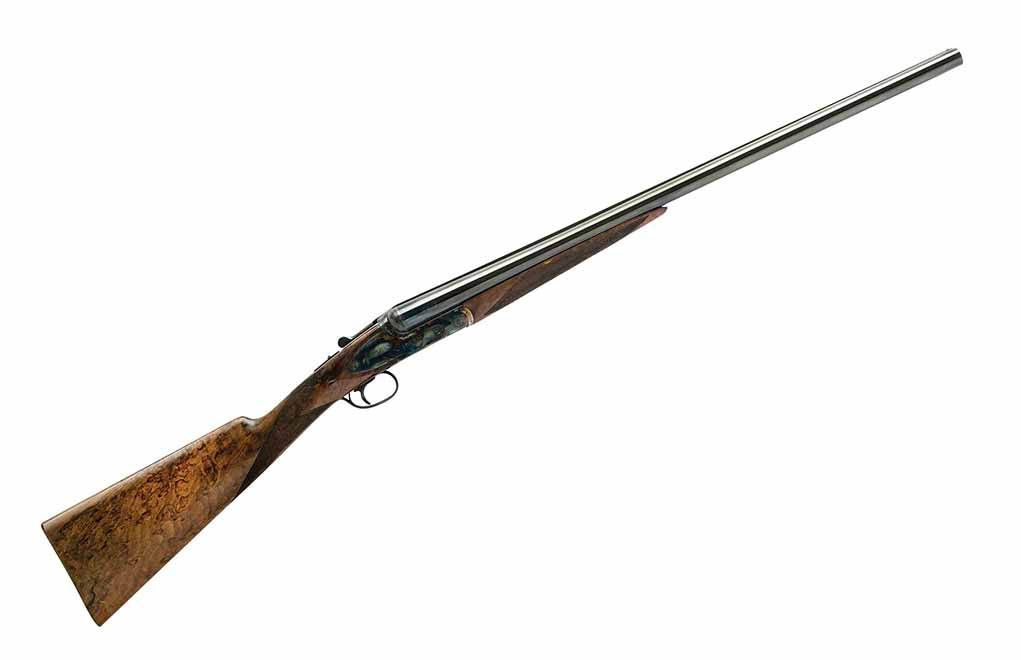
When friends and family find out that you carry concealed, you become their resident guru on the topic. In that role, part of your job will be busting myths they heard, often from trusted others. Their big brother or their Uncle George might have more credibility with them than you do yet, so you’ll need more than “take my word for it” to put them straight.
Hopefully, the following will be of some help when you, the resident Advanced Concealed Carrier, impart necessary reality lessons to those new to the discipline.
Five Myths Of Concealed Carry
Sometimes, what seems like good advice at the time is proven later to be not so great. The record shows that decades ago, when more adult Americans smoked than not, popular magazines carried ads in which physicians endorsed this or that brand of cigarette. Brand A was an excellent aid to digestion after meals, one doctor said. The menthol in Brand B was soothing to a sore throat, another physician opined.
Today, of course, we know better. Oncologists who’ve treated patients suffering from throat cancer will tell you that those old claims are bunk. They sure sounded authoritative back in the day, though. Some advice on gunfight survival goes back to the same era. And some of it is just as suspect. Let’s look at a few examples.
Myth #1: A Good Shoot Is A Good Shoot
In the old days, there was some truth to this. When it was reasonably clear that a good guy had shot a bad guy, the criminal justice system ruled it to be a justifiable action and things were pretty much done with. Oh, there might have been a lawsuit here or there, but it was not common to see a huge wrongful death lawsuit levied on the shooter after a fatal use of force in legitimate defense of oneself or others.
Slowly, things changed. The gun control movement gained traction in the 1960s after the assassinations of President Kennedy, Dr. Martin Luther King, Jr. and Senator Robert Kennedy. This time, the mainstream media went in the same direction, gathering a huge momentum that remains today.
From the nation’s major TV networks and the influential big city newspapers and national news magazines, to the groves of academe, it became popular to treat guns and the people who owned them as an embarrassing, dangerous manifestation of low-class stupidity. This also applied for ordinary people who picked up a gun in legitimate self-defense. It was as if the journalists’ style guide automatically decreed that the term “vigilante” be applied to those who saved themselves and others from being victimized.
Today, a good shoot isn’t a “good shoot” until the authorities say so and the last false allegation of a “bad shoot” has been decisively stamped out. It’s a predictable aftermath that must be prepared for, just as the gunfight must be prepared for well beforehand.
Myth #2: Aim For Center Mass
This was a poor choice of words even in the old days, and that’s still true. If you think about it, the center of mass on a standing human is somewhere in his abdominal area. A bullet there may or may not prove fatal later, but it’s not very likely to instantly disable a violent man now, and the latter of course is what we need to ensure the survival of the good guys.
The way to stop a criminal from shooting at you is to deliver your bullet to a part of the body he needs in order to keep shooting at you, and to make that part of his body stop working. I’ve told my students for decades that they should have a copy of Gray’s Anatomy right next to their shooting manuals.
Read Dr. Jim Williams’ excellent book Tactical Anatomy. An ER physician with extensive experience treating gunshot wounds and intensive firearms training himself, Dr. Williams details the proper points of aim from various angles when the object of shooting is to render a homicidal criminal incapable of carrying out his murderous actions.
Myth #3: He Who Shoots First, Wins
This is untrue on multiple levels. Gunfights are not won by the guy who makes the first loud noise. They’re not even won by the first guy who gets a hit. In Springfield, Missouri, in the 19th century, Wild Bill Hickok met Dave Tutt in the town square, in what may have been the only time in the Old West that two men actually did have a “walk and draw” contest in the middle of the street. Tutt panicked and opened fire on Hickok when they were some 70 yards apart. His bullets missed. Hickok coolly stood his ground, aimed carefully and ended the fight by putting a .36-caliber round through his antagonist’s heart.
In the more famous gunfight at OK Corral, Wyatt Earp’s brother, Morgan, was shot down by a bullet that went across his shoulders and chipped one of his vertebrae, and Doc Holliday received a glancing wound to the hip from Frank McLaury’s Colt .44. A moment later, McLaury fell dead, killed instantly when Holliday shot him in the chest and the wounded Morgan Earp almost simultaneously shot him in the head.
Even severe wounds may not seriously disable a committed combatant. I’ve had the privilege of meeting many hero cops who’ve survived hellacious gunfight injuries and gone on to prevail. One is Stacy Lim of the LAPD. She was shot in the heart with a .357 Mag revolver at the opening of her encounter. She returned fire with her Beretta 9mm, killing her antagonist with four solid hits out of the four she fired. She recovered to return to full duty, and today is one of the nation’s most respected police firearms instructors.
Another is Officer Jared Reston of Jacksonville, Florida. He was shot in the face at point-blank range by a gunman armed with a .45 ACP who then fired six more bullets into Reston when he fell. Jared returned fire from the ground with his Glock .40. He killed the assailant and recovered to return to patrol and SWAT duty.
These were the good guys and gals. But the bad guys can be just as resilient, and we would all do well to remember that it took Stacy four dead-on hits to drop her opponent, and Jared had to shoot his would-be murderer seven times before the guy stopped trying to kill him.
Myth #4: If You Can’t Do It With …
“If you can’t do it with six (or five), you can’t do it at all.” There are a whole lot of people who wouldn’t have survived high-volume firefights if they only had five or six cartridges at the time. Let’s look at some of the shootouts we’ve already discussed.
Hickok did indeed kill Tutt with a single shot — but he had a second Colt in his waistband to back up the first if more shots had been required. When Holliday shot Tom McLaury at the end of the OK Corral shootout in Tombstone, Arizona, it was his third gun of the fight. Holliday had already emptied a double-barrel shotgun (killing Frank McLaury’s brother, Tom), and a Colt SAA before drawing his backup Colt Lightning revolver to shoot Frank. Fast-forward to modern times: Officer Jared Reston, severely wounded, had to unleash most of the rounds in his 16-shot Glock 22 to finish his deadly fight in Jacksonville.
It happens to armed citizens, too. I’ve lost count of the shootings I’ve reviewed over the years where the good guys ran out of ammunition. Rich Davis fired all of the six shots he had and hit all three of the armed robbers he faced while delivering pizzas, but one of them was still up and running and able to shoot and wound him twice. That night in the emergency room, it occurred to him that there had to be something better than one’s own body to stop bullets with, and he was inspired to invent the soft body armor that has since saved thousands of police lives.
I spoke at two trials, one criminal and one civil, for an attorney who had to shoot a man who pulled a gun on him in his law office. His nine-shot 9mm was at slide-lock, having delivered nine solid hits, before his opponent slumped and died. He survived both the gunfight and the trials, but it had been terribly close because he had no more ammunition at all when the gun duel ended.
There are other reasons to carry spare ammunition. With a semi-automatic pistol, as many firearms instructors will tell you, a cardinal cause of malfunctions is a magazine problem. Often, this can only be rectified by ripping the bad magazine out of the gun and replacing it with a fresh one. This naturally requires a fresh magazine to be right there on your person.
Myth #5: Choice Of Equipment Doesn’t Matter
There aren’t a whole lot of gunfight survivors who will agree on that premise. A lifetime of studying these incidents has taught me that the choice of equipment is about fourth down on the list of priorities for survival. It is preceded by mindset, tactics and skill at arms. We all agree that a hit with a .22 beats a miss with a .44 Mag, and so on.
That said, though, you will be better served with a weapon you can shoot well at high speed, and with ammunition that hits hard on the receiving end. I’m not sure who first said, “No gunfight survivor has ever said that he wished he had less powerful ammunition or fewer shots available,” but that sage pretty much nailed it.
You definitely want hollow-point loads designed to expand in diameter and penetrate to optimum depths. Some people like to kid themselves that they’re saving money by buying non-expanding “ball” ammunition at cheap, generic prices. You’re only saving money if you’re getting adequate performance for less cost. I’m not aware of a single major police department in the United States still using ball ammunition in their duty handguns, even though they would certainly be motivated to cut costs. We are seeing police departments laying off cops, and even small towns disbanding their police departments, because of budget crunches. Why are they still paying premium prices for hollow-point ammunition? Because a very long history of gunfights has shown that it works more effectively to stop armed criminals more quickly.
Hollow-points are also safer for innocent bystanders, whether cops, security professionals or armed citizens fire them. The hollow-nosed bullet’s expansion slows it down and usually leaves it lodged in the opposite side of the opponent’s body and clothing, or lying on the ground a few feet behind him, spent.
A 9mm or .45 FMJ round can go through two bystanders and into a third deep enough to leave three innocents lying dead on the ground. Before you ignore that, go to FindLaw.com and look up the definition of “deliberate indifference.” Even a soulless sociopath would realize that this could sustain a criminal charge of manslaughter, and a civil suit for wrongful death or injury, and any good person with a three-digit IQ would realize that their own loved ones are the most likely “bystanders” to be present in a home-defense shooting.
Challenging Caliber ‘Norms’
It’s become popular on the Internet to claim that there is no difference between chamberings. That the 9mm, for instance, is equal to the .40 S&W or .45 ACP, bullet type for bullet type, in terms of “stopping power.” That is an argument that simply defies logic. A 9mm-diameter bullet weighing 147 grains is the same as a 10mm-diameter .40 bullet weighing 180 grains, or an 11.25mm-diameter .45 ACP +P bullet weighing 230 grains, when they’re all going within 50 feet per second of each other? Really? History, common sense and logic say otherwise.
The 9mm-diameter bullets, well-designed and loaded to higher velocities, can certainly give the larger calibers a run for their money. The best 9mm and .357 Mag or .357 SIG loads may well outperform lower-tech .45 ACP and .45 Colt loads in terms of relevant wound volume. The issue is more complicated than it sounds, but the bottom line is that there are more effective and less effective cartridges for defense use, and they’re not all created equal.
If you have to fight for your life with a firearm, I absolutely agree with Mark Moritz that “the first rule of gunfighting is, have a gun.” I’d rather you have a .380 — or, for that matter, a .22 — than no gun at all. I realize that my dress code and my occupation may allow me to carry larger hardware than you. At the same time, convenience and economy must be balanced with the fact that you already decided you needed to be armed, and you need to have a firearm adequate to the task if you are in fact involved in a gunfight.
There are certainly good reasons to use a 9mm instead of a .45. If the shooter is distinctly better at hitting with speed with a 9mm — or feels a need for more, smaller bullets rather than fewer larger ones in the same sized gun — we’re looking at good reasons to choose the 9mm. When I travel to other countries, I usually carry a 9mm simply because the ammunition is much more readily available there than the .40, .45, .357 SIG, etc. But if you’re going to choose a smaller-caliber gun, choose it for real reasons, not delusional ones that do not pass the tests of history, logic and common sense.
Common Sense
Personal and home defense aren’t just about the gun. The gun is simply one component of a much larger whole. Home security encompasses locks, alarms and hardened perimeters. Your family needs to have a plan for emergencies, whether that emergency is a house fire or a home invasion. Communications and emergency illumination are part of the package. A Neighborhood Watch program can be priceless.
The world of the defensive firearm is rife with myths, and only some of them have been dealt with here. Anyone who keeps a firearm for home defense, or lawfully carries one in public, needs to apply his or her own common sense. We are, after all, literally talking about life and death when we assess these matters.
Many are wary of carrying their pistols in Condition One — cocked and locked — but is that fear based in reality or merely perception?
The conditions of readiness for a single-action, semi-auto pistol:
Condition One: Round in chamber, hammer cocked, safety on.
Condition Two: Round in chamber, hammer down.
Condition Three: Empty chamber, hammer down.
While at a media event in Arizona late last year, I was asked about the difference in perceptions about various handguns and their conditions of readiness. As we were close to Gunsite Academy, home of the Modern Technique of the Pistol, it was common to see various makes of 1911-pattern pistols cocked and holstered.
I remembered back when I first became a policeman in the late 1970s. Jeff Cooper had already determined that a part of the Modern Technique of the Pistol was the “heavy-duty self-loading pistol” — at that time, it was the Colt Government Model (or Commander) in .45 ACP, carried in “Condition One” — chamber loaded over a full magazine, hammer cocked and thumb safety on.
Visuals Anxiety
People would see my Colt National Match in the Safariland high ride duty holster and nervously tell me, “Your pistol is cocked.”
“I’d hope so,” was my response.
As time went on, we had one officer carrying a Colt Series 70 Government in his Don Hume Jordan River Holster, thumb-break strap, in Condition Two — hammer down on a loaded chamber with a full magazine. He had no ambidextrous safety lever and elected to carry that gun anyway.
The Remington Model 870 shotgun has been in common use by police and hunters for more than 40 years. The gun in the photo has the hammer, hidden inside the receiver — cocked. That’s commonly done as one pursues upland game or in responses to emergency calls … without the cocked hammer concerns. Think about that.
Our sergeant carried a Gold Cup; there was a smattering of other Government Models and a Browning P-35, all of which were carried in Condition One. To say it made the uninitiated, unready and incapable nervous is an understatement.
One of those worthies, a good guy who just didn’t get the deal, came into dispatch one night with his Smith & Wesson Model 13 .357 Magnum cocked in the Jordan River Holster, the over-the-hammer strap stretched between the hammer nose and the frame. Attempts to explain the problems inherent with such a relationship just led to the observation that semi-auto pistols were being carried that way.
Conditions Of Readiness
Of course, it was Jeff Cooper, founder of the Modern Technique of the Pistol, who devised the “conditions.” Condition One, designed around the “heavy duty self-loading pistol” — the single-action semi-auto of the day, is “cocked and locked.” The chamber is loaded from a magazine and a full magazine seated into the pistol. The safety is “on,” locking the sear and the slide. On the presentation, the gun is drawn and, as it levels toward the threat, the safety is pressed “off.”
The modern striker-fired pistol, while “semi-cocked,” draws no cocked pistol comments — even though it’s closer to a single-action-analog than double-action.
After shooting, the safety is only applied after you “look and assess” ensuring you don’t need to shoot anymore. The thumb rides the safety while firing, but placed under the safety as the gun is replaced into the holster.
Condition Two is a loaded pistol with the hammer down on a loaded chamber — a risky thing, lowering the hammer on a single-action pistol. There’s no upside to doing so. You have to cock the hammer on the draw, something that’s prone to be fumbled.
Condition Three is “half loaded.” There’s an empty chamber over a loaded magazine — so-called Israeli Carry. It’s simply ignorant to carry a self-defense pistol in this way. If you really need a gun, the time isn’t there to load the pistol. Worse, after firing, you’ll want to get the gun out of your hands before responding police arrive.
The draw — and re-holstering — can be safely accomplished with training.
Are you going to fumble around and unload the chamber every time you return the gun to the holster? At any old cold, rainy night in a windy parking lot — after someone tried to kill you and you had to shoot?
The most common service pistol of that time — and one of the most commonly made sidearms of the current era — is the 1911. If you have one to carry for defense purposes, you carry in Condition One.
And, if someone sees it, you’ll hear the same thing. “Hey, mister. Your pistol’s cocked.”
If It Can’t Be Seen, It’s Okay
The truth is that High Standard pump shotguns, Ithaca Model 37s, Remington 870s and old Winchester Model 12s, were routinely cocked and seldom was a word heard about those. Since the demise of the Winchester Model 1897 — with its exposed hammer — “out of sight, out of mind” was order of the day.
The Springfield Armory XD-E is a new hammer-fired compact pistol. For those afraid of carrying cocked and locked or striker-fired guns, the XD-E is a better choice than chamber-empty carry.
For all those terrified at Condition One semi-autos, a percentage carried hunting shotguns afield for upland game and waterfowl — every one with the hidden hammers cocked — and never considered the issue.
Now we have the modern striker-fired pistol, a gun I consider a real innovation. Made possible by modern techniques of manufacture, they tend to be reliable, easily maintained and have ease-of-use as a feature contributing to ease of training. To say that they’re not cocked and are double-action rivals the current mainstream silliness about gender identity.
If we call them “double-action,” they’re magically safer than the Condition One 1911-pattern pistol.
That is silly.
Many manufacturers now make striker-fired semi-autos for CCW carriers who don’t like the feel of a cocked hammer.
I realize that the initiator of this manufacturing trend has a pistol that won’t fire until the trigger bar pushes the striker back just that extra bit to make release and ignition possible. To say that’s the same as a trigger bar pushing a hammer from rest back past the full-cock notch, allowing it to slip, slam forward and light the primer — no, I’m not buying that.
It doesn’t take as much effort, nor distance, and the springs aren’t at rest in the modern striker-fired pistol. But people can’t see a cocked hammer, so it’s okay.
Testing What’s ‘Really Safe’
The problem is that some people fear the striker-fired wonders of the current era and decide on another alternative: just carry the gun half-loaded — Condition Three. These worthies, many with their recently acquired permits to carry concealed weapons and with the education of Hollywood and good ol’ Uncle Bob who “shotguns his whole life,” carry their gun with a fully loaded magazine under an empty chamber.
That’s not a good plan. If you’re relying on that pistol as a component of your defense plan, it’s going to predictably let you down through no fault of its own.
Again, consider the time: People with considerable experience in the fields of lethal violence calculate you might have up to 3 seconds before you start taking gunfire or become the recipient of a contact weapon’s assault — that’s on the long side. It doesn’t take a timer, though shot timer applications are available for smartphones. It’s long enough to have someone time you with a stopwatch.
Using an empty gun with no magazine, draw from concealment on the signal to start and rack the action, ending in a decent trigger press while sights are on a small target. Understanding that the real thing will never be as easy as doing it dry, you’ll find you’re pressed for time.
Now change it up: Have your timer start throwing things at you while you try to draw and make a dry snap in a safe direction. The key is that if the thrown item hits you, consider it the equivalent of a gunshot wound. You’ll quickly figure out that just drawing to a single accurate hit isn’t as easy as people on YouTube make it look — even if you don’t have to load the gun during the draw.
I understand. Some people are nervous with striker guns and will foolishly carry them chamber empty. This isn’t a solution but another kind of problem. If you can’t internalize the fact that you’re carrying a loaded gun, perhaps you shouldn’t carry a gun at all.
Mechanical Safety
How can a cocked 1911-format pistol be safely carried? What if that hammer just flies forward?
Well, if the gun is unmodified and in good repair, no.
When you apply the safety, a part of it rotates into a position blocking the base of the sear. This prevents the sear from releasing the hammer. On pre- or non-Series 80 guns, the sear would be captured by the half-cock notch if the sear hook on the hammer were to break. With the Series 80 firing pin plunger, the firing pin would be held in place, unless the trigger were pressed, likewise preventing an accidental discharge. The stud that locks the sear will also not allow the hammer to fall if the safety is engaged.
What keeps the Glock from spontaneously firing while in the holster? The striker still needs to attain some rearward travel against spring pressure before it can travel forward — which is likewise prevented unless the trigger is pressed.
As to long guns, they traditionally don’t have “drop safe” features, aren’t carried in holsters that cover triggers, often have only cross-bolt safeties that prevent movement of the trigger but not the hammer off the sear nor the firing pin block. See? That revered fowling piece you take in search of upland game can be very touchy.
The difference is that we carry (or should carry) handguns daily, all the time, in close proximity. Please, no “truck guns” or off-body carry — except in extreme and rare circumstances.
Editor's Notes: This article originally appeared in the Concealed Carry issue of Gun Digest the Magazine.
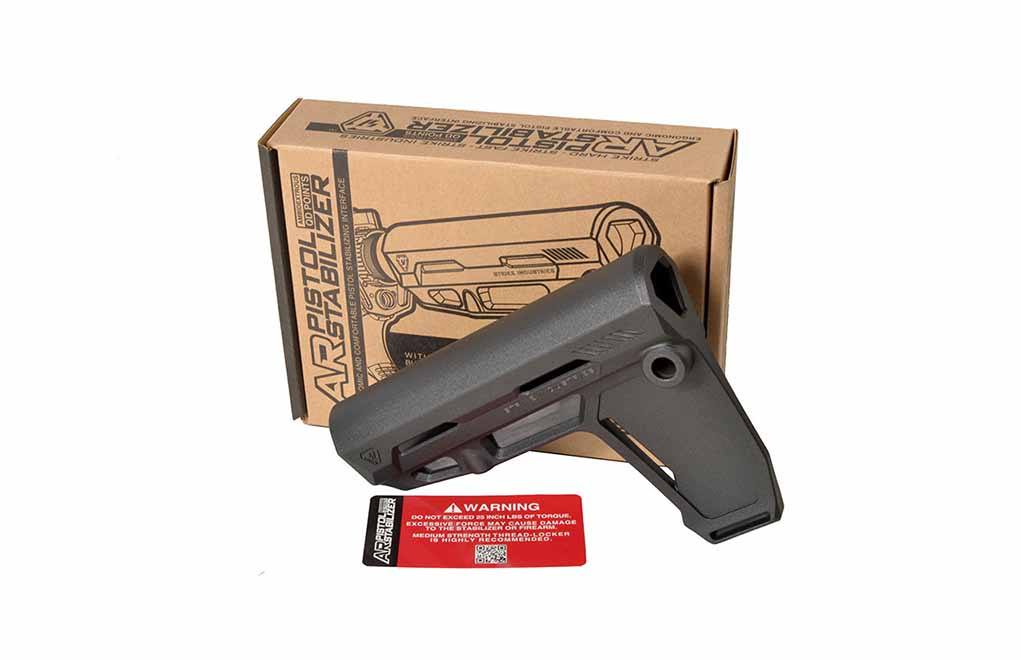
Looking to go armed, but are stuck in the weeds as to what to arm yourself with? Here are 20 excellent concealed carry gun options that will keep you on the defensive.