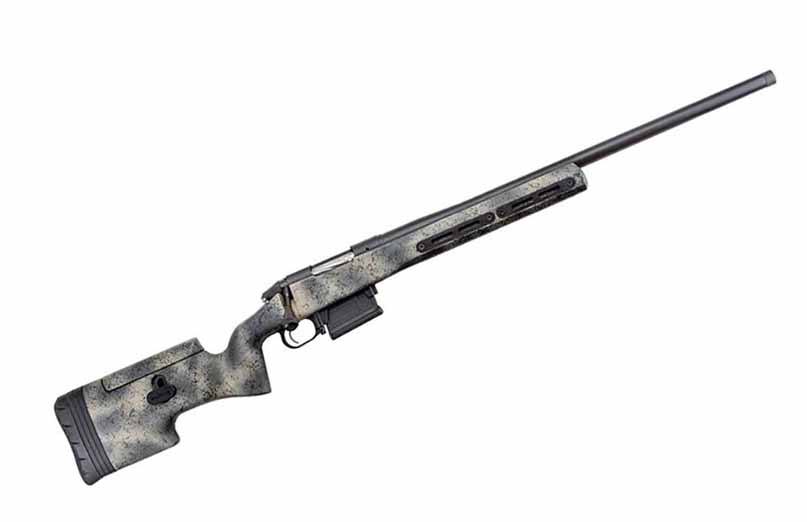
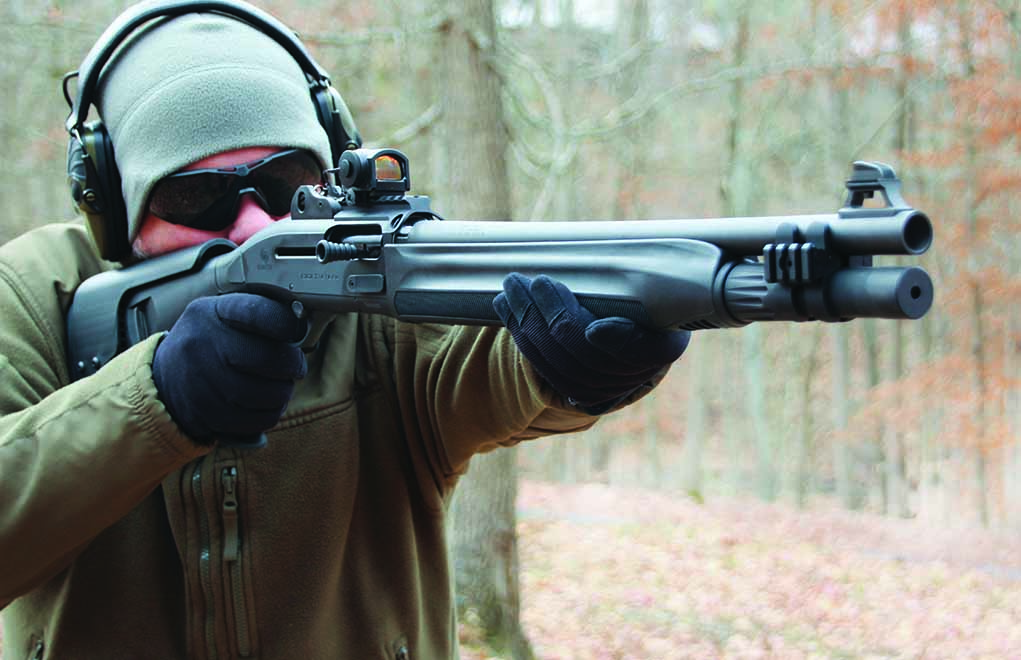
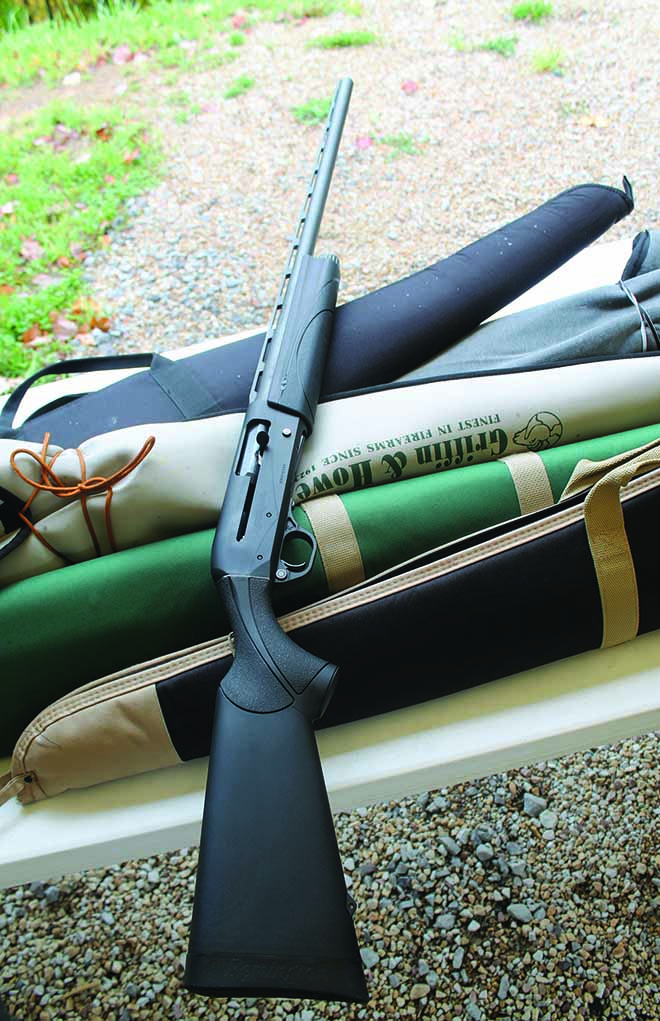
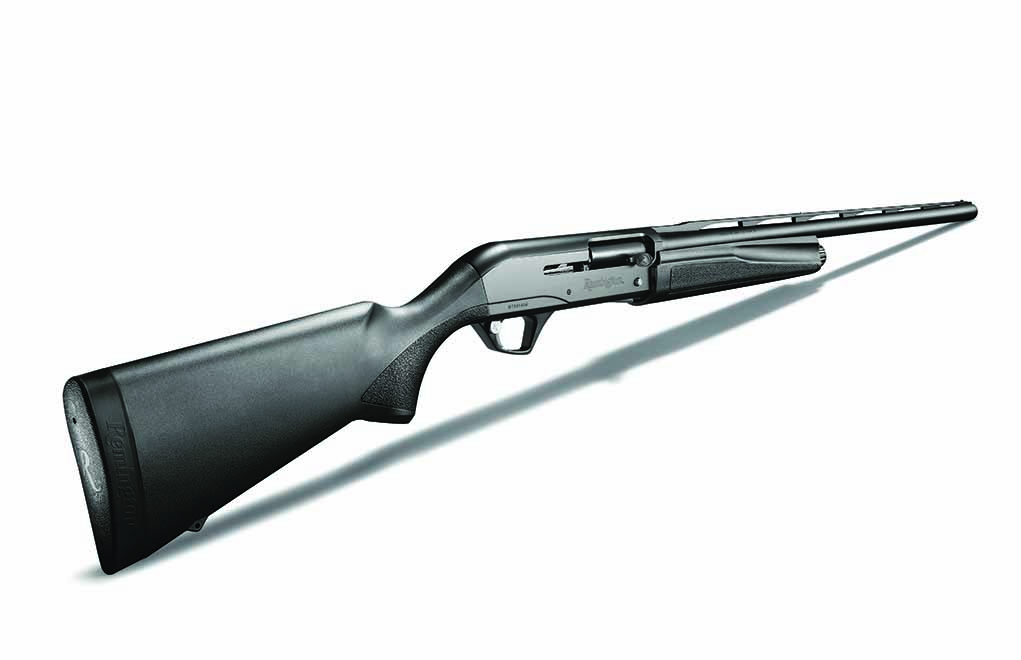
The Premier Series Ridgeback Rifle shows Bergara’s first foray into precision competitive rifles is right on target.
How the Bergara Premier Series Ridgeback Rifle is configured for long-range success:
Fully adjustable Grayboe Ridgeback stock.
Embedded anti-cant level.
Available in six of the most popular precision calibers.
Bergara’s Premiere action.
Trigger Tech trigger standard.
Still perhaps not at the levels of trap and practical pistol shooters, competitive long-range shooting has ballooned in recent years. Just check out a Precision Rifle Series schedule, in all likelihood, there’s a country-mile event within a reasonable drive of where you live. And compared to when custom rifles ruled the roost, it’s easier than ever to put your chips on the table at a match given the surge in production precision shooting irons. Case in point, the Bergara Premier Series Ridgeback Rifle.
Released during the 2019 SHOT Show in Las Vegas, the company’s first competition specific bolt-action is decked out with everything to get you on target at the longest of ranges. This includes a relatively affordable price, though it’s a big “relatively.” The Bergara Premier Series Ridgeback Rifle has an MSRP of $2,000, which doesn’t exactly qualify it as an economy shooter. But in a game that can demand a magnitude more cash to play, the rifle isn’t cost prohibitive.
Mils vs. MOA: Which Is The Best Long-Range Language?
Bergara outfits you fairly well with the gun, which boasts the company’s Premiere Action, 20- to 26-inch stainless steel barrel (depending on caliber), Trigger Tech trigger and Grayboe Ridgeback stock, among other features. The 10-pound rifle’s stock is especially intriguing, by Bergara’s telling, the first composite stock that fully supports the M-Lok system, with 12 slots running the forend. Fiberglass, the stock also has a fully adjustable cheek rest, adjustable length of pull and an embedded anti-cant level. The Bergara Premier Series Ridgeback Rifle is available in 6 of the most popular precision calibers: .223 Rem., 6.5mm Creedmoor, 6mm Creedmoor, 6.5 PRC, .300 Win. Mag. and .300 PRC. And it feeds off an AICS-style detachable magazine.
More from Bergara:
Lawrenceville, Georgia – BPI Outdoors / Bergara Rifles is pleased to announce the release of the Bergara Premier Series Ridgeback Rifle the 2019 S.H.O.T. Show in Las Vegas, NV during January 22-25, 2019.
Bergara Premier Series Ridgeback Rifle
The Bergara Premier Series Ridgeback Rifle is Bergara’s newest offering, geared towards precision rifle shooting. This rifle features Bergara’s Premier action mated with a Medium Palma tapered, stainless steel Bergara barrel. The new Grayboe Ridgeback is the first composite stock to fully support the M-LOK system. It comes with a total of 12 slots to which you can attach any M-Lok compatible accessory. Another first in its class is the embedded bubble level in the stock to ensure the rifle is level to the ground when shooting at long distances. The weight is 10.5 lbs.
Nate Treadaway, CEO of BPI Outdoors, which is the parent company of Bergara stated, “From the moment we laid our hands on the Ridgeback stock in early 2018, we knew it was destined to cradle a Premier barreled action.” He continued with, “Our only question was how fast we could work it into the production schedule. It truly has everything that a serious PRS shooter wants and needs in a production-class qualifying rifle.”
All Premier Series rifles are built around legendary Bergara barrels and feature world-famous TriggerTech® triggers among other industry-best components. All are personally qualified for accuracy by the Bergara rifle builders prior to shipment and are guaranteed to produce sub-MOA groups using quality factory ammunition.
The Premier Series as an extension of our Custom Series, but with standardized features for greater efficiencies in parts production and assembly – providing near custom performance at prices that are affordable to serious shooters.
In the era of cutting-edge expanding bullets, does .45 ACP ‘Hardball’ have a place as defensive ammo?
How does .45 Hardball perform:
230-grain projectile loaded to an average chamber pressure of about 21,000 psi.
Nominal muzzle velocity of between 800 and 900 fps.
Typically penetrates to around 30 inches in 10 percent ordnance gelatin.
Generally considered reliable out of a 1911.
I spend about a month in South Africa every year. Most of that time is spent hunting, and I’ll have a rifle nearby. However, I carry a handgun every day and feel kinda naked if I don’t have one on my side. The problem is, you cannot take a defensive handgun to South Africa. Fortunately, having friends in African places has its advantages, and every year a professional hunter loans me the use of his original Colt’s 1911 in 45 ACP.
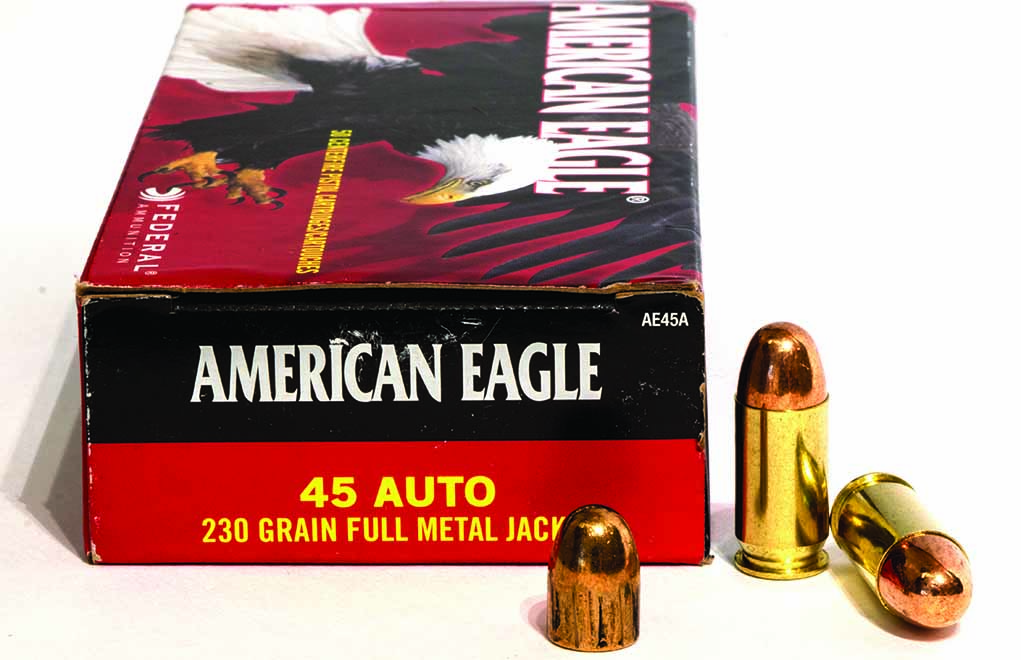
Though often overlooked for self-defense, hardball ammo penetrates deep and functions very well in most semi-automatic handguns.
The first year he offered I was a bit surprised to find the magazines loaded with 230-grain FMJ ammo. Commonly referred to as “hardball,” most defensive handgun experts consider this stuff only marginal as a carry load. I generally prefer an expanding bullet as well, so I asked the professional, “Is this the only ammo you have?” He gave me a quizzical look and said, “Yeah. Why? That not good enough for you?” Ecstatic with the loan of the handgun, and a bit concerned I might have insulted him, I said, “No, this’ll do just fine.”
And, it did.
.45 ACP Hardball Performance
“Hardball” is shooter-slang for copper-jacketed, lead, handgun bullets, more technically described as “full metal jacket” or “FMJ.” Early handgun projectiles were simply lead bullets with a round-nosed shape. But, as velocities increased, applying a copper or gilding metal jacket circumvented excessive barrel leading, improved accuracy, and increased penetration when bone or intermediate objects were encountered.
Some say the common cliché of “playing hardball” refers to the playing of baseball — with a hard ball — as opposed to softball. However, given the aggressive and ruthless action the term playing hardball communicates, I think it’s a better expression of the difference in shooting someone or something with a hard, jacketed bullet as opposed to a soft bullet of exposed lead. Regardless, what many shooters do not realize is how effective .45 hardball can be.
In what they would like to you believe is their infinite wisdom, the Federal Bureau of Investigation (FBI) has determined a defensive handgun bullet should penetrate at least 12 inches in 10 percent ordnance gelatin. The FBI also believes the bullet should expand. That expansion is what makes meeting the magical 12 inches of penetration problematic. For example, one of Federal’s most respected loads for the .45 ACP is the 230-grain HST. It expands wide — to almost an inch — but just barely meets the 1-foot penetration threshold.
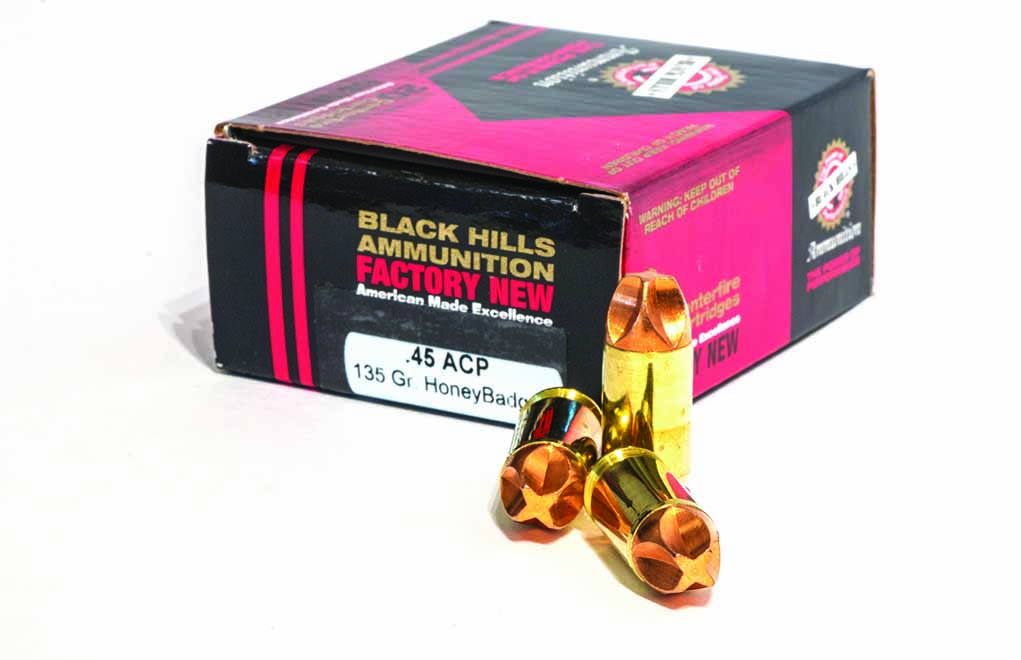
The new 135-grain .45 ACP Honey Badger load from Black Hills is a new form of hardball. It’s a solid copper projectile with a scalloped nose, it produces a muzzle velocity of more than 1,300 fps and it will penetrate about 18 inches in 10 percent ordnance gelatin.
On the other hand, 230-grain hardball ammunition will generally penetrate to around 30 inches in 10 percent ordnance gelatin. In fact, even non-jacketed, 230-grain loads, like Federal’s Syntech and Action Pistol, will penetrate just as far. Granted, none of these bullets will expand, but, short of adequate penetration, nothing else really matters. And, let’s not forget that the fantastic reputation the .45 ACP cartridge gained during both World Wars was founded with good ol’, GI ball ammo: 230-grain hardball.
Over the years I’ve used that borrowed 1911 loaded with hardball to dispatch and kill a multitude of critters. Just this year it put the finishing touches on several large warthogs, including one that two .308 Winchester rounds had failed to put down. The professional hunter who loaned me the pistol told me he’d used hardball to kill 11 warthogs, one kudu, one gemsbok, two red heartebeest, two blesbok and three porcupines. He said he never needed more than one shot, and added, “I believe in the ability of the .45 ACP as much as I believe in the Bible.”
That’s about as strong a testament of a cartridge and ammunition as you’re going to find.
How .45 ACP Hardball Is Made
When it comes to hardball, it’s not all created equally, but it’s all very similar. A 45 hardball load is formed by pressing a sheet of copper or gilding metal into a cup around what is generally a pure lead core. The thickness of the jacket — copper or gilding metal — might vary from manufacturer to manufacturer, as might the content or hardness of the core.
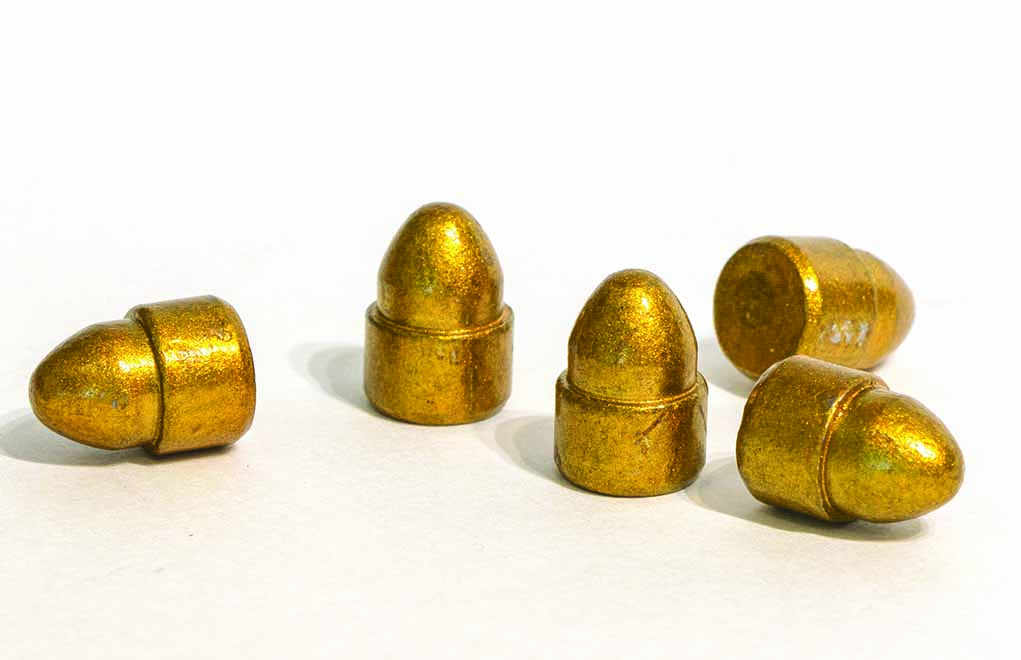
Yet another take on hardball is this new bullet from D&L Sports. It’s a .45 caliber, 200-grain, fully coated hardcast — Brinell hardness of 17 — round-nose semi-wadcutter. It will penetrate deep and cut a large round hole.
These 230-grain projectiles are then loaded to an average chamber pressure of about 21,000 psi, at a nominal muzzle velocity of between 800 and 900 fps. With muzzle energy between 326 and 413 ft-lbs., recoil is moderate, and even the 800 fps loads will make IPSC’s Major Power Factor. And, an often-overlooked virtue is reliability: Hardball tends to function extremely well in a wide variety of handguns.
.45 ACP Hardball For Self-Defense?
When it comes to defensive handgun ammunition, the quest is to find an ideal balance between penetration and expansion, with the ability to defeat varying types of intermediate barriers, ranging from heavy clothing to automobile glass. That’s the underlying premise of the protocol used by the FBI and other law enforcement agencies. Hardball ammunition represents one end — the penetration end — of that spectrum.
For self-defense, the ideal answer is most likely somewhere between the two extremes. But, one thing’s for sure: There’s nothing wrong with playing hardball, especially if your goal is to shoot two bad guys at once. Just because it’s old does not mean it will not work. I know a lot of veterans and at least one professional hunter who swear buy it.
Editor’s Notes: This article originally appeared in the November 2018 issue of Gun Digest the Magazine.
Adding two popular self-defense calibers to the Hydra-Shok lineup, Federal Premium has armed citizens covered.
How Hydra-Shok Deep improves on the original:
50-percent greater penetration than original Hydra-Shok.
15-inches of penetration in bare ballistic gel and through heavy clothing.
Improved center post that helps bullet retain structural integrity.
Better barrier penetration.
Released a year ago, Hydra-Shok Deep was Federal Premium’s attempt to improve on a legend. With an improved core design, the defensive rounds were devised to provide 50-percent deeper penetration than original Hydra-Shok. Furthermore, the hollow point’s trademark post in the center was beefed up, creating a projectile that retained more of its structural integrity through barriers. The only problem was Hydra-Shok Deep was strictly a 9mm affair … until now.
Federal Premium tacked on additional loads for the .40 S&W and .45 ACP for 2019, which means the line now has an option for the most popular defensive semi-auto pistol calibers in use today. The .40 S&W Hydra-Shok Deep is a 165-grain load with a muzzle velocity of 1,050 fps and the .45 ACP is a 210-grain load which leaves the muzzle at 980 fps. According to Federal, the new Hyrda-Shok loads have shipped to distributors, so should appear on store shelves soon.
ANOKA, Minnesota – – Federal unveils two new Federal Premium Hydra-Shok Deep loads that better meet modern handgun performance measurements. Shipments have been delivered to dealers.
In 2018, Federal reinvented the proven Hydra-Shok bullet design with Hydra-Shok Deep in 9mm Luger. Now, it has expanded the line with new loads in 40 S&W and 45 Auto. The bullets feature a more robust center post and a core design that penetrates to critical depths through common self-defense barriers, without over-penetrating.
Features & Benefits
Now available in 40 S&W and 45 Auto
Penetrates 15 inches in bare ballistics gel and through heavy clothing — the optimal depth according to FBI standards
Improved penetration to optimal depths
Significant improvement in FBI protocol score
Iconic center post design has been improved for better, more consistent expansion through standard barriers
Consistent, specially formulated propellant
Extremely reliable Federal primer
Part No. / Description / MSRP
P9HSD1 / 9mm Luger 135-grain Hydra-Shok Deep HP / $27.95 P40HSD1 / 40 S&W 165-grain Hydra-Shok Deep HP / $31.95 NEW P45HSD1 / 45 Auto 210-grain Hydra-Shok Deep HP / $33.95 NEW
Loaded to normal velocities and topped with a highly engineered bullet, Aguila Ammunition develops a highly-shootable defensive round that doesn’t lack in terminal performance.
Over the years, Aguila Ammunition has built its reputation as a range ammo manufacturer. It’s done a pretty good job in this quarter too, churning out some of the most consistent full-metal jacket options around – be it pistol, rifle or rimfire. But the scrappy ammo-smith switched gears in a big way at the 2019 SHOT Show in Las Vegas. Now they’re gunning for the self-defense market and isn’t holding back jumping into this niche.
In all, Aguila has four jacketed hollow-point options to choose from in some of the most popular defensive calibers, including .380 ACP, 9mm, .40 S&W and .45 ACP. And they’ve embraced an interesting concept in what they’ve scratched together for your concealed carry or home-defense gun. Instead of gassing up the rounds so they’re white-hot, Aguila pieces together much more moderate rounds that, theoretically, should prove easier to shoot. What does this mean for you? Potentially a more accurate option shot to shot that doesn’t compromise on terminal ballistics.
How Aguilar pulls off this somewhat impossible feat is through a highly-engineered bullet, one designed for maximum expansion at normal velocities. A large hollow point is one part of the equation, skiving – perforations in the jacket that ensure it opens upon impact – is the other. Together, the elements make for a deadly round for what is perhaps the most important gun in your possession. And in Aguilar Ammunition’s load, it also guarantees you’ll have a something you can place on target every time.
For more information on Aguila Ammunition’s 5mm RRM, please visit www.aguilaammo.com.
Gun Digest 2019, 73rd Edition is jammed full of comprehensive information that firearms fanatics crave. No matter if your passion is long-range rifles, fancy shotguns, gritty Old West single-action revolvers or sleek semi-auto pistols, Gun Digest 2019 delivers. Get Your Copy Now
Hitting the sweet spot for price and performance, the Riton RT-S MOD 7 4-32X56mm IR proves a great optics value.
Good glass, it doesn’t come cheap. But when it’s on your gun, my what a difference it makes.
Thankfully, the market has accommodated shooters looking for a top-performing scope that doesn’t require a second mortgage. Certainly, they still cost you a pretty penny – you get what you pay for, after all. But, at the same tick, they won’t put you in the soup line.
A relatively new addition to Riton Optics’ lineup, the RT-S MOD 7 4-32X56mm IR hits a real sweet spot for high-quality, yet affordable optics. The long-range specialist has an MSRP of $1,470, but features the quality glass and high-end assets you’d expect out of a scope twice, if not three times the price. Not a bad deal, if you take precision seriously.
Perhaps the most notable asset the RT-S MOD 7 4-32X56mm IR brings to the table is its brilliant illuminated reticle. Whether on 4 or 32 power, it makes target acquisition second nature and overall compliments the second-focal plane scope’s Christmas-tree reticle. Furthermore, the Riton optic gobbles up light like a greedy kid, with an ample 56mm objective lens and the company’s performance coating on the lens surfaces. In addition to enhancing images in low-light operations, it also adds a level of scratch resistance, ensuring the overall resilience of the optic.
Absolutely, it’s difficult ponying big bucks for optics. But marrying price and performance, Riton makes it a bit easier with the RT-S MOD 7 4-32X56mm IR.
For more information on the RT-S MOD 7 4-32X56mm IR, please visit www.ritonoptics.com.
Sometimes, shooting targets for tiny groups needs to be balanced by shooting targets for plain ol’ fun.
Target shooting could never be classified as boring. Never ever. Punching holes in paper or banging steel simply does not get old. But, what if I were to tell you that there are ways to make target shooting even more enjoyable? Casually competitive?
Here are 10 “targets” that will change the way you look at — and experience — target shooting.
1. Zombie Industries “Bobo Clown” 3-D Bleeder
I don’t care if you’re a doomsday prepper, believer in the undead or just want to watch a zombie clown bleed — the Bobo Clown from Zombie Industries is for you. All of the zombie targets from ZI are life-sized and bleed when shot. They also show hits in orange and are biodegradable. Each order includes a zombie of your choice, a wooden stake to mount the zombie on and a box that becomes a dual-purpose target. One side is a tactical silhouette, while the other side holds clays and transforms into a reactive outbreak target. At $109, the zombie targets are a bit steep, but, they can withstand 1,000 rounds from anything from BB guns up to .50 cal. The zombie targets are great for group outings or tactical courses. The best part about them? They’re made in the USA by non-infected workers. www.zombieindustries.com
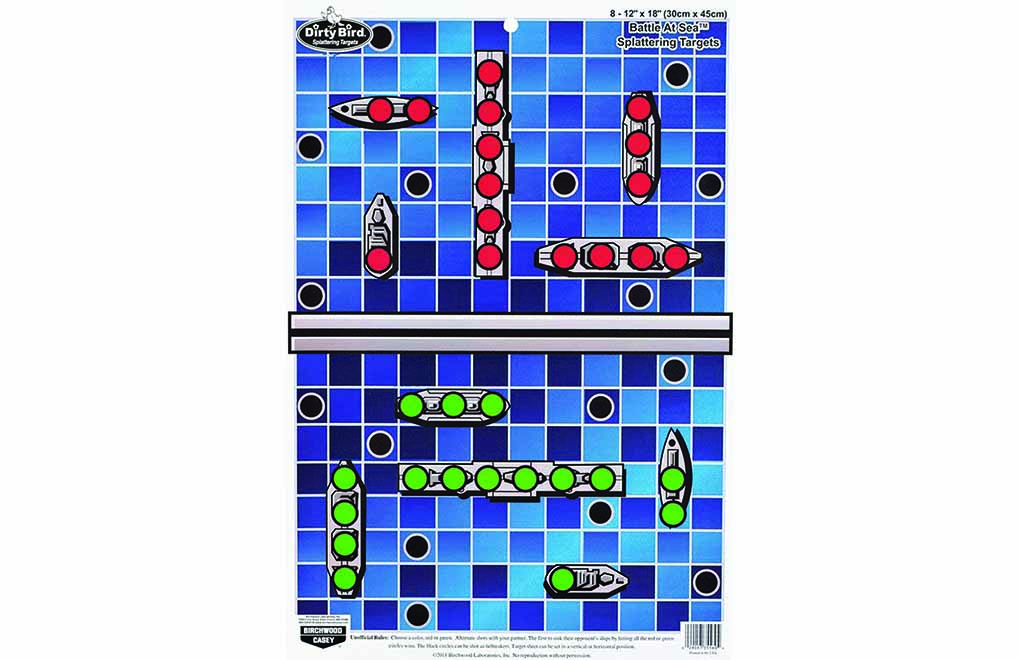
2. Birchwood Casey Pregame Battle At Sea
Who doesn’t remember playing Battleship? Who still plays Battleship? Well, with the new Birchwood Casey Battle at Sea targets, you can play something similar to Battleship while on the range. The ships are visible, so the guessing part is out — but hitting the targets is more fun than guessing anyway. The first person to hit all of the circles on the ships wins. Eight targets costs $12, or you can go big and get 100 for $100. These targets are also very fun for group outings, and a fun game for rimfire shooters and kids. www.birchwoodcasey.com
Champion realized that people were sick of covering shot holes with stickers, and re-stapling new targets over old ones. Champion teamed up with the Post-It Notes folks to create a peel-and-stick target. Simply peel it like a Post-It Note and stick it on top of the old target. They come in a large variety of styles, including life-sized deer vitals and turkey targets. The turkey targets have been my favorites when it comes to patterning each spring. The targets have a nice note-taking section to write in the loads tested, yardage and caliber — and they’ll cost you $10 per pack, which is very reasonable. www.championtarget.com
4. ShootSteel Magnum Rifle Spinner
The Magnum Rifle Spinner is everything you need to start banging steel. This setup comes complete with a stand that has 24-inch legs and a 24-inch crossbar, making the system compact and portable. The steel is made of ½-inch AR500 and has a 6-inch strike face — it’s perfect for out to 600 yards or more. For those large-caliber aficionados, the Magnum Rifle Spinner is rated up to .300 Winchester Mag. at 200 yards, and .308 Win. at 100 yards. This target doesn’t only help you with accuracy, but it can really fine-tune your timing as well: Hitting the target while it spins is a real challenge, and to do so required that you get your head in the game and keep it there. The 6-inch Magnum Spinner will cost you $180, and it’s also available in an 8-inch version. www.shootsteel.com
5. VisiColor Zombie Targets
“Another fun zombie target?” Yep, because, who doesn’t enjoy playing out a zombie apocalypse scenario whilst at the range? These reactive targets are a very large 18 inches by 12 inches high-quality paper target with VisiColor technology. Zombie heads show hits in bright green, body shots are bright yellow and misses or hits on hostages appear in white. A variety 6-pack will run you about $10. www.championtarget.com
6. Champion Center Mass AR500 Pop-Up Targets
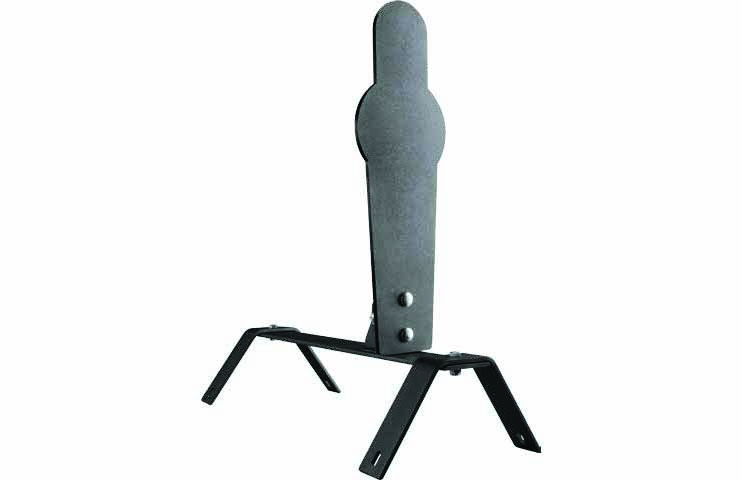
The 4- by 14-inch pop-up silhouette target has been great for me and my wife, as it’s the perfect size for brushing up in preparation for our annual prairie dog trip. The 3/8-inch-thick AR500 steel targets stand up straight upon set-up, and they lay down flat before popping back up when hit. And best of all, they give off that beautiful tell-tale “ping” when hit. Besides prepping for a prairie dog shoot, these targets are great for AR practice and long-range precision shooting. The 14- by 4-inch model will cost you $130. www.championtarget.com
7. Benchmaster Shoot The Dice Targets
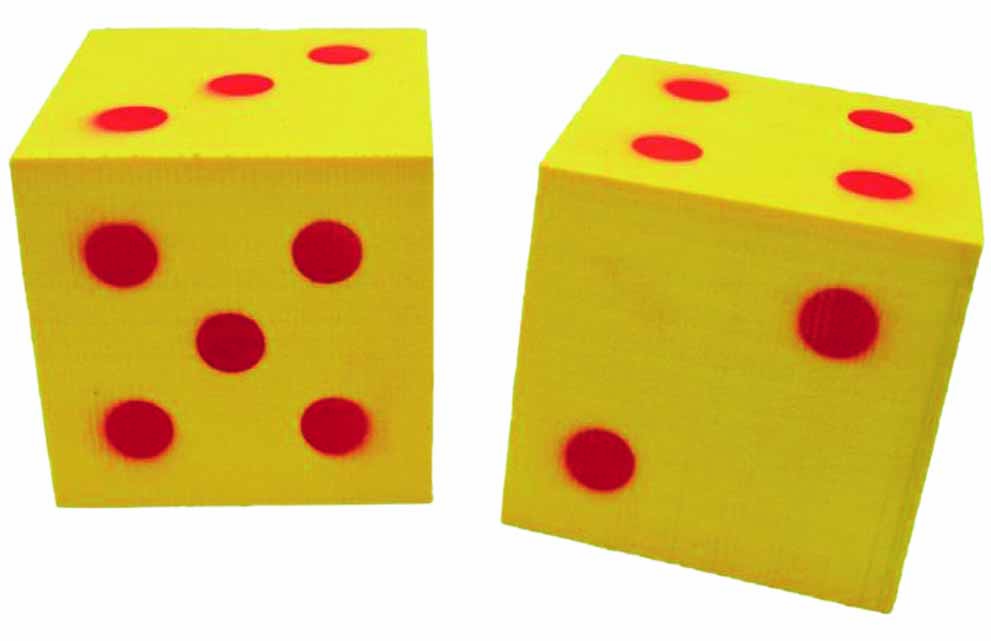
These consumable dice-shaped targets are not only long-lasting, but they’re also extremely creative. For $10, you get a pair of high-density foam dice targets that measure 4 inches square. They’re weather and chemical resistant, and they are also impervious to rot, mold and mildew for years of hard-hitting practice — they even float! The possibilities are endless when it comes to games … just be careful you don’t lose all of your money to your buddy. www.benchmasterusa.com
8. Tannerite Starter Kit
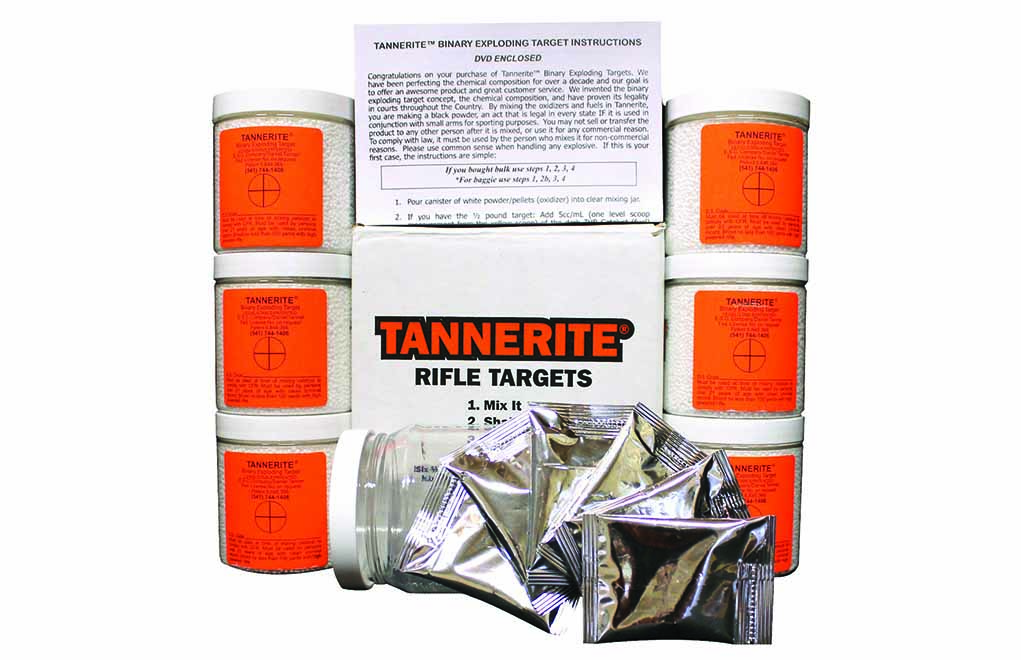
Yes, Tannerite combusts into a glorious ball of glory, and everyone has to experience it a few times — though “a few” is certain to lead to “a lot.” The Starter Kit is perfect for the beginner: This single case comes with six ½-pound targets, pre-measured packets of catalyst, a mixing container and instructions. At $28, this is the perfect kit to get your feet wet with binary exploding targets. And of course I have to say the obvious: Be sure to use extra caution, and follow the directions carefully. www.tannerite.com
9. Duraseal Interactive Targets
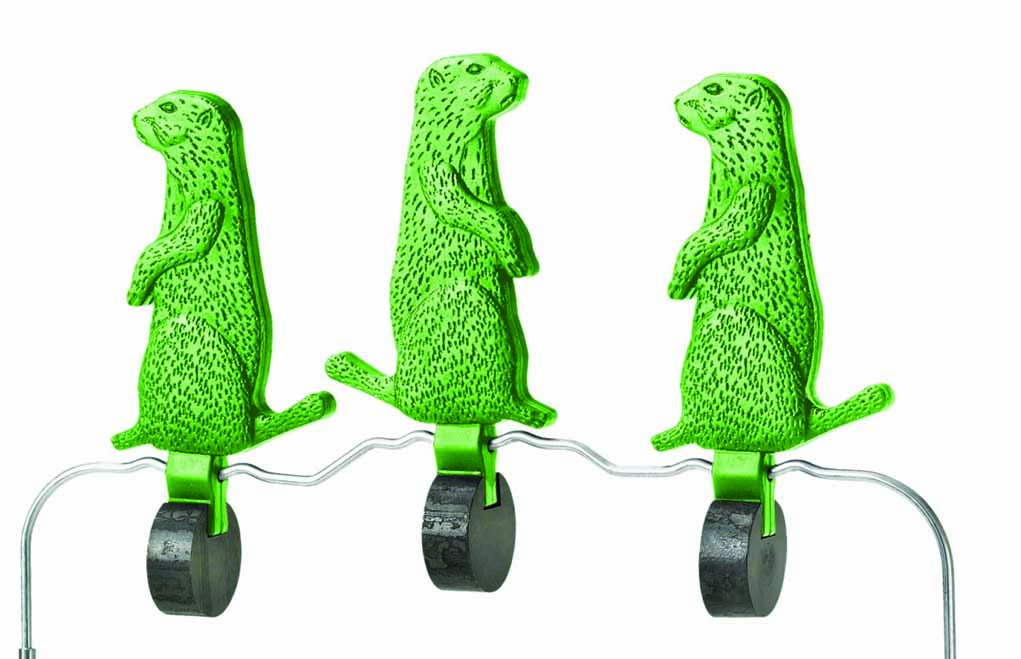
Duraseal targets have been wildly popular over the past few years. The entire lineup of Duraseal targets features self-healing material that will withstand shots from .17 caliber up to .50 caliber (yes, you read that right: .50 caliber). They come in a wide-range of options, from spinning varmints to soup cans that can be filled with fluids, chalk or flour. A favorite is the 7-inch varmint-orange spinner. It’ll cost you $22, and you won’t regret spending a penny of it, because it’s great for kids and adults alike. www.championtarget.com
10. Tannerite Bunker Box
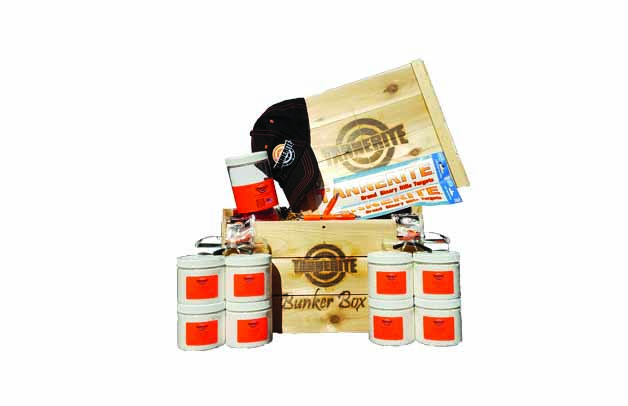
If you’re looking for a gift for that special someone — or for yourself — the Bunker Box from Tannerite is right up your alley. This pack comes in a beautiful cedar box (which is great for ammo when you shoot up the contents), eight 1-pound targets, pre-measured packets of catalyst, mixing container, instructions, stickers, earplugs, a pen, limited edition safety glasses, a hat … and one of five mystery items. Coming in at $100, this box is great for a group party or bachelor/bachelorette party. The massive clouds of water vapor and the giant “boom” have made Tannerite land atop the list of fun range goodies. Again, use caution when dealing with binary exploding targets. www.tannerite.com
Remember to try to introduce someone new to shooting. And trust me when I say that having a few of these with you at the range could make shooting a lot more enjoyable for someone new to the sport.
Editor’s Notes: This article originally appeared in the 2018 Shooting Is Fun issue of Gun Digest the Magazine.
It was my first big-bore rifle, and I was beyond excited to own it. It was a classic combination — a Winchester Model 70 in the undeniable .375 Holland & Holland Magnum — and when I headed to the range with several boxes of good ammunition, I was more excited than a kid on Christmas Eve.
Imagine my disappointment when I saw three-shot groups that measured between 2-3 inches at 100 yards.
I was immediately concerned that the recoil was too much for me — up to that point, the .308 Winchester was my main squeeze — so I asked Dad to shoot a few groups while I watched through the binocular to make sure the rifle was all good.
Dad’s first shot touched the edge of the bullseye at 2 o’clock, the second struck 3 inches up and to the right, and the third was within a half-inch of the first. Puzzled, I waited to see the second group, and I then noticed a pattern: The second of the three shots was always the flyer, and shots No. 1 and No. 3 were within an inch of each other.
Dad insisted the rifle wasn’t happy with the factory load ballistics, so we headed straight for the reloading bench. No matter the bullet weight, type, profile — no matter the primer or powder type or charge — I could not get the rifle to group within 2 inches.
I was near the end, and ready to proclaim the rifle as hopeless, when I made one last-ditch effort: I recalled an advertisement in the Safari Club magazine about a company in Texas who offered a problem-solving service. On the phone with the good folks at Hill Country Rifles in New Braunfels, Texas, the gentleman on the other end cut me off halfway through the description of the problem and finished my sentence for me. It was like a weight had been lifted … and the problem wasn’t me after all.
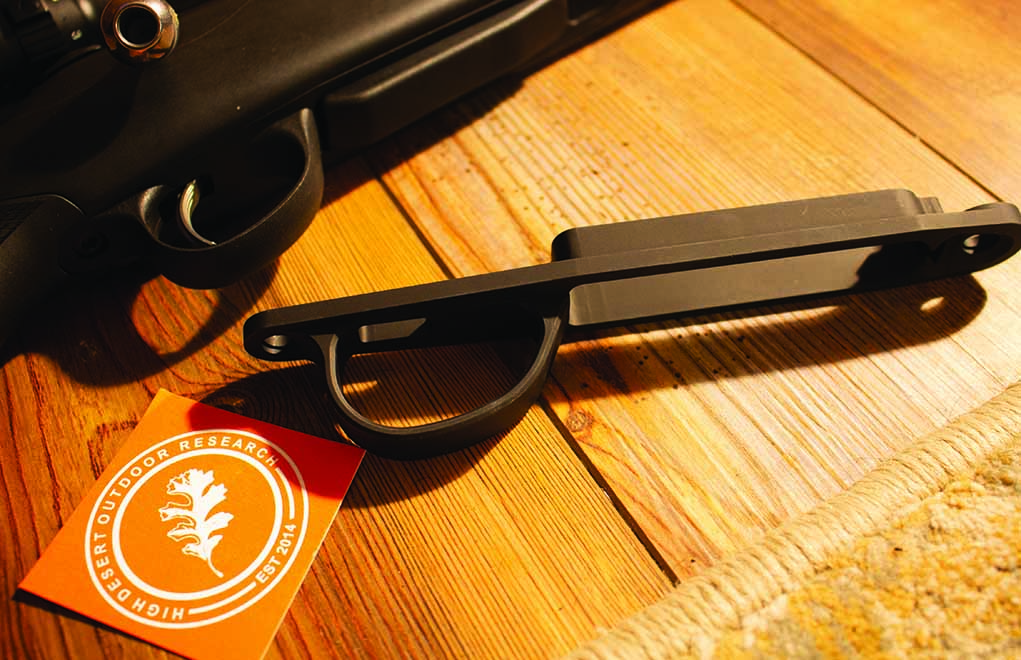
The High Desert Outdoor Research anodized aluminum bottom about to be installed in the author’s Tikka T3x Lite.
“The Model 70s of that particular era were notorious for having this issue,” he said without hesitation. “It’s a relatively simple fix.”
What I had was a bedding problem, though I may never have known it without that phone call. That was almost 20 years ago, and I’ve learned an awful lot about the subtleties of bolt-action rifle issues. So, I’d like to address the issues I’ve been exposed to, and relate some experiences I’ve had, perhaps to help you recognize some potential problems and save you some grief.
The mechanics of a bolt-action rifle are not all that complex. Among the myriad of forms of repeating rifles, the bolt-action is among the simplest. Yet, the simplicity and strength leads us to expect the finest accuracy from the design. Let’s explore which fixes can be done at home, and which will require the services of a good gunsmith.
No. 1: Rifle Bedding
A rifle’s bedding can make or break the way it shoots. If the connection between the action and the stock isn’t solid, accuracy is most definitely going to suffer. A good gunsmith can see that your rifle’s action is properly bedded, making contact with the stock where it should, to keep things where they were meant to be.
There are some at-home fixes, including epoxy kits that can fill and level the stock inlets, and I know many people who have solved a bedding problem at their own bench. Aluminum-pillar bedding is a means of providing metal-to-metal contact between the bottom metal and the action, via two aluminum pillars (betcha never saw that coming) that will surround the action screws. They can be set in epoxy in a wood stock once it has been drilled, though I personally feel the drilling is best left to a competent gunsmith with the proper tools, especially if the stock not easily replaceable. Better still, a replacement stock with aluminum pillars already set in the stock can be purchased for your existing action.
There are also complete aluminum blocks that are set into the stocks, which are machined perfectly to match your action’s profile. This increases the contact area, as well as the stock’s rigidity, all the while keeping things from moving unnecessarily. Bedding issues are not difficult to fix, but they can make a tremendous difference in the accuracy of your rifle.
A rifle’s crown — that area where the rifling ends at the muzzle — plays an important role in a rifle’s accuracy. It needs to be concentric, and it needs to be protected. A ding or burr on the crown will result in errant shot placement; most times the factory crown is just fine, but every once in a while you’ll find one that is slightly imperfect.
The crown of the author’s Winchester Model 94 .30-30 Winchester, with wear from 3 decades of being cleaned from the muzzle.
I have a .22-250 Remington that groups flat-based bullets very well, but it refuses to digest boat-tail bullets. The issue is an imperfect crown, and the gases are escaping unequally — albeit slightly — with a boat-tail bullet, opening the groups sizes significantly. A simple re-crowning will solve the problem, but it gave me quite an education.
A good, even chamfer is what will provide the finest results, and this is work that most definitely should be left to a good gunsmith. For years, we all carried our hunting rifles muzzle down, against the floorboard of the car or truck — this practice should be avoided because you run the risk of damaging the rifle’s crown and affecting the accuracy.
Many of the older lever action rifles — which are usually cleaned from the muzzle end — will show wear to the crown after decades of a grimy cleaning rod wearing against the muzzle. Should you suspect that your rifle’s crown is damaged, regardless of how slightly, find a reputable gunsmith to inspect and possibly correct it.
No. 3: Trigger Upgrade
A sloppy or heavy trigger can easily degrade accuracy, and I often wonder how many hidden tack-drivers are regulated to the back of the safe because of their trigger. When Ruger first introduced the Model 77 Mk II, my Dad bought me one for Christmas in .308 Winchester … and I had more adventures with that rifle than I could’ve imagined. But, that trigger was the stuff of nightmares.
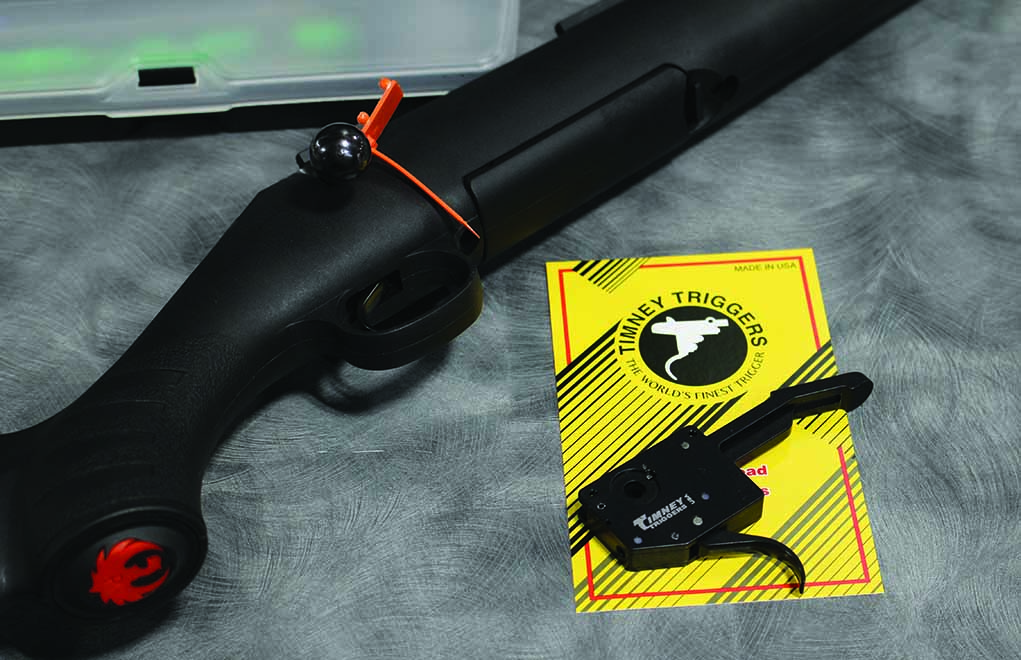
A Timney trigger is one of the author’s favorite brands of replacement triggers; they’re smooth, dependable and reliable. A good trigger can dramatically improve a rifle.
If I recall correctly, the non-adjustable trigger broke at just over 6 pounds, and you’d nearly pass out from lack of oxygen when developing a load at the bench. The rifle would, on a good day, give 1-inch groups (often larger), but once I decided to replace the factory trigger with a Timney trigger, and groups tightened up to a consistent ¾-inch. Shooting the rifle went from being a chore to a pleasure, all with the simple swap of a trigger.
Timney is just one brand — though it’s my favorite — of trigger that can be done at your home workshop. If you don’t feel confident in the operation (most companies offer written and/or video tutorials, so you can decide beforehand), your gunsmith will happily replace and/or adjust your trigger.
Now, let me be clear: There’s nothing wrong with doing trigger adjustments or replacements yourself, so long as you’re well-versed in how the operation works. Should you feel the slightest bit hesitant, take it to a gunsmith — a truly accidental discharge from a mal-adjusted trigger is a scary proposition. Either way, if you enjoy your rifle and want to get the most out of it, a good crisp trigger — with little creep or overtravel — is most definitely the way to go.
I have a nice little Tikka T3x Lite in 7mm-08 Remington; it makes a great gun for hiking the steep parts of the Catskills and Adirondacks. The polymer stock is a well thought-out design, with solid contact between the bottom of the action and the molded recess in the polymer stock. However, in lieu of a metal trigger guard and magazine well, Tikka uses a light-weight polymer, which isn’t rigid at all.
The rigid fiberglass stock of the author’s Bansner Custom most definitely enhances accuracy. Wood is stunning, but aftermarket polymer and fiberglass stocks will withstand years of harsh environments.
The folks at High Desert Outdoor Research make a black anodized aluminum trigger guard, complete with magazine-release latch. The exchange is a simple procedure, totally worthy of the garage workbench or even kitchen table: Remove the bolt, and using the provided T-25 Torx bit, simply remove the front and rear action screws to remove the barreled action from the stock. The polymer trigger guard will then simply pop out of the stock and you can replace it with the High Desert aluminum model. There are some 0.010- and 0.020-inch washers included, and you might need them as shims to get the magazine to seat properly. The magazine should pop in with an audible snap and have the slightest amount of play at the muzzle end.
The change definitely made an improvement in my rifle, bringing factory loads that were printing 1¼-inch groups down to under an inch, and making the best factory load in this rifle — the 140-grain Nosler AccuBond from Federal Premium — shrink from 1 inch down to 5/8-inch at 100 yards. My rifle required 0.040-inches shimming on both the front and rear action screw, and I found the magazine is easier to install and remove than it was when it came from the factory.
As a point of note, even though I completely took the action out of the stock and readjusted the action screws, the point of impact moved just about an inch, which goes to show how well the action/stock fit is on these rifles. But, across the board, the High Desert Outdoor Research bottom metal made a marked improvement in accuracy, and it was well worth it. The Tikka T3 line is accurate to begin with, and this simple switch made a good rifle even better.
Note: Sometimes, changing the stock altogether can really make a huge difference as well. A good, rigid polymer stock — I find the McMillan and Bansner stocks to be particularly handsome as well as useful — can remove some of the idiosyncrasies of some wooden stocks. They will certainly resist the plaguing headaches of swollen barrel channels affecting the bullet’s flight when hunting in inclement weather. The fiberglass models are especially rigid, and though they certainly lack the charm and allure of a fine stick of walnut, they offer decades of service in the most hostile environments.
No. 5: Rings And Bases
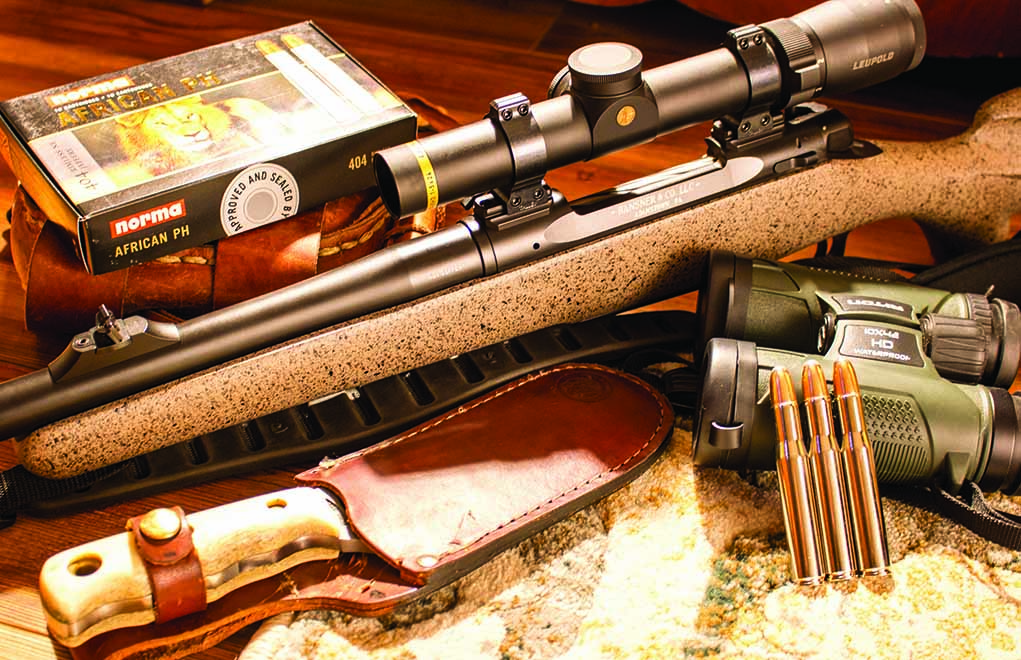
I’ve spent enough time with inexpensive and poorly constructed scope rings and bases to know they can drive a rifleman nearly insane. These days, I find myself making an unabashed switch to Talley rings and bases — on rifles from .22-250 Remington and .243 Winchester, up to the true big-bores such as the .404 Jeffery, .416 Rigby and .505 Gibbs — they perform flawlessly.
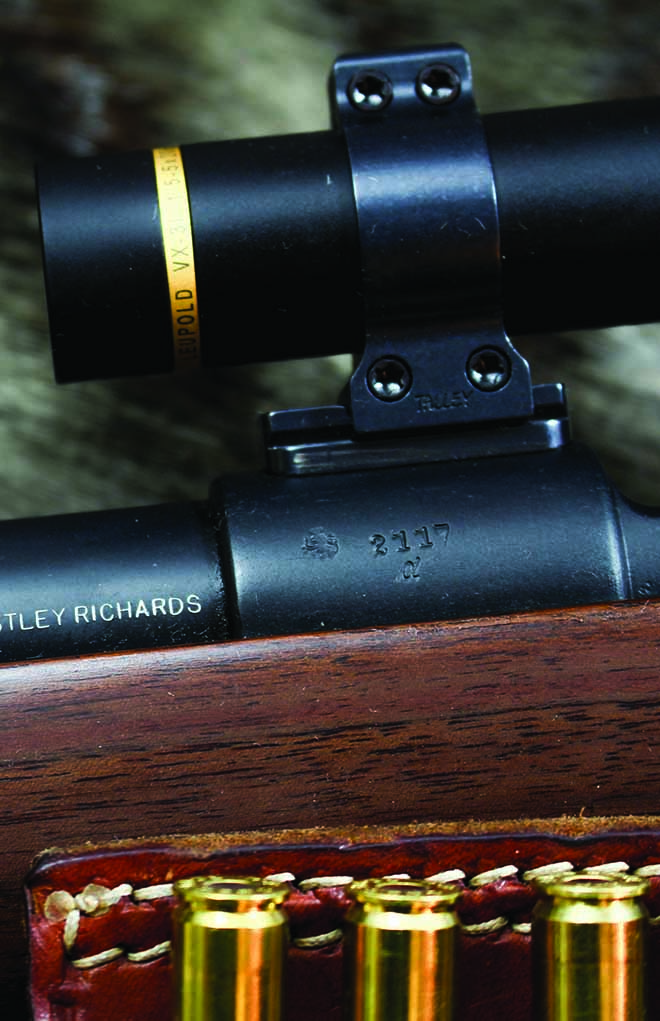
A good set of rings and bases, like the Talleys shown here, can greatly enhance the performance of a riflescope.
The tolerances are tight, the manufacturing is consistent, and here’s what I like best about them: They mount so well on the receiver that they allow the scope to operate in the center third of its adjustment range, and that’s where scopes operate best. The detachable models — which I like so much for the dangerous game rifles, where access to iron sights is very important — return to zero within ½-MOA.
And, they’ve never let me down: I’ve had inferior models come loose at the worst possible points in time, like in the middle of a Cape buffalo hunt in Tanzania. There are some equally good brands — many hunters favor Warne rings as well — but I’ve come to rely on Talley’s products for all sorts of different rifles, without issue. There are less-costly alternatives, but they certainly don’t represent the greater value to the shooter or hunter.
These five points above are some different ideas to think about before deeming a rifle unfit. Obviously, there are other possible issues — more serious, and requiring a good gunsmith to tear the rifle down to its basic elements — but with a minimal investment, the ideas presented might radically change the way your bolt-action rifle performs, for the better.
Editor’s Notes: This article originally appeared in the 2018 Shooting Is Fun issue of Gun Digest the Magazine.
Stoeger shocked SHOT with the release of the 9mm STR-9. Does the pistol have what it takes to survive the demanding striker-fired market?
How the STR-9 measures up against other striker-fired pistols:
Extremely affordable with $329 MSRP.
Aggressive cocking serrations running the better part of the slide.
Ergonomic grip with finger grooves and assertive texturing.
Ample barrel length (4.17 inches) to make it a manageable shooter.
At 24 ounces unloaded, shouldn’t be an overburdening carry pistol.
The fact a new striker-fired, polymer-framed pistol hit the market isn’t a surprise. It’s who’s churning out the latest addition to the swollen and ever-growing corner of the handgun world. Stoeger. Yes, you heard right, the company with those easy-on-the pocketbook shotguns.
Is the Stoeger STR-9 the affordable striker-fired pistol the market has been waiting for?
There was no lack of clucking at the 2019 SHOT Show in Las Vegas over the surprise move by the Beretta subsidiary. More than anything, simply because the STR-9 came so abruptly out of right field. Who would have expected a company that’s earned its daily bread arming waterfowlers and wingshooters to go 9mm, striker-fired and polymer-framed? On the other hand, at this point, if Daisy added the style of handgun next to its Red Ryder it most likely wouldn’t drop many jaws.
So, given the utter profusion of polymer guns on the market today, has Stoeger made a wise move with the STR-9? Or is it simply another face in a vast crowd? Given a few assets — including an incredible price — the smoothbore specialists seem to have a pistol that should hold its own in the STR-9.
STR-9 Basics
If the emanate catcher and baseball manager Yogi Berra wrote a gun column, he might quip the STR-9 is “déjà vu all over again.” Certainly, most modern pistols for nearly 40 years now are, almost all echoes of a certain Austrian gunmaker’s creations. But the STR-9 seems an echo of an echo. While not a dead ringer for Beretta’s striker-fired APX by any means, the Stoeger 9mm brings it to mind.
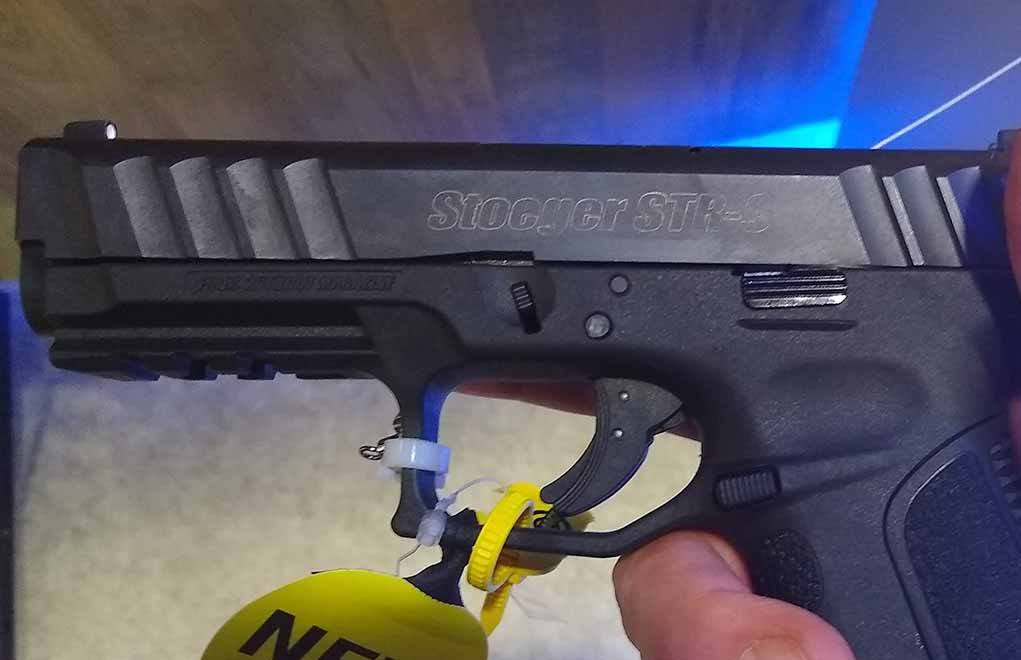
The semblance is particularly pronounced on the STR-9’s aggressive cocking serration running the majority of the slide. The geometry is different, but the amplitude is similar. Along with that, the STR-9 boasts a similar grip rake, texturing and ergonomics. When it comes to the pistol’s handle the finger grooves, texture and checkering on the backstrap all seem to mimic the APX. Though, the checkering on the STR-9 isn’t as refined as the Beretta, teetering on almost too assertive. Of course, an interchangeable back-strap system is also part of the mix on both. But that’s standard fare for most polymer-framed pistols nowadays.
Not exactly the same as the Beretta APX cocking serrations, but similar in aggressiveness and amplitude.
On the other side of the coin, the Stoeger pistol has a more Glock-like takedown system, a full curved trigger, shorter barrel (4.17 inches) and is slightly lighter (24 ounces). The STR-9 is also a couple rounds shy of the APX, with a 15+1 capacity. It also doesn’t boast a striker deactivator like the Beretta, nor is it modular.
Other notables, the STR-9 is outfitted with steel three-dot sights, reversible magazine release and an ample accessory rail.
STR-9 Affordability
Aside from what, on the surface, appears a fairly solid package, the STR-9 got the rabble roused with its price tag. An opening MSRP of $329, the 9mm is among the most affordable in its class. That probably translates to right around $300 on a store’s shelf. Pretty dang wild.
Though there are some caveats, chiefly the starting price gets you a very stripped-down package — 1 magazine and one backstrap (medium). To obtain what many would consider a complete setup — 3 magazines and 3 backstraps (small, medium and large) – the MSRP jumps to $389. Tritium night sights kick the MSRP up to $449. Still, it’s difficult to complain — it’s still less than nearly anything comparable.
Impressions Of The STR-9
Unfortunately, I cannot report how the STR-9 shoots. If Stoeger had the 9mm at SHOT Range Day, I plum missed it. So, grain of salt territory ahead.
For the price point, Stoeger appears to offer a fairly solid pistol.
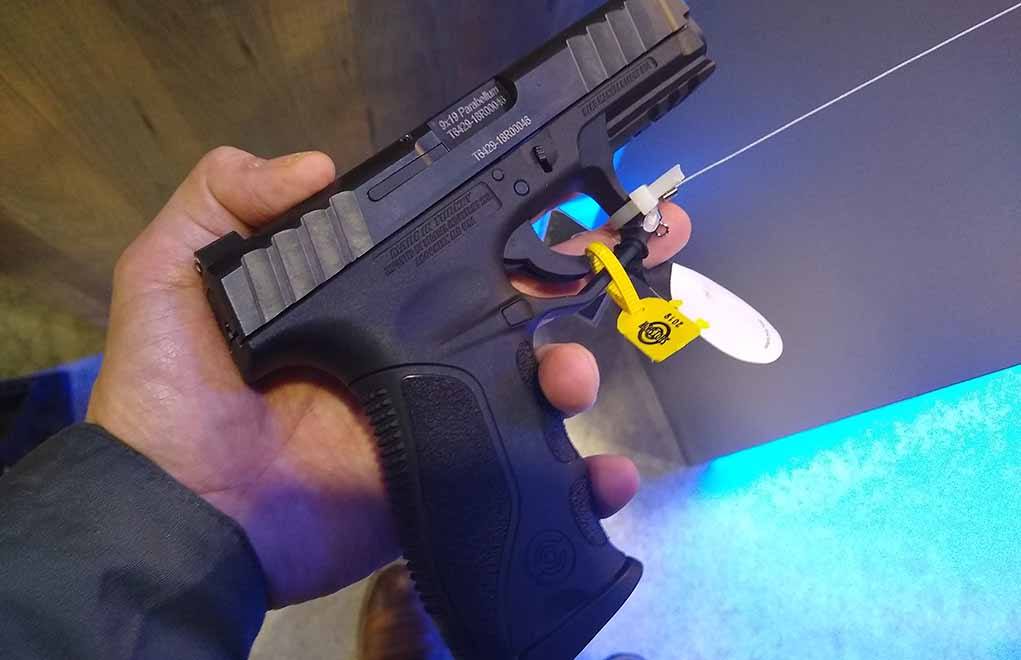
Handling the gun at SHOT Show proper, it seemed an impressive pistol for its price.
Given the profusion and assertiveness of its cocking serrations, it is a simple pistol to manipulate — which is never a bad thing. Whether a press check or a reload, there is plenty of real estate to get the pistol into play.
The STR-9 also felt comfortable in the hand. Yes, the backstrap is aggressive, but it’s difficult to tell if that’s an issue without live fire.
Finally, there was no play in the trigger, it had a crisp break and short reset. Off of strictly looky-loo fiddling at the Stoeger booth, I’d guess a 6- or 7-pound pull, which should make it familiar to most striker-fired fans.
Parting Shot
The STR-9 is hardly Stoeger’s first foray into handguns. The company had such models as the DA/SA Cougar 8000 (based on the Beretta pistol of the same name) and the rather slick American Eagle Luger to its name. But what seems a lifetime since the release of the Cougar — the newer of the two pistols — handguns seemed almost an afterthought, if that, at Stoeger.
That’s no longer the case. On price alone, the Stoeger has given shooters plenty to consider with the STR-9, even more with its full gamut of features.
STR-9 Specs
Barrel Length: 4.17″ Weight Unloaded: 24 oz. Capacity: 15+1 Type of Sights: Quick read 3-dot sight Overall Length: 7.44″ Action: Striker fired Magazine: Includes 1 magazine Backstrap: Includes medium backstrap MSRP: $329
Sun up or down, NiteSite’s new day/night scope will keep you on the hunt longer.
What’s better than shooting in the day? Also, shooting at night. More and more this is becoming a reality with the advancements in night vision scopes.
Much less arduous an ordeal than in the past, the optics have become less bulky and more affordable over the years. More importantly with day/night scopes growing in availability, they’ve also become more convenient and flexible than ever before. The result, scopes that not only keep you on target, but allow you to stay in the field longer, with much less kit to haul around.
NiteSite is at the vanguard of this multi-purpose optics movement and released a real doozy at the 2019 SHOT Show. At a glimpse, it’s difficult to peg the British company’s new day/night optic as a night vision scope. Certainly, bigger than a run-of-the-mill riflescope, relative to most other night rigs it’s downright miniscule. Furthermore, NiteSite has made it as simple as a trigger-pull to operate. The scope toggles from day to night mode with a simple turn of a dial. Plus, video recording in night vision is a pushbutton affair.
To be sure, where applicable, a night vision scope gives you a decided advantage on the hunt. And NiteSite has made harnessing that power more accessible and adaptable than ever.
For more information on NiteSite, please visit www.nitesite.com.
With a number of additions to its rimfire and shotgun catalogs, CZ-USA has a new long gun for nearly every shooter.
Never one to hold back come SHOT Show, CZ USA released its typical flood of new guns and upgraded models a few weeks ago. While the expansion of the company’s P-10 line of striker-fired pistols stole much of the spotlight, the gunmaker also unveiled a number of new long guns that should nab shooters’ attention. The weightiest came in the company’s rimfire and shotgun catalogs, which saw not only the introduction but also the reboot of some guns that appear right on target.
CZ 457
Some diehards might have their noses bent out of place with the 457 replacing the venerable 455 as gunmaker’s flagship bolt-action rimfire rifle, but the company is far from shortchanging its fans. The line is diverse and decked out, covering almost any conceivable plinking interest. In all, CZ released eight models, including the 457 American, 457 Lux, 457 Suppressor Ready, 457 Scout, 457 Training Rifle, 457 Varmint AT-One and 457 Varmint MTR. Three of the rifles – American, Lux and Varmint – are available chamber .22 LR, .17 HMR and .22 WMR, while the rest are strictly .22 LR. MSRP in the line runs from $365 to $660.
Built to run like a top no matter the abuse, the CZ 1012 appears a worry-free option in a do-all field gun. Inertia driven, the 12-gauge should have a less demanding maintenance schedule than gas-operated shotguns. To boot, it chews through shells — from smoking-hot 3-inch magnums to featherlight loads — like it’s been starved for a week. Available in a stick of Turkish walnut or camouflaged synthetic stock, the shotgun has a reasonable price range — $659 to $749.
G2 Bobwhite
Shooters demanded. CZ listened. In this case, rabble-rousing breathed new life into the CZ Bobwhite, which was discontinued a few years back. The new Bobwhite G2 seems a solid entry-level side-by-side, with the features you like to see in this style of gun — walnut stock, double trigger and English style grip. Furthermore, it’s available as a 12-, 20- or 28-gauge. Still, the Bobwhite G2’s price tag is the head turner of its return, with the gun starting at $655 dollars. Tough to beat when it comes to SBS shotguns.
For more information on CZ USA, please visit www.cz-usa.com.
Bad shotgun habits abound, nine times out of 10 precipitated by a gun’s recoil.
What are the three ways to reduce a shotgun’s recoil:
Increase the weight of the gun.
Shoot lighter loads with less velocity.
Insert some form of compensation between the gun and your shoulder.
Without a doubt, the greatest foe of our shooting enjoyment is the old demon recoil. Recoil — and the resulting “kick” — is the root of most all evil in our shooting habits, whether we flinch, jerk triggers or stop our gun swing as we try to compensate for getting hammered when the gun goes boom. Recoil is the greatest obstacle of novice and first-time shooters even getting introduced to the sport. Ask any new shooter as they line up to try the shotgun, and the thing they’re universally most worried about is getting kicked. Hard.
Back in the alleged good old days, it was common practice to hand a kid an ill-fitting shotgun and laugh when it kicked him like an army mule. I would like to say this practice has gone by the wayside, but I still hear about it and see it on various embarrassing videos. There are legions of shooters who will carry bad habits to the grave, most of which are associated with recoil. The point is, shooting a shotgun should be fun — and that means we need to do all we can to control recoil.
There are basically only three ways to reduce recoil in a shotgun: The first is to simply increase the weight of the gun. A heavier shotgun absorbs more of the recoil than a light one. This is why field guns used for hunting are heavier than competition shotguns for trap or sporting clays — hunting loads kick harder. But, you will carry the field gun more than you will shoot it, and just the opposite is true for a competition gun.
Next, you can shoot lighter loads with less velocity. Reducing the amount of powder and lead in the shell will help greatly with recoil reduction. (Newton’s Third Law of Motion, opposite and equal reactions, remember?)
Last, you can insert some form of compensation between the gun and your shoulder. A recoil pad, a compressible device in the stock or a gas-operated action in the shotgun that disperses some of the gases expelled, all lessen recoil.
Gas-operated actions on shotguns can take several forms, but all of them use some type of piston which, by the pressure of the fired round, moves the action of the weapon. In this way the action is opened, the bolt moves back, the empty is extracted and the new round placed in the chamber. Boom, boom, boom.
Remington’s V3 utilizes a series of ports located within the chamber. These ports are positioned so that recoil reduction happens regardless of the shotshell size being used. With a 2¾-inch shell, all seven ports are exposed — directing the expelled gas into two compartments that hold the VersaPort pistons, which work the action of the shotgun. With a 3-inch round, four of the ports are utilized. And with a 3½-inch shell, only three ports are uncovered.
Looking back, 1963 was definitely the watershed year for gas-operated shotguns because Remington introduced the Model 1100. The 1100 followed the Remington Model 58 and 858, and it replaced them as it became the first successful (and reliable) auto-loading gas-driven shotgun. Soon after coming onto the scene, the 1100 became the darling of trap shooters, skeet shooters and hunters as well.
Much of what made the 1100 so successful was that its gas-driven action took some of the sting out of shooting, and it could run different kinds of ammo — such as 2¾- and 3-inch shotshells in the Magnum models. This happened to be foreshadowing of the appearance of the VersaMax years later by Remington.
The Model 1100 bleeds off some of the gasses from the fired shell and uses part of them to work the action as any auto-loader gas gun does. The real genius in the 1100 action is that it’s basically a gas-powered Model 870 pump gun. The ports, which bleed off excess gas, are found near the front of the forearm. The gas from the fired round is used to work the action and move the action sleeve, which connects to the bolt carrier and ejects the empty casing. A new shell is released from the magazine: This trips the carrier release, and as the action spring in the stock pushes the bolt forward, the bolt grabs the new round and pushes it into the chamber.
All of this sounds fairly easy on paper, but as you might suspect, the sequence has to be finely tuned to function properly, and the Remington engineers made sure they had it right before they unveiled the 1100. Like all gas-powered actions, the Model 1100 has one big nemesis: The accumulation of burned powder and fouling from the fired shells. Most 1100 shooters will tell you that the gun needs to be stripped down and cleaned after 200 rounds or so.
Gas-powered shotguns did not change much after the Model 1100 for years. In 2010, Remington brought a new operation system to the shotgun world: Remington revamped a model for a gas-powered shotgun that was first created in Italy and put to use in the Benelli M4. Remington engineers worked their magic on this concept and gave us the VersaPort system.
The VersaPort in the VersaMax system utilizes the pressure from a fired shell very quickly by venting it through the orifice holes in the chamber. This enables the Remington V3 and VersaMax to convert the energy created by the gas into work to drive the system sooner, over a longer period of time — enabling the system to spread out the energy created over a longer period of time, reducing felt recoil.
The VersaPort system was revolutionary in a couple different ways. First, it used the length of the individual shell being fired to regulate how much of the expelled gases to be used. With a 2¾-inch shell in the chamber, all seven of the small ports are exposed — and these ports put the expelled gas into two compartments that hold the VersaPort pistons, which work the action of the shotgun. With a 3-inch round, four of the ports are utilized. And with a 3½-inch shell, only three ports are uncovered.
Another major breakthrough of the VersaPort system is the concept of how quickly the gas from the fired shell is captured and used. Firearms engineers have long known that the faster the gases are captured and used to function the shotgun — or ported out of the system — the less recoil will be transferred to the shooter.
“The impulse (impulse = force x time) created by the ignition of a given shell is the same in any shotgun,” said Andy Haskins, a Research and Development Engineer at Remington Arms company. “The VersaPort system utilizes the pressure from a fired shell sooner than other gas systems by venting it through the orifice holes in the chamber. This enables the V3 and Versa Max to convert the energy created by the gas into work to drive the system sooner … and over a longer period of time. By venting the gas earlier, combined with the Supercell recoil pad, we’re able spread out the energy created by the recoil event (impulse) over a longer period of time, therefore reducing the peak force felt by the shooter.”
Conventional gas-operated systems before VersaPort located the gas ports as much as 10 inches in front of the chamber; the VersaPort utilizes the gases almost immediately. The twin pistons below the chamber move very little by using the force of the expelled gas, but the bolt is moved backward and the fired casing is ejected and a new round is chambered. The twin piston system eliminated the use of different O-rings, metal adjustment rings and other items that are sometimes a headache to deal with.
Facing Inertia-Driven Recoil
No doubt you’ve heard more about a gun inventor from Utah named John Moses Browning than you have about Danish gunmaker Christer Sjörgren. In 1903, both unveiled what would become iconic recoil operated shotgun actions. Browning gave us the Automatic 5, with what became known as the long recoil system. Sjörgren’s shotgun harnessed the force of inertia and used it to move the bolt backward as it pushed against a spring. This motion ejects the fired shell and loads a fresh round as the bolt returns to battery for firing.
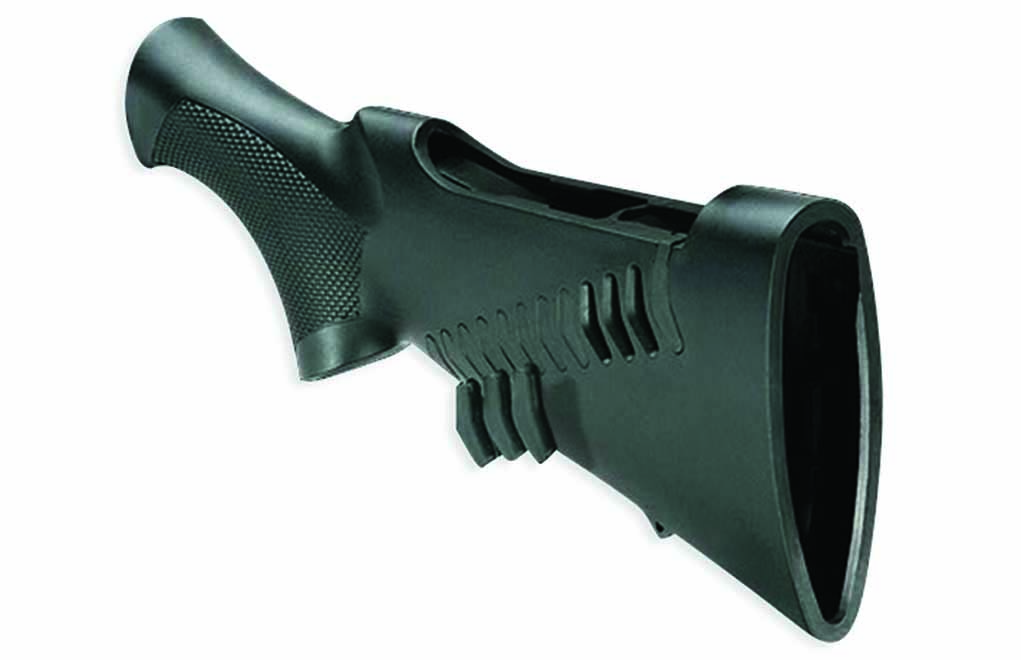
ComforTech recoil systems on Benelli synthetic-stocked guns, like the Super Black Eagle 3, utilize 24 synthetic, recoil-absorbing chevrons. The chevrons are arranged diagonally from the heel of the buttstock to a point just behind the grip. The stock is designed so the exterior shell flexes outward to further dampen recoil.
So, the inertia gun was born — but the idea remained largely dormant until it was resurrected by Benelli in the late 1960s. Benelli embraced the inertia system and incorporated it in its line of semi-auto shotguns, including its iconic Super Black Eagle. It should come as no surprise that other shotgun-focused companies — Franchi and Stoeger — also offer inertia shotguns.
Here’s the deal on inertia-driven shotguns: Most have less moving parts than the gas-operated guns, there are no pistons and chambers to capture and route the expelled gases, and with less parts these guns are almost always lighter. The inertia gun uses the force of the gas to move the action of the gun rearward — it doesn’t vent any of it off to lessen recoil. Inertia guns are generally considered less finicky, easier to clean and will operate under severe conditions. The downside is that they’re also known to kick harder than gas-operated shotguns.
So, how do we handle the old demon recoil in inertia guns?
The folks at Benelli knew long ago that they’d have to deal with the recoil associated with inertia guns. Currently, Benelli employs two systems for recoil control in semi-autos: Wood-stocked shotguns use the Progressive Comfort System, and synthetic-stocked shotguns have the ComforTech technology.
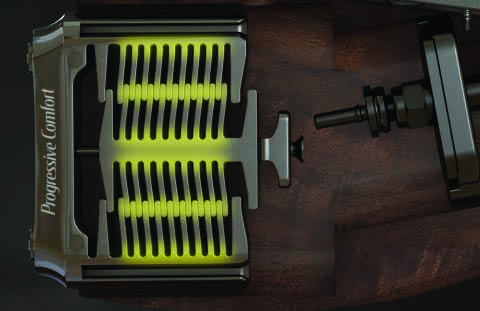
The Progressive Comfort recoil-reduction system incorporates three sets of patented interlocking flexible buffers that absorb recoil at different stages, dependent on the strength of the shotshell’s load. Looking at the inside of a Benelli Ethos shotgun stock, you can see the polymer system, which includes three sets of fingers. These three sets of fingers each have a different elasticity, and the load used determines which sets of fingers are utilized for maximum recoil reduction. The first set of fingers is very flexible for light loads, the second set a bit stiffer for field loads and the third set is optimized for heavy magnum loads.
Benelli uses the Progressive Comfort recoil-reduction system in its wood stocks, which incorporates three sets of patented interlocking flexible buffers that absorb recoil at different stages, dependent on the strength of the shotshell’s load. As shown in this Ethos stock, the first set of fingers is very flexible for light loads, the second set a bit stiffer for field loads and the third set is optimized for magnum loads.
ComforTech recoil systems on Benelli synthetic-stocked guns, such as the company’s flagship Super Black Eagle 3 shotgun, deal with recoil in a different manner. The stock is divided by 24 synthetic, recoil-absorbing chevrons. The chevrons are arranged diagonally from the heel of the buttstock to a point just behind the grip. The stock is designed so the exterior shell flexes outward to further dampen recoil. Together with the ComforTech Plus recoil pad, this design spreads the peak force of recoil over a longer period of time.
A nice addition to the Benelli line is the ComforTech Plus Comb Pad. Part of what we associate with the “kick” of a shotgun is the pounding we may get from the comb of the stock on your cheek. This pad cushions the cheek during recoil and provides a slick surface that allows your cheek to slide along the comb during recoil. This eliminates frictional resistance and insulates your face from shock and vibration.
Remember: The “kick” you feel when shooting a shotgun — known as felt recoil — is subjective. How much you think a shotgun kicks may not be the same for me or your shooting buddy. How much a recoil pad or a certain stock design helps with demon recoil may be like saying who the prettiest girl in your senior class was — everyone may not agree.
So, with that in mind, find a system that works well for you and your shooting style: Your comfort level and overall accuracy will greatly improve.
This article originally appeared in the 2018 Shooting Is Fun issue of Gun Digest the Magazine.
SAAMI gives Winchester’s straight-walled wonder – the .350 Legend – its blessing.
How the .350 Legend is set up for deer-hunting success:
Around 20-percent more penetration than a .243 Win.
Approximately 20-percent less recoil than a .243 Win.
Delivers nearly 15-percent more energy at 200 yards than the .300 BLK.
The Winchester XPR bolt-action currently chambered for the cartridge.
Deer hunters hemmed in by straight-walled-cartridge regulations, never fear! Winchester has you covered.
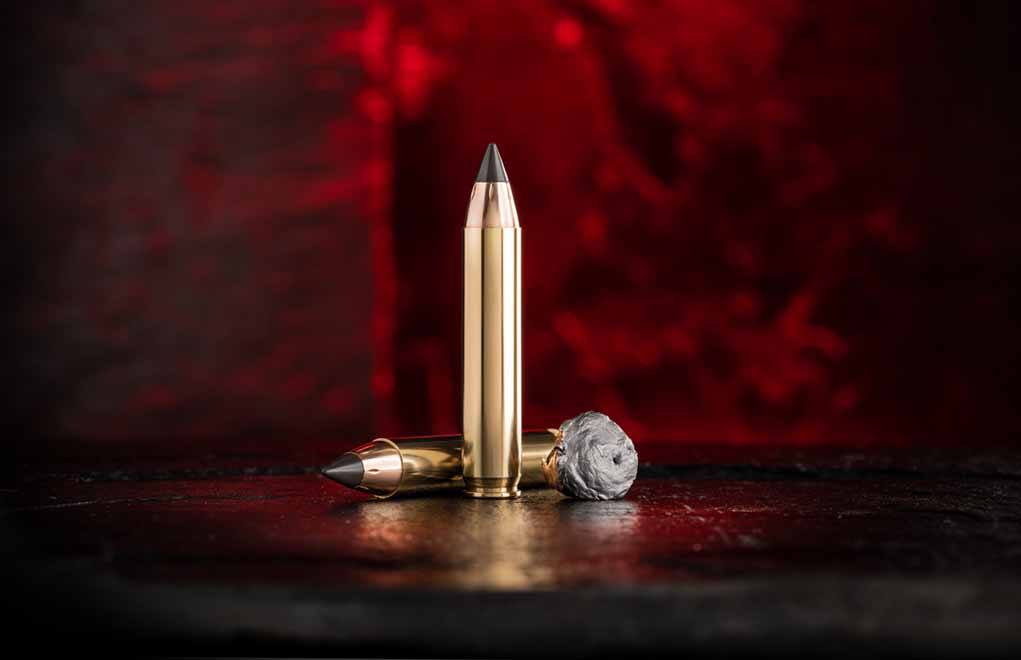
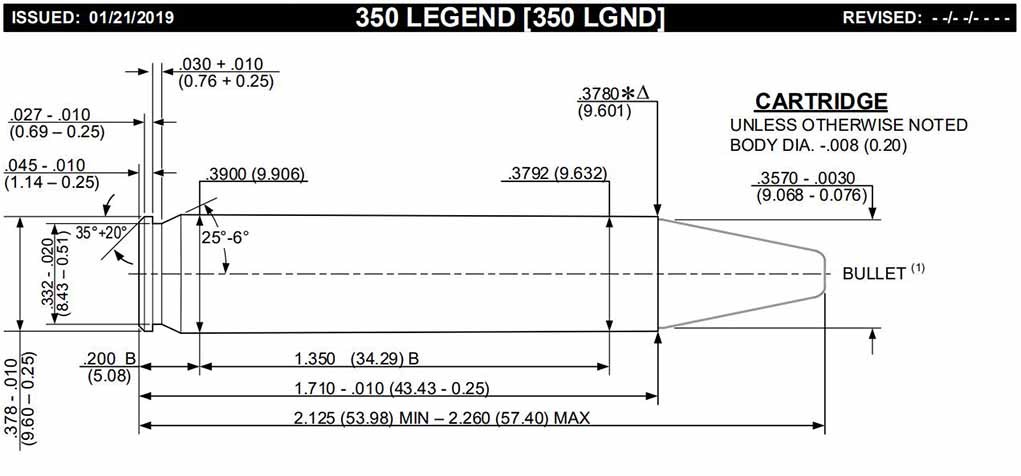
The iconic company unveiled perhaps one of the most unique cartridges in a spell at the 2019 SHOT Show, introducing the .350 Legend. Essentially a modified .223 Rem., blown out to accept a .357-caliber bullet, the new offering has the potential to help those who hunt areas with restrictive rifle regulations reach out a bit more and hit harder. By Winchester’s billing, it shoots flatter and longer than most straight-walled cartridges currently available. Furthermore, by the company’s telling, it delivers more energy to a target than the .30-30, while producing less recoil than the deer-season classic. If that holds up in the field it’s nothing to turn your nose up at, give the mountain of venison the .30-30 has put on the table over the years.
Last week, the .350 Legend had its final initiation into a full-fledged production cartridge with the Sporting Arms and Ammunition Manufacturers’ Institute accepting the cartridge. Good thing for Winchester, given the company has hit the ground running with the .350 Legend. Currently, the company offers six loads, including 150-grain Deer Season XP, 180-grain Super X, 145-grain USA Full Metal Jacket, 265-grain Super Suppressed and 160-grain Power Max Bonded.
A taste of what the cartridge offers, the Super X load leaves the muzzle at 2,325 fps, only losses 15-percent of its velocity at 100 yards and delivers 1,289 ft/lbs of energy at that range. That should get the job done.
From Winchester:
NEWTOWN, Conn. — The Sporting Arms and Ammunition Manufacturers’ Institute® (SAAMI®), the firearms and ammunition industry’s technical standards-setting organization, is pleased to announce the acceptance of a new cartridge and chamber standard, the 350 Legend (350 LGND), introduced by Winchester Ammunition.
“SAAMI member ammunition and firearm companies are driven by technological innovation.” said Randy Bimson, Director of Technical Affairs and Technical Advisor of SAAMI. “Winchester’s 350 Legend cartridge brings a fresh look and innovation to a very mature cartridge category opening up new options to both the hunter and recreational shooter. SAAMI is pleased to include the new 350 Legend in the SAAMI standards.”
Winchester Ammunition is addressing a rapidly growing market segment, “straight-wall-cartridge-compliant” deer-hunting states. A growing number of states that previously restricted deer hunting to limited-range slug guns or muzzle loading firearms are now allowing rifles chambered in straight-walled centerfire cartridges, many of which originated as handgun cartridge designs. The Winchester 350 Legend offers a significantly flatter trajectory and better terminal performance over current straight-wall cartridges while remaining compliant in most applicable states.
“The 350 Legend is a high-performing, straight-walled cartridge that dominates in velocity, energy, recoil and affordability, all of which are vital to our customers,” said Matt Campbell, vice president of sales and marketing for Winchester Ammunition. “Winchester is dedicated to innovation and it’s paramount that we continue to deliver meaningful, technology driven products that have a tremendous impact on the hunting and shooting sports industry.”
Trimmed in all the right places, FN America’s 509 Midsize offers a concealable and effective personal-defense option.
Say what you will about the U.S. military’s Modular Handgun System competition, it unleashed a wealth of versatile and effective pistols into the consumer market. While not the ultimate choice by the armed services, FN America’s entrant – the 509 – has proven popular with civilian shooters, in no small part due to its ample features and well-thought-out design. Not to mention, for those looking for the extra mile in a handgun, it’s tough to outdo the 509 Tactical – a configuration that certainly doesn’t have a fly on it.
FN has now turned its attention to the concealed carry crowd with its latest rendition of the semi-automatic, offering a slightly trimmed version christened the 509 Midsize. And how the gunmaker chose to shrink the pistol is an intriguing aspect of what being offered. Instead of opting to trim precious barrel length, FN went to work on the pistol’s grip. Given a handgun’s height is among one of the major factors in its concealability, this appears a solid move.
The .36 inch reduction in height may not seem whooping, but it does its part in cutting down the 509 Midsize’s overall profile, without a lot of trade-offs. You give up two rounds, but with a 15+1 capacity the pistol still has more than enough firepower to hold its own. Furthermore, there’s plenty of real estate for most to get their entire hand on the grip. Plus, there’s the original 4-inch barrel, which should keep most 9mm rounds’ ballistics at an optimum and give you a much better (read longer) sight radius in the deal.
FN tweaked a few other facets of the 509 Midsize and others in the line, including a new slide catch, a sculpted frame for better magazine-release access and improved texturing on the backstrap. Overall, the company’s newest entrant to the line is intriguing and most likely has the stuff to earn a place in armed citizen’s hearts.
Fifty-caliber handguns are intriguing. They’re imposing, a bit intimidating — they kick like hell — and they sling large chunks of lead. But, even though all of the above sounds, well … interesting, what are they really good for?
If you’re mainly a paper puncher, there are more fun, less punishing and way more practical choices to be made. Now that we’ve established what they’re not good for, let’s get to the real purpose of the half-inchers. In my humble opinion, big and dangerous game hunting is where the .50-cals truly shine. Let that sink in for a moment.
I have found throughout my hunting adventures with a wheelgun that many greet my primary hunting weapon choice with skepticism, and sometimes outright hostility and righteous indignation. They typically cite a litany of reasons not to use a handgun — from range limitations all the way up to horsepower deficiencies — often spouting minimum muzzle energy requirements with an air of misplaced superiority.
If you have convinced yourself at this point that I am full of bovine excrement, by all means step off right here. But if you’re open-minded or merely curious to see where I’m going (or just want to witness a train wreck), have a seat.
Don’t Slander Physics
Let me briefly address the most prevalent assertion by the doubters about muzzle energy: Just about every centerfire rifle cartridge shot out of a long-barreled firearm can boast better paper ballistics than a revolver. The velocities are higher, trajectories flatter and muzzle energies embarrassingly greater. It doesn’t require a doctorate in physics to see why, but big-bore revolvers don’t rely upon velocity and rapidly expanding bullets (to make up for a lack of diameter) to kill game.
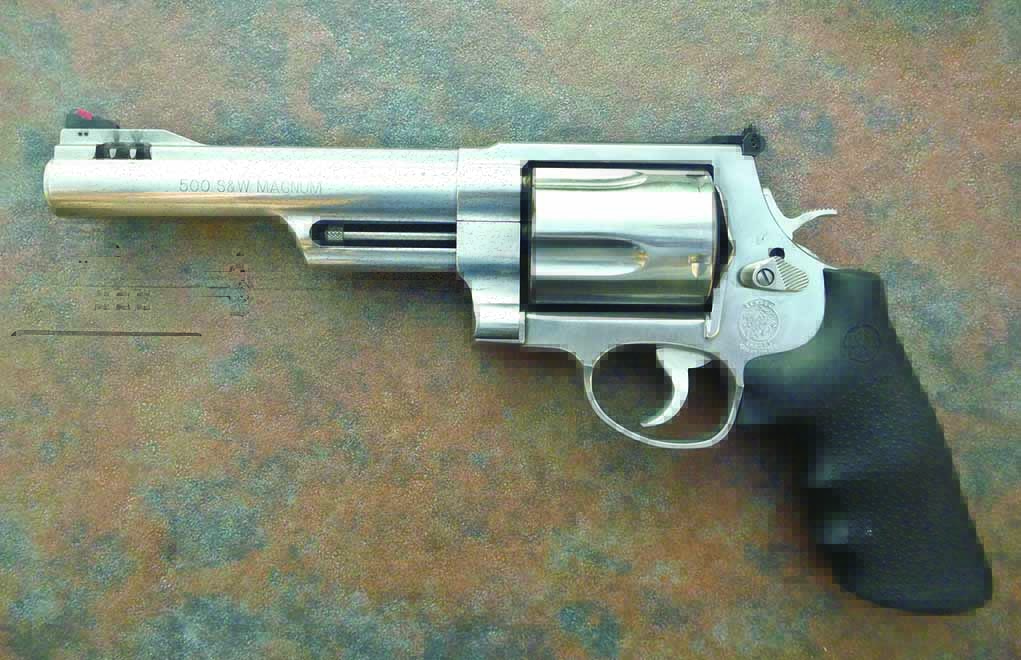
Smith & Wesson’s foray into the .50-caliber realm came with the introduction of their oversized X-frame, which was a necessity to encapsulate the big .500 Smith & Wesson Magnum, the king of the hill.
Big-bore revolver cartridges feature a large diameter and a relatively heavy bullet to get the deed done. Muzzle energy, in and of itself as a measure of lethality, is a poor indicator of effectiveness on terminal ballistics.
But are the .50s really better than their smaller brethren? I have written in these very pages that the .44 Magnum, when loaded properly, has and will take virtually any and every game animal it’s tasked with hunting and is the gold standard by which all big revolver cartridges are measured. In fact, my exact words were this:
“So when do you actually need something bigger? The answer isn’t so cut and dried, but I’ll say it: never, actually. Before you proclaim me a blasphemer, let me qualify my statement with this declaration: The .44 Remington Magnum, properly loaded (this caveat applies to any and every cartridge), can, will and has unequivocally taken virtually every game animal that walks the face of this planet. Here’s where I weasel my way out. However, in my experience, there are better choices for really large game, and they begin at .45 and go up from there. There, I said it. In summary, will the .44 Mag work on really big game? Yes. Are there better choices? Yes again.”
I’ve used the .44 Magnum to great effect and have been witness to its effectiveness on large animals. The success of the .44 Mag. has been well documented since its inception, and with today’s much higher-quality bullets, the .44 Mag. has never looked better.
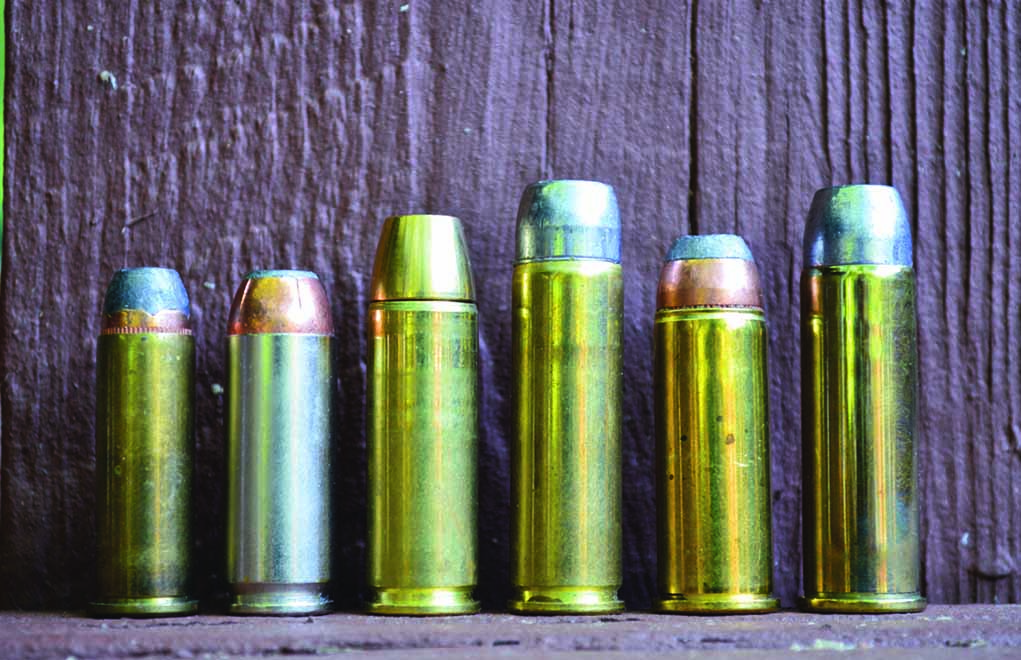
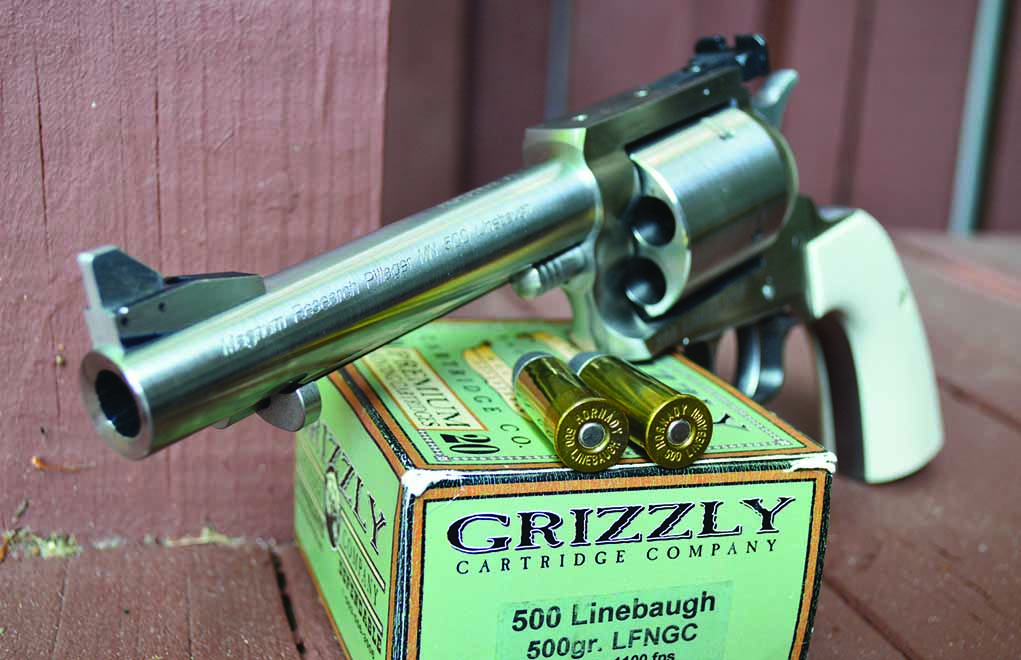
The .50 calibers from left to right: .44 Magnum (for comparison), .50 AE, .500 JRH, .500 S&W Magnum, .500 Linebaugh and the .500 Maximum.
However, it absolutely does not impart the same damage or effect on big animals (let’s define that here as 1,000 pounds and up) as the big-50s. No way, no how. The .50-cals give the shooter an edge in margin of error, but this should not give one a false sense of security as you still — and maybe more importantly — need to do your part as far as shot placement is concerned. I mention it as being more important in that the .50-caliber handguns are typically much harder to master and more difficult to shoot accurately.
Let’s take a look at the current crop of available .50-caliber handgun rounds.
The .50 Action Express
Bullet Diameter: 0.500 inch
Case Length: 1.285 inches
Overall Length: 1.594 inches
I’ve only included this one because it was pretty much the first commercial offering in a production handgun, starting with the Freedom Arms Model 83 and later Magnum Research, despite the fact that it was designed for use in a semi-auto pistol. It features a heavily rebated rim, and due to the physical limitations of the auto pistol platform, the round has a relatively short loaded length, necessitating the use of light bullets. This is the only one on the list I wouldn’t waste my time with.
The .50 Wyoming Express
Bullet Diameter: 0.500 inch
Case Length: 1.37 inches
Overall Length: 1.765 inches
Maximum Pressure: 38,000 psi
This proprietary offering from Freedom Arms is the virtual ballistic twin to the .500 JRH, but instead of a traditional rim of a revolver cartridge, Freedom Arms opted to use a belt for head spacing. Commercial ammunition is available from the Grizzly Cartridge Company, and the end result is a packable .50-caliber revolver with power to spare.
The .50 JRH
Bullet Diameter: 0.500 inch
Case Length: 1.4 inches
Overall Length: 1.80 inches
Maximum Pressure: 45,000 psi
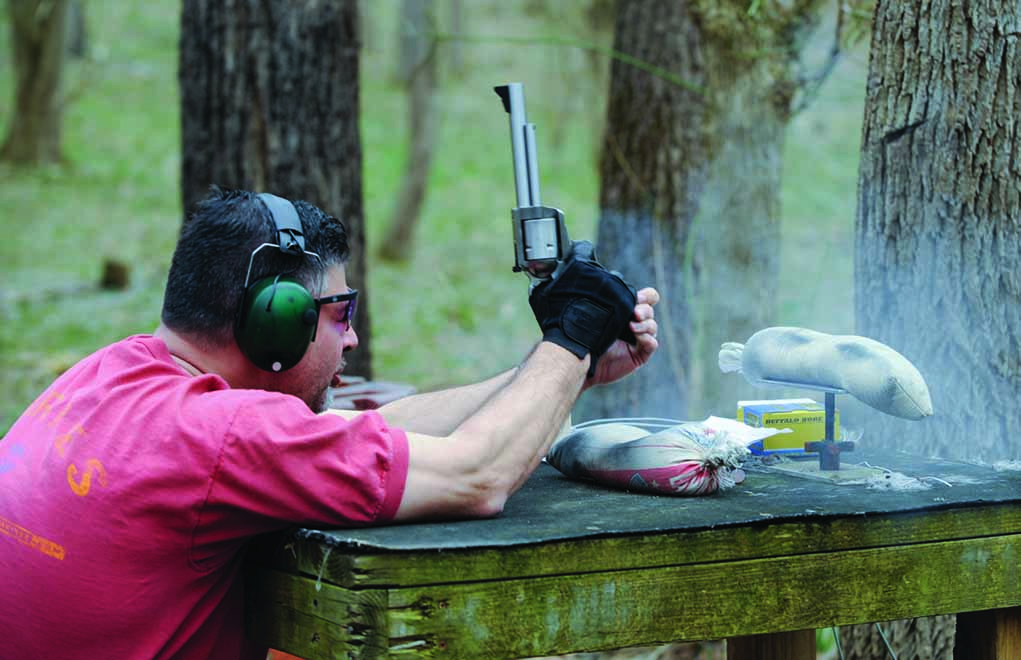
Big recoil is the norm with the big .50s. Here, the author test-fires a .500 JRH BFR off the bench.
The .500 JRH is the brainchild of renowned gunmaker, Jack Huntington. He set out to design a full-power, no compromise .50-caliber cartridge that would fit in the confines of a revolver, in particular the Freedom Arms Model 83, as a workable alternative to the .500 Linebaugh, which features too large a case and rim to fit the rather compact Model 83, with a maximum case length of 1.4 inches. He turned a dummy round in his lathe in 1993, and the .500 JRH became a commercially loaded reality in 2005, when Starline turned the brass and Buffalo Bore produced the first commercial loads for it. While brass is available from Buffalo Bore Ammunition (Starline actually produces the brass), .500 Smith & Wesson Magnum brass can easily be cut down for use. Magnum Research offers the .500 JRH as a regular catalog item.
The .500 S&W Magnum
Bullet Diameter: 0.500 inch
Case Length: 1.625 inches
Overall Length: 2.30 inches
Maximum Pressure: 61,931 psi
The biggest of Smith & Wesson’s Magnum cartridges, the .500 S&W Magnum, was the company’s successful attempt at recapturing the crown of most powerful production revolver cartridge. Not only did Smith & Wesson seek to create the biggest cartridge in .50 caliber, it pulled out all stops by also making it amongst the highest of pressure producers. Smith & Wesson didn’t just want to take the top position back, they wanted to put as much distance as possible between the .500 Smith & Wesson Magnum and its nearest competitor.
Unlike its parent cartridge, the .500 Maximum, the .500 S&W features a maximum pressure of nearly 62,000 psi, putting it in the company of a small number of revolver cartridges loaded to rifle-like pressures. Loaded to spec, it’s capable of impressive velocities — even with heavy bullets. With the introduction of Smith & Wesson’s .500 came a renewed interest in handgun hunting.
But, this is definitely not a cartridge for the uninitiated. Even when loaded in a heavy revolver like the X-frame, or even BFR’s iteration, the .500 S&W produces significant recoil. You cannot launch bullets this heavy, at these speeds and burning this much powder, without producing sizeable recoil. This round evokes the term “extreme.”
The .500 Linebaugh
Bullet Diameter: 0.511 inch
Case Length: 1.4 inches
Overall Length: 1.80 inches
Maximum Pressure: 40,000 psi
Magnum Research has recently announced the availability of the first ever commercially produced revolvers in .500 Linebaugh. The author tested this first prototype extensively and was very happy with the accuracy and terminal performance.
Attention was first drawn to the .500 Linebaugh in the August 1986, through an article appropriately titled, “The .500 Magnum: The Outer Limits of Handgun Power.” Though not offered in a production revolver until recently (Magnum Research just introduced this caliber in their already impressive lineup of revolvers), the .500 Linebaugh still boasts a strong following. Loaded to its full potential, the .500 Linebaugh is a true big-game hammer. Based originally on the .348 Winchester case and cut down to a nominal 1.4 inches, the .500 Linebaugh features a .510-inch bore diameter. Maximum pressures should be kept in the 33,000 to 36,000 psi range, though it will go safely higher. The beauty of the .500 Linebaugh is that it doesn’t need to be pushed hard to work well on large game (with the caveat, of course, that it’s loaded correctly and with a good bullet).
The .500 Maximum
Bullet Diameter: 0.511 inch
Case Length: 1.6 inches
Overall Length: 2.015 inches
Maximum Pressure: 50,000 psi
Also referred to as the “.500 Linebaugh Long,” this wildcat is typically built on Ruger .357 Maximum frames housing custom five-shot cylinders. Recoil at the upper end of the loading spectrum can best be described as “very unpleasant” to “life altering,” particularly when loaded to the 50,000 psi range. The .500 Maximum is capable of throwing 525-grain bullets at a blistering 1,500 fps, and some reports indicate even more velocity is possible. While it’s not recommended to feed your Maximum a steady diet of similar loads, it is fully capable of delivering this level of performance.
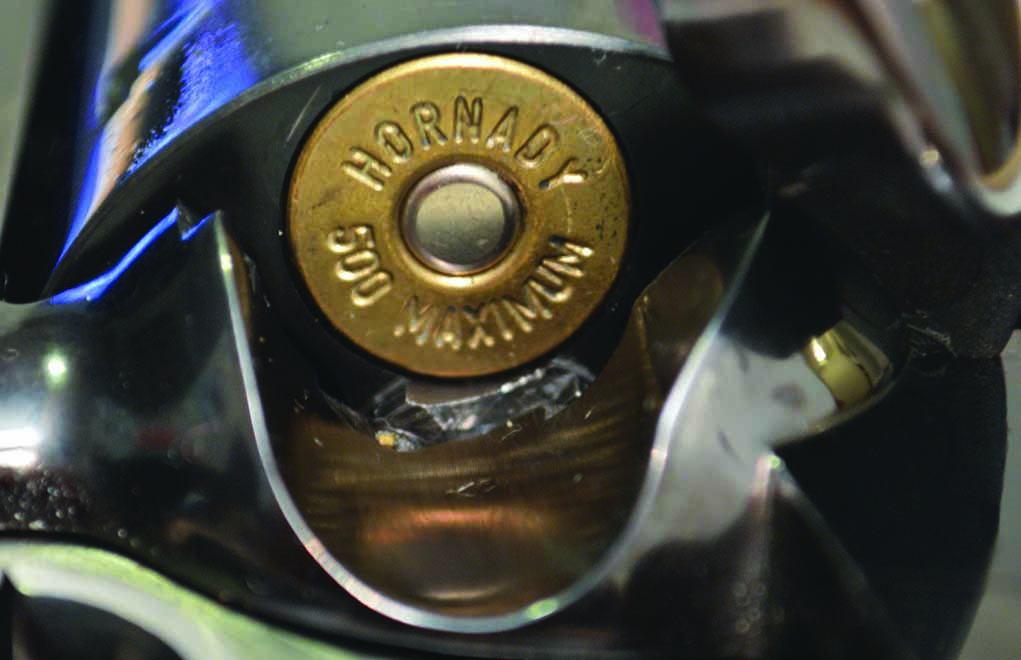
This cartridge is an exercise in excess. Dedicated and properly head-stamped brass is available occasionally on the used brass market (Hornady actually made a run of this brass), but the perfect parent case is the commercially available .50 Alaskan, which can be easily cut down to 1.6 inches.
In the end, the .500 Maximum is the poster child for “More’s Law” being applied to the already potent .500 Linebaugh. Is the added velocity potential and resultant abuse on the shooter necessary? No, but we don’t always (or even usually) apply the concept of necessity to our hobby. What fun would that be? However, I will state with certainty that the .500 Maximum, loaded correctly, is a fight stopper.
Pure, Handheld Power
Recoil is severe in many cases, but most rifle hunters, even vastly experienced big-bore rifle hunters, will tell you the .458 Lott isn’t so fun to shoot, either. The big .50s require a true dedication to the craft to master, a perishable skill that needs constant upkeep. However, once mastered and loaded properly for the game being pursued, their terminal effectiveness is admirable. I have cleanly taken a number of large bovines with revolvers, including water buffalo and Cape buffalo, and the big .50s deliver as long as the shooter does his/her part.
This Cape buffalo fell to the author’s .500 JRH BFR in South Africa. The Kodiak Punch bullets again proved very effective, cleanly taking the large bovine.
Some may think it unfair to characterize the big .50s as being brutal with top-end loads, but I feel that sugar-coating the recoil reality is doing a disservice to those who may want to foray into the realm of the .50-caliber handgun. After all, they do kill on both ends. Of course, like all calibers, they can be loaded down to “comfortable” levels, but to fully exploit the attributes offered by the half-inchers, I personally don’t run them too moderately.
Once you choose you .50 and work up a good, effective load, you’ll see that it offers serious medicine for big and dangerous game. The .500s are the no-compromise calibers of the revolver world, and by default, they make a big hole.
Editor’s Note: This article is an excerpt from the August 2018 issue of Gun Digest the Magazine.
Get a rundown on what Mossberg is bringing to the pistol world with the concealable MC1sc 9mm.
How the MC1sc is ideal for concealed carry:
19-ounce weight
1.03-inch width
3.40-inch barrel length
6+1 capacity
Simple and safe takedown
Crisp trigger, breaks at 5 to 6 pounds
Familiar three-dot sights
As you’ve most likely heard by now, Mossberg is back in the pistol game. Wait … back? Yes, for those unfamiliar with the gunmaker’s history, it used to produce a handgun. In fact, the .22 LR “Brownie” pistol is the gun the company is founded upon.
While the pepperbox pistol would have made an interesting reboot for Mossberg’s 100th anniversary, the company went a much more modern direction for its new handgun. Though, it’s hard to deny the MC1sc might have drawn some inspiration from the Brownie, at least in the size department. Still and all, the polymer-framed striker-fired is much more applicable to today’s market than Mossberg’s old .22, given it’s a concealed carry pistol through and through.
The single-stack 9mm’s most striking feature is its overall size, which is slender and small. The pistol measures in at 1.03-inches wide with a 3.4-inch barrel. By any standard that’s a petite pistol, one that should prove exceedingly simple to conceal and more than comfortable to carry on an everyday basis. Yet, the 6+1 capacity MC1sc has a few other tweaks that make it an interesting entrant to a saturated and familiar corner of the handgun world.
The Elegant Power Of The Ruger Blackhawk Bisley .45 Colt
First off, its flat-faced trigger is solid. It has a consistent break at around 5 to 6 pounds, short reset and is overall crisp. Next, the MC1sc has a unique takedown system that doesn’t require a trigger pull to get the gun apart. A great move for those new to defensive pistols, the gun takes down by first removing a plate at the rear of the slide and then the firing pin. And finally, the pistol utilizes unique magazines. What Mossberg calls Clear Count mags, the magazines are constructed of transparent, yet durable plastic that makes round counts a split-second affair.
Perhaps best of all, Mossberg has put an incredibly reasonable price on the MC1sc with an MSRP of $425. Overall, the gun appears a solid entry-level option, but is most definitely configured and manufactured up to seasoned-shooter specs.
Federal Premium Ammunition proves big things come in small packages with Shorty Shotshells.
How Shorty Shotshells compare to other mini shells:
Available in No. 8 shot, No. 4 buckshot and rifled slug loads.
No. 8 shot has a muzzle velocity of 1,145 fps and the buckshot and slug 1,200 fps.
Available in boxes of 10 for around $12 and under.
Ideally uses in single-shot and break-action shotguns.
Since they hit the market, Aguila Ammunition’s Minishells have caught the fancy of shotgunners for home defense, hunting and breaking clays. But the diminutive shotgun shells have some competition coming down the pike.
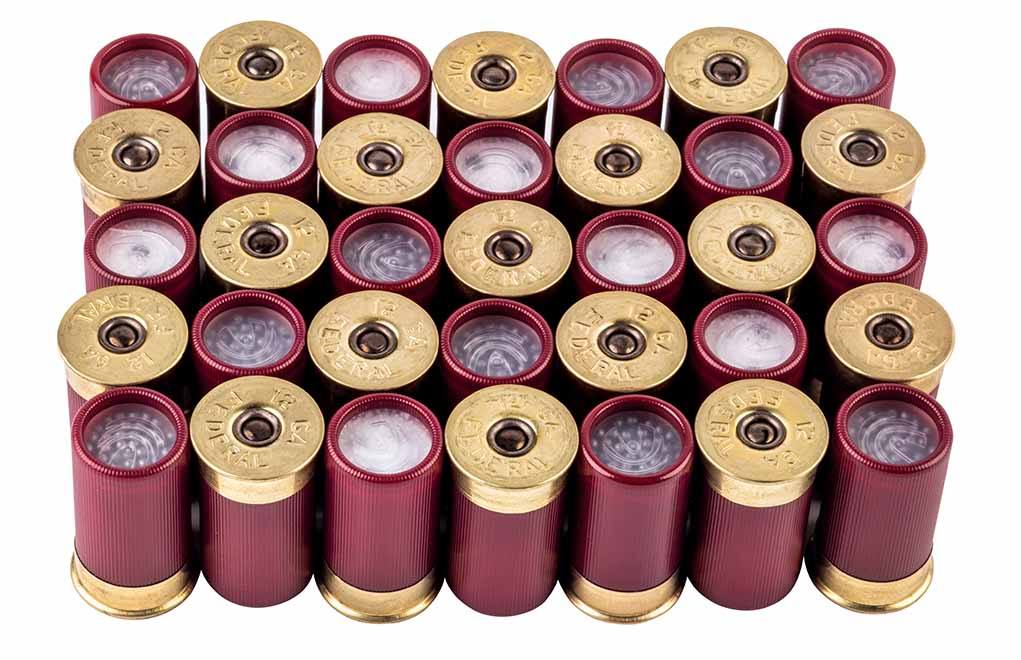
Federal Premium Ammo has jumped into the small smoothbore ammo game this year with the introduction of 12-gauge Shorty Shotshells. The ammunition maker has three offerings in the 1 ¾-inch shells – No. 8 shot (15/16 ounce), No. 4 buckshot (15 pellets) and a rifled slug (1 ounce). That should cover a fairly wide spectrum of applications, at least most of which you’d apply the likes of a Shorty Shotshell.
Despite their small size, the shells have similar performance to 3 ¾-inch loads, with the No. 8 shot leaving the muzzle at 1,145 fps and the buckshot and slug hauling out at 1,200 fps. Of course, with smaller overall payloads. Shorty Shotshells are also fairly light on the pocketbook, No. 8 shot loads running $5.95 for a box of 10 and the buckshot and slugs running $11.95, also for a box of 10.
The issue with abbreviated shotshells – Federal or otherwise – is their ability to function in a pump or semi-auto shotgun. While such ammo ups a smoothbore’s firepower, it also has a tendency to misfeed. Federal recognizes this and urges the use of Shorty Shotshells in break actions or single-shot shotguns. Certainly, this moots any potential capacity improvements. However, you still have a handy shell, which is easier to carry in bulk in a pocket and is right around a stiff breeze in the recoil department.
Looking to go armed, but are stuck in the weeds as to what to arm yourself with? Here are 20 of the best concealed carry gun options that will keep you on the defensive.