Home Blog Page 161

If You Had To Pick Just One Cartridge, What Would It Be?

6

Choosing an all-around cartridge requires a bit of honest soul searching.

How to pick an all-around cartridge:

  • Accept no one cartridge does it all.
  • Figure out what class of game you'll hunt most.
  • Consider the overall availability of the cartridge.
  • Choose one you are comfortable with and can master.

I’m often asked by prospective rifle buyers which cartridge to choose for an all-around hunting rifle. It’s a difficult question to answer, because everyone’s bucket list is different, and there are so many good choices on the market today. Some like the traditional, highly popular cartridges, and some prefer to walk a different path — and it’s that variety that makes the decision so interesting.

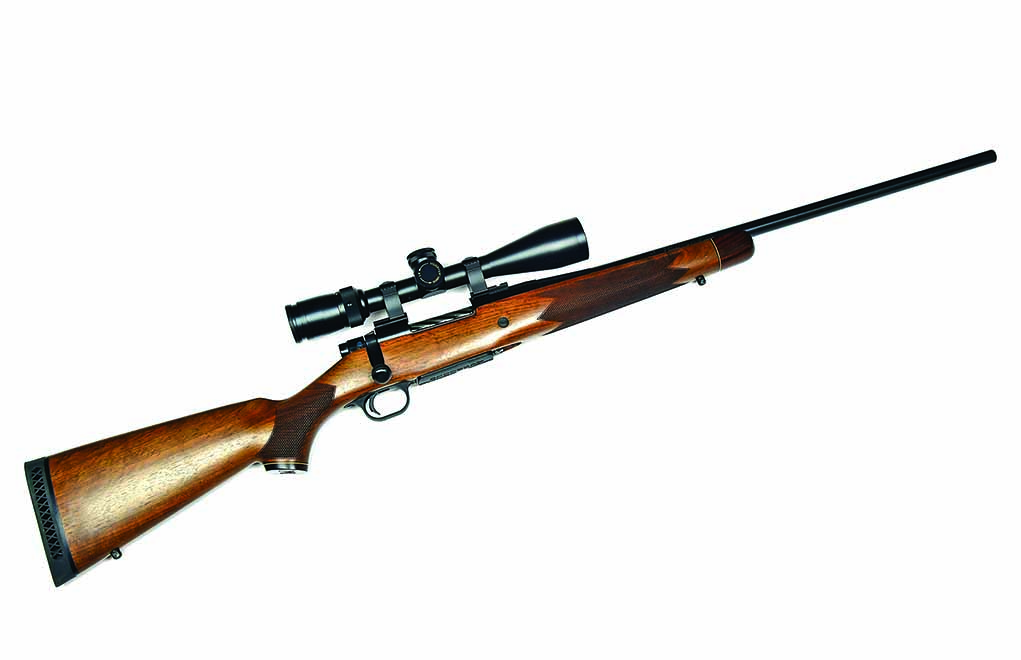
All-Around-Cartridge-10

To answer the question properly, we’ll need to identify exactly which species and hunting situations you’ll anticipate the rifle will handle, and then move forward from there. If you’re an avid whitetail deer hunter and that’s your primary focus, the answer could lie in cartridges ranging from 6mm up to the .30 calibers, with many great choices in between.

The 6.5mm cartridges are a wonderful choice for the deer hunter, offering a flat trajectory and fantastic performance in the wind. They will neither pound your shoulder to bits nor generate a ton of bloodshot meat, providing you select one of the milder cartridges. Certainly, the .308 Winchester and .30-06 Springfield will also make a fantastic choice for the deer hunter, as the lighter 150- and 165-grain bullets give respectable hunting trajectories and plenty of horsepower for any deer, anywhere.

Likewise, any of the moderate 7mm cartridges are a good choice, as the 140- to 160-grain bullets make wonderful deer medicine. It may come down to availability, which will explain the continued popularity of the .30-06 Springfield and .308 Winchester (or does the success of the cartridge dictate availability?), but if you choose a 7×64 Brenneke — a cartridge certainly worthy of the “all-around” moniker — you’re most definitely going to have trouble finding ammunition at a rural sporting goods store.

If you want your cartridge to handle species larger than deer, the rifle game changes, as does the definition of the all-around cartridge. If your dreams include elk, moose and bear, perhaps the minimum bore diameter needs to increase slightly. The 6.5mm through .308-inch calibers have certainly taken the larger ungulates cleanly, but for me a sensible all-around choice starts at 7mm, as the capability to launch the 175-grain bullets makes a lot of sense. The .280 Remington, 7mm Remington Magnum, .30-06 (again) and .300 Winchester Magnum all make perfect sense, mainly due to the balance of manageable recoil and energy delivered.


More ammunition articles:


Bump up to dangerous game, and you’ll meet yet another definition of “all-around.” Brown bears, bison, water buffalo, elephant, Cape buffalo and other big beasts require a different level of power. Most of the African countries have a caliber minimum of .375-inch, and while that makes sense, there a number of choices of cartridges within that bore diameter and the neighboring .40 calibers. Likewise, if Africa and its legal minimums are not something that appeals to you, the choice may change yet again, with the .338 Winchester Magnum and .35 Whelen neatly handling the big bears and large moose as well.

Again, this is a highly subjective topic. Let’s look at some of the classic scenarios, so you can choose your own in a smart, effective manner.

Worldwide: One And Done

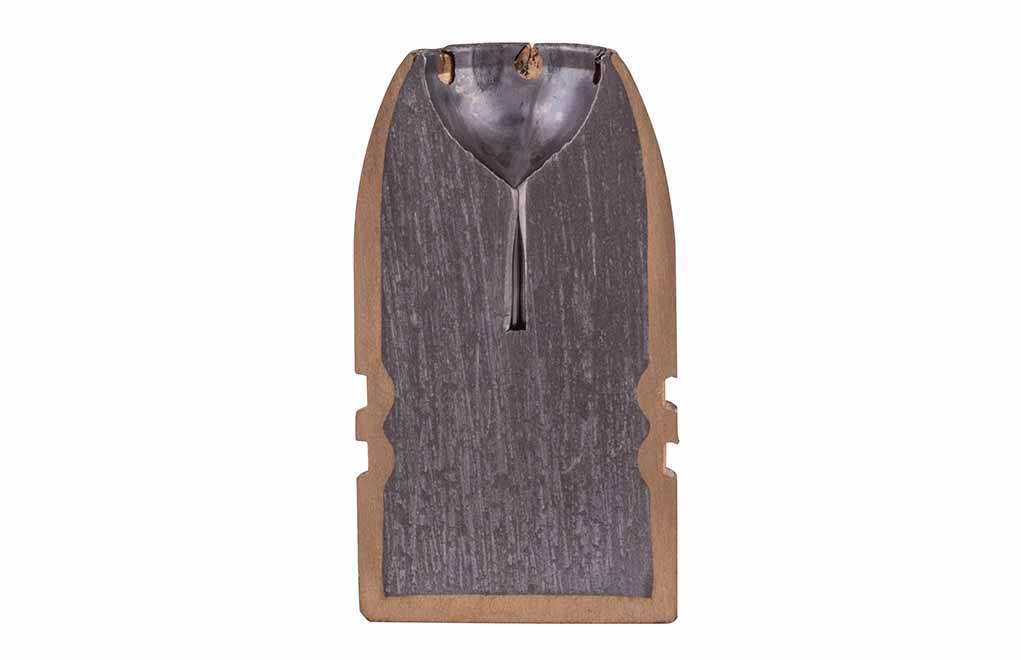
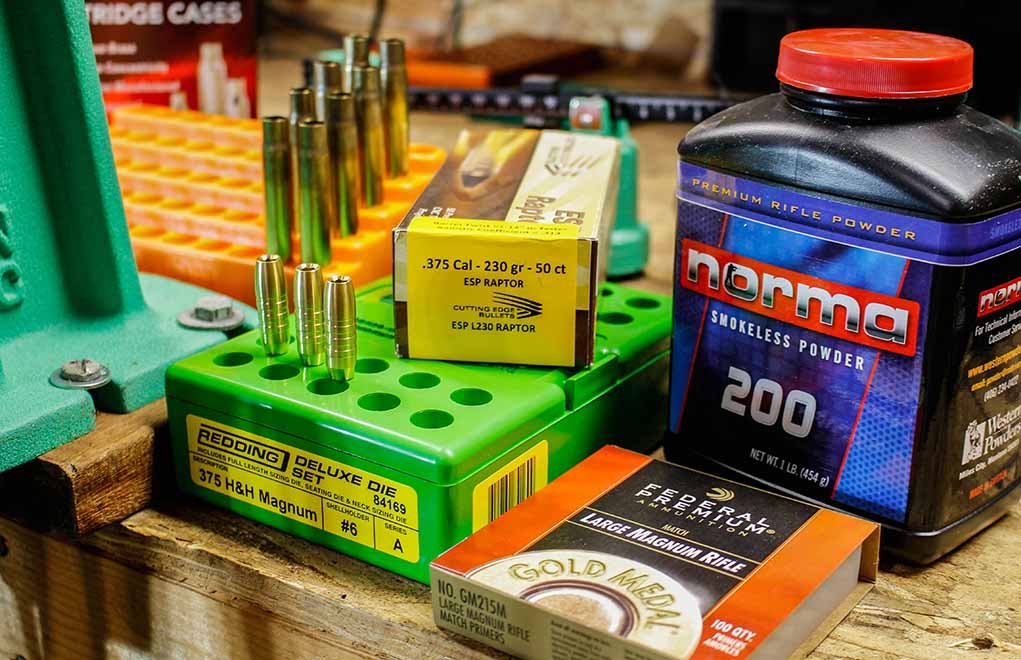
If you’re sincerely after one rifle to hunt the entire world, there are very few choices. The .375 Holland & Holland Magnum — while it will handle a bull elephant just fine — is actually a flat-shooting rifle that makes a logical choice for smaller game, including many of our species here in North America. The 300-grain bullets are a perfect choice for brown bears, including the huge Kodiak, as well as making an excellent moose rifle. The lighter bullets — say 250, 260 and 270 grains — will handle elk and moose, as well as black bears. Load a monometal 230- or 235-grain bullet in the .375 H&H and you’ll see muzzle velocities of around 2,800 fps, making for a flat-shooting rifle along the lines of a .338 Winchester Magnum. I have buddies who love their .375, and they take them out for deer hunting annually, resulting in clean kills (obviously) and very little ruined meat.

The .30-06 Springfi eld offers a wide diversity of bullet choices, as well as a wide diversity of hunting applications.

Before you cock an eyebrow and question the sanity of the author, please realize that the .375 H&H is considered the perfect cartridge for a mixed-bag safari, and that in addition to Cape buffalo and elephant, it’s responsible for a large number of impala, bushbuck, reedbuck and even duiker and steenbok, all of which are smaller than our whitetail deer. If you feel that a 300-grain bullet is a bit too light for the biggest game animals, look to the 350-grain Woodleigh Weldcore and FMJ. They are available as a component bullet and as loaded in the Norma African PH ammunition line.

Many of the same attributes of the .375 H&H can be said about the .375 Ruger, though ammunition is nowhere near as plentiful. That most certainly plays a role in choosing an all-around cartridge, especially while travelling abroad. The various .416s, and I’ll include my personal favorite .404 Jeffery, offer a similar level of flexibility, but with an emphasis on the heavier end of the spectrum. The 400-grain bullets handle the big game perfectly, and with a marked improvement, but they give up the lower end of the spectrum. They bottom out at about 300 grains, while topping out at 450 grains, but they are geared much more toward being a true big game rifle. For the most flexibility, look to the .375 H&H.

North America: One And Done

If staying in North America and you want to purchase a rifle for all of our game including the biggest bears, think about a cartridge that has the capability of launching a 250-grain bullet of decent diameter. Yes, I know that many of the biggest bears are killed each year with a good old 180-grain .30 caliber, but that’s not nearly as effective as one of the .338s or .35s.

The .243 Winchester can be a great all-around cartridge for the deer/coyote hunter, but it will have trouble handling larger game.

Though a rarity, I feel the .338-06 A-Square makes a great all-around choice, as it can use bullets from 176 grains (in the Cutting Edge Raptor) up to 250 grains. But, it hasn’t really caught on — for reasons I can’t explain — so getting ammunition can be difficult, but it does exist. The .338 Winchester Magnum — once touted as the definitive elk cartridge — is absolutely a candidate for the North American all-around cartridge. It has the aforementioned range of .338-inch bullets and it can handle some of the 275-grain component bullets if you really want to get heavy.

The .35 Whelen and .358 Norma Magnum will push the 250-grain .358-inch bullets to respectable velocities, handling North America’s heavyweights, but you give up quite a bit on the low end, and I feel the .338 Winchester’s popularity makes it the most readily available of this lot. It can also be snotty off the bench — I prefer the .375’s recoil over the .338 Winchester’s — but it is very effective in the field.

At the very bottom of the spectrum for the heavyweights, I feel the .30-caliber cartridges with 200- or 220-grain bullets can get the job done. If you’re the guy who plans maybe one or two hunts for the great bears of the north and absolutely refuses to purchase another rifle for the trip, a .30-06 or .300 Winchester loaded with heavy, premium bullets will serve as an all-around choice.

Deer: One And Done

The .35 Whelen is a cartridge capable of handling large North American game.

Coming down to the deer/sheep/elk/antelope class, there are a multitude of choices that will serve. Bullet construction has certainly changed the old adages and caliber minimums; the bullets that our grandfathers used were certainly not as tough as the selection we have here in the 21st century. Jack O’Connor championed the .270 Winchester, and he was heavily criticized by Elmer Keith — but had Keith seen the modern bullets we have today, he may very well have changed his mind. And yes, the .270 Winchester is a perfectly viable elk gun. For elk, I feel a bullet weighing between 140 and 250 grains, of appropriate sectional density (above 0.270) should get the job done very well.

Even among the deer hunting cartridges, the species and location of deer can affect the choice. A whitetail buck in the south is not the same as a whitetail buck in Saskatchewan, and while a 6mm cartridge may be perfectly adequate for the former, I’d recommend a larger bore for the latter. Add in the possibility of larger-bodied mule deer, or a distant shot on a Dall’s sheep, Coues deer or pronghorn antelope, and you have to really think about what you’re going to purchase.

As I stated earlier, I like the 6.5mm cartridges for an all-around deer gun, and I like the 7mms and .30s just as much. For an all-around cartridge in this class, I’d like it to be able to use bullets between 120 and 180 grains, and to be able to retain at least 1,000 ft.-lbs. of energy at the 400-yard mark. This includes the faster .25 caliber cartridges through the .30s, with a muzzle velocity between 2,500 and 3,000 fps with a bullet on the heavier side of average should suffice.

Looking at all these ideas, it’s really no wonder why the .30-06 Springfield, .308 Winchester, 7mm Remington Magnum, .270 Winchester, 6.5 Creedmoor and .300 Winchester Magnum remain such fantastic sellers: They cover quite a few bases and deliver all the performance that many hunters will ever need. It’s also no surprise that the .375 H&H Magnum remains so popular among the Northern hunters here in North America and among so many African hunters. All these cartridges are relatively mild, in comparison to the huge-cased super-magnums, yet offer a definite ballistic advantage over the .30-30 Winchester and .45-70 Government, which are constrained by flat-nose bullets and a rainbow-like trajectory.

Availability Matters

The .375 H&H Magnum is equally at home among large North American game as it is among large African game.

In my opinion, to classify a cartridge as an all-around choice, ammunition needs to be readily available. There are many choices that offer a ballistic formula which mimics or equals those we consider a perfect all-around choice, which are simply difficult to obtain. Certainly the 7mm WSM offers a sound ballistic formula; a game animal would never know whether the 7mm bullet was launched from a WSM cartridge or a belted Remington Magnum. But owning a rifle chambered for 7mm WSM comes with the issue of finding a reliable source of ammunition.

The same can be said for some of my other favorites, which are admitted rarities. The 6.5-284 Norma — which is my personal favorite among the herd of 6.5mm cartridges — has fewer choices among the factory loadings than I would like to see, and while I can handload all the ammunition I’ll ever need for it, it’s hard to find on the shelves of smaller gun shops. My beloved .318 Westley Richards, an admitted rarity with wonderful and highly usable ballistics, has but one factory offering, and the availability of that is spotty at best. The 7×64 Brenneke I mentioned earlier is the ballistic twin of the .280 Remington and perfectly viable for hunting the majority of the world’s popular game animals, but it suffers from the same ammunition drought. The .300 Holland & Holland Magnum sits comfortably between the .30-06 and the .300 Winchester — just about perfect as an all-around cartridge — but it has been pushed off the stage.

Should we all own at least one rifle in the top-selling hunting calibers? It might not be a bad idea, especially if you plan to travel, but I’ve always championed the oddballs as well as the safe, sensible choices. My choices for a two-gun traveling battery began as a .300 Winchester and .375 H&H, but somehow morphed into a .318 Westley Richards and .404 Jeffery over the years. Either combination would suffice, but I appreciate the nostalgia of the “different” cartridges, especially those of yesteryear that have fallen to the wayside. I doubt there’s a hunting situation where either pair would have an advantage, considering the shooting distances on my hunts are usually within 200 yards. But, undeniably, the ammunition for the .300 Win. Mag./.375 H&H combo is much easier to come by than for the latter.

So, when shopping for your next purchase, sit down and mentally evaluate exactly what you’ll be asking of the cartridge. Even if you hunt in the thick woods, having a rifle with the capability of handling a bean-field shot isn’t a bad thing. I know I’ve ended up hunting places I could never have imagined as a younger man, and it was nice to be able to simply change the bullet style or shape to take my old favorite “all-‘rounder” to some new hunting scenario, affording me the comfort of a rifle I know very well, albeit in a strange land.

All-Around-Cartridge-12
The author’s African battery began as the .330 Winchester Magnum and .375 H&H [left], but it has morphed into the less popular, but nostalgic, .318 Westley Richards and .404 Jeffery [right].
Oftentimes, the top-selling cartridges are selling so well for a reason: They really do get the job done across the board.

Editor's Note: This article originally appeared in the July 2018 issue of Gun Digest the Magazine.
Picking Up The Pace With The Ripcord Speedloader

0

Slight, light and effective, the incredibly simple Ripcord Speedloader represents the next step in defensive revolver technology.

How the Ripcord Speedloader give you an edge:

  • Reloads take a split second.
  • Lightweight compared to other speedloaders.
  • Smaller circumference and height.
  • Intuitive grip and rip action.
  • Extremely economical.

Revolvers are reassuring. Yes, contrary to popular belief, they can malfunction. But, more times than not a trigger pull results in a bang, not a click – particularly if properly maintained. This clockwork reliability, more than anything, is what keeps the good ol’ wheelgun a top choice for a conceal carry, especially for those who desire a simpler manual of arms.

Ripcord-Speedloader

Well, almost. One area where revolvers lag behind in the simplicity department, at least compared to their semi-automatic cousins, is reloading. Heaven forbid five or six shots don’t do the job, because getting one back into the fight is a molasses affair in contrast to pistols. Certainly, speedloaders simplify the process and, as their name promises, hustles up reloading. Yet, another problem crops up with most of these options in their unwieldiness.

To a degree, CK Tactical has lessened these issues with the introduction of the Ripcord Speedloader. Slight, light and effective, the incredibly simple system represents the next step in defensive revolver technology. I’d hasten to say, the only drawback of the Ripcord Speedloader is someone didn’t cook up the concept years ago.

Essentially the Ripcord is a strip of molded plastic, with retention clips for five or six rounds of .357 Mag. or .38 Spc. ammunition, that locks in on itself to form a ring. This makes it fairly reminiscent of traditional HKS and Safariland speedloaders, but this is also where the similarities end. Operation of CK Tactical’s device is much simpler, only requiring a pull of the locking tab to release the rounds. And it only takes a split second to achieve, in a much more intuitive fashion. There’s no button to search for or dial to crank. Furthermore, the motion of emptying the Ripcord also clears it from the cylinder, thus makes it quicker to close and get back to its job.


More Concealed Carry Articles:


While speed is what will catch most shooters’ attention with the Ripcord, it’s not the only reason to give the speedloader a look. Convenience is perhaps its greatest asset. Given it’s a strip of plastic, it adds virtually no weight to what you’ll carry. Additionally, since there’s no release button, its stature is considerably less than traditional models – merely the length of your ammunition is all you’ll contend with. Also, it has an overall smaller circumference.

Yes, it still forms a bulky circle, which is always a challenge. But overall it’s much more manageable than most traditional options.

The downside to the Ripcord, it does require practice to master. You should expect that with any concealed carry gear. And, the speedloader doesn’t appear as if it would play well with tight-fitting clothes where retrieval might unlock the unit. This is solved easily enough with carrying the Ripcord in a coat pocket or opting for different apparel – nothing new for armed citizens.

Overall, though, the Ripcord Speedloader seems to have a wealth of potential, especially for the price. At $10 for a pack of two, there are few other true speedloader options out there that can compete.

Nowadays, new innovations for the age-old revolver design are rare. That comes with the territory. But CK Tactical has certainly found a way to push the wheelgun’s defensive usefulness forward with the Ripcord Speedloader. That’s no small accomplishment.

5 Shot Model Fits:
Charter Arms, Rossi: 68; Ruger: SP101, LCR; S&W: 36, 37, 38, 40, 42, 49, 60, 340, 360; Taurus: 85, 605, 651, 851.
6 Shot Model Fits:
Charter Arms; Chiappa: Rhino; Dan Wesson; Rossi: 971, 951, 851, 351; Ruger: GP100; S&W: 10, 12, 13, 14, 15, 19, 64, 65, 66, 67, 586, 686, 581, 681; Taurus: 606, 65, 66, 80, 82.
MSRP: $10 pack of two.

For more information on the Ripcord Speedloader, please visit: www.cktactical.com/.

Video: The Guns That Made It Through 9/11

0

Beaten and battered, these 9/11 survivors serve as a tribute to the heroism of first responders that day.

As expected from a renowned institution such as the NRA Museum, there is an arsenal’s worth of world-class and pristine guns. Yet, among the most cherished firearms in the collection are two that break that mold. They are beat-up, scorched and bearly met what would most consider the definition of a gun any longer. Yet, their history and what they survived make them as unique as the men who carried them.

New York Police Officers Walter Weaver and John D’Allara each rushed into the World Trade Center after the terror attacks of 9/11. Working to save trapped victims, like many first responders that day, ended up costing both them their lives when the towers collapsed. Recovered from the ashes, Weaver’s Model 640 backup revolver and D’Allara’s 5906 service pistol now hold places of honor in the Museum’s law enforcement display.


More Gun Digest Videos:


Finishes fire stripped and frames battered, the handguns aren’t much to look at, especially if you heart thumps over the expertly maintained. But aesthetics are beside the point with these guns. Beaten as they may be, the guns speak volumes to the valor and courage shown in the face of one of the country's most tragic events. And they go way beyond the men who carried them, serving as a reminder of all the men and women who lost their lives so others might survive. 

For more information on the NRA Museum, please visit: www.nramuseum.org.

Small But Mighty SAINT Edge Pistol

0

Optimized for CQB, Springfield Armory's SAINT Edge Pistol offers big performance in a small package.

What are the SAINT Edge Pistol's features:

  • 24.6- to 28.5-inch length
  • Around 6-pound weight
  • 10.3-inch barrel
  • Adjustable flip-up sights
  • Maxim Defense CQB 4-positions brace
  • SA single-stage match trigger
  • Carbine-length gas system
  • Full-length M-LOK compatible handguard

One of the more dynamic gun designs to gain traction in recent years is the AR pistol. Certainly, it occupies strange territory — too big to efficiently conceal, too small to get everything out of a rifle cartridge. Yet, despite this awkward position, the AR pistol is vastly useful. Outside of short-barreled rifle, no other gun provides a more overwhelming advantage in CQB — where nimbleness and mobility can win the day.

Saint-Edge-Pistol-2

Springfield Armory is taking another crack at this configuration with what amounts to a rather intriguing addition. A shrunk down version of its top-line AR, the SAINT Edge Pistol aims at the premium end of the market and shoots for the same level of performance. Does it? That’s for time to tell, but it certainly boasts a heck of brace system.

That’s the eye-catcher of the rig, a Maxim Defense CQB brace with plenty of play in adjustment. Shooters have a full 2 inches of length at their disposal, all but ensuring they have a solid handle on the 5.56 NATO pistol, whether they shoot two handed or one. Furthermore, it’s anything except flimsy, with twin steel struts making up the heart of the system.


More Gun Articles:

  • Kimber Goes Striker-Fired With EVO SP Line
  • Mossberg Expands 590 Shockwave Line
  • SCAR 20S Brings MK20 SSR Accuracy To Civilians
  • Springfield Armory Releases 10mm XD(M)

Other notables on the SAINT Edge Pistol include fully adjustable flip-up sights, full-length M-LOK compatible handguard, lightweight (just under 6 pounds), Accu-Tite tension system receivers, forward handstop and adjustable gas block. The final feature is nice if you ever happen to thread on a suppressor. Though, getting all these goodies comes at a price, with the SAINT Edge Pistol ringing up at $1,559.

From the company:

GENESEO, ILL. – Springfield Armory’s brand new SAINT Edge Pistol combines the most popular features of the most premium ­SAINT in the lineup with the compact shootability of a pistol platform.

With the same features that make the SAINT Edge a premium rifle, the SAINT Edge Pistol in 5.56 allows for maximum portability and ease of use in close quarters. The lightweight billet-machined lower receiver compliments the patent-pending full-length free float handguard, and the 10.3” lightweight 1:8 twist CMV barrel creates a comfortable, quick-handling and versatile platform. The rugged Maxim Defense CQB adjustable pistol brace reduces size, stabilizes recoil, and enhances accuracy in one or two-handed operation.

The lower receiver is machined, rather than forged, from aircraft grade 7075 T6 billet aluminum, and features Springfield Armory’s proprietary adjustable Accu-Tite™ tension system, designed to eliminate movement between the upper and lower receivers. A crisp SA match short reset trigger system provides the feel of a competition trigger in a tactical platform. The flat-top upper receiver is Type lll hard-coat anodized 7075 T6 aluminum, with a forward assist and M4 feed ramps for reliable cycling. The enhanced M16 bolt carrier group is finished with super-hard Melonite® and carries a premium 9310 HPT/MPI steel bolt, superior to Mil-Spec. The charging handle is Springfield Armory’s exclusive mid-size design for enhanced operation.

The patent-pending slim free-float aluminum handguard is M-Lok compatible to give you an almost unlimited choice of accessories, with multiple mounting points for slings, lights and other equipment. An aluminum forward hand stop is included to keep your support hand clear of the muzzle. Under the handguard, a carbine-length, multi/mode adjustable gas block allows for tuning to specific ammo or suppressor use, and is pinned to the barrel for reliable operation, eliminating the concern of the block coming out of alignment. Unlike other “optics ready” pistols that are unusable out of the box, the Edge Pistol comes complete with front and rear spring loaded flip-up sights, allowing you to take this SAINT immediately to the range. The ½ MOA windage adjustable dual aperture rear sight, and ½ MOA elevation-adjustable front sight can be folded down or used to co-witness with optics.

The compact SAINT Edge Pistol is the perfect companion for personal defense. At just 24.6” with the brace collapsed, and weighing only 5 lbs, 11.5 ounces, the newest SAINT pistol from Springfield Armory delivers a lot of power in a small package.

Saint-Edge-Pistol-3
SAINT Edge Pistol Specs:
CALIBER: 5.56x45mm (.223 REM)
LENGTH: 24.6″ Collapsed / 28.5″ Extended
WEIGHT: 5 lbs 11.5 oz
UPPER RECEIVER: Forged Type III Hard Coat Anodized, 7075 T6 Aluminum
LOWER RECEIVER: 7075 T6 Billet w/ Accu-Tite™ Tension System
BARREL: 10.3″ Lightweight Profile CMV, 1:8 Twist, Melonite®
GAS SYSTEM: Carbine Length .625, SA Low-Profile Adjustable Gas Block
TRIGGER: SA Match Single Stage w/ Short Reset
SIGHTS: Front: SA SPring Loaded Flip-Up, 1/2 MOA Elevation Adjustable, Rear: SA Spring Loaded Low Profile Flip-UP, Dual Aperture Sight, 1/2 MOA Windage Adjustable
TRIGGER GUARD: Integral to Receiver
PISTOL GRIP: Bravo Company Mod 3
HANDGUARD: M-Lok Aluminum SA Patent Pending Free FLoat w/ SA Locking Tabs & Forward Hand Stop
FOREARM BRACE: Maxim Defense CQB, Adjustable 4-Positions
BUFFER ASSEMBLY: Maxim System
RECEIVER EXTENSION: Integral w/ Maxim System
CHARGING HANDLE: SA Mid-Size
BOLT CARRIER GROUP: Enhanced M16, Melonite®, HPT/MPI 9310 Steel Bolt
MAGAZINE: 1 – 30 Round Magpul PMag Gen M3
CASE: Soft Pistol Case
MSRP: $1,559.00

For more information on the SAINT Edge Pistol, please visit: www.springfield-armory.com.

Aussie-Style Accuracy With The Lithgow LA102

0

The Lithgow LA102 has no problem dishing out sub-MOA pills, one after another.

What the Lithgow LA102 offers:

  • Cold-forged, military-grade steel barrel.
  • High-tensile steel receiver.
  • Three lug bolt.
  • Adjustable length of pull.
  • Available in .223 Rem., .243 Win., .308 Win and 6.5 Creedmoor.
  • 2.9-pound trigger pull.
  • Picatiny rail for optics addition.
  • Threaded Muzzle.
  • Three-postion thumb safety.
  • Walnut Stock.

One of the more dynamic gun companies of the past decade has been Legacy Sports of Reno, Nevada. Once known primarily as the importer of the Howa line of centerfire rifles and barreled actions, the company has gradually diversified to where in addition to Howa, it now represents Lithgow Arms, Webley & Scott, Escort, Pointer and Citadel, which together have virtually every firearm type covered — from semi-auto, slide action, O/U and break-open single-shot shotguns, to bolt-action rimfire and centerfire rifles and M1911 handguns. And with their NikkoStirling line, Legacy has riflescopes and other electronic sighting devices as well.

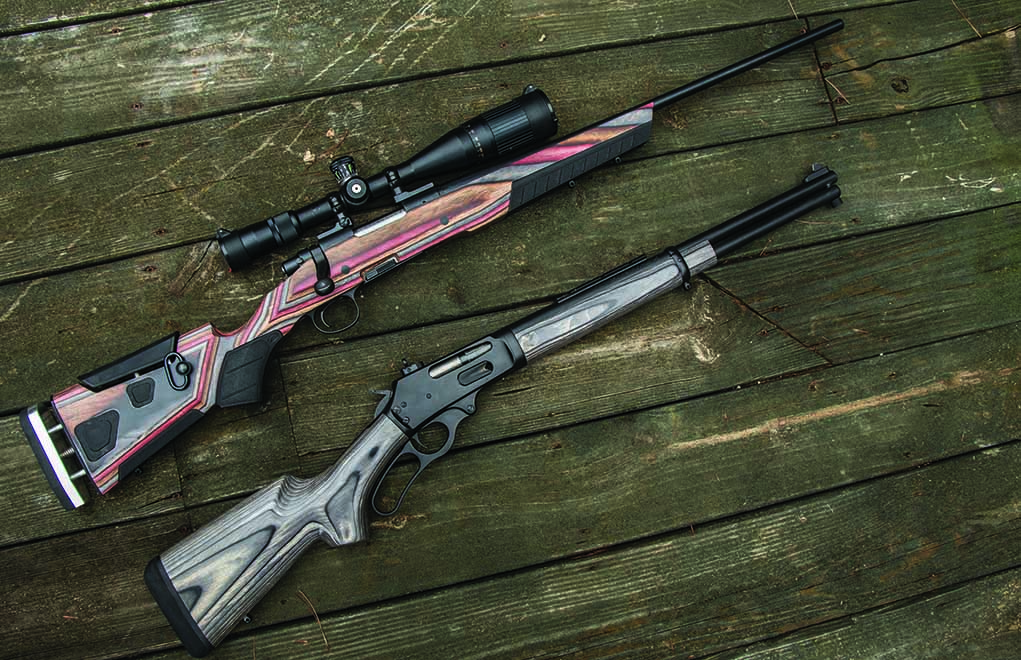
The Lithgow LA102 Laminate in .308 Win. as tested with a Bushnell Elite Tactical 4.5-18x44mm scope in Warne QD lever rings weighed 10½ pounds.

Legacy’s latest acquisition is the Lithgow line of bolt-action rimfire and centerfire rifles from Australia. That this company would introduce a line of sporting rifles was pretty much an inevitable no-brainer, because Lithgow has been Australia’s national armory since 1912. From Gallipoli to Afghanistan, Australian Defense Forces have carried Lithgow small arms into battle.

The country’s current martial arm is the F90, a selective-fire assault rifle in 5.56×45 NATO that has gained quite a reputation among various armed forces and law enforcement agencies around the world. Lithgow, incidentally, is also the name of the town in New South Wales where the factory is located that employs 130 people.


More Rifle Articles:


For their bolt-action sporting rifles, Lithgow started with clean sheets of paper, the results of which are the Model LA101 Crossover rimfire and the LA102 centerfire, both of which were introduced last year. The Model 102 was originally introduced only in a black synthetic stock but it’s now available in a brown wood laminate as well. It, along with the 6.5 Creedmoor chambering, are new this year, but the Creedmoor won’t be available for another couple of months, so the .308 Win. version got the nod.

A Growing Fat-Bolt Family

Not surprisingly, the Lithgow folks chose to go with the “fat bolt” tri-lug system for the 102. I say “not surprisingly” because most of the truly new bolt-action rifles introduced in the United States and in Europe during the past decade have adopted this design approach. When coupled with a tubular receiver and an injection-molded stock, a highly accurate, serviceable rifle can be produced more economically than can your typical Mauser-type design.

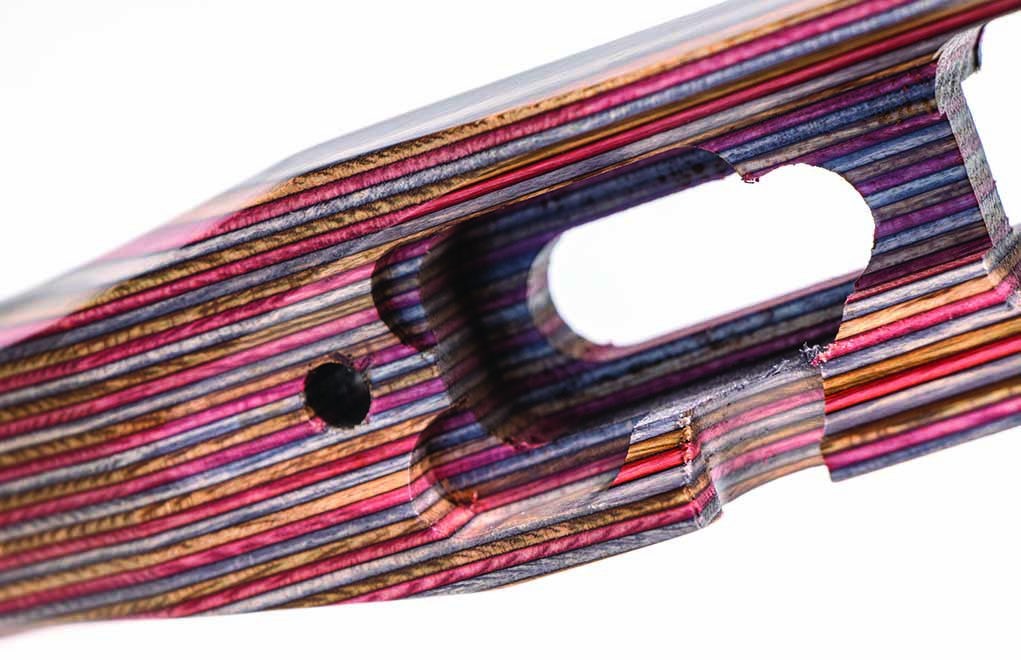
The rear of the receiver is machined to perfectly match the top line of the grip.

Two perfect examples are Winchester’s XPR and Ruger’s American, both of which are priced substantially lower than their flagship siblings — the Model 70 and M77 Hawkeye, respectively. That’s not to say that all rifles of this genre are “value priced” and selling in the $500 range. It’s just that if a manufacturer wants to produce a budget-class rifle, the fat-bolt tri-lug is the way to go.

In the case of the Lithgow 102, however, its suggested retail price of $1,499 has it competing with Weatherby‘s Mark V, Winchester’s Model 70 Super Grade and the pricier models in Browning’s X-Bolt line. You all know the defining characteristics: The bolt body is fatter than a Mauser-type bolt, allowing the locking lugs to be formed by relieving metal at the head.

The Bushnell Elite Tactical 4.5-18x44mm LRTS scope proved a handsome match and an enabler to the accuracy of the test gun.

However, inherent with the design is that the depth of the locking lugs is limited, so there has to be more of them. Normally there are three, but with the Austrian Roessler 6 there are two rows of three, and with the Weatherby Mark V Magnum, there are three rows of three for a total of nine locking lugs. The number of lugs notwithstanding, all are oriented on 120-degree centers, making for a shorter bolt rotation (handle lift). With there being no protruding lugs, only a round hole is needed for the raceway in the receiver, which allows closer tolerances between the two. The result is a much smoother and wobble-free bolt travel and faster-cycling action.

Under The Lithgow’s Hood

The 102’s receiver starts out as round bar stock, so it’s tubular. Lengthwise flutes are milled into the sides below the stock line to reduce weight, as are the facets milled into the upper sides of the receiver at the “10:30” and “1:30” positions to lend a hexagonal look. Like all other actions of this type, the ejection port is minimally sized to retain as much rigidity to the receiver as possible.

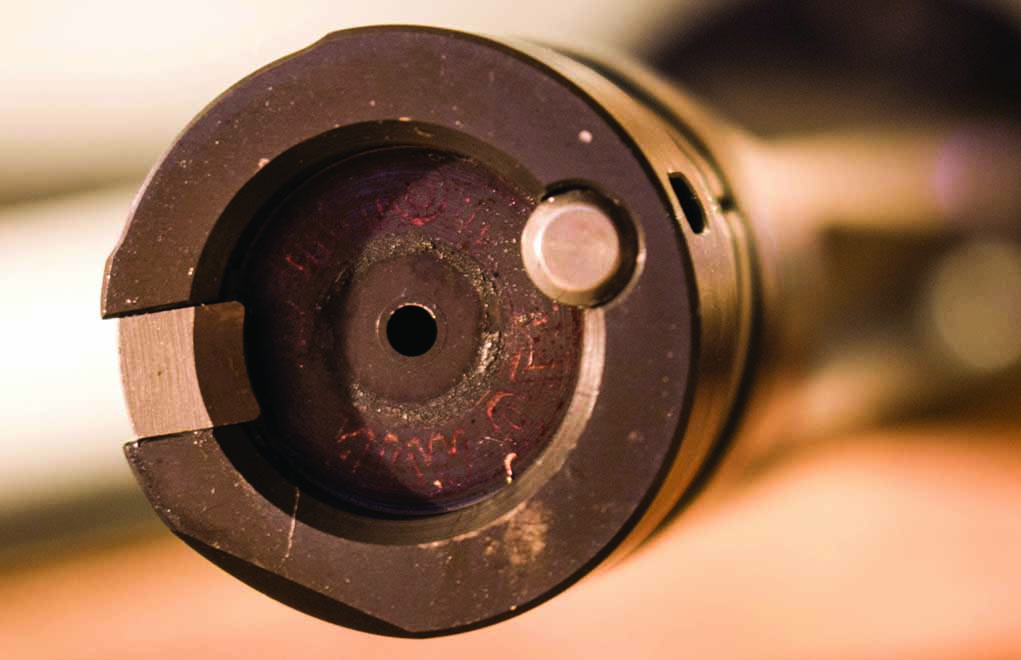
The bolt head of most tri-lug actions look exactly like that of the Lithgow 102.

The 15-slot Picatinny rail is so well machined that it can almost pass for being integral; in fact, the catalog states that it is integral, but it’s not. Unlike most tubular receivers, this one does not employ a separate washer-type recoil plate sandwiched between the barrel shank and receiver face like the Remington 700, Savage 100-series or Mossberg Patriot, among others. Rather, a simple transverse slot is milled into the underside of the receiver ring that engages a steel plate imbedded in the stock. It’s just another way of transferring recoil forces and it’s as effective as any.

The bolt stop/release is a simple pivoting lever at the left side of the receiver bridge that also serves as a bolt guide, without which the bolt would rotate freely once out of battery. This characteristic is shared by all fat-bolt systems. Like its 22-inch hammer forged barrel and bolt handle, the entire receiver is Cerakote finished in a matte silver that closely resembles raw stainless. It’s quite handsome.

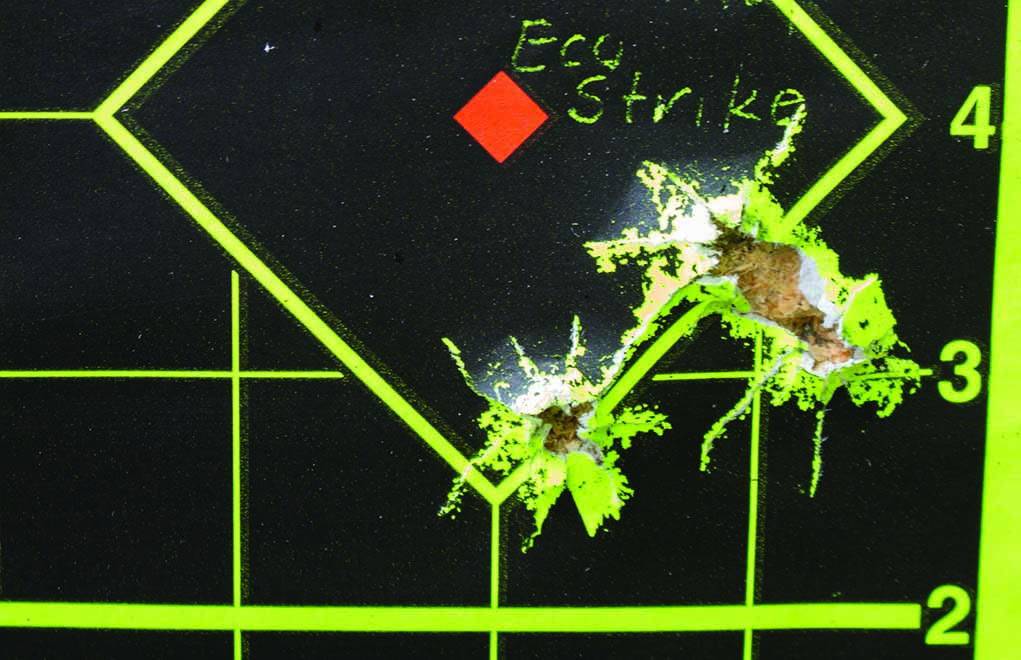
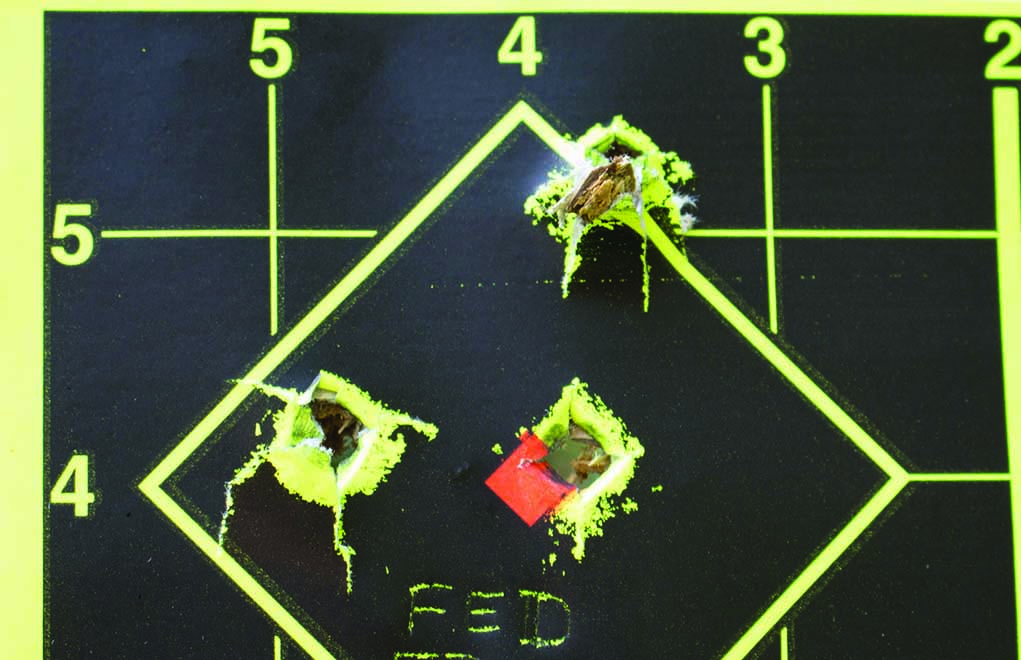
The test gun proved to be exceptionally accurate. Shown here are the three best groups, but the other two averaged 0.76 for a five-group average under 0.60 inches!

Looking at the head of the bolt, you could be looking at one out of a Winchester XPR, Ruger American, T/C Venture, Merkel M16, Franchi Momentum, Sabatti Saphire, Sauer 100 or a Steyr SM12, for that’s how similar are the bolt heads of tri-lug fat bolt actions! All have recessed faces, employ plunger-type ejectors, and all have their extractors sliding radially within a T-slot in the face of the right-side locking lug.

Here’s the bottom line: Once you commit to this design, there’s not a lot of room for originality. But, then again, it all works so seamlessly there’s no incentive to do so. That’s why there are now 17 tri-lug rifles available in the United States marketplace manufactured here and overseas that share the exact same design and functional characteristics.

The action and magazine are long enough for standard (.30-06 length) cartridges, so the latter is baffled for the shorter .223 Rem., .243 Win., 6.5 Creedmoor and .308 Win. chamberings.

Anyway, at the rear of the bolt we find the fire-control system, and it’s fully contained within the cap or shroud, thus being similar to that of a Model 70 Winchester. When pulled rearward from its 3 o’clock “fire” position to an approximate 4:30 position, the firing pin is locked, and so is the action. This makes it different from all other three-position Model 70-type safeties because it’s normally the middle position that engages the safety — but does not lock the bolt. In this middle position, the bolt can be removed, and by depressing a small button on the shroud, the firing pin assembly can be pulled free of the bolt body for routine maintenance. Rotating the wing to the 6 o’clock position keeps the safety engaged and locks the bolt.

Because the fire control system is fully contained within the bolt shroud, the fully adjustable trigger mechanism, which is housed in a massive non-ferrous casting, houses nothing but the trigger system. The adjustment screws are of course set and sealed at the factory, so I assume tampering would void any warranty.

The 102 comes with a 5/8 x 24 threaded and capped muzzle, thus is brake/suppressor ready. The .223 Rem. version is threaded ½ x 28.

With this gun, the recoil plate also serves as a bedding surface for the receiver ring. That, and a small steel platform that engages the rear action screw are the only support points for the receiver. It’s similar to true pillar bedding in that the receiver is supported at only two small contact points. The hammer-forged barrel is fully floated from the receiver on out.

The one-piece single-stack polycarbonate magazine is among the very best of its type. It weighs nothing, it’s virtually indestructible, it has integral feed lips that can’t be bent and it’s easy to charge. Cartridges feed almost effortlessly, and the magazine itself is independent of the stock. In other words, when lifting the barreled action free of the stock, the magazine and its release button come with it. The stock, then, serves only to protect the magazine and provide a handle for the rifle.

The magazine is independent of the stock. Many drop mags, especially European rifles, are stock dependent.

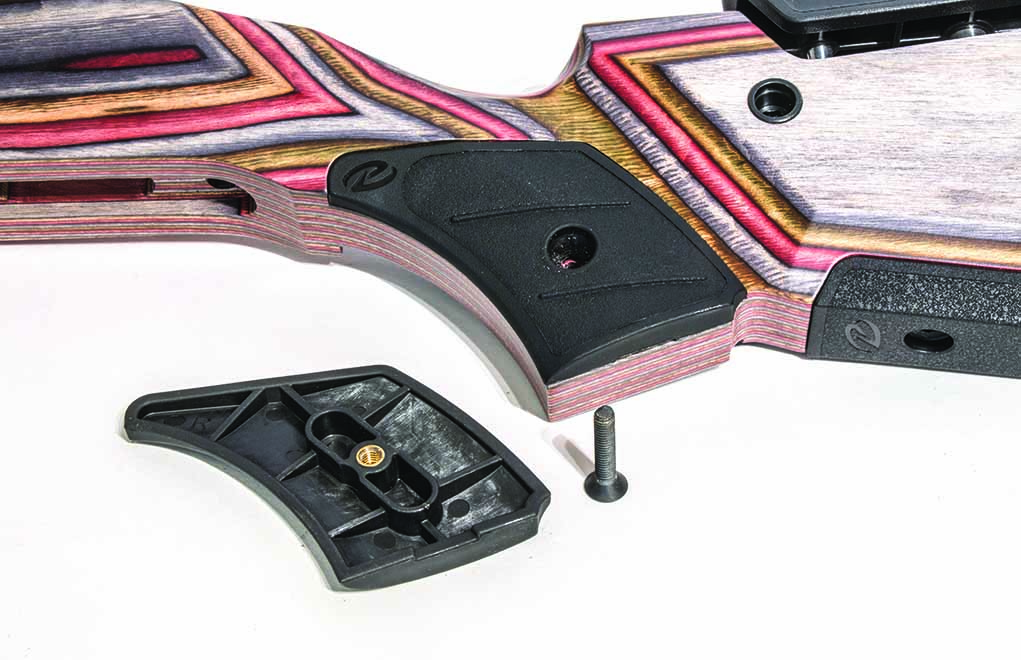
The stock is comprised of 1/16-inch veneers of firearms-grade maple laminate, which makes it just about as inert as a synthetic — and a helluva lot more attractive! Of course, laminates are a bit on the heavy side compared to synthetics of the same geometry — in this case, 8.2 pounds for the laminate vs. 7.7 for the synthetic.

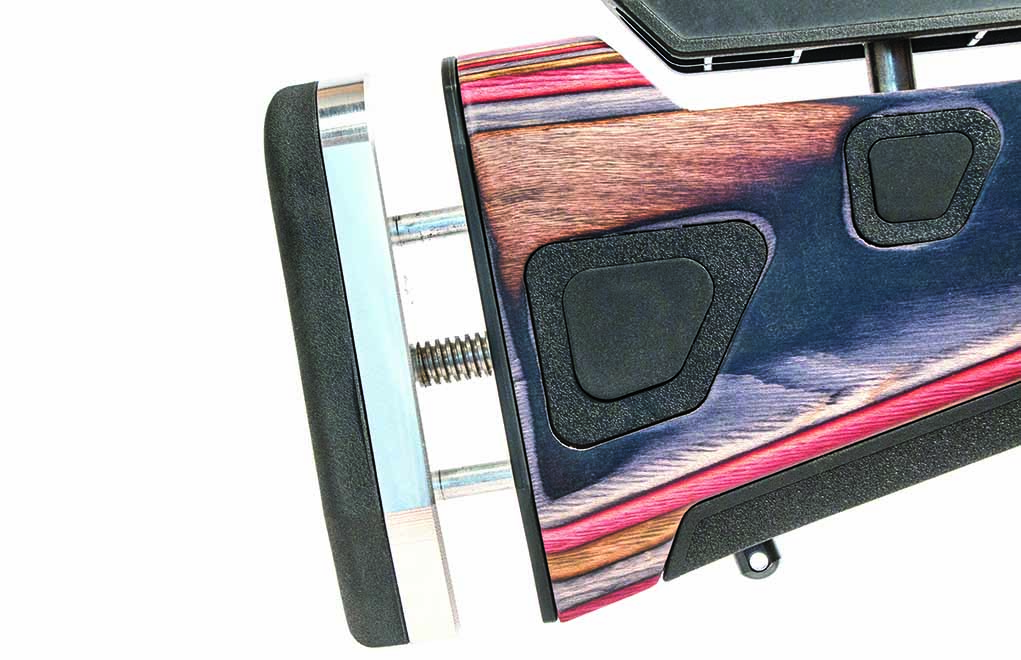
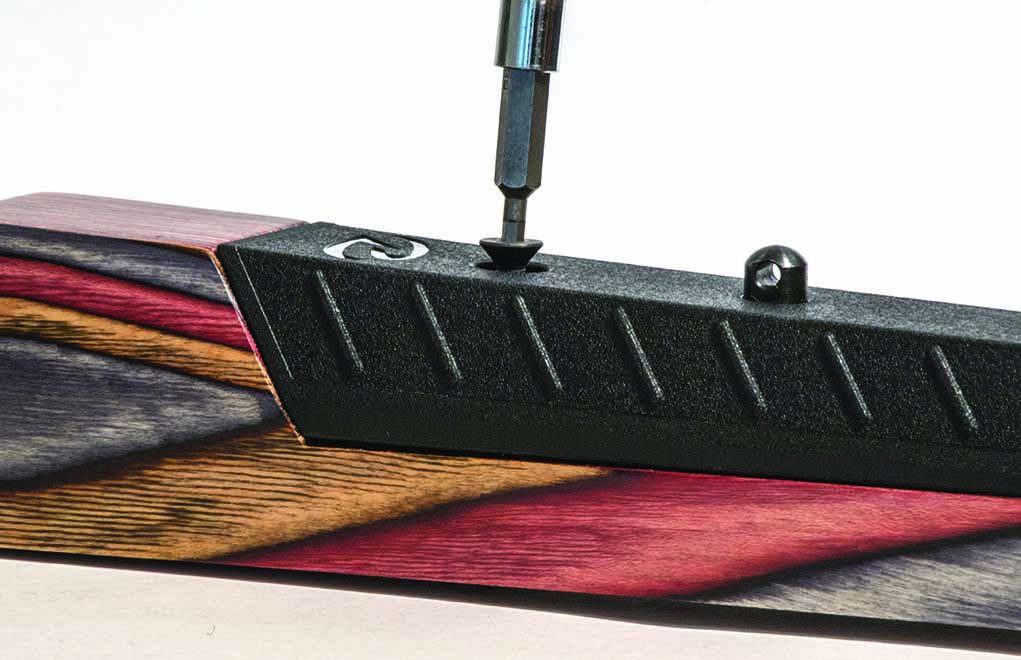
Lending a rather distinctive look to this rifle is the butt hook directly behind the grip cap. It does provide more room for the left hand to squeeze and slide the rear bag for minor elevation adjustments, but the area behind the cut-out is virtually parallel with the bench, so you don’t have near the adjustment latitude that an angled, conventional toe line provides. In addition, the stippled grip and forearm panels are attractive, functional and very well executed.

Testing For Accuracy

To ready the gun for a little range work, I mounted a Bushnell Elite Tactical 4.5-18x44mm scope using 30mm Warne QD lever rings. With the Bushnell aboard, the field-ready rig weighed exactly 10.5 pounds — so it’s not exactly a mountain rifle!

The .308 Win. is one of my favorite rifle calibers to test and evaluate; it’s very accurate, and with the many match loadings available, it can bring out the best in a rifle’s design. Also, it doesn’t dislodge your fillings when shooting off a bench, yet it’s enough gun for 90 percent of the world’s game.

Lithgow Shot Test

As it turned out, this particular example of the Lithgow LA102 proved to be more than accurate. The star was Federal’s Matchking load, and the first three 3-shot groups measured 0.42, 0.40 and 0.64 inches! Even with a slightly warm barrel, the last two groups still measured an impressive 0.72 and 0.79 inches, for a 15-shot average of 0.59 inches!

And as is evident from the attached data table, the Black Hills load wasn’t far behind. Even the Browning BXR “deer load” averaged just over 1 MOA, with the “worst” load posting a 1.35-inch average. That, sports fans, is an accurate huntin’ rifle!

The Bottom Line

It’s hard to find fault with this rifle. It’s beautifully made, the bolt glides like it’s on ball bearings, it feeds and extracts flawlessly, the trigger breaks like a glass sliver at 2.9 pounds, and it’s accurate as hell. At $1,499, it’s the priciest of the various tri-lug fat bolt rifles out there, but given what the gun offers, it’s fairly priced. The synthetic version lists at $1399.

The only regret was that we couldn’t yet get the 6.5 Creedmoor version for a trial run, for based on past experiences with that cartridge — and especially with Hornady ammo — we can only imagine what kind of groups we could have gotten. That’s combination you should think hard about trying for yourself.

Editor's Note: This article originally appeared in the August 2018 issue of Gun Digest the Magazine.
Kimber Tries Striker-Fired Again With EVO SP Line

0

With the aluminum-framed EVO SP line, Kimber aims to tackle the striker-fired market.

What are the EVO SP Models:

Best known for its stylish and dead-accurate 1911s, Kimber has shifted its attention an entirely different direction with its newest defensive pistol line. Continuing to hitch its star to recent trends, the company has gone striker-fired again with the EVO SP.

As expected from Kimber, the 9mms have all the moves to make them top EDC options. Swimming against the tide of polymer-framed pistols, one of the most notable features of the 7-round EVOs is the use of aluminum. Adding a level of ruggedness and resiliency in the frame, it doesn’t bog the pistols down in the weight department, with the EVO SP options each tipping the scales at a nimble 19-ounces — 18 ounces on the Custom Shop model.

Kimber is releasing four models in all, three of which — TLE, Two-Tone and CDP — are essentially the same, except cosmetic differences. Very similar to the other variations, the Custom Shop version does have a few other notable differences. As previously mentioned, the top-of-the-line model is lighter. Furthermore it also has Stiplex-inspired grips, backstrap and cocking serrations.


More Pistol Articles:


The pistols come with a load of other aspects certain to pique discriminating arm citizens’ interest, including TruGlo Tritium Pro night sights, 7-pound trigger, match-grade crowned barrel and G10 grips and backstraps. The trigger is heavy for a striker-fired, but, on the plus side, the guns are good lookers — it’s Kimber after all. And it being the Yonkers, NY concern, they also tend to the expensive side, especially for striker-fired: $856-$1,047.

Available since November, the newest striker-fired pistols to hit the market certainly break from the herd. But also gives shooters plenty of reason to consider a premium option in this style of pistol.

EVOSP_TLE
TLE Specs:
Height (inches): 4.03
Weight (ounces empty) with empty magazine: 19
Length (inches): 6.1
Magazine capacity: 7
Operation: Striker Fired
Frame Material: Aluminum
Finish: KimPro Black
Width (inches): 1.06
Front strap checkering: 30 LPI
Slide Material: Stainless Steel
Slide Finish: FNC Black
Barrel Length (inches): 3.16
Barrel Material: Stainless steel, match grade, Deep Crown and bushingless design
Twist rate (left hand): 16
Sights: Tritium night sights
Grips: Green/Black G10 with TLE Slant-Checkered Pattern
Back Strap: Green/Black G10 with diamond checkering
Trigger: Premium aluminum
Factory setting (approximate pounds): 6.0- 7.0
MSRP: $949

EVOSP_TT
Two-Tone
Height (inches): 4.03
Weight (ounces) with empty magazine: 19
Length (inches): 6.1
Magazine capacity: 7
Operation: Striker Fired
Frame Material: Aluminum
Frame Finish: KimPro Silver
Width (inches): 1.06
Front strap checkering: 30 LPI
Slide Material: Stainless Steel
Slide Finish: FNC Black
Barrel Length (inches): 3.16
Barrel Material: Stainless steel, match grade, Deep Crown and bushingless design
Twist rate (left hand): 16
Sights: Tritium night sights
Grips: Nylon with Diamond Checkering
Grip Size: Small, Medium, and Large
Back Strap: Nylon with Diamond checkering
Back Strap Size: Regular and Large
Trigger: Premium aluminum
Factory setting (approximate pounds): 6.0- 7.0
MSRP: $856

EVOSP_CDP
CDP
Height (inches): 4.03
Weight (ounces) with empty magazine: 19
Length (inches): 6.1
Magazine capacity: 7
Operation: Striker Fired
Frame Material: Aluminum
Frame Finish: KimPro Charcoal Gray
Width (inches): 1.06
Front strap checkering: 30 LPI, Carry Melt Treatment
Slide Material: Stainless Steel
Slide Finish: FNC Black
Barrel Length (inches): 3.16
Barrel Material: Stainless steel, match grade, Deep Crown and bushingless design
Twist rate (left hand): 16
Sights: Tritium night sights
Grips: Red/Black G10 with diamond checkering
Grip Size: Medium
Back Strap: Red/Black G10 with diamond checkering
Back Strap Size: Regular
Trigger: Premium aluminum
Factory setting (approximate pounds): 6.0- 7.0
MSRP: $949

EVOSP_CS
Custom Shop
Height (inches): 4.03
Weight (ounces) with empty magazine: 18
Length (inches): 6.1
Magazine capacity: 7
Operation: Striker Fired
Frame Material: Aluminum
Frame Finish: KimPro Charcoal Gray
Width (inches): 1.06
Front strap checkering: Stiplex Inspired
Slide Material: Stainless Steel
Finish: FNC Black
Barrel Length (inches): 3.16
Barrel Material: Stainless steel, match grade, Deep Crown and bushingless design
Twist rate (left hand): 16
Sights: Tritium night sights
Grips: Gray/Black G10 with Stiplex Inspired texture
Grip Size: Medium
Back Strap: Gray/Black G10 with Stiplex Inspired texture
Back Strap Size: Large
Trigger: Premium aluminum
Factory setting (approximate pounds): 6.0- 7.0
MSRP: $1,047

Video: William Brophy’s .50-Caliber Sniper Rifle

0

An early example, William Brophy's improvised .50-caliber sniper rifle nonetheless got the job done.

Like the dropping of Thor’s hammer, the .50 BMG packs a punch, especially from a sniper rifle. Old news to any dedicated gun hound, the massive cartridge has been a staple for military marksmen for the past few decades, delivering devastation from afar. Positively mind-boggling, some of the shots the .50-caliber has achieved makes one wonder how the shooters spotted their target in the first place, let alone deliver the payload. But, the cartridge as a precision bad guy eraser isn’t a recent development, even if it’s captured more interest as of late.

An early advocate of the military sniper, William Brophy scratched one together during the Korean War. Then a captain in the Army, he cobbled an extreme-range rifle with what he had on hand, which happened to be a captured Soviet PTRD 14.5mm antitank rifle and a Browning M2 barrel. Rounding things out, he outfitted it with a butt pad, bipod and a 20x Unertl scope. The results, well they speak for themselves; Brophy recorded hits from 1,000- to 2,000-yards out.


More Gun Digest Videos:

  • .500 JRH — The Workhorse Half-Incher
  • The Elegant Power Of The Ruger Blackhawk Bisley .45 Colt
  • Development Of The Lever-Action Rifle
  • The Ingenious Pedersen Device
  • Properly Using A Defensive AR-15 From Cover

Clever as it was, Brophy’s .50-caliber rifle had limitations. Heavy as a pile of scrap iron, it wasn’t fit for patrol; the captain utilized the gun primarily around bases. Despite this, the concept of precisely pitching hotdog sized bullets at enemy material or the enemy himself caught on and led to some pretty interesting skunk-works creations before it became standardized. Perhaps the most intriguing was Carlos Hathcock’s M2 outfitted with an optic. In 1967, the Marine sniper set the record for the longest confirmed kill with it, a lengthy 2,500 yards – a record which would stand until 2002.

Comparably, the modern-day M107 (the Barrett M82) are downright like Corvettes compared to these steamrollers. But no matter big or small they all had the same job — helping the U.S. Military reach out and touch the enemy.

For more information on the NRA Museum, please visit: www.nramuseum.org.

Video: .500 JRH — The Workhorse Half-Incher

1

Terminally effective, the .500 JRH has what it takes to tackle nearly any game on Earth.

Hunting something that can hunt you is no time to get coy over calibers. Accordingly, you need to gun up to something that hits hard and gets the job done, no matter the circumstances. Generally, we think of this as the realm of classic sledgehammers: .375 H&H, .416 Rigby and .500 Nitro Express. Solid choices one and all, but there’s a newer class of gun that has muscled in on these legends’ territory in their ability to smash anything in their way.

Evolving to monstrous proportions in recent decades, modern big bore revolvers more than have the chops to tackle the globe’s most deadly critters. Not for the faint of heart, nor the weak of wrist, these brutes pack a serious punch and at their very upper end expectorate serious copper-jacketed fury. And in the land of giants, nothing quite compares to .500-caliber wheelguns.


More Gun Digest Videos:

  • The Elegant Power Of The Ruger Blackhawk Bisley .45 Colt
  • Development Of The Lever-Action Rifle
  • The Ingenious Pedersen Device
  • Properly Using A Defensive AR-15 From Cover

Little known outside of serious big-bore circles, the .500 JRH might be the best of the half-inchers. The brainchild of custom revolver builder Jack R. Huntington, it was specifically designed to squeeze the .50-caliber into a standard-frame revolver. Essentially, it’s a cut down .500 Smith & Wesson – by about .225 inch. But don’t let its size fool you, it’s an out-and-out tooth chipper.

Buffalo Bore Ammunition, one of the few factories that load the cartridge, lists the muzzle velocity of its hottest 440-grain load at 1,500 fps. That’s a load of hard-cast lead moving fast, more than enough to burrow its way through the thick hide and tough bone of a Cape buffalo or the like. Though, if you have the yen for tamer North American game, there are light more manageable rounds available.

Exciting as they might seem, falling for a .500 JRH or another half-incher comes at a price. Recoil short of an angry mule, they are a handful and require time and effort to master. Furthermore, the revolvers are a far-cry from the mass-produced variety we’re used to today. Generally custom or semi-custom affairs, the .500-caliber guns tend to tax the pocket book, well before you ever add a scope or any other good.

Consequently, going half-inch takes time and dedication. What else would you expect from cartridges born to take on the most dangerous game on earth?

Mossberg Expands 590 Shockwave Line

0

Mossberg expands the 590 Shockwave with three new models.

How has the 590 Shockwave line expanded:

  • 590 Nightstick
  • 590 Shock ‘N’ Saw
  • 590 Shockwave SPX

Mossberg captured smoothbore fans’ attention with the introduction of the 590 Shockwave a little over a year ago. Since then, the company has done it’s best to turn out models of the non-NFA firearm for every occasion. And continue to do so. If the previous iterations of the short scatterguns haven't earned your affection, perhaps one of these three new additions will do the trick.

From the company:

NORTH HAVEN, CT – O.F. Mossberg & Sons, Inc., a leading American firearms manufacturer announced today the introduction of three (3) new 12-gauge 590® Shockwave variants for the 2019 model year. The new models include the 590 Nightstick, 590 Shock ‘N’ Saw and the 590 Shockwave SPX.

Built on Mossberg’s proven pump-action design, each 590 Shockwave features an overall length of 26.37 inches; 14-inch heavy-walled barrel; non-binding twin action bars; positive steel-to-steel lock-up; an anti-jam elevator; dual extractors; and an ambidextrous top-mounted safety. 590 Shockwaves also feature convenient magazine clean-out cap; drilled and tapped anodized aluminum receiver; cylinder bore barrel with a single brass bead sight; and sling swivel studs. Unique to the 590 Shockwave models are a “bird’s head” shaped-profile grip that allows for greater control while lessening felt recoil.

590 Nightstick Non-NFA Pump-Action Firearm Specifications:
Nightstick_WOOD
A Talo Distributors exclusive, the 590 Nightstick is a 6-shot, 12-gauge firearm with a 14-inch barrel; black anodized receiver; matte black barrel and magazine tube; and is equipped with a hardwood bird’s head grip and corncob forend.

Nightstick

590 Shock ‘N’ Saw Non-NFA Pump-Action Firearm Specifications:
Shock-Sawpng
The 590 Shock ‘N’ Saw is a 6-shot, 12-gauge firearm with a 14-inch barrel featuring a breacher muzzle; black anodized receiver; matte black barrel and magazine tube; Shockwave Technologies Raptor polymer bird’s head grip; aluminum M-LOK-equipped forend; and signature Mossberg chainsaw foregrip.

shock n saw

590 Shockwave SPX Non-NFA Pump-Action Firearm Specifications:
Shockwave_SPX
The 590 Shockwave SPX is a 6-shot, 12-gauge firearm with a 14-inch barrel featuring a breacher muzzle; black anodized receiver; matte black barrel and magazine tube; Shockwave Technologies Raptor polymer bird’s head grip; heatshield; aluminum side saddle with 7 polymer shell-holder units, allowing for positioning of extra shells on either side of the receiver; and a top-mounted picatinny rail.

SPX

With an overall length of 26.37 inches, the BATFE (Bureau of Alcohol, Tobacco, Firearms and Explosives) has classified the compact 590 Shockwave platform as a “Non-NFA Firearm,” requiring no tax stamp for transfers. It has been classified and is considered a “firearm” under the Gun Control Act of 1968 (“GCA”), but it is not a long gun under GCA, and therefore Federal Law requires the purchaser of a 590 Shockwave to be 21 years of age.

Mossberg was the first manufacturer to bring these 14-inch barreled, non-NFA firearms to the marketplace and now offers six 12-gauge models, a 20-gauge option and 410 bore from which to choose.

For more information on the 590 Shockwave series, please visit www.mossberg.com.


More Information On 590 Shockwave:

How Steel Shot Is Slicker Than Ever Before

0

The technology going into steel shot designed for waterfowl has come a long way since it was first mandated in the late ‘80s.

How Modern Steel Shot Has Improved:

  • Shells are loaded for higher velocities.
  • Playload deliver more energy.
  • Wad designs channel shot better.
  • More consistent downrange patterns.
  • Pellets are consistently round.
  • Annealing improvements maintain steels toughness.

If inanimate objects could suffer hurt feelings, steel shot might get pouty. After all, it’s endured many slights and insults in the past 30 years.

Manufacturers are changing the way shot is shaped to improve performance. Federal's Flitestopper pellets feature a cutting edge to increase tissue damage, and the pellets in Winchester's Blind Side are hex shaped in order to stack more into the shell.

Waterfowlers maligned steel shot — actually iron and carbon in composition — when it was mandated as a nontoxic shot alternative for waterfowl hunting in the United States during the late 1980s and early 1990s. Hunters maintained that steel was far inferior to traditional lead loads, and often reported that birds flew away or barely reacted when struck with steel pellets.

Then, as tungsten- or bismuth-based nontoxic alternatives arose, many hunters abandoned steel and opened their wallets for the latest, greatest materials, many of which performed similarly or better than lead, albeit at higher costs.

But nowadays, the pendulum has swung back in favor of steel, and most shooters accept and even celebrate modern steel loads. The reason is simple: Modern steel shotshells provide lethal performance on ducks and geese. In fact, they work so well that older generations of hunters have all but forgotten what it was like to use lead, and younger waterfowlers have only experienced positive results with the only nontoxic shot they’ve used.

Steel’s Coming Of Age

The new love affair with steel is easy to understand when you consider the modern nontoxic shot scene.

“I think there are a couple of reasons for the popularity and adoption of steel as the go-to for waterfowlers,” said Ben Frank, product manager for Winchester Ammunition, which makes Super X Xpert Steel, Drylok Super Steel and Blind Side shells under the Winchester name, and BXD shotshells under the Browning brand. “One reason is cost. There is no doubt that the heavier-than-lead options work great on birds. But as prices of materials like tungsten rose, so did the cost per box.

“Most folks can’t justify $4 per trigger pull,” added Frank. “The other reason that steel is here to stay is that manufacturers have made great strides in the performance of their steel shot loads. Wads, shot, powder and primers have all seen design advancements that have helped contribute to more lethality than the steel shot of yesteryear.”

Wad design is critical in producing steel loads that are effective and lethal on waterfowl. The wad should be engineered to deliver a consistent pattern downrange every time. Left to right: Browning BXD wad, Winchester Diamond Cut wad and Federal FliteControl Flex wad.

Dan Compton, product line manager for shotshells with Federal Premium Ammunition, which manufactures Black Cloud and Speed Shok steel shells, agreed. He said early steel offerings attempted to mimic similar lead shotshells in muzzle velocity. For example, a company might have produced a No. 4 steel load that fired pellets at about 1,300 feet per second, which was roughly the same muzzle velocity produced by a No. 4 lead shotshell with a similar payload. That steel load was far less effective, of course, because steel is about 70 percent as dense as lead, so it loses speed and downrange energy far faster.

But as manufacturers gained experience and technology improved, shotshell makers began loading faster steel loads, which gave pellets increased downrange energy and boosted lethality. Nowadays, Compton said, many companies produce 1 3/8-ounce loads with muzzle velocities of at least 1,400 fps. Many 1¼-ounce loads run about 1,450 fps, and lighter offerings can achieve speeds of 1,550 fps or faster.

“Ultimately, you have to deliver pellets to the bird with enough energy to get to the vitals,” Frank said. “Safely and consistently achieving higher velocity is key to generating effective downrange energy. Getting those pellets there in an evenly distributed pattern is almost equally as important.”

That’s where improved wad design comes in. Compton said shot gets pressured in all directions when fired from a cartridge — from behind by gases produced by powder deflagration, in front by friction from air, and from the sides by the shotgun barrel. Therefore, pellets will fly in all directions unless controlled by an efficient wad. Improved modern wads, such as Federal’s Flitecontrol Flex, control shot better, reduce muzzle pressure and channel shot in one direction, resulting in better and more consistent downrange patterns.

Also, manufacturers have improved the process of making steel shot itself, Compton said. Modern pellets are consistently round, and the process of annealing shot — heating it and letting it cool slowly to remove internal stress and toughen it — is also better.


For more shotgun posts check out:


“I think overall tolerances have gotten better in the industry, and the steel shot you can buy today is better than what you could buy 20 to 30 years ago,” Compton said.

Proof In The Field

Technical talk from shotshell makers sounds good, but it doesn’t get to the heart of the matter — specifically, what type of performance waterfowl hunters can expect from modern steel shotshells.

Compton said modern steel loads fired through an appropriate choke — probably no tighter than modified — will deliver consistently lethal performance to about 40 yards, although claims of longer shots are common.
“Ethically, I think we should always stick to shooting out to 40 yards,” Compton added. “Your pattern really starts to open up then.”

Also shell manufacturers have imbued premium shells with special qualities to enhance performance. Black Cloud FS Steel shells, for example, use Flitestopper pellets, which have a cutting edge designed to devastate tissue on impact and create massive wound channels.

Frank said waterfowlers should consider the conditions and circumstances in which they’ll hunt before selecting a steel shotshell and load. For example, Super X Xpert Steel loads provide high-velocity payloads at affordable price points. Drylok shotshells use premium plated steel shot coupled with a wad-and-primer system designed to keep the powder and priming mix dry in harsh conditions. Blind Side uses Hex Steel for better packing density — that is, more pellets in the shell — and more trauma on impact, plus a diamond-cut wad for ideal patterns, a wad-and-primer system for water resistance, and high velocities (1,300 to 1,400 fps) for downrange energy transfer.

“I think waterfowlers should look at how they think their hunt will play out,” Frank said. “For instance, if you’re hunting in a blind with a lot of passing shots, I’d look for something with a lot of velocity that can deliver tight patterns downrange. I might not be as worried about water resistance because I am in the blind not really getting wet. However, if I am going to be standing in water for hours, (with the) shells possibly getting wet, too, water resistance becomes a real factor and decision-making attribute. If I plan on the ducks decoying or I just plan on shooting decoying ducks, I want something that I can swarm them with pellets.

“I’d also like some choke response,” Frank added. “I still want to be able to reach the end of my spread, so I’m going to try to get that swarm with something with as much velocity as I can get. Velocity and total pellet count is often a bit of a trade-off due to safe allowable pressure specifications. With Winchester and Browning products, we attempt to get the velocity as high as we can for a given payload. Finally, I’d say do a little research on the product you are thinking about purchasing and go pattern your gun.”

The Future Of Steel

As technology advances, steel shotshells will likely continue to evolve and might someday provide even greater hunting performance.

Today’s steel loads are a far cry from those introduced when the use of nontoxic shot on waterfowl became mandated. Browning’s recently developed BXD Steel is a good example of one of today’s standard steel loads with its high velocity, aerodynamically stabilized wad and premium plated round steel shot.

“Folks are always innovating and looking for new and better ways to improve the performance of what is on the market today,” Frank said. “I foresee folks continuing to look at new and existing materials in an effort to solve the cost equation. We haven’t hung up our thinking caps just yet, so we will continue to work to improve upon the great products we already offer. A lot of the innovative products you see today came about due to the competition in the industry. I foresee this competition continuing to help benefit today’s waterfowl hunters.”

Compton said new materials — specifically polymers — might hold the key to tomorrow’s shells. Designers might be able to use advanced polymers to produce new hulls or wads that could create tighter patterns and less recoil.

“Plastics are better than they have ever been, and people are smarter with polymers nowadays,” he said.

Whatever happens, today’s hunters can take satisfaction in knowing their steel shotshells provide in-the-field performance that lead-shooting waterfowlers of yesteryear couldn’t have imagined. It might have taken a couple of decades to get there, but for duck and goose hunters, the wait has been worthwhile.

Editor's Note: This article originally appeared in the November 2017 issue of Gun Digest the Magazine.

Video: Development Of The Lever-Action Rifle

0

Developed by some of the most legendary names in firearms, the lever-action rifle was destined to be a classic from the start.

What’s the most quintessential American Firearm? The Colt Single Action Army? The M1 Garand? Or even the AR-15? All definitely fit the bill, but for many one particular style of gun rules the roost — the lever-action rifle.

From the 1860 Henry Rifle to the Winchester Model 1873 and the Model 1894, the guns earned their place in American history, one puff of smoke at a time. In addition, to taming the frontier, the guns also revolutionized warfare and still had time to put meat on the table. Though, given the lever-action’s pedigree, anything less than iconic would have been a disappointment. Perhaps no other style of firearm had more legendary names and know-how associated with its development than these repeating rifles.


More Gun Digest Videos:


Most know of John Browning contributions to the lever-action. But even before that particular firearms genius got his hands on it, a bevy of other gun heavyweights were chipping away at the idea.

The earliest innovators were Horace Smith and Daniel Wesson, of Smith & Wesson fame. Developing Walter Hunt’s Rocket Ball ammunition and lever-action mechanism, the pair laid the early groundwork on the rifle. But it was a pair of other legends who would see it through to the guns we know today. Tyler Henry and his 1860 Henry Rifle refined the concept into a workable and potent reality. Then Oliver Winchester mass produced the guns so that they became as common as saddle sores in 19th Century America.

The lever-action lives on today, and it's of little surprise. The rifle, in all its forms, was born to be among the best.

Browning A5 Shotgun: The First Autoloader

6

The ol' Browning A5 has the elevated distinction of being recognized as the first self-loading scattergun.

Why the Browning A5 is a classic:

  • Long-recoil operation system.
  • Originally manufactured by FN in Belgium.
  • Later Miroku Corp. in Japan.
  • Remington made a licensed version, the Model 11.
  • Browning's new A5 is only cosmetically similar to the Auto-Five.
  • Produced from 1902 to 1998.
  • More than 3 million manufactured.
  • 12-, 16-, and 20-gauges were made.

John Browning was very proud of the Auto 5 semi-automatic shotgun. In fact, he called it his best achievement. It was patented in 1900 and went into production for the first time in 1902 by Fabrique Nationale in Liege, Belgium.

Most readers of this magazine probably know the history of the Browning A5, which has the distinction of being the first successful self-loading shotgun.

The Browning A5.

John Browning had previously sold his many gun designs to Winchester for a lump-sum payment. When he offered the Auto-5 to Winchester, this time he wanted a royalty based on sales but this was refused.

Browning decided to present the design to Remington and, so the story goes, was waiting in the lobby to see the company president Marcellus Hartley when Hartley died in his office of a heart attack.

FN Gets The Browning Auto Five

This led Browning to go overseas with his new shotgun design. Having previously worked with FN in Belgium to produce some of his pistol designs, he went to FN and reached an agreement for production of the Auto-Five.

Browning later licensed Remington the right to use the basic design. Their version was known as the Model 11 and was in production from 1905 to 1947.

This made the Remington the first semi-auto shotgun to be made in the United States. Browning also licensed the design to Savage for its Model 720.

The FN-made Auto-Five (also known as the A-Five) was imported into the United States from 1903 until the start of WWII, and after the war from 1947 to 1975, when production moved to Miroku in Japan.

The importer has always been Browning Arms Co., which had been established in Morgan, Utah, by Browning and his brothers in 1878.

(It should be noted that none of the FN Auto-Fives should be used with steel shot, only the Japanese models.)

The Original Auto-Five Gets Discontinued

The Browning Auto 5 finally left the shotgun scene in 1998. More than 3 million were manufactured and many are still in use around the world.

The Auto-Five should not be confused with the recent Browning A5 model, which came along in 2012. Cosmetically, it is similar to the Auto-Five with a modified square-back silhouette, but with a short-recoil system.

Locked, Loaded, and Ready: Dive Into Shotgun Basics

Browning's Basic A5 Operation

The Auto 5 was affectionately known as the “hump-back” because of the square shape of the rear of the action. It operates with what is known as the long-recoil system, which has been adopted and modified by many other manufacturers over the years.

When a shell is fired, both the bolt and the barrel recoil together. The barrel returns forward first, ejecting the empty shell. Then the bolt returns forward, loading another shell into the chamber. This self-loading system is very reliable and seldom gives problems.

The Auto-Five was made in several variants, with different barrel lengths and stock styles. From the top, a 12-gauge, 20 gauge and Sweet Sixteen with ventilated rib.

Browning at one time advertised that the long recoil system spread the recoil over a longer period of time, and that the “felt” recoil was less than that of a pump or double gun.

There is a system of friction rings that can be adjusted to retard the recoil effect, based on the specific shotshell load being used. Another feature that is unique to the Browning A5 is a magazine cutoff lever on the left side of the receiver, handy to have available if the shooter needs to quickly change loads.

A5 Variants and Models

Auto-Fives were originally offered only in 12 gauge. The 16 gauge was added in 1909 for Europe, but it was not available in the United States until 1923. It was based on the same frame size as the 12.

The 20-gauge A-Fives first appeared during WWII when the Germans had taken over Belgium and FN had reached an agreement with Remington to produce the model in 12, 16 and 20 gauges.

It’s interesting to note that from 1940 to 1947, Remington Model 1911s and Browning A5s were made side by side in the Remington factory in Ilion, New York. These models are often referred to as “American Brownings.”

The Light 20 and Light 12 came along after WWII, as did the Magnum 12 and Magnum 20 — and one that has almost a cult following, the Sweet 16.

An engraved Auto 5.

Modern gas-operated auto-loading shotguns have replaced most of the recoil-system guns. But the fine old Browning is truly a classic that’s deeply loved, respected and collected by many shotgunners around the world.

I recall one writer — I believe it was the great Jack O’Connor, actually — writing that in the quail-hunting plantations of the South, where quail hunting is somewhat of a religion, in the old days a hunter was expected to show up for the hunt with a classic side-by-side or over/under.

A single-barrel gun would most definitely be frowned upon, unless it was a Browning A5.

Editor's Note: This article originally appeared in the September 2018 issue of Gun Digest the Magazine.

Bone Up On Browning:


Find real-time Gun Values Online at Gun Digest Gun Values.

Corey Graff contributed to this article.

The .22 LR And Its .22 Rimfire Cousins

0

In its second century of use, the .22 LR proved to have the staying power many of its close relatives lacked.

What Were Some Of The Early .22 Rimfire Cartridges:

  • .22 Short (1857)
  • .22 Long (1871)
  • .22 Extra Long (1880)
  • .22 Long Rifle (1887)
  • .22 WRF (1890)
  • .22 Remington Special (1890?)
  • .22 Winchester Automatic (1903)
  • .22 Remington Automatic (1914)
  • .22 Winchester Magnum Rimfire (1959)

Horace Smith and Daniel Wesson developed the first successful .22 round in 1857, after trying to adopt Flobert’s cartridge to the petulant Hunt-Jennings lever-action rifle that would sire the Henry. Smith & Wesson’s rimfire, essentially the .22 Short, was made then much as it is now. A thin sheet-metal disc was drawn into a tube with a closed end, a rim “bumped” onto that end and the fold filled with fulminate of mercury. The fulminate exploded when hammer or striker crushed the rim against the barrel. Smith & Wesson fueled their .22 cartridge with 4 grains of black powder and chambered a revolver for it.

Savage-B-Series-Hardwood-2
The .22 Long Rifle came in 1887, after the Short and Long. New subsonic hollowpoints are accurate and lethal.

Flobert’s round became the BB (Bullet Breech) Cap, its 16-grain bullet at 750 fps ideal for indoor target fun. The CB (Conical Bullet) Cap, circa 1888, was a BB Cap with a pinch of blackpowder and the Short’s 29-grain bullet. The .22 Long Rifle preceded the CB Cap by a year. Introduced by the J. Stevens Arms & Tool Company, it comprised 5 grains of blackpowder behind a 40-grain bullet. The Long Rifle post-dated the .22 Long, which arrived in 1871, with the Short’s bullet on a case later adopted by the LR.

In the late 1880s, these rimfires evolved to use semi-smokeless powder. Smokeless loads came on its heels. Remington announced “Kleanbore” priming for the .22 Short in 1927, years after the Germans developed “Rostfrei” non-corrosive priming. A high-speed LR load emerged at Remington in 1930. From 1880 to around 1935, a few companies loaded the .22 Extra Long, first with 6 grains of blackpowder in a hull a tad longer than the LR’s. Its 40-grain bullet loafed out the muzzle at 1,050 fps.

Savage-B-Series-Hardwood-4
The .22 WMR arrived in 1959, and expanded options in bullets improve both accuracy and terminal performance.

Other early rimfires with about the same pep include the .22 Remington Automatic, developed in 1914 for that firm’s Model 16 self-loading rifle and dropped in 1928. Like the .22 Winchester Automatic, made until 1932 for Winchesters’ 1903 auto, it fired a 45-grain, inside-lubricated bullet .222-inch in diameter. Cases would not enter S, L or LR chambers. Friskier by half was the .22 WRF. It sent inside-lubricated 45-grain missiles at 1,450 fps, and interchanged with the .22 Remington Special that followed.

By far the most popular, useful and efficient .22 rimfire cartridge is the Long Rifle. Hunters know high-speed loads have twice the punch of the Short, and 60 percent more than the Long. But at 100 yards, the 40-grain LR bullets land 3½ inches below a 75-yard zero, courtesy a miserable .115 ballistic coefficient. Subsonic solids in .22 LR Match ammo have dominated rimfire bullseye games since I began competing decades ago. New subsonic hollow-points give small-game hunters match accuracy and a mild report for close shooting in settled environs.

In 1959, the .22 LR got a big brother. The .22 Winchester Magnum Rimfire sent 40-grain bullets at an advertised 2,000 fps. That claim proved optimistic, and 40s are now listed nearer 1,900. But frisky loads with 30-grain bullets clock 2,250! Pointed polymer tips have flattened the arcs and tightened groups for shooters sweet on the .22 WMR — and I’m one of them!

Editor's Note: This article originally appeared in the July 2018 issue of Gun Digest the Magazine.

More On Rimfires:

Video: The Ingenious Pedersen Device

0

In a matter of seconds, the Pedersen device made the bolt-action Springfield M1903 a semi-automatic rifle.

There’s an old adage about military firearms: You enter a war with the gun perfect for the last conflict you fought. This was absolutely the predicament the U.S. found itself when if headed overseas to fight the Great War.

Though a legend, the military’s main battle rifle of World War I – the Springfield M1903 – was ill-suited to the type of fighting in the war. As you should remember from high school history, up-close and dirty trench warfare defined the conflict, with soldiers scrapping it out close enough to smell each other’s breath. Not exactly the type of fighting where a long, 5-round, bolt-action rifle built for accuracy excels. Yet, there was a somewhat unheralded firearms genius that cooked up a solution that, in a matter of seconds, helped the Springfield overcome its shortcomings.


More Gun Digest Videos:


Called the greatest gun designer in the world by none other than John Browning himself, John Pedersen’s answer was a simple blowback mechanism that made the M1903 a semi-automatic. Dubbed the Pedersen device, the apparatus had the potential to be a gamechanger, fitting in the Springfield’s breech and all but instantly converting it to a firearm fit to lay down high a high volume of fire. There were trade-offs, of course. Instead of shooting the powerful .30-06 Springfield cartridge, the rifle spit out pistol-caliber rounds akin to the 7.65×20mm Longue. But with 40-rounds on tap from a detachable box magazine, it was a vast improvement on the gun’s previous firepower potential.

Clever as it was, the Pedersen device didn’t see any action, the war ended before it could be utilized. Afterward, the government kept them in storage for about a decade, then declared them obsolete and destroyed most of them. Exceedingly rare, a functioning Pedersen device now draws top dollar among collectors.

7 Best 9mm Pistol Designs Of All Time

11

These are the seven 9mm pistol designs that propelled the demure German cartridge's popularity worldwide.

What are the most influential 9mm pistol designs?

There’s no escaping the 9mm. Like the air we breathe, in the shooting world the potent little German cartridge is everywhere at once — pistols, revolvers, carbines. Not that this is a bad thing.

Yes, it’s as common as road dirt nowadays, but there’s a reason why the “Nine” has risen to become not only America’s favorite centerfire cartridge, but a world phenomenon. It plain gets the job done. A rarity in the semi-automatic pistol world, the 9mm presents shooters with few tradeoffs. It’s small enough to enhance capacity. It’s powerful enough to excel in military, law-enforcement and self-defense roles. It’s mild enough that nearly anyone who desires to shoot a handgun can master it. It’s economical enough you can keep a pistol well fed. And it’s flexible enough it’s reinvented itself numerous times over its life, always remaining relevant.

Certainly, the 9mm isn’t an absolute do-all. If you have a yen for handgun hunting anything more substantial than a woodchuck the cartridge will come up short. But for the main applications of a handgun — defense, competition, plinking — it occupies an amazingly large middle ground. A ground no other cartridge really comes close to encroaching upon.

Load Up On 9mm Ammo Knowledge:

Though, for the sake of fairness, the cartridge doesn’t get to steal the laurels all by its lonesome. Over the years, gun designers have hatched truly classic shooting irons to launch the 9x19mm, pistols that — in some cases — are equal of any other legendary handgun to come down the pike. From armor-plate tough military sidearms to space-aged innovation, the 9mm pistol has evolved more than perhaps any other caliber of handgun in the past 100-plus years. That is especially true of the pistols we’ll look at now.

When it comes to the 9mm pistol, these are the best of the best. They represent not only watershed moments in gun design, but also in handgun application as well as shooters tastes. And if you love the Luger, Parabellum or whatever you might call it, these are must-haves for your collection — if you have a wallet thick enough to afford them.

Luger P08

9mm Pistols LugerP08
The gun for which the 9mm was developed, the wicked toggle-lock pistol is among the most sought-after and iconic handguns of the 20th Century. Routinely, choice Lugers can flirt with six figures, such as a prototype “Baby” Luger that sold at Rock Island Auction Company for $92,000 in 2017. Yet, the 8-round pistol generally doesn’t occupy the mind as a moldy dust gatherer. Adopted by the German military in 1904, debatably the first successful semi-automatic pistol served in World War I and II and is remembered as the dynamic sidearm of the enemy and coveted war booty for Allied soldiers.

Soldier or not, who wouldn’t want this extraordinary 9mm pistol? The action alone is worth the price of entry. It was plenty effective too boot, capable of expectorating hot 9mm rounds quicker than you can yell, “Achtung!” And, given its fix barrel, the handgun was inherently accurate — considered by some to be among the most natural pointing pistols ever conceived. The design suffered from some issues. The Luger is ammunition sensitive, struggling to cycle low-pressure rounds. Tightly fitted, it also was expensive to manufacture and it could get testy if not kept clean as a whistle. The last is not a great trait of a service pistol.

Nevertheless, the Luger held its own in two of the greatest conflicts the world’s ever known and continues to stir the imagination today.

Walther P38

P38 9mm pistol
Photo Hallowell & Co.

Overshadowed by the Luger, the P38 doesn’t quite rouse the soul in the same way. Yet, it’s fair to say the semi-automatic 9mm pistol held a more significant position in the world of gun design than the P08, at least in the modern era. Marking a trend in service pistols from the midpoint of the 20th Century on, it was the first to mate the locking breech with a DA/SA trigger. Furthermore, it was also the first handgun with a loaded-chamber indicator — nearly an industry standard now.

Introduced in 1938 and mass produced in 1940, the 8-round pistol’s ruggedness and reliability endeared it to soldiers. That, and of course, its accuracy. This aspect was hastened by a barrel that always remained horizontally aligned to the target when cycling, instead of tilting like the 1911.

Born out of the need for an easy-to-manufacture and economical pistol, the P38 still contained some downright clever engineering. In particular, the wedge-shaped falling block that kept the slide and barrel locked until chamber pressure dissipated to enough to allow the slide to travel fully backward. The design proved resilient, with the pistol not only seeing action in World War II, but also as the German military sidearm from the mid-1950s to the mid-1990s.

Sadly, Walther ceased production of the P38 in 2000. Though, there are plenty of affordable specimens floating around for the shooter who must have one in their collection.

Browning Hi Power

Browning Hi-Power 9mm Pistol

A melancholy addition to the list, given the pistol’s inauspicious end earlier this year. After more than 80-years of production, Browning (but manufactured by Fabrique Nationale) quietly added to the Hi Power’s webpage “No Longer In Production.” Not exactly the adieu one of the 20th Century’s most important and prolific pistols deserved, to say the least. Though, understandable, given so many modern striker-fired pistols offer the advantages of the Hi Power, at a fraction of the weight and price.

Therein lies one of the great contributions of the John M. Browning started, Dieudonné Saive finished design — it laid the groundwork for much of what today makes up the modern pistol market. In particular, capacity and linkless cam locking system. The latter was all Browning, who had to find a way to work around the 1911’s toggle link, which Colt held the patent on. The former was a Saive’s contribution, originally a 15-round magazine in the staggered configuration so familiar today.

Read More: Eulogy to the Browning Hi Power?

The Hi Power as known currently, for the most part, was due to Saive. After the Browning’s death in 1926 and the Hi Power’s failed attempt at becoming the French military’s sidearm, the FN designer continued tinkering with the 9mm pistol. He replaced the striker-fired mechanism with a single-action external hammer, added a manual thumb safety, curved the backstrap and trimmed the capacity to 13-rounds to lighten it a hair. While the French did not adopt the pistol they turned out to be the exception. More than 50 militaries worldwide utilized the Hi Power, making it one of the most ubiquitous military pistols of all time.

Though the Hi Power’s time finally came this year, it won’t be soon forgotten. Honestly, it can’t be, with how many pistols followed its lead.

Heckler & Koch VP70

VP-70 9mm Pistol
Photo iCollector

An ugly duckling to be sure, the VP70 arguably is among the most important pistols of the late 20th Century. The first (of many) handguns to utilize a polymer frame, the German 9mm, in essence, launched the materials revolution that defines the pistol market today. Innovative as it was, the pistol proved somewhat ahead of its time, as it took until the 1980s and the rise of Glock for the concept to really catch fire.

Introduced in 1970, the 9mm pistol’s design was as simple as kindergarten arithmetic. A blow-back operation, the striker-fired had a relatively clunky slide encasing a fixed barrel, which should have made it accurate, though this was thwarted somewhat by a less-than-smooth trigger. Downright stiff, the double-action-only trigger made it feel more like shooting a 9mm revolver than a 9mm pistol. Though, if you knew the gun, you could stage the trigger like a wheelgun, thus break an aimed shot without all the travel.

On the plus side and similar to most blowback pistols, the VP70 digested nearly anything it was fed and was dependable as daybreak. Additionally, it boasted an ample 18-round capacity, which at the time must have seemed like you could shoot the thing all day off a single magazine.
In addition to its polymer frame, the pistol had a few other interesting facets, especially for its day. Originally, the VP70 was a machine pistol (not the civilian model VP70Z) designed for the military that, with the addition of a stock, would shoot 3-round bursts. Furthermore, it had a unique front sight. Instead of a traditional blade, a notched ramp provided the front post, casting a shadow over where it had been slotted.

The VP70 isn’t the first pistol shooters would pick in a beauty contest, nevertheless, its cutting-edge use of material more than proved an attractive concept that gunmakers swarmed to as the years wore on.

Beretta 92

beretta-m9 9mm Pistol

To say the least, this unique DA/SA draws mixed reactions. Partly due to replacing the M1911 as the U.S. military service pistol, partly due early design flaws (a whole other article), the 92 tends to raise some shooters’ dander. But, overall the first 9mm pistol to the serve the country had a fairly solid track record over its recently-ended 23-year career.

While many remember the M9 (its military designation) taking the place of John M. Browning’s masterwork, it actually cut a wider swath across the armed services. In all, it replaced some 25 pistols and revolvers — not to mention all the ammunition to feed them – that had wormed their way into service by 1985. Given 9mm was the NATO standard, it was logical as a member of the treaty the U.S. would follow suit with its new pistol. This, more than the fact it replaced the 1911, probably got most folks upset. The 9mm is smashing when shooting defensive rounds, but many felt it left a lot to desire spitting ball.

Read More: The Beretta 92 Centennial Edition

Designed in 1972, the unique handgun was based off a different Beretta service pistol — the single-action 951. Like the older 9mm pistol, the 92 employed the Walther P38’s locking block barrel design, which increased its accuracy potential by keeping the barrel situated on the target after it fired. Furthermore, it had kept one of the most distinguishing features of its predecessor — an open slide design with an exposed barrel. Though, it was also influenced by the “Wonder Nine” movement of the time, with a 15-round double-stack magazine and, of course, the DA/SA trigger.

Loved and hated, the 92 is controversial, at least in some military circles. But taking the U.S. military’s sidearms in a whole new direction for the first time in 70 years makes it as influential as ever.

CZ 75

CZ-75-Lead 9mm Pistol

The term “Wonder Nine” has lost some of its luster over the years, but in the 1970s, when law enforcement by and large still carried .38 Special revolvers, the title had meaning. And few optimized it more than the CZ 75. The little wonder from behind the Iron Curtain had nearly everything shooters were looking for out of a modern 9mm pistol at the time and even now.

Well, the DA/SA trigger is up for debate, it’s never gained the level of popularity akin to striker-fired options or single-action only semi-autos. That said, it was and is one of the best examples of this style of trigger, smooth on the first squeeze and curt every one that followed. Additionally, it was fully capable of being carried in condition 1 (cocked and locked), which made the 9mm pistol a favorite among the competitors. Nice as its trigger is, hands down the showstopper was its 15-round capacity, which in its early days made it the Henry Rifle of handguns — “Loaded on Sunday and shot all week.”

Read More: The Venerable CZ Flagship – CZ-75

Born in Czechoslovakia, the gun was never meant to arm the Communist Block. It was purely an export to the Western World and was a hit in Europe when it made its appearance in 1975. The U.S. was another story. Due to harsh duties on Czechoslovakia at the time, the gun was an anomaly when it showed up stateside. In fact, the first one to appear was actually a licensed model made by Fratelli Tanfoglio (TZ-75) in the early 1980s.

The Italian manufacturer wasn’t the last to slap their roll mark on the CZ 75. Given the inability of brothers Josef and František Koucký to secure world patents on the design, the 9mm is among the most cloned and outright copied pistols in the world. From the Magnum Research’s Baby Desert Eagle to Kriss Arms Spinks, all are derivatives of the Eastern European masterpiece.

Glock 17

Glock 17 9mm Pistol
The Glock 17 wasn’t the first polymer-framed pistol to amble on the market (see the VP70), but no bones about it, it was the first successful one. Though truth be told, success misses the mark. The 9mm pistol, initially designed for the Austrian military, went way beyond that redefining the handgun market from the early 1980s on.
The Glock 17’s impact is undeniable, sparking today’s incredible selection of polymer-framed pistols. Nearly every major manufacturer offers at least one line of the style of handgun and, by and large, they are the choice of most armed citizens, particularly those who carry concealed.

The Glock 17’s lightweight, simple design and intuitive shootability made it a global sensation and a near instant classic. And it took what amounts to a wink to accomplish. Gaston Glock assembled a team of European shooting and firearms experts to propose design points. From there, it was a matter of months before the company cranked out a prototype to submit to the military trials. Impressive, given beforehand Glock and his company had no background in firearms.

In addition to materials, the Glock 17’s other revolutionary design point is its trigger. Double-action-only (know as a ‘Safe-Action by Glock) achieved one of the most consistent pulls up to that point. Squeeze in and out, the striker-fired’s trigger broke at a predictable 5.5 pounds — an absolute boon for a shooter’s accuracy potential.

Certainly, there are shooters who bemoan the rise of the plastic fantastics sparked by the G17. They might have a point, the blocky black pistols have all the charm of an indecent proposal. But when your life is on the line, Glock’s unsightly lines are absolutely beautiful.

More 9mm Info

Modern Shooter: The Double Eagle Training Method

0

Modern Shooter immerses itself in true-to-life self-defense scenarios with a visit to Double Eagle Tactical Training.

The unfortunate fact about lethal force events, they’re a roll of the dice. You never exactly know when they’ll happen or what form they’ll take. You might face a single assailant in the familiar confines of your own home or multiple in the alien surroundings of a public venue. That’s a lot of scenarios to prepare for, almost a seemingly impossible amount.
Daunting as it might seem, at Double Eagle Tactical Training, honing students to confront unknown unknows is just another day at the office. Drawing upon years of law enforcement experience, the father-son team of Lek and Mark Nazi have become renowned for their ability to sharpen armed citizens to a knife’s edge. Nestle in the corner of New York’s Catskill Mountains, their training facility takes students way beyond the firing line and immerses them in true-to-life situations they could face any time or place. This isn’t simply defensive firearms instruction meant to improve shooting skills, but the total package meant to arm you with the mental tools you need to thrive in the most deadly circumstances.


Check Out More Modern Shooter:


Modern Shooter’s Phil Massaro jumps into Double Eagle Tactical Training’s immersive class with both feet. And boy howdy, does he get put through the wringer. From learning to shoot from a car to puzzling out if he can use justified force in a split second, the author is pushed to his limits.

Catch the rest of the action of this heart-pounding episode of Modern Shooter 10:00 p.m. EST Friday on the Pursuit Channel. The episode rebroadcasts Monday at 12 p.m. EST and Tuesday at 11:30 a.m. EST.

MUST READ ARTICLES