Home Blog Page 98

The .307 Throwback: Winchester’s 94AE Big Bore

4

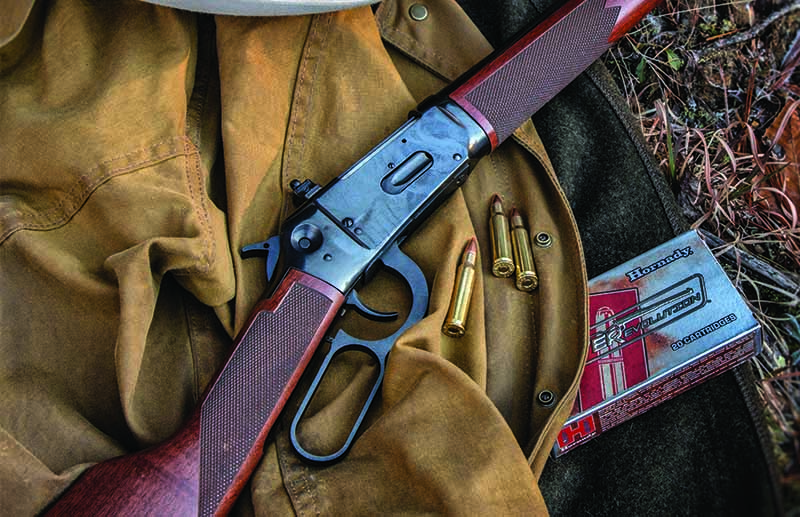
Updated with some modern amenities, the Winchester 94AE still proves an all-time classic field lever-gun.

In 1983, I made my first legal over-the-counter long-gun purchase: It was a Winchester 1894 AE (Angle Eject) Big Bore lever-action rifle chambered for the .307 Winchester. Up until that time, my parents, grandfather or best friend had to facilitate my weapons cache. This was a rifle I dearly wanted, and I considered it a graduation present to myself. My fondness was due to its svelte handling qualities lever-actions are known for, combined with its .308 Winchester-like performance. For deer hunting in the hills of West Virginia, I felt there could be nothing better.
Winchester 2

I’m not so sure I wasn’t right. The rifle performed marvelously for me. I used it to take several deer, and if my memory serves, I don’t think I ever missed a deer with that rifle. Unfortunately, while I was a die-hard deer hunter, I was also a seriously dedicated coon hunter. I was raised around hounds in a coon-hunting family. In fact, the first hunt I ever went on was a raccoon hunt, and the first animal I ever killed was a raccoon. My best friend and I were desperate for a really good coonhound, and he managed to locate a direct descendant of the notorious Grand Night Champion Hickory Hunt Harry.

We traded some cash and my Winchester for that dog.
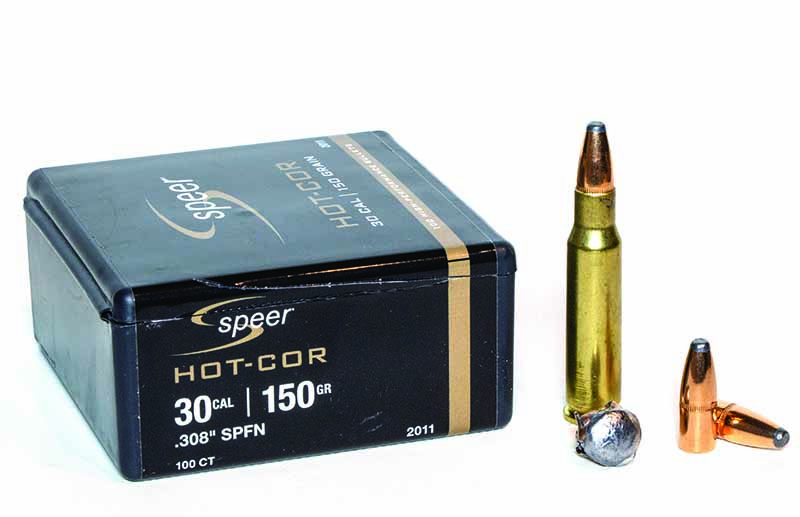
With the ability to push a bullet like the Speer Hot Core Flat Point to 2,700 fps, the .307 Winchester takes the lever gun into a new realm of ballistic performance.

It was a good trade; the dog turned out to be the best coonhound I’ve ever hunted with, but I’ve missed that rifle ever since. It was a special rifle for two reasons. First, because the AE designation meant that, unlike previous 1894 Winchesters, a riflescope could be mounted directly over the action. And second, because the Big Bore (BB) designation meant that the rifle could handle higher-pressure cartridges than the old .30-30 Win. These rifles were offered in three chamberings: the .307 Winchester, the .356 Winchester and the .375 Winchester.

For history’s sake, the .356 Winchester was essentially a .358 Winchester with a 0.506 rim diameter, as opposed to 0.473. It was even loaded to the same CUP pressure of 52,000 as the .358 Winchester. The .375 Winchester was, for all practical purposes, a modernized version of the old .38-55 Winchester, with a slightly longer case that was loaded to a CUP pressure of 52,000 as opposed to 30,000. Like the .356 and .358 Winchester, the .307 Winchester had a slightly larger rim than the .308 Winchester, but the rest of the cartridge case was dimensionally identical as was the CUP pressure limit of 52,000.

Welcoming Back The Winchester 94AE

Not too long ago, I found myself with a little extra cash. I also found a used Winchester 94AE Big Bore in .307 Winchester in excellent condition. I purchased the rifle based on photographs to only later learn the shell catch was defective; it didn’t want to let the last round out of the magazine feed into the action. That, of course, didn’t stop me from shooting the rifle. One of the reasons my interest in the cartridge/rifle had been renewed was because Hornady had just released a new .307 Winchester LEVERevolution load with a 160-grain bullet at an advertised 2,650 fps.
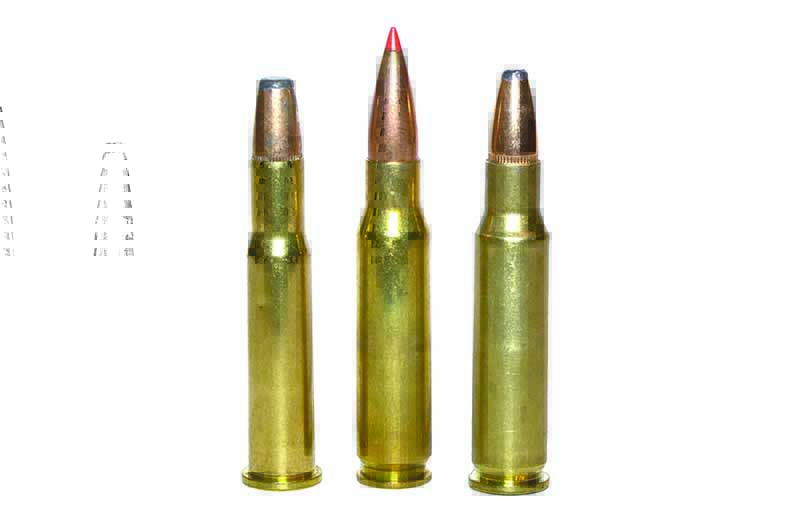
The .30-30 Winchester (left) is the cartridge that made the Winchester 94 famous. Though it’s nowhere near as powerful as the .308 Winchester (center), the .307 Winchester can nearly duplicate .308 Winchester muzzle velocities.

I installed set of XS aperture rear and post front sights and found that at 100 yards, I could use the Hornady ammunition to shoot groups measuring less than 2.5 inches. With my original .307 Winchester, I could do a bit better, but back then I had a low-power variable riflescope attached. Still, for hunting deer, bear and boar in my home state of West Virginia, 2.5-inch groups at 100 yards with open sights is more than sufficient. Ultimately, I decided on a Williams red fiber-optic front sight and even managed a few on-target groups at 200 yards that I’ll not describe for fear of being labeled a charlatan.

Of course, I had to get the rifle fixed—even the most accurate rifle in the world is worthless if it doesn’t work. I turned to my local gunsmith, Jerry Dove at Dove’s Custom Guns, and asked him to sort the rifle out. I turn to Jerry for a lot of gunsmithing chores, and for the next several months I kept him busy with more pressing projects. Finally, just after Christmas 2020, Jerry completed all the other work I’d saddled him with, and he fixed the .307. I called it a Christmas present, because that’s exactly what it felt like.


Raise Your Lever-Action IQ:


Developing A New Diet

If you’ve read much of what I’ve written about guns, you’ll know I have a dedicated interest in the Scout Rifle concept formulated by Jeff Cooper. Cooper was a fan of the Winchester 94 and its handiness was part of his inspiration for the Scout Rifle. However, as far as Scout Rifles are concerned, one of the weaknesses of the Winchester 94 was the .30-30 Winchester cartridge.
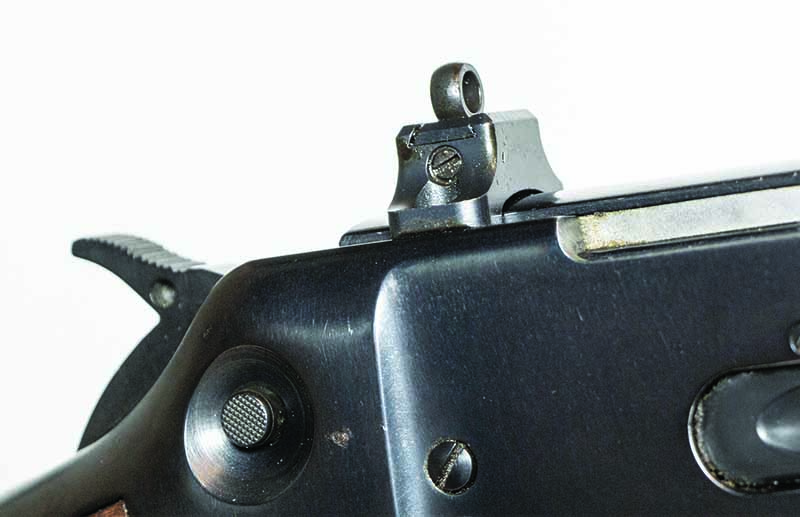
Because the Winchester 94AE rifle ejects to the side and because it has the ability for a top-mount scope, it was easy to mount the XS aperture rear sight on the rifle.

Cooper didn’t feel it was powerful enough for animals as large as 1,000 pounds, and this resulted in his ideal Scout Rifle cartridge being a .308 Winchester. In fact, Cooper was a believer in the original ballistics of the. 30-06, and he discovered that, properly loaded, a .308 Winchester with a 19-inch barrel could meet that 150-grain bullet at 2,700-fps threshold.

What I wanted to know was if I could do the same with the .307 Winchester—not that it would make it a Scout Rifle. It’d make it capable of handling, ballistically, anything a Scout Rifle could handle. You could argue Hornady’s new LEVERevolution load was already there; with 2,495 foot-pounds of energy, a 160-grain bullet at 2,650 is a bit more powerful than a 150-grain bullet at 2,700 fps at 2,428 foot-pounds. The problem is that Hornady’s impressive velocity figures are obtained with 24-inch test barrels. My rifle, like most lever guns, has a 20-inch barrel. Actual velocities were 2,475 fps, delivering 2,176 foot-pounds of energy—impressive but not what Cooper or I wanted.
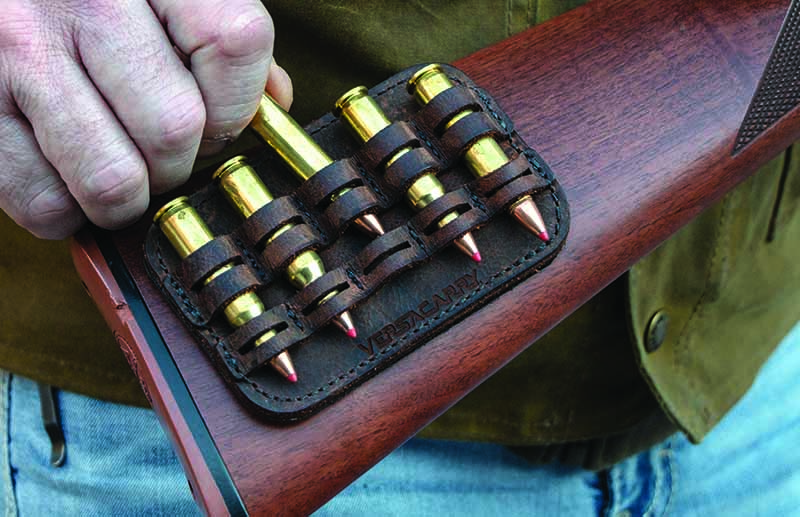
Winchester 8

Handloading looked to be the answer and given the lack of availability of factory ammunition for the .307 Win.—Hornady and Winchester both offer one load, but only load it seasonally—handloading would be necessary. Researching some data, I found that a relatively new powder from Alliant called AR Comp should push a 130-grain bullet to 3,030 fps with 2,650 foot-pounds of energy, and a 150-grain bullet to 2,831 fps with 2,669 foot-pounds of big-game busting power. Granted, these seemingly pie-in-the-sky velocities were also obtained with a 24-inch barrel, but I had a few fps to work with.

Using Speer’s 130-grain Hot Core Flat Nose bullet, I eased up to the maximum listed load of 45.8 grains of AR Comp, and the resulting velocity averaged 2,818 fps with 2,292 foot-pounds of energy. That was as bit shy of 3,000 fps, but the resulting energy exceeded the Hornady 160-grain load. But that was also not a 150-grain bullet, and given this bullet was intended for the .30-30 at substantially lower muzzle velocities, I was a bit concerned about its terminal performance.
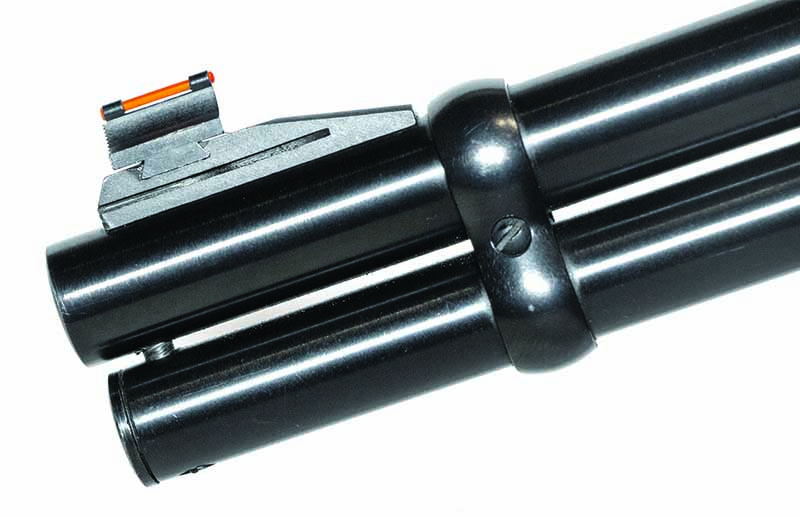
A fiber-optic front sight was settled on to provide the highest visibility in low-light hunting conditions.
A fiber-optic front sight on the Winchester 94AE was settled on to provide the highest visibility in low-light hunting conditions.

Bill Wilson, who has used this bullet a great deal in his .300 Hamr cartridge, told me not to worry, but I wanted to test it anyway. Wilson was, as expected, right. In blocks of Clear Ballistics, it penetrated to 17 inches, expanded to 6/10 inch, and retained 85 percent of its weight. This is more than capable for big-game hunting, but I wanted Cooper’s Scout Rifle load.

Measuring The Muzzle Product

Given the current ammunition and component situation, I couldn’t find any 150-grain Speer Flat Nose bullets for sale anywhere. Though round-nose bullets are customarily loaded in lever guns, there seems to be a unanimous concern about using them in the harder recoiling .307 Winchester. It didn’t matter. I didn’t have any 150-grain round-nose bullets and couldn’t find them anywhere either. Fortunately, during that phone call with Wilson, he told me he had a box he could spare.

Working up to the maximum published load of 44.6 grains of AR Comp, I was optimistic and ultimately very pleased. Five shots over a Caldwell G2 chronograph delivered an average velocity of 2,695 fps. Adding in 0.75 feet per second for each foot the chronograph was from the rifle’s muzzle puts the average velocity at 2,702.5 fps. I had managed to safely reach original .30-06 velocities out of a traditional lever action rifle!
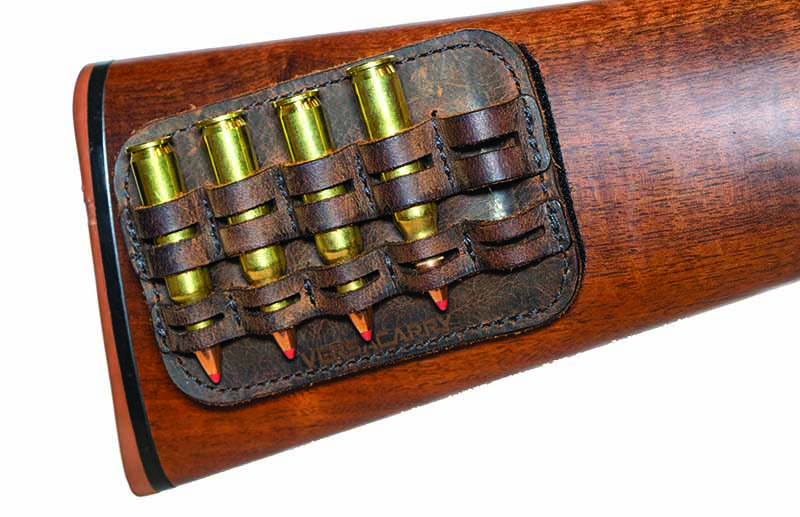
The addition of a Versacarry Ammo Caddy to the stock of the Winchester provides a great way to carry a field load of ammunition or extra ammo.

Of course, like with the 130-grain bullet, I needed confirmation of terminal performance, so it was back to blocks of Clear Ballistics. The 150-grain Speer Hot Core Flat Point bullet—with an impact velocity of 2,690 fps and an impact energy of 2,410 foot-pounds—penetrated to a depth of 21 inches, expanded with a frontal diameter measuring 0.50 inch across, and had a retained weight of 107 grains. By comparison, the factory Hornady 160-grain load penetrated 16.5 inches, expanded to 0.58 inch and had a retained weight of 121 grains.

What’s Old Is New

It’s hard to express my delight in once again having a rifle I so adored as a young man. It’s also pleasing to know that while the Winchester 94AE Big Bore isn’t a Scout Rifle, it can ballistically perform with Scout Rifles. And to be honest—and as Cooper knew—it’s an extremely compact, lightweight and friendly rifle that can serve respectably in the role of a Scout Rifle.

The new AR Comp powder from Alliant, which wasn’t available when the .307 cartridge was introduced, can greatly enhance its performance.

As far as lever-guns go, this rifle might be one of the most important ever made. It’s also, of course, one of the least remembered and appreciated. They’re out there, and you can find them for about a grand. Hornady makes a great load for them, or you can load your own even better-performing ammunition.

Once again, I have mine. And I’ll be damned if I’m trading it for a coonhound!

Editor’s Note: This article originally appeared in the March 2021 issue of Gun Digest the Magazine.
Gun Control Drives Smith & Wesson Out Of Massachusetts

12

Smith & Wesson are moving their headquarters out of historic Springfield, Mass., to Tennessee following proposed restrictive legislation in their home state.

Smith & Wesson, one of the world’s most significant and storied firearms manufacturers, has been headquartered in Springfield, Massachusetts for over 150 years. Despite the company’s affinity with their historic home in New England’s “Gun Valley”, they announced today their intentions to move the company’s headquarters to Maryville, Tennessee in 2023. The announcement follows new proposed legislation in Massachusetts that Smith & Wesson claimed would change the climate of gun manufacturing in the state for the worse.

Smith & Wesson President and CEO Mark Smith had this to say about the upcoming move:

This has been an extremely difficult and emotional decision for us, but after an exhaustive and thorough analysis, for the continued health and strength of our iconic company, we feel that we have been left with no other alternative.

The legislation in question would prohibit the manufacturing of certain kinds of firearms within Massachusetts, firearms that comprise over 60 percent of Smith & Wesson’s yearly revenue. The company stated that even if the specific legislation in question were to fail, similar measures would likely be raised in the future thanks to the state’s growing anti-gun political environment. If enacted, the arbitrary legislation would not make Massachusetts any safer, but its proposal has earned its backers a few cookie points with their already loyal pro-gun control voter base. All it cost them was 550 good jobs leaving their state forever.

Smith’s new Tennessee headquarters will be located in a Second Amendment sanctuary county that has a strong pro-gun culture. This move will likely not be the last of its kind as the country continues to polarize along political lines, as anti-gun state governments will continue to erode away at 2A freedoms while others fortify them. Gun owners in America are used to the death by a thousand cuts strategy, so it’s good to see companies as iconic as Smith & Wesson finally say that enough is enough. Firearms companies should not be providing tax revenue to governments that seek to restrict gun ownership amongst their own populations.

The move will not begin until 2023, and Smith stated that their Springfield location will remain active and retain at least 1,000 employees for continued parts manufacturing and revolver assembly operations. They do not expect the move to put any damper on their output, but once some facilities are consolidated into their new Tennessee location Smith & Wesson claims that their manufacturing and distribution processes will be significantly streamlined.

Domenic Sarno, Mayor of Springfield, expressed regret for the currently employed Smith workers who will be affected by the move and stated that his office will be assisting them in any way they can. The best assistance these individuals could have received would have been their representatives not supporting anti-constitutional, anti-freedom legislation. Legislation that drives away good, legal and safe businesses to states that have a better understanding of this country’s founding principles. Presuming that gun-grabbing politicians will continue to not understand this, they can continue to say goodbye to some of their state’s most historical and beloved companies.

For more information, please visit smith-wesson.com.

More On Gun Control And 2A Rights:

Beretta USA Releases 92X RDO Pistol

1

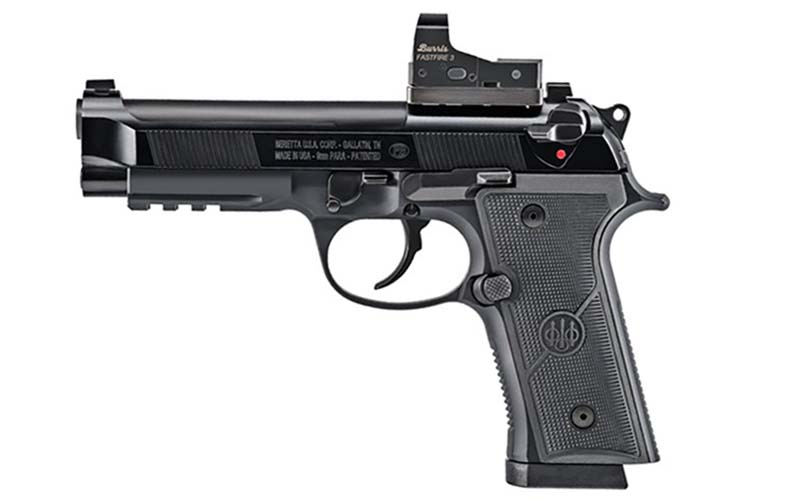
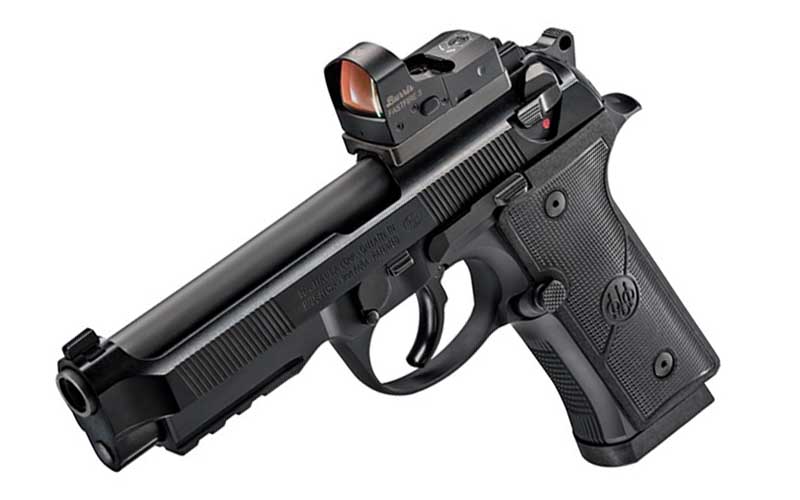
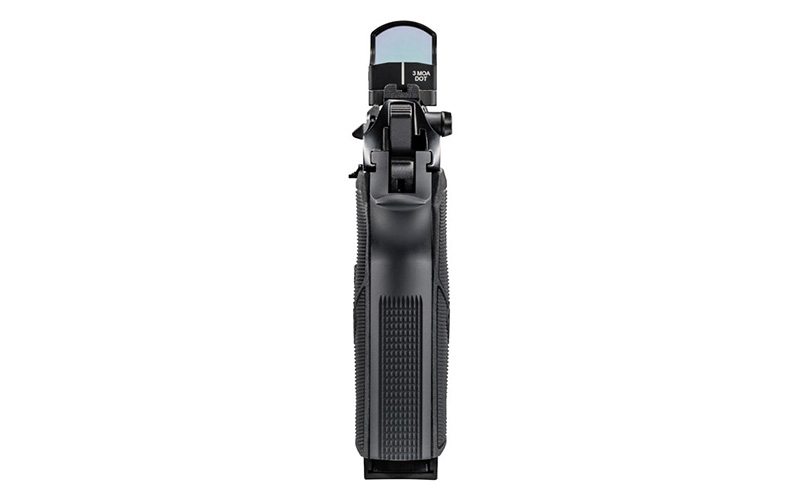
Beretta’s new 92X RDO pistol brings the classic 90 Series Beretta into modernity with better ergonomics, a new trigger and an optics-ready slide.


Beretta USA is continuing their trend of modernizing their classic 90 Series pistols with features that are becoming the standard on premium combat-style handguns. Following the release of their newest M9 generation, the M9A4, they are now giving the 92 the same treatment. Upgraded with a new grip, trigger and optics-ready slide, the 92X RDO is an attractive option for those who want modern features without giving up the old DA/SA action. And unlike the M9A4, the 92X does come in black.

92X main

Many of the same upgrades that graced the new M9 make an appearance on the 92X RDO as well. Both new pistols feature an optics-cut slide, 3-slot Picatinny rail and forward slide serrations. They also both have short reset triggers, Vertec-style thin grips and a beveled magazine well. They are also both compatible with Beretta’s new 18-round mags. While the M9A4’s slide is the decocker-only variant, the 92X RDO slide can be swapped between decocker-only and safety/decocker configurations.

Beretta 92X RDO

Like the M9A4, the 92X RDO’s optics-cut slide comes with blanking covers that can be replaced with one of five mounting plate options. The available footprint patterns from Beretta include Aimpoint, Trijicon, Burris/Vortex/Docter, Leupold and C-More.

92X aiming

The 92X RDO most significantly differs from the M9A4 not because of what it has, but what it doesn’t have—namely a threaded barrel and FDE finish. Those must be some expensive features because with an MSRP of $699 the 92X RDO is $400 cheaper than the new M9. For those who are in the market for an optics-ready, full-size combat pistol, you can’t go wrong with the newest generation of Beretta 92.

For more, please visit beretta.com.


More Optics Ready Pistols:

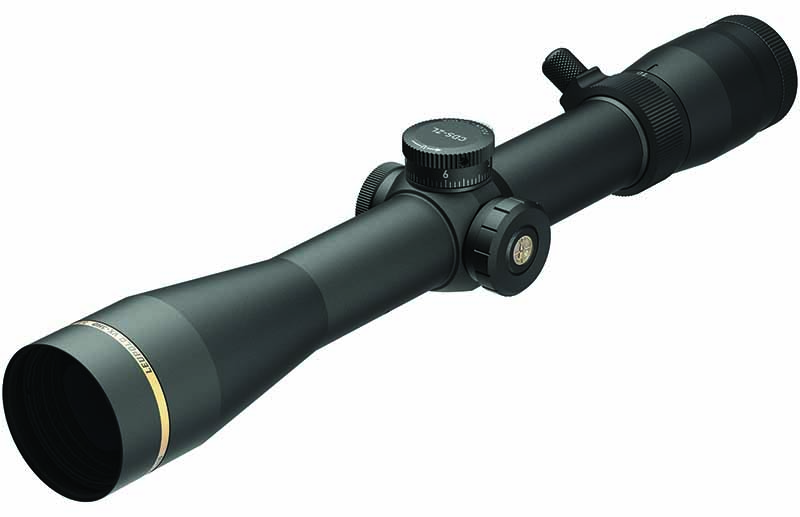
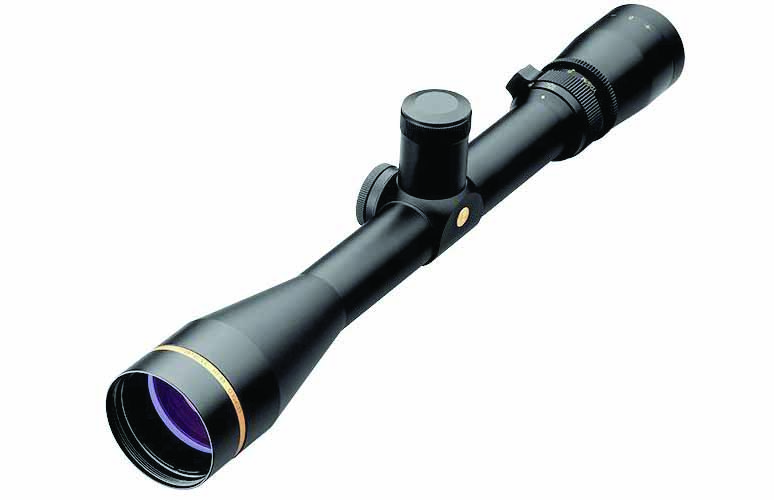
Long Live Leupold’s VX-3 Family Of Variable Power Scopes

2

The history of the Leupold VX-3 family … including the birth of the 2021 models.

I was standing in the Catskill Mountains, on the edge of an old cutting where the hemlocks gave way to a grove of young beeches, with a gentle breeze blowing in my face. A light rain the night before had dampened the crunch of the leaves, but the sound of an approaching deer was unmistakable. Through the wall of hemlock branches, I could see the body of the deer, but only the lower half—just by the way it walked, I could tell it was a buck.

Leupold VX3 10

When I caught sight of his headgear, I knew it was on. He was a mature eight-point, with dark antlers—definitely a shooter for the Catskills. The Heym Model 26B over/under double rifle came easily to shoulder, and the crosshairs settled just behind the shoulder as he crossed the old logging road. One shot settled his affairs, as the 300-grain Federal HammerDown in .45-70 Government (chosen for the healthy bear population in the Catskills) made a quick kill, and I was all smiles.
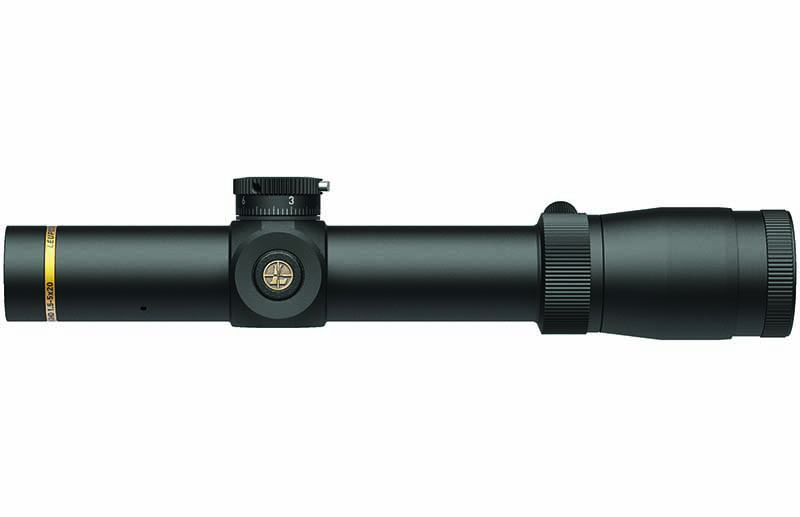
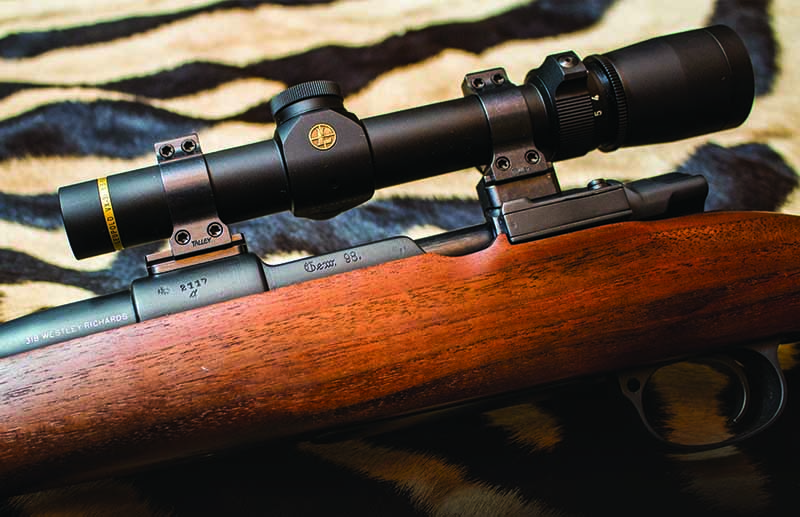
Admiring the rifle after the shot, I began to think about the riflescope it wears: a Leupold VX-3i. This was the classic 1.5-5x20mm model, popular for use on the dangerous game rifles.

My personal history with Leupold spans about two decades—prior to that point I simply couldn’t afford them. There were other priorities, and because we had only a three-week deer season and one buck—and maybe a doe tag—I made do with my cheaper glass.

It was my first out-of-country hunt—a pursuit of Canadian moose with my dad—that showed me the limits of my riflescope, and set me in pursuit of a trustworthy yet rugged optic at a fair price. I had longed after those handsome riflescopes, with the gloss finish and gold ring on the objective end of the tube, so when I finally cracked open the piggy bank and screwed a Leupold to my rifle, I couldn’t have been happier.

Leupold Legacy

Leupold & Stevens’ history in the sporting optics world dates back to the 1940s, at a time when the reliability of riflescopes—which we all now take for granted—was questionable. I remember my father telling me the story of a riflescope that simply wouldn’t hold zero, to the point that he reverted back to iron sights for a couple of seasons. During the annual sight-in, I’d always check out the fancier rigs the older guys had and admired the Leupold scopes as much for their appearance as I did for how well they performed. By the time I was hunting—in the mid-to-late 1980s—Leupold’s reputation was set in stone, with the Vari-X I, II and III lines being firmly established.

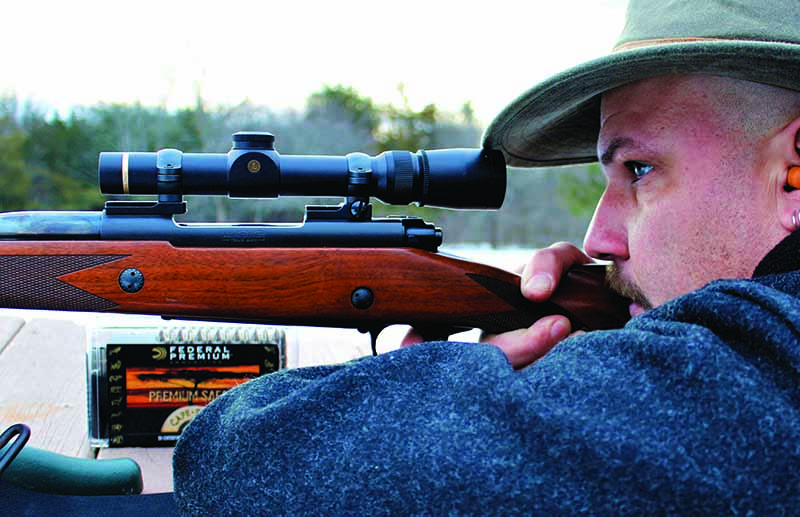
The author checking zero on a Winchester .375 H&H with Leupold VX-3 1.5-5x20mm.

The Vari-X III line—the flagship of the fleet—was released to the market in late 1973, in three different models, each with a 1-inch maintube, in the gloss finish. This lineup included the now classic dangerous game 1.5-5x20mm, the very versatile 2.5-8x36mm (one of the best whitetail deer scopes ever made) and the long-range favorite, the 3.5-10x40mm, which later came with an adjustable objective.

The initial models claimed 92 percent light transmission and a 44-MOA adjustment range. For the time, this was certainly impressive. The adjustment knobs featured a coin slot and each ¼-MOA adjustment had an audible click. Six years later, Leupold would add what would become my favorite varmint/predator riflescope: the Vari-X III 6.5-20x40mm AO. The adjustable objective allowed for a crisp sight picture, even when the heat waves over the crusted snow created wicked mirage, and the fine duplex reticle—the duplex reticle we all know so well is another of Leupold’s innovations—allowed for precise shot placement.

The 1980s saw some revisions and differing options to the Vari-X III line, including the matte finish that hunters quickly embraced, as it was much better in the field in comparison to the gloss- blued finish, the traditional choice for Leupold scopes up to this point. There were detents in the power selector ring, and the ’80s saw the first range estimating models in the Vari-X III line.

The author with an eight-point whitetail, taken in the Catskill Mountains with a Heym Model 26B in .45-70 Govt. and topped with a Leupold VX-3i 1.5-5x20mm.

Scope Out More Optics Info:

  • 8 Revolutionary Reticles For Long-Range Accuracy
  • Buying the Perfect Precision Scope
  • The Best Tactical Red-Dot Performance-to-Price Option?
  • Shifting Winds: SIG BDX Changing Shooting For The Better

The 1990s saw a revamp of the lens coating on the entire line, with Leupold adding their proprietary Multicoat 4 treatment to the lenses, increasing both contrast and light transmission; the coating was standard on the Vari-X III line as well as the Mark 4s and a few of the M8 models. By the middle of the decade, the line was extended to include the new 1.75-6x32mm (possibly the scope for a .375 H&H), which gave a bit more mounting room for the magnum-length receivers, and the 4.5-14x40mm, bridging the gap between the 3.5-10x and the 6.5-20x models.

Their first large-objective-lens variable scope, the 3.5-10x50mm, was also introduced in 1990. With the increasing popularity of stainless steel finishes in the rifle and handgun world, Leupold released their silver-finish scopes in the 1990s to match the color scheme. In 1990, the construction of the scope tube itself changed, as Leupold engineers switched from a five-piece maintube to a one-piece maintube; it isn’t difficult to imagine how this enhanced rigidity and dependability.

Then, in 1997, the release of the 8.5-25x40mm AO gave the target shooter and varmint/predator crowd some serious magnification. A year later, the Vari-X III 3.5-10x40mm M3 Long Range scope—essentially the predecessor to the MK4 line—came onto the scene, with its 30mm maintube and adjustable objective. Some complained about the ½-MOA adjustments; others accepted the fact that the adjustment was designed for fast elevation changes.

By the turn of the century, Leupold would add the option of illuminated reticles to the Vari-X III line, even further increasing versatility of this product line.

Evolution Equals Versatility

In 2004, a radical change in the Leupold product line came, with a renaming of the entire lineup. The Vari-X was no more, being replaced with VX; the Vari-X I became VX-I, the Vari-X III became VX-III and so on.

The author’s Winchester Model 70 Safari Express in .416 Rem. Magnum, topped with a Leupold VX-3 1.5-5x20mm in Talley detachable rings.

It wasn’t long after the transition into the VX era, when I bought a scope for my new buffalo rifle, a Winchester Model 70 Safari Express in .416 Remington Magnum, which was destined for a Cape buffalo safari to Tanzania. A Leupold VX-III 1.5-5x20mm, with the heavy duplex reticle, was in order to best find the black crosshairs against those big black bodies, in the dappled sunlight. That scope taught me quite a bit as well, especially how you can connect on 300-yard shots with just a 5x scope of good quality.

That highly versatile scope, with a low-end magnification capable of shooting a charging buffalo at distances measured in feet, as well as being able to reach out to 300 yards or more when needed, took my first Cape buffalo, threaded the needle on a good bushbuck ram in the thick riverine brush, took an old puku ram and ended the hunt on a warthog boar running as if he were shot from a cannon. That scope doesn’t lose zero, despite sitting in detachable mounts, is seemingly unaffected by recoil, and offers enough eye relief to be mounted on the hardest kicking rifle.

The VX-III line soon saw the change to tool-free, fingertip adjustments for elevation and windage, 30mm maintubes and illuminated reticles on certain models.

This Tikka T3X Lite in 7mm-08 Remington, topped with a Leupold VX-3i 3.5-10x40mm with CDS dial, is one of Massaro’s favorite mountain rifles.

In 2009 came another revamp of the line, with the Roman numeral changing to an Arabic numeral; the VX-III became the VX-3. The Indexed Matched lens system came into effect, with an increase in lens coatings. Objective lens sizes increased, with the enormous 56mm lens being offered in the 3.5-10x and 4.5-14x models. The 30mm maintubes and the illuminated reticles were carried forward, as well as several models Leupold released in conjunction with the Quality Deer Management Association. This series of scopes also saw the introduction of the Leupold CDS, or Custom Dial System.

This system uses a replacement elevation turret, which is labeled in graduations for a specific load. The user would send the specifications and parameters of their chosen load—including bullet shape, make, model and BC, muzzle velocity and some environmental data—and Leupold would craft a dial marked in yardage increments for that particular load. Range the target, dial that for that distance, hold steady and send it. Wonderfully simple, and extremely effective, the CDS dial can be quickly changed for the standard MOA- or mil-labeled turret.

Then Came the ‘i’

The year 2016 saw a huge change in the history of the Vari-X III evolution: the release of the VX-3i. The “i” in the product line name stands for “improved,” and it was no misnomer. Leupold’s Twilight Max Management System, which takes full advantage of the DiamondCoat 2 lens coating, offers a completely different look. This new system uses roughly twice the amount of lens coatings as did the Index Matched method, over lead-free glass. This translates to a very important point for the hunter: When it comes to those low-light conditions at both dawn and dusk, when crepuscular game animals like the whitetail deer are moving most, the Leupold VX-3i will extend your shooting time.

The Leupold VX-3HD 1.5-5x20mm with 30mm tube and illuminated reticle is a great choice for Cape buffalo, black bear or any other dark animal in thick brush.

The VX-3i also introduced the CDS-ZL, the zero-lock feature that quickly shows the shooter the scope is set back to zero after dialing up—and is certainly becoming endeared by hunters and target shooters alike. Also, twin-bias springs in the erector system keep those crosshairs where you set them, no matter the recoil.

VX-3 In 2021

This brings us to the latest iteration of the scope line, the new-for-2021 VX-3HD series, featuring the Elite Optical system. This combination of maximized lens coating design, advanced computer-aided optical design and advancements in Leupold’s manufacturing processes have brought this compact, lightweight optical system to superior levels of performance.

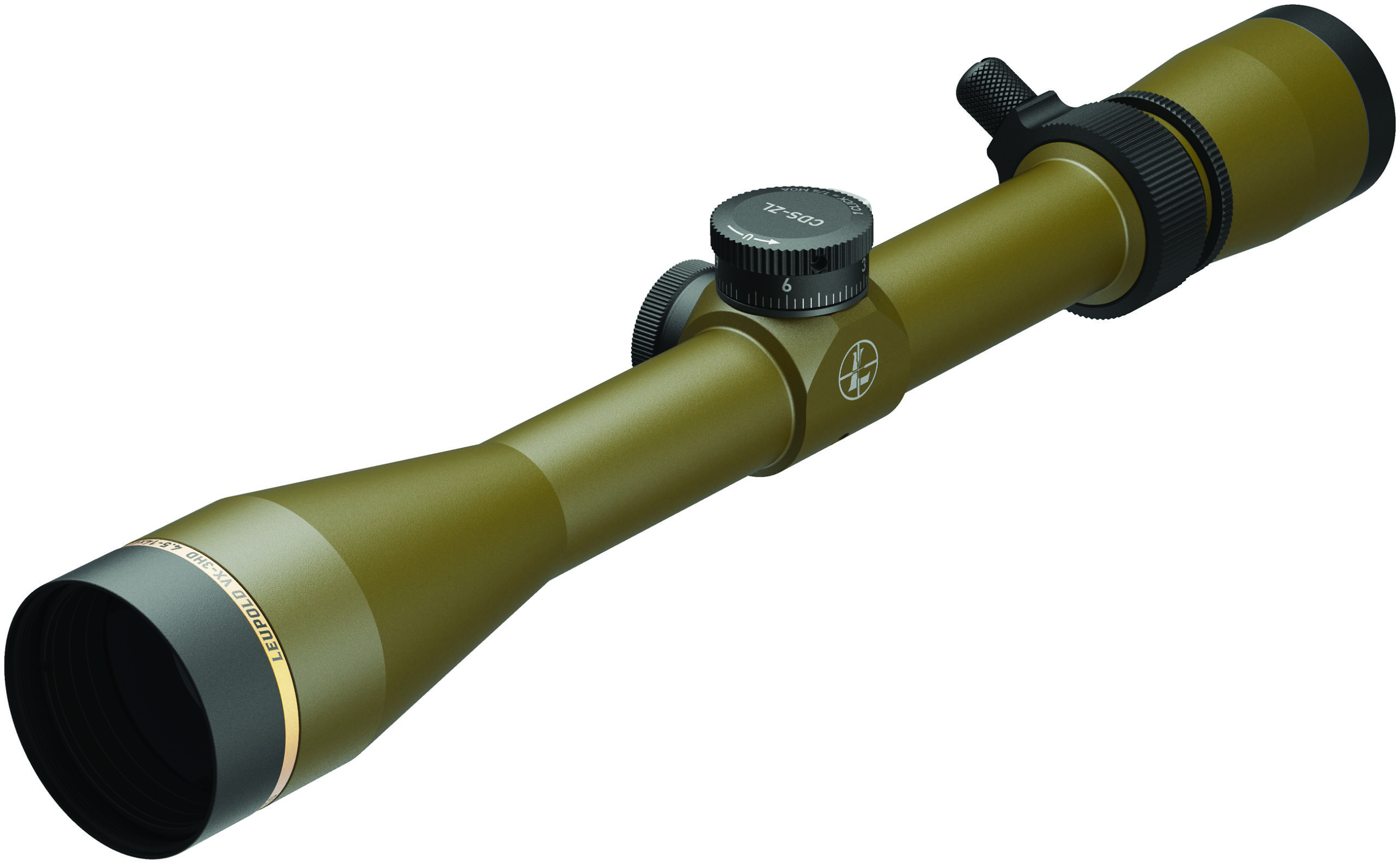
Check out that cool burnt bronze finish on this VX-3HD 4.5-14x40mm.

All of the models now come with the CDS-ZL, with the MOA-labeled turret—and Leupold is offering a free custom dial of the purchaser’s choosing for their scope. Larger magnification models of the VX-3HD line will have the CDS-TZL2 turret, which offers two full revolutions on the dial.

Models in the VX-3HD line include 1.5-5x20mm (both 1-inch and 30mm tubes), 2.5-8x36mm (1-inch tube), 3.5-10x40mm (both 1-inch and 30mm tubes), 3.5-10x50mm (both 1-inch and 30mm tubes), 4.5-14x40mm (both 1-inch and 30mm tubes), 4.5-14x50mm (both 1-inch and 30mm tubes), 6.5-20x40mm (1-inch tube) and 6.5-20x50mm (30mm tube).

This 2021 VX-3HD 3.5-10x40mm has many desirable features: 30mm tube, CDS-ZL turret, magnification throw lever, and illuminated reticle.

The Leupold Duplex reticle is offered on the 1-inch tube models, with the Illuminated FireDot Twilight Hunter reticle available on the 30mm tube models, with the 6.5-20x models each featuring the Fine Duplex reticle. The illuminated reticle models feature a push button on the left side of the adjustment housing. All are available in the standard matte finish, with the 4.5-14x40mm also offered in that sweet Burnt Bronze finish.

Side-focus adjustable objective lens is available on the 30mm-tube variant of the 4.5-14x40mm and 6.5-20x50mm. Scope weights range between 9.7 ounces for the 1.5-5x20mm up to 20.8 ounces for the 6.5-20x50mm; these are by no means cumbersome weights for a riflescope. All the VX-3HD models come with a magnification throw lever, making power adjustments a breeze, even with thick hunting gloves on. That lever is removable for those who prefer a more traditional feel. Street prices ranging from $400 to $700 is a fair estimate for where the VX-3HD line will settle into the marketplace.

The VX-III 3.5-10x40mm with target turret.

I’ve used many scopes over the course of my hunting and shooting career, and there are many I’ve grown quite fond of. This includes the Leupold VX-5HD and VX-6HD models, and models from other manufacturers, but as far as getting the best value for your optic dollar, I feel comfortable saying that this family of riflescopes has always sat at the head of the class.

Looking at the latest models, I don’t see that changing anytime soon.

Editor’s Note: This article originally appeared in the February 2021 issue of Gun Digest the Magazine.
First Look: Mepro FT Bullseye Pistol Front Sight

2

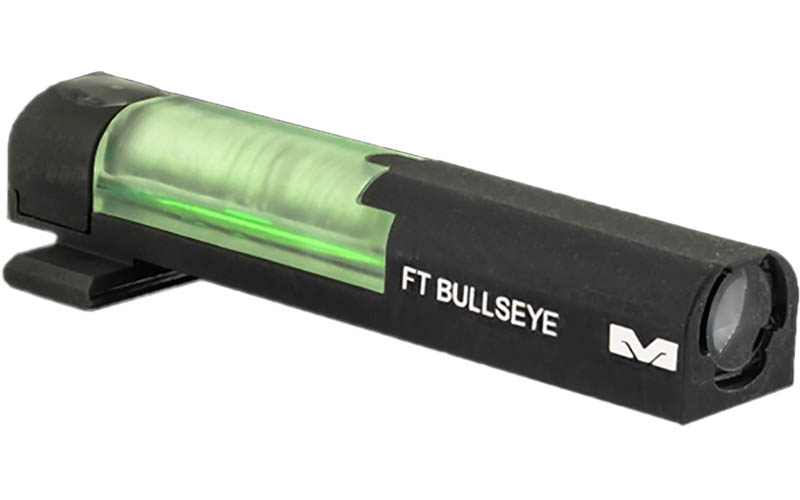
Meprolight’s new Mepro FT Bullseye front sight brings many of the advantages of a red dot to a simpler, smaller and less expensive package.

Mepro FT Bullseye Front Sight Features:

  • No Batteries Required
  • Fiber-Optics For Daytime Use
  • Tritium Reticle For Low-Light Use
  • Standard Front Sight Size And Profile
  • Compatible Pistols: Glock, Smith & Wesson, Springfield, IWI, Sig Sauer, H&K, CZ P-10

The trend of carrying red dot-sighted pistols continues to grow, but despite the advantages they have to offer many people still have valid concerns. Red dot sights add bulk and weight to one’s gun, batteries must be replaced and, if you suffer from eyesight issues, electronic optics may just not be an option. In an attempt to remedy these issues while still providing an improvement over stock iron sights, Meprolight has just introduced their new Mepro FT Bullseye front sight. The concept started with their Mepro FT Bullseye rear sight that was released a few years ago, but the new front sight model offers some distinct advantages.

Mepro FT Bullseye

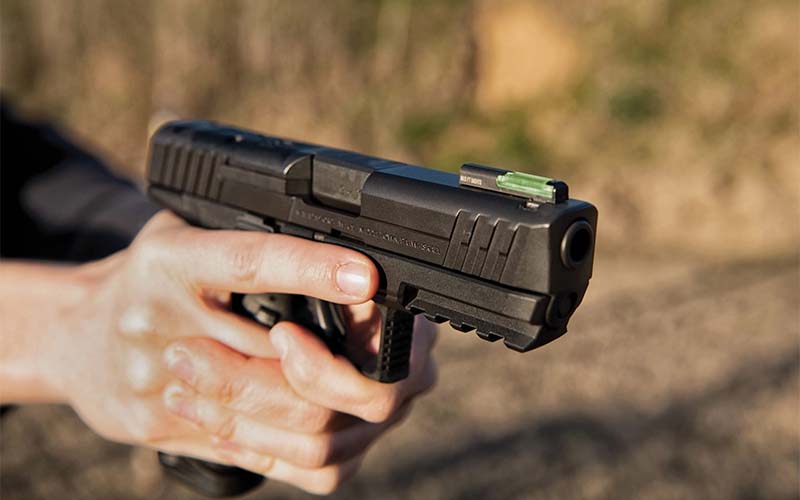
The Mepro FT Bullseye front sight brings several of the advantages of red dot sights to a package that’s smaller, cheaper, simpler and battery-free. Powered by fiber optics and tritium, the sight glows brightly in any lighting condition and eliminates the need to remember to swap batteries. While there are many fine modern red dots on the market, even the most durable models with the longest battery lives are more inherently prone to failure than the Mepro FT Bullseye. Additionally, pistol red dots are more expensive and complex to install. Mepro’s new sight requires no additional milling of the slide or optics mounting plate, as it simply replaces the factory front sight. No rear sight is required to use this setup. Having roughly the same height as a standard front sight, the Mepro FT Bullseye should be compatible with most existing holster models as well.

Mepro FT

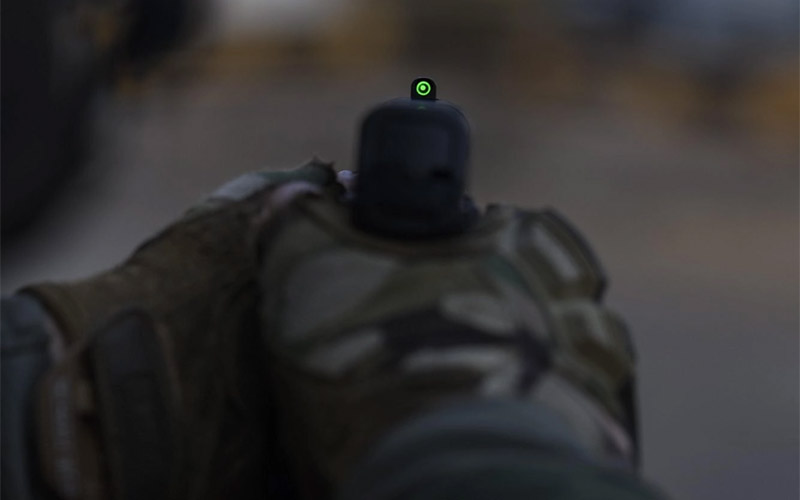
Designed to emulate the fast target acquisition possible with electronic reflex sights, the Mepro FT Bullseye gets its name because of how a sight picture is acquired. By centering the sight’s dot in the middle of the fiber optic ring to create a bullseye, the shooter knows they’re on target. It takes advantage of the common handgun training technique taught in the U.S. of focusing on the pistol’s front sight for quick, defensive-style shooting.

Mepro FT aiming

Whatever reason you have for shying away from pistol red dots, whether that be because of astigmatism, the extra expenses required or their added bulk, the new Mepro FT Bullseye sight could be the upgrade you’ve been looking for. Bright during the day or night, compatible with existing guns and holsters and powered on until your tritium expires, the Mepro FT Bullseye is a promising new CCW upgrade that is sure to appeal to many different shooters.

For more from Meprolight, please visit meprolight.com.


More On Handgun Sights:

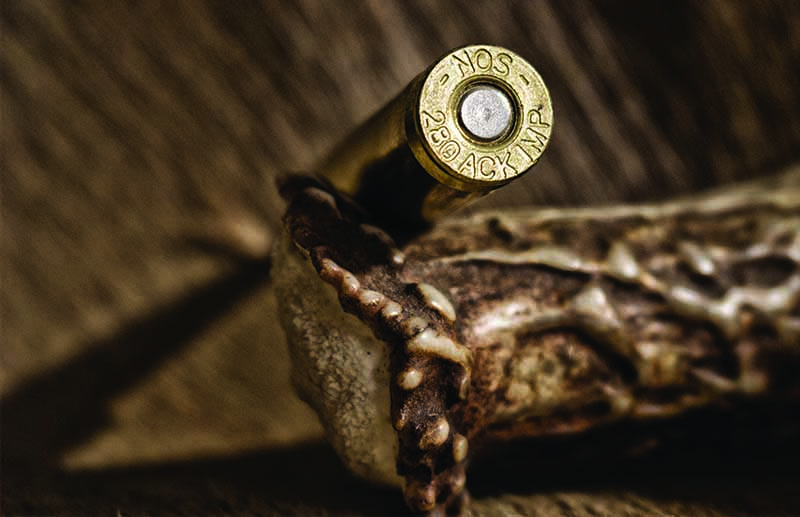
.280 Ackley Improved: A Celebrated History

2

The sharp-shouldered .280 Ackley Improved came from humble beginnings, but has more than earned its place among the all-time great hunting cartridges.

The Namibian drought had taken a serious toll on the wildlife, as the grass was nearly gone. Among the various species, the springbok was, perhaps, best suited to these nearly impossible conditions. And there was no lack of springbok, numbering in the thousands. I had taken a good springbok on a previous safari, so the species wasn’t high on my list. But, when Professional Hunter Maré van der Merwe happened to glass a fantastic ram, my priorities immediately changed.

280 AI 5

Impossibly tall, this springbok certainly stood out from the crowd. Frustrated by a lack of cover, Maré spread the sticks and informed me that 300 yards was the closest we could possibly get; there were too many sets of eyes to try to close the gap. I nestled the forend of the rifle into the crotch of the sticks, held for 6 inches of additional elevation and broke the trigger. I’m not sure which was louder, the sound of the 160-grain Federal Trophy Bonded Tip bullet striking the ram or the sound of the former-rugby-player-turned-professional-hunter slapping my back.

The cartridge used that day was another wildcat success story: the .280 Ackley Improved. The most popular of the line of cartridges, bearing the name of Parker O. Ackley, ballistician and gunsmith whose cartridge work has long been revered, the .280 Ackley Improved offers an improved performance over its parent cartridge, and comes very close to the performance of the 7mm Remington Magnum. In order to understand the history of the .280 Ackley Improved, we must start with the development of the .280 Remington.

.280 AI’s Humble Beginnings

The U.S. Army’s new .30-03 Springfield—designed in 1903 to supersede the .30-40 Krag—used the same .473-inch rim diameter as the 7×57 and 8×57 Mauser cartridges, albeit with a longer case length (64.5mm versus 57mm). Just three years later, the fateful revision to the cartridge, in both case length and projectile choice, would give us the world-famous .30-06 Springfield. But it’d be the predecessor—the .30-03—which would serve as the parent case for the .270 Winchester, released in 1925. Thirty-two years later, Remington would use the same .30-03 case for their own cartridge, which would mate that case with 7mm bullets, resulting in the .280 Remington.

The .280 Remington (left) is a fine cartridge, but the .280 Ackley Improved (right) offers a velocity advantage.

The head start that the .270 Winchester had didn’t help the popularity of the .280 Remington, and it seemed to slog along with a small, but fervent following, yet never approached the popularity of the .270 Winchester or .30-06 Springfield. This is unfortunate, because in my opinion the .280 Remington is one of the best designs of the era, as it has the case capacity to use the full gamut of 7mm bullets with great results.

The P.O. Effect

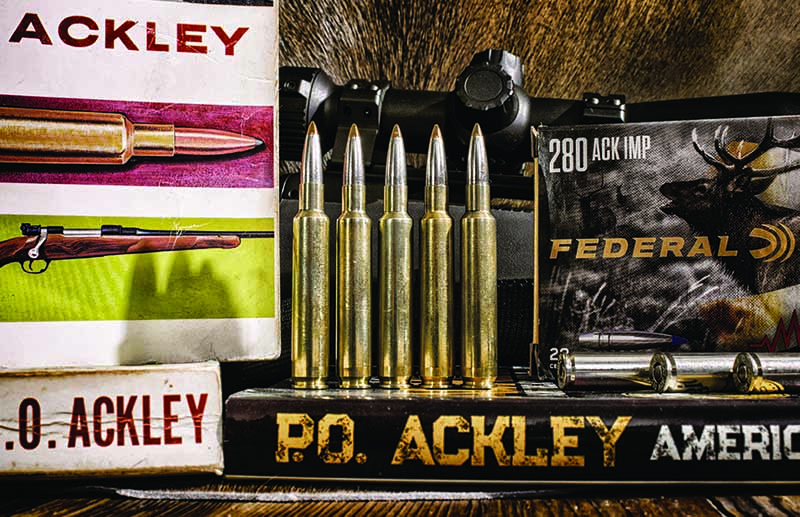
Parker Otto Ackley, known as P.O., was constantly tinkering with cartridges in an effort to improve their performance. He’d remove a considerable amount of body taper, and one of his trademarks was to increase the shoulder angle, all to provide additional case capacity for increased velocity. If there was a cartridge in production during his lifetime, odds are that P.O. gave it the Ackley treatment.

He played a huge role in the development of the .17-caliber cartridges, including the .17 Hornet (slightly different than the current configuration) and the .17 Bee. But, in spite of giving the Ackley Improved moniker to cartridges up and down the caliber spectrum, his most well-known improved cartridge—and the only one adopted as a commercial offering—is the .280 Ackley Improved.

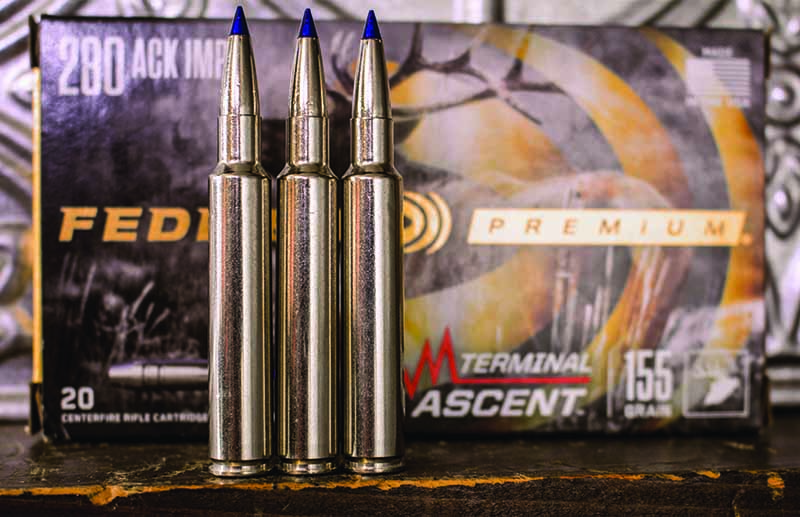
Federal’s 155-grain Terminal Ascent load in .280 Ackley Improved is flat shooting and hard hitting, and is suitable for nearly all big-game hunting.

P.O. Ackley was experimenting with the 7mm-06 Mashburn (the .30-06 case necked down to hold 7mm bullets) before the .280 Remington was legitimized: He’d blown out the body taper and sharpened the shoulder, but had ceased his efforts as soon as the .280 was available commercially. He switched his focus to the .280 Ackley Improved, though Fred Huntington, father of RCBS reloading equipment, started that ball rolling with his .280 RCBS, with a 35-degree shoulder.

Ackley’s design used a 40-degree shoulder, and the .280 Ackley Improved was born, giving him a very slight improvement over the 7mm-06 Ackley Improved. P.O. Ackley did have some unique observations, which I find still hold true—for the most part—all these years later.

I first came across the .280 Ackley Improved as a youngster, when reading about Kenny Jarrett’s Beanfield rifles. I couldn’t afford a Jarrett rifle at that time—hell, I couldn’t afford to pay attention back then—but I didn’t forget about that cartridge. The .280 AI remains a staple in the Jarrett lineup, and it was Kenny Jarrett’s devotion to this cartridge that played a huge role in bringing it to the masses.

The .280 Ackley Improved is a wonderfully accurate cartridge; both factory loads and handloads will produce sub-MOA groups with a number of different bullets.

However, it was Nosler who, in 2007, brought the cartridge to SAAMI for approval and commercial production. There’s a slight difference between the wildcat chamber (and many older sets of reloading dies) and the SAAMI-approved chamber, so if you intend to reload for your .280 AI, make sure you obtain a modern set of reloading dies, designed for the SAAMI chamber.

Just What Is The .280 Ackley Improved?

“It will be quickly noticed that there is very little difference between the top velocities for the .280 Improved and the Magnums, plainly demonstrating that there is little advantage in using a belted Magnum case, for anything under .30 calibre,” states P.O. Ackley in Handbook for Shooters and Reloaders, Volume 1.

There’s no denying the popularity and effectiveness of the 7mm Remington Magnum, and it remains one of the most popular big-game cartridges in the field. However, P.O. Ackley was generating 7mm Remington Magnum velocities in his .280 Ackley Improved before Remington released its belted magnum in 1962.

Looking at modern ammo, you’ll see a slight velocity advantage for the 7mm Remington Magnum, but not more than 75 fps or so. I’ve seen the same results in handloaded ammunition as well, though the gap is smaller yet. The .280 Ackley Improved holds about 15 percent less water—depending on brand of case—than does the 7mm Remington Magnum, and avoids the case stretching associated with the belted cartridges. Considering that the body diameter of the .280 AI is much smaller than that of the 7mm Rem Mag, and the velocity differences are negligible, the .280 AI becomes very attractive.

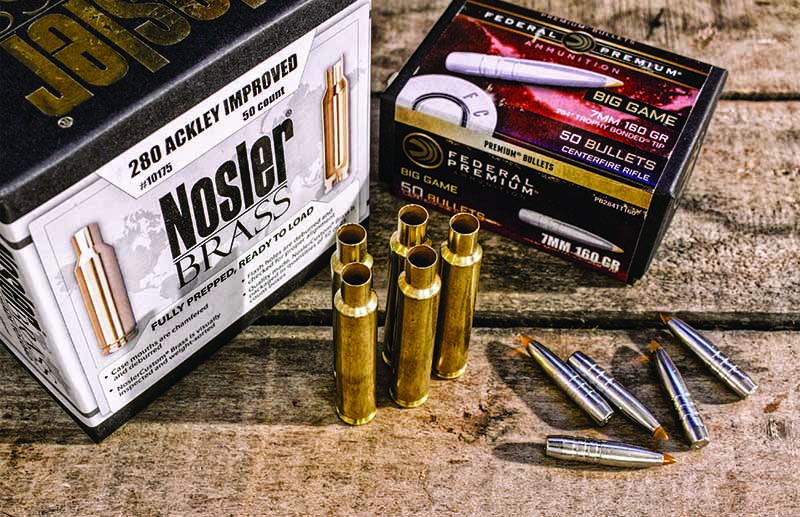
Nosler makes excellent component brass, which pairs exceptionally well with 160-grain Federal Trophy Bonded Tips.

Comparing the .280 AI to the .280 Remington, the .280 Ackley Improved gives a velocity increase of between 50 and 125 fps in factory ammunition, and more than 100 fps in handloaded ammo, which is about par for the course; as Ackley stated, the velocity difference between the .280 Remington and the 7mm Remington Magnum is significantly less than that of the .30-06 Springfield and the .300 Winchester Magnum. The rimless .280 AI case, which uses the shoulder for headspacing, benefits from the steep 40-degree shoulder, and concentricity and accuracy can be enhanced if the ammunition is tuned to the rifle’s chamber.

As if those points weren’t enough to make the case for the .280 AI, you can safely shoot the more readily available .280 Remington ammunition from a .280 AI chamber in a pinch. In fact, that was the recommendation from Ackley himself for creating cases for his wildcat, long before they were commercially available.

My own .280 AI is a Savage Model 110 Long Range Hunter. For that gun, I settled on a 160-grain Federal Trophy Bonded Tip printing ½-MOA groups at a muzzle velocity of 2,965 fps (Federal’s factory ammunition for the 7mm Remington Magnum sends a 160-grain bullet at 2,950 fps).

The author and Maré van der Merwe with an exceptional springbok in Namibia, taken at 300 yards with the .280 Ackley Improved.

The cartridge proved to be a perfect choice for African plains game—of any species—and makes the same sound choice for the majority of North American game. Both its trajectory and energy are the equal of the 7mm Remington Magnum, or so close that no game animal could ever tell the difference, and anywhere you’d use the 7mm Rem. Mag. you could use the .280 AI.

Ammunition And Rifle Options

The factory ammunition options for the .280 Ackley Improved continue to grow each year. Nosler, who played such an important role in bringing the former wildcat to the masses, offers six different loads for the .280 AI. Their AccuBond is offered in 140-, 150- and 160-grain weights; the Partition is loaded at 160 grains and the Ballistic Tip and lead-free E-Tip at 140 grains. Hornady loads the 162-grain ELD-X in their Precision Hunter line at 2,850 fps, and Federal offers three different loads, including the 140-grain Trophy Copper Tip in the Meat Eater line, the 168-grain Berger Hybrid Hunter and their fantastic 155-grain Terminal Ascent bullet.

This gives the hunter choices between standard cup-and-core bullets in the Ballistic Tip, ELD-X and Berger Hybrid Hunter, lead-free monometal bullets in the Trophy Copper Tip and Nosler E-Tip and bonded core bullets in the AccuBond and Terminal Ascent.

Of all the Ackley Improved designs—and there are many—the .280 AI stands out as the consummate blend of enhanced velocity, low recoil and striking power.

Savage still offers the Model 110 Long Range Hunter, but the company also chambers their Axis II, Axis II XP, Timberline, Storm and Ultralite in the .280 Ackley Improved. Ruger offered a limited run of their classic No. 1 single shot—commemorating Joe Clayton—and now the Ruger Hawkeye African is available in .280 AI. Kimber offers their Hunter rifle and Mountain Ascent, and Cooper offers their Model 52 Classic, Timberline, Backcountry and more so chambered; Bergara also offers their Premier Series Classic rifle in .280 Ackley.

On the more boutique side, Christensen Arms offers their Ridgeline in .280 AI. On the low side, the Savage Axis II has a street price of under $400, and on the higher side, the Christensen runs about $1,900, and the Coopers can break the $3,000 mark, so there are plenty of options for nearly any budget.

Legitimizing Ackley’s Efforts

Simply thumbing through his two-volume set Handbook for Shooters and Reloaders will demonstrate the level of dedication Parker Ackley had for cartridge and rifle development. The man had either developed or produced load data for a huge number of cartridges, many of which would go on to become commercial cartridges, even if it would take a few decades. His level of expertise, as well as his opinions on cartridges and ballistics, are very difficult to argue with, even though there have been definite changes in powder and projectile technology.

Had P.O. Ackley done nothing more than put a sharp shoulder on the .280 Remington, his name would still be noteworthy, but looking at the volume of work he produced, he’ll be revered among shooters for decades to come. Like Ned Roberts and Col. Townsend Whelen, Ackley put an indelible mark on the shooting industry—his .257 Roberts Improved, 7×57 Improved and .30-06 Improved are still in use by friends of mine—and I’m certainly appreciative of his efforts.

The article originally appeared in the March 2021 issue of Gun Digest the Magazine.

Raise Your Ammo IQ:

The CETME Model 58: Roller-Locks Go Mainstream

3

Developed in post-war Spain by ex-Mauser engineers, the CETME Model 58 was based on German prototype designs and resulted in one of the most influential battle rifles to ever exist.


CETME Model 58 Quick Facts:

  • CETME=Centro de Estudios Técnicos de Materiales Especiales=Center for Technical Studies of Special Materials
  • 7.62x51mm Rifle Using Roller-Delayed Blowback Action
  • Lead Engineer Was Ludwig Vorgrimler
  • Most Common Model C Variant Adopted By Spanish In 1964
  • Served As Basis For Later H&K G3

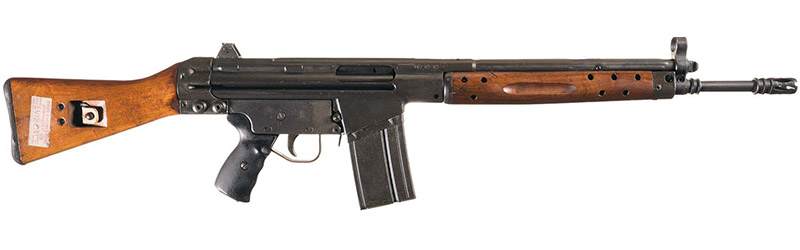
The CETME 58 Model C learned to walk so the H&K G3 could leave the gates running. While the CETME is often overshadowed by its German younger brother, the original Spanish battle rifle should not be forgotten. Its arduous and complicated development process may have resulted in a rifle that hardly saw any serious action itself, but its design would go on to be the basis for the prolific H&K family of roller-locked guns that are still used and loved to this day. Like the FAL, the CETME never got the opportunity to demonstrate the design’s true potential, but despite the bureaucracy that forced it into the battle rifle category it still proved to be an effective service weapon. These guns would almost certainly be less well-known if it weren’t for the abundance of parts kit builds that once flooded the country. While any model of CETME is less obtainable now than they were previously, these classic Cold War battle rifles can still be solid shooters for the right price.

Military CETME
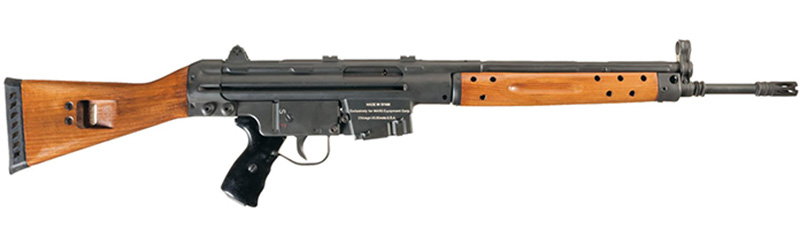
Select-fire military CETME. Photo: Rock Island Auction Company.

Another Battle Rifle That Wasn’t Meant To Be

By the end of WWII, the Germans had put some serious development into the “Sturmgewehr” or assault rifle concept. These select-fire weapons chambered for the new 8mm Kurz cartridge fed from detachable box magazines and featured pistol grips and SMG-like handling. The less powerful ammunition allowed them to be much more effectively used in full-auto than other select-fire weapons of the time such as the FG 42 or BAR.

Immediately following the war, most firearms engineers understood that weapons like the StG 44 and StG 45(M) were the future of infantry weapons, so they began developing their own iterations of the concept for their own nations’ armies. Unfortunately for the West, only the Soviets were able to fully realize this design concept with their adoption of the AK-47, as American stubbornness and NATO standardization politics forced the design teams behind both the FAL and the CETME to abandon their original intermediate cartridge designs in favor of the new 7.62x51mm round. This change resulted in reduced ammunition capacity, increased weight and made them far less effective when using fully automatic fire—essentially defeating the purpose of each designers’ original intent. While not as effective as they could have been if chambered for intermediate calibers, these battle rifles would still go on to be perfectly suitable service weapons.

CETME Model A
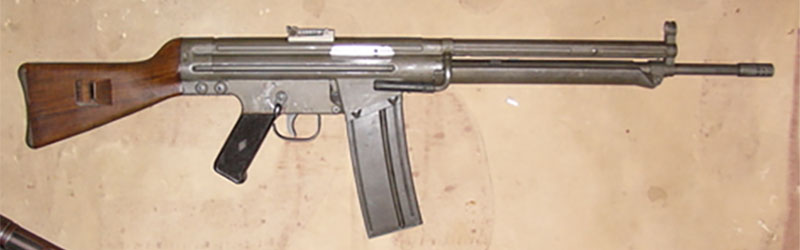
Experimental Model A variant chambered for intermediate cartridge. Photo: Wikipedia

CETME Development

As already stated, the CETME Model 58 began its life as an intermediate caliber weapon inspired primarily by the experimental StG 45(M). The short version of its development is that after WWII, German industry was filled with minds too bright to be wasted getting put on trial at Nuremberg, so the allies took them for themselves. NASA famously got Wernher Von Braun and the Soviets got Hugo Schmeisser, but plenty of other skilled engineers and scientists were spread amongst the allied nations. One such man was Ludwig Vorgrimler.

Vorgrimler worked as the director of Mauser’s weapons division until the war ended and he and his team were sent to work for the French government. While in France, the team further developed the roller-delayed blowback action of the StG 45 into the CEAM Model 50—an experimental design that was chambered for various intermediate calibers. France abandoned the project for financial reasons, resulting in Vorgrimler to begin working for the Spanish CETME institute instead. Development on the CEAM concept continued, resulting in the CETME A and B models which were chambered for intermediate and reduced-recoil rounds, respectively. NATO standardization on the full-powered 7.62x51mm cartridge sealed the CETME’s fate, however, finalizing the design in 1964 with the Model C that we all know today.

Century CETME
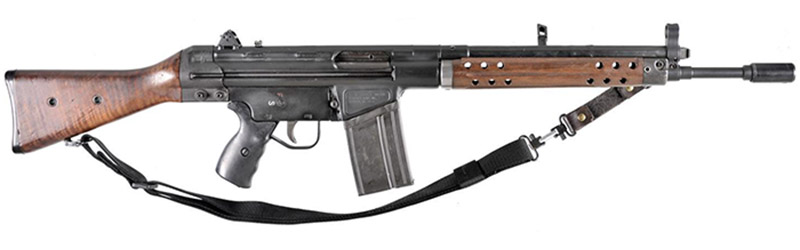
Early CAI Parts Kit Build Model C. Photo:Rock Island Auction Company.

CETME Model C Operation

It takes a German level of confidence in mathematics to use an unlocked breach with a full-powered rifle cartridge, but that’s exactly what Vorgrimler’s team accomplished with the CETME. This style of action means that the CETME is completely lacking a gas system, let alone an adjustable one like seen on the FAL. The result is a rifle with a bit more kick to it, but one that is ultimately more reliable. While the FAL can be tuned to one’s ammunition to be both reliable and relatively soft shooting, it could grow less reliable as the gun gets dirtier and the gas regulator can get bumped out of position resulting in malfunctions. No such thing is possible with the CETME, as all the cartridge’s gas blows back onto the bolt upon firing, only to be delayed by the roller-lock mechanism which keeps the breach sealed until chamber pressure has dropped to a safe level. This style of action resulted in cartridge cases that were prone to get stuck in the chamber, so a new fluted chamber design was introduced for more reliable extraction. This leaves spent shells with an iconic pattern burned into them. This system is the reason behind one of the CETME’s best qualities—reliability. These rifles are known to eat whatever ammo is fed to them and always ask for seconds, so if you have a pile of dirty military surplus 7.62 sitting around there may not be a better platform to run it through.

The CETME is charged by its non-reciprocating charging handle that can be locked to the rear, giving it the same iconic “HK slap” to load it as would become famous on the G3 and MP5. The rifle is fed by 20-round box magazines of the “rock and lock” style and are released by an AK-like paddle. The iron sights are simpler than what would later be found on G3s, but they still feature differently sized apertures and notches that can be rotated through depending on one’s engagement distance.

Weighing in at almost ten pounds, the CETME is about half a pound heavier than a standard FAL despite being three inches shorter. Heavy and long, it’s no surprise that the battle rifle platform fell out of style as urban warfare became the more common fighting locale.

Spanish-Sailor-CETME
Spanish sailor with CETME rifle. Photo: Wikipedia

Owning A CETME In The US

When half the world adopted the H&K G3 over the CETME, so too did they decide the fates of millions of civilian gun owners. The simple truth is that for a multitude of reasons, the average American who wants a roller-delayed 7.62 NATO rifle will be better off with a G3 derivative. They are ultimately better guns, and just like throughout the rest of the world they are more abundant in the States than any CETME variant. The only truly authentic CETME rifles in the country were imported by the MARS Equipment Corporation in the 60s and 70s who brought in a total of about 1,200 guns. While these examples are the only 100% Spanish CETMEs in the country, they also included a few “sporterized” features like a scope mount and rubber recoil pad. While nice rifles, the rarity of the MARS-imported guns relegates them to the collector’s market.

The most abundant CETMEs in the U.S. by far are the parts kit builds that were sold by Century Arms from the 90s throughout the 2000s known as C308 Sporters. These were made using a mix of surplus and new production parts, and the resultant rifles came in varying levels of authenticity. Earlier examples are near clone-correct, while newer ones are mostly CETME in nature with a few inauthentic details like the polymer “navy style” G3 lower and Picatinny optics rail. Like many Century Arms kit builds, the quality of C308s can be hit or miss. Some people reportedly got awesome rifles while others got lemons, but it was the widespread proliferation of C308s in America for very affordable prices that helped keep the CETME name from slipping from public consciousness. Having not sold them for at least a few years now, however, the prices of C308s have begun reaching PTR levels, making them no longer worth it. Unless C308s suddenly drop in price, those who want a roller-delayed battle rifle are better off looking at PTR’s offerings.

MARS CETME
Early MARS import with 5-round magazine. Photo:Rock Island Auction Company.

Ultimately, CETME Model C battle rifles are historically significant not because of what they were, but because of what they inspired. Outside of some smaller African conflicts, the CETME never got to truly test its metal, but as the parent rifle to the H&K G3 and the “grandfather” to the MP5, it certainly doesn’t deserve to be forgotten. If there’s one area where CETMEs have the G3 beaten, its aesthetics, as the classic wood furniture screams Cold War battle rifle more than German polymer ever could have. While pre-fabricated kit builds are no longer common, the parts kits themselves are still readily available and would serve as an excellent project for those with the skills to finish it.


More On Battle Rifles:

WOOX Rifle Stocks And Chassis Now Available For The Ruger 10/22

1

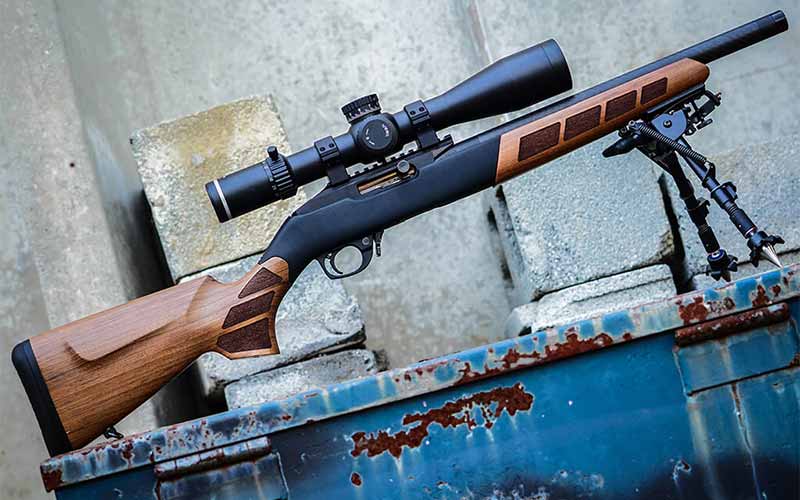
WOOX stocks and chassis bring precision and style to any compatible rifle, and the ubiquitous Ruger 10/22 just joined that list.

WOOX Ruger 10/22 Stock Options:

  • Wild Man Precision Stock | $600
  • Exactus Precision Stock | $700
  • Furiosa Chassis | $1,100

WOOX stocks are designed in America and handmade in Italy using traditional craftsmanship methods. Since their stocks and chassis first hit the market last year, WOOX has received critical acclaim for their products’ performance as well as style. Previously only available for certain high-end bolt guns, WOOX now makes their stocks and chassis for the ubiquitous Ruger 10/22 as well. Now, for those who can afford to, WOOX can bring an extra level of accuracy and class to your otherwise generic plinker.

WOOX-wildman

Performance And Style


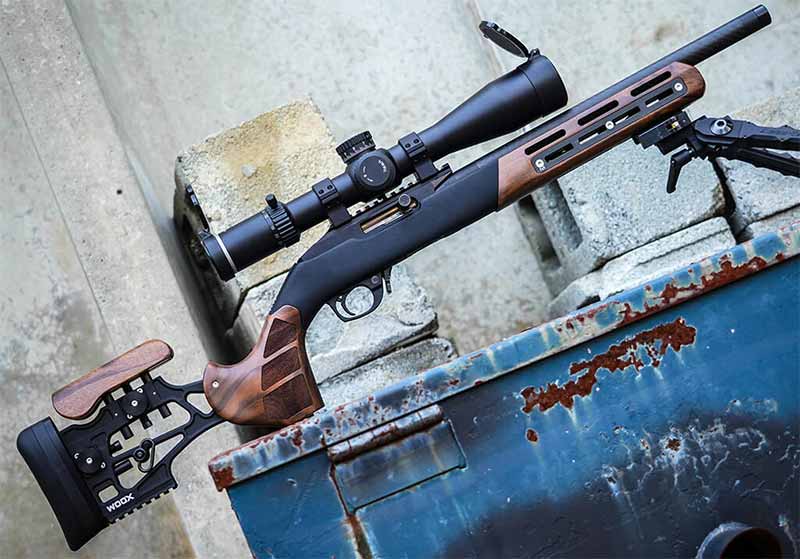
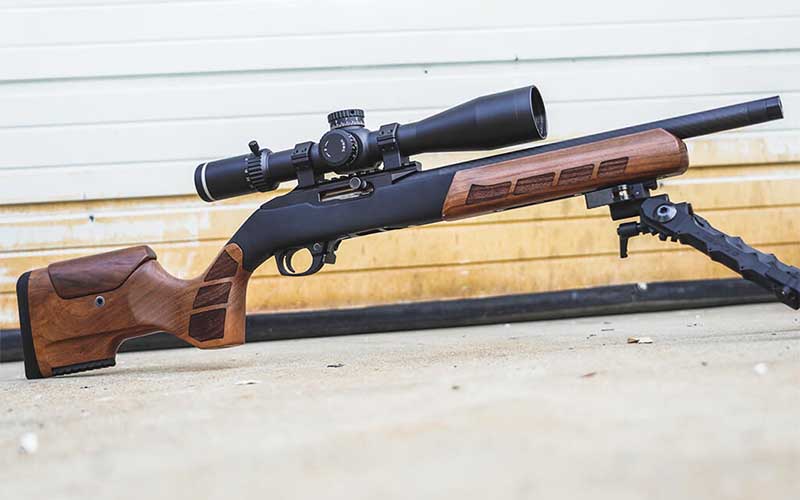
All three WOOX designs utilize some form of internal aluminum chassis to provide stability and increase accuracy without raising the rifle’s weight. The Wild Man is the simplest, lightest and cheapest option they have to offer. The Exactus adds the ability to mount a monopod to the rear Picatinny segment and has a higher level of adjustability. The Furiosa is their most advanced chassis option, featuring a true adjustable precision rifle stock as well as more real estate for mounting accessories.

WOOX-Furiosa

Installation


Regardless of the WOOX stock chosen, installation is a simple and painless process. Unlike many other precision rifle stocks and chassis, the three WOOX options all utilize a drop-in system that needs no extra pillars or bedding. WOOX claims that all of their stocks should be compatible with virtually any Ruger 10/22 that has a straight, pencil or match-profile barrel.

WOOX feature

If the classic combination of wood and black metal isn’t up to your tastes, all three stocks are available with different colored wood and the aluminum chassis can be Cerakoted in several different colors for an extra fee. The Ruger 10/22 fits are available now, but WOOX warns of a two to three-week lead time after ordering.

For more on WOOX, please visit wooxstore.com.


Learn More About Rifle Stocks:

FAB Defense Releases RAPS-C Collapsible AR Stock

0

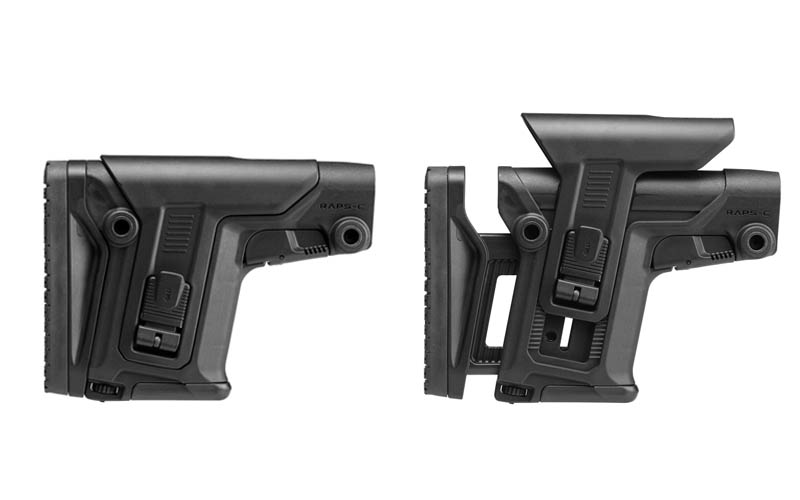
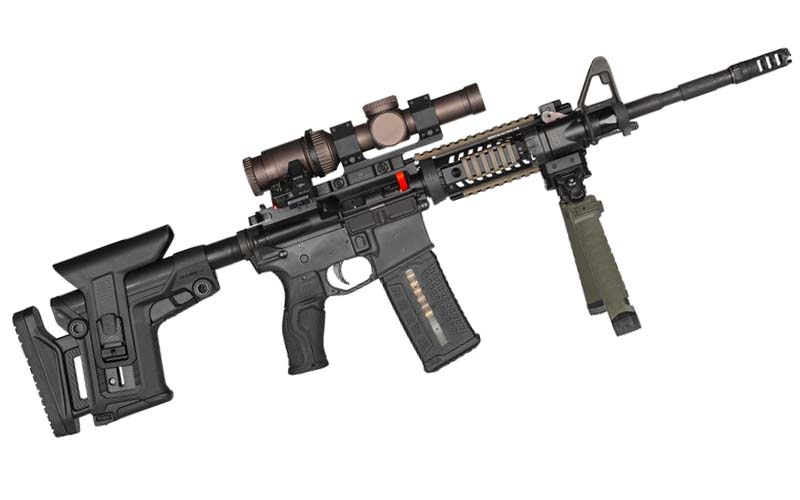
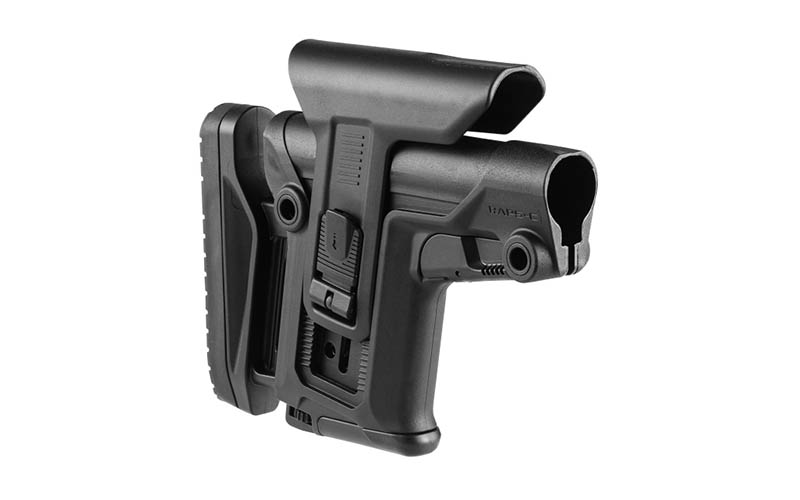
The new RAPS-C Collapsible AR buttstock from FAB Defense combines the ergonomics of a precision rifle stock with the functionality of a carbine stock in a single package.

FAB RAPS-C Stock Features:

  • Rapidly Adjustable Length Of Pull
  • Adjustable Cheek Rest Height
  • QD Sling Cups
  • Covered Picatinny Segment For Monopod
  • Heavy Rubber Recoil Butt-Pad

Continuing in their tradition of releasing innovative, interesting and function-oriented weapon accessories, FAB Defense of Israel has just introduced their new RAPS-C collapsible buttstock. Made to fit both commercial and Mil-Spec AR buffer tubes, the RAPS-C was designed to bring the ergonomics and adjustability of a precision rifle stock to a carbine platform without making any sacrifices.

RAPS C Feature

Dual Purpose


RAPS-C stands for “Rapid Adjustment Precision Stock-Carbine”. The standard RAPS came out earlier this year, and while it may have been adequate as a purpose-built precision rifle stock, it was bigger and bulkier than most AR users appreciate. Designed to fit any carbine-length AR buffer tube, the new RAPS-C is smaller, sleeker and more versatile than its older brother. In its collapsed configuration, the RAPS-C is nearly as compact as a standard AR-15 carbine stock, but once deployed it can provide the ergonomics necessary to do more precision-oriented work.

RAPS C rifle

Rapid Adjustment


The RAPS-C uses a patent-pending one latch system to adjust both the length of pull and cheek riser height with a single lever. Configurable for either right or left-handed shooters, when the latch is unlocked it allows the spring-loaded butt-pad to automatically deploy to your set length. This eliminates the need to fiddle with your stock in the field by allowing you to dial in your preferred setting before you need it. Unlocking the latch also allows you to adjust the cheek riser height. The versatility of this design enables one to easily and quickly switch their rifle’s buttstock from one that is ideal for CQB use to one that is better for precision shooting.

FAB RAPS C

Available in black, OD green or FDE, the RAPS-C looks to be an interesting stock that could be very well suited on a jack-of-all-trades rifle build. Its MSRP is set at $235.99 and is available now.

For more on FAB Defense, please visit fab-defenseus.com.


More AR-15 Stocks And Accessories

First Look: Faxon EXOS Pistol Compensators

0

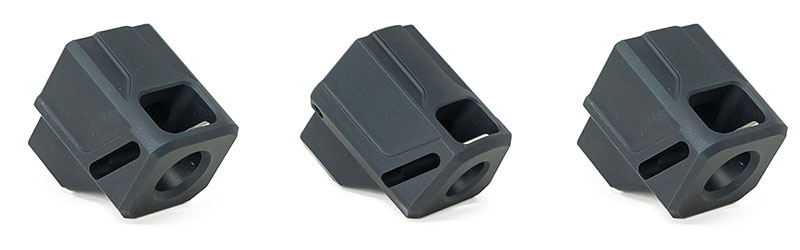
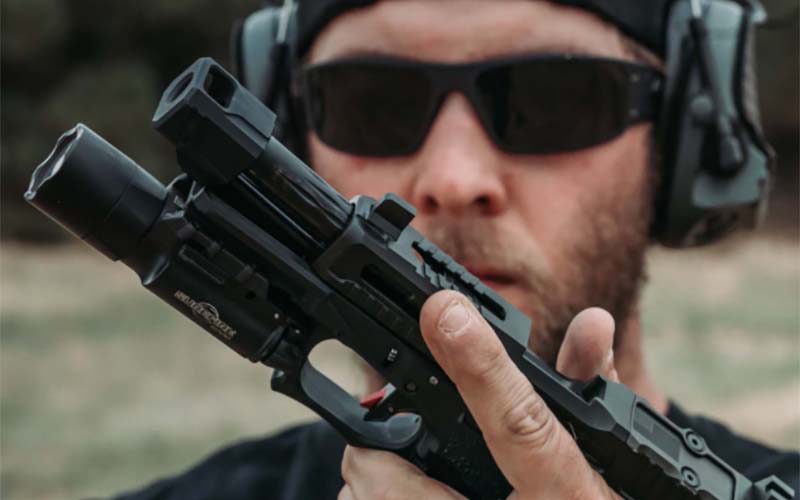
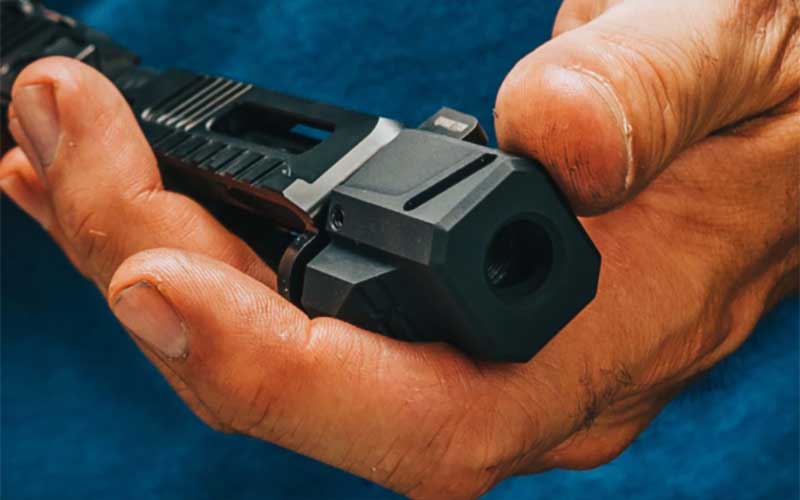
Faxon Firearms delves deeper into the pistol market with their new EXOS compensators, designed to work with popular Glock, S&W and Sig pistol models.

EXOS Compensator Models:

  • EXOS-513: Glock 19 Gen 3, Glock 17 Gen 3, Glock 34 Gen 4
  • EXOS-514: S&W M&P 1.0 Full-Size 4.25”
  • EXOS-515: SIG P320 Full Size Model

Faxon Firearms are mostly known for their high-quality AR-15 barrels, but their continued expansion into the handgun market has been met with positive feedback from both defense and competition-oriented shooters. Earlier this year, Faxon released Glock 19 magazine extensions designed for both defensive and competition use, as well as new threaded barrels for some popular CCW pistol models. Now, many of those same pistols can have a Faxon EXOS compensator to go along with them.

EXOS comps main

Compatibility


Faxon’s three new compensator models were officially tested to be compatible with six pistol models, but they imply that they will also work fine with some other, similar models. They warn that because compensators can affect a gun’s timing, it is up to the user whether or not they want to experiment mounting an EXOS compensator on something besides what’s listed on the box. Examples include Glock generations outside of what was tested as well as compact models of the S&W and Sig. The EXOS-513 model intended for Glocks will also work with Faxon’s own FX-19 Hellfire.

The new EXOS compensators are also compatible with other brands of barrels with 1/2×28 threading, but they were optimized to work with Faxon’s own designs.

EXOS 2

Performance


Made of 6061 aluminum and anodized black, each of the three new EXOS compensators were designed to fit their respective gun model’s performance as well as style. They feature gas port cuts on the tops of the compensators as well as the sides, intended to not only reduce muzzle flip but also improve reliability. It’s up to you whether you want to use your EXOS compensator strictly for competitions and the range, or if its performance-enhancing features would also be a worthy addition to your CCW gun. If users find that the EXOS compensators work reliably on the compact models of Sigs and Smith & Wessons, they may become a more popular edition to those carry pistols.

EXOS

All three new EXOS compensators have an MSRP of $85 and include all necessary mounting equipment in the box.

For more, please visit faxonfirearms.com.


More Handgun Upgrades:

DS Arms: American FALs For The 21st Century

1

The FAL is a legendary battle rifle still sought after by many, but for the average American, the most obtainable examples will be from DS Arms.


DSA FAL Options:

  • Traditional FAL Rifles
  • Modernized FAL Rifles
  • Folding-Stocked FAL Rifles
  • FAL Pistols
  • FAL SBRs

As the world’s most iconic battle rifle, it is no surprise that the FAL is still a very sought-after weapon. Whether because of their historical provenance or the quality of their design, FALs sit atop many’s dream gun wishlists even in the modern era. Unfortunately, the golden age of imported FALs is long over. There was a time when everything from original Belgian-made FN examples to Brazilian IMBELs were being imported, but these days even parts kits are relatively scarce. This means that getting a FAL isn’t going to be cheap, but they don’t have to cost as much as the old collectible imports do. DS Arms is an American company building FALs from scratch, and it will be the easiest and most affordable way for the average shooter to get into the platform. With a DS Arms FAL, you can scratch a lot of different itches: traditional military clones, modernized fighting carbines, DMRs and more. So, whether you’re in the market for one of these cold warriors to LARP as a Selous Scout or just want something cooler than an AR-10 to fling steel downrange with, DSA is a company worth looking at.

DSA Classic FAL

About DS Arms

Headquartered in Illinois since they set up shop in the early 90s, DS Arms is America’s premier FAL manufacturer. While some smaller shops will build you a FAL too, none have the scale of industry like DSA. DS Arms builds their FALs using new tooling and a modernized manufacturing process, making most of their parts in-house and domestically outsourcing a few others like barrels. This means that their guns are 100% American-made and are not subject to 922r or any other asinine import restrictions.

DS Arms builds their FALs to metric specs and are closest in form to the Austrian StG-58 FAL variant, explaining the SA58 name behind DSA’s guns. Besides being the primary supplier of FALs for the civilian market, DSA FAL rifles have also been purchased by the U.S. Army for training foreign militaries as well.

The build quality of DS Arms guns is generally considered to be good for the price, but it is not uncommon for users to experience some issues, especially with a brand-new rifle. Supposedly their customer service is excellent, however, and will gladly take the rifle back to fix any issues before returning it. If that happens to you, consider yourself unlucky that you’re forced to wait longer but find solace in the fact that you will have a solid rifle at the end of the process. Besides, for the money, you don’t really have any other options.

DSA PARA FAL

The Traditional DSA FAL

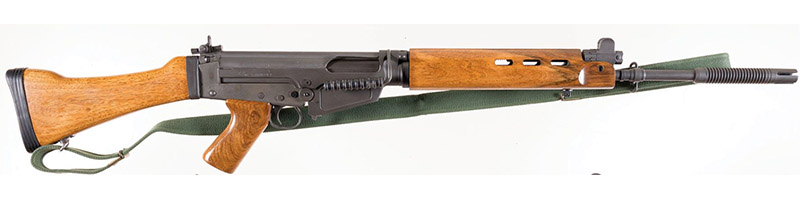
The most traditional FAL rifles available from DS Arms feature a fixed stock, 21-inch-long barrel, carry handle and classic profile furniture. They also have some variations on the theme, with some mostly traditional models with one or two historically inaccurate features such as a railed top cover or a shorter barrel. Keep in mind, however, that even their most traditional offerings have some modern improvements that may bother those who obsess over clone-correct details, such as sand cuts in the bolt carrier. Frankly, if you want your FAL to be authentic down to the last detail, a DSA isn’t for you. These are entry-level shooter guns that can easily be made close enough to a military clone to satisfy most shooters, but pedants are better off scouring the secondhand market instead.

Some other almost-authentic FALs DSA has to offer are some of their folding stock “paratrooper” models that mimic original FN designs. They also sometimes build unique examples using parts kits when they have the opportunity, such as their Israeli FALs being sold a couple of years back. They also sometimes include surplus parts when they’re available, such as the Argentine bipods included with their current 21-inch classic edition rifles.

Israeli FAL
DSA Israeli FAL built on surplus parts.

After obtaining one, these traditional-style FAL rifles can be dressed up in a few different ways depending on your taste. When left in their original black plastic furniture, they already very closely resemble the current-issue FALs of several different nations, but in a world filled with black plastic it’s nice to mix things up now and then. Metric-pattern wood furniture can be installed to give your DSA FAL a more classic appearance, while painting it iconic baby poop green camo will imbue it with some Rhodesian flair.

DSA FAL wood furniture
DSA FAL with wood furniture. Photo:Rock Island Auction Company.

Going Modern

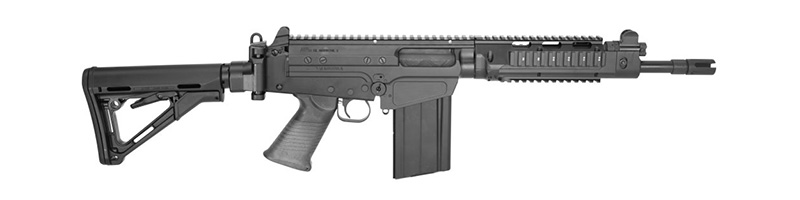
If the FAL platform attracts you for reasons besides historical, DSA also likely has a configuration to suit your needs. While not the most accurate battle rifle ever made, FALs still have acceptable enough accuracy to serve in a DMR role with the right rifle and accessories. FALs being used by militaries in this way typically attached their scopes using old-school claw mounts, but DSA has more modern solutions like railed top covers. Modern stocks and bipods also help the FAL become a more practical DMR option.

For those who want their FAL for some high-speed, low drag operating, DS Arms has plenty of tactical short-barreled options as well. The term short-barreled is relative here because compared to the FAL’s original 21-inch-long barrel even the 18-inch models can be considered short. The shortest DSA rifle has an 11-inch barrel and their shortest FAL pistol’s is 8.25. The rifle models with barrel lengths less than 16 inches are factory SBRs and therefore must be registered NFA items to be legally acquired. Most of these tactical FAL models feature upgraded furniture which enables the mounting of accessories and optics. They can also have more ergonomic, modern-style folding stocks.

DSA FAL SBR

Besides the modernization features that DS Arms has to offer, these days there is also a sizeable market for aftermarket FAL parts and upgrades. Much like what has happened to AKs over the years, it is no longer difficult to bring a FAL into the 21st century.

FALs are great, timeless battle rifles that will likely never completely fall out of style. For as long as kids are growing up watching movies, seeing the news or playing video games, there will be individuals who feel the call to own one themselves. That’s why DSA FAL rifles play such an important role in keeping the platform alive, as the volatility of imports can never replace the stability of domestic production. Whatever reason you have for wanting to dip your toes into this interesting platform, DS Arms is a great place to start looking.

For more information, please visit dsarms.com.


More On Battle Rifles:

The S&W M&P 12: Big Firepower In A Small Package

3

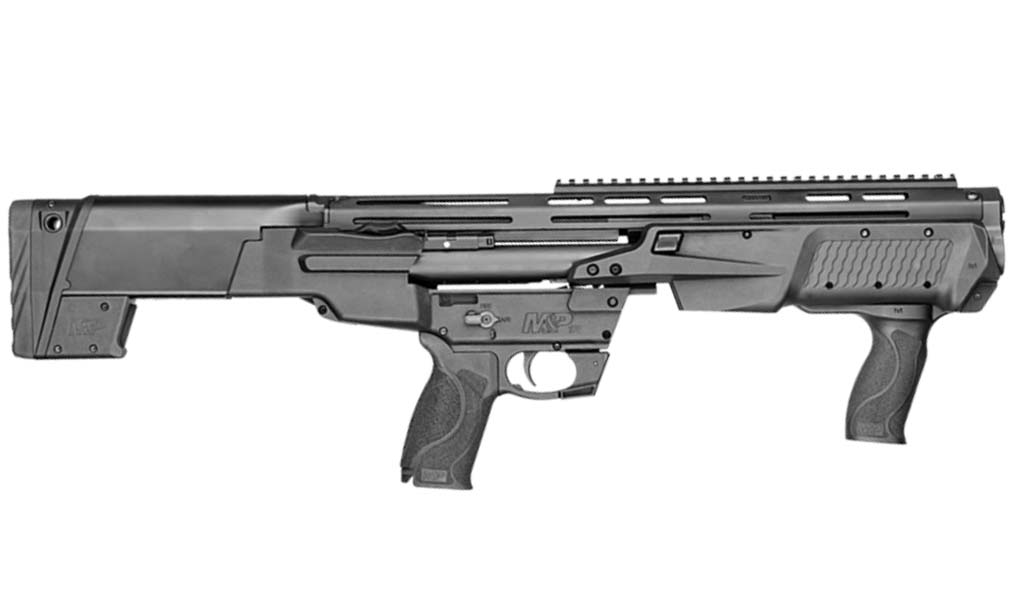
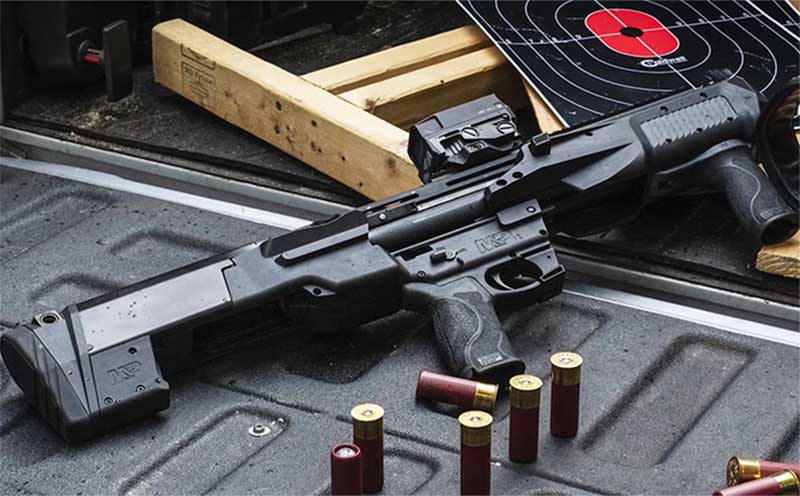
Capable of fitting 15 12-gauge shells in a package barely over two feet long, the new S&W M&P 12 bullpup is a niche weapon that serves its role well.


S&W M&P 12 Features:

  • OAL: 27.8 Inches
  • Barrel Length: 19 Inches
  • Weight: 8.3 Pounds
  • 12-Gauge, 3-Inch Chamber
  • 6 3-Inch Shells Or 7 2 3/4 -Inch Shells Per Tube

Shotguns are one of the most versatile and useful categories of firearms. What we think of as a modern, smokeless-powder 12-gauge has been getting put to devastating effect against both animals and humans since at least 1897 without ever seeing a serious dip in popularity. They are typically simple, cheap and very effective. Over one hundred years after John Browning’s first practical pump-action was being used to defend stagecoaches, 12-gauge pump-action shotguns are still serving in tactical defensive roles today. Smith & Wesson recently released their radical new M&P 12 bullpup to the market, but how does it compare to other contemporary tactical shotguns?

SW MP 12

Where The M&P 12 Shines

Bullpups, whether they be rifles or shotguns, are a contentious topic. Some believe that they offer the best of both worlds—the compact length of a CQB weapon but the ballistic advantage of a full-size barrel. Others dismiss bullpups as gimmicks that don’t offer enough benefit to make up for their awkward ergonomics or poor triggers. For those who have already decided they want a high-capacity bullpup shotgun, however, the M&P 12 is one of only a few available options. IWI and UTAS have similar offerings on the market, but they are both significantly bulkier than the M&P 12. The closest existing firearm to the M&P 12 is obviously the Kel-Tec KSG, but Smith & Wesson brings more to their new gun than name recognition and a higher price tag.

The KSG and M&P 12 share the same capacities between their dual-tube feed systems, but the KSG is about two inches shorter while the M&P 12 is over a pound heavier. The extra weight comes from the M&P’s more solid, metal construction which features a steel receiver that should result in less recoil and greater durability.

Compared to more traditional shotgun designs, bullpup shotguns can have features that would otherwise be mutually exclusive. In a traditional, tube-fed shotgun, magazine size is directly correlated to their overall length. This means that a pump-action that’s been sawed down to the size of an M&P 12 would only have a capacity of four or five shells, or it would need to be ridiculously long to even begin to rival the M&P 12’s capacity. Conversely, magazine-fed shotguns can have a similarly short overall length but suffer in bulk due to the size of high-capacity shotgun mags. Drum magazines are notoriously bulky, awkward and less reliable than most other designs, making the M&P 12’s 14+1 capacity an attractive solution. This design is essentially the only way to have your cake and eat it too when it comes to owning a compact yet high-capacity shotgun.

MP-12

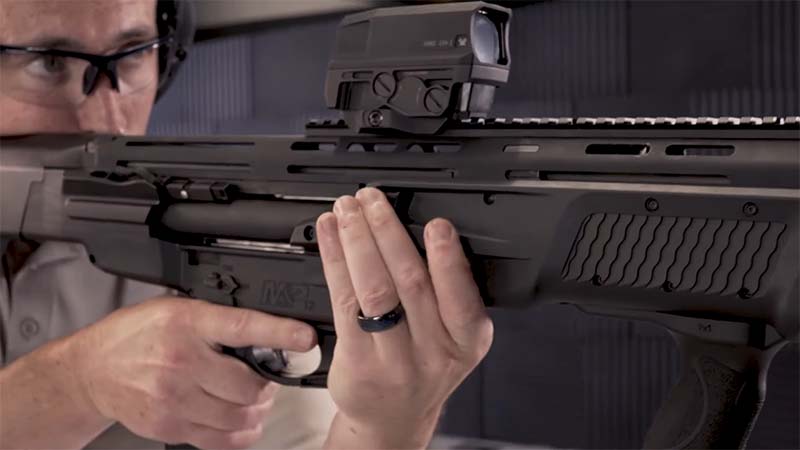
Another advantage of the M&P 12 dual-tube feed system is the ability to carry multiple kinds of ammunition. A selector button allows for the magazine tube in use to be quickly and easily switched between, enabling the user to carry and choose between two ammunition types. If you’re a law enforcement officer this could mean carrying lethal and less-lethal loads, or dragon’s breath rounds and flechettes if you’re imitating your favorite video game.

MP 12 Tube Switch Button
Tube-switch button being activated by shooter on M&P 12.

Is The M&P 12 Right For You?

The M&P 12 is a niche weapon. It sacrifices a lot over other tactical shotgun choices to excel in just two areas: compactness and capacity. Any traditional shotgun that takes up as little space as the M&P 12 is going to have a very low capacity, and anything that rivals the M&P’s capacity will invariably be either longer or bulkier. But for those that need a small, reliable shotgun with a high capacity and a lot of firepower, the M&P 12 is likely the current best option on the market. While slightly longer and heavier than the KSG, it is reportedly more reliable, durable, modular and ergonomic. It can easily mount an optic, foregrip and weapon light for clearing tight, indoor spaces, or can be left stock to be easily stowed inside of a vehicle. If you were ever forced to use it, it would likely offer sufficient capacity to survive the encounter, but if you were forced to reload, the tedium of that task would probably spell your demise.

The M&P 12 probably wouldn’t excel on a 3-gun course or in a duck blind, but it does what it was designed to do very well—clearing hallways and being stowed in tight spaces as an emergency defensive tool with some major firepower.

For more, please visit smith-wesson.com.


More Tactical Shotguns:

5 Best New Shotgun Loads

0

Despite ammo being thin, manufacturers are tuning out new offerings this year. Here are 5 of the best shotgun loads for 2021.

What Are The Top Shotgun Loads:
Self-Defense

Turkey Hunting

Clays/Upland

It could be argued that, during the past two decades, the most noteworthy firearm-related advancements have been with ammunition. Somewhat of an ammunition geek, every year I’m excited to see what new loads will be introduced. Right now, though, some folks could care less about new loads—they just want to buy one box of 9mm or .223 ammunition.

For 2021, things are going to be a little thin; the panic buying spurred by the pandemic and the election have manufacturers so busy trying to meet demand they have little time for new product development or introductions. In fact, some ammunition manufacturers never got around to distributing some of the loads announced for 2020.

Here’s a look at some new shotgun load offerings we hope make it to the shelves before some other tragedy hits and makes ammunition even harder to come by.

Best Shotgun Loads For 2021

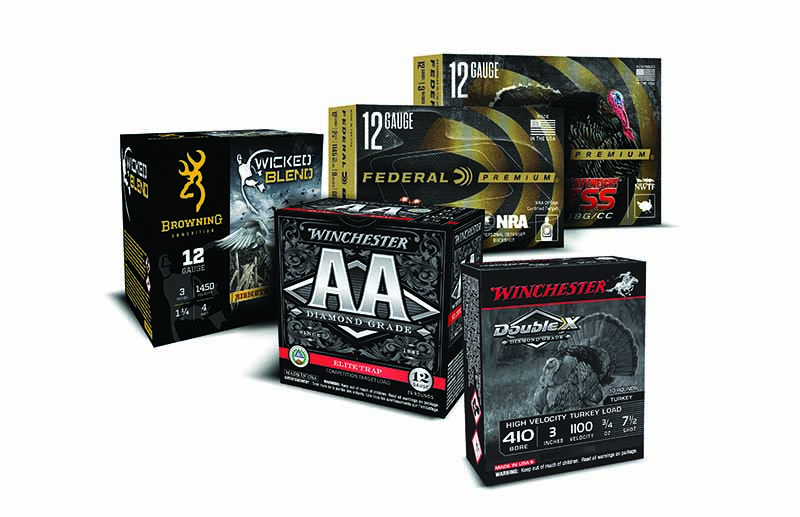
New Shotgun Loads from front to back: Winchester Double X 3-inch .410 Turkey Load; Winchester AA Diamond Grade Elite Trap; Browning Wicked Blend; Federal/NRA 2¾-inch Buckshot Load; Federal 3-inch Heavyweight TSS 12-Gauge.

Self-Defense: Federal/NRA 2¾-inch Buckshot Load

For self-defense applications, there’s a new offering from Federal. They’ve teamed with the NRA on a new Buckshot load. This is a 2¾-inch 12-gauge load that contains nine 00-buck pellets and the FliteControl wad to deliver tight and uniform patterns. A portion of the proceeds for every box sold supports the NRA’s mission to preserve and enhance gun rights.

Turkey Hunting: Winchester Double X 3-inch .410 Turkey Load & Federal 3-inch Heavyweight TSS 12-Gauge

Regardless of the situation, a year cannot go by without the introduction of new loads for turkey hunting. Winchester has a new 3-inch, ¾-ounce, .410 bore load, featuring No. 7.5 Diamond Grade shot at 1,100 fps for tight patterns. And Federal will be introducing a new 3-inch Heavyweight TSS load for the 12-gauge. It’s packed with 2 ounces of No. 7 and No. 9 shot and a FliteControl wad at an advertised muzzle velocity of 1,150 fps.

Clays/Upland: Browning Wicked Blend & Winchester AA Diamond Grade Elite

With regard to clays and birds, there are several new offerings from Browning, Federal and Winchester. Browning has rebranded their Wicked Wing line as Wicked Wing, Wicked Wing XD and Wicked Blend—now providing good, better and best options. In the Wicked Blend line, there will be four 12-gauge loads and a single 20-gauge load, all delivering precision round bismuth shot paired with precision round steel shot for ultimate pattern density. They also have two additions to the Upland Steel line, both featuring 1-ounce loads that are ideally suited to, and priced for, high-volume dove hunting.

There are a number of new shotshell offerings from Winchester, including a new 12-gauge 2¾-inch, 1⅛-ounce, 7.5-shot AA Diamond Grade load with a muzzle velocity of 1,250 fps, which is loaded with the hardest antimony shot available. There’s also a 16-gauge 2¾-inch 15/16-ounce load of No. 6 steel—perfect for clay targets or upland hunting.

The article originally appeared in the February 2021 issue of Gun Digest the Magazine.

Draw A Bead On Shotguns:


Classics: Smith & Wesson’s Victory Revolver in .38 S&W

5

A wartime version of the original Model 10, the Smith & Wesson Victory model is a class WWII collectible.

How To Know It’s A S&W Victory Model:

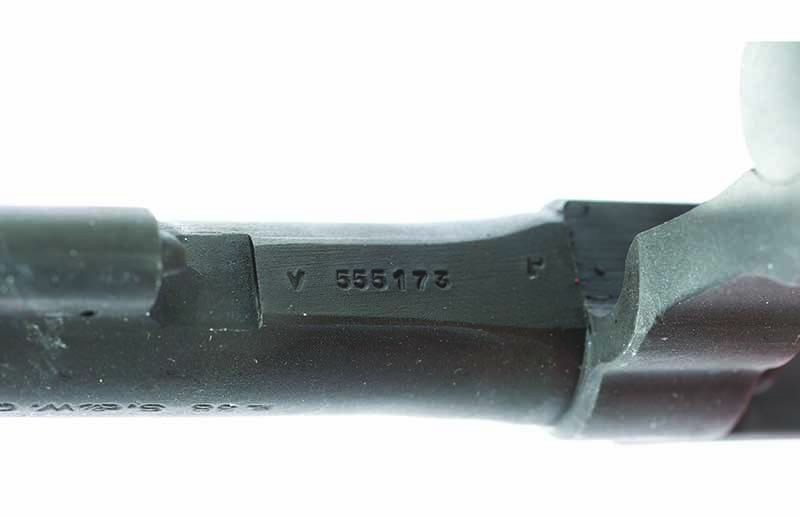
  • They have a “V” prefix in the serial number.
  • U.S.-purchased guns have “US Government Property” roll-marked on the topstrap.
  • As well as the flaming bomb ordnance mark and the inspector’s initials.
  • Ones made for Commonwealth often have markings from British services.
  • Some will have both U.S. and British markings.

There have always been Luger collectors. They’re the hot, sexy redheads of the handgun world—and good for those who have them. Of course, there are other collectible handguns as well, such as the ones made for Allied use in World War II.

At the start of WWII, we had a problem. Oh, we’d been here before—the one they had called The Great War. We didn’t have enough firearms. (I’m sure the next time we have a big war, we’ll have the exact same problem.) With all the services mobilizing and expanding, we needed guns. Smith & Wesson didn’t drop everything and begin making 1911s, machine guns and artillery pieces. They were set up to make revolvers, and there were plenty of uses for firearms that didn’t necessarily call for something chambered in .45 ACP. And plenty who wanted them.

So, S&W kept making revolvers.

The first production batches shipped to eager military buyers were simply the same M&P revolvers that S&W had been making, in the same high-polish blue, because that’s what they made. But the need for wartime production rates and a more durable finish soon had the revolvers sporting parkerized finishes and plain wooden grips.

Meanwhile, the British had also been busy.

The production of revolvers by S&W for the British was easy. The standard U.S. revolvers were all chambered in .38 Special, also known as .38 S&W Special. The British revolvers of the time, the Enfield, were chambered for the cartridge the British had adopted in the 1920s, the .38-200, known here as the .38 S&W (no Special).

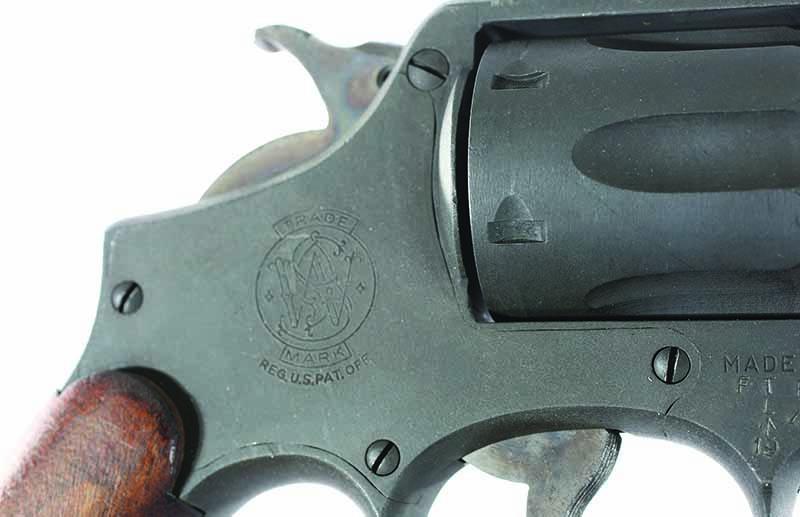
It may have been made for Lend-Lease shipment, but S&W made it, and they were proud of it. They still put their logo on the sideplate. Note the four screws holding the sideplate on.

The origins of the .38 S&W date back to 1877, and since that time, the loadings here in the U.S. had been kept mild in deference to the original black powder revolvers and the later top-break “bulldog”-type revolvers. So, the U.S. loading was (and still is) a 146- or 148-grain round-nose lead bullet at a nominal 650 fps. The British adopted the same cartridge case, but loaded it with a 200-grain bullet at 650 fps. They called it the .38-200.

Now, a brief aside here: If you do find any actual, real, .38-200 ammunition, or the later FMJ version of it, do not—under any circumstances—fire it in a clanky old Iver Johnson or other top-break revolver … even a S&W top-break. The original .38 S&W is held to a paltry 13,000 psi, out of deference to the old top-breaks. The Smith & Wesson Victory Model and the Enfields can take full .38 Special pressures, which the .38-200 mostly reaches for. Oh, and it’s all rare collectible ammo, as well.

Striving For Victory

Why “Victory” model? Really? You have to ask? There was a war on. Well, that, and S&W had hit the million-number-mark in serial numbers early in the war, and they had to do something. So, they added a “V” as a prefix and started over, with the Smith & Wesson Victory Model revolvers all being parkerized with smooth wooden grips. The serial number is on the bottom of the frame, with the V sometimes on one side of the lanyard loop, and the serial number on the other. Or not. I’ve seen both. The U.S. Navy had a corpsman die from a dropped revolver discharging, and S&W underwent a crash program to redesign the hammer block. The ones made after the design change have a “VS” as the prefix.

Minding Specifics

OK, now for the details. The U.S.-purchased ones will have “US Government Property” roll-marked on the topstrap, along with the flaming bomb ordnance mark and the inspector’s initials. They’ll have 4-inch barrels, although a small batch were made with 2-inch barrels near the end of the war with the regular square-butt frame. The ones made for Commonwealth purchase had 5-inch barrels; they initially lacked the “US Government Property” markings, and they acquired others when accepted by the various British services. Some will have both U.S. and British markings. These would’ve been the Lend-Lease revolvers provided as loans to the British for the war.

The frame, barrel and cylinder were all marked with the serial number, and they match on this one.

The markings on my Smith & Wesson Victory model tell quite the tale. Marked on the lower right front side of the frame, there’s the D-arrow-D, indicating it was accepted for use by Australia during the war. Below that, there’s the FTR/MA 54. This indicates that it received a through factory inspection or overhaul, in 1954, at the Lithgow Arsenal. (FTR: Thorough Factory Repair.)

Then, there’s the L-arrow-19 marking and another arrow next to it, which is more info. The L-arrow-19 is the inspector’s markings, indicating that it passed its inspection after rebuild, and the arrow next to it is the property mark used by Australia after the war. S&W provided some 571,000 revolvers to the British, but of those, only 8,000 went to Australia, so that makes the non-U.S. marked ones rare. Mine has both markings, so it’s one of the Lend-Lease revolvers.

The FTR on mine probably required a re-parkerizing, because the US Property stamping is rather light, even though mine is in the half-million range of serial numbers. So, in 1954, it got pulled out of whatever depot it was in, inspected, rebuilt, parkerized and sent back into inventory.

The serial numbers on the frame, barrel and cylinder all match, as they should, on any prewar or wartime revolver, also known as the “five-screw” model—so-called because there are four screws holding the sideplate on and another on the front of the frame to tension the cylinder lock bolt spring. On the left side is Vega Sac Ca., which was the importer who brought a bunch of these Australian revolvers into the U.S. back in the 1980s.

The barrel is marked “38 S&W Ctg,” which means no Special.

It was relatively common back in the 1950s and 1960s to find the Commonwealth Victory Models with reamed chambers. The .38 S&W ammo wasn’t common and less powerful than .38 Special. So, enterprising hacks would pop a .38 Special reamer into the chambers and lengthen them enough to accept .38 Special ammo.

The result was a revolver that was less accurate, but superb at destroying brass. The .38 S&W case is larger in diameter than the Special, in order to accept the .360- to .361-inch diameter bullets. The Special case expands into the larger chamber, at least up to the point where the Special reamer made the cylinder the “proper” diameter. Fired cases in such a revolver are ugly and ruined. But, back in the ’50s and ’60s, few reloaded, and those who had such a Smith & Wesson Victory model didn’t care.

Respect Your Elders

As indicated by the markings, mine was imported by the Vega company, out of Sacramento, California (before the West Coast went completely crazy). It’s still in .38 S&W—which is a good thing, because it’s amazingly accurate. For a revolver that’s now over 75 years old, chambered in a cartridge designed almost a century and a half ago, it’s a tack-driver. One group in particular I have to keep as a bragging group: Five shots, 25 yards, over sandbags, all into a one-hole group.

Now, a 146-grain bullet at a paltry 600 fps isn’t exactly the hammer of Thor. However, it’s a tack-driver, and once I get some Commonwealth-equivalent ammo loaded up, I’ll be stylin’. That one calls for a 200-grain lead round-nosed bullet at something like 650 fps, which still isn’t a magnum, but was deemed good enough for the British. I’ve got bullets coming from Matt’s Bullets of the proper type and dies from RCBS, and once they’re here, we’ll see what a pinch or a pinch and a half of fast-burning powder gets us.

A group like this makes it hard not to brag. But this is mostly the doing of the Victory Model.

The Luger gets the glory. The 1911 got IPSC. Various .38 Specials won bull’s-eye and PPC matches for decades, and still do. But this Victory model might well have ridden in a holster across the Pacific, dodging kamikazes, assaulting islands, or riding in aircraft. Heck, even if it spent the entire war just guarding supplies, that’s honest service, and that’s enough to make it collectible.

I still haven’t found the answer to why, when they switched from 200-grain lead bullets to FMJ bullets, the British and their allies dropped the weight down to 178 grains. I mean, really? But if I do ever find out, I’ll let you know.

SW Data

S&W Victory Model Specs:
Action: Double-Action
Caliber: .38 S&W
Capacity: 6 rounds
Barrel: 5 inches
Length: 9.75 inches
Weight: 26 ounces
Trigger: 5 pounds, 2 ounces SA; 12 pounds DA
Finish: Parkerized

The article originally appeared in the March 2021 issue of Gun Digest the Magazine.


Raise Your Smith & Wesson IQ:

First Look: Sig Sauer SLX And SLH Suppressor Series

0

Born from Sig’s participation in the Army’s Next Generation Squad Weapons Program, the new SLX and SLH suppressors are a glimpse into the future.

SLX And SLH Suppressor Features:

  • Available In 3 Caliber Options
  • Two Mounting Styles
  • Monolithic Core Construction
  • Superior Sound, Flash And Gas Reduction

The currently ongoing Next Generation Squad Weapons Program has certainly sparked innovation within the gun industry, and the effects are even being felt on the civilian side. While the actual automatic weapons being developed for the program remain out of reach, things like optics, suppressors and ammo have gotten people excited. We’ve already looked at the composite-cased ammunition developed for the program which recently became commercially available, but now two innovative new suppressors from Sig Sauer are about to hit the market as well—the SLX and SLH.

Sig SLX

Next-Gen Construction


Made using innovative Direct Metal Laser Sintering (DMLS) technology, the SLX and SLH suppressors are able to overcome many of the issues inherent to traditional suppressor designs. Without the need to weld baffles in place thanks to their monolithic construction, the SLX and SLH can reduce the noise, flash and amount of toxic fumes launched back at the shooter. This also makes the suppressors rugged enough for real battlefield use.

It seems that the primary benefit of the DMLS construction used with the SLX and SLH is the reduction of hot gases blown back into the shooter’s face. This is an issue on a variety of suppressors and weapon platforms, but Sig’s new designs incorporate a multi-flow exhaust path to expel gasses before they have a chance to annoy or injure the user. According to Sig, this can only be accomplished using their new DMLS construction techniques.

SLX-FLIR

Which One?


The SLX and SLH suppressors share many qualities, but they are different. Because they both feature a monolithic core and are made using DMLS, they have military-level durability, but the SLX prioritizes gas redirection while the SLH was made to be as quiet as possible. The SLX is available in 5.56 and 7.62 NATO while the SLH comes in 300BLK and 7.62 NATO for maximum sound reduction. Both the SLX and SLH are available with either Sig’s new Clutch-Lock QD mounting system or traditional direct thread.

Sig SLH

Designed to meet military requirements, the SLX and SLH suppressors are tough, efficient and innovative. Whether you need a versatile, do-it-all can or a suppressor that’s as quiet as possible, these new offerings from Sig will get the job done. No MSRP is stated but they seem to be listed online at around $1,000 depending on options and are available now.
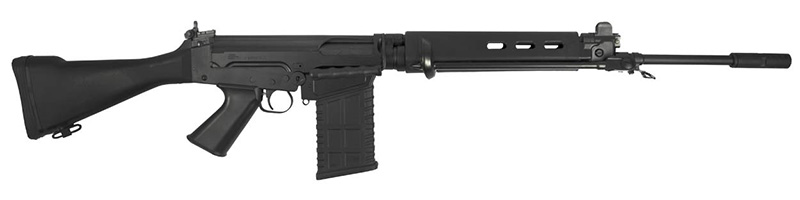
For more information, please visit sigsauer.com.


Get More Suppressor Info:

Steiner Optics Releases Predator 4 Hunting Riflescopes

0

With unparalleled glass clarity, a lightweight package and military durability, the new Predator 4 riflescopes from Steiner Optics are a clear choice for hunters seeking an edge.
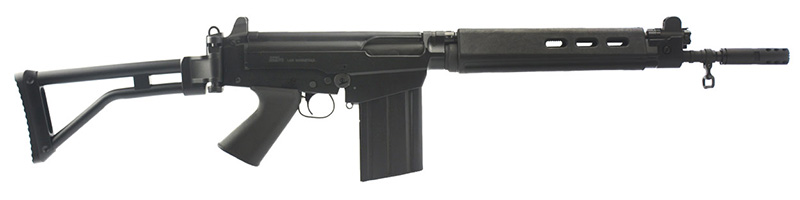
Steiner Predator 4 Scope Options:

  • 2.5-10×42 | MSRP: $1,039.99
  • 4-16×50 | MSRP: $1,099.99
  • 6-24×50 | MSRP: $1,149.99

Steiner Optics of Germany are renowned for their high-quality glass. Whether in the form of binoculars, magnified hunting scopes or combat-oriented battle sights, Steiner products are regarded as some of the best. Their newly released Predator 4 riflescope series combines two of Steiner’s strong suits into a single family of optics—clarity and durability. Designed for serious hunters who need a scope that can survive the harshest of expeditions, the Predator 4 series takes Steiner’s experience making military-quality optics and puts it into hunting scopes with their signature, ultra-clear glass. The result is three new riflescopes that are ready for just about anything.
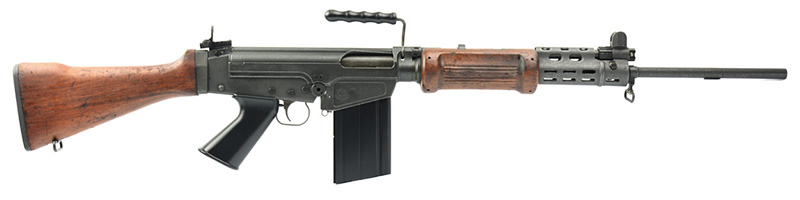
Predator 4 main

Alles Klar?


All three of the new Predator 4 riflescopes come with Steiner’s patented Diamond Coating on their already HD glass lenses. The coating not only protects the glass, but aids in light transmission as well to provide the clearest picture possible. This is even more important for those who hunt at the crack of dawn or just before sunset, as the extra light transmission in low-light environments may make the difference between spotting one’s target or not. Steiner claims that all their scopes, not just the Predator 4 series, lead the industry in terms of light transmission.

Predator 4 feature

Reticle


All Predator 4 scopes also include a reticle designed to assist with low-light shooting—the illuminated E3. It’s a second focal plane reticle with eleven brightness settings and has ballistic holdover compensation for up to 400 yards. It also features windage dots to help adjust for crosswinds.

E3 reticle

These three new Predator 4 riflescopes are the complete package. They’re light and compact enough to be easily carried during long and difficult treks, and their glass is clear enough to provide excellent sight pictures even at long range in poor lighting. Whether you’re looking for an optic to hunt vast Western plains, dense Eastern forests or anything in between, one of the new Predator 4 scopes will get the job done. Each Steiner scope comes with Steiner’s transferable lifetime warranty, and MSRP for the Predator 4 series starts at $1,039.99.

For more on Steiner Optics, please visit steiner-optics.com.


More Long-Range Glass

MUST READ ARTICLES