Home Blog Page 82

Action Target PT Hostage: Instant Feedback, Instant Learning

1

A look at one of the author's top steel target picks: the Action Target PT Hostage.


My education and adventures with the defensive handgun really began when I became a police officer almost 30 years ago. At that time, the most popular target used in law enforcement was the B27. The B27 target is a life-size black silhouette of a man, and inside the silhouette are five oval scoring rings. Typically, this target was used for qualification, but because police departments hate to spend money, it also became the de facto practice target.

As I became involved in combat pistol competitions, I was introduced to the IPSC target. The common IPSC target is a carboard target measuring 30 inches tall by 18 inches wide. It’s shaped to replicate a human torso and head, and it also has scoring rings—squares and rectangles—in the torso and head regions. The IPSC target is a bit more practical than the B27 target, and it typically has a white and a brown side. Because it’s cardboard, it’s much easier to work with … and it lasts longer.

Action Target Gun
Steel targets are great for training, because they provide immediate audible and visual feedback.

But in combat pistol competitions, whether IPSC sanctioned or not, steel targets started becoming very popular. The old standby steel target was the pepper popper. Though now offered in various sizes, originally it was about 42 inches tall and based around a center 12-inch circle to replicate a torso, with skinny legs and a head section as well. When you shoot the pepper popper, it falls over, and it can be adjusted so a head shot is required to knock it down—or even adjusted so that a .45 ACP will knock it down, but a 9mm will not.

Other steel targets were and are used as well for competition. These are generally small circles or squares that’ll fall over when shot. Fortunately, back in the day, many local ranges purchased pepper poppers and other steel plates for matches, and members could use them when practicing. I even managed to convince my department to buy a few steel targets. However, the downside to all these targets was that, after you shot them, you had to walk downrange and reset them. This, of course, slowed matches, training and practice.

As competitive combat pistol and three-gun shooting competitions continued to grow in popularity, the availability and variety of steel targets dramatically increased. By the time I left law enforcement in 2005, the types of steel targets being used were beginning to defy the imagination. Not only were there several companies making them, but the prices were also reasonable enough so the average guy could afford one … or several.

Three-Action-Target-PT-Hostage-Targets
These three Action Target PT Hostage Targets have been shot thousands of times with handguns and rifles.

Finding The One


I talked to several manufacturers and conducted a lot of research about steel targets before I spent any money. If I was going to spend several hundred bucks, I wanted to make sure I got my money’s worth. Not only did I want a target that’d be beneficial to my defensive handgun training, but I also wanted a target I could shoot with a rifle. This meant it needed to be constructed of AR550 steel. My other requirements were that it be reactive, and that I wouldn’t have to walk downrange to reset it.

Ultimately, I settled on the Action Target PT Hostage Target. This is an AR550 steel target that’s shaped sort of like a human torso. With a 3-foot base, it stands about 5 feet tall, with a target face measuring 24 inches tall (including the head section) and 13 inches wide. It also has a swinging 6-inch plate that flops to either side of the head section when the plate is hit. The target only weighs about 60 pounds. For handguns, the recommended safe shooting distance is 10 yards; for rifles, it’s 100.

Action Target Painted
In over 10 years and after 10,000 or more rounds, the only maintenance these targets have ever needed were painting. As you can see, they’ve been painted a lot.

But one of the unique features of this target is that it’s mounted at an angle, so it’s slightly facing toward the ground. There are also no bolt heads or weld seems on the target face. This means the splash from bullet impact is cleanly forced almost straight down. Though Action Target doesn’t recommend it, I’ve shot these targets as close as 3 yards with a handgun with no issue whatsoever. With rifles producing muzzle velocities less than 2,500 fps, I’ve also found it safe to shoot at 50 yards.

PT Hostage Swinging Heads
The swinging head plates on the Action Target PT Hostage targets allow for creative training drills.

This target is ideal for just about any type of defensive handgun drill—you can paint the target face any way you like—and the swinging head plate allows you to be creative with the drills you come up with. (Action target also offers two small swinging steel plates for a pelvic hit zone for an additional $89.)

I liked the target so much I ended up getting three more, and over the span of what’s now been 10 years, I couldn’t fathom a guess as to how many handgun and rifle rounds these targets have stopped. The only maintenance they’ve ever required was painting, and they’re still as good as new.

Action-Target-Feature

Clearly, the advantage of these targets is that you get immediate feedback when you shoot. You’ll see the headplate flop to the other side, the target wiggle, hear the ring of the steel and, if the paint is fresh, you’ll also see the point of impact. All this combined with not having to go down range and tape bullet holes or reset steel increases the enjoyment of the training session and the quality of the training.

I’d strongly urge anyone with their own place to shoot to consider the purchase of some steel targets. I’d also suggest that the first steel target purchased be the Action Target PT Hostage Target. With a 3-foot stand, they retail for $352 and you can order direct from Action Target.

Like mine, it should last 10 years or more—that’s only about $35 a year. A box of 100 cardboard IPSC targets costs about $70, and you’ll run through ’em pretty fast, not to mention the stapler and staples you’ll need, and the trash they’ll create.

For more information, please visit actiontarget.com.

Editor's Note: This article originally appeared in the July 2021 issue of Gun Digest the Magazine.


More On Target Selection:

FN High Power Gets Relaunched With Design Updates

2

FN America has announced the relaunch of the FN High Power, and it features several interesting updates and modernizations.


Designed by the legendary John Browning and Dieudonné Saive, FN Herstal of Belgium was the original manufacturer of the pistol most commonly known as the Browning Hi Power. This iconic handgun has had many different names in its nearly 90 years of existence, but regardless of what you know it as, FN has just announced its return in 2022. Now featuring some major redesigns and modernizations, the new FN High Power will be built in the U.S. by FN America at their South Carolina factory.

High Power Legacy Features

FN HP black

While FN America has made several changes to the design, at its heart, the new FN High Power stays true to the original. Fans of the classic BHP should feel right at home with this pistol. The rereleased FN High Power will still be chambered for 9mm, be single-action-only and will have a steel frame and slide. At a glance, the profiles and controls are very similar between the original and the redesign as well. The new High Power’s lines were left mostly unchanged, giving it the same sleek look of an old-world gun despite the modern machining and manufacturing techniques used to make it.

FN High Power Redesigns


Most of the new features on the FN High Power were implemented to address the shortcomings of the original design according to contemporary standards. Probably the biggest change is the gun’s enhanced magazine capacity. While the original BHP’s 13-round magazine was revolutionary for its time, today even many concealed carry pistols can rival or match that. Modern 15-round Hi Power mags from Mecgar were an improvement, but still were lacking compared to modern full-size service pistols. That’s why FN designed the new High Power to feature a 17+1 round capacity, using newly engineered magazines to bring it to a competitive level.

FN HP dissasembled

The grip’s ergonomics have also been updated to prevent hammer-bite, and a new takedown lever greatly simplifies the disassembly process compared to the original BHP. The manual thumb safety and slide release are ambidextrous as well, and the magazine release is reversible.

FN HP Silver

The FN High Power’s appearance has been updated too, now receiving a durable PVD finish rather than being blued or made of stainless steel. The new finish is available in either black, FDE or stainless steel (the color, not the material), and each pistol also includes two sets of polymer grip panels in different colors.

FN High Power

MSRP for the FN High Power starts at $1,269 and the new pistols are supposedly available now, but it may take some time before you actually begin to see them hit store shelves. From the looks of it, FN America really has a winner with this one. They managed to take a classic, beloved and hugely influential design and bring it into modernity without compromising its aesthetics. After handling a few models at SHOT ’22, I can tell you that they feel as solid as they look. My only complaint is that the grip angle didn’t feel as comfortable to me as the original’s did, but this is obviously subjective. With other companies like Girsan releasing modernized BHP clones with features like accessory rails, time will tell if FN America follows suit.

For more information, please visit fnamerica.com.


More On The BHP:

SHOT Show 2022: Day 4 Roundup

0

The final day of SHOT Show 2022 has come to an end, so here are a few of the last things we saw that piqued our interest.


SHOT Show 2022 is now over, and while nothing completely mind-blowing was revealed this year, there was still plenty of interesting new guns, gear and ammunition to check out. As always, here’s a look at some of our highlights:

PSA AKs


Palmetto State Armory had some pretty interesting Kalashnikov variants on their wall at SHOT ‘22, and all of them will supposedly be released within the year. This photo shows a spread of new 5.45x39mm variants, most inspired by the AK 100 series, but also with a classic AKS-74U “Krinkov” pistol on the bottom. The top is a clone of an AK-103, and the middle two are clones of the AK-105 in both a pistol and rifle format.

PSA AK74s SHOT Show 2022

Probably the most unique new PSA AK is the Chinese Type-56 spiker clone, and it will be hitting shelves within 90 days. PSA also teased a new 5.56 AK that takes standard AR-15 magazines, and unlike the Yugoslavian rifle that likely inspired it, PSA’s version includes a paddle-style mag release too.

PSA Type 56 SHOT Show 2022

New Holosun Optics


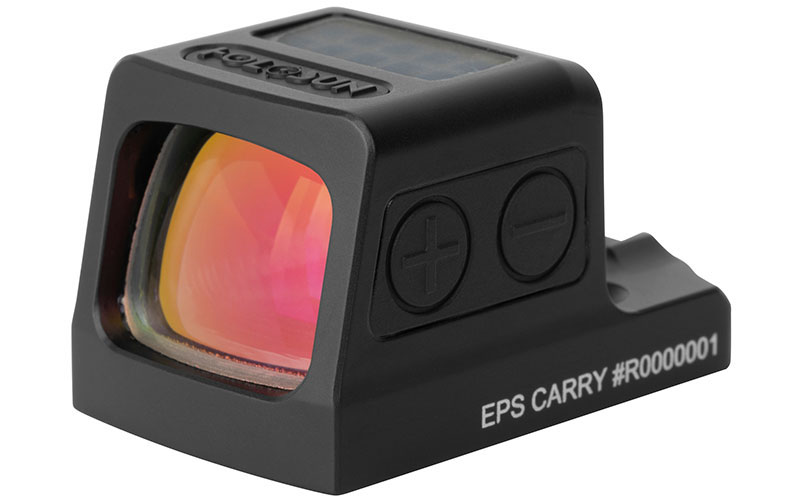
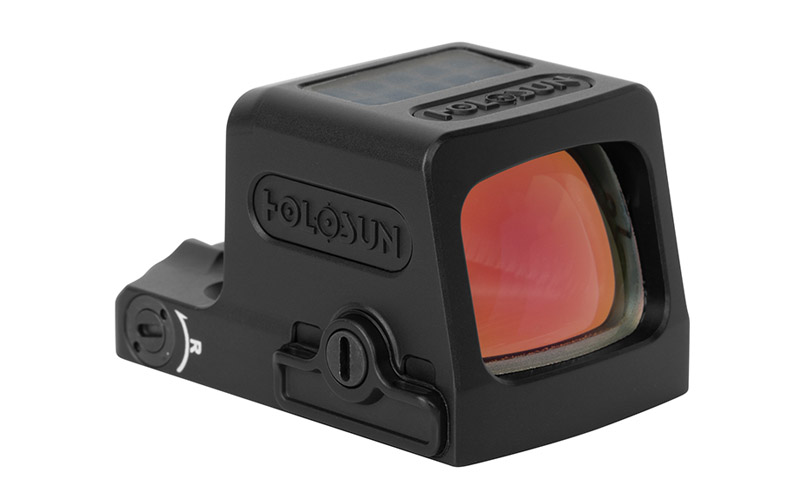
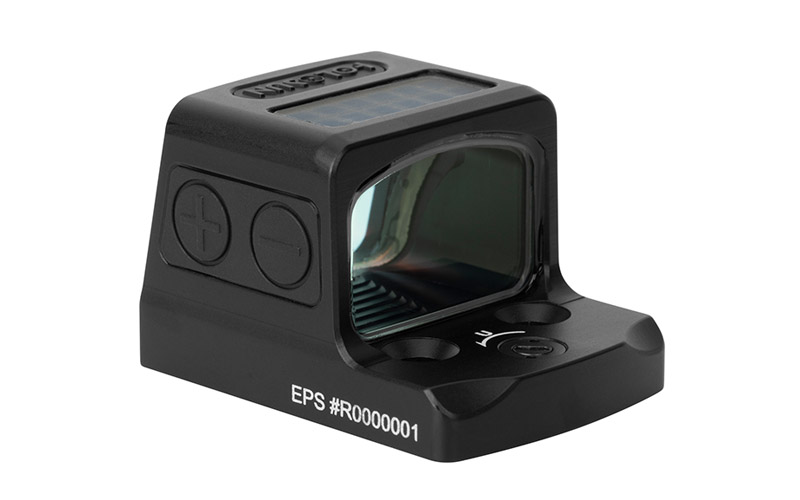
Holosun had some very nice-looking new pistol red dots on display. The enclosed model called the EPS seems to be getting the most attention, and I can see why.

Holosun EPS SHOT Show 2022

I had the dot slightly misaligned in this photo, but you can see that the EPS can co-witness with iron sights quite nicely.

Holosun EPS ADS SHOT Show 2022

Magpul/Maztech X4 Round Counter System


Magpul had a very interesting collaboration with Maztech displayed off to the side of their rather large booth space this year. The two companies are releasing a round-counter system that is bringing reality just that much closer to science fiction. It works by combining Maztech’s HUD-display LPVO scope with Magpul’s new smart magazines. When combined, the scope’s HUD will display both a count of the ammunition in a gun’s magazine as well as the total ammo stored on one’s person. The smart magazines count the rounds in them and communicate with the scope, providing its user with information about when they need to reload as well as how much ammunition they have left in total.

Magpul Maztech SHOT Show 2022

Ghost Gunner 3/Zero Percent Receivers


If you weren’t already aware of Defense Distributed, they are the company that is largely responsible for the “ghost gun” controversy and are a continuous thorn in the ATF’s side. One of the most pressing issues for Second Amendment advocates this past year has been the government’s concern with “80% receivers”, which by law can be sold as unregulated paperweights rather than serialized firearms like complete lowers are. The 80% lowers can be finished either by hand or with small CNC machines like the Ghost Gunner line made by Defense Distributed.

Regardless of the ATF’s future ruling on 80% receivers, the newly revealed Ghost Gunner 3 has essentially rendered their attempts useless. The new machine has made “zero percent receivers” a reality, meaning that a solid block of aluminum can be inserted, and a complete AR-15 lower receiver can be spit out. This means that unless the ATF believes that they can ban blocks of aluminum, American citizens will always be capable of producing the registered component of an AR-15. Unfortunately I didn’t snap a photo of the machine itself, but here’s a small peek at Defense Distributed’s booth. This new machine is a major victory for 2A rights.

Ghost Gunner SHOT Show 2022


More SHOT Show Coverage:

SHOT Show 2022: Day 3 Roundup

0

The third day of SHOT Show 2022 is over, so here's yet another look at the Gun Digest team's highlights from the show floor.


The crowds on the third day of SHOT Show 2022 were even lighter than yesterday’s, rewarding those of us who persevered with more hands-on time with cool guns and gear and more time to speak with others in the industry. We got to try out the cutting edge of night vision at Sionyx and spoke with companies like PSA about some very cool things they have planned for the future. None of those things have photos to go with them, however, so here are our five highlights that do:

Century Arms Cugir Imports


Century Arms is the sole importer of weapons from the Cugir factory of Romania, which happens to be my favorite type of Kalash currently available in the U.S. The standard AKM pattern rifle, the WASR-10, has been a steady and consistent import for decades, but some of Cugir’s other guns only come in on occasion. For example, the very popular Cugir-made “Draco” AK pistol hadn’t been imported for what was probably over a year, causing their value on the used market to spike. Thankfully, Century has just confirmed that not only are more Dracos coming in, but some other very desirable and less common Cugir imports are as well.

WASR-UF SHOT Show 2022

WASR-UF rifles will be hitting our shores very soon, and AES-10B rifles will follow later this year. The “UF” in WASR-UF stands for “under-folder” if you couldn’t guess, and the AES-10B is essentially just a semi-auto Romanian RPK. Previously imported, both rifles already have established reputations and will be as solid as the standard and well-proven WASR-10. It’s very exciting that we will be able to find these interesting, military-quality AKs on store shelves once again.

Crimson Trace Optics


Crimson Trace has always been known for their laser-aiming devices, as their name suggests, but the company has just revealed a massive expansion into optics of all sorts. Besides fifty new magnified riflescopes, Crimson Trace has also introduced ten new electronic red dots along with some other useful gadgets. The new red dots will be called the RAD (Rapid Aiming Dot) series and will include four micro models for CCW pistols, four full-size models for larger handguns and two “RAD MAX” models for long guns.

CT RAD Micro SHOT Show 2022

Crimson Trace also made an angled foregrip and flashlight combo device that features rechargeable, quick-swappable batteries. They call it the RIG and it will be available soon as well.

CT RIG SHOT Show 2022

Uintah Precision Muzzleloader AR Upper


Uintah Precision is mostly known for their bolt-action AR uppers, but at SHOT 2022 they decided to show off a prototype of something even more retro. It’s a muzzleloader AR upper that will supposedly be very affordable once released, and capable of being slapped onto any regular AR lower. It essentially will work by having a nipple for a primer at the back of the chamber, firing when the hammer is dropped just as it normally would, only now loaded through the muzzle.

Uintah Precision AR muzzleloader upper SHOT Show 2022

FB Radom GROT


In America, FB Radom has most recently been known as the producers of some of the best quality AK rifles that are currently imported. While true, the Polish military has actually been phasing their Kalashnikov-pattern guns out of service for quite some time, replacing them with their domestically designed and produced GROT rifles. These are pretty standard modern 5.56 military service rifles, but more imports of this style are always better. The examples that FB brought out to the show are the first GROT rifles I am aware of existing in the country, so hopefully that means they will be available soon.

FB Radom GROT SHOT Show 2022

Girsan Modernized Hi Powers


We really seem to be living through the rebirth of the Hi Power right now, and it's a wonderful thing to see. Springfield has released their new American-made SA-35 clone, FN just announced their updated High Power, and now Girsan of Turkey has teased their own modernized versions of Browning’s iconic double-stack too. On the show floor today they had examples with extended beavertails, accessory rails and more, and supposedly even an optics-ready version is on the way as well.

Girsan BHP SHOT Show 2022


More SHOT Show Coverage:

SHOT Show 2022: Day 2 Roundup

0

The second day of SHOT Show 2022 has come to a close, so we’re bringing you another quick look at what jumped out at us today.


SHOT Show 2022 goes on, though admittedly with less steam than previous years. The withdrawal of several large companies has resulted in an ample amount of new seating space, and stricter admission policies have reduced the density of the average crowd. Besides the fact that rows of chairs are less interesting than new products, the lower attendance has actually helped give those of us here more time to play with the guns and more time to talk with representatives. We’ve gotten to handle some pretty neat stuff so far and talk to some interesting people, so here’s our summary of SHOT Show 2022 day two:

Kel-Tec P15


When Kel-Tec released the first images of the P15, they really should have included some reference of scale. I’m sure I’m not the only one who initially assumed it was larger than it turned out to be, making me wonder what exactly the point of it was. After getting to handle a couple of different P15s on the floor today, it suddenly made more sense. The pistol is much smaller, slimmer and lighter than you’d expect, and it feels good in the hand. I’m not a very big fan of polymer-framed striker-fireds to begin with, so my positive reaction to the P15 came as quite a surprise.

KelTec P15

Another surprise was that Kel-Tec decided to make an all-metal version of the P15 as well, and while it looks much classier and is more solid than the polymer version, it also weighs more than the polymer model's mere 14 ounces. The metal version also comes optics ready instead of having an accessory rail, and it will supposedly cost nearly double the MSRP of the polymer P15 ($425). Both models had fiber optic and tritium front sights and both had excellent triggers as well.

H&R/Nodak Spud Retro ARs


It came to light not too far back that JJE, the parent company that owns Palmetto State Armory, had acquired NoDak Spud as well as the rights to Harrington & Richardson, and the two are about to be slammed together like peanut butter and chocolate. For those who haven’t dived into the world of retro AR-15s, NoDak Spud has been the primary source for historically accurate AR-15 receivers and parts for many years. For anyone who was looking to build a clone of a military or police AR from the 60s through the 80s, NoDak was the place to go. H&R was also one of the original manufacturers of M16 rifles, and most of those used in Vietnam bore their mark. If you weren’t already aware, retro AR cloners can get quite obsessive about having the correct roll marks, and this has led to copyright controversies in the past. With this merging of NoDak Spud with the legally owned H&R brand name and JJE’s production capacities, it means that some very historically correct mass-produced retro ARs are about to become a reality.

NoDak Spud HR M16A1

PSA’s booth had a single H&R stamped M16A1, and it looked pretty damn close to the real thing to me. The NoDak/H&R rep who was there explained to me how the markings on this model had some slight inaccuracies that will be adjusted before they enter production, and that they will even have premium models that are properly roll-marked rather than engraved for those who are that pedantic about the fine details. The first complete guns they sell will be the classic M16A1, featuring furniture sourced from Brownells and the proper pencil-profile barrels. They will also be selling the carry handle upper receivers and other parts separately for those who want to build their own.

NoDak Spud Harrington and Richard mark

The H&R rep assured me that they will also eventually be expanding to produce almost all of NoDak Spud’s old catalog, including C7 uppers, M16A2-era parts and even some old, early prototype models. PSA will be selling the complete retro ARs as the family expands as well as the individual parts. What I’d like to see most out of this would be if PSA began selling the same extremely affordable AR pistol kits that they currently do, except with a C7 upper in place of a flat-top and skinny CAR-15 handguards rather than the fat M4 ones, essentially making it a Colt 733 clone in pistol form. Regardless, I’m very excited to see what’s to come.

KUSA “Khaos” 12-Gauge


Much like the Mossberg Shockwave, Kalashnikov USA’s latest 12-gauge weapon is technically classified as a “firearm” so it can have its 12.5-inch barrel while still being legal. This is essentially KUSA’s KS-12 Saiga clone in a new, smaller form factor. It functions the same and will take the same magazines as the KS-12 but can be much more easily wielded in compact spaces. For those who have wanted a small 12-gauge but prefer semis to pumps, this new space blunderbuss may be worth taking a look at.

KUSA KHAOS

Laugo Alien Pistols


I only had a passing awareness of the Laugo Alien from watching a few videos online, and despite not being very interested in fancy competition race guns I stopped by their booth to check it out. It felt very well made, which should be expected for its price tag, but it was the trigger that compelled me to share the experience.

I had heard it was nice, but it’s impossible to convey through words. I’ve never even been particularly concerned with trigger quality in the past as long as it was adequate, but the Laugo Alien felt almost like clicking with a crisp, mechanical computer mouse. It was extremely short and light yet very positive and predictable. If you ever run across one of these in the wild, be warned, dry-firing it once may be enough to convince yourself that you need one.

Laugo Alien

Franklin Armory G-S173 Binary Glock Trigger


Franklin Armory had one of these at range day, but unfortunately we missed it while we were there. Here’s a picture of a Glock with one installed to at least show what will soon be available. This example has also been SBR’d so it can have its stock, which is a very practical addition to this device that is otherwise mostly a novelty. The G-S173 is a whole conversion kit that includes a slide and some components as well as a trigger, essentially only requiring that one already has a Glock 17 Gen 3 frame and barrel to build it into a complete “select-fire”, binary Glock. Franklin currently only has the G-S173 model that functions with Gen 3 17s, but they suggested that more options will eventually be released in the future.

Frankiln Armory Glock Switch


More SHOT Show Coverage:

Long-Range Gear Made In The USA

1

Some of the best long-range shooting gear, made right here in the USA by companies like TBAC and RRS.

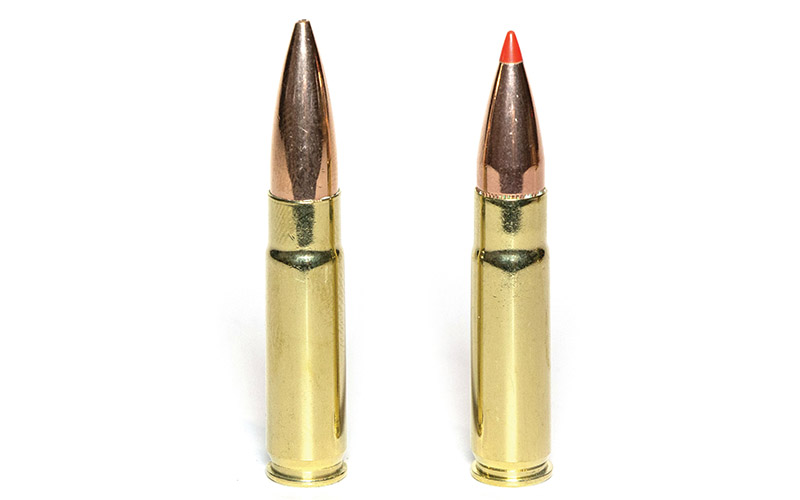
Adaptive Tuning System


The Adaptive Tuning System (ATS) is getting a lot of attention in the precision rifle world. It also has a bit of controversy as to the merits of a harmonic tuning system for your rifle.

We understand barrels have a harmonic property to them, and those harmonics can be tuned to move the accuracy node to the cartridge you’re shooting. Do you have a lot of ammunition that’s not grouping as well as expected? Adjusting the tuning can bring it from 2 MOA to ¼ MOA … during a casual afternoon at the range.
Adaptive-Tuning-System

The devices are simple: a weight system tied to a rotating adjustment that threads on the end of your barrel. It uses the existing threads, provided your barrel is threaded. They’re graduated so the user can rotate the adjustment and then lock it in place once the accuracy node is achieved.
The products born out of competition tend to work really well. These shooters are investing a lot of time and money when competing. Today’s competitions are won by a single point or single stage, so anything you can do to gain an advantage is necessary. The ATS isn’t the only tuner of this type available, but his doesn’t require additional gunsmithing … and it’s very good.

ThunderBeast Arms (TBAC)


Aside from being personal friends, I really like the ThunderBeast (TBAC) products. It’s a suppressor company, but they also create a top-notch bipod, which was born out of Army contracts for a new sniper system.

People mistakenly believe anything holding up the front of a rifle is enough; however, tests have proven that accuracy can vary based on design.
TBAC Bipod

First, the Army wanted the bridge to hold the legs slightly wider apart. Balancing the barrel over an apex is inferior to hanging it inside a triangle shape. That creates stability.

The Army also wanted to move the leg locks to the side. Why? Because shooters often accidently employ the locks when pushing or pulling the bipod against an obstacle.

Machined to perfection, the TBAC Bipod isn’t cheap, but it’s so worth it. They also removed any panning feature from the design. We’re not machine gunners, so we don’t want to pan anyway. This requested change led to Atlas adding the CAL to their lineup. The CAL and TBAC appear very similar for all these reasons.

The final step was providing a tight lockup, so the rifle isn’t canted during the shot. You don’t fix cant with a level, you simply identify it … and you fix can't with the bipod by locking it in place or providing enough tension that the shooter won’t roll it over accidently.

It’s hard to put into words, but you really have a different experience behind the rifle with a good bipod.

TBAC Dominus Suppressor

In addition, TBAC cans are some of the best precision rifle suppressors on the market. With precision rifle shooters, sound suppression is always meaningless without accuracy. If, without a suppressor, my rifle groups 3/8 MOA, I don’t want that group to be 5/8 MOA when I add the suppressor. Sound suppression often comes at the cost of accuracy, because the idea is to create a bunch of turbulence inside the can. I won’t tell you how many suppressors I currently own, but if you guessed less than 30, you’d be way wrong. Many sit collecting dust because they opened up my groups.

Precision Underground


Rarely talked about are nylon products, such as rear support bags. I’m the ultimate rear bag snob and don’t believe in shortcutting this part of the equation.

Rear bags can matter, and today, we see a lot of guys looking for that “one bag” solution. Thanks to precision rifle competition, the use of nylon bags has grown exponentially.

Precision Underground Rear Bag

Because of the need to manage bags during competition, many have neglected the elements of a proper rear bag. More goes into a rear bag today than just filling a sock with sand. Sure, that worked for me in the Marines in 1986, but in 2021, I want more out of my rear bag.

The height, width and depth all matter when trying to balance the rifle between the bipod and bag. I recently sampled 12 different Precision Underground Bags to help nail the fill amount alone.

We can compromise, and for one or two shots, anything works. But when you want a real five-shot group—not one shot fired five times—how the bag supports the back of the rifle matters.

Really Right Stuff


Really Right Stuff leads the pack when it comes to shooting tripods. Given the choice between carrying a rifle with just a bipod or a rifle with just a tripod, I want the tripod. There’s no precision rifle shooting problem I cannot solve with a tripod.

RRS Ascend Tripods

Different-sized tripods handle different tasks in the field. Many use the 33 Series for precision rifle competition. For the hunter, there’s the Ascent series. They took the smaller 14 Series legs and modified it to use an Anvil 30 shooting head. It still features a removable center column, one with a micro ball or a short version for the Anvil. These are perfect to hunt with due to their size and weight.

We’re living in the golden age of precision rifle. Everyday something new drops, thanks to all the great innovators around the country making these products. Everything mentioned here is currently in my toolbox ready for deployment.

Editor's Note: This article originally appeared in the October 2021 issue of Gun Digest the Magazine.


More Long-Range Shooting Info:

SHOT Show 2022: Day 1 Roundup

0

The first day of SHOT Show 2022 is over, so here’s a quick peek at some of its most interesting guns and gear.


Returning after a year's sabbatical, SHOT Show 2022 is now in full swing. With Monday being Industry Day At The Range, today was the first real day of walking the show floor and looking at what the different companies had to offer. While nothing we saw on display today is going to revolutionize the small arms world any time soon, there were still plenty of interesting items to see from brands both big and small. Here’s what jumped out at us on day one of SHOT Show 2022:

Smith & Wesson CSX Pistol


Smith & Wesson’s new concealed carry pistol was unfortunately not at range day, but they brought out some examples to the floor for some hands-on impressions. It felt very nice in the hand, even with the short flush-fitting 10-round mag. The single-action trigger was very crisp, and it overall felt like a very well-made piece. No word on a 30 Super Carry version of the CSX as of yet, but I wouldn’t be surprised to hear one announced in the near future. Whatever your opinion on the CSX is, in the world of new concealed carry guns at least it’s something different.

CSX Pistol SHOT Show 2022

FN High Power


It’s hard to keep secrets in the gun industry, so it was impressive that FN managed to keep their new iteration of John Browning’s classic design under wraps until SHOT Show 2022 was actually in motion. The new FN High Powers felt very solidly constructed and featured an interesting aesthetic blend of the original design with some modernizations, such as a 17-round magazine. The BHP has definitely made a comeback recently with clones from the likes of Girsan and Springfield, so having a new, slightly modernized option from the original manufacturer will certainly be appreciated.

Everything on the new FN High Powers looked and felt great to me besides one detail: the profile of the grip. This is subjective of course, but I know I’m not the only one who fell in love with the original BHP design largely because of how perfectly its grip fit my hand. The new FN High Power grip felt perfectly fine, nice even, but some minor changes to its profile eliminated that magic, “perfect match” feel I experienced with the original design. That being said, it still looks solid and it’s nice to see the Hi Power finally receiving the love it always deserved in the USA.

FN High Power

Tippmann Belt-Fed .22 Gatling Gun


Tippmann brought out a prototype for their new .22 belt-fed Gatling gun, and while there’s still work to be done before it becomes commercially available, it looked very promising indeed. We joked with Tippman Jr. about how it seemed like the most fun solution for dealing with a squirrel problem, and he assured us that it was since its 50-round belts will be able to be linked together. Tippmann’s mag-fed Gatling guns are convenient and fun, but unless you own a cartoonish number of magazines it’s virtually impossible to shoot them enough to get the barrels hot. With this new belt-fed option, as long as you take the time to load and link the belts you could crank away all day. The MSRP will supposedly be less than $400 as well.

Tippmann BeltFed Gatling Gun

Odyssey A.T.S. Virtual Reality Training


One of the most unique booths we stopped at today, and probably the most fun as well, was the Odyssey virtual reality training system. The system is still being developed and improved, but the company has already come a long way since they first debuted at SHOT Show and their potential is evidenced by the fact that they have already sold units to the U.S. military. It essentially works by acting as the missing link between virtual reality video game headsets and practical firearms training, replacing the plastic, ambiguously shaped controllers of yore with something much closer to a real firearm. The system is compatible with laser training pistols, BB guns, and even real firearms, the latter of which can use a conversion kit that utilizes gas to simulate recoil.

The software side is open source and will allow users to create any simulation environment that they desire, and Odyssey even teased that the system will be compatible with augmented reality as well. This would allow users to train on the range with live ammo, but rather than putting holes in paper, they will be able to mow down hordes of virtual enemies. The Odyssey system still has some work to be done before it’s perfect, but this is without a doubt the future of firearms training and probably even of video games as well. This is a small company that’s very well worth keeping an eye on.

Odyssey VR SHOT Show 2022

Zastava M77


Unfortunately, there is nothing certain about the future of Zastava M77 imports, but the fact that they had one hung up at SHOT Show 2022 was a good sign. The best I could get Zastava’s rep to confirm to was “we’re working on it”, but that’s better than nothing. This unique Yugoslavian/Serbian 7.62x51mm AK battle rifle has been imported before and they are very desirable on the used market, so hopefully Zastava USA manages to start bringing these in soon.

Zastava M77


More SHOT Show Coverage:

SHOT Show 2022: Range Day Highlights

0

A small spread of what we got to play with at the SHOT Show 2022 Industry Day At The Range.


After so many events having been cancelled last year, the return of SHOT Show in 2022 was nice to see. Like always, this year’s show started the week off with their Industry Day At The Range, a chance for those in the gun world to come together and get some trigger time on the newest and hottest items.

Not everything had returned to normal with this year’s range day, however, as several big names were notably lacking from the list of exhibitors. Neither Smith & Wesson nor Savage were in attendance, despite each having a new pistol that many surely would have enjoyed trying out. Other brands like Sig and Beretta were missing as well, but their decisions to pull out of this year’s show entirely were already known. That being said, Industry Day At The Range 2022 still had plenty of exhibitors to visit and guns to shoot, so here’s a look at a few of our highlights:

30 Super Carry


We finally got the chance to go hands-on with Federal’s new dedicated carry cartridge. While there’s only so much information you can gather from firing a mag or so worth of ammo, we were able to walk away with some initial impressions. Firstly, neither anyone on the Gun Digest team nor anyone we saw firing it while we were waiting experienced any malfunctions.

SW 30 Super Carry
S&W Shield Plus in 30 Super Carry.

A cartridge built for concealed carry needs to be reliable, and from what we saw today it has no issues with feeding or extracting. Federal had two S&W Shield Pluses available for testing, one chambered for 30 Super Carry and the other for 9mm to get a direct, side-by-side comparison. As expected, 30 Super Carry had noticeably less recoil and was easier to handle than the 9mm version of the same gun. The heft of the Nighthawk also helped to absorb recoil and made for a very soft-shooting pistol.

30 Super Carry V 9mm
30 Super Carry (left) vs. 9mm (right).

Aero Precision Suppressors


Aero had teased their intention to begin making suppressors a few years ago, but they hadn’t said anything more about them since until today. Aero Precision’s first line of suppressors will be called the Lahar 30 line and are slated to come out later this year.

Competitively priced, the new cans will be offered in three lengths and will all have .30 caliber bores. The examples they brought out to Industry Day At The Range were still in the white, but the final products will feature a black finish. We got to try them on both a .300 BLK and a 5.56 AR, and while the .300 BLK was unsurprisingly quiet the 5.56 version hushed-up better than expected.

Aero Lahar 30 Suppressors
Aero Lahar 30 suppressors.

PSA AK-105


Palmetto State Armory brought out their new PSAK-105 today, a 5.45x39mm AK pistol inspired by the Russian AK-105 carbine. The gun definitely looked the part, and it was one of the softest-shooting AKs I’ve had the pleasure of handling. It will ship as a pistol with a side-folding pistol brace for legal simplicity, but it has the proper rear trunnion for installing a stock if one chooses to register it.

I hope that PSA continues to help grow the American AK industry, and I do appreciate their ambition and innovation, but I still feel like their AKs have some room for improvement. The PSAK-105’s brace did not fold as smoothly or as easily for me as it should have, and the magazine release was rather stiff as well. Little issues like these all take away from the general feeling of “solidness” that AKs are known for, and if PSA wants to compete with imported models they’ll need to iron those details out. It was still a very fun gun to shoot and didn’t malfunction seriously in any way, I just have very high standards when it comes to Kalashnikovs.

PSAK105
The PSAK-105 in 5.45x39mm (bottom).

Byrna Technologies Non-Lethal Defense Products


A wildcard on this list isn’t technically a firearm at all, just firearm-shaped. Byrna Technologies makes non-lethal defense tools marketed towards both law enforcement and civilians, and they have some new options for both on the way this year. CO2-powered, Byrna’s products fire .68 caliber balls that can either act as deterrents through kinetic force or with chemical irritants. The Byrna SD pistol was already available, but new carbine-style options are on their way now as well. They provided surprisingly decent range and accuracy, especially when the CO2 canister was fresh, and the ability to mount optics on the new models made them very easy to score hits with.

Byrna Technologies Launchers
Byrna Technologies' new carbine-style launchers.

More SHOT Show Coverage:

  • SHOT Show 2022 Day 1 Roundup
  • SHOT Show 2022 Day 2 Roundup
  • SHOT Show 2022 Day 3 Roundup
  • SHOT Show 2022 Day 4 Roundup

Sig Sauer Launches Commercial Variant Of NGSW MCX-Spear

2

Sig’s entry into the U.S. Army’s Next Generation Squad Weapon Program, the MCX-Spear, is now available on the commercial market.


The U.S. Army’s search for a replacement for the M4 is not over, but Sig Sauer’s entry has made it into the final stages of the Next Generation Squad Weapon Program. Sig’s rifle, the MCX-Spear, now has a semi-auto variant available on the U.S. commercial market. Sig claims that it is currently the most innovative and advanced AR variant in existence.

MCX-Spear right

The MCX-Spear is not the only NGSW Program entry to receive a commercial variant with this news, as a commercial variant of the 6.8x51mm hybrid military cartridge is launching alongside it. Called 277 SIG FURY, this new cartridge will serve as the original chambering for the commercial MCX-Spear, although caliber conversions are possible as well. For those interested in the new rifle but don’t want to stockpile a brand-new cartridge, swapping the barrel on the new MCX will allow it to fire 7.62 NATO and 6.5 Creedmoor too. Sig has claimed that their new cartridge provides “magnum performance” without added weight, however, so it may be worth considering.

277 SIG FURY

Sig’s new rifle will feature a 6-position adjustable folding stock, ambidextrous controls, match-grade trigger and an adjustable gas system. The MCX-Spear will also include a free-float, MLOK handguard that features a full-length Picatinny rail for mounting optics. Sig’s NGSW suppressor entry, the SLX, is available now as well.

MCX-Spear left

Sig Sauer President and CEO Ron Cohen said this about the new commercial Spear variant:

This is a rare opportunity for passionate consumers to own a piece of history…This first production run MCX-SPEAR, and all of the revolutionary technology behind its development, is being offered to the commercial market in a configuration that is a near match to our NGSW-R submission. Further, this is the only rifle submission to the program that is designed and engineered in the United States by a company with the manufacturing scale and proven adherence to military-grade quality requirements – which is a tremendous source of pride for everyone at SIG SAUER.

The commercial MCX-Spear will ship with two 20-round magazines and has an MSRP of $7,999. Each purchase will include two boxes of the new 277 SIG FURY ammunition as well.

For more information, please visit sigsauer.com.

Explore Related SIG Sauer Articles:

VHS-2 Bullpup Rifle Imported For First Time As Springfield Hellion

1

The Croatian VHS-2 bullpup rifle is now available on the U.S. commercial market for the first time as the Springfield Hellion.


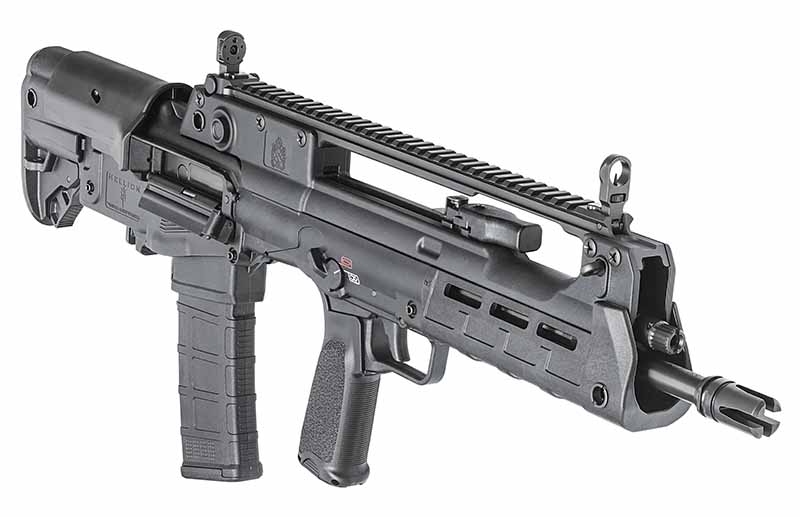
Springfield Armory has a longstanding relationship with HS Produkt of Croatia, the company responsible for Springfield’s entire family of popular XD pistols. Now, for the first time, HS Produkt’s VHS-2 bullpup is being imported into the U.S. and sold under the name Springfield Hellion. Practically identical to its military counterpart, this new semi-auto 5.56 rifle has been eagerly awaited by American bullpup fans for years. The Springfield Hellion will now be competing against the handful of other bullpup rifles on the market such as the AUG, Tavor and Desert Tech MDR.

Springfield Hellion right

The VHS-2, or Springfield Hellion, may be a new design for the U.S., but the rifle already has a well-established reputation abroad. Used by the Croatian and Iraqi militaries, as well as some smaller special forces and police groups, the VHS-2 has already undergone the necessary improvements that were revealed during the testing of the original VHS. Unlike many other “new” guns in the U.S., the Springfield Hellion should already be good to go from the first batch of imports.

Hellion with accessories

As a bullpup design, the Springfield Hellion features a 16-inch barrel in a package only 28.25-inches-long overall. The barrel is hammer-forged, has a 1:7 twist and comes with a 4-prong flash hider. Compact and handy, the Hellion is also a very capable fighting rifle. It feeds from STANAG AR-15 magazines (unlike the original VHS-2 which uses G36 mags) and is a fully ambidextrous design. The stock is adjustable for both length of pull and cheek riser height, and the rifle includes metal flip-up iron sights that are integrated into the top optics rail. The Hellion comes with a two-position adjustable gas regulator with one setting for running a suppressor, and the rifle’s handguard also has MLOK slots for attaching accessories.

Springfield Hellion left

The introduction of the VHS-2 to the U.S. market is exciting news for bullpup devotees, appreciators of military service rifles and those just looking for a very competent, compact 5.56 rifle. Its MSRP of $1,999 is within the range of other available bullpups, making it another fine option to consider for those searching for one. Time will tell how well the Springfield Hellion will fare against other bullpups in terms of popularity and aftermarket support.

For more information, please visit springfield-armory.com.


Get More Bullpup Info:

Pick The Best Plate Carrier: Complete Buyer’s Guide

0

Determining the best plate carrier setup for you can be challenging and expensive, but is an obtainable extra level of protection that’s within your reach if you know what you’re doing.

As civilian ownership of body armor grows in popularity, more and more Americans are wonder: What is the best plate carrier and body armor system? Preliminary research will reveal that this isn’t as simple as choosing your next firearm.

There are a wide variety of qualities, prices and styles when it comes to body armor and the plate carriers that hold them. Depending on your budget, lifestyle and intended use, the best body armor for you may be one of several things.

Best Body Armor Feature

Body Armor Vs Plate Carrier?

A brief word is in order concerning nomenclature pertaining to the topic at hand. Plate carriers and body armor in rough vernacular are sometimes used interchangeably, but they are separate parts of an overall system.

Body armor, as it’s known in the 21st century, generally refers to hard, ceramic plates that are worn over the body to protect one’s vital organs from rifle-velocity projectiles. Armor of this style has been used by militaries around the world for decades, but as its proliferation increases, it is seen being used more frequently by police, guerrillas, criminals and preparedness-minded civilians.

Much as its name suggests, plate carriers are the superstructure of the system that hold body-armor plates. Most commonly, carriers are multi-purpose vests that not only retain the protective plates but also keep gear at hand. Overall, pretty hand systems, outside of guarding your life.

Body Armor Legality

Body armor is generally legal to own in all 50 states as long as you are not a convicted felon, but always check your local laws before ordering any. The same types of people who tend to support “assault weapon” bans have also questioned the legitimacy of civilian ownership of body armor, but for those who understand that the Second Amendment protects one’s right to keep and bear arms and armor, the assertion is ridiculous and unconstitutional.
The fact of the matter is, regardless of one’s justification for owning it, body armor is legal and can make for an excellent addition to one’s arsenal. Whether you’ve decided that you need better protection for defending the homestead, are preparing for the end of days or just enjoy LARPing at the range, it is your right to do so with the best body armor you can afford to buy.

History Of Body Armor

Just as shields were invented to counter melee weapons, humans began developing ways to defend against bullets almost immediately after the advent of firearms. Even in the days of knights mounted on horseback, their plate mail was adapted to better stop the primitive projectiles they faced. As time moved forward, from the infamous Ned Kelly gang to German snipers in WWI, bulletproof body armor incrementally improved alongside firearms.

Plate Mail And Ned Kelly Armor
17th Century Italian armor with bullet proof mark (left) and Ned Kelly Gang homemade body armor (right). Photos: Wikipedia.

After the adoption of smokeless powder and the resultant higher velocities it could produce, armor was outclassed by most firearms for several decades. WWII, Korea and Vietnam all saw the use of flak vests or jackets, and while these were sometimes capable of stopping pistol rounds, they weren’t truly bulletproof. Bulletproof vests capable of stopping pistol rounds became a reality after the introduction of Kevlar in the 1970s, but even today soft armor is incapable of stopping rifle rounds.

During the Vietnam War, experiments with body armor for aircrews led to the development of aluminum oxide ceramic plates, the first of what we would consider modern body armor today. Improvements were made to both the plates and their carriers throughout the war, and despite being the best body armor of its day it still wasn’t widely issued to regular troops. The concept was refined throughout the 1980s with armor like the ISAPO and Ranger Body Armor, eventually leading to the widely issued SAPI and ESAPI plates that are more commonly known today.

Ranger Body Armor
Ranger Body Armor (RBA) and their ceramic SAPI plates. Photos: Wikipedia.

Steel Vs Ceramic Body Armor

The journey to finding the best body armor setup should start with the plates themselves, as they do the actual job of protecting your vital organs and are the most important consideration.

As the history of body armor shows, while metal can be used for this purpose it is a less effective option than ceramic. In order for metal armor to be strong enough to stop rifle bullets, it has to be made quite heavy and cumbersome. Another problem that arises with metal armor is spall or fragmentation. While metal armor may be able to stop a bullet from penetrating it, the resultant fragments still have to go somewhere, and that somewhere maybe your jugular. Steel body armor sold today typically has some sort of coating on it designed to prevent this, but it isn’t 100% reliable. As evidenced by what modern militaries use, ceramic plates make for the best body armor currently available. The cheaper price of steel armor is the only reason why it is still made and sold on the civilian armor market.

Best Body Armor Steel V Ceramic
Spartan Armor AR550 steel level III+ armor plate (left) vs. Hesco ceramic Level IV armor plate (right).

Ceramic Body Armor Diferences

Not all ceramic body armor is equal. Body armor in the U.S. is rated and certified by the National Institute of Justice (NIJ). Generally speaking, NIJ armor rating levels I to IIIA pertain to soft armor intended for pistol rounds, with levels III and IV pertaining to hard body armor capable of defeating rifle threats. In order to be certified as level III or IV armor, the plates must successfully stop six rounds of 7.62x51mm M80 ball or one .30-06 armor-piercing round, respectively.

The issue with the NIJ rating system, as some armor manufacturers have determined, is that these ratings were intended for larger, slower projectiles that are no longer commonly used. This led some armor companies to develop what they call “special threat” plates, which are not rated by the NIJ but are instead tested in-house against things like 5.56 and armor-piercing 7.62×39. Many of these special threat plates are slimmer, lighter and less expensive than their NIJ-rated counterparts. However, you'll have to decide whether you have confidence in the manufacturer’s testing to trust your life with it.

Finding The Right Sized Plate

The final consideration when picking armor plates is their size. Generally, plates come in small (8″x10″), medium (10″x12″), large (10″x13″) and extra-large (10″x14″). Essentially, small suffice women and children, medium average males and large and XL the big boys. Need a reference mark for those between frame sizes? As a rule of thumb, measuring from nipple to nipple on your body will tell you the width.

Hard-body armor was not designed to make super soldiers impervious to bullets, however, and is only intended to cover the most vital organs to give a better chance of survival. Getting shot anywhere that the armor doesn’t cover will still likely take you out of the fight, but the certainty of that being permanent is a lot less when your heart, lungs and other important bits are behind a layer of ceramic.

Best Body Armor Sizing Hesco
Diagram showing properly-sized body armor and the organs it should cover. Photo: Hesco.

Plate Carrier Styles

Once you’ve decided on plates, the next step is picking a plate carrier. One must determine that the carrier is an appropriate size for themselves and the plates they have chosen. There are also differences between styles that affect how they may be worn, how they can be removed and how they facilitate the carrying of extra gear like spare magazines.

Here are three decent examples to consider when browsing for the best body armor setup for your needs:

Condor Modular Operator Plate Carrier

This option is representative of the more basic style of plate carrier. It was designed to be worn over one’s clothing and is covered in MOLLE webbing for attaching other gear. The cummerbund allows for that attachment of side armor plates as well, which is an option for providing greater protection at the cost of a higher weight and extra money. Older styles like this have no provisions for quickly removing the carrier, however, which could impede receiving medical attention.

Condor Plate Carrier

UARM FPC Fast Response Plate Carrier

This model serves as an example of more modern plate carrier styles. While this kind was also designed to be worn over one’s clothes and also has MOLLE attachment points, its cummerbund features a quick-detach system for rapid dawning or removal.

UARM Plate Carrier

TRYBE Tactical Covert Plate Carrier

This style represents what has come to be known as “slick plate carriers”. These are designed to be low-profile enough to be concealed under something like a jacket, but can also be worn overtly if one chooses. This style typically lacks provisions for mounting extra gear, and setting one up to be a covert-style carrier will typically be more difficult and expensive. Solely intended for carrying hard armor plates, however, these slick carriers can offer greater versatility. Besides being concealable, they can be combined with a chest rig worn over the system to provide the same gear-carrying capabilities of the more traditional styles. Determining how you want to carry your armor and gear is all part of finding the best plate carrier setup for your circumstances, and there may be some trial and error involved before finding something that you really enjoy.

TRYBE Plate Carrier

Final Thoughts

After deciding to purchase body armor, you may find yourself buying and reselling various kinds of plate carriers before finding one that satisfies your needs.

My own journey into body armor began with purchasing steel plates when they were on a massive sale, only to discover after the fact that ceramic armor was a better option. I then sold those and settled on some Hesco special threat plates. The Hesco L210 may not be the best body armor out there, but for me it offered the ideal balance between protection, weight, thinness and price. I also ended up replacing my traditional-style plate carrier with a slick-style one combined with a chest rig, as I found it to be more comfortable to move in.

Hopefully, the information provided here will allow you to learn from my mistakes and find the best body armor for you without wasting as much time, money or effort. After getting your own, just don’t forget the importance of wearing it while you train.


More Tactical Gear

First Look: Sightron S6 5-30×56 ED Premium Riflescope Line

0

Sightron has just announced the new S6 5-30×56 ED line of premium riflescopes, available as both FFP and SFP models.


Sightron has been churning out high quality scopes for years now, and the company's newest model adds yet another premium option for hunters and precision shooters everywhere. The Sightron S6 5-30×56 ED premium riflescope line will be available as both First Focal Plane (FFP) and Second Focal Plane (SFP) models, and Sightron claims that the scopes will feature best-in-class fields-of-view at 100 yards and illuminated daylight reticles. MSRP is still currently unknown, but they are slated to hit store shelves in Fall of this year. You can read the full press release from Sightron below.

Sightron S6 5-30×56 ED

The S6 5-30×56 ED employs premium Japanese glass with Extra-Low Dispersion (ED) elements to enhance contrast, improve clarity, and reduce chromatic aberration for the cleanest and sharpest sight picture possible. Combined with SIGHTRON’s exclusive Zact-7 Plus anti-reflection multi-coatings, the S6 5-30×56 ED gives shooters excellent light transmission and flare reduction when performance matters most. This new optical design offers best-in-class fields-of-view at 100 yards with 74.4 ft (5x)-12.4 ft (30x) and a comfortable eye relief of 3.6-3.4 inches. Combined with an easy to acquire sight picture, you have a scope that gets you on target quickly and keeps you on target longer.

The S6 5-30×56 ED offers side-adjusted parallax correction starting at 10 yards for competitive close and long-range shooting. The large tactical turrets are easy to read, resettable to zero, and they house SIGHTRON’s highly accurate and repeatable zero-stop mechanism. The turrets offer generous 80 MOA of elevation and 60 MOA of windage adjustments for extreme shooting conditions. SIGHTRON’s exclusive ExacTrack erector tube system provides constant, positive and flush contact that eliminates drift at any windage and elevation adjustment.

Daylight illumination is accessed via a low-profile side dial. It provides 11 intensity levels with on-off alternating dial positions. Combined with the MOA-2 and MH-4 reticles, the scope is ready for fast target acquisition in any lighting conditions. The scope is constructed from a one-piece, 34mm aircraft aluminum tube that is O-ring sealed and nitrogen purged to provide the shooter both waterproof and fogproof performance for the life of the scope.

The SIGHTRON S6 5-30×56 ED riflescope is the new choice for hunters, target and long-range shooters that need a versatile, high-performance precision optics. The S6 come with SIGHTRON’s Lifetime Performance Guarantee that is backed by a team of skilled technicians. If you ever have an issue, they will get your scope working as it should or we will replace it, no charge.

For more information on Sightron, please visit sightron.com.


More Long-Range Glass

Creedmoor Sports Releases Creedmoor Enhanced Press Head

0

Compatible with the Redding T-7 turret press, the new Creedmoor Enhanced Press Head upgrades the system’s precision, ease of use and longevity.

The Redding T-7 press has been extremely popular with reloaders for years now, but after extensive use the folks over at Creedmoor Sports felt like they could make it even better. Hoping to improve the system’s precision, ease of use and longevity, the Creedmoor Enhanced Press Head was born. A drop-in upgrade for the Redding T-7, the new press head is quick and simple to install and should provide its users with an even nicer reloading experience.

Enhanced Press Head assembled

The Creedmoor Enhanced Press Head is a stainless steel seven-position press head, and the package also includes a threaded handle and a friction-reducing brass bushing. The real magic of the upgrade results from the head’s manufacturing process, however, with precision-located die positions, precision threading and ultra-flat surfaces. All machined with extremely tight tolerances, these parts come together to improve not only the reloading process but the quality of reloaded ammo as well. It also uses a distinctive tracking system that captures the indexing ball which makes station transitions very smooth and consistent. These new features on the Creedmoor Enhanced Press Head should reduce run-out while seating bullets and provide ultra-smooth threading.

Stainless Steel Creedmoor Enhanced Press Head

Expand Your Knowledge on Creedmoor Ammo

John Teachey, Vice President of Operations at Creedmoor Sports, said this about the new enhanced press head:

The Redding T-7 Press has remained a favorite among precision reloaders and is a critical piece of reloading equipment our product development team utilizes regularly for ammunition and product testing…A machined stainless steel head, rather than one made from cast steel, allows for tighter tolerances, an improved surface finish, and ultimately makes a better product for our customers.

Creedmoor Enhanced Press Head feature

This new Creedmoor Enhanced Press Head looks to be a good upgrade for those who do a lot of reloading with their T-7 and want a smoother process and greater precision. The new drop-in upgrade kit is available now and has an MSRP of $179.95.

For more on the new press head, please visit creedmoorsports.com.


Get More Reloading Info:


AR-10 vs AR-15: How Stoner’s Rifles Stack Up

2

When it comes to AR-10 vs AR-15 the right choice is a matter of application.

Article Quick Navigation

There’s been no lack of digital ink spilled over the AR-10 and AR-15 rifles. We’ve done our fair share here. But side-by-side, how do the rifles stack up against each other and which one is right for you?

home-defense-ar-first

Like anything firearms, it all depends on what you plan on doing when you’re behind the trigger. Given a master gun designer has yet to lay out the perfect all-around firearm that does absolutely everything demanded of it, we have to accept each one has its talents and limitations. Hopefully, we’ll clear up exactly what those are for the most popular members of the AR family here and figure out what wins for you when it comes to AR-10 vs AR-15.

Brief History Of The Rifles

ArmaLite, a division of Fairchild Aircraft, had moderate success designing special-purpose firearms for the military in the 1950s. Still known today, among their earliest achievements was the AR-5 survival rifle, adopted by the U.S. Air Force and meant to sustain downed airmen. In 1956, the company and its chief engineer — the legendary Eugene Stoner — set their sights on larger game — a contract for the U.S. Military’s battle rifle, replacing the then outdated M1 Garand. It’s entrant to the trials was the AR-10.

Designed a year earlier, the rifle was forward-looking enough to set any old breed ordnance officer’s teeth on edge. Instead of steel and wood, Stoner turned to aluminum alloy, brass and woven fiberglass for the ArmaLite Rifle (what AR stands for). There was barely a lick of cold-hard steel on the 7.62x51mm rifle, which proved its downfall. Against Stoner’s advice, ArmaLite insisted on an aluminum-steel composite barrel — one of the first such configurations attempted. Long story short, it ruptured during the torture-testing segment of the trials, and so did ArmaLite’s hopes at a military contract. The M14 would go on to eventually win the trials, besting not only the AR-10, but also the equally iconic Fabrique Nationale FAL.

Despite the setback, Stoner and company knew they had a winner on their hands. As gun writers at the time documented, the trial’s testers were impressed with his creation. Some even went so far as to say it was the best battle rifle ever put through the paces at the Springfield Armory. ArmaLite attempted to interest the world’s militaries in the AR-10, with limited success. The rifle then languished for nearly 30 years, until Knight Armament partnered with Stoner to resurrect the design. Reborn the Stoner Rifle 25 (SR-25), and configured for long-range operations, eventually the United States Special Operations Command adopted the rifle and designated as the Mk11 Mod 0 sniper rifle. Later, it replaced the U.S. Army’s M24 Sniper Rifle System with a varient designated the M110 SASS.

After the original Mk 12, the government used Knight’s Armament handguards for the Mod 1 version of the Mk 12. If that’s the one you want, then go forth and find Knight’s hardware to build yours.

As firearms history buffs are familiar, it didn’t take until the turn of the century for the AR-10 design to come into its own, however.

Reconfigured and shrunk down, ArmaLite submitted essentially a small-bore version of the rifle — the AR-15 — in 1958 for testing with the U.S. Army’s Continental Army Command. After studying World War I and II engagements, CONARC had the ambitious goal of replacing a laundry list of storied military arms with a single rifle. To achieve this, CONARC commander Gen. Willard Wyman requested a low-recoil 5.56 rifle, weighing 6 pounds, feeding from a 20-round magazine and the ability to penetrate both sides of a standard Army helmet at 500 meters. The AR-15 to a tee.

AR-10 Essentials: Hit the Bullseye Every Time

Initially rejected and the design sold to Colt, the rifle finally won a champion in General Curtis LeMay. In 1961, as Chief of Staff of the United States Air Force, he ordered 80,000 AR-15s, finding military personnel could fire the lower-recoil rifle more accurately and that soldiers tended to prefer them more than the 7.62 NATO M14. Army testing backed up these anecdotal accounts, finding 43-percent of soldiers qualified as an expert with the AR-15, compared with 22-percent shooting the M14. Furthering the AR’s case, the AK-47 proved a superior weapon compared the M14 in the early years of Vietnam. Despite all this, the Army’s brass remained unconvinced about the small-bore rifle. The AR-15 finally won the day in 1963, deemed the only rifle that could meet production demands, at which the M14 was faltering.

Retor-AR-First

In 1964, the military variation of the AR-15 —  M16 — went into production and was adopted. It continues to serve the U.S. military today along with its shorter M4 Carbine variant — both select fire weapons. Almost immediately after the adoption of the rifle by the military, Colt began producing the semi-automatic civilian version we know today as the AR-15. The name was retained to pay homage to ArmaLite’s original creation.

AR-10 vs AR-15 Range

Both the AR-10 and AR-15 come in a variety of chamberings, which affects the range factor greatly. For the sake of simplicity, we’ll confine our discussion to the most popular caliber for each rifle: the .223 Rem./5.56 NATO for the AR-15 and .308 Win., for the AR-10. Both are excellent options for AR rifles, but, generally speaking, each excels at different ranges.

For close to mid-range shooting, it’s difficult to beat an AR-15 in 5.56. It’s an intermediate-range cartridge, designed to shine 500-yards on in. And given its light recoil, even in a platform as lean as the AR-15, it is a simpler system to place multiple shots very accurately on a target. If it’s longer ranges you seek to master, then the AR-10 is probably going to fit the bill. There’s a reason why the Army chose a variant of the SR-25 as the successor to the bolt-action M24 Sniper System. The larger calibers with their heavier bullets are simply easier to get on target 500-yard plus.

An example. Say out of your AR-15, you were shooting .223 Rem. American Eagle 55-grain FMJ BT and from your AR-10 .308 American Eagle 150-grain FMJ BT, with a 10 mph crosswind. The wind would defect the small-caliber round a full 10-inches more than the .308 at 500 yards and more than 50 inches at 1,000 — 179.2 inches, compared to 120.2. And while the .223 drops less than the .30-caliber out to 600 yards, at 1,000 yards — with velocity waning — you’d have to account for an additional 70 inches of drop with the small-bore round compared to the .308.

As of late, the AR-15 has added more long-range options (discussed more in the calibers section) that keep pace with AR-10 standbys. Though, as discussed below, these are small-bore options. They'll go the distance but might not have the energy you require for some long-range applications.

AR-10 vs AR-15 Size

Measured against the entire world of rifles, the brother ARs are extremely light. More than simply materials, this attribute is thanks to Stoner’s pioneering direct-impingement gas operation (what Stoner called an “expanding gas system”) that relies on little more than tubes, gas block and gas key to cycle the rifles. Gracefully sparse, there’s no piston to add extra weight to either rifle.

AR-10 vs AR-15 the latter generally has the advantage of being lighter and smaller

However, head to head, there is typically a notable difference in the heft between the AR-10 and AR-15. In general, most AR-10s weight in at about 7 pounds empty and the AR-15 right around 6 pounds. On paper, not worlds away. In an operation where either rifle would suffice, that one less pound has the potential to make the rifle more manageable. The AR-15 is also trimer in overall size.

Certainly, 14.5-inch barreled AR-10s are around, but they are not as common as the 18- and 20-inch variety. Given that most shooters have distant targets in mind when they load up the rifle, this shouldn’t come as a surprise. The extra velocity the longer bore milks from the cartridge is worth the rifle being a bit more unwieldy. Conversely, AR-15’s with 14.5-inch barrels are legion, which also makes sense. Not only is its aim generally medium range in, it is also a favored for CQC. Opting carbine makes it all the easier to manage the AR-15 in the tight confines of a house or inside a building.

AR-10 vs AR-15 Compatibility

Not to knock diehard AR-10 shooters’ collective noses out of place, but the AR-15 has its big brother beat in spades in this facet.

drift-first

Given its long military service record, the rifle is much more standardized than its big brother. In turn, the platform is that much easier to build, upgrade and maintain. For the most part, it’s a pick and place procedure that involves little compatibility research, if the AR-15 is aligned with mil-spec standards. A latecomer to military service, the AR-10 had more time to be tinkered with, thus skewing how the gun is put together. In short, different brands of the rifle don’t play nice with each other.

Thankfully, there is some consistency with two patterns dominating the market — DPMS’s LR-308 and ArmaLite’s AR-10. The issue is, the receivers and the major internal components are not compatible. A DPMS upper receiver is not meant to go on an AR-10 lower receiver. An AR-10 bolt-carrier group is not designed to function with an LR-308 pattern barrel. Neither uses a barrel nut with the same thread count.

AR-10 vs AR-15, the larger gun has the advantage

This doesn’t mean there aren’t a multitude of parts and aftermarket upgrades available for the AR-10, LR-308 and other variations. There are plenty of them — though, LR-308s are more common and, in turn, tend to have an availability and selection advantage. Shooters who opt for the larger AR-style rifle must have their research caps on and show extra diligence when shopping to make sure they’re getting the right part for their rifle.
AR-10 vs AR-15 Calibers

Both rifles’ caliber choices have swelled over the years. It’s at the point now that if there’s a caliber you can think of, there’s most likely an AR-15 or AR-10 chambered for it.

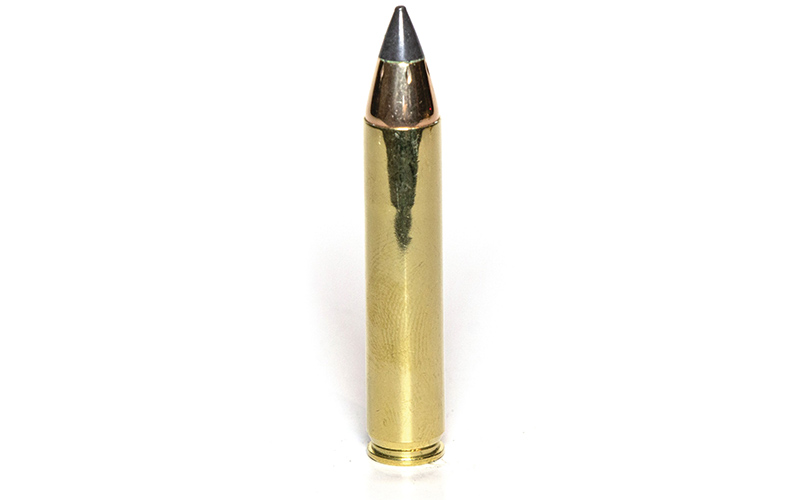
Generally speaking, AR-10-style rifles — given their larger recievers — tend to shoot more larger and more powerful cartridges. Originally chambered for .308 Win./7.62x51mm NATO, there are examples of 6.5 Creedmoor, .45-70 Govt., and even .300 Win. Mag. rifles. If you’re willing to go proprietary, there’s hardly a cartridge the AR-10 can’t handle and, most likely, some entrepreneurial gunmaker has a rifle chamber for it.

AR-Third

The AR-15 is nearly equally as deft in its caliber selection, with a host of options pouring out in the past two decades. However, since it was designed to fire the rather demure 5.56 NATO round, it faces some limitations. It’s never going to digest the more powerful fodder of its big brother.

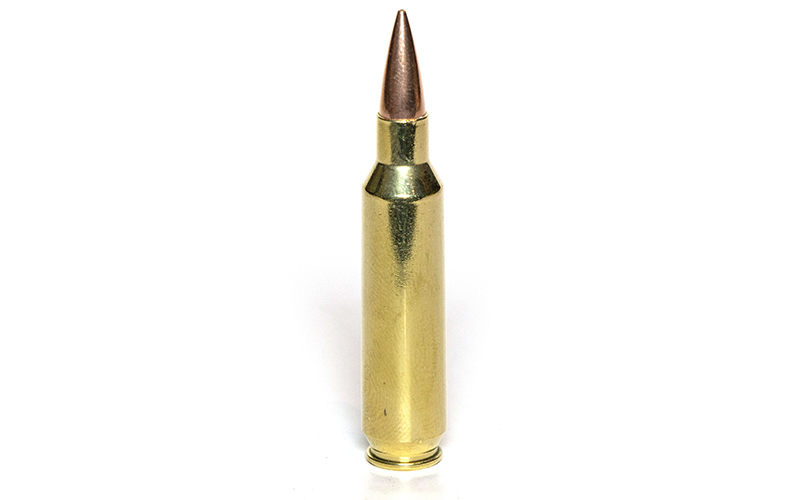
This historically has meant the AR-10 was the more logical long-range option, but times have changed over the years. Through the work of Nosler with the 22 Nosler and Federal Premium with the .224 Valkyrie, the market has expanded to include some ballistically talented AR-15 rounds. Designed to give the likes of the 6.5 Creedmoor a run for its money, the small-bore thunder-bolts are capable of striking down range. That said, what they bring to the table in ballistic coefficients, they don’t make up for in energy when they reach a distant target compared with, say, a heavier AR-10-compatible round such as the .308 Win., or 6.5 Creedmoor.

Nevertheless, near or far and everything in between, the AR-family of rifles have you covered.

AR-10 And AR-15 Shared Parts

Disparate in many categories, there is some crossover between AR-10 and AR-15 parts, at least concerning the popular patterns of the larger rifle platform:

  • Bolt Catch (except LR-308)
  • Bolt Catch Spring and Plunger
  • Buffer Tube
  • Buffer Retainer
  • Buffer Retainer Spring
  • Buttstock
  • Castle Nut
  • Disconnect
  • Disconnect Springs
  • Forward Assist Assembly
  • Front Sights
  • Gas Tub
  • Gas Block
  • Gas Tube Roll Pin
  • Hammer
  • Magazine Catch (except ArmaLite AR-10)
  • Magazine Release Button
  • Magazine Release Spring
  • Pistol Grip
  • Pistol Grip Screw and Washer
  • Rear Sights
  • Receiver End Plate
  • Safety Selector
  • Safety Selector Spring and Detent
  • Takedown and Pivot Pin Spring
  • Takedown and Pivot Pin Detent
  • Trigger
  • Trigger and Hammer Springs
  • Trigger and Hammer Pins
  • Trigger Guard Assembly

Parting Shot

Who wins out when it comes to the AR-10 vs the AR-15? Easy: both. Though similar in design and operation, the rifles are essentially meant for different duties. This moots the point of which one should be preferred. Really, it comes down to your application and which rifle will execute it most efficiently. Honestly, if you had to choose, the best answer would be one of each.

For more AR-10 information check out:
The Fall And Rise Of The AR-10
Decoding the AR-10 Lower Receiver
Understanding the AR-10 Upper Receiver

Phoenix Trinity Releases Morph Line Of Double-Stack 1911s

0

Phoenix Trinity has just announced its new Morph line of double-stack 1911 pistols, featuring easy caliber conversions and modernized features.


Phoenix Trinity Firearms have been providing high-end guns and gun parts to the competition market for over ten years. Based in Hudson, Florida, they utilize their background in the aerospace parts industry and CNC machining to create competition-quality 1911s such as the Honcho. Now, Phoenix Trinity has decided to expand their efforts into the CCW market as well with the release of its new Morph line of pistols, including the Morph Switch and the Morph 1776. Besides the patriotic motif incorporated into the 1776 version, the pistols are functionally identical, so the listed features should apply to both models.

Phoenix Morph feature

The Phoenix Trinity Morph pistols have a commander-length frame and slide that are precision-machined out of high-grade bar or plate stock, and their grips are made from aerospace-grade aluminum that was designed to provide snag-free texture that still gives a solid purchase. The grips come in black, silver and bronze, but there’s more modularity to the Morph line than swapping one’s grip color.

Phoenix Switch bronze grip

The new Phoenix Trinity 1911s feature patented link-less technology and an interchangeable breech block system. These enable the Morph pistols to switch calibers in only minutes without using any special tools. Each pistol includes one 4.25-inch 9mm bull barrel and one 4.25-inch .40 S&W bull barrel, but threaded 9mm barrels and 10mm conversions are available as well.

Phoenix 1776

The biggest draw of the Phoenix Trinity Morph pistols is their large magazines. For those who like the 1911 platform but wished for bigger magazines, the Morph pistols should scratch that itch with their 17+1 round capacities in 9mm. Other features found on the Morph pistols are their flat triggers, co-witness iron sights and ability to mount a Trijicon RMRcc right out of the box.

The Morph Switch and Morph 1776 have MSRPs of $3,950 and $4,250, respectively. That’s expensive for pistols intended for concealed carry, but for precision-machined, custom-quality guns that were designed and entirely built in America, it makes a little more sense.

For more on the Phoenix Trinity double-stack Morph pistols, please visit ptrinity.com.


More 1911 Pistols For Defense

Federal Ammunition Introduces 30 Super Carry

5

Federal has decided to shake up the concealed carry market with the introduction of a brand-new cartridge: 30 Super Carry.

Ever since 9×19 Parabellum became the de facto standard of concealed carry, manufacturers have been competing to make the best, smallest pistols for it that they could. The result was several very nice “micro-9s” as they’ve come to be called, but these were still limited by the geometry of the cartridge they fired.

Most likely born out of the belief that CCW pistols could be made even smaller with higher capacities without compromising on ballistics, Federal began work on the 30 Super Carry. The new cartridge is designed to offer the same lethality as 9mm while having a smaller diameter case, this allows for the guns that fire it to be smaller while still fitting more bullets inside their mags. If Federal’s claims about the cartridge are true, and if it proves popular enough to actually catch on, 30 Super Carry has the potential to change the game.

30 Super Carry feature

What 30 Super Carry Offers

Designed from the ground up to be a concealed carry cartridge, 30 Super Carry is a .312-inch diameter, 100-grain projectile that offers similar performance to 9mm. Available both as HST hollow points for defense and American Eagle FMJs for training, Federal describes the cartridge as being more effective than .380 while offering higher capacities than what is possible with 9mm.

30 Super Carry chart

As these charts from Federal’s testing show, 30 Super Carry outperformed .380 ACP across the board, and compared to 9mm it was only slightly outclassed in penetration, expansion and energy on target. While the new cartridge isn’t quite as effective as 9mm, it offers many of the same advantages that .380 does while sacrificing a lot less performance to get there. This opens up a lot more possibilities for concealed carry pistol designers, allowing them to make guns that are either the same size as current-gen micro-9s but with higher capacities, or make them as small as .380 pistols while retaining power similar to 9mm.

The New Guns

A new cartridge isn’t worth much unless there are some guns to shoot it with, so thankfully Federal has been working with Smith & Wesson and Nighthawk Custom to bring four 30 Super Carry pistol options along with the cartridge’s launch. So far the options include the S&W EZ, S&W M&P Shield Plus, Nighthawk Custom President and Nighthawk Custom GRP.

30 Super Carry new guns

30 Super Carry is certainly interesting, but history proves that it can be very difficult to make a new cartridge actually become popular enough to change market trends. 9mm currently reigns supreme and it will be very difficult to dethrone simply due to how common its use is.

For more on 30 Super Carry, please visit federalpremium.com.

MUST READ ARTICLES