Whether you want your handloads to perform as consistently as possible or just enjoy having all your fingers, it pays to weigh your powder charges.
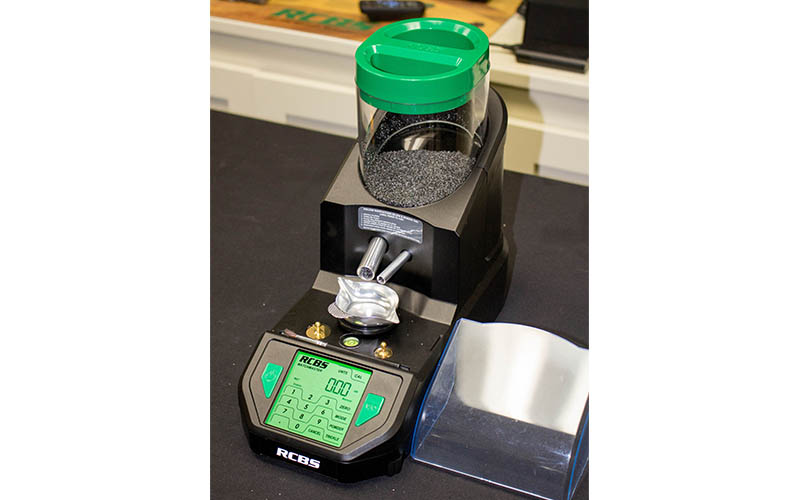
Smack in the middle of my reloading bench proudly sits a RCBS MatchMaster electronic powder dispenser. It’s fast, it’s accurate, it’s precise … and it has the potential to weigh powder charges to 0.04 grain. While I think the world of this high-tech machine and its capabilities, in some instances it might be too much, especially considering the cost (street price is right around $900) to the average reloader. Like so many pieces of cutting-edge technology, the new features can be fantastic.
But, every reloader must ask one simple question: Do I need this?
Want to take your charge weight precision to unprecedented levels? Look to the RCBS MatchMaster electronic powder dispenser. Photo: Massaro Media Group.
Significant Digits
Strolling into my local gun shop, I found proprietor and friend Geoff Koonz modifying his Redding Model No. 2 balance beam scale to make it a bit easier to get his fingers to the leveling adjustment screw. I use the same model, and it prompted a conversation about reloading technology and just how precise things need to be.
One of the often-unexpected side effects of being a writer with a full schedule is that many of the activities I used to enjoy for relaxation and personal enjoyment have become part of my job. So, when I head to my bench, it’s usually for the purposes of testing some part of the equation for a hunt, article, book or some combination thereof, and it was nice to see Koonz leisurely sorting out his gear to load some pistol ammo.
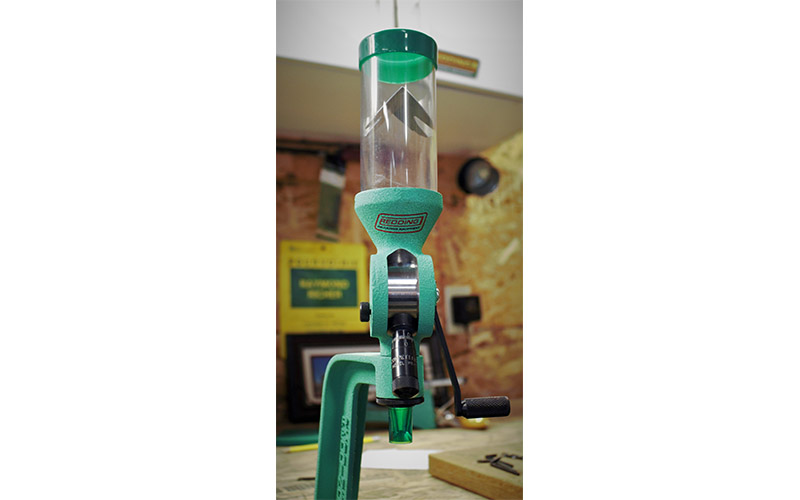
“I keep things low-tech; I’m really not in a rush,” he reported. Koonz makes good use of his Redding powder throwers, taking care to dial the unit to the precise load, and checking the weight of every tenth load or so on that balance beam scale.
Many benchrest shooters will load their ammunition by volume, as would be dispensed from a powder thrower like this Redding model, with amazing results. Photo: Massaro Media Group.
I’ve felt that weighing every single powder charge, no matter what the purpose of the ammo, would give me the best ammunition I could possibly make, yet so many small-bore benchrest shooters load their cartridges by volume rather than weight. Am I wasting time by weighing every powder charge, especially for ammunition designed for hunting or plinking?
Well, sometimes yes and sometimes no.
At one point, way, way back in the 20th century, I loaded some .308 Winchester ammo using the plastic scoop provided by the Lee Reloading Company. It was strictly volumetric, and not exactly precise, but I do remember that ammunition printed about 1½ MOA and filled the freezer with venison. I had no means of observing velocities, and at Northeast woods ranges, it didn’t matter. Was it match grade? Certainly not, but I had fun that deer season.
Now, looking at the volume of a .308’s powder charge—somewhere in the neighborhood of 43 grains of IMR 4064—a few tenths of a grain up or down might not be the end of the world. Let’s suppose that your powder charge was off 0.3 grain; you’re looking at an error of less than 0.07 percent of the target weight. Switch cartridges to a .300 Winchester Magnum, with a powder charge of somewhere in the 70-grain range, and that 0.3 grain becomes even less significant.
Change things to a pistol cartridge—whether the 9mm Luger, .38 Special or .45 ACP—and that weight variation becomes glaringly important. With charge weights almost certainly coming in at less than 10 grains, 0.3 grain becomes not only an obviously larger percentage, but in some instances, downright dangerous. With all three of the popular pistol cartridges mentioned, the difference between minimum load and maximum load is 1 grain of powder.
Supposing you’ve found optimum accuracy and velocity at a charge weight on the higher end of the safe spectrum, a weight deviation of 0.3 grain could easily push things into the red—hence my personal apprehension when it comes to progressive presses, with their unweighed powder charges and tendencies to be run for efficiency rather than precision.
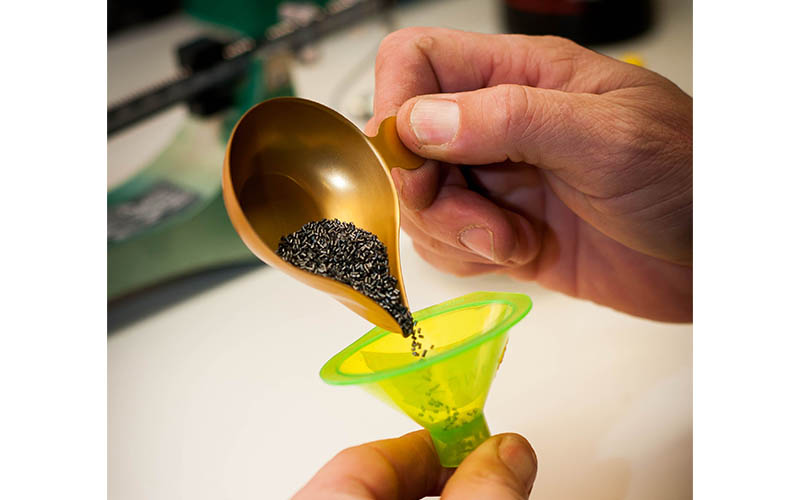
The author can’t help but weigh each powder charge, sleeping soundly that nothing gets overloaded. Photo: Massaro Media Group.
Precision Or Perfection?
So, should speed and efficiency take a backseat to precision in charge weight and, ultimately, safety? My opinion is no. At the risk of sounding preachy, in this era of excellent gear—much of which is available at a lower price point than ever before—we can check the variables like powder charge weight without compromising the schedules. I love the speed and repeatability of the Dillon progressive, but I still want to stop every so often and check the powder charge weight to make sure I haven’t cranked out 50 uniform, yet dangerous, cartridges.
I’ll have guys swear to me that, in all their years, they haven’t seen a deviation from the powder thrower, or that a balance beam scale has never mysteriously slipped out of zero, or that the electronic scales have never given a false reading. I don’t buy it. Reloading is like anything else: If you do it long enough, strange things are bound to happen.
I like my anatomy in its current configuration, and I do like most of my firearms, so I’ve learned to err on the side of caution. That said, I feel that you need to look at the percentages and balance the need to stay safe with the need for speed. In a rifle cartridge, unless you overload it by a large amount—say a couple of grains—you might lose precision on the target, but odds are you’ll stay safe. In a pistol cartridge, that could easily spell disaster.
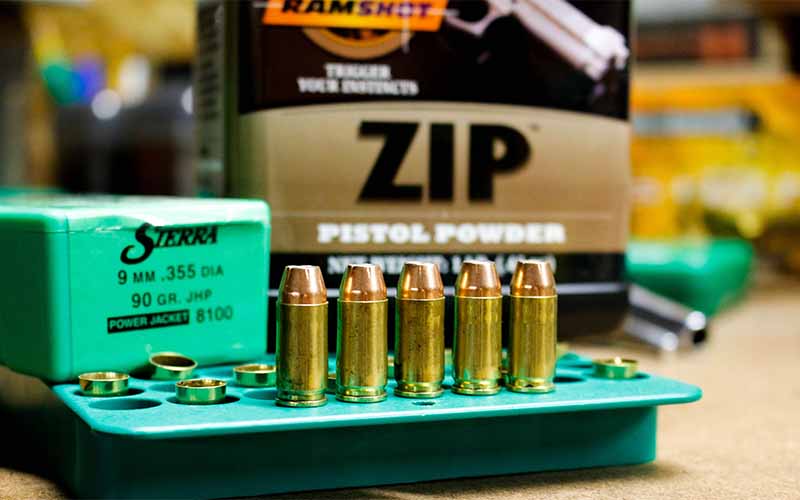
With the difference in minimum and maximum charge weights being at or less than 1 grain in many pistol cartridges, small variations can make a big difference. Photo: Massaro Media Group.
If you’re loading for long-range work, the attention to detail will certainly pay off, as the smallest deviation in muzzle velocity will really show itself out past 1,000 yards. I don’t know of any serious long-range shooter who loads their own ammunition and doesn’t weigh every powder charge to the most precise level possible. A deviation of 15 fps can cause problems when the distances get long, so those shooters want to take every step to ensure they keep things as uniform as possible.
So, from throwing powder without weighing it at all—in the volumetric manner of benchrest shooters at closer ranges—to weighing every tenth load or so, to those who insist on weighing every charge, there are differing levels of precision for the varying applications.
Personally, I can’t get past the concern that something has been overloaded and will continue to weigh each and every powder charge, whether it takes more time or not. I sleep better knowing exactly what was put into each cartridge, and that I didn’t overload anything.
Murphy, his law and I are far too well acquainted.
Editor’s Note: This article originally appeared in the July 2023 issue of Gun Digest the Magazine.
Looking for a new iron or piece of kit to enhance the one you already own? Check out these 7 new bits of guns and gear to grow your firearms wish list.
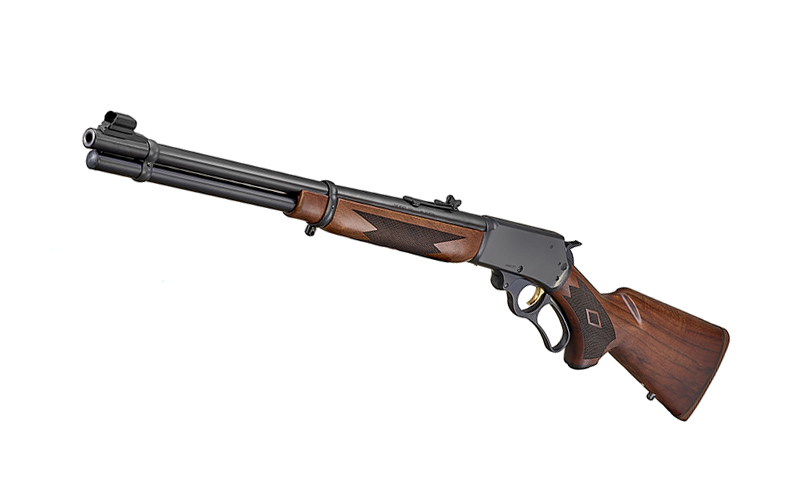
Marlin (now under the Ruger banner) has slowly been releasing its legendary lever guns. Its latest reintroduction should turn deer hunters’ heads. Welcome back, Model 336: It’s been too long. Anyone familiar with the classic .30-30 Winchester will be happy to know the new model is dang near identical to the old. The rifle features a steel alloy receiver, a 20.25-inch cold hammer-forged barrel and a six-round magazine tube. All metal parts are richly blued, and the forend and stock are made of checkered American black walnut. And just like the original Marlin model, the new Ruger-made version features a gold trigger as well. MSRP: $1,239
Ruger Super Wrangler
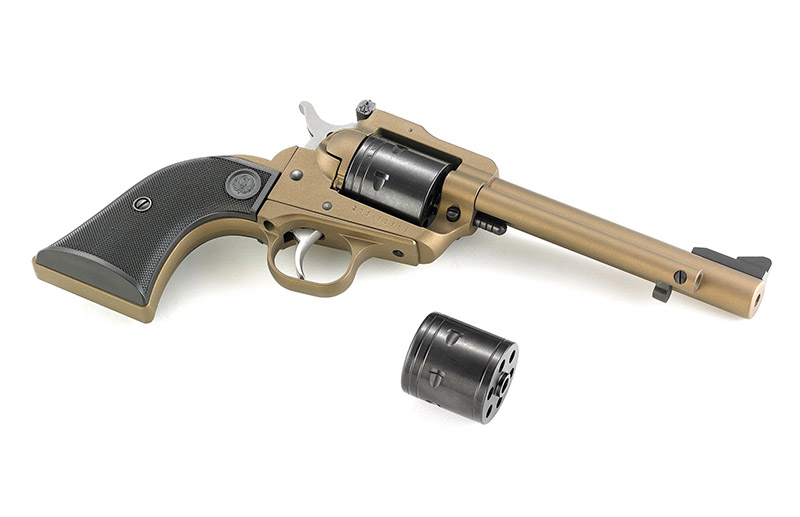
Nothing offers as much throwback fun as Ruger’s SAA rimfire revolvers. With the introduction of the Super Wrangler, more shooters should have the opportunity to enjoy what these guns bring to the table. The “Super” in the affordable aluminum-framed revolver line refers to the gun’s ability to switch between .22 LR and .22 Winchester Magnum. If this sounds familiar, it’s because that’s the same system that’s made the Ruger Single-Six an enduring legend. As with the older revolver, the Super Wrangler comes with two steel cylinders for each chambering. At present, Ruger is offering the gun with a 5.5-inch barrel, target sights, checkered black plastic grips and the option of three Cerakote finishes—black, silver and bronze. MSRP: $329
Samson M-Lok K-Rail for AK-47 Platform
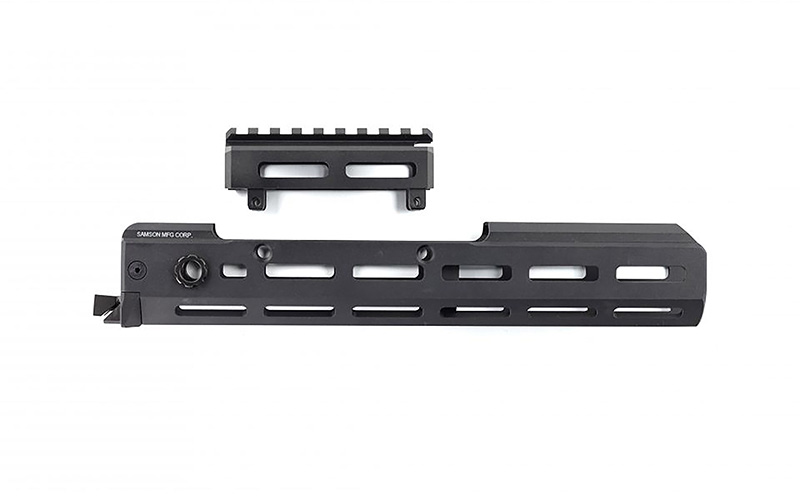
Affection for retro guns doesn’t mean you have to compromise on performance. This is why Samson Manufacturing’s recently released M-Lok version of its popular K-Rail handguard line is such a welcome addition. Collaborating with AK specialist Ken Allen, Samson’s handguard hits all the key necessities you need for your AK rail while keeping weight to a minimum and adding simple accessory attachment points. Two versions are currently offered for stamped receivers: one with a sling loop cut and a non-sling loop version with integrated steel QD Sling Points. Best of all, it won’t run more than your old Russian warhorse itself. MSRP: $224.95
Remington 360 Buckhammer
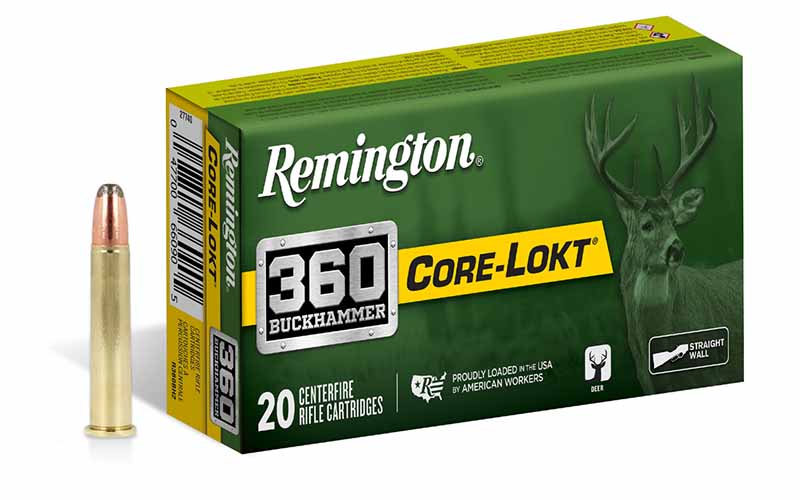
Yes, the 360 Buckhammer is a brand-new cartridge, with all the ballistic advantages you’d expect from a modern design. Yet, it’s definitely a throwback in one respect—it’s a straight-wall cartridge. Given some states don’t allow the use of bottleneck cartridges for deer hunting, this new option is a boon. Essentially, it offers performance very similar to the .30-30, with a very flat trajectory out to 200 yards—far better than the pistol-caliber options most hunters have been relegated. At present, Remington offers 180- and 200-grain options, both loaded with the company’s renowned controlled-expansion Core-Lokt bullet. MSRP: $37, box of 20
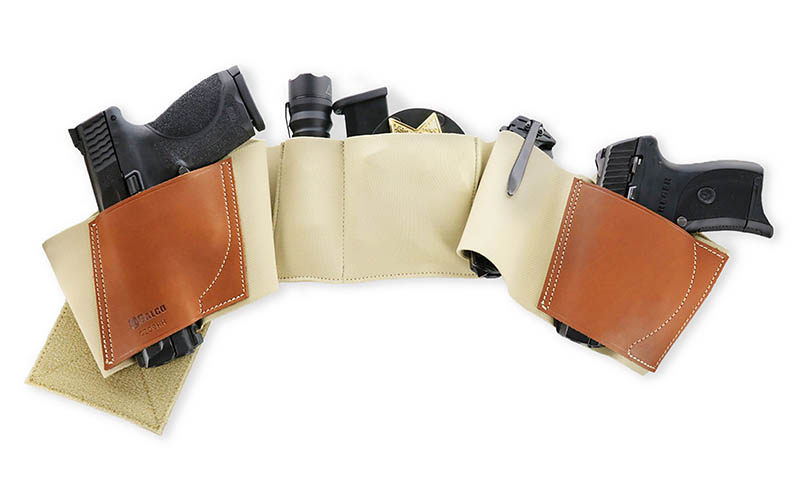
Galco’s UnderWraps Elite Belly Band
Galco has an update of the traditional belly band, allowing for more flexibility in how you carry. First off, it can be worn like a traditional belly band (low on the waistline, partially under the belt line or just above it), or it can be worn around the torso’s mid-section (the solar plexus area). Furthermore, the UnderWraps Elite includes a single holster component that can be placed in an infinite number of locations along the belly band. The holster itself uses an adjustable internal welt to securely and safely accommodate hundreds of different handguns, is ambidextrous and is cant adjustable. Plus, there’s ample storage for the rest of your gear—no matter how you wear the band. MSRP: $104
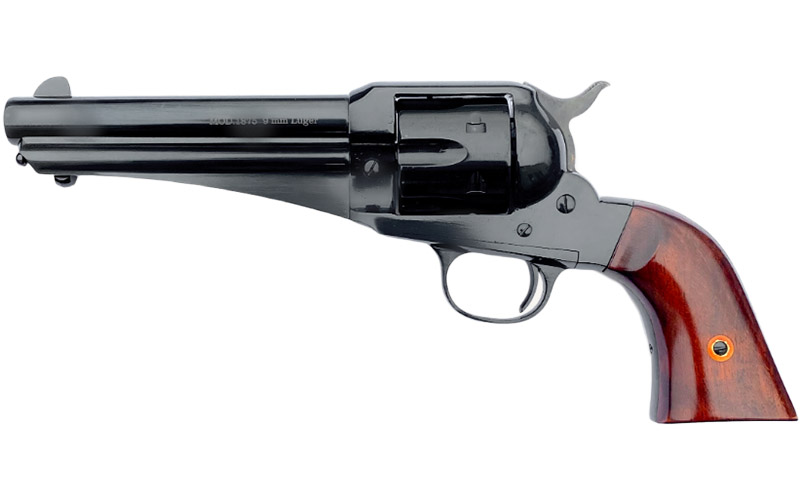
Taylor’s & Company 1875 Outlaw 9mm Revolver
This revolver sports lights-out-retro good looks, which offers a great bit of modernization. Not that the 9mm is a spring chicken, but in a reproduction 1875 Remington, it’s a whole new beast. The new 1875 Outlaw 9mm Revolver is offered in two barrel lengths: 7.5 and 5.5 inches. The revolver has a smooth walnut finish standard-size grip that offers an extremely comfortable feel in the hand. It utilizes a side-loading gate and an ejector rod housed within the loading lever assembly for easy loading, unloading and reloading. And it has an all-blued finish, forged steel frame with a rear frame notch and fixed front blade sight. MSRP: $670
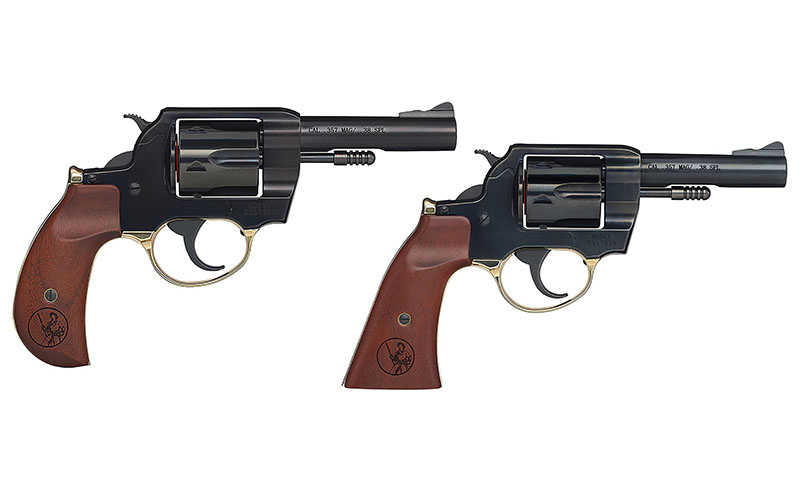
Henry Big Boy Revolvers
These revolvers are more of a leap forward for Henry Repeating Arms but still have the retro allure for which the company is known. The Big Boy Revolvers are the first-ever wheelguns produced by the iconic gunmaker, and as their name suggests, are modeled after the company’s pistol-caliber lever-gun line. Both revolvers are chambered .357 Magnum/.38 Special and are virtually the same, save the choice between a bird’s-head grip and flared—both American walnut. Both medium-framed DA/SA models feature a blued and polished steel frame, polished brass trigger guard and backstrap, six-round cylinder, 4-inch barrel and fixed rear notch and interchangeable front blade sights. MSRP: $928
Editor’s Note: This article originally appeared in the July 2023 issue of Gun Digest the Magazine.
Solutions to common accuracy and reliability problems that often seem inexplicable.
I was sitting at the shooting bench with my shiny new (new to me, anyway) Winchester Model 70 and driven to a new level of frustration. I had purchased the best scope and mounts I could afford, and while they might not have been impressive, they were certainly reliable. The rifle was chambered for .375 Holland & Holland Magnum, and though fully capable of taking any game animal on earth, it doesn’t crush the shoulder. In other words, the rifle, scope and mounts were capable of fine precision—and is sweet-shooting compared to the bigger bores, where recoil gets serious.
I also acquired the best ammunition I could get and did my best to zero the rifle. Once the gun was printing on the bull’s-eye, I settled down to evaluate group size. The rifle would—routinely—print the first shot in the 1-inch bull’s-eye, the second shot 2 to 3 inches up and to the right and the third shot within ¾ inch of the first. I was convinced it was my shooting that was the culprit, so I asked my dad to send some lead downrange to prove me wrong. He had the same results.
Blaming the ammunition, I quickly ordered some reloading dies and necessary components, and I began to develop and handload for the rifle.
Photo: Massaro Media Group.
Nothing Changed
In fact, some of the loads got worse. Change bullets, change primers, change powder, vary the charge, vary the seating depth—nothing.
It took me swallowing my pride and resorting to calling a professional; Hill Country Rifles actually diagnosed the issue over the phone, and it was the rifle’s bedding that was the culprit. In fact, the particular era of Model 70 I had was notorious for this problem, but I’d have never known it without consulting a qualified gunsmith. That was certainly a learning experience, and I’ve never forgotten it.
Photo: Massaro Media Group.
Sometimes firearms do things they shouldn’t, or at least things that seem inexplicable. The action of my Winchester was moving ever so slightly in the stock between two spots each time it went into recoil, but the bedding job sorted that out, making it a 1-MOA rifle after surgery. Rifles are more than just cookie-cutter components slapped together.
The Picky Eater
A friend has a 7mm Remington Magnum for which he purchased a couple different premium brands of ammunition. He called me to discuss what could be wrong with his rifle, as he couldn’t keep three shots inside of 5 inches. Action screws were properly tightened, scope and mounts were also, and he had a couple of other rifles at the range that day printing impressive groups, so it—apparently—wasn’t the shooter.
He abandoned the rifle that weekend and went back the following weekend with a well-known but “lesser” brand of ammo. “I don’t understand. This thing just printed a 1-inch group!”
Why would a rifle show such a large difference between brands of ammunition, while others seem to digest anything?
The author with the Winchester Model 70 .375 H&H that gave fits before being properly bedded. Photo: Massaro Media Group.
I have another Winchester Model 70 of a similar era to the one I described above, but chambered in .300 Holland & Holland Magnum, which shows such a dislike for the 180-grain bullets I’ve used for so many years in other .300 H&Hs, that I nearly sent the rifle out for an exorcism. It was a box of Nosler ammunition loaded with their 200-grain AccuBond boat-tail bullet that turned the rifle from zero to hero, printing under ¾-MOA repeatedly.
The issue with both of these rifles is a matter of barrel harmonics. When you find the proper harmonics for a particular rifle barrel, it’ll seem like the rifle can do no wrong. But when the harmonics aren’t compatible with the barrel, nothing seems to go right. Accuracy is a simple matter of repeatability, and finding the load that generates the vibrations repeatable in a particular barrel can be a daunting task.
A flat-base bullet can offer great performance and doesn’t give up much inside of 250 yards.
When I started going down the rabbit hole of developing the most accurate handloads possible for my rifles, I found that a variation of 0.2 grain of powder could have a drastic effect on group size. The bearing surface of a particular bullet can definitely play a role, and I’ve seen rifle barrels like bullets with tons of bearing surface—my .300 H&H is one example—and I’ve had rifles that like less bearing surface.
My Ruger .308 Winchester shows a definite preference for 150- and 165-grain bullets, while my Winchester 70 Classic Stainless .300 Winchester Magnum will handle just about anything you feed it.
My point? You can’t tell what kind of harmonics a barrel will like by looking at it, and sometimes it’ll take some experimentation to find the best performance.
In the case of the aforementioned 7mm Remington Magnum, the premium ammunition was by no means at fault. Buying the most expensive ammunition isn’t a guarantee of optimal performance. Brand X’s stellar performance in a buddy’s rifle doesn’t mean that you’ll see the same in yours, nor does it mean that Brand X is necessarily better than Brand Y. I will state that, generally speaking, the premium ammunition is held to higher standards than standard grades, and you’ll find that quite often the projectiles are more consistent and offer a better level of terminal performance.
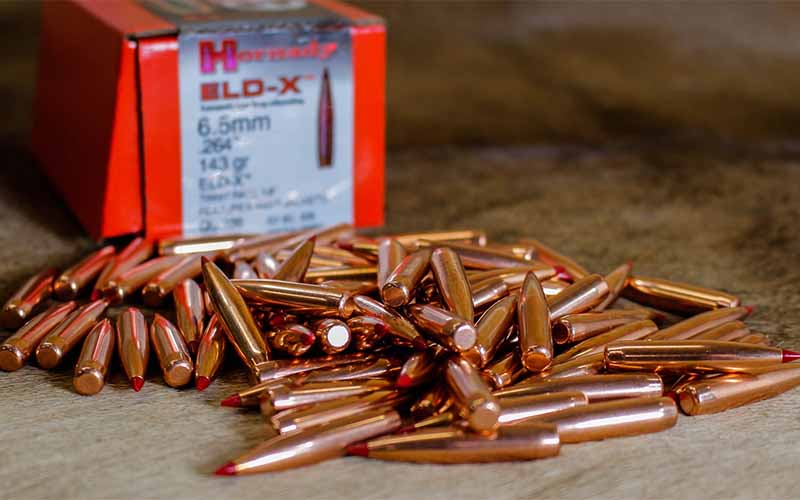
Sleek boat-tail bullets, like the Hornady ELD-X, shown here may need some time and distance to settle down.
I’ve also noticed that the faster rifle cartridges seem to amplify the variations in harmonics, so keep that in mind as well. I know ammunition supplies are compromised at best, but as things become available again, find that ammo your rifle likes best and stock up on it. By trying something you might not have considered before, you might find that magic combination.
Choking Hazards
A friend purchased a new autoloading handgun and proudly took it to the range with a couple of boxes that the gunshop salesman recommended. He had, within an hour, proclaimed that his new purchase was a “pile of crap;” it had jammed, failed to feed and completely frustrated him.
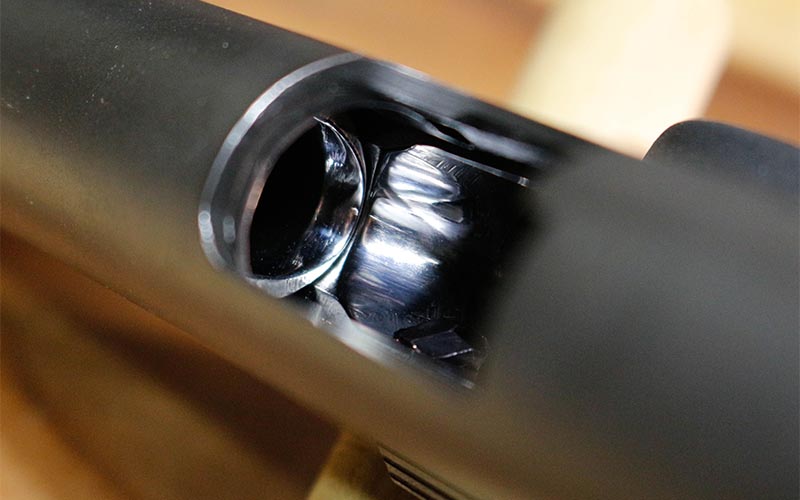
A rough feed ramp can pose a problem in some handguns, as certain bullet profiles may not feed. Get the feed ramp polished and you’ll see an improvement immediately. Photo: Massaro Media Group.
It wasn’t that the gun was no good, but it was a common problem: the pistol’s feed ramp. Loading a cartridge from a magazine into the chamber of a rifle or pistol requires a smooth feed ramp at the proper angle for the cartridge being used—and there are times where a flat-point bullet won’t feed properly, but a round-nosed bullet will. In those instances where a gunsmith has taken the time and effort to hand-polish a feed ramp, the improvement is quickly noticed. I’ve seen a finicky handgun that had issues feeding flat-point bullets feed wadcutters after the feed ramp was “tuned,” if you will.
Your handgun—especially your defensive handgun—needs to feed reliably each and every time. Not all guns are created equal, but with a bit of attention from a pair of competent hands, you can take your handgun to new performance levels.
Proper Hygiene
Two days before the deer season opener—when everybody and their brother is sighting in their hunting rifles—I had a buddy stop by my house in a complete panic. His Savage rifle wouldn’t chamber a cartridge properly: He couldn’t close the bolt and had no idea why.
Taking a quick look, I noticed that the rifle was relatively new and that much of the rust-preventative goo was still visible around the receiver. He admitted he hadn’t cleaned the rifle well, and I immediately grabbed the jar of Hoppe’s No. 9, a cleaning rod and a nylon cleaning brush. A bit of elbow grease and some dirty patches quickly sorted the chamber problem, and I then set to work on the barrel. This got me thinking about how dirty barrels, chambers and actions have been such an issue over the years.
A dirty bore or chamber can play a huge role in the degradation of accuracy, and have you wondering what happened to your favorite rifle or handgun. Keep things clean enough, but not overly clean, and you’ll be a happy shooter. Photo: Massaro Media Group.
The traditional jacketed bullet is probably the cleanest of the bullet designs yet can deposit enough copper jacket material to affect accuracy. Let it go too far and you can see a degradation of accuracy, as well as an increase in pressures generated. Lead bullets, while wonderfully affordable and easy to work with, can definitely foul a barrel to the point where things will go awry. And the lead-free monometal bullets can surely deposit enough copper alloy in the bore to cause accuracy and pressure issues.
I’m admittedly guilty of not cleaning my rifles and handguns as much as I should, but I’ve also seen some guns that were an absolute mess in the bore department. A dirty bore can explain a bunch of mysterious performance issues, and while I’m not going to advocate the ritualistic scrubbing of your barrel each and every time you shoot the gun, I’ll advise you not to let it go too far. Many of my African hunting friends like to “shoot the bore clean,” meaning they don’t clean at all, but that’s a bit much for me.
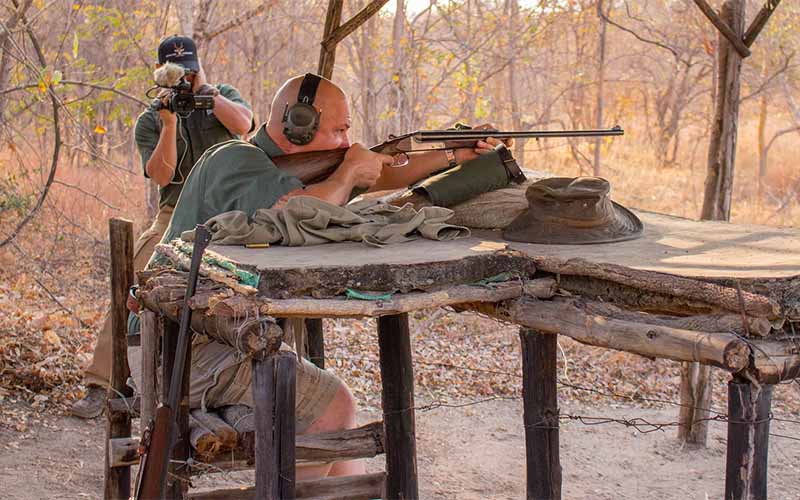
I’ve also seen an overly oiled bore cause a bullet to fly 6 inches high. I was on a safari in Zimbabwe after Cape buffalo with my then-new Heym Model 89B double rifle in .470 Nitro Express. I’d spent considerable time developing a handload for the gun, and it was printing a pair of shots (one from each barrel) in a group just under 2 inches at 100 yards.
The author checking zero on his Heym 89B in .470NE at the bench in Zimbabwe. The oil in the bore caused the shots to print much higher than desired. Photo: Massaro Media Group.
We checked the rifles on the first morning of the hunt, and I was crushed when I heard my professional hunter tell me the two shots were 5 inches apart and equally high of the bull’s-eye. It then dawned on me that I’d cleaned and oiled the barrels and the bore for the trip across the pond. That resulted in higher pressures and erratic accuracy. Once I’d fouled the bore and shot the oil out of it, the next two shots performed just as they had at home.
Cleanliness is important, but there can be too much of a good thing. I like to clean my rifle in the off-season and shoot it just before the hunt, leaving a bit of fouling in the bore for optimum field performance.
Just Calm Down!
Another question I often field is why boat-tail bullets don’t give the same level of accuracy as flat-base bullets. This isn’t uncommon, especially when comparing groups that were fired at a 100-yard target.
Assuming that the rifle has no other issues, boat-tail bullets will show their advantages outside of 250 or 300 yards, as they’ll take longer to “settle down” than a flat-base bullet. Think of it as a spinning top; you start the top spinning and it appears to wobble slightly, then it settles into a near perfectly concentric rotation.
It’s not uncommon to see the boat-tail bullets print a tighter group—when measured in minutes of angle—at 300 yards than they do at 100 yards. While this difference might not be enough to ward a hunter off using boat-tail bullets at woods distances, it’s true that a boat-tail bullet shows almost no advantage inside of 250 yards. And, as some bullet companies will point out, a flat-base bullet is a perfectly viable choice for common hunting distances.
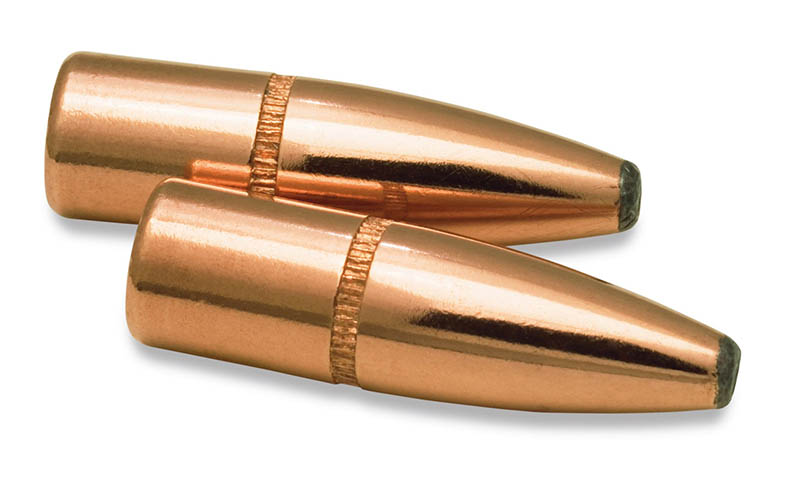
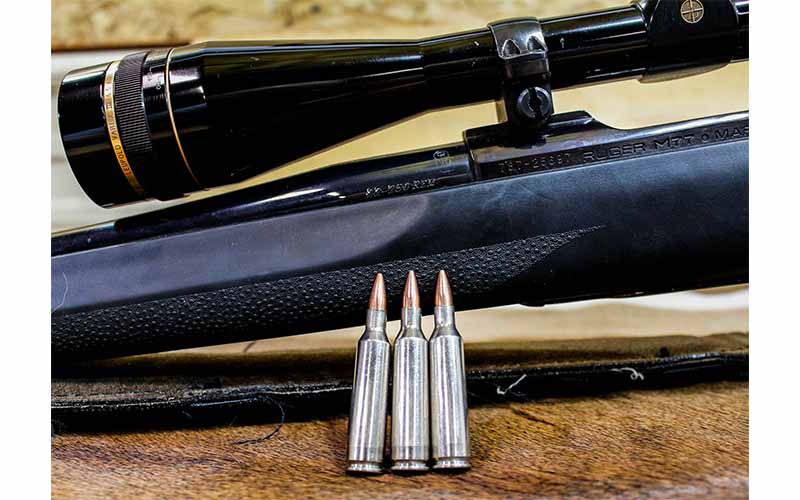
The author’s Ruger 77 .22-250 Remington has a marked affinity for flat-base bullets, like the Sierra 52-grain MatchKing shown here. Photo: Massaro Media Group.
Should the crown of your rifle’s barrel have even the slightest imperfection, you may find the rifle shows a definite preference for flat-base bullets. I have a .22-250 Remington in a Ruger Model 77 that could probably benefit from being re-crowned, as the rifle simply loves the 53-grain Sierra MatchKing flat-base bullet, but it struggles with many of the boat-tail bullets. While I should have the barrel’s crown reworked, the gun does everything I want it to with that Sierra bullet. But if you see issues with boat-tail bullets, have your gunsmith take a good look at your rifle’s crown.
I’ve seen many shooters send dozens of bullets downrange in search of zero, constantly making riflescope adjustments as the point of impact shifts up and down, left and right, with little success.
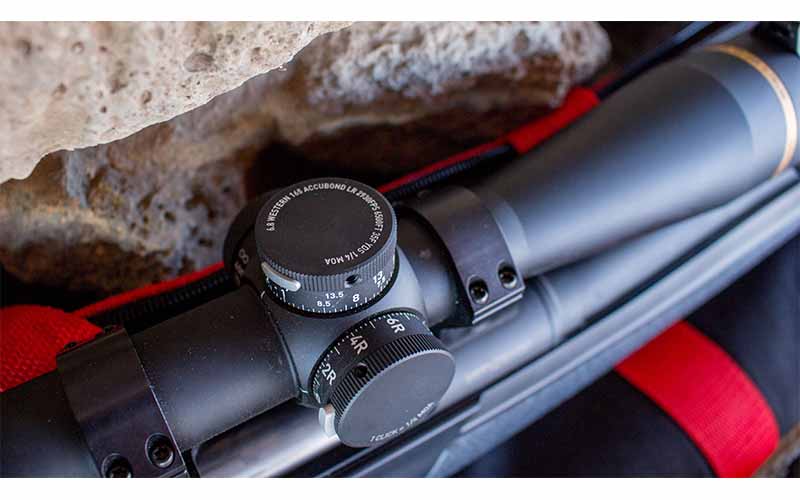
Let’s all agree that, while riflescopes are better than they’ve ever been, not all riflescopes are created equal. The most common adjustments will read “one click ¼-MOA” or “one click ¼ at 100 yards,” but when put into practical application, that’s anything but true. The adjustment springs of lesser riflescopes might not give ¼-MOA movement, and I’ve struggled with scopes that move closer to ½ MOA … and others closer to 1/8 MOA.
A Leupold VX-6HD specially calibrated for the trajectory of the 6.8 Western cartridge. If this scope didn’t have the precise adjustments it possesses, the turret would be useless. Photo: Massaro Media Group.
The financial savings of a cheaper scope with weaker springs can quickly be offset by the cost of the ammunition spent chasing zero, so I’ve personally made a definite shift to more dependable optics, and that generally means spending more money. Proper, reliable reticle adjustment is paramount for the target shooter who enjoys shooting at longer ranges and for those hunters who prefer to dial for their elevation adjustments.
The best rifle in the world is useless if the aiming system won’t hold zero or take adjustment properly. As with any piece of gear, I recommend you purchase the best riflescope you can afford. Structural stability, clarity of image and confidence in adjustment will not only save ammunition, but it’s very comforting to dial for a 2-MOA adjustment and see exactly that movement on the target.
Editor’s Note: This article originally appeared in the February 2022 issue of Gun Digest the Magazine.
More On Long-Range Shooting:
Mils vs. MOA: Which Is The Best Long-Range Language?
Be it a long-shot at next season’s whitetail or something to beat the snot out of the bullseye, we’ve got the top 6.5 Creedmoor ammo options for any application.
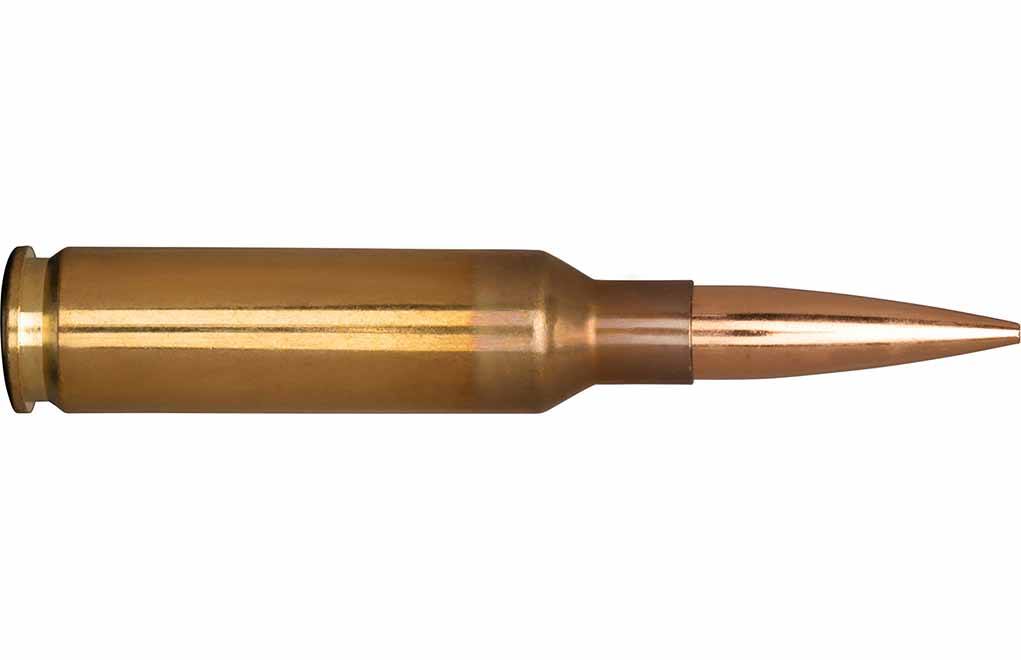
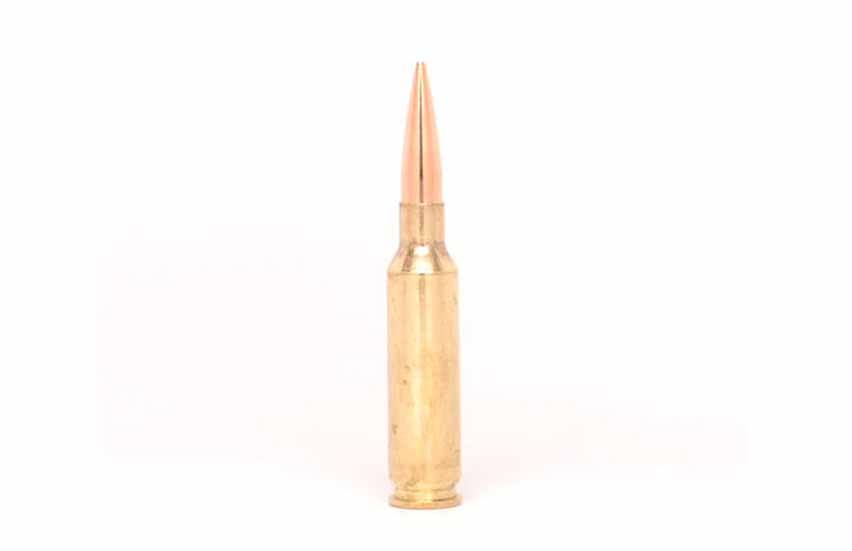
Given all the hype it’s easy to forget the 6.5 Creedmoor is a newcomer — all of 10-years-old. If it was a baby the cartridge would be somewhere between holding its head up on its own and cutting its first tooth. Yet, despite its infancy, especially compared to the grandfatherly .30-30 and middle-aged .308 Win., the Creedmoor’s rise has been meteoric. Perhaps no other cartridge has soared so fast so quickly, but its early-on respect is well earned. It does what it advertises: putting long-range accuracy within reach of the everyday marksman while remaining as pleasant to shoot as any centerfire cartridge to come down the pike.
Living up to its billing, the Creedmoor has been a no-brainer for ammo makers; they’ve embraced the cartridge with both arms and churned out 6.5 Creedmoor ammunition for all occasions and applications. With this in mind, we’ve rounded up the best of the best of Creedmoor ammo available today. Deer, competitive matches, distance steel, all the bases are covered. If you’ve got a rifle, we’ve got the 6.5 Creedmoor ammo for you.
Best 6.5 Creedmoor Ammo
Sierra 130-Grain Tipped GameKing
Some might have missed it when it happened, but a little over a year ago Sierra became more than a bullet company. They leaped full-fledged ammunition manufacturing. There couldn’t be better news for hunters. Out of the gates, the company focused on hunting ammunition with its GameChanger line and offered up an excellent option for the Creedmoor. The belle of the ball in the 130-grain load for the 6.5 Creedmoor is Sierra’s excellent Tipped GameKing bullet. Modeled after the company’s legendary MatchKing HPBT, the polymer-tipped projectile offers up unparalleled .510 BC and exceptional terminal performance. Despite Sierra loading up the 6.5 Creedmoor ammo to excel at most hunters’ limits, expect the GameKing bullet to do its job at any range. A thick tough jacket gives it top-notch penetration ability, making it useful for more than simply whitetail.
Muzzle Velocity (fps): 2,950 Muzzle Energy (ft-lbs): 2,512 Velocity 500 Yards (fps): 2,098 Energy 500 Yards (ft-lbs): 1,271 Ballistic Coefficient (G1): .510 Sectional Density: .266 Trajectory at 500 yards (200-yd zero): -38.91 MSRP: $66.99 per box of 20
Berger 140-grain Hybrid
No matter your caliber choice, if you compete Berger is a name you likely know well. Engineered by some of the top names in precision shooting, the company’s bullets and ammo are among the best money can buy. That said, like the rest of Berger’s offerings, its 140-grain Hybrid 6.5 Creedmoor ammo doesn’t disappoint. Boasting the ammosmith’s Hybrid Target bullets, the match ammo is optimized for long-range performance and the utmost precision you can milk out of the caliber. An incredible .607 BC (G1), the projectiles have the drag profile of a shadow, making them all but impervious to air resistance and wind drift. With a muzzle velocity of 2,850 fps, Berger has also hit the sweet spot between ample velocity and a comfortable shooting load.
Muzzle Velocity (fps): 2,850 Muzzle Energy (ft-lbs): 2,525 Velocity 500 Yards (fps): 2,127 Energy 500 Yards (ft-lbs): 1,406 Ballistic Coefficient (G1): .607 Sectional Density: N/A Trajectory at 500 yards (200-yd zero): -39.9 MSRP: $48.99 box of 20
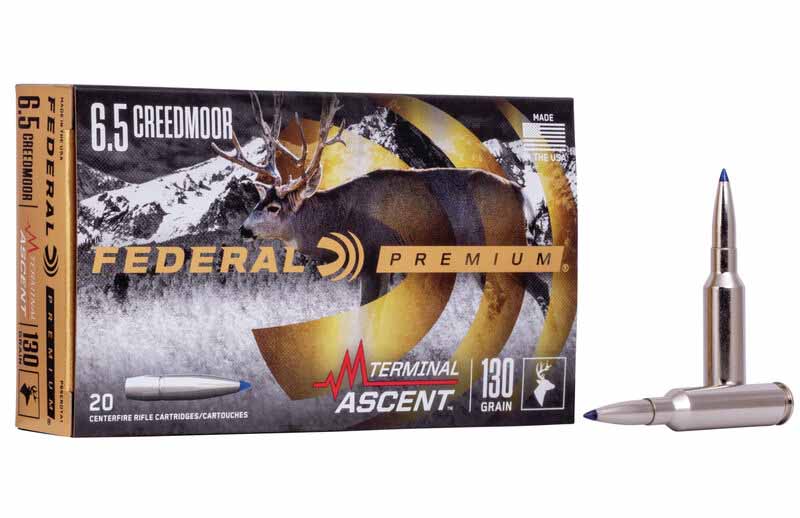
130-grain Federal Terminal Ascent
Building a better long-range hunting bullet is no easy task. Tailoring it for top terminal performance at a country mile is only one half of the equation; the other is making certain the projectile does its stuff close in. After all, you never know what range a trophy buck will pop up. Federal Premium has worked overtime on this challenge, cooking up the acme in 6.5 Creedmoor ammo dedicated for hunting – 130-grain Terminal Ascent. Its bonded core, polymer-tipped bullet features a channel around the circumference of reducing drag allowing it to reach out. Yet, the bullet stabilizes quickly giving hunters the confidence to hit the mark up close. No matter the range, expect consistent terminal performance with the bullet capable of expanding at lower velocities.
Muzzle Velocity (fps): 2,800 Muzzle Energy (ft-lbs): 2,263 Velocity 500 Yards (fps): 2,006 Energy 500 Yards (ft-lbs): 1,162 Ballistic Coefficient (G1): .532 Sectional Density: N/A Trajectory at 500 yards (200-yd zero): -43.12 MSRP: $70.99 box of 20
Copper Creek 139-grain Lapua Scenar
Follow their usual modus operandi, Copper Creek has stitched together a top-performing round by optimizing the best components available. The bell of the ball in this 6.5 Creedmoor ammo is the 139-grain Lapua Scenar bullet. The open-tip, boat-tail projectile is built to exacting standards, a fact not lost on competitive precision shooters. The bullet is among the most used in professional matches. The 139-grain offering has a ballistic coefficient of .578 (G1) and enough heft to ensure it maintains respectable velocities at distance. Copper Creek loads their 6.5 ammo to push this bullet out of the muzzle at 2,820 fps, which is plenty hot enough for most any target or tactical applications. On the spendy side, the 139-grain load is still a value if accuracy is your payoff.
Muzzle Velocity (fps): 2,820 Muzzle Energy (ft-lbs): 2,454 Velocity 500 Yards (fps): 2,068 Energy 500 Yards (ft-lbs): 1,320 Ballistic Coefficient (G1): .578 Sectional Density: N/A Trajectory at 500 yards (200-yd zero): -41.5 MSRP: Starting at $51.99 box of 20
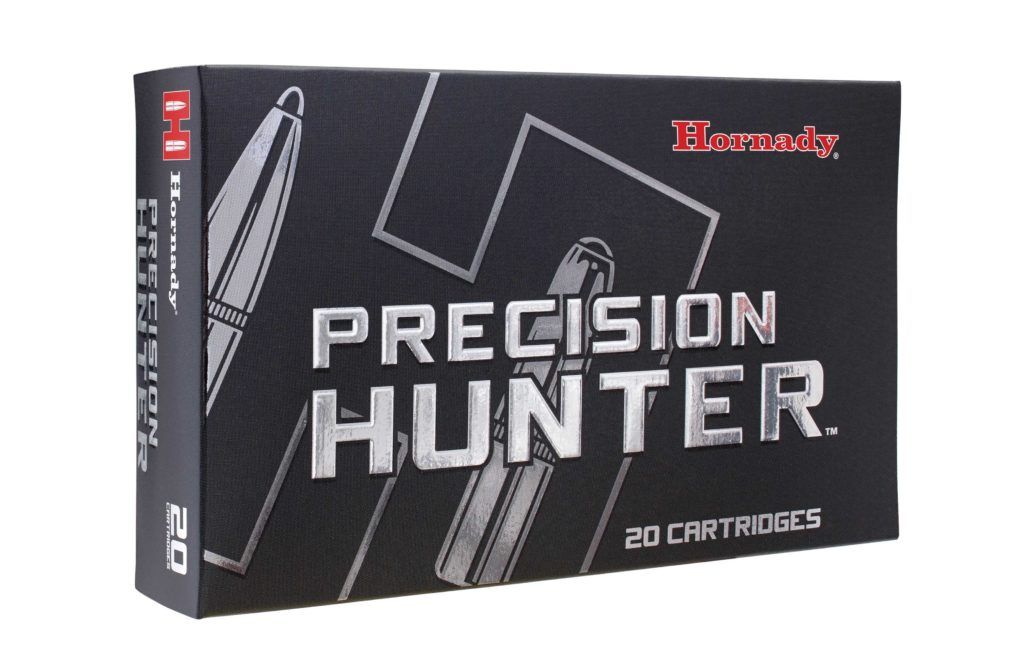
Hornady 143-grain ELD-X Precision Hunter
Potent as 6.5 Creedmoor ammo comes, Hornady’s Precision Hunter has match performance and the chops to harvest game more than 300 pounds thanks to the exceptional ELD-X bullet. Deadly at conventional and long ranges, the 143-grain projectile delivers 1,308 ft-lbs of energy at 500 yards and mushrooms completely thanks to its Heat Shield tip initiating expansion. Even up close and personal the round takes care of business with a thick shanked jacket and high InterLock ring keeping it together even when it’s still screaming like a banshee. Tack on the 6.5’s drill-like penetration and you’ve got hunting ammo capable of tangling with anything from elk on down.
Muzzle Velocity (fps): 2,700 FPS Muzzle Energy (ft-lbs): 2,315 Velocity 500 Yards (fps): 2,030 Energy 500 Yards (ft-lbs): 1,308 Ballistic Coefficient: .625 (G1) Sectional Density: .293 Trajectory at 500 yards (200-yd zero): -44.4 inches MSRP: $46.99 box of 20
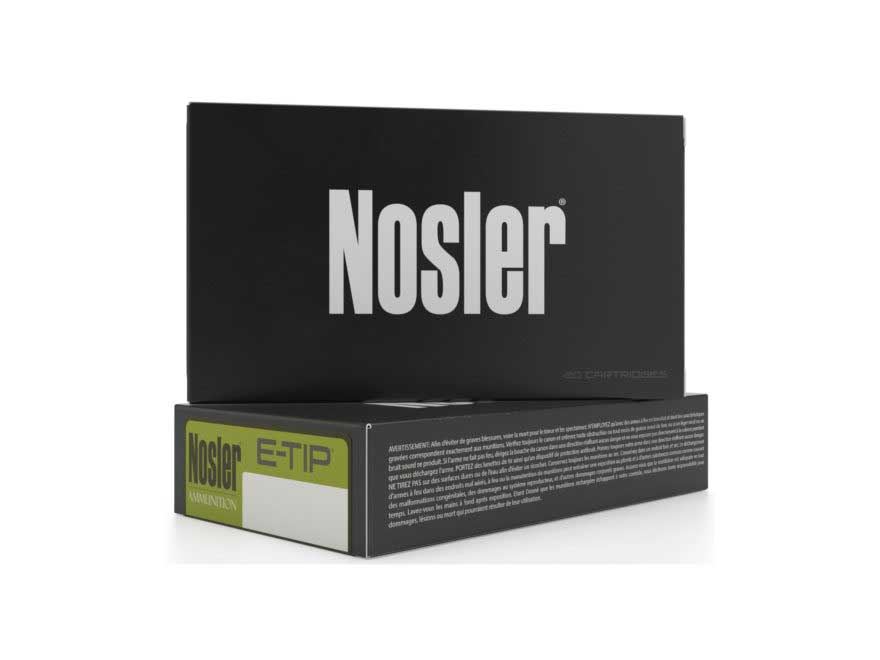
Nosler 120-grain E-Tip Lead-Free
A whopper of a solid-copper hunting round, Nosler’s 120-grain E-Tip flirts with lead-core bullet performance. A specially engineered hollow running nearly half the bullet, what the company calls an Energy Expansion Cavity, ensures explosive expansion no matter the projectile’s range or velocity. Additionally, and common to most monometal bullets, the E-Tip penetrates like a hydraulic punch press, while retaining up to 95-percent of its original weight. That translates to long, devastating and deadly wound cavities. And it performs like traditional 6.5 Creedmoor ammo in flight, dropping a whisker over 42 inches at 500 yards (100-yd zero), while almost moving 2,000 fps at that distance.
Muzzle Velocity (fps): 2,850 Muzzle Energy (ft-lbs): 2,274 Velocity 500 Yards (fps): 1,991 Energy 500 Yards (ft-lbs): 1,057 Ballistic Coefficient (G1): .497 Sectional Density: .246 Trajectory at 500 yards (100-yd zero): -42.5 inches MSRP: $68.95 box of 20
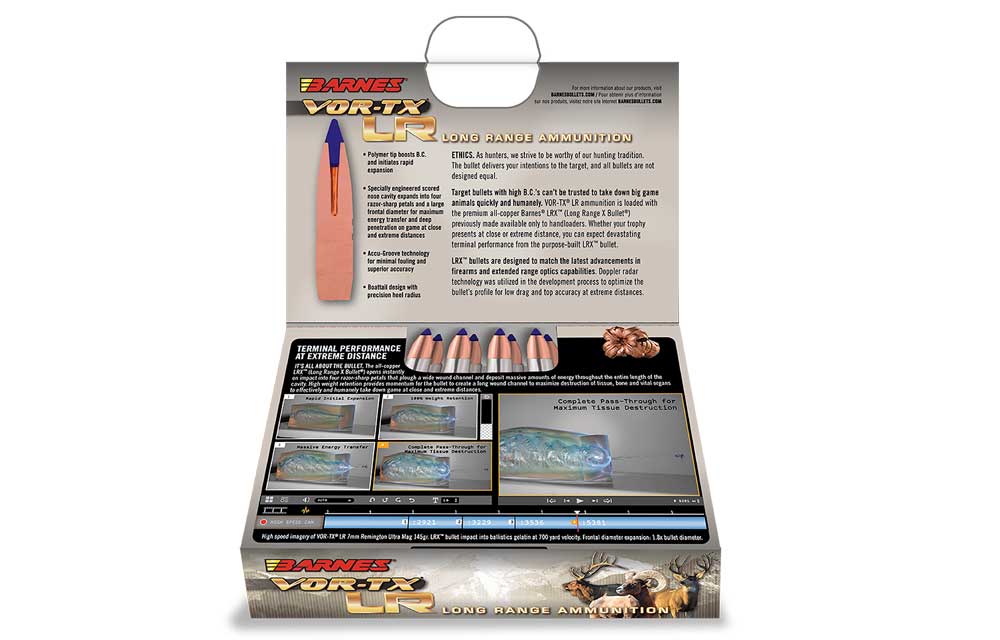
Barnes 127-grain Vor-TX LR
As expected from an outfit that’s made monometal bullets as long as Barnes, it has come up with a downright nasty round for hunting season. The 127-grain Vor-TX LR is absolute dynamite on medium to smaller large game, optimized to drop an animal out to 700 yards and beyond. Its LRX solid copper bullet is specially engineered to expand violently upon impact while retaining up to 99-percent of its original weight. Designed for controlled expansion at high and low velocities, the LRX BT isn’t strictly a long-range option; though, if you need to make a cross-canyon shot, the boat tails are more than up to the job. The bullet leaves the muzzle at 2,825 FPS and maintains nearly 70 percent of its velocity at 500 yards.
Muzzle Velocity (fps): 2,825 Muzzle Energy (ft-lbs): 2,251 Velocity 500 Yards (fps): 1,928 Energy 500 Yards (ft-lbs): 1,048 Ballistic Coefficient (G1): .468 Sectional Density: N/A Trajectory at 500 yards (200-yd zero): -44.1 inches MSRP: $47.99 box of 20
Federal Premium 140-grain Fusion Soft Point
An economical choice for deer season, the Fusion Soft Point nevertheless is long on performance and more than sufficient at putting meat on the table. Electro-chemically bonded, the soft lead core of the 140-grain bullet doesn’t come to pieces when it reaches its target and a skived copper jacket ensures the projectile performs no matter the distance. A slightly lighter load than others 6.5 Creedmoor ammo in its class, Fusion Soft Points still deliver the long-range performance hunters have come to expect from the caliber. The round moves at 1,816 fps at 500 yards and wallops game 1,025 ft-lbs of energy at that distance.
Muzzle Velocity (fps): 2,750 Muzzle Energy (ft-lbs): 2,351 Velocity 500 Yards (fps): 1,816 Energy 500 Yards (ft-lbs): 1,025 Ballistic Coefficient (G1): .439 Sectional Density: N/A Trajectory at 500 yards (200-yd zero): -48.4 MSRP: $48.99 box of 20
Browning 129-grain Silver Series
A wickedly flat-shooting round, Browning’s Silver Series is most certainly a top choice for any hunter looking to make a long poke. The 129-grain bullet only loses about 50 inches by 500 yards on a 200-yard zero, reducing the complications of dialing at the moment of glory. Furthermore, their heavy-for-caliber projectiles delivers a lot of energy on target, making them more than capable of taking North American big game.
Muzzle Velocity (fps): 2,820 Muzzle Energy (ft-lbs): 2,277 Velocity 500 Yards (fps): 2,090 Energy 500 Yards (ft-lbs): 1,591 Ballistic Coefficient (G1): .324 Sectional Density: N/A Trajectory at 500 yards (200-yd zero): -53.7 MSRP: Not Published. Average Price is $35 to $40 per box of 20
Copper Creek 130-grain Berger Hybrid OTM
Copper Creek is the closest thing you can get to handloading in a box, mating Berger’s groundbreaking Hybrid OTM Tactical bullet to your choice between eight different cases. Optimized for use in ammo that contended with COAL (Cartridge Overall Length) constraints found in box-magazine-fed rifles, the long-nosed 130-grain bullets do not compromise on performance. The hollow points have exceptional ballistic coefficients (.560 G1) and Copper Creek loads them to leave the muzzle at a blistering 2,880 fps, then they do not drop below 2,000 fps until 600 yards. That’s flat shooting.
Muzzle Velocity (fps): 2,880 Muzzle Energy (ft-lbs): 2,394 Velocity 500 Yards (fps): 2,109 Energy 500 Yards (ft-lbs): 1,284 Ballistic Coefficient (G1): .560 Sectional Density: N/A Trajectory at 500 yards (100-yd zero): -43.9 MSRP: Starts At $54.99
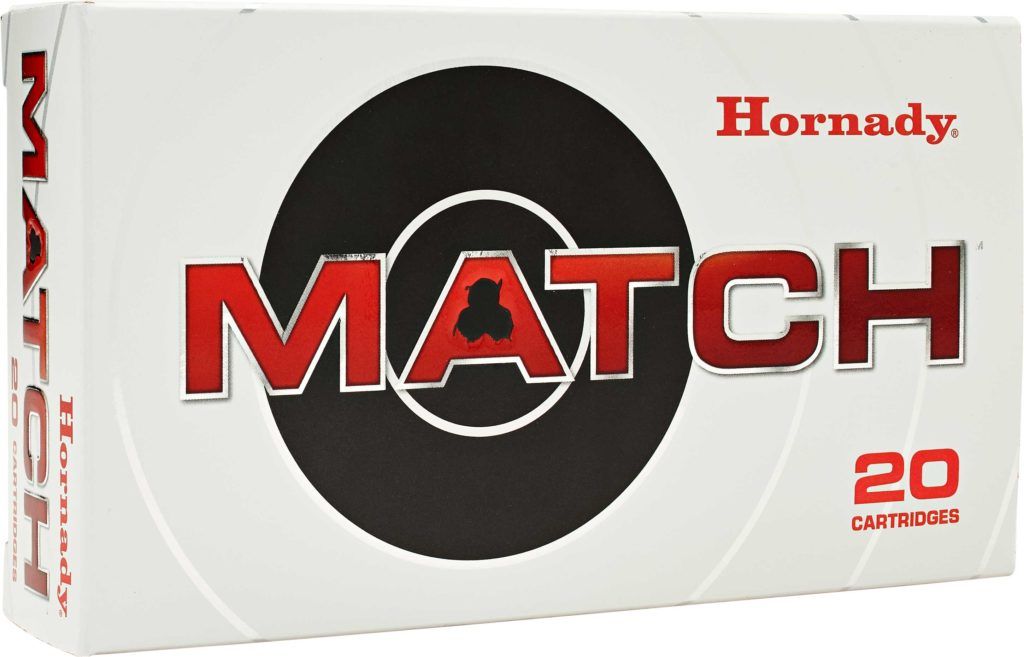
Hornady 147-grain ELD Match
Loaded with select components and to extremely tight tolerances to ensure maximum consistency, Hornady’s ELD Match provides pinpoint accuracy even on the longest pokes. Its 147-grain A-Max bullet has among the best ballistic coefficients of all factory loaded 6.5 Creedmoor ammo giving shooters the edge against air resistance and wind drift. At the same tick, the cutting-edge boat tail’s performance is enough Hornady didn’t have to soup up the load to get results. The ELD Match only drops around 43 inches at 500 yards on a 200-yard zero, despite leaving the muzzle at 2,695 fps. An added benefit, the round should go easy on the throat of your long-range rifle.
Muzzle Velocity (fps): 2,695 Muzzle Energy (ft-lbs): 2,370 Velocity 500 Yards (fps): 2,092 Energy 500 Yards (ft-lbs): 1,428 Ballistic Coefficient (G1): .697 Sectional Density: .301 Trajectory at 500 yards (200-yd zero): -43.2 MSRP: Not Published. Average Price is $42 per box of 20.
American Eagle 120-grain Open Tip Match
Producing sub-MOA accuracy without breaking the bank, Federal’s American Eagle Open Tip Match is possibly the ultimate everyday range fodder. Loaded with 120-grain FMJ bullets, the round emulates Federal’s more expensive match ammunition, shooting nearly as flat at long-range, but for pennies (maybe not quite pennies) on the dollar. A mama bear load, American Eagle’s precision 6.5 Creedmoor ammo leaves the muzzle at 2,900 fps and is very enjoyable to shoot.
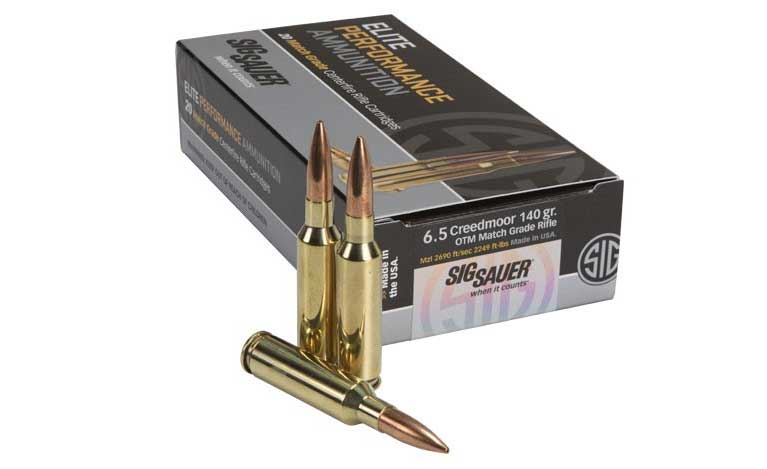
Featuring Sierra MatchKing bullets, SIG Sauer’s Elite Match Grade OTM (Open Tip Mach) excels in precision rifles and is loaded to get the most out of the caliber. The 140-grain MatchKing is an outstanding performer out to 1,000 yards and beyond, with a sleek .535 ballistic coefficient helping it cut the air with ease. SIG has loaded its precision 6.5 Creedmoor ammo not only to excel at distance, but also to produce minimal recoil, thus it is an ideal choice for those who shoot the caliber out of semi-automatics. A plus, the match ammo is competitively priced, in turn, the boat tail’s makes a good option for burning some powder without burning your wallet.
Muzzle Velocity (fps): 2,690 Muzzle Energy (ft-lbs): 2,250 Velocity 500 Yards (fps): 1,919 Energy 500 Yards (ft-lbs): 1,145 Ballistic Coefficient (G1): .535 Sectional Density: .287 Trajectory at 500 yards (200-yd zero): -46.35 MSRP: $41.99 box of 20
Atomic Ammunition 142-grain MatchKing
Loaded with a precision and match shooter favorite, the 142-grain MatchKing, the round produces sub-MOA accuracy and is very shootable round. Atomic loads its precision 6.5 Creedmoor ammo to launch at a very mild 2,750 fps, but the renowned Sierra bullet makes the most out of the velocity. The hollow point boat tail drops 41 inches at 500 yards and retains 75 percent of its velocity at that range thanks to its longer ogive radius and incredible ballistic coefficient. Those extra 2 grains really pay off in this ammo.
Muzzle Velocity (fps): 2,750 Muzzle Energy (ft-lbs): 2,385 Velocity 500 Yards (fps): 2,073 Energy 500 Yards (ft-lbs): 1,356 Ballistic Coefficient (G1): .626 Sectional Density: .291 Trajectory at 500 yards (200-yd zero): -41.7 MSRP: Not Published. Average price is $35 per box of 20
Sellier & Bellot 140-grain FMJBT
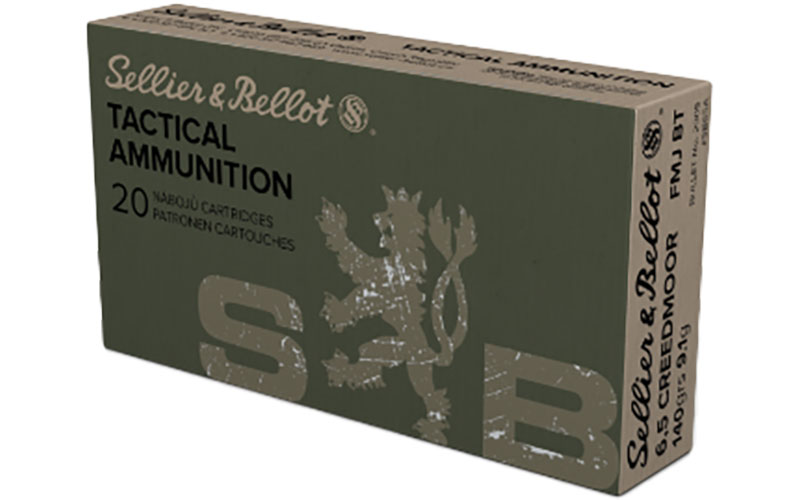
While most of the 6.5 Creedmoor ammo on this list was selected due to its performance, this one is here because of its price. That said, Sellier & Bellot’s 140-grain FMJBT load is no slouch either. It may not be the one to pick for maximum long-range performance or effect on target, but for less-expensive range ammo it’s a solid choice. With an advertised muzzle velocity of 2,658 fps, it’s not the most zippy round, but a respectable G1 BC of 0.491 helps keep it moving and it doesn’t drop below 2,000 fps until about 400 yards. There’s no such thing as cheap 6.5 Creedmoor ammo, but this is as close as it gets.
Muzzle Velocity (fps): 2,658 Muzzle Energy (ft-lbs): 2,195 Velocity 500 Yards (fps): 1,832 Energy 500 Yards (ft-lbs): 1,043 Ballistic Coefficient (G1): .491 Sectional Density: .287 Trajectory at 500 yards (200-yd zero): -49.99 MSRP: Not Published. Average price is less than $20 per box of 20
Bonus: Best 6.5 Creedmoor Bullets
If you’re ready to step up and mint your very own 6.5 Creedmoor ammunition, here are three bullet options more than up to the task of getting you on target.
Berger Hybrid
Overengineered doesn’t even begin to describe what has become one of the most popular precision 6.5 Creedmoor bullets. Incorporating two different shapes within the nose strikes a nearly perfect balance between ease of loading and performance. On the one hand, the tangent section of the ogive reduces sensitivity to seating depth. On the other, a long secant ogive forward is the same found in high-performance VLD bullets. What you end up with is a forgiving component that sets the standard for performance.
Lapua Scenar L
A top performer on the precision rifle circuit, the extremely uniform Scenar L has an excellent match record. Tightening the tolerances of the original Scenar bullet, Lapua has created a projectile that – batch to batch – shows little to no variation. The company goes as far as saying you don’t even have to sort them, they’re that little difference between bullets. Like the original, the Scenar L has the sexy BCs 6.5 Creedmoor shooters look for to get the most out of the long-range specialist caliber.
Hornady A-Tip
Hornady has taken a different tact in producing the uniformity required to hit the mark over and over. Opting for aluminum – as opposed to polymer or open – for the tip, the company limits the bullets’ irregularities to almost nil. Additionally, turning to metal means the bullets can be made longer, thus bettering their ballistic coefficients and performance against air resistance and wind drift. Finally, they also sell them in consecutive batches, which reduces the chance anomalies that occur as a natural course of manufacturing.
Did we hit the mark with our 6.5 Creedmoor ammunition list? Any duds in the pack? Or did we pick all your favorites? Tell us about it in the comments.
Yes, definitions matter, but when it comes to the ancient debate of clip vs. magazine, it’s not worth getting pedantic over.
One of the oldest henpecks in the gun community is “clip vs. magazine.” While there is a technical difference—which we’re going to cover for anyone who might stumble across this and not know—it’s also one of the most tired tropes around anything related to guns and shooting.
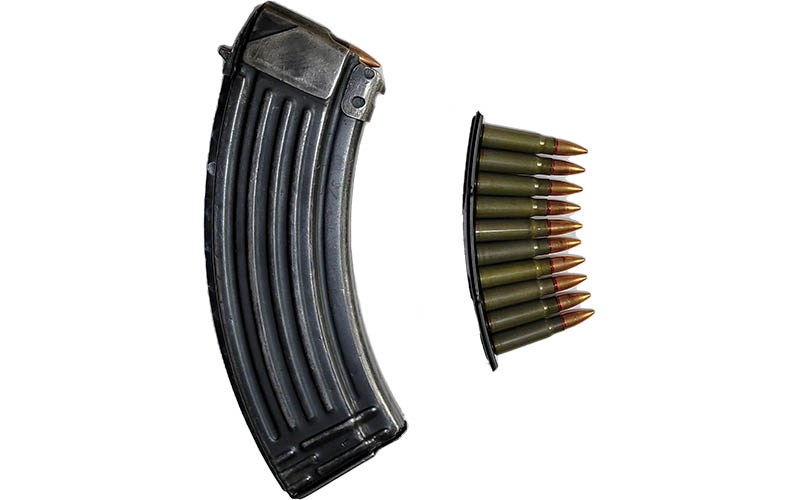
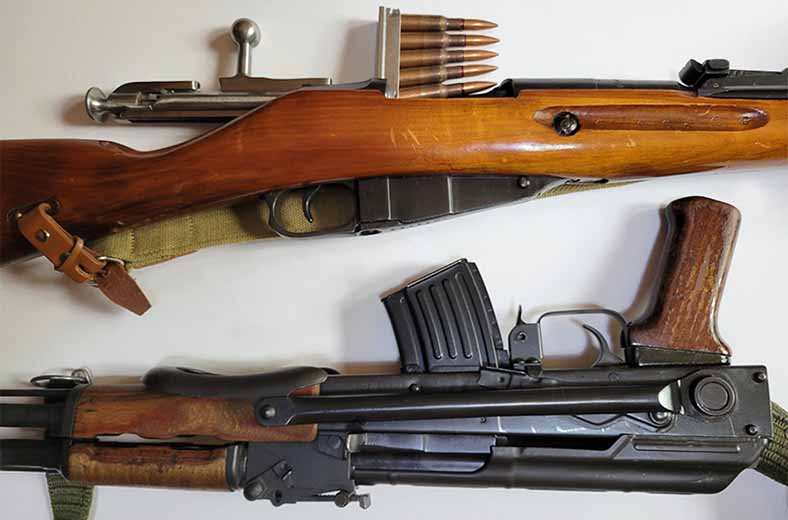
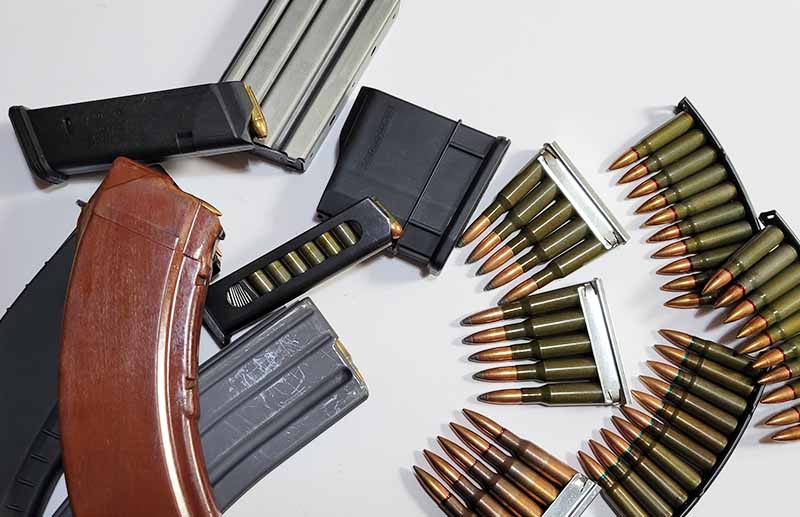
A magazine versus a stripper clip, both for 7.62×39.
Clip Vs. Magazine: What’s The Difference?
To get it out of the way, let’s describe what differentiates a firearm clip from a magazine in the simplest terms possible:
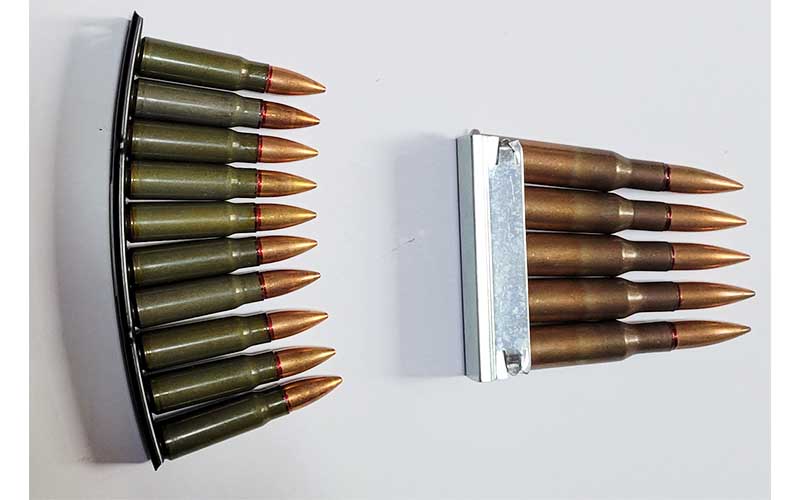
A clip is a literal clip that holds multiple cartridges together. There are a few different types, but all are used for loading ammunition into a magazine or a revolver’s cylinder. Clips do not feature a spring or any other means of feeding ammunition themselves.
A 7.62×39 SKS 10-round stripper clip versus a 5-round 7.62x54r Mosin Nagant stripper clip.
A magazine is a mechanism that not only holds ammunition but feeds it into the firearm as well, typically via a spring. Some magazines are a permanent part of the gun (integral), while others are detachable and can be inserted and removed.
A Mosin Nagant with a fixed internal box magazine being loaded via stripper clip versus an AK with a 10-round detachable box magazine.
The word magazine comes to us from French (magasin) by way of the Arabic word (makhazin), meaning storehouse. This was first adopted as the word for ammunition storage areas for artillery before eventually being used for small arms as well.
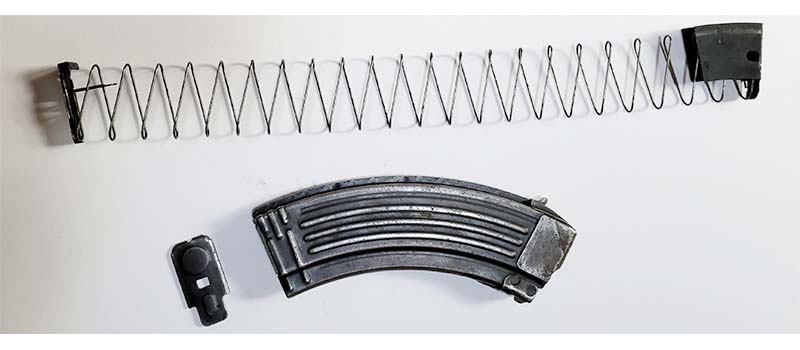
As mentioned, one of the defining characteristics of a magazine is its ability to feed cartridges into a gun’s firing mechanism. They typically do this by using a spring to push a follower, a piece of metal or polymer, that then pushes the cartridges into the gun. The most common styles are boxes, drums and tubes, but other types exist as well.
A disassembled AK magazine. The follower can be seen attached to the top of the spring at the right of the image.
There are also three different types of clips to be aware of.
Stripper clips, also known as chargers or charger clips, are essentially just speedloaders designed for feeding magazines. Stripper clips hold cartridges in a stack, and the user loads them into a magazine by placing the clip in a guide notch and pressing the ammunition down. Once all rounds have been loaded into the magazine, the clip has served its purpose and can be discarded.
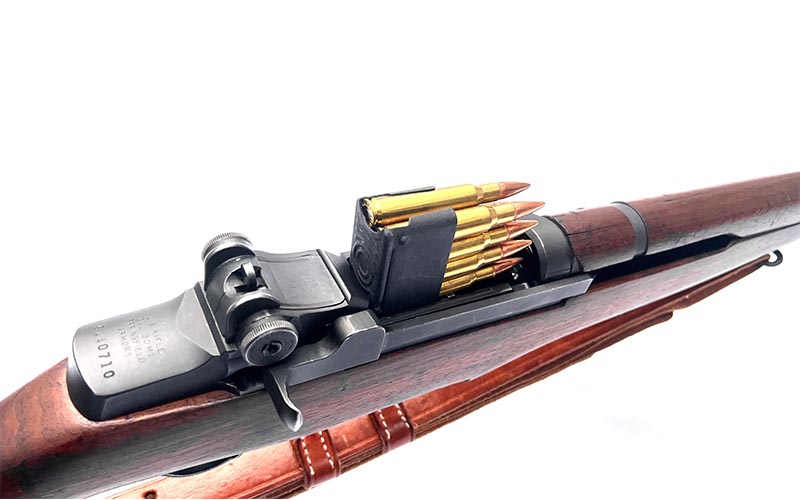
While stripper clips are merely used to hold cartridges together until they’ve been stripped into a magazine, en bloc clips retain their usefulness for a bit longer. That is because en bloc clips are inserted into the magazine themselves, along with the ammo they’re holding. The most iconic example of this type is doubtlessly the M1 Garand.
An M1 Garand being loaded with its 8-round en bloc clip.
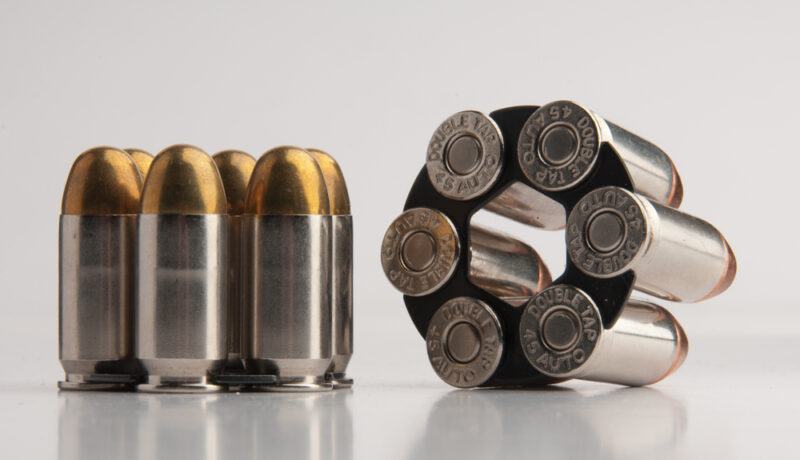
The third type of clip to be aware of is the moon clip, something only used by certain revolvers, most commonly those chambered for rimless cartridges like .45 ACP or 9mm. Moon clip revolvers aren’t very widespread, but of those that use them, their cylinders are specially machined to accommodate the clip when the cylinder is closed. The clips hold the ammunition (either all rounds in a full-moon clip, or less in a half-moon clip), and are then inserted into the cylinder. Because the rounds are linked, hitting the ejector rod will kick the whole clip out.
Two .45 ACP revolver moon clips.
Clip Vs. Magazine: Historical Context
So, to understand why the words clip and magazine are often used interchangeably, we must first understand how both devices have been used by people over time.
The first magazines were tubular magazines, but by the mid-19th century integral box magazines were being developed as well. The impetus for this invention was to allow the then-new pointed (spitzer) bullets to be used without them detonating each other’s primers (as was the case in tube magazines).
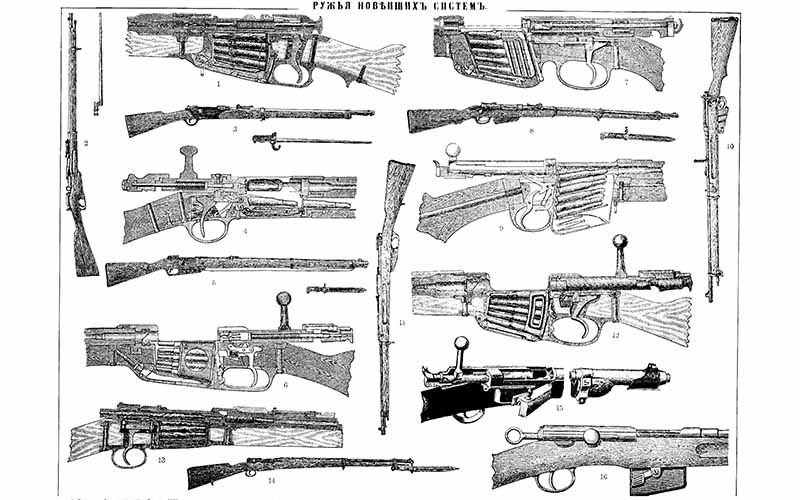
A drawing from 1905 showing various early internal box magazine designs for military rifles.
These integral box magazines quickly became the standard for the world’s service rifles, and that remained true throughout WWII. Even early rifles that featured detachable box mags, such as the Lee-Enfield, were intended to be reloaded via stripper clip. For the first half of the 20th century, only semi-auto handguns, submachine guns and machine guns commonly used detachable box magazines, and these were mostly limited to military use. Rifles with detachable magazines were available on the commercial market, such as the Winchester Model 1907, but they weren’t nearly as popular.
Remember, too, that revolvers were far and away the most popular handgun style until the last quarter of the 20th century. While commercial semi-autos certainly existed, far more people were buying wheelguns than, say, 1911s or Browning Hi Powers.
But how does this have any bearing on the words that people use?
Colloquially, the word “clip” had a much stronger association with the act of loading a firearm in the early- to mid-20th century than it did with the device itself. This of course passed into the general lexicon. During this period, “magazine” would have more commonly referred to the integral tube magazine on a lever-action rifle or pump-action shotgun, not the detachable box magazine of something like an M1 Carbine.
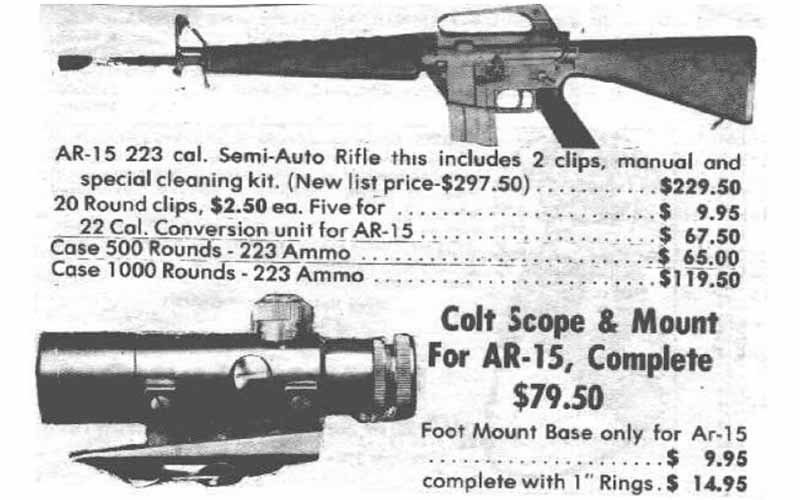
This phenomenon was further reinforced by its use in less colloquial, more official mediums such as this Colt advertisement from 1969. When even Colt refers to magazines as clips, what do you expect Joe Schmo to call them? Of course, media like films and games contributed to this as well.
The trend has persisted through today, and many still prefer to call their magazines clips. Given the historical context, however, it’s easy to see why. On the surface, both clips and magazines load ammunition into a firearm, and for the layman, any difference beyond that doesn’t really matter. A stripper clip for an SKS and a PMAG for an AR-15 functionally do the same thing. The predominance of clip-based over detachable magazine-based firearms for a good chunk of the early 20th century ensured that “clip” remained in the collective vocabulary long after detachable magazines overshadowed their use.
Will The Last Person Correcting People On This Turn The Lights Off?
On the one hand, it’s true that words have definitions. One must be precise in their diction to prevent being misunderstood. Accuracy matters, not only in marksmanship.
On the other hand, it’s also true that—at best—correcting people over “clip vs. magazine” is pedantic. It can even be worse than useless.
Other “gun people” (or whatever phrase you like to use) already know the difference, and there’s no use in preaching to the converted. Those who aren’t aware probably don’t care, and also don’t care that you do, so getting tripped up over semantics probably won’t win you any friends.
Thankfully, this trope—which can be found in the comments sections of various gun websites and social media channels—seems to be dying. It’s not as common to hear or see anyone saying, “It’s a magazine, not a clip!” anymore.
It’s also worth mentioning that very few firearms that use clips are currently in production, and virtually all of those are revolvers. The word clip, at least according to its actual definition, is falling out of common use as a result. It probably won’t be long until magazine naturally becomes the more commonly used word without any outside intervention.
So, the next time you feel the urge to correct someone over this point, take a deep breath and remember that it’s probably not worth it. Instead, why don’t you invite them to the range, load some “clips” into your AR and just have a good time?
Suppressors have burned across the shooting world like a prairie fire in recent years. Perhaps the only issues holding them back further are Federal paperwork and taxes required to procure one. Save those, it’s a fair bet nearly every shooter would have at least one – for the sake of curiosity.
The somewhat unfair veil the National Firearms Act has drawn over suppressors makes them a mystery to many well-informed shooters. Even those rusty on acoustic engineering fundamentals understand the underlying concept of how they work. Though, it’s quite a leap from elementary knowledge of firearms suppression and what cans will actually pull off the job. Double this when it comes to the saturated AR-15 suppressor market.
Accessories and gear hounds to a fault, the popular rifle’s fans have their work cut out when shopping for this particular device. In short, the AR-15 suppressor square is crowded and sometimes confusing.
AR-15 Suppressor Costs
Like most things in the firearms world, there’s no hard and fast answer to how much it costs to slap a can on your carbine. There are cheap options and expensive ones, it just all depends on what you’re willing to pay. Overall, shooters can expect to pay around $400 to $1,500 for most suppressors compatible with an AR-15, with some outliers at either end. Mind you, this is for the can itself; on top of the muzzle device, you also must pay $200 for your tax stamp (this is a one-time expense per suppressor), since suppressors are NFA-regulated devices. Not to mention the time you’ll invest filling out paperwork and waiting for your can to arrive. If you want a more in-depth look a the purchase procedure, we suggest you read our piece on how to buy a suppressor.
Suppressor Lifespan
As an aside, you’ll get the most for your money out of a great majority of suppressors. By this I mean, a quality-built can will last a long time. Suppressors built from steel or a high-temperature alloy in its baffles can conceivably push into the tens of thousands of rounds before petering out—generally through a crack in a baffle or the tube itself. Some modern suppressors using steel or high-temperature alloy (say Inconel) baffles can endure extended periods of fully automatic fire without damage. The highest-quality rifle suppressors available today have a claimed service life of greater than 30,000 rounds.
Sound Suppression
Of course, everyone wants to know if the investment is worth it. Exactly how loud is an AR-15 with a suppressor installed? This is somewhat a tricky question to answer, given there are a lot of variables involved from caliber shot to barrel length, and environmental conditions. But a brief ballpark with an average M4 style carbine chambered for 5.56 NATO at least gives a general picture. Without a can, the gun produces a report around 165 dB, with a suppressor mounted, maybe around the 135 dB neighborhood. Not enough to raw dog your ears when at the range, still it’s a notable reduction greatly enhancing your hearing protection.
Suppressed AR-15 Accuracy
This leads to another point, namely, despite its name, a suppressor delivers more than simply sound suppression. A fringe—perhaps a primary—benefit of adding a suppressor to your AR-15 is recoil mitigation. Yeah, must chamberings for the rifle are pretty tame, to begin with, but with a can on the muzzle are next to nothing. This is a good thing. Overall, less recoil means less muzzle rise, which equates to faster target reacquisition, thus the potential for more accurate rapid fire. Plus a suppressor all but does away with muzzle flash, which conceals your position at night and stops from poisoning your eyes in low-light situations. Those aspects might be worth the admission price alone.
Best AR-15 Suppressor Options
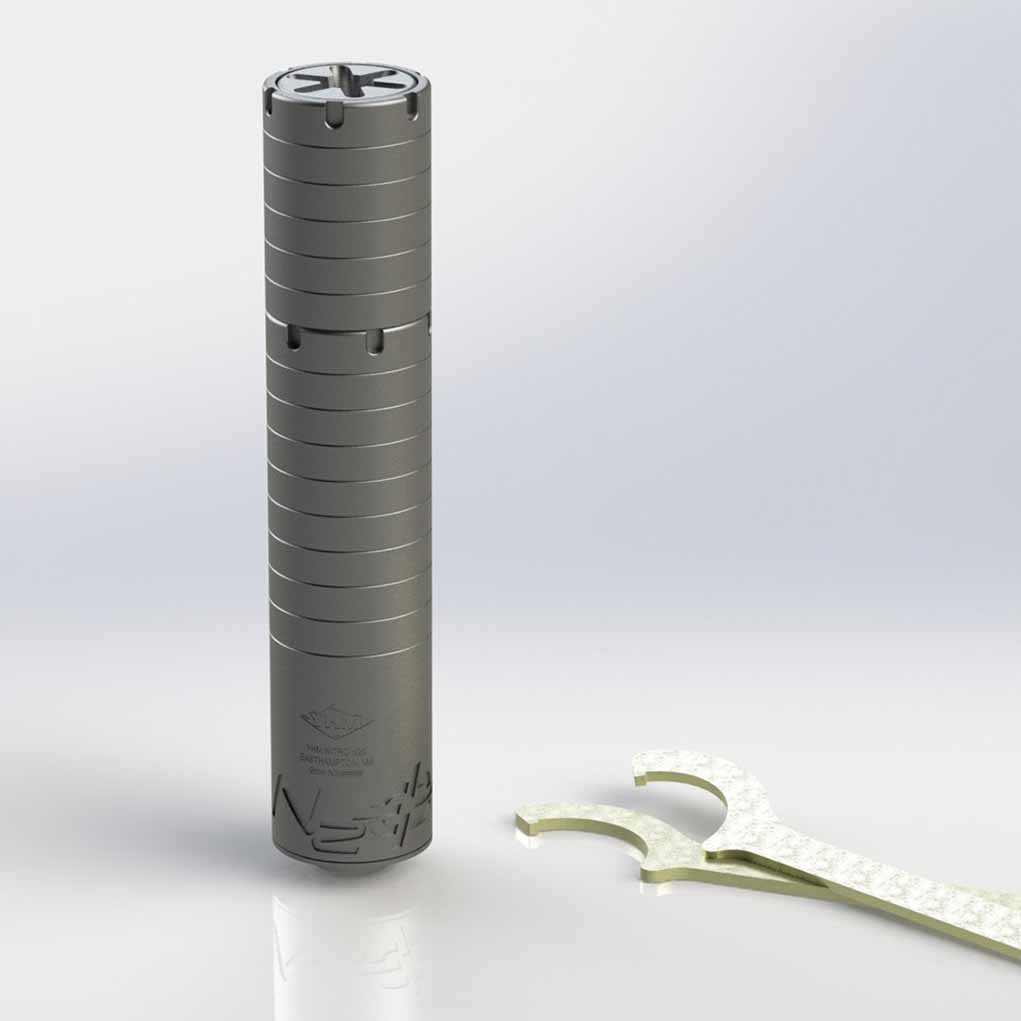
YHM Nitro N20
Do-all. There’s perhaps no better way to describe what Yankee Hill cooked up with its new NITRO N20 can. More than an AR-15 suppressor, it’s capable of hushing up nearly any gun in your arsenal in the least invasive and most convenient way possible. Seem impossible? Read on.
The modular suppressor is designed to run on everything from pistols to light-duty rifles and is compatible with calibers ranging from .17 HMR up to .308 Win. Much of the flexibility is thanks to the N20 indiscriminate mounting system. You can slap on the suppressor via a Nielsen adapter, Phantom Q.D., a multitude of direct thread sizes and a slew of other systems. In addition to this, the can runs in two configurations—7.5-inch long and 5.4-inch short—to adapt your particular firearm and circumstances.
As to sound suppression, the titanium unit does a respectable job, knocking down the report of 300 Blackout to 127 dB in its long configuration and 135 dB in its short. Need a bit more, the endcap accommodates a wipe. Overall, it doesn’t get much more versatile than this.
Caliber: .17HMR – 9mm / .308 Win. Weight: 6.5 oz (Short) / 10 oz. (Long) Diameter: 1.562” Overall Length: 5.4” to 7.5” Attachment Type: Multiple Material: Titanium MSRP: $1,249 yhm.net
Thunder Beast Dominus-SR
There are few better ways to explain the Dominus-SR than a fighting suppressor. In testing, Thunder Beast brutalized this full-auto rated can, running through 10 cycles of SOCOM/SURG firing schedule and retesting it against a brand new unit. The difference between the two, the test suppressor comes back 1 dB louder than the one out of the box. Impressive.
A titanium body, fully welded, the short and squat unit is rated for 5.56 NATO to .308 RUM making it a fairly flexible option. Not only does it hold down duty as an AR-15 suppressor, but is also at home on a precision bolt gun or AR-10. Regardless of gun, the welded titanium Dominus-SR does little to burden the platform. It’s a bit girthier than other options with a 1.8-inch diameter, but it is shorter than most at 6.95-inches and is relatively light for its size at 12.5 ounces. Utilizing Thunder Beast’s SR mount system, the Dominus-SR is also incredibly simple to get on and off your gun and offers incredible lock-up.
Caliber: 5.56 up to .300 RUM Weight: 12.5 oz Diameter: 1.80” Overall Length: 6.95” Attachment Type: SR Mount Material: Titanium MSRP: $1,610 thunderbeastarms.com
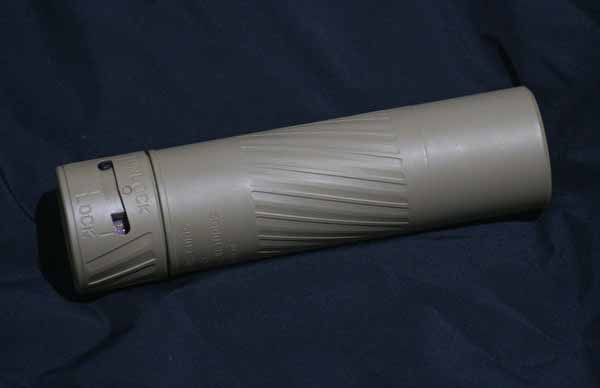
Rugged Suppressors Surge
Modularity is a catchword often haphazardly tossed around the firearms industry, but it is something the Surge 7.62 truly delivers. Configurable from 9 to 7.5 inches, the Surge 7.62 is a tidy package for those who need an AR-10 or AR-15 suppressor that adapts to any situation. Short and sneaky or long and silent, you get both in one device. And it’s as flexible in compatibility.
Rugged Suppressors more than lives up to its name with the Surge, which handles’ any almost anything north of 5.56mm (thanks to interchangeable front caps). How north? How about .300 RUM! Plus, it’s full-auto and belt-fed rated, which to average shooters equates to a suppressor that’s more than engineered to handle anything you throw at it.
Much of this is thanks to the material. Rugged Suppressors didn’t skimp constructing the Surge from stainless-steel and Stellite. Yeah, it puts the hush tube on the hefty side—21 ounces—but it’s by no means unmanageable. Convenience is also part of the package, with the can’s dual taper locking system making it easy to jump between guns. If versatility and ease of use are at a premium, the Surge is well worth the investment.
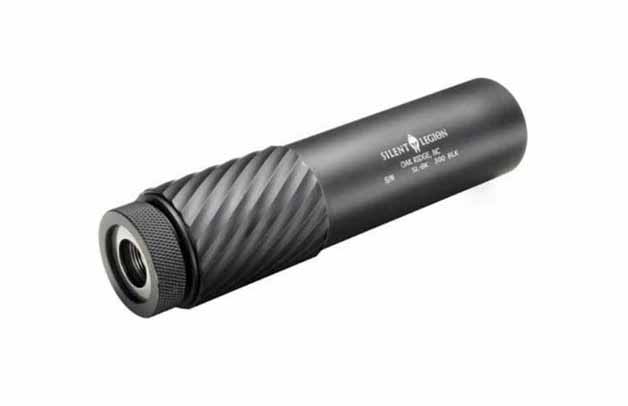
Any round can be suppressed, but the .300 Blackout was specifically designed for this purpose. Thus, it only makes sense to engineer a suppressor to get the most out of the whispering cartridge. Leave it to Silent Legion to go this route.
Its SL-BK came about expressly to all but eliminate the signature of the .30-caliber cartridge, and at the same tick not inhibit the handling characteristics of the rifles on which it’s mounted. Damping the Blackout’s report by as much as 32 dB and weighing in at just a hair over 14 ounces, it’s safe to say the company succeeded on both counts. While noise reduction is important (Why why else would you buy a suppressor?), the heft and size of the direct thread (DT) can might be the more crucial factors. Given many AR-15s chambered for .300 BLK are carbine or pistol configurations, generally meant for CQC, the suppressor keeps them as agile and manageable as if they were unsuppressed.
A titanium build, the SL-BK is also as rugged as you expect an AR-15 suppressor to be. Though it’s a direct thread (⅝” -24 2B) unit, so it doesn’t come off and on as quickly as other options, if that’s a concern for you. The 6.8-inch can does have some versatility, also compatible with the resurgent 6.8 SPC. And, relatively speaking, the model is fairly economical to boot.
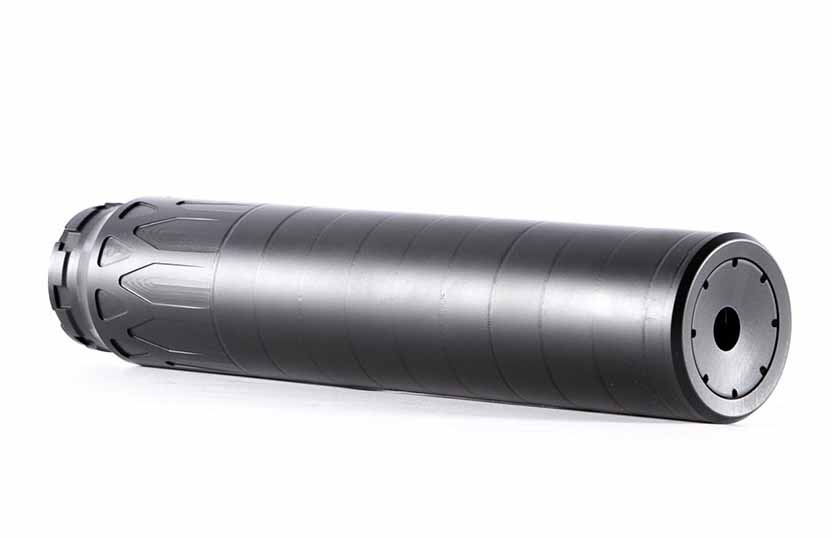
Balance is often the concern when selecting a suppressor. Which can muffs noise to a manageable level, while not proving imposing dangling off the muzzle of a rifle. However, there are times and circumstances where asymmetry enters the equation, with one factor outweighing the others. If noise reduction is what your after come hell or high water, then the Nomad L is your answer.
Essentially the Nomad L is an enlarged variation of Dead Air’s popular Nomad-30, measuring in at 8.39 inches in length and 1.735 in diameter. Certainly, it’s more to attach to the end of a rifle, but the larger dimensions increased the internal volume of the suppressor, giving it better noise reduction qualities, as well as relieving backpressure. Honestly, the Nomad L has the full potential of significantly cutting down the report of something as barky as the .300 Winchester Magnum. But as an AR-15 suppressor, erasing all but the supersonic snap of 5.56 NATO and making sub-sonic .300 Blackout a mere whisper.
While bigger than many of the options on this list, the Nomad L is surprisingly unobtrusive. Yeah, it’ll add length to the platform and, at 18.3-ounces in weight, heft. But stainless-steel and Grade 5 titanium construction, it’s much more practicable than its measurements imply.
Caliber: Up to .300 Norma Magnum Weight: 18.3 ounces Diameter: 1.735 inches Overall Length: 8.39 inches Attachment Type: Direct Thread (KeyMo and Xeno Adapter compatible) Material: Stainless Steel and Titanium MSRP: $999 deadairsilencers.com
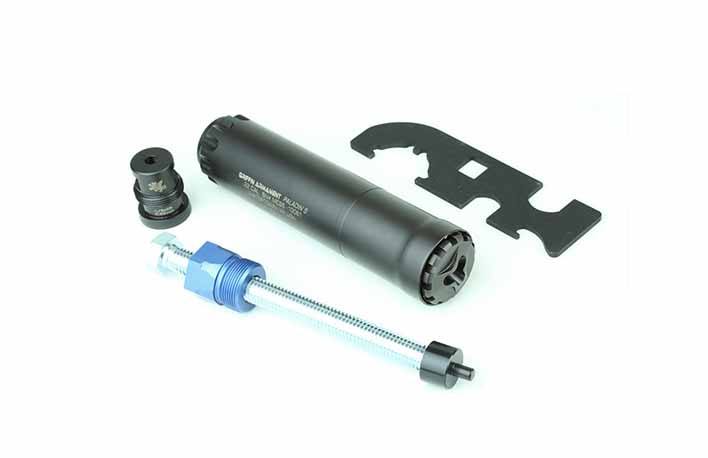
Griffin Armament Paladin 5
Unless you’re hoarding away millions in lotto winnings, buying multiple suppressors can become taxing — literally and figuratively. That’s where do-all models earn their keep, allowing the ability to suppress multiple guns. And few do more than Griffin Armament’s all-around small-bore wonder.
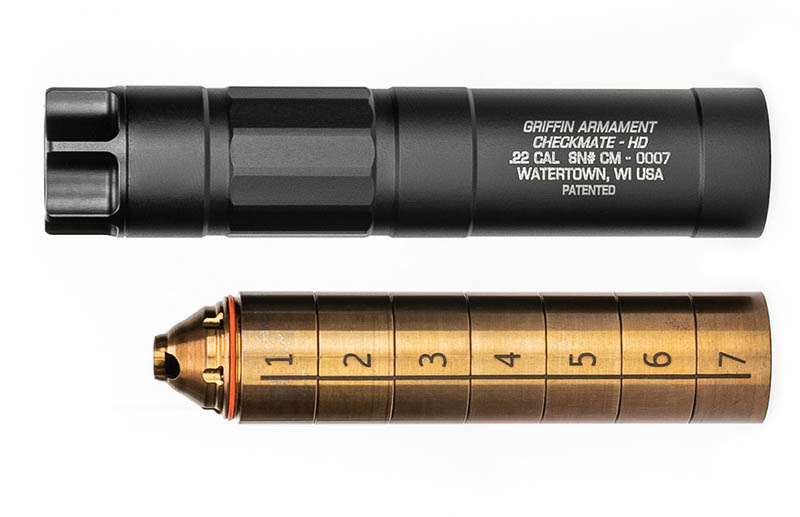
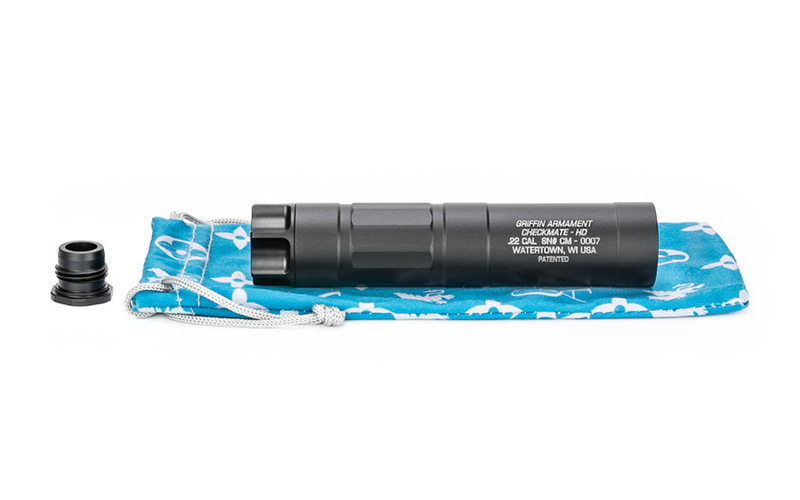
Rated for everything from the .22 LR to the explosive .22-250 Rem., the Paladin 5 Suppressor is a small-caliber jack of all trades. Featuring extensive use of 6AL4V titanium in the components, the 6.3-inch long user-serviceable unit tips the scales at only 12.5 ounces. Griffin Armament utilizes stainless- steel as well, making for a rugged tube and a blast baffle you never have to worry about sparking.
As for where the rubber meets the road, the Paladin 5 tames a .22 LR’s report to about 114 dB and a 5.56’s to 131 dB. As far as an AR-15 suppressor goes, this is about as versatile as it gets—something as adept on your full-strength rifle as it is on your trainer.
Caliber: From .22 LR to .22-250 Rem. Weight: 16 ounces Diameter: 1.5 inches Overall Length: 6.3 inches Attachment Type: n/a Material: Fast Attach MSRP: $849 griffinarmament.com
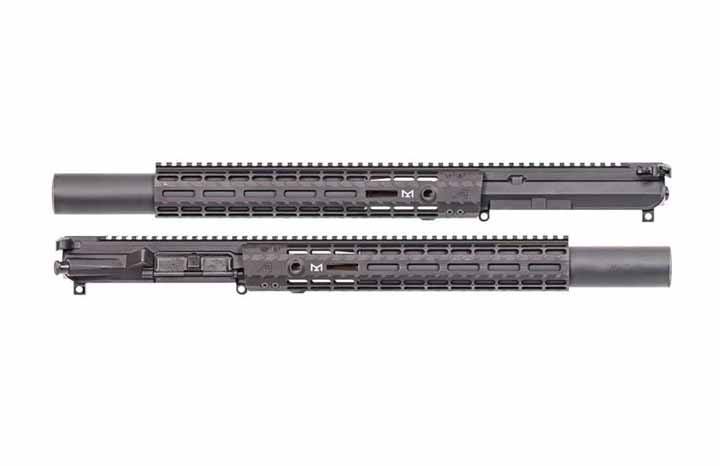
Liberty Zulu Integral 5.56 NATO Upper
Integral suppression is nothing new. What’s changed as of late is that, it’s no longer a semi-custom affair. Liberty Suppressor is among the latest to put integral suppression within shooters’ reach, with the Zulu Upper Receiver, the perfect option for those aiming to keep the nimbleness of their carbine intact. The entire upper tips the scales at 3 pounds, 11 ounces, with a 16.6-inch barrel that includes the suppressor. That’s a boon when it comes to AR-15 suppressors, keeping a carbine as manageable as if it was unsuppressed. And Liberty didn’t hold back putting together a top-notch upper.
The manufacturer turned to Aero Precision for the receiver, Odin Works for the barrel (10.5 inches) and St. Croix Tactical for the bolt carrier group. Overall, that’s a strong build. The integrally suppressed portion is all Liberty, featuring grade 5 titanium baffles and an Inconel 718 blast baffle for extra robustness. The built-in can is tuned for 5.56 NATO, and because the suppressor is pinned and welded to the barrel, the upper only requires one tax stamp to purchase.
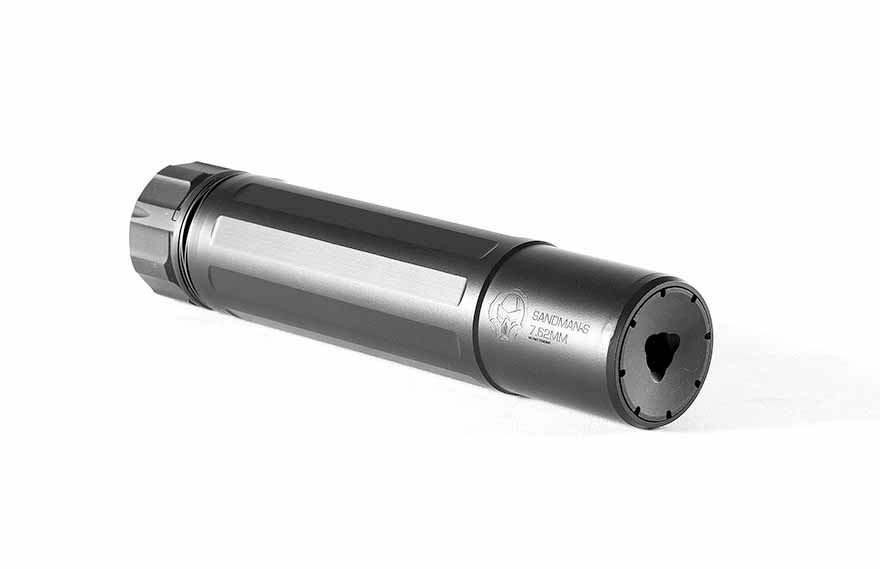
A standby option nearly the moment it hit the market, it’s difficult to go wrong with the Sandman as an AR-15 suppressor or on any other long-gun. There’s no trick to what Dead Air has done, they’ve simply built a quality can that performs each time you pull the trigger.
There’s also some versatility in the suppressor. Available in three lengths—5.4-inch K, 6.8-inch S and 8.9-inch L—there’s a mode for your particular firearms. In terms of an AR, all of them will work, but the S seems the best suited for the job. It more than provides ample noise reduction, though does weigh in at a hefty 17.7 ounces. There’s durability in the weight. The welded stainless steel/Stellite can is fully-auto rated and more than up to the day-to-day abuse likely to be thrown at it.
Nice as it Sandman is itself, its mounting system also shines. Utilizing a proprietary muzzle brake, the mount offers a repeatable interface with the suppressor eliminating the concern of baffle strikes and ensuring precision. There’s plenty more to love about the Sandman, but this should be enough to see why it’s among the most popular cans out there.
Caliber: 5.7x28mm up to .300 Win. Mag. Weight: 12.8 oz.-21.8 oz Diameter: 1.5” Overall Length: 5.4”-8.9” Attachment Type: KeyMo brake Material: Stainless Steel/Stellite MSRP: Starting at $899 (K Series) deadairsilencers.com
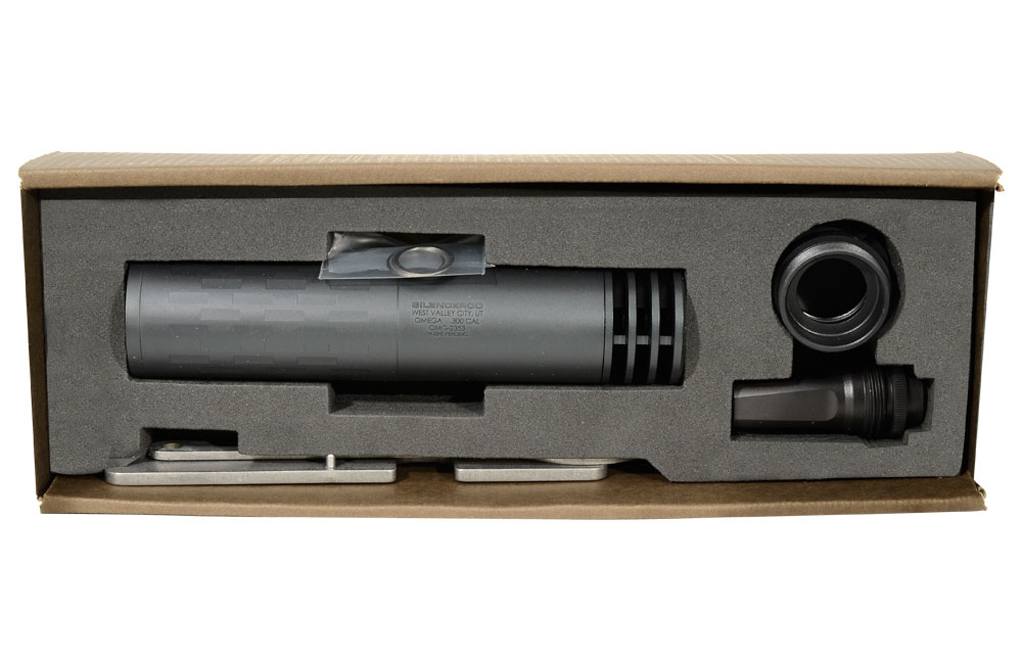
SilencerCo Omega 300
Gird your loins, you’ll pay a pretty penny for SilencerCo’s legendary do-all suppressor. However, you’ll have peace of mind that you’re getting more than your money’s worth. Compatible with every caliber from .223 Remington to .300 Winchester Magnum, the Omega covers every conceivable base for an AR-15 suppressor and beyond.
Excellent performance, the Omega reduces a subsonic .300 Blackout’s report to around 119dB and a .308 Win. to about 133dB. Equally attractive, the can is among the smaller, lighter options on the market today. At 14.8 ounces, it won’t tip a rifle out of balance. Furthermore, its 7.08-inch length doesn’t make a gun unwieldy — particularly a carbine. Finally, the Omega’s 1.57-inch diameter keeps a clear line of sight on most rifles aimed with both irons or optics.
Getting the suppressor on and off a gun is almost cheating. It’s possible to mount the Omega the traditional way, via direct-thread to your muzzle. However, if you find you’ll switch it between guns or will shoot suppressed or un-suppressed at a moment’s notice it boasts a convenient quick detachment system. Requiring only a few turns of a locknut to install, it only takes seconds to swap out.
Calibers: .223 Rem./5.56 NATO TO .300 WM Muzzle Decibel Averages: .300 BLK: 119.5 DB, 5.56 MM: 130.1 DB , .308 WIN: 133.2 DB Weight: 14.8 OZ Length: 7.08″ Diameter: 1.57″ Materials: COBALT-6, INCONEL, STAINLESS STEEL & TITANIUM MSRP: $939 silencerco.com
Gemtech Dagger II
A full-sized can, the Dagger seems an intimidating addition for some shooters. However, the popular Gemtech suppressor’s performance more than endears it to anyone lucky enough to get trigger time on a gun outfitted with one.
The 8.8-inch unit is rated — actually designed — for the .300 Win. Mag., but does a job on any lesser cartridge that doesn’t exceed pressure specifications. How much noise reduction can you expect from it? Around 30dB, more with subsonic ammunition. Pretty solid.
Constructed of titanium, the Dagger is tough and ready for action well away from the shooting range. Yet, despite its size and ruggedness, the suppressor is surprisingly won’t weigh you down in the field, at a scant 14.8 ounces. That’s getting into compact suppressor territory. This feature makes the Dagger much more appealing, not to mention practical, size notwithstanding.
Given QD systems are all the rage, some might crinkle their nose at having to direct thread the Gemtech suppressor. Perhaps not as convenient in the split second you want to swap it between guns, the system is simpler. It does not require a proprietary muzzle device, which is less to worry about. Furthermore, it keeps your gun lean and mean. Never a bad thing.
A side note, the Dagger is full-auto rated. Not that it will matter to most of you, but it’s mentioned in case the independently wealthy are currently reading.
Caliber: .30, .300 WIN MAG Sound Reduction: 30dB Diameter: 1.5″ Length: 8.8″ Weight In Units: 14.8oz Mount: Thread Mount 5/8-24 Material: Titanium Full Auto Rated: Yes Finish: High Temp Black Cerakote MSRP: $1,099 gemtech.com
How to improve your defensive semi-automatic handgun skills by balancing speed, power and accuracy.
Students of the defensive handgun should be familiar with two triangular concepts codified by Gunsite Academy founder Jeff Cooper. They’re important because they’re a prerequisite to the application of a semi-automatic handgun in an effective and efficient manner during a self-defense situation. Often, the unknowing believe that because they’re a good shot or have had some training, they’re good to go. The truth is that true proficiency comes from being able to understand and execute each element of this double triad guideline.
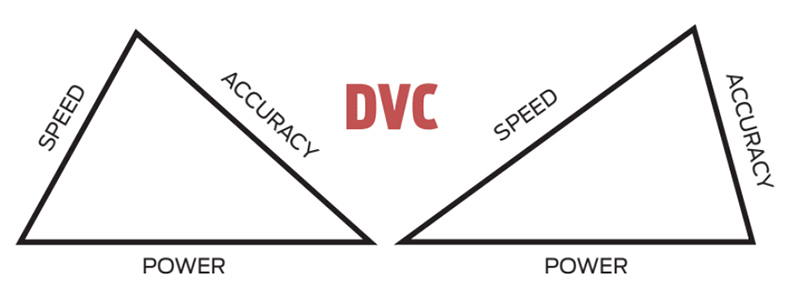
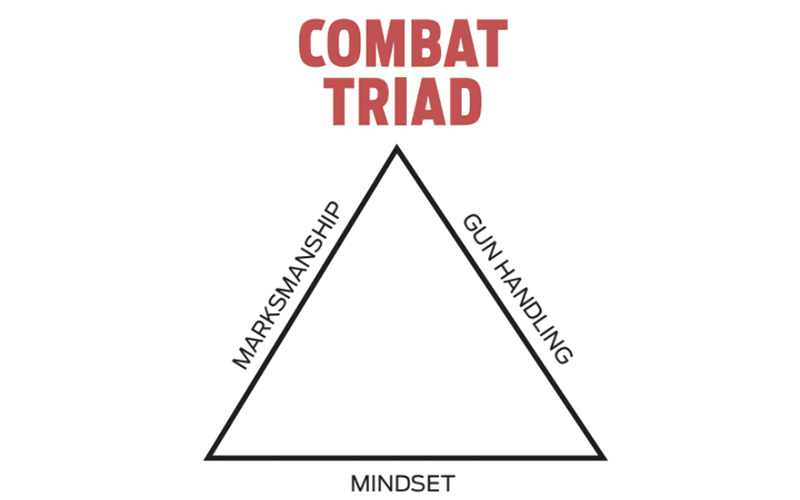
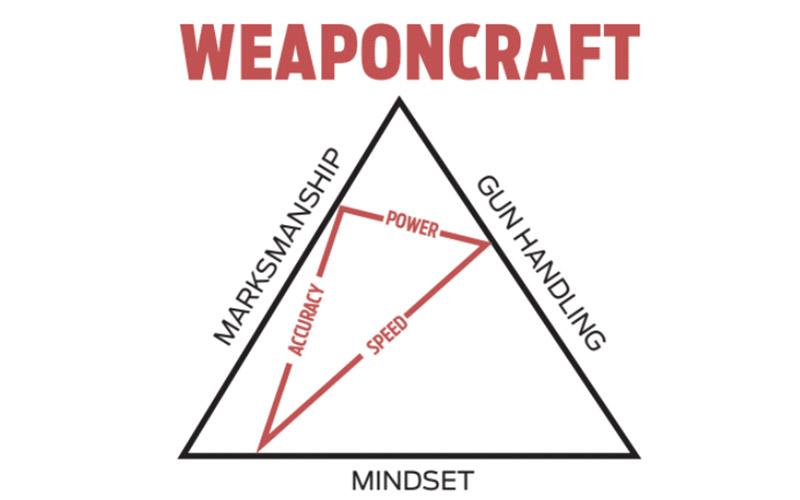
The first triad is the Gunsite and IPSC (International Practical Shooting Confederation) motto, “Diligentia, Vis, Celeritas”—Latin for accuracy, power and speed. It’s often represented as simply, “DVC.” The other is the Combat Triad that represents the desired balance of mindset, marksmanship and gun handling. Together, they represent the totality of the proper application of the defensive semi-automatic handgun. And, combined, they’re also best described as “weaponcraft.”
The DVC Triad
The unique thing about the DVC Triad is that it doesn’t represent an equilateral triangle. In other words, the three elements that make up DVC aren’t always of the same importance. Depending on the situation, one or two of the elements might be more important than the others. Essentially, the situation dictates the shape of the triangle. However, before we get into exactly how this triangle is managed, we need to understand each of its sides.
With the DVC triangle, the power element is a constant, but the situation dictates the importance of the speed and accuracy element. The DVC triangle isn’t an equilateral triangle.
Accuracy
Semi-automatic handguns deliver a certain level of precision. It’ll vary from gun to gun and is also dependent on the ammunition used. Precision represents the ability of the gun to place bullets very close to the same point every time. Most defensive handguns can keep all the bullets they fire inside a 2-inch circle at 10 yards.
On the other hand, accuracy is a representation of how well a shooter can cause a handgun’s precision to deliver a bullet to a desired point of aim. Accuracy is limited by the gun and ammunition, but mostly by the marksmanship ability of the shooter. A practical accuracy standard for a shooter would be keeping all their shots in a 2-inch circle at 5 yards.
Accuracy comes from sight alignment and trigger control. Effectively employing a semi-auto handgun in a defensive encounter also includes gun handling.
Power
There are several ways to define handgun power. Competitive combat shooting uses what’s known as “power factor,” which is calculated by multiplying the weight of the bullet in grains, by its muzzle velocity in feet-per-second, and then dividing the product by 1,000. For example, a 124-grain bullet at 1,100 fps would have a power factor of 136.4. Another way of measuring power is by muzzle energy, which is often listed on the box of ammunition. However, neither calculation considers the terminal performance of the bullet.
What we can postulate is that a handgun/load combination that has a higher power factor or muzzle energy, will—given similar bullet performance—be more effective. Simplified, power works into this equation because we understand that a .45 Auto is more lethal than a BB gun. However, we must balance the power we deliver on target with the recoil we’re able to withstand.
Marksmanship is an element of the Combat Triad and encompasses much more than standing still and hitting targets.
Speed
Though the Old West shootout, where the fastest draw often won, is mostly a myth, speed does matter. The faster you can get your handgun out of a holster and deliver an accurate and powerful shot, the more likely you are to survive a lethal encounter. Sometimes, though, you need to deliver multiple shots … and that’s where speed and power are at odds.
A 10mm is a powerful handgun cartridge, but you cannot deliver multiple accurate shots with it nearly as fast as you can with a 9mm. Wyatt Earp is often credited with saying, speed is fine, but accuracy is final. There’s some truth to that, but if you’re not fast enough, you can be too late. When it comes to drawing your handgun from concealment and getting a hit, at about 5 yards you should be able to do this within 2.5 seconds.
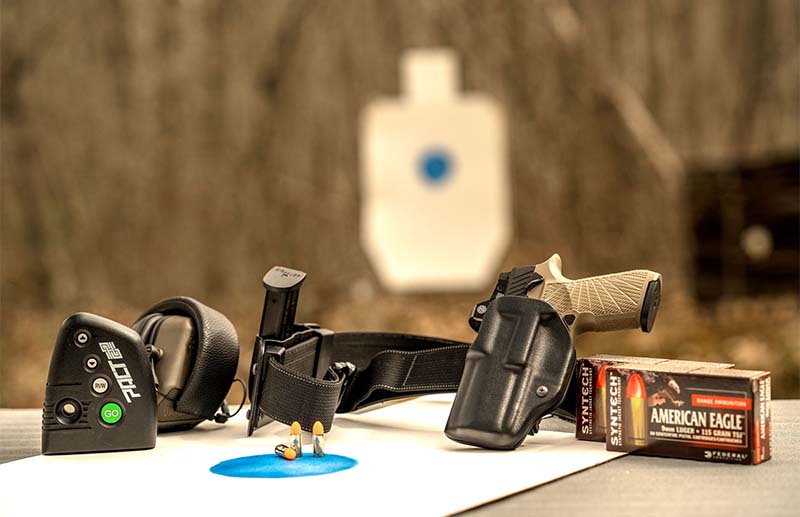
A shot timer is a great tool that can help you develop your gun handling and shooting skills. Mastering weaponcraft without one is difficult.
Adjusting The Triangle
The first step in building the DVC triangle is to determine the level of power you can effectively manage. You need discover with what cartridge and handgun style and size you reach your limit. Unless you always carry four or five handguns and wait for the situation to determine which one you use, power becomes the base of the triangle because it’s a fixed element. It’s a product of the gun and load you select.
However, the necessary accuracy and speed vary, depending on the situation. For example, if you’re accosted and the distance is close, you need to get your gun out lightning fast and deliver an accurate shot quickly, but it just needs to be kill-zone accurate. On the other hand, if you’re hiding behind your car and attempting a head shot on a gunman who is wearing body armor at 25 yards, accuracy then becomes the larger—more important—side of the triangle.
The Combat Triad
The basis for the Combat Triad is also a triangle, but it’s more of an equilateral triangle, meaning that each of the sides of this triangle are of equal importance … and their relationship to each other never changes. Without understanding the Combat Triad, you cannot develop or adjust your DVC triangle.
The Combat Triad is the all-inclusive representation of how fights with a defensive handgun are won.
Mindset
There are two elements of mindset. The first is that of survival. When encountered with a lethal situation, you must commit to the fight as though it’s the only thing in the world that matters. You must be mad-dog mean and deliver as much force in the most lethal manner possible to your assailant.
But part of mindset is also tactics. You must know how to utilize cover and concealment, when to shoot and when to move … and even when to run. Just as important is having a plan to deal with specific self-defense situations. When something happens you need to think, I thought this might happen and I know what to do, as opposed to, holy hell, what do I do now?
Tactics are an advanced element of the mindset side of the Combat Triad. You must develop many other things before you begin tactical training.
Marksmanship
Marksmanship isn’t just accuracy, it’s the knowledge of knowing when to shoot, where to shoot and how to shoot to best solve the problem you’re faced with. Learning to shoot a semi-automatic handgun accurately is one thing. Learning how to do it from a wide range of positions, in varied lighting conditions, and at varied targets—points of aim—is another thing entirely. Just because you can stand in front of a target and make bullet holes where you want them isn’t enough. You need to be able to do that no matter the situation, whether you have both feet on the ground or just your ass.
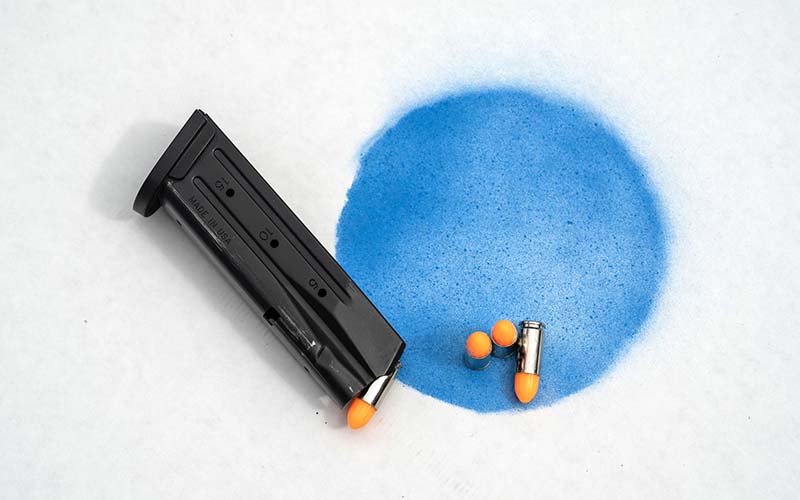
Dummy rounds are important when developing weaponcraft. They allow you to improve your gun handling skills without shooting or even handling live ammo.
Gun Handling
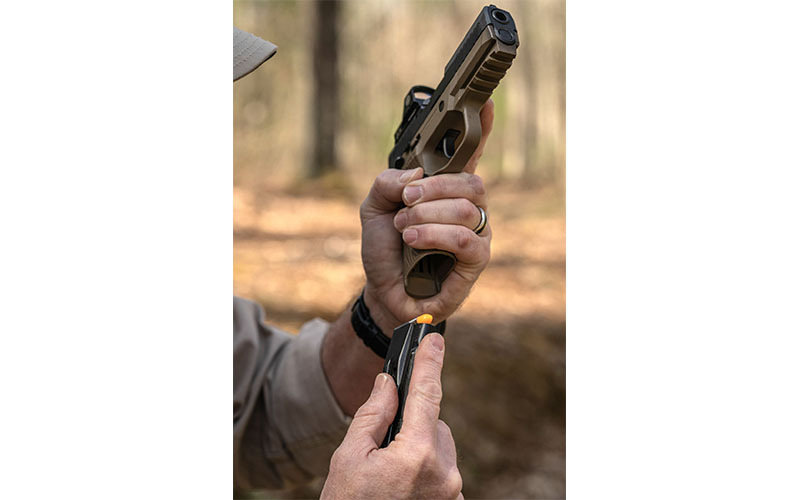
This is possibly the most overlooked aspect of not only the Combat Triad, but of weaponcraft in general. It’s also an element of firearms training that’s largely overlooked by many instructors and training programs. You must be as proficient at handling your semi-automatic handgun as you are with your toothbrush. You must be able to do everything you need to do with it safely, swiftly and efficiently. This encompasses everything from taking it out of your range bag, to loading it, to unloading it and keeping it running if you have a stoppage. It also encompasses maintenance. If you cannot handle/maintain your gun, you cannot win the fight.
Don’t wait until you start your marksmanship training to begin to learn how to handle your gun. Those skills can be learned with dry practice well in advance.
Building The Triangles
As with any skill, the first requirement is to establish what needs to be learned, and it’s no different when it comes to weaponcraft with the semi-automatic self-defense handgun. The very first thing you must establish is the survival mindset—the will and determination to fight to the last breath. When my grandfather used to want us boys to do something with the utmost enthusiasm, he used to tell us, “Go at it like you’re killing snakes,” and that’s the mindset you must have. Not only must you begin with it, but you must also continue to foster and develop it.
Weaponcraft is an intermingling triangle of two three-sided concepts codified by Gunsite Academy founder Jeff Cooper.
The next thing you must do is establish the power you’re capable of controlling. Attempting to manage too much handgun too soon will negatively impact your ability to develop both your DVC and Combat Triad triangles. However, as you become more proficient with the various sides of these triangles, you might find out that you can harness the recoil of a more potent cartridge, or possibly a smaller handgun chambered for your current cartridge that recoils more.
Next on the agenda is gun handling. Most shooting schools understand that their students come there to shoot and won’t be happy unless they do a lot of shooting. Therefore, the lessons of gun handling that should be mastered before any shooting begins are often overlooked, or instructors attempt to integrate them with the shooting instruction. You should learn to handle your gun in every way it can be handled well before you even begin to shoot it. Failure to do so will detract from your ability to learn anything else.
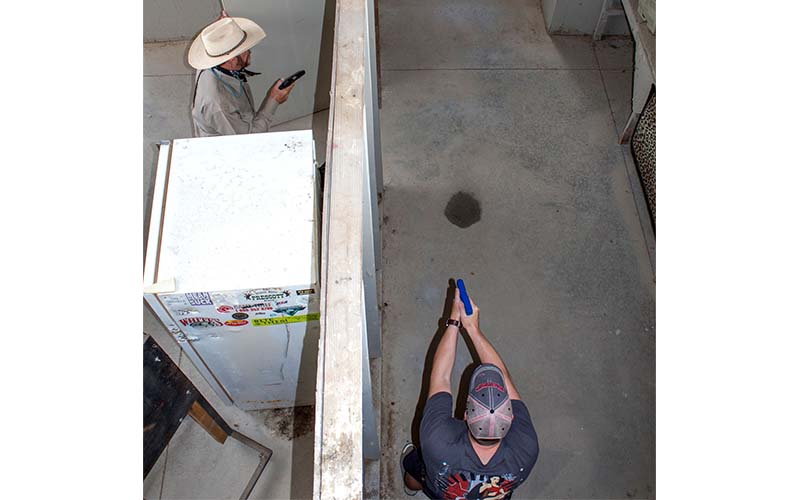
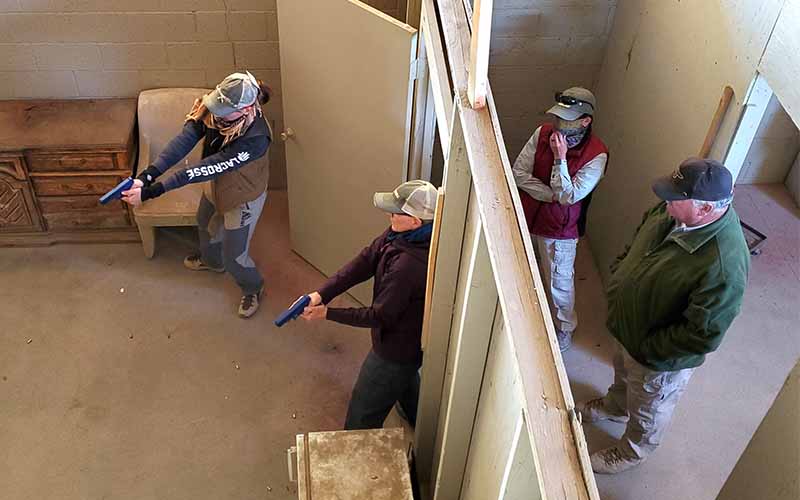
Tactical mindset training isn’t always a singular consideration. Sometimes it can—and should—involve a partner.
Now you can begin to develop your marksmanship skills. This is where you learn to master sight alignment and trigger control. It’s not where you learn to draw your handgun from concealment, reload your handgun, or learn to operate its controls. Those things should’ve occurred while you were learning to handle your gun. Marksmanship most often starts with shooting from a codified stance, but it must develop to the point you can deliver accurate fire regardless of your position.
The final two elements of weaponcraft involve you taking your marksmanship skills and learning to balance speed and accuracy. It’s where you learn your shot cadence when shooting up close and at distance. It’s where you develop your ability to transition from target to target fast and efficiently. Knowing and executing the proper balance of speed and accuracy is critical to every shot you fire with a self-defense handgun.
Don’t make the mistake of thinking weaponcraft is only about shooting. It’s much more than that.
But—and this is very important—mindset is the base element of weaponcraft. As you develop your skills, tactical training teaches you to not only gauge your speed and accuracy, but also how to negotiate life-and-death situations. With good tactics, you might be able to survive without ever shooting, or even touching, your handgun.
And, ultimately, that’s the goal. You want a survival mindset that’ll keep you alive, but at the same time, if your tactics fail, you want the other two elements of the Combat Triad—along with mindset—to take over and adjust your DVC triangle so that you will win.
Editor’s Note: This article originally appeared in the October 2022 issue of Gun Digest the Magazine.
Viridian Weapon Technologies has just released the RFX45, a closed emitter green dot sight compatible with both pistols and rifles.
Teased earlier this year at SHOT Show 2023, Viridian Weapon Technologies’ new RFX45 closed emitter green dot sight is now available. Good timing considering that both closed emitter pistol optics and green dot sights seem to only be getting more popular.
The RFX45 features all the durability and reliability benefits that the market has come to expect of closed emitter designs, and its robustness is reinforced by a machined 6061 aluminum housing, fully multi-coated lenses and an IPX6 environmental rating. Other notable features include its INSTANT-ON activation, auto shut off and advertised 50,000-hour battery life (powered by one CR2032). The RFX45 also has a generous 24mm lens, a 5-MOA green dot reticle and 10 manually adjustable illumination settings (eight visible, two for night vision).
Viridian Vice President of Sales, Andy Scott, said this about the new optic:
Eyes see green better, and the RFX45 is a workhorse that comes standard with a lot of technology designed to benefit the shooter…The RFX line as a whole has been well received by our customers and consumers because of the features of each optic coupled with green dot technology. As with all Viridian products, we started with the design and put features and specs into these offerings to make them stand out in the market.
Also, the ACRO isn’t the only mounting pattern available for the RFX45, it’s just the one it comes with. Viridian also sells adaptor plates for Glock MOS, RMR and Docter mounts, as well as two heights of Picatinny rail mounts for carbines. The RFX45 is available now and has an MSRP of $459.
If you carry a gun every day, carrying a trauma kit alongside it isn’t paranoia, it’s just being prepared.
Sometimes, life ends up with someone bleeding. It doesn’t have to be from a gunshot, but if you’re carrying every day, that might be some date in your future. Then, there are all the times you’re using power equipment, or just big, sharp cutting tools. It’d suck to have to explain to the Big Guy at the pearly gates, “I was only 50 yards from my house, but I couldn’t make it in time. Guess I should’ve had some trauma gear.”
Adventure Medical Kits offers compact trauma kits that you can keep in a pocket, a bag or close at hand. The one I have close by is one of theirs with QuikClot as part of the package. In addition to the four different gauze dressing sizes, gloves tape and trauma pad, it has a packet of QuikClot—a hemostatic dressing that accelerates clotting. When you’re bleeding, the idea is to stop the bleeding as soon as possible.
This Adventure Medical Kits trauma pack is small enough to fit easily in a winter coat and not be noticed. For the warmer months, a smaller kit would be a good choice.
Yes, QuikClot risks making the wound an ugly mess, but the moment you need it you don’t have an ER doc on hand. Whatever bulky mess the QuikClot may (or may not) make, combined with the dressings you have packed into place is a problem the ER doc you’ll be seeing is equipped to deal with.
The kit I keep at hand is just a bit too big to keep in a pocket in warm weather, so I have the big (relatively, it’s not much bigger than a paperback book) kit close at hand and an even more compact one on my person.
Prepared, Not Paranoid
Yes, all this gear can add up. You’ve got your pistol and a reload, cell phone, tactical folder, flashlight, whatever backups you might be packing and all the other accouterments of daily life in the 21st century. Adding a trauma kit might seem like too much. But if you’re going to be serious about being prepared, just having the location of the nearest Level 1 Trauma Center on your cell phone isn’t enough.
You also have to keep in mind that the trauma kit isn’t like your pistol. You’ll be using your pistol only for defense of yourself, your family or those under your protection. (It seems the world at large doesn’t like ad-hoc heroes.)
It is amazing how much stuff they can pack into a vacuum-sealed package, but this is enough for many types of emergencies.
But your trauma kit works for anyone who you wish to share it with—somebody at work, somebody at a public event who is at risk and the EMT truck is minutes out. A family gathering, even if most (or all) of the family doesn’t know you carry would be a time and place, should an accident occur, where a trauma kit could be handy.
Insurance comes in many forms. You have selected one of them—a daily carry pistol, as being appropriate and desirable. As the old saying goes, “In for a penny, in for a pound.” Find a pocket. Find a kit that fits it. Pack it. Learn how to use it. Be prepared.
Editor’s Note: This article originally appeared in the 2022 CCW special issue of Gun Digest the Magazine.
An in-depth look at the Lee-Enfield, one of the most successful military bolt-action rifles ever produced.
The Lee–Enfield rifle was a cutting-edge design when it was adopted by the British military in 1895. It was issued throughout the British Empire and became one of the most recognized bolt-action rifles ever deployed. While overshadowed by the Mauser and the Mosin-Nagant, the Lee-Enfield is still the third most-produced bolt-action in history with an estimated 17 million units made.
Not many rifles can claim to have spanned centuries of active use like the Lee-Enfield can. It transformed into new variants as warfare changed in the late 19th and 20th centuries, but the Lee-Enfield was first fielded in 1899 during the Second Boer War and it has seen much action since then, including contemporary conflicts in the Middle East.
The story of the Lee-Enfield starts with the Lee-Metford rifle, which was adopted by the British Army in 1888. The Lee-Metford rifle takes its name from Jame Paris Lee, who designed the action, and William Ellis Metford who designed the rifling. Developed in the time of black powder cartridges, the Lee-Metford was a high-tech rifle design that offered rapid-fire compared to the slow-to-reload single-shot Martini-Enfield rifles it replaced. The military liked the Lee-Metford, but the conversion to smokeless powder cartridges forced the Lee-Metford to evolve into the Lee-Enfield we know today.
As you may already know, the Mauser 98 locks into its action using two primary lugs at the front of the bolt. A result of this is that the Mauser requires a 90-degree bolt lift to cycle and that action blocks the user’s sight picture. Despite this, the Mauser 98 was still an excellent gun that had the most lasting impact on bolt-action rifle design in the years that followed. While the Lee-Enfield action may have never become as ubiquitous as the Mauser’s, its different design resulted in some distinct advantages as well.
This is mainly because the locking lugs on the Lee-Enfield are found closer to the rear of the bolt, and they lock into the receiver bridge instead of the receiver ring like on Mauser rifles. This difference not only makes it potentially faster to cycle the bolt than on a Mauser-style action, but it also doesn’t block the shooter’s vision since it only requires a 60-degree bolt lift. The Lee-Enfield has a shorter bolt travel distance because of this as well. These details came together to make the Lee-Enfield the fastest cycling bolt-action rifle of its day.
A Lee-Enfield bolt. Notice one of the two rear locking lugs visible on its top. Photo: Apex Gun Parts.
If there is a negative aspect to the rear lug action, it is accuracy. Since the front of the bolt does not lock into the receiver, it has more play than a Mauser-style action does. While this gave Mausers the edge in accuracy, the speed advantage of Enfields was arguably more useful for a military rifle.
The Lee-Enfield also used a detachable 10-round box magazine. This was a unique feature at the time, but old-school army leadership assumed that soldiers would lose the magazine. Today, our soldiers are equipped with multiple magazines and don’t think twice about dropping them during a reload. This philosophy wasn’t feasible back then, however, so despite having detachable magazines the soldiers were expected to recharge them with stripper clips while they were still loaded into the rifle.
Mad Minute
The potential speed and firepower of the Lee-Enfield were demonstrated in a shooting exercise developed before WWI called the “Mad Minute”. A rifleman, in the prone position, shoots at a 48-inch target at 300 yards and tries to hit the target as many times as they can in one minute. A trained rifleman could easily get 20 to 30 hits in 60 seconds. Compared to the Mauser 98’s accepted rate of fire of 15 rounds per minute, you see that the Enfield could potentially make aimed shots twice as fast.
British troops training with an SMLE Mk III. Photo: Wikipedia.
While the rear lug action of the Lee-Enfield was novel, the barrel length of 25.2 inches was controversial. The established shooting community thought a rifle needed a long barrel for better accuracy, which turned out to be untrue. The Lee-Enfield used a barrel length between a rifle and carbine, and it provided a good balance between maneuverability and ballistic efficacy.
There are several Lee-Enfield variants, which we’ll get into later, but suffice to say the Rifle, Short, Magazine, Lee–Enfield Mk III, or SMLE Mk III, was the model that started the rifle’s excellent reputation when it was adopted in 1907 in time for WWI. By WWII, the Lee-Enfield had morphed into the No. 4 which canonized the rifle’s reputation as one of the best military rifles the world has ever known.
Arming The British Empire
In the late 1890s, England was the predominant military power in the world and ruled over the British Empire which was made up of dominions, colonies and territories around the globe. The expression used at the time was “the empire on which the sun never sets”, referring to how the sun was always shining on at least one of its overseas possessions.
The British Commonwealth Nations are former territories of the British Empire such as Canada, New Zealand, Australia, India, South Africa, Jamaica and many others. Not only was the British military armed with Lee-Enfields, but so too were the nations of the Commonwealth. All the territories were outfitted with Lee-Enfields, and they have seen action from deserts to jungles and everything in between. The rifles were about as prolific as Kalashnikovs are today.
.303 British Ballistics
.303 British loaded in stripper clips. Photo: Wikipedia.
The .303 British was designed in 1887 for the Lee-Metford rifle and adopted by the British military in 1888, making it one of the most successful and lasting military cartridges ever developed. In fact, it was still used by the British until 1957 when it was replaced by the 7.62x51mm NATO. The original load of .303 British used a 215-grain round nose bullet with a copper-nickel jacket over about 70 grains of compressed black powder, although the black powder was quickly replaced with cordite once it was available in 1891. This cordite load used the same 215-grain projectile and produced velocities of about 1,970 fps.
The round-nose bullet design proved unimpressive in combat, so the British experimented with several expanding projectile designs until they were banned by the Hague Convention of 1899.
The next notable iteration of .303 British came in the form of the MK VII cartridge due to its use of the then-new spitzer bullet design. Spitzer bullets are pointed rather than rounded, and it results in a significantly higher velocity. Most modern rifle cartridges today are still loaded using spitzer bullets.
Loaded with a 174-grain full metal jacket bullet, the MK VII cartridge was capable of producing a muzzle velocity of 2,440 fps and about 2,300 foot-pounds of muzzle energy. What is unique about the MK VII round is that although it has a solid jacket, the front portion of the bullet core was made of aluminum, wood pulp or other materials. This brought the bullet’s center of gravity rearward, meaning that it would tumble upon contact and cause more severe wounds.
Most current commercial .303 British ammo is loaded with 180-grain soft point bullets for hunting and 174-grain FMJ bullets for target shooting.
Lee-Enfield Variants: From “Smelly” To Sniper
There were many variants of the Lee-Enfield made over its lifetime (more than we have the space to discuss here), each enhancing the model that preceded it. In many instances, the older variants were updated to the latest design specifications and given a new model name. To the uninitiated, Lee-Enfield model names can get confusing and read like footnotes with symbols like “*” in their designations, but we’ll get that sorted out.
The first Lee-Enfield variant was the Magazine, Lee-Enfield or MLE for short. It is sometimes referred to as “Emily” instead of pronouncing each letter “M-L-E”. These rifles were adopted in 1895 and were chambered for a .303-caliber cartridge and featured a long, 30.2-inch barrel.
A shorter version of this was called the Lee–Enfield cavalry carbine Mk I, and it was outfitted with a 21.2-inch barrel instead. The Lee-Enfield continued to evolve over the years with some being converted to load from stripper clips. These were called Charger Loading Lee–Enfields or CLLEs and first saw use in the Second Boer War (1899-1902). This war pitted Mausers against the MLE, and where the MLE fell short in comparison was its reloading speed. The Mauser could be reloaded relatively quickly by using a stripper clip to reload the internal magazine, whereas rounds needed to be inserted individually with the MLE.
This discovery resulted in the addition of stripper clip capabilities to the MLE, and this new design was designated as the Short Magazine Lee-Enfield or SMLE Mk I and adopted by the British military in 1904. “Short” was added to the name because its 25.1-inch barrel isn’t as long as the original MLE, but it wasn’t as short as the cavalry carbine variant either. The new SMLE designation also caused many to lovingly refer to the rifle as “Smelly.”
The next major variant is perhaps the best known—the Short Magazine Lee-Enfield Mk III introduced in 1907. This model featured an improved stripper guide, a simplified rear ladder sight and a front sight protected by massive wings on both sides. The chamber was also altered so it could handle the Mk VII .303 British cartridge that was introduced alongside it. It was produced during WWI and found to be costly to manufacture, so a revised version—read cheaper and faster to make—was introduced in 1915 called the Mk III*. Notable changes included removing the magazine cut-off feature and changing the cocking piece from a knob to a serrated flat piece.
A sniper variant called the SMLE No. 1 Mk III* (HT) was also developed, and it featured a heavy barrel and an optic.
The Mk III and Mk III* were used by British forces in World War I and found them to be tough, reliable and effective. When the war was being fought over long distances, it was common for British troops to hit German soldiers out to 600 yards. The First Battle of Ypres was fought between Allied troops, including the British, against German forces.
The Brits were so lethal with fire from the Lee-Enfields that the German Army called the battle the “Massacre of the Innocents” because of the 25,000 student volunteers who fell to British marksmanship. Plus, the speed at which the rifles could be fired caused the Germans to think the Brits were armed with machine guns at times. In the trench warfare that followed, guns were subjected to mud that could jam up the action. Another benefit of the rear lug Lee-Enfield bolt was that the front of the bolt and breech were easier to clean than Mauser actions.
The MLE, CLLE and SMLE Mk I through the Mk III* were produced by manufacturers in England, including the Birmingham Small Arms Company Limited, London Small Arms Co. Ltd. and the Royal Small Arms Factory of Enfield. Commonwealth manufacturers included Lithgow Small Arms Factory in Australia and Rifle Factory Ishapore in India.
The next major variant was the No. 4 Mk I. This model was first produced in 1931, but it didn’t enter mass production or become officially adopted until after WWII was already underway in 1941. The primary advantage of the changes made to the No. 4 was that it was easier to manufacture. Different from the SMLE rifles used in WWI, the barrel of the No. 4 protruded from the nose cap. The sights were also changed to a rear aperture style rear sight with an aperture for 300 yards and 600 yards. The No. 4 also had a heavier barrel and a new spike-style bayonet instead of a blade bayonet. To meet wartime production and simplify machining and assembly in 1942, modifications were made including going from five- or six-groove rifling to two-groove rifling, and the revised rifle was named the No. 4 Mk I*.
The No. 4 rifles were built in England as well as at the Small Arms Limited company in Canada, Savage Arms in the U.S. and Pakistan Ordnance Factories in Pakistan.
The No. 4 was also developed into a sniper rifle. These rifles were hand-selected at the factory for their accuracy. The rifle needed to place seven shots in a five-inch circle at 200 yards and six shots in a 10-inch circle at 400 yards. These rifles were then outfitted with a wooden cheekpiece and scope and designated as the No. 4 Mk I (T) or No. 4 Mk I* (T).
Late in WWII, a carbine version of No. 4 was created with a shorter barrel that lightened the rifle by two pounds. The barrel was fitted with a cone-shaped flash hider and a rubber butt pad was used in place of a metal butt plate. This rifle was named Rifle No. 5 Mk I. Unofficially it is called the “Jungle Carbine,” a name coined by British and Commonwealth troops in the Pacific Theater.
WWII saw massive changes in warfare and weapons. While a rifle with good accuracy was suited to much of the long-range fighting of WWI, the No. 4 began to show its age in WWII. Bolt-action rifles were slow and heavy compared to many of the newer self-loading weapons being used by Germany. While the No. 4 did perform well, like the other bolt-actions of WWII, its days of frontline service were numbered. Despite this, the No. 4 is still used in limited capacities by some Commonwealth countries today and has the distinction of being the second oldest bolt-action still in official use, with the oldest being the Mosin-Nagant.
When Britain adopted the 7.62x51mm NATO cartridge, the No. 4 Mk I (T) and No. 4 Mk I* (T) sniper rifles were rechambered for it and designated as the L42A1. These remained in service until the 1990s.
From Battlefields to Hunting Camps
Surplus Lee-Enfield rifles, like many military rifles, have found their way into many hunting camps over the years. While not as popular in the U.S., hunters in Australia, Canada, New Zealand, and South Africa still commonly use the rifle. Sporterized Enfield rifles typically have cut-down stocks and are equipped with a scope.
Collecting Lee-Enfield Rifles
Due to the sheer number of rifles built, there are plenty of Lee-Enfields on the commercial market. The most common variants are the SMLE No. 1 Mk III and the No. 4 Mk I, and they can be found in a wide range of conditions. They can be easily found for sale by various online retailers and auction sites, but if you care about the rifle’s history, the key thing is to stay away from sporterized guns that were bubba-fied by amateur gunsmiths into hunting rifles. Also, many of the cooler variants such as Jungle Carbines are often fakes or reproductions, so keep an eye out for details if you want an authentic one.
Nicer condition rifles and more rare variants such as sniper models will obviously command a much higher price, but you can still find a decent shooter-grade Lee-Enfield for less than $600 if you shop around.
The Lee-Enfield’s Legacy
A Lee-Enfield along with some more modern weapons captured by U.S. Marines in Iraq. Photo: Wikipedia.
Considering just how many times the Lee-Enfield was redesigned, updated and modified over the years, it’s no surprise that it remained in service for as long as it did. Early in its life, it was a close competitor to arguably more successful rifles like the Mauser 98. Later on, when WWII came, the rifle may have been a bit outdated by contemporary standards, but it still served the British well. Perhaps a completely new, auto-loading design would have been preferable, but with time and money in short supply, the No. 4 proved good enough to see Britain to victory.
The Lee-Enfield has been used in most of the world’s significant conflicts since it was invented, and it’s still used today the world over by everyone from sportsmen to police to guerilla forces. Odds are, that will never change.
Kimber is now shipping the K6xs, described as the only .38 Special revolver in its class with a 6-shot capacity.
The .357 Magnum Kimber K6s revolver quickly became a popular concealed carry option after its introduction in 2016. Since then, the company has released several variants featuring different barrel lengths, grips and other options, but they’ve all been 6-shot .357 Magnums. They’ve also all been quite expensive. For those who wanted a Kimber revolver but didn’t need the power, heft or price tag of a .357, the new .38 Special Kimber K6xs is now shipping.
The K6xs is still a 6-shot revolver with a 2-inch barrel, just like the original K6s, but it’s now chambered for .38 Special +P and features a lightweight aluminum alloy frame instead of stainless steel. The result is an impressively light little revolver, weighing only 15.9 ounces empty (that’s just over 7 ounces lighter than the K6s). The K6xs also features an orange dot front sight and larger rubber grips. The rear sight is integral, and the edges of the gun are melted to minimize snagging when drawn.
Ron Dudzic, Senior Director of Kimber product development, said this about the K6xs:
The new K6xs is born from the highly successful K6s .357 Magnum revolver. It was designed to be a superior .38 Special +P concealed carry option with its smooth double action trigger pull and slim six-round profile. This is certain to be a winner among the less feature-rich, common five-round revolvers in this class.
Of course, another advantage of the less powerful chambering is the price of the gun. The Kimber K6xs has an MSRP of only $679. Still pricey, but much more affordable than the K6s’ price tag of $985.
A closer look at the Texas taqueria shooting reveals that when it comes to self-defense, sometimes the devil is in the details.
“Customer Shoots Robber in Houston” is what the headlines say. In fact, if you Google that phrase, you will find the video showing the incident. Many of the search results show news stories that include the video edited to not show the actual shooting, but if you dig deep enough, you can find the unedited footage.
It’s worth finding that video. But, was it justified?
At first blush, it’d appear so—but the customer (who, at the time of this writing, has yet to be identified), does a remarkable job of attempting to snatch defeat from the jaws of victory.
A screenshot from security camera footage showing the moment before the Texas taqueria shooting occurred. Credit: KHOU 11.
A Legal Look
First off, the robber was using a fake gun. This fact could be used to suggest that deadly force by the shooter was not warranted, but even a first-year law school student could successfully argue this point. The elements of the crime of robbery include the taking of property by the threatening of illegal force, and here the robber was clearly using illegal force to take property. (He actually committed several robberies, as he took money from several individuals while threatening them with deadly force.)
Even though the gun was fake, if the victim believed it was real, that’s enough to fulfill the elements of the crime of robbery. And, if the shooter felt his life or the life of someone else was in imminent danger, then the shooting would be justified.
At first, the shooter complied with the robbery request, throwing an object on the floor (presumably his wallet). The robber then went on to take possessions from the other patrons of the taqueria. As the robber was leaving and at the moment of the shooting, one can see that the robber is still threatening one patron as he moved toward the door, so shooting the robber (even in the back) was clearly justified because he was threatening the life of another patron.
If the gun had not been fake, however, I wonder if the robber would have shot the patron upon being struck in the back by the gunfire. Most instructors I know would advise not shooting when a gun is being held either on you or someone else due to the very real possibility of a spasm of the hand causing the gun to fire. Nevertheless, I think most would agree that the first shot was justified. After that, it gets problematic from a legal standpoint.
Complicating Factors
The video shows the shooter drawing and firing four rapid fire shots into the back of the robber as the robber makes his way to the door. A closer look at the first four shots shows that, after the second shot, the robber wasn’t threatening anyone, including the shooter. The robber is falling flat on his face and clearly not a threat, but he receives two more shots as he’s falling.
Were these shots necessary? A case could be made for either argument.
Then, the shooter gets up and follows the robber, shooting him an additional four times as he laid on the ground. Next, the shooter picks up the fake gun and, moments after doing so, the shooter fires one more shot toward the downed robber’s head.
A total of nine shots were fired by the shooter. A couple of seconds after the first four shot in rapid fire, another four shots were fired in a more deliberate manner—about one per second. Were these shots justified?
If these shots weren’t justified, how does that work against the necessity that any use of force, including deadly force, must be reasonable under the circumstances? This will be the question for the prosecutor or the grand jury to answer.
Now, if that isn’t problematic enough, the shooter then fires one more shot “toward the head” of the downed robber. I wonder if that last shot was the fatal one fired? If so, I can see an indictment and prosecution.
Questionable Actions
But wait, there’s more! The actions by the shooter—after all the shooting was done—don’t favor the shooter, either. The shooter leaned over the robber, retrieved the fake gun from where it had fallen and, upon seeing it was a fake plastic gun, threw it against a wall and broke it—not exactly a calm display of mindset. He then took the money back from the robber, put it on one of the tables and told the patrons to take their money back. The shooter then leaves, and as he walked by the robber, threw his coffee cup down upon the now likely deceased robber.
Remember the adage “flight equals guilt?” It looks bad; a reasonable person wouldn’t likely have driven away from the scene.
According to news reports, the shooter will be facing a grand jury, to determine if criminal charges will be brought against him. The outcome of that grand jury proceeding will heavily rest upon the local district attorney. The old law school saying is that a prosecutor could indict a ham sandwich if he so chooses. Here, I believe there is sufficient evidence to push charges against the shooter, but also evidence that weighs toward a justifiable homicide.
It will be interesting to watch how the Texas taqueria shooting unfolds.
Editor’s Note: This article originally appeared in the 2023 CCW special issue of Gun Digest the Magazine.
Introduced in 2002, .17 HMR has the same case dimensions as .22 Magnum but is necked down to accommodate the smaller diameter projectile. This hot little rimfire became renowned for its accuracy and effectiveness at taking certain kinds of smaller game, but both attributes were resultant from the round’s high velocity.
As velocity is dependent on barrel length, .17 HMR is most effective when fired from a rifle, but that doesn’t mean that pistols chambered for it don’t perform well. The issue is actually finding a pistol chambered for the hot little number.
Why So Few .17 HMR Pistols?
There are a decent number of handguns chambered for .17 HMR but only two of them are actually pistols, and even one of those is by legal technicality. The issue with .17 HMR is that while it’s a ballistically impressive cartridge, it’s never been known for reliably feeding in autoloaders. When Savage came out with the first reliable .17 HMR rifle, it was a big deal, and a feat that’s never been perfectly replicated in a semiauto handgun.
Scantly produced, the Excel Arms Accelerator MP-17 is the only real autoloading pistol on this list, and the only true semi-auto .17 HMR pistol I’m aware of. This pistol was discontinued shortly after its release in 2007, making it somewhat rare and collectible regardless of the pistol’s actual quality or functionality. Reviews of this gun from when it was released show that reliability was not its strong suit, but it still has some features that are as unique as the gun itself. Namely, as a target pistol, the MP-17 has a Picatinny rail on top for mounting optics. If you want a .17 HMR pistol purely for target shooting due to the cartridge’s high potential for accuracy, one of these rare pistols may be worth tracking down, but otherwise, there are better options out there.
By legal classification, this is a pistol, so it’s going on the list, but mechanically-speaking it is of course based on the AR-15. As far as .17 HMR guns go, however, the Alexander Arms has a lot of admirable qualities. It’s likely the most reliable .17 HMR pistol option available, the highest capacity and can also mount optics with ease. It’s as ergonomic and familiar as any other AR variant out there.
This gun is probably a bit larger than desired for most people interested in a .17 HMR pistol, but it will be superbly accurate, reliable and effective. It just won’t scratch the itch for those looking for a true handgun.
Alexander Arms Llc. Alexander Arms PHI65ST Highlander Grendel 11 Fluted Picatinn
The true definition of pistol is limiting in this case, as most people searching for a .17 HMR handgun are probably open to considering revolvers as well. Including revolvers in your .17 HMR handgun search greatly expands your options and virtually eliminates the reliability issues experienced with autoloaders. Revolvers’ fixed barrels also lend themselves to having good accuracy, something the .17 HMR cartridge can take full advantage of.
Because of .22 Magnum’s shared case dimensions with .17 HMR, converting a firearm chambered for the former to the latter is a relatively easy process. This fact combined with the cartridge’s spike in popularity in the mid-2000s resulted in many companies who made .22 Magnums like North American Arms to begin producing .17 HMR models as well. Unfortunately, the necked cartridge of .17 HMR can often result in issues, issues that take time to work out. Likely because .17 HMR doesn’t offer much benefit over .22 Magnum out of such a short barrel, NAA instead opted to discontinue the line shortly after its introduction. These revolvers hold five shots and can still be occasionally found on the used market, but for those who want to exploit .17 HMR’s advantages from a pistol platform, this isn’t a model worth seeking out. There are better and more available options for pocket revolvers out there than this, and .17 HMR benefits the most from guns with very different attributes.
Smith & Wesson 647
12-inch Smith & Wesson 647 with optic installed.
From the most reputable revolver manufacturer on this list, S&W 647s are probably the best quality .17 HMR handguns ever made. Unfortunately for those searching for one, however, these were also discontinued after only one year of production. Their rarity combined with the brand name they carry can make finding an S&W 647 difficult, and they’re very expensive once you do.
These guns are DA/SA revolvers with adjustable target sights and six-shot cylinders. They were available with two different barrel lengths as well—long and extra-long (8.375-inch and 12-inch), lending themselves to the velocity-dependent .17 HMR very well. These guns have both superb mechanical and practical accuracy qualities, so for someone looking to do target shooting or handgun hunting with .17 HMR, the S&W 647 would still be an excellent choice. Just be prepared to pay an arm and a leg for one. The 12-inch model is the only .17 HMR revolver on this list that can mount optics as well.
Taurus Tracker 17
A new Taurus Tracker 17.
If all the features of the S&W 647 appeal to you besides its price tag, the Taurus Tracker 17 is worth checking out with an MSRP of $659.99. Also a DA/SA revolver with a relatively long barrel and adjustable sights, the only thing the Tracker 17 is missing is S&W’s build quality. Taurus revolvers have been known to have issues in the past, and they certainly don’t have the reputation for reliability as other revolver manufacturers do, but considering that .17 HMR pistols of any kind are far more useful for target shooting and hunting than they are for self-defense, the reliability may not be that big of a deal to you. At least the basic models of the Tracker 17 are still in production and can be found for much cheaper than a Smith & Wesson, making it a good alternative for those seeking a .17 HMR pistol with these features. As a bonus, the Taurus can hold one more round in its cylinder than the Smith.
Ruger New Model Single-Six
A new production Ruger New Single-Six in .17 HMR.
There are a few .17 HMR SAA clones on the market, but the best is probably the Ruger New Model Single-Six. Unfortunately, this is now also marked as “Currently Unavailable” on Ruger’s website, but used models can still be found. It has a 6.5-inch barrel and adjustable sights, but for all intents and purposes, it’s still just an SAA clone. What sets the Ruger apart from other SAA clones is the company’s reputation for good build quality and the fact that they are still in production, unlike many of the other guns on this list.
With an MSRP of $799, it’s pretty expensive for a rimfire, but if you’re looking for a good quality, new-production .17 HMR pistol that would perform well for both target shooting and hunting, it’s hard to beat.
As supplies of M2 Ball ammo dwindle, knowing what M1 Garand ammo you can safely fire in your military surplus rifle is critical.
Best Ammo for M1 Garand
Serious milsurp rifle shooters shopping for M1 Garand ammo rely on M2 Ball, .30-06 150-grain. Contemporary high-pressure hunting ammo can damage the operating rod in your M1.
But with dwindling supplies of M2 Ball on the surplus market, what’s a Garand shooter to do? Here are four M1 Garand ammo solutions to keep your warhorse purring.
Factory M1 Garand Ammo
A few years back several ammo companies began producing lower-pressure M1 Garand ammo. One was Federal, which produced a 150-grain Garand load in its American Eagle line.
Another was Hornady. It produces a 168-grain Garand ammo load that plays nice with the M1’s gas system.
“Permanent damage can occur while shooting standard factory loaded 30-06 ammunition in the M1 Garand,” said Dave Emary, Hornady Chief Ballistic Scientist. “Typical factory loads contain propellants that when fired, result in port pressures and gas volumes that are too high, causing violent stress to the rifle’s operating rod, bolt, and receiver.”
This offering from Hornady is purpose-built to provide safe and reliable functioning in the M1 Garand.
Sellier & Bellot makes a 150-grain .30-06 loading “For M1 Garand” as part of its match tactical line of ammo.
As of 2023, Winchester is an option for Garand ammo as well following the company’s introduction of its own M2 Ball load. That means that it’s also a 150-grain FMJ bullet loaded to a pressure low enough to ensure proper function in M1 Garands without damaging the op rod.
Reload Your Own Garand Ammo
If you can’t find commercial ammo for your M1 Garand you can always handload your own. Some Garand shooters have obtained stunning accuracy from CMP guns equipped with original barrels.
A few tips for best-performing .30-06 Garand loads: Keep pressures light and watch brass length — keep your brass trimmed! Don’t load bullets to the lands, there should be plenty of room for rounds to feed from the clip. Use bullets lighter than 180 grains; 150 grains is still the safe bet.
Popular powders include IMR3031, IMR4064 and Varget. The Hornady reloading manual has a special section devoted to “Service Rifles.”
Note that some claim that the Federal 210M primers may cause a slamfire. Other reloaders have reported no problems.
GarandGear.com Ported Gas Screw
The GarandGear.com Gas Plug allows you to shoot all sorts of .30-06 ammo in your surplus rifle.
If you have trouble locating commercial M1 Garand ammo loadings and don’t want to venture into reloading, there’s another option: The Ported Gas Screw from GarandGear.com.
“Unlike a venting gas screw, our product works by changing the initial conditions in the gas cylinder,” the company says. “The ported gas screw increases the starting volume in the gas cylinder, which results in lower peak pressures. No adjustments are required and no gas will vent from the device. The ported gas screw will produce lower peak pressures in all brands of ammunition that meet the SAAMI specifications for the 30-06 cartridge, regardless of bullet weight.”
Pressure tests conducted by garandgear.com. Photos courtesy garandgear.com.
GarandGear tested a variety of commercial .30-06 loadings against M2 Ball as the benchmark to measure pressure curves. The ported gas screw reduced pressure in 26 different loadings. Click here to read the research.
M2 Ball Ammo Sources
Don’t overlook the Civilian Marksmanship Program (CMP), a longtime source for M2 Ball ammo. It even has its own loading, produced under the Creedmoor Ammunition banner. The stuff is loaded using Hornady 150-gr. FMJ-BTs and Hornady brass.
Another good source is to watch online gun auctions such as Gunbroker. As of the date of this writing, we find 66 listings on the mega-site for M2 Ball, including many in originally sealed cartons and ammo cans.
Best Ammo for M1 Garand?
Bottom line: Don’t stuff any old .30-06 into your CMP Garand and blast away or you could find yourself with a bent or broken operating rod.
Instead, treat your military surplus rifle right and choose the correct M1 Garand ammo from the get-go. You’ll keep this iconic battle rifle shooting for years to come.
Griffin Armament has just released the CHECKMATE-HD, a new lightweight rimfire suppressor that’s rated up to 5.7x28mm.
The CHECKMATE-HD is the newest suppressor from Griffin Armament, and although it’s being advertised as a rimfire can, it’s rated for up to 5.7x28mm pistols too. Not only is the suppressor very compact and lightweight, but it also features a quick-detach system and easy, virtually toolless disassembly.
The CHECKMATE-HD only weighs 5.8 ounces and has an overall length of 5.04 inches, and the 1.07-inch tube is billet machined from 7075-T6 aluminum and hardcoat anodized. Inside, the can features an Eco-Flow baffle system and CARBON-GARD technology which seals the baffle core using silicon O-rings. Griffin Armament says that this all comes together to make one very clean-running can, and that after 2,000 rounds, it should still be very easy to disassemble using nothing more than a coin. Each CHECKMATE-HD also comes with a 1/2×28 EZ-LOCK QD barrel adaptor, but it’s compatible with direct-thread mounting and the company’s CAM-LOK system as well.
Austin, head of Griffin Armament product development, said this about the new suppressor:
For its very small size and weight, the CHECKMATE-HD™ is probably the most efficient .22lr suppressor in the world. We are proud to bring back a Checkmate rimfire suppressor that can carry the lineage of our initial, 17 year old suppressor model forward into the future. Built on technology related to a recent note-able baffle technology patent, and with pending patents on the mounting system and user serviceable technology, this suppressor delivers unbeatable performance and value in today’s market. We specifically targeted the previously market leading rimfire suppressor with this model. This is the new market leader in the rimfire class.
The Griffin Armament CHECKMATE-HD is available now and has an MSRP of $459.
Benelli recently announced the Lupo KAOS line, a limited-edition version of the Lupo rifle series.
The Lupo was Benelli’s first bolt-action rifle, but the gun has already earned itself a solid reputation since it was released three years ago. The Lupo KAOS series is the latest addition to the line, and while they don’t have any new features, they do bring some nice aesthetic changes and the chance to win some long-range goodies along the way.
The primary draw of the new Lupo KAOS line is that each individual rifle is unique. The Cerakote finish comes in several unique color combinations, and the finish is hand-distressed at the factory to ensure that each rifle is truly one of a kind. When it comes to the actual features of the Lupo KAOS line, they’re identical to standard Lupo rifles. Unlike the standard version, however, the Lupo KAOS will only be chambered for 6.5 Creedmoor. Some of the standard but noteworthy features include a 24-inch Crio-treated and free-floated barrel with a 5/8×24 threaded muzzle, an adjustable trigger and an adjustable stock featuring the Benelli Progressive Comfort System for reducing recoil. MSRP for the Lupo KAOS is $1,999.
This limited-edition rifle series (it only lasts until August 1st) has another angle to it in the form of two contests. One is a photo contest, and of the individuals who submit a photo of themselves alongside a Lupo KAOS, one will be selected to attend the Outdoor Solutions Long-Range Shooting School. The other contest is for purchasers of Lupo KAOS rifles, as serial numbers can be entered on the company’s website to check whether a gun is a winner. The owners of 10 lucky rifles will each win a Steiner Predator 8 scope, and one of those winners will also be selected to attend the Outdoor Solutions Long-Range Shooting School.
For more information on the rifle or more details about the contests, please visit benelliusa.com.
Looking to go armed, but are stuck in the weeds as to what to arm yourself with? Here are 20 of the best concealed carry gun options that will keep you on the defensive.