Home Blog Page 173

Perfecting A Colt 1911 With Holster, Sight And Grip Upgrades

0

Focusing on these easily improved areas can make for a perfect Colt 1911.

What are the key upgrades and accessories:

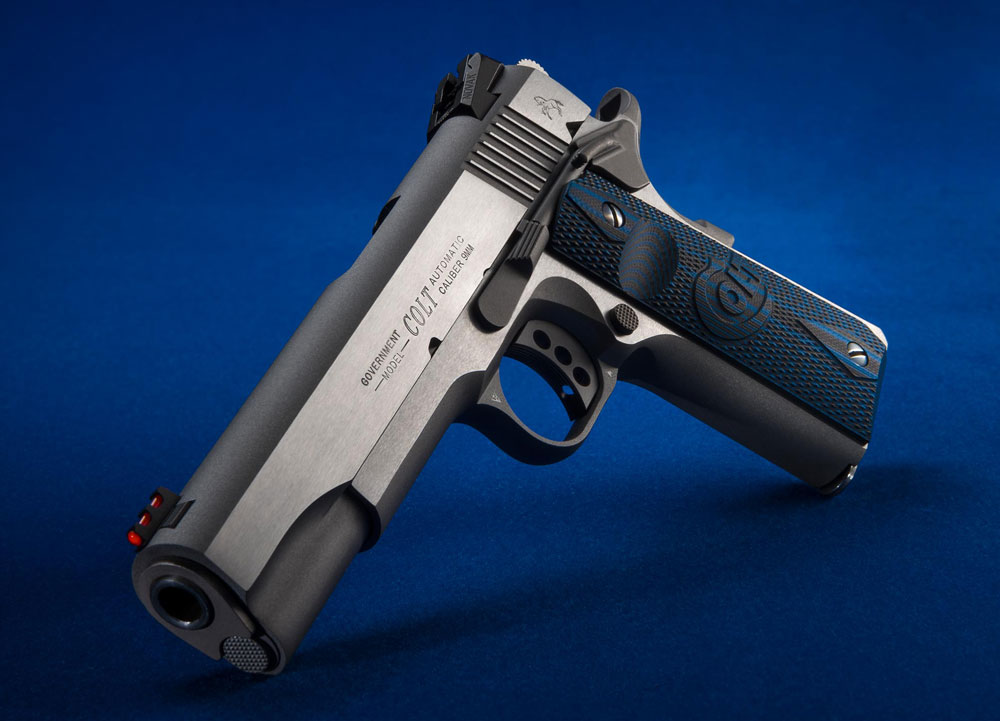
Few names are as intertwined with the 1911 as Colt. Manufacturing the single-action semi-automatic pistol since John M. Browning came up with the design, the company has continued to innovate and evolve the handgun for more than 100 years. And they’ve struck a fairly elegant balance, remaining true to Browning’s original vision, while improving the pistol in small yet notable ways — caliber, size, etc.
colt-competition-stainless_f

A century under its belt, it’s fair to say Colt turns out a dandy 1911 – ready for action, whatever action is thrown at it – straight from the box. If you thought little improvement was necessary or needed on the user’s part, you’re pretty much correct.

That said, as a mass-produced firearm, not even Colt’s long-running familiarity with the pistol hits all the right notes with every shooter. Luckily, there are minuscule upgrades and accessories that go an exceedingly long way in making the pistol perfect for even the most finicky shooter.

Colt 1911 Holsters

There’s good news and there’s bad news about a holster for a Colt 1911.
On the bright side, you can carry the legendary pistol nearly any way you see fit and that will enhance your particular application. Covering nearly every style of carry and type of holster, the market offers an incredible selection tailored to the handgun. Material, body position, concealment – there really isn’t a gap in Colt 1911 holster selection.

The difficult aspect, it’s still shopping for a holster. Anyone who’s gone through the process knows it’s arduous and frustrating, typically resulting in a closet shelf full of rejects. It’s the nature of the game. Even if you were looking to carry any pistol other than the 1911 you’d face the same ordeal. Patients and a willingness to hunt for what works for you are really the only keys to success.
Galco Combat Master
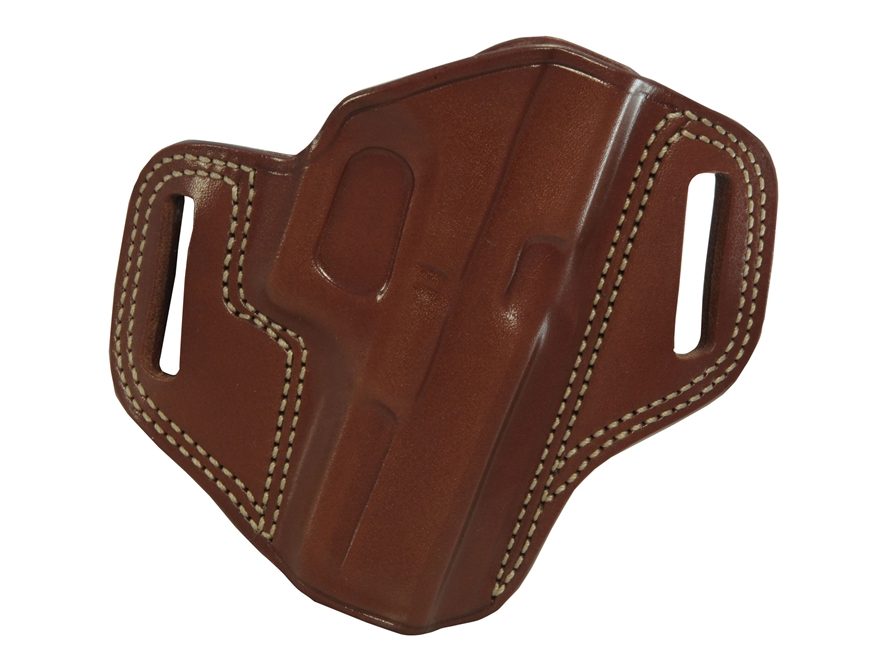
Galco Combat Master

As mentioned, holster options abound, but that doesn’t mean that every model made for a 1911 – Colt or otherwise – makes sense. In turn, a few thoughts on the pistol itself might go a ways in winnowing what will most likely get the job done and what will end up on the also-ran pile.

Compared to a majority of other modern handguns, the 1911 generally has two defining aspects – heft and size. Of course, the weighty metal frame and long sight radius of a full-sized model is what attracts shooters to the pistol in the first place. Yet, these aspects also present certain challenges carrying the pistol comfortably.

With those facets in mind, inside- and outside-the-waistband holsters tend to win the most favor with shooters. With a solid gun belt, the possibility exists to carry a 2-plus pound full-sized 1911 without throwing your hip out of place. Though, concealability tends to present an issue when talking about choosing between the two styles, especially with a large-frame model.

Outside of a Colt Defender (3-inch barrel) or Commander (4.25-inch barrel), OWB can pose concealment problems with a 1911. Can it be done? Absolutely. However, unless you plan to wear a long coat all the time, it typically means carrying in the small of the back or a cross-draw setup.
Crossbreed Super Tuck

Good examples of holster that work well in these OWB positions are Galeco’s Combat Master and Craft Holsters’ Leather Pancake. Both systems cant the pistol, cutting it profile and keeping it well within reach. Additionally, each is well made and won’t go limp over the long haul.

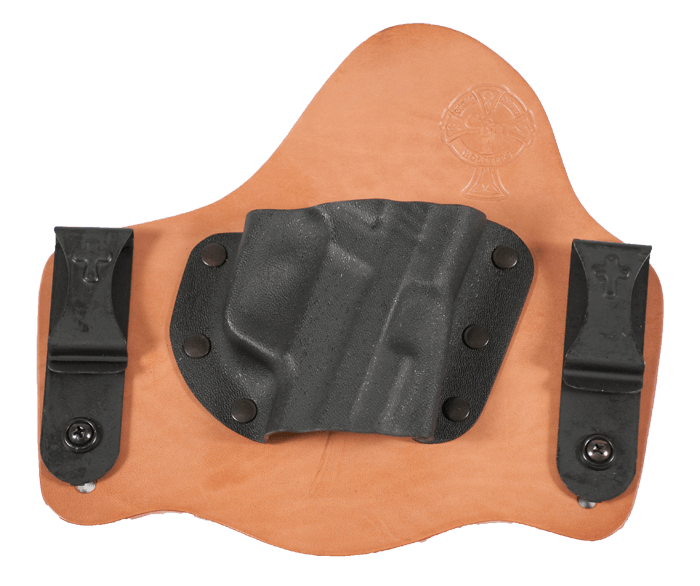
Concealing the barrel no longer is a concern, IWB holsters tend to free you up your options. And given the inherent slimness of the 1911’s design, its less of a hassle than it initially appears. Cant, again, is again a priority with this style of carry. Thankfully, a majority of holster makers design their wares with this key adjustment.

The CrossBreed SuperTuck goes a long way in hitting all these points and does a fairly good job of protecting your prized Colt from body moisture. Though, in certain circumstances, something as simple as the Bianchi 100 Professional is the perfect deep-carry option.

Somewhat of a sermon preached on the belt line carry, don’t let it hold you back from trying other systems. Possibly a belly band will deliver for your particular circumstances or even the resurgent shoulder holster could be the best bet. The latter is a definitely great way to carry a 1911 on the hunt.

No matter what direction you go, always remember there are bound to be limitations with any system no matter the promises on the box.

Must-Read Articles on Concealed Carry Holsters

Colt 1911 Sights

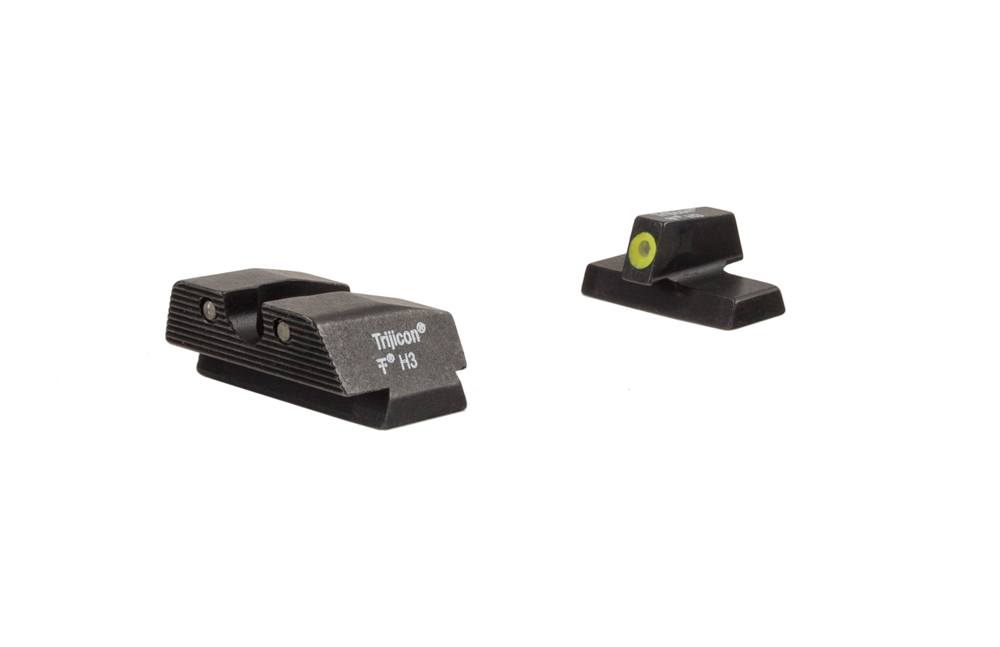
Trijicon-Sights

In general, Colt 1911 sights are much better now than in the past, but that claim could apply to nearly any manufacturer of the pistol. With an eye toward a more accurate and user-friendly handgun, a better part of Colt’s current stock comes outfitted with some version of Novack sights.

Furthermore, Colt has tailored specific sight styles to models, enhancing their anticipated application – Low-Mount Carry rear sight on the Denfender, Adjustable Bomar Style on Gold-Cup Trophy competition model, and so on. They’ve come a long way since the Series 70 guns.

Inevitably, the Novack sights won’t work for every shooter, thus an upgrade is required. Though not exclusively confined to carry guns, these models tend to get the once-over in the sights department, particularly with shooters who insist on night sights. Whatever the case, on modern Colts, the process is fairly painless and there are plenty of models available.

Most modern Colt 1911 sights dovetail into the slide, therefore tools requirements are minimal. Generally, brass punches, a brass or nylon hammer and a vice will get the job done. Though, if you’re tool fanatic and foresee handgun sight replacement as part of your rigmarole, then you might want to invest in a sight pusher. You can spend top-dollar on something like an MGW Range Master, but a less-than-a-hundred bucks options will get the job done, even if they look a little rough around the edges. However, be forewarned, the new sights’ dovetails are intentionally made larger than the slide slots and require filing to fit properly. Don’t be ashamed if you turn to a gunsmith to do the job poperly.
colt-competition-1911-3

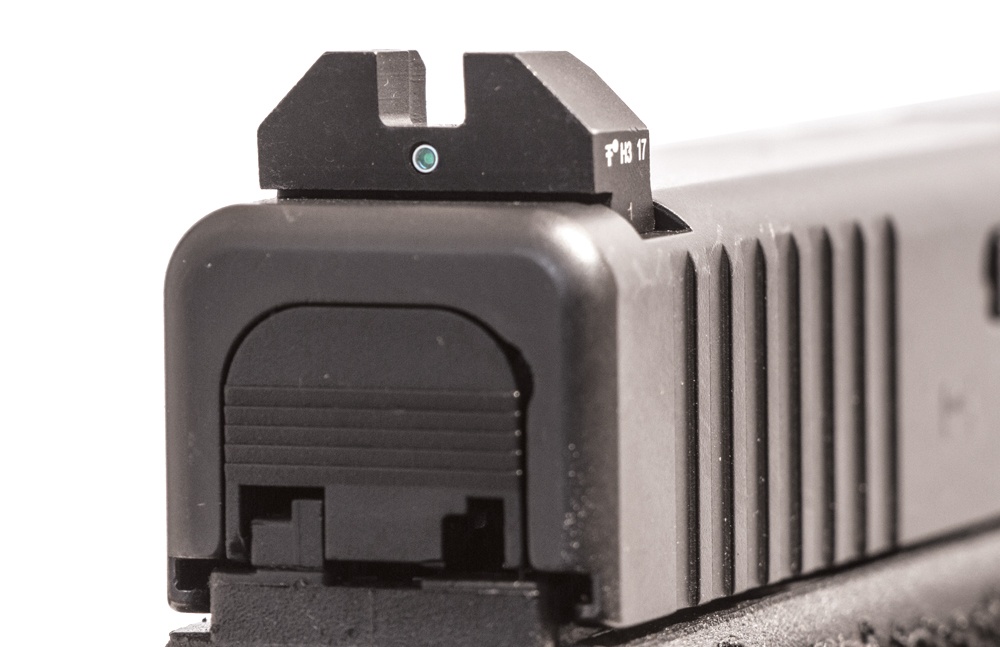
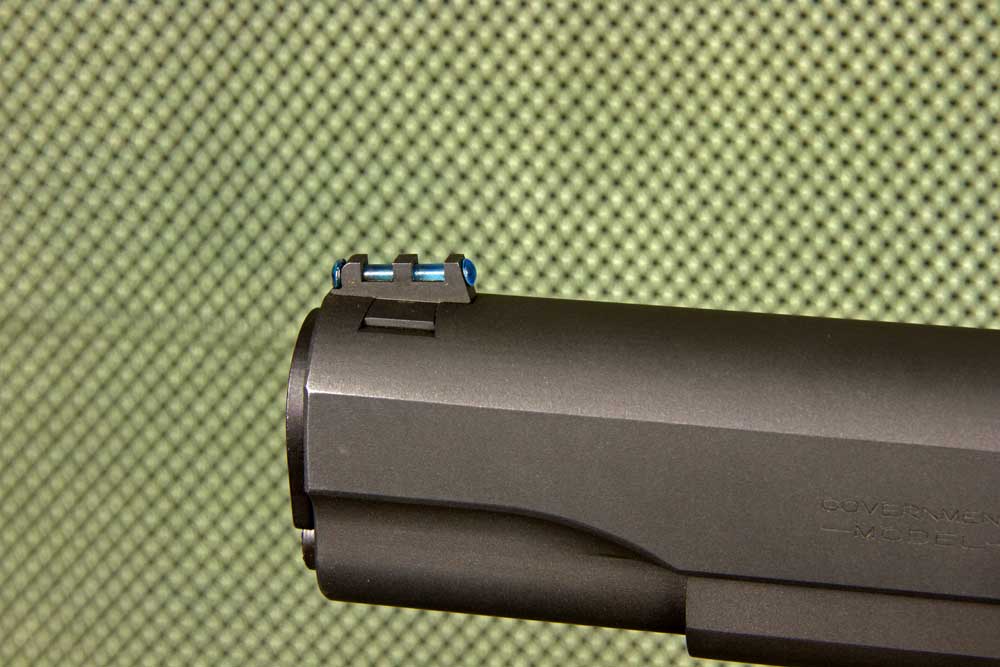
Either way, sight options are nearly boundless. At the time of writing, Brownell’s listed 117 rear sight options – a selection wide enough to accommodate even the most persnickety shooter. Generally, trusted names in sight manufacturing win the highest marks with shooters – Trijicon, XS, Meprolight. Trijicon HD has long been a fan favorite for night sights and XS Big Dots for a true high-visibility option. But honestly, the sky is the limit.

Colt 1911 Grips

In choosing a new set of Colt 1911 grips, there is an urge to express yourself. However, dolling up a pistol should never come at the cost of performance. Grips that do not properly support the plunger tube, break under stress or do not provide a positive grip should be like bargain whiskey – avoided.

Generally, wood, G10 and aluminum all make superior grips. Each of the materials is durable, holds a texturing well and are attractive (for the most part).

Rubber isn’t out of bound. Hogue OverModled Rubber Grips offer an ergonomic option with finger grooves and are quite durable. Though, VZ Operator II or one of Chip McCormick’s wood options give a gun a more traditional look.
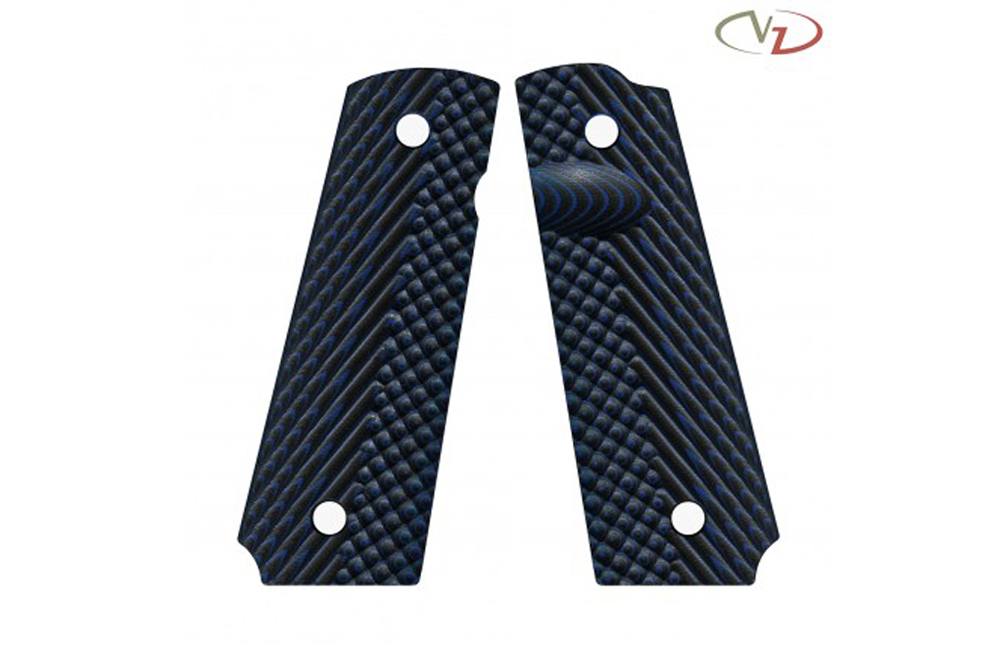
VZ Operator II
VZ Operator II

If you need to express yourself, better than simply picking someone else’s design, companies such as AlumaGrips give you the ability to place your own twist on your grips. Through an online process, you can upload your preferred designs and have the aluminum grips cut to your specific specifications for a truly custom look. To boot, they’re surprisingly affordable.
XS Sights: The F8 Definitely A Sight To See

0

The new F8 sight from XS Sights puts you dead on target.

What the XS Sights F8 offers:

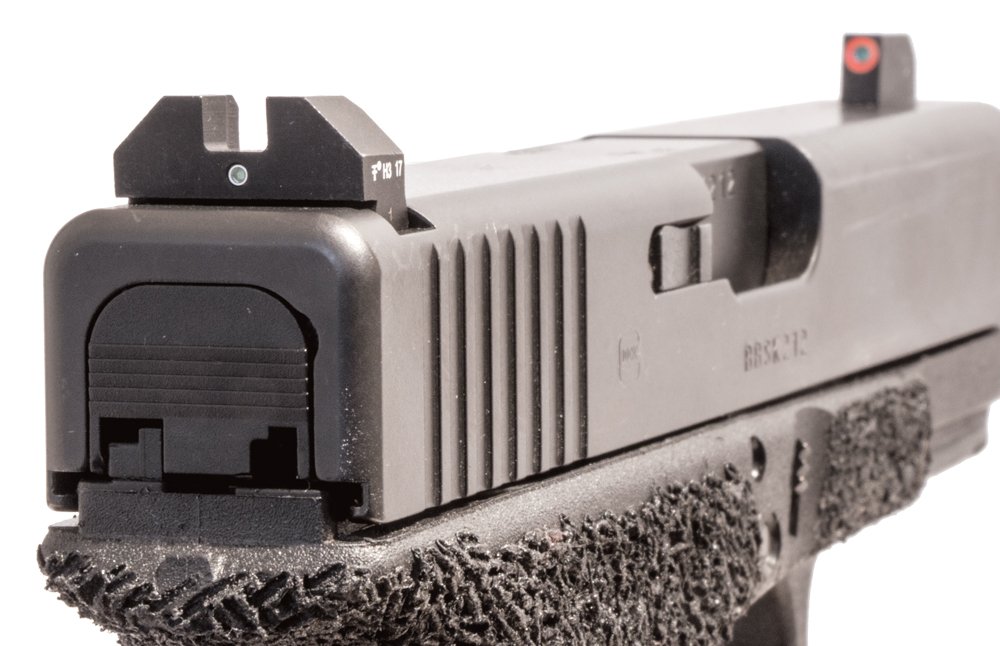
  • F8 stands for “figure eight” — a term used to describe a two-dot sight.
  • Each has a tritium vials, the rear under the notch.
  • Orange paint sourrounds the vial on the front sight.
  • The front post measures 0.160-inch wide.
  • The rear notch in the rear sight that measures 0.190-inch wide.

After more than a hundred years, we’re finally seeing real advancements in iron sights for the defensive handgun. While the rest of the world has been focused on long-range optical sights that estimate distances and correct for bullet drop, XS Sights has been quietly working on engineering affordable sights to help citizens fight bad things. The new F8 sight from XS Sights might be the best thing you can put between you and a threat.

Sights-1

The handgun sight has evolved a great deal from its origin. On what might be the most iconic fighting pistol of all time — the Colt Single Action Army or Peacemaker — the front sight is nothing more than a thin blade. On the original 1911, another classic fighting iron, the front sight is barely a bump. Somewhere along the line, folks began to realize, to hit what you’re shooting at, you need to be able to see your sights.

The evolution began with the notch and post sight. It became a staple on Smith & Wesson revolvers, and it was liked so well that gunsmiths began fitting it to 1911s. For a long time, practical pistol competitions were the driving force behind better handgun sights, but eventually those who carried handguns in harm’s way began to realize that, sometimes — in certain conditions — target sights could be hard to see. Not only that, but sometimes when faced with a villain, just about any sight was hard to see because focus shifted to the threat.

With the inclusion of Tritium vials in handgun sights, the night sight was born. Eventually, this morphed into the three-dot night sight, with three tritium vials, one in the front sight and one on each side of the rear sight notch.

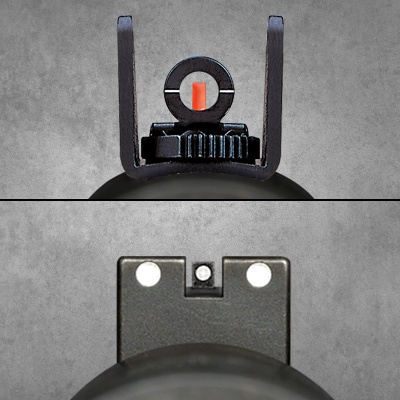
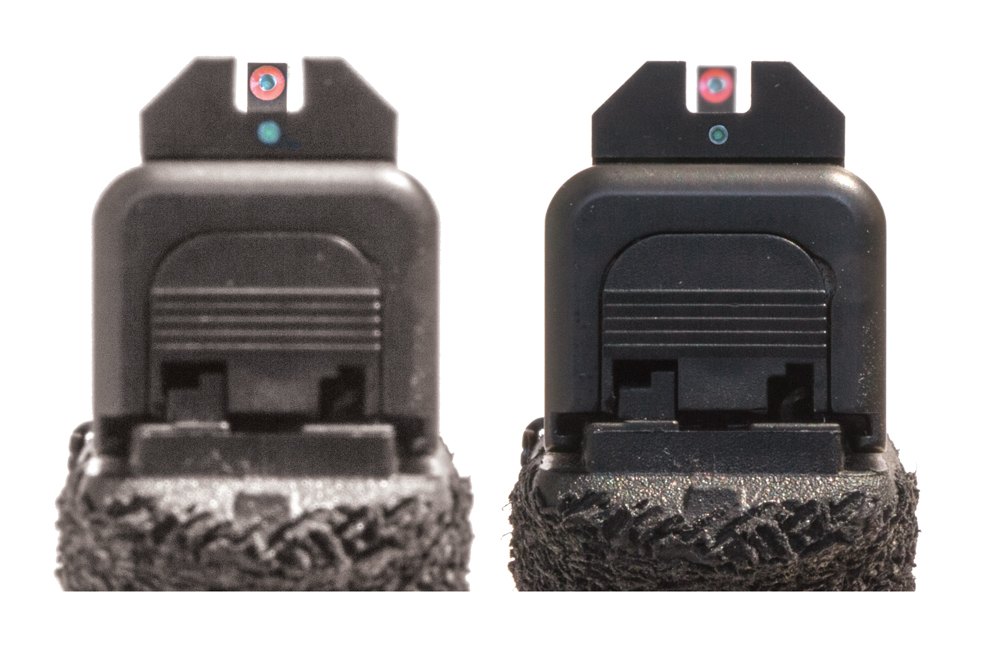
When you shoot a handgun properly, you focus on the front sight (F8-2). With traditional sights — especially combined with bad eyes — this can make the rear sight a near-oblivious blur. With the F8 sight, the front and rear sight stand out, regardless which one you focus on.

Tritium made sights easy to see in low light but helped little or none at all in normal conditions. One problem was the front sight was still small, and the notch you had to fit it into was small, too. The popular wedge-type sight pioneered by Wayne Novak was possibly the ultimate expression of — and most copied — three-dot sight.

The Big Dot Sight

A smart sheriff’s deputy from Texas created a better mousetrap. He realized those who hunt dangerous game face threats similar to those who might have to fight off an attacker with a handgun. The sights commonly used by dangerous game hunters had a large front sight that stood out like a pimple on the butt of a porn star, and a V-type rear blade.

Ashley Emerson designed the Big Dot sight to emulate the same sight a man on safari might use on a charging buffalo or lion. Working with an enterprising entrepreneur by the name of Ed Pastusek, they formed the company that’s now known as XS Sights.

The Big Dot sight has been my go-to sight for a long, long time. When I was hired as a special agent with the Railroad Police, I secretly installed them on my duty gun. This was more than 20 years ago, and I’ve been using them on defensive handguns ever since. Why? It was all because of a force-on-force training course. During the course, I was shoved in a semi-dark room with a pistol wearing traditional sights. I struggled to see the sights, missed the bad guy, and suffered an imaginary death.

The original XS Sights Big Dot Sight system. Notice the wide front sight and the shallow V-shaped rear.

Next, I was given a handgun outfitted with Big Dot sights. That big dot seemed to magically appear on the bad guy. When it did, multiple rounds of Simunition delivered to the same location immediately followed. In other words, I survived and painted the bad guy up rather nicely.

The beauty of the Big Dot sight is that you do not have to look for it: You see the big dot instantly, put it over the target and shoot. Their disadvantage — though mostly imagined — is that they do not allow precision shooting. I’ve never had this problem with Big Dot sights. In fact, when I took my first 250 Pistol Class at Gunsite Academy, I won the man-on-man shoot-off with a Para 1911 wearing Big Dot sights.

Others seem to have issues with the system, probably — mostly — because they simply do not practice enough. Regardless, XS Sights, which is now under the stewardship of Jon Pastusek, the late Ed Pastusek’s son, has created a new iron sight that’s sort of a hybrid cross between the company’s Big Dot sight and a traditional notch and post sight. If you threw a Big Dot Sight and a notch and post sight in a box, with a couple bottles of wine and some Sinatra music, the new XS Sights F8 sight is probably what would crawl out.

The F8 Sight

F8 stands for “figure eight,” which is a term used to describe a two-dot sight. A two-dot sight has a tritium vial in the front sight and another tritium vial centered under the notch in the rear sight. With three dot sights, you line the front dot up between the two rear dots. With a two-dot or figure eight sight, you simply place the front dot on top of the rear dot. It’s supposed to be faster and easier to align. Logically, this makes sense, but I have no idea how to definitively prove it.

For fast sight alignment, a wide rear notch is necessary. This is why the V-type rear sight on the XS Big Dot sight system is so fast.

Another feature of the F8 sight is its wide front post. Most commonly, defensive handgun front sights measure about 0.135-inch wide. The F8 front post measures 0.160-inch wide. The wide F8 front sight is paired with a notch in the rear sight that measures 0.190-inch wide. The result is a sight picture that’s fast to obtain because you have light, or space, between each side of the rear notch and each side of the front sight.

But, just like with a late-night infomercial, there’s more. The dot on the front sight contains a Tritium vial, but around that vial is a proprietary orange paint. The F8 front sight — orange dot — is only 0.020-inch smaller than the big white circle of a front sight on the XS Big Dot sight. The Tritium works great in low light, but the proprietary paint used for the orange dot seems to draw light like a railroad track draws winos. In daylight and in shade, this orange dot is like a beacon.

Testing The Theory

The goal of the F8 sight was to provide a multi-purpose defensive handgun sight that was easy to see in any light. It might be the easiest sight to see in any light and it is, unquestionably, a sight you don’t have to look for.

I mounted a set to a Glock 19 to see how well they worked. I ran that pistol and another Glock 19 with factory sights through my favorite defensive handgun drill, which is fired at 5 yards. I did this in daylight, evening and at night, five times with each pistol. For me, the F8 sight was 4 percent faster and more accurate. That might not sound like much, but in this business every little bit matters.

Another reason the F8 sights are faster and easier to see is because they’re taller than other sights. They’re not so tall they interfere with holster compatibility, but they’re tall enough they stand out. Have you ever noticed how the low front sight on a Glock can blend into the frame if your presentation is not spot-on? With the taller F8 sights, this is a non-issue. Your weapon presentation would have to be Hollywood-movie bad for you to not be able to instantly see the F8 front sight.

I’ve been a user of the XS Big Dot sights for a long time, and I never thought I’d want for anything different. Admittedly, I’m also a fan of the Wilson Combat Battlesight when it’s combined with a fiber optic front sight. The new F8 sight is, as far as I’m concerned, better than both. It’s the sight I’d much rather have between me and a bad guy, terrorist or even a werewolf.

Right now XS Sights is offering F8 sights for the Glock 17, 19, 20, 21, 22, 24, 26, 27, 30, 30S, 37, 41, 42 and 43. They’re also available for the Sig P320, P225, P226, P229; Springfield XD, XDm, XDs; and the FN 509. I’m sure that F8s for other handguns are soon to make their way to market. I’ll be patiently waiting for F8s to fit my 1911s and Browning Hi-Power.

5 Best Models And Calibers Beyond The Usual Colt 1911 .45 ACP

0

There’s more to life and shooting than simply the Colt 1911 .45 ACP.

What are Colt’s top Models chambered other than .45 ACP?

The gritting of teeth is about to get deafening. Not only is the topic calibers, but 1911 calibers.

Yes, for many the only acceptable chambering of John M. Browning’s wonder pistol is .45 ACP. Hard to argue against it, the gun-cartridge combo has more than earned its due — be it in a Government, Commander, Officer or Defender model. There’s no scoffing at two World Wars and countless other conflicts, not to mention its role as a self-defense arm. Those are airtight resume bullet points. Yet, there’s no reason why the proven and potent pistol design shouldn’t stretch its legs. It certainly has over the years, successfully so.

One of the most intertwined names with the 1911 — Colt — and other gunmakers have taken the pistol far afield caliber-wise — .30 Luger, .357 Magnum, .38 Special, 10mm, .40 S&W, 9mm, 9x23mm, .22LR just to name a few. Certainly, not everyone a success, but plenty of solid variations off the original 1911 concept. So why not spread your wings, even if you’re a purist?

Colt especially has a respectable collection of 1911s in chambering other than .45 ACP, perfect for work, play and any conceivable task in between. Here are five of the best the company has to offer, breaking from the tried and true and worthy of consideration even by the most staunch 1911 absolutist. A quick gander and you too might find man does not live by Colt 1911 .45 ACP alone.

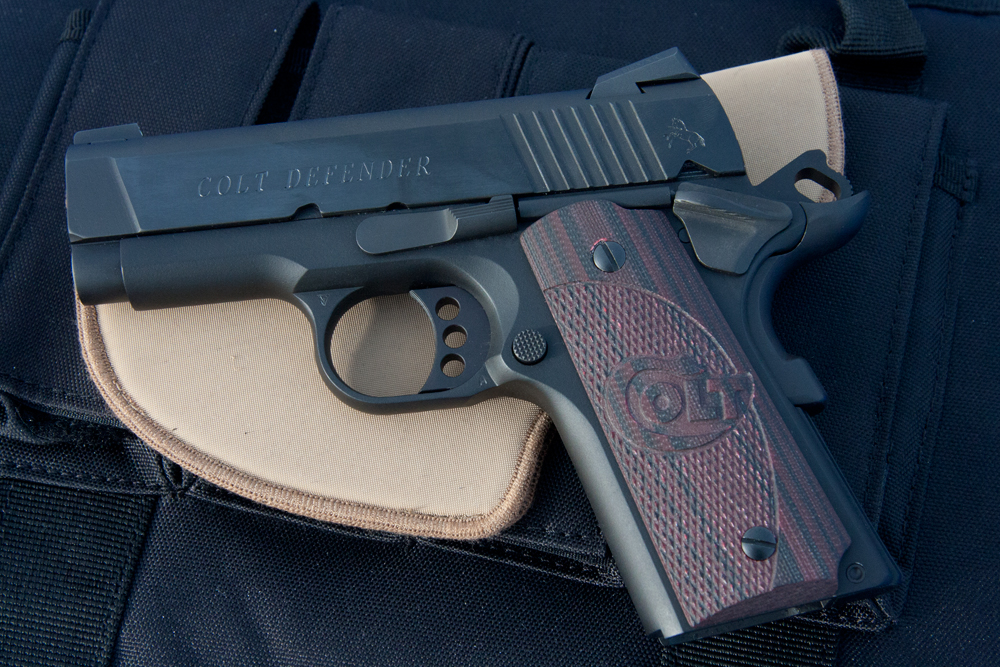
Colt Defender (9mm)

colt-defender-f
With dashing good looks, this Colt 1911 9mm is among the company’s top picks for concealed carry. It also marks quite a feat in the development of the iconic pistol. Before 2000, when the Defender hit the market, 3-inch barreled 1911s were typically a custom-made affair, at least the ones that worked without flaw.

Dolled up a bit recently, the aluminum-framed pistol comes with a genuine Novak tritium night sight up front and low-mount in the rear. The latter ensuring your draw stroke remains smooth. Additionally, the black-and-blue Cerakote finished 1911 boasts rugged and striking G10 black cherry grips, moderately textured to ensure a firm grip without discomfort — important on a micro nine.

An extended thumb safety and a 4.5- to 6-pound three-hole aluminum trigger, the pistol is easily manipulated and a sweet shooter. To boot, it’s outfitted with Colt’s Dual Spring Recoil System, reducing the 1911’s recoil and increasing spring life.

Sized for comfortable carry, the Colt 1911 9mm is a whisker over 1-inch in width and tips the scale at 24-ounces unloaded. Holding one more round than the .45 ACP version, the 9mm Defender has an 9+1 capacity. No double-stack, but more than enough ammo to handle most self-defense jobs. The hitch for some is the MSRP, at $899 it’s not a give-me. Then again, you’re getting a Colt for your money.

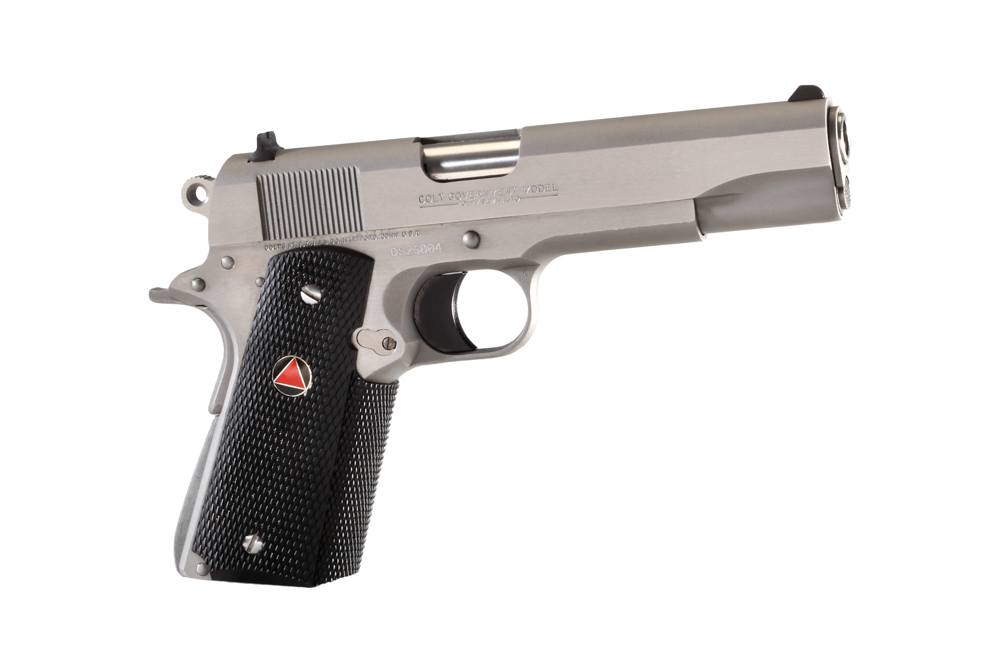
Delta Elite (10mm)

Colt Delta Elite

The 10mm pick is a bit like cheating, given the Colt Delta Elite stands alone in this caliber. Released shortly after the advent of the powerful cartridge, the 1911 continues to hit the right notes with shooters who have a taste for manageable power.

Stainless steel frame, slide and barrel, the pistol feels its 35 ounces (unloaded). Not necessarily a bad thing, given the full-sized Government Model’s heft does its part in making the recoil as bearable as most .45 ACPs. And the Colt Delta Elite’s manageability opens up the pistol’s potential. Most certainly, it has the chops as a carry or home-defense gun, but it certainly wouldn’t be out of place on the hunt.

Immediately noticeable, the large aluminum beavertail grip safety provides abundant protection from slide cuts. Additionally, the black composite grips (with Delta Medallions) give a solid purchase, along with enhancing its spartan good looks. Outfitted with Novak three-dot sights, low-mount carry on the rear, and rounded edges, the Colt Delta Elite is smooth out of the holster. With an extended thumb safety and deep cocking serrations, the 8+1 capacity pistol is a dream to operate. And traditional barrel bushing and recoil-spring guide make it equally simple to field strip. The 10mm most definitely runs Colt prices, though the $1,199 MSRP is worth it for its power and performance.

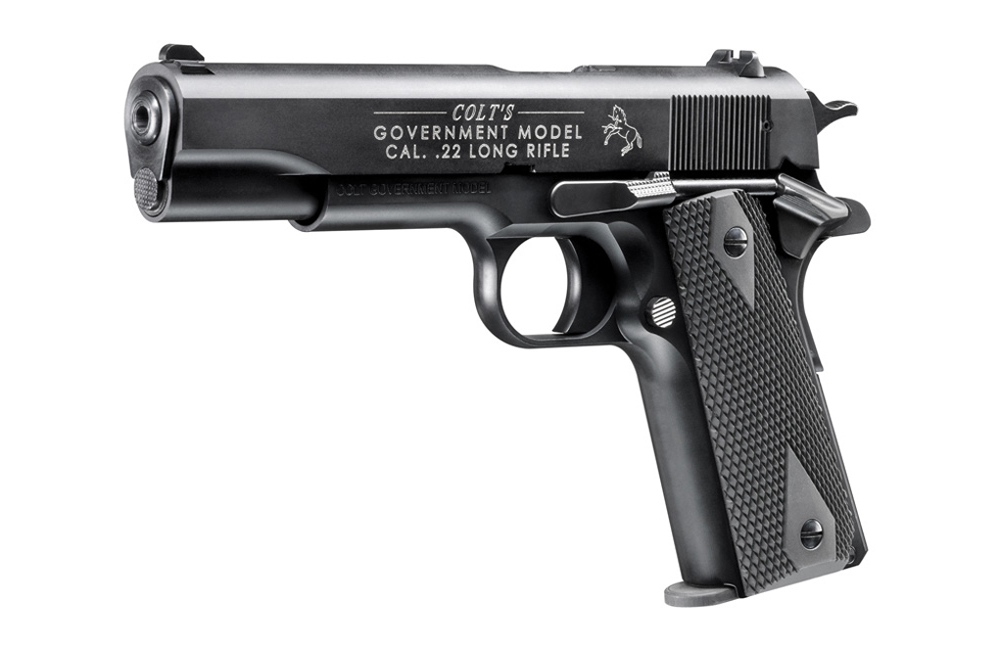
Government 1911 .22LR

colt-1911-22
There are plenty of plinkers, but few with the gravitas of Colt’s classic rimfire. Manufactured by Walther and imported by Umarex USA, the Colt Government 1911 .22LR is touted as the only “only genuine Colt tactical rimfire replica available in the world today.” Modeled after the 1911A1, it has the feel of the legendary and battle-tested U.S. Military handgun, but with the appeal of inexpensive and downright fun shooting.

Keeping things relatively true to form, the Colt 1911 22 weighs in at 36-ounces empty, which has to put it near the top in heft for rimfire pistols. As expected, this weight makes shooting the pistol seem nearly like firing an airgun, with the added benefit of improving its accuracy.

Interestingly, the gun does not get its heft from extensive use of steel, instead from a cast zinc-alloy frame. The material is steel backed for added resiliency and is matched with an aluminum slide. The 1911 features a fully functional slide lock and release, left-side thumb safety and grip safety. A similar design to the centerfire original, the beavertail is slightly elongated, ensuring the slide doesn’t sink its teeth into your hand. The hammer of the blow-back pistol is a traditional spur and incorporates a half-cock notch. Plenty of firepower, the 5-inch barreled pistol has a 12+1 capacity and really doesn’t break the bank. Competitively priced with other class rimfire pistols, the Colt Government 1911 .22LR has an MSRP of $399.

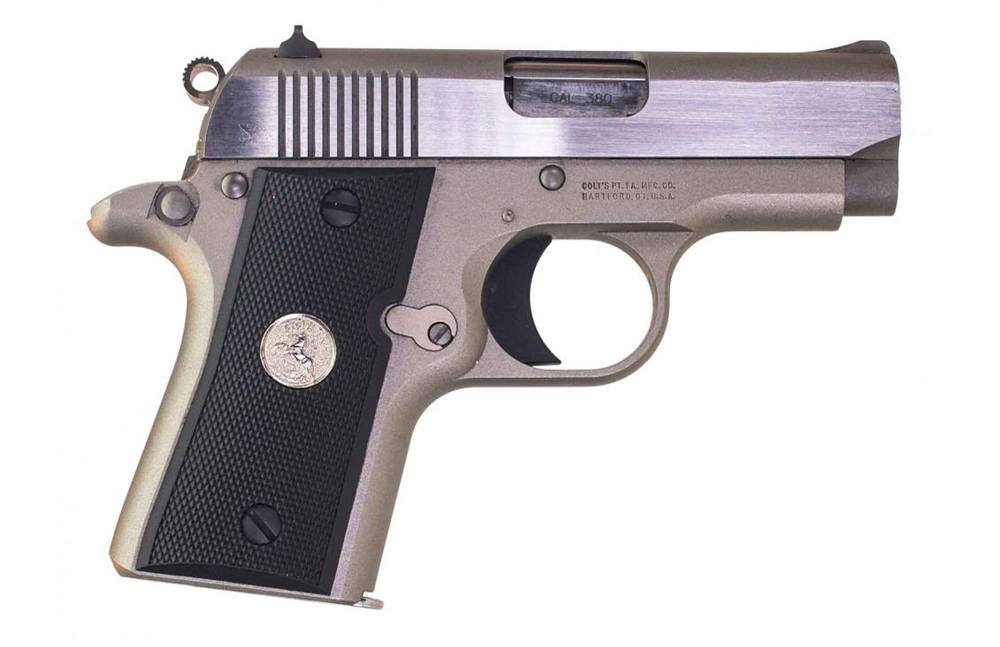
Mustang Pocketlite (.380 ACP)

Colt-Mustang
A Colt 1911 .380 ACP in the truest sense? Not exactly. The Mustang breaks from the herd on a number of design points — polymer guide rod, no barrel bushing nor grip safety. Yet, the pocket pistol’s heart is in the classic design, providing a dependable and familiar carry gun equally ideal as a primary or backup piece. The right holster, the pistol is nearly perfect in a pocket or positioned on the ankle, if you’re looking to veer away from traditional carry positions.

It’s a straight blowback operation, which would make you expect a sharp recoil. But the pistol is much tamer than similar .380s available today — most likely due to its short 2.75-inch barrel not giving a chance for all the powder to burn. Yes, this reduces the velocity (what did you expect with such a short barrel) but does wonders for the rate of fire. You can chew through 6+1 rounds as fast as you can pull the trigger, which may not be a quick as you think. The pistol has a near double-action pull weight, despite being a single-action semi-auto.

The aluminum-frame (electroless nickeled finished) is mated with a stainless steel slide and outfitted with a fixed front sight and dovetail rear. Definitely geared toward the affordable end of the carry market, the Mustang comes in a bit above what many would like to pay for a .380 with an MSRP of $599.

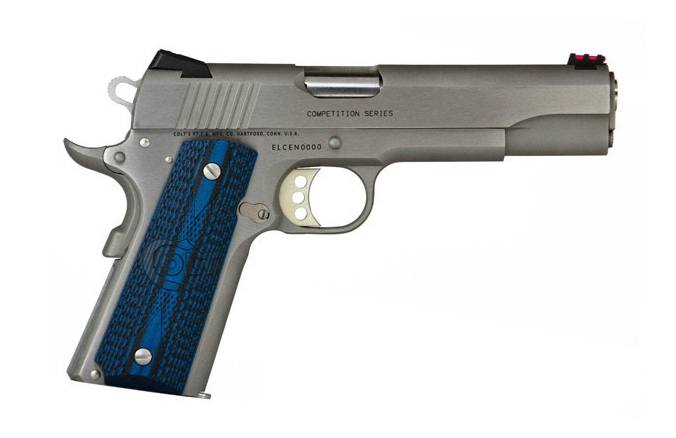
Competition SS (.38 Super)

colt-38-super
At one time, it was among the world’s most powerful cartridge. Now, the .38 Super has nearly been forgotten. A shame, given it really is a spectacular round, especially in defensive use. The manageable and powerful cartridge was, after all, designed to defeat body armor and the sheet steel of car bodies.

Today, the cartridge continues to live on mainly with competitive shooters and Colt has a dynamite way of launching the souped-up .380 ACP — the Competition SS. Born to run, the Colt .38 Super has all the features you need to beat the clock out of the box. Chief among these, the gun’s 5-inch National Match barrel, Novak adjustable rear and fiber optic front sights and Colt’s Dual Recoil Spring System. The springs really do a number, noticeably tamping down the 36-ounce pistol’s recoil so you can reach your full accuracy potential in rapid fire. As does a crisp three-hole aluminum trigger, which breaks at 4.5 to 6 pounds.

Enough stainless steel to outfit an operating room and slick blue G10 grips, the Competition SS looks fast to boot. Checkered and scalloped, the grips also facilitate a rock-solid handle on the gun, giving you shot-to-shot confidence. Of course, it is priced like a Colt — a Competition Series Colt. But the sticker shock isn’t as great as you’d figure for what you get — $1,049.

Ammunition Reloading: Concentrating On Component Consistency

0

Learn to sweat the small stuff when reloading ammunition and you’ll be rewarded with improved accuracy.

The ammunition component differences to consider:

A handloader’s recipes are usually the result of hours of toil, hard work and experimentation. Some are closely guarded, as if they were an alchemist’s formula, while others are freely shared — and some consider their recipes to be the final word on a particular cartridge/bullet combination. They are — more often than not — just a snapshot, being applicable to a particular rifle and/or barrel. Just as factory-loaded ammunition might give stellar performance in one rifle yet give the owner of another rifle fits of rage, a handload recipe is not universal to all rifles.

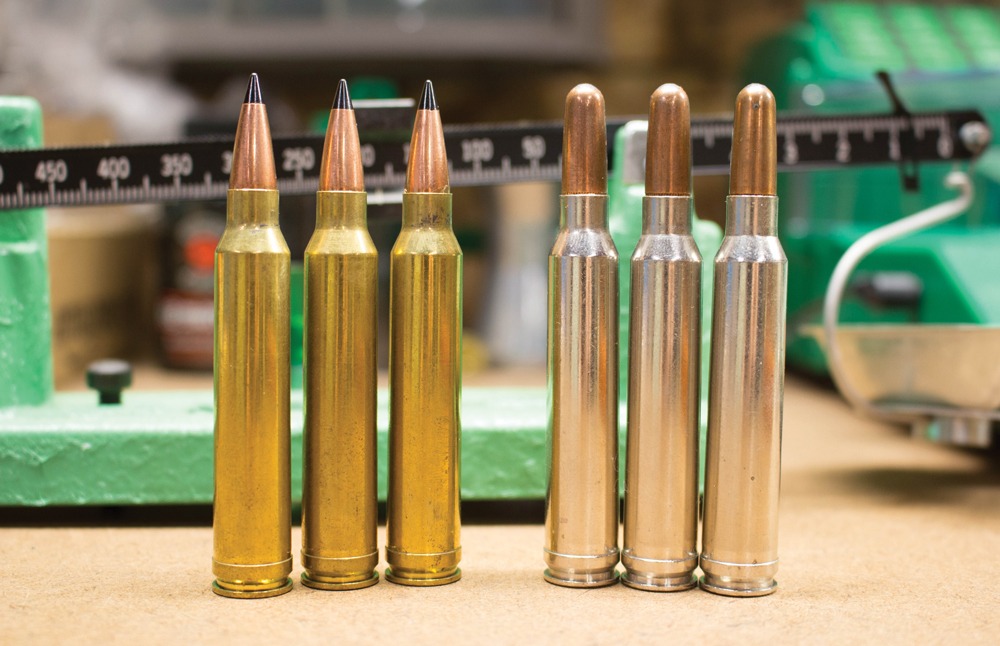
Brass cases and nickel-plated cases have shown to print to different points of impact. The author uses the different types for different loads within the same caliber.

I’ve stumbled upon a few loads that have worked very well in a number of different rifles, but there are always one or two guns that simply don’t like that load. There’s nothing wrong with the load … it’s just that the combination of components don’t agree with a particular barrel. Hey, some folks love seafood, but it simply doesn’t agree with my digestive track — that doesn’t make seafood bad, it just makes for a disagreeable combination.

Even our reloading manuals are simply a report on the findings for a particular barrel used in the testing, which is why the data needs to be interpreted with a grain of salt and taken in context. Barrel length, land/groove dimensions and all those subtle little variations can play a big part in speed, accuracy and consistency, all of which make or break a recipe. And, should you change any of the components of the recipe, you might quickly find yourself back at the drawing board.

Variances In Bullet Profiles

Consistency in all your components is paramount to accurate shooting.

You might look at the load data for the .30-06 Springfield within one of the major manufacturer’s manuals and see all of the 180-grain bullets lumped into one category, with — what seems to be — definitive load data for them all. But, included in the mix, might be a 180-grain round-nose flat-base bullet and a sleek spitzer boat-tail. It’s easy to see that the two bullets have different bearing surfaces and will most definitely generate different pressures. So, when changing bullet profiles — not bullet weights — it makes perfect sense to expect a change in performance. It might require starting from the beginning, redeveloping the load for the new bullet.

Primer Particulars

The same can be said for primers. I clearly remember the hunt for components just 5 years ago, when factory ammo was virtually nonexistent and even reloading supplies were a rarity. You bought any suitable primers you could find and worried about the rest later. I found, while having to substitute one brand for another, that there were radical differences in the load performance even within the same designation. I’m not talking about using a magnum primer where my recipe called for a standard, just switching primer brands. I’m talking about a huge shift in velocity, enough to change the point of impact as much a 5-6 inches, or to put the muzzle velocity figures all over the map.

Different brands of primers can have a radical effect on ammunition performance. Once you’ve developed a load with a certain primer, stick with it.

So, keep in mind that the brand of primer can and will drastically alter your handload, and once you obtain the results you want, you’ll need to keep a fair amount of that particular primer on hand. If you’re forced to change primer brands, once again you’ll have to start the load development over.

Case Consistencies

Sorting cases by weight has shown tighter groups in some rifl es, making the task well worth the effort.

The brand and type of case can also have a big impact on your loads. I once decided to switch to nickel-plated cases in my .300 Win. Mag., and I thought I’d bumped the riflescope because the point of impact changed 4 inches up and to the right when I changed from traditional brass cases. I left my previous load in the brass cases and used the nickel cases for a different bullet.

Wall thickness can also play a major part in the consistency of your loads, and mixing brands can easily bring the issue to bear. It doesn’t seem to be nearly as bad in the lower pressure cartridges, but it will rear its ugly head in the magnums rather quickly. Again, I do my best to keep things consistent by separating the cases into lots if using fired cases, and by choosing one particular brand. I love Norma brass for its consistency, and Lapua brass is also excellent if you’re after the best results. I’ve had some stellar results from good old Remington, Winchester and Federal brass, as well as Hornady and Nosler, but I’ve had some hellish experiences trying to mix and match case brands. I know guys who will actually weigh out cases to get the most consistent results from their loads.

Powder Parallels

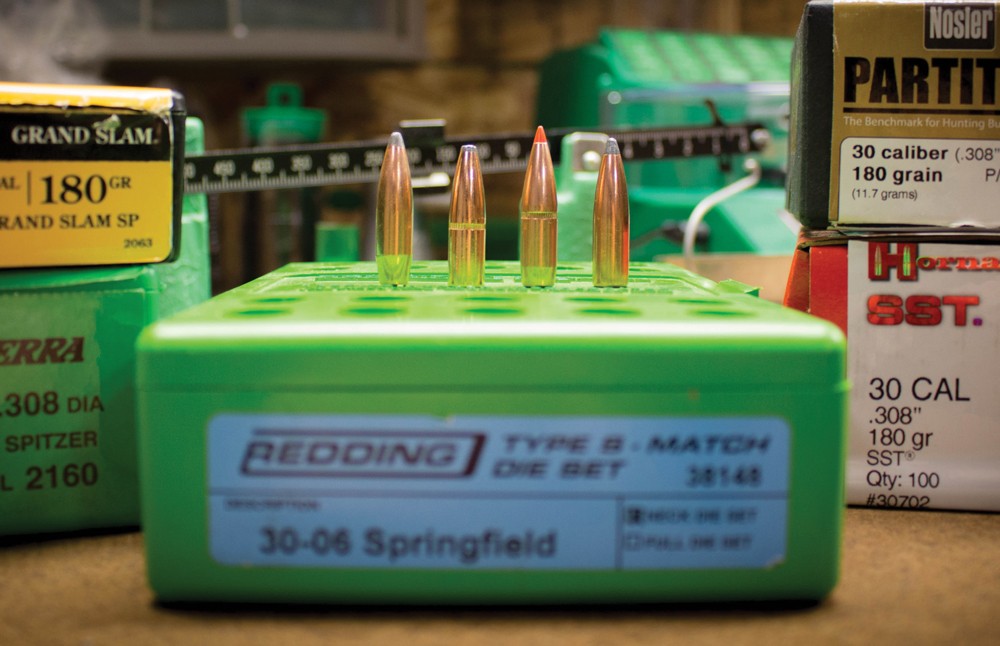
Four different .30-caliber bullets, all weighing 180 grains. You can see they all have different conformations and different bearing surfaces. They each require an individual load for the best performance.

Obviously, we weigh our powder charges, but even the same brand of powder can show variations in performance. I know the guys from Norma Precision, who handload all the ammunition for their African PH line, will test the lots of powder they use to verify that the performance is uber-consistent, and they will make variations in the load to ensure their velocities maintain the level required for proper regulation in the double rifles.

Sometimes, when you reach for a new pound of your favorite powder, you might find a slight change in the group size. This seems to have been minimized in the modern powder developments, but it’s a phenomenon that I’ve seen before. The variations may be slight, but it certainly can happen.

Bullet Balance

Bullets can also bring some variations into the mix. If you want to get really geeky, weigh out your bullets on a good scale and you’ll see how much they vary. When we’re loading for long-range precision, we’ll separate the bullets into lots to the nearest half-grain, and it has improved group sizes. Some brands are more consistent than others, and you might end up with more piles than you expected, but it will help in the accuracy department. It really doesn’t matter if the bullet varies from the advertised weight — a 179.0-grain bullet will work just as well as a 180.0 grainer— just so long as it’s consistent.

We put forth all sorts of effort in preparing our cases and in our loading techniques, and we should exercise the same caution when gathering components. Start with the best, keep it as consistent as you can, and you’ll have the success you’re after.

Editor’s Note: This article originally appeared in the June 2018 issue of Gun Digest the Magazine.

Custom AR-15: Hog Guns and .300 Blackout

0

By equipping your custom AR-15 .300 Blackout with night vision, you can shop for all the pork you could possibly want.

What you need in a hog-hunting AR-15:

  • Hogs are tough characters. Use the largest caliber AR you can still shoot quickly.
  • Nighttime is hog time, and night vision optics are more accessible and affordable than ever.
  • If pork is on your grocery list, consider a weapons light and suppressor for your custom AR-15.
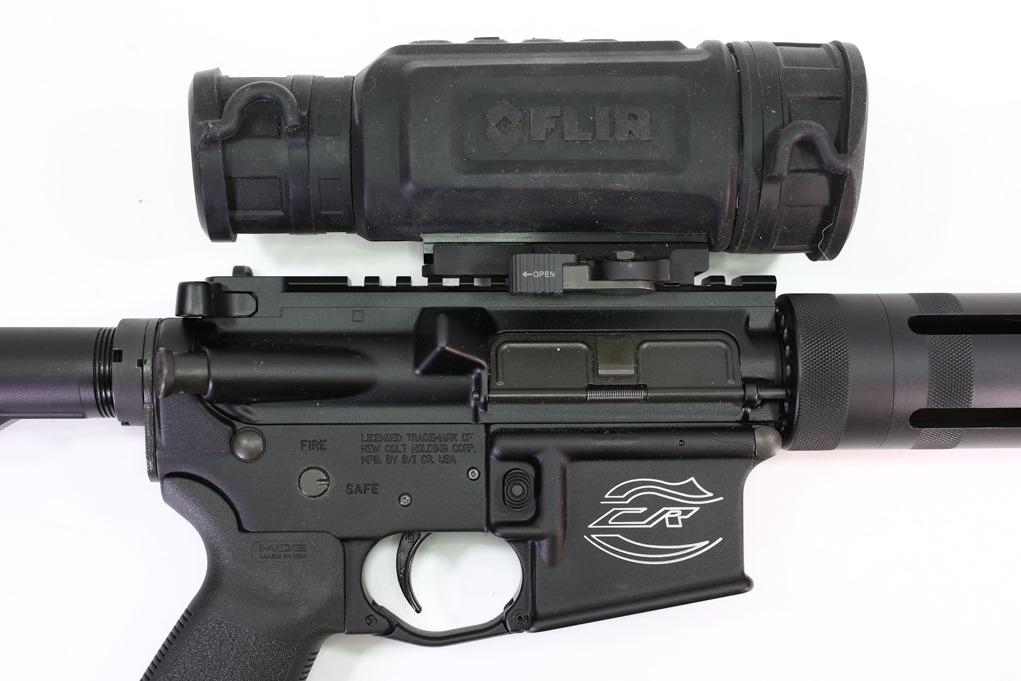
This is a FLIR thermal optic on a .300 Blackout carbine. It offers an affordable thermal sight, with a cost under three grand, and ruggedness enough to last through a lot of nighttime hog-whacking.

The world is being over-run. On the seas, the water is filling with jellyfish. On land, hogs. Or so it seems, at times. Hogs are productive (at least when it comes to making more hogs), adaptable and smart. They are also quite destructive, at least from the perspective of farmers and ranchers.

A squadron of hogs can pretty much reduce a plot of crops to a muddy mess in the course of a weekend. Shooting them is not considered hunting in most locales, especially the ones that suffer from their presence. No, it is pest eradication.

The process is not sniping or whacking a single hog, the big, trophy hog. No, the idea is to get as many of them as possible at each opportunity.

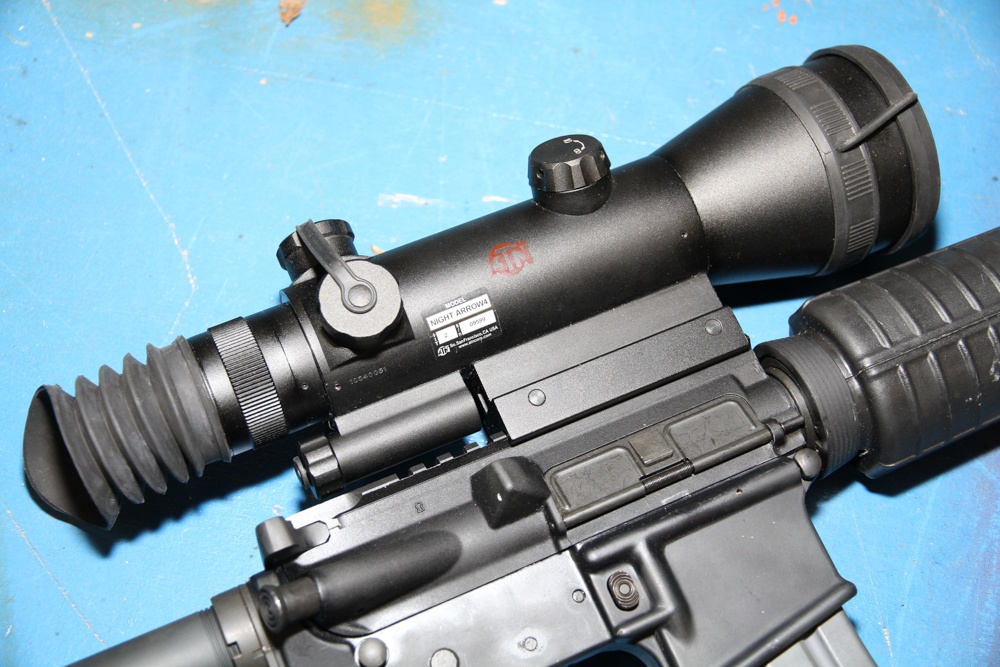
The ATN Night Arrow is an integrated night vision and optic with a built-in reticle. You only need it, not an optic and an NVG.

Complicating this is the cleverness of the hogs. They are smart enough to know what is going on, and ornery enough to not like it. If you hunt hogs, they will adapt. Quickly. Ambush a new fleet of them on a nice sunny day, and they will move to dawn and dusk. Go after them then, and they will hole up in the light hours and come out only at night. This doesn’t take long if the ones you are hunting having been briefed by others, and they are already starting at night.

So, you’ll be using specialty optics. Before we get to that, there is the matter of caliber.

I’ve been told that the .223/5.56 is marginal, that the .300 Blackout is enough or marginal, and that everything up to a tactical nuke is “marginal.”

Yes, they are tough, but they are not all the size of Buicks. You can use whatever you want, like, have or are recommended. My suggestion on caliber is this: consider the biggest one with the stoutest load that you can shoot quickly and accurately. A .300 blackout that you can hit with at the rate of 3-4 shots per second is probably better than a .458 Socom that you can hit with at the rate of 3-4 shots in ten seconds.

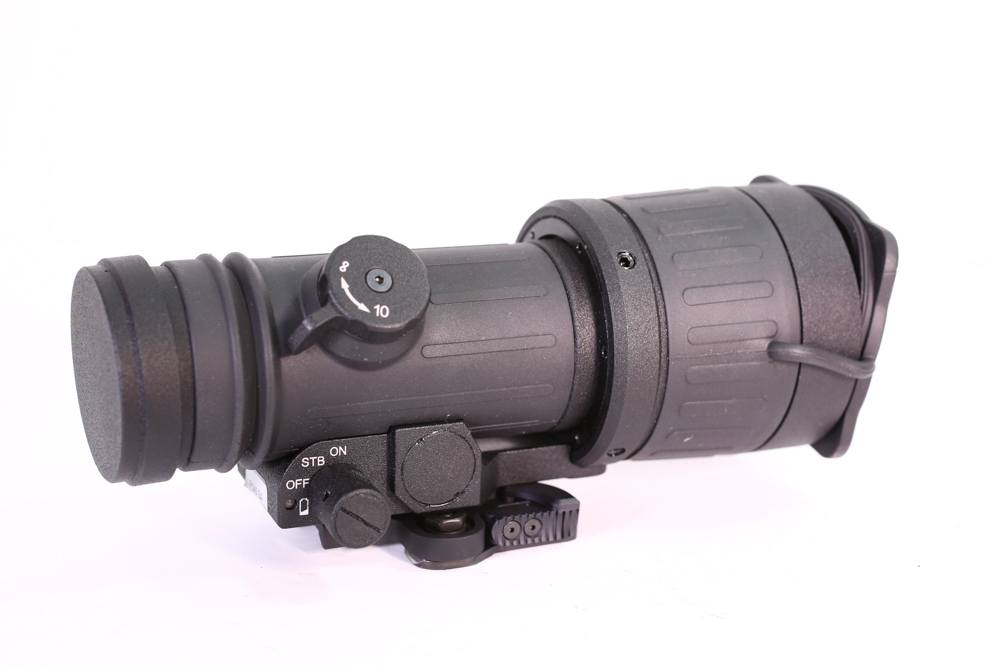
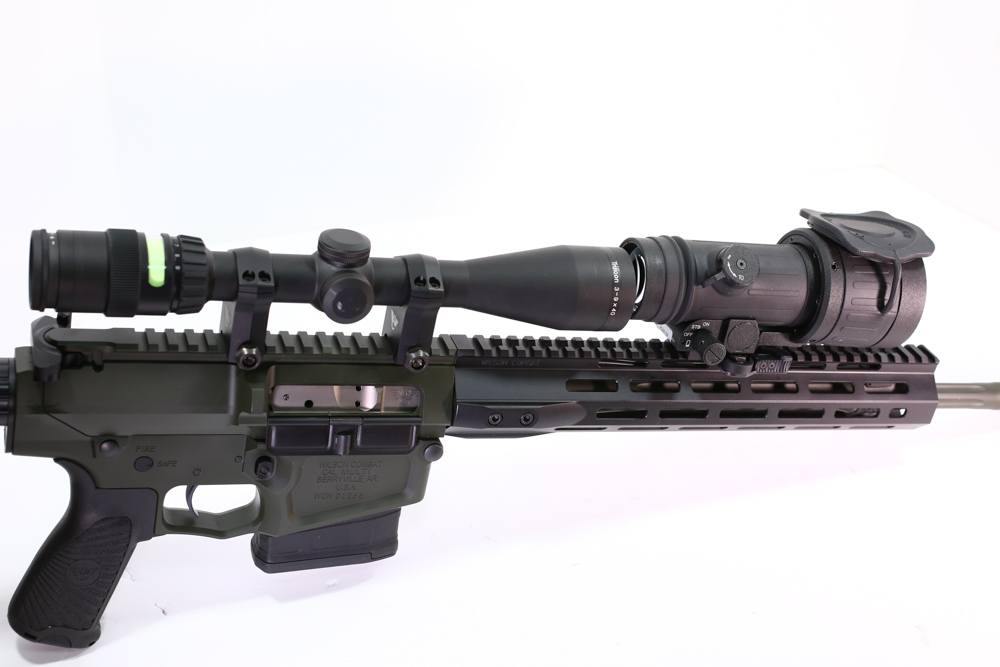
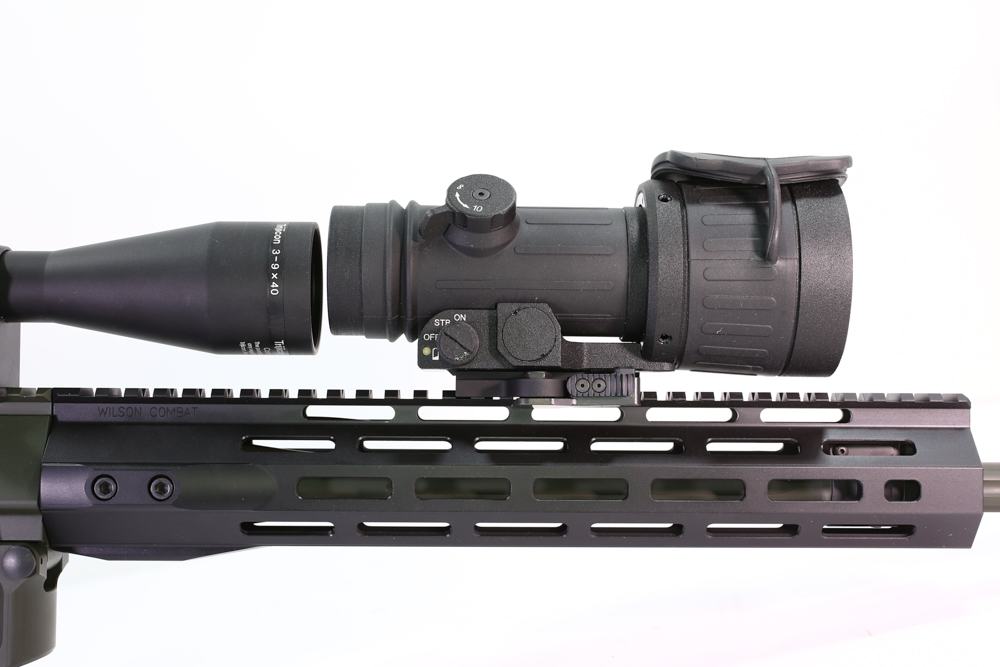
A removable night vision scope is great for nighttime pest control. You can move it from one rifle to another and not change zero, since the zero is in the optic that this sits in front of.

Use the biggest caliber that you can hit fast with.

Then scope it up.

Since the hogs will be out at night, you will want to use night vision gear. Also known by the acronym NVG, or NODs, these are photomultipliers that let you see in dim light. Starlight, in fact. Even a hint of moon helps, but it helps the hogs, too. Overcast makes NVG useless, as it hasn’t anything to magnify.

NVG

Night vision comes in two types, add-ons and weaponsights. The add-ons are just night vision multipliers. They take in the ambient light, crank it up thousands of times, and pump it out as a video picture in a small TV screen on the back of the unit.

This is the ubiquitous “green screen” image we see in movies and TV shows. The image is not nearly as hi-res as your smartphone, in part because the expense of making it such would be hideous, and in part because the volume of production can’t support that cost.

Each pixel you see in the image on your NVG is a “pipe” of the multiplier. If you wanted to double the resolution, you would have to double the number of microscopic pipes that are used by the photomultiplier to produce that image.

The ATN in front of the magnifying optic.

You mount the NVG on your rifle with your regular aiming optic already mounted behind it. You look through your scope, at the image of the NVG, and as long as your scope was properly zeroed, you get hits.

The big advantage here is that you can install the scope, zero it, and know it is on. Then put the NVG on when you need it, and take it off when you don’t, and not change your zero.

The disadvantage is that you have two scopes, with their combined weight, on the rifle at night. When night shooting was sniping and single shots, this wasn’t a problem. When trying to whack a whole herd of hogs before they can flee, extra weight is a problem.

The setup is exemplified by my ATN NVG. This is a day/night system, where you mount it for night and take it off for the day. This is not to be confused with a Day-Night scope, which can be used at both times of day. Behind it, use the scope of your choice. I generally don’t use anything with more magnification than 10X. The reason is simple: you are not magnifying 10X on the NVG as you would be in the day.

The daytime “resolution” of the world is beyond the parameters of the 2K, 4K, 8K digital methodology. When you zoom up in your scope, you see 10X closer of an object that can be viewed microscopically if you had the gear.

Yes, it is not uncommon for there to be a bit of misalignment between the magnifying optic and the NVG. This can be corrected with a set of rings to adjust the optic to the axis of the NVG. A small problem in the scheme of things, and a slight mismatch isn’t an impediment to good shooting.

When you zoom up to 10X on an NVG display, you are zooming up on a screen that is 640×480 in resolution. If you go X enough, you simply see pixels you can’t turn into an image.

So, use as much as you want, but realize that you run into the law of diminishing returns really quickly.

Weaponmount

Here, the NVG device has an aiming reticle built in. The advantage is simple: you only have the one device to deal with, and no extra weight. (Assuming your weapon mount NVG is no heavier than the plain NVG.) The disadvantages are many, even if each is minor.

You are stuck with the reticle it came with, or the reticle choices you could order it in. If you don’t like what they offer, too bad. It only works at night. Oh, makers offer a front cap with a pinhole in it, for “use in the daylight,” but this is a pretty marginal compromise. And if the cap comes off in the daytime when you have the NVG turned on, you risk burning it out in short order. If you are only ever going to use it for night-time hog shooting, no problem. But if it is your one-and-only AR, problem.

There will be little, if any, magnification. You have what amounts to a night vision equivalent of a red-dot scope.

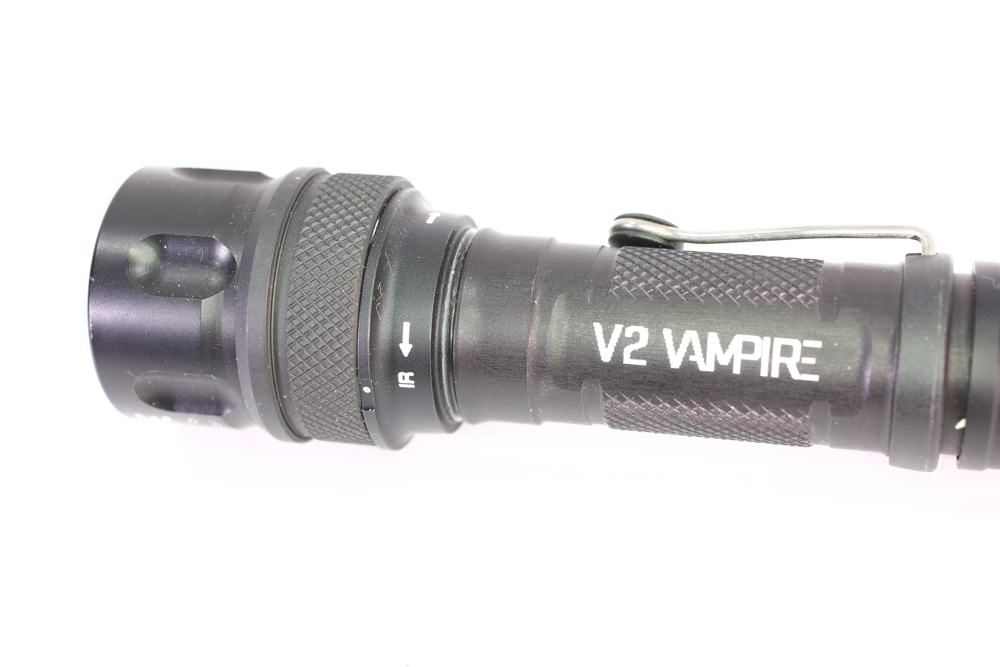
When you use NVG, you are magnifying existing light. To get more light, you need an illumination device that projects a beam in the infrared. Surefire can do that for you, with the Vampire, a white light or IR selectable light.

Generations

The technology used to produce an intensified image is rated by what “generation” it hails from. Basically, the lower the gen, the older the tech and the lower the results. The generations are 1, 2 and 3. There are other descriptors used by manufacturers, and there are some who are using a “Gen 4” description, but that isn’t an official government generation.

Basically, the newer the technology the more a unit costs, even if the housing and all the details are the same. In one instance, going from a Gen 2+ (some enhancements over a Gen 2, but not an official designation) up to a Gen 4 (again, not official) brings the cost from $1,700 up to $6,000.

There is also the matter of quality. The multipliers are made by bundling the microfibers together, processing them to create the core of the system, and then measuring them for performance. A core with a “dead” or inoperative tube will have a black spot in the image.

The manufacturing process is still art as much as science. The government has a standing order for the top-quality cores. If there are any left over after the government nabs all the ones they want/need, then the top-quality ones come down to use. Otherwise, we get the ones with the occasional black dot in the image.

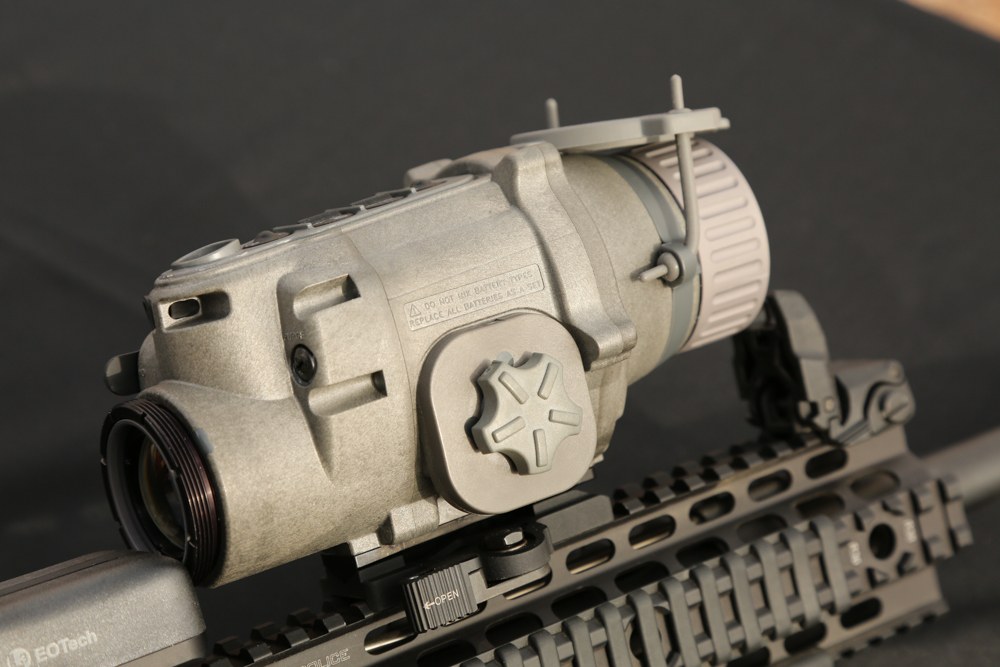
This EOTech LWTS is a thermal sight that will let you rapidly depopulate the hog cohorts. The only problem is the price, currently $14,000. That’s a lot of hog-shooting expense, but at night, it rules.

NVG Boosters

You can see more at night with NVG if there is light to see by. The way to do that is with infra-red. NVG is somewhat sensitive to IR, and if you use an IR floodlight or laser, you can boost what you see. Also, if you are in a hunting party for hogs using NVG, if anyone has an IR flood then everyone has one, at least where the flood is pointed.

Heat

Then there are “thermal” sights. These are sensitive to the infra-red spectrum. Now, the NVG gear is, also, but it isn’t sensitive enough to “see” anything but an IR laser. (That’s the green beam, in the green screen, you see in action movies.)

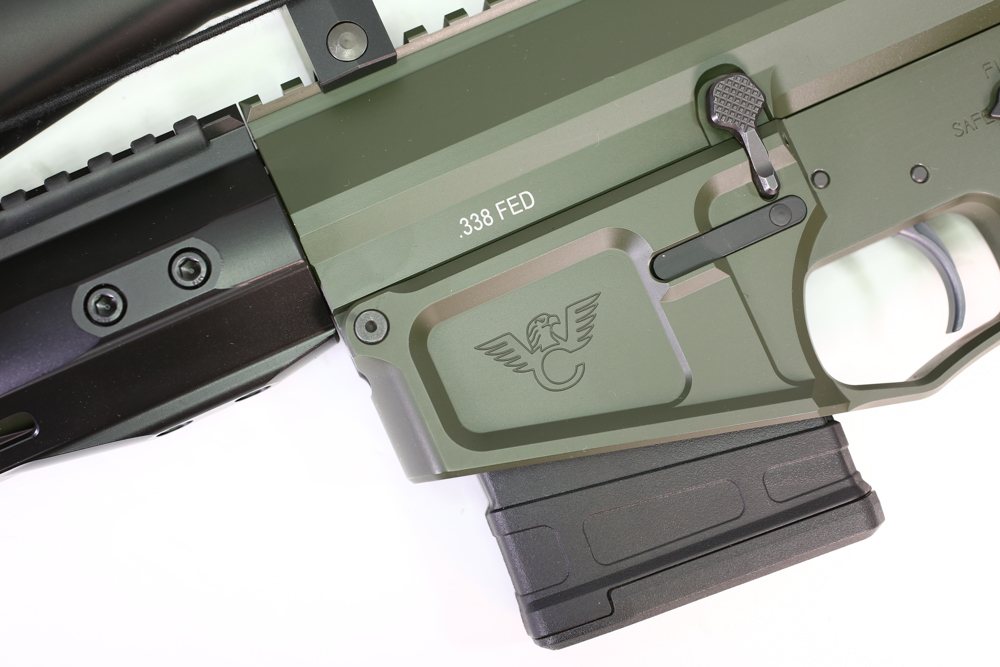
Hogs are not easy to stop. The more horsepower you can bring to the party, the better. The Wilson Combat in .338 Federal has plenty.

Thermal is the new NVG, and the prices are coming down while the resolution is going up. By seeing the infra-red spectrum, thermal sees where image intensifiers don’t. Even a little bit of a brush screen can hide something from a NVG. But if it is giving off heat, the thermal will see right through the thin screen of brush. It takes a lot to hide thermal.

Thermals, like NVG, come in viewers and aiming optics. Being new, you can take the price of a regular NVG, multiply it by five or six, and you have the price of a similar thermal.

Sound

Suppressors don’t hide the sound of the shot well enough to keep hogs from knowing they’ve been shot at. And they certainly don’t hide the “thump” of the bullet hitting a hog in the group, which alerts the rest, even if the reaction of the one being hit hadn’t so-warned them.

But it can hide the location of the shot well enough that they don’t know which direction to run for safety. A group will scatter, and some may even run towards you, as well as some away and to the side.

If you are going to hunt hogs at night, you’ll need some sort of image improvement and aiming system and a suppressor. Otherwise you’re just wasting your time.

This excerpt is from Gunsmithing the AR-15: Building the Performance AR.

Video: Embracing The Red Dot Advantage

0

There’s a reason why you need a fast-acquisition optic on your carbine.

There’s no relegating iron sights to the ash heap. Like a faithful guard dog, they’re ever vigilant, ready to serve and, in a pinch, save your life. It’s worth even going so far as to say that, outside your deer rifle or long-range wonder-gun, it’s plum foolish not to have a set of iron sights on your firearm – be it pistol, carbine or shotgun. At least, in a backup role.

Dependability and simplicity of iron sights duly noted, there’s nothing on the books that says they’re required to be your sole aiming solution. In fact, with the advancements in fast-acquisition optics, the failure to harness technology is as equally imprudent as jettisoning the tried and true. The advantage is there, might as well use it.

Running a barrier drill at Double Eagle Tactical Training, the potential of modern optics rings out as clear as a bullet striking a steel plate for Phil Massaro. The SIG ROMEO4H red dot makes marksmanship nearly a point-and-shoot affair, allowing the Gun Digest author to concentrate on precise tactical movements instead.

In the real world with a life in the balance, what shooter wouldn’t want to make aiming as intuitive as a trigger pull and focus instead on staying out of the line of fire? Imagine a jigger of adrenaline thrown in on top, then contemplate whether you want one illuminated red dot or a notch and blade to place a lifesaving shot.

Additionally, there’s a little matter of keeping both eyes open. Easier to accomplish – at least with a long gun – with an optic, the red dot enhances situational awareness.

In real life this is a decisive upper hand, allowing the identification and neutralization of multiple targets with greater ease. After all, it’s the one you don’t see that will most likely get you.

The Quintessential 22 Pistol: The Colt Woodsman

2

As another historic John M. Browning design, the first successful rimfire semi-auto pistol would later become the Colt Woodsman.

What makes the Colt Woodsman popular with gun collectors:

  • Designed by John M. Browning.
  • First successful rimfire semi-auto .22 pistol.
  • One of the most popular pistols of the early 20th century.
  • Was extensively hand fitted.
  • Now 40 years since they were in the Colt catalog.
  • Collectors categorize three groups, First (Pre-Woodsman), Second and Third series.
  • Some specimens can are valued at more than $4,000.

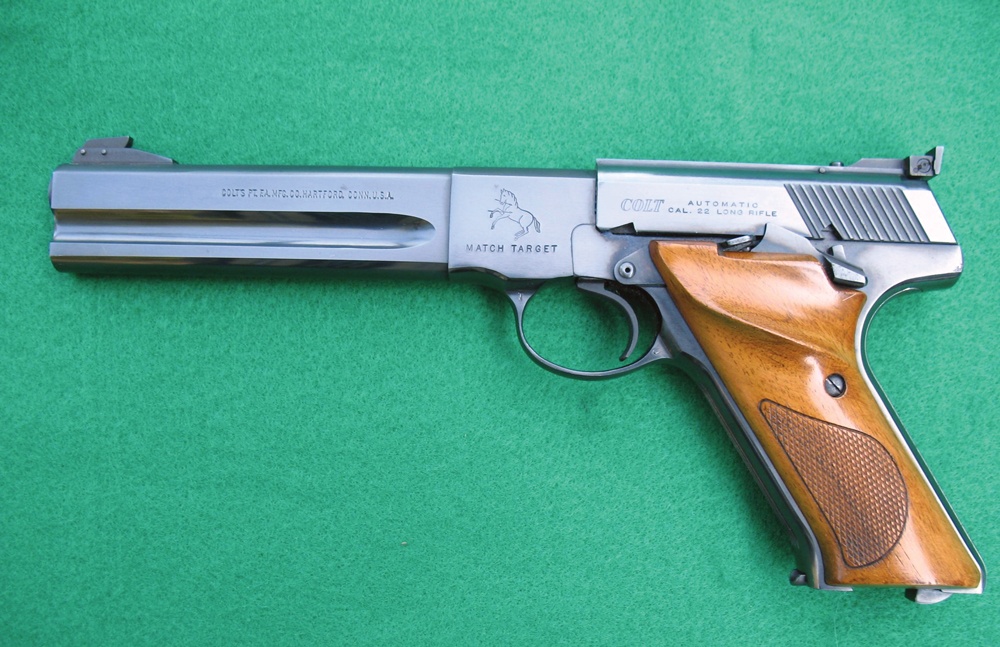
The classy Colt Woodsman .22 rimfire was one of the most popular pistols in America during the first half of the 20th century. In production from 1915 to 1977, the Colt factory in Hartford turned out more than 600,000 of the various Woodsman models. This total includes the Huntsman, Challenger and Targetsman — economy variations without features like adjustable sights, hold-open actions and thumb rests.

This is a Second Series Match Target manufactured in 1968.

Like most guns that were introduced in the early 1900s, the Colt Woodsman required a lot of hand fitting that would make it quite expensive today. Were it not for this, the guns of the Woodsman family probably would still be in production. It has now been more than 40 years since these models were in the Colt catalog, which adds to their popularity on the used gun and collector markets. “They aren’t making them anymore” is a frequent phrase heard when gun collectors get together.

The great gun designer John M. Browning came up with the original model of what later would become known as the Woodsman. His design was one of a significant historic nature; it was the first successful rimfire semi-auto pistol. Other gunmakers were plagued with functioning problems due to the rimmed cartridges hanging up in the magazine. Browning’s answer was a slanted magazine that positioned each cartridge slightly in front of the one below it, preventing the rims from catching on each other.

In 1911, Browning obtained a patent and then sold his design to Colt. Two of the company’s engineers, G.H. Tansley and F.C. Chadwick, made some minor changes and in 1915, the “Colt Caliber .22 Target Model” was introduced. That was the name of the pistol until 1927.

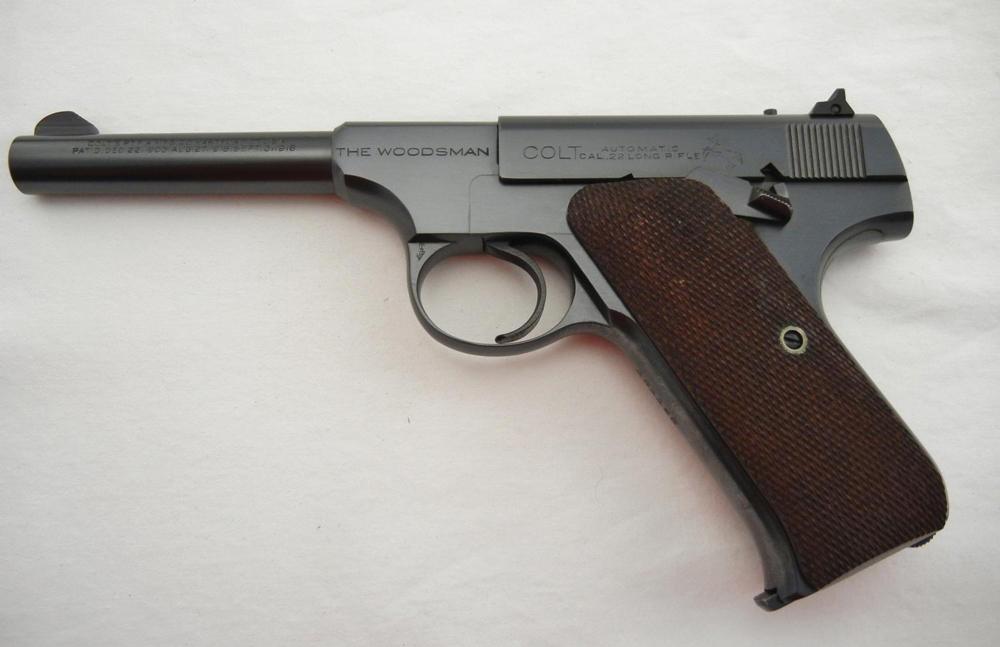
Made near the end of the Pre-War series, this Woodsman Sport Model came out of the Colt Hartford factory in 1941.
Made near the end of the Pre-War series, this Colt Woodsman Sport Model came out of the Colt Hartford factory in 1941.

Colt originally saw the Caliber .22 Target Model as a pistol for the target shooter, as the name implied. It was indeed popular for use on paper targets, but it also soon became a favorite of small-game hunters, trappers, hikers, fishermen, campers and other outdoorsmen. Hence, the new name “Woodsman” was chosen and that name appeared on the receiver starting at about serial number 54,000, in 1927.

The Pre-Woodsman and the first Woodsman Target models were designed to only be used with standard-velocity .22 Long Rifle ammunition. In 1932 changes were made in the mainspring housing to handle the higher pressures of high-velocity ammunition and all subsequent models were given this treatment. This change was phased in between serial numbers 81000 and 86000. The best way to tell which ammo should be used is to examine the mainspring housing. A checkered pattern in this location means it is one of the older guns and should only be used with standard-velocity ammunition. A pattern of grooved horizontal lines indicates it is a later model, designed for high-velocity ammo.

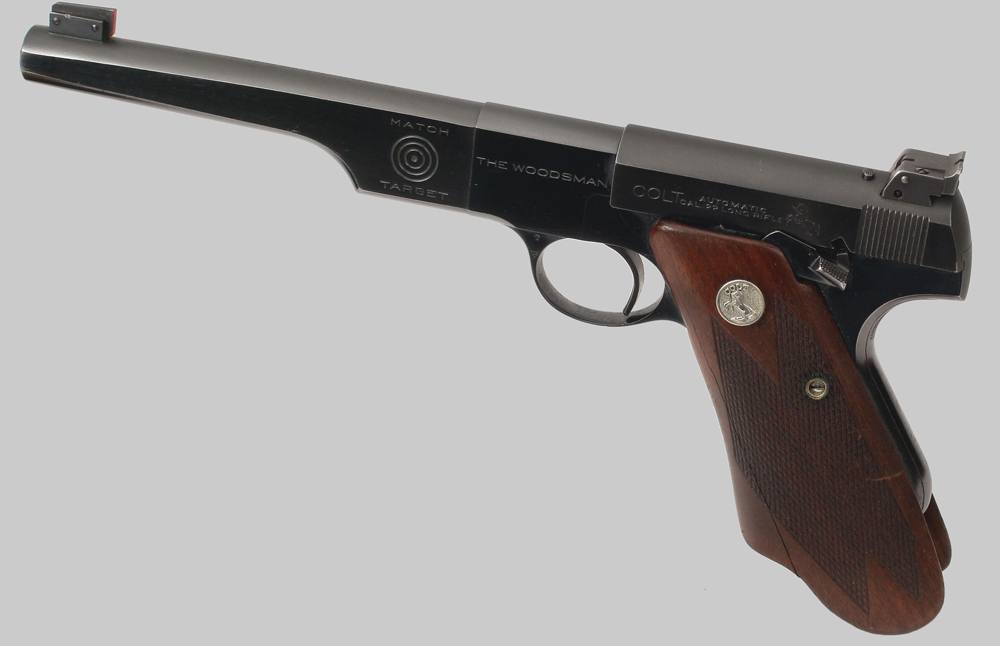
Recognized by its target logo and “elephant ear” walnut grips, this is a 1st Series Match Target Model, circa 1938.

Woodsman collectors categorize the different variations of the gun into three main groups:

First Series (1915-1942)
Pre-Woodsman (1915-1927)

  • Woodsman Target (6 5/8-inch barrel)
  • Woodsman Sport 1933-1942 (4½-inch barrel) Wraparound extended walnut “Elephant Ear” stocks
  • Woodsman Match Target 1938-1942 (6 5/8-inch heavier barrel)
  • Military Woodsman Match Target 1942-1944 (6 5/8-inch barrel) U.S. Property or U.S. Military markings, extended plastic stocks

Second Series (1947-1955)

  • Woodsman Target (6-inch barrel)
  • Woodsman Sport (4½-inch barrel)
  • Woodsman Match Target (4½- or 6-inch barrel)
  • Challenger (6-inch barrel)

Third Series (1955-1977)

  • Woodsman Target (6-inch barrel)
  • Woodsman Sport (4½-inch barrel)
  • Woodsman Match Target (4½- or 6-inch barrel)
  • Huntsman (4½- or 6-inch barrel)
  • Targetsman (6-inch barrel)

Various changes in features and options were made from one series to the next. On the First Series, the magazine release was at the heel of the grip. On the Second Series, this feature was a round push-button located behind the left side of the trigger guard, the same location as on the Colt 1911/1911A1 pistols. With the Third Woodsman Series, the magazine release was moved back to the heel of the butt.

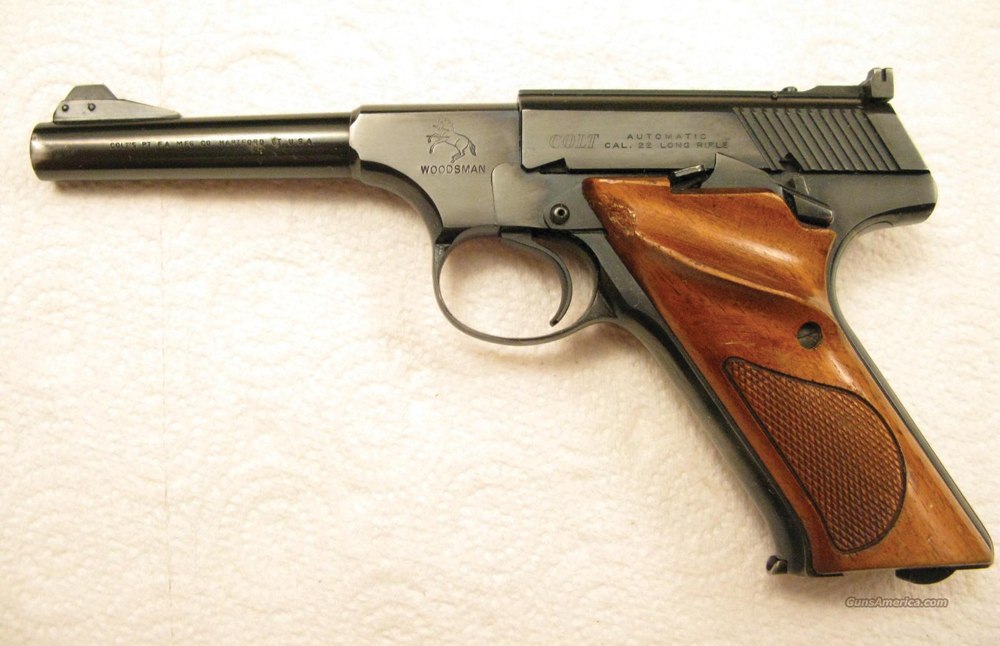
One of the most popular Woodsman models is the Sport variation of the Third Series, manufactured from 1911 to 1977.
One of the most popular Colt Woodsman models is the Sport variation of the Third Series, manufactured from 1911 to 1977.

On the First Series, the rear sight was adjustable for windage and the front for elevation. Colt referred to these as “adjustable sights,” but a fully adjustable rear sight was only available on the Match Target model. With the Second Series, the fully adjustable rear became standard on all Colt Woodsman models. Other Second Series changes included an automatic slide stop to hold the action open after the last round was fired, a lanyard ring in the butt and a thumb rest on the left side of the wooden grip.

Economy models, such as the Challenger, Huntsman and Targetsman, lacked most of the features mentioned above. All had fixed sights except for a lower-priced adjustable rear on the Targetsman.

Estimated Colt Woodsman Values

Estimated values courtesy 2018 Standard Catalog of Firearms.
FIRST SERIES
Pre-Woodsman
NIB       Exc.      V.G.       Good     Fair     Poor
$2,800   $2,200   $1,400   $850     $350    $200

Woodsman Target
NIB       Exc.      V.G.       Good     Fair     Poor
$2,500   $1,700   $1,100   $500     $250    $200

Woodsman Sport
NIB       Exc.      V.G.       Good     Fair     Poor
$2,600   $1,800   $1,300   $600     $250    $200

Woodsman Match Target
NIB       Exc.      V.G.       Good     Fair     Poor
$4,000   $3,500   $2,200   $1,500   $700    $600

Military Woodsman Match Target
NIB       Exc.      V.G.       Good     Fair     Poor
$4,400   $3,500   $2,000   $1,100   $500    $400

SECOND SERIES
Woodsman Target 6-Inch Barrel

NIB       Exc.      V.G.       Good     Fair     Poor
$1,800   $1,400   $1,000   $750     $350    $200

Woodsman Sport 4 1/2-Inch Barrel
NIB       Exc.      V.G.       Good     Fair     Poor
$2,000   $1,500   $1,050   $800     $350    $200

Woodsman Match Target 6-Inch Barrel
NIB       Exc.      V.G.       Good     Fair     Poor
$2,200   $1,700   $1,400   $900     $600    $350

Woodsman Match Target 4 1/2-Inch Barrel
NIB       Exc.      V.G.       Good     Fair     Poor
$2,500   $1,800   $1,500   $1,100   $650    $400

Challenger 4 1/2-Inch Barrel
NIB       Exc.      V.G.       Good     Fair     Poor
$1,050   $900     $600      $450     $300    $200

Challenger 6-Inch Barrel
NIB       Exc.      V.G.       Good     Fair     Poor
$950      $800     $500      $400     $250    $200

THIRD SERIES
Woodsman Target (6-Inch Barrel)

NIB       Exc.      V.G.       Good     Fair     Poor
$1,200   $1,000   $700     $450     $275    $175

Woodsman Target (4½-Inch Barrel)
NIB       Exc.      V.G.      Good     Fair     Poor
$1,400   $1,100   $750     $500     $300    $200

Woodsman Match Target (6-Inch Barrel)
NIB       Exc.      V.G.      Good     Fair     Poor
$1,900   $1,600   $950     $725     $500    $300

Woodsman Match Target (4½-Inch Barrel)
NIB       Exc.      V.G.      Good     Fair     Poor
$2,100   $1,800  $1,050   $800     $550    $350

Huntsman (4½ or 6-Inch Barrel)
NIB       Exc.      V.G.      Good     Fair     Poor
$850      $750     $500     $365     $225    $175

Targetsman (6-Inch Barrel)
NIB       Exc.      V.G.      Good     Fair     Poor
$950      $800     $550     $400     $250    $200

Editor’s Note: This article originally appeared in the July 2018 issue of Gun Digest the Magazine.

AK-74: Soviet Blaster for the 5.45x39mm Cartridge

0

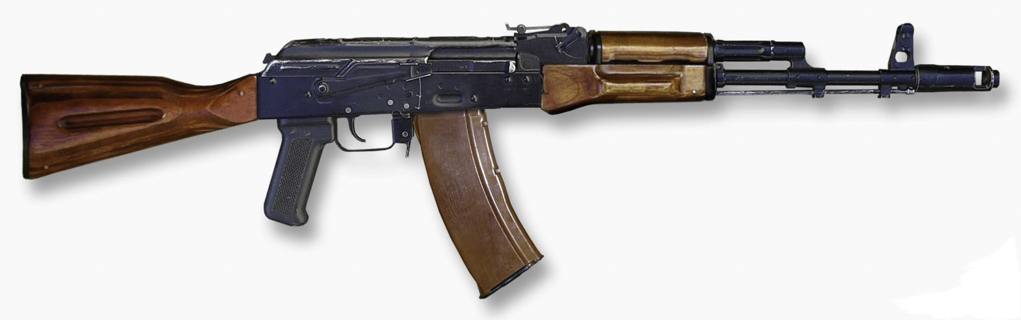
Developed in 1970, the AK-74 in 5.45x39mm was the Soviets’ answer to the U.S. Army’s M16 in 5.56mm NATO.

History of the AK-74:

  • In the early 1970s, the Soviets needed a smaller-caliber cartridge to answer the U.S. M16 in 5.56mm.
  • Following tests, the AK-74 was adopted in 1974. Based on the AKM, its production base was already established.
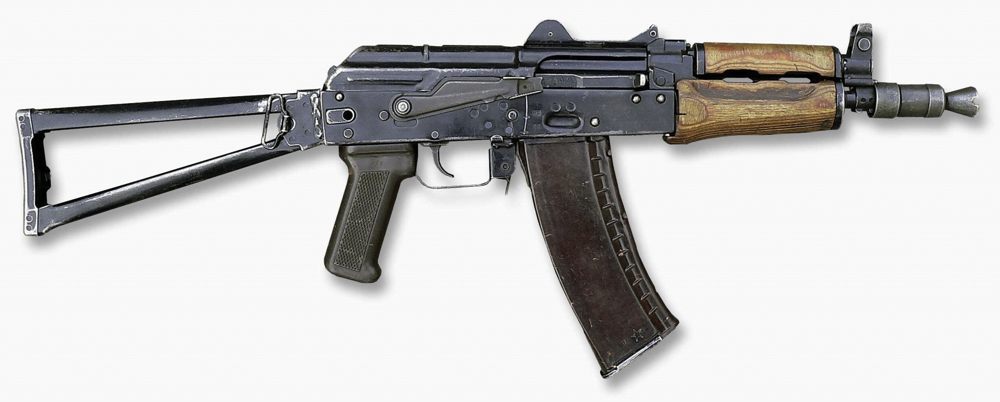
  • Variants included the AK-74 and AKS-74 (folder) Avtomats and the RPK-74/RPKS-74 (folder) light machine guns, plus a shortened AK-74U.
  • Compared to the 7.62 AK-47, the AK-74’s accuracy of automatic fire was improved by almost two times, the accuracy of single fire by approximately 50 percent.
A new family of AKs firing low-impulse 5.45X39mm ammunition was adopted for service in 1974.

Though the Russians may claim that they were working on the low-impulse, sub-caliber, ultimately it was an American designer that spurred the next and perhaps most dramatic stage of AK evolution.

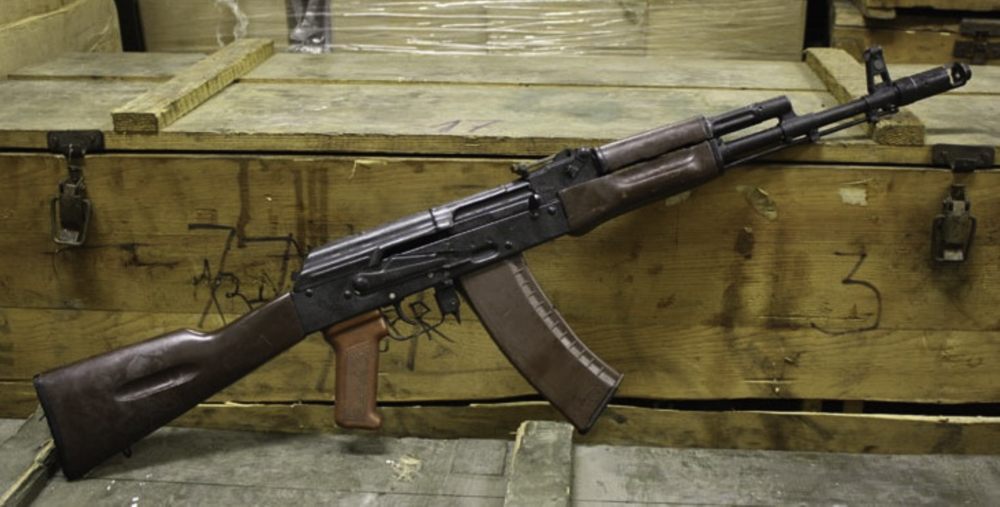
The AK-74, Kalashnikov Avtomat, caliber 5.45mm (GRAU index 6P20) was developed in 1970 by Mikhail Kalashnikov himself and adopted by the Soviet armed forces in 1974. It is the further development of the AKM. The development of the AK-74 is associated with the transition to a new low-pulse cartridge, the 5.45x39mm.

The new guns were first used in Afghanistan during the Soviet–Afghan campaign, then in all conflicts in post-Soviet territory. Currently, the AK-74 Avtomat is in service with the Armed Forces of most countries of the former Soviet Union. It’s a legendary gun with an incredible history full of doubts and intrigues when even its creator was against it. That is its story.

Despite the fact that the AK had very good tactical and technical characteristics, there was a constant feeling of the need to reduce the caliber of the main combat weapons for the modern motorized infantry.

Replacing the automatic Stechking pistol that was in service with tank, APC and artillery crews, the AKS-74U shorty was a logical choice due its commonality with the main battle rifle, the AK-74, with coolness factor to boot.

There has been a tendency among Soviet firearms designers and engineers to search for an optimal caliber for modern small arms. By the mid–1950s, the advantages of sub-caliber ammunition were clearly evident. Reduction in powder positively impacted the recoil impulse, which in turn lead to better accuracy, especially in the full-auto rate of fire.

The overall positive test results laid the ground for creation and release of tactical/technical requirements for new types of automatic infantry weapons of smaller caliber. Soviet designers were faced with the task of designing and developing an Avtomat or automatic carbine for the new low-impulse cartridge.

The “bump” to accelerate work in this direction was the appearance of the 5.56mm-caliber M16 rifle in the U.S. Army. The positive experience of using a small caliber cartridge by the Americans in Vietnam forced the Soviets to begin work on development of a similar cartridge for their automatic infantry guns.

As soon as the new ammunition was available and accepted by the Soviet military, it was decided to develop a new family of small arms for the new cartridge.

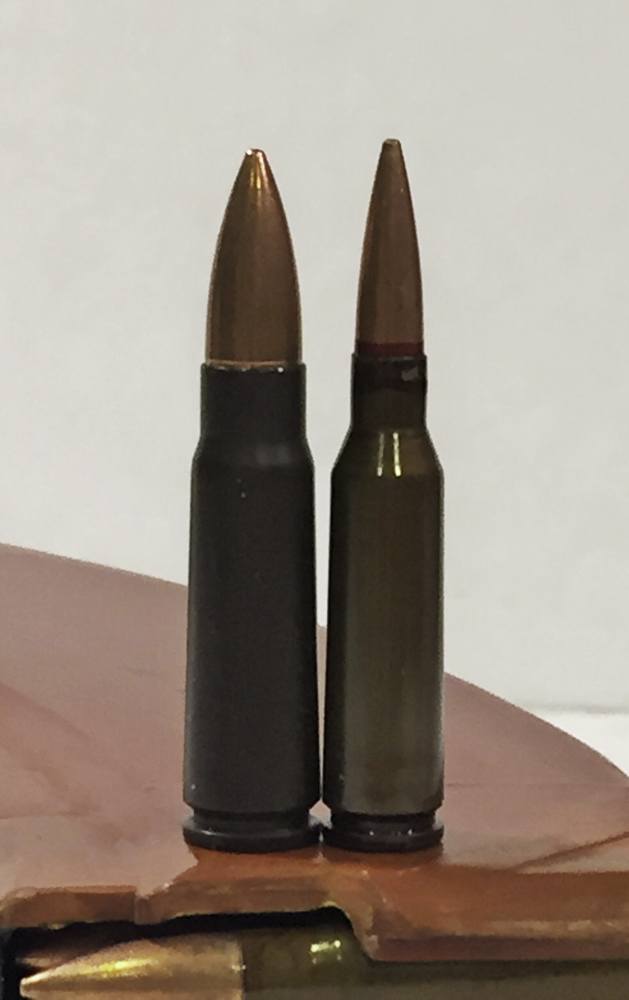
The new low-impulse high-velocity 5.45X39mm 7N6 round (right) next to the standard AK 7.62X39mm M43.

In 1964, the engineers compiled a draft of tactical and technical requirements for a new Avtomat project. The official requirements for the new family of small arms were issued to all firearms designer’s bureaus and organizations in 1966.

Work began in earnest in 1967 to develop a weapon for the new low-impulse, sub-caliber cartridge. By early 1968, ten Avtomats were offered for competitive testing, from which two were selected for the final military tests: yet again, the Kalashnikov Avtomat and Konstantinov CA-006 rifle.

It must be noted that most rifles submitted for trials were of highly advanced designs. The main goal of the new weapon was to significantly improve performance of the existing 7.62mm AKM Avtomat, with emphasis placed on accuracy.

Most rifles that were submitted for evaluation featured so-called “balanced automatic action.” This meant additional weight would travel in the opposite direction to the bolt carrier to counterbalance the recoil and reduce its effect on the gun’s stability.

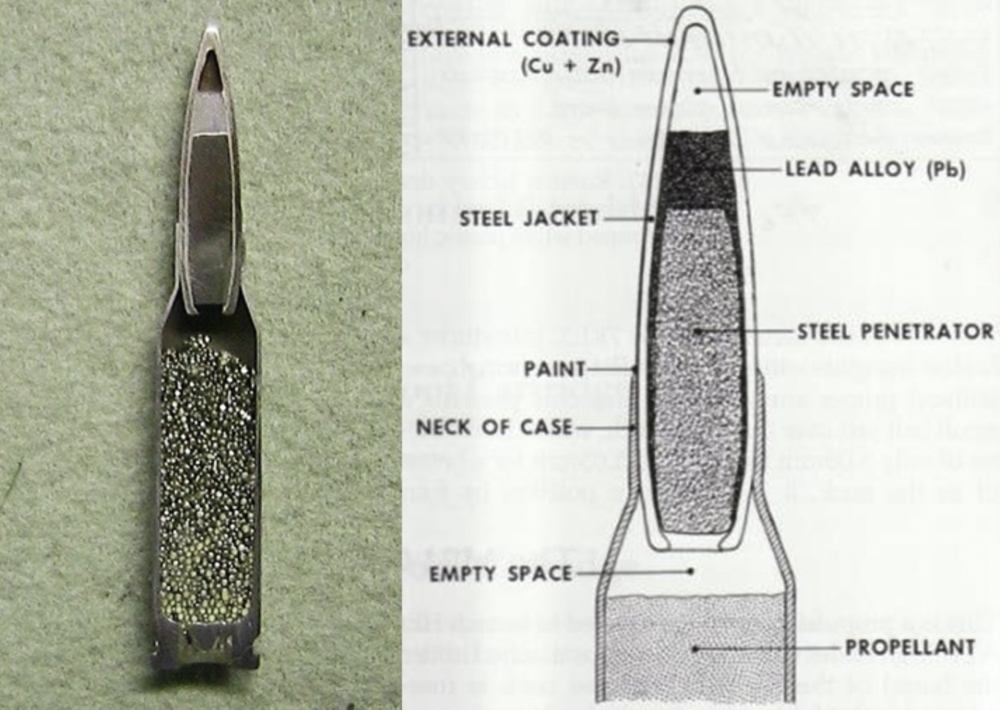
The N76 bullet construction was unconventional. The air pocket in the front caused this projectile to behave erratically on impact.

This type of counterbalance is very complicated, negatively affecting the reliability of the gun and making the gun more expensive to produce. The only weapon of the conventional design was the A-3 entry by Kalashnikov’s team. The sample they presented for testing was more or less the old AKM Avtomat, adapted for the new 5.45mm ammunition.

During testing, the main battle unfolded between the Konstantinov CA-006 and the Kalashnikov A-3 Avtomats. As I mentioned before, the product of Kalashnikov’s team A-3 was a deep modification of the AKM, the main battle rifle of the Soviet armed forces.

In the automatic system of the gun, a traditional scheme, only the bolt and barrel were re-designed to accommodate the new 5.45mm ammunition. The Izhevsk Avtomat did not demonstrate overwhelming superiority over its rival during the tests.

However, the Kalashnikov gun had one important advantage: it had an established and proven production base. The design of the AKM was simple and completely integrated into the production cycle of not one but two arsenals (Izhevsk and Tula).

It was familiar to the troops. The cost of development and the ability to quickly establish mass production at the height of the Cold War played a decisive role in choosing an A-3 Avtomat. In addition, the new Kalashnikov sub-caliber gun was lighter than its competitor.

Based on the results of the competition, once again it was decided to adopt the rifle of Kalashnikov design. By decree of the Council of Ministers of January 19, 1974, and the Order of the Minister of Defense of the USSR, the Soviet Army adopted a unified automatic caliber firearm complex of 5.45mm caliber, which received the AK-74 designation for the year of its acceptance.

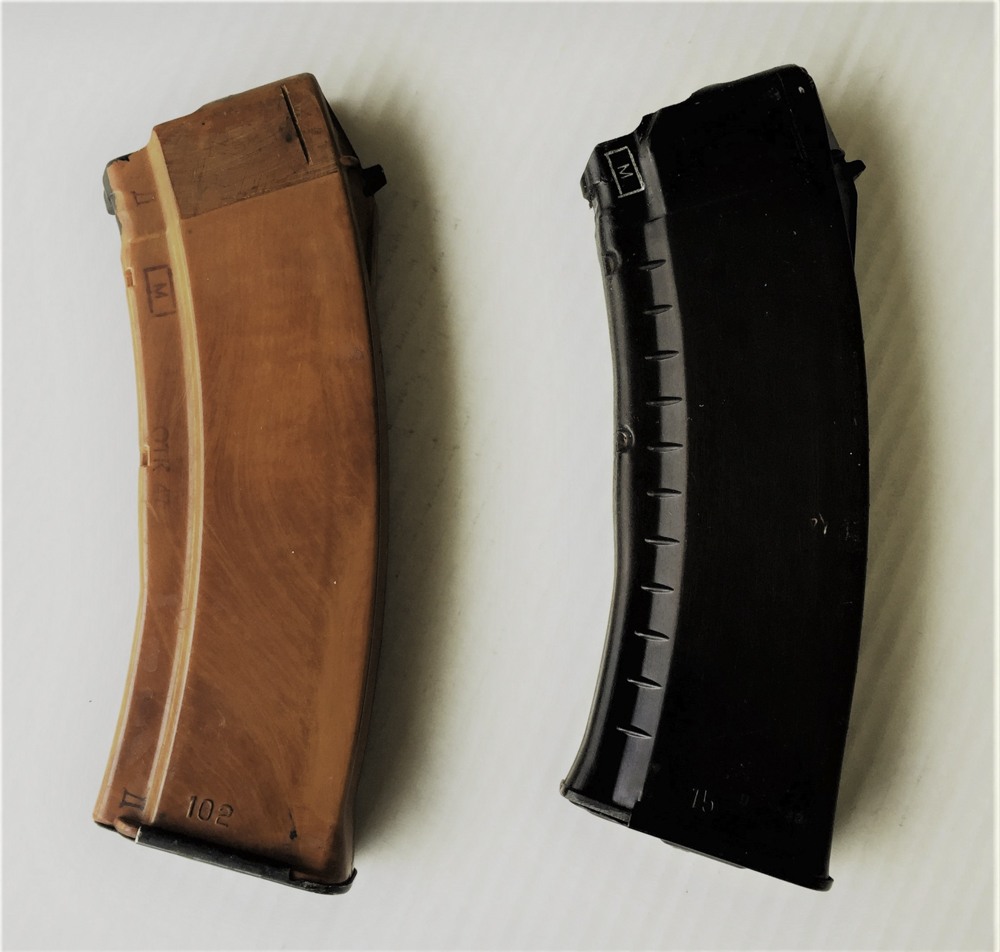
AK-74 upgrades included a switch from Bakelite material to glass-filled polyamide plum-color plastic in production of the magazines. Here are Bakelite (left) and plum plastic (right) AK-74 magazines.

Ultimately, apart from the 5.45mm Kalashnikov Avtomat (with designation AK-74 and GRAU index of 6P20), the entire family of infantry weapons was adopted for service with the Soviet armed forces. The new armament complex included the AK-74 and AKS-74 (folder) Avtomats and the RPK-74/RPKS-74 (folder) light machine guns. A little later, in 1979, a shortened AK-74U (Avtomat Kalashnikov sample 1974 Shortened) was also adopted.

The two main versions that began to be supplied to the troops were the AK-74 with fixed laminate wood stock, and the AKS-74 with stamped-steel skeletonized folding stock.

It is worth mentioning that the new folding stock on the AKS-74 folded to the left side instead of under the gun. This allowed the stock to be shortened to fall in line with the fixed-stock dimensions. This was impossible with underfolders, which had to clear the magazine and nestle around the lower handguard.

The AK-74 design, just as with its AK predecessors, was subject to tweaking and small alterations, even during mass production. In a way, the AK-74 was going through an evolution of its own. When first released in 1974, the new gun was “dressed” in a slightly modified set of AKM laminate wood furniture.

By the late 1970s, the original AK-74 Avtomat laminate furniture was very different from the first models. The handguards were “scalloped” and the “skinnier” buttstock had a more defined cone and two lightning grooves.

At the same time, to keep up with modern times, the Soviets were working on a plastic substitute. In the early 1980s, the first models appeared dressed in plum-color composite furniture. Attempts were made early on to replace expensive and technologically heavy laminate components with composite.

The Bulgarian AKK-74 is the closest copy of the Soviet AK-74, often distinguished by the solid wood furniture that was at one point in time painted. Later models even came in the Soviet plum-color composite furniture.

Bakelite was rejected due to poor heat diffusion in the handguards and for being too brittle. The only Bakelite component that survived was the iconic AK pistol grip. In 1986, the new plum set of furniture was made of an impact-resistant glass-filled thermoset AG-4B polyamide composite.

The gun’s furniture is not the only component that went through the mini-evolution. The 45-degree gas block inherited from the AKM Avtomat was replaced with the 90-degree one on later models. The infamous AK-74 muzzle brake’s construction changed to make it cheaper to produce.

Instead of one-piece construction with laser-cut zigzag front gas ports, the newer model was constructed of two pieces where the baffle was welded into the main body of the brake to block the expansion chamber, leaving two radial slits on both sides.

To reduce the probability of mechanical damage to the top cover of the receiver, its mounting was reinforced. The design of the return spring guide rod was changed with the addition of the locking “lip.” This would allow users to retain the top cover on the gun when shooting grenades from the GP-25 or GP-30 under-barrel grenade launchers.

The AK-74’s orange Bakelite 30-round magazines were replaced by the plum-colored polyamide ones. Here I want to add that there was a wide color spectrum of magazines, from milky brown to outright dark red.

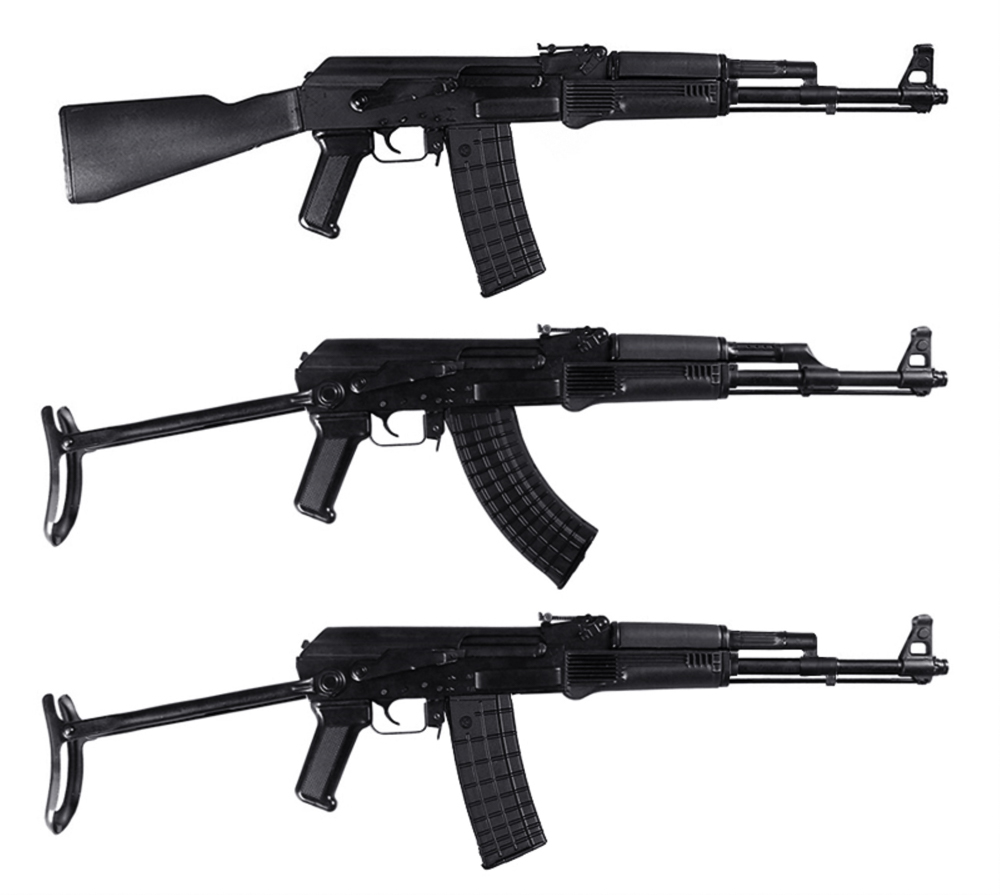
Though very different from the AK-74, the Bulgarian AR rifles, with a milled receiver and underfolding stock, employed many AK-74 internal components. Top to bottom: Arsenal AR (5.56x45mm), Arsenal AR-F (7.62x39mm) and Arsenal AR-F (5.56x45mm).

One more important component that evolved was the AK-74 bayonet. Although, I’m not sure if I would call what happened to the bayonet an evolution. In my opinion, it was changed for the worse. The original AK-74 bayonet was issued with later models of AKM rifles, especially the ones that were made by the Tula arsenal.

The new model had a rigid Bakelite scabbard that was lighter and did not require a rubber insulation sleeve. The bayonet’s Bakelite handle was redesigned and had two additional features.

Besides being a wire cutter, the bayonet could now also be used as a hammer and a pick. To do so, one needed to press the muzzle ring/handguard into the opening of the scabbard; the steel butt of the bayonet’s handle became a hammer and the blade a pick, with the scabbard being the handle.

Final bayonet design modification was made when the plum-colored AK-74 was adopted for service. The new bayonet had a spear-type double-edged dagger-like blade, with the handle and scabbard made from the same dark plum-color glass-filled polyamide as the new rifle’s furniture. This version of the AK bayonet lost its hammer and saw functions but retained wire-cutting ability.

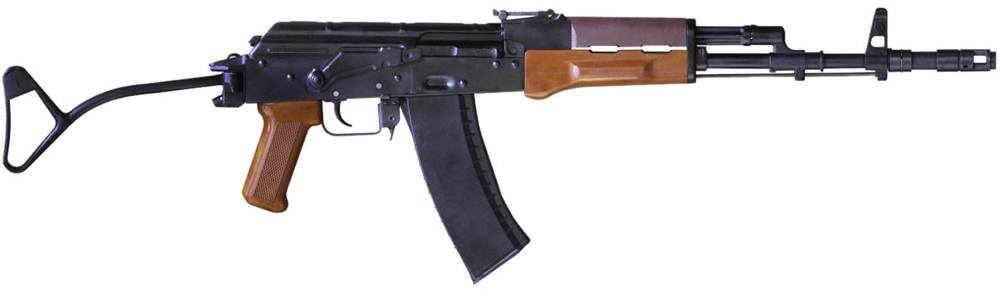
The Polish 5.45mm Kalashnikov Avtomat, Kbk wz.88 Tantal, is a true AK-74, with several unique features. The elongated muzzle device adapted for launching rifle grenades is still a very effective muzzle brake.

The design of the new Avtomat included the following components and assemblies:

  • Barreled action (receiver, front trunnion and barrel)
  • Top receiver cover
  • Front and rear sights
  • Bolt and bolt carrier
  • Muzzle brake
  • Gas tube with upper handguard
  • Trigger group
  • Lower handguard and buttstock
  • Magazine

[H3]Main Differences in Design and Innovation[/H3]
The main difference between the new Avtomat and its predecessor is the long and massive muzzle brake. This innovation, together with the reduction in caliber, allowed engineers to significantly reduce the recoil and improve the gun’s accuracy, especially when shooting in full-auto.

The Polish 5.56mm shortened carbine KbS wz.96 Mini-Beryl is simply the Onyks Avtomat chambered in 5.56x45mm NATO caliber with modern handguards and stock.

Although the compensator contributed to a significant decrease in recoil and thus increased accuracy, at the same time it significantly worsened the sound characteristics of the rifle. The powder gas now escaped not straight out of the muzzle, but out the sides, amplifying the sound of the shot.

The AK-74 design has basic components, assemblies and mechanisms identical to those of the original Kalashnikov design. The new rifle has nine assemblies unified with the AKM. Throughout the AK-74, 52 parts are identical to those on the AKM. The total volume of parts unification of the new Avtomat with the AKM was more than 70 percent.

This is clearly evident during the assembly and disassembly of the AK-74. All metal parts are protected from corrosion with a special paint-like coating. The main design changes were more external, with some minor inner-working elements. The fire controls of the new Kalashnikov remained unchanged. Many components of the AK-74 are made from casting blanks.

The barrel of the Avtomat is manufactured by means of rotary forging, during which the barrel and chamber are formed to a smaller caliber. All production was aimed at adapting a new model of the AK-74 to the production facilities of arsenals that had previously produced AKs and RPK machine guns of older modifications.

Apart from its fixed-stock version, the PM Md.86 was also configured as a folder. It retained the front grip typical for a Romanian AK.

The new gun inherited the front and rear sighting system, consisting of the front post sight that can be adjusted for elevation and windage for sighting purposes, and the range-adjustable rear sight. Some models of the Avtomat are equipped with side rails for use with optical and night sights. The GP-25 or GP-30 underbarrel grenade launcher can be installed on all versions of the AK-74. As before, the AK-74 is issued with the standard bayonet.

The AK-74’s accuracy of automatic fire was improved in comparison with the AKM by almost two times; the accuracy of single fire by approximately 50 percent.

Ranges of fire are:

  • At single ground and air targets — 500 meters (~547 yards)
  • At group ground targets — 1,000 meters (~1,094 yards)

Range of direct (flat) shot:

  • At chest size target — 440 meters (~481 yards)
  • At full size humanoid silhouette — 625 meters (~684 yards)

Accuracy requirements for the AK-74:

  • All four bullet impacts must fit into a circle with a diameter of 15cm (~6 inches) at a distance of 100 meters (~110 yards).
  • The average POI (Point of Impact) must deviate from the POA (Point of Aim) by no more than 5cm (~2 inches) in any direction.

Note, again, that these were the parameters for accuracy for automatic rate of fire.

Later models of the AK-74 sported glass-filled polyamide composite furniture of dark plum color.

AK accuracy is checked by firing a single shot at a test target or a black rectangle 35cm (~18 inches) high and 25cm (~10 inches) wide affixed on a 0.5×1-meter (20×24-inch) white board. The accuracy check is done at the range of 100m, from the prone position with a rest, with no bayonet and with regular bulk 7N6 cartridges. The rear sight is set at “3.”

The method used takes into account the average deviation of impacts from the centerline of grouping and must consist of at least 50 percent of all impacts. The total includes the deviations of the bullets and the average impact points.

In general, there was a significant improvement in the accuracy relative to the AKM and even more so in comparison with the AK-47. As an example, here are the AK-74 accuracy results when looking at the total median deviation at a distance of 800m (vertical and horizontal respectively) compared to other rifles:

  • AK-47 — 76cm and 89cm (30 and 35 inches)
  • SKS — 47cm and 34cm (18 1/2 and 13 1/2 inches)
  • AKM — 64cm and 90cm (25 and 35 1/2 inches)
  • AK-74 — 48cm and 64cm (19 and 25 inches)

This excerpt is from AK-47: Survival and Evolution of the World’s Most Prolific Gun.

Does This Mossberg 590 Tactical Shotgun Blow The Rest Away?

2

When it comes to the Mossberg 590 tactical options, this adjustable stock model might be the cream of the crop.

What does the Tactical Tri-Rail Adjustable offer:

  • Nine-round capacity.
  • 3-inch chamber.
  • Heavy-walled barrel.
  • 6-position adjustable stock.
  • 20-inch barrel.
  • Cylinder bore.
  • M16A2 pistol grip.

Of all Mossberg 590 tactical shotguns this is the one fits me perfectly, and the only pistol grip shotgun that I like: the 590 A1 tactical pump. This is an outstanding example of a traditional pump, based on the original and long-serving Mossberg 500 series. It was previously only available in law enforcement and military models and is part of Mossberg’s extensive Special Purpose line of shotguns.

A1-First

What makes this gun, formally called Tactical Tri-Rail Adjustable, work so well is the use of the M4 carbine six-position buttstock complete with M16A2 pistol grip. With the M4 grip collapsed to its smallest length, it is a perfect fit. In addition to the stock configuration, the 590 A1 I tested came equipped with three-dot (ghost ring sights are also available), non-adjustable, non-luminous front and rear sights. Very solid. The only complaint I have is that the rear notch is a tad too wide for the front, and I would prefer the ability to regulate the sights for full power or 3-inch magnum loads. The magazine capacity of this particular version is nine rounds. It’d be nice to see an 11-round Mag-Fed version come down the line.

I had never worked with Mossbergs prior to writing this, so I don’t profess to have as much familiarity with them as I do the Remington 870, but I can tell you I really liked this gun. Like I mentioned earlier, the handling of this gun is quick, and it feels more like a 20 gauge pump than a 12.

What I also noticed about it was the recoil, or lack thereof. I had it at the range, along with a Mossberg gas operated semi-automatic 930, a bigger, heavier gun with a standard stock. As I got buckshot out to test both guns, Federal full power 9-pellet 00 Tactical, I expected a bigger, gas operated gun with an actual recoil pad to shoot with less perceived recoil than a smaller, lighter pump shotgun. I was surprised to find that the perceived recoil of the 590 A1 was less than that of the 930! Actually, I was shocked how I got thumped by the 930 over the 590 using the same exact loads.

A1-Second

The stock on this Mossberg 590 tactical shotgun is angled sharply downward away from the receiver, and not straight back like it would be on an AR-15 M4 due to the design of the receiver. Remember, a sporting design had to be adapted to a military part that was originally never designed to be on a shotgun. So I’m speculating that some of the free recoil energy is being dispersed straight back into nothing, with a lesser part of it being sent downward through the stock. We’ve all heard that straight stocks on guns cause it to “kick more,” right? That’s the only way I can explain it. I hope that’s plausible, but even if it’s not, I’m sticking with it.

Mossbergs have a sliding safety on the rear of the receiver. It took just a little bit of familiarization to be comfortable with it as compared to the pushbutton trigger-guard safety on the 870. The main reason is that I have always worked my law enforcement shotguns out of Condition Three, and almost never actually engaged the safety during training or use in the field. I just plan on leaving the safety off during all usage. I also had been taught at an early age and in Boy Scout shooting programs that safeties, particularly crossbolt type safeties on long guns, were unreliable and should never be trusted or counted on, so I always kept an empty chamber unless actually shooting. In police work, the safety position shouldn’t be a big issue. I worry more about where the slide release is than the safety, and on the Mossberg, the slide release button is on the left rear of the trigger guard, rather than the left front. The A2 pistol grip on this particular model slightly obstructs (very slightly) the release button and it took a little while to get used to it, but it was also no big problem. The entire weapon has a parkerized finish, including the sights.

ins_590A1-XS-Systems1 (1)

The 590 A1 also worked well for smaller statured females in my academy. They found it easier to work with and/or better for them than the 870 Express magnums we use. They also felt there was less recoil than with the Remington 870.

The construction and setup of the Mossberg feels solid, and it is the only brand to have passed military spec requirements to become part of our defense inventory, so there has to be something going for it. If anything, it is priced reasonably, and it is a U.S.-made piece, which is remarkable for a price range that competes with Turkish-made guns.

Tactical Tri-Rail Adjustable Specs:
Gauge: 12
Capacity: 9
Chamber: 3″
Barrel Type: Heavy-Walled
Barrel Length: 20″
Sight: Ghost Ring
Choke: Cylinder Bore
LOP Type: Adjustable (six positions)
LOP: 10.75″ – 14.25″
Barrel Finish: Parkerized
Stock Finish: 6- Pos Adjustable Synthetic/Alum (Black)
Weight: 7.5
Length: 36.125″
MSRP: $879

Related (Model 500 Adjustable, Not 590):

Editor’s Note: This is an excerpt from Gun Digest Book of Tactical Shotguns.

Expand Your Knowledge of Shotguns

Video: Properly Shooting From Behind Cover Or Concealment

0

There’s more to using cover and concealment than just getting behind one or the other.

Duck and cover, right? If properly utilizing cover and concealment were only that simple. Like all things self-defense, correctly using a barrier and even returning fire from behind it is as nuanced as the perfect holster.

Lek Nazi, owner-operator of New York’s Double Eagle Tactical Training, goes over some of the finer points of shooting from behind a wall, car or what have you. Simple as it might sound, what the former law enforcement professional’s advice boils down to is giving yourself room to operate. Given human nature and the direness of the likely situation, it’s tougher than you might think.

Imagine you were in a lethal-force encounter and you made it to solid cover, what would your instincts compel you to do? Odds are you’d hug it like you were graffiti. An understandable reaction, but one that puts you at a distinct disadvantage if you have to return fire or do much else. Take extending your arms in full to shoot your handgun, it’s near impossible in this position. In turn, you’d end up exposing more of your body to get your pistol into the fight. Not a prime proposition.

A little breathing room between you and your barrier does wonders, giving you observation and operating room, while keeping you out of a direct line of fire. Not to mention, if things go south you’re in a better position to bug out.

Mild consideration, giving yourself space behind cover or concealment makes a world of sense. But don’t expect it to be intuitive. Like all things self-defense, much of the challenge is overcoming natural reactions to fast and stressful situations. And as we all know, there’s only one way to achieve that – training and plenty of it.

For more information on Double Eagle Tactical Training, please visit their Facebook page: www.facebook.com/doubleeagletactical.

Classic FBI Guns: Thompson Submachine Gun

0

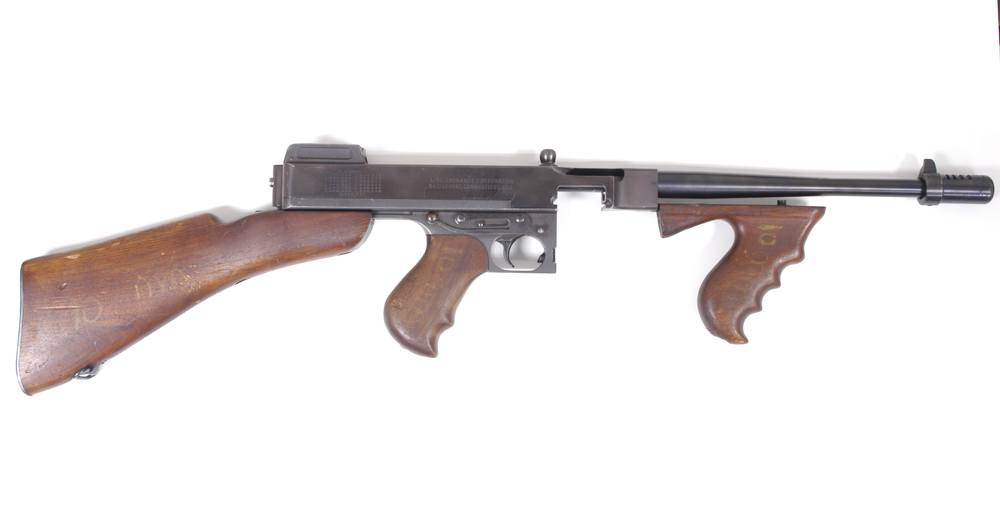
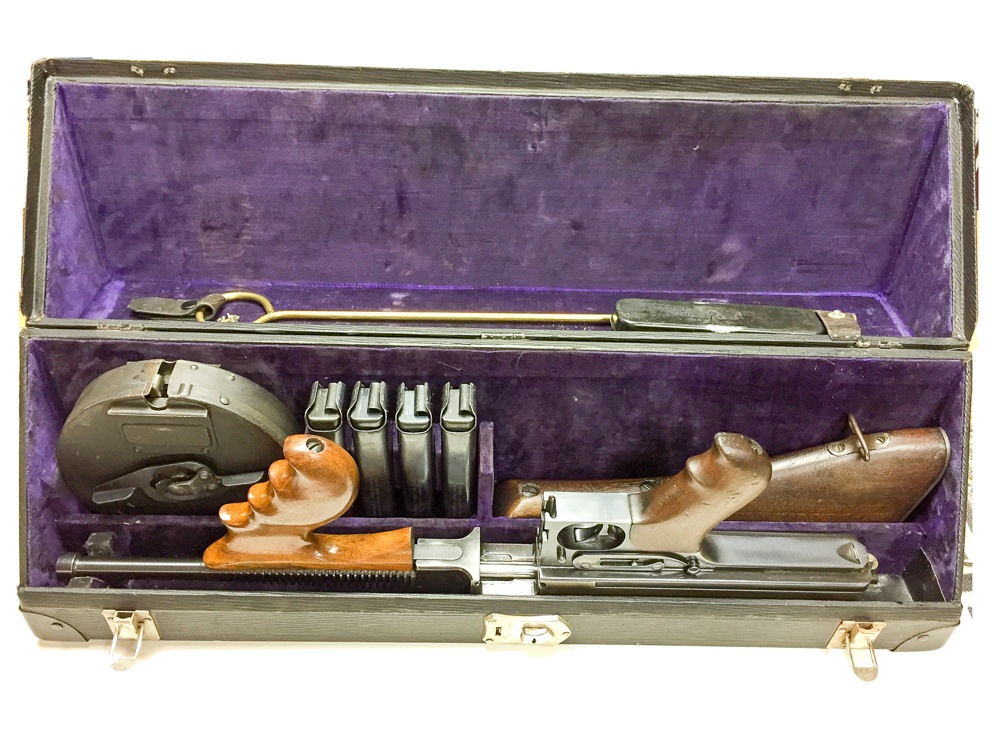
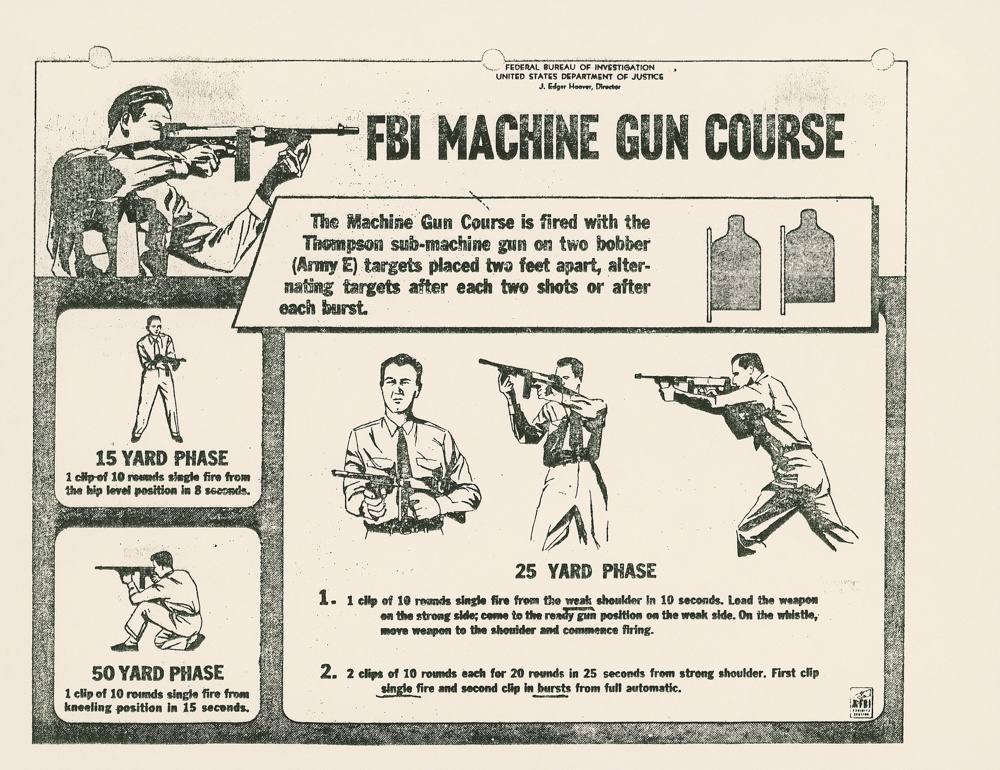
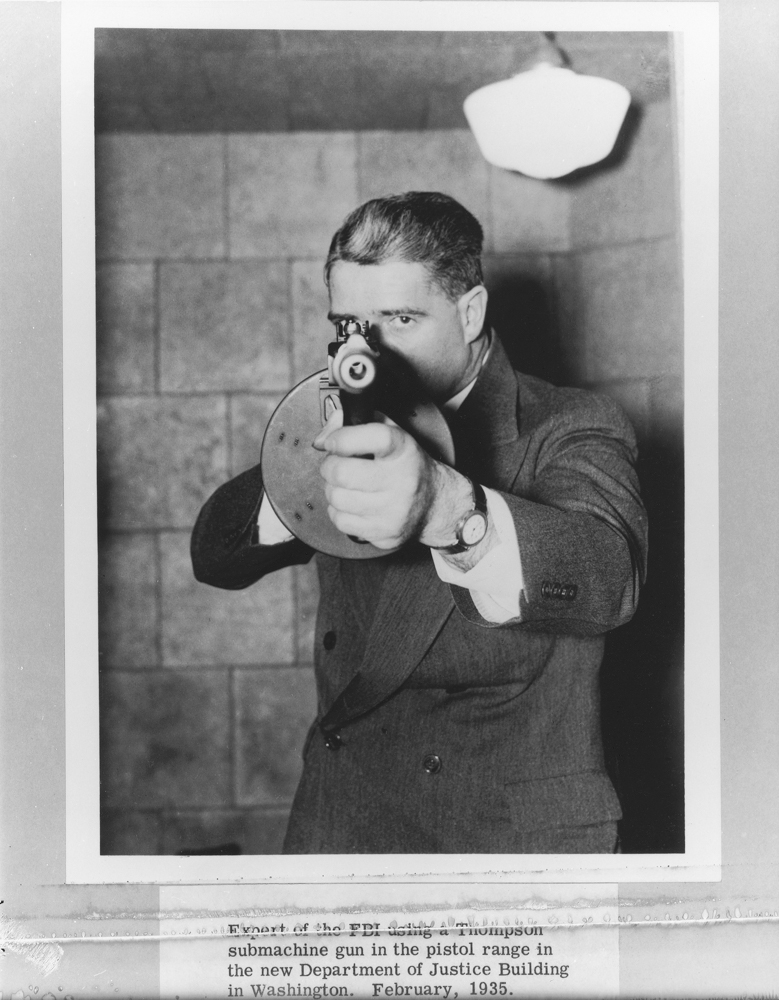
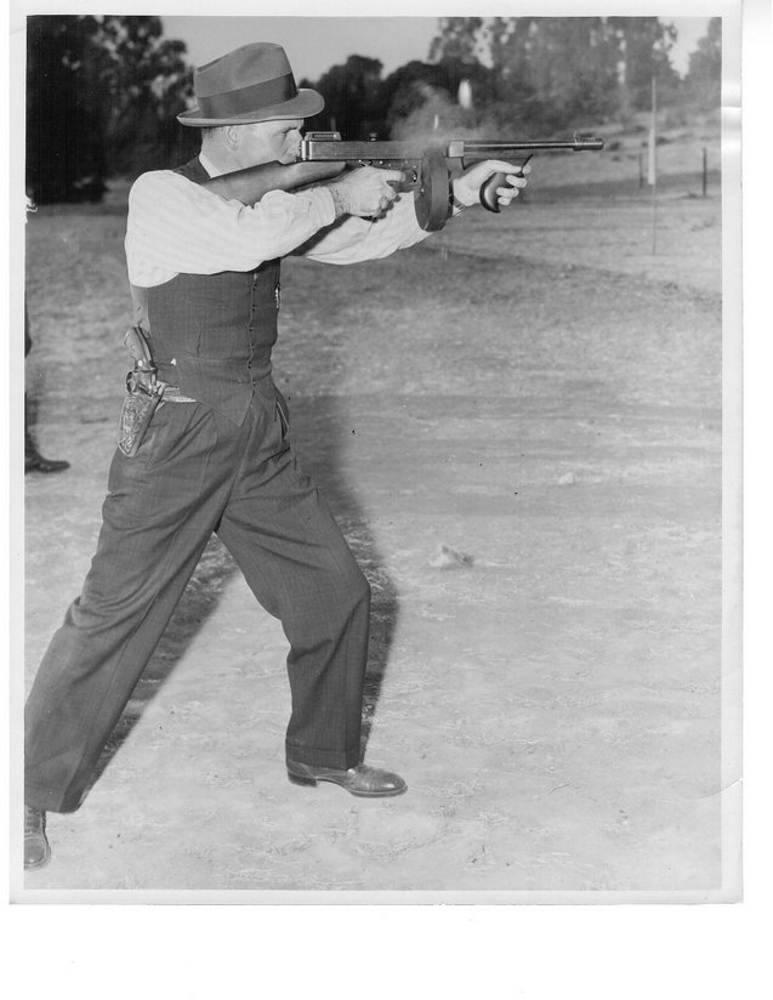
Contrary to public opinion, the Thompson submachine gun was not only used by Prohibition-era gangsters. In fact, the “Tommy Gun” was a favorite among early FBI agents as well.

  • The Thompson can be fired from 20-round box mags, or 50- and 100-round drum magazines.
  • Rate of fire of the Tommy Gun is 1,500 rounds per minute.
  • The Thompson was used in the FBI until the early 1970s.
Of all the weapons identified with the FBI, the Thompson submachine gun tops the list.

The Thompson submachine gun was created by retired General John T. Thompson, who founded the Auto Ordnance Corporation to develop the design. The original gun had no stock or sights and fired at a rate of 1,500 rounds per minute. The design was modified and, in 1920, Auto Ordnance signed a contract with Colt Firearms to build 15,000, which were designated the Model 1921AC.

This model was equipped with a removable shoulder stock and an elaborate rear sight. It could be fired with 20-round box magazines or 50- (L) or 100- (C) drum magazines that required disassembly to load and featured a spring that had to be “wound up” like an alarm clock.

FBI handout of the schematic of the Thompson submachine gun.

The military version had a horizontal forearm, but the FBI purchased theirs with a vertical foregrip. Most versions originally had a finned 10.5-inch barrel and a Cutts compensator to help control the recoil in full-auto mode.

The gun weighed about 10 pounds and with stock attached was just over 31 inches long. The design was based on a bronze lug that retarded unlocking the action, called the Blish Principle.

However, experiments years later showed that this didn’t have much effect and the weight of the bolt assembly controlled the pressure. The rate of fire of the Model 1921 was about 800 rounds per minute and this was thought to be too fast for military use. So most of the guns built by Colt were modified with a heavier bolt and stiffer recoil spring. This brought the rate of fire down to about 600 rounds per minute.

To identify these modified guns, the Model number was overstamped with number 8 over the last digit. These were then identified as Model 1928 Navy Model and often called “Overstamps.” This is the model most purchased by the Bureau. The gun was made in .45 ACP caliber. However, a few were made in a more powerful .45 Thompson caliber and even in .30 Carbine, but neither were used by the FBI.

Thompson submachine gun in FBI case with all accessories. Photo: Tracie Hill

The Thompson, also known as the Tommy Gun and the Chicago Typewriter, particularly in the press, was used extensively in the FBI until the late 1960s or early 1970s. When John Cox went through new agent training in 1961, his class shot Thompsons.

Back in the 1930s when the Thompsons were in heavy use, a carrying case was designed and built to FBI specifications. The black case, made by the Kansas City Trunk Company, held the gun with stock stored separately, a cleaning rod, and had room for four 20-round magazines and one 50-round drum mag.

They are now, of course, prime collector’s items, as is the spare parts kit in the shape of a 20-round magazine. During World War II, the Thompson was simplified to a straight, blowback design known as the M1. The bronze lug of the Blish system was dropped but the rear of the receiver had to be reinforced for reliability. The FBI never issued the newer M1 Thompsons.

Several courses were designed for the Thompsons. One was the “FBI Machine Gun Course.” (The Bureau continued to call them machine guns even though technically they were submachine guns, firing handgun rounds instead of rifle rounds.)

Author fires the Tommy Gun during demonstrations at the FBI Tour, FBIHQ.

The course consisted of 50 rounds fired from 15 to 50 yards, both single fire and full-auto in bursts. The one-page sheet on the course erroneously called the magazines “clips.” The agents fired on a pair of Army E bobber targets, side by side.

Of course, the Bureau wasn’t the only agency that acquired Thompsons. Many police agencies, large and small, bought them. Unfortunately, this became a prime source of Tommy guns for gangsters. Many crooks, including Dillinger, stole them from police departments. (As were National Guard armories that were targeted for Browning Automatic Rifles.)

Around 1970 or ’71, FBIHQ ordered the destruction of most Thompson submachine guns in the field. The various field offices could keep a small number for tours and shooting demonstrations, and a few were kept at Quantico for use on the popular FBI tour in Washington, DC. In total there were 749 guns destroyed.

A few more were retained at Quantico. This destruction order was found to be premature, as there was no official replacement designated. The Bureau was then without operational submachine guns. The shortage caused a scramble for temporary replacements and several substitutes were acquired.

R7510-FBI-Guns-Thompson-Submachine-Gun-5

Lou Padula, the Principal Firearms Instructor at Washington Field Office, picked up many M3 and M3A1 “grease guns” from the military and many were retrofitted at the Quantico Gun Vault with thumb safeties. They were, of course, in .45 Auto but one arrived in 9mm Luger, probably a fugitive from British Lend Lease. The Gun Vault already had a grease gun in .45 caliber in its reference collection with a curved barrel for use by tankers. Several MAC 10s were also acquired.

Former Agent, Tom Riley, who also happened to be my firearms instructor, told me that he arranged with his contacts in the Marine Corps to obtain surplus firearms from the Navy depot at Crane, Indiana. He and other FTU instructors drove a Bureau car there, rented a trailer and hauled it back full of M3 “grease guns” and M1 Garands.

Later, he borrowed sample weapons from the Marines to evaluate for possible replacements for the Thompsons. They were particularly impressed with the H&K MP5 but FBIHQ didn’t want to purchase foreign weapons, at least at first.

The Bureau didn’t lack any spare parts for those Thompsons. Prior to their being phased out, the Academy Gun Vault received an interesting phone call from a supply unit of the U.S. Marine Corps. They asked if the FBI still used Thompsons and if the agency needed any spare parts, free of charge and transportation included. The Gun Vault replied yes and soon forgot about the offer.

In this posed photo, a special agent holds a Thompson with a 100-round drum magazine in the Justice Department range. The photo is dated February, 1935.

Some months later, a phone call from Mainside, Quantico, advised the shipment of parts had arrived. Lester Limerick, then head gunsmith, told them he would have a pickup truck sent to the depot to pick them up. The reply: ‘Better send something bigger than a pickup. There are most of two boxcars full of parts for you!’

The Marine Corps had found a way to clear all its old inventory off the books with one call. The Gun Vault had to sort through thousands of parts, many still wrapped for long-term storage, to pull what they needed. A rumor is still going around that most of the parts were buried somewhere on the academy grounds. Indeed, the FBI could probably buy a new range complex for what those parts would be worth today.

“Jerry” Campbell, another alumnus of OKCPD, participated in both the Dillinger and Ma Barker shootouts.

The FBI finally adopted, in my opinion, what was at that time the finest submachine gun in the world, the Heckler & Koch MP5. We had already had experience with the short version of this gun, the Kurtz, and the SD, the suppressed model. The Bureau acquired the single-fire model, the SFA2, for field agents and the select-fire version for SWAT.

The gun was accurate, reliable and easy to fire. Its one drawback was that it didn’t lock back on the last round. To help overcome this, 9mm tracer ammunition was made available to some SWAT and HRT members who wished to add them to the bottom of their magazines as an advanced warning that they were about to go dry, a trick used by fighter pilots during WWII.

I recently discovered one of the most unusual Thompsons the FBI ever owned. Tracie Hill, President of the Thompson Submachine Gun Collectors Club told me about it and even sent me a photo. It was of a Thompson in 10mm! I couldn’t believe him. What on earth would the FBI want to convert one to that caliber? But my latest trip to Quantico confirmed that one was in inventory, assembled at the Academy Gun Vault, but no one still there could tell me why it was made.

The H&K MP 5 SFA2, which replaced the Tommy Gun. This was the semi-auto-only version with a solid stock for use by non-SWAT agents. It was chambered in 9mm.

When the Smith & Wesson Model 1076 was being adopted by the FBI, at least for a short time, it was decided to purchase MP5s in 10mm caliber. It took Heckler & Koch a lot of research and design work to make the conversion.

By the time they had the project completed, the 1076 was being dropped but they were so far along the FBI decided to still purchase the guns. It turned out that 10mm ammunition cost over twice as much as service 9mm but FTU thought it too late in the procurement process to change them to .40 S&W caliber, to match the new Glocks. There are still MP5s in the field, in both 9mm and 10mm, but they are seldom used.

Editor’s Note: This excerpt is from Guns of the FBI, A History of the Bureau’s Firearms and Training, available now at GunDigestStore.com.

Walther CCP M2 Goes Tool-Less For Takedown

0

Easier to field strip, the CCP M2 makes routine maintenance a snap.

What the CCP M2 offers:

  • Tool-less takedown.
  • Gas-piston delayed blowback operation.
  • Cocking indicator.
  • 3.54-inch barrel.
  • 5.5-pound trigger pull.
  • 1.18-inch width.
  • 8+1 capacity (9mm).
  • 22.33-ounce weight.

Smooth shooting and svelte aren’t exactly the first things that come to mind when talking blowback 9mm pistols. Yet, it’s what Walther achieved in 2014 with the release of the CCP. Innovative, the pistol utilized a piston system (in Walther argot, SoftCoil Gas Technology) that delayed the blowback, deadening the recoil along the way. Quite a feat, the CCP was a kitten to operate and shoot, all without boat-anchor heft. All ideal for concealed carry.

Walther_CCP-M2-Black_RS_5080500

So much going for it, you’d think the spry little single-stack nine would have few nits to pick. Overall, it didn’t, save one — takedown. Almost an afterthought with most handguns, field stripping was a bit more arduous with the CCP, requiring something dreaded among all handgunners — tools. Not a deal breaker, but certainly less convenient than a takedown lever. Though now it appears the days of the pistol’s special disassembly tool (or at a bare minimum a screwdriver) are numbered.

Eagerly anticipated by Walther fans, the newly released CCP M2 requires little more than a functional finger break down. Now, a simple flick of a lever at the aft of the pistol springs the slide from the frame, making routine maintenance much less sigh-inducing. Maybe not an out-and-out gamechanger, but unquestionably tool-less takedown does make the pistol more appealing.

Outside of easier takedown and a blaze-red striker indicator, there isn’t a ton of difference between the CCP M2 and the original. Not necessarily a bad thing. Walther improved where it needed to and left what worked with the striker-fired, including its slim 1.18-inch width, 22-ounce weight, 8-round capacity and, of course, utmost shootability. Also, price; the CCP M2 has an MSRP of $469, same as the first generation pistol.

Walther_CCP-M2-first

Other notables on the CCP M2 include a 3.34-inch barrel, 5.5-pound trigger pull, .27-inch trigger travel, Picatinny rail on the frame, manual thumb safety, three-dot polymer sights and ambidextrous magazine release.

CCP M2 Specs:
CALIBER: 9MM
BARREL LENGTH: 3.54″
TRIGGER PULL: SA 5.5 LBS
TRIGGER TRAVEL: 0.27″
CAPACITY: 8 RDS
OVERALL LENGTH: 6.41″
HEIGHT: 5.12″
SAFETY: MANUAL + 1 AUTO
WIDTH: 1.18″
WEIGHT EMPTY: 22.33 OZ

For more information on the CCP M2, please visit: www.waltherarms.com.

Gun Values: What Are Your Firearms Worth?

3

Gun Values by Gun Digest lists more than 18,000 firearms models dating back to the early 19th century, offering more than 110,000 prices over six condition grades.


  • Information from Standard Catalog of Firearms.
  • Lists some 18,000 firearms models back to the early 19th century.
  • More than 110,000 prices over six condition grades.
  • Subscription options from 3-day access to monthly and annual packages.
  • Free firearms descriptions and images.

We live to shoot. That pretty much sums up being a gun guy or gal. And few things compare to hours smashing clays or pitching rounds down range. Well, maybe one: getting a new gem to add to your gun safe.

SIG

As luck would have it, we live in an absolute golden age of gun selling and buying. With gun stores, auctions, online retail outfits and gun shows seemingly multiplying by the minute, the gun marketplace arms you with nearly unlimited firepower. But with great power, as they say, comes great responsibility. When it comes to making a deal over a gun, you must take the time to avoid a dud, no matter which end of the transaction you’re on.

Just like you’d choose the right rifle and scope to make a 1,000-yard shot, you need to pick the right tools to drop the hammer on a square deal. That requires doing your homework and getting rock-solid pricing from a source you trust. In short, it means turning to a reputable resource such as Gun Values by Gun Digest (GunValues.GunDigest.com).

The Power Of Knowledge

Gun Digest takes its value guides seriously and set out with one purpose in mind regarding Gun Values — design an online gun values resource for serious collectors and retailers … or the enthusiast looking to buy or sell a single gun. Given their demands, any old website would never cut muster. Only high-grade, relevant information would do, which meant turning to the most trusted name in gun pricing and identification.

Those in the know can already guess that means the Standard Catalog of Firearms. The value guide has stood alone as the most comprehensive book of its kind for nearly 30 years. And it’s easy to see why, listing some 18,000 firearms models back to the early 19th century, and offering more than 110,000 prices over six condition grades. On top of that, the prices themselves come from the most trusted sources around — the nation’s biggest and most respected gun stores, auctions and shows.

Cx4

It’s like a yearly snapshot of exactly what’s happening in the firearms marketplace, and every line item of it is now available at the push of a button at GunValues.GunDigest.com.

And like the Standard Catalog, Gun Values sets itself apart from similar resources with the depth of its information. Far from simply a litany of dry and vague prices, the website features more than 7,500 firearms images, along with detailed descriptions and histories of nearly every model. Amazingly, this vital material is free of charge at the website.

To some, all that extra stuff might sound like overkill. Hardly, given variations in the same model gun can sometimes be measured in hundreds or even thousands of dollars. This identification information is more than pricing: It’s essential to your bottom line. Could you tell the difference between a Grade II and a Grade III Belgium Browning .22 Auto Rifle off the cuff? The wrong answer would cost you nearly $1,600 dollars.

Why Not Just Buy The Standard Catalog?

Of all the things the Standard Catalog of Firearms is, easily portable isn’t one of them. Honestly, who would want to carry that boat anchor around the next gun show?

Xd4

Convenience, in turn, is where Gun Values really shines. Configured for intuitive use on your home computer, smartphone or tablet, the site is available anywhere and anytime you need gun pricing information. Additionally, it’s not an app, so there’s no worry about having to download anything or eat away at precious memory.

As for ease of use, if you can check your email you can navigate GunValues.GunDigest.com. Either type in the make and model you’re looking for and execute a direct search, or browse an alphabetical list of manufacturers to find your firearm. It doesn’t get much easier than that. Neither does subscribing.

With affordable options from 3-day access to monthly and annual packages, the site has a plan for any budget and need, be you a weekend warrior or a to-the-quick collector. Additionally, the monthly and yearly plans come with no-hassle automatic renewing, so you don’t have to worry about logging in every 30 or 365 days to keep it activated. Of course, this is optional and a subscription can be canceled at any time, no questions asked.

Parting Shot

Like you need a DOPE sheet for precision shooting, you need solid data to hit the mark on a firearms deal. In short, you need to know what a gun is worth from a source you can trust, otherwise, you’re going to miss the mark — maybe big — sooner or later. It’s not worth the risk and doesn’t have to be an option when you load up right with Gun Values by Gun Digest.


GunValuesLogo

Find out your guns values with the Internet’s top resource – Gun Values by Gun Digest.

The Optics- And Suppressor-Ready FN 509 Tactical

0

With a forward-looking design, the new FN 509 Tactical comes factory ready for the addition of a suppressor and optic.

What the FN 509 Tactical offers:

  • 1/2” x 28 threaded barrel.
  • O-ring sealed thread protector.
  • Suppressor height night sights.
  • FN Low Profile Optics Mounting System for optics.
  • 5.5 to 7.5 lbs. trigger pull.
  • MIL-STD-1913 accessory mounting rail.
  • Interchangeable backstraps.
  • Fully ambidextrous slide stop lever and magazine release.
  • MSRP $1,049.

The likes of the Browning Hi-Power and the U.S. Army’s M4 contract on its resume, it’s fair to say FN Herstal knows military firearms. Given this, it was absolutely no surprise the Belgium company tossed its hat in the ring when the Army went hunting for a new sidearm. The FN 509 was its submission, and while it didn’t earn a place in the U.S. combat arms’ pantheon it nonetheless proved a solid pistol.

FN-509-Tactical-1

FN has taken the original striker-fire, polymer-frame 9mm to the next level with the release of the FN 509 Tactical. The gun expands on the capabilities of the original 17-round semi-automatic and turns an extremely forward-looking eye to the shifting tastes of modern pistol shooters. This is particularly obvious fore and aft, with the gun’s threaded muzzle (comes with a O-ring sealed thread protector) for the quick addition of a suppressor and unique rear sight. Yeah, something definitely up back there.

The suppressor-height, night-capable, three-dot irons are protected by wings, which FN claims provides a better bite when tactically manipulating the slide – say off a table or belt. Additionally, the extensions protect the sight from going out of whack if you happen to work the slide in this fashion. As they say on late-night infomercials, “Wait, there’s more!” The “more” on the FN 509 Tactical is its Low Profile Optics Mounting System, a removable slide plate that allows the addition of a reflex sight in a milled recess in the slide.

One other point to mention on the FN 509 Tactical, it comes with a 24-round extra magazine. Perhaps not ready to carry, unless you can convince people you have a sometimes carbuncle, but potentially enjoyable nonetheless. MSRP on the FN 509 Tactical is $1,049.

From FN Herstal:

(McLean, VA) FN America, LLC announces today the expansion of the FN 509® Series of striker-fired pistols with the release of the FN 509 Tactical, an optics- and suppressor-ready 9mm pistol. The pistol features the company’s patent-pending Low-Profile Optics Mounting System™ that enables the platform to accept more than ten commercially-available miniature red dot (MRD) optics and remain adaptable to future optics releases with no requirement of direct milling of the slide.

“The FN 509 Tactical and the FN Low-Profile Optics Mounting System are another leap forward in the optics-ready pistol market,” said John Keppeler, vice president of sales and marketing for FN America, LLC. “FN set the trend for factory optics-ready pistols with the release of the FNP-45 Tactical nearly a decade ago and we’re set to do it again with this release. From barrel to base plate, the FN 509 Tactical really is the ultimate tactical pistol.”

The FN 509 Tactical, an extension of the FN 509 family, is based on FN’s submission pistol that the U.S. Army tested for its Modular Handgun Trials, but includes the significant improvements to the design that were implemented in the FN 509. Like the optics mounting system, FN’s team of engineers set out to develop the ultimate tactical pistol by addressing the market’s existing limitations.

As a result, the FN 509 Tactical features an FN-signature 4.5-inch, cold hammer-forged, stainless-steel barrel with target crown, ½” x 28 threads that accept the bulk of 9mm suppressors available and thread cap with integrated O-ring to prevent loosening during use. Lastly, the 24-round magazines, nearly identical in length to the pistol’s slide, maximize ammunition capacity without impacting carry convenience.

The optics mount accepts the majority of MRD’s on the market with no need to direct mill the slide, allowing for a low-profile mount and co-witness with the suppressor-height iron sights. The slide cap, for use when not shooting with an optic, has raised sight wings that protect iron sight alignment if the pistol is dropped or jostled, and provides a textured ramp for racking the slide against a belt loop, pant pocket or boot.

FN 509 Specs
CALIBER: 9mm
OPERATION: Double-action
MAG CAPACITY: 10 or 17/24 Rd.
WEIGHT: 27.9 oz.
BARREL LENGTH: 4.5″
OVERALL LENGTH: 7.9″
TWIST RATE: 1:10″ RH
HEIGHT: 5.75″
WIDTH: 1.35″
TRIGGER PULL: 5.5 – 7.5 lb.
SIGHT RADIUS: 5.79″

For more information on the FN 509 Tactical, please visit: www.fnamerica.com


Bone Up On FN Guns:


Striker-Fire 9mms: Glock G19 MOS Review

0

Is there a place in concealed carry for 9mm handguns with reflex-style optics? In this Glock G19 MOS review, Robert Sadowski answers with an unequivocal yes!

  • With a little practice, concealing, drawing and shooting are very doable with a reflex-optic handgun.
  • The Glock MOS G19 was fast on target and even quicker on follow-up shots.
  • With groups around an inch at 25 yards, it’s hard to argue with the accuracy of the reflex-sighted Glock.
The Glock G19 Gen4 MOS allows the operator to mount a small reflex red-dot sight. This will no doubt change the way the next generation of concealed carry users defend themselves.

A dramatic change in how concealed carry pistols are equipped has evolved with the G19 Gen4 MOS (Modular Optic System).

This Glock allows you to easily mount a small reflex red-dot sight and will no doubt change the way the next generation of concealed carry users defend themselves. Fast target acquisition and easy-to-conceal reflex sights are the next step in high-tech defense and this Glock made the transition from irons to optics seamless.

I put a G19 Gen4 MOS pistol through the day-in and day-out tasks we all do: strapping on a holster, holstering and carrying the gun, then removing it and starting all over the next day.

The G19 Gen4 MOS is nearly the same as current Glock 19 pistols except for a cover plate just forward of the rear sight.

But the carry portion is only part of the story of the optics-ready Glock. The G19 took well to the Leupold DeltaPoint it wore. After a box of cartridges, I was drawing, aiming and hitting targets like I had carried it for years. Will iron sights become backup as they have on AR rifles? I say yes, and Glock has made it easier and infinitely more practical to mount an optic on a concealed carry pistol.

Glock Talk: Discover More Tips & Reviews

The Glock compact G19 is one of the most popular defense pistols available. It really does not need any introduction.
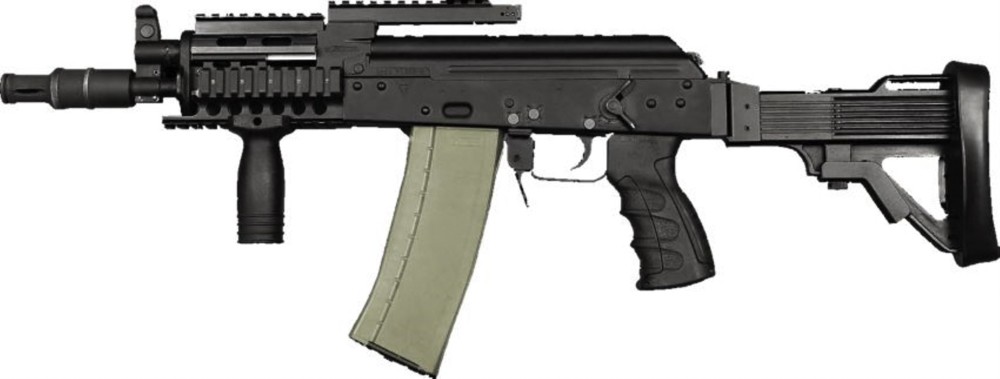
My expectation was the handgun would perform flawlessly, adapt to my hand size, and be extremely reliable. The G19 Gen4 MOS is nearly the same as current G19 pistols except for a cover plate just forward of the rear sight.

In MOS configuration, it is only a matter of removing two screws and the cover plate, choosing the MOS adaptor plate that is compatible with your reflex sight, mounting the adaptor plate to the slide, and affixing optic to the adapter plate. It actually takes more time to describe mounting an optic on the Glock than doing it.
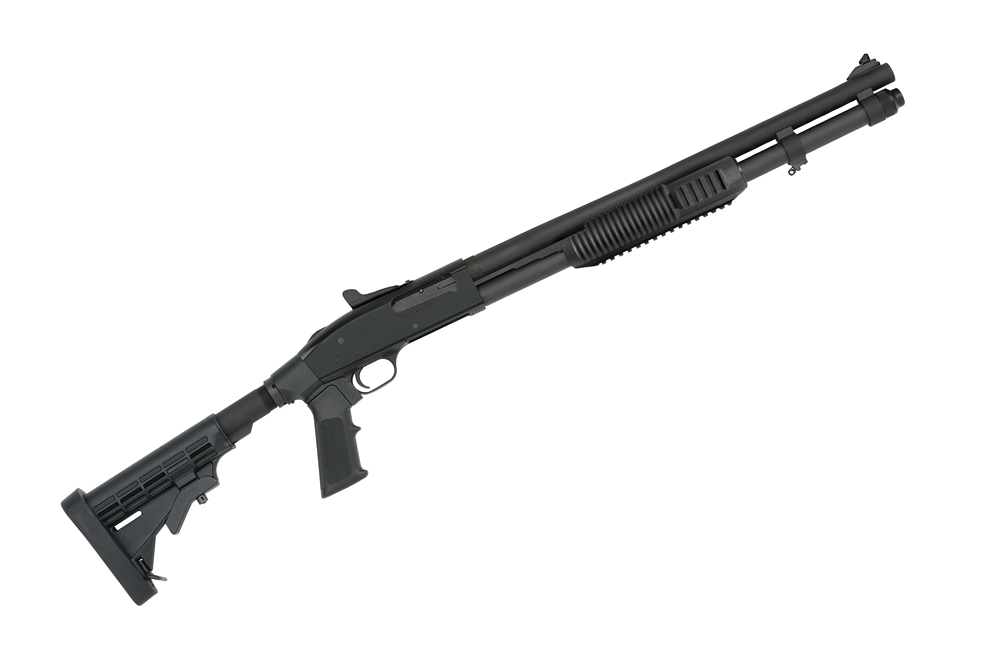
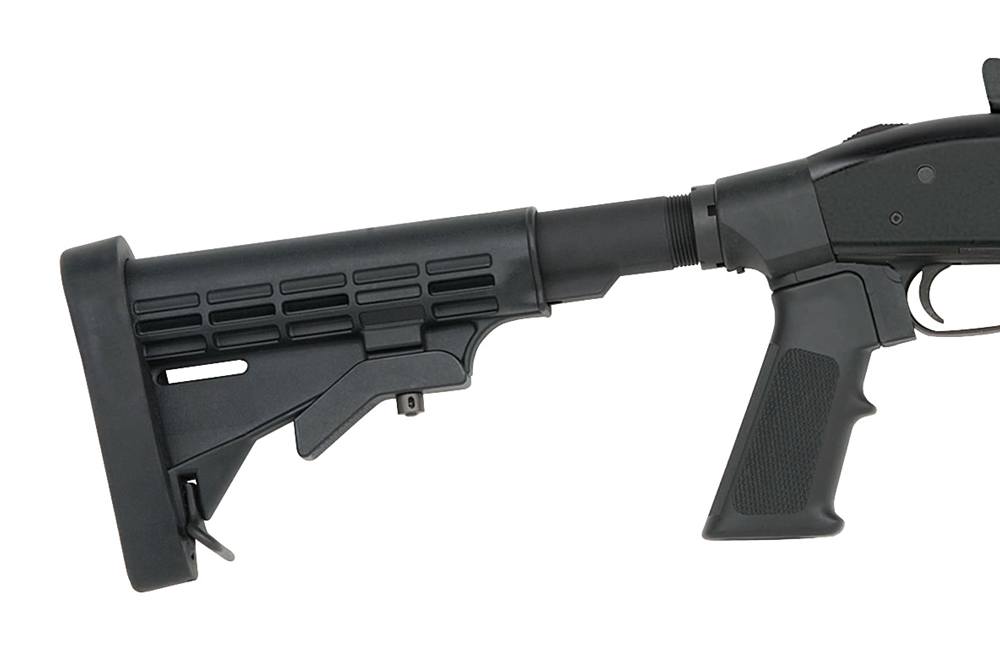
The MOS adaptor plates are compatible with reflex red-dot sights from a number of manufacturers: Trijicon, Leupold, Meopta, C-More, Doctor, and Insight. The footprint of the adaptor plate on the slide is small, but the actual optic footprint will vary in width and height depending on the manufacturer. They all weigh nearly the same.

The G19 Gen4 MOS is nearly the same as current Glock 19 pistols except for a cover plate just forward of the rear sight.

The Leupold DeltaPoint I mounted sits low on the slide. Its width is 1.2 inches, while the width of the G19 slide is 1.0 inches. An eighth of an inch of the DeltaPoint hangs over each side due to the shape of the sight’s widow. It sits at an inch high, while standard Glock sights poke up 1/8-inch.

I’ve used red-dots for competition shooting, which affords greater speed over traditional iron sights. Plus, there is only one plane to focus on when aiming a red-dot. The three sight planes of traditional open sights — rear, front and target — need to be aligned for shots to hit accurately.

It takes practice and training. A reflex sight is far easier to acquire the target, aim, fire, and get back on target. Carrying a concealed pistol equipped with a reflex red-dot sight does not pose a drastic change in the way you carry, but it will change the ease with which you aim.

The iron sights on the G19 are standard height and do not co-witness with the DeltaPoint. Battery life is an issue with any electronics. Optics are rugged and can take abuse, but there is that voice in the back of your head asking what happens when the batteries die.

R6779-9mm-Glock-G19-MOS-Review-4

Here’s one thing I found: In a pinch if the battery dies you can use the window of the reflex sight as an extra-large makeshift peep sight in conjunction with the front blade. For close distance, I tried that very thing out to 10 and 15 yards and it worked effectively allowing me to hit a target 18 inches in width or about the width of the average human torso.

Battery life should not be an issue barring unforeseen circumstances. Even if dropped in water the DeltaPoint is waterproof. Using any battery-operated accessory requires an additional maintenance task, routinely changing batteries like you do in a flashlight or smoke detector. It becomes second nature and ensures you are not caught unawares.

To carry the G19 I used a DGS Arms CDC (Compact Discreet Carry) Kydex IWB (Inside-the-Waistband) holster. I’ve used this holster to carry a standard G19 in appendix carry. Using a pencil, I marked the holster and used a Dremel tool to cut a slot to allow the handgun with mounted DeltaPoint to be completely holstered.

There are now several makers producing holsters for red-dot-equipped handguns.

I found the red-dot did not affect my concealed carry routine. I did need to slightly modify my training when drawing the new Glock from concealment. The taller sights have the potential to snag on concealing garments when drawing if you don’t grab that shirttail and yank it as high as you can (which you should do anyway regardless of your carry gun’s sights).

From a rest, the author attained surgical accuracy with the Glock. He was using the Hornady American Gunner ammo loaded with 115-grain XTP bullets.

I did find the DeltaPoint made a great handle to rack the slide if needed. I admit I used it as a handle a lot to see if the sight would come loose or go out of zero. Nothing doing. I even employed the sight to rack the slide against the edge of the shooting bench, my holster mouth, and with my hand during a reload. Using the sight as a grip means it gets fingerprints.

Concealed carry also means lint can build up in the sight window. Part of my new routine became to blow out any lint or debris that would build up using the same canned air I use to clean out my computer keyboard.

The real test is making holes in paper. I averaged about 1.7 inches for 5-shot groups using a rest. Firing offhand and finding the red-dot in the sight window took a bit of ramp-up time. By the second magazine, I was drawing and aiming as if I had always used a red-dot on my concealed carry pistol.

SPECIFICATIONS
MODEL: Glock G19 Gen4 MOS
CALIBER: 9mm
ACTION: Locked Breech, Recoil Operated
BARREL LENGTH: 4.02 in.
OVERALL LENGTH: 7.28 in.
WEIGHT: 21.16 oz. (empty)
SIGHTS: Fixed, Dot/Outline
TRIGGER: Striker Fire
FINISH: Matte Black
GRIPS: Textured Polymer Modular Backstraps
CAPACITY: 15+1

Glock 19 screen capture

This excerpt is from 9mm: Guide to America’s Most Popular Caliber.

Video: Learning To Shoot On The Move

0

Though not difficult, mastering shooting on the move is a matter of learning to walk all over again.

Most folks go to the range and become razor sharp at printing trim groups standing in one spot. Might sound kosher, but there’s more to shooting — the practical kind — than static performance off the firing line. Movement, be it transitioning targets in competition or the tactical variety that might save your rear, is a real-world likelihood. In short, the ability to accurately shoot while on the scoot is a leg up of which every shooter should strive.

Few people know more about dynamic handgun skills than Mark Redl, and the pro shooter is a huge advocate of learning to shoot on the move. He demystifies much of what goes into mastering the skill in the above video, and it’s less daunting than you might think. All in all, it’s simply a process of learning to walk all over again.

More than anything, retaining accuracy on the move is a matter of body control. Up top, your torso and arms must provide a stable platform to keep your shots on target. Down below, your legs have to get you where you need to go, while minimizing the shock of each step. It’s a tricky balance, but achievable with enough practice and well worth the effort. If you can get down dynamic shooting with a handgun, you most certainly have an advantage over most other shooters.

MUST READ ARTICLES