When ammo supplies are tight, keep on training by reloading pistol cartridges yourself.
This ammunition crunch is, quite possibly, the worst in living memory—surely worse than that of 2013. I receive numerous inquiries each week from folks who’ve become accustomed to sending a healthy amount of pistol bullets downrange, regarding how they can get into reloading pistol cartridges in an affordable yet effective manner. Let’s take a look at a minimalist setup for someone looking to make their own pistol ammo, keeping costs as low as possible.
Reloading tools don’t need to break the bank. Photo: Massaro Media Group.
One Piece At A Time
You’ll need projectiles, powder and primers, but you can reuse spent cases. While many of the bullet and powder companies publish their data online, I still love the reloading manuals. The manual will indicate the specific powder and its charge weight range, as well as the type and brand of primer used in the data published.
You’ll need a specific set of tools to get rolling, and while entry-level tools will suffice, I’ll wager you’ll upgrade once the reloading bug bites you. I’m outlining the simplest way to get going, simply to feed your handgun. And I’m concentrating on the most popular handgun cartridges, such as the 9mm Luger, .40 S&W, .45 ACP, .38 Special, .357 Magnum, etc.
The first tool is a reloading press, and while I most definitely prefer the additional strength of an “O” frame press for rifle cartridges, a “C” frame press will suffice for the straight-walled pistol cases. The Lee Breech Lock Reloader Single Stage press can be yours for under $40, and the Lyman Brass Smith C Frame—a bit more rugged and made of cast-iron—is just shy of $90. Both are sound choices, though I’d choose the beefier Lyman model.
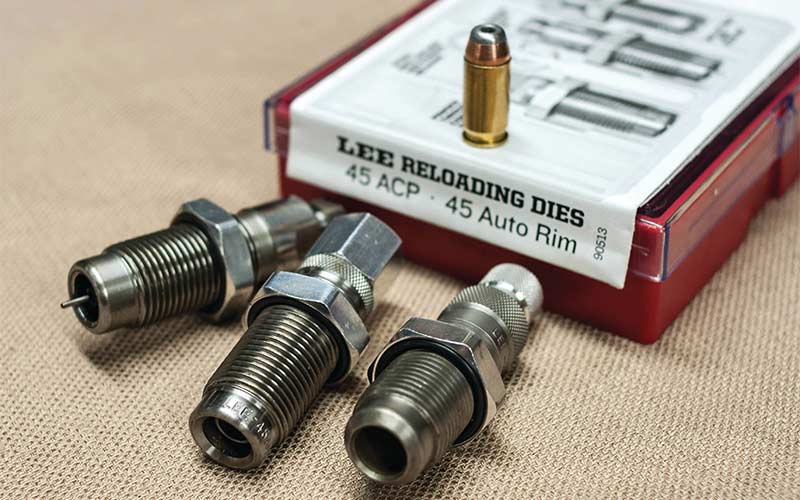
Lee reloading dies are a great entry-level choice, as they come with load data, appropriate volumetric powder scoop and shell holder. Photo: Massaro Media Group.
Reloading dies serve several functions, including reducing a spent case back to the original dimensions (before expansion), knocking out a spent primer, flaring the case mouth for bullet seating, pressing a new bullet into the case and crimping that bullet in place. Lee offers dies that are a great value for the beginner, and I recommend them for this application.
In addition to the proper dies, Lee includes a shell holder (which works with any press) and a polymer scoop for measuring powder volumetrically. They even include load data based on their scoop volumes. So, while there might be fancier dies available, the Lee set will get the job done, at usually less than $50. And I definitely prefer the carbide dies—they won’t require any case lubricant.
You’ll need a reloading scale, and for the beginner, the balance-beam is the only way to go. There are many models at varying price points, but don’t go with the lowest bidder here. I like the RCBS M500 at around $75, and the Redding Model No. 2 for just under $100. This is an important piece of gear, as an incorrectly weighed powder charge could be catastrophic.
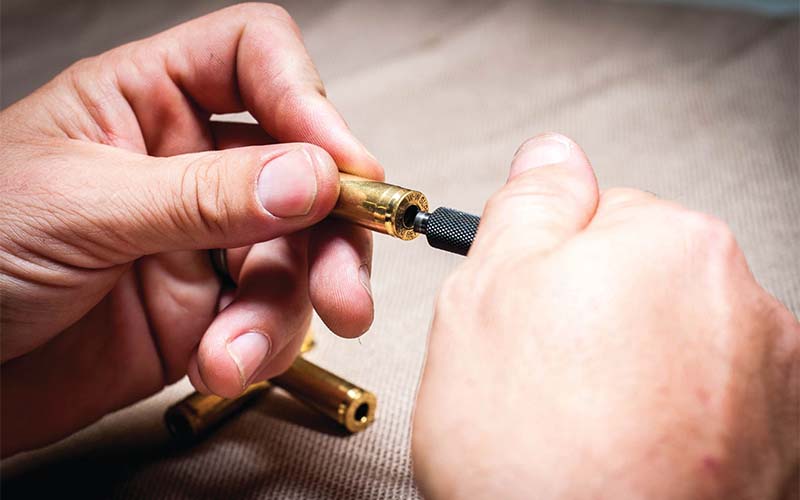
For trimming your cases, look to the Lee Case Length Gauge and Trimmer (about $8) of trimming cases to the appropriate length, though it might cost you some elbow grease. Trimming cases is especially important for the rimmed revolver cartridges because the roll-crimp needed to keep the bullets in place will be directly dependent on the case length.
You’ll need a pocket cleaner to scrape the residue out of the primer pockets, and for that I like the Lee Primer Pocket Cleaner. It’s two tools in one, with a scraper on either side to handle both large and small primer pockets. At a street price of about $6, you can’t go wrong. I’d also grab a Lee chamfer/deburring tool for $5 to take any sharp edges off the inside and outside of case mouths after trimming. It’ll result in ammunition that feeds better in semi-auto handguns.
A means of measuring cases, assembled cartridges and other associated items is necessary, look to a dial caliper or digital caliper. Frankford Arsenal makes a digital caliper that runs about $20, Hornady makes a dial caliper at around $40, and there are others. I have an RCBS digital caliper (about $80), which has been reliable for years, and there are much more expensive (and precise) models, but the inexpensive models will suffice if you handle them with care.
The affordability of some reloading tools is offset by the need for good old-fashioned elbow grease. Photo: Massaro Media Group.
To seat new primers in your cases, you can use the priming arm and cup on your press—if it’s equipped with one—or you can use a hand primer. I like the RCBS Hand Priming Tool (about $40) or Lyman E-Zee Prime Universal Hand Priming Tool ($35 or so) to handle the priming of my cases, as they’re easy to use, give a great, consistent primer seating depth.
Dispensing powder can be done by hand with the Lee scoop, or even a simple spoon, directly into the pan of the balance beam scale, and I definitely recommend weighing each powder charge. If you so choose, you can spend the money on one of the mechanical powder throwers—the Lyman Brass Smith Powder Measure can be had for about $45—though for years I used a Lee scoop and an RCBS Powder Trickler (about $20) to fine-tune the charge.
To hold your cases while loading them, you can use a drill and a bit of appropriate diameter to drill holes in a block of wood, like a scrap of 2×4 or something similar, to create homemade loading blocks.
Feel The Powder
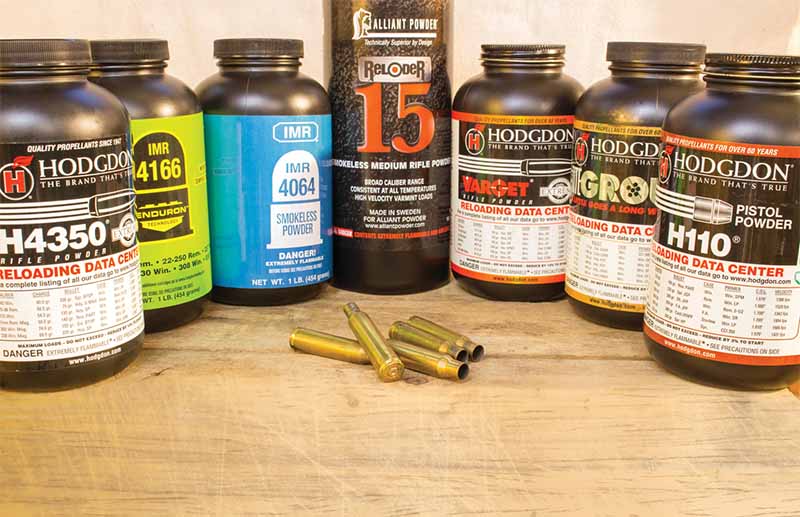
Powder choices for pistol cartridges are rather wide, as there are many ways to get the job done. Hodgdon’s Titegroup and Alliant’s Unique are but a couple of powders that’ll go a long way. There are 7,000 grains to the pound, and many pistol loads run on less than five grains of powder; this equates to around 1,400 shots to the pound of powder. Let’s say the average price of a pound of powder, before shipping and the HazMat fee, is $25, so you’ll pay less than $0.02 per shot. Primers will cost about 3 or 4 cents apiece, and bullet costs can vary widely.
Photo: Massaro Media Group.
The huge obstacle, at least at the time of this writing, is that the components and tools are selling like hotcakes as well, with many places out of stock. However, this dissertation sheds some light on what the minimum investment is to get up and running, and at the least, you can begin to collect the necessary tools for reloading ammunition—and hopefully, none of us will be caught in this predicament again.
Editor’s Note: This article originally appeared in the 2021 CCW special issue of Gun Digest the Magazine.
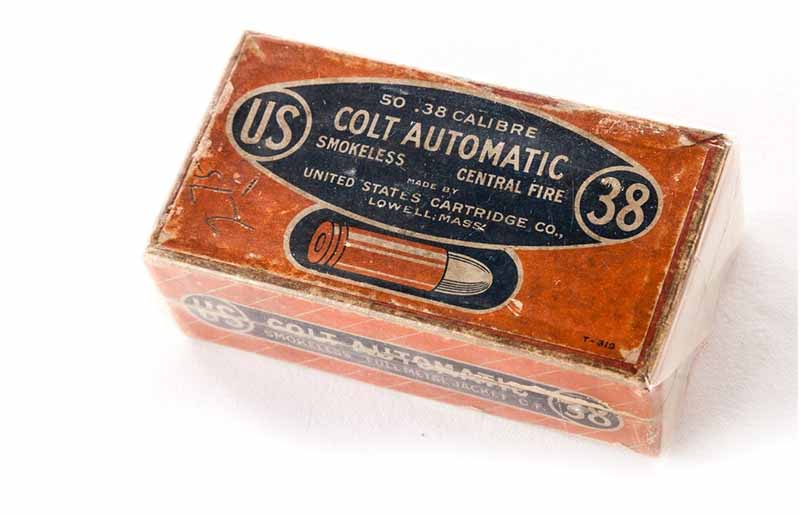
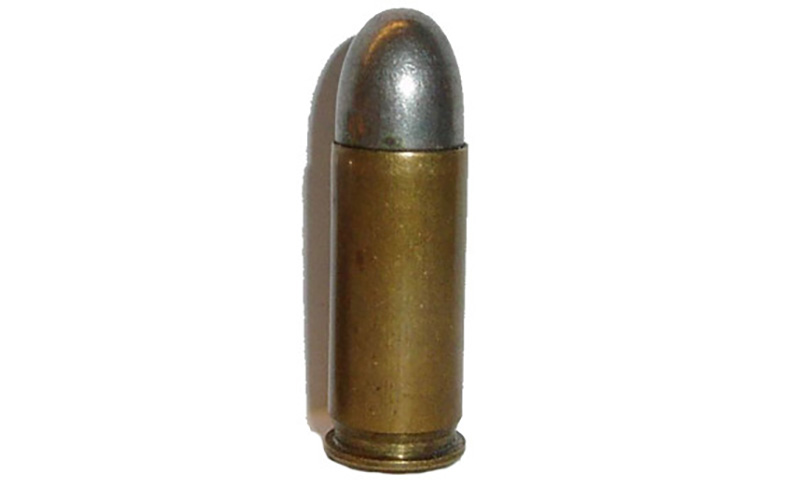
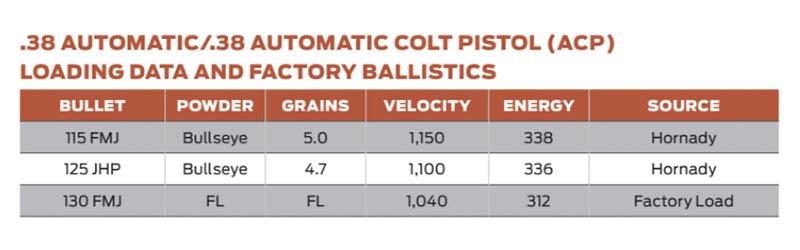
This is another cartridge designed by John Browning and introduced by Colt in 1900 for its .38 Automatic. In its original form, this pistol was designed as a military gun. From this evolved the seven-shot sporting and eight-shot military models of 1902.
This cartridge was stepped up in power in 1929, and the improved round called the .38 Super Auto. In the United States, only Colt chambered it. In England, Webley & Scott chambered it in one version of its military automatic. In Spain, a number of automatics have been made for the .38 ACP.
Although developed for military and self-defense uses, the .38 Colt Auto achieved a degree of popularity for sporting use through its relatively high velocity. The military turned it down because of previous poor results with the .38 Long Colt. No guns designed for this cartridge have been made since 1928, but plenty of the older model Colt pistols are still used.
In power, it’s about the same as the 9mm Luger, but it has a longer semi-rimmed case. This cartridge is now obsolete and is no longer loaded by any major ammunition maker.
If you’re planning some trigger time you need to consider what you’ll pitch rounds toward. Here’s everything you need to know about shooting targets and then some.
What You Need To Consider When Buying A Shooting Target:
Material best suited to your style of shooting.
Cost they’ll run.
Their longevity — are they one-time use or will you get years out of one.
The type of target that will enhance your style of shooting.
If you don’t enjoy target shooting, well … there’s something just plain wrong with you. No offense, but even if you live for elk season or were born to run and gun at a practical pistol match, an afternoon plugging away at the bullseye should still get your juice flowing. Especially nowadays …
Never has there been a wider, more diverse and more useful selection of shooting targets available, no matter what gun or discipline happens to be your passion. From precision sight-in options to “dial your riflescope way up” options, to AR500 steel monsters made for the long haul, you have everything you need to satiate your itchy trigger finger and sharpen your skills. With the wealth of shooting targets out there today, the only question really is: Which one is right for you?
The answer, as always when it comes to guns and gear, is “It depends… .” If it’s purely pleasure principal, then nearly anything that turns your fancy will do. However, if you aim at something greater, such a skill improvement, well then picking your target requires some consideration.
As most know, targets are made from different materials. The four most commonly used are:
Paper or cardboard
Steel
Clay
Polymer
As is usually the case with different materials, each excels at different tasks and flounder at others. In turn, what your target is made of should match up with what you plan to do when you go shooting. Here’s a brief rundown of what each material is good and bad at achieving.
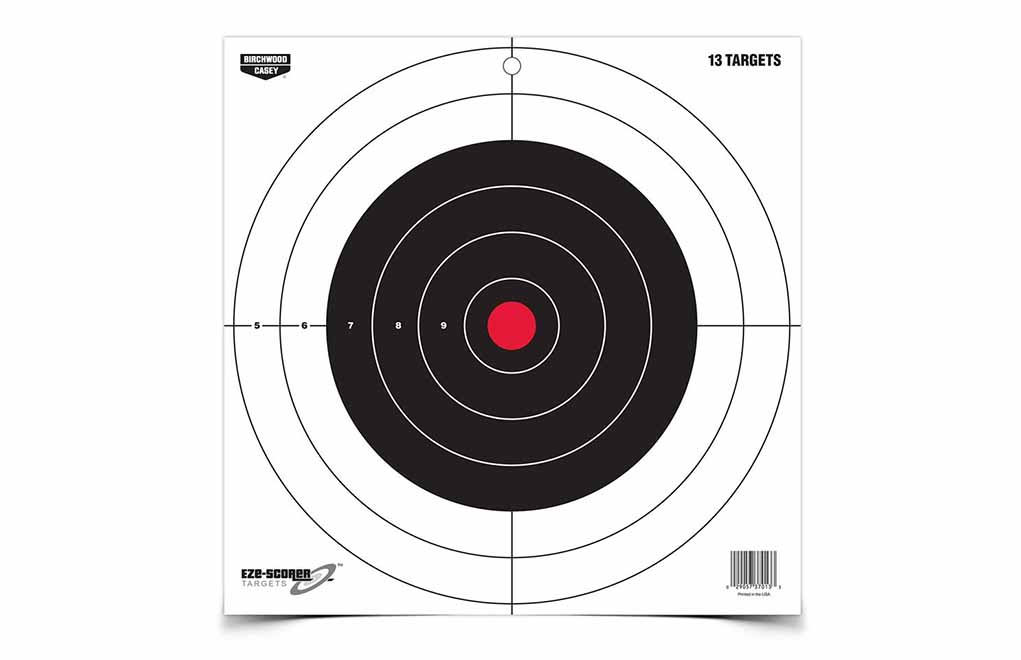
Paper: As the most familiar target material, paper continues as one of the most versatile. An excellent medium for tracking shot groups, it’s a top choice if you need to adjust your sights or scope, or if you need to tally a score in a competitive shooting match. Plain paper targets, at distance, can prove difficult to inspect with the naked eye. However, modern reactive chip targets – where hits create vivid halos on their surface – make them easier to read. Only clays have less longevity than paper shooting targets; however, in most cases, neither will break the bank.
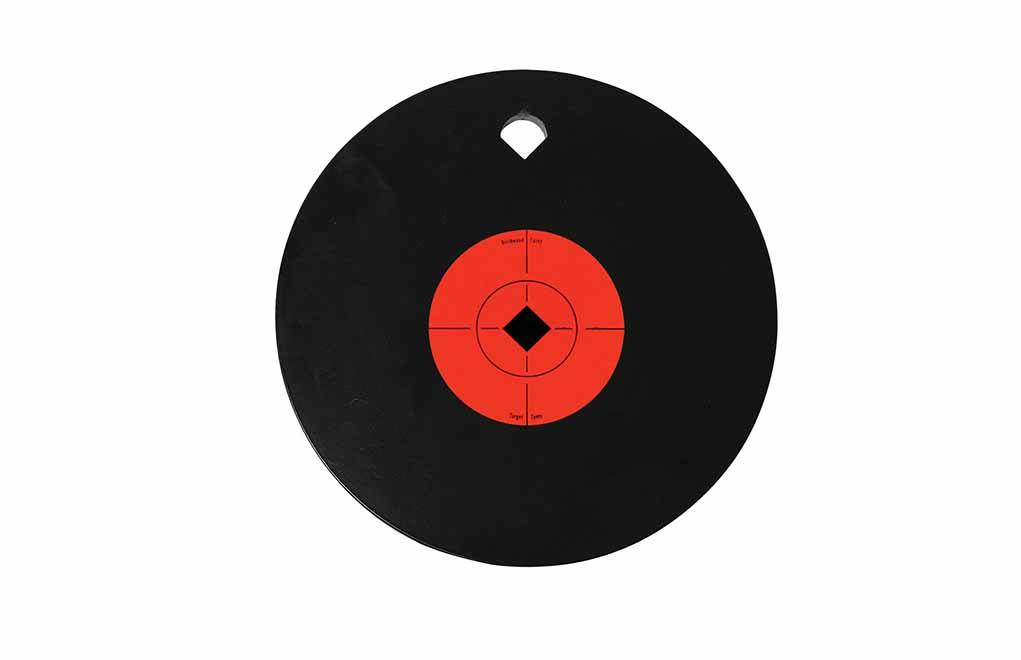
Steel: Gaining more popularity among everyday shooters in recent decades, steel targets are the most durable and longest lasting. With proper care, many AR500 steel targets last nearly a lifetime. Excellent for training, steel shooting targets provide instant auditory feedback when struck – a sound you’ll grow to love. Furthermore, there are a variety of reactive targets made from steel that not only increase the enjoyment of shooting, but they also up the challenge. The drawback to steel targets is many of the larger ones are fairly unwieldy and are a hassle to move around. What’s more, steel costs more up front … but don’t let that make you think they’re not economical over the long haul.
Clay: If you’re a shotgun shooter, you know clay targets. Chances are good that you shoot them when you aren’t shooting birds. While they’re the dominant target in shotgun games, clays are sometimes found downrange from pistols and rifles, generally as a bit of fun. You definitely know when you hit these brittle targets because they break up or evaporate into a cloud of dust. And therein lies their drawback: Clays are absolutely one-time use.
Polymer: Designed to allow a bullet to pass through with minimal damage, polymer targets typically have a decent lifespan. However, they won’t last forever. Predominantly, polymers are used in ground targets – three-dimensional targets that rest on the ground – because they require some sort of backstop. This style of target, however, proves great fun, since they’ll jump like a frog in hot water when hit.
Types Of Shooting Targets
Given the variety of shooting target styles available today, it would take a multi-volume book to catalog them all. But that’s alright, because many of them cater to specific shooters with specific interests and goals.
That said, it’s safe to break down the types of shooting targets into a few different categories to get an idea what’s available. By no means are these definitive: Many of the targets bleed over into other categories. But, in general, this gives you an idea of what you might look for to achieve certain goals the next time you’re fixing to burn some ammo.
Accuracy Targets
Certainly, accuracy is always the top goal when you send a bullet flying … otherwise, what’s the challenge? And there are definitely shooting targets that are adept at improving and evaluating how well you hit the mark. Two of the most common are bullseye and sight-in. The former is perhaps the best-known shooting target and is excellent for new marksmen. It’s ideal for refining a sight picture and learning where to hold, as well as honing the mechanics of making an accurate shot – breathing, trigger control, etc. As a staple of riflemen, the latter is a must-have for zeroing in a scope – as its “sight-in target” name suggests. With a grid laid out across its surface, the target gives you the ability to appraise your groups and adjust your optic’s aim point.
Feedback Targets
Occasionally, immediate or specific feedback is required to drill down a shooting skill. In turn, a target that lets you know you’re on the mark soon after the trigger is pulled is required. Steel shooting targets are the most familiar variety, with their sweet “Ping!” ringing out when you’ve made a hit. Ideal for rapid fire-training with a handgun or carbine, or for long-range shooting, a good piece of steel gives you the feedback you need.
Although they’re very much different from steel, modern game targets also fall into this category, though they deliver a different kind of data on how you’re shooting. With the vital zones embossed on the game animal, this shooting target option familiarizes you with your particularly quarry’s anatomy well enough to put meat on the table.
Skill-Based Targets
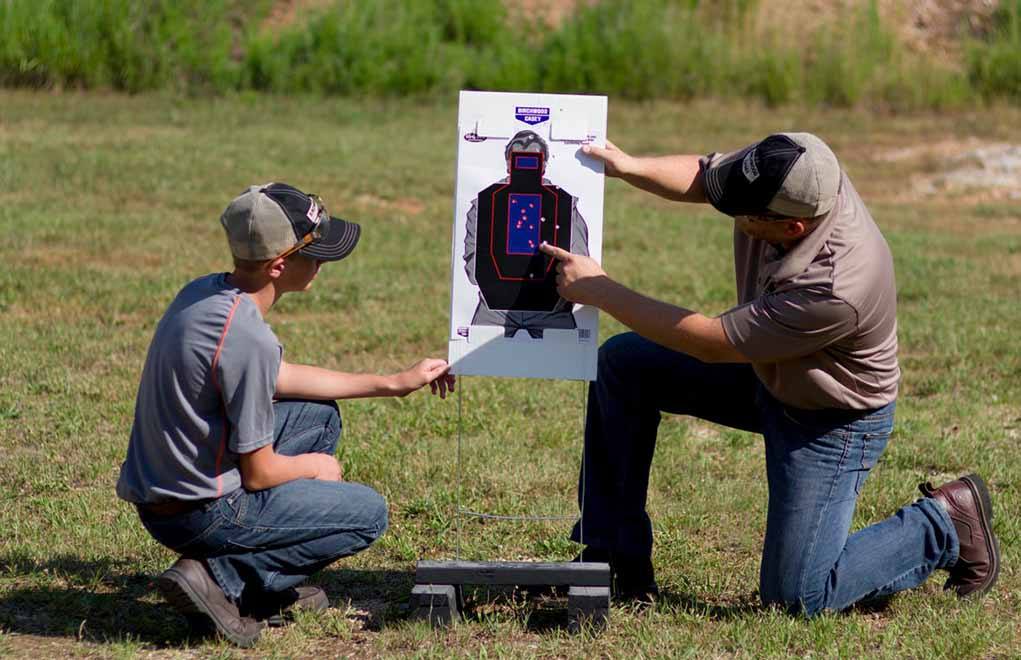
Skill-based targets are legion. In a certain respect, when talking trap and skeet, clays fall into this group. For rifle and pistol shooters, the silhouette is among the most utilized. If you own a handgun, there’s a good chance you’ve stared one down and understand their importance to self-defense training. Deadly force isn’t something to take lightly, and a shooting target such as a silhouette ensures you know how to wield it effectively.
Cost Of Shooting Targets
Economy is an issue any time you’re shooting. In turn, it should play a role in your target selection. But don’t fool yourself: A tiny price tag at the store doesn’t necessarily mean you’re saving money.
Without argument, paper targets are the cheapest, but, at best, you’ll get an afternoon out of one … and much less time than that if you’re shooting a lot. More durable targets, such as steel, can last nearly a lifetime. Given this, they’ll tend to cost less the more you shoot.
Again, it all comes down to personal habits when choosing which shooting target better fits your budget. If you head to the range once a month or less, paper most likely will prove a lighter burden on your pocketbook. But, if you’re a once or twice weekly shooter, then steel should turn out to have greater value.
Parting Shot
Now that you know what shooting target options available to you, it should be a piece of cake getting one to fit your needs. But here’s a final word of advice: Don’t hem yourself in. Similar to finding the right ammo for your gun, you won’t truly know what works until you pitch a few rounds at one. Besides, it will get you shooting more often.
10 Best Targets
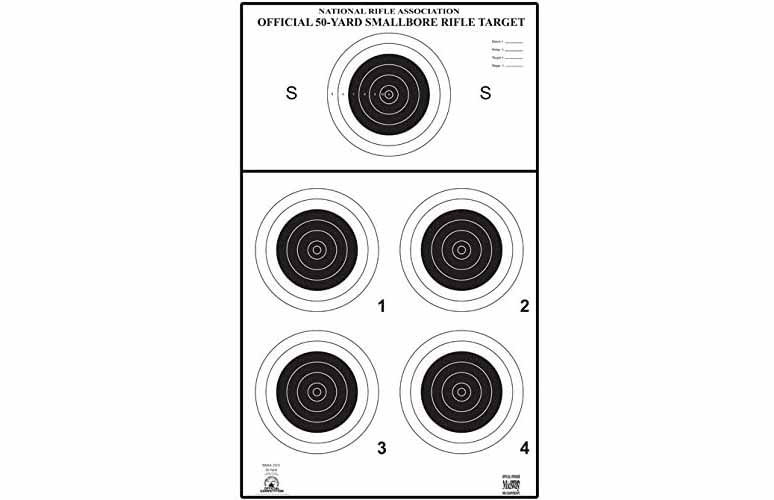
NRA Official Smallbore Rifle Targets A-23/5 50 Yard
Outside of the competitive world, the .22 often gets pegged purely as a pleasure gun. A little something to knock over soup cans and pot the occasional squirrel. The accuracy of these small-bore rifles is sometimes overlooked, leaving a lot of potential on the table. That’s a shame, no matter how you use yours.
The NRA Official Smallbore 50-Yard Rifle Targets can change this rather quickly. I promise you, if you work these relatively pedestrian shooting targets into your regular range time, you’ll be blown away with how steely you’ll get with your rimfire.
A bullseye a hair under 4-inches in diameter, I can attest, is frustratingly imperceivable at 50-yards through open sights. But learn to hold and hit at that range, the sky is the limit. Best of all, NRA Smallbore Rifle Targets are as affordable as they come, so there’s little excuse not to add a sheet to your next shooting session.
Birchwood Casey Pregame Turkey
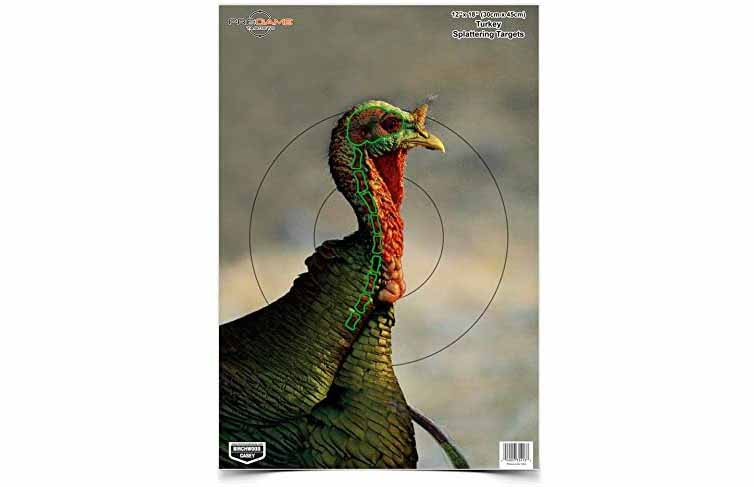
You’ve got to know your choke. You’ve got to know your ammo. You’ve got to know your gun’s limit. Plain and simple, to have success in the turkey woods, you’ve got to know how your shotgun patterns. Birchwood Casey makes it easier than ever before with the Pregame Turkey Target.
More than simply a photorealistic turkey with illustrated anatomy, the different target zones react with different colors when hit. Knock the gobbler in the brain or spine, a bright orange halo appears. Put shot on a non-vital area, a yellow halo. A plum miss, look for a white halo, then cuss.
Realistically, this makes the chore of walking the range to evaluate your pattern a thing of the past and is a boon for those zeroing in a reflex sight. More importantly, the Pregame Turkey will add another fan to your wall. birchwoodcasey.com
Rite In The Rain 25-Meter Zeroing Target
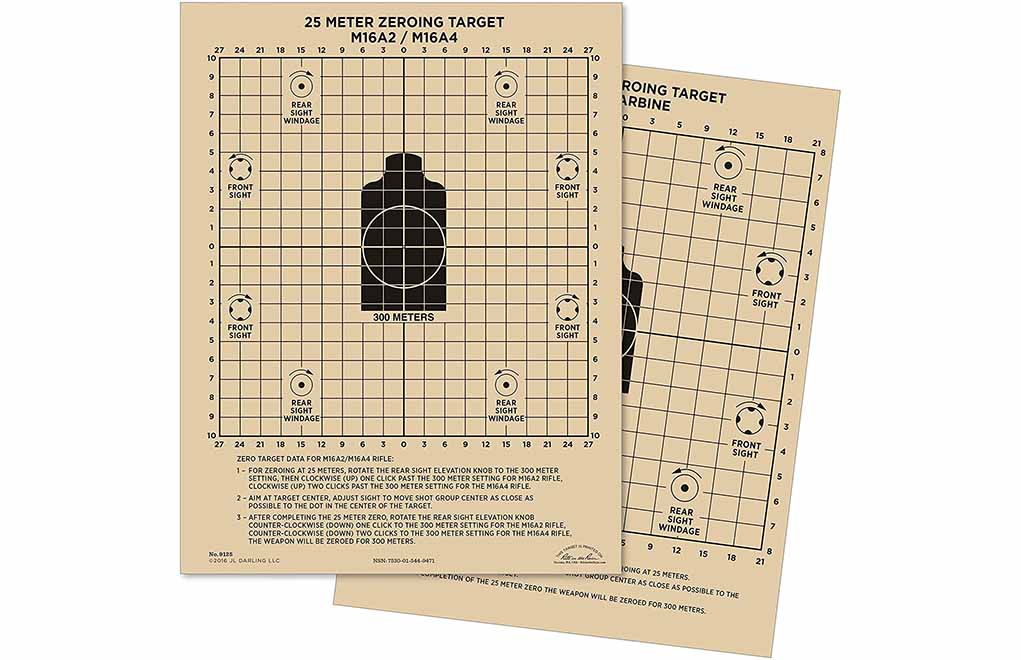
Those with military experience will recognize the next shooting target. You most likely zeroed in on one. For a lot of shooters, the familiarity of the layout makes this a grand option if you have a carbine you need to dial in. Even if you’re new to this style, it’s still dynamite.
Rite In The Rain makes it even better doing what they do best, making paper waterproof. If you spent any time at the range in inclement weather and with regular targets you know this is a godsend. No more soggy corners coming off in the middle of a string or paper disintegrating in a deluge.
If you take your training seriously, you should get out in the muck for some trigger time. Rite In The Rain makes certain you don’t have an excuse not to. riteintherain.com
Birchwood Casey Dirty Bird Silhouette
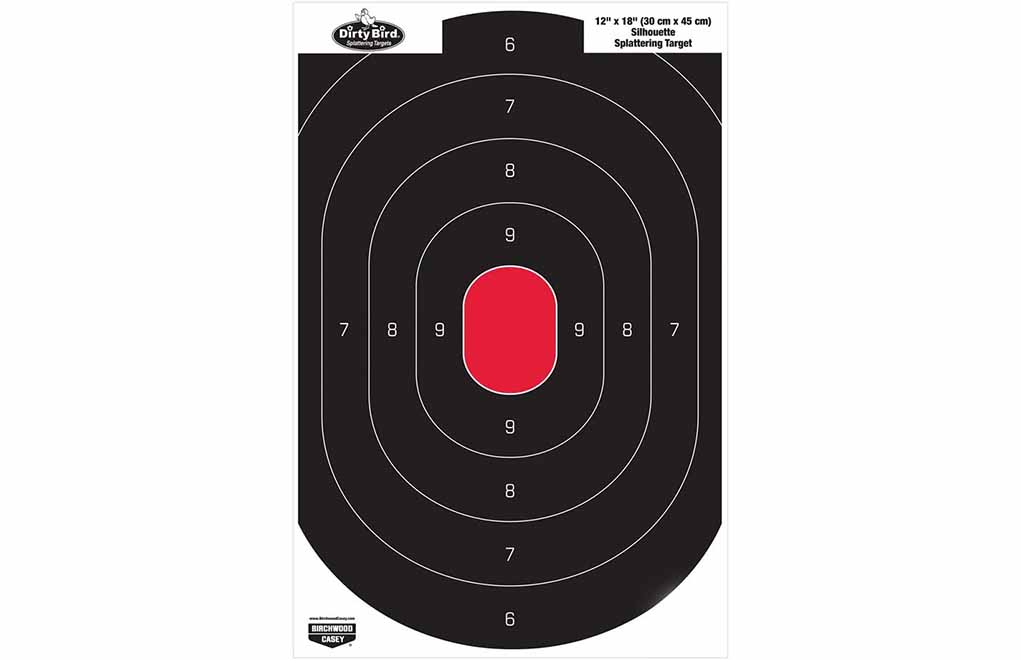
As pointed out above, Birchwood Casey has greatly improved sighting in with their easy-to-see Shoot-N-C line of shooting targets. Rifle marksmen, however, aren’t the only ones who benefit from the company’s splatter targets.
Bringing Birchwood Casey’s high-visibility technology to self-defense training, Dirty Bird Silhouettes are a downright boon when working with your carry gun.
Logically, you might ask, why would you’d need a splatter target if you’re shooting between, say, 7 and 20 yards. The same question rattled through my head before I hung one up at my local indoor range. After a few rounds, I got it – big time.
With instant feedback of where you’re hitting, the Dirty Bird Silhouette is invaluable, particularly during rapid-fire segments. It’s a real gem on the Mozambique drill. Furthermore, I’d imagine the silhouette is gangbusters at close- to medium-range training with a carbine. birchwoodcasey.com
IPSC Shooting Targets (Paper)
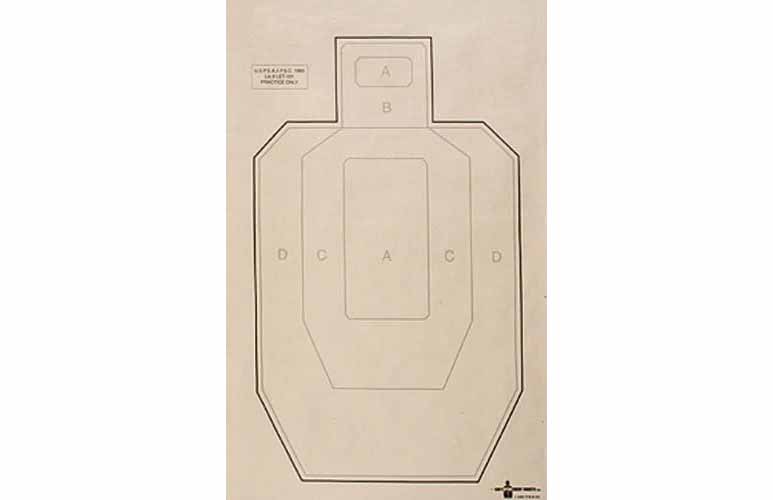
If you carry, you need to train. In turn, you need shooting targets. Plain as generic-label beer, USPA/IPSC silhouettes are tough to beat – especially the paper variety. I’ve thrown countless rounds at these and still prefer them to nearly any other silhouette available.
Number one, they’re about as inexpensive as they come. A stack of 100 costs a little more than a box of defensive ammo.
Next, the scoring boxes are solid geography for self-defense training. Certainly, they’re not overly realistic by any stretch of the imagination, but you get a solid handle if you’re placing your rounds where they need to go. And they’re versatile. If you happen to compete, they truly pull double duty. In short, your range kit simply isn’t complete without a few of these targets.
XSteel Jumping Jax
Many times, we think of ground targets as strictly handgun affairs. As XSteel proves, they most assuredly are not.
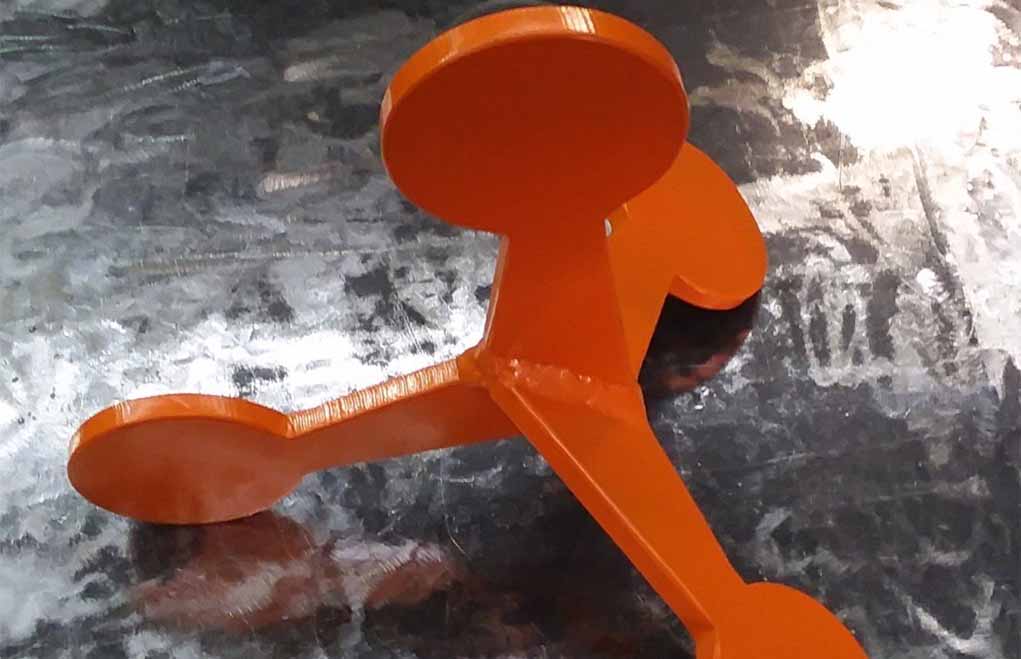
Constructed of quality 3/8-inch thick AR500 steel, the jack-style target can withstand hits up to a .308 Win. And when you hit, the shooting target more than lives up to its name, jumping into the air letting you know you’ve connected.
Thing is, you’ve got to hit it first. It’s harder than it sounds. There must be a few masochists working at XSteel, because they made the 12-inch tall shooting target’s paddles an infuriating 3-inches in diameter. Move it out past 100 yards and it’s a challenge. As we all know that only makes it more fun. MSRP: $54.97, xsteeltargets.com
Champion DuraSeal Bowling Pin Wobble
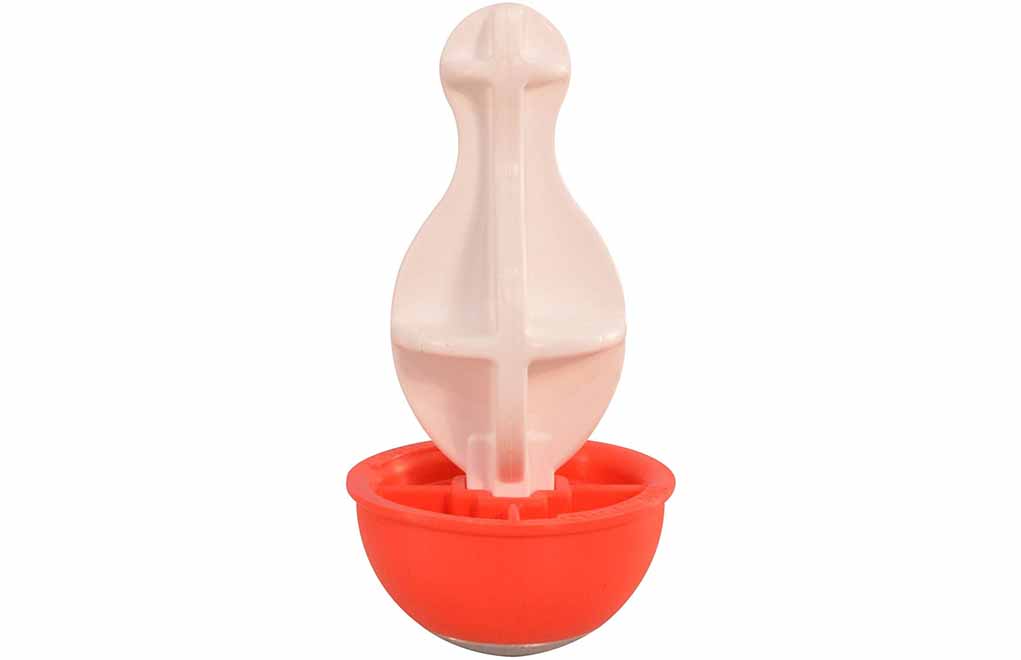
Some 3D and steel shooting targets have a major drawback. You have to set them up after you knock them down. Not the case with the DuraSeal Bowling Pin Wobble, a slick little piece of amusement that rights itself after you’ve wronged it.
A weighted round bottom, the pin resets itself almost immediately after you hit it with almost any conceivable caliber firearm. Seriously, this thing is rated up to .50 BMG. Though, if all you’ve got is a .22 pistol, never fear, it’s just as fun. Self-sealing rubber gives the target its resiliency, with any holes punched into it closing up after the bullet passes through.
As a diversion during serious training or just a little something to pass the time, you should set your sights on a DuraSeal Bowling Pin. championtarget.com
Birchwood Casey Ground Strike Hex
Due to poor action after being shot, some ground targets aren’t fun to shoot. The Ground Strike Hex certainly doesn’t fall into this category.
This baby can plum fly when you connect, which gives a fella ideas. Such as, why not buy two and race your buddy down the range? Anything for bragging rights.
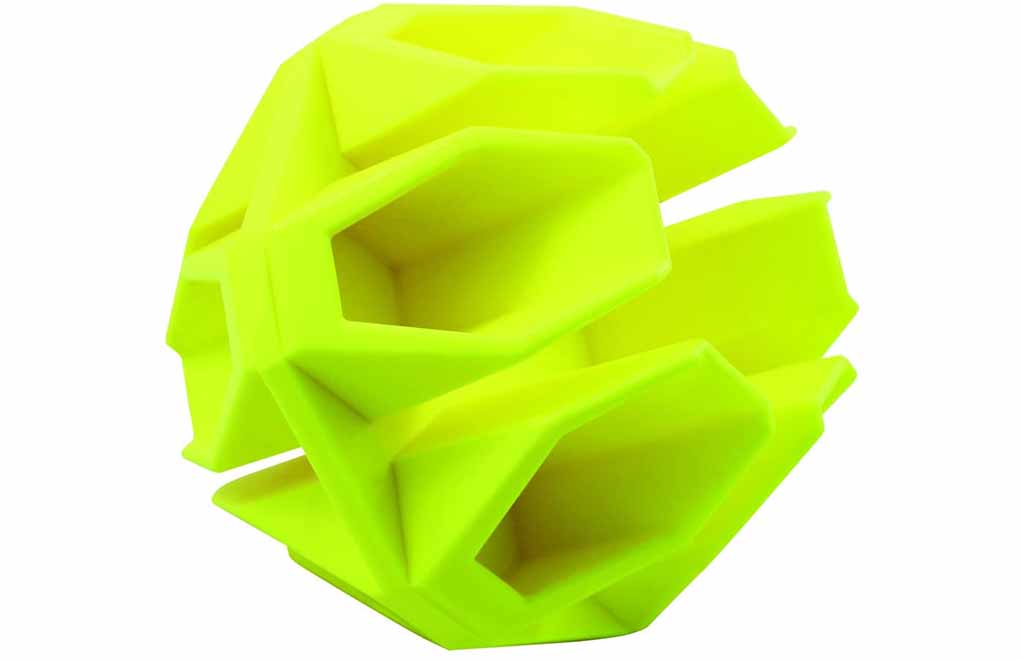
Made in the USA, the Hex is rated for all calibers and is made to take a beating. Its self-sealing rubber is engineered to take hundreds of rounds before it shows any wear. To boot, its vivid fluorescent yellow color makes it easy to see, though at 6 inches in diameter, at some ranges it’s not exactly easy to hit. birchwoodcasey.com
Birchwood Casey World Of Targets Popper
As a simple, satisfying and practical way to sharpen your handgun skills, poppers are must-haves for serious shooters. Among the more affordable options is Birchwood Casey’s.
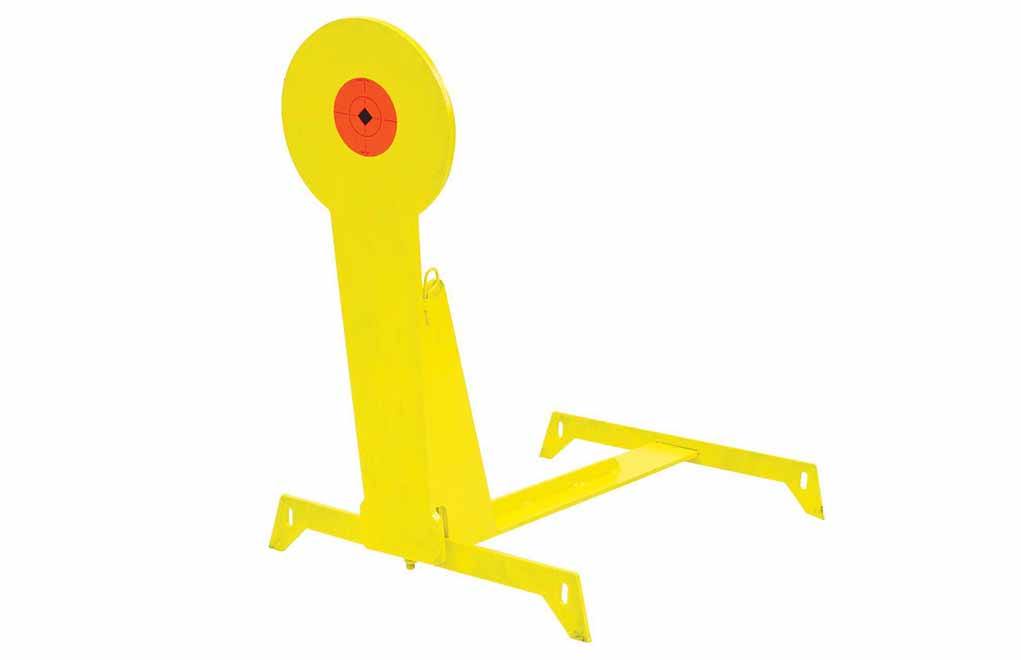
The USA-made AR500 steel pistol target stands 22 inches tall and is engineered for portability and durability. Easily set up in minutes, the target provides an ample yet challenging 8-inch wide paddle to punish. Best of all, boasting a hefty actuating spring, the target resets itself in the blink of an eye and is ready for another go-round. Providing both visual and auditory feedback, there’s perhaps no better or more enjoyable target to pepper. birchwoodcasey.com
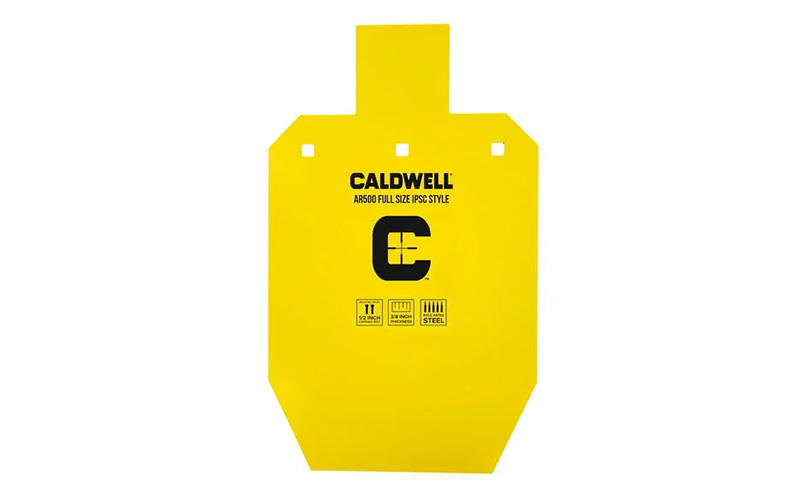
Caldwell AR500 Full Size IPSC Steel Targets
When it comes to practical rifle marksmanship, full-size steel silhouette targets like this example from Caldwell take the cake. When minute-of-man accuracy is your only goal, the satisfying ring produced by these targets lets you know when you’ve made a successful hit without the need for a spotting scope or binoculars.
The biggest downside is the cost, as the nearly 50-pound weight of the full-size model takes a lot of steel to produce. Caldwell also offers reduced-size targets for cheaper, but the full-size targets enable the most realistic training by remaining true-to-scale at whatever range it is placed at.
These targets are 3/8-inches thick of hardened AR500 steel, meaning that they’re rated for rifle calibers up to 3,000 fps and can withstand thousands of rounds of fire. So, while they may be expensive, at least these targets should last quite a while. To top it off, Caldwell also offers several different hanging solutions for these targets, meaning that most shooters should have a way to make them work with their range setup. MSRP: $209.99, caldwellshooting.com
I can hardly recognize the modern world. All of a sudden, everyone wants a gun, everyone wants to carry and everyone wants to buy ammo. It’s hard to remember when we were all loners—the odd ducks even at our own gun clubs.
With that in mind, here’s a few carry guns that you might want to consider, assuming you can find anything to buy. Despite the slim selection at times, the important things to remember are: it fits your hand, it’s common enough that you can find a holster and it’s common enough that there are magazines for it.
Max Capacity:
Springfield Armory Hellcat
The Springfield Armory Hellcat is plenty accurate, for being a compact pistol that holds lots of rounds. The Shield RMSc red-dot optic on top doesn’t hurt, that’s for sure.
The Hellcat is the current high-water mark of daily carry technology. You’ve got 11+1 or 13+1 rounds, depending on using the flush or the extended magazine. You can have a red-dot sight on top if you wish, or you can stick with regular iron sights, if you’re a retro kind of shooter.
It’s chambered in 9mm, which right now is both good and bad. Good, in that there’s usually a wide, almost expansive selection of ammunition and loadings for it. However, since that’s the first thing everyone wants to buy, when 9mm ammo shows up at the local gun shop, it gets swarmed, bought and taken home.
The Hellcat doesn’t use a magazine found in any other pistol, but Springfield is quite aggressive in making sure there’s a sufficient supply. And because it’s a Springfield product, every holster maker offers something for it.
MSRP: $620
The Slim Option:
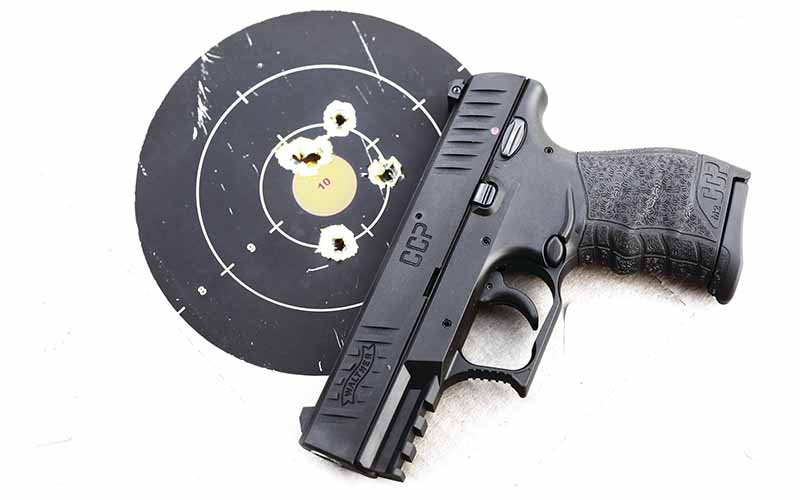
Walther CCP
Walther knows how to make accurate, reliable pistols. And the CCP is a soft-shooting one as well.
Not everyone wants a 9mm pistol that holds half a box of ammunition. So, for those who want something a bit slimmer, Walther makes the CCP M2. (The M2 means a regular magazine release button, not the europaddle release on the first models Walther USA brought in.)
The CCP also has another trick up its sleeve: their Softcoil recoil system. This is a gas-delayed piston system that buffers the slide in recoil. That makes the slide easier to retract and the recoil softer. The first time I fired one, I had to stop and inspect the CCP, certain that it failed to cycle. Nope, it had. Plus, it has a thumb safety as well.
So, if you want a soft-shooting and easy-racking 9mm, here you go. If you don’t want a thumb safety, then the quality and utility of the Walther might not be enough to overcome that prejudice.
Magazines might be a bit pricey (and maybe not), but one thing is for sure: They’re durable enough to last the rest of your life.
MSRP: $469
The CCW Revolver:
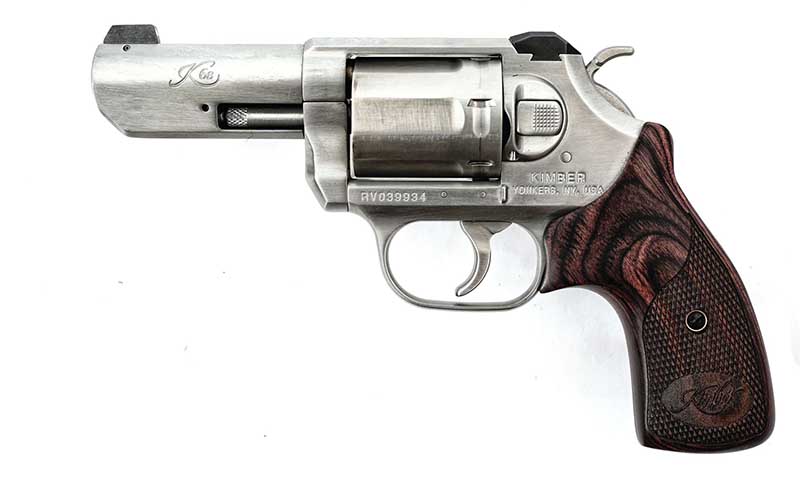
Kimber K6s
Kimber went from bolt-action rifles to 1911s, to double-action revolvers. And each step of the way, they outdid themselves. If revolvers are your carry “thing,” then you’ll like the K6s. And the 3-inch-barrel model is even easier to shoot than the 2-inch one.
Not everyone worships at the altar of the 9mm. And, some people want a bit of versatility in their carry gun. The latest K6s is the 3-inch version of the Kimber revolver, and it’s really sweet.
The FBI, back when they were in the headlines for catching bank robbers and such, decided the best carry gun was a .357 Magnum with a 3-inch barrel. The .357 chambering means you have the choice you desire in power, from .38 wadcutter target ammo on the bottom, to the stoutest .357 Magnum loading you can stand to shoot.
For precision, thumb-cock the hammer. For fast shooting, it’s hard to beat double-action (DA). And no, you don’t have to give up accuracy for double-action shooting, you just have to practice.
Revolvers don’t need no stinking magazines. For fast reloads, you use speedloaders, and Kimber makes them for the K6s, of course. And holsters? Holster makers have been making holsters for six-shot DA revolvers since before Teddy Roosevelt charged up San Juan Hill.
MSRP: $985
The Underrated:
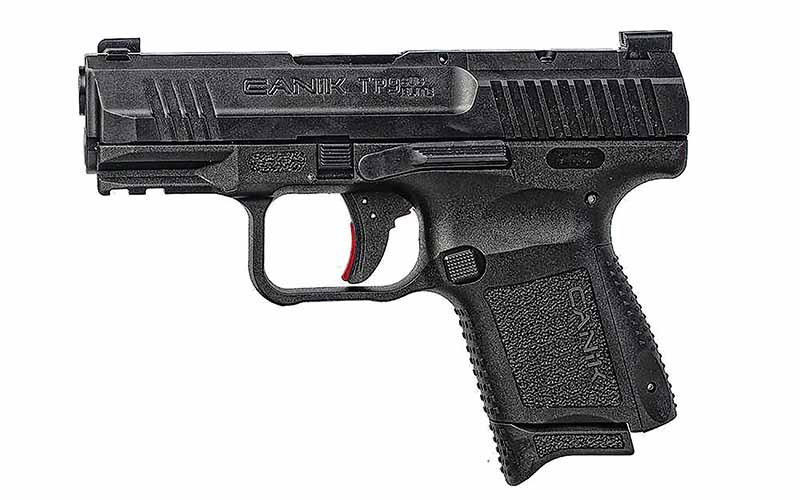
Canik TP9
The Canik TP9 Elite SC, with a name almost as big as the pistol, is a first-class choice in your daily carry ensemble. Twelve shots for the flush-mount mag, 15 here and 18 or 20 shots as options on the reload. What’s not to like?
When it comes to hi-cap 9mm pistols, you have plenty of choices. One that you might pass over, if you haven’t gotten the word, is the Canik TP9.
Made in Turkey, the Canik, has gotten quite some traction on the competition circuit (well, the bigger models, the one here is definitely a carry gun) for their excellent triggers. That and reliability, which is always foremost in the practical competition shooter’s mind. No matter how accurate, how fast-shooting, how good a trigger it is, if it isn’t reliable, it won’t get a second look from the competition crowd.
The Sub Elite here has a 12-round capacity magazine, but all the Canik TP 9mm magazines will work in it, so you have your choices of 12-, 15-, 18- and 20-round magazines. And that’s even before you use a capacity-extending basepad.
The Sub Elite also has a top plate you can remove and install a red-dot sight in its place. Now, magazines are Canik-specific, but a quick look at the Canik web page shows a wide selection at competitive prices. So, you can readily add to the ones that arrive with your pistol. And holsters? When I went to look for holsters, my computer practically exploded with choices. Don’t have any fears there.
MSRP: $439
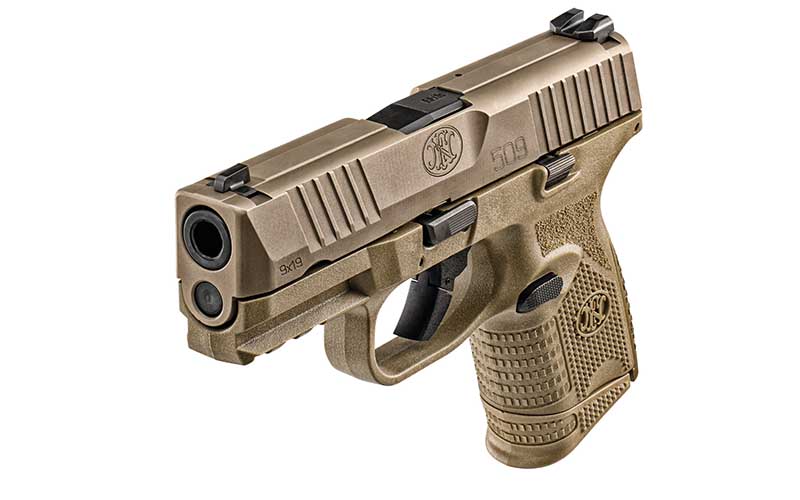
FN509C
The FN509 series have changeable backstraps, so you can adjust the frame to fit your hand more readily. If you’re fondling one, try it with each size.
The Compact model of the FN509 comes to us courtesy of the U.S. Army. They decided they wanted a new pistol, but they also decided that they could only pick one. So, when some other company won the military contract, FN got busy making pistols for the rest of us.
The compact version is a lot smaller than the full-sized duty pistol that FN submitted to the Army, but it has many of the same features. There’s the cold-hammer-forged barrel, the replaceable backstraps, the frame-mounted accessory rail, the ambidextrous slide stop and magazine release. Not swappable, as some are, but a button that works to release the magazine, regardless of which side you push on.
The swappable backstraps mean the FN509C actually comes in two sizes, so try both for feel.
Since it’s the compact version of their full-line 509 series, you can use any of the magazines they make for the 509, from 10 shots per, up to 21 shots in a magazine. Yes, a magazine bigger than the pistol you can use it in. And just to be different, FN offers the 509 Compact in black of FDE, also known as Flat Dark Earth. The rest of us call it tan.
As far as ruggedness and reliability go, FN makes belt-fed machine guns for our armed forces. They’d be embarrassed to offer a pistol that wasn’t as tough as that, so they make sure their pistols measure up.
MSRP: $719
Must Do: Test Drives
The important thing to keep in mind, when you’re looking to invest in a daily carry gun (pistol or revolver), is that it fits your hand. You really should spend some time at the gun counter, handling pistols (don’t be surprised if they only let you have two at a time out of the counter, the authorities frown on losing track of pistols) and seeing how they fit in your hands.
In this, a gun shop with a range and rental guns to try is invaluable. “But it costs a lot of money to rent several pistols and buy range ammo to see what fits,” you say. Yes, it does. Look at it this way: You buy a pistol on the recommendation of a friend and find out that it doesn’t agree with your hands. It isn’t comfortable, it points wrong and it pinches you. Even setting aside the paperwork hassle of buying, then selling and buying again (and in some jurisdictions, the paperwork hassle is monumental), the financial hit can be painful.
Let’s say you bought your 9mm pistol for $600. Now that you’ve shot it and find you don’t like it, what will the gun shop buy it back for? Or give credit on a trade for something else? You could end up with a $100 to $200 loss. That’s a lot of range time, pistol rental and range ammo, to find the one you won’t take a loss on.
Rental guns are good things. And there’s another thing: durability. If you walk into a range with rentals, you can count on what you see in the counter being there for one of two reasons: They’re unbreakable, or they’re so movieland bling-worthy that they’re in the counter even though they aren’t reliable or durable. If you’re interested, ask. “Oh, that one? We have it here because everyone wants to shoot a few rounds out of it. If you want a daily carry gun, try this one over here.”
The guys and gals who run the rental counter know what works and what doesn’t. The ones I’ve listed here all work, so you can be safe starting with these. Check them for fit. But if they don’t fit you, they don’t fit you; move on and try something else.
Editor’s Note: This article originally appeared in the 2021 CCW special issue of Gun Digest the Magazine.
Homemade firearms have come a long way thanks to technologies like 3D printing, but the crude zip gun remains a timeless beacon of 2A rights.
A folk term, a “zip gun” is essentially a crude improvised or homemade firearm. It’s typically a single-shot design using a primitive method for locking the breech and a very simple firing mechanism.
Obviously, not all homemade firearms are created equal.
An AR assembled at home, a gun built from a kit, a 1911 pistol patiently hand-fit to match tolerances are technically homemade. However, so is a crude amalgamation of scrap metal that would make a Sten gun look like the Mona Lisa.
Former Japanese Prime Minister Shinzo Abe’s assassin with his homemade firearm. It was reportedly made using water pipes for barrels and batteries for an electronic ignition.
So while all zip guns are homemade firearms, not all homemade firearms are zip guns. Essentially, a zip gun refers to an improvised single-shot firearm using parts easily found at Home Depot or in a scrap heap.
Zip Guns vs 3D Printed Guns vs 80 Percent Firearms
As we’ve determined, is a crude, cheap, homemade firearm that’s usually single-shot and made from common household items. There are, however, other firearms built–or nearly built–from the ground up.
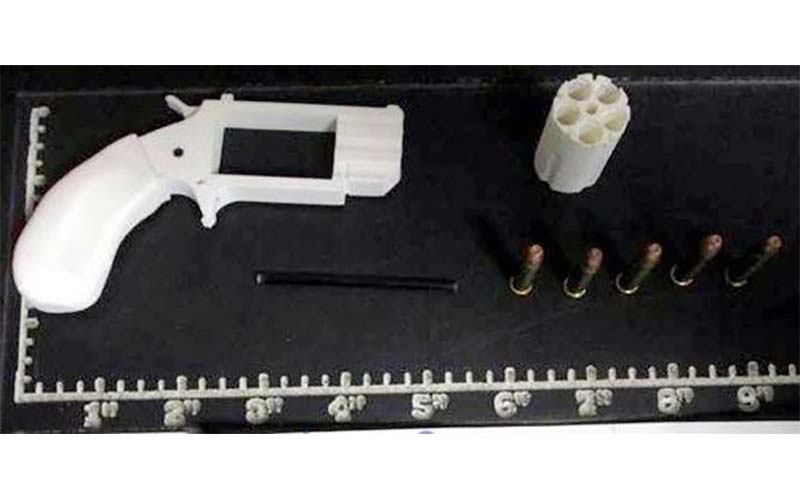
3D Printed Firearms
Thanks to recent pearl-clutching, 3D printed firearms are among the best known. Counter to the zip gun, the firearms are much more sophisticated and require special manufacturing equipment.
As its name implies, 3D printed guns are created from, you guessed it, a 3D printer. The receiver or a entire firearm is manufactured by stacking microscopic bits of polymer together until the part or gun is made.
To create one, however, a person needs the plans just like you would if you where to to manufacture a part with a CNC machine. You either find the files on the internet or create them yourself using computer-aided drafting (CAD) software.
80 Percent Firearms
These are unfinished firearms essentially. The basic shape of the lower receiver–in the case of an AR–or frame–in the case of a handgun–is there. But material enough remains it does not meet the ATF’s definition of a firearm.
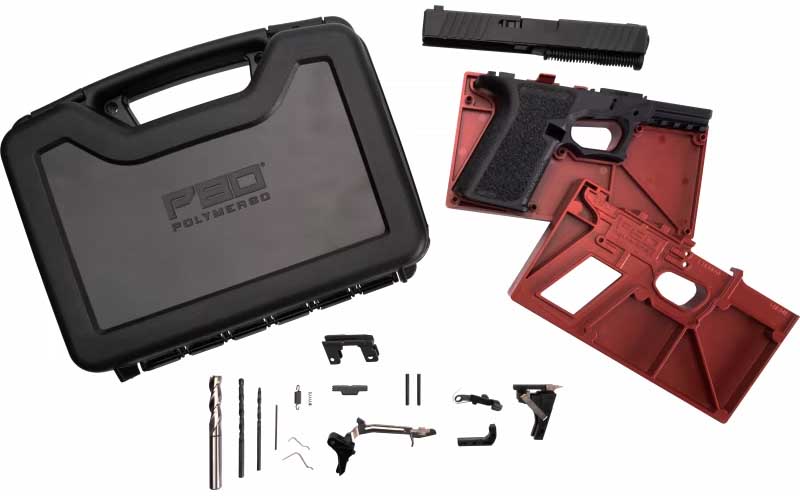
You, the kitchen-table gunsmith, cut away the material to finish the component. In the case of pistol frames, you’ll use of a jig and a drill to finish. The 80 percent AR receiver, on the other hand, requires actual milling–if you aim to do it correctly.
The History Of Improvised And Homemade Firearms
For several centuries following the advent of gunpowder-based weapons, almost all firearms produced were essentially homemade. Before the industrial revolution and the standardization of parts, the only unifying factors between gun designs were their basic operating principles.
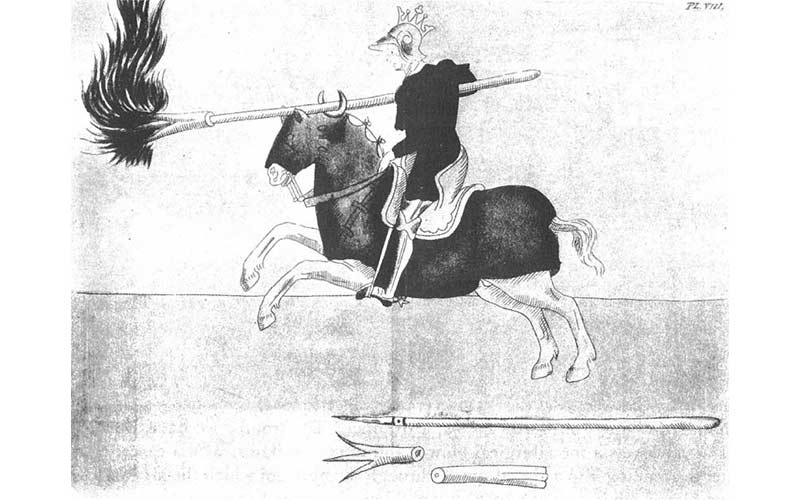
The first guns were the fire lances of medieval China, bamboo tubes charged with gunpowder and filled with whatever the soldier could get as shot. These were single-shot weapons, occasionally used in battery, much like volley guns.
A depiction of a medieval fire lance. Photo: Wikipedia.
As firearms technology progressed, so too did the skills required to make them. Fire lances evolved into metal-cast hand cannons, requiring blacksmithing knowledge to produce. These gave way to smoothbore muskets, featuring increasingly complex ignition mechanisms.
While almost anyone could drill a flash hole into a barrel, the introduction of matchlocks, wheellocks and flintlocks resulted in the need for much more specialized labor.
The advent of rifling improved the efficacy of long guns at the cost of more complex manufacturing, but it hardly meant the end of simple smoothbore firearms. The zip gun is a testament to this.
Is It Legal To Make A Zip Gun?
Bear in mind this isn’t legal advice; we’re just talking about an overview of publicly available information about laws. Make sure you talk to an attorney if you want to be certain what you’re doing is legal.
A Boston police officer holding a zip gun. Photo: Wikipedia.
Federal law (specifically the Gun Control Acts of 1934 and 1968) doesn’t prohibit an otherwise non-prohibited person from building a firearm for personal use. Registration, serial numbering, a background check and so on aren’t required.
According to federal law, the only requirement is that it must be detectable by a metal detector and that you don’t sell it.
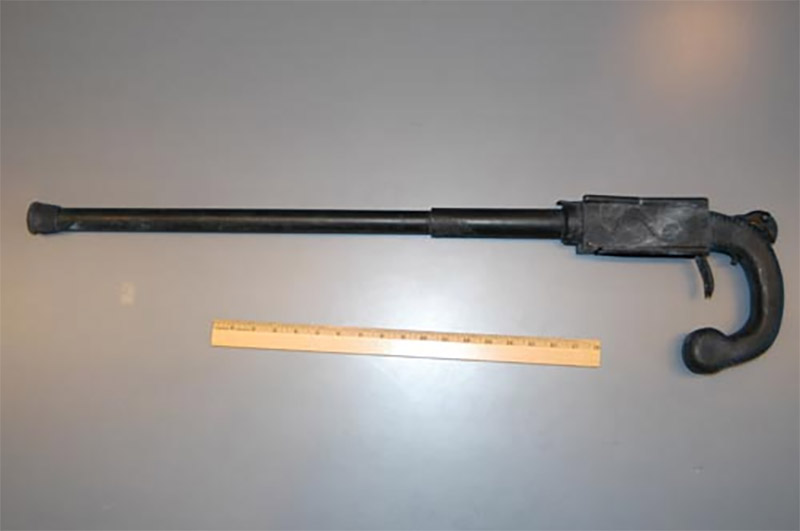
However…any firearm made to look like anything other than a gun, such as a cane gun, is classified as Any Other Weapon under the NFA. AOWs are Title II firearms and require a tax stamp and Federal paperwork.
A homemade shotgun disguised as a cane. This particular weapon was involved in the 2003 “Pizza Bomber” case. Photo: Wikipedia.
That’s it…as far as the letter of the law is concerned. Of course, how federal and state agencies interpret and enforce the law is something else entirely.
Buy, Build, Shoot Kits: The ATF’s New Rule
The Biden administration has made gun regulation a priority, and among the proposals is a crackdown on “ghost guns.” In April of 2022, the Biden administration announced a new rule impacting “buy, build, shoot” kits.
The Bureau of Alcohol, Tobacco, Firearms and Explosives amended its official definition of firearm frames and receivers. Essentially, any kit or collection of parts that can be assembled into a firearm is a firearm in the Fed’s eyes and must have a serial number, plus requires a background check to purchase. The questionable rule change came about in April 2022 and takes effect in August of 2022.
Vaguely written, confusion abounds as to what this rule change means. For certain, it sounds as if 80 percent kits—including jigs, guides, slides and other components—require serialization. Where it’s foggy are stand-alone 80 percent lowers.
Some legal experts say these are exempt, others that they are not. A sticky wicket for certain, and one that gun owners are likely to hear much more about as time goes on.
State Laws On Homemade Firearms
A number of states preceded that ATF ruling by passing laws requiring serialization and background checks of any homemade or kit firearm.
To date, California, Connecticut, Maryland, New York, New Jersey, and Washington state passed laws banning “untraceable” (non-serialized) homemade firearms. The language is similar to the ATF’s ruling on “buy, build, shoot” kits.
A Polymer80 buy, build, shoot kit. It includes everything one may need to build their own Glock-like pistol.
The city of Denver likewise enacted such an ordinance. For those unaware, Colorado did away with its state preemption laws pertaining to firearms, allowing municipalities and jurisdictions (think parks department) to enact their own firearms laws. Gun laws in Denver, Vail and other cities are much more restrictive than in the rest of the state.
Time will tell just how overreaching the new federal policy will prove and how it will affect legal gun owners. Until the rule is enacted, however, it is still in accordance with federal law for a nonprohibited person to build their own otherwise legal firearm using any means or methods that they wish, “buy, build, shoot kit” or not.
Zip Gun Types
Zip guns are hard to group into “classes” because of their impromptu nature. However, there are a few common features that many of them share.
Barrel Types
The barrel is typically a defining feature–more specifically, pipes versus pens.
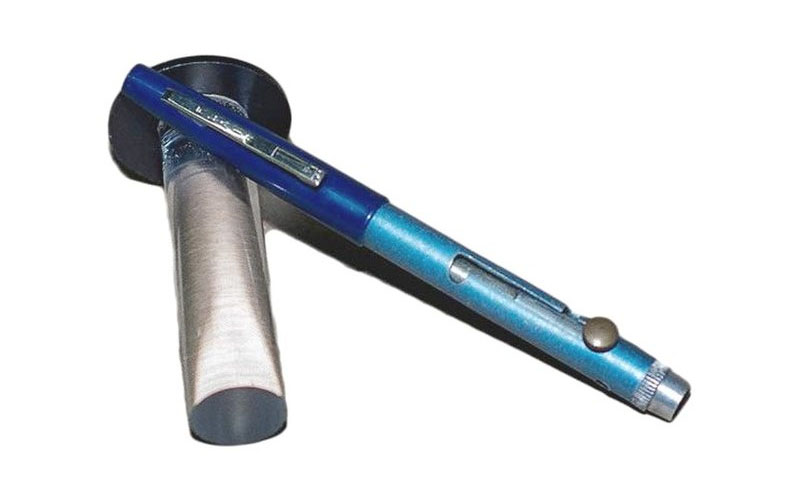
Pen guns use the body of an ink pen for a barrel and they are typically made to fire a small-caliber cartridge. These designs are limited to cartridges that fit inside the body of a pen, typically some variant of a .22-caliber rimfire.
Pipe guns, on the other hand, chamber a wider variety of cartridges–pistol, rifle and shotgun shells. Generally, zip gun aficionados tend toward lower-pressure options, given most pipes have a low tolerance to the pressure produced.
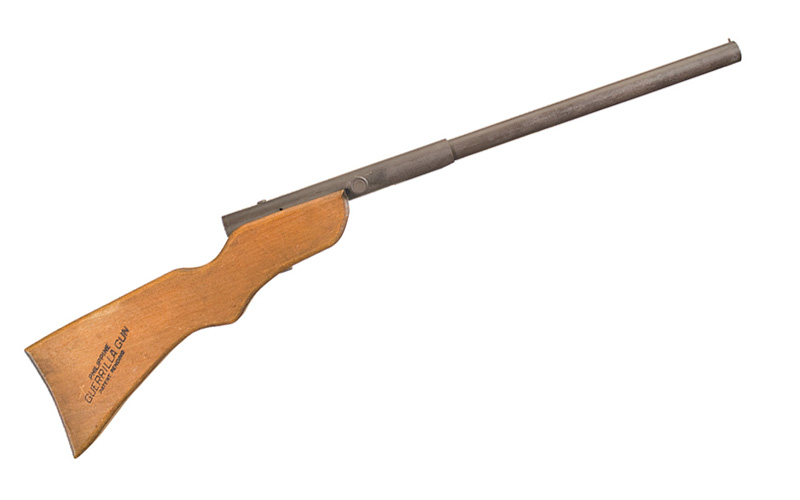
This detail, combined with the abundance and power of shotgun shells, means that shotgun pipe guns are almost certainly the most common variant. During World War II, slam-fire shotguns boasting crude stocks saw action against the Japanese in the Philippines.
Speaking of slam-fire designs, another way to classify zip guns would be the firing mechanism.
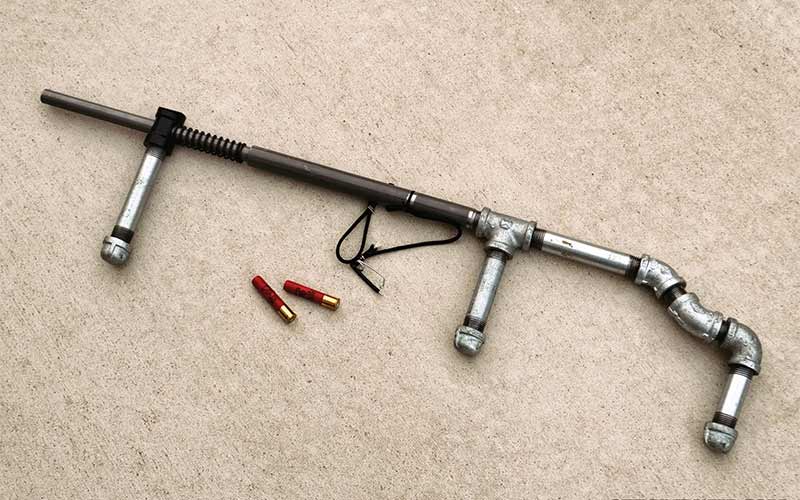
Slam firing requires the user to manually strike a firing pin into the primer or slam the primer into a fixed firing pin almost like a mortar. The Richardson Philippine slam fire shotgun pictured above is obviously an example of the latter.
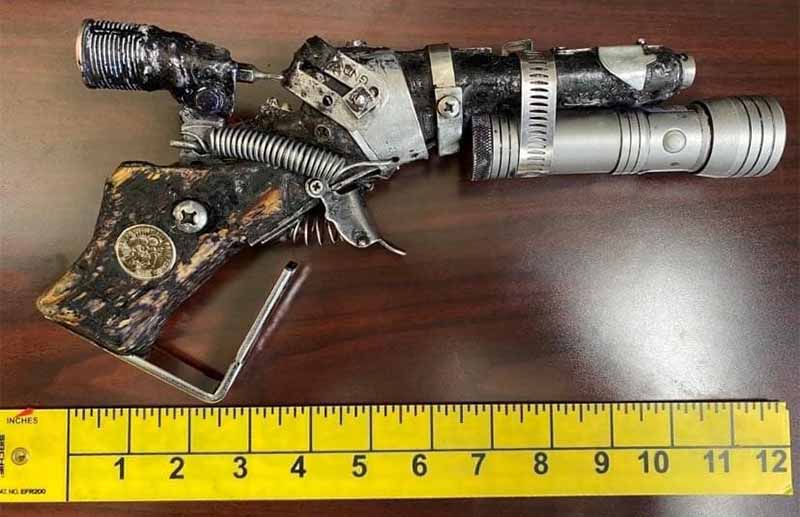
Other zip guns use some sort of mechanical tension to fire, such as a spring or even rubber bands. Typically a nail or a like object acts as the firing pin. The sophistication of the lock mechanism varies wildly, but the nicest examples may even have a pistol grip or stock fashioned for it.
Covert Zip Guns
Zip guns also have a history of use by spies and intelligence agencies. They’re typically small-caliber weapons and often disguised as common items like cameras, cell phones and, of course, pens.
A gun disguised as a pack of cigarettes. Photo: Wikipedia.
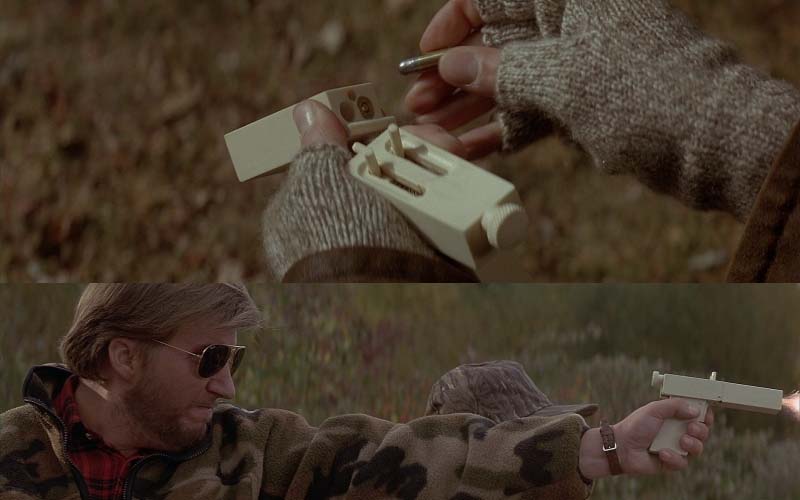
The myriad improvised and covert weapons left some marks in pop culture, inspiring the Golden Gun in the eponymous James Bond novel and movie, the double-barrel plastic pistol in the Clint Eastwood film In The Line Of Fire and of course the use of the Sedgley OSS .38 caliber “glove pistol” in Inglorious Basterds.
The homemade pistol from “In The Line Of Fire.” Photo: IMFDB.
How A Zip Gun Is Made (In Case You Were Curious)
First off, should you?
Well, you’re dealing with a lot of pressure (thousands of pounds per square inch) when engineering a firearm. And if something goes wrong that pressure and bits of metal and other material have a good chance of ending up in your hand–if you’re lucky.
Furthermore, as we’ve established, homemade firearms are illegal in many states and the same rules apply to improvised guns as to factory-made–if you aren’t allowed to legally possess a firearm at all, well that includes zip guns.
Overall, unless you’re living in a post-apocalyptic hellscape, à la Cormac McCarthy’s The Road, you shouldn’t whip together your own gun from the scrap heap. If you have a from-scratch itch that demands scratching, look in the 80-percent class of firearms. Doing those correctly should provide enough of a challenge.
That said–and for a better understanding of zip guns in general–we’re going to dig into how to make one.
A lot of different designs for zip guns are out there, and making one is fairly simple.
In a very general sense, to make a zip gun you must first find some sort of tube with a method to seal the breach. The next step is adding some sort of firing mechanism and maybe even some way to hold onto the thing.
A typical pen gun design. Notice the L-shaped cut. Photo: Wikipedia.
The simplest zip gun design that one can make is a slam fire pipe gun, which uses a common metal pipe with a threaded end and a pipe cap. You tap a hole in the center of the pipe cap and put a nail in there.
A common pen gun design is to cut an L-shaped hole in the pen barrel, then use the barrel from a door latch as a bolt. You add springs in the pen barrel forward of the bolt, which compresses as you draw the bolt back and locks into the recess.
Add a piece of a nail to make a firing pin, and cut a hole in the end cap. The end cap is where you load the cartridge–typically .22LR or .22 Long.
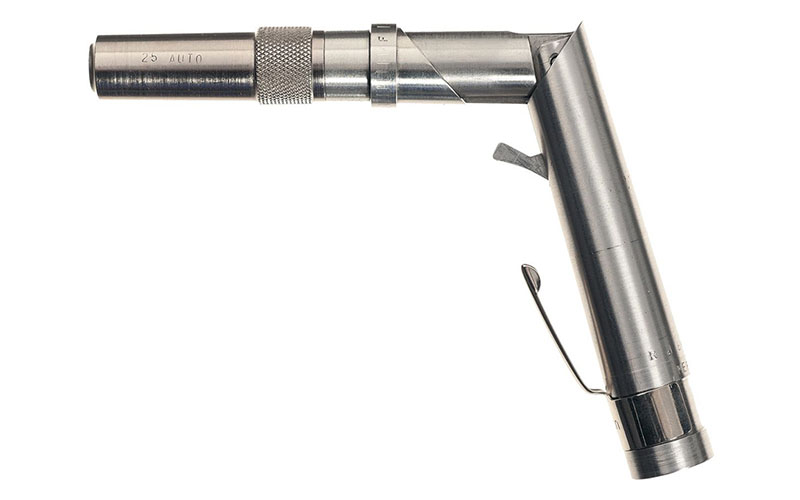
A Braverman Stinger in .25 ACP. This factory-made pen gun is unique because it is not classified as an AOW due to the fact that it must be folded into a pistol shape before it can fire.
Push the bolt out of the locking recess and the spring pushes it forward, hitting the firing pin and detonating the cartridge.
There have also been some more ornate “pen gun” designs, such as the Braverman Stinger.
However, be aware any “pen gun” or homemade firearm made to look like anything other than a gun is—as mentioned—classified as “Any Other Weapon” by the National Firearms Act. In turn, it is a Title II firearm and thus requires a tax stamp to make or possess.
A quite unique zip gun dubbed the “Smith & Methson” by those who confiscated it. Photo: Meskwaki National Police Department.
There are other designs, including some with crude hammers and springs and even sear designs, but you get a general idea. Get a tube, add a way to seat the cartridge, add a way to hit the primer and presto.
Kits For Zip Guns That Aren’t Zip Guns
If you wanted to try a kit that can help you make a “zip gun” that isn’t a “zip gun,” you could get the Pop-A 410 kit from Runway Sub Caliber, which is available through multiple online retailers.
The Pop A-.410 slam fire pipe shotgun kit after being completed.
The kit gives you some of what you need to make a slam fire pipe shotgun that fires .410 bore shells, specifically the barrel which has a fitting with a captured firing pin. It’s fairly similar in function to the Richardson slam fire guerilla shotgun shown above but uses different, more commonly available parts.
Besides the included firing components, you need a few short lengths of pipe, pipe nipples, pipe caps, a pipe tree and a few pipe elbows. According to OffGridWeb, you could expect to spend about $40 in parts to complete the build.
The assembled gun slams the barrel into the frame, slamming the firing pin into the primer and detonating the cartridge.
If you wanted to get a feel for what it’s like to make your own gun without having to do any of your own engineering, this kit would be a way to get into it.
More DIY Stuff:
DIY Guns: RECOIL Magazine’s Guide To Homebuilt Suppressors, 80 Percent Lowers, Rifle Mods And More
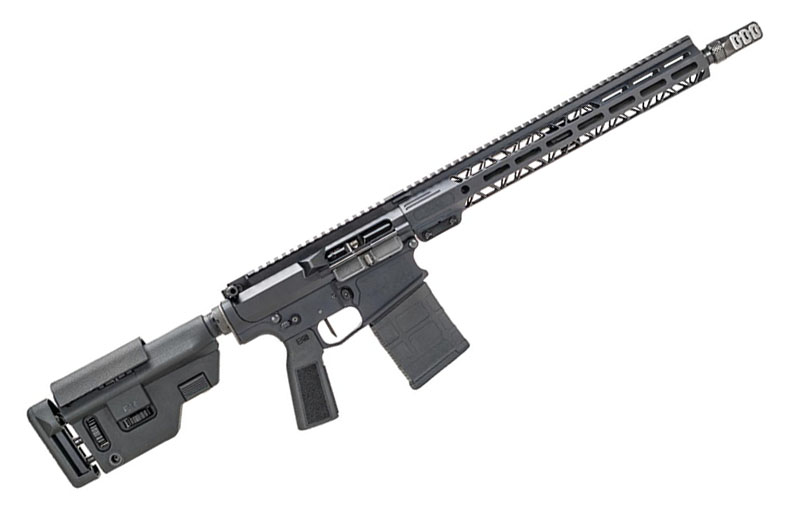
A collaborative effort between Faxon and Q LLC, three new Faxon AR-10 models are now available for the recently developed 8.6 BLK cartridge.
Faxon Firearms has just announced that three new models of 8.6 BLK AR-10s are now available for preorder, with the guns expected to ship later this summer. What makes these ARs special is that they were developed in conjunction with Q LLC for the company’s new 8.6 BLK cartridge.
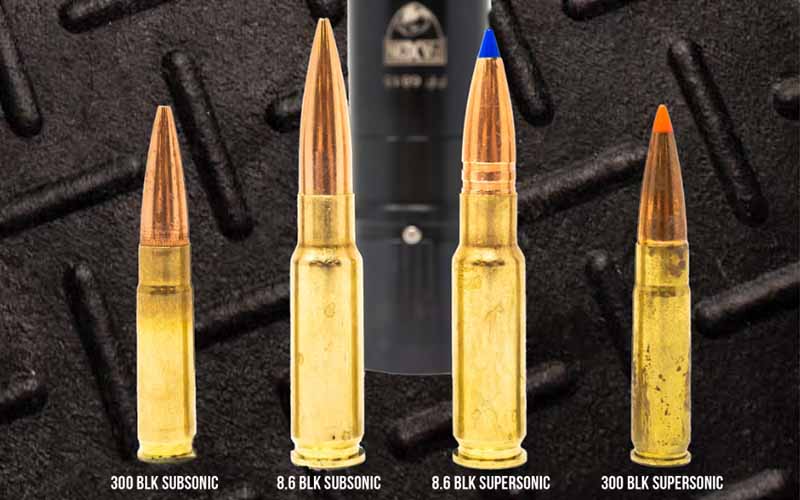
Since it was announced, many have referred to Q’s 8.6 BLK as 300 BLK’s big brother, and it’s easy to see why. Featuring a .308 bolt face and modified 6.5 Creedmoor brass, the cartridge uses .338-caliber projectiles with weights that can exceed 300 grains. Offered in both super and subsonic loads, 8.6 BLK makes for one very versatile round that can deliver a lot of energy on target. The trick to making this concept viable, however, was up to Faxon and their barrel production skills. Bullets this heavy aren’t easy to stabilize, but Faxon managed to make it work thanks to their new 1:3 twist rate barrels. Faxon is using the barrels to produce the first weapons available for 8.6 BLK, starting with three AR-10 models and following up with some bolt-actions down the road. Both styles of barrel will also be able to be purchased separately for custom builds.
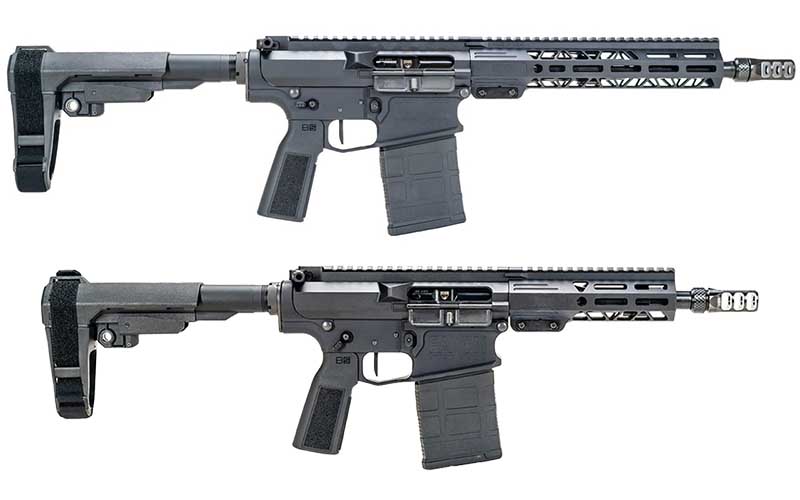
The 8.6 BLK AR-10 model that is now available for preorder is called the Faxon Sentinel, and it’s being offered in three different barrel length configurations. Two models are sold as pistols due to their 8-inch and 12-inch barrels, and both have an MSRP of $2,299. The third model is a 16-inch rifle with an MSRP of $2,399. As expensive as they are, the new chambering isn’t the only allure to the Faxon Sentinels, as each gun will also feature ambidextrous controls, upgraded furniture and an improved trigger. The preorders are expected to ship in early August with normal availability soon to follow.
For more information on the new guns or cartridge, please visit faxonfirearms.com.
Update your long-range shooting skills in a short weekend.
A brand-new world record was recently set in the King of Two Miles competition—this time crowning a queen in Lindsay Paul. Not only was she the first female victor of this insane long-range shooting competition, but she also managed to land three consecutive shots with a .375 CheyTac at 3,520 yards (2 miles).
What’s of great interest is that, even 10 years ago, this would’ve been considered an unapproachable feat for even the best shooters on the planet. Yet, as technology has marched on, we’re seeing what were once considered distances reserved for the elite being conquered by more shooters, even down to the novice hunter level. Enter Greg Ray and his Outdoor Solutions Long Range School.
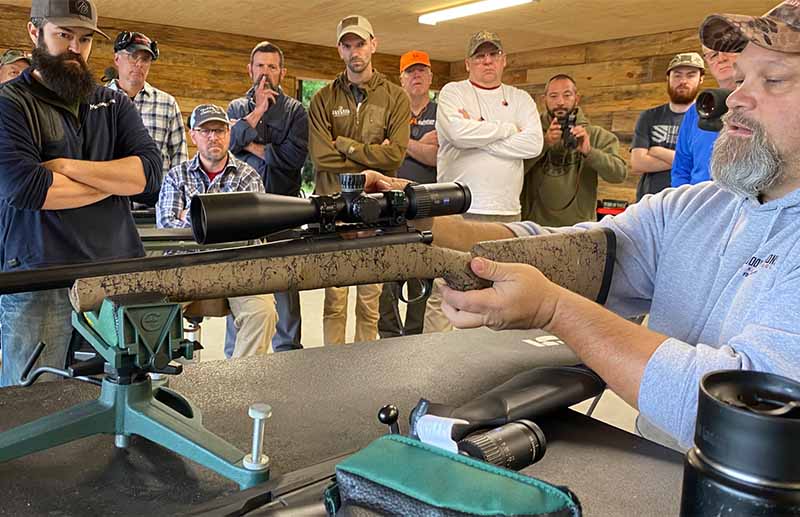
The instruction in the class also featured the teachers themselves firing … and occasional missing. Don’t come to these classes assuming the instructors will use the same guns and ammo as the students … and show them first-hand what success looks like. It’s a very rare thing.
School’s Out Forever
There are usually two types of pitfalls for long-range shooting schools: military-type and hunting.
Military-type schools typically sell an experience for those who idealize sniper culture. I’ve sat in these classes with a straight face and, for the life of me, can’t tell you what actual skills I gained. The main issue here is that most of these mil-spec guys are trying to make target shooting or hunting into some sort of war game, which is just not applicable either in terms of mindset or gear choice for the average person wanting to improve their shooting skills.
Likewise, the hunting classes I’ve attended are usually the opposite in terms of practicality. Whereas the military classes expect you come in with a rifle already set up of a certain quality using ammo you’re familiar with, most hunting classes have struggled for uniformity in training. Many of these classes are designed for the once-a-year hunter who just wants to fire at longer ranges to see what his gear does.
A .30-30 isn’t the same as a .30-06, and even then, I’ve been on the line with guys shooting .375s. The majority of long-range shooting classes for the hunter have been good attempts, but they’re often taught by people with a rudimentary knowledge of ballistics and rifle setup. “You’ll be a good 2 inches high at 100 yards if you want to shoot 300 yards” is usually the order of the day when it comes to this type of teaching, and confidence is rarely earned at the end of the day.
Each student printed groups at the 1,000-yard distance using the class rifles and their own calculations. It was a truly impressive feat considering how new many of the students were new to guns in general.
Greg Ray’s Gambit
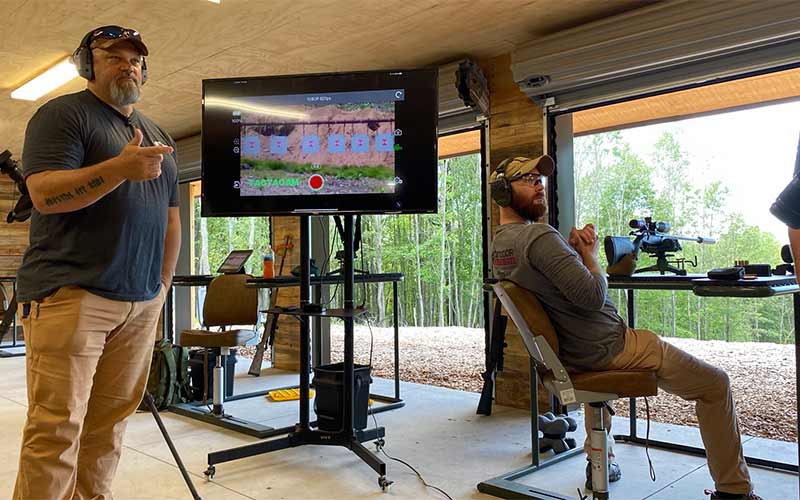
I attended the Outdoor Solutions Long Range School recently, and I found myself completely surprised by this course—the professionalism of the cadre and execution of the training was second to none. It successfully avoided the common pitfalls and succeeded in passing along useful information.
The owner of Outdoor Solutions, Greg Ray, has developed a program so simple and intuitive that a complete novice would be able to hit targets out to 1,000 yards with confidence after just a couple days using off-the-shelf rifles and optics. Ray’s course has never had a student fail to connect at 1,000 yards after just a few hours on the range. Let that sink in.
Ray’s school is unique in that it maintains a careful blend of practical elements; it borrows from military-type shooting, long-range competition and a hunter’s emphasis on field conditions. It connects the most important part of these elements and packages them into something that completely dissolves the mysticism around long-range shooting.
A brand-new shooter fires a borrowed rifle at 500 yards. He made hits every time.
Many people in the class with me had never fired beyond 100 yards on the first day, and by late afternoon were printing groups at 1,000 yards with relative ease. There was no fluff or skunkworks secrets here; the methods were simple and completely effective. Better yet, the humility of the instruction staff made it all the better. Despite their long list of credentials, they were extremely down to earth and made everyone feel welcome—a far cry from many classes where you must deal with an unapproachable cast of diva instructors.
“I started the long-range school program out of necessity,” said Ray. “As a booking agency for Western Big Game hunts, our clients, especially clients from the East, were ill prepared for some of the shot distances required to hunt out West. It’s a rare case to get within 100 yards of an antelope in the wide-open plains, and 100 yards seemed to be the average distance most of our clients from Pennsylvania, Ohio and other Northeast states were comfortable shooting.”
Nine-inch plates at 300 yards as seen through the author’s spotting scope. This distance, while close to an experienced shooter, was further than many of the students had ever fired.
“We started our schools with the hunter in mind,” Ray continued. “Yes, we teach to shoot out to 1,000 yards, but we are not advocating shooting at animals at that range. Our thought process is practicing at the further distances makes you much more proficient at the shorter distances. Plus, it teaches the shooter not only his limitations, but the limitations of his gear.”
When it comes to gear, I tend to err on the side of going in with a bit more gun than I need. I’m in love with case-hardening and rich walnut, but most of my field guns are carbon fiber and titanium. I brought a couple high-end precision rifles, and while they were excellent performers, what impressed me was that Ray’s class had a set of stock Remington 700 and Benelli Lupo rifles with direct thread suppressors and Zeiss optics. These guns were completely off-the-shelf and, once zeroed up with Federal 6.5 CM ammo, printed great at every distance.
These guns retailed for only a percentage of what I brought, and that was intentional on Ray’s part.
“What sets us apart from other classes is we are not trying to sell our clients a $9,000-plus custom setup,” added Ray. “Not that there is anything wrong with that; it’s just not what we do. Our focus is on the training and making our clients better shooters and more ethical hunters.
The instructors detail the finer points of rifle setup to the students in the class.
Right On The Money
The entire class lasted for several days, and during that time we covered far more material than I can relay here. Since the class, I’ve really began to rethink the way my rifles are built, how much they weigh, and if I should suppress them.
Out of all the classes I’ve had, this is one where I actually learned something about my guns and gear, and I’ve taken those lessons to heart. For one, my guns are too heavy but right on as far as optics and caliber. Getting out of the target shooting mindset is what this class did for me, and learning my rifles and gear were making me slower and more tired was disappointing.
I’m not exactly an old dog, but after Ray’s class I certainly learned some new tricks.
Editor’s Note: This article originally appeared in the December 2021 issue of Gun Digest the Magazine.
Looking for a new iron or piece of kit to enhance the one you already own? Check out these 7 new bits of guns and gear to grow your firearms wish list.
Sauer Introduces 270th Anniversary Collection of Limited Edition Rifles
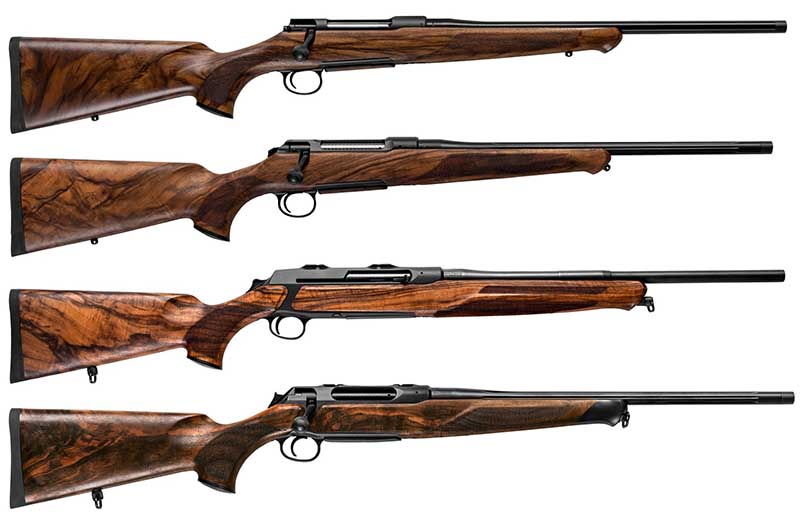
When it comes to longevity, few gunmakers match J.P. Sauer and Sohn. For 270 years, the German manufacturer has turned out magnificent irons, more than one responsible for taking once-in-a-lifetime trophies. In celebration of this legacy, Sauer has offered up a special set of commutative rifles long on timeless elegance and maximum precision. In a nice twist, three of the rifles—100, 101 and 404—are chambered .270 Winchester in honor of the anniversary, while the 303 comes in .308 Winchester. Additionally, the guns come stocked in grade 5 and 7 walnut, and each features Sauer’s 270th-anniversary logo in black and gold on the grip cap. Furthermore, the grip cap features “Wild Man with a Club” verbiage. Only 10 sets of these guns were made, with only one available in the United States. MSRP: N/A
Federal Special Edition 100th Anniversary Shotshell Packaging
No matter how you cut it, taking a shotgun in the field throws most back to golden days. Federal Premium gets this, and in celebration of 100 years of producing some of the nation’s top ammunition, the company is packaging several of its shells that harken back to a halcyon era. Much like the boxes you saw squirreled away in your granddad’s gun room, the special edition 100th Anniversary shotshell packaging features throwback names, type and graphics. Honestly, it’ll prove difficult to part with the boxes after the ammo is spent. Federal offers four campy boxes for its 12-gauge Top Gun ammo, loaded with No. 8 shot. MSRP: $10.99, box of 20
Springfield Armory 9mm Garrison
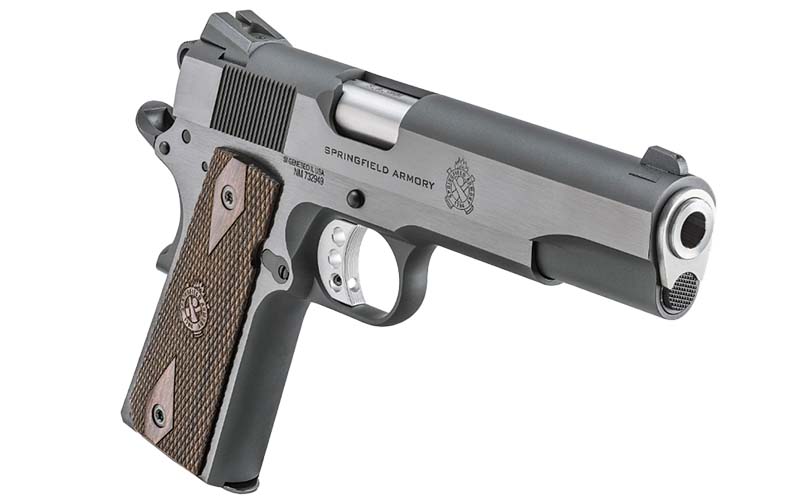
Even updated, 1911s remain a welcome throwback to the golden age of American handguns. Balancing advancement and tradition perfectly, Springfield Armory’s 9mm Garrison is an ideal pistol for someone looking for modern performance with throwback appeal. The guns pops in regard to the choice of finishes, which includes a richly blued carbon steel or very dynamic stainless steel. Combine with thin-line hardwood grips, the gun cuts the classic 1911 profile, while offering a bit of contemporary bling. Skeletonized hammer, extended beavertail, forged match-grade barrel (5 inches) and low-profile, hi-visibility sights also bring out the most in the pistol. MSRP: Starting at $849
Galco’s Trail Belt
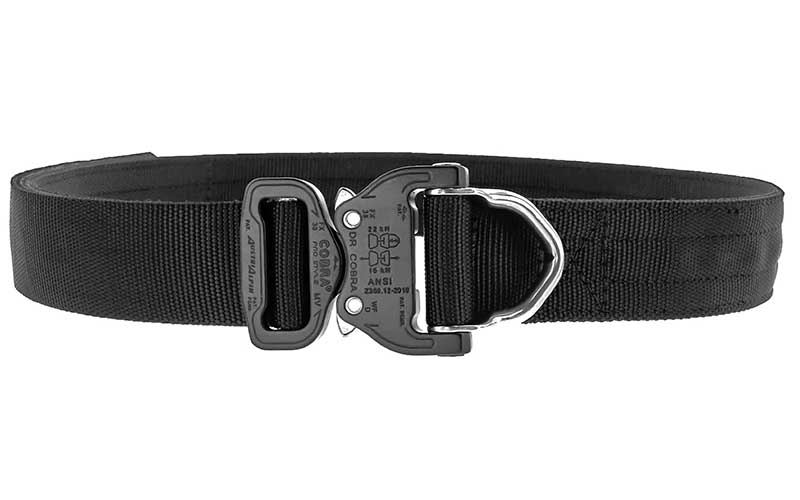
OK, there’s very little throwback about Galco Gunleather’s Trail Belt. But, be honest, when it comes to comfort and performance you don’t really want to throwback to some of the cramped and unpleasant straps from the days of yore. The Trail Belt certainly isn’t that, utilizing breathable and flexible nylon in a tubular web construction. Designed to move with the wearer’s body, the belt doesn’t bite but is still solid enough to use as an IWB support system. At the same tick, it’s easy enough on the body to make it ideal for a day hike or work shift. The Cobra D-Ring buckle is a nice touch, holding fast, but with a quick-release action. MSRP: $98
Browning A5 Shotgun Vintage Tan
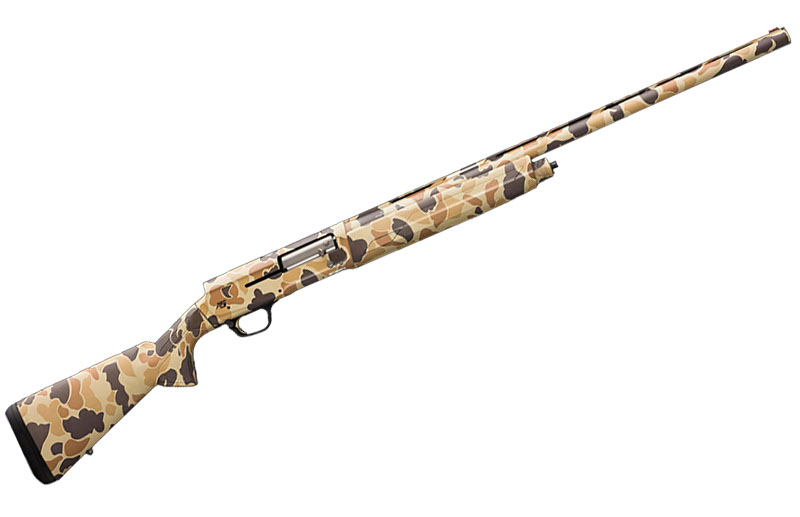
Despite sporting a different operating system than the original Auto 5, the old hammering humpback still retains its retro charm. Browning recently kicked up the gun’s nostalgic good looks with the introduction of a Vintage Tan Camo pattern. Very similar to the splotchy camo popular from the 1960s to 1980s, the 12-gauge is a looker, as well as a doer, for anyone heading out to the duck blind or turkey woods. Available with a 26- or 28-inch barrel—each chambered for 3½-inch shells—the surprisingly light semi-auto can reach out. And with features such as a chrome-lined barrel and rugged composite stock, the gun is built to last well into the future. MSRP: $1,940
Elite Survival System Liberty Gun Pack
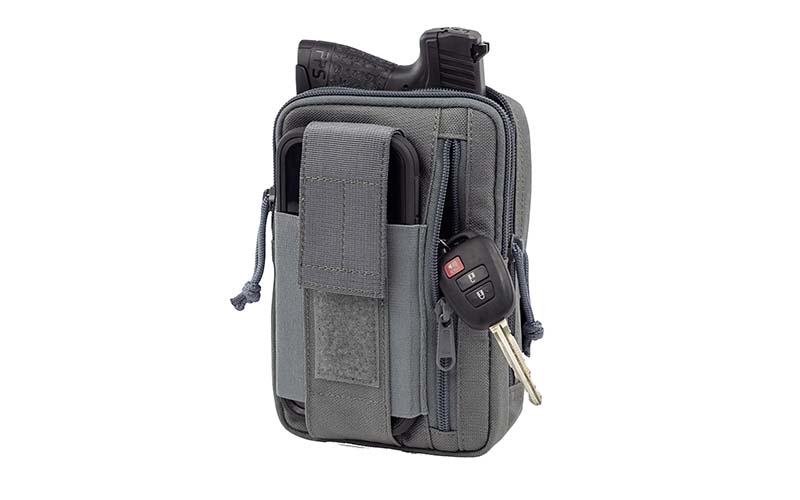
If you tote a classic gun or a retro replica for self-defense, you understand holster options are few and far between. Some inventive thinking is required to take the heater on the go. Elite Survival System offers just this with its Liberty Gun Pack. Designed for carry on a belt or attached to Molle platforms, the pack can be worn in a horizontal or vertical position. And outfitted with a holster compatible with most compact and subcompact pistols, it’s friendly with a wide swath of handguns. Boasting plenty of extra storage, 1000 denier nylon construction and ripcords to access the firearms compartment, this attractive piece of EDC luggage is just the ticket to take a classic heater on the go. MSRP: $50
SnapSafe Safe Must-Have Accessory Pack
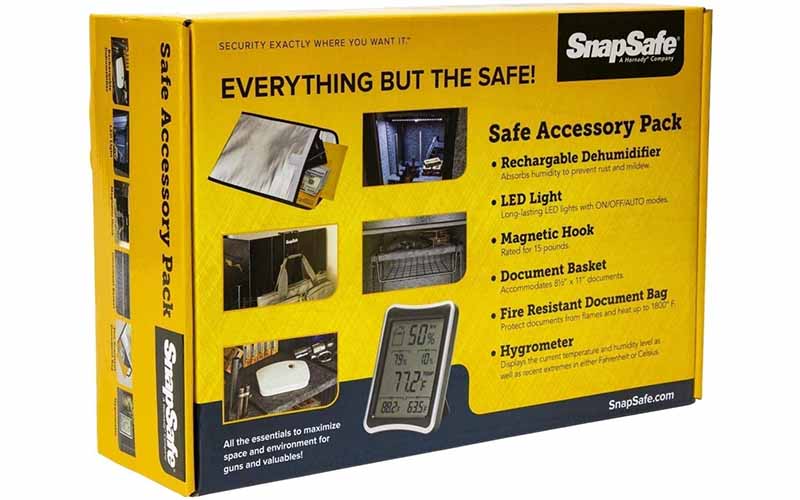
So, you have a safe for all your treasured firearms. Good for you. What are you doing to take care of them now? Whether you realized it or not, the system meant to protect your valuable firearms can also cause them the most harm. Hence the reason why Hornady’s SnapSafe is offering the tools to tend to them when under lock and key. The heart of the comprehensive suite includes a dehumidifier and hygrometer to monitor and battle the scourge of gun safes: moisture. But there are a few extras that are more than handy, including a magnetic hook, LED light strip, document bag and document basket. Basically, if you have a safe, you need these accessories. MSRP: $142
Editor’s Note: This article originally appeared in the July 2022 issue of Gun Digest the Magazine.
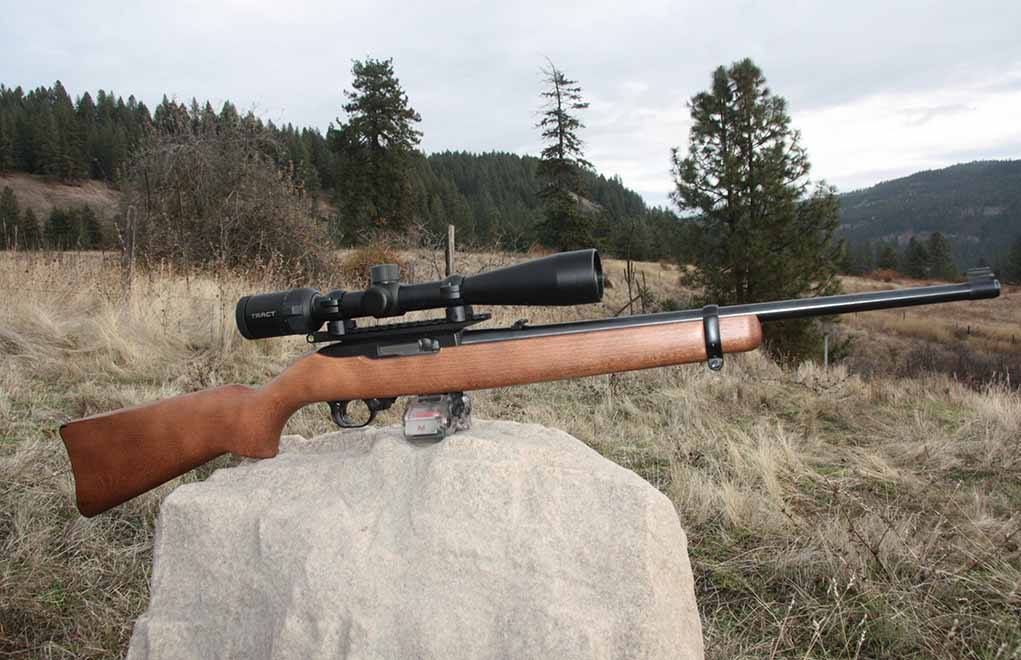
Whether you hunt, compete or just plink, an aftermarket 10/22 trigger is a sure-fire way to get more out of your Ruger rimfire.
Like every other component of a factory Ruger 10/22, the trigger mechanism is reliable and functional. That said, there is always room for improvement, and a 10/22 trigger upgrade may be worth considering.
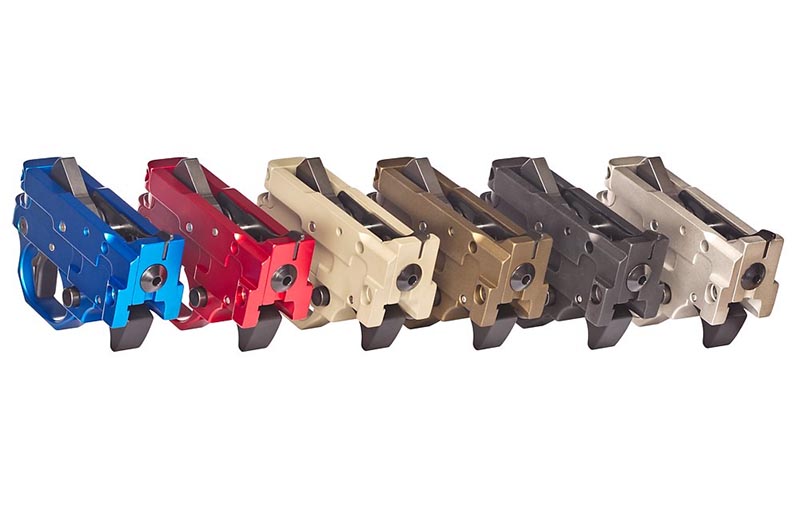
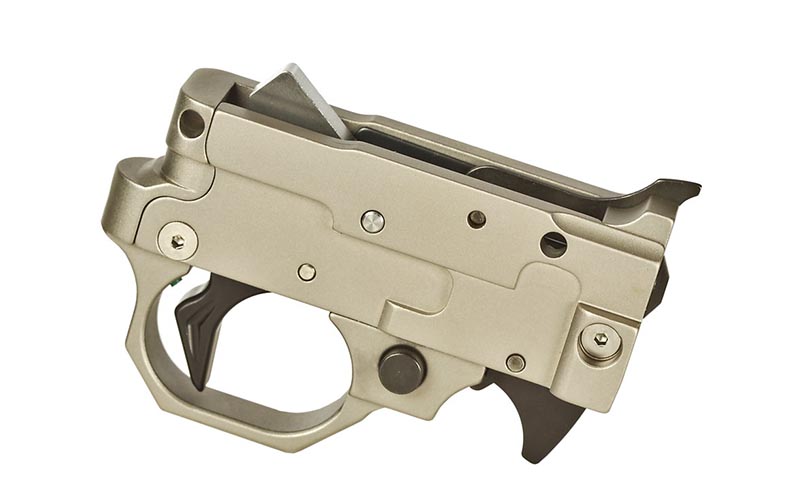
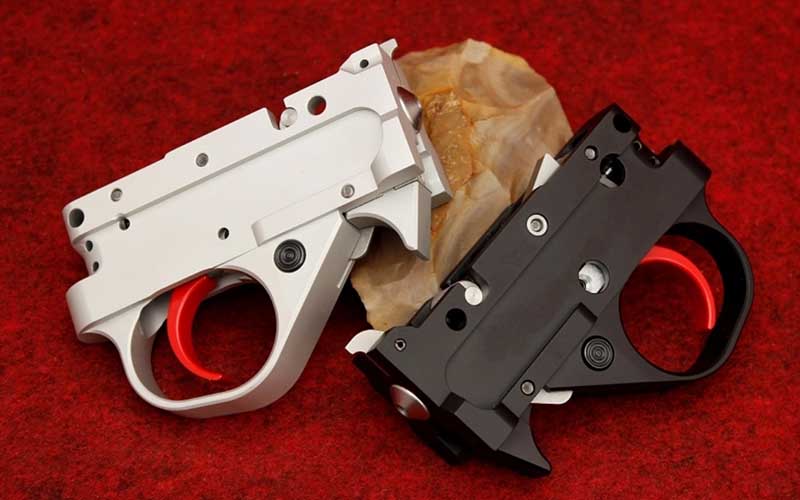
A spread of Volquartsen TG2000 triggers in various colors.
Why Upgrade A 10/22 Trigger?
While Ruger trigger housings are polymer, most aftermarket 10/22 triggers use CNC-machined aluminum housings and feature a better fit and finish as well. Precision-machined components and housings simply fit and function better. Everything has the necessary clearance to function smoothly, avoiding the gritty, binding feeling that is present on some factory triggers.
But tighter tolerances are only part of the benefit. Installing an aftermarket 10/22 trigger can not only provide a lighter pull but a more consistent and predictable one too. Obviously, if you know when your trigger will break, less effort is required to do so. In turn, your potential for accuracy increases.
Another thing to consider is that tinkering with and upgrading something like a 10/22 is just plain fun. There doesn’t always have to be some arcane or highly specific reason to upgrade something. By replacing factory components, you give it more of a personal touch—something that says, “this is MY 10/22.” Even if you had no practical justification for making the modifications, shooting a gun you customized yourself will always be more fun than with an off-the-shelf model.
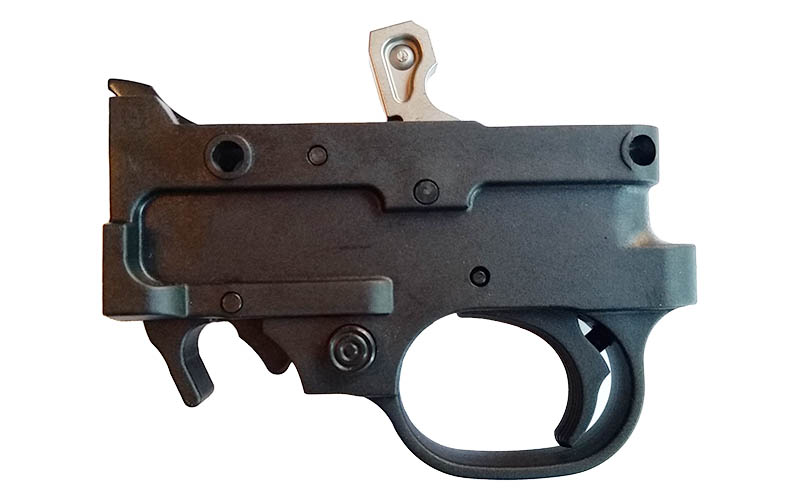
An OEM Ruger 10/22 trigger housing.
10/22 Applications That Could Benefit From A Trigger Swap
Different triggers are designed to accomplish different things. Prospective buyers should consider what they want the upgrade to achieve before selecting a model.
Because the 10/22 is a very versatile weapon with many practical applications, so too are aftermarket 10/22 trigger options. Some merely provide a generally nicer feel while others are more geared towards specific qualities like precision or speed.
Regardless, at the end of the day, a nicer trigger makes for a nicer gun. Even if your Ruger 10/22 doesn’t serve a specific purpose, it still deserves an upgrade. Here are just a few possible roles where a 10/22 trigger swap could shine:
Trainer: If you employ a 10/22 as your designated trainer rifle, a trigger upgrade is certainly worth considering.
There is virtue in training someone on a barebones setup given they can’t crutch on upgrades. On the other side of that coin, upgrading a well-worn 10/22 for the express purpose of training also make sense. Working on fundamentals, newbies aren’t distracted by a stout, gritty switch at the expense of everything else.
Plinking: A 10/22 primarily tasked with plinking would be a great candidate for an upgraded trigger. A plinking 10/22 is likely shot often. So why not put a nicer trigger in?
A variety of trigger types fit the plinking 10/22 role. Single-stage triggers allow a user to shoot faster and benefit from a cleaner and more consistent break. Two-stage triggers’ greatest benefit is their predictability and consistentancy. Two-stage triggers are generally lighter and crisper than what comes from the factory too.
Of course, a binary trigger also fits the bill when it comes to plinking. If you’re going to burn a considerable amount of .22LR, why not do it even faster?
A factory 10/22 is a wonderful rifle, but aftermarket parts can often boost accuracy in the field.
Hunting/Field Use: An upgraded trigger might put more meat in the pot, plain and simple.
A variety of aftermarket options exist that would benefit those who take their 10/22 into the field. You can balance having a consistent and predictable trigger pull that isn’t so light as to compromise safety.
Besides, an upgrade allows you to spend more focus on making good shots than wrestling with a less-than-optimal trigger.
Benchrest Shooting: Here, an upgrade is almost a must. Aimming for maximum accuracy, any extraneous movement and effort potentially disrupt stability. In turn, accuracy.
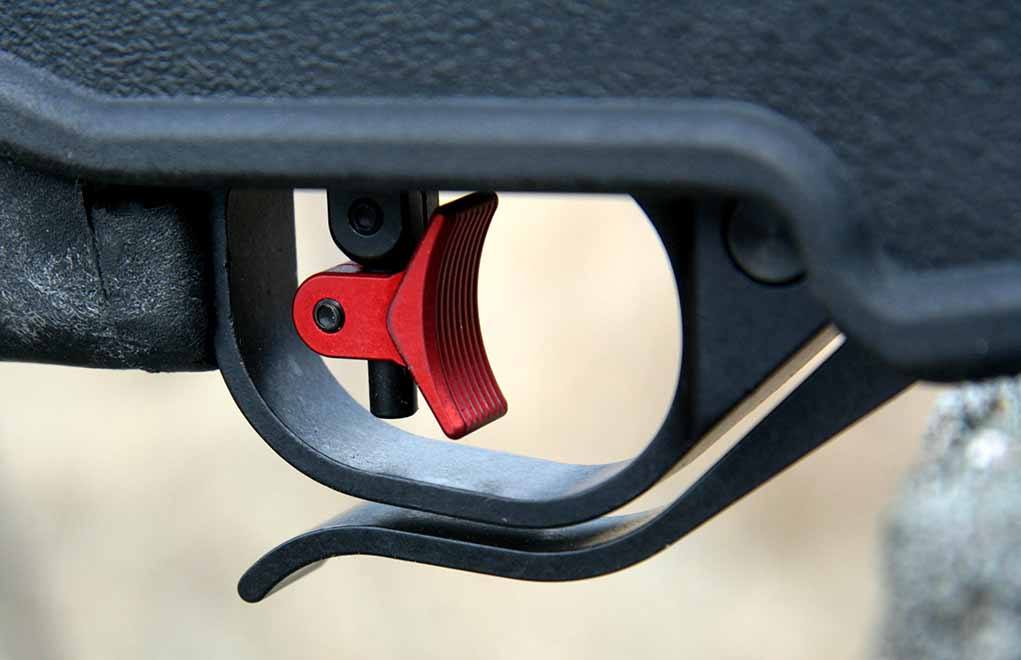
A lightweight trigger with adjustable pretravel and overtravel are invaluable to benchrest shooters. Options, such as the Calvin Elite from Timney Triggers, allow even more customization, like the trigger shoe itself.
Competition Shooting: If you are racing the clock, a lighter trigger is certainly desirable. Additionally, there are some boasting welcome assets.
Timney Triggers Calvin Elite and Volquartsen’s TG2000, for instance, have extended magazine releases. These allow for rapid magazine changes increasing one’s possible speed. When it comes to competition it only makes sense to maximize your potential for success.
The Timney Calvin Elite trigger with its adjustable shoe and extended mag release.
Installing An Aftermarket 10/22 Trigger
Generally, 10/22 triggers come in either drop-in form or as components that replace parts in an existing trigger housing.
Drop-in triggers are easily installed, simply replacing the existing trigger unit. Making things easier, access to a 10/22’s inner workings is the same regardless of model.
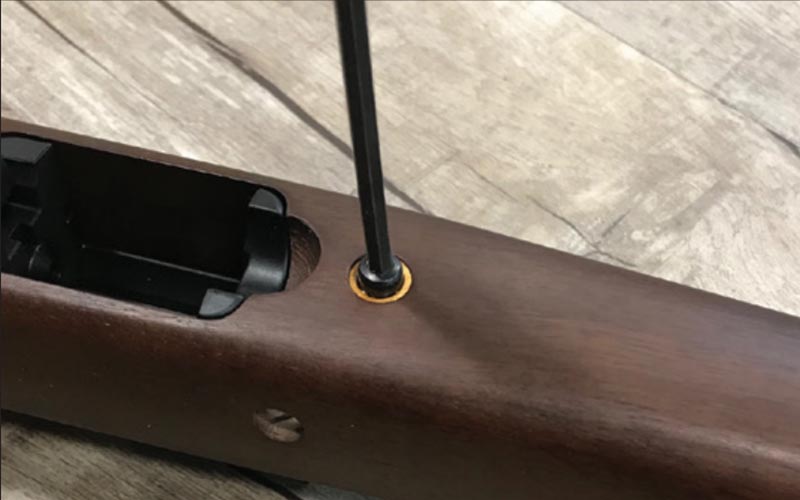
Remove the existing trigger group by drifting out the lower set of receiver pins, allowing the unit to drop free. From here, install the drop-in unit in place of the old one.
A non-drop-in trigger upgrade is quite a bit more involved. Essentially, once the trigger group is removed, you drive out the hammer pin to remove the hammer and associated components, then the trigger pivot pin before removing the trigger assembly from the housing. From here you’ll take out the trigger reset pin behind the trigger. After all this, you install the aftermarket hammer and trigger components into the housing.
Drop-in or components upgrade, save yourself the headache and pay attention to the instructions.
Aftermarket 10/22 Trigger Buyer’s Guide:
As one of the most popular and iterated upon firearms in America, there is a wide variety of aftermarket 10/22 triggers in existence. The models vary as much in design and performance as they do in price. It’s up to you to determine which will best suit your needs.
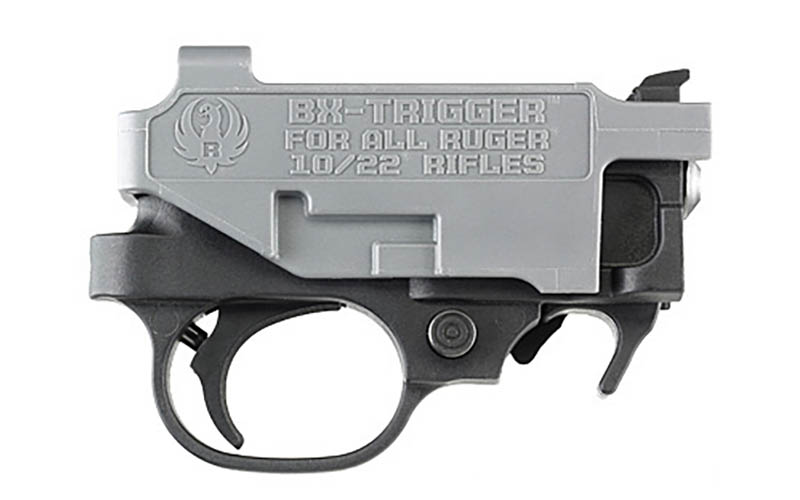
Ruger BX-Trigger:
Recognizing the desire of shooters to modify their firearms, Ruger gave their blessing by manufacturing their own trigger upgrade. A stock 10/22 trigger breaks around 5.5 to 6 pounds while this factory-approved upgrade comes in with a 2.5 to 3 pounds.
The BX-Trigger also boasts a more positive reset and less overtravel than its stock counterpart. This option is great for someone curious about upgrading their 10/22 trigger as it allows them to do it affordably with an OEM component that is easy to install.
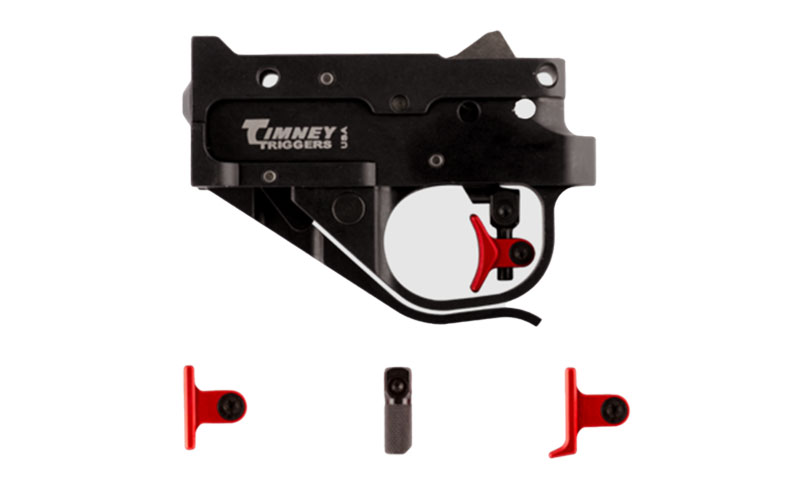
Timney Triggers has a long-standing reputation as a quality aftermarket trigger manufacturer. The company offers a variety of options for a myriad of firearms, so it is only natural that they support the 10/22 as well.
This drop-in trigger includes an extended magazine release that aids in fast and efficient magazine changes. The Calvin Elite also includes multiple trigger shoes tuning it to fit a wider variety of shooters.
The unit features a fixed 1.5- to 2-pound trigger weight, making it a great option for those who want a competition-oriented trigger.
This drop-in option from Volquartsen features a CNC-machined aluminum housing and is available in a variety of anodized colors. As a bonus, Volquartsen includes their automatic bolt release and extended magazine release with this drop-in unit as well. These upgrades would shine in competition as they aid in getting the gun reloaded and into battery more swiftly than a factory job.
The trigger features a fixed 2.25-pound break and can be adjusted for both pretravel and overtravel. The result is a consistent and crisp single-stage trigger that would be a great choice for those who want to get into competition shooting or just generally improve the feel of their 10/22.
Franklin Armory is best known for its binary triggers for guns such as ARs, AKs and CZ Scorpions. While not in the same class of firearm, it is only natural that Franklin offers a 10/22 binary trigger as well.
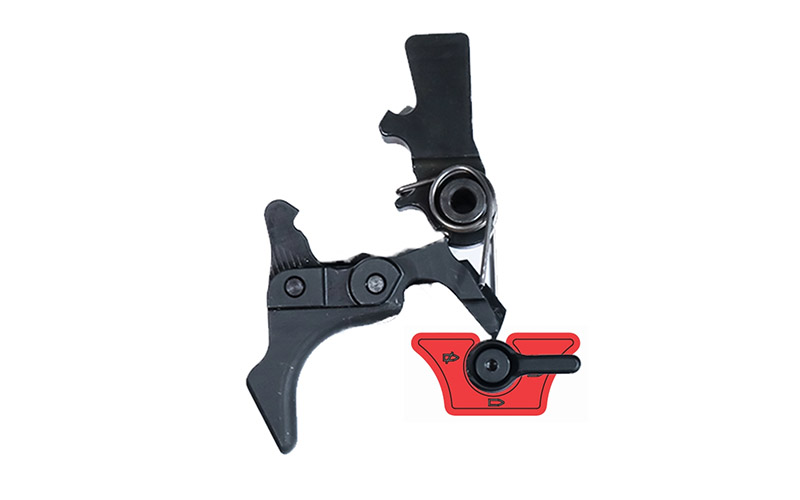
Unlike drop-in triggers, the BFSIII 22-C1 utilizes an existing trigger group and replaces most of the factory components besides the housing. The trigger includes a safety selector that replaces the typical cross-bolt safety with a three-position design that toggles between safe, single-shot and binary fire modes.
For those who don’t know, binary triggers facilitate faster shooting by firing a round when the trigger is pulled and then firing another once the trigger is released. Put simply, a 10/22 with a binary trigger can make quick work of a BX-25 magazine.
The ability of this model to toggle between single-shot and binary is also good because it enables more versatility than if it were permanently locked into binary mode. Essentially you aren’t married to only firing in binary mode, which increases the potential for fun without sacrificing practicality.
This trigger option from KIDD is highly customizable. Besides the color of the housing and trigger, the pull weight, style of magazine release and hammer springs can all be customized through KIDD’s website as well. Regardless of the options chosen, you will get a drop-in trigger unit with aluminum housing and tool steel trigger group parts.
While the pull weight is customizable, the two-stage functionality remains the same. The first stage features a bit of takeup before stopping at a definitive wall that precedes the second stage. The second stage then only requires a small bit of rearward travel to release the hammer and fire.
One thing to note, this trigger unit is advertised as a drop-in option, KIDD states that you should contact them if the unit is going into an SR-22. This is so they may remove material from the rear tang to best fit into the SR-22 chassis.
Knowing when to intervene with deadly force and when to not.
On May 15, 2021, a Fort Smith, Arkansas, man entered his apartment, procured a loaded hunting rifle and shot a man dead in front of the apartment building. The unnamed shooter (as of this writing) will likely not face criminal charges. Why? Because the shooting was done in defense of his neighbors; the individual who was shot was in the process of trying to kill other apartment dwellers after already killing one person.
Two legal doctrines allow a person to use force in self-defense. The first is when you reasonably believe the lives of others are in immediate danger of death or great bodily harm. This is what allowed the armed citizen to legally kill the perpetrator in the above example. The danger was imminent, and the shooter had amassed the facts and applied these facts, under the circumstances he was in, to legally shoot the individual.
This construct is also necessary with the second legal situation—that being to not only have a reasonable belief innocent lives are being endangered, but also you must be able to “stand in the shoes” of the individual or individuals one was protecting.
Stand In The Shoes
Let’s say you turn the corner to go into your local convenience store and see a subject on the ground, being kicked in the head and screamed at by another. Thinking that a severe, life-threatening beating was occurring, you pull your gun and shoot the person who was assaulting the “victim” on the ground.
Stopping another from suffering this kind of life-threatening assault would, in most jurisdictions, be deemed a legitimate act of use of force to save the life of another. However, if you were in a jurisdiction where you were required to “stand in the shoes” of the “victim,” you might be guilty of murder.
In this example, the apparent innocent victim had just robbed the store and was being confronted by someone who saw the robbery and wanted to prevent the robber’s escape but was using excessive force.
Another example would be if the person you were defending was, in fact, the initial aggressor in the altercation and, unbeknown to you, started the fight. Under these circumstances, you likely won’t get a self-defense jury instruction and be convicted of manslaughter.
So, how do you know?
Well … you don’t.
Think It Through
Let’s go over the thinking processes one should employ when possibly inserting oneself in a situation where you’d be defending another—not yourself.
If the person you’re defending is known to you, perhaps has been accompanied by you before the incident and you know they’re not a felon or first aggressor, then you should be on safe ground to defend them.
An example of this is if you’d been out shopping with your significant other, and as you return the shopping cart to the store, your significant other has been accosted and is either being robbed at knife- or gun-point … or being forced into another car. In this example, you’d be safe to stand in the shoes of the significant other and have reasonable grounds to believe your significant other is in grave, imminent danger. It could also equally apply to a child of yours.
But what if the person or persons you’re defending aren’t known to you? If that’s the case, you really need to have viewed the run-up, to the point where deadly force is warranted.
For example: If you walk into a convenience store and interrupt a robbery in progress, how do you know that, moments before, the clerk hadn’t drawn his own gun or disarmed the alleged suspect? Unless you personally know the clerk, you don’t. You’d be better off getting behind some cover, or at least concealment, and watch. After all, most robberies end without bloodshed, so playing the odds isn’t a bad tactic. If the robbery turns to you, though, then it’s your life in danger and a different analysis is warranted.
If you had been shopping and saw the beginning of the robbery (knowing the robber was in fact the robber), how do you know the gunman doesn’t have a partner watching for anyone like you to get involved?
In the case of a robbery in a store, bank or otherwise, my personal tactic is to get behind cover or leave. Unless I’ve seen bloodshed, then and only then am I likely to get involved. You should be making these decisions ahead of time. Being in the middle of a life-threatening event is a bad time to be making decisions that should’ve been made long before. You’ve decided to arm yourself; with that decision comes the responsibility to not go blindly through life without having studied, trained and practiced until the decision making in circumstances like these won’t be the major issue.
Editor’s Note: This article originally appeared in the August 2021 issue of Gun Digest the Magazine.
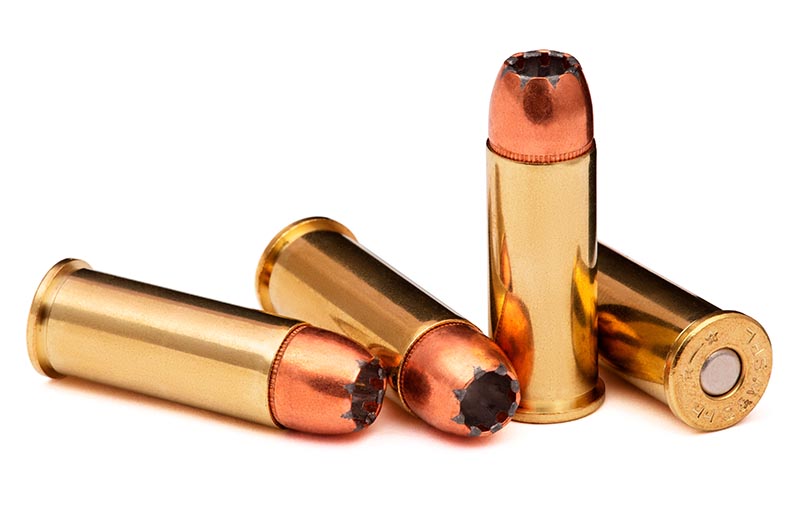
With the coming of bulkier smokeless powders, the .44 Russian cartridge case proved too small to permit efficient use of full charges of the new propellants. Though originally a blackpowder cartridge, the .44 Special—which is about 0.2-inch longer than the Russian—eliminated this problem and provided more power, while using the same bullets as the older .44 Russian.
This cartridge was introduced about 1907. Both Colt and Smith & Wesson made revolvers in this chambering, and a few Spanish and other European revolvers were also made to handle it. There has been a rebirth of interest in the .44 Special in the past few decades.
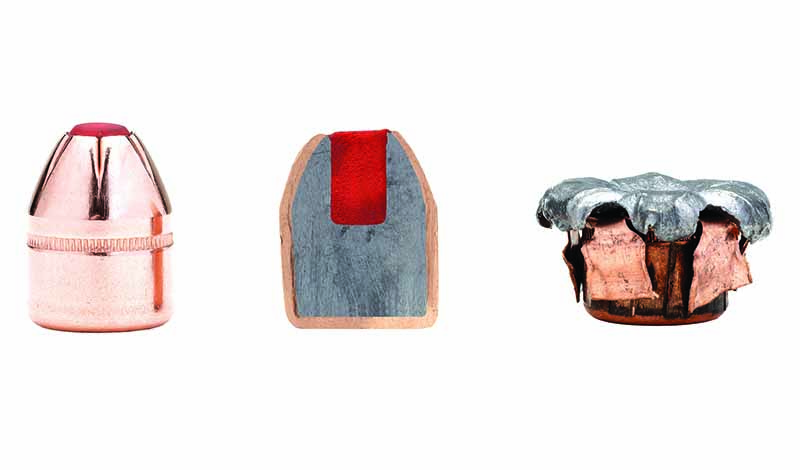
.44 Special Hornady projectiles in unfired, cross-sectioned and expanded states.
General Comments
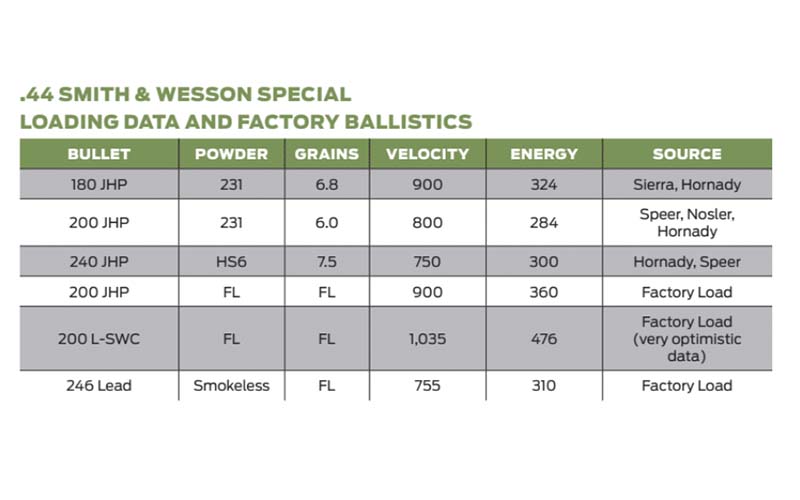
The .44 Smith & Wesson Special is one of the most accurate and powerful big-bore revolver cartridges. However, it was never factory-loaded to its full potential. It was left to the handloader to develop truly effective hunting loads.
Experiments to maximize .44 Special’s big-game hunting potential by men like Elmer Keith, culminated in the .44 Magnum. The .44 S&W Special is still popular for target and field use. Revolvers for the .44 Special aren’t strong enough to handle loads as heavy as those used in Magnum guns. Winchester, Remington, Federal, Black Hills, CorBon, and others load this ammunition.
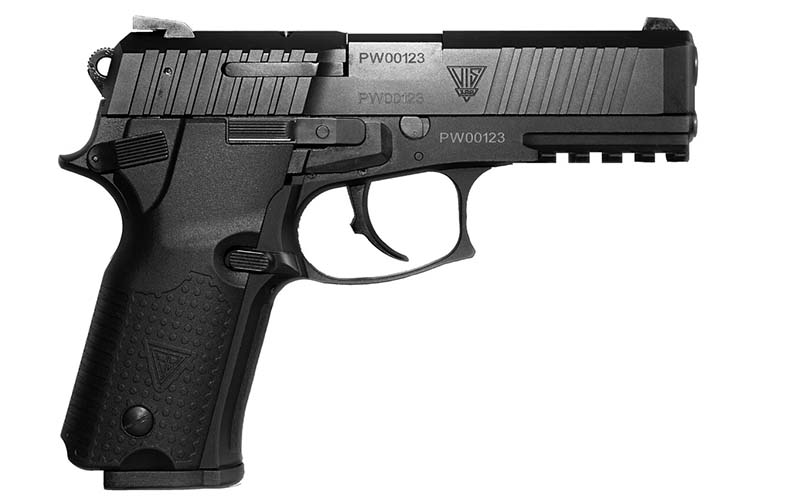
A new 9mm optics-ready pistol from Poland, the FB Radom VIS-100 M1 is now being imported and will be available later this month.
Developed as the next service pistol for the Polish military, the FB Radom VIS 100 was finalized in 2017 and sold to the Polish government over the following years. Originally called the PR-15 Ragun, it is a fairly typical 9mm double-stack hammer-fired service pistol with a DA/SA trigger and aluminum alloy frame. Now that Poland has seemingly ordered enough of these to fulfill their handgun needs, FB Radom can finally begin focusing on the export market. What that means for us in the U.S. is that a civilian variant will soon be available for purchase as the VIS-100 M1, with the importer Arms Of America promising them to be for sale later this month (July 2022).
The name change is obviously a reference to the Polish FB Vis pistol of WWII fame, but the designs themselves don’t have much in common besides being semi-automatic and 9mm. While it’s a new design, the overall profile and features of the VIS-100 M1 are reminiscent of a SIG P226. Its standard 15-round magazine capacity of 9mm suggests some influence as well. Otherwise, the VIS-100 M1 features a 4.3-inch barrel, fiber optic iron sights and a standard Picatinny rail segment beneath the dust cover. The pistol is also fully ambidextrous thanks to the inclusion of a mag release, thumb safety and slide release on each side, and the slide is milled to be optics-ready as well (the footprint pattern is not currently known).
The product page on Arms Of America’s website suggests that once available, the VIS-100 M1 will be able to be purchased with either a black, Inox or Cobalt Cerakote finish. Spare magazines will also be available in the standard 15-round, compliant 10-round and extended 17-round capacities. Depending on options, the MSRP of the pistol will range from $939 to $1,149. This is the least exciting part about the announcement, as when the VIS-100 M1 was originally teased it was advertised as having a significantly lower price of $739.
For more information, please visit the importer’s website at armsofamerica.com.
A muzzle brake is an excellent way to reduce a firearm’s recoil, but it can come with some downsides. Here’s what you need to know.
A muzzle brake is a common recoil-reducing accessory available for most modern small arms today. Because they are most commonly found on rifles, we’ll focus on these for the buyer’s guide. But be aware that the muzzle device does exist for certain shotguns and handguns as well, despite some differences in design and terminology.
How A Muzzle Brake Works
Overall, how a muzzle brake functions isn’t all that complicated. No matter its design, a brake redirects gasses at the muzzle to pull or push the gun much like a thruster. Generally this is in a rearward or sideways direction, counteracting the force of the recoil rearward into the shoulder.
Muzzle Brake Vs. Compensator
Before discussing muzzle brakes in greater detail, it’s important to know what separates them from compensators.
The boring reality of the situation is that it’s far more likely to come down to the marketing of a product rather than the specific way it functions. Companies often name a product a certain way to skirt restrictions or capitalize on market trends.
There is a tremendous amount of overlap between muzzle brakes and compensators, as they both utilize the expanding gas at the muzzle to redirect the gun in a constructive way. Simply put, the primary goal of a muzzle brake is recoil reduction while the primary goal of a compensator is to keep the muzzle level during firing.
Because of this difference, compensators are usually only seen on rifles that are intended to be fired from standing with little support. Compensators don’t do the shooter much good in a supported position, so if you are shooting off a barricade or with a bipod, a muzzle brake would be a better choice.
To make matters more confusing, there are a significant number of products available today that are truly neither a brake nor a compensator specifically but serve as neither and both equally.
Strictly speaking, a compensator is something that serves to reduce muzzle flip. Because of how they are currently made the vast majority of muzzle brakes could be considered to be compensators too.
The reverse is also true, and the result is that the terms have become nearly interchangeable for some individuals despite technical differences between the devices.
What this means for the buyer is that the individual qualities and features of a muzzle device should have a greater influence on your decision than whatever the manufacturer decided to name it. It also means that other aspects of a muzzle brake’s design are worth considering as well.
A substantial number of companies today make quick detach suppressor mounts as muzzle brakes. Companies like Q, SilencerCo and others all offer brake designs that are integral to attaching certain models of their suppressors. Even as standalone products, these usually deliver excellent function.
Muzzle Brakes For Rifles
As mentioned, the primary type of gun that benefits from a muzzle brake is the rifle.
In years past, it was not a usual thing to see a muzzle brake on a low-recoil rifle such as an AR-15. These types of rifles typically came with a simple flash hider, or during the ban years were not threaded at all. A muzzle brake on a rifle is most useful when recoil is too high for the shooter to maintain a proper sight picture in between shots.
In the old days, you would only typically find muzzle brakes mounted on large-caliber or magnum-class rifles. Because of the recoil of these guns, the ability to reduce their kick and gain confidence at long range was paramount.
What spurred brakes popularity on small-caliber semi-auto rifles was the end of the Federal Assault Weapons Ban in 2004. Up to that point, most rifles did not have threaded barrels thanks to the legislation. Today virtually all rifles come from the factory ready to accept a muzzle device regardless of their caliber. Times are changing, for the better.
There are quite literally hundreds of options when it comes to muzzle brakes nowadays. You can easily find one that will suit your specific firearm and shooting needs.
Many are designed for high-volume, rapid-fire competition shooting, and others to enhance precision. Concerning long-range rifles, brakes are favored to aid the shooter in spotting impacts on the target. Likewise, people interested in three-gun competitions often will mount a substantial muzzle brake on their AR to prevent the gun from rising under the recoil of a long string of shots.
Hunters similarly benefit from adding a muzzle brake, as it makes more powerful calibers easier to take to the field. They aren’t just for the recoil-sensitive, as a brake can help to improve your skill across the board and aid in making cleaner kills.
Large-bore rounds like the popular .450 Bushmaster are greatly aided by the addition of a muzzle brake due to it being chambered in light rifles. Under such circumstances, the brake helps its user put more meat on the table.
Muzzle Brake Vs. Flash Hider
While both are quite common, flash hiders are typically seen only on semi-automatic rifles that have minimal recoil, to begin with.
A typical flash hider does not have any function other than simply dissipating the physical flash of burning gas at the muzzle. There is no recoil reduction offered, and as such, it is a relatively uncommon sight on large-bore guns or magnum-class rifles. Because of their limited benefit and generally simpler construction, cheap flash hiders are often used as a placeholder muzzle device until the rifle’s owner decides to go with something else.
A Tapco AK-74-style muzzle brake vs. an AR-15 A2 flash hider.
Large-format pistols and SBRs are especially well served by flash hiders because of their short barrels. These guns are quite concussive as it is, and benefit from something that tames the fireballs they often produce.
Muzzle brakes on short-barreled rifles tend to only increase the concussion and produce a more formidable blast. Because of this, a flash hider may be a better choice for certain short-barreled firearms.
Another reason that one may opt for a flash hider over a muzzle brake is that in many types of shooting disciplines, such as service rifle competitions, only the former is allowed. The common military A2 flash hider is a great example of this, as it is legal in most service rifle and CMP competitions. This is to ensure that no shooter is competing with an unfair advantage through the use of a muzzle brake.
Discussion On Report
Blast is the unfortunate elephant in the room when it comes to any kind of muzzle brake. The energy created during firing has to go somewhere, and as a result, its redirection by a brake is often as unbearable on the ear as recoil is to the shoulder. For this reason, many people decide that mastering recoil makes more sense than risking their hearing.
The increased noise level produced by brakes may also dissuade hunters from using them, as many prefer to keep their wits about them by not wearing hearing protection.
While the benefits of a muzzle brake are many, the discomfort of using one in a field setting is often not worth it. Whether you are considering mounting one on a tactical carbine, a long-range rifle, a shotgun or otherwise, the pros and cons of each scenario must be weighed.
Best Muzzle Brake Buyer’s Guide:
Best AR-15 Muzzle Brake:
Midwest Industries Two Chamber Muzzle Brake
While this two-chamber design may seem simple at first glance, it does more than meets the eye. The Midwest Industries brake may be simple, but its design is incredibly effective at redirecting gasses to mitigate recoil and balance the gun. There’s a video floating around online of a man mag dumping his AR-15 in full-auto with one hand, and this muzzle brake alone was enough to make it seem as if it were locked in a vise.
An interesting side note is this brake’s shape is very reminiscent of an AK-74 muzzle brake, considered by many for a long time to be the most effective standard-issue device of its kind. Midwest Industries make their Two Chamber Brake in a variety of calibers and thread pitches, but the 1/2×28 5.56 version is an excellent way to turn your low-recoiling AR-15 into a no-recoiling AR-15. MSRP: $47.95 // midwestindustriesinc.com
Best AK Muzzle Brake:
Definitive Arms Fighter Brake
This muzzle brake has become a go-to recommendation in many AK circles. It’s simple, effective and extremely lightweight, and it’s less than a quarter-inch longer than a standard AKM slant brake. It also has a 14x1LH thread pitch, meaning it’s ready for any standard AKM-pattern AK, the most common variety on the market. If mounting it on something besides a 7.62x39mm gun, however, know that it’s rated for up to .45 caliber.
Also, while not a true flash hider, the Fighter Brake has “flash regulation” capacities as well, keeping it usable in low-light conditions. Compared to many other muzzle brakes on the market, this is an incredibly balanced, non-concussive design that presents few drawbacks when compared to a standard-configuration AK. MSRP: $39.99 // definitivearms.com
Best Precision Rifle Muzzle Brake:
APA Gen II Little Bastard
For those with powerful, long-range rifles that want some help keeping their sights on target after a shot, the APA Gen II Little Bastard is a big help. Its three-chamber design reduces a good amount of shoulder pain as well. It features 5/8×24 threading and is rated for up to .308 caliber, making it ready to mount on the most common precision rifle models out there.
Another major feature of this muzzle brake is it’s self-timing, meaning that it’s easily swapped between rifles without the hassle of properly aligning the ports each time. The Little Bastard has become popular with many competition shooters in recent years as well, but less so with those who shoot next to them. This brake is loud, and prospective buyers should keep that in mind. Besides that it’s an extremely effective solution for long-range shooters. MSRP: $160 // americanprecisionarms.com
Best Suppressor Mount Muzzle Brake:
SilencerCo ASR Muzzle Brake
This three-port muzzle brake is available in a wide variety of different calibers and thread pitches, making it compatible with nearly anything you might want to mount it to. From standard AR-15s to 9mm PCCs to big-bore bolt-actions, this is an effective recoil-reducing option.
The real feature of these brakes, however, is that they are compatible with SilencerCo ASR suppressor mounts. This allows the user to quickly attach and detach one of SilencerCo’s many suppressor options without any tools in the field, increasing the versatility of the weapon. Even if you have no interest in a suppressor, this model is an effective and relatively affordable option that is compatible with a huge number of different guns. MSRP: $64.40-$92.00 // silencerco.com
Best Recoil-Reducing Muzzle Brake:
Precision Armament M4-72
Of all the muzzle brakes on this list, this is the one that best exemplifies both the benefits and drawbacks of devices such as these. The Precision Armament M4-72 is big, heavy and very concussive. It spits flames out the side like a hotrod when it shoots too. This is not a subtle design and both its appearance and effects when firing can be described as having an intimidating presence.
If all you want your muzzle brake to do is mitigate recoil, however, this is likely the most effective model on the list to accomplish it with, as Precision Armament claims that the .223/5.56 version reduces recoil by about 75 percent. MSRP: $89.99-$99.99 // precisionarmament.com
Editor’s Note: Adam Borisenko contributed to this article.
Not imported for over seven years, the Zastava M77 .308 AK is now back in the USA and will be available soon.
At SHOT Show 2022, hidden on the back wall of the Zastava Arms USA booth, there was an unassuming AK with black furniture and a larger-than-usual magazine. Many passed by without an extra glance, but others recognized it as the famed Zastava M77 chambered for .308 that was last imported in 2015. The rifle’s presence at the show was cause for excitement, but much to the disappointment of AK aficionados, all the Zastava rep could answer when asked about future imports was “maybe.” Thankfully, however, that maybe is now a yes.
Two days ago, the official Zastava USA Reddit account posted the above photo to the AK subreddit with a bit of extra good news. He claimed that not only is the Zastava M77 now in-country and shipping out to distributors, but he announced an MSRP of $1,479, lower than what most were anticipating. Atlantic Firearms already has a page posted for the Zastava M77 with details and an even lower listed price of $1,373.99.
Officially called the PAP M77 Rifle, it can fire both .308 Winchester and 7.62x51mm NATO and features a 19.7-inch cold-hammer-forged and threaded barrel. It comes with black synthetic furniture with an adjustable stock, has an adjustable gas system and each rifle will ship with a 20-round magazine. If different furniture is desired, however, the Zastava M77 will also be able to accept Yugo-pattern handguards and buttstocks as well as standard AK pistol grips. A side-scope rail can be found on the left of the receiver as well.
An M77 as seen at SHOT 2022, sporting different furniture than the final import.
An official release date is not yet known, and Zastava USA doesn’t even have a product page up for it yet. Despite this, all signs point to its release in the near future, so keep an eye out if you want your own Combloc battle rifle.
When it comes to budget CZ-75 clones, the SAR 2000 wins.
Had things been different, Josef and František Koucký might’ve whiled away their days smoking big cigars in a villa overlooking the Vltava River. As it stands, the talented gun designers’ names are little more than footnotes. That’s difficult to reconcile, given their creation is perhaps one of the most prolific handguns of the last half-century: the CZ-75.
Why yes, one of the original “Wonder Nines” of the 1970s earned the Kouckýs little kudos … and even less money. Therein lies the rub, given the sheer number of CZ’s iterations of the recoil-operated, semi-automatic pistol and its throngs of mimics. Weak Combloc patent laws allowed the bird to fly the coop, and every Tom, Dick and Harry with a manufacturing concern popped off their version of the “Wonder Nine.” Perhaps no other gun of the past 50 years has been more copied; it took more than a century for John Browning’s 1911 to develop as many facsimiles. Alas, if there were only royalty checks for the Kouckýs.
The talented Czech designers’ loss has been many shooters’ gain. The CZ-75 clone wars spurred some true gems, many long on performance and some short on price. Which, for all intents and purposes, describes the Sarsilmaz 2000, more commonly known as the SAR 2000.
The duty-sized CZ clone is an ideal home-defense option or an entry-level option for a dedicated competition gun.
The Turks Are Coming!
The who and the what? You’re forgiven if Sarsilmaz isn’t part of your everyday firearms vernacular—it doesn’t exactly roll off the tongue like Browning, Glock or Sig Sauer.
But the Turkish company has the historic chops to hang with many of the top names, and it has proven that in the recent decade. Operating out of Istanbul, Sarsilmaz has turned out sporting and military-grade firearms since around 1880. Currently, the company’s claim to fame is outfitting the Turkish National Police and armed forces with sidearms—the country’s only privately held company that can make that boast.
If an American has heard of them, it’s been through Sarsilmaz’s more recent forays into the American market under its U.S. operation, SAR USA. Most notably, the SAR 9 striker-fired pistol has earned its share of kudos, offering one of the best-priced, no-compromise Glock 19 clones to come down the pike. The SAR Model 2000 does much the same for CZ clones, though this isn’t the pistol’s first time around the block in America.
Yanks have fawned over the Turkish double-action/single-action (DA/SA) pistol previously under the banner of Armalite, the somewhat forgotten AR-24. Though this latest iteration is more closely related to the original 9mm Sarsilmaz DA/SA—the Sarsilmaz Kilinç 2000—than the AR model. To that end, as for the pistol’s CZ-75 DNA, it has much more of an Italian accent than a Czech. The heater is an echo of an echo.
In particular, the SAR 2000 seems to more closely mimic Tanfoglio’s take on the CZ-75 more than the original. This isn’t only seen in the pistol’s Mediterranean aesthetics, but also some of its more weighty design points. In particular, the SAR 2000’s fire control adopts the Tanfoglio design.
Disassembly of the SAR 2000 is straightforward for anyone familiar with the CZ-75 or any of its mimics.
At times, many shooters have contended the Italian pistol offered a better, more consistent trigger pull than what came out of CZ. That’s a barbershop debate point, not set-in-stone gospel. I could find few complaints about how the Turkish pistol tripped, so there might be something to the contention.
While it’s comparable to the Italian CZ-75 clone, it beats it in one of the most difficult categories—price. With a suggested retail price of $478, it’s among the most affordable options hitting gun store shelves. On top of that, there isn’t a lot of compromise in what a shooter receives.
Out Of The Box
I have a soft spot for hammer guns and plenty of steel, which is to say, I was taken aback when I unpacked the SAR 2000 for the first time. Sans the magazine follower and grip panels, the pistol is head-to-toe metal—good stuff to boot. Now, the 9mm isn’t quite stainless steel, but a high-quality, high-chromium alloy known for its toughness and corrosion resistance. But where the material mattered most, at least in this initial take, was its heft.
When it comes to CZ-75 clones that don’t run an arm and a leg, and don’t compromise on performance, the Sarsilmaz more than holds its own.
Make no mistake: The SAR 2000 is no lightweight. In fact, there’s a full 32 ounces of pistol to contend with, making it an out-in-out behemoth. The duty-sized pistol balances nicely in the hand, with its 4.5-inch barrel giving it a bit of front weight. Honestly, these are welcome attributes, though they break from the modern herd. The 9mm Luger is polite as far as semi-auto pistol rounds go and is a plum kitten out of a gun with the 2000’s bulk.
Despite the gun’s weight, it fit my medium-sized hands very well with enough room; small-handed shooters most likely will find it comfortable. Sarsilmaz puts curves and contours in the perfect places, allowing it to snake to the palm and intuitively form a fundamental high grip. The soft, rubber grip panels also do their part, keeping the pistol in place and on target. They’re needed, given there’s only a small patch of checkering on the front and back straps, so something has to make up the difference.
A largish trigger guard gives fast access to the trigger and is spacious enough to run with gloved hands.
As to the SAR 2000’s aesthetics, it’s a racy-looking gun. First off, it sports a traditionally shaped dust cover, another way of saying it’s sans an accessory rail, lending traditional appeal. Next, its classic lines are set off by an unconventional beveled slide, which reminded me of another famous CZ-75 mimic—IWI’s Jericho. The comparison is furthered given the more aggressive cocking serrations—rear only—which is similar to many versions of the Israeli pistol.
The 2000 I handled was finished matte black thanks to the Turkish company’s proprietary nitrocarburizing process. This gave the pistol a tactical and rugged look, as well as protection from the elements. However, for those who need a bit more bling, Sarsilmaz offers an equally attractive flat, stainless steel finished model.
Controllability
Lefties, you might not care for what’s coming. Pleasant as the SAR 2000 is, it won’t play nice with your wrong-handed ways. All the controls are on the left side of the frame and non-reversible. However, there’s plenty of utility in what’s offered up to run the gun.
Here I speak primarily of the thumb safety lever. What a relief! A thumb safety, in my humble opinion, vastly improves the utility of a DA/SA pistol. Simply put, you can carry such a piece cocked-and-locked, skipping the long-and-heavy, double-action stage. That’s an advantage for anyone who values greater accuracy on the draw.
The safety proved very positive and easy to manipulate on the fly, making the pistol a great candidate to carry cocked and locked.
My Wheeler trigger pull scale averaged around 5 pounds flat with a very sharp and consistent break in single action. In double-action, the pistol required nearly 12.5 pounds of rearward force to crack off a shot. So, the advantage of the safety is obvious.
That said, if you prefer the insurance against missteps hastened by sympathetic nerve responses, the DA trigger is respectable. Smooth goes a long way in defeating heavy, and the DA pull on the SAR is slick. The steel trigger does its part, too. Sporting a traditional steeply curved shoe, it proves very responsive no matter what stage the pistol is in. The reset is terse as they come and picks up the pistol’s pace.
Typically contoured, the 2000’s trigger was responsive in both double- and single-action. But SA is the way to go.
There are some other minor points worth touching on that enhance the control and manipulation of the SAR. An ample trigger guard makes getting onto the switch hassle-free; though I didn’t shoot with gloves, its large enough mitts shouldn’t prove a barrier. An ample beavertail not only protects from slide or hammer bites, but also offers a solid landmark for fast and proper hand placement. A well-sized mag release picked up reloads considerably. Well, that and the fact the magazine dropped like ripe apples.
Sarsilmaz At The Range
I was excited to see what the Turkish heater had to offer in live fire … and I wasn’t a bit disappointed.
Through 200 rounds—no torture test, to be sure—the gun didn’t have one hiccup, and I challenged it in this facet. In addition to three Federal SynTech loads, I also pitched Wolf steel-case 115 FMJ—not always the easiest stuff to extract.
As for accuracy, it was spot on. At 25 yards in single action, the best showing came from Federal 150-grain SynTech Action Pistol, which printed the tightest group of the day—3.25 inches. However, through all the ammo I ran, none veered much over the 3.5-inch mark when shooting supported off sandbags. This is more than adequate for a pistol and greatly aided by the 2000’s top-notch forged and crowned barrel.
I ran several dot drills and target transitions with the pistol. The SAR 2000 shined through it all. As expected, the copious iron was gentlemanly in recoil, allowing me to move quickly between targets, and the trigger more than did its job. I didn’t walk away a fan of the double-action trigger. The weight is challenging and a polar opposite of its impressive single-action trigger. That said, for what it is, I didn’t hate it and found it more than acceptable for this style of gun.
As to sights—typical steel three-dot—they’re more than familiar to any modern shooter and were easy to run. For most, they should prove a solid option; if not, the rear is dovetailed and easily upgradable.
Parting Shot
Affordable and ready to run, the SAR 2000 might be the top budget CZ-75 clone out today. That’s a steep statement, but one I feel my time with the pistol backs up. This is a good thing beyond penny pinchers adding a version of the classic to their collection.
The fit is excellent on the Turkish pistol, with nary a wiggle between slide and frame.
While the gun is more than up for home defense duty and would excel in this role, where I think it best fits is as an entry-level competitive pistol. I imagine the practical-pistol competitor in the market for his or her first dedicated race gun—with a tab in the hundreds, not thousands—will appreciate what Sarsilmaz has accomplished. But at the price the Turks are asking, really you don’t require a set-in-stone objective to enjoy what the SAR 2000 brings to the table.
It’s no genuine CZ-75, nor one of its high-end clones, but it doesn’t have to be. The SAR 2000 more than represents the lineage—only at a fraction of the price.
SAR 2000 Specs:
Caliber: 9mm
Action: DA/SA
Sights: Steel Three-Dot
Barrel Length: 4.5 Inches
Weight: 35.2 Ounces
Capacity: 17+1 ; 10+1
Editor’s Note: This article originally appeared in the October 2021 issue of Gun Digest the Magazine.
The Fourth of July is, of course, a time for we Americans to celebrate our liberties and inalienable rights. Here at Gun Digest, one right is always floating around our heads, particularly on our Nation’s birthday — the right to bear arms. Not only does the Second Amendment give us the ability to thwart tyranny and protect ourselves and our families, it also has spawned incredible firearms along the way.
We Americans have a knack at engineering, especially when it comes to guns. We cut some out of whole cloth and others we improve on time-tested designs. And in the end, we come up with implements that change world history.
With that in mind, here are the top 10 most American guns of all time. Of course, we know we might’ve left out your favorite or added one you don’t agree with. Share your thoughts in the comments below.
Good for injecting lead into distant deer and Red Coats alike. More generally known now as the Kentucky or Pennsylvania rifle, these elegant flintlocks are a symbol of American independence. And they gave the Colonists a great advantage in the American Revolution, with the gun’s rifled bore and long barrels extending their user’s effective range out to 200 yards and beyond. While they played a role in the American War for Independence, it was small compared to the British-made Brown Bess Musket, the primary arm of our Nation’s Army. The rifles came about during the French and Indian War with Lancaster, Pa., the most commonly referenced place of origin. It is generally accepted that the American Long Rifle was a modification of the Germanic Jäger rifle, produced by Swiss and Germen settlers of the region. But there are more recent theories that suggest English Trade Guns also had a large influence on the design, particularly the American Long Rifle’s longer barrel and smaller caliber.
Colt Paterson
To be sure, old Sam Colt and his company would go on to produce much more iconic firearms. But the wellspring was the Paterson. Patented in 1836 and produce until 1842, the cap-and-ball, black-powder pistol was the first commercially successful repeating firearm to use a revolving cylinder. As Colt’s fans most likely know, the popular story is Colt conceived of the revolver during his teenage years at sea, inspired by the ship’s steering mechanism. That might be, but there were likely examples of flintlock revolvers — such as Elisha Collier’s — he saw on his trip. They were somewhat common in India, and his destination was Calcutta. No matter how inspiration struck, we Americans are sure happy it did. Not only did the design lead to some true firearms legends, it’s still a concept that dominates nearly 200 years later. Photo: Hmaag
If the brass receiver of the 1860 Henry doesn’t spark some primal urge to thumb off 16 rounds as fast as you can work the lever, then there is no hope for you. The repeating rifle was the brainchild of Benjamin Tyler Henry, sort of. It was basically an improvement on Volition and Volcanic rifles, designs Oliver Winchester acquired when Volcanic Repeating Arms went bankrupt. Henry soon set to refining the design when he was hired by Winchester in 1858 as superintendent at the New Haven Repeating Arms Company. Perhaps one of the weightiest modifications was the self-cocking mechanism that operated in concert with the lever-action. The gun saw some action in the Civil War, but was by no means the dominant arm of the conflict. However, the fact soldiers would spend their own hard-earned pay — one would say wisely so — to purchase them to take into battle speaks volumes as to what the rifle brought to the fight. It was also the foundation — with improvements — for the majority of lever-action rifles that would go on to win the Old West, such as the Winchester 1873.
There probably isn’t a single pistol that encapsulates more of America than this Colt. It is the West forged in steel. A testament to this, these single-action legends have been rolling off — reluctantly so, upon occasion — Colt’s assembly line for going on 150 years. The gun itself doesn’t represent a huge technological leap from what was being produced at the time. But when prevailing design points of the era were married to the powerful .45 Colt round, well, it was like when Butch met Sundance. While the U.S. Army originally adopted the revolver, the lore around it grew from its use by famous good and bad guys of the Old West. The likes of Wyatt Earp, Bat Masterson, Doc Holliday and others all relied on the accuracy, power and reliability of the Colt at one time or another. Then Hollywood got a hold of it and brought the SAA to near godlike stature. Dave Campbell perhaps said it best, “Whether used to protect and defend, an ersatz hammer to pound fence staples or as a movie star, the Colt Single Action Army has delivered every time.”
As far as warhorses are concerned, few have been ridden longer than the Springfield 1903. The tried-and-true five-round bolt-action made its appearance soon after the Spanish-American War and served all the way up to Vietnam. Heck, the U.S. Army’s Drill Team still snaps to attention with this classic at their side. The rifle came about due to U.S. troops being outclassed by the Spanish Army’s M1893 Mauser in the Spanish-American War. Utilizing design points from the Springfield Model 1892–99 Krag–Jørgensen (which the Springfield replaced) and the Mauser G98, the 1903 was born. The two biggest improvements on it from the ’Krag–Jørgensen were a faster-to-load internal magazine, one able to utilize stripper-clips, and a chamber able to handle higher-pressure rounds. It was originally chambered to shoot the short-lived .30-03, but was soon upgraded to fire the legendary .30-06 Springfield.
A true red-blooded American semi-auto. In the 20th Century, there has been no more revered firearm than the M1911. Created by prolific firearms designer John M. Browning, the semi-automatic pistol, or some variation on it, has seen action in nearly every American conflict since World War I. And like the Springfield Rifle, the pistol was born out of the harsh lessons of war. In the Philippine-American War, Moro guerrilla just wouldn’t drop after multiple shots of .38 Long Colt from soldiers’ Colt M1892 revolvers. Long story short, this sparked trials to replace the revolver that lasted nearly 6 years. In the end, Colt’s M1911 was the last gun standing. What made it a desirable sidearm is what still attracts shooters today — its simplicity and reliability. A look back at the field tests themselves sums it up pretty well, “[D]uring a 6,000 round test fired over two days in 1910… (Browning’s) sample pistol became so hot that it was simply dunked in a pail of water to cool it for further firing. Browning’s sample reportedly passed the test with no malfunctions.” The other aspect of the M1911 that makes it so desirable, it’s chambering. The .45 ACP delivers a lot of energy on the target, but not at the cost of being unmanageable.
Ma is American fury in .50 caliber. Next to the M1911, the M2 Browning is the longest serving firearm in the U.S. inventory. And unless there is some major breakthrough in the near future, expect this wicked behemoth to continue slinging whoop ass down range for years to come. As its name suggests, it is yet another brainchild of firearms genius John M. Browning and came about due to the increased use of armor in World War I. Pitching the mammoth .50 BMG (Browning Machine Gun) round, the M2 could make mincemeat out of all but the heaviest armored vehicles and a whole bunch more. In fact, Ma Deuce’s versatility is most likely what keeps her forever young. The massive .50 caliber has and is used for nearly every conceivable military purpose, from anti-personal to hard-target interdiction to anti-aircraft to primary and secondary weapons on fighting vehicles. And it has an incredible range of projectiles to send at enemies, giving a heavy machine gunner an astonishing toolbox from which to work.
Of all the arrows in the U.S. Military’s quiver during World War II, the M1 Garand was the sharpest. While the rest of the world’s military forces were playing around with bolt-action rifles during the conflict, the Yanks were laying down accurate, high-volume fire with the M1. In short, the Garand was decisive. No wonder Gen. George S. Patton dubbed it “the greatest battle implement ever devised.” The .30-caliber M1 Garand was adopted by the U.S. in 1936, replacing the 1903 Springfield. John Garand, who was as unique as his weapon, devised the rugged and reliable rifle. The French-Canadian immigrant caught the attention of the government, who gave him a position at the Springfield Armory. The machinist turned engineer spent the next decade and a half basically devising the M1. Luckily, it was just in time to lead our boys to victory in the countryside of Europe and the islands of the Pacific.
This is the undisputed modern day American rifle. If for no other reason than how dang widespread the AR-15 and all its variants have become both on the civilian and military markets. And with manufacturers playing with new chamberings and design points all the time, only expect the Black Rifle to grow in scope and scale. As far as American gun designs are concerned, at least circa the 1950s, the AR-15 was a radical departure. Plastic, aluminum, small caliber — it seemed to run counter to all intuition, especially for a rifle that would (or more precisely its military adaptation, the M16 would) eventually take the place of the wood and steel M14. Perhaps the most revolutionary point of Eugene Stoner’s design was the use of direct gas impingement (though he did not consider it exactly this) to cycle the AR-15. While the concept existed, it was not the dominant design point at the time, with most of the world’s semi-automatic rifles utilizing short- and long-stroke piston systems. Opting for DI, Stoner not only engineered a lighter rifle, but a more accurate one, due to the fact that the AR-15’s barrel was essentially free floating. The other aspect that has kept the rifle rolling is its capacity. The AR-15’s eventual chambering of the small-bore, high-velocity 5.56 NATO/.223 Rem., not only allowed more rounds per magazine but also more ammunition to be carried on person.
It makes sense there is only one shotgun on this list, because there are few other smoothbores that are even half as prolific as the Remington Model 870. The only one that gets close is the Mossberg 500, which has surpassed the 10 million mark. As of 2016, more than 11 million of the rough-and-ready Remington pump-actions had been produced. That puts it up there as one of the most manufactured firearms in history — a list primarily dominated by military rifles. The reliable 870 has played nearly every role expected of a shotgun, from hunter to home-defense weapon to law enforcement tool to battle implement. To the first point in that list, 870s could very well have put more meat on the table than any other gun given its sheer profusion. What made the 870 (and still makes it) such a hit when it was introduced in 1950 was its affordability and performance. Utilizing new post-World War II manufacturing techniques, Remington was able to churn out these dependable, well-made smoothbores en mass and economically. The first year alone there were 15 different models to choose from. And given their sturdy construction, they’re pretty danged hard to stop from chewing through shells. Good chance rats and cockroaches will use the 870 to fight each other long after man disappears from the face of the earth — at least the American ones.
While today there is no shortage of lightweight, intermediate-caliber carbines, that was not always the case. The AR-15 was only beginning to be adopted by U.S. armed forces in 1962, and it took quite a while longer for it to become the ultra-common working man’s rifle that it is today. For many decades following WWII, that role was filled by the M1 carbine. Officially designated as the United States Carbine, Caliber .30, M1, the M1 carbine is very lightweight and handy, even having a folding stock variant. It’s chambered for .30 Carbine, a 110-grain projectile that travels about 1,990 fps. This allowed it to serve as a pseudo-intermediate cartridge before that concept was truly introduced with 8mm Kurz. Issued with 15- and 30-round detachable box magazines, the M1 (and eventually M2) carbine served as one of our nation’s most formidable small arms for many years both at home and abroad. Much like what would happen later with the AR family of rifles, servicemen who had experienced the M1 carbine at war understood its utility, leading many to acquire their own after returning home. For many years before the proliferation of AR-15s, the M1 was the most “tacticool” option available. The M1 carbine may have never received the household-name recognition that the General Patton-endorsed M1 Garand did, but it is equally as historically important and was arguably an even more forward-thinking design when it was introduced.
Editor’s Note: Adam Borisenko contributed to this article.
Looking to go armed, but are stuck in the weeds as to what to arm yourself with? Here are 20 of the best concealed carry gun options that will keep you on the defensive.