Home Blog Page 81

Inforce Wild1 Weapon Light Review

3

A hands-on look at the newly released Inforce Wild1 weapon-mounted pistol light.

Inforce is a newer name in the weapon-mounted light world, and a few hiccups with some of their earliest models initially gave the company a subpar reputation online. Even the most established and reputable companies have released lemons in the past, however, and Inforce’s attempts at improving their products will never be illuminated if nobody tests them out. Today we’re assessing Inforce’s newest weapon-mounted light designed for use with handguns, they call it the Wild1.

Inforce Wild1

Specs And Features

The only other pistol WML I have on hand to compare the Wild1 against is a Streamlight TLR-1 HL, but that works out fine because that seems to be one of the models the Wild1 was designed to compete against. The two lights have much in common, but we’ll go over their different specs and features.

Wild1 TLR comparison
The Inforce Wild1 (mounted to gun) vs. the Streamlight TLR-1 HL (bottom).

Starting with the three most prominent stats that are advertised on the Inforce’s box, the Wild1 is a 500-lumen light with two hours of runtime and a weight of 2.9 ounces. This compares to the TLR-1’s 1,000-lumen output, 1.5-hour runtime and weight of 4.32 ounces. Both models use CR123A batteries but the TLR-1 requires two while the Wild1 only needs one.

Speaking of batteries, here’s another difference between the two lights. The Streamlight’s battery compartment opens from the rear, requiring the light to be removed to swap the batteries. The Wild1 opens from the front, however, and its battery can be replaced with the light still mounted to a gun.

Inforce battery compartment

Another difference in features between these two models is the Inforce’s lack of a strobe function. The TLR-1 is capable of momentary, constant and strobe light modes depending on how it’s activated, but the Wild1 only has momentary and constant modes.

The final difference worth mentioning is their respective prices, as the TLR-1 has an MSRP of $234 while the Wild1’s is $139.99. Because the TLR is an older model, however, the actual street price for one at the time of writing is only about $130. With such similar prices, it makes comparing these two lights quite simple. If you’re torn between which of these two models to get, you really only need to consider their features since one costs only $10 more than the other.

Initial Impressions

Let me preface this by saying I didn’t have the opportunity to torture the Wild1 with thousands of rounds of fire, running and gunning with it or throwing it around in the dirt. I wish we had the time or money to conduct a review that in-depth, but because we don’t, a couple of basic trips to the range will have to suffice. The Wild1 does feature an aluminum housing, however, so unlike Inforce’s older polymer-bodied lights, this one should be able to withstand more abuse. Inforce’s testing of the Wild1 has led them to claim that the light is “impervious to dust, sand and dirt” and is waterproof up to 66 feet.

Upon receiving the Wild1, I had it out of the box and mounted on my gun within a few minutes. It was a very simple process but one that wasn’t very different from most other pistol lights. It also includes rail inserts for ensuring compatibility with both universal and MIL-STD-1913 rails. The first thing I noticed after installing it was that I greatly preferred the activation switch of the Wild1 to the TLR. It felt incredibly natural and easy to index with its large, ambidextrous buttons that press inward towards the trigger guard rather than downward like on the TLR-1.

Inforce Wild1 activation

The second thing I noticed however was less impressive, though it was expected knowing the advertised specs of each weapon light. With half as much lumen output from the Wild1, it is noticeably less bright. Inforce claims to have achieved an optimal balance of throw and spill with the Wild1, but even if that’s true there’s only so much you can do with 500 lumens. That being said, the Wild1 is still plenty bright. I had someone point it at me from across a room and it was certainly disorienting and blinding, but obviously not to the same extent as the TLR-1.

Beam Comparison
Comparison between the light output of the TLR (left) and Inforce Wild1 (right).

Final Thoughts

The Inforce Wild1 is a good weapon light with plenty going for it, but depending on what features you value the most the TLR-1 HL may still serve you better. Since the two models cost virtually the same, you can weigh the qualities of each to determine which will work best for you. In terms of brightness, spill, throw and all things related to illumination, the TLR wins, but comparing a 1,000-lumen light to a 500-lumen one isn’t really fair. The Wild1 seems perfectly adequate to me for identifying targets indoors or outside at typical handgun engagement distances. While bright enough to disorient a target as well, it is not as jarring as being hit by a 1,000-lumen light. If disorientation is a primary goal of yours, the greater output and strobe feature of the TLR will make it the superior option. As far as just illuminating what’s in front of you goes, however, the Wild1 is perfectly fine and can do it for about a half-hour longer than the TLR can as well. The Wild1 takes longer to get hot too.

When it comes to activating the light, however, I think there’s no question that the Wild1 takes the cake. The large, flat buttons on the side of the trigger guard sit exactly where one’s finger should rest when exercising proper trigger discipline, and the lateral direction they’re pressed in is far more natural than on the TLR. The activation button was probably my favorite feature of this light.

The final thing worth considering for those in the market for a pistol light is how and where they plan on using it. Is it for a nightstand gun or concealed carry? Because the Wild1 is not only significantly lighter than the TLR, but quite a bit shorter as well. For those looking for a light for their CCW pistol, Inforce’s Wild1 will be less cumbersome to carry and will sit flush with the muzzle of more handgun models.

Inforce Review WML

Both of these models of weapon light seem like great options to me, and despite the much shorter track record of Inforce, I feel like their products are worth giving a chance. The Wild1 is reasonably priced and seems to be well made too. While it’s probably not the best choice for someone like a police officer who is more likely to need to use their light at distance or to disorient someone, for most individuals it seems like a perfectly adequate weapon accessory that’s worth considering.

For more info, please visit inforce-mil.com.


Shedding Light On Torches:


First Look: SilencerCo Gas Defeating Charging Handle

0

SilencerCo has just released the GDCH or Gas Defeating Charging Handle, here to put the finishing touch on your suppressed AR.


SilencerCo mostly makes silencers, and anyone who has shot an AR-15 with one mounted to it will know that it isn’t always the most pleasant experience. Report, muzzle flash and recoil may all be mitigated by the use of a suppressor, but in AR-style firearms, these benefits are often balanced by a detriment as well. In the process of massively slowing down the escape of hot gasses from the muzzle of the weapon, suppressors force those gasses to go somewhere else instead. On ARs, that’s typically right back into the shooter’s face simply due to the weapon’s design. Aiming to provide a better experience while shooting suppressed ARs, SilencerCo has just released the GDCH or Gas Defeating Charging Handle.

SilencerCo GDCH

Besides functioning as a standard ambidextrous AR charging handle, the primary feature of the GDCH is its O-ring seal. As simple as it sounds, the O-ring blocks the majority of hot gasses that are propelled back at the shooter when firing suppressed, redirecting them back into the system where they can dissipate more slowly and away from the shooter’s face. This should make shooting suppressed not just more pleasant, but more effective in real-world scenarios as well. SilencerCo claims that what sets the GDCH apart from other companies’ attempts at the same concept is that the GDCH actually works.

GDCH in AR

The GDCH is compatible with any standard AR platform firearm, includes one spare O-ring and has an MSRP of $114.

For more on SilencerCo, please visit silencerco.com.


More AR-15 Accessories

Choosing A Plate Carrier Backpack

0

A look at some of the different available plate carrier backpack styles and the pros and cons of each.

Already having discussed body armor, plate carriers and battle belts, those following along should be well on their way to assembling a full “kit” by now. Whatever scenario you anticipate needing this equipment for is for you to decide, but you have the right to be prepared for whatever it may be.

Body armor, plate carriers and even battle belts to some extent can all be used to bolster one’s home defense set up for those whose lifestyles warrant it, but backpacks are a separate issue. While a basic home defense plate carrier setup will look very different from one intended for an SHTF situation, only the setup of the latter has any need for a backpack. If you do intend on “bugging out” if the world goes south, the ability to carry extra gear will be paramount to your survival. If you also intend on wearing a plate carrier while rucking, this otherwise simple task of wearing a backpack is suddenly made more difficult. With one’s shoulders preoccupied with suspending the weight of their body armor, traditional packs can be quite uncomfortable to wear, but thankfully there are now several good plate carrier backpack options that can help to improve the experience.

TSSI M9 Medic Bag
A soldier with a TSSI M9 Medic Bag attached directly to his plate carrier. Photo: TampaTACMED on Flickr.

Plate Carrier Backpack Considerations

The development of backpacks specifically designed for use with plate carriers became necessary as soon as the use of body armor became widespread in military circles. Traditional backpacks’ shoulder straps can present many issues in the field when worn over a plate carrier, and it doesn’t just have to do with the user’s comfort. When backpack shoulder straps are worn over a plate carrier, it can negatively affect the wearer’s ability to shoulder their rifle, draw their pistol or simply move unencumbered by the bulk of two layers of straps.

This led to the development of packs that can be directly attached to a plate carrier, eliminating the need for the pack to have shoulder straps. This of course leads to other issues, however. Plate carrier backpacks that directly attach to the back panel of the wearer’s armor are difficult to remove and access the contents of. Because these were developed for use by members of the armed forces, the need for a team member to access the contents of another’s pack wasn’t considered to be a problem. For those who plan on surviving the apocalypse solo, this obviously presents an issue.

Something else to consider when building one’s bug-out kit is the size of the backpack. All the styles designed to be attached to plate carriers are considered more of “assault packs” and were only intended to hold enough gear to sustain their user either through a single “mission” or up to 24 hours. A larger pack will still be needed to survive for an extended amount of time.

There exists a slew of different styles of plate carrier backpack available today, and while many are very similar there are also many small, unique features implemented by their various manufacturers. With too many variations to comprehensively compare, this list is not what we consider to be the best plate carrier backpacks, but is simply a spread of examples representing the major different styles (and a couple more unique options too).

Plate Carrier Backpack Options


Strap Claws + Traditional Pack

Before we dive into the proprietary plate carrier backpack designs, let’s look at an innovative little gadget that may be an even better solution for many individuals. These backpack strap claws from Matbock attach via MOLLE to the front of one’s plate carrier, then hold the straps of one’s pack away from their neck and securely to their body. Besides the obvious advantage of not needing to buy a special backpack to be able to use these, they also make it much easier to dawn and remove a backpack. This means that as a solo survivalist, you’d have a much easier time accessing your gear and could ditch the pack much quicker if the situation required it.

On the other hand, while the Matbock Strap Claws will certainly make wearing a backpack with a plate carrier more comfortable, it will not completely remedy the issues that stem from having two layers of straps on one’s shoulders. (MSRP for the Matbock Strap Claws is $35.)

Matbock Strap Claws

Zip-On-Only Style

Here we have the Crye Precision Pack Zip-On Panel 2.0 to represent the more typical plate carrier backpacks of today. This zip-on-only style of assault pack is what is primarily seen in use by military and police members who need the ability to carry extra gear, typically for short periods of time. These zip-on plate carrier packs usually hold things like breaching tools, spare flash or smoke grenades, extra medical equipment and other items that could be retrieved by a team member. This style of plate carrier backpack has its uses, but it may not be as practical as you think for your own needs. If you’re browsing pieces of kit like this while prepping for your own solo survival expedition, consider that these can’t fit a huge amount of gear and are slow to access. That being said, some people’s situations may warrant using packs of this style.

Another disadvantage of this kind of pack is that they often require some amount of proprietary hardware to attach the pack to the plate carrier. For example, this model from Crye is only officially compatible with a handful of Crye-brand plate carriers. More generic models also exist, but compatibility is something to keep in mind while browsing the zip-on style. (The Crye Precision Pack Zip-On Panel 2.0 has an MSRP of $221.70.)

Crye Precision Plate Carrier Backpack

Zip-On/Strap Combo Style

Most of what was said about the zip-on-only style of plate carrier backpack is also true of this combination style. The exception is that the combo styles like this Grey Ghost Gear SMC 1 To 3 Assault Pack also include removable traditional shoulder straps. This adds an extra level of versatility to the plate carrier backpack since it allows it to be converted into a traditional assault pack as well. An extra feature of this Grey Ghost Gear model is that the inner compartment can also be expanded for use on longer excursions. While this model also requires an adaptor for attaching it to plate carriers, it is less picky about the models it can be attached to. (MSRP for the GGG SMC 1 To 3 Assault Pack is $185.)

GGG SMC 3To1

First Spear VEP

The final example is in a class of its own as far as I can tell, and it offers the most unique and innovative design of plate carrier backpack that I’m aware of. First Spear’s Vertical Envelopment Pack, or VEP, was also specifically designed for use with plate carriers but has several features that set it apart from the more common zip-on panel styles.

First Spear VEP

Rather than attaching via a MOLLE panel with a zipper like most other models, the VEP utilizes four straps to secure the pack to the plate carrier. The thickness and position of the straps mean that they aren’t cumbersome like traditional backpack straps are, and they make it much simpler and faster to remove the pack and access its contents. The bottom two straps attach to the plate carrier using tubes, which are a secure method that also allows for them to be quickly released and reattached. After disconnecting the bottom straps, the VEP can be swung over the user’s head and draped over the front of their carrier. This allows them to comfortably and easily retrieve whatever gear they may need before swinging the pack back over their head and reattaching the two bottom straps. This feature enables its wearers to have a much easier time managing their gear on their own while still providing the benefits of a zip-on plate carrier backpack. The VEP seems like a very useful system, but the innovative feature set comes at a price. (MSRP for the First Spear VEP is $359.81.)


More Tactical Gear

Rolling With A .45 ACP Revolver

11

.45 Auto isn’t just for the 1911, there are plenty of good reasons to keep rolling with a .45 ACP revolver.


Over the course of my life, I’ve frequented dozens of gun shops and countless gun shows. The thing with these routines is that they seldom yield more than passing curiosities and the occasional sporterized atrocity. I find that gun shows today are better for buying and selling silver and gold than they are guns, and guns stores have gone from hubs of information and opinion to sterile retail spaces. On rare occasions, I find something truly valuable and interesting, and on one such foray, I happened upon a very rare .45 ACP revolver: the Smith & Wesson Model of 1989.

45 ACP Revolver Spread
The 45 ACP revolver is at home in a compact chest rig. Ready for adventure, the M1989 is flanked by a brand-new TOPS Brush Wolf knife and a GunfightersINC Kenai chest holster.

The Smith & Wesson Model 1989


The reason I dropped a cool chunk of change on this gun was that it had personal significance to me: One being that it’s a .45 ACP, my favorite round of all time, and the second that it bore the year of my birth. I simply had to have it and, despite not knowing much about it, I slapped down some change and took it home.

45 ACP Revolver Feature
The 1989 as it arrived in the author’s possession. The hard rubber grips were externally mediocre, but inside they were ripped down the seam.

I’d never heard much about the Model of 1989, and I needed to do some research to further my understanding. My immediate observation was that it was one from the “good” years of S&W. It had no lock hole in the frame and bore a hammer-mounted firing pin. I know a good deal about the S&W brand, and I recognized that I had something here that was fairly unique. So unique in fact, that not even S&W was able to tell me much about it except that it was, in fact, their product and that it was, as far as they could tell, made between 1989 and 1990. They couldn’t provide me with any other real information or even a number produced. Their archives, they explained, dealt primarily with much older guns.

I had my work cut out for me, and I went about talking to some of the better S&W historians I could find and let them see the M1989. Again, I was stonewalled. The revolver was apparently an enigma, and I was instantly offered more than I paid for it by three serious collectors. At this point, I realized that I did have something interesting here, with another call offering me double my purchase price confirming that suspicion.

I was unable to find much information at first—that is until I dove into auction records and published sale prices. The variant I had was the most desirable, the 3-inch 625-3. This version, I began to discover, was selling for anywhere from $1,200 up to $2,500 depending on features. Mine didn’t come with an original box, but it did have the original grips. The grips were in sad condition, but as far as I can tell, they were the actual set of Pachmayrs S&W shipped with the gun. As you can see in the photos, I have a couple of sets of VZ grips that I carry and shoot it with. They’re great grips and look exceedingly clean.

45 ACP revolver barrel
Engraved clearly on the barrel in classic style is the caliber and make of this rare gun.

I began to dig further until I came out with some general manufacturer numbers of the time period. Then, it all made sense. As far as two of the collectors know, about 800 to 1,000 of this model were made from 1989 to 1990, a relatively short window. Other variants continue today; however, the original run supposedly was discontinued somewhere around 1994 to 1995. They were esteemed among collectors for not just their rarity, but for the fact that, at the time, they were the most feature-rich revolvers available and basically competition-ready right out of the box.

The history of the design is somewhat confusing; this is why they can be so valuable and rare. Some design changes occurred in 1989, but as far as I can research, this applied to some of the cylinder geometry and not the overall features of the gun. This distinction is enough that one collector wanted to take measurements of it. I declined for fear I’d get a wad of cash back and not my revolver. I eventually relented; however, he wasn’t able to determine which small variations mine possessed.

45 ACP revolver SW
Noticeably absent is the dreaded framelock hole, which has, over the years, taken on a number of hideous names, chief among them one that pays homage to a certain failed 2016 presidential candidate…

To further make things muddy, he informed me that the total M1989 production, including 4- and 5-inch versions, totaled about 1,000 guns, making mine probably one of only 500 or less. His sources amounted to be from some internet forums and folk knowledge, which I found dubious. But, because S&W was unable to provide me with the information, I have to take the word on the street as credible.

History of the .45 ACP Revolver


Historically, the .45 ACP has always been a revolver round. This might seem untrue until you realize that the .45 ACP directly replaced two revolver rounds in service (.45 Colt and .38 Long Colt) with the adoption of the 1911. The 1911 never really saw peace and was immediately thrust into war; just a few years after its introduction, it was in combat in Mexico against Pancho Villa. Following that, World War I broke out and the 1911 was sent into the trenches.

The supply issues of that time saw the introduction of revolvers chambered for .45 ACP. This came from necessity, as the 1911 was a reliable gun but it hadn’t yet been made in significant numbers. Under 70,000 had been made by Colt at that time, and stopgaps were needed to fill in.

Two variations with the same general features were made, one by Colt and the other by Smith & Wesson, and each was called the M1917. They aren’t the same design, however, and collectors fight over a number of minor details and variations. The Colt version was arguably a bit better according to collectors. Having shot both, I can’t say for certain the Colt is superior; ergonomics and handing were comparable. It was basically a M1909, an established Colt product at the time, with a cylinder designed for .45 ACP.

Smith & Wesson followed Uncle Sam’s request and modified their popular 44 Hand Ejector to work with the .45 ACP round. Some shooters and collectors consider this to be an afterthought of a design, as the Colt was considered to be more accurate and more robust. There isn’t much to say if this is true as far as combat records go, but I haven’t been able to find any serious complaints. Over 300,000 of these guns were built in total at an almost perfect 50/50 ratio of Colt to S&W.

Some of these guns were overhauled after WWI for the interwar period, and many saw service again in WWII. This time was the same as the first, and the M1917, of both types, was issued out primarily as a rearguard measure and to fill in manufacturing gaps in 1911 production, which by 1943 was in full swing. The 1911 would eventually take over completely, and the M1917 variants would be sold off to other countries or distributed to military units stateside. Most ended up on the surplus market and sold to civilians.

45 ACP Revolver Hammer Back
Unlike modern S&W wheelguns, the older versions had a hammer-mounted firing pin. The author greatly prefers this to the frame-mounted versions.

The military history and use of the .45 ACP revolver were positive in most regards; my own grandfather was alleged to have carried one (unknown Smith or Colt) in 25 combat missions over Europe, as the ball turret gunner on a B-17 Flying Fortress. That gun has been lost to time and circumstance; my great uncle says he also had a 1911, but I cannot verify that as my grandfather has been dead for years. Regardless, the photos of his contemporaries show a mix of sidearms, and it’s likely that he carried one or both in his time in the war.

The only other real war story I have on the confirmed use of an M1917 was in 1967 in Vietnam, where a mentor of mine, who I shot CMP with, used it to clear tunnels looking for Charlie. He provided a detailed account of his experiences with it and how well it worked in the tunnels. His main use of the revolver was for tight spaces, where he was worried the slide would jam if he had to fire it. Indeed, many of the men sharing his occupation also carried revolvers, though the caliber of those is open to speculation.

While it’s not often celebrated in this sense, the .45 ACP revolver has had a tremendous and long military career spanning 7 decades. This is why I said that the .45 ACP has always been a revolver round; it started seeing use in combat in the 1911 in 1916 and was in fighting revolvers only a year later, making its use in wheelguns essentially as early as in semi-autos. The .45 ACP revolver isn’t a novelty, rather it has been a quiet mainstay of .45-caliber history, often riding shotgun to its more modern counterparts.

45 ACP revolver profile
Ejecting the moon clip with 45 rounds is easy. Unlike some magnum revolver rounds, the short 45 case is shorter than the full travel of the ejector rod. With practice, you can tap it and they pop out cleanly, thus allowing a fast reload.

Ballistics of a .45 ACP Revolver


The interesting part of the .45 ACP in a revolver is that, when paired with moon clips, it makes a remarkably fast and accurate package that’s easy to shoot and reload quickly. The generous chambers help the moon clips drop in easily, and a reload can be accomplished in equal time to a semi-auto with practice. The downside is that you only get six shots, where a reload for a 1911 can be quite a bit more, depending on the magazine type.

45 ACP revolver open cylinder
A full moon clip allows six rounds to be loaded and unloaded at once.

As far as ballistic qualities go, the 3-inch M1989 is no slouch. The gun is heavy and made of all steel, making even heavy +P loads feel like a sneeze. The barrel itself is short at 3 inches, but the .45 ACP doesn’t need a tremendous amount of tube to get going. Velocities are only 50 fps slower than a 5-inch 1911 as an average. The only variations of significant note being the Black Hills (BHA) 135-grain HoneyBadger, which left the 3-inch barrel 120 fps slower than the Colt M45 … at 1,130 fps!

Overall, there isn’t a significant velocity drop in a 3-inch .45 ACP, and it’s fair to say it’s just as capable in terms of handling. The BHA 230-grain FMJ clocked 740 fps, BHA JHP+P at 880 fps and BHA 185-grain JHP at 933 fps. I really do like that it’s a 3-inch, because it’s short enough to be a good chest rig gun while not really giving up that much for velocity over a 1911. Shooting Buffalo Bore Hardcast Outdoorsman 225-grain +P is right up there at .45 Colt levels in terms of power and penetration.

Of note here is the fact that the .45 ACP can be fired in the M1989 without moon clips, but the ejector cannot remove them. You’ll need a fingernail or pencil to pop them out one at a time should you forgo the clip entirely.

Moon Clip Blues


Moon clips are one of those practical little things that appear easy to make but are just as easily screwed up. The thin pieces of metal are a true “clip,” not a magazine. They’re reusable; however, they retain the fired brass instead of ejecting it like a semi-auto does

45 ACP moon clips
Moon clips can vary by brand and thickness. Here a blued version is the correct thickness, but the plated Wilson Combat to its right is thick enough that it can cause binding with certain brass types.

It should be noted that there are different types and thicknesses of moon clips, and your individual revolver may not function with all of them. Because they grip the case and hold it physically, problems can occur if using too thick or too thin a clip in relation to the primer and case head being too far or too close to the frame. They can be picky, but when you find the right thickness, you’ll be rolling with the best of them.

Conclusion


The particular revolver I have here is, as I detailed ad nauseam, is no longer made and there isn’t a sure way to find one or even find much information about it. At this point S&W doesn’t list a .45 ACP revolver on their site, although they produced several versions up until recently.

They’re out there today—although every model chambered for the old warhorse is in high demand. If you can find one, expect to pay above the original list price. While they may not be completely practical in a 1911 world, the .45 ACP revolver is bona fide Americana and has a special place in the consciousness of many … myself included.

Editor's Note: This article originally appeared in the August 2021 issue of Gun Digest the Magazine.


Raise Your .45 ACP IQ:

Crossbreed Holsters Releases Springfield SA-35 Fits

1

In response to the revival of the Hi Power, Crossbreed Holsters has just announced a new line of holster fits designed for the Springfield SA-35.


Before anyone could finish bidding a farewell to the Browning Hi Power, it had already begun making a comeback. Spurred on by the release of BHP clones out of Turkey, Springfield Armory decided to follow suit with their SA-35 and now even FN has responded with their own iteration. While FN’s new model has been altered significantly enough to require proprietary holsters, Hi Power clones like the one from Springfield are close enough to fit most standard Hi Power holsters. Despite this, the BHP holster market was lacking. Hi Powers have historically been some of the least popular Browning-designed guns in the U.S., but the recent slew of clones has finally challenged that notion.

With many more Americans suddenly interested in owning, shooting and carrying the Hi Power, there was a sudden big need for more modern holster options. Thankfully, Crossbreed Holsters just expanded their lineup. While the four new Crossbreed fits were specifically designed for the Springfield SA-35, the pistol is dimensionally similar enough to original Hi Powers that the holsters should be compatible with any make.

Crossbreed SA35

Nathan Engelking, Executive Vice President of Marketing for Crossbreed had this to say on the new Hi Power fits:

CrossBreed is incredibly excited to see Springfield Armory bring such a classic piece of American firearms history back into the spotlight…The High Power-style pistol has been highly sought after for years, even becoming somewhat of a collector’s item. This has driven an incredible demand that we expect is going to do terrific in today’s firearm market. We are excited to be able to offer holsters for such a great pistol!

Crossbreed Holster’s new Springfield SA-35 fits are available for their SuperTuck IWB holster as well as their SnapSlide, DropSlide and SuperSlide OWB holsters. They also have mag carriers and modular holster systems available. MSRP for the holsters starts at $54.95 and goes up depending on the model.

For more info, please visit crossbreedholsters.com.


More On Holsters And CCW:

>

Configuring A Battle Belt Setup

0

The battle belt setup is an increasingly popular way to carry extra gear, so here’s a look at the different styles and how to best configure them.

Recent years have seen American shooting culture become more tactically-oriented, displaying an increasing amount of influence from the U.S. Military. This has resulted in a massive surge in the popularity of wearing body armor and other tactical gear associated with it.

While we’ve already looked at body armor and plate carrier setups, the next piece of kit worth discussing is the battle belt. While belts’ primary usefulness is typically keeping one’s pants from falling down, the purpose of a battle belt setup is to redistribute the bulk and weight of extra gear. Those who have seriously looked into configuring a plate carrier before know that they can run out of room for gear fast. And even if you do manage to squeeze everything you wanted to on your PC, the added bulk can hamper mobility.

We’ve all seen the meme images of soldiers wearing three or four layers of magazines across the chest of their carrier, and while this is technically a feasible way to carry extra ammunition, anyone with any amount of combat experience will tell you it’s a bad idea. The ability to go prone in the field is very important, and it’s generally accepted that smaller combatants make for harder targets. This is where the battle belt concept gains merit, as it allows one to take some of that gear off their chest and redistribute it around their waistline.

Battle Belt Setup

Battle Belt Basics

While a battle belt can be worn separately from a plate carrier, they were really intended to be used in conjunction with one. When the goal is to increase one’s odds of survival in some sort of life-threatening scenario, rifle and body armor serve as the primary tools of offense and defense. Because a plate carrier is required for wearing body armor, it only makes sense to use it to carry some spare mags and other items as well. If your body armor setup is purely for bolstering your home defense capabilities, however, a battle belt will likely be superfluous. Having a battle belt setup is really only useful for scenarios where one may need more gear than what can be comfortably attached to a plate carrier.

The fact that battle belts are mostly only useful when wearing a plate carrier leads to the first major consideration when choosing a battle belt setup, and that is the height of the belt itself. Battle belts that carry gear too high often interfere with the bottom of body armor, resulting in either an uncomfortable setup or one that impedes access to gear. The last thing anyone needs when it comes time to draw and use their pistol is the discovery that their plate carrier is preventing it from leaving its holster. These are all issues that should be worked out while training with your gear as if the first time you’re using it is during a bona fide defensive scenario you’ve already made a mistake.

A proper battle belt setup is used in conjunction with a plate carrier to take some of the bulk and weight off of the chest and places it on their hips. It should give fast access to things like spare rifle magazines, medical equipment, water and other gear without interfering with movement. The belt itself needs to be sturdy enough to support the weight you intend to put on it and should have enough real estate for MOLLE accessories as well.

Battle Belt Setup Rear

Battle Belt Setup

The placement and selection of gear carried on a battle belt is extremely important, as an improper setup may be more of a hindrance than a help. After ensuring that your belt doesn’t interfere with the wearing of your body armor, the next step is configuring the belt itself.

The current thinking surrounding magazine placement on a battle belt is to position them ideally for reloading, typically on the left hip. Whether or not you subscribe to the uber-tactical high speed, low drag training where this concept originated, it seems to have been established that reloading from the waist is faster and more consistent than reloading from the chest. Most of the guys these days who use this kind of gear typically teach that one should reload their rifle from their belt and then reload the belt from the plate carrier or chest rig.

Battle Belt Setup Mag

The positioning of medical gear like an IFAK or tourniquet is less of a settled science than it is for spare mags. Medical gear is only as useful as training allows it to be, and even with the proper training one may be too severely injured to apply it to themselves. In the military, IFAKs are carried to be used on wounded individuals by other members of their team, not by themselves. If you lack team members or proper medical training, carrying an IFAK at all may be mostly useless and you should individually assess which items in the kit you could reasonably expect to apply to yourself. Could you apply a tourniquet to your own leg? Probably, but don’t expect to decompress your own chest. Personal situation and skill level need to be considered when choosing what medical equipment belongs on your battle belt setup.

As we already discussed, if you plan on carrying a sidearm on your battle belt you need to determine that it is compatible with your plate carrier. Typical OWB holsters that ride at the same level as the belt usually don’t work for these purposes, and low-ride holsters have become the preference. While low-ride holsters often have a thigh-strap as well, these are distinct from drop-leg holsters as the weight is suspended by the belt rather than the straps that attach the rig to the leg. Anyone who’s tried to run with an old-school drop-leg holster will tell you that these are not ideal, and that the more modern low-ride models are greatly superior.

Battle Belt Setup Holster

Some other gear that can be incorporated into a battle belt setup include a dump pouch for empty magazines, a canteen of water or other small pieces of kit such as gloves.

Battle Belt Styles

Like all things in the tactical gear world, there is quite a range in the price and quality of battle belts on the market. The best battle belt for you will depend not only on your budget, but what you intend on using it for. If you’re browsing battle belts to have a basic way to equip a sidearm and a couple of spare rifle mags during a potential home invasion, you can get away with buying a much simpler and cheaper belt than you could if you intend on wearing it during the apocalypse.

There are wide belts with ample real estate for attaching MOLLE gear and thin belts that could realistically be worn with a normal pair of pants. There are simple, one-layer models that are worn over other clothes as well as models that feature an inner belt with hook and loop for securing an outer belt worn over it. The style and quality of the buckle can play a big role in price as well.

Battle Belt Two Layer
This style of battle belt has two layers that attach to each other using hook and loop.

One will have to determine the best battle belt style for them based on whether they intend on wearing it to training classes and competitions, during a SHTF scenario or just in case of a break-in. Here is a small spread of some of the different styles available:

Condor Tactical Belt

This condor belt represents the simplest and cheapest of what could still be considered a battle belt. On its own, it has no provisions for mounting MOLLE accessories and has a very simple plastic buckle. This style would not be able to carry a large amount of gear, but if all you needed to attach was a holster for a sidearm and a pouch for a rifle magazine, it could still get the job done.

Condor Battle Belt

Condor Gen II Battle Belt

Designed to be used in conjunction with another belt such as the previously listed Condor example, systems like this one can be used to provide the necessary real estate for mounting a greater amount of gear. This style should also be more comfortable to wear than the thinner belts, but the extra height may make them incompatible with certain plate carriers. This model also has provisions for attaching suspenders for extra security if mounting a lot of weight.

Condor Wide Battle Belt

Grey Ghost Gear UGF Battle Belt

This model represents the higher end of battle belt setup options. This example is the two-layer style, with an inner belt that is worn traditionally to secure the outer belt using hook and loop. It also has a sturdier, more desirable metal buckle and comes with the appropriate webbing for attaching MOLLE gear. A belt like this will be more stable, secure and capable of retaining more gear than the simpler models, but those features are reflected in its price tag.

Battle Belt GGG

Final Thoughts

Whatever style of battle belt you’ve decided on, just remember that it’s worthless unless you wear it while you train. Training in your kit will reveal the shortcomings of a setup before it’s too late to remedy it, and training is the single most important aspect of increasing your chances of surviving a defensive encounter.


More Tactical Gear

First Look: Sig Sauer P365XL Spectre Comp

0

Sig Sauer Custom Works has just expanded the custom Spectre series with the new P365XL Spectre Comp.


Sig Sauer’s P365XL is probably the best-selling concealed carry pistol currently on the market, and Sig is attempting to fully capitalize on that reality. Rather than leaving money on the table by only selling stock models of the pistol, Sig’s custom shop has been cranking out premium variants of the 365 for those who can afford to carry something a little fancier. The latest instalment to this lineup is the P365XL Spectre Comp, and it has more going on than just gold accents.

Sig P365XL Spectre Comp

This new custom Sig features upgrades to both its performance and style, and it comes right out of the box with many desirable features. Besides including an optics-ready slide, the P365XL Spectre Comp also comes with a laser-stippled grip module and an integrated compensator. It also includes X-RAY 3 day/night sights and a titanium nitride “gold” barrel and flat trigger.

P365XL Spectre Comp left

Tom Taylor, Chief Marketing Officer for Sig Sauer, described the pistol’s new integrated compensator as the feature that really elevates the P365XL Spectre Comp above the standard models:

However, the true standout feature of the P365XL SPECTRE Comp is the uniquely integrated compensator that reduces muzzle flip and felt recoil by up to 30%, and because of the design will never come loose or cause function issues. The P365XL SPECTRE Comp offers all the benefits of a compensated pistol in a reliable, concealable, everyday carry package.

Sig P365XL angle

Each P365XL Spectre Comp will include three steel magazines, a limited-edition Sig Custom Works case, a coin and a certificate of authenticity. MSRP is listed as $1,199.

For more on Sig Sauer, please visit sigsauer.com.

SIG Talk: Explore Reviews, Tips, and Insights

Timney Drop-in Glock Trigger Review [Hands On]

4

A look at the Timney American-made drop-in trigger for Austrian Glock Gen 3 and Gen 4s.

I want to preface this information by saying: I’m not a Glock guy. This doesn’t mean the Glock pistol isn’t a good handgun, and it also doesn’t mean that I know nothing about Glocks.

During my 13-year tenure in law enforcement, I carried a variety of Glocks on and off duty. I was a Glock armorer, I trusted them and even used them to compete in Glock-sanctioned pistol matches … and won. Glocks are just not my handgun of choice. Some consider this as damnation for the plastic pistol, but that’s not the case.

I also don’t like Ford automobiles—it’s called “personal preference.”

One of the reasons I’m not particularly fond of Glock pistols is their trigger. I don’t like the way it feels when I pull it, and I’m not sold on this passive safety concept where—as a measure of safety—you must put your finger on the trigger to make the gun go bang. That’s pretty much been the modus operandi for making handguns go bang since the first handgun was invented. If you want to put a safety on a handgun, fit it with a thumb safety; John Browning figured this out a long time ago.

Timney Glock Trigger

Timney Does Triggers

So there, now that we have all of that out of the way, let me acknowledge that a Glock pistol—all Glock pistols—are reliable and affordable self-defense handguns that are far better tools than a lot of other plastic pistol options. I own one, and it goes bang every time I pull that trigger … that I don’t like to pull.

Something I do like are the triggers that Timney manufactures. I own a lot of rifles, and most of them are fitted with Timney triggers. I’ve also known the owner of Timney Triggers for a long time and consider him a friend. We’ve hunted together, shot together and shared some good times around a campfire. Not only is John Vehr—owner and president of Timney Triggers—a good guy, he’s also a mastermind at business and manufacturing. This is, of course, why Timney Triggers is the world’s preeminent source for aftermarket triggers.

However, what Timney has been missing is a trigger for a handgun. Years ago, I suggested to John that the company offer an aftermarket trigger for the 1911. Even though John has taken some of my suggestions in the past, he ignored that one.

Timney Feature

So, I was a bit surprised to learn that, for 2021, Timney introduced a drop-in trigger for the Gen 3 and Gen 4 Glock pistol. I was more surprised than excited because, well, I’m not a Glock guy. On the other hand, Glock shooters should be excited, because it has been my experience that Timney doesn’t make junk.

The Toughest Test

I requested one of the Timney Glock triggers for testing, but instead of conducting most of the evaluation myself, I reached out to a friend, Will McGuire, who is a patrol/SWAT officer and asked him to conduct the initial evaluation. I needed a serious Glock guy to provide some serious input. Will installed the Timney trigger in his Glock G34 that he carries on duty when working the street or when in his turn-out gear. He reported back to me that the trigger was the real deal and was far better than a stock Glock trigger. He also said that he’d been running an Agency Arms trigger in his Glock and he liked the Timney unit better.

Not surprised, I asked Will to drop by and give me an installation demonstration, and I ordered another Timney trigger for my Glock 17. Like all Timney drop-in triggers, installation was straightforward and easy. That being said, if you’re not comfortable disassembling your Glock “past the pins,” as Will likes to call it, you’d probably be best advised in seeking the assistance of a Glock armorer. If you’re familiar with fully field-stripping a Glock, you can install the Timney trigger in about 5 minutes.

Timney Trigger Installed

Timney rates their Glock trigger as having a 3-pound pull. On my Timney trigger pull scale, the pull weight measured just a tick over 3 pounds. It feels much improved over the standard factory trigger, even though it still retains the centrally placed passive safety lever. The take-up is smooth, and once you hit the wall, the break is crisp with minimal overtravel. I will say that the reset feels a bit soft when compared to the factory trigger and any other aftermarket Glock trigger I’ve tried. However, the reset is very audible, and though soft, it didn’t impact my ability to shoot the pistol at all.

I should also mention that, when the second trigger arrived, my son wanted to install it in his Glock 19 (a graduation gift from a friend). However, his pistol is fitted with a Ghost Incorporated trigger connector, and we discovered that the Timney Glock trigger won’t work with that aftermarket piece. It would appear that in order for the Timney Glock trigger to work, you need to start with a Glock that has the original Glock fire control system.

Timney Trigger Package

Timney for sure has a winner with their new Glock Gen 3-4 trigger, which has a suggested retail price of $149.99, and they’re also now offering a drop-in trigger for Gen 5 Glocks at the same price. My SWAT friend is now running the Timney is his duty gun, and I find it hard for there to exist a better endorsement; he may very likely have to shoot his G34 to save his, mine or someone else’s life. The Timney trigger hasn’t turned me into a Glock guy, but I damn sure wish I’d had one when I was armed with a Glock and a badge.

For more on Timney Triggers, please visit timneytriggers.com.

Editor's Note: This article originally appeared in the American-Made 2021 special issue of Gun Digest the Magazine.

More On Triggers And Their Upgrades

Holosun Announces AEMS Core Red Dot Sight

1

Holosun has just announced the release of the AEMS Core red dot, a new budget-friendly version of their Advanced Enclosed Micro Sight.


In 2021, Holosun released the Advanced Enclosed Micro Sight (AEMS). The new red dot was attempting to be very rugged and durable with its enclosed design while remaining lightweight and compact. While the AEMS did seem to accomplish those goals handily, with MSRPs around $500 it was not the cheapest optic line in Holosun’s catalog. Aiming to provide shooters with the same core features of the AEMS but at a lower price, Holosun has just announced the AEMS Core.

AEMS Core feature

While Holosun claims that the AEMS Core should provide the same shooting experience as the standard AEMS, some compromises have been made in order to reduce the price. Firstly, the AEMS Core’s enclosed housing is now made of “durable cast aluminum” rather than the 7075-T6 aluminum of the original AEMS. The new Core models also don’t include flip-up lens covers.

The AEMS Core includes a 1/3 co-witness mount just like the original AEMS, and they’re both equally shock-resistant. This makes the AEMS series a viable companion for most weapon platforms, including shotguns.

AEMS Core

Both models are powered by CR2032 batteries, but the AEMS Core is missing the standard model’s ability to also run off of solar power. Both models also have 12 brightness settings, but on the AEMS Core, only two of those are for night vision as opposed to the standard AEMS’ four. The AEMS Core also only has a 2 MOA dot for a reticle while the AEMS has a dot as well as a 65 MOA circle.

AEMS Core window

Besides these changes, the AEMS Core essentially has all the same features as the standard AEMS, including its shake-awake technology. Despite this, Holosun managed to reduce the MSRP by over $100 with the new Core line. Also available with either red or green reticles, MSRP for the red AEMS Core will be $352.93 while the green model’s will be $370.58. Enclosed red dot sights seem to be the way of the future, so it's nice to see Holosun make their newest optic design a bit more accessible.

For more on Holosun, please visit holosun.com.


More Micro Red Dots:

Remington’s Model 700: The Greatest of All Time?

9

A look at the enduring legacy of the Remington Model 700, the world's most popular bolt-action sporting rifle.

“How ya gonna keep ’em down on the farm after they've seen Paree’?”

This popular song is illustrative of the huge demographic changes resulting from World War I. So many of our doughboys were ripped from rural Americana and dumped into “the rest of the world” that something had to happen.

The concept spilled over into hunting rifles as well. Those guys fought and won a war with bolt-action rifles. How would they be content with anything less for hunting?

Remington Model 700 Markings
Remington's 2006 Limited Edition Model 700 Stainless CDL celebrating the 100-year anniversary of the .30/06 Springfield.

Remington answered with its Model 30 rifle, introduced in 1921. Using leftover Enfield parts and chambered in .30-06, it was a sporting version of the rifle soldiers carried in war. In 1926, the Model 30 Express replaced it. It was a lighter rifle that cocked on opening and was offered in many variations and in a multitude of cartridges. It showed American hunters the future of sporting rifles.

World War II killed off this rifle, as it did so many great firearms. Following that war, Remington introduced the Model 721 bolt-action rifle in 1948. It was a gun meant for the times. Using different manufacturing techniques and the engineering genius of Mike Walker, who was an avid benchrest shooter, the rifle was inexpensive and outstandingly functional. By using a cylinder-type action, manufacturing costs were reduced and accuracy improved. The 721 and the later short-action 722 rifles were just what the returning GIs needed: affordable performance.

Rem Model 722 Deer
The Remington Model 722 shown here in .300 Savage is a predecessor to the famous Remington Model 700 rifle.

The only flaw, if it might be called that, was the guns were rather plain. As the country prospered in the post-war boom, shooters’ tastes evolved, and they began looking for form as well as function. Remington was losing market share to the prettier Winchester Model 70. In 1962, Remington addressed that problem with the introduction of the Model 700 rifle, along with a hot new cartridge, the 7mm Remington Magnum. The duo helped launch the magnum mania that followed.

Lucky Sevens


The 700 retained the basic design of the 721, but with improvements and in a slicker, better-looking package. As they say, the rest is history. With more than 5 million sold, the Remington Model 700 rifle is arguably the best-selling, bolt-action sporting rifle in history. The models and variations that followed in the next 58 years are mind boggling, but they all have a common theme: the Model 700 action.

Remington 700
The Remington Model 700 in .338 RUM is one of the author’s favorite rifles for big game.

When it comes to rifles, everything is round. The cartridge is round, the bullets are round, the barrels are round, the bore is round, the bolts are round—and so it stands to reason that the action should be round. If we’re able to keep all these round things to a common center, accuracy is ensured. That, in a nutshell, is the success of the Remington 700 action. Because it’s round, it’s also less expensive to manufacture with far less machining needed than with other action designs. It’s much easier to hold precision, which is one key factor in the Model 700’s legendary accuracy.

The Model 700 comes in two lengths, short and long. One or the other will fit any cartridge from .17 Fireball through .375 RUM. The Model 700 bolt maintains the two-forward-lugs lockup style popularized with the Mauser action. This is a very strong action and, again, it’s easier to maintain accuracy. Two lugs are easier to machine precisely than three, six or nine. One component of accuracy is that all lugs support the bolt equally. The more lugs there are, the harder it is to achieve this goal.

Rem Model 700 Action
The Remington Model 700 action is better than a high-dollar custom action. At least for a hobby gunsmith.

The 700 bolt has a recessed bolt face that fits into another recess in the barrel and, when you add the action, this creates the legendary “three rings of steel” surrounding the cartridge. This is considered to be much safer in the event of a cartridge failure, as it helps isolate the gasses and particles from the shooter. There is some merit to the theory that this recessed bolt face helps keep the cartridge aligned in the chamber to enhance accuracy. Again, the more centered everything is, the better the accuracy. The recessed bolt supports the rear of the cartridge and helps keep it centered with the bore.

The Model 700 has a very fast lock time, which is the time from when the trigger releases until the firing pin strikes the primer. The theory is that the faster this happens, the less chance of the gun moving and having a negative effect on accuracy. While this does not mechanically improve accuracy, in the real world it makes it easier for the shooter to access the inherent accuracy in the rifle.

The Model 700 uses a separate recoil lug, which fits like a washer between the barrel and the receiver. Again, this keeps costs down as it’s much less expensive to make than to machine the recoil lug integral to the action, as seen with some other rifle designs.

The Push Feed Facts


There are two complaints we often hear from rifle nerds about the Remington Model 700. First is that it’s a push-feed rifle. That means that once the cartridge is free from the magazine it’s not mechanically supported as it’s pushed by the bolt for the short remaining distance into the chamber. In contrast, a controlled-round-feed (CRF) rifle captures the cartridge behind the extractor as it exits the magazine and holds it against the bolt face while it is fed into the chamber.

One downside of using a CRF rifle is that most cannot be fed single cartridges. If the rifle is dry and things are happening fast, the option of tossing a cartridge into the loading port and slamming the bolt shut is comforting. Most push-feed designs allow this while most CRF rifles do not.

The other side of the argument is that the push-feed design seems to be a bit more accurate. The tension of the extractor on the cartridge in a controlled-round feed can influence the cartridge position in the chamber in a negative way. Most precision rifles are push-feed design because, when accuracy is measured in tenths of an inch, the push-feed seems to have the advantage.

Remington-Model-700-Feature
The author built this custom .358 Winchester rifle on a Remington Model 700 action. This rifle was built with hand tools using a short-chambered barrel.

The other common complaint about the Remington Model 700 design is the extractor. Every armchair expert out there will tell you “It’s no damn good!” The dangerous-game hunting guys and the tactical guys all claim it’s a huge problem that will get you killed in the “real” world.

I’ll be honest: It’s a fragile-looking little thing that looks like it should be a problem. But it’s not. I should note that this extractor style has been used by Remington going back to at least 1948 with the 721 and 722 model rifles. There are almost 7 million rifles out there with the “horrible” extractors, and yet there are virtually no reports of them failing during a critical time and getting somebody killed.

I’ve been a fan of Remington rifles all my life. I bought the first one, a Model 788, in 1968. Over the years, I have had a lot of Model 700 rifles and its relatives that use the same extractor system, such as the Model 788, Model Seven, Model 721 and Model 722, pass through my gun vault. I’ve used a few hundred different rifles with the Remington-style extractor, in a lot of cartridges and in a lot of places—and I have never had an extractor problem.

If we followed up on most of the reports of extractor failures, we likely would find that an overpressure handload was stuck in the chamber and somebody beat the hell out of the bolt to remove it. The truth is, I did that myself, back before I knew better, and still never had an extractor fail. I have seen the bolt handle break off when a guy was beating on it with a chunk of firewood to extract a stuck handload, but the extractor held.

I’m sure the extractors wear out like any other piece of machinery and that they break now and then, but I just can’t find any evidence that the Remington extractor is a true problem.

Rem Model 700 Bolt Heads
The bolt on the left has an M-16 extractor, compared to the Remington-style extractor on the other bolt.

However, if you’re concerned, it’s easy enough to have a gunsmith replace the Remington extractor with a Sako or M-16-style extractor. This is a common “upgrade” to the Model 700 rifle. I’ve installed both style extractors on custom rifles I’ve built, and I’ve left the original factory extractor in other custom rifles I’ve built. The number of problems with any of the extractors so far is zero. A couple of the rifles have been used for long-range target shooting and for a lot of ammo testing for magazine articles, so the round count is getting seriously high.

Considering A Custom


Speaking of custom rifles, the Model 700 action is a long-time favorite of custom-gun builders, both professional and hobbyists. It’s one of the few production rifle actions available on the current market as the action only. It also has a huge number of aftermarket parts and accessories available. When it comes to building bolt-action rifles, nothing matches the Model 700 in terms of the gadgets and goodies made to fit. It’s the “kit” rifle of bolt actions.

Rem Model 700 Buffallo
The author shot this Cape buffalo with a .416 UMT rifle built on a Remington Model 700 action while hunting the Selous Reserve in Tanzania.

The Remington 700 is extremely easy for hobby and professional gunsmiths to work with, and it can produce outstanding results. Before I had a lathe, I customized several rifles using only hand tools. I would lap bolt lugs for even contact, true the bolt face and then fit a short-chambered barrel. A short-chambered barrel comes with 90 percent of the work done. The threads are cut and the chamber is left .010-inch short so that once it’s on the action you can finish cutting the chamber to the correct headspace. This provides a viable option for a hobby gunsmith with only hand tools. By cutting the last of the chamber by hand, you can make the perfect minimum spec chamber.

How well does that work? I have a .308 Winchester I built that way that will shoot 0.5 MOA all day long. This is a great way to get started building your own rifles without spending your kid’s college fund on expensive power tools.

Rem 700 Tactical
The author built this custom .300 Winchester precision rifle on a Remington action. It is extremely accurate and capable of shooting very long range.

The boom in custom rifles has inspired an entire industry of custom actions, most of those actions use the Model 700 basic design. So why do a lot of builders, particularly hobby guys, use the Model 700 action? These custom actions are outstanding, but they’re expensive. The average high-end action costs about 2.8 times as much as a new Remington Model 700 action from Brownells. It’s often even cheaper to prowl local gun shops to find old beater Model 700 rifles that you can buy for less than the price of a new action.

With custom-rifle builders today, the choice is simple: Time is money. Back in the day, gunsmiths had to work with the rifle actions that were available. Often that meant a donor rifle that was cannibalized to get the action or, at best, buying an action, usually a Remington Model 700, Winchester Model 70 or a surplus Mauser. Today, things have changed and there are a lot of very good shovel-ready rifle actions on the market.

And Then There’s Accuracy


But, in terms of accuracy, a skilled gunsmith will produce a rifle that’s every bit as accurate by blueprinting a factory Model 700 action. “Blueprinting” is nothing more than a fancy term for trueing everything to the common center. That means trueing the threads, bolt lugs, bolt face and the receiver face to the center line of the action. Finally, the bolt lugs will be lapped for a perfect mate to the action lugs.

Rem 700 Blueprinting
“Blueprinting” a Remington 700 action. Note how the front of the action is round. The tap must be below the surface to allow truing the front of the action with a lathe.

I enjoy building guns and it’s a hobby thing for me. So, if it takes me a bit longer to complete a project because I have to blueprint the action, I see that as more time with concrete under my feet and contentment in my heart. Most of my builds are for my own use or are for friends and family, so we try to keep the cost reasonable. That means, more often than not, a Remington 700 action.

Results? I have a precision rifle in 6mm Creedmoor rifle I built on a Remington 700 short action that I would put up against any similar rifle on any action. I have lots of five-shot groups that are 0.2-inch or a bit smaller. I think the limiting factor is my shooting ability, not the rifle.

6mm Model 700
The author built this custom 6mm Creedmoor precision rifle on a Remington action. It is capable of extraordinary accuracy.

On the other end of the spectrum, I built myself a 9.3×62 for hunting. It is capable of 0.5 MOA with factory loads and it runs as fast and smooth as any rifle I own. I’ve used it on elk and whitetail deer with great results. I would not hesitate to use it on dangerous game.

The Remington Model 700 rifle design is almost 6 decades old and it’s still an industry leader. In that time, Remington has changed almost nothing in the basic design. That says a lot about the enduring legacy of the world’s most popular bolt-action, sporting rifle.

Editor's Note: This article is an excerpt from Gun Digest 2021, 75th Edition available now at GunDigestStore.com.


More Long-Range Shooting Info:

Trijicon Releases Commercial Variant Of VCOG 1-8×28 SCO Scope

1

Trijicon has just announced a commercially available variant of the USMC’s new Squad Common Optic, the VCOG 1-8×28 SCO.

Selected as the United States Marine Corps’ new Squad Common Optic in early 2020, Trijicon has just announced a commercially available version of the VCOG 1-8×28 SCO. Designed to excel at both close quarters and long-range engagement distances, the commercial VCOG is nearly identical to its military counterpart.

VCOG 1-8x28 SCO

The VCOG 1-8×28 SCO is a true 1x power optic with a first focal plane reticle, making it an effective, versatile option for a wide variety of engagement distances. When set to 1x magnification, the illuminated red reticle allows for quick acquisition of targets at close range, while at higher magnification settings the MRAD tree reticle scales with adjustments to provide accurate holds and range estimations. Combined with the reticle’s 11 brightness settings (including two night-vision levels), the VCOG SCO can be used for everything from clearing rooms to taking precision shots at a distance.

Trijicon SCO reticle

As a military optic, the VCOG 1-8×28 SCO had to be as tough as it was effective. This is why Trijicon opted to use forged 7075-T6 aluminum alloy for the scope’s body and multiple coatings for the scope’s lenses. The coatings provide maximum light transmission, zero distortion and exceed the military’s requirements for abrasion resistance. Despite the tough lens coatings, the VCOG 1-8×28 SCO also includes Tenebraex flip caps for extra protection. The scope also includes tethered turret caps and an integrated base/mount system. This mounting system not only eliminates the need for separate scope rings but also allows the scope to always retain its zero despite the mount’s quick-detach capabilities. The whole scope is also waterproof up to 66 feet.

Trijicon VCOG 1-8x28 SCO

Each VCOG 1-8×28 SCO will include the integrated Larue Tactical LT799 Mount, Tenebraex flip caps, Trijicon LENSPEN, a soft case, operator’s manual, warranty and the necessary lithium AA battery. It has an MSRP of $3,150 and is available now.

For more information on Trijicon, please visit trijicon.com.


More Long-Range Glass

New Guns And Gear January 2022

0

Looking for a new iron or piece of kit to enhance the one you already own? Check out these 7 new bits of small-bore guns and gear to grow your firearms wish list.

The New Guns And Gear:

Winchester Wildcat Suppressor Ready

Winchester Wildcat

Performing well above its price, the Wildcat has more than earned its place among the top .22 LR semi-auto rifles. Now, the polymer-stocked gem has gotten a bit better. Winchester unveiled a suppressed version of the rifle in 2021, making the plinker practically perfect in every respect. While the gunmaker has added a ½x28-inch TPI threaded muzzle with knurled thread protector to the package, it’s kept all the features that made the Wildcat popular in the first place. These include button-rifled chromoly barrel, fully adjustable ghost ring rear sight, integral Picatinny sight rail 10-round rotary magazine and much more. MSRP: $300


Real Avid Speed Jag and Patches

Real Avid

Small bore or large bore, there’s one thing all guns have in common: They all have to be cleaned. While it’s not the most enthralling task known to man, Real Avid makes it a bit easier and more efficient. Unlike traditional jags, tips and square patches, Speed Patches are optimally fitted for maximum bore contact and no-bunch scrubbing when center-spiked over the Speed Jag. This means a cleaner bore with fewer pass-throughs. Quite simply, it adds up to less effort and faster results. Who doesn’t want a system that cuts down on cleaning time and allows more time pitching lead downrange? MSRP: $5.99


Savage Minimalist

Savage

There’s been some brainstorming over at Savage Arms, and the Minimalist Rimfire Rifle Series is proof enough. As fairly wild departure from traditional bolt-action plinker design—as its name suggests—the series aims at minimal burden in the field with an overall light 5.68-pound package. If you haven’t figured out how Savage pulled it off, take a second and look at the picture. It’s certainly unique and perhaps practical outside weight savings. Though it doesn’t boast a true hook, there’s more than enough real estate to steady the rifle with the support hand in prone or off a bench. Available in .22 LR Mark II, .22 WMR and .17 HMR, there’s another minimal aspect to the rifle—its price tag. MSRP: $359


Stoeger S8000-E Tac Suppressed Air Rifle

Stoeger Air

Small bore isn’t confined to guns that burn power. The ones that blow air also have a place, and for the money, Stoeger offers plenty in its S8000-E Tac Suppressed rifle. Available in both .117 and .22 calibers, the piston air gun is unparalleled in its ergonomics as well as shootability. This is thanks to its AFC suppressor and Gas-Ram piston system, which erases all recoil from a shot, making for dead-nuts accuracy … trigger pull after trigger pull. Additionally, a fully adjustable synthetic stock, adjustable trigger, interchangeable grips and integrated Picatinny rail make the gun comfortable and very flexible. MSRP: $249


Heckler & Koch MP5 Rimfire Models

HK 22 MP5

H&K’s MP5 finds its way to many gun owners’ bucket lists—and one most won’t ever get to cross off. Or will they? If a shooter is willing to settle for a semi-auto, rimfire iteration of the classic, then the German gunmaker has the tacticool plinker for you. Made by Umarex of Germany for H&K, the .22 LR MP5 has the look and feel of the real McCoy … but it’s much easier to obtain. Feeding off 10- and 15-round magazines, it also brings plenty of firepower to an afternoon of knocking pop cans on their duffs. To boot, the rimfire is available in pistol and rifle, both suppressor compatible. What could be cooler? MSRP: $479


Optics-Ready TaurusTX 22 Competition

TaurusTX 22

The TaurusTX 22 has enjoyed its share of kudos. Now, it’s taken the next step in its evolution. Meet the optics-ready TaurusTX 22 Competition. Boasting a milled slide compatible with a vast array of micro red dots—from the Trijicon RMR to Leupold DeltaPoint Pro—the full-sized polymer framed pistol brings exceptional accuracy to the rimfire game. Plus, it comes with all the extras that made earlier iterations of the TaurusTX popular: skeletonized slide, 5-inch bull barrel, well-textured grip and suppressor compatibility, just to name a few. For the price, few other .22 LR pistols can hold a candle to what this Taurus brings to the game. MSRP: $484.85


FN 502 Tactical Optics-Ready 22 Pistol

FN 22

No arguments: The 502 Tactical is an ideal and economical trainer. Even so, it’s a pretty dang sweet pistol in its own right. Sporting FN’s signature Tactical feature set, the pistol’s 4.6-inch barrel with recessed target-crown is threaded ½ x28-inch pitch to accept most .22 suppressors. The optics-ready pistol performs like a robust-style target pistol, delivering fast, accurate rounds on target with more versatility than any other rimfire on the market. The smooth, single-action hammer-fired pistol with its best-in-class trigger—combined with its high-capacity 15-round magazine and superior ergonomics—puts it a cut above the rest and all but guarantees hours of fun behind the trigger. MSRP: $499

Editor's Note: This article originally appeared in the January 2022 issue of Gun Digest the Magazine.

Get More Guns And Gear:

Bleiker Irons And Oddball Rimfire Rifles

0

From Bleiker to Steyr, here are some unique small-bore rimfire rifles that shoot tiny bullets very, very accurately.


When the rimfire rifle bug infected my entire life four or five years ago, I couldn’t decide what precision long-gun to buy. So, I bought, begged, borrowed and almost stole nearly all of them.

In my safe right now, there are a few Anschütz rimfires, a pair of Bergaras, a half-dozen CZs, a couple Rugers and enough parts to build a couple more, a Tikka, a Sako, a few Savages, plus a Volquartsen, Zermatt RimX and two (down from four) Vudoo Gun Works custom jobs.

Not a day goes by that I don’t shoot one of these rifles, and it’s why my new Gun Digest book on smallbore rifles, Rimfire Revolution, has chapters on each of them.

Every major precision rimfire rifle system, be it a $300 Savage or a $3,000 Vudoo, has pros and cons. By tracing the history of each company, and rifle action design, the “why” of these rifles became clear to me. Whether it be a lone engineering working long hours to try a solve nagging feeding problems (Vudoo), or United States Marine Corps precision meeting Spanish steel (Bergara), or expert German design theory and practice applied to rifle barrels (Anschütz), the story of how a rifle came to be, how it works and who made them, are company histories that trace back in some cases to the Kaiser’s Germany, in others to internet forums, in others still to rural Iowa mom-and-pop gunsmiths.

I find it all fascinating as hell, and I think Rimfire Revolution captures some of that. In a way, I wrote the book I hoped to have when I started on this journey those four or five years ago.

Yet, there are other rifles out there, too, not from the current Big Nine of precision rimfire rifle builders. These I personally think of as the oddball rimfires. In the book, I more politely termed them “Other Notable Rifles.” Some are race guns made only for Olympic-style shooting, and European to the core call to mind F1 racers. Others still are dedicated, ultralight, small game hunters. If, like me, you know and have or have shot all the real players in the precision space, these oddballs might be just right for you. Me personally, my next .22 will certainly be one from this list.

Several other manufactures make rimfire rifles that are or could be considered precision shooting instruments. However, none of the rifles here have deeply penetrated the American market. For most, that's due to design.

Four of the rifles listed here are European race guns built for Olympic-style competition. Others are sporter rifles but have largely suffered from poor distribution. Others still are niche custom small-game rifles. None of these guns are inexpensive. The American rimfire market is changing, but price is still a major factor in most shooters' buying decisions. It's hard to sell all but the most dedicated on a walnut and blue Austrian rifle, for example, when they can get a proven German rifle for the same money or a comparable Czech rifle for half the price.

Bleiker Challenger II

Bleiker Challenger II
Bleiker Challenger II.

This Bleiker is what a $10,000 single-shot rimfire rifle looks like. The Challenger II series by Bleiker is designed for three position and prone Olympic-style shooting. It comes in five models, the major difference being the five stock/chassis designs. All Bleiker rifles use Lilja Precision Rifle Barrels that are made in Montana. The action is notable for its extremely short bolt design. This brings the receiver closer to the shooter and requires less overall movement to reload and a lightning-fast lock time. For example, some shooters can cycle the action in a prone position without lifting their elbows off the ground.

Gold medalist Ginny Thrasher shoots a Bleiker and says positional shooting is about cultivating stillness. The action-back Bleiker design and short bolt throw help make stillness happen. The Swiss company brought home 13 gold, 14 silver, and 9 bronze medals in the 2014 World Cup and five medals and four new Olympic records at the 2016 games in Rio. They continue to excel in international competition, eclipsing most others. For several years, a Bleiker held the record for the most accurate rifle tunnel tested by ELEY in England.

Christensen Arms Ranger 22

Christensen Arms
Christensen Arms Ranger 22.

The Ranger 22 brings a rimfire back to this Gunnison, Utah, high-end rifle builder's lineup. The Ranger takes 10/22 mags and comes with a TriggerTech Remington 700-style trigger. It’s not built on a Remington 700 footprint, nor is it a “full-sized” rimfire trainer, like other Remington-based hybrids. Instead, this Frankenstein of a sporter is a high-quality small-game rifle with a carbon-fiber stock and a carbon-fiber tension barrel. It's light, handy and because it's a Christensen, you can reckon it drives tacks. It comes with a sub-MOA at 50-yard guarantee and weighs just 5.1 pounds.

Cooper Firearms Model 57M Jackson Squirrel

Cooper Firearms
Cooper Firearms Model 57M Jackson Squirrel.

Founded in 1990, Cooper Firearms of Montana makes modern bespoke rifles with classic good looks. The Model 57 was added to the lineup in 1999 and evolved by 2001 into the model 57M Jackson Squirrel rifle—considered by many the Holy Grail of a small-game rimfire rifles. Cooper guarantees sub-MOA at 50 yards, but most rifles come with test targets that show smaller groups than that. The barrel is 24-inch stainless and comes in .22LR, .17HMR, and .22WMR. The stock is a work of art in AAA claro walnut with a rollover cheekpiece, semi-beavertail forearm and hand-checkered grip in a crossover multipoint pattern. They run around $3,000.

Feinwerkbau KK 2800

Feinwerkbau
Feinwerkbau KK 2800.

Released in 2018, the KK 2800 is among the newest of the Olympic discipline Euro race guns on the market. Made in Germany, the action has been moved rearward like its competitors for less motion while cycling the action and a rear-from-center balance point. Like the Walther that came first, the bolt can be switched from left- to right-handed without tools. There are wood and aluminum stock models.

Grunig+Elmiger Racer

Grunig
Grunig+Elmiger Racer.

Swiss G+E has been making target rifles since the 1930s. The R3 Racer is their signature series small-bore positional rifle. In the endlessly adjustable aluminum chassis, it looks like a space gat, a rifle decade ahead of its time. It's aptly named but little used and little known stateside with no real distribution. They're Bleiker level expensive.

Lithgow LA101

Lithgow
Lithgow LA101.

I have a soft spot for the Australian-made Lithgow LA101, imported to the U.S. until recently by Legacy Sports. It might be the most accurate .22LR available at a street price under $1,000. Maybe. Or at least mine is. (It's the most accurate rifle I've ever owned at that price point.) This full-sized rifle feels and runs very much like a Tikka T1x. The solid three-lug, rear-locking bolt with a 60-degree throw runs like glass. It's available in right or left-handed models with a hammer-forged, free-floated, medium contour varmint barrel. The synthetic stock isn't cheap Tupperware material, but it is not as ridged as the comparable Tikka. It takes CZ magazines. The trigger is nothing to call home about, but for $15, you can get a spring set from Lumley Arms, which brought mine down to a pleasing 1.5 pounds.

The problem with the Lithgow is the utter lack of aftermarket support in the United States. There are no stocks, chassis, triggers or anything else to tinker with or better personalize a precision rifle system. BScar makes a 25 MOA pic rail for it. (The model for it was my rifle, and I'm grateful he took the time to do the work.) They're shooters with Australian-made medium contour button-rifled barrels. It's well under sub-MOA at 50 yards, and on my first ELR outing, it handled 460 yards like it was no big deal.

New Ultra Light Arms Model 20 Rimfire

NULA Rimfire
New Ultra Light Arms Model 20 Rimfire.

Melvin Forbes is a living legend, and every rifleman in American should know his name. He pioneered the now ubiquitous ultra-light mountain rifle in the 1980s, building stocks of Kevlar and carbon fiber with custom barreled actions that all hung together well under 5 pounds. The Model 20 Rimfire with the repeating action is squirrel hunter’s grail rifle, but he also makes single shots in benchrest stocks—so accurate is his work.

Steyr Zephyr II

Steyr
Steyr Zephyr II.

This flashy Austrian rifle is tailor-made for the squirrel woods but has largely not caught on in the United States. Part of that could be its old school meets new school European looks. The walnut stock has a classic Schnabel forend with deep-cut modern fish scale checking. The bolt handle is a long, thin, butter knife design. The 18.7-inch medium weight cold hammer-forged barrel has eight-groove rifling and a 1:15.75 twist. The outside of the barrel has a hammered-in spiral design. It's unique. By all accounts, they're shooters out of the box, too. Distribution stateside has not been great. This makes them not as widely available as comparable Anschütz, Sako and CZ rifles. The comparatively priced Anschütz and Sako rifles have a much longer track record of good shooting, too. The CZs can be had for about half the price. There is not a real aftermarket for upgrades and accessories either. This is all a shame because, at 5.8 pounds, it could be an ideal bushy tail or ground squirrel rig.

Ultimatum Precision Deuce

Ultimatum Deuce
Ultimatum Precision Deuce.

British Columbia shop Ultimatum Precision is betting on a pair of 2s with the Deuce, their slick new contender in the rapidly expanding world of custom rimfire bolt actions. The Deuce is a three-lug design, with a 60-degree bolt throw, and integrated lug. It takes Vudoo magazines. The action will sell alone or with an International Barrels matched tube as a barreled action. The extractor is designed for an inverted cone breech. Metal in the barrel breach has been spherically removed around the chamber, so the firing pin will never strike barrel steel. The lack of extractor cuts in the barrel, plus the action's Savage-style barrel nut, means a shooter can headspace their rifle to whatever it likes best. An aftermarket of other barrels to choose from is expected. This design is sort of like a three-way lovechild between CZ, Vudoo, and Savage. Delays through all of 2020 have hampered production. As of this writing, I'm uncertain if they yet exist outside of prototypes and in-house testers. What’s known about it largely comes from SHOT Show 2020 and social media.

Walther KK500-M

Walther Rimfire
Walther KK500-M.

Made in Germany for positional and prone Olympic-style shooting, the KK500-M is an extension and upgrade over Walther's popular KK300 series rifles. The short receiver minimizes motion. The new three-lug bolt can be switched from left- to right-handed without tools. It has a 6 o’clock firing pin. It comes with a mechanical or electronic trigger. It's available in an aluminum chassis or laminate three-position stock. The rifle came out in 2016, and despite an initial parts shortage, it has been well received in international competition with medals to prove it. Now, if we could just talk Walther into making a repeater again.

Editor's Note:This article is an excerpt from Rimfire Revolution: A Complete Guide to Modern .22 Rifles, available at GunDigestStore.com.


More Rimfire Info:

Smith & Wesson M&P15 Volunteer XV Rifles

1

Smith & Wesson has just expanded their popular AR-15 family with the M&P15 Volunteer series, featuring six new rifle configurations to choose from.


Smith & Wesson’s M&P15 family of AR-15 style rifles has been an extremely popular and affordable choice for many Americans since the series first launched in 2006. Used by both civilians and police, the rifles have become known as solid, yet affordable ARs during their time on the market.

Seeking to provide consumers with more premium, feature-rich options, Smith has expanded its AR offering with a line expansion that pays tribute to its new home state Tennessee. The M&P15 Volunteer series is comprised of six new rifles, including three “Volunteer XV” and three “Volunteer XV Pro” models. Regardless of whether it is a “Pro” model or not, all of the new rifles feature upgrades over the standard M&P15 guns including chromed firing pins, flat triggers and B5 Systems furniture.

13510-sw-Beauty-Social_032-(1)

The M&P15 Volunteer XV Series


The three M&P15 Volunteer XV rifles all feature carbine-length gas systems, 16-inch barrels with 1:8 twist rates and an Armornite finish inside and out. For furniture, the rifles include BCM Gunfighter M-Lok forends, B5 Systems Bravo stocks and B5 Systems P-Grip 23 pistol grips. Each rifle also ships with an A2 birdcage flash hider.

M&P15 Volunteer XV (13507)


The base model of the new M&P15 Volunteer XV line, the carbine includes an A2-style gas block/front sight and ships with flip-up rear sights from either Magpul or WGS. Though, it does sport a Picatinny optics rail, in turn, the addition of a scope is a snap. A BCM Gunfighter fore and B5 Systems Bravo Stock give the gun excellent ergonomics that adjust to any shooter and a M-Lok compatible fore. MSRP starts at $1,049.

13507-sw-OnWhite-Right copy

M&P15 Volunteer XV Optics Ready (13510)


A competition-ready option, the Optic Ready Volunteer XV is ready to get decked out with your favorite high-performance optic. Sans iron sights, the rifle has front (on the gas block) and rear rails allowing customization of its aiming solution. The flat-faced trigger really pays dividends for those looking for a 3-Gun option that won’t break the bank. MSRP starts at $1,049.

13510_sw-OnWhite-Left copy

M&P15 Volunteer XV Red Dot Sight (13513)


For those who are in the market for a carbine ready to go out of the box, the Red Dot Sights Volunteer VX checks off all the boxes. Crowned with a Crimson Trace 1x red dot sight, this option gets the shooter on target the moment they get the carbine home. MSRP starts at $1,099.

13513_sw-OnWhite-Right copy

M&P15 XV Volunteer Pro Series


Variety is the defining feature of the M&P15 Volunteer Pro rifles, offering options that better fit individual shooters' needs and missions. Most notably, all three Pro models boast specific barrel lengths and gas systems. They also all feature some distinct upgrades over the standard Volunteer models, including free-floated M-LOK aluminum fore-ends, upgraded barrels, B5 Systems SOPMOD stocks and Radian Raptor ambidextrous charging handles. Each will also come with a PWS 556 muzzle brake.

M&P15 Volunteer XV Pro 16” (13515)


Essentially the standard variant of the line, the Volunteer Pro offers a stepped-up system at a very affordable price. Complete with a 16-inch barrel and a mid-length gas system, the rifle is soft-shooting, thus quicker shot to shot, getting the most out of its target crowned barrel. MSRP starts at $1,569.

13515-sw-OnWhite-Left copy

M&P15 Volunteer XV Pro 14.5” (13516)


The nimble option, with a 14.5-inch barrel and carbine-length gas system, the M&P15 Volunteer XV Pro might be the handiest of the line. Perfect for CQC—but still able to reach out—the carbine meets NFA regs as a rifle. This is because Smith & Wesson has pinned and welded the PWS 556 muzzle brake to the barrel, bringing its total length to 16 inches. MSRP starts at $1,569.

13516_sw-OnWhite-Left copy

M&P15 Volunteer XV DMR (13517)


Looking to reach out? You found the Volunteer to fit you with the DMR (Designated Marksman Rifle). With a 20-inch barrel, the rifle has enough bore to milk all the ballistic potential out of a 5.56 NATO round. While it comes with Williams Gun Sight Company folding front and rear sights, most shooters will likely take advantage of the Picatinny optics rail to get the rifle to reach out beyond average engagement distances. MSRP starts at $1,599.

13517_sw-OnWhite-Right copy

For more information, please visit smith-wesson.com.


More On AR-15s

Your Precision Rifle Journey

0

Marine sniper Frank Galli's advice on how to be the best ‘rock chucker’ you can be.


I start every precision rifle class with my objectives. One of my bullet points reads: “To guide the student on their precision rifle journey.” Every sport or hobby is a journey; we start out as a curious party and, once we’re hooked, it becomes a divine quest for the Holy Grail of information and experience.

I laugh when newer shooters call me an “OG” in this field. They’re right; I’m part of the original gangster squad who helped cultivate the sport as we see it today. Despite creating a bunch of forks in this precision rifle road, the journey has stayed relatively consistent. The common theme over the years—change—is our one constant in life.

PFC Frank Galli
Young PFC Galli during Marine Corps Training in 1986. There was a lot less equipment to manage back in the day.

Humble Beginnings


My personal journey began years ago in Connecticut, shooting a Crossman 760 air rifle. From there, I progressed to a Crossman 766, ending with an RWS single-break-style air rifle. With no education and just mimicking what I saw, I was Daniel Boone conquering the wilderness. When I got older, I enlisted in the Marine Corps hoping to be a Scout Sniper. If my backyard landscape was any indication of my potential military service, I was guaranteed a slot in Sniper School.

Frank Galli Precision Shooting Journey
Author Frank Galli shooting the Accuracy International ASR Rifle at Gunsite in 2021.

Life doesn’t work that way, but I did manage to land a slot at Sniper School early in my Marine Corps journey. Attending Sniper School as a PFC was pretty rare. I was the lowest-ranking student in class, and some of the tips and tricks just weren’t there in the beginning. When you don’t yet know the trade, the tips and tricks can be a total mystery.

I see more problems with students who try to jump to the tips and tricks before learning the trade.

The fix is to learn the trade. You have to focus on the basics … the fundamentals of any sport. Even beyond my military service, as I attended classes later in life, I’d still join basic classes with other instructors. I think the fundamentals—the basics—are the lifeblood to learning any sport or hobby correctly. Sure, we can adapt bad habits to work, but it never translates well to other systems.

I had to pay a little extra attention in class, because I didn’t know everything that was being discussed. Sniper School isn’t really a shooting school; it’s a Sniper School, and shooting is just a small part of the equation. The instructors believe the shooting part should’ve been covered in both boot camp and after as part of your yearly qualifications. They expect the students’ unit to focus on the small details.

Coming off of Sniper School, you feel a bit invincible when it comes to your shooting skills. And after school, my basic qualifications improved each year. Experience and education, combined with a healthy dose of confidence, are powerful motivators. Never underestimate the mental side of any sport.

Non-Military Options


Fast-forward to 2002, one year into creating the Sniper’s Hide website: I got a visit from Jacob Bynum of Rifles Only in South Texas. Rifles Only is a training facility, and with 9/11 in the rearview mirror, the military was beginning to use more civilian schools. After that meeting in Connecticut, I traveled to Texas to see what Rifles Only had to offer. I was shocked at the way they shot. Picking my jaw up off the floor, I could only think, “these guys are amazing”. Why was I never exposed to this type of precision rifle shooting in the military?

The speed and accuracy in which they were shooting was beyond reason. Sniper School pressed the mantra: slow and deliberate. Everything we did was slow and deliberate, from our movement to our shooting. These Texans took that mindset and threw it out the window. They were scrambling as fast as physically possible and hitting targets in a dynamic fashion.

For seven years, I soaked up the lessons learned at Rifles Only. We refined recoil management; the term “loading the bipod” was born there. That thumb being floated to the side of the rifle, I was there the day it started. Jacob excelled at using our body mechanics to adjust the flow of the rifle’s recoil. It’s also the home of precision rifle competition like we see today. Going back to the 1990s, Rifles Only was hosting tactical precision rifle matches for a very long time.

Frank Galli Rifle
Current Precision Rifle training has a lot more equipment to manage while making information easier to access.

Refined Thinking


In 2011, another change happened when I left Rifles Only. My time in service and my experience had reached a point where I was looking at refining some of the topics and techniques from previous years. Original thought enters the arena. I’m no longer relying on my lessons from the past, I was now able to refine my thinking to suit my personal style. This is where the tips and tricks enter the conversation.

The fundamentals are just that—the basics—universal truths we use to execute the shot process. Being universal, they’re designed to work regardless of the individual. But we’re just that: unique individuals; one size doesn’t fit all. Tips and tricks allow you to work independently of others. My smaller size means I have to adapt to certain situations a taller shooter might not, so I need to understand my body mechanics to be successful.

The journey has now progressed to the experimental phase of my life. I can be a bit more cavalier with my shooting because my experience tells me what to expect. I can refine the pros and cons of my adjustments based on the results, because my process is established. When something odd happens downrange I understand the cause and effects based on years of shooting. I can start creating shortcuts to our processes or, when instructing, adjust how a process is discussed to help a student absorb it quicker.

Rifle Plus Modern Equipment
Modern equipment requires education; you don’t just pick up these tools.

Shooting is a perishable skill; it’s a sport and an extension of my person. If you think about it, it’s advanced rock throwing. Our ancestors picked up a rock and threw it at something. They refined rock-throwing by attaching the rock to a stick, creating a spear and progressing to an arrow. Today, we boil rocks down to create bullets, hoping to push accuracy and speed to the next level. Tomorrow, it’ll be particle weapons that instantly extend our reach without external influence.

Until we reach that point, I’ll educate and train my body to be the best rock chucker I can be.

Editor's Note: This article originally appeared in the July 2021 issue of Gun Digest the Magazine.
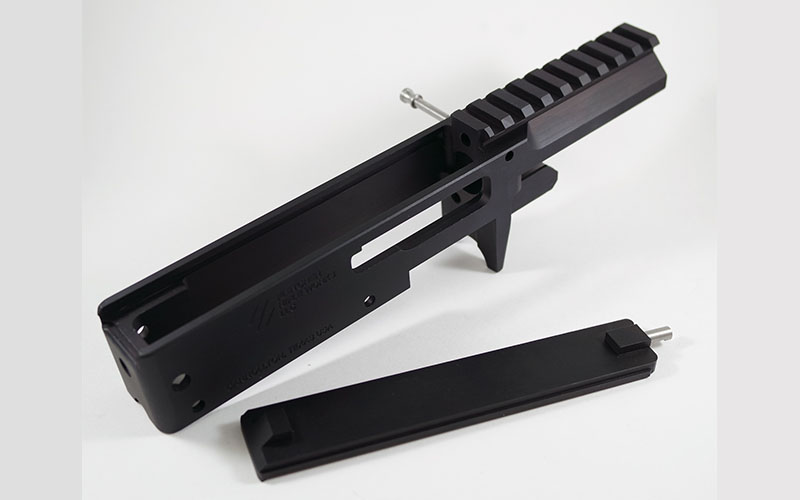

More Long-Range Shooting Info From Frank Galli:

Plate Carrier Setup: Weighing The Options

0

There are many ways to carry one’s armor and gear, so here are some things to consider when choosing a plate carrier setup.

As we touched upon in our body armor buyer's guide, there are a few different methods of carrying hard armor plates and the gear that goes along with them. The biggest divergence between plate carrier setup styles is whether one chooses to attach their gear to the plate carrier itself, or if they decide to run a slick carrier with some sort of chest rig or load-bearing equipment (LBE) on top of it.

As evidenced by those who wear body armor professionally, each mission may have different requirements that can influence what plate carrier setup is best for that day. Here we’ll look at the pros and cons of each system in terms of the everyman and attempt to help determine the best setup for your specific needs.

Plate-Carrier-Setup-Feature

Plate Carrier Setup Basics

The most common way of wearing body armor today includes the use of a traditional plate carrier setup, meaning that the vest used to retain the armor plates is also used for carrying extra gear. Plate carriers are not a replacement for backpacks, however, and should only be used for carrying gear that may need to be accessed quickly like spare magazines or medical equipment. This is typically accomplished using the MOLLE webbing found on most carriers.

MOLLE accessories can be a bit of a pain to initially install, but it is still a very doable process. Some typical items that can be found on modern warfighters’ plate carrier setups may include various styles of magazine pouches, an IFAK (individual first aid kit), a tourniquet, a water source, a radio and sometimes a holster for a sidearm.

Examples-Military-Plate-Carriers
Some examples of more modern military-issue plate carriers. Slovak special forces (left) shows cable management with a comm system and U.S. special forces (right) show a PC-mounted holster. Photos: Wikipedia.

Soldiers often carry things like grenades on their carriers as well, but obviously, as civilians seeking ways to improve our defensive capabilities, these are unfortunately not an (legal) option. Other gear commonly worn on military setups may also be useless to you, such as a radio if you live alone, so one must consider each item specifically for their needs rather than just copying what military members may do.

Plate Carrier Setup Traditional

Read Also: Best Plate Carriers

Plate Carrier Setup Considerations

Different plate carrier styles can make attaching certain gear either easier or harder, and one should choose the vest they purchase accordingly. Carriers that are patterned more after military-style models often include provisions for cable management, which can be extremely useful for those who wish to run more advanced communication systems or CamelBak-style water sources.

How MOLLE is arranged around the plate carrier is worth paying attention to as well, as some styles lend themselves to mounting certain items better than others. For example, if you plan on carrying your sidearm on a plate carrier-mounted holster, you best ensure that your intended holster will fit where you want it to without disrupting the use of other items. With such a plethora of different vests and pouches on the market, it’s a good idea to plan most of your plate carrier setup out before you begin buying anything.

PC Cable Management
Cable management loops on a military-style rig. Without a serious radio these have limited usefulness.

Some people purchase slick-style rigs and then attempt to build them up into more traditional plate carriers, but this usually ends up being more expensive and less practical than choosing a traditional style from the get-go. Again, one should think about what situations they predict being involved in that would justify dawning their body armor. A basic home-defense plate carrier setup will be very different than one intended to be used for days on end during the apocalypse.
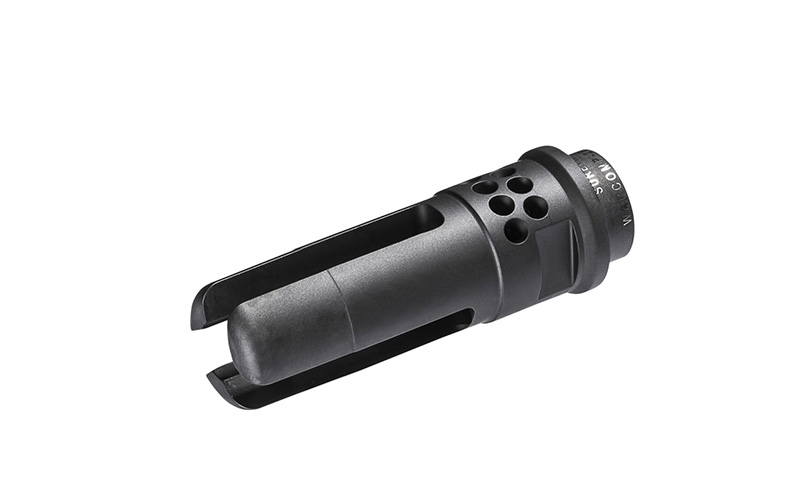
Plate Carrier Setup Styles: Pros & Cons

I still have the first plate carrier setup I put together, but I’ve since moved on to using a slick rig plus load-bearing equipment. The short answer as to why was because I decided that I value comfort more than speed. Traditional plate carrier setups have many potential advantages, including ease of access to gear, faster on/off times and greater versatility for mounting things like pouches. After spending a decent amount of time LARPing on the range with my kit on, however, I felt like I could do better. The traditional plate carrier was quite bulky, and I felt that it didn’t distribute the weight of my gear ideally, impeding both my general comfort and perceived mobility.
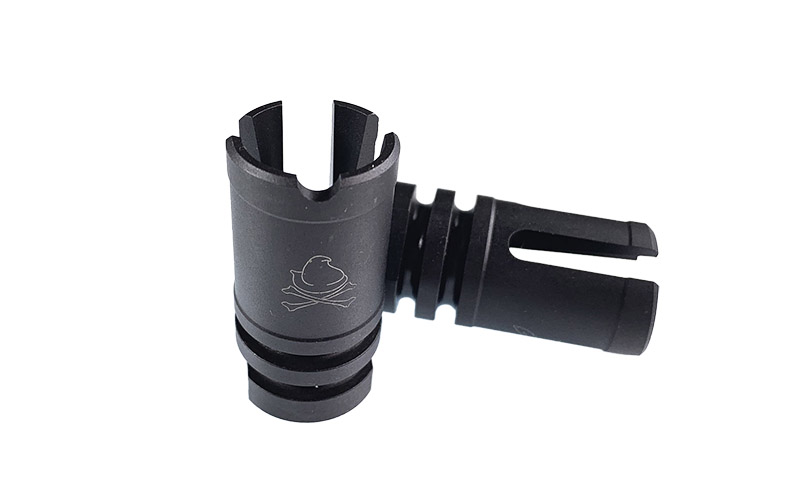
PC-Setup
The author wearing his more traditional plate carrier setup.

Also, the load-bearing equipment I’ve chosen to wear over my slick plate carrier is better suited for the items I’d like to carry. While the integrated pouches are locked into their positions and accessing their contents is slower than on my traditional plate carrier setup, it provided more pouches for carrying the gear that I did want to have. Most importantly, I felt that the slick rig/LBE combination was more comfortable to wear and move in.

The LBE I use has an integrated holster for a pistol on its belt, and it also allows for the wearing of a backpack or water supply. Backpacks in relation to plate carriers is a whole separate discussion with many different considerations, so we will be covering those in a separate article. The pouches on my LBE allow for the easier carrying of small items like spare batteries compared to my traditional carrier as well.

Slick-Carrier-Plus-LBE-Combo
The author wearing his Ferro Slickster plate carrier plus an old Russian load-bearing vest capable of accepting AKM mags.

There are many good slick-style plate carriers to choose from, and plenty of good chest rigs and load-bearing vests as well. There are too many to cover here, but we will look at several options in a separate article. Put simply, the main advantage of a slick carrier and LBE combo is its potential to better distribute the weight of your gear around your body.

Again, it’s worth mentioning that much of this depends on the LBE/chest rig that you’ve chosen and one’s personal preferences. Those who are planning a setup around AR mags will have many more options to choose from, but for those like me who run AKs or more obscure platforms, they will be mostly limited to surplus models. My current LBE is Russian and a bit outdated, but I found that it works well for my needs.

Final Thoughts

When it comes to choosing one’s plate carrier setup, there is, unfortunately, a lot of subjectivity and trial and error involved. It is unlikely that you will be completely satisfied with the first setup you acquire, but having some level of extra protection is always better than nothing. Many of the considerations involved will pertain to your lifestyle, where you live and what type of defensive situation you are anticipating.

It’s also worth keeping in mind that just because modern militaries have opted for a certain style of plate carrier, that doesn’t mean the reasons for those changes will benefit you. For example, militaries today have become concerned with the ability to rapidly remove their armor in case of being wounded or falling into a deep body of water. This has led to the phasing out of the slick carrier/chest rig combos that were used extensively in the early GWOT days and their replacement by traditional carriers that have gear mounted directly to them. It has also resulted in most modern plate carriers having some sort of quick detach system. The reality is unless you have a medic following you around or plan on wearing your rig on the open ocean, the benefits that these new models provide are less valuable.

US-Soldier-LBE-Over-Armor
An American soldier in Afghanistan 2002 wearing LBE over his armor.

Most civilians looking for a plate carrier setup will likely be fine with more rudimentary gear. The primary concern is the ability to wear hard armor plates comfortably and effectively, followed by the ability to carry spare magazines for your rifle. How those goals are achieved will look wildly different between individuals. Whether you end up with an uber-tactical plate carrier decked out with high-speed taco mag pouches or a simple slick armor carrier with a generic chest rig worn over it, you will already have a great advantage over those who have nothing of the sort. Whatever you settle on, just remember to wear it while you train.


More Tactical Gear

MUST READ ARTICLES