Home Blog Page 168

Springfield Armory Releases 10mm XD(M)

0

Boasting trim ergonomics, the 10mm XD(M) proves a manageable pistol for the powerful cartridge.

What the 10mm XD(M) models offer:

  • Full length grip, short front to back.
  • Manageable weight.
  • Slim overall profile.
  • Full-sized frame.
  • Three magazines standard through the end of the year.

Somewhere, Jeff Cooper is smiling. The father of the modern technique of the pistol didnโ€™t survive to see his snappy .40-caliber cartridge achieve the appreciation it was due. Yet today, the 10mm continues its meteoric rise as the hottest old cartridge of the 21st Century.
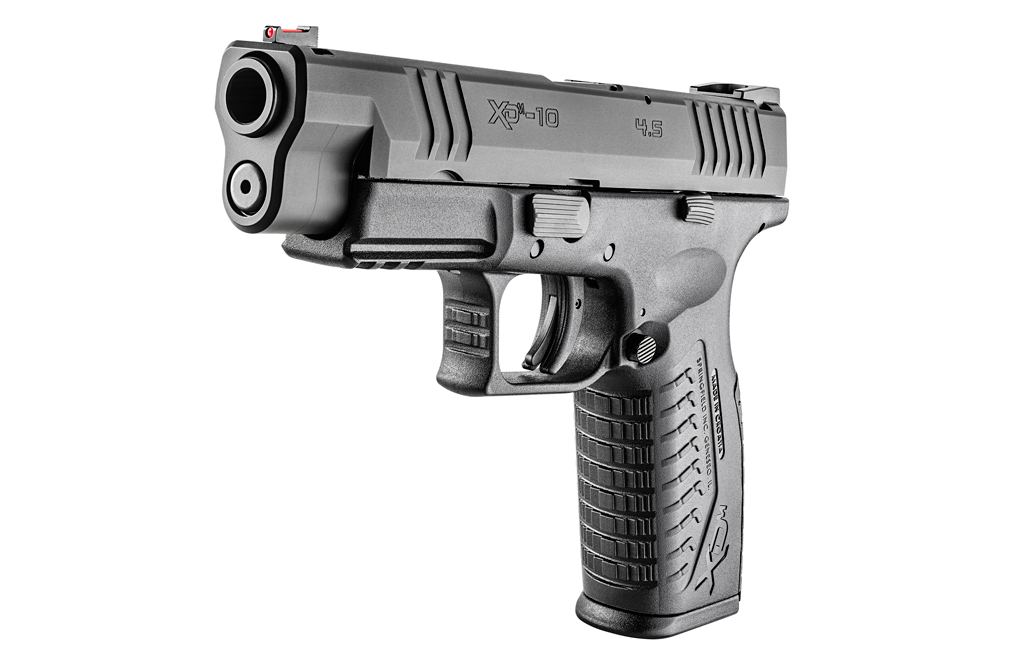
4.5-barrel XD(M)
4.5-barrel XD(M)

One only need survey the dramatic surge of 10mm pistols in the past decade or so to grasp how hungry the market is for a semi-automatic pistol cartridge that flirts with magnum revolver ballistics. In most cases, the new breed of 10mms have turned to an age-old design to meet the demandย โ€” the 1911. Arguments are few in applying the rivet tough brainchild of John M. Browning to a cartridge, when loaded hot, can shake a pistol down to its front straps. Yet, the dominance of the 1911 when it comes to the 10mm tends to hit a shooterโ€™s wallet in the soft spot and, for all its assets, can toy with boat-anchor heft when on the hip โ€” particularly if itโ€™s a Government Model.

Springfield Armory has shot to address both these issues, and a couple more, taking its popular striker fired pistol line the way of the 10mm. The company launched two variations of the XD(M) pistol in the popular caliber in October โ€” a 4.5-inch barreled service model and 5.2-inch long-slide, much to the satisfaction of its fans. A long demanded addition, Springfield appears to hit the right notes with the pistols and certainly has positioned itself as a top option in the niche of polymer-framed 10mms.


Get An Edge On The 10MM:


To what many are interested in, price, the pistols are a bit more expensive than the other popular line of striker-fired 10mm pistols โ€” Glock โ€” but not extravagantly so. The service model has an MSRP of $652 and the long-slide $779. Yet, Springfield gives shooter good reason to consider pony up a bit more for the 10mm XD(M) pistols.

Where the company appears to have succeeded is in the ergonomics department, particularly where you get a handle on the pistols. The grips are full-sized, yet short. Not by miles, mind you, but enough that those who have difficulty getting a solid purchase on a double stack โ€“ particularly a 10mm double stack โ€” will find it much more achievable with the XD(M). Even if not a task in your case, the more svelte design should increase the control of the pistol, which isnโ€™t a bad thing, especially if you aim to shoot the hot end of 10mm ammo market. Additionally, like the rest of the XD(M) family, it has a replaceable backstrap system to get the perfect fit.
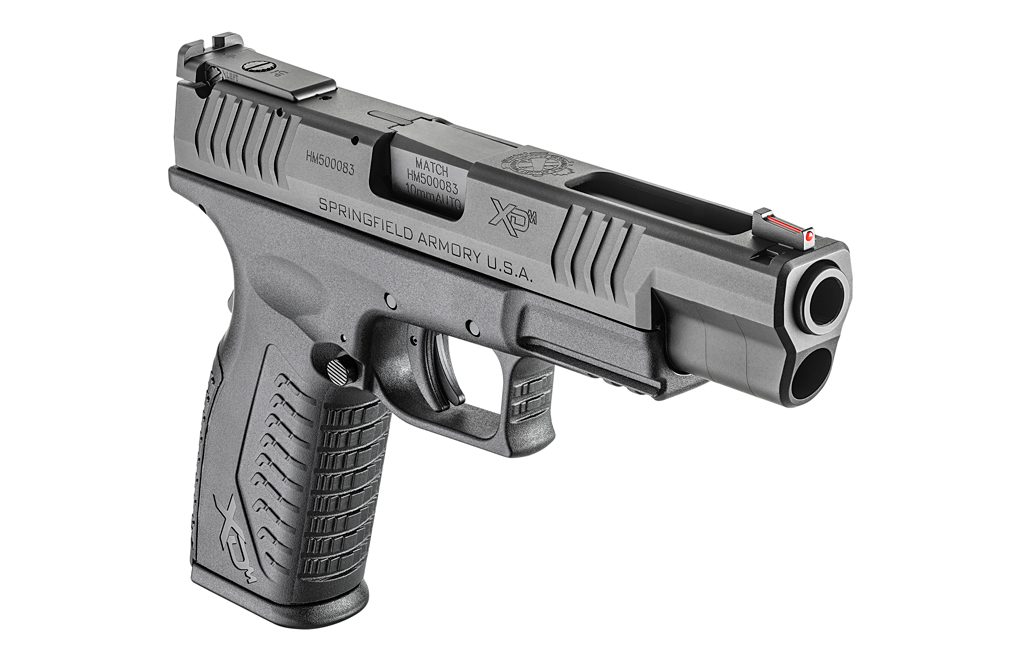
5.25-inch barrel XD(M)

Springfield does a great job of keeping the dimensions and the weight manageable on the pistols, without compromising some of the heft that helps to mitigate recoil. In both cases, the service and long-slide are each 1.2-inches in width at its widest point (grip). And both 15+1 capacity pistols weigh in at the low end of the 30-ounce range, 31.5 in service and 32.8 in the long-slide. Springfield saved weight on the larger model with a cutout on the top of the slide, which doesnโ€™t seem to serve any other purpose.

The differences between the pistols, aside from barrel length, sights. The smaller model comes with a low profile SIG model (plenty of upgrades) combat 3-dot rear sights, and the long-slide, Springfield full-adjustable target rear sights. At the front, the each has a highly visible fiber-optic thatโ€™s generally easy to focus on.

Those who know the XD(M) line, there are few surprises with the 10mm addition. The options come with match-grade barrels, melonite finish, one-piece guide rod, single recoil spring, ambidextrous mag release and an attractive hard case to carry everything in. One break with the 10mm XD(M) modes, they come with three magazines through the end of the year, whereas the rest of the calibers of the family come with two.

In the realm of semi-automatic pistols, there might not be any more versatile cartridge than the 10mm. Capable of a multitude of loadings, down to the .40 S&W and up to near .41 Magnum, it can fill nearly any roll โ€” target shooting, self-defense, hunting, competition, etc. At first blush, Springfield has cooked up a couple of pistols that will get everything you want out of the 10mm, whatever that might be.
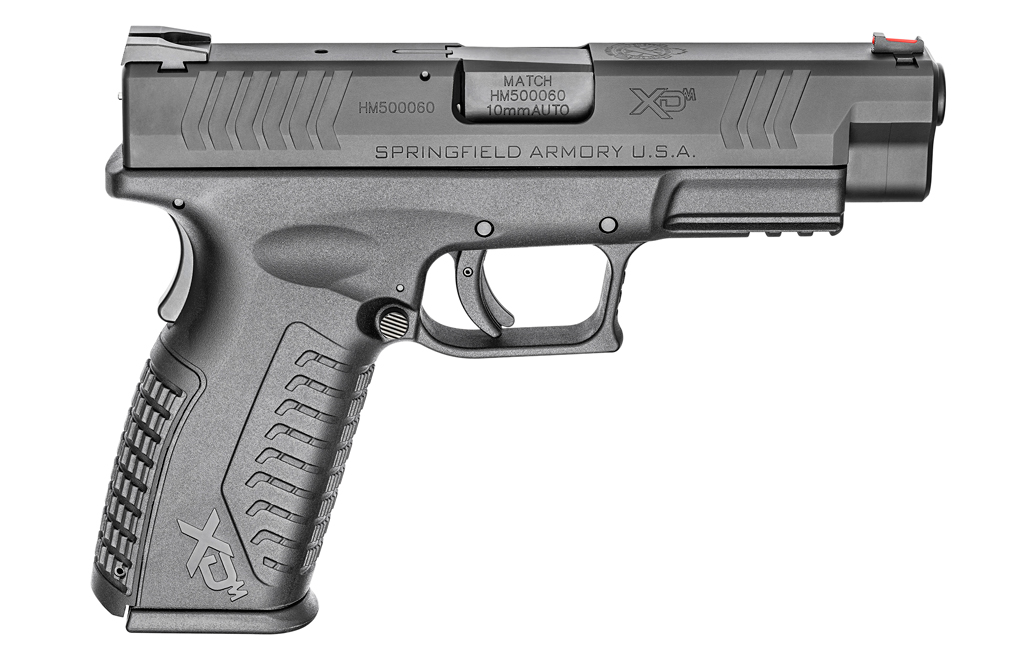
10mm-XD(M)-5
4.5-inch Barrel 10mm XD(M) Specs
Caliber: 10mm
Recoil System: One Piece Full Length Guide Rod
Sights: Fiber Optic Front & Low Profile Combat Rear
Weight: 31.2 oz
Height: 5.75″
Slide: Forged Steel, Melonite
Barrel: 4.5″ Steel, Melonite, Hammer Forged, 1:16 RH Twist
Length: 7.7″
Grip Width: 1.2″
Frame: Black Polymer w/ Interchangeable Backstraps
Magazines: (2) 15-Round
MSRP: $652.00
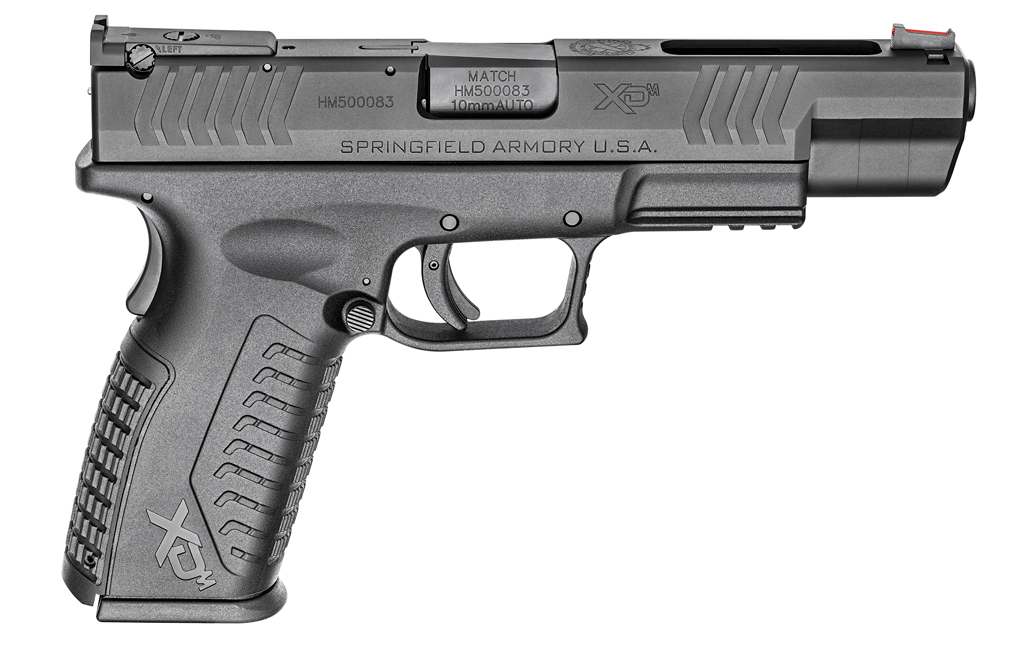
10mm-XD(M)-4
5.25-inch Barreled 10mm XD(M) Specs
Caliber: 10mm
Recoil System: One Piece Full Length Guide Rod
Sights: Fiber Optic Front, Fully Adjustable Target Rear
Weight: 32.8 oz
Height: 5.75″
Slide: Forged Steel, Melonite
Barrel: 5.25″ Steel, Meloniteยฎ, Hammer Forged, 1:16 RH Twist
Length: 8.3″
Grip Width: 1.2″
Frame: Black Polymer w/ Interchangeable Backstraps
Magazines: (3) 15-Round
MSRP: $779.00
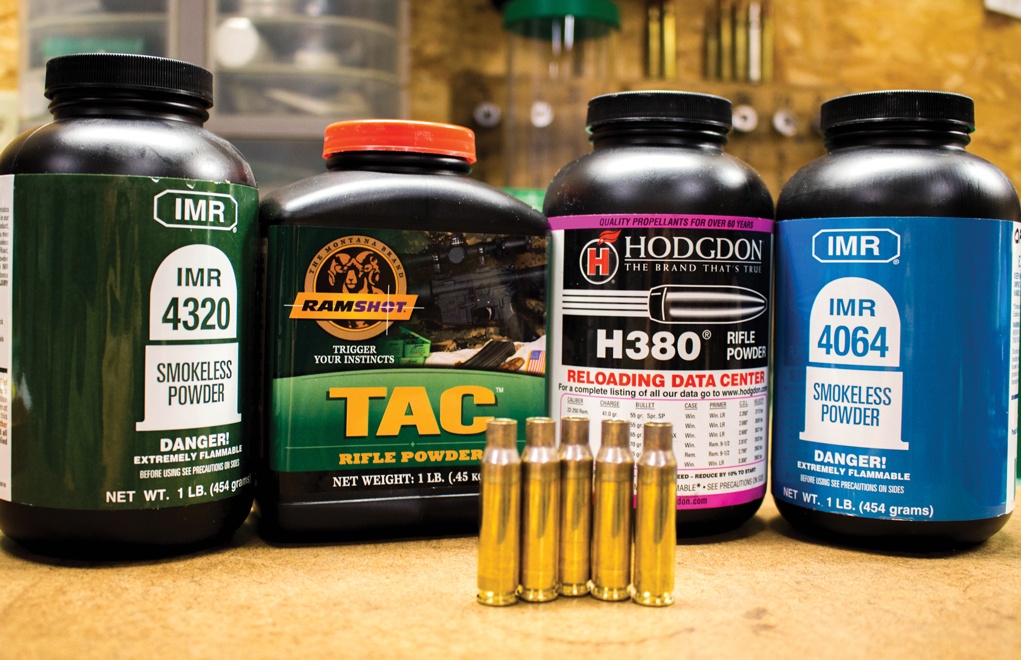
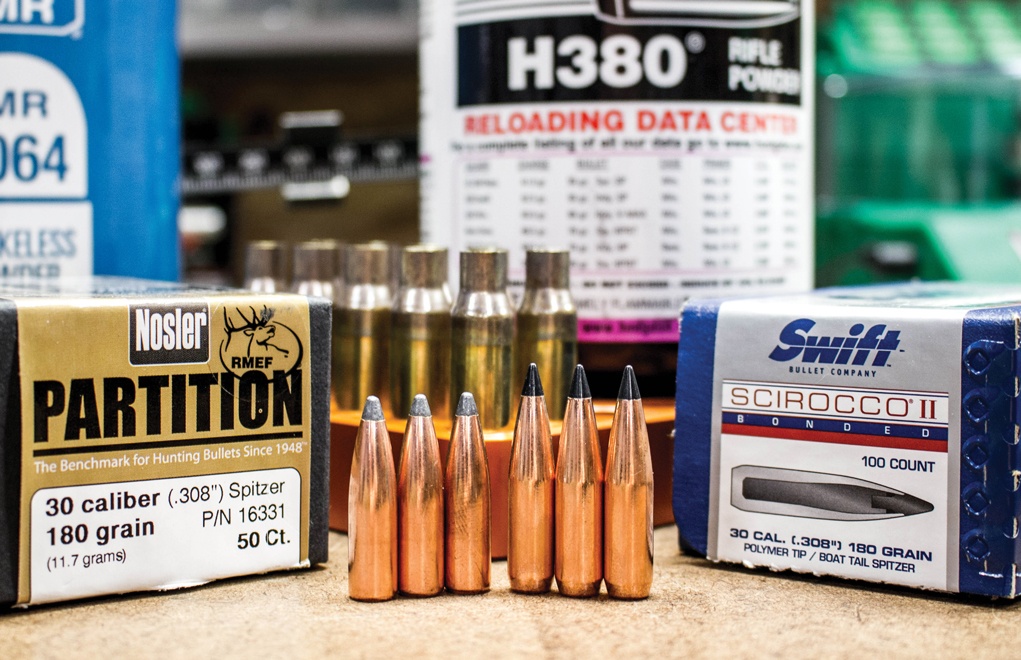
Loading the .308 Winchester

2

Whether for long-range shooting or hunting, the .308 Winchester comes into its own when handloaded.

Why the .308 Winchester is among the best cartridge to reload:

  • Versatility for hunting, long-range shooting and target shooting.
  • Incredible selection of bullets.
  • Simple reloading process.
  • Works with a vast majority of rifle powders.
  • Overall fun cartridge to reload and shoot.

Itโ€™s taken quite a beating since the 6.5 Creedmoor has popped onto scene, but the fact remains that the .308 Winchester is a very cool cartridge, whether you punch paper and steel or use it as a hunting cartridge. Itโ€™s also one of the cartridges truly worthy of the โ€œinherently accurateโ€ moniker โ€” it can certainly shine with todayโ€™s factory ammunition, but it will come into its own with handloaded ammunition.

The .308 Winchester can run on a multitude of powders. Here are four of the authorโ€™s favorites.

Loading for the .308 Win. is not a difficult affair, and I feel itโ€™s one of the perfect cartridges to both teach a new handloader the basic processes and how to hone his or her reloading skills, seeing good results quickly. Letโ€™s take a look at some of the suitable powder/bullet/primer combinations that have worked for me and my loading buddies over the years, for both target shooting and for the hunting fields.

Timeless Versatility

In spite of all the arguments for and against, and in spite of all the comparisons to the larger-cased .30-06 Springfield, the .308 Win. makes an excellent hunting cartridge. I feel it performs best with bullets between 150 and 180 grains, giving a good trajectory out to sane hunting ranges with plenty of energy for most common game animals.

If you want to do some predator or varmint hunting, the lighter 125- and 130-grain bullets work just fine, though itโ€™s a bit large for extended sessions over a prairie dog town. Some of the lead-free bullets will pose an issue, as they are longer for their weight than are the lead-core bullets, and Iโ€™ve also had issues with magazine length when using the high ballistic coefficient (BC) hunting bullets, but I can get around it by changing the bullet design for the hunting fields.


More Reloading Info:


One of the attributes of the .308 Winchester is its balanced velocity: It isnโ€™t so fast that the cup-and-core bullets will breakup prematurely, yet isnโ€™t so slow that the premium bullets will fail to expand. For deer hunting, Iโ€™ve had great results with handloads built around common bullets such as the good olโ€™ Remington Core-Lokt and Hornady InterLock, to the premiums like the Nosler Partition, Speer Grand Slam and Nosler Ballistic Tip. I generally prefer the 150- and 165-grain bullets because they offer a good balance of accuracy and trajectory, especially if Iโ€™m hunting one the few stands that offers shots out to 300 yards.

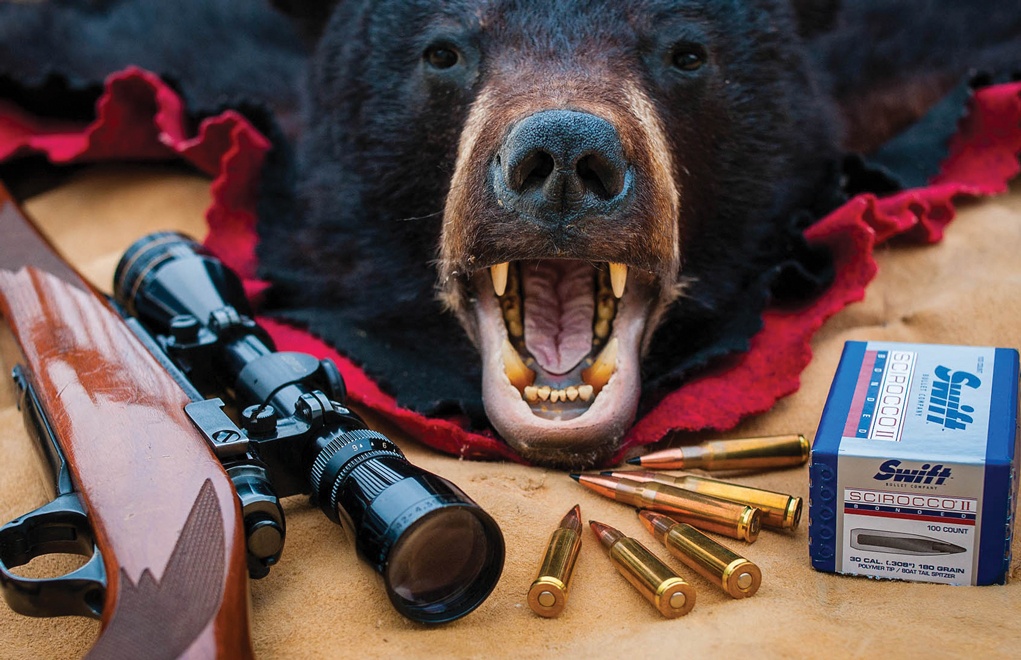
For game on the bigger side, both the 180-grain Nosler Partition and Swift Scirocco II will work perfectly in the .308 Winchester.

My favorite deer hunting load for my .308 Win. uses the Sierra GameKing 165-grain hollow-point boat-tail bullet (No. 2140), over a heavy charge of IMR4064 powder. The bullet is tough, accurate and, with a crimped โ€œxโ€ meplat, will not deform in the magazine.

Despite the fact that much of my deer hunting is done in the thick hardwoods of Upstate New York, weโ€™re often forced to thread the needle, picking those small holes in the timber and brush where a bullet wonโ€™t be deflected, and I appreciate the wonderful accuracy of the Sierra for this application. The bullet is short enough to allow for a COL (cartridge overall length) that doesnโ€™t compromise case capacity, and using a powder like IMR4064 โ€” with its longer grain structure โ€” is no issue.

For larger or tougher game, I like the 165 and 180-grain Nosler Partition and Swift Scirocco II. Iโ€™ve also used the 180-grain Scirocco and IMR4064 for baited black bears, with good effect.

The Long-Range .308 Win.

For the target shooter, BC is everything, especially when the distances get out toward the 1,000-yard mark. The Sierra 168-grain MatchKing (No. 2200) has long been a staple in the .308 Winchester, and with good reason: It offers an excellent blend of overall length, BC and downrange trajectory. I also like the 168-grain Tipped MatchKing (No. 7768) because it has most definitely proven itself as a perfectly viable candidate for .308 target work. The 175-grain Tipped MatchKing (No. 7775) will give a bit better curve at longer ranges, yet it can still be loaded to good effect.

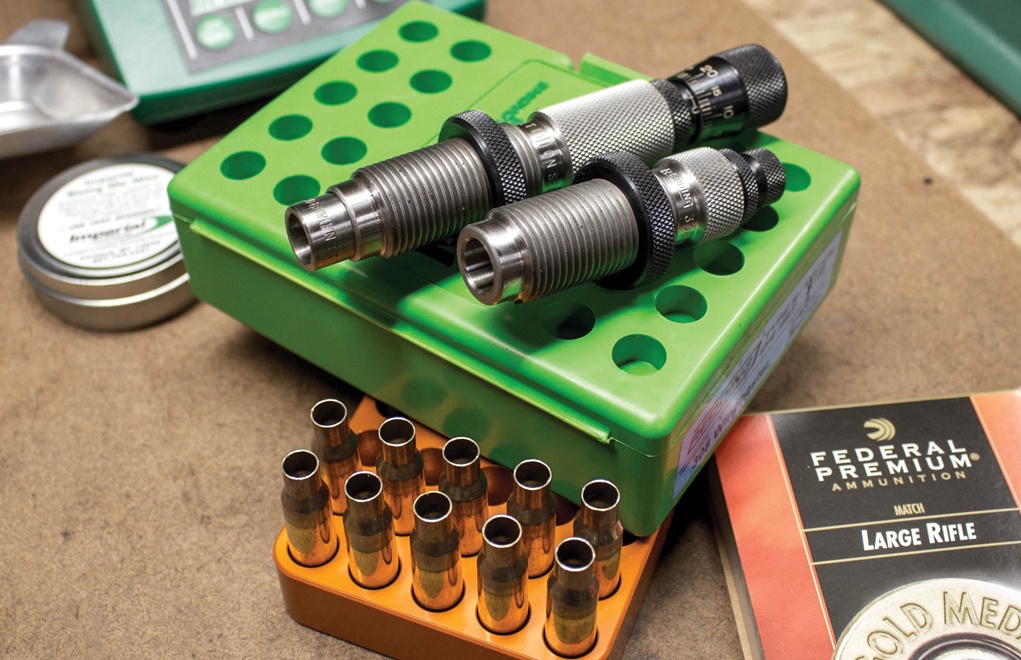
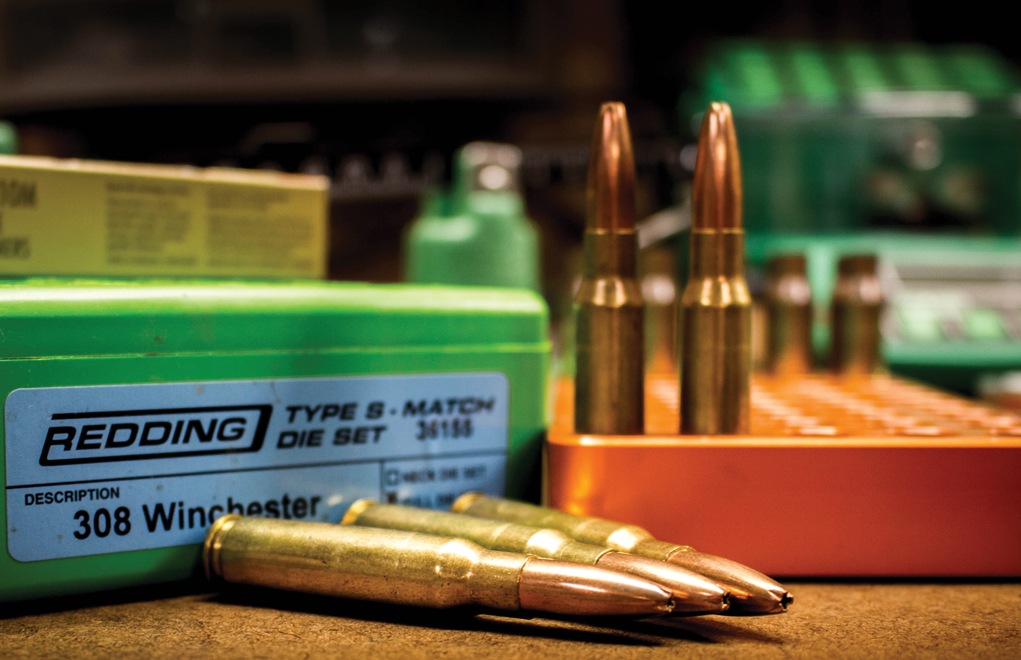
A good set of dies, such as the Redding Type S Match dies, will help attain the accuracy that the .308 Winchester is famous for, as well as extend brass life.

There are numerous choices from Berger, such as the 175-grain Long Range BT, that can and will be as accurate as the Sierra offerings โ€” youโ€™ll have to do some experimentation (a.k.a. fun at the range) to see which gives the best accuracy in your rifle. ABM loads the 175-grain OTM Berger bullet in their ammunition line, and that makes a good choice for the handloader as well.

Critical Components

I like to use the Federal Gold Medal Match GM210M large rifle primer for all my .308 Winchester loads, whether for hunting or target work. Itโ€™s a dependable and consistent primer, which has shown in my experiences to give the most consistent results. Iโ€™ve never had a single misfire using these and hope I never will.

Powder selection for the .308 Winchester is nearly as varied and wide as is the bullet selection; you could easily spend a year investigating the various powder/bullet combinations that would offer proper accuracy. Years ago, IMR4320 was the choice for the factory loads that helped garner the .308 Winchester the reputation is has, though I understand that powder is being phased out. Thatโ€™s a shame, because Iโ€™ve used 4320 in a number of cartridges with great results. Iโ€™ve personally used IMR4320, IMR4064 (my go-to for this cartridge), Reloder 15, IMR4166, Ramshot TAC, IMR8208XBR, Hodgdon BL-C2, H380 and Varget for my .308 Win. loads, giving an inkling as to the versatility of the cartridge when it comes to powder selections.

The author handloaded the 180-grain Swift Scirocco II in his Ruger 77 MkII .308 Winchester for this Quebec black bear.

When Iโ€™m loading the shorter bullets โ€” the flat-based partition, or those with shorter ogives โ€” I generally look to IMR 4064 and the new IMR4166, part of IMRโ€™s Enduron line. I will also reach for Alliantโ€™s RL-15, as this powder has worked so well in my .375 H&H, .404 Jeffery and the .450/400 NE, and thereโ€™s always a good amount on hand in my shop. If Iโ€™m loading a bullet that will take up considerably more room in the case, I have relied on Hodgdonโ€™s BL-C2 or H380 as they are a spherical powder, or IMR8208XBR, as the grain length of this extruded powder is small enough to minimize the air space between grains.

Reloading Details

Loading for the .308 Win. is a straight-forward process. I like to full-length resize my brass for the hunting loads because I want them to feed and extract with the least amount of effort. If Iโ€™m not getting the accuracy I want, I will look to the Redding Instant Comparator to measure the amount of stretching (at the shoulder) Iโ€™m getting in the particular rifleโ€™s chamber. If Iโ€™m seeing a significant amount, Iโ€™ll use the correlative Competition shell holder to avoid moving the shoulder back during the resizing process, leaving me with a case that is of SAAMI spec in diameter but better matches my chamber. This has greatly increased accuracy while allowing my ammunition to feed and extract easily should I need a quick follow-up shot.

I love the Redding Bushing die for the .308 Win. because I can measure the outside diameter of my cartridge and avoid over-working the brass during the resizing process. Finally, a micrometer-adjustable seating die will help maintain the consistency Iโ€™m after to get the most out of the already accurate design. I donโ€™t roll crimp any of my .308 Winchester ammunition, as I find thereโ€™s plenty of neck tension already. If loading for an autoloading rifle, I have used a taper crimp to keep the bullets from moving outward during the violent cycling of the action.

The authorโ€™s favorite deer load for the .308 Winchester, built around IMR 4064 and the 165-grain Sierra GameKing hollow-point boat-tail bullet.

Lastly, Iโ€™ve found that loads that fill the .308 Win. case the most โ€” with your particular bullet choice โ€” have given the best accuracy. I do avoid compressing the powder charge to the point where the grain structure breaks, especially with extruded powders, but a bit of compression is no problem. I do not try to turn the .308 Winchester into a .300 Magnum with regards to velocities โ€” it does just fine at the velocities it was designed to produce. Hold the crosshairs where they belong and squeeze that trigger, and youโ€™ll find yourself falling in the love with the little cartridge, whether ringing steel or taking it to the game fields.

Editor’s Note: This article originally appeared in the August 2018 issue of Gun Digest the Magazine.

M4-22 PRO: Has Tippman Created The Ultimate Training Carbine?

0

Upgraded with some solid new features, the M4-22 Pro appears an excellent choice in .22LR training rifles.

What do you get with a Tippmann M4-22 Pro:

  • Caliber: .22LR
  • Barrel Length: 16 inches
  • Capacity: 25
  • Finish: Matte Black
  • Stock: Adjustable
  • Twist Rate: 1:16
  • Length: 31.25″-34.5″
  • Weight: 5.22 lbs

A surprise to the AR world in recent years is Tippman Arms jumping into the game. The name Tippman might sound familiar to the average shooter, but one thatโ€™s difficult to place exactly, unless you have some pretty niche gun interests. Thatโ€™s because the Indiana company has resided one off from those that burn gunpowder most of its history, with most of its contributions falling in the realm of paintball guns and air rifles.

M4-22-Pro-First

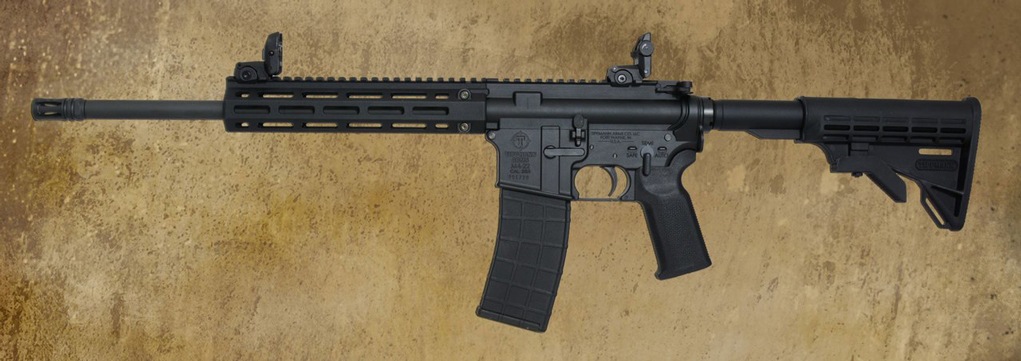
Early success with the M4-22 Classic, Tippman has continued to expand on its catalog of .22LR ARs with the introduction of the M4-22 Pro. Like the earlier iteration, the rifle is designed as a trainer, offering the heft, operation and ability to upgrade (itโ€™s compatible with most Mil-Spec AR parts) of a standard M4-style rifle. Yet, the new addition offers a few extras โ€” for no extra charge โ€” to the original. Chief among these, the Pro comes with a truly free-floated barrel. Given the Classic was dependable in the accuracy category, the new carbine should shoot the lights out. Other notable upgrades on the older model of the M4-22 are a nickel-plated bolt and a 25-round magazine.

Itโ€™s a fairly clever system โ€“ both in the Classic and Pro variants โ€” yet it comes at a premium. Boasting an MSRP of $549, the tactical plinker is at the spendier end of the class of firearms. However, if you need a training rifle thatโ€™s economical to โ€ฆ well โ€ฆ train with, there are few that offer what Tippman has put on the table.

From the company:

Fort Wayne, IN – Tippmann Arms Co, LLC has launched a new M4-22 model: M4-22 PRO

Here at Tippmann Arms, we are excited to announce the latest addition to our extremely popular .22LR semi-automatic rifle offering, the M4-22 PRO.

The M4-22 PRO is a premium .22 caliber semi-automatic tactical rifle with aluminum upper and lower receivers and has the look, feel and controls of a true M4. The M4-22 PRO is largely mil-spec compatible and will accept most AR15 stocks, handguards, buffer tubes, and sights. The M4-22 PRO is a perfect platform for competition and training applications or backyard plinking.

The PRO has all the standard features of our M4-22 Classic like all Aluminum Receivers, Solid Steel Barrel, Bolt Catch, Ejection Port Cover, Charging Handle, Forward Assist, and Flip-Up Sights plus we added a new 25 round magazine, Nickel Plated Bolt, Gen2 Grip, and a 9″ M-LOK Free Float Handguard.

M4-22 Pro Features:

  • Composite Free Float Handguard
  • 16โ€ 4150 Solid Steel Barrel with Parkerized Finish
  • Nickel Plated Bolt
  • Gen2 Grip
  • Semi-Automatic
  • Aluminum Upper and Lower Receiver
  • New 25 RND Magazine
  • Functional Forward Assist
  • Bolt Catch
  • Charging Handle
  • Adjustable Flip Up Sights
  • Shell Deflector
  • 4 ยฝ Pound Trigger Pull
  • Ejection Port Cover
  • Adjustable Stock
  • 1/2 x 28 Threaded A2 Birdcage
  • Popular AR Platform
  • Easy Push Pin Disassembly
  • Full Length Top Picatinny Rail
  • 2-Position, Receiver Mounted Safety Lever
  • Ambidextrous Sling Adapter Plate
  • Mil-Spec FCG (With the exception of the Safety lever. It is proprietary.)
  • Allows For Drop in Trigger Assemblies
  • Standard โ€œbicycle lockโ€ Storage Safety
  • Compatible With Most Standard AR15 Components and Accessories
  • Ownerโ€™s Manual

For more information on the M4-22 Pro, please visit: www.tippmannarms.com.


For More AR Info:

Glock: The Stalwart 10mm Option

1

While other makes and models have come and gone, Glock 10mm pistols have been stalwarts for the caliber from nearly the start.

What Are The Glock 10mm Options:

  • G20
  • G20SF
  • G29
  • G29SF
  • G40

Wickedly powerful and more versatile than a Swiss Army Knife, the 10mm has mesmerized the shooting public early this century. Yet had a few things played out differently, the โ€œBig Tenโ€ might have gone the way of the .44 Auto Mag, a gun safe curio and dust gatherer.

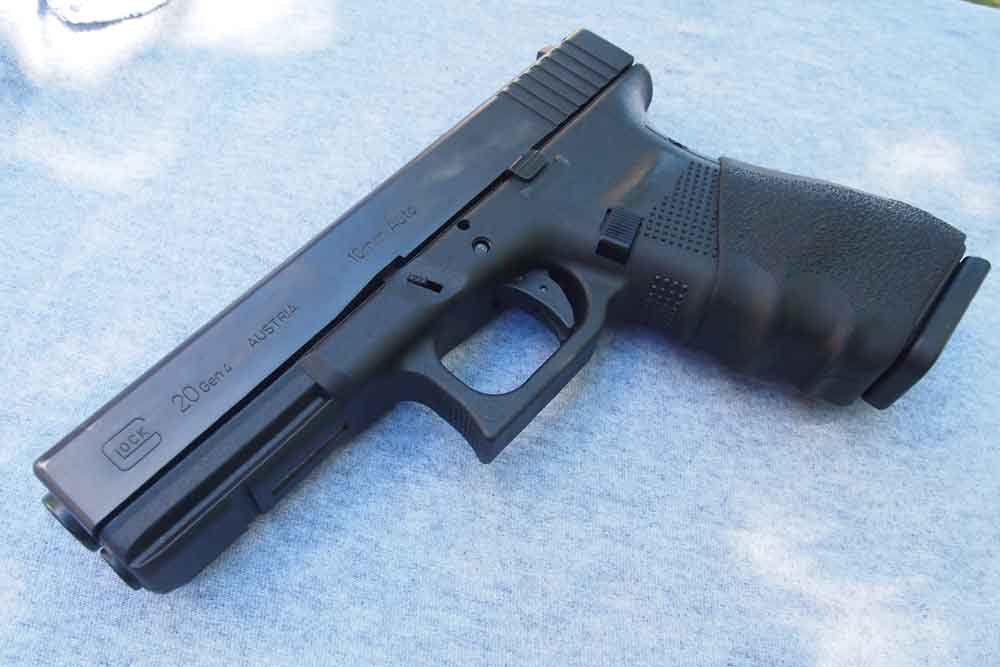
10mm-Auto-Glock-20

A riches-to-rags story, the powerful .40-caliber burned dog-days hot to start in the 1980s, and all but petered out a decade later. By 1994, the FBI jettisoned its experiment with the cartridge, after a mild 10mm service load prompted the advent of the .40 S&W. Smith & Wesson called it quits on the 1000 Series (in part due to reliability issues of some models) by 1993. Colt followed suit three years later, jettisoning its Government Model 10mm, the Delta Elite, which the company has reissued. By all accounts, Col. Jeff Cooperโ€™s brainchild was on the verge of a Puritan-level shunting and didnโ€™t have many friends in the world โ€ฆ well, almost.

Glock Reviews You Need To Read

One stalwart emerged, perhaps when the 10mm needed it most โ€” Glock. The Austrian gunmaker doubled down on the near-magnum, semi-automatic pistol cartridge when others were running away. The first Glock 10mm hit the scene in 1991, the standard-bearer G20, the companyโ€™s effort to capitalize on U.S. law enforcementโ€™s interest in the hard-hitting cartridge. Along with the .40 S&W G22 and .45 ACP G21 (released that in ’90 and ’91), it was among Glockโ€™s first forays away from the comforts of the 9mm โ€” which all its guns have been previously chambered. More daringly, it expanded its 10mm catalog seven years later, when the cartridge seemed on the outs, with the sub-compact G29.


Get An Edge On The 10MM:


Thrown lifelines at absolutely the right time, the Glock 10mm options kept the cartridgeโ€™s heads above water. One might even argue the pistols helped save it and laid the groundwork for todayโ€™s renaissance. While the calibers availability was hit an miss with other companies, Glock stood true and always offered an affordable option for those curious about the 10mm. There was a lot of muscle behind the company embracing the cartridge, one it continues to flex today.

Glock Talk: Discover More Tips & Reviews

Glock 10mm Selection

A prairie fire, the 10mm has swept across the gun world recently. At companies where the cartridge was a second- or never-thought, there now resides at least one model that feeds on it. The past decade has been particularly fruitful, with a good swath of major manufacturers, all coincidently, finding it high time to put a 10mm in their catalog. However, each of them is playing a game of catch-up with Glock.

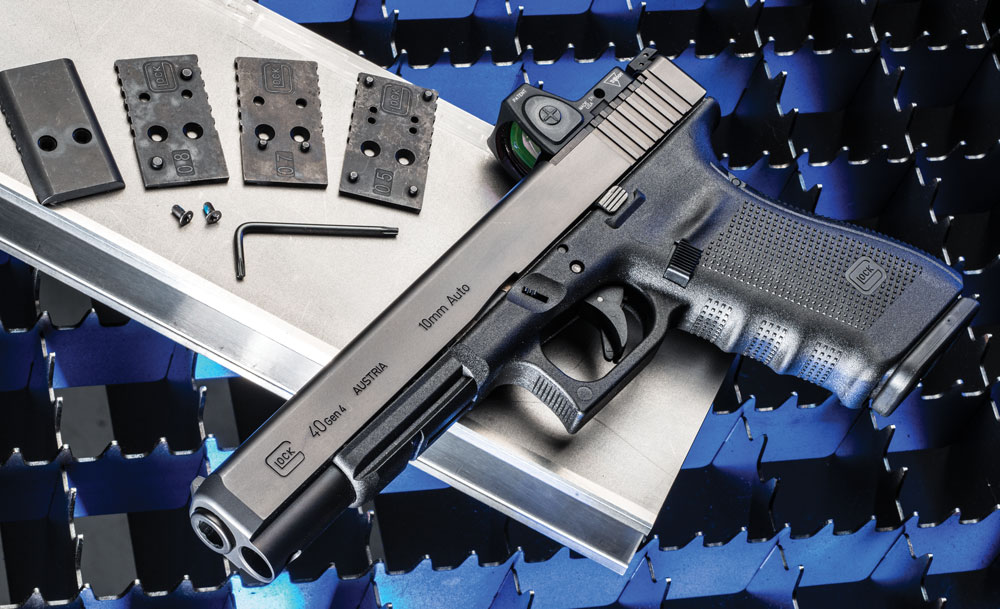
GLOCK-40-MOS-Review-2015-Lead
PHOTOS BY ALEX LANDEEN

Going on 30 years of producing 10mm pistols, the manufacturer cultivated among the most extensive catalogs on the market today. In a caliber where one model is standard for most gunmakers, Glock boasts five, each tailored to cover nearly any conceivable application. These include:

G20 โ€“ The standard-sized pistol with a 4.2-inch barrel that started it all, now enhanced with Gen4 accouterments.
G20SF โ€“ Same as above, but with a short frame that offers a better grip for those with smaller hands (a little lighter too).
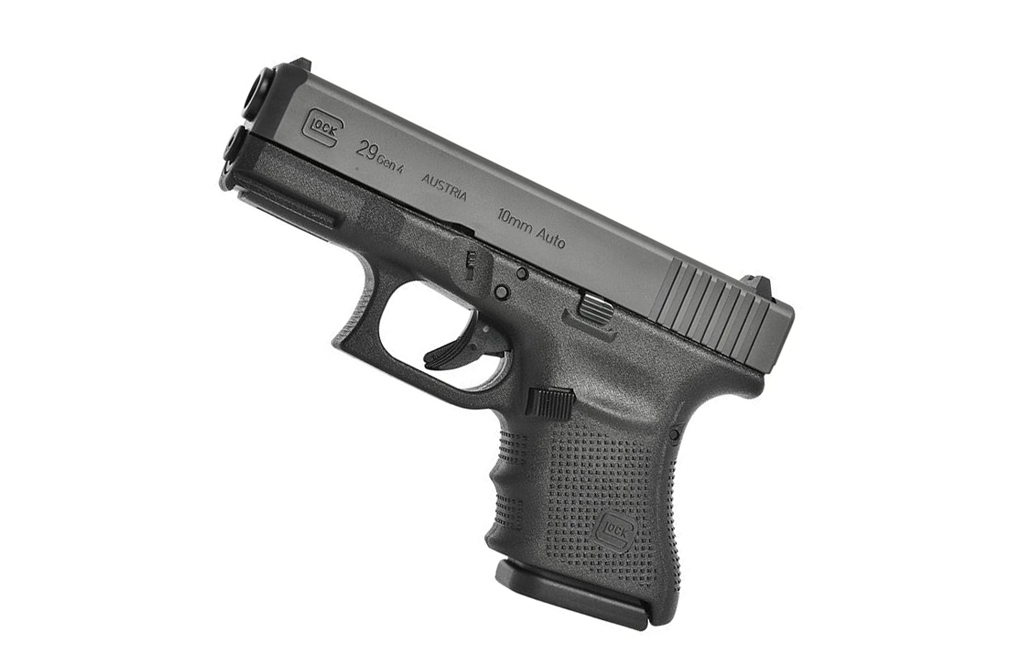
G29 โ€“ 3.78-inch barreled sub-compact model with full 10+1 capacity.
G29SF โ€“ Again, same as above, except with a short frame.
G40 โ€“ Long-slide model aimed at hunters, with MOS system that makes mounting an optic a snap.

Yet selection isnโ€™t the only asset Glock 10mm pistols have in their corner, nor the only reason why they should at least be a consideration if the supercharged .40-caliber bug has bitten you.

Glock 10mm Price

In most cases, the 10mm isnโ€™t exactly betting at the $2 window. Given the majority of the guns chambered for the cartridge are 1911, they tend to draw a premium.

There are, particularly in the semi-custom end of the spectrum, specimens that demand up to $3,000 or more โ€” not necessarily within every shooterโ€™s budget. Even the more โ€œaffordable optionsโ€ from companies typically not known to scour your wallet, youโ€™re still looking at around $1,000 investment, give or take $100.

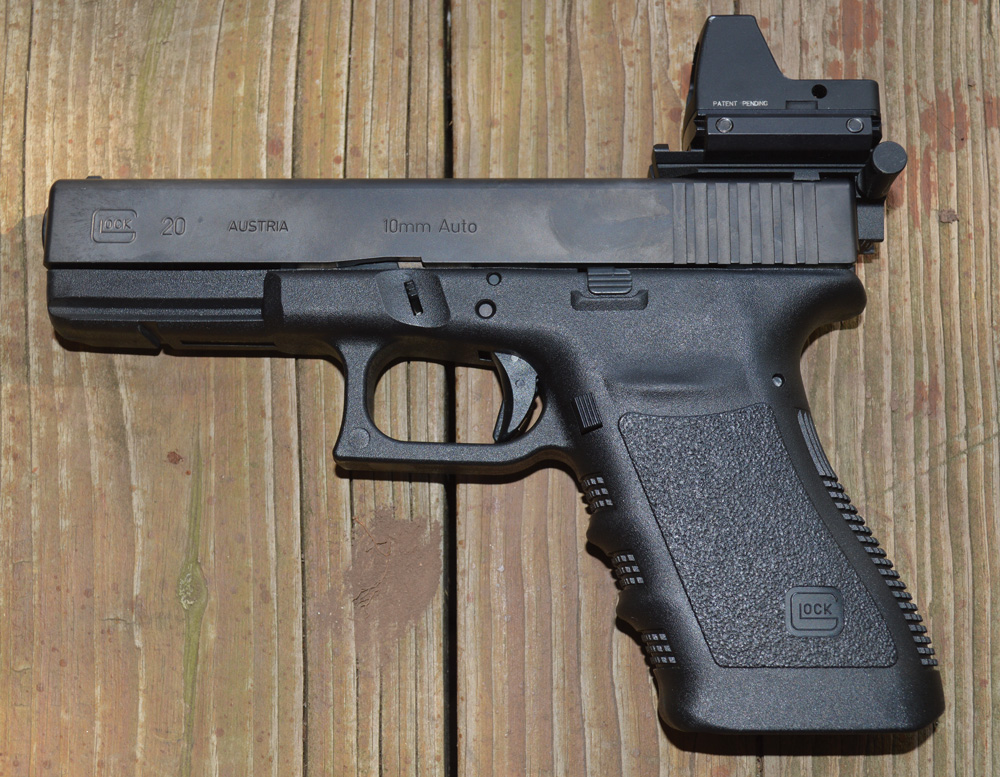
Glock-20-Review-Hunting-2
Photo Max Prasac

Mercifully, with a Glock 10mm youโ€™ll spend almost half the coin. Most fall in the $550 to $700 range, putting them within reach of nearly every shooter. The high end is a bit spendy for a plastic pistol, admittedly, but thatโ€™s the G40, which comes with some high-end extras rare in this price range.

Glock 10mm Versatility

Glocks arenโ€™t modular pistols, even the 10mm iterations. Yet, their ease of upgrade shares a similar level of versatility.

Take the G20 for instance. With its standard 4.2-inch barrel, you have a capable plinker with mild loads and a pistol thatโ€™s still manageable for concealed carry (though a tad on the heavy side). Make a modest investment in a 6-inch Lone Wolf or even a factory barrel, and youโ€™ll upgrade the G20 into a first-rate hunting pistol more than happy to digest the hottest rounds available.

Thatโ€™s just the tip of the iceberg when it comes to aftermarket Glock parts. There are upgrades for nearly every inch of the guns. In many cases, even if you go the whole hog, youโ€™ll spend less than other 10mm base models.

Glock 10mm Tradition

Yes, there is gritting of teeth out in the gun world in uttering โ€œGlockโ€ and โ€œtraditionโ€ in the same sentence. Itโ€™s expected, given the Colt Single Action Army and 1911 remain among the most coveted guns out there, despite their 100-plus year vintages. Yet few companies can boast a longer or more dedicated affiliation with the 10mm than Glock. Additionally, Glock has become renowned for its reliability โ€” no matter the model โ€” for a reason. They are boringly dependable.

G29_Gen4-New

Parting Shot

Glock is indelibly entwined with the 10mm and most likely will be as long as the cartridge continues currying favor. And thatโ€™s good news for anyone who loves the hard-hitting cartridge โ€” even if they never pull the trigger on a Glock 10mm.


Learn More About Glock Options

Should You Own A Pistol Caliber Carbine?

0

If you’re in the market for a pistol-caliber carbine, do the pros outweigh the cons?

Should You Buy A Pistol Caliber Carbine:

Cons:

  • Marginal velocity improvement
  • Added weight to shoot a pistol cartridge
  • Over penetration issues
  • Pistol caliber ammunition heavier than rifle
  • Bolt and buffers heavier in AR versions

Pros:

  • Common ammunition for pistol and rifle
  • Compatibility between pistol and rifle magazines
  • Economical ammunition
  • Highly suppressible
  • Honestly, they’re fun

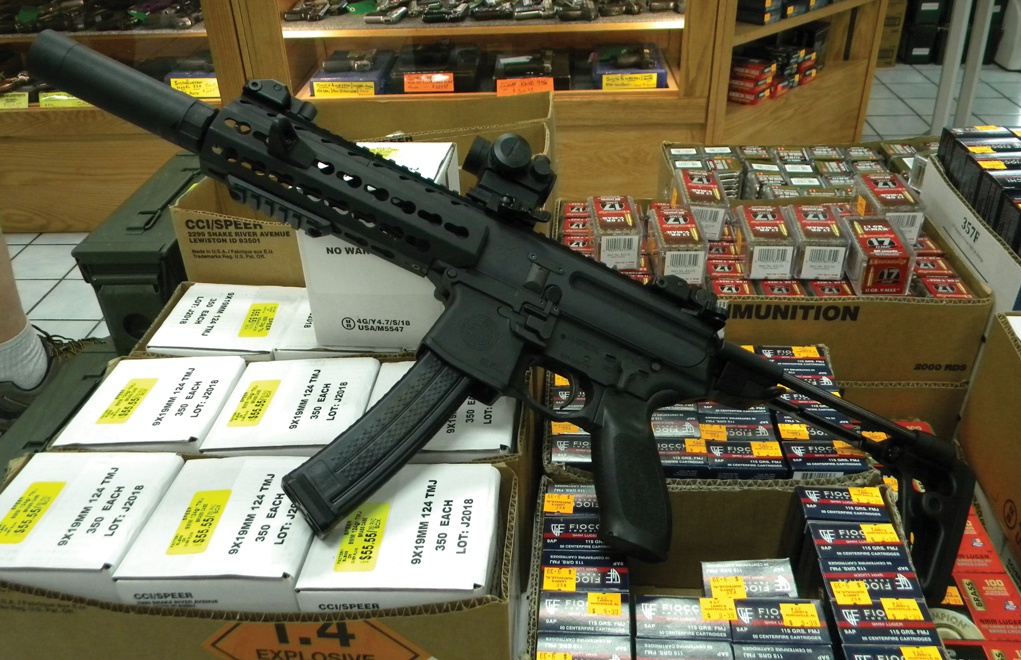
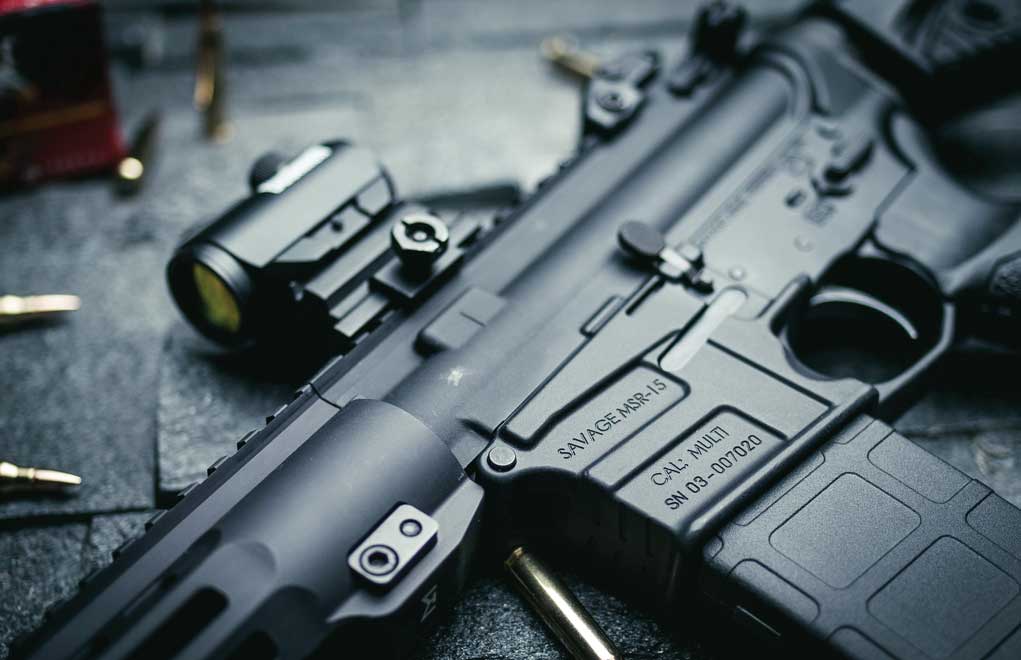
ARs truly are a platform of customizable wonder. Today, you can have an AR in a variety of calibers, from .17 rimfire up to several centerfire rounds in .50 caliber. Particularly popular, and gaining more fame all the time, are the pistol-caliber ARs, available in 9mm, .40 S&W, 10mm and .45 ACP. Should you have a pistol-caliber AR? That depends on several factors, such as use or application. And, we canโ€™t discount the fun factor, the unique design and its historical significance.

It might be necessary to transition to the handgun, but you can still use the light mounted on your AR. The key to this technique is knowing how to shoot and manipulate your handgun using only one hand.

Coltโ€™s 9mm AR โ€” SMG R0635 โ€” was introduced in 1982.

The original goal was to use as many standard AR parts as possible. After extensive testing and changes, Colt settled on a blowback system, as opposed to the gas-impingement system in the M16/AR15 โ€” and a closed-bolt design, instead of the open-bolt design first envisioned. It did, however, use a standard M16/AR15 lower receiver with an adapter that accepted modified 9mm UZI magazines; a groove was added to the mag body so the bolt locked open when empty.

At the time, the sub-gun market was dominated by H&Kโ€™s MP5, and the handgun-caliber AR never really took off. In the last few years, however, the handgun-caliber carbine has gained new traction, and today there are a lot of options available for this platform.

The question โ€” as always โ€” is a simple one: Do you need one? I usually start by comparing the disadvantages and advantages of a platform. Sometimes a weapon fits a specific application, or sometimes itโ€™s something that would just be fun to own and shoot.

Disadvantages Of A Pistol-Caliber AR

The benefits of using a carbine in a rifle caliber are many. At the top of the list are the ballistic advantages. A rifle round is much more accurate, especially at extended distances. In the terminal ballistics category, the rifle rounds do a much better job of stopping the threat.

Velocity is the key: A 55-grain 5.56 NATO round moving at 2,800 fps dumps a lot more energy on the target than a 230-grain .45 ACP bullet traveling at 900 fps.

A pistol round simply doesnโ€™t have the energy to do the job, and this is true regardless of barrel length.

With a pistol-caliber AR, you have a rifle platformโ€”basically the same shape, size and weight of an AR carbineโ€”but without the benefits of accuracy, distance and stopping power.


More Info On ARs And Pistol Caliber Carbines:


Although the pistol round is moving slower, you have to worry about it over-penetrating more than the .223/5.56 round. Pistol rounds will penetrate more tissue, sheetrock and wood than the .223/5.56. This has been well documented. A pistol-caliber AR has less stopping power, and the chances of over-penetration are higher.

Compared side-by-side, round-to-round, pistol-caliber ammunition is heavier than the .223/5.56. I weighed a few to illustrate the point: The 115-grain 9mm FMJ weighs 0.444 ounce. The .45 ACP 230-grain FMJ is 0.737 ounce. On the flip side, a 55-grain FMJ 5.56 comes in at 0.407 ounce.

That doesnโ€™t sound like much? Multiple these by 30 to fill a 30-round magazine, and youโ€™re looking at 13.2 ounces for 9mm, 22.11 ounces for .45 ACP and 12.21 ounces for the 5.56. Additionally, most magazines for pistol-caliber ARs hold more than 30 rounds, and the bolt group and buffers are usually heavier as well.

AR-15-For-Home-Defense-Feat
Compared to its pistol-caliber cousins, an AR chambered for 5.56 NATO has a host of advantages.

Is weight really all that important factor? In my opinion, weight is always something to consider. A lighter AR is easier to get on target, easier hold on target for long periods of time and itโ€™s faster when transitioning from one target to another. For competition, self-defense or patrol use, all of these characteristics are important. If circumstances require you to carry the AR for extended periods of time, plus additional magazines โ€” weight becomes important quickly. Remember, the whole purpose behind the development of the intermediate rifle cartridge was weight; the lighter the ammunition, the more you can carry.

Advantages Of A Pistol-Caliber AR

What are the advantages of the AR firing a handgun round? Well, one obvious argument is commonality. You can have an AR that fires the same ammo as your pistol. Some variations go a step further and use pistol magazines. This could be an advantage, but I think itโ€™s small compared to the disadvantages listed above.

Additionally, handgun ammunition is definitely cheaper than rifle ammo. Letโ€™s say youโ€™re a competitive shooter who practices constantly. Your ammo budget will go farther when spent on handgun rounds, whether youโ€™re buying or reloading. Some public and club ranges donโ€™t allow you to shoot rifle-caliber weapons. A handgun caliber AR is the only option you might have, and itโ€™s still good training and practice because the platform is exactly the same as your rifle-caliber weapon. There are also a lot of competitions that are limited to pistol-caliber carbines, so you might be required to use one.

One area where the pistol caliber AR really shines is in the suppressor department. An AR firing sub-sonic handgun rounds with a suppressor is extremely quiet. For me โ€” just keep in mind Iโ€™m a little deaf โ€” the sound of the bolt group cycling, ejecting and feeding is louder than the report exiting the suppressor.

Depending on the application, this factor alone might make the handgun-caliber AR the best choice for the job.

Donโ€™t Ever Overlook The Fun Factor

One very important consideration โ€” and I think this is true for all firearm owners โ€” is the fun factor.

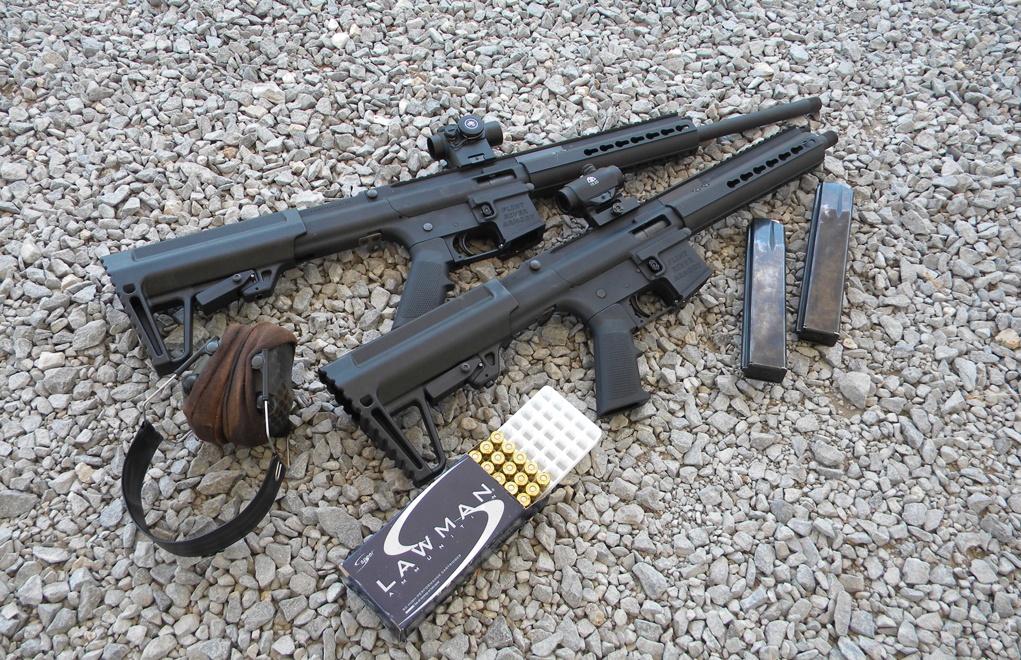
Here are two .45 ACP AR-type models built by Flint River Armory. These are fun to shoot, and like all ARs, theyโ€™re easy to operate. Handgun-caliber ARs are also an affordable way to send a lot of rounds downrange.

Shooting, regardless of your ultimate reason, is enjoyable. Itโ€™s some of the most fun anyone can have. The AR is easy to operate. Pistol calibers are fun to shoot. With a โ€œhandgun-poweredโ€ AR, youโ€™ve got both categories covered.

Thereโ€™s also the โ€œcloningโ€ trend. Several government agencies have used pistol-caliber carbines and sub-guns, and its been employed by different countries around the world. โ€œCloning,โ€ as referencing the recreation of weapons used by law enforcement and the military, is big and appears to be growing. A 9mm AR might be exactly what you need to complete your collection. Again, thatโ€™s not a tactical application, but it definitely falls into the fun category.

Selecting a firearm is a very personal matter. You choose one based on your application, say self-defense.

Maybe you have a specific application that weapon fits exactly โ€” a suppressed weapon or itโ€™s whatโ€™s necessary to shoot at your club range. And sometimes, we buy something just because it will be fun to own, shoot and study its history, development and the mechanical aspects of that weapon.

Ultimately, itโ€™s all about what you need โ€ฆ or what you want. Whenever you can satisfy both with one weapon, youโ€™re doing well.

Shoot Straight With Our 10mm Wisdom

Editor’s Note: This article originally appeared in the September 2018 issue of Gun Digest the Magazine.

Modern Shooter: The Magic Of Turnbull Restoration Company

0

Watch the magic happen as Modern Shooter gets an inside look at the renowned Turnbull Restoration Company.

Plenty of guns can turn your head, but few have the stuff to stir your soul. You know the kind, the guns so finely crafted, details so meticulously attended to they literally bate your breath while you take them all in. Walnut rich as chocolate cake, scroll work so intricate you get lost in it. If you have a notion about these types of guns, then you have a notion about Turnbull Restoration Company.

Master of its craft, the company has built an impeccable reputation for its ability to breath new life into classic guns. Be it a tough-as-nails Colt 1911 or a venerable Winchester Model 1886, Turnbull has the chops to recondition the arm so it appears as if it just rolled off the assembly line โ€” down to a dead-ringer finish, be it bluing, Parkerization or color-case hardening. However, you neednโ€™t stop at the historical. If you have the perfect gun in mind, with custom inlays and specific engraving, the company will pour its years of know-how into making it a reality โ€” down to the final flourishes on the scrollwork.

Modern Shooter got a rare inside look at this extraordinary firearm wonderland, traveling to where the magic happens. Along the way, we got a look at what can only be described as modern masterpieces that roll out of Turnbull on a regular basis. If you love guns that do more than simply hit the mark, but inspire, this is an episode you donโ€™t want to miss.

Catch the rest of Turnbullโ€™s incredible creations in this episode of Modern Shooter 10:00 p.m. EST Friday on the Pursuit Channel. The episode rebroadcasts Monday at 12 p.m. EST and Tuesday at 11:30 a.m. EST.

For more information on Turnbull Restoration Company, please visit: www.turnbullrestoration.com.


More Modern Shooter:

7 Considerations To Find The Best Concealed Carry Pistol for You

0

Picking the right defensive handgun is important. Learn how to choose the best concealed carry pistol for your needs and lifestyle by going through this simple checklist.

What do you need to consider to find the best concealed carry pistol:

No matter which category of pistol youโ€™re thinking of, there are dozens of options that might qualify as the best concealed carry pistol for you. The recent growth of the firearms industry and the number of people whoโ€™ve decided firearms ownership is a good idea have driven the industry to continue to refine their offerings. Thereโ€™s never been a better time to purchase a gun over the counter that features everything you want.

You might think you've found the best concealed carry pistol out there, but until you've gone over every square inch and test-fired it you won't know for certain.
You might think you’ve found the best concealed carry pistol out there, but until you’ve gone over every square inch and test-fired it you won’t know for certain.

That said, never buy a gun without operating every control to make sure itโ€™s comfortable for you. Check the location of the magazine release, location and direction the safety operates, and trigger and slide operation to make certain they work well for you. If the shop wonโ€™t let you do this, youโ€™re in the wrong shop.

While itโ€™s nice to own different kinds of guns, consider the potential problems if one gun you shoot a lot has an entirely different operating system from the one youโ€™re considering. Some safeties are pushed down to disengage, others are pushed up. Some magazine releases are a button and some are a paddle. Issues like this can make a perfectly fine pistol problematic for someone used to a different system.

My name is Dick Jones, and in addition to running the Lewis Creek Shooting School I’ve spent most of my life involved in the world of shooting. As a competition pistol shooter and a professional shooting instructor, I often find that even experienced shooters are uncertain about the right way to choose a new concealed carry pistol. This is especially so for first-time buyers. Hereโ€™s a quick checklist to work through to find the best concealed carry pistol for your needs and lifestyle.

Size

The size of a defensive pistol depends on the lifestyle, clothing habits and determination of the user. Single-stack guns have a thinner profile and are easier to hide, but the added magazine capacity of double stacks certainly has merit. Consider how you dress, both summer and winter. Look into holster options. Low production guns might be cool, but they have limited carry options. Finally, consider that a larger pistol with a longer sight radius is easier to shoot, but itโ€™s also harder to hide.

Weight

Itโ€™s been my observation as an instructor that most people feel burdened by a gun heavier than about 20 ounces, and some by anything over 16 ounces. This limits choices to single-stack guns, but if youโ€™re determined and donโ€™t mind the weight, larger guns certainly are easier to shoot well and have more magazine capacity. Figure out what you like.


Get More Concealed Carry Info:


Triggers

The most important issue in shooting a pistol well is manipulation of the trigger. While itโ€™s possible to shoot a gun accurately with a poor trigger, itโ€™s certainly irritating. Double-action triggers are safer than any other trigger system because the hammer spring is not compressed during the normal carry method, but many will struggle with accuracy in double action. Single- or two-stage triggers, like the triggers on 1911-style guns, are easiest to manipulate, but they require a high degree of safety awareness. Modern striker-fired triggers strike a medium with easier control, as well as enough travel and resistance to allow the gun to forego a manually operated safety.

Safeties

While double-actions have safeties, their function is more useful for competition use and de-cocking than ordinary carry. Some striker-fired guns have the option of a manually operated safety. Single-action semi-autos almost universally have a manual safety because the only reasonable carry method is with the hammer cocked and the safety engaged. The location of that safety and its direction of operation can be an issue if the user has extensive experience with a gun that operates in a different fashion. If youโ€™re used to a gun without a manual safety, you should spend a lot of range time disengaging and reengaging it. Safety operation, both off and on, should be a conditioned response that happens without conscious thought.

Ease Of Operation

The best concealed carry pistol is one you can operate competently, no matter the circumstances.

As an instructor, there have been dozens of times when a student came for training or certification with a gun they simply didnโ€™t have the hand strength to operate the slide. Even if you have strong hands, some guns are simply easier to operate than others and, under certain circumstances, this can be a factor in success. Hand strength also applies to trigger management, especially with double actions. Test the trigger before purchase while watching the sights to assure you can manage it without excessive movement.

Capacity

Magazine capacity is a big issue. Obviously, you can never have too many rounds should bad things happen, but big magazine capacity means size and weight โ€” and both are a detriment to daily, comfortable carry. I carry a smaller gun with lower capacity because I canโ€™t remember a single web report or armed citizen story that involved the defender needing to reload. It happens, but mostly it happens in Hollywood.

Caliber

Thereโ€™s no doubt that a big hole in the front of your gun looks impressive. Thereโ€™s also no doubt that a lot of people carry a gun they canโ€™t shoot accurately because of recoil anticipation. Size and weight play a lot into defensive carry choices, and a light and small gun in a heavy caliber is more than most can handle. While you canโ€™t try a gun at the gun shop, you may be able to test fire the gun youโ€™re thinking of at a commercial range.

If you canโ€™t shoot it accurately, itโ€™s not the right choice for defensive carry because youโ€™re responsible for every bullet that leaves your gun. A well-placed shot with a smaller caliber is more effective than a miss with a big magnum, and the stray bullet that misses can ruin your life.

Editor’s Note: This article originally appeared in the Shooter’s Guide 2018 issue of Gun Digest the Magazine.

Video: Did An Air Rifle Win The West?

0

The little known Girandoni Air Rifle played a small, but important role in forging our nation.

Quick, what was the gun that won the West? Most, even those with fleeting firearms knowledge, would answer the Winchester Model 1876. Itโ€™s a solid guess, given the iconic lever-action rifle more than played its role in Americaโ€™s westward expansion. So much so, in fact, it became known as THE gun that won the West.

Study the matter at any length, itโ€™s clear there are many firearms that can vie for the title. The 1860 Colt Single Action Army Revolver, 1874 Sharps Rifle and the ubiquitous side-by-side shotgun just to name the few all have a claim. In actuality, there was no single gun that won the West, but many, each inching the nation coast to coast in their own way.

Jim Supica highlights one unlikely candidate for the ultimate title, one that predates famous and familiar examples and is nearly a world away from the expected. Crazy as it might sound, the director of the NRA Museum makes a fairly solid case for the Girandoni Air Rifle as the gun that truly opened America. Yes, you heard right, an air rifle. Donโ€™t scoff, the .46-caliber rifle could outgun about any contemporary gun of the time.


Check Out More Great Posts:


Not only was the rifle capable of shooting through 1-inch of wood at 100 yards, its magazine held 22 lead balls. Unheard of in the era, the Girandoni could lay down accurate shot after accurate shot โ€“ nearly two magazineโ€™s worth. That was an incredible advantage during the era of muzzleloaders and might have been a deciding factor in Americaโ€™s westward expansion.

Not that there was a wealth of Girandoni Air Rifles in America in the early 1800s, but a mass of the gun wasnโ€™t needed. One proved sufficient. Armed with the then technological wonder, Captain Meriwether Lewis and Second Lieutenant William Clark wowed the Native Americans they met on their 1804-1806 expedition. And due to the rifle might have completed their journey unmolested.

Girandoni doesnโ€™t roll off the tongue like 1873, there is little doubt air power played a small but major role in forging our nation.

5 Articles On The 6.5 Creedmoor You Must Read

1

6.5 Creedmoor

Given its relatively short lifespan, the 6.5 Creedmoor continues to impress shooters around the world. Learn everything you ever wanted to know about this ballistically talented cartridge below with the most popular 6.5 Creedmoor articles on Gun Digest.

1. The Rise of the 6.5 Creedmoor

We know where it’s going, but where did it come from? The answer might surprise you. Find out what led to the development of one of our favorite cartridges in the last 50 years.

2. Top 10 Sharp-Shooting 6.5 Creedmoor Rifles

Want to take your long-range game to the next level? You’ll need one of these precisionย 6.5 Creedmoor rifles. We lay them out so you can pick one up.

3. 6.5 Creedmoor Balistics – A Practical Overview

When we love a round as much as we love the 6.5 Creedmoor we have to know everything about what makes it fly, and how hard it hits. If you’re a shooter who loves details like we do this is an article you don’t want to miss.

4. 6.5 Creedmoor Ammo – Whose Rounds Reign Supreme?

Find out what rounds are up to snuff. We line up 11 of our Top Picks for 6.5 Creedmoor ammunition options. Know what you want before you hit the shop.

5. 6.5 Creedmoor vs .308 Winchester – Who can Go the Distance?

The .308 has been a long time accuracy champion. Does the 6.5 Creedmoor have what it takes to win the top spot for preferred precision cartridge? Read on and find out!

Video: SIG BDX Taking Optics To The Next Level

0

SIG Sauer reinvents the riflescope with the BDX.

Every so often, a product comes down the line so innovative you can actually feel the ground shift under your feet. Thatโ€™s exactly the place SIG Sauerโ€™s SIERRA3BDX holds in the world of optics. Boasting arguably the most advanced features of any modern scope, the cutting-edge glass not only looks to change how shooters aim, but how they shoot.

Engineered to the hilt, the BDX comes with features once only dreamed of in a scope its size. From bullet-drop to windage holdover, the optic adjusts for environmental conditions in real time, giving you a rock-solid shooting solution the instant you need it. The magic in the system, an intuitive and powerful ballistic app. Linking to the scope via BlueTooth, the mobile device app does the heavy lifting for the shot youโ€™re about to take, giving you the confidence youโ€™ll place the bullet where you need it to go. Take a reading with your rangefinder, measure the wind with your meter, and the scope projects an illuminated dot on the reticle where you need to aim to place your shot dead on. It doesnโ€™t get much simpler or cutting edge.


Check Out More Great Videos:


Most heartening, the BDX prevents you from taking risky shots. Your specific load data programmed directly into the app, it gives instant feedback if your potential target is out of range. In turn, you never have to worry about guessing about an unethical shot, then potentially regretting it later.

Certainly, SIGโ€™s BDX might not be every shooterโ€™s cup of tea. But for those who strive for the utmost accuracy with every trigger pull, itโ€™s right on target.

4.5-14x44mm Specs
ADJUSTMENT INCREMENTS: 0.25 MOA
MAGNIFICATION: 3.5-10x
OBJECTIVE CLEAR APERTURE: 30 mm
BATTERY: (2) CR2032
FOCAL PLANE: Second
ILLUMINATION: Yes
RETICLE: BDX-R1 Digital
TUBE DIAMETER: 30mm

4.5-14x50mm Specs
ADJUSTMENT INCREMENTS: 0.25 MOA
MAGNIFICATION: 4.5-14x
OBJECTIVE CLEAR APERTURE: 44 mm
BATTERY: (2) CR2032
FOCAL PLANE: Second
ILLUMINATION: Yes
RETICLE: BDX-R1 Digital
TUBE DIAMETER: 30mm

6.520x52mm Specs
ADJUSTMENT INCREMENTS: 0.25 MOA
MAGNIFICATION: 6.5-20x
OBJECTIVE CLEAR APERTURE: 30 mm
BATTERY: (2) CR2032
FOCAL PLANE: Second
ILLUMINATION: Yes
RETICLE: BDX-R1 Digital
TUBE DIAMETER: 30mm

For more information on SIG optics, please visit: www.sigsauer.com.

Seven Pieces of New Retro Guns And Gear

0

Everything old is new again, including guns and firearms accessories. We delve into the new retro with seven must-have pieces of gear and guns that use throw-back designs, materials or systems.

What’s new in retro guns and gear:

Hornady Custom .30-40 Krag 180-grain SP

Retro-3
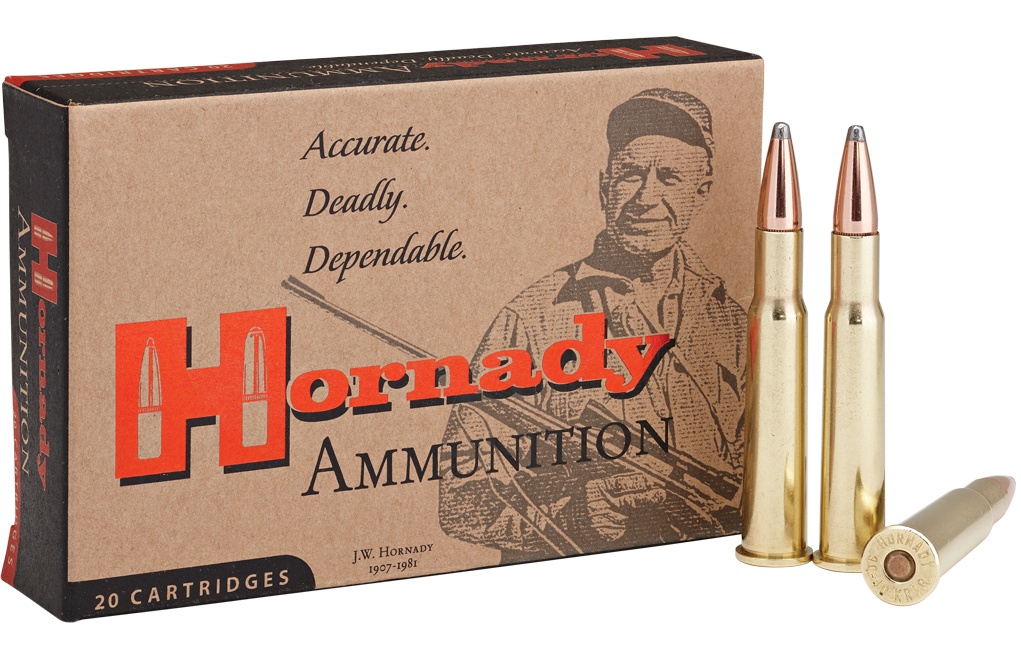
Hornady added two new loads to its Custom line for 2018, but one of particular interest is the 180-grain SP .30-40 Krag loading. The .30-40 Krag was, of course, the smokeless powder cartridge that the U.S. armed forces switched to after the .45-70 Government. Although it wasnโ€™t long before the .30-03 and later .30-06 replaced it for military use, the .30-40 Krag remained a fairly popular and effective hunting cartridge. As with all Hornady Custom ammo, every round is hand inspected before packaging. $26 box of 20. www.hornady.com

Williams Gun Sight FireSights

Retro-5
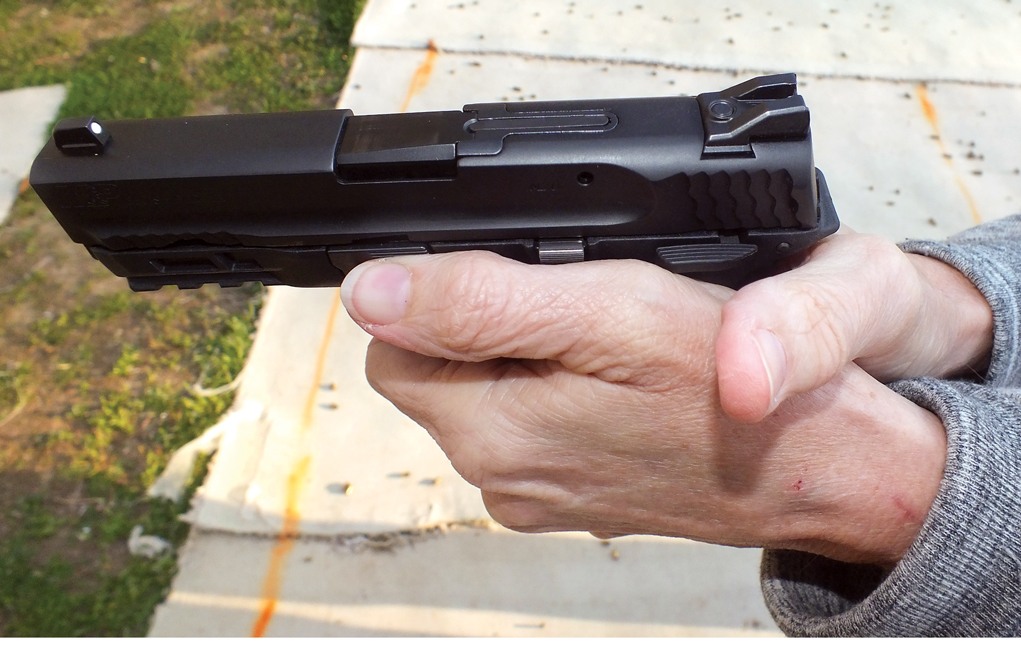
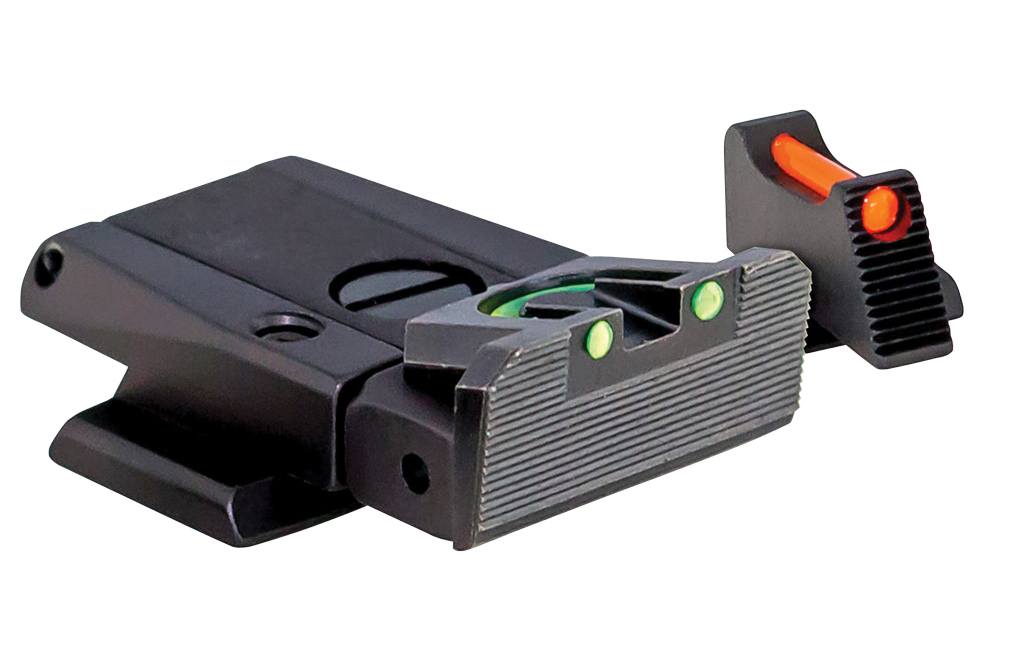
Williams Gun Sight Company offers a wide variety of U.S.-made sights, including its target and self-defense fiber-optic pistol sights. The target sights provide windage and elevation click adjustment, while the self-defense sights feature an anti-snag design for easy draw from and return to the holster. Both offer high visibility in low light via the fiber optics. $26.95-$62.95. www.williamsgunsight.com

Brownells Retro Rifles

Retro-1
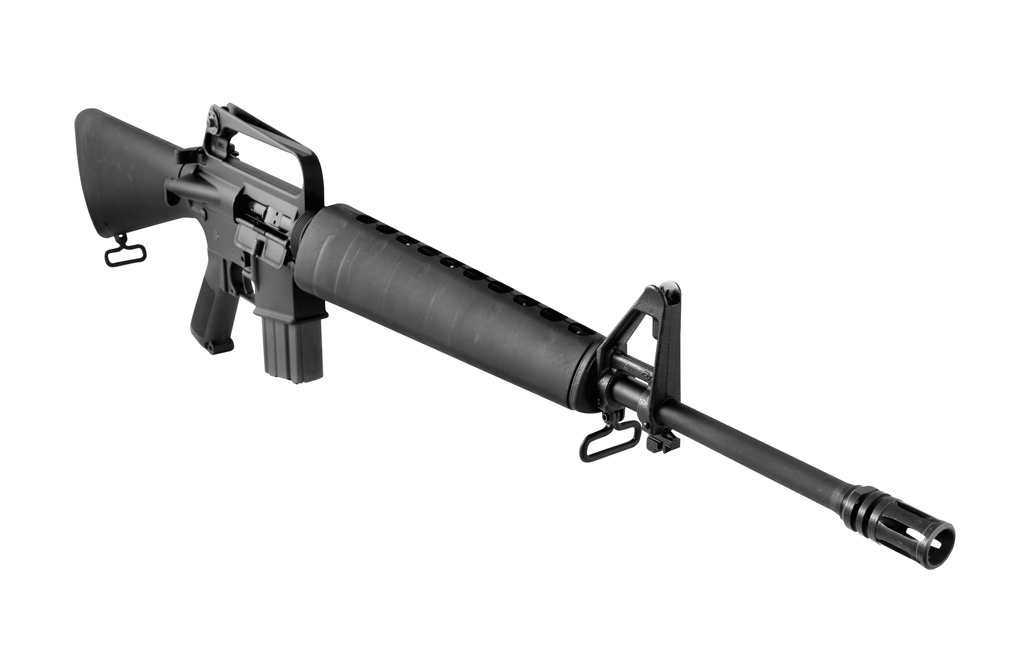
At this yearโ€™s SHOT Show, Brownells made a big splash with its new Retro Rifles line, which consists of six vintage-style ARs in both 5.56 NATO and .308 Win./7.62 NATO. The 5.56 NATO AR-15 models incorporate the correct styling as appeared on rifles issued to GIs in the 1960s. In 5.56, there is a model similar to the original M16A1, a model that closely mimics the original Colt 601 USAF contract rifle, an authentic copy of the early XM177E2 carbine used by Special Forces and a copy of the transitional rifle between the M16A1 and the 601. In .308/7.62, Brownells offers two models in its Retro Rifles line โ€” one closely mimicking early AR-10 rifles, such as those issue by the Netherlands, and one thatโ€™s a close copy of later model rifles. $1,299-$1,699. www.brownells.com

Boyds At-One Adjustable Stock For Long Guns

Retro-4
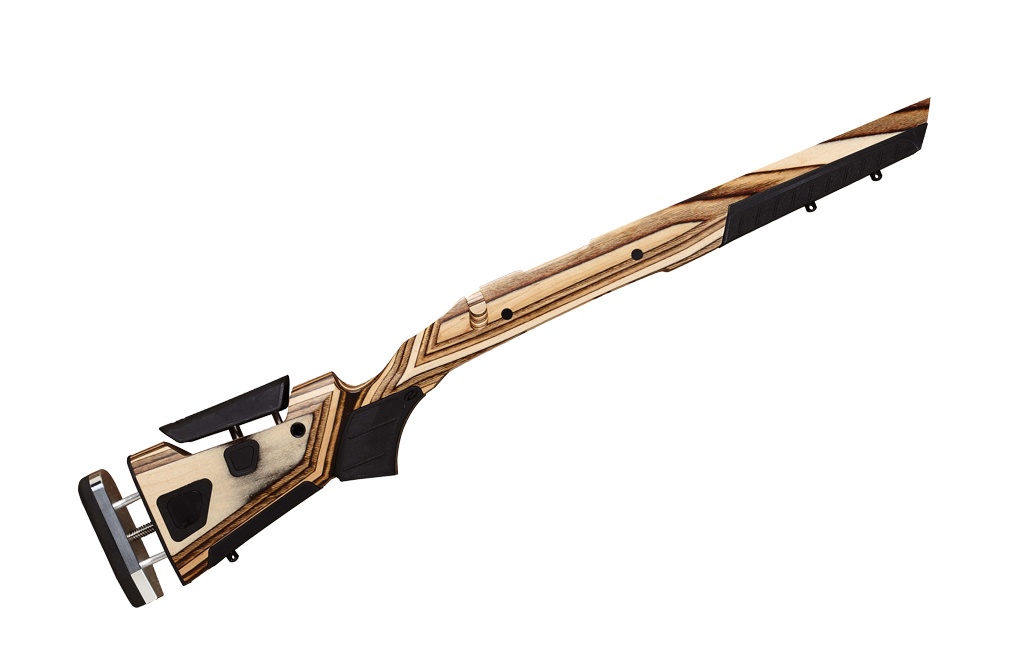
Want a custom fit without the custom rifle price tag? Boyds Hardwood Gunstocks recently came out with the At-One gunstock, which is user-adjustable for both length and comb at the push of a button. The โ€œBring-Itโ€ push button technology featured in the At-One stock is simple to use and allows for quick and easy custom fitting for the shooter and anyone else who might use the rifle โ€” no hardware or tools required. Length is adjustable at the butt pad from 12ยฝ to 14 inches, and the comb has an adjustment range of 9/16 inch. Available for most popular rifle models and in 11 different color options. $189 and up. www.boydsgunstocks.com


More Gear Articles Check Out:


Nighthawk Custom Agent 2

Retro-7
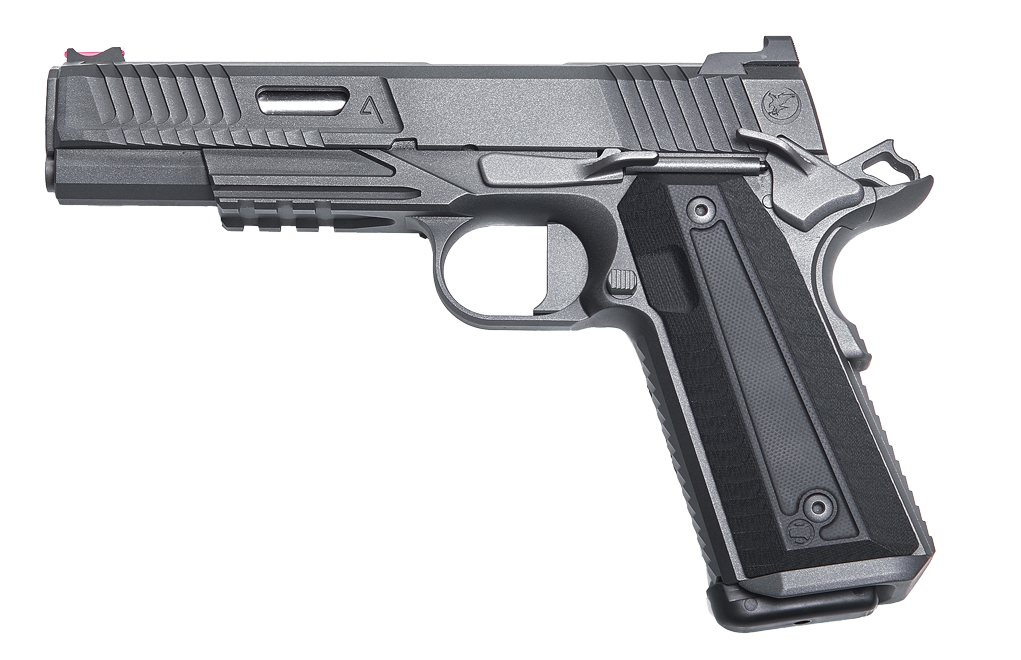
Nighthawk is one of the most well-known custom 1911 outfits in the country, and in 2018 it collaborated once again with Agency Arms, Railscales and Hillbilly 223 to produce the new Agent 2 pistol. The successor to the earlier Agent 1, introduced in 2017, the Agent 2 features a faceted slide, which also incorporates side windows, to reduce weight and Agency Armsโ€™ โ€œDNA Collectorโ€ front and rear cocking serrations. It also wears Railscales G10 grips, an ultra hi-cut front strap, a semi-crowned flush-cut barrel, a Nighthawk/Agency custom trigger and an extended, faceted and angled magazine catch. The Agent 2 also sports a Heinie Ledge rear sight and a fiber-optic front sight. $4,495. www.nighthawkcustom.com

Cimarron Firearms 1847 Texas Ranger Walker

Retro-8
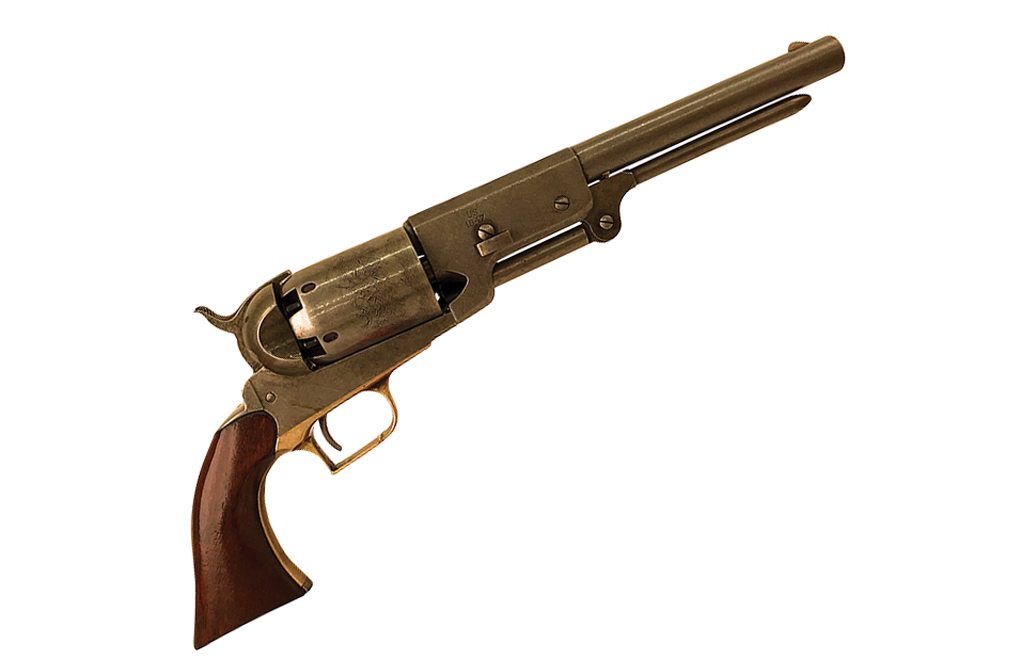
This year, Cimarron has brought out an exact replica of the classic six-round 1847 Texas Ranger Walker .44 black powder, repeating pistol. This authentic replica version incorporates company markings and wears Cimarronโ€™s original finish. It also features a 9-inch barrel and a steel frame. And as an added bonus, Cimarron will donate 5 percent of each Texas Ranger Walker sale to the Former Texas Ranger Foundation. $669. www.cimarron-firearms.com

Hoppeโ€™s BoreSnake Snake Den

Retro-6
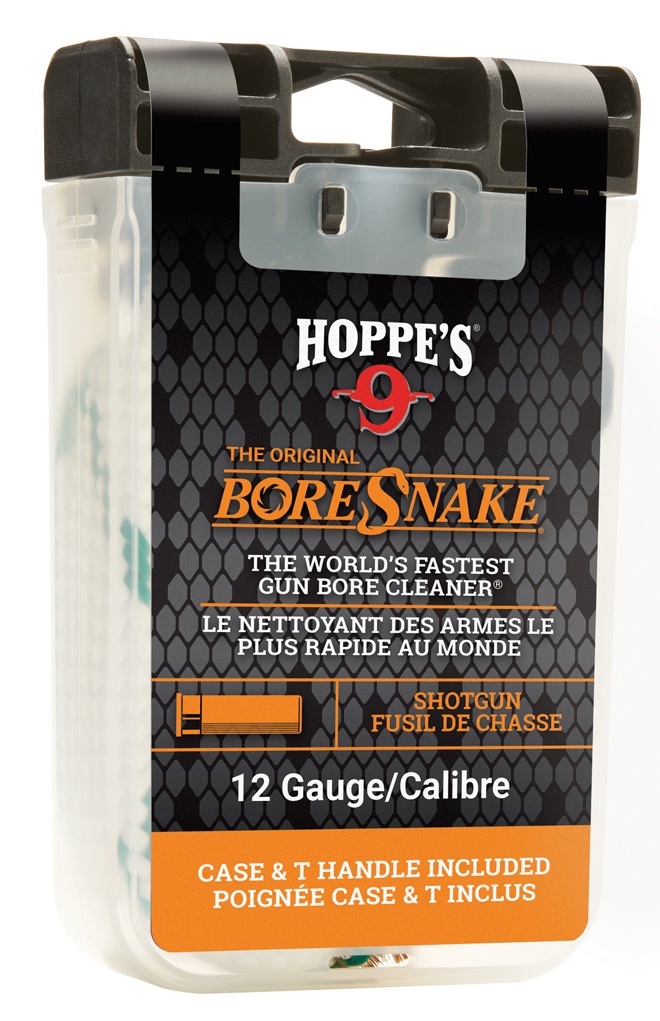
New for 2018, Hoppeโ€™s has made some improvements to its BoreSnake lineup in the form of the Snake Den. Now, the original, quick bore cleaning tool comes in a handier reusable carrying case, which includes a T-handle for more easily pulling the BoreSnake through your firearm. It retains the integrated bronze brush for scrubbing carbon fouling, as well as the tail, which clears the barrel of loose debris and has a surface area 160 times larger than a standard cleaning patch. $16.99. www.hoppes.com

Editor’s Note: This article originally appeared in the April 2018 of Gun Digest the Magazine.

Video: Top Options In AR Pistols From Daniel Defense

0

Get the inside scoop on these top-of-the-line AR pistol options from Daniel Defense.

Firearms are, in part, defined by their tradeoffs. Desire the utmost power and range, generally speaking, you have to look in the direction of long-guns. Require mobility and concealability, pistols are, for the most part, your best bet. However, occasionally a design finds that sweet middle ground, offering shooters, for the lack of a better term, the best of both worlds. This is the territory in which the AR pistol resides.

The handy configuration puts all the power of a rifle cartridge in a package that, while not quite handgun sized, is just a whisker off the dexterous firearms. And what a potent mix it is, perhaps the ultimate CQB option outside of an NFA-regulated firearm. Shooters of all stripes have been quick to appreciate the potential of the AR pistols and manufacturers equally as quick to meet their demands. Of all the gunmakers to jump into the small-time design, Daniel Defense has cooked up some of the choicest options in the light, quick and useful firearms.

Mark Tupy of Minnesotaโ€™s Modern Sportsman takes a look at three of the Georgia companyโ€™s most popular options. And thereโ€™s plenty to like about the high-end firearms he showcases. From their 10.3-inch barrels to their SB Tactical Stabilizer, the Mark 18 and V7 AR pistols epitomize everything shooters look for in this style of gun.

Mark 18 Specs
Caliber: 5.56mm NATO
Muzzle Thread: 1โ„2ร—28 TPI (Threads Per Inch)
Gas System: Carbine
Barrel Length: 10.3″
Profile: Government
Product Weight: 5.88 lbs
Length: 26 ยพโ€ โ€“ 29 7/8โ€
Magazine: DD Magazine
Case: Daniel Defense Full-Latch Impact Plastic Case

V7P Specs
Caliber: 5.56mm NATO
Muzzle Thread: 1โ„2ร—28 TPI (Threads Per Inch)
Gas System: Carbine
Barrel Length: 10.3″
Profile: Government
Product Weight: 5.44
Length: 28 5/8″ (20 3/4″ Folded)
Magazine: DD Magazine
Case: Daniel Defense Full-Latch Impact Plastic Case

V7P Law Tactical Specs
Caliber: 5.56mm NATO
Muzzle Thread: 1โ„2ร—28 TPI (Threads Per Inch)
Gas System: Carbine
Barrel Length: 10.3″
Profile: Government
Product Weight: 6.14
Length: 28 5/8″ (20 3/4″ Folded)
Magazine: DD Magazine
Case: Daniel Defense Full-Latch Impact Plastic Case

For more information on Daniel Defense AR pistols, please visit: www.danieldefense.com.

TSS Shot: Is It Right For Home Defense Applications?

0

TSS (tungsten super shot) is dynamite on turkeys, but how does it potentially perform on bad guys?

Do TSS Shells Work For Home Defense:

  • Tungsten is denser and harder than lead.
  • It produces tighter patterns than lead.
  • It also flies further.
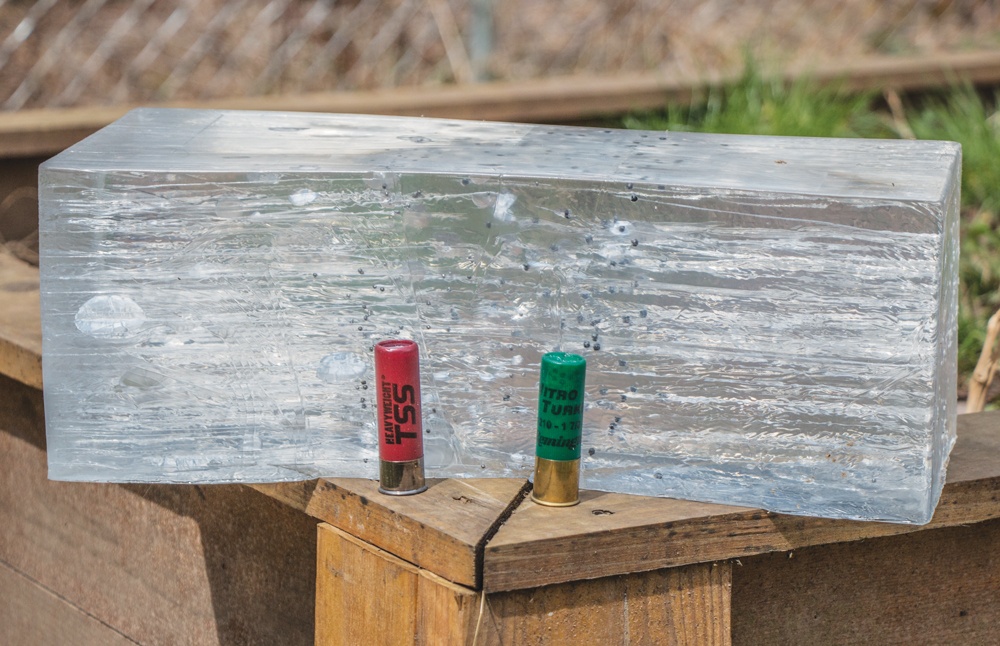
  • At 10 yards, Federalโ€™s HeavyWeight TSS hits with 1,595 ft-lbs, but penetrated half of what Remingtonโ€™s Ultimate Defense Buckshot did.

When I started to venture into the realm of TSS, I began to think about other applications for it besides turkey hunting. The first thing that always came to mind was home defense. Being pretty unfamiliar with TSS because I had not shot much of it at that point, I quickly formulated some assumptions about the overall performance of tungsten shot. As usually happens when we presume something too quickly, I was wrong.

For self-defense, comparing lead and tungsten is like comparing apples to oranges.

First, I figured it went without saying that tungsten shot would no doubt stop an aggressor as quickly as a load of lead, but I also assumed it would offer too much penetration and endanger others in home defense scenarios.

On the range, Federalโ€™s HeavyWeight TSS load was compared to a conventional home defense round, Remingtonโ€™s Ultimate Defense Buckshot. The Remington shell is 2ยพ inches, shoots 1,200 fps velocity at the muzzle, and contains 8 pellets of 00 buckshot. The Federal HeavyWeight TSS is 3 inches, shoots 1,200 fps muzzle velocity, with a 1ยพ-ounce payload of No. 9 shot. Both rounds were fired on paper and into Clear Ballistic gel at 10 yards.

Hereโ€™s how it shook out:

While the Federal TSS round delivered a whopping 1,595 foot pounds of energy at 10 yards, the penetration was less than half of the Remington 00 buck. If youโ€™re going to use your turkey shotgun for home defense, leave the TSS shells in the gun for this purpose.

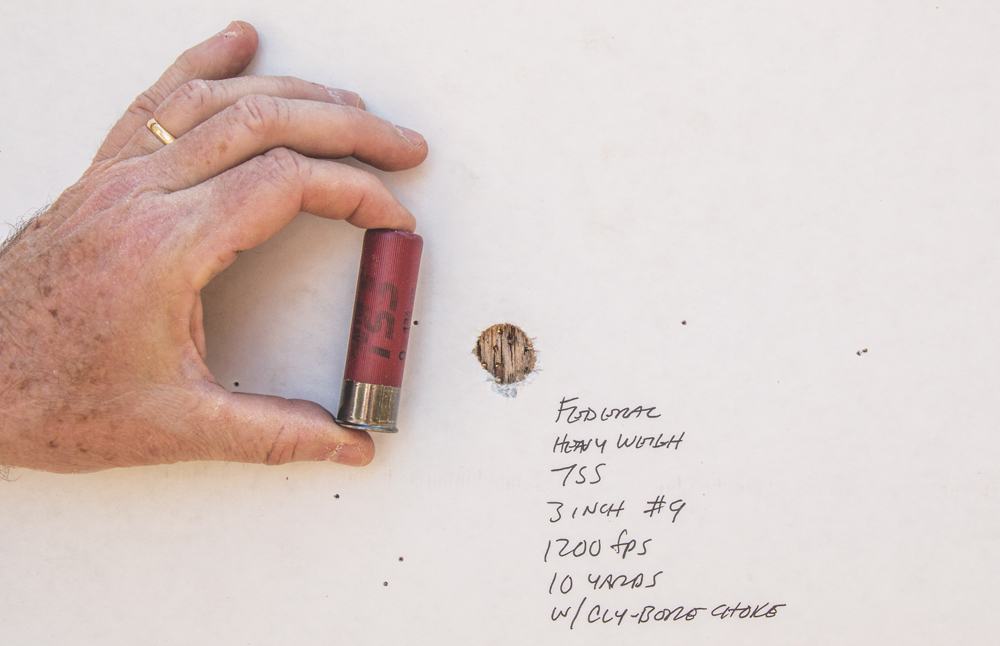
The 3-inch No. 9 Federal HeavyWeight TSS shoots with a muzzle velocity of 1,200 fps, and put 611 pellets in a 5-inch circle from 10 yards with an extra full choke (upper left). When used with an open bore (below), the pattern turns into a clean, single hole. Sound backward? Itโ€™s all about the relationship between the choke and the wad.

Maybe the biggest lesson learned here was to NOT use the Federal Heavyweight TSS load in a defensive shotgun choked cylinder bore โ€” in other words, no choke. The Federal TSS load, fired at 10 yards from a Mossberg 500 shotgun with a cylinder bore, produced a clean single hole, as if a slug had been fired. I believe this occurred because of the FliteControl Flex wad, which needs some form of choke to deploy so that it can separate from the shot payload. It would be very effective on intruders, but donโ€™t miss!

Editor’s Notes: This article originally appeared in the May 2018 issue of Gun Digest the Magazine.


For more shotgun posts check out:

Video: What’s To Love About 3 Gun?

0

Kicking up the action with 3-Gun matches.

Shooting in and of itself is heart pounding, the definition of exhilarating. Crazy as it might sound, there is a way to kick up this thrilling passion of ours if you’re willing to pick up a new game. Competitive shooting, while it takes some practice to excel, is among the most exciting and downright enjoyable ways to take your shooting to the next level. None more so than 3-Gun.

As its name implies, 3-Gun challenges your ability across three distinctly different firearms โ€” pistol, shotgun and rifle. And while becoming steely at transitioning one gun to another in rapid succession might seem a steep summit to conquer, itโ€™s not as daunting as it appears. Certainly, it takes blood, sweat and tears to join 3-Gun elite. But for those who simply want to have a good time, brush up their firearms skills in a practical fashion and dial up their adrenaline, the game is fun to no end.

As a bonus, there are few other ways โ€” outside of immersive tactical training โ€” to become more proficient with a wide spectrum of firearms than 3-Gun. Perhaps not directly transferable to defensive gun use, the pressure to perform is certain to make you more confident no matter what gun you happen to be running at that particular time.

Bonus: Fast as the unforgiving second, a 3-Gun stage pushes shooters to their limits. See how pro-shooter Keith Garcia handles the pressure, transitioning from shotgun to pistol to rifle.

For more information on Aguila Ammunition, please visit: www.aguilaammo.com.


Check Out More Great Videos:

What Is Target Focus Shooting?

0

Within arm’s reach, target focus might be your best bet to hit center mass.

What Is Target Focus Shooting:

  • Focusing on the target instead of the front sight.
  • Useful when an assilant is within arms reach out to 10 yards.
  • Useful when there’s no time to find the front sight.
  • It relies on your training to index a handgun on the treat.
  • Effective distant varies, depending on skill level.

If youโ€™ve ever received any formal training on how to shoot a handgun, youโ€™ve probably heard the expression, โ€œfront sight โ€” press.โ€ The purpose of this axiom is to instill in you the importance of focusing on the front sight โ€ฆ before you pull the trigger. Itโ€™s outstanding advice, particularly if youโ€™re just learning how to shoot.

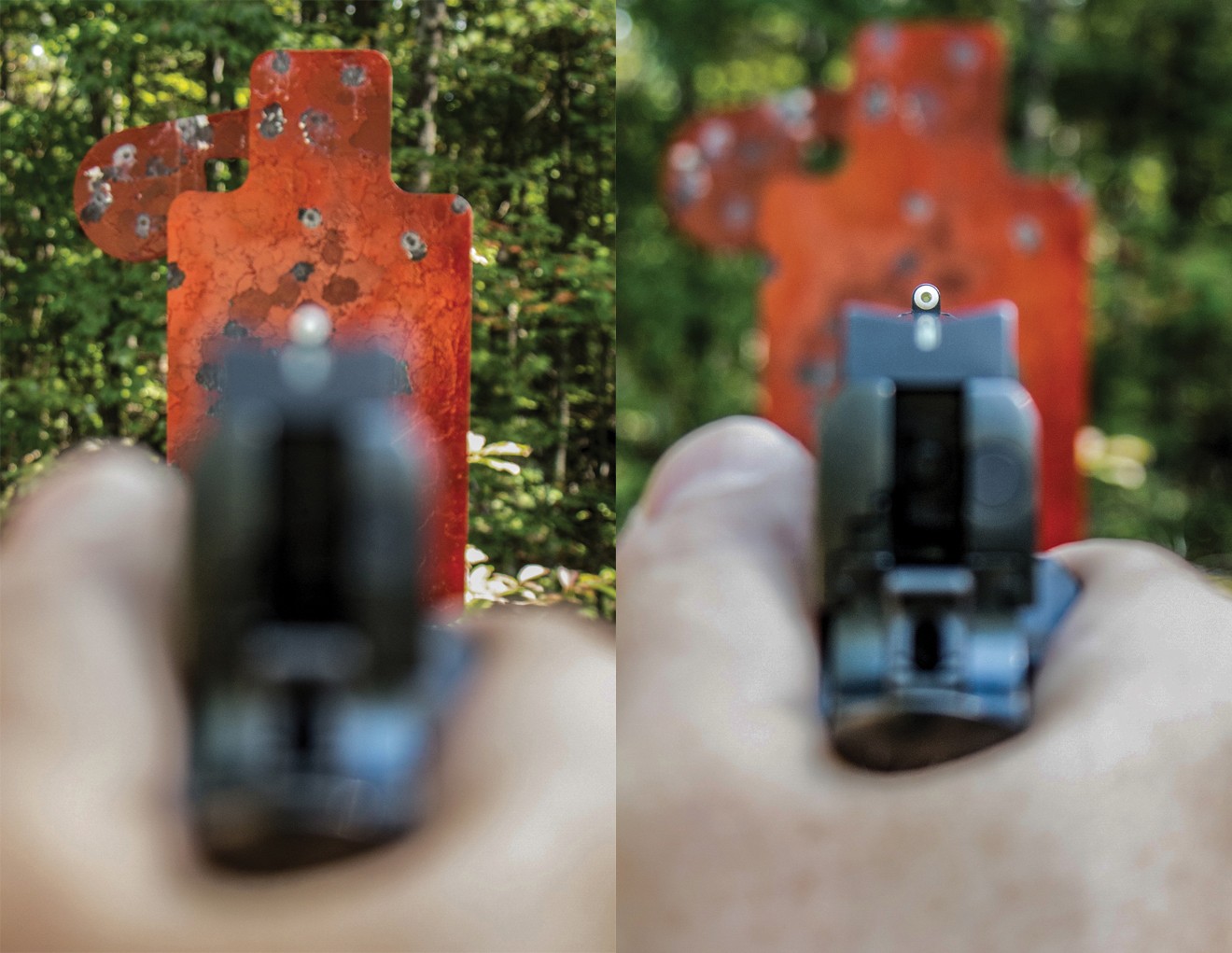
Left: This is what a target focus shooting sight picture looks like. You can see the target clearly, you did not have to shift your focus to the sight, and you can still see the sight on the target. Right: This is the typical sight picture we all strive to maintain. At close distance, and with practice, itโ€™s not necessary to focus on the front sight.

On the other hand, you might find it surprising that โ€œfront sight โ€” pressโ€ is not always the best way.

Obviously, if youโ€™re engaged in a contact fight where your assailant is at arms reach, thereโ€™s no time or need for finding the front sight. And, somewhere between armโ€™s length and about 10 yards, target focusing shooting can be applied. The distance or limit at which this technique can be effective will vary from individual to individual, based on shooting skill.

Target focus shooting is nothing more than you not shifting your focus from the target to the front sight. In reality, what youโ€™re really doing is relying on your training and conditioning to properly index the handgun on the threat, without a visual confirmation that requires a focus shift. This may seem impossible, but Iโ€™ll bet if youโ€™ve done much handgun shooting at all, youโ€™re probably shooting with a target focus at very close range, and maybe not even realizing it.

Keep in mind that, in a defensive situation, your goal should not be to attempt to shoot the button off the bad guyโ€™s jacket; it should be to deliver one or more rounds into the vital zone as quickly as possible. With practice, you can do this with a target focus, and you can do it very fast. Essentially, what youโ€™re doing is using the silhouette of the handgun as aiming verification.


Check Out Other Concealed Carry Posts:


With a target focus, I can generally keep all my shots, inside a 10-inch circle out to about 5 yards, as fast as I can hammer them into the target. Beyond that distance, I need to see a front sight to maintain respectable accuracy. However, with bold front sights, like the XS Big Dot or F8 sights, I can stretch my target focus out to about 7 yards and still keep my shots inside the vital triangle. This is because that big, bold sight is visible โ€” even if Iโ€™m not focused on it.

Target focus shooting might also be described as point shooting, but point shooting โ€” as the term has come to be generally accepted โ€” means youโ€™re shooting without aiming. With target focus shooting youโ€™re aiming โ€” youโ€™re looking at the gun and maybe even the front sight โ€” but youโ€™re not focused on either. Itโ€™s not a skill for the novice or inexperienced, but it is something you should work toward because it can save you time. And in a fight, the one who makes the best use of the limited time available is usually the winner.

Editor’s Note: This article originally appeared in the August 2018 issue of Gun Digest the Magazine.

Video: Grip Upgrades That Will Get You On Target

0

Top grip upgrades that will make your gun more manageable and get you on target.

Getting a grip โ€ฆ itโ€™s more than a vague metaphor in the shooting world.
Brass tacks, itโ€™s the key to consistency and accuracy every time we pick up a firearm.

  • A foundational fundamental, proper grip determines a great deal of the successfulness of a shot.
  • Without complete control of a pistol, rifle or shotgun, itโ€™s nearly impossible to develop a precise hold on the desired target.
  • And follow-up shots, forget about it โ€“ theyโ€™re all but written off if a gun swims around in your hand.
  • In turn, learning to grip a firearm so it is manageable and accurate is among the first things we must do as shooters.

Check out these other great videos:


That said, there are some minor areas we can tinker with outside of skill development to enhance our handle on a gun.

Often overlooked, grip upgrades can provide a more intuitive grasp on a firearm and facilitate what is known as a โ€˜positive gripโ€™ (texturing grips you back), thus making it more controllable.

Those features alone are worth the price of admission and can make something as simple as plinking more enjoyable.

Though, nowadays, grip upgrades far exceed simply making a gun more manageable.
Get the right kind, theyโ€™ll also take care of your aiming needs.

John Tupy of Minnesota gun retailer, Modern Sportsman, showcases a few popular pistol and rifle grip upgrades from Hogue, Talon Grips and Crimson Trace.

Certainly, they might not come off as sexy as upgrading ammo or your ARโ€™s rail.
But for a relatively minuscule investment, a good set of new grips will definitely enhance your gun.

For more information on Hogue, please visit: www.hogueinc.com.
For more information on Talon Grips, please visit: www.talongungrips.com.
For more information on Crimson Trace, please visit: www.crimsontrace.com.

MUST READ ARTICLES