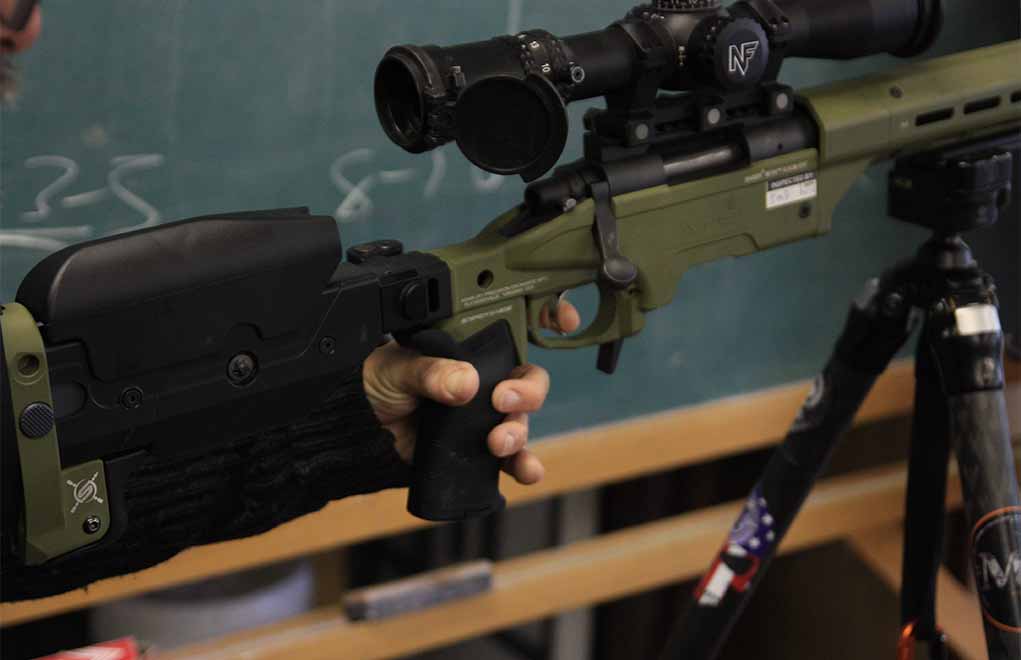
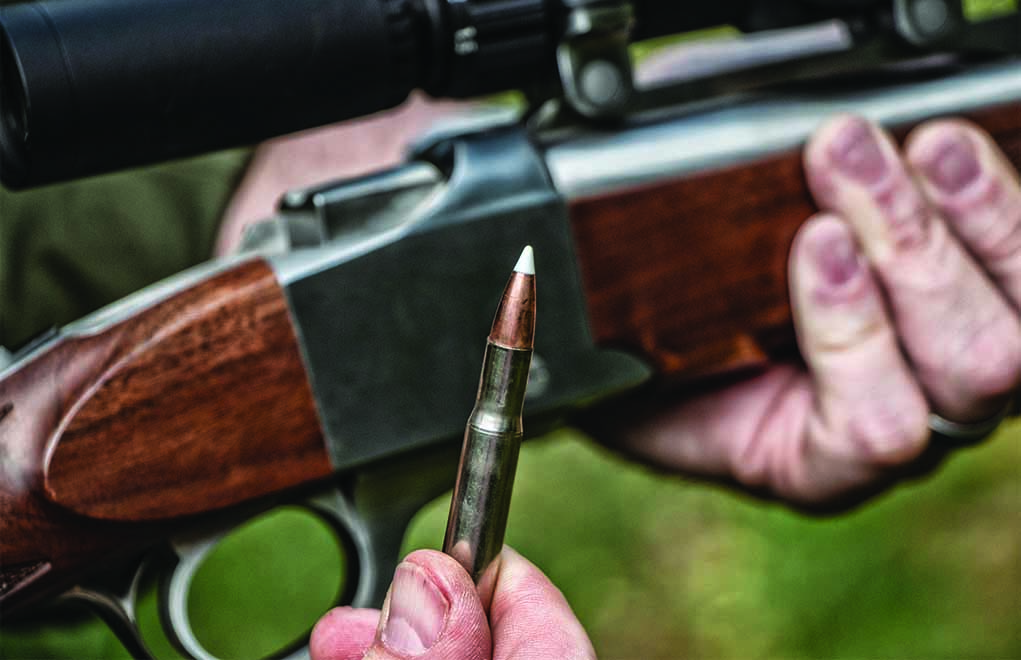
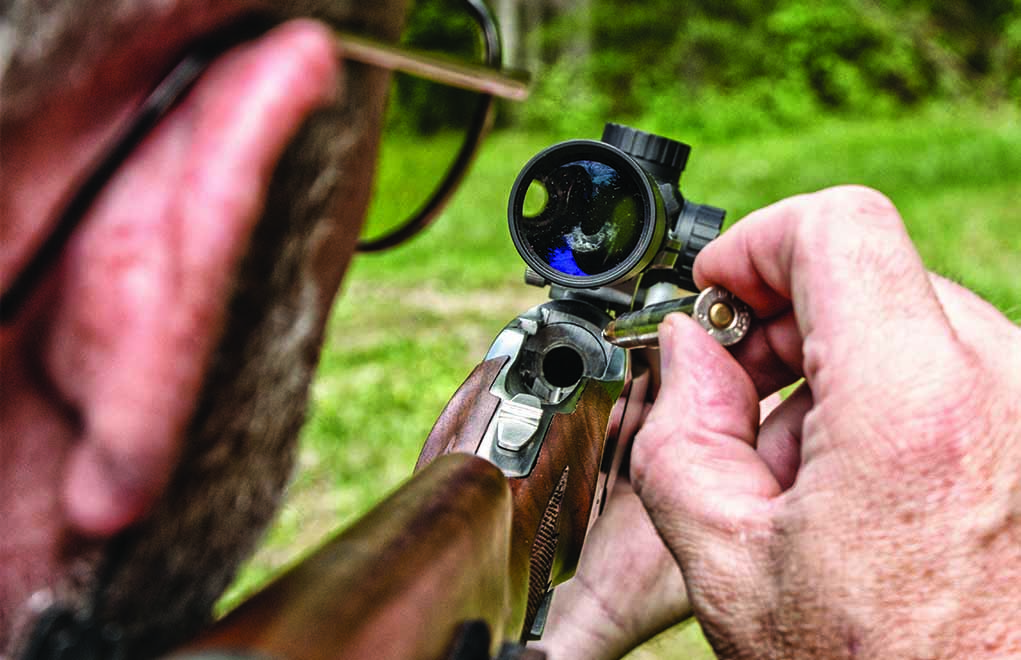
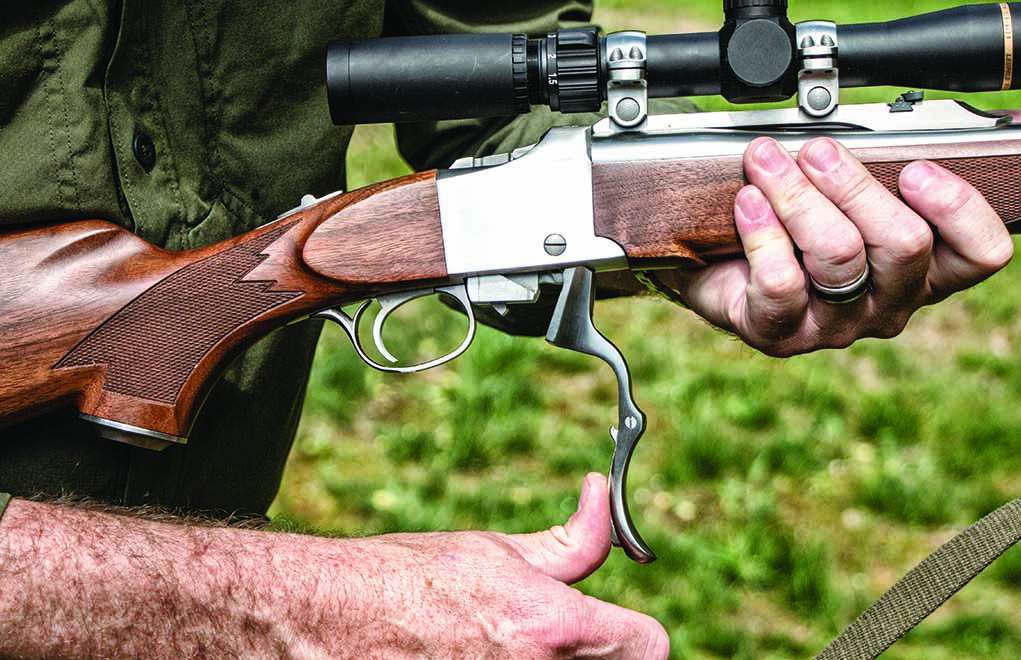
Trigger control is defined as the manipulation of the trigger without disturbing the rifle or the lay of the sights on the target. Most errors when shooting can be attributed to improper manipulation of the trigger. In fact, we are such creatures of habit, we can improperly actuate the trigger over and over yet still manage to group well. This is the most influential point, because we are turning on the machine. Pressing the trigger to the rear starts the process. In most people’s minds it is also the end, which causes them to inadvertently affect the shot placement. We literally beat the bullet out of the bore by moving the rifle and altering the sights off the target. In some cases, the shooters are so relieved at having fired the shot that they immediately disengage from the rifle. This is a bad idea.
Firing Hand Mechanics
The purpose of the firing hand is to manipulate the trigger and hold the rifle into the shoulder pocket. We aren’t gripping it like a handgun, rather holding it straight back to the rear. This requires very little pressure, so we don’t want to have a death grip on it. The shooter should establish a firing position on the stock that starts from the trigger back and not from the stock forward. This is more a mental process than a literal one, as we don’t want people putting their fingers on a live-weapon trigger first. The initial practice should have the shooter visualize the trigger finger before the grip. You can do this during dry practice, which is highly recommended.
Trigger Finger Placement
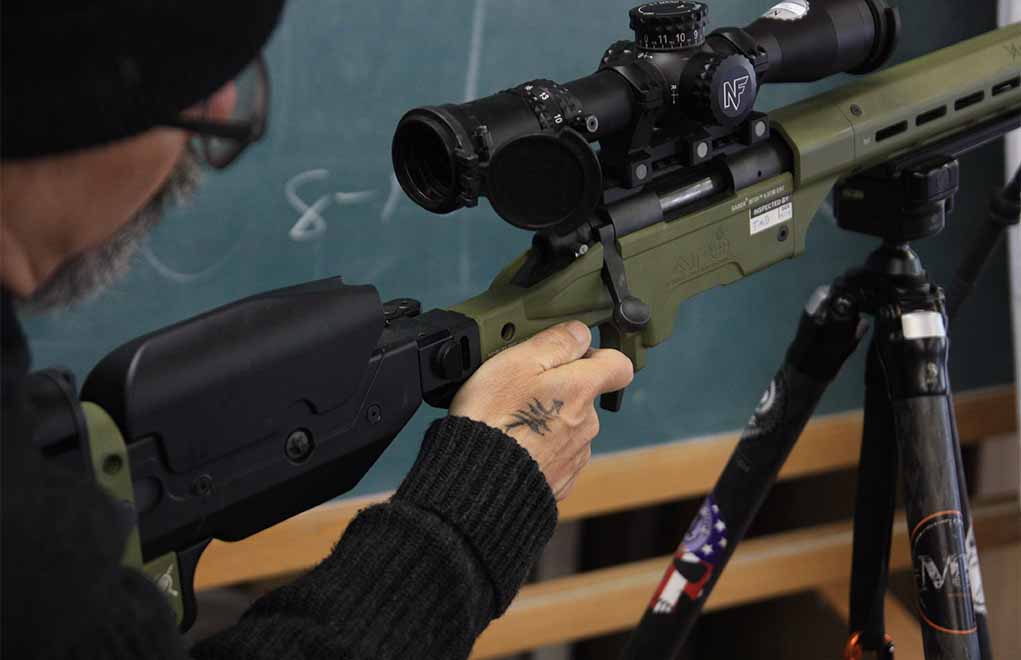
We want to place the trigger shoe squarely on the pad of the finger, creating a 90-degree angle with the finger and second joint. This will vary slightly from shooter to shooter based on their hands, and type of stock, but the goal should be to get the fingernail to point to 9 o’clock for a right-handed shooter, 3 o’clock for a left-handed shooter. This right-angle position should be there before the trigger is pressed and remain there afterward. Shooters who find their trigger fingers curling or even flying off the shoe, need to work on their trigger control and follow-through.
Look at the trigger finger when placed on the shoe. Is your finger starting and stopping at 3 o’clock (or 9 o’clock for a right-handed shooter) when manipulating the trigger?
When addressing the stock, regardless of the type, we want to make sure the movement of the trigger finger is not touching the stock. In the old days, they called this “dragging wood” for the obvious reasons. If the trigger finger is resting against the stock, you will influence the rifle, which is not good. As our skin moves, it compresses the muscles and pushes our flesh out under the skin creating a lateral movement on the stock.
The trigger finger should be moving like a hinge, straight to the rear using our body mechanics to our advantage. If the fingernail starts at 9 o’clock and ends at 9 o’clock, you can rest assured you are manipulating the trigger straight back to the rear. In many cases, you’ll find the finger is moving much less than it moves if you are incorrectly pressing the trigger shoe.
Get On Target With Frank Galli:
Mils vs. MOA: Which Is The Best Long-Range Language?
The three fingers below the trigger finger should be pressing the stock straight back into the shoulder pocket. The pressure should not be so great to discolor them visually. We want to develop a front-to-back management of the stock, and the thumb should be there to support this front-to-back pressure. It’s not necessary to engage the thumb. Depending on the stock type, many will lay the thumb on the strong side or use it as a reference point on the stock, putting it in an out of the way place. We call this floating the thumb, and it is a perfectly acceptable position as we don’t need our thumb for the task of shooting.
Correcting Trigger Control Errors
Correcting a shooter’s trigger control is our main priority when teaching classes. One of the most common errors in trigger control is variety. We see shooters manipulating the trigger in a different way every single press. No consistency is what we observe.
Press, break and freeze. That is the mantra.
Do not underestimate dry practice. It takes roughly 3,000 repetitions to create a new positive neural pathway and about 9,000 repetitions to fix a bad habit. The worst part about fixing bad habits is those 9,000 new repetitions have to all be exact. When dry firing, you can watch your finger.
It’s OK to dry fire your centerfire rifle. There should be no damage to the system. If you feel uncomfortable doing so, invest in a snap cap to absorb the impact of the firing pin. But it is generally safe to dry fire a centerfire rifle. Dry practice needs to be carried out as if it is a live shot. Sloppy dry practice will instill sloppy fundamentals. Invest in perfect practice. Don’t just sit there snapping the trigger, engage the rifle like your life depends on it. The more you dry practice, the better shooter you will become. For indoor dry practice, consider purchasing an Indoor Optical Training Aid (IOTA) lens device; this allows you to focus your scope indoors at 11 feet.
Given time and opportunity before a shot, always dry fire. Set up your position so, without breaking that position, you can easily reach over and insert a live magazine or load a live round so the actual shot mimics the dry fire. We see shooters all the time dry fire perfectly and then change their hand position or cadence of fire by simply going live.
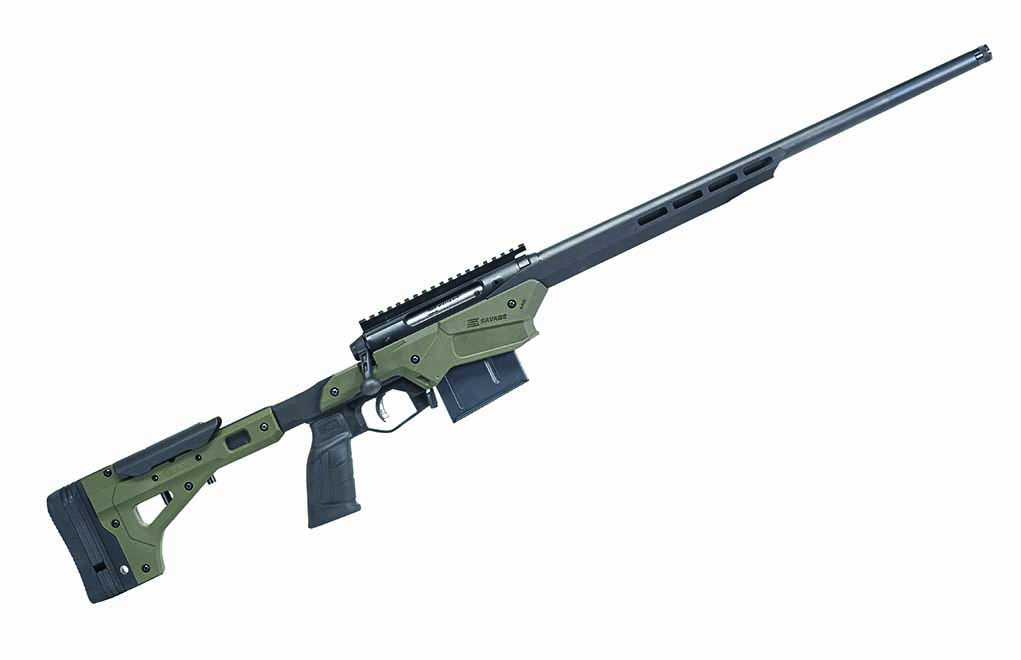
It’s difficult to make the case that Savage’s new chassis rifle is a big gun—until you get a gander at the price tag. Among the most affordable precision rifles to hit the market, the Axis II Precision could well have an oversized impact on the market. However, while the rifle is affordable, it doesn’t skimp. Savage partnered with well-respected chassis-maker Modular Drive Technologies, mounting the Axis-barreled action in an exclusively designed chassis. The rig’s rigidity makes the long shot come in and boasts plenty of M-Lok slots on the forend to attach your accessories. Outfitted with a 22-inch carbon-steel, button-rifled heavy barrel, this rifle has excellent harmonics. It’s available in six chamberings, including 6.5 Creedmoor and .308 Winchester. MSRP: $949
Stoeger Freedom Series P3000 Supreme
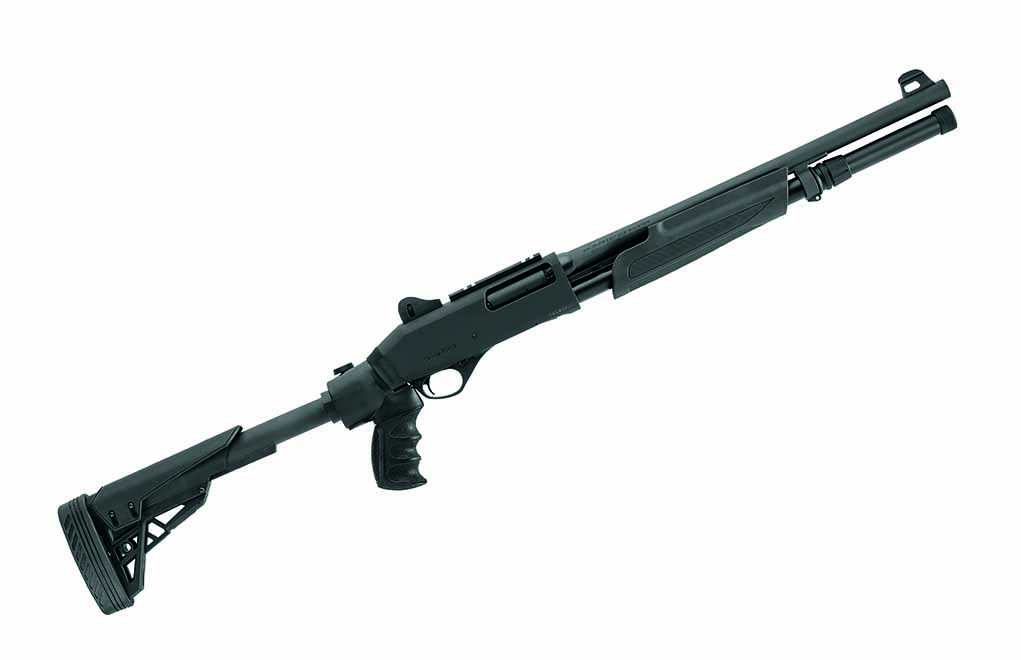
Big guns have a place in home defense, especially when you’re talking about a 12-gauge shotgun. Maximizing the bore’s performance and your spending power, Stoeger has introduced one of the most affordable tactical options available. Perhaps the most eye-catching aspect of the Freedom Series P3000 Supreme (aside from its ability to digest 3-inch magnum shells) is its buttstock. A six-position telescoping unit, it features an adjustable cheek rest and folds up for compact storage and transportation. This shotgun comes with a rubberized pistol grip, ghost ring rear sight, integrated sling attachments and a fixed cylinder choke. It weighs 7.3 pounds, so it’s more than enough to protect hearth and home. MSRP: $469, stoegerindustries.com
Henry Lever-Action Axe .410
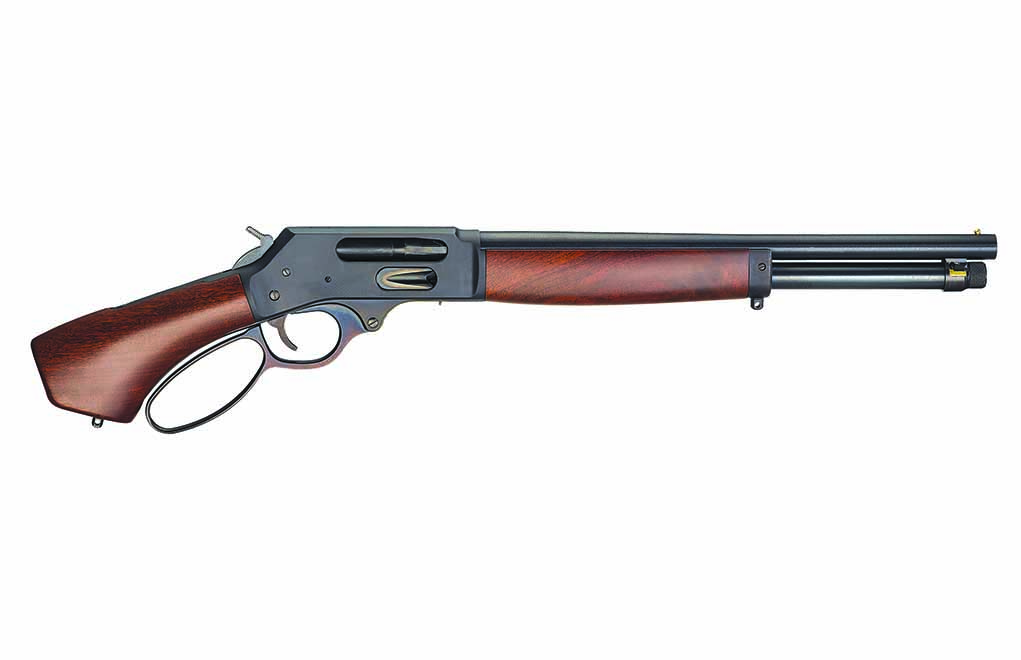
Uniquely in its own class, the Henry Repeating Arms Lever-Action Axe .410 might lack in overall practically, but it’s one of the most enjoyable guns you’ll ever strip from a scabbard. With a barrel length of just 16 inches, the firearm is extremely nimble, surprisingly controllable and fast on target acquisition. It fires 2½-inch .410 shells and boasts what Henry calls its “Axe Handle” grip. You can work the lever and get her to sing. A side-loading gate also means you can keep it in action, giving you a fast means to top off its five-round tubular magazine. And, because it’s made by Henry, there’s plenty of walnut and blued steel to give this smoothbore a timeless look. MSRP: $970, henryusa.com
Wilson Recon Tactical .350 Legend
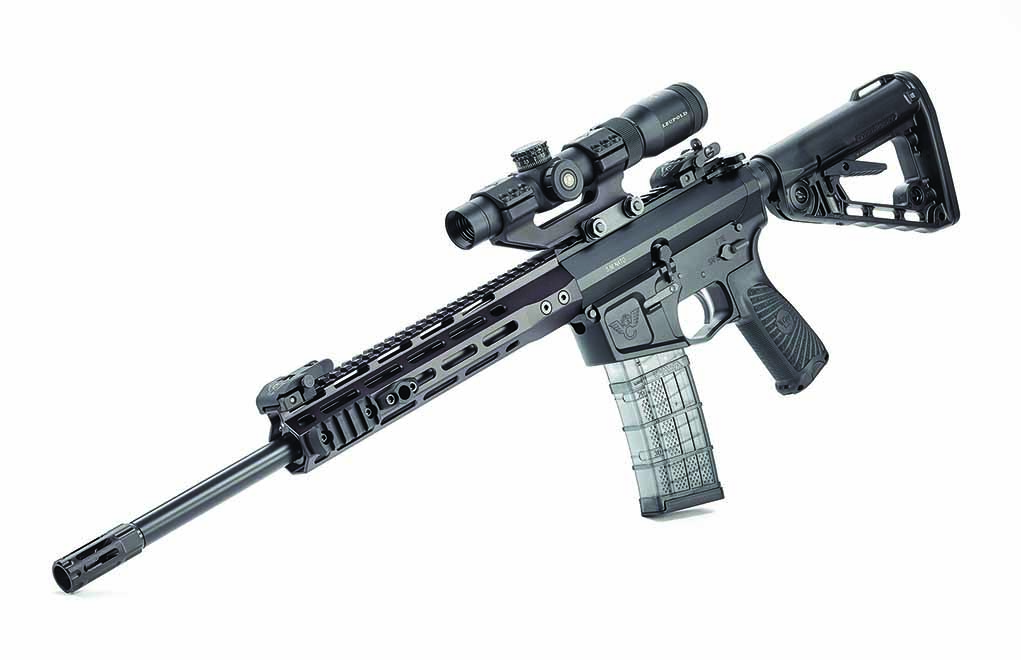
Caliber-wise, the .350 Legend might not qualify as big gun fodder, but performance-wise, this ingenious straight-wall cartridge more than falls into this class—especially out of Wilson Combat’s excellent Recon Tactical Rifle. It’s a new chambering to the legendary line, making a hard-hitting legend a practical/tactical option. Decked out with a match-grade barrel, mid-length gas system and two-stage M2 trigger, the 16-inch-barreled rifle is operationally sound and extremely accurate. It’s also long on top-end components, including a lightweight M-Lok rail, BCM Starburst Gunfighter Grip, Roger’s adjustable Super-Stoc, and NP3-coated premium bolt and bolt-carrier group. Weighing a manageable 7 pounds, the flat-top Recon Tactical is agile enough to guard the homestead or put meat on the table. MSRP: $2,250, wilsoncombat.com
Limited-Edition 150th Anniversary .444 Marlin
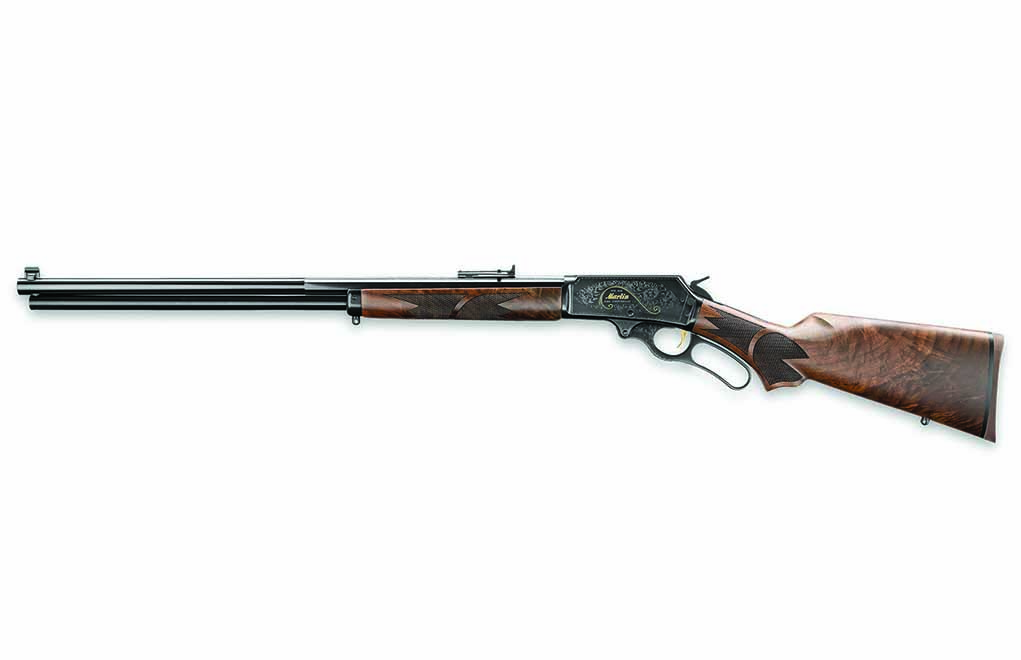
Celebrating its 150th anniversary, Marlin has introduced limited-edition guns to commemorate the moment. This includes one of Marlin’s most popular big-bore lever-actions: the .444 Marlin. Chambered for the smashing .444 Marlin cartridge, this rifle is long on custom-grade extras that make it an instant classic. Among these are a 24-inch, half-octagon/half-round barrel, an American black walnut stock and Skinner ladder sights. Of course, there’s even more: eye-catching scrollwork and gold inlay, as well as traditional checkering on the stock. The rifle ships in a commemorative box and has its own special serial number. If it’s caught your fancy, don’t wait too long: The limited-edition .444 Marlin will only be around as long as the company’s anniversary. MSRP: $1,899, marlinfirearms.com
Three Affordable Chronograph Options To Check Your Speed
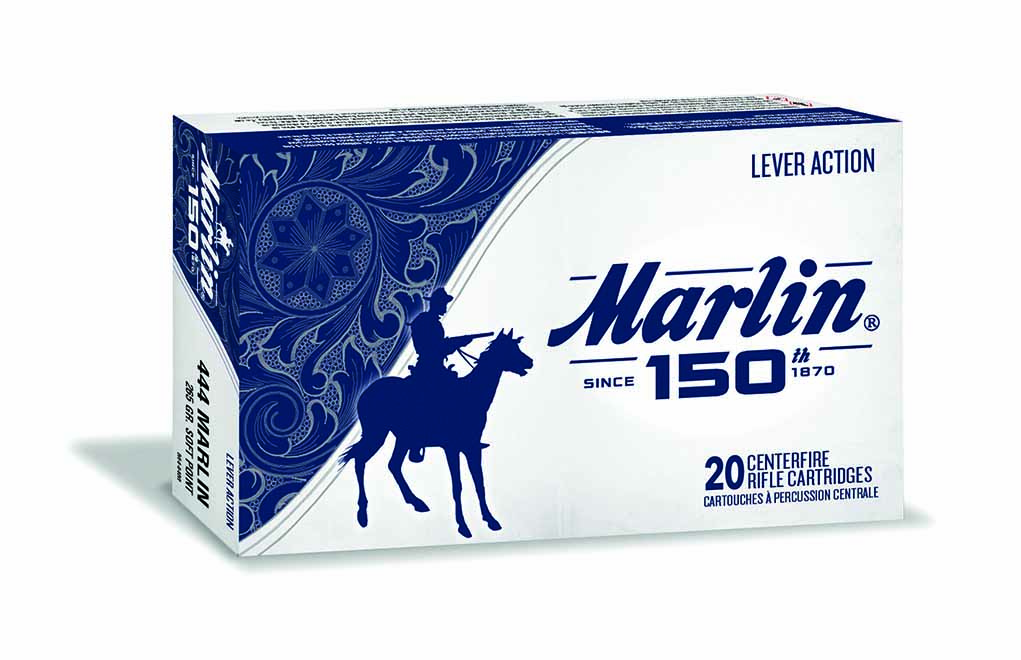
150th Anniversary .444 Marlin 265-Grain Softpoint
If you opt for the commemorative Marlin (and even if you don’t), you need something to send out of that baby. Marlin has you covered. In conjunction with its special-edition, 150th anniversary guns, Marlin has also introduced a limited-edition ammunition line—including a whopper for the .444 Marlin. A 265-grain load, topped with Remington’s softpoint Core-Lokt bullet, this ammo should prove an excellent choice for taking nearly any game. Furthermore, the load has been optimized for top performance out the .444 Marlin’s 1:20-inch-twist barrel. In short, this stuff is accurate. MSRP: $45 (box of 20), marlinfirearms.com
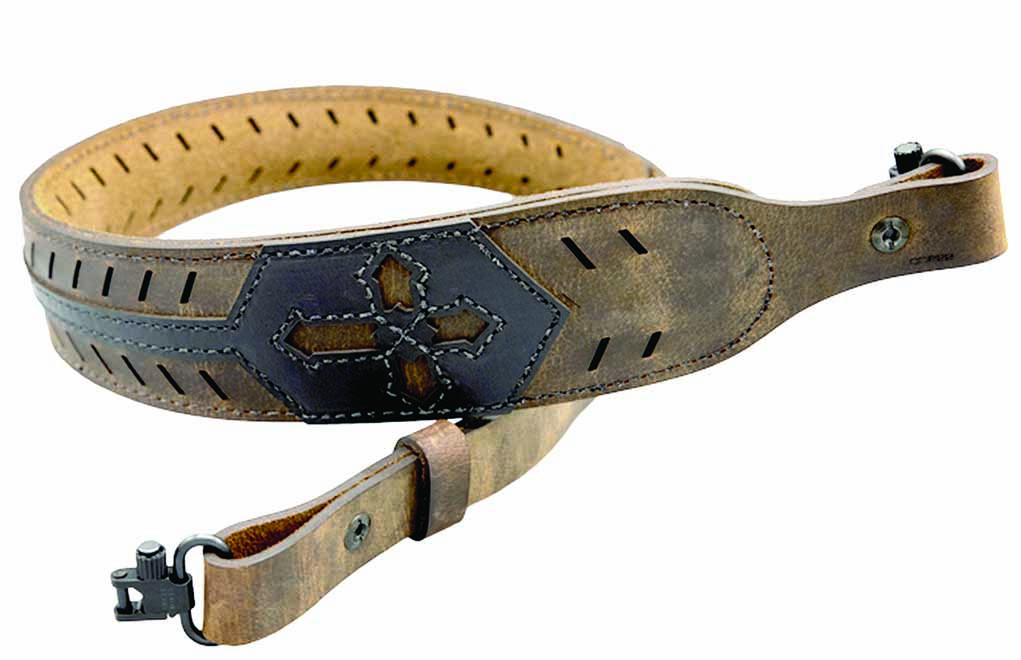
VersaCarry Padded Cobra Sling
Big guns generally have a big problem: weight. VersaCarry removes this burden with its premium Padded Cobra Sling. More than good-looking gun leather, this rifle sling is designed to evenly distribute the weight of a firearm. It also provides cushioning so the strap doesn’t bite into your shoulder. Handcrafted from water buffalo hide and reinforced at load-bearing points, this sling is up to the toughest field conditions, and it’s made to last a lifetime. You’ll be glad you have the Padded Cobra Sling every time you hit the field. MSRP: $80, versacarry.com
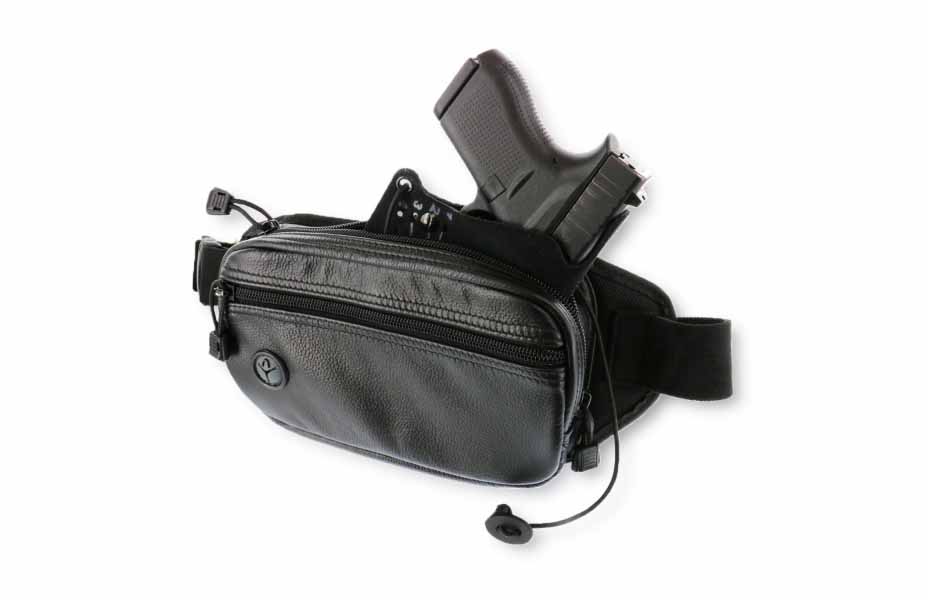
Galco FasTrax PAC Elite Waist Pack Holster
Waist packs might not be every armed citizen’s cup of tea, but they certainly have a place in the pantheon. Particularly with how Galco has rethought the implement. Utilizing an innovative pivoting holster and an external activation cord, the FastTrax Elite Waist Pack Holster is fast and convenient. The cord opens the pack in the wink of an eye, while the holster consistently presents your piece, so you aren’t left fishing around. Miles away from the way old waist packs worked. Made of soft leather and Galco’s Comfort Cloth, the pack is an excellent option for active types that find it a challenge to carry on-body. MSRP: $99, galcogunleather.com
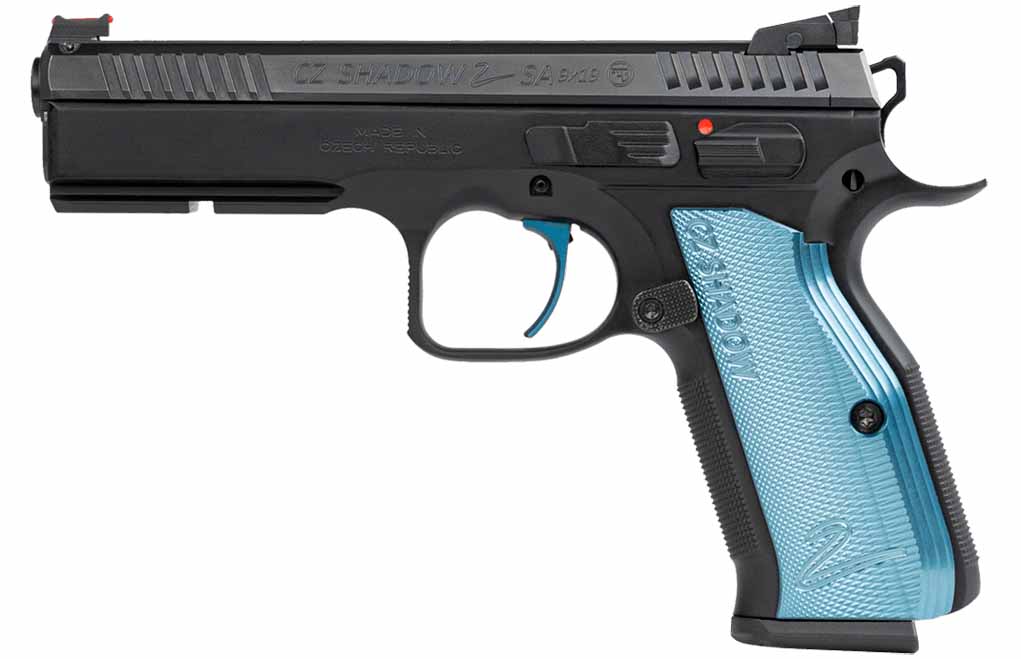
CZ Shadow 2 SA
A CZ Shadow 2 with a single-action trigger? Sign me and about anyone else who cherishes speed, accuracy and capacity. The renowned Czech-American manufacture recently expanded its line with exactly this model, aptly named the Shadow 2 SA. CZ has baked everything about the original pistol—from 17-round double-stack magazine to trademark blue aluminum grips and CZ ergonomics—into the new iteration. Only this one comes with a featherlight trigger that breaks like thin ice, especially compared to the first pull of the older DA/SA Shadow 2. Given its snappy trip, the Shadow 2 SA should prove an excellent option for a full-fledged competitive match or simple precision plinking. MSRP: $1,349, cz-usa.com
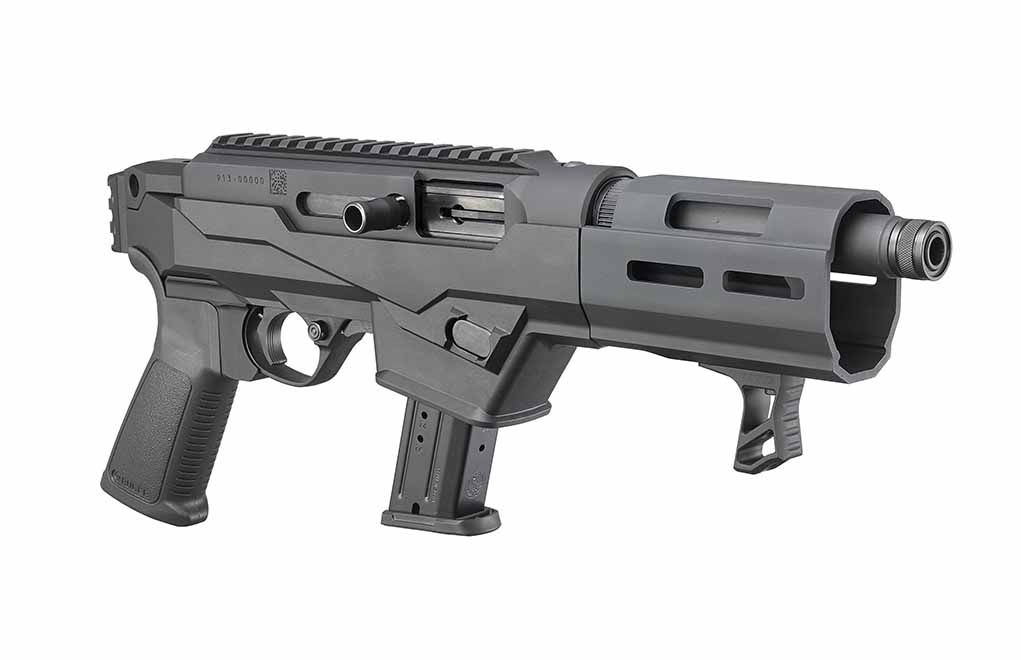
Ruger PC Charger Pistol
Arguably the perfect gun to pair with your PC Carbine, the band new PC Charger Pistol has everything its big brother has … and more. To the more, the 6.5-inch barreled pistol most certainly is more nimble and convenient to tote around, perhaps the ideal backpack guns. To the fine point of the 9mm, like the carbine it also feeds off SR and Security-9 magazines, as well as Glock, giving it plenty of versatility. Furthermore, it has the same dead-blow blow-back system as the long gun, making it a real smooth shooter. A tungsten weight at the back of the bolt reduces recoil and shorten bolt travel, helping eliminate muzzle rise and picking up its shot-to-shot pace. It’s a wicked little devil and a great partner for Ruger’s popular carbine. MSRP: $799, ruger.com
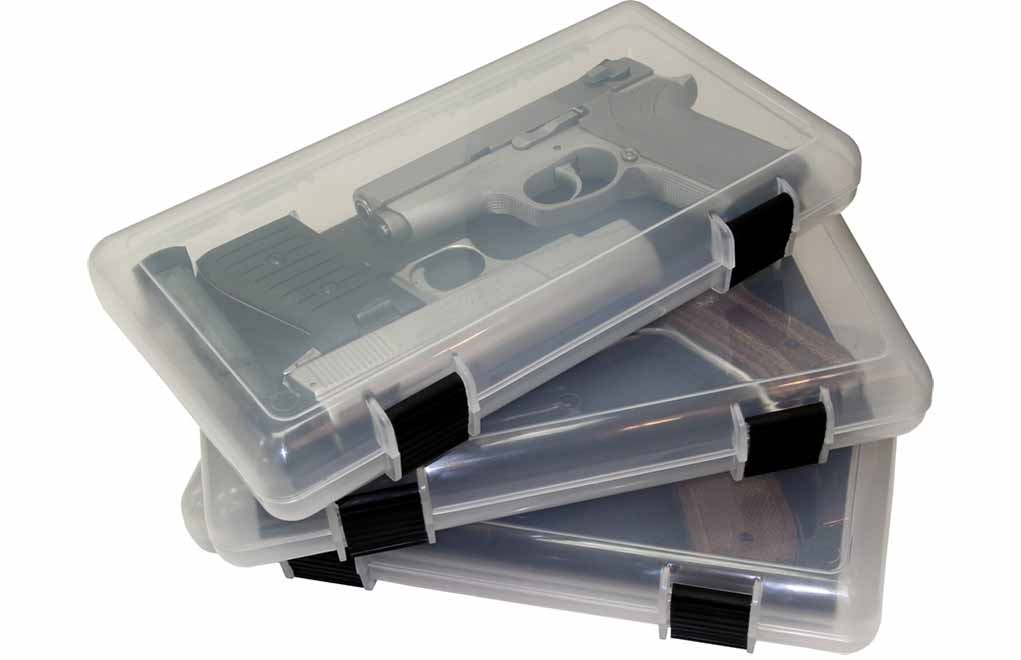
MTM In-Safe Handgun Cases
At first blush, handgun cases designed for a gun safe sound self-defeating. But take a second and look at your vault and think if some sort of organization system might be warranted. If you’re like most gun owners, the answer is most likely yes. This is exactly what MTM offers in these handy polymer cases. Stackable and lockable, they keep your pistols and revolvers in perfect order until you need them. At the same tick, they save on precious safe space. With closed-cell foam padding at the bottom, they also ensure the integrity of your guns over the long haul. Best of all, the cases are sold in packs of three, so you can get your handguns—all of them—in order right off the bat. MSRP: $16.95, 3-pack of 9-inch cases; $18.95, 3-pack of 12-inch cases; mtmcase-gard.com
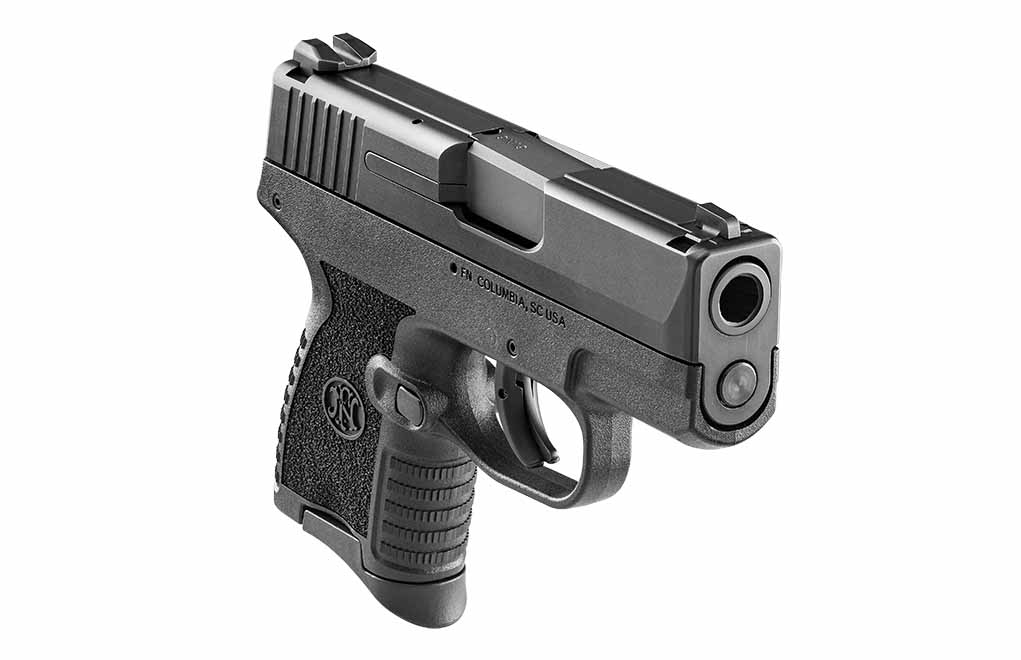
FN 503 Slim
Spreading like a prairie fire, slimline pistols optimized for concealed carry have become among the dominant styles of defensive weapons. Now FN is in this game. Purpose-built for on-body defense, the 503 Slim is perfectly proportioned to comfortable stay under wraps. Much of this is thanks to its 1.1-inch width, but FN didn’t stop with the pistol’s overall proportions. The gunmaker also outfitted the 6+1 (8+1 extended mag) 503 Slim with low-profile, snag-free three-dot iron sights and a minuscule 4.6-inch height. FN didn’t compromise performance for convenience, giving the 3.1-inch barreled pistol a very crisp 5-pound trigger and a very aggressive grip texture, so you maintain control. The single-stack 9mm is more than ready to be your next everyday carry piece. MSRP: $549, fnamerica.com
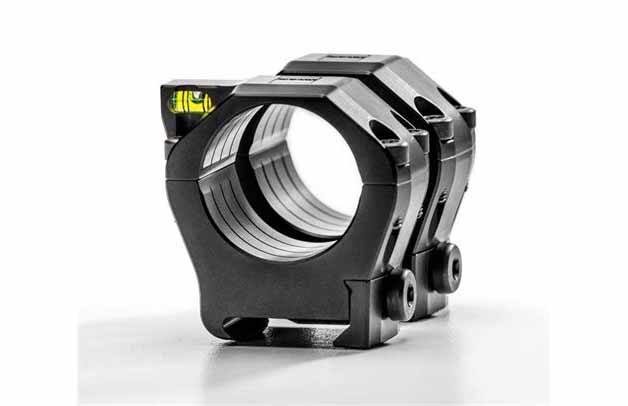
Zeiss Precision Rings
A precision rifle and precision scope require another element to live up to its full potential—precision rings. Look no further than Zeiss to fill this role. More than familiar with the needs of high-quality optics, the German manufacturer has introduced six new rings to its Precision Ring line. The new offerings include two 30mm ring heights along with four 34mm options.Like the original, the new precision rings are sleek, lightweight and Mil-Spec grade, yet up to the most rugged environments and include some pretty dandy extras. Some of these include an integral recoil lug and anti-cant bubble level. MSRP: Starting at $179, zeiss.com
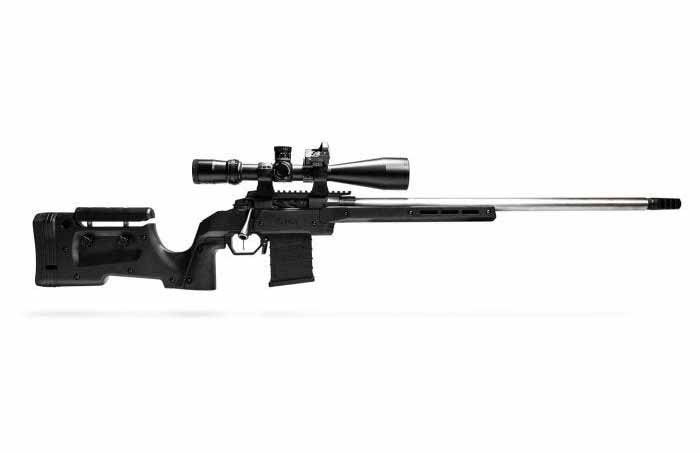
MDT Crossover (XRS) Chassis
Outside of pure long-range match work, rifle chassis are becoming more flexible. Modular Driven Technologies (MDT) looks this direction with its XRS chassis. At its heart are the same rigid aluminum, monolithic receiver and V-block bedding. But on the outside is a polymer skin, keeping the system light and rugged. The chassis features an adjustable length-of-pull spacer system with 2 inches of play, as well as comb rise. The 12.5-inch forearm has ample M-Lok slots for the easy addition of accessories. And, of course, the system is fully compatible with ACIS magazines. Nice package for a do-all system. Currently available for Remington 700 short action with Rem783 SA; Tikka, Savage, and Howa 1500 short action variants soon to come. MSRP: $99.95, mdttac.com
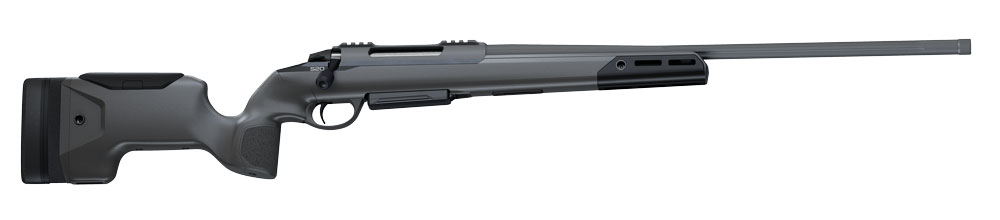
Sako S20
The Sako S20 tactical stock configuration.
Shooting at one rifle to do it all, Sako has come up with an ingenious new system with its S20. Billed as the first true cross-over bolt-action, the rifle lives up to its moniker adapting to both precision and hunting applications. Sound like a stretch, but more than doable with an interchangeable chassis stock system. A thumbhole version it’s the perfect configuration when you’re heading out to put meat on the table; then slap on the sniper-precision stock when you’re looking to ring steel a mile out. Inside the S20 stock is an aircraft-grade aluminum chassis that carries all the recoil forces. The durable structure of the frame has been carefully designed for maximum stiffness to increase accuracy and robustness. Available in eight calibers, the S20 is made to do about anything. MSRP: TBA, sako.fi
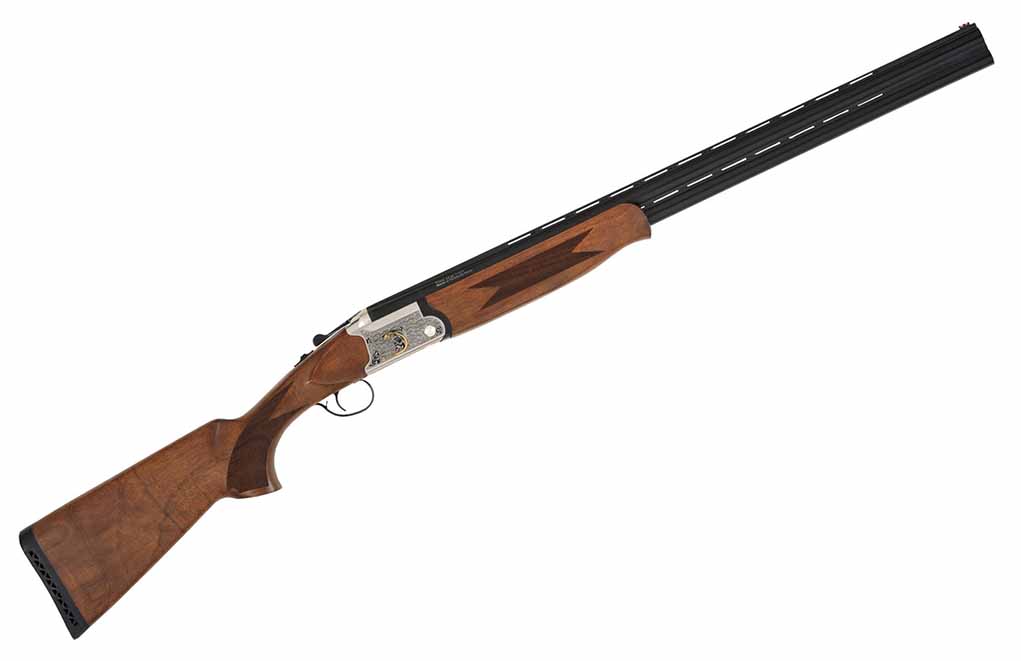
TriStar Trinity Over/Under Shotguns
Think a sharp-looking and shooting over/under is out of your price range? Think again. TriStar’s newly minted Trinity line delivers both beauty and function to every smoothbore aficionado, no matter the size of their pocketbook. Right off the tick, it not only comes with eye-catching engraving, but also 24K gold inlay, which gives the Turkish-made 12-gauge an heirloom look. Topping this off is a rich stick of walnut, semi-gloss finished. Yet it’s more than just a looker, with the 3-inch chambered O/U featuring a solid frame, self-adjusting locking lugs, top tang safety selector and safety and steel mono-block barrels. The gun comes with 5 interchangeable Beretta/Benelli Mobil style choke tubes (SK, IC, M, IM, F), choke box and choke wrench. MSRP: $685, tristararms.com
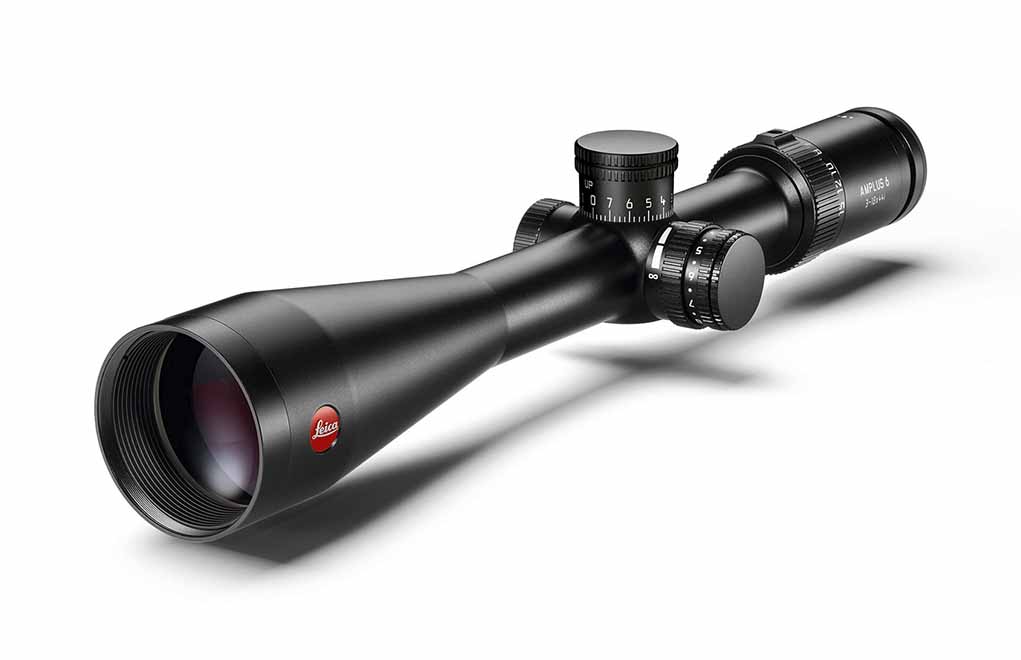
Leica Amplus 6 Riflescope Series
Nearly without peer, Leica is no stranger to producing top-performing riflescopes. Though, recently, the German optics maker might have outdone itself. Its new Amplus 6’s features are designed to get you on target, no matter your application, deliver unparalleled clarity and accuracy. Chief among its assets, 6x zoom, which brings your target up-close and person, allowing you to precisely place your shots. This is complemented by a sharp illuminated dot and large exit pupil, giving you not only a clear mark of where you’ll place your bullet, but the ability to quickly transition targets. Available in 1-4x24mm up to 3-8x44mm, the line has an option for every potential shooting situation. MSRP: Starting at $1,199, leica-camera.com
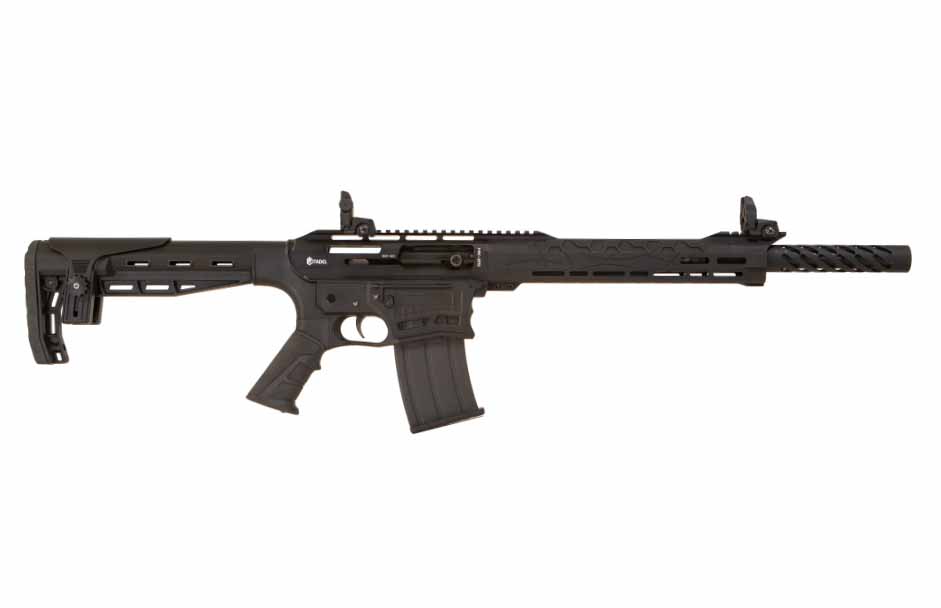
CITADEL BOSS 25 12ga.
With performance as wicked as its looks, the BOSS25 is in charge. A creation of Citadel (imported by Legacy Sports), the 12-gauge is based on the popular AR-15 rifle making it an ideal and familiar choice for competition or self-defense. Capable of chambering 3-inch 12-gauge shells, the magazine-fed shotgun also has plenty of versatility and is long in features. Some of the more notable include an 18.75-inch chrome-lined barrel, muzzle brake, textured grip fore-end, fully adjustable folding sights and top-Picatinny Rail for the addition of an optic. Weighing in at 8-pounds, it’s no lightweight, but proves a fairly manageable shooter. MSRP: $579, legacysports.com
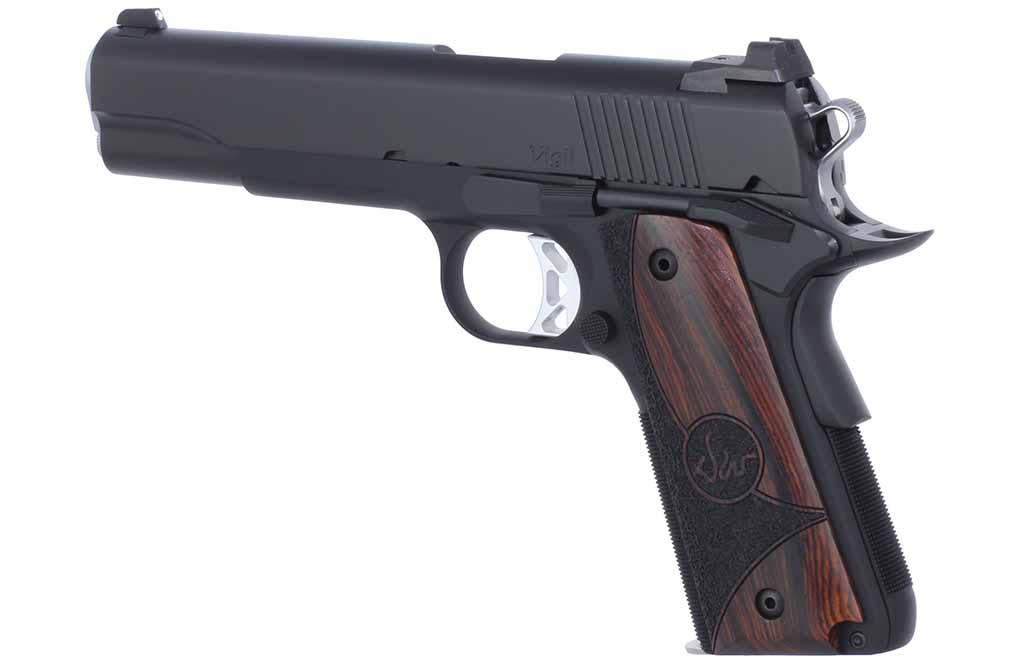
Dan Wesson Vigil 1911 Series
Dan Wesson pistols are many things … inexpensive isn’t one of them. Though, the custom gunmaker is pushing to get more of their excellent 1911s into more shooters’ hands with the introduction of the Vigil Series. An entry-level option, the aluminum-frame pistols come in well below most of the Wesson’s other lines, yet offers the company’s trade-mark performance. Lightweight, the Vigil Government Model, for instance, comes in nearly 6-ounces lighter than comparably-sized pistols, and has a slew of other features. Beveled magazine well, carry bevel treatment, undercut trigger guards and hand-polished flats all come standard. As does an extremely crisp, creep-free Dan Wesson trigger, set at 3.5 to 5 pounds. Available in Government, Commander and CCO (compact) models, in both 9mm and .45 ACP, there’s a Vigil for every shooter. MSRP: $1,298, danwessonfirearms.com
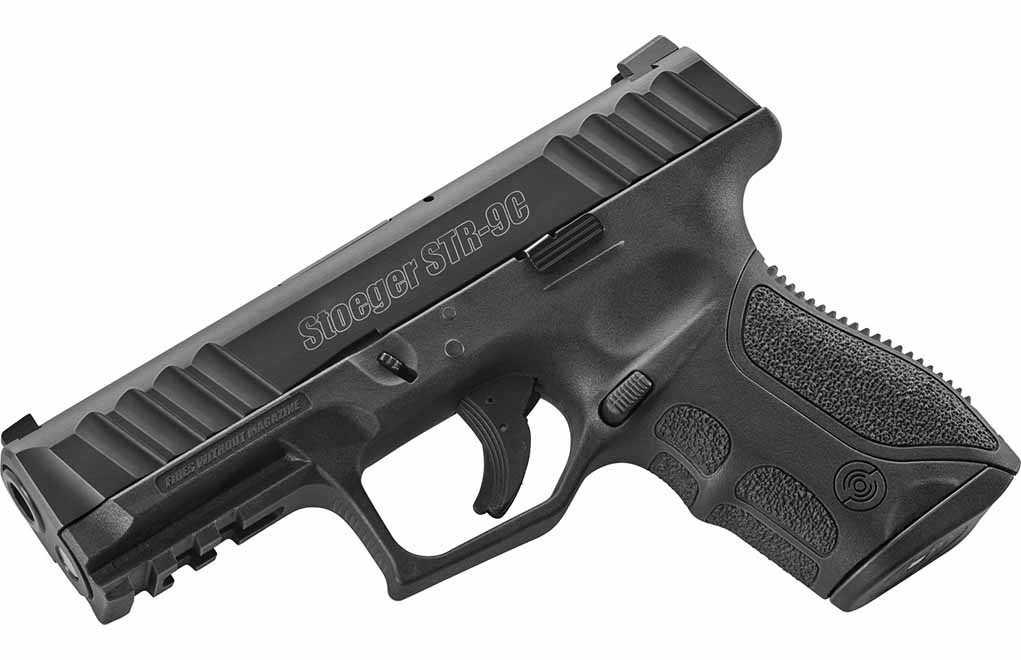
Stoeger STR-9 Compact
Glock performance at a fraction of the price, Stoeger pulled off quite a coup with the STR-9. Now, the gunmaker is aiming to continue to capitalize off its dandy striker-fired with the introduction of a made-to-carry iteration. With a 3.8-inch barrel, 6.9-inch overall length and 24-ounces in weight, the STR-9 Compact is certain to prove popular with those shooting at an affordable carry piece. While its price is rock-bottom, Stoeger has skimped on the STR-9. The 10+1 capacity 9mm (13+1 extend), outfitting it with sturdy three-dot iron sights, with the option to upgrade to Tritium night sights for a bit extra money. Like the original, the compact has a snappy trigger and easy-to-manipulate slide, thanks to aggressive cocking serrations. MSRP: $329, stoegerindustries.com
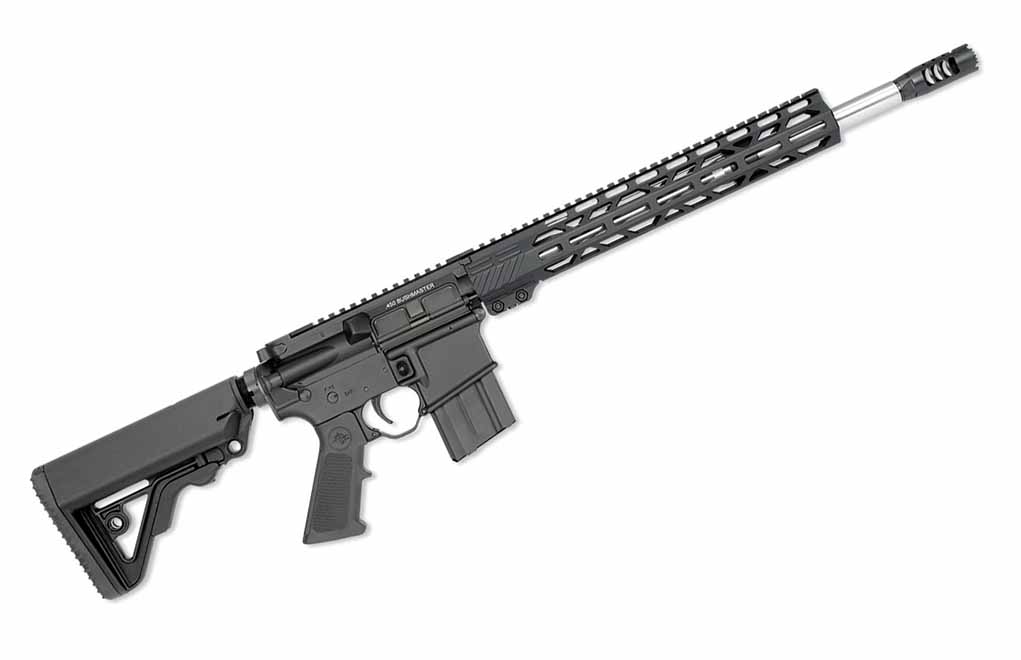
RRA LAR-15M .450 Bushmaster
While there have been advancements in straight-walled cartridges, when it comes to hunting—particularly with an AR-15—the .450 Bushmaster still reigns supreme. Rock River Arms (RRA) now gives you the perfect way to launch the behemoth. Offering 1-MOA accuracy at 100 yards, the LAR-15M, is the perfect option for hunting season or if you’re simply looking for a precise large-bore rifle. RRA delivers this down-range performance through a top-end build, which includes a 16-inch stainless-steel, cryo-treated barrel. It enhances the system with a high-performance proprietary two-stage trigger and six-position Operator CAR stock. Topping it off is a lightweight, free-floated handguard with plenty of M-Lok real estate so you can add your must-have accessories. The LAR-15M is the whole package and a little bit more. MSRP: $1,100, rockriverarms.com
The article originally appeared in the May and Shooter Guide 2019 issues of Gun Digest the Magazine.
Especially in terms of hunting, going big-bore can pay dividends. But fitting the bill for .450 Bushmaster ammo can prove taxing.
Staying flush in .450 Bushmaster ammo, given its price, can prove a challenge. That is unless you take its production into your own hands.
Why You Should Consider Reloading For The .450 Bushmaster:
The basement for factory ammo is around $1 per round.
Reloads, depending on brass life, can cut that in half if not by two-thirds.
You have the potential of a much more accurate round than what you’d buy off the shelf.
While most factory ammo is hunting focused, you have many more options off your reloading bench.
The old joke goes, if you want to know what it’s like to own a boat pour cold water over yourself while burning $100 bills. Owners of a rifle chambered in .450 Bushmaster can empathize. Not so much with the physical soaking, but with the monetary one. Trigger-time with the big-bore beast is a lot of things—fun, fruitful, impressive—but cheap isn’t one of them.
Outside .338 Lapua Mag and .50 BMG shooters and other extreme long-range cartridges, few wrangle with a more confiscatory ammunition budget than devotees of the .450 Bushmaster. Basement, you’re looking at $1 per trigger pull and it goes up steeply from there. Spendy, to say the least. Insane when compared to the typical price of widely used AR/hunting cartridges, which you can send roughly 1 ¼ to five rounds downrange for the same cost of one Bushmaster.
Just to get a better handle, here’s how several popular and common cartridges shake out per round per AmmoSeek.com:
.223 Remington: 18₵
.30-06 Springfield: 49₵
.270 Winchester: 58₵
.300 Winchester Magnum: 75₵
.300 Blackout: 65₵
Quite a pickle, one that has ramifications. Proficiency and mastery depend on training. The more it costs to train, likely the less you’ll do. The less you do, the more your proficiency suffers. In short, not good.
Economics Of .450 Bushmaster Ammo
So, why the top dollar when it comes to .450 Bushmaster ammo? It’s history mainly. Designed more than a decade ago, the main purpose of the .450 Bushmaster was a hunting round for the AR that hit harder than the standard .223. Mission accomplished, with the cartridge more than capable of kicking a 250-grain bullet out at 2,200 fps at the muzzle. More than enough to put any whitetail into permanent relaxation.
Hornady was among the first to offer factory-loaded .450 Bushmaster ammo.
Hornady was fast out of the gates with an excellent load topped with a 250-grain Flex Tip bullet designed for the Bushy. From there, the concept and ammo options proved a slow burn.
The .450 Bushmaster ammo market never really caught fire from there, until certain Midwestern states greenlit the cartridge for their deer seasons. This spurred some growth in ammunition options, with Remington, Winchester and others getting into the game. But overall, demand was regional. No reason to dial the .450 Bushmaster ammunition line to 11 if there was only marginal interest outside some of the Great Lakes states.
In turn, the majority of the factory-loaded stuff is all hunting oriented, generally loaded with a bullet purpose-built for the job and expected to sell in mass in only a few states. Unfortunate, given .450 Bushmaster ammo is ripe for diversification, given its inherent design.
A Different Route To .450 Affordability
The .450 Bushmaster is a rifle cartridge, but loaded with a pistol bullet. A fairly abundant pistol bullet to boot—. 45-caliber (.452). True enough, not all .45 bullets are up to the demands of the .450 Bushmaster—generally speaking, it’s got to be the variety meant for souped-up .45 Colt or .454 Casull. But given the popularity of these calibers, there is still a wealth of options—affordable ones at that. Which means, you guessed it, the .450 Bushmaster is ripe for reloading.
Like any straight-walled cartridge, there aren’t many curveballs reloading the .450 Bushmaster. However, keep to your specs if you’re shooting it through an AR.
True enough, handloading takes the pressure off your wallet no matter the caliber, but it’s absurd with the Bushy. Assuming you’ll use the bass a minimum of four times (a very conservative estimation), it’s possible to whittle down your per-round .450 Bushmaster ammo costs to less than half that of the factory stuff. Twice as much training for the same cost, perhaps three times as much if you’re a savvy reloading components shopper.
Even better, you have the opportunity to greatly diversify your .450 Bushmaster ammo options. Be it an FMJ target round or a gas-checked lead hunter, you have a wealth of possibilities when it comes to loading for this behemoth.
Aside from the standard reloading advice of building up your loads, piecing together your own .450 Bushmaster ammo doesn’t hold a ton of surprise. Being straight-walled case with a slight, special attention must be paid to expanding the mouth before seating the bullet, then crimping after the bullet is seated. In both cases, a little goes a long way. In particular with the crimp, given the cartridge headspaces off the mouth. A few thousands of an inch is enough to get the job done.
Case length can end up being an afterthought for many with straight-wall cases, but this is a mistake if your Bushmaster happens to be an AR-15. It is wise to keep to book numbers and trim to length unless you enjoy clearing jams.
Not common in factory loads, a target option with a FMJ bullet in .450 Bushmaster is more than doable on the reloading bench.
As to powder, most .450 Bushmaster ammo calls for propellants with burn rates similar to big-bore handguns—in the medium range. Unusually, a crowd favorite for the cartridge is Hodgdon’s Lil Gun, a specialty powder developed for .410 shotguns. It and most powders match well with a 250- to 260-grain bullet, particularly standbys such as Hornady Flex Tip, which moderately improve the bullet’s ballistic coefficient. Not quite consistent MOA improvement, but dead-on minute of deer for certain.
No matter your choice of components and power, you should keep your expectations within reason. Out to 200 yards, the .450 Bushmaster tends to be flat shooting and with enough tinkering and familiarity with your rifle, you can get respectable accuracy. But you’re also dealing with bullets—by and large—with poor sectional density—essentially how well they’ll penetrate. In turn, especially for hunting, you shouldn’t go in thinking you’re going to cook up a magical round that’s going to double the effective range of your Bushmaster.
Parting Shot
Big-bore rifles still have a place in the pantheon of shooting, particularly the modern iterations made to beef up the tried-and-true AR platform. Not only are they unique, but for certain geographical regions, they’re indispensable tools for hunting. Even with more competition to the market, the .450 Bushmaster will remain the first choice for many, especially if they take the time to reduce the cost of feed one.
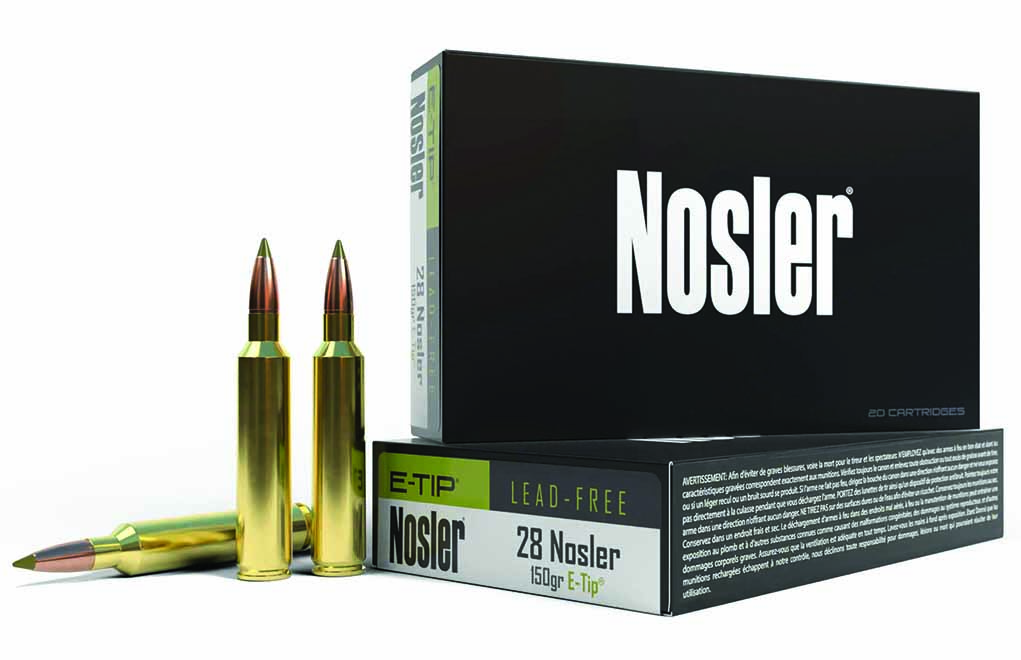
OK, you have an itch to send a 7mm screaming to its limits, then the 28 Nosler is right down your alley.
What Are The Specifics Of The 28 Nosler:
Shares the same case dimensions as its sibling, the 26 Nosler.
Its fat case gives it ample powder capacity.
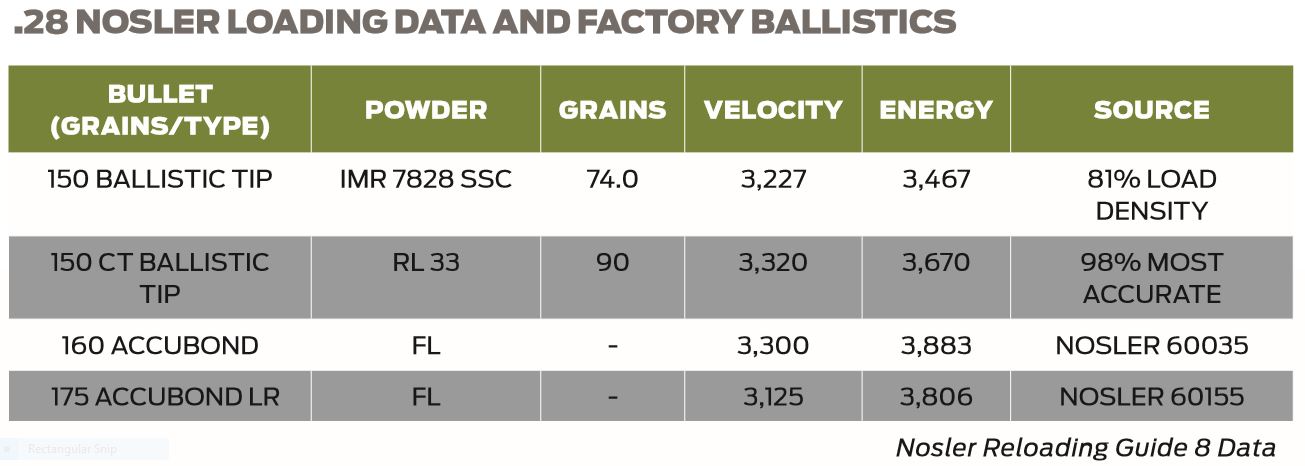
Loaded hot, it can kick a 160-grain bullet out at 3,300 fps at the muzzle.
Historical Notes In 2015, Nosler created its new .28 Nosler by necking up the .26 Nosler case—itself a derivative of the 7mm RUM case, which descended from the .404 Jeffery. Nosler supports this new cartridge with Nosler brass, Trophy Grade ammunition and M48 rifles in 26-inch barrel configurations.
The .28 Nosler is the only cartridge in the family (.22, .26, .27 [wildcat], .28, .30, .33, .35 and .36 Nosler) that shares all the .26 Nosler case dimensions, with the exception of being necked-up. The .27 Nosler wildcat was changed from the .26 as well. The case might be the same length, but the shoulder datum was brought back to a shorter dimension.
Nosler said there were two main reasons these features were changed between cartridges: Designers wanted to stay within a 3.340 maximum COAL and had to design around the longest-ogive Nosler bullets in each caliber. Getting up to .30-caliber-and-larger sizes necessitates shortening the brass—and therefore, moving the shoulder accordingly to preserve adequate neck length.
The most important reason the shoulder and length dimensions were changed was to prevent cross-caliber chambering. For example, bullet and neck diameter, alone, are not enough to guarantee that someone can’t force a .28 Nosler shell into a .27 Nosler chamber. By bringing the shoulder back on the .27, it can prevent serious injury if a shooter inadvertently chambers and fires a larger-caliber shell in the smaller chamber.
General Comments The fat case creates powder space, with a water capacity of 93.8 grains when loaded with a 150-grain AccuBond Long Range spitzer, according to Nosler specs. The rebated-rim centerfire rifle cartridge shares the same overall cartridge length (3.340 inches) as the .26 Nosler, which allows it to be chambered in standard-length actions. Likewise, the .284-caliber (7mm) centerfire .28 Nosler has the same 3.340-inch maximum cartridge overall length as the .30-06, but the case length is 2.590 inches, with a 35-degree shoulder. Accordingly, the .28 Nosler cartridge case can be formed by necking up a .26 Nosler case to 7mm (.284 inch) diameter.
Slower-burning powders and high load densities generally yield the best loads. Some of the best are with Norma 217 and RL 33, but other propellants of similar speed also give excellent results. For family “bragging rights,” the .26 Nosler is capable of firing a 129-grain AccuBond LR bullet at a muzzle velocity of 3,400 fps, but the .28 Nosler launches a 160-grain AccuBond at 3,300 fps, and the .30 Nosler fires a 180-grain AccuBond at 3,200 fps.
The Colt Python is back—and it’s badder than ever! Well, in most respects, it’s actually “gooder” than ever.
The re-introduction of the Colt Python has been a rollercoaster of excitement and disappointment. So what’s the story: is this the second coming or a troubled handgun?
How Does The New Python Differ From The Old:
Improved stainless steel used in the frame and barrel.
More cross-section at the rear of the frame for a more resiliant sight base.
Simplified internals with fewer parts.
Updated dual-action leaf spring.
Front sight is user replacable.
The Colt Python was lusted after by many. It was not, however, acquired by many. Part of that was due to the cost, because the Python typically cost twice as much as any other DA revolver of its time. It was first offered by Colt back in the mid-1950s, but the earliest movie reference I can find is from 1969. After that, it was quite the popular option.
Nevertheless, the price put off a lot of shooters; that, and the reputation for being a bit fragile. Even well into the IPSC competition era, not many people who owned .357 Magnums shot a steady diet of .357 magnum-level ammo through any handgun. Most shooters would put a box of magnums through their revolvers once a year. If they shot more, it was more likely that the revolver in question saw mostly .38 Special ammo. The .38s cost less and also hammered your hantds less.
Colt being Colt—that is, a wholly owned subsidiary of one mega-corporation or another—it simply kept on making Pythons and charging what it could … until it just couldn’t do it anymore. And then, Colt stopped making Pythons.
The reaction was immediate. Prices shot up. Unfired Pythons, new in the box, started selling for stupid-high prices. I mean, when you could sell a NIB Python for enough to purchase a well-equipped small car, the 21st century was not turning out the way I’d expected.
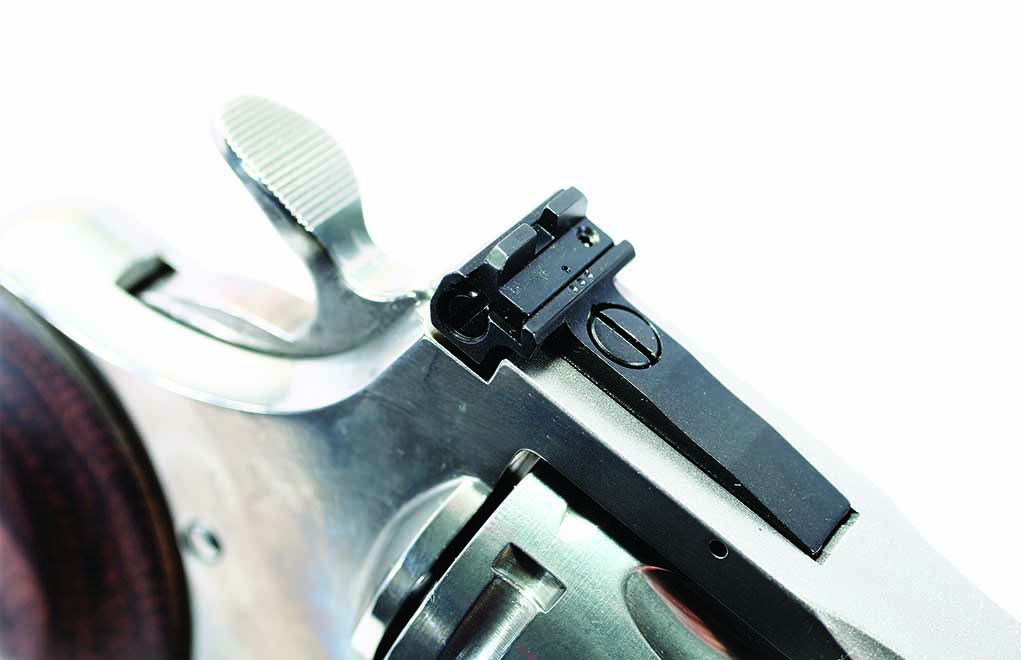
The new frame shape and rear sight: The sight has to be tougher than the old one, because that sight was fragile.
The next step was amazingly un-Colt. The company fired up the AutoCAD and set about making a new Python. I wish Colt had called it that—the “New Python,” I mean. We will, for a long time forward, have to go through the “Who’s on first?” routine of “a new Python or a New Python” to distinguish the new stainless ones made in the 21st century from an unfired one made “back in the day.”
The New Colt Python
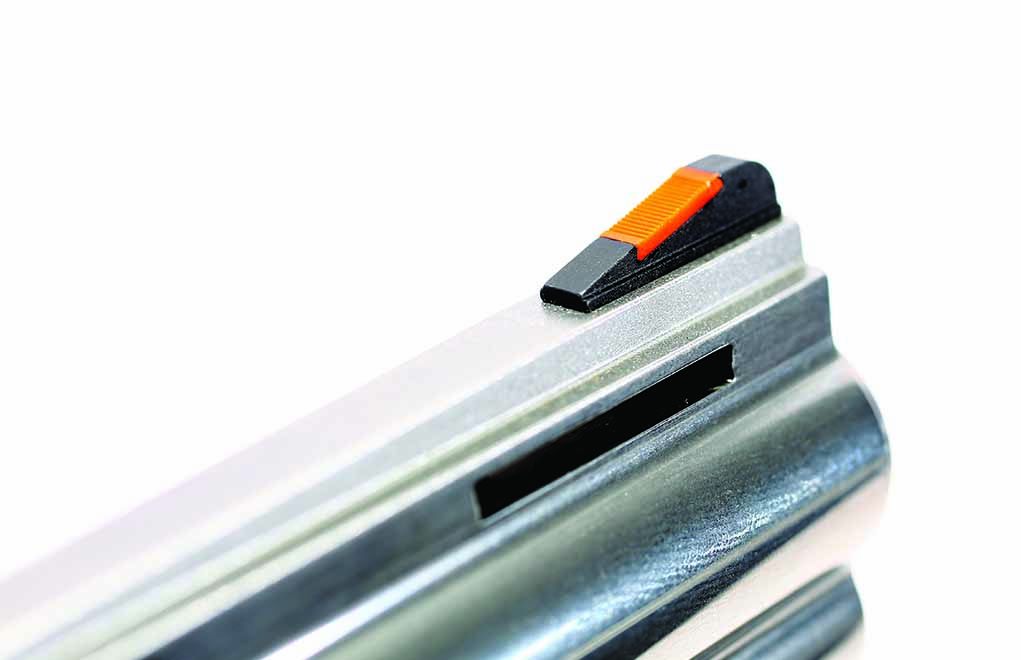
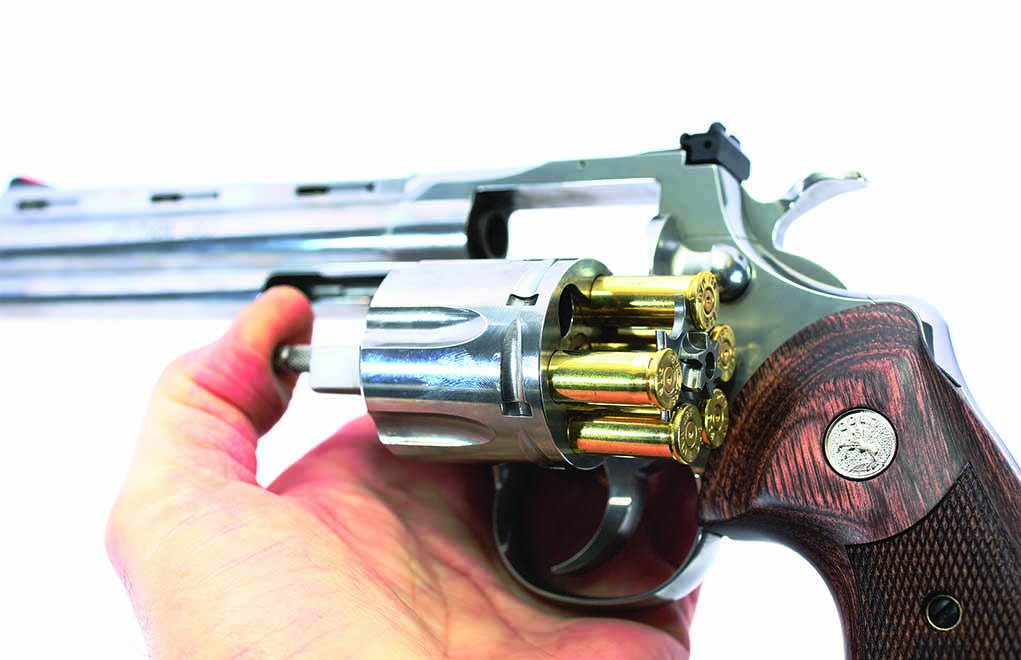
Colt selected a new and improved stainless steel and took advantage of the advances in metallurgy since the Chevy Bel Air was the hottest thing from Detroit. It changed the frame at the rear sight to give it a bit more cross-section and to accommodate the new rear sight. That’s a very good thing, because the rear sight on Pythons (and also used in old Gold Cups) was known to be fragile. The new one looks tougher. The front is a red ramp, just like the old ones. However, you can change this one on your own.
The internals have been changed. Colt managed to keep the basics of the Python action, but it dropped the parts number of the lockwork by over a dozen. Fewer parts are usually a good thing. Colt kept the dual-action leaf spring, but it updated it.
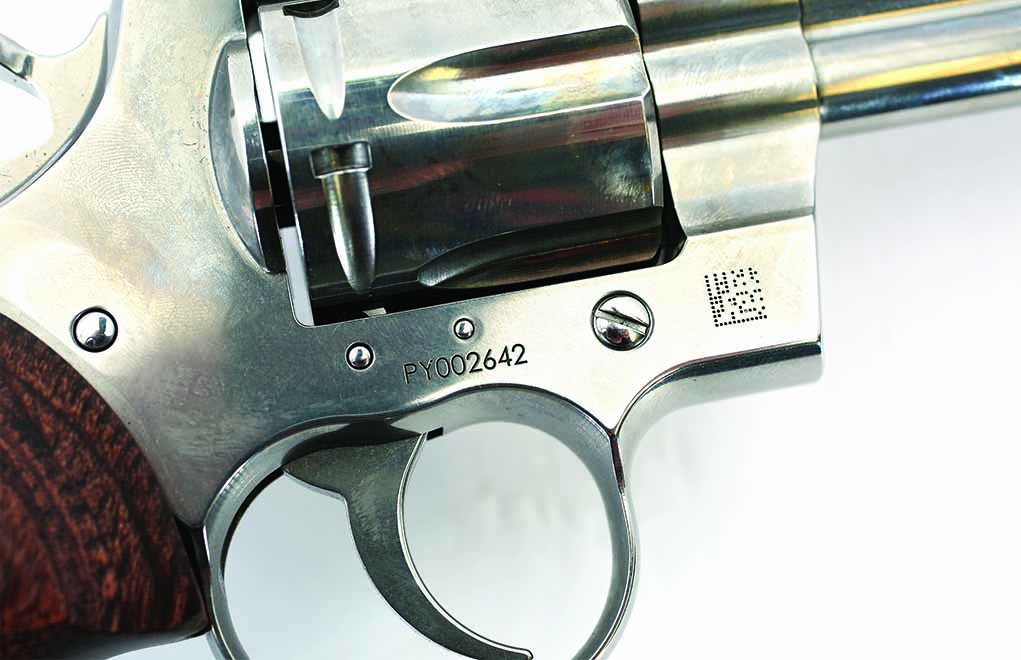
One of the details of modern manufacturing is the 2D punch code. If they don’t have it yet, every firearm you buy soon will.
The original used a “V” spring. Properly made, these will last almost forever. British Best shotguns customarily use V springs, and some of those shotguns have recorded hundreds of thousands of rounds without a fault. The problem is, they require skilled workmen to fabricate them, and people with those skills cost money to employ. Worse yet, the Python action required skilled workmen to assemble—and time. I’ve said it before, but it bears repeating: The Python was designed at a time when steel was expensive and skilled labor was cheap. Today, those variables are flipped. As a result, the new Python uses a two-arm spring that isn’t a “V” but a “U” in shape.
Internals
Some of the internals show the hallmarks of MIM fabrication, which, in and of itself, is not a bad thing anymore. It used to be, but isn’t. The end result of the changes is a markedly improved double-action pull.
I had a chance to test the new Python against three classic Pythons, as well as my own 1936-made Official Police—the same frame the Python was built on. The DA on the new Python is much better: The old Pythons had a 9-pound DA (the OP was a bit heavier than that, but it’s also a .22LR and needs a bit more “oomph” to ensure ignition), and the new Python shows a 7-pound DA stroke. Back when I was shooting PPC, I would have put up with the Python cost (and fragile rear sight) to get an out-of-the-box DA of 7 pounds.
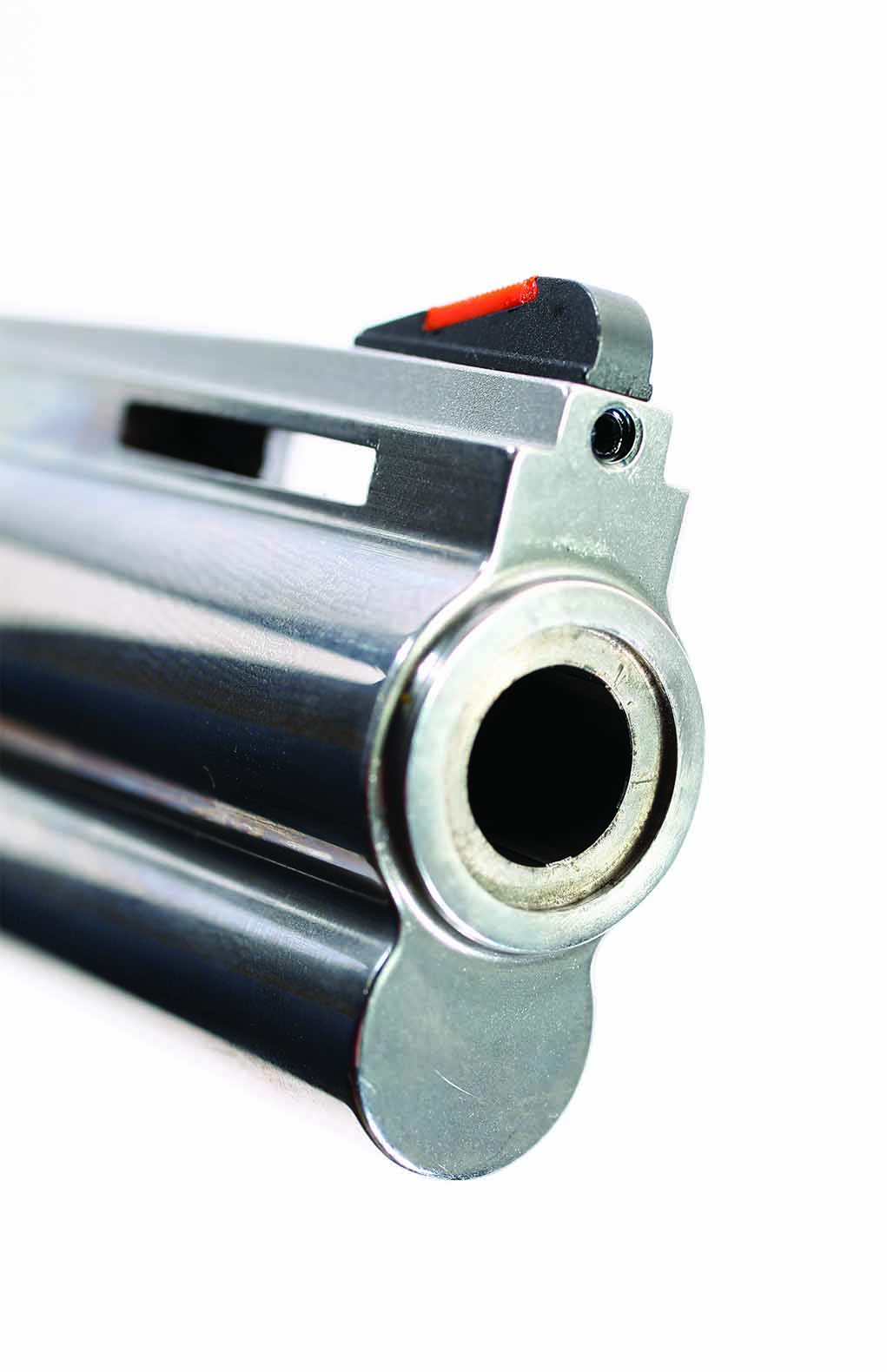
The muzzle on the Python has a recessed crown now. Back in the day, it was just a flat face with a slight bevel at the bore.
Alas, all is not sweetness and light. The single-action pull of the old Pythons and the OP was 3 pounds—clean, crisp and perfect for those wanting to shoot bullseye (which was pretty much the only competition to be found back in 1955, the first year of Python production). The new Python has a 5-pound trigger pull, and it isn’t clean and crisp. However, the bright side of this is that making a single-action trigger pull cleaner and lighter is a whole lot easier (especially with the Python) than doing the same to the DA. So, Colt has done the hard work for us here.
Externals
The externals are much the same, but there are a few improvements. The barrel is the same full, under-lugged design, with the vent rib on top. However, where the originals were just a flat face, the crown is recessed. The front sight on the originals was pinned in place. If you wanted it changed, you needed either a pistol smith or pistol-smithing skills and tools. Now, the front sight is user-changeable.
The ejector rod is the same (the too-short-to-fully-eject length) as the originals. I just have to shake my head. With all the extras Colt put in, couldn’t it have made the ejector rod longer enough to at least make sure .38 Special cases would clear the star?
This is the red ramp sight that was such a leap forward back in the 1950s. Now, we take it for granted or even view it as a bit “retro.”
The six-shot cylinder still has the locking slots cut off center to allow for the thickest possible chamber wall. The action is still timed so the instant the cylinder locks up, the hammer falls.
Colt also went with a set of walnut stocks; it calls them “target” stocks. They do look good, and they do feel good in the hand … at first, anyway, for me. There’s a sculpting line on the upper rear of the grips to make the lines clean, smooth and flowing. It’s also a line that puts an edge right at the heel of my thumb. My grip is not like most. I choke up on a revolver to the point that the hammer brushes my hand in DA shooting. That sculpting line hammers my hand on every shot. So, I have to either hold lower, wear gloves … or swap grips.
With .38s, the Python is a pussycat. Of course, with 42 ounces of steel behind it, how much recoil can a .38 Special produce? Even a +P one? And, as I mentioned before, that’s what most shooters would put through their Pythons back then—and most probably will today. We, of course, won’t.
The author contacted Colt to address Internet reports of the revolver’s cylinder failing to advance between shots. According to Colt, a very small number of new Pythons were returned to the factory for “functional issues.” Interpret that how you will, but the author fell in love with his new snake gun.
Now, when the Python—the new Python—came out, there were a few people who promptly broke them. (For a change, that wasn’t me.) Word spread that the new Python had some dodgy part or parts, and they would break if you looked at them cross-eyed. Oh, really?
Becoming a Believer
After I did the expected testing and shooting, I dug into the ammo bunker and came up with a pile of .38 and .357 ammo. And a pair of gloves.
I figured that on a range trip, I’d shoot as much .357 as I could stand and then switch to .38s. I’d see if I could break the Python (hey, it was a loaner, so we needed to know, right?). Well, I failed. The Python shot just fine and perked right along through all the ammo I tested in it.
To find out what was up, I asked my source at Colt, Justin Baldini. Out of the 4,000-plus Pythons shipped to date, Colt has had fewer than 10 returned for a functional issue. So much for the pants-wetting hysteria of Internet “experts.” Additionally, the company’s had about 40 returned for cosmetics (mostly of them because some people were unhappy with the crowning treatment).
The new Python has one fault the old ones had: The ejector rod isn’t long enough to fully press out the cases.
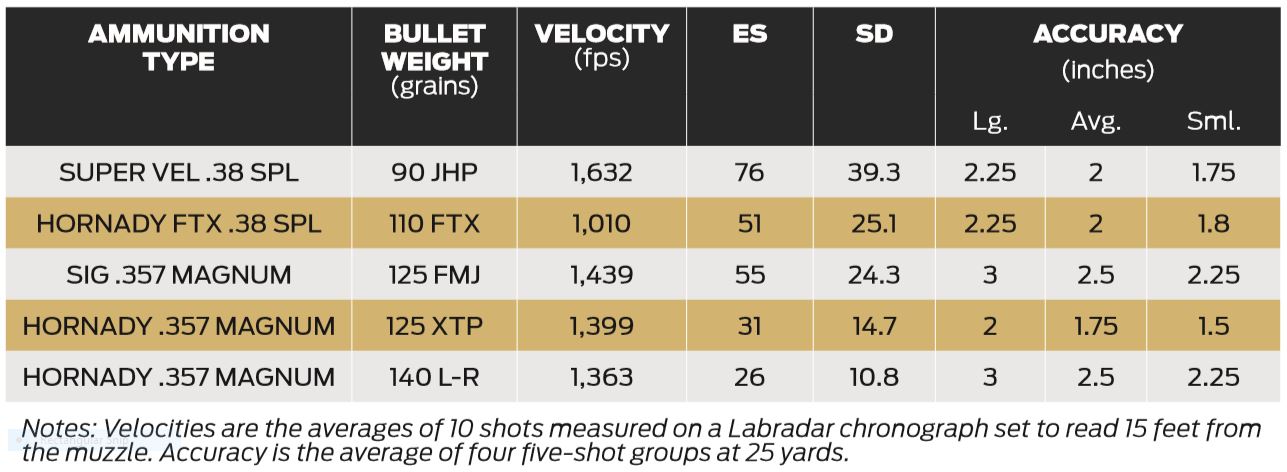
Now, the ammo I tested I grabbed off the shelf as a cross-section of likely ammo that end-users might choose. I chose the Hornady because it’s soft-shooting and accurate, and you could shoot it all day and not work up a sweat. The high-velocity crowd will be pleased with the Super Vel, because if you have to get a .357-inch bullet there as quickly as possible, this is the one. For those who want to practice for defensive, 125-grain JHPs, the Sig load will replicate the recoil and muzzle blast they produce. And for hunters? Yes—Hornady FTX LeveRevolution is “rifle” ammo. However, if you want to use a .357 Magnum for hunting, this load, in the Python, is going to work well.
Sure, the corner on the grips pounded me, even through the gloves, but that’s what gloves are for. And were I to keep this Python, I’d find grips that fit me better. This one is going back to Colt in due time, because I got the “gotta-have-a-Python” bug out of my system a long time ago.
But that doesn’t mean you have to pass up one of them. Turn off the Internet video, go out and handle one at a gun shop near you. Once you stroke through the DA trigger pull, you’ll be a believer.
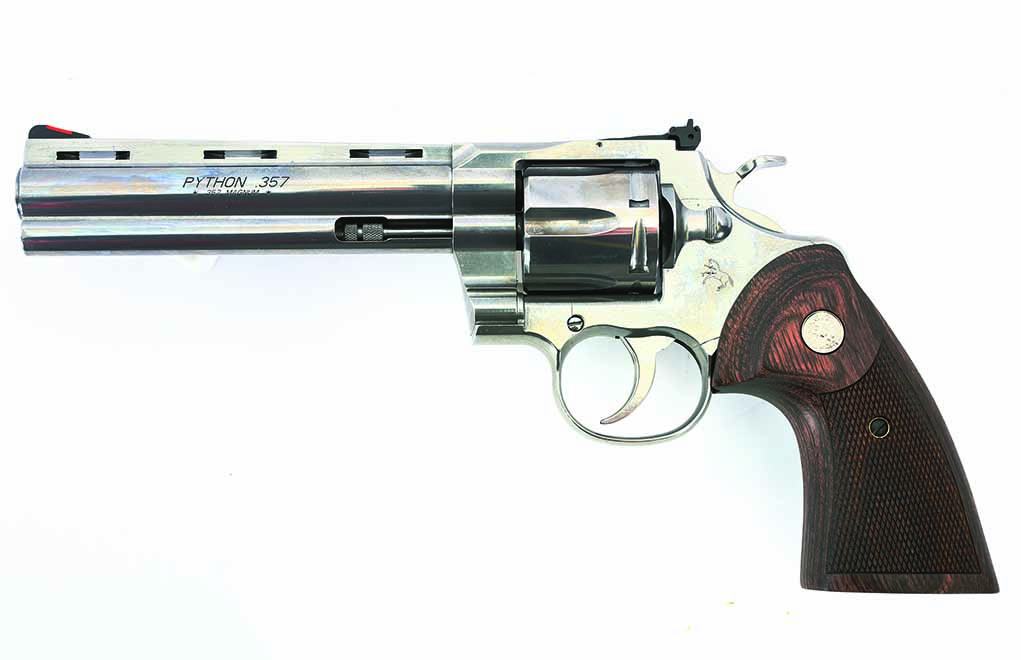
Colt Python Specs: Type: Double-action revolver Caliber: .357 Magnum Capacity: 6 rounds Barrel: 4.25-in. or 6-in. Length: 9.75 in. Weight: 42 oz. Trigger: 5 lb. (SA); 7 lb. (DA) Finish: Polished stainless steel MSRP: $1,499
For more information on the Colt Python, please visit colt.com.
Lovingly dubbed “Cindy” and “Eliza”, the integrally suppressed shotguns from Phoenix Weaponry speak with a soft voice, but pack a punch.
Unless you’re Anton Chigurh, you might generally consider suppressors a pistol or rifle deal. That’s pretty much where the market is centered, but certainly, cans aren’t exclusive to these types of firearms. While more niche, noise-reduction devices are available to knock the edge off your shotgun, which given some model’s reports is no bad old deal. Though, up to this point, few have come close in terms of elegance to what Phoenix Weaponry has cooked up. Meet “Cindy” and “Eliza”.
Integrally suppressed Remington 870 and Mossberg 500 pump-action shotguns, the system enhances the smoothbores’ noise signature and enhances their performance while maintaining much of the guns’ original footprint. Cindy is Phoenix Weaponry’s entry-level model, while Eliza is an upgraded iteration with top-to-bottom enhancements(more on that in a second). In both cases, the outcome is impressive, though it takes the custom gunmaker some doing to get there.
Phoenix Weaponry Eliza integrally-suppressed shotgun.
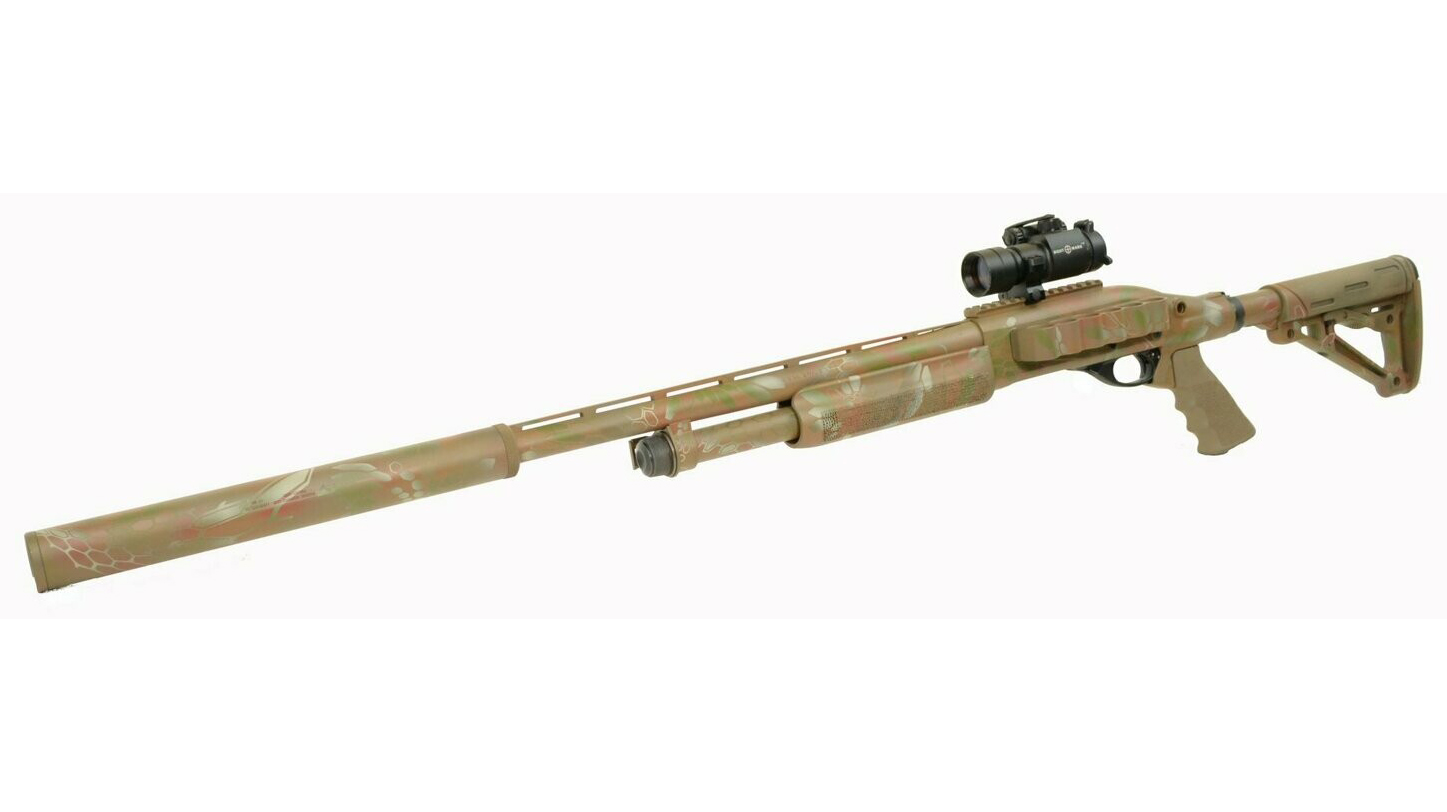
Phoenix Weaponry starts with an 870 or 500 factory barrel, removes a fore section of sight rib where the suppressor mounts and machines ports into the sides of the barrel. From there, the rear sleeve cap is installed along with the front suppressor threads and the company’s proprietary 6-inch Delta Monocore suppressor core. Finishing it off, Phoenix Weaponry fits a sleeve and end cap … voilà, an integrally suppressed barrel. One, worth mentioning, that doesn’t do much to add to the shotgun’s overall size or weight—tacking on 1 pound and 5 inches in length.
“We have achieved the perfect balance between sound suppression, ability to change your chokes, and ammo functionality up to 3.5-inch shells.” Phoenix Weaponry Owner Aaron Cayce said. “You can use everything from buckshot to birdshot and even slugs through our integrally suppressed shotguns.”
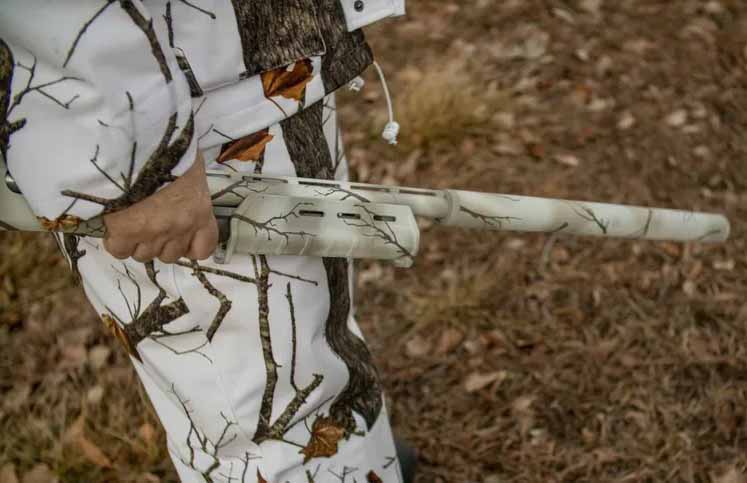
As to the models, Cindy is pretty much an off-the-shelf 870 or 500 with the suppression system install, as well as the forcing cone extended and chamber polished. Eliza is, well, a bit more dolled up. Along with Cindy’s assets, it also has its action deburred and polished, as well as your choice of winter/spring/summer Duracoat camouflage, Magpul, Houge or Mesa Tactical furniture and the addition of a side-saddle shell holder.
The basic Cindy and Eliza packages are 12-gauge, but being a custom gunmaker Phoenix Weaponry will put the system together in other bores. Of course, the guns are NFA items, in turn, you owe the Feds their cut—both in money and hoop-jumping. And the manufacturer already isn’t exactly giving them away, especially compared to stock 870s and 500s. The base price for Cindy is $1,350 and Eliza $2,550. But if you’re shooting for a stealthier Turkey season or the like, either shotgun will most likely prove a great value.
For more information on Phoenix Weaponry’s Cindy and Eliza, please visit phoenixweaponry.com
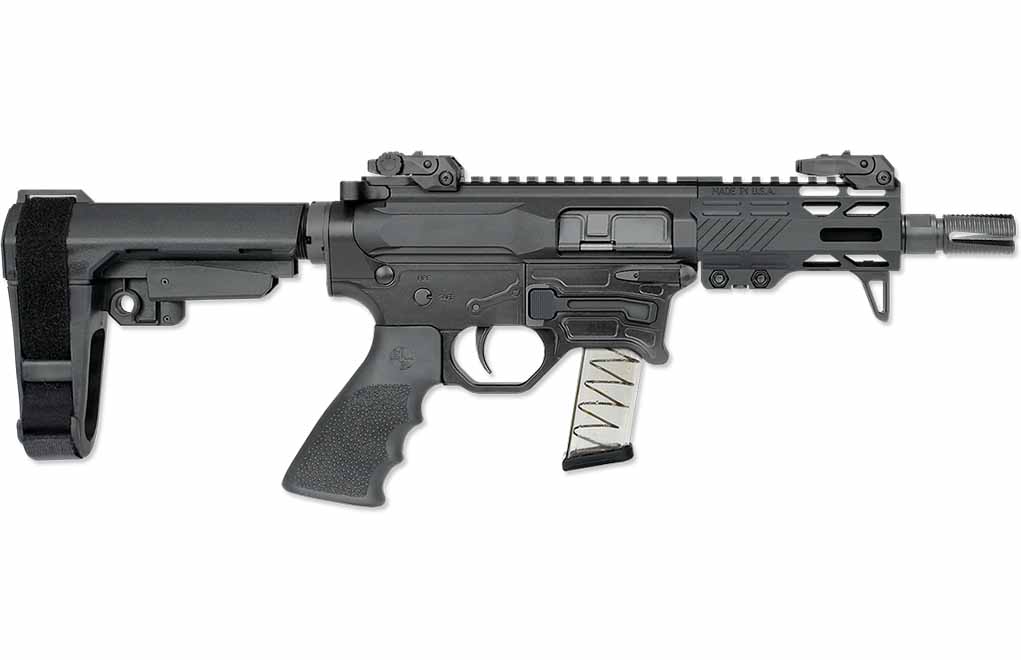
Meet your backpack’s new best friend, the small and mighty RUK-9BT 9mm.
Coronavirus be damned! Rock River Arms (RRA) is releasing guns, pandemic, or no pandemic.
In the Illinois gunmaker’s sights as of late is its AR pistol lineup, which it recently bolstered with a 9mm option that goes by the handle RUK-9BT. Overall a slick and compact option that boasts the features most look for in this terse style of gun, include Glock magazine compatibility. Face it, the Austrian company calls the shots when it comes to mags. But hey, makes it simple to build a collection.
As to the RUK-9BT’s tale of the tape, it comes in at a very manageable 5 pound and measures in at 24-inches with the SB Tactical SBA3 5-position brace fully extended, a hair over 21 inches collapsed. The pistol’s 4.5-inch chrome-moly-lined barrel is topped off with a Smith Vortex flash suppressor and is mated with aircraft-grade aluminum extruded and billet receivers. RRA tops the RUK-9BT off with its proprietary two-stage trigger, lightweight free-float 4.25-inch handguard (M-Lok compatible) and NSP flip-up sights. A tidy package, fit for any backpack or truck cab.
The MSRP on the RUK-9BT is $1,350 and ships a handstop and one magazine.
More From RRA:
Colona, IL – Rock River Arms, one of the industry’s most respected names in Modern Sporting Rifles and pistols, has announced an addition to the company’s expanding lineup of AR-platform pistols. The new RUK-9BT was developed to address the needs and interests of shooters with an eye toward home and mobile defense capabilities.
The RUK-9BT is highlighted by a 4.5-inch chrome-lined barrel chambered in 9×19. Combined with its 4.25-inch RRA lightweight free-float handguard and SB Tactical SBA3 adjustable stabilizing arm brace, the RUK-9BT is exceptionally compact, light, and sized for maximum portability.
Based on RRA’s own BT-9 billet lower receiver, the RUK-9BT incorporates a flared magwell that accepts GLOCK magazines. This allows the pistol to work in unison with a 9mm GLOCK primary or backup carry gun, ensuring ammo and magazine cross-compatibility anytime, anywhere.
Additional standard features of the RUK-9BT include an RRA two-stage trigger for precise trigger control and reduced shot disturbance, an integrated winter trigger guard to accommodate gloved hands, Smith Vortex flash suppressor, Low-Pro hand stop, and a Hogue rubber grip that offers superior firearm retention in a pistol platform. Also included are RRA’s NSP flip-up front and rear sights designed for use as the primary sighting system or as a backup for an owner-installed red dot optic.
RRA RUK-9BT Specs: Caliber: 9mm Lower Receiver: BT-9 billet aluminum with GLOCK-compatible flared magwell and integrated winter trigger guard Upper Receiver: extruded aluminum A4 Barrel: 4.5-inch chrome-lined, 1:10 twist Muzzle Device: Smith Vortex flash suppressor, 1/2-36 thread Trigger: RRA two-stage Handguard: RRA lightweight free-float rail, 4.25-inch pistol length, M-LOK compatible Grip: Hogue rubber pistol Arm Brace: SB Tactical SBA3 stabilizing arm brace, 6-position adjustable Length: 23.5 inches extended Sights: RRA NSP flip-up front and rear Includes: one GLOCK-compatible magazine, Low-Pro M-LOK compatible hand stop, manual, warranty MSRP: $1,350
For more information on the RUK-9BT, please visit rockriverarms.com.
Get On Target With The AR:
Go Small With These 8 Economical AR Pistol Options
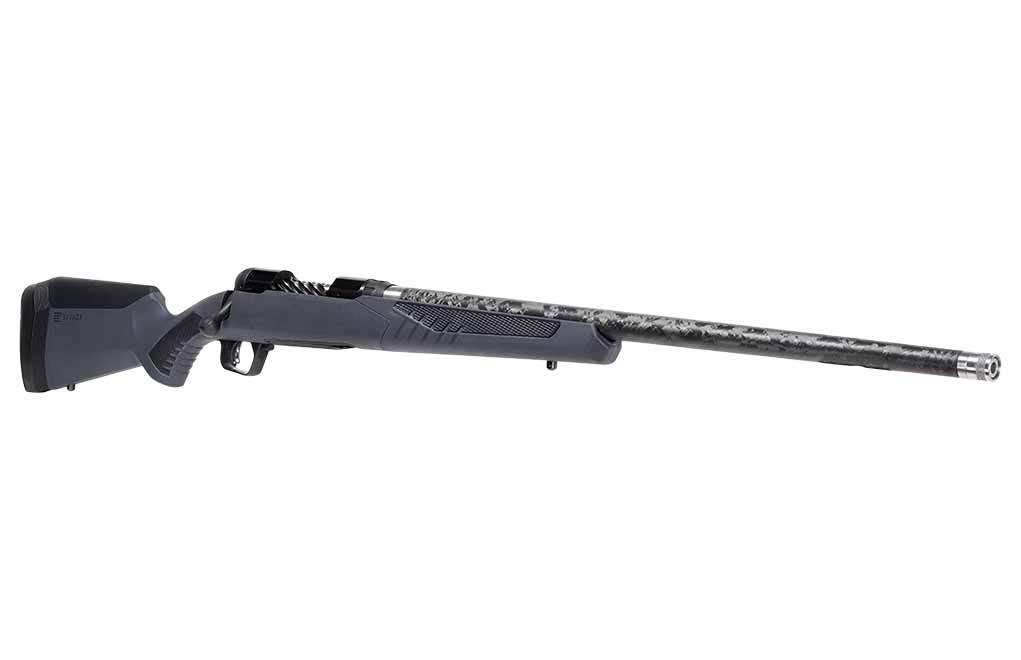
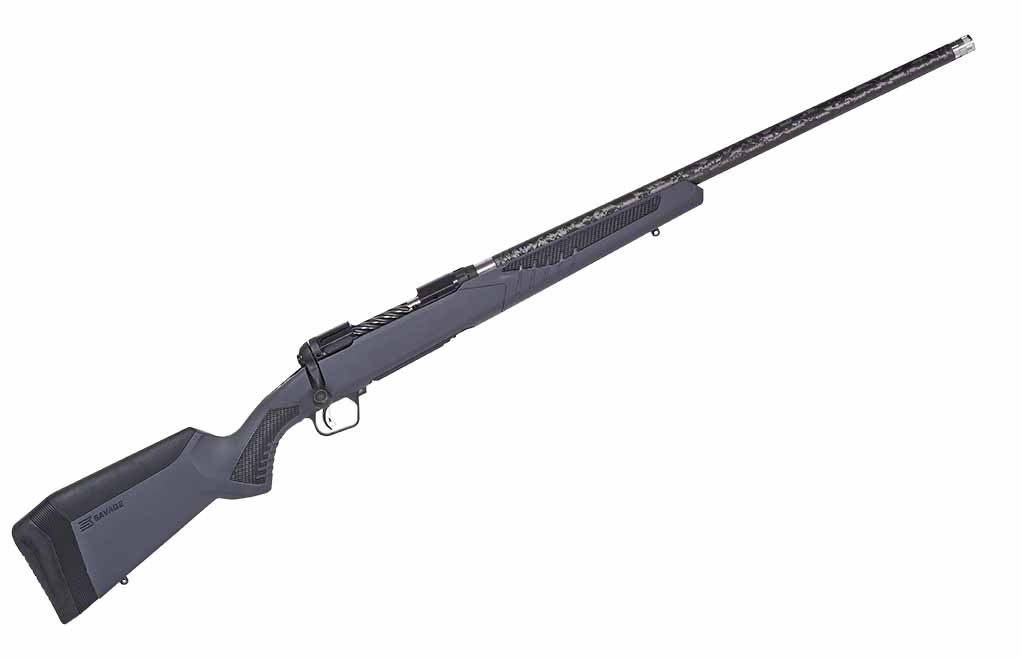
Lean, accurate and well priced, the Savage Arms 110 Ultralite is ready for your next backcountry adventure.
Stripped down and light … there’s a time and place for it. Say, for example, elk season and that saddle two ridgelines back. About then not only does it pay to weight out your kit, but also run a rifle lean and tough as a belt-holder welterweight. Of course, you’ll pony up a mint to procure such an iron or you would have until late.
Mountain rifles still run at a premium end of the market, logical given their use of cutting-edge lightweight materials. In recent years, with bigger names jumping into the game, the specialized shooters have become less exorbitant, though still on the spendy side. Case in point, Savage Arms 110 Ultralite.
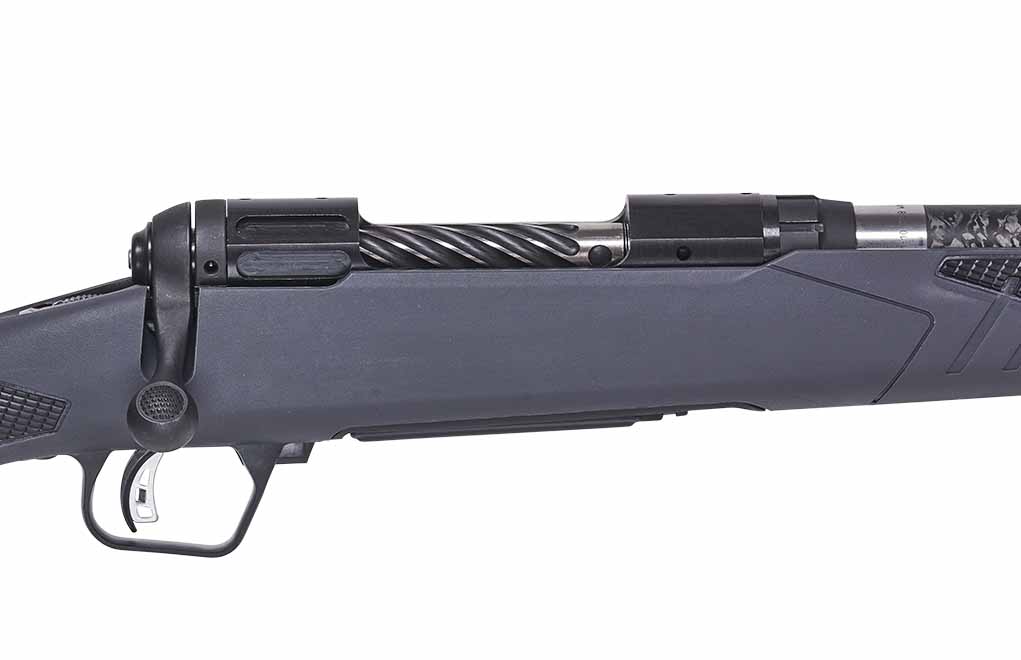
Built on the company’s tried-and-true Model 110 action, the gun has a number of notable modifications to make it near as easy to hump in and out of the woods as your shadow. Chief among these, a carbon-fiber wrapped stainless steel barrel. Manufactured by PROOF Research (Who else?), the fire tube not only lightens the 110 Ultralite’s overall burden but also ups its accuracy potential with its rigidity and cut rifling. To boot, it comes with a threaded muzzle—5/8-24 pattern, with factory-installed cap—in case you run a brake or suppressor on the hunt.
Savage doesn’t stop there, engineering a number of other weight savers into the rifle, including a spiral-fluted bolt and skeletonized receiver. In the end, your left with a rifle that runs 6-pounds or less, depending on caliber. And to that end, there are ample choices with the 110 Ultralite coming in some eight chamberings. These include standbys such as .30-06 Springfield, .280 Ackley Improved and .270 Winchester, along with new favorites like 6.5 Creedmoor and 28 Nosler.
A tidy package fit for a serious back-country hunter, but it will still cost you. Savage has a $1,499 MSRP on the rifle, which compared to a stock 110 hunter is a bit steep. But shop other mountain rifles, it comes in at a relative bargain—one certain to make your next high-country adventure much less backbreaking.
While the Internet is all ablaze with arguments about the 6.5 Creedmoor and whether anyone should be shooting animals at long range (does anyone know the real definition of “long range”?), in the real world, real hunters are creeping through the timber with a .30-30 and bringing home the venison.
In fact, the .30-30 Winchester has been doing that for more than a century. As effective as the cartridge has been, it is, however, indelibly linked to the lever-action rifle. Fortunately, Lipsey’s thinks outside the box.
Exclusive Offerings
Lipsey’s (Lipseys.com) was formed in 1953 as a wholesale hunting and fishing distributor. The original name of the company was S&S Sporting Goods. In 1977, the business was purchased by Richard Lipsey and family and, in 1993, the name was changed.
For those who handload, Nosler’s 125-grain AccuBond bullet is an ideal companion to the Ruger No. 1 in .30-30. At distance, it will shoot flat and hit hard while delivering excellent terminal performance.
Located in Louisiana, Lipsey’s is one of the largest independently owned, single-location firearms distributors in the United States. The company is very proud of its relationships with firearms manufacturers, and these relationships allow Lipsey’s to frequently offer exclusive/limited-edition firearms.
For the most part, Lipsey’s exclusive firearms are well-thought-out variations of popular models. No, they’re not “Elvis” commemorative guns; they’re guns that have a track record of being appreciated by shooters, but with a different stock or finish or that are quite commonly chambered for a cartridge that’s not a standard offering by the manufacturer. Because shooters and hunters have emotional attachments to some guns and cartridges, this latter type of exclusive offering often has a great appeal.
An excellent example of a popular cartridge that’s missing from most standard lines is the .257 Roberts. It has a cult-like following, but those who are in love with it have limited options when it comes to new guns. Lipsey’s worked with Ruger to develop an exclusive Ruger No. 1 in stainless steel and with a Mannlicher-style stock.
Another .30-30 Winchester Chambering
And that brings us to the subject of this dissertation: Another exclusive Lipsey’s Ruger No. 1 is available chambered for the .30-30 Winchester. Now, what you’re probably wondering is, Why, for the love of Jack O’Connor, would someone chamber a lever-gun cartridge in a single-shot?
We all hope to get the job done with one shot, but it might not work out that way. Having a mechanism to swiftly load a single-shot rifle is a good idea for hunters.
To find the answer, just go back and read the first paragraph. I’ll repeat it here just to make sure you get the point: The .30-30 Winchester has been killing big-game animals all over the world for over a century. African professional hunter Wally Johnson even used a .30-30 to kill lions. Simply put: It works. Yeah, I know, by modern standards, it’s considered a ballistic underperformer … but do you really know the terminal performance capabilities of the .30-30 Winchester?
Testing Effectiveness
A few years back, I tested a variety of Remington Core-Lokt loads at 100 yards in 10 percent ordnance gelatin. The goal was to reveal the effectiveness of what is now considered an antiquated bullet style.
I tested loads for the .243 Winchester, .270 Winchester, 7mm Remington Magnum, .308 Winchester, .30-06 Springfield and .338 Winchester Magnum. The average penetration depth was 19.25 inches, and the average expansion was 1.95 times original bullet diameter.
The Ruger No. 1 is a single-shot rifle with a Farquharson-style internal hammer and falling-block action. It has been in production since 1967.
The old .30-30 Winchester with a 150-grain Core-Lokt bullet penetrated 3.75 inches deeper than the average and expanded to 1.72 times 0.30-caliber. For those who do not own a calculator or might be mathematically challenged, that .30-caliber bullet had an expanded diameter of 0.53 inch. And, by the way, the .30-30 Winchester load expanded just as much as the .338 Winchester magnum load—and penetrated deeper!
You’re probably thinking that while the .30-30 might be effective at close range, those blunt-nosed bullets have a trajectory as if you’re throwing a couch. Well, you’re right: With a real-world muzzle velocity of about 2,400 fps, a .30-caliber bullet with a ballistic coefficient of under 0.200, when sighted dead-on at 100 yards, will drop 8 inches at 200 yards and 30 inches at 300 (Hafþór Júlíus Björnsson—the strongest man in the world—might, indeed, throw a couch flatter than that!).
The Ruger No. 1 Logic
However, if you could load a bullet such as a Nosler 125-grain AccuBond to, let’s say, 2,550 fps, all of a sudden, the .30-30 Winchester takes on a different personality. The thing is, in its most common form—which is a lever-action rifle—you can’t use pointed bullets such as the Nosler 125-grian AccuBond.
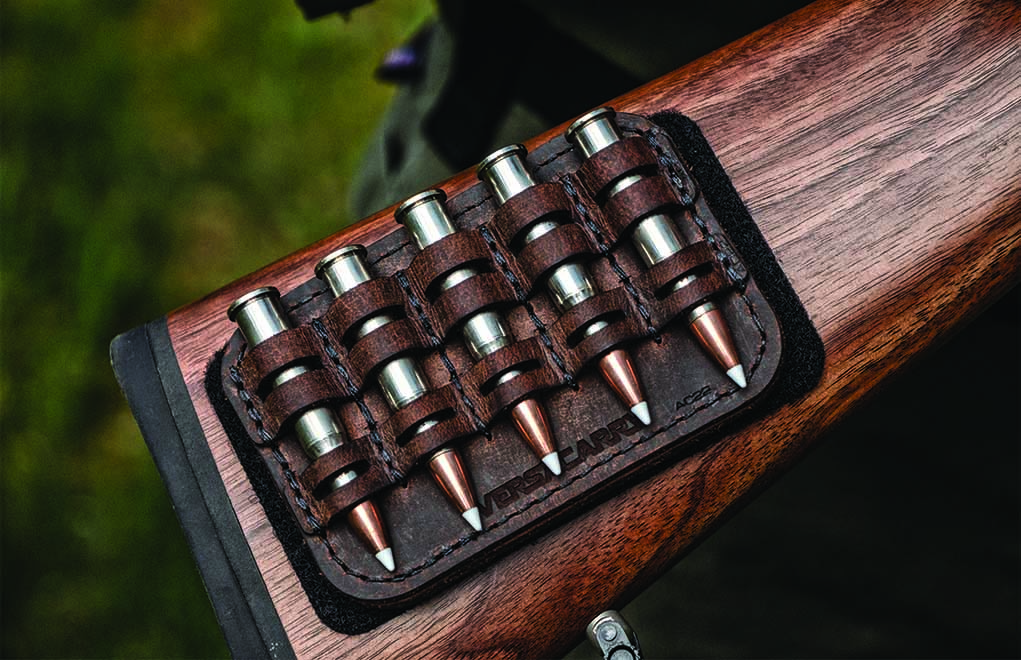
An ammo-management device for a single-shot rifle is a must. This Versacarry Ammocaddy that attaches directly to the rifle stock via Velcro is a perfect solution.
And there lies the beauty of a Ruger No. 1 in .30-30 Winchester: You can use pointy, highly aerodynamic and more terminally efficient bullets that will shoot flatter and deliver a higher level of terminal performance.
For example, if you push a 125-grain Nosler AccuBond to 2,550 fps and sight the rifle dead-on at 100 yards, that bullet will only drop 5 inches at 200 yards and only 18 inches at 300. Just as importantly for the hunter, at 200 yards, that bullet will be traveling almost twice as fast as a 150-grain round-nosed bullet and will deliver more than twice the energy. In addition, a 150-grain round-nosed bullet fired from a .30-30 Winchester will not impact with a fast enough velocity at 300 yards to initiate expansion.
So, there you have the logic behind the concept of a Ruger No. 1 chambered for the .30-30 Winchester. Sure, you could still shoot all the commercial factory .30-30 Winchester loads—even the flatter-shooting LeverEvolution options from Hornady. But, with the Ruger No. 1, you have the option of custom-loading just about any .30-caliber bullet you’d like.
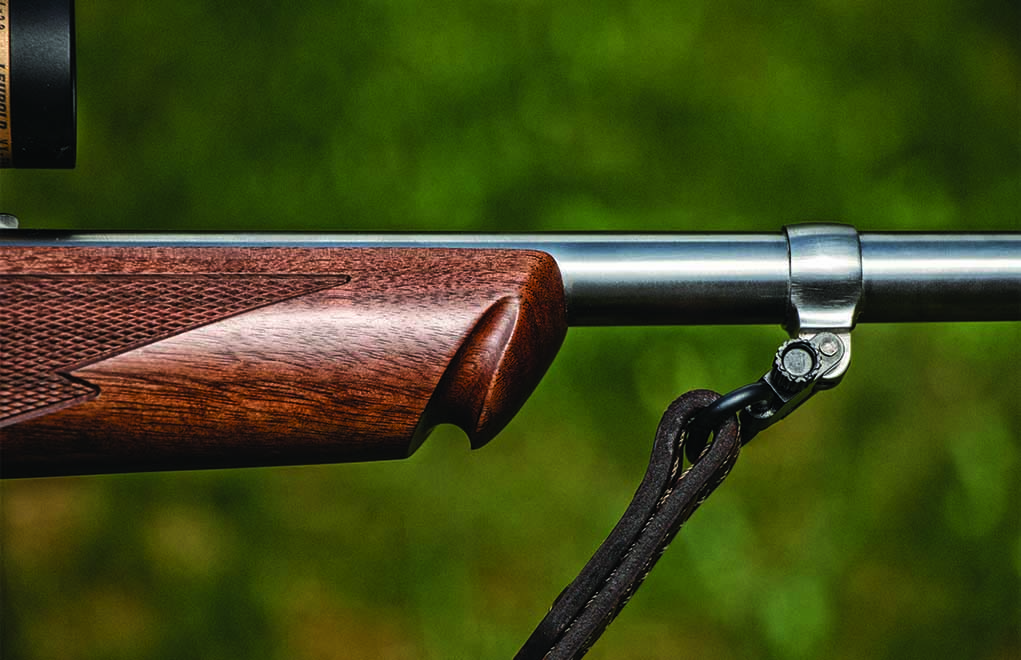
The Alexander Henry-style forend on the Lipsey’s Ruger No. 1 in .30-30 Winchester adds a bit of class to an already elegant rifle.
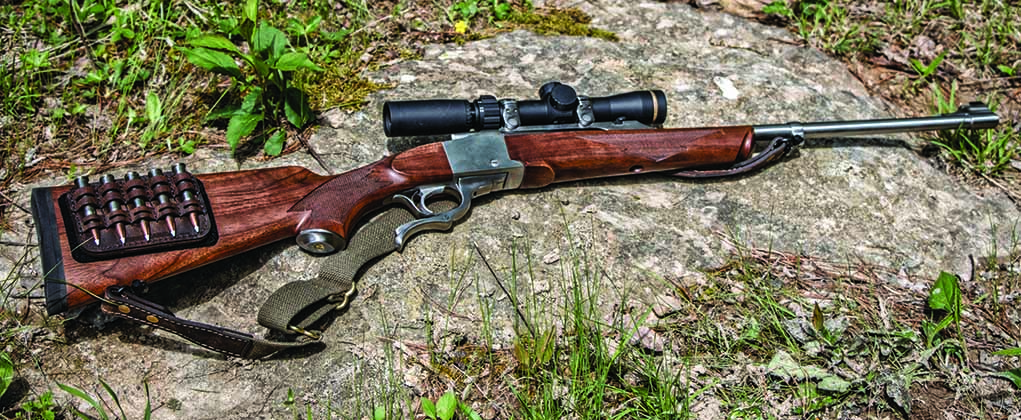
When I found out Lipsey’s had teamed with Ruger to offer an Exclusive No. 1 chambered for the ,30-30 Winchester, I had to have one. With all the metal in stainless steel contrasting with rich walnut, it’s a visually appealing rifle (that’s gun writer speak for saying it’s damned beautiful). The rifle is fitted with a quarter rib that includes a folding leaf rear sight and integral scope mounts. There’s also an elevated gold-bead front sight. It has the very attractive, grooved Alexander Henry forend and a slim, 22-inch stainless steel barrel with a 1:10 twist. As with all Ruger No. 1 rifles, scope rings (medium height) are included, and out of the box, it weighs 7 pounds.
Scoping the Ruger No. 1
The first priority was to scope this rifle, because my old eyes just don’t work as they used to with open sights. One of the issues with scoping a Ruger No. 1 deals with eye relief.
Because the rings attach directly to the quarter rib, they place the riflescope a bit far forward. If you’re one of those who really stretches their neck forward when they shoot, this is not an issue. However, “turtle-necking” is not conducive to accurate or snap shooting. Your head should remain erect when you shoot a rifle, and your neck muscles should be relaxed. The hurdle for me was to find a riflescope offering enough eye relief so that I could shoot the Ruger No. 1 properly and comfortably.
An Aside: The VX-Freedom Scout
Ironically, I’d just received a new Leupold riflescope to test: the renovated VX-II 1.5-4X28 Scout Scope ( now called the VX-Freedom Scout). In truth, this isn’t a scout scope; scout scopes should have a minimum eye relief of about 10 inches. The VX-Freedom has 6.9 inches of eye relief on low power and 6.0 inches on the highest magnification. As it turned out, this is just about the ideal eye relief for the Ruger No. 1.
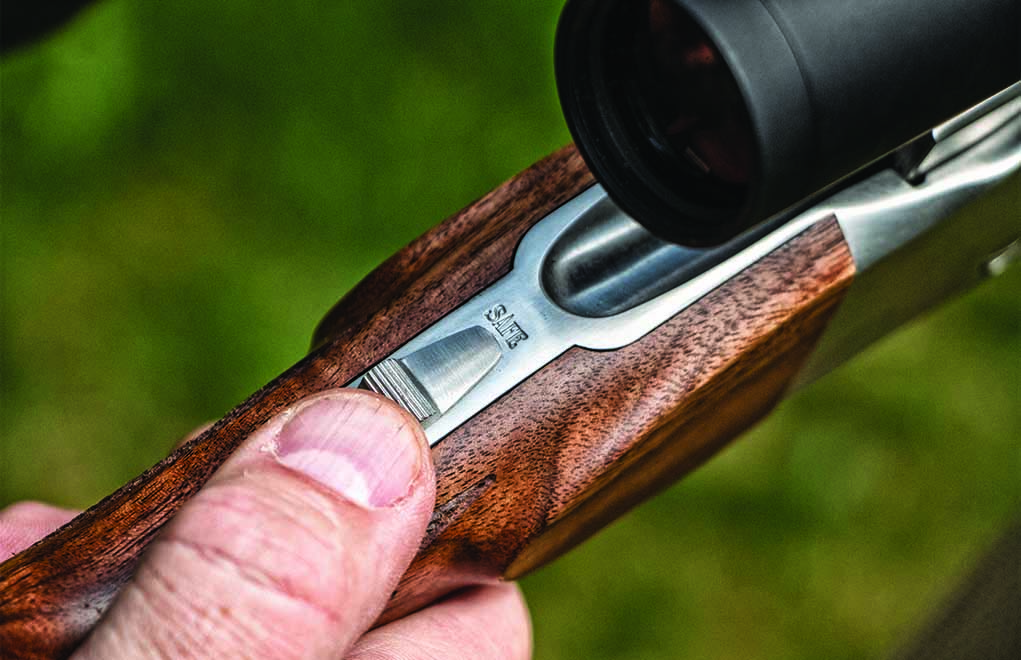
The Ruger No. 1 has a two-position safety that is located on the rifle’s tang. The “fire” position is the forward position.
I mounted it in the rings supplied with the rifle, but it was too high for optimum use. So, I had to order a set of low stainless rings from Ruger. Mounted in those, the VX-Freedom was superbly suited to the Ruger No. 1.
This is a fantastic little riflescope. It’s exceptionally clear, adjustments are spot on, and it holds zero without fail. Just as importantly, it’s compact. At fewer than 10 ounces, it’s very light for a variable-powered optic. The power range was also ideal when paired with my intentions for this rifle. I wanted to use it for deer and bear here, in West Virginia. With this riflescope set at 1.5x, I could easily execute a swift snap shot on a bounding whitetail; and, at times of reduced light, or if I needed to reach out a bit, 4x magnification would suffice.
125-Grain Nosler AccuBond Handloads
I didn’t even mess with shooting factory ammunition for this rifle. My intention all along was to load the excellent 125-grain Nosler AccuBond. I’ve used it in Africa with great success out of a .30 Remington AR bolt-action rifle on a variety of species. I was set on it as the primary projectile for this rifle. I took some once-fired, nickel-plated Federal brass and dropped in 33 grains of Benchmark powder ahead of a Remington 91/2 primer. I then seated the bullet so it was just off the lands. The first three shots clustered into a nice group measuring 0.74 inch, center to center.
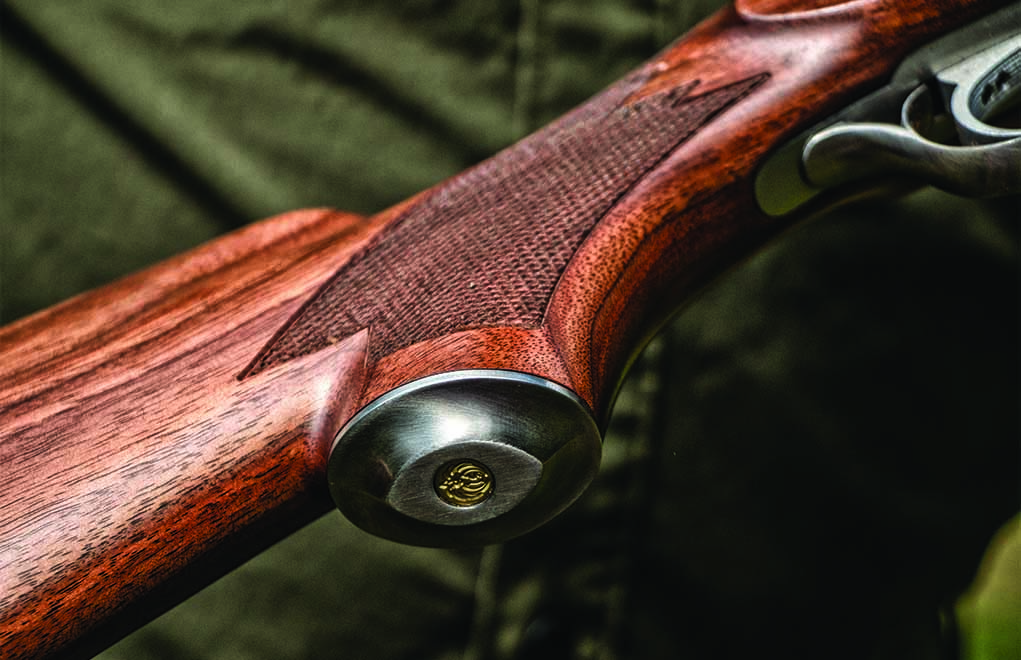
The grip of the Lipsey’s Ruger No. 1 in .30-30 Winchester has a stainless cap with a brass Ruger emblem inlay.
I loaded up 40 more rounds, fired five to zero the rifle 1 inch high at 100 yards, and fired several more at 200 yards to check trajectory and precision. At 200 yards, the bullets dropped about 3 inches, and a three-shot group measured 1.47 inches, center to center. It was one of the easiest and fastest load workup and zeroing sessions I’ve had. I just knew this rifle and I were destined for greatness.
I was wrong.
As it turned out, I hunted the entire West Virginia deer season, and the only deer with antlers I put eyes on was while I was hunting with my daughter. I didn’t even have a rifle with me (after all, it was her hunt).
However, for me, there were two positive takeaways. The first was that Lipsey’s exclusive Ruger No. 1 in .30-30 Winchester and I sure looked good in the timber. The second? Well, there’s always next year.
Consider This
There should be three takeaways for you. The first is that overlooking the ballistic potential of the .30-30 Winchester as a big-game hunting cartridge is a mistake. For those of us who hunt on our hind legs and believe success is found with feet—not fps—the .30-30 Winchester will get the job done.
The second is that this exclusive-edition Ruger No. 1 is a fine-shooting and good-looking rifle your hunting buddies will covet.
The third is that visiting the Lipsey’s website on a regular basis is a good idea; you never know what the next exclusive gun it offers will be. It just might be a rifle you’ve always wanted but that’s now chambered for a cartridge you cannot live without.
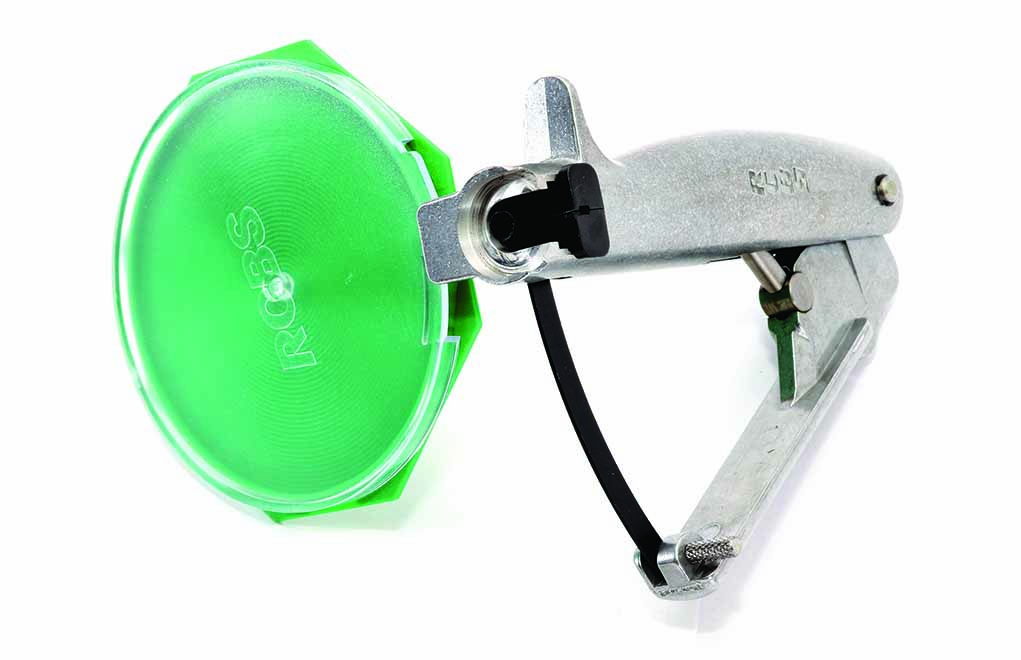
The RCBS hand-priming system does not come with a shell holder, so be sure you include one in your order.
Seating primers by hand is time consuming, sometimes arduous and a must for building those rounds that really matter.
There’s a phrase the British use: “Horses for courses.” This means you select the tool for the job and not figure out a way to make the (perhaps not entirely suitable) tool you already have do the work that needs be done.
When it comes to priming cases, every reloading press made comes with an adapter to seat primers. This is an interesting situation: You have a 2-foot steel handle onto which you can throw your entire body weight as a lever to seat a pressure-sensitive item that weighs the smallest fraction of an ounce. Those who use this method have to learn a particular sensitivity to the feedback the operation provides them—and put up with a few mangled and even detonated primers as they learn the limits.
Or, you can go with something that has less leverage and more sensitivity.
Here’s The Right Tool
The RCBS hand priming device is just such a tool. It has a tray onto which you can slide an entire sleeve of primers—100 in all—so you don’t risk handling them, dropping them and getting body oil and sweat onto them, possibly causing problems.
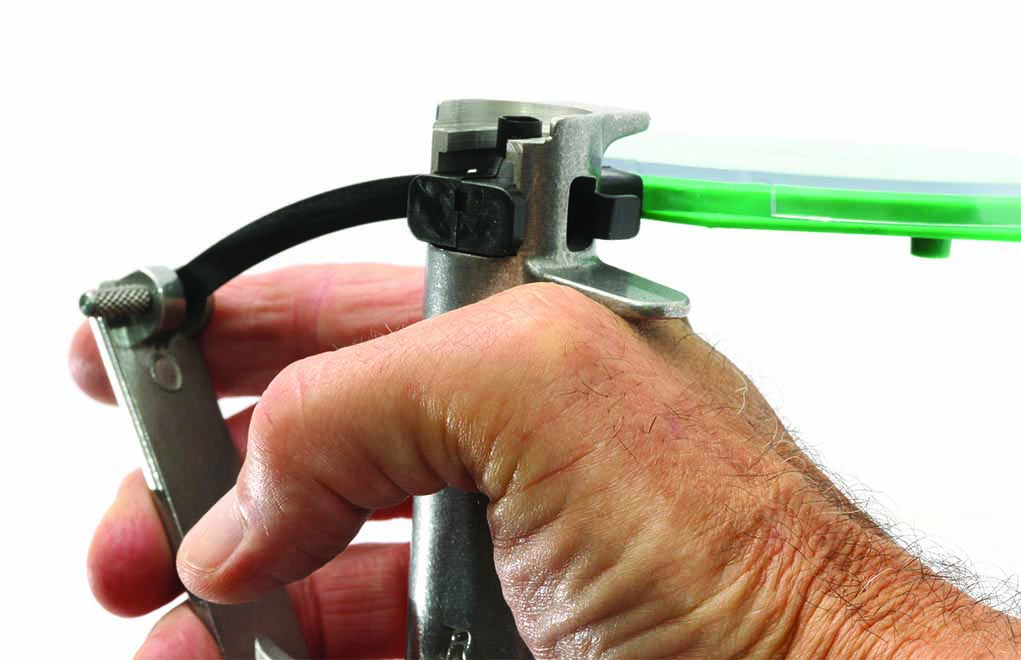
The process is simple: You assemble the primer system with either a large or small primer adapter and seating rod. You install a shell holder appropriate for the caliber you are seating. You then slide on the tray of primers, close the lid and get to work.
Tilting your hand allows you to slide one primer at a time into the feed system, install a case, seat and then repeat.
However, There Are Limits
First of all, you have to have a shell holder for each caliber you want to seat primers in. Luckily, this isn’t a big deal. Shell holders are $10 to $12 each, and one size fits many. If, for example, you buy the shell holder for a .30-06, it will work for any case that has the same rim diameter; you know—all the usual suspects. Second, your brass has to already be cleaned, sized, de-primed, trimmed (if it’s a caliber that needs trimming) and ready to load.
This isn’t much of a problem, because you’ll have to have done all this to your brass anyway for any other priming system. It’s a tad slow, but it’s precise and allows for great sensitivity in seating.
OK, a bit of a confession here: I use this setup only for some reloading, not all. On my progressive presses, primer seating happens as part of the loading process. So, I feed clean brass in and let the press do the sizing, de-priming, seat primers as the case moves along and finish with powder, bullet and crimp. Most of my ammo for most of my shooting is loaded this way.
Great For Sensitive Seating
I did use the RCBS (and other, earlier systems) for sensitive primer seating—specifically, revolvers with tuned actions. When a DA revolver has the action slicked up and lightened to the point that factory primers become a bit uncertain to ignite, you have to go to extra lengths. Consequently, I would change the reloading process for my competition ammunition.
With just hand strength to seat primers, as well as poor leverage, you have great sensitivity about just how the task is going.
This was for .45 ACP, but the process would work fine for other calibers. I’d clean the brass as squeaky-clean as I could and then used a special toolhead setup to just resize and deprime. Then, I’d tumble the de-primed brass to clean out the primer pockets. Why? Because if I’m going to do all this work, I want to get as much benefit as possible, that’s why.
I’d inspect the cases after the second cleaning to make sure there were no primer flash holes with tumbling media caught in there (there was always some). Then, I’d hand-seat primers, making sure they were fully seated and at the optimal sensitivity.
Finally, they’d be run through another toolhead setup with a sizing die lacking a decapping pin and no primers in the primer feed system. They’d be sized (not that they needed it) and then get powder in the already-primed cases, bullet and crimp.
Yes, Yes … And Yes
Was it a lot of work? Did it take extra time? Was it worth it?
Well, the two team gold medals from IPSC World Shoots resting on the counter in my office would say, “Yes.”
All my practice ammo was loaded the regular way for most of the shooting. But when it came time to load the match ammo and the practice ammo with the match trigger-setting tune-up a couple of weeks before a Nationals or the World Shoot, that ammo was loaded the second way.
If you are loading experimental ammo and want to decrease the weight of variables, hand-seating primers will help there. To get the greatest sensitivity and consistency in match ammo, hand-seating works.
If you want volume, you have to settle for a certain amount of “common denominator” in primer seating consistency—a lot of time, but that’s just fine. For the rest of the time, there’s the RCBS hand priming tool.
Offering excellent accuracy and terminal performance, Speer Gold Dot Rifle Ammunition proves a deadly defensive option for your long gun.
Studied or practiced concealed carry for any amount of time chances are you’ve heard of Gold Dot. Speer’s tried-and-true defensive ammunition has been the choice of numerous law enforcement agencies and armed citizens for years, offering consistent and devastating performance. Now, the ammo-maker is taking the line in a new direction, one might say it’s going big with Gold Dot.
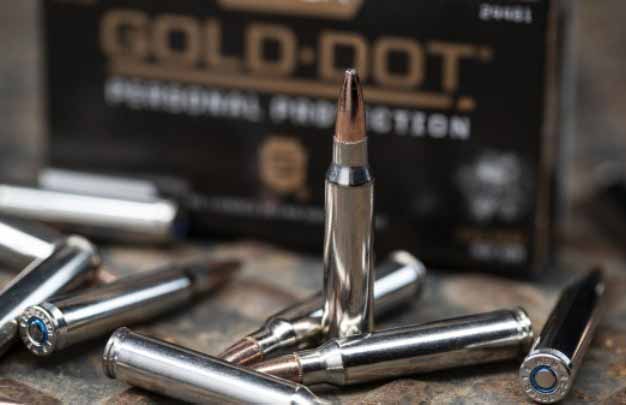
The Speer Gold Dot Rifle ammunition line offers loads for three of the most popular personal defensive long-gun calibers: .223 Rem., .300 Blackout and .308 Win. And like the company’s handgun options, each is tuned for the utmost accuracy and terminal performance. Despite a new twist to the line, Speer achieves this by employing much of the same engineering that went into Gold Dot handgun ammo, particularly bullet design.
The bullet’s bonded core process—what Speer calls “Uni-Core”—is what makes this stuff dynamite. It comes down to weight retention, with the soft-point’s alloy lead core chemically bonded to its copper jacket ensuring it doesn’t break up once it reaches its target. At the same time, it has an excellent expansion profile, consistently and massively mushrooming. This combination creates a single devastating wound channel, thus increases the chances of neutralizing a threat.
In all, there are five Speer Gold Dot Rifle loads:
55-grain .223 Remington: Muzzle Velocity 3,600 fps, BC .251
62-grain .223 Remington: Muzzle Velocity 2,750 fps, BC .310
75-grain .223 Remington: Muzzle Velocity 2,775 fps, BC .400
150-grain .300 Blackout: Muzzle Velocity 1,900 fps, BC .330
150-grain .308 Winchester: Muzzle Velocity 2,820 fps, BC .414
The other notable, Speer has opted for a nickel-coated case for Gold Dot Rifle. No big surprise. Common to the Gold Dot family, the more lustrous metal generally is considered smoother feeding and makes it easier to check the status of a gun. As to cost, a box of 20 runs between $25.99 and $30.99, depending on caliber and bullet weight.
More From Speer:
LEWISTON, Idaho –– Speer Gold Dot Handgun ammunition’s reliability has made it the No. 1 choice for law enforcement. Now Speer is offering the same performance for self-defense rifle applications. New Gold Dot Rifle ammunition is engineered to provide industry-leading performance in FBI protocol testing through barrels less than 16 inches long. Shipments of this new product have begun to arrive at dealers.
The bullets loaded in the new Gold Dot Rifle ammunition line are built using Speer’s exclusive Uni-Cor method. The jacket is bonded to the core one atom at a time, virtually eliminating core-jacket separation and creating a projectile that’s accurate, tough and consistent through all common barriers.
Features & Benefits -New self-defense rifle loads optimized for peak FBI protocol performance through barrels shorter than 16 inches -75-grain 223 Rem. recommended for 1-in-9-inch barrel twist or faster -55-grain 223 Rem. option offers reduced penetration for less risk to bystanders -Consistent penetration and expansion through common barriers -Extremely uniform jacket maximizes accuracy -Gold Dot technology virtually eliminates core-jacket separation -Nickel-plated brass -Reliable, sensitive primers
For more information on Gold Dot Rifle ammunition, please visit speer.com
Deadly serious shooting requires deadly serious ammunition. Buffalo Bore fits the bill perfectly, dusting its competition in every possible way.
How Buffalo Bore Ammunition Goes A Step Beyond:
Company legitimized the .475 and .500 Linebaughs with first factory loads.
Best known for big-bore calibers, ammo maker catalog starts at .223 Rem and goes up from there.
Hardcast lead bullets are the manufactures bread and butter, but they offer a full array of monometal bullets.
Extensively tested, the ammo often times they help shooter home in on the correct load for their gun.
Tim Sundles of Salmon, Idaho, is the proprietor of Buffalo Bore Ammunition. An enthusiastic hunter and real outdoorsman, Tim has the distinction of bringing the fabulous .475 and .500 Linebaughs to legitimacy with the very first factory ammunition ever offered and turned a hobby into his life pursuit, as well as a thriving business based on high-quality products.
It didn’t start out that way, because he was a contractor in northern California before making the move to the ammunition manufacturing industry. Tim credits Ross Seyfried with the patience and willingness to impart to him the finer points in load development, both in theory and practical application. And when he starts getting impatient, Tim is quick to remember the graciousness of Seyfried.
Pre-Buffalo Bore Background
Tim started out in 1983 with the release of the FA 83 in .454 Casull. He immediately bought six of them and began experimenting with a variety of loads.
Prior to the release of the FA 83, Tim had been playing with heavy .44 Magnum and .45 Colt loads. He got to know John Linebaugh and was introduced to the .500 Linebaugh. In those days, brass and bullets were hard to come by, but Tim commissioned John to build him a number of .475 and .500 Linebaugh revolvers. Tim performed a lot of load development for these cartridges, and John kept sending his customers to Tim to load ammunition for them.
The handwriting was on the wall: One day, John asked Tim to go into the business of manufacturing specialty ammunition—particularly for John’s signature cartridges, the .475 and .500 Linebaughs. Tim contacted Starline to make brass and, in 1997, he opened the doors of Buffalo Bore Ammunition.
Tim started out by making .475 and .500 Linebaugh ammunition, but soon, he added the popular .44 Magnum, .45 Colt and .454 Casull. Eventually, he contacted Bob Baker of Freedom Arms and pestered him to build a revolver in .475 Linebaugh. By the time Freedom Arms offered the Model 83 in .475, Buffalo Bore had ammo on its shelves, ready to supply the masses of “masochists.”
A Herd of Ammo Choices
Tim also quickly moved into the realm of the rifle and offers variety with each caliber category in the form of various bullet choices. These meet every need—from punching paper, shooting steel and hunting everything from woodchucks to elephant (and everything else in between that walks, crawls or slithers).
The Buffalo Bore lineup includes calibers from .223 Rem. all the way up to .50 Alaskan, but the brand is best known for building top-notch big-bore hunting ammo.
The impressive Buffalo Bore lineup starts at .223 and covers some less-likely calibers, such as .348 Winchester and .35 Whelen, all the way up to .50 Alaskan. Tim even has you lead-free California types covered with a wide range of Barnes monometal loads.
A forward thinker, Tim offers a number of differing lines of ammunition for various purposes. He went a step further than most ammo manufacturers by creating ammunition lines to help consumers home in on the correct load for his/her application.
Taking the guesswork out of your choice is a welcome attribute for purpose-built ammunition, such as the aforementioned “lead-free” line of California legal hunting ammunition that features copper Barnes bullets.
Tim also set about creating pistol loads that could turn the average personal-defense pistol into a credible bear-defense weapon.
“So many people have one pistol for street carry or home defense. We wanted them to have a viable outdoor load when they go camping, hiking or fishing,” Tim explained.
Well aware of the positive attributes offered by flat-nosed, hardcast bullets in bigger calibers on large game, he created a line of ammunition dubbed “Outdoorsman” in 9mm, .38 Special, .357 Magnum, .40 S&W, 10mm and .45 ACP. These feature a heavy-for-caliber, hardcast, flat-nosed bullet for uncompromising straight-line penetration.
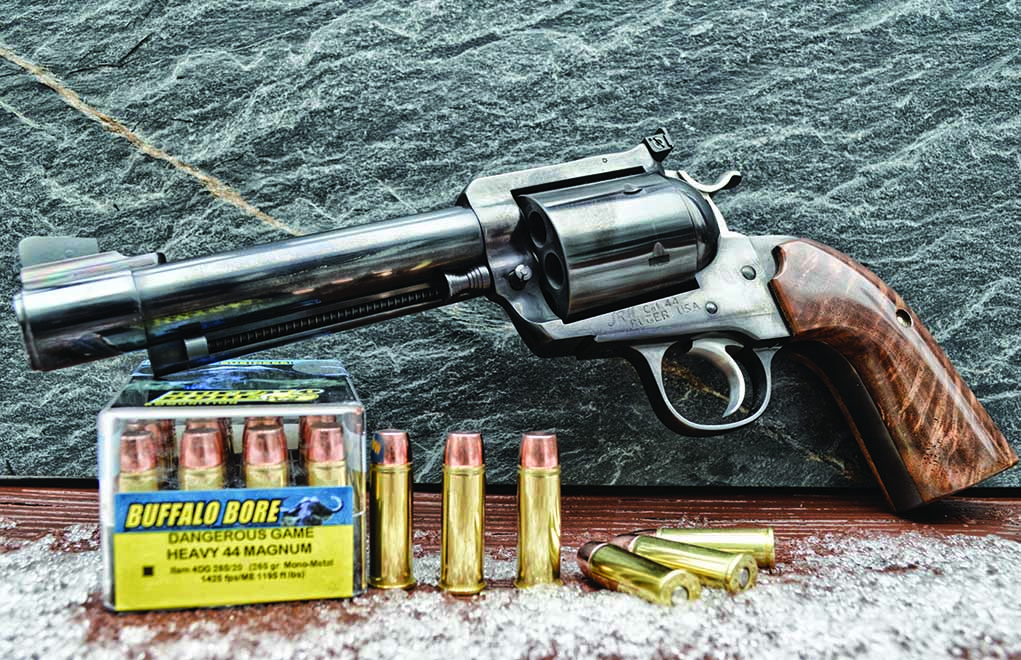
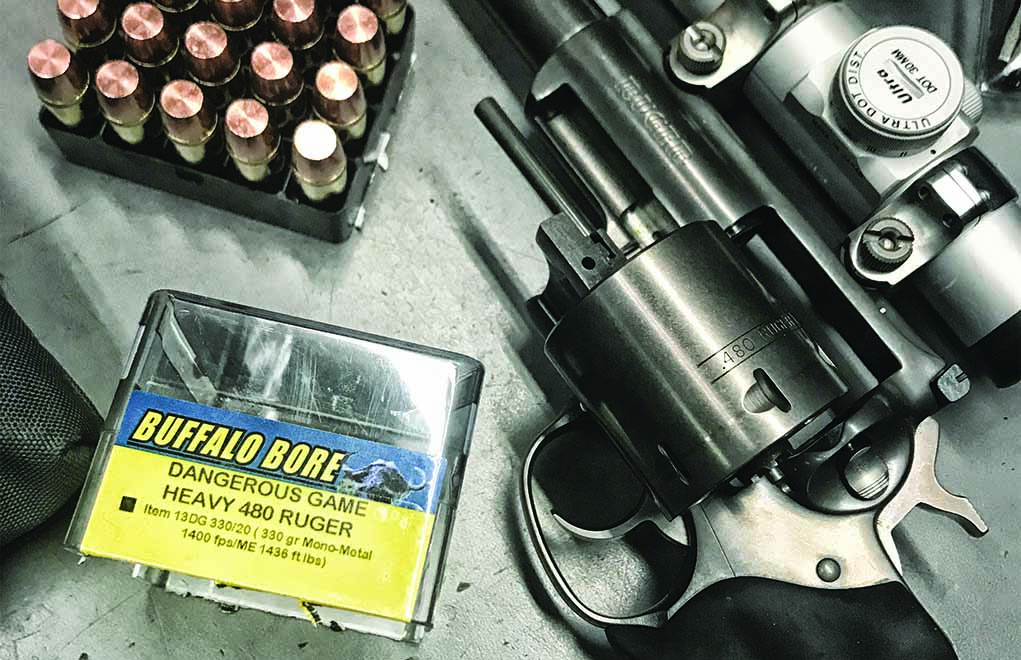
The newest line of ammunition from Buffalo Bore is the Dangerous Game (DG) line, which focuses on big-game revolver calibers. Featuring Lehigh Defense-sourced copper flat-nosed, solid bullets, The DG line guarantees unequaled penetrative potential and is impervious to heavy bones. The .45/70 Government is included in this impressive lineup.
Buffalo Bore ammunition is never far from the conversation when hunters discuss dangerous game, where a hunting bullet can very quickly become the last line of defense.
Tim was candid when we spoke: “If your main concern is price, we’re not your company, but if performance is your greatest concern, look no further than Buffalo Bore.” Indeed, Mr. Sundles.
Today, Buffalo Bore offers quality ammunition in roughly 70 or so calibers and more than 250 different loads.
The Dangerous-Game Line of Handgun Ammunition
For hunters seeking the ultimate terminal performance on game, the choices are many. For those thrill-seekers wishing to pit their mettle against dangerous game, the choices are more narrowly represented, with prices to typically match their exclusivity. And the field narrows to a sliver for the handgun hunter seeking the ultimate test against animals that are labeled “dangerous” out of a propensity to inflict damage upon those brave (or mentally challenged) enough to throw their hat into this dicey ring, where the battle isn’t concluded by a draw but by the drawing of a last breath.
JRH Wild Bovine Testing
With that in mind, a group of handgun hunters (yours truly included) began gathering at Action Outdoor Adventures, a hunting preserve in Hondo, Texas, with the sole purpose of testing handgun loads, calibers and bullets on wild bovine flesh.
I have tested bullet performance in a number of “accepted” media, knowing full well that nothing makes up for real flesh and blood (and don’t forget bone) when testing the terminal effectiveness of a given load.
Taking it a step further: Testing bullet performance in live, 1,000-pound-plus wild bovines, with their correspondingly heavy frames and musculature (and often bad attitudes, as I have found out on numerous occasions), is the finest and most definitive testing available. Of course, this comes with a price that is significantly higher than, well, wet newsprint testing (but it’s all in the name of science).
This modest first gathering, officially dubbed the “JRH Holiday Bovine Bash” (in honor of the man who first cooked it up—master gunsmith and handgun hunter Jack Huntington), has evolved into a week-long, hard-core test that results in mountains of usable data on terminal bullet performance out of revolvers.
The “Love Child” Bullet
With that in mind, I approached Tim Sundles roughly two years ago about creating a line of dangerous-game ammunition utilizing a monolithic solid bullet. In our extensive (and expensive) bovine flesh-testing, we have found that the preferred hardcast bullet has limitations based on material capability: It cannot be overdriven, because the nose shape will be compromised and, in some cases, bone impact will do the same, thus impeding straight-line penetration and damage.
Got a large-frame wheelgun that requires a very special diet? The Buffalo Bore menu has lots of options.
The solution is a bullet of the same type (with respect to nose profile) that is made from a material impervious to high-impact velocities. At the time of my proposition, there were scant few options available on the monolithic solid front that were not cost prohibitive.
Once I got wind of Lehigh Defense’s flat-nosed, copper handgun bullets—which were priced at a reasonable level, considering the precision quality of the products—I revisited this tiring conversation with Tim.
He responded in the positive, and the connection was made between Buffalo Bore and Lehigh Defense. In a matter of months, the resulting “love child” consists of nine different calibers: .44 Magnum, .45 Colt +P, .454 Casull, .460 S&W Magnum, .480 Ruger, .475 Linebaugh, .500 JRH, .500 S&W Magnum and the ubiquitous .45/70 Government, giving lever-action fans a direct path to Africa’s Big 5.
These bullets cost a little more but are a pittance, compared to the misfortune of watching a five-figure trophy fee disappear into the brush, never to be seen again—all because you wanted to save a few pennies on bargain-basement bullets.
There are many areas in which you can save a few dollars here and there, but your ammunition isn’t one of them. Spare yourself the headache and heartache.
For more information on Buffalo Bore, please visit buffalobore.com.
Springfield Armory M1A National Match … still a favorite among those going the distance.
While the short service life of the M14 should have made it a military footnote, the design remains as popular as ever thanks in part to the Springfield Armory M1A.
What Are The Current M1A Variations:
M1A Standard Issue
M1A National Match
M1A Super Match
M1A Loaded
M1A Scout Squad
M1A SOCOM
Short service typically doesn’t equate to legendary. The M14 is a decided exception.
Among the briefest runs (1957-1964) as the American military’s main battle rifle, the steel and birch (sometimes walnut) beast has all the makings of a historical footnote. Today, the rifle spurs debate hot enough to cook off a freshly chambered round. Did the M14 get the short end of the stick in as the country’s infantry spear point? Or only was it only there due to politics and nostalgia? When not flaming each other in the comment section of a post, honestly, both sides have valid points to the worthiness of the rifle. No matter what banner you hoist in the fray, there’s no denying the M14 won’t soon be forgotten.
Barbershop-worthy ponderations fuel one part of the rifle’s longevity. Springfield Armory, the other. Cornerstone to the gunmaker’s catalog, its semi-auto rendition of the M14—the equally iconic M1A—keeps the legend alive. And even if you’re a dyed-in-the-wool AR, AK, FAL, G3, or what-have-you man or woman, if you’re honest with yourself, you’d make room in your gun safe for this throwback icon.
A Much Too Small Thumbnail Of The M14
Blood blue as a Boston brahmin, the M14 is a direct descendant of perhaps America’s most cherished battle rifle—the M1 Garand. Which to some extent may have also set it up for bumpy road from the start. When your pop whipped the Germans and Japanese in one fell swoop and has battles such as Normandy, Bastogne, Monte Cassino, Tarawa and Iwo Jima on his resume, it’s fair to say you have a lot to live up to. For the most part, the M14 did a solid job stepping into the Garand’s shoes. Confirmed kills at 500-yard-plus, the M14 was an out-and-out killer in a studied marksman’s hands and as reliable as its predecessor. “Jam proof” is a bridge too far, but overall it could chew through ammo in the nastiest of circumstances. Leave it at that the M14 would have fared well on most counts.
Meant not only to succeed the M1 Garand, but a host of other military firearms, the M14 had a load of expectations heaped on its shoulders.
Except replacing the “greatest battle implement ever devised” was only the start. The M14 was set up with an almost impossible task: take the reins not only from the Garand, but a host of other proven weapons systems—M2 Carbine, M3 submachine gun and the Browning Automatic Rifle (BAR), among others. Disparate guns for disparate purposes. One gun to rule them all was only going to lead to disappointment. The M14 did.
First off, to understand why the rifle succeeded and struggled we have to look at exactly what it was. And what it was was an improved M1 Garand. Built around the gas-operated rotating bolt similar, but not a mirror of the Garand’s, the rifle proved extremely reliable. To this, the Ordnance Department added a removable box magazine—a 20-round job that rocked in similarly to an AK—which gave it more capacity, as well as, theoretically, a faster reload time. It also boasted an excellent 22-inch barrel and was chambered for 7.62x51mm NATO, a ballistic twin to the Garand’s .30-06 Springfield, but a more efficient cartridge in a semi-auto/full-auto system. Adding on the same rear aperture sight and buttstock as the M1 meant you knew the M14 if you knew the Garand, and found some much-wanted upgrades along the way.
The flipside, it was large, weighing more than 10 pounds loaded. And more notoriously, it was select-fire. The rub with select-fire, the M14 was about as agreeable as an angry badger, particularly fired from an unsupported position. The 7.62 is a rifle cartridge, not an intermediate rifle cartridge, but a full-fledged, centerfire rifle cartridge fit for taking down any North American game or enemy soldiers and is still favored by many precision shooters. Stopping power abounds, and so does recoil. When flipped over to rat-a-tat-tat and moving some 750 bullets downrange per minute, it proved more than the average soldier could wield to any effect. The first shot, yeah, it was on target. After that, it’s anyone’s guess—usually high and to the right, ineffectively or dangerously so. Perhaps this is why the selector of the M14 takes such conscious effort to dial to full auto.
While its service as the U.S.’s main battle rifle was short, the M14 has played an important specialized role, especially in recent conflicts serving as the fast shooting, accurate tool of designated marksmen.
So yes, it could engage close targets with a high volume of fire—what study after study coming out of World War II said was key and was reinforced in the confines of Vietnam jungles. But with impact to influence a firefight, that’s negligible. Certainly, in this facet, it struggled against the dominant arm of the day—the Soviet AK-47. Plus, .30-caliber isn’t exactly peanuts to spray around the countryside and adds a whole heap of weight to a kit.
So, was that it? Did weight and disagreeableness in full auto kill the M14’s military career? Was 7.62 too expensive to feed a proverbial bullet hose? Did Defense Secretary Robert McNamara hit on to something about wood and steel being the wrong material for a jungle fight? Or did just plain politics (of which there was a lot) lead to the demise of the M14 and the adoption of what would become known as the M16?
Honestly, there’s a book’s worth of parsing out in those questions and about a metric ton of other queries. For our purposes, it’s fair to say the M14 succeeded in some areas, labored in others, but for the most part, proved a legitimate improvement of the M1 Garand. So much so that it found a second life in the recent conflicts in Afghanistan and Iraq, where long-range engagements became more common. And it still has civilians pining for it today. In the latter case, Springfield Armory is owed a debt of gratitude.
Born Again As The M1A
When McNamara switched the military’s horses, he did so mid-gallop. All the branches accepted the M16 in 1964 and all M14 purchases were cut off simultaneously, which left a heap of spare parts for the dispossessed rifle. Around a decade later, an enterprising company figured there was money to be made in all those M14 bits and pieces. Springfield Armory (the company) couldn’t have been more correct.
Built from surplus military parts, the original M1A Springfield sold was a dead ringer for an M14, save the select fire. Photo: Rock Island Auction Company
The Springfield M1A tapped into the lore of the M14, a rifle, once accurized, that was up to snuff of the original National Match iterations of days gone by. Of course, Federal firearms regulations being what they were and are, the accurate irons underwent one major modification—they are semi-automatic, so not true-to-life M14 clones. That said, there’s not much separating the M1A and M14—one fairly inconspicuous lug in the receiver. So, as real McCoy’s go, Springfield Armory the company was right on target with their rifle.
Much of this was a function of using USGI surplus to build the rifle, but as that stock has dried up the company has had to procure or make their own parts. Yes, the receivers are investment cast, not drop forged like original milsurp builds. Aside from that, the M1A is a spitting image of the M14, which in the hands of a knowledgeable shooter is more than evident downrange. It’s little surprise that the M1A is still a staple at high-power rifle matches, found occasionally on the hunt and is the rifle of choice for the Appleseed Project. Love it or hate it, the rifle performs. And it’s evolved.
The Many M1A Options
The firearms market being what it is, if you aren’t innovating you’re most likely falling behind. In turn, Springfield has progressed the M1A over years matching and sometimes anticipating shooters’ tastes. All the while, they have remained true to the foundation of the modified M14 design, particularly the pillars of accuracy and reliability.
M1A Standard Issue
A faithful reproduction of the M14, the M1A standard is the semi-auto rendition Springfield has marketed since 1974. Originally composed of surplus parts, the .308 Win. is now an in-house build, but still right on target with a 22-inch barrel, long birdcage flash suppressor, adjustable rear aperture sight and National Match front sight. You can stay old school with a walnut stock or choose a little more element-friendly composite.
M1A National Match
Springfield Armory M1A National Match … still a favorite among those going the distance.
Match shooters rejoiced when this model came out, loaded up with everything to gun for gold. Competitive upgrades include medium weight match barrel, glass bedded stock, tuned two-stage trigger and .595-inch micro-adjustable hooded aperture rear sight (1/2 MOA per click). Chambered strictly in .308 Win., the rifle is available with a 22-inch carbon steel or stainless steel barrel.
M1A Super Match
Essentially a National Match with one weighty upgrade—a 22-inch Douglas Heavy Match barrel, carbon or stainless steel. The .308 Win.’s six-groove, 1:10 twist bore is push-button rifled, a process only second to cut rifling for uniformity. In addition to barrel material, you can choose between a glass-bedded walnut stock or McMillan fiberglass stock.
M1A Loaded
Configured for long-range work, the M1A Loaded offers much of the same accuracy potential as the National Match at a bit more affordable price point. There are also some interesting options in the series, including both .308 Win. and 6.5 Creedmoor chamberings, and fully-adjustable precision stock. Of course, if you want, walnut is still available.
M1A Scout Squad
Perhaps not a by-the-book rendition of Col. Jeff Cooper’s scout-rifle concept, the M1A Scout Squad is nonetheless an interesting twist. In addition to trim dimensions, thanks in part to its 18-inch barrel, the .308 has a Picatinny rail to forward mount a scope. Additionally, it’s available with a wood or black composite stock.
M1A SOCOM
Perhaps the most radical break from the traditional M14 design, the SOCOM makes the “gravel belly” system fit for close quarters. The most abbreviated M1A in the line, the carbine has a terse 16.25-inch barrel, kept short by a radical redesigned break that keeps the .308’s recoil manageable without increasing its footprint. It also comes in some interesting configurations, including an adjustable buttstock model with AK-style grip. More recently, the “Tanker” SOCOM hit the scene, a take on concept Garands of World War II.
Parting Shot
Arguments over whether the M14, therefore the M1A, deserves the title of an all-time great rifle won’t subside anytime soon. It’s a Rorschach test of sorts. Some view it as an overpriced relic, while others see the last great fighting implement. In any case, the rifle certainly improves on an already proven system. It will pick fleas at 500 paces in the right hands, and it’s demonstrated it was battle-worthy 40-years after it was written off. It’s a mixed legacy to be sure, but one any true shooter should make room for in their collection.
The Remington Model 760 was exceptionally accurate and fast shooting, but was far from the first pump-action gem “Big Green” turned out.
What Are The Advantages Of The Pump-Action Rifle:
Among the fastest manually operated actions.
Inherently, the pump is ambidextrous.
The rifle can use loads semi-autos would fail to cycle.
Certain designs have proven exceptionally accurate.
The slide-action, or pump, firearm has often been described as uniquely American. While the first patent for the design was issued in the 1850s in England, pump guns—both shotguns and rifles—never really caught on in the United Kingdom or Europe. Many shooters “across the pond” look upon them with disdain, as do some in the United States. Yet, others swear by them.
The pump has many advantages: It’s the fastest and easiest to use of the manually operated actions; it’s ambidextrous (although empty cases are ejected into the lefty shooter’s field of view); and the operation gives the pump the ability to use ammo loads of varying power that a semi-auto would fail to cycle.
Slide-action fans have been compared to drivers who prefer a stick shift transmission. Some people just prefer a hands-on relationship with things. There are hunters who have nothing but slide-action shotguns, rimfires and centerfire rifles in their gun safes. If you like a pump, you like a pump.
Pump-Action Shotgun’s Backstory
Remington has a long history with slide-actions. What was called the Remington Repeating Shotgun was introduced in 1908. Two years later, it was renamed the Model 10.
Remington pump shotgun designs evolved through the first half of the century. Several popular models were offered: the Model 17, 29 and the 31. Then, in 1950, the great Model 870 was announced. It is still in production, with more than 11 million sold, making it the most manufactured shotgun in firearms history.
This Model 760 Gamemaster is a .30-06 manufactured in 1956. Photo: GunsAmerica.com
Slide-action rifles became a part of Remington’s legacy in 1909 with the introduction of the Model 12 .22 rimfire. It evolved into the 121 in the 1930s and was replaced in the ‘50s by the 572, which is still in production today.
Remington Centerfire Pump-Actions
The focus of this month’s column is the Remington centerfire slide-action family of firearms.
Big Green’s history with this category of rifles goes back to the Model 14. It was introduced in 1912 and was chambered for three Remington rounds: the .25 Rem., .30 Rem. and .32 Rem.—all rimless versions of the .25-35, .30-30 and .32 Win. Special.
A variant, the 14½, was added in 1913 and was offered in the popular .38-40 and .44-40 Winchester calibers. The Model 14 and 14½ were in production until 1935, when they were replaced by the Model 141, which was made until 1950. The 141 was chambered for the same cartridges as the Model 14—.25 Rem., .30 Rem. and .32 Rem.—as well as the .35 Remington.
Another early Remington slide-action centerfire was the Model 25, in production from 1923 to 1936. It was offered in .25-20 and .32-20, two very popular small-game cartridges of the day.
In April 1952, Remington introduced the first slide-action rifle that was chambered for popular big-game cartridges such as the .30-06, .270 Win. and .300 Savage. This was the Model 760 Gamemaster. Other original chamberings included the .222 Rem., .244 Rem., .257 Roberts, .280 Rem., .35 Rem. and later, the .243, 6mm Rem. and .308 Winchester.
The Model 760 was replaced in 1981 by the similar, but upgraded, Model 7600. It’s still in production today.
The Model 760 introduced several improvements over the 141, including dual-action bars and a detachable magazine that allowed the use of spitzer bullets. The standard model came with a 22-inch barrel, but there was also a carbine version with an 18½-inch barrel.
The slide-action Model 760 was an accurate rifle and was able to keep up with the famous bolt-action target guns. In 1961, a U.S. shooter won the double-shot aggregate at the World Championship in Oslo, Norway, with a 760, and another took second place in the single-shot World Championship in Cairo, Egypt. 1
The Model 760 remained in production until 1981, when it was replaced by the Model 7600. Over its 28-year run, 1,034,462 Model 760 Gamemasters were manufactured. This included several Deluxe and High Grade models, such as Remington’s Peerless and Premier grades, which featured extensive engraving. 2
Some of the rarer calibers are worth a considerable premium over standard chamberings.
FOOTNOTES 1: Pa Was a Pump Gun Man, 62nd Edition, Gerald Peterson, Gun Digest, 2008 2: The History of Remington Firearms, Roy Marcot, Chartwell Books, 2011
For more information on Remington pump-action guns, please visit remington.com.
A conflict fueled by old tactics and new weapons, the “Great War” was brutality incarnate. Here’s a look at the rifles that eventually helped the Allies win World War I.
This article is an excerpt from The Illustrated History of Firearms, 2nd Edition. From the earliest hand cannons dating back to 1350, to the finest sporting rifles of the 21st Century, this 2nd edition of The Illustrated History of Firearms covers them all. Get Your Copy
The Great War, now commonly referred to as World War I, began after the assassination of Archduke Franz Ferdinand of Austria in June 1914. By mid-August 1914 most of the major European powers were at war. The United States entered on the side of the British and French in April 1917.
WWI signaled the end of the age in which conflicts were settled with some semblance of chivalry. It was a war of rapidly changing technology, fought using tactics of the Napoleonic era. Companies, even battalions of soldiers, were thrown against squads of men, each squad manning a single machine gun capable of firing 800 rounds a minute. One General responded to the rapid destruction of his entire Division by telling his men to “dig, dig, dig, until you are safe.”
By Christmas 1914 a trench system wound its way from the Belgian coast on the North Sea to the Swiss border some 1500 kilometers away! For four years, until November 1918, the trenches remained in place, virtually unchanged. The word stalemate entered the dictionary to describe a useless situation with no foreseeable conclusion. The result was 8.5 million dead and 21 million maimed and disabled, plus 12.5 million civilian casualties.
The bolt-action rifle was standard armament among the 30 nations involved in this global conflict, with some members of the Allies – countries at war with Germany – paying licensing fees for their rifles to the German firm of Waffenfabrik Mauser. The dominating firearm of the war was the machine gun. Once thought wasteful and expensive, its use ensured that neither side could advance on the other without incurring horrifying losses. The war was brought to an end on November 11, 1918, by the combination of overwhelming Allied offensive action and the spread of revolution throughout Germany that forced the Kaiser’s abdication and the replacement of the monarchy with a civilian government willing to surrender.
WWI Allied Rifles
A variety of bolt-action arms were used by the Allied nations in WWI to equip their infantry units. Some countries found that demand for rifles could not keep pace with production so other models for which tooling and machinery already existed were put into service production. Canadian soldiers, for example, were armed with either homegrown Ross rifles the Models 1905 or 1910, the British Enfield SMLE #1 Mk III, or American-made Pattern 14 Enfields!
United States World War I Rifles
U.S. Springfield Model 1903 Bolt-Action Rifle
Bolt-Action-.30-06-circa 1903-1930: The Springfield ‘03 was the American standard service rifle from 1903 to 1936. It first saw service in the Philippines in 1903. Issued in WWI and WWII, it was still in service as a sniper rifle in Korea and Vietnam.
Pedersen Device Mounted On U.S. Springfield Model 1903 Mk I Bolt-Action Rifle
Semi-Automatic-.30 caliber-circa 1918-1920: The top-secret Pedersen device, also known as the “Automatic Pistol Caliber .30 Model of 1918,” was a semi-automatic conversion for the bolt-action Springfield rifle. The 1903 Mk I rifles intended to use the Pedersen device had a small port milled into the left receiver to allow spent cases to be ejected. Approximately 65,000 Pedersen devices were manufactured and were intended to be used in the Spring Offensive of 1919. When World War I came to a close with the Armistice on November 11, 1918, no future need was foreseen for the Pedersen devices and they were destroyed.
U.S. Remington Model 1917
Bolt-Action-.30-06-circa 1917-1919: Over two million M1917s were manufactured by Eddystone, Remington, and Winchester.
U.S. Winchester Prototype Model 1917
Bolt-Action Magazine Rifle-.30-06-circa 1917: U.S. Winchester Prototype Model 1917 Bolt-Action Magazine Rifle – .30-06 – circa 1917 – This unmarked tool room example of a Winchester Model 1917 bolt-action rifle was part of a collection assembled by a former production line superintendent at Winchester.
U.S. Springfield Model 1903
Bolt-Action (relic condition)-.30-06-circa 1903-1907: Buried in a French field, this relic M1903 rifle was recovered in 1963.
U.S. Springfield Model 1903 Sniper Rifle
Bolt-Action Sniper Rifle-.30-06-circa 1907-1919: The U.S. Warner-Swazey-scoped sniper was the first .30-06 bolt-action sniper rifle. Note extended “Air Service” 20-round magazine.
Arm Yourself With More Military Firearms Knowlege:
Bolt-Action Rifle-.303 British-circa 1942-1943: The fast-firing SMLE could empty its ten-shot magazine in less than 20 seconds with an adept shooter.
British BSA Sparkbrook Model 1893 Mk II Magazine Lee-Metford
Bolt-Action Rifle-.303 British-circa 1893: In WWI, British forces employed earlier Lee-Enfield models that were updated for issue.
British Farquhar-Hill Model 1909
Experimental Semi-Automatic Rifle-.303 British-circa 1909: The long recoil-operated Farquhar-Hill was intended as a squad automatic rifle and was tested by British Ordnance’s Small Arms Committee in 1908. A 20-round drum magazine was intended as the standard configuration although other magazine capacities were also tested. This example is one of the rarer semi-automatic-only versions.
Russian World War I Rifles
Russian Mosin Nagant Model 1891
Bolt-Action Rifle-7.62mm x 54 Russian-circa 1911: Russia’s standard service rifle in World War I held five cartridges.
Remington Mosin Nagant Model 1891
Bolt-Action Rifle-7.62mm x 54 Russian-circa 1917: This Mosin Nagant rifle was tested by NRA during the WWI period.
Russian Contract Winchester Model 1895
Lever-Action Rifle-7.62×54 Russian-circa 1915-1916: Winchester made M1895 rifles for Russia that used military stripper clips.
Canadian World World I
Canadian Ross Rifle Co. Model 1910
Straight-Pull Rifle-.280 Ross-circa 1910: Found to have a potentially dangerous bolt design, Ross rifles were sidelined from active service.
Canadian Ross Rifle Co. Model 1905
Straight-Pull Rifle-.303 British-circa 1906: The straight-pull line of Ross rifles had a reputation for being unsafe firearms due to a complicated bolt that could be incorrectly reassembled and would fail to lock the action correctly during firing. During the interwar period and during World War II, the Ross rifles still in inventory were utilized for non-firing training duties.
French World War I Rifles
French Tulle Model 1886/93 Lebel
Bolt-Action Rifle-8mm Lebel-circa 1900-1918: The French Lebel was one of the first rifles to employ both jacketed bullets and smokeless powder.
French Berthier Model 1916/27
Bolt-Action Carbine-8mm Lebel-circa 1892-1920: Shorter carbines were used for cavalry and artillery units.
French St. Etienne French Model 1917
Semi-Automatic Rifle-8mm Lebel-circa 1917-1925: French semi-auto rifle designs did not come into use until late in WWI.
French Lebel Model 1907-15
Bolt-Action Rifle (sectionalized)-8mm Lebel-circa 1907: This cutaway of a military firearm illustrates many of its otherwise hidden internal mechanisms.
French Berthier Model 1907/15
Bolt-Action Rifle-8mm Lebel-circa 1917.
Belgian World War I Rifles
Belgian Hopkins & Allen Contract Mauser Model 1889
Bolt-Action Rifle-7.65mm Mauser-circa 1889-1915: H&A’s contract with Belgian authorities resulted in 180,000 M1889 rifles for WWI.
So, you want to run suppressed, but not full-sized? Meet the FN 509 Compact Tactical.
What The 509 Compact Brings To The Table:
Threaded 4.32-inch barrel
Optics-ready slide
Compatibility with more than 10 reflex sights
Suppressor-height night sights
Generally speaking, suppressor fun is something relegated to full-sized pistols. Plenty of gun already in hand, what difference does 5-inches of hush tube make dangling off the muzzle? Not much. Still and all, there’s no reason why big boys should have all the fun. They won’t any longer.
FN America has taken the suppressor-ready pistol small with the introduction of the 509 Compact Tactical. Flirting with dead-ringer territory with the recently release Compact model of the striker-fired 9mm, the pistol boasts an extended barrel with a 1/2×28 thread pattern just begging to host your favorite can. Yes, it comes with a factory thread protector with a hold-tight O-ring, so you won’t bang it up if you aren’t running quiet.
Pretty slick, particularly given, sans suppressor, it still retains its concealed-carry friendly dimensions. Overall, the 509 Compact Tactical weighs in at 26 ounces, boasts a 4.32-inch barrel and measures in at right around 7.5 inches. The barrel is a bit longer than the 509 Compact by just over .5 inch, but that’s far from bust its ability from going undercover.
As to the other notables on the pistol, it’s optics-ready with FN’s MRD slide cut and is compatible with more than 10 miniature red-dots. Furthermore, suppressor-height night sights that can co-witness with a reflex come standard on the 509 Compact Tactical. The other goodies common to 509s are there too: respectable trigger, dual recoil spring system, MIL-STD 1913 accessory rail, enlarged trigger guard, fairly positive grip texturing and replaceable backstrap system. Sweetening the pot, FN throws in a soft case with the 509 Compact Tactical and 12-, 15-, or 24-rounds magazines. If you need more, you have your choice between matte black and FDE finishes.
As to cost, that’s one point that hasn’t shrunk with the pistol’s size. The MSRP on the 509 Compact Tactical is $1,049, around $300 over what a plain, old Compact Tactical runs. No breaks if you want to shoot suppressed.
Looking to go armed, but are stuck in the weeds as to what to arm yourself with? Here are 20 of the best concealed carry gun options that will keep you on the defensive.