A great option for beefing-up your mil-spec AR bolt.
Ever notice that the AR-15 bolt has a great big, honking hole drilled right through it? And that hole has sharp edges that have to be carefully de-angled or it’s not fun to work with? If that edge gets nicked, the bolt will die and soon. Why do we use it? Because the government cast that design in stone back in 1968. If you stick with mil-spec, you stick with the bolt. But, should you?
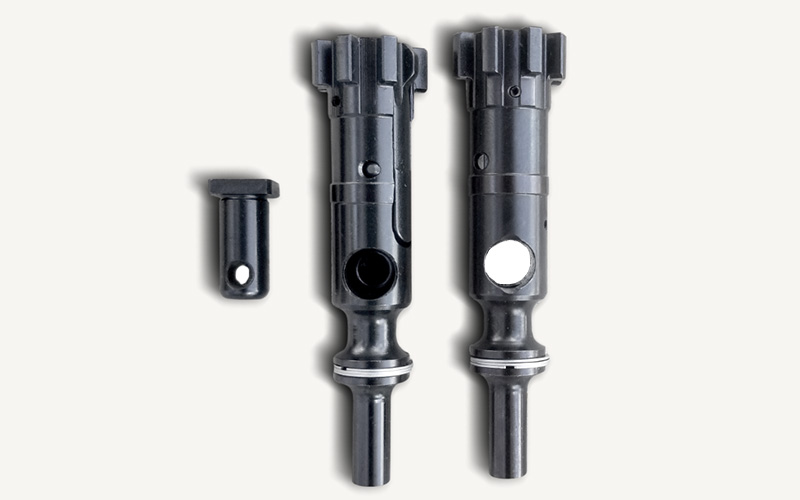
HM Defense bolt (center) versus mil-spec (right).
How about we improve that? HM Defense did just that. They took the simple measure of not drilling the hole all the way through. I know, simple, right?
The HM Bolt simply has a blind hole for the cam pin. This does, of necessity, require a new cam pin—one short enough not to stop short in the hole—but that’s easy. How does this make a bolt stronger, and why do we care?
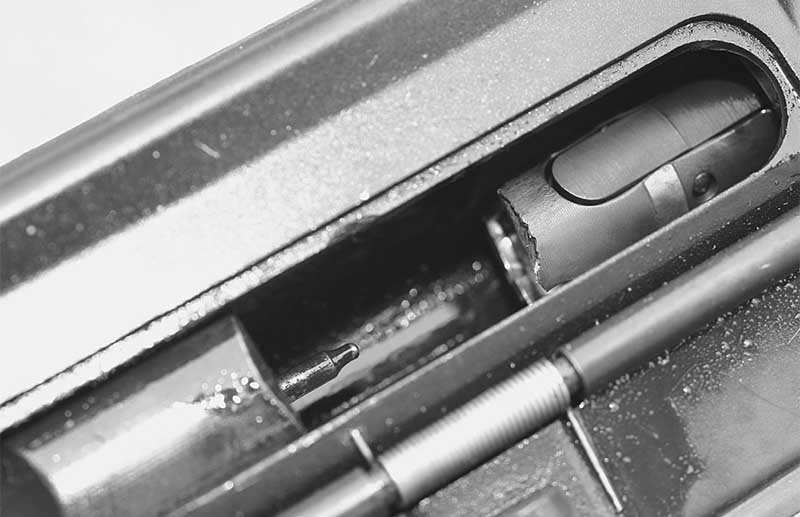
Simple: By drilling the bolt body through, the bolt makers (who have no other choice) drastically weaken the bolt body. With most of it gone, there are only two thin webs to support the gas rings, firing pin guidance and hold the bolt together. I’ve seen bolts cracked and broken at the cam pin hole. It isn’t a subnuclear detonation, but it does stop the rifle from working.
A mil-spec AR-15 bolt broken at the cam pin hole.
By stopping short of going through, HM Defense gives the thin side walls support from the far side of the bolt. Even if the stresses try to crack the bolt at the thin webs, the webs are supported by the far side being solid.
Also, regular bolts have to have the cam pin hole edges staked on the far side or else they could be assembled backward. I saw it—once—and the stream of invectives from the owner (he had fired the one shot he’d get on the rifle stage of a 3-gun match) was impressive.
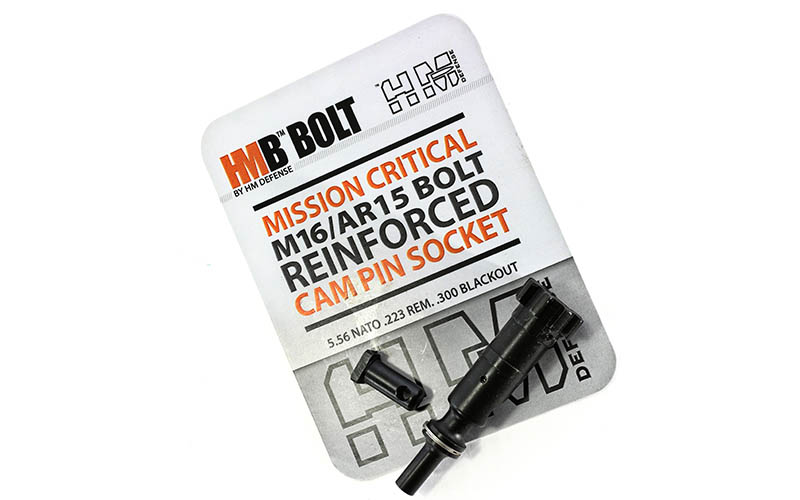
The bolts are made to be a drop-in fit or replacement to all mil-spec bolt/carrier setups and given the proper heat treatment, testing and finish to provide lots of use. Each one comes with an appropriately shortened cam pin, so you won’t have to try and grind one down on your bench grinder to make it fit.
Does this matter? Sure. We all try to make our equipment as durable and reliable as we can. We test things, we check regularly and some worry (more than others) over what might go wrong.
Anything we can do to reduce the number of things we have to worry about is a good thing.
Plus, the price of the HM Bolt is right in line with regular AR-15 bolts (MSRP is $175). Yes, parts are hard to come by right now, but when they get a bit easier, you might want to upgrade the parts list on your next build.
Editor’s Note: This article originally appeared in the June 2021 issue of Gun Digest the Magazine.
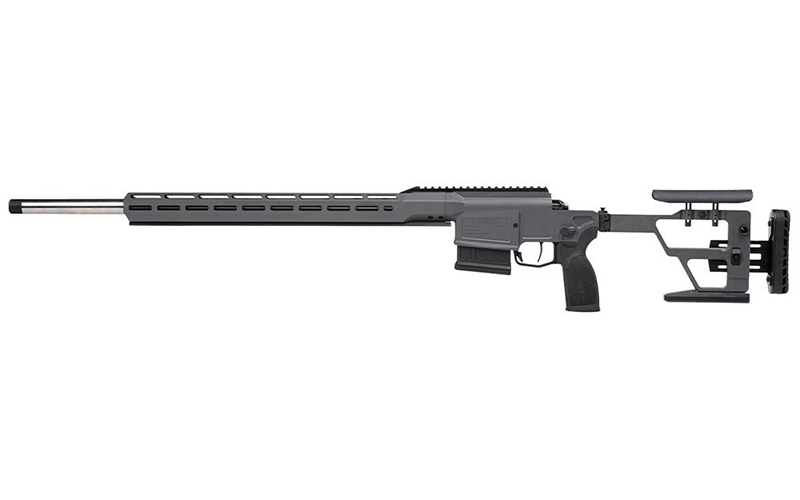
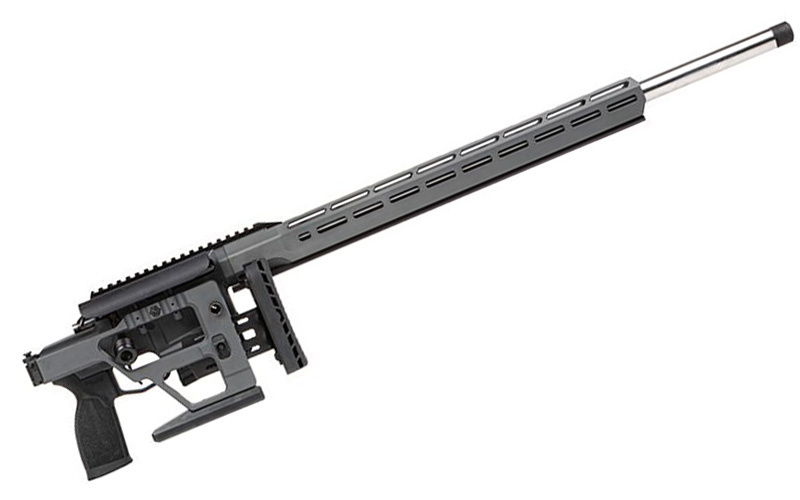
Sig Sauer has just expanded the CROSS series with the CROSS-PRS, a new bolt-action rifle with match-grade features purpose-built for precision and long-range shooting.
Sig Sauer introduced the original CROSS rifle in 2019, and it was the company’s first foray into bolt-action rifles since the 1990s. It was marketed as a precision hunting rifle, and it was certainly capable of extreme accuracy in all three available calibers, but Sig felt that the design could be accurized even further. Enter the new Sig Sauer CROSS-PRS, a rifle that Sig claims to have match-grade features that make it ideal for the competitive precision long-range shooting world.
The most substantial change implemented into the CROSS-PRS design is the new barrel. While the original CROSS was available with either a 16- or 18-inch barrel, the CROSS-PRS sports a 24-inch, stainless heavy-contour 5R barrel. The barrel is now free-floated as well along with the M-LOK handguard, something that was only true of the handguard on standard CROSS models. Combined with the included match-grade, adjustable 2-stage trigger and bipod-ready Arca rail, the CROSS-PRS should be an extremely capable performer at longer ranges. The overall weight and balance of the gun has been tuned as well.
Tom Taylor, Chief Marketing Officer and Executive Vice President of Commercial Sales at Sig Sauer, said this about the new rifle:
The CROSS-PRS is purpose built and feature rich. The heavy structured steel design delivers weight evenly for a balanced feel while reducing recoil to get you back on target faster. Combined with the extreme accuracy of the heavy contour 5R rifled barrel, and folding adjustable steel stock for easy movement, the CROSS-PRS delivers an extremely capable long-range shooting experience that scores big on the range, right out of the box.
The CROSS-PRS will be available in 6.5 Creedmoor and .308 Winchester, and both models will ship with two 10-round polymer AICS-style magazines. MSRP is $2,499.99 and it’s shipping to retailers now.
For more information on the Sig Sauer Cross Rifle, please visit www.sigsauer.com.
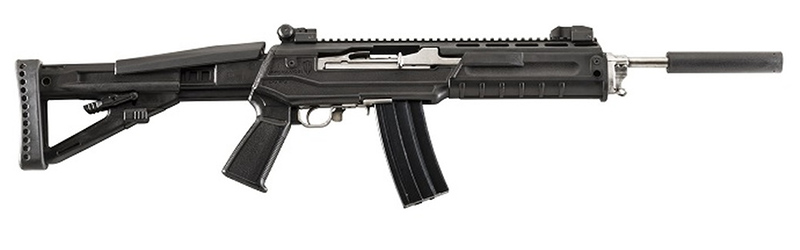
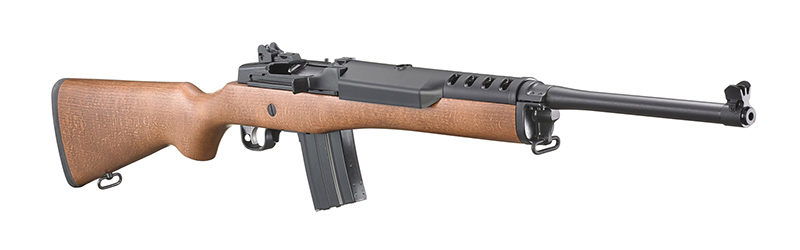
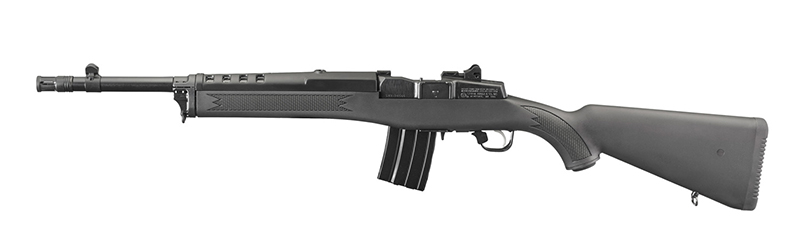
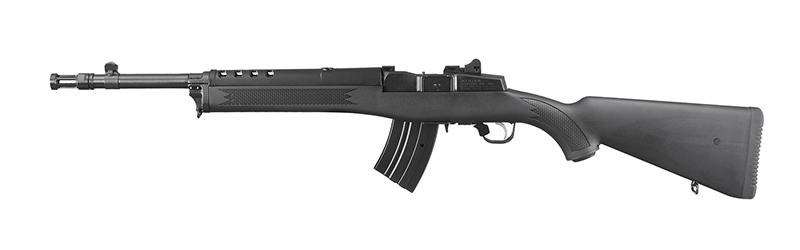
Looking to maximize your Mini-14? Check out these top 5 Mini-14 stock options ranging from folders to sporters.
The Ruger Mini-14 rifle has unfortunately struggled to maintain an aftermarket following. Unlike the AR-15 with its nearly infinite accessory options, there isn’t as much that can be done to alter the Mini-14. An exception here is the stock, an easily installed component that can be swapped during normal field disassembly. While there are not too many out there, there certainly are some notable examples. Chief among these are versions that have the ability to fold. There are of course modern versions of this, but the most desirable is arguably the most classic. The first one we’re going to look at jumps right off your color TV, out of the back of a curiously painted van.
Top Mini-14 Stock Options:
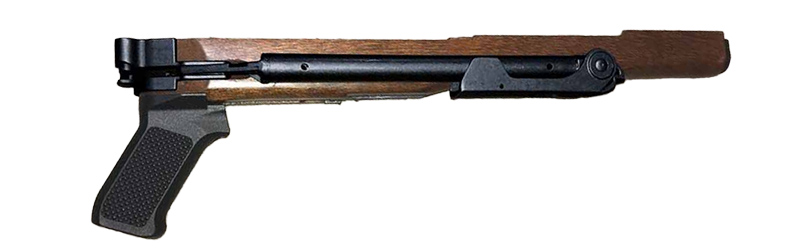
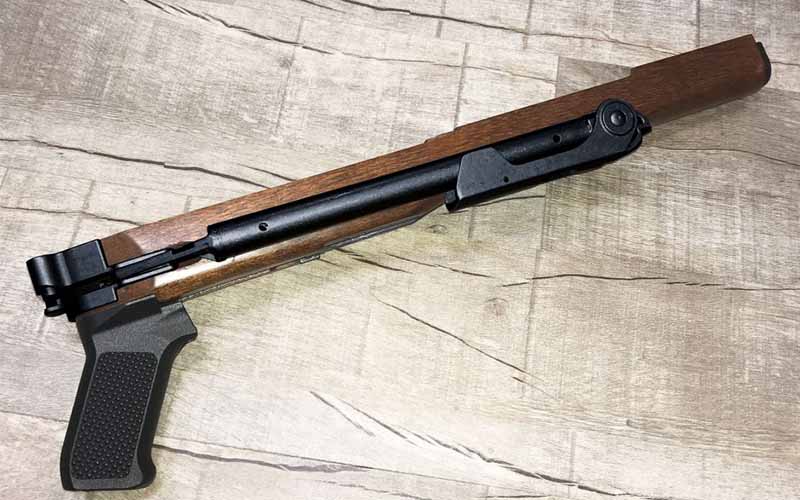
Samson A-TM Folding Stock Probably the most famous Mini-14 out there was used on the A-Team TV show. Along with the 1911, the folding stock Mini-14, though fully automatic on the show, was the signature weapon of the A-Team’s leader, Hannibal Smith. Although the one on the show was technically the police AC-556 that came with a folding stock from the factory, you won’t be able to get any closer to an original than this. In fact, the Samson stock is made on much of the same tooling as the original was, and it is available in the same color layout from the TV show.
Despite being a pop culture icon, this stock is actually very functional and makes for an extremely compact overall size. It can be stored easily and deploys quickly while still being very solid in terms of lockup. Of note, the butt plate also folds, making the pistol grip area at the rear of the stock the widest point of the gun. Although we tried, you simply can’t talk about this stock without pitying the fool who doesn’t have one on his Mini-14. MSRP: $299.99(Stainless), $324.99 (Black) // samson-mfg.com.
Samson 100000103 A-TM Walnut Finish Ruger Mini-14 Ruger Mini Thirty
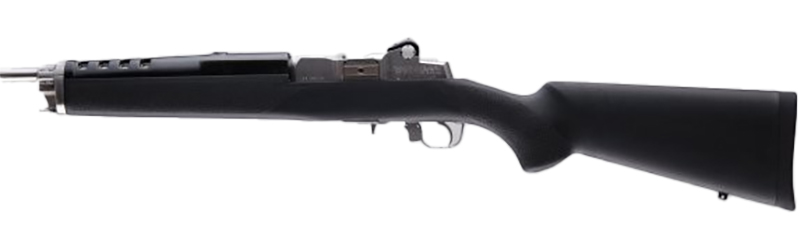
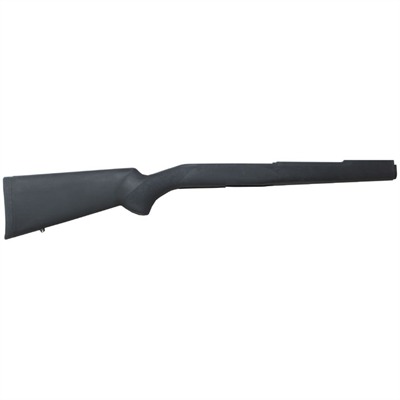
Hogue Mini-14 Sporter Stock If you find yourself dissatisfied with the factory synthetic stock, or just don’t want to tear up your wood version, Hogue offers a very affordable replacement stock with a soft OverMolded rubber finish. If you find yourself in a wet or hot climate where your hands become slippery with muck or sweat, the stock will help alleviate that slick feeling and allow for a firm grip. Currently, this model is available in black and green. It is a drop-in fit and requires no permanent alteration to the rifle. Luckily, it also has a very affordable street price. MSRP: $89.95 // hogueinc.com.
ProMag Archangel Sparta Stock One of the many reasons why the Mini-14 has been overlooked as a tactical rifle is because it doesn’t look the part. Some people very much prefer the clean, almost benign appearance of a stock Mini-14 while still recognizing that it is a very capable semi-auto. Because of the rifle’s classic aesthetics, there have not been many attempts to force it into the territory of the AR-15; the Mini-14 looks quite out of place covered in rails and flashlights.
That said, ProMag has a relatively unique stock system that integrates a Picatinny top rail for optics as well as an adjustable stock for both comb height and length of pull. For the purist, this is certainly a bit much, and some may argue that it would be easier to simply just get an AR-15 rather than try to turn your Mini-14 into one. Regardless, the execution here is very good and it certainly does provide the features of a tactical rifle. All the parts on it are proprietary, however, so you will not be able to install common AR furniture or grips on it. MSRP: $219.99 // promagindustries.com.
Pro Mag Ruger Mini-14 Archangel Sparta Adjustable Ruger Mini-14 Arch
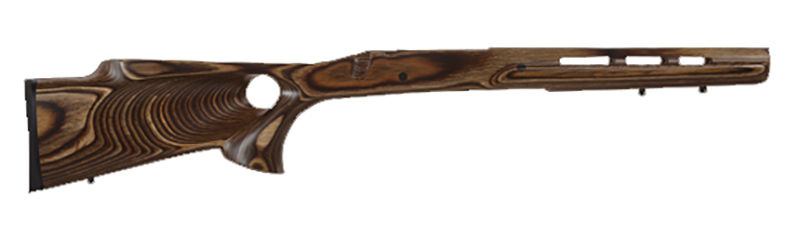
Boyd’s Laminate Stocks If you find yourself in the market for something that enhances the look and feel of your Mini-14, you should probably consider the laminate stock options from Boyd’s. Boyd’s has made a name for itself in the industry as a leader in aftermarket stocks. Indeed, they make just about anything you may need, with further options to customize it at the factory. Boyd’s makes not just stocks for new guns, but also replacement stocks for vintage classics like the Mini-14’s ancestor the M1 Garand.
The Mini-14 stocks offered by Boyd’s are available in an incredible number of colors and styles, both traditional and modern. You have a choice between thumbhole, varmint and factory-profile options. The company offers eight styles for the Mini-14, which is the largest amount of options you will find from any single company for this gun. Many of the stocks offered by Boyd’s will require minor fitting, which is something to be aware of when you buy. Prices vary on these stocks, as they are customizable by the purchaser, and one will have to decide what options and colors they want when ordering. MSRP: Varies // boydsgunstocks.com.
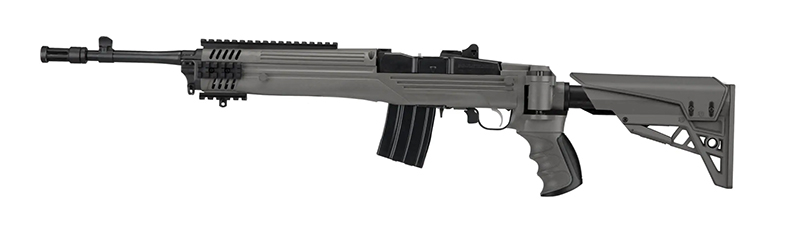
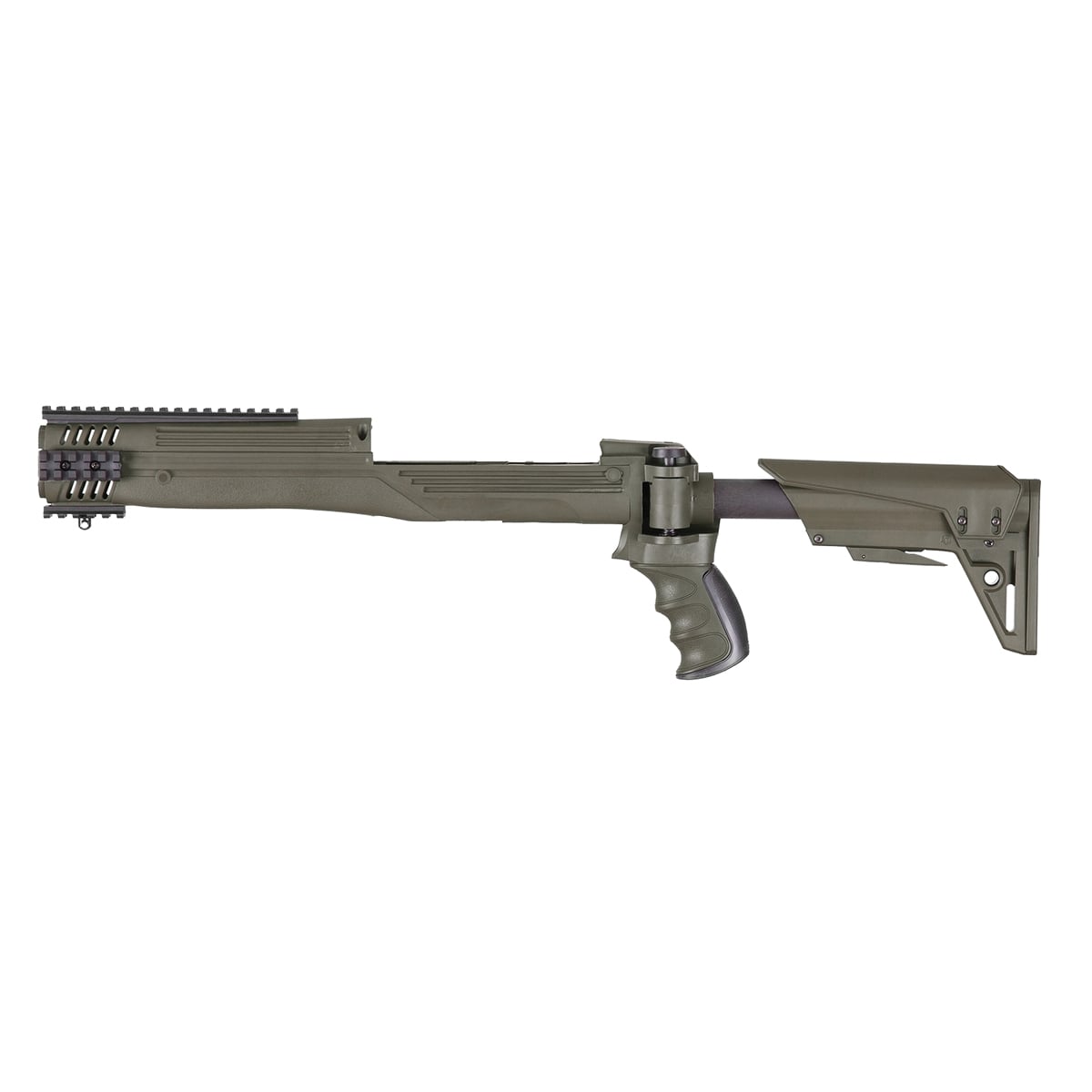
ATI Strikeforce The ATI Strikeforce stock packs in quite a number of features for its relatively low price. The stock is not only able to fold to the side, but can also telescope to adjust length of pull. It is capable of firing with the stock folded as well. Unlike the ProMag stock, the ATI does not offer a complete rail over the top of the receiver. Instead, it relies on the normal optic mounting system that comes standard on the Mini-14. You can add a Picatinny base, or simply use Ruger rings. If tactical features are your goal, this certainly fits the bill without breaking the bank. The stock’s folding capability takes advantage of the Mini-14’s short overall length while still being less than half the price of the Samson model, making it something worth considering for budget-conscious shooters. MSRP: $129.99 // atioutdoors.com.
Ati Strikeforce 6-Position Adjustable Fits Ruger Mini-14/Mini-Th
Unfortunately, there never has been an abundance of available aftermarket options for the Mini-14. In fact, stocks comprise about one-third of the total Mini-14 accessory options on the market. The limited number of options may be a turn-off to some shooters, but if you are just looking to replace a damaged stock, all of the listed options would be suitable, with the Hogue and Boyd’s models being the closest in appearance to a factory original.
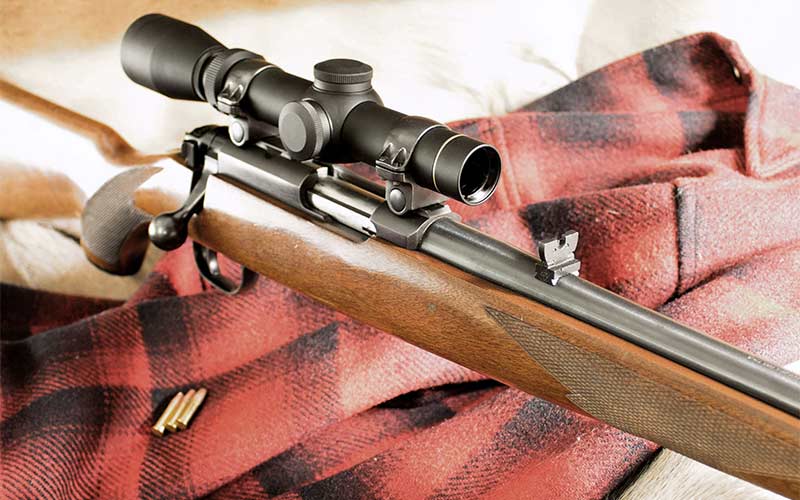
A guide to scope rings, base systems and other scope-mounting solutions.
I’m so accustomed with Mr. Murphy and his Law that I swear we’re somehow related. This concept has been affirmed time and time again throughout my life, especially in those situations where what would normally be an easy fix is rendered unfixable.
I like rifles that are nearly indestructible, sturdy boots of stout construction, rugged riflescopes and mounts and rings that won’t let me down. I’ve had bunches over the years, and all have their good and bad points.
There are all sorts of mounting systems constructed of different materials and in a multitude of conformations. What may be ideal for the target shooter could quite possibly be unacceptable for the mountain hunter, or what works perfectly on a light-recoiling varmint rifle will fall to pieces on a dangerous game rifle.
Ruger’s Rings
The first rifle I ever owned was a gift from my dad—affectionately known as Ol’ Grumpy Pants—when I was a boy of 14 years. It was a Ruger Model 77/22 and remains my favorite rimfire rifle. Chambered in .22 LR, the Ruger rifles came equipped with a set of proprietary steel rings, which represented an intrinsic value to my father: They screw right onto the receiver; there’s no monkey business.
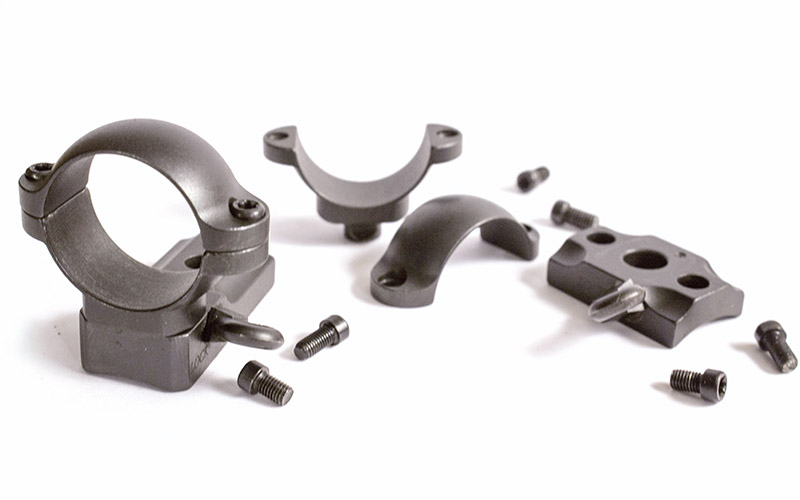
The ring was split horizontally, with the bottom part mating to the recesses in the receiver via a large slotted nut, and the top of the ring using four slotted screws to secure the two pieces together. They work well when properly installed, and I’ve seen them hold zero well even when subjected to magnum recoil from cartridges such as the .300 Winchester Magnum, .338 Winchester Magnum and .458 Lott.
I like the system and, as the mount/rings are included in the cost of the firearm, they do add value to the gun. If I had to find a complaint, I’ve seen a good number of Ruger rings with severely stripped screw heads, and I’ve seen the large nut come loose more than once. But, overall, they work rather well.
Weaver Style
Growing up, the most popular mounting system I encountered was the Weaver base/ring combination. Using machined aluminum or steel bases and steel rings, they were plentiful, attainable and affordable. The cross-slot Weavers were on almost everyone’s rifle, and while they might seem a bit archaic by today’s standards—especially in comparison to some of the modern designs—the deer fell just the same.
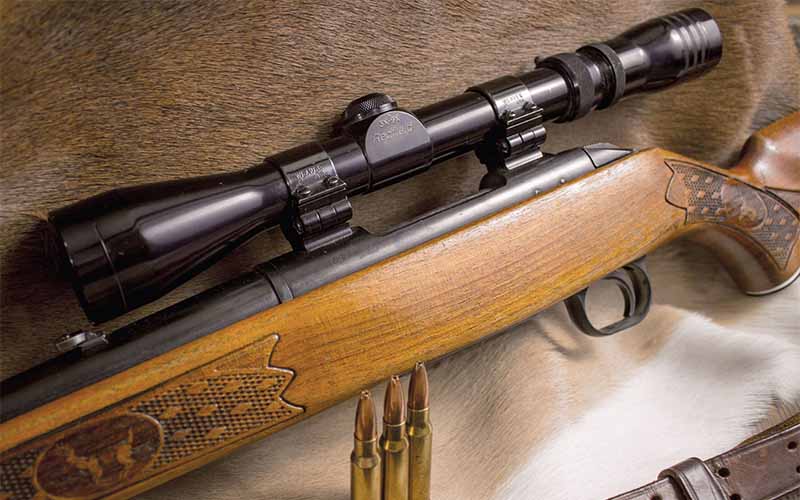
Ol’ Grumpy Pants’ favorite rig: a Mossberg Model 800A in .308 Winchester, with a Redfield scope in Weaver Tip-Off mounts. It still holds zero well.
The Weaver system remains viable and has undergone a face-lift over the years, including steel bases, Picatinny rails and Grand Slam steel bases (designed to mitigate severe recoil). Grumpy Pants bought a set of Weaver tip-off mounts and rings for his Mossberg 800A .308 Winchester to hold his Redfield Lo-Pro 3-9x with the TV rear ocular, which has accounted for more deer than I’ll probably ever shoot, and that system still works to this day. You don’t want to be within 250 yards of that man with that rifle he’s spent the last half-century with.
The Weaver system used to suffer from weak mounting screws—I’ve seen several mounting screws sheared off from heavy recoil—but, of late, it seems to be corrected.
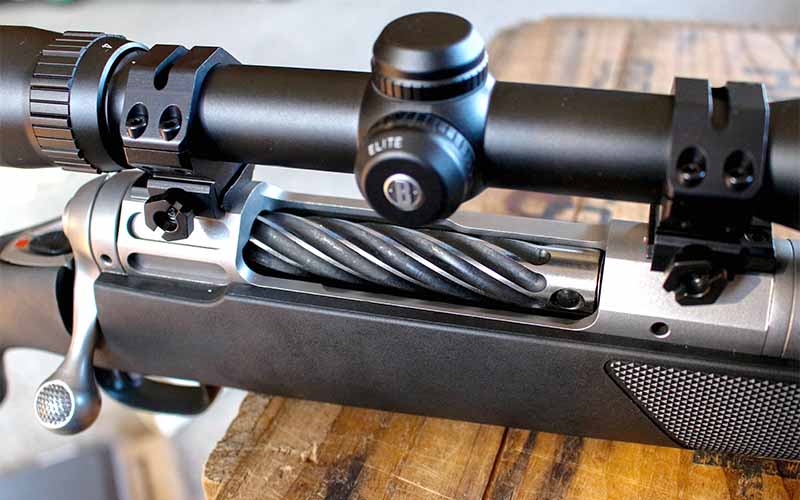
This Savage Lightweight Hunter uses skeletonized Weaver rings to keep weight down.
I recently set up my .280 Ackley Improved Savage Long Range Hunter for a Namibian safari with Weaver mounts, and it held zero perfectly, despite traveling halfway around the world. Weaver continues to produce a very wide selection of bases and rings, meeting almost every need in the shooting world. There are steel dovetail rings, skeletonized aluminum rings, detachable models, six screw variants and more in addition to the Sure Grip model, which remains so popular.
Leupold’s Non-Gold Rings
Leupold bases and rings were another popular choice, though in my circles, they were reserved for those with a larger hunting budget. Leupold’s steel bases and dovetail front ring, with the rear ring with adjustable windage, have become a staple in the shooting world. I’ve had them on many different rifles.
Leupold’s steel QR (Quick Release) rings and bases are a sound choice for those who want to access their iron sights quickly.
These rings—when installed properly and torque to the specified values—can be a wonderful choice, giving a lifetime of service without needing much attention. I’ve seen that rear mount come loose on a hard-kicking .458 Magnum, but the same design held up well to .375 H&H and .416 Remington Magnum recoil. Their dual dovetail rings are rock solid—my Winchester Classic .300 Win. Mag. still uses these to hold a VX-6 2-12x scope—and their Quick Detachable mounts and rings hold up very well to any level of recoil.
Leupold’s steel one-piece base for the 03A3 Springfield rifle. Note the dovetail slot in the front and the dual screws to hold the rear ring.
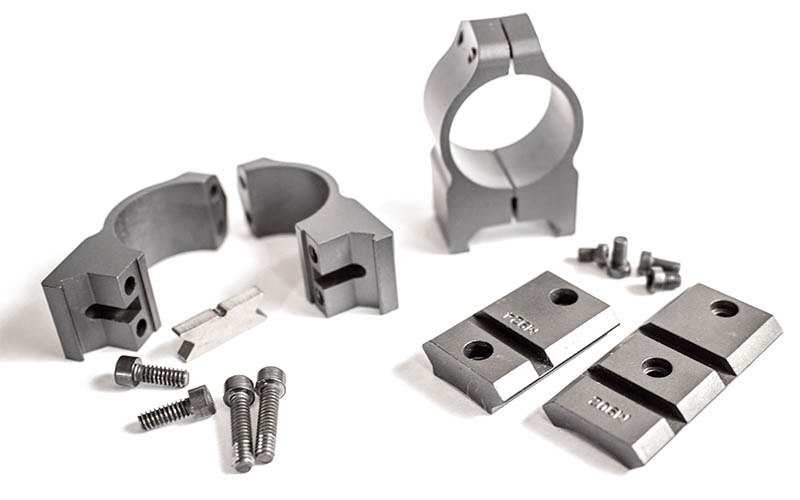
Using Torx-head screws for attaching both bases to the receiver as well as to secure the rings halves, they have proprietary models, as well as models in the Weaver cross-slot/Picatinny design. Leupold’s Backcountry model features an integral base/ring system to increase rigidity while reducing weight, being made from aircraft-grade aluminum. These are an excellent choice for those mountain hunters who count ounces.
As scope tubes continue to grow in order to give more elevation adjustment, rings must grow accordingly. This Leupold Mark 5 is mounted in Leupold’s 35mm rings on a Picatinny rail.
Burris Bases and Rings
Burris makes excellent rings and bases, with some innovative features, which may help achieve the accuracy you’re after. Burris Signature rings use their proprietary Pos-Align inserts to help maintain full contact on the scope tube, properly aligning the riflescope so the scope can “go to sleep” in the mounts. They offer rings in 1-inch, 30mm and 34mm diameter, with bases available for a good number of different rifle models, from hunting to target to tactical models.
The Talley Effect
I’m an unabashed fan of Talley Manufacturing, having used their rings and bases for a number of years. Their vertically split steel rings are machined to extremely high tolerances, their steel bases are equally precise, and the combination of the two have been wonderfully consistent. I review a good number of rifles each year, and early on, I noticed that each time I’d mount a scope in Talley rings and bases it’d take very little adjustment to zero the rifle.
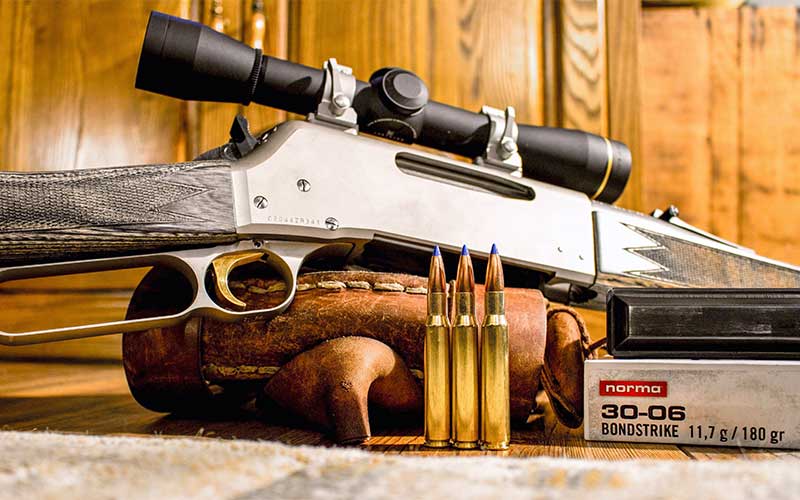
A Browning BLR in .30-06 Springfield, with a Leupold 4x scope in Talley Detachable mounts; the scope returns to zero every time it’s reinstalled.
Talley’s stuff is consistently fantastic, and if the user adheres to the torque requirements specified, no further adjustments should be needed. I’ve taken rifles equipped with Talley rings and bases all over the world with me, and they’ve never failed. They have models available for nearly any rifle—including the CZ and Heym rifles that require an integral ring to match the receiver—and their Quick Detachable Rings with Lever are a great choice for those hunters who wish to detach their riflescope in order to gain access to the iron sights, or for those who wish to circumvent Mr. Murphy and have two different riflescopes, pre-zeroed in rings, for those remote adventures.
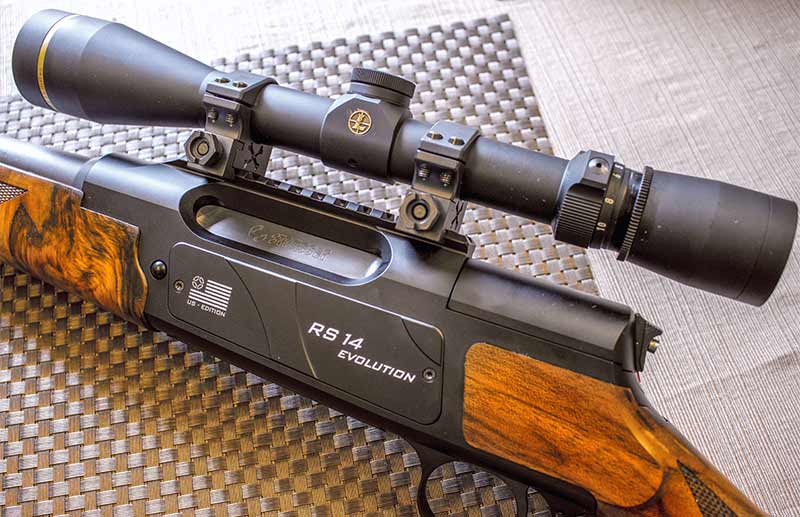
Talley Manufacturing makes great tactical rings, well suited to a Picatinny rail, as shown on this Strasser RS 14 Evolution.
Talley’s Lightweight Alloy Scope Mount is an integral base/ring combination, CNC machined from 7000-series aluminum alloy to both help maintain the fine balance of a hunting rifle, as well as reduce rifle weight for those hunts where the ounces truly count.
I’ve never had to lap Talley rings, as they’re machined to such tight tolerances that it was unnecessary, and I’ve never had an issue attaining a proper zero, with the scope staying generally within the center of its adjustment range. Whether it’s a vintage hunting rifle, a tactical target rifle—Talley’s tactical Picatinny rings are a fabulous choice—or your chosen dangerous game gun, there’s a choice in Talley’s lineup that’ll suit your needs perfectly.
The author’s Winchester Model 70 XTR in .300 H&H Magnum uses fixed Talley two-screw rings to securely hold a Leupold VX-5HD 2-10x42mm in place.
Warne Hardware
Warne rings and bases are a solid choice as well. They too offer a vertically split steel ring, but with a square recoil key to mitigate the effects of recoil. Warne offers these rings in both a detachable and a permanent attach model. They’re simple to install and, in my experiences, hold zero very well. Like any ring/base combination, the screws will need to be properly torqued for best performance. Warne rings are designed for use with their proprietary bases, or for use with Weaver bases or Picatinny rails.
There are many other manufacturers, with similar designs to those I’ve outlined above. For the multitude of MSRs on the market—whose Picatinny rails allow the use of a good many different rings—the possibilities are nearly endless, though the major manufacturers will assuredly offer a sound design for these rifles.
The Warne vertically split steel rings. Note the recoil key used to mitigate the effects of recoil.
And, for the long-range target crowd, there are number of bases that’ll give additional elevation to extend the range of your chosen cartridge/bullet combination. Sometimes, an additional 20- or even 40-MOA can make shots out beyond 1,000 yards much easier.
So, Is One Scope Ring Best?
So, what’s the proper choice for your shooting situation? For my hunting rifles, I prefer a system that’ll allow me to mount my chosen scope as low to the bore as possible, so I can quickly attain cheek weld on the stock as quickly as possible, from almost any field position. I also appreciate a mounting system that’s utterly reliable, especially when I’m traveling to the remote corners of the world. I rely heavily on Talley’s rings and bases; they’ve never let me down, no matter if I was using the fixed model or the detachable model.
I don’t use Loctite or anything of the sort, rather relying on a set of Fix-It Sticks to adjust to the proper torque. Again, in spite of the best efforts of the baggage handlers and their mentor Mr. Murphy, my rifles have traveled the globe without issues when using Talley’s products.
For bases, I generally prefer the two-piece variety, in order to allow spent cartridges to be ejected freely, with no chance of getting hung up on a one-piece base. If it’s a lightweight rifle with the mountains in mind or a light-recoiling gun, Talley’s Lightweight Alloy Scope Mount checks all the boxes for me. The precision of their rings removes the need for lapping, and all of my scopes mounted in this ring/base combination hold zero and give no cause for concern.
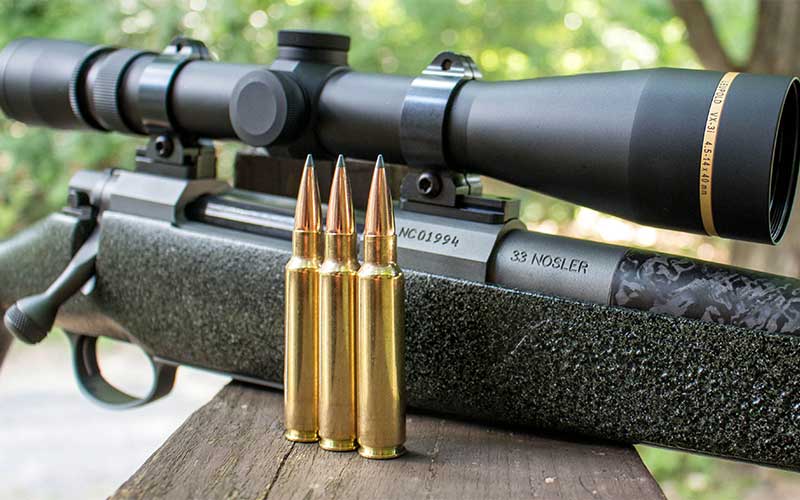
This Nosler rifle wears a Leupold VX-3i scope in Talley bases and scope rings.
For target rifles—where the comb is frequently adjustable to match the scope height—the game will change. This is where the benefits of the 30, 34 and 35mm tubes will be seen, as their adjustment ranges will give the most elevation to achieve the trajectories needed for extreme long-range shooting.
And, as even the most minute shift in point of impact at close ranges will be magnified at extreme long ranges, you want the most rigid and rugged set of bases and rings available for your target gun. I like a wide ring for this purpose, often with six screws per ring, in order to keep the heavier target scopes where I put them.
Not Just Nuts And Bolts
It used to be that scope mounts never even received an afterthought and were considered nothing more than the “nuts and bolts,” which were used to screw the scope onto the rifle. With companies like Conetrol coming onto the scene as early as 1964, shooters slowly became enlightened to the benefits of precision machining and as scope technology improved (it has come leaps and bounds in the last half-century), the importance of quality bases and rings has become ever more evident.
Take a look at the various choices out there and find what works for your particular shooting situation. Having a rock-solid mount for your optic will remove one of the sources of concern in your shooting gear and will make you a better shooter. Grab a torque wrench, some new bases and rings and shoot more confidently.
Editor’s Note: This article originally appeared in the June 2021 issue of Gun Digest the Magazine.
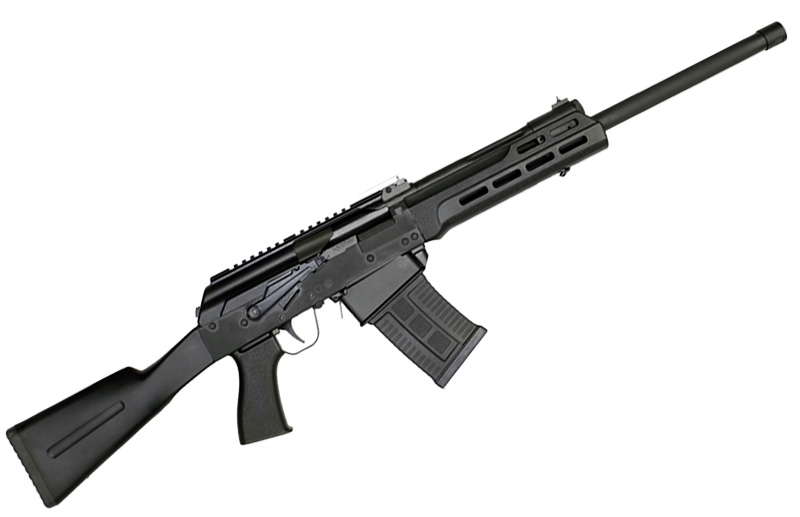
SDS Imports have carried some Saiga-based AK shotgun clones for a while now, but the new VP12 features a magwell and feeds from VEPR-pattern magazines.
We’ve looked at imported AK shotguns before, but most on the market have been patterned after the Russian Saiga-12. Back when Russian-made shotguns were legal to import, the Saiga was the more common and less expensive of the two makes, but VEPRs were universally regarded as the nicer option. There were many reasons for this, ranging from general build quality to extra features, but one of the biggest differences between the two guns was the style of magazine they used. While Saigas used more traditional AK-style rock-and-lock mags, the VEPR featured a magwell and straight-inserting magazines like an AR. This feature made the VEPR-12 the go-to option for competitors who opted to use an AK platform shotgun, but these have been banned from importation into the U.S. since 2017, and the only clones available in the meantime have been Saiga-pattern. Answering the call for a budget 12-gauge AK shotgun that uses VEPR magazines, SDS Imports has just released the VP12.
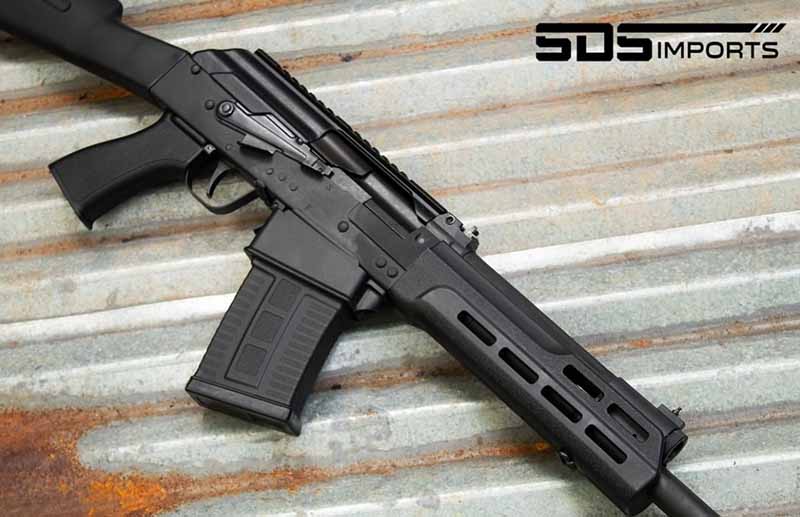
As mentioned, the biggest new feature of the VP12 is its ability to feed from VEPR-12 magazines. OEM mags from Russia have been very expensive since the import ban, but thankfully aftermarket mags from companies like SGM are available and more affordable (including 25-round drums). The biggest advantage of this change from Saiga-pattern is that it will enable faster, smoother reloads. Like the VEPR-12, the VP12 also has a last-round hold-open feature. Other features shared with the VEPR include a railed dust cover for mounting optics, a three-inch chamber and an M22x0.75 RH threaded barrel, but that’s about where the similarities end.
The biggest departure of the VP12 from Russian-made AK shotguns is its left-side charging handle, allowing right-handers to charge the weapon without removing their firing grip. This should help expedite reloads as well, making the VP12 even more appealing to competitive shooters. The VP12 also features a 4-position manually adjustable gas regulator as opposed to the VEPR-12’s “self-regulating” system, so make sure to appropriately dial it in for whatever ammo you happen to be running if you get one. Each VP12 includes one 5-round mag, has an MSRP of $489.95 and they are available now.
For more information on the VP12, please visit sdsimports.com.
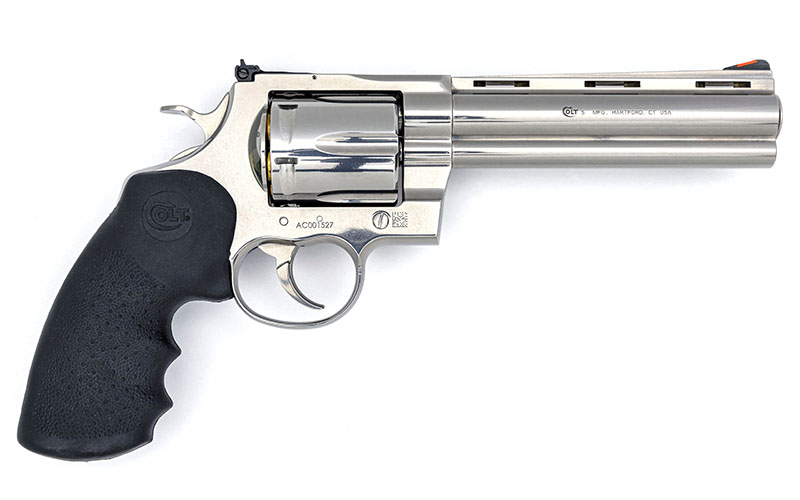
The Colt Anaconda was reintroduced in 2021. It’s new, but has it been improved?
New “Snake Guns” have been rolling out of Colt Manufacturing since the Cobra came out in 2017. Since then, the Cobra line has been expanded to include several versions in .38 Special +P and .357 Magnum. More big news came in 2020 when the Python was reintroduced and again became a bestseller. The biggest news, however, is that after an 18-year absence, 2021 has seen the reintroduction of the Anaconda.
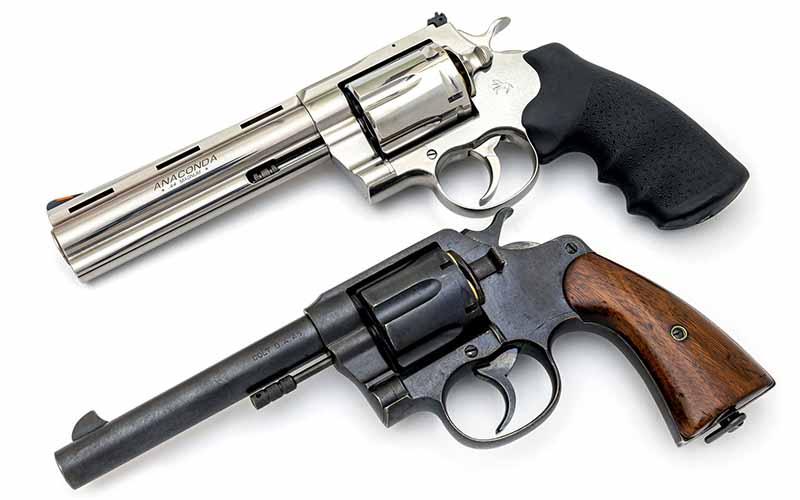
This large-frame revolver is the great-grandson of the Colt New Service, a large-frame swing-out cylinder, double-action (DA) revolver first introduced in 1898. This big wheelgun became the platform for the Colt Model 1909 and Model 1917—both used in wartime by the U.S. Military. It was also issued by the U.S. Border Patrol and the NY State Police among other law enforcement agencies.
The New Service was dropped from the Colt catalog in 1944. Other than the Single Action Army revolver, Colt didn’t have a large-bore revolver until 1990, when production began on the Anaconda. Chambered in .44 Magnum and .45 Colt, it looked like an enlarged Python, with its vent-rib, full-underlug barrel. It stayed in the catalog until 1999, was dropped, then reemerged in 2001, only to be dropped again in 2003.
The Anaconda is a descendant of the large-frame Colt New Service revolver (bottom); this version is the Model 1909, made for the U.S. Army in .45 Colt.
Ever-Evolving Snakes
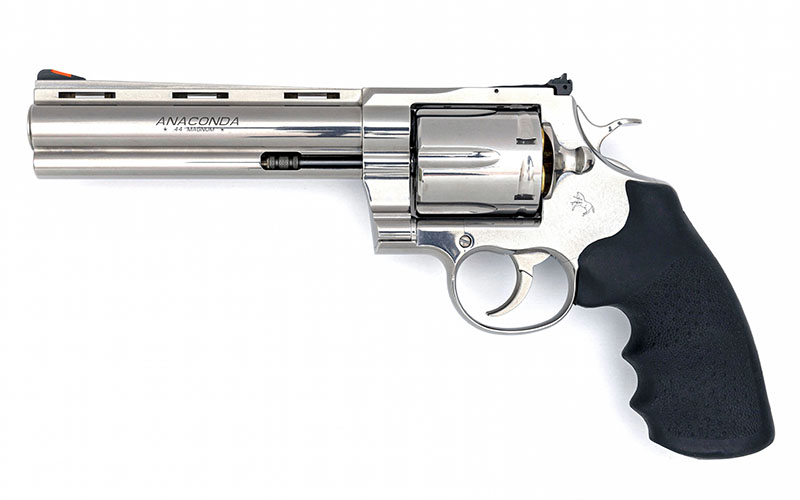
While the original Anaconda resembled the Python externally, it had a completely different action. The new 2021 Anaconda actually has the same action as the 2020 Python (it has just been enlarged). Using a U-shaped, dual-action leaf spring, the Anaconda—like the Python—has a smooth 9.5-pound DA pull and a single-action (SA) pull weight on my example of 5.1 pounds. Barrel lengths of 6 and 8 inches are available, and my 6-inch version has an overall length of 13 inches, with an empty weight of 59 ounces. That makes for one huge six-gun.
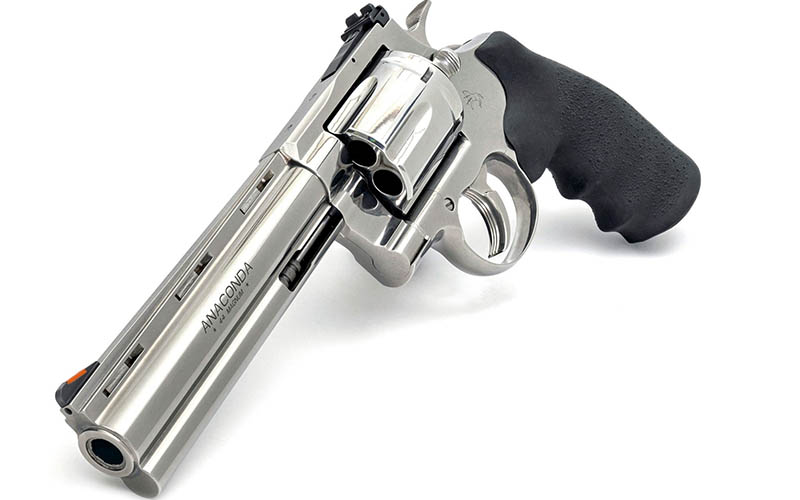
It’s forged from stainless steel with a “semi-bright” finish, and, according to Colt, the frame has been “bulked up” to allow continuous use of .44 Magnum cartridges. Of course, you can also use .44 Special and even .44 Russian ammunition for reduced recoil. The muzzle of the vent-rib barrel has a recessed target crown, and the ramp front sight has a red insert.
In this image you can see the sloping front sight base atop the vent rib; the rear sight is fully adjustable for windage and elevation.
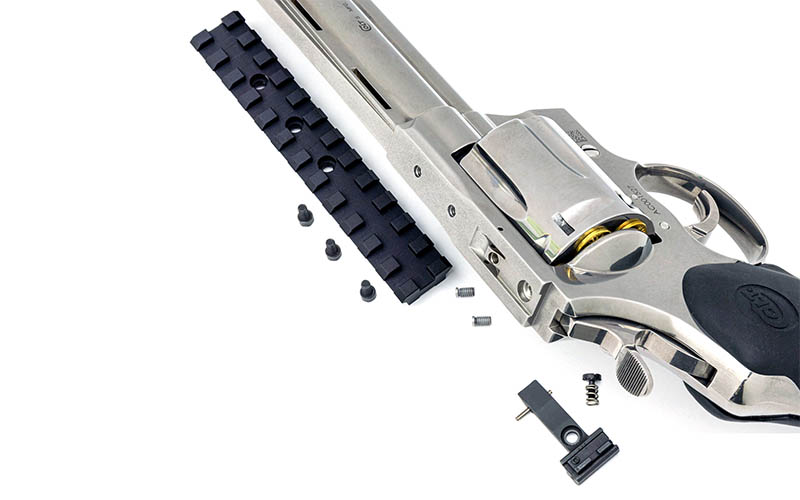
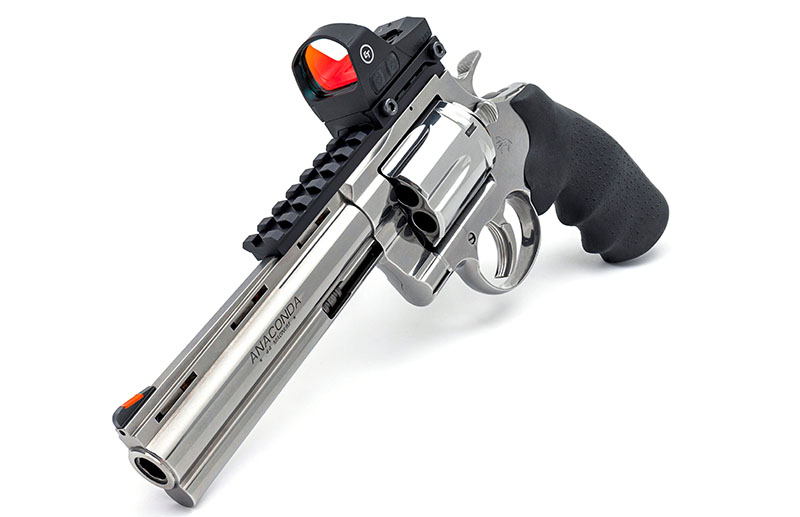
The sight is replaceable using Allen key and front sight base tapers down from the muzzle to the juncture of the barrel and frame. The blue steel rear sight is fully adjustable for windage and elevation. Beneath the rear sight, the top-strap is drilled and tapped for a Picatinny rail available from Colt as an option. Interestingly, this rail has a center “gutter,” which, with the optical sight removed, could act as a rudimentary fixed rear sight.
With the rear sight removed, an optional Colt Picatinny rail can be fitted to the Anaconda, allowing the use of optical sights. Removal is easy, but mind that coil spring!
Typical of Colt DA revolvers, the cylinder release latch is on the left side of the frame and is pulled rearward to unlock the cylinder, so it may be swung out on its crane for loading. The ejector rod is pushed rearward to extract spent cartridge cases and is of sufficient length to do this handily. You’ll note that the chambers in the cylinder aren’t rebated, as this is unnecessary with modern ammunition.
Besides the Python action, the Anaconda also uses the same 2020 Python configuration for the grip frame. Standard equipment is recoil-absorbing Hogue over-molded, synthetic Monogrips, which are black in color and Colt branded, with pebble-grain side panels and finger grooves. You can also fit your Anaconda with any grip that’ll fit on the 2021 Python.
The Anaconda comes in a Colt Blue plastic gun case, which is foam-rubber lined on the inside. Contained within is a security padlock, owner’s manual and a sample of Lucas Oil Extreme Duty gun lubricant. Overall fit and finish on the Anaconda was up to standards, and no exterior flaws were observed. The markings on the gun were minimal and tasteful.
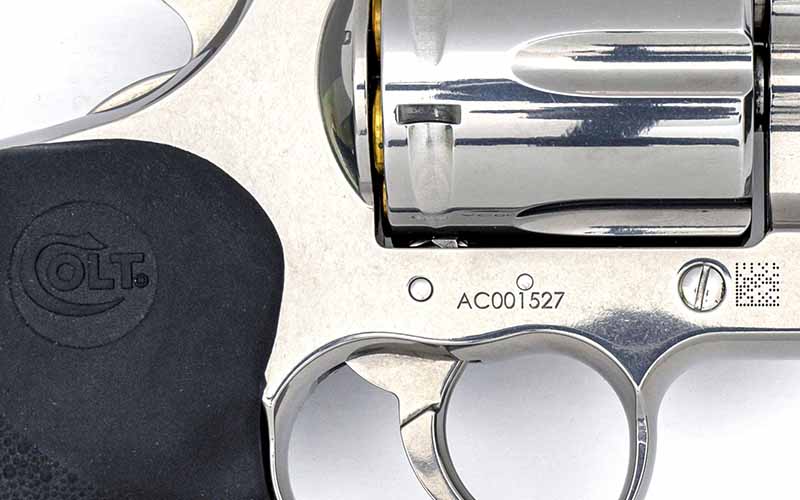
Besides the Rampant Colt stamping on the frame below the cylinder latch, the left side of the barrel has the Anaconda lettering and below it “.44 Magnum.” The right side of the barrel has a small Colt’s Manufacturing logo. Above the trigger, on the right side of the frame, is the serial number. An inch or so ahead of that is a QR code—something to baffle us old-timers.
But, Does It Shoot?
For testing, I wanted to use both .44 Magnum “hunting” ammo and some high-performance .44 Special cartridges suitable for self-defense. For putting down four-legged game or predators, I chose American Eagle (by Federal) with conventional 240-grain JHP bullets, Sig Sauer V-Crown 240-grain JHPs and Remington’s hard-charging, 275- grain Core-Lokt JHP.
In .44 Special, I chose some vintage CorBon 165-grain JHP rounds that have an impressive hollow-nose cavity, and some newer DoubleTap Ammunition loads that have what looks like a 200-grain Gold-Dot-style cup-shaped hollow point. I felt these would do the job on two-legged predators, and I was later surprised by the velocity of the CorBon load.
The CTS-1400 red-dot has a unique side-mounted, sliding battery compartment just below the CT logo. The Colt-made rail has a gutter in the upper center that can serve as a rear sight if all else fails.
I was interested in seeing how an MRD sight would work on the Anaconda, so I removed the factory rear sight and installed the Colt Picatinny rail. This turned out to be less trouble than expected. Since the sight would be attached to a .44 Magnum, I went with a CTS-1400 from Crimson Trace that’s intended for heavy-recoiling long-guns. This reflex sight has a 3.25 MOA red-dot and a wide field of view. It’s made of aircraft-grade anodized aluminum and, at 2.9 ounces, doesn’t add much weight to the six-gun. It’s also shock-resistant and has a coated lens for clarity.
One of its most notable features is an external side-mount battery compartment for a single CR2032 battery. Many MRD sights have to be removed from the gun to replace the batteries; this one doesn’t. Dot intensity is adjustable using push buttons on the left side of the sight. They also work as on/off switches, and the sight will deactivate itself if it detects no movement after a short period of time.
With the rail installed, the author mounted a Crimson Trace CTS-1400 MRD optical sight on the Anaconda. This sight is made for hard-recoiling rifles and shotguns.
Its windage and elevation is adjustable, with one click equaling 1 MOA. With it mounted, it didn’t take but a few rounds of American Eagle 240-grain JHP loads to get it hitting a big V-shaped steel plate at 50 yards in both SA and DA modes, sitting and standing. It was undisturbed by the .44 Magnum recoil, and most impressive was the fact that the battery compartment didn’t slide open while shooting. I was satisfied with its performance and features, but I removed it and replaced the adjustable sight for the remainder of test.
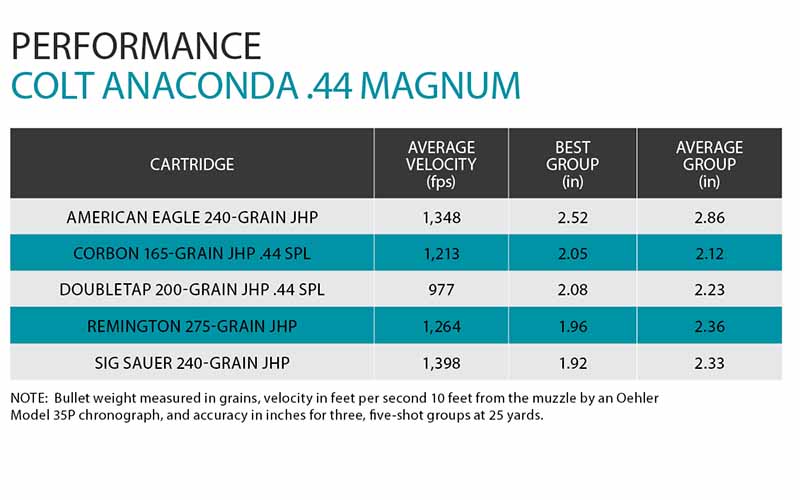
For my accuracy potential evaluation, I shot the Anaconda from the bench, over a sandbag rest, at standard slow-fire bull’s-eye targets placed at 25 yards, with all shooting in the SA mode. Three five-shot groups were fired with each test load, and I measured velocity using my Oehler Model 35P chronograph while punching paper.
You can see the velocity data in the accompanying performance table, but the best five-shot group measured 1.92 inches using the hot Sig Sauer V-crown .44 Magnum. Second place went to the Remington heavyweight, with a 1.96-inch group. In .44 Special, the aged CorBon load shot to 2.05 inches, and the best DoubleTap group measured 2.08 inches.
I shot at the same steel plate at 50 yards, triggering the shots SA using the factory sights and a mix of the .44 Magnum loads, as they shot to point-of-aim better than the lighter .44 Special cartridges at that distance. When I did my part, the steel rang. I felt that if I could get good hits on that target at 150 feet, then I could also score on one of the local whitetail bucks at a similar distance. The gun’s weight, combined with the grips, really helped soak up the recoil, and it ran all day at the outdoor range with zero malfunctions.
New…But Improved?
I tested one of the original Colt Anaconda revolvers back in 1993. My test gun then was a .45 Colt; I sure wish I still had it. From what I can recall, I’d have to say the action on this new-version Anaconda is far superior. Colt really did their homework on the 2020 Python action and the resulting increased-size Anaconda version.
The trigger is just wide enough and has three grooves on the face that don’t abrade the index finger. There was a small bit of take-up and no over-travel. Fine serrations on the target hammer spur allows good thumb purchase for cocking. Empty cartridge cases ejected with aplomb, with a good rap on the ejector rod, and the revolver held muzzle up. The red ramp front sight permitted fast sight picture acquisition, while allowing for precision—something I can’t say for a fiber-optic front sight.
In short: I was impressed with the Anaconda’s workmanship and its performance. Like the original Anaconda, I’d like to see it offered in .45 Colt; other than that, I have no complaints. Grab one if you can!
Editor’s Note: This article originally appeared in the August 2021 issue of Gun Digest the Magazine.
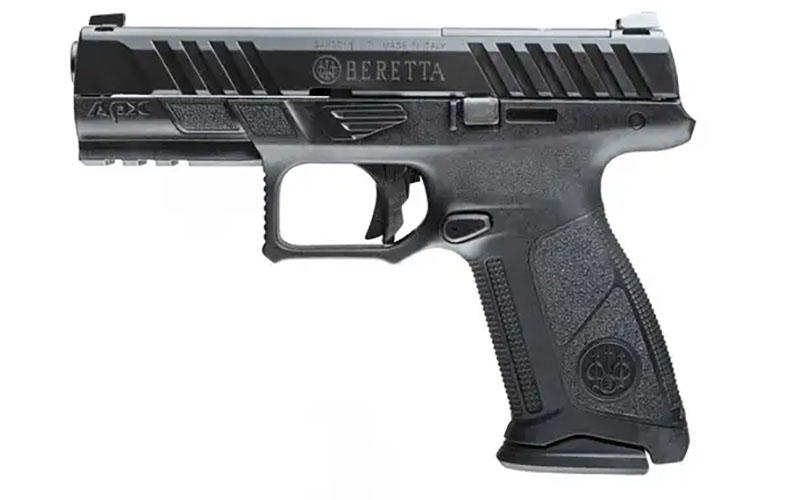
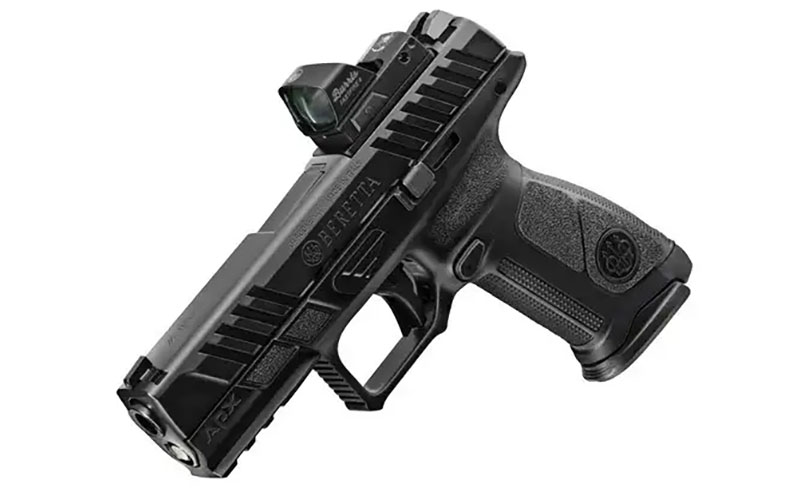
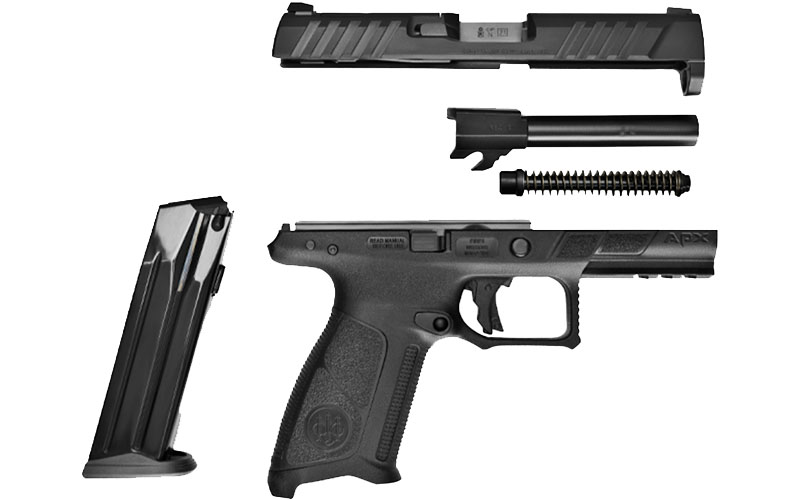
Beretta has just announced the APX A1 FS pistol, a new full-size installment in the APX family.
Beretta’s APX family of handguns are polymer-framed, striker-fired pistols that are primarily chambered for 9mm. The original models were offered in three different sizes, but by modern handgun standards, they’ve begun to lag behind the pack in terms of features. This is why in 2021 Beretta released an upgraded version of the APX Carry that they called the APX A1 Carry, adding features like an optics-ready slide and improved ergonomics. Now, Beretta has announced that they’ve given the same treatment to the full-size APX model with the release of the APX A1 FS.
The most substantial addition to the APX A1 FS is obviously the optics-ready slide, a feature that’s almost become a necessity for modern handguns. The slide is milled to accept one of four Beretta optic plates that allow the mounting of Shield, Burris, C-More, Holosun K Series and other compatible micro red dot sights. If putting optics on pistols isn’t your thing, the APX A1 FS also comes with a tritium front sight with a white outline for improved irons shooting both day and night.
The next big improvement has to do with ergonomics. Details of the pistol’s frame, grip, slide and trigger guard have all been modified to provide a more natural-pointing, lighter-recoiling shooting experience. The grip’s profile has been straightened, the beavertail has been extended, the slide serrations were made to be more aggressive and texturing was added to the front of the trigger guard. Like the original APX, the APX A1 FS comes with three interchangeable backstraps as well.
Each Beretta APX A1 FS will include two 17-round mags (reduced capacity available for ban states), a case, three backstraps, a cleaning rod and a cable-lock. MSRP is $529 and it’s available now.
Benefitting from a training course requires the right mindset if you want to improve your defensive shooting skills.
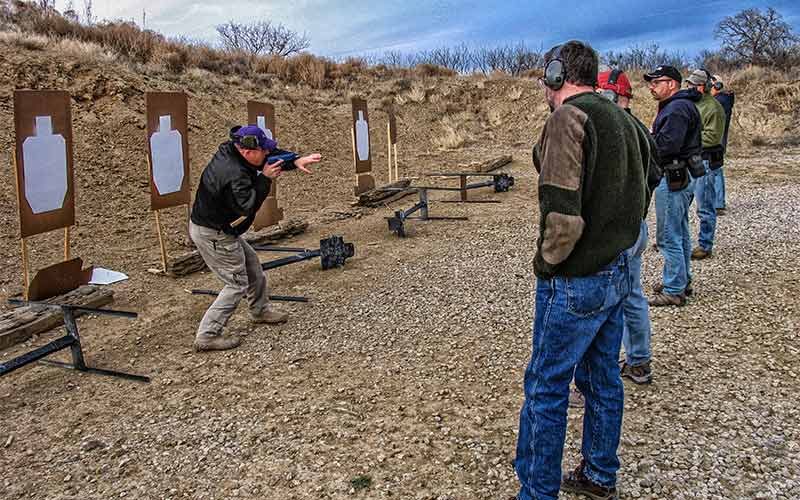
Mindset—the mental attitude or inclination of someone as it relates to self-defense—is discussed a lot, and rightly so. As Col. Jeff Cooper so astutely observed, “Man fights with his mind.” One aspect of this that doesn’t receive enough attention is mindset as it relates to attending firearms training schools.
Weapon craft can be improved through instruction, but only if you open your mind.
Having spent a good part of my life in firearms training classes provided by the military, law enforcement and private schools, I’ve found that some students who attend these courses are more interested in showing off than learning. They treat courses as an opportunity to exhibit their skills. In some cases, maybe these arrogant students actually do know more and even have more experience than the instructor. But that doesn’t matter; the goal of participating in a training course is to learn.
You might learn a new way of doing things that works better than your way of doing things. Or you might learn that your current method of doing things works better than the new way you’re being taught. However, for this to happen, you must attempt to learn what’s being presented. As the American philosopher John Dewey observed, “The most important attitude that can be formed is that of desire to go on learning.”
If you take a firearms training course, the probability is high that someone in attendance will want to argue with the instructor…or at least present an opposing view to many of the lessons presented. Just as likely is the student who refuses to try the techniques that are offered, justifying their unwillingness to learn with comments like, “This is the way I’ve always done it,” or “This works better for me.” I’ve always thought this a somewhat perplexing approach to paying for a learning opportunity.
An open mind and a willingness to try something different is how you discover new techniques.
The school Jeff Cooper founded in Arizona, now known as Gunsite Academy, has been teaching soldiers, citizens and cops how to fight with a handgun since 1976. Tuition isn’t cheap, nor should it be; the doctrine that drives the instruction there has been proven. According to Gunsite Academy CEO Ken Campbell, they occasionally get students who show up to show off instead of to learn. Why would someone spend the money to go to a school and refuse to try what’s being presented?
It reminds me of my youth. After I got my driver’s license, I proceeded to prove to my father and everyone in our community that I could wreck an automobile in a variety of unimaginable ways. Among other forms of disciplined learning, my father enrolled me in a defensive driving course so I might rectify my ways. The class was full of others who, for a variety of reasons, had proven that, like me, they were unsafe automobile operators. Some of these non-driving fools argued with the instructor or tried to impress them with their knowledge. I’d managed to convince myself that I wasn’t a very good driver, and I paid attention. I learned some valuable lessons that have stuck with me for 40 years.
Showing off isn’t part of the firearms educational experience. In fact, the process of learning is more important than your grade or score.
Defensive Driving
Now, don’t get me wrong: I’m not suggesting that no matter what a firearms instructor tells you to do, you do it. I’ve heard horror stories of unsafe training practices and have seen some examples of the same on the internet. Never participate in any firearms activity that you feel is unsafe or that you feel you’re not capable of conducting safely. Of course, you can avoid situations like that by attending reputable training schools. What I’m suggesting is that you attend a firearms training course with the attitude that you might gain knowledge that’ll develop your skills so that they have a better chance of saving your life.
Having a proper learning mindset starts with curiosity and the willingness to look at things in a different way. It involves the intellectual and social maturity that accepts the premise that learning is more important than the grade you might be given. It requires that you place value on the mistakes and failures you experience. It also requires that you look for relevance in the content of the lesson and that you move beyond preconceived notions and ideas. And finally, to learn, you must be willing to be challenged to go beyond, and to develop a depth as opposed to a breadth of knowledge.
Weapon craft can be improved through instruction, but only if you open your mind.
Seek out as much and as varied firearms and self-defense training as you can afford to devote time and money to. But do so with the goal of learning and developing your weapon craft…otherwise, you’re just wasting time and money. If you think you know more than experienced instructors, or that your way is better than that presented by proven training institutions, start your own firearms training school. You might even get a few students to show up. Maybe, some of them will even know more than you.
Editor’s Note: This article originally appeared in the 2021 Buyer’s Guide special issue of Gun Digest the Magazine.
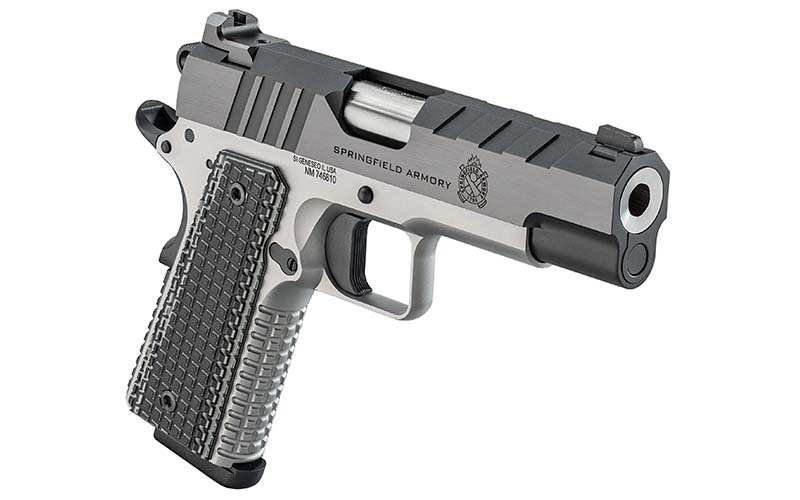
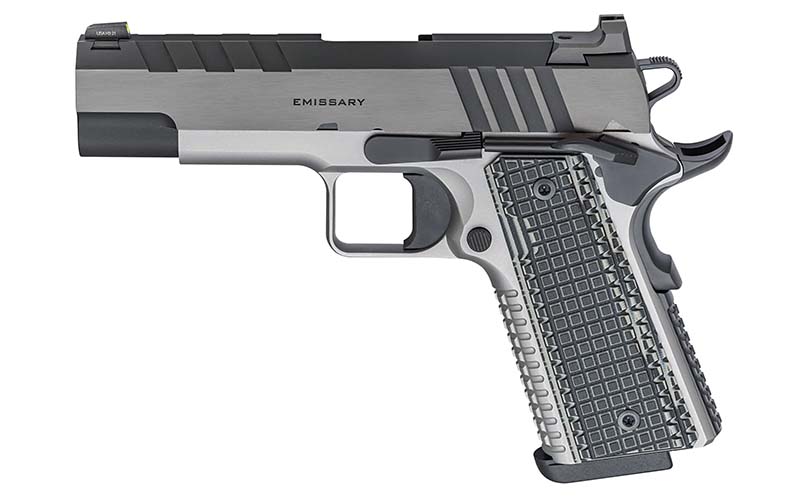
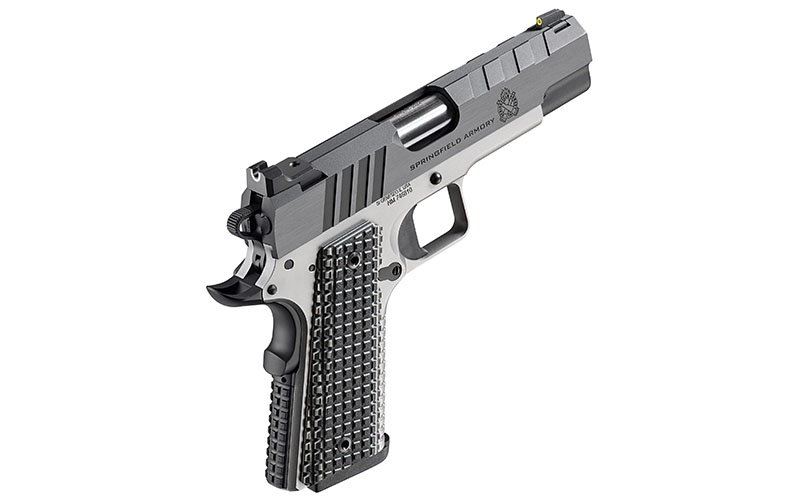
Springfield Armory’s .45 ACP Emissary already received the compact treatment, but now the 9mm Emissary is available with a 4.25-inch barrel as well.
Springfield Armory introduced the Emissary 1911 in .45 ACP in 2021, and its release made some waves in the defensive handgun world. Springfield described the pistol’s features as “bridging the gap between duty and custom handguns,” and they certainly had a lot of appeal in terms of both form and function. While full-size, .45 ACP 1911s are the truest to Browning’s original design, many feel that there’s room for improvement for models designed to be carried concealed. For those who were interested in carrying a Springfield Emissary but were holding out for a model with more CCW-friendly features, the 4.25-inch 9mm Emissary 1911 is now available for your consideration.
Most of the new pistol’s features are consistent with the rest of the Emissary series. Regarding manufacturing quality and strength, this includes its forged stainless steel frame, forged carbon steel slide and bushingless stainless steel 4.25-inch bull barrel. Ergonomic enhancing features include the distinctive square, enlarged trigger guard, the flat-faced trigger and its slim, VZ G10 grip panels. The front strap and mainspring housing are aggressively textured as well. Other features that enhance the new 9mm Emissary 1911’s defensive capabilities include the tritium front sight, Tactical Rack U-Dot rear sight, and a machined “Tri-Top” cut slide that helps to prevent glare. The pistol also shares the same two-tone finish as the other Springfield 1911s in the Emissary series.
Steve Kramer, VP of Marketing for Springfield Armory, said this on the 4.25-inch 9mm Emissary:
With its more compact slide and barrel length and the ever-popular 9mm chambering, this newest addition to Springfield Armory’s 1911 family of pistols provides an excellent option for a defensive handgun with an added level of refinement…
Each 4.25-inch 9mm Emissary 1911 will include two 9-round mags and have an MSRP of $1,349.
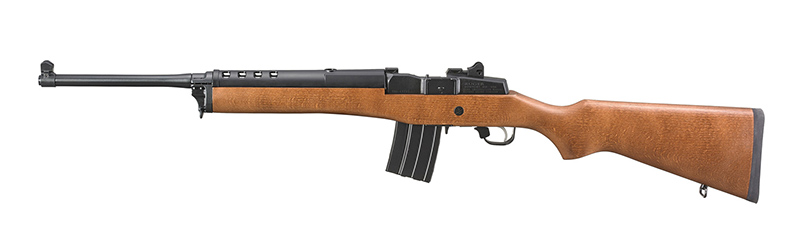
The Ruger Mini-14 and Mini-30 may have never been adopted for mainline military service, but their features still make them a very practical choice for many American shooters.
Few modern rifles have enjoyed such a love/hate relationship with the gun community as the Ruger Mini-14. Aspects of its design and marketing have resulted in criticism as well as praise, but we’ll dive into those details later on. Regardless of your own opinion on the Mini-14, it’s certainly proven itself to have staying power and has done a good job of filling a niche that many Americans require. It may not be the rifle for you, but that doesn’t mean it doesn’t have a place in the contemporary gun market.
The Mini-14 was officially released in 1973. Its design took advantage of Ruger’s advanced investment casting capabilities and was centered around a gas operation system and action that was very similar to those of the full-size M1 Garand and M14 rifles it resembles. While the Mini-14 may look very similar to its larger counterparts, it is substantially smaller and shares no interchangeable parts.
Mini-14 History: Too Late To Make A Difference
When the Mini-14 was introduced, there was something of a market vacuum. The space-age M16 had only been first fielded in Vietnam in 1965, and its initial problems resulted in a poor reputation that lasted many years. Many soldiers would never forgive the subpar reliability they experienced with their M16s, especially after facing enemies armed with reliable AK-47 and SKS rifles.
The M14, on the other hand, was an extremely rugged and powerful rifle that was praised for being much more reliable than the M16. Just as large as the M1 Garand, which itself saw considerable jungle warfare against the Japanese during WWII and in Korea shortly after, the M14 was not well suited for the tight spaces and close-range, high-volume firefights in which the AK-47 excelled. It was reliable enough, but it wasn’t well-suited to the environment it was pressed into.
Going to a rifle better than the M16 at this time would not only have been a major embarrassment to the government, but it could have also meant co-opting a Kalashnikov design and acknowledging that the Russians had made a better service rifle. While not necessarily intended for use as a service rifle, the introduction of the Mini-14 in 1973 was an interesting juncture of private venture and military features.
The lead engineer for the Ruger Mini-14’s development was L. James “Jim” Sullivan, the man responsible for originally scaling down Eugene Stoner’s AR-10 into the now ubiquitous AR-15. Since both miniaturization and the relatively new .223 Remington cartridge were things that Sullivan was already familiar with, his heading of the project was a natural choice.
Ruger Mini-14 vs. M14.
By the time the Mini-14’s design was finalized, the rifle essentially used a Garand action. This resulted in a superbly reliable and clean-running gun, neither of which were accurate descriptors of the M16. While the U.S. military was aware of the design, the last helicopter left Saigon in 1975, making the rifle’s 1973 introduction too late for there to be any significant military interest in the benefits of the Mini-14.
Commentary on the rifle’s design was interesting. The competing Soviet Union was issuing weapons that largely shared the same manual of arms despite variances in caliber or role. If you knew how to use an AK-47, you could also operate an RPK, SVD and many other weapons in the Soviet arsenal. While the American suite of arms had great potential to accomplish something similar, the adoption of the M16 prevented this by introducing an entirely new manual of arms. It would have made tremendous sense to issue another rifle based on the Garand action; two or three generations of soldiers had already used them at that point in history and it was a mature platform. Miniaturizing it would have made sense at the time as a way to expedite training, however, the selection process for the M16 was rife with corruption and it resulted in a large amount of preventable death early on. Much of the M16’s initial problems were caused by the issuing of ammo with the incorrect powder type, however, and most of the reliability problems had been addressed by the introduction of the M16A1 in 1968.
Gun Bans And The Mini-14
With little prospect of military adoption after 1975, the Mini-14 would go on to focus on commercial sales. It likely would have faded off into the used racks at your local gun shop along with dozens of sporting rifles from the ‘60s and ‘70s if not for the various so called “assault weapons” bans across the country that prohibited certain cosmetic features. The Mini-14, for much of its recent history, has been a sanitized ‘safe’ semi-auto that only makes it onto the ban lists when a politician is extra dedicated to securing the bleeding-heart vote.
The rifle’s association with assault weapon bans became a source of controversy during the dark days of the ‘90s, as Bill Ruger himself penned an infamous letter in 1989 that voiced support for certain aspects of gun control, including limiting magazine capacity. This resulted in a great deal of speculation, as the Mini-14 was exempted from the ban, and some are convinced to this day that this was a result of Ruger’s personal lobbying for what some called ‘reasonable’ measures. Whatever the truth in the matter is, Bill Ruger, a true luminary in gun design and manufacture, is seldom mentioned nowadays as a result of what many feel was a deliberate betrayal for company benefit. The nail in the coffin for many was that, in the very same letter, Ruger essentially agreed with the notion that ‘reasonable’ people didn’t need guns with certain features, labeling his own designs as mere sporting implements.
The subjects’ weapons from the Miami FBI shootout laid over orange, including a Mini-14. Photo: FBI/Miami-Dade PD.
Ruger Mini-14, Miami Shootout And Beyond
Ruger’s controversy was further compounded as militia movements in the ‘90s gravitated towards the Mini-14 and the fact that it was used by some very high-profile criminals, further damaging the whole ‘sporting’ notion. The 1986 Miami FBI Shootout was so bad for the FBI that they ended up completely changing their suite of arms after facing the Mini-14. Canada has seen two massacres with the Mini-14, and both of which dramatically changed Canadian gun laws. Likewise, Norwegian mass killer Anders Breivik and American serial killer Robert Hansen also used the Mini-14 in a less than desirable manner. The amazing part of the Mini-14’s history is that it not only dodged most bans, but it continued to maintain the reputation of a simple ranch or recreational rifle. Despite these terrible uses, the most famous individual to use the rifle has to be Hannibal Smith on the A-Team, and most are content to leave it that way.
Hannibal Smith of the A-Team with his iconic folding-stock Mini-14. Photo: Official A-Team YouTube.
The Mini-14 Today
While not nearly as popular as the AR-15, the Mini-14 has seemingly overcome its mixed past and has become a common alternative for the AR in states that have adopted bans on cosmetic features such as pistols grips or flash hiders. The Mini-14 is perfect for this role; it is exceedingly reliable, and the new ones have eliminated many of the known issues with the design such as lackluster accuracy. The ‘vintage’ crowd likes it quite a bit, and thanks to the exploits of the A-Team, there is a healthy interest in TV replicas with folding stocks.
Samson Manufacturing A-TM Mini-14 folding stock.
The rifle has been updated with modern features like a threaded muzzle to allow the mounting of a suppressor or other muzzle device. Currently, there are 16 models of Mini-14 available in the Ruger catalog, and an additional six of the Mini-30 variant.
Mini-14 Calibers
The Mini-14 and Mini-30 are currently offered in three calibers. The Mini-30 is only offered in 7.62x39mm for all six of the available models. The Mini-14 has 15 models chambered for 5.56 NATO, and one model chambered in .300 Blackout. All of them are mild recoiling and very reliable, the only exception being the .300 Blackout model when firing some types of subsonic ammunition without the aid of a suppressor, but this is true of most semi-auto .300 Blackout rifles and carbines.
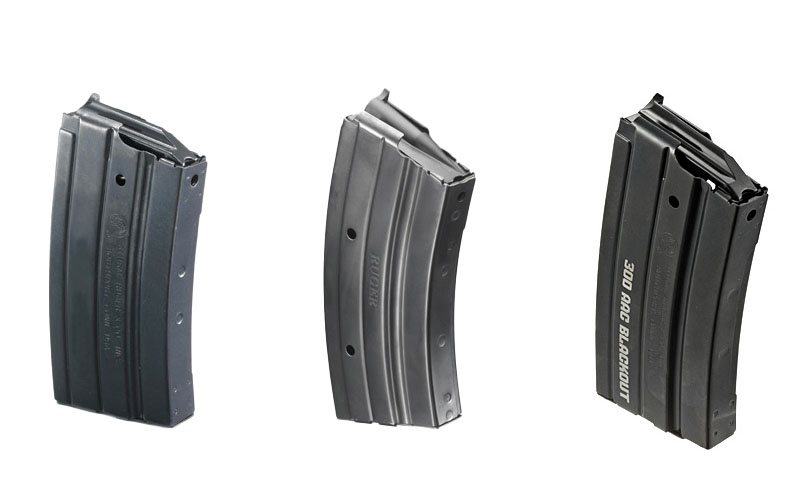
Twenty-round Mini-14 magazines in all three available calibers: .223/5.56 (left), 7.62×39 (middle) and .300 BLK (right).
The 5.56 NATO-chambered rifles are the most common and offer a very soft shooting experience. Recoil is minimal and the rifle is very easy to use at medium distances using just iron sights. Unlike the larger M1 and M14/M1A rifle, the Mini-14 won’t bruise your cheekbone if you shoot nose to receiver. The Mini-14 is a suburb rifle when it comes to reliability, the Garand-style action is known for its ruggedness and ability to power through even when very dirty. The brass kicks out yards away in most cases and your odds of a double feed are very slim with one of these rifles.
AC-556
While not used by the American military in any real capacity, Ruger did introduce military and police versions of the Mini-14, most notably the select-fire AC-556. Government-type models did exist, some with integrated bayonet lugs. It has been over twenty years since Ruger produced this version, and they have since stopped servicing them. The AC-556 did achieve some popularity in police circles, but it never gained mass traction either. A substantial number of AC-556 rifles ended up in Hollywood, where they have achieved lasting fame.
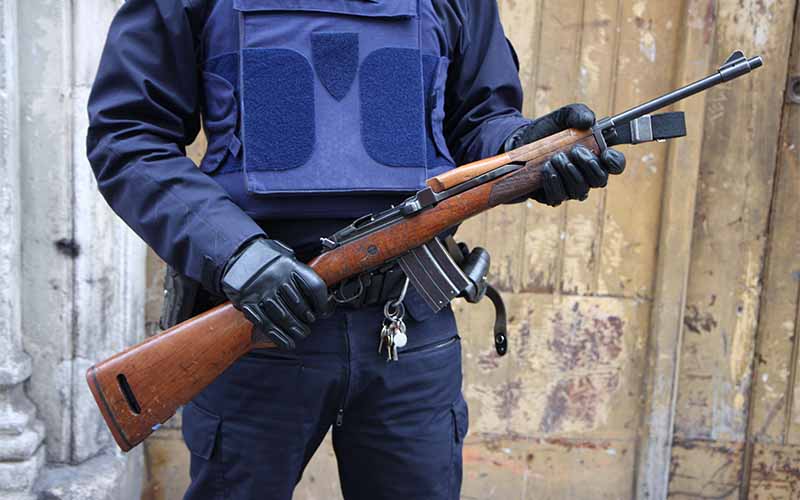
France has widely distributed their version called the A.M.D to various police units, and various world militaries and security forces have used other modified variants of the Mini-14. It has never been a nation’s primary service rifle, though it has substituted for one in small or minor regiments across the globe. The curious thing about this is that the rifle has enviable reliability, even better than many existing service rifles and is easily on par with most AK variants. Time and circumstance ultimately led to its footnote status as a military arm, as it was seldom in the right place at the right time to be considered.
French police officer with an A.M.D. Photo: Wikipedia.
Mini-14 Vs. Mini-30
Ruger’s move to make their Mini-14 in .30-caliber came as the result of the (bygone) days of cheap Russian and ComBloc imports of 7.62x39mm guns and ammunition. The Mini-30 was born as a result and has remained largely unchanged since it was introduced. To this day, the Mini-30 remains a popular short-range deer rifle in some parts of the country, but it is largely overlooked for the AK and AR platforms thanks to the large aftermarket support for the latter two. Aside from some parts and chambering, the Mini-30 and Mini-14 are the same rifle in all the ways that matter. Time will tell how long the Mini-30 remains in production as the squeeze for all things Russian has already started. Unless a US maker steps up with cheap 7.62x39mm, the fate of all guns in the chambering is in doubt. While that day might not be today, take a look at what remains of a once-thriving surplus market once the supply is cut off. The 5.56 NATO Mini-14 is a much better choice today, as at least that ammo is made in massive quantities Stateside.
The AR-15 is certainly the rifle to have today. Not only is it the most popular firearm in the country, but it can also be readily made from tens of thousands of parts from hundreds of different companies. It is rare to find an AR that hasn’t been customized in some way, and outside of a gun shop rack, it is hard to find two that are exactly alike. Modularity is the name of the game, and the AR platform is king of the hill as a result. The Mini-14 isn’t modular in the same way. You can change the stock or add an optics rail, but that’s about the extent of what you can do with the rifle. This isn’t an inherently bad thing, just a fact to be aware of when looking to make a purchase. Unlike the AR, you can’t easily change calibers or swap in a handguard that you like with hand tools.
A Ruger Mini-14 with some aftermarket modifications. Photo: Wikipedia.
Another thing the Mini-14 has against it is that it isn’t as accurate as the AR. A parts-build .224 Valkyrie AR with a Faxon Firearms barrel, made in a few minutes with just a bench block and some wrenches, will generally be sub-MOA accurate at 800 yards using Federal 90gr Match factory loads. If you are even slightly competent at building and firing a rifle, this is the expected result. The Mini-14 in the past has not enjoyed this reputation and was expected to deliver only around 3-inch groups at 100 yards with factory loads. Newer Mini-14 rifles are much more accurate, easily 1.5-MOA rifles out to about 400 yards, which is about the limit most folks can hit an IDPA target with iron sights as the Mini-14 comes with. Interestingly, the .300 Blackout versions have been very accurate, and even with subsonic ammo are easily on par with the AR in that caliber.
Common Mini-14 Uses
Today, the Mini-14 shines the brightest in states that have banned firearms with certain cosmetic features. Some call this class of rifle an ‘AR Alternative’. The irony of this is that the premonition Bill Ruger had regarding these bans came true, maybe even being a self-fulfilling prophecy of sorts. The Mini-14 is a fantastic semiautomatic rifle, but when put head-to-head against the AR-15 in a free state with no bans in place, it really can’t compete commercially.
The Mini-14 is commonly treated as a ranch or saddle rifle in many places, it is also a choice rifle for dense swampy areas thanks to its reliability and resistance to wet, dirty climates. Because it can be readily adapted to a folding stock, it is desired for its compact nature and, depending on the stock, can be fired folded if necessary.
Mini-14 Design Updates
Ruger has recently set about updating their product line and the Mini-14 has certainly benefitted from this. The new models are much more consistent and accurate when compared to earlier versions, and thankfully the reliability is just as good. The modern Mini-14 is a fantastic rifle, and after years of spotty accuracy being the sore spot of the design, there isn’t much to complain about anymore. If you find yourself needing something compact and light while also extremely rugged and reliable, the Mini-14 is worth a look.
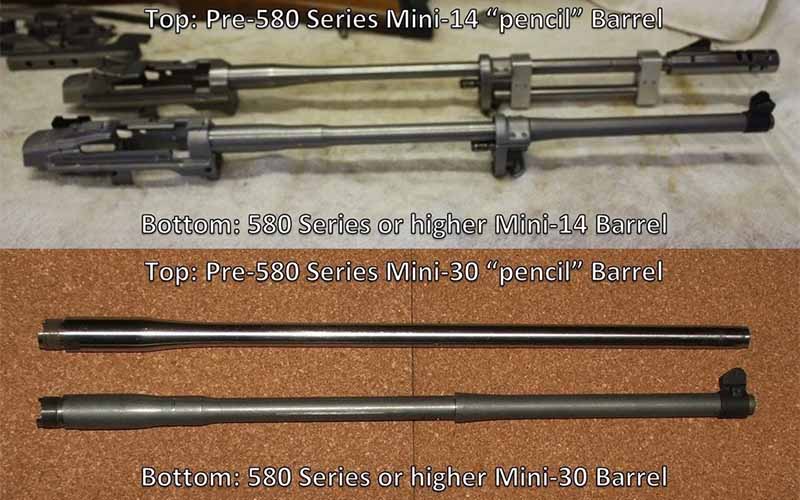
Comparison between old and new Mini-14 and Mini-30 barrels. Photo: Reddit user nabaker.
Mini-14 & Mini-30 Model Roundup:
MINI-14 RANCH RIFLE The most common Mini-14 variant, the Ranch rifle is light and compact and all models are chambered for 5.56 NATO. The versions offered today have several features to pick from. Distributor exclusive models are available with colorful laminate stocks. The standard versions are available in blued or stainless with wood or synthetic stocks. The standard barrel length model is 18.5-inches and carries an MSRP of around $1,300.
MINI-14 TACTICAL .300 BLACKOUT The only Mini-14 chambered for the popular .300 Blackout, the Tactical model comes with a black finish, threaded muzzle, and shorter 16” barrel. This is obviously the version to look at if you’d like to pair it with a suppressor. MSRP is $1,339.
MINI-30 All models of Mini-30 are chambered for 7.62x39mm, but are otherwise mostly identical to the Mini-14. Some models have the 18.5” barrel, while others feature the shorter 16-inch barrel. Versions are available with either wood or synthetic stocks but have slightly higher MSRPs of $1,300-1,400.
For more information on the Ruger Mini-14 and Mini-30, please visit ruger.com.
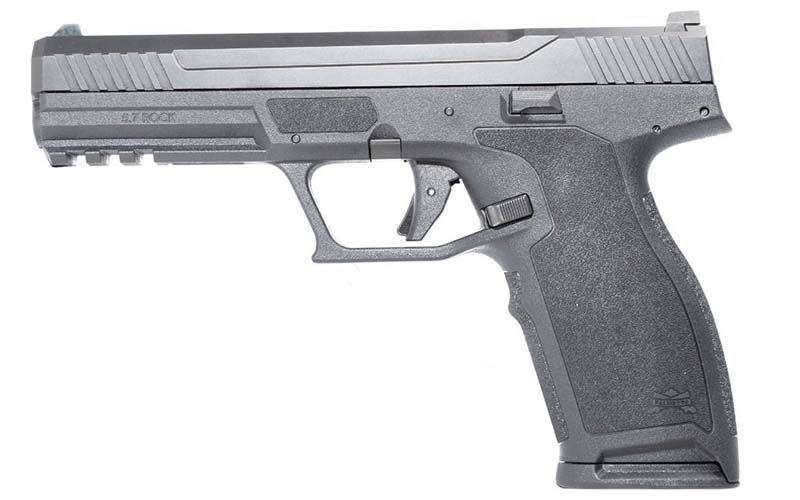
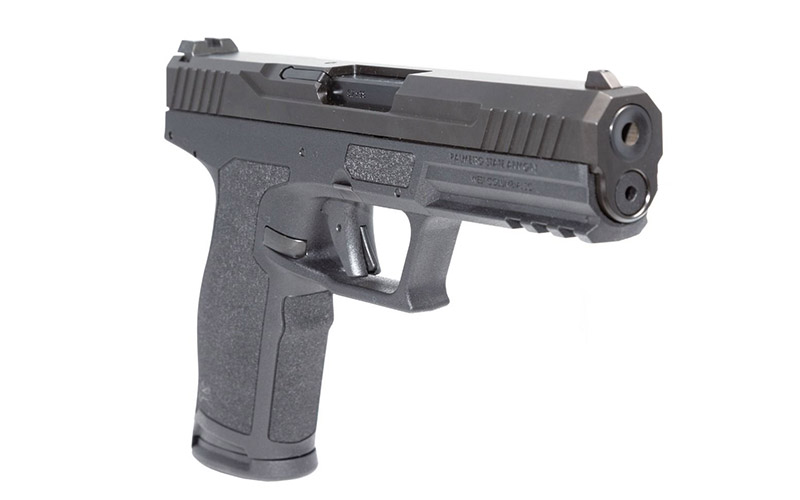
Palmetto State Armory just hopped on the 5.7x28mm train with the release of their new, affordable 5.7 Rock pistol.
The 5.7x28mm cartridge was invented by FN, as well as the original Five-seveN pistol to go along with it. Ruger joined the party with their own design in 2019, and now Palmetto State Armory has too with the release of the 5.7 Rock pistol.
Because the original FN pistol carries an MSRP of above $1,300, it only makes sense that other companies have been competing to release more economical options for the unique cartridge. Ruger managed to give their model an MSRP of $869, and while much more affordable than FN’s, it still couldn’t be considered a true budget gun. With PSA’s 5.7 Rock having an MSRP of $499.99, it is now the most affordable way to get into the 5.7x28mm cartridge. The ammo is still plenty expensive, but at least there’s finally a more economical gun to shoot it with.
PSA’s description of the 5.7 Rock:
A full-sized polymer-framed pistol, the PSA 5.7 Rock introduces game-changing ergonomics and controllability. Made from high-quality 416 stainless steel and advanced polymers, this pistol lives up to today’s highest expectations while maintaining the unmatched Palmetto State Armory value. Chambered in 5.7x28mm, the PSA 5.7 Rock is fed from a supplied 23 round magazine and operated by a smooth single-action striker-fired trigger mechanism. The carbon steel fluted barrel and 416 stainless steel slide have a QPQ finish for a smooth finish that also offers maximum corrosion protection to ensure longevity in the life of your pistol. This pistol is designed to work with Glock compatible sights.
Each PSA 5.7 Rock pistol includes two 23-round magazines and a soft case. As mentioned, it has an MSRP of $499.99 and it’s available now.
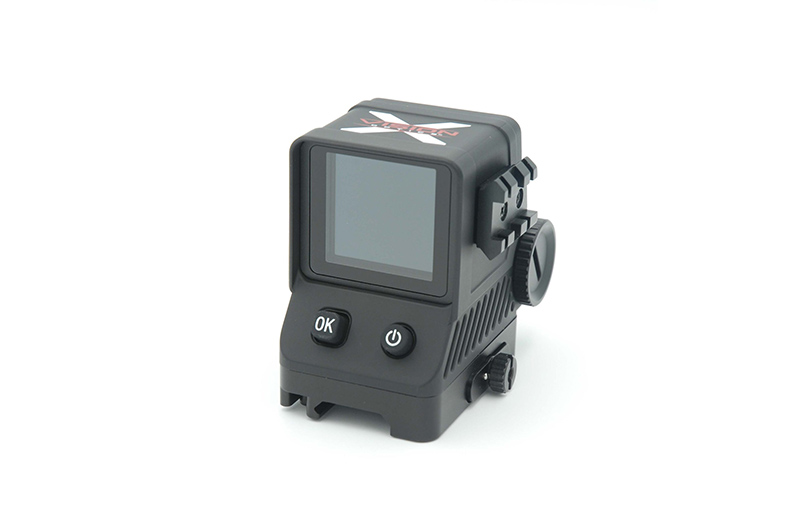
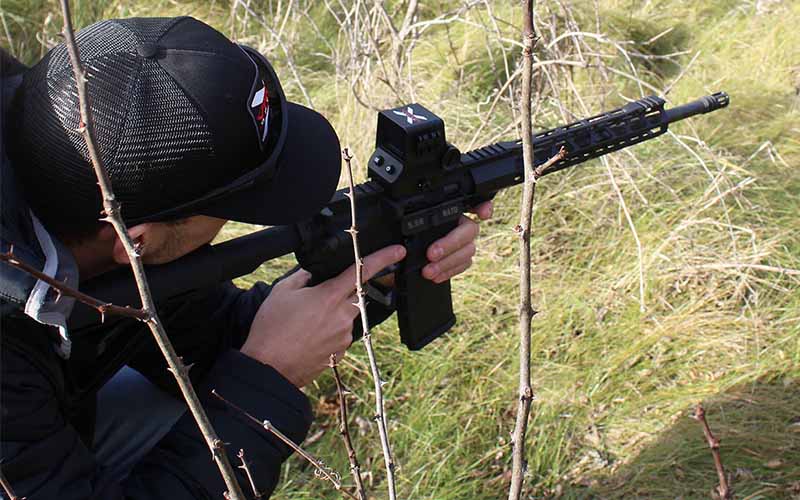
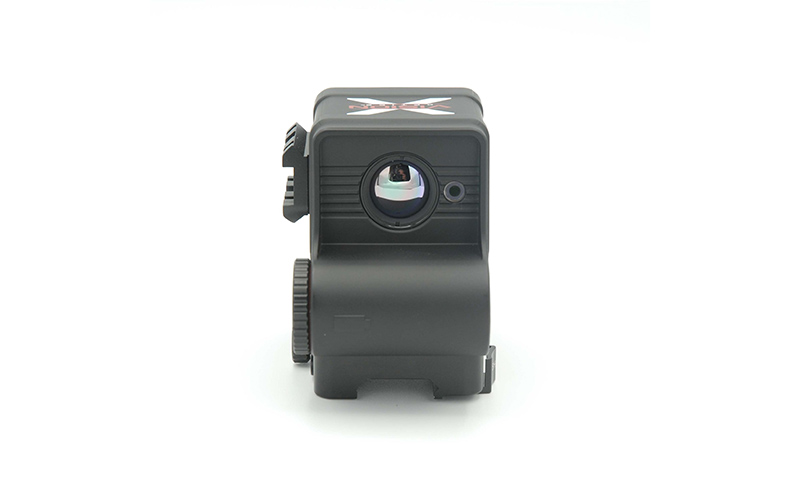
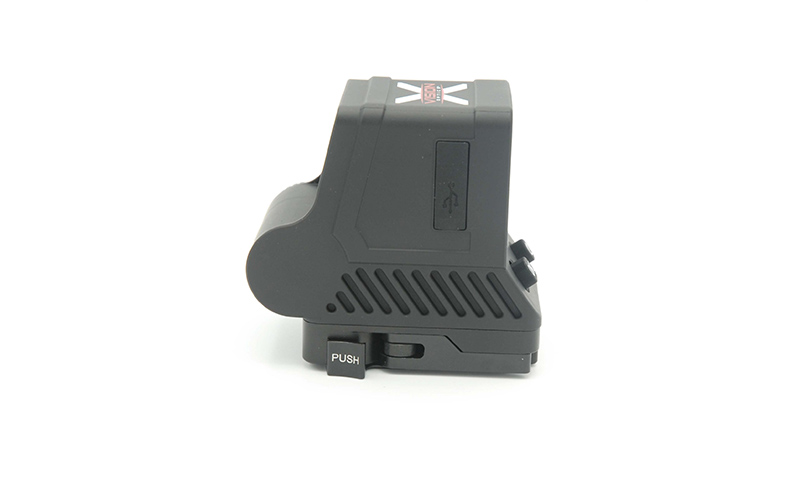
X-Vision Optics has just released the TR1, the company’s first thermal reflex sight.
X-Vision Optics recently began to dabble in thermal technology, already having released a thermal scope and monocular earlier this year. Now, the company has just released the TR1, a thermal reflex sight that’s suitable for both hunting and tactical applications.
The TR1 has a detection range of up to 1,000 yards and a recognition range of up to 500 yards depending on weather conditions. It also has a 1.63-inch AMOLED display with a 25 Hz frame rate, allowing it to smoothly track motion even at distance, an extremely important feature when engaging a moving target. To take advantage of the thermal reflex sight’s maximum detection range, the TR1 also features 1-4x magnification capabilities with unlimited eye relief, something that’s not possible with true, non-digital reflex optics. The image can be displayed in one of five color palette options as well.
Designed for field use, not just to be an expensive toy, the Thermal Reflex Sight was also built tough. It has an IP67 weatherproof rating and is dust and water-resistant, and the sight can withstand up to 53 foot-pounds of recoil energy. The TR1 also features a visible laser to assist with target acquisition and identification.
Other features of the Thermal Reflex Sight include its four different reticle styles and color options and its ability to save four different sets of zero data. These features combined with the TR1’s quick-release Picatinny mount make it possible to rapidly swap the device between four firearms (or crossbows) with different ballistic properties.
The whole unit weighs just over a half-pound, runs off a single CR123 battery and has a battery life of 3.5 hours. It has an MSRP of $1,999.99 and is available now.
Looking for a new iron or piece of kit to enhance the one you already own? Check out these 7 new bits of guns and gear to grow your firearms wish list.
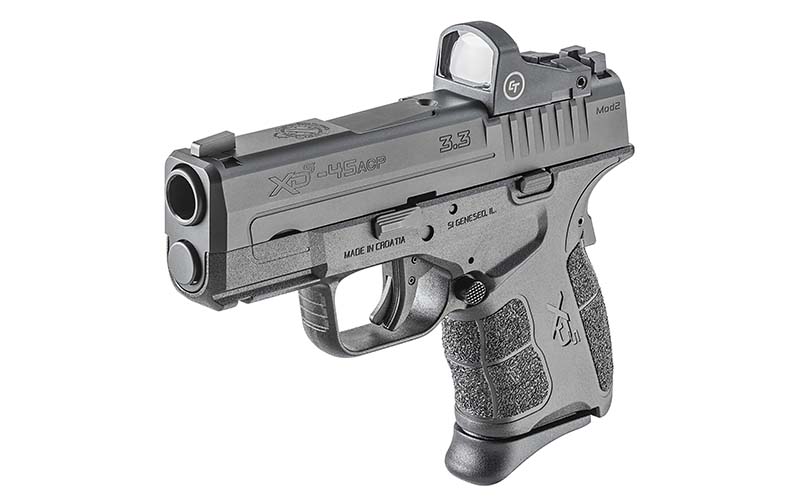
Springfield Armory XD-M Elite 3.8 Compact OSP .45 ACP
Shooters who still swear by the .45 ACP to protect their six should like the news coming out of Springfield Armory. Keeping the big-boy cartridge relevant for self-defense, the company has introduced its XD-M in a pack perfect for EDC. The Elite 3.8-inch Compact OSP in .45 ACP combines big-bore power with cutting-edge performance to provide concealed carry users with an extraordinary option. In addition to 10+1 capacity, ambidextrous controls and top-notch META trigger, the pistol is also optic ready, allowing for the addition of a red-dot sight. In fact, Springfield is even offering a factory package with its HEX Dragonfly 3.5 MOA red-dot optic. Though, you can still buy the gun as a standalone. MSRP: Optic Package, $843 ; Standalone, $653
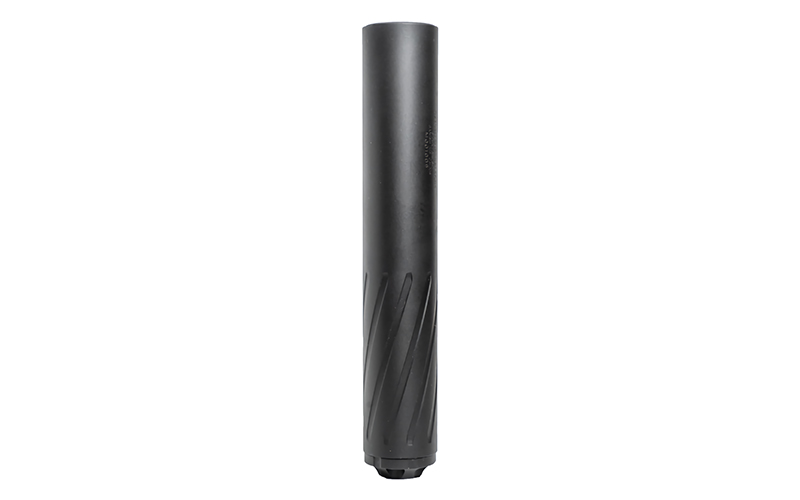
Silencer Central Banish 338
Large bore cartridges aren’t just good at poking bigger holes: They’re also excellent at going the distance. Silencer Central aims to make one of the most renowned options in this category—the .338 Lapua—all the more controllable upon launch. The quietest and most compact .338 suppressor on the market, the Banish 338 offers a little something to take the edge off the long-range specialist. Made of titanium and Inconel, the durable option keeps a rifle relatively svelte, adding only 17.5 ounces and 9.1 more inches in length. Additionally, the can offers 33 dB of noise reduction, not to mention does a number on felt recoil. MSRP: $1,600
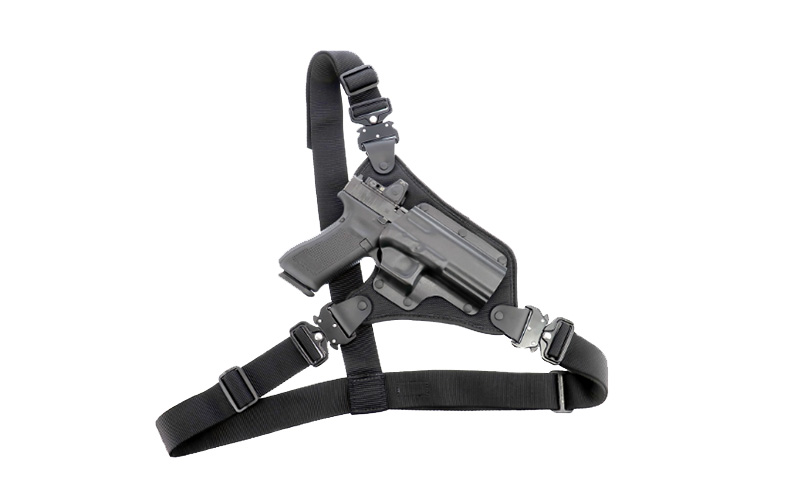
Galco High Ready Chest Holster
For folks who take to the woods with a big-bore pistol in hand, Galco has the perfect addition to your kit. The company’s new High Ready Chest Holster is the latest in an expanding line of torso-mounted hunting and outdoor holsters. Very comfortably carrying a large-frame semi-auto in an easily accessible chest position, the rig is ideal for protection when hunting, fishing, camping or hiking in bear country. The holster’s comfort comes from its innovative backing plate, composed of a ballistic nylon front over a closed-cell foam body. The back portion of the plate that rides against the wearer’s chest is lined with Galco’s Comfort Cloth, an adaptive performance mesh that provides padding and wicks moisture. MSRP: $169
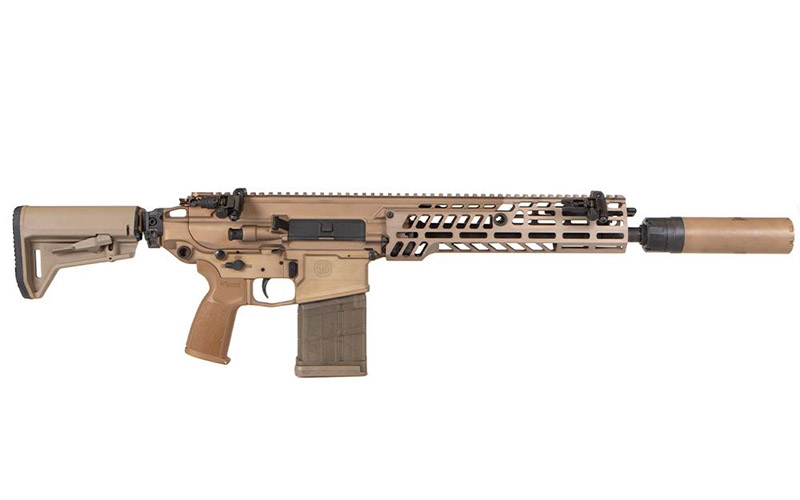
Sig Sauer MCX-Spear
An expansion of the company’s legendary MCX line, the Spear brings a twist to the series of semi-auto rifles, putting the power of the .277 Sig Fury in shooters’ hands. The rifle itself was developed with war fighting in mind, offering an option that improves the power, accuracy and range of the platform. The .277 plays into this, a commercial variant of the 6.8x51mm hybrid military round with excellent external and terminal ballistics. It’s quite a package, and one that comes with plenty of extras such as a slew of QD attachment points, threaded muzzle, the inclusion of the SLX Suppressor and ambidextrous controls. MSRP: $8,000
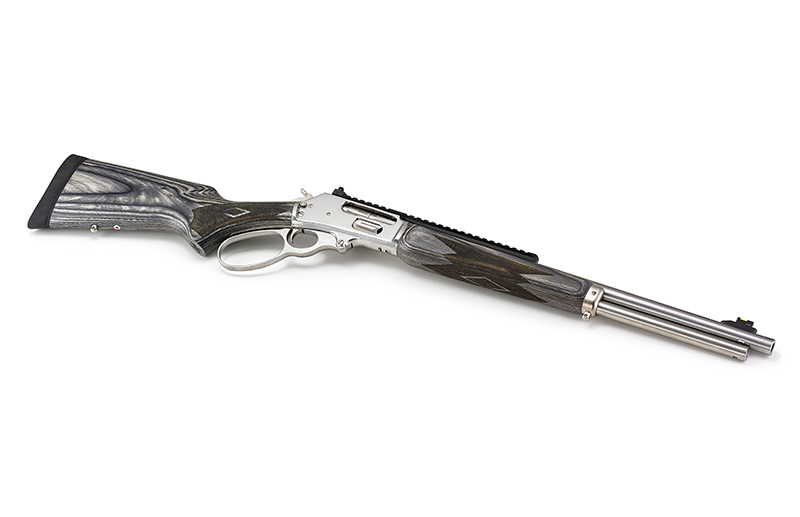
Ruger Marlin 1895 SBL Lever-Action Rifle
Marlin is back, and 1895 SBL lever-action rifles are now shipping again for the first time since the company ceased production in August of 2020. This is the first gun produced since Ruger acquired the company, and there seems to be plenty to like about the .45-70 Government-chambered gun. First and foremost, Ruger hasn’t tinkered where it counts—the milled steel receiver and internals. This should keep the ’95 as reliable as ever. But the company has left its mark with a few upgrades, including a threaded muzzle, laminate stock and Picatinny rail that includes a ghost rear aperture. Time will tell if these and some other enhancements hit the mark with shooters, but no matter what, it’s nice to have Marlin back online. MSRP: $1,400
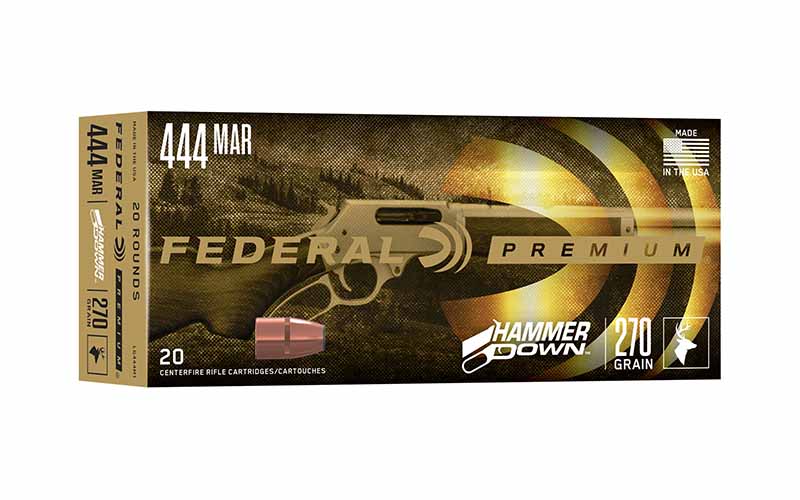
Federal Ammunition HammerDown
Federal Premium tackled the lever-gun market in 2020, launching what has turned out to be the popular HammerDown line of ammunition. Building off its success, the ammo maker recently expanded the line to include three big-bore options that are sure to turn hunters’ heads: .45 Colt, .35 Remington and .444 Marlin. The .45 Colt is topped with a 250-grain bullet, the .35 Remington a 220-grain and the .444 Marlin a 270-grain. In all cases, cartridges boast a flat-tipped bonded-core bullet, safe for use in tubular magazines and built to retain a maximum amount of material upon impact, creating devastating wound channels. The cases are chamfered to ensure clean feeding and nickel-plated to make sure they extract smoothly. MSRP: .45 Colt, $38 box of 20 ; .35 Remington, $52 box of 20 ; .444 Marlin, $63 box of 20
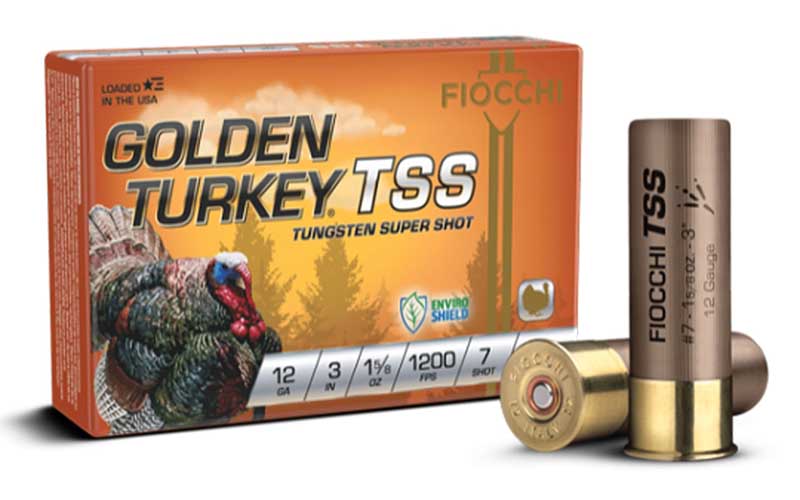
Fiocchi Golden Turkey TSS
Fiocchi has turned its skilled eye to providing premium fodder for hunting irons in recent months. The newest addition to what’s dubbed the Golden Series is its high-performance Golden Turkey TSS loads. Loaded with Fiocchi’s ultra-dense Tungsten Super Shot, the shell provides a deep-penetrating option guaranteed to extend the range of your turkey gun. The loads also create the tight patterns hunters expect from superior metal. Fiocchi is blitzing the market, offering two 12-gauge loads (No. 7 and 9 shot), 20-gauge (No. 9) and .410 bore (No. 9). As with all Fiocchi high-quality shotshells, Golden Turkey TSS uses precision-manufactured hulls and wads, combined with top-notch primers and carefully selected powder, to achieve predictable and dependable results. MSRP: Load-Dependent
Editor’s Note: This article originally appeared in the May 2022 issue of Gun Digest the Magazine.
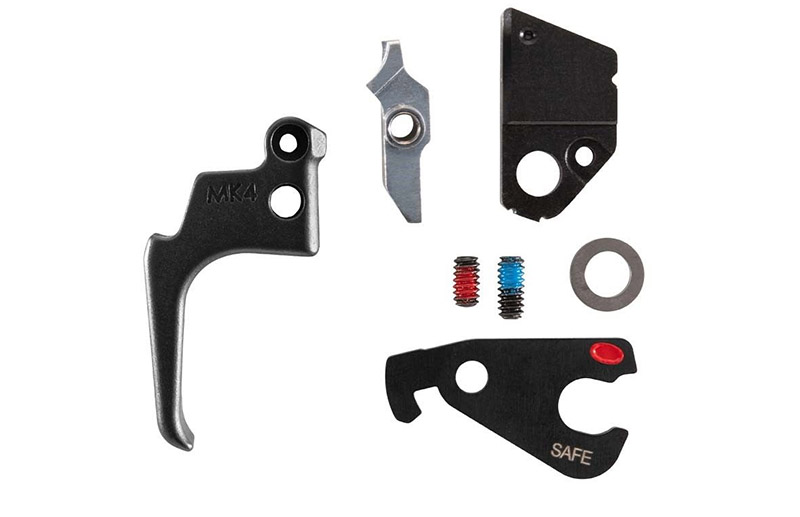
Apex has just released a Competition Trigger Kit for Ruger Mark IV pistols, designed to increase the performance of the popular .22 handgun.
Apex specializes in trigger upgrades for handguns. Previously, the company only offered kits for Glocks, Sigs, Smith & Wessons and other duty/defense-oriented centerfire pistol models. Now, the company is adding its first dedicated rimfire trigger to the lineup with the release of the Apex Competition Trigger Kit for the Ruger Mark IV.
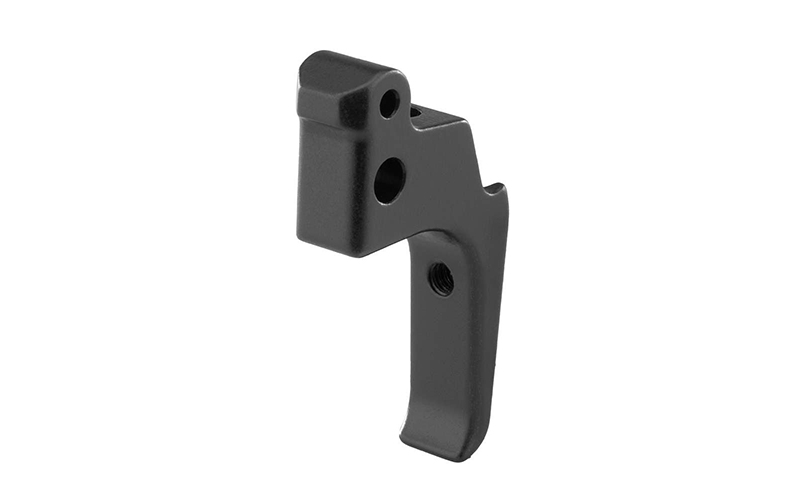
Like all of Apex’s trigger upgrades, the Ruger Mark IV Competition Trigger Kit is easy to install, only requiring the replacement of three factory components with Apex ones. Those parts are the hammer, sear and flat-faced trigger, and once installed Apex claims that they will reduce travel by 25 percent, reduce the pull-weight to about 3 pounds and drastically lessen over-travel. These features should all combine to dramatically improve a Ruger Mark IV’s trigger and enable better precision for shooters whether they enjoy competing or just plinking at the range.
The Competition Trigger Kit also includes a safety plate that’s guaranteed to match the Ruger factory safety standards, and Apex assured this to be true by drop-testing the design on concrete. Each kit also includes an optional magazine safety delete for those who would still like to be able to fire their Ruger Mark IV with the mag removed.
This Apex Competition Trigger Kit is compatible with both standard Ruger Mark IVs and Ruger Mk IV 22/45s, and it should provide a much crisper, lighter and shorter pull regardless of which model it’s installed in. The trigger is available with either a red or black finish and the kit has an MSRP of $160.
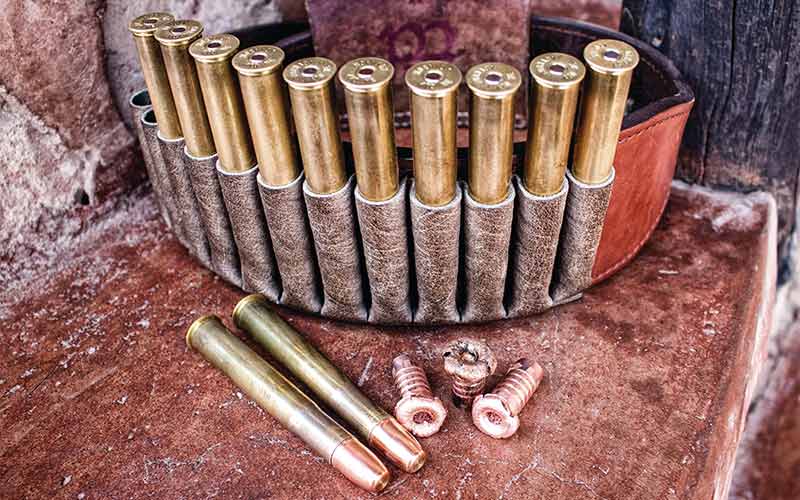
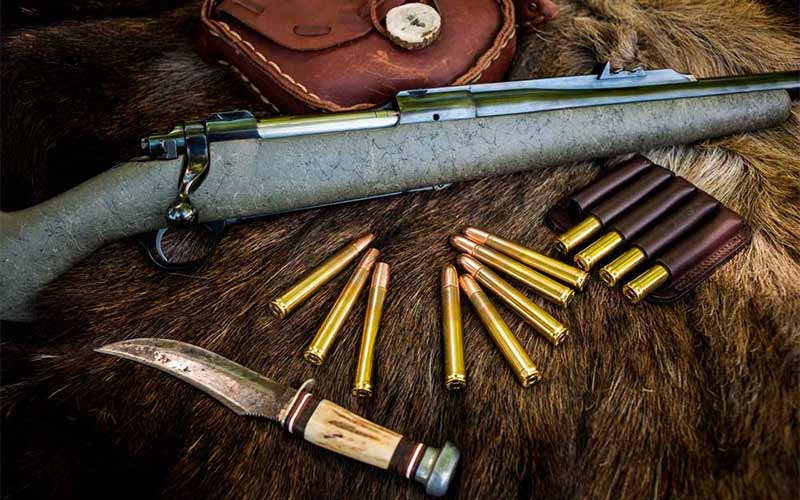
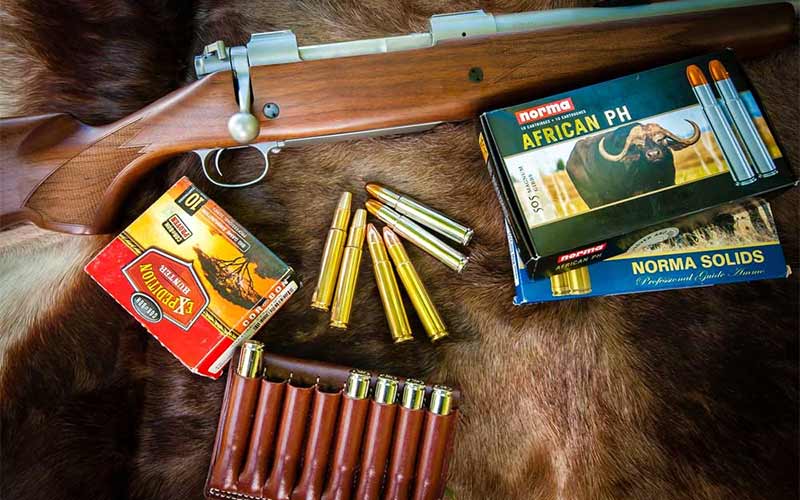
Reloading big-bore cartridges from .416 Rigby to .505 Gibbs.
The big-bore cartridges have such a wide variation in design, construction and birth dates that it requires a bit of examination to best understand how to approach them as a handloader. For example, the .416 Rigby dates from 1911, the revered .375 H&H from 1912, the .470 NE from 1907, the .458 Winchester Magnum from 1956, the .416 Remington Magnum from 1988 and the .450 Rigby from 1994. Spanning the majority of the 20th century, these cartridges saw the transition from cordite to smokeless powder as the propellant du jour, yet the geometry and pressure levels of these cartridges vary greatly.
The .416 Family
Looking at the .416 Rigby, a proprietary design in both cartridge and bore diameter, it remains a popular choice to this day based on field performance, nostalgia and quite a bit of adoration from Robert Ruark.
The .416 Remington Magnum is based in the belted H&H case and mirrors the ballistics of the much-older Rigby, in a smaller package, albeit at a higher pressure. That pressure—in the Remington Model 700—nearly cost the .416 Remington its life. With the powders available three-plus decades ago, excessive pressure posed a real issue in the hottest parts of Africa. Simply put, the Model 700 action couldn’t reliably extract the cartridge in the 120-degree temperatures of areas. Thankfully, a good number of folks tried the .416 Remington in controlled-round-feed actions and saw the wisdom of using it as an all-around African game cartridge, as well as an Alaskan brown bear cartridge.
If, quite like yours truly, the cost of these big cartridges plays a role in selecting which you’ll be purchasing and using, you’ll see a savings in factory ammunition when buying the .416 Remington Magnum or .416 Ruger in comparison to the .416 Rigby. You’ll also see the former pair of young upstarts are far more economical in the powder department, not to mention the cost of new brass cases. All three share ballistics so similar that no target will ever know the difference.
The belted .416 Remington Magnum (left) and the rimless .416 Rigby (right); the Remington delivers the same ballistics in a higher-pressure package.
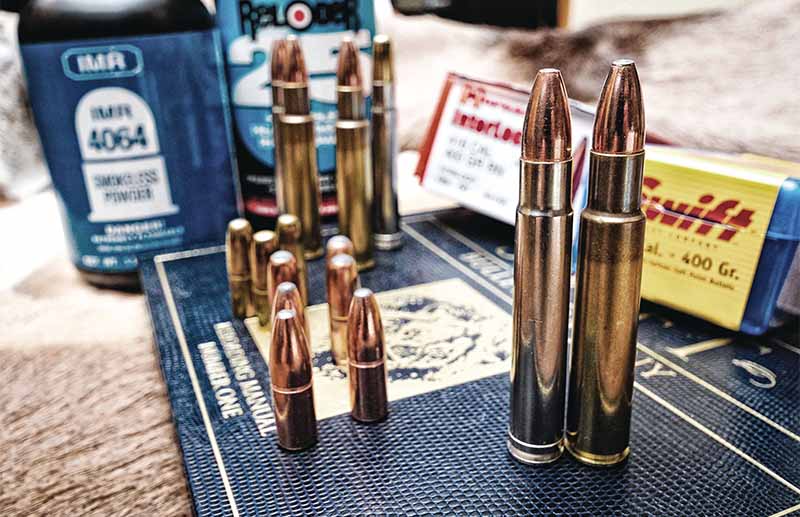
Though the pressures are undoubtedly higher in the younger cartridges, I’ve always found the Rigby case offers a higher level of recoil—probably due to having to burn a considerable volume of powder to attain the same volume in the larger case—when all three are delivering the 400-grain bullets at 2,400 fps. I chose the .416 Remington Magnum; it gave that 2,400 fps without pushing the pressure boundaries too far with a load of 78.0 grains of IMR4064 sparked by a large-rifle magnum primer and pushing a 400-grain bullet. I’ve had no issues with high pressures or sticky extraction in my Winchester 70.
Some may make the case that the oversized Rigby case is easily capable of exceeding 2,500 or even 2,600 fps with a 400-grain bullet. While this is a true and valid statement, I also know I don’t need to drive a 400-grain bullet any faster than 2,400 fps to take any game animal, anywhere. In fact, I’ve found that the 2,275- to 2,300-fps range offers the same killing power but is much easier on the shoulder.
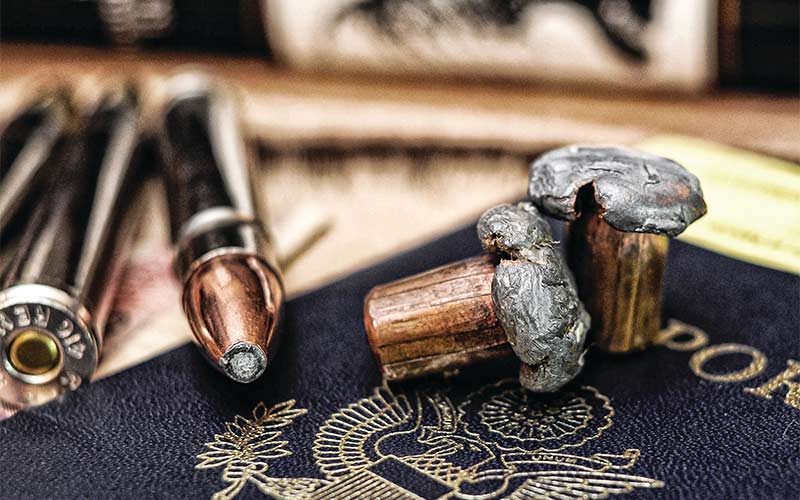
A pair of recovered 400-grain Swift A-Frame softpoints found against the offside skin of a Zambian Cape buffalo bull; they were hand-loaded in the .416 Remington Magnum.
The .458 Family
The .458s remain a popular choice, with John Rigby’s 1898-designed .450 NE being the benchmark for performance at driving a 480-grain bullet to 2,150 fps. The big-rimmed cartridge was a huge success; however, the British ban on .45-caliber ammunition in the Sudan as well as India gave rise to the .470 Nitro Express, .475 Nitro Express and many more, which would greatly diminish the .450’s popularity.
Winchester used a shortened, belted H&H case to develop their .458 Winchester Magnum in 1956 to mimic the .450 NE’s ballistics, albeit with a 510-grain bullet. However, it didn’t measure up. The velocities rarely exceeded 2,000 fps, sometimes far less, and penetration issues soon reared their ugly head.
.458 Lott.
Modern ammunition for the .458 Winchester seems to have been corrected, and handloaders have a few powders at their disposal—namely Hodgdon’s H335 and Accurate 2230—which can help give the proper velocities without being overly compressed. Those who prefer the longer Lott case—and I see nothing wrong with choosing it—can get to 2,150 or 2,200 fps without much effort. The 0.300-inch case extension also gives the reloader a bunch more room, helping to avoid over-compression of the powder charge. While I definitely like the ball powders in the .458 Winchester, as they maximize the limited real estate, the .458 Lott is happy to be loaded with powders like Hodgdon’s Varget, IMR4166 or IMR4064, and I’ve had great results with that case pushing a 500-grain bullet at 2,200 fps or so.
Going Really Big-Bore
Looking into the bigger cases, the .470 Nitro Express has become one of my personal favorites in a Heym Model 89B double. The big, 3¼-inch case has all sorts of capacity, though, like the .416 Rigby, you really don’t need to use it all. While I had both accuracy and proper velocity using H4831SC and a 500-grain bullet (double rifles are regulated for a specific bullet weight/velocity), I got the same ballistics when using a charge of Reloder 15 compressed by a Kynoch foam wad, although the recoil dropped off considerably. My rifle loves 88.0 grains of RL-15 with that wad and several different 500-grain slugs, including the Federal Trophy Bonded Bear Claw softpoint and Sledgehammer Solids, Peregrine BushMasters, Swift A-Frames, Barnes TSX and Banded Solid, and Hornady’s duo of DGX Bonded and DGS solids.
.505 Gibbs.
Based on the success of the .470 NE with the Kynoch foam wad, I tried it with a .505 Gibbs, and the same rule applied to that soul-crushing cartridge. I got the velocity I was after, using a 525-grain Barnes TSX softpoint and Woodleigh Hydro Solid at a significantly reduced recoil level.
The point here is that reloading for the big-bore cartridges can truly change the way you view and feel about one of these intimidating thumpers, and it will definitely affect how you shoot the classics. The factory loads might be suitable, but I like the customized effect of handloading when it comes to these big-bores.
Editor’s Note: This article originally appeared in the May 2021 issue of Gun Digest the Magazine.
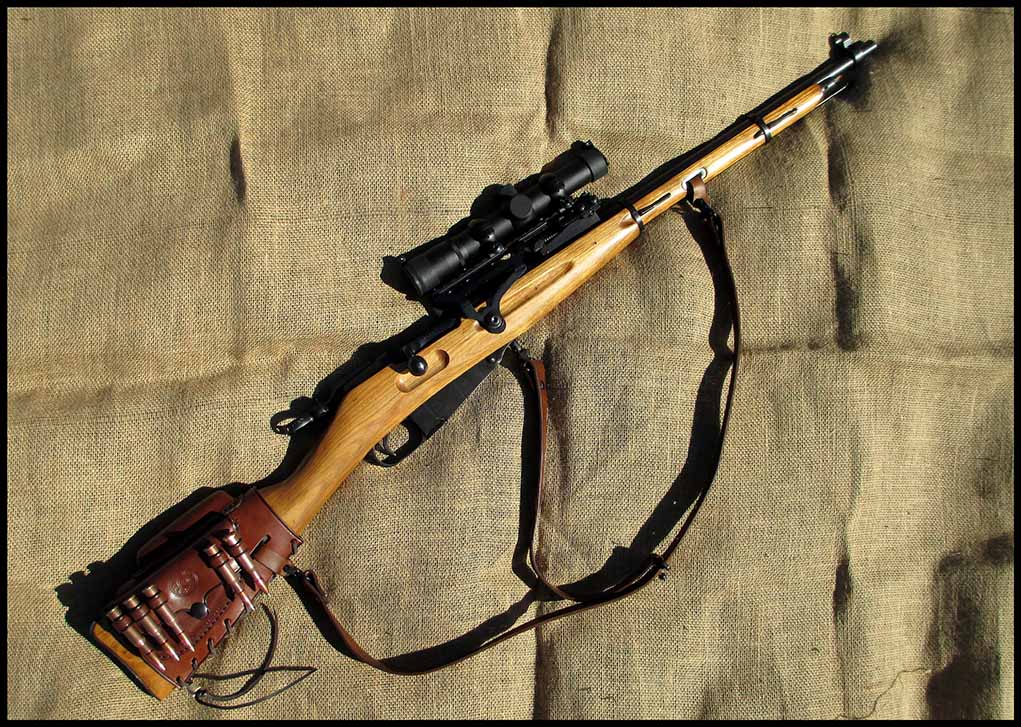
While not the top candidate for a Night Force ATACR or other high-end glass, adding a scope to your Mosin-Nagant proves worthwhile. Similar to any rifle, an optic vastly enhances your accuracy potential behind the trigger and certainly proves beneficial if you plan to use the Russian icon for anything other than range toy. Hunting and any sort of Sisyphean accurizing project you have in mind for your Nagant are two that come to mind.
This raises the question: How exactly do you go about getting a scope on a more than 100-year-old design that was most certainly not engineered for the addition of glass?
It’s a dicey row to hoe, rife with some serious considerations before jumping in. It’s not simply potentially the drilling and tapping that makes this ride bumpy, but the fact the rifle must be modified to even work with a scope. Good news, once you’re over some of those hurdles, there is a slew of Mosin-Nagant scope mount options that not only provide rock-solid mounting platforms but also do a bang-up job of modernizing the rifle. But before we get to them, we first must consider what stands in between marrying your rifle with a scope.
Bolt Throw
Minted in 1891 with the common infantry soldier in mind, neither Sergei Mosin nor Émile Nagant put much thought into an optic ever being added to their creation. This is fairly obvious, given the Mosin-Nagant’s bolt. Its handle sticks out at 90 degrees when in battery and throws 90 degrees in operation. What that adds up to is a bolt handle that comes into major conflict with most traditionally mounted scopes.
M44 Photo: Jaybe Militaria
By and large, there are only two ways around this conundrum. You modify the bolt handle, bending or replacing it completely—either the handle or the bolt itself—so it doesn’t run smack dab into your scope. Or, you settle upon mounting your scope in a more non-traditional position.
Drill and Tap
Mosin-Nagant scope mounts have to be, well, mounted. While some options require minimal modifications to get in place, others are quite a step up in gunsmithing, particularly those that require drilling and tapping. Unlike most modern rifles, the Mosin doesn’t come with this convenience as part of the package, which means you’ll have to do it yourself. Though, the real question should be: Should you do it yourself?
For those who have spent time learning the basics of gunsmithing and have some machine-shop knowledge, the answer is a resounding yes. For those who fall outside this sphere, a moment of reflection before charging into the Dunning-Kruger Effect might prove valuable.
While drilling and tapping a rifle isn’t gene editing, it does take a certain amount of know-how, finesse and safety goggles. You might fly blind into the task and pull it off smashingly or you could go down in flames with a real Bubba tabletop gunsmithing fiasco. The argument could be made there’s no better rifle to FUBAR than a Mosin-Nagant, given their relatively economical price. But if you love yours and don’t have the mechanical aptitude to do the job right, swallow your pride and take it to a gunsmith.
The Controversy
Time was few folks would have raised a ruckus about modifying a Mosin-Nagant. Slews upon slews or home gunsmithing jobs fandangled some rifles into near Frankenstein’s monsters. When the supply of sub-$100 Mosin seemed endless nobody except historical purest seemed to raise an eyebrow over the projects. Now with the rifle becoming more expensive and cherished for its place in world events, mangling one up for the sake of a “tacticool” experiment is frowned upon.
Does the Mosin-Nagant scope mount count as tarnishing a classic? I suppose that all depends on who you are. From my perspective—especially with systems that allow you to revert the rifle to its original state—not so much. These provide the best of both worlds, the rifle’s integrity is preserved without the shooter having to be a slave to convention. Other scope mounts, however, require more radical modification to function—such as cutting off and reconfiguring the bolt handle— which might require a bit more consideration before commitment.
Ultimately, it’s your rifle and you can do what you like with it in the bounds of the law. But, before you break out the hacksaw and oxy-acetylene torch you should be plum certain you want to cross that Rubicon—because there’s no going back. To digress to another historic military rifle, some love their sporterized war-trophy Mausers, others wish they had the original 98K. With this in mind, a few years down the line where do you think you’ll stand with a Mosin-Nagant?
Top Mosin-Nagant Scope Mount Options
Brass Stacker Universal Fit Scout Scope Mount
Photo: Brass Stacker
If you want to retain the integrity of your Mosin-Nagant, yet step up its aiming system, Brass Stacker’s Universal Fit Scout Scope Mount is the way to go. What makes it attractive is you don’t have to drill and tap your rifle, yet you still get a rock-solid platform for your long eye-relief scope.
Brass Stacker pulls this off with an ingenious mounting system that utilizes the Mosin’s rear sight block and recoil lug attachment point. The only gunsmithing involved is knocking out the ladder sight’s retention pin, which sometimes is easier said than done. Nevertheless, it’s a more streamlined process than many other options. What you get out of the deal, aside from ease of installation, is a Rigid all-steel 5/16” x 8” MIL-STD 1911 Picatinny Rail, fit for most any long eye-relief optic. As a bonus, if you want to return to iron sights, the Universal Fit mount allows you to do so with ease. MSRP: $125
S&K Mosin-Nagant Scope Mount
Photo: S&K
With an extensive history of whipping up scope mounts for old military rifles, S&K has a solid handle on creating workable systems. And few options out there function to the same level or with the same ease as its Mosin-Nagant Scope Mount. Again, this is an option that allows you to revert your rifle to the original form if you wish, given it attaches via the rear-sight base.
The only complex matter—in some cases—is getting the ladder sight pins out, but with patience (a blowtorch if they’re soldered in) it can be done. It also stays in place well, especially if you follow instructions and use Loctite Blue to ensure there’s no creep in the screws. Needless to say, this is a scout-scope configuration, and the accompanying right accommodates scopes with 1-inch tubes. Aside from the simplicity of installation and maintaining the originality of Mosin-Nagant, S&K’s scope mount is also small, and thus overall unobtrusive. MSRP: $88.50
Rock Solid Industries Mosin-Nagant Scope Mount
Photo: Rock Solid
Plain and simple, Rock Solid Industries Mosin-Nagant scope mount more than lives up to the company’s name. Plus, it opens up your optics options. A full-length rail, it can handle nearly any scope you mount with any eye relief you desire. Even better, it will keep it right in place.
This is thanks to a hardy three-point attachment system and the use of the rear sight base as a support. Yes, the unit requires a bolt handle modification (they sell upgrades) and drilling and tapping the rifle, which is fairly involved. But the effort is well worth it, especially if you want something certain to keep your scopes zero in the roughest of conditions. Rock Solid makes models for both round and octagonal receivers, so make note of which you have when you order—one does not work with the other. MSRP: $50
Crazy Ivan Mosin-Nagant Scope Mount
Photo: Crazy Ivan
As robust as the day is long, the Crazy Ivan Mosin-Nagant Scope Mount allows for a traditional above-the-receiver scope placement. The price paid, however, is the effort required to get the unit attached. The base itself is a down-the-line drill-and-tap job, with the mounting plate screwing onto the side of the receiver. Where things get a bit trickier is modifying the bolt handle.
The good news, Crazy Ivan sells several top-quality upgrades. The bad news, it requires cutting off your Mosin’s original bolt handle and welding on the replacement. Though, the company does sell one no-weld option that is attached via epoxy. A nice touch, the Picatinny rail is mounted on a Weaver-style quick detach system, making it simple to switch between optics and iron sights. MSRP: $74
Sniper MG4X20 Scope And Mount
The Mosin-Nagant M91/30 PU Sniper Rifle was perhaps the most successful sniper-rifle system of the Second World War. And while authentic specimens are still available they tend to command top dollar. A sidenote, fraudsters are more than aware of this and churn out knockoffs like the dickens, so if you go this route, buyer beware. However, you can avoid these turbulent waters with Sniper’s MG4X20 scope and mount, which gives you everything you need to turn your M91/30 into a replica of the historic sharpshooter.
Overall, the system—mount and scope—are fairly faithful recreations of the original and perform up to snuff. Though, the optic is 4X, whereas original wartime scopes were 3.5X—that’s should prove a small detail for many. The scope mount is made of steel and is a dead ringer for the real McCoy—side mount, removable, with gross elevation screws and the like. Sniper even sends everything you need to drill and tap the receiver. However, the system—similar to any that replicates the sniper rifle—requires extensive modification of the rifle, including extending and bending the bolt handle and inletting the stock, in addition to drilling and tapping. Make sure you’re up to the job. MSRP: $398.99
Looking to go armed, but are stuck in the weeds as to what to arm yourself with? Here are 20 of the best concealed carry gun options that will keep you on the defensive.