Want to find the best shotgun for home defense? Here, the author discusses their pros, cons and what to consider when buying one.
The shotgun is one of the most familiar firearm platforms in existence. At one time, nearly every home in America had one handy. It put food on the table, protected the home and its inhabitants from intruders, and it was as useful as any other household tool for solving problems.
Yet, in many ways, the shotgun is an enigma.
Myths abound about the shotgun. We’ve all heard a certain politician advocating that people arm themselves with a shotgun and all they need to do is fire two shots in the air to scare off an intruder. Or, maybe you’ve heard that the simple racking of a pump-action will make a home invader quiver with fear.
These are irresponsible and will give many people a false sense of security. Maybe the noise of the action working will cause a teenager who wandered into your home to turn tail and run, but shooting rounds in the air may kill or injure an innocent bystander. Don’t do that. Ever.
Too many people obtain their gun knowledge from movies and television. Not you, of course, you’re smart enough to read Gun Digest. But we’ve all seen movies where someone is shot with a shotgun and the poor guy goes flying through the air. If you have a basic understanding of the laws of physics, you should know that, for every action, there’s an equal and opposite reaction.
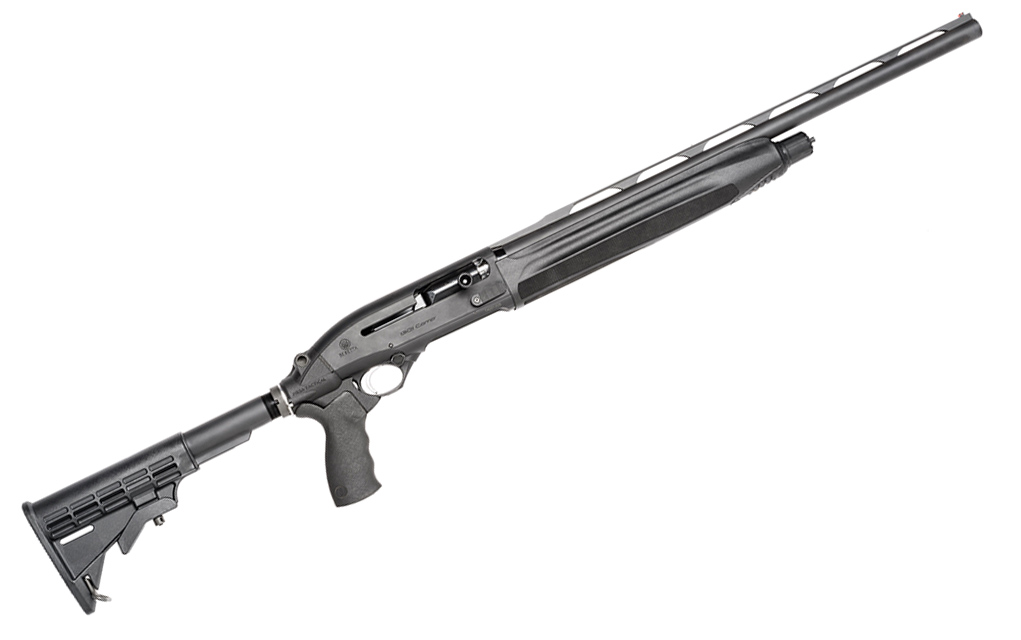
Beretta 1301 with Mesa Tactical furniture.
Another classic myth is that “You don’t need to aim a shotgun. You just point and shoot.” This may be based on the small size of the factory bead sight found on most shotguns and the tendency for bird hunters and clay shooters to whip the barrel as they shoot to allow the shot to collide with the bird in flight. The bead sight is there for a reason and can be used efficiently with some training or replaced by rifle sights, a low-power scope or a red-dot sight if you prefer.
The bottom line is that you’re putting an ounce or more of lead downrange—you want to make sure it hits whatever you are shooting at … and nothing else.
Pump Or Semi-Auto?
Pump-action shotguns dominated the marketplace for more than 100 years, and for good reasons. They’re reliable, hold at least three rounds and are in an affordable price range. Semi-automatics, on the other hand, were either expensive or unreliable … and mostly designed for sporting use.
However, things have changed over the past 30 or so years. The semi-automatic shotgun has become more reliable and more affordable. The operation is simpler than a pump-action or a lever-action shotgun, and depending on the manufacturer, there’s very good aftermarket support dedicated to allowing these shotguns to function in a role more suited to home-defense.
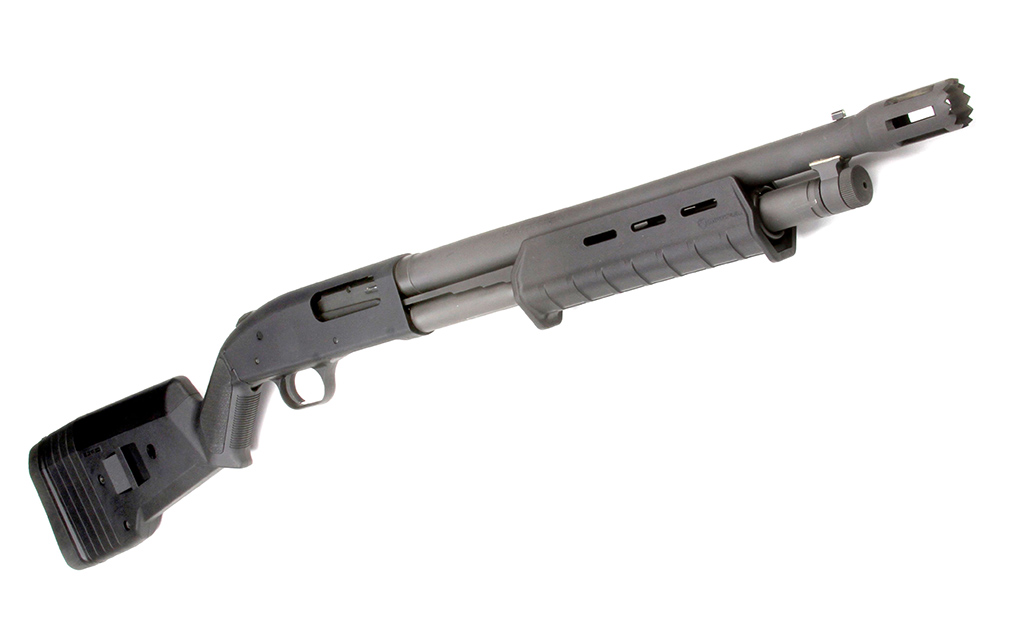
Magpul furniture on a Mossberg 590 breacher. While it is not a semi-auto, this is a reliable pump-action piece for defensive use.
The eye-opener for me was to have three different semi-automatic shotguns reliably fire more than 1,000 rounds—in each one—without a single malfunction. The old mantra we heard as late as the 1990s about the reliability of a semi-automatic scattergun could be finally put to rest.
There was a time when the shotgun I would grab to respond to a threat was a pump action. Over the past few years, my preference has transformed into a semi-auto. Prices of new semi-automatic shotguns haven’t risen exponentially, but if there’s one thing about dedicated sportsmen who use semi-automatics, they tend to trade up for the latest and greatest often, and some “upgrade” almost every season.
As a result, many used semi-automatic shotguns have been hitting the market at lower price points than some pump-action shotguns. Case in point: I recently scored a well-used Remington Model 1187 for less than $300. It had been poorly painted in an absolutely horrid hunting camouflage pattern, but through the miracle of Cerakote, I had the gun refinished in a more modern Multicam scheme. It looks great, and it looks brand new.
Another good example is a shotgun like the Benelli M1 Super 90. This was the go-to tactical semi-automatic shotgun for decades, until it was phased out and replaced by the likes of the Benelli M2, M3 and M4. Coming in at several hundred dollars cheaper than the M4, the M1 Super 90 is still a great no-nonsense firearm.
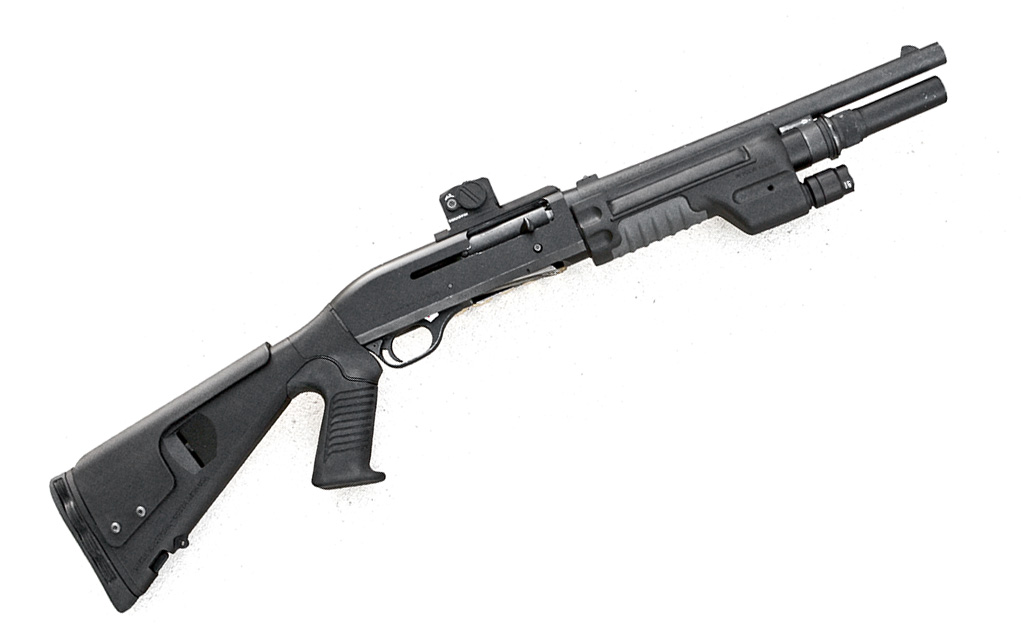
The Benelli M1 Super 90 was the top of the line tactical semi auto shotgun for decades. A fresh Urbino stock from Mesa Tactical, Swampfox Optics red-dot and new LED forend light from SureFire made it serviceable again.
Capacity
Most semi-automatic shotguns rely on tubular magazines to feed the shells, just like a pump shotgun. To increase capacity, you only need to purchase a magazine extension and a longer magazine spring. You can further enhance this by going with an aluminum follower over the plastic factory piece.
Even with the longest magazine extensions available, you’re limited by capacity. Some shooters get around this by running mini shotgun shells in pump-action shotguns. For the semi-automatic, they can be hit or miss with feeding reliably, so I tend to avoid them. Yes, they’re very effective and solve the capacity problem … when they feed reliably.
It’s worth noting that there are many semi-automatic shotguns on the market that take a detachable magazine. Many of these magazines are three-rounders, but there are larger capacity versions available … some of them much larger. This can be the weakest link in these systems. While they’re a lot of fun at the range and magazine quality is improving, the jury is still out on relying on one for personal defense. If you like them, great, but do become very familiar with their operation.
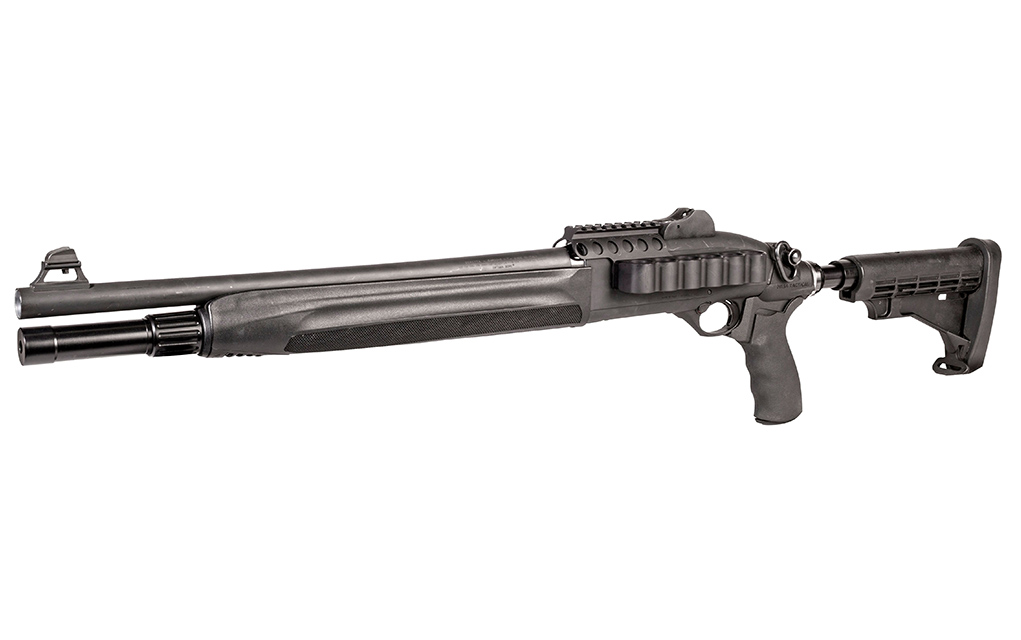
Onboard ammunition carriers, from companies like Mesa Tactical, address this by bolting 4-, 6- or 8-round carriers that hold shells on the side of the shotgun’s receiver. These are installed and held in place using threads that replace the scope mounting holes atop the receiver. If the shotgun isn’t drilled and tapped, this can be easily accomplished by a gunsmith. Mesa Tactical’s side-saddle type mounts can incorporate a mounting plate for an RMR-type sight, solving the issue of adding a red-dot to the shotgun.
The Beretta 1301 decked out by Mesa Tactical with an AR style stock, scope mount, shell carrier and magazine extension.
While there may be some merit to having a shotgun look benign in case you find yourself in front of a jury defending yourself after you just defended your home and family, a good shoot is a good shoot. There are accessories out there, from integrated forend lights to M-Lok compatible mounting solutions, to equip your shotgun to make it easier to shoot.
Downsides Of Shotguns
There are some disadvantages to using a shotgun for home defense. Recoil can be downright brutal in a 12-gauge for new or small-stature shooters. For a long-gun, you’re limited on effective range and, in some cases, can do better with an accurate pistol. However, many semi-automatic shotguns tend to absorb about 20 to 30 percent of the felt recoil as this is used in order to cycle the action. In short: Semi-autos generally produce less felt recoil than pump-action shotguns in the same gauge.
For the recoil sensitive, a 20-gauge may make a good compromise since there are plenty of options that suit the requirements of a defensive and hunting arm. You can have less recoil without giving up too much payload, as compared to its 12-gauge big brother.
Going away from these two calibers is not recommended. Sixteen-gauge, for example, lies between these two shells on the power scale, yet because it’s semi-obsolete (albeit making a comeback with masses), the most commonly found rounds are loads intended for birds and small game. Going smaller to 28-gauge is pretty much the same in that regard.
There are a number of options in .410, including models virtually identical to ARs and AKs. There are buckshot loads that hold approximately three pellets, slugs and different special-purpose loads from Hornady and other manufacturers. However, this ammunition can be hard to come by at times, isn’t necessarily cheap and may require a significant amount of testing to ensure it’s accurate and reliable to fill a defensive role.
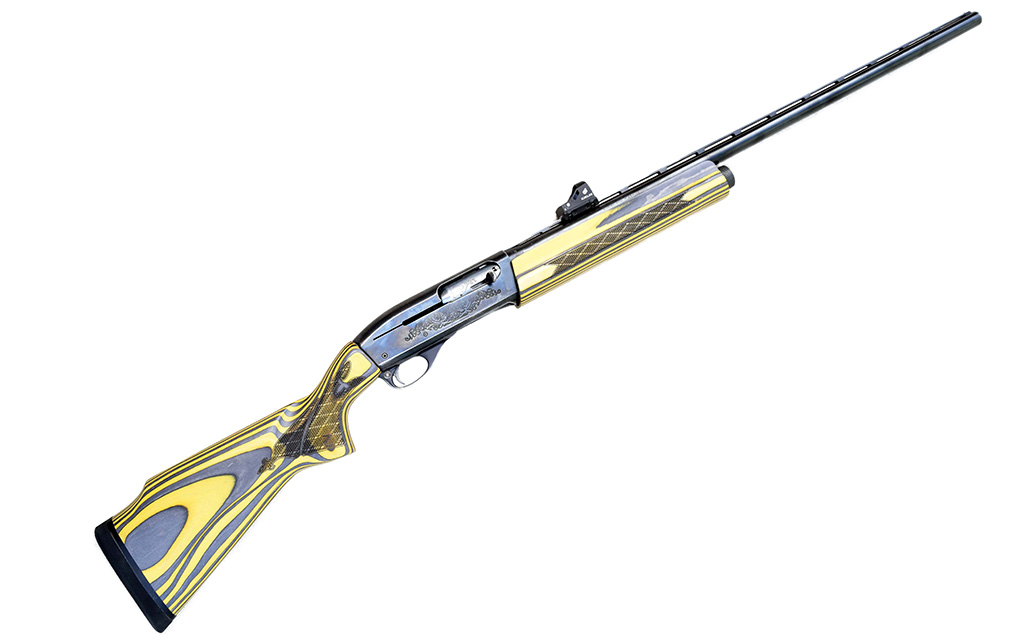
This Remington 1100 Shotgun was purchased for less than $200 because of its age and poor state of the factory wood. Boyds laminated furniture, a red-dot that mounts to the rib and new O-rings for the piston breathed fresh life into it. The gun isn’t designed for home defense, and the barrel is longer than is ideal, but it will work.
Some of these shotguns can be sensitive to certain ammunition types, but for the most part, the modern semi-automatic shotgun is as reliable as a manually operated pump. Be wary of those that feed from a detachable magazine—it’s often the weakest link in this system, as mentioned earlier in this article. At the same time, shells with a low-brass hull or lower-powered, reduced-recoil loads may cause functioning issues in semi-autos. Test your gun and ammo combo, and beware of any potential reliability issues … and then eliminate the problem.
Another issue with home-defense shotguns is that they can be a bit long to maneuver within the confines of the home and are hampered by a barrel length of 18 inches and an overall length of 26 inches at the minimum.
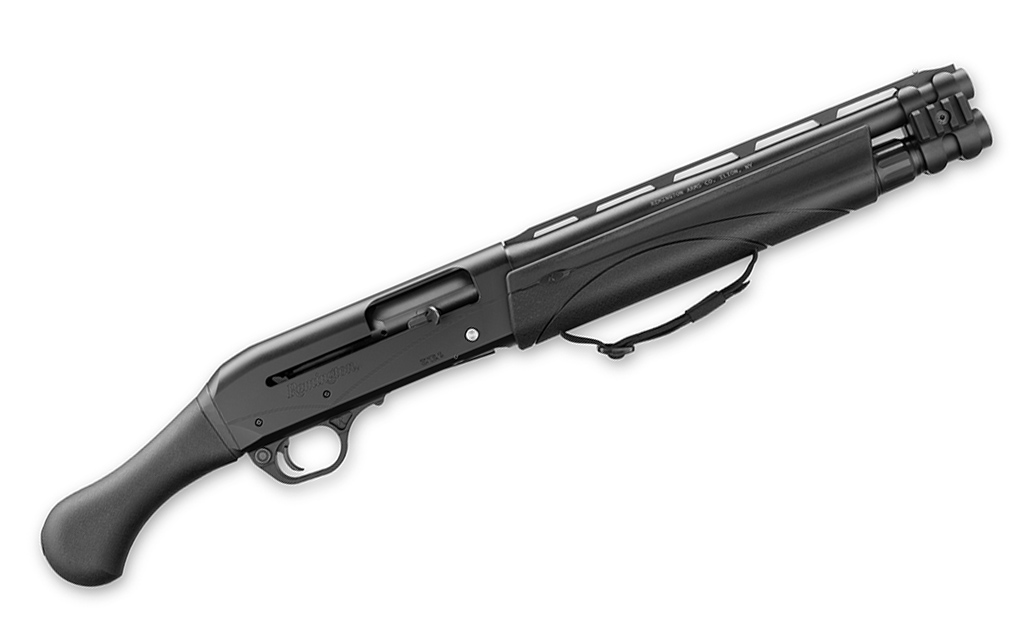
A relatively recent class of firearm that can handle shotgun shells are the Shockwave or TAC-14 firearms from Mossberg and Remington, respectively. They’re based on the old witness-protection style of firearms used by the U.S. Marshal Service before short-barreled ARs came into their own. They’re difficult to shoot well at first but are better than so-called “riot guns” that come with a vertical pistol grip and no stock. These firearms are capable of firing shotgun shells and ship with a 14-inch barrel and cannot be equipped with a buttstock without filing a BATFE Form 1 and paying the associated $200 tax. The semi-automatic version from Remington is the TAC-13.
If you want a semi-auto scattergun for use in tight spaces and easy to store, the Remington TAC-13 might be your best bet.
Tried And True
The semi-auto shotgun may be the most enigmatic firearm out there. Many shooters love them, but they catch a lot of flak for their perceived limitations. However, when it comes to home defense, the right shotgun can be ideal to protect your home … and your family within.
Editor’s Note: This article originally appeared in the April 2024 issue of Gun Digest the Magazine.
The author discusses how to select the best defensive bullets for mitigating the risk of overpenetration inside structures.
Home defense is one of those areas that’s filled with paradoxes and degrees of misunderstanding. Many times, we’re concerned simply with the end result of stopping a threat, but what’s often disregarded is the behavior of bullets inside a closed structure.
I’ve had the opportunity to perform detailed testing on materials over the years, and through this, I’ve come to a better understanding of just what bullets do when presented to common home construction materials. My opinions here are the result of what I learned—and some of it may surprise you.
Common Myths
Before we get into this topic in detail, I do want to go about dispelling some myths that surround bullets on impact. In general, we aren’t going so far as to talk about what you see in Hollywood, where bullets are largely harmless to main characters and typically just pepper the ground at their feet. What mass media has accomplished isn’t necessarily spreading false information as much as creating a set of perceived capabilities that, in many cases, just don’t exist.
The little .22 LR is lethal, and it offers high sectional density and great penetration. If you think you’re safe behind a wood or plaster surface, think again.
The main myth you should understand is that, due to the magic of movies, common materials are perceived to be much stronger than they actually are. Bullet impact on material is almost always simply for visual effect to show that someone is shooting. The old tropes of simply flipping over the bar table or standing behind a car door works well for cinematic purposes but, in reality, virtually any common cartridge—from .22 LR on up—can pass through a wood surface only an inch or so thick. Likewise, the ability to pass through a car door is common to most bullets at medium distance, so long as it doesn’t strike glass first.
The Hollywood version of things, by overexposure, has convinced the mass populace to see bullets as simply stopping in whatever they strike first, including bodies used as human shields … and all sorts of minor objects like doors and books. While it’s true that there have been freak cases where this sort of thing happens, what you need to understand is that these are exactly that: freak cases. Yes, there are several books that, if lined up in a row, will stop a given projectile, but carrying a notebook in your shirt pocket and expecting it to stop a bullet is nonsense.
Lead bullets are great for defense and penetration, but in the home they may be too much. Softcast bullets will splatter and lose their energy quickly, but hardcast may drive through like it’s got someplace to be.
Likewise, bullet design comes heavily into play when the whole “human shield” thing is used. A standard 9mm FMJ round can easily pass through two individuals if bone is avoided, and even then, it still has a high likelihood of making it through the second body as well. In hunting scenarios, I can expect a 270-grain .45-cal Keith bullet from a 5.5-inch revolver to pass completely through a deer at an angle, sometimes meaning more than 24 inches of penetration through all bone and tissue.
In the home, anything you’re typically surrounded by should be treated only as concealment, not cover. That is, unless you have a brick or block interior as is common in many single-level homes from the 1950s era. As detailed below, most modern home materials are ineffective at stopping most bullets—the average wall made of wood framing and drywall is utterly unable to stop a projectile, and even rimfire rounds can defeat a common wall or door with ease.
The notion that you need “armor-piercing” rounds to go through materials is, again, simply a myth. Ceramics and heavy steel are the only real common materials that bullets have a hard time dealing with. Most construction materials are light and only marginally durable, just like most auto bodies are made of much thinner and lighter materials than they used to be a few decades ago.
The standard 230-grain FMJ in .45 ACP is quite good at punching through medium barriers but is easy to slow down at the same time.
A standard .45 ACP, 230-grain FMJ bullet will easily pass through an interior wall made of standard construction at an impact velocity as low as 500 fps, a speed that it reaches at the extreme distance of 500 yards … yes, you read that correctly. Basic walls are simply just a couple sheets of drywall, maybe some insulation.
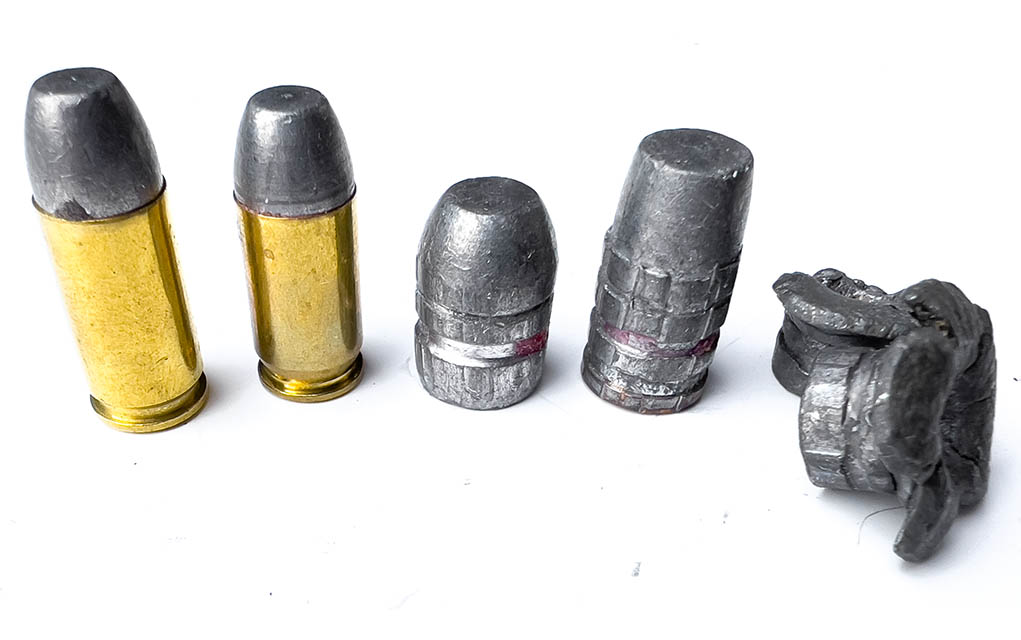
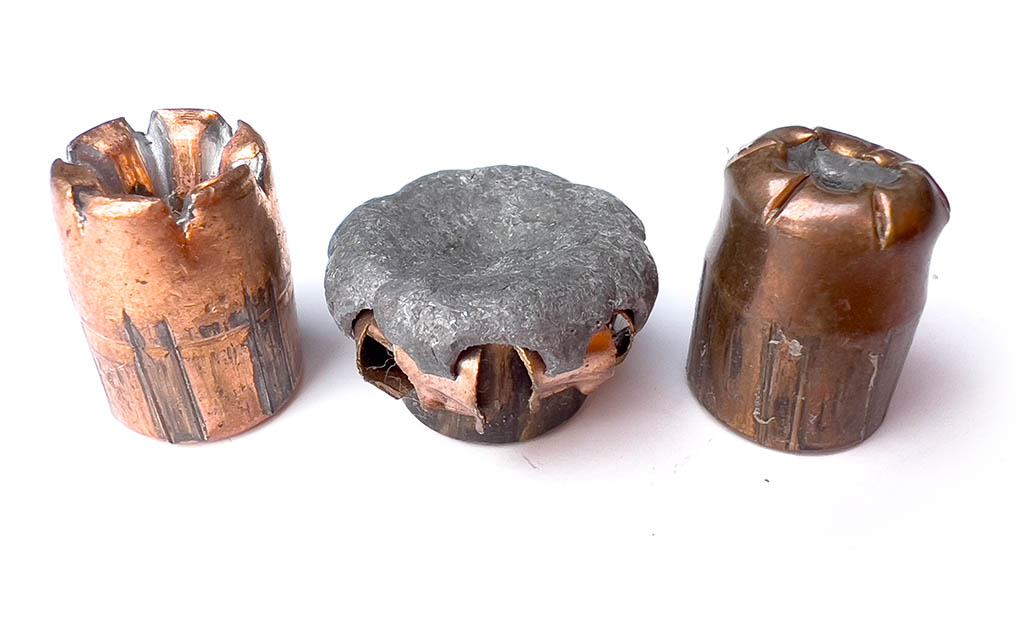
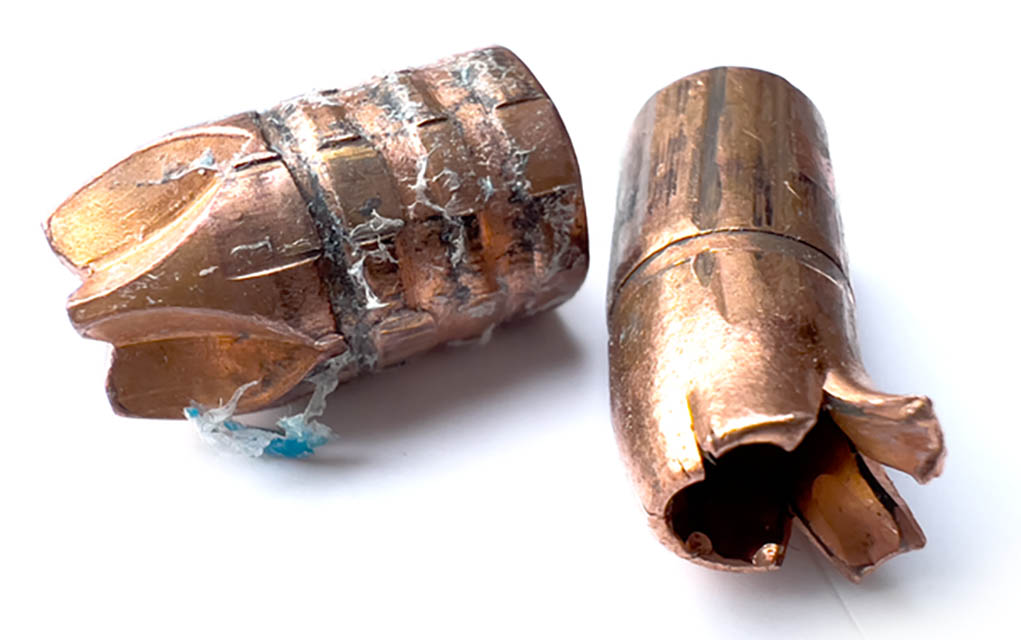
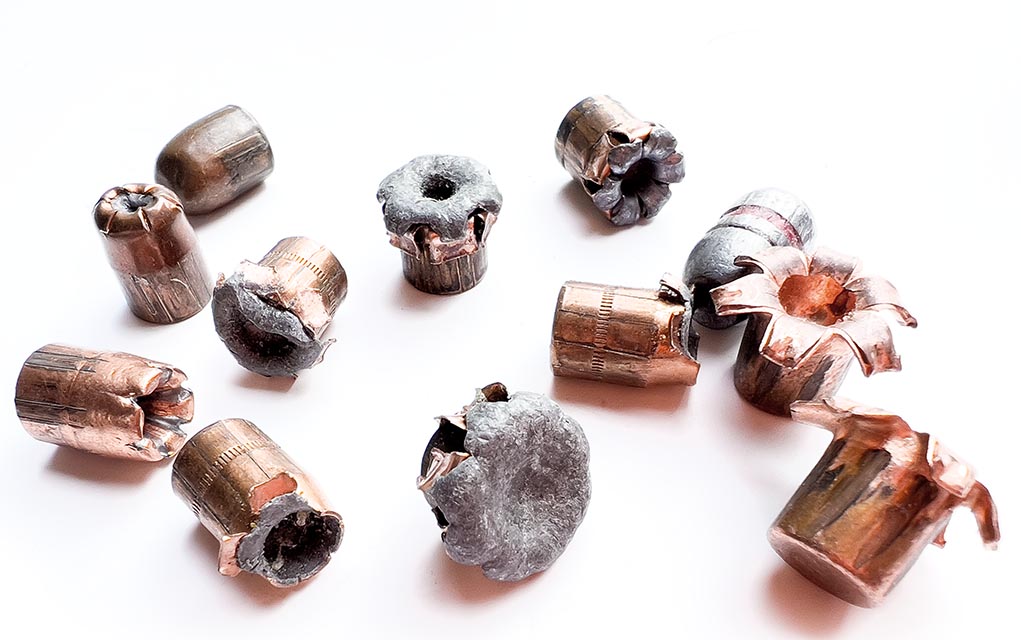
Common .45 ACP bullets fired into different media. Just because it is a “flying ashtray” doesn’t mean that it will always open.
Again, interior walls provide concealment, not cover, and yes, it’s fully possible to fire a shot into a wall and have it enter the adjacent room with enough speed to kill—and it likely would be able to enter another room past that as well—though with less energy. Your home isn’t designed to stop bullets of any kind: You must remember that if loved ones are in other rooms.
Bullets And The Home
The main thing you should be aware of when looking at bullets for home defense is how they behave in your individual setting. I’m not saying you need to make replicas of your walls and floors to test this with, but it helps to at least be aware of what’s around and in your home should you need to defend yourself. Bullets don’t want to stay in the home, flat out. If you fire in the direction of an exterior wall with a normal JHP bullet in a common caliber, there’s a strong chance it’ll exit the home.
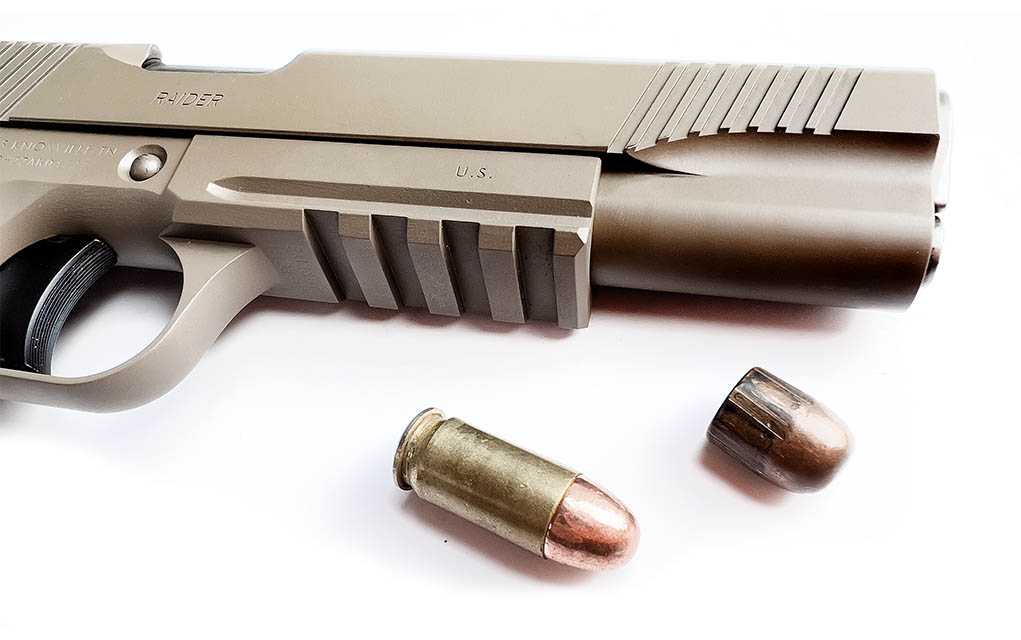
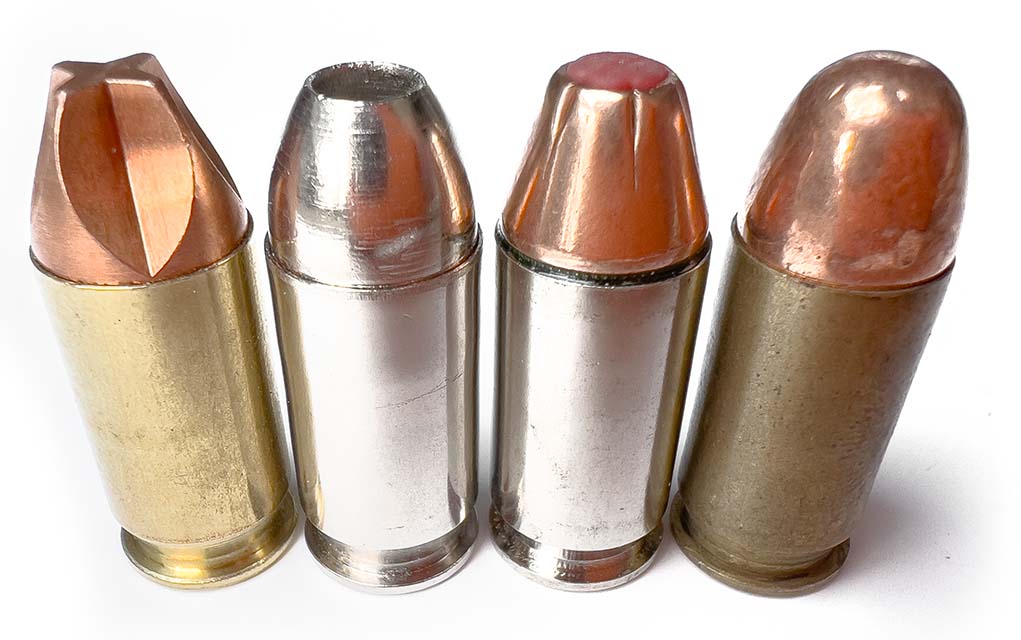
The .45 ACP is a common enough cartridge. It’s available in a number of bullet types, some more ideal for the street, and others for the home.
Windows will not catch bullets either, but they can slow them down and deform them enough to where velocity is robbed, but not depleted entirely. The main takeaway here is that you should be looking at the home as porous, but for bullets to be effective they need to be able to cause enough physical harm to an attacker that they’re effective. This is and always has been a paradox, but things are getting very interesting today via new manufacturing techniques and materials.
We live in an era of new bullet materials available on a wide scale. For instance, solid and expanding monometal bullets are starting to become common for self-defense use, and these are typically high-velocity-for-caliber in handguns, many well into supersonic range, such as the Black Hills HoneyBadger line of products. Barnes also makes some excellent bullets that fit these criteria, as well as Lehigh Defense.
Solid alloy bullets are common today; however, they suffer many of the same problems as common bullets and have more to boot. Being overly hard is something lead bullets seldom deal with, but these types do.
Of note is that most of these bullets, if solid in construction, are designed with tissue displacement in mind: radial flanges act to cause damage by means of rotation, instead of expansion, meaning that they aren’t reliant on a mechanical expansion to deliver lethal energy into tissue. This also means that they are much more barrier-blind, easily able to deliver lethal expansion into tissue after passing through common interior walls. However, these are light bullets for their bore diameters: In .45 ACP, the projectile weight is just 135 grains, and most are base-heavy in weight distribution.
These projectiles are terrifically effective striking tissue head-on; however, they lose their effectiveness significantly if they tumble, which they do quite often. In my testing, I was able to determine that most projectiles of this design are destabilized and lose lots of energy striking a drywall surface at between 10 and 15 degrees. If you were to shoot down a hallway, there’s a strong likelihood that your bullets would become trapped in the wall and fail to exit once they turn over their rotational axis. Ceramic surfaces are, in fact, easily defeated by this bullet type, unlike traditional lead-core designs that lose most of their energy striking tile or backsplash materials.
Rifle Bullets Vs. Handgun Bullets
Of interest is the disparity in how rifle projectiles fired indoors behave as compared to handguns. Rifle projectiles travel at significantly higher speeds, even from short barrels, and are easily destroyed or fragmented in many household objects and materials. Lower initial mass, usually 55 to 77 grains in 5.56mm and base-heavy designs, see bullets easily destabilized immediately upon striking a surface, and they’re then crushed or smashed by their own materials. FMJ bullets routinely “squeeze” their soft cores out if they impact a surface in a yaw. I was skeptical for a while, but indeed many very soft varmint-style bullets in 5.56 caliber are, in fact, “safe” to use in the home in that they’re so soft and easily destabilized that they can essentially vaporize against surfaces.
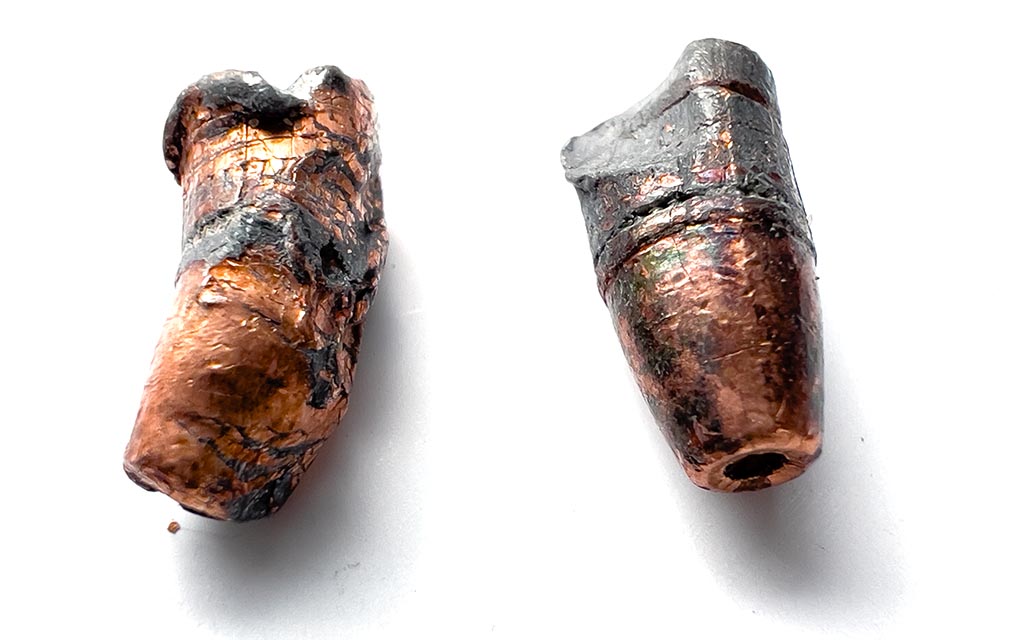
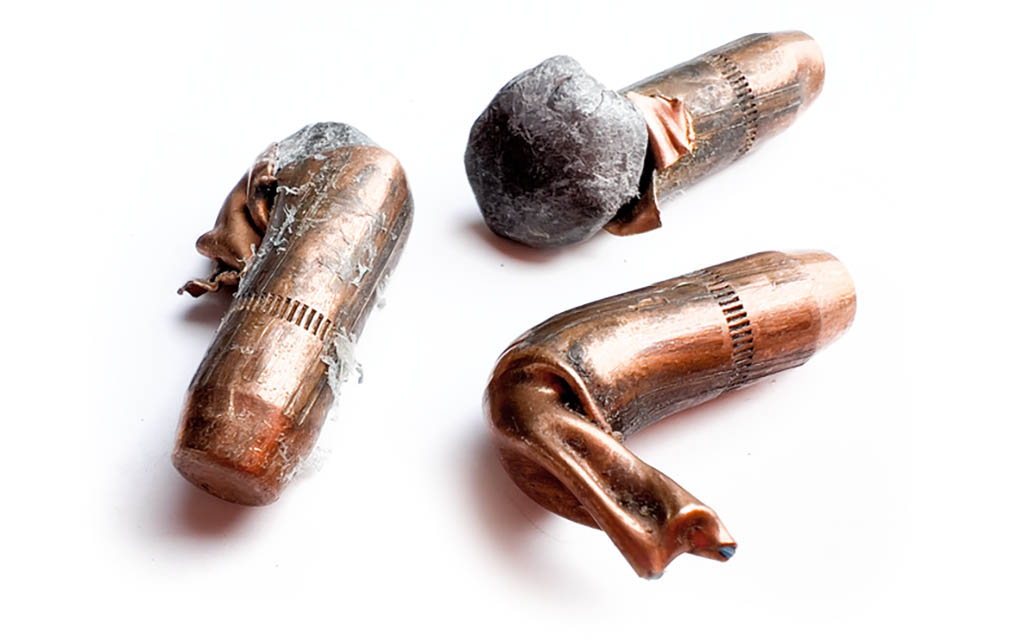
Rifle bullets are hard to find in one piece after impacting an object. These bullets were fired through a variety of materials and, somehow, managed to stay in (mostly) one piece. Note how the cores of these projectiles are trying to squeeze out of their jackets.
In .223/5.56 testing, rounds like the Hornady VMax cause dramatic and instantaneous cavitation in gel about an inch from entry, and at close range, this bullet is destroyed by steel doors, heavy hardwood doors and sheet metal. However, it also has a bit of a struggle with deep penetration, as it isn’t really meant for that sort of use.
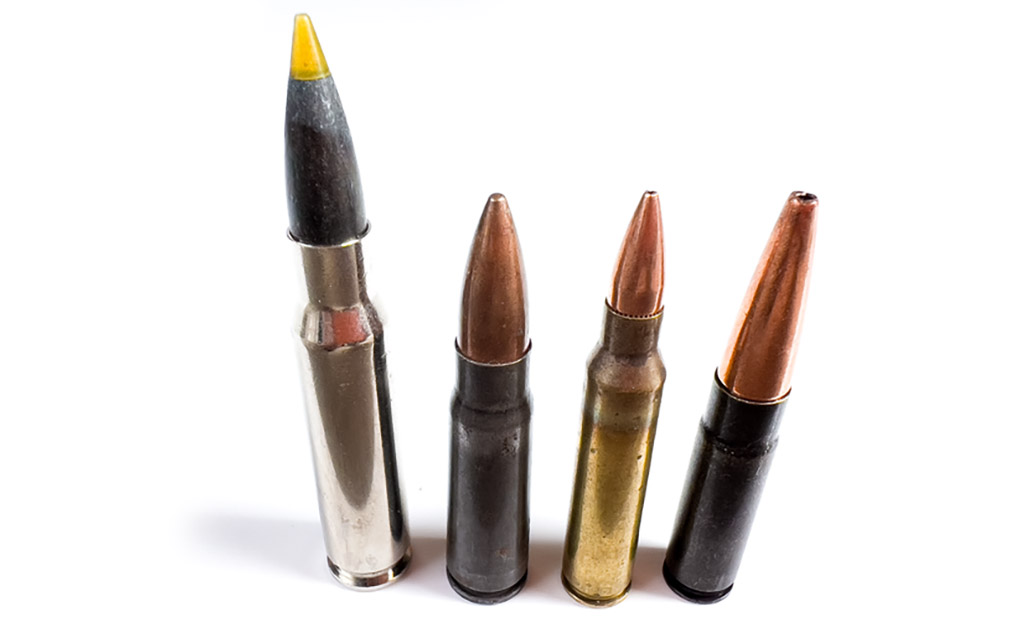
As you climb the ladder of rifles, you really begin to take overpenetration risks. Larger rifle rounds are just that and can retain massive amounts of energy. The .308 Win, 7.62x39mm, .300 Blackout and really any of these rounds are able to not just penetrate simple interior walls, but also bust brick and blocks, too. Tougher hunting bullets can be very difficult to stop and present a danger to other people in the building and outside.
The .308 Win. is great at defeating most barriers, including inside the home. The 7.62x39mm, 5.56/.223, and 300 Blackout, even as mid-sized rifle cartridges, are somewhat limited in how they can be deployed safely, if at all. Rifle cartridges are able to penetrate obstacles as a rule, and shortening their barrels for maneuverability won’t dramatically reduce how powerful they are as compared to handgun rounds.
I’m not saying you shouldn’t use what you have, but at least consider your home environment before you load up a bunch of 123-grain FMJs in your home-defense AK; these will probably be paying your neighbor a visit if in any apartment or condo residence. Commercial soft-point bullets offer a degree of reduced collateral damage, but don’t count on it.
The Bullet Paradox
An interesting point of discussion is how to make a bullet stop in a wall and a bad guy while doing little damage to the former and lots to the latter. The simple answer is that there’s no such bullet that currently exists because there’s no school of thought that has the correct answer.
We see this in the hunting world often: Is a bullet that stops under the skin on the opposite side a better bullet than one that passes completely through? The former camp believes that the bullet will dump all of its energy into the animal, but in doing so how does one predict at what range and what angle is ideal to deliver said energy? Likewise, if a bullet exits, then it has “wasted” its potential energy delivery to keep flying into the sunset. Well, both camps want something impossible to achieve, as you’ll notice is the pattern here.
Bullets fail for a number of reasons. Namely, they are designed for certain circumstances … but seldom encounter these ideal conditions in real-world use. Some definitely perform better than others, but there isn’t a do-all bullet that exists for everything.
You can’t have it all; Schrödinger’s bullet is one that delivers all energy without gambling on penetration; you simply can’t have both and stay within the laws of physics. Either you never exit and deliver all energy or exit and have superlative performance beyond your target. We’re asking an impossible question of a small piece of metal here—keep me and my loved ones at no risk while being of the highest risk to an attacker. At a point, there’s an unacceptable medium in which your bullet will have to be at least somewhat dangerous to your loved ones to be mostly dangerous to your attacker. That’s where muzzle control comes into play.
How can you pick the best bullet to kill an attacker in your daughter’s room, knowing your son’s room is directly behind hers? See, it certainly makes the call much tougher because now we’re not just talking about abstractions like drywall and impact angle.
The hardest part to swallow about this is that there’s no such thing as a perfect bullet for home defense. What you’re looking at is risk mitigation, not risk prevention. You’re basically looking at a bullet that’s easily slowed by common materials to a point of non-lethality, and, friends, I have yet in all my time evaluating bullets and ammunition to find a bullet that I could make stop 100 percent of the time. Even under ideal circumstances, which a home invasion certainly is not, you can’t say with certainty that a given bullet in an individual circumstance won’t manage to go through three interior walls, or even four.
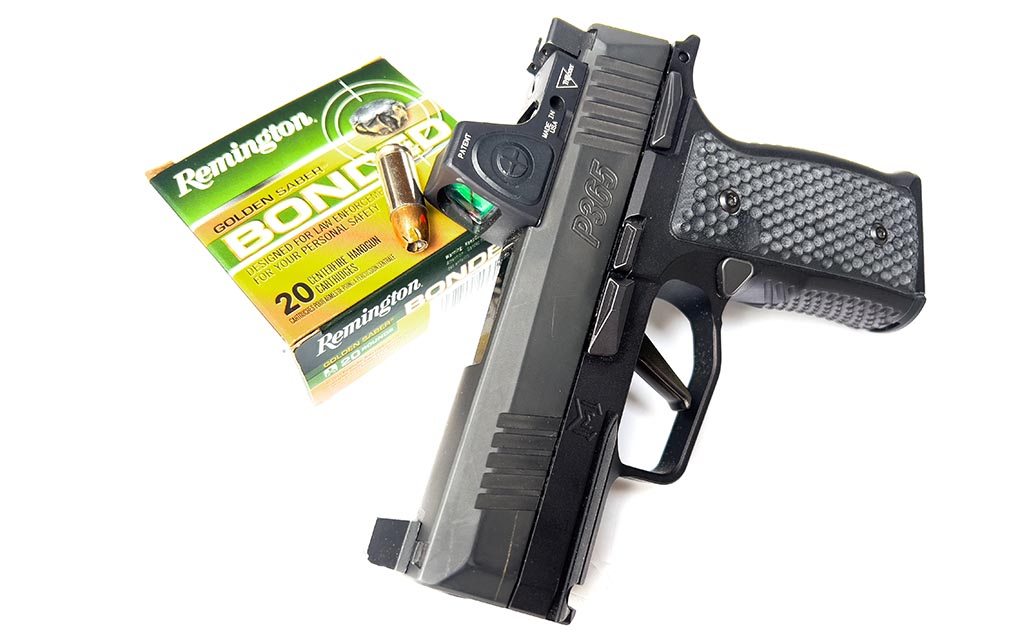
Remington Golden Saber is a tough bullet design that does well in shorter barrels. It’s a great choice for the streets and offers good expansion without creating too many issues in home materials. It will expand and lose energy rapidly against material barriers, making it marginally better than others if it does succeed in exiting a wall.
Weird things happen at high speed and, at a point, random chance becomes a major determining factor in everyone’s safety. Experts and scientists hate to acknowledge God’s hand and yet there it is, always present every time you pick up your gun. In the hunting world, many people swear by a type of bullet; others spit on it.
I think you can see where I’m going with this. Nothing man-made is ever going to give you the results you desire in every circumstance. So, in knowing that, you must then ask yourself just how much risk you want to assume to those things you care about most inside your home. I can’t tell you that on these pages—that’s between you and whoever you pray to.
Editor’s Note: This article originally appeared in the April 2024 issue of Gun Digest the Magazine.
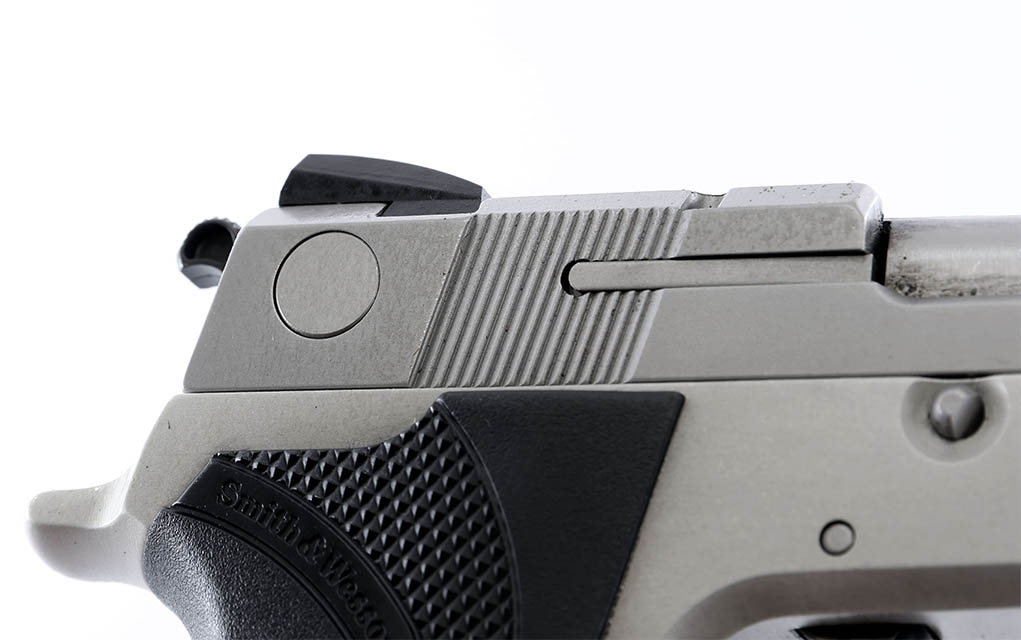
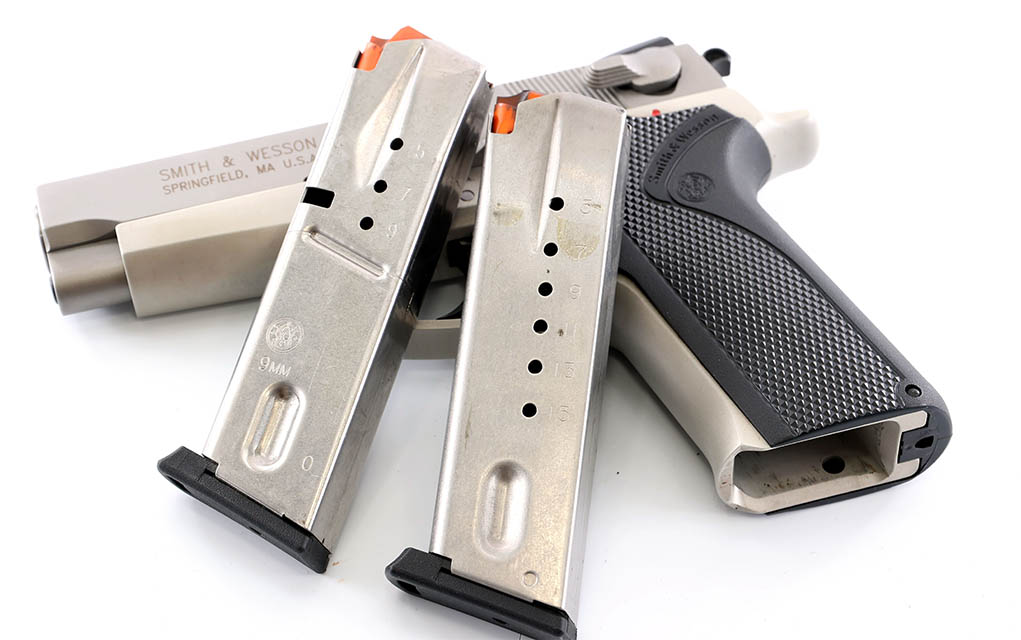
A look at three semi-old school, middle-aged pistols that still work great for self-defense.
When it comes to home defense, you don’t have to have the latest, hottest polymer blaster. You don’t need ultra-compact nor something eminently concealable. You don’t even need something new to the market. You can go old school—at least by today’s standards.
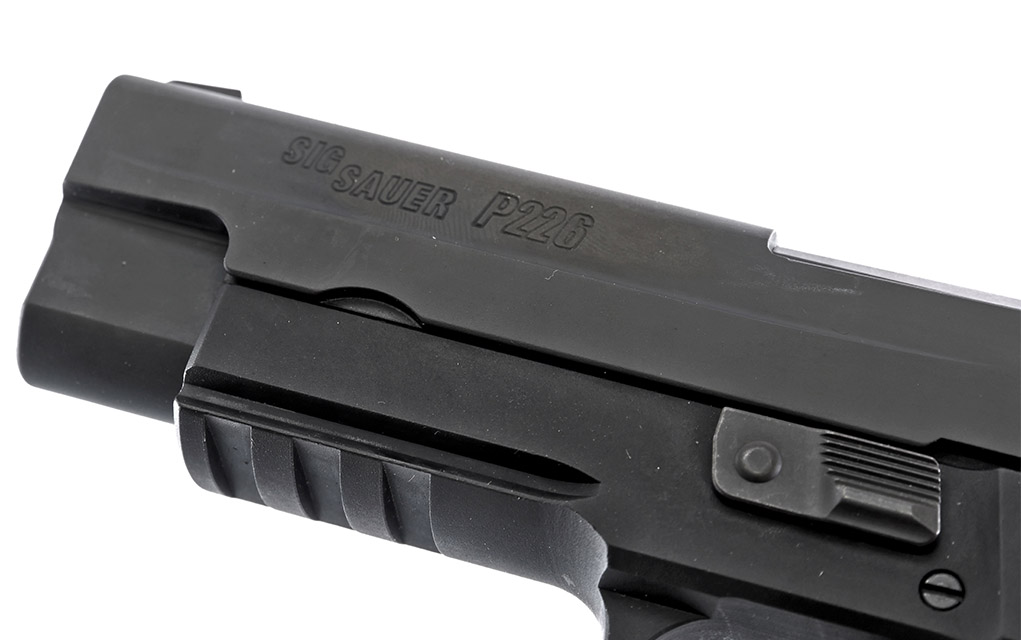
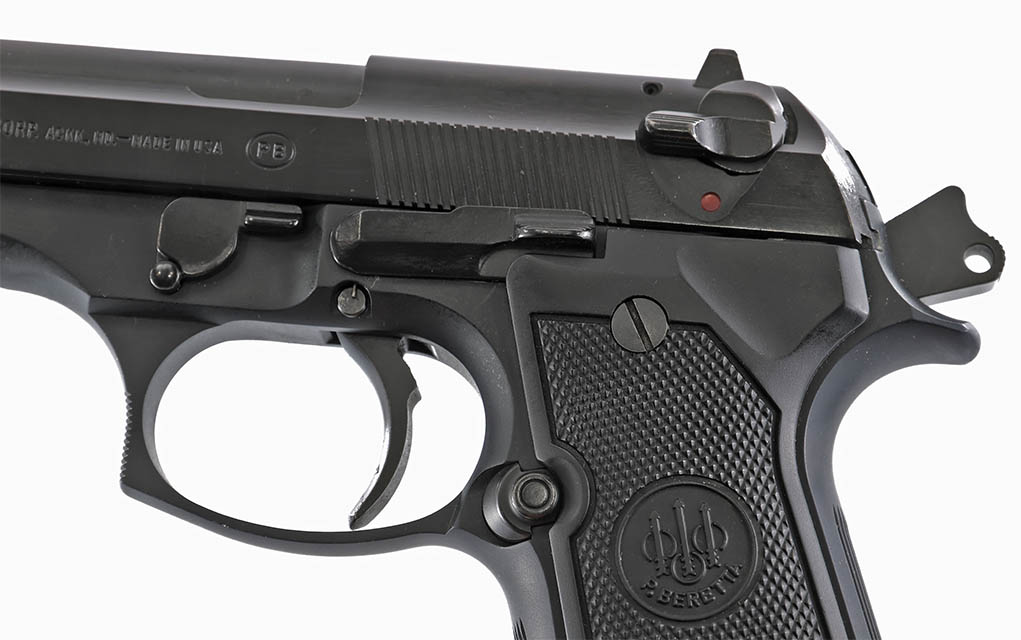
I offer up for your consideration three potential pistols that you might see languishing in your local gun shop display case, unloved because they aren’t new: the Sig P226, the Beretta 92 and the whole series of S&W M59.
Sig P226
This is a full-sized 9mm pistol with a generous magazine capacity, one that first saw the light of day back in 1985 as part of the U.S. Service Pistol trials. A collaboration between Sig and J.P. Sauer & Sohn, it ended up losing to the Beretta, but that’s another story that’s best told at another time. Despite not being adopted as the official U.S. sidearm, it was adopted by Naval Special Warfare, aka SEALs, for their use. So, you’ll get a lot of “used by SEALs” when you look at one in a gun shop or shoot it at the range. This also will keep the price up a bit for a non-polymer pistol now approaching middle age.
Depending on when it was made, some of these old iron pistols will have an accessory rail. Others won’t, so you’ll have to train to work with that.
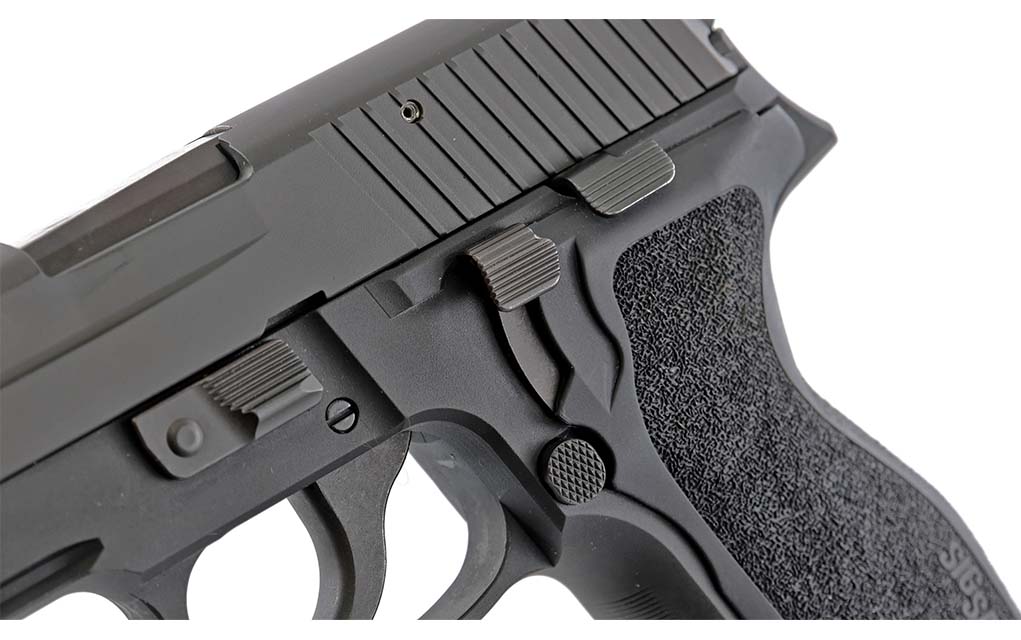
The action is a hammer-drop double-action design. That means you can fire the first round by using the trigger or thumb-cocking the hammer. If you don’t want to fire (once you’ve loaded or changed your mind), then you use the lever on the left side of the frame to safely decock the hammer. There’s no thumb safety. In this regard, the P226 operates just like a revolver: If you do not want to fire it, you do not press the trigger. And the DA trigger stroke is long enough that it’s unlikely to be inadvertently fired, as long as you keep your finger off of the trigger.
The Sig uses a frame-mounted decocker, one that’s spring-loaded and jumps back up after you’ve lowered the hammer.
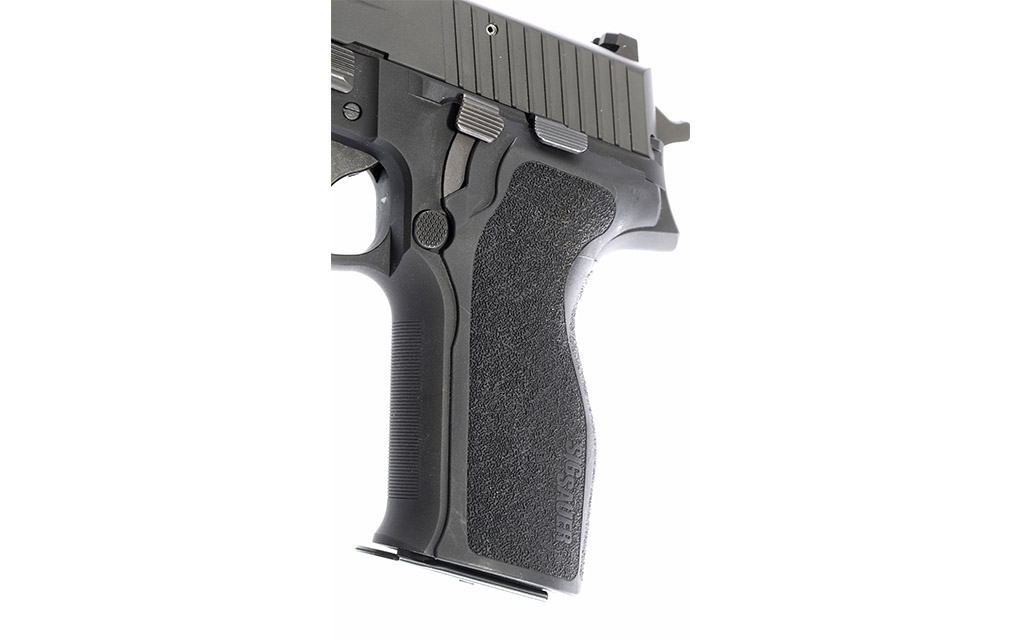
The Sig P226 advantages are a very comfortable grip shape and smooth DA trigger stroke. The disadvantages are the bore axis being a bit higher than the others, although that’s much more a competition consideration than a defensive one, and the sustained higher cost due to its panache as the weapon of SEALs.
The Sig P226 got an improved grip halfway through its life, and the E2 grip is more ergonomic … but the old one wasn’t bad.
Beretta 92
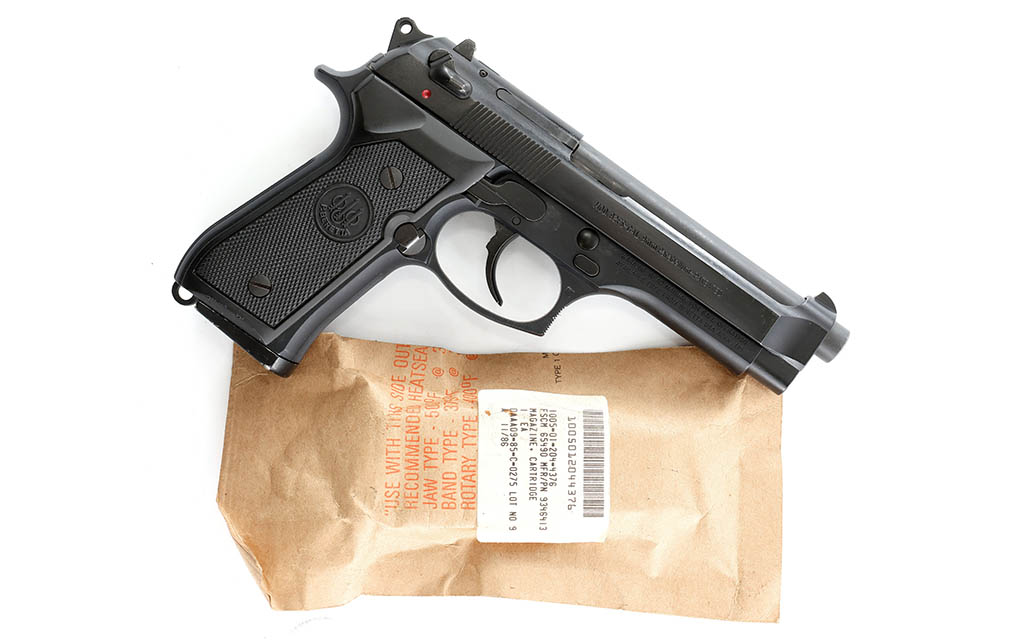
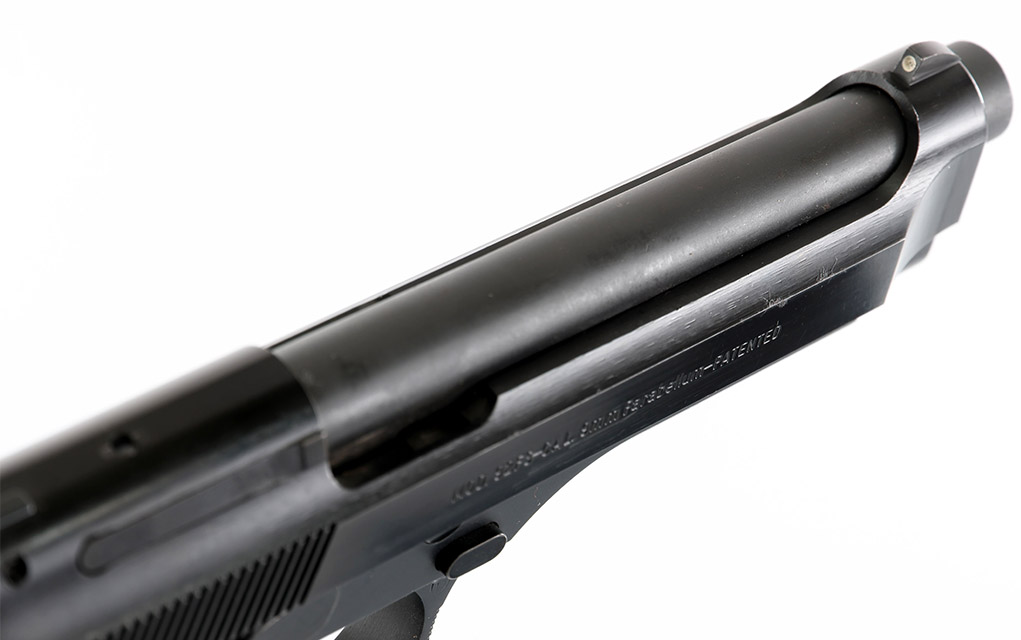
The Beretta became the service sidearm in the mid 1980s, replacing the 1911A1, and has been used (and loved and hated) by several generations of servicemen and women ever since. As a design predating the Glock, it also uses an aluminum frame (all three of these pistols do, with some variants using steel frames) and a double-stack magazine. The 92 has an open-top slide, so the very idea of brass failing to eject is simply not a thing.
Because these pistols have been around since the early 1970s or 1980s, plenty of magazines are available for them, like this P9 magazine still sealed in its wrapper.
The 92 safety is mounted on the slide and differs from the Sig in that it’s both a hammer-dropping safety and a safety. That is, on the main variants (the M9 and the standard 92) when you press the safety lever down to decock, it does that, but it also stays down and, while in the downward position, prevents the 92 from firing. In some variants, the safety lever is spring-loaded and pressing it down decocks, but when you let go it snaps back up again and isn’t on “safe,” just like the Sig decocking operates.
On all of these—not just the Beretta—when the hammer is cocked, the trigger rests to the rear, and it’s a single-action trigger pull.
The advantage of the Beretta 92 is its ubiquity; you can find magazines, holsters and other accessories galore due to it being the military sidearm for four decades. Despite the initial teething problems, it’s ultra-reliable … as long as you ignore the advice to run it dry. Like any other firearm, oil it. One noted disadvantage is that when operating the slide, you have to learn to not inadvertently press the safety down to the safe position.
The Beretta has a completely open-top slide, so nothing can get caught in there. No ejection port, that is.
S&W M59
The “59” is a whole series found in multiple generations. The first one appeared on the scene in 1971. It was the evolution of the M39, a single-stack 9mm pistol to a double-stack 9mm pistol holding a then-revolutionary 14 rounds. The safety follows the same pattern as (in fact, probably led, but who was on first is another argument for the future) the Beretta, in that it both drops the hammer and locks the mechanism. You have to press it back up to fire and that can be double action or thumb-cocking the hammer and single action.
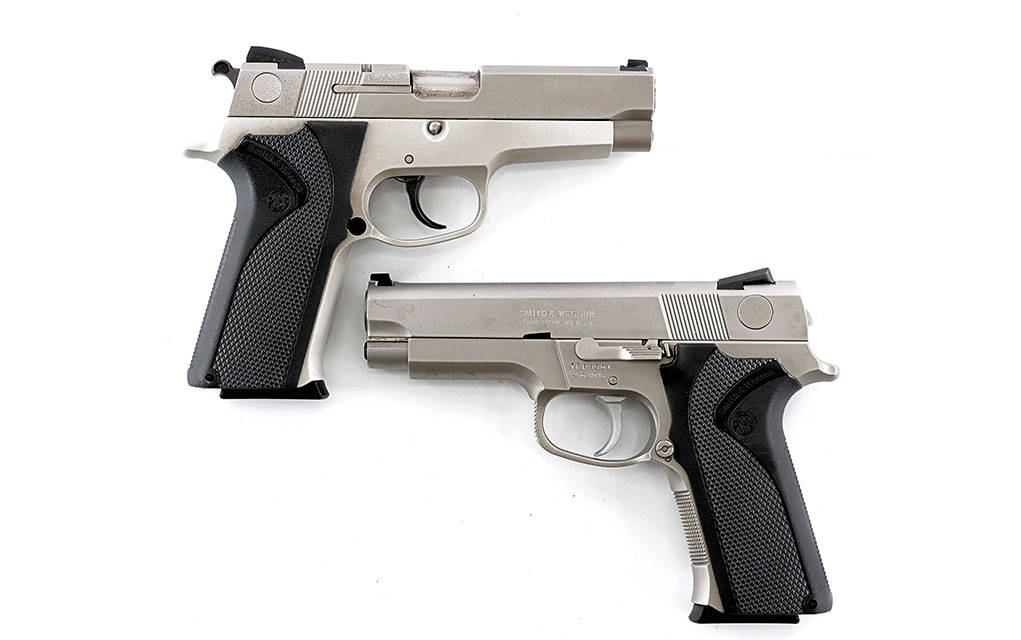
Top, a 910 with an aluminum frame in 9mm. Bottom, an all-stainless 4046, a DAO in .40 S&W with 11-round magazines. Choice abounds in the M59 series.
The 59 was the first generation; in 1988, the second generation, the 459, came out. That lasted until 1990 when the third generation, the 5906, came out. By this time, S&W offered it in so many variants that they even produced a circular slide rule to show size, caliber, materials (aluminum, carbon or stainless steel), traditional double action, double-action only, decocking, sights, etc. At the time, those of us working in gun shops joked about the “S&W pistol of the week” program they seemed to be on.
By the mid-to-late 1990s, with polymer pistols proliferating, S&W attempted to reduce production costs as much as possible. This led to the M910 and M915 models, both third-gen M59s, but with cost savings in machining and features. They still used the same magazines (the 910, 10-round magazines due to the Assault Weapons Ban of the time) and are just as reliable and accurate as the non-savings models.
As a result, you could devote your time as a collector to just M59 variants and probably not ever assemble a complete array.
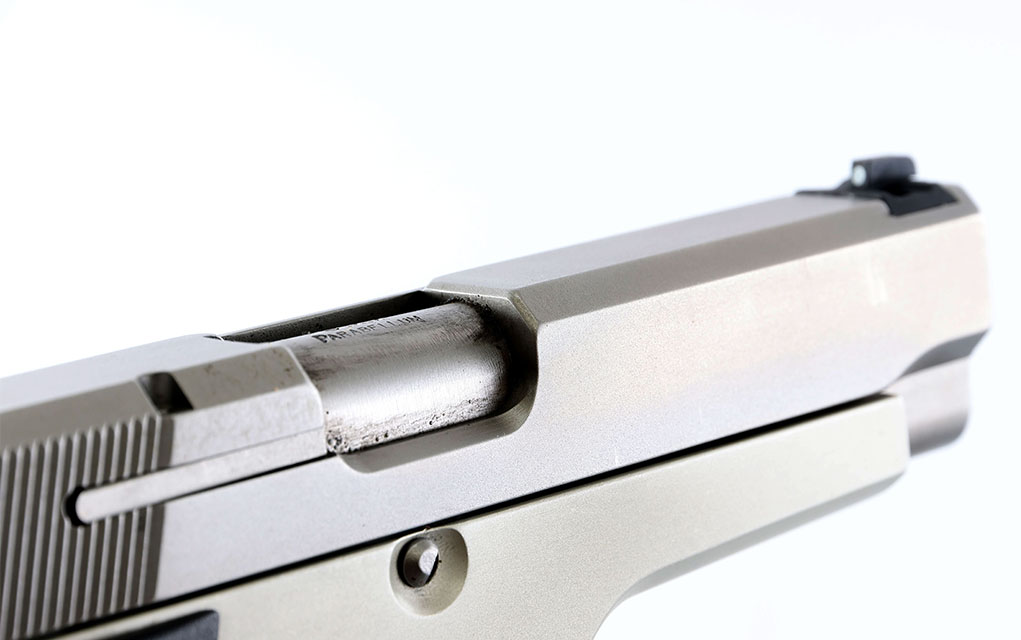
The S&W 910/915 series had a lot fewer machine operations done to the slide. This cut costs but didn’t harm reliability.
Unlike the Beretta and the Sig, which can be found almost exclusively in full-sized models, with aluminum frames, the S&W series can be found with steel (carbon/blued or stainless) or aluminum frames and blued or stainless slides. Also, compared to the other two, the M59 offered fixed or adjustable sight models, caliber variants and trigger options and were made in much larger numbers. Due to the slide-mounted safety, the M59 series has the same need to be aware of slide manipulation as you do with the Beretta.
The Price Of History
All three of these pistols can be had with some modern features, depending on when the one you’re looking at was made. The earliest variants will lack an accessory rail, so no light mount. Rails didn’t become common until the start of the 21st century. Later variants will have them in some instances, but not all, so you’ll have to learn offhand light use if you want illumination while using an early pistol.
All three are double-action pistols, so you’ll also have to learn to switch from the long initial double-action pull to the shorter single-action pull when shooting. This is made out to be a bigger hindrance than it really is by striker-fired advocates. National and international championships have been handily won by shooters using a DA pistol.
All three have been around long enough that there’s a lifetime supply of magazines already in existence and more still being made. In fact, they’ve been made for so long that you might even have to give used magazines a thorough going over to make sure the springs aren’t tired and not abused.
One way the 900-series generation of the 59 saved money was in not having an ambi safety. There wasn’t a lever on the right side.
They’re known quantities, so if you find a real bargain of a buy with something like a rusted-out barrel, you can easily find a replacement barrel, drop it in and be good to go. The same for holsters, if you feel the need for one. If yours proves to be balky, there are many pistolsmiths who can solve reliability or assembly problems and get yours up and running.
As full-sized pistols, they’re all reliable, accurate and easy to shoot. You won’t find the recoil of 9mm to be problematic, although I’d avoid getting a variant of any of the three in .40 S&W. The .40 is a fine cartridge, the FBI notwithstanding, but it does have more recoil and will cost you magazine capacity. Compared to the 15 to 16 rounds of 9mm, you’ll get 10-11-12 rounds of 40 in the same tube. Now, if recoil isn’t a problem and you find an absolute steal at your local gun shop, by all means jump on a .40. Ammunition for it will continue to be made probably for the rest of your life. (I suspect the last run of .40S&W ammunition produced will happen at the end of the 21st century as a commemorative run or to satisfy some cranky old collectors.)
Last is cost. The Sig will always bring a premium, again due to SEALs. The Beretta has just been replaced by a new Sig, the P320, as the service pistol, but two generations of service members know it, and there’s also the movie connection: It’s seen on too many movies and TV shows to mention, but the biggies would be Lethal Weapon, Die Hard and Terminator 2. Every one of those to show up in the local gun store’s showcase will garner attention.
This leaves the S&W 59 series as the unloved but gold nugget of home defense. They’re everywhere, there seems to be no end of pistolsmiths who can work on them and S&W will still service one if you buy a broken one for $20. (It may cost 10 times that to rebuild it, but so what?)
The S&W 910 differed from the 915 in being shipped with 10-round magazines, a legacy of the failed Assault Weapons Ban of 1994.
A Fork In Your Road
So, there you are, at your local gun store, looking over ordnances with a friend who is new to shooting. You can spring for the hot new model and have what everyone says you (or your friend will get) is “the best.” Or, you can get some classic iron, solid, dependable and inexpensive, and buy ammo and get some familiarization and practice with the cash left over.
You tell me: Which is better? The hottest thing and little or no practice or solid old school and a bigger practice budget? And remember, this will spend its time resting in your safe during the days and on the nightstand each night. Weight and concealability won’t matter. I thought so.
Editor’s Note: This article originally appeared in the April 2024 issue of Gun Digest the Magazine.
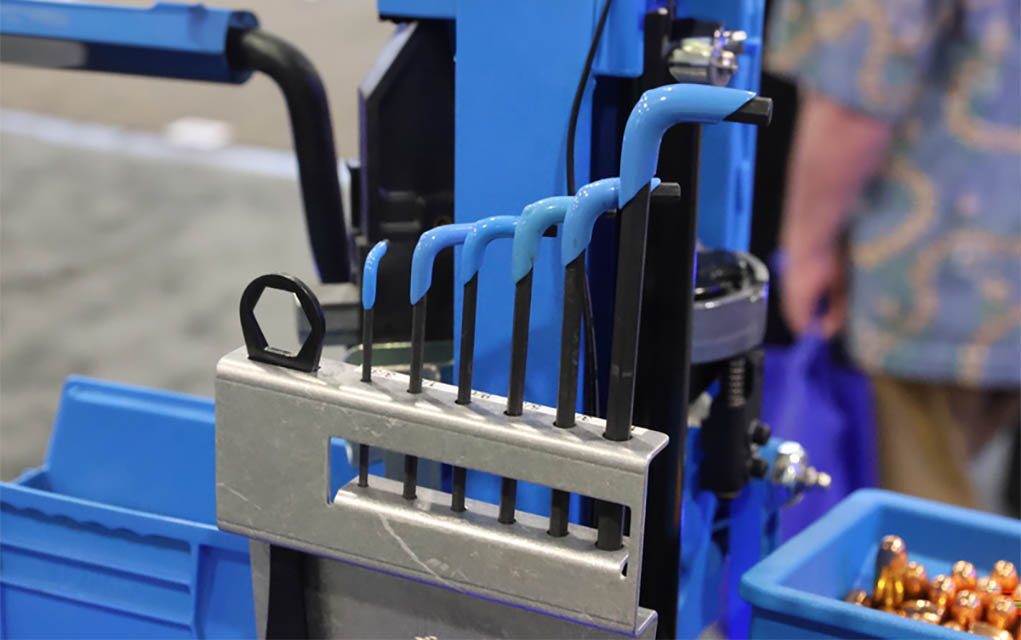
Organization is the universal tool every gun room and reloading bench requires, and the Dillon wrench rack set helps with that.
Do you ever say to yourself you’ve had enough? More specifically, have you had enough with the litter of tools on your loading bench?
I have.
I’m regularly swapping toolheads to change calibers on my presses as I test this or that, trying something new or swapping calibers. I tried to keep the Allen wrenches for those adjustments in a plastic box, but they always ended up on the bench.
And then, where on the bench were they? Mumble … mumble … mutter.
I finally had enough, so when I saw the wrench rack from Dillon, I knew my 550 and 750 were each going to get a set. The rack is simple: It’s a heavy-gauge stamping that you bolt to the top back of your strong mount, behind your press. You don’t use a strong mount? We’re going to have to talk about that in the next issue.
Dillon has it all covered. You bolt the plate by means of the rear bolts on your press/strong mount setup. The kit comes with the Allen wrench sizes you need to work on your press, plus a die ring wrench as well. They all slide right into their reserved spots. And, just to make it even easier, Dillon includes a strip of label, with the sizes already printed on it, and they’re spaced to line up with the spot for each of them.
The Dillon wrench kit bolts into your strong mount, on the back of your Dillon press. Once there, it’s in easy reach to put each one back when done.
Hot tip: Install the label before you bolt on the plate to save yourself the stretching and reaching to get the label in place after you’ve bolted things together.
Wait, there’s more. The wrenches come with the angle to the short leg of each one pre-dipped in vinyl, so you have a good grip and can see the wrench clearly when you go to pluck it out of the rack. As an extra bonus, the working end is a ball-end wrench tip, so you can spin the wrench even when you approach the screw you’re tightening from an angle.
Of course, gear doesn’t come cheap. The kit runs $46 from Dillon.
“Ouch,” you say?
You can buy the wrenches for a buck each. Yes, you can. But then you’ll still have them scattered on your loading bench or in a box you have to find. Once you lose one or use it someplace else and leave it there, you’ll buy another. And another. You’ll end up with three, four or five sets of them scattered to the winds.
With the Dillon kit, you have a place for them. And the Dillon blue vinyl coating lets you know “This is a loading room wrench; I have to get it back there.”
I’m not saying you need to go full-on Marie Kondo on your loading room, bench and components storage, but keeping the tools that get things properly adjusted is a smart thing to do. And when you can make a change by simply grabbing the handy wrench and put it back right where it was, your loading process will be less distracted, more focused and more productive.
Editor’s Note: This article originally appeared in the April 2024 issue of Gun Digest the Magazine.
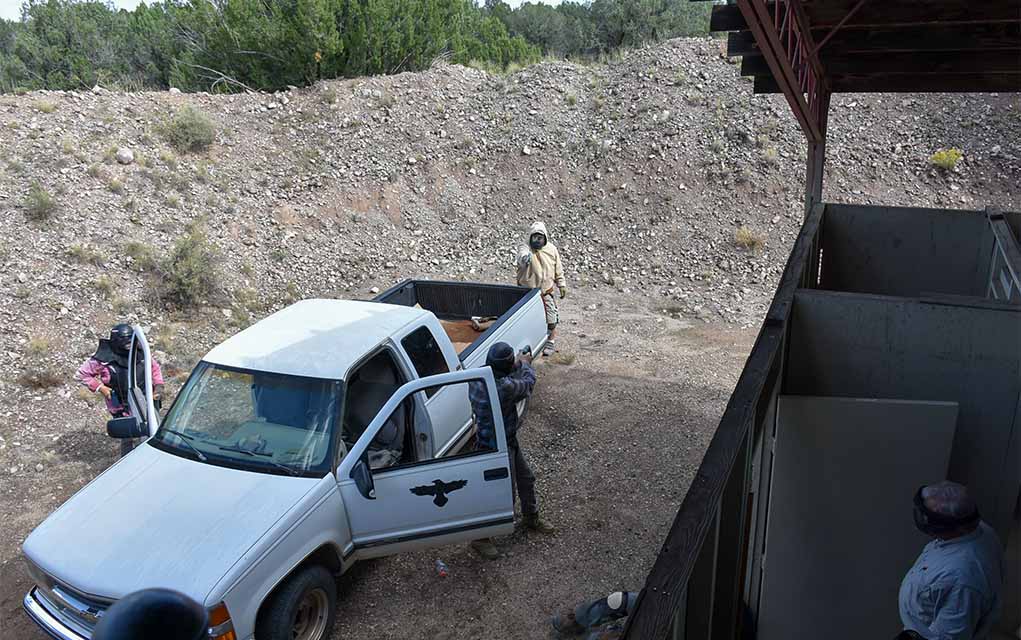
If you and your loved ones expect to keep cool in an emergency, you need to practice team tactics.
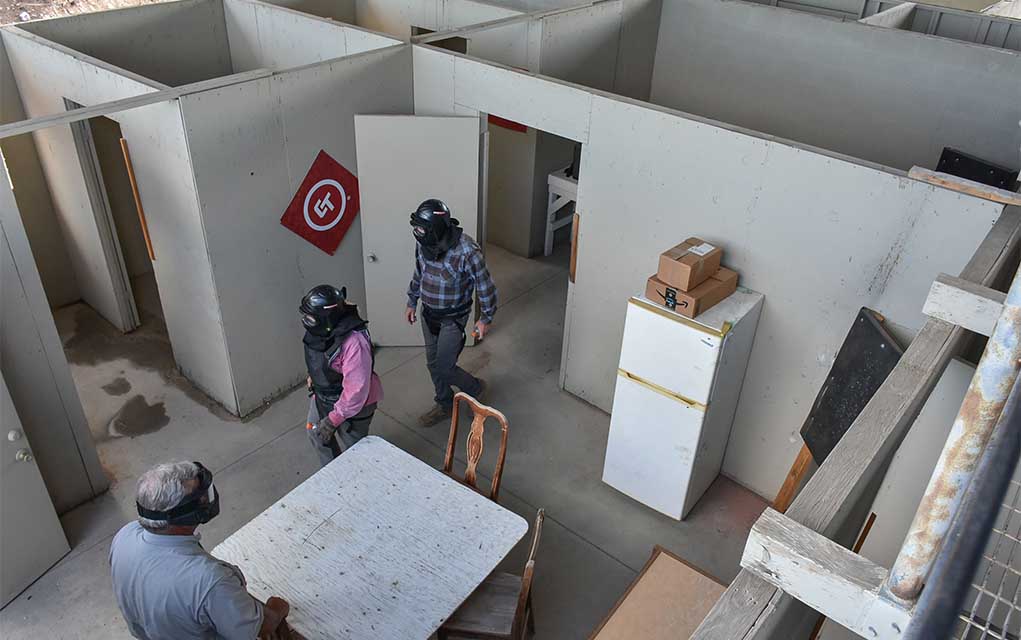
When most think of team tactics, they envision highly trained Delta Force operatives—or a SWAT team—breaching a door and conducting a dynamic entry. That’s a good example of team tactics in action … but few of us will ever participate in an activity like that.
However, that doesn’t mean you shouldn’t develop your team tactics. Well, unless you’re a hermit who has no friends and has moved to the mountains to live alone and write a manifesto. Most normal humans have other humans they often hang with, whether they’re their good friend, a spouse or children.
I’ve had some team tactics training. As a soldier, and back in my badge-wearing days, it was part of the curriculum. I’ve also attended a team tactics course at Gunsite Academy that focused on civilian teams, like a husband and a wife. Recently, I also did some work helping Benghazi survivor and master firearms instructor David “Boon” Benton, who was portrayed in the movie 13 Hours, train our local SWAT team.
You’ll learn tactical theory at a team tactics class, but most learning occurs during after action reviews following tactical simulations.
Regardless of the group or situation, there are two things that team operations—whether they involve a six- or two-man team—have in common: A tactically proficient and successful team must have a plan, and they must have good communication.
Determine Your Team
If you’re a loner, you’re your own team (and hopefully someday you’ll find another human who finds you moderately tolerable). For the rest of us who are at least semi-normal, we’ll have a good friend and/or a significant other with whom we’re commonly around. This is your team, and it might also include children.
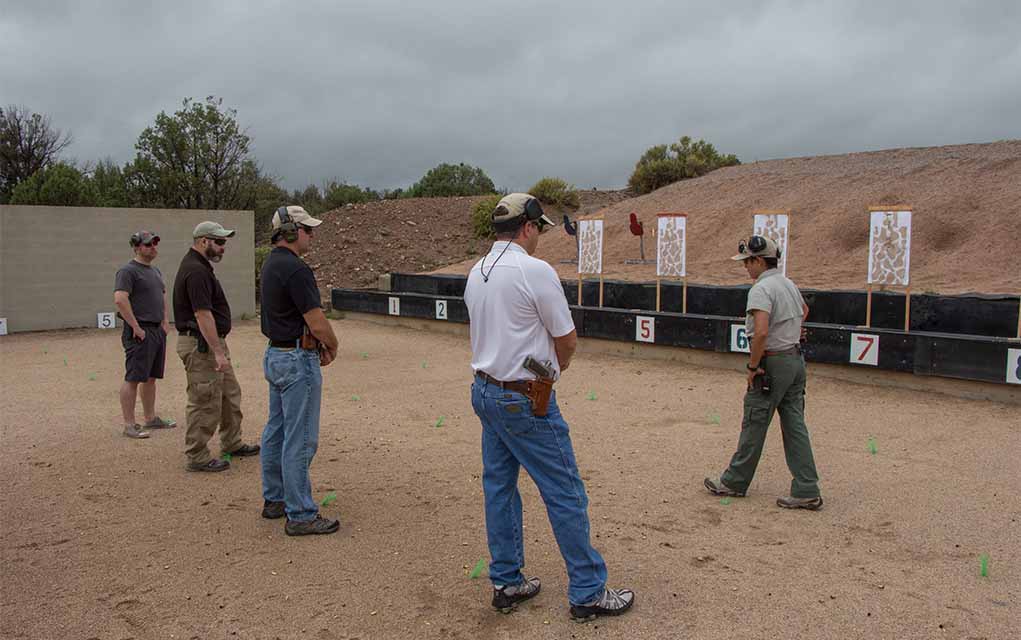
A good civilian team tactics course will address common situations like you might experience around vehicles and in parking lots.
Each team member should also have a job. These jobs could be as simple as following your mother, calling 911 or holding on to the hands of your siblings. A job for a team member could be as simple as being armed and making sure an emergency first aid kit is present and accessible, and all team members should be responsible for not forgetting to have their cell phone with them.
This doesn’t have to be complicated. In fact, it’s best when kept simple and generic, and don’t put excessive responsibility on the backs of untrained or juvenile team members. However, every team member should know what the job of the other team members are. At a minimum, this tells them who to look to for guidance, and if capable, others know what each team member is responsible for and then they can assume that role if necessary.
A team tactics course isn’t a shooting course. It’s primarily a course to teach you and your partner how to work—stay alive—together.
In fact, establishing a team chain of command is important. If you’re identified as the team leader, but your wife and kids are out without you, generally your wife would assume that role. This means one of the kids—if capable and of a responsible age—can assume the duties of your wife. This goes a long way toward answering the question, “Dad’s not here. What now?”
Have A Plan
It’s impossible to develop a comprehensive plan for every situation that might develop. However, you can institute operating guidelines for common tasks that might occur. These are established tactical responses, predetermined to deal with things that have a high probability of happening.
Dealing with doors is a perfect example.
During one team tactics course, my partner and I were presented with various reality-based scenarios we had to react to. This was during force-on-force exercises where all the participants were armed with handguns that fired Simunitions. During the prior day while under the guidance of an instructor, my partner and I were given an opportunity to establish some operating guidelines: make a plan.
Don’t go to team tactics course planning to learn how to shoot or to run your gun. You need to know that before you get there.
One of our plans was how we’d deal with opening closed doors that led into the unknown. Just before the Simunition training began, I told my partner we should deal with every door just as we had decided during the previous day. This worked well and eliminated unnecessary communication and possible confusion. When we approached a closed door that we had to go through, each of us knew—without a word—what we were supposed to do.
This same concept can apply to a lot of situations.
Let’s say you want to establish a plan to tactically exit a location by vehicle. In this instance, you could identify the person who will drive, where each team member shall sit and how to access the vehicle depending on the direction of approach and even the direction of the potential threat. Sure, when the time comes to implement the plan there may be extenuating circumstances—the pre-identified driver might be injured—but you can plan for that as well: If team member A is injured, then team member C will drive.
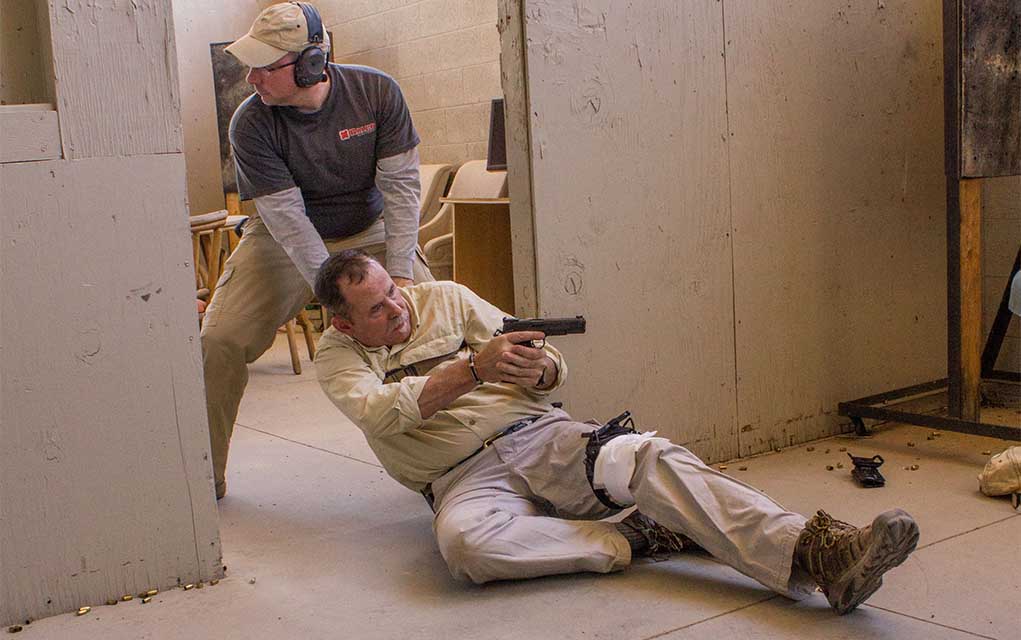
What do you do if your partner gets hurt? You should have a plan for that.
If you have children, it’s very important to include them in these plans. It’s also important to dry run the plan to make sure everyone is on the same page. If you have an infant, who is going to carry him or her? It could be your wife or an older sibling. If you’re planning a response to a home invasion or burglar, the kids need to know what to do when the alarm sounds.
You should also always have at least one contingency; if you cannot do plan A, execute plan B. Similarly, you should also have a rendezvous point established outside the home, and you should also do the same for commonly trafficked locations such as malls or shopping centers.
Instructors at a team tactics course not only evaluate your tactics, but they also critique and help you learn to communicate with your partner.
Communication
More than anything else, communication is the most important aspect of team tactics.
Let’s say, for example, you and your wife are engaged in a gunfight and you either need to reload, have a stoppage or maybe you dropped your gun. Your wife needs to know about this while it’s happening; she needs to know why you aren’t shooting or why you’re hiding behind the car. And she needs to be made aware of this without having to watch you or look to see what you’re doing.
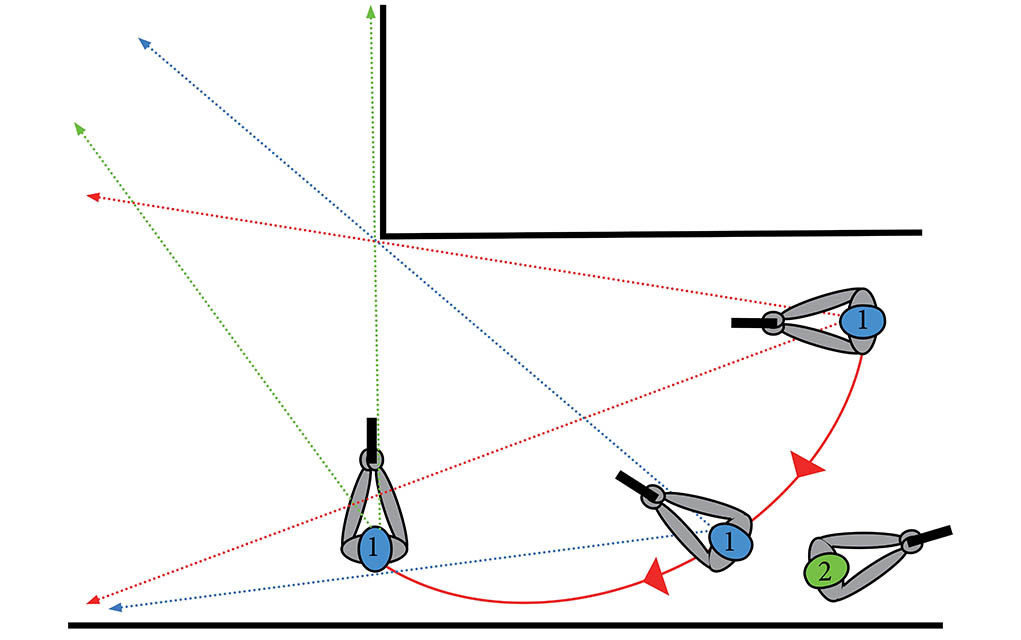
How will you and your partner handle a corner like this? You need to know beforehand, and that’s part of planning.
Screaming, “I’m reloading!” or “I’ve lost my gun!” takes too many words and might not be a good idea. Establish simple and direct communications for potential issues ahead of time. You could simply yell out, “Working!” and your wife would know you’re temporarily unavailable. To let her know the problem has been solved, your communication could be as simple as “Up!”
You and your partner should know how to solve simple tactical problems with minimal communication.
Talking while shooting or while responding to a lethal encounter doesn’t come naturally. It’s something that needs to be practiced. Also, if you’re in a face-to-face encounter with a potential threat, having an action word that’ll key your partner in on an action you’re about to take is a good idea—kind of the opposite of a “safe” word, if you know what I mean. But in some situations, your communication can and should be non-verbal.
You should have hand signals that help convey actions or actives like to cover or watch, to move or maybe even run. Similarly, you should be able to convey the direction you want to move or the location of a potential threat. Think these communications through, keep them as simple as possible and limit them to the obvious. This isn’t a time to establish a new and comprehensive sign language; you simply want to be able to convey highly probable observations or instructions without words, as clearly and quickly as possible.
Team tactics should be developed with your partner and include the weapon systems you’ll be using.
Go To School
The best way (of course) to learn team tactics is to take a class from a reputable school. But keep in mind that most team tactics courses aren’t shooting courses: Don’t expect to attend a team tactics class to learn how to shoot. In fact, many schools offering team tactics training have a training prerequisite so that they know you can shoot and handle a firearm safely before they’ll let you in the class. Yeah, you’ll do some shooting in a team tactics class, but you won’t learn to shoot in a team tactics class.
Gun-handling skills should be learned before attending a team tactics course.
This might seem overly stringent, but it makes perfect sense. It takes about five, 8-hour days of training to go from a non-shooter to someone who is safe and reasonably competent with a defensive handgun. A basic team tactics course should be, at a minimum, 2 to 3 days long … and ideally 5 days. To learn to shoot and to learn team tactics could consume 2 weeks, and most of us can’t take 2 weeks off from life to do that. It’s just like with any other firearms discipline—you learn to shoot and then you learn the tactics.
Editor’s Note: This article originally appeared in the April 2024 issue of Gun Digest the Magazine.
Looking for a new iron or piece of kit to enhance the one you already own? Check out these 7 new bits of guns and gear to grow your firearms wish list.
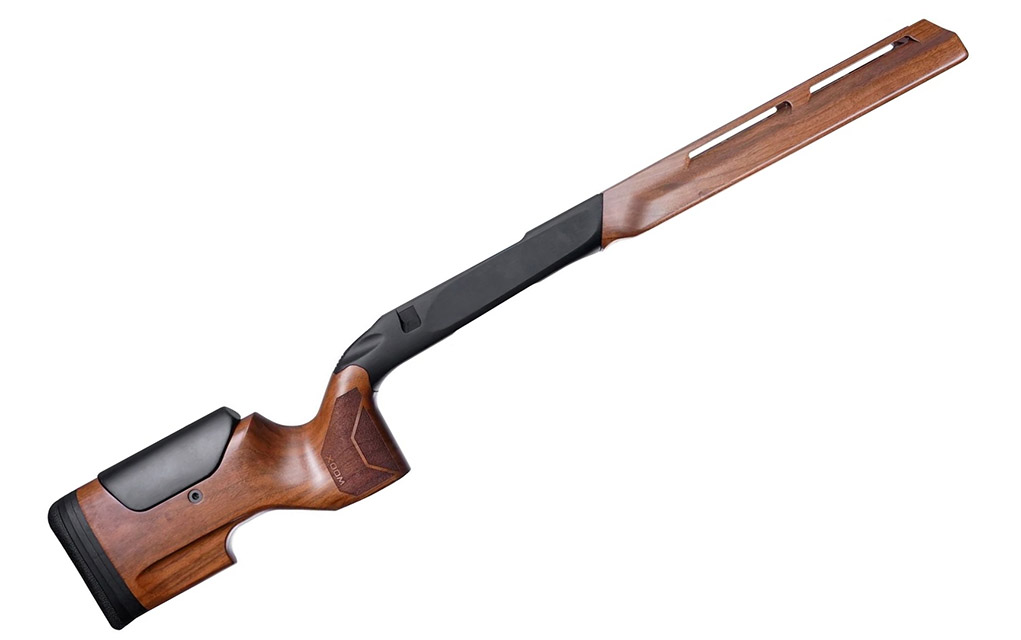
Heirloom looks with state-of-the-art performance, the WOOX Titano stands out in competition stocks. Tailored for Benchrest and F-Class shooters, the stock boasts a stunning American walnut stock and an aircraft-grade aluminum chassis. With a 3-inch fore and wide barrel channel supporting up to 1.20-inch diameter barrels, it accommodates large fire tubes common to comp rifles. Furthermore, WOOX’s Suspense weight system allows you to precisely balance the system with six 2.5-ounce weights. The buttstock is fully adjustable for both the length of pull and cheek rise. Other notables include a smooth-bottom bag rider butt and Integrated thumb rests to enhance grip comfort. MSRP: $999
Taylor’s & Company 1875 Outlaw Revolver
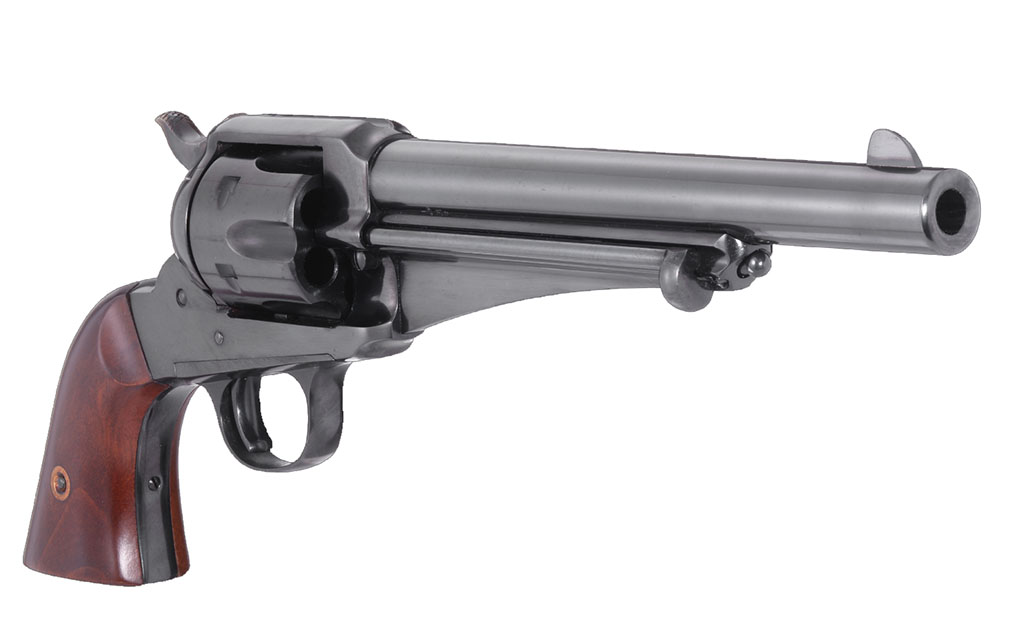
A collaboration with Uberti, Taylor’s & Company offers up a faithful reproduction of a classic Remington single-action, but with a modern twist—it’s chambered for 9mm. While no Old West outlaws pitch Parabellum, the modernization effort makes it easier on contemporary cowboys’ pocketbooks. Available in 7.5- and 5.5-inch barrel lengths, the 1875 Outlaw features smooth walnut grips, a forged blued steel frame, a rear frame notch and a fixed front blade sight. Also, the webbed ejector rod helps the wheelgun cut an unmistakable profile. It’s enough to make Frank James envious. MSRP: $698
StopBox Chamber Lock
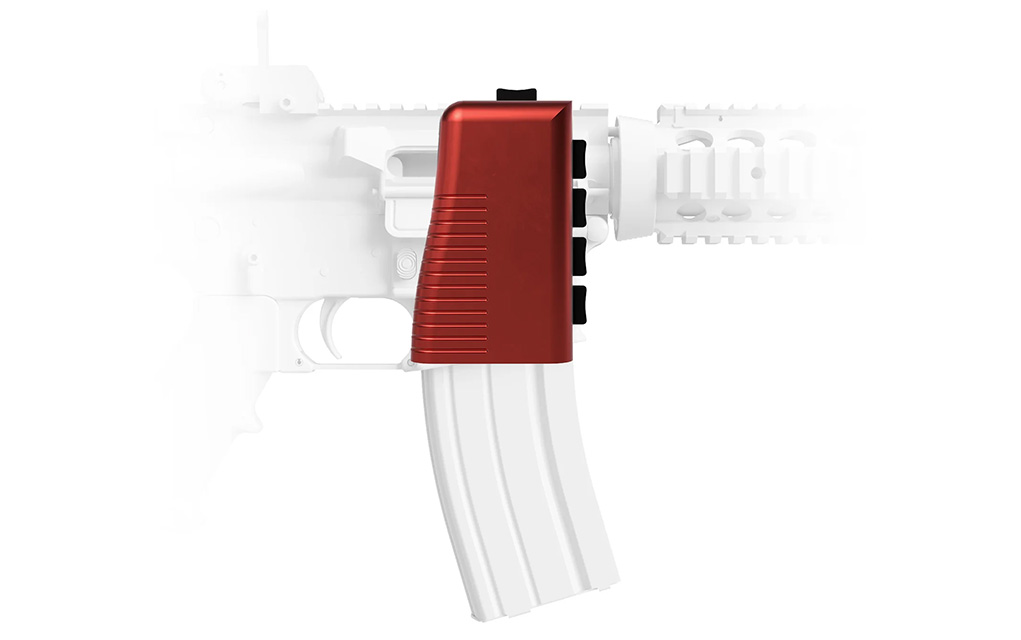
New or old, it’s wise to stop the unauthorized use of a firearm. That’s where the Chamber Lock comes into play. At once, it keeps a firearm safe, yet at hand. Construct-ed from Type II hard-anodized 6061-T6 aluminum, it features a patented mechanical hand gesture code lock, ensuring intuitive use even in low-light or high-stress situations. The lock offers six configurable combinations, expandable to 16 with the Actuator Accessory Pack, although preset combinations are recommended for optimal security. Compatible with most AR-15s and shotguns. MSRP: $150
MTM Case-Gard Bull Rifle Rest
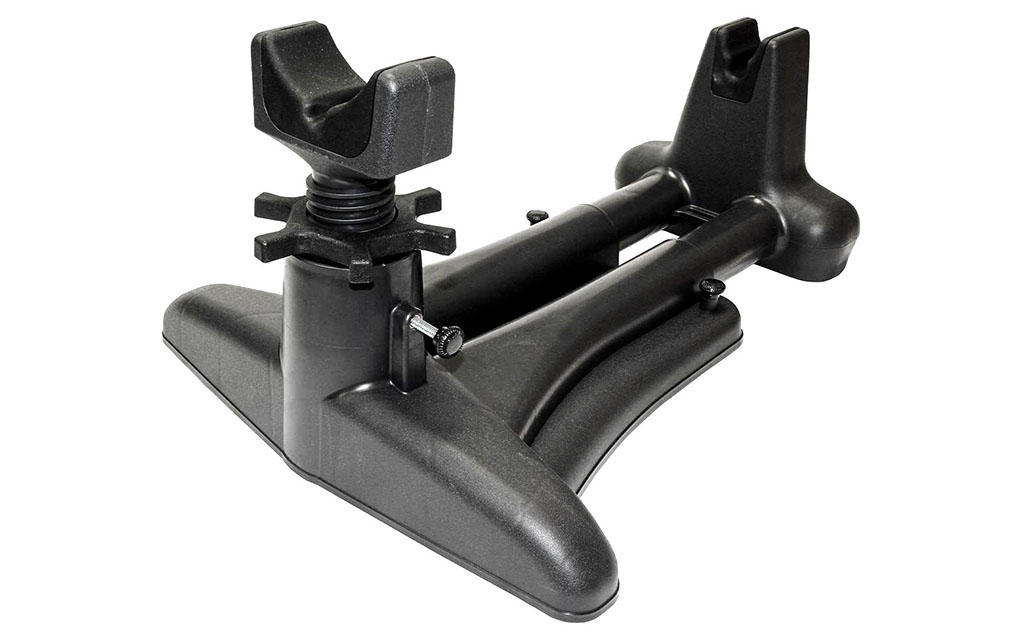
Dialing in a rifle is the key to a solid shooting platform. MTM Case-Gard provides just this with its affordable Bull Rifle Rest. With an adjustable length between 18.3 and 26 inches, it accommodates nearly any long-gun you shoulder. Additionally, the lightweight rest features slip-free rubber feet and a wide stance, for a wobble-free shooting base. And front elevation adjustments are easily made on the rest, thanks to a screw system allowing you to get a rifle or shotgun situated just right. MSRP: $43
Mission First Tactical Leather Hybrid Holsters
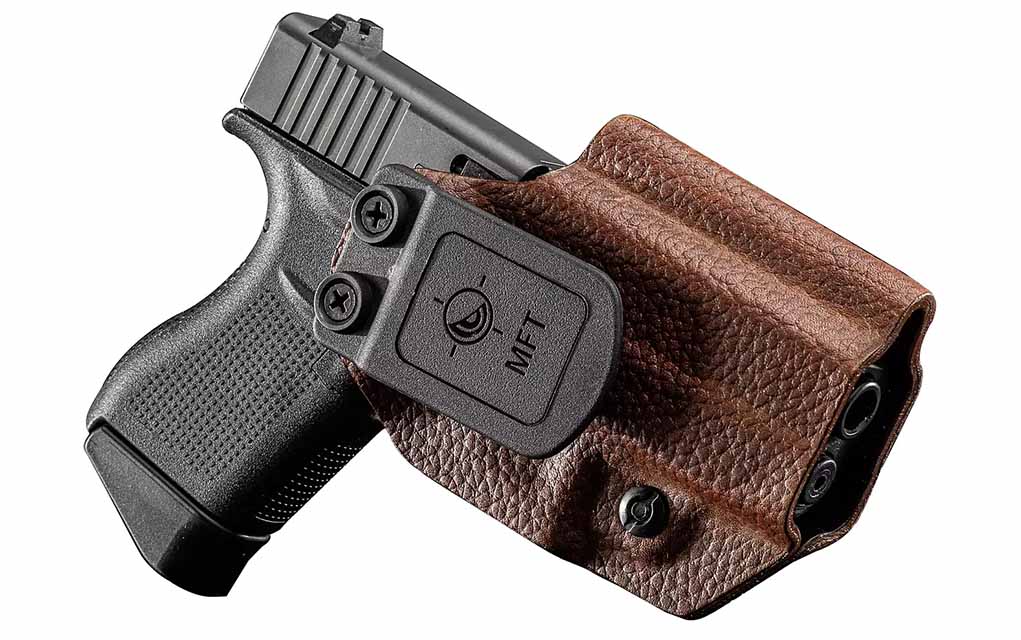
What a looker! Too bad it’s meant to be kept under wraps. This Kydex and leather gem offers exact tolerances, secure retention and easy re-holstering. Plus, the hanger requires no break-in time compared to its traditional leather cousins. Versatile for AIWB, IWB or OWB use, it accommodates right- and left-hand positioning. Additionally, the American-made hybrids are red-dot compatible and have an audible “CLICK” when you re-holster. MSRP: $70
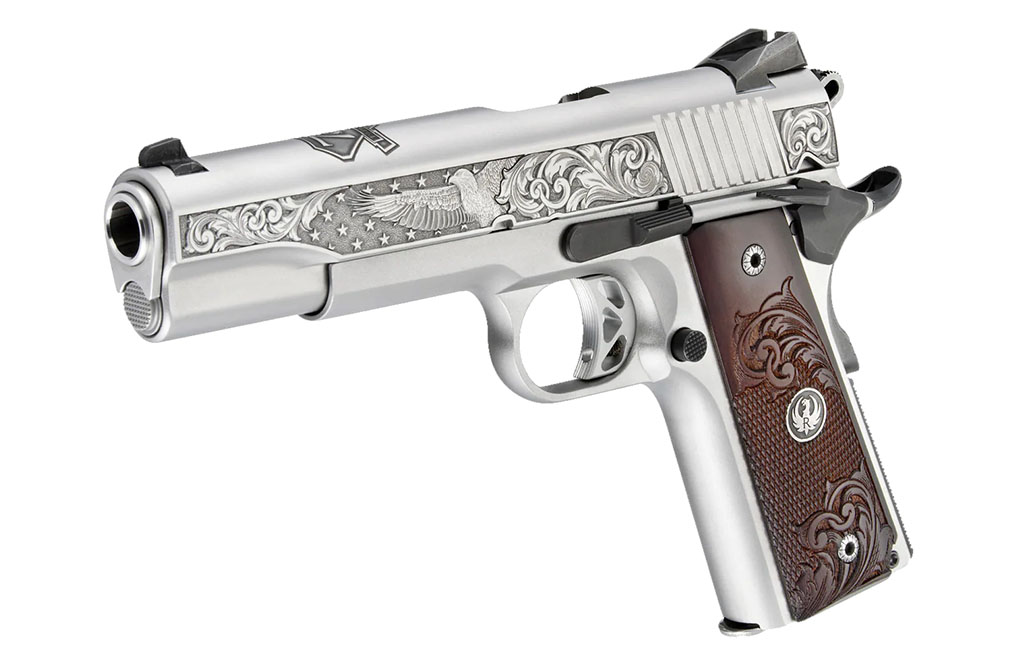
In celebration of its 75th year, Sturm, Ruger & Company presents its limited-edition 75th Anniversary Ruger SR1911. This iconic pistol features a finely detailed, laser-engraved slide and custom grip panels with intricate scrollwork. Ruger’s CNC-controlled machining ensures precision, while the classic 1911 fire control and positive barrel lockup enhance accuracy. You’ll have to act fast on these beauties, only 750 units are being produced in 2024, and each pistol bears the special R75 serial number prefix and ships in a marked case with two stainless-steel magazines. MSRP: $1,800
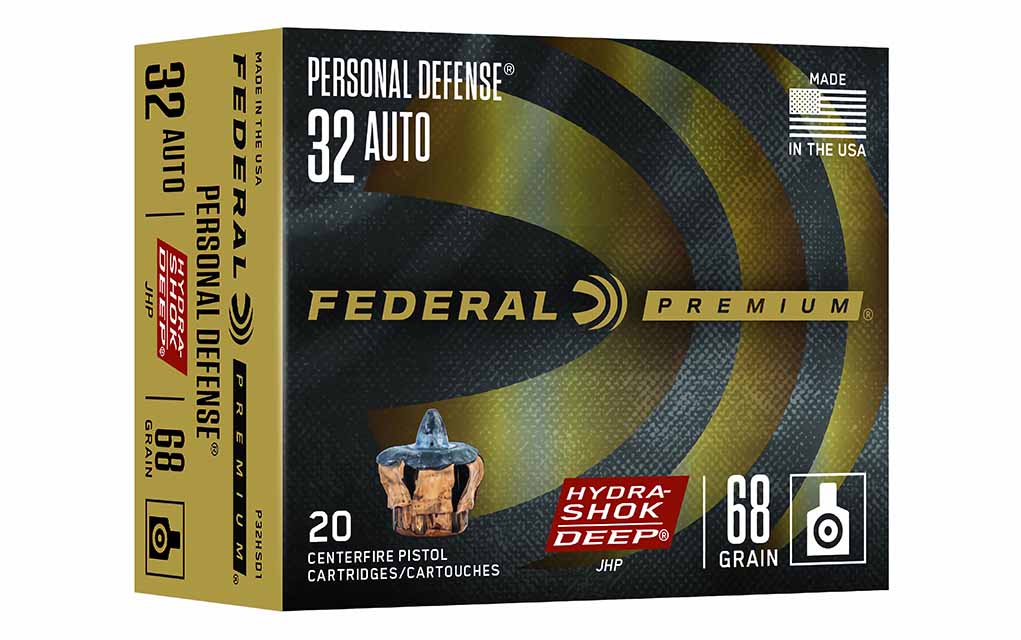
Federal Premium Hydra-Shok Deep .32 Auto
In the day and age of deep carry, good ol’ .32 ACP is making a bit of a comeback. Federal Premium is supporting its renaissance with the introduction of Hydra-Shok Deep in the pocket caliber. Rigorous testing and stringent manufacturing processes ensure superb accuracy and consistent ballistic performance of this ammo. Furthermore, the notched copper jacket of the Hydra-Shok bullet ensures consistent controlled expansion and adequate stopping power trigger pull in and out. MSRP: $35, box of 20
Editor’s Note: This article originally appeared in the March 2024 issue of Gun Digest the Magazine.
A quick look at 9mm Major, the slightly bigger older brother of the 9mm Luger.
There are good arguments to be made whether the 9mm Major is simply a hot 9mm Luger load … or another distinct chambering shooting 9mm bullets. It’s not a wildcat nor proprietary load; it has a distinct OAL measurement that makes it suitable for some guns and non-functional for others.
Moreover, some ammo makers have special packaging for the 9 Major loads, and it’s dangerous to shoot 9mm Major in many typical handguns chambered for 9mm Luger rounds, so it deserves some clarification.
Typical 9mm Luger ammunition is loaded to SAAMI specs of about 32,000-psi chamber pressure, which corresponds to velocities between 850 and 1,200 fps, depending on the projectile’s weight. In turn, 9mm Major ammunition is loaded to reach a Power Factor of 165 in IPSC or USPSA competitions. Power factor is determined by bullet weight times velocity, divided by 1,000.
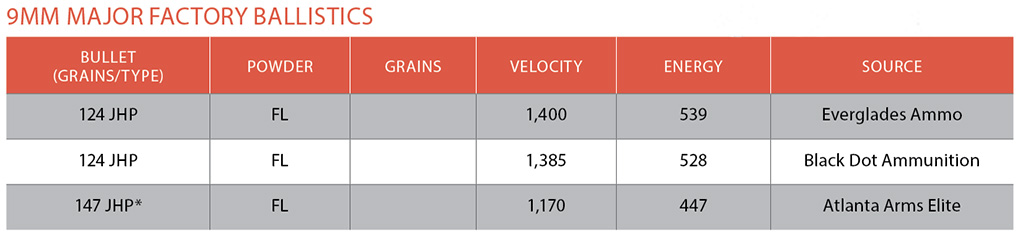
To reach major power factor in USPSA Open Division competition, a 115-grain bullet must reach 1,435 fps, a 124-grain bullet must reach 1,331 fps, and a 147-grain bullet must reach 1,123 fps. If you look at the 9mm Luger loads and ballistics nearby, 9 Major loads are about 200-fps faster by bullet weight.
Note that 9mm Major ammunition is dangerous to fire in a pistol not designed for the excessive pressure generated by loading to the velocities needed. Many handgun makers caution against the use of +P and +P+ ammunition, and 9mm Major loads can generate pressures above +P+, making them unsafe for most off-the-shelf pistols.
Typically, only competition handguns are designed to accommodate these excessive pressures. The most essential feature in Open guns is a ramped barrel providing full case head support. Non-ramped barrels, or any barrel with a large cutout for the feed ramp, are not safe for 9mm Major ammunition.
*OAL: 1.165 ± .005
General Comments
There’s no prescribed pressure limit for 9mm Major as a wildcat round. Gunpowder selection is crucial when handloading. Only medium- to slow-burning-rate pistol powders are used because they produce lower peak chamber pressures when pushing the bullet to the same velocity as faster-burning powders. On its 9mm Major listing, Atlanta Arms notes, “**Warning: This ammunition EXCEEDS SAAMI Specification and should only be used through a competition race gun.”
Most 9mm Major rounds are loaded as long as possible to help keep peak pressure low. The SAAMI maximum overall length for the 9mm Luger cartridge of 1.169 inches. Black Dot Ammunition (Crawford, Alabama) notes that it loads its 9 Major rounds to 1.160 inches overall, which means the ammunition “will not chamber in most standard 9mm guns to prevent accidentally firing from any non-open type firearms.”
Other ammunition manufacturers load 9 Major, including JJR Ammo, C&S Ammo, Everglades Ammo, Vantage Reloading and Universal Ammo.
When balancing concealability, accessibility and comfort, how do you find the best concealed carry holster for your needs?
When outfitting for carry concealed, your handgun, cartridge and ammunition are three very important considerations. But holster selection is just as important, partly because it makes carrying concealed easier, and partly because if your holster is uncomfortable, you won’t be carrying when you should be.
Many gun stores have ranges where you can try different handguns, but to try a holster you most often have to buy it. So, some holster advice is a good thing. I’ve been carrying concealed for more than half my life, but I thought hearing from a true holster specialist might be more beneficial.
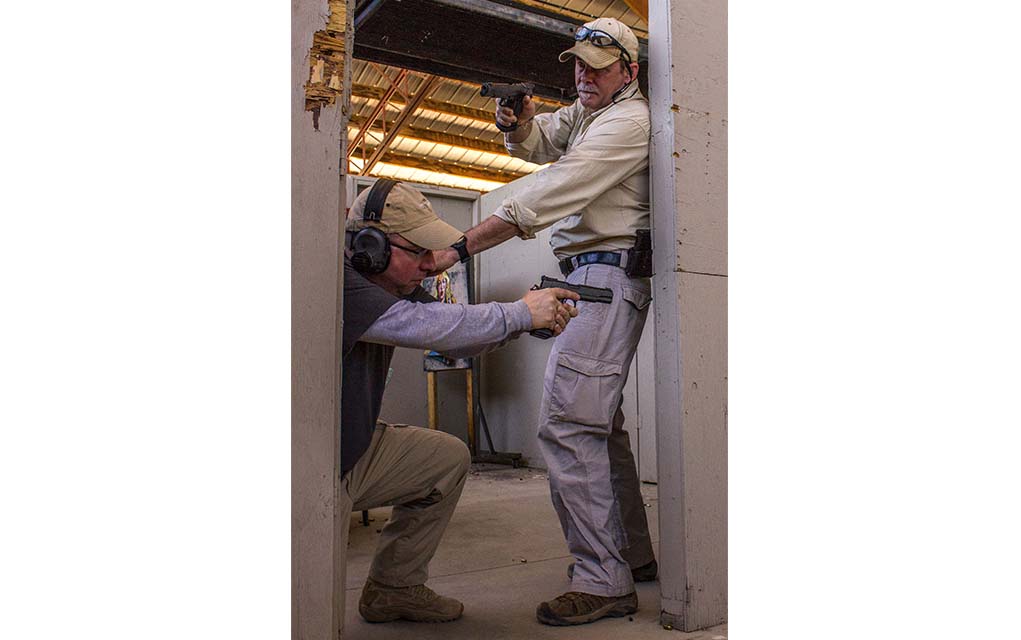
Mike Barham has worked for Galco Gunleather for 21 years. He grew up around guns and took courses from esteemed trainers like Chuck Taylor and Massad Ayoob. In addition to 11 years in the Army—to include a tour in Afghanistan—Barham is also a graduate of Gunsite, Tactical Response and Front Sight firearms academies. Barham has been carrying concealed handguns for as long as I have, so I asked him to share some of his expertise.
The author (standing) has trained with Mike Barham (kneeling) and considers him a subject matter expert when it comes to holsters.
Finding Balance
The first tidbit of wisdom Barham offered was, “Every concealment holster must balance three competing factors: concealability, accessibility and comfort. With almost all holster designs, as one factor increases, the others decrease. A highly concealable holster is often less comfortable and accessible, and a holster that offers fast access, or one that’s comfortable, is almost always less concealable.”
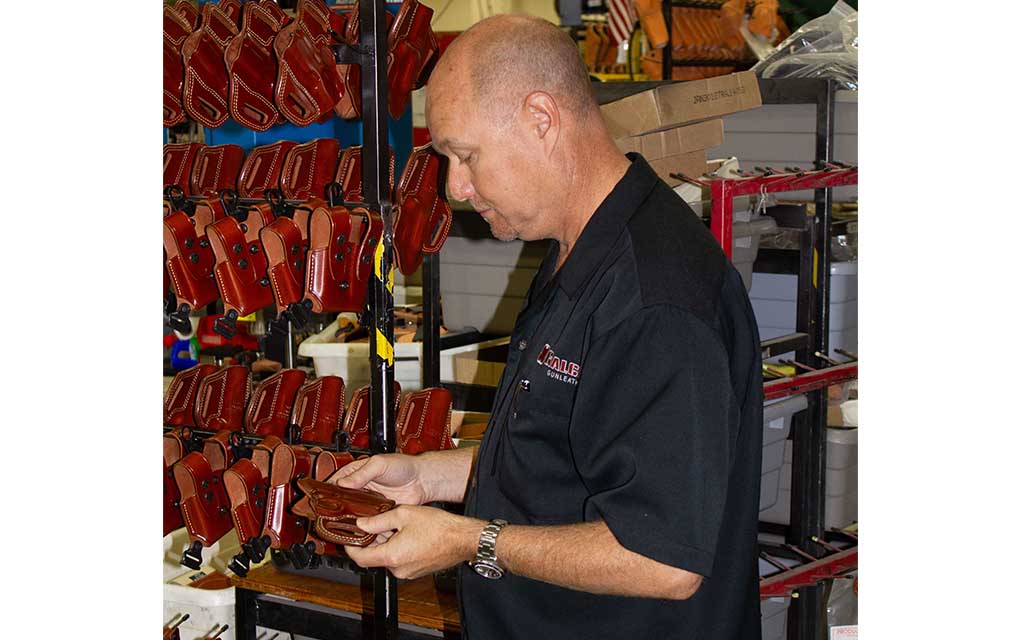
Galco prides themselves in offering custom-made, high-quality holsters … without the wait.
Of course, regardless of the holster you choose, gun size plays into the equation, too. But, with gun size, there’s balance that must be found as well. Select a gun that’s large enough that you can shoot and manage it effectively, but also small enough to practically conceal. This seemingly never-ending search to find the right holster is similar to trying to find the right life partner. We date to see how compatible we are, and in truth, that’s the best way to find a gun/holster combination. The problem is—just like with dating—trying different guns and holsters gets expensive.
OWB Vs. IWB
A big decision is whether to carry inside the waistband (IWB) or outside the waistband (OWB). I do both as weather and need dictates—and that’s not a bad approach, especially if you don’t change carry location. As for IWB carry, Barham said, “An IWB holster is generally easier to conceal since half the gun is inside your pants. However, many find IWB carry uncomfortable. This discomfort can be greatly ameliorated with a belt and pants that are 2 inches larger than your normal American vanity size. Also, IWB holsters can be slightly slower to draw from than OWBs because they press the handgun against the body.”
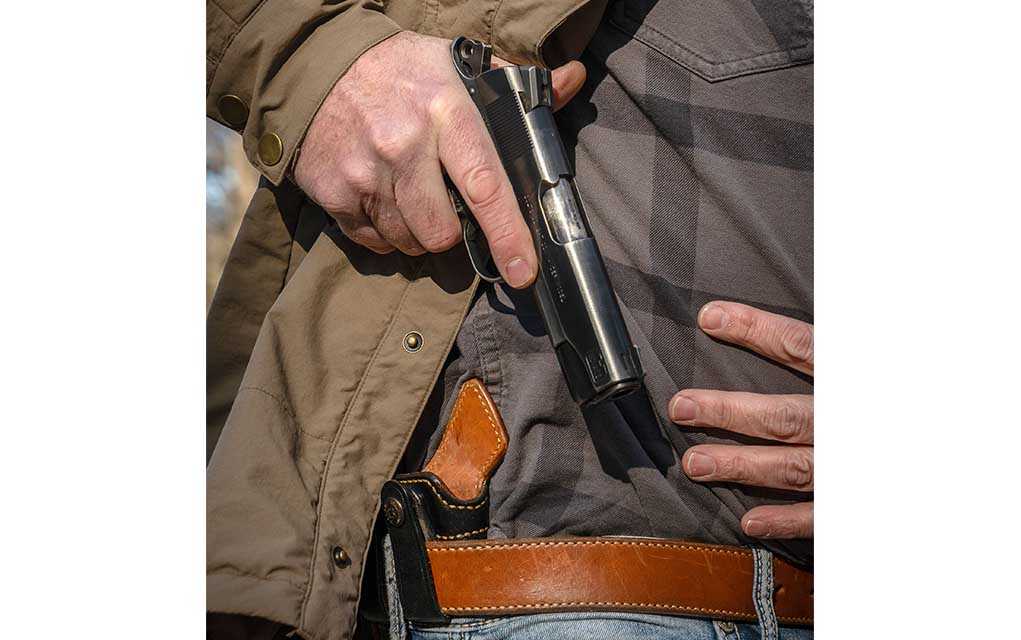
Because IWB holsters keep the handgun’s grip closer to your body, they’re usually a bit slower to draw from.
As for OWB, Barham said, “OWB carry is more comfortable than IWB carry because a lot of people aren’t willing to adapt their wardrobes to IWB carry. OWB holsters are also slightly faster—we’re talking fractions of a second—on the draw. But, depending on the belt attachment method, IWB holsters with belt clips or straps are usually quicker to take on and off than OWB holsters with conventional belt slots. However, a paddle-type OWB is usually very comfortable and very convenient; it’s very fast and easy to put on or take off.”
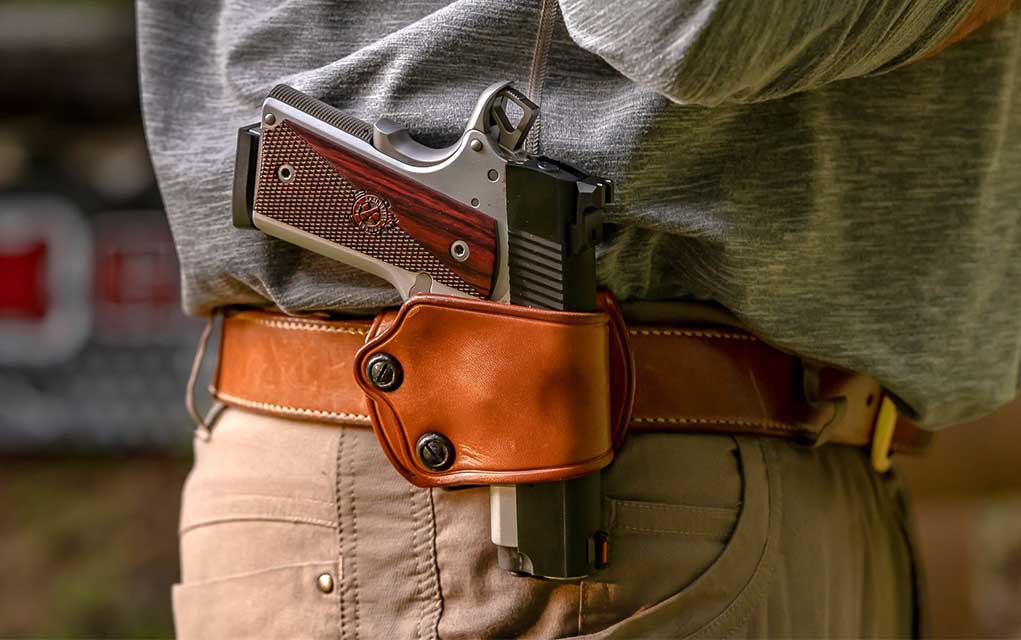
OWB holsters don’t have to be large and bulky. This Yaqui Slide holster from Galco isn’t very big at all.
Cant And Rake
Although it’s often overlooked, you need to think about cant and rake: Both refer to the angular deviation from a zero-degree vertical line. Barham said, “A mild butt-rear rake is sometimes preferable for appendix carry, but it’s detrimental to concealment with a holster worn on or behind the hip. With a holster worn on or behind the hip, a mild butt-forward cant often helps with concealment. However, the added movement of “breaking” the wrist to draw from an angled holster can be slightly slower and less natural than when drawing from a neutral cant/vertical holster worn on or very close to the hip.”
Many of Galco’s holsters are form-fitted by master leather craftsmen to give them that custom look and feel.
Extreme rake is absolutely required for crossdraw carry, and though very practical when riding in a vehicle, it’s largely fallen out of favor. In every case, you must balance the need for concealment versus efficiency of draw.
Leather Or Polymer
Maybe the biggest question is whether a holster should be polymer or leather. Barham said this argument is a can of worms but offered that, “Leather is traditional, warm to the touch and often beautiful. More importantly, leather holsters form themselves to the contours of the wearer’s body over time. This often results in greater comfort. Polymer holsters—generally Kydex—are nearly maintenance free, withstand moisture well and require no break-in. Some also think they’re faster, but that’s largely dependent on the shooter.”
Some believe polymer holsters are faster to draw from, but this is more opinion than fact.
Factory Or Custom?
Barham suggested, “There’s really very little a boutique holster can do that can’t be done just as well by a production holster. At Galco we take pride in our premium holsters being essentially ‘custom made without the wait.’ We have a small army of master craftsmen whose hands touch every professional-grade holster we make. Galco has 50-plus years of experience designing and executing practical holsters.” But Barham added, “Custom holsters certainly have their place, and very experienced and knowledgeable shooters can often take advantage of custom subtleties. However, I believe most custom touches will elude the overwhelming majority of gun carriers.”
Depending on the handgun, a custom holster could be the only viable option. This Barranti IWB holster was made for the Sig P365 when it was first introduced.
Barham went on to say, “What’s most important is how well designed and fitted a given holster is. This is critical, most especially when it comes to consistent positioning for speed of draw and proper retention.” I agree with Barham but would add that, in some cases, a custom holster might be the only or the best option, particularly with unpopular or brand-new handguns for which there are few factory-made holsters. I’d also add that you should be careful; “custom” doesn’t always mean exquisite or best.
It’s A Process
The last bit of advice Barham offered was “Every holster design and position is a compromise. You have to weigh the advantages and disadvantages, and then decide where your priorities lie. Only then can you decide on the right holster.” And even then, you’ll probably end up experimenting with a half-dozen holsters. Like I said, it’s a bit like dating: You’re going to have to try multiple holsters and guns in order to find lifelong satisfaction.
Not only might you have to try several holsters to find what you like, you’ll also likely try different handgun and holster combinations while looking for concealed carry nirvana.
Editor’s Note: This article originally appeared in the April 2024 issue of Gun Digest the Magazine.
For more information on concealed carry holsters check out:
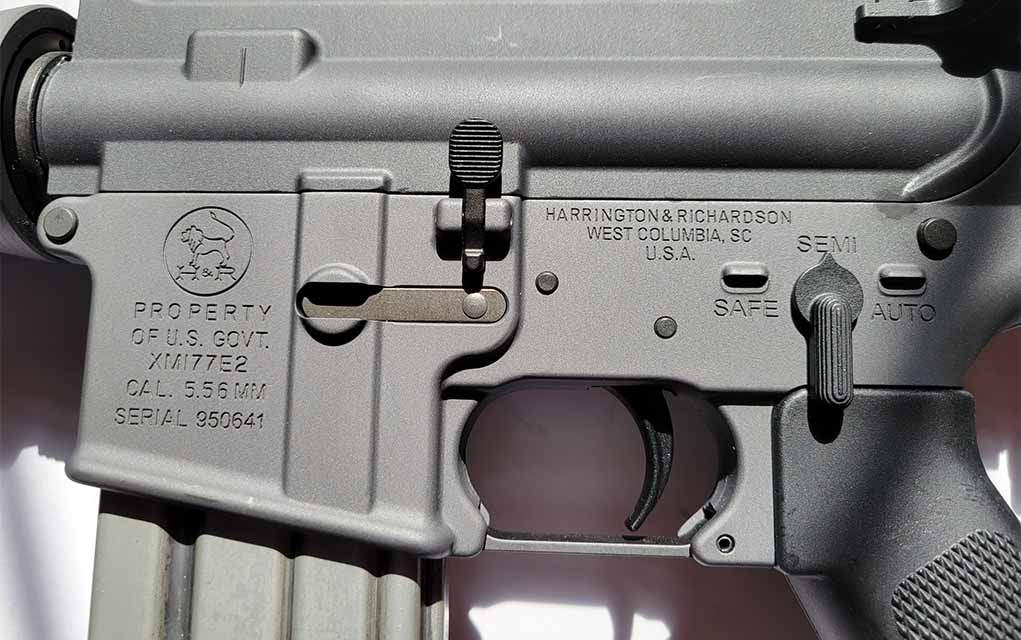
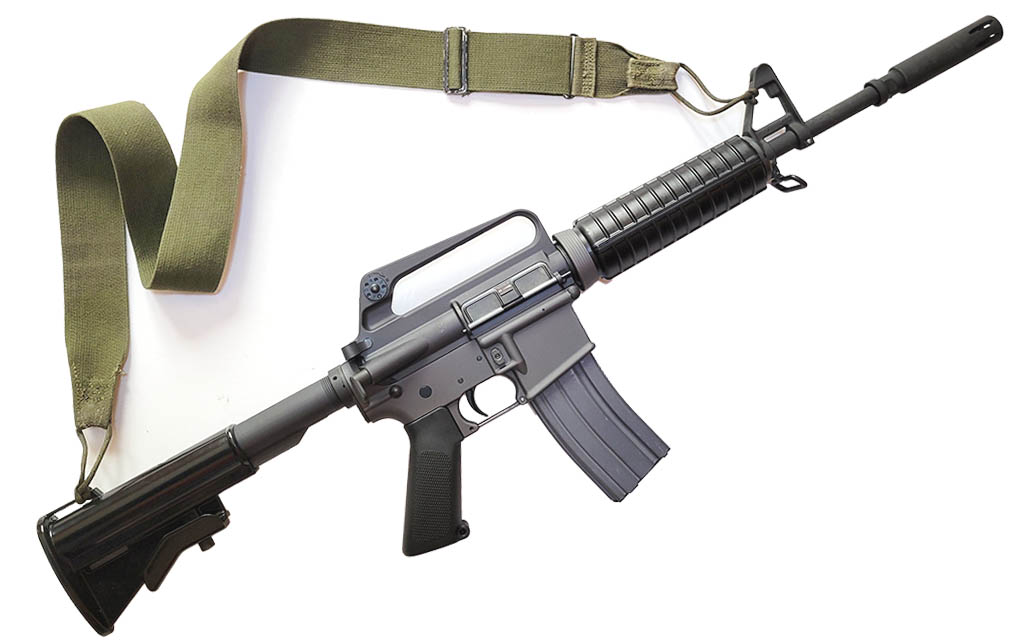
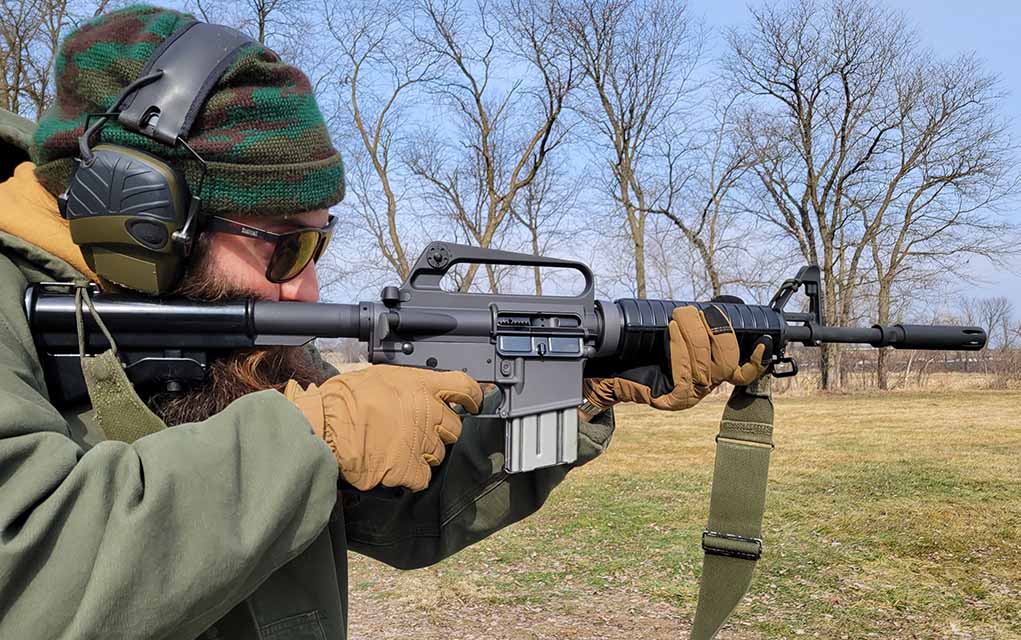
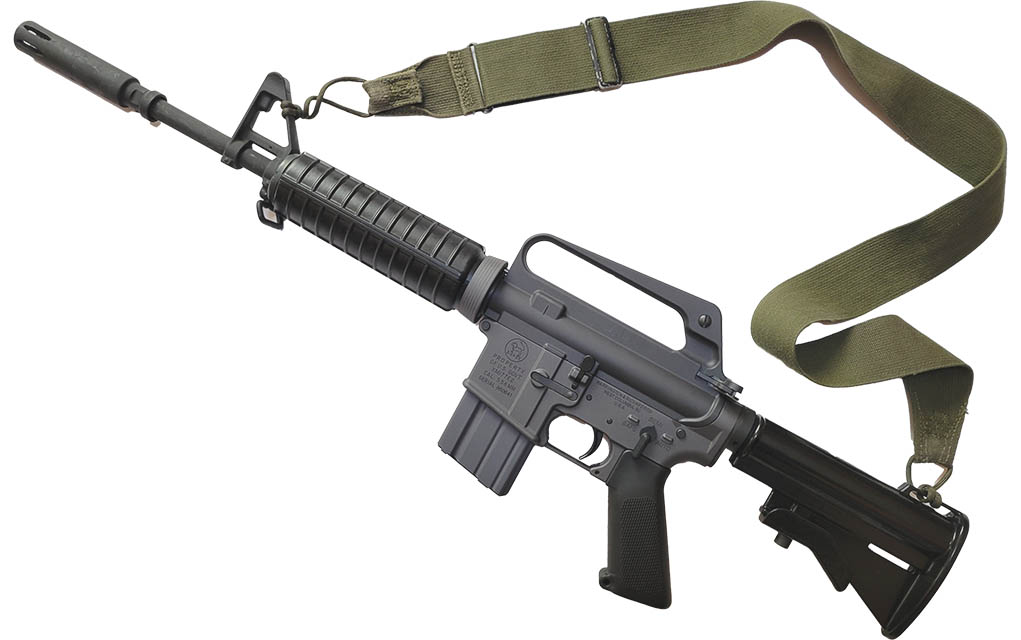
The author checks out a Harrington & Richardson XM177E2 clone, one of the excellent retro AR options in PSA’s H&R line.
Retro AR-style rifles are incredibly popular right now. The last time the industry saw this many carry handle uppers, the general wisdom when it came to buying one was still to “mind your ABCs.” That meant that of the already limited AR-15 options on the market, you were best off getting one from either Armalite, Bushmaster or Colt.
The AR market is obviously very different today, but some things never change. When it comes to clones and historical reproductions, collectors will still pay a pretty penny for the right rollmark, especially that damn rampant pony.
Yes, despite contemporary Colt being connected to the Colt of old by name only, that’s the brand that many retro AR enthusiasts still want. Slightly understandable, given that Colt manufactured the vast majority of M16 rifles for the American armed forces during the Vietnam War. But there was another—Harrington & Richardson.
Colt was unable to meet the government’s production demands on its own, so H&R was contracted alongside GM’s Hydra-Matic Division to tool up as well. Between 1968 and 1970, H&R would manufacture about a quarter-million M16 rifles. This was the lowest number of all three companies, making original Harrington & Richardson M16s some of the rarest and most desirable.
Originals, of course, remain hard to get, regardless of what company manufactured them. Reproductions and clones are therefore what most casual collectors rely on these days, as they’re close enough to scratch the itch without breaking the bank.
Thanks to Palmetto State Armory’s recent acquisition of the Harrington & Richardson brand as well as NoDak Spud, H&R-marked retro ARs are now one of the options on the market. I’d also argue that they’re currently the best available.
While Harrington & Richardson only ever made M16A1 rifles, the new H&R brand under PSA offers many reproduction models outside of that and more are promised to be on the way. Most of these are based on the excellent reproduction parts that NoDak Spud made when it was operating independently. To check out the new H&R line, I requested one of my favorite AR configurations to review—the XM177E2.
Harrington & Richardson XM177E2
For those who aren’t aware, the XM177 series was made by Colt as an answer to the U.S. military’s request for a shortened M16. In those days, these compact guns were considered submachine guns, but today we’d describe them as carbines and as the granddaddy to the M4. Called the Model 629 by Colt but designated as the XM177E2 once adopted by the military, it’s simply an improved version of the Colt Model 609 or XM177E1. The biggest difference between the two was the barrel being lengthened from 10 inches to 11.5 inches.
Now, if the H&R XM177E2 had the correct barrel length, it would need to be registered as an SBR. This is the first area where the reproduction departs from the original design, but it’s an understandable concession.
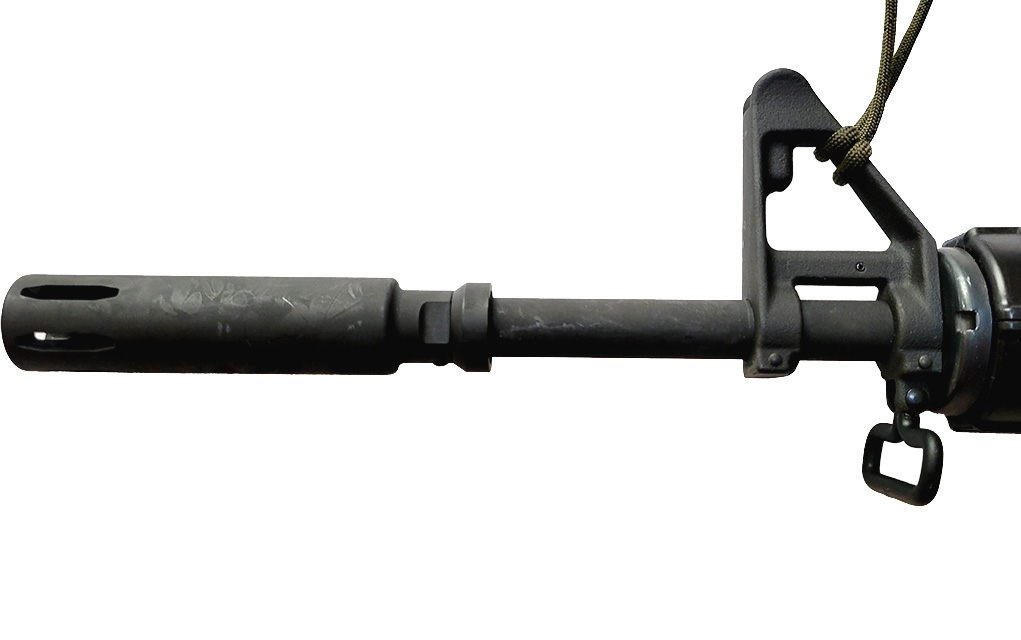
This was made easier of course due to the real XM177E2 featuring a massive 4.5-inch moderator. It allowed Harrington & Richardson to use a 12.7-inch barrel with a pin-and-weld job to bring the total length of its repro to the legally necessary 16 inches. This makes H&R’s clone only a bit more than 1 inch longer than the real deal.
The pencil barrel with its pin-and-weld faux moderator. Notice the bayonet lug has been appropriately removed as well. The carbon streaking of this BLEM model is especially visible here, but it’s barely noticeable in person.
Unfortunately, the original moderator design slightly reduced the decibel level of a gunshot, making them legally suppressors by the ATF’s rules. Accordingly, the H&R XM177E2 moderator only looks the part and otherwise functions like a standard flash hider.
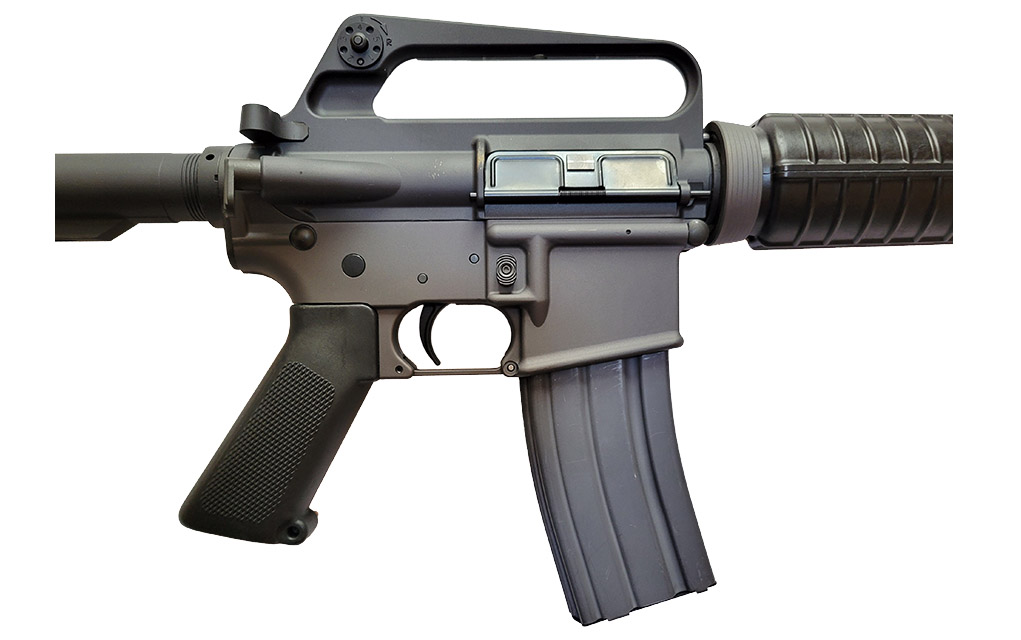
Besides those little details, to my eye, the H&R XM177E2 is a near-perfect clone. It features the correct rubber-coated aluminum telescopic buttstock, 2-hole buffer tube and even the correct profile lower receiver. The bayonet lug has been appropriately shaved off as well, and it ships with excellent reproduction furniture and a 20-round magazine. Of course, the rifle is also sporting the correct gray finish on its metal parts. Put together, when you pick one up, it feels like it’s fresh off the line from 1969. That said, there are a few other small inaccuracies that keep it from being a perfect clone, but H&R did an impressive job of getting so many little details correct while keeping the price affordable. It even has the right A1-style dust cover, something that few buyers would likely even notice.
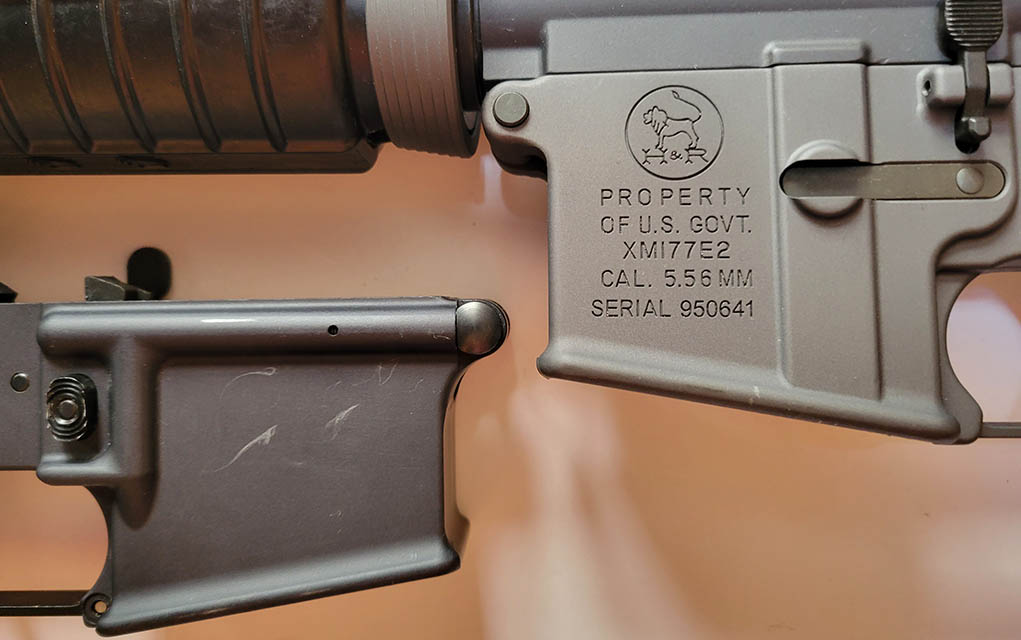
The XM177E2’s A1-style lower vs. a modern A2 style. Notice the different profile of the fronts near the pivot pin. You can also see the H&R’s retro gray finish here compared to standard black.
I should also mention that I received a BLEM model. When people buy BLEM guns from PSA, more often than not, they can’t even find the imperfection that got it labeled as such. That’s not the case with the example I was sent, but the issues are still barely visible. In the right light, some minor carbon streaking can be seen in certain areas of finish, but it’s incredibly subtle. If you’re in the market for an H&R AR, I’d recommend going with a BLEM model to save some money unless you’re incredibly particular. It’s a military-style rifle after all, and if you shoot it the way it deserves, the scratches will overshadow any blemishes anyway.
Run Through The Flat Range
Frankly, I have nothing special to report from my range time with the H&R XM177E2. It performed exactly as it should—boringly reliable. I didn’t even clean or lube it out of the box, and the only malfunction it had in over 500 rounds was caused by a magazine.
It shot just as one would expect of a lightweight AR with a carbine gas system. That’s to say—not as smooth as a full-size M16 rifle but still an incredibly soft shooter. The iron sights were dead on out of the box as well, at least good enough to ring steel at 200 yards.
Given that this gun’s barrel features the correct 1:12 twist, one should stick with 55-grain ammo for the best results. Huge shoutout to AmmunitionToGo.com for supplying the Fiocchi Range Dynamics .223 Rem. 55-gr FMJBT that was used for this review. The XM177E2 ate through 500 rounds of it without a single issue, as well as 20 rounds each of Tulammo and Lake City M855 just for the sake of variety.
As for magazines, I tested the included reproduction 20-round GI mag, an original Vietnam-era Colt 20-round mag, aluminum STANAGs, P-Mags and an old Orlite mag. The Orlite was the only one that didn’t work and caused the singular malfunction of the review.
Parting Shot
For military history enthusiasts with an interest in the Vietnam War, it’s hard to not love this rifle. I couldn’t find a single thing to complain about. Besides the addition of a sling, the only change I plan on making is replacing the reproduction pistol grip with an original surplus one I already have lying around. I may also remove the front sling loop just to copy the cool guys that ran around with these back in the day.
The best part about the Harrington & Richardson XM177E2 (and the other guns in H&R’s catalog) is its price. BLEM models like mine have an MSRP of only $1,149.99, making them far more accessible than other clone guns and reproduction parts on the market.
For example, Colt offers its own XM177E2 reproduction that’s very similar to H&R’s, but it has a whopping price tag of $2,599. While I’ve only briefly handled one in person, there was nothing about it that suggested it’s worth over $1,000 more than H&R’s take on the concept.
While once a great American firearms company, Colt isn’t even owned by Americans anymore, and it’s pretty clear that the rampant pony has lost its steam. While the H&R lion rollmark may be a minor historical inaccuracy when it comes to XM177E2 clones, it’s close enough, and all the other correct details more than compensate for it.
Whether you want to LARP as MACV-SOG or you just want a classic, well-built and lightweight 5.56mm carbine, the H&R XM177E2 is more than worth checking out. As mentioned, there are plenty of other models to choose from as well.
More Retro AR Stuff:
Retro AR-15: The Old Rifles That Inspired The New Ones
The author takes a look at the Montana Rifle Company and its American-made Junction rifle.
Among the numerous rifle companies that made a definite impression in the 20th century, one squeezed in just under the wire; in fact, their flagship rifle action was named for the last year of the 1900s.
Montana Rifle Company was the brainchild of gunsmith Brian Sipe. Their Model 1999 action became a favorite among hunters, and their bolt-action rifles gained equal popularity. Using a controlled-round-feed (CRF) action, with definite influences from the proven original Winchester Model 70 CRF design, those Montana Rifles equipped with the Model 1999 action were a perfect fit for the hunter on the back forty or for those pursuing big game around the globe. The original rifle series came in common calibers as small as .22-250 Remington, all the way up to the behemoth .505 Gibbs, and each made many hunters happy during its time in the spotlight.
Between business issues, production problems and availability, Montana Rifle Company as we knew it ended up closing its doors, being purchased by a private investor group and ultimately shutting down in March of 2020.
But don’t count the old brand out just yet: Grace Engineering of Memphis, Michigan, has revived the brand with a pair of new—yet familiar—bolt-action rifles: the synthetic-stocked Highline, and the walnut-stocked Junction. It was the latter that I got to spend time with.
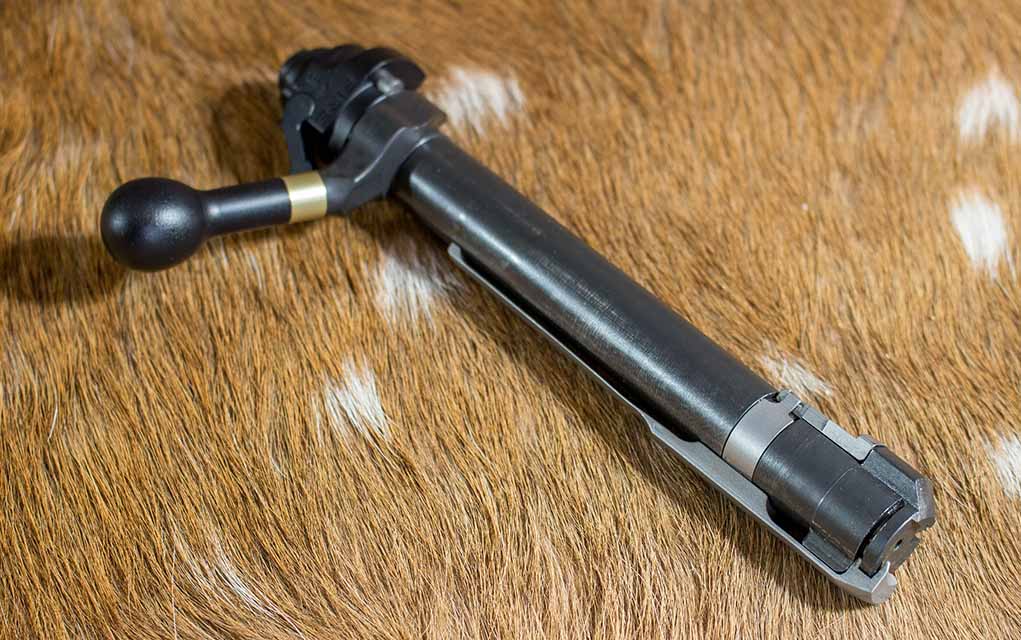
The Montana uses a familiar controlled-round-feed bolt design—very similar to that of the Mauser 98 or early Winchester Model 70—yet the shooter can single-feed a cartridge into the chamber without fear of breaking the extractor. Photo: Massaro Media Group.
A Brand Reborn
Upon opening the box, I was expecting to see the familiar lines of the Model 1999 action … but I was surprised to see something altogether different. Instead of the ol’ ’99, Montana revised the action to create the Model 2022 action. Between this and several other obvious features, I knew this was much more than a reboot of previous designs. The stock lines were familiar—the Montana Rifles always ran a bit thin in the wrist and heavy in the forend, and the Junction is no different—but they’ve incorporated some features that immediately set it apart from its older siblings.
The Montana Model 2022 action is CRF, with a non-rotating extractor. Photo: Massaro Media Group.
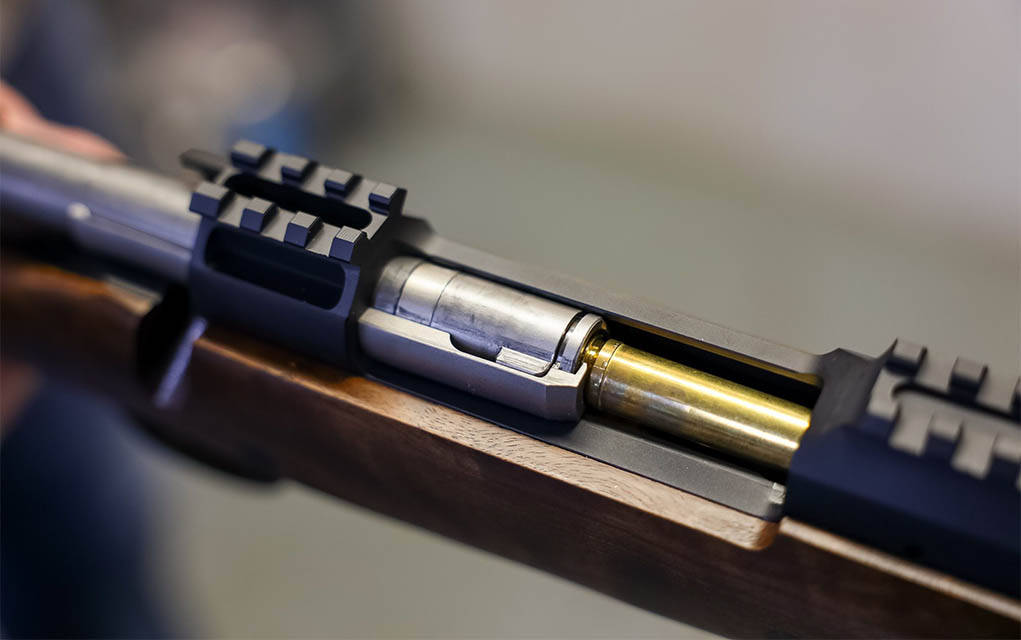
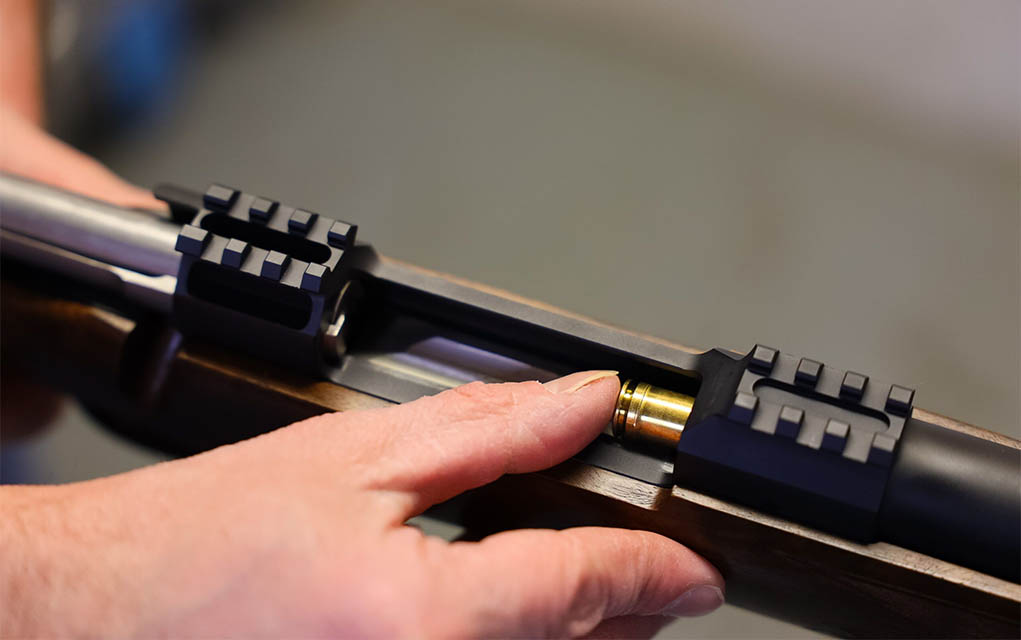
The first was what looked like a two-piece Picatinny rail atop the receiver, until I realized it was machined into the receiver itself. Instead of using a cast receiver, a la the Model 1999, Montana’s Model 2022 is milled from a solid billet of 416 stainless steel. The Mauser-style extractor band is still there, along with the Winchester 70-style three-position safety, as well as the hinged floorplate. Though the action is technically considered CRF, Montana has engineered the action to allow the single feeding of a cartridge without the risk of damaging the extractor, giving one additional round on top of the full magazine.
Unlike many of the older CRF designs, the M2022 bolt can cam over a cartridge’s rim without fear of harming the extractor, giving the shooter one additional round. Photo: Massaro Media Group.
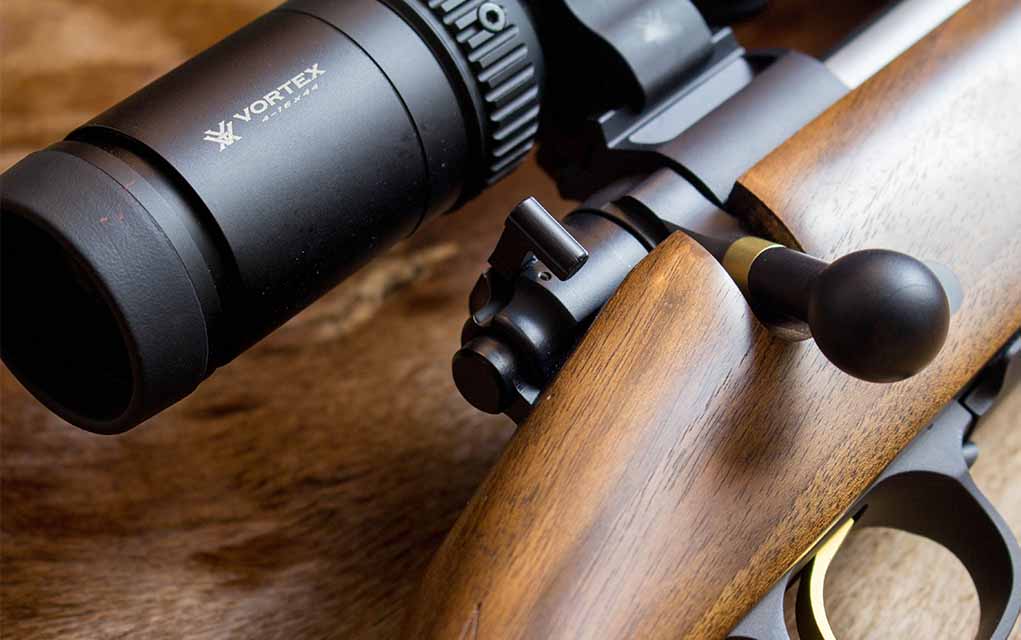
The bolt handle has a distinct gold band in the middle section, terminating in an unadorned oblong bolt handle, which is comfortable in the hand. Because all the metalwork is covered in a weatherproof finish, working the Junction’s action right out of the box may seem a little stiff, but it soon smooths out from use.
A Winchester 70-style three-position safety (forward to fire and work bolt, middle blocks sear and allows bolt to open for safe unloading, and rearward locks bolt and blocks sear) is standard on the Montana rifles. Photo: Massaro Media Group.
The Junction uses an adjustable trigger—again inspired by the Winchester Model 70 design—finished in the same gold color that adorns the bolt handle, which Montana Rifles says is set to 3.5 pounds but adjustable down to 2 pounds. My handy little Lyman Digital Trigger Scale showed that the trigger broke consistently at 3 pounds, 5 ounces. I found the trigger had just the slightest bit of creep and almost no overtravel.
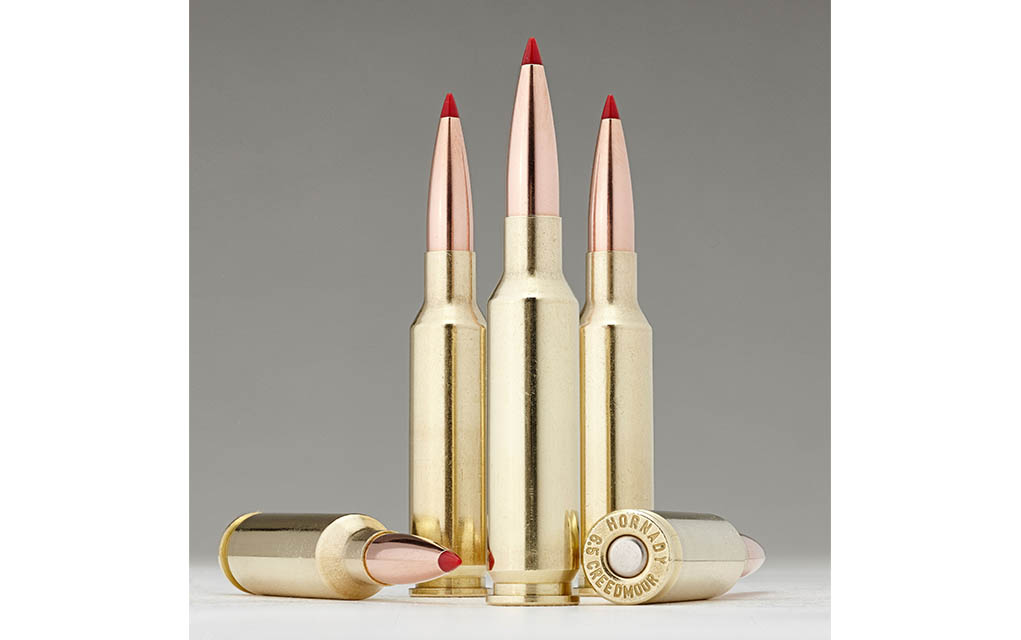
My test rifle—and the entire initial run of Junction rifles—came chambered in the now universal 6.5 Creedmoor, and the magazine will hold five rounds. Note: 11 cartridges are in the works from Montana, including the 6.5 PRC, 7mm PRC, .308 Winchester, .300 Winchester Magnum, .375 H&H Magnum and more coming throughout this year.
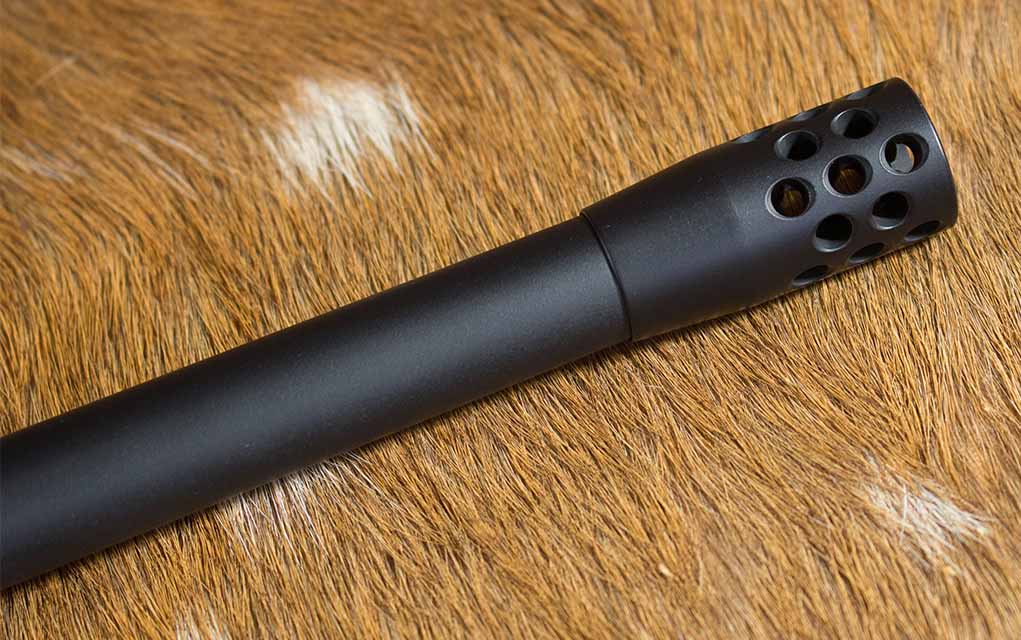
Equipped with a 24-inch button-rifled, hand-lapped barrel—made in Michigan at the Montana Rifles plant—with a 1:8 twist and threaded at the muzzle, the Junction comes with a removable muzzle brake that brings the low-recoiling Creedmoor down to nearly nothing. The Junction’s barrel is clean, with no iron sights, and one look at the receiver with the integral base tells the prospective purchaser this rifle is assuredly designed to be scoped.
The Junction’s muzzle is threaded for a muzzle brake or suppressor; the author’s test rifle was shipped with a brake onboard. Photo: Massaro Media Group.
Turning to the Junction’s stock, there’s a definite new look, even if the feel hasn’t changed much from the older Montana Rifles offerings. The Junction is stocked in a handsome piece of walnut in the Monte Carlo design, with a prominent cheekpiece, and is checkered at the pistol grip and forend. The length-of-pull on the test rifle measured 13½ inches, which is pretty well the same dimension as most American hunting rifles, though I personally wish that, collectively, rifle manufacturers would add a half-inch or so to that figure.
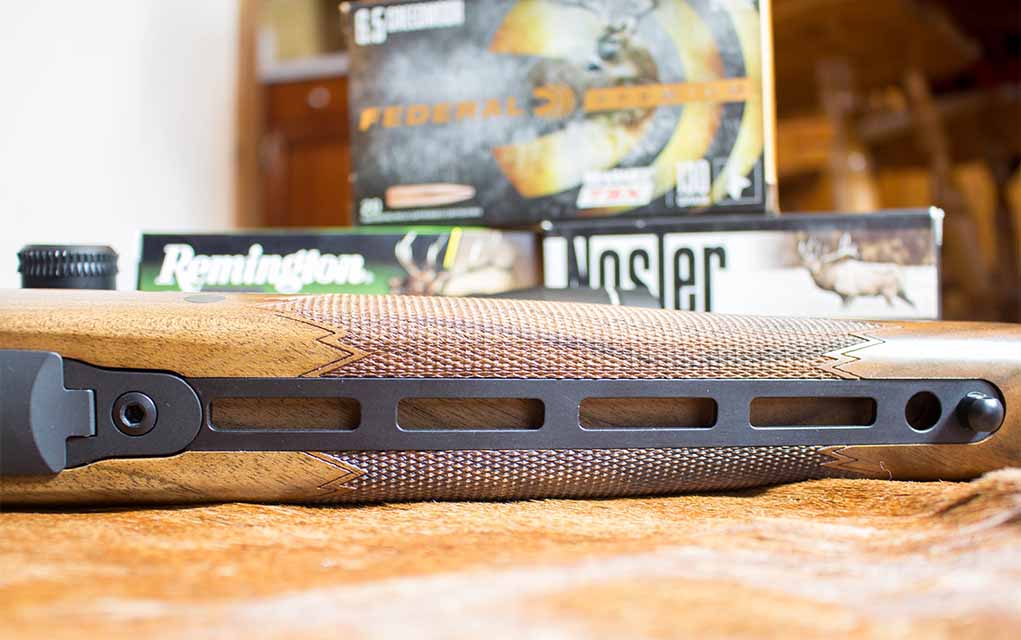
As I stated above, the Montana design has always had a thinner pistol grip and a fatter forend. But, in the new Junction rifle, Grace Engineering has provided not only the traditional sling studs fore and aft, but also a four-slot M-Lok rail along the bottom of the stock and in between the forward sling stud and the front action screw. While perhaps unconventional, at least in the visual department, it does make a whole bunch of sense. It allows the use of bipods, tripods and what-have-you, without the need for the end user to modify the rifle. Looking toward the rear of the rifle, Montana provides a ⅝-inch pliable recoil pad to absorb any recoil sting that the muzzle brake doesn’t handle.
Montana has installed a four-slot M-Lok rail on the underside of the walnut stock, between the forward sling stud and the action screw at the front of the hinged floorplate. Photo: Massaro Media Group.
In all, the Junction is a familiar-feeling rifle that’ll sit comfortably in the hands of traditionalists, yet it provides a good number of useful features that even the younger folks—who have accepted attaching all sorts of goodies to a rifle or handgun—will gravitate toward.
Testing The Montana Rifle Company Junction
My test rifle came with an optic already mounted and sighted by the folks at Montana—though the Junction isn’t sold with any sort of optic. The Vortex Viper 4-16x44mm in Vortex mounts (conveniently labeled with torque specs on the rings—nice touch) certainly will help take full advantage of the Creedmoor’s trajectory and accuracy performance, and it was more than enough to evaluate the 100-yard accuracy of this combination.
Did I mention that Montana Rifle Company gives a ½-MOA guarantee with their new rifles? Well, they do. According to the company: “All Model 2022 rifles are guaranteed to shoot a three-shot group inside ½ MOA from a cold barrel using premium ammunition.” Gauntlet dropped; let’s see if the Junction will hold up to that claim. I grabbed four different boxes of premium ammo and packed up the Junction to head to the range.
Hornady’s Match load—with the 140-grain ELD Match bullet at 2,710 fps—has certainly become the benchmark for assessing a rifle’s potential, so I included that in the mix. But as the Junction is first and foremost a hunting rifle, I grabbed three boxes of premium hunting ammunition that I thought would best serve in the test. The Federal Premium 130-grain Barnes TSX load would be a lead-free hunting choice, the Nosler Trophy Grade 129-grain AccuBond Long Range load certainly qualifies as a premium ammunition choice, and the Remington Premier Long Range 140-grain Speer Impact load would round out the group.
Love it or hate it, the 6.5 Creedmoor ranks among the most popular choices for centerfire rifles, so much so that Montana chose it for the initial release of the Junction rifle.
Firstly, I had no extraction or ejection issues with any of the ammunition. Secondly, because I had the accuracy claim from Montana Rifles in mind, and the fact that this is a hunting rifle, I limited groups to three shots, letting the barrel completely cool to ambient temperature before shooting the next group. Thirdly, I like the way the Junction shot from the bench; in spite of the fact that the stock was a bit too short for my liking, I felt like the stock design allowed me to shoot it well from the bench. And lastly, the Junction very nearly made the accuracy guarantee … but not quite.
The three hunting loads each averaged at or below 0.8 MOA, with the Hornady Match load printing the best of the lot at 0.62 inch. Perhaps I had too much coffee (or perhaps not enough) and my weebles and wobbles didn’t align by ⅜ inch, or someone somewhere played a Yoko Ono record and set the earth off its axis … I dunno. While I will confidently say that the Junction is definitely a sub-MOA rifle, at the very least my test rifle didn’t have a group at or below the ½-MOA mark. Nonetheless, this level of accuracy is absolutely sufficient for a hunting rifle, and each load shot consistently, holding the same general size over four three-shot groups.
Though Montana makes a ½-MOA guarantee for their rifles with premium ammunition, the author saw three-shot group sizes hanging around ¾ MOA, with the rifle showing a preference for the Federal 130-grain Barnes TSX load. Photo: Massaro Media Group.
Usually, with accuracy comes consistent velocities, and the Junction rifle was a great example of this. My Oehler 35P showed that the “worst” load gave an extreme spread of 75 fps, with all four loads coming within 35 fps of the advertised velocities. Across the board, the Junction impressed me at the bench, and I’m certain it would do the same in the field and woods.
Patriotic Pride
All of the Montana rifles—action, stock and barrel—are made right here in the good old United States, and that means something to many hunters. In generations past, gun store shelves were stacked with rifles made in America, yet today many of our biggest names have been bought by foreign companies and moved manufacturing off American soil. Montana offers a high-quality rifle made in America by Americans.
Though currently available only in right-handed configuration, Montana indicates that left-handed models will be available in the near future. The Junction measured 45½ inches with the muzzle brake attached and weighed in at just over 7½ pounds, unscoped. The Montana Rifle Company Junction has an MSRP of $2,495 and you can find it at MontanaRifleCo.com.
Editor’s Note: This article originally appeared in the April 2024 issue of Gun Digest the Magazine.
In the .22 WMR vs .22 LR debate, it’s difficult to claim the rimfire king has been dethroned. The .22LR remains the top choice for all but a few niche applications.
Certainly, side-by-siding the .22 Winchester Magnum Rimfire (.22 WMR) and .22 Long Rifle (.22 LR) isn’t akin to, say, comparing the .45-70 Government and .38 Special. No, indeed the popular rimfires are much closer in performance and application than the straight-walled rifle and pistol cartridges. But there are stark enough differences and nuances to the .22 cartridges to warrant some discussion, especially if you aren’t familiar with one or both. Though, given the sheer profusion of the Long Rifle, both being foreign seems a stretch.
In essence, the .22 WMR vs .22 LR discussion boils down to application. While the .22 LR is a generalist extraordinary—capable hunter, unparalleled plinker, dead-nuts target cartridge—the .22 WMR excels in one category. It’s a hunter and even here the terms might too be broad. The magnum rimfire’s specialty, where it makes its bones and finds few its equal is varminter. Pest control, that is.
The .22 LR (left) is a jack-of-all-trades, while the .22 WMR (right) is a specialist, for all intents and purposes.
Yes, it’ll pop prairie dogs from sunrise to sunset. Mangle marmots with the best of them. And flay felonious foxes on the hoof from the hen house. True enough, at a much closer range and without as much authority, the .22 LR will do the same, just as the .22 WMR will murder tin can and spinner targets on a lazy summer afternoon. But there are some good reasons why it worth the effort to keep each rimfire cartridge in its wheelhouse.
Brief History Of The .22s
As always, it worth looking back at the history of a cartridge to get a better sense of its present use. For the .22 LR, it goes way back.
Designed in the early 1880s by Steven Arms, the Long Rifle was an amalgamation of a couple of other .22 rimfire cartridges. Stevens took the .750-inch case from the .22 Long and the 40-grain heeled bullet from the .22 Extra Long to create what we know today as the .22 Long Rifle. Union Metallic Cartridge Company produced the first factory .22 LR ammunition, a 40-grain round that clocked in at 1,082 fps from a rifle. Since, the .22 LR has gone on to become among the most-shot cartridges in the world, with somewhere in the neighborhood of 2.5 billion rounds produced annually.
The .22 Long Rifle came in 1887, after the Short and Long.
The advent of the .22 WMR came much later, the late 1950s, in the first serious attempt in the 20th Century to improve the range and killing capability of the .22 caliber. By all accounts, it succeeded marvelously. Utilizing the .22 Winchester Rimfire case and extending it to 1.055 inches, Winchester greatly increased case capacity, thus the velocity of the magnum rimfire. Furthermore, they topped it with a tougher jacketed bullet to ensure its projectile didn’t come apart at its top-end velocities. Today, the .22 WMR is still the hottest rimfire of that caliber, capable of pushing a 40-grain bullet from a rifle muzzle at 1,900 fps—in some cases even more.
As should be obvious from the above section, the magnum rimfire has a decided ballistic edge in the .22 WMR vs .22 LR discussion. At least in terms of its velocity and range. But that doesn’t necessarily mean it’s a more talented cartridge than the .22 LR. A quick example.
Take two similar CCI loads for the .22s, a 40-grain Maxi-Mag (.114 BC G1) for the Magnum and a 40-grain Mini-Mag (.118 BC) for the Long Rifle. The .22 WMR leaves the muzzle of most rifles at around 1,875 fps, while the .22 LR comes out at roughly 1,235 fps—a difference of 640 fps. This is quite glaring and very notable on the range. As is evident in the graph below, zeroed at 50 yards, the .22 LR takes a much more parabolic trajectory to the target, going a full ¼-inch above the point of aim. On the other hand, for the .22 WMR, the target is nearly a straight shot.
Extend the range, things become even blunter. Given the Long Rifle round goes sub-sonic around the 30-yard mark, its range is somewhat limited. It only suffers around 2.5 inches of drop at 80 yards, in turn—with the aid of a good riflescope—could pick off a prairie dog at that distance. Much further and it’s pushing things with its quickly degrading trajectory. The .22 WMR on the other hand remains supersonic out to roughly 150 yards and drops 11-inches less than the long rifle at this range. So, it reaches much further.
The magnum’s hitting power is where things get tricky. At 50 yards, it delivers 110 ft/lbs of energy—more than twice as much as the smaller .22. Though, this isn’t a case where more is better. While the .22 WMR will put a varmint on the ground for good, it potentially proves too much for game meant for the table. Tree squirrels for certain, but at closer ranges, it will bloodshot the likes of cottontails and jackrabbits. Not so the .22 LR, which at most normal hunting ranges delivers enough to put an animal down and not much more.
Terminally, the .22 WMR offers greater penetrating potential, which makes it more adept than the .22 LR at snuffing larger critters such as coyotes. Though, it’s a stretch to call it a dedicated predator cartridge—perhaps an occasional one. Additionally, this characteristic perhaps makes it better suited to self-defense than the Long Rifle and some ammunition companies have developed loads for just such work. This isn’t to say either .22 is ideally suited for dealing with two-legged predators by any stretch of the imagination. No arguments, they are both deadly. However, I don’t think it would be wise to rely on either to neutralize a threat. But if one of the .22s is all that’s on hand, they’re better than nothing.
The Many Bullets Of The .22 Magnum
Advances in bullet design have touched all corners of the firearms world including rimfire cartridges. This is a boon for the dedicated .22 LR shooter, who now finds some interesting additions—monolithic copper hollow-points, for instance—in his arsenal. Nice as this is, by and large, solid lead and copper-plated lead bullets remain the staple and give a decided edge to the larger cartridge in the .22 WMR vs .22 LR conversation.
The same V-Max bullet design you’ll find on Hornady’s centerfire rifle cartridges.
Much like its centerfire cousins, the magnum rimfire mainly utilizes jacked lead-core bullets, which allows it to take advantage of some large technological leaps of recent decades. One that quickly jumps to mind, polymer-tipped hollow points, such as Hornady’s V-Max bullets. In addition to improving the bullet’s ballistic coefficient (how efficiently it cuts the air), it also improves terminal performance by initiating the bullet’s expansion. But the magnum rimfire also uses tried-and-true bullet construction to improve its hunting versatility. For meat hunters, soft-point, controlled-expansion options such as CCI Gamepoint, help to ensure less damage is done to the game.
Long Rifle Still The Most Affordable .22
Truth be told, this is one of the big dividing lines between the cartridges, the difference-maker for most shooters. It always comes down to money, right?
In short, you’ll always get more shooting done with a .22 LR, simply because it’s a more affordable cartridge. In saner times, when ammunition isn’t akin to Unobtainium, Long Rifle will run you around a dime or less per trigger pull. While .22 WMR, expect it to run $.20 or more per squeeze. Affordable when measured against centerfire cartridges, it still adds up and certainly makes the larger cartridge less attractive for pleasure shooting.
Gunning Up The WMR And LR
Here’s the good news, no matter where you fall in the .22 WMR vs .22 LR discussion, your cartridge is on equal footing when it comes to firearms. Rifle, revolver, pistol—you can find an iron chambered for either cartridge. Go something like the Ruger Single-Six Conversion you can shoot both with a simple swap of the cylinder. Hey, might as well take advantage of similar bullet diameters. (Note, the diameters aren’t exactly the same the—.223 for .22 Long Rifle and .224 for the .22 WMR.)
The one difference, on average, you’ll find more affordable guns in .22 LR. No, there’s not a conspiracy against the magnum cartridge, it’s simply a matter of more manufacturers make .22 LR guns. These include very economical options typically angled at beginning shooters. As far as what sort of gun each gun excels from … all of them—you simply need to determine what type best fits your applications.
What Are They Good For?
As I pointed out at the beginning of the article, the .22 WMR excels in one particular niche—varmint hunting. Does this mean it can’t be used as a meat hunting cartridge or for target shooting? Perish the thought. With greater velocity, shooters utilize the cartridge for long-range rimfire shooting. A scaled-down firearm—say a 6-inch barreled revolver—tames it enough to work on edible game at closer ranges, if there’s a steady enough shot behind the trigger. But overall, most cherish the magnum rimfire as among the most economical options to ride an acreage of ground squirrels or exterminating vermin such as skunks. Well out of spraying range, mind you.
As for the .22 LR, what can’t it do is a better question. While its killing power isn’t as great as the .22 WMR, particularly at longer range, it’s still the go-to cartridge of bunny hunters and other small-game enthusiasts. And it’s equally as potent on varmints, it just won’t catch them as far out or product as dramatic results as the magnum.
Additionally, its resume as a target round is impeccable. Among the fastest-growing precision shooting competitions, NRL22, is tailored to the Long Rifle and it’s a staple of bullseye matches. Perhaps its only limit is its range, but that’s bothered few the past 100 some year.
And price? Even in lean years, the .22 LR remains the most abundant and affordable cartridges. Plain and simple, you’ll get more shooting done with the old standby.
Parting Shot
Most shooters are well served having guns chambered in both the .22 LR and .22 WMR. Neither is going anywhere any time soon and each absolute joys to pitch downrange.
What if it’s one or the other? In that case, if you happen to be a farmer or rancher that requires an economical option to keep ground squirrels out of the hay or prairie dogs from tearing up an alfalfa field, the .22 WMR is perhaps the best choice. The cartridge owns the pest-control wheelhouse and stands tall in this role.
For the rest of us, the .22 LR is the logical choice. It’s simply the more versatile of the two cartridges. Be it drilling bullseye or putting small critters out of their misery, the Long Rifle is a proven asset. And one that won’t break the bank. Honestly, no collection is complete without one.
This excerpt from The Ballistics Handbook discusses barrels, twist rates and how they influence bullet flight from muzzle to target.
The barrel is the rifle’s delivery system, the steel guidance mechanism that sends the projectile spinning toward the target. Barrel technology has come leaps and bounds in the last century, to the point where the accuracy has become both highly predictable, as well as repeatable. It’s important to know how barrels work in order to better understand how a bullet will perform within its confines.
This article is an excerpt from The Ballistics Handbook, an invaluable guide to understanding the various factors that affect bullet flight, from the muzzle to the target.
The Throat
Starting at the breech end, your barrel has three or four main parts, depending on the type of firearm. For rifles, as well as semi-automatic pistols, there is a chamber, throat or leade, and the rifling itself, all terminating at the crown. The chamber is a mirror image of the cartridge to be fired and is sealed by the breech bolt or block to ensure all the burning gas pushes things toward the muzzle end of the barrel. The throat, or leade, is the area between the chamber of the barrel and the point where the rifling begins. The length of the throat can vary greatly, from less than 1/16 inch, to as much as ½ inch, depending on the cartridge and manufacturer. The throat is exposed to burning powder and hot gas, and when shooting a high-velocity cartridge is often the first part of the firearm to show wear and erosion. Some of the fastest cartridges, like the .300 Remington Ultra Magnum and .264 Winchester Magnum, can show throat wear in as little as 1,500 rounds. I make a conscious effort not to heat my barrels excessively, to help keep wear and tear to a minimum. Some companies (Weatherby for example) purposely extend the throat of their barrels to give room for the bullet to jump. This is known as free-bore, and can help increase accuracy. You never want a modern cartridge to have the projectile touching the rifling; dangerous pressures can easily develop. At the end of the throat, the rifling begins.
Rifling
Rifling is the set of twisted ridges you’ll see when you look down the bore of the firearm. It imparts a spin on the bullet, keeping it stable in flight. Those ridges, properly called lands, engrave their imprint into your bullet, and are machined at a smaller diameter than the bullet itself. The corresponding valleys, or grooves, are designed to be at caliber dimension to properly seal the gas and build pressure. The number of lands and grooves can vary, from the two-groove U.S. Army Springfield rifles of the early 20th century, to the Marlin MicroGroove barrel that used 16 or more, and all sorts in between. (Note: some handgun companies today employ polygonal rifling, which is a bit of a different geometry, yet works fine for their purposes.)
Almost all common barrels use a static twist rate, meaning that the grooves are cut in a specific manner to maintain a consistent spin on the bullet. When researching rifles, note the barrel specs listed as 1:10 or 1:7 twist rate. This is simply a means of telling you how fast or slow the barrel will cause the bullet to spin. The example twist rates given above work like this: a barrel with a 1:10 twist rate will have a bore in which the lands make a complete revolution in 10 inches of barrel (“1 in 10”), while the 1:7 barrel will make that same complete revolution in just 7 inches of barrel, therefore imparting more spin on the bullet. The higher the sectional density figure of a particular bullet (read that as a longer bullet), the faster it must be spun in order to maintain gyroscopic stability throughout its flight. While the numbers may be deceiving, a 1:10 barrel is called a slower twist than is 1:7, and with many of today’s bullets becoming longer and heavier for caliber, the fast twist rate barrels are becoming more desirable to take advantage of these bullets.
Rifling in a .45 Colt barrel.
One of my favorite varmint rifles is a Ruger Model 77 MkII, chambered in .22-250 Remington. This big case is the old .250-3000 Savage necked down to hold .224-inch diameter bullets, and there is plenty of powder capacity to push the bullets to high velocity. However, because the .22-250 uses a relatively slow twist rate—either 1:12 or 1:14—the heaviest bullet I can use in this rifle is a 55-grain slug. While there are plenty of good, heavy bullets for hunting and/or target work available in this caliber right up to 80 grains and more, my rifle can’t stabilize them with that slower twist rate. My dad’s .223 Remington, with its 1:8 twist rate, can shoot most of the heavier designs without issue, even though it has much less case capacity. My .22-250 serves me well, and can really reach out and touch the coyotes and woodchucks, but I’d love to be able to utilize the longer bullets.
For years, I used a .308 Winchester exclusively as my big game rifle here in Upstate New York. I shot a .308 because Dad shot a .308, and we always discussed the reasons that we couldn’t use the heavy, 220-grain round-nosed slugs common in the .30-06 Springfield. He insisted it was a case capacity issue, but I found out that the .308 Winchester was originally released with a 1:12 twist, as opposed to the Springfield’s 1:10, so it couldn’t stabilize bullets heavier than 200 grains. (The .30-06 Springfield, normally supplying a 1:10 twist, can stabilize the heavy 220-grain bullets, but the .308 Winchester with a 1:12 cannot.) To prove my point, I borrowed a .308 Winchester with the faster twist rate, and loaded up some 220-grain pills. Much to my father’s chagrin, they worked just fine.
Here’s a chart of many common twist rates, from popular manufacturers. Of course, there may be some variations, but this should give you a good starting point.
Common Twist Rates for Rifle Calibers:
.17 Mach II……………………………… 1:9
.17 Hornady Magnum Rimfire…… 1:9
.17 Winchester Super Magnum…. 1:9
.17 Hornet ………………………………. 1:9
.17 Remington…………………………. 1.9
.204 Ruger …………………………….. 1:12
.22 Long Rifle………………………… 1:16
.22 Winchester Magnum Rimfire 1:16
.22 Hornet …………………………….. 1:14
.222 Remington…………………….. 1:14
.223 Remington…… 1:7, 1:8, 1:9, 1:12
.223 WSSM……………………………. 1:10
.22 ARC…………………………………… 1:7
.224 Valkyrie……………………………. 1:7
.22-250 Remington…………. 1:12, 1:14
.220 Swift……………………… 1:12, 1:14
6mm Remington/.244 Rem. 1:9, 1:12
.243 Winchester…………………….. 1:10
.243 WSSM……………………………. 1:10
.240 Weatherby Magnum ………. 1:9.5
6 Norma BR …………………………….. 1:8
6mm ARC………………………………… 1:7
6mm Creedmoor…………….. 1:7.7, 1:8
.25-’06 Remington………………….. 1:10
.257 Roberts…………………. 1:9.5, 1:10
.250/3000 Savage…………… 1:10, 1:14
.25 WSSM……………………………… 1:10
.257 Weatherby Magnum………. 1:9.5
.260 Remington…………………. 1:8, 1:9
6.5 Grendel……………………………… 1:8
6.5 Creedmoor…………………………. 1:8
6.5×55 Swedish Mauser………….. 1:7.5
6.5-284 Norma…………………… 1:8, 1:9
6.5 PRC……………………………………. 1:8
.264 Winchester Magnum…… 1:8, 1:9
.26 Nosler……………………………….. 1:8
6.5-300 Weatherby Magnum…….. 1:8
.270 Winchester…………………….. 1:10
.270 Winchester Short Magnum. 1:10
.270 Weatherby Magnum……….. 1:10
6.8 SPC…………………. 1:9.5, 1:11, 1:12
6.8 Western……………………. 1:7.5, 1:8
.27 Nosler…………………………….. 1:8.5
7×57 Mauser……………… 1:8, 1:9, 1:10
7-30 Waters…………………………….. 1:9
7mm-08 Remington……………… 1:9.25
.280 Remington…………………… 1:9.25
7×64 Brenneke…………………………. 1:9
.284 Winchester………………………. 1:9
7mm Winchester Short Magnum 1:9.5
7mm Weatherby Magnum 1:9.25, 1:10
.28 Nosler……………………………….. 1:9
7mm PRC………………………………… 1:8
7mm Remington Ultra Magnum 1:9.25
7mm STW…………………… 1:9.25, 1:10
.30 Carbine……………………………. 1:16
.30-30 WCF……………………………. 1:12
.30 T/C………………………………….. 1:10
.30/40 Krag……………………………. 1:10
.308 Winchester…………….. 1:10, 1:12
.300 Savage……………………………. 1:10
.30-’06 Springfield…………………… 1:10
.30 Nosler……………………………… 1:10
.300 Winchester Magnum……….. 1:10
.300 Winchester Short Magnum. 1:10
.300 Remington Ultra Magnum… 1:10
.300 Weatherby Magnum……….. 1:10
.30-378 Weatherby Magnum…… 1:10
.300 Holland & Holland Magnum 1:10
.308 Norma Magnum……………… 1:10
.300 Remington SAUM……………. 1:10
.300 PRC………………………………….. 1:8
.300 Norma……………………………… 1:8
.303 British…………………………….. 1:10
7.62x39mm……………………………. 1:10
.32 Winchester Special……………. 1:16
.325 Winchester Short Magnum. 1:10
8x57mm Mauser………………….. 1:9.25
8mm Remington Magnum……….. 1:10
8x68S……………………………………. 1:11
.338-06 A-Square……………………. 1:10
.338 Federal…………………………… 1:10
.338 Winchester Magnum……….. 1:10
.338 Remington Ultra Magnum… 1:10
.338/378 Weatherby Magnum…. 1:10
.340 Weatherby Magnum……….. 1:10
.33 Winchester ………………………. 1:12
.338 Lapua………………………………. 1:9
.35 Remington……………………….. 1:16
.358 Winchester…………….. 1:14, 1:16
.35 Whelen……………………. 1:14, 1:16
.358 Norma Magnum……………… 1:12
.350 Remington Magnum………… 1:16
.357 Magnum (rifle) ………………. 1:16
9.3x62mm……………………… 1:10, 1:14
9.3x64mm……………………………… 1:14
9.3x74mmR……………………. 1:10, 1:14
.375 Holland & Holland Mag 1:12, 1:14
.375 Ruger…………………………….. 1:12
.375 Remington Ultra Magnum… 1:12
.375 Weatherby Magnum……….. 1:12
.378 Weatherby Magnum.. 1:12, 1:14
.375 Dakota…………………………… 1:12
.375 Winchester…………………….. 1:12
.405 Winchester…………………….. 1:14
.450/400 3” NE………………………. 1:15
.404 Jeffery…………………. 1:14, 1:16.5
.416 Rigby……………………………… 1:14
.416 Ruger…………………………….. 1:14
.416 Weatherby Magnum……….. 1:14
.416 Remington Magnum 1:14, 1:16.5
.416 Barrett…………………………… 1:11
.500/416 NE…………………………… 1:14
.44 Magnum (rifle)………….. 1:20, 1:38
.444 Marlin……………………………. 1:20
.45-70 Gov’t…………………………… 1:20
.458 Winchester Magnum……….. 1:14
.458 Lott………………………… 1:14, 1:16
.450 3 ¼” NE………………………….. 1:16
.450 Rigby……………………………… 1:10
.458 SOCOM………………….. 1:14, 1:18
.450 Marlin……………………………. 1:20
.460 Weatherby Magnum……….. 1:16
.470 NE…………………………………. 1:21
.50 BMG………………………………… 1:15
.500 NE…………………………………. 1:15
.500 Jeffery……………………………. 1:17
.505 Gibbs……………………………….. 1:1
So, it’s important to know what the twist rate of your barrel so you can choose the proper ammunition for your gun. There’s an easy way to observe or verify the twist rate of your barrel. Using a cleaning rod, affix a tight patch and get it started down the bore. With a magic marker make a small mark at the base of the rod at the top, and another one where it meets the breech (or the muzzle in the case of a lever gun, slide, etc.). Push the rod down the bore until the mark makes one complete revolution, and make another mark at the same reference point (breech or muzzle). Measure the distance between the marks to determine how many inches it took to make one revolution, and voilà! you’ve got the twist rate.
If you look at some of the long-range bullets, like the Nosler AccuBond Long Range, or some of the Berger offerings, they will indicate the required twist rate needed to stabilize their particular bullet. If you want a bit more information, or should the bullet be marginal for your twist rate, you can consult the Berger website (BergerBullets.com/twist-rate-calculator/) and plug in all of your information. Based upon the Miller Twist Rule (more about that in the exterior ballistics section), the Berger calculator will provide you with the level of stability (or instability) of your particular barrel/cartridge/bullet combination. It’s a very useful tool, which can help you optimize your setup.
The Crown
The final point of the barrel, where the bullet exits, is referred to as the crown. A uniform, even crown is invaluable for good accuracy, as it is the very last thing that your bullet will touch before embarking on its journey through the atmosphere. You’ll need to know about the varying types of crowns and how they affect the flight of the bullet. Looking at the end of your barrel, you may see a simple, rounded end and be able to feel the lands and grooves with the pad of your finger. Or you may see a square-cut, recessed affair, known as a target crown. In any instance, you’ll definitely want to be careful with the crown of your firearm; it plays a very important role in its accuracy. I’ve seen my fair share of well-worn lever-action rifles, which need to be cleaned from the muzzle end, sporting worn or nearly eroded crowns from years of swabbing with a filthy aluminum rod. I’m sure if their owners, who were tough as nails and certainly knew how to shoot those guns, saw us today with our polymer bore guides and ball-bearing-handled, nylon-coated cleaning rods, they’d certainly have a chuckle. However, if they could see the difference in accuracy between a healthy crown and a worn one, they’d have no choice but to admit that our methods preserve rifle accuracy better.
The target crown of the author’s Savage Model 116.
An imperfect crown can be the demise of accuracy. I went mildly insane trying to figure out what was wrong with that .22-250 Remington of mine, as I simply couldn’t figure out why it wouldn’t shoot boat-tail bullets. I mean, I tried factory ammunition, handloads, you name it. Because it is a flat-shooting cartridge, I wanted the 53- and 55-grain boat-tail match bullets to work. My pal Donnie Thorne, better known as Col. Le Frogg, weighed in on the matter, and found the cure in one simple sentence: “Try some flat-base match bullets.”
Long story short, once I switched to flat-base bullets, the rifle was printing 1/3 MOA groups out to 200 yards, which makes up a huge portion of my shots with this rifle, unless the coyotes are posing across the hay lots. The crown of this Ruger rifle is less than perfect, and the escaping gas was being pushed on one side or the other of the exiting boat-tail. Switching to a flat-base bullet improved the accuracy immensely and was not a handicap as far as wind deflection and trajectory were concerned. To be honest, the combination of the imperfect crown and slow twist rate should warrant re-barreling the rifle. But I love the way it handles, so I’ll wait a while until I feel it’s time to do so.
Twist Direction
Most of today’s barrels use a right-hand twist; that is, the bullet is spun in a clockwise motion. However, you can come across a left-hand twist barrel, spinning bullets in a counterclockwise motion, and when the distances get out beyond 500 yards or so, the spin direction of the barrel comes into play. A right-hand twist barrel will cause the bullet to drift a measurable degree to the right when the time of flight increases. Conversely, the opposite is true for a left-hand twist barrel, and these considerations must be accounted for when trying to accurately place your bullets on a distant target. Many of the ballistic calculators incorporate twist direction as one of the parameters for long range dope, so it’s important to know. One glance down your barrel and you can easily verify the direction of twist.
Barrel Construction
Steel has long been the chosen material for barrels. It is rigid enough to withstand the intense pressures generated by modern cartridges, yet flexible enough to allow the bullet down the barrel without cracking or shattering. The two most popular types of steel barrels produced are chrome-moly (a chrome-molybdenum alloy steel) and stainless steel. I’ve had excellent results with both, and I honestly feel that either will make a suitable choice for a barrel. Both give long life and are equally accurate, at least in my experiences. Stainless is a bit less susceptible to rust (though not impervious), and chrome-moly can be a bit lighter, but I own and like both types. More important to me is the construction method used to create the barrel.
Cut Vs. Hammer-Forged Vs. Button-Rifled
Most factory barrels in production today are hammer-forged, cut or button-rifled. All three methods have positive and negative attributes. Personally, I’ve found good and bad in all three types along the way, and as long as a barrel does its job, I’m good with it. The cut barrels are probably the most labor intensive, as the rifling is cut one groove at a time in a reamed bore. Krieger, who made the barrel for my .318 Westley-Richards, makes cut barrels. The button-rifled barrels are made in a similar fashion, in that a drilled bore at less than caliber size is utilized to guide the cutting button down the bore. Button rifling is popular with many custom rifle companies like Shilen, as well as Savage rifles—both of which have an impeccable reputation for accuracy. So, with both cut and button rifling, a smaller-than-caliber hole is drilled through the centerline of the bore, and a tool is used to put the finishing touches on the barrel.
Hammer-forged barrels work in the opposite manner. They start with a barrel blank that gets reamed to a dimension larger than the desired caliber, and then a mandrel that is a perfect mirror of the desired bore dimension is inserted into the reamed hole. At that stage, a series of hammers are used to forcefully mold the steel around the mandrel, so that the resulting bore comes out perfect. Undoubtedly, hammer-forged barrels are both cost-effective and accurate, yet some folks feel that they are the least accurate type of barrel. I’ve had some of the best—and worst—accuracy with a hammer-forged barrel, yet I feel it’s due to the fact that they represent such a large portion of the barrels produced each year.
My Heym Express .404 Jeffery uses a hammer-forged Krupp barrel, and yet it gives sub-MOA accuracy consistently. Likewise, I’ve got a trio of Winchester Model 70s (.300 Win. Mag., .375 H&H and a .416 Remington Magnum) and all have exhibited excellent accuracy, accompanying me on hunts all over the world. Likewise, my favorite revolver, a Ruger Blackhawk in .45 Colt, uses a 7.5-inch hammer-forged barrel that allows me to hit targets as far as I can hold accurately. The hammer-forged method occasionally gets a bad rap because it is associated with mass production, but that’s not fair. Heym rifles, makers of some of the finest safari guns available, make approximately 6,000 hammer-forged barrels annually, but only consume about 2,000 for their own in-house use. The remainder are sold to other fine rifle companies, and I’ve yet to meet a Krupp barrel from Heym that didn’t perform very well.
Down The Rabbit Hole
When the cartridge is fired, the primer sends a shower of sparks into the powder charge, which is burned. The resulting expanding gas creates lots of pressure. This sends the bullet in the path of least resistance: down the barrel. It’s also when things get interesting, as the entire situation changes in an instant. Once the bullet passes the throat and engages the rifling, the torque creates a wave of distortion that causes the barrel to swell just in front of the bullet. The barrel will—although minutely—swell and return to original shape as the bullet passes down the bore. In addition, the barrel will “whip,” as if you were holding a fishing pole in your hand and quickly shook your wrist. Barrel flexure is minimized with a larger diameter barrel of shorter length, but those shapes come at the cost of velocity loss and increased weight. In addition, if your barrel is not free floating, meaning that it is touching the stock at some point, accuracy can be affected.
Like all things in life, there are no absolutes, and I’ve seen rifles with Mannlicher stocks where the stock extended to the muzzle and touched almost all the way exhibit excellent accuracy. Many military rifles such as the M1 Garand or M98 Mauser have stocks that extend much farther than do our common hunting and target rifles. Yet, these have shown some amazing capabilities in competition shooting … in no small part to the men behind the trigger. That aside, I prefer my rifles to have barrels free floated so they can swell and torque and whip without interference. That keeps things as accurate as possible. You can test your rifle’s barrel channel by placing a dollar bill under the barrel, and run it up along the stock toward the receiver as a feeler gauge to see if the stock is touching the barrel at any point. If it is, remove a small amount of material from the barrel channel in order to let the barrel move freely during the shot.
The “standard” crown of a Winchester Model 70.
The idea of reducing barrel whip by using a stiffer (larger diameter) barrel isn’t a new one, but it definitely works. It not only dissipates heat better, but reduces the amount of flexure to give a more repeatable result, promoting accuracy. The bull barrel is a staple of the target community, as well as being a popular choice among varmint hunters who must hit distant, tiny targets. However, they are heavy to carry, and can be very unwieldy to shoot offhand. Now, I don’t mind a barrel on the heavier side of things, particularly the semi-bull barrels that make a good blend of portability and stability, but I don’t want a bull barrel on the mountain hunts of the Adirondacks and Catskills, nor do I want one when in the African game fields, where the daily walks are measured in miles. There is a way to get the best of both worlds using a light, rigid, carbon fiber. Starting out with a featherweight steel barrel, carbon fiber is wrapped around it, until it achieves the diameter of a bull barrel approaching one inch or more in diameter. This combination is lightweight like a slim steel barrel, but has the rigidity of a bull barrel. The carbon also dissipates heat very well, and it keeps your barrel cooler, longer.
When a barrel gets too hot, it’ll tend to print a bit higher on the target. This occurs because the steel expands and the bore diameter is slightly reduced, creating a higher pressure and thereby more velocity. Heating your barrel to the point that it is impossible to touch without pulling your hand away is never a good idea, as it will lead to premature barrel wear and throat erosion. Allow things to cool, and a barrel should give nearly a lifetime worth of service.
Harmonics
The manner in which a barrel whips, torques and contorts is referred to as barrel harmonics. The idea of accuracy is simply a set of repeatable barrel harmonics. If you use the centerline of the bore as the baseline for your observations, you would see a wave in which the barrel would rise and fall, equally above and beyond the baseline. The thinner and longer a barrel is, the further from the baseline the barrel will whip. Again, a short, thick barrel will have a much smaller deviation from the baseline. Accuracy is optimized when harmonics are repeatable, and when the various pressure waves align in such a fashion that the muzzle diameter is kept at a uniform dimension. Um, what? How can the muzzle diameter change? Allow me to explain a complicated theory in simple terms.
I ran across a theory, presented by radio communications engineer Chris Long, which makes a whole lot of sense and explains some ideas I knew to be true, but had no idea how to nail down scientifically. It also changed the way I look at my own handloaded ammunition. Long purports that a series of crossing waves can, will and do have a great effect on the barrel and its ability to produce a repeatable point of impact (known to us as a tight group). While I am not a scientist (cue Star Trek music: “Dammit Jim, I’m a surveyor not an engineer!”), Long’s theory boils down to this: the ignition of the powder charge creates pressure that sends a shockwave down the barrel, to the muzzle and back again, in a repeating fashion much like the plucking of a guitar string. This ignition stress shockwave can and will move the steel enough to cause a distortion in the bore diameter.
Subsequently, when the bullet engages the rifling, a second force—the swelling of the barrel ahead of the bullet—starts to travel toward the muzzle. According to Long’s sound theory, if those two waves collide when the first wave is affecting the muzzle, the groups will open up as if the crown were out of round, much like my .22-250 Remington was behaving. If you can find the load with which the two waves are separated, the group size will indeed shrink.
Now, there are many variables in Long’s equation, including the amount of powder and the load density, as well as the seating depth of the bullet, and while this isn’t a book on reloading ammunition, this theory makes perfect sense to me as a handloader. It can easily explain how changing the powder charge a mere 0.1 or 0.2 grains would so dramatically affect group size, as I’ve seen for decades in my own handloaded ammo. In addition, the Chris Long theory also explains why some barrels like a particular brand of ammunition, yet others can’t get it to work at all. I think it also explains the drastic changes in group size that can occur when changing seating depth and cartridge overall length. (Which incidentally has been a little trick of mine for years, though I didn’t understand exactly why it worked, I just knew that it did.) The variations in seating depth will definitely affect the barrel harmonics and their timing.
Barrel Length And Its Effects
For years, it was a common assumption that longer barrels were more accurate than shorter ones. It’s an arguable point, but I’ve seen evidence that points to the fact that both can be equally accurate. I do believe that when discussing iron-sighted guns, a longer sighting radius will usually result in an ability to place the shot better, but in a scientific world—say using a machine rest—I’m not certain that the longer barrel will always come out on top.
There is a definite increase in velocity when using a longer barrel, as the longer pipe will build more pressure. The generally accepted velocity loss/gain when comparing barrel lengths is 25 fps per 1 inch of barrel length. While I’ve never had the opportunity to actually measure the velocity loss of one particular barrel by cutting off an inch at a time, I’ve seen studies where this test was performed and that rule was more or less proven. For example, my 6.5-284 Norma is a popular choice among F-Class shooters, and many of those rifles take advantage of the case capacity by using a barrel length of 28 or even 30 inches. My own Savage Model 116 with a 25-inch barrel doesn’t quite match some of the advertised velocities because of the shorter tube, and I’m OK with that. It’s a hunting rifle, and while I normally don’t mind longer barrels, toting a 28-inch barrel through the woods and fields seems a bit excessive to me. So, when I ordered the rifle, I figured the 25-inch length would make a good balance of velocity and portability. The choice is ultimately up to you, whether you want a compact rifle for ease of carry, or the long barrel for additional velocity, but it’s important to know that the measured velocity of Brand X ammunition in your gun may not equal advertised velocities due to the difference in the test gun’s barrel length and the length of your barrel.
When I first started to handload ammunition, I didn’t understand why a particular load prescribed by the reloading manual didn’t obtain the velocity shown in the data. I followed the recipe exactly. Used the test data’s primer, powder charge, case, and bullet and seating depth. But I was still 125 fps below the manual. Then I glanced at the test rifle information. This company had used a universal receiver and a 26-inch barrel to arrive at their data, and my rifle sported a 22-inch barrel. Barrel length was the factor.
Pistol barrels can and will have a similar effect on the performance of ammunition. Many of the micro-carry, or pocket pistols, give lower velocities than their full-sized counterparts due to the decreased barrel length. Ammunition companies have made an effort to optimize the cartridges for best performance in the shorter barrels. Federal Premium HST ammo has a “Micro” line that is designed to function properly in the shorter barrels of concealed carry pistols, and it works very well. My own carry gun—a Smith & Wesson Model 36 in .38 Special—has the 17/8-inch snubnose barrel and, while the velocities certainly aren’t what you’d get from a 4- or 6-inch target gun, I knew that when I purchased it.
These are things to keep in mind when purchasing a rifle or pistol. Does a .308 Winchester need a 26-inch barrel? Probably not, because the case capacity can be utilized in a 20- or 22-inch barrel, and if it’s made properly, should offer fine accuracy. Can you get the most from a 7mm Remington Magnum with a 22-inch pipe? Not likely. This is an example of a cartridge needing a bit more barrel length to achieve optimum results, due to the increased case capacity. Will a short-barreled handgun be as accurate as a longer barreled one? Maybe, but it has more to do with balance and the ability to aim the firearm than actual function of the barrel and its length. Will a 20-inch barreled Winchester 94 carbine, in .30-30 WCF, perform as well as the 26-inch octagon-barreled rifle of your grandfather’s era? For the distances at which a .30-30 is most commonly shot, I’d vote yes, but again, that longer sighting radius of the bigger rifle may cause it to appear more accurate than the carbine, so it would take a machine rest to verify the results. For a hunting application, either is more than acceptable if you practice diligently with an iron-sighted gun (which seems to be a lost art these days), so if you appreciate the compact design of the carbine, have at it.
A quick look at Double Action Reactive Targets, self-sealing polymer targets that change color at the point of impact.
Steel targets are all the rage these days, and it’s not hard to see why. They’re durable and long-lasting, but more importantly, every impact rewards you with a very satisfying “ding!” of success. As wonderful as that sound may be, steel targets have plenty of downsides, too—you can’t shoot them too close without potentially eating some spall, you need to remain mindful of the risk of ricochets and you need to repaint them. Besides that, they’re a costly initial investment and, depending on where you shoot, you may need to haul one or several of them between your setup and your truck. Steel is heavy, and that gets old real fast.
Know what’s not heavy? Polymer, and that’s what Double Action Reactive Targets uses to make its products. Not just any polymer, however, but a self-sealing, color-changing reactive polymer.
The company offers a 4-inch swinging gong, a 6-inch swinging gong, a 6-inch knockdown target kit and even a full-size silhouette. All of these behave like steel targets when shot, minus the ding and the risk of anything coming back at you. The gongs and knockdown targets are also available without the color-changing feature for a few dollars less, but both styles are self-sealing.
As for caliber ratings, the company says it’s tested them with pistol calibers up to .45 ACP and rifle calibers up to .308 Winchester without any issues, but only full metal jacket ammo should be used. Hollow points, wadcutters, flat nose bullets and any other projectile style that won’t make a clean hole should be avoided to prevent damaging the targets.
Double Action Reactive Target’s literature describes the targets as being capable of lasting “hundreds of rounds,” which isn’t very specific, but it likely varies a great deal depending on what you’re shooting them with and other factors.
That said, even if you shoot enough to need to replace one, it won’t hurt your wallet too bad as prices start at just $16 per target.
Steel targets still have their place, but just like what happened with pistol frames, it may be time to recognize the advantages of polymer targets too.
The author takes a closer look at the past, present and future of the CZ 75, the timeless Czech wonder nine.
If you show up at any pistol match today—whether it’s IDPA, USPSA, IPSC or Steel Challenge—I’d wager you’d find a CZ in many, many holsters. In fact, I’d hazard that the top shooters at your match, at least half of them, are running a CZ of some flavor. This includes my own holster—not that I’d shout from the rooftops that I’m a “top shooter.”
The data backs this up, too. Participant survey data of USPSA Production division handguns at the 2020 Nationals shows that 45 percent of shooters were running some kind of CZ, and plenty of others were using pistols based on the CZ 75 like the EAA Tanfoglio Witness Stock 2. It’s easy to see why they’re so popular when you consider that the CZ Team alone took 9 medals at the 2022 IPSC Handgun World Shoot XIX.
A member of the CZ Shooting Team competing with one of CZ’s customized race guns. Photo credit: czub.cz.
So, this got me to thinking—how did this pistol rise to such prominence in competitive pistol shooting? Compared to action movie icons like the Beretta 92, the CZ 75 is relatively unknown, nor does it have the history or the zealous followers that John Moses Browning’s 1911 has. In fact, even my brother-in-law who is of Czech descent and in law enforcement had never heard of the CZ 75. This is a shame, as the pistol really deserves more respect and recognition.
To help remedy that, today we’ll be talking about the CZ 75’s origins, how it evolved into a world-class competition pistol and where it’s going.
Origins Of The CZ 75
Before we can begin any discussion on the present or future, we need to talk about the origins of “Česká Zbrojovka,” a name that roughly translates to “Czech armory” and is what CZ stands for.
The CZ saga dates all the way back to 1935 when an armament factory was established in the former Czechoslovakia in Uhersky Brod (CZUB), as far as possible from the western borders of Nazi Germany. Located in the southeast of Moravia, this factory was primarily tasked with making aircraft machine guns, weapons that obviously saw plenty of use in the impending world wars. In 1949, after WWII, the joint-stock company Česká zbrojovka was nationalized and gradually became the main Czechoslovak manufacturer of small arms such as Sa vz. 23 submachine guns and vz. 58 rifles. By 1962, the company was producing the iconic vz. 61 Škorpion machine pistol, a gun that’s almost certainly seen more action in movies and video games throughout the years than it ever has in real life.
Then, in the late 1960s, development of the CZ 75 began by brothers Josef and František Koucký, the two stars of post-war CZ small arms design. Legend has it that František Koucký was offered the job to develop a new 9mm handgun, but because he had recently officially retired from CZUB, this time he had carte blanche on the project. This gave him the freedom to both completely innovate with fresh ideas as well as borrow from whatever existing designs he wanted, and he took full advantage of both.
An original CZ 75.
Result? The Koucký brothers’ design was so innovative that it’s still relevant today almost 50 years later. Cleverly, the brothers only used their surname on the CZ 75 patents so they could both share the glory. This, also, may have contributed to the patent debacle, but we’ll discuss that more later.
The CZ 75 Is Born
When the Koucký brothers began work on the CZ 75, Czechoslovakia’s service pistol cartridges were the same as those of other Warsaw Pact countries (namely, 9x18mm Makarov and 7.62x25mm Tokarev), the CZ 75 (being a 9x19mm pistol) was initially intended as an export-only firearm.
“The choice of a 9mm Parabellum was clear from the start,” Lynn Twiss, Marketing Director of CZ-Dan Wesson said. “At first, there was talk of it being a small pistol for self-defense. An exclusive distributor abroad then demanded a large-capacity magazine like the one that came with the FN HP 35, and finally, a request for an SA/DA trigger and firing mechanism. More detailed development was left to the designer. The explanation for its design was simple: it was to be a product for export to the West, where the concept of the Wonder Nines was taking hold.”
Despite being designed in the early 70s, the pistol did not reach the Czech civilian market until 1985 and was only officially adopted by its home country’s armed forces in 1989.
Then in 1986, CZ introduced the CZ 85—an ambidextrous model with a safety and slide stop on either side. From there, the CZ 75 platform underwent minimal changes, for the most part, until the early 2000s when CZ began to turn its eye toward competition shooting.
Emulation, Innovation And Patents
They say that emulation is the greatest form of flattery, and in this way, the CZ 75 may be one of the most flattered guns in the industry since its design has been copied by over a half-dozen other pistol manufacturers. However, that’s not to say that the CZ 75 design itself wasn’t inspired by others.
Semi-autos in general date back to the early 1890s. By WWI, autoloading pistols like the German Luger and the Colt 1911 were in general use by armed forces. John Moses Browning, inventor of the famous and aforementioned 1911, died in 1926 while he was developing the Browning Hi-Power or P35. Anybody just looking at the Hi-Power can see the resemblance to the CZ 75, so it’s no wonder that they function similarly too. Both pistols use a short-recoil, locked-breech system with a linkless cam locking system.
Two Browning Hi-Power pistols. It’s easy to see how this gun inspired the CZ 75’s design, especially the profile of the front end and the grip angle.
“The [Hi-Power] 35 was just one of the many inspirations for František Koucký,” Twiss said, regarding the 75’s design. “His way of thinking was perhaps best summed up in 1979 by the legendary Jeff Cooper: ‘The Czech 75 — called the Brünner Pistol in Germany — may be considered the ultimate development of the Browning/Colt system. It takes the best Browning features, combines them with a couple of better innovations found in the best French and Swiss designs, and adds a few original touches of its own to put the whole together in the neatest package in the world.'”
“We innovate and develop our guns in a variety of ways. Sometimes we build on previous models. Sometimes we try new design paths. But one thing always remains the same: the customer, his needs and wishes are essential for us. It may sound like a cliché, but that’s exactly what makes great pistols, like the Shadow.”
Three years after the Browning Hi-Power’s release, the Walther P38 was invented. This pistol featured an open-breech design, much like what the Beretta 92 and some similar pistols adopted, but also a DA/SA trigger and a decocker—a standard feature on the CZ 75BD, SP-01 Tactical, CZ P-01 and many other models.
All of that to say, firearms borrow from other firearms. However, many other designs have cropped up that are exact clones of or copies heavily inspired by the famous CZ 75. There’s the IMI/IWI Jericho 941 (aka Magnum Research Baby Eagle), Tanfoglio TZ-75, SAR 2000, EAA Witness and even the Sphinx Systems Sphinx 2000 just to name a few. All of these are CZ 75 copies of varying degrees.
A Magnum Research Baby Desert Eagle, aka the Jericho 941, Israel’s CZ 75 copy.
Why are there so many copies made outside of its birthplace? Much of it has to do with the complexity of Czech patent law, secret patents and the fact that the CZ 75 was designed for export.
František Koucký was very concerned about patent protection for his designs, and this gun was no exception as it was covered by four patents. Due to potential interest from the armed forces, they were first filed as secret patents. This is not unusual, as this practice is utilized for inventions all over the world, including in the U.S.
In 1979, it was decided to declassify all four patents for the CZ 75. Long story short, something went wrong, and CZ never managed to secure world patent protection, leading to a free-for-all of global manufacturers making use of the design for free.
Despite this, CZ is still going strong today, and it never stopped innovating on the CZ 75 design as it continued to release new models. Even with the market being flooded with clones since before the original manufacturer could break into the international market, the company’s pistols continue to sell extremely well around the world.
While originally designed as a military pistol, however, most of the new models based on the CZ 75 have trended towards competition shooting in recent years. Let’s dig into how this transition came to pass.
Two CZ 75 SP-01 Shadow pistols, one equipped with a red dot.
The CZ 75 And Its Rise In Competitive Shooting Sports
For years, CZ sensed the potential of the CZ 75 pistol, but a lot of credit for building CZ’s shooting team goes to Czech Canadian Milan Trkulja, an IPSC shooter, judge and expert in shooting disciplines. He was one of the driving forces that convinced and motivated CZ to found a shooting team, also marking the start of sport pistol development based on the CZ 75. This is where you can find the origins of CZ’s line of competition pistols.
The father, or rather grandfather, of these guns is the CZ SP-01. While it was also originally created with military and law enforcement use in mind, its features were quickly recognized as being beneficial to competition shooting as well. One was even used by Adam Tyc to take 1st place at the 2005 IPSC championship, World Shoot XIV around the time of its release.
To build the SP-01, CZ essentially took the P0-1 (an aluminum-framed, compact model already certified by NATO) and gave it a full-size steel frame and slide and an extended 18-round magazine while retaining the P0-1’s accessory rail. Following the gun’s positive reception in sports shooting circles, CZ clearly saw a new potential market and began cooking up designs to cater to them. In the two decades since, CZ has released a litany of excellent competition-focused pistols, but all are still based on the original CZ 75 at heart.
Lynn Twiss also shared this anecdote with me about how the original CZ SP-01 Shadow was born. “The result was a huge surprise, as well as a disappointment, since the pistol seemed too robust, heavy, and unsuitable for normal carry. It was supposed to be for special forces use, but we found it completely useless. This was perhaps the reason why no manufacturer had tried to make an all-steel pistol with slots for a flashlight. However, the real potential of the pistol did not go unnoticed by the aforementioned Milan Trkulja. He wanted to lend the gun he made to IPSC sport shooters for a few days, so they could test it. Instead of returning it after a couple of weeks, he kept it for three months and confirmed it would be a force to be reckoned with in the Production division. After a few minor modifications, the pistol called CZ 75 SP-01 SHADOW was fitted for our shooting team, who immediately started winning titles with it. The success of our shooters and their tools began to be noticed by other shooters and other manufacturers. There are similar concepts on the market today, but despite this fact, we consistently prove at each and every competition that our technology and know-how are far ahead of competing brands.”
Parting Shot
CZs have something of a cult following, but I say that with love because in many ways I’ve sipped the Kool-Aid, too. They are well-built, high-capacity, exceptionally accurate, wildly ergonomic pistols that have ample models and modifications to choose from.
My recommendation is if you haven’t had the chance to shoot a CZ yet, you should. Even just holding one, you can tell it’s an extension of your hand, and couple that with some custom, aftermarket grips and you no longer have a pistol—you have an appendage. Next time you’re at the gun shop, if you see one, pick it up.
A spread showing some various flavors of CZ pistols available today- ranging from compact carry models to race guns.
The original CZ 75 is not only a classic Cold War-era military pistol, but it remains an excellent shooter. That said, the design has only improved in terms of shootability since the company started focusing on the competition market. Whether you’re looking for a full-size target pistol, a compact carry gun or something in between, there’s a flavor of CZ 75 out there ready to do the job.
More Classic Military Guns:
Why The Mauser C96 “Broomhandle” Still Looms Large
The author takes a look at the cleaning kit offered by Liberty Lubricants, perfectly sized to throw in a range bag.
Liberty Lubricants has a slick cleaning kit (see what I did there?). The firm-sided zippered case holds the essentials for cleaning: solvent, oil and grease, patches, brushes and pull cables, as well as a handle and rod segments. Firm-sided? You know, formed textured nylon cases with a zipper around three sides that opens and lies flat. It’s firm enough to offer protection to its contents, but not so firm that it can’t be forced into a range bag. With it, you can do the cleaning you need at the range.
Using the Liberty cleaning kit, you can clean all of your various pistols and your AR-15, which covers pretty much any day at the range but that “special” one. Which one? There’s no knowing, but that’s one aspect of the Liberty cleaning kit that I like. The zippered case has enough extra room in it to fit in a few extra tools or supplies, depending on what you most-often shoot.
If you’re focused on AR-15s, a carbon-scraping tool would be a good addition, along with a few spares like some gas rings or a Viton O-ring taped to a business card.
If you shoot mostly a 9mm pistol, adding in a section or two for a larger-diameter cleaning rod to knock out a stuck bullet would be a once every few years lifesaver.
I can even see shotgunners adding in an extra bore brush to scrub the plastic from wads out of the bore to clean the muzzle if you get it jammed into the mud out hunting.
Why do this? Because while the zippered case is good, the solvent, lube and grease are excellent. The set makes the Liberty cleaning kit a package worth stuffing into your range bag to rest until it’s needed.
The Liberty Lubricants cleaning kit is a zippered, firm-sided case that holds a lot. And it has room for more.
I know some of you are thinking “Sweeney is OCD when it comes to cleaning; we’ve read columns like this before.” Actually, no. People who know me would laugh out loud if you said that. But what I do know is that things happen at the range.
I’m there a lot, and I’ve lost count of the “oops” and “oh nos” that happen. Like setting up a cool photograph of a pistol and the small-group target it just produced, on the shooting bench, only to have the pistol lemming-like dive off into the sandy mud. Just wiping it off for the photo is fine, but it has to have the bore swabbed out before the next round of shooting.
No cleaning kit? Then, you’re done for the day.
You only have to have that happen once to start packing cleaning supplies in the range bag. With the Liberty kit, you’re set up with a good basic cleaning kit and can customize it as you need or wish. Getting excellent cleaning solutions and tools to use them with is a bonus … a big bonus.
Editor’s Note: This article originally appeared in the March 2024 issue of Gun Digest the Magazine.
Vortex has just announced the Defender-ST, an all-purpose micro red dot designed to work on everything from handguns to shotguns to carbines.
Following last year’s release of the Defender CCW, Vortex is now expanding the series with the release of the Defender-ST micro red dot sight. While the CCW was obviously intended for small, concealed carry pistols, the Defender-ST is larger and was designed for more general-purpose use on handguns, carbines, shotguns and offset riflescope mounts.
Mounted via a DeltaPoint Pro footprint, the Defender-ST has a slew of features that will make it an excellent choice for both duty and range use. That includes durability, as the Defender-ST is constructed from 7075 aluminum with a ShockShield polymer insert that’s designed to protect the optic from recoil impulses and the realities of daily use. It’s waterproof, fogproof and shockproof as well.
Other features include a large distortion-free aspherical lens, a textured front face to facilitate easier racking off objects and a choice between a 3- or 6-MOA red dot reticle. The Defender-ST also has 10 manually adjustable brightness settings, motion activation, a 10-minute auto-shutoff and an advertised ~25,000-hour battery life. Thanks to the location of the battery compartment, it can be replaced without removing the optic from the gun as well. I got to shoot with a Defender-ST while at Vortex’s headquarters this last winter, and it proved to be an excellent match for an offset mount on an AR-15 with an LPVO.
Each Defender-ST will ship with a Picatinny mount, a Glock MOS adaptor plate, a rubber cover, a lens cloth, one CR2032 battery, a tool and multiple sets of screws for mounting it on most common optics-ready handguns. MSRP is $469.99 and it’s available now.
Looking to go armed, but are stuck in the weeds as to what to arm yourself with? Here are 20 of the best concealed carry gun options that will keep you on the defensive.