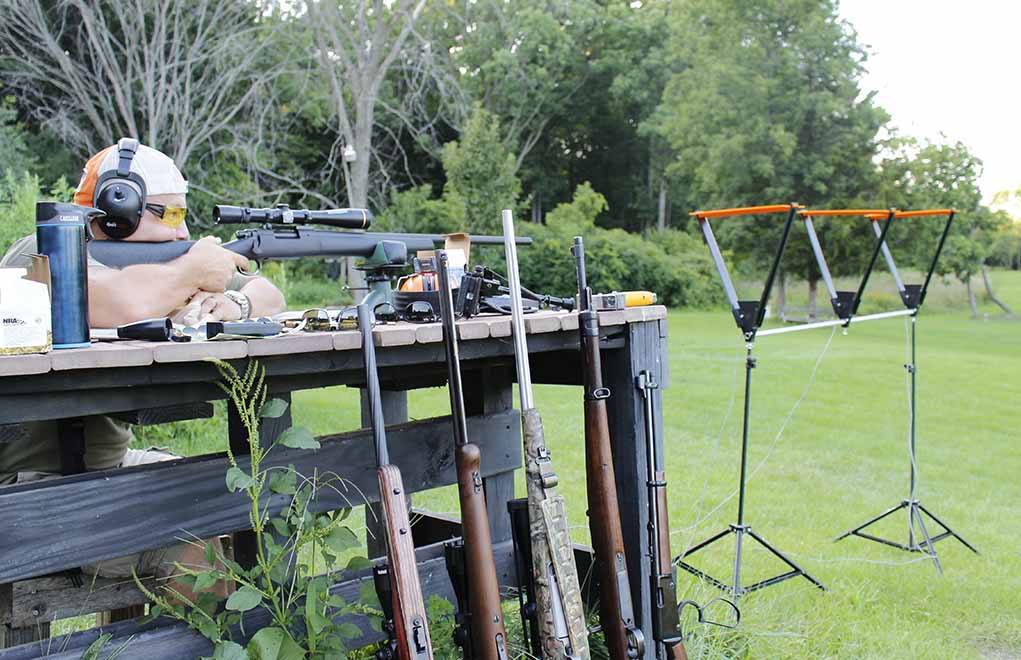
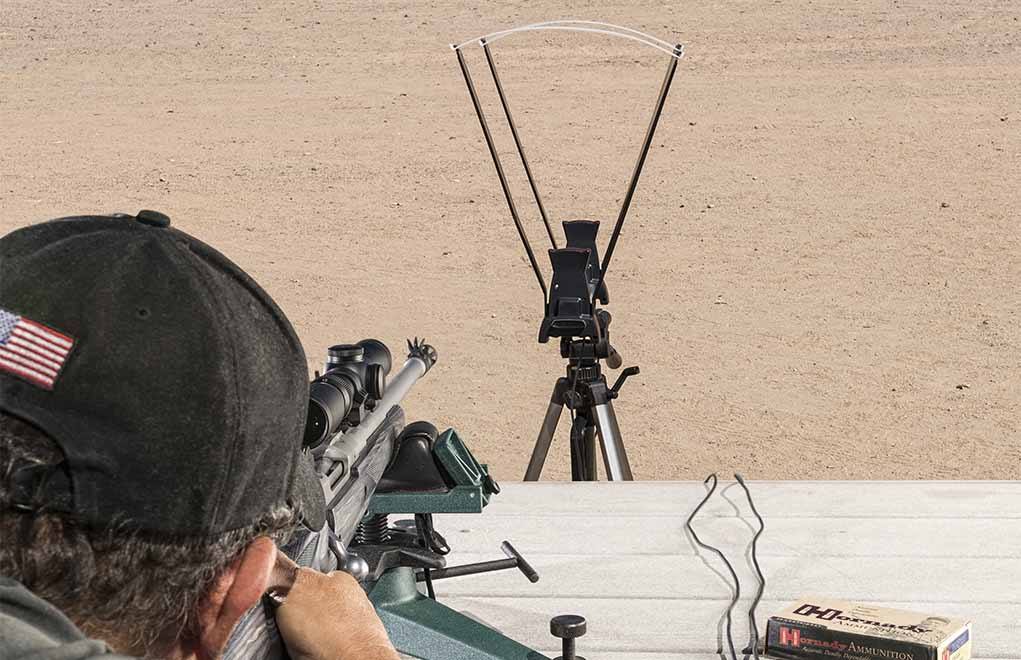
Even the everyday shooter benefits from having a chronograph in their kit.
There’s a fine line for gun gear. Too much, and you end up with bipods, slings and what-have-you moldering away in some closet or on some shelf. Too little, and you run the risk of limiting your potential as a marksman. Yes, you really might need to upgrade that 30-year-old hunting scope, even as patinaed as it is in nostalgia. It’ll make a difference.
One of those bits of equipment riding the line of “Do I, or don’t I need it?” is the chronograph. It was an easy answer at one time. A couple of decades ago, the price was such that only diehard shooters, reloaders and wildcatters would pay for the brass tacks of bullet velocities. That’s not the case any longer.
Certainly, you can break the bank with a top-shelf model if you must. However, there are plenty in your price range—even if that’s modest—if you’re willing to do some shopping. And you’ll be glad you did.
No mere novelties, chronographs have the potential to make you a better marksman. The best part of it is that you don’t really need to set your sights on a country mile to get the most out of the device. They’ll get you on target more precisely, consistently and effectively, even at modest ranges.
Building a Complete Picture
What the side of the ammo box or the reloading manual says is close enough … except when it isn’t. Given that those numbers were produced in the bowels of some company’s ballistics laboratory and under much more sterile and different conditions than you’re dealing with, they’re a ballpark at best—and, in many circumstances, a large ballpark.
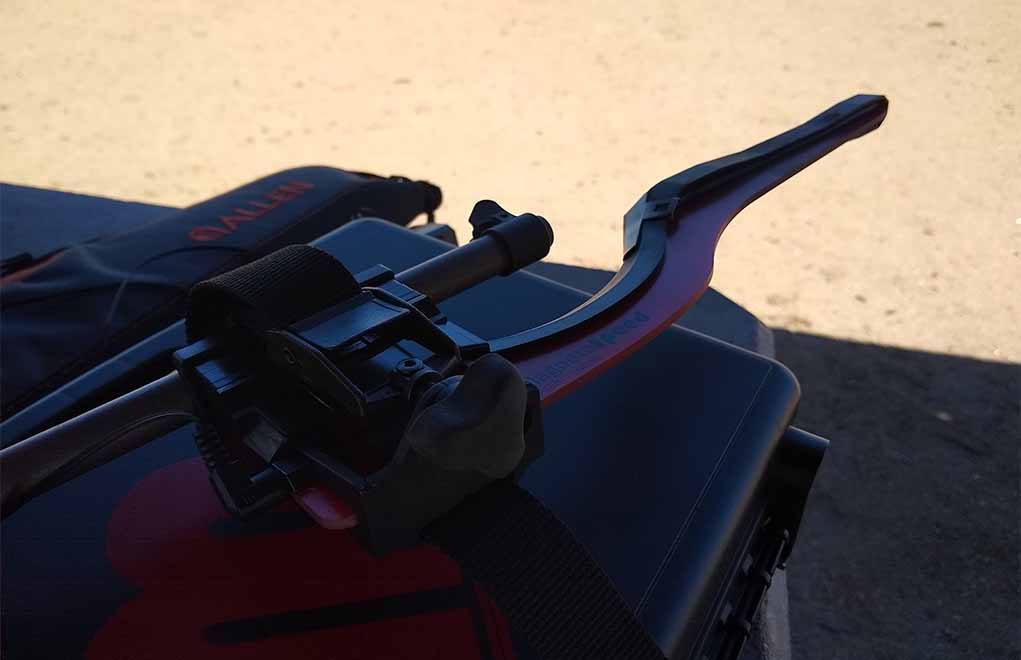
The MagnetoSpeed V3 is among the most advanced systems on the market, mounting to your gun’s barrel to give you true muzzle velocity readings.
Here’s a case in point: the PMC Bronze ammo I used to test some chronographs for this article. The company lists the 55-grain FMJ-BT loads at 3,200 fps. But across two chronographs out of an 18.5-inch-barreled Ruger Mini 14, they averaged closer to 2,840 fps—360 fps slower. To put this in context, that represents around 10 inches difference in bullet drop at a pedestrian 400 yards out.
I’m not cynical enough to believe that PMC completely threw a curve with its data. It’s just that the company recorded it under much different circumstances than my own. For one, according to PMC’s specs, a 24-inch-barreled rifle was used. That makes a difference. Furthermore, the company probably utilized ammo that was brand-spanking new and right off the line. In contrast, the box I tested was a bit, shall we say, vintage.
Nevertheless, this simple example shows how important it is to generate your own data. You’d drop an awful lot in the dirt before you’d get dialed in, even at ranges almost every hunter and shooter encounters. The same goes for reloading data. And this isn’t purely confined to long guns and long-range.
There is one primary variable that determines if a modern, hollow-point bullet functions (that is, expands). You guessed it: velocity. Sure, at 980 fps, that highly engineered +P .38 Special self-defense ammunition lives up to its billing—and maybe then some. But if you’re only able to achieve that result out of a 6-inch-barreled revolver, not your EDC snubby, the advertised velocity might not mean squat. You might as well shoot wadcutters and save some money.
Testing Chronograph Options
All right, your interest is piqued. But where do you go from here? More to the point: Which chronograph is right for you? As you might have guessed, it depends.
Whether you choose a traditional optical unit or a cutting-edge, barrel-mounted chronograph, the device should be a part of every serious shooter’s kit.
I have primarily used two chronographs that represent both ends of the spectrum for the device in style, cost and precision. At the top-shelf end of things is the MagnetoSpeed V3 Barrel-Mounted Chronograph, which has an MSRP of around $400—and (full disclosure), the company supplied it. At the other end of things is my Caldwell Ballistic Precision Chronograph, for which I spent around $80 of my own hard-earned cash. There are some outliers on either end, but the vast majority of these devices lies in between these prices.
For the most part, both units perform well and with precision. For this column, I tested three different .223 Remington/5.56 NATO rounds, 10 each, simultaneously over both chronographs and found a strikingly small difference between their data.
The average difference in the recorded velocities was 14.6 fps—in other words: minuscule. Interestingly, the Ballistic Precision unit tended to record higher velocities. Regardless, I am comfortable with the data each provided.
That said, I tend to trust the V3’s readings more, given how it measures velocity; that is, via electromagnetic fields. Why is this important? Outside of a solar or lightning storm, the device is less susceptible to environmental conditions—the bane of optical chronographs. To boot, it also gives you a true muzzle velocity, because it mounts directly to your gun’s barrel, handguard or frame. (As a side note, if you’re stuck with indoor ranges, it’s also handier. Most of these establishments frown upon calling a cease-fire to accommodate someone setting up a chrony.)
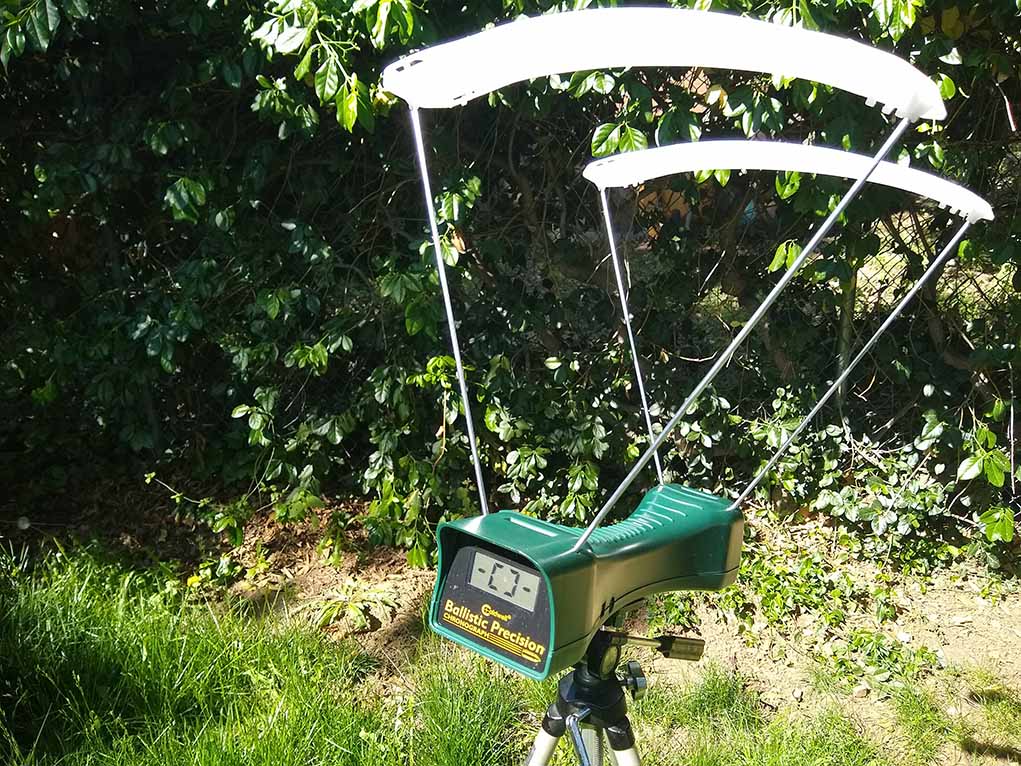
Don’t let its spartan looks fool you. Caldwell’s Ballistic Precision Chronograph is long on features. Working in conjunction with a smart-device app, you can record long shooting strings, get their velocity averages, spread and all the other important data you need to build a complete ballistic picture.
That said, I won’t part with my Caldwell anytime soon. The simple reason is convenience. It’s not uncommon to test several different guns and loads in one shooting session. With my optical chronograph, it’s simply a matter of switching guns, whereas the MagnetoSpeed involves a process of dismounting and remounting over and over again.
Absolutely, there’s the matter of having the right conditions to ensure the best possible readings with the Caldwell. Dark and windy days can turn out a wash. However, on a bright afternoon—perfect for shooting—the Ballistic Precision offers me the opportunity to, well, shoot.
Parting Shot
No matter your range, you need to have a complete picture of your variables. Chief among them is velocity. And there’s only one true way to get a handle on this for your particular circumstances: a chronograph. On the surface, the device might seem a luxury, but the picture it paints for your given guns and ammunition proves more than practical.
And it’s a near guarantee that once you start using one, it’ll never gather dust.
Technical can be tough. The best optical technology in the hunting world is worthless if it can’t withstand the perils of hunting hard.
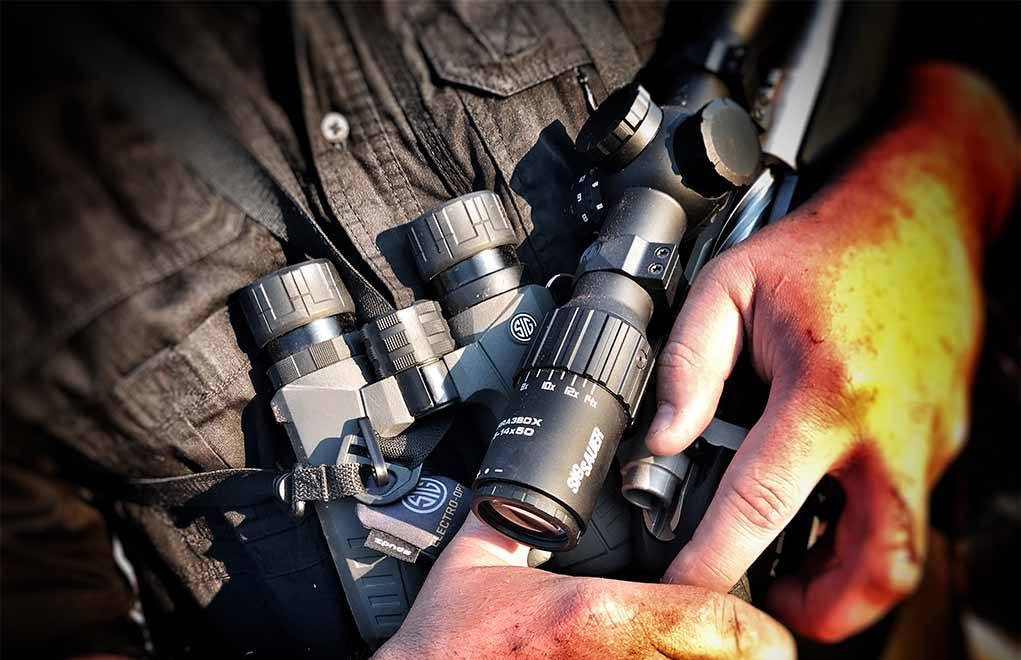
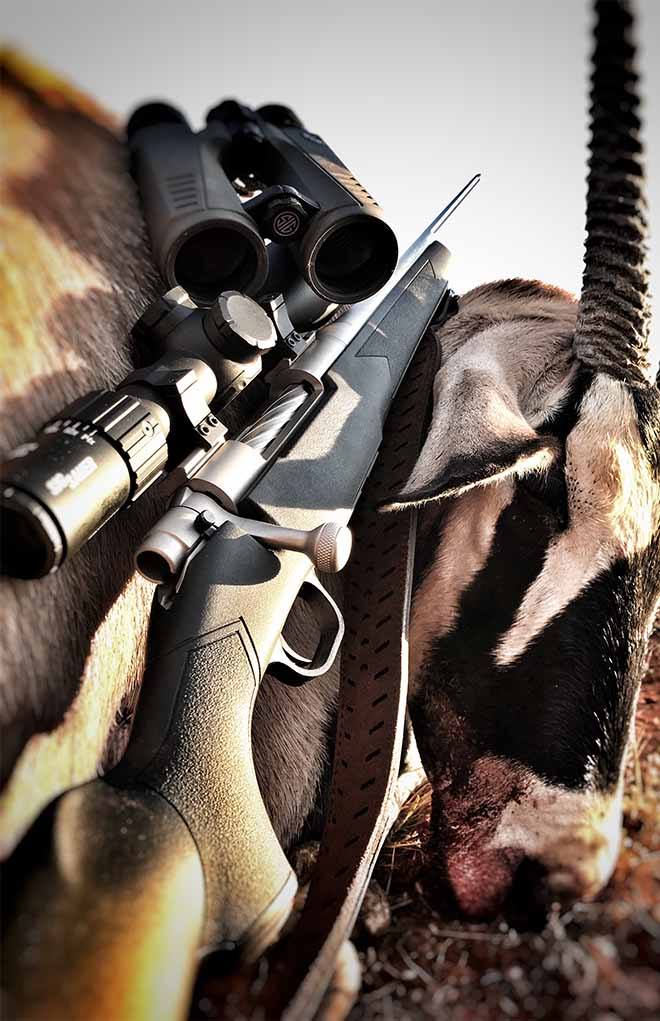
Enhancing the experience by mixing tradition with technology, the Sig Sauer BDX system gives you a new way to scope out a hunt.
How Does The Sig Sauer BDX System Operate:
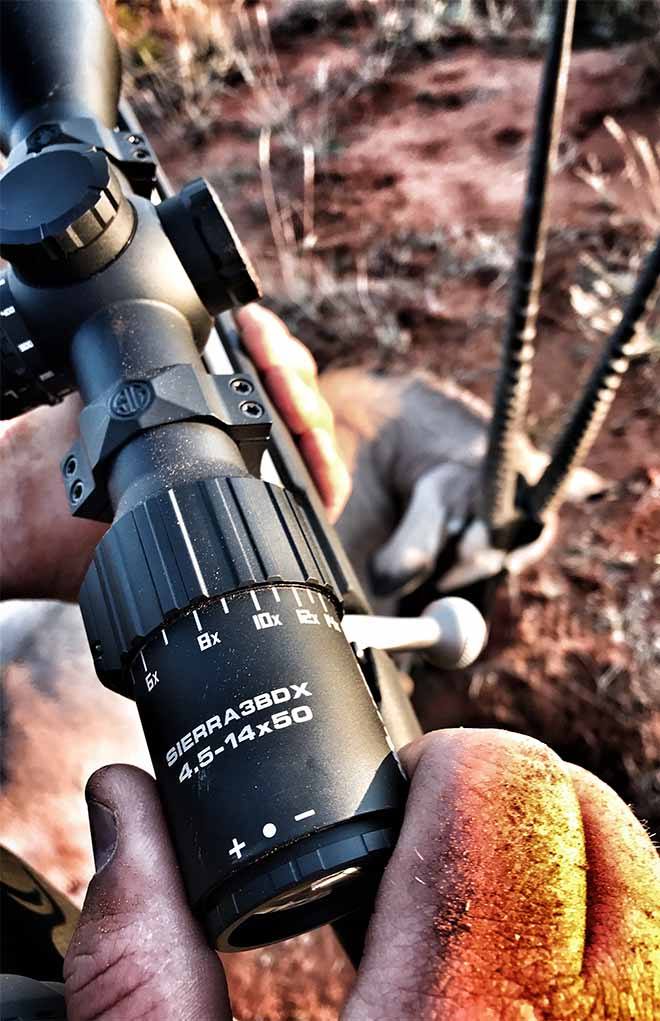
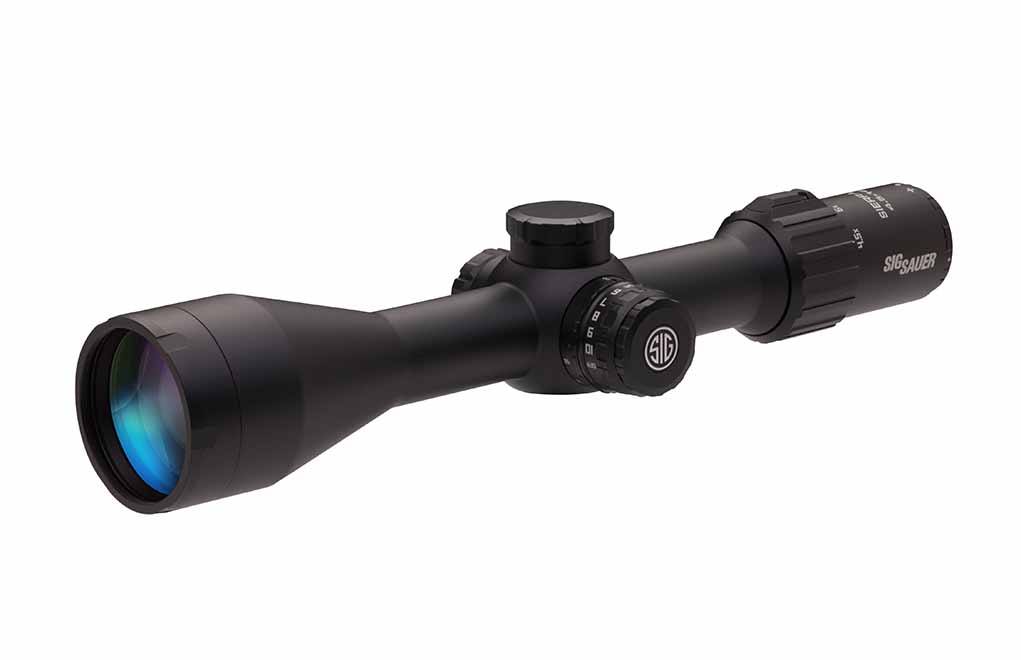
Sierra series of riflescopes to serve as the eyes of the system.
The riflescope is fed by either a Kilo rangefinder or a Kilo range-finding binocular.
The Sig BDX app, with its powerful ballistic calculator, is the brains of the entire system.
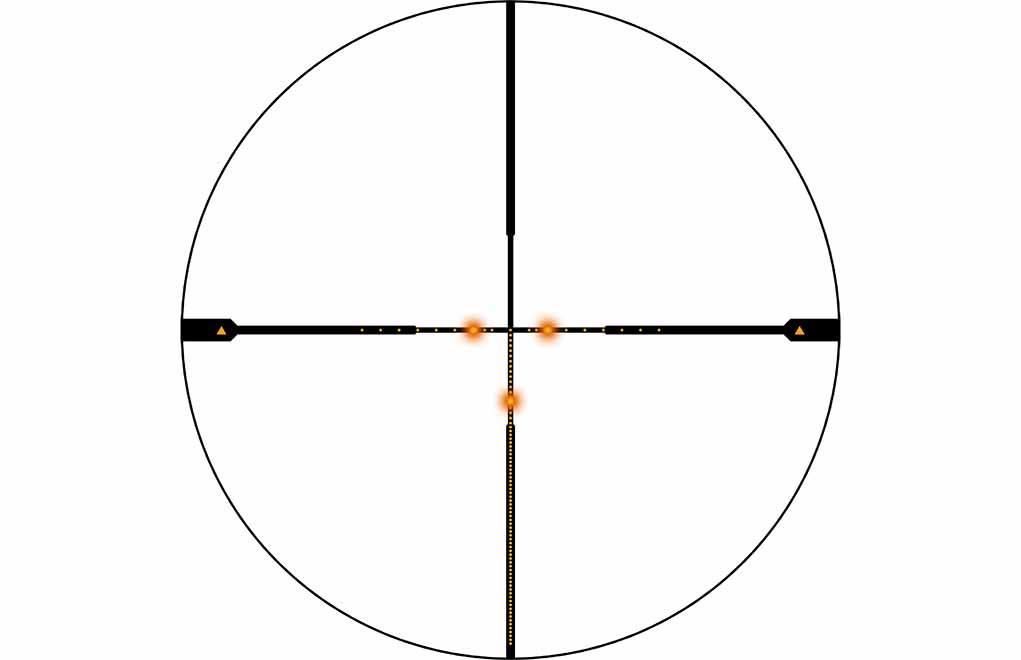
Once ranged, the system feeds the scope the bullet-drop data, with the correction presented on the reticle.
For those hunters who have never experienced Africa and perhaps haven’t yet been bitten by the allure of making tracks on the Dark Continent, I suspect that there are few things more annoying than listening to someone who has been there drone on and on about how magical the experience can be. I’d guess it’s like being at an already awkward party where everyone is struggling to make small talk and someone breaks out one of those “I guess you had to be there” stories.
There was certainly a time when I, too, couldn’t have cared less about sitting on a plane for countless hours, trekking through the heat to find an animal I didn’t know the name of, all the while hauling special gear that I bought especially for the trip—gear that I might never use again. I liked my Midwestern whitetails and northern black bears, highlighted by an occasional elk hunt.
But for the sake of your patience, I’m not going to get into all that emotional, ancestral and historical stuff (at least, not in this article). I am, however, going to order you to go (reread that if you have to, because I meant it) at least once in your life. You owe it to yourself to experience it, and I promise that it will all make sense when you look down at your own boot tracks in the rich, red dust. ‘Nuff said about that.
Batteries and Bushmen
In spring 2018, Sig Electro Optics launched the BDX System at the NRA Annual Meetings. This system aimed to completely revolutionize (and I don’t use that term lightly) how shooters deal with bullet drop. As an acronym for “Ballistic Data Exchange,” the BDX System is a unique partnership comprising the riflescope, rangefinder and your smartphone.
The Scope: Sig has launched, and continued to expand, the Sierra series of riflescopes to serve as the eyes of the BDX System. They’re not huge, and they’re not clunky. In fact, from the outside, it looks like nearly any other riflescope. And, if you’re the nervous type when it comes to batteries in your aiming devices, the BDX-R1 reticle is not a digital reticle: It’s an illuminated reticle.
So, if you find yourself in a hell-or-high-water situation and everything else has failed, you will have a rifle wearing a riflescope with a good, ol’ plex reticle … and you’ll have to revert to your rifleman skills to employ whatever Kentucky holdover the situation demands.
The Rangefinder: The Sierra riflescope is fed by either a Kilo rangefinder or a Kilo range-finding binocular—again, in multiple configurations of your choosing.
The Smartphone: With the Sig BDX app, your smartphone is the brains of the entire system. As on other ballistic calculators, you enter the ballistic data of your specific setup (always remember: Garbage in, garbage out). I’m not gonna lie to you: The app can be a bit tricky to navigate until you get the hang of it, but once you’ve completed and built your rifle’s profile, the in-field user experience of the BDX system is intuitive … and I’ll go so far as to say, “easy.”
The Sierra isn’t a digital riflescope: It’s a riflescope with digital enhancements that anchors Sig’s cutting-edge BDX System.
It seems a bit “techy,” doesn’t it? Well, it certainly is; and, at first blush, it felt almost counterintuitive to be considering such a system for pursuit of “nostalgic” African game. I’ve read all the classics by all the top-tier riflemen who took to Africa to put their best skills against the toughest and most unique animals on the planet. While I understand all that sentiment, I bet ol’ O’Connor would’ve soaked up the technology, were it available to him all those years ago.
And here’s the thing for me: When an animal is in the crosshairs and there are a lot of factors to consider—factors that can change very quickly (such as distance, wind and an animal that can suddenly move)—I’ll take all the help I can get each and every time. And I learned very quickly that the BDX System can help clear the mental fog and eliminate cognitive errors when everything is on the line … especially in an environment that’s as unfamiliar as the vast savannas of central South Africa.
Dot-Watching
I’ve hunted countless animals across the majority of the United States and three continents, but my heart was damned near choking me as I watched the herd of gemsbok pick its way through the acacia trees. Paralleling their path, my PH, Thys (a lot of South Africans seem to have strange names!) and I slipped from shadow to shadow, waiting for the herd of 50 or more animals to stop.
It was one of the strangest sights I’ve ever seen: All gemsbok have horns; and, at a distance of 400 yards, each of the animals looked just like the one standing next to it. I can attest that target panic is real, and it’s magnified exponentially when there are more than 50 identical-looking targets.
The BDX-R1 reticle features the LevelPlex anti-cant system, and of course the BDX windage and elevation dots.
We were searching for a mature bull, and I’m extremely thankful for the short grass in that location, because spotting the underlying appendage was the best way to differentiate the ladies from the gents.
After over an hour, the herd stopped, and we slipped under the shade of an acacia tree. With more than four dozen tails swatting flies and the majority of the 100-plus eyeballs scanning for danger, I waited for a bull to separate from the herd, turn broadside, have no other gemsbok standing behind it in the event of a pass-through shot … and then stand there long enough for me to send a bullet. It felt like playing poker, and the only way I could win the round was to sit and wait for a royal flush to be dealt.
“On the left!” whispered Thys, screaming under his breath to make sure I understood just how urgent the situation was. “That’s a mature bull. Take him quick.”
I shouldered the rifle in time to watch the little, yellow dot in the reticle dance up and down the vertical post and settle a bit below the horizontal crosshair (You know—when you go to the county fair and wait for a funnel cake? Now, think about the lights-on-the-top-of-the-funnel-cake truck. It’s kind of like that).
Through the rangefinder, Thys made the call. “Three hundred and 9 yards.”
“Confir … ” Boom!
This gemsbok fell to the technological prowess of the BDX System. The trifecta includes a rangefinder or a rangefinding binocular, in addition to the scope and smartphone app.
At the shot, the entire herd hit the gas and leaned on the accelerator. I recovered from the recoil with the hope of seeing a large, gray mass lying in the short grass.
Not so much.
As the herd continued to move, one of the animals slowly began to fall behind and eventually peel off from the rest. It was obvious that the 165-grain bullet from the .300 Win. Mag. had hit hard, and a quick left turn by the animal revealed a hit indicating a perfect hold of elevation. However, I had pulled the shot back too far: Because hindsight is always 20/20, I would’ve abandoned the seated position and gone with a kneeling stance and the sticks. I had the time, and although that might go against conventional thought, I know myself, and I know I’m more steady that way.
Motivated by the overwhelming desire to make this mess end as quickly as possible, we laced up and stormed after the gemsbok. Trying to pick my steps to avoid a face-plant, I just about leveled Thys when he abruptly stopped.
“He’s there; below the one lone tree on the far right.”
I instinctively tossed the rifle on the shooting sticks and shouldered it—again, just in time to see the light run the scale of the vertical post and settle just below the horizontal crosshair.
“Two hundred and 87 yards.”
Breathing heavily, I channeled my frustration from the first shot and delivered the second to the exact millimeter of my intention.
Quick-Shot Solution
As the final day of the hunt neared, I told myself I would be OK with going home without a kudu. I honestly believed that, although I knew it would certainly take some time, and that 15-hour jet ride back to the States was going to be a long one. But as the sun worked toward the final horizon of the hunt, my legs were weighing as heavily as my heart.
Working down the two-track, I reflected on the week as I tried to go step for step with Thys. The pedometer on my smartphone had already logged more than 40 miles, and I wanted a free-range kudu something fierce … even if I couldn’t admit that to myself at the time.
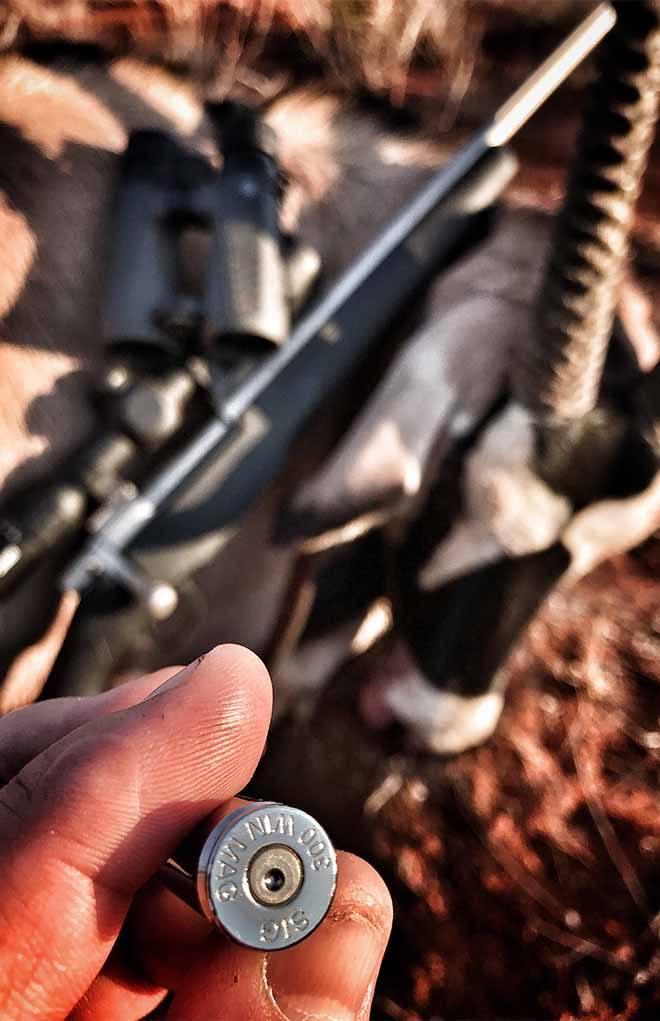
The cartridge of choice: Sig’s 165-grain all-copper HT Hunting ammunition chambered in the do-nearly-anything .300 Winchester Magnum.
Over the course of those 40 miles, I had developed a bad habit of bumping into Thys when he stopped to glass, most often because I was looking off in some direction in search of a kudu that he hadn’t seen. But when it happened this time, it was because I was staring at my shoes, wrongfully beginning to pout before the hunt was over.
Although he’s just a little fella, I bounced off Thys, only to look up and see him—like a bird dog holding a point that could only be broken by a flush—locked onto something ahead.
“There’s a cow right there in those trees,” he whispered. “And there’s a bull with her, but I can’t see how big he … ” Without finishing his sentence or taking his eyes off the pair, he whipped up the shooting sticks, and I set the rifle in the yoke in one fluid motion.
“That’s a good bull. Make the shot before he breaks,” Thy advised.
At fewer than 100 yards, Thys didn’t bother to range. I couldn’t see the entire kudu bull, but I could see enough. I found the dot in the center of the crosshairs, found the tiny, little shadow made by the shoulder’s rear crease, and I broke the silence.
As I cycled the rifle, Thys called me off a follow-up shot. He could see what I quickly saw once I again found the running bull in the scope: blood trickling from a little hole as the result of a perfectly placed bullet. And it was a mere few yards before that bullet had completed its mission and anchored the bull.
Parting Shot
As strange as it sounds, Jack O’Connor was the first person I thought of when I rested that rifle on the side of the bull and reached down in admiration. At that moment, it hit me that I was the first human to ever touch that bull—and that I had trekked across Africa’s best vistas to experience it.
As we headed back to camp, I brushed the dust off my rifle and thought about all those footsteps I had stirred up to relocate those dust particles onto the lens of my riflescope. It’s a dumb thing to think about, but that’s where my mind went at the time.
I’d always understood all those words O’Connor had written, but for the first time, I felt them.
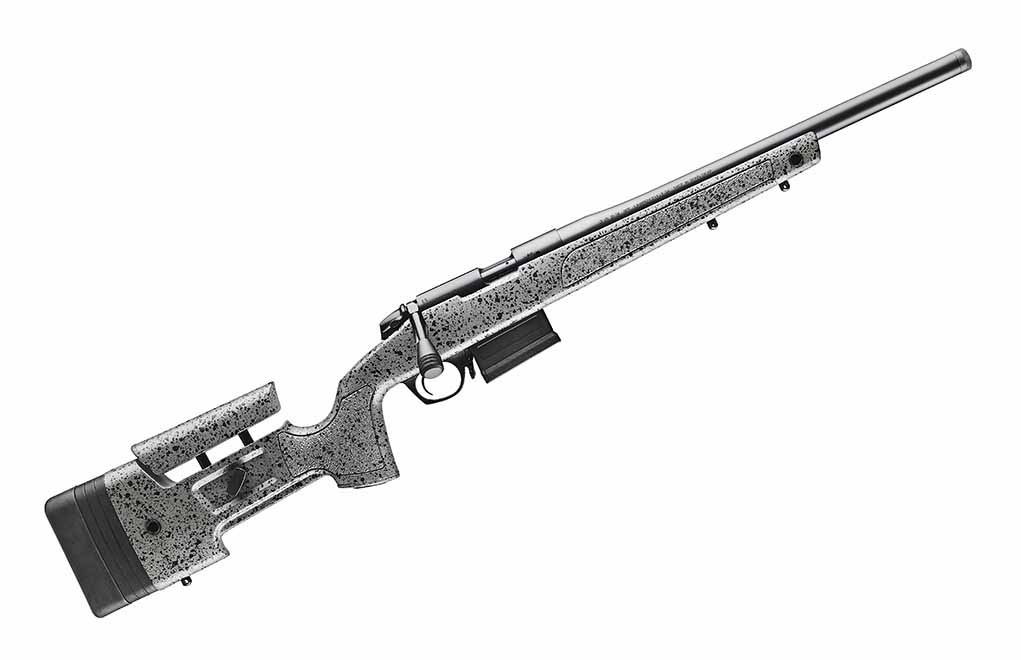
Modeled after Bergara’s popular centerfire line, the B-14R delivers the same supreme accuracy except in .22 LR.
What Features Makes The B-14R An Accurate Shooter:
18-inch heavy barrel
HMR stock featuring mini chassis
Fully adjustable LOP and cheek rise
Over a relatively short period, Bergara has taken the centerfire rifle world by storm. Now the Spanish/American gunmaker is shooting to do the same when it comes to rimfires. And boy, does the company’s second .22 unveiled this year look like a doozy.
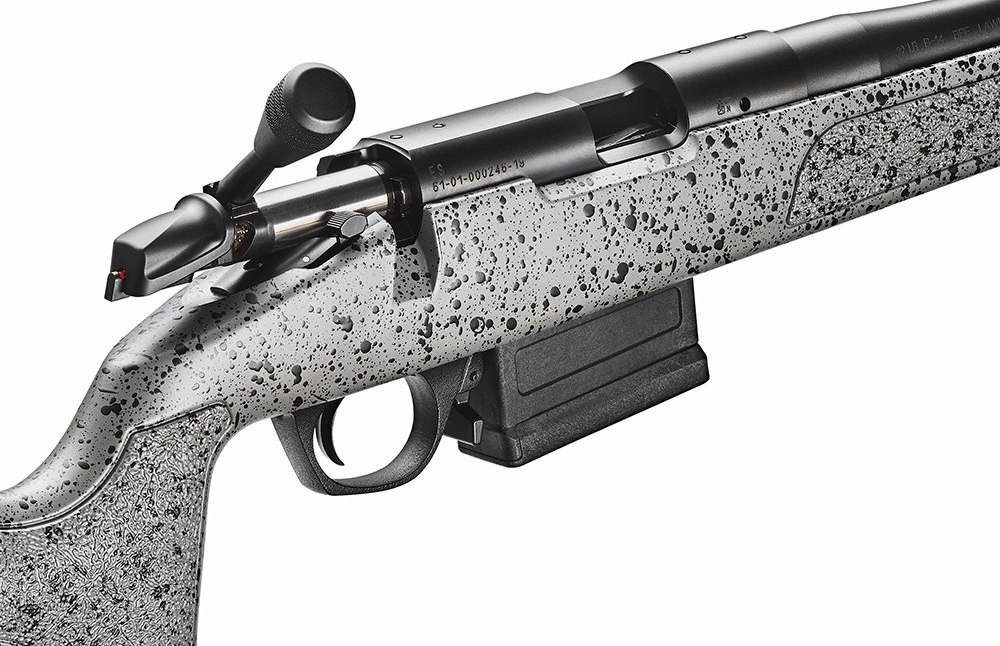
As its name suggests, the B-14R .22 LR is based on Bergara’s popular line of centerfires. With that comes all the bells and whistles to help the precision plinker shoot a country mile: bull barrel, fully-adjustable stock, oversized tactical bolt handle and threaded muzzle. The stock deserves a bit more comment. In addition to its customizable length of pull and cheek rise, the HMR (Hunter-Match Rifle) system also features an integral mini-chassis, which provides superior rigidity—especially for a rimfire.
Uniquely, the B-14R also feeds AICS mags … kind of. Certainly, the magazine is built to AICS specs and is a dead ringer for them, but in actuality is a modified 10-round single-stack system. Still, for an economical trainer, the full-sized feel of the mags are certain to add authenticity to the experience. The on catch point for many on the rifle, the B-14R leans to the expensive side with an MSRP of $1,150.
Lawrenceville, Georgia – BPI Outdoors / Bergara Rifles is pleased to announce the release of the Bergara B-14 R .22 LR Rifle at the NASGW Expo in Orlando, FL Oct. 22-25, 2019.
The Bergara B-14 R .22 LR is the latest offering in their ever-popular B-14 series of rifles. Ben Fleming VP of Sales for Bergara states. “Our team has been working on a very accurate full size .22 precision trainer for several years now with a goal to help set the bar with the .22 shooters. With this gun we are confident that it will help long range .22 shooting grow for years to come.” Dakota Russell, National Sales Manager for Bergara added, “Our customers have been requesting a gun like this for some time, and with the growing NRL22 and PRS .22 competition matches the timing was right to introduce a rifle of this nature.”
This rifle is designed as a true rimfire “trainer” being that it works within the dimensions of a REM700 platform, allowing shooters to have a similar size and feel to their centerfire rifle, or even set up as a clone to their centerfire to train with. It therefore fits REM700 compatible stocks, bases, and triggers.
This being the case, it gives a perfect platform to allow any shooter the ability to customize their rifle with all kinds of compatible accessories already on the market. The magazine is a single stack .22LR mag that is built within the same dimensions as a standard short action AICS mag.
With the growing popularity of long range shooting this gun allows shooters to practice their disciplines at a more affordable price and in areas where longer ranges may not be available.
Bergara is known for its extremely accurate barrels and rifles. With this new model the .22LR shooter is sure to be pleased with Bergara’s latest offering.
It was a family heirloom, a lever-action of good pedigree and an undeniable American classic rifle in an equally classic cartridge. The Savage Model 99 had belonged to my friend Mike Buser’s grandfather and was handed first down to his father and subsequently to him.
Understanding the importance of a family heirloom, Mike wanted to see the rifle in the woods again, but there was one small issue: It didn’t shoot well.
“Minute-of-softball” is not a scientific unit of measure, but it aptly described the groups this .300 Savage delivered with many different types of factory ammunition. Action screws were set to the proper torque, nothing on the stock was obstructing the barrel, the scope mounts were set up correctly, and a quality scope was used. But still, the old lever gun threw a ballistic temper tantrum. I can’t calculate the exact amount of money Mike spent on different brands of ammunition, but it was significant. He had just about given up, relegating the rifle to a 50-yard wonder and used to fill doe tags in the thickets, where the shooting is close.
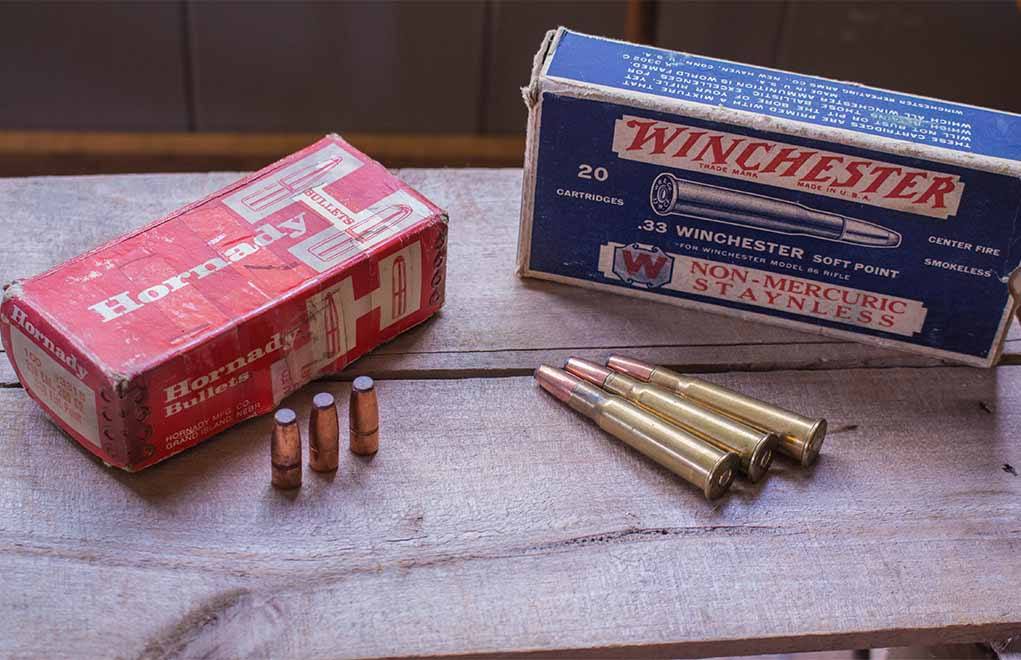
The author’s client had an 1886 Winchester in .33 Winchester, along with a few boxes of empty cartridges. These Hornady flat-points brought that old rifle back to life.
I suggested that before we proclaimed that condemnation, we should try to see what, if anything, handloaded ammunition would do in this picky rifle.
Our first attempts didn’t yield much of an improvement, but one of the test loads cut the size in half, printing just shy of 2 inches. So, with that for a starting point, we slowly tweaked the load, changing primers and bullets and varying the powder charge by a couple of tenths of a grain. We ended up with a 165-grain Sierra GameKing boattail, driven by a healthy dose of Ramshot’s TAC spherical powder and sparked by a CCI200 primer—and a neat, little, 7/8-inch, three-shot group at 100 yards. This handloaded ammunition made a believer out of Mike … and he’s gone right down the rabbit hole.
I’m not going to suggest that handloaded ammunition is going to cut your group size in half with every rifle or even that handloaded ammunition will beat factory ammunition in every instance—I’ve seen more than a few rifles that demonstrate their best accuracy with factory loads—but it does solve a good many problems.
Barrel Harmonics And Stomach Ulcers
Assuming there are no mechanical issues with a rifle and that it’s properly benchrested with a competent shooter, it’s not difficult to see how both different bullet profiles and varying powder charges could result in different group sizes.
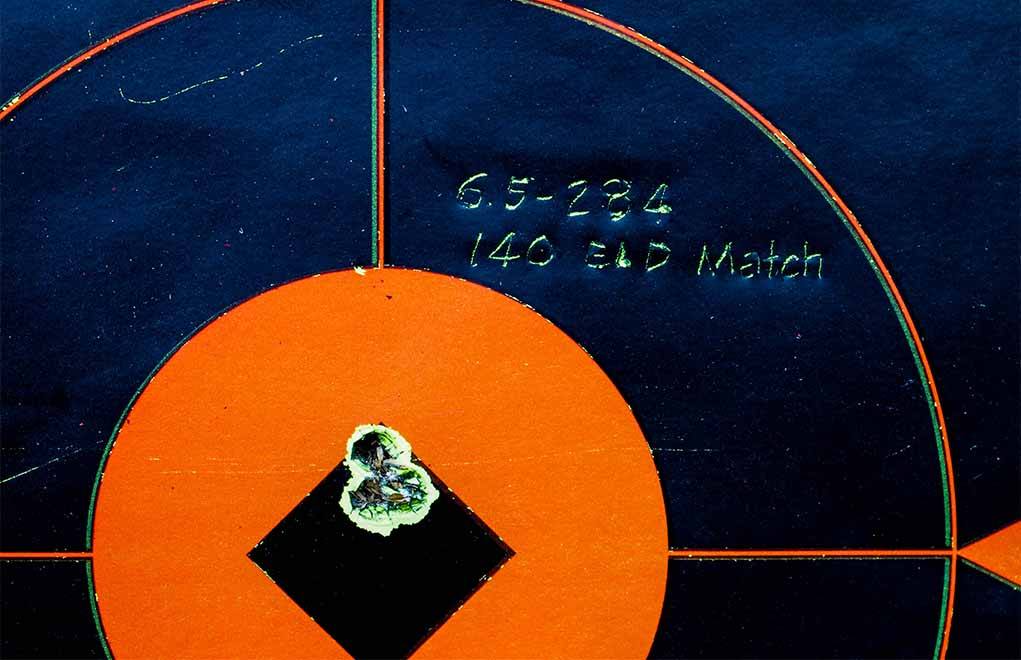
A 100-yard target showing the accuracy of the author’s 6.5-284 Norma.
The shockwaves sent down the barrel from the violent explosion of the powder charge and engaging of the bullet into the rifling, and then the wave generated by the bullet’s journey down that barrel, create a certain set of harmonics. If—and it’s a big if—those harmonics “agree” with the conformation and construction of the barrel, you’ll get repeatable results. This is what we collectively refer to as “accuracy,” although the proper term is “precision.” The more repeatable the results, the more precise the rifle is deemed to be.
The factory ammunition—no matter what level of detail the company affords—will produce a single set of harmonics. If your barrel agrees with those harmonics, you’ve got a winner. If it doesn’t (and that is a common occurrence), it’s neither the fault of the barrel nor the ammunition. I liken it to a pair of well-constructed shoes that just don’t fit your particular feet.
When you handload your ammunition, you have control over those harmonics. Perhaps you will have a difficult time predicting those changes in harmonics, but at the very least, it gives the option of changing the harmonics; and you can, and will, eventually stumble upon a combination that is suitable for your purposes.
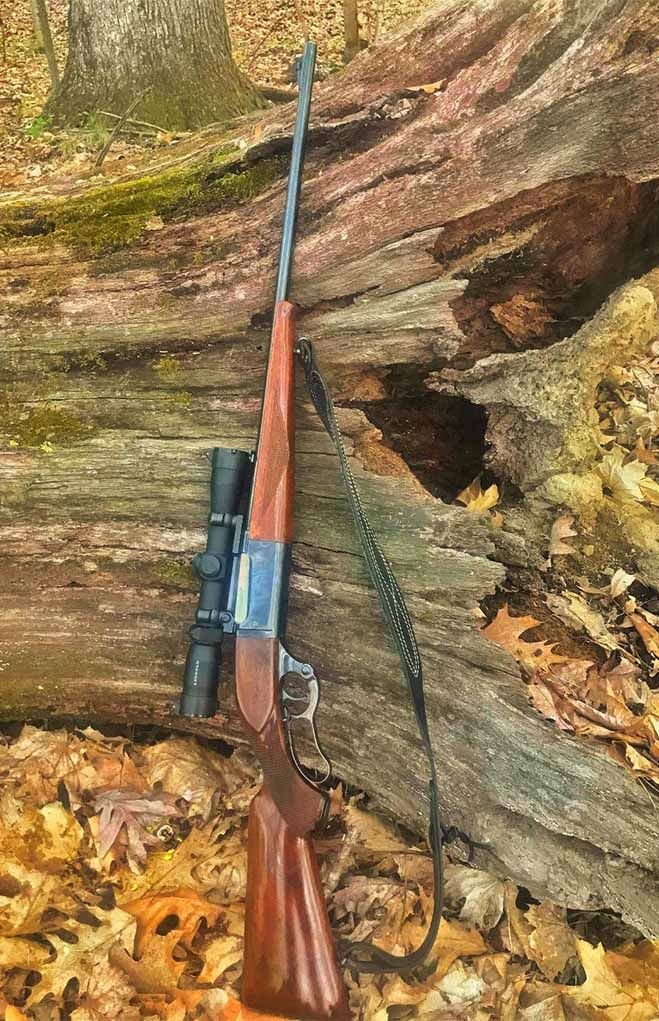
The family heirloom: a Savage Model 99 in .300 Savage. Reloading made the rifle much more accurate than it ever was with factory ammo.
As a reloader/handloader, you have the option of changing powder, primer, brand of case and bullet profile, and you use that fact to find a single accurate load. And you can also use the load development process to tailor the ammunition to the hunt.
In the grand scheme of things, I will usually happily sacrifice 100 fps in velocity in order to obtain the accuracy I desire. It’s an easier trade in the target rifles and faster hunting cartridges, but it might prove unacceptable in a slower double-rifle cartridge, with which the velocity is paramount to proper regulation. Velocity is certainly an observable attribute, and you’ll find that through the use of a good chronograph, you can equate accuracy/precision with consistent velocities, whether it’s a handload or a factory load.
The overall length of factory ammunition is set at, or shorter than, the SAAMI or CIP standard dimension. This is due to the fact that this ammunition has to function safely in rifles and handguns of all shapes and sizes.
When you’re loading for one specific firearm, you have the benefit of being able to vary the bullet’s seating depth and, therefore, the overall length of the cartridge. Be aware that you never want your bullet to be seated out so long that it touches the lands of the rifling; but there is no doubt that minor changes in seating depth can have a dramatic affect on the accuracy of your rifle.
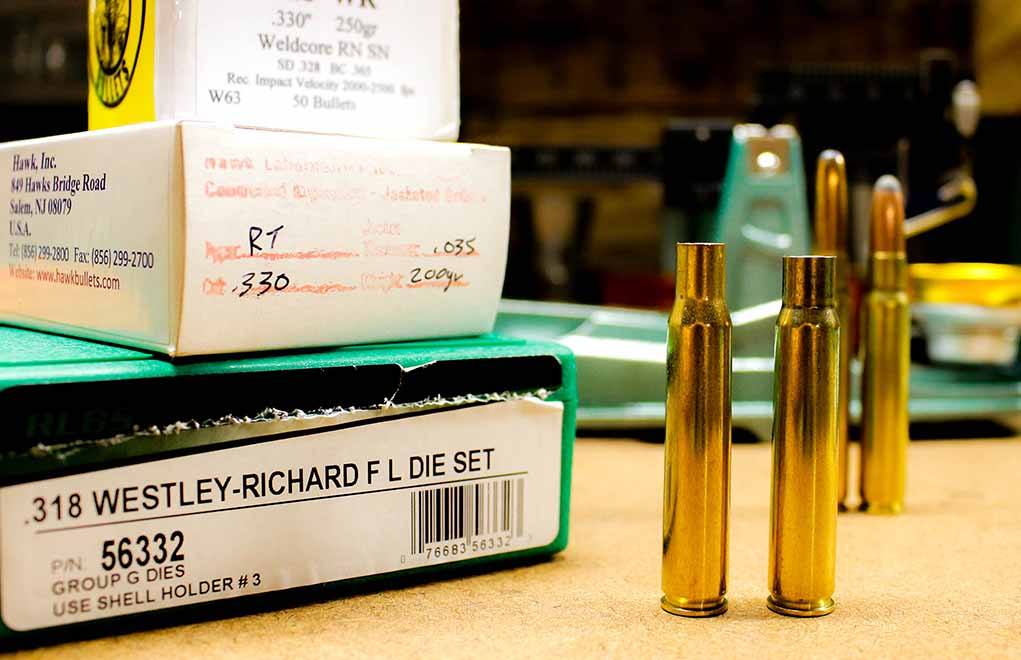
With a good set of reloading dies, the author makes brass cases for the .318 Westley Richards from plentiful .30-06 brass.
The lead-free copper bullets have shown to be particularly sensitive to seating depth changes, and some powder/bullet combinations that I have deemed unworthy in a particular rifle have proved me wrong with a slight change in seating depth.
Again, handloading the ammunition gives all sorts of flexibility and more than one opportunity to make the change in either component or one of the lading parameters, which will greatly improve accuracy.
Obscure Cartridges, Unavailable Combinations and Discontinued Loadings
There are times when any ammunition is better than none. Factory loadings for those cartridges that have faded into obscurity are dropped all the time, and sometimes, handloading your ammunition is the only answer. I’ve helped many folks with older rifles that were in perfectly good condition, but they simply couldn’t find ammunition.
In the last couple of years, a few custom shops have popped up (including my own Massaro Ballistic Laboratories) to fill these voids, but it wasn’t long ago that “rolling your own” for these old guns was the only way to keep them fed.
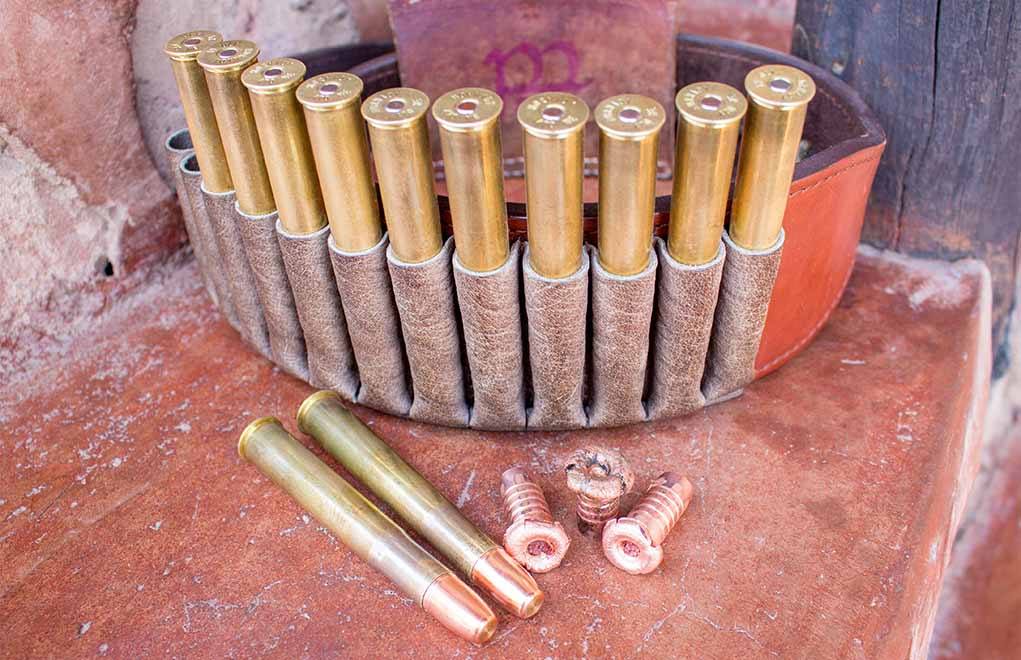
The author’s Heym 89B .470 NE loves the Peregrine BushMaster bullet (these were recovered from a pair of Cape buffalo bulls), but you must handload the ammunition.
Long before the .338 Winchester Magnum was adopted as America’s elk cartridge, the .338-inch bore was occupied by a rimmed cartridge: the .33 Winchester. Using 200-grain, flat-point bullets, the .33 Winchester was offered in Winchester’s Model 1886 lever-action and the .1885 single-shot and was a popular and effective cartridge. An acquaintance had a very clean ’86, as well as 60 or so pieces of empty brass. Hornady offers the 200-grain flat-point, and I simply procured a set of Redding dies. As a result, that gentleman was happily shooting his old rifle again.
I’ve written quite a bit about the .318 Westley Richards I had built, but one of the major factors in deciding to build the rifle was the fact that I could (and certainly do) easily convert .30-06 Springfield brass. The same can be said for .338-06 brass, .257 Roberts brass or any of the cartridges that were once derived from a popular parent cartridge: With a good set of reloading dies and possibly some trimming, brass cases can be made. I’m currently in the process of making cases for the .17-223 Remington wildcat, which actually had factory rifles made in the late 1960s (imported by Harrington & Richardson), yet no factory ammunition was ever produced.
Some component bullets are unavailable in loaded form and must be reloaded. I’ve had excellent experiences with the North Fork semi-spitzer soft-points and cup solids, the Peregrine BushMaster and PlainsMaster, and the Cutting Edge Raptor. All of them must be handloaded. I’ve taken a good number of buffalo with that Peregrine Bushmaster in the .450-400 3-inch NE, .404 Jeffery and .470 Nitro Express; and, without handloading my ammo, I’d have never found that bullet.
There are some excellent designs (I’m a huge proponent of the Woodleigh Hydrostatically Stabilized solid) that are loaded in the popular safari calibers such as .375 H&H, .416 Rigby and Remington, .458 Lott, and .470 and .500 Nitro Express. However, if you (like me) want to shoot that excellent Woodleigh bullet in the .404 Jeffery, handloading is your only option.
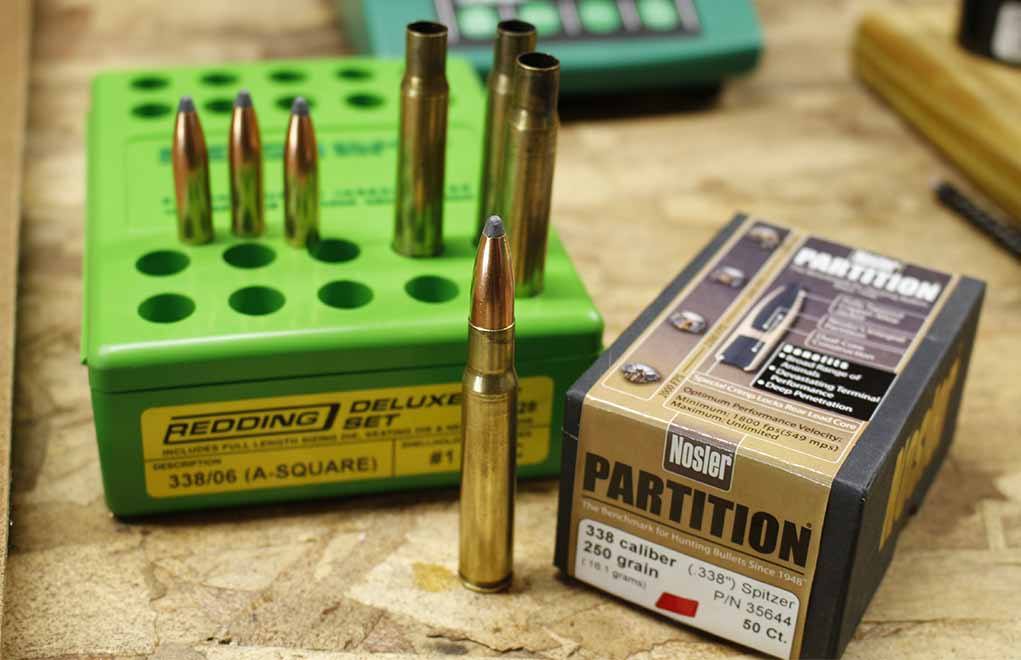
There are just a few options for factory .338-06 A-Square. But for the handloader, the whole spectrum of .338-inch bullets is available.
The .375 Remington Ultra Magnum, which offers a 400 fps velocity increase over the .375 H&H Magnum, has only been offered with soft-point bullets. The slower .375 H&H is certainly trusted for the large, dangerous species such as Cape buffalo, elephant and hippo, so there’s no doubt that the .375 RUM can handle the same species; and a good, non-expanding solid is needed for these animals, especially for elephant and hippo. If they can’t be bought, they must be handloaded.
Unpopular Cartridges and Travel
I’m pretty sure if you’ve read into the pleasures and pitfalls of traveling to hunt, you’ve read the following advice: Take a popular caliber (.30-06 Springfield, .270 Winchester, .300 Winchester Magnum or, in the case of Africa, .375 H&H), because there will always be ammunition in camp, should your ammo be lost. If you read between the lines, this pearl of wisdom is also saying that planning to hunt with the obscure cartridge—or rare handload—is a bad idea because of the risk of having a rifle with no ammo or vice versa and with no hope of replacing them.
At the risk of jinxing myself, I’ve hunted four continents and 10 countries and have not, as of the date of this writing, had a luggage issue. I’ve also yet to see .404 Jeffery, 6.5-284 Norma or .318 Westley Richards ammunition in any camp, and I’ve had a bunch of fun hunting with those cartridges.
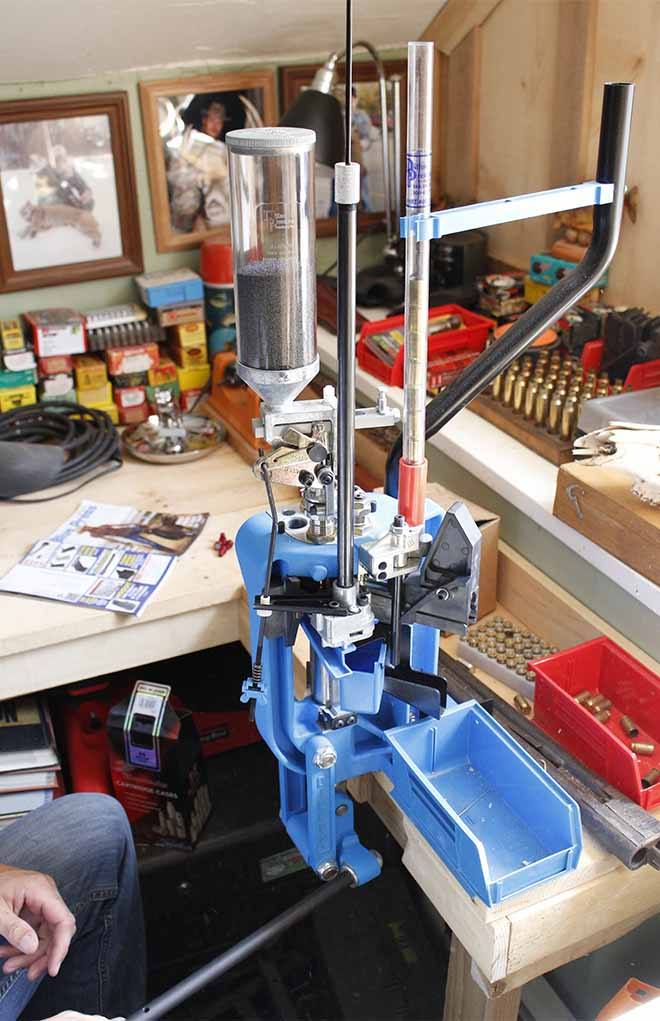
A Dillon 650 progressive press is set up to make .45 ACP cartridges for a weekend’s plinking.
If you are overly concerned, see if a suitable loaner rifle is in camp in the event of delayed or lost luggage. Take your handloads hunting; I find a sense of satisfaction when I take an animal with my own “recipe.”
High-Volume Shooters
For those who spend their weekends putting a whole bunch of lead in the air, whether via plinking with a pistol or preparing for the gun games, it can be expensive to purchase the necessary volume of ammunition. Brass can be scrounged, and there are many affordable choices among pistol projectiles. Consequently, a quality progressive press can yield a respectable amount of ammunition in a short amount of time. My buddies and I use a Dillon 650 for our .45 ACP ammunition, and with cast-lead bullets or something such as Federal SynTech, we can keep the handguns well fed.
A Pastime That Keeps You in the Game
In its basic form, reloading is not difficult or dangerous … as long as you follow the rules—and follow them well. It allows you to have control over what goes downrange, how fast it goes and how precisely it lands. It’s a great way to spend time with hunting and shooting buddies in the off seasons and during colder months.
The author has found the 6.5-284 Norma to be a very accurate cartridge. It gives its best accuracy with handloaded ammunition.
But most of all, it gives you more trigger time with your favorite guns. You’ll be at the range, developing your handloads, measuring velocities, trying new projectiles and taking care of other assorted shooting duties. And because the components are under your control, the same recipe can be used for a lifetime.
It will also change the way you shop for a rifle; you might find a gem in the dusty corner of the gun shop that you might not have considered because of a lack of available ammunition. Now, you can confidently bring that rifle home and begin gathering components. That, alone, is a game-changer.
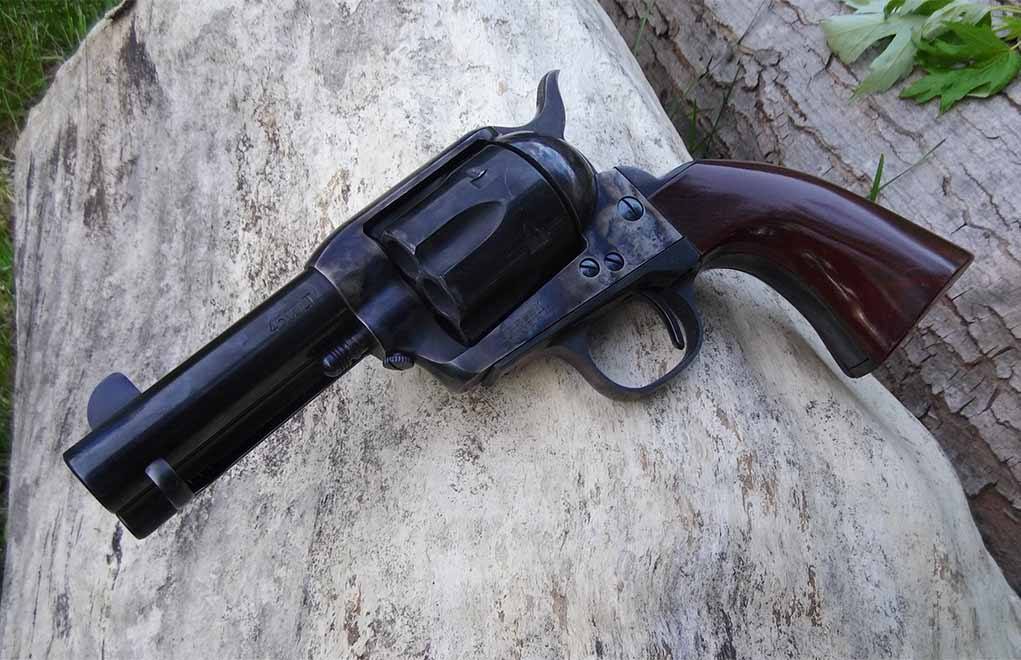
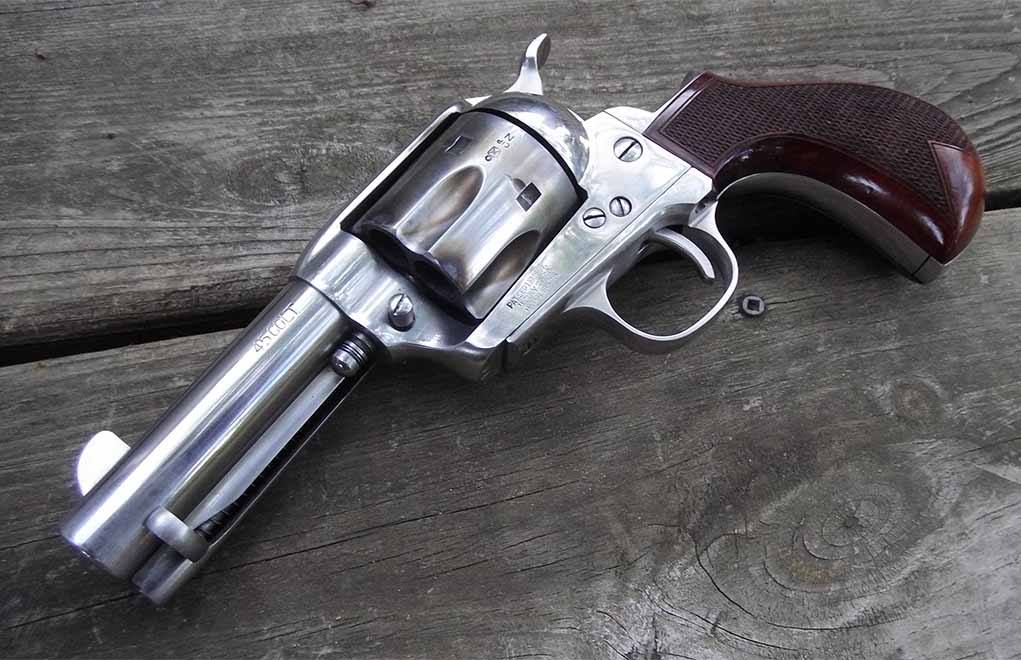
A blend of modern and classic, the Cimarron Thunderstorm Thunderer and New Sheriff are ideal for new-wave gunslingers.
What Makes These Modern Single-Action Army Revolvers Sweet Shooters:
Both have 3 1/2-inch barrels
They come available in .45 Colts, .44-40 and .38 Special/.357 Magnum
The Thunderer has a stainless-steel finish, the Sheriff is blued
The revolvers prove quick and accurate
There’s something that lies deep in the heart of every true, red-blooded American that can hear the call of the Old West. This is not something that everyone can sense in our modern age, but it draws the listener in—not just in mind, but in body. Reliving the tales and exploits of our heroes is only possible when you hold the same talismans they carried.
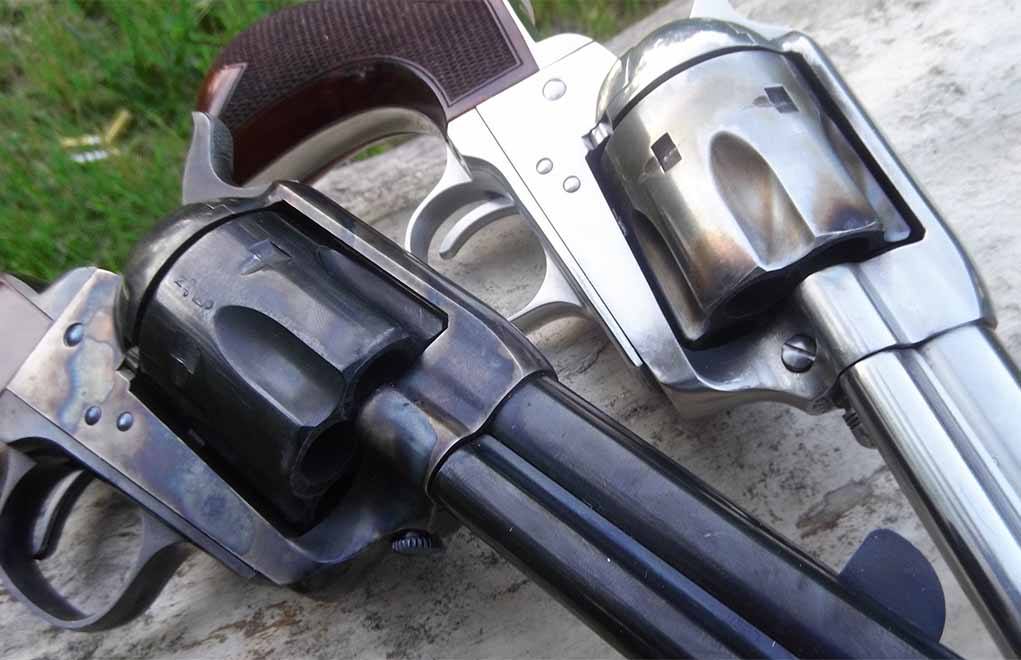
Cimarron Firearms has just what you need to feel right at home on a dusty street on your way to some dim, dirty saloon: the Cimarron Thunderstorm Thunderer 3½-inch stainless .45 Colt and the New Sheriff Model 3½-inch .45 Colt.
The two guns featured in this article are a blend of modern and classic. The materials might not be exactly the same as the guns of yesteryear; however, the function and handling are the same or better.
When people think of the Old West, the first thing that comes to mind for most is the duel in the street, where two men—sometimes rivals equal in just cause and other times, good and evil—face each other down.
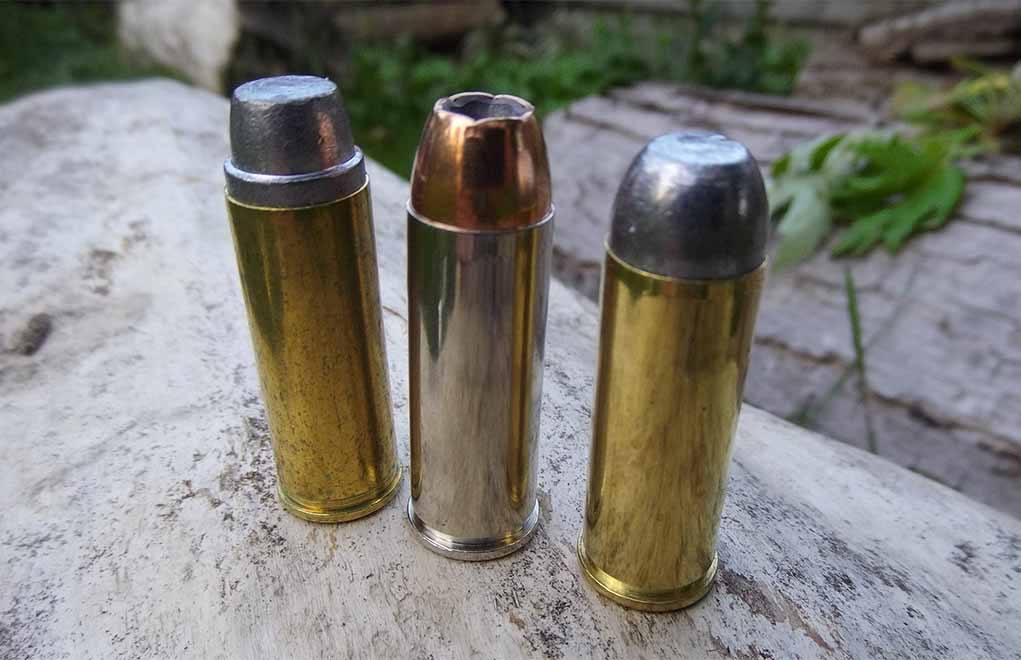
Left to right: Armscor 255-grain SWC, Sig Sauer 230-grain V-Crown JHP and Black Hills RNFP. These days, .45 Colt ammunition varies a great deal. Modern options, such as the Sig Sauer V-Crown, allow exceptional performance for your classically styled six-gun.
These two Cimarron guns are perfect for the gunslinger: short, fast and deadly accurate.
Fast on the Draw
The classic tale has been repeated so many times that there are countless movies and songs written about it. Holstering one of these Cimarron revolvers makes you think of the Ranger in the Marty Robbins song, Big Iron: A brave Arizona Ranger kills a terrible outlaw named Texas Red. The song narrates a truly American story in which justice is served and evil is vanquished.
But just how did that Ranger get so fast on the draw?
Single-Action Army Revolver
The Old West was loaded with custom guns, but the quintessential firearm that surpassed all of them in fame was the Single-Action (SAA) Army revolver. The original SAAs were designed for military service in the era immediately following the Civil War. They saw combat across the West—most notably when they failed to avail George Custer at the Little Bighorn.
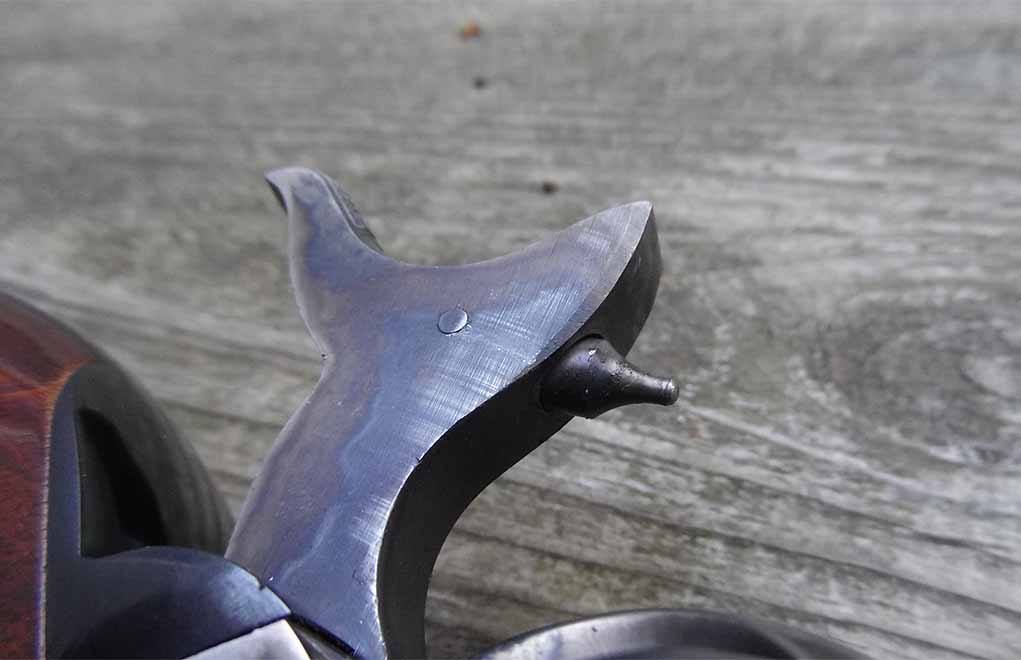
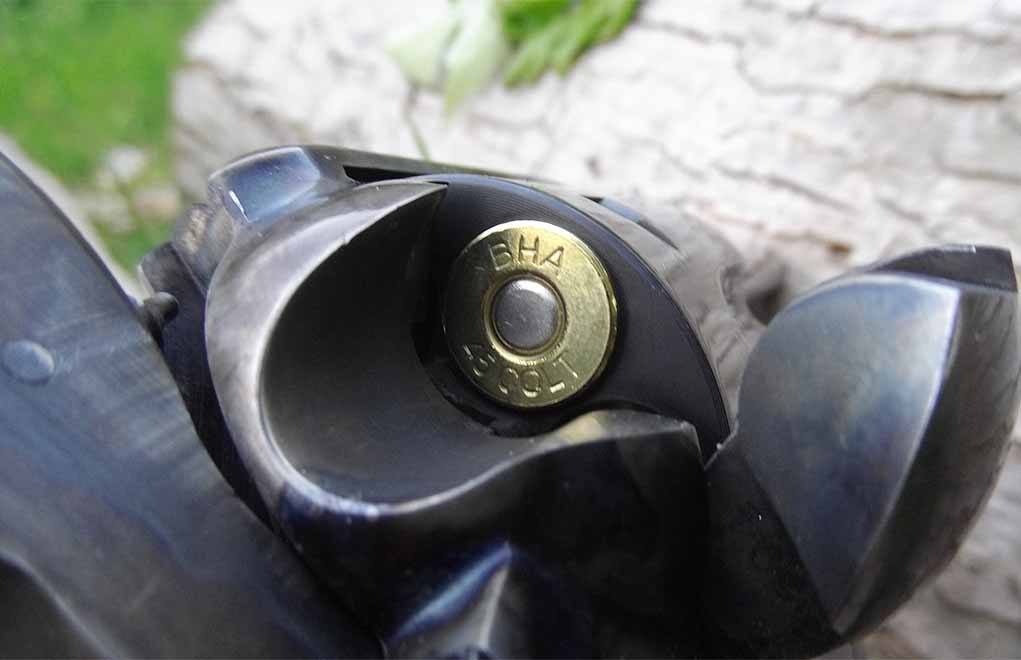
A fixed firing pin is present on both revolvers in this article. Note that it’s best to carry hammer-down on an empty chamber due to the risk of an accidental discharge.
As is true of most innovative and successful designs adopted for military service (such as the 1911, M16/AR-15 and, most recently, the newly selected Sig Sauer M17), civilians grab on and make it their own thing. The arms issued by the military are often designed around some rather arbitrary goalposts that don’t concern civilian end users.
The original SAA in military service had a 7½-inch barrel that was much too long for the discerning quick-draw artist or someone looking to defend themselves on the street. The revolver came in at 13 inches in overall length but was capable of launching a 250-grain bullet at just shy of 1,000 fps with original .45 Colt black-powder loads.
While the military performance was excellent for the day and the type of fighting that was experienced, the benefits of the military SAA didn’t translate much for the civilian, who had need for a more compact, faster gun for close quarters and ease of carry, just as civilians do today. It could easily be argued that many a former cavalryman carried his 7½-inch gun, but the art and style of close-quarters gunfighting demanded something effective across the poker table, not across a battlefield.
The ‘Shopkeeper’
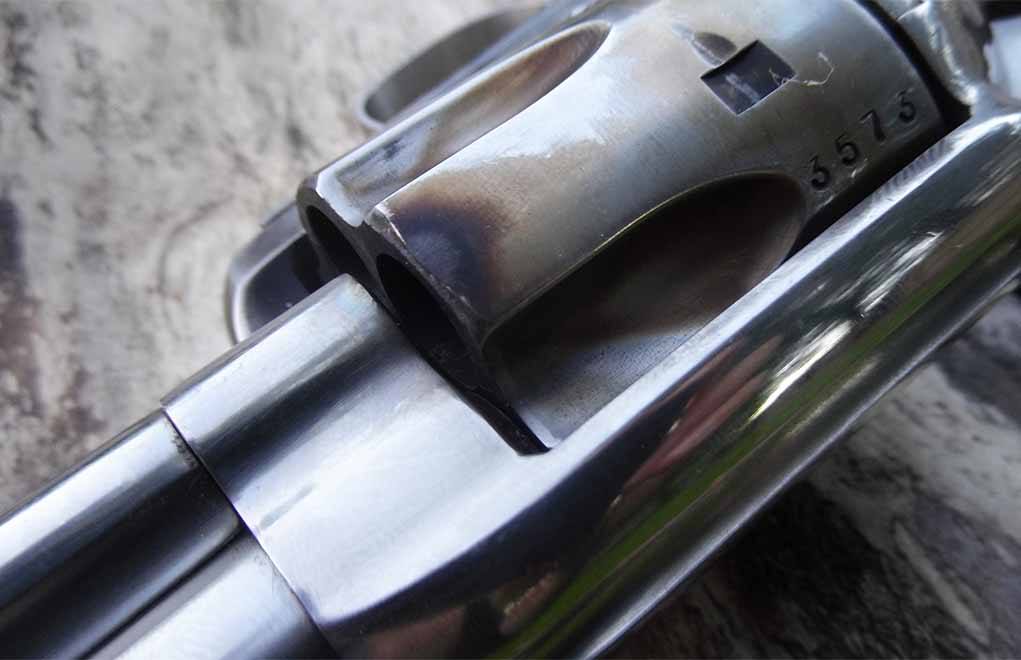
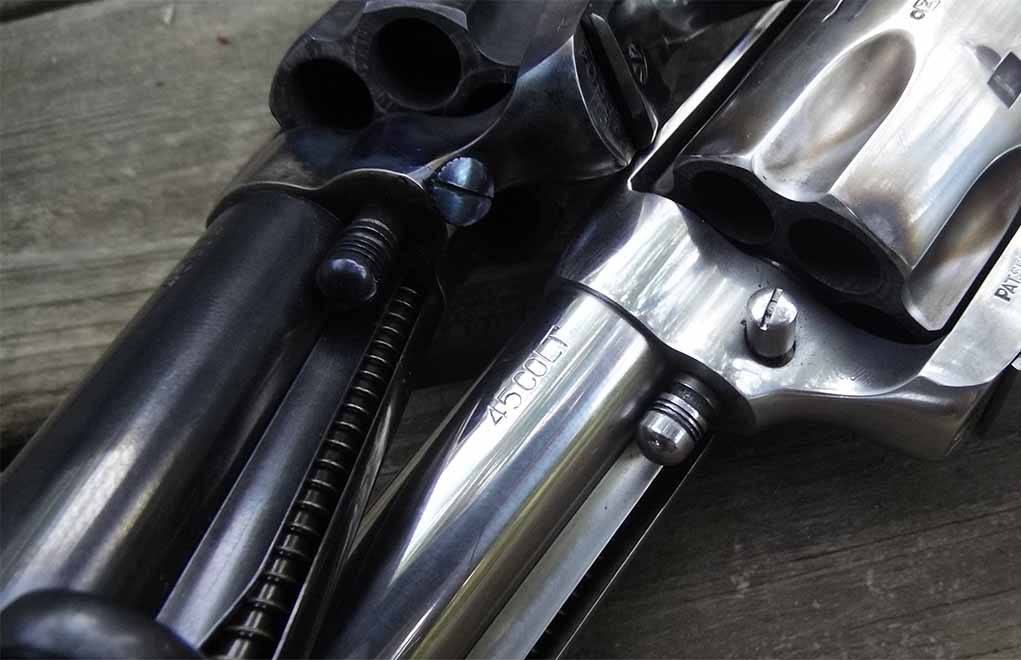
The earliest models that featured such short barrels were nicknamed the “shopkeeper” and lacked an ejector rod. While it is certainly possible that short-barreled revolvers were available with ejector rods at the time, the factory guns from Colt didn’t have one. Today’s shooters would shy away from a revolver with no means of quick ejection, so the Cimarron revolvers discussed in this article have an ejector rod that allows the case to be poked out—but it won’t expel them completely from the chamber as would a longer rod.
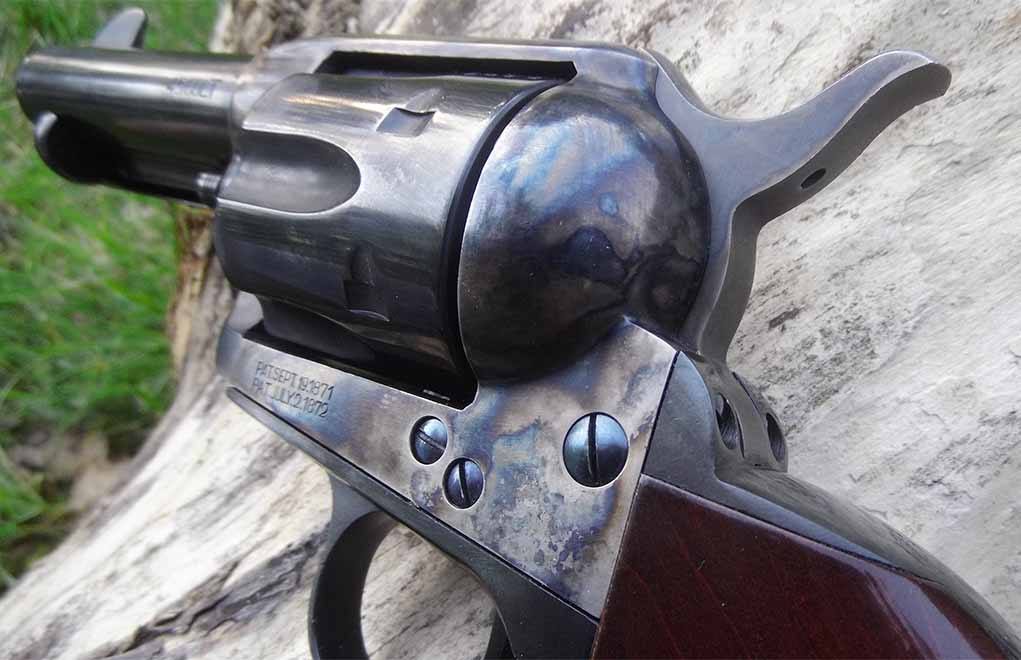
Cimarron does a great job with its color case-hardening. While not an exceptionally expensive gun, the New Sheriff is certainly an eye-catcher.
I found that simply tilting the revolvers at a slightly downward angle and then quickly tapping the ejector reliably kicks the fired brass all the way out … at least in most cases.
The Still-Relevant .45 Colt Cartridge
Both revolvers are chambered in .45 Colt. However, there’s a variety of other calibers available, including .44-40 and .38 Special/.357 Magnum. The choice of .45 Colt is both time-honored and practical in that while it was probably not the most common SAA chambering of its day for civilian use, it is historically and culturally relevant and is in ready supply today, where other classic chamberings are not.
The .45 Colt is a powerful cartridge, but it’s quite mild when other modern rounds are considered. While many readers might wonder who would carry or shoot a .45 Colt with a short barrel, it should be noted that a couple of the most popular revolvers from the last decades have been the Taurus Judge and Smith & Wesson Governor, both of which are chambered to fire .45 Colt and .410 shotshells out of 2.75-inch barrels. By comparison, the barrels on the Cimarron revolvers are long.
When considering .45 Colt loads for these two revolvers, many people will look to cast lead, but there are great jacketed options to consider as well.
Load Testing
For this article, I tested three different .45 Colt loads that are similar in some ways but wildly different in others. The three loads came from Black Hills Ammunition, Armscor and Sig Sauer. Each of them represents an era in technological development that’s helped the .45 Colt remain relevant in our modern era.
The Black Hills 250-grain RNFP Cowboy load is a classically modeled cartridge about as close to the original black-powder round you can get from a mainstream manufacturer. The bullet design is a typical round-nose flat-point; and, it has, over the course of the thousands I have fired, proven to be among the very best available for any gun chambered in .45 Colt.
The average velocity for the Black Hills load between the two Cimarron revolvers was 739 fps, with the velocity advantage of 5 fps going to the stainless Thunderstorm Thunderer. This load was the most pleasant to fire and the most accurate in general in both revolvers. It should be noted that while not quite as powerful as the original .45 Colt loads from the late 1800s, it’s extremely comparable and will deliver excellent terminal performance and penetration. Bullet technology has certainly moved on, but the good, old lead solid has never lost its abilities over time.
The next load was the Armscor 255-grain SWC. This ammo performed very well in both revolvers but delivered the slowest overall velocity (at an average of 721 fps), with a small variance again going to the Thunderstorm Thunderer in velocity. For all purposes, the two performed identically with this ammo.
This load features a semi-wadcutter profile. Nevertheless, where the profile of the projectile shoulder is concerned, upon further inspection, it resembles a Keith-style bullet. Keith-style bullets became popular in the mid-20th century as a means to improve the abilities of hunting revolvers. Elmer Keith has long been considered the “father of handgun hunting” in America, and the bullet style bears his name.
Armscor does a good job delivering quality ammo at low cost, but I found that the low speed hindered an otherwise great load that could, if it were a bit faster, be quite suitable for hunting and general outdoor use. Recoil was very low, and I had no issues putting lead on steel at any distance the guns were tested at.
Sig Sauer is new to the ammunition scene and has been making tremendous waves in many arenas. It seems that, to the ire of many legacy companies, Sig just can’t lose a contract these days; and, with its P320/M17 and P365 designs, it’s been showing Glock and others all around the world that there’s a “new sheriff in town.” Recently, Sig released CMP-grade ammunition for the .30-06 Springfield that features a 175-grain Sierra MatchKing bullet and is safe for use in the M1 Garand and 1903 Springfield rifles.
So, why is it that a progressive company such as Sig is taking risks on old news (the .30-06 and .45 Colt)? The answer lies in what’s at the heart of American shooting culture and its traditions.
The .45 Colt is as much a part of American culture as apple pie, and Sig was wise to invest, realizing that future generations will grow up with the company’s products front and center in military service and in the public mind.
Sig’s 230-grain V-Crown JHP is a jacketed hollow-point that takes advantage of Sig’s advanced technology and manufacturing abilities. The bullet is designed to reliably expand in a variety of mediums and will deliver said expansion from short barrels, such as those popular on .45/.410 carry guns.
The modern construction of the Sig load makes it seem somewhat unnatural when loaded in a classic SAA, but the performance is stellar, and it makes for a serious self-defense load if someone decides to carry a gun chambered in .45 Colt. The velocity generated by the 230-grain V-Crown was 775 fps average from both revolvers—with a surprise velocity advantage given to the New Sheriff: 15 fps.
The Results
Accuracy with the .45 Colt in an SAA revolver is something that might elude modern shooters. The sights on both these guns are non-adjustable, with the front sights being fixed blades and the rear sights being notches machined into the top of the frames. Point of aim varies for each individual gun and load. The New Sheriff shot to point of aim at 15 yards but shot low at every range inside that. Group sizes for the New Sheriff were consistent, with all three loads producing identical accuracy averaging 4.5 inches at 25 yards for 10 shots off a rest.
The Thunderstorm Thunderer was a bit different and shot low and left at all ranges. Filing the front sight to raise point of impact is something that can be done to alter this, but it’s best done with a load that you want as a primary for competition or the outdoors. You wouldn’t be at an advantage to make permanent adjustments unless you’ve settled on a given load.
About the Revolvers
Despite sharing the same barrel length and chambering, the New Sheriff and Thunderstorm Thunderer are very different guns with very different purposes, but each has its own way of being fast and lethal.
The New Sheriff has a full-sized grip made of walnut. The texture is smooth, and the finish is shiny and pleasing to the eye. I have large hands and found the grip to allow for a better purchase on the revolver under recoil. When hands get sweaty and temperatures rise, the smooth grip can get a bit slippery.
The hammer of the New Sheriff sports a traditional spur, and the lockwork of the revolver is traditional SAA. Trigger pull is light and crisp. There was the slightest amount of drag in the first 100 rounds or so. Nevertheless, this smoothed out with time.
An interesting point about the New Sheriff is that the frame is the Old Model P style. This means that the gun has a screw in the frame holding the base pin in. This style dates back to the first SAA revolvers in the early 1870s. Most modern SAA revolvers have the spring-loaded pin release common to models classified as “pre-war,” which were made from 1896 to 1940. (The Thunderstorm Thunderer has a pre-war frame for reference. The pre-war style is much easier to take apart, and there’s no risk of damaging the frame.)
The New Sheriff has a number of minute features that make it an exceptional gun for hard use. The finish of the gun is color case-hardened on the frame and hammer, while the cylinder and barrel are blued. The finish on my sample gun was even and well-applied. A recoil shield is present in the face of the frame. This feature adds strength to the frame and helps prevent deformation of the firing pin hole by dry-firing.
Overall, the New Sheriff saw about 1,200 rounds for this article—and there wasn’t a single failure to fire. I considered it to be among the fastest and easiest-to-point revolvers I’ve ever tested. The revolver was not cleaned at all during the entire testing; even so, it showed no problems. Care needed to be taken to prevent the screws from backing out, but a little bit of thread locker can take care of that should you desire.
If you’re looking for a fast-handling, classically styled .45 Colt that won’t break the bank, this gun has my recommendation. (MSRP: $566.32)
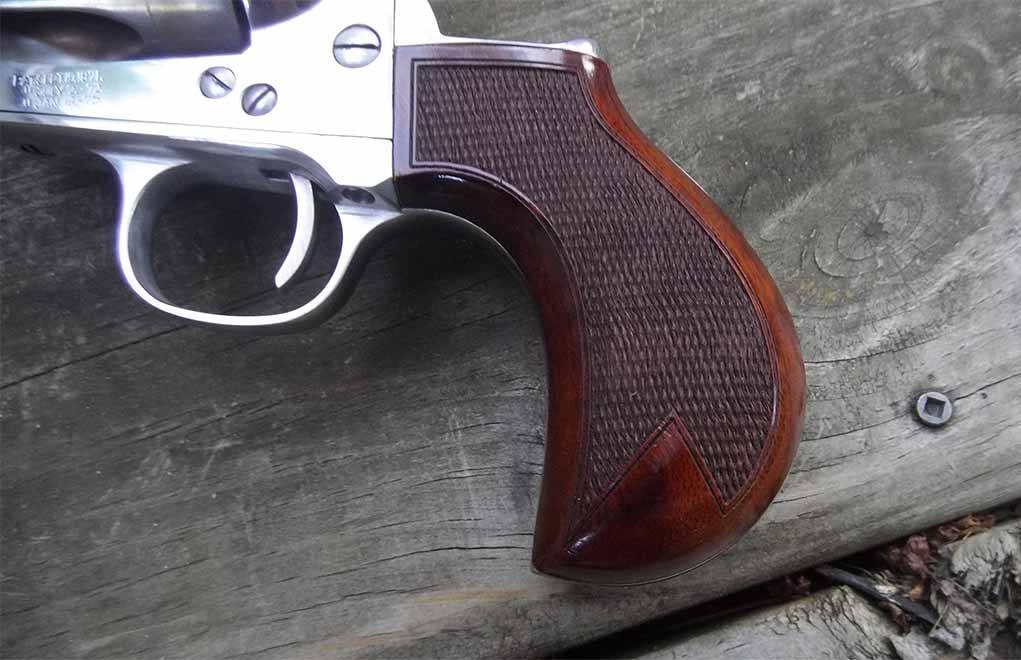
I would classify the Thunderstorm Thunderer as a modern gun in several respects. The grips are a “Doc Holliday”-style bird’s-head made of checkered walnut. The grip is comfortable and quick to handle, but I found it to be a little bit too small overall for precision shooting. Shooters with smaller hands or those looking for a gun that’s easier to conceal will enjoy this feature.
Mounted shooters will be happy to know that the Thunderstorm Thunderer is Cowboy Mounted Shooting Association (CMSA)-approved. The revolver has a lowered, widened hammer spur and an action job that lightens trigger pull, along with the force and effort needed to pull the hammer to the rear.
Trigger pull was much lighter than on the New Sheriff, but it wasn’t quite as crisp. Instead, it had a much more gradual pull that is preferable to action shooters looking for fast hits and not ultra-tight groups. This means that the Thunderer is exceptional for one-handed shooting. I found it to be faster to deploy from the holster and get lead on target than the New Sheriff … but only marginally so.
I fired 900 rounds through the Thunderstorm and didn’t have any significant issues with it—aside from a minor deformation of the firing pinhole. The revolver benefits from complete stainless steel construction, making it very durable overall. It also benefits from a hardened-steel recoil shield which, while somewhat unnecessary in an all-stainless gun, prevents burring around the firing pinhole.
Accuracy with the Thunderstorm was on par with that of the New Sheriff, but the bird’s-head grip made it difficult for me to print tight groups at 25 yards. Average accuracy was, again, equal for each of the three loads, tested at 5.3 inches for 10 shots at 25 yards. Point of impact varied slightly, with the Black Hills load shooting closer to point of aim than the Sig and Armscor loads. (MSRP: $975)
Shooting fast from a draw is a pleasure with both guns. There’s something so satisfying about spinning the cylinder on your Cimarron SAA and squaring up with some “outlaw.” Drawing from the hip and ringing steel put you right back in the Old West.
There are many types of SAA revolvers out there today, but not all are equal. If you want the best of the Old West, Cimarron has you covered.
The time may come you only have your strong hand to shoot with, best know how to put rounds on target with just one mitt.
Maybe your support hand is injured. Perhaps you’re pushing a loved one back out of trouble. Whatever the case may be, the likelihood exists you might have to fire your defensive pistol with only your strong hand. Better safe than sorry a solid mantra, therefore it’s good to bone up on the fundamental of one-mitt shooting or pay the price when it counts.
Like so many aspects of handgun marksmanship, the fundamentals of strong-hand only shooting are built from the ground up. In this particular case, your stance is especially important, creating the foundation for what otherwise could turn out to be a shaky situation. Isosceles and Weaver stances pretty much go out the door in this with one hand. Instead, you use your strong leg to provide support. Moving into the stance is fairly simple—just step your strong leg toward your target.
A non-traditional sight picture also helps get you on target as well. Canting your pistol in slightly makes up for the fact your pistol is off-axis, plus it helps you squeeze the trigger, as opposed to jerking it.
It goes without saying, none of this is overtly intuitive or natural. In turn, it’s wise to take the time to practice strong-hand only shooting. You never know when you’ll only have the one mitt to get you out of trouble.
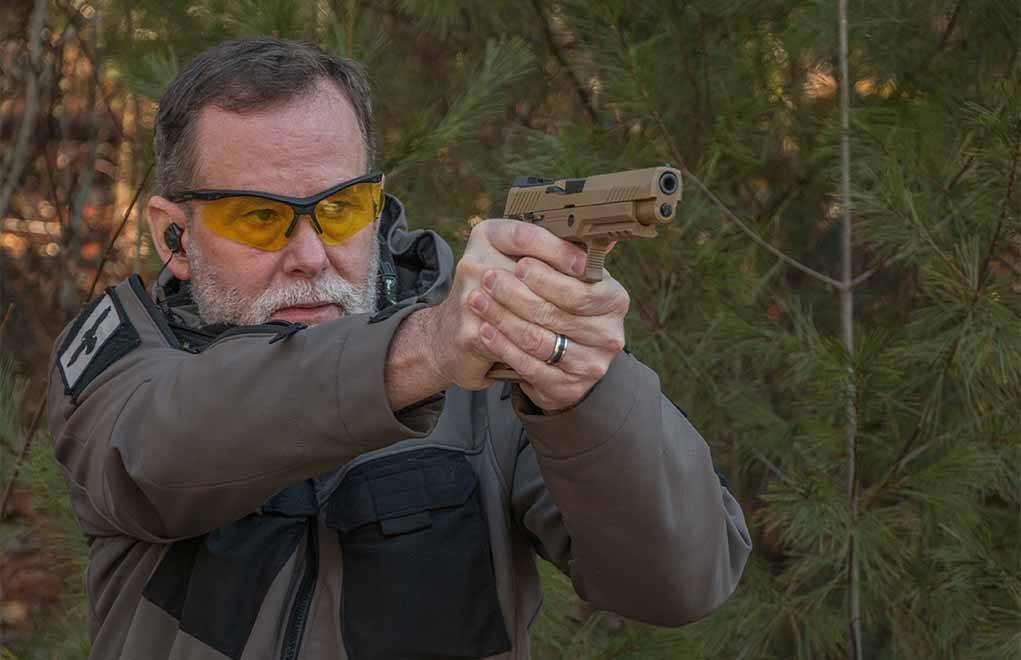
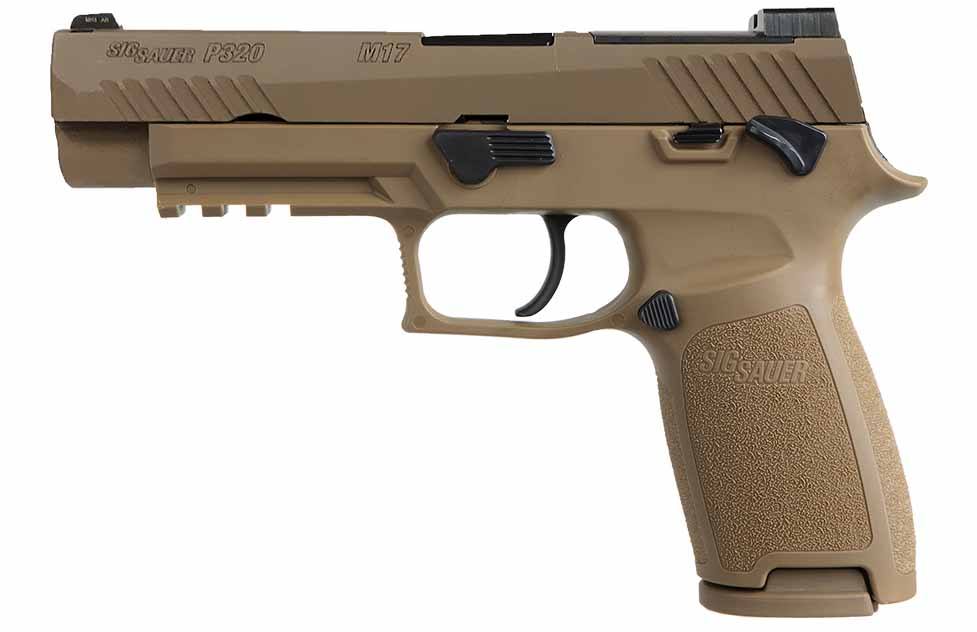
The Sig Sauer P320-M17 is a full-size duty pistol that replicates the X17-MHS now used by the U.S. Army.
A damn fine pistol, the civilian variant of the Sig Sauer M17 is more than ready for everyday duty.
How The Sig Sauer M17 Is Configured For Top Performance:
Comes with two 17-round magazines
Features a coyote-tan PVD-coated stainless-steel slide
Fitted with SigLite front night sight
Optic-ready Sig slide cut
A little after 5 pm on Thursday, January 17, 2017, I was sitting in the Sig Sauer booth at SHOT Show discussing new products with one of the company’s media relations representatives. It was an important day and time for Sig Sauer, and for the U.S. Army. That’s when Sig Sauer got the news they’d been awarded the $580 million contract to manufacture the Army’s next service pistol. As you can imagine, there was some excitement in the booth that day, and, well, $580 million is a hell of a lot of money!
The Army had announced the competition for its new XM17-MHS (Modular Handgun System) in 2015. The new handgun was to replace the Cold War-era M9 pistol — which had been in use for 30 years, and had previously replaced the .45-caliber 1911. After Sig Sauer had been awarded the contract, all the Glock fan boys were quick to suggest the process had been rigged, or that those involved in the selection process just didn’t know a good pistol when they saw/shot it. And, to fuel these speculations, Glock protested the award. What they all failed to acknowledge is that the P320-M17 is a damn fine pistol.
Sig Sauer P320-M17
If you’re a devoted handgun guy, this of course is all old news. If you’re not in the Army, what you may be wondering is why any of this matters. Well, you can now buy a civilian version of the Army’s Sig Sauer XM17-MHS. The P320-M17 comes with two, 17-round magazines, and it features a coyote-tan PVD-coated stainless-steel slide, with the same optic cut as specified by the MHS contract. The pistol also has black controls — magazine release, slide stop, takedown lever and manual safety — just like the pistols currently being shipped to the U.S. Army. It’s also fitted with a SigLite front night sight and removable night sight rear plate. This removable plate allows easy installation of a reflex sight. The P320-M17 has a suggested retail price of $768.
Learn More About Handguns:
Gun Digest’s 10 Best Shooting Drills And Firearms Training Posts
As a pistol shooter and veteran, the P320-M17 has a patriotic — if not nostalgic — appeal. I won the West Virginia National Guard pistol match and earned my Distinguished Handgun EIC Medal shooting a U.S. Army issue Beretta M9. I never really liked the M9, but I owned one, just because I think every red-blooded American should have a handgun like the one being carried by our troops. So, it was a given that one of the new P320-M17s would end up in my hands.
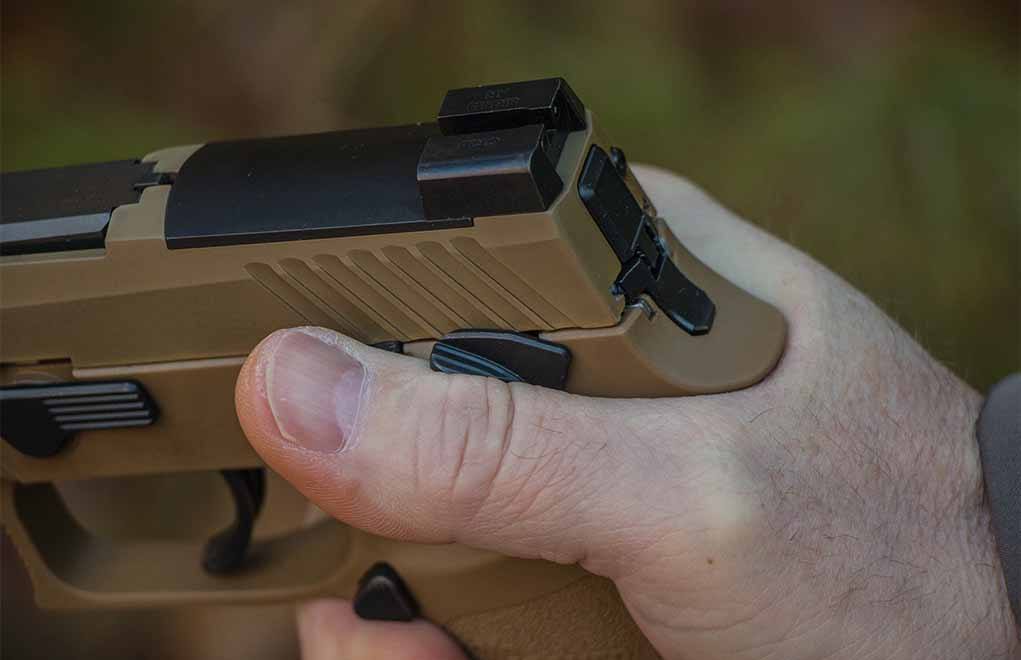
The P320-M17 is a striker-fired handgun, but it’s equipped with an ambidextrous, manual thumb safety.
The first thing I noticed — and liked — about the pistol is that it felt good in my hands. Secondly, I found I was able to manipulate all of the controls without altering my grip. And thirdly, I’m a fan of a manual thumb safety, and the one on the P320-M17 is ambidextrous and does not interfere with the knuckle of the trigger finger of the shooting hand. My only complaint with the manual safety is that it does not lock the slide. This means that you should ideally thumb the slide when holstering to make sure it stays in battery. On the other hand, it allows you to chamber a round with the safety on.
So far I have about 500 rounds through the P320-M17 and I like the gun. It’s a big — duty sized — handgun, but I’m not sure it’s one I would attempt to carry concealed on a regular basis. But, it’s comfortable to shoot and very easy to control. I found that I could, on average — from concealment and using +P ammunition — complete the Forty-Five Drill (five shots, inside a 5-inch circle from 5 yards, in less than 5 seconds) in less than 3.2 seconds. Given the P320-M17’s great ergonomics, high capacity, good trigger and accessory rail, I think it would be an ideal handgun for home defense, local combat pistol matches, and police or security service.
Finished to period-correct specifications, Turnbull’s Winchester 1892 Deluxe Takedown is a wall-hanger you’ve got to shoot.
The gun world is laced with polymer. For good reason. A cheap and resilient material, it’s the way gunmakers deliver high-performance firearms without demanding an arm and a leg. Not a bad deal. Still and all, it’s nice to take hold of good old wood and steel. Understand this and you understand Turnbull Restoration.
Positive wizards when it comes to classic firearms, the New York craftsmen don’t turn out guns—they produce masterpieces. Look no further than the Turnbull Finished Winchester 1892 Deluxe Takedown for proof. Perfected from muzzle to buttstock, you’d almost swear the timeless lever-action was fresh off the streets of Tombstone or some other dusty frontier outpost. Yet, it’s as tightly fit as if it just rolled off the assembly line. There’s the secret … it just did.
Doug Turnbull’s concern is well known for its restoration work on vintage guns, but it also gives modern renditions their special once over. The Model 1892 is one such example, with the modern Winchester made an eternal (and functional) treasure through Turnbull’s period-correct finishing work. Color-case hardening vivid as an autumn morning is the most obvious touch, but is only the tip of the iceberg. Sticklers for authenticity, the gang at Turnbull also hit the little points that make modern guns nearly indistinguishable from the originals—such as the slightly red hue of the stock and forearm’s finish. That’s the way Winchester did them then and how Turnbull does them now.
Tune In More Gun Digest TV:
Video: Pro Series Model 986 Puts A Different Spin On The 9mm
It’s difficult not to call these throwback 1892s wall-hangers, but relegating one full-time above a mantel would be a sin. All of Turnbull’s work is functional art, which means made to shoot … and well. And you’d better believe these Winchesters drill the bullseye. All you have to do is keep a steady eye and hand, the ‘92 will do the rest.
A single-shot rifle specialist, the .375 Renner is not widely known, but is more than effective on a wide range of game.
What Makes The .375 Renner Unique:
Designed specifically for single-shot rifles
Fills a perceived performance gap between the .375 Winchester and the .375 H&H Magnum cartridges
.45-90 Winchester is the Renner’s parent case
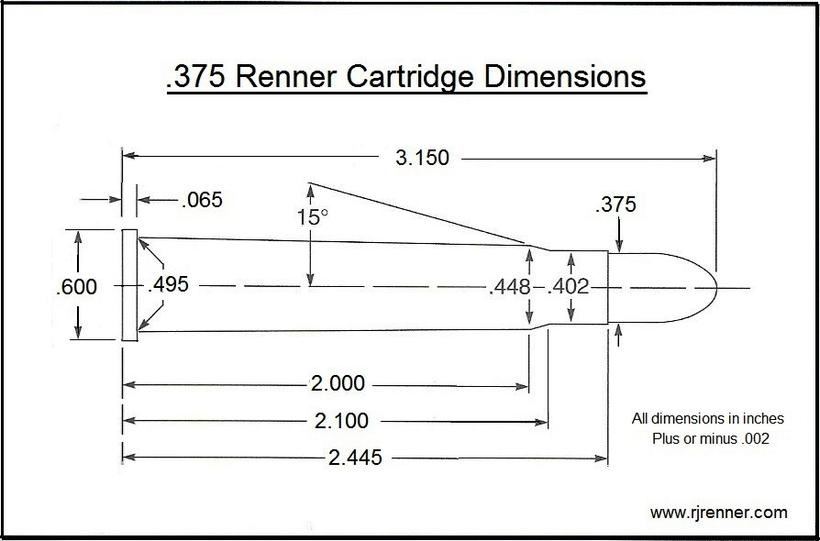
The .375 Renner was designed specifically for single-shot rifles to fill a perceived performance gap between the .375 Winchester and the .375 H&H Magnum cartridges. Roger Renner, long-time custom gunmaker and writer, was inspired by the larger .375 H&H Magnum. Based on the full-length .45-90 Winchester case necked down to .375, this rimmed case offers easy loading and extraction while providing capacity to hold 60 grains of IMR powder under the bullet. Renner chose a generous taper for the case body with a gentle shoulder angle.
General Comments
The .375 Renner will easily handle all .375 bullet weights, driving them at velocities from 2,100 to 2,400 fps. It can be safely loaded to span the performance spectrum from the .38-55 Winchester on the low end and nip the heels of the .375 H&H on the high end. The objective was not to create another magnum; rather it was to launch big-game bullets at moderate, yet effective, velocities. The .375 Renner also handles cast bullets very well and shows great potential as a long-range blackpowder cartridge. RJ Renner (RJRenner.com) builds custom Ruger No. 1 English Stalking Rifles in .375 Renner, delivered with loading dies and brass. Reed’s Ammunition offers loaded ammunition.
A specialty handgun, the Freedom Arms Model 97 ‘Packer’ is equally practical in its purpose (it can save your bacon) as it is elegant to handle and shoot.
Why The Model 97 Packer Proves Excellent Backwoods Insurance:
2 1/2-inch barrel
Stainless-steel finish and black Micarta grips
Available in .357 Magnum, .44 Special and .45 Colt/ACP
Handles high-pressure loads
Despite the demure size, proves highly accurate
I have been surveying land since I was 11. I’ve spent an awful lot of time in the rural, remote areas of New York in all seasons and am very familiar with both the fauna and flora. Undoubtedly, the populations of deer, bear and coyote have increased significantly, and while there are few instances when I’ve been truly concerned, there have also been some instances that stand out.
Perhaps a decade ago, a young man working as summer help was supposed to be about 100 yards away, giving me a backsight in order to turn the angle to the forward station. Instead, I saw him taking giant steps toward me, his face as pale as if he’d just seen a ghost.
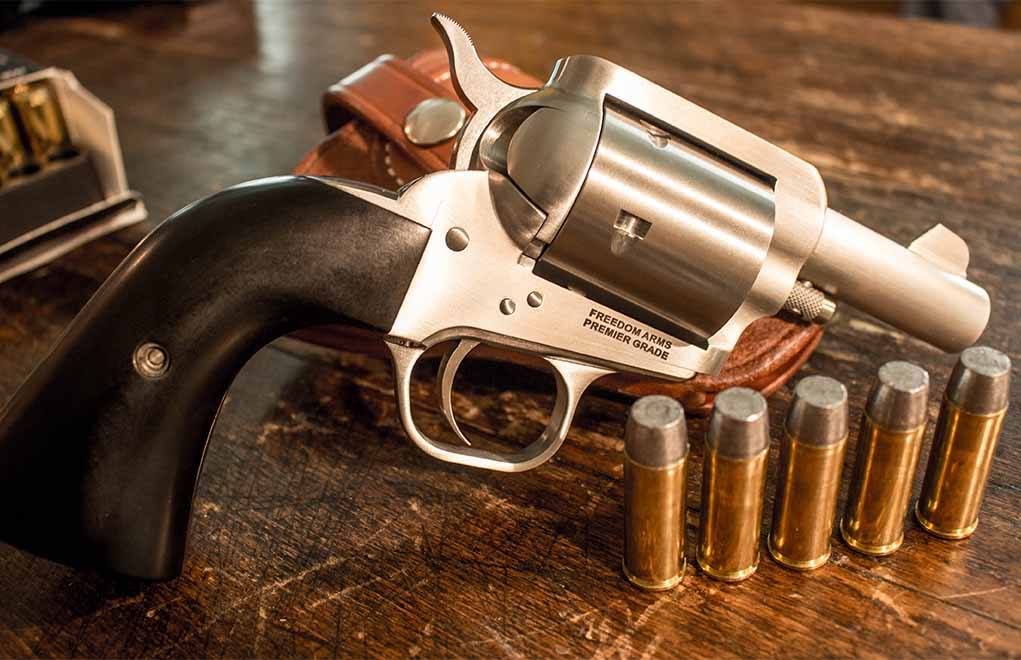
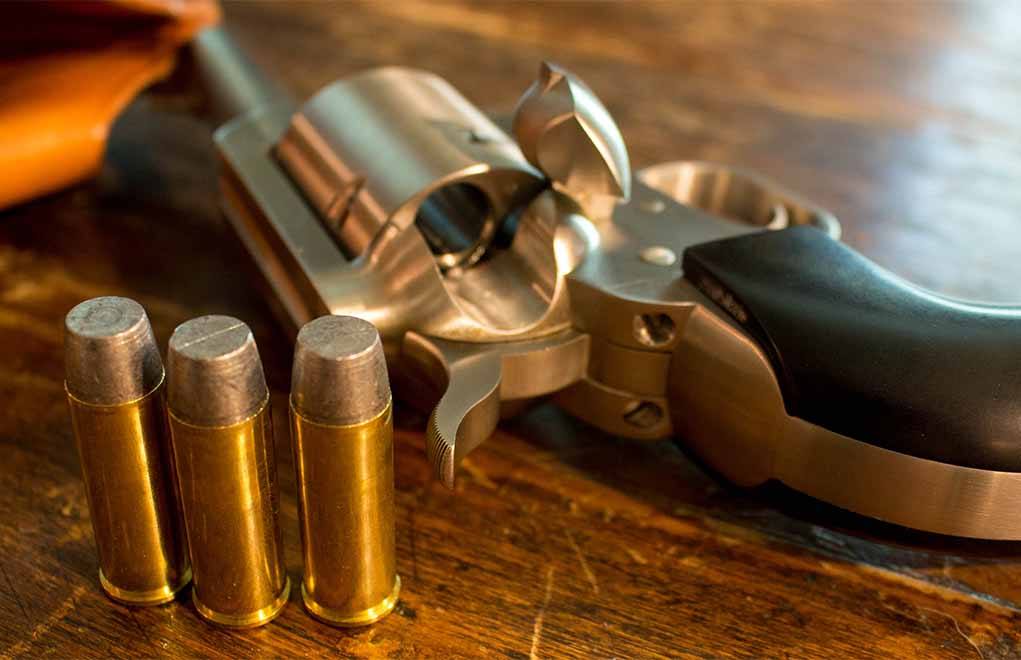
Chambered in .45 Colt, the Packer test gun offered a serious level of power in a small package.
When I inquired as to why he was “here” when I needed him “there,” he stammered, “Bear—and more than one!”
When I took a look at the tracks, I realized that the young man had ended up between a black bear cub and its mother. While it’s difficult to prove a negative, I was happy he vacated when he did.
Light, Yet Powerful
I began the search for the ultimate camping/fishing/utility handgun, something light enough to carry inconspicuously on a camping trip or while trout fishing, yet powerful and accurate enough to stop a threat, whether from the two- or the four-legged kind. There are many solutions to this problem and, as so many fishing guides have testified, you’ll carry the gun a whole lot more than using it; but when you need it, you really need it.
I’ve made do with several choices, including a Smith & Wesson Model 36 snub nose in .38 Special (which I feel lacks the horsepower for a good-sized bear), a Ruger Blackhawk in .45 Colt (which, with a 7½-inch barrel, is a bit cumbersome) and a good, old 1911 in .45 ACP.
The Packer
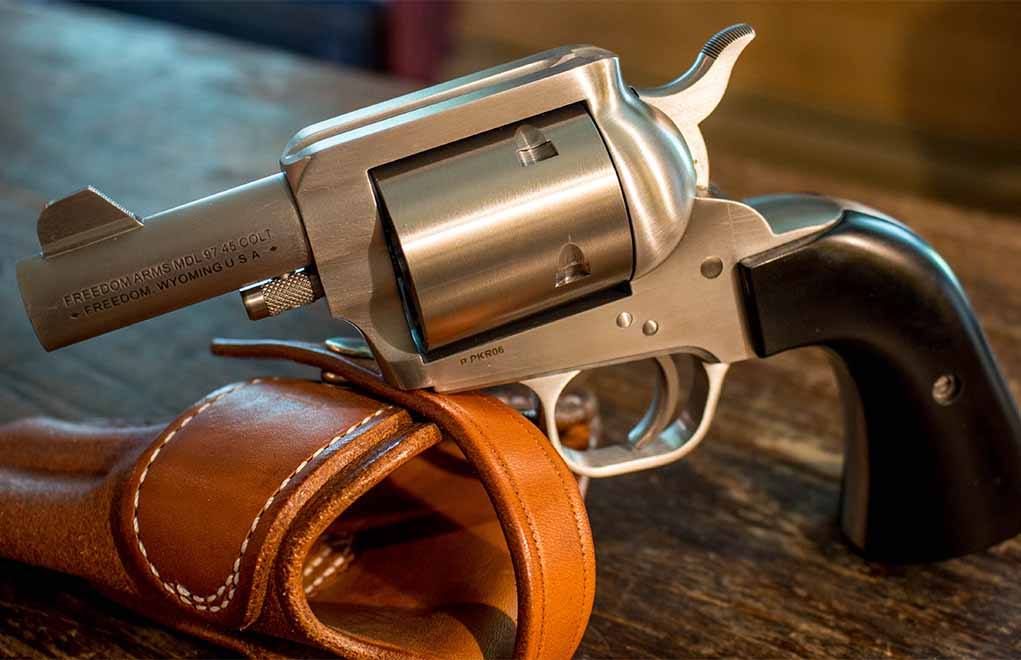
However, I recently found a neat, little revolver that fits perfectly in my hand, balances and shoots well, and brings more than a bit of style to the affair: a Freedom Arms Model 97 Packer.
The Model 97 Packer has a 2½-inch barrel on a full-sized frame and grips.
This cool wheelgun uses the frame, grip and cylinder of the FA Model 97 but features a 2½-inch barrel, without ejection rod. With a stainless steel finish and black Micarta grips without any checkering, the Model 97 Packer makes a powerful little package. It’s available in .357 Magnum (with the possibility of buying an additional cylinder in 9mm Luger), .44 Special and .45 Colt (with an additional cylinder available for purchase in .45 ACP).
I chose the .45 Colt for this review because I felt it gave the most flexibility. The classic configuration of the .45 Colt uses a 255-grain lead bullet at somewhere around 800 to 850 fps from a 7½-inch barrel, and that load will certainly suffice. Modern firearms such as the Ruger Blackhawk and, most certainly, the Freedom Arms can handle much higher pressures and will generate much higher velocities.
I’ve pushed the 300-grain jacketed Hornady and Sierra bullets to 1,250 fps in my Blackhawk, and while the five-shot cylinder of Freedom Arms will absolutely handle these pressure levels, the short, 2½-inch barrel will not obtain those velocities. The ability to drive a 300-grain bullet, even at a reduced velocity, is a good thing … especially when your concern is a toothy predator at distances measured in feet.
Equipped with a transfer bar in the hammer, the Model 97 Packer gives the hiker, camper, fisherman and gentleman a single-action revolver with five shots (a full cylinder) designed to put out fires—the Packer is designed for close-quarters work. It carries very well, taking up little more room than my S&W Model 36, and it isn’t at all cumbersome on the hip. I find the grip design and angle of the many clones of the Colt SSA to be very natural, probably because I grew up shooting my dad’s old Ruger Single Six and then graduating to that Blackhawk.
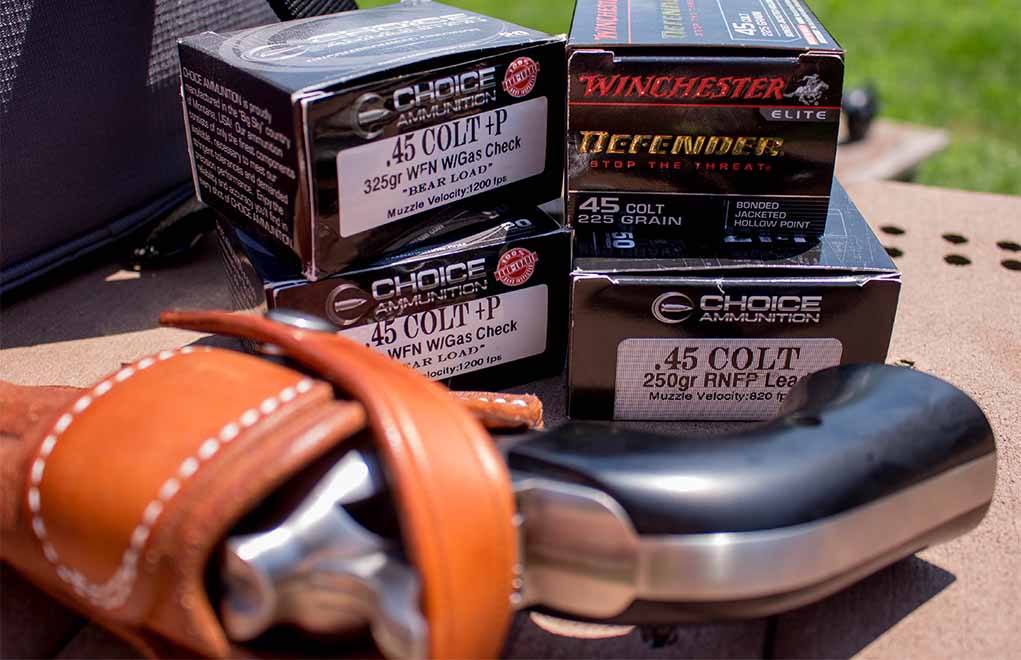
Ammunition for the .45 Colt can be mild—such as the Choice 250-grain round-nose—or as fiery as the Choice Ammunition 325-grain Bear Load at 1,200 fps.
The Model 97 Packer comes equipped with fixed sights, having a rear groove and a front blade; you will immediately notice that the front sight is way too high to hit anything. Well, there’s a reason for that: Freedom Arms ships its fixed-sight handguns with a front sight that’s designed to be filed to the proper height, depending on the load the user prefers. With such a short sighting radius, the accuracy results of the Model 97 must be taken with a grain of salt. I certainly got saucer-sized groups at 5 yards, which is plenty for what this gun is designed for: saving your bacon when the threat is literally in your face.
Range Observations
At the range, the Model 97 Packer immediately lets you know it’s a short-barreled revolver in both muzzle jump and report. It is loud—seriously loud—but then, again, this is the case with most short-barreled guns. And I will admit that it does jump, especially when being fired with one hand. It’s not unbearable, nor is it unruly to shoot; it just takes a bit of getting used to. (I do feel that some extra practice is warranted when shooting this gun one-handed, because you could find yourself in a situation where your weak hand might be occupied warding off blows or bites when the need to draw this gun is presented.)
The Choice Ammunition 325-grain load certainly makes the muzzle jump, but physics are physics, and if you’re delivering nearly 900 ft-lbs. of energy from a gun that fits in the palm of your hand, you’ve got to give up something on the other end. Keep in mind that this is four times the energy of a 158-grain .38 Special load driven at 800 fps. This load is a serious stopper, because those flat-nose, hard-cast bullets give a whole lot of penetration, especially when the velocities are on the lower side.
One would think the velocities delivered from a 2½-inch barrel would drop right off the charts in comparison to the 5½- and 7½-inch models, but when I ran the Model 97 Packer through my Oehler 35P, my eyes widened … and stayed wide.
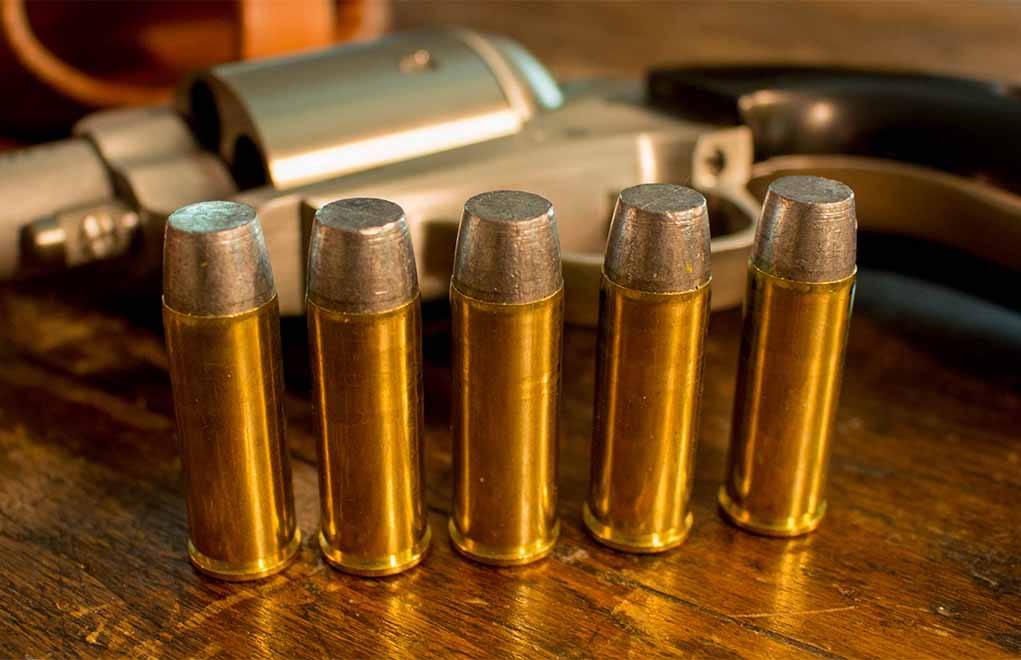
With us since 1873, the .45 Colt can be loaded to purr like a kitty or roar like a lion. These 325-grain, hard-cast loads from Choice Ammunition are an excellent defensive choice.
I tested three loads: Winchester’s 225-grain, bonded, jacketed hollow-point, Choice Ammunition’s 250-grain, round-nose, flat-point load and Choice’s 325-grain, wide flat-nose with gas check. The Winchester load claims a muzzle velocity of 850 fps; the Packer delivered an average of 740 fps. The Choice 250-grain load is listed at 820 fps (the classic loading for the .45 Colt), and the stubby Packer gave an average velocity of 755 fps. The heavy, 325-grain, hard-cast bullet load from Choice (its Bear Load), was labeled at 1,200 fps. However, the short-barreled Packer spits that big slug out at 1,105 fps, for 880 ft-lbs of muzzle energy. Not too shabby for such a short handgun.
Minor Critiques
If I had to find faults with the Model 97 Packer, I could come up with two. The first is the thickness of the grips at the top. They tend to be a bit thicker than I care for, but this is a matter of opinion. The other issue I have is the lack of an ejector rod, but I think the mentality of the design can be explained.
To paraphrase Chris Sells (of Heym USA fame), the inclusion of an ejector rod capable of reaching the base of a spent cartridge would require a longer barrel … and thereby defeat the point of the gun. You might need a small stick (I’m thinking a “tactical” chopstick could be cool) to push out the spent cartridges (I found the 700- to 800-fps cases fell out, but the hotter loads tended to be a bit more sticky; and I would highly recommend keeping the cylinder as clean as possible in order to facilitate easy case removal).
Serious Business
As Sells and I discussed, the purpose of this gun is to be a concise piece—capable of getting you out of trouble quickly and effectively—with the reliability of a single-action revolver, made in the bank-vault fashion for which Freedom Arms is famous. I can say that from the first time you cock the hammer on the Model 97 Packer, you can tell immediately that you’ve got something serious in your hand and that no corner has been cut in material or construction method.
The firing pin of the Model 97 Packer. If the trigger isn’t held, the transfer bar won’t allow the firing pin to be struck.
Bringing the hammer into half-cock and then into full-cocked position emits a clear and audible click and gives a positive feel under the thumb. Spinning the cylinder shows how tight the tolerances are on a Freedom Arms revolver, and the metalwork is very fine. While the Model 97 Packer bears no fancy engraving, gold inlay or grips of rare material (Sells does report that laminated wood, sheep horn and ivory will be available as upgrades—but only in Texas), it exudes the reliable function of a gun that, if anything, has been overdesigned.
Being completely honest, the Freedom Arms Model 97 Packer is expensive—but so are a great many things in life. It’s a specialty handgun for those who appreciate the strongest designs in a firearm and enjoy carrying them. They can most definitely be handed down for generations. It’s equally practical in its purpose as it is elegant to handle and shoot. If you’ve developed a penchant for Freedom Arms guns, the Model 97 Packer will give a familiar feel in a compact package that’s perfect for a number of situations in which a smaller handgun is warranted.
Try as you might, you won’t find this revolver on the Freedom Arms website—yet, I can readily assure you it exists. Because it’s the brainchild of my buddy, Chris Sells, and Freedom Arms, the revolver isn’t cataloged on the Freedom Arms website. Nevertheless, it will be made available at FreedomArmsPacker.com.
Emphasizing accuracy, trigger control and sight acquisition, the dot drill is an excellent starting point to mastering target transition.
One of the most important concepts of pistol marksmanship is target transition. The ability to move from target to target efficiently and accurately, maximizes the full potential of your handgun. Not to mention, in a defensive situation, you can save your skin if you face multiple threats. Like all other handgun skills, target transition requires work to perfect.
Maximizing trigger control and sight acquisition, the dot drill is an excellent starting point or tune-up to hone and maintain this important skill. Not working against the clock nor incorporating a draw, the drill grinds in shooting fundamentals as applied to moving target to target. Accuracy is the goal, placing a single shot in each 2-inch circle starting at 3 yards. If you’re right on target from there and the dot drill seems too simple, hold on because your margin of error shrinks as you go on. Upon successful completion, you move back—7, 10, 15 even 20 yards. Each step gets progressively tougher, but learn to work the drill at all practical distances and you’ll steel up your target transition ability.
Looking back on the forward-thinking black rifle with a new-production retro AR-15 options.
There was a time when the black rifle, what we’ve come to refer to as the AR-15 today, might not ever have happened. In fact, in the beginning there were several times when Armalite went back to the drawing board, so to speak. Other U.S. government projects like SALVO and AGILE greatly impacted the development of the so-called black rifle. Truth be told, the AR wasn’t even black in the beginning. When the barrels of early prototypes exploded during Army tests, you would think that would have halted any further development. It didn’t, it just made Armalite think smarter.
When a new caliber was adopted by the U.S. government, a complete redo of the rifle morphed into a new variant. Then there was trouble brewing in a southeast Asian country no one ever heard of called Vietnam. These events collided in the late 1950s and early 1960s to spawn the “black rifle” moniker — the nickname given to the AR-15 (Armalite’s name), the Model 601 (Colt’s nomenclature) and the M16 (the U.S. military designation). You see, the story of the black rifle is not cut and dry, but filled will glorious moments of success, the agony of defeat and ultimate perseverance. Perhaps the pivotal moment took place on a warm summer day in 1960 when two watermelons spectacularly demonstrated the effectiveness of the black rifle and the 5.56mm NATO cartridge to a brash Air Force general. But we’re getting ahead of the story. Let’s back up to 1956 and Hollywood, California. That’s where and when the black rifle’s story starts.
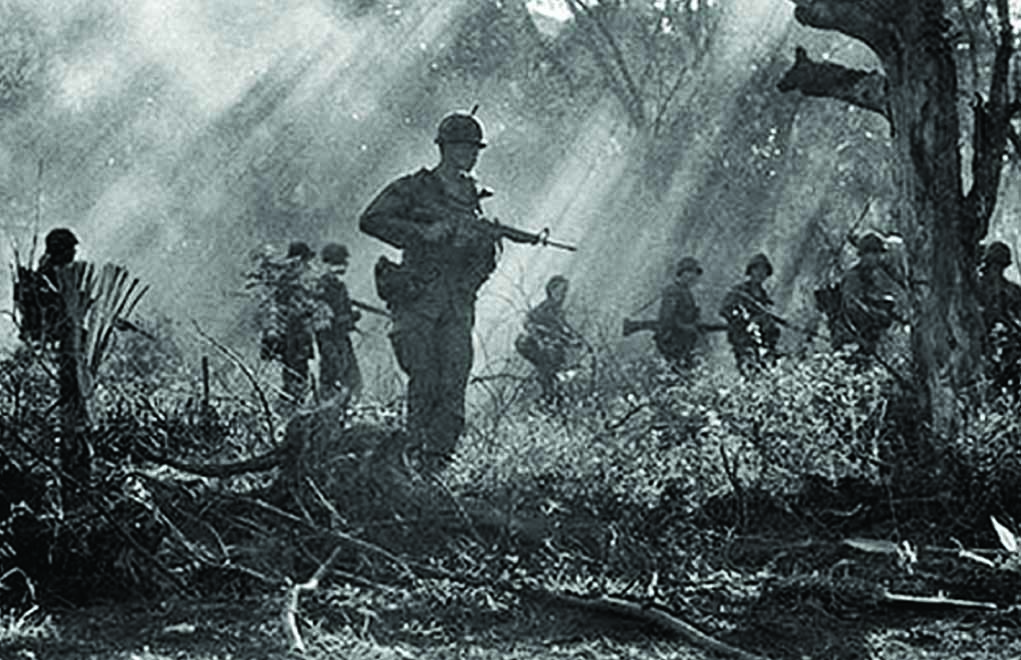
Jungle warfare helped shape the design of the black rifle. It was also the first time the rifle saw combat. Photo: DoD
Birth Of The AR-15
In the mid–1950s, Armalite Corporation was a small machine shop in Hollywood, California, that was immersed in creating cutting-edge weapon designs. Its business model was to design a weapon and then license the design to a manufacturer, and its claim to fame was the AR-5 and AR-7 survival rifles designed for the Air Force. Armalite’s ideas needed funding, so it became a subdivision of Fairchild Engine and Airplane Corporation. It hired Eugene Stoner as chief design engineer. Yes, the Eugene Stoner. Under Stoner’s direction, Robert Fremont and L. James Sullivan developed and engineered new small arms designs.
In fall 1956, Armalite developed an ultra-modern combat rifle. The prototype was designated the AR-10 and it was unlike any rifle — non-reciprocating charging handle, hinged upper and lower, modular components, select-fire, gas-operated direct impingement system, lightweight aluminum receiver, synthetic stock, aluminum/steel barrel to name just a few unique design characteristics — and it was chambered in 7.62mm. The Armalite promo film shows a soldier emerging from the ocean firing an AR-10 in full-auto as he walks up onto the beach. Think I’m kidding? Google “Armalite promo video” and if you are of a certain age the sound and quality of this video will remind you of movie reels you were forced to watch in high school: except this one will have you glued to the edge of your seat and will give you an idea of what Armalite was up to when communication technology consisted of a rotary dial telephone.
Armalite hurriedly submitted four sample rifles into the U.S. Army’s tests for a replacement of the M1 Garand. The competition was Springfield Armory, which submitted the T44E4, and Fabrique Nationale, which entered the FAL. During torture testing, the AR-10’s barrel burst and so, one would think, the U.S. government’s confidence in Armalite. The AR-10 could have gone down as a footnote in military arms history. The Springfield Armory T44, a more conventional design — basically an M1 Garand with a removable magazine — got the nod from the military and, in 1957, the Army designated it the M14.
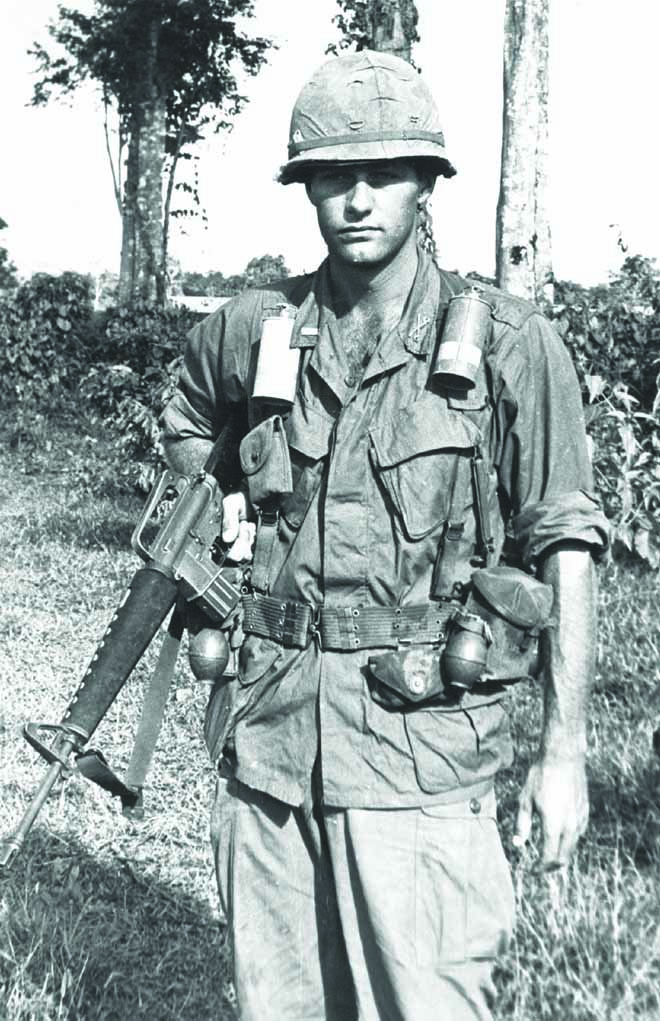
By the time the Vietnam War was under way, the main-issue rifle was an M16. Photo: DoD
Far from licking its wounds, Armalite licensed the AR-10 to Artillerie Inrichtingen in Holland to manufacture the rifles to fulfill contracts with Cuba, Nicaragua, Portugal, Sudan, Guatemala, Italy and Burma. But the real money would be made with a U.S. military contract, not some banana republic or small country that might pony up cash for a paltry 1,000 rifles.
While the Army opted for the M14, it also funded the SALVO research project in which high-velocity .22-caliber weapons were found to have the same lethal power as .30-caliber weapons, but without the recoil or lack of control in full-auto fire. Plus, a soldier could carry more .22-caliber cartridges than .30-caliber ones — more firepower per soldier.
Armalite shifted gears and developed the AR-15, borrowing many features from the AR-10. The AR-15 was space-age and high-tech compared to other military rifles at the time. Ten AR-15 rifles were tested at Fort Benning, Aberdeen Proving Ground and in the Arctic in 1958. Testing discovered the design needed modifications, but the final reports stated the AR-15 was a viable replacement for the .30-caliber M14. Armalite didn’t pop the champagne cork just yet. There were backdoor deals going on and production of the M14 rifle continued. Armalite was hemorrhaging money so Fairchild sold the manufacturing and marketing rights to Colt’s Patent Firearms and Manufacturing Corporation in Hartford, Connecticut. Colt then began the hard sell of the AR-15 to the U.S. military. It wasn’t a question of if the AR-15 was going to be adopted by the military but when.
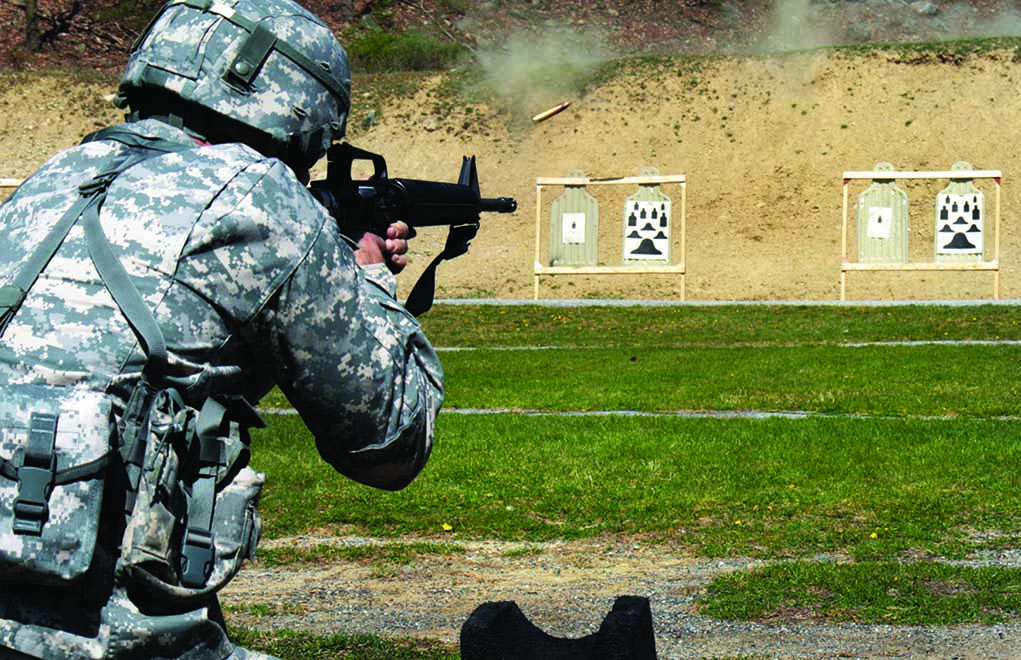
An Army Specialist fires an M16A2 rifle from the kneeling position during the weapons qualification in 2016. Note the round handguard and birdcage muzzle device. Photo: DoD
Under Live Fire
In 1960 in Hagerstown, Maryland, a Colt salesperson demonstrated the AR-15 to General Curtis LeMay, Air Force Chief of Staff. This is where the watermelons come in. LeMay was convinced of the killing power of the AR-15 and requested an order for 80,000 AR-15 rifles for the Air Force. The military was loathed to have two different caliber rifles in service and President John F. Kennedy nixed LeMay’s request. LeMay would not take no for an answer. And then there was this troubling thing in southeast Asia. Before the 1960s, Vietnam was virtually unknown to most Americans. That would soon change.
The goal of Project AGILE was to deter the communist presence in South Vietnam. AGILE was launched in 1961, and a handful of prototype AR-15s designated by Colt as the Model 601 were sent to South Vietnam for testing and evaluation. Design tweaks were made, and the Colt Model 602 — also known as the XM16 — succeeded the 601. These early rifles had a buttstock, pistol grip and handguard with a green finish. They were still not yet black. The test rifles were well received by users. The next year, an additional 1,000 were sent to South Vietnam for use by Special Operations forces and advisors. In combat the rifles proved to be effective, and the power of the 5.56mm cartridge made devastating kills on enemy combatants.
The year 1963 cemented the black rifle’s fate. While the military was still stuck on the conventionally designed M14, the reports from AGILE recommended adoption of the AR-15 platform and the military ordered rifles. This is when the black rifle got a black eye.
Originally the M16 was not issued with a cleaning kit. That changed when jamming issues caused American soldiers to die in combat. Photo: DoD
In 1965, the XM16E1 was issued to troops without cleaning supplies or instructions. Two versions of the rifle were made: the M16 without a forward assist for the Air Force and the XM16E1 with a forward assist for the other branches of the military. The Army ordered 85,000 XM16E1 rifles and the Air Force 19,000 M16s. These rifles were the first true black rifles, as they featured black furniture. The XM16E1 sported a fixed buttstock, triangular handguard and a three-prong “duck-bill” flash suppressor on a 20-inch barrel. Standard issue was a 20-round magazine.
In 1964, the .223 Remington/5.56x45mm cartridge was officially adopted by the U.S. Army for use in the AR-15 platform. What caused the black eye and congressional investigations concerned gun powder. There were insufficient quantities of 5.56mm ammo on hand so the military changed the type of gun powder in the ammunition to speed up delivery. The nitrocellulose-based powder the rifle was designed to use was replaced with a nitrocellulose and nitroglycerin-based powder that left a residue in the rifle’s mechanism.
The AR-15’s gas impingement system was designed as self-cleaning, requiring minimal maintenance. Originally the M16 was not issued with a cleaning kit, but that soon changed as U.S. soldiers began to experience stoppages in combat with cartridge cases lodged in the chamber. U.S. casualties were discovered, literally with soldiers killed over rifles disassembled while trying to fix jams. Congress soon intervened as evidence of jamming rifles mounted and an investigation was launched. It was found that the main issue for the failure-to-extract stoppages was the gun powder in the ammunition.
These rifles appear to be M16A1s, in use toward the end of the Vietnam War. Note the triangular handguard. Photo: DoD
Rifle Of Many Faces
By 1967 the problems with the XM16E1 were addressed and the rifle was standardized as the M16A1 with a chrome-lined chamber, the recoil buffer was modified for the ammo, the “duck-bill” flash suppressor was replaced by the A1 “bird-cage” flash suppressor. The three-prong muzzle device would catch on vegetation and gear. The three-position safety selector on M16A1 is marked “safe,” “semi-automatic” and “fully automatic.” The firing modes on the A2 are marked “safe,” “semi-automatic” and “burst.” A cleaning kit was supplied to troops, too. Will Eisner’s comic manual, The M16A1 Rifle: Operation and Preventive Maintenance, was passed out among G.I.s. With the design changes and maintenance, the reliability of the black rifle increased, and so too did our troops’ confidence with the rifle.
A short-barreled variant, the XM177 Commando, was also distributed during the Vietnam War. This rifle with a 10-inch barrel was more compact and maneuverable in thick jungle cover. The XM177 used a distinct-looking muzzle device to reduce flash and moderate sound. The carbine had a CAR adjustable buttstock, which was the precursor to the M2-style buttstock. The handguard was round. By the mid–1980s, the Marines requested extensive design changes and adopted the M16A2. Some of the requested changes were a thicker barrel with new twist-rate, new sights, different flash suppressor, brass deflector and three-round burst among others. The M16A3 is a full-auto version for use by SEAL forces.
The fourth generation M16 is the M16A4, which has a removable carry handle so optics can be mounted. It features quad rails to mount vertical grips, tactical lights and laser pointers. The M16A4 is what most U.S. troops now use and is the most modern variant.
Marines take the last objective during a simulated raid as part of urban training. These are M16A4 variants. Photo: DoD
The most current compact version is the M4 carbine with a 14.5-inch barrel that makes the weapon more easily maneuverable in vehicles and in urban combat situations such as in buildings. With the shortened barrel there are reports of less-than-stellar terminal ballistics. Remember, the platform was designed around a 20-inch barrel.
New Old Rifles
While black-rifle scholars know there were other, numerous AR models as the design was constantly tweaked, there are also black-rifle enthusiasts who covet original models and hoard original parts kits like gold. There are reproduction retro AR-15 rifles available from Brownells and Troy Industries and I have had some quality trigger time with these rifles. Brownells offers reproductions of the AR-10, AR-15, Model 601, XM16E1 and M16A1. All these rifles are true to the original models down to the fine details. They are a viable option to owning an original. Troy Industries reproduces the XM177 model and calls it the XM177E2 Commemorative. Stag Arms and Rock River Arms make versions of the M16A2.
While the Black rifle has been in use with the U.S. military for over 56 years, there is still much life left in this iconic, groundbreaking rifle design. The story of the black rifle doesn’t end here.
Flashlights and weapon lights are key parts of any carry kit, but take some knowhow to use efficiently in conjunction with a defensive handgun.
In a self-defense situation, you have to identify a threat and confirm it’s a threat before you take action. Low-light situations this becomes tricky. Which is why, in some form, you need a light source as part of your everyday carry kit, because you can’t just take a shot in the dark. On top of that, you need to know how to use them so you get the most out of the devices, while not hindering your proficiency with your defensive handgun.
Not the simplest task, especially with a flashlight, since you have to juggle it and your handgun. While there are many theories on the most efficient way to manage these pieces of equipment, Richard Mann goes through one technique meant to maximize both. Weapon lights, which attach directly to a pistol rail, eliminate this conundrum, freeing both hands. But even here you’re not out of the woods. In particular, finding the right gear—especially a holster—that’s compatible with your pistol/light combo can prove a challenge.
The Hornady A-Tip comes in packages of 100 (in two blocks of 50) and are loaded sequentially as they come off the press. Hornady includes a polishing bag to clean the lube off the bullets.
Boasting uniform aluminum tips, does the Hornady A-Tip represent the next big advancement in long-range bullets?
What Makes The A-Tip A Cut Above Other Match Bullets:
Machined aluminum tips kept to very tight tolerances.
Bullets maintain their intended shape in flight.
Center of gravity shifted for optimum stability.
AMP bullet jacket modified for seamless tip/ogive transition.
Bullets are packaged sequentially, right off the press, for utmost consistency per batch.
“Dial 14.8 mils elevation and hold a full 4 mils left for wind.”
So came the instruction from Kyle Lynch, a fellow gun writer and my partner for some shooter/spotter exercises we were participating in at the Leupold Optics Academy.
I spun the elevation turret of the scope and backed off just a bit on the magnification to remove some of the mirage, holding on the 4-mil hash in the horizontal bar, and broke the trigger on the Ruger Precision rifle. It took a couple of seconds or so for the bullet to get to the steel, but the splatter at the center of the orange dot of the 1,500-yard steel was extremely gratifying, considering the wind, which was gusting to 20 mph on the Oregon high desert. Living in the Northeast, I don’t have a lot of opportunity to take things out very far, so when I do get a chance, I jump at it.
If the 6.5mm bullets were impressive up to now, the Hornady A-Tip has just made them even better. (Photo: Hornady)
This particular event saw Leupold pair with Hornady, which has recently announced the release of its newest match bullet: the A-Tip. Using a machined aluminum tip in place of a traditional hollow-point or polymer tip, the A-Tip bullet just might be the next big advancement in long-range bullet technology.
Rocket Science
As the Hornady website states, “Yes, it is rocket science!” The company’s R&D team put forth a huge effort in manufacturing the best match bullet it could create—a tall order, considering the field-proven success of the Hornady ELD-Match bullet.
Using an aluminum tip is not a new idea; Hornady has used it before (on its National Match line, it employed a seriously large aluminum tip. And the original Winchester SilverTip line used a flat aluminum cap over a cup-and-core bullet in an attempt to mitigate premature bullet breakup, which sort of worked). Neither of these bullets has the silky-smooth transition of aluminum tip to copper jacket, nor does it hold the tolerances that the Hornady A-Tip holds.
(below) Hornady’s A-Tip bullets are packaged sequentially. (Photo: Hornady)
Hornady chose aluminum for a meplat material for a number of reasons. Firstly, it’s capable of being manufactured to very tight tolerances, and it’s equally capable of maintaining the intended shape. As we all know, uniformity is a very important part of the accuracy equation, and the meplat of a bullet can have a drastic effect on its resistance to atmospheric drag. Now, it should be blatantly obvious that machining a tip for each bullet is not exactly cost-effective; or maybe it’s better said that the process and the material will add to the cost of the A-Tip bullet.
Secondly, Hornady uses the shape and weight of the tip to purposefully shift the center of gravity to the location the company desired for optimum stability. The tip is certainly long—long enough to require a special seating plug, which Hornady offers for sale for its dies—and it’s quite obviously consistent, as you’ll find out in a bit. Hornady has engineered the A-Tip from the ground up: It’s much more than just an aluminum tip on an existing bullet profile. The company is offering a truly unique experience for those in pursuit of the finest accuracy … or better yet, precision.
A Slight Digression
Hornady has modified/improved its AMP bullet jacket for the new A-Tip bullet, and the results are pretty obvious once you start putting them downrange. A sleek ogive and long boat tail complement the design, giving the bullet a very high BC (ballistic coefficient) value; speaking of which, perhaps a bit of discussion regarding “ballistic coefficient” is warranted, considering Hornady’s attitude regarding that term.
Hornady offers the A-Tip in 6mm, 6.5mm and .30 caliber. (Photo: Hornady)
Ballistic coefficient is a unit-less number that uses the bullet’s sectional density, mass and coefficient of form to compare it to a specific model. Most times, it’s the G1 or G7 models for our rifle bullets. While this method is certainly a useful application in predicting trajectory curves, it most certainly has its flaws, because BC is a fluid number and can, and most certainly will, change with varying velocities. Sometimes, a bullet’s BC is averaged across a wide spectrum of velocities; and sometimes, those numbers can be slanted to give a better impression of a bullet’s performance.
For example, the G1 figures for any bullet will certainly be more attractive than the G7 values, even though the G7 values are more than likely closer to the truth. Even without leaning toward a higher velocity range in order to slightly inflate numbers, Hornady seems to be drifting away from BC, because its 4 Degrees of Freedom (4DOF) ballistic program relies on a bullet’s axial form factor rather than on BC.
Axial Form Factor in the Real World
The 4DOF program is a good one and was a real eye-opener to me on the shoot in Oregon. We were using rifles chambered in 6.5 Creedmoor with ammunition handloaded by the good folks at Hornady (you see, the A-Tip bullets are only available in component form) and looking through excellent Leupold glass, so that eliminated any excuses.
The 135-grain 6.5 mm A-Tip makes a perfect mate for the Creedmoor case, as the author experienced at the Leupold Optics Academy.
We took the environmental data, including elevation above sea level, temperature and humidity, and measured the muzzle velocity of the rifle. After zeroing at 100 yards, we then took the measurement of the elevation of a five-shot group at a target at 577 yards (this distance can be any arbitrary distance, but a target between 500 and 750 yards usually produces the best results) and adjusted the trajectory curve by taking some percentage of the modeled axial form factor.
Because my rifle was running a bit hotter than some others—it was pushing the 135-grain A-Tip to a muzzle velocity of 2,769 fps on the LabRadar—I needed a lower percentage. Nonetheless, once all was plugged into the program, Kyle and I were seeing consistent hits out to 1,500 yards, with the wind calls being the only serious challenge.
The shooting range at Madras, Oregon, was slightly more than 2,000 feet above sea level; the air was certainly on the dry side (making for thicker air); and the temperatures were mild (between the high 60s and mid-70s). However, once I crunched the numbers for the 6.5 Creedmoor with the 135-grain A-Tip, I quickly took note of the fact that the particular rifle I was shooting would have the bullet stay supersonic just over the one-mile mark. The Creedmoor is no speed demon, and that performance is a testament to the A-Tip and the way it maintains energy downrange.
Made for Long-Range Work
Hornady has taken a unique approach to packaging this new bullet. Instead of a simple bulk packaging, Hornady has decided to give reloaders the least invasive treatment possible: The A-Tip bullets are packaged sequentially, right off the press, without cleaning off any excess lubricant or anything else.
Hornady’s 250-grain A-Tip should prove to be an excellent choice in big cases such as the .300 PRC and .300 Norma Magnum … provided the twist rate of the barrel will stabilize the big bullet.
When you buy a box of 100 bullets, you get 100 bullets just as they come off the press, in order; and Hornady will offer the sequential deal for up to 1,000 bullets. This process helps minimize the need for bullet sorting, whether by weight or base-to-ogive dimension, by giving the consumer the most consistent product available.
Included in each package is a polishing bag (it resembles a Crown Royal bag, but it’s in Hornady red, with the big “H” logo embroidered on it). This allows the user to clean the lubricant off the bullets just a few at a time. How this might translate to loaded ammunition, I don’t know, but I’d bet Hornady will find a way (Hornady has insisted that no imminent plans for loaded ammunition exist).
Regarding construction, Hornady feels that the lead core/copper jacket combination makes a better choice for the quintessential target bullet than does a homogenous alloy, because it can better control the parameters of the bullet and develop a more uniform product than even the lathe-turned designs. Having worked with a good number of bullet designs over the years, I can attest that the Hornady A-Tip grabbed my attention right away, because that tip/ogive transition is nearly seamless.
Hornady had used an aluminum tip on its National Match bullet in the past, but it was nothing like the A-Tip. (Photo: Hornady)
The initial release of the A-Tip shows three calibers and five models, and I’ll include the listed BC values as a comparison to other bullets: the 110-grain, 6mm bullet (G1 .604 and G7 .304); 135-grain, 6.5mm bullet (G1 .637 and G7 .321); 153-grain, 6.5mm bullet (G1 .704 and G7 .355); 230-grain, .308-inch bullet (G1 .823 and G7 .414); and finally, the 250-grain, .308-inch bullet (G1 .878 and G7 .442). All are on the heavier end of spectrum, especially the 230- and 250-grain .30-caliber bullets—with the exception of the 6.5mm, 135-grain bullet, and that gave stellar performance.
As you might have deduced, these bullets are designed for long-range target work; Hornady has indicated that it hasn’t taken terminal ballistics into account at all with the A-Tip, and it doesn’t recommend it for hunting.
I can attest to its long-range capabilities. And although the Ruger Precision rifle is recognized as a good value, it is certainly not a custom rifle. Yet, the Hornady A-Tip might have you wondering if you need one.
The 135-grain, 6.5mm bullet—handloaded in the Creedmoor case—was efficient enough to stay supersonic out to one mile.
I am a firm believer that a bullet of this shape and length needs a bit of time (or distance, depending on how you look at it) to settle down, and the A-Tip gave me better accuracy at 300 yards than it did at 100 yards, settling down from 1 MOA at 100 to ½ MOA at 300.
I can easily see the 110-grain, 6mm mated with the 6mm Dasher, 6XC and 6mm Creedmoor; and that 153-grain, 6.5mm is certainly going to see duty in my 6.5-284 Norma—not to mention the 6.5 PRC. I think the 230-grain A-Tip might be squeezed into the .300 Winchester Magnum case, but more than likely, both it and the 250-grain A-Tip will be at home in the .300 PRC and the .300 Norma Magnum.
In a sit-down with Hornady Marketing Director Neil Davies, I inquired about future developments of the A-Tip line … perhaps a .338-inch offering or a modification of a 165- or 168-grain A-Tip for the .308 Winchester. In true professional fashion, Neil would neither confirm nor deny these future offerings.
The cost of the manufacturing process is reflected in the price of the A-Tip bullets, with street prices running between $80 and $90 per box of 100 bullets. However, if you take accuracy and the various rifle competitions seriously, this is a small price to pay for this level of performance. At the very least, the Hornady A-Tip will help push the boundaries of match bullet design, but I suspect that the A-Tip will become a new benchmark in bullet performance.
The article originally appeared in the 2019 Long-Range Shooting issue of Gun Digest the Magazine.
Does buying the exact same gun twice make sense? It does if you’re talking about the affordable and accurate Interarms Mark X in .375 H&H.
What Made The Interarms Mark X Mauser Stand Apart:
Produced by Serbian Zastava Arms, which has a long history manufacturing Mausers.
Swam against the surplus Mauser market with brand new rifles.
Available in more than 8x57mm—calibers from .243 up to .458.
Used a commercial Mauser action, sans striper-clip guide and thumb-clearance groove.
Some came with adjustable triggers.
There I was, cruising a gun show many years ago. I spied a bolt-action rifle with a nice-looking stock on it sitting on one of the myriad tables. It was classic in design. Solid recoil pad. A Mauser action.
OK, I thought, picking it up. Oh, a .375 H&H.
I worked the action (that tells you how long ago it was—they didn’t use zip ties on the actions back then), and it felt pretty smooth. I threw it to my shoulder, and the sights were dead on. This rifle fit me! I looked at the receiver, expecting to see a set of German or Argentine proofmarks. Instead, I saw “Interarms” and “Mauser Mark X.”
This was getting interesting, so I flipped the price tag over and blinked. This was a giveaway price! That made me suspicious, so I pulled the bolt out, looked down the bore to see if there was rust or pitting. Nope. Was the barrel straight? You betcha.
I turned to the guy behind the table.
“OK, what’s up?” He knew what I was asking.
Roll-marked right across the receiver ring is “Whitworth,” where it was assembled.
“I want that rifle gone. I’ve sold it three times already, and the previous owners each brought it back.” Here, he switched to a whiney voice. “It kicked too hard, or the ammo was too expensive, or their wife nixed the idea of an African hunt.”
As I paused to think about it, he continued (in a normal voice). “At that price, I won’t buy it back. You buy it, it’s yours.”
So, I bought it.
Mauser Mark X Backstory
The Mauser Mark X was a line of rifles built on regular Mauser 1898 actions, manufactured in the Balkans by the company known as Zastava Arms. This manufacturer began making Mauser rifles between the wars, when it got licensed by FN to make a modernized 1898. In between World War I and World War II, many countries (some of them quite new), armed, and the arm-of-choice was usually the 1898 Mauser.
After World War II, Zastava cleaned up and resumed production of the Mauser, known by then as the M48. You’d think that war surplus could have supplied many buyers, but there was always a desire to equip one’s army with new rifles and not rebuilt ones of unknown provenance.
The Whitworth name is marked twice on the receiver ring, and the barrel is engraved with the chambering. Note the recoil lug below the receiver ring, which is a good idea on a wood-stocked .375 H&H.
Enter into the picture a company known as Interarms. Sam Cummings, the owner, did a brisk business in buying up and shipping off surplus arms, excess to various countries’ needs. The Gun Control Act of 1968 (I know, that’s ancient history, but that’s where we are right now) put a real roadblock in the path of importing surplus, so Cummings went to Zastava and contracted for new rifles.
Instead of a surplus Mauser in 8×57, you could buy a new Mauser in .30-06, along with many other calibers. You could have had a Mauser Mark X in calibers from .243 up to .458 while Interarms was bringing them in. There were a lot of other rifle makers using the Mauser action, either surplus or new, to provide American shooters with the bolt-action they desired.
Mine, the Mark X Alaskan Magnum, (aka Whitworth Express) in .375 H&H, is a standard-length action that has been opened a bit internally to accommodate the big cartridge. The .375 came to us by way of Holland & Holland (London) in 1912. The idea was simple: Provide a medium-bore rifle in the new, but well-established, smokeless powder—offering everything the big-bores with lead bullets could not. Because it used only jacketed bullets, the .375 was able to deliver rifle-level velocities with terrific penetration.
My rifle is also one of the ones marked ”Whitworth” and bears British proofs. All the Mark X Interarms rifles were made on “commercial” Mauser actions. That is, they lacked the stripped clip guide and the groove in the left sidewall for thumb clearance. They all came with scope base holes drilled and tapped on the receiver. The lack of a stripper clip guide and the scope mounts holes meant a gunsmith had a lot less work to do to make it a hunting rifle.
A standard Mauser bolt handle, bent and swept, and a new, FN-style striker shroud. There’s a safety button on the side that’s part of the adjustable trigger mechanism.
These rifles also came with a new, sleeker bolt shroud, and the safety on mine is on the right side of the action, connected directly to the trigger mechanism. The trigger mechanism is adjustable, but I’ve never felt the need to change it, because it came properly set (I have no way of knowing whether that was from Interarms or one of the previous owners).
The Alaskan Magnums came with cut checkering on the stock, not pressed, a recoil lug throughbolt, and it lacked the gloss finish and white-line spaces so in vogue back in the 1970s and 1980s.
Whitworth? Well, back in the 1970s, Yugoslavia was still a communist country. But, by having actions or barreled actions shipped to England and then stocked, fitted, regulated, proofed and shipped to America, the Yugoslavian origins could be overlooked. And, to be fair, a whole lot of importers were bringing in Mauser actions and rifles from FN, Yugoslavia … and who knows where else.
The .375 Case
The case of the .375 has a belt at the bottom. This is for headspacing, a concept not much in use in the United States for some time after 1912. It isn’t that it’s stronger; it allows the tapered case to be securely and consistently headspaced.
The receiver did not have the thumb cut for stripper clips, and the rail has all the markings.
Why is the case tapered? In 1912, the British were still using cordite. This was a relatively quick-burning rifle powder that came in long strands. Think of a sheaf of uncooked spaghetti strands, standing on end in the case, and just long enough to not touch the base of the bullet.
The British arsenal loading procedure was to create the belted case but leave it in full diameter. The machines (or operators) dropped a measured amount of cordite strands into the case. Then, the case would be necked to create the shoulder and the bullet was seated. With the powders in use today, the cases are formed, necked and shaped. Powder is then dropped and the bullet is seated, but the shape remains.
That was the process there and then, and it required tapered cases. Consequently, the .375 H&H is tapered. The end result here is a German design from 1898—licensed from a Belgian company in 1924, machined by a Yugoslavian manufacturer in the 1970s and imported soon after by an American entrepreneur—that is fed with ammunition manufactured here, in the United States, in the 21st century.
Thumper Recoil
Oh, and the recoil? It might be “moderate” by the standards of the end of the 19th century, but make no mistake: It thumps you. The Mauser Mark X was a relatively light rifle for the time, between 7½ and 8 pounds in the standard calibers. Mine? Eight pounds, 13 ounces, empty. Trust me: That is light in a .375 H&H. The heavy-bullet .375 H&H load has a bullet twice the weight of a standard .30-06 at nearly the same velocity. You’re getting anywhere from one and a half times to twice the recoil of a .30-06.
The solid red rubber recoil pad is still springy after all these years. You’ll need it if you find a Mark X of your own in .375 H&H.
Even so, you get accuracy, penetration, reliability … and panache. As an acquaintance of mine is wont to say, “The advantage of overkill is that things stay killed.”
Now, I’m not sure I’d want to be hunting whitetail deer with a .375 H&H, but were I going after anything bigger, I know a solid hit with a .375 is going to get the job done. Right now.
Wait A Minute
The story on my .375 H&H? When I went home, I unwrapped the rifle, stepped up to the rack and shoved it into an empty spot. And then, I stopped, my hand still on the rifle. Right next to it in the rack was a … you guessed it: an Interarms Mauser Mark X Alaskan Magnum in .375 H&H—with the same classic stock. As I said, it’s a rifle that’s so nice, I bought it twice.
Over the course of a few months, I took both of them to the range on several range trips (I was a full-time gunsmith then, and range trips were at least weekly; during some seasons, they were several-times-a-week affairs) and determined which of the two was the better-shooting rifle.
It wasn’t easy. First, there is the recoil. I found that accurate benchrest work involved two groups from each rifle, maximum. Only later did I discover the trick of a standing support for test-firing magnums. If I shot any more than two groups each (and it took all day to do that), I wasn’t shooting my best. So, one box of ammo per trip, averaged over many trips, with several different loads.
A standard Mauser, but lacking the clip guide, and already drilled and tapped for a scope. One of these days … .
Second, they were both accurate, and the difference was small. I’d say that one was better than the other by a bunch less than an inch at 50 yards. Yes, 50 yards. I wasn’t going to invest in identical scopes to scope both of them for a fair comparison. Shooting them at different times would not have produced accurate results. And, with iron sights, 50 yards was as far as I was willing to walk many, many times to determine accuracy.
No, I’ve never been to Africa on a hunt. I’ve been there for an IPSC competition, with one near-event that might have resulted in “hunting” or at least an altercation. Had that happened, it would have been over and done with using a 1911, not a Mauser. I’ve visited Canada a bunch of times and Alaska several times. However, a .375 H&H wouldn’t have been appropriate on any of those trips (I’ve got to correct that).
So, it sits in the rack, patiently waiting. It’s sighted in and shoots all the loads I’ve ever tested in it to the point of aim. That part is a hallmark of the .375 and bolt-action rifles—one I can attest to.
All bullet weights shoot to the same point of impact in a given rifle out to useful distances. As a result, you can switch from the 300-grain FMJ buffalo penetrators to the 270-grain spitzer soft-points and not worry about changes in point of impact. The same rifle can be used on dangerous game and big plains game—all in one trip. If you have to have a flatter-shooting load for use out past 50, 75 or 100 yards, Buffalo Bore offers a 235-grain bullet: a TSX in the .375 H&H.
Any self-respecting Alaskan or African rifle made back then had to have a folding leaf rear sight (100, 200 and 300 yards, you betcha!).
Right now, the cartridge is 107 years old. The bolt-action design is 121 years old. My rifle is probably 40-plus years old, and the ammunition I will have it loaded with will benefit from the latest bullet design and powders to be had.
Some things just don’t go out of style or lose their effectiveness. All hail the .375 Holland & Holland! As long as we’re hunting critters that can stomp, claw or bite us, there will be rifles in use chambered in .375 H&H.
Oh—if you want yours, start looking. They can still be had at reasonable prices. Who knows? Maybe yours will be the former stablemate of mine.
With power to spare, the .454 Casull is a natural addition to the large-frame Raging Hunter line of revolvers.
What The Raging Hunter Offers Game Getters:
The choice between 6.75- and 8.37-inch barrel.
Integrated Picatinny rail to make adding an optic a snap.
Fully adjustable rear sight.
Recoil-mitigating cushioned insert grip.
Snappy trigger in both single- and double-action.
Taurus Raging Hunter and .454 Casull … you might call it a match made in heaven.
Optimized for putting down big game, the wicked large-framed revolver should get the most out of the asininely powerful cartridge. Especially given you can get the Taurus with plenty of bore—up to 8.37 inches, if you so desire.
Available with a matte black or stainless steel finish, the five-round revolver has the looks to go with its power and a slew of game-getting enhancements. To name a few, integrated Picatinny rail, fully adjustable rear sight, cushioned insert grip, and snappy trigger—both in single- and double-action.
Overall, for the caliber and configuration, the revolver comes in decently priced. The matte-finished models have an MSRP of $910 and the stainless steel models $919.
More from Taurus:
(Miami, FL) – Taurus, manufacturer of quality handguns for hunting, self-defense, and competition, has announced that its newest member of the Raging Hunter revolver series, the Raging Hunter .454 Casull, is now shipping to dealers nationwide. The .454 Casull Raging Hunter joins the original .44 Magnum and the recently introduced .357 Magnum chambers offered in this exciting hunting revolver platform.
The Taurus Raging Hunter earned the 2018 American Hunter Handgun of the Year Golden Bullseye Award for its innovative design, reliability, and value, delivering on all the key points serious handgun enthusiasts seek in a hunting revolver. Ergonomics and shooter comfort come by way of the revolver’s exceptional balance, lightweight barrel housing, and cushioned insert grips. A sleeved barrel construction, factory-tuned porting, and a gas-expansion chamber to reduce muzzle rise make the Raging Hunter quick on follow-up shots and an ideal revolver for short- and mid-range big-game hunting.
Available in three barrel lengths—8.375, 6.75, and 5.125 inches—the .454 Casull Raging Hunter features a spurred hammer, DA/SA action, and a five-round cylinder. It is available in two frame colors—matte black or stainless—with matte black barrels and cylinders. An integrated Picatinny rail provides easy optic mounting while shooters who prefer open sights will appreciate the fully adjustable rear sight for precision zeroing.
All barrel lengths and color combinations of the new Raging Hunter .454 Casull are available and currently shipping to dealers nationwide.
Looking to go armed, but are stuck in the weeds as to what to arm yourself with? Here are 20 of the best concealed carry gun options that will keep you on the defensive.