Home Blog Page 157

Winchester Model 12: The Perfect Pump-Action Shotgun

4

The Winchester Model 12 shotgun set the mold โ€” and then broke it โ€” for what a pump-action gun should be.

What Makes the Winchester Model 12 An Exceptional Pump-Action:

  • Internal hammer streamlines an action made from a single billet of forged steel
  • Internal parts are all hand fitted giving it an extremely smooth action
  • Bolt locks directly into the receiver, making the action exceedingly strong
  • Overall graceful lines that make it a real looker
  • Offered in 12, 16 and 20 gauge

I will never be able to look at a Model 12 Winchester shotgun without thinking of him. Tall and lanky, he was one of those guys who seemed all disjointed and clumsy, but he wasnโ€™t. He could walk in the mountains all day and he didnโ€™t seem to tire. His long legs gave him a stride that was seemingly impossible to keep up with.
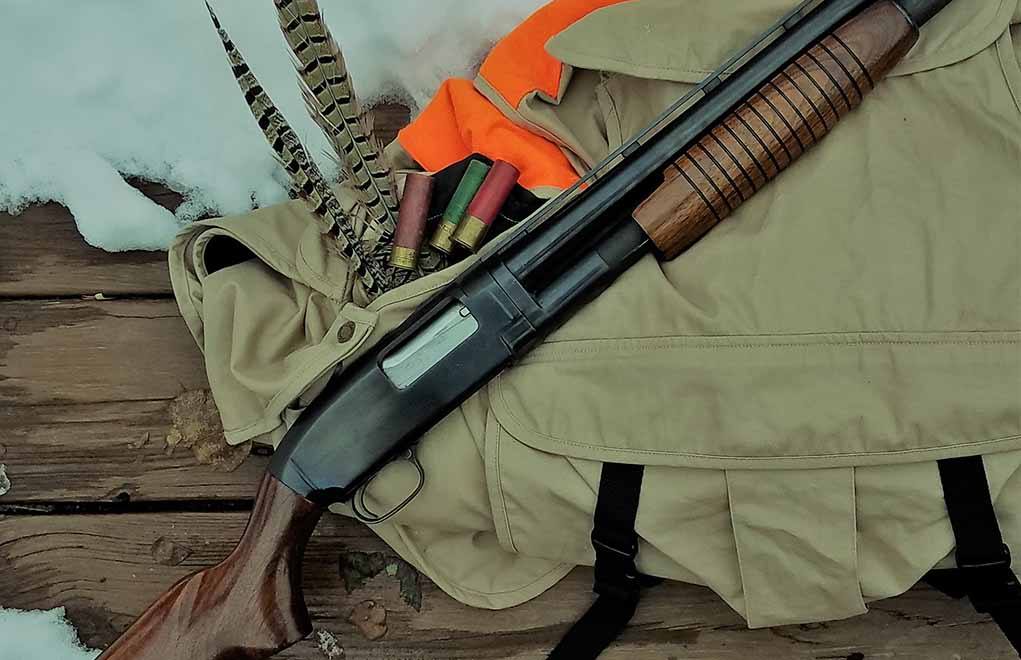
The internal parts of the Model 12 action were all hand-fitted and machined to precise specifications. This gave the Model 12 its reputation for a smooth action with excellent reliability, and itโ€™s the primary reason why so many of these guns still work and see the fields today.

As a boy, I have a distinct memory of following him and I was almost always running, running to catch up. I can see him ahead of me, a Winchester Model 12 casually resting on his shoulder as he disappeared behind some big oak or tangle of brush. I guess he waited for me at times; he never left me in the woods.

I called him my โ€œhunting uncleโ€ because he was a friend of my fatherโ€™s, but not blood kin. He was inherited from my dad and, after a few years, I was allowed to venture into the grouse and turkey woods with him even if Dad couldnโ€™t make it that day.

Itโ€™s funny how kids see things in the world: At the time, I never questioned how he was able to spend so much time in the woods with me and a Model 12 shotgun. He didnโ€™t seem to have a regular job, a wife and family, or any of the other things that would keep most people from going hunting whenever they wanted. I never asked him about any of this because I just wanted to go hunting. And he did, too, so we went. Things were much simpler then.


Learn More About Legendary Winchester


We had ruffed grouse in my part of the world back then, in numbers far exceeding what we have now. He always had good dog, either a skinny pointer or cat-footed setter with a bloodied tip on its tail โ€” and let me tell you, they were some kind of deadly. Iโ€™m sure he missed sometimes, but I canโ€™t remember it. If there was more than one bird on a flush or he needed a second shot, I could hear the cha-chank of the action between rounds โ€ฆ but it was lightning fast. He did all of this with a battle-worn Winchester Model 12 that had an action as smooth as newly churned butter. Never in my wildest dreams did I think I would ever be able to shoot like him.

He was a Model 12 man all the way, though he had other shotguns, and lots of them. He had a house full of guns, but the Model 12 Winchester was his hands-down favorite. โ€œFinest pump gun ever made,โ€ I can still hear him say when he would catch me handling one of his collection. This man, who was way larger than life to me as a kid, held the Winchester Model 12 as possibly the greatest shotgun ever made. Was it?

The Man From Utah And Beyond

Most discussions on the history of any iconic firearm start with John Moses Browning. At the risk of stating the obvious, Browning was a certifiable genius in firearm design whose name is linked to dozens of well-known guns โ€” including the Colt 1911 pistol, the Browning A5 shotgun, the Winchester Model 1894 lever-action rifle and the Model 1918 Browning Automatic Rifle (BAR) โ€” to name only a few.

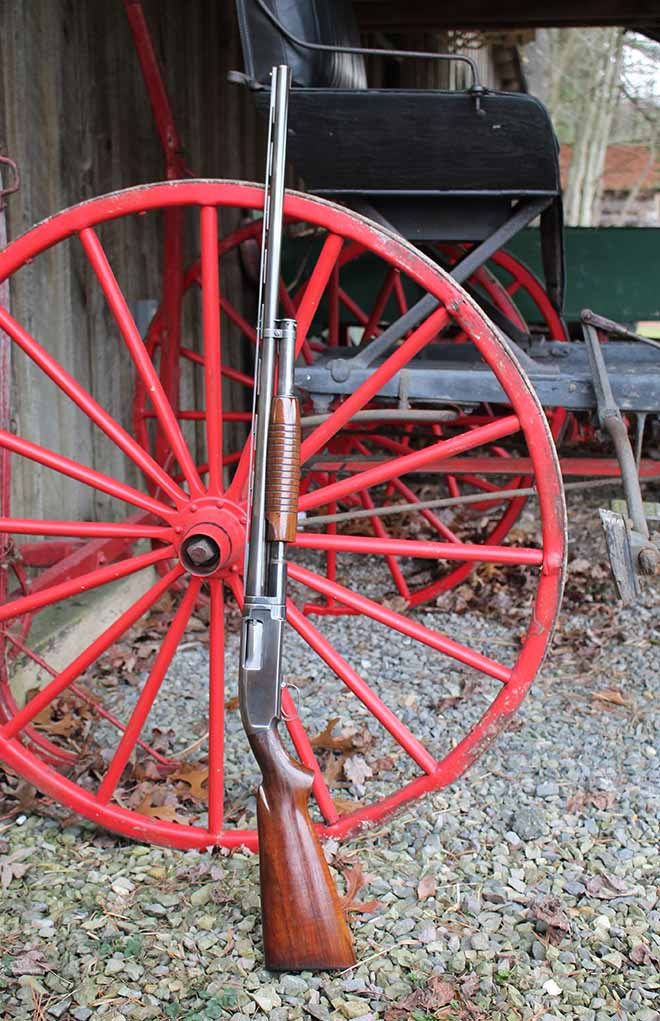
Winchester Model 12 1

Shotgun history lore holds that Winchester wanted John Browning to design a repeating shotgun, and Browning wanted to go with a pump-action model. Winchester at the time believed they needed to stay with a lever-action gun because this was their trademark, so Browning gave the world the Winchester 1887 shotgun.

The Model 1887 did OK, but it had some demons in the form of functioning issues, and Winchester relented and gave John Browning the go-ahead to work on a pump-action shotgun. Browning whipped out the Winchester Model 1893 in short order, and this gun was soon replaced by the Model 1897 (aka the Model 97): a solid, tank-like shotgun that sold for more than 60 years.

Some sources give John Browning the credit for the Winchester Model 12 shotgun, but the real daddy of the Model 12 was a fellow working for Winchester by the name of Thomas Crossley Johnson.

T.C. Johnson went to work at Winchester at the tender age of 23 and worked there almost 50 years, accumulating 125 patents on firearms โ€” including the Model 21 double-barreled shotgun and the Model 12. Johnson took the basic idea for Browningโ€™s 1897 pump gun and reworked it to give us the most elegant, streamlined shotgun seen up to this point. What T.C. Johnson did, in a stroke of genius differing from Browning, was to do away with that awful exposed hammer on the Winchester model.

The Model 97 had many fans and still does, but these were the ones who had learned to keep their thumb out of the way of the slide, which moves reward from the receiver to cock the gun as the action is worked. For this reason, some dubbed the Model 97 the โ€œthumb buster,โ€ and although most shooters only made this mistake once, T.C. Johnson knew there was a better way.

The Perfect Repeater

Johnson worked his magic and developed an internal hammer inside a streamlined receiver made from a single billet of forged steel. The internal parts of the action were all hand-fitted and machined to precise specifications. This gave the Winchester Model 12 its reputation for a smooth action, probably unrivaled to this day.

Winchester Model 12 3

While the internal workings of the Model 97 were no slouch, the Model 12 action is stronger in that the bolt locks directly into the receiver. The safety is located on the front of the trigger guard where it should be because the finger of the shooter naturally rests there, not on the rear of the trigger guard. The trigger pull on a Model 12 is superior to any pump gun offered today, which is something most shooters donโ€™t think about.

Most Model 12 shotguns produced had no trigger disconnector. This means, like its predecessor the Model 97, it could be โ€œslam fired.โ€ By depressing and holding the trigger a round can be fired every time the action is worked. Other than a combat situation, the actual practicality for this type of firing may be questionable, but a skilled shooter can slam fire a Model 12 faster than most auto-loading shotguns can be cycled.

When the Model 1912 made the scene in 1912 (shortened to โ€œModel 12โ€ in 1919), it soon became the darling of hunters, trap and skeet shooters, and shotgunners in general. Remember: Up until this point, most people were shooting double-barrel shotguns; the age of the repeating shotgun was just starting.

The Model 97 had been around awhile, but when shooters saw the graceful lines of the Model 12 compared to the homely old thumb buster โ€™97, it was love at first sight. The Model 12 seduced many a shooter โ€” and it did so for the next 46 years. The Winchester salespeople dubbed it โ€œThe Perfect Repeater,โ€ and most sportsman and shooters believed it.

For reasons that are not really clear, the first year of the Model 1912 shotgun produced only 20-gauge offerings. In 1913, it became available in 12 and 16 gauge, and in 1934 a 28-gauge version was added. (If you find a 28-gauge Model 12, you had better buy it or I will). If you find a .410 Model 12, you had really better buy it because Winchester never made one.
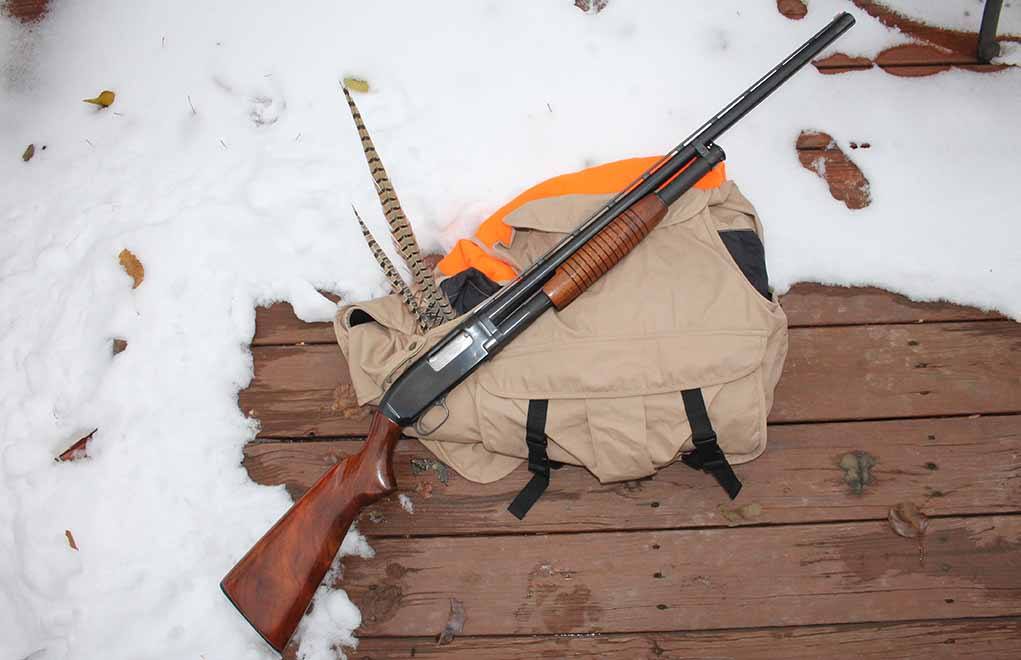
Winchester Model 12

Winchester engineer William Roemer designed a perfectly scaled-down version of the Model 12 for the .410 bore: It was christened the Model 42 and produced from 1933-1963 in Field, Deluxe and Skeet models. A Model 42 Winchester is a thing of beauty, and I always thought any man (or woman) shooting skeet with a Model 42 had a certain sense of style. The Model 12 man from my youth had one Model 42 he let get away from him in a trade, and I think he regretted it to the grave.

The total list of all available models and variations of the Winchester Model 12 can boggle the mind of the most ardent Model 12 aficionado. Field guns were offered in 12, 16 and 20 gauges with full, modified and improved-cylinder choked barrels. Screw-in chokes had made the scene by the late 1950s, and Winchester offered them in the โ€œway ahead of its timeโ€ Model 59 โ€” but thatโ€™s another story completely for another issue.

Trap and Skeet guns, Deluxe Pigeon Grades and Super Field Grades were all there to lust after. Among the variations available, Model 12s could be ordered with a Cutts Compensator or a Poly Choke; they were ugly as hell but they shot like a house on fire. Barrels on Model 12s were Winchester proof steel and made in standard blue, stainless and nickel steel. You have to figure a man carrying a Model 12 with a nickel steel barrel is not to be trifled with.

By the middle 1950s, a standard order Model 12 had an MSRP of $93.85. That was with a plain barrel and no rib; it weighed 7.5 pounds and had a very pretty American walnut stock and forearm. The Pigeon Grade VR Trap Gun model, at about the same time, sold for $260, the most expensive Model 12 in its day. Try to find one for that now.

Like the Model 97, the Ithaca Model 37 and others, the Model 12 had a long run with the military starting in World War I and extending all the way into the Vietnam era. Model 12 shotguns became known as โ€œtrench gunsโ€ and were supplied with heat shields on the barrel and bayonet lugs. Can you imagine troops in trench warfare slam-firing a Model 12? A few years later they could have been back in Kansas, pheasant hunting with the exact same gun.

The Model 12 era really ended in 1950 when Remington trotted out the Model 870 pump gun. The very things that made the Model 12 what it was โ€” the machined, hand-fitted inner workings of the shotgun โ€” made it too expensive to produce. This was a new age of stamped parts and lower production costs.

The Winchester Model 12 was discontinued as a production gun in 1964, and the world tilted a little on its axis that day.

Editor’s Notes: This article originally appeared in the December 2018 issue of Gun Digest the Magazine.
Video: Sig Sauer’s Elite Legion Series Pistol Line

0

Enhanced for professional duty, the Legion Series takes the best pistols SIG has to offer and makes them better.

Among the most familiar names in firearms, SIG Sauer has produced its share of true classics. Whether youโ€™re talking about the battle-tough P229 or the bullseye battering P210, the gunmaker has rolled out pistols renowned for their ability to excel under the direst circumstances. What might have flown under your radar are the premium editions of the companyโ€™s legends rolled out in recent years.

It might not sound possible, but the SIG Legion Series takes the best the gunmaker has and makes them better. Thatโ€™s saying a lot, given how these pistols performed in the first place. But, with some truly practical upgrades, the Legion Series is made to take the worst the world can throw at them and give it back twice as hard.


Tune Into More Gun Digest TV:


SIGโ€™s picked their top pistols โ€“ both full-sized and compact variations โ€“ to make up the line of guns. Real tooth chippers, including the P938, P229, P226 and P220. Good choices one and all, but how exactly are they different from the standard models? Letโ€™s take a look at what exactly makes the guns of the Legion Series absolute gems:

  • Cerakote Elite Legion gray coating
  • Custom G-10 grips with a Legion medallion
  • SIG SAUER Electro-Optics X-RAY high visibility day/night sights
  • Three magazines standard
  • Reduced and contoured Elite beavertail, which allows for a higher grip
  • More aggressive front strap checkering and additional checkering under the trigger guard
  • X-Five undercut for more control of the pistol
  • Front cocking serrations
  • For more information on the SIG Legion Series, please visit www.sigsauer.com.

Creative Arms: Taking The AK-47 To 500 Yards And Beyond

1

An inside-the-action look at the ARK, the Creative Arms AK-47 variant built for long-range accuracy. 

What is Creative Arms’ ARK And How Can It Reach Out:

  • The rifle is an AK-47, AR-15 hybrid
  • Creative Arms machines all parts in house for a superb fit
  • Incorporates a full-length Picatinny rail system to stabilize optics
  • Built around AK-style bolt, carrier group and trunnion for reliability
  • AR-15 pattern fire-control group that can use drop-in triggers

Want an Accurate AK-47? Donโ€™t bother packing your passport to go east to the Red Square. Instead, just pack an appetite for everything corn-flavored and head to Iowa.

Yes, Iowa.

Creative Arms 9

You see, for more than 2 years I tried to answer the question: Can an AK-47 shoot to 500 yards accurately? A few manufacturers I talked to liked the idea of trying to prove it, but one by one they all backed away. Then, a few months ago, I met Bob Folkestad, owner of Creative Arms headquartered in Des Moines, Iowa. I asked him the same question, and his answer was, โ€œYes.โ€ In fact, I think his verbatim answer was: โ€œYes, come out to Iowa and weโ€™ll do it in the morning, then Iโ€™ll take you to the Iowa State Fair.โ€

So, I jumped on a redeye to the Hawkeye state, slept fast, and then walked 500 yards downr ange, stood in an old-school range pit, and watched two of Bobโ€™s rifles โ€” one known as an โ€œARK,โ€ which is a AK/AR hybrid, and the other one more an AK-47 puristโ€™s rendition first created by Arsenal and then tweaked by the staff at Creative Arms โ€” shoot a little less than 5-inch, five-shot groups with off-the-shelf factory-loaded Hornady 123-grain 7.62x39mm ammunition. We promptly went to the Iowa State Fair afterward.

It sounds rather casual โ€” because it was. You see, things really were that simple in Iowa for Bob. He knew his guns were accurate, and he knew Iโ€™d like to see my first Midwestern state fair. The fact that he guided me through both mind-blowing experiences so matter-of-factly speaks to just how routine building accurate guns is for him.

Centering On Creative Arms

To understand Bobโ€™s guns, it helps to understand how and why Bob started building them in the first place. โ€œThe idea for building my own guns probably started in my mind when I was really young,โ€ Bob said. โ€œMy grandfather worked at John Deere in the โ€˜experimental designingโ€™ department, and he was also an amateur rifle builder โ€” and we shot very often.โ€

Both the Creative Arms ARK and the Creative Arms enhanced Arsenal AK-47 shot sub-MOA five-shot groups to 500 yards using off-the-shelf factory ammunition from Hornady. Handloaded ammunition was shot as well, including using custom-machined bullets, but the Hornady ammunition performed the best in the long-range tests.

Indeed, if youโ€™ve ever worked on a farm, you understand how and why Bobโ€™s unique kind of agricultural ingenuity played so well into building better guns. Tools need to work every day, year-around on a farm. Itโ€™s not a matter of convenience to build something right โ€” itโ€™s the standard โ€” because farm work, frankly, is just too damn hard to tolerate junk.

Thus, for Bob, the engineering transition from farm machinery to firearms, rooted in a keen sense of craftmanship and durability, was easy because it was led by his passion for shooting.


More AK-47 Info, Comrade:


โ€œI have always had a love for guns, and Iโ€™ve had the privilege to sell them to some cool manufactures and distributors,โ€ added Bob. โ€œIt just snowballed into something bigger because we already had the engineering and machining capability. Thatโ€™s how it started: tools, AR receivers, ARK rifle, complete billet AR receiver sets and guns, suppressors and AR10โ€™s. Prior to Creative Arms, I built AKโ€™s for my personal use and still build a limited quantity per year myself for customers.โ€

The โ€˜Long-Rangeโ€™ AK

Back to 500-yard minute-of-angle-accurate AKs: Building one isnโ€™t as complicated as you might think. Historically, the AK platform simply hasnโ€™t been needed to do work at longer ranges, and the downrange energy of the 7.62x39mm cartridge is the chain that yanks on the AKโ€™s capability collar, not necessarily the platformโ€™s accuracy capabilities. Either through myth, urban legend, ignorance or hate, the 7.62x39mm cartridge and its AK platform has a reputation for being, well โ€ฆ just good enough to be broadside-of-a-Baryshnikov accurate.

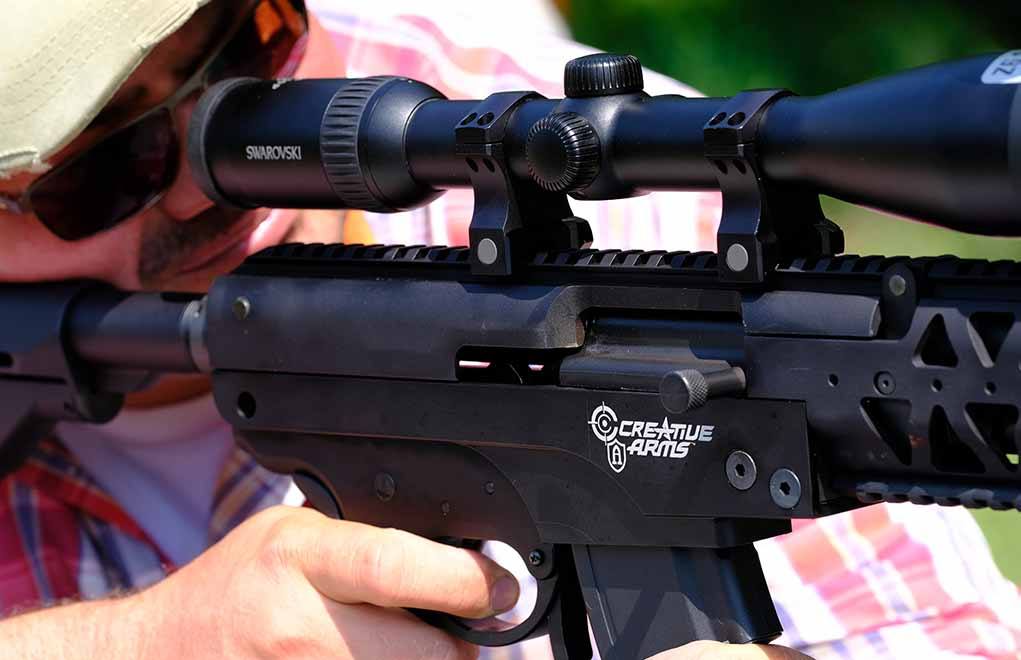
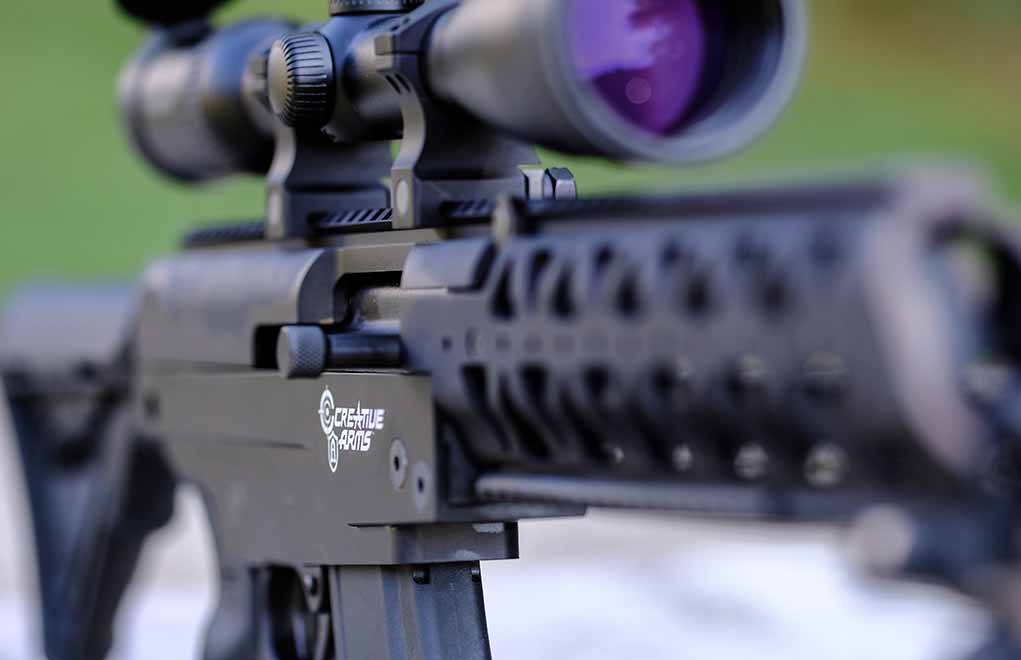
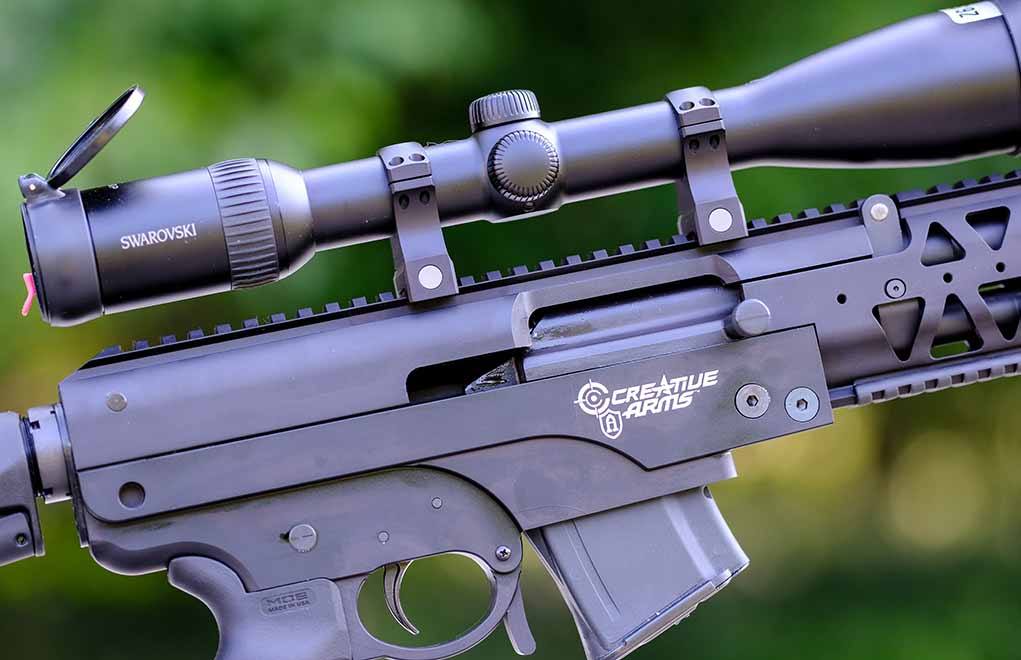
The ARK is a unique and patented blending of the AR and AK platforms from Creative Arms in Des Moines, Iowa. Note the rigid Picatinny rail on the receiver of the ARK, which gives the 7.62x39mm ARK a distinct accuracy advantage over its traditional AK-47 cousins because of the solid optics mount it provides.

However, both the cartridge and the weapons platform are far more accurate than we may realize (or are willing to admit), especially if your knowledge of Russian military heritage doesnโ€™t include the common usage of names like Vasily Zaytsev, Stepan Vasilievich Petrenko, Vasilij Ivanovich Golosov, Fyodor Trofimovich Dyachenko, Fyodor Matveyevich Okhlopkov, Mikhail Ivanovich Budenkov, Vladimir Nikolaevich Pchelintsev, Ivan Nikolayevich Kulbertinov, Nikolay Yakovlevich Ilyin or Ivan Mihailovich Sidorenko.

โ€œThe AK is accurate, and thatโ€™s the truth,โ€ Bob said. โ€œMost shooters do not like the shorter sight radius and grew up shooting guns with a longer site radius. Given that, it seems that pistol shooters shoot AKs very well.โ€

Some more truth โ€” and this shouldnโ€™t come as a surprise to anyone reading a firearms magazine, accuracy โ€” is that accuracy isnโ€™t as much about the design of a firearm as much as it is the quality of the operator and how well the firearm is built to begin with.

Creative Arms left no engineering possibility unturned โ€” and even created their own 7.62mm bullets to test during the long-range work with the ARK and AK-47.

โ€œRealistically, accuracy is about training and the quality of the gun,โ€ Bob said. โ€œYou do get what you pay for, so a $500 surplus AK with a cheap barrel is not going to shoot as well as a gun that has a $300-400 barrel. We make our own barrels for the ARK and AKs, but others, such as Faxon, make some really high-quality barrels that shoot well. So, to prioritize, the barrel is the most important item in the gun and it needs to be backed up with a high-quality bolt and trunnion.

โ€œThe next most important items are the trigger and optics mounting,โ€ added Folkestad. โ€œAgain, AKs are accurate, though its optics-mounting options are not as stable as traditional Picatinny rail systems. You cannot cantilever a scope over 4-6 inches and expect it to be as solid as a scope solid-mounted to rails, so a stamped AK with a side scope mount is not as stable as our ARK, milled AK or an AK with a Krebโ€™s-type rail.โ€

Dissecting The AK Cluster

Bob is a lover of all things AK. So, for his fellow AK fans, he has some simple advice as to what he would do with any AK presented to him to make it as accurate as it can be.

Creative Arms 6
The ARK was shot suppressed with Creative Armsโ€™ own line of cans. The sub-MOA groups were all shot with the suppressors attached.

โ€œAKs are relatively straight-forward, so if someone sent me a gun, we want to make sure it has a good barrel โ€” thatโ€™s most important,โ€ Bob said. โ€œThen, I would polish the moving surfaces, de-burr the trunnion, bolt head and bolt carrier. I would change the trigger (CMC or ALG). Most AKs have bad paint that does not hold up to some gun-cleaning chemicals, so we generally shot peen blast and Cerakote them, too.โ€

Like any firearm platform, there are AKs that can be bought at entry-level prices, then then there are AKs that fall into the, โ€œHoney, weโ€™re going to miss our mortgage payment this monthโ€ category. To help put some parameters on all of this, I flat-out asked Bob this question: โ€œWhat does an inexpensive AK get me, versus one that will cost a good chunk of change?โ€

According to Bob, whatโ€™s true in any business is true in the AK world. โ€œTime spent doing a good job makes the difference,โ€ he said. โ€œMany guns are good but not finished well. Many have good barrels, but the finish leaves something to be desired. Most high-end guys do not make all of their parts, and thatโ€™s where weโ€™re a little different because we have all the CNC machinery in-house to build anything we want, anytime.โ€

Defining The ARK

I keep talking about an ARK, so letโ€™s take a look at what an ARK is: In short, the ARK name makes it sound a lot like an AR and an AK all mixed together, and thatโ€™s exactly what it is. Itโ€™s a Creative Arms firearm which, according to Bob, takes the best of the AR platform and merges it with the best of the AK platform.

One of the weaknesses of the AK platform is securely mounting optics, which can hamper repeatable accuracy at long ranges. A side-mount remedies this.

โ€œIt is kind of a long story,โ€ said Bob. โ€œWe were doing some design work for Brownells and we ended up getting our 07 FFL and SOT. The guys in the shop wanted to build some ARโ€™s โ€” so I let them โ€” and then I thought about the AR and the AK. At that time there were not many good trigger options for the AK, so I thought wow, โ€˜Letโ€™s build a milled receiver AK that has an AR trigger group, full-length rail system and a buffer-tube-style stock mount.โ€™

โ€œAfter four patents, $500k-plus and a few years โ€ฆ we got It dialed in to be a cool sporting rifle,โ€ Folkestad added. โ€œOur thought was that there were enough AR variants in the market. We build many AR-15 and AR-10 style rifles, as well as OEM rifles for several other manufactures, so this was something different in the market.โ€

When Creative Arms was designing the ARK, they stuck with the 7.62x39mm cartridge purposely. โ€œThe 7.62×39 is cheap to shoot and a good round for midsized game out to about 250 yards,โ€ Bob said. โ€œWe make .300 Blackout and 5.56 NATO in ARs, and at the time we were working on the ARK there was a big ban on ammo in 5.45x39mm, so we did not use that caliber. However, we can make the ARK in 5.45x39mm, but itโ€™s a limited market due to lower-priced ammo and most Americans would rather shoot an AR variant.โ€

Creative Arms takes great pride in the fact that they manufacture all of the parts in-house for the guns they sell.

Now, letโ€™s make one thing clear. Creative Arms, Bob Folkestad โ€” and even little ole me, the gun writer โ€” know quite well that an ARK is not an AK-47. Itโ€™s an AK hybrid. We also know that the AK following is by far the most boisterous in the firearms community, so how they reacted to the ARK was absolutely noticed by Creative Arms.

So, how did the AK crowd react?

โ€œThey love it or they hate it,โ€ said Bob. โ€œI am an AK purist personally, and I have 20 or so in my personal collection from several countries and calibers. AK owners do not drink the same Kool Aid as the AR guys do โ€” theyโ€™re much tougher on any AK variants that are new. If itโ€™s from the (former) Eastern Block countries or Russia, they love them. Dedicated AK shooters pick apart my guns โ€” until they shoot one.โ€

So, if youโ€™re not a card-carrying member of the โ€œAK-47 or nothingโ€ crowd, how do you decide between an ARK or an AK platform to blow through a few cases of 7.62x39mm ammunition? Even for Bob, itโ€™s a hard question.

Creative Arms owner Bob Folkestad is a self-admitted AK-47 purest, but he saw the opportunity to improve upon the AK platform by merging the AK action with AR furniture to make his unique ARK rifle.

โ€œItโ€™s like buying tennis shoes: What do you want?โ€ said Bob. โ€œOur guns are 100 percent USA made, we make our own bolts, carrier, trunnion, gas tube, receiver, rails and handguards. Itโ€™s a solid gun, and to make it this way we needed to bring everything in-house. If a potential buyer wants to put an optic on a sporting rifle in 7.62×39, add a rail and have countless furniture, grip and trigger options โ€” then the ARK is a good platform.โ€

For more information on Creative Arms, please visit www.creativearms.com.

Editor’s Note: This article originally appeared in the December 2018 issue of Gun Digest the Magazine.
The All-Around Joy Of Alliant Reloder 15

0

You canโ€™t buy happiness, but you can buy Reloder 15 … and thatโ€™s pretty much the same thing.

How Reloder 15 Edges Other Powders In Its Class:

  • Medium burn rate powder, somewhere between IMR4064 and Varget
  • Suitable for cartridges from the .17 up to the .375 H&H
  • Can be sensitive to extreme temperature fluctuations
  • The slow burn and low pressure also results in less felt recoil
  • Overall, this improves the accuracy potential of a rifle shot to shot

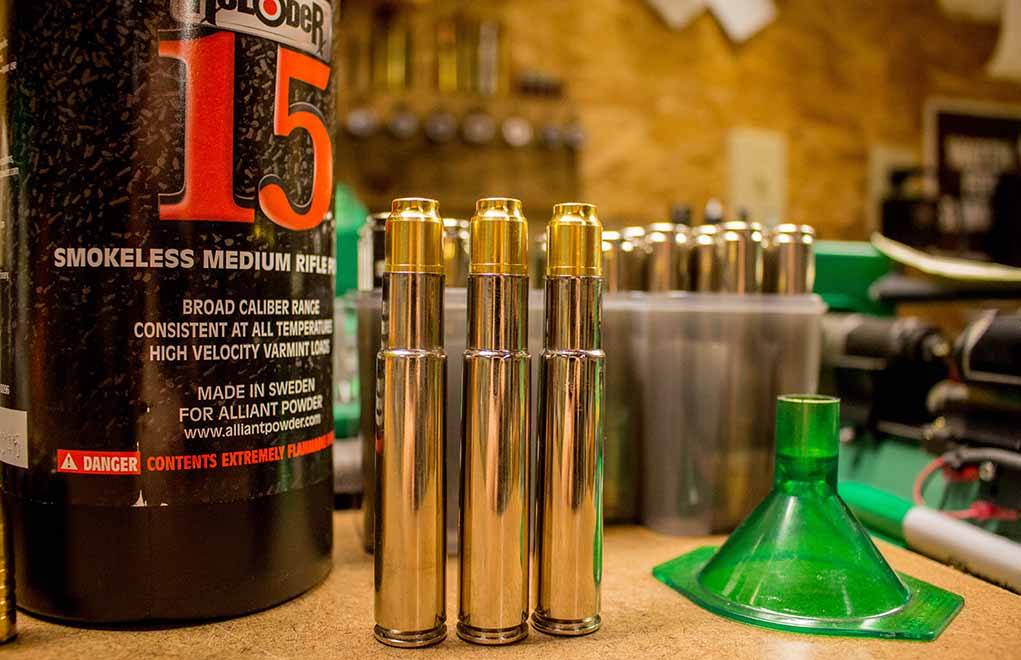
There are many useful powders available to us handloaders, and many that are suitable across a wide selection of cartridges. Good olโ€™ IMR4064 and Hodgdonโ€™s Varget are two great examples of nearly universal powders, but, as of late, Iโ€™ve been reaching for Alliantโ€™s Reloder 15 more often than not.

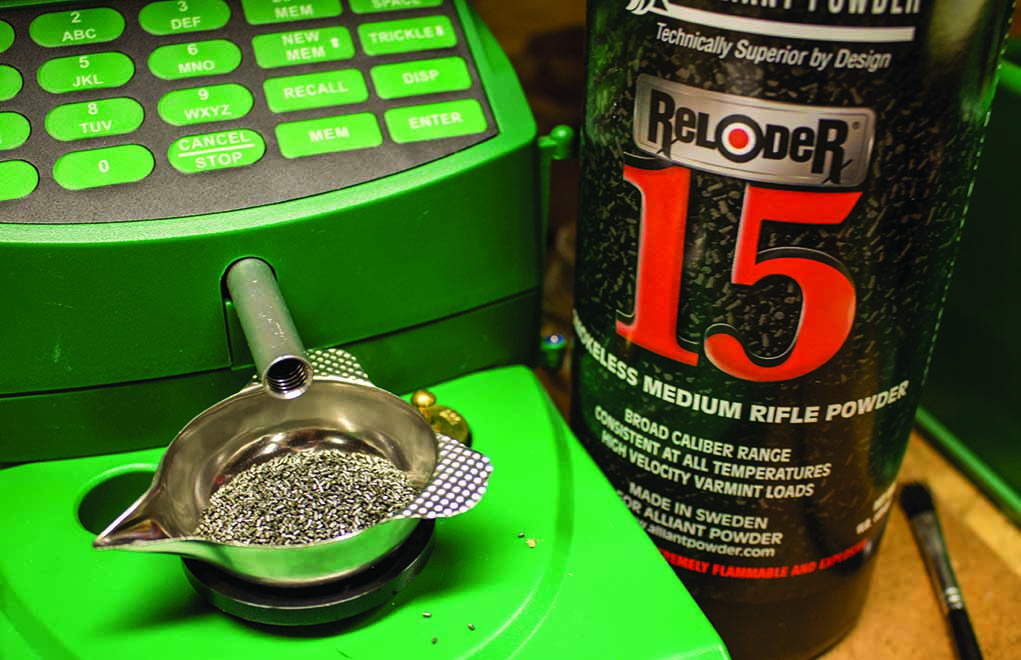
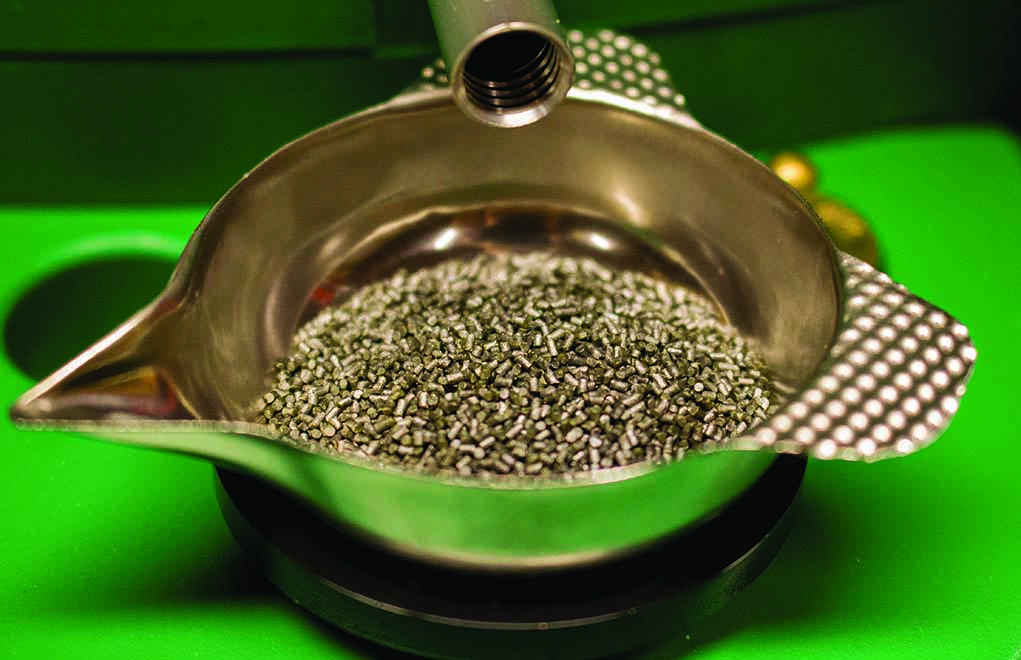
Alliantโ€™s Reloder 15 is an extruded stick powder, with a short grain structure in order to meter well.

On the burn rate chart, Reloder 15 sits just about perfectly between IMR4064 and Varget, meaning that it is a medium-burning powder that can fill an awful lot of roles. As stated on the can, the powder is perfectly suited to both the .223 Rem./5.56 NATO cartridge and the .308 Win./7.62 NATO โ€” itโ€™s the powder loaded in the military M118LR cartridge โ€” but thatโ€™s only the beginning.

Yes, Iโ€™ve used it in the .308 Winchester with bullets from 150 to 180 grains, with great results, but that cartridge can be fed just about anything and still perform well. It makes a great choice for both the .22-250 Remington and the .220 Swift, taking advantage of the case capacity, and generating respectable velocities in the pair of varmint classics. It also can serve well in the .308โ€™s offspring, from the .243 Winchester up through the 7mm-08 Rem. to the .338 Federal and .358 Winchester.

Alliant gives load data for the .270 Winchester, .280 Remington and .35 Whelen, in addition to the .30-โ€™06 parent case, and though RL-15 is on the faster end of the spectrum for those cases, it will work, and work well. It also gives good performance in some of the magnum cases, such as the WSMs, WSSMs and even the 7mm Remington Magnum and .300 Winchester Magnum, though itโ€™s best used with the lighter bullets for the latter two cartridges.

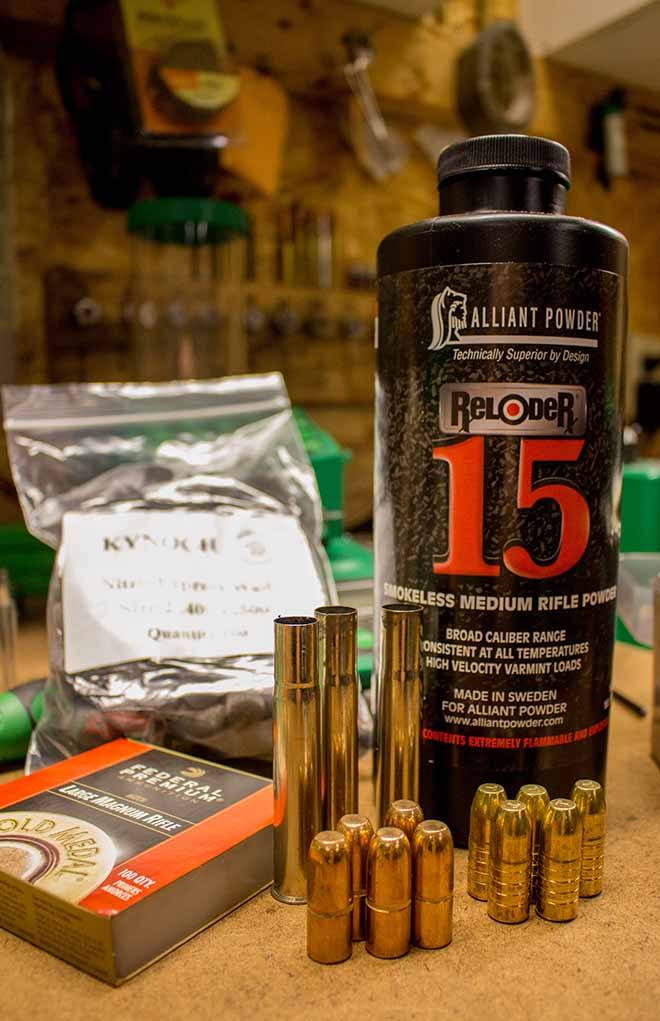
With the use of a Kynoch foam wad, Reloder 15 gave excellent accuracy and velocity in the authorโ€™s .470 Nitro Express.

On the far ends of the spectrum, RL-15 is a good choice for the diminutive .17 Remington, as well as the .375 H&H Magnum, .416 Remington Magnum and .458 Lott; itโ€™s a stellar choice for the .416 Rem. Mag., as that case loves powders in the RL-15/4064/Varget class. Itโ€™s also a great all-around choice for the .375 H&H for all bullet weights, giving a good blend of velocity and manageable recoil, as well as low pressure for the African heat.

Pushing The Big Boys

Itโ€™s in the bigger cases that I recently found Reloder 15 to be a huge help, as my pal Mike McNulty and I prepared for our safari to Zimbabwe. Mike was taking the first Heym Express by Martini in .505 Gibbs to roll off the line, and I was taking my Heym 89B double rifle in .470 Nitro Express. Both of us would be hunting Cape buffalo, and the October heat in Zimbabwe is notorious for being brutal, so I was concerned with keeping pressures as low as possible.


Load Up On Reloading Info:


The .505 Gibbs is a behemoth of a case, fully capable of digesting 140 grains of powder at a rip โ€” and it can generate soul-crushing recoil. Mike and I had developed a couple of loads around a 525-grain bullet and copious amounts of Reloder 22 and Hodgdonโ€™s H4831SC (right around 130 grains); while the accuracy and velocities were more than acceptable, the recoil was โ€˜stoutโ€™ to understate the situation.

Having a burn rate in the middle of the spectrum, Reloder 15 will serve the handloader in cartridges from the .17 Remington to the .505 Gibbs. Itโ€™s a perfect choice for the .308 Winchester.

Nosing through the Woodleigh Bullets Reloading Manual โ€” a volume that any reloader of big game cartridges should definitely have in his or her collection โ€” I noticed there was a listing for RL-15, between 102.0 and 104.0 grains to achieve the classic velocity of 2,150 fps. However, that lighter charge required the use of a foam wad to keep the powder charged compressed up against the primer.

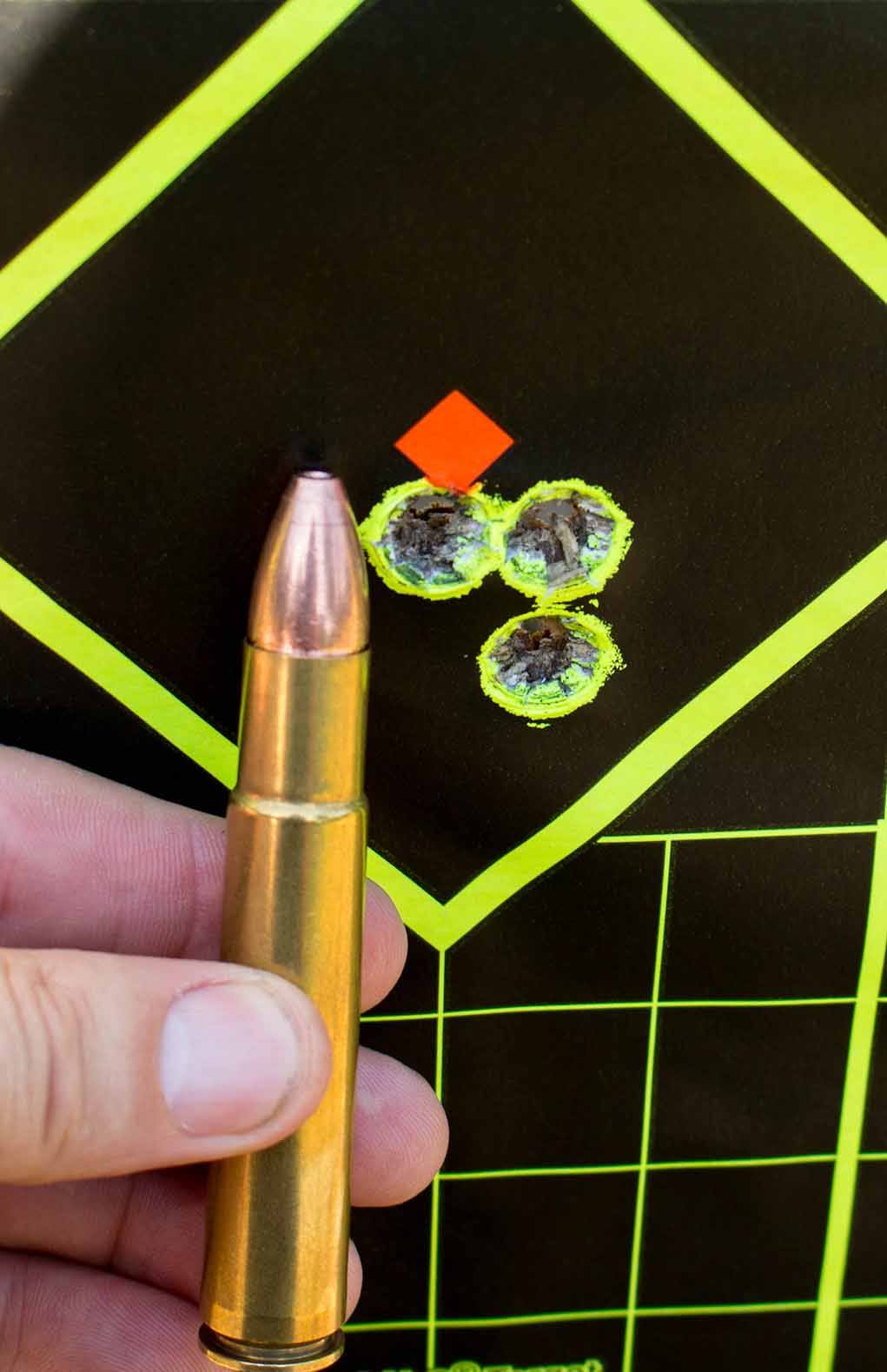
So, I grabbed some of the Kynoch No. 2 wads I had ordered for my .470 NE (more about that in a minute), poured out 102.0 grains of Reloder 15, and we headed to the range. The results were astounding, at least to me. We obtained ยพ-inch groups at 50 yards โ€” better than the other, slower burning powders โ€” and yet the velocities were on par, running at 2,165 fps. But, and itโ€™s a huge but, the felt recoil dropped off at least 15 percent; it was easily visible in the way the rifle handled at the bench. Low pressures, less recoil, and the same ballistics โ€ฆ whatโ€™s not to love?

Dealing With Doubles

The same principal applied to my .470 NE, though the loading process is a bit different for a double rifle than for any single barrel rifle. Double rifles are regulated to have a bullet from each barrel strike (essentially) the same point at about 75 yards, and they are regulated with a particular brand of ammunition at a particular velocity.

The .505 Gibbs with 525 Woodleigh Hydrostatically Stabilized solids, and a charge of Reloder 15, gave great performance with significantly reduced recoil.

My Heym rifle was regulated with Hornady DGX-Bonded ammo, driving a 500-grain bullet at 2,150 fps, so in order to obtain the fantastic accuracy that the factory obtained โ€” my test target showed a left and a right about ยฝ-inch apart โ€” Iโ€™d have to find that same velocity for my handloads. Itโ€™s a different concept, loading to a target velocity, but I quickly had it figured out.

I would be hunting with 500-grain Peregrine BushMaster soft-points and 500-grain Trophy Bonded Sledgehammer solids, and instead of the slower burning H4831SC, RL-22 or RL-25, I once again leaned on Reloader 15 for the reduction in recoil. I loaded up sets of cartridges in one-grain increments from 87.0 to 90.0-grain charge weights, and I sat down with my Oehler 35P chronograph.

The pairs of bullets โ€” one each from each barrel โ€” would tell the tale of what my double preferred, as they would probably start out low and wide at the bottom end of the spectrum, rise and come together as the rifle showed what it prefers, and finally rise higher and separate as velocities continue to increase.

Think the big elephant guns arenโ€™t accurate? The .505 Gibbs and Reloder 15 should surely convince you otherwise.
Think the big elephant guns
arenโ€™t accurate? The .505 Gibbs and Reloder 15 should surely convince you otherwise.

Without boring you with all the data, 88.0 grains of RL-15 gave me 1ยพ-inch pairs, with the velocity matching the Hornady load within 15 fps and a velocity spread of 8 fps. Comparing these cartridges with the H4831SC loads โ€” which gave more than acceptable results โ€” the felt recoil again dropped off considerably, while I easily made the target velocity of 2,160 fps. Two good Cape buffalo bulls fell quickly to the Peregrine/Sledgehammer combination, despite the 112-degree Zimbabwean heat.

A Note On Temps

Reloader 15 has been criticized for being a bit sensitive to temperature fluctuations, and I can see where a shooter might be concerned in extreme cold or hot situations. I did my load development in 90-degree heat, leaving the ammunition in the sun in order to best prepare for my safari, so there was no real noticeable difference in point of impact due to the increased temperatures. Were I preparing to take this rifle into an environment where temps were in the 40-50 degree range, I would definitely measure the velocities in the cooler air, and possibly make an adjustment in charge weight for the double rifle. Such is the nature of the beast.

If youโ€™re loading for a good number of cartridges, including the ones Iโ€™ve mentioned throughout this article, Reloder 15 can easily be the universal answer to a lot of reloading questions; take a look at the rifle cartridges you load for, and Iโ€™d be willing to bet if theyโ€™re in the middle of the road, you can make Reloder 15 work for you.

Editor’s Note: This article originally appeared in the December 2018 issue of Gun Digest the Magazine.
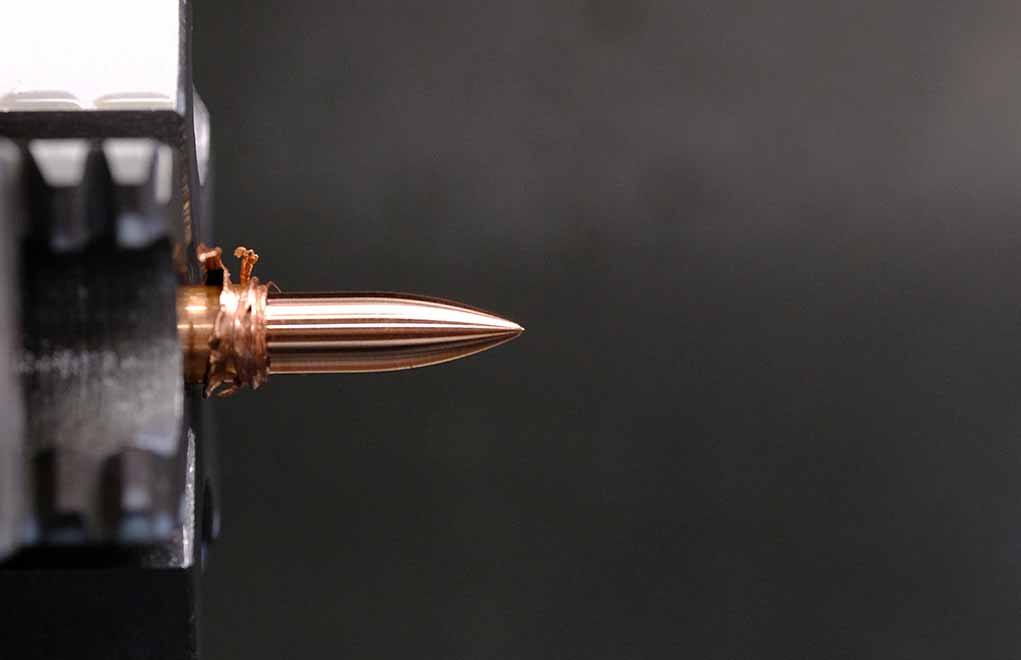
Syntech Defense Puts A Twist On The Hollow Point

0

Syntech Defense is not your typical hollow point defensive ammo. Designed to fragment, the synthetic-jacket bullet shoots for devastating terminal performance.

How Syntech Defense Is Different From Traditional Hollow Point Ammo:

  • Synthetic jacket instead of copper
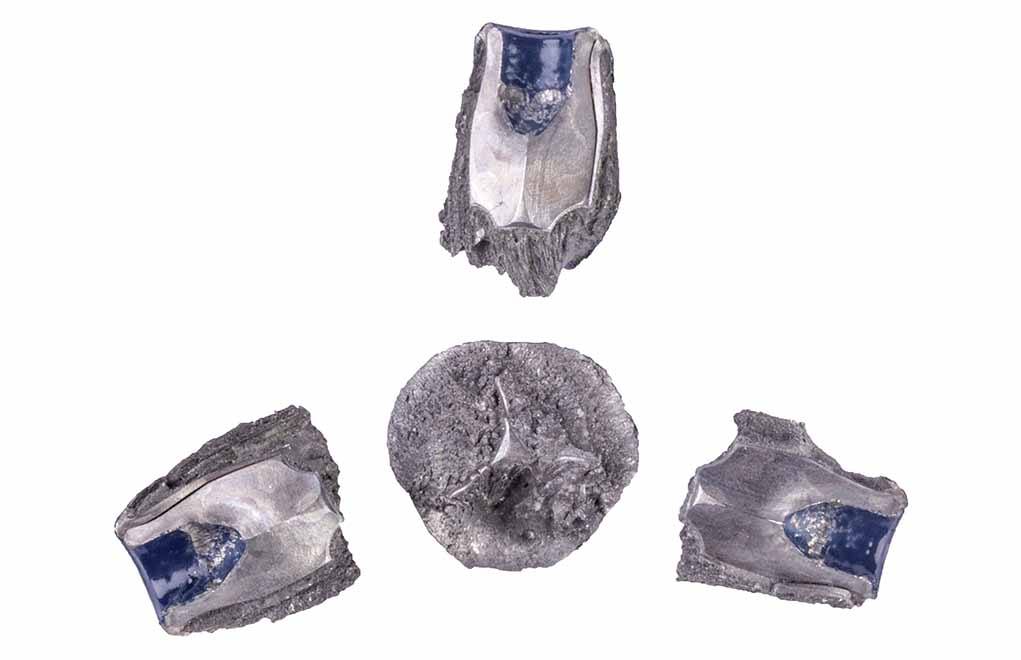
  • Bullet designed to fragment in four pieces
  • Produces one primary wound channel and three secondary
  • Core achieves 12 to 18 inches of penetration

A few years back, Federal Premium went a completely different direction with bullet design โ€“ synthetic. A pretty crazy concept, a fully synthetic jacket over a lead core. One might even go so far as to say it just doesnโ€™t sound right. But the Syntech line of handgun ammo proved it could perform, so itโ€™s earned a comfortable niche in the shooting world.

Synthec Defense 3

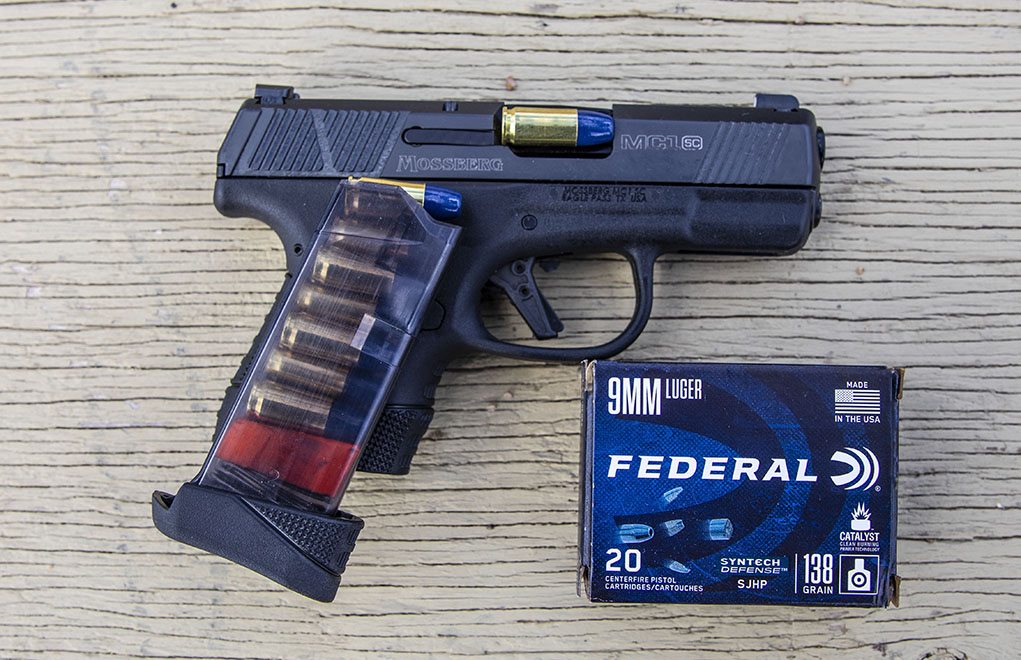
Up to now, Federal has maintained the line strictly as range fodder, but recently let the reins out introducing Syntech Defense. Yup, plastic-coated lifesavers for all the favorite defensive calibers. In all, the ammo-maker has released 138-grain 9mm, 175-grain .40 S&W and 205-grain .45 ACP options. Thereโ€™s likely more to come.

Load Up On More Ammo Knowledge:


As you could already guess, Syntech Defense doesnโ€™t operate like your everyday, average hollow point โ€“ mushrooming to produce a single large wound channel. Instead, itโ€™s akin to some monometal defensive options โ€“ splitting apart to create multiple wound cavities. As Federal puts it, the bullet is engineered to break into four sections, three petals and a deep-penetrating core. From the companyโ€™s numbers, the core penetrates 12 to 18 inches of ballistic gel through heavy clothing; the petals around 6 inches.

What do you think about Federal Premiumโ€™s new offering? Would you load up with it? Tell us below.

More from Federal Premium:

From the No. 1 Brand in Handgun Ammunition, Federal is proud to introduce new Syntech Defense. These loads produce dynamic terminal performance with a hollow-point bullet that separates into three segments and a deep-penetrating core on impact. Shipments of Syntech Defense ammunition have been delivered to dealers.

Synthec Defense 4

The original Syntech changed the range forever. Now, the technology is also revolutionizing protection. The bullet in Syntech Defense has a core that penetrates 12 to 18 inches through bare ballistics gel and heavy clothing โ€” a critical benchmark in self-defense situations and the best terminal performance of any round in its class. The segments create three secondary wound channels, each more than 6 inches deep, adding to the terminal effect.

Like all Syntech loads, an advanced polymer jacket eliminates lead and copper fouling and drastically reduces damaging heat and friction in the barrel. Its Federal exclusive Catalyst primer provides hot, extremely reliable ignition without the use of lead.

Features & Benefits
โ€ข Best terminal performance in its class
โ€ข Hollow-point bullet separates into three segments and a deep-penetrating core on impact
โ€ข Core achieves 12 to 18 inches of penetration in both bare ballistics gel and through heavy clothing
โ€ข Segments create three secondary wound channels more than 6 inches deep
โ€ข Blue polymer jacket reduces barrel heat and friction and eliminates metal fouling
โ€ข Extremely reliable Catalyst lead-free primer

Part No. / Description / MSRP

S9SJT1 / Syntech Defense 9mm Luger 138 grain, 20-count / $19.95

S40SJT1 / Syntech Defense 40 S&W, 175 grain, 20-count / $22.95

S45SJT1 / Syntech Defense 45 Auto, 205 grain, 20-count / $24.95

For more information, please visit www.federalpremium.com.

Going All Thumbs With The Blackhawk T-Series Holster

0

A completely redesigned release system and new cutting-edge material, the Blackhawk T-Series succeeds over the Serpa.

How The Blackhawk T-Series Improves The Quick-Release Retention System:

  • Thumb pressure release the pistol in the natural motion of gripping the gun.
  • Low-friction interior facilitates a fast draw and quick re-holster.
  • Lining dampens sound drawing the pistol.
  • Glass-fiber backed polymer exterior made battle tough.
  • Available in level-2 and level-3 retention systems.

One of the overlooked features of a holster โ€“ next to keeping your pistol on your hip and your booger hook off its trigger โ€“ is keeping your gun out of a bad guyโ€™s hands. For many, this important duty is achieved by remaining clandestine. Felonious meatheads canโ€™t yank what they donโ€™t know is there. But there are circumstances โ€“ duty or open carry โ€“ that require more than just friction to keep a gun secure and in your possession.

T-Series Holster 1

More retention devices are required, hopefully in a system that doesnโ€™t slow down your draw to the point of peril. Seconds count, so the last thing you need is fumbling fingers around a retention-release system. For holster makers, itโ€™s a tricky balance to achieve โ€“ kind of like fast and accurate behind the trigger takes time to develop. But with the release of the T-Series Holster, Blackhawk might have found the middle road between a secure sidearm and a speedy presentation.

The Anti-Serpa

For many years, next to the old thumb-break holsters, one of the best known level-2 retention options was Blackhawkโ€™s Serpa. Pushbutton operated, the polymer hanger released your sidearm with the flick of your index finger. On paper, it sounded brilliant. In practice, it could prove otherwise. Operating it properly and efficiently required plenty of familiarity with the system. Even then draw mechanics had to remain pristine and particular to the Serpa.


For more information on concealed carry holsters check out:


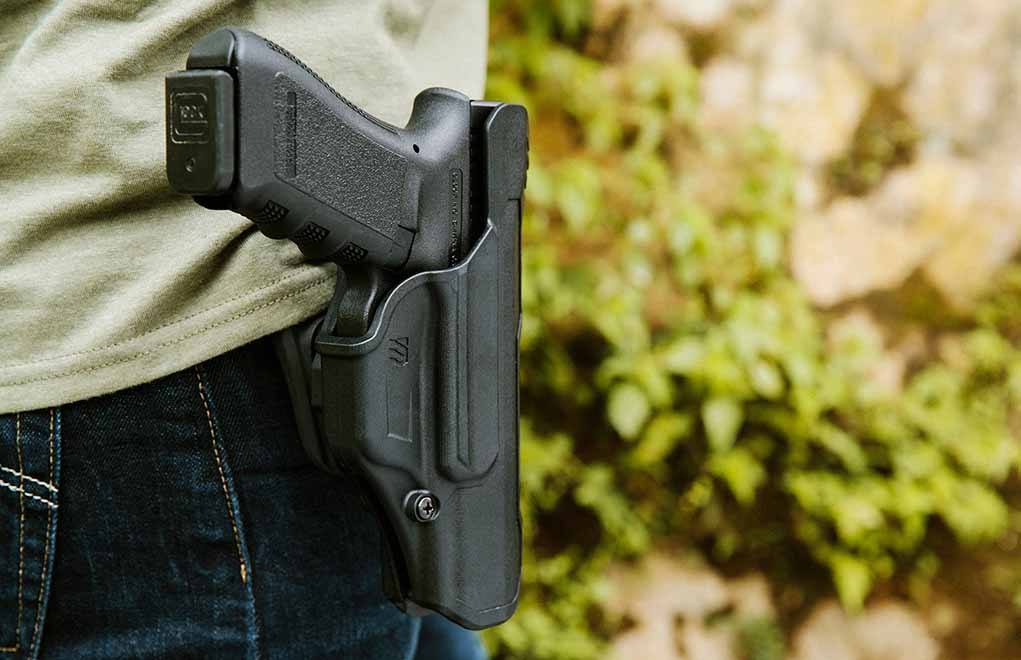
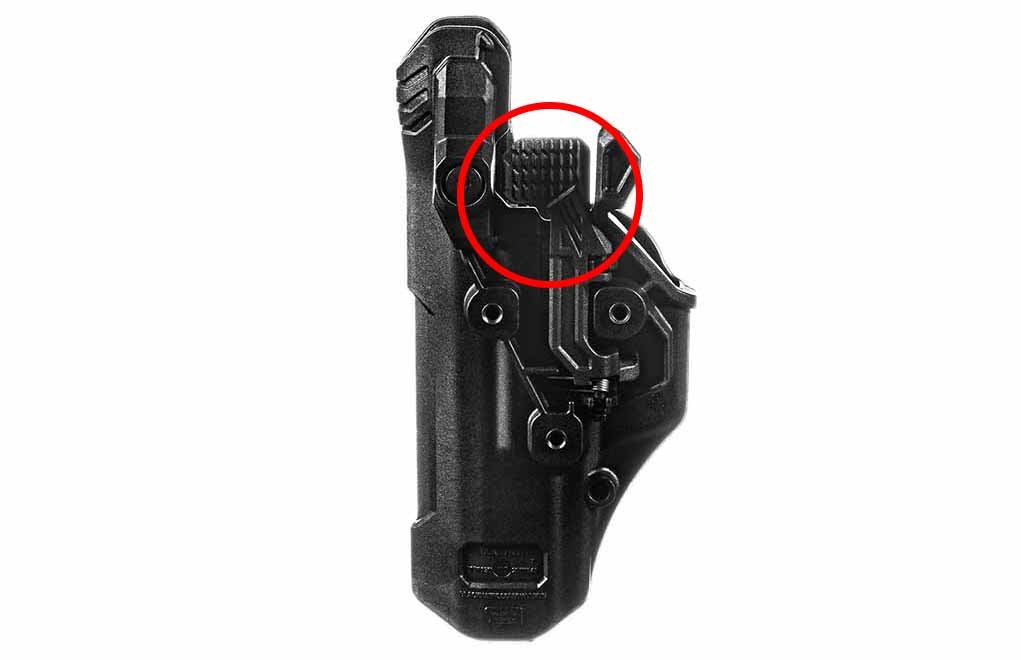
Going back to the drawing board, Blackhawk turned everything around on the T-Series, literally, making all the difference in the world. Instead of the index finger, the thumb actuates the release mechanism on the level-2 L2D and level-3 L3D holsters. Might not sound like a huge switch, but trust me it is, making the system nearly second nature to operate โ€“ and quickly with little training. The genius is the T-Series functions flawlessly through the natural motion of acquiring a master grip. When done properly, it is as effortless as drawing from any level-1 holster. Arguably, when your execution is perfect, easier.

T-Series release button located on the inside of the holster, actuated through the natural motion of gripping your pistol.
T-Series release button located on the inside of the holster, actuated by your thumb, through the natural motion of gripping your pistol.

Furthermore, the placement of the T-Seriesโ€™ release, along with a redesigned spring system, gives the user peace of mind it will work each time. Not always the case with the Serpa The older holsterโ€™s release button was notorious for its susceptibility to jam with debris. A dangerous situation for what is essentially a duty holster, but an issue Blackhawk says the T-Series eliminates.

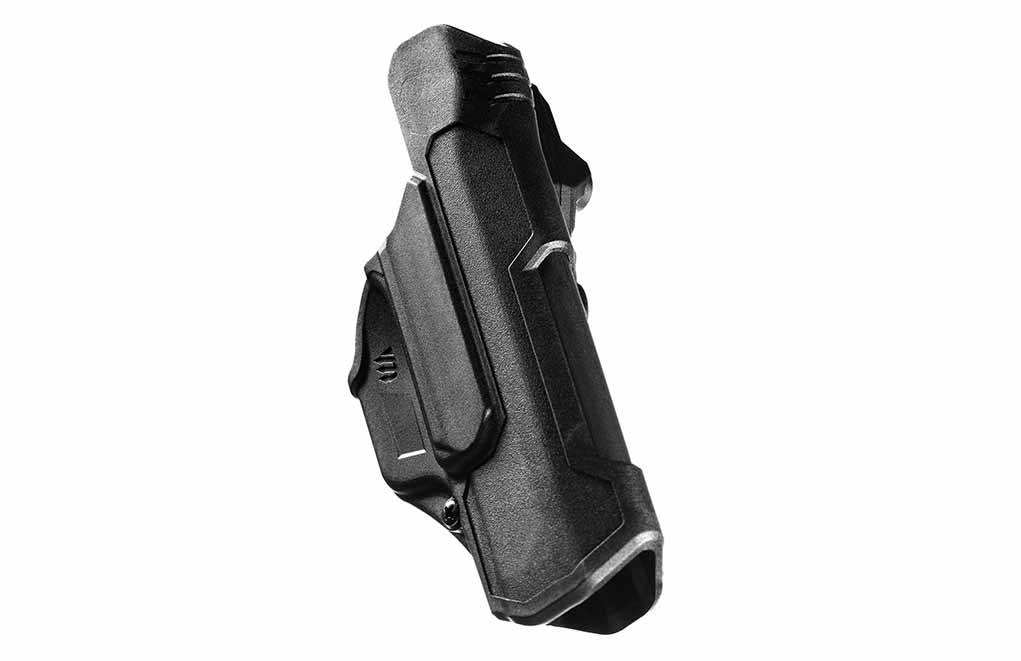
In addition to the new release system, the T-Series also features an industry-first dual-shot molding process. The exterior is constructed of a battle tough glass-fiber back polymer, while the interior is a silky smooth and quiet liner.
The liner reduces friction substantially, allowing the gun to race out on the draw and slip back in quickly on the re-holster. An added benefit, it also reduces sound.

On The Firing Line With The T-Series

I recently had the opportunity to put the T-Series through its paces at the range. Over the course of three hours and more than 400 rounds, I would have to say the holster more than lives up to its billing. The T-Series L2D indeed facilitates a fast draw and takes little time to master.

Exterior of the T-Series made of a durable glass-fiber backed polymer.

The holster does take some getting used to. You canโ€™t sweep in on the rear of your pistol, otherwise, your thumb will run headlong into a shield at the back of the release paddle. Frustrating at first, when I was getting used to the rig and trying to keep expediency a premium. But programming a linear approach to muscle-memory was a minor hurdle. And once conditioned, the holster was a pleasure to work with โ€“ which we did extensively under the bark of a former Marine firearms instructor.

In short, the T-Series is fast, secure and, above all, intuitive. About everything you want out of a level-2 retention holster.

Parting Shot

Out of the gates, the T-Series is only fitted for one gun, logically the ubiquitous Glock 17. Though, you can expect new models and accessories to appear through the end of the year. This includes variations with a speed cut (sadly ours did not feature this), fitted for weapons-mounted lights and, of course, various makes and models.

When they are released for your particular pistol, the holster is worth a look. Whether for your job or style of carry, the T-Series address all the issues of its sibling Serpa in an innovative, but more importantly, effective manner.

A side note for the Serpa diehards: donโ€™t worry, Blackhawkโ€™s new holster isnโ€™t knocking it off the shelves. The company is and will continue to make it.

For more information on the T-Series Holster, please visit www.blackhawk.com.

How To Prioritize Spending On Your AR-15

0

Building, upgrading and becoming proficient with your AR-15 can quickly add up to big bucks. So how should you spend your money to get the most out of your carbine?

What Are The AR-15 Essential You Should Prioritize Your Money For:

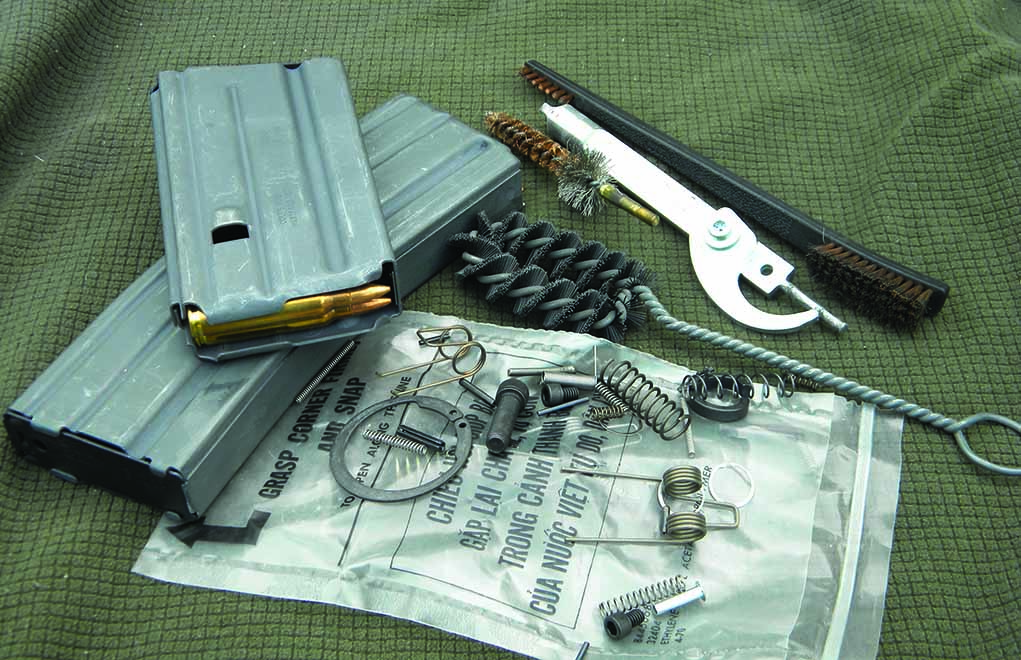
  • Cleaning and maintance gear
  • Spare and replacement parts: pins, springs, etc.
  • Magazines and ammo
  • Proper training and educational material

Each year brings about an assortment of new products and supplemental gear thatโ€™s released for the AR platform โ€” even different configurations of rifles, carbines and โ€œnewโ€ calibers.

The โ€œessentialsโ€ category includes everything needed to keep your AR running. Small parts, such as pins, springs, detents and such are affordable and small โ€” so you can carry them with you in the field. Keep some funds ready for when you find a good buy on ammo and magazines, or anything else necessary to ensure you donโ€™t get caught out of commission.

Everyone likes procuring new gear. Sometimes itโ€™s something we really need โ€” it fits a specific application โ€” or itโ€™s a new piece of gear we simply want. And then there are training classes we want to schedule and attend.

Few of us have the ability to buy everything we need or desire, which means we have to choose. So, when it comes to budgeting your โ€œAR dollars,โ€ there are main โ€œclustersโ€ I like to organize all this into: essentials, entertainment and education.

AR-15 Essentials

The โ€œessentialsโ€ include everything necessary to clean, maintain and operate the AR. Every AR owner should know how to properly clean their rifle and maintain it, swapping out small parts as needed. There are a few special tools youโ€™ll need to correctly clean the AR, such as a chamber brush. This brush cleans the lugs in the barrel extension, where lugs of the bolt mate up โ€” and at the same time itโ€™s cleaning the chamber.

Also, get a good cleaning rod, which means a one-piece rod thatโ€™s coated. I use Dewey. And get a bore guide: It protects the chamber and keeps the cleaning rod traveling straight down the barrel, and thatโ€™s highly recommended. The proper cleaning gear isnโ€™t cheap, but it protects your weapon for a lifetime of use. Make sure to budget for the good stuff.

Books can fall into the โ€œeducationโ€ or โ€œentertainmentโ€ category. They donโ€™t have to be AR-specific for you to learn something, and thereโ€™s great works both past and contemporary that a rifleman or woman should read.

The AR is one of the great firearms ever designed. Youโ€™ve heard me say it before, and youโ€™ll hear me say it again. Its simplicity and modular design make is easy to maintain, and most of the parts you need to keep on-hand are small and affordable. Get a breakdown on the parts, and then get replacements and extras. This includes pins, springs and detents for the trigger and bolt groups. Having spare bolt is a good idea.

Items such as magazines and ammo also fall into this category. The availability and price of ARs and related gear can be very fluid โ€ฆ and the same is true of ammo. Iโ€™ve seen this scenario olay out several times during the past 40 years: A tragedy occurs. Politicians and the media start talking โ€œgun control. And then anything related to the AR either sells out or rises greatly in price โ€” regardless of the caliber. Almost overnight.


Need More AR Knowledge:


Right now, items such as parts, magazines and ammo are plentiful and affordable. Put some money aside to grab necessities each month. One thing is for sure: These items are always a good investment.

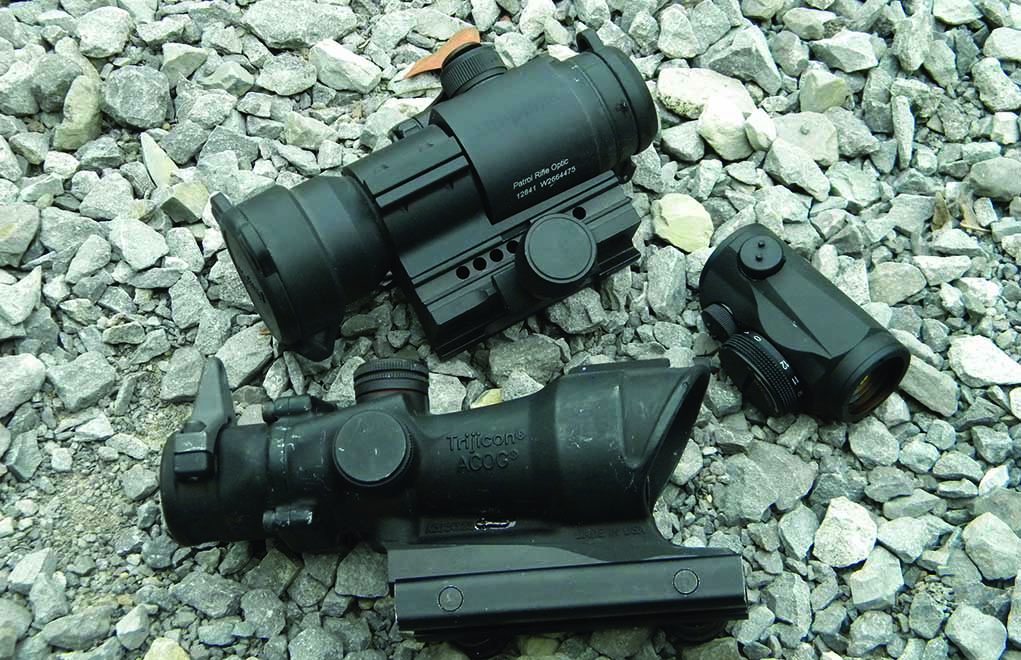
Speaking of investments, I consider upgrading and acquiring new gear as an investment: Iโ€™m spending money in hopes of making things better. Some upgrades are not that stiff โ€” swapping out grips or changing slings. Clamping an optic on top your AR, on the other hand, is going to be more financially significant. There are budget options out there, but if the reason for shooting is important โ€” lives might depend on your ability to make an accurate shot every time โ€” you canโ€™t skimp on that scope or red-dot sight. Study and research well, and make sure you get exactly what you need. Having to buy a piece of gear twice is a lot more expensive.

Entertainment

Sometimes, thereโ€™s just something you want โ€” the โ€œentertainmentโ€ category โ€” even though thereโ€™s no justifiable need for it โ€ฆ itโ€™s just a piece of gear youโ€™ve been yearning for. Gear like this should be budgeted for over a longer period of time โ€” it should never be a spur of the moment decision or impulse purchase. And itโ€™s my strong opinion that you donโ€™t pay for something unnecessary by โ€œborrowingโ€ from one of the other funds, no matter how cool it is.

Donโ€™t forget to budget for training, which is educational and fun. Class cost includes ammo, travel expenses and any specific gear that might be needed for the instruction. After training comes practice, so youโ€™ll need to allot money for additional ammo.
Donโ€™t forget to budget for training, which is educational and fun. Class cost includes ammo, travel expenses and any specific gear that might be needed for the instruction. After training comes practice, so youโ€™ll need to
allot money for additional ammo.

For example Iโ€™m fascinated by thermal vision gear. Iโ€™d like to have some, but the probability of me actually needing it is extremely low. So, I keep saving โ€” the compact, good stuff is expensive. And who knows, maybe while Iโ€™m saving the technology will keep advancing and the prices might drop.

Education

One area a lot of AR owners donโ€™t budget for is training. Owning an AR โ€” or any firearm โ€” requires knowing how to use it safely and efficiently. Any time youโ€™re around firearms, safety is your No. 1 concern โ€” we all know this but few invest in it. This is also true in the field and during defensive encounters.

Most everyone knows the at least some rendition of the four basic safety rules of firearm safety:

Rule I: All guns are treated as though loaded.
Rule II: Never point the muzzle at anything youโ€™re not ready or willing to shoot.
Rule III: Keep your finger off the trigger until the sights are on target.
Rule IV: Make sure to identify your target and whatโ€™s surrounding and behind it.

With training, you understand why Rule II is so important with ARs. The AR has a free-floating firing pin. Every time a round is chambered, the firing pin strikes the primer, though usually not with enough force to ignite it. Even though itโ€™s very rare, the AR can fire during loading or reloading. Keep the muzzle pointing downward in safe direction. Always.

Big purchases, such as optics, can take time to save up for. Research, and test if possible, before buying. And pay a little extra if you have to so that you get what you want, so you donโ€™t end up having to buy again after settling for something that doesnโ€™t really fit your needs.

The techniques used to manipulate the AR are not instinctual. The AR is ergonomic, and once learning the proper techniques for loading/unloading, reloading and clearing stoppages, youโ€™ll understand this: All the controls are in just the right place โ€ฆ and having someone teach you how to manipulate them most efficiently is a great investment. This is especially critical for defensive use: On the range or in competition, not knowing how to reload or clear a stoppage efficiently means no trophy โ€” in a fight, these skills could be the difference between life and death.

Plus โ€” and this is important โ€” training introduces you to defensive principles and techniques needed to respond to a threat. Weโ€™re not born knowing how to fight with firearms. Training, followed by plenty of practice, is required. You need to budget for training, and the ammunition required for live-fire practice after attending class.

For me, this category also includes books and other reference material. Yes, there are videos, etc out there for free, but what I call the โ€œgoodโ€ stuff, both past and present, is mostly available in book format. Plus, I like to turn down pages, highlight and make notes in the book. You canโ€™t do this on a computer. The act of writing makes a mental connection that typing doesnโ€™t. You learn more from an actual book, but they are expensive.

As time passes, the more I realize that itโ€™s about software โ€” and not hardware. I get the same amount of pleasure shooting a vintage carbine from the โ€˜70 as I do a contemporary version of the AR. And I could use a plain-Jane carbine to defend my life.

However, my modern sporting rifle with a red-dot sight, weapon-mounted light and ALG combat trigger does make the job easier. And, regardless of how old I get, budgeting for the essentials, entertainment and education components of AR ownership still require me to keep a budget.

Editor’s Note: This article originally appeared in the December 2018 issue of Gun Digest the Magazine.
Stevens Introduces 555 and 555 Enhanced In 16-Gauge

0

Stevens 555 Enhanced 3

The 555 and 555 Enhanced 16-gauge options breathe new life into the versatile medium bore.

What Are The 555 And 555 Enhanced Features:

  • Chrome-lined carbon steel barrels
  • Turkish walnut stock
  • Lightweight aluminum receiver with tang-mounted safety
  • Single selective mechanical trigger
  • Manual extractors
  • Five interchangeable choke tubes

The 16-gauge isnโ€™t dead yet. While the bore has been fading from American shotgunning for nearly a century, among those seeking a sleek and balanced field gun it still remains popular. Hard to find, but popular.

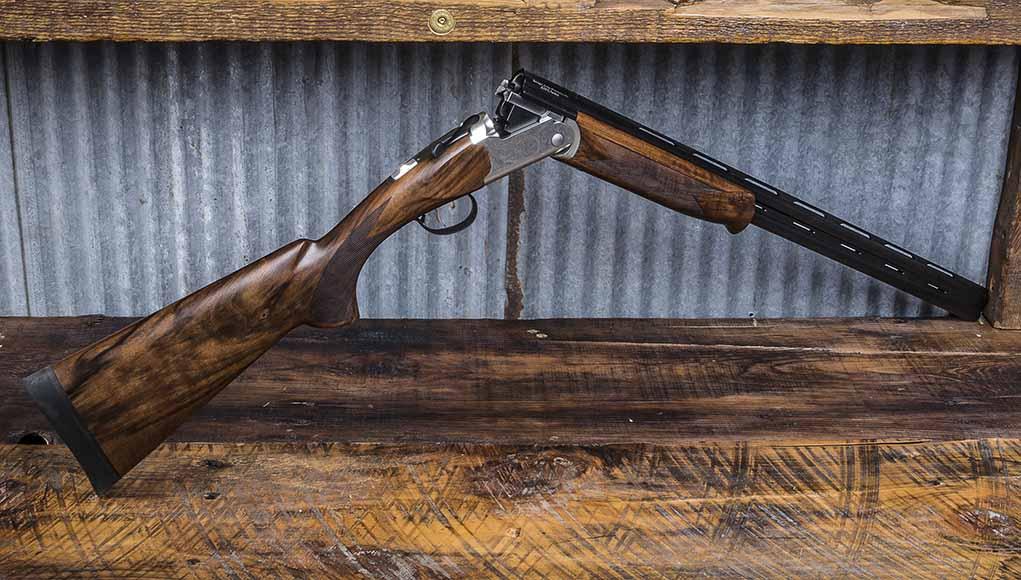
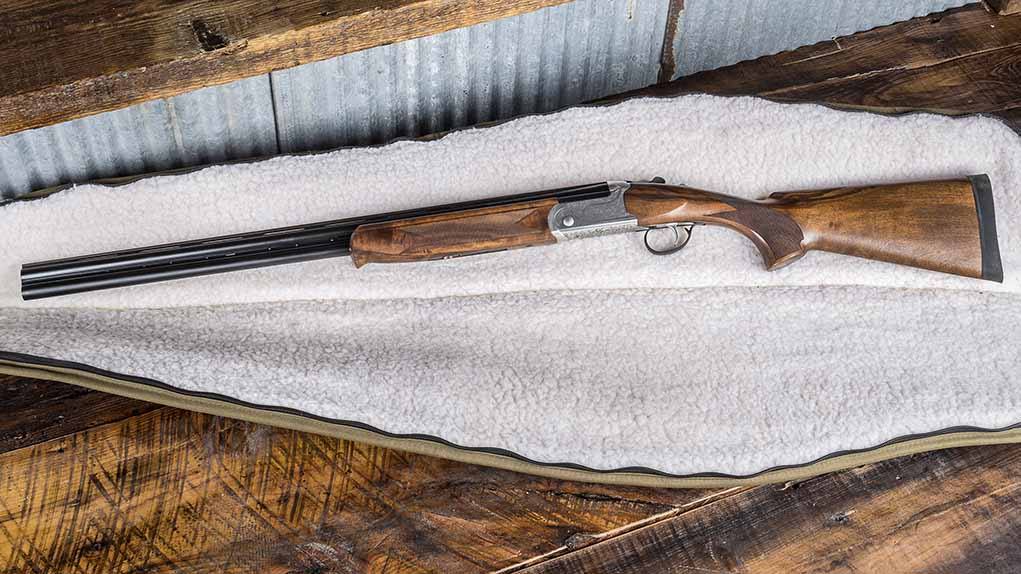
Stevens made it a bit easier to get into this versatile and easy handling bore recently, with the introduction of the 555 and 555 Enhanced in 16-gauge. Like many of its heralded predecessors, the Turkish-made gun is a slick and attractive over/under begging for a covey of quail or a rocketing rooster. Furthermore, the 555 Enhanced offers a touch of tradition with filigree engraving on its aluminum receiver. Outside of ornamentation, the brass tacks of the shotguns are nearly identical, both boasting chrome-lined 28-inch barrels, Turkish walnut stocks, Schnabel forends and manual extractors.


More Shotgun Posts:


Incidentally, if you ever wondered what happened to the 16-gauge in America, Terry Weiland gives you the answer. In a word, skeet:

In the United States, the 16โ€™s loss of popularity is generally blamed on the originators of skeet. When the rules for skeet were drawn up, in 1926, it was decreed that the game would be officially shot with four gaugesโ€”12, 20, 28, and .410โ€”and that left the 16 an orphan.โ€

Read the whole thing, itโ€™s worth your time.

From Stevens:

WESTFIELD, Massachusetts – April 10, 2019 – Stevensโ€™ new 555 Enhanced doles out world-class over-and-under performance โ€” and now does it in 16-gauge. Shipments of these firearms have been delivered to dealers.

The field- and trap-tested platform is light and handles fast, thanks to a lightweight aluminum receiver thatโ€™s scaled to gauge and reinforced by a steel insert. Itโ€™s also loaded with features, including a stylish Turkish walnut stock and chrome-lined, 28-inch carbon steel barrels.

Stevens 555 Enhanced 2

Features
โ€ข New 16-gauge offering
โ€ข Chrome-lined carbon steel barrels
โ€ข Turkish walnut stock
โ€ข Lightweight aluminum receiver with tang-mounted safety
โ€ข Single selective mechanical trigger
โ€ข Manual extractors
โ€ข Five interchangeable choke tubes

The available model list below also includes the standard 555 blued receiver without engraving option.

Part No. / Description / MSRP
22179 / 555 Enhanced 16-gauge, 28-inch barrel / $879
22178 / 555 16-gauge, 28-inch barrel / $705

For more information on the 555 and 555 Enhanced, please visit www.savagearms.com.

Ruger Unveils Carry-Tailored Security-9 Compact

0

Security-9 Compact 2

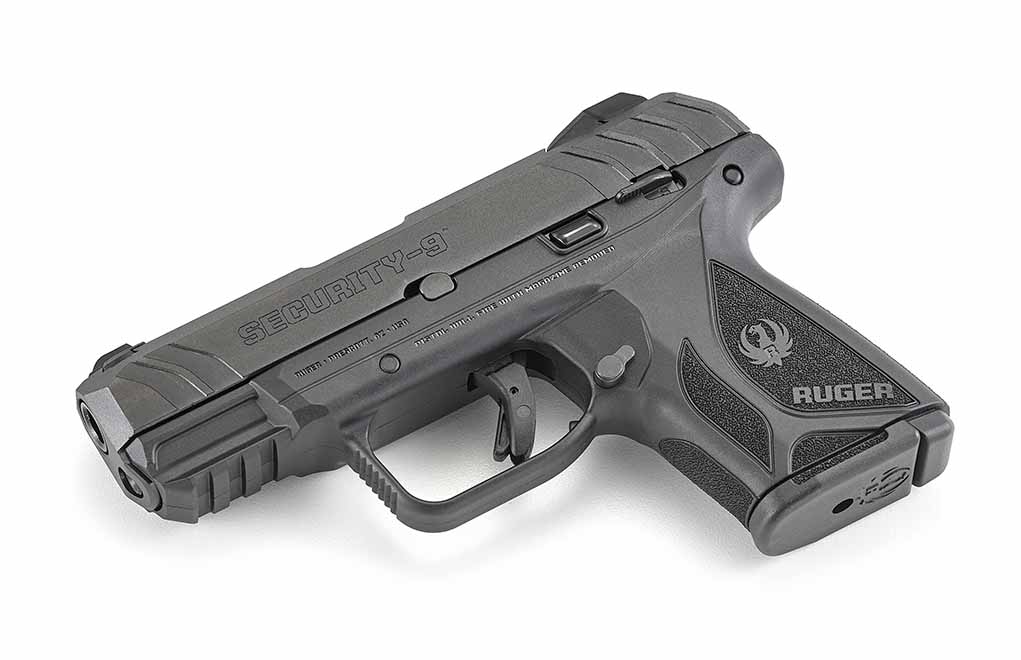
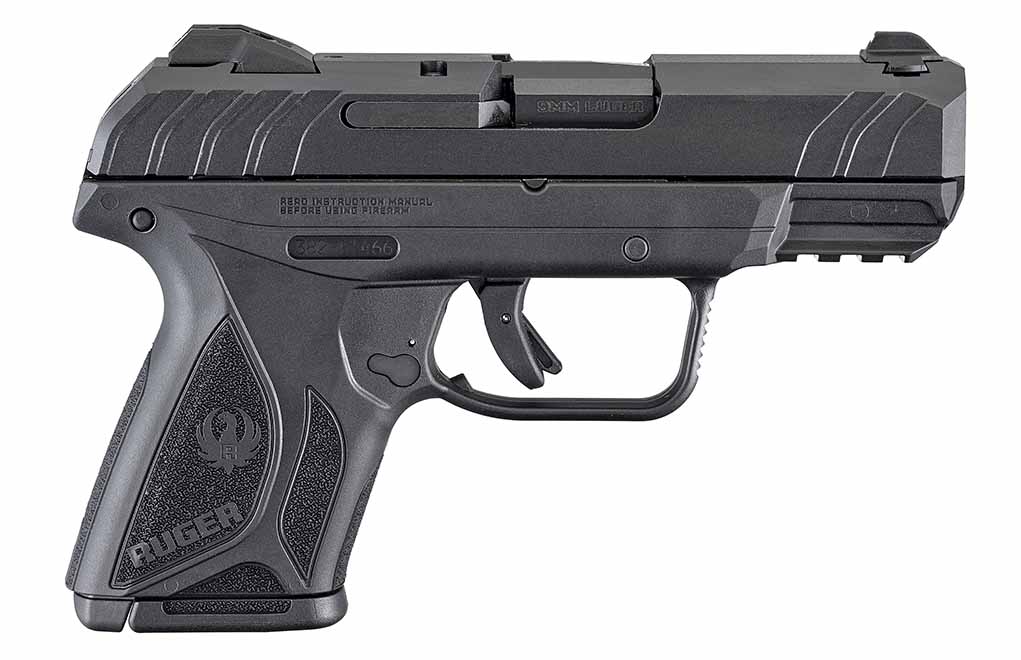
Made for carry, the Security-9 Compact offers armed citizens an affordable 9mm option.

Ruger Security-9 Compact Specs:

  • Capacity: 10+1
  • Barrel Material: Alloy Steel
  • Barrel Finish: Blued
  • Barrel Length: 3.42″
  • Overall Length: 6.52″
  • Sights: Drift Adjustable
  • Weight: 21.9 oz.
  • Grip Frame: High-Performance, Glass-Filled Nylon
  • Slide: Material Through-Hardened Alloy Steel
  • Slide: Finish Blued
  • Slide: Width 1.02″
  • Height: 4.35″
  • Grooves: 6
  • Twist: 1:10″ RH
  • MSRP: $379

Ruger struck a nerve among shooters with the introduction of the Security-9 a little over a year ago. So it comes as no surprise the gunmaker would cook up a little something to go along with the duty-sized 9mm. Just unveiled, the Security-9 Compact comes with many of the same features as its big brother, just in a package all the more easy to conceal and carry on a regular basis.

In all, it appears a tidy little package, weighing in at 22 ounces, boasting a 3.42-inch barrel and coming in at 5.52-inches in length and 1.02-inches in width. The polymer-framed 9mm ships with two 10-round magazines and like the earlier iteration is extremely easy on the pocketbook. With an MSRP of $379, it is most certainly among the most affordable compact polymer pistols around today.


More Handgun Information:


More from Ruger:

Sturm, Ruger & Company, Inc. (NYSE-RGR) is proud to introduce a new, compact version of the popular Security-9ยฎ pistol. Smaller, lighter and more concealable than its full-size counterpart, the Security-9 Compact is ideal for everyday carry with an overall length of 6.5โ€ and weighing in at just under 22 ounces. The attractive price point of both the full-size and compact models will have you wanting one of each.

The Security-9 Compact ships with two, 9mm Luger, 10-round, flush-fit steel magazines, which provide for greater concealability. Also included is one finger grip extension floorplate for added control. Extended, 15-round magazines are also available for purchase at ShopRuger.com.

Security-9 Compact 1

The Security-9 family shares the same Secure Action used in the LCPยฎ II, which is derived from the reliable and proven hammer-fired LCP fire control system. The Secure Action combines the smooth trigger pull of the LCP with the short, crisp feel and positive reset of a single-action. Additional safety features include an integrated trigger safety; external manual safety; neutrally balanced sear with significant engagement and strong spring tension; and hammer catch to help prevent the hammer from contacting the firing pin unless the trigger is pulled.

The American-made Security-9 Compact is constructed around a rigid, precision-machined, hard-coat anodized aluminum chassis with full-length guide rails and a blued, through-hardened alloy steel slide and barrel. Identical to the full-size model, this pistol also features eye-catching sights, a textured grip frame and an easy-to-rack slide.

For more information on the Security-9 Compact, please vist www.ruger.com.

6 Defensive Handgun Drills to Master

2

Here are six handgun drills that are certain to get you closer to mastering the art of the pistol.

What are the essential handgun drills:

Those who consider themselves practitioners of the defensive handgun are always looking for handgun drills that will improve their skill level, and for drills that are fun. The fun part is important; itโ€™s something that pushes us to the range. The getting better part is important, too, because ultimately you are the one responsible for the protection and defense of your life. Here are six of my most often used defensive handgun drills.

Single Head Shots Drill

Handgun Drills 2
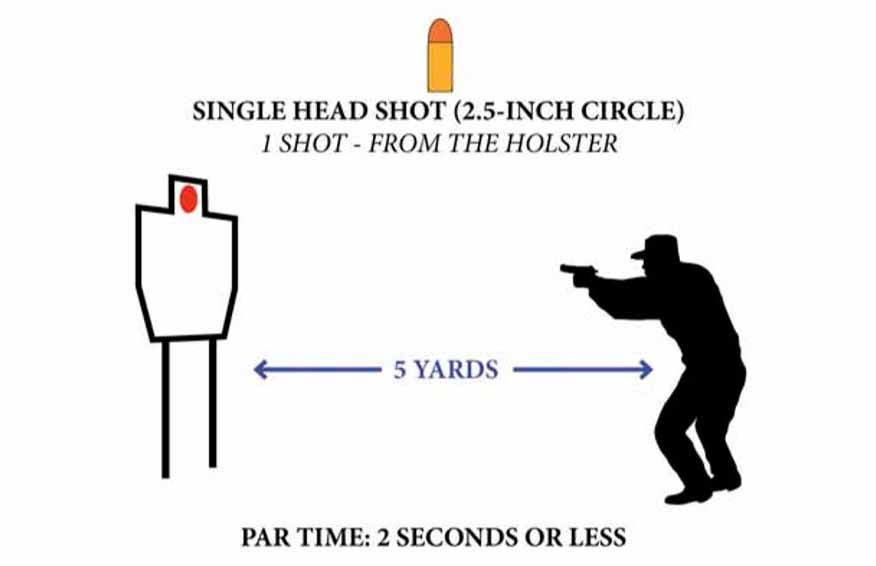
I once asked this of Gunsite Instructor Il Ling New: โ€œIf you could only practice one defensive handgun drill, what would it be?โ€ Her answer might surprise many, but this is it: single shots to the head โ€” from the holster.

Pragmatically, it makes sense: It focuses on what, in reality, is the most important aspect of employing a defensive handgun. You have to get your handgun out of the holster and on target, and then deliver a single accurate shot โ€” in a hurry. Conduct this drill from 5 yards and work until you can complete it, on demand, in less than 2 seconds.

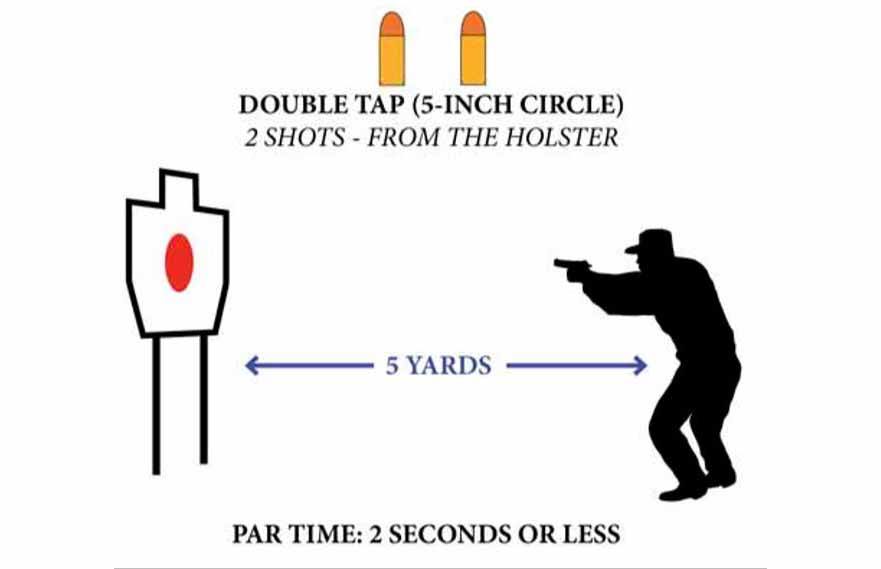
The Double-Tap Drill

Handgun Drills 3
When it comes to stopping a threat with a defensive handgun, the more holes you make in the right places the better your chances will be. This is why most consider the standard response to be two quick shots, center mass. Some call this a โ€œdouble tap,โ€ some call the two shots โ€œhammers,โ€ and some refer to them as โ€œcontrolled pairs.โ€

Practically speaking, theyโ€™re all different, but the underlying premise it two accurate shots delivered center mass, from the holster, very fast. Work this drill from 5 yards, and put two shots center mass in less than 2 seconds. You should be able to cover both holes with the palm of your hand.

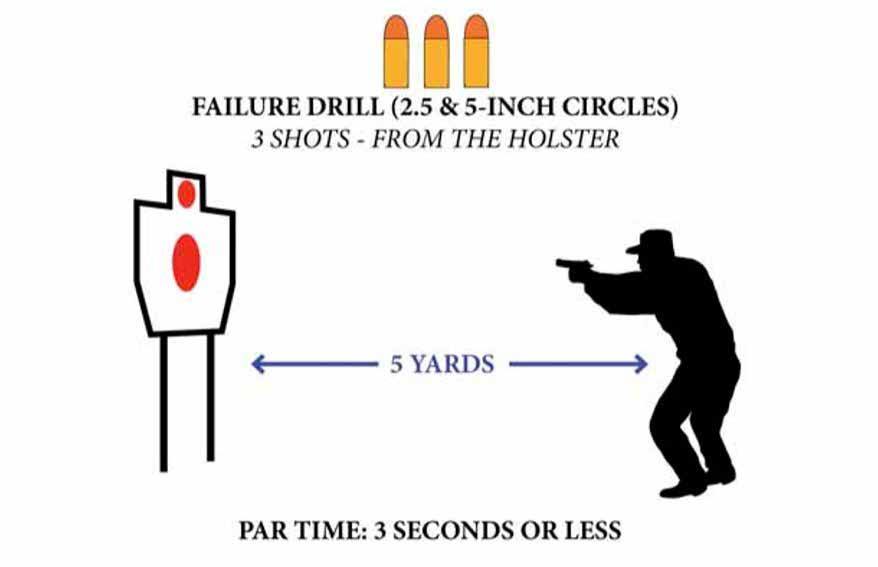
Failure Drill

Handgun Drills 6
Defensive handgunners and competition shooters take a different approach to this drill. Itโ€™s essentially a double-tap center mass followed by a head shot. Competition shooters fire all three shots without a pause, when the head shot is supposed to serve as the finisher, if the body shots fail.

For training, run this drill like a competition shooter, because the goal is for you to master the transition from the hammered pair center mass, to the single โ€” very controlled โ€” head shot, quickly. From 5 yards and from the holster, double-tap the target center mass, and then make a head shot. Your par time should be less than 3 seconds.


Get More Self-Defense Information:


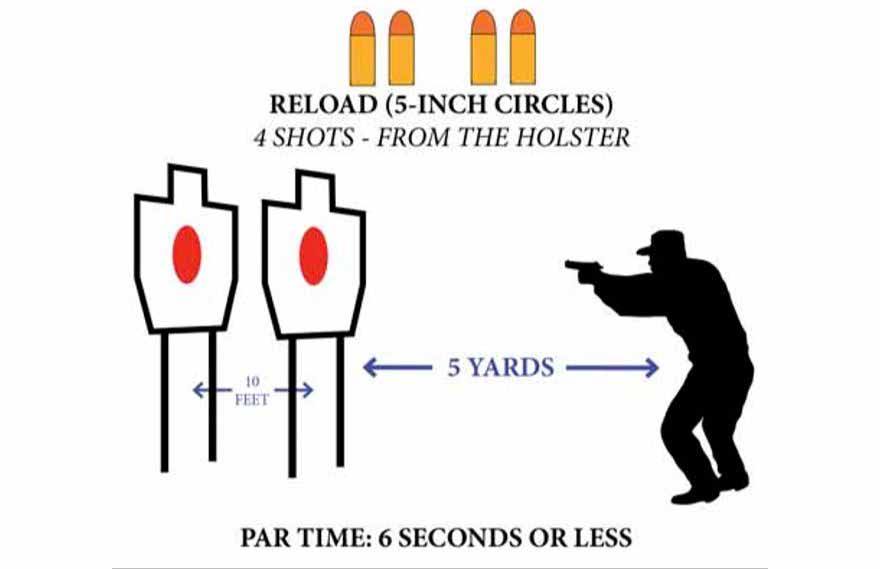
Reload Drill

Handgun Drills 5
Keeping your handgun in the fight is critical. If you get a stoppage, you must clear it quickly. If you run out of ammo, you best solve that problem in a hurry. This drill requires you to conduct a speed reload โ€” which is very similar, and an alternative to immediate action.

Space two targets 10 feet apart at 5 yards distance. From the holster, double-tap the first center mass, conduct a reload and repeat on the second target. You should work at it until you can complete the drill in less than 6 seconds.

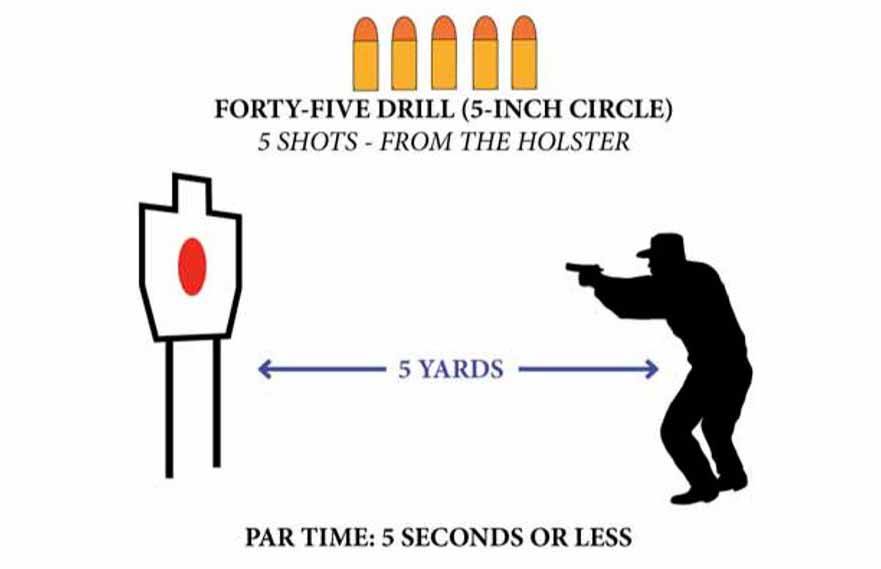
The Forty-Five Drill Adrenalin Dump

Handgun Drills 1
I devised this drill primarily for testing the shootability of the wide variety of defensive handguns I review. However, itโ€™s also a great tool to use to prepare you for a lethal encounter: Sometimes, one, two โ€” or even three shots โ€” are not enough. It gets its name because itโ€™s made up of four elements of five.

Place a target at 5 yards and, from the holster, fire five shots, into a 5-inch circle in less than 5 seconds. Itโ€™s harder than it sounds, and Iโ€™ll bet youโ€™ll fail the first time you try it.

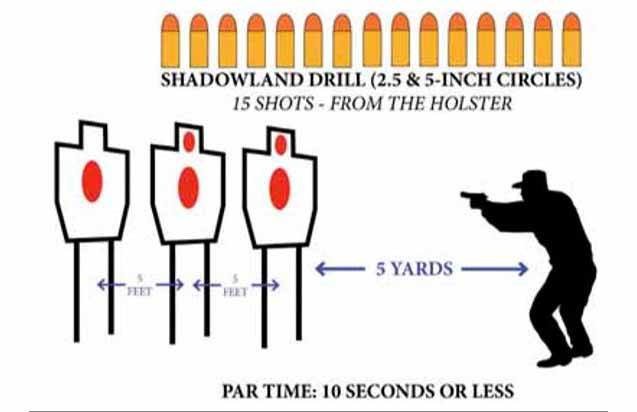
The Shadowland Drill

Handgun Drills 4
An interesting and very fun drill I use frequently here at my home range is nothing more than combining all five of these drills into one. If you can conduct it to the standard, youโ€™ve proved youโ€™re a reasonably capable pistolero.

Set up three targets, at 5 yards, spaced 5 feet apart. Conduct the single head-shot drill on the right target, and then the double-tap drill the left target. Now, conduct the failure drill on the center target. So far youโ€™ve fired six shots.

Next, transition back to the right target and hammer two shots center mass, conduct a reload, and hammer two shots center mass on the left target. Finally, you conduct the forty-five drill on the center target. Starting from the holster, your goal should be to complete the drill, with no misses, in less than 10 seconds.

Handgun Training, Practice And Fun

Shooting these drills is not training. Training is learning new skills. Practice is developing those skills. These drills are for you to practice weapon presentation, sight alignment, trigger and recoil control, weapon manipulation, shot cadence and target transition.

They are also fun โ€” especially the last one โ€” and thereโ€™s nothing wrong with having a little fun when youโ€™re at the range.

This article originally appeared in the December 2018 issue of Gun Digest the Magazine.

Gun Review: Ruger SR1911 Officer-Style .45 ACP

1

Don’t let its compact size fool you. The SR1911 Officer-Style 1911 is a full-powered defender.

How the SR1911 Officer-Style provides a powerful, yet compact defensive option:

  • Ruger’s take on the U.S. Military’s M15 .45 ACP
  • Designed as a full-powered compact pistol
  • All-stainless steel frame and barrel, lightweight aluminum frame model available
  • Chambered both .45 ACP and 9mm
  • Fast lock time, in part thanks to a titanium firing pin

The Ruger SR1911 Officer-Style .45 ACP Compact pistol is a 21st-century take on the M15 .45 that was produced for general officers in the U.S. military from 1972 to 1981. Produced by the Rock Island Military Arsenal (not to be confused with the modern commercial manufacturer Rock Island Armory) the M15 General Officers Model was created by cutting down and modifying existing 1911A1 pistols to make the new gun. The M15 was created because certain generals at the time wanted a full-power combat pistol that was more easily carried than the 1911A1. The new M15 would replace the .32 and .380 M1903 pistols that were carried at times even by the likes of George S. Patton.

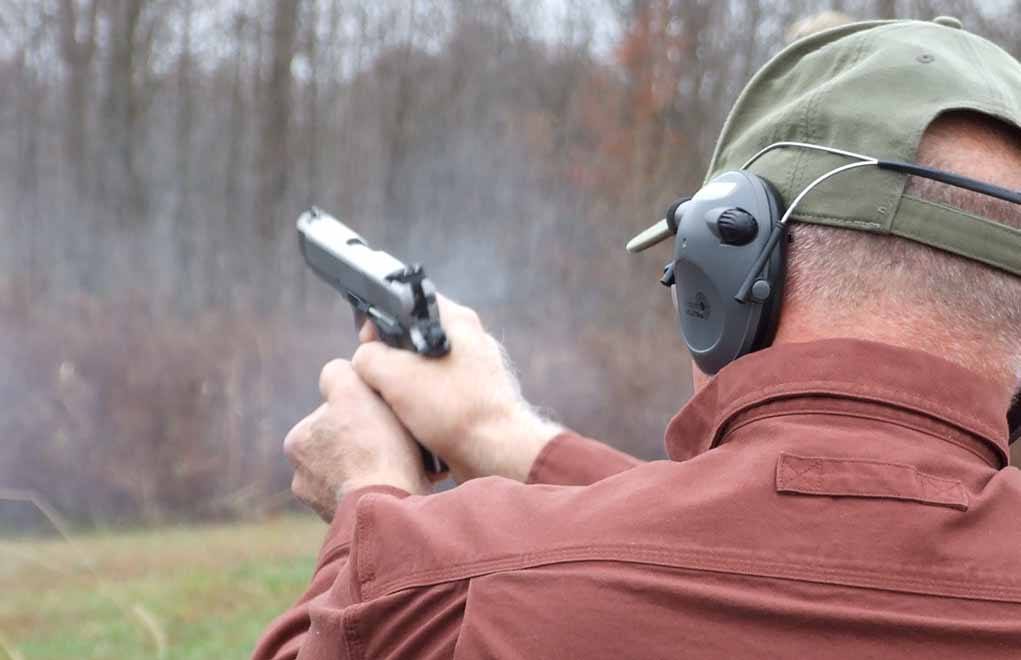
Retired Ohio probation officer and Colt 1911 aficionado Michael Skeen tests the Ruger .45 ACP Officer-Style 1911 pistol. The solid stainless steel frame and slide keep recoil controllable even when firing SIGโ€™s 230-grain Elite V-Crown .45 ACP ammo. Empties were ejected smartly forward and to the right of the shooter.

In the not too distant past, I would have said that manufacturing a compact.45-caliber combat pistol was a somewhat questionable project for personnel who were generally located outside of active combat zones. After all, even Gen. Patton never fired his silver Colt .45 Peacemaker or Smith & Wesson Model 27 .357 Magnum in combat during World War II โ€” although Patton did shoot at a German plane with a .380.

Find Out More About Ruger Firearms

Around October 18, 2018, Brigadier General Jeffrey Smiley was shot and wounded during a meeting in Kandahar, Afghanistan in a Taliban attack at the governorโ€™s compound. Two Afghan leaders were killed. The top military commander in Afghanistan, General Scott Miller, was also present but not injured. It was not known if the generals were armed with handguns or if they returned fire. Because of that I can see the need for the M15 General Officerโ€™s pistol considering the type of warfare we have engaged in since 2001.

The M15 was sized the same as a Colt Commander. The Colt company would eventually introduce what we now know as the โ€œOfficerโ€™s Modelโ€ .45 in 1985. Equipped with a 6- or 7-round magazine in .45 ACP, the Officerโ€™s Model, and the later aluminum-framed Lightweight Officerโ€™s Model, featured a shorter grip frame than the Colt Commander and a shorter 3.5-inch barrel.

The Colt Officerโ€™s series always seemed to me to be a cool pistol. One of the detectives I worked with years ago carried a nickel-plated Officerโ€™s Model as his duty sidearm. The original Colt Officerโ€™s handguns had developed a reputation for being unreliable. However, I owned a M1991A1 Compact .45, which was a budget-priced version of the Officerโ€™s Model and never had a problem with it. The Officerโ€™s concept still lives on today with Colt in its Defender Series and the longer-barreled Wiley Clap CCO (Concealed Carry Officerโ€™s) Series, neither of which seem to have reliability issues.

Now, Ruger has added an โ€œOfficer-Styleโ€ pistol to its fine SR1911 lineup that picks up where the original Colt Officerโ€™s Model left off โ€” and it has no reliability issues.

Built To Impress

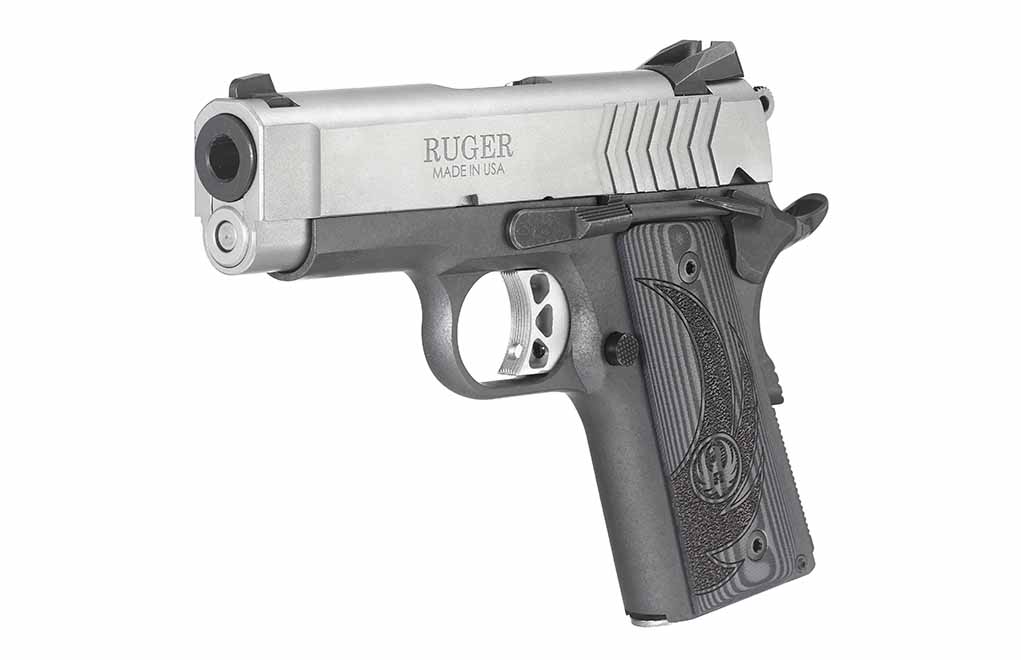
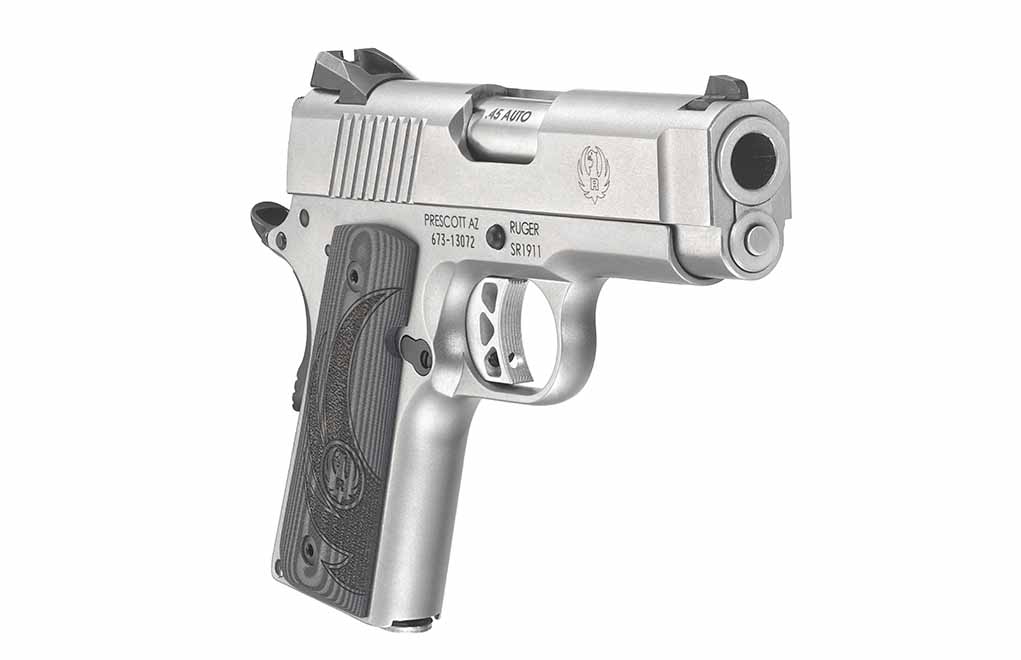
The Ruger SR1911 Officer-Style pistol is an all-stainless steel compact 1911 that brings the original concept into the 21st century. Equipped with a 3.6-inch barrel, this impressive pistol comes equipped with two 7-round magazines, giving up nothing in defensive capability over its full-size brethren โ€” yet it is sized for all day carry.

When I took the SR1911 Officer-Style pistol out of the box, I was pleasantly surprised by the appearance of the matte stainless steel finish of the slide and frame. It appears to have a slight gold hue to it, reminiscent of the brushed-nickel finishes applied to various handguns in the 1980s, including the Colt Officerโ€™s Model. It gives the Ruger a richer tone than standard matte-finished stainless steel.

With a weight of 27.2 ounces, the 9mm Luger chambering of the lightweight Officer-Style pistol may prove to be a better caliber choice for the average concealed carry permit holder than the heavier-recoiling .45 ACP.

The weight of the Officer-Style is 31 ounces, which is important in terms of soaking up recoil from the powerful .45 ACP cartridge. The overall length is 7.25 inches and the height is 5 inches. The Ruger has many features favored by todayโ€™s 1911 shooter. Starting at the top, it features a set of black, drift-adjustable Novak 3-dot sights. Novak sights are the gold-standard in combat handgun sights and are designed not to snag on clothing during a rapid draw. There are many manufacturers that make copies of the original design, but the Officers-Style Ruger uses the real deal.

The slide features wide, slanted grasping grooves at the rear only โ€” the barrel is too short to perform a press check from the front. If you need to make sure of the Rugerโ€™s loaded status, there is a large circular viewing port at the rear of the chamber.

The Officer-Style has a black-accented, oval-shaped skeletonized hammer mated with a titanium firing pin in the slide for faster lock times. There is also a black-accented oversize beavertail grip safety to protect your hand from hammer bite. The mainspring housing, also black, is rounded and is a nice compromise between a flat and traditionally arched type.

The black manual thumb safety is extended and easily reached. While Rugerโ€™s website states that the black slide lock lever (which I refer to as the slide release) is also extended, it didnโ€™t appear that way on my test sample. More so than the thumb safety, the slide release needs to have a rear extension so that it can be released during a rapid reload without having to twist the pistol in the shooting hand to reach it. My thumb just canโ€™t quite reach it without twisting. The black-checkered magazine release is prominent enough to be operated easily by the shooting hand thumb, but not so prominent as to be accidentally activated.

The Ruger SR1911 Officer-Style .45 features modern enhancements preferred by law enforcement in a 1911-type pistol. These enhancements include a beavertail grip safety, genuine Novak 3-dot drift-adjustable combat sights, rounded mainspring housing and skeletonized hammer and trigger. It is a lot of .45 for the money (and size).

The replaceable G10 grip panels feature the Ruger logo on both sides, which is textured to enhance the gripping service. Their gray-black color blends in well. If you havenโ€™t yet figured this out, the Ruger Officer-Style .45 is one sharp-looking pistol. The handgun has a skeletonized aluminum trigger adjustable for overtravel, which, when combined with the โ€œSeries 70โ€ operating system, makes for a crisp trigger pull. There was no need for any adjustment.

On The Firing Line With The SR1911 Officer-Style

I took the Ruger to a friendโ€™s private range for testing along with an assortment of ball ammunition and SIGโ€™s Elite 230-grain FMJ practice .45s and 230-grain Elite V-Crown defensive ammo. I enlisted the help of a fellow police firearms instructor Probation Officer Mike Skeen (ret.) to help evaluate the Ruger. Skeen is a long-time aficionado of 1911 .45 autos.

Skeen was just as enamored with the look and feel of the Ruger as I was. We tested it right out of the box with no pre-cleaning or additional lubrication. I started out with the assorted brands of 230-grain FMJ ball. The reason I do my tests that way is that I believe many purchasers of new guns will do the same thing. I was not disappointed by the Rugerโ€™s reliability.

I had forgotten how pleasant it is to shoot a properly fitted and balanced .45 ACP โ€” especially an all-steel one. I often test .40- and 9mm-caliber pistols, and Iโ€™d forgotten about the .45โ€™s pleasant muzzle blast โ€” at least with standard pressure loads. Itโ€™s not the push of a recoiling gun in the hand that bothers new shooters most, itโ€™s the muzzle blast. This is especially true if the handgun is being fired in an indoor range.

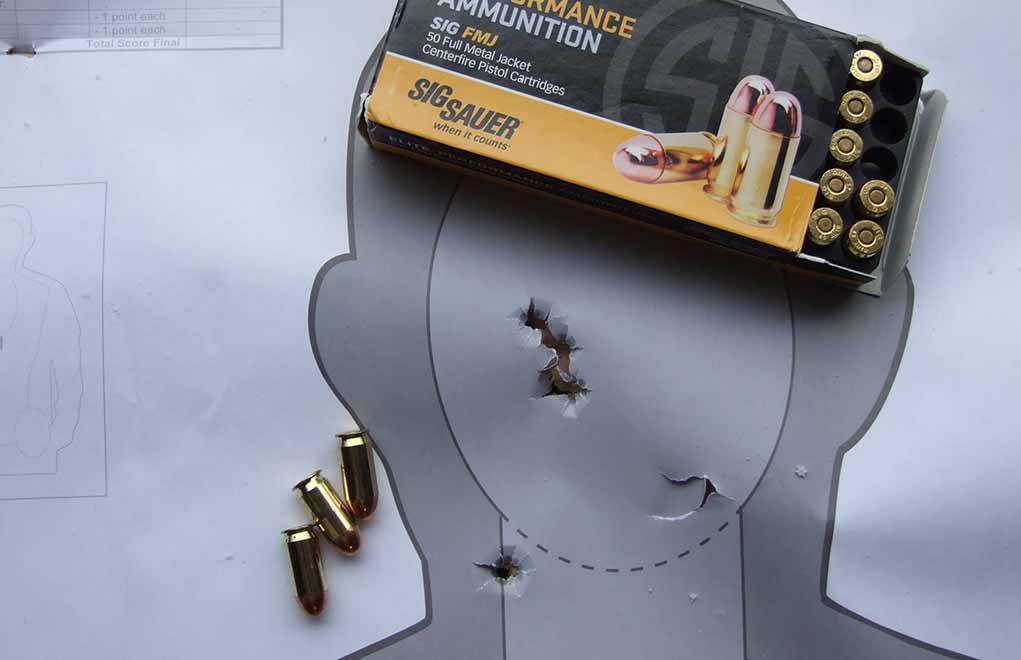
Five shots fired from 30 feet using SIG Sauer Elite practice ammo.

Skeen and I both averaged 3- to 4-inch groups at 30 feet shooting two-handed standing. The sights were regulated dead on to the point of aim. Switching to the SIG Elite .45 ball ammo produced the same results, as did SIGโ€™s Elite 230-grain V-Crown load โ€” which felt the same as the practice loads in terms of recoil and blast. With a muzzle velocity of 830 FPS from a full-size pistol (which is actually 20 FPS slower than SIGโ€™s practice load), the V-Crown should still be traveling around 750 FPS or more from the short barrel of the Ruger (weather was not conducive to chronograph testing that day). There were no malfunctions of any kind.

In our opinion, the Ruger SR1911 Officer-Style .45 ACP is a great defensive and carry pistol. If you desire a lighter-weight version, there is an aluminum-frame 9mm variant that weighs in at only 27.2 ounces. Both have an MSRP of $979.

SR1911 Officer-Style Spec</strong

Model: Ruger Officer-Style
CHAMBERINGS: 9mm and .45 ACP
CAPACITY: 7+1
SLIDE: Stainless steel
BARREL LENGTH: 3.60 in.
GRIP FRAME: Low-glare stainless
GRIP PANELS: Deluxe checkered G10
WIDTH: 1.34 in.
SIGHTS: Drift-adjustable Novak 3-Dot
WEIGHT: 31 oz.
OVERALL LENGTH: 7.25 in.
HEIGHT: 5 in.
GROOVES: 6
TWIST: 1:16 RH

For more information on the SR1911 Officer-Style, please visit www.ruger.com.

Editor’s Note: This article is an excerpt from the Tactical Gun Digest book, available at GunDigestStore.com.


target

Get More Ruger Info:

Ruger Resurrects M77 Hawkeye Alaskan

0

Available in .375 Ruger, .338 Winchester Magnum and .300 Winchester Magnum, the Hawkeye Alaskan can handle any North American game.

How the Hawkeye Alaskan is ready for the roughest conditions:

  • Chambered .375 Ruger, .338 Winchester Magnum and .300 Winchester Magnum
  • Stainless-steel action and barrel
  • Hogue Overmolded stock

Coastal browns at the bird feeder again? Ruger has the solution, with the reintroduction of the M77 Hawkeye Alaskan. Chambered for three sledgehammer cartridges โ€“ .375 Ruger, .338 Winchester Magnum and .300 Winchester Magnum โ€“ the bolt-action is more than enough to handle any North American game. Quite honestly, in the beltless .375, itโ€™s got the yarbels to stand up against anything on Godโ€™s green earth.

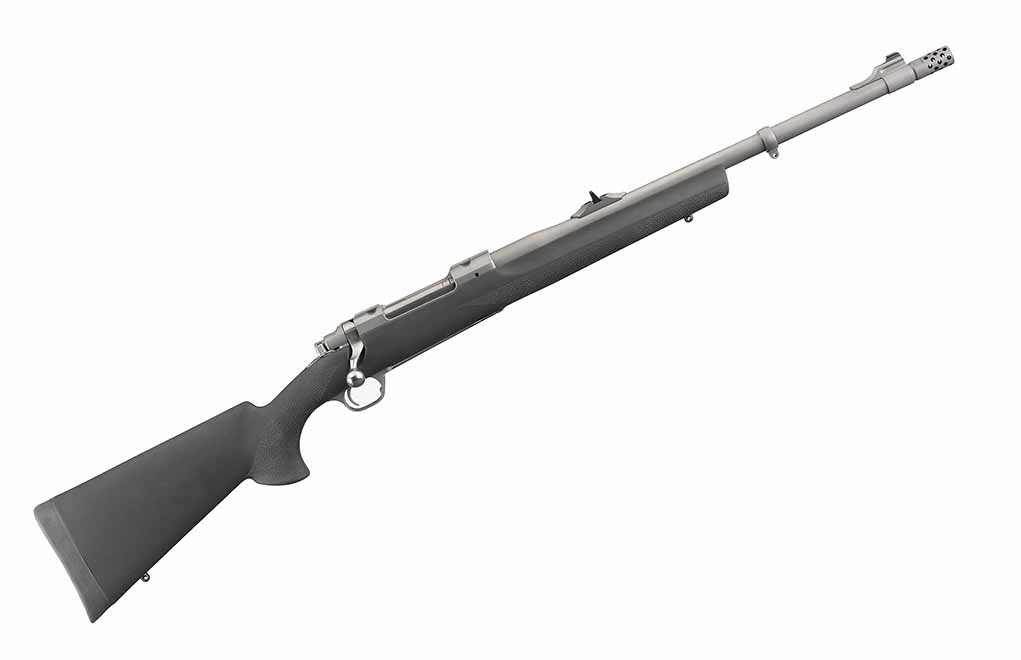
Ruger Hawkeye Alaskan

The rifle has been out of Rugerโ€™s catalog for around six years, though it never really left. The Alaskan morphed into the M77 Hawkeye Guide Gun in 2013, with the company expanding its caliber options. Originally, the Alaskan came in two flavors โ€“ .375 Ruger and .416 Ruger. Obviously, the gun was a heavy hitter. But with the Winchester magnums now part of the mix, it seems to better fit its Alaskan moniker.


Looking For More Great Rifle Content?:


Very similar to the Guide Gun, the Hawkeye Alaskan features a stainless-steel action and 20-inch barrel, and a Hogue Overmolded stock. From there, it has the features you should be familiar with if youโ€™re acquainted with the M77 Hawkeye, including LC6 Trigger, non-rotating Mauser-type controlled round feed extractor, hinged floorplate, express-style windage-adjustable V-notch rear sight and large white bead front sight and integral scope mounts. In all three chamberings, the M77 Hawkeye Alaskan holds 3+1 round and each caliber has an MSRP of $1,279.

From Ruger:

Sturm, Ruger & Company, Inc. (NYSE: RGR) is proud to reintroduce the Hawkeyeยฎ Alaskan rifle chambered in three calibers: .375 Ruger, .338 Winchester Magnum, and .300 Winchester Magnum.

Based on the popular Ruger Guide Gun platform, this stainless steel rifle, paired with a Hogueยฎ OverMoldedยฎ stock, provides the avid shooter or hunter with the ultimate rugged and hard-hitting rifle.

The rifle’s black Hogue OverMolded synthetic stock is a unique feature to the Alaskan configuration of Hawkeye rifles.
Hogue’s patented OverMolding process provides the ultimate comfortable, non-slip, cobblestone texture that is soft, yet durable. The state-of-the-art elastomer material used on Hogue stocks will not harden with age and is virtually impervious to all oils and solvents used with firearms, providing years of dependable service. The stock also comes equipped with standard sling swivel studs and a highly effective recoil pad.

Ruger Hawkeye Alaskan 1

The Hawkeye Alaskan weighs eight pounds and has an overall length of 42 inches, a matte stainless finish and a windage-adjustable shallow V-notch rear sight and large white bead front sight. The rifle also features the iconic Ruger Muzzle Brake System that includes a removable, radial-port muzzle brake to significantly reduce felt recoil.

The Hawkeye Alaskan rifle features the smooth and crisp LC6 trigger, three-position safety, and integral scope mounts for included scope rings. The hinged solid-steel floorplate bears the distinctive Ruger logo and provides easy unloading while eliminating accidental dumping of cartridges. Like all Hawkeye rifles, these Alaskan models also feature a non-rotating, Mauser-type controlled round feed extractor.

Hawkeye Alaskan Specs
Calibers:.375 Ruger, .338 Winchester Magnum and .300 Winchester Magnum
Stock: Black Hogueยฎ OverMoldedยฎ
Front Sight: Bead
Rear Sight: Adjustable
Capacity: 3
Thread Pattern: 5/8″-18
Barrel Length: 20″
Overall Length: 42″
Material: Stainless Steel
Finish: Hawkeye Matte
Length Of Pull: 13.50″
Twist: 1:12″ RH
Weight: 8.1 lb.
Grooves: 5

For more information on the Hawkeye Alaskan, please visit www.ruger.com

The Tenacity Of The Montana Rifle Company X3 Extreme

0

A custom-level production gun, the Montana Rifle Company X3 Extreme isn’t just another lightweight hunter. It’s tailor-made to excel in the most rugged backcountry conditions.

What Sets The X3 Extreme Apart From Other Hunting Rifles:

  • Build with light kevlar-reinforced synthetic stock.
  • Pencil-thin No. 2 contoured barrel.
  • Button-rifled bore.
  • Stock directs recoil directly back, reducing muzzle jump.
  • Action pillar and glass bedded.
  • Full-length claw extractor.
  • Action made of 415 stainless steel.
  • Everything on the rifle is made in house.

Iโ€™ve done my fair share of hunting in Montana, and itโ€™s not a state known for mediocrity. The weather, terrain and sometimes even its residents are all too tough for anything thatโ€™s average, good enough โ€ฆ or otherwise โ€œmeh.โ€

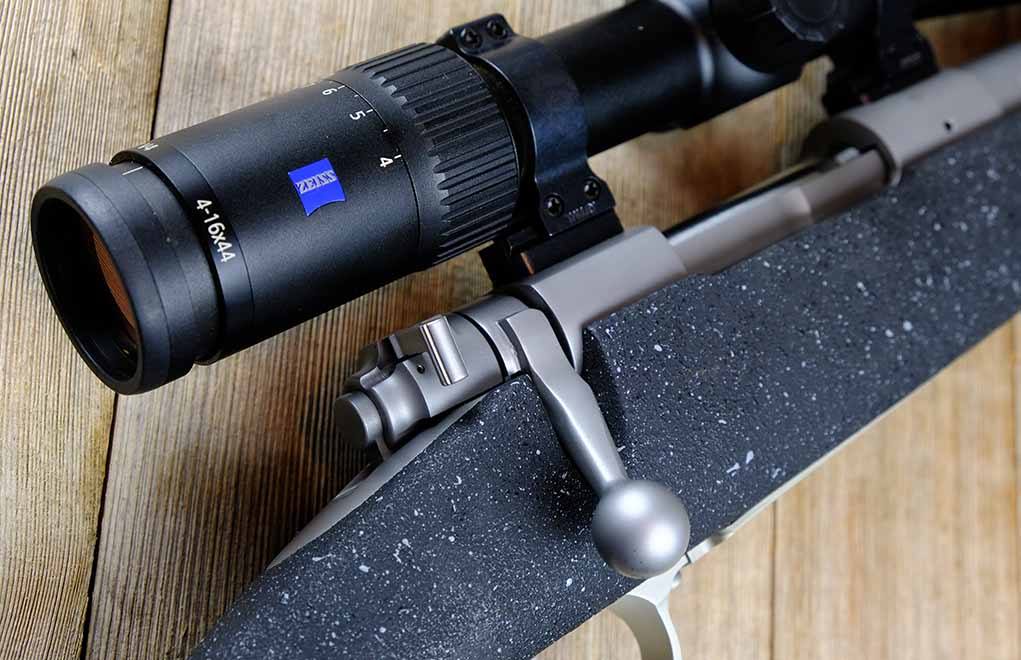
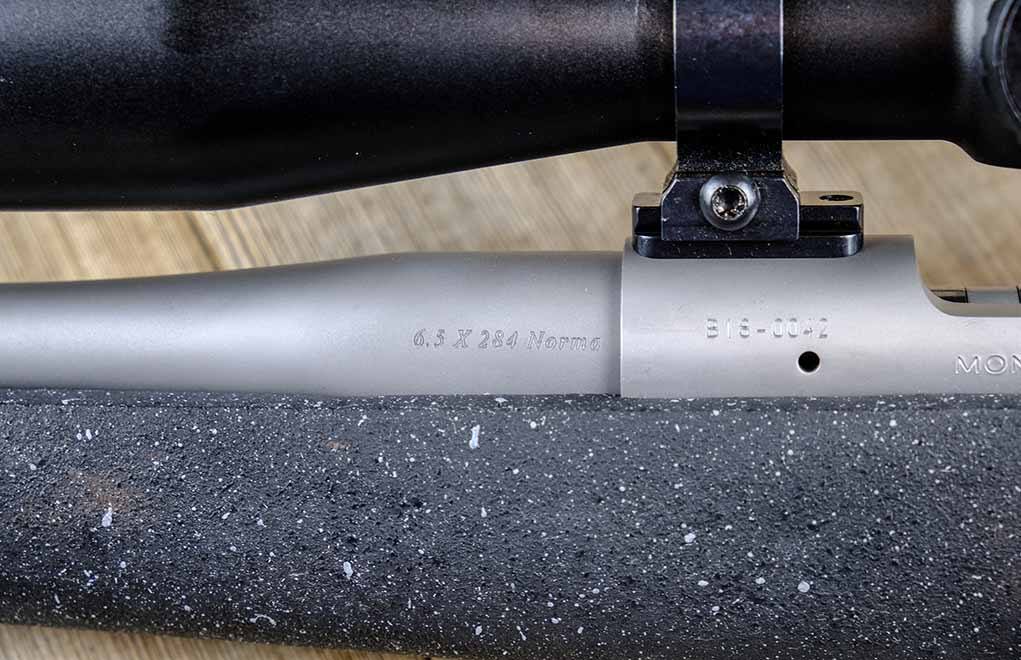
Montana Rifle Company X3 Extreme 1

So, when I learned about a rifle company that was not only based in the Big Sky State but also bore its name, I figured it had to be either one hell of a rifle or an equally impressive snowstorm. Montana is known for having both.

The Montana Rifle Company is headquartered in Kalispell, Montana, which is about 100 miles north of Missoula. Wildlife in and around Kalispell includes song birds, beautiful deer and the majestic elk. It also includes plenty of wolves, mountain lions, and bears โ€” both black and grizzly. My point is this: Nothing survives near Kalispell, Montana, from feeding off rainbows and butterflies. Life โ€” and good business โ€” is earned every day there.

I think itโ€™s important to know what western Montana is because if you name your rifle company โ€œThe Montana Rifle Company,โ€ it better be capable of building firearms that can handle anything and everything its namesake state offers in the wilderness. Otherwise, the locals will label your rifles as touristy. After more than a month with the Montana Rifle Companyโ€™s newest X3 rifle, I think the locals ought to be proud.

Adding Tabasco Sauce

The X3 Extreme is a lighter, faster, better, smoother and prettier version of the companyโ€™s X2 rifle. Or, as Ron Petty of Montana Rifle Company said, โ€œThe X3 is a line extension from our X2 โ€” we utilized a lighter stock thatโ€™s reinforced with Kevlar to reduce gun weight under the 7-pound threshold.โ€

The Montana Rifle Company X3 Extreme has a fully adjustable trigger to enable shooters to customize the break at the poundage they like the most.

Built to carry light, shoot straight and survive any hunt you can, my loaner X3 Extreme was chambered in the potent 6.5-284 Norma. Why the 6.5-284 Norma? I wanted to use a .264 caliber a lot like a 6.5 Creedmoor โ€” with just a splash of Tabasco sauce. The peppy 6.5-284 Norma can push a 140-grain bullet downrange more than a 100 fps faster than a 6.5 Creedmoor with the same bullet mass. Is it a big difference? No, not really. But, Tabasco sauce should only enhance your food, never overpower it.

The gun is light, and more important to me, small. Itโ€™s a thin gun that carries well despite its 24-inch, hand-lapped barrel. The pencil-thin No. 2 contoured bullet tube, which guides its .264 bullets with a button-rifled 1:8 twist, doesnโ€™t hurt the gunโ€™s body mass index numbers. Every inch of the gun is there because it has to be, and itโ€™s balanced so well that half the time I carried it I thought I was carrying one of those Nerf pool noodles and forgot I had an elk-thumping boomstick.


Looking For More Great Rifle Content?:


However, I was reminded of its potency every time I pulled the trigger. Any rifle that weighs a mere 6 pounds, 10 ounces is going to have some personality. When you chamber it in the underappreciated 6.5-284 Norma โ€” a 6.5 cartridge with attitude โ€” that thumping personality is something Montana ought to be proud of.

The good news is that the recoil of the rifle is very manageable. Iโ€™m not a big fan of ultralight guns at the bench: Iโ€™ve shot too many โ€œultralightโ€ Tikkas T3s and Sako A7s that kicked my dental work loose and had muzzle jump so bad that a second shot wouldโ€™ve taken down Skylab. The X3 Extreme didnโ€™t handle recoil like those featherweights at all. The recoil came straight back. The muzzle stayed mostly down, and I could cycle my bolt, find my target and shoot again without wondering where my headache medicine was. That, my gun-shooting friends, is a testament to great stock design and a well-balanced rifle.

A three-position safety gives shooters and hunters choices to manage their weaponโ€™s firing position under any conditions.

And yes โ€” itโ€™s both pillar and glass bedded. Let me stand on a soapbox here. A lot of great rifle manufactures build rifles that are accurate, good-looking and sometimes even affordable, but by far the biggest place I see costs controlled in manufacturing is with the stock. That makes me wonder if the stock is the most important element of a rifle that often has the most manufacturer neglect. It is, after all, the part that connects the shooter to the gun. My point? The Montana Rifle Company has the best factory synthetic stock I have ever reviewed.

A Homemade Recipe

The Montana rifle company builds the whole gun: It makes the stock, the barrel, the action and even paints the guns in-house. And it shows. At the heart of the X3 Extreme is the legendary Montana Rifle Company Model 1999 controlled-round-feed action โ€ฆ though itโ€™s a bit of a hybrid.

โ€œThe action is unique,โ€ said Petty. โ€œIt combines the features of two legendary actions โ€” the pre-64 Winchester and the Mauser. From these we see an adjustable trigger, full-length claw extractor and a 3-position safety, the strength of the locking lug system from the Mauser, and the excellent bolt release and removable firing pin system. We also added venting reliefs locations to prevent blowback in the event of an over-pressured load or blockage event.โ€

Petty further explains why Montana rifle Company went the controlled-round feed route. โ€œControlled-round feed just simply assures a positive feed, less opportunity for jamming under a pressure situation (charging rhino, for example). Obviously, itโ€™s more expensive to produce, but a controlled feed is the choice of every serious Professional Hunter of dangerous game.โ€

The X3 Extreme is a rifle built to hunt anywhere, at any time, under any conditions. Not only are the materials designed to withstand the elements, the quality of the gun build matches the materials potential.

Is the extra cost of a controlled-round feed rifle worth it? I use this logic: Controlled-round-feed actions are like trucks with four-wheel drive. Until you need what they do, you think you wasted your money โ€” and then when you need them, theyโ€™re priceless.

Case in point: My go-anywhere, do-anything backup rifle is a Winchester Model 70 Featherweight Compact in .308 Winchester because their actions always work. The X3 Extreme action I reviewed was made from 415 stainless-steel, was right-handed and, to no oneโ€™s surprise, always worked. The trigger broke cleanly at 3.25 pounds, and it shot Norma 156 grain Oryx and Nosler 140-grain factory-loaded ammunition as if they were ammunition-rifle soul mates. The X3 shot sub-MOA with both loads. It did so from a bench wearing a Zeiss V4 4-16x44mm optic attached with Talley rings and bases. Accessorize your rifle as you see fit, but this was a rifle/scope combo that worked.

Enjoying The Flavor

The fact that the X3 is an accurate gun didnโ€™t impress me. I expected it. The 6.5-284 Norma got its reputation as a long-range accuracy cartridge, so if you make a rifle chambered in it and it doesnโ€™t shoot MOA โ€” stop making guns. Now, would I go to a long-range match with the Extreme X3 and shoot 100 rounds, expecting the ultralight rifle to keep pace with the โ€œrifles-on-a-sledโ€ long-range builds I see at a lot of matches? No. Then, again, Iโ€™d never take those guns on a vertical elk hunt, or any hunt, either.

Itโ€™s obvious the gun builders at Montana Rifle Company hunt and shoot with their guns because the functionality of the rifles stands out in the woods. The entire time I tested the rifle, I never had to stop and think about where the safety was, or wonder if the bolt was going to work, or worry that the stock was going to chip, break or swell. And I didnโ€™t wonder if the gun would shoot well.

The controlled-round-feed action is a key reliability aspect to the X3 Extreme rifle.

Still, these things arenโ€™t what made the X3 Extreme stand out as a hunting rifle. What stood out to me was what I call its โ€œintangibles,โ€ and the X3 has a lot of them. The rifle just felt like my loyal and feisty there-when-I-needed-it best friend, and itโ€™s one of the few rifles Iโ€™ve tested where the price (MSRP is $1,495) seemed like mistake. The controlled-round feed action always works. The fit and finish of the gun isnโ€™t just good โ€” itโ€™s the best-looking synthetic gun in my safe, and it groups bullets into tiny ragged holes. Durability-wise, if I ever took it to Montana hunting, chances are the rifle would make it back to camp in better shape than me.

These days, there are a lot of ultralight options out there for hunters. If you want to save your money, spend it once, and enjoy one of the finest hunting rifles made for the rest of your life, then Iโ€™d go buy a Montana Rifle Company X3. Itโ€™s that simple, and thatโ€™s ultimately how things in western Montana survive โ€” by being simple, reliable and tenacious.

X3 Extreme Specs

Action: MRC Model 1999
Weight: 6 lbs. 10 oz. short-action; 6 lbs 15 oz. long-action
Barrel Length: 24 or 26 inches, depending on caliber
Trigger: Pre-64 Winchester 70 style trigger, adjustable 3-3.25 lbs.
Stock: Keval reinforced synthetic
LOP: 13 5/8 inch
Overall Length: 42.5 to 47 inches, debending on caliber
Calibers: .243 Win., .25-06 Rem., 6.5-284 Norma, 6.5 Creedmoor, 6.5 PRC, .257 Roberts, 26 Nosler, .270 Win., .270 WSM, 7mm Rem. Mag., .280 Rem., .280 AI, 30 Nosler, .300 Win. Mag., .300 WSM, .300 RUM, .308 Win., .30-06 Sprg., 33 Nosler, .338 Win. Mag., .338 RUM
MSRP: $1,495
Website: www.montanarifleco.com

Editor’s Note: This article originally appeared in the November 2018 issue of Gun Digest the Magazine.
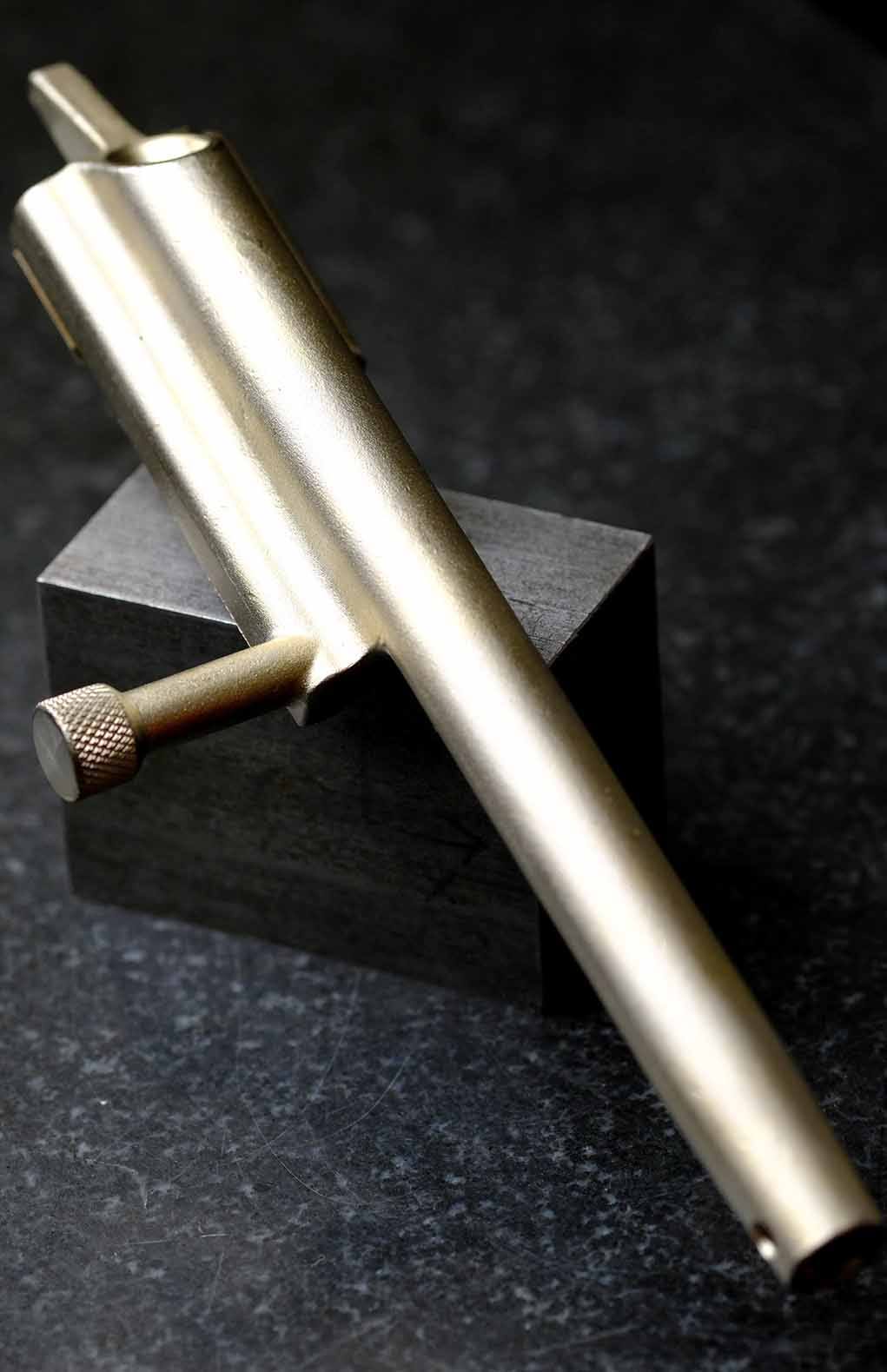
SIG SAUER .30-06 Springfield Elite Match Ammunition

0

Sig Elite Mach 1

Topped with a 175-grain Sierra Match King bullet, SIG’s .30-06 Elite Match Ammo looks to take the old warhorse the distance.
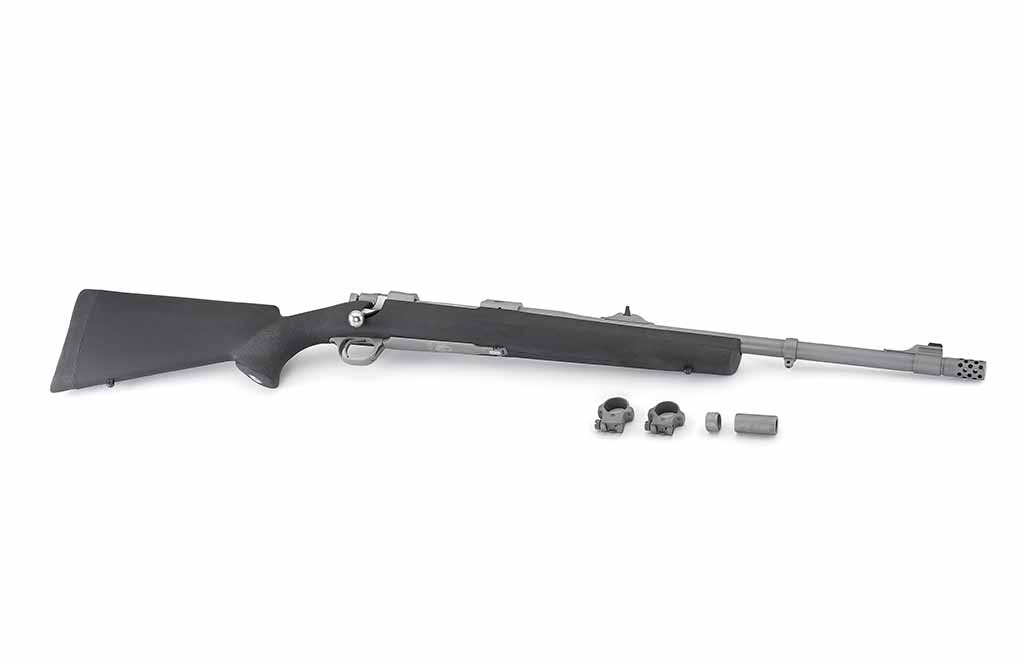
.30-06 Elite Match Specs:

  • Weight: 175 grains
  • Bullet: Serria Match King JHP
  • Muzzle Velocity: 2,700 fps
  • Muzzle Energy: 2,833 ft-lb
  • MSRP: $45.95
  • Ballistic Coefficient 175-grain Sierra Match King:
    .505 @ 2800 fps and above
    .496 between 2800 and 1800 fps
    .485 @ 1800 fps and below

This is nice to see.
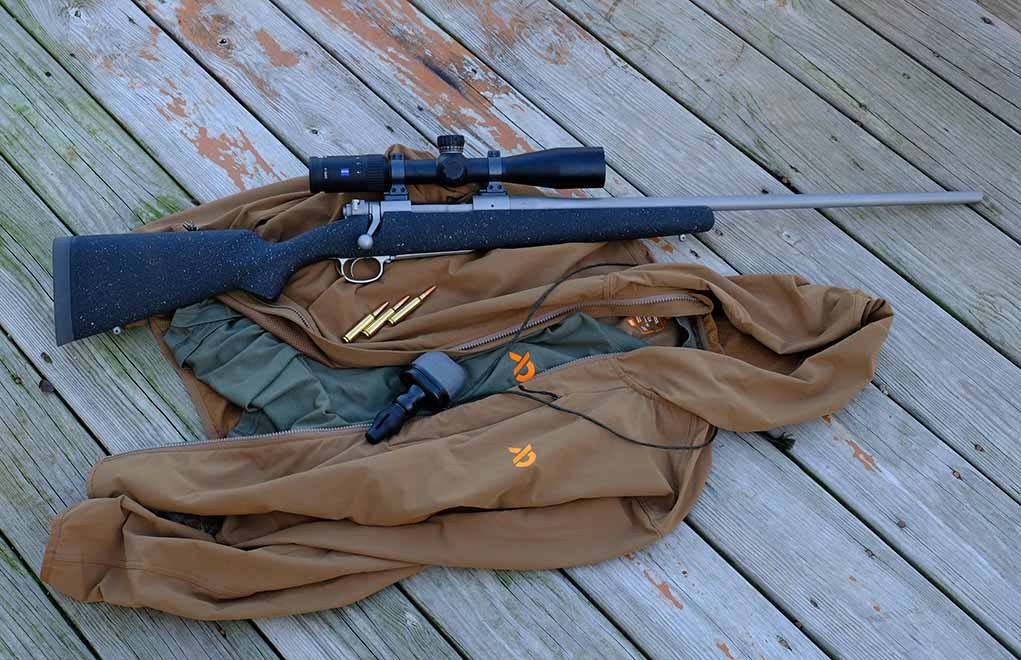
Though itโ€™s still among the most shot centerfire rifle cartridges in America, ammunition choices for the .30-06 Springfield are somewhat relegated to hunting and general range fodder. You can find match ammo, but it’s not exactly overflowing your local gun store’s shelves. Yeah, I get the reason โ€“ .308 Win. That said, there are still some pretty slick shooters that would benefit munching on SIGโ€™s .30-06 Springfield Elite Match. No reason why you shouldnโ€™t stretch the legs of your M1 Garand, 1903 Springfield or top-end hunting rifle chambered for the old warhorse.

SIGโ€™s choice in bullet weight is also intriguing. With 150-, 165- and 180-grain factory loads dominating the market, a 175-grain Serria Match King is well out of the norm. It will be interesting to see if SIG is on to something. I certainly plan on finding out first hand.

From SIG Sauer:

NEWINGTON, N.H. โ€“ SIG SAUER, Inc. adds to its Elite Match ammunition line with the addition of a 30-06 Springfield round. Featuring a 175gr Sierra MatchKingยฎ bullet, the SIG SAUER 30-06 Win Open Tip Match (OTM) round has a muzzle velocity of 2,700 fps with a muzzle energy of 2,833 ft-lbs.

Sig Elite Match

โ€œOur 30-06 Springfield Elite Match load is designed to excel in todayโ€™s modern firearms as well as older rifles such as the M1 Garand and delivers the accuracy and reliability shooters have come to expect from SIG SAUER Elite Ammunition,โ€ said Brad Criner, Senior Director, Brand Management and Business Development, SIG SAUER Ammunition. โ€œGiven the resurgence in popularity of the M1 Garand and numerous vintage rifle matches being held across the country, there is significant demand for this cartridge.โ€

SIG SAUER Elite Match ammunition features a temperature-stable propellant that delivers consistent muzzle velocity in all weather conditions. Premium-quality primers ensure minimum velocity variations, and the shell case metallurgy is optimized in the SIG Elite Match OTM cartridge to yield consistent bullet retention round to round. All SIG SAUER rifle ammunition is precision loaded on state-of-the-art equipment that is 100% electromechanically monitored to ensure geometric conformity and charge weight consistency.

For more information on SIG Elite Match Ammo, please visit www.sigsauer.com.


More Ammunition Information:

Gunsmithing Tools: Real Avid Smart Drive 90

0

Smart Drive 90

With more than 80 bits, the Smart Drive 90 covers any D.I.Y gun project that comes across your bench, making it one of the best gunsmithing tools.

What You Get With The Smart Drive 90:

    • 87 standard and metric bits coated with black oxide
    • Magnetic Parts Tray
    • Spin top main driver with integral LED light
    • Scope turret tool
    • Small driver for tight work
    • Hard case with polycarbonate lid

Dedicated gun tools โ€ฆ if you donโ€™t have them, why not? Even if you donโ€™t have the urge to undertake a massive master-gunsmith level project, sooner or later youโ€™re going to need to tinker with something on one of your guns. Say, the target sight on your favorite revolver. Real Avid, purveyors of some truly unique gun gear, gets you up and running with its new Smart Dive 90 bit set. With 87 standard and metric bits, there isnโ€™t a project big or small you canโ€™t tackle.

From the company:

Smart Drive 90 isnโ€™t just another bit set. Real Avid set out to create a unique perspective on an often commoditized product. The result of these endeavors is the Smart Drive 90.

โ€œThe Smart Drive 90 is the ultimate solution to a master grade gunsmithing bit set. We put tool grade steel bits in this kit with some additional functionality to make this bit set perfect for the gun bench or everyday use,โ€ said Howard Tripp, Chief Innovation Officer at Real Avid. โ€œWe know the smallest details make the biggest difference and we feel we captured those details with this set.โ€

The Smart Drive 90 features a unique driver that comes with a jewelerโ€™s top handle for one hand adjustments but the biggest innovation is a click of a button away. A super bright, 360ยฐ COBB LED light illuminates your work area with zero shadows to make working in small areas or dark recesses an easy task. โ€œThis innovation will change the way people approach gunsmithing and ultimately make any job easier. But we didnโ€™t stop there,โ€ said Howard Tripp. โ€œWe included a smaller driver that can be used alone or when paired with the main driver, it offers Torque Assist to give the user the ability to apply more torque without straining or stripping screws. This is perfect for rusted on fasteners.โ€

The Smart Drive 90 comes in a well-organized case with a magnetic compartment to store and hold lose fasteners and springs during disassembly.

The Smart Drive 90 retails at $99.99 and is available now.

More Gunsmithing Articles:

For more information on the Smart Drive 90, please visit www.realavid.com.

Is The Veto Pro Pac RB-MC As Good As Range Bags Get?

1

A professional-grade range bag, the Veto Pro Pac RB-MC keeps guns and gear in shipshape order.

How the Veto Pro Pac RB-MC outdoes other range bags:

  • 2 vertial pistol holsters.
  • 18 interior and exterior vertical tool pockets.
  • 4 magazine pockets.
  • Double stitched, plastic coil zippers with oversized tabs.
  • Overmolded rubber grip handle.
  • Mollie field on the exterior.
  • Sturdy polypropolene base.

Weโ€™ve all been there before. We start out with the best intentions, planning tokeep a bag or ruck shipshape, everything where it needs to be and ready at a momentโ€™s notice. Then real life hits us and the thing is in more disarray than a trailer park after a twister.

Veto Pro Pac RB-MC Range Bag

Certainly, we deserve some blame. But more times than not the satchel also merits finger pointing. Try as they might, many luggage manufacturers just donโ€™t get it, even less so when it comes to that essential piece of range gear โ€“ the range bag. Veto Pro Pac is a decided exception.

Well known among skilled tradesmen for professional grade tool bags, the manufacturer has turned its studied eye to the gun world. Weโ€™re lucky they have. Not only iron tough, the organizational system of Veto Pro Pacโ€™s RB-MC is drum tight and about as handy as penetrating oil.

The RB-MC (MSRP $200) uses the companyโ€™s patented center panel design, durable construction, injection molded base, vertical storage design, and YKK locking zippers to offer superb visual inventory capability for the shooting range.


More Shooting Posts:


The RB-MC range bag measures 14 inches high, 10 inches wide and 8 inches deep, and offers expanded capacity and customizable storage options that allow customers to organize their range gear effectively and ef๏ฌciently. The outside design features Molle webbing. There are internally built holsters for two full-sized handguns with foam blocks to support smaller guns, allowing equipment and ๏ฌrearms to be stored vertically with the barrels of pistols pointing downward.

The open space below the holsters offers ample storage for ammunition, and the neoprene and polyester pockets on the backside allows shooters to store magazines, safety glasses, ear protection, cleaning tools and more. The durable 3mm thick polypropylene base protects the bag from the elements and provides a stable platform to keep the bag vertical for good visibility and quick and easy access to all ๏ฌrearms equipment.

True to form, Veto Pro Pac RB-MC provides professional-grade storage and transportation solutions to gun owners. Because there’s no reason to only settle for precision down range.

For more information on the Veto Pro Pac RB-MC, please visit www.vetopropac.com.

MUST READ ARTICLES