Home Blog Page 153

Handloading: Unlocking The Potential Of The 7mm Rem Mag

9
The 7mm Remington Magnum is a versatile cartridge that’s well-served by slow burning powders.

The 7mm Rem Mag has a ton of potential other than merely being a hard-hitter if you handload the cartridge.

What Are The Finer Points In Reloading the 7mm Rem Mag

  • It boasts a case capacity of 82 grains of water
  • The cartridge runs best with slower burning powders
  • Neck sizing generally has a positive effect on the cartridge’s accuracy
  • Usually, you needn’t crimp the 7mm Rem Mag

The idea of using a belted case shortened to fit in a .30-06 length action really came to the forefront in the 1950s, with Winchester’s release of the .458, .338 and .264 Winchester Magnums. However, using a 2.500-inch belted case was not an original design. In fact, the idea dates back to 1912, when Holland & Holland released a pair of cartridges that would change the shooting world: the famous .375 H&H Magnum, and the not-so-famous .275 H&H Magnum designed for lighter game.

That .275 Magnum — with a 2.50-inch case and a 7mm bullet — was truly ahead of its time, and though American rifles were chambered for it and American ammunition was available, the cartridge was not a big success here. The concept of a belted 7mm magnum would need until 1962 to ripen, when Remington — presumably in an attempt to ride the wave that Winchester started in the 1950s — would release their 7mm Remington Magnum in the then-new Model 700 rifle. The “new” 7mm magnum had an uncanny resemblance to the .275 H&H Magnum, but history is history, and marketing is marketing, and Remington’s 7mm Magnum has been an unbridled success since its release.


Load Up On Reloading Info:


Shooters have beaten the 7mm vs. .308 argument to death, with both camps having viable points. I’ll avoid that debate, confidently saying that the 7mm bore diameter offers plenty as an all-around choice for general big game hunting. Furthermore, the 7mm Remington Magnum case offers one of the most flexible platforms for the lineup of 7mm bullets, and there’s an awful lot to choose from within that lineup.
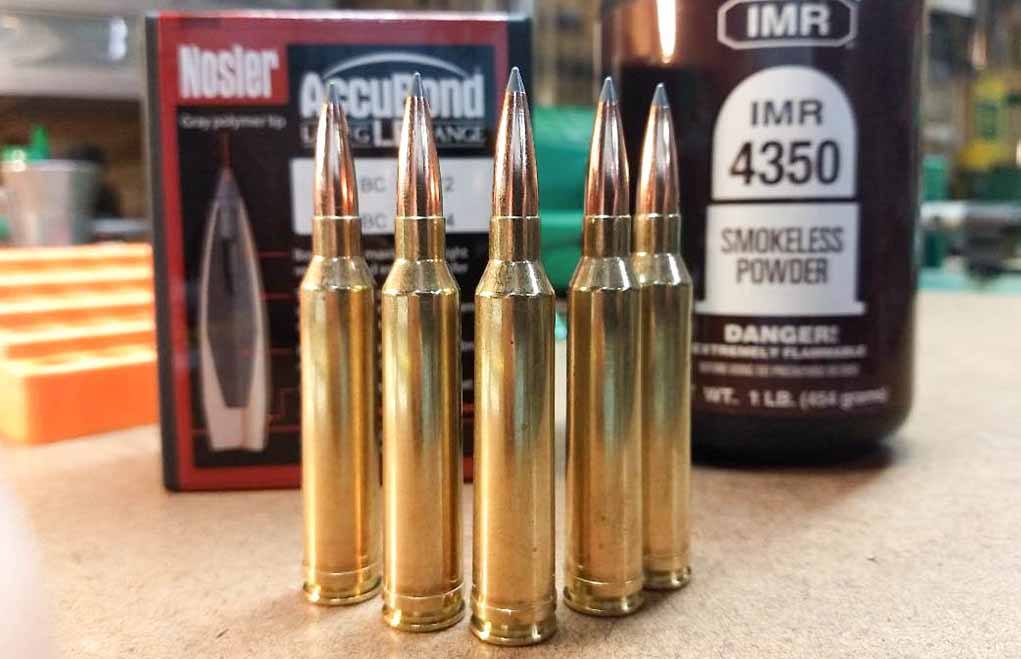
Any powder with a burn rate equal to or slower than IMR4350 is a great choice for the 7mm Remington Magnum, up to Reloder 25.

To be a true “all-around” cartridge, I feel it must be capable of taking the majority of our game animals (obviously within the caliber’s capabilities) at any sane hunting distance. The 7mm Remington Magnum can do just that: It has a proper blend of available bullet weight, enough velocity to take larger game at further distances, yet it’s easy enough on the shoulder to allow the shooter to accurately place shots.

Enhancing The 7mm Rem Mag

While there are a tremendous amount of good factory loads available for the 7mm Remington Magnum — it remains on the Top 10 list of most ammunition manufacturers — the true flexibility of the cartridge comes by handloading for it.

It’s not a difficult cartridge to load for; the design is straight-forward, with a 25-degree shoulder for good headspacing — the belt is a carryover from the H&H case and serves no true purpose on the 7mm Remington — and the 0.271-inch-long neck gives plenty of neck tension in spite of the fact that it’s less than one-caliber in length. As a result, crimping the 7mm Remington Mag. is usually unnecessary. The 7mm Remington runs on a large rifle magnum primer, and I have obtained my best results with the Federal Gold Medal Match GM215M.

With a case capacity of 82 grains of water — depending on the brand — the 7mm Remington Magnum will usually run best with a slower-burning powder to take full advantage of the velocity potential of the case. I’ve had great success with Alliant’s Reloder 19 and 22, Hodgdon’s H4350, IMR4350, IMR4451 and IMR8133. This has also come from a variety of bullet weights, from the lighter 140-grain cup-and-core bullets — which are so effective on deer and similar-sized game animals — up to the heavy 175-grain premium bullets, which are perfect for most of the larger game animals on earth.
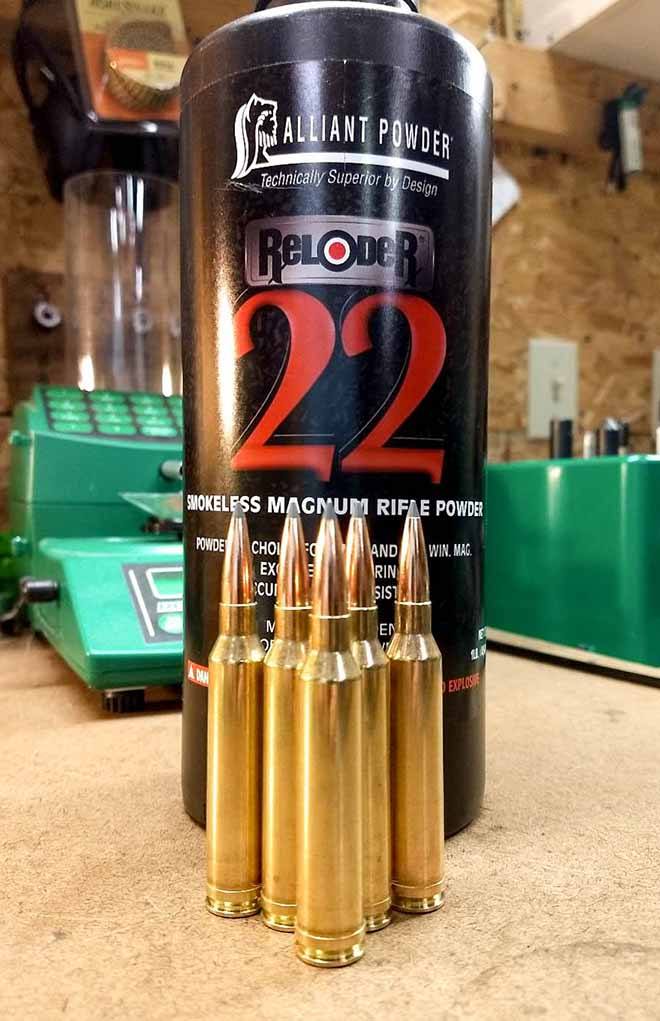
The author has had very good results with Reloder 22 in the 7mm Remington Magnum.

Powders with a burn rate equal to IMR4350 and slower are a good starting point for the 7mm Remington Magnum, with the slower powders being best suited to the heavier bullets. Reloder 25 is about the slowest I’d go with the 7mm Rem Mag. The slowest burning powders, like Reloder 33 and Hodgdon’s H1000, are too slow to be effective in the 7mm Remington case.

I’ve found neck sizing 7mm Remington brass can have a positive effect on the accuracy of some rifles, though I much prefer using Redding’s Instant Indicator Comparator gauge. This handy little device compares the datum line of fired brass to the SAAMI spec — set by the provided dummy cartridge — to see where the rifle’s chamber sits in comparison to the theoretical dimensions. Once you see the variance between SAAMI specification and the actual chamber, Redding’s Competition Shellholders can make up the difference. This leaves the datum line alone, leaving the chamber dimension from base to shoulder, while allowing the body diameter to be resized for ease of feeding. Even adjusting the datum line 0.002-inch has improved accuracy in the 7mm Rem Mag.

A Very Accurate Magnum

In spite of some reports, I’ve found that the 7mm Remington Magnum can be seriously accurate, with many groups printing sub-MOA and exceptional rifles approaching ½-MOA, sometimes better. The best components usually yield the best results, and I do appreciate the benefits of premium brass, such as Norma, Hornady, Nosler and the like.

Good bullets make a definite difference as well: For deer-sized game I like the Sierra boat-tail Game King, Hornady InterLock and the Swift Scirocco II — especially if shots are closer, as the bonded core will reduce premature breakup and meat damage. For larger game, I’ve had good results with the 160-grain Swift A-Frame and the 175-grain Nosler AccuBond and Partition.
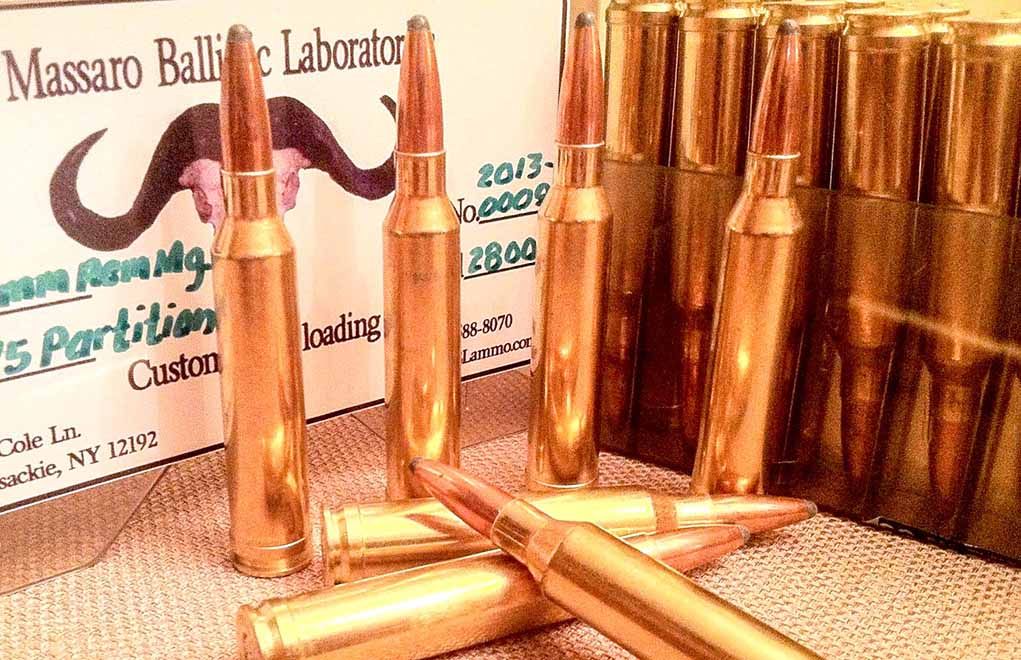
The 175-grain partition makes a good all-around choice in the 7mm Rem. Mag. for large game.

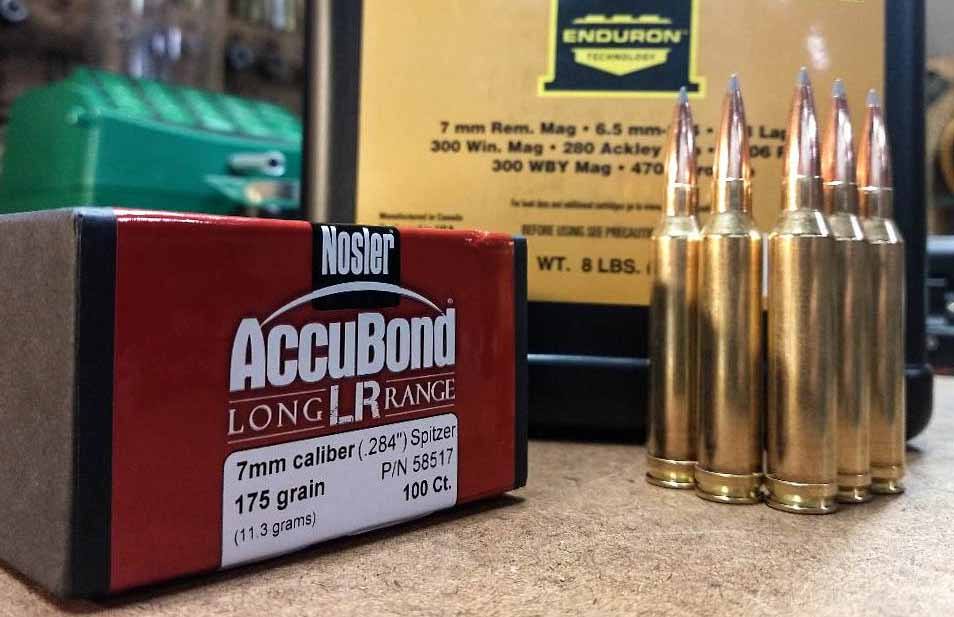
My buddy, Frank Campana, recently asked me to help him develop a load for his new 7mm Remington Magnum; he wanted a single load to hunt a wide variety of game animals. He chose the 175-grain Nosler AccuBond because it would certainly handle lighter game, but it would make longer shots at larger animals easier as well. The higher BC of that bullet resists wind deflection, and that’s always a good thing for distant animals in open country.

We went through several different powders, and while accuracy was acceptable with all of them, we found that his rifle absolutely loved Reloder 23. At a near-maximum load of 63½ grains, we obtained sub-MOA accuracy and a muzzle velocity of more than 2,800 fps. Where some of the faster-burning powders gave excellent accuracy — on par with the Reloder 23 load — the velocities were almost 200 fps lower. Reloder 23 is temperature insensitive, making it a great choice for a hunter like Frank, who may find himself in the Rockies for elk in knee-deep snow or sitting in a leopard blind in the African heat.

If you have a 7mm Rem Mag and want to begin handloading for it, I’ve included a chart of some of my favorite loads. Please don’t jump into the deep end of the pool; as with any data, consult a reloading manual and work up from the bottom, stopping at any pressure signs. These loads were developed in a number of different rifles, and they exhibited no pressure signs in the rifles tested. You may find that it’s difficult to beat the accuracy of some of the factory loads — our modern factory ammo is that good — but you may want to try a bullet that isn’t available from the factories.

The 7mm Remington Magnum is quite a flexible cartridge, and one that will serve a hunter in many different situations. Handloading will give you lots of bench time as you develop your loads, making you even more proficient with your rifle.

Editor’s Note: This article originally appeared in the January 2019 issue of Gun Digest the Magazine.
Ed Brown SOCOM Edition 1911 Reports For Duty

0

Ed-Brown-SOCOM

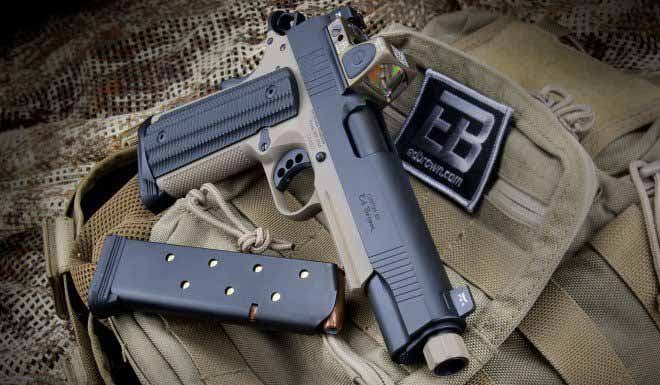
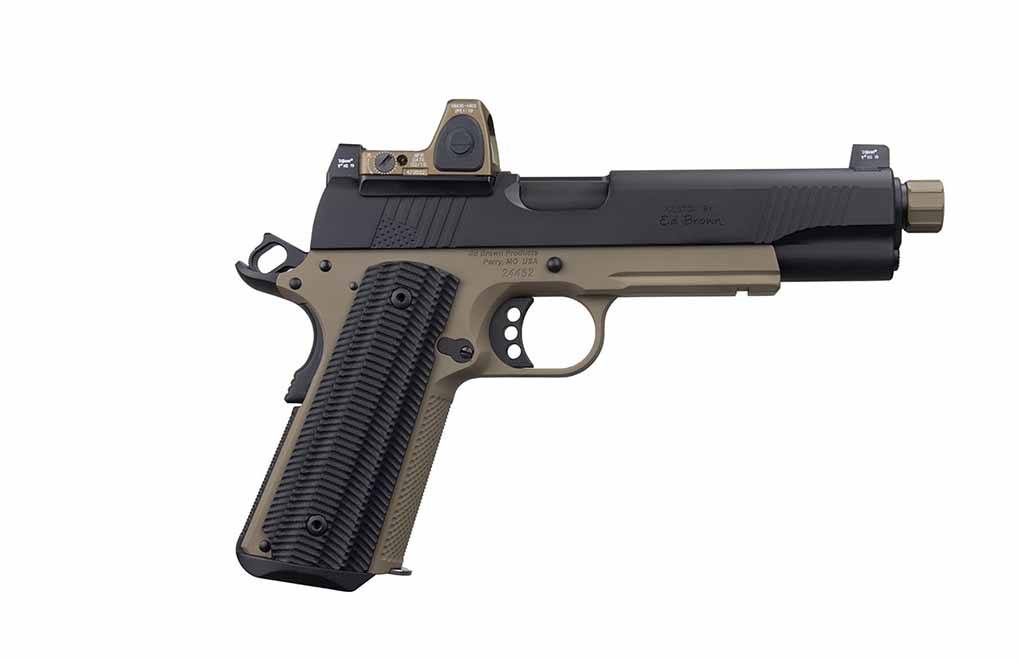
Built as a combat-ready custom 1911, the Ed Brown SOCOM edition runs long on tactically practical features.

What the Ed Brown SOCOM Has To Offer:

  • 5″ Government model slide
  • Single stack government model frame with integral light rail
  • Chainlink III treatment on forestrap and mainspring housing
  • Traditional “square cut” American flag cocking serrations on rear
  • FDE (Flat Dark Earth) Gen4 on frame, the rest in black Gen4
  • Black Nitride finished Suppressor ready barrel
  • Trijicon SOCOM Coyote Brown RMR sight 3.25 MOA with tall night sights
  • VZ Alien Grips

It’s always a treat to see what Ed Brown cooks up. Running long on customization and features, the gunmaker’s latest 1911 is no different. A tribute to U.S. Special Operation Command, the special edition SOCOM is made to excel in the harshest conditions. Though it’s such a slick looker, it’d be a shame to put a scratch on it.

Hand built, the 1911 has a few features worth particular note. Key among these is it’s not only optics ready, with a milled slide, but comes decked out with a Trijicon RMR sight. Furthermore, the .45 ACP pistol has suppressor-ready iron night sights, which not only makes it simple to shoot with a can out of the box but also serves as a backup if the optic goes out. A few other points on the Ed Brown SOCOM: Government sized, accessory rail, threaded barrel, one-piece magwell, Chainlink III treatment on the front strap and mainspring housing and American flag cocking serrations.

The gunmaker doesn’t exactly give guns away, particularly ones as long on extras as the SOCOM. So plan on scrapping up your spare change, Ed Brown put a $4,295 MSRP on the 1911.

More from Ed Brown:

PERRY, MO – Ed Brown Products, Inc. is honoring the men and women serving in the United States Special Operations Command with the special edition Special Forces SOCOM.

Based on the Special Forces SR model, the SOCOM edition is ready for extreme use. Hand built using fully machined components, and loaded with features, the SOCOM Edition has everything you need for serious performance

Ed Brown SOCOM

Featuring American Flag rear cocking serrations, the slide is finished in black Gen4 coating, contrasting the FDE Gen4 coated lower. Featuring a Trijicon RMR with hard-anodized coyote brown finish for an attractive combination with the FDE Gen4 coating package. The Trijicon RMR was selected by SOCOM for the for the Handgun Reflex Sight (HRS) contract after extensive testing and evaluation showed the RMR Type 2 to be uniquely reliable and durable in handgun applications. Co-witness front and rear night sights finish off the sights package.

An integral light rail allows for the attachment the choice accessory required for the mission, while the one-piece magwell is contoured with precision and hand blended to perfection, and mated with VZ Alien grips for a secure grip. Equipped with a Black Nitride, suppressor ready barrel and special edition FDE thread protector. The tactical profile thumb safety is shaped for shooting comfort, combined with a Tactical Edge slide stop for the ultimate in strength and longevity. The slide is finished with “SOCOM” engraving on the left side of the slide. Each pistol includes two, eight round Ed Brown Performance Magazines finished in Black Nitride.

Sales and Marketing Director John May, had this to add, “Our Special Forces pistols have been leading the industry for decades. I am so pleased to be able to offer the SOCOM Edition to pay homage to the great men and women of the Special Operations Command. The SOCOM Edition is another example of us listening to our customers and pushing the boundaries of the custom 1911 market. If you have not looked at Ed Brown in a while, it’s time to look again!


More 1911 Posts:

For more information on the Ed Brown SOCOM, please visit www.edbrown.com.

Glock 43X And Glock 48 Engineered For Maximum Carry Convenience

0

Built with the gunmaker’s simple dependability, the Glock 43X and Glock 48 offer shooters slim and effective concealed carry choices in 9mm.

I’ve carried a Glock 19 concealed for almost 18 years on a rather regular basis. The first few years I was still on the job. After that, I had our state’s version of the Law Enforcement Officers Safety Act, plus I got a permit to carry from the state — belt and suspenders style.

I first started carrying concealed handguns in the 1970s — remember Jimmy Carter, double-digit inflation and double-digit unemployment? Yes, I started carrying that far back, and long before a movie actor was elected.

With that in mind, I was stunned to find out that the Glock 19, a service compact by design, was just too much to carry for many people. And, once I really thought about it, it makes sense. If you’re in a classic non-permissive environment — not that it’s illegal to carry or even a job requirement that you be helpless — but if you work with people who have that unreasoned terror of inanimate objects, “smaller” really is important when it comes to concealment.

Learn More: Glock Reviews You Need To Read

But smaller is not necessarily better.

In the race to smaller guns, people have gone with flyweight calibers in very small guns and hoped for the best. Sadly, how well the guns can be shot has gotten lost. I’ve shot the micro .380 pistols, as well as some unpleasant mini 9mm guns: The results were not stellar.

Meanwhile, various states have been allowed to ban “boxes with springs” — in other words, magazines that hold “too many” rounds of ammunition. Deadly weapons, the lack of reasoning goes, can be less deadly with these limitations.

The Glock 19 magazine (left) compared to the new Slimline magazines. These are not backward compatible to the legacy G43.

During the late, unlamented Clinton Gun Ban of 1994, the whole country was strapped with such a magazine ban. The industry had gone on to service- and service-compact-sized double-stack handguns. The Glock 19 became just one example of a gun that suddenly needed neutered Clinton magazines. Oh, what we’d have given to have a ready supply of 10-shot concealable handguns. There were a few that were under 10 rounds, but there was nearly no support gear (spare magazines, holsters, magazine pouches).

Glock Goes Slim

Today, our wait is over, and it seems that it’s just in time for the modern incarnation of legislative buffoonery. Glock has released larger versions of their Slimline 9mm pistols. Their first effort available in the United States was the Glock 43. As a six-shot 9mm, it’s truly sub-compact. With a short barrel/slide mated to a short frame, it can disappear in a bellyband under scrubs, be worn in an ankle holster or tucked into a pocket holster.

However, it’s a chore to hang onto a Glock 43 when it’s fired. It’s not painful, but trying to pass the Wizard Drill — a benchmark to see if you’re competent with the gun you carry, as you carry it — is tough. Some people get there, but others don’t.

Meanwhile, certain people on the internet are saying there’s never any real innovation from gun companies. Well, Glock didn’t simply upsize the Glock 43; they had to make some other changes to make everything just right. While they were at it, realizing that much of the concealment chore is in the length of the magazine/frame and not in the barrel/slide due to carry inside the waist, they rolled out two models for 2019.

The Safariland 7371 ALS Concealment Paddle Holster for the Glock 42/43 also fits the Glock 43X.

The upsized result is the Glock 43X. Essentially a Glock 43 upper on a taller frame, the magazine is different. With a capacity of 10 rounds of 9x19mm ammunition, it’s only as long as the Glock 43 when loaded with a magazine that’s fitted with the Vickers Tactical/Tango Down +2 basepad. To make 10 rounds fit into the space of eight, the new magazines are thicker and not backward compatible.

The short barrel and slide are quick out of the holster, but with a frame that gives you, the user, more to hang onto.

Flat G19

Not satisfied to make the Glock 43X “magazine ban compliant,” they used that Glock 43X frame and add a barrel/slide that mirrors the length of the G19 (though it’s much thinner). The result: the Glock 48. Likewise a 10-shot gun, the slightly longer barrel/slide gives you more of that vaunted sight radius.

For those who appendix carry, the longer barrel/slide gives the body something to press against to push the back of the gun back into the body. This actually enhances concealment.

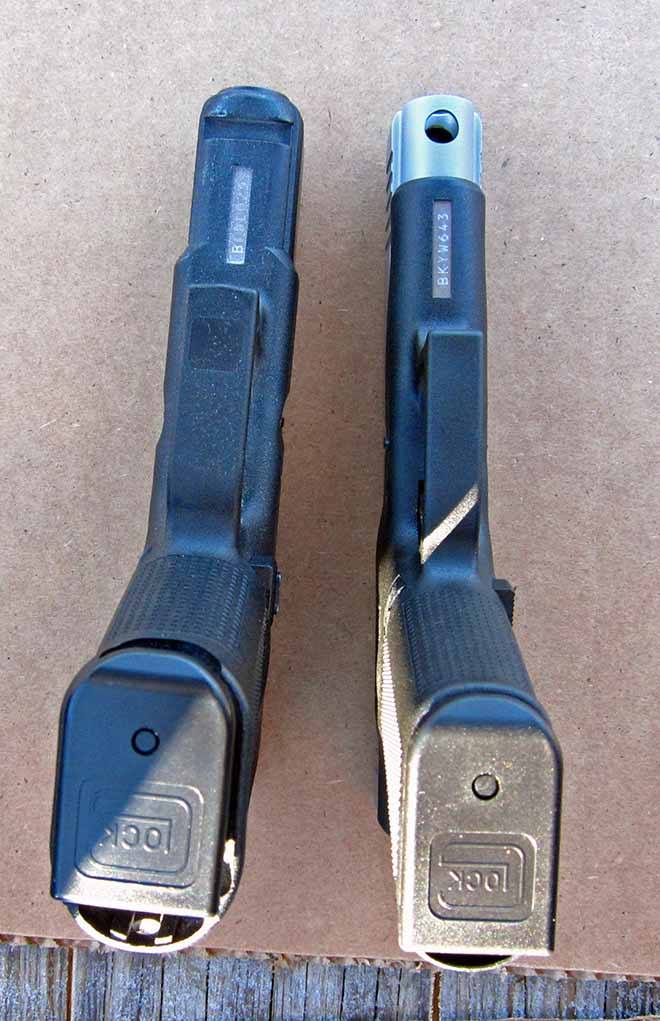
The Gen5 G19 is considerably wider than the G48 (right). Notice the opening in the Glock 48 slide ahead of the dustcover; it’s there to allow access to the front sight retention nut.

The slide for the Glock 43X is the same sub-compact length as the G43 at just over 6 inches (with a 3.41-inch barrel). The Glock 48 is called “compact,” with a length of 6.85 inches (a 4.17-inch barrel), making it compliant with current Canadian infringements.

Glock 43X And Glock 48

What do the guns have in common? Both ship with a pair of 10-shot magazines. Options for sights include the standard “ball-in-the-bucket” plastic sights if you want to change to your own preferred sights, Glock night sights (GNS) or Glock-branded Ameriglo Bold sights. The frames are nicely stippled, and the slides are silvery with a silver nPVD finish. There are front cocking serrations, which are handy for chamber-checks — if you keep your digits clear of the muzzle.

Also, the magazine release is reversible, there’s a built-in “beavertail” at the rear of the frame to minimize the chances of slide bite, and the guns both feature the Glock Marksman barrels.

I found the Glock 48 to weigh in at 17.6 ounces on my scale, with an empty mag in place. The Glock 43X was 16.8 ounces, similarly fitted. Trigger presses were weighed on the Wheeler Engineering Professional digital trigger gauge: The Glock 48 averaged a 5-pound, 1.3-ounce pull; the Glock 43X averaged a pull of 5 pounds, 2.8 ounces.

Glock Talk: Discover More Tips & Reviews

Shooting Tests

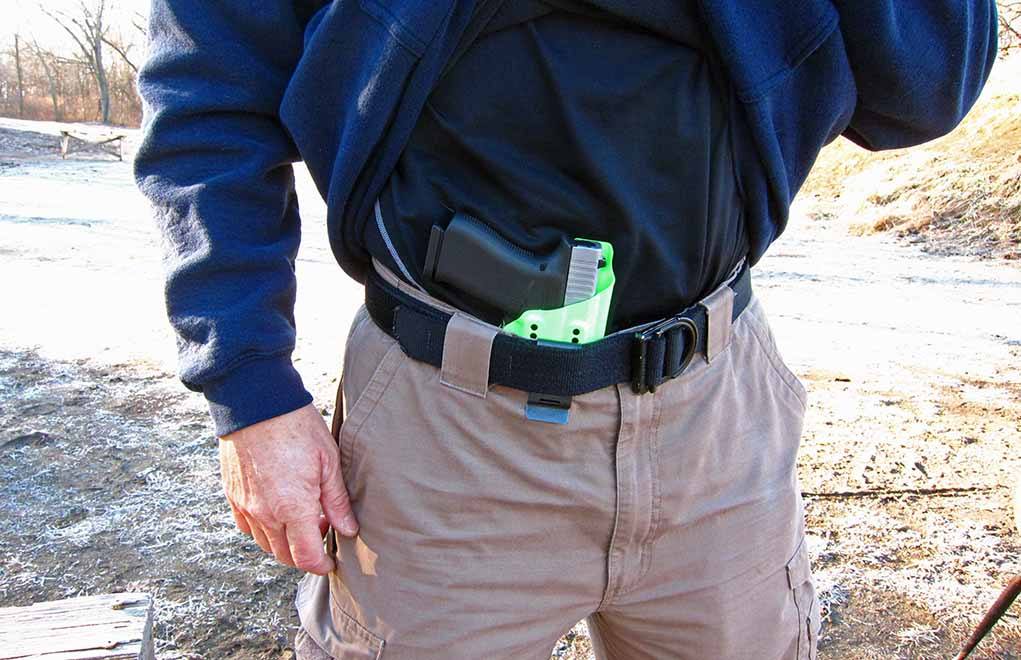
The Dark Star Gear Hitchhiker AIWB holster for the original Glock 43 also fits the G48. AIWB holsters are often made longer than the guns they’re built for to enhance concealment. The 10-shot Slimlines disappear under a light cover garment.

I found the guns to produce a 2- to 3-inch group from 25 yards while using a bench rest, implementing the “best three of five” in the group for measurement to rule out my human errors. I shot ball and hollow-point ammo from several manufacturers. I also had my friend and colleague — legendary lawman “Marshal” Chuck Haggard — meet me at the range. He put a few boxes of ammo through the guns and got a feel for them as well.

I shot at a reduced-size USPSA steel silhouette (about 14 inches high by 11 inches wide, without the 4- by 4-inch head box) from 50 yards. I loaded up with four rounds of Federal 115-grain FMJ ammo in the Glock 43X and put three of the four into the body of the steel plate.

That first round that slipped by the left side of the plate did so because I nudged the trigger. Think about that: A less than 3½-inch barrel, on a gun that weighs less than 17 ounces empty, with a trigger press of just over 5 pounds — and I made the hits at 50 yards.

Things looked promising.

Chuck brought out his personal gun, a G43 that he wears a lot. As such, it’s worn closely and gets linty, sweaty and dirty. As a Glock armorer, he simply detail strips the gun a few times a year for cleaning and inspection, and it keeps working. The holster he brought was the Hitchhiker, an AIWB from Dark Star Gear (DSG). He’s allowed me to borrow the rig for some shooting evaluations with the guns. Incidentally, the DSG holster is long enough that it seems to be custom-made for the Glock 48, which is a handy arrangement.

His gun is equipped with the Tau Development Group Striker Control Device (SCD), which is a replacement for the factory striker cover plate. Easily installed, it prevents the striker from being drawn to the rear when you place your thumb over the rear of the slide. This takes the worry out of re-holstering. If something fouls the trigger, you might feel the pressure from the SCD. Stop and reverse course, but know that striker won’t come back into firing position until you take pressure off the SCD.

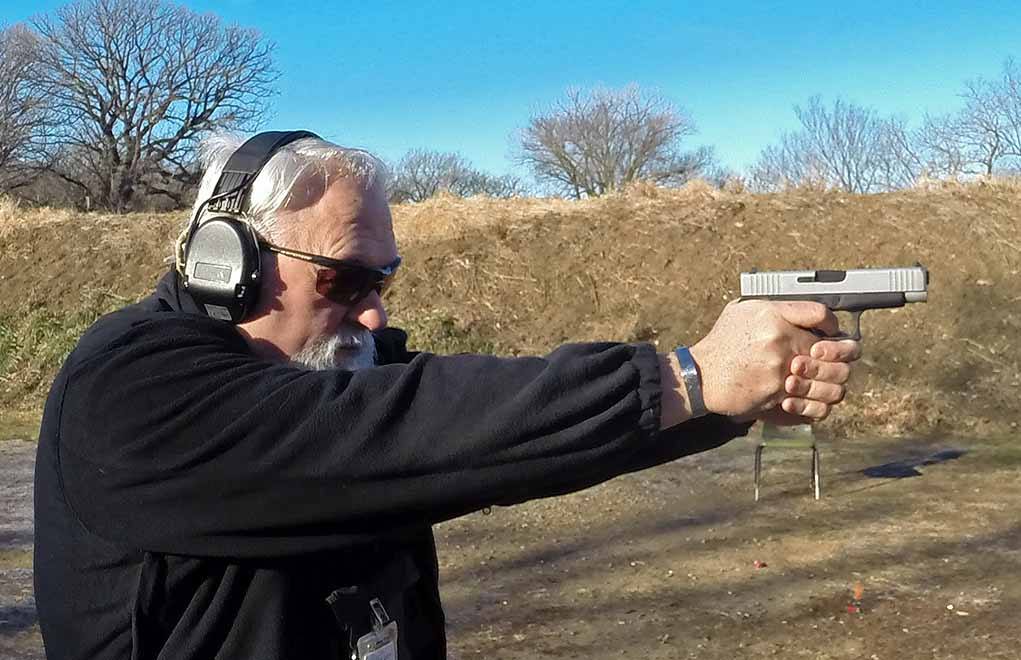
The shooting experience between the new G43X and G 48 was practically identical. Shown here shooting the Glock 48, the author couldn’t tell the difference (by feel) between the two new Slimline guns.

Chuck installed it, and tested it dry- and live-fire on both samples. The Striker Control Device for the G43 works on the new guns. I shot various handling drills with each gun to see how they’d fit into a qualification-type of scenario, and I’m confident to report that both are easily up to that task.

Collective Thoughts

In shooting more-or-less standard drills from various law enforcement qualification courses, the results were easily within a few points of ‘max’ scoring. I also found that I had to actually look at the guns to determine which I was shooting, and that’s something Chuck also noticed. When drawing from a holster, — shooting singles, pairs and failure drills — and seeing the gun only from the back, the two were indistinguishable in terms of shooting.

Overall, the Glock 43X and Glock 48 are exactly what you’d expect from Glock — simple dependability. But if I had to pick a weakness, I found the frames not really tacky enough. I’m hoping that Talon Grips will help that out soon.

Glock G43X Specs

Caliber: 9mm
Overall Length: 6.5″
Slide Length: 6.06″
Barrel Length: 3.41″
Overall Width: 1.1″
Slide Width: 0.87″
Height (including mag): 5.04″
Trigger Distance: 2.64″
Magazine: Slim 01 mag
Capacity: 10+1
Weight (loaded): 23.07 oz.

Glock G48 Specs

Caliber: 9mm
Overall Length: 7.28″
Slide Length: 6.85″
Barrel Length: 4.17″
Overall Width: 1.1″
Slide Width: 0.87″
Height (including mag): 5.04″
Trigger Distance: 2.64″
Magazine: Slim 01 mag
Capacity: 10+1
Weight (loaded): 25.12 oz.

Editor’s Note: This article originally appeared in the March 2019 issue of Gun Digest the Magazine.

For more information on the Glock 43X and Glock 48, please visit www.glock.com/.

Video: The Advantage Of Shooting From The Kneeling Position

0

Learning to shoot from a kneeling position is an important skill for self-defense and gives you a marked advantage.

It’s easy to get into a rut training, even when it’s defensive training. Yeah, at the range you’ll work on your stance, trigger control, sight alignment and other important fundamentals. Key as these may be, there’s a likelihood you’ll neglect some more practical skills that, in many cases, might prove lifesavers in a lethal-force encounter. Such as the vital ability to shoot from a kneeling position.

Be it to utilize low-lying concealment or cover, present a smaller target or potentially improve your accuracy, this low position is an important arrow in your quiver. Luckily, you can master shooting from a kneeling position with a little know-how and some practice.


Tune Into More Gun Digest TV:


In all, there are two kneeling positions: single and double knee. The single allows the opportunity for a bit more accuracy, given you can use your up knee (generally your support side) as a rest. It’s much the same as you find with hunters, who use the position to steady their rifle. The double knee, on the other hand, might be slightly quicker to assume and allows for a little more side-to-side movement – if you happen to be behind cover.

Generally, the most challenging aspects of either kneeling position are assuming them correctly and then standing back up. But if you add them to your defensive skill set you’ll have a marked advantage in a self-defense situation.

For more information on Walther, please visit www.waltherarms.com.

Discover The Golden Age Of Gun Writing In Gun Digest Classics

0
The book includes a 16-page full-color section featuring the gun collection of Elmer Keith, courtesy James Julia Auction Company.

Gun Digest Classics, a new Heritage Series book, features 53 classic stories from the world’s greatest gun writers, and a full-color section highlighting the gun collection of Elmer Keith.

What You’ll Find In Gun Digest Classics

  • Stories of Jack O’Connor’s famous hunts
  • Townsend Whelen’s tips on rifle accuracy
  • Charles Askins’ insights on handgun shooting
  • Elmer Keith’s gun collection in full color

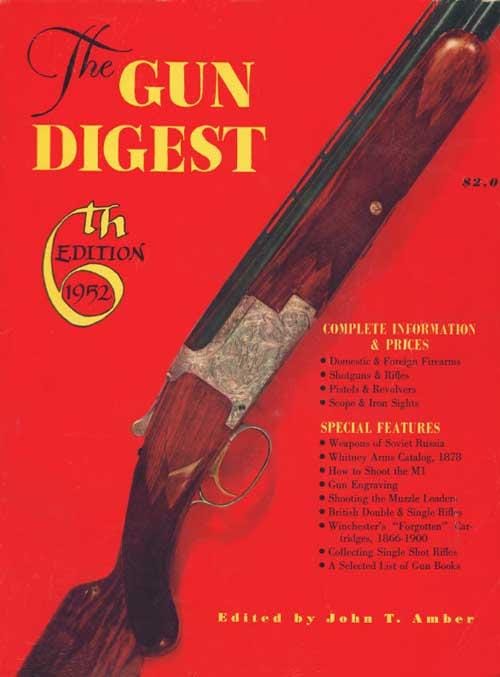
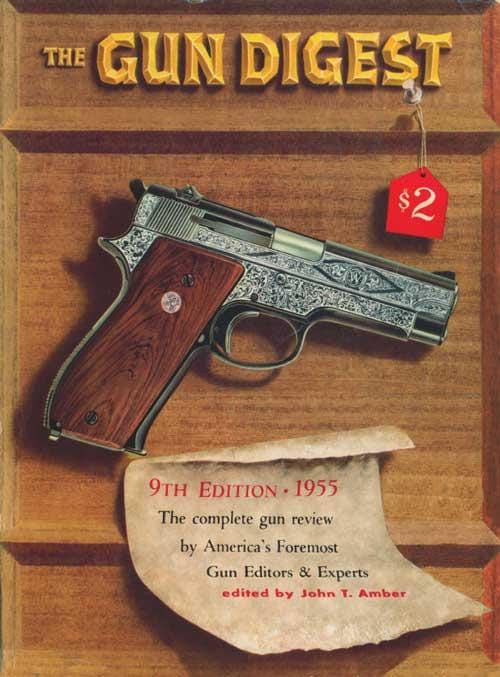
The 1940s and 1950s are regarded by many as the heyday of American gun writing. So it must have been divine providence for Gun Digest to have debuted when it did. That’s because the publication’s first edition, rolling off presses in 1944, would culminate with — and go on to feature — the best gun writers of that era. This would prove to be fortuitous then, and very good luck now, for Gun Digest Classics features hand-picked Gun Digest stories from those writers who truly are the greatest of all time.

Featured in this book are the towering giants of the trade, luminaries such as Jack O’Connor, Elmer Keith, Warren Page, Col. Townsend Whelen, and Col. Charles Askins, who all went on to make names for themselves writing what have become timeless classics — books, columns and articles for other publications such as Outdoor Life, Sports Afield, Guns & Ammo, and Petersen’s Hunting to name but a few.

These gentlemen were also propelled to stardom with bylines in the pages of the Gun Digest. And they likewise helped Gun Digest achieve worldwide prominence as “The World’s Greatest Gun Book” with their insightful and endlessly entertaining yarns about guns and hunting.

Read Also: Jack O’Connor’s Take On The 7mm Mauser

During World War II and the years following, these men informed and entertained our forebears with a special sort of gun writing that reflected the spirit of that era — prose that has aged like a fine old Fox double barrel with just the right amount of patina. And they continue to entertain those today who seek out their wild stories. This book features the best of the best who put ink to paper in the Gun Digest annual book during this formative period in firearms literature.

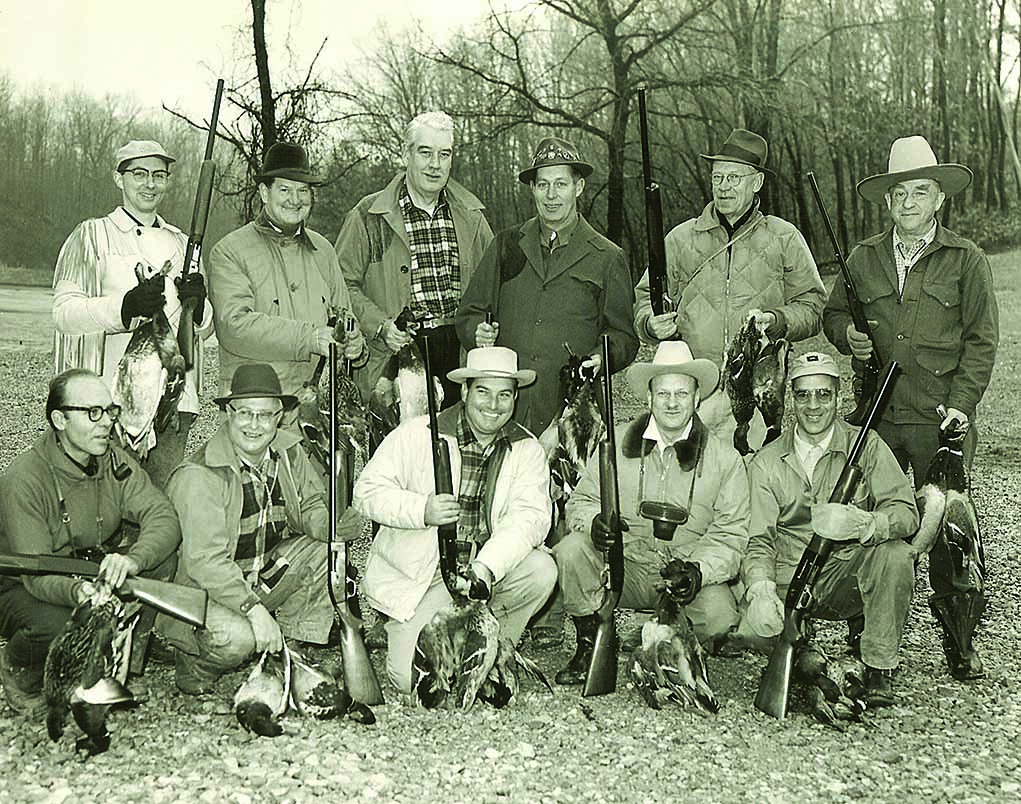
The 1940s and ‘50s editions of the Gun Digest Annual featured what have become today’s most-revered gun writers. This rare photo features some of them — Jack O’Connor, Elmer Keith, Warren Page and John T. Amber, among many others — larger than life.

Gun Digest Classics, the third in our widely acclaimed Heritage Series, gives a tip of the shooting cap to the men who inspired an entire generation of shooters, hunters and gun collectors from the beginning of World War II through the end of the 1950s. These masterful storytellers wrote with an old-fashioned flair that takes us back to what some believe was a better time and place. This book rekindles that charm.

Throughout its 75-year history, the Gun Digest has always featured stories from the heavy-hitters of the day; thus, it was not difficult to pull them together into one book. In fact, there were so many good articles from which to choose we editors literally had to limit the search to pre–1960 articles (could there be a 2nd edition coming soon?). Which brings me to how this book was edited. The editors felt strongly that we were treading on sacred ground when working with the files that would comprise this work. We found many stylistic nuances that we no longer follow but are not necessarily grammatically incorrect. Other than blatant typos or mistakes, we let sleeping dogs lie to maintain the feel and flavor of the original stories.

If you’re already a fan of “Cactus Jack” O’Connor, Elmer Keith aka “The father of big-bore handgunning,” or Col. Charles “Boots” Askins, then these men will require no introduction. What’s news to many, however, is that hidden in the dusty, dog-eared pages of the vintage Gun Digest annual books are stories by these characters, which until now have largely only been available to those with vast book collections or a hell of a lot of energy and ambition with which to search them out. Now the search is over.

Learn More: Elmer Keith: 3 Magnum Handgun Cartridges You’ve Got To Know

If you’re just discovering the classic gun writers, we hope this collection of stories will inspire you to look further into the literature they left behind. As Robert Anderson observes in his biography, Jack O’Connor: The Legendary Life of America’s Greatest Gunwriter, “And sad as it may be, there is a whole new generation of hunters and shooters out there who do not really know Jack O’Connor at all. The lamentable truth for his many fans, current or potential, is that Jack’s trail grows colder by the minute. Mention the name Jack O’Connor to many hunters and shooters of today and they’ll likely say, “Oh, yeah, the .270 guy!”

Gun Digest Classics 5

But Cactus Jack sure did leave an indelible impression in the pages of Gun Digest. For example, O’Connor was featured in the 1944 first edition with his story, “Choosing the Big Game Rifle,” which he leads off with this classic line: “In a certain cemetery in British Columbia lie the remains of a hunter who took great pride in going after Canadian grizzly bears with a .22 High Power Savage using a 70-gr. bullet.”

In later editions, the professor went on to pen, “Outfitting for the Rockies (1951),” “Shotgun Choke and Pattern (1952),” “Tips on Big Game Shooting (1952),” and “Gun Games for the Game Shot (1953).” Then in 1954, Jack published “Rifle in the Field;” in 1957, “African Safari;” and in 1958, “Sheep Rifle.” And that is only a partial list of what you’ll find inside by the late, great Jack O’Connor.

Fans of Elmer Keith (who isn’t one?) can kick their spurs together and do a little western dance over the old cuss’ tales, such as “The Proper Big Game Rifle (1945-46),” and in 1952 two more good yarns — “British Double and Single Rifles,” and the subject for which Keith is perhaps best known, “Sixguns.” In this latter article the reader is treated to classic Keith, such as this gem (left unedited as it appeared in the original): “On other occasion the old gun was packed for social purposes — when serving on sheriff’s posses, hunting cow thieves, or to back our honor and judgment. I still remember seeing one cow thief squirm when I watched him and his three riders while my partner cut four of my steers from two cars of beef that he was preparing to load on the train. Those steers had my brand, badly blotched, and the wattle cut off their noses, but I would have known their hides in a tan yard; so I took them by force. Suffice to say, I would have been pushing up daisies over twenty years ago instead of writing this article now, had I not carried and known how to use a good, heavy sixgun.”

Read Also: Jack O’Connor: Tips on Big Game Shooting

Speaking of Keith and O’Connor, it almost seems wrong not to mention the elephant in the room: The feud between these two old gun scribes. It may be difficult for contemporary readers to see why any animosity existed at all between Jack and Elmer — and it’s unclear even today how much of it was hype and how much real — for they appear to be cut from similar cloth in many ways. Sure, O’Connor was a Southwestern mule deer and Coues deer hunter from Arizona with a reputation for preferring lighter-caliber, faster-shooting rifles; Idahoan Keith liked to plow over game with the largest calibers and heaviest bullets he could find.

The new Gun Digest Classics book revives the vivid tales of adventure told by “Cactus Jack” O’Connor, including some of his infamous sheep hunts, from the early editions of the Gun Digest annual book.

But history is pretty clear that these typecasts aren’t really accurate. After all, O’Connor made no qualms about his belief in using enough gun, for he often hunted with the .375 H&H, .416 Rigby and .450 Watts while on safari. And on the other end of the spectrum, Keith held some love for small calibers. According to noted author Craig Boddington, in the January/February 2012 issue of Rifle Shooter magazine, “In private correspondence, though never in print, they even crossed over. In a letter I’ve seen, Keith grudgingly admitted that the .270, matched with a 150-grain Nosler Partition (the premium bullet of his day) would be perfectly adequate for elk. O’Connor, on his part, conceded that the .30-06 was actually more versatile than his beloved .270.”

An entire doctoral dissertation could be penned about the feud. In Elmer Keith’s book, Gun Notes (a collection of his Guns & Ammo columns), letters between Keith and Truman Fowler, publisher of Keith’s book Safari, shine some light on the matter. In one letter dated March 8, 1969, Keith (writing to Truman), states of O’Connor, “Think he is just jealous of me and my work, as well as the fact I beat the hell out of him every time he tried to beat me shooting. He is afraid of buff and elephant, and that’s the reason he doesn’t want to leave so many tons of meat for the natives.”

Take A Gander: Some Of Elmer Keith’s Prized Guns

Yet on March 14 of that same year — just six days later — O’Connor wrote to Keith directly with a very cordial letter that simply stated, “I have just been reading your book Safari. You like bigger guns than I do, but that’s neither here nor there. What I was thinking of is why in the hell don’t you start writing your autobiography? You are a good storyteller and you have had a hell of an interesting life — a kind of life that will never be seen again. Better think about it! Best to you, Jack.”

So much for that!

Gun Digest Classics 4

Of course, you’ll find no feuding or cussing between these two greats in this book. If their stories pique your interest, works by both authors would make excellent follow-up reads after you finish this one.

I’ve already mentioned the articles you’ll find inside by Warren Page, and Cols. Townsend Whelen and Charlie Askins, but we’ve also included a few by John T. Amber, the long-time editor of Gun Digest and man responsible for the hiring of so many talented gun writers. Amber was no desk jockey; he often contributed colorful stories of his own and was known for his interest in odd or rare, custom guns.

Amber articles in this title include, “Tokyo Treasure (1954),” “Battle of the Automatics (1956),” and also from 1956, “Custom Guns,” in which he dresses down gunsmiths who, in his opinion, were contributing to lowering quality standards at that time (in 1956!): “The other side of the coin is little less than revolting. The woods — and a hell of a lot of gunshops — are full of the botched abortions miscalled custom guns by their ham-fisted makers; sad, ugly affairs foisted on their eager and unsuspecting buyers by woodbutchers and hammer-and-chisel mechanics, a too large group who have done much to damage the standing of gunsmiths everywhere.”

And so on.

These are but a few of our favorite stories and quotes, found on the pages herein. No doubt, by the time you get done reading this treasure trove of gun lore, you’ll have your own favorites. From sheep shooting in British Columbia to stopping a charging cape buff in Africa, no one ever told of such high adventure better than these, the greatest gun writers of Gun Digest!

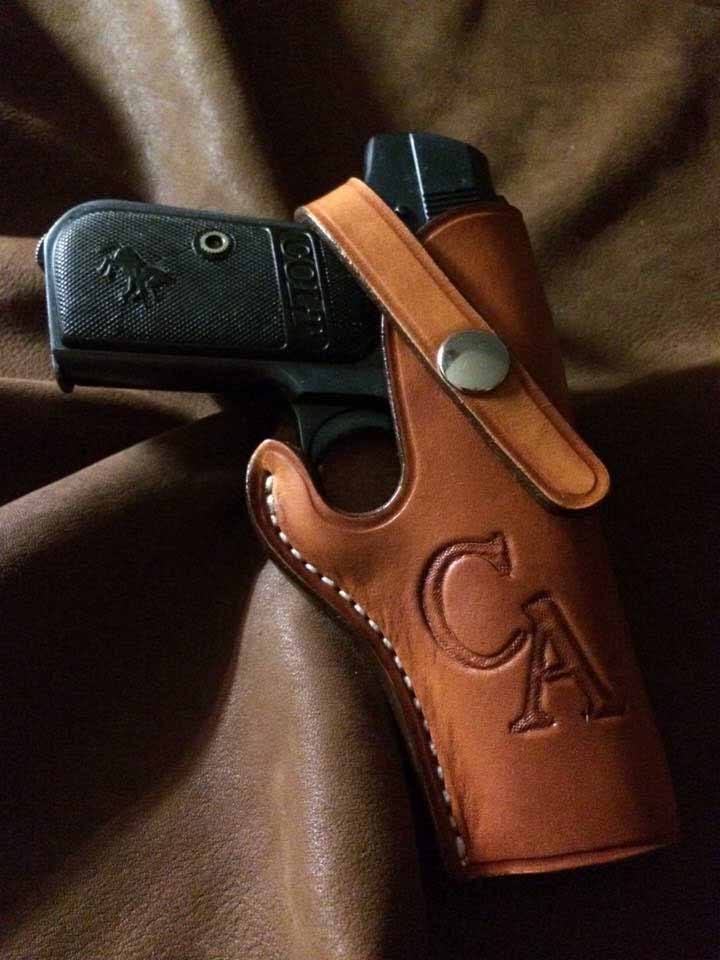
Holster Options For The Colt 1903 Hammerless Pocket Pistol

1
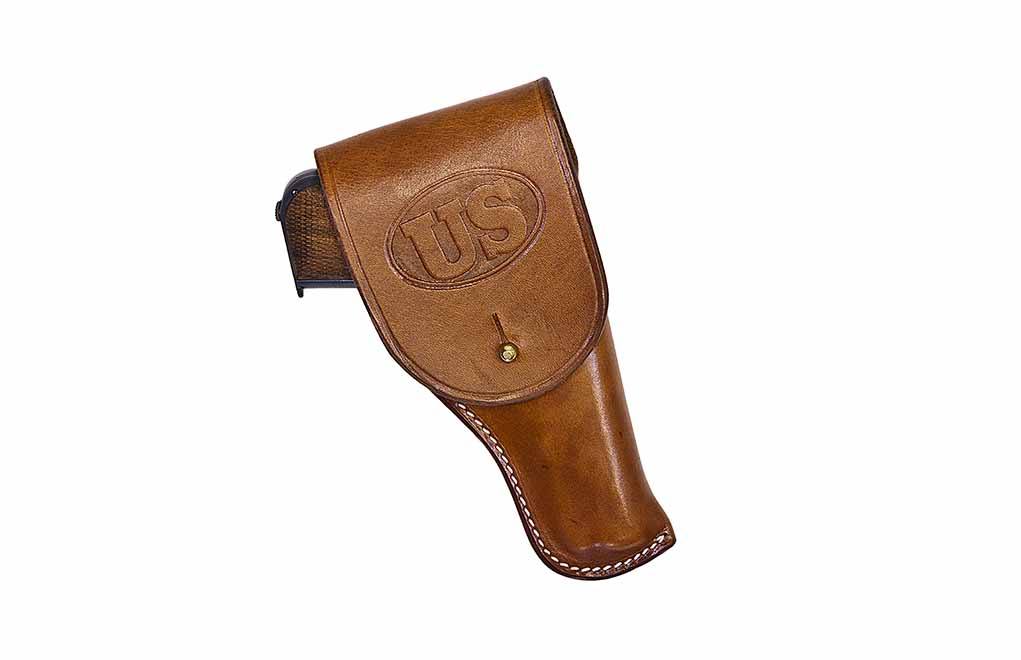
U.S. Armament Colt 1903 Holster

Sure, you can carry it in your pocket, but there are plenty Colt 1903 holster options.

Who Makes Holsters For The Colt 1903:

  • U.S. Armament
  • Barranti Leather
  • Winthrop Holster
  • 1791 Gunleather

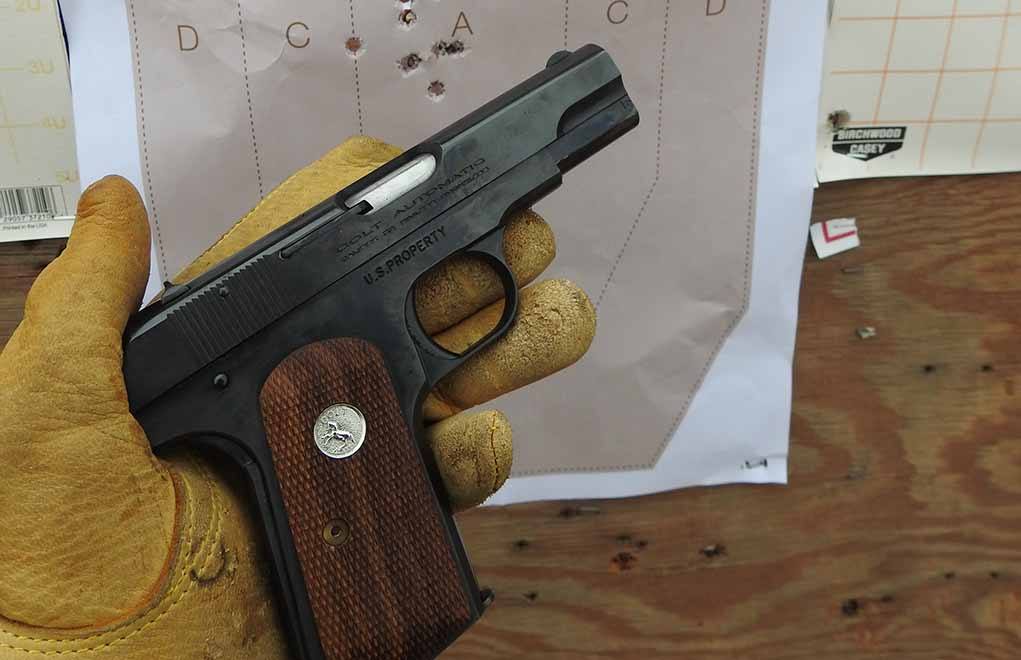
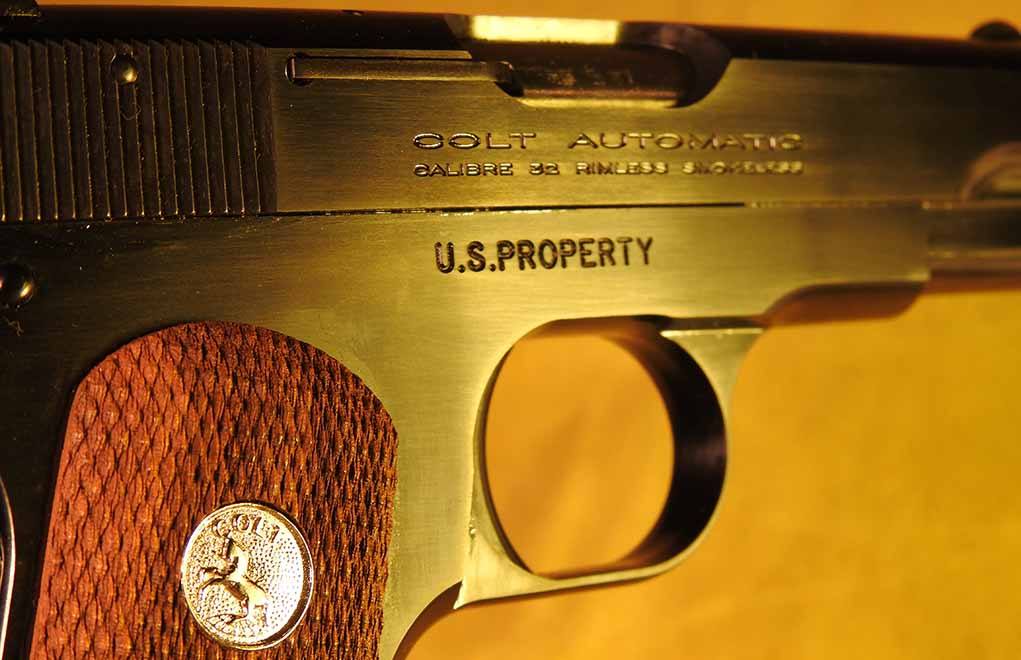
My brother, Roley, and I agree the Colt 1903 Hammerless Pocket Pistol is indeed comfortable to carry as its name implies — in a pocket — but it also rides easily in concealed-carry holsters, which are readily available in modern and traditional models for this century-old firearm design.

Testing John M. Browning’s “pocket” intent for his design, I’ve toted my 1916-vintage 1903 consistently in coat pockets, vest pockets and even front pant pockets. Its smooth, rounded-edge design created no hang-ups or obstacle to drawing. The thin design rides snuggly without bulk and prevents undue giveaway printing. All that said, carrying in a holster is superior for a plethora of reasons.

Barranti Leather custom makes holsters for the Colt 1903, such as this Ranger model. Barranti Leather offers four designs for the Model 1903.

A handful of holster makers offer holsters for models compatible with the 1903 (and outwardly identical 1908, the .380 ACP version), including a U.S.-stamped military flap holster, plus custom makers whose work can provide functional and complementing style to the classic handgun.

U.S. Armament (USarmcorp.com) offers a custom-made military-style flap holster, stamped with “U.S.”, as a fitting companion to their Colt 1903 reintroduction.

Mike “Doc” Barranti (BarrantiLeather.com) can fit four of his custom-made popular models — the Ranger, Border Ranger, Barranti-Myres Lonewolf Ranger and Barranti-Myres Barton’s Special — for the 1903. I went with the Ranger, and if I thought the 1903 carried unobtrusively in a coat pocket, this holster took unobtrusive to another level. This stylishly and simple all-leather holster holds the 1903 snugly, positioned high enough for easy concealment with a forward cant, ready for straight-forward draw.

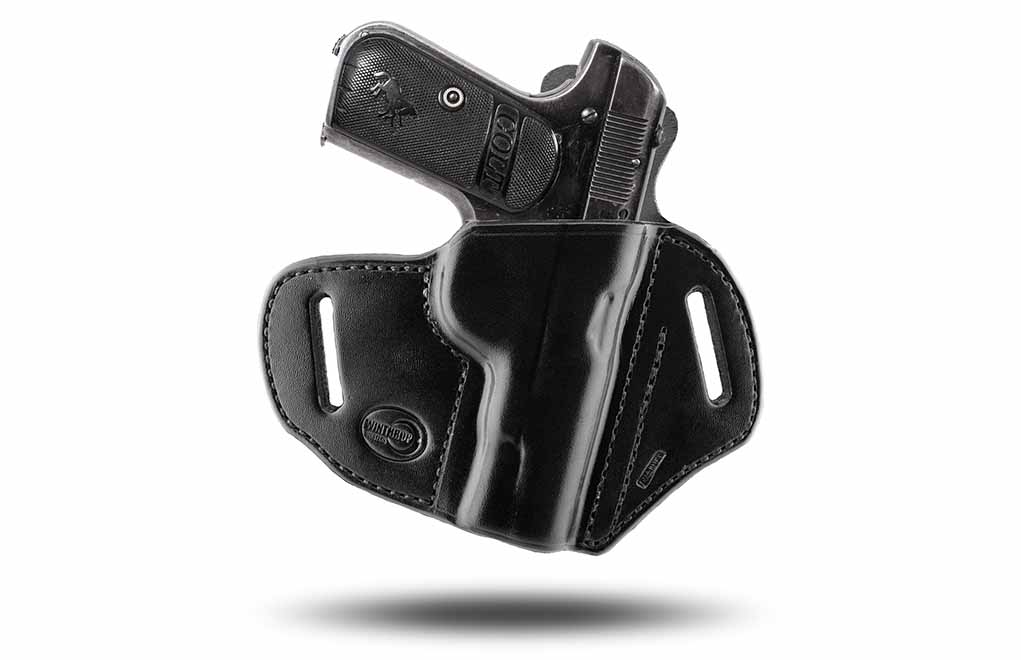
Another holster-maker I found, Winthrop Holster (WinthropHolsters.com) offers both IWB and OWB, in right- and left-hand models, in your choice of black or brown leather.


Learn More About Legendary Firearms:


Also, 1791 Gunleather (1791gunleather.com) makes its IWB Smooth Concealment Holster out of soft, breathable cowhide lined with suede for the 1903.

The fact that holster makers continue to offer holsters for the Colt 1903 is testament to the longevity and genius — and reliability — of its century-plus-old design.

Editor’s Note: This article originally appeared in the Concealed Carry 2019 issue of Gun Digest the Magazine.

Savage 110 High Country Ready For The Backwoods

0

110 High Country 2

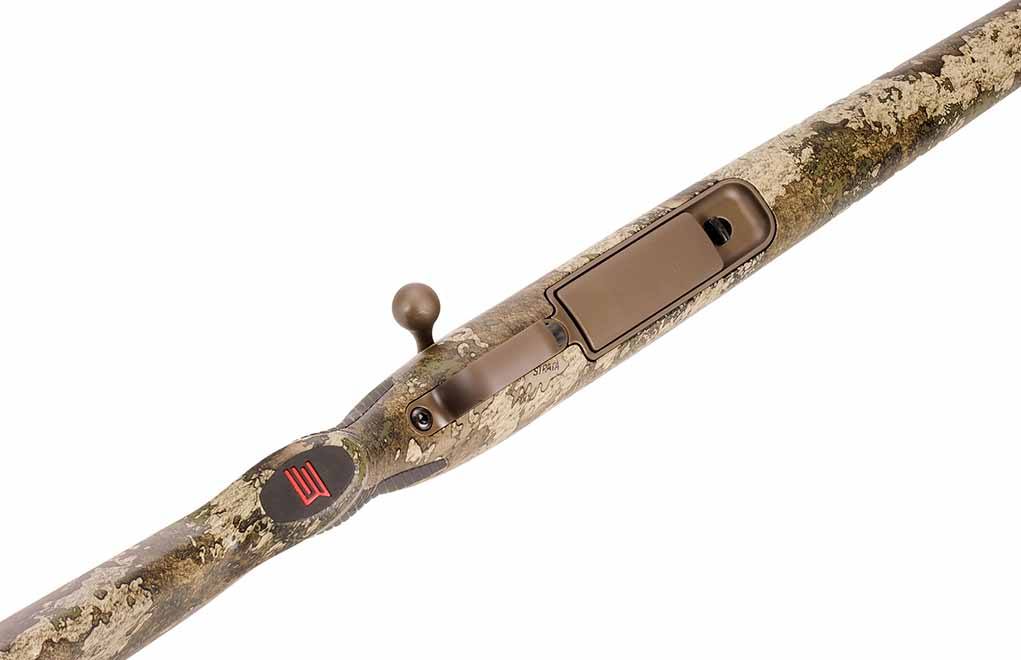
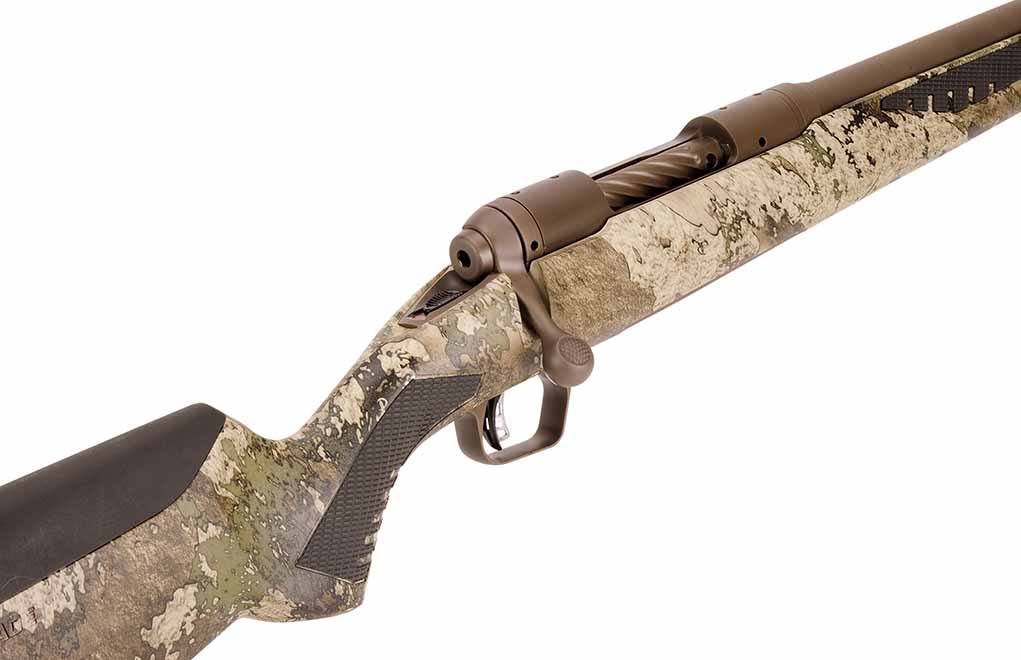
Affordable and lightweight, Savage Arms’ 110 High Country opens the mountain rifle to all hunters.

How The 110 High Country Is Set Up For The Most Rugged Hunts:

  • Depending on caliber, rifle weighs 8.1 to 8.5 pounds
  • Durable PVD-coated bolt handle, receiver, barrel, trigger guard and magwell
  • Lightweight AccuFit stock — fully adjustable LOP and cheek riser
  • AccuStock internal chassis to create a ridged overall platform

Ounces are pounds. Nowhere is this more evident than trekking on a backcountry hunt. Just getting to the game with your gear winds you, let alone packing out an elk quarter or an entire mule deer. Thus was born the mountain rifle.

The lightweight bolt-actions have become popular in recent decades as hunters have pushed deeper into the woods and mountains. Yet, for many, the generally high-tech irons are cost-prohibitive — as merciful to your shoulders as the might be. Though, they could become more common with Savage Arms taking a crack at producing the featherweight rifles.

110 High Country 4

Now shipping, the gunmaker’s 110 High Country has about everything you’d want in mountain rifle – especially price. With an MSRP of $1,129, the gun should hit the shelves well under a grand, making it a fraction of the price of similarly configured bolt-actions. And, all in all, hunters get a pretty good value out of the deal.

In addition to the tried and true 110 action and fully adjustable AccuStock, the rifle has some features generally found on custom rigs. The most notable are the weight-saving spiral fluted barrel and bolt. Nice touch. Though, it’s what you can’t see — heft — that should turn out to be the selling point. Ranging between 8.1 and 8.5 pounds depending on caliber, the 110 High Country should prove a manageable burden on the way up to treeline or beyond.


Looking For More Great Rifle Content?:


Other features of the rifle worth mention are its adjustable AccuTrigger, overmolded surfaces on the stock, threaded muzzle and PVD coating on its stainless steel action and barrel. In all, Savage is offering the 110 High Country in 11 chamberings, including a number of magnum options.

From Savage:

WESTFIELD, Massachusetts –– Savage is excited to unveil the 110 High Country, a rifle that gives Western hunters the precision and power to take the biggest bulls and the longest shots. Shipments of these firearms have been delivered to dealers.

110 High Country 3

The 110 High Country is built to maximize accuracy with a spiral-fluted barrel and bolt, as well as the Model 110 action secured three-dimensionally along its entire length within the AccuStock internal chassis. The AccuFit system lets hunters customize length-of-pull and comb height of the TrueTimber Strata synthetic stock. Plus, the user-adjustable AccuTrigger offers a crisp, clean pull critical for making precise shots at extreme distances. The low-friction, coyote brown PVD coating on the barrel, receiver and other critical parts is harder than competing finishes and protects against corrosion and heat. At just 2-4 microns thick, the coating does not interfere with the rifle’s tight tolerances.

Features
•AccuFit system lets hunters adjust comb height and length-of-pull
•User-adjustable AccuTrigger
•AccuStock rail system
•TrueTimber Strata synthetic stock with overmold surfaces
•Model 110 stainless steel barreled action with coyote brown PVD coating
•Spiral-fluted barrel and bolt
•Threaded muzzle; magnum calibers feature muzzle brake with taperlock interface
•Detachable box magazine
•PVD-coated bolt handle, receiver, barrel, trigger guard and magwell
•Drilled and tapped receiver
•Three-position safety

110 High Country Specs

Action: Bolt
Barrel Color: Brown
Barrel Finish: PVD Coating
Barrel Length (in): 22 (.308 Win, .243 Win, .270 Win, .280 AI, .30-06 Spfld, 6.5 CM, 7mm-08 Rem); 24 (.300 Win Mag, 7mm Rem Mag, 6.5 PRC)
Barrel Material: Stainless Steel
Calibers: .308 Win, .243 Win, .270 Win, .280 AI, .30-06 Spfld, .300 Win Mag, .300 WSM, 6.5 CM, 6.5 PRC, 7mm Rem Mag, 7mm-08 Rem
Magazine Capacity: 4 (.308 Win, .243 Win, .270 Win, .280 AI, .30-06 Spfld, 6.5 CM, 7mm-08 Rem); 3 (.300 Win Mag, 7mm Rem Mag); 2 (.300 WSM, 6.5 PRC)
Length of Pull (in): 12.75 – 13.75 (.308 Win, .243 Win, .270 Win, .280 AI, .30-06 Spfld, .300 Win Mag, 6.5 CM, 7mm Rem Mag, 7mm-08 Rem); 13.75 (.300 WSM, 6.5 PRC)
Magazine: Detachable Box Magazine
Overall Length (in): 42.375 (.308 Win, .243 Win, .270 Win, .280 AI, .30-06 Spfld, 6.5 CM, 7mm-08); 44.25 (.300 WSM); 45.25 (.300 Win Mag, 6.5 PRC, 7mm Rem Mag)
Rate of Twist (in): 1:8 (6.5 CM, 6.5 PRC); 1:9 (.280 AI); 1:9.25 (.243 Win); 1:9.5 (7mm Rem Mag, 7mm-08 Rem); 1:10 (.308 Win, .270 Win, .30-06 Spfld, .300 Win Mag, .300 WSM)
Receiver Color: Brown
Receiver Finish: PVD Coating
Receiver Material: Stainless Steel
Type: Centerfire
Stock Color: Camouflage
Stock Finish: Matte
Stock Material: Synthetic
Stock Type: L Sporter
Weight (lb): 8.1 (.308 Win, .243 Win, 6.5 CM, 7mm-08 Rem) 8.15 (.270 Win, .280 AI, .30-06 Spfld) 8.5 (.300 Win Mag, .300 WSM, 6.5 PRC, 7mm Rem Mag)
MSRP: $1,129

For more information on the 110 High Country, please visit www.savagearms.com.

Video: Effectively Shooting From Cover Or Concealment

0

Shooting from cover or concealment can give you a marked advantage in a self-defense situation if you know how to use them properly.

Let’s clear up something first, cover and concealment are NOT one and the same. There’s a fairly important distinction between the two: Cover, will hide you from an assailant and protect you from bullets, while concealment just hides you. A pretty important difference, if you happen to be getting shot at. Yet, both potentially provide a common advantage – surprise.

Certainly, a bad guy might know you’re taking cover behind a large junction box or concealing yourself on the other side of a car. However, he might not be capable of determining your exact position or when you’ll engage him. This to a certain extent allows you to dictate the encounter, if you play your cards right to your benefit. Though, it requires you understand how to use cover and concealment correctly.


Tune Into More Gun Digest TV:


Perhaps the most important factor is resisting the natural inclination to hug whatever you’re behind. It’s almost instinctive to do so, given it makes you feel safer. Though, as Richard Mann demonstrates in the above video, this position puts you in peril. Not only does it force you to lean further out to attempt a shot, but it also blinds you to potential danger that might be right around the corner. The simple rule is to stay around an arm’s length away from whatever your behind.

Like anything concerning shooting or self-defense, there’s more to it than giving yourself proper space. You also must train so you’re prepared to use cover and concealment. But keeping this buffer zone in mind when doing so will make you all the more effective.

For more information on Walther, please visit www.waltherarms.com.

Ruger 10/22: Customizing For Accuracy

4

Rebuilding and upgrading a Ruger 10/22 introduces improvements far beyond the aesthetic benefits.

What Are The Features Of The Ruger 10/22 You Can Upgrade:

Ruger’s auto-loading 10/22 .22 Long Rifle is arguably the most popular firearm in its class. The 10/22 is incredibly reliable, designed to withstand repeated dry fires (something that can damage lesser .22 LR designs) and includes a compact and unfailing 10-round rotary magazine. Plus, William B. Ruger engineered the 10/22 to be affordable and easily maintained.

On top of all that, the 10/22 is also highly customizable. Only the AR-15 has spawned a wider array of aftermarket accessories, though tricking out a 10/22 is typically accomplished more affordably. The basic starting point — a blued-barrel, wood-stocked 10/22 carbine — sets you back about $300, brand-spanking new. Yet, because some 5 million-plus 10/22s have sold since its 1964 introduction, a ready supply of affordable “project guns” appear on the used-gun market.

Find Out More About Ruger Firearms

The 10/22’s modular design and obvious popularity has resulted in a thriving cottage industry creating aftermarket parts and accessories (it’s now possible to build a fully functioning 10/22 completely from non-Ruger parts). At least two manufacturers produce 10/22 clones, including parts interchangeable with factory Ruger’s, but they also include a hefty price tags. The gun nut with a modicum of mechanical skills and a factory 10/22 can build their own customized rifle for hundreds of dollars less.

The 10/22 Build

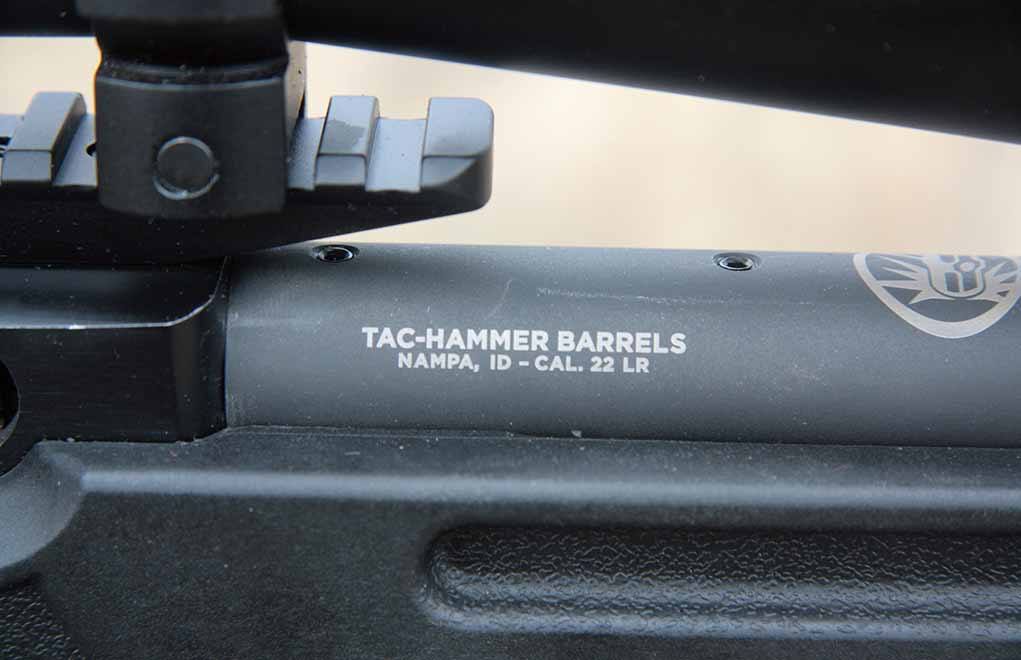
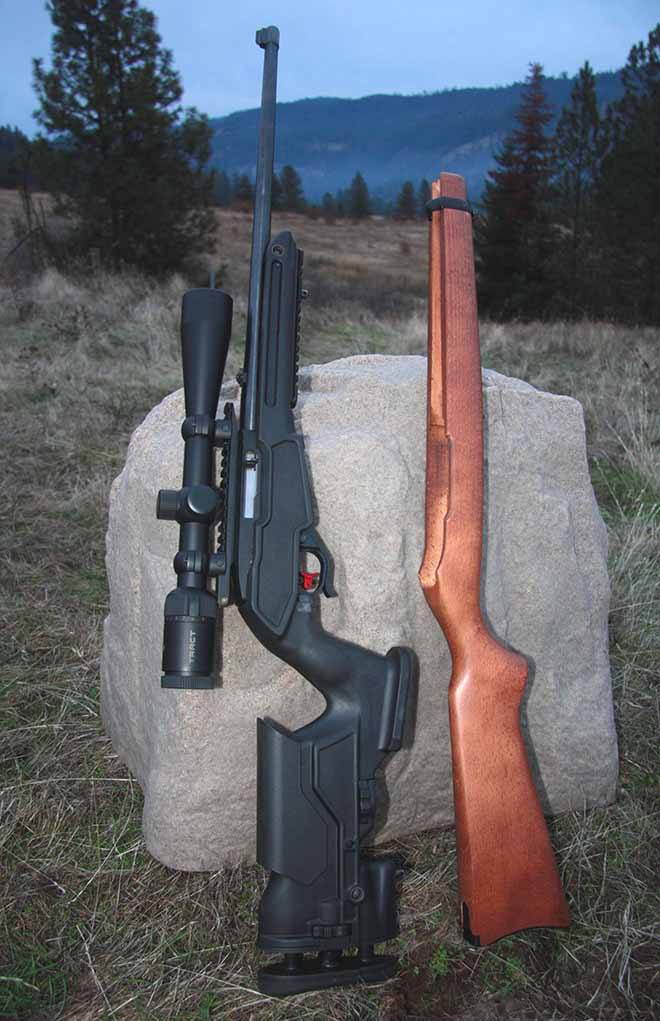
The replacement barrel in this Ruger 10/22 build is Adaptive Tactical’s Tac-Hammer Precision Barrel. The design includes a stepped-diameter, Chromoly steel barrel inside a 0.920-inch aluminum shroud for weight reduction and improved balance.

It’s safe to say pure aesthetics drive many 10/22 projects. There’s certainly nothing wrong with wanting a sexy-looking .22 LR, but serious shooters usually approach these builds looking for improved accuracy. This comes from four defined areas:

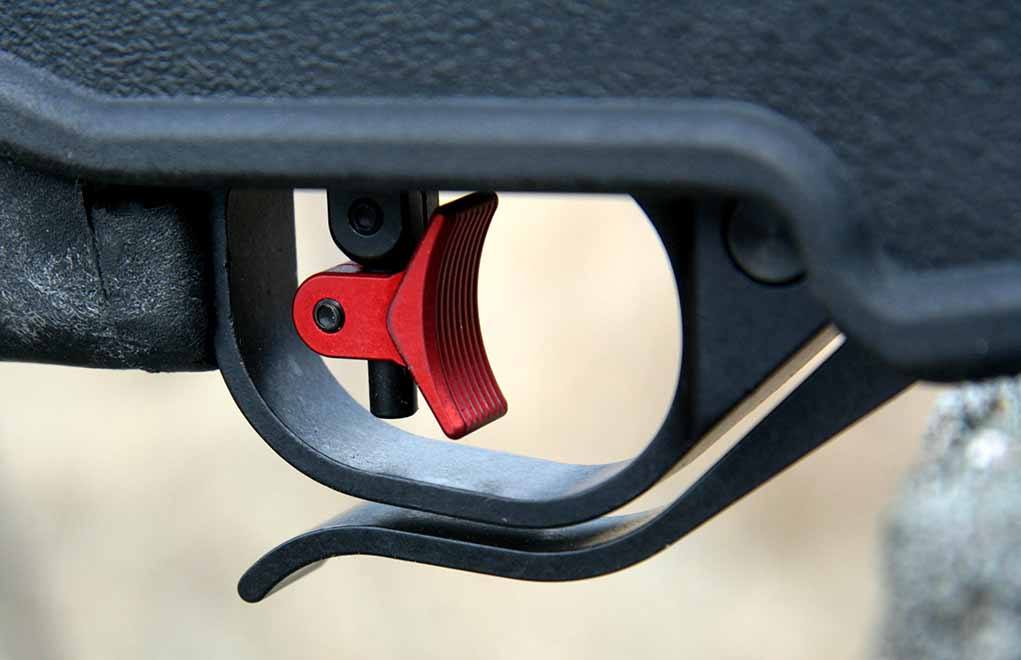
  • A trigger group that provides a smoother, lighter pull than the lawyer-influenced factory assemblies
  • A more stable and/or comfortable stock design, which also creates a free-floated tube
  • A barrel upgrade
  • A centerfire-style recoil lug

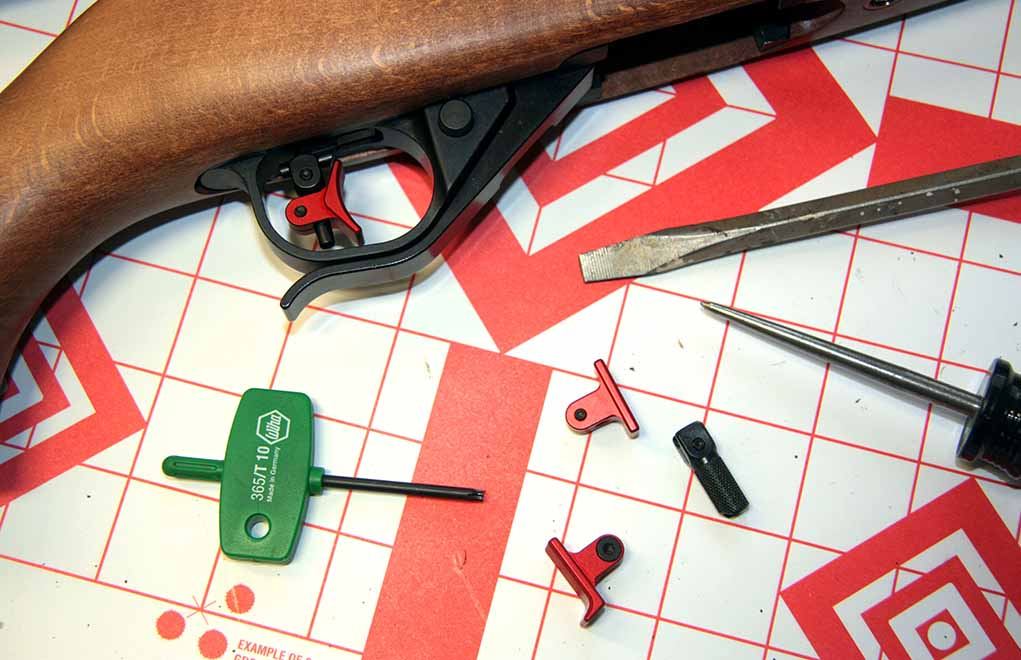
Most of these tasks are accomplished with nothing more than a flat-head screwdriver, Allen-wrench set, 1/8-inch punch and the smallest degree of gunsmithing acumen. Choosing from the plethora of appealing 10/22 replacement accessories, well, that can prove more excruciating. Personal tastes, functionality to specific tasks and budget ultimately dictate these decisions. Being a hardcore small-varmint shooter, I built this rifle accordingly.

Replacing the plain-Jane Ruger factory stock in this 10/22 build was ProMag’s Archangel Precision Stock. The stock provides significant accuracy improvements, but it also includes click-adjustable length-of-pull and comb height customizations.

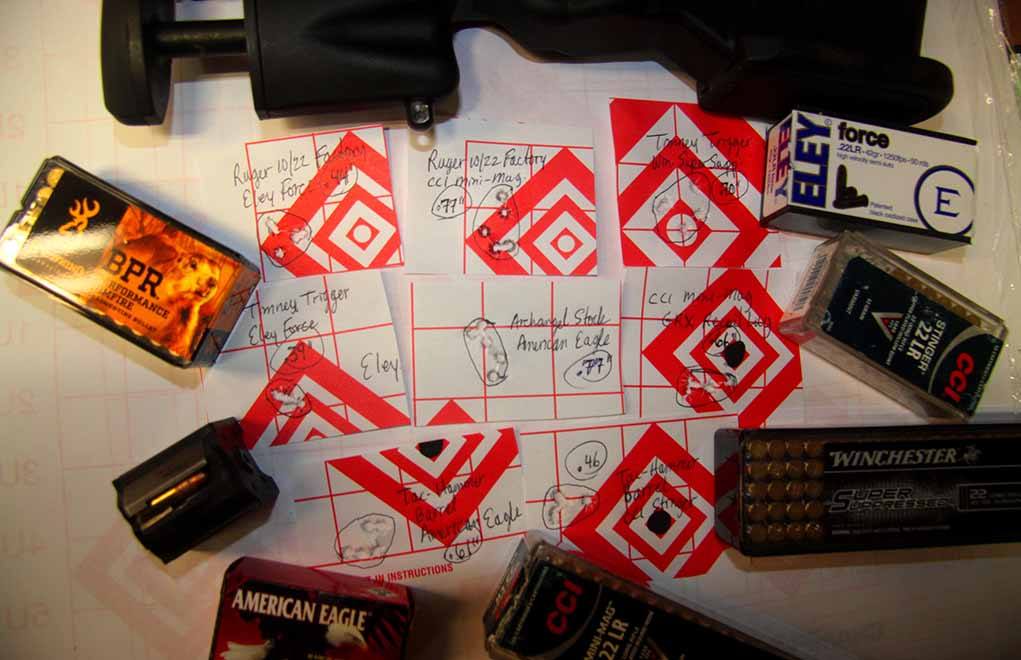
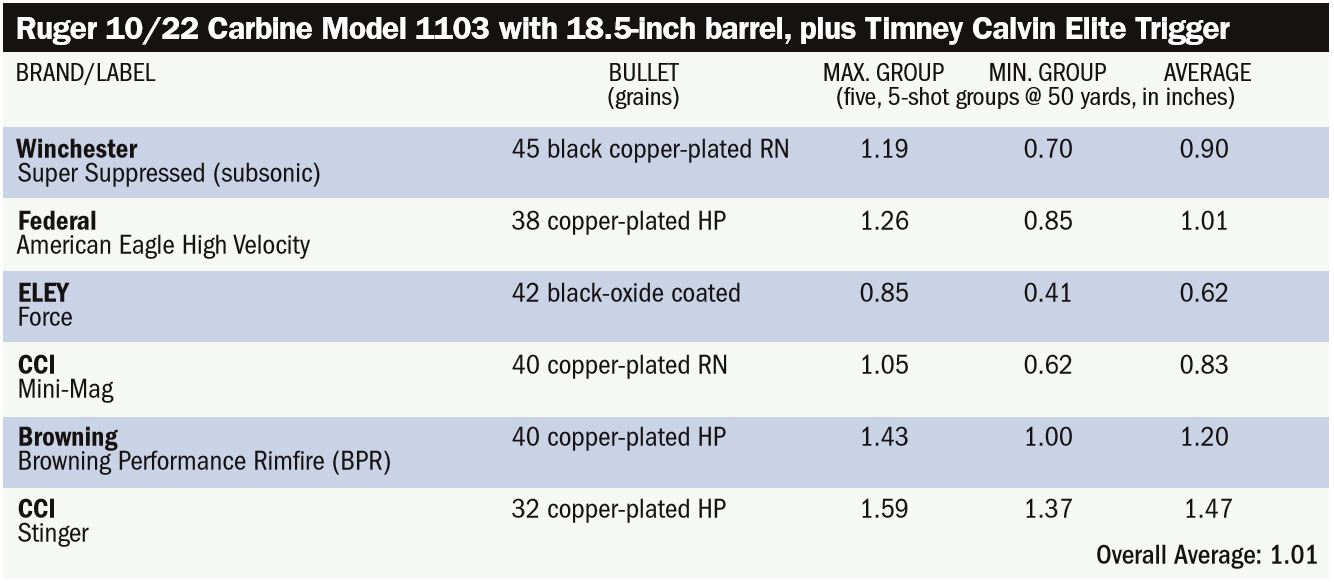
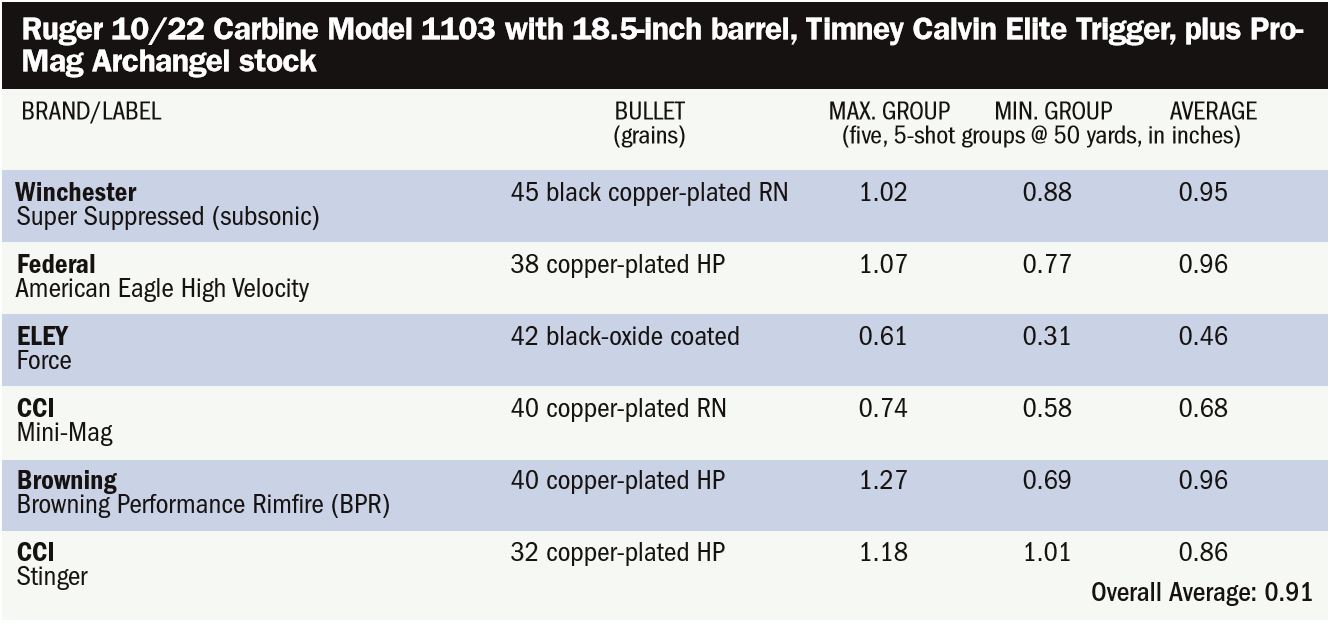
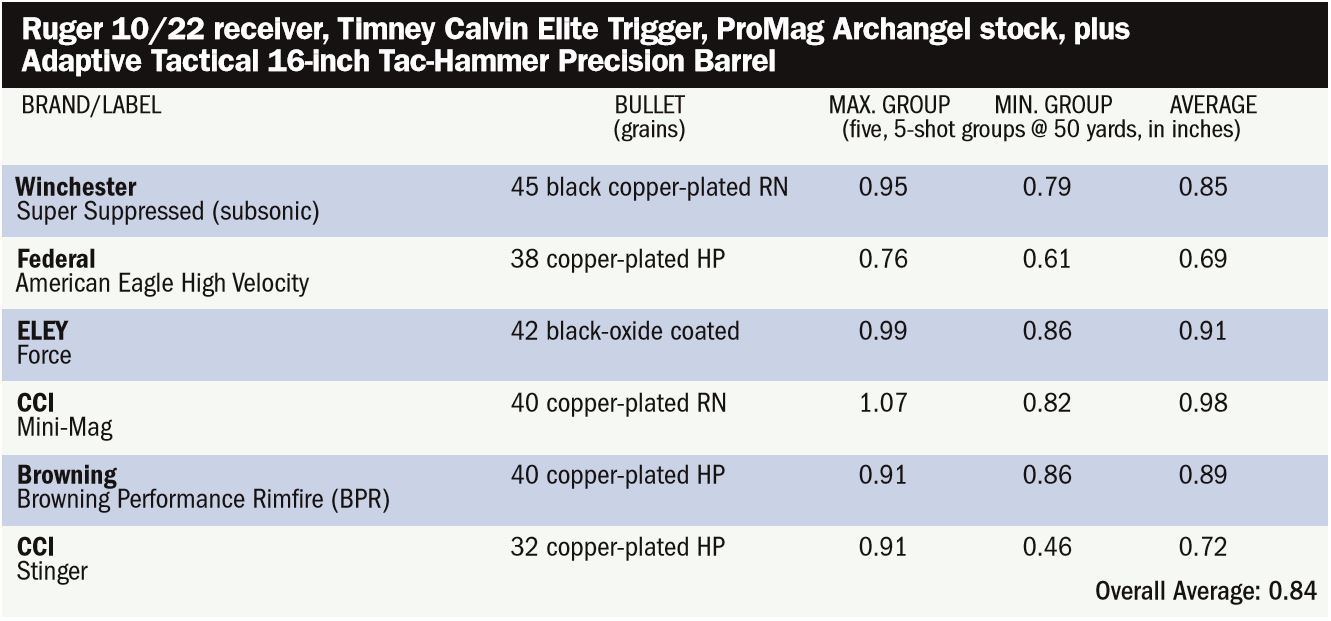
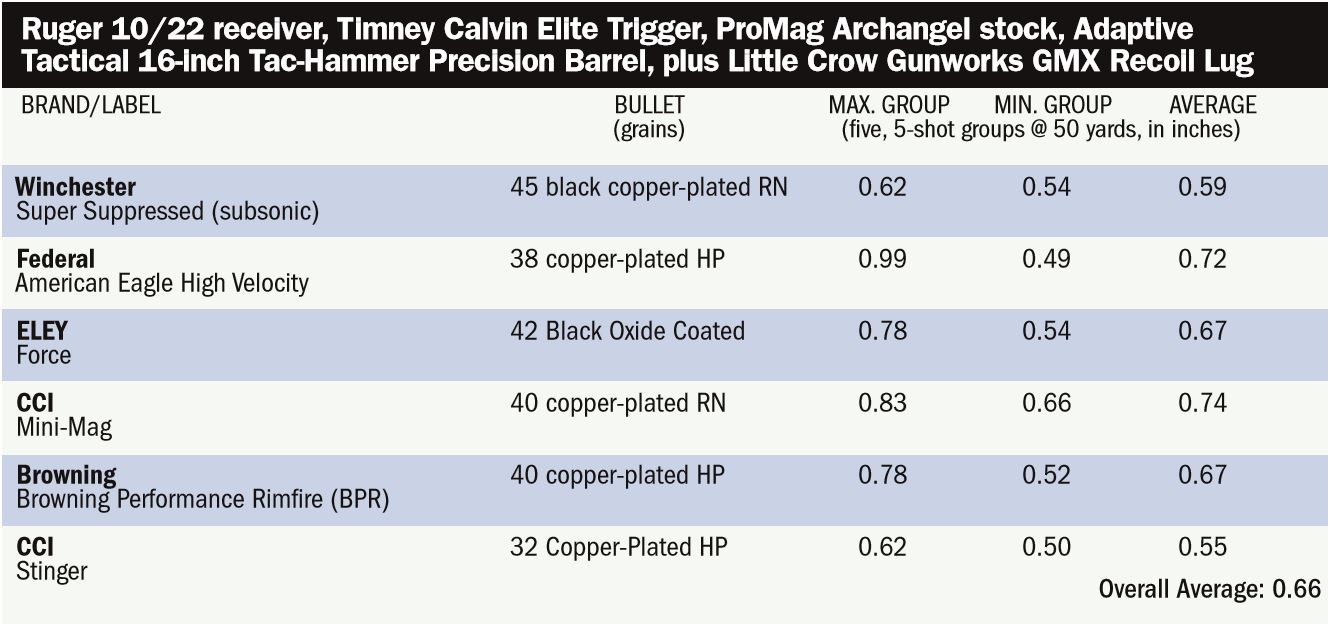
To sum up the process of this experiment, I took a standard 10/22 and tested it for accuracy. I then upgraded the trigger and tested the accuracy again. And I continued this same process after upgrading the stock, barrel and recoil lug.

Establishing A Baseline From The Original

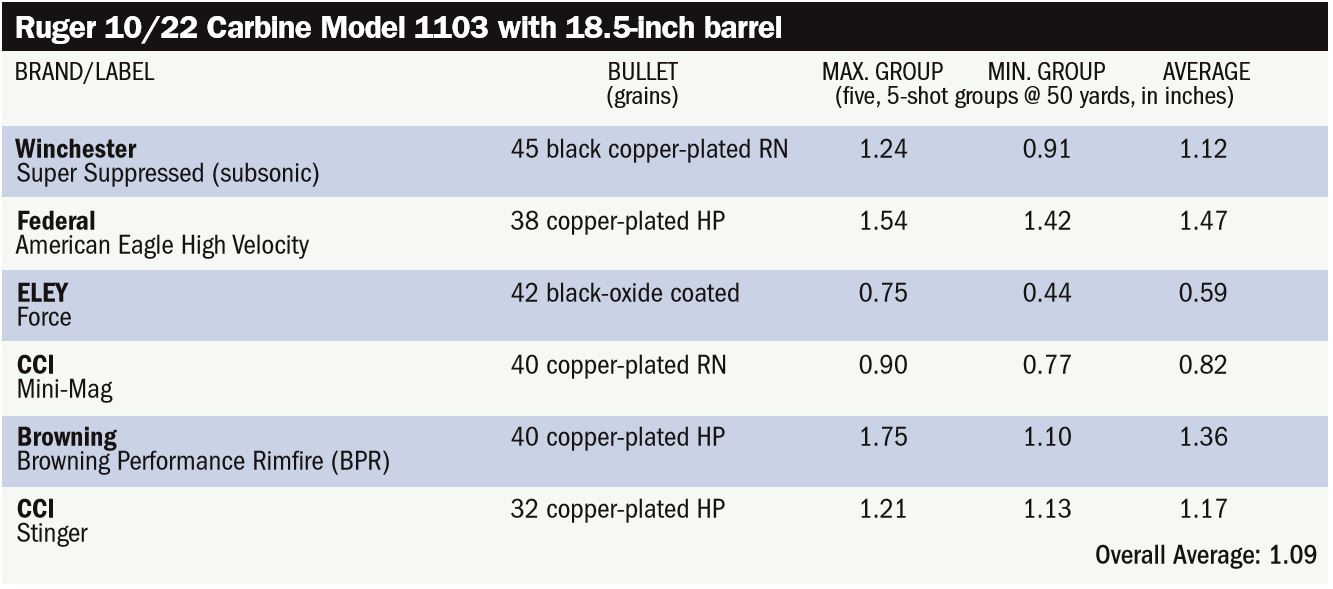
Six ammunition types were chosen to meet common velocity goals, price-points and terminal needs. Winchester’s Super Suppressed is a subsonic load providing pellet-gun silence when shot through suppressors, propelling 45-grain black-copper-plated round-nose (RN) bullets to 1,090 fps. Federal’s American Eagle 38-grain copper-plated hollow-point (HP) is a budget-priced option, pushing 1,260 fps and anchoring burrowing rodents with authority. Eley Force is a 42-grain RN round designed specifically for semi-autos. A patented black-oxidized case better regulates bullet release for improved accuracy and posts velocities of 1,250 fps.

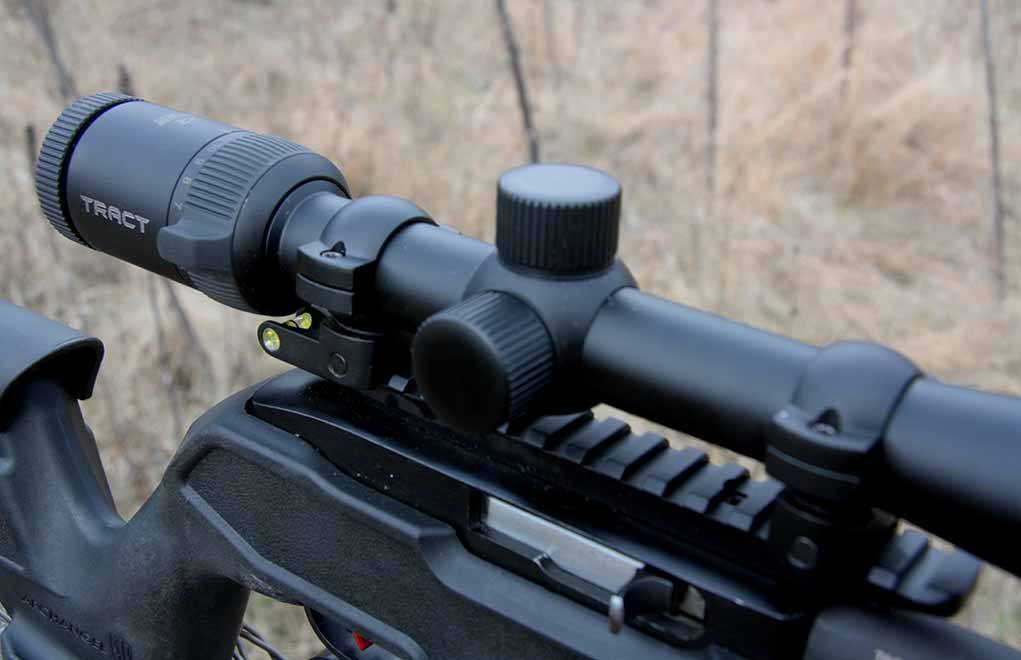
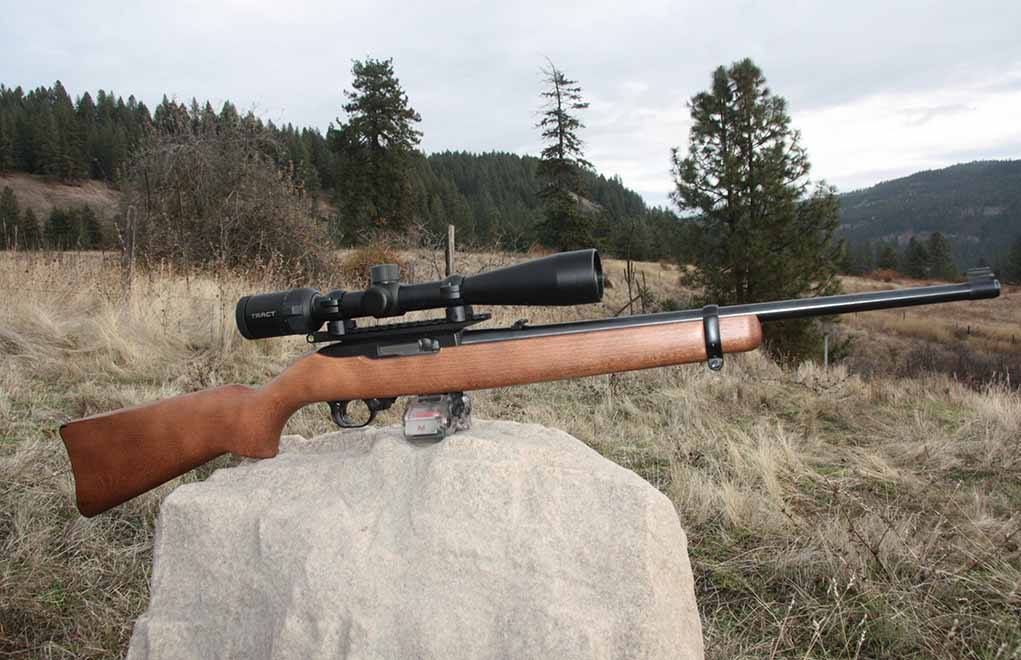
Topping the author’s Ruger 10/22 build is Tract Optics’ 4-12x44mm BDC 22 Fire set in Weaver rings atop Precision Hardcore Gear’s 10/22 Picatinny Level Mount. The scope proved easy to adjust and gin clear. A parallax adjustment would offer an improvement.

CCI’s Mini-Mag combines 1,235 fps velocity with reliable accuracy. I used the 40-grain copper-plated RN version here. Browning’s BPR (Browning Performance Rimfire) includes a 40-grain copper-plated HP and generates velocities around 1,435 fps, hitting especially hard at extended ranges. Finally, CCI’s blazing-fast Stinger employs an extended case and shorted 32-grain copper-plated HP pushed to 1,640 fps.


More On Rimfires:


The base rifle was a lightly-used and well-maintained Model 1103 carbine — Ruger’s most affordable 10/22 — purchased used. After a thorough cleaning, it fed flawlessly through 625-plus test shots, not especially surprising for this design. During each step of the test — unaltered rifle, replacement trigger, stock, barrel and recoil lug — each ammunition type was subjected to five 5-shot groups at 50 yards, from a portable bench over an MTM Case-Gard Predator Rifle Rest. Scope zero was checked, and often recalibrated, between accessory changes. Groups were carefully measured and recorded, averaged per round, and these figures then averaged for all resulting groups in that test group. A bore snake was pulled through the barrel three times between ammunition types and three fouling shots fired before resuming.

Ruger’s base-model 10/22 auto-loader might be the most popular .22 LR around. They’re affordable, dead reliable, feed on any ammo you load in them, and they’re also highly customizable. A factory 10/22 is a wonderful rifle, but aftermarket parts often boost accuracy.

It’s important to understand groups assembled with a single rifle or accessory combination is in no way indicative of a particular .22 LR round’s inherent accuracy. Extensive empirical testing has demonstrated that every .22 LR rifle and/or barrel is an individual. A round one rifle/barrel prints tiny clusters with can provide shotgun patterns from another, despite ammo price or rifle quality.

Optic And Base Accessories

This rifle was topped by Tract Optics’ 4-12x44mm BDC 22 Fire, sitting atop Precision Hardcore Gear’s 10/22 Picatinny Level Mount and Weaver rings. The scope includes a quick-focus eyepiece to sharpen the reticle, rear-facing magnification ring and ¼-inch, 50-yard finger-adjustable covered turrets with spring-loaded zero reset. The BDC reticle is marked to 150 yards and backed by Tract’s Impact BDC ballistic program.

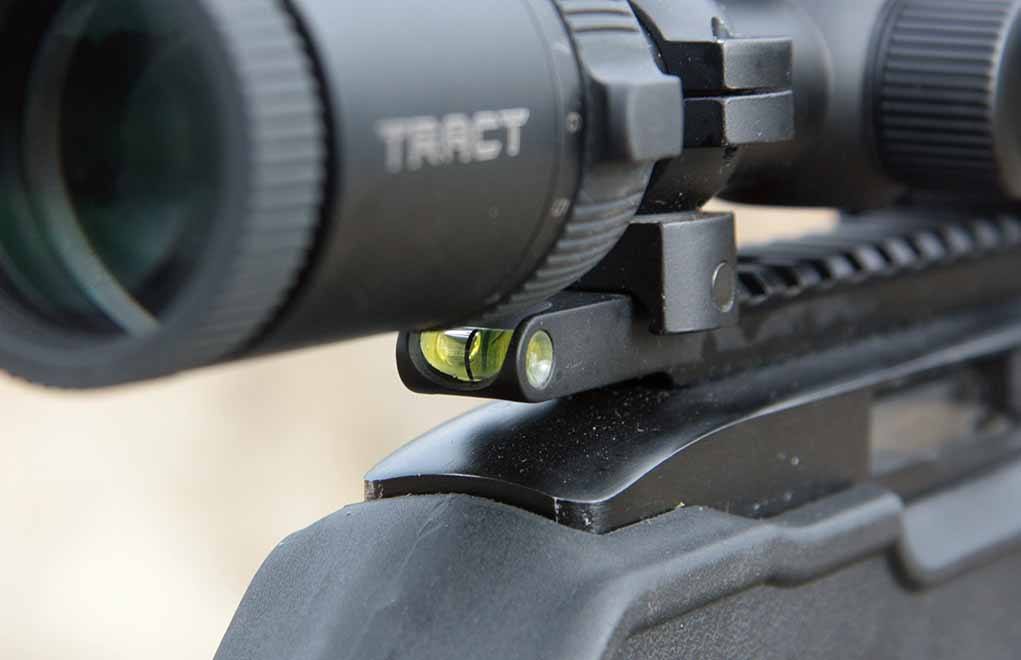
(above) Precision Hardcore Gear’s 10/22 Picatinny Level Mount offers rock-solid scope mounting on any Ruger 10/22, and it includes a rear-facing bubble level that adds precision to longer shots. The author considers them mandatory on all scoped 10/22 rifles.

The tube of the BDC 22 Fire is argon purged to be fog-proof and waterproof, and it’s all backed by Tract’s lifetime Trust Assurance Warranty. The lenses are fully multi-coated with anti-reflective material, and my only wish would be for parallax adjustment, allowing sharper focus at closer ranges and also when dialed to the high magnifications.

Precision Hardcore Gear’s 10/22 Picatinny Level Mount is a piece of hardware I consider mandatory on all scope-equipped 10/22s. This affordable accessory provides precise, rock-solid mounting, with the rear-facing level adding precision to longer shots.

A Top-Notch Trigger

Timney Triggers’ Calvin Elite trigger group for Ruger’s 10/22 offers the company’s renowned crisp operation, but it also sports a trigger-shoe design that offers custom positioning to any shooter’s tastes. It also comes with four trigger-shoe options.

Timney Triggers was an easy choice here because they have proven unfailingly smooth and dead reliable on other love-worn varmint rifles. I went all in with the Calvin Elite Adjustable. It includes an integrated extended magazine release (this alone is worth the purchase), reach/cast/height trigger positioning and four trigger-shoe options (included). The 6061-T6 aircraft aluminum body holds the heat-treated steel trigger, sear and hammer, and it produces a silky-smooth, no-creep 1.5- to 2-pound pull (the factory trigger pull was 6 to 6.35 pounds). Swapping triggers includes the simple task of removing the action from the stock, pushing out two retention pins, holding the new trigger group in place while returning those pins, and then reinstalling the action into the stock.

A Stunning Stock

After much deliberation, I choose ProMag Industries’ Archangel Precision Stock. Others on my short list included Hogue’s rubber over-molded Tactical Thumbhole ($119.95) and MagPul’s length-of-pull adjustable Hunter X-22 ($139.95).

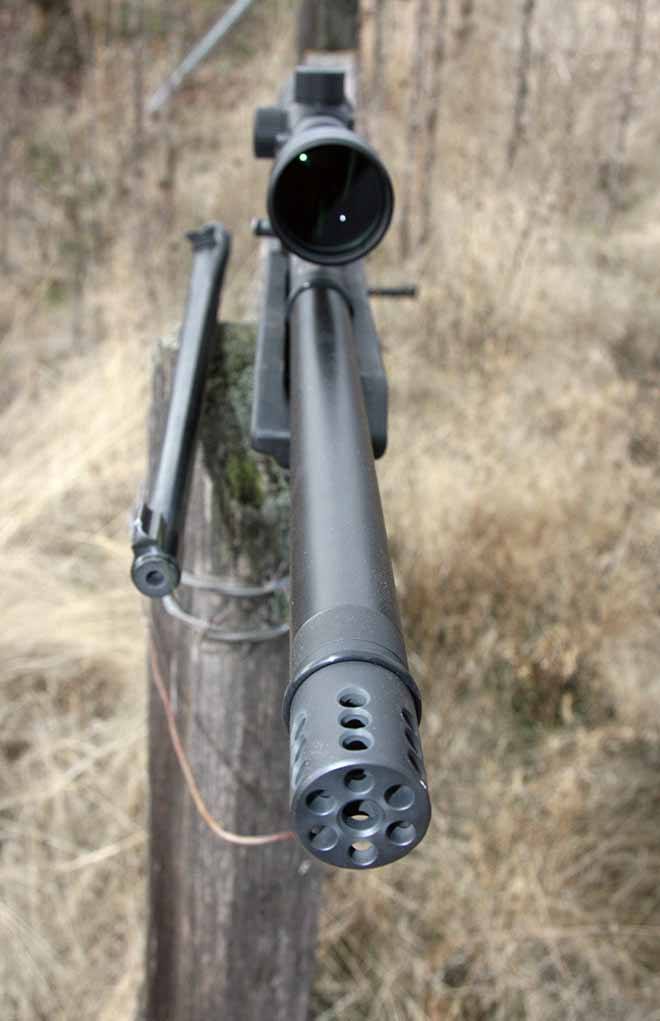
The Tac-Hammer Precision Barrel from Adaptive Tactical comes threaded with a compensator (shown here), or without a brake. The author has paperwork submitted for a rimfire suppressor and looks forward to screwing it home on this accurate 10/22 build to ice the cake.

The Archangel’s allure comes by way of a highly-ergonomic design — including an ambidextrous “gooseneck-style” grip with palm swells — and a click-adjustable length of pull (13½ to 145/8 inches) and comb riser creating perfect eye-to-scope alignment. The stock is constructed of a stout carbon-fiber polymer blend and free floats barrels up to 0.920-inch. The forearm includes an integral Picatinny rail and a slide-on cover. It also includes four integral steel cups accepting ball-lock QD sling swivels (standard sling mounts included) and a grip storage compartment big enough to hold a bore snake. The USA-made stock includes a lifetime warranty.

The deep, flared magazine well will not accept my favored Tactical Solutions TriMag (three factory magazines coupled into a compact triangle configuration) without alteration, and it makes inserting/extracting stubby factory mags troublesome. The stock was obviously designed with extended “banana clips” in mind. The stock also required some quick and simple Dremel-tool touch-ups to accommodate the aftermarket trigger group, and some force was necessary to seat the action fully.

There was a solid accuracy boost here, but admittedly, I expected more after disposing of the superfluous Ruger barrel band. The stock came with a patented barrel tensioner — which I did not install. Some continued experimentation with this part might yield tighter groups down the road.

A Beefy Barrel

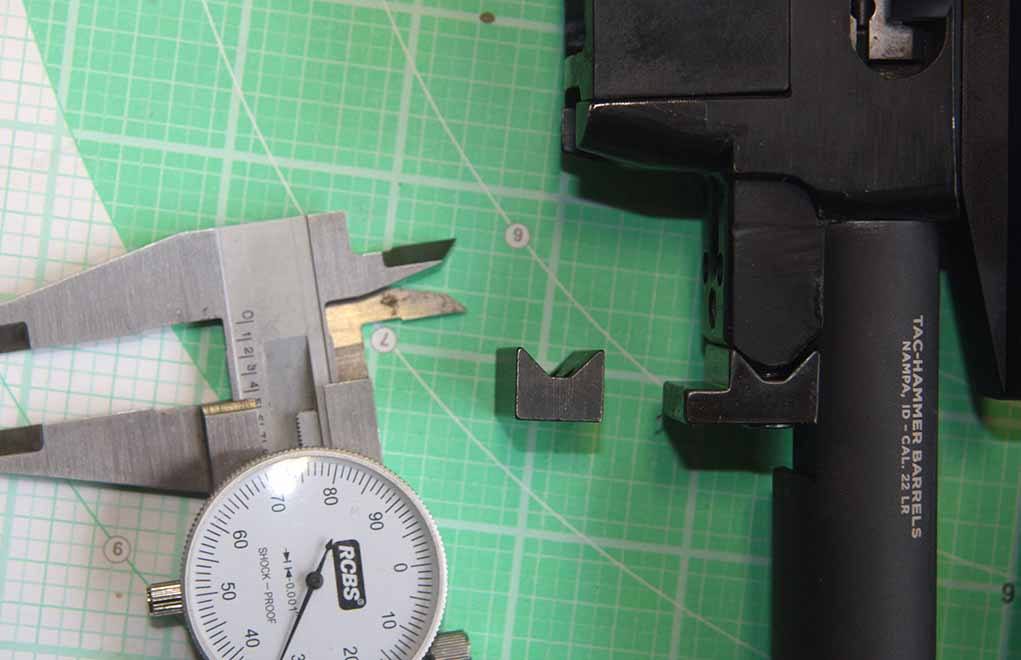
Shown is Little Crow Gunworks’ GRX recoil lug (installed), and the factory-original barrel-retaining V-block, shown below. Instillation required some small skill and time, but accuracy gains were significant and proved well worth the effort.

Selecting a barrel was perhaps most agonizing, as many exceptional options in a myriad of weights and lengths are offered. Quick examples come from Tactical Solutions’ (X-Ring threaded, 16.5-inch stainless-steel-lined milled/fluted aluminum, $300), Green Mountain Barrels (20-inch fluted stainless-steel bull, $187.95) and Vorquartsen (16.5-inch, threaded lightweight THM tension barrel, steel barrel/carbon tube, $300). Threaded versions are offered for those wanting to add suppressors or compensators.

Ultimately, I chose Adaptive Tactical’s Tac-Hammer precision barrel with compensator. They include Rigid Core, post-tension construction … delivering bull-barrel benefits while weighing 40 percent less. A stepped, 4140 Chromoly-steel barrel (1:16-inch twist, Bentz chamber) is held inside a 6061-aluminum, 0.920-inch-diameter shroud — the combination providing excellent balance.

Custom Ruger 1022 5

The barrel is tapped into solid steel to accept AdTac’s cantilevered rail (a reliability improvement over Ruger’s aluminum receiver taps). The barrel is threaded (½:28) to accept a suppressor, though it’s currently holding AdTac’s 6061 aluminum compensator. The tube is 16 inches long without compensator, 17.25 inches with. The works include a durable Cerakote finish.

All in, the instillation time required took maybe 20 minutes: removing the original action from the stock, removing two Allen screws and barrel V-block, swapping barrels (the Tac-Hammer proved an extra-tight fit) and returning the block and retaining screws. The barrel self-aligns and automatically head-spaces, resulting in a detectable boost in average accuracy, though this was gained mostly with the hotter hunting loads (American Eagle, Browning BPR and CCI Stinger), which had generally performed poorly from the factory tube. The replacement tube resulted in lower gains with the lighter loads, and the Tac-Hammer barrel was also slower to warm during shot strings.

The Recoil Lug

Little Crow Gunworks’ GRX recoil lug is promised to eliminate fliers and improve overall accuracy by 15 to 20 percent — the only such product I’m currently aware of. It accomplishes this by concentrating recoil energy into the front portion of the action instead of the rear alone.

Custom Ruger 1022 13

The GRX replaces the factory barrel-retainer V-block, and it includes a bottom recoil-lug extension. This is the most involved portion of this build, requiring cutting a recess into the stock, applying a release agent to the action, lining the created recess with epoxy (I mixed in powdered fiberglass), anchoring the action and allowing it to cure. You could hand this task off to your gunsmith in exchange for $100-$125, but by following the company’s straightforward YouTube instructions, it’s less daunting than it sounds.

Installing the GRX and necessary stock work didn’t change the rifle’s former zero, indicating I didn’t alter the action/stock dynamics. Honestly, after the accuracy gains experienced to this point, I was dubious groups could be shrunk much further. Yet accuracy gains were the most significant of this build, or near the promised 15-20 percent, making the stock alteration worth the effort.

Final Thoughts

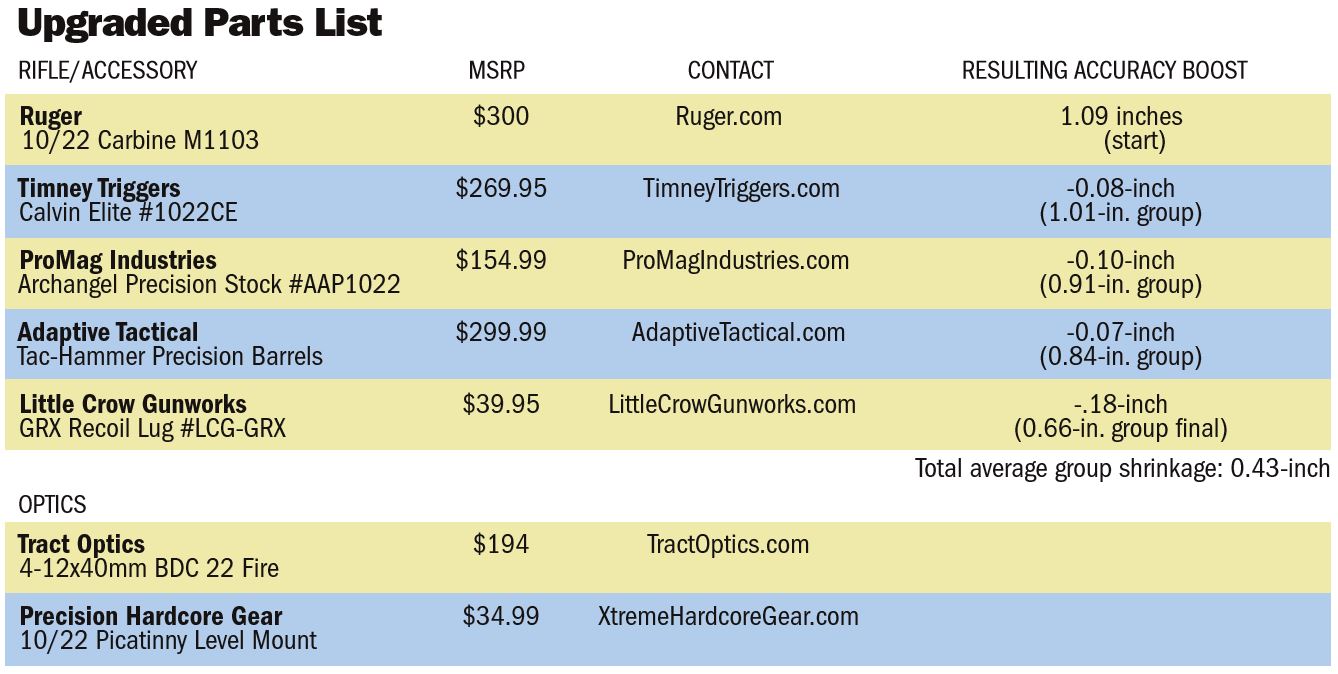
If a tack-driving 10/22 is something that sounds appealing, the effort put into this build certainly proved worthwhile. Adding about $765 to a $150 used rifle (not including optics and bases), plus a couple hours of enjoyable labor, created a 10/22 capable of shooting a wide variety of .22 LR ammunition into less than ¾-inch groups. This is the most accurate 10/22 I have ever shot. And yes, the rifle looks pretty impressive, too!

Accuracy Results Per Upgraded Component

1022 Results 1
1022 Results 2
1022 Results 3
1022 Results 4
1022 Results 5
1022 Costs

Editor’s Note: This article originally appeared in the February 2019 issue of Gun Digest the Magazine.


Get More Ruger Info:

What You Need To Consider When Handloading Defensive Ammunition

0

From safety to legalities, is it smart to handload defensive ammunition?

What Are Some Of The Legal Considerations Concerning Handloaded Defensive Ammunition:

  • The legal fear of handloaded defensive ammunition is that prosecutors will claim it shows premeditation.
  • Self-defense experts, such as Massad Ayoob, go so far as saying never use handloads for your defensive gun.
  • The argument can be made possession of a firearm for defensive purposes is as damning as reloading defensive ammunition.
  • Given these points, you must put deep thought into whether you feel it’s worth the legal risk to load your own defensive ammunition.

I am not an attorney, nor do I pretend to be. I’m just like the rest of the folks who carry a firearm for personal defense; I want to live out my days in peace and harmony. In a perfect world, none of us would need to carry a firearm for personal protection. In a perfect world, there would be no threat to life or limb, and we could all just smile and wave and trust to the Almighty that all will be okay. However, the stark reality of it all is that we live in a less-than-perfect world.

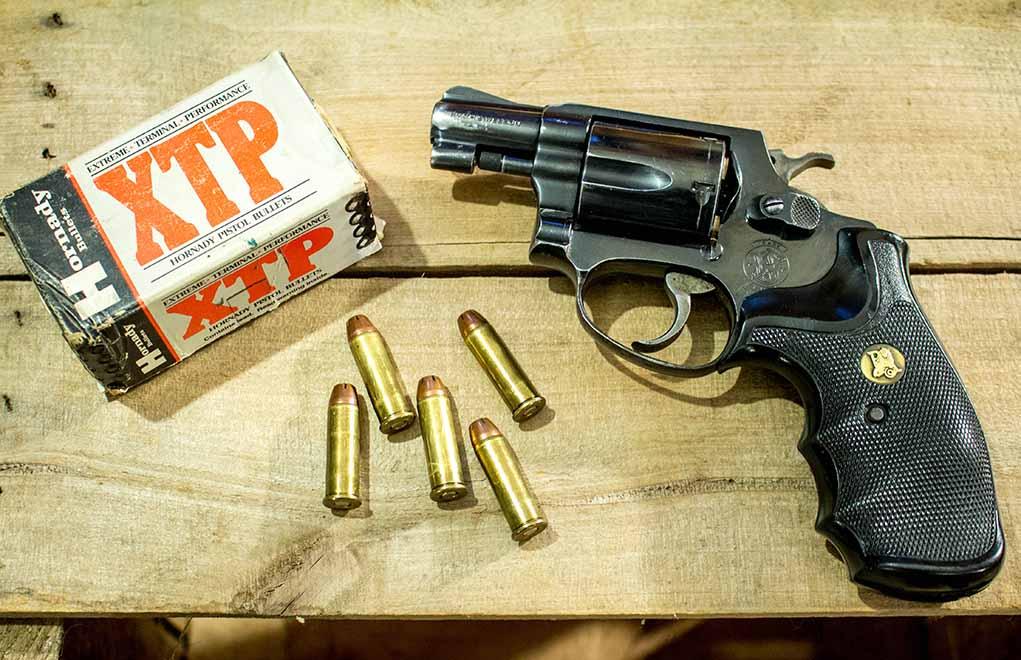
This Smith & Wesson Model 36 in .38 Special is well-served with 158-grain Hornady XTP handloads.

The Declaration of Independence, so thoughtfully written and carefully planned out, brilliantly summed up some of the basic human liberties: “We hold these truths to be self-evident, that all men are created equal, that they are endowed by their Creator with certain unalienable Rights, that among these are Life, Liberty and the pursuit of Happiness.”

Mr. Jefferson and company hit the nail on the head with that little gem. To me, the most integral and important part of that particular phrase is the word “Life.” No one has the right to take your life, when you are not acting in a manner that threatens the life of another. We all have a God-given right to survive, and this includes using any means necessary to preserve your life, including taking the life of another who intends to end yours.

In this “modern” age, where we have become much more civilized (tongue planted firmly in cheek), there are areas with laws that treat the individual who is required to use deadly force, to preserve their God-given right to live, as the offender and guilty party. There is a movement to rely solely on law enforcement to take the necessary actions.

What in the world does this have to do with reloading? Please, bear with me …

This S&W .44 Magnum shows the best accuracy with handloaded ammunition. It only makes sense to shoot what works best.

Some courts of law, and wonderful humans known as “lawyers,” have taken things so far as to attempt to prosecute someone who has been forced to use deadly force with a firearm, for the additional crime of using reloaded ammunition. The premise is that by reloading the ammo before the incident happened, there was a premeditation, and that principle leads to a different crime altogether.

My colleague and fellow gun writer, Massad Ayoob, who has a law enforcement background and much more experience in a court of law with respect to these matters than I do, has gone on the record as stating that using reloaded ammunition in a self defense situation is a definite no-no. I’m not going to pretend that I know better than Mr. Ayoob, but I can attest to having a bit of common sense. I live in the State of New York, one of the toughest states with respect to defense laws as well as firearms legislation (read S.A.F.E. Act). I am well aware, that in most circumstances, that using a firearm to defend myself will more than likely result in Grand Jury indictment, and that I will need to prove myself innocent, rather than prove my attacker guilty. May that situation never occur.


Load Up On Reloading Info:


However, let us refer back to the document that summed up our “unalienable rights” and remember that irrespective of methodology or means, the act of taking another’s life to defend one’s own should be paramount, and not the tool used to do so. The possession of a firearm for defensive purposes is theoretically just as damning as the creation of ammunition for that same purpose. Whether or not the ammunition runs at a different velocity, or contains a projectile that does more or less damage than another, the central point remains: The threat to your unalienable right to life must be neutralized, by any means necessary.

A good roll crimp keeps the projectiles where you put them, as well as keeping velocities uniform.

If that threat to your life doesn’t exist, you have no right to take the other, but if it does exist, using a bat, axe, motor vehicle or handgun — that fires handloaded ammunition — shouldn’t truly matter in the blind eyes of justice. Recognizing the existence of that threat, or lack thereof, is the responsibility of the firearm owner, and it’s not one to be taken lightly.

Reloading To Save Your Bacon

I learned a long while ago that when diligent attention is paid to the assembly of your ammunition, you can create a product that is the best available. I’ve been on a good number of dangerous game hunts, and for all of them I’ve used handloaded ammunition. Not unlike a personal defense handgun, dangerous game ammunition absolutely must go bang, or you truly put life and limb at risk. I have — knock on wood — never had a single issue with any handloaded cartridge on any of my hunting trips.

The same approach must be taken for the ammunition in your defensive handgun. Just as you wouldn’t choose the cheapest handgun to carry, bargain ammunition is not a wise decision, and even among the factory choices I’d hope you’d obtain the best you could afford. With regard to the components of your handload, use the best stuff you can get.

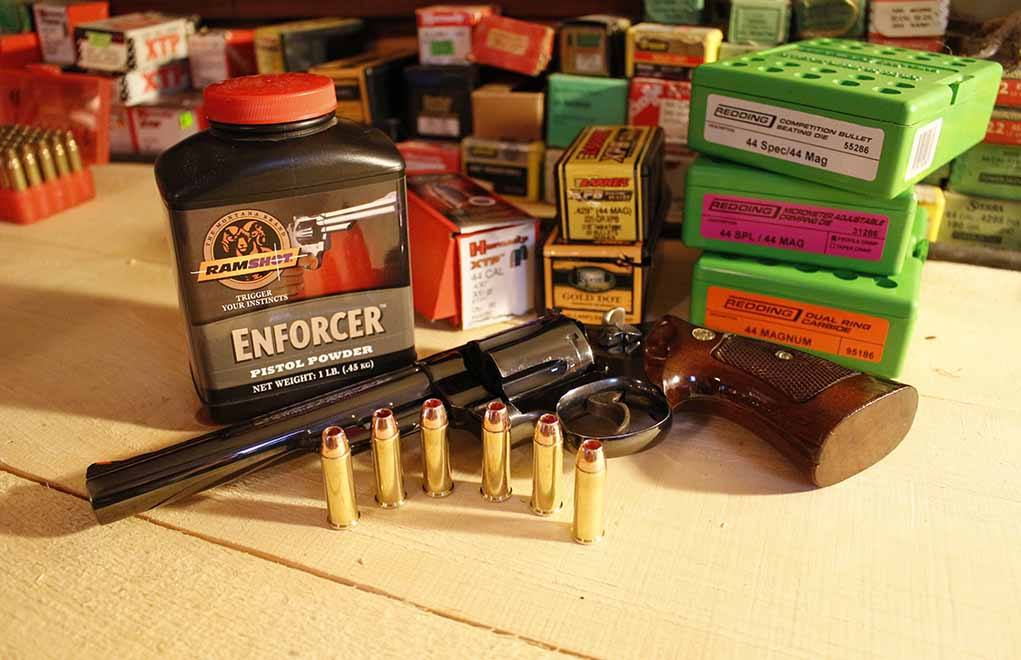
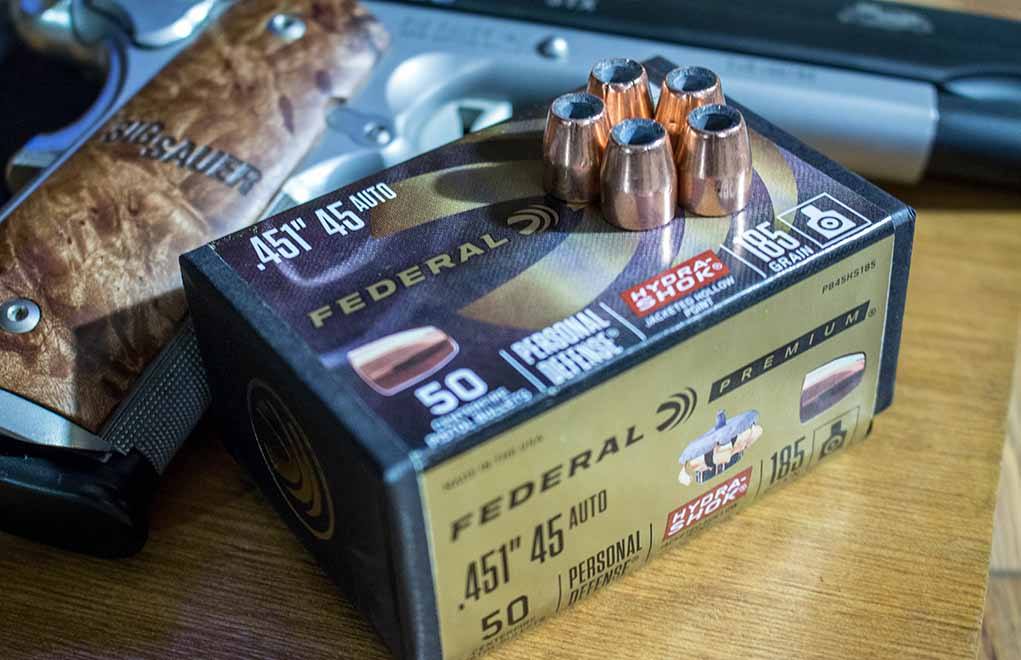
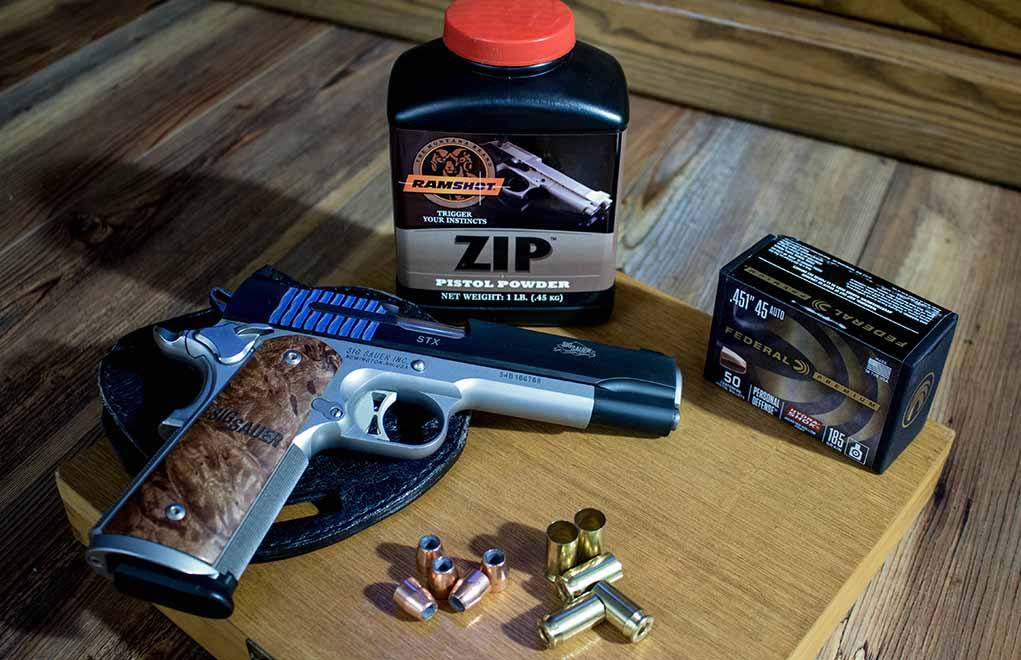
Bullets such as the Federal Hydra-Shok have shown to be excellent in factory loads, but what do you do if your gun doesn’t like them? Handloading is a perfectly viable means of using those premium bullets.

You don’t need hundreds of rounds, but just enough to keep you and your loved ones safe. In the opinion of this author, the loading of defensive ammunition is not the place for the progressive press; this will require a more personal level of attention. I want to vigorously inspect all my brass, making sure that flash holes are uniform, primer pockets are of a proper dimension, rims are straight and nothing is out of the ordinary. I then full-length size all the brass, and trim them (even the new stuff) to the proper, uniform length.

I also hand-prime the cases, making sure that all the primers are seated to a consistent depth. I like the best primers I can get for my defensive ammo, usually the Federal Gold Medal Match stuff. For a priming tool, the Lyman E-ZEE Prime offers an excellent feel; I like it for all cartridges, from the lightest .38 Special loads up to the gigantic .505 Gibbs. I then begin the load development process.

Personally, I like bullets that are heavy for caliber and will expand reliably. To my mind, a defensive load is designed for close quarters, as the goal is to neutralize the threat and get you and your loved ones to safety, and I feel that the heavy bullets end the problem best. I want velocities as close to the design speed as possible — especially with an auto-loading pistol — and I’ll use a chronograph to test my velocities against a few of the factory loads with the same weight of bullet. We all have our pet bullets, and I like a bunch, including the Speer Gold Dot, Federal Hydra-Shok, and Hornady XTP.

Handloading your defensive ammunition allows for a rigorous inspection of all your components. While rare, things can go wrong, like this 9mm case with no flash hole.

During the load development process, I want to look for several different aspects of the ammunition. First, the bullets need to hit where they are aimed. Even the best component bullets won’t be worth anything if they don’t hit where they’re intended. If your handgun doesn’t have adjustable sights, you may have to make some adjustments to the load, trying different bullet conformations and/or powder charges until you get things where you want them.

Secondly, I need to know that the ammunition will feed flawlessly. I’ve seen some bizarre feeding issues, some nearly inexplicable, but I do know that clearing a cartridge that didn’t feed properly in the midst of a life or death situation is not a good thing at all. If you’re handgun doesn’t feed a particular bullet profile, either get it properly sorted by a competent gunsmith or give it ammunition that you know will work. Changing bullet profiles can sometimes have a profound effect on a handgun’s performance. Again, the gun absolutely has to go bang, and not just once.

Thirdly, make sure that the level of recoil is acceptable to you. We all want to think we’re invincible, handling a hand cannon as if it were a squirt gun, but that’s not always the case. Admitting that a firearm recoils too much to be handled effectively is not an easy thing for anyone — especially for a man — but I’ve found some rifle/cartridge combinations that were simply too much for me to shoot properly, and the same goes for a handgun.

The author feels that a single-stage press is the smart way to go for defensive ammunition, but a turret press like the Redding T7 will make life a bit easier.

Lightweight guns and high-velocity ammunition can easily generate recoil levels that are above what some shooters can handle. If and when that point is reached, either the gun has to go or the ammunition needs to be modified. When you handload your own ammunition, the load can be safely reduced to give the level of recoil that the shooter can properly handle. A lower velocity bullet in the right place is worth five high-velocity bullets in the wrong place.

If the handgun is a revolver, I want a good roll crimp to keep all the bullets where I seat them, and to ensure that they won’t pull out under recoil. If they do move, you run the risk of the projectiles protruding out past the edge of the cylinder and locking up the entire operation. A good strong roll crimp will prevent this, or if you’ve chosen a bullet with no cannelure, a solid taper crimp will suffice.

For the auto-loaders, which more often than not rely on the case mouth for headspacing, you’ll want to use the taper crimp to prevent your bullets from moving. The violent cycling action — the journey out of the magazine, along the feed ramp and into the chamber — can push bullets deeper into the case; a good taper crimp will prevent that from happening.
I like to make some surplus ammo from time to time, to train with and make sure I’m familiar with the feel of gun with this particular load.

Is It Worth The Effort?

There are going to be those of you who may feel that the exercise of handloading defensive ammunition simply isn’t worth the hassle, and you might be right. There are many good choices among the factory ammunition, featuring the finest projectiles made today, and you could simply leave it at that.

Handloading Defensive Ammunition 6

But, just as I want a handgun that has all the features I want, I like my ammunition the same way. After all, if the situation arises where I need to use a gun to save my life, I want all the odds in my favor, and I feel that my own ammunition is the best I can get. Because I’m using canister-grade powder, the load will be the same, year after year.

If you’re in the least bit hesitant about making your own stuff, don’t do it. However, if you are as confident in your skills as a handloader as you are in your ability to handle a handgun, I see no issue with the handloads. The legal ramifications can be dealt with once you are safe and sound, and if you are a handgun owner, I’m sure you’ve given some though to the issues involved with using deadly force. I hope you never need to use that force, but if you do, I also hope you have the best tools available.

Editor’s Note: This article originally appeared in the 2019 Concealed Carry issue of Gun Digest the Magazine.

Going Hands-On With Your Long-Range Shooting Development

0

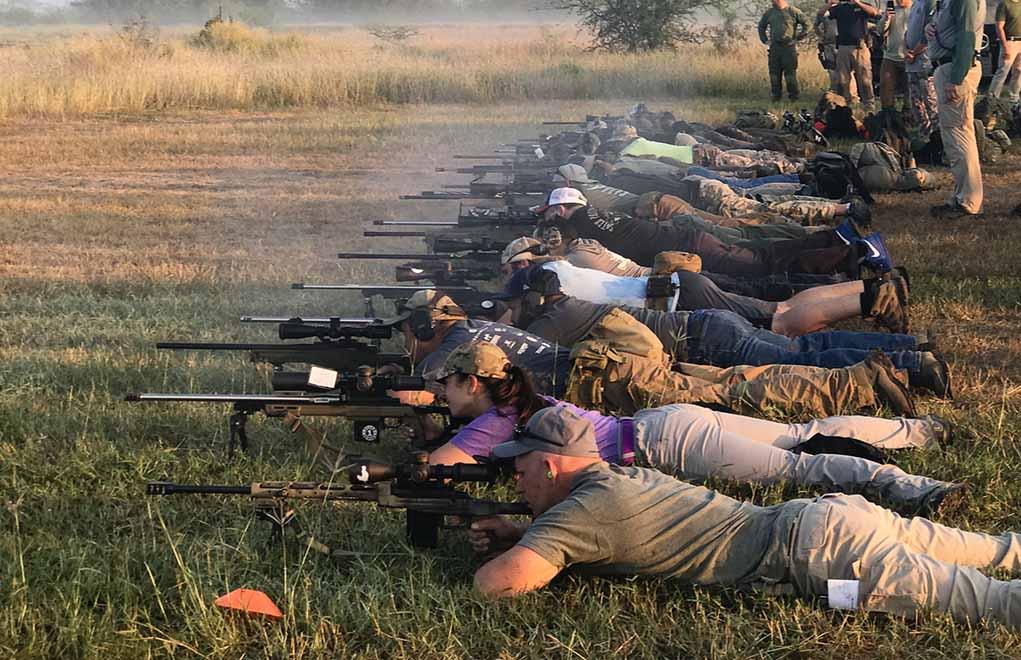
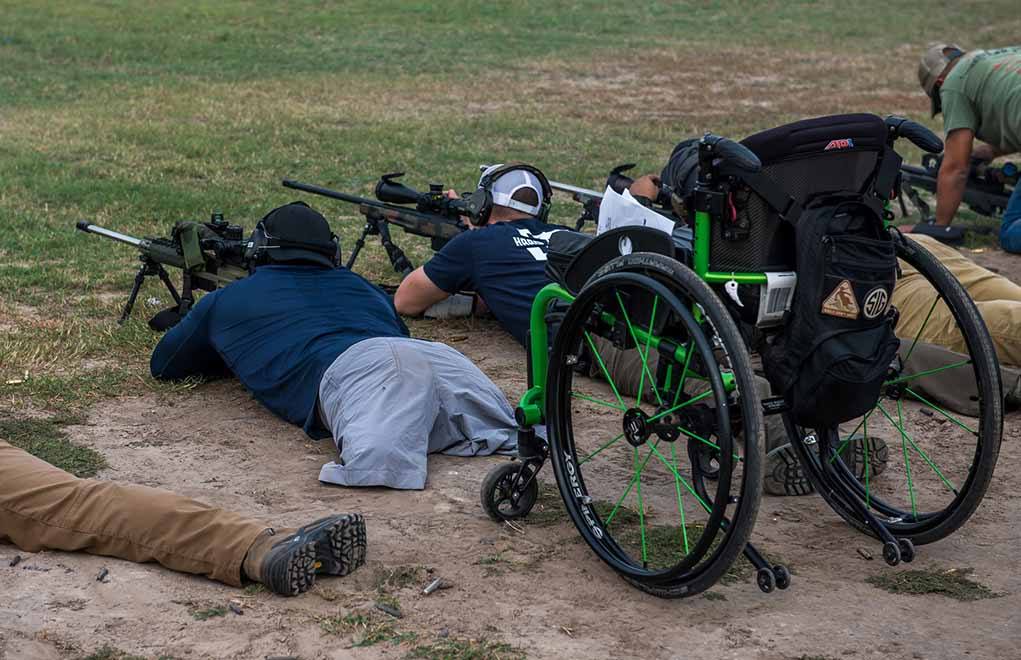
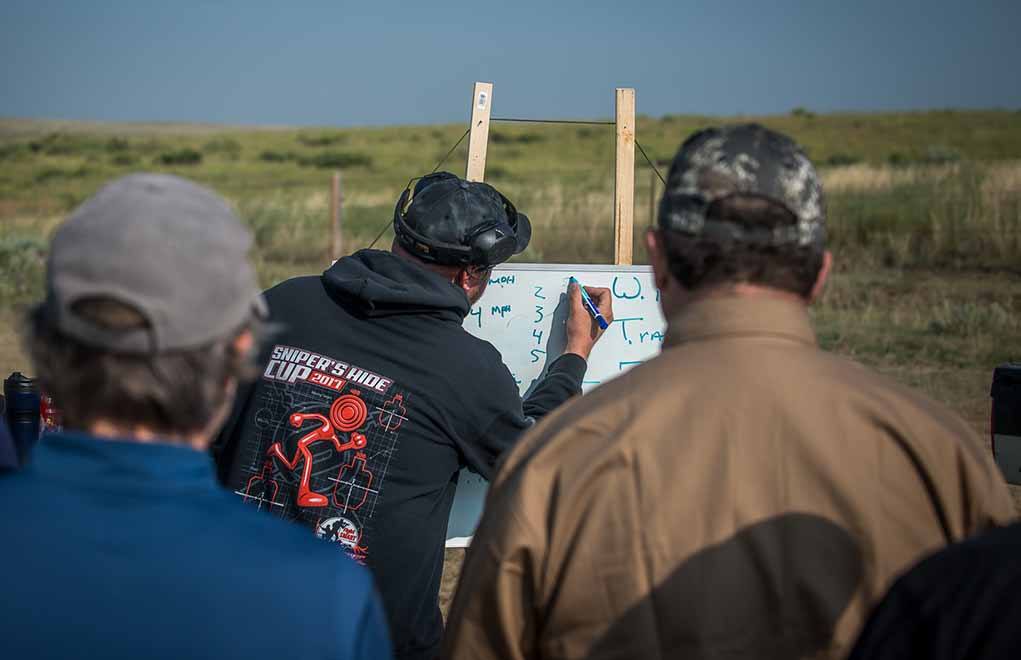
The Sniper’s Hide Cup firing line is often full of both experienced shooters and first-timers. There’s likely a competition within a 2-hour drive of your home.

Grounding your fundamentals and improving your long-range shooting skills isn’t an armchair game. Hands-on instruction and competition puts an edge on your marksmanship.

How To Improve As A Long-Range Shooter:

  • Step out of your comfort zone and take a class from a well-established instructor
  • Reinforce this instruction in some kind of competition
  • Shoot the early competitions with a minimum of gear
  • Pay attention to the more experienced shooters’ techniques and movements
  • Talk to the other shooters to find out how they practice and improve

SHOT Show has come and gone, and unveiled a bunch of new gear for long-range shooting: new scopes, new electronics, new rifles, and new chassis designs. We have seen this scene before — the chase for the latest and greatest in hopes that it makes a difference in results. But, is it the results that matter, or is it more about the journey?

One of the objectives in my precision rifle classes is to guide the shooter on their precision rifle journey. After all, this is an evolving journey because the sport is continually changing. New equipment changes the game monthly. Different teaching techniques and adaptation to the changing demographic landscape has forced us to move in a variety of directions. For this reason and others, I want to take a step back here at the beginning of 2019 and focus on you — the shooter.

Self Assessment

The long-range shooting world is full of good and bad shooters. Guys who have learned to adapt their bad habits along with the right equipment and have found some limited success. In talking with other instructors, we see a lot of people looking to shortcut the system by learning the tips and tricks before the trade. Rather than purchasing success, I’d argue that it’s better to evolve and become a more well-rounded marksman.

Focus on you as a shooter, not your gear. Train with purpose, because your only limitation is your imagination

Training for long-range shooting comes in many forms. There is education you get from a book. There is hands-on instruction, and there is also experience by way of competition. Anyone of these alone is better than nothing, but combining them is divine. A lot of shooters learn by mimicking what they see in images. While the context may be lost, the position looks well enough, so they run with it. Shooting is broken up into disciplines, and those disciplines can each have their context for success. We cross-pollinate a lot, however, and understanding the “why” is important.


More Long-Range Shooting Info:


The “why” is vital in the age of the internet. Videos can be edited for success and images can be staged — it all needs a critical eye to weed out the good from the bad. During the breaks in my class, I play a video that has me shooting my precision rifle. The technique has to be impeccable and the hits on target are impressive, but it’s a bit of a lie: It’s actually two videos stitched together, and I explain this in class.

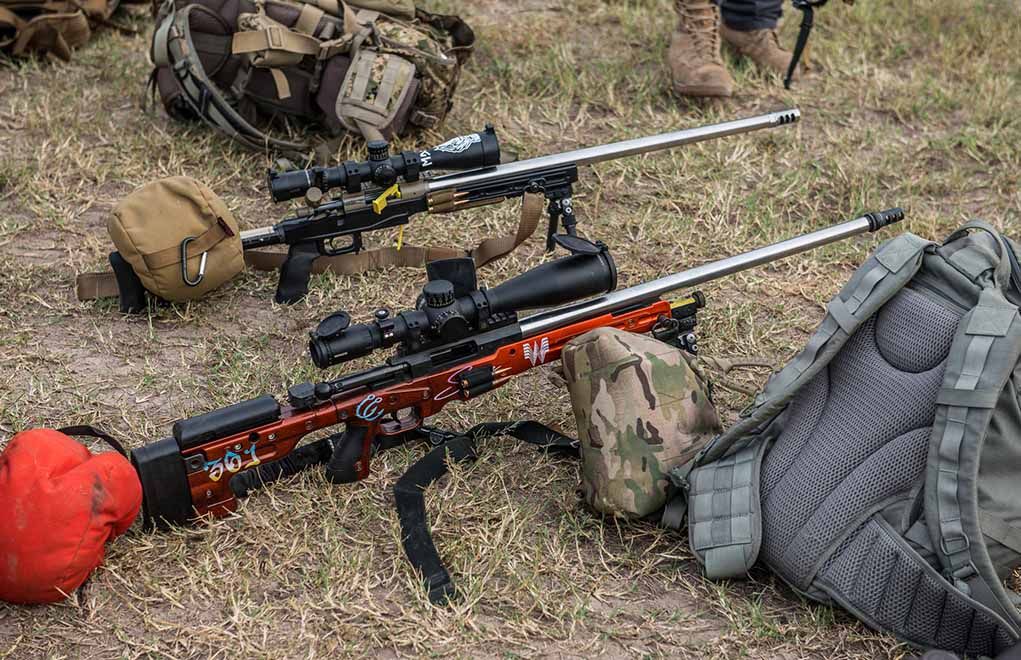
Although cool gear is exciting, such as this Accuracy International AT Competition Rifle, it cannot overcome poor fundamentals.

The point here is that you can make anything look impressive if you have some editing skills. While the video seems seamless, it’s actually of two different ranges shot years apart. The color is corrected to match, and the cuts are done in a way that the casual observer has a hard time noticing missing clues. It’s easy to get fooled online. Seeing something done is one thing, but if you know why something is being done a certain way, nobody will get anything over on you.

So, step out of your comfort zone and take a class from a well-established facility or instructor — YouTube doesn’t count. Go hands-on and then, when you are finished, reinforce what you learned in competition. Local or national, it makes no difference, but get out and shoot against others where the rules are written by someone else. When we run our own shooting line, we never set ourselves up to fail — this fact limits our ability to learn on our own.

Finding A Start

Get up from the line and practice your technique first. Shooting prone is great fun, but getting out of your comfort zone — try participating in a competition — is when true growth happens.

Competition is a different animal from training. Training should be designed to establish your technique, and a competitive match will demonstrate to you how to apply those skills. The beauty of the competition circuit is that it will be different enough from most training that you will instantly see the need to attend more than one competition to nail down its unique set of skills. In a match, it’s all about getting into and out of position efficiently while maintaining your focus to get your hits on target. It’s more about your movement, which will then shine a light on the level of your training.

There is a ton of equipment to assist you in a match. Everything from the caliber you choose, to the stock on your rifle — to the bags you carry — will matter. Stay tight and stripped down in the beginning, and don’t default to these tools. Instead, focus on you and the techniques you employ. Your first three matches should involve employing the bare minimum equipment necessary. It might not be pretty, but get over it … and you’ll thank me later.

Focusing on the fundamentals goes well with a hands-on class. Learning from YouTube will often lead you astray.

Local, 1-day matches are the breeding grounds for success. You can likely find one within a 2-hour drive and each comes with no strings attached. Find one and hit it with eyes wide open. Get involved and be curious when attending, paying attention to the techniques and movements more so than the gear employed.

In addition, step back and see how the successful shooters negotiate the obstacles vs. what scope is on their rifle. Too many people focus on the equipment and not the training that goes into success. Ask these guys what drills they shoot at home, not where they bought that tripod. Those will things will be evident by the 3rd match. After that third match you can spend all the money necessary.

There are plenty “tools of the trade,” and everyone has their own perspective on what’s best. Focus on the fundamentals first and the gear you need will become bore obvious to you.ray.

Part of my personal focus is on the gear I employ only because I need to speak on it professionally. If I did not have to chase this aspect of the sport, I would be more worried about my training — because that’s most important. Even still, I focus a lot of my attention to my practice, and still it is not nearly enough. My other responsibilities reduce my time, so I know it cuts into yours. Have a plan, stick to that plan and put effort into you first — the equipment can come after. The more you experience, the easier your buying decisions become.

This article originally appeared in the December 2018 issue of Gun Digest the Magazine.

Colt 1903: Is The U.S. Armament Re-Release Fit For Concealed Carry?

0

While in a marginal concealed carry caliber, U.S. Armament nonetheless has created a Colt 1903 fit for everyday carry.

How the 1903 Pocket Hammerless Is Fit For Concealed Carry:

  • Increased the hammer hook depth and sear surface to create a sharper angle
  • Patterned to match original’s size, weight and snag-free design
  • Holds 8+1 rounds of .32 ACP
  • Gun proves very accuracy at close range, even in rapid fire

Let’s start with this premise: The Colt Model 1903 Pocket Hammerless is a viable concealed carry handgun. Yes, even though there are more powerful personal-defense calibers available. And, yes, even though there are lighter, more compact, higher-capacity concealed-carry handguns available. And, even though there are more contemporary handguns than John Browning’s 115-year-old design.

Concealed carry was clearly Browning’s intent for the Model 1903, with its sleek, rounded design, not to mention “pocket” in its name — which is but one of the many names by which it’s known. It’s referred to by many names, including Model M, Pocket Hammerless and General Officer’s Pistol.

The Model 1903 wasn’t Browning’s first semi-automatic pocket pistol. His first was the Model 1900, produced by Fabrique Nationale in Belgium, which was based on an 1897 Browning patent and was the first chambered for the .32 ACP (7.65mm) round, designed by Browning for the gun.

Browning’s design underwent tweaking and became Colt’s first successful semi-auto handgun, the Colt 1900 in .38 ACP (another Browning-designed caliber) and the .38 ACP 1902 Sporting Automatic Pistol, then a reworked military version of the 1902, then an exposed-hammer 1903, also in .38 and presented as a pocket pistol, though it was boxy, somewhat heavy and not particularly easily concealed.

U.S Armament’s Colt 1903 with personal-defense ammunition. On the left is Hornady’s Custom 60-grain XTP rounds and on the right are Speer Gold Dot 60-grain hollow-points. With the right ammunition, a 115-year-old gun can be a viable carry gun.

The 1903 Hammerless, chambered for the Browning-designed .32 ACP, corrected much of that, with a more compact and sleek design with rounded edges, 8+1 capacity and weighing 10 ounces less than the Hammer version. By the way, the Hammerless wasn’t hammerless; the hammer was just concealed under the closed, rounded slide.

The 1903 was an immediate success. The caliber was considered adequate and was highly regarded in its day, though it has slid in favor behind today’s more potent offerings. The simple design, easy disassembly and reliability added to its appeal as an easy-to-carry hideaway pistol. Civilians snapped them up, as did some law-enforcement agencies. And so did the criminal element. Al Capone was said to have toted a 1903. John Dillinger reportedly was carrying one when he was gunned down in Chicago by FBI agents and Bonnie reportedly broke Clyde out of jail by taping a 1903 to her thigh and, according to reports, two were found in their bullet-riddled car when Frank Hamer and the boys caught up with them.

The 1903 also saw service in the military as early as World War I, purchased for British forces, and during World War II the U.S. military purchased numerous 1903s, some for the Office of Strategic Services, the precursor of the CIA, and by 1944, the 1903 (and its descendent, the .38 ACP Model 1908, which is outwardly identical, except for caliber) were widely issued to officers, including Eisenhower, Patton and MacArthur, along the way picking up the moniker of “General Officer’s Pistol.”

Dad’s Model 1903

The author’s father’s Model 1903 compared with U.S. Armament’s reintroduction. Originals were disassembled and measured piece by piece to endure the reproduction models remained true to the original in design and specification.

And that brings us to my father’s 1903. My father was a World War II Army Air Corps pilot and co-piloted the Glory Bee, a B-24 Liberator bomber, over Europe. As kids, we used to go through his footlocker stored in an upstairs storage room, trying on his pilot’s cap, fingering medals, including his Purple Heart. He didn’t keep his 1903 in there.

I always assumed Dad had been issued the pistol during the war, but my brother, Roley, thinks he picked it up after returning home. I could get additional clues by contacting Colt’s archive department and learning, among other things, if it was shipped to a U.S armory, but sometimes it’s better to just leave well enough alone. From looking up the serial number, I know it was manufactured in 1915, which maybe makes it less likely to have been issued 25 or 30 years later during WWII. Maybe not. Like I said: For now I’ll just leave it alone.


Learn More About Legendary Firearms:


One downside of the 1903 from a carry-weapon standpoint is the fixed sights, front blade and drift-adjustable notched rear, which are not high visibility. The .32 ACP is light for carry duty, but I’m fine with that.

The simple notch sight of the U.S. Armament 1903, like the originals, provides a low, no-snag profile for concealed carry.

Short story long, I looked around and discovered 1903s are still rather plentiful and available so, like anyone smitten with a particular firearm, I bought one. It had some exterior pitting, but it’s otherwise solid and functional. I’ve shot the heck out of it since with no hitches.

Spot-checking a few places shows them still plentiful and available. Cabela’s Gun Library had a handful, ranging from $710 to $1,599. Gunbroker.com showed a variety of models, quality and conditions with prices such as $549 and $2,750. Similar price ranges popped up on GunsInternational.com.

But, we wondered, could a 100-year-old-plus pistol be relied on for personal protection? From these two examples, we couldn’t see any reason why not. And that led to another observation: How many things can you list that still function more than 100 years after they were designed and manufactured?

In testing on the range, U.S. Armament’s Colt 1903 produced good results, these with Winchester’s 71-grain full metal jacketed ammunition. This group was fired by the author as a close-quarters, rapid-fire group from a makeshift rest.

Taking it a step further, of those 100-year-old-plus designs still functioning, how many are Browning’s? I don’t know either, but I do know Browning’s list would be long and impressive, including the Winchester 1885, Winchester 1894, Browning A-5, Browning Hi-Power Winchester 1897, 1903 and 1908 Hammerless and, of course, the 1911.

But, if you don’t want to trust your personal protection to a century-old handgun, how about a brand new pistol of the same proven design?

What’s Old Is New

The Model 1903 got a new lease on life in 2015 when U.S. Armament came out with their Colt-licensed 1903 Hammerless General Officer’s Pocket Pistol. The project was the brainchild of company owner Curtis Wolf.

Colt 1903 7

Wolf purchased about 125 surplus 1903s, which were dismantled and measured by hand and a coordinate-measuring machine. So true to the originals, most of the new parts will transition directly into originals.

The only changes were to incorporate improved manufacturing techniques and improve safety beyond the originals’ turn-of-the-century standards, said Brent Turchi, a former Colt employee who Wolf brought in to oversee the 1903 project. One safety improvement was to the sear and hammer hook, which on the originals appeared hand-polished or stoned to a small, essentially rounded surface so they had light trigger pulls, Turchi said.

And that gave them the idea of drop-testing the originals. “Every one of them fired,” Turchi said. “If we dropped the gun, it was going off.” (As a concern for carrying an original today, I’m already looking into U.S. Armament replacement parts.) So, U.S. Armament increased the hammer hook depth and sear surface to create a sharper angle, and the new models passed drop-fire tests.

Colt 1903 6

Colt 1903s are generally categorized into four types (some say five) based on production dates. U.S. Armament’s most closely approximates the Type III model, except it has no magazine disconnect safety, which was omitted from the final design. Turchi said other improvements came from changes to the production process, including improvements to the heat-treating process. There were also other changes, changes only Colt purists are likely to notice, Turchi said. The new version “feels a little more like an original — but with the safety of modern touches we have added.”

Production numbers of the originals vary a bit, depending on the source, but I defer to firearms expert Jerry Lee who reported in Gun Digest’s Standard Catalog of Firearms that more than 572,000 Model 1903s were produced between 1903 and 1945 (and another 134,500 of the 380 ACP Model 1908s). Lee also notes that Colt 1903 values today range from $1,200 new in box; $1,000 for excellent condition; $600 for very good; $450 for good; $300 for fair and $200 for poor.

The .32-caliber version was a lot more prolific than the .380, Turchi added, probably mostly because it had a 5-year head start on the larger-caliber twin and the U.S. government choice of them for officers.

Colt 1903 9

But it wasn’t designed as a military sidearm. “Browning designed the 1903 to be a small, flat, packable firearm that did lend itself to nice side-holster carry, which is what most officers in the military do,” Turchi said. “But I don’t think the initial design intent was that 32 ACP was a military caliber. I think it was more that he was looking for size and functionality.”

And that, he said, led to its popularity with such a diverse population. It was a sign of the times that Capone, Dillinger and the like carried them,” Turchi added. “The 1903 was popular at the time, but I also think because th ese guys at the time, for the lack of a term, were a ‘classier’ class of criminals. The gangsters wore suits and jackets, so it was easy to conceal a 1903 in a holster or pocket.”

“It’s an amazing thing to be able to design something with functionality and fit — and a use that can continue to be viable 100 years after its inception,” he said. “To me, that says the guy who designed it must have been some kind of genius.”

And, U.S. Armament has more good news for those interested in carrying a classic: Their next project, expected to be available in late spring or early summer of 2019, is a reintroduction of the 1908, the .380 version of the Colt Pocket Hammerless. Ready your holsters.

For more information on the U.S. Armament Colt 1903, please visit www.usarmcorp.com.

Don’t Conceal Your Curiosity: Dive Into CCW Insights

CCI Adds VNT .17 Mach 2 And .22 WMR Varmint Rounds

0

VNT

Designed for explosive performance, CCI’s VNT .17 Mach 2 and .22 WMR are designed to put varmints in check.

How VNT .17 Mach 2 and .22 WMR Excell Against Varmints:

  • Muzzle velocities in excess of 2,000 fps
  • Extreme terminal performance of Speer VNT bullets
  • Nickel-plated cases to resist corrosion

The thaw of summer is finally here and the suns out. No better time to put varmints in check. And CCI has you covered with two new hot rounds certain to get rock chucks and prairie dogs hopping.

Billed as explosive rounds by the ammo maker, VNT .17 Mach 2 and .22 WMR certainly appear to have what it takes to put varmints in check. Both rounds leave the muzzle in excess of 2,000 fps and are topped with the thin jacketed Speer VNT bullet, which features a polymer tip. This final feature flattens the trajectory of the bullet, as well as initiates expansion once it reaches the target. Also, nickel-plated cases, so the ammo is a bit more corrosion resistant.


Fire Away With More Rimfire Content:


The CCI VNT .17 Mach 2 (17 grain) and .22 WMR (30 grain) are available in boxes of 50, with the MSRP on the .17 running $10.95 and the .22 15.95.

More from CCI:

LEWISTON, Idaho – – CCI Ammunition introduces new VNT loads in 17 Mach 2 and 22 WMR, offering precision performance for varmint hunters and target shooters. Shipments are being delivered to dealers.

In 2018, CCI extended the range and devastation of magnum rimfire with the VNT bullet design. Now, it’s offering VNT loads in 17 Mach 2 and 22 WMR. The new loads feature a Speer bullet with an extremely thin jacket and polymer tip that team up to offer flat trajectories, superb long-range accuracy and explosive terminal performance on impact.

Features & Benefits
•New 17 Mach 2 and 22 WMR loads
•Speer VNT bullet design
•Very thin jacket combined with precision-built polymer tip
•Devastating terminal effect on varmints
•Flat shooting and highly accurate to maximize effective range
•Consistent CCI priming
•Nickel-plated cases

Part No. / Description / MSRP
948CC / 17 Mach 2 17 grain, 2010 fps, 50-count / $10.95
969CC / 22 WMR 30 grain, 2200 fps, 50-count / $15.95

For more information on CCI Ammunition, go to www.cci-ammunition.com.

How To Buy A Suppressor

0

In the market to buy a suppressor? We give you the NFA history, purchase considerations and top new models to help you hush up your gun.

What Are The 3 Best Suppressors For 2019:

In 1934, the National Firearms Act became law. The National Firearms Act (NFA) requires the registration, with the federal government, of fully-automatic firearms (termed “machineguns”), rifles and shotguns that have an overall length under 26 inches, rifles with a barrel under 16 inches, shotguns with a barrel under 18 inches, and firearm sound suppressors (termed “silencers”). Although modern terminology often refers to silencers as suppressors, silencers don’t actually silence a firearm — they only reduce the noise level, but for clarity in this article, I’ll be using the term “silencer.”

Buying A Suppressor 10

Prior to 1934, silencers, machine guns and short-barreled rifles and shotguns weren’t regulated. The idea of requiring a $200 tax stamp was to seriously curtail private ownership of the affected items. In 1934, $200 was a princely sum, equating to $3,774 in 2018 dollars. The cost of the tax stamp has never changed, making it a reasonable addition to the cost of a firearm or silencer.

Because of this and because of the concept of using a trust for NFA items, silencers are one of the fastest growing segments of the firearms market. Silencers have real advantages to shooters who shoot in more populated areas, and many states have adopted laws that allow them for hunting. Silencers potentially make training new shooters easier because the loud report of a firearm contributes to the involuntary reaction we often refer to as “flinch.”

If you’ve never shot silenced firearms, you’ll be pleasantly surprised at how much fun it is to shoot without the need for hearing protection. The report of sub-sonic ammunition is often so quiet that you can hear the action of the firearm, and centerfire rifles like the .223 Rem. and .308 Win. are no louder than an unsilenced .22 rimfire.

Silencers on centerfire pistols are big enough to preclude holster use, but they’re very pleasant to shoot. Notice the higher sights required because of the diameter of the silencer.

There are two systems of silencer operation: dry and wet. Wet systems are quieter and allow the use of a smaller and lighter body, but they are effective for a limited number of shots before replenishing.


We’re Making Noise About Suppressors:


Unfortunately, there’s no silencer that will do everything well. Theoretically, you could make a silencer that would effectively work on almost any gun you own, but it would be too bulky and heavy for some applications and impede the operation of some firearms. Because silencers can’t be easily transferred from one individual to another like regular firearms products, it’s a good idea to think through what your needs are and make a wise and informed choice. Serviceability, bulk, weight and level of noise reduction should all be considered to make sure you choose wisely.

Rimfire Suppressors

While no silencers are truly silent, generally speaking, the rimfire silencers come closest to being “Hollywood quiet.” With sub-sonic ammunition, you can often hear the sound of the hammer falling in guns that aren’t semi-automatic.

With a 9mm silencer for pistol and carbine, a .30 caliber silencer for hunting and a .22 rimfire silencer for pistols and rifles, a shooter would be reasonably covered for most noise suppression applications.

For rimfire silencers, you should consider serviceability. Rimfire ammunition is inherently dirty, and the silencer must be periodically cleaned. Silencers work like the muffler on your lawn mower: There are chambers and baffles that redirect high-speed gasses and reduce them to sub-sonic speeds while enclosed in the housing. Those surfaces pick up carbon and lead from inherently dirty rimfire ammunition. Without regular cleaning, the silencer will eventually be rendered useless. All rimfire silencers are designed to be disassembled and cleaned. Some have individual baffles and some use a mono-core design with fewer parts.

Weight and bulk are another consideration, because most silencers are mounted on the end of the barrel and affect the balance and feel of the firearm, especially in pistols. Providing the same level of sound reducing engineering, the volume of the silencer body contributes to sound reduction, so the smaller silencers are generally not as quiet.

Pistol Suppressors

For centerfire pistol silencers, cleaning is also required — though not as often as with rimfires — provided jacketed bullets are used. Again, weight and volume affect the way the gun handles, and centerfire pistol silencers must be larger and heavier than rimfire silencers because they handle a much larger volume of gas. Because of cylinder-to-barrel gap, silencers don’t really work with revolvers and the added weight of the silencer on the barrel of recoil-operated pistols will cause operational problems unless steps are taken.

While a silencer suppresses the sound of the shot, the snap of the bullet is still as loud as a high-velocity .22. Notice the back pressure pushing gas out of the ejection port.

Because most centerfire pistols use the tilt barrel method of operation, the barrel has to move back in the slide and unlock for semi-auto operation. The added weight of the silencer restricts the movement of the barrel due to added weight, and the barrel can’t move properly to unlock, preventing semi-auto operation.

The solution to this problem is to prevent the silencer’s weight from impeding the slide by letting it float forward during recoil and snap back into position once the recoil cycle is complete. Different companies achieve this differently, but the effect is the same: When the gun fires, the silencer compresses a spring and slides forward during recoil, returning to its original position at the end of the cycle. Because of the weight bearing down on a barrel in a slide, there’s likely to be a change in point of impact.

Rifle Suppressors

Generally, centerfire rifle silencers also have to deal with much higher pressures than rimfire or pistol-caliber silencers, and they must be constructed to handle that pressure. As a result, they’re normally heavier and constructed of materials that handle the pressure. The good news is that silencers used for high-speed rifle calibers generating at higher pressures tend to clean themselves. In most situations, direct-impingement gas-operated guns with silencers are likely to require more cleaning because of the back pressure generated by redirecting the gas inside the canister.

Buying A Suppressor 11

Another factor that also applies to pistol and rimfire silencers is the sonic impulse generated by the projectile in supersonic ammunition. As a result, there will be an easily discernable “crack” generated by the bullet, no matter how effective the silencer. This is the reason the .300 Blackout has become a popular caliber for AR 15 platform rifles. Sub-sonic loadings in .300 Blackout are commercially available that will take down medium-sized game like hogs and deer with a much less audible report, making them popular for controlling hog and deer predation.

Top Suppressors For 2019

Bowers Bitty

Buying A Suppressor 9

One of the smallest rimfire silencers is the Bowers Bitty. At just 2.6 ounces with a diameter of 1 inch and a length of less than 3 inches, the Bitty is the smallest and lightest magnum-rated rimfire silencer. It may not be as quiet as larger silencers, but it’s still “hearing safe.” The Bitty uses three baffles in a titanium tube with aluminum caps on both ends for easy cleaning. It has a black Cerakote finish and is rapid fire capable. MSRP: $325

SilencerCo Hybrid

Buying A Suppressor 3

An interesting approach to silencers is SilencerCo’s Hybrid. Designed to handle a broad range of calibers from 9mm to .45/70 Govt., it has a titanium housing and heat-treated stainless-steel baffles. The finish is grey Cerakote and it weighs 13.8 ounces with the direct thread mount. It’s a bit less than 8 inches long and just over 1.5 inches in diameter. It provides hearing safe (below 140 Db) suppression in every caliber from 9mm to .458 SOCOM.

Modular in nature, it’s available with different direct and quick-release mounts, as well as piston housings and front caps for pistol use. Obviously, anything that’s made to work over a broad range of applications may not be the optimum choice for a specific application, but since there’s such a significant advantage to versatility in silencers, the Hybrid is a remarkable solution. MSRP: $799

Gemtech Aurora 2

Buying A Suppressor 8

While it’s easy to see hunting and recreational applications for silencers, silencers can have a viable advantage in personal defense. Anyone who’s ever fired a gun in an enclosed space — like a vehicle or building — knows that the sound is much worse than in an open environment. In fact, firing a centerfire handgun in an enclosed space precludes reasonable hearing for a substantial amount of time and is likely to do permanent damage.

The Gemtech Aurora 2 is designed for just such situations. It’s a wet system micro 9mm silencer that weighs just 3.2 ounces with a length of just 3.3 inches. Originally designed for downed military pilots, it uses eight replaceable “wipes” inside the tube located by aluminum spacers. No booster device is needed for semi-auto use because it’s so light. The “wipes” will only suppress sound efficiently for about 20 shots before they need to be replaced, but the advantage of being able to hear during a defensive situation is potentially lifesaving.

Because lead, frangible or jacketed bullets could possibly begin expansion when they contact the wipes, it’s designated for use with FMJ ammunition only and is also rated for rapid fire. MSRP: $399

Editor’s Note: This article originally appeared in the January 2019 issue of Gun Digest the Magazine.
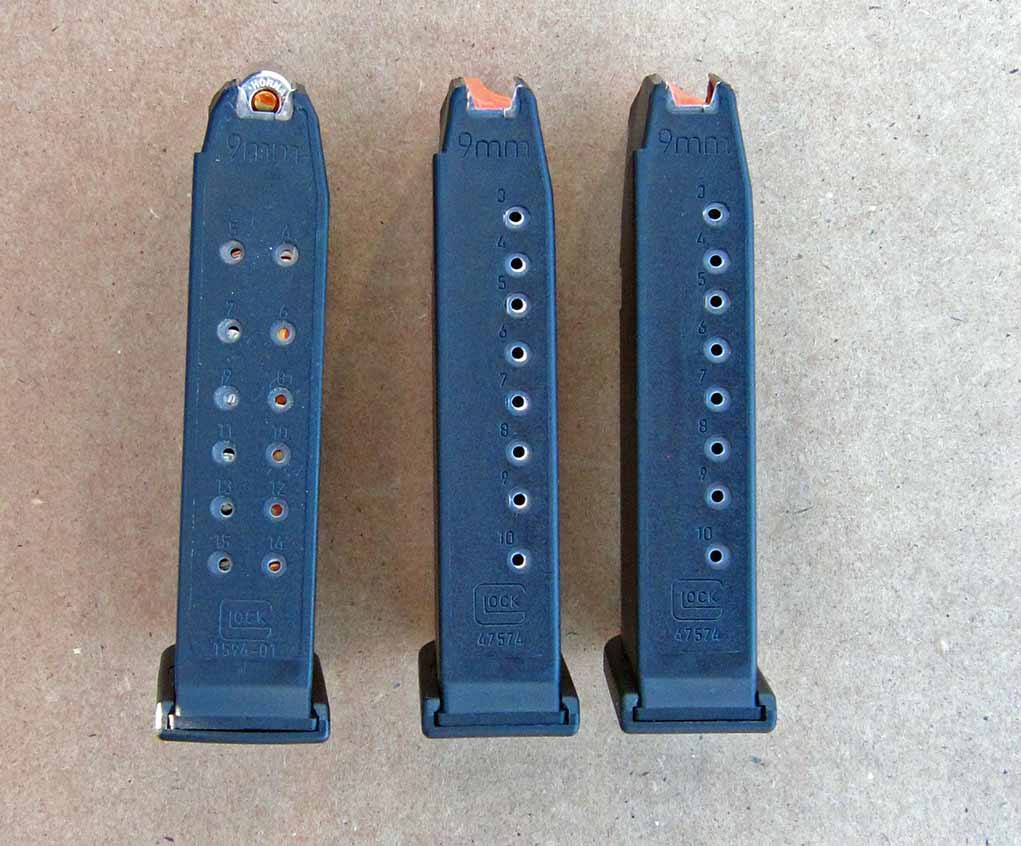
Making AR-15 Fundamentals Second Nature

0

Application of AR-15 fundamentals must occur subconsciously, freeing up the mind to make bigger decisions.

What Are The AR-15 Fundamentals You Need To Focus On:

  • Safety
  • Accuracy
  • Manipulation
  • Working The Charging Handle
  • Operating The Bolt Catch
  • Learning Your New Equipment

Safety

Ask someone what the “fundamentals” of firearms are and you’ll get a variety of answers, and usually multiple responses from one person. There’s obviously safety to consider. Your primary focus whenever handling firearms, regardless of the reason, is safety. This, as you know, is the foundation of all other fundamentals.

“Marksmanship excellence is achieved through thousands of rounds on the range, backed up with exponentially more dry practice.”

Accuracy

Then there’s the fundamentals of marksmanship, though this is a skill set no one ever masters. I can tell you that — backed by more than 25 years of teaching and decades of personal experience — the one problem we all have, at least occasionally, is shooting too fast.

“But,” you say, “In the match/field/fight I need to shoot fast.” The purpose of shooting is to hit the target; accuracy is first and foremost. The speed you shoot is dictated by distance and size of the target. Bad shots or misses most often indicate that you fired too fast. The fundamentals (aim, hold, press and follow-through) apply for each and every shot, thus ensuring hits.

Whenever possible, you should practice in adverse weather conditions. Manipulations are a fundamental skill, but things might change when you’re wearing gloves or layers of bulky gear.

Marksmanship excellence is achieved through thousands of rounds on the range, backed up with exponentially more dry practice. You fire one accurate shot, taking all the time needed to ensure each shot is done “right.” After one hit, you stop, reset everything physically and mentally, and start over. One shot at a time — a slow, methodical process.

Get On Target With More AR-15 Knowledge

Once you can hit any target — within reason, of course — you begin to think about making two hits. Regardless of the number of shots, it’s about repeatedly applying the four fundamentals. The fundamentals, after all, ensure good hits, almost effortlessly, during the match/hunt/fight.

Manipulation

The ability to properly manipulate the AR is another fundamental skill — and it takes more resolution than any skill. The only way to learn this is through repetition, but it’s necessary because the AR is more complicated than some firearms, especially pistols. ARs have many advantages over a handgun: accuracy, magazine capacity, extended range and terminal ballistics — and limited penetration. To become proficient in manipulating the AR (which means safely and efficiently) requires resolution, because the definition of “repetition” is boring.

Accuracy depends on stability. You create stability by bracing against solid objects and by lowering your center of gravity. Learning the fundamentals on traditional firing positions will help you create a more stable modified position.

Learning how to load, unload or confirm the status of the AR — what I call administrative manipulations — and clear stoppages or malfunctions — functional manipulations — starts with learning how to properly cycle the charging handle.

Working The Charging Handle

Working the charging handle is a fundamental all by itself. It’s a three-step sequence, and it starts by positioning the thumb on the back of the handle in the center. Properly positioning the thumb here provides a good purchase, and it helps ensure you don’t twist or torque the handle as it’s racked rearward. Next, use your first finger to unlatch the handle. Failure to do so will either cause your hand to jerk off the handle without cycling it, or I’ve seen really strong guys rip the latch off the handle.

Some applications require a lot of kit, which increases the work on fundamentals. You spend an enormous amount of time to become fluid and efficient with your gear. At the same time, don’t carry gear you really don’t need. As always, think about your application.

Pull the handle straight back, with your thumb following the centerline of the stock rearward. The physical action to cycle should occur in your elbow — not the shoulder — making sure you don’t twist the handle. “Twisting” creates friction, wear or bending the handle out of shape, locking up your AR’s action. Finally, once the handle reaches full extension to the rear, you release it, making sure your hand doesn’t impede the bolt’s forward motion.

Operating The Bolt Catch

Reloading is another functional manipulation. During reloads, when the bolt is locked to the rear, use the bolt catch as a release to chamber a round instead of manually cycling the charging handle. This is how the AR is designed to function.

Using the bolt catch to chamber a round is much more ergonomic than cycling the handle, and the more you mess with that handle the more likely is it that you’re going to mess it up, like letting your hand ride the handle forward, retarding the action and creating a stoppage. The fundamentals of manipulating the AR are about details, and the small ones make a big difference.

Learning Your New Equipment

Maybe your AR goal for 2019 is a new piece of equipment. You’ve had your eye on a new optic, a different caliber, or a brand new rifle, carbine or pistol. Now it’s time to buy, and again, the fundamentals are important.

The first thing you need to do with a new piece of gear is read the instruction manual. Learning how it operates saves time, money and mental frustration. Keep in mind that a piece of equipment cannot overcome bad fundamentals.

The first thing to do with new gear is read the instructions. I know — I can hear you groaning — but this is fundamentally important. Familiarization is fundamental; not knowing how something works severely limits your ability to use it well. I’ve seen people send a lot of expensive match-grade ammo downrange before discovering something was off. If for no other reason, read the manual to get the most out of your new purchase. And remember: If your marksmanship fundamentals aren’t up to speed, you won’t be pleased with your skills or your new investment.

Parting Shot

Working with the AR — for plinking, protection, shooting for competition or putting game on the table — is always about the fundamentals. In a defensive encounter, fundamentals are literally life and death. The fundamentals like safety, manipulations, accuracy — which includes different firing positions, shooting from cover and engaging a moving target — and the ability to use your gear efficiently must be over-learned.

Application of these skills must occur at a subconscious level. This frees up the conscious mind, which can only think about one thing at a time, to focus on the bigger decisions. Ultimately, what you’re striving for is efficiency; this will make you quick and provide the results you need.

Make a resolution now to get these fundamentals squared away. It’ll be too late to learn when you really need them.

Editor’s Note: This article originally appeared in the January 2019 issue of Gun Digest the Magazine.
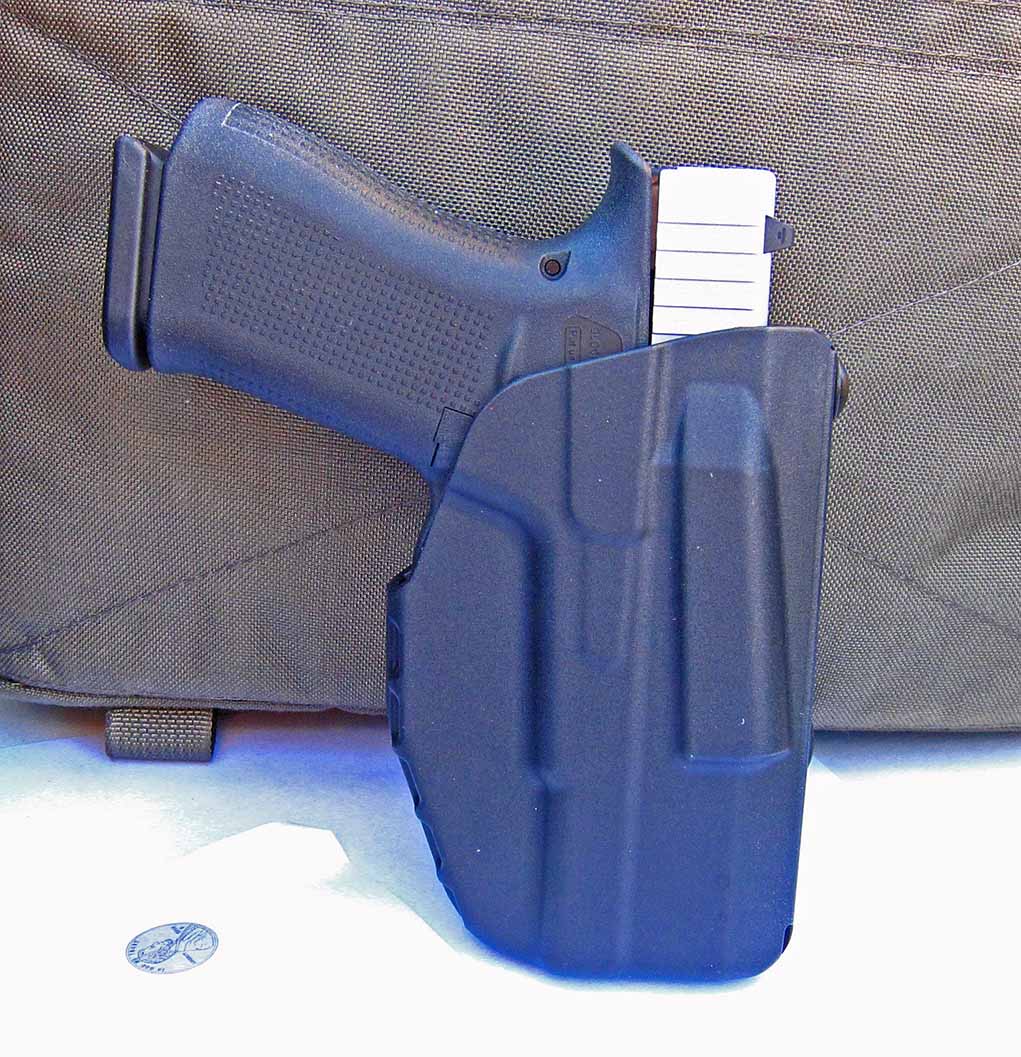
Video: What Are Your Suppressor Options?

0

Find out what makes and models of suppressors are out there and what will best serve your needs.

The advantage of a suppressor, at least its main one, is fairly self-evident. Damping the report of a rifle or a pistol makes shooting – particularly in the confines of an indoor range – much more pleasant. However, the muzzle device’s magic doesn’t end at simply trimming decibels. A quality can enhances the accuracy of your firearm, especially shot to shot, by reducing its recoil.

So, more enjoyable and more on target – plenty of reasons to get sold on suppressors.
If you are, the next obvious question is, “Which is right for me?” While not as difficult as solving a differential equation, picking a can that will do you the most good is somewhat complex. If for any reason the number of makes and models available. Combine that with what your overall objectives are, how much you want to spend and the types of guns you want to suppress, well your decision-making process quickly become intricate.
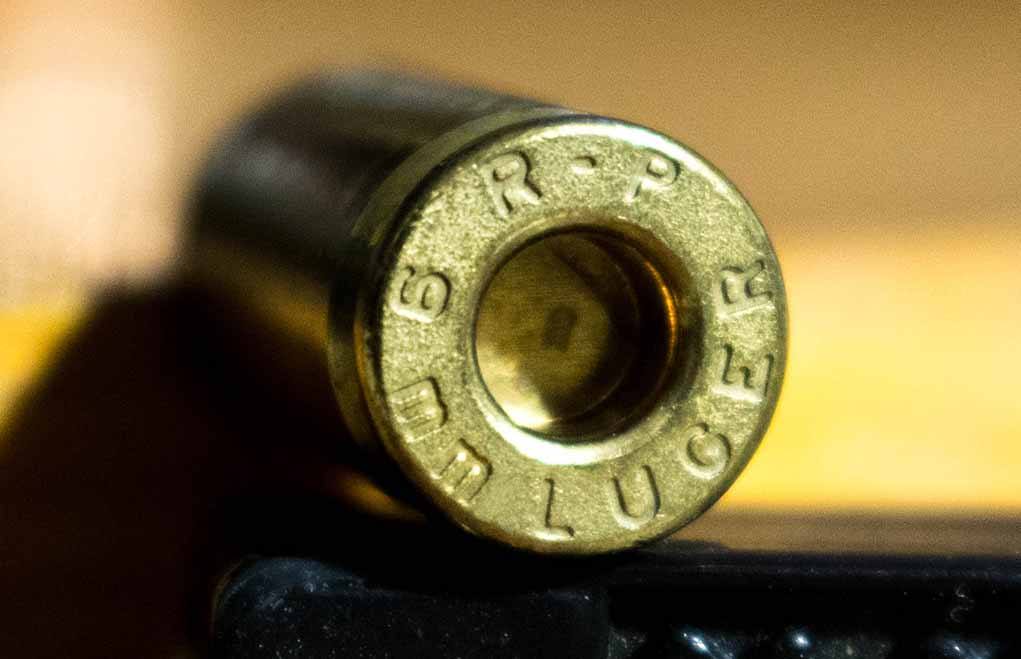

We’re Making Noise About Suppressors:

  • The Suppressor: How Is It Made, It Works And How To Buy One
  • Best AR-15 Suppressor Options For A Quiet Advantage
  • Handgun Gear: Best 9mm Suppressor Choices
  • Best .22 Suppressor Choices To Mute Your Plinker
  • Choosing A Flash Suppressor, Muzzle Brake And Compensator

    • Mike Tupy of The Modern Sportsman goes over some to the top suppressors available today in the above video. Along with this, he touches on some of the finer points you’ll need to consider, such as how the device is made and functions with particular firearms. Certainly, there’s more to picking the right suppressor, but you Tupy gives you an idea about what you’re looking for before you go out shopping.

MUST READ ARTICLES