Home Blog Page 150

Reloading The Old Reliable .30-06 Springfield

0
reloading the springfield
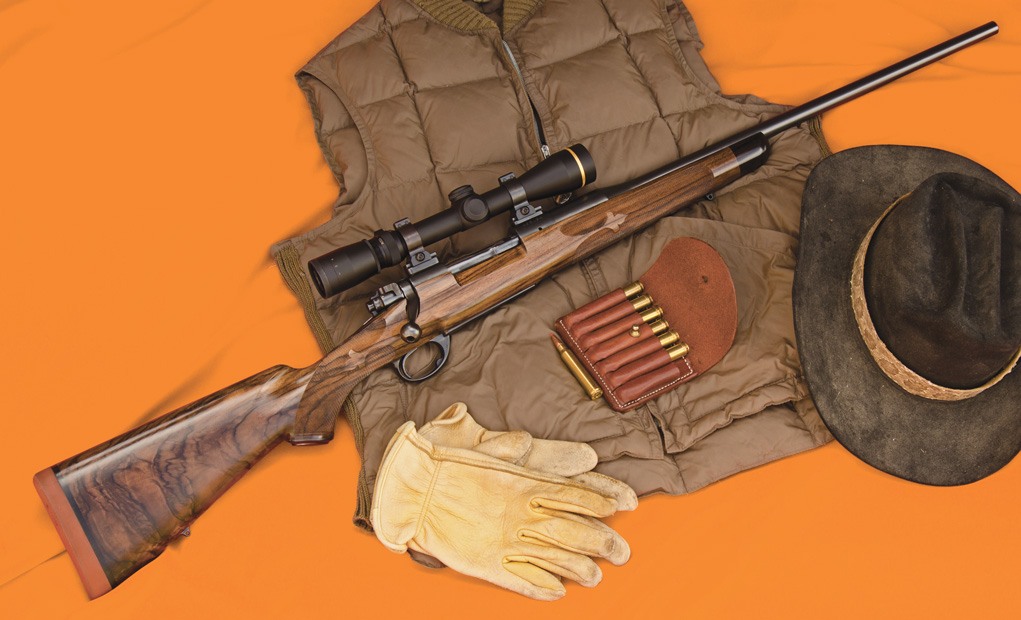
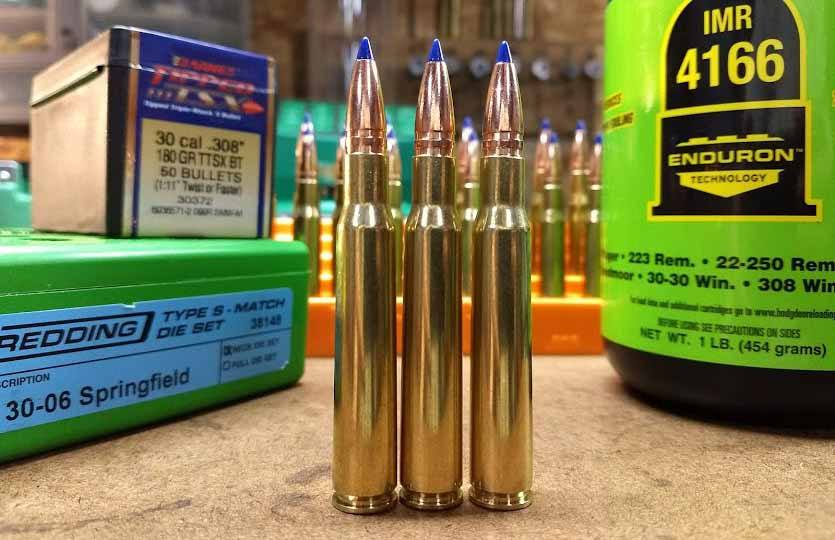
The .30-06 case can easy handle the longer monometal bullets, such as the 180-grain Barnes TTSX.

Easy like Sunday morning, reliable as a well-aged Labrador, the .30-06 Springfield continues to serve reloader well.

Why The .30-06 Springfield Is Among The Best Cartridges To Reload:

  • The Springfield represents what might be the most well-balanced case design in the most well-balanced bore diameter available.
  • It delivers a velocity range that makes all sorts of sense for hunting common animals at sensible ranges.
  • In a properly stocked rifle, nearly anyone can learn to shoot the .30-06 well.
  • Overall, it is compatible one of the widest ranges of powders and bullets of any rifle.
  • With a properly loaded round, the Springfield can definitely be a tack driver.

As if it weren’t already potent enough with its various factory loadings, handloading for the .30-06 Springfield is one of the easiest — and most rewarding — tasks a new handloader can take on. The initial cartridge, carrying many of the attributes of the 7×57 Mauser, popped onto the scene in 1903, and it received an immediate revision in 1906, when the Army shortened the case length from 2.540 inches to 2.494 inches.

In addition, they lightened the bullet from the 220-grain slug of the .30-40 Krag to the 150-grain spitzer bullet. The military history of the .30-06 Springfield is evident: It had the starring role in a pair of World Wars, but the hunting and civilian shooting history is equally important.

The Springfield represents what might be the most well-balanced case design in the most well-balanced bore diameter available, at least as it matters to the hunter. Firstly, the .308-inch bore diameter has an awful lot to offer the reloader, with bullets weighing between 100 and 250 grains.

Secondly, the Springfield case — in addition to being the benchmark for all .30-caliber cases — is of a nearly perfect size, in that it delivers a velocity range that makes all sorts of sense for common animals at sensible ranges. Is the .30-06 a cartridge designed for ultra-long ranges? Probably not, yet when mated to a good bullet, it does make a viable 1,000-yard target cartridge. The ought-six has been used for all sorts of game species, from rabbits to rhinos. While the African heavyweights might not be the best use of a good .30-06, they are about the only species that the old cartridge doesn’t handle well.
great bullets and powder
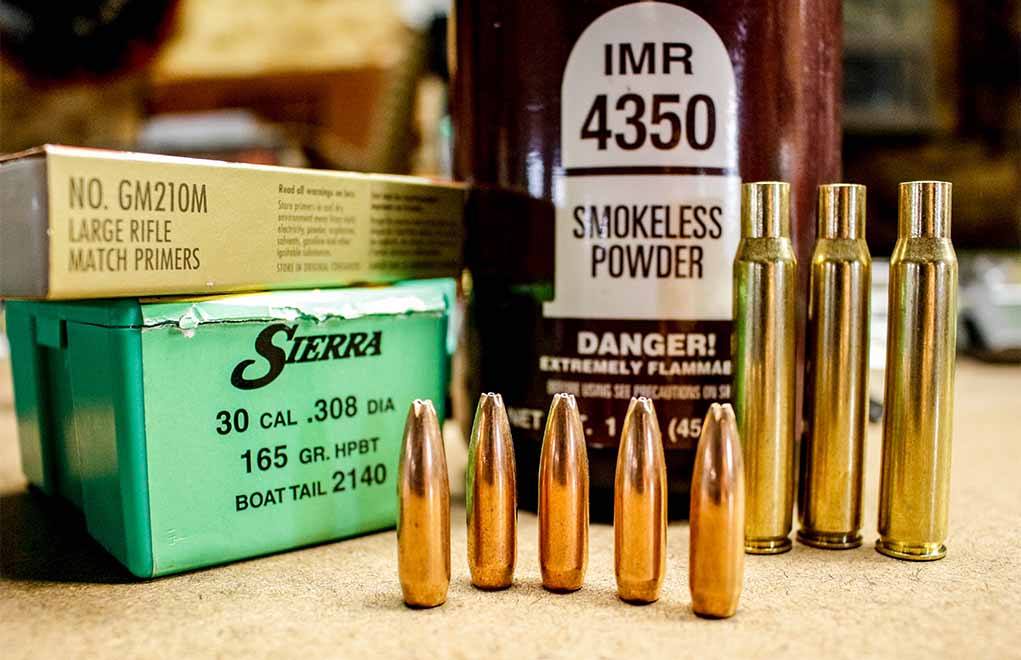
A good 165-grain bullet and IMR4350 make a lethal combination in the .30-06 Springfield.

Thirdly, the shooting characteristics of the Springfield are such that nearly anyone can learn to shoot it … and shoot it well. In a properly stocked rifle, the recoil of the Springfield is completely manageable, and it can be further mitigated by handloading the cartridge.

Ease Through Versatility

In addition to having that excellent choice of projectiles, the .30-06 Springfield can digest a wide variety of powders, from the faster rifle choices like IMR3031, across the spectrum to the slow-burning Reloder 25 and 26. The case has a neck length of 0.385 inch, giving plenty of tension, even with the longest bullets. And, the 1:10 twist rate of most .30-06 rifles will stabilize all but the longest target bullets.

Though it isn’t exactly new and shiny, the Springfield can be seriously accurate, as USMC Gunnery Sergeant Carlos Hathcock proved. I have cooked up more than a few handloads for clients headed around the globe, which printed ½-MOA, and those were built around hunting bullets.

The .30-06 Springfield is still extremely popular, with ammo and reloading die sales still ranking in the Top 10. I have found that the Springfield makes an excellent cartridge to teach a new reloader because it’s large enough to avoid the numerous compressed loads that the .308 Winchester has, and it doesn’t have the associated case stretching issues that the belted .300 Winchester Magnum does.

round-nose bullets
The 220-grain Hornady InterLock is a great choice for large game at closer ranges in the .30-06 case.

The Springfield is a simple and effective design, allowing a reloader to learn the effects of various combinations rather quickly. For example, while the .30-06 has plenty of room in the case to load the longer monometal bullets, the faster-burning powders show a definite advantage in both accuracy and velocity. It was in the .30-06 case that I first came across this phenomenon, and it has saved me quite a bit of time and heartache in other cartridges.

The Reloading Process

The reloading process is as simple as the case design itself. The .30-06 runs on a standard large rifle primer, and I’ve used just about every one on the market, all with success, though I prefer the Federal Gold Medal Match GM210M and the CCI 200. I’ve had good results using many different brands of cases, though as with most cartridges, the match-grade cases have given the best results. The 17½-degree shoulder is an excellent blend of good headspacing and smooth feeding, and the .30-06 has been adapted to just about every rifle action type ever conceived.

For bolt-action rifles, you have much more latitude than with most other actions. You can choose to neck size your cases — giving more concentricity and therefore better accuracy — as the bolt guns have the camming power to handle the slightly larger case body. I do prefer to use full-length resized cases for those hunting trips that might require a rapid follow-up shot, as the neck-sized ammo can be a bit difficult to feed quickly. The autoloaders, pumps and single-shots require a full-length resized case to operate smoothly, and a small base resizing die can really make a difference.


Load Up On Reloading Info:


I don’t really crimp my .30-06 cases, no matter what bullet I’m using — unless it’s for target shooting in a military autoloader, and then I use a taper crimp, and just enough to make sure the bullets won’t “pull” during the cycling process. My buddy, Robin Sharpless, at Redding Reloading has done some extensive testing, and he’s found that some rifles can cause the overall length of the cartridge to increase as much as 0.009 inch once slammed into the chamber.
quality brass for the .30-06
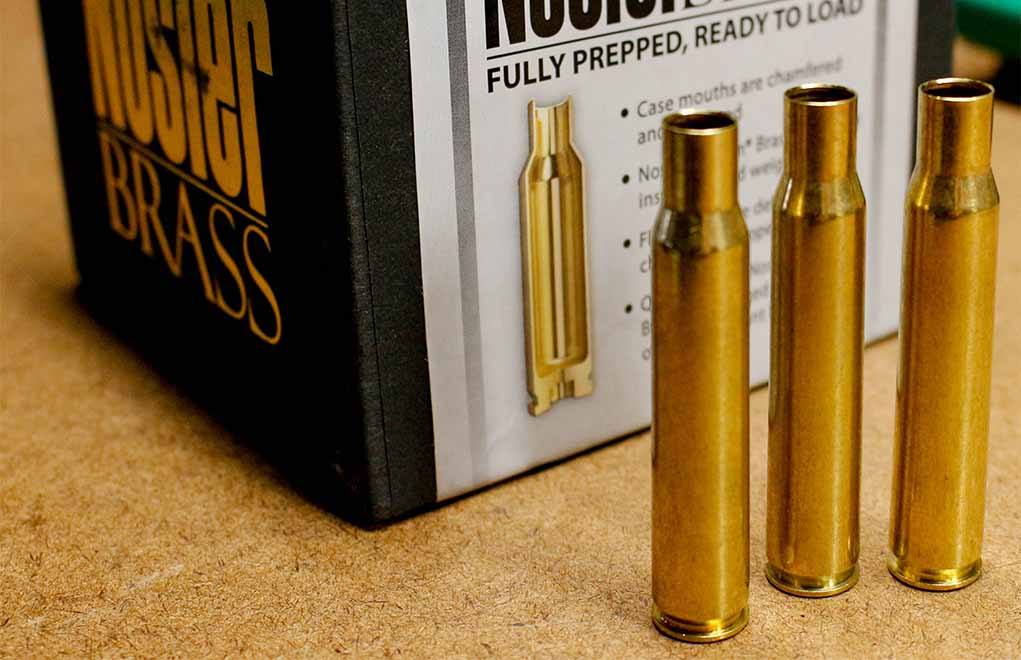
Premium cases, like these from Nosler, will certainly help keep things as uniform as possible.

A reloader who has a .30-06 can custom tailor their ammunition to their own hunting situation, whether it’s for coyotes or deer, elk or bear. I highly recommend resisting the temptation to try and turn your .30-06 into a .300 Magnum; in spite of what some folks would have you believe, the velocities of the .30-06 are more than adequate for almost all of your hunting shots, out to sane distances. I do enjoy hunting with a .300 Winchester, but I’ve never felt handicapped when hunting with a .30-06, nor do I want to beat the snot out of an ’06 rifle trying to make it into something it isn’t.

For an all-around hunting load, I like either a 165- or 180-grain bullet at 2,800 fps or 2,750 fps, respectively. I’ve had excellent results with the 180-grain Nosler Partition over a healthy charge of IMR4350, as well as the 165-grain Partition over a charge of Reloder 19. The 180-grain Barnes TTSX over a charge of IMR4166 makes another sound all-around load, especially for those traveling hunters who hunt in many different climates.
For those who like the upper and lower ends of the bullet weights, the 220-grain Woodleigh Weldcore or Hornady InterLock make excellent bear medicine, and there are many 130-, 140- and 150-grain bullets that will handle deer and antelope across a hayfield or on the prairie.

The .30-06 can be a good candidate for cast bullets; they are cheap to make and a great way to have a new shooter become familiar with their rifle, without the recoil of full house loads. Another excellent attribute of the .30-06 case is the sheer amount of data available for it, with the option of using those loads on the slower end of the spectrum. Here in the Northeast, where our deer shots rarely exceed 100 to 125 yards, or for those situations in the South where a feeder is employed, a reduced velocity load will still be very effective.

I’ve included a list of some of my favorite .30-06 loads, and I’ll still give you the standard caveat: Work up from the bottom of the published data. You’ll see some fast powders, some slow powders, light bullets, heavy bullets and a few middle-of-the-road loads; that’s just a testament to the versatility of the .30-06 case. Perhaps it’s a coincidence, but I’d say I’ve had an easier time developing loads for the .30-06 than for any other rifle cartridge.

Editor’s Note: This article originally appeared in the March 2019 issue of Gun Digest the Magazine.

Purchase The Components Used In This Article:

7 Out-Of-Sight Optics For Every Range And Budget

1

Ready to get on target? Check out these top optics.

What are the best optics to come out recently:

If you’ve drawn a live breath in the last 25 years or so, you’re more than cognizant there’s been a revolution in how we aim our guns. Not that iron sights are smoldering on the ash heap of history, but the advancements in optics have — for the most part — relegated them to second fiddle. Rest assured, they’re in the bullpen, always warmed up if called into the game, but if you’re shooting to get and stay on target nowadays your eye is behind a piece of glass — close-, mid- and long-range.

Read Also: Top Optics From 2018

Is it for the best? Like beauty, it’s in the eye of the beholder. A more complex system, certainly there’s an argument they create stomping room for gremlins to creep into your weapons system. But the results of a fully-operational optic, be it a long-range scope for antelope season or an up-close-and-personal red-dot on a self-defense carbine, speak for themselves. They just plain get you on target and keep you there.

Choices abound in aiming solutions, and not everyone is worth your time and hard-earned money. But we’ve got the inside edge on the glass that will get you (and your bullet, of course) where it needs to go. So, without further foofaraw, here are seven out-of-sight optics that will help you drop your next round exactly where it needs to be.

2019 Updates

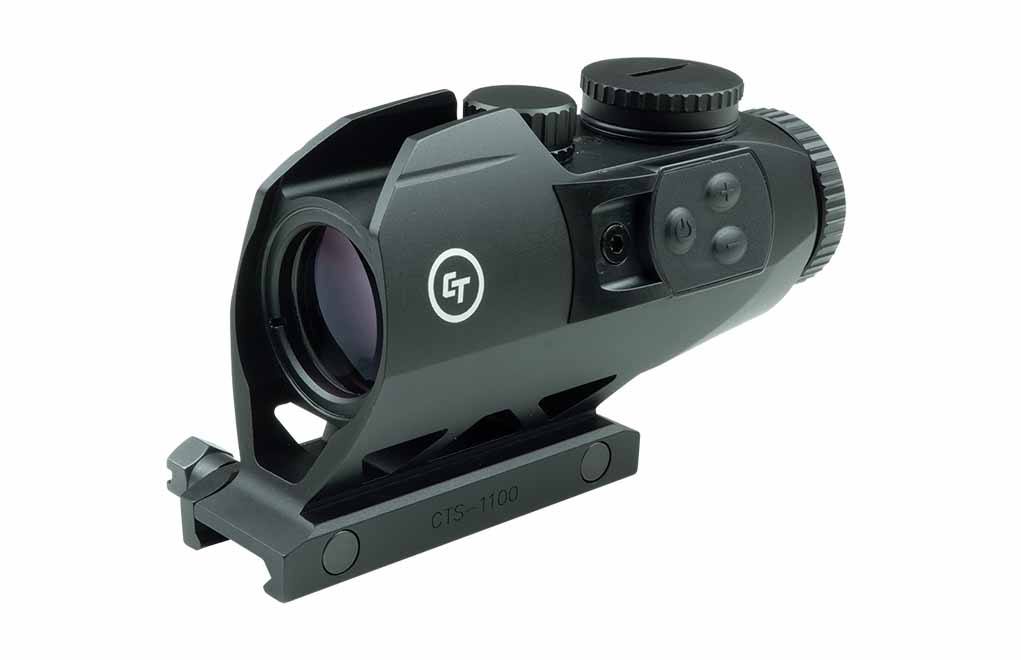
Crimson Trace CTS-1100 Battlesight

Best Optics Crimson Trace CTS-1100
New for 2019 is Crimson Trace’s new battlesight, the CTS-1100, which offers a fixed 3.5x magnification with an illuminated reticle, complete with holdover that matches most 5.56 rounds out to 500 yards when fired out of a carbine-length barrel. This is a terrific solution for engaging a field of full-sized silhouettes out to standard combat distances or for any hunting for which a large field of view is required. MSRP: $549

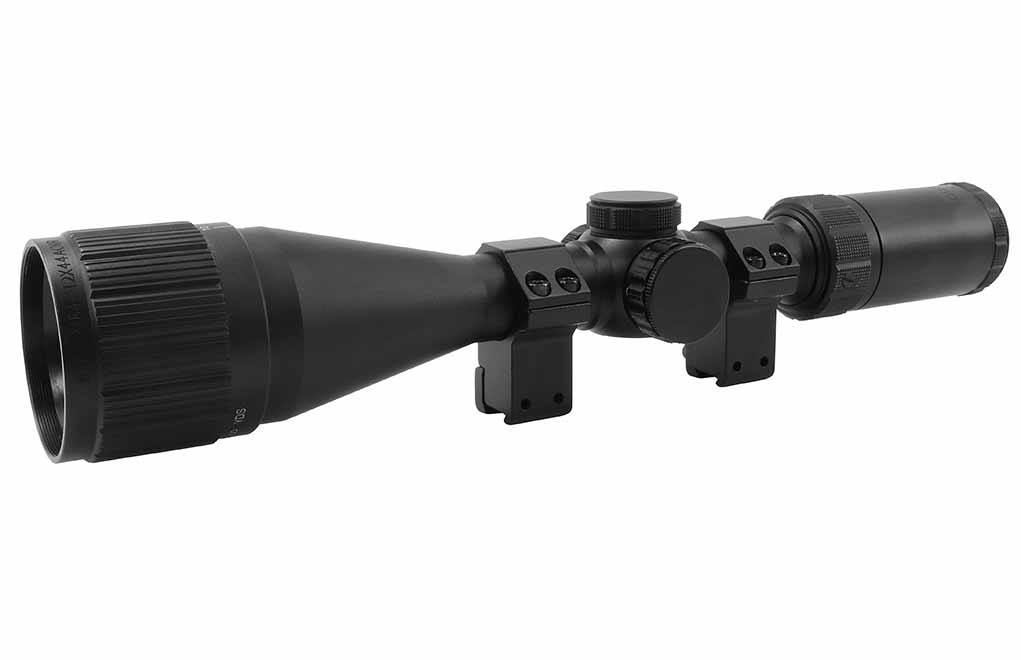
BSA AIR 4-12×44 Outlook Air Riflescope

Best Optics Outlook 4-12
Included in the line of BSA air riflescopes is this very versatile 4-12x magnification offering. This scope is built specifically to handle the reverse recoil that tears a normal scope to pieces on the inside. With parallax settings all the way down to 10 yards, this is an ideal setup for close-range pest control, as well as introductory target shooting for new shooters. MSRP: $113.99

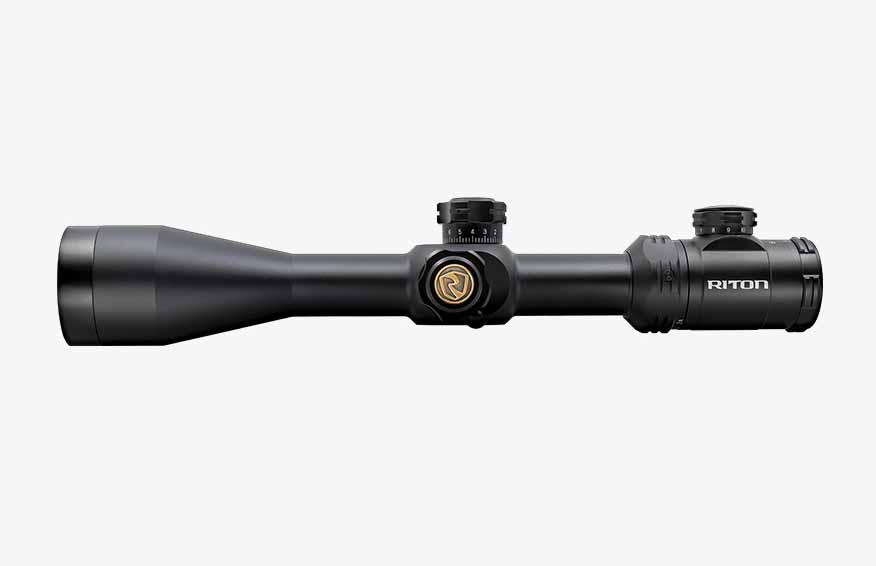
RT-S MOD 5 GEN2 6-24X50IR-FFP

Best Optic Mod-5-GEN2-6-24x50IR-Profile
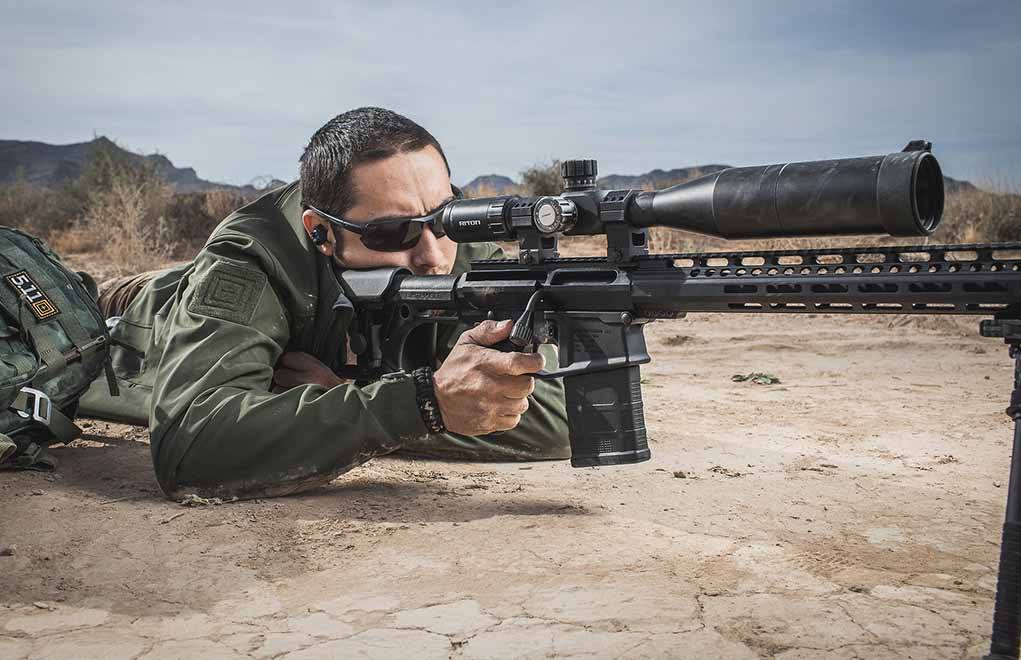
The Mod 5 is Riton’s mid-grade line of optics. The 6-24x option of this line provides precision shooters with everything they need for long-range engagements—and for a price that doesn’t break the bank. This optic includes an illuminated reticle, as well as MOA subtentions that span down the entire length of the reticle, thus allowing for less dialing and faster shots. MSRP: $569

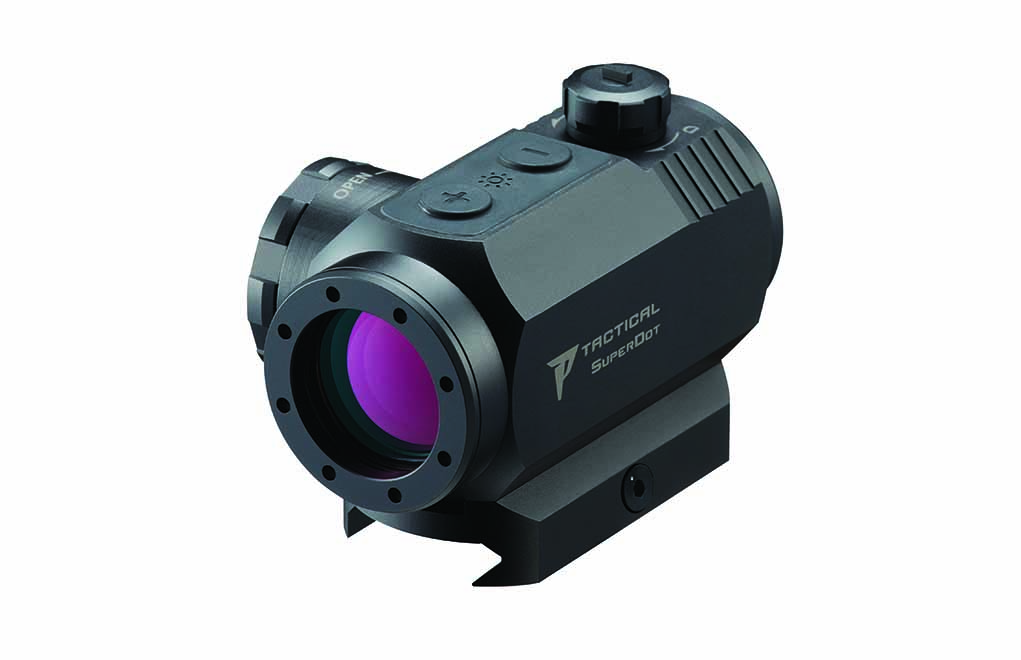
Nikon P-Tactical SuperDot

Best Optic Nikon P-TACTICAL_SUPERDOT
The Nikon P tactical SuperDot has offered shooters a lightning-fast ultra-bright alternative to iron sights. With 10 different brightness settings, a shooter can tailor the 2 MOA dot to best suit their eyes and light conditions. The first two settings are even night vision-compatible for the professional or the late-night hog or coyote hunter.
MSRP: $199.95

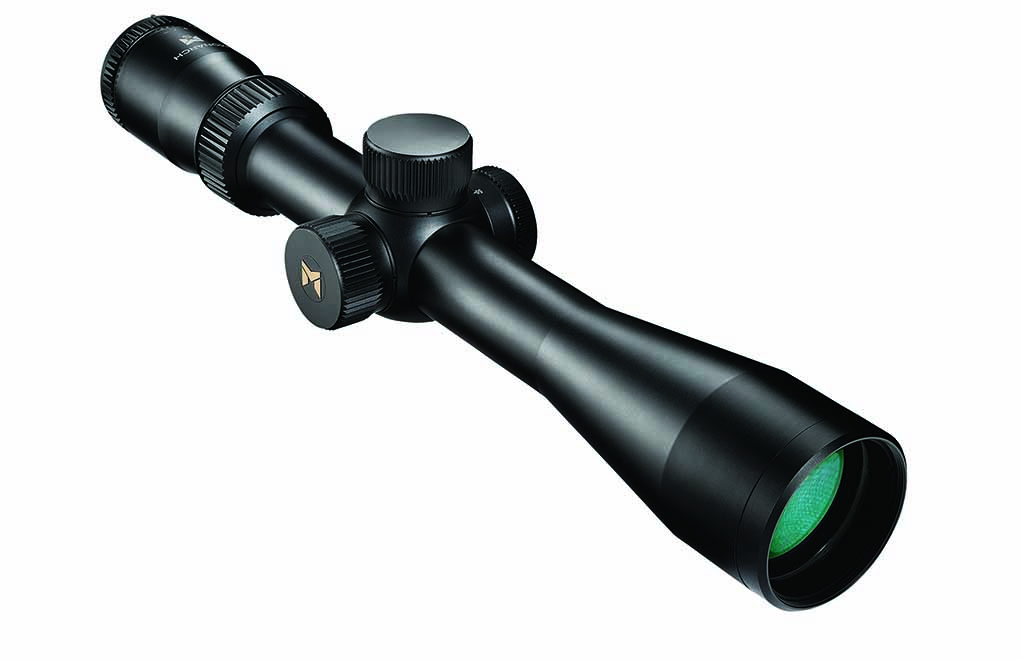
Monarch M5 3-12x42SF M BDC

Best Optics Nikon MONARCH_M5_3-12×42
The M5 is built on a robust 30mm tube that gives it enough adjustment to reach out to the long ranges that have become commonplace in today’s hunting scenarios. This new line from Nikon also incorporates its spring-loaded turret cap system for tool-less resets once a shooter has achieved zero. The 4x zoom of the 3-12x magnification range of this optic makes it an ideal whitetail scope with the BDC reticle. MSRP: $499.95

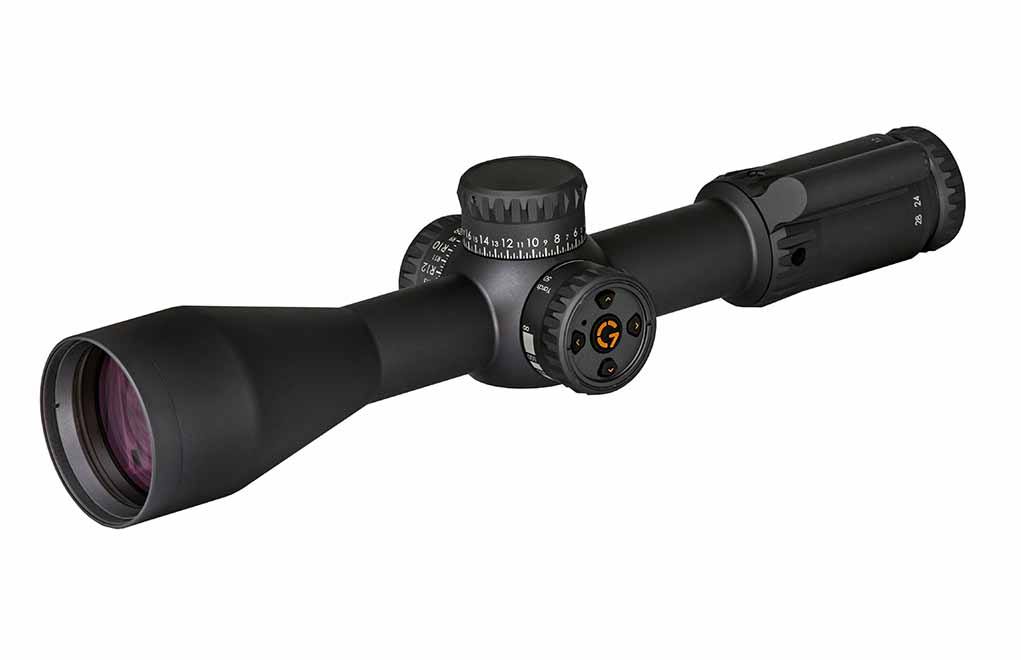
Revic PMR 428

Best Optics Revic PMR 428
The biggest challenge in long-range shooting is knowing what the environment will do to your trajectory. The Revic PMR 428 is a robust, high-quality optic that incorporates a weather station and ballistic calculator to give you an instantaneous fire solution that requires nothing more than a spin of the elevation turret. Built on a 34mm main tube, the Revic allows for adjustment that will exceed what most rifles are capable of. MSRP: $2,850

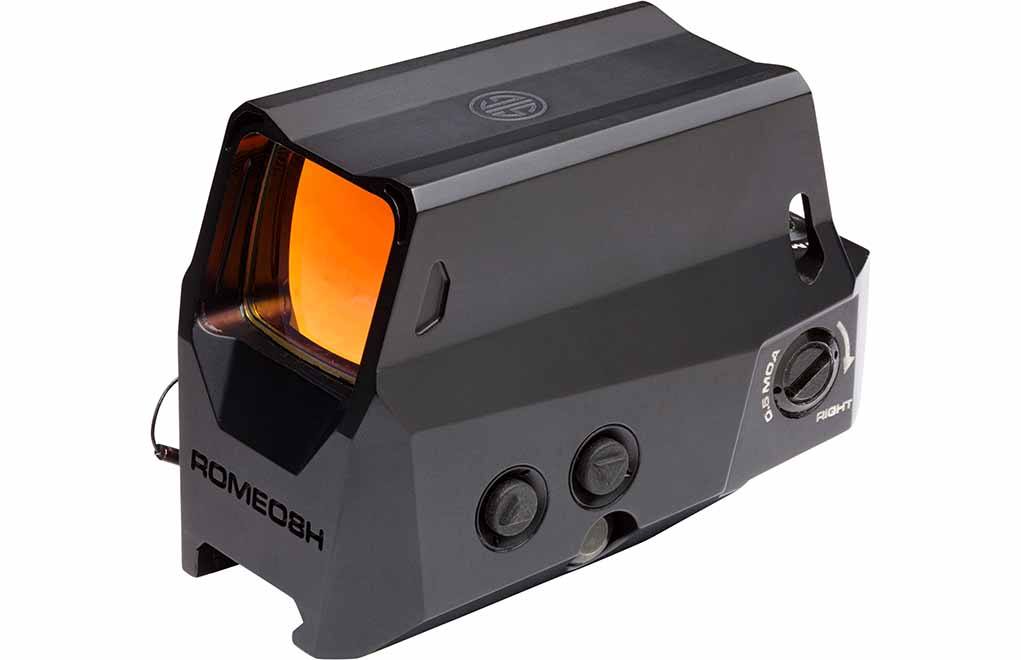
Sig Sauer Romeo8 Red Dot

Best Optics SIG ROMEO8
The Sig Sauer Romeo8 is the latest evolution of its signature red-dot line. The Romeo8 was designed to meet and exceed the ruggedness requirements of the military, law enforcement and the civilian shooter who is particularly hard on their gear. Sig’s new-for-2019 optic utilizes an interchangeable 2 MOA reticle that can be switched on the fly to four different styles, many of which include ballistic holdovers to accommodate long-range shots. MSRP: $599.99


Scope Out More Optics Info:

  • 8 Revolutionary Reticles For Long-Range Accuracy
  • Buying the Perfect Precision Scope
  • The Best Tactical Red-Dot Performance-to-Price Option?
  • Shifting Winds: SIG BDX Changing Shooting For The Better

Top From 2018

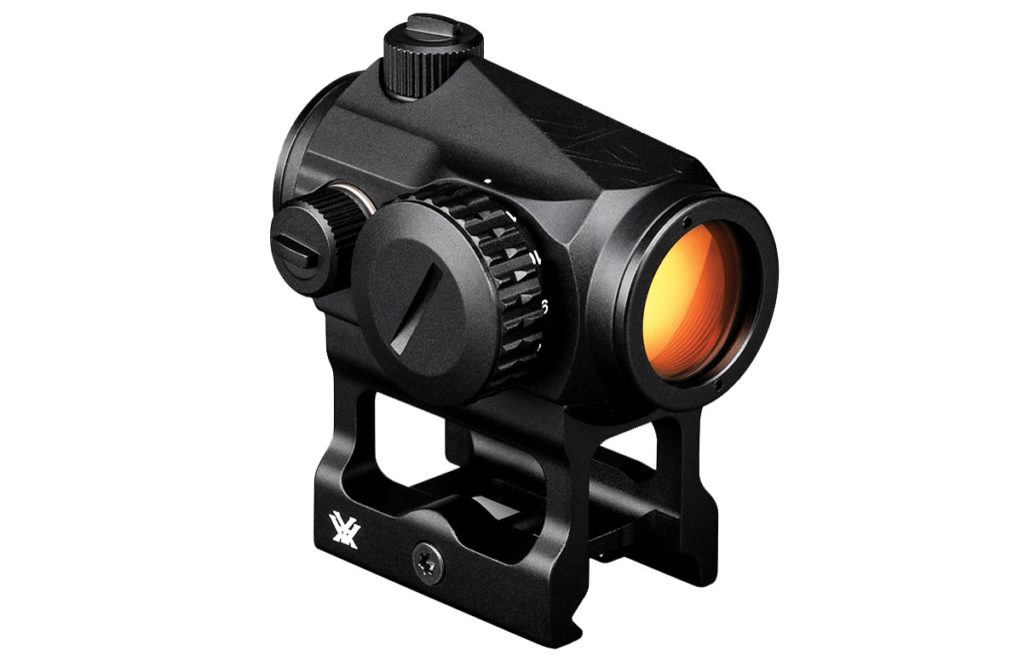
Vortex Crossfire

Vortex-optics
Vortex knows that for close-in work and general shooting tasks, it’s tough to beat a high-quality red-dot when both fast target acquisition and precision count. The Crossfire is designed to be incredibly light, ultra-compact and extremely durable. The sight features a 2-MOA red dot bracketed by a skeletonized housing unit that features 1x magnification — all from a package that weighs a touch over 5 ounces and measures 2.5 inches in length. MSRP: $220 www.vortexoptics.com

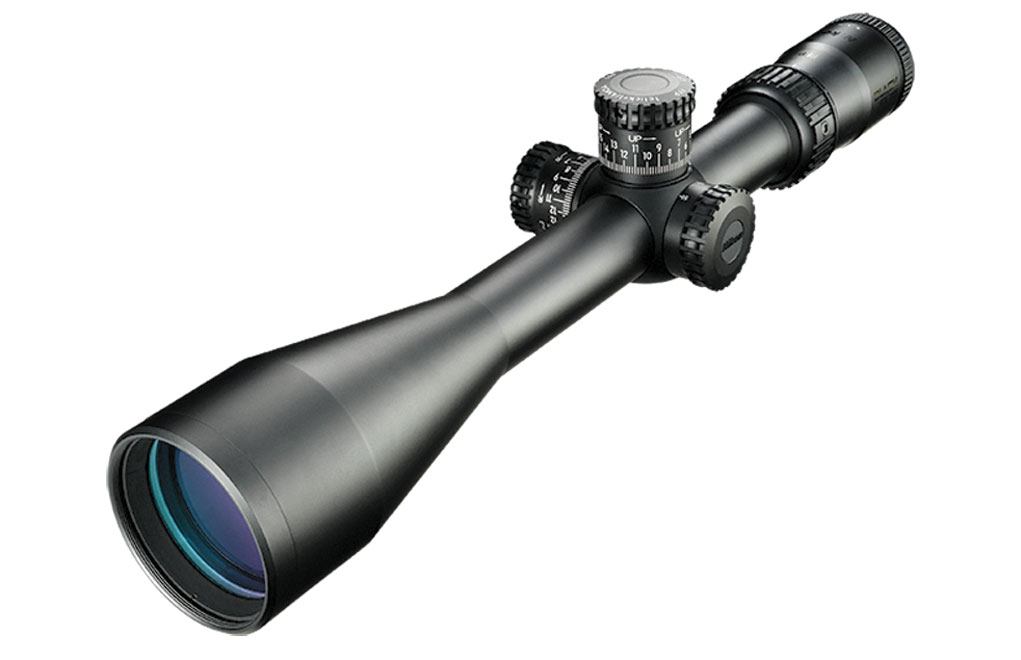
Nikon Black FX1000

Nikon-Optic
Engineered to deliver consistently long shots with confident precision, the Nikon Black FX1000 is a 4-16X50mm configuration poised to be a serious contender in the long-range area. The FX1000 integrates Nikon’s long-standing optics reputation into a first-focal-plane system to create sharp images and ergonomic dialing functionality at any magnification and at any distance. Glass-etched tactical reticles are paired with high-speed turrets to quickly create repeatable distance corrections and intuitive holds. In addition, the FX1000 introductions Nikon’s new Black Return-to-Zero integral zero-stop. MSRP: $650 www.nikonsportoptics.com

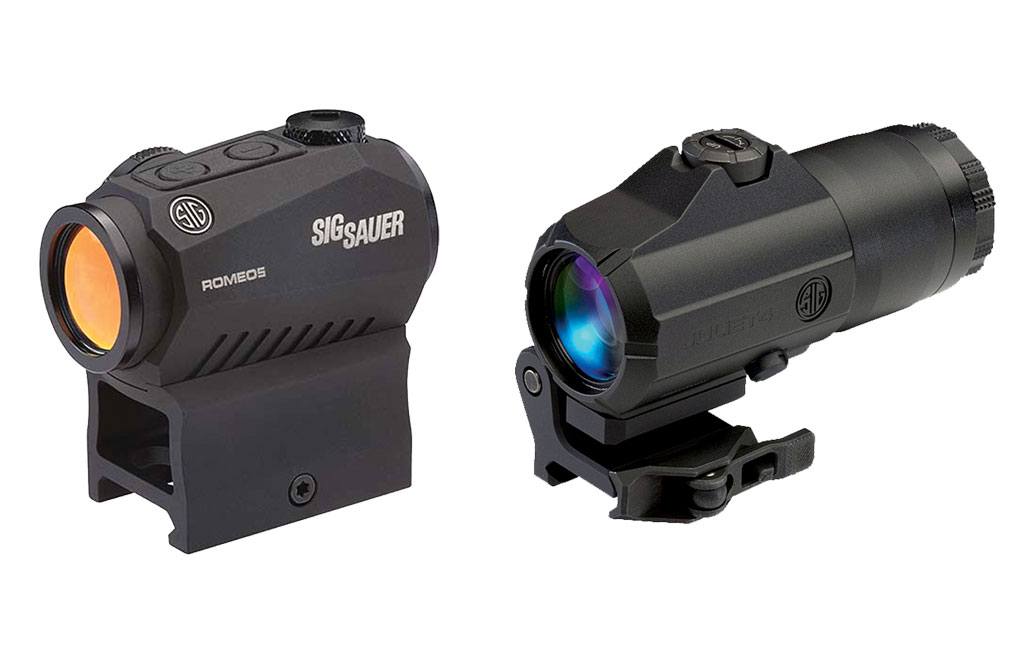
SIG Electro-Optics Romeo5 and Juliette4

Optics-First-Sig
The Romeo5 compact 1x20mm red-dot provides a 1x aiming solution, ultra-low parallax, unlimited eye-relief and more than 50,000 hours of runtime. The sight also features Sig Electro-Optics’ MOTAC (Motion Activated Illumination) technology, which increases battery life by shutting down the system when not in use and instantly activates the system when it senses the slightest vibration or movement. The Juliette4 is a 4x magnifier designed to work as a stand-alone magnification unit or in conjunction with reflex optics. The magnifier can be adjusted for height and has a PowerCam 90-degree mount so it can be quickly flipped to the side as needed. MSRP: $219/Romeo5; $479/Juliette4 www.sigsauer.com

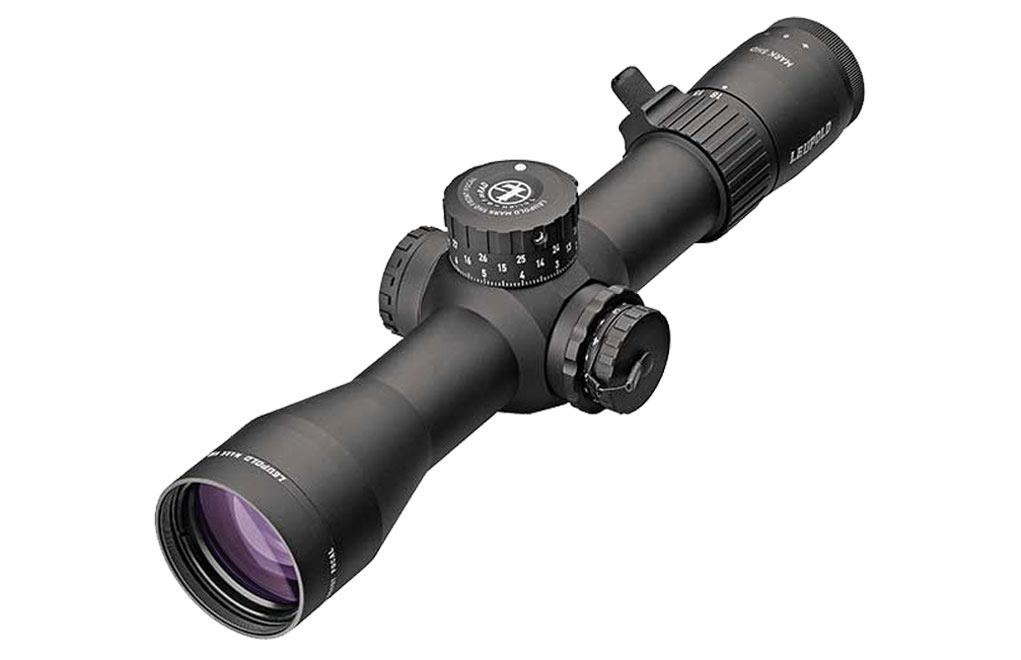
Leupold Mark 5HD

Leupold-Optic
Leupold touts the Mark5HD as up to 20 ounces lighter than other scopes in its class. In addition, exterior lens surfaces are treated with DiamondCoat 2 for high light transmission, solid edge-to-edge clarity and extreme low-light performance. The Mark 5HD features three revolutions of elevation adjustment to keep pace with long-range rifles and ammo, audible click adjustments on the turrets and a high-speed throw lever. Configurations include the 5-25x56mm and 3.6-18X44mm (pictured). MSRP: $2,400 www.leupold.com

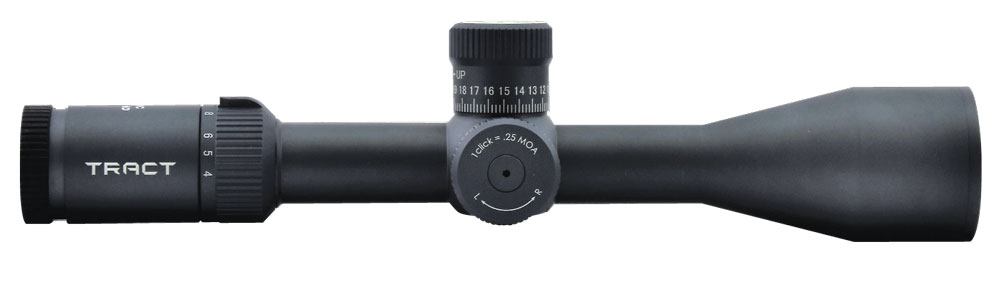
Tract TORIC UHD 4-20X50mm

Tract-Optics
The Tract Toric UHD (Ultra-High Definition) 4-20x50mm riflescope features an optical design that promotes maximum light transmission using SCHOTT High Transmission glass, ED lenses and a fully multi-coated lens system. Engineered in the United States and built in Japan, the Toric is designed around a 30mm main tube and, despite being a relatively new brand, has gotten up to speed very quickly in regard to packing in all the bells and whistles serious shooters expect — and even a few features that setting the bar, including a very unique reticle system. They’re definitely worth a look. MSRP: $1,154 www.tractoptics.com
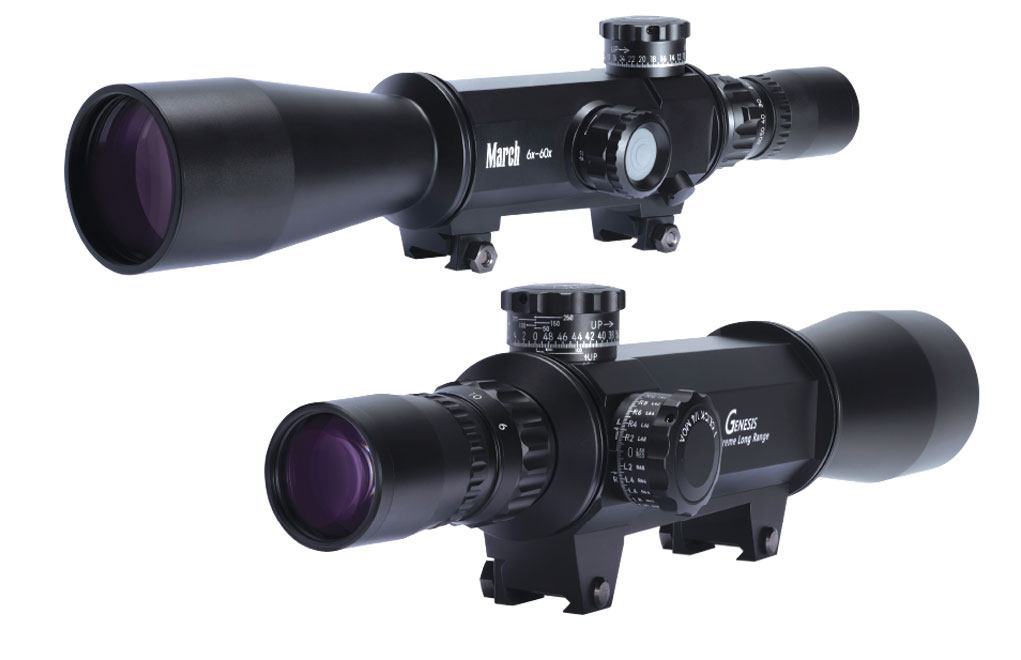
March Optics Genesis ELR

March-Optics
The Genesis was born a few years ago by a team of long-range shooters searching for a scope that could be used to shoot more than 2 miles without external influences. According to March Optics, the Genesis “will extend the accuracy capability of modern rifles without the need for modifications, including inclined rails, adjustable mounts or prism systems.” The Genesis ELR 6-60X56mm features up to 400 MOA of elevation, uses first-focal-plane technology — and the design allows the shooter to always see through the central part of the lens to maximize clarity and definition. Also incorporated is the High Master lens system, utilizing ED lenses with high refractive index glass for high resolution and natural color right to the edge of the image. MSRP: $5,000 www.marchoptics.com

Editor’s Note: This article originally appeared in the 2018 Shooter’s Guide issue and updated from the 2019 issue of Gun Digest the Magazine.

Frank Melloni contributed to this article.

Springfield Armory Introduces M1A Tanker

1

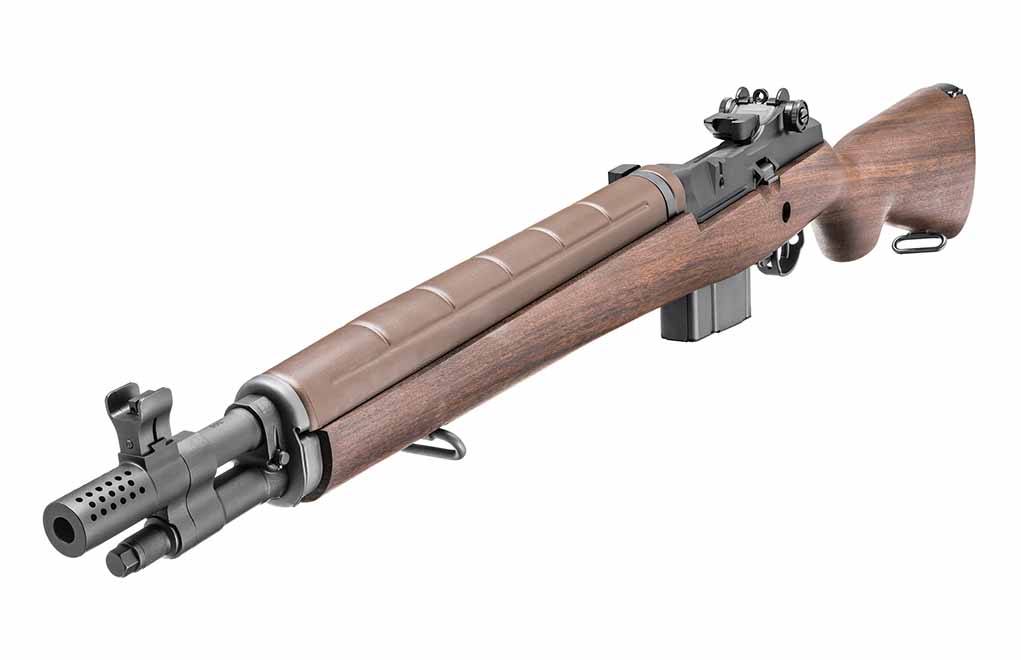
Springfield Armory M1A Tanker 2

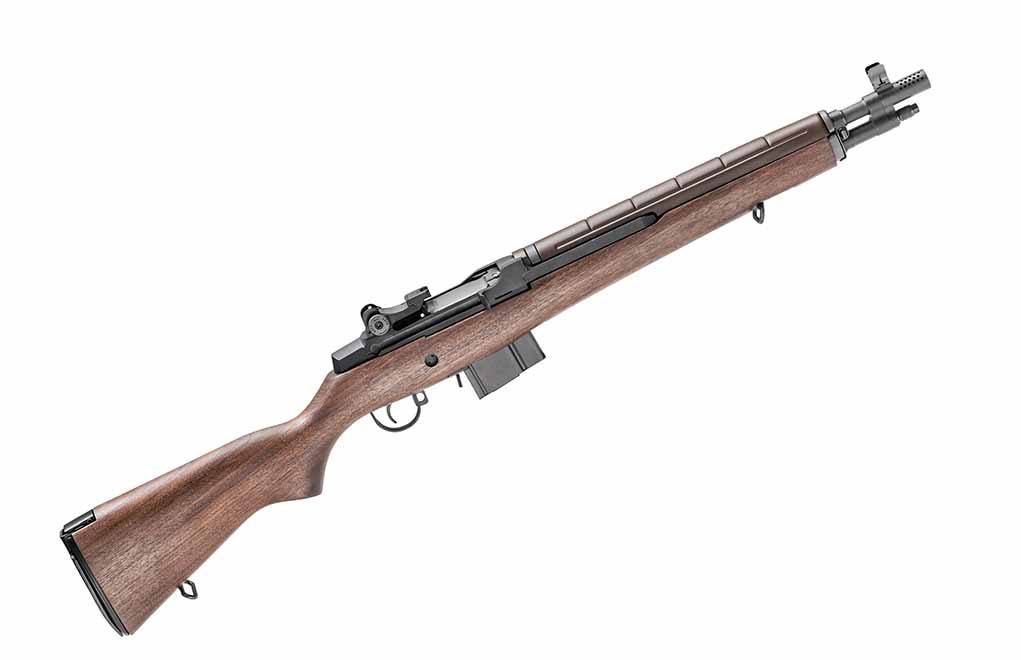
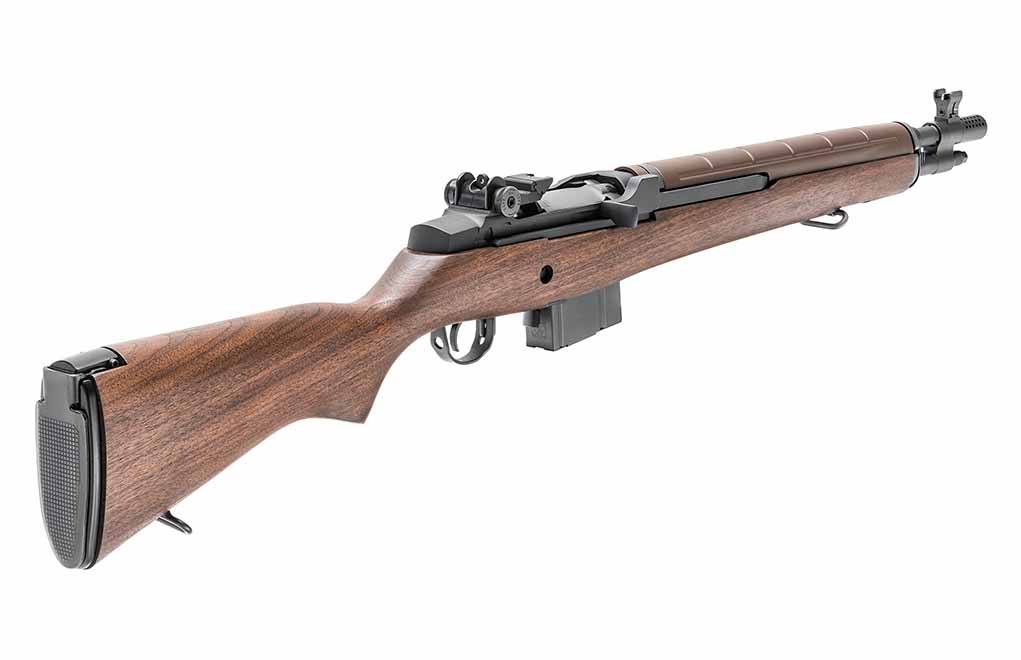
A throwback tribute to an M1 Garand that never made it past prototype, the M1A Tanker nonetheless looks like a slick little carbine.

Springfield Armory M1A Tanker Specs:

    • Caliber: 7.62X51MM NATO (.308WIN)
    • Length: 37.25″
    • Front Sight: XS Post w/ Tritium Insert, .125 Blade
    • Barrel: 16.25″; Twist 1 In 11″; RH; 6-Groove Carbon Steel
    • Weight: 8.75 lbs.
    • Rear Sight: Ghost Ring Aperture .135″ w/MOA Adjustment for both Windage and Elevation
    • Magazine: 1 – 10 Round, Parkerized Steel
    • Stock: Walnut
    • MSRP:$1,987.00

Springfield Armory’s looks to throwback with its new M1A Tanker, but there’s not much to throwback to. Marketing mainly. That’s pretty much all that exists when it comes to the gun inspiring the addition — the Tanker M1 Garand.

Essentially, this variation of the old warhorse, at least the ones that made it to market, was cooked up after World War II by enterprising dealers of military surplus. Shorten up the barrel a bit (to 18 inches typically), call it a “Tanker” Garand, let the gun buyer’s imagination put it in a Sherman at Arracourt or the Bulge. Solid plan. A couple smaller gunmakers still turn them out.

To be completely fair, there were a couple prototype Tanker Garands produced — the M1E5 and T26. But neither made it much further than testing. Word is they were pretty tough on their internals and produced a muzzle blast akin to a small supernova. Though there were some field modified abbreviated Garands made on the fly during the war, but they most likely didn’t go by the “Tanker” moniker.


More Rifle Articles:


Bubbles burst and wet blanks thrown, Springfield Armory’s new M1A Tanker looks like a riot. Essentially a SOCOM in a wood stock, but for those who like walnut (count me among their ranks), it should make a dandy carbine. Of course, no Ping after you thumb off eight, but a removable box magazine. That’s a fair trade-off. Just don’t expect to win authenticity points if you bring one to the next World War II recreation society meet up.

More from Springfield Armory:

GENESEO, ILL. – Springfield Armory® is proud to announce the newest member of the M1A™ family, the M1A™ Tanker.

Inspired by the shortened “Tanker” Garand rifles of WWII, the M1A Tanker combines handiness and maneuverability with full-size firepower. This Tanker configuration of our famous SOCOM 16 features a vintage walnut stock that pays tribute to those who have carried Springfield Armory rifles into battle for over 200 years.

Springfield Armory M1A Tanker 1

The M1A Tanker is a maneuverable and compact rifle, featuring a 16.25-inch parkerized barrel, nearly ten inches shorter than the M1A standard model, for quick-handling in close quarters.

The all-new walnut stock is mounted with an enlarged “ghost ring” aperture, adjustable for windage and elevation, and the front sight features an XS sight post with a tritium insert for fast, low-light target acquisition. Weighing in at only 8.75 lbs., the M1A Tanker tames the formidable .308 WIN/7.62 NATO round in a small, lightweight package. The Springfield Armory designed muzzle brake cuts recoil and enables fast follow-up shots on target.

“Our M1A SOCOM 16 was honored with the Golden Bullseye Award for “Rifle of the Year” in 2005. Because of the enduring popularity of that model, we wanted to offer that same rifle with a new walnut stock for a variation we know our customers will love,” explains Springfield Armory VP of Marketing Steve Kramer.

Springfield Armory M1A Tanker 4

The M1A Tanker accepts the same magazines as other M1A models, so users can choose from 5, 10, or 20-round magazines. A ten-round parkerized magazine is included with the M1A Tanker.

Ready for defensive use in any scenario, the M1A Tanker provides the reliability you expect from the legendary M1A platform, in a powerful, lightweight package.

For more information on the M1A Tanker, please visit www.springfield-armory.com.

Remington Model 11: Behind The Business End Of A Family Jewel

5

Few feelings parallel that of pulling the trigger of a family treasure, such as Grandpa’s Remington Model 11.

What You Need To Know About The Remington Model 11:

  • The shotgun is a licensed version of John Browning’s Auto 5.
  • Remington produced the John Browning design from 1905 to 1926.
  • Long-recoil action, the barrel and bolt both move back upon recoil.
  • Adjustable friction rings allows the shotgun to shoot light and heavy loads.
  • Available in 12-, 16- and 20-gauge models.

Ellsworth E. Arterburn, my great-grandfather, was an early promoter of Chase County, in the southwest corner of Nebraska. Old plat maps show parcels of land he bought and sold as the county was settled in the late 1800s and early 1900s. His advertising in eastern states like Illinois, touting the agricultural riches of the county, were apparently effective because my Uncle Keith’s research turns up numerous parcels changing hands as the county was settled.

One parcel in the western reaches of the county included a 35-acre lake, bordered by an earthen dam holding back the Frenchman River to create a reservoir that provided irrigation through a snaking canal. The lake also provided recreation year-around: fishing and swimming in warm months, hunting in the later months, ice skating in winter. Ice was also cut from the lake and stored in an underground icehouse for use throughout warmer months.

My grandfather, Roley W. Arterburn, told his father that he wanted to live on that parcel, known as Lakeview Ranch, and become a farmer and rancher. According to Uncle Keith, Ellsworth told his son he didn’t know anything about being a farmer or rancher, to which my grandfather replied, “I can learn.”

Remington Model 11 Buttpad
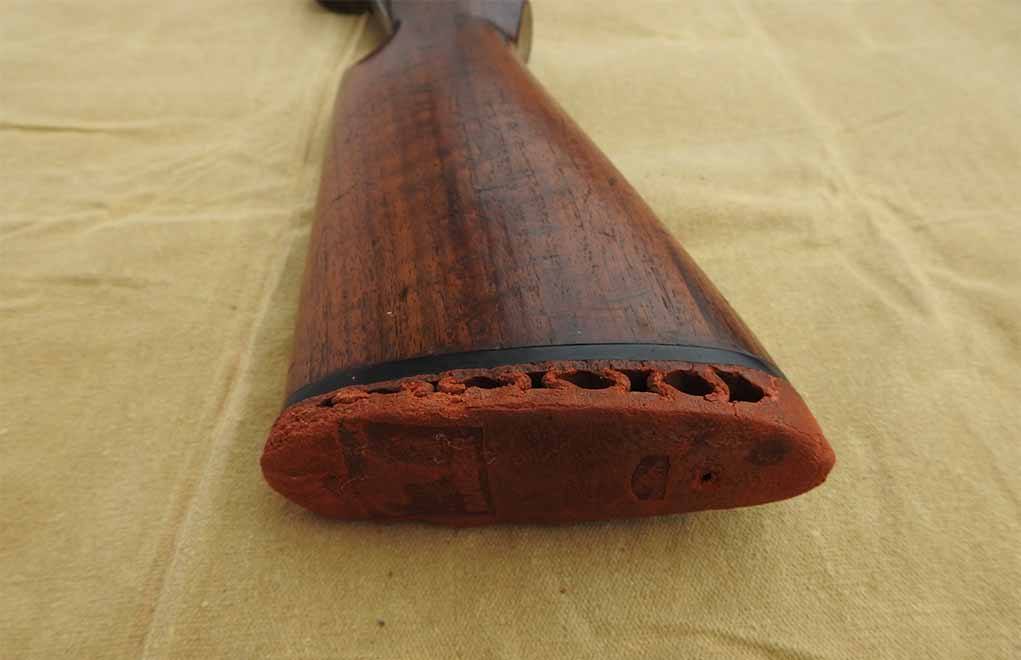
The 103-year-old rubber recoil pad is brittle with age, losing small rubber crumbs with continued use.

And so he did. He and Grandma Ruby raised their family — my aunts, Barbara and Virginia; my father, Roley Ellsworth; and Uncles Keith and Kermit — in a two-story clapboard house a couple hundred yards from the lake. That’s the same house in which I grew up.

In addition to being a farmer and rancher, Grandpa was a pheasant hunter, hunting to add to the dinner table and regularly hosting officers from the McCook Army Air Base, one of 11 Army Air Corps training bases in Nebraska during World War II.

A New Family Member

At some point, Grandpa acquired a Remington Model 11, wearing John M. Browning’s famous Auto 5 humpback design, which was also the first successful semi-auto shotgun and the first made in the United States. Nowhere on his 12-gauge is it stamped “Model 11” — but it’s all Model 11 and, according to Remington records, it was manufactured in 1915.

Remington Model 11 Receiver Rear
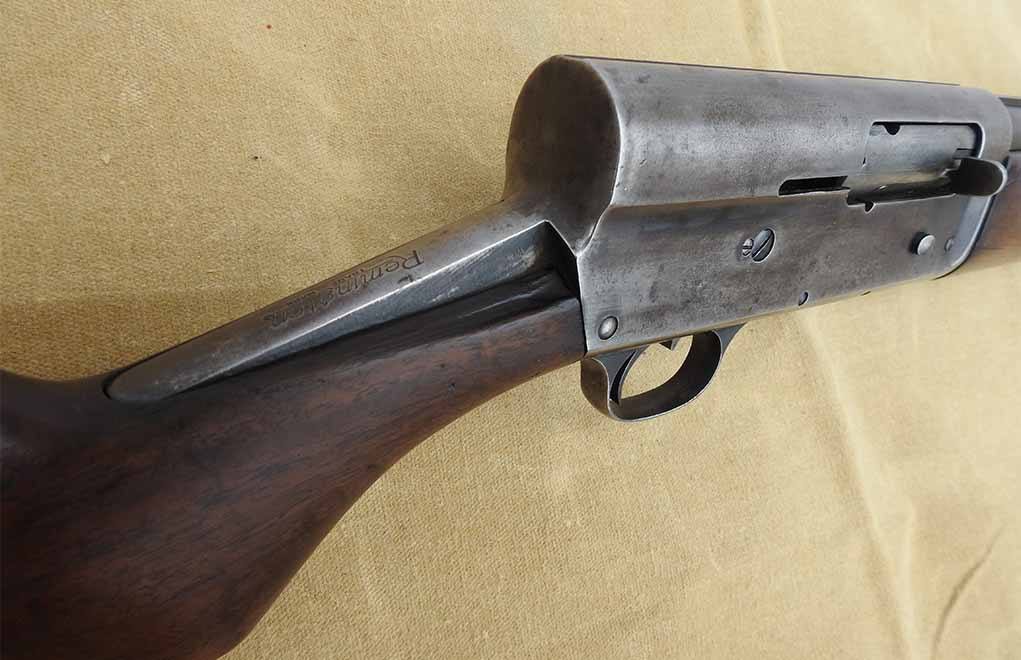
The edge of the broken-off stock section has been worn smooth with lots of years and thousands of shots worth of use.

Neither Uncle Keith nor Uncle Kermit remembers when their father acquired the shotgun, but both remember him hunting with it, and hunting with it themselves. “I shot it a lot,” Keith said. “I learned on a .410, but the first 12-gauge I shot was my Dad’s.”

Kermit remembers shooting the Remington Model 11 and, one time, “It went fully automatic and just emptied five shells all at once: bang, bang, bang, bang, bang,” he said. A pin, since repaired, had sheared off, causing the “eye-opening” incident, he said.

On The Mark With More Shotgun Info:


Keith used the Remington Model 11 on a rabbit and coyote roundup, where neighbors encircled a large expanse of open pasture and walked slowly toward the middle, shooting coyotes and jackrabbits as the circle tightened. The roundups had two purposes: knock down the population of coyotes, which preyed on calves, and provide coyote and rabbit furs to be sold.

Remington Model 11 Full View
The stock, though dinged from use, still shows nice grain for a gun of this vintage.

Kermit also remembers his father encouraging him to take the Remington Model 11 and sneak on Canada geese sitting on the edge of lake ice. Though ducks were common, he reported that seeing geese was unusual in those days, so he slipped up on them and shot, bagging three. They then spent most of the day rounding up a boat and working through the ice to retrieve them.

Neither Keith nor Kermit recall how a chunk of the stock was broken off. A piece is missing on the top right side of the grip, but it must not have made any difference to Grandpa because the broken edges and ridges are worn smooth with use.

Coming Of Age For The Auto 5

To say Browning’s Auto 5 design (so-called because it held five shotshells: four in the magazine and one in the chamber) was innovative doesn’t begin to explain how far ahead of its time it actually was. It would be decades before competitors were to come up with a successful competitive design. The Auto 5 was revolutionary in the truest sense of the word, and it was quickly adopted by hunters, clay shooters, law enforcement and the military. In fact, A5s served from World War II through Vietnam. Before commercial game hunting ended in 1916 with the Migratory Bird Treaty, the five-shot semi-autos were favorites of market hunters who made use of its rapid-repeating firepower.

Outlaws also liked the firepower of the A5. Clyde Barrow reportedly favored one with a sawed-off stock and barrel. Bonnie and Clyde posed for a now-famous gag photo of Bonnie holding a sawed-off A5 on Clyde as she reaches for a revolver in his waistband.

Remington Model 11 Receiver Side
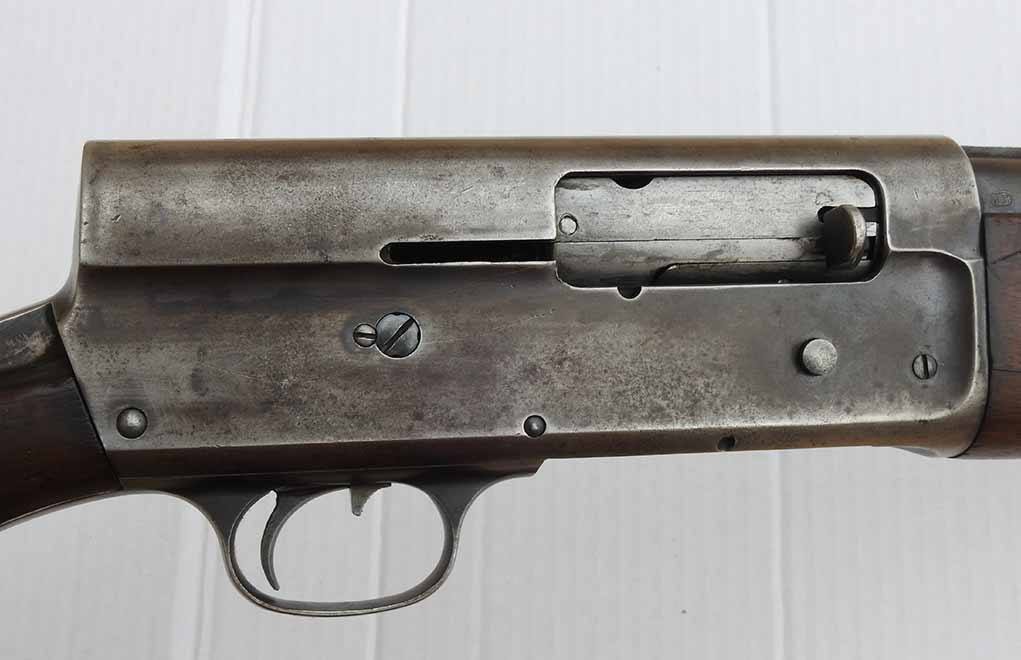
The famous humpback — or square-stern — receiver of the Model 11 accommodates the bolt as it’s driven back by recoil.

According to Browning himself, the semi-automatic shotgun was the most challenging design he faced during his lengthy and innovative career. He succeeded with a long recoil design in which the barrel and bolt both move back upon recoil; the recoil spring around the magazine tube then drives the barrel forward as the bolt is held back, allowing the spent shell to eject and a new shell to be lifted up from the magazine and be driven into the chamber as the bolt returns, pushed by the action spring housed in the stock. Simple, right?

Learn More: Browning Auto-5: Those Hammerin’ Humpbacks

This started in 1898, remember, on the heels of Browning’s successful Winchester Model 97 pump-action shotgun design. The trick with the semi-auto was how to regulate the force of recoil so it would work with light-recoil loads or heavy game loads. If built for heavy loads, light loads wouldn’t have the power to cycle; if built for light loads, heavy loads would hammer with excessive recoil that would batter the gun.
Browning and his brothers reportedly went through several variations, testing each extensively, and finally arriving at a system of adjustable friction rings that slide over the magazine tube and regulate the compression of the recoil spring. If you planned to shoot light loads, you set the rings a certain way; for heavy loads, a simple adjustment to how the rings were arranged was needed.

Remington Model 11 Receiver Bottom
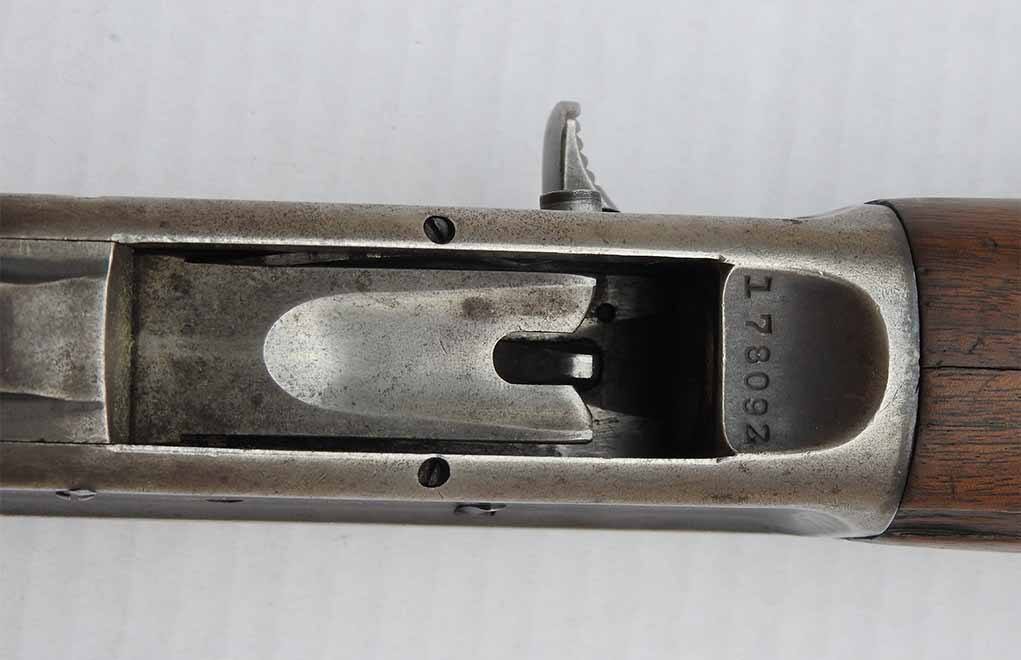
The serial number is stamped on the ramp of the loading gate of the author’s Model 11.

And, by the way, it’s not so much a humpback design as it is a more a squared-off action that accommodates the bolt being driven back by recoil — but the humpback moniker has stuck.

Browning took the A5 design to Winchester, which had patented (Winchester filed patents for Browning, who shied from doing the paperwork) and purchased many of his previous designs. But, Winchester balked at Browning’s insistence for royalty payments, so Browning took it to Remington in 1902.

In a bizarre turn of events, Remington’s president, Martellus Hartley, died of a heart attack moments before he was to meet with Browning. Browning then took his design to the FN factory in Belgium, where the shotguns were produced until 1975. In 1905, an agreement was in place for Remington to produce the shotguns in the United States, which they did from 1905 to 1947 — the Remington Model 11. After Browning’s death at the age of 71 in 1926, the design was licensed to Savage, which produced them from 1930 to 1949.

Passing The Torch

Knowing my interest in firearms, Uncle Keith presented me with Grandpa’s Remington Model 11 — with the caveat that it never leaves the Arterburn family. That will not be an issue, with my three sons and, so far, two grandkids — and another on the way.

Remington Model 11 Barrel Rollmark
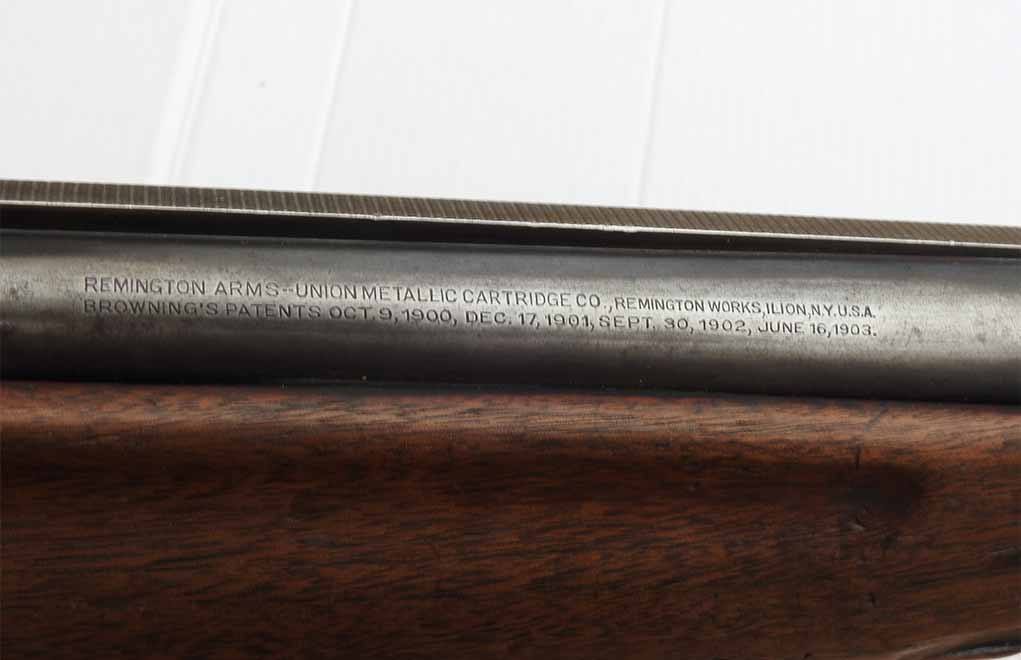
A detail of the barrel, reading: Remington Arms — Union Metallic Cartridge Co., Remington Works, Illion, N.Y. U.S.A. Browning’s Patents Oct. 9, 1900, Dec. 17, 1901, Sept. 30, 1902, June 16, 1903.

I gave the shotgun a quick inspection: The action was smooth, probably from cycling thousands of rounds. The bluing was worn to a gray patina; the stock and forearm were nicked, dinged and well used. And, the barrel showed fouling that dated back to who knows how far.

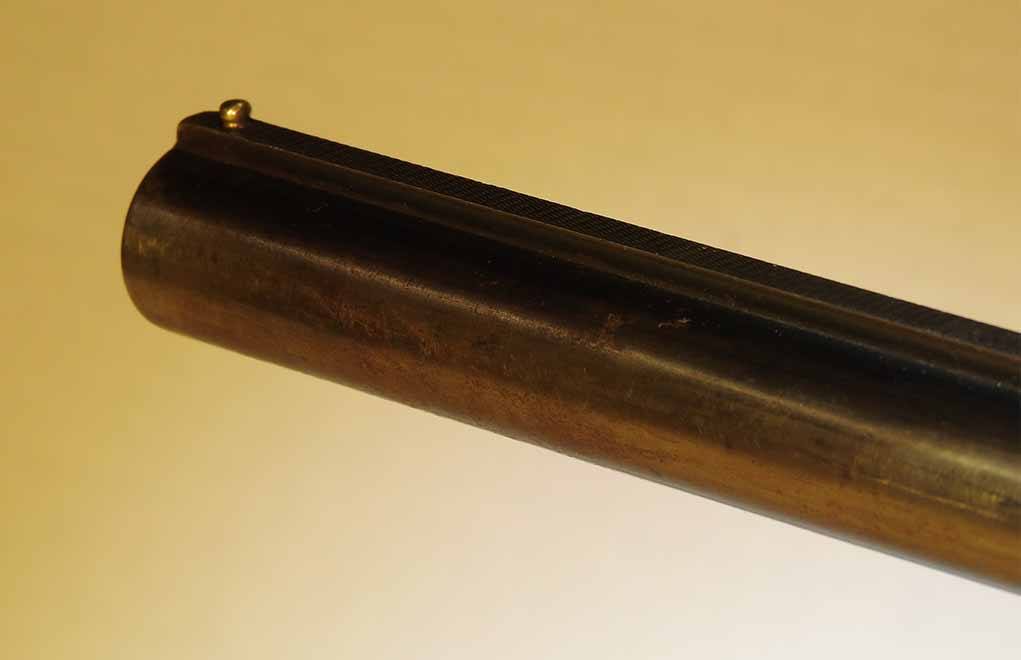
The safety of Grandpa’s shotgun is a sliding bar just ahead of the trigger, inside the trigger guard, which was the original design before the safety was shifted to a behind-the-trigger crossbolt system. Its barrel, with a solid rib leading to a brass bead sight, is fixed with a full choke and is so stamped just forward of the action.

Before I took it apart for cleaning, and to get a better handle on adjusting the recoil-regulating friction rings, I called gunsmith David Orten.

Remington Model 11 Brass Bead
The solid rib, topped with a matte or matted finish, ends at a brass bead sight.

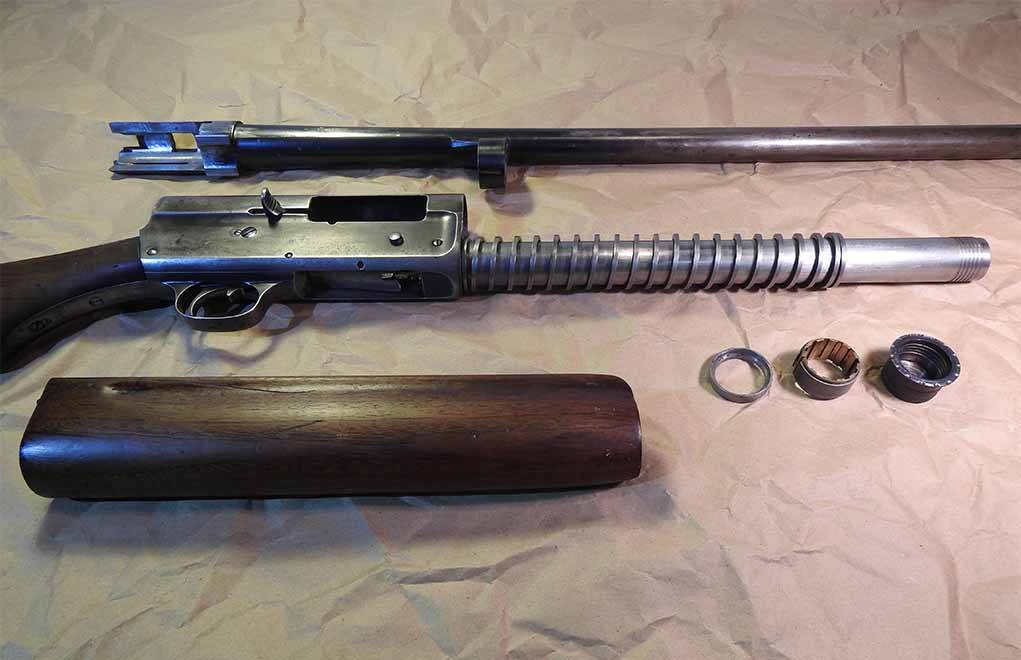
Breaking the Remington Model 11 down was simple: again, that’s a mark of Browning’s genius. Removing the threaded endcap allowed me to slide off the forearm and barrel, leaving the recoil spring and friction rings easily accessed. The trick, Orten said, was knowing which way to face the beveled end of the steel friction ring, which would provide adjustable braking action. Photocopies of the original manual, including diagrams on adjusting the friction rings, are available online. I’d read that a diagram was originally included inside the forearm, but that’s not the case with Grandpa’s shotgun.

I cleaned the barrel and all disassembled parts, but fearing the assemblage of screws and locking screws, I resisted taking the action apart, settling for a thorough hosing with Birchwood Casey Gun Scrubber. After lightly lubricating with Barricade, I reassembled according to Orten’s instructions and set out to shoot a few clays.

My plan was to focus on the first five shots. The first I fired harmlessly into the ground to assure everything was in working order; then I launched four clays. Grandpa’s Remington Model 11 came up and pointed easily and naturally, and we broke each clay in turn. No brag, just fact … as Walter Brennan would say. I’m not an ace shooter of clays, but something about the shotgun helped pick up my slack.

Remington Model 11 Disassembled
Rudimentary breakdown of the Model 11
shows its major components: barrel, action, forearm, recoil spring, steel and bronze friction rings, and threaded end cap.

There will be more clays to come, but I’m really looking forward to next pheasant season. I’d like to think Grandpa will be there with me.

Editor’s Note: This article originally appeared in the April 2019 issue of Gun Digest the Magazine.

Daniel Defense Expands DD5 Line Of AR-10 Rifles

0

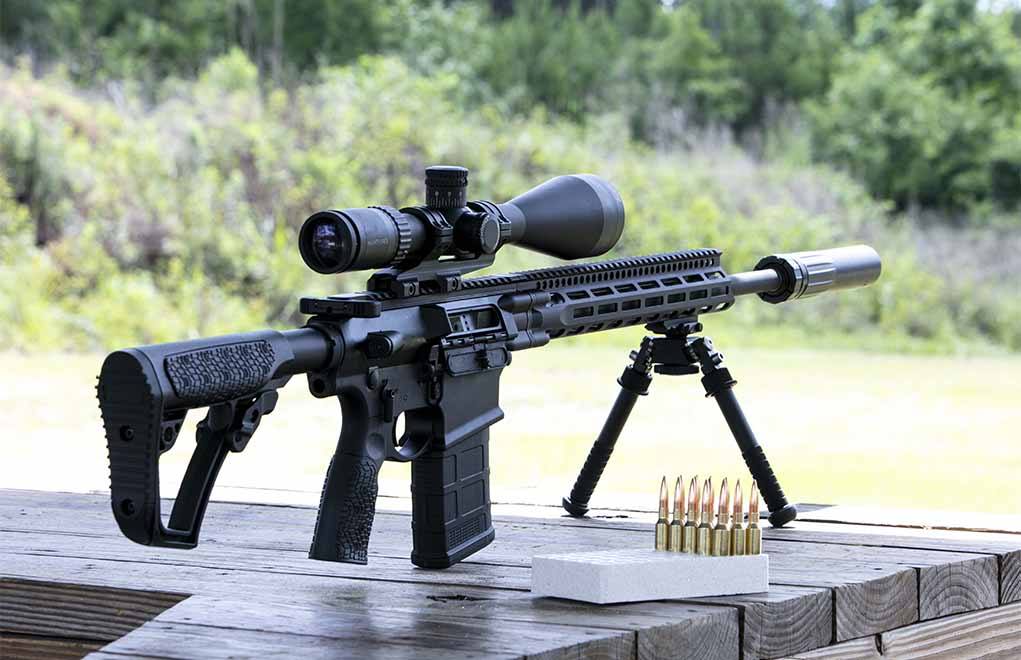
Daniel Defense DD5

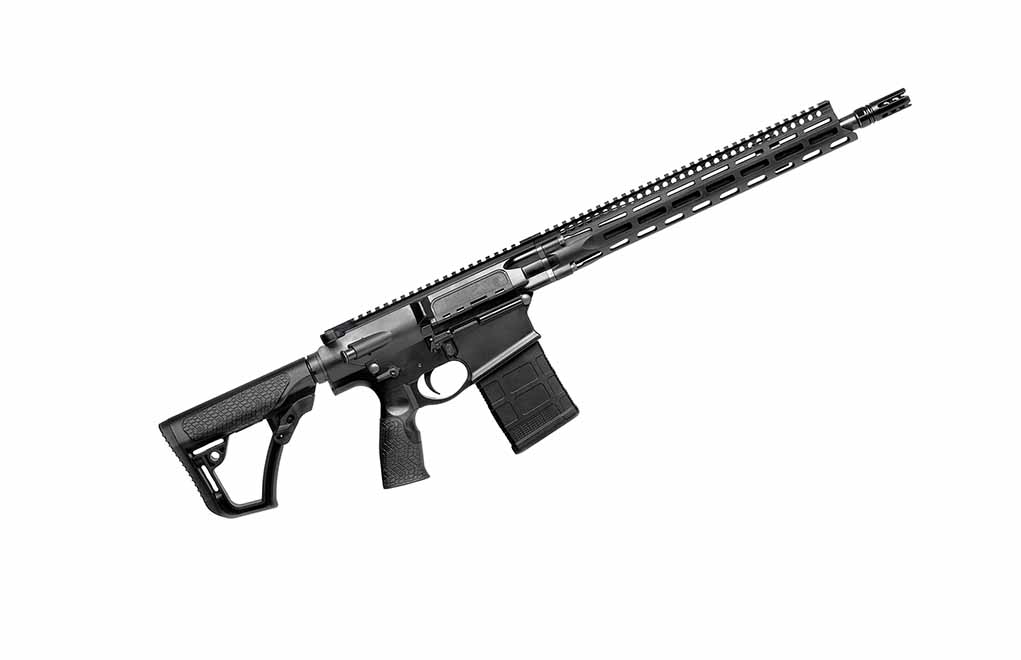
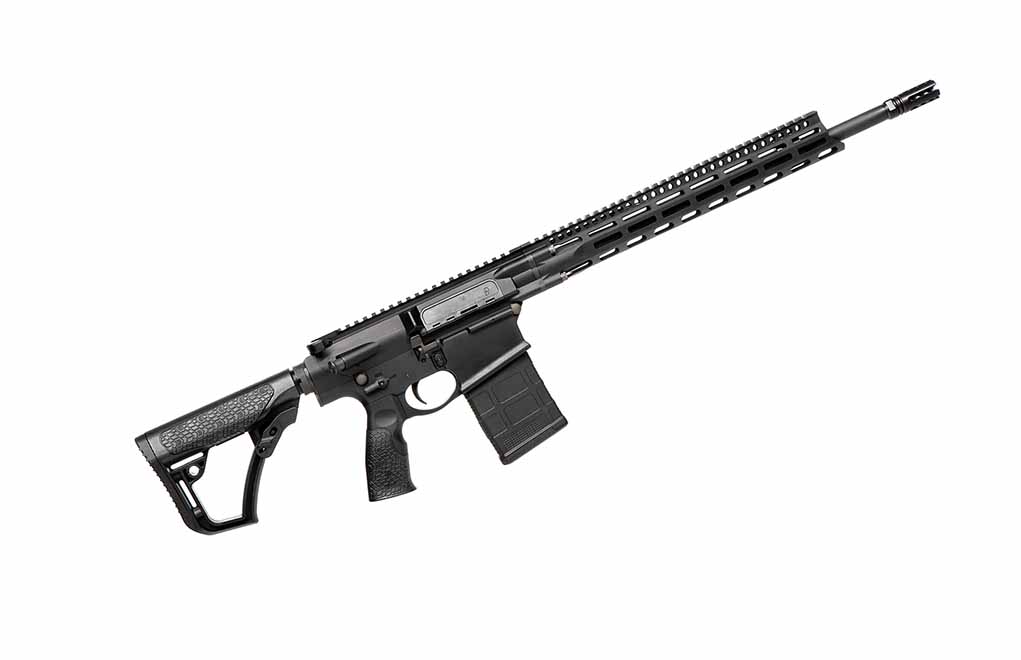
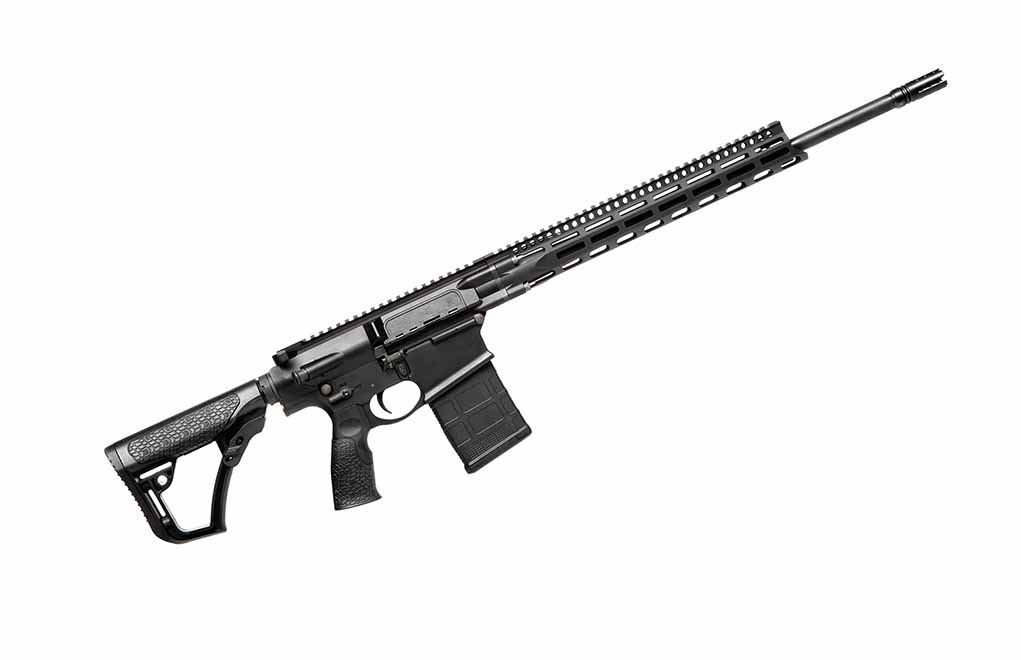
With five new rifles to choose from and the addition of the 6.5 Creedmoor and .260 Remington calibers, shooters have plenty to look forward to in the DD5 line extension.

Over the years, Daniel Defense has more than made a name for itself as one of the top purveyors of high-end, AR-style rifles. A crowd favorite, the Georgia gunmaker’s AR-10 rifle – the DD5. Previously purely a .308 affair, Daniel Defense has breathed new life into the series with a massive expansion, which includes upgraded parts, new barrel lengths and the addition of two new calibers.

AR-10 Essentials: Hit the Bullseye Every Time

The good stuff first. The DD5 is now available in 6.5 Creedmoor and .260 Remington, which should set precision shooters’ collective hearts aflutter. The cartridges are known for their downrange performance and should be dandy out of the new models. The 6.5 CM is available in both the 18-inch barreled V4 and 20-inch V5 models, while the .260 Rem is strictly available in the latter. Furthermore, the gunmaker has introduced a revamped 16-inch barreled .308 – the V3 – as well as offering it in the V4. The rifles feature a load of improvements, including:

  • Two-position user-adjustable gas block
  • DLC-coated bolt carrier group designed for easy to maintenance and to operate in all conditions
  • Cold Hammer Forged barrel with 4-Bolt Connection System for increased stability and accuracy
  • Ambidextrous controls, including bolt catch, magazine release, safety selector, furniture, and an all-new GRIP-N-RIP charging handle

The fate of the original V1 and V2 rifles are unclear, as Daniel Defense no longer lists them on their website. However, all of the new DD5 rifles are backward compatible and can interface with the older iterations. As expected, the guns run a pretty penny – each with an MSRP of $2,500.

DD5 V3

DD5 V3 Specs

Mounting System: M-LOK
Caliber: 7.62 x 51mm / .308 Winchester
Muzzle Thread: 5⁄8×24 TPI (Threads Per Inch)
Gas System: Intermediate
Barrel Length: 16″
Barrel Profile: S2W® [Strength-to-Weight]
Product Weight: 8.3 LBS
Length: 33 3/8″ – 37″
Magazine: Magpul PMAG 20-Round
Case: Daniel Defense Full-Latch Impact Plastic Case
MSRP: $2,500

DD5 V4

DD5 V4 Specs

Mounting System: M-LOK
Caliber: 7.62 x 51mm / .308 Winchester; 6.5 Creedmoor
Muzzle Thread: 5⁄8×24 TPI (Threads Per Inch)
Gas System: Rifle
Barrel Length: 18″
Barrel Profile: S2W® [Strength-to-Weight]
Product Weight: 8.6 LBS
Length: 35 3/8″ – 39″
Magazine: Magpul PMAG 20-Round
Case: Daniel Defense Full-Latch Impact Plastic Case
MSRP: $2,500

DD5 V5

DD5 V5 Specs

Mounting System: M-LOK
Caliber: .260 Rem; 6.5 Creedmoor
Muzzle Thread: 5⁄8×24 TPI (Threads Per Inch)
Gas System: Rifle + 1
Barrel Length: 20″
Barrel Profile: S2W® [Strength-to-Weight]
Product Weight: 8.9 LBS
Length: 38 3/8″ – 41 5/8″
Magazine: Magpul PMAG 20-Round
Case: Daniel Defense Full-Latch Impact Plastic Case
MSRP: $2,500

For more information on the DD5, please visit www.danieldefense.com.

How Riflescopes Perform At A Higher Level Than Ever Before

0

Riflescope 1

The modern scope is a marvel, able to take more abuse, yet excel at its job like never before. Here’s how some of the top options pull off this feat.

How Modern Scopes Have Been Improved To Hold A Zero:

  • More robust turrets and erector assemblies
  • Improved lens geometry and coatings
  • Reinforced circuit boards on electronic models
  • Scopes specifically designed for the rifles on which they’ll be mounted

Riflescopes are part modern marvel and part work of art. With the earliest designs dating back to the mid-1800s, a once relatively simple product now rivals the finest Swiss chronographs.

Optics are not only that precise, they are designed to maintain that precision with every shock they endure. Many methods of achieving this have been in use over the years, and most recent advancements have given way to even more repeatable designs.

Keep It Steady

Naturally, zero is affected by ammunition type, weather and target distance. However, a scope must not drift out of zero from the standard practices of transport and firing.

By cross-cutting an optic, the author was able to illustrate the springs that hold the erector tube in place. Notice the multiple directions of tension they impart on the erector tube alongside it. (Photo: Frank Melloni)

If a scope is drifting zero by, let’s say, one minute of angle, your gun can only be (at best) one minute of angle accurate because of the error imparted by the optic. For this reason, this is the most critical of criteria for selecting a scope. This ability even supersedes clarity of glass and magnification range. Essentially, a scope that can’t hold zero is good for nothing more than a spotter. Until recently, being able to keep zero meant shelling out big bucks.

I decided to reach out to some manufacturers and chat up their staffs for a deeper look on how their new designs are keeping minute-of-angle precision after the routine abuse from magnum calibers, rough service and even reverse recoil, as is seen in airgun scopes.

Riton: The New Kids

Riton is a relatively new company, opening its doors in 2013. In just six years, it has gained some major industry attention among hunters, target shooters and PRS competitors. After working directly with CEO Brady Speth on several occasions, I can easily endorse Riton—not only for its quality products, but also for its passion for customer service.

I don’t get into comparison research very often, but Riton’s warranty is simply unheard of. Should you ever experience a problem with one of its optics, you will receive a new product within 48 hours of the company receiving the old one. No repairs, no refurbs; just a fresh product out the door as soon as possible.

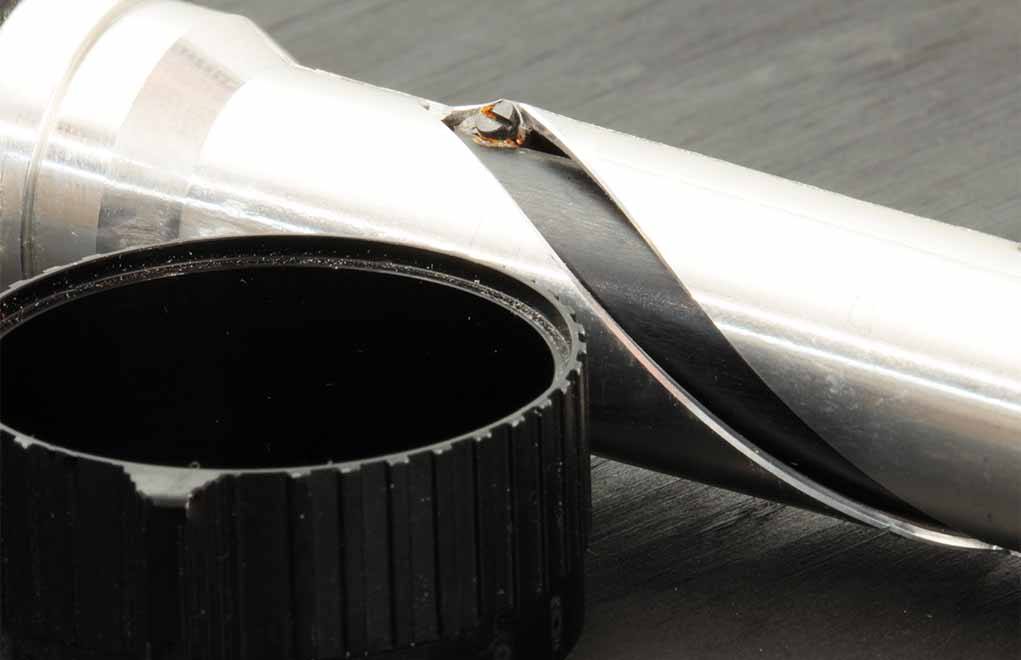
The spiral cut on the erector tube facilitates the forward and rearward motion that makes it possible to adjust magnification power. This slot and its engagement surfaces, such as those attached to the collar (also pictured) must be machined precisely in order to hold this position. (Photo: Frank Melloni)

My complete satisfaction with the brand came when I fired a three-shot group at 1,000-plus yards that landed inside of 4 inches. This was done with an RT-S MOD 7 5-25x56IR that features a first focal plane lens, locking turrets and Riton’s signature spring system that reinforces the erector tube to ensure it stays put.

I reached out to Riton Business Development Manager Jerimiah Alexander to provide some insight on this system and how Riton is able to keep this level of precision.

“The number-one reason that Riton scopes hold zero: They are built right and built tough,” Alexander explained. “Our turrets are built tough, and the ‘gears’ are made of strong material that keeps them tight. We use high-quality brass and stainless steel for turrets and other components. Our tubes are machined from one piece of 6061 T6 aircraft-grade aluminum.

“You can feel the positive clicks when rotating our dials. There’s a return spring that provides tension and pushes the erector assembly back to zero. This must also be a quality piece so that it performs perfectly and does so under stress. We also have an additional set screw that holds the spring and assembly solidly in place.

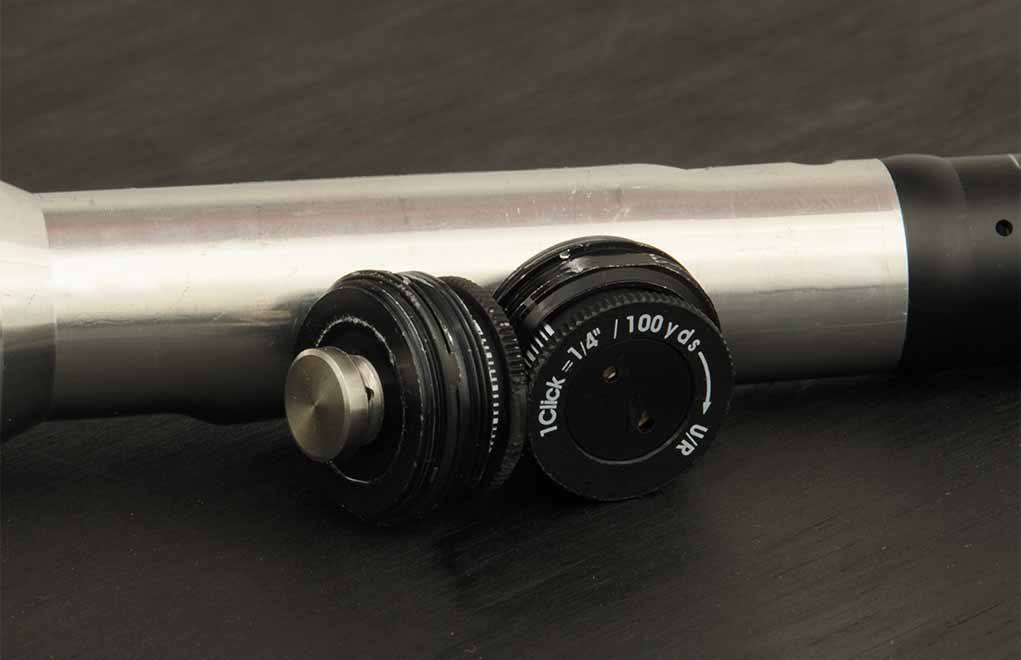
Attached to the turret is a post that puts pressure on your erector tube. This pressure changes its position, which, in turn, changes your zero. Finely machined parts make up the entire apparatus. If each click puts a different amount on, your results will not be predictable or repeatable. (Photo: Frank Melloni)

“We also stay innovative,” Alexander added, “which means we’re constantly changing and making adjustments. Secondly, we have some proprietary things we wish not to share. This is partly how we stay ahead of the game.”

Nikon: 100 Years Strong

Nikon has been at it since 1917 and has always been synonymous with “quality” … but usually at a price.

When it comes to building an affordable scope, the hardest hurdle to jump is the glass itself. When trying to set a price point, most scope manufacturers will exhaust their budgets for a projected market on this one critical component—and with good reason. Nikon manufacturers all of its own glass in-house, thereby throttling that cost down to leave enough budget to build high-quality internals and still hit a low price point.

Nikon’s largest-scale success in this area came in 2017 with the release of the affordable BLACK series of optics. This series brought brilliant, affordable, long-range and AR-style scopes into just about any shooter’s budget.

Riflescope 4
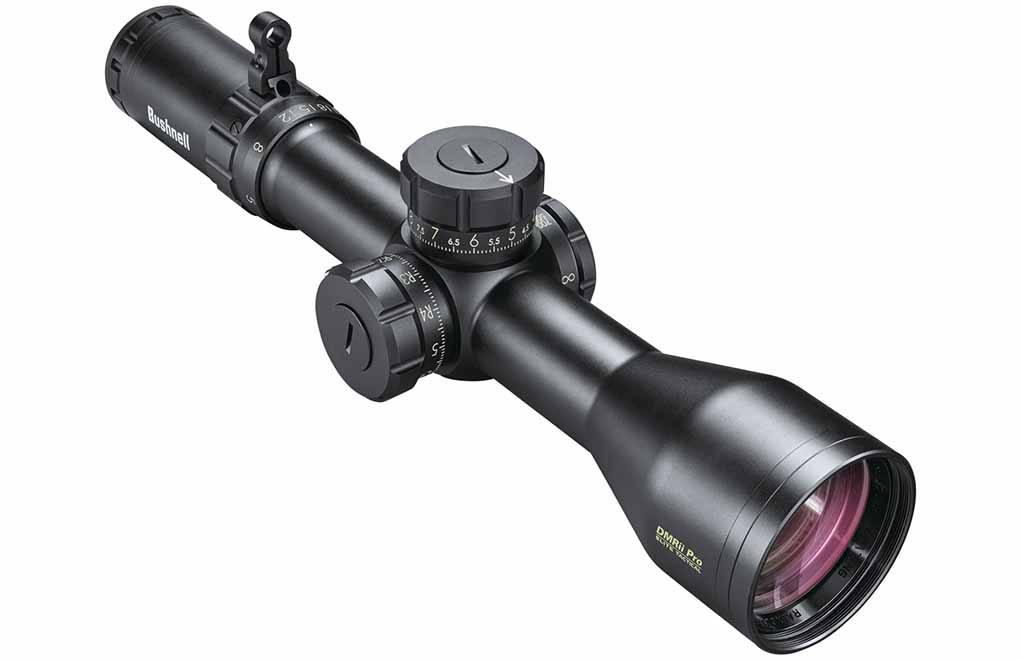
The Bushnell Elite Tactical is the company’s most advanced optic of the bunch. PRS has named the Elite Tactical its official optic, and Bushnell could not be more proud. The author has used one on a heavy-hitting .308 Winchester for years without function loss.

According to Nikon Brand Strategist Collin Russell, “As one of the few makers of optical glass in the world, Nikon has a unique advantage of having the knowledge and experience to specify and select the exact type of glass, lens geometry and multi-coatings needed to optimize the performance of any given optic.”

I agree completely with this statement, because the only way to eliminate cost without sacrificing quality is to increase control. (Maybe it’s a testament to the old adage, “If you want something done right, do it yourself.”)

Sig Sauer: From Pistol To Parallax

When we think of Sig Sauer, we think of iconic firearms. However, in recent years, Sig has branched out to offer equally high-quality lines of optics to match its firearms. Sig’s electro-optic lines include the simple and brilliant Romeo series of red-dot sights and its highly sophisticated Tango target scopes.

The Tango series includes the electronic LevelPlex system that is used to indicate cant right inside the reticle. This system is positioned there so that a shooter does not have to take their eye off the target before sending that long-range shot.

Riflescope 2
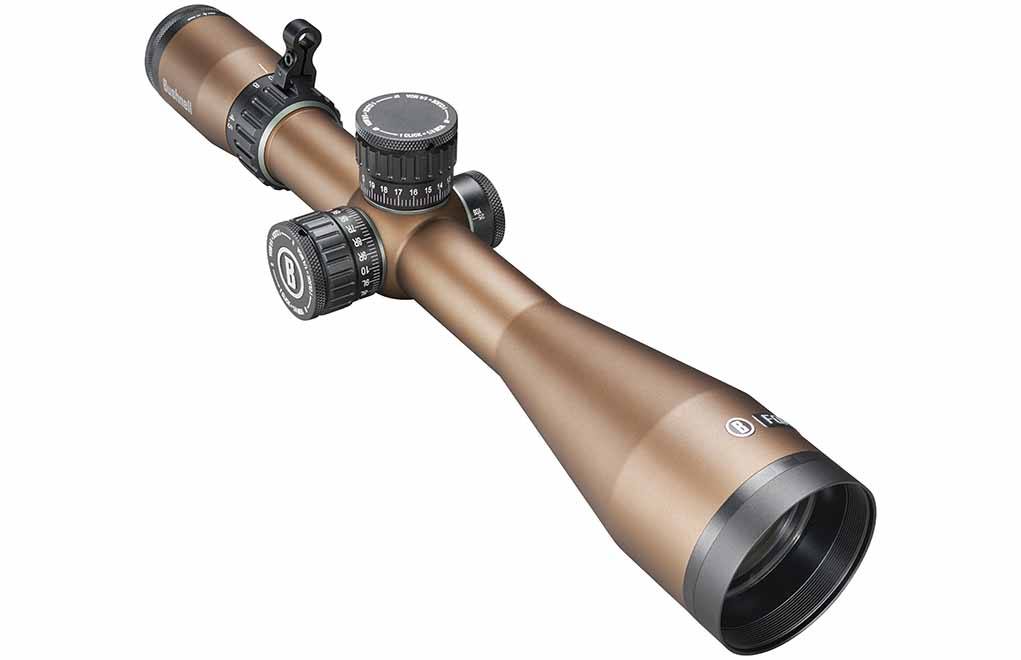
The Bushnell Forge is a terrific example of how research-and-development will lead to better products. Competitive shooters all over the world are using these to connect at distance—and still have some gas money in their pockets to get to matches.

Scott Smith, Sig’s vice president of product development, explained how the company keeps these components from getting destroyed during use:

“All of the PCBAs (printed circuit board assemblies) embedded in our scopes and reflex sights are extensively live-fire-tested. The boards in many cases are potted (epoxied) into place and mechanically restrained for impact testing.

“For example, our reflex sights were tested at up to 8,000 Gs. We found that the PCBAs must be mechanically constrained with both fasteners and epoxy, including several of the key components having to be conformal coated and epoxied onto the PCBA. The PCBA had to be constrained across the entire PCBA to prevent any type of flexing during recoil. In addition, our PCBAs feature a keep-alive capability that keeps the microcontroller powered up, even during intermittent loss of power. All Tangos are tested to greater than 1,000 Gs.”


Scope Out More Optics Info:

  • 8 Revolutionary Reticles For Long-Range Accuracy
  • Buying the Perfect Precision Scope
  • The Best Tactical Red-Dot Performance-to-Price Option?
  • Shifting Winds: SIG BDX Changing Shooting For The Better

This level of scrutiny certainly shows in the field. I’ve been using a 5-30x Tango6 for the past two years and have never had a need to re-zero it. A typical day in its life involves continual dialing up to 1,050 yards and back over the course of eight hours.

Bushnell: From Everyday To Every Solution

Once regarded as entry level, Bushnell has been continually improving its products in order to bring high-quality scopes to any budget. What were once considered everyday optics are quickly becoming the go-to for many hunters and target shooters. I like to give credit where it’s due: Bushnell really did address its shortcomings and spent a lot of time and money developing its products into something I trust my trophy hunts to and that many professions stake their lives on.

Vista Outdoor Inc. Communications Coordinator Vic Ziliani was gracious enough to point out what has been done to increase Bushnell’s reliability to deliver incredible scopes such as its hit success, the HDMR, and its new Forge series.

“Some of the testing and R&D we’re doing with Bushnell products now include a more-severe recoil testing, with recoiling to a minimum of .30-06 on Prime and a minimum of 300 Win. Mag/.375 H&H on anything Nitro and above; specifying higher optical quality standards with respect to resolution, coatings, light transmission and low-light performance; and tightened tolerances on mechanical and optical components to reduce the severity in misaligned optics, which can cause optical aberrations.”

The proof is certainly in the final product, because Bushnell is the official scope sponsor of PRS with its Elite Tactical. To earn attention in this discriminating group is no easy feat.

BSA: Bracing For An Unlikely Adversary

Many people look at you a little oddly when you tell them that a spring-piston air rifle will destroy a scope faster than a Barrett .50-caliber, but the truth is that they can—and do.

Airguns obviously don’t generate intense felt recoil, but they do generate an entirely different type of recoil. This recoil acts in the opposite direction due to the violent motion of the spring gas piston. This reverse recoil acts on the scope differently than a gunpowder firearm does and, in turn, it damages them, because they are being jolted in a direction they are not built to withstand.

BSA Project Manager Kyle White Over explained what has been done to make BSA’s scopes take the beating air rifles put on them.
“The stronger springs and tolerances are the primary elements making these scopes worthy of use on an air rifle. The mounting rings also help. In this case, the ring closest to the shooter has a pin in it. This pin, when the scope is mounted, inserts into a hole in the mounting rail. This also helps prevent damage due to recoil and is not typically found in firearm applications.”

Final Thoughts

The technology from the Old West has fought through every major war and can be found in the hands of competitive shooters, sportsman and backyard plinksters alike. This once mind-blowing technology has been perfected in such a way that it is not only more reliable, it can also be used in more applications.

With the growth of the shooting industry this past decade, more and more quality optics are finding their way in, and many established brands are finding new success. What we know about them and how to make them better is increasing exponentially as time goes on.

Editor’s Note: This article originally appeared in the 2019 Shooter’s Guide issue of Gun Digest the Magazine.

.500 Linebaugh: Taking Revolver Cartridges To The Next Level

0

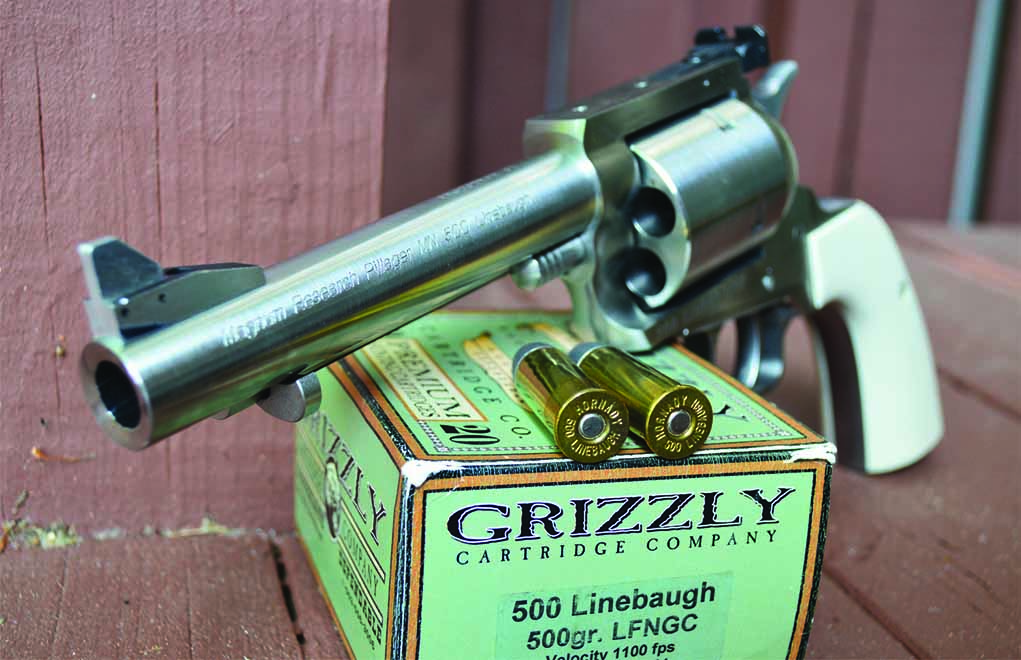
500 Linebaugh

Nothing stands a chance up against John Linebaugh’s monstrous 1/2-incher — the .500 Linebaugh.

How The .500 Linebaugh Tops Most Other Handgun Hunting Cartridges:

  • Capable of pitching a 500-grain bullet at more than 1,200 fps at the muzzle.
  • Despite a punishing recoil, it has a reputation for outstanding accuracy.
  • Most cartridges in its class that are more powerful are designed for use in single-shot handguns; the .500 Linebaugh is a revolver cartridge.
  • Suitable for African game, as well as brown bears.

The .500 Linebaugh is the design creation of John Linebaugh, who started out by converting a .45 Colt revolver from six to five shots, thus offering more strength in the cylinder. It was a successful venture, but he continued to search for a more powerful handgun.

The result is the .500 Linebaugh, which is based on the .348 Winchester cartridge and cut down to 1½ inches and reamed to .50 caliber. Linebaugh uses a large-framed Ruger Bisley revolver, because he has found that the Ruger frame is the only one that can withstand the severe recoil. He replaces the Ruger barrel with one of .50 caliber, usually 5½ inches long. However, he will cut a barrel of any length the customer desires.

The .500 proved to be a very successful round, pushing 500-grain bullets at more than 1,200 fps. Accuracy is outstanding, but recoil can only be described as severe.

Not long after Linebaugh designed this cartridge, the supply of .348 Winchester cases began to dry up, which is why he designed the .475 Linebaugh based on the readily available .45-70 Government case. Not long after the .475 was designed, Browning reintroduced its Model 1871 rifle in .348 Winchester, and so those cases are again readily available.


On The Hunt For More Big-Bore Content:


There are more-powerful pistol cartridges, but they are primarily for single-shot handguns, such as the T/C Contender.

When it comes to the revolver, this is close to the ultimate in power. Generally, in these revolvers, the .475 Linebaugh can safely be loaded to higher pressure and, therefore, can deliver more energy. Due to its accuracy and easy handling, this cartridge could prove to be an excellent heavy-game handgun cartridge and possibly a revolver cartridge suitable for taking African game.

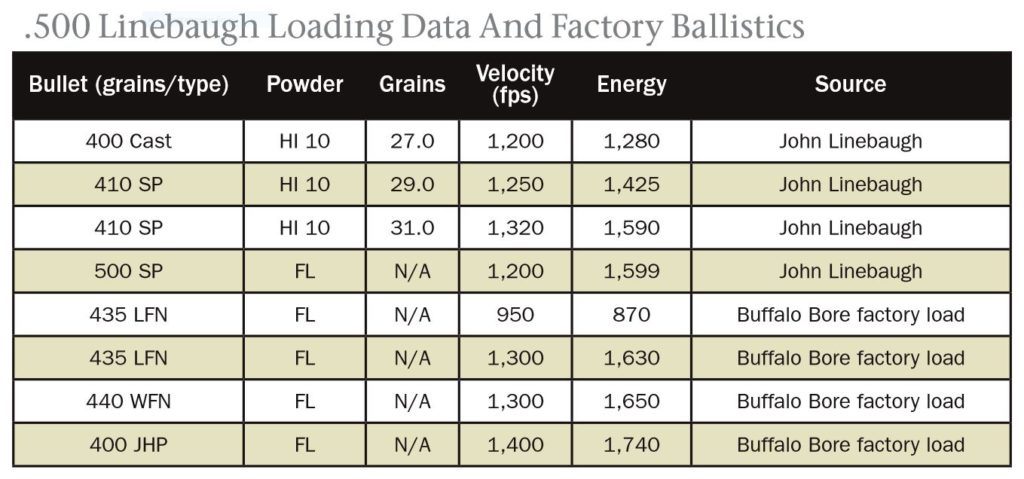
Specialized bullets are made by Bear Ammunition. The jackets for these bullets are turned on a screw machine, and a lead core is swaged in. In terms of both accuracy and penetration, these bullets have been found to be excellent performers. Buffalo Bore offers factory-loaded ammunition.

500 Linebaugh Loading Data Table

Editor’s Note: This article is an excerpt from Cartridges of the World, 16th Edition.

What You Need To Know About Handgun Stopping Power

0
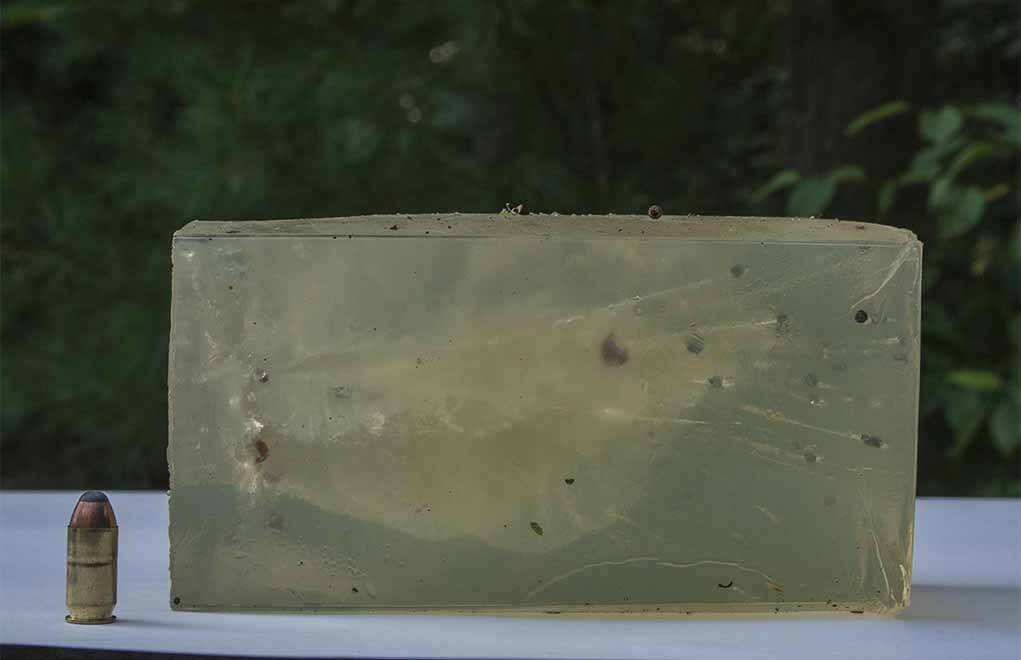
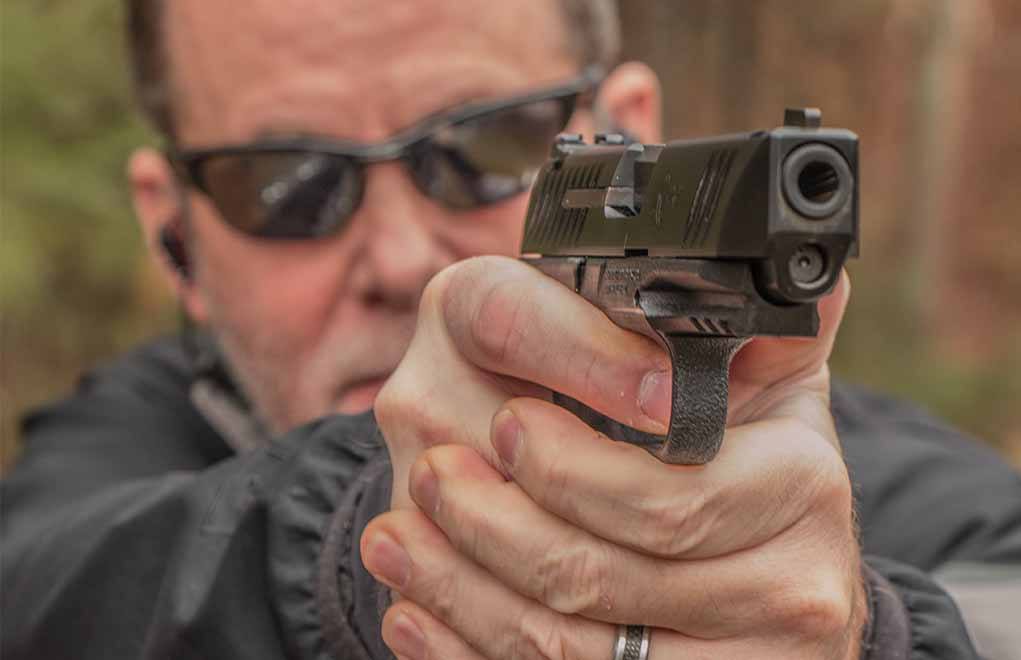
This might be the best representation of stopping power from a defensive handgun. Nobody wants to get shot, and most lethal encounters are stopped when a handgun is pointed at the bad guy.

Stopping power is an elusive subject, but well worth consideration when trying to find the most effective self-defense handgun and ammo.

What are the four ways to stop an attacker:

  • A shot that will cause bleeding enough to starve the brain of oxygen.
  • Hitting the central nervous system.
  • Incapacitating them with a shot to the spine or pelvis.
  • Inflict enough pain in the attacker he ceases his assault.

The term “handgun stopping power” means different things to different people. In some cases, it’s used to describe ammunition’s ability to stop a bad guy. At other times it’s thought of as a way to value lethality. To understand any explanation of handgun stopping power, it’s important the distinction between “stop” and “kill” is understood. For the use of a defensive handgun to be successful, one of these results is mandatory — the other only sometimes.

If you hunt with a handgun, your goal is to kill your quarry. If you’re using a handgun in a defensive situation, your goal is to stop the assault. These are very different things. If you shoot someone, they might very well die, but any intent on your part to bring about their death equates to murder.

To be clear, we need to start at the beginning. If you pull your pistol after being attacked by some thug and they run off, you have successfully stopped the attack. That’s the most successful execution of handgun stopping power. However, the mere introduction of a handgun is not the debate most concern themselves with. What most inquiring minds want to know is what cartridge and ammunition has the best chance of ending an attack.

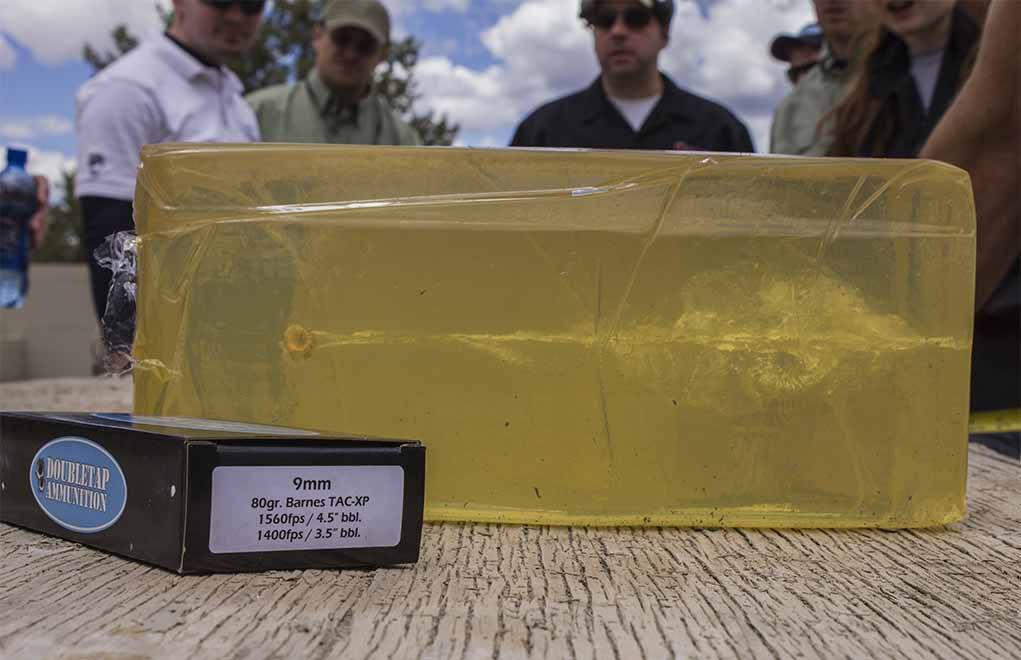
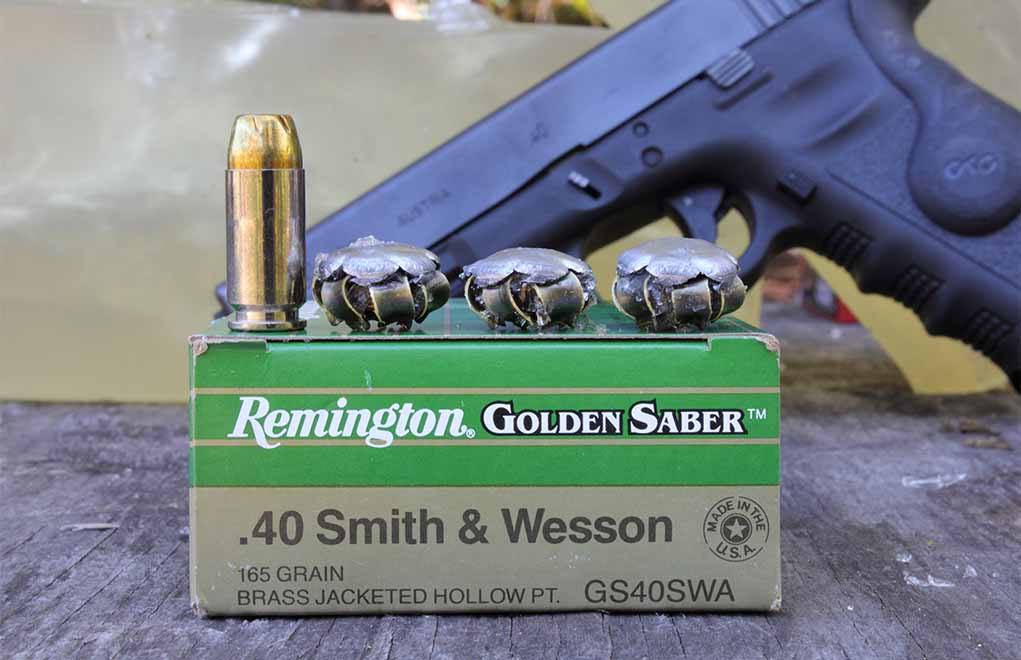
What ballisticians have done with modern defensive handgun ammunition is to find a balance of terminal performance that will deliver needed penetration and maximum tissue destruction.

There are several schools of thought: Some believe in high velocity, others in large-caliber heavy bullets. Within these two camps you’ll find disagreement on bullet performance. Some support deep-penetrating bullets, and others want their bullets to deliver dynamic expansion with moderate penetration. Like with every debate, there are the fence walkers who want terminal performance in between both extremes.

Let us examine the facts. Regardless of the cartridge, there’s only so much energy or power that can be directed at a threat. This is balanced by the size of handgun that can actually be carried for protection, and the amount of recoil humans can withstand. Obviously, this will vary from person to person, but the reality is there’s a limit to the power that can be harnessed in a defensive handgun. And, it’s not a lot.


Smashing Other Ballistic Myths:


For example, it’s been proven that a .223 Remington has sufficient power to cleanly kill a 200-pound deer. A 60-grain bullet from a .223 Remington will have a muzzle velocity more than twice that of defensive handguns. The kinetic energy produced by the .223 Remington is twice as high as well. So, from a numbers standpoint, even the most potent defensive handgun cartridge is only half as powerful as one of the smallest rifle cartridges.
The key to evaluating handgun stopping power, however, is to look at the goal of using a defensive handgun, and that’s to stop/end the attack. Sure, if you kill the bad guy you have stopped the attack, but let’s again look at deer hunting as an analogy.

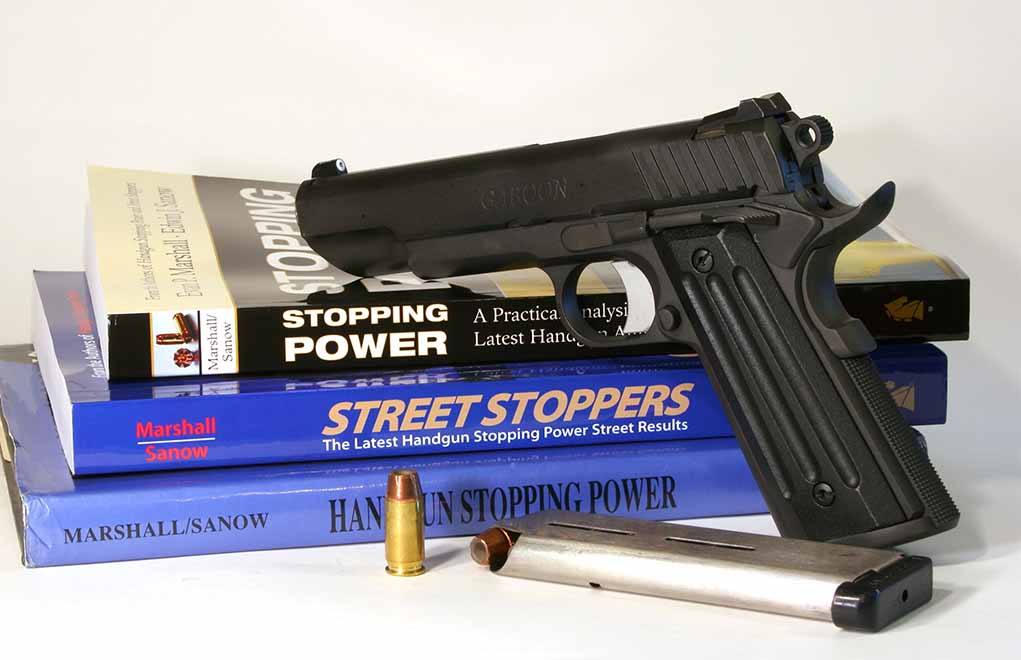
Many shooters stress way too much over which cartridge and ammunition is best for stopping bad guys. Many books have been written and hundreds of studies have been completed in an effort to quantify stopping power. The problem is, no matter what test we conduct to discover this, we’re making an educated guess.

It’s not uncommon for deer to run 50 yards or so after receiving a bullet through both lungs from a centerfire rifle. Why? Animals — deer or humans — die when their brain runs out of oxygen, not immediately following the perforation of the lungs or heart. This can take a few seconds, or even a minute. Trusting your life to that seems rather foolish. If someone is shooting at you or attacking you with a knife, 10 seconds is an eternity. If you’re trying to stop an attacker, you want to do it immediately!

There are essentially three ways to do this. You could destroy their central nervous system with a bullet to the brain. It works and it’s dependable, but it’s difficult to execute. You could break them down with a shot to the spine or pelvis. This might put them on the ground, but these are hard shots to execute and might not stop the attack if the bad guy has a gun, too.

Finally, there’s pain. Pain is the ultimate tool. If you can inflict enough pain, you can stop even the most violent offender. Pain is the one thing all humans respond to in a like manner: If you’re doing something that hurts bad enough, you’ll stop and, most often, stop in one hell of a hurry.

I’m not suggesting the Glaser Safety Slug is the best defensive ammunition option. However, you have to admit that getting hit with one of these would hurt ... a lot!
I’m not suggesting the Glaser Safety Slug is the best defensive ammunition option. However, you have to admit that getting hit with one of these would hurt … a lot!

Maybe the best analogy is the classic punch or kick to the groin. Even bad-to-the-bone cage fighters double-over when hit there. It’s not lethal, but when executed to perfection, it works. Another example is hitting your thumb with a hammer. It’s not lethal either, but few things will make you stop and begin a foul-mouth soliloquy as fast as a smashed thumb. Logic dictates the handgun with the most/best/fastest stopping power is one that inflicts the most pain. But, which one is that?

I don’t know the answer and doubt anyone ever will, but we can make some valid assumptions. Let’s look at two extremes. A non-expanding bullet will most often punch a hole clean through an attacker. If the bullet does not hit bone, a small-diameter hole is what you’re relying on to submit your assailant. If the bullet does hit bone — there’s about a 50 percent chance of this — bone fragments will be driven through the body, damaging more tissue.

On the other hand, a bullet like the Glaser Safety slug, loaded with either No. 6 or No. 12 shot, will not penetrate very deep, but it will create a nasty, shallow and wide wound. I’m not a doctor, but after talking with and examining gunshot victims, it’s clear to me which one would hurt the most. That itty-bitty hole will not damage near the amount of tissue as the Glaser Safety slug, and as any reasonable person would conclude, the more tissue that’s damaged, the more it will hurt.

Since we cannot always rely on pain to stop a fight, we have to hedge our bets on shot placement and a balance of tissue destruction and penetration, for a best-bet at fast incapacitation.

This should be obvious. Compare the thumb smashed with a hammer to a bad cut with a knife. The knife wound is infinitely scarier and potentially more dangerous, but cuts rarely hurt very much at all because there’s less tissue that’s traumatized. Pain is the ultimate equalizer.

The problem is, we cannot count on pain because many human predators are also quite fond of mind-altering drugs. If you’ve ever been on prescription medication, you know how effective narcotics can be at blocking pain. A crackhead might let you smash every finger he has with a hammer and only smile before he proceeds to turn you into a statistic.

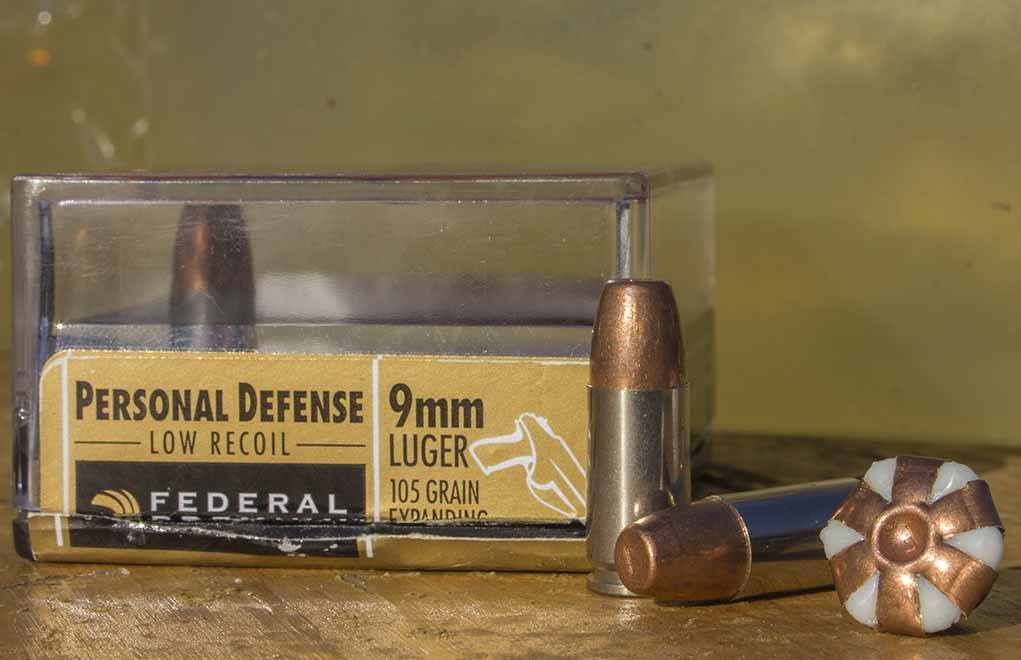
So, if we cannot rely on pain or punching a hole through an attacker’s torso, what’s the answer? Logic says that if one option is too much and the other is not enough, balance must be sought. Balance, with regard to the terminal performance of defensive handgun ammunition, would be bullets that expand wide and dynamically damage a lot of tissue, while at the same time penetrating deep enough to pass through as much of the bad guy as possible.

All manners of bullets have been created in an attempt to find stopping power nirvana. Handguns were stopping bad guys with the bullets from 100 years ago, mostly because of shot placement and because folks tend to get scared and give up when shot.

Let’s assume an attacker is beating you with a club and you shoot him through both lungs. The troll is so high on methamphetamines that he feels nothing and continues to beat on you. But, that hole will eventually pay off: His brain will starve from oxygen deprivation and he’ll lose consciousness. Very likely, if medical aid is not rendered quickly, he’ll die.

Calculating the real-world stopping power of any handgun cartridge is impossible; we cannot predict a gunshot victim’s response. However, we can predict with some certainty how much damage a bullet might do. Short of some pain-measuring device, that’s really all we have to go on

Editor’s Note: This article originally appeared in the April 2019 issue of Gun Digest the Magazine.

The Versatility Of Nikon’s Black Force100 Scope

0

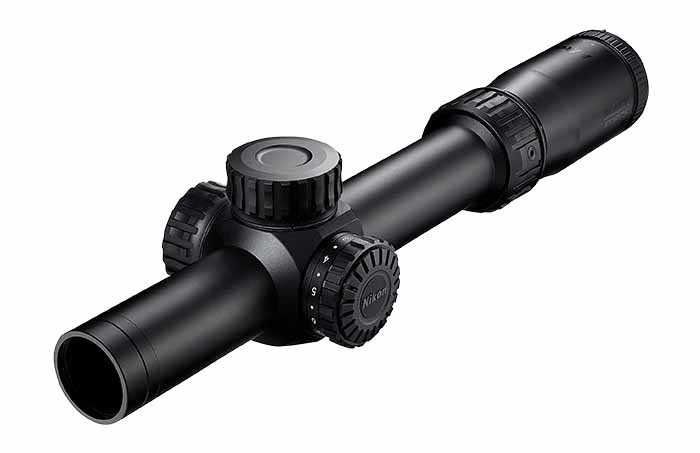
Nikon Black Force100 angle

Offering a wide range of magnifications and a versatile reticle, the Nikon Black Force100 1-6×24 riflescope delivers a flexible aiming solution for your carbine.

What Features Makes The Black Force100 A Top Tactical Optic:

  • Fully multi-coated optics on all air-to-glass surfaces
  • Wide field of view, more than 100 feet at 100 yards
  • Glass etched reticle for extreme durability
  • True 1X magnification, for both-eyes-open engagements
  • 6X zoom ratio for ample magnification at longer ranges
  • Waterproof and shockproof for rugged use
  • 30mm, one-piece main body tube provides maximum strength
  • Quick focus eyepiece for lightning-fast target acquisition

Versatility is usually a safe rule of thumb when it comes to scoping an AR-15. An optic with true 1X magnification at the low end that has power enough to make mid-range shots a snap typically enhances the platform, no matter your application. Certainly, this isn’t to say a red-dot or something with higher magnification isn’t called for upon occasion. But generally, those are better options for rifles you’ve designated for special purposes.

Luckily, there’s no shortage of protean optics for America’s favorite rifles. Most recently, Nikon has given shooters a new option worth considering with an addition to its Black line of tactical optics – the Black Force100. The variable-power, 1-6×24 scope offers a broad range of magnifications tailored specially to excel on a jack-of-all-trades AR.

As usual, Nikon delivers solid glass in the Black Force100 – with all air-to-glass surfaces multi-coated to maximize light transmission and ensure bright crystalline images. And it appears solidly built, constructed around a one-piece, 30mm main body tube that’s fairly unimposing in the weight department – around 20 ounces. However, the eye-catcher (quite literally) of the Black Force100 is Nikon’s new Force-MOA reticle. Glass-etched and illuminated (center dot), the reticle functions much like a red-dot in 1X magnification, yet its MOA-based hash marks provide precise hold-off and hold-over at extended ranges.

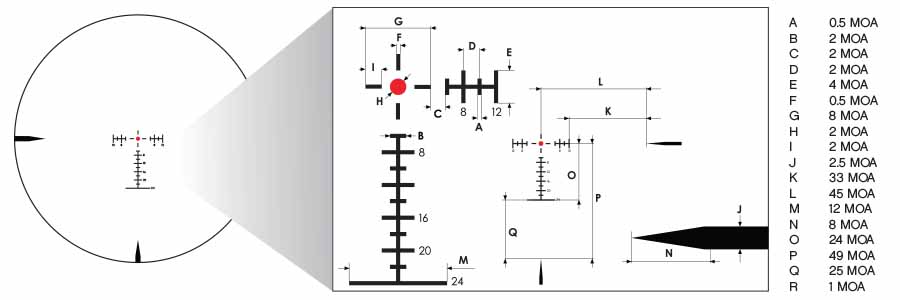
Nikon Black Force100 reticle

Windage and elevation adjustments of the Black Force100 are through low-profile turrets, with fairly exacting ¼-MOA-per-click increments. For fast zeroing after sighting the scope in, Nikon has outfitted the turrets with single set-screws. And it features low-profile caps, giving you the confidence the scope will maintain its zero even in the harshest conditions. Additionally, the illuminated center dot features side controls, allowing for easy toggling between 10 intensity settings.


Scope Out More Optics Info:

  • 8 Revolutionary Reticles For Long-Range Accuracy
  • Buying the Perfect Precision Scope
  • The Best Tactical Red-Dot Performance-to-Price Option?
  • Shifting Winds: SIG BDX Changing Shooting For The Better

Given Nikon has made a name for itself providing relatively economical optics, the Black Force100 comes in at a fairly reasonable price – MSRP of $650. A value, given the features the scope boasts.

More from Nikon:

Melville, NY – Nikon announces an expanded level of performance and capability to its flagship tactical optics line with its new BLACK FORCE100 riflescope. This versatile new 1-6×24 optic brings a broader range of magnifications, new reticle design and increased ergonomics to users and their MSR platforms.

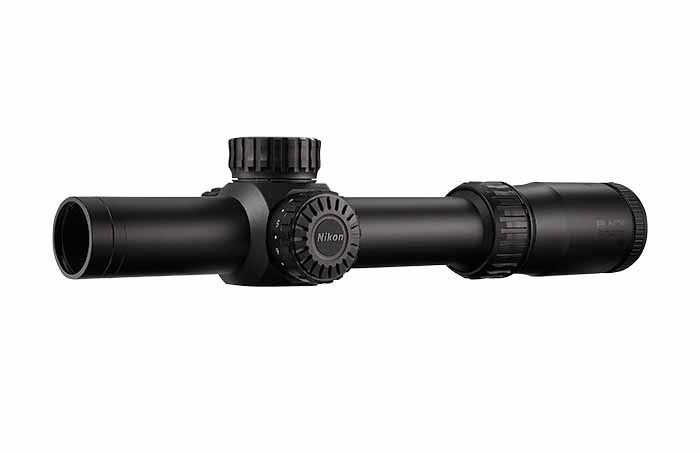
Nikon Black Force100 Side

Through Nikon’s Glass First engineering principle, the true 1x to 6x optical system of the BLACK FORCE100 was created to facilitate distortion-free target engagements with both eyes open at 1x, and aiming precision for extended ranges when zoomed up to 6x. To achieve its bright, sharp sight pictures, all optical components of the BLACK FORCE100 are built from Nikon’s lead- and arsenic-free glass and optimized with the company’s full multilayer coating on all air-to-glass lens surfaces.

Nikon developed the all-new, multi-function FORCE-MOA glass-etched reticle specifically for the BLACK FORCE100 optical design. For high speed targeting at true 1x magnification, Nikon’s FORCE-MOA reticle integrates an illuminated 2 MOA red dot to draw the eye toward the center. The MOA-based hash mark design of the lower reticle provides holdover points for longer known ranges as determined through the calculations of a ballistic table or app.

Reticle center dot illumination is controlled by the 10-step rheostat on the left side of the turret housing and features an intermittent “off” between each brightness setting.

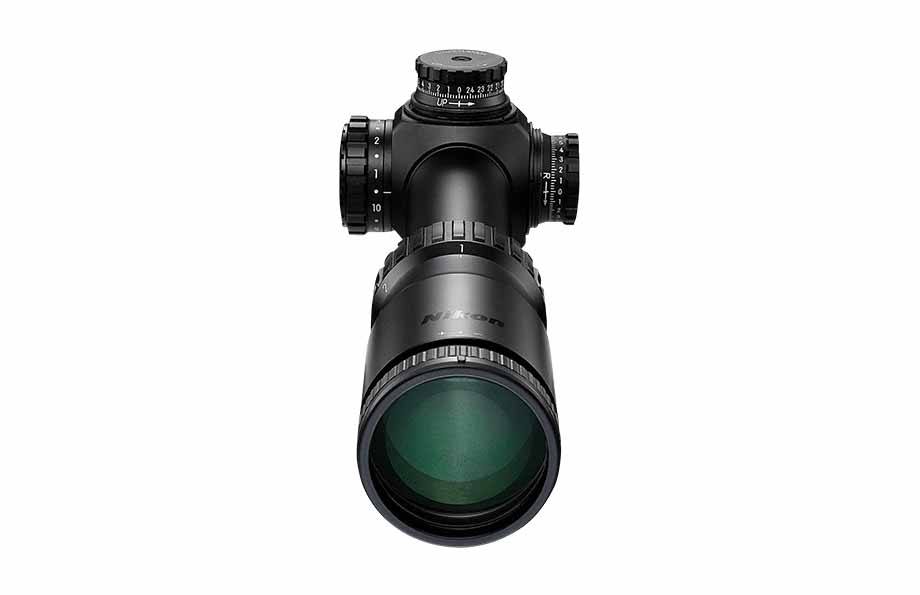
Nikon Black Force100 rear

Windage and elevation adjustments in the BLACK FORCE100 are accomplished via low profile ¼-MOA turrets The turrets feature a single screw zero-reset to allow for fast zeroing of the turret after sight-ins. Sturdy, low profile turret caps assure extreme durability and total sighting confidence under tough conditions.

The BLACK FORCE100 is built on a robust, one-piece aluminum 30mm main body tube to provide exceptional ruggedness and optimum strength-to-weight ratios.

Black Force100 Specs:

  • Magnification: 1-6x
  • Objective Lense Diameter: 24mm
  • Exit Pupil: 4-12.2mm
  • Field of View: 18.3-111.2 ft @ 100 yds
  • Tube Diameter: 30mm
  • Objective Outside Diameter: 30mm
  • Eyepiece Outside Diameter: 44mm
  • Weight: 20.8 oz
  • Overall Length: 11.6 in
  • Adjustment Graduation: 1/4 MOA
  • Max Internal Adjustment: 100 MOA
  • Parallax Setting: 100 yds
  • MSRP: $650

For more information on the Black Force100, please visit www.nikonsportoptics.com.

MantisX: Simple And Effective Training

0
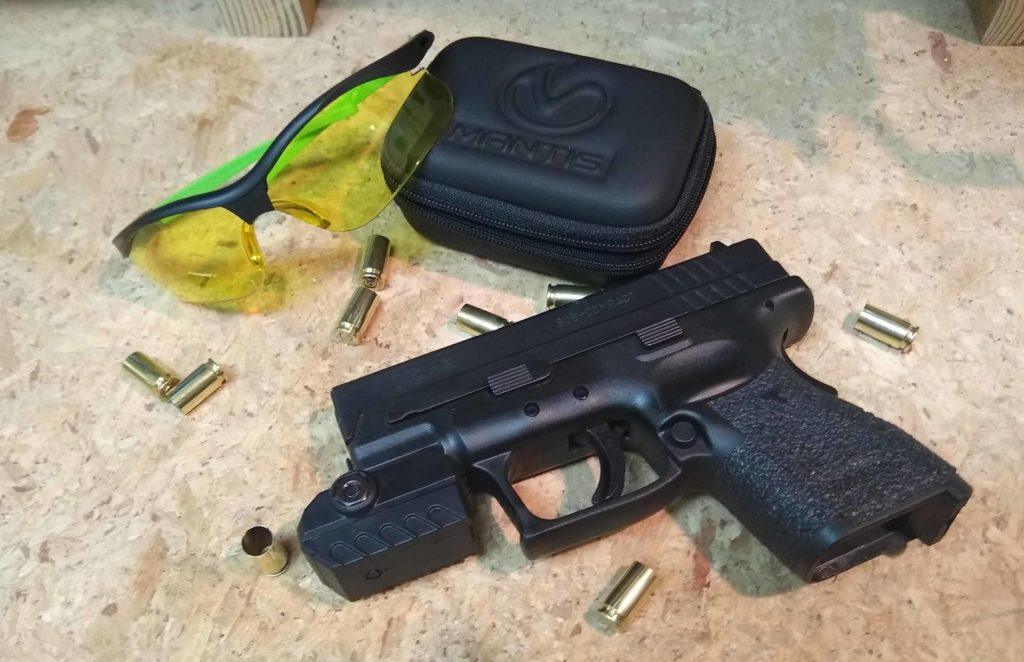
For dry or live fire, the MantisX is certain to refine your marksmanship.

A visual trainer that tracks and measures your movements as you draw and break each shot, the MantisX Shooting Performance System proves invaluable in dry and live fire.

What Feedback Does The MantisX Provide:

  • Detailed tracking of your muzzle position before and during the trigger pull.
  • Analysis of likely mistakes that took a shot off target.
  • Audio feedback of target hits so you can keep your eyes down range.
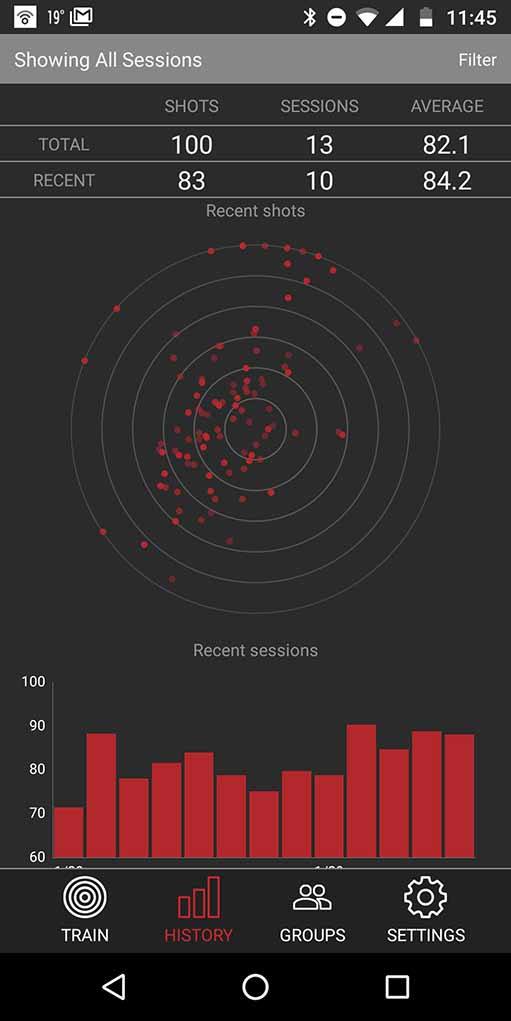
  • Full history of your shots to keep track of your improvement.
  • Detailed grouping charts to show exactly where your hitting.

Perhaps golf, maybe fishing. If there are any other pursuits that out-do shooting in regard to gizmos and systems for improving your performance, those would be it — though it can’t be by much of a margin.

Sauntering through the SHOT Show, it takes your breath away when realizing exactly how rife the industry is with these products. There are a handful of targets and training schemes that are worth their salt and have the chops to do what they promise — make the most of your trigger time. But there are many more (many, many more) that aren’t even worth the pressure-modeled plastic they’re made from. Buyer beware.

MantisX keeps a historical record of every shot you take, mapping them on a target and providing a running score of your shooting sessions.

This is the point we interject the pleasant surprise to the latest iteration of the world’s largest firearms/outdoors expo. Because that’s what a cutting-edge piece of training gear I stumbled upon in the basement of the Sands Exposition Center has proven itself. The MantisX promises data-driven improvement in your shooting, and in my time with the impressive piece of gun tech, it has more than delivered.

What Is The MantisX

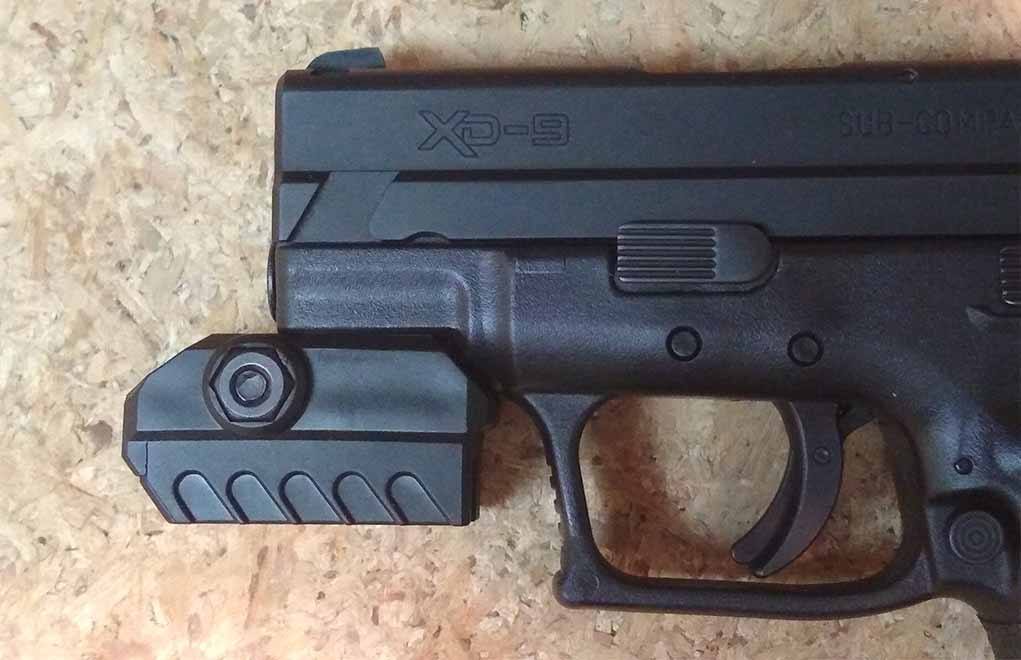
Think of MantisX as a personal shooting instructor you attach to your pistol or rifle’s accessory rail. (Don’t have one? The company sells an attachment.) From there, it catches every mistake you make between draw and trigger pull. Moreover, it then offers immediate feedback. That’s powerful information.

Around for a few years now, the device is essentially a set of gyroscopes that track and measure your movement as you break a shot. It then reports back to a free iOS or Android app — via Bluetooth — exactly how you’re fudging-up the process. And whether you knew it or not, you’re fudging it to some degree.

Slapping the trigger, MantisX knows. Flinching, MantisX will catch it. And it doesn’t cut you any slack, grading each and every shot you take.


Boot Up More Gun Tech:

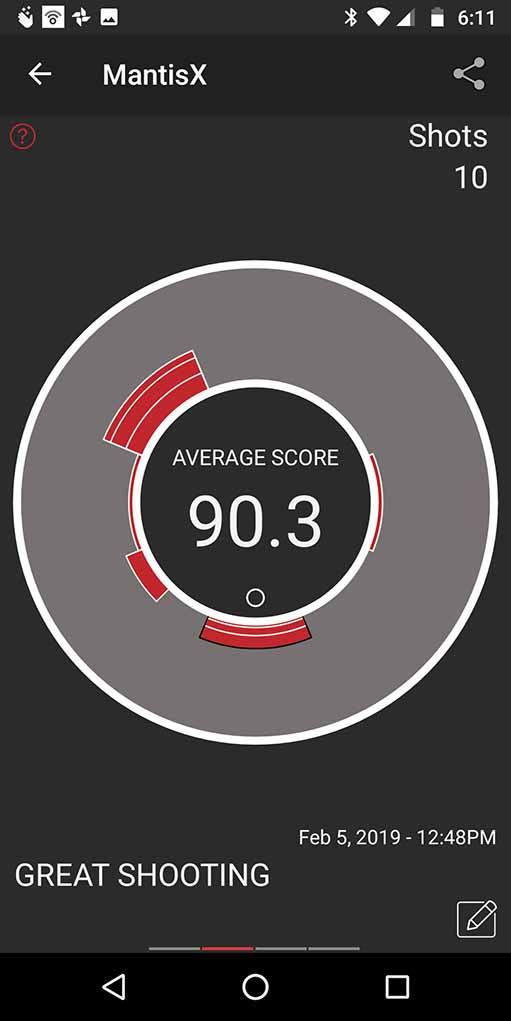
Admittedly, it’s a very humbling experience, seeing a score of 75 or (gasp) a 71 pop up when you glance at your smart device after a shot. But that’s part of the process. Like any good coach, the MantisX isn’t there to beat you down, but rather it’s designed to build you up again and keep you improving.

How it achieves this isn’t simply grading: It does this by identifying exactly what went wrong, then educating you on how to remedy your errors. Plus, it gives you a clear picture of how each shot progressed, tracking your muzzle path, measuring the magnitude of your mistakes and building a history of your progression.

Tracking your muzzle, Mantis gives you an idea of your movement during your hold (blue), trigger press (yellow) and following your trigger break (red).

There is light at the end of the tunnel, if you take what the device offers in all seriousness. But like any training, you have to invest and be willing to let the piece of shooting technology make you better. This means paying close attention to its feedback and consciously applying its corrections to the next shot. Do this and it pays dividends; I’ve experienced the impact first-hand.

My Time With MantisX

Breaking my wrists up is problematic for me. Session in and out, with my Springfield XD Sub-Compact 9mm, MantisX reports this is my main issue. Perhaps I focus too intensely on a smooth trigger pull or get lost in the front post. Whatever the reason, my wrists have a tendency to relax when the shot breaks. In my defense, it’s not much, but it’s enough that MantisX catches it.

After a little more than a week with the device’s input, I wasn’t completely cured, but I was improving. What were steady high-80 scores to start in dry-fire training evolved into the mid-90 range with more attention to keeping my wrists locked. And it’s still going up.

Without the MantisX, maybe I would have diagnosed the issue. But if I’m completely square with myself, I most likely would have missed it until I got to the range. And when I got there, I saw a marked difference from the first shots fired.

MantisX scores each shot and session, letting you know your mistakes and if you’re progressing through the dry-fire training in the comfort of your own home.

Immediately, I was where I should be at 7 yards — eating a ragged hole center mass. It was reassuring. Dry-fire practice had paid greater dividends than ever before … and it certainly had me itching for more. And with MantisX mounted and assessing my live fire, I was on the straight and narrow through a 50-round session. I didn’t expect a scant few days with any training tech to make such a difference, but the results were pleasantly undeniable.

What MantisX Offers

I’ve lived in the “Open Training” mode of MantisX, which isn’t a bad thing by any stretch of the imagination. The insight allotted — shot break, muzzle tracking, running history of sessions — is enough that I’m confident it alone would continue to refine my pistol marksmanship. In the big scheme of things, the data collected borders on overwhelming.

That said, I look forward to cracking into the rest of what MantisX has to offer, which is nothing short of a complete training regime:

  • Timed shots
  • Reload drills
  • Support-hand shooting
  • Basic marksmanship training
  • FBI qualifications

And there’s more — much more. But a column this size wouldn’t do justice to every whipstitch of what the MantisX system has to offer. Suffice to say, it’s plenty and I’m fairly certain it has the potential to hone mine or any shooter’s skills to a finer edge.

Parting Shot

Is MantisX a replacement for live instruction? Not by a long shot. There is no substitute for firearms training from a seasoned expert. But as a training tool, the piece of gun tech is incomparable.

mantisx shooting performance system 5

While it provides excellent feedback at the range, the greatest value of MantisX is for dry-fire. An important part of firearms training, the device and app make certain it bears fruit. The challenge of dry-fire is knowing for certain you’re executing each shot with the utmost precision. MantisX verifies this trigger pull to trigger pull, making the most of your time. After all, if you don’t train properly, what use is training in the first place?

There are a lot of gimmicks in the shooting world, each one promising to make you the next deadeye and beyond prepared for a real-life scenario. To a certain extent, for $149 MantisX pledges much the same. The big difference compared to the others? It delivers a training solution that’s easy to understand, seamless to navigate and comprehensive enough to make a rapid difference in your shooting skills.

For more information on the MantisX, please visit www.mantisx.com.

Editor’s Note: This article originally appeared in the March 2019 issue of Gun Digest the Magazine.

Beretta Introduces Enhanced 92X Line

0

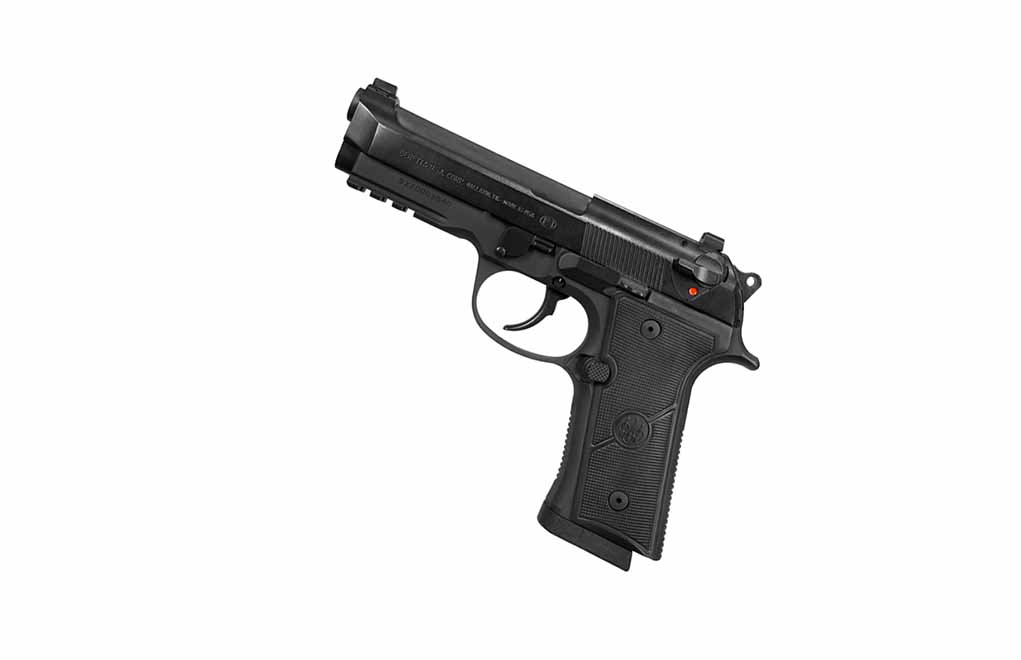
92X centurion Side

Long on performance features, the Beretta 92X line gives a new twist to a tried-and-true design.

How The 92X Line Outperforms Older Models:

  • Lighter D-Hammer spring helps maintain sight picture during trigger pull.
  • Featherweight trigger that breaks at 6.5 pounds in double action and 3 pounds in single.
  • Vertec-profile frame boasts familiar 1911 grip angle.
  • Available in Full-Sized, Centurion (mid-sized) and compact models.

Most of us know it as the M9. With 30-years of service under its belt as the U.S. Military’s sidearm, it’s difficult not to recognize the pistol by its service designation. And perhaps no single handgun has such a bright line between advocates and critics. At least for those who used it while in uniform, the DA/SA 9mm is a love-hate proposition.

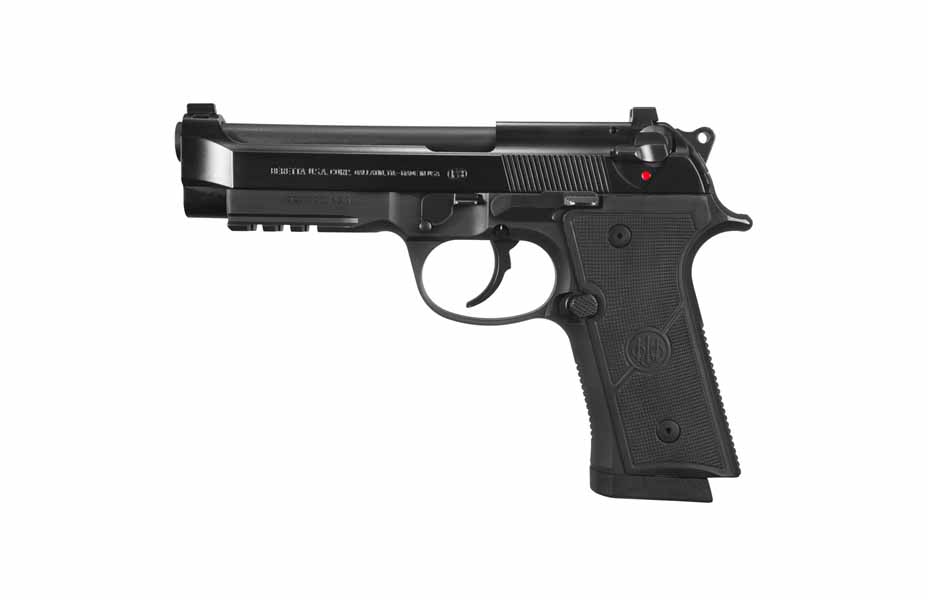
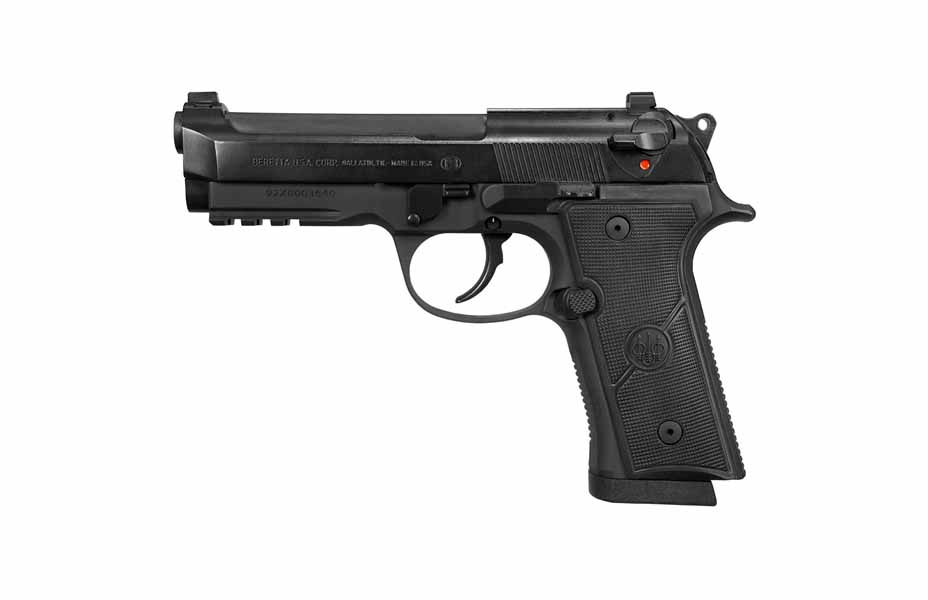
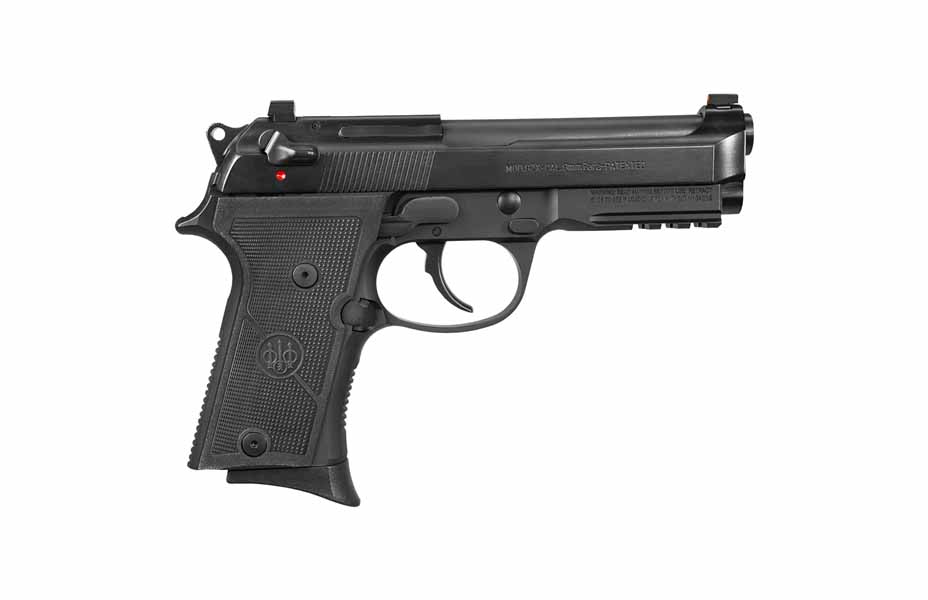
That said, the Beretta 92 (from whence the M9 came) is among the most impactful 9mm pistols of the last half-century and still has plenty of life left in it even after being replaced as the military’s handgun of choice. The Italian gunmaker recently expanded the line with enhanced models going by the handle 92X. The company kicked it all off a few months ago with the sporty Beretta 92X Performance and follows up with 92X Full-Size, Centurion (mid-size) and Compact models. This gives shooters three frame sizes to choose from, each with some dandy upgrades that might change some minds about the pistol.


Get More Self-Defense Information:


The Beretta 92X pistols all feature Vertec-profile frames, which have grip angles modeled after the 1911 and come with wraparound or flat stock panels. Furthermore, they are outfitted with D-Hammer Springs, a reduced-power type meant to improve accuracy by helping maintain the sight picture through the trigger-pull. Additionally, they boast Beretta’s new Extreme-S trigger, which decreases the reset by up to 40-percent and down to around 1mm. More importantly, especially for those who’ve pulled the trigger on older 92s, the Extreme-S reduces the break to around 6.5 pounds in double-action and just under 3 pounds in single.

Some of the other notables of the new Beretta 92X pistols include beveled magazine well for faster reloads, universal slide design which is convertible from safety-decocker (F) to decocker-only (G), oversized magazine release and accessory rail. The pistols also boast, combat sights, the front dovetailed on all three 92X models – a first according to the company. If that’s not enough, the hammer is skeletonized.

Overall, the Beretta 92X line is moderately priced, all three models are tagged with an $899 MSRP. While all this might not be enough to convert the diehard hater camp, it certainly might be enough to turn fence sitters’ heads.

92X Full Sized
92X Full Sized
Action: Single/Double
Barrel length (in): 4.7
Caliber: 9×19 (PARA)
Firing Mechanism: Semiautomatic
Grip Width: 1.5″
Magazine: 17, 10
Overall height (in): 5.4
Overall length (in): 8.5
Overall width (in): 1.5
Rail: Yes
Safety: F/G
Sight radius (in): 6.1
Sights: High Visibility Orange/Black
Slide Finish: Bruniton
Weight unloaded (OZ): 33.3
MSRP: $899

92x_centurion
92X Centurion
Action: Single/Double
Barrel length (in): 4.25
Caliber: 9×19 (PARA)
Firing Mechanism: Semiautomatic
Grip Width: 1.5″
Magazine: 17, 10
Overall height (in): 5.4
Overall length (in): 7.75
Overall width (in): 1.5
Rail: Yes
Safety: F/G
Sight radius (in): 5.75
Sights: High Visibility Orange/Black
Slide Finish: Bruniton
Weight unloaded (OZ): 28.5
MSRP: $899

92X Compact
92x Compact
Action: Single/Double
Barrel length (in): 4.25
Caliber: 9×19 (PARA)
Firing Mechanism: Semiautomatic
Grip Width: 1.5″
Magazine: 13, 10
Overall height (in): 5.25
Overall length (in): 7.75
Overall width (in): 1.5
Rail: Yes
Safety: F/G
Sight radius (in): 5.75
Sights: High Visibility Orange/Black
Slide Finish: Bruniton
Weight unloaded (OZ): 27.2
MSRP: $899

For more information on the Beretta 92X line, please visit www.beretta.com.

EOTech Vudu Scope And The Advancement Of Precision Glass

0
You can buy better glass and a better mount than ever before, for less money than in the “good old days.”
You can buy better glass and a better mount than ever before, for less money than in the
“good old days.”

Top-shelf optics have come a long way in a short time as demonstrated by the EOTech Vudu scope.

What Are The Major Scope Advancements:

  • Lens glass is more uniform with greater clarity.
  • Automated grinding and polishing create a more consistent product.
  • Advancements in lens coatings allow for more light transmission than ever before.
  • Less variability in rings and bases provide a stable mounting platform.

When I was first learning to shoot, the glass you could buy for your rifles (there were no real handgun or shotgun optics back in the Neolithic era) came in three grades: miserable, tolerable and pretty darned good. By the time I was working in gun shops, the grade of the glass had move up. You could by then choose from OK, very nice and dayum.

Today, the world is awash in good optics, and good glass is part of that. I had a chance to realize this when I looked at an EOTech Vudu scope, and I had to re-name the grades of glass again.

Today, we have very-very nice, dayum and “you’ve got to be kidding me” — from now on known as “YGTBKM.”

I recently pulled a rifle out of the rack, one that had a riflescope on it that fell into the “very nice” category of the earlier era. I checked to make sure the rifle wasn’t loaded, and I looked through the scope. Was there dust on the lens? No, it just was a very nice scope from the 1980s. The EOTech Vudu, which falls into the “dayum” category, made the 1980s scope look as if it needed some significant service work done.

Seeing The Light

How has this happened? Well, lens makers have taken advantage of chemical and testing advances to produce the base glass product used in lenses. There are much fewer impurities than in the old days, and the uniformity of the glass — both within a lens and from one lens to the next — is much greater.

Adjustments on today’s optics are better than ever. The knobs are large and easy to use, the clicks are crisp and the markings make it clear where you are in the rotation.

Optics are now calculated, and lenses designed by computer. Not that computers know anything about optics other than what we tell them, but they can make changes and predict results right now, not next week.

In the old days, it was still slide rules and desktop calculators, with the finalists in designs getting the serious mainframe computer time. Your smartphone has more computing power than the mainframes used for the 1980s optics.


More Long-Range Shooting Info:


Then there is the grinding and polishing. This is automated, and it’s done by machines of utmost precision. My youngest brother used to work for various companies that made and installed multi-axis machining stations. They did aerospace-level work, and the machines were so big, and they required such a stable platform, that they didn’t have foundations — they had piers.

When his company installed a machine, they bolted it not to a concrete slab with footings, but to a 10-foot cube of concrete cast into the surface of the planet. Lacking that concrete block or something even larger, the company refused to guarantee the “tenth” the machines could deliver: a ten-thousandth of an inch precision or less.

Bare glass? Don’t be crude. Modern chemistry means there is more light than ever being piped down the tube. Coatings reduce reflection, which means a higher percentage gets through.

The precision of the automated machines that now grind and polish lenses make my brother’s old company’s machines look like wood rasps stapled to a belt sander. Grinding precision is not measured in tenths, but in microns. Or, it can.

Then there are the coatings.

When light strikes a glass surface (any surface of a clear substance, really), most penetrates and is refracted, but some is reflected. In a counter-intuitive result, a particular chemical coating on the surface of the glass can reduce the amount of reflection. A coating is only effective for a small section of the light spectrum, so lens makers will multi-coat their lenses. This reduces reflection in a wider array of frequencies. This coating is the color you see on the front lens of your scope. Those coatings are also applied in a thinner and more uniform layer than ever.

By reducing reflection, scope makers increase the percentage of light that passes through to your eye.

OK, so let’s add it up: We have better-quality glass. We have more-precisely calculated, ground and polished lenses. We have coatings for the important parts of the spectrum, and those coatings are pure, uniform and consistent.
And all of that is mounted inside of tubes that are more uniformly machined that in the old days, with more robust adjustments, and in more solid mounts.

And in the category of “things we didn’t have in the old days,” how about focus or parallax adjustments on a scope? And, the Vudu also has an illuminated reticle, another never-had item back in the day.

Oh yes, the mounts.

The Mounts Do Matter

Back in the old days, we took two paths: We either used inexpensive mounts, and we mounted an inexpensive scope in them for no-big-deal applications. A $79 scope would be bolted onto a rifle with $20 bases and rings, and that was more than good enough for deer hunting. If you wanted more, you used all-steel rings and bases, hand-fitted to the rifle, and the rings were hand-lapped for uniformity.

And you’d put a “very nice” scope in that, because anything less wasn’t worth the effort.

Today? These days the scope mount manufacturers use the same multi-axis machining technology that everyone else does to produce rings and bases of startling uniformity.

As an exemplar, the Geissele mount, with an EOTech Vudu 5-25x riflescope.

Geissele machines the rings into the mount, and then marks the ring tops: You have not just front and back rings to the mount, but they are marked so you can keep them oriented correctly. If you go and try to lap the rings for a better fit, you reduce the precision. The Vudu is made with the best cost-effective glass to be had. Oh, there is better glass, but when you go up to the YGTBKM category, you aren’t just buying a scope, you are plunking down 5+ house payments just for optics. But if that’s what you want, then do it.

For the more traditional rifle shooters, simply walk to the next aisle and select from the Warne rings and bases.

We do this because we can get all this precision — this fantastic quality — for less money than the “OK” or “very nice” optics cost us back then. The MSRP on the Vudu is $2,100. The Geissele mount, $325. OK, almost $2,500 is not inexpensive. But, you can easily spend twice that for the YGTBKM scope alone.

So, let’s run the inflation calculator in reverse mode. When I began working in gun shops, the equivalent cost would have been $600. I can tell you that the scope and ring/mount setup you could have bought in 1978 for $600 would pale in comparison to the Vudu and Geissele combo.

Going back a few years before then and stealing a song lyric: these are the good old days. It’s true … at least as far as optical quality is concerned.

Editor’s Note: This article originally appeared in the February 2019 issue of Gun Digest the Magazine.

Bullet Expansion: Velocity Is The Deciding Factor

0

Bullet Expansion 3

Bullet expansion is a tricky subject. You might think the lead-core variety mushrooms more quickly than a solid-copper one, but it’s not the case.

What are the basics of bullet expansion:

  • Bullet expansion occurs as soon as its impact begins.
  • At a certain depth, a bullet ceases to expand do to loss of velocity.
  • Softer metals, such as lead, tend to expand more simply because they require less velocity to deform.

One of my favorite misconceptions is the notion that some bullets expand faster than others. Experts, who believe softer bullets deform at a faster rate than hard bullets, commonly espouse this myth. The “fast-expanding bullet” term is most often used to delineate between bullets with a lead-alloy core and bullets made from a single metal, such as copper or gilding metal. Granted, from a simply logical position, it seems to make sense that a hard bullet would take more time to deform than a soft bullet.

Bullets begin expansion immediately upon impact. As you can see, where these fi ve different bullets passed through 6 inches of test media, their expansion was complete well before exiting.
Bullets begin expansion immediately upon impact. As you can see, where these five different bullets passed through 6 inches of test media, their expansion was complete well before exiting.

The problem is, the exact opposite is actually the case.

Here’s the thing: Bullet deformation occurs as soon as impact begins, regardless of how “hard” the bullet might be. In fact, the best chance a bullet has to deform or expand is upon initial impact because that’s when it’s going the fastest. Any forward progression of the bullet after impact occurs at a slower velocity because every millisecond a bullet mores forward, it decelerates.

Now, a hard bullet like a Barnes Triple-Shock, which is made of all cooper, needs to impact at something close to 2,000 fps in order for expansion to initiate. Total expansion — or all that will be experienced — occurs very rapidly, over a distance as short as about 2 inches. On the other hand, a softer bullet can still deform when traveling as slow as about 1,600 fps. If it strikes a target at 2,000 fps, it can continue to deform until it slows below 1,600 fps because the bullet materials require less energy to deform them. This means that it will cover a greater distance — as much as 5 inches — before it loses the energy necessary to deform.

So, in reality, the harder expanding bullet fully deforms faster than the soft bullet. Along those same lines, you’ll sometimes hear hunters say, “The bullet was so tough and the animal so small, it did not have enough time, or meet enough resistance, to expand.” This, too, is BS. Even the toughest expanding bullet, from say a .300 Winchester Magnum, will be fully expanded after only penetrating about two to 2½ inches of animal or test medium.

All of these bullets take about the same amount of time to expand. Surprisingly, the all-copper bullet on the left will reach its fi nal shape faster, partly because it needs more velocity (and uses more energy) to deform.
All of these bullets take about the same amount of time to expand. Surprisingly, the all-copper bullet on the left will reach its final shape faster, partly because it needs more velocity (and uses more energy) to deform.

The deeper a bullet goes, the more it slows, and the less potential it has to deform. Some bullets might reach complete expansion sooner and over a shorter distance than others: Chances are, however, they’re just not the bullets you thought they were.

Editor’s Note: This article originally appeared in the April 2019 issue of Gun Digest the Magazine.


Smashing Other Ballistic Myths:


9 Greatest Winchester Rifles And Shotguns Ever Made

1

Winchester_73_toggle-link

There are plenty of great Winchester rifles and shotguns, but what are the best of the best? We try to winnow it down to nine of the icons.

What were the best Winchesters to come down the pike:

Winchester … there are few names in the world of firearms more iconic. Manufacturing guns since 1866, Oliver Winchester’s concern has grown with the country and played a vital role in its history. Few other companies are as deeply entwined in the fabric of America than Winchester. After all, it produced “The Gun that Won the West” (the Winchester 1873, incidentally) and manufactured some of the most storied firearms of all time. There was a spell in its history where nearly everything that rolled off its lines was arguably an all-time classic. Given this, it’s difficult to winnow down the best of the best? But we’ll give it a crack below with the 9 greatest Winchesters ever created.

Winchester Model 1866

 Winchester 1866
Photo: Rock Island Auction Company

Known as the “Yellow Boy”, the Model 1866 kicked off Winchester Repeating Arms. Kind of. Those who know their firearms history know the rifle design goes back further … New Haven Arms Company and Repeating Arms. Honestly, the Model 1866 is pretty much an 1860 Henry Rifle – a point Benjamin Henry was more than conscious of, thus partly explaining the lawsuit he filed against Winchester. That’s another story.

Read Also: 1860 Henry Rifle

Despite boasting the same toggle lock, gunmetal (red brass, a type of bronze) receiver and shooting the .44 Henry cartridge, the gun did have some vital improvements over the Henry. First and foremost, the loading gate developed by Winchester superintendent Nelson King. A relatively simple mechanism, the gate allowed shooters to load the rifle at the side of the receiver, instead of through the tubular magazine. And the magazine itself was enhanced. Whereas the Henry was open at the bottom, which gave foreign materials a chance to wreak havoc on the rifle, King sealed it. The fore-end stock was a nice addition too.

The Winchester 66 is a tough gun to add to a collect, costing a small fortune. Though, the company has released reboots of the rifle from time to time, most recently in .44-40 Win. and .38 Special.

Winchester Model 1873

Winchester-1873
Photo: Rock Island Auction Company

The Model 1873 is about as legendary as firearms come, the veritable hammer with which the better part of this country was beaten into shape. Simply being “The Gun that Won the West” (it wasn’t exclusively) should be enough for any gun to get top-of-the-marquee billing. If you need more, it’s also about the only rifle to ever have a movie titled after it – Winchester 73.

No shortage of good and bad men found a use for the iron-framed lever action on the American Frontier, from William F. Cody to Billy the Kid and Butch Cassidy. Yet, the 1873 was perhaps more consequential as a tool of the pioneer. Be it protecting the homestead or putting meat on the table, the shooting iron was as versatile as rifles come. And reliable to boot. The Winchester didn’t take a mechanical genius to keep running, an obvious plus when gunsmiths weren’t a dime a dozen.

At heart a Model 1866 (which at heart is a 1860 Henry Rifle), the Winchester 73 had one major improvement on its predecessor – an iron receiver. Gunmetal (red brass, a type of bronze) was used on the ‘66, which limited its chamberings to the .44 Henry. The more resilient material on the Model 1873 opened the rifle to a number of Winchester’s more powerful pistol cartridges, including – .44-40, .38-40 and .32-20. Though underpowered by today’s standards, the cartridges provided a solid peace of mind in a day when logistics weren’t exactly crackerjack. Given a bad rain storm could leave you high and dry in the ammo department, the ability to share fodder between your pistol and rifle was a pretty solid plan.

Unless you’re a dedicated collector with a large bank account, vintage Winchester 1873s are difficult to pick up. However, Winchester still turns out the rifles chambered in the much more modern .357 Magnum/.38 Special.

Winchester Model 1886

 Winchester 1886
Photo: Live Auction World

It had to start somewhere. And that somewhere, when it pertains to John M. Browning and Winchester lever-action rifles, is the Model 1886. It’s said then Winchester president Thomas Bennett bought the rifle design on the spot on his trip to Ogden, Utah to visit the famed designer. Regardless of how it was procured, the big-bore rifle formed the foundation of one of the most legendary partnerships in all firearms history.

At the time, Winchester already had a rifle-caliber, lever-action – the 1876 – however, it pushed the limits of the design. Still featuring the Winchester 73’s toggle lock, it barely played nice with the more-powerful cartridges, thus couldn’t take advantage of the larger-bore metallic cartridges hitting the market. Browning solved this by adding twin locking lugs.

Find Out More: Winchester Model 1886

Actuated by the lever and coming up on either side of the bolt, the system gave the Winchester 1886 the strength to handle larger cartridges. The gunmaker took advantage of it, chambering the rifle for some of the big-hitter of the day. First the .45-70 Government and .45-90 WCF, later the .40-65 WCF, .38-56 WCF, .40-70 WCF, .38-70 WCF, .50-100-450, .50-110 Express, and eventually the smokeless-powder .33 WCF in 1903.

Expensive for its time, the Winchester 1886 wasn’t as widespread as the company’s other lever-actions. But that didn’t mean the rifle didn’t leave its mark. Depending on its chambering, it was fit to hunt nearly anything on the planet and made many excursions to Africa and the like. No surprise, it was a favorite of America’s most gun-savvy president – Theodore Roosevelt. The Winchester 86 is still available today – made by the Miroku Corporation – but only chambered in .45-70.

Winchester Model 1887

Winchester 1887
Photo: Guns International

Despite lever-action shotguns never catching on the way their pump-action cousins did, the Winchester 1887 marks an important point in smoothbores development. The John M. Browning designed gun was the first commercially successful repeating shotgun, virtually changing shooters’ expectations overnight. Though had the design genius had his druthers, he would have made it a pump-action. Arguably easier to work, the idea was jettisoned by the company because, dang it, they made lever guns! A pump might damage the brand’s recognition.

Prior to the Winchester 87, the best a shooter could hope for in firepower was two-rounds delivered from break-action, side-by-side shotgun. With a 5+1 capacity, the Model 1887 was a true force multiplier, making it a mainstay of law enforcement and outlaws alike. However, the shotgun wasn’t without its faults. The black-powder shotgun, available in both 12- and 10-gauge, was higher-capacity and faster shooting than anything that had come down the pike, but it was a bear to load. You reached the tubular magazine via the top of the receiver, which required some finagling.

In essence, the Model 1901 is the 1887 beefed to handle smokeless powder loads. Available in 10-gauge only, the 32-inch barreled shotgun also had an improved two-piece lever with a trigger-block safety. Winchester does not presently, nor has for a while, produced either a Model 87 or 01. But affordable and faithful replicas are available from Chippa and Pietta.

Winchester Model 1894

Winchester 1894
Photo: Rock Island Auction Company

For deer hunting, there’s no parallel. The Winchester Model 1894 has harvested more than all the rest – perhaps combine. Part of this was due to the ubiquity of the John M. Browning-designed lever-action. Having sold more than 7-million units since its inception gave the rifle a chance to bring home a ton of backstraps. Longevity also plays a role. Outside of a small gap this century, the Model 94 has been in continuous production since, well … 1894, making it among the oldest designs still coming off a line.

There’s little secret to the 94’s popularity. It was a simple design, functioned reliably and utilized the major technological advancement of its day – smokeless powder. The big modification Browning made to stouten up the Model 94 for the higher-pressure cartridges was the implementation of a cross-bolt locking block, compared to the twin lugs of the Model 86.

Learn More: Winchester Model 1894

Despite building fame as a smokeless-power gun, the rifle started life chambered for metallic black-power cartridges – the .32-40 Winchester and .38-55 Winchester. It made the jump to smokeless a year after its release, and the cartridge it was matched with grew equal to the Model 94 in acclaim – the .30 WCF or .30-30. Certainly, compared to today’s high-performance cartridges, some of the shine is off the .30-30. But a turn-of-the-century shooter couldn’t do much better for hunting beast or, in such cases as Tom Horn’s, man.

Winchester 94 rifles aren’t difficult to find and run the gamut in price. More economical specimens generally come from the mid-1960, when Winchester overhauled its manufacturing procedures. Stamped metal and the like are the names of the game and while they are functional, they certainly don’t have the timeless beauty and performance of the pre-64 machined iterations. Though, to be fair, the new variety improved over time, with more current examples boasting more refined features, including a much better finish.

Winchester still offers the Model 94 today, manufactured by Miroku Corporation. And with advancements in lever-action ammunition is as much a game getter as it ever was.

Winchester Model 1895

WINCHESTER 1895
Photo: Guns International

The last development in Winchester lever-action rifles, the Model 1895 is also a major departure from everything that came previously. Most obvious in this department, the rifle’s box magazine. Spitzer bullets, becoming more common at the time, was the driving force for this advancement, given the pointy devils don’t play nice with tubular magazines.

If you have difficulty figuring out why think where the tip of the bullet rests. That’s right, dead on the next cartridge’s primer. Given this, a dropped rifle could potentially turn into a very bad day.

John M. Browning’s last lever-action for the gunmaker, the Winchester 1895 also boasted the strongest action he’d design for the line. It had to have one. Smokeless powder was becoming the norm, so the rifle had to withstand increased pressures. He achieved resiliency by veering away from the twin locking lugs found on the 1886 and opting for a shorter and stouter cross-bolt designed, similar to the one found on the 1894.

With this modification, the rifle was capable of safely firing many cartridges most modern shooters are familiar with: .30-40 Krag, 7.62x54mmR, .303 British, .30-03, .30-06 Springfield, .35 WCF, .38-72 WCF, .40-72 WCF, and .405 Winchester. Note, a number of these were military cartridges of the time, and Winchester attempted to market the gun thusly with little success. The notable exception being Russia. A full 300,000 of the 425,000 Winchester 95s manufactured were for the Russian Empire, chambered 7.62x54mmR. Interestingly, the guns were designed to utilize a Mosin-Nagant stripper clip for loading.

Simple math tells you, outside of the greater Eurasian continental region, the Winchester 95 was somewhat a rarity. It was generally found among hoity-toity, globe-trotting hunters. Once again, such as Teddy Roosevelt, who took his – in .405 Winchester – to Africa on his 1909 safari. For the average rabble, the shine hadn’t worn off the Winchester 94, nor would it for quite a while.


Raise Your Lever-Action IQ:


Winchester Model 1897

riot-lead

“Trench Gun” or “Trench Broom”, whatever you call it the Winchester 1897 is arguably one of the greatest shotguns ever conceived. Best remembered for its role in World War I, the pump-action was a positively devastating close-quarters weapon. With a 6+1 capacity, American doughboys dispensed such hurt with the shotgun the Germans filed a diplomatic protest over the Model 97, claiming it violated the Hague Convention due to causing unnecessary suffering. Understandable sentiment for a group losing a war, but it didn’t deter the Yanks.

Despite being found on the battlefield up to the Vietnam conflict, the Winchester 1897 was primarily a sporting gun. As was their way, Winchester offered the shotgun in countless configurations, with choice of barrel length, grade of wood and other accouterments. In turn, you could get a stripped-down, entry-level model for $25 or break the bank with a real wall-hanger, if you so desired. Chambered in both 12- and 16-gauge, Winchester built more than 1-million Model 97s before closing the line in 1957.

Find Out More: Winchester Model 1897

An evolution of the Winchester 1893 pump-action, the 97 has a beefed-up frame, making it fit to shoot longer shells popular with sportsmen at the time. The length of pull was increased, making the gun more comfortable to shoot. And it also had an improved lock work that required moving the slide forward slightly to unlock the bolt, thus eliminating the 83’s nasty habit of opening while firing.

The most recognizable feature of the Model 97 is its exposed hammer, something that’s all but gone the way of the dodo in modern guns. Perhaps as renowned, the gun could be slam-fired. That is, you could depress the trigger and fire it by simply working the pump.

Winchester Model 12

The internal parts of the Model 12 action were all hand-fitted and machined to precise specifications. This gave the Model 12 its reputation for a smooth action with excellent reliability, and it’s the primary reason why so many of these guns still work and see the fields today.

The Remington 870 and Mossberg 500 have stolen much of the thunder when it comes to pump-action shotguns. But for many, they stand in the shadow of the Model 12. The “perfect repeater” set the standard for pump-action smoothbores for the better part of the 20th Century and is still considered a cherished jewel of any collection.

Engineered by T.C. Johnson off a John M. Browning design, the internal-hammer shotgun was released in 1912 and was the evolution of the Model 97. Furthermore, it laid out the form for the modern pump-action. In particular, the loading gate at the bottom of the receiver is commonplace among most shotguns now, as is its right-facing ejection port and cross-bolt safety located in the front of the trigger guard.

Learn More: Winchester Model 12

These features were nice, but what cemented the relatively simple Model 12 into shotgunners’ hearts was what ultimately lead to its demise. Its streamlined receiver was machined from a billet of forged steel, hand-fitted with machined steel internal action parts and featured a hand-checkered walnut stock. When the stamped-metal Remington 500 showed up in the 1950s, Winchester just couldn’t compete on price. Finally – outside some special run-up to this century – the Model 12 disappeared in 1964.

Plentiful today, you can still find a used M12. Though, generally, you’ll pay for the honor of adding one to your gun safe.

Winchester Model 70

R4432-Custom-Guns-2018-Feature

It doesn’t boast the historical significance of many of Winchester’s lever-actions. However, there might not be a more noteworthy sporting rifle ever created. Light, fast lock time and the little things shooters drool over – cut checkering, drilled and tapped for a scope, terse bolt throw – the Winchester Model 70 mesmerized the market when it came out in 1936. But it was one feature in particular that especially caught the eye – the rifle’s Mauser-style extractor claw.

Although the rifle’s controlled feed was among the rifle’s most desirable – and for those who shot it, cherished – assets, it also became a point of contention. In 1964, Winchester did away with the feature, opting to make the Model 70 a push feed. Don’t cluck your tongue too much at Winchester, it had to do something to remain competitive. The 70’s highly machined design certainly wasn’t it. And to be fair, while not as refined as the pre-64 versions – particularly the impressed checkering – the post itineration wasn’t bad. The action was reportedly stronger and it had no feeding issues. Still, it wasn’t the Winchester 70 most aspired to own.

Luckily, the miracle of CNC machining – making more traditional designs more affordable – breathed new life into the rifle. As of 2008, Winchester has returned to the classic Model 70 classic design – including the claw extractor. At the risk of drawing jeers, the rebooted rifle might be even better than the original, given it has a free-floated barrel, reinforced recoil lug recess and adjustable trigger.

Locked, Loaded, and Ready: Dive Into Shotgun Basics

1911: Customized By Committee

0

Customized 1911 4

Well-known and ‘unobtainable’ pistolsmiths all start somewhere. It might as well be with your 1911.

There are now varying ranks of custom gun work to be had, or “echelons of elite,” if you will. At the highest level, there’s the “bespoke” 1911. You arrange a time and a cost with a well-named pistolsmith, and then deliver the base gun and deposit. You wait to get to the head of the line, and you wait for the return of your prize. You have spec’d everything on it. From start to finish, it’s the product of one pistolsmith, and it’s your pistol.

It might be one of a kind, or it might be like every other high-end gun that particular pistolsmith produces. But, it’s yours.

This 1911 of mine is kinda-sorta one of those one-of-a-kind projects, but with a difference: You can duplicate the details, but you cannot duplicate the exact pistol. Why? It’s what I call a “committee gun.”

The Heinie Straight-8 sight system uses two dots, one over the other, on each sight front and rear. The system is fast, effective and almost impossible to get wrong.

A committee gun is one you send to multiple pistolsmiths to have one thing done by this one, something else by the next one, and so-on. This is not possible with some pistolsmiths — not just because they’re retired or deceased, but because many are booked to the end of their working careers. Or, they have a closed client list … or they do not do a-la-carte work. A-la-carte? They only do the full job, not just this or that. Honestly, they often don’t have the time and, frankly, it’s a hassle. Why do just a checkering job, which takes as much time and effort to book, manage, schedule and deliver, as a full-house project?

This particular 1911A1 of mine is a result of decades of reputation, contacts, patience — and just being a nice guy.

Make It A Heinie

The base gun is a Springfield 1911A1 in .45 ACP, which is their loaded model. It arrived here for an article, review or test — I honestly can’t remember. As testing showed and the results came in, it was a very accurate pistol, and it was one of the fastest-barreled 1911s I’ve tested. So, I prevailed on Springfield, got the friendly gun-writer price, and I sent them a check.

Pictured here is the ProTrac non-slip frontstrap treatment done by Stan Chen. Traditional? No. Effective? Without question.

At the next year’s Single Stack Classic (now the USPSA Single Stack Nationals), I was talking to Richard Heinie about his sights. His Straight-8 sight design was selling like hotcakes (and they still are). “Is it really better than three-dot sights?” I wanted to know. We proceeded after the match to walk out to the ranges. There, I shot his personal 1911. (Well, one of them, I’m sure he has a bunch, but that was the one on his hip that day.)

“I’d be happy to put a set on one of your guns,” Heinie said. No fool I, I pitched the idea of testing the Heinie sights to my editors, and when one said yes, I then had a dilemma: All my 1911s had good sights on them. Digging into the safe, I came across the Springfield. Knowing many pistolsmiths had preferences, I phoned up Richard. “Sure, I work on Springfields.” So, I shipped it.

Lest you ask, Richard Heinie is booked to the end of time. And this is ironic, because I remember talking to him at one of the USPSA Nationals in the early 1990s and finding out he had a 48-month delivery time. Yes, 48 months! I couldn’t wait that long and didn’t send him another gun to work on. Soon after, the only way to have owned a Heinie full-custom gun was to win one at the Single Stack Classic. Nope: I never managed that one, either. But Heinie does make his excellent Straight-8 sights, and you can have Heinie Specialty Products install them on your 1911.

Invisible Improvements

Soon after, I took the Springfield to a tactical medical class, which was a week-long medical-and-live-fire-training class, where we spent time crawling through the Tennessee mud. Despite being caked with mud, the Springfield worked flawlessly, so it earned a permanent place in the safe.

Knowing the author’s affection for ball-end cuts on the slide, Stan Chen changed them in the Springfield.

I teach Law Enforcement Patrol Rifle classes in the warm-weather months. Actually, I’m one of the stand-by armorers for officers whose rifles break down, and I teach shooting when I’m not fixing. We also shoot handguns — the instructors do, anyway — because, well, the courses are easy enough to shoot a perfect score every time with a rifle.

The lead instructor wrote the course outline to require that each instructor fires the qualifying course for record, for each class, so we’re on record as being able to do what we teach. We also started shooting the qualifying course with handguns, which is a task that calls for hits out to 65 yards against tight time limits. We then began shooting the 300-meter Army RETS course with handguns. The top instructors have all shot passing scores in both courses, with handguns.

At one class, friend Ned Christiansen was curious about the Heinie sights, and he handled and shot my Springfield. “There’s something about the barrel,” he said. “Let me take it home.” I don’t know what he did, because I couldn’t find any traces of work (Ned is like that), but the barrel fit is better. And while he was at it, he cleaned up the already-nice trigger. It’s still a duty-level weight, but the trigger pull so clean that you’d swear it was a pound-and-a-half lighter than it actually is.

The Gen 2 magwell funnel looks low-profile from the side (and it is), but it gapes like a competition funnel when you go for a reload.

Christiansen usually has a closed list, as in he’s booked up for longer ahead than he sees daylight, so you won’t get this from him. But, he makes specialty tools for the 1911 and the AR-15, and when next his list opens up — or when he takes a breath and accepts small jobs like trigger work — you can get on board.

Chen’s Custom ‘X’

The next pistolsmith was Stan Chen, who left soul-killing corporate America to pursue his dream: building custom 1911s. What he ended up doing was building blueprinted 1911s from scratch. Like a number of other custom pistolsmiths, Chen found the work of rebuilding (measuring, plotting, welding, machining, hand-fitting) existing frames to be taking up so much of his time that it was easier to just make frames to go with his perfect slides. So, he did.


More 1911 Posts:


If you have a full-house Chen Custom 1911 built on a non-Chen frame, you have a rarity. Or, soon-to-be-rarity, because he’s now making only full-house custom guns, using only on his frames and slides.

The author’s next project for this pistol is to get it refinished and store it in a proper case.
The author’s next
project for this pistol is
to get it refinished and
store it in a proper case.

But, Chen also makes magwell funnels for installation on non-Chen 1911s. He and I discussed his mag funnels and frontstrap non-slip grip pattern for another article project, and I sent him my Springfield for the Gen 2 mag funnel. I again chose that gun mostly because it was, as it had been with the sights, the only one I had that wasn’t already worked-on.

After it arrived, Chen phoned me. “You didn’t tell me that it was one of the ‘fat-frame’ Springfields.” My heart sank. Darn, I’d have to find a different gun. “That actually makes it easier,” he reported.

Fat frame? For a number of years, Springfield 1911s had frontstraps that were thicker and wore a different radius than the original 1911s. This was due to a machining step that made production easier: The cutter radius for the dustcover, trigger guard and front strap are all supposed to be different, but Springfield just used the same cutter for all. This left the frontstrap and dustcovers thicker and with more-defined corners.

When Stan Chen cuts the ProTrac, he also lifts the frontstrap where it joins the trigger guard. This allows the shooter to get their hand higher on the gun.
When Stan Chen cuts
the ProTrac, he also lifts the frontstrap where it joins the trigger guard. This allows the shooter to get their hand higher on the gun.

Chen’s non-slip grip pattern is an array of diagonally-oriented round-bottomed cuts, with an “X” pattern left in the middle. Called his Progressive Traction Checkering (aka, ProTrac), it’s unlike anyone else’s. This pattern is duplicated on the mainspring housing, and the pattern carries over onto the frame from the mainspring housing. That, with the Gen 2 blended magwell funnel, produces a distinctive appearance while being low-profile. It isn’t a competition look, but it is a competition-level performing setup. Part of the ProTrac machining also involves “lifting” the frontstrap where it joins the trigger guard.

Stan also knew I like the look of the original slide contour, also known as ball-end cuts. So, he machined the slide and then dehorned the edges before re-parkerizing it and sending it back. He only does full-house custom guns built on his slide and frame sets. However, you can get the ProTrac frontstrap and mainspring housing done on your gun, you can have one of several of his magwell designs done, and you can get your 1911 back in 6 months or so.

These days, the finish on my committee gun isn’t pretty. I’ve shot, used and abused this gun a good bit. It has rattled around in the unpadded plastic storage case Springfield shipped it in. One of these days I’ll get it re-finished and give it the case it deserves.

Foreseeing The Future

Now, why tempt you with work you can’t get, with pistolsmiths who don’t know you? Simple: Dick Heinie, Ned Christiansen and Stan Chen didn’t start out as demi-gods of 1911 work: They all started out working and learning. (They are still learning, of course, but they’re learning on top of an encyclopedic base of knowledge.) There are many very good pistolsmiths out there who will be the Heinie, Christiansen or Chen of the future.

This Springfield barrel shoots like it’s a match barrel. Once noted pistolsmith Ned Christiansen re-fit it (the author still doesn’t know exactly what he did), he said it was good for the life of the rifling.

You can have your own committee gun just by finding them and shepherding your 1911 through their shops in turn. What do you want? What do you like? Tell them, plan the work and get it done.

Just be sure and find a solid base gun to build on, because no-one likes the grunt work of correcting errant dimensions. That search is even easier than it used to be, because we can now expect good base 1911s, and we won’t pay for anything less.

Precision Optics: Vortex Razor UHD Binoculars

0

Vortex Razor UHD 1

A next-level optic, the Vortex Razor UHD Binoculars deliver crisper, clearer images under any conditions.

How Razor UHD Compare To Other Optics:

  • Longer Abbe Koening Prisms to transmit more light.
  • Advanced lens coatings enhance images in low-light and multi-layered coatings on the prism keep images bright and clear.
  • Similar ergonomics to the highly popular Razor HD line of binoculars.

If you hunt nothing but thick timber, ignore this advice. You need a good set of binoculars. Clowning around with an inferior glass or going without, you’re fiddling with missed opportunities or hiking yourself into the ground in search of game. Either case, not good.

Vortex appears to have the answer, especially if you have your eye out for a step up from entry-level, with its new Razor UHD (Ultra High Definition) line of binos. Essentially, the optics have the same feel and look as Vortex’s existing Razor HD line, but have one major difference – it’s Abbe Koening Prisms. Longer than the previous version, they gather and distribute more light, thus deliver much clearer images. Though, the addition does raise the binoculars’ weight ever so slightly. Still, whether for spotting game or hits and misses, the Razor UHD binos look to excel.

More from Vortex:

There’s a new optical sheriff in town and it’s the Razor® UHD binocular series. The absolute pinnacle of optical performance, the all-new Razor UHD (Ultra High Definition) binoculars serve up views so stunning, you’ll have to literally see them to believe them.

Optically, ergonomically, aesthetically, these feats of modern engineering stand proudly atop Vortex’s extensive selection of binoculars. The premium, UHD apochromatic optical system, boasting phase corrected Abbe Koenig prisms, delivers the ultimate in resolution, color fidelity, depth of field, contrast and edge-to-edge sharpness. Lenses fully multicoated with Vortex’s proprietary XR Plus antireflective coatings guarantee maximum brightness and glassing confidence during critical low-light periods. Exterior lenses feature Armor Tek, an ultrahard optical coating that protects against scratches, oil and dirt.

Vortex Razor UHD

The short-hinge magnesium chassis is lightweight, ultratough, and a pleasure to hold. Durable rubber armoring protects the housing and offers a nonslip grip – no matter the weather conditions. Incredibly comfortable twist-up eyecups with positive settings offer a range of eye relief options for customized viewing. Locking right-eye diopter. O-ring sealed and purged with argon gas for 100 percent waterproof/fogproof performance.

Each Razor UHD comes outfitted with a custom binocular harness for comfortable carry and protection from the elements.

Available:
·8×42 MSRP $2,099.99
·10×42 MSRP $2,149.99
·12×50 MSRP $2,299.99
·18×56 MSRP $2,449.99

Razor UHD Specs

18X56
Magnification: 18x
Objective Lens Diameter: 56 mm
Eye Relief: 18 mm
Exit Pupil: 3.1 mm
Linear Field of View: 194 feet/1000 yds
Angular Field of View: 3.7 degrees
Close Focus: 10 feet
Interpupillary Distance: 56-76 mm
Height: 8.3 inches
Width: 6.1 inches
Weight: 41.6 oz

12X50
Magnification: 12x
Objective Lens Diameter: 50 mm
Eye Relief: 17 mm
Exit Pupil: 4.2 mm
Linear Field of View: 288 feet/1000 yds
Angular Field of View: 5.5 degrees
Close Focus: 6.6 feet
Interpupillary Distance: 56-76 mm
Height: 7.6 inches
Width: 5.8 inches
Weight: 36.1 oz

10X42
Magnification: 10x
Objective Lens Diameter: 42 mm
Eye Relief: 16.7 mm
Exit Pupil: 4.2 mm
Linear Field of View: 346 feet/1000 yds
Angular Field of View: 6.6 degrees
Close Focus: 4.5 feet
Interpupillary Distance: 56-76 mm
Height: 7 inches
Width: 5.6 inches
Weight: 32.2 oz

8X42
Magnification: 8x
Objective Lens Diameter: 42 mm
Eye Relief: 16.7 mm
Exit Pupil: 5.25 mm
Linear Field of View: 420 feet/1000 yds
Angular Field of View: 8 degrees
Close Focus: 4.5 feet
Interpupillary Distance: 56-76 mm
Height: 7 inches
Width: 5.6 inches
Weight: 32.2 oz

For more information on the Razor UHD line, please visit www.vortexoptics.com.


Scope Out More Optics Info:

  • 8 Revolutionary Reticles For Long-Range Accuracy
  • Buying the Perfect Precision Scope
  • The Best Tactical Red-Dot Performance-to-Price Option?
  • Shifting Winds: SIG BDX Changing Shooting For The Better

MUST READ ARTICLES