Sig Sauer’s newest suppressor, the MODX-45, brings modularity alongside durability.
MODX-45 Spec Ranges:
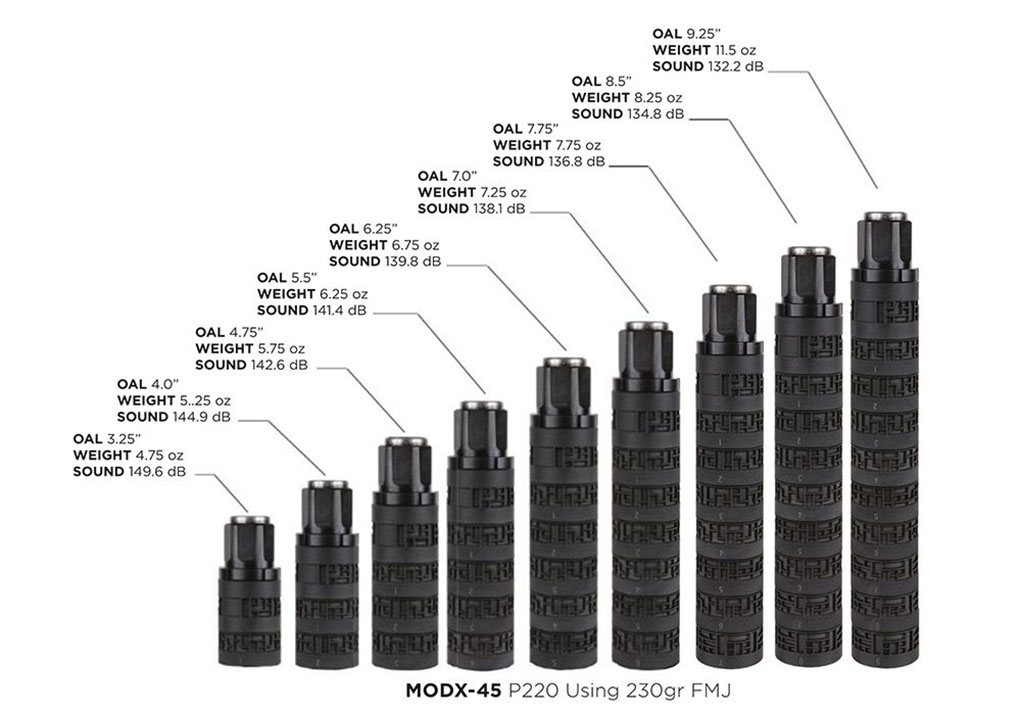
Length: 3.25-9.25 inches
Weight: 5-9oz
Noise: 133-149dB
Constructed from seven 3D-printed titanium baffles, the MODX-45 utilizes the latest 3D-printing technology to make this new .45 ACP suppressor as light as it is strong.
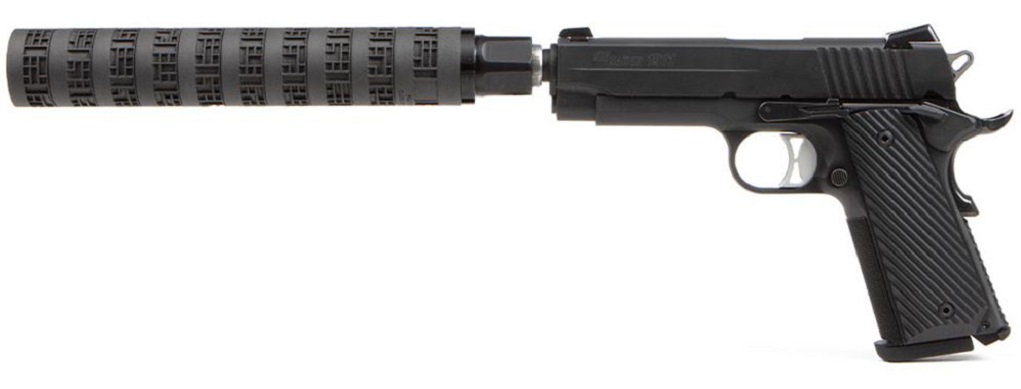
MODX-45 Suppressor on a Sig Sauer 1911
Sig Sauer took the same concepts that made their previous MODX-9 popular and scaled the design up for the .45 ACP cartridge, making this a perfect match for a Sig 1911, P220, or any other .45 with an appropriately threaded barrel.
The modular nature of Sig’s segmented, 3D-printed cans allow for the shooter to easily and quickly trade compactness for quietness. With the included tool, the titanium baffle segments can be added or removed to bring the silencer from 3.25 inches to 9.25 inches, lowering the decibel level from 149dB to 133dB with an additional seven points of variation in between.
MODX-45 full range of adjustment.
For Pistols Or PCCs
Suppressed pistol caliber carbines have grown in popularity as both range toys and serious self-defense weapons in recent years. The previously released MODX-9 seems like such a great match for Sig’s own MCX 9mm carbine that I can’t help but wonder if they will ever release a .45 variant MCX to pair with the new MODX-45. As it is a naturally subsonic round, .45 remains a popular choice to suppress regardless of the platform.
Not everyone believes that the added modularity is beneficial, however. Time will tell if cans with adjustable lengths will become the norm, or if they will one day become a forgotten trend replaced by suppressors of more monolithic construction.
The MODX-45 has an MSRP of $1000
For more information on the MODX-45 pistol suppressor, please visit sigsauer.com.
Get More Suppressor Info:
The Suppressor: How Is It Made, It Works And How To Buy One
Ed Brown, renowned for their custom 1911s, continues their Fueled Series with its new custom Smith&Wesson M&P 2.0 9mm—the MP-F4.
Full List Of Customized Components On The MP-F4:
Machined Pins
Slide Backplate
Magazine Baseplate
Magazine Well
Extractor
Trigger
Sights
Accuracy Rail
Slide
Barrel
The recently announced MP-F4 from Ed Brown is the fourth and latest installment in their custom Smith and Wesson M&P line that they call the Fueled Series. Much like with their 1911s, the Fueled Series guns are improved and customized on both a micro and macro level.
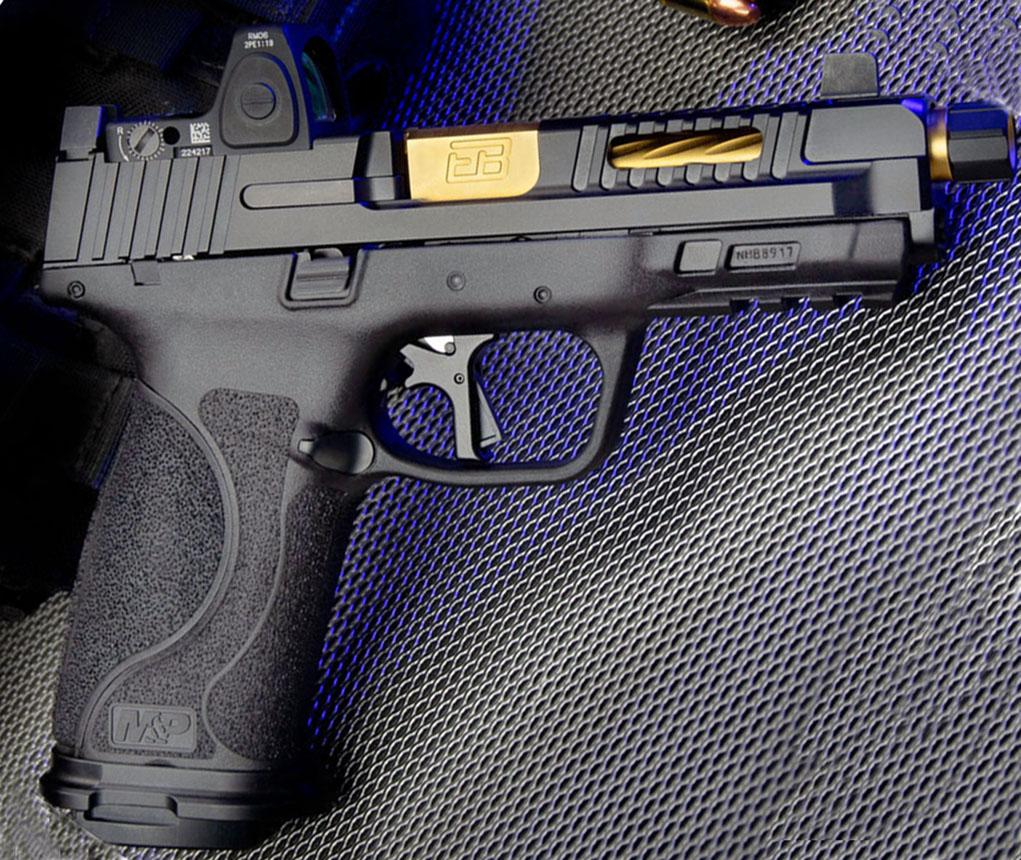
Ed Brown Custom MP-F4 S&W M&P 2.0 9mm
The luxurious overhauls included in this package begin to blur the line between a competition pistol and a defense gun. The components that have been upgraded lend themselves to not only improved reliability and accuracy, but to quicker reloads and cleaner trigger pulls. Effort was also certainly put in to making the MP-F4 a handsome gun as well, at least for those who are partial to the “space blaster” aesthetic.
Optics And Suppressor Ready
In 2021, is a custom gun really custom unless it has a red dot and a can? The suppressor market has exploded in recent years and has helped encourage manufacturers to ensure their threads are concentric and their guns are up to the extra abuse imparted by shooting suppressed. The MP-F4 comes with a match grade, 416 stainless steel barrel. It is fluted, threaded (with a custom thread protector), and titanium nitride coated to give it a distinct golden color. The ported slide reduces weight while also exposing more of the barrel to view.
The custom slide is also cut to accept a Trijicon RMR or any other compatible optic. When ordering the MP-F4 from Ed Brown, one can either purchase the standalone pistol or buy it as a package with a Trijicon RMR or SRO.
The Heart Of The MP-F4
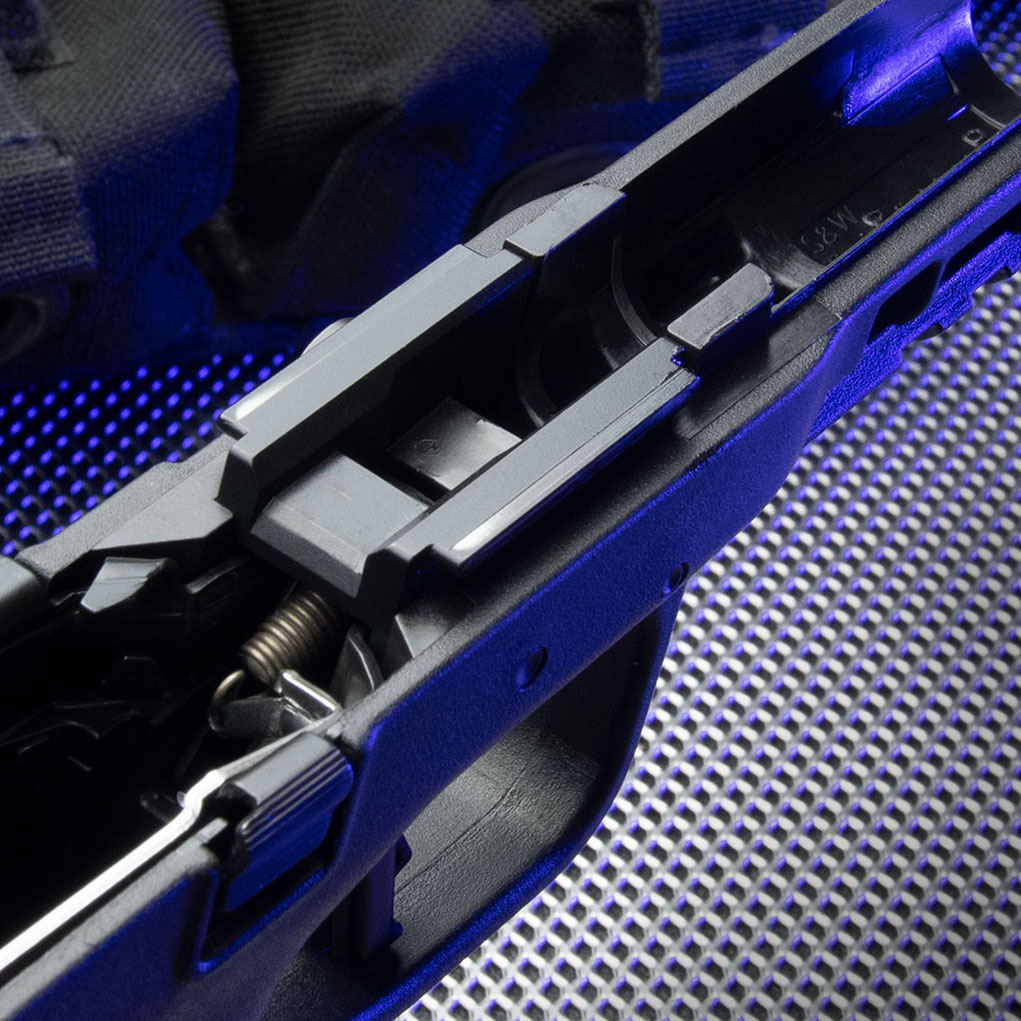
Ed Brown begins each custom Fueled Series job by replacing the factory front rail block with an improved accuracy rail. Ed Brown claims that this new rail enables their gunsmiths to fit each gun to much tighter specs than what are normally found on Smith and Wesson M&Ps. By securely mating the slide to the frame, the accuracy rail eliminates rattle and improves the mechanical accuracy of the system.
Ed Brown’s custom accuracy block ensures the slide and frame are tightly mated to reduce rattle and improve accuracy.
The upgrades found throughout the MP-F4 mean that the gun can outperform most shooters who pick it up. For those who have religiously trained on their standard M&Ps, this may be just the gun to squeeze that last bit of possible accuracy out of the platform.
The MP-F4 begins at $2,195 and goes up from there if packaged with an optic.
For more information on the MP-F4 and the Ed Brown Fueled Series, please visit edbrown.com.
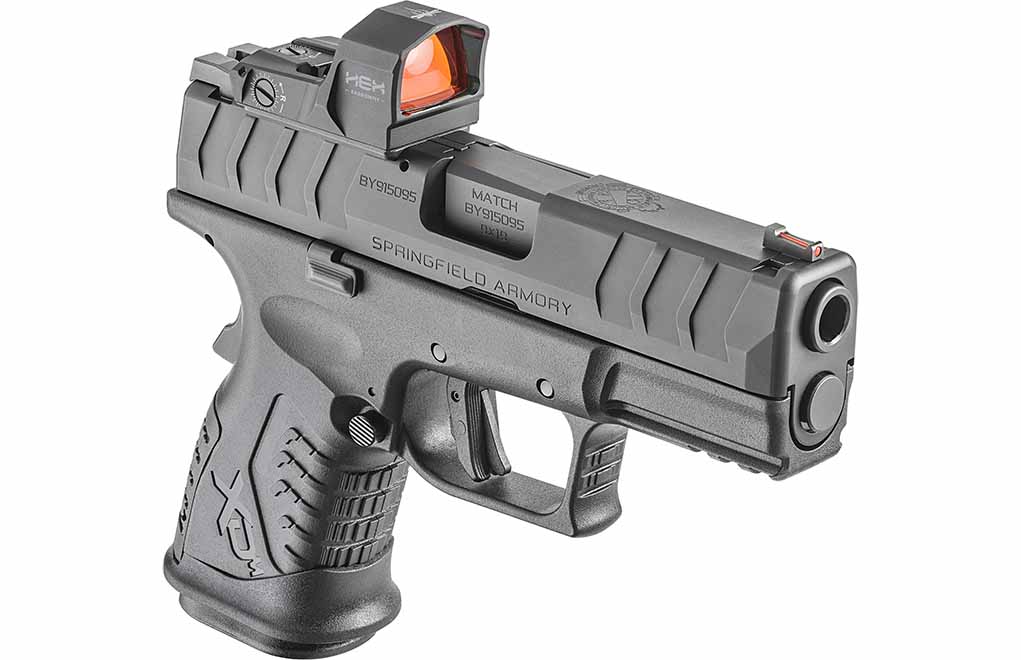
Springfield offers a new optics ready 9mm compact for concealed carry in the XD-M Elite Compact.
Why The XD-M Elite Is Ideal For Concealed Carry:
Small and light enough to be easily concealed
Large enough to be shot comfortably and accurately
Optics ready out of the box as well as enhanced iron sights
Plenty of aftermarket support and accessories available
Springfield Armory recently unveiled the newest pistol in their X-DM Elite series, the X-DM Elite 3.8 inch OSP. The Springfield XD started its life in Croatia in the early 1990s as a duty sidearm known as the HS2000, and since Springfield acquired the rights to license it in 2002, they have changed quite a bit more than the gun’s name.
Springfield Armory XD-M Elite Compact OSP
Today’s handgun market is being driven by concealed carry considerations. Companies are no longer simply trying to make a gun as small as possible like they were when .25 ACP pocket-guns were in vogue, the contemporary concealed carrier now demands usability as much as concealability.
This is why the most popular new CCW guns of today were designed with ergonomics, practical accuracy, and tactical manipulation in mind while still keeping the pistol as compact as possible. Springfield’s new XD-M Elite Compact OSP follows in that trend.
The 9mm Compact’s Basics
The XD-M Elite Compact OSP is offered in 9mm with a 3.8 inch match-grade barrel and a shorter grip than standard Springfield XD models. The Compact OSP ships with two 14-round magazines that sit flush inside the gun’s flared magwell, intended to help hasten reloading. If you value ammunition capacity over concealability and reload speed, however, you can easily remove the flared magwell and instead use standard XD-M 19-round magazines in conjunction with magazine sleeves. Doing this transforms the gun into what is essentially a compact XD-M Elite slide on top of a full-sized frame.
The slide serrations have been enlarged to ensure the gun can be easily charged even with wet or dirty hands, and an ambidextrous slide stop lever and magazine release facilitates right or left-handed shooting.
The XD-M Elite 3.8 inch Compact OSP’s trigger utilizes Springfield’s META system, which they claim offers the “finest trigger pull available on a production polymer-framed pistol.” I have not tried the META trigger system myself, however I find Springfield’s claim to be dubious considering they did not limit their comparison to striker-fired pistols. Perhaps it is the best trigger on the market for a polymer-framed, striker-fired gun, but in a world where there exist polymer-framed DA/SA and SAO pistols, I have trouble believing that a striker-based system could offer a better feeling trigger. Of course, the shooting community will ultimately be who decides how good the META trigger system truly is.
Red Dot Or Iron Sights?
The OSP in the gun’s namesake stands for Optical Sight Pistol, one of the biggest improvements Springfield has made with their new XD-M Elite Compact. The Springfield Standard Footprint found on the XD-M Elite Compact OSP slide can accommodate both popular aftermarket pistol sights as well as the HEX Dragonfly it is being marketed with. The gun can be purchased as either a standalone pistol or as a package with the HEX Dragonfly.
If carrying with a red dot isn’t your taste, the seamless cover plate can be left on the optical mount for iron sight use. The gun comes standard with Springfield’s Tactical Rack U-Dot rear sight and a high-visibility fiber optic front post, making it a viable defense pistol even without mounting a red dot.
A gun blowup on the YouTube channel Kentucky Ballistics provides a stark reminder to always know what ammo you’re loading into your gun.
The above video was produced by the YouTube channel Kentucky Ballistics, which has some pretty interesting shooting content. Particularly if you enjoy large-caliber firearms and general mayhem. Though it’s doubtful the host of the channel, Scott Allen DeShields Jr., ever dreamed he’d film this level of chaos.
In short, he was at the receiving end of a .50-caliber blowup. Not fun.
A more detailed rundown, his Serbu RN-150 blew up when a Saboted Light Armor Penetrator (SLAP) round caused a dangerous pressure spike–one the rifle’s manufacture’s estimates exceeded 85,000 PSI. Slow-motion footage of the malfunction is shown, and while the damage to the rifle is catastrophic it’s nowhere near the injury DeShields suffered due to the blowup.
In many respects, the online gun guy is lucky to have escaped with his life. The locking cap that closes the breech stripped its threads and hit the host’s face, breaking his right orbital bone in three places and his nose, as well as causing him to go temporally blind. Recoil on the chassis severely broke his hand. And most alarmingly, two ears on the lower sheared off—one grazing his head, the other going through his neck lacerating his jugular vein and puncturing his lung.
As the recap shows, DeShields made it through the potentially deadly mishap, but only after undergoing surgery. Though he doesn’t blame the gun or any obstruction. Instead, he has his suspicions about the surplus SLAP round being the root of the ordeal. His wager, the ammo was loaded hot. But there’s the potential with what happened it could have been the other way around– underloaded.
Unbeknownst to many, underloaded or reduced loads are potentially more dangerous due to a phenomenon known as Secondary Explosion Effect (SEE) or plain old detonation. Both P.O. Ackley and Noma’s Nils Kvale independently confirmed the occurrence. In his authoritative book, Handbook for Shooters and Reloaders, Ackley summed what he believed caused the event thusly:
What causes these unpredictable pressure and occasional blow-ups is the use of heavily coated slow burning powders in reduced charges that leave a lot of air space in the case. When this is coupled with under-ignition from a weak or faulty primer, the whole charge does not start burning at once. Instead, gas is apparently formed. This ignites, causes a violent wave. More powder ignites, and all hell breaks loose.
There are other theories as to rare event’s causes, but all revolve around underloading.
Hot or reduced load, the video provides a good reminder you should always know exactly what you’re feeding your guns. That, and also always wear your safety specs. How much worse would the carnage have been if DeShields didn’t have safety glasses on when the cap hit his face?
By the way, if you’re interested in learning more about SEE and P.O. Ackley’s other pioneering firearms research, be sure to check out P.O. Ackley: America’s Gunsmith, available exclusively at the GunDigestStore.com.
Under appreciated, barely a second thought is given to the bipod. A mistake, given attaching the right one to your rifle’s fore-end tightens groups and extends your range.
What Are Important Factors In Choosing A Bipod:
Style of shooting: hunting, target shooting, competition.
Responsiveness to recoil management techniques.
Weight of rifle.
Fit to your body type.
Most people view bipods as an accessory where less is more; they don’t see the benefit or understand its true importance.
The majority of rifle systems I see average about $5,000 with scopes and bipods included. It’s $2,000 for the rifle, $2,400 for the scope, and $100 for the bipod. Looking at this trend, I tend to hurt a few feelings—mainly because they’re doing it wrong. The bipod matters, and putting the right bipod into context should be a top priority.
Why A Shooting Bipod Matters
Bipods have to support the rifle in a way that supports precision—not subtracting from it. Yes, a bipod does have a bearing on precision at long range. It’s physics; we want to balance inside the triangle of stability and not teeter on top of the pyramid.
The bipod should be as far forward on the stock as possible to minimize the shooter’s influence at the rear. If you follow the legs in a straight line toward the barrel, the triangle should be over the bore … not under it. We want to hang the barrel, not balance it on top.
Many new shooters default to a Harris bipod style because it’s cheapest and most common, and people feel it works. Sure, it does—if you don’t mind working harder instead of smarter. Harris bipods have been around a long time and have barely changed since the beginning.
And that should be your first clue: Because they’re stamped metal, they’re often out of square just enough to throw the recoil pulse off; plus, they don’t give under recoil. There’s a lot of movement unless it’s adequately managed.
Recoil management is quickly becoming fundamental to accuracy and consistency—so much so that the Army includes it as a fundamental in their sniper training. Having a bipod that responds to the shooter’s recoil management technique makes the job easier and more consistent. You find you’re resetting your position less often, and shot placement is more consistent.
Finding Your Style Of Bipod
The first problem is people tend to set up too low. When you hear the overplayed mantra, “Get as low as possible,” it’s related to the other positions, not just the prone. Kneeling is lower and more stable than standing, sitting is lower and more stable than kneeling, and prone is lower and more stable than sitting.
The ThunderBeast bipod is another top-tier product that has a lot of stability with the added benefit of versatility.
Once you’re prone, set the bipod to your body type and not some arbitrary idea that you have to be as low as possible. Super-low prone isn’t a thing. If we wanted to get super low, we’d use the Hawkins position, which balances the front of the rifle on our fist and has the shooter laying on top of the stock. It was meant for shooting over a slope, which keeps the sniper’s head from being too high on the skyline.
Set the bipod to your body type. Many shooters feel Harris-style bipods will bounce. That’s due to the unforgiving nature of the legs. They don’t flex with recoil, allowing it to be managed correctly. Not to mention, there are springs in the feet; you need to be a notch up.
The Harris is the lowest common denominator, and most people who enjoy using them have a lot of rifle on top. You’re working much too hard for positive results. In more than one of my classes, I’ve taken fundamentally good shooters, where we see the groups don’t match the action, replaced their bipod and immediately noticed a decrease in group size. It’s a neon sign.
Get On Target With Frank Galli:
Mils vs. MOA: Which Is The Best Long-Range Language?
Compare a top-tier options like the Elite Iron Revolution Bipods: This is the pinnacle of excellence in bipod design. In my world, the hierarchy of bipods starts with Harris and ends at the Elite Iron. In between, I default to the Atlas Bipods or the ThunderBeast Arms.
Top-tier bipods, all in a row. It makes a big difference in the amount of effort needed, and it’s a piece that will either shrink or expand your downrange groups.
The Atlas CAL is currently one of my favorite bipods, along with the TBAC, due to the size and stability factors. They manage recoil much better than most other bipods of that size and style. It’s the small amount of flex in the legs and the increased bridge size to move the stance wider that makes the difference. After all, a little goes a long way.
Choose a bipod based on your intended use:
Hunting
Target Shooting
PRS/NRL-Type Competition
Considering the above situations, each discipline has a specific set of needs.
Hunting rifles have to be maneuverable. Smaller, lighter bipods are the preferred choice. If you’re hunting and have the opportunity to take a prone shot, it was a gift. Take it and use what’s on hand. This a discipline where bipods have the least bearing when playing the odds.
For target shooting, we want the best bipod money can buy. You want the utmost degree of accuracy. There’s a reason F Class bipods are very wide; it increases stability and matches their rear rests. Here’s where I’d recommend the Elite Iron Revolution.
In competition, the PRS/NRL have their own set of specialty bipods, like the MDT Cyke Pod. This design is meant to bridge the obstacles the shooters will encounter. Many times, the shooters will remove the bipod to use the bags so quick-releases are preferred. Smaller and lighter, many matches offer limited prone shots.
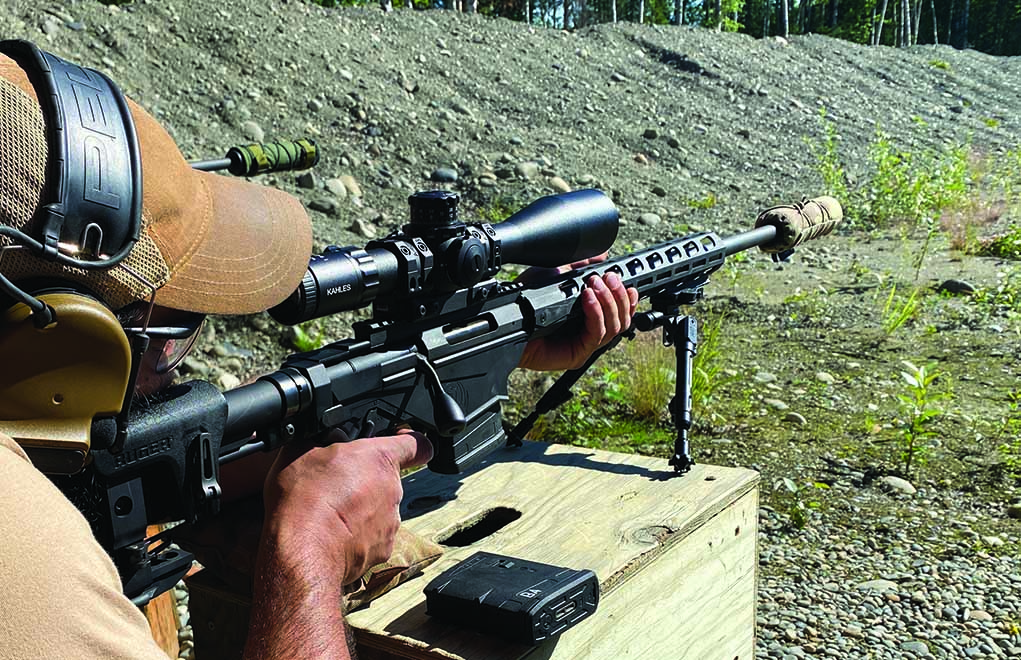
Pairing the correct bipod with the correct weapons platform is crucial for downrange precision. Here, the Tikka Tac A1 wears an TBAC bipod.
Tactical shooters: The Atlas, with the first models being the lowest consideration, and the Atlas CAL being the current leader of the pack. TBAC made a huge splash with their entry, and it has a lot of design features that were hand-chosen to solve problems encountered by the Harris. It’s the Harris-style we were waiting for, and it’s a game changer.
The Bottom Line
Bipods should not be an afterthought. They’re an important piece of the puzzle. Recently, we had a discussion on Sniper’s Hide about essential accessories, and the bipod is even more important than a level. A level just points out a problem; the bipod is the tool that fixes it. If you’re finding yourself canting your rifle, the answer is: Get a bipod you can tighten down in order to prevent yourself from pulling or pushing the rifle over. The Elite Iron, Atlas CAL, and TBAC all have superior locking features. It’s nearly impossible to cant if you set it up correctly.
Although it seems like a small piece, don’t skimp on your bipods. They’re an important part of the shooting puzzle. The money invested today will pay dividends tomorrow.
Editor’s Note: This article originally appeared in the October 2021 issue of Gun Digest the Magazine.
An engagement can happen at any time, day or night. With this in mind, learning low-light shooting basics is imperative to have an upper hand in lethal-force encounters.
Unless you lock yourself in your linen closet once the sun goes down, likely your risk profile includes low-light environments. You know what? Felonious thugs tend to operate in these settings, using darkness to cloak their misdeeds. If you have grasped where this is going, it means that if you value your safety you better sharpen up your low-light shooting skills.
Jamey Caldwell, an instructor at 1-Minute Out and former special operator, sheds some light on the topic in the above video. Which, at its most fundamental, is less daunting than it sounds.
What Low-Light Shooting Entails Equipment and darkness add challenges to engaging a threat, but getting your gun into the fight remains the same at midnight as it does mid-day. This means, you’ll still draw, present, prep the trigger, build a sight picture and break a shot adhering to the fundamentals. That’s the good news. The bad, the two added variables—low light and equipment—are doozies.
Unfortunately, a 4-minute video isn’t enough to give a full grasp of all theories and tactics for conquering the dark. Hours could be spent on weapons lights theory and technique, let alone adding in actual shooting. Suffice to say, like anything self-defense, the only way to become proficient is through training and practice. Which, in and of itself is a challenge. Gun ranges generally don’t let you dim the lights for this kind of training.
Unless you have access to land where you can safely shoot when the sun is over the horizon, expect to enroll in a low-light shooting course. Even if you’re experienced with a handgun, it’s a worthwhile investment when lead by a qualified instructor. Plus, it comes in a setting in which you can send live rounds downrange, which is indispensable.
Importance Of Learning Your Equipment This isn’t to say you can’t get some experience without burning powder. Becoming familiar with your equipment, be it a flashlight or a direct attach weapons light is as imperative as solid marksmanship. Dryfire practice in the confines of your home makes an excellent venue to educate yourself on your illumination equipment.
It’s valuable time spent. Lethal-force encounters happen within a blink of an eye, adding another piece of gear to the equation only slows down your response further. You do the math. It only makes sense you know your torch as well as you do your gun, lest you fumble what might be your only chance to defend yourself from the things that lurk in the shadows.
Contrary to popular belief, there’s no one right way to aim a defensive handgun. The dynamic situation requires multiple techniques to quickly get on target.
When it comes to the practical application of aiming and shooting a defensive handgun, there’s endless arguments about which technique is best. The reality is that if you only practice or use one technique, you’re limiting your ability to deliver peak performance. There is, however, a difference between a beginner learning to shoot a defensive handgun and an experienced shooter wanting to enhance their abilities.
The truth of the matter is that without a specific definition of “aiming,” it’s hard to classify any handgun shooting technique applied to an intended target as “unaimed” fire. Aim is, after all, your intent to hit.
Aim is also a topic often discussed by clinical psychologist Jordon Peterson—not “aim” as it relates to shooting, but aim as it relates to life. As it turns out, both are similar. When it comes to aiming a handgun, if you think you’re going to do a bad job, that you don’t have enough time, or that you’re going to have to do it perfectly, the end result is the same as an aim you might have with any other goal you might want to achieve—it’ll never happen or it’ll happen too late to matter. Peterson’s advice is to do it, if nothing else, haphazardly. At least then you’ve taken a shot.
So, comparatively, aiming is anything between and including taking a precise sight picture and, as some would suggest, haphazardly, point shooting. In both cases you’re attempting to hit—aiming at—a target, whether you’re actually using the sights to do it or not. Starting with what is generally considered the technique that’ll produce the best results on target, let’s examine that technique and others, all the way through to the one that’ll generally give the best results on a clock. As you’ll see, as with most things in life, the best answer for most problems lies somewhere in the middle.
Precision Sight Picture
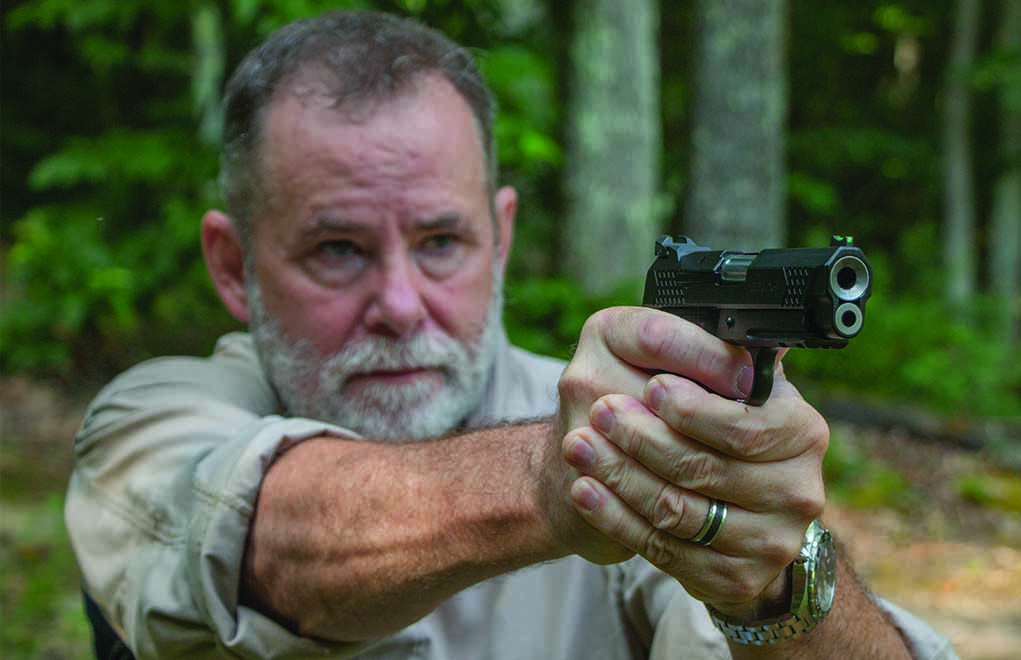
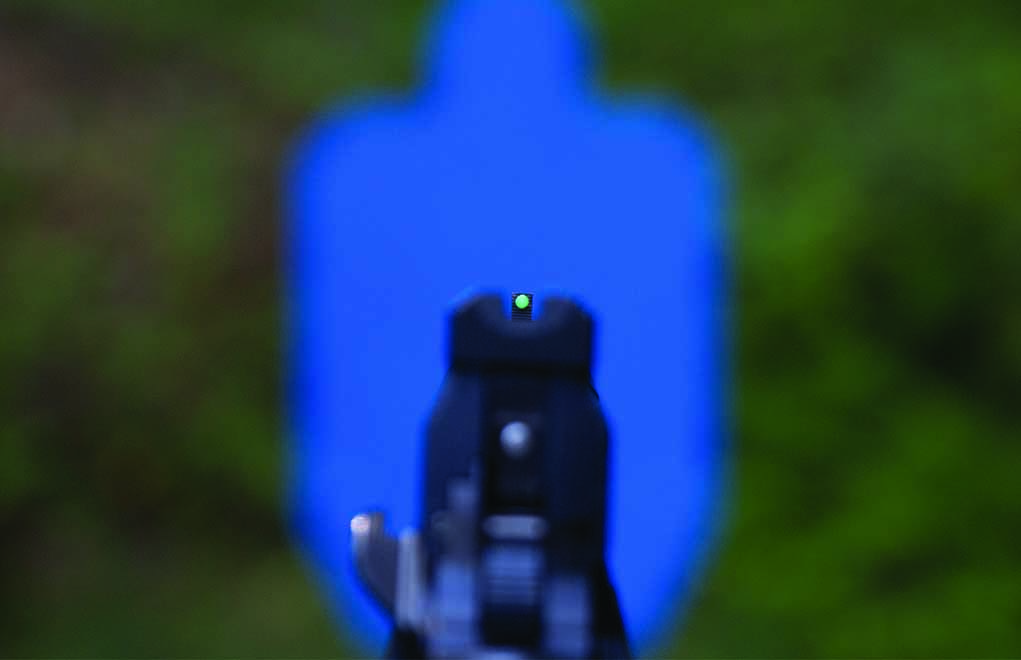
With the precision sight picture, the front sight is in clear focus, is perfectly centered in the rear notch, and is directly over the spot on the target or threat that you wish to hit.
What is it? If you want your bullets to arrive at the target as close as possible to where you’re aiming, you need to hold a precision sight picture as the trigger is pressed. A precision sight picture is one where the front sight is perfectly centered in the rear sight and remains unwaveringly on target as the trigger is pressed. This obviously will take the most time of any technique.
When do you use it? It’s best used when time allows or distance demands to ensure a vital zone hit. For some shooters, this could be 10 yards; for others, it could be 20, depending on skill level and size of the available vital zone there is to shoot at. Furthermore, if you’re shooting to stop the threat, you’re shooting at a vital zone, not a shirt button; for most real-world defensive shootings, a precision sight picture isn’t necessary.
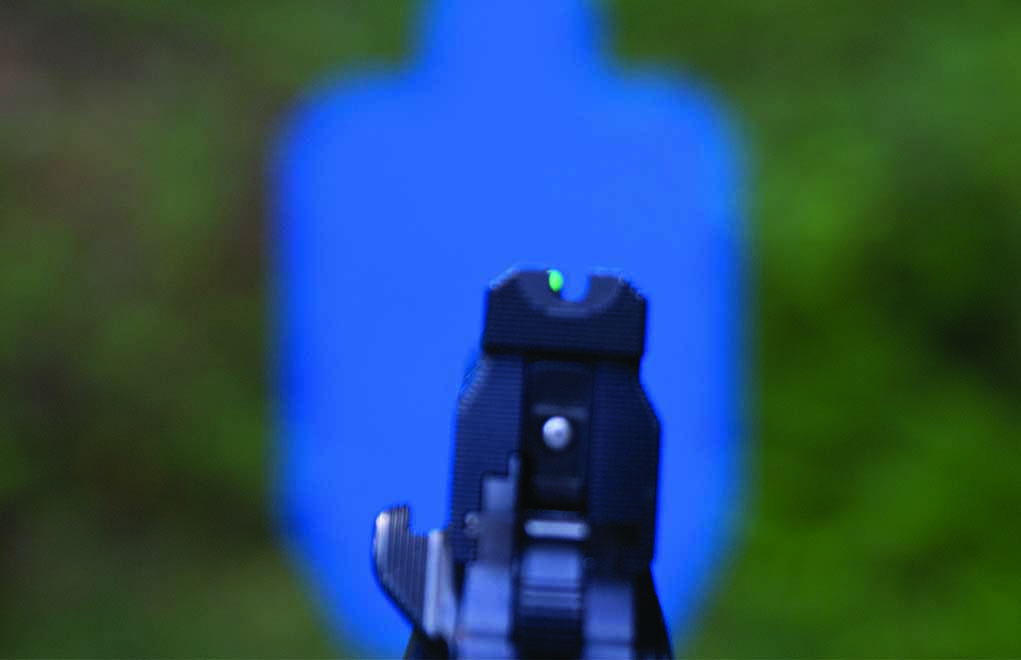
A flash sight picture doesn’t necessarily require the perfect alignment of the front sight in the middle of the rear notch, or that the front sight be in perfect focus. In fact, at common defensive handgun distances, as long as the front sight is in the rear notch you can achieve vital zone hits.
What is it? Jeff Cooper talked about the flash sight picture as being part of his Modern Technique. As described in the book, The Modern Technique of the Pistol by Gregory Boyce Morrison to which Jeff Cooper served as an editorial advisor, “The flash sight-picture involves a glimpse of the sight picture sufficient to confirm alignment.” Let’s try to define it another way. The flash sight picture is confirmed with a focus on the front sight, and instantaneous verification is within the rear notch and covering the vital zone.
When do you use it? The use of the flash sight picture is driven by time: The less you have, the more it’s needed. How close or how far away should the flash sight picture be used? At any distance where you need to focus on the front sight to get a vital zone hit.
Target Focus Shooting
Target focus shooting works best with a highly visible front sight like this XS Big Dot Sight. The shooter’s focus in on the target.
What is it? Shooting with a target focus is very similar to shooting with a flash sight picture. The difference is that your eyes are focused on the target as opposed to the front sight. The similarity is that you can still see the front sight over the vital zone. Essentially, it’s the introduction of the handgun sights—properly or very near properly aligned—between you and the target or threat zone you’re focused on.
When do you use it? For most shooters of at least moderate skill, target focus shooting can be applied in and around three to five yards. More practiced shooters might stretch it to seven yards. Here’s a good way to look at it. It can and should be used until the distance to the target and the available or exposed threat zone requires you to focus on the front sight to get a hit.
Gun Indexing
Indexing the gun over the target isn’t a means of precision shooting. However, at close range, it’s very fast and can be very effective.
What is it? Gun indexing is very similar to target focus shooting; you introduce the handgun between you and the target/threat zone you’re focused on. The difference is that instead of attempting to see sights that are lined up but out of focus between you and the target, you’re just looking for a gun between you and the target.
When do you use it? For novice shooters, they may have to be no more than a couple yards from the target to apply this technique. It’s very fast because the action is essentially no more than shoving the gun between you and the target. As you become more experienced you might be able to stretch this distance to as far as five yards.
Hip/Point/Retention Shooting
With point/hip/retention shooting, you have no visual reference of the gun or the gun’s sights as they relate to the target. It’s a close-range technique and a very fast technique, but it requires a tremendous amount of practice.
What is it? The best way to explain this method is to describe it as cowboy shooting, at least the cowboy shooting you see in movies where the gun clears leather, is rotated toward the target, and fired from the hip or near the hip in the retention position. This is a very hard skill to master, because the gun is being aimed by body position without a visual reference of its relationship to the target.
When do you use it? Obviously, this technique should be used when your target/attacker is very close—inside three yards—because with the gun closer to your body, it’s more difficult for the attacker to grab hold of. It’s a very fast technique, but it takes an experienced shooter to be able to hit a target—much less a vital zone—with this method at any distance at all. Most will max out at about three yards.
Making the Call On Aiming Technique
Which is best? What might surprise you is that none of these techniques are better than the other. They’re all equally important, because from a tactical standpoint they should all be applied based on the situation. If you’re three yards from the target and take the time to establish a precision sight picture, you might get your gun taken away from you or pull the trigger too late to save your life. Conversely, if you’re at 15 yards and try to shoot from the retention position, you could incapacitate your adversary with laughter because he’ll be cackling at your inability to hit anything. The key is to know your limitations with each technique and apply them accordingly.
An experienced shooter will move between these techniques subconsciously as the situation dictates. Practice has taught them what they need to see or feel given the range, target size, and perceived available time. If you’re five yards from a threat and you think you need to point shoot in order to incapacitate the threat before it reaches or shoots you, that’s a noble goal. However, the reality might be that you must shoot with a target focus or at least a flash sight picture in order to get the hits you need as soon as they’re needed.
To try to put some numbers to this and after the expenditure of a lot of ammunition, I found that I could keep five shots inside a 5-inch circle at 25 yards using the precision sight picture. Problem was, it took me about 15 seconds to do it. I also found that between one and three yards I could shoot from the retention position and keep five shots inside a 5-inch circle—about half the time—in less than 2.5 seconds.
With the gun indexing method, most of the time I could keep five shots inside a 5-inch circle out to about four yards and within about 3 seconds. By using the flash sight picture, I could stretch that distance to about 12 yards, but it took me about 5 seconds at that distance. As for the target focus technique, for me it worked about as well as the flash sight picture; however, I had to switch to a different handgun with a very bold XS Sights’ Big Dot Sight for the best results.
Interestingly, with all the techniques where the handgun was being fired out in front of my face, I sometimes found I’d use multiple techniques for individual shots within the five-shot string. This was possible and happened because of conditioning/practice. My brain recognized when the gun was indexed properly, when the front sight was positioned properly, and when I had the correct flash or even precision sight picture, and it made my finger pull the trigger.
How Do You Train and Practice Aiming?
The best way to train or practice is the crawl, walk, run, method. Pick a reasonable distance—something between three and seven yards—and become proficient with the precision sight picture. When you get to where you can put five shots inside a 5-inch circle in less than 5 seconds, you’ll very likely be using the flash sight picture but not realize it. Then, you can try to do the same with a target focus, and ultimately—hopefully—progress with the same results by doing nothing but indexing the gun.
As for effective hip/point/retention shooting where you can reliably hit the vital zone, that takes a hellacious amount of time on the range and lots and lots of ammo. I was once conducting a torture test with a Remington R51 and after about 250 rounds became bored. So, I started hip shooting/quick drawing. At first, I could hardly hit a silhouette target at 10 yards. But after the remaining 750 rounds and another two days on the range, I was getting hits from the holster in about a second. Even now, and after a lot more practice, I need to be inside five yards to reliably get vital zone hits with this technique.
So, which technique should you use? All of them, but more specifically, the one that’ll allow you to get vital zone hits as fast as possible, given the situation.
The 5.56 NATO is a medium-range master and the .300 Blackout is lights out when quarters are close. However, until recently reaching out with your AR-15 was a shaky proposition. Then the age of the .224 Valkyrie dawned.
Specifically designed to reach out past 1,000 yards, the small-bore cartridge has won its share of advocates. Not only thanks to its ballistic talents but also its firearms compatibility. The small-fry is the only long-range cartridge designed with the AR-15 in mind.
To some, this is a small detail, after all, jumping up to the AR-10 unlocks nearly limitless country-mile options. There are, however, advantages with sticking to America’s favorite rifle. The biggest plus, if you already own one and want to pitch the .224 Valkyrie, you simply invest in a .224 Valkyrie upper without a worry of compatibility. No fuss, no muss. Not to mention, a heck of a lot cheaper than investing in a brand new iron—especially if you’re just dabbling with the cartridge.
Why Go .224 Valkyrie?
The answer to this is fairly self-evident—long-range shooting. Essentially, the Federal-designed cartridge was concocted to accept heavier-for-caliber bullets, thus improve the ballistic profile of the .224-inch diameter projectiles. The company did so by necking down the 6.8 SPC case (derived from the .30 Remington), thus providing a system that would seat the bullet without compromising case capacity. Overall, it wildly succeeded.
By Federal’s telling, from a 24-inch barrel, the .224 Valkyrie remains supersonic out to 1,300 yards. Results vary depending on a number of factors, but get pretty darn close to that mark with most appropriate loads out of most rifle-length setups. Which is to say, it bests nearly anything else spit out of an AR-15.
Along with improving range, the cartridge also enhances the hunting potential of the rifle, particularly in terms of deer-sized game. Not that the .223 Remington/5.56 NATO hasn’t harvested its share of backstraps. However, heavy-for-caliber bullets offer more peace of mind of a one-shot kill given their longer profile boosts their penetration potential.
New King Of ARs … Not So Fast
Despite its long-range and hunting prowess, the .224 Valkyrie isn’t a replacement for standby AR options. Not by a long shot. At medium range, the .223 Remington/5.56 NATO shoots flatter and hits harder, in turn, the newer cartridge won’t dethrone the king anytime soon. That said, investing in a .224 Valkyrie upper adds a ponent arrow to a rifle’s quiver, giving an AR-15 and its shooter the tools to truly reach out.
Get More .224 Valkyrie Info:
Does The .224 Valkyrie Make Sense For Most Shooters?
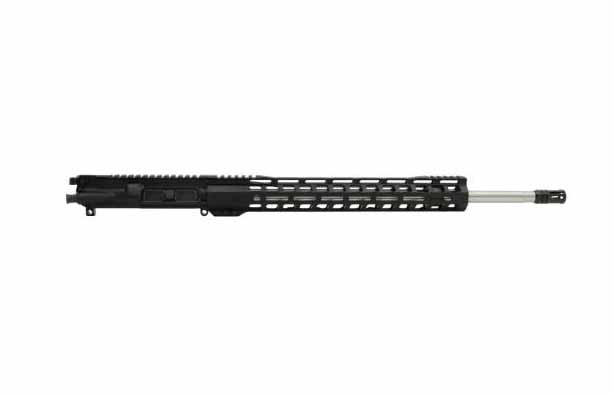
Our .224 Valkyrie upper selections are the complete variety. That is, the upper is completely assembled and factory head spaced. They’re practically ready to shoot when they reach your doorstep. That said, some of the builds are not so complete as the term implies, shipping sans charging handle, bolt and carrier group. In those cases, you’ll have to supply your own, which deserves a word.
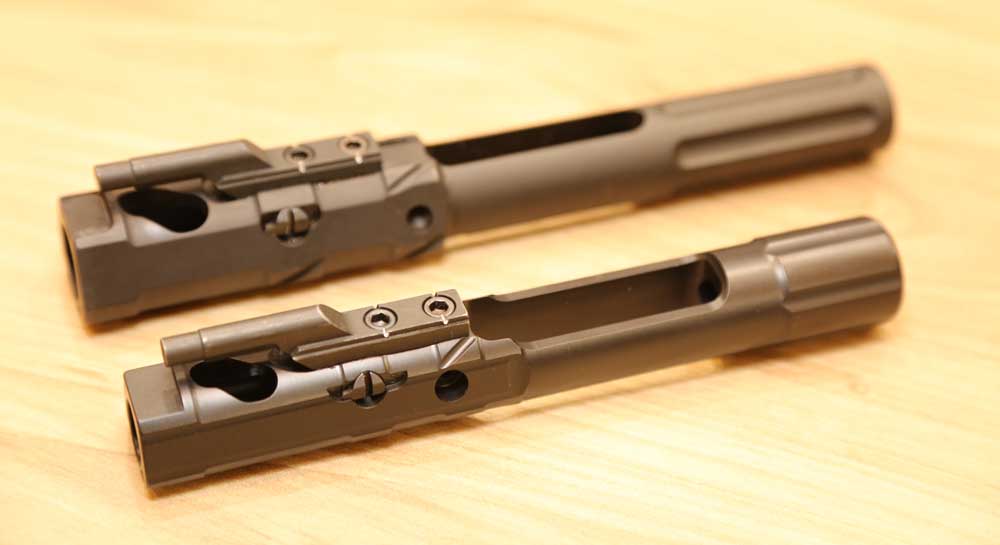
The .224 Valkyrie does not use the same bolt as the 5.56 NATO or .300 Blackout. The parent case for latter two cartridges is the .223 Remington, which has a head diameter of .378. The .224 Valkyrie, on the other hand, is a derivative—reaching all the way back—of the .30 Remington, a case with a head diameter of .422. In turn, when you go shopping for this part you’ll need to shop specifically for .224 Valkyrie/6.8 SPC bolts. Don’t get the right one, guess what … your rifle won’t run.
Best .224 Valkyrie Upper Options
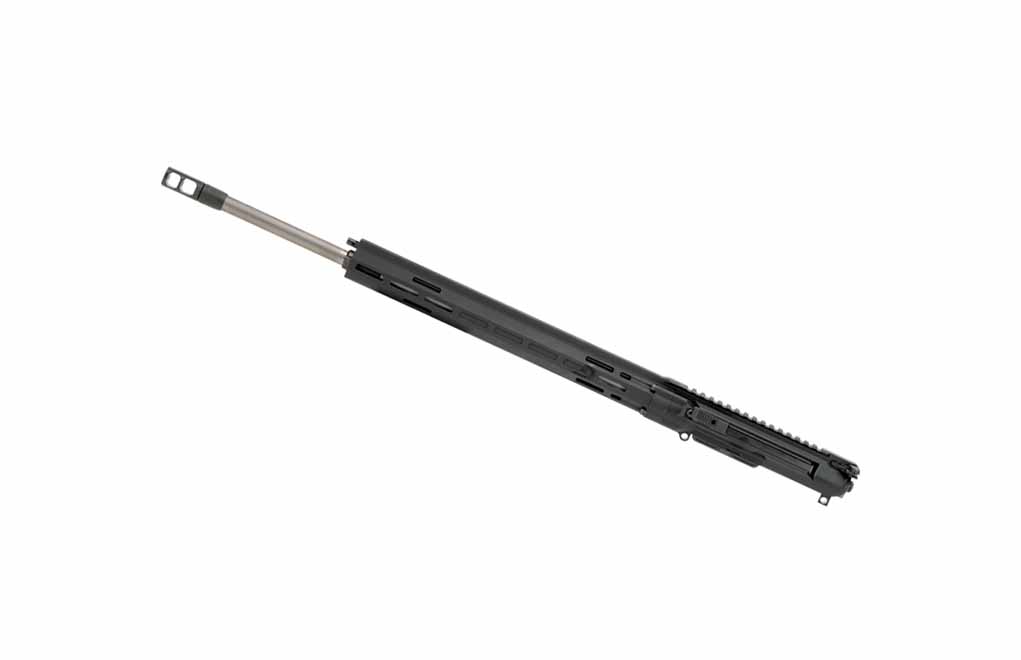
Savage MSR Long Range
Best known for its bolt actions, Savage Arms in recent years has proven an adept AR-15 manufacturer. No more so than when it comes to the Valkyrie. When the cartridge was introduced in 2017, the gunmaker and Federal were owned by the same company. Thus Savage was in at the ground floor of its development and understands the Valkyrie inside out.
The company offers two .224 Valkyrie upper options, but we tend toward the longer barrel Long Ranger, especially for a precision build. Outfitted with a 22-inch stainless-steel heavy barrel, the system offers more than enough bore to ensure top ballistic performance with most loads. It being Savage, the barrel is button rifled. The company has used this process for years, and is among the best, producing extremely smooth and consistent rifling, thus reducing friction and bullet deformation. As for the twist, it’s 1:7”—fairly standard and versatile.
The upper is complete with a bolt, bolt carrier group (BCG) and charging handle. Savage doesn’t skimp here, particularly on the BCG, which is a self-lubricating nickel-boron affair. As to the handguard, it certainly tends more to precision shooting than tactical, given its sparse M-Lok slots—situated fore and aft. The assumption is, if you are looking for a more “tactical” .224 Valkyrie, you’ll opt for the 18-inch Recon upper, which has much more real estate for accessories. MSRP: $899; https://www.savagearms.com/
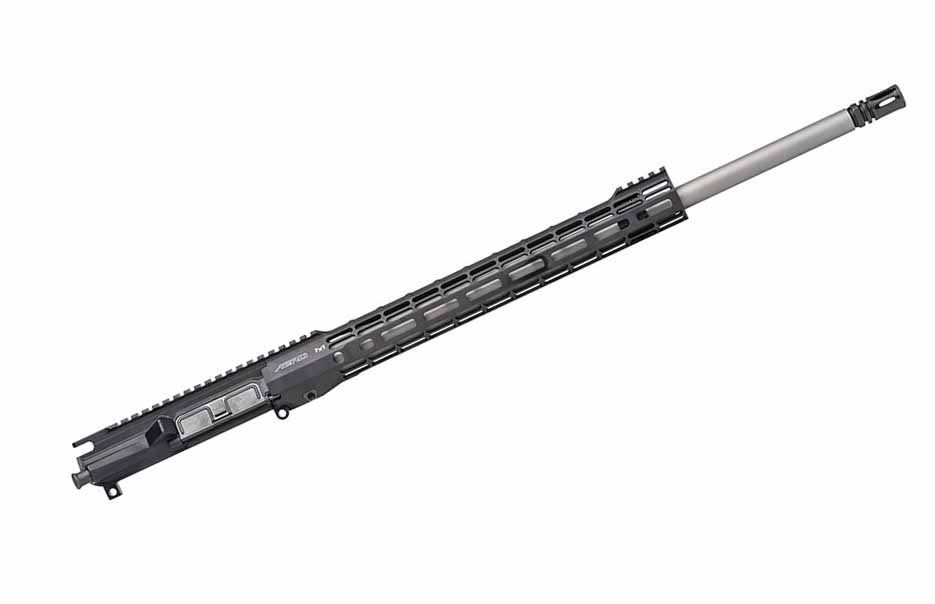
Aero Precision M4E1
Among the largest selection of .224 Valkyrie uppers, the M4E1 series is a variable candy store for Valk enthusiasts. They’re affordable to boot. Generally speaking, Aero offers one of the best price points of any manufacturer on this list, making it a logical starting point for someone just getting into the cartridge. That said, don’t think you’re getting the AR equivalent to a Sizzler’s steak—Aero turns out quality components and backs them up.
As for different models, don’t get too amped up. Mainly we’re talking different barrel lengths (18, 20 and 22 inches) and handguards here. Though, it’s difficult not to prefer the models with Aero’s Atlas S-One handguard. Slim as a fleeting second and extremely lightweight, due to the elimination of a full-length rail, the handguard helps keep the rifle-length uppers more manageable and nimble. Definitely a plus if you’re aiming yours at hunting.
As to the brass tacks, the receiver itself is forged, yet Aero machines them to a billet appearance. No matter length, the barrel is bead-blasted stainless-steel and heavy profile, an aspect that sloughs heat and maintains optimal harmonics. Though it’s worth noting, this upper does not come with bolt, BCG or charging handle—Aero, however, sells all of those. MSRP: Starting at $524; aeroprecisionusa.com
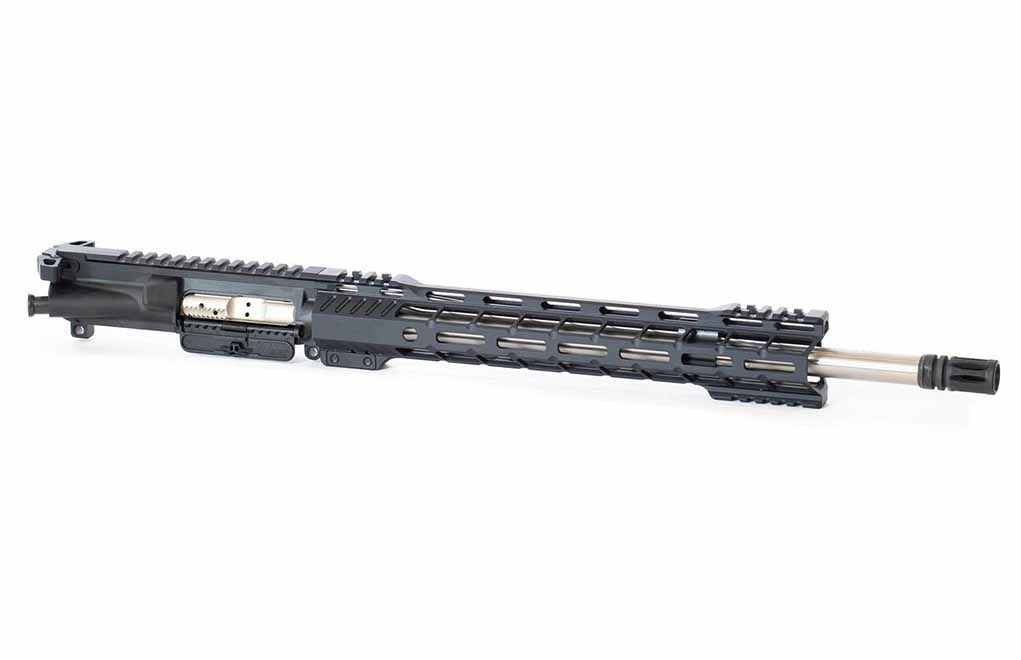
Atheris Rifle Co. A15-M
Like betting the horses without a racing form, you don’t quite know what you’re putting your money on with many small manufacturers. It could be a nag, it could be a winner. Atheris Rifle Company falls into the latter category, especially with a thoroughbred .224 Valkyrie upper at a decidedly affordable price.
A few of the A15-M highlights include in-house manufactured nickel-boron BCG, heavy-contour stainless-steel barrel and lightweight M-Lok compatible handguard. As for receivers, the company offers both forged and billet, with the latter running a touch more, but not so much to dissuade a motivated buyer. What Atheris doesn’t make—charging handle and dust cover—it turns to a top-end supplier, namely Strike industries.
Nice package, but certainly tailored more for a dedicated long-range shooter. The choice is between a 22- and 24-inch barrel, sizable on both counts. Furthermore, Atheris uses a very faster 1:6” twist, good for 90-plus-grain bullets, but a tough on lighter, thin-jacket options.
About the only nit to pick is the handguard length, which at 15 inches does tend short for the build. However, Atheris is more than willing to swap them out with an option more fitting to your style simply by contacting them. MSRP: Forged Receiver $749; Billet Receiver $649; atherisrifle.com
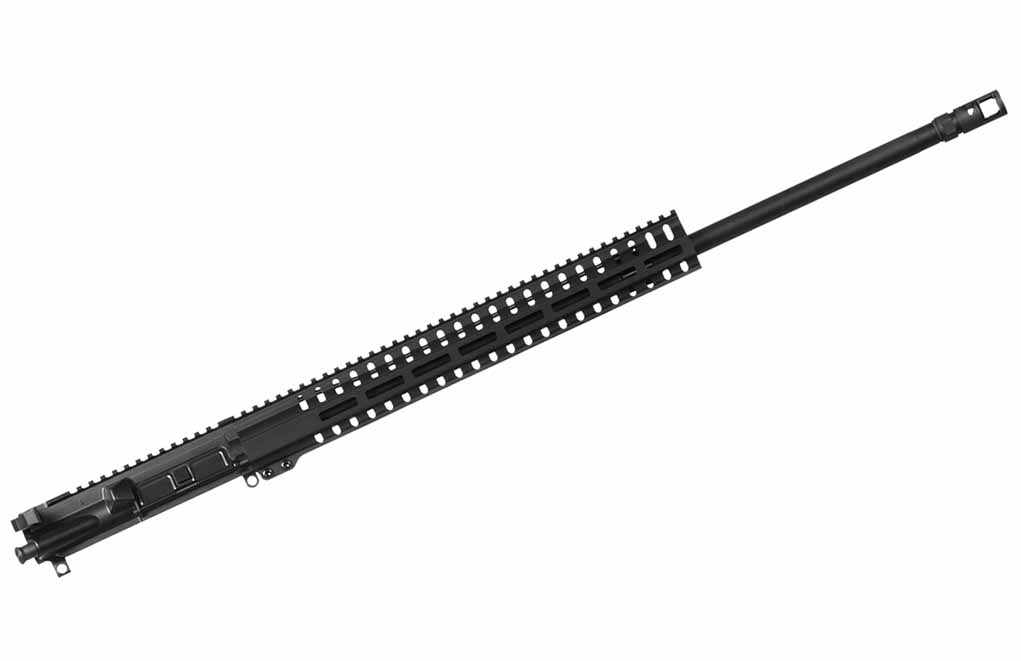
CMMG Endeavor
Given the Banshee blitz of the past few years, it’s easy to lose sight CMMG still turns out a top-notch rifle. It’s not all shorties coming out of Missouri! The gunmaker was an early adopter of the .224 Valkyrie, embracing the cartridge within a year of its release and now offers it in its outstanding long-range Endeavor series of complete uppers.
Don’t let the fact it’s part of CMMG’s long-range catalog scare you off if you have a field gun in mind. There are three Endeavor variations of the .224 Valkyrie, the 100 and 200 sporting more hunting-friendly 20-inch barrels. The 300—with 24 inches of pipe—is perhaps better fit ringing distant steel.
Regardless of iteration, the guts of the build are the same—medium taper stainless-steel barrel, CMMG’s proven forged Mk4 receiver and chrome-lined phosphate finished BCG (9310 steel bolt). But each one comes with different accouterments. Perhaps the most notable, the 100 is capped with an A2 comp, while the 200 and 300 come with CMMG’s SV compensator brake. Furthermore, the 300 comes with an ambi charging handle and choice of 10 Cerakote finishes—if you need a dash of flare.
No matter where you land, you’ll end up with a solid and versatile upper. CMMG goes with the standard 1:7” twist, making them compatible with most off-the-shelf ammo. And the Endeavor can shoot, easily falling in the sub-MOA category. MSRP: Starting at $674; cmmg.com
Palmetto State Armory 20″ Valkyrie
Honestly, when talking AR parts or builds, you knew Palmetto State Armory would crop up sooner or later. Prolific supplier of everything black rifle, the company isn’t prohibitive on coin spilled, yet washes out as a solid option, even against high-tier names. Not a bad starting point for those looking to invest in their first .224 Valkyrie upper.
The company offers fourteen options in this corner of the market, though really, you’re only selecting between handguards and barrel lengths. The meat of the builds is the same, the matting of PSA’s A3 forged receiver and a 18- or 20-inch heavy stainless-steel barrel. In any case, the real feel of the catalog is to hit the middle ground, a flexible system at home tracking deer or pitching copper-jacked lead to the next zip code.
As to the handguard, since that’s the choice to be made, we tend to prefer the lightweight cross-cut model on a 20-inch barrel. M-Lok compatible, the system does away with much of the optics rail—there are sections fore and aft—cutting weight and making for a much more comfortable system.
PSA outfits its uppers with BCG and charging handle, so you can slap it on and start shooing once you receive it. As to twist, this being a jack-of-all-trades option, it should surprise no one Palmetto opted 1:7”. MSRP: $539; palmettostatearmory.com
Follow these guidelines reloading revolver cartridges for maximum performance, reliability and safety.
Keys To Reloading Revolver Cartridges:
Style of bullet dictates style of crimp.
Research your revolver–make, model, date of manufacturer–to build a clear idea of its limitations.
Don’t exceed these limits hot-rodding, thus potentially damage the cylinder and frame.
I’ve been a wheelgun guy since I was a kid. My dad taught me how to shoot with that Ruger Single Six he wore on his gun belt each night he’d take the ’coon hounds out in the fall. How many raccoons fell to that pistol even he can’t estimate.
As my friends and I got older and began to acquire our own handguns (they were primarily wheelguns) and subsequently began to handload for them, we learned an awful lot about what to do and what not to do.
When it comes to reloading for revolvers, there are a few guidelines that’ll help keep you—and your gun—healthy and running properly.
Revolver Cartridges And Crimp
Most revolver cartridges are rimmed cartridges. That’s important, because it gives the handloader some flexibility in their approach, especially regarding different crimp styles. Where the straight-walled pistol cartridges that work so well in the auto-loading handguns require a good, clean and square case mouth for proper headspacing, the rim of revolver cartridges handles the headspacing duties. This leaves some options for the case mouth: Depending on the bullet you’ve chosen, you can work it a few ways, but you’ll certainly need to use a crimp of some type for all revolver ammunition.
The most popular means of keeping things put is the roll crimp, for which the mouth of the case is physically rolled into a crimping groove, or “cannelure.” I like this method and prefer it over any other for fast, hard-kicking cartridges. If you were to skip the crimp on a .454 Casull or .44 Remington Magnum, for example, you run the risk of having your bullets “pull” or “pull crimp,” extending outward from their original seating depth under recoil. Should this happen, the projectiles can (and will) move so far outward that they’ll prevent the cylinder from rotating, thereby creating quite a mess.
The Roll Crimp
A roll crimp is obtained from the seating die, because there’s a small shelf located inside the die body. When the die is set low enough, the cartridge case mouth is pressed against this shelf, rolling the mouth inward into the groove in the bullet and locking the two components together.
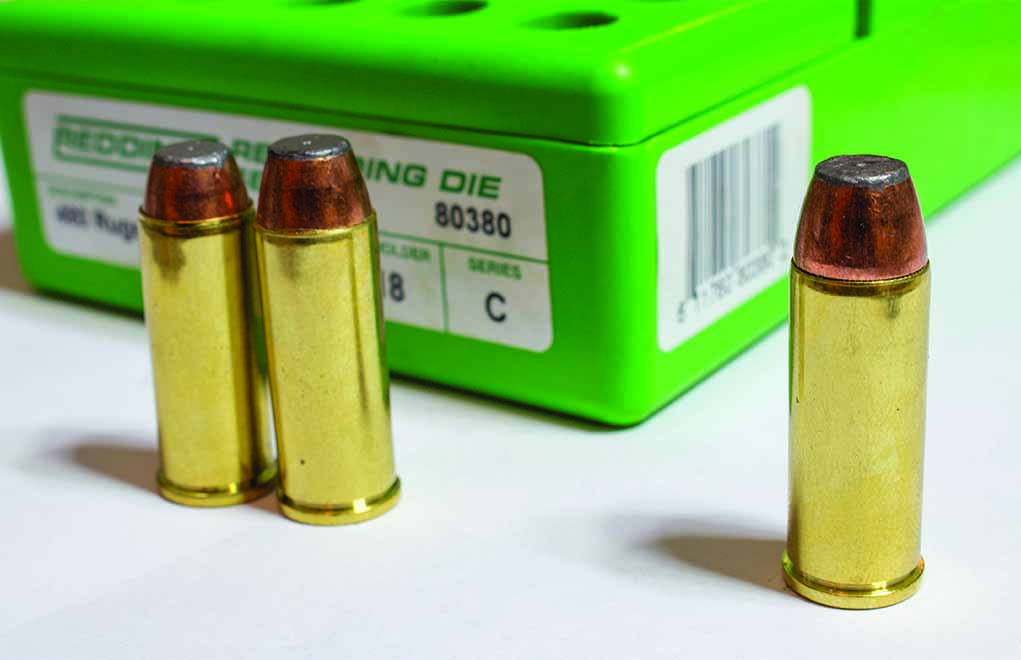
Various stages of attaining the balance of seating depth and roll crimp: The two cartridges on the left are no good, while the cartridge on the right has the proper balance. The seating depth allows the roll crimp to fall right into the cannelure of the .480 Ruger bullet.
Don’t worry: Upon ignition, that crimp (and, for that matter, the case walls) will be blown out immediately, being expanded to the chamber dimension. A roll crimp will not only prevent the projectile from moving, it’ll also help even out your velocities.
However, too much crimp can actually damage a bullet, so it’s one of those “Goldilocks” situations: You need just enough crimp to do the job, but not too much; it needs to be just right. The most important thing to remember is to start with a uniform case length. If you don’t have a consistent case length, the amount of crimp will vary accordingly.
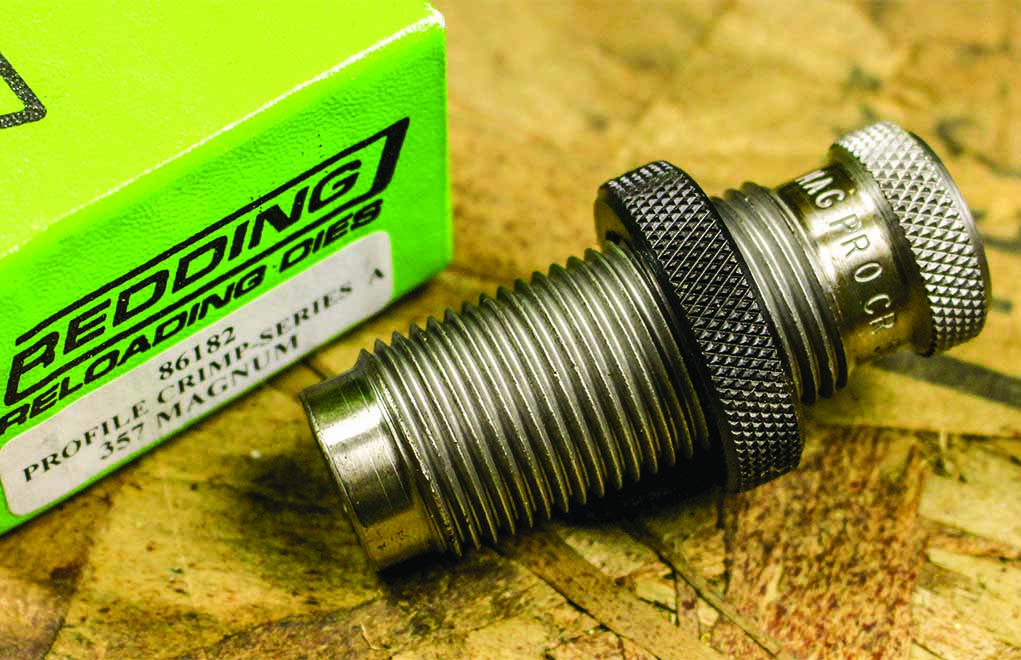
I like the RCBS Case Prep Station for its trimmer, which can easily be dialed in to give a precise case length. Redding makes a great crimp die—the Profile Crimp Die—which is designed to put a more uniform crimp than a seating die will and is to be used after the bullet is seated. Pick a case length (some like the SAAMI spec; some like it a bit shorter in order to be able to trim new cases) and then set your seating die for a proper roll crimp … unless you’re using a bullet with no cannelure.
The Taper Crimp
On a bullet with no groove, you’ll have to use a taper crimp, which squeezes the sides of the case body tightly against the bullet to give proper pressure. It’s almost like neck tension for a case with no neck. There’s nothing wrong with this method; in fact, I know folks who use it in conjunction with a stiff roll crimp—as long as it keeps your projectiles where they need to be.
You’ll need to flare your case mouths before seating a bullet. And, to extend case life, I don’t try to over flare. Just open that mouth enough to seat your bullet without crumpling the case wall. You’ll see a longer case life, because the brass isn’t being overworked.
If you can’t use a roll crimp on your ammo, a profile or taper crimp will give the proper tension to prevent the projectile from moving.
Because we aren’t concerned with the way the cartridge will feed from a magazine, the bullet profile and the way it interacts with the feed ramp become non-issues. Wadcutters, semi-wadcutters, flat nose, round nose, hollow point—all will perform wonderfully in a revolver.
We can also abandon the concern of whether or not the ammunition will cycle an action: Because the cylinder is manually rotated, either by cocking the hammer of a single-action or via the trigger squeeze of a double-action, the lightest loads will perform safely.
I can load my Ruger Blackhawk .45 Colt to run with the lightest 180- and 200-grain lead bullets. Yet, the same gun will handle a 300-grain Hornady XTP Mag or 325-grain Swift A-Frame heavy handgun and can run the spectrum of powder—from TiteGroup and Lil’ Gun to H110 and BlueDot. The heavier loads will certainly provide some substantial muzzle jump. But, as long as you hang onto it, the handgun will perform.
Revolver Cartridge Load Development
And maybe now is a good time to talk about load development, because I’ve seen some guys try to turn a .44 Special into a .44 Magnum or a .38 Special into a .357 Magnum. Beating the snot out of a handgun, trying to get it to be something it isn’t, is a lousy idea.
I have a little Smith & Wesson Model 36—a classic .38 Special snub-nose—and the temptation to run it into the red when I first got it was certainly there. However, the beauty of the little gun is in its size and the ability to conceal it. It isn’t a .357 Magnum, and it’s not even a +P .38 Special. And when I load for it as it’s supposed to be (the gun loves the 158-grain Hornady XTPs at a suitable velocity), it’s a pleasure to shoot. Trying to make a “silk purse out of a sow’s ear,” as my late mother would say, can result in cracked cylinders, stuck cases, jammed-up actions, and other catastrophic results.
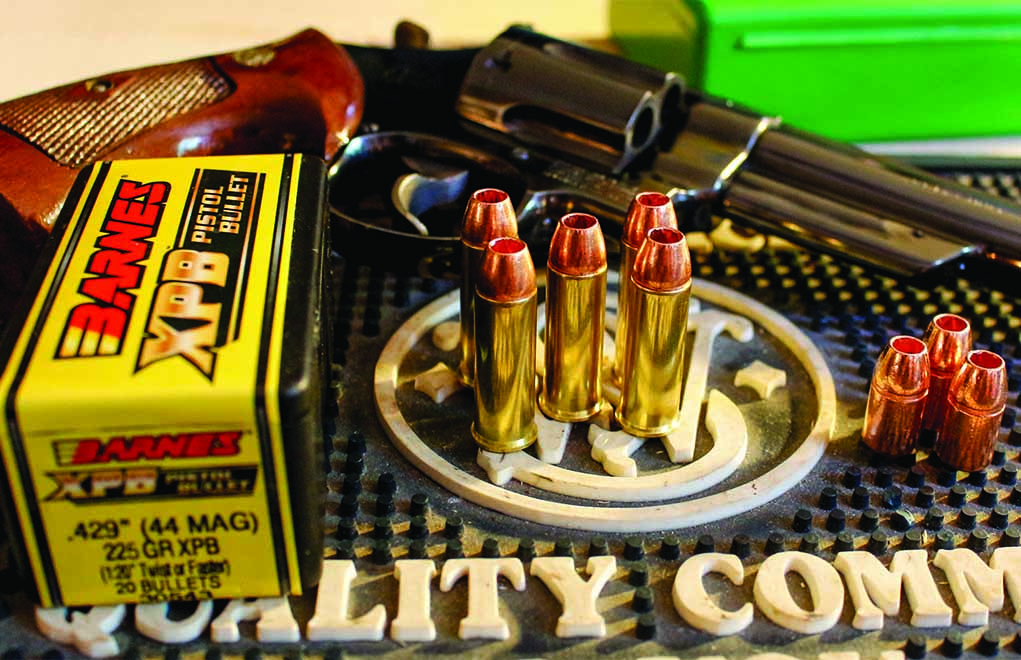
These .44 Remington Magnums are loaded with Barnes XPB lead-free hollow-points, and the crimp is set perfectly.
Before you begin reloading revolver cartridges do a bit of research about its make, model, and even its date of manufacture, because all of these can play a role in the pressure limits that particular gun can handle. Reloading for your revolver will invariably allow you to shoot it more. As a result, you’ll become more proficient with that gun.
Roll your own for hunting season, and you might just find a new passion.
Editor’s Note: This article originally appeared in the September 2020 issue of Gun Digest the Magazine.
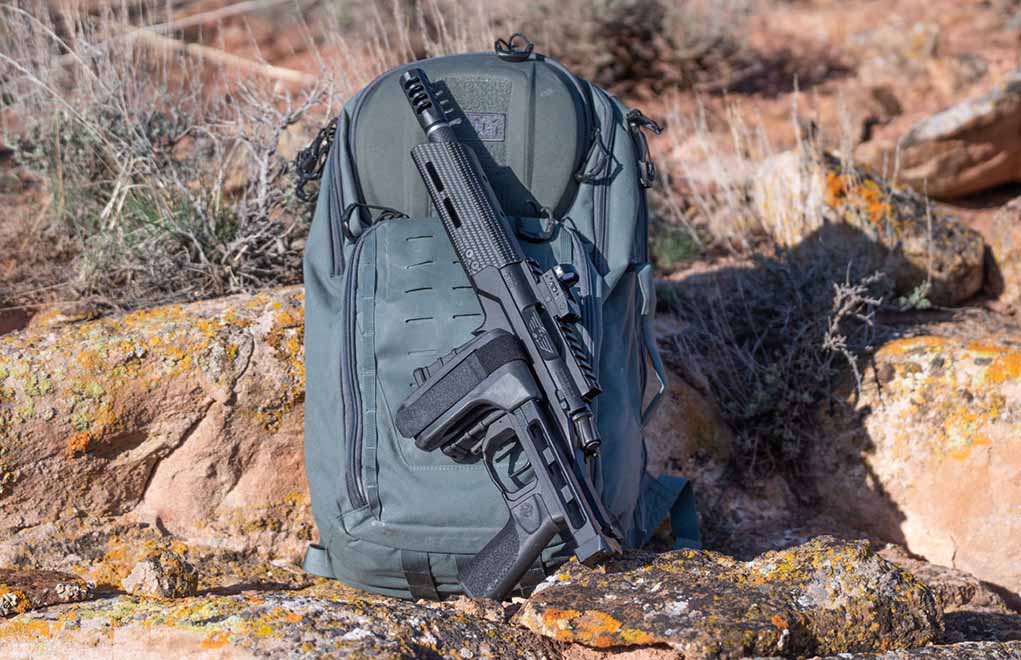
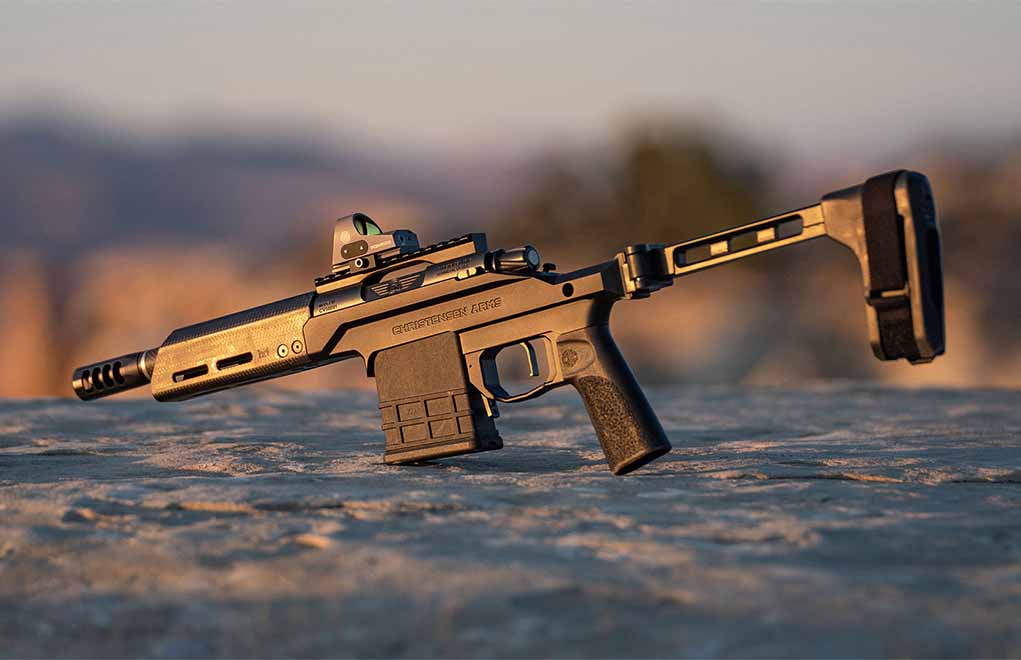
An offshoot of Christensen’s Modern Precision Rifle, the Modern Precision Pistol offers extreme accuracy in a backpack-sized gun.
How The Modern Precision Pistol Offers Convenient Accuracy:
Outfitted with Christensen’s carbon-fiber wrapped barrel.
Utilized the MPR’s aluminum chassis with V-block bedding.
Smallest Configuration weights 4.4 pounds.
Features folding SB Tactical brace; folds down to roughly 14 inches.
We’re all familiar with AR-pistols. Light, nimble and kind of cute, the shrunken down configuration has more than earned its chops as a hard-hitting option for close medium-range and CQ applications But what if a particular circumstance calls for a bit more reach or surgical precision than the popular semi-auto offers? This was clearly a question batted around Christensen Arms HQ, one in which the cutting-edge manufacturer came up with a fairly elegant answer.
Meet the Modern Precision Pistol. Essentially an offshoot of the company’s bolt-action Modern Precision Rifle, the chassis system sports an abbreviated barrel and folding pistol brace for an eminently compact firearm. At the same tick, it employs the same features of its big-brother predecessor to milk as much accuracy as possible out a particularly cartridge. Not a bad combination, particularly for deep wilderness hunters who weigh every ounce of their gear or backcountry campers who want a little more punch in their insurance gun.
So, exactly how light and small are we talking? In its tiniest configuration—with a 7.5-inch carbon-fiber wrapped barrel, chambered 300 Blackout—the Modern Precision Pistol tips the scales as 4.4 pounds. In context, that roughly less than two Government sized 1911s. Additionally, this particular variant shrinks down to roughly 14 inches with its brace folded, legitimately making it rucksack friendly. A rare asset outside of takedown rifles. Though there are larger configurations, a 10.5-inch barreled .223 Remington model and a 12.5-inch barreled 6.5 Creedmoor and .308 Winchester options.
No matter the size, the gun comes fairly well decked out. In addition to Christensen’s carbon-fiber barrels, the Modern Precision Pistol utilizes the company’s billet-aluminum chassis—the same one found in the Modern Precision Rifle. The system is solid, with a V-block that tightly mates to the company’s Remington 700 action and proves rigid enough for repeatable accuracy. To this, the company adds a folding SB Tactical FS1913A brace and lightweight carbon-fiber handguard. This last feature adds to the gun’s utility, featuring a wide-flat base that takes to a support well. Though, it’s M-Lok compatible and has a forward mount Picatinny rail, if a bipod is preferred.
As to other notables, the Modern Precision Pistol is outfitted with a Trigger Tech flat-faced trigger, skeletonized bolt handle, adjustable side-baffle brake, 20 MOA Picatinny optics rail, 2 flush cup QD mounts and paddle magazine release. Speaking of magazines, the system is AICS compatible, making stocking up relatively painless and inexpensive. Which is good, given the pistol doesn’t come cheap. The starting MSRP on the Modern Precision Pistol is $2,200.
For more information on the Modern Precision Pistol, please visit christensenarms.com.
Looking for a new iron or piece of kit to enhance the one you already own? Check out these seven new bits of guns and gear to grow your firearms wish list.
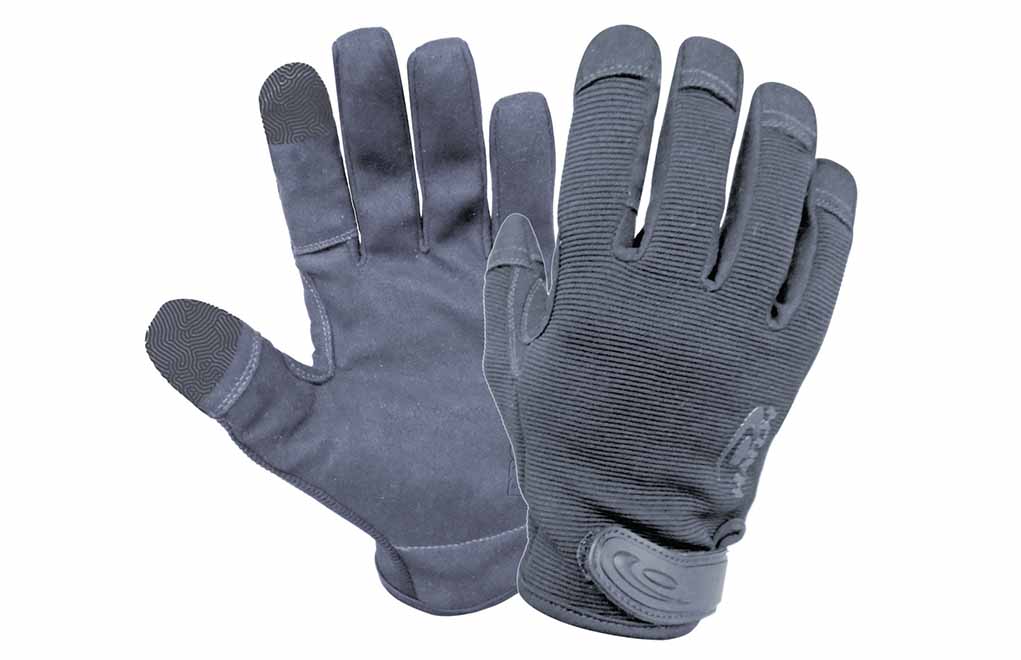
Granted, most of you out there aren’t frisking perps. In turn, you don’t need to sweat a jab by a dirty needle. Nevertheless, the puncture-proof protection utilized by police and military isn’t a bad line of defense, and Hatch provides this in spades. Max gloves are made of resilient materials impervious to most sharp and pointy objects. To give you a baseline, they’re rated to ANSI Cut Resistance A9, which means that in 20mm of blade travel 6,000 grams of weight is required to penetrate the material. At the same time, the Friskmaster gloves allow complete dexterity, thus don’t stand in the way of completing fine-motor tasks. MSRP: $49
Sig Sauer Zulu6 Image Stabilized Binoculars
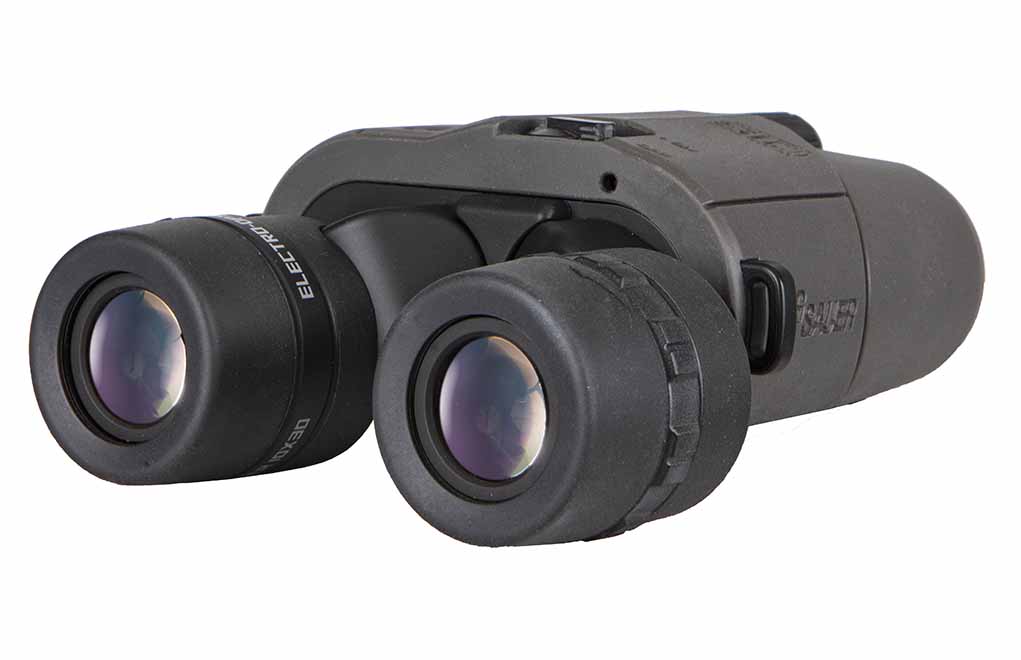
Sig Sauer Zulu6 Image Stabilized Binoculars
It’s difficult enough to discern elk from shadows, so the last thing you need is unsteady optics. This is why Sig Sauer’s latest addition to its Electro-Optics division is a godsend for hunters or anyone else glassing in less-than-ideal conditions. Featuring the company’s Optical Image Stabilization (OIS) technology, Zulu6 Binoculars electronically cancel vibrations to deliver rich and unhampered images. It doesn’t matter if the movement is buffeting wind, chop and waves on the water, washboard ranch roads, heartbeat, heavy breathing or shaking. The secret sauce is a two-axis gimbal system that deletes any shutter—environmental or man-made. Available in 10x30mm and 16x42mm, Sig offers options fit for nearly any outdoor application. MSRP: 10x30mm, $799; 16x42mm, $899
CZ USA 557 Eclipse Rifle
CZ USA 557 Eclipse Rifle
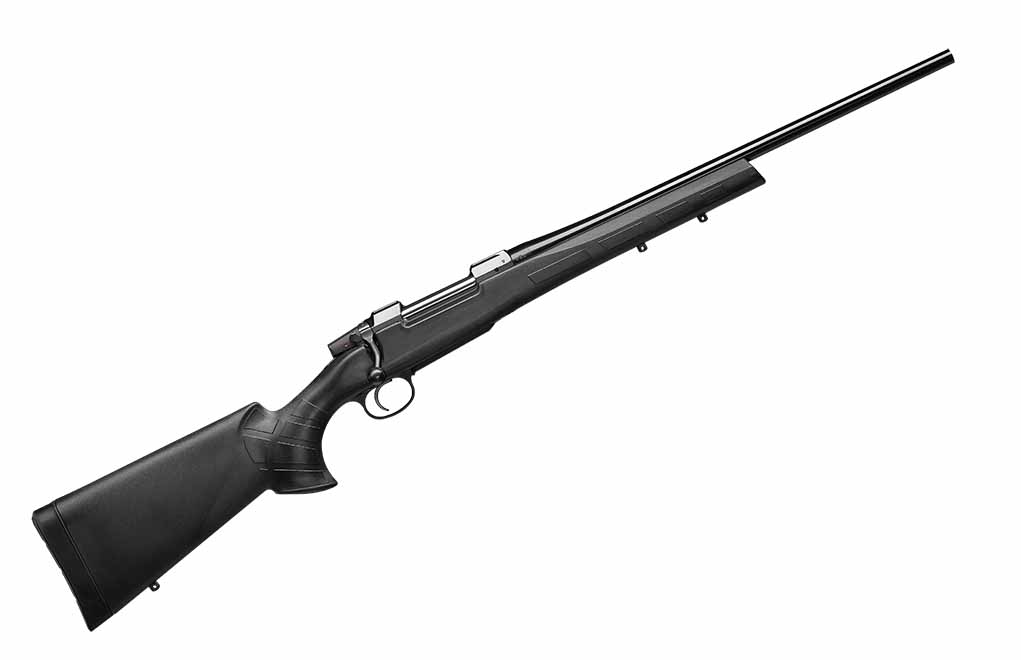
In the arena of bolt-action rifles, the CZ 557 is a hands-down classic. Now more hunters and shooters should get a crack at owning one. The 557 Eclipse delivers the accuracy and ruggedness of the original, but at a price within nearly anyone’s budget. The twist to wringing the extra savings is the stock, a polymer stick instead of hardwood. Never fear, all the good stuff that makes the 557 a gem are there in the Eclipse, including CZ’s cold-hammer-forged barrel and silk smooth push-feed action. Chambered in 308 Winchester, 30-06 Springfield and 6.5 Creedmoor, the rifle certainly has a hunting flavor. But with a threaded 20-inch barrel, the Eclipse holds its own, pitching a country mile. MSRP: $659
DPx HEAT/F Milspec Knife
DPx HEAT/F Milspec Knife
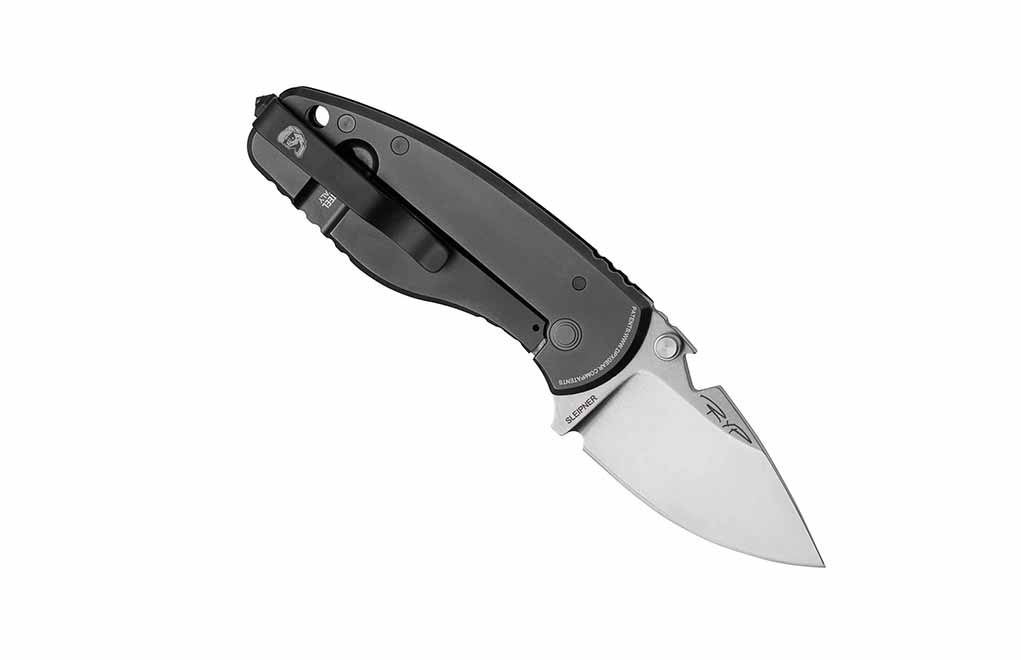
Practically perfect as your EDC go-to knife? If it isn’t, DPx Heat/F mil-spec is close enough until perfect shows up. Its 1.24-inch blade is enough to manage any job you pitch at it, while keeping the entire pack so compact it’s a second thought in a hip or back pocket. And it’s long on extras that endear it to discerning users. Rugged titanium alloy frame lock, beefy G10 handle, low-ride “combat” style clip, tungsten-carbide glass breaker … the Heat/F is a Cadillac. Additionally, with a Rockwell hardness rating of 59, the blade is tough enough to hold a razor’s edge, but still shows resilience in the face of tough use. MSRP: $190
Savage 110 Timberline Backcountry Xtreme Rifle
Savage 110 Timberline Backcountry Xtreme Rifle
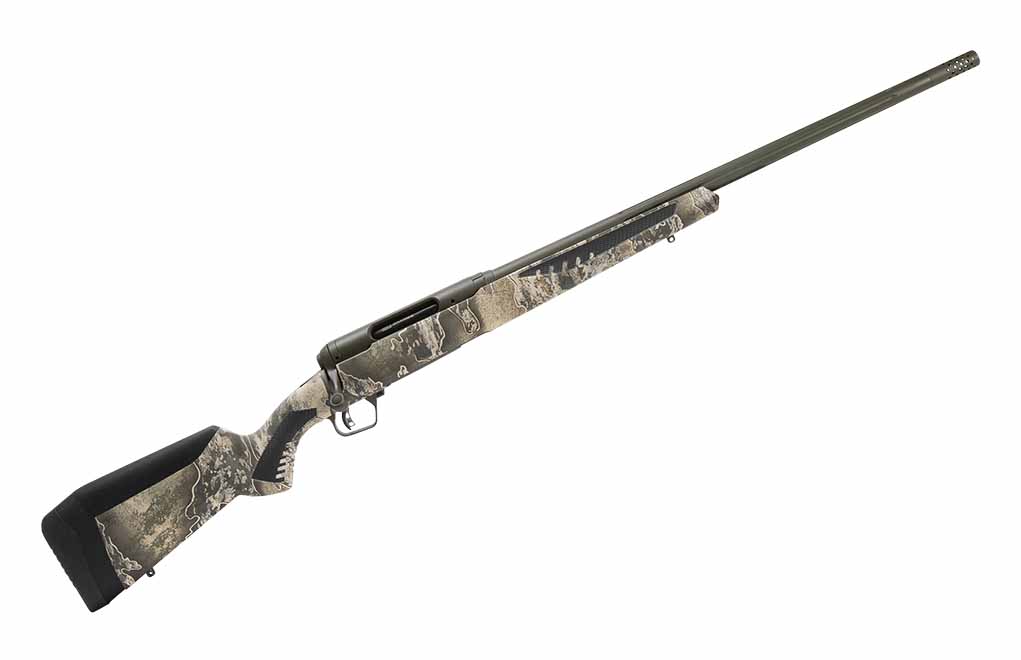
As they say in the military, “Ounces equal pounds, and pounds equal pain.” Hunters know this firsthand. This is why Savage’s dedication to the “mountain rifle” concept is much appreciated. The gunmaker’s latest entrant in this category is the 110 Timberline, a streamlined model engineered to make the long-shot come in. Built to maximize accuracy, the rifle boasts a fluted barrel, overmold surfaces, target crown, and omni-port muzzle brake. Of course, it’s also outfitted with all of Savage’s “Accu” enhancement—adjustable AccuTrigger, AccuStock internal chassis system and AccuFit adjustable stock. With the choice of nine calibers, the Timberline is ready for your next wilderness adventure, whatever it might be. MSRP: $1,129
Federal Ammunition Swift Scirocco II Cartridges
Federal Ammunition Swift Scirocco II Cartridges
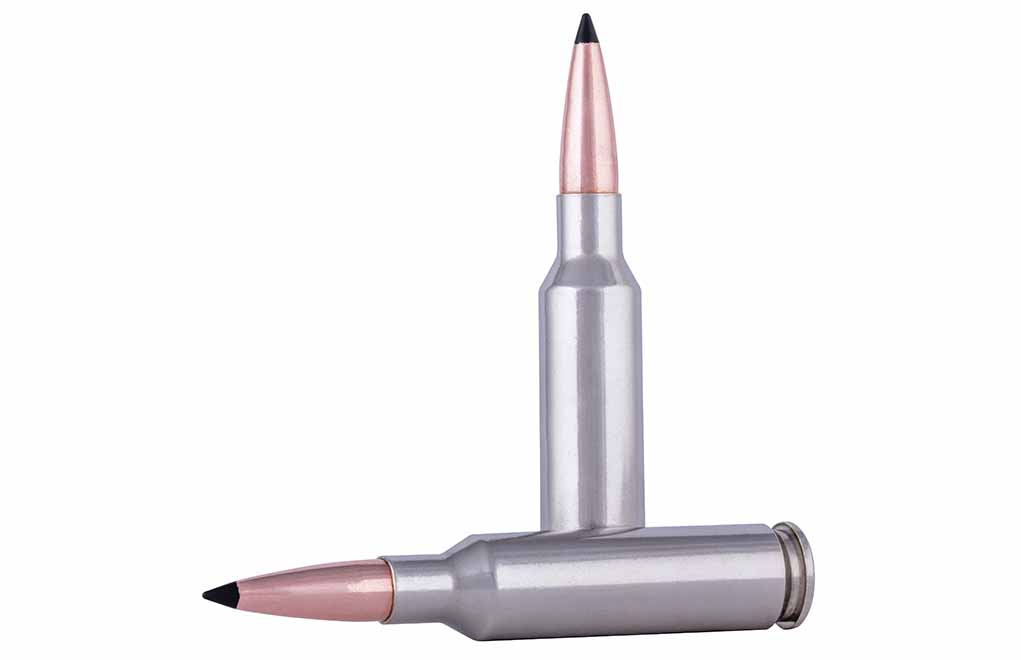
Federal is out to make certain that’s no boundary to punching your tag. Teaming up with Swift, the ammunition maker is tackling long-range hunting with the introduction of Scirocco II loads. For those who don’t reload, let’s just say this is a big deal. Scirocco II polymer-tip bullets offer industry-best ballistic coefficients and concentricity, arming you with a projectile born to fly and hit the mark. Once there, they live up to Swift’s legendary toughness standards, with the bonded-core bullets retaining more than 80 percent of their original weight. Flies straight and punches deep, big holes … that adds up to success in the field. Available in nine popular hunting calibers: .243 Winchester, 6.5 Creedmoor, .270 Winchester, .270 WSM, 7mm Remington Magnum, .308 Winchester, .30-06 Springfield, .300 Winchester Magnum and .300 WSM. MSRP: Starting at $52.99 (box of 20)
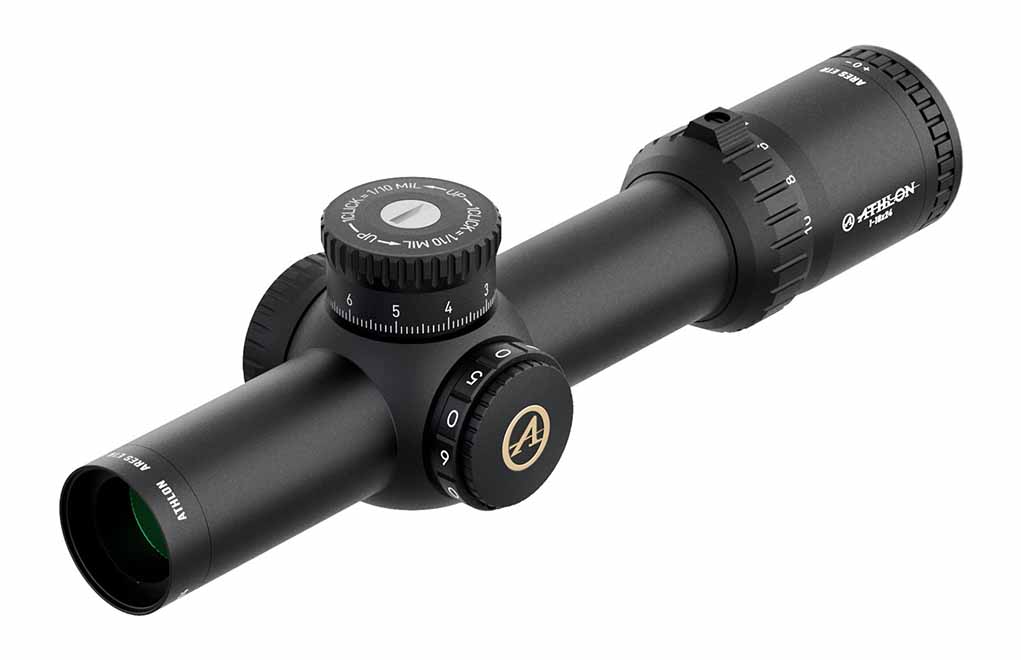
Athlon Ares ETR 1-10×24 UHD
Athlon Ares ETR 1-10×24 UHD
AR-15s and other tactical rifles put extreme demands on optics. Athlon’s Ares is up to the challenge. Paired with a reticle designed to duplicate the speed of a red dot on 1x and the extended range capabilities of a precision reticle on 10x, the scope is the definition of versatility. Featuring either an FFP MIL-based reticle or an FFP BDC MOA-based reticle designed for .223/5.56mm 68-69gr BTHP cartridges, the scope is suited to a wide range of applications. Furthermore, it produces spotless images for increased precision. This is thanks to ultra-high-definition ED-Glass, engineered for greater light transmission and boarder to boarder clarity. A highlight of the system is Ares’ fool-proof turret design, complete with capped windage, and a locking elevation turret with Athlon’s Precision Zero Stop System. MSRP: $1,139
Editor’s Note: This article originally appeared in the February 2021 issue of Gun Digest the Magazine.
Easy as sending an email and shipping a package, Guns.com streamlines selling your guns online.
Pick a gun, almost any gun, and try to find one in stock. Chances are you’ll come up short—brick and mortar shops, and digital alike. Hot as blue blazes, the gun market is enjoying perhaps the biggest upswing of its history. Existing gun owners are adding to their collections and new buyers are flooding in for their first firearms. We needn’t dissect motivation. Unless you’ve had your head in the sand since New Year’s Eve 2019, the reasons are evident.
Guns.com offers you a hassle-free way to turn your guns into cash.
Times are tough for gun buyers. But sell guns … now there’s a position worth considering.
Given the state of the gun market, now is the time to unleash the financial potential of the seldom-used guns cluttering up your safe. You know you have a couple, the ones that looked good on the store rack, but haven’t been fired in more than a year. Chances are there’s a better home for it. For your efforts, you’ll either have money for more desirable firearms or at least more ammunition. What’s holding you back?
Ready to turn your guns into cash?
Guns.com makes the process quick, painless and lucrative! Sell Your Guns Now!
Likely, the trouble is getting your money’s worth. Whatever way you cut it, haggling with the local gun store guy for a fair price is never a walk in the park. Selling guns at auction websites seems shaky; somebody walks away with a deal, while you’re left with pennies on the dollar. This is why Guns.com online firearms purchase program is a godsend in terms of convenience and a square deal when you’re ready to sell guns you don’t need any longer.
What Is Guns.com
If you’re unfamiliar with Guns.com, it might be worth a moment of discussion. As those who’ve surfed the web for a long period might remember, Guns.com at one time was a firearms news site, and a fairly extensive one at that. While they still produce articles, its main thrust shifted to gun sales, becoming one of the largest firearms retailers on the Internet. Part of the company’s success is due to its extensive catalog of competitively-priced new and used guns. The other is making the somewhat complicated process of buying a gun online a breeze.
You find the gun of your dreams, you add it to your cart, you fill out your payment information, then you pick a local FFL. From there Guns.com takes care of the rest. This is a markedly simpler gun buying process compared to many retailers who require you to make contact with an FFL and have them send in their information. If you have a preferred FFL and they aren’t listed on the site, no big shakes. A quick email to Guns.com and they add them, plus acquire their paperwork. Selling a gun with them is equally as painless.
At one time, selling a gun was as simple as talking to your buddies. Find out who was on the hunt for a new heater, politely haggle over price and exchange the gun for the money. A raft of onerous legislation has pretty much done away with that in most corners of the country. However, Guns.com gets pretty close to replicating this comfortable and painless way of doing business.
It’s a four-step process to sell guns to the online retailer:
You describe and submit photos of the gun for sale to Guns.com.
The site makes you an offer.
You ship your gun to Guns.com with a pre-paid shipping label they provide.
You get paid via direct deposit or check.
Now, there is a bit more to selling a gun than that, as you may well have guessed. The company inspects and evaluates the firearm once it’s at their end to ensure it matches your description before they pay. They don’t want to get burned. Outside of that, those steps pretty much sum up the process. You’re selling your gun directly to the company and, in turn, you don’t have to worry about finding a buyer.
Turn your old pistol, rifle or shotgun into cash now! Guns.com is the hassle-free way to sell your gun online!
Sure you can trust this guy to give you a fair price at your local pawn shop. And that AR he’s selling is totally worth $5K.
What about the offer? Guns.com’s appraisers are on the level and have years of experience buying guns. The site aims to serve all its customers—gun buyers and gun sellers—and in turn they’ll come up with a fair offer. Guns.com’s main goal is to ensure a lasting business relationship. Besides, if you don’t approve of the number Guns.com comes up with, you simply reject the offer within 10 business days and go on your merry way.
“Each day our highly experienced buying team carefully reviews the provided photos and descriptions of each submission, properly identifying the gun and determining condition. We then apply our industry knowledge and research current market conditions in order to make the most fair and accurate offers possible,” Digital Marketing Manager William Altherr said. “Keep in mind we also cover the cost of all shipping materials, including insurance. Guns.com is by far the safest, easiest, and most convenient method available for selling a firearm.”
What Guns Move?
As any astute gun buyer knows, interest in particular styles of firearms and makes and models follow trends. This might lead you to wonder if that old double-barrel shotgun or well-worn .357 Magnum revolver will pique Guns.com’s interest. It’s a worthy question, but one with a rudimentary answer. Yes, the site is interested.
Given the large customer base, there aren’t many guns the company shies away from—as long as they’re in working order. Additionally, the company is also interested in buying guns in bulk. Conveniently, Guns.com runs a program to purchase entire collections, if you have that sort of volume to move or are party to an estate looking to liquidate a large volume of firearms.
If you’re ready to sell guns you no longer need, a quick word on shipping firearms might be warranted. Many have never engaged in the process, so it seems daunting. Far from a Byzantine process, getting your firearms to Guns.com is as painless as packaging them up and slapping the pre-paid shipping label on. This is because the company is an FFL. Whether you realized it or not, it is completely legal for a private citizen to ship a firearm to an FFL without any further paperwork or background checks. If this was a point of contention in selling guns online, don’t let it be—you’re in the clear.
Parting Shot
We all have firearms that just don’t tickle our fancy any longer and take up space. It might be an old hunting rifle that hasn’t seen the field in decades or a defensive handgun that’s been replaced by the latest and greatest iron. Whatever the case, it might be high time to part ways, sell guns that no longer have a place in your collection and reinvest that money in a gem you’ll use and enjoy.
Guns.com makes unlocking the value of these firearms easier than ever. Certainly, you could roll the dice with the local pawn shop in that shady strip mall or go through all the trouble and risk of putting them up at an online auction. Maybe you’ll make out like a bandit, but there’s a lot of ducks to put in a row to ensure a return. Why take the chance when Guns.com makes selling guns online as simple as shipping a package?
Take the stress out of buying and selling guns, checkout Guns.com no-hassle online services.
I don’t know when or why the idea struck me. But somehow, a DIY mule deer hunt in Montana suddenly seemed like a good idea. Like many hunters, I focused all my attention on the rifle, optics, and ammo — the fun stuff. This reaction is natural. After all, these things play prominently when the moment of truth comes, and you have game in your sights. It’s the moment that captures your daydreams and compels you to expend time, energy, and money planning the massive undertaking of western hunting.
Sako sent me a Finnlight II in .270 Win. and Swarovski provided a Z8i 1-8x24mm scope for the rifle. With high-end tools such as these, it didn’t take long to find a tack-accurate load, and I soon had my dope to 400 yards scribbled on a napkin and committed firmly to memory (see my full review in the Gun Digest 2022 annual book).
But this is where the real adventure begins. For as I would come to learn, the rifle turned out to be the least of my worries for this western adventure. What kept me up at night was whether I adequately prepared myself to deal with Montana’s extreme weather and desolate environs. The state’s “gumbo” roads have claimed many a flatlander victim. These roads — a term that seems generous — can turn from solid gravel to clay-grease-from-hell so fast it’ll make your head spin. Some men fear going bald; me, I fear sliding off thousand-foot rocky cliffs and dying in a fireball of mangled steel. Thus, outfitting my hunting truck demanded most of my time leading into the fall season.
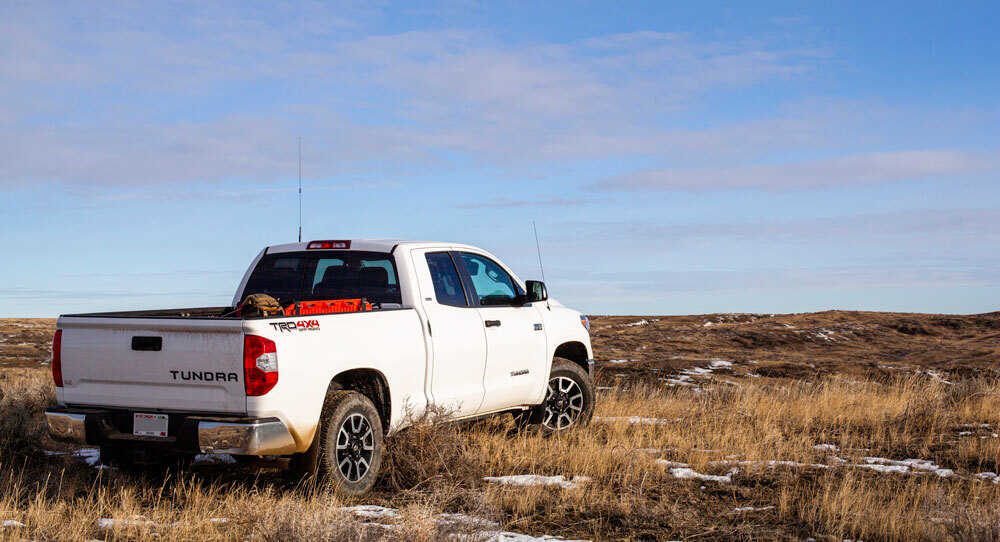
If you think about it, your hunting truck is as critical as an accurate rifle: It can mean the difference between being at the right time and place to get a shot or getting mired in a muck hole and wasting your precious vacation days trying to get unstuck. That’s especially true when much of the American West is beyond cell phone service, and you can drive all day and not happen upon one good Samaritan, let alone see a human. The last thing you want is to get stuck, lost, or stranded on some lonely backcountry trail. While all shooters and hunters have their favorite truck brands and models, here’s why the Gun Digest team took a 2018 Toyota Tundra SR5 Off-road for a spin on the slick two tracks of Eastern Montana in pursuit of the mule deer, aka the gray ghost.
‘Yota Tundra Basics
The Tundra’s 5.7L V-8 engine cranks 381 HP (401 lb-ft torque @ 3,600 rpm), and its 4.30 gear ratio puts serious power to the wheels, particularly when you turn off traction control and activate tow/haul mode.
The Tundra’s sizeable 38-gallon fuel tank carries you farther, a bonus when the nearest gas station is hundreds of miles away. Toyota’s legendary reliability made good sense to us when venturing into the unknown wilds. And it sports one of the tightest turning radiuses in the industry — 22 ft. — essential for such a massive trail rig.
While we didn’t go overboard on overland upgrades, here’s a snapshot of the additions that gave us the confidence to take the Tundra far off the road. Note: This is all stuff we trust and have purchased. None of it, not even the hunting truck, were provided to us for review.
Recovery Equipment
No matter how well a truck performs off-road, there is always a limit, and you should plan on eventually getting stuck. Some basic recovery gear can prove to be money well-spent and will provide peace of mind when you’re deep in the backcountry.
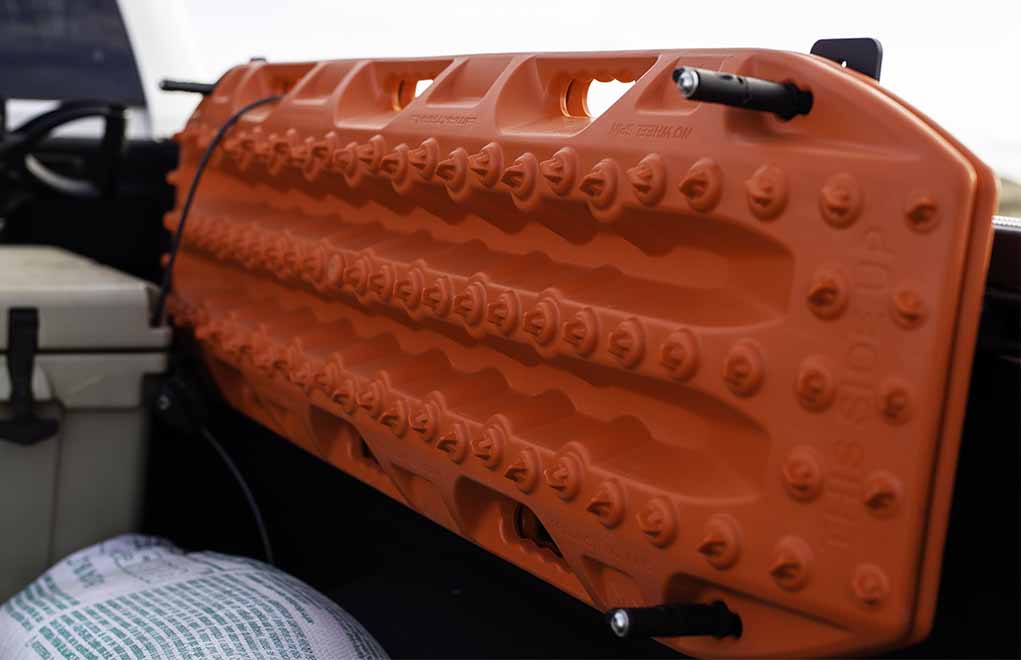
MaxTrax: Traction boards (technically “Vehicle Recovery Devices”) are indestructible polymer boards with studded traction features. You place them under the tires of your hunting truck if you get caught in snow, mud, or sand. MaxTrax is the best. Don’t mess around; buy it. maxtraxus.com
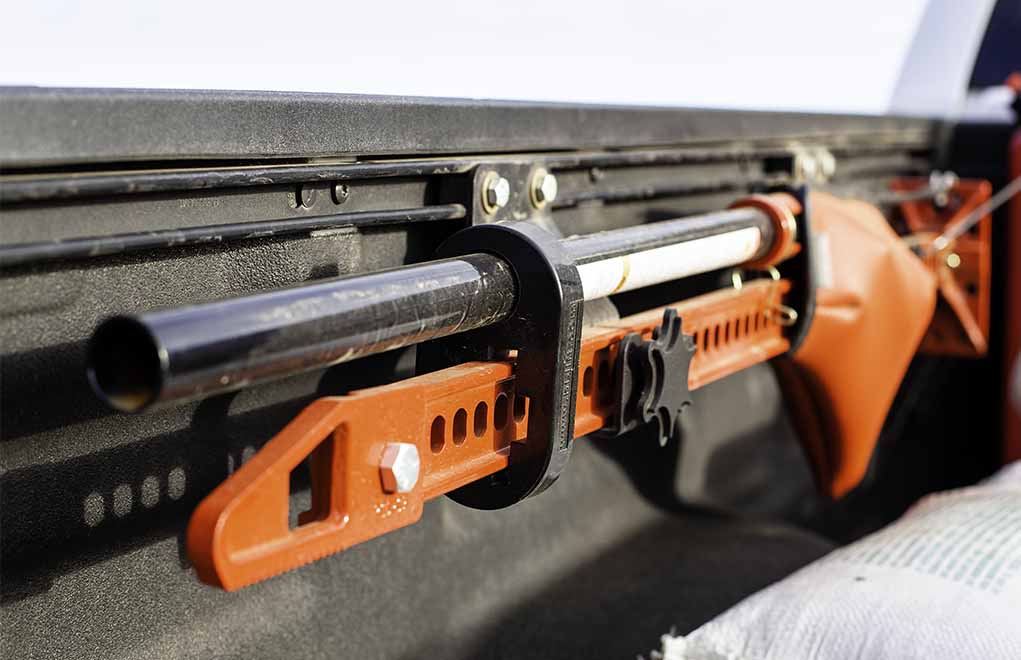
The 48-inch Hi-Lift Jack enables you to jack your hunting truck on uneven and rutted-up two-track roads, plus it doubles as a simple machine: You can winch your rig out with it! The author recommends the Step 22 Gear Jack Cover to keep grime from the Hi-Lift’s mechanism and accessories such as the ORB Off Road Base, HK-B Black Handle-Keeper, and LM-100 Lift-Mate. The jack attaches to the Tundra’s bed rails using the Rago Fabrication Hi-Lift Mount.
Hi-Lift Jack: The 48-inch Hi-Lift jack is not like the little “car jack” stowed under the rear seat of your hunting truck: This thing is long enough to jack your vehicle on the most uneven of ground, and you can even use it as a manual winch if you’re really in a bind. Be sure to get the ORB Off-Road Base, HK-B Black Handle-Keeper (so the handle doesn’t rattle around when you’re dodging cows), and the LM-100 Lift-Mate. hi-lift.com
Rago Fabrication Mounts: We attached the MaxTrax and Hi-Lift Jack securely to the Toyota’s Bed Rail System with Rago Fabrication mounts. Installation was simple, and performance off-road was solid, with no wiggle and no noises. Serious off-roaders use this stuff, and you should too. ragofabrication.com
Step 22 Gear Jack Cover for Hi-Lift Jack: You need to keep dust and road grit from clogging up the works on your Hi-Lift jack. I like the Step 22 Gear cover, custom-designed for the Hi-Lift. step22gear.com
MaxTrax recovery boards are essential gear when traveling in the backcountry. You wedge them under your tires when you get stuck in snow or mud, and it’s instant traction.
Big Red Torin Steel Jack Stands: These 3-Ton jack stands are critical to keeping your rig up in the air for tire changes or when you need to crawl under your rig to dislodge a pine tree jammed into your transfer case. torin-jack.com
Bond Fiberglass Round Point Shovel: It’s a shovel. To dig yourself out when your big plans blow up in your face. The Bond model, popular with off-roaders, is short at 42 inches and fits perfectly along the back of the truck’s bed. We used End of the Road’s Original Quick Fist Clamp to mount it to a Rago Fab plate. bondmfg.com
Glacier V-Bar Snow Tire Chains with Cam Tighteners: Tire chains are required kit in most of the West, and the Glacier V-Bars are some heavy-duty chains. They feature welded v-bars, spikes that dig into the worst snow and ice. glacierchain.com
RotopaX Gas Canister: While we liked the Tundra’s voluminous 38-gal. gas tank, a 2-gal. RotopaX canister mounted to the Bed Rail made it 40 gallons for an extra measure of comfort. The RotopaX is the industry standard in off-road fuel carrying; be sure you practice with it before the season. It uses a locking cap mechanism to dispense the fuel. Don’t wait to figure this out when you’re on E in the middle of nowhere. RotopaX sells a mount for the Toyota Bed Rail System. rotopax.com
Hunting Truck Navigation & Comms
Long gone are the days when you held a compass and gazed at the stars, tracing lines across a parchment map. Today’s GPS satellites might keep conspiracy theorists up late at night, but they also make navigation much simpler. Here’s a look at our setup.
Simple, effective navigation. A Samsung Tab S7 5G tablet loaded with OnX and Gaia GPS mapping apps. You preload the tablet with detailed area maps before leaving on your trip, and then, setting the device to Airplane mode, disable the Internet. The unit’s internal GPS tracks you in real-time, providing you with super-detailed topographic and forest service maps, even trails! The author powers the tablet via a Dewalt 140w Power Inverter, which plugs into the cigarette lighter and converts 12V DC to 120V AC, giving you a power outlet and two 3.1A USB ports.
Samsung Tab S7 5G Tablet: The new Samsung tablet has enough juice to power all the nav apps you’ll need, and by default, it stays on when running said apps (it doesn’t annoyingly power down every few minutes). Most importantly, it has an internal GPS for use with the nav apps (below). We mounted it to the dash using the Ram Mounts Ram X-Grip, and 3M two-sided automotive-strength tape. samsung.com
OnX Hunt and OnX Off-road: The OnX app gives you instant landowner map data and boundary lines and is feature-rich with overlays ideal for hunters seeking access to hunting areas. You can switch it into Airplane mode (Internet off), and it will use your phone or tablet’s GPS to track you in real-time. Requires subscription. onxmaps.com
Gaia GPS: Gaia Maps is another app that features almost limitless nav possibilities. It shows roads and trails and features route-creation tools that make planning a day trip into an unknown wilderness area a snap. Like OnX, you turn off the Internet, and it uses the tablet’s internal GPS to track you in real-time. Requires subscription, well worth the cost. gaiagps.com
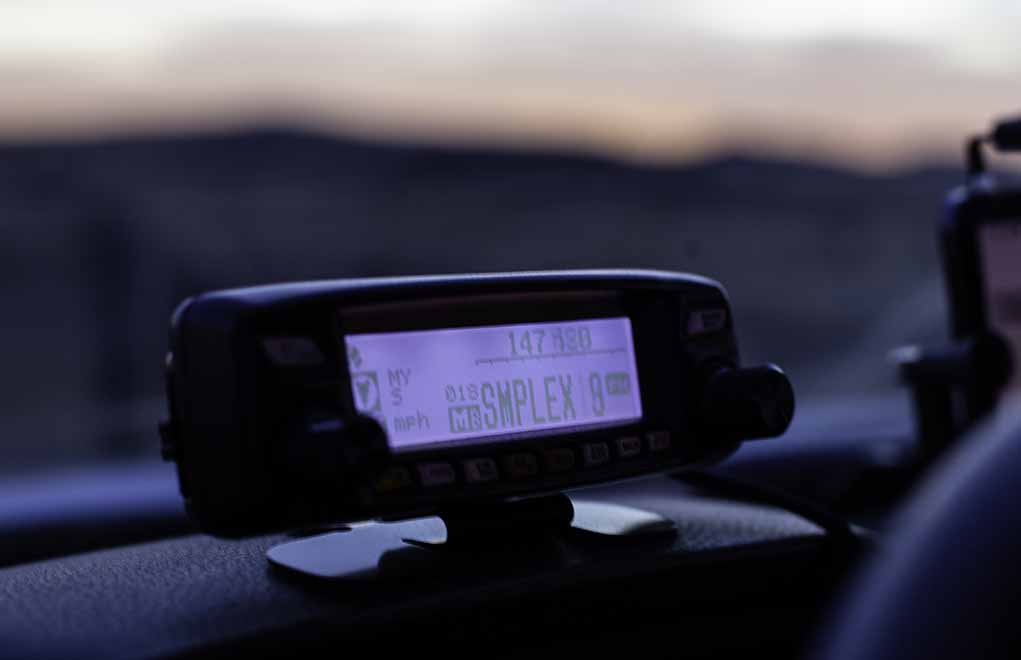
Onboard amateur radio provides local, regional, and global communications where cell phones can’t reach. The Yeasu FTM line of dual-band FM/C4FM transceivers covers VHF/UHF on analog and digital plus APRS (Automated Packet Reporting System), which uses the transceiver’s internal GPS to transmit your location and data beacons to monitoring stations on 144.390 MHz. Not only that, you get access to NOAA Weather Radio anywhere in the country for real-time weather updates. Requires a Technician-class amateur radio license from the FCC.
Yaesu FTM-100DR Transceiver: When your cell phone’s bars disappear, and you must reach someone for help, nothing beats ham radio. I mounted a Yaesu FTM-100DR dual-band FM/C4FM transceiver in the Tundra, with an external dual-band antenna from Diamond. The 50-watt transceiver handles two-way comms in analog and digital modes on the UHF (70cm) and VHF (2m) bands.
If I have any elevation at all, a 50-mile radius range is easy, and several hundred miles are possible depending on your height and atmospheric propagation. Using its digital capability, I can access the worldwide System Fusion radio over the Internet and talk with my friends in Germany or Okinawa with crystal clear audio. I should be capable of calling for a tow truck.
And I can get real-time NOAA weather radio updates anywhere in the country. (Yaesu discontinued the FTM-100DR and has since replaced it with the FTM-300.) To operate, you’ll need a Technician-class amateur radio license from the FCC. yaesu.com
Meat Care
RTIC Hard Cooler 65 QT.: After you’ve poured all your work and effort into taking game, you need some way to keep your meat cool. That’s even true when hunting in a cold place like Montana, where the daytime highs can hit 60 degrees in mid-November.
We gave the RTIC 65 Cooler a test run, and it was as good as any other high-end brand we’ve tried — at two-thirds the cost. Freeze water in a few orange juice bottles for ice during the off-season, and this bank-vault-tight cooler will stay cold for two weeks, at least. rticoutdoors.com
Needs Improvement
What didn’t we like about the 2018 Toyota Tundra? Not much. It performed way above expectations. Our complaints mirror those you’ll hear coming from many off-roaders, namely the Tundra’s previously mentioned lack of locking rear diff and crawl control features, which are standard fare on the Tacoma TRD Off-road and 4Runner models and peculiarly absent on the Tundra.
The “Off-road” Tundra models could also use more aggressive tires with Kevlar-reinforced sidewalls. Toyota has been teasing a Tundra redesign for its 2022 year, so time will tell if the tight-lipped automaker listens to its core off-road users and corrects these injustices.
Hunting Truck Lessons
No truck project is ever complete, and hindsight is 20/20. If I could do it again, I’d bring a backup rifle (I had no issues with the Sako, it’s just good practice) and have a more organized gun storage solution to securely lock rifle and ammo in the hunting truck while we are hunting or scouting.
One intriguing solution is the new Pelican Cargo line, which Pelican developed for the overlanding market. The Pelican BX85S Case is 51.7 inches long, and you can attach it above your bedsides via the Toyota’s bed rail system — and of course, it is lockable. It would be ideal for a padded gun case and to hold an extra rifle.
Also, check out the Pelican BX80 Cargo Case at 20.75 x 12.25 x 13.25-inch interior size, which would be the ticket to keep tire chains, jacks, and recovery gear organized in the bed. It, too, attaches to the bed rail system of the Toyota line. Organization and consistency are keys to happiness.
To upgrade my extraction options, the Yankum Rope is the thing to have so passersby can yank you out of a tough spot. The Yankum Ropes Rattler Series (1 inch by 30 feet) handles a static 18,500 lbs. The Yankum is not a “tow strap.” Yankum designed it to stretch, to take momentum, allowing smaller vehicles to extract much larger ones by getting a running start.
Lastly, one trick all off-roaders use to improve traction is to air down tires. If you don’t have bead lockers, you can safely air down to 20-25 psi, which will dramatically improve traction on mud and snow. It won’t turn your SUV into a rock crawler, but it will improve handling and control on rocks and smoothen your ride. An excellent portable solution is the ARB 12V High-Performance Portable Air Compressor and ARB E-Z Deflator Kit 10-60 PSI. You can keep these in the bed of your truck, air down with the ARB E-Z Deflator when you hit the trail, and air back up with the ARB compressor when you reach the highway.
Tipping the scales at 1/2-pound, the Roam R-10 Upper keeps things light.
How The R-10 Upper Stacks Up:
Made of lightweight magnesium alloy.
Receiver features 1 7/16″-16 barrel-nut threads.
Brass deflector and dust cover both made of polymer to cut weight.
Finished with rugged Cerakote.
Nothing new under the sun when it comes to AR-style rifles or, at least, that’s the popular opinion. Scratch the surface of the throngs of off-the-rack, mil-spec irons and there’s quite a different story percolating. Custom manufacturers around the country continue innovating and advancing the versatile designing milking efficiencies and perform from the standby iron once unimaginable. One of the most intriguing is Roam Rifles.
Situated in the wide-open spaces of North Dakota, the rifle-make made its niche in ultra-lightweight AR-10 options aimed at hunting. Then again, we’re a little biased here, given we were so impressed with the accuracy of Roam’s R-10 Great Plains we recommend it as one of the best 6.5 Creedmoor rifles. But we digress. The news out of the Peace Garden State lately is as intriguing, with Roam rifles moving from complete builds to components with the release of a lightweight upper receiver.
Dubbed the Roam R-10 Upper, the DPMS Gen 1-compatible receiver is the ideal starting point in a weight-saving build. At this point, we should spill the beans on Roam’s not-so-secret angle to weight savings—magnesium alloys. For those clutching pearls over the potential inflammability of the lightweight material, you can get away from your fainting couch. Yes, magnesium does have a lower ignition point than, say, aluminum in its pure state or certain alloys. According to Roam, its alloys will not catch fire until they melt—essentially breaking down the alloy’s matrix—which is at 1,100 degrees. Essentially, a shooter would have to set out to push a rifle or component to this point.
Roam offers two variations of the R-10 upper, with and without forward assist. The receiver features 1 7/16″-16 barrel-nut threads, a removable polymer brass deflector and a quick detach polymer dust cover. With the company’s forward assist system, the upper weighs in at 8.1 ounces, which Roam boasts makes for the lightest forward assist AR-10 upper on the market. Finally, the receiver is finished with Cerakote over Tagnite (anodic coating for magnesium alloys). As to cost, lightweight doesn’t come cheap. The MSRP on Roam’s R-10 Upper with forward assist is $280, its smooth side $260.
For more information on the R-10 Upper, please visit roamrifles.com.
Optics ready and capable in many roles, the FN 509 LS Edge proves itself a tactical jack-of-all-trades.
How The LS Edge Outdoes Other Practical-Tactical Pistols:
Lightening the felt recoil, FN has slotted the side reducing its mass.
Featuring a new flat-faced trigger, the pistol promotes a linar pull and breaks at a crisp 4 to 5 pounds.
Grip texturing is extemely aggressive, assuring the pistol won’t go anywhere.
Slide is cut to accept a wide variety of optics.
Every version of the FN 509 that we’ve seen so far has been designed with the personal protection and the duty user in mind. The new FN 509 LS Edge takes a very different path, addressing the needs of a competitive shooter as well as the tactically minded.
The LS Edge’s new slide stop looks identical to the Tactical’s, except it’s a touch longer.
FN’s long-awaited practical/tactical optics-ready gun is the brainchild of Tim Kennedy of Sheepdog Response and 253-time champion shooter Dave Sevigny working with FN America’s team of engineers. With Kennedy’s focus on defensive tactics and Sevigny’s impressive competitive background, the task of melding the two thought processes was undoubtedly an engineering challenge.
Not only did FN’s engineers manage to pull it off, the new pistol is exactly what I had wished for in last year’s article on the FN 509’s history.
Evolution Breeds Perfection
Before diving into what sets the FN 509 LS Edge apart from the rest of FN’s pistols, we really should touch on the 509’s roots. We covered the development on the FN 509 previously, but here’s a brief rundown.
The 509 LS Edge’s Graphite PVD finish is tough, but it also looks fantastic.
The FN 509 platform has a much longer history than you might think given how recent the pistol is to the market. When the 509 hit store shelves in 2016, it was already well tested in the military’s XM17 pistol trials, nearly winning the contract when it made it into the final round before selecting the P320 as winner.
The gun’s design goes even further back than that; there’s over 15 years of research and development packed into the 509 platform. When you look at the new LS Edge, you can still see the designs roots in the FNP, which became the FNX and then the FNS and FNS-C, the 509’s closest relative.
Sexy Slides Sell
Even though FN has produced a long slide before, they haven’t done anything quite like the LS Edge to date. It’s not just a churched-up 509 with some window dressing like you normally see on premium versions of an existing pistol; it’s obvious a lot of research drove every aspect of the new gun.
The new super aggressive grip texture is going to keep your gun planted in your hands during recoil.
That isn’t to say that the pistol isn’t going to make you want to press your face against the gun case glass—this thing is sexy. The new optics-ready long slide is coated in graphite PVD, the same type of coating on the 509 Tactical. To give you an idea how tough PVD is, my 509 Tactical has been used hard with somewhere north of 14,000 rounds through it with only very minor finish wear. Not only is it tough, but the graphite finish highlights the lightning cuts and brings the contours of the new slide alive.
Sure, the LS Edge gets an all-new optics-ready long slide with some fancy window cuts and a fiber-optic front sight, but there’s more going on inside the pistol that could be overlooked easily. Between the obvious slots in the serrations and the much less obvious milled slots around the striker, the new LS Edge’s slide is only one-fifth of an ounce heavier than the Tactical’s slide.
That might sound trivial but slide mass plays an important role in how flat shooting a pistol is. Slide mass is one of the biggest contributors to felt recoil and muzzle flip, not bore axis, which is probably the reason why I paused for a second when I pressed the trigger for the first time and felt the pistol cycle in a satisfyingly soft manner while tracking about as flat as my compensated 509s.
Crispy Controls
The improvements to the platform don’t stop there; the LS Edge has a brand-new flat-faced trigger that’s sure to wow even the most critical of FN’s traditional hinge-style trigger. Our test example’s trigger broke cleanly at 4 pounds, 5 ounces. FN says to expect a 4- to 5-pound trigger, thanks to the new trigger shoe and a redesigned striker—a claim that held true when my example measured out to 4 pounds, 5 ounces on a Lyman digital trigger gauge.
Shooting on the move at a high rate of speed isn’t as hard with a soft recoiling gun.
It isn’t all about a lighter trigger pull; the new trigger shoe was carefully designed to break at 90 degrees and has very minimal over-travel, which makes it feel like the trigger is moving straight back similar to a 1911. Additionally, the striker’s new shape should perform better in water submersion tests than the original striker, thanks to cutouts in the striker’s bearing surface that’ll prevent the striker from hydro locking.
The LS Edge also gets an extended magazine release and all-new slide release that’s easier to reach without breaking your grip, but that also means it’s easier to pin under your grip and prevent a slide to lock open. The slide stop on my own example will likely get swapped out for the smaller one on the Tactical to prevent that. To be clear: This is a problem with my grip and not the gun.
Get a Grip
As you might expect at this point, FN turned the frame to 11 as well. I can’t think of another pistol on the market that uses a grip quite like the LS Edge. FN started with the midsize frame and designed a metal magwell that transforms it into a full-size frame. Since the end result is a magwell that reminds me of the one Glock used on the Gen 5, I suspect that practical shooting associations will allow shooters to use the 509 LS Edge in Production and Carry Optics divisions.
While unconventional, really all FN did was use a more robust material to improve the pistol’s longevity. I wouldn’t recommend removing yours though; the pistol really isn’t intended to be shot without it.
You also might notice that the frame no longer has the pyramid-style texture that has become synonymous with FN, now we get an ultra aggressive skateboard grip tape-style texture that’s a significant improvement over the older texture. Some shooters might find it too aggressive, but that goes away once you grip the gun harder. Personally, I’m a fan of aggressive grips, and the LS Edge is just about perfect for a factory pistol.
Once you grip the gun with purpose, the aggressive texture assures the pistol isn’t going to wiggle around in your hands. Less wiggle in recoil means faster follow-up shots; faster follow-up shots means more wins against paper or flesh advisories.
Range Time
Currently, I have about 1,300 failure-free rounds through my 509 LS Edge and counting with roughly 750 of those in an eight-hour period during the launch event. In fact, the pistol got so hot that one of the FN engineers noticed heat mirage coming off the slide of my gun and liberally applied some oil to the barrel and slide to help cool it down before we cased the guns for the day.
With the impressive accuracy that we saw out of the 509 Compact MRD last year, it shouldn’t come as a surprise that the LS Edge performed well during accuracy testing. With ammo a bit scarce, I was sad when I saw the best results out of my preferred practice load, American Eagle 147-grain FMJ, with a 0.406-inch five-shot group at 10 yards and a 1.912-inch five-shot group at 25 yards. For defensive ammo, the 147-grain Federal HST did extremely well with a 1.632-inch five-shot group at 25 yards.
Not once in over a thousand rounds did I find the LS Edge to be lacking in any way. Recoil was pleasant, the pistol shot flat, and even when heat-soaked, it still was every bit as reliable as I’ve come to expect of the 509 platform.
Holsters
One of the largest challenges with a non-Glock pistol is finding a holster that’ll fill the role you have for the gun. Thankfully, that isn’t so much an issue with the 509 LS Edge. For concealment with a weapon light, the PHLster Floodlight has allowed me to comfortably conceal the pistol with a Leupold DeltaPoint Pro and Streamlight TLR-1 HL mounted to the gun. On the rare occasion that I decide to take the light off the pistol, a JM Custom Kydex AIWB holster does the trick.
To get the most out of the LS Edge, choose a large windowed MRDS like the Leupold DeltaPoint Pro or Trijicon’s SRO.
As for the range holster that we used during the event, the ANR Design race holster was fast and retained the gun well enough. Since then, I’ve modified a Safariland ALS retention holster for a P320 to fit the LS Edge, and it has become my go-to range holster. Eventually, Safariland will release a purpose-built fitment for the LS Edge, which I’ll likely replace my rigged holster with as soon as I can.
Nothing is Perfect
Even though the LS Edge is as close to perfect for an out-of-the-box pistol under $1,500 that I’ve seen, it isn’t perfect. The gun is priced a bit higher than I’d like to see, with competing pistols like the Glock 34 and Walther Q5 Match coming in at roughly $600 less (but that may be less of a concern when dealers start getting them on the shelf and we see if the real-world street price is remotely close to my predicted street price of roughly $1,200). Should street pricing be close to that figure, the superior optics mounting, more robust metal magwell and flat-face trigger add enough value for me to justify the extra spend.
(Clockwise From Top Right) PHLster Floodlight, ANR Designs Race Holster, JM Custom Kydex IWB and Safariland 6390 RDS.
My real gripe lies with the magazines. I’m a bit disappointed that FN launched a pistol competition shooters should love without 140mm magazines with baseplates designed for the new pistol. Yes, the 17 rounders that ship with the gun are nice, but if you intend on shooting a stage with it, more bullets in a reload are always welcome.
Not common, but a keeper
While the 509 isn’t as common as I feel it should be, you shouldn’t look over the 509 LS Edge when shopping for an optics-ready pistol. Simply put, I feel the new pistol is nearly perfect right out of the box. That’s a heck of a statement from someone who modifies just about every firearm in his safe.
I have to give kudos to Kennedy, Sevigny and the FN America team; just when I thought the FN 509 was about as good as it was going to get, they raised the bar yet again.
Given most of us spend the better part of our days with duffs firmly planted, learning to draw from a seated position is a key self-defense skill.
We all have a stereotype of how a self-defense scenario plays out. Take a moment and think about it. Was it dark? We’re you in familiar surroundings? Did you see the attack coming? How about this, were you sitting or standing?
It’s a safe guess that most folks pictured themselves drawing their handgun while standing. Perfectly casting aside a covering garment, a textbook stance, eye drilling into the threat. Fair enough, given most of us train and hone our handgun skills with our legs firmly planted beneath us. However, is this how most of us spend our days? Likely not. Tally up the time and chances are a greater percent our waking hours are spent with our duff firmly planted on a seat—car, office or otherwise. Given this, it becomes clear why learning to draw from a seat becomes a vital arrow in our handgun-skills quiver.
Jamey Caldwell, an instructor at 1-Minute Out and former special operator, goes over the basics of this unorthodox self-defense position in the above video. Rest assured, many of the fundamentals you’ve already learned in a proper draw and presentation apply when sitting. The rub, they become more challenging, given there are tighter quarters to work within and more obstacles to overcome. Just sitting on the tail of your jacket or sit almost locks you out from accessing your handgun.
It goes without saying, the only way around the impediments inherent to drawing from seated is practice, practice and more practice. And no, you don’t need to drag a folding chair to the range (though it might not hurt). A prime candidate for dryfire practice, it’s a skill easily honed at home.
Looking to go armed, but are stuck in the weeds as to what to arm yourself with? Here are 20 of the best concealed carry gun options that will keep you on the defensive.