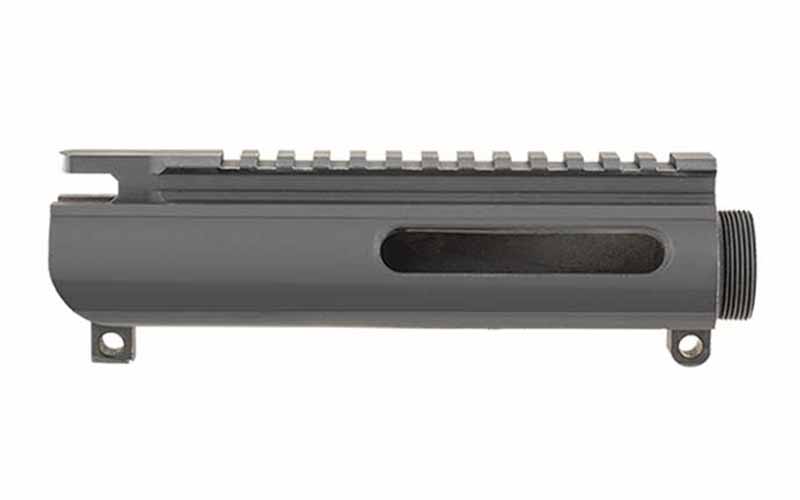
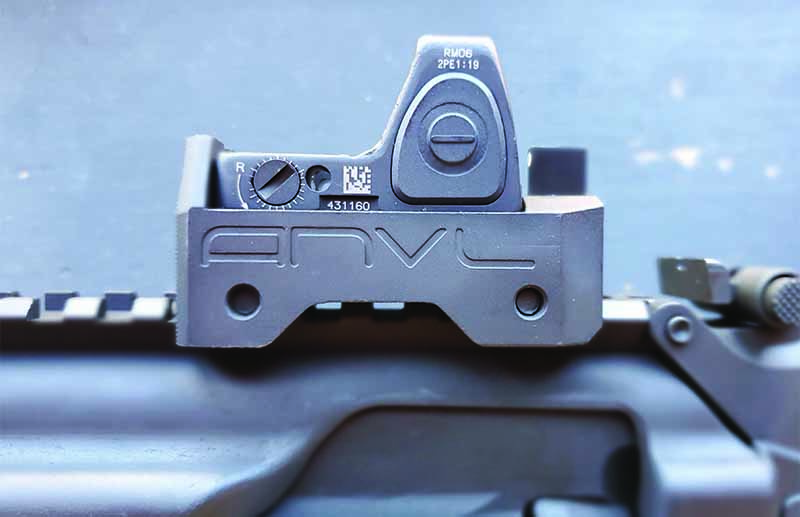
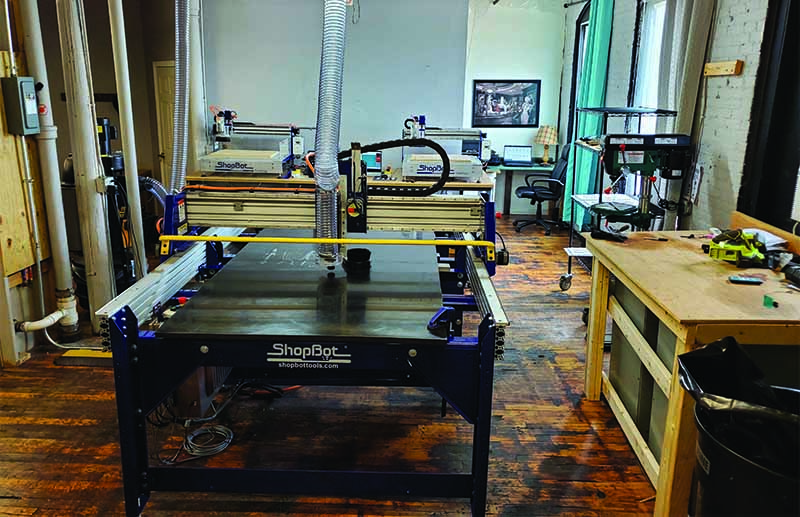
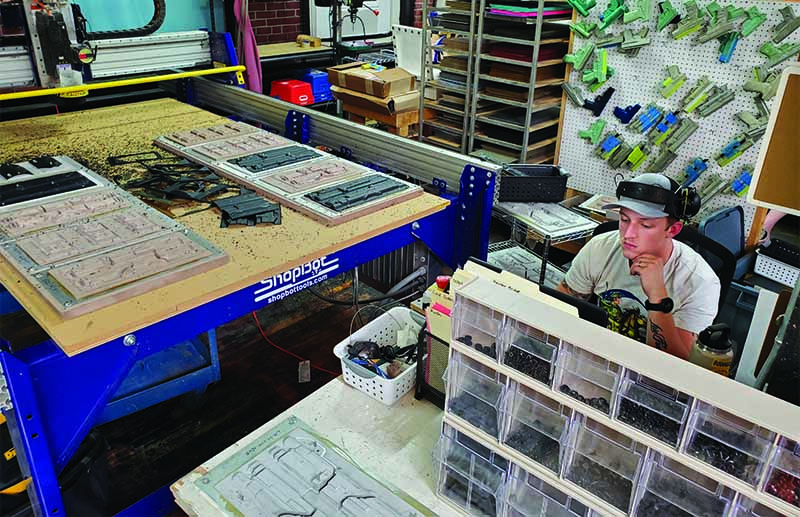
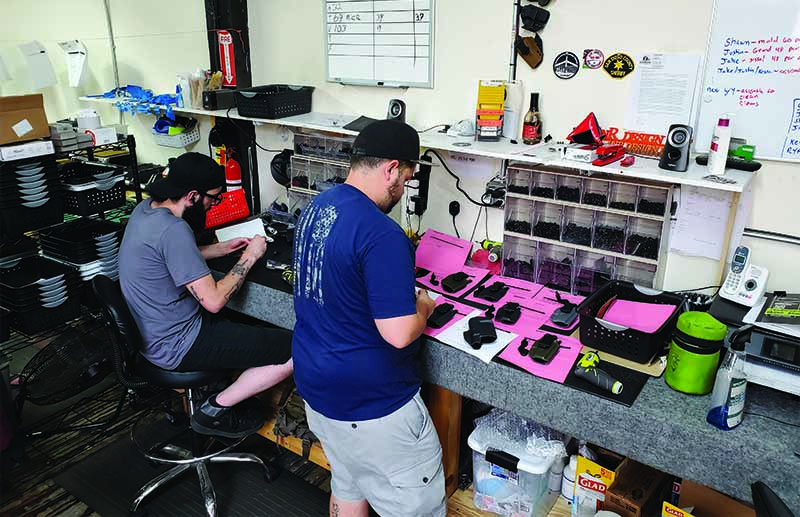
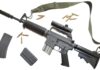
The new Lo-Drag upper receiver from Luth-AR has been stripped of anything not integral to the function of the rifle to make it as lightweight and snag-free as possible.
Luth Lo-Drag Upper Features:
No Shell Deflector
No Forward Assist
No Dust Cover
Thicker Receiver Walls
When Eugene Stoner first designed the AR, it too did not have a shell deflector or forward assist, so in a way Luth’s new Lo-Drag upper is returning to its roots. Only at the insistence of the military were the forward assist and shell deflector added later on. Original ARs did have dust covers, however, so Luth’s design is taking things even a step further.
Similar low-profile uppers have been made before, but most have either been discontinued or include at least one of the three features omitted from Luth’s design. This new Lo-Drag upper will be more affordable and available than other low-profile designs on the market.
Featureless AR uppers like this are popular on varmint-gun and bench shooting builds, but there are other applications as well. If I were to build something based on the Lo-Drag upper, it would be streamlined in other areas to make it as lightweight as possible (the low weight is my favorite aspect of the AR platform in general). If you’re looking to build the lightest AR you can, try using the AR-15 parts weight database. This crowd-sourced databased is an excellent resource for finding the lightest parts possible.
That being said, it would be helpful if Luth-AR had bothered to list the Lo-Drag upper’s weight since that’s one of its main selling points. It may be a bit heavier than expected due to its thicker receiver walls which were added for extra strength, and its 6061-T6 aluminum construction is marginally heavier than MilSpec 7075-T6 alloy.
With an MSRP of $99, the Lo-Drag upper is an interesting new offering from Luth-AR. Personally though, I hope they start churning out more A1 uppers soon, there’s been a serious shortage lately.
For more information on Luth-AR, please visit luth-ar.com.
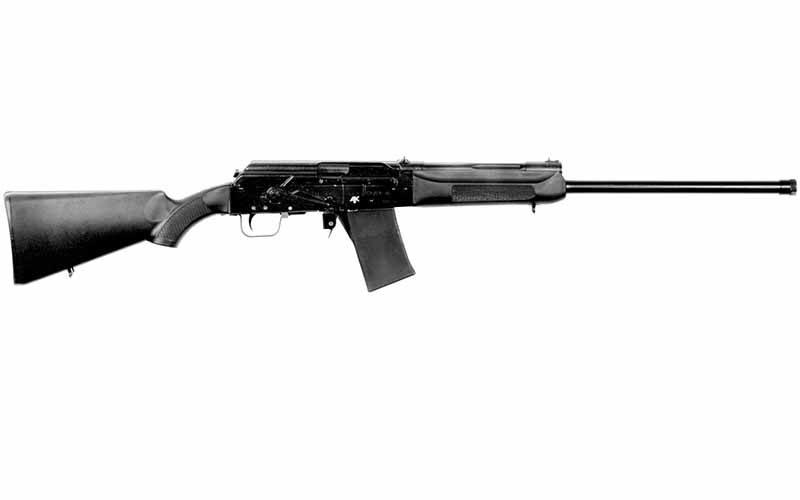
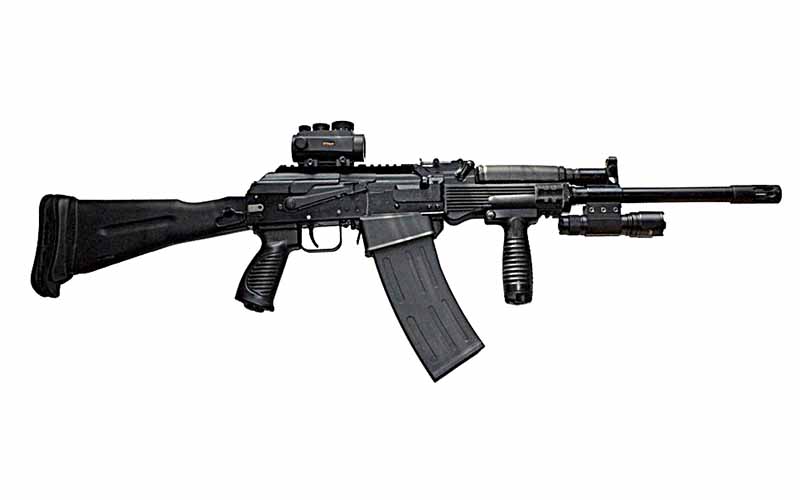
Once a common and inexpensive shotgun choice in America, Saiga 12s have surged in value since they were banned from importation in 2014. Are they still worth it?
What Are Saiga Shotguns?
Made At Izhmash Factory (Now Kalashnikov Concern) In Russia
Semi-Auto AK-Style Action
Made In 12-Gauge, 20-Gauge, And .410 Bore
Several Different Models Imported
Currently Only Available Secondhand
The American firearms market in the early 2000s was very different from what it is today. While there are a plethora of magazine-fed shotgun options available now, the shotgun world back then was still mostly dominated by tube-fed traditional designs. So, when Russia began exporting reliable, semi-automatic, magazine-fed shotguns based on the AK’s long-stroke piston system, it definitely turned a few heads.
Now that almost seven years have passed since their importation was banned, are Saiga shotguns still worth looking at?
20-Gauge Saiga, hunting model.
History
Saiga shotguns began their life shortly after the fall of the Soviet Union in the 1990s. Designed originally as a sporting and hunting shotgun for the Russian commercial market, its popularity quickly surged as people realized its potential for tactical applications. Shortly after, Izhmash began modifying the design to optimize it for police and military use. These changes included moving the trigger assembly forward to allow for the installation of standard AK furniture, including a folding stock. They also began making larger magazines for them and shortening their barrels. These tricked-out variants were mostly employed by Russian SWAT-style police units, like those attached to the MVD (Ministry of Internal Affairs).
Police agencies from several countries outside of Russia have procured Saiga shotguns as well, even including some French counter-terrorism units.
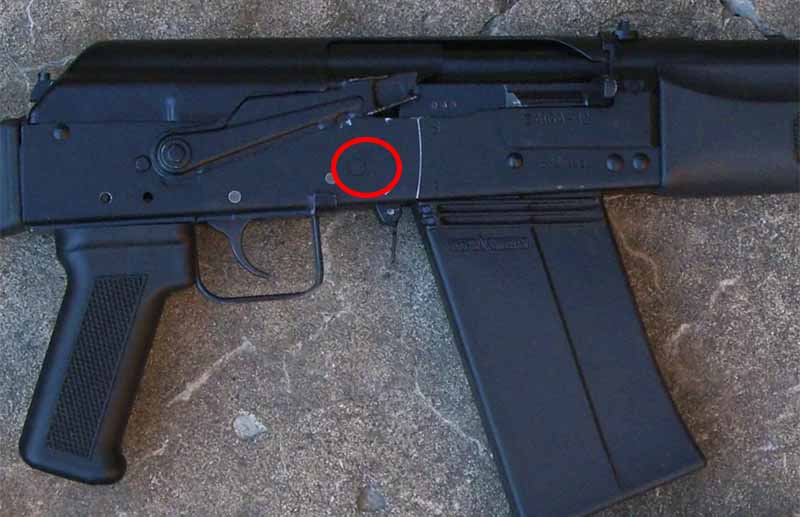
Over the years there were a plethora of Saiga shotgun models imported into the U.S. The most significant distinction between all of them, however, is the location of the trigger assembly. On the original hunting variants, which is the most common variant stateside, the trigger is at the bottommost part of the receiver, compatible with the hunting-style rifle stock. The other models have the trigger in the normal AK location, allowing for the use of standard furniture. Some of the hunting models in the U.S. have been converted, however, so if you are inspecting a Saiga with a standard AK pistol grip check for weld marks where the original pin holes may have been covered up. If done professionally, this is not a problem and generally raises their value and desirability.
When Saiga 12s were first imported and still relatively unknown, they would sell for about $350. By 2009, the price had gone up by about $200 and people were discussing whether they were still a good buy or not. Now after almost seven years since the last one entered the country, they sell for closer to $1,000 for even a basic, unconverted model.
Right Choice For You?
Saiga shotguns in any chambering are great, reliable guns. Their design left a serious impact on the tactical shotgun world and inspired many copies. So, if you want a semi-auto, magazine-fed shotgun, are Saigas still worth considering? At their current price, unfortunately, probably not due to the abundance of similar designs on the market today. Buying a Saiga today is very much an investment. With no more Russian guns to likely ever be imported again, all Russian AK variants have begun demanding a premium for their collectability. If that’s what you’re interested in doing, no problem, but for those looking for a shooter in the current year, it’s probably best to look at some similarly designed guns that were not made in Russia.
For more information on Saiga shotguns, please visit kalashnikovconcern.com. Note that the manufacturer’s site lists their current Saiga model offerings, many of which were never imported to the U.S.
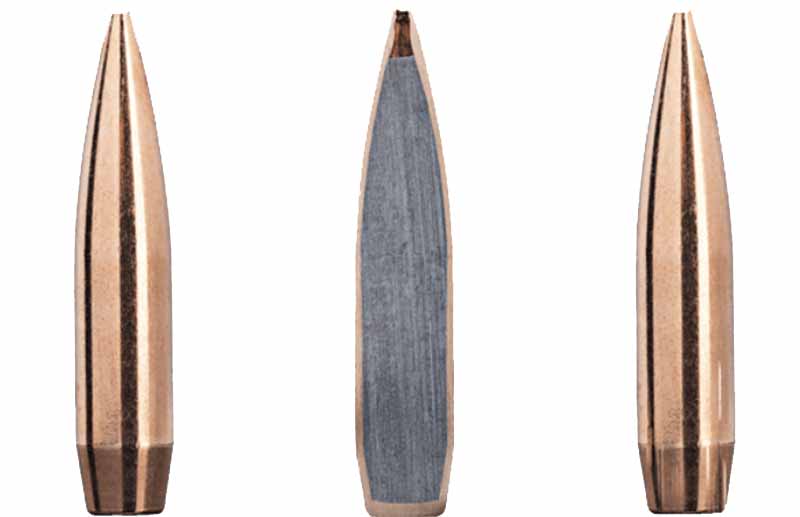
Imported by Beretta USA, these six new lines of Sako cartridges will offer extreme accuracy and deadly performance for competition shooters and hunters alike.
New Sako Cartridge Lines:
TRG Precision
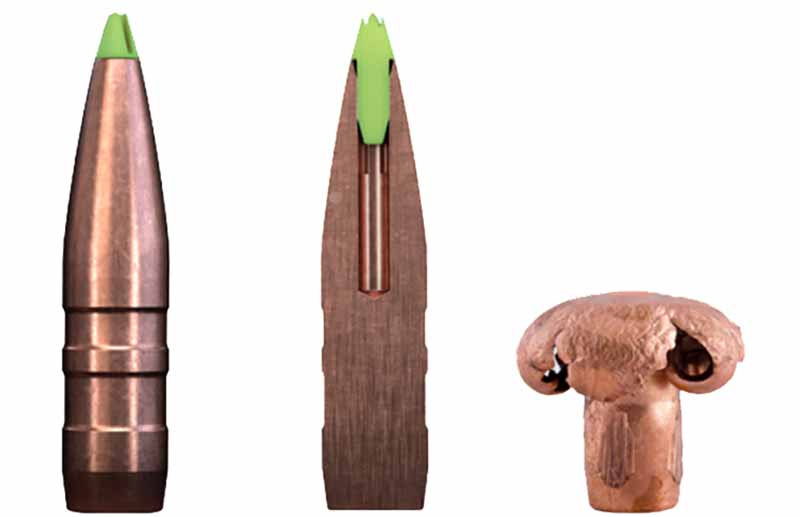
Powerhead Blade
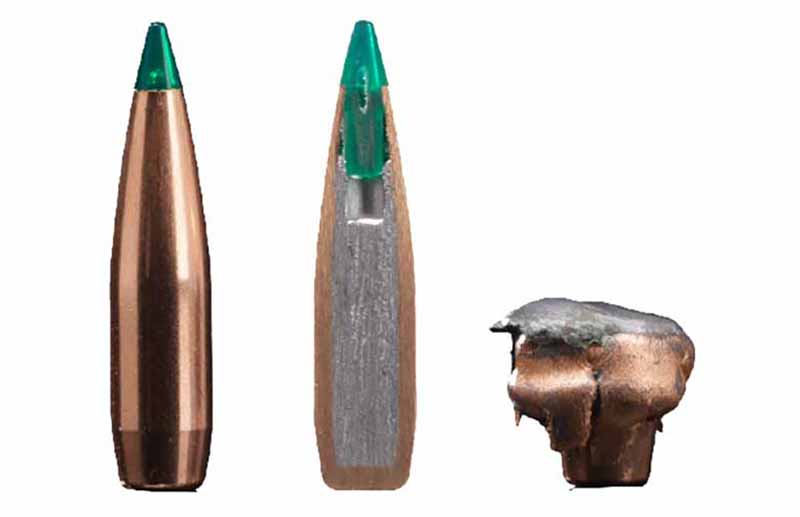
Gamehead Pro
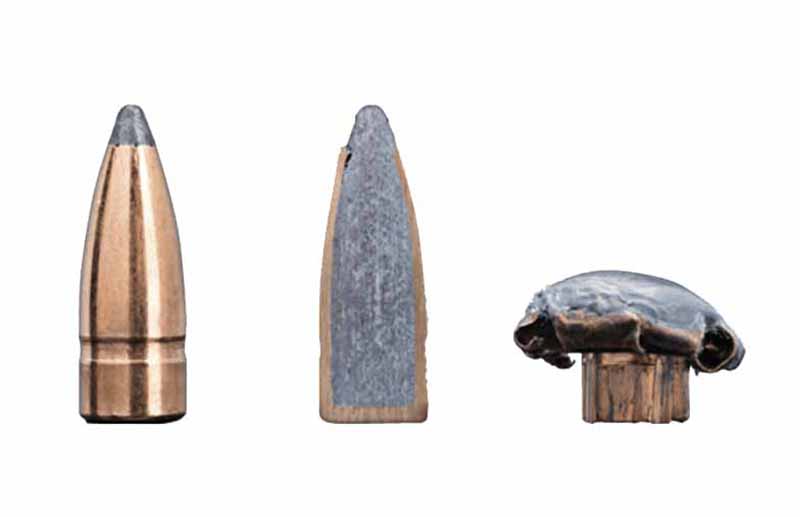
Gamehead
Speedhead
Super Hammerhead
Sako, based in Finland, has been producing arms and ammunition since the early 20th century. Today they are best known for their precision rifles and cartridges that are appreciated throughout the world by hunters, competitive shooters and anyone else who cares about extreme accuracy.
This new generation of Sako cartridge families aim to provide shooters with ammunition that performs exactly to their needs, whatever they might be. That’s why each of these new lines were tailored towards a specific goal and are available in a variety of calibers.
The New Sako Cartridge Lines
TRG Precision
Manufactured with consistent accuracy in mind, exclusively intended for competition use and long-range shooting. These cartridges are loaded with open-tipped, boat tail match bullets.
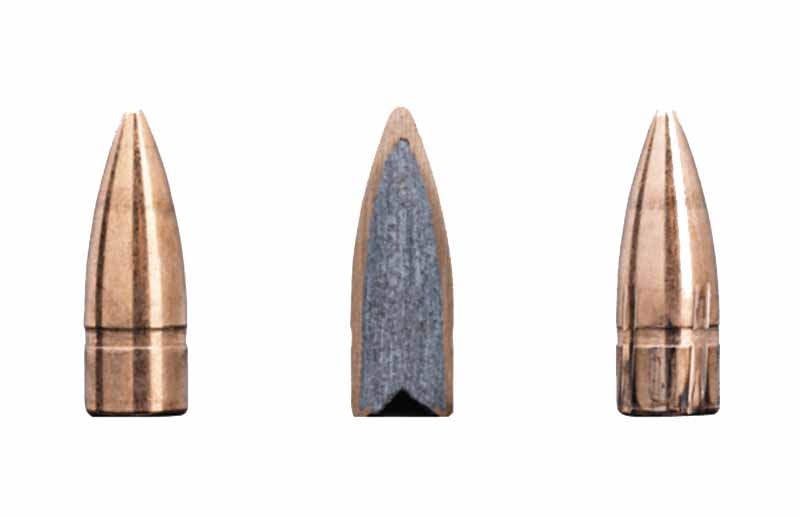
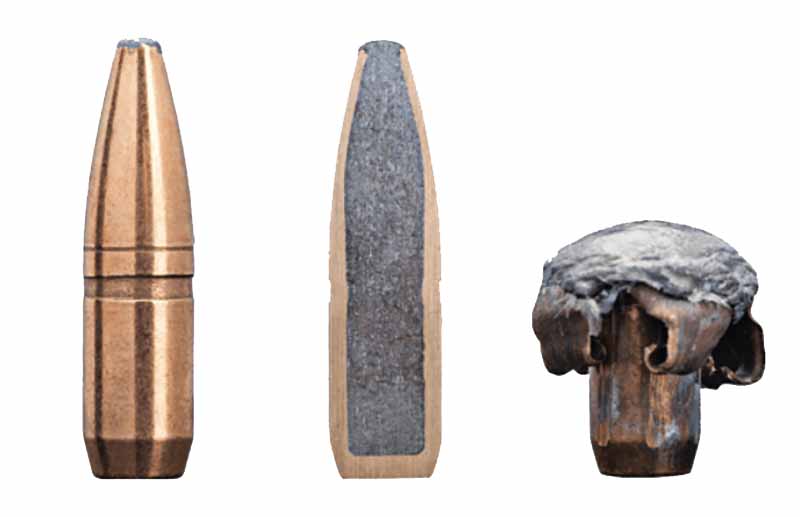
These new Sako cartridges are intended for hunting and are completely lead-free. They feature a copper blade tip and “5-Stage Terminal Architecture”, which intends to optimize the cartridge’s performance in any scenario. This design supposedly solves the most common issues with non-lead projectiles: under-expansion and over-fragmentation.
Available Calibers: 6.5 Creedmoor, .300 Win Mag, .30-06 SPRG, and .308 Win.
Gamehead Pro
This cartridge family was designed for taking medium-sized game at extreme distances. They are loaded with Sierra GameChanger projectiles which feature a polymer tip, precisely calculated jacket thickness, and a high ballistic coefficient. These factors result in a bullet that is able to resist high muzzle velocity to still have lethal expansion at longer ranges.
Available Calibers: .270 Win, 6.5 PRC, and 7mm Rem Mag.
Gamehead
For small to medium game, the Sako Gamehead cartridge line features a soft-point and a non-bonded core. Similar to the Gamehead Pro, this also results in rapid expansion only it is designed for smaller game at closer distances. Sako describes it as a great all-purpose hunting bullet.
Available Calibers: .243 Win.
Speedhead
These cartridges feature a full metal jacket projectile and are only available in .223 Remington, as they are designed for competition use, especially 3-gun. They are intended to deliver very consistent accuracy with low recoil impulse, making them ideal for when both the precision and the speed of your hits matter.
Available Calibers: .223 Rem.
Super Hammerhead
Like the name implies, these cartridges are heavy hitters. They feature a heavy jacket, non-fragmenting projectile, and a bonded core to provide good penetration and controlled expansion. These are intended for taking big game at relatively shorter ranges.
Available Calibers: 6.5 x 55 SE, 6.5 Creedmoor, .308 Win, .270 Win, and .30-06 SPRG.
For more information on Sako Cartridges, please visit sako.fi.
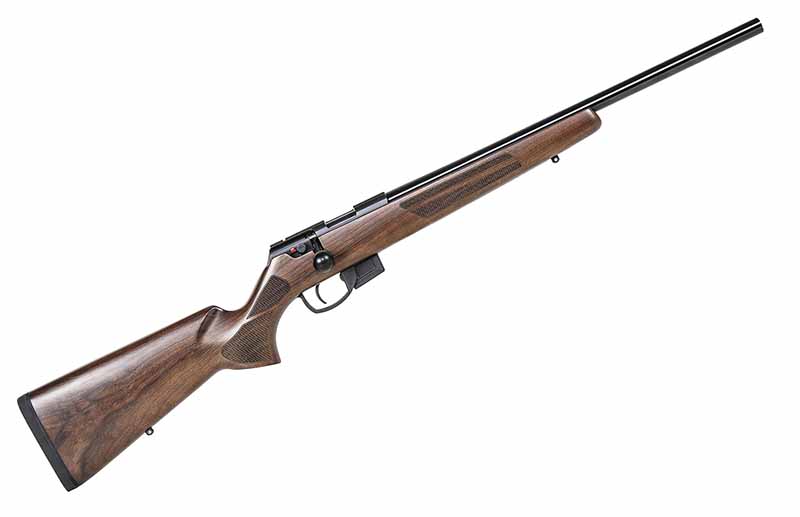
Considering current production rifles, slices its lineup in three ways: Hunting or Sporting, Target, and Biathlon. Sporting lineup variations through Anschütz North America include the Meister Grade Series with premium walnut stocks and the Canyon Creek Series with super-premium walnut. These rifles are largely magazine-fed repeaters. The Target rifles are geared toward Olympic-style positional shooting and benchrest and are primarily single shots. Anschütz has been slow to move into the NRL22-style precision market. Still, there are Custom Shop options — magazine-fed trainers available in laminated GRS stocks and a Rimfire Trainer Series in an XLR chassis. Think of Anschütz in broad categories of Sporting, Hunting, and Biathlon, but the real differentiator model to model is the action.
Anschütz has five primary rifle actions: the foundational Match 54; the variant 54.30; the practical and recently discontinued 64; the new swap-barrel 1761; and the straight-pull Fortner biathlon action. Anschütz has been deliberate over the years in its designs. Each action serves a purpose and serves it well.
54 Action
The Model 54 is effectively a three-lug design with a bank vault-strong lock up. There are two rear locking lugs on the solid steel bolt, plus the bolt handle’s lapped base that acts as the third lug. There is a short 53.5-degree bolt lift with a famously glass-slick raceway. The light firing pin travels less than 2 centimeters, which gives the 54 one of the fastest lock times in rimfire. The receiver is thicker and heavier than other actions in the Anschütz line and most rimfire actions in general, at least until the recent rise of centerfire-inspired Remington 700-footprint actions. This oversize makes a good support for heavy contour barrels. Most barrels are press fit with a dual retaining pin.
There are repeater and single-shot versions of the 54 action. The repeater magazines are a curved single-stack similar to a CZ mag. There are several trigger options, but the benchrest-quality two-stage 5018 is perhaps best regarded. It’s fully adjustable with a pull weight range of 2.1 to 8.6 ounces. I suspect the Model 54 with 5018 trigger is the winningest match receiver/action combo in smallbore history due to its long dominance across multiple disciplines. (The Winchester 52 may be close due to its long successful run. I have no data to support this either way.) But it is undoubtedly true that the 54 action and its excellent triggers put the Winchester and Remington 40x out of business at the elite shooting level almost overnight. The short bolt lift, lock up, lock time, and premium Anschütz rifle barrels came to define peak rimfire accuracy.
Current production 54 action rifles include the single-shot 1907, 1913, and 2013 match rifles. You can think of the 1907 barreled action as a lighter version of the 1913 with a slightly smaller barrel diameter. The 2013 action is an updated variant of the Match 54 single shot with an extended and squared bedding area and clamp-style barrel attachment. Anschütz uses the 54 action in the 1710 and 1712 sporter rifles. For silhouette and modern precision, shooting the 17xx line is the most widely used of the 54s.
54.30 Action
In 2015, Anschütz updated the single-shot 54 action with the 54.30. It moved the loading port rearward 30 millimeters, hence the 54.30, which reduced the overall action length by 18 percent. This change made the action stiffer and lessened the movement required by positional shooters to cycle it. The revision further lightened the firing pin for an even faster lock time. The 54.30 also has a threaded receiver and barrel connection, and it cut barrels with a new-to-2015 proprietary Anschütz match chamber. Not only that, the rounded footprint matches that of the 1907 and 1913. Depending on the stock, these positional rifles run between $4,700 and $5,500. That is a lot of money but represents almost a bargain compared to Bleiker, Feinwekbau, and other exalted European rifle makers, which can cost two or three times as much.
64 Action
The 64 action rifles are what most Americans think of when they think of an Anschütz rifle. For a long time, Savage imported them as Savage-Anschütz, and they’re all over the used market in .22 LR and .22 WMR. Newer version 64s — not imported by Savage — can be found on the used market in .17 HM2 and .17 HMR. The rifle that kicked off my obsession with rimfire was an Anschütz 1502 with the 64 action in .17 Mach 2. (You could blame this whole book on that rifle.) Anschütz discontinued the 64 in favor of the newer 1761 action. According to Steve Boelter, president of Anschütz North America, it received the last U.S. shipments of guns and service parts in December 2020. Shooters with 64s should not worry about future parts availability. “We have enough ejectors and firing pins to last a century,” he told me.
The 64 action is a scaled-down lightweight version of the 54, which suits sporter rifles and small game guns. The one-piece solid steel bolt body has no lugs. The locking surface is the base of the bolt handle. The 64 has a different trigger system, and while there are many good ones — Anschütz does not make a lousy trigger — there is no trigger model for the 64 that equals the two-stage 5018. The 64 and 54 are two different footprints, so stocks and triggers are not interchangeable between the two actions. The 64 barrels are press fit with one horizontal locking pin. The magazine release is less than ideal for position or bench shooting, but there are extended aftermarket options available to correct that. There was also a run in the 2000s where every new 64 seemed to have ejection issues. The case would eject slowly and often tumbled into the open receiver port. Engineers corrected this with a new ejector, and for a while, Anschütz sent them out for free or did the work themselves if you mailed them the bolt.
People ask, “What is more accurate, the 54 or the 64?” Mechanically, the 54 may have more accuracy potential with its heavy-duty build, locking lugs, and faster lock time. It certainly requires more hand finishing work and is a premium action. The barrels are made the same way, on the same machines, of the same or similar contours, with the same chambers. The 54 is a more sophisticated and expensive action, but to call it more accurate? Well, it depends. There are less-than-perfect 54s and barn-burner 64s, as is the nature of factory-built rifles. On average, the 54 series is more so a precision instrument. It has more potential as an accurate rifle system, but I’ve yet to shoot a 64 or know anyone who has one and complains about poor accuracy. The universal question on rimfire forums is always, “Is this rifle more accurate than that rifle?” The answer is almost always, “It depends.”
The newest Anschütz action, the 1761, has a host of modern features and has been designed to replace the 64 as a light, all-purpose, and relatively cost-effective platform. What started as a rework for the 1710 and 1712 Match 54 repeaters became a total redesign. As Anschütz put it in a good explainer on its North American website:
“…we opted to slightly increase the bolt lift from 53 to 60 degrees as a trade-off in order to move the locking lugs from the rear to the middle of the bolt. The lugs were switched from smaller eccentric lugs to a much more robust set of three lugs and evenly spaced these around the bolt. This allowed us to move from a long dual-spring firing pin to a very short, light firing pin and single-spring striker system. The new spring and striker mechanism was moved to the rear half of the bolt. This change also made the bolt much shorter in overall length.”
The bolt’s back is a roller bearing, making the opening motion smoother with less required force. The dual ejector system borrows from the single-shot Match 54. Ejectors are held in place by plunger and spring rather than c-clamp.
The smooth barrel tenon slip fits in the receiver like a CZ, but with one key difference: Rather than grub screws directly tensioning the tenon, there are two small v-blocks that Anschütz says more evenly distribute pressure and don’t mar the tenon. Shilen, Lilja, Lothar Walther, and other quality barrel makers produce drop-ins.
The steel billet receiver is CNC machined with an integral recoil lug and square bottom bedding surface. The action has square lines, not the rounded body of more traditional Anschütz rifle actions. It is 4 centimeters shorter than the Match 54 action (read: very rigid) and held down in the stock with two action screws. There is an 11mm dovetail rail on top. Anschütz opted not to tap it, which is a mistake. (The best Anschütz rings, according to many, including me, are the one-piece Talley rings and bases for the tapped receiver, not the more common 11mm dovetail clamp-style rings.)
The magazine is a steel and poly combo. As of early 2021, there were only 5-rounders, though a 10-round prototype has moved toward production. The small radiused hinge release button is behind the magazine and accessed through a cutout in the triggerguard. You can drop the mag with a forward slap of the trigger finger. The triggerguard is an unfortunate plastic, but steel models are available on the aftermarket. Calibers include .22 LR, .17 HMR and .22 WMR.
Fortner Action
Peter Fortner invented the straight-pull action that bears his name, and he still manufactures them in a small shop in Rohrdorf, Germany. Under a licensing agreement, his entire run of rimfire actions goes to Anschütz, which builds them into its flagship biathlon guns and the 1727 F line of sporting rifles in .22 LR, .17 HMR, and .17 Mach 2. Fortner also designed a centerfire equivalent for German rifle builder Heym. Boelter likens the Fortner relationship with Anschütz like a speed shop within an auto manufacturer, AMG within Mercedes.
Straight pulls operate faster than classic turn bolts, with less motion required to cycle them. Rather than the four movements of lifting the bolt, pulling it back, and pushing it forward, then pushing it back down again, there are just two motions to a straight pull: rearward and forward. Shooters typically run them with their thumb on the back of the bolt.
After the shot, the trigger finger comes up and cycles the bolt rearward. Then the thumb pushes it home on the fresh round. Much of Europe has outlawed semi-automatics, so when speed is needed, as in biathlon events or boar hunting dense forest with centerfires, straight pulls have proven fast and accurate. That explains why Anschütz, Heym, Blaser, and others have cultivated the design. Straight-pull actions have mostly gone unnoticed in the US of A. That’s because 1. we have all the guns, and 2. the cost. Straight pulls are necessarily complicated and expensive to make. The exceptions on this side of the pond are the Browning T-bolt and the Savage Impulse.
The Fortner action uses seven ball bearings that act like rear locking lugs. The action works very much like a hydraulic tractor hose or an air tool connection. When you put pressure on the bolt handle, it relieves stress on the bearings that sit within the sleeved bolt. This movement withdraws the ball bearings into the bolt, and you can cycle the action. The handle is spring-assisted, so the balls extend out and into the recesses in the receiver body and lock up when it snaps forward. This design allows for a linear rather than a rotating bolt action. Pulling the handle acts like pulling the collar on a quick-connect hydraulic line. It retracts the bearings and breaks the connection. Compared to a semi-automatic rimfire, this creates a stronger lockup. Advocates say they can run the bolt accurately almost as fast, too. Well, maybe. What is certain is the design is effortless to run. A broken-in Fortner seemingly wants to cycle itself with just some encouragement from forefinger and thumb. The Fortner action is rounded with a floating ring recoil lug and press-fit, two-pin barrel connection and comes with the world-class 5020 two-stage trigger with a pull weight range of 3.1 ounces to 1.375 pounds. Biathlon rifles come set at the required 500 grams or 1.1 pounds. The total package is a remarkable feat of firearm engineering.
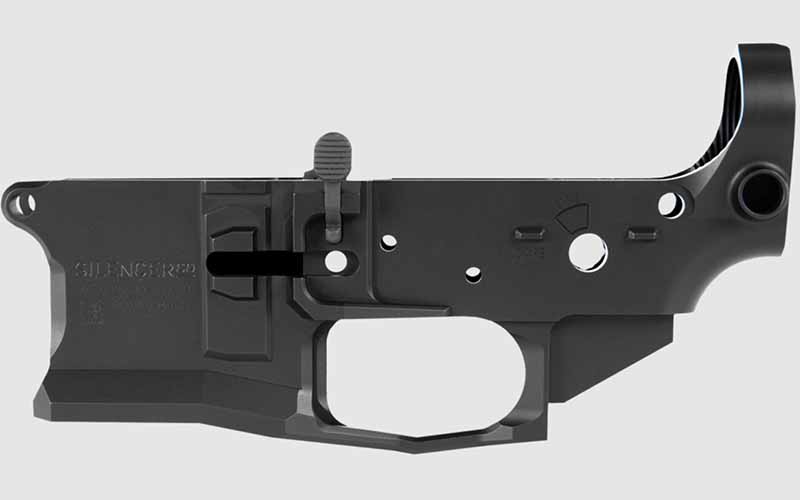
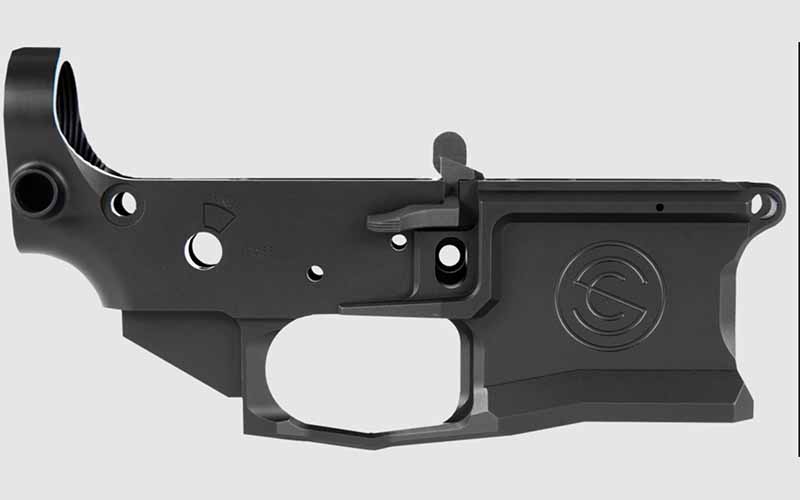
SilencerCo’s new SCO15 lower receiver can bring several desirable, non-standard features to your next AR build without breaking the bank.
SCO15 Extra Features:
Ambi Bolt Catch
Flared Magwell
Integral QD Sling Cups
Integral Large Trigger Guard
SilencerCo, one of America’s premier silencer manufacturers, has recently decided to branch outside the realm of making guns quieter to try their hand at something a little more basic: AR-15 lowers.
With so many different AR lowers available, what makes the SCO15 special?
First, the not-so-special details. The SCO15 is built to mil-spec dimensions to be compatible with any common AR-15 components. It is constructed from 7075-T6 billet aluminum and finished with a type III hard coat anodization. This is all pretty standard, so now let’s get into what sets the SCO15 apart.
There is more reason to own an ambidextrous rifle than being left-handed. In the military, they teach soldiers how to fire their rifle with either hand in order to shoot from behind cover without exposing themselves to the enemy. Whatever your reasoning is for wanting an ambi lower, the SCO15 has you covered. Not only is the included, proprietary bolt catch fully ambidextrous, but the selector markings and QD sling cups are as well. With these features, the SCO15 can be assembled into a very versatile rifle that can be comfortably used from either shoulder.
It also includes an integral trigger guard which is larger than on standard lowers, providing more space for a gloved finger. This is presumably more durable as well since it is milled into the billet itself rather than being a separate piece.
The magwell is also flared to help expedite magazine changes.
There are other ambi lowers on the market, but they are typically either more expensive than the SCO15 or are similarly priced but have fewer features. At an MSRP of $249, the SCO15 is very competitively priced for what’s included in the package.
For more information on SilencerCo, please visit silencerco.com.
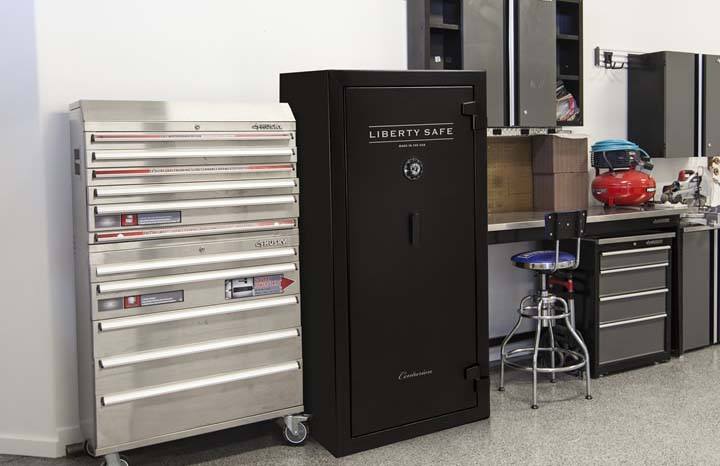
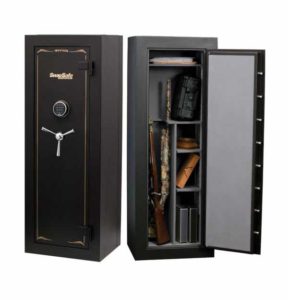
A gun safe is a hefty investment, but it pays off with peace of mind that your collection is secure against nearly any scenario.
What makes a quality gun safe:
Protects against both theft and fire.
Maintains internal temperature below 350° F in a 1,300° fire for around 1 hour.
10 gauge steel body and a thicker gauge door, preferably plate steel.
Box assembled with continuous welds.
Combination or electronic (keypad) lock.
Easily concealable in your home.
Attachable to the fabric of your home (i.e. floor or wall).
Holds existing collection with room for more guns in the future.
Interior lining to protect guns’ finish.
Dehumidifier and lights top aftermarket upgrades.
Like breathing or blinking, meticulousness is naturally part of gun owners. Long range shooters record their every shot so they can predict where the next one will land. Handgunners spend countless hours perfecting every movement so pistol manipulation is glass-smooth and second nature. And clay shooters work overtime visualizing every possible way to track and vaporize blue rock mid-fight.
However, shooters, being human, are full of contradictions and the inborn quality to sweat the small stuff doesn’t bleed over into every fiber of their passion. Perhaps, one of the most glaring examples is gun storage. We all know a few of them. The friend who has a tack-driver worth a couple grand he stows under his bed in the hard case it was sold in. It’s playing with fire — potentially in a literal fashion.
Those who take their firearms seriously should also approach how they store them with the same gravity as they would dialing in a shot or scrubbing a bore to a mirror shine. Which is why, sooner rather than later, a gun safe should top the list of firearms necessities.
It’s generally not an investment to take lightly since gun safes are expensive and the importance of the service they’ll provide you and your collection. But, taking a studied approach, developing an understanding of exactly what they offer and weighing each one’s benefits is certain to make your money well spent and give you priceless peace of mind.
Threats A Gun Safe Thwarts
Generally speaking, there are two primary threats to firearms in the home: fire and theft. For the most part, gun safe companies and the media pump up the former over the latter as the greater of the two and they’re not off base. A house fire is, overall, a greater statistical danger. That said, these statistics are subjective; there are certain corners of the country where crime burns hotter than house fires. Ideally, just to be on the safe side, you should shop for a gun safe that protects against both.
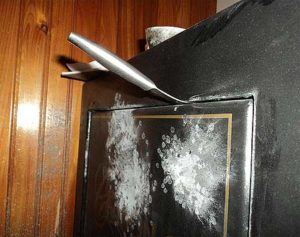
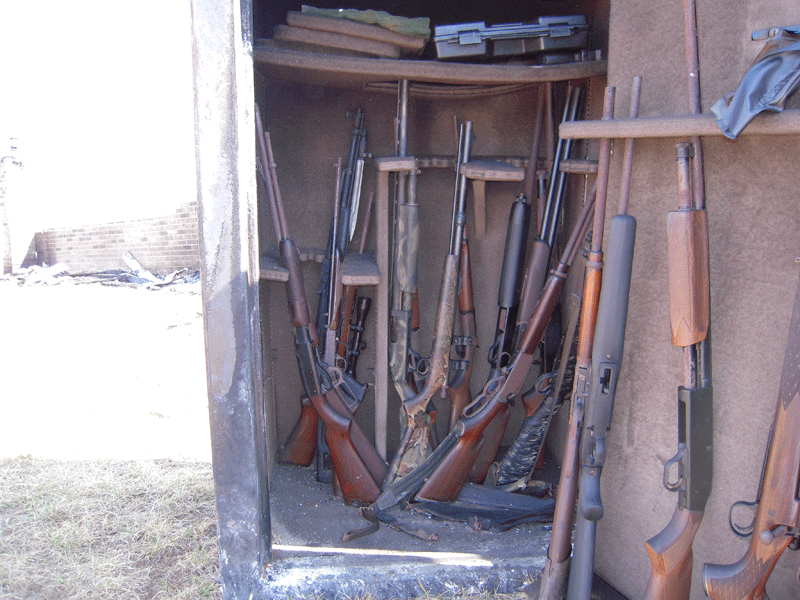
Gun safe thwarts attempted break-in.
An additional point, while not a threat in a traditional sense, a gun safe also provides a way to control access to your guns, an important factor, especially if you have children. As Massad Ayoob points out in his book Gun Safety, realistically there is no way to gun-proof your home, so you must gun-proof your child by teaching them the respect and responsibility of owning firearms. Nevertheless, sometime in their life, they might have less-than-mature friends who formulate less-than-mature notions. Nipping catastrophe in the bud with Cannon, Winchester or what have you safe is well worth the investment.
Types Of Gun Safes
Not all gun safes are created equal. In fact, not all gun safes are really gun safe. For the most part, there are two types of gun storage options: actual gun safes and gun lockers. Confusingly, for the sake of marketing juice, many gun lockers call themselves gun safes. Clear as mud now? There’s no bright line between safe and locker, but if there is a major distinction it’s fire protection. Gun safes have it, lockers don’t.
Depending on steel gauge, lockers are a viable option, especially for those who have certain constraints. If you rent a fourth-floor apartment, a light-weight, quality built system by Stack-On or SecureIt could be your only avenue to gun security. Few building owners are keen on testing the structural integrity of a floor by pressing down on it with 500-plus-pounds of metal box.
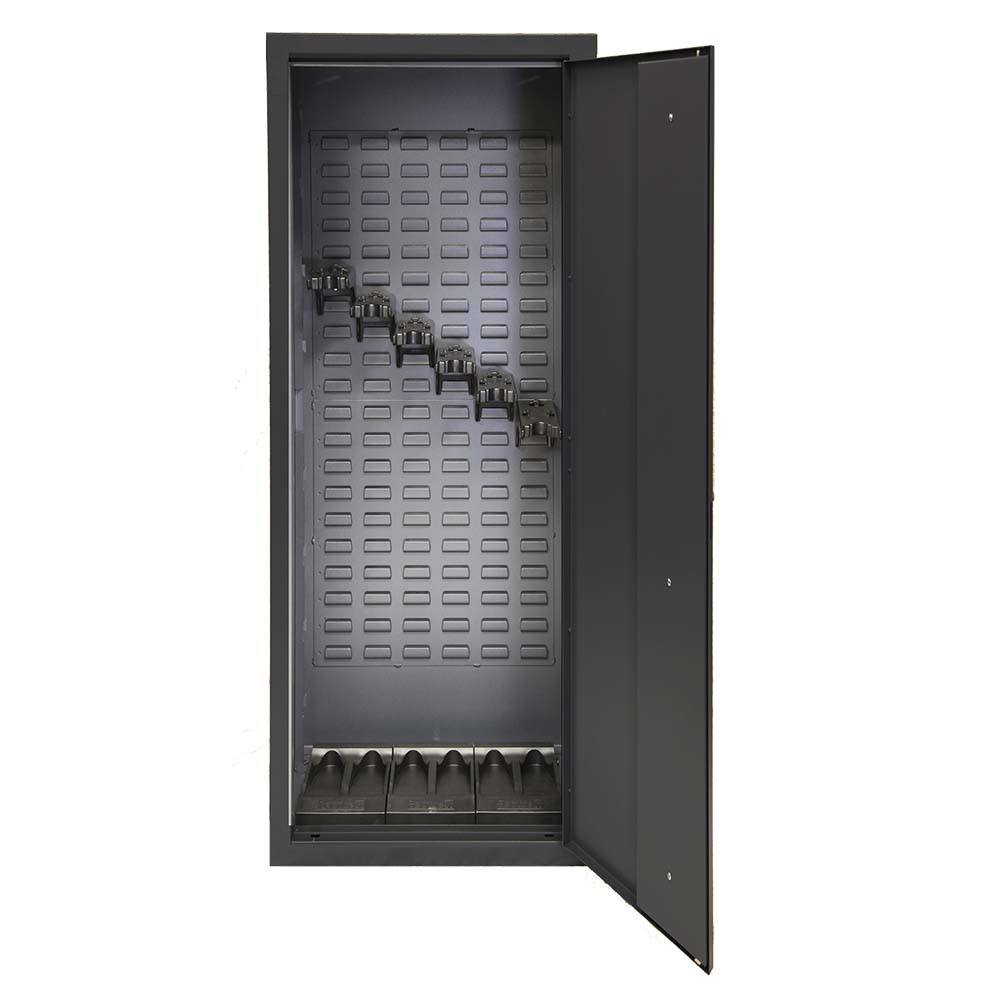
SecureIt Agile Gun Locker
For smaller collections, there’s an oddball selection of handgun safes, rapid-access safes (a handgun safe for the most part) and hidden gun safes. In general, most of these systems hold no more than a few guns — typically one handgun — and offer no true security or fire protection. All in all, they secure a gun and offer fast access, usually next to a bed, in a closet or in a vehicle.
Secure More Gun Safe Knowledge:
The 5 Best Gun Safe Options For Protecting Your Collection
They’re dynamite at what they’re designed for, Hornady RAPiD Safes and Gun Box are excellent systems that deliver a handgun in a moment’s notice. They and others are suitable to thwart crimes of opportunity or keep a gun under lock and key around children. But with time, most won’t weather a serious attack with something a simple as a pry bar or claw hammer.
There are some exceptions. Fort Knox, for instance, manufactures a number of heavy-duty handgun and long-gun boxes hefty enough to withstand a serious break-in attempt. As always, expect to pay more when you go this route. True security never comes cheap.
Finally, there are good old-fashioned gun cabinets — which are not safes at all. Beautifully showcasing a collection, these elegant gun storage options (generally made of wood and glass) are long on looks and short on protection. Unless you have the money to slap a plate-steel door on a fire-protected room to create a walk-in gun vault, gun cabinets are generally not the top option.
Gun Safe Fire Protection
If you’re a fan of cutting out ingrown toenails or filing your taxes, you’ll love figuring out gun safe fire ratings. They are painful and frustrating in one felled swoop.
The fly in the ointment — testing. There is no set standard to determine how long and at what exterior temperature a gun safe will keep its contents from turning into a pile of scorched metal and charcoal (puddle of gunk for synthetic stocks). Each individual company contract independent laboratories to bake, burn and singe their safes, while keeping tabs on what happens inside. In turn, how Heritage has a gun safe put to the flame is different than Browning and Liberty. This isn’t to imply the companies aren’t on the up-and-up, at least a great majority. But at the bare minimum comparing fire ratings is an apples and oranges affair where “buyer beware” is the guiding light.
Photo: Prosteel
Great, then how can you actually find a fireproof gun safe worth its salt? It’s tricky, but a good starting place is understanding what a safe is up against in a residential fire. God forbid, but if your house were to burn to the ground, it would take — on average — 60 minutes and would potentially generate temperatures as high as 1,300-degrees Fahrenheit. Thankfully, it generally doesn’t reach this point, given typically first responders are on scene within 10 to 15 minutes after being alerted. In turn, most fires are quelled within the first hour.
The 350-degree Fahrenheit mark for internal temperature, the line where most companies certify their safes too, for an hour and beyond is a solid starting point. Additionally, a reputable retailer who specializes in gun safes is worth his weight in gold when it comes to finding which ratings actually live up to their billing.
It’s All In The Steel
Mercifully, safe security is much more cut and dried than fire protection. It comes down to cold, hard steel. That’s pretty hard to fudge.
Conveniently for shooters, shopping gun safe steel is fairly simple, given thickness is expressed in gauges. And just like shotguns, smaller numbers mean more. From there it’s a cakewalk, the thicker the steel, the more protection.
Before talking about how much and where the steel needs to go, we should look into how a thief will most likely attack a gun safe. He won’t be a Hollywood cat burglar, deftly swooping the dial with a stethoscope in his ears. He’ll be brutal, trying to pry the door open, cut a hole in the body with a non-torch method (read fire ax or grinder) or, in rare cases, using a torch. Keep in mind, the fire barrier in the walls does nothing for security — gypsum or concrete, it will crumble.
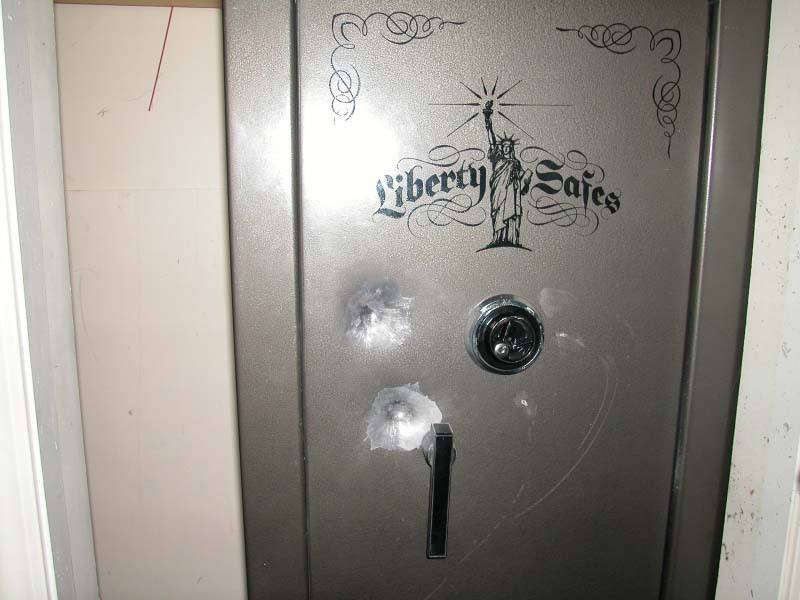
Liberty Gun Safe endures shotgun blasts.
In general, what’s the best gauge of steel to start from? Many in the industry set 10-gauge (.1345 inch) as the minimum for the body of the safe. The door, in most cases, is thicker than the body, given this is a main area of attack. And don’t get fooled by thickness measured with your naked eye. In many cases, those massive walls and door are that way due to the fire barrier sandwiched between them. Honestly, a thin door might offer better security than something that looks half-a-mile thick. One final point, how all that steel is stitched together to become a gun safe is important too. Full continuous welding, as opposed to bolts or spot welds, makes for a sturdier box — not only against thieves, but also fire.
Gun Safe Lock Options
Now you have your gun safe picked out and are confident about its security and fire protection, it’s time to figure out how you’ll access your treasures. For the most part, modern gun safes use three access methods: combination lock, electronic lock and biometric lock. As you’ve probably already guessed, they each have their own advantages and drawbacks.
Starting with the most traditional, the combination lock is the picture of simplicity and reliability. Merely spin the dial and unlock the door; the only weak link in the process is you and your faulty memory. However, if you’re in and out of your safe a lot the process of left four, right two, left one gets arduous. Additionally, if you need a gun in a pinch, a combination lock is far from lightning fast.
Electronic locks, on the other hand, speed up the process considerably, just punch in a code. Furthermore, they offer a number of unique features that make a gun safe extremely user-friendly and increase their security. Many are programmable for multiple user combinations, they don’t require a locksmith to change the code, they can incorporate with home security systems and lockout on multiple entries of the wrong code. The drawback of this system — electricity. If you don’t have juice, you can’t get to your guns. At a bare minimum this requires constantly staying on top of batteries, at the worst, it means no access to your guns when you need them most.
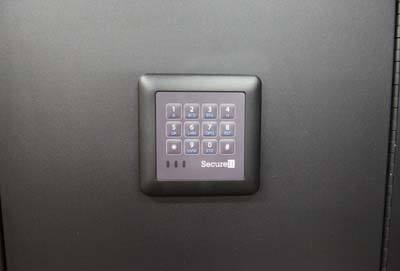
Electronic lock on a SecureIt gun locker.
Recently, with concerns of EMP attacks, some manufacturers — Fort Knox, Hollon Republic, Cannon, for example — have begun including a redundant combination lock. Meant as a backup, for those willing to shell out extra money it could provide a reassuring insurance policy for getting to your guns if your 9-volt battery supply runs thin.
Finally, there’s the biometric gun safe. A riff off the electric variety, the lock scans a users fingerprint and gives them instant access to their guns. Additionally, it can store multiple users’ fingerprints, so an entire family can gain access to a gun safe. Along with the drawbacks of the electronic locks, biometrics have another flaw — the technology isn’t 100 percent. If your hands are dirty or you’ve been eating cheese puffs you might have difficulty getting into your safe.
Gun Safe Installation
Like “Fight Club,” the first line of defense for a gun safe is you don’t talk about your gun safe. It might look pretty slick in your main room right next to the TV, but it’s an open invitation, letting potential bad guys know you have something worth storing in a safe. A hidden gun safe is a safe gun safe. Secondly, if you move your gun safe around with a dolly or a buddy’s help, so can a crook. Bolt the bugger down! Most every single one comes with floor attachments, use them.
Where Does The Dang Thing Go?
Face it, a gun safe is a big investment in the most literal sense. In all likelihood, unless you’re into Elizabethan Armoires (we know you aren’t), chances are you’re vault is going to be among the largest and weightiest objects in your house. Safe to say, finding a place for your safe to reside isn’t the easiest exercise.
A general rule of thumb, especially if it’s on the foundation, the ground floor is the best place to situate a gun safe. Structurally, it provides the support required to hold the mammoth without damaging your house and it provides a rock-solid surface to anchor it. Anchoring is always advisable, given thieves can’t just roll out the door with your safe to break into at their leisure. However, the second floor in a properly constructed house typically has the chops to hold a moderately sized safe. High-end options, pushing well north of 1,000 pounds might require consultation and modification by a skilled contractor.
Garages are often popular areas in a house to plant a gun safe, however, they can prove treacherous. If it’s your run-of-the-mill car hold, the area can be more permeable than the rest of the house giving greater access to felonious meatheads. Furthermore, few folks heat or air-condition their garage, in turn, it’s akin to storing your precious firearms outside. Not ideal.A dehumidifier is a must if you stow your gun safe with your cars. Plus, the garage isn’t the most accessible area in the house, kind of putting you in a pinch if you need to retrieve a gun right away.
But I Live In An Apartment…
Folks living in apartments and condos are in a sticky situation when it comes to gun safes. Many complexes won’t allow a large specimen in a unit for fear of structural damage. And almost all will refuse to allow a tenant or owner to attach it to the fabric of the building, which might put your collection at risk. Though, it never hurts to inquire with your landlord or homeowners association. If they say no to big units and bolting, what’s the solution?
Modular safes, such as the SnapeSafe Titan, are ideal if you live on the top floor of a condo complex.
On the end of the gun safe itself, it’s fairly simple—either go a gun locker route or buy a smaller safe. These will generally conform to complex standards and won’t run you headlong in the powers that be. True enough, a locker doesn’t offer fire protection, but it’s a tradeoff you might have to make for security. There are elegant solutions in terms of safes proper, especially if you live on the 14th floor. Modular gun safes, for example. Options, such as the SnapSafe Titan, internally bolt together, meaning you can bring each piece up individually. Again, they don’t measure up to their seam-welded cousins, but they offer more peace of mind than nothing.
As far as keeping a gun safe or locker in one place if you can’t bolt it down, you’ll have to get creative. One of the more inventive ideas, bolting it to a steel plate larger than the door frame. Another is attaching multiple safes or lockers together. These small steps won’t guarantee a safe will stay on-premises, but you’ve made it a magnitude harder and more time-consuming for a thief to get it out of your place.
Size Of Gun Safe You Need
How big you should go is a tricky proposition. It’s easy to save money and buy for your present needs. A more prudent course of action is planning for the future and purchasing a gun safe that will handle guns you’ll add to your collection. Yes, it is more expensive now, but cheaper in the long run, given it saves you from another safe purchase.
Gun Safe Interiors
Some gun safes come with everything short of a minibar. But what you really need is up to you. The bare minimum is a soft lining, so you don’t have to worry about dinging your firearms when you take them out. More recently, configurable interiors have become all the rage, giving you the ability to customize how you store everything. Another plus, for an electrically wired gun safe, is interior lighting. It’s hard to believe how dark they can get. While all nice, don’t get caught up in how many cup holders and digital clocks a gun safe has, what you’re really concerned about is what’s under the hood — how it will protect your guns.
Gun Safe Accessories
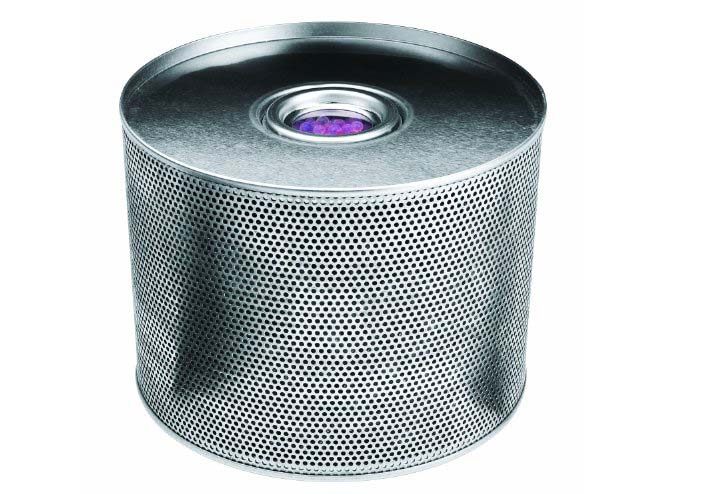
Cannon Gun Safe silicon gel gun safe dehumidifier.
The No. 1 must-have extra for a gun safe — particularly if you live in a damp climate — is a gun safe dehumidifier. Gun safes can get moist quickly — not good for gun steel. There are primary two to choose from: electric and desiccant. The electric variety, such as Eva-Dry Mini Dehumidifier or Lockdown Dehumidifier Rod, are handy since they are non-toxic and spill free. But they have the same weak point of everything electric — electricity. Desiccants, on the other hand, take out the concern of not working when there’s no juice. Something such as Dry-Packs Silica Gel Canister is rather benign, but must be emptied and dried at certain points for full effectiveness.
Parting Shot
It’s easy to get chintzy and play the odds with your precious guns. After all, nothing has happened up to this point right? But when you take a sober look at the threats your firearms face when not in use then the need of a gun safe becomes evident.
It’s a small investment when compared to the potential loss of thousands of dollars worth of guns, not to mention the priceless sentimental value. There’s only one granddad’s deer rifle in the world that you of all the grandchildren were bequeathed. You should act like you deserve by treating it like the treasure it is.
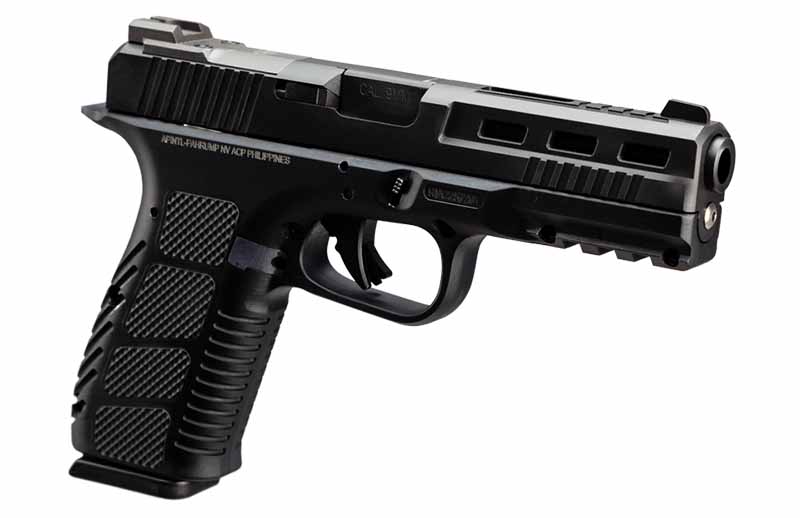
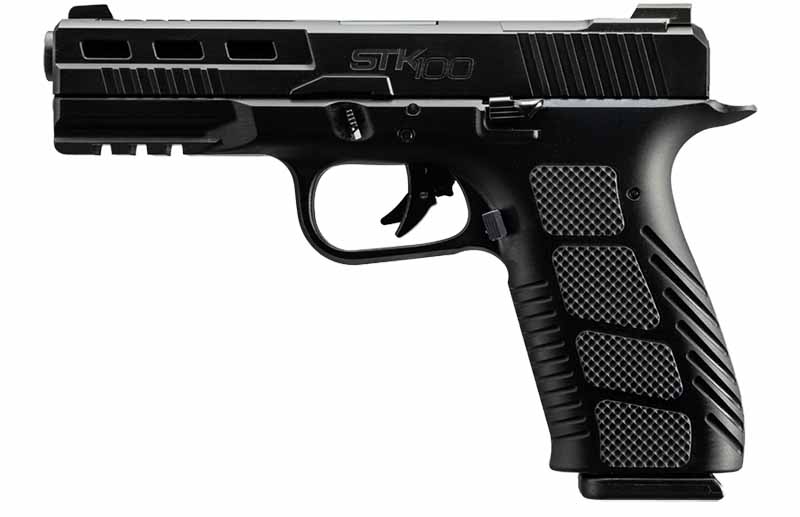
Don’t fret! Rock Island’s STK100 is the company’s first striker-fired pistol, but it decidedly breaks from the herd.
How The STK100 Set Itself Apart From Other Striker-Fired Pistols:
Lightwight aluminum-alloy frame.
Similar ergonomics to the 1911, including beavertail and straight grip rake.
Lightening cuts in the slide to improve cycle rate.
Excellent 17+1 capacity.
If you know Rock Island Armory even in the slightest, you know the cut of their jib. For years now, the company chipped away a solid niche as one of the world’s foremost purveyors of affordable 1911 pistols. Good ones at that. Maybe not hand-tuned, custom-made good, but solid enough to trust your life as a personal defense piece. But the only constant in the world being change, the Filipino gunmaker recently made a big shift.
Say hello to Rock Island’s first striker-fired pistol—the STK100. Yes, the staunch defenders of John Moses Browning’s iconic pistol succumbed to the whims of the modern shooter and joined the current of today’s dominant handgun design. We’ll give you a second to scrape your jaw off the keyboard. Better? Good. While the move may chagrin purest who insist all their heaters boast hammers, there’s much to like about the way Rock Island has leaped into the modern fray. To be sure, the STK100 is a striker-fired 9mm, but a decidedly non-conformist take on this popular and omnipresent class of pistol.
Metal Head
Where Rock Island has taken a different tack is decoupling “striker-fired” from “polymer-framed”. Indeed, the gunmaker has opted for what it knows best to build the STK100, metal—in this case, an aluminum alloy. In some respects, the material ends up being a best-of-both-worlds option, offering what is generally considered a more robust frame material than polymer, but proving lighter than steel and corrosion-resistant. Plus, it appeals to folks who still turn a jaundiced eye at “plastic” guns.
Ergonomically, Rock Island has stayed close to home. The STK100 takes many cues from the good ol’ 1911, particularly in its relatively straight grip rake as well as fairly prominent beavertail. Evolution has all but done away with the latter on most polymer guns, which sport a little more than a nub. However, it and the grip angle make the pistol instantly familiar and comfortable, as well as facilitates a fundamentally sound high grip. The uncut trigger guard pulls its weight here too.
STK100 Tweaks
The gunmaker hasn’t remained a complete slave to tradition, adding some welcome tweaks. There’s a slight swell to the 9mm’s backstrap, helping it conform to the palm better. And the texturing is milled directly into the frame and grip proper—four panels of diamond checkering on the flats and horizontal and diagonal cuts on the front and back respectively. Additionally, the slide has cocking serrations fore and aft making the pistol easier to manipulate. Though, lightening cuts, three on each side, minimize the volume of serrations up front.
As for the tale of the tape, the STK100 is a 17+1 duty-sized pistol, sporting a 4.5-inch barrel and tipping the scales at 28.8 ounces. Given its moderate heft, the gun should make the double-stack 9mm a kitten, thus fast and accurate shot to shot—even a bit more so with the slide lightened up thanks to the cuts. Certainly, these dimensions are not out-of-bounds for a concealed carry gun, especially for those who don’t mind packing a bit more pistol. And Rock Island is surely angling the gun that way, outfitting it with an accessory rail.
The STK100 comes optic ready, with a slide cut compatible with popular red-dot optics (though Rock Island does not specify exactly which ones). However, the gun is ready for action out of the box wearing a set of the almost universal white three-dot sights. The trigger is one area where Rock Island joined the herd—yup the same blade safety outfit you find on nearly every striker-fired. As for its break, it’s in line with the crowd as well, tripping at between 3 and 7 pounds fresh from the factory. As to finish, the aluminum is anodized and the steel slide and barrel a matte-black Parkerization.
RIA has made a name for itself among penny pinchers after quality and the STK100 doesn’t disappoint with an MSRP of $599. Give other gunmakers are presently turning out metal-framed premium editions of their cornerstone striker-fired pistols, Rock Island little ditty might have the stuff to play spoiler among the top-shelf gang.
Rock Island STK100 Specs Caliber: 9mm Capacity: 17+1 Barrel Length: 4.5 inches Overall Length: 7.91 inches Overall Width: 1.25 inches Overall Height: 5.16 inches Weight: 28.8 ounces Front Sight: Tenon Cut W/ Retaining Screw Rear Sight: Fixed Integrated on Optic Cover Plate Grips: Aluminum (Integrated On Frame) Finish: Black Anodized Trigger-Pull Weight: 3-7 pounds MSRP: $599
For more information on the Rock Island Armory STK100, please visit armscor.com.
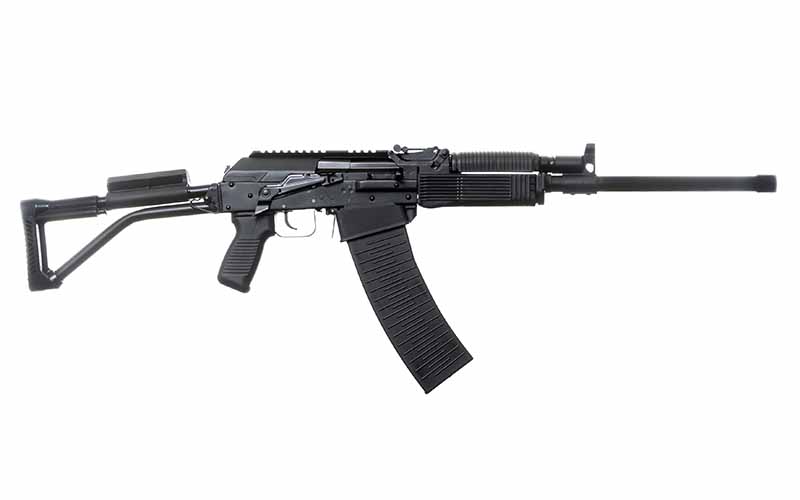
While the Benelli M4 was dominating the international combat shotgun market, others found a better, cheaper solution in the 12-gauge AK shotgun.
Advantages Of AK Shotguns:
Higher Potential Ammo Capacity
Magazine-Fed
Reliable Semi-Auto Function
Simple Operation And Controls
Modular Design
Russians are famous, or maybe infamous, for viewing the Kalashnikov as the solution to all their armament needs. Need a submachinegun? Vityaz—9mm AK. Need general-purpose machinegun? PKM—big, upside-down AK. Need a shotgun? You already know the answer.
Since their advent in the 1990’s, AK shotguns have grown in popularity amongst sport-shooters and law enforcement alike around the world. While other weapons in the Kalashnikov family have seldom seen use by Western armed forces, AK shotguns have been a notable exception. When even NATO forces are willing to be seen using Soviet-derived technology, you know it must be pretty damn good.
Vepr-12 AK shotgun.
Design And History
There isn’t much that can be said about AK shotguns’ design; they are truly just AKs chambered for shotgun shells. Things like the receiver and bolt group have been scaled up to accommodate the larger ammunition, and the gas block is typically adjustable, but besides that, there isn’t much difference between an AK shotgun and a traditional AK rifle.
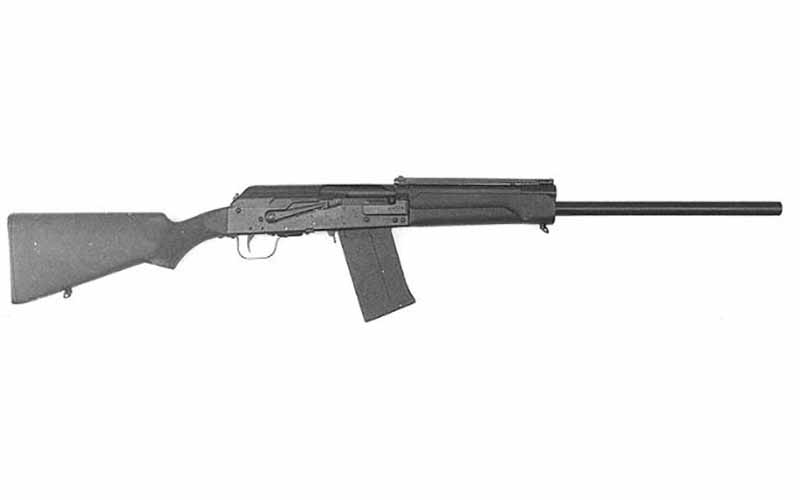
The first AK shotgun designed and produced was the Saiga. Made in the famous IZHMASH factory in Russia, they entered production in 1997 and were available in 12-gauge, 20-gauge, and .410 bore. Early designs were intended more for sport and hunting, as evidenced by the fixed-stock and 5-round magazines.
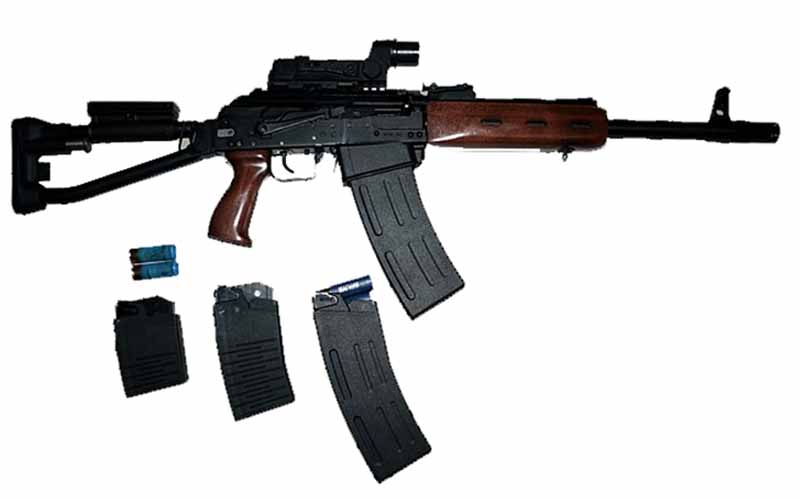
It didn’t take long for these Saigas to be modified and adopted by Russian police and military units as well. They were given folding stocks, larger magazines, and rail segments for accessories.
AK shotguns are also popular home defense options in Russia because smoothbore weapons are easier to legally own than rifles or pistols.
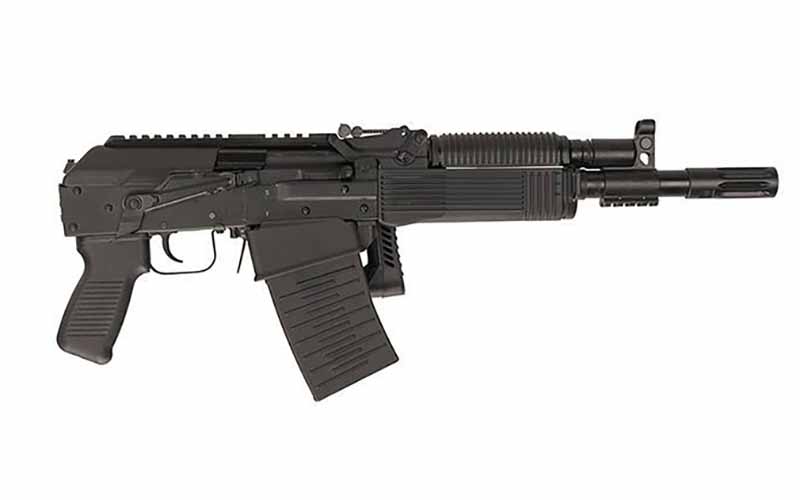
After a few years of the Saiga gaining popularity, the Russian Molot factory decided to make their own AK shotgun in 2003. Their version is called the Vepr-12 and is based on the RPK that Molot is famous for producing. This means that Veprs have a thicker receiver and bulged front trunnion while Saigas do not, making Veprs the more robust and desirable of the two. Since then, there have also been American, Chinese and Turkish-made AK shotgun copies as well, though none are as good as the original Russian variants.
The use of AK shotguns by police and military units began in Russia and quickly spread to ex-Soviet satellite states that also traditionally used Russian gear like Belarus and Kazakhstan. While this is very typical, the adoption of AK shotguns in Western Europe and America is very unusual.
When nations select weapons for procurement, it is not a true meritocracy. Politics have sway over these decisions, and that typically means that NATO-aligned countries are opposed to using Soviet or Russian-designed weapons, and Russia typically prefers to use its domestic designs over Western guns. It is certainly a testament to the quality of Russian AK shotguns that they have been bought and used by French anti-terror units as well as the U.S. Coast Guard’s Deployable Specialized Forces. Some have also supposedly been sold to German and Italian police, as well.
Nobody denies the Benelli M4 is a world-class shotgun. Despite not being a member of the AK family, it is also an extremely reliable and durable machine. Its reliability is the key factor in its popularity with military and police users, but how does it compare to AK shotguns?
While there are a few different makes and models of AK shotgun, the nicest one is arguably the Molot Vepr-12 so we will use it for the sake of comparison.
Benelli M4s have several features designed specifically for combat. These include a larger-than-average ammunition capacity, a telescoping stock, and a large loading port. These are certainly advantages when compared to more traditional shotguns, but they are less impressive when compared to the Vepr-12.
While the M4 has a maximum tube capacity of 7 shells, VEPRs are typically used with factory 10-round magazines and have aftermarket options for 12-round stick mags or even 25-round drums.
Besides having a higher ammunition capacity, Veprs also have potentially faster reloads. While the M4’s tube magazine gives the option for quickly topping-off or for emergency-reloading a single round, it also takes longer to fully load. Even in the hands of an experienced user, it simply takes longer to stuff seven shells into an M4’s loading port than it does to shove a new mag into a Vepr and drop the bolt. Vepr magazines aren’t rock-and-lock like traditional AKs, they are inserted straight into a magwell like on an AR, which makes the process even quicker.
The M4’s telescopic stock is pretty iconic, but it is not as compact as the folding stocks found on Veprs. When paired with a folding stock and a short barrel, these AK shotguns are certainly in the running for guns with the most firepower in the smallest package.
Assuming that the M4 and Vepr-12 have equal reliability, to me it seems that the only real advantage of the Benelli is that it is marginally lighter weight. The Vepr-12 has an average larger magazine capacity and quicker reloads all in a smaller package that costs less than a Benelli. I may have a pro-AK bias, but I truly believe that AK shotguns are the best designed modern combat shotgun on the market. If you are in the market for a semi-auto 12-gauge, try looking a little further East than Italy and you may be pleasantly surprised at what you find.
The P320 AXG Pro takes Sig’s most popular full-size 9mm and gives it an all-metal frame and modern features to bring this service pistol to the next level.
What’s New On The P320 AXG Pro?
AXG Metal Frame
XSeries Flat Trigger
Sig Pro-Cut Slide
XRAY3 Day/Night Sights
Optics Ready
The Sig Sauer P320 was released in 2014 and adopted as America’s new M17 service pistol in late 2017. This full-size, double-stack, striker-fired 9mm handgun has become an increasingly popular choice for shooters since its release, and Sig has already produced a few different P320 variants. The new P320 AXG Pro’s features are designed to make the P320 platform as nice shooting as possible by mitigating recoil, improving ergonomics, and adding modularity.
SIG Talk: Explore Reviews, Tips, and Insights
SIG Sauer P320 – The Modular Handgun Redefining Performance
The AXG in the P320 AXG Pro’s name stands for “Alloy XSeries Grip”, and it is one of the biggest deviations from the standard P320 design. Like most modern striker-fired pistols, the P320 is polymer-framed. Polymer certainly has its advantages, namely weight and cost, but a metal frame like the one found on the P320 AXG Pro will absorb more recoil and make for a softer-shooting gun.
Metal is obviously more durable as well, and it is more likely to survive being dropped off a building or being used as a melee weapon. At least for me, a metal gun will always feel better in the hand than a polymer one.
The AXG frame comes with black Hogue G10 grip and backstrap panels, a deep undercut, and an extended beavertail to improve the gun’s ergonomics.
The AXG magwell is detachable, giving the option for either easier reloads or a slimmer profile. The P320 AXG Pro also comes with two 17-round mags with Henning Group Aluminum basepads.
The included XSeries flat-faced trigger cleanly breaks at 90 degrees and has an improved reset for quicker, more accurate shooting.
Pro-Cut Slide
Some of the weight added by the alloy frame is displaced by the lightning cuts that have been machined into the Sig Pro-Cut slide. The slide is full length to accommodate the 4.7-inch barrel and is cut to accept common pistol optics such as the Delta Point Pro, RMR, or Sig’s own ROMEO1Pro without the need for an adapter plate. The included iron sights are XRAY3 Day/Night sights which use a 3-dot Tritium system.
The new P320 AXG Pro from Sig looks like a great option for someone who is already familiar with the P320 family of pistols and is looking for a performance model that can excel in either a competition or defensive role. These pistols are now available from retailers, but the MSRP has not been posted. They have been seen listed online for $1,199.99, however, so it seems that these upgrades come at a premium.
For more information on Sig Sauer, please visit sigsauer.com.
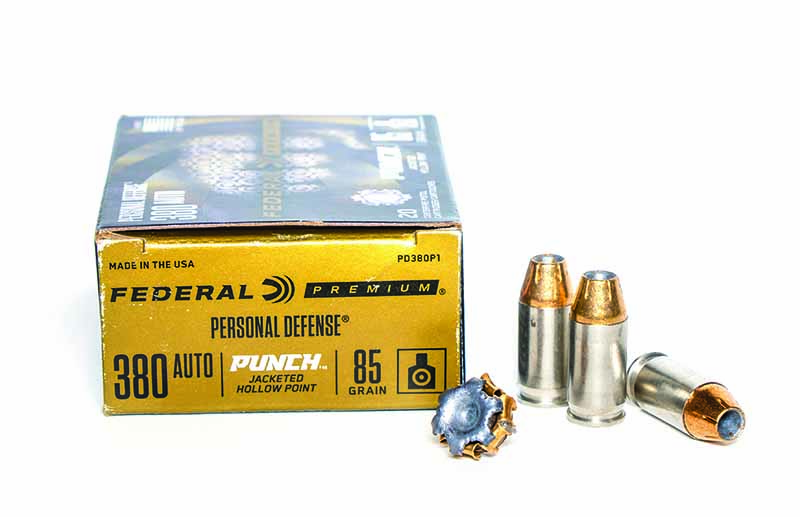
Designed specifically for civilian defensive shooters, Federal Punch cuts costs of defensive ammo, but not at the expense of performance.
How Does Punch Differ From Other Defensive Ammunition:
Ammunition is not designed to meet FBI barrier standards.
Given the testing and engineering to meet these standards are cut out, the ammunition cost considerably less.
It’s engineered to perform exceptionally well through heavy clothing.
Through this barrier, the ammunition provided adequate expansion and penetration.
Most of the really good defensive handgun loads on the market have one thing in common—they were designed to perform well in the Federal Bureau of Investigation’s testing protocol. This test assesses a bullet’s ability to inflict an effective wound after defeating various intervening obstacles commonly present in law enforcement shootings, like steel, plywood, wallboard and automotive safety glass. The best performing bullets in this test tend to expand to 1.5 times their original diameter and penetrate to between 12 and 18 inches, regardless of the intermediate barrier.
Paired with a compact 1911 like the Remington R1 Ultralight Executive, the new .45 Auto self-defense load can pack—pardon the pun—quite a punch.
This testing protocol has driven the manufacture of defensive handgun ammunition for the last 30 years, and manufacturers have become really good at building bullets to meet the FBI standard. And, as law enforcement agencies adopt loads based on their performance in this test, so too do civilians; the general population likes to be equipped as well as the cops. However, building bullets to meet this standard is expensive. Not only is the conduct of the extensive testing expensive, but so, too, is the engineering and building of the bullets that’ll perform well in them.
It’s possible that a civilian might need to shoot through steel, plywood, wallboard and automotive safety glass in order to save their life—but it’s not likely. The engineers at Federal have a tremendous amount of experience when it comes to building good defensive handgun ammunition, and they realized that civilians don’t necessarily need FBI duty ammunition. They felt they could create loads for defensive handguns that would perform exceptionally well when fired through heavy clothing, which is the most common intermediate barrier civilians encounter. And they felt that they could do this and offer the ammunition at a substantial savings to the consumer.
Punch Protection The result is a new line of self-defense ammunition called “Punch.” A 20-round box of 9mm Punch ammo has a suggested retail price of $15.99. A 20-round box of 9mm Federal Hydra-Shock ammo has a suggested retail price of $24.99. That equates to a 36 percent savings.
Rather than developing a single bullet design for all of the different Punch loads, the team at Federal evaluated each cartridge individually to determine which bullet design and weight would work most effectively. Since the bullets weren’t specifically designed to perform in FBI protocol testing, Federal spent time tuning each Punch load to meet the primary needs of the self-defense shooter—namely expansion and penetration.
Chris Laack, Federal’s handgun ammunition product manager, said, “We looked at specifications from our Hydra-Shok Deep, HST and other bullet designs, and we took what made sense for Punch. We selected whatever elements worked best for each individual caliber. We then played with thickness of the jacket, skive depth, hollow-point geometry and differences in lead cores to build the Punch recipe.”
Instead of building a single bullet design for each cartridge, one that would perform well on all types of intermediate barriers, Federal crafted bullets that would work exceptionally well on the barrier most civilian shooters might encounter during a self-defense shooting.
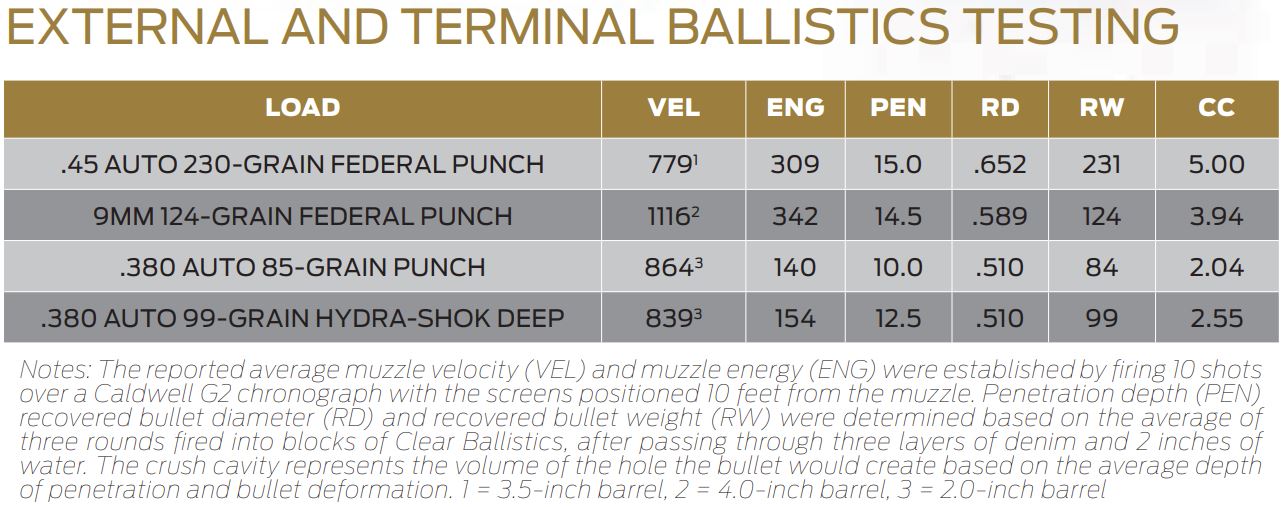
But, Does Punch Work? This all sounds fascinating, but the question is: Does it work? Based on my testing, it would appear so. I conducted some expansion and penetration tests with the 380 Auto, 9mm Luger and .45 Auto Punch loads. No, I didn’t conduct FBI protocol tests. This is partly because I don’t work for the FBI, and partly because the FBI and their comprehensive testing isn’t the final word on the terminal performance of defensive handgun ammunition. The results from my test were very promising—promising enough to convince me this ammunition has been well designed for the purpose it’s intended for, and that’s to provide civilians with a less expensive and very capable self-defense handgun load.
On average, the 9mm Luger and .45 Auto loads expanded to about 1.5 times their original diameter and penetrated between 14 and 15 inches. This level of performance is comparable to what you’d expect from other more expensive loads that perform well on all aspects of the FBI testing protocol, when they’re fired through heavy clothing.
The .380 Punch load deformed with a frontal diameter 1.4 times its original diameter and penetrated to 10 inches. As far as the .380 Auto goes, this is very good performance. If you want more penetration from a .380 Auto, Federal has another load you should consider. It’s called Hydra-Shok Deep, and it’ll stretch .380 Auto penetration past that magic FBI 12-inch mark. But it also costs about $7 (43 percent) more per box. If you’re willing to pay 36 cents more per shot, it’s clearly the better option.
At this time, the new Punch line from Federal has offerings for the .380 Auto, .38 Special, 9mm Luger and .45 Auto. And, if anyone cares anymore, Federal even has a load for the .40 S&W. Retail prices range between $15.99 for the .380 Auto and .38 Special, and $19.99 and $21.99 for the 9mm, .45 Auto and .40 S&W.
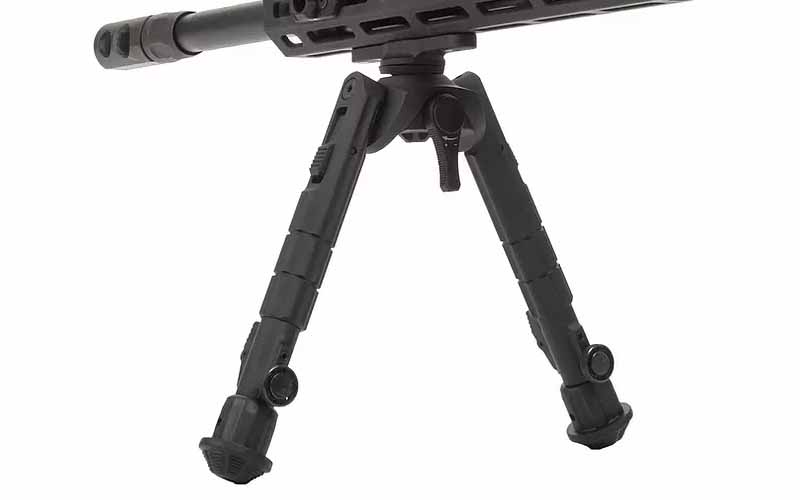
The new M-LOK Competition Bipod from Sport Ridge is tough, functional, and low-profile.
M-LOK Competition Bipod Specs:
Low-Profile M-LOK Mount
360° Pan, 15° Tilt
45° Or 90° Leg Deployment Capability
Adjustable Leg-Height From 7 To 9 Inches, ½-Inch Increments
MSRP Of $119.99
Bipods may seem simple enough, but anyone who has experience using them will tell you many designs are finicky and uncooperative. They are a tricky thing to get right, and all it takes is a cursory look at the machine guns of WWI to tell you that. Technology has certainly improved since then, but many bipods on the market today are almost as bad as those used in the Great War. Care must be taken when selecting one of these devices.
Sport Ridge’s new M-LOK Competition Bipod appears to have been well-designed with functionality and durability in mind for hard, real-world use.
Tough
Because a bipod’s legs act as concentrating points for the weight of the rifle, it is imperative that they are strong enough to not bend under the additional weight of the shooter leaning on it.
Constructed from aircraft-grade aluminum and then anodized matte black, the new M-LOK Competition Bipod should be able to withstand typical abuse imparted on it during competition use or in the field.
Functional
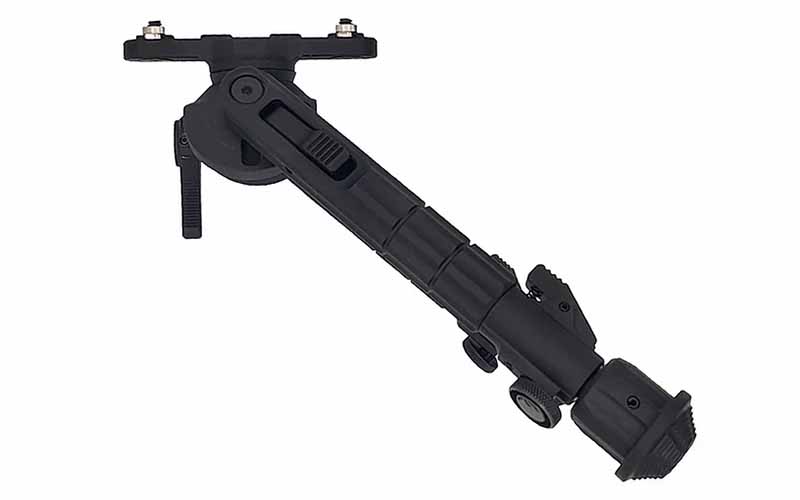
The M-LOK Competition Bipod was designed to be versatile, and that means a high level of adjustability. The legs, which are attached via a low-profile M-LOK mount, can pan a full 360 degrees around and 15 degrees of up-and-down tilt. This should provide for a wide range of motion and give the shooter a maximum possible area of coverage.
The legs can also be deployed at either a 45-degree or 90-degree pitch, and have independently adjustable lengths with 3-inches of variation. These features should ensure a stable shooting position regardless of how uneven the ground is.
The new Sports Ridge bipod also has a tension adjustment lever that can be fine-tuned to your preferred tension level.
Available today with an MSRP of $119.99, this rugged bipod is ready for your next competition.
For more information on Sport Ridge, please visit sportridge.com.
The Romanian PSL rifle is a scaled-up AK with a long history of use and a good reputation, but is this glorified RPK with a scope worth the asking price?
What Is A PSL 54?
Designated Marksman Rifle Based On AK Action
Chambered For 7.62x54r
Made In Cugir, Romania
Issued Romanian Military DMR, 1974-Present Day
Currently Imported Into U.S. By Century International Arms
Like any true Kalashnikov, the Cugir PSL 54 is a rugged, reliable machine that accomplishes exactly what it was designed to do. As a designated marksman rifle the PSL wasn’t built to win accuracy competitions, but to engage man-sized targets within 1000 meters. Its prominence in warzones across the globe stands to reason that it does this quite well.
While the PSL may not be as refined as the SVD that inspired it, it has become an even more prominent rifle in global conflicts due to its more robust design and cost-efficient construction.
PSL rifles nearly identical to their military counterparts are currently available in the United States. While very functional rifles with a lot of historical charm, their high price tag deters many from adding one to their collection.
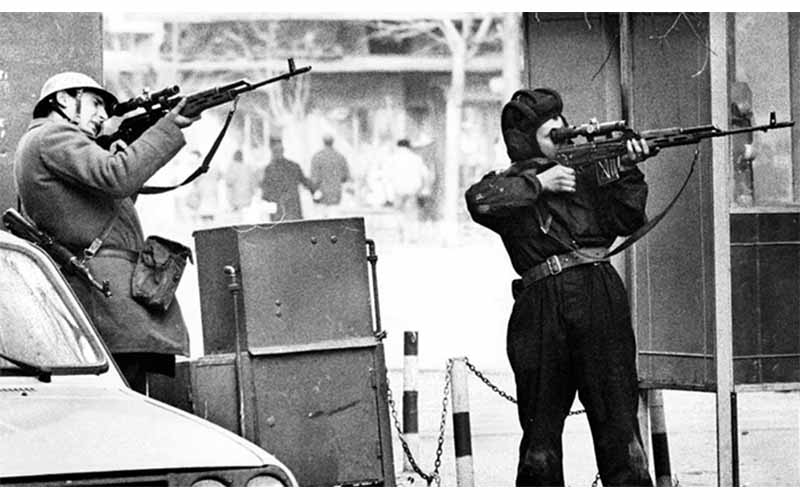
PSL Rifles being used during the Romanian Revolution of 1989. Photo:Wikipedia
Development And Proliferation
While the USSR once shared technical information with the Socialist Republic of Romania to assist in their domestic production of AK-style rifles, by the time the SVD Dragunov had entered service the countries’ relationship had declined. No longer having access to the newest Soviet tech, Romania began the development of its own DMR that would be similar in form and function to the Russian SVD. The resulting rifle was the PSL, and it entered Romanian military service in 1974.
Since its adoption, the PSL has remained the standard-issue DMR for Romanian armed services and is possibly Cugir’s most popular export. For decades, these rifles have been sold to governments in the Middle East and Africa where they have been loved for their consistent reliability regardless of environmental conditions.
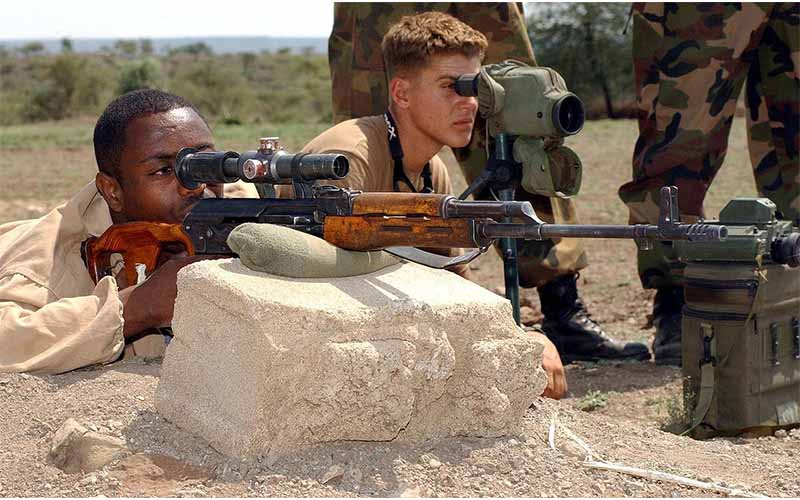
Ethiopian soldier training with a PSL. Photo:Wikipedia
Design Details
At the heart of the PSL’s design is the RPK, the light machine gun version of the Kalashnikov. Like the RPK, the PSL’s stamped receiver is made from a thicker gauge of steel and features a bulged, strengthened front trunnion. On the RPK the purpose of these reinforced components is to sustain a high volume of fire, whereas on the PSL it is to handle the higher pressures of the full-powered 7.62x54r cartridge.
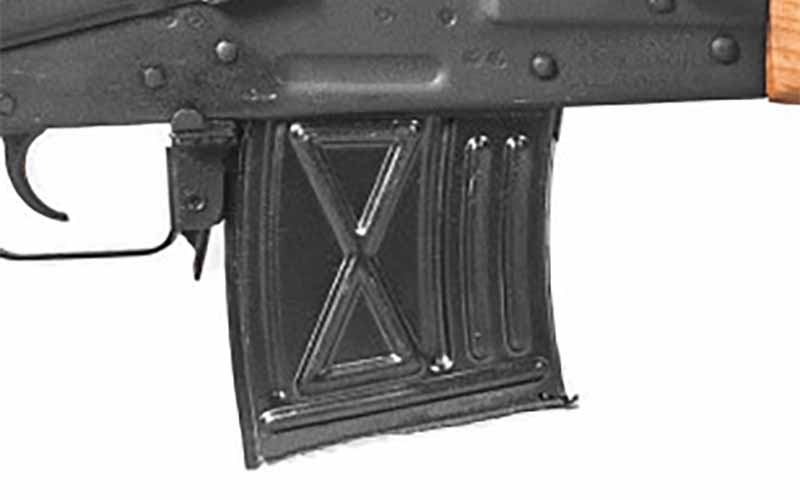
While the PSL is chambered for the same cartridge as the SVD, and also feeds from a 10-round magazine, they are not interchangeable. PSL magazines can be differentiated by the distinctive X-shape on the side of the body.
PSL 10-round magazine, notice the X-stamp.
The PSL was designed to fire light-ball ammunition, and they have been known to have durability issues after running excessive amounts of heavy-ball through them. This is important to keep in mind if you’re looking to get one yourself.
The original scope designed for the PSL was the Romanian-made LPS 4×24 telescopic sight, and it was essentially a copy of the Russian PSO-1.
Import Models
When PSLs were first brought into the U.S. in the late 1990’s, they were very affordably priced. Their low-cost and Romanian origin caused many to turn their noses up at them, and they did not become very popular. They were originally brought in by several importers under several different names. Cugir’s quality control in this period was less than what it is today, and PSLs had a reputation for being very hit-or-miss when it came to accuracy. While the MOA capability did vary between individual guns, they were all generally accurate enough for their intended role as a DMR.
In 2018, Century Arms began importing PSLs into the United States again under their exclusive contract with Cugir. These new imports are built with all new production parts and have better QC than previous batches. They now also ship with a Russian-made PO 4×24 scope.
Despite being purpose-built as semi-automatic rifles, the original configuration PSLs were considered machine guns by the ATF. This is due to the safety-sear and third pin hole leftover in the design from its RPK origins. This means imported PSLs are built on Romanian semi-auto receivers designed specifically for the U.S. market. Besides this small internal change and the lack of a bayonet lug, the imported PSLs are identical to their military counterparts.
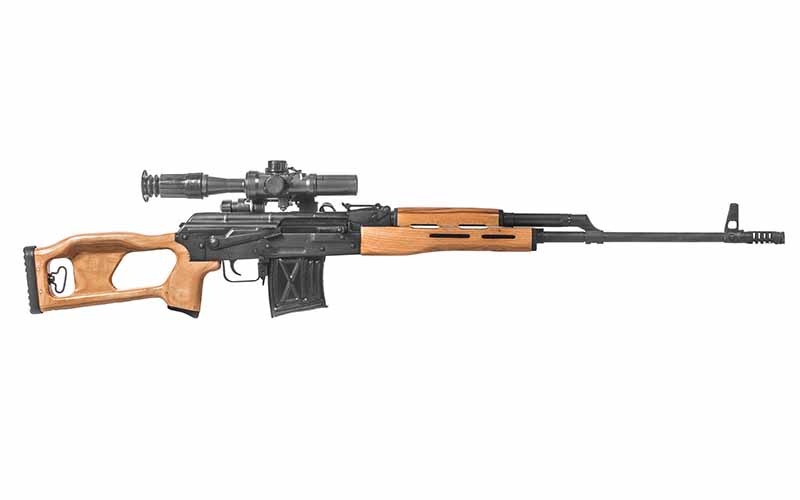
Currently imported PSL rifle. Notice the lack of a bayonet lug and Russian-made scope.
The PSL is a formidable weapon and is possibly Romania’s most prolific original weapon design. The widespread proliferation of the PSL combined with the longevity of its design means that these rifles will be a common sight on battlefields for decades to come.
While it is still a good gun, the general consensus surrounding currently imported PSLs is that they are too expensive for what they are. At the end of the day these are still just scaled-up RPKs with a scope, yet Century has the MSRP for the PSL set at almost $1,000 higher than their Romanian RPK import. I remember when these started to get imported again a few years back, after the initial excitement faded most retailers were left with plenty still in stock. Even as I write this, there are PSLs available online at prices below their MSRP.
While they are very functional and historically interesting unless you are a diehard Combloc collector the PSL probably isn’t the rifle for you. I’m not sure what practical role this could fill for the average American shooter that a scoped AR-10 build couldn’t for less money.
As much as I appreciate the PSL, I wouldn’t be able to justify spending over two thousand dollars on one. That being said, it is still cheaper than the Zastava M91 or any variant of a genuine SVD. So, if you need a scoped 7.62x54r rifle in your life the PSL still may be your best bet.
For more information on the Cugir PSL Rifle, please visit the importer’s site at centuryarms.com.
There’s more to picking a gun light than simply strapping a torch to your heater.
Quick fact: assailants prefer the shadows. Yes, quite the breaking news, but something to keep well in mind when preparing to defend yourself against these felonious meatheads. To this end, it’s generally wise to have some sort of method of identifying a threat when light is scarce or outright absent. This, dear reader, leads us to gun lights.
Quite handy devices, freeing up both hands for more important jobs, say like, getting your pistol on target. But similar to all gear and gadgets meant to guard your life, picking the right one takes some consideration and understanding of what you opting into. Jamie Caldwell, a former special operator and instructor with 1-Minute Out, breaks down the bare essentials of gun lights in the above video.
Of course, a mounting system on the gun itself is paramount, though largely moot at this point. Most guns tailored for personal defense and concealed carry already boast a rail of some sort, making things easy. From there, what goes under the microscope is does a gun light’s operating system mesh with you as a shooter. Some might find a toggle switch at the back of the light simple to flick on and off when indexing, others might feel more comfortable with a pressure pad that activates when a handgun is gripped. Either is viable, but it’s worth the time and effort to parse out what is most intuitive to you before investing in one.
Features are another factor. Strobe setting and laser-sight additions are some of the more obvious, but more nuanced features, such as body material and run-time, are perhaps more important. You want to make certain you have assets built into your gun light that ensures it’s ready to go the moment you are. Also, for those new to on-weapon lighting solutions, there more to it than the torch you strap to your gun. You’ll also have to research and invest in a holster compatible with your light and gun. And in all likelihood, another hanger when you aren’t running a light.
Any way you cut it, picking the proper gun light takes study. But finding the right one vastly enhances the capabilities of your personal defense gun.
No ammo. No range. No Problem. A dry fire training system allows you to keep your skills sharp in the confines of your own home. Here are five areas to work on.
What Should Be Part Of A Dry Fire Training System:
Competency with a defensive handgun is a perishable skill. You need to practice on a regular basis to improve or just remain proficient. That takes time and money, and time and money are the two things most of us have the least. For many, a trip to the range can consume a half or full day, and with range fees and ammunition, it can cost a hundred bucks or more. What might surprise you, especially if you’re a new shooter, is that you can practice the most important of those perishable skills at home, without ammunition.
Typically, this type of practice is called dry practice or dry-fire practice, meaning, it’s practice without ammunition. Too often shooters don’t give dry practice the credit it deserves. This is probably partly because dry practice is boring, but mostly because dry practice is very boring. However, just because it’s boring does not mean it’s not helpful. In fact, almost every athletic endeavor—shooting is an athletic endeavor—can be improved with some form of dry practice.
Here are five of the most critical aspects of employing a defensive handgun in an effective manner that can be improved upon without ever firing a single shot. All these practices can be conducted at home for a few minutes each day to create a fruitful dry fire training system. You just need to find a safe place where you’re undisturbed, make sure your handgun is—for damn sure—unloaded, that there’s no ammunition around and concentrate.
Firearm Presentation
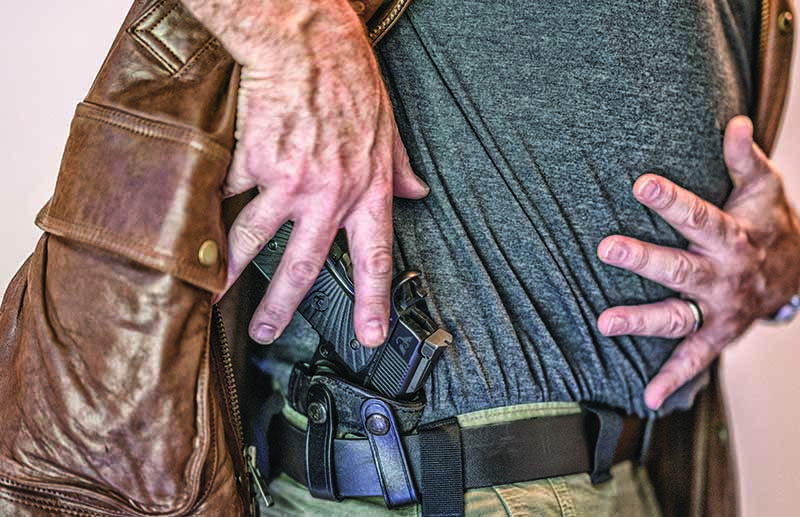
Being able to get your pistol out of your holster and orientated toward the threat quickly and efficiently is a critical aspect of weaponcraft with regard to the defensive handgun. It starts with clearing the cover garment and establishing a shooting grip while the handgun is in the holster. It ends with the handgun properly orientated with the sights on the target. A great way to work on this is with a shot timer and a smartphone.
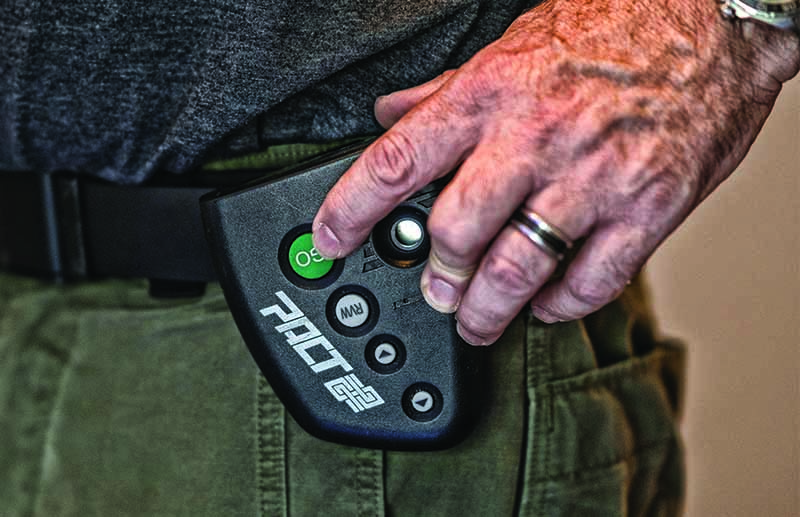
The par time feature on shot timers make them ideal for a dry practice training system.
A shot timer, such as the PACT Club Timer, comes with a par time feature. This par time feature allows you to set the shot timer to beep after a certain amount of time. It also has a delay start feature. Set the delay start and par time to 3 seconds and stand ready with your handgun concealed as you most often carry it.
At the signal, draw the handgun, present it toward the target, and make a trigger press when the sights are properly aligned. Your goal is to accomplish this before you hear the second beep, which will occur 3 seconds after the first. You can then gradually adjust the par time, with the ultimate goal of getting it down to about 1 second.
The smartphone can be used to video your draw stroke. To do this, you’ll need a helper, or you can also use a tripod and a smartphone mount. G-Sight, which manufacturers a device we’ll discuss shortly, also makes a tabletop tripod and smartphone mount that works great for this. You can record your draw stroke in real-time or even slow motion. The idea is to watch your draw stroke to make sure you’re performing each step correctly.
Putting your handgun back into your holster is also very important. Why? This is the activity that most often results in self-inflicted gunshot wounds. Because holsters that cover the trigger guard and inside the waistband (IWB) carry are so popular, and because shooters often forget to remove their finger from the trigger guard when they holster, the holster or the waistband presses against the finger, the finger presses against the trigger, and the gun goes bang. This is often accompanied by a scream and a fluent expression of profanity.
Developing your handgun presentation skills—drawing the handgun—can be critical to maximizing your chances of surviving a lethal confrontation. Equally important and simple to add to a dry fire training system, practicing holstering your handgun safely and efficiently.
Many instructors teach that you should be able to holster your handgun without looking at the holster. There are times when this could be a valuable skill, particularly in law enforcement, but for the civilian shooter, the frequency of needing to holster without looking is rare.
Every dry practice session should include at least 20 or so repetitions of the slow and methodical holstering of your handgun. This will condition you to holster your handgun slow and methodically. The need to holster in a hurry is just as rare as needing to holster without looking. On the upside, by the repetitive practice of holstering your handgun, you’ll eventually be able to do it—if you feel the need to—without looking.
Sight Alignment and Trigger Control
The secret to shooting accurately is really no secret at all; it’s simply the proper alignment of the sights and a trigger press that doesn’t disturb that alignment. This is something that dry practice can definitively improve upon, and there are several inexpensive ways to do it.
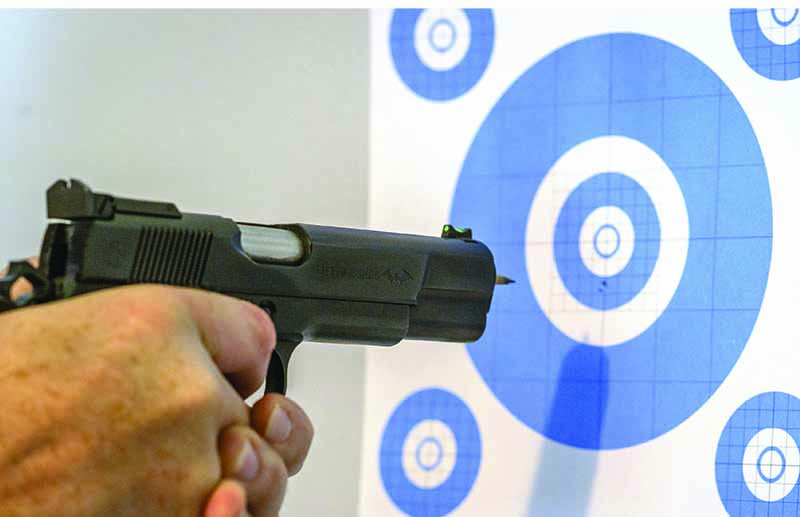
A pencil is a great tool to help develop sight alignment and trigger control. It’ll work great with a semi-auto, not so much with a revolver.
One of the oldest methods is to draw a small target about the size of a pencil eraser on a sheet of notebook paper and tape it to the wall. Alternatively, you can just tape a target to the wall. Then, insert a sharpened pencil in the barrel of the handgun. Next, aim at the target, with the pencil about an inch from the target, and press the trigger. The pencil will make a dot on the target when the hammer hits the eraser and pushes it out of the barrel. Do this about five times and you’ll have a five-shot—pencil dot—group on the paper. The goal is for all the pencil dots to be in the same place.
Another technique is to balance a dime on top of the pistol’s slide or barrel. This won’t work on Glocks or other pistols with flat slides. But, with handguns with rounded slides or exposed barrels, place the dime on the barrel or slide, establish a sight picture, and press the trigger without letting the dime fall off.
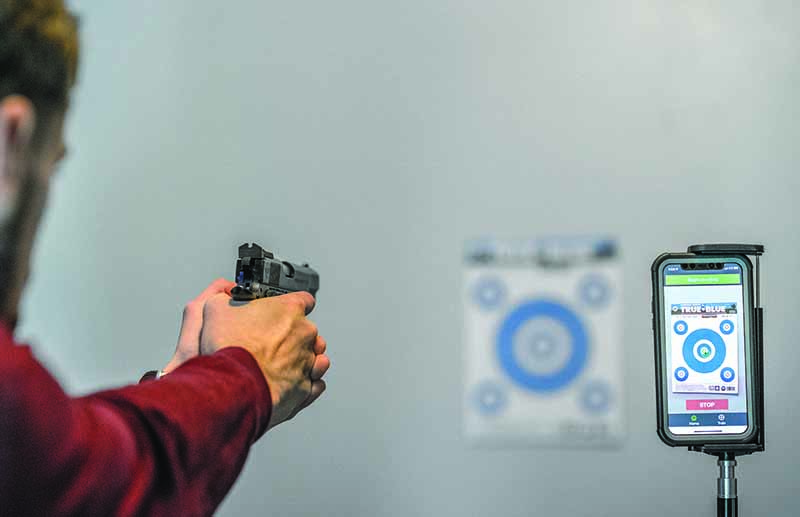
A more modern approach is to use a device like the one offered by G-Sight. Their Expert Laser Marksman System is a laser module that fits inside the chamber of your pistol. When you press the trigger, the device emits a laser flash that you can see on the target. One of the things that makes the ELMS system so revolutionary is that when combined with their G-Sight LTP app, the camera on your smartphone records these laser flashes on the target.
After firing a 10-shot group you can review those imaginary bullet impacts—laser flashes—on your smartphone. You’ll need the tripod and phone mount mentioned earlier, and G-Sight offers several affordable options. In fact, a complete system with the ELMS, tripod and mount retails for as little as $110.
Malfunctions
Being able to keep your pistol operational is a highly desirable skill. Stoppages/malfunctions occur and that guy by the name of Murphy tends to ensure they occur at the least opportune moment. You prepare for these moments by staging stoppages in your handgun and clearing them. The best way to learn how to clear stoppages is with dummy rounds.
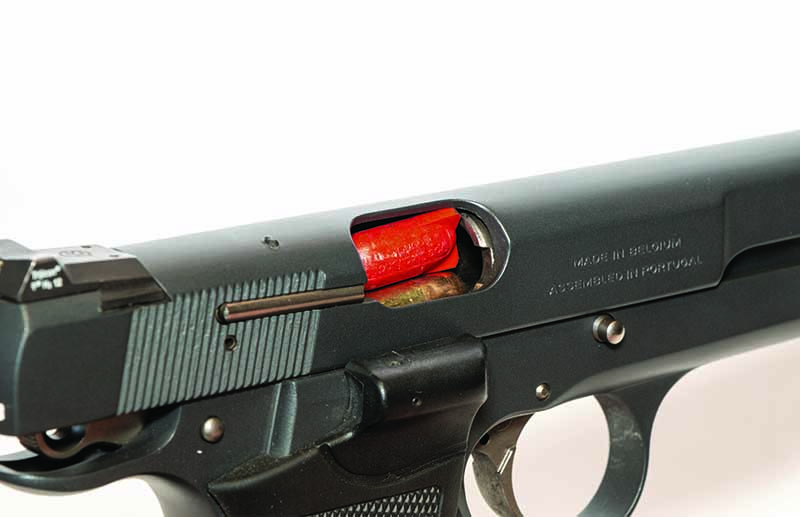
Type 3 malfunction rounds are dummy rounds that simulate a Type 3 malfunction. You can mix these rounds in with live ammo when conducting live fire. This will help you train to clear complex malfunctions.
A common dummy round inserted in the chamber of your handgun will simulate a failure to fire. A new dummy round called the Type 3 Malfunction Round, does a great job of simulating a more complex stoppage where—for a variety of reasons—a cartridge fails to fully chamber.
By setting up these stoppages at home and going through the clearing procedures, you can create a conditioned response. Then, when you’re on the range conducting live-fire, you can use these dummy rounds—spaced throughout your magazines—to create stoppages you’re not expecting. If you’ve done your dry-fire homework, you’ll be ready to further train to create an even more conditioned response to stoppages.
Reloading
It’s a fact that most actual defensive handgun engagements involving civilians rarely exceed the expenditure of more than a single load. In other words, most defensive handgun engagements are over before a reload is required or conducted. That, however, doesn’t mean reloading your handgun with speed and grace is something you shouldn’t learn to do. In fact, sometimes a reload is the best way to deal with a stoppage. A shot timer can help you develop this skill so that you can accomplish the task faster.
If you plan to keep your gun in the fight reloading practice is a must in any dry fire training system.
Set the par time on the shot timer to about 4 seconds. Then, fill up several magazines with dummy rounds, put one in the gun and the rest in your magazine pouches or wherever you normally carry them. Now, with the handgun orientated toward the target, when you hear the start signal on the timer, conduct a reload.
There are essentially three different types of reloads to practice. With the speed reload, you’re simply ejecting one magazine and inserting a new one. With the slide-lock reload, you start with the gun in slide lock and then eject the magazine, insert a new one and drop the slide. For the tactical reload, you retain the partially expended magazine that’s in the gun—for potential later use—and insert a new one.
You can work on all of these reload techniques with the par time feature on the shot timer. For speed and slide-lock reloads, a good goal is something between 2 and 3 seconds. For a tactical reload, time isn’t so much of a concern because you should only conduct a tactical reload when you have time.
Frequency Of Practice
So, how much of your week should your dry fire training system monopolize? I dry practice every day. It might only be four or five trigger presses or presentations, or I may spend as long as 20 minutes working on sight alignment and trigger control, immediate action or reloading. Handling your handgun every day, even for just a few moments, gets you more familiar with it. If you can do it without the adverse expenditure of time or money, it only makes sense.
But don’t overlook the assistance dry-fire practice can provide in conjunction with a trip to the range for live fire. Intermingling dry fire with live fire while on the range can help you get the most out of the time and money you’re spending, while actually making loud noises.
As a final consideration and reminder: safety first. When conducting any form of dry practice, make sure your handgun is unloaded, that no live ammunition is anywhere near you and that you’re always pointing your handgun in a safe direction. Bullet holes in your television, family members or yourself have a way of creating a bad day. Being humans of sound mind and caring nature, that’s something we like to avoid.
Editor’s Note: This article originally appeared in the 2020 EDC issue of Gun Digest the Magazine.
Focusing on quality and performance, ANR Design has earned a dedicated following in the competitive holster and accessories market.
What Sets ANR Apart From Other Holster Makers:
Alex Costa laid the groundwork for the company in 2013 making his own Kydex holster.
ANR’s holsters are known for their superior performance and dash of irreverence.
In addition to hangers, ANR also produces 3D-printed accessories.
The manufacturer has striven to grow, but slowly, as not to compromise the quality of its products.
Most people probably don’t think, “pheasants,” when they consider their next tactical holster purchase. I do … well, I do now anyway.
You see, last year, I got invited on my first wild pheasant hunt with Zach Hein from CZ-USA. Born and raised in Kansas, Zach wanted me to experience a few of the things that matter the most to him: his Midwestern family, hunting pheasants—and one of his very best hunting buddies, Alex Costa. Costa owns ANR Design, a New Hampshire-based thermoplastic solutions and holsters company.
Here’s an example of ANR Design’s Kydex Appendix Light Bearing IWB holster.
Zach’s family is a living Norman Rockwell experience of Americana: The pheasants of Kansas are glorious, and while I hunted beside Alex, I learned he is exactly the kind of man you want building holsters for you—he’s meticulous, pragmatic, painstakingly self-critical, and, above all else, a patriot.
Regardless of how smart or well-trained anyone in the firearms industry might be, at the end of the day, I want to buy a product from a company that cares about what it makes. And, from the way Costa treated strangers to the way he treated Zach, me, and the dogs … I know he gives a damn.
Never Heard of ANR Design?
“In 2013, I started getting interested in firearms classes and needed holsters and equipment for class,” Costa said. “At the time, there were only a few reputable Kydex holster makers, and prices were very high compared to today’s prices. I decided to make my own, per a suggestion from a roommate at the time. I started with two partners, and we began using a third-party manufacturing company for 3D-printed metal accessories—tie bars, money clips, cuff links, and GoPro mounts, which were selling and bringing in a very small income. This funded the Kydex holster-making side of the business.
“Our brand image is filter-less, rough, honest, hard-use, tattooed, and sometimes crude,” Costa pointed out. “We portray our business exactly how we are in real life: We beat the crap out of our gear. We’re each putting 50,000-plus rounds downrange a year. We wear our heart on our sleeve and are brutally honest. This attracts some people and pushes others away.”
Speaking of customers, clever marketing and a savvy Internet presence certainly helped ANR Design from the start.
ANR Design makes customized Kydex holsters for a variety of handguns.
“We are honest—to a fault,” Costa explained. “Transparency with the customer, whether they like it or not, is important to us. The customer is not always right. We try to communicate, accommodate, and maintain absolute honesty through every level of the customer experience. This has created a very strong cultlike customer base. They appreciate the quality customer service on top of the social media transparency we have. I personally answer up to 200 questions a day on our Instagram stories. Accessibility is key.”
No one is successful alone. Costa’s list of friends (such as Zach Hein) and mentors aren’t too far from his mind. Costa said Josh Eastman of Beyond the Brand Media certainly started out as a mentor for him when he first launched his business.
“Josh really helped me dial in my website and helped create the brand that is ANR today. Josh is a very close friend. We’re both very successful in our industries and spend countless hours bouncing ideas off each other for improvements for our businesses. I can 100 percent attribute a large portion of my digital successes to Josh’s hard work.”
Catching the Public’s Eye
Solid marketing and a reputation for being direct and honest might be desirable, especially in the life-and-death world of the firearms industry. Nevertheless, the bottom line for any business is the success or failure of its products.
“Our 3D printed accessories caught the eye of a few larger companies. This helped bridge some future collaboration opportunities that catapulted the company forward. Locals at classes saw our holsters and started offering cash.
One of the products ANR Design makes is the ANVL UKON, a micro Trijicon RMR rifle mount that incorporates a single focal plane, absolute co-witness, backup iron sight package.
“We registered the business in January 2014 and continued building holsters in my basement workshop for almost two and a half years,” Costa added. “My first employee came to work in my basement with me.”
Costa’s success wasn’t the result of some childhood dream or empowered patriotic quest—at least at first. Why did he choose to start a business in the firearms industry?
“I didn’t mean to,” Costa admitted. “Honestly, I was happy working in the commercial food industry. But the company I worked for had a massive layoff in 2014. I was forced to find work elsewhere. Then, I was a warranty engineer at an automotive parts company but was absolutely miserable. By this time, we were working from 5 p.m. until 2 a.m. (after our regular jobs were finished for the day) every night during the week, pushing holsters through our website.”
Slow and Steady: The ANR Way
Like many Americans, especially now, Costa’s luck wasn’t golden, even with the slow, but steady, success of his new business.
“A series of unfortunate events left me jobless a year later, but ANR was healthy enough to support me,” Costa said. “I worked in production molding for a billion-dollar company, so it came as second nature to learn manufacturing and tool production. I graduated in 2010 with a degree in mechanical engineering, so I had the education and experience to do this. My partner, Jon, has a business background, and I was completing my master’s degree in business administration. Our goals early on were to build our business organically, never borrow money, never have investors and never grow too fast to bankrupt the business.”
ANR Design works with firearms manufacturers to create and refine accessories, such as holsters.
No, there were no magic beans, lottery winnings or rich, dead uncles to anchor their dream. Alex and the rest of his employees simply busted their butts. It was this kind of personal investment that made ownership of their company— and their dream—so much more valuable to them than what it was worth financially at the time.
As anyone with the slightest firearms acumen might imagine, the current political climate and our ongoing pandemic have played significant roles in ANR Design’s business.
According to Costa, “Politics certainly boost panic buying and sales. Election years always have a small boost to sales. Economic unrest and fear of the government or looting boosts sales. War boosts sales on our military sales side of the business.
“COVID-19 catapulted us into a new tier of customers,” he added. “It pushed on-the-fence gun buyers to take the plunge. All those new gun owners need holsters. Eighty percent of our historical business consists of return customers. Between riots and COVID-19, we are at a 278 percent increase of business, year to date. The increased business has helped motivate us to be much more efficient in production. The increased sales have financially opened many doors for us to pursue some very expensive and exciting projects we couldn’t afford last year.”
No Direct Influence Needed
One thing about Costa and ANR Design is this: Don’t bother comparing his gear to anyone else’s. He doesn’t, and here’s his simple reason why:
The folks at ANR Design take great pride in the company’s honesty of firearms and usage with its products.
“Honestly, I spend zero time looking at other people’s products. I spend zero time analyzing other goods on the market. The reason is that I want zero inspiration from a competitor. I want zero influence in my goods and services from a competitor. However, I know that it’s almost 100 percent unavoidable, especially when a lot of our changes come from customer suggestions. Generally, customer suggestions come from other experiences with other people’s products. We make sure to keep an open mind to a lot of these suggestions so that we can create our interpretation of the suggestion for the development of a product.”
ANR Design’s goals are the same as most companies; they want to grow and be more successful. For ANR Design, the devil’s in the details.
“We want to keep growing and keep providing quality goods and services to the marketplace,” Costa explained. “We’re starting to get very heavy in the military industry, and I find much joy in special project development for special ops units. It feels new and fresh to me. We’ll continue to align ourselves with more gun companies and provide OEM support of holsters for new guns.”
The ANR Design, Now And In The Future
Despite ANR Design’s ever-growing success, Costa seems to never lose sight of his good fortune as a key collaborator in the success of others in the gun industry.
“We’re lucky: We get to see, handle, and test-fire new guns all the time—long before press releases. It’s truly a privilege to develop a holster for a prototype firearm so there are aftermarket accessories prepared for the firearm’s launch. We hope more and more companies choose us. We thrive on innovation and the development of new holsters.”
ANR Design is a small business that is continuing to grow through innovation and determination.
Moving forward, Costa is clear on what he thinks his brand is and will be.
“The brand is exactly what I want it to be, and it’s only getting healthier,” he said. “We’re adapting to the ever-changing landscape. We’re changing the way we sell things. We’re increasing the capabilities and offerings of our web store. We’d like to be an online one-stop shop.”
Editor’s Note: This article originally appeared in the September 2020 issue of Gun Digest the Magazine.
Circle 10 AK just released an American-made parts kit for building AK-74s, and if the parts are made as well as they claim, it could be just what the U.S. 5.45 market needed.
Some Of The Other Things You Will Need To Complete Your AK-74:
Receiver
Riveting Tool
Trigger Guard Riveting Jig
Barrel Press Kit
12-Ton Press
Drill Press
Skills
The American AK market has been severely lacking 5.45×39 options for a while now. Complete AK-74s have stopped coming in for a variety of reasons, and the supply of surplus parts kits has seemingly dried up. The parts kits that do come in are very expensive and haven’t even included barrels since the ATF banned their importation in 2005. There are many new American AK-enthusiasts who wish that they had an AK-74 in their collection. For some time now the only available 5.45 AKs were from Palmetto State Armory, and while they made a noble effort the end result was unfortunately not up to Kalashnikov standards.
While American-made AKs have had a rocky past, and I remain skeptical of the quality of any AK that is not from an ex-communist dictatorship, this new parts kit from Circle 10 AK shows a lot of promise.
The full parts kit from Circle 10 AK.
Parts Quality
All parts included in this kit are new production and made in the U.S. Some of the parts are made in-house by Circle 10 AK themselves, while others have been outsourced.
The included 16” barrel has been chrome-lined, but the manufacturer is not listed. Some U.S.-made AK barrels have had issues in the past, so hopefully this one will prove to be of decent quality.
The most important parts of the rifle—the bolt, bolt carrier, and front trunnion—are all made from forgings. This is the proper method for making these components and is a good sign of their quality.
Forged parts are great news for this kit, but the overall quality of its components won’t be truly known until they have been built into complete guns and abused with thousands of rounds of fire.
Home-Built
Keep in mind that building an AK is nothing like assembling an AR. AKs require more tools and knowhow than most people have, and you should do research and gauge your skill level before embarking on a home-build project.
For those looking to learn, however, this is an ideal kit to do it on because it has no historical significance. If you’re going to make a mistake, it would be better for everyone if you did it on this new-production American kit rather than original Russian parts from the ‘70s.
The included rear trunnion is for a fixed stock, but the front trunnion has been drilled to accommodate a side-folder latch. It would only take a rear trunnion swap to build this kit into an AKS-74 or AK-74M style of rifle.
Russian AKS-74 with side-folding triangle stock. The Circle 10 AK kit could be built into something similar. Photo:Wikipedia
I am excited to see these new Circle 10 AK kits built out and tested. If their forged parts can withstand the high chamber pressures of 5.45 without issue, Circle 10 AK may have just provided for an excellent new option for American shooters looking to get into the AK-74 platform.
The parts kit has an MSRP of $849.95, but don’t forget to factor in the cost of hiring an experienced builder or of buying the tools needed to do it yourself.
For more information on Circle 10 AK, please visit circle10ak.com.
Looking to go armed, but are stuck in the weeds as to what to arm yourself with? Here are 20 of the best concealed carry gun options that will keep you on the defensive.