Home Blog Page 163

Umarex Nails The Air Rifle With Hammer .50-Caliber

0

The Umarex .50-caliber Hammer air rifle hits the market — hard.

How the Umarex Hammer air rifle performs on part with traditional guns:

  • Pre-charged pneumatic air rifle.
  • Capable of pitching 550-grain .50-caliber bullet 760 fps at muzzle.
  • Maximum of 4,500 psi.
  • Lightspeed valve regulates each shot for consistency.
  • Lightweight carbon-fiber main tank.
  • 2-pound straight-pull bolt throw cocks gun.

Positioned on the shooting bench, I took a breath and slowly tightened up on the trigger. A small burst of air puffed my cheek and blew my hair up. I was shooting the new Umarex .50-caliber Hammer Air Rifle, and instead of recoil in my shoulder, I felt the subtle escape of air — all part of the engineering of the rifle.
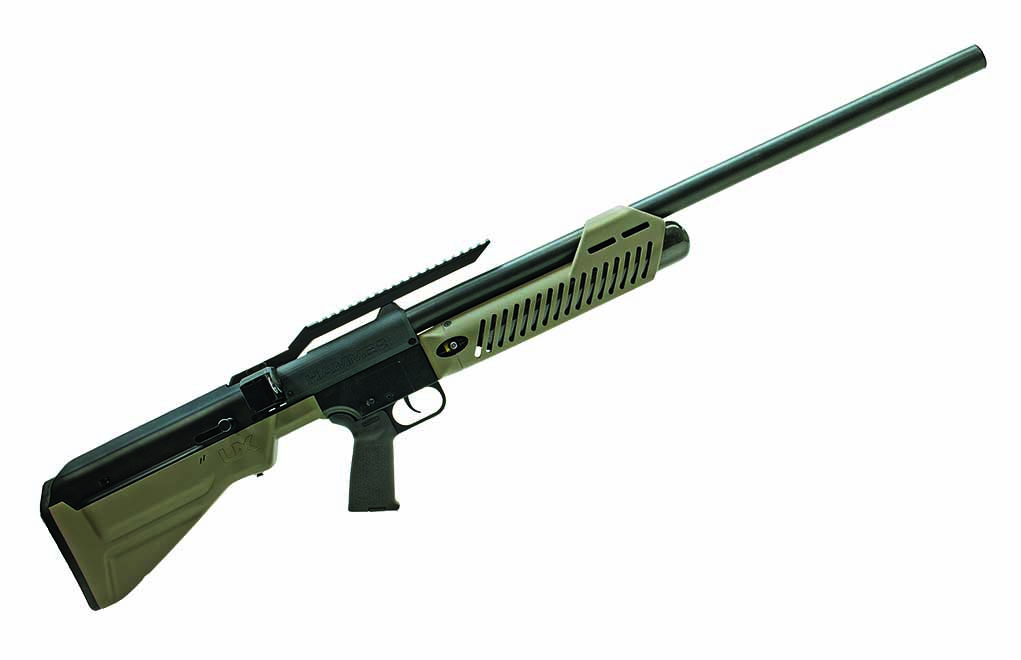
The powerhouse of the Hammer is located high and tight below the barrel. The air tank holds enough to produce three, full-power shots.

With 3,000 psi launching each bullet, the Hammer shoots consistently and accurately. Call it what you may — high-powered, high-velocity, high-performance, most powerful production, or thse fastest production air rifle to hit the market — the Hammer fits the bill.

High-powered air rifles are not new and have a long history going back to the settlement and colonization of North America. The Lewis and Clark expedition that mapped a route across the Western United States in the early 1800s used a Girandoni air rifle to hunt and show off their firepower. The cast-iron buttstock held 800 psi, which took 1,300 strokes on an air pump to fill and could shoot a hole through a board at 100 yards with accuracy.

The old-technology air rifle is credited with the success of the expedition traveling from St. Louis to the Pacific Ocean without significant loss of life. The Girandoni intimidated Native Americans who did not realize the expedition only had one of the rifles that were regularly used to display its unique firepower — but the accuracy, range and repeatability made it look formidable.
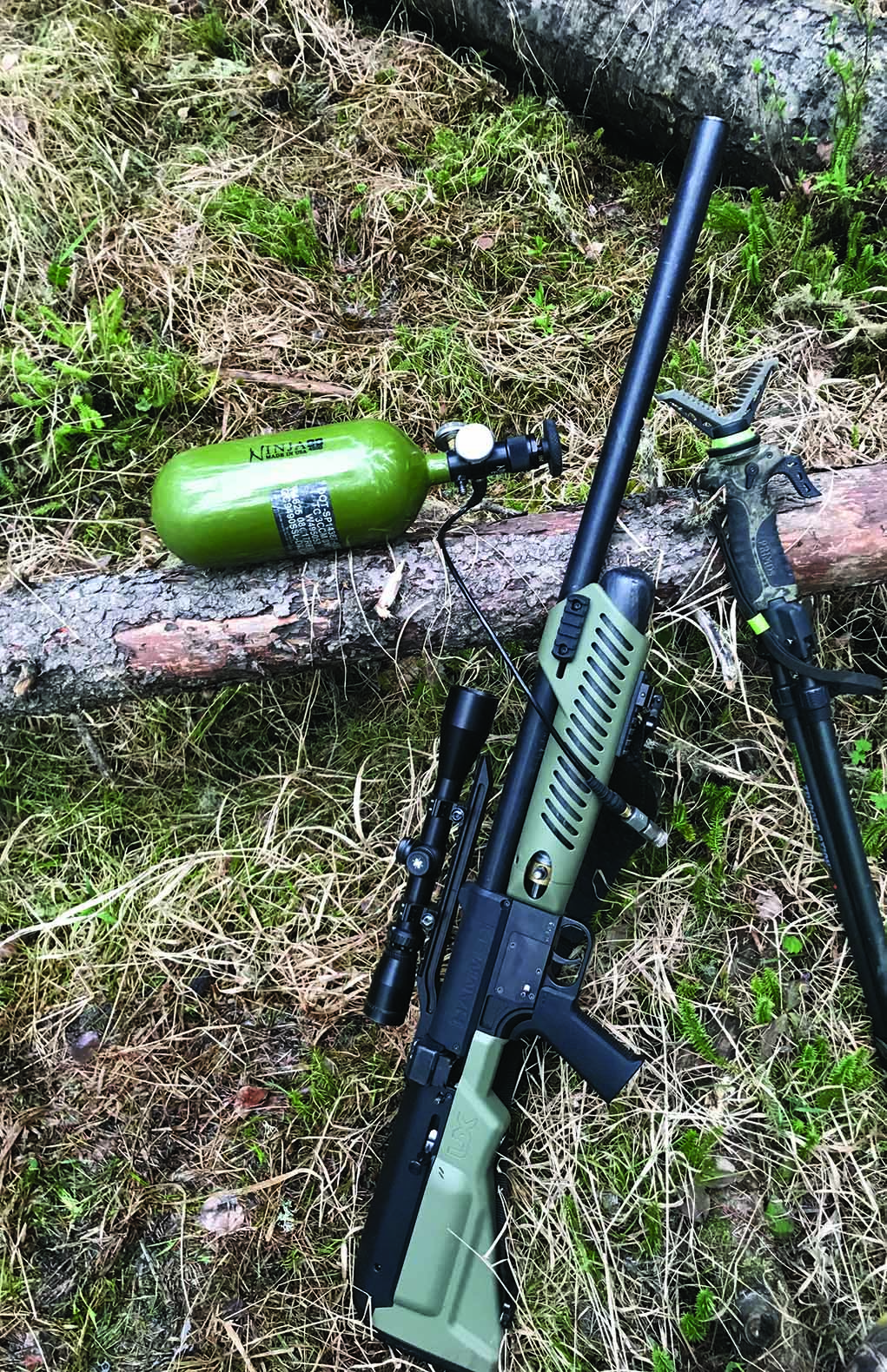
With an airgun, the reloads look a bit different. Additional bullets, plus an additional air canister, are part of the field gear.

Modern air rifles are also extremely effective firearms, and when I lined up my target and placed the first two bullets out of the Hammer in the same place, it became obvious this wasn’t the type of air rifle I used as a child.

The Secret: Lightspeed Valve

The Hammer has a built-in compressed air tank with a regulated valve that can be charged to 4,500 psi. The carbon-fiber tank has a capacity of 24 cubic inches and is nestled out of the way under the barrel, and a pressure gauge allows the shooter to know the exact charge in the main tank. The Hammer can be charged from a larger air tank with a regulated valve on the side. It only takes seconds to charge the Hammer on the range or in the field to have three more shots at full charge.

The pressure in the main tank is used to charge each shot to 3,000 psi, meaning there are three shots in a full tank. The secret to the effectiveness of the Hammer is the Lightspeed valve, which keeps every shot consistent with a massive dump of air to generate the velocity for the projectile you choose. The air dumps so fast that you feel a burst of air release off side ports when you pull the trigger.

One-Finger Cocking

The cocking handle is located on the side of the gun and only takes 2 pounds of pressure to operate, with a 2-inch straight-pull bolt. You can cock the gun with one finger while continuing to look down the barrel or through the scope. When cocking the rifle, the magazine automatically advances, placing a bullet at the base of the barrel.
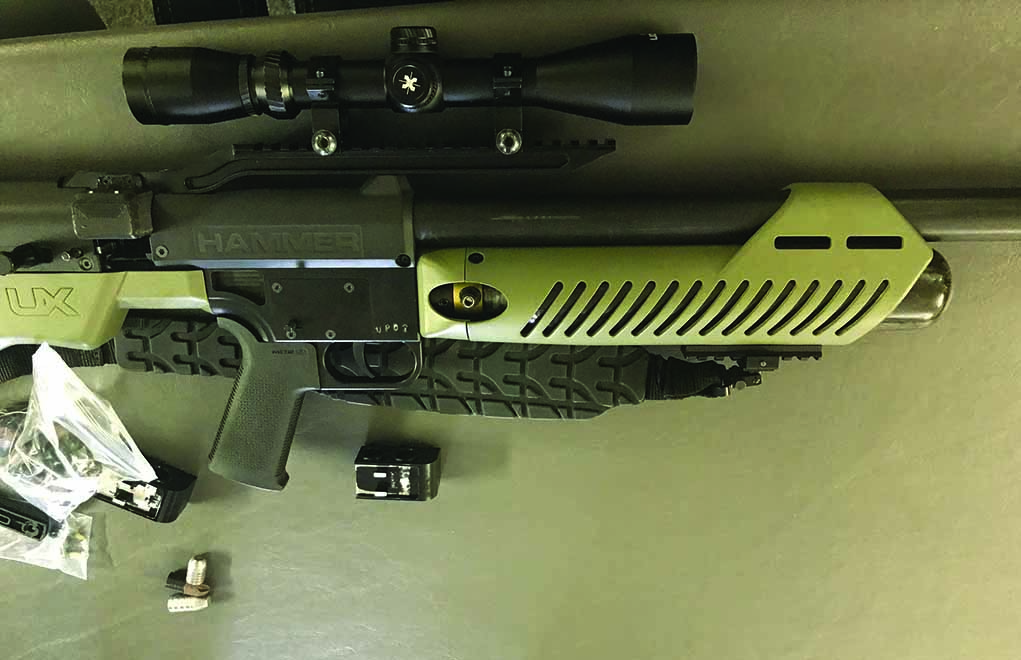
The Hammer barrel is 29.5 inches long and is more than capable of dropping 1-inch groups at 50 yards.

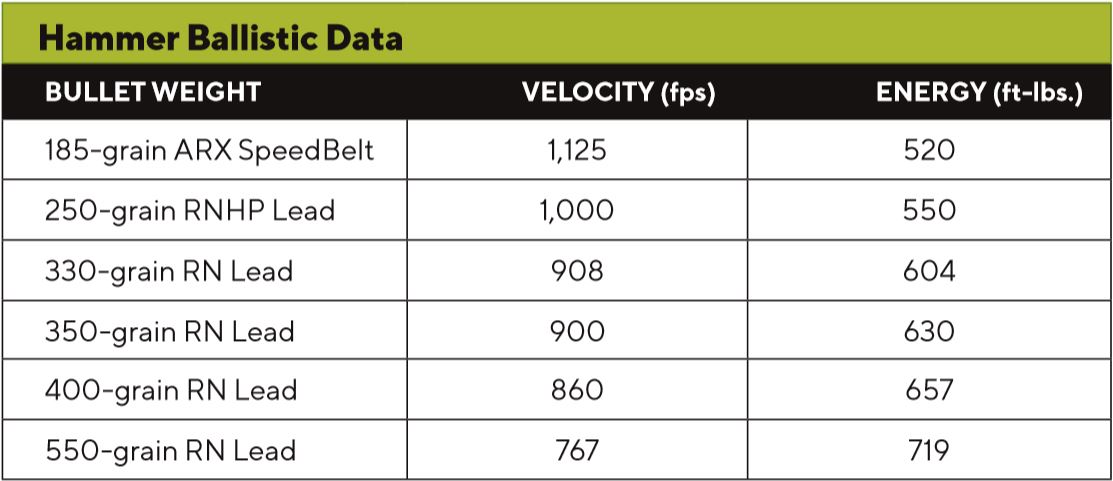
The Hammer’s Lightspeed valve, coupled with a precision regulator, instantly pulses a measure of air compressed to 3,000 psi, behind the projectile when the cocking mechanism is pulled back. This ground-breaking patent-pending system proficiently propels a .50 caliber, 550-grain lead slug at a muzzle velocity of 760 fps, and a 250-grain slug at more than 1,000 fps.

With an extreme amount of pressure being held back, you might assume the trigger pull to be heavy or sluggish, but it breaks clean with minimal effort, allowing for greater accuracy and consistent shooting. There is slight recoil felt, but nothing that pushes the barrel off target. The rifle does make an audible “pop” instead of a loud bang and is in no way silent, but the sound is less intrusive than burning gunpowder.

Defining Air Rifle Energy

Umarex is claiming to have the most powerful big bore air rifle to hit the market. It’s a bold statement, but when you look at the numbers, you’ll quickly understand. The sidebar features a table showing several different bullets and weights, complete with velocity and energy. A soft-lead, 400-grain bullet traveling at 860 fps and hitting with 657 ft-lbs. of energy is impressive. Very impressive.

Where It All Began

The Hammer has been developed, designed and engineered in America — and it’s being made in the United States as well. The rifles are assembled in Fort Smith, Arkansas, within the Umarex USA facility. Adam Blalock, CEO of Umarex USA, Inc. said, “We continually look for products that we can make right here in the USA and, more specifically, within the walls of our building in Fort Smith, Arkansas. The Hammer represents powerful innovation in air rifles, and I couldn’t be more excited that we’re equipped to build it right here.”
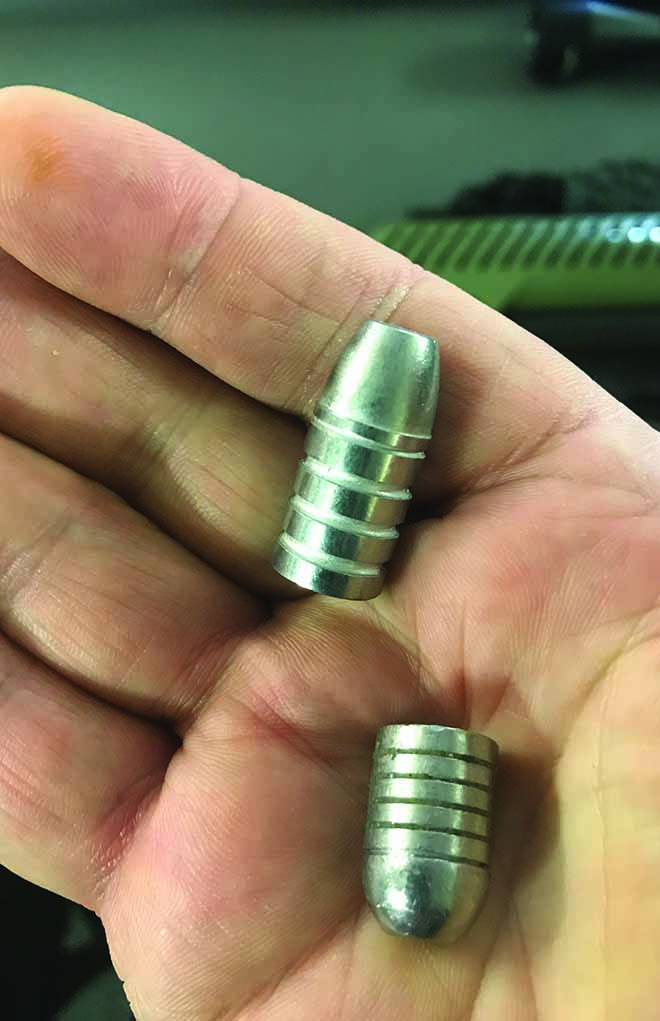
Large, heavy lead bullets are the key to the Hammer’s quickly lethal capabilities. With a 185-grain slug, the Hammer boasts a muzzle velocity of more than 1,100 fps. With a 550-grain slug, muzzle velocities more than 750 fps are still achieved.

The Hammer wasn’t engineered overnight, and several designs and prototypes were crafted before perfecting it. The valves, regulated air and unique magazine all needed to be faultless and align to work flawlessly … and easily.

Repeatable Results

The Umarex Hammer offers several features that shooters and hunters will embrace. In addition to being the most powerful airgun delivering three regulated, full-power shots, it’s the only production big-bore air rifle that offers multiple shots from its unique chamber magazine. There’s no fumbling to insert a bullet into the barrel: The removable magazine is pre-loaded with two bullets and inserted into the gun. When you cock the rifle, the bullet is automatically loaded into place. Shoot, cock the rifle a second time, and the next bullet is ready to fly down the barrel.

Double-Safe Security

The Hammer utilizes two safeties: A conventional trigger block, and a magazine lockout that prevents it from discharging without a magazine inserted.

“You won’t find safety mechanisms to this extent on any other big bores,” said Steve Lamboy, Senior Director of Strategic Development at Umarex USA. “The Umarex Hammer is the most powerful production air rifle in the world, so we charged our engineers, from the beginning, to incorporate safety mechanisms.”

An Advanced Polymer Stock

The stock, forearm and other synthetic components are produced from Nymax, an advanced polymer that withstands the rugged treatment required in the outdoor hunting and shooting world. Umarex collaborated with designers from the IQ Design group at PolyOne to add three locations into the rifle’s forearm that accept M-LOK accessories and incorporate a sling stud into the lower half of the rear stock.
Hammer Stats

The stock on the Hammer is smooth with tight-fighting components. The first time you pick up a Hammer, the stock design will stand out with fit and feel. More importantly, the unique stock helps reduce the overall weight of the rifle, making it functional for a wide variety of hunting and shooting applications.


More Rifle Posts:


Shooting enthusiasts will quickly note additional features that include a standard AR Magpul grip, quick disconnect Foster fitting to fill the onboard air cylinder, externally visible air pressure gauge, a button-rifled .50-caliber barrel and 8.5 inches of Picatinny rail.

The True Test

A true test for the Umarex Hammer was a spring bear hunt in Alberta, Canada. With some of the first production rifles, a crew of hunters set out to see what the Hammer could do in a hunting situation. And, why not pick game that can bite back?

On the fourth day of the hunt, I noticed a brown-phased bear carefully sauntering my way. The beautiful brown walked a gauntlet of logs in silent motion, stopping about 30 yards from my stand where it stared in my direction, lifted its nose and captured the smells of anything close. It took several minutes for the bear to work its way in, and when it walked behind the barrel, and I could still see part of its back over the top — I knew it was a great color-phased bear with good maturity.
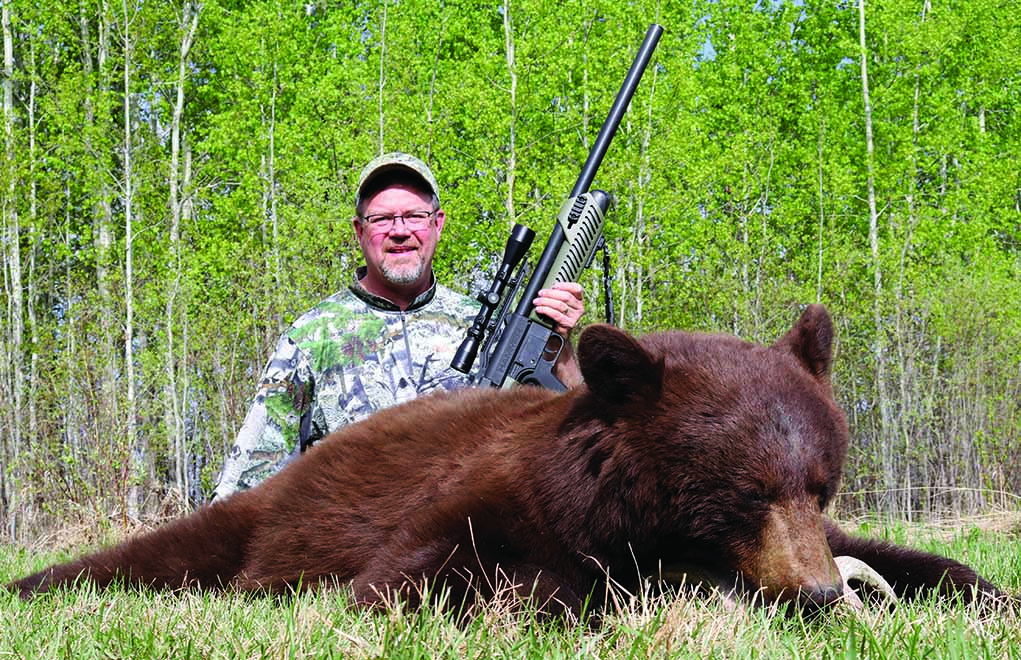
On the range, the author saw 1-inch groups consistently. In the field, members of the author’s bear camp went eight for eight … and none of the bears required tracking.

I hoped to shoot the bear but was going to wait for the perfect broadside shot. Of course, the bear plopped down on the ground facing me and fed for 15 minutes while I checked it through my scope. It teased me but never offered a clear view of its side profile.

The bear finally stood up and wandered behind the bait, and when it returned, it offered a full view of its right side. Steady on my shooting sticks, I wasted little time clicking off the safety and tightening up on the trigger. At the sound of the shot, the bear cart-wheeled twice, found its footing and charged about 12 yards into the trees. I had already cocked my rifle again and was following it with my scope for a follow-up shot when it fell to the ground. I had taken my first bear with an air rifle and was shaking with excitement.

Not only was the Hammer effective, but it was quiet and easy to shoot. The large bullet made short work of tracking, which is always an important consideration when hunting bears. Being able to watch the animal tip over is always a relief, knowing no tracking is required.

The bear was a unique shade of brown and grew as I got closer to it on the ground. Stretching close to 6.5 feet from nose to tail, I knew it was a great bear. My bear had fresh wounds from fighting and showed all the signs of being a mature boar. My first air rifle black bear hunt was an enormous success, and I can’t wait for a repeat performance.

There were eight bears shot with a Hammer air rifle, using several different bullets, and none required any tracking. Airguns — and the Hammer specifically — have indeed evolved.

For more information on the Umarex Hammer .50-caliber, please visit: www.umarexusa.com.

The article originally appeared in the September 2018 issue of Gun Digest the Magazine.
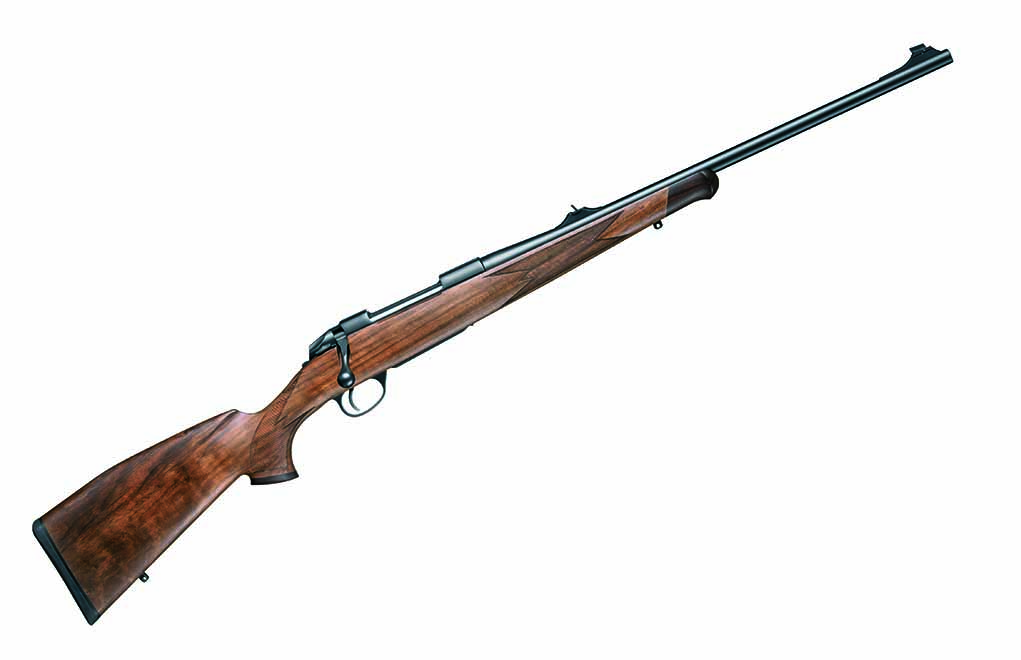
Gun Review: The Sako Model 85 Bavarian

2

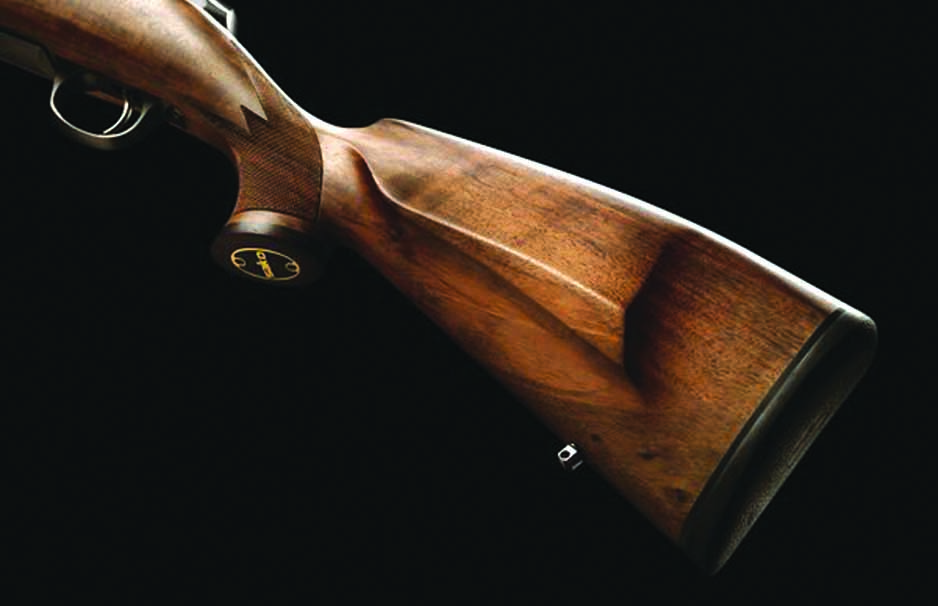
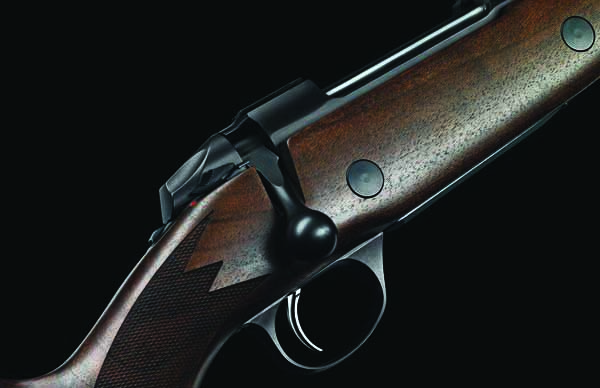
Sako’s Model 85 Bavarian sports a very unique action and stock combination that pair exceptionally well for in-field accuracy.

What sets the Model 85 Bravarian apart:

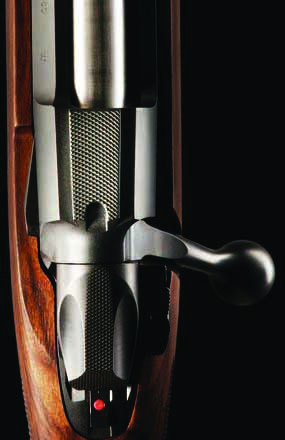
  • Three locking lugs
  • Control-round feed
  • Mechanical ejection
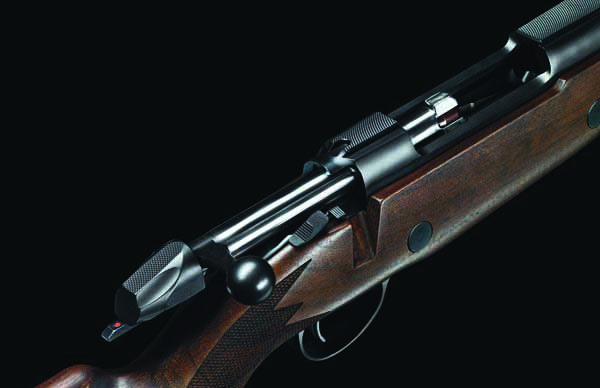
  • Three-position safety
  • Traditional German stock — hog back comb and Schnabel forend
  • More vertical pistol grip with pronounced palm swell

There aren’t many ways to improve upon the legendary 6.5×55 Swede, but wrapping it in the fine Finnish craftsmanship of a Sako rifle probably doesn’t hurt. I recently had the privilege to find out when Sako sent me a “Swede” in their Model 85 Bavarian to review.

sako 013
sako 013

The first thing you need to know about Sako is that they didn’t start building firearms for fun. They built them to save their homeland, Finland, from overwhelming Russian aggression. Such motivation produces the kind of firearms manufacturing quality control that only a country’s sovereign survival inspires. Luckily for me, I didn’t have to brave a Russian winter to test the Sako chambered in the aptly-selected Scandinavian military cartridge. No, I chose to head south for my winter weapons review to Kimberly, South Africa, much to the dismay of the local zebra, kudu, steenbok and warthog populations.

Reviewing a European rifle chambered in 6.5×55 Swede isn’t rare.

“The Swedish Mauser caliber is a very popular hunting cartridge in our neighbor country, Sweden,” said Philip Jones, Product Manager of rifles and ammunition, Beretta USA Corp. “Sako has been selling these rifles there for a long time and, today, Sako and Tikka are the No. 1 hunting rifles in Sweden, so I think Sako has very good knowledge how to build the best 6.5×55 rifles offered today.”

Speaking of Tikka, and this might settle or even start a few spirited discussions around elk camp: According to Jones, a Sako-built rifle is not simply a dressed-up Tikka. They’re two completely different rifles. Jones was direct:

Sako Model 85 Bavarian 1

“In regard to manufacturing process, the largest difference [from Tikka] is that the Sako 85 bolt starts as a hammered preform with the bolt handle,” Jones added. “When we machine the bolt of the Model 85, the whole bolt body is one single piece of metal, including bolt handle. With Tikka, we manufacture the bolt body separately from the bolt handle, which is attached later. Feature-wise, there are more differences, such as the Sako 85 has three locking lugs, is control-round feed, has mechanical ejection and uses a three-position safety. Also, we do not use synthetic parts in the barreled action or in magazines as we do on Tikka rifles.”

The Best From The Bavarian

Within the stable of Sako’s fine rifles, the Bavarian stands out.

“We offer many rifles in 6.5×55 caliber,” said Jones. “But the uniqueness of Bavarian rifle is in the stock.”


More Rifle Posts:


Why? Because of its German influence, which is an interesting twist, because Finland ended up fighting more than the Russians late in WWII — they chased off the Nazi’s as well.

Sako Model 85 Bavarian 9

“The stock has very traditional German features, like the ‘hog back’ rear stock comb and, as they call it in Germany, (a) Schnabel-style forend,” he said. This design favors the use of traditional iron sights, which the rifle had, and a thin, long wood signature. On the range and in the field, I preferred the ergonomics of a thinner stock, finding the rifle easier to carry, point and position in a variety of hunting situations.”

Jones expanded on the difference in the Sako 85 Bavarian from other Model 85s, and the subtle changes played well in the field for me.

“The pistol grip is more vertical compared to our other traditional wooden stock models, and it has a very pronounced palm swell,” said Jones. “All Bavarian rifles have hand-detailing on the edges of the checkering patterns, adding one nice unique detail. Also, the length of pull 14.6 inches is slightly longer compared to our other traditional wood stocks, which range from 13.5 to 14 inches in length of pull.”

The rifle was easily too long for me. I’m barely 5 feet, 5 inches tall, and my length of pull stretches at 12.5 inches. Still, on numerous occasions, I was able to pull the long-stocked, long barreled (22.5 inches) Sako from my tucked and seated position, load it, shoulder it and fire accurately on moving targets.

Standard features on the 85 Bavarian include adjustable open sights and a single-stage trigger that’s adjustable from 2 to 4 pounds.

To my point, the wood stock’s shape and enhancements weren’t simply aesthetically pleasing, they influenced my ability to engage dynamic game with the rifle, and that’s a big deal on a safari, elk hunt, or any other hunting application.

The palm swell and pistol grip angle helped me place the rifle properly to shoot quickly on animals in motion. The ergonomics of the stock begged me to actively hunt with the sharp checkering, giving me a firm grip, and the as-advertised larger palm swell giving my hand plenty of real estate to anchor into a strong grip in uncontrolled shooting situations, lending credibility to the idea Sako intended this rifle for hunting and not bench rest work. It’s as if the rifle wanted to go on a safari, with or without me.

Indeed, the Bavarian was, according to Sako, a perfect choice for my safari.

Sako 85 actions come in six different sizes and utilize Sako’s unique extractors for reliable cartridge handling and feeding.

“(The) Bavarian is very good option for plains game in Africa,” said Jones. “A couple of main reasons for choosing it are: It offers mechanical ejection, which is a must when traveling with a rifle in remote places so that the ejection can never fail like can happen with the plunger type ejection; and, it offers quick target acquisition via open sights. If optics are damaged during the hunt or in traveling, the rifle is still a perfectly capable tool for hunting.”

These two keys points focus on what you need your rifle to do above all else — work. Sako’s reputation for high quality is built upon manufacturing a rifle meant to work in the most arduous environments, whether it’s on a hunt or the front lines of combat. Let’s take a closer look at what makes a Sako different from other bolt-action rifles, including the Mauser-style action.

What Sets Sako Apart?

According to Jones, Sako 85 rifles have a controlled-round feed action, but it’s designed differently compared to the Mauser 98 system while still achieving the same reliability.

Capture

“The Sako 85 bolt face has an opening on the bottom, where the cartridge can go from the magazine and the Sako-style extractor will keep the cartridge in the bolt face no matter what position the rifle is,” he said. “The ejector placement in the bottom middle of the bolt is also quite unique to the Sako 85. The Sako 85 control-round feed is, in every essence, a control-round feed as is the Mauser version — they both do the same thing. Then, when compared to a normal push-feed action, this control-round feed has clear benefits in difficult shooting situations: If the bolt is cycled when moving with the rifle, it offers a much more reliable cartridge feed into the chamber.”

My experience with the Sako action has proven it to be reliable, but in my opinion — mechanically speaking — it doesn’t equate to same performance of a Mauser-based traditional controlled-round feed action. It is, however, very different, and in my limited experience better than a standard push-feed action. Regardless, both push- and controlled-round feed actions work in the hands of a rifleman who use them properly.

Both push- and controlled-round feed actions have disadvantages and advantages, and I was more impressed with the ergonomics of the Sako stock — it’s the most accurate 6.5×55 Swede I’ve ever shot. On numerous occasions, in low and high stress situations while on my safari in Africa, the Sako rifle never failed to cycle, extract, load or place the bullet precisely where I aimed it.

The oil-finished walnut stock of the 85 Bavarian features unique ergonomics that aid in quick shouldering for fast target acquisition on both stationary and moving targets.

The Sako 85 Bavarian I carried had the longer 22.5-inch barrel, and wisely, it sported a 1:8-inch twist rate to stabilize the kinds of bullets I’d need to maximize the 6.5×55 Swede’s world-class long-range accuracy.

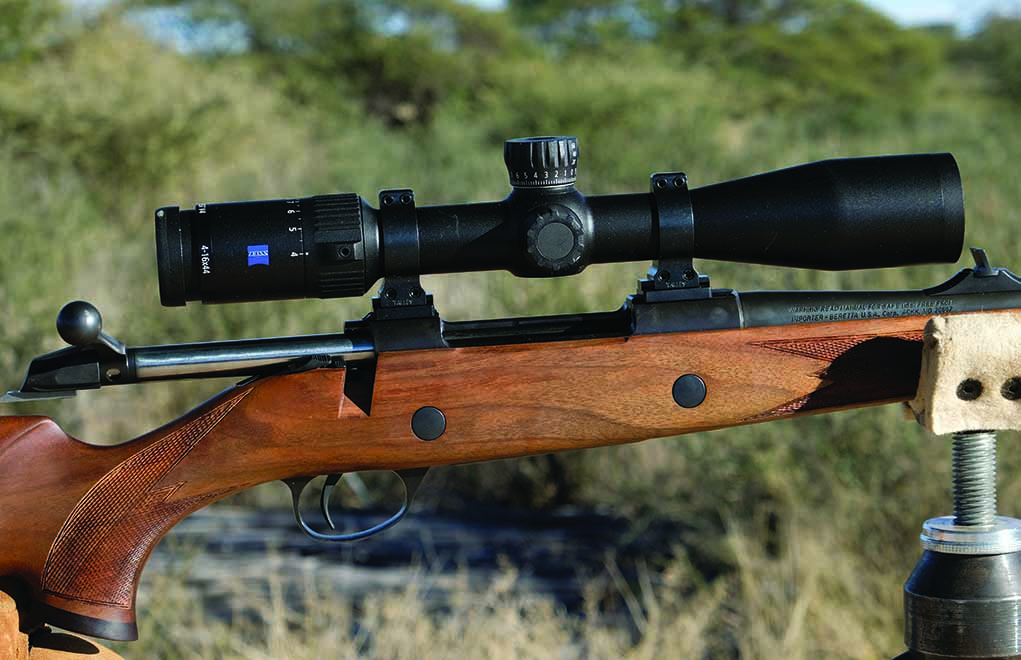
On top of this Sako I used a Zeiss V4 4-16x50mm riflescope and Talley rings. One note to the quality of the scope and rings: My rifle, which bounced around on a 16-hour flight from Virginia to Kimberly, South Africa, only needed one shot on the range to verify zero before we hunted in South Africa. The high-quality glass inside that Zeiss optic paid off on my zebra hunt when I had to shoot in low-light conditions with sunset coming, the animals under the shade of several Acacia trees, and the zebra’s striped camouflage working quite well on my depth perfection.

But Does It Shoot?

How does the Sako shoot? In short, like its $1,998 price tag suggests it ought to, the 85 Bavarian is a knock-out. After shooting a variety of ammunition from Hornady, Nosler and Norma, I settled on the 156-grain Norma Oryx for Africa because of its heavier bullet weight, construction and superb accuracy.

Sako Model 85 Bavarian 3

Earlier in the year I used the same ammunition to take an Idaho black bear at 90 yards with a CZ 557 chambered in 6.5×55 Swede, so when the Norma ammo grouped well again in this rifle, I felt confident it would work on whatever Africa had in store for me. I was right.

From the bench to the South African high desert mountains — to low-light stalks in heavy brush, instant jump shots on 200-pound warthogs in a full sprint, bipod-assisted 200-meter shots on Zebra, Steenbok, and Kudu — it worked.

For hunters, a test where the final grades are based on tags filled, taxidermy bills created and memories made are the best grades any rifle can ask for.

The article originally appeared in the September 2018 issue of Gun Digest the Magazine.

5 Common Shotgun Shooting Mistakes And How To Correct Them

0

World-record shotgun shooter Dave Miller identifies the five most common missteps that plague shotgunners and their cures.

What are the common shotgun shooting mistakes:

Shooting a shotgun is easy, right? Everybody knows you just point the muzzle in the general direction of the target and pull the trigger. With all those hundreds of shot pellets it’s hard to miss. But — somehow — we do miss … and some of us miss a lot.

Shotgun Shooting Mistakes 5

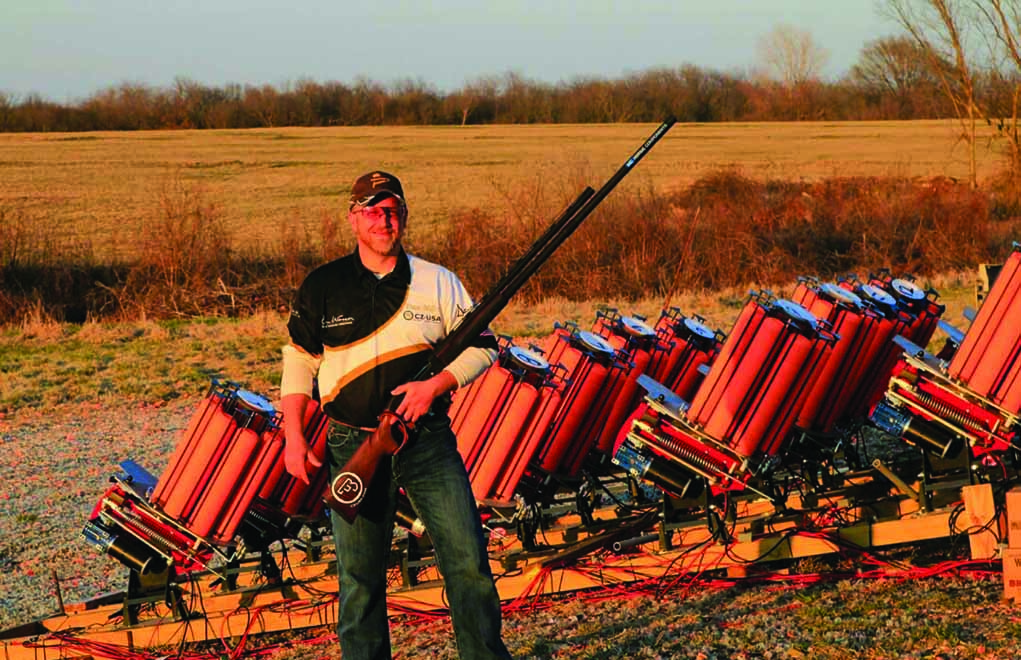
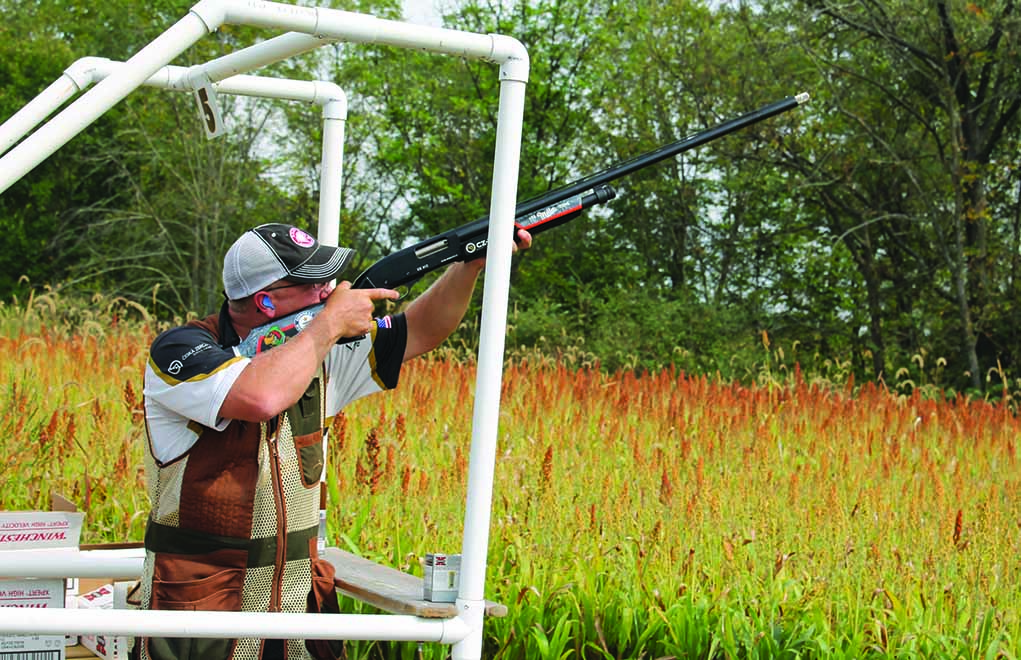
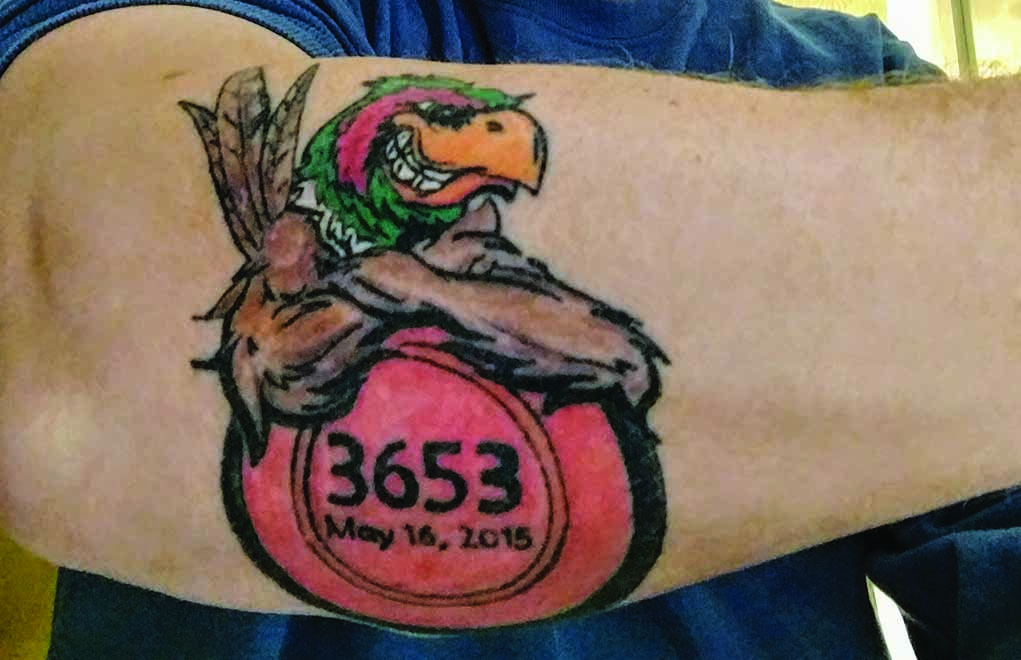
Dave Miller doesn’t miss with a shotgun very often. In fact, he probably misses less than anyone you know. Miller is the Shotgun Product Manager and Pro Shooter for CZ-USA, maker of many fine shotguns, rifles and handguns. Forget about Dave Miller as a Master Class Sporting Clay shooter and National Sporting Clays Association Level 2 Instructor. Forget about 2015, when Dave Miller landed in the Guinness Book of World Records for the most clay targets shot in 1 hour — 3,653.

Do that math: That’s one clay busted, on average, every 0.99 seconds.

All this sums up to the fact that Dave Miller basically shoots shotguns for a living, and precious few of us can say that. Who better than Miller to provide some tips on improving our scattergun skills?

So, here are five common mistakes us shotgunners make, and advice from Dave Miller on how to deal with them. Remember, some tips are specific for bird hunting, some for clay shooting — and some will help with both.

Mistake No. 1: Looking at the gun first

“You can’t shoot what you can’t see,” Miller said. “Train yourself to look at the target, and then move the gun.” Miller noted that it’s not really necessary to “see” the gun — that is, the rib and the end of the barrel — if your eyes are on the target and you mount the gun properly. “Remember, its eyes first and then the gun,” Miller added.

Shotgun Shooting Mistakes 6

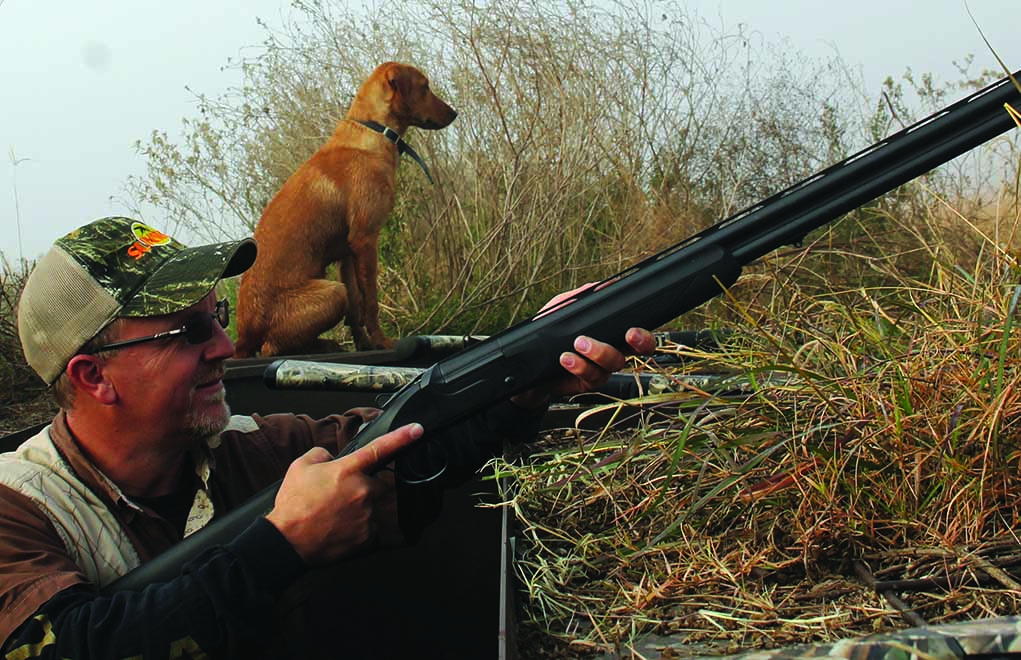
In hunting situations, Miller noted that it’s especially important to concentrate on a flushing or incoming bird and not the gun. Is it a hen or a rooster pheasant? What species and gender of waterfowl is it? You can’t tell if you’re looking at the gun. Also, clearly seeing the target and what is beyond it addresses obvious safety concerns as well.

Mistake No. 2: Not moving to the target

Ever had a grouse or pheasant erupt from cover as you face an angle away from the bird? Then, in haste, we often take the shot from an awkward, twisted position — and often we then miss. Miller stressed that moving to the target in a motion he calls, “step to the shot,” is very important.


More Shotgun Posts:


“You have to take the time to move your feet and step in front of the target,” Miller said. “In this way, you’re in the proper body position to move the gun in front of the bird. Think about starting with the gun ahead of the bird, even at the low ready position when possible.”

Remember, there’s plenty of time to do this. When that grouse or pheasant or quail explodes out of cover, shooters tend to think they must shoot immediately or lose out. How fast is that pheasant flying anyway? Check the velocity on the shotshell on the box you’re using. Thirteen-hundred fps is almost 900 miles an hour, and the bird certainly isn’t moving away that quickly. You have time to step into the shot and get into the right position.

Mistake No. 3: Not inserting the muzzle ahead of the target

“There’s nothing good on the backside of the target,” Miller said. “Never get behind, and always mount the gun ahead of the target.

From the sporting clays box to the wingshooting fields, Miller breaks down his shot process into a series of repeatable steps that have become second-nature during every single station and flush.

“In wingshooting, most birds are taken with a ‘cut-off’ move, which is where the muzzle is inserted in front of the bird from a line different than that of the target — to cut it off,” he added.

In clay target situations, the cut-off move is usually applied when the shooter is moving from the first target to the second in doubles. The shooter kills the first clay and then moves the muzzle directly in front of the second to cut it off. The key is to keep the barrel moving to avoid falling behind the pace of the target. Once behind, it’s extremely difficult to catch up.

Mistake No. 4: Fearing the rabbit

Many sporting clay shooters get spooked by the “rabbit” station. The way the target is presented, bouncing along the ground at a speed likened to an aspirin shot out of a .257 Roberts, can give any shooter nervous twitches at the line.

“Remember that the rabbit is a ‘type’ of target, not just the presentation,” Miller said. “This clay is thicker and harder to break than other clays. This means that the rabbit is heavy and loses its spin faster than other targets.

Practice doesn’t make perfect, but more time spent shooting from the sporting clays box does equal more feathers in the upland vest.

“Targets break easier when they’re spinning,” added Miller. “In clay shooting, centrifugal force is your friend for an easier break.”

For this reason, Miller instructs that the shooter should almost always plan to break the target while it’s under power to take advantage of the spin. In other words, attacking a rabbit quickly gives the shooter the added advantage of centrifugal force to break that clay with a less-perfect shot.

Mistake No. 5: Not establishing a routine

“A shooting scenario can’t end the same way every time — successfully — unless you start the start the same way every time,” Miller said. The CZ-USA Pro Shooter stresses establishing a routine, and do it the exact same way regardless of the situation — every time.

“There’s always a series of steps I go through — a ritual, if you will — each and every time I enter the box,” said Miller.

  1. Where is the target coming from?
  2. Where can I see it the best? This is where I want to kill it.
  3. Adjust my body and foot placement for that position.
  4. Start the gun between where I will begin to see the bird and the point where I want to break it.

I’m looking at point A, and I’m going to break the clay when it gets to point B. I will start the gun about in the middle of these two places, at about what I call a 50 percent hold point.

After setting the Guinness World Record for most clays broken within an hour at 3,653 — that’s averaging one clay per second — Miller celebrated with a tattoo and commemorative shotgun to further exemplify a life committed to the shotgun.

For wingshooting applications, Miller suggested keeping with a routine as much as possible, carrying the gun the same way all the time — having both hands in the correct place with the barrel angled up into a safe position to maintain readiness.

And when it comes time to react when stepping into the shot — the “stutter step” that you do to position yourself and place the gun in front of the bird — do it the same way every time. Following these simple steps will put more X’s on your score sheet and more birds in the bag.

Just to be honest, I don’t except to become a shooter on the level of Dave Miller any time soon, but I do know that if I follow these tips to correct mistakes, I will hit more feathers and clays. I might even hit that dang rabbit a little more often, too.

Editor’s Notes: This article originally appeared in the October 2018 issue of Gun Digest the Magazine.

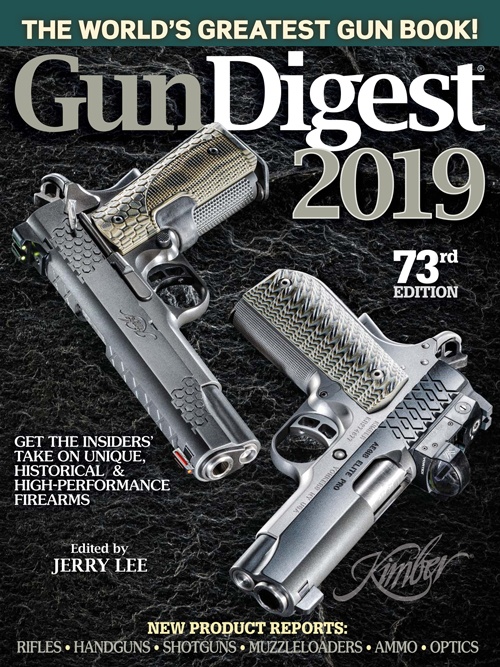
Gun Digest 2019

The World’s Greatest Gun Book

Gun Digest 2019, 73rd Edition is jammed full of comprehensive information that firearms fanatics crave. No matter if your passion is long-range rifles, fancy shotguns, gritty Old West single-action revolvers or sleek semi-auto pistols, Gun Digest 2019 delivers. Get Your Copy Now

Oryx Chassis Rifle Added To Howa Precision Rifle Line

0

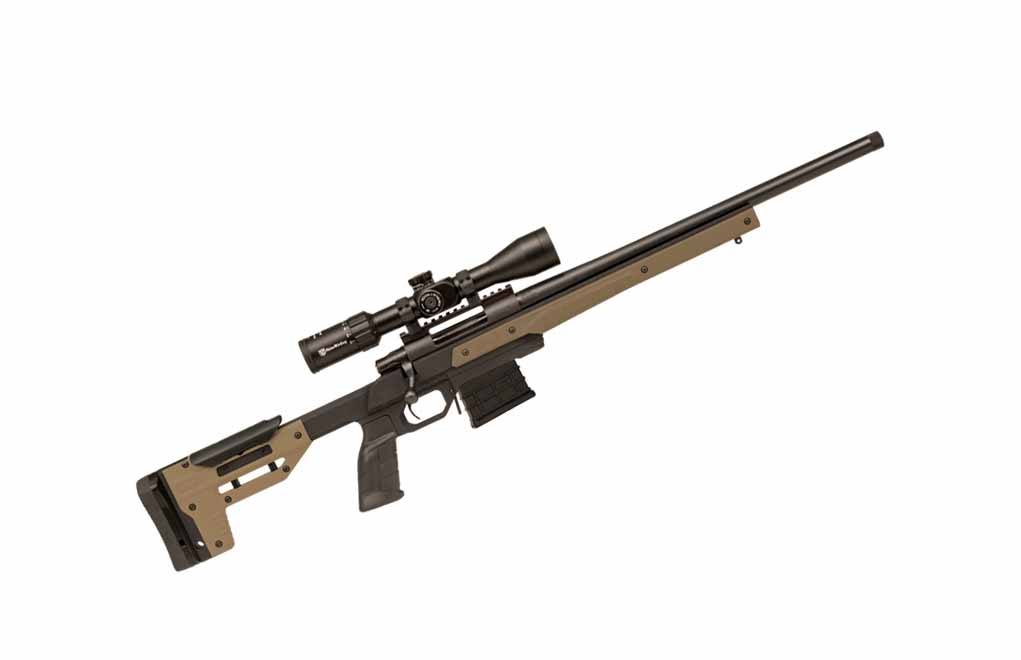
Offered as a standalone and with the Howa 1500 barreled action, the Oryx chassis offers affordable accuracy.

What the Oryx chassis offers:

  • Light 4.2-pound weight
  • Fully adjustable length of pull and comb height
  • M-Lok slot on underside of forend
  • AICS magazine compatibility
  • Free floating barrel

Modular Driven Technologies makes an offer few shooters can refuse with its Oryx chassis, “A complete bolt-action rifle chassis system for under 400 bucks.” Pretty sweet, especially for those who have a yen for long-range precision on a budget.

oryx-1

Unsurprisingly, the Canadian company’s affordable accuracy caught the attention of Legacy Sports, who in recent years has become an epicenter of economy chassis systems. In 2019, the Nevada importer will sell both the Oryx chassis as a standalone and matched up with Howa’s 1500 barreled action, and both come in as quite a deal.

Complete rifle packages start at $1,059 and are available in 6.5 Grendel, 7.62x39mm, .223 Rem./5.56 NATO, .300 BLK, .308 Win., 6.5 CM, 6mm CM and .300 Win. Mag. This is a healthy sample of Howa’s 1500 long, short and mini actions. Staying true to its promise, the Oryx itself has an MSRP of $399 and is available for Remington, Tikka, Savage and Ruger rifles, in addition to Howa.


More Precision Rifle Posts:


A one-piece integrated aluminum chassis and buttstock, the Oryx has everything you’d expect out of a chassis. This includes fully adjustable length of pull (13.25 to 15 inches) and comb height, sling swivels, rubber grips and recoil pad. When installed, it also free floats the barrel, imperative to ensure you milk all the accuracy out of your rifle.

More from Legacy Sports:

RENO, NV – (January 9, 2019) –Legacy Sports International announced the release of the ORYX by MDT now available for now available for Howa 1500 STD short actions, mini actions and long actions. The ORYX Chassis is created for the most demanding shooter by providing complete ergonomic adjustments without compromising on design or functionality.

ORYX by MDT Chassis Rifle Availability

ORYX by MDT Chassis Rifle is available for purchase through Legacy Sports International starting 1st quarter 2019. Please place your orders now through LegacySports.com.

Legacy Sports International is the North American leader for firearm imports. The company offers a wide variety of rifles, shotguns, pistols and scopes designed to meet and exceed the expectations of the most demanding shooters.

ORYX by MDT Chassis for Howa Precision Rifles

MDT worked side by side with Legacy Sports International to create a custom chassis for the Howa 1500 actions. The result was the ORYX by MDT Chassis Rifle. The ORYX by MDT Chassis is created from a full monolithic aluminum chassis with an adjustable length of pull and adjustable comb height. In addition, the large palm swell consists of an over molded grip. The ORYX by MDT Chassis has an M-LOK compatible forend and accepts AICS pattern magazines. The ergonomic fine-tuning on the ORYX by MDT Chassis Rifle enables the perfect fit to the shooter.

Additional Features:

  • Mini Action available in: .223 Rem, 7.62×39, & 6.5 Grendel – 20” Heavy Barrel
  • .300 Blackout – 16.25” Heavy Barrel
  • Short Action available in: 6mm CM, 6.5 CM & .308 Win – 20”, 24” & 26” Heavy Barrel
  • Long Action available in: .300 Win Mag
  • 10+1 Magazine Capacity
  • AICS Compatible Magazine
  • Adjustable LOP
  • Adjustable Comb
  • Chassis available in OD Green or Gray
  • H.A.C.T. 2-Stage Trigger
  • Lifetime Warranty
  • SUB-Moa Guarantee
  • MSRP Starting at $1059

Oryx Specs

Weight: 4.2 lbs
LOP: 13 – 13.5″ (Additional LOP can be achieved with a spacer kit)
Material: 6061
Finish: MIL Spec Type III hard anodize
Notables: Accepts AR-15 Grips (included),M-LOK pattern slots along underside of forend, Uses AICS pattern magazines,Free floating barrel

For more information on the Oryx chassis and the Howa Oryx Chassis Rifle, please visit: www.legacysports.com/.

America’s Rifle: The Remington Model 700

6

Move over AR: The Remington 700 has already claimed and proven itself as “America’s rifle.”

Why the Remington 700 is among the best bolt-actions ever designed:

  • Strong action with three rings of steel supporting cartridge head.
  • Extremely fast lock time (3.2 milliseconds).
  • Known for tight barrel and chamber tolerances.
  • Available with two action sizes.
  • More than 5 million sold since 1962.

When the Model 700 was introduced by Remington in 1962, hardly anyone expected that it would dominate the rifle market for a half-century. The Winchester Model 70, in its pre-64 version, was the one that all other bolt actions were compared to at the time. The introduction of the 700 turned out to be good timing for Remington because, 2 years later, Winchester made many changes to the Model 70 that to this day make 1964 a turning point in rifle history. As is the case with most Winchester firearms, “pre-64” adds to the value.

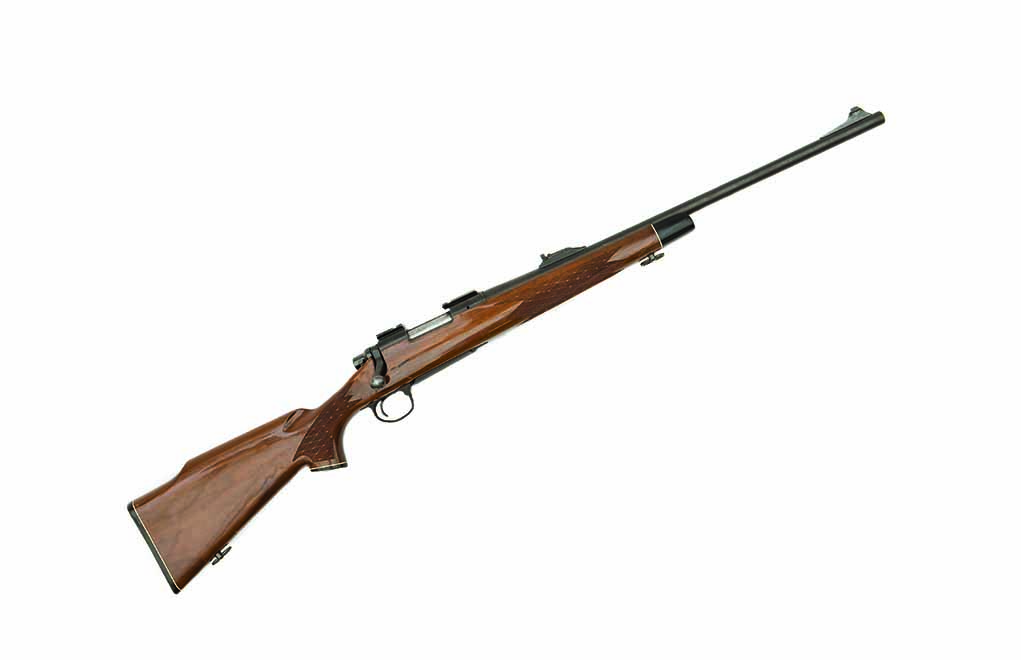
This BDL is a .243 Winchester, one of the early models with iron sights and white-line spacers.

The 700 was the creation of the late Remington engineer Mike Walker, who died in 2013 at the age of 101. It was an update of the Models 721, 722 and 725, which were also designed by Walker. The 700 had a stronger action, promoted as having three rings of steel supporting the cartridge head — the bolt shroud, the chamber and the receiver ring. It was advertised as “the world’s strongest bolt action,” a claim that Remington still makes today.

Read More: Top 6 Affordable Precision Rifles — Bolt-Action Edition

Accuracy of the Remington 700 is excellent; in fact, it has been called the most accurate factory rifle made in the United States. Walker had given the rifle a very fast lock time (3.2 milliseconds) that contributes to its reputation for accuracy, along with the tighter bore and chamber tolerances.

The Model 700 is the most successful factory-made bolt-action rifle, with more than 5 million made to date. Remington states on its website, “For over 50 years, more Model 700s have been sold than any other bolt-action rifle before or since.” The Model 700 has been chambered for more than 50 different calibers and, over the years, has been in Remington catalogs under a staggering 900-plus SKUs (stock keeping units.)


More Remington Posts:


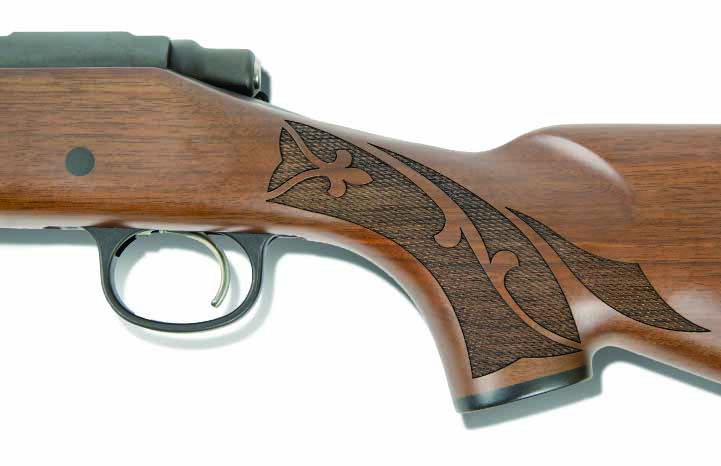
The 700 was introduced in two action lengths and two grades, ADL and BDL. Barrels were 20 inches for standard calibers (.222 Rem., .222 Mag., .243 Win., 6mm Rem., .270 Win., .280 Rem., .308 Win., .30-06) and 23½ inches for magnums (7mm Rem., .264 Win.). A couple of years later, barrel lengths were changed to 22 and 24 inches, respectively. The ADL had a blind magazine and limited amount of pressed “checkering.” The BDL had a hinged floorplate and a stock with a fleur-de-lis pressed checkering pattern, and white line spacers at the butt plate, grip cap and the black forend tip. Initial prices were $114.95 for the ADL, $139.95 for the BDL and $15 more for magnums.

When the Model 700 came out in 1962, Remington used the occasion to introduce the 7mm Remington Magnum, which became one of the most popular chamberings. Some calibers are rare and will bring a premium on the used and collector markets. These include the .222 Rem., 6.5 and .350 Remington Magnums, 7mm Weatherby Magnum, .257 Roberts and 7×57 Mauser. Also, certain calibers are hard to find in certain models.

Learn More: The Revolutionary 7mm Mauser

Most Model 700s have been, and still are, hunting rifles. The calibers offered have ranged from the .17 Fireball to the .458 Winchester, suitable for any game on earth. There have been numerous variations of hunting models, including varminters, long-range rifles, designs for younger hunters, Alaska and Africa models, extreme conditions specials and others. When you add the different types of stocks, barrel lengths and styles, sights, finishes and other options, that’s where you get the 900 SKUs.

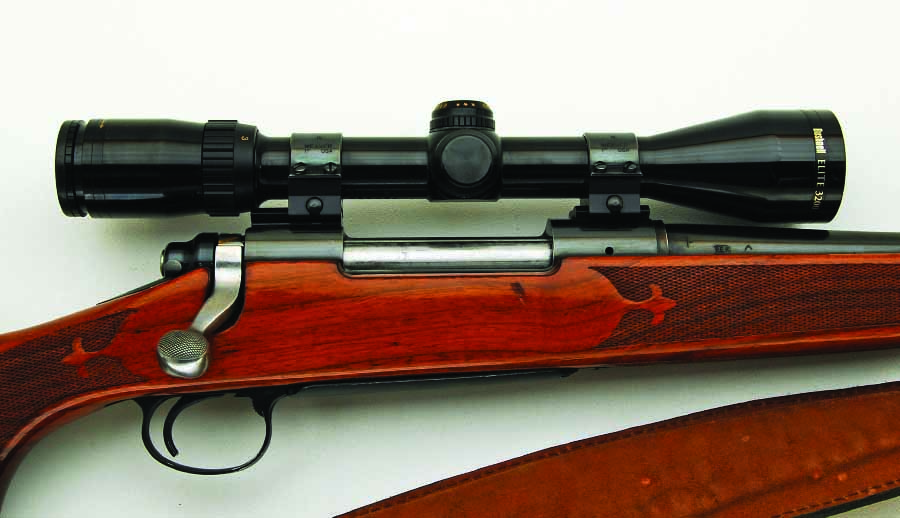
A Model 700 .30-06 with a sling and a good scope. What more do you need?

The Model 700 tactical models are also highly respected in military and law enforcement circles. Features that set them apart from the hunting models are special stocks designs, barrels types and lengths, and finishes. Some come as special packages that are sold with scopes, bipods, cases and other accessories.

One of the rarest 700s is the EtronX VS SF, which was on the market from 1999 to 2003. While an interesting in concept, it was not a commercial success. Ammunition for the EtronX had an electronic primer, and its firing system used an electronic discharge from a 9-volt battery that provided instantaneous ignition. No moving parts meant basically zero lock time. The rifle was introduced in .22-250 Rem., .220 Swift and .243 Winchester but never became popular — just a bit radical for the mainstream shooter. However, enough were sold that Remington still makes ammunition and the electronic primers, which are needed for reloading.

Fleur-de-lis checkering pattern on an ADL Limited Edition commemorating the 200th Anniversary of the Remington Company.

The Remington Custom Shop has created many special-order versions of the Model 700 over the rifle’s 57-year run. These models have different levels of engraving and wood, and from 1962 to 1983 they were known by grade designations C, D, F, Peerless and Premier. These became Grades I, II and III from 1983 to 1991. In 1992, grades were eliminated, and ever since the custom shop models have been simply called the Model 700 Custom Rifle.

Remington model 700 Estimated Values

Courtesy of Standard Catalog of Firearms, 2018 Edition.

BDL 50th ANNIVERSARY EDITION (2012)

NIBEXC.V.G.GOOD
$1,250$1,000$850$700

CUSTOM C GRADE

NIBEXC.V.G.GOOD
$2,700$2,200$1,700$1,200

AFRICAN PLAINS RIFLE (APR)

NIBEXC.V.G.GOOD
$2,400$2,000$1,500$1,000

AFRICAN BIG GAME (ABG)

NIBEXC.V.G.GOOD
$2,750$2,350$1,800$1,250

ALASKAN WILDERNESS RIFLE (AWR)

NIBEXC.V.G.GOOD
$1,400$1,100$850$700

ALASKAN TI (TITANIUM)

NIBEXC.V.G.GOOD
$1,750$1,350$1,050$775

CLASSIC LIMITED EDITION

NIBEXC.V.G.GOOD
$900$700$600$500

Note: Add 25 percent for .250 Savage, .257 Roberts, 6.5 x 55 or 7 x 57

TACTICAL CHASSIS (2014)

NIBEXC.V.G.GOOD
$2,500$2,100$1,700$1,200

ETRONX

NIBEXC.V.G.GOOD
$1,450$1,300$1,150$700

XCR TACTICAL LONG RANGE

NIBEXC.V.G.GOOD
$1,200$950$675$500

Note: Add 50 percent for .338 Lapua

The article originally appeared in the October 2018 issue of Gun Digest the Magazine.
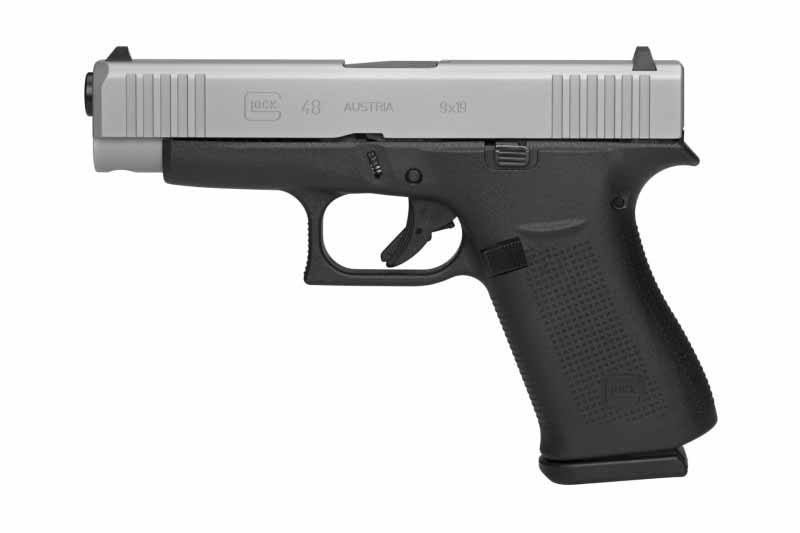
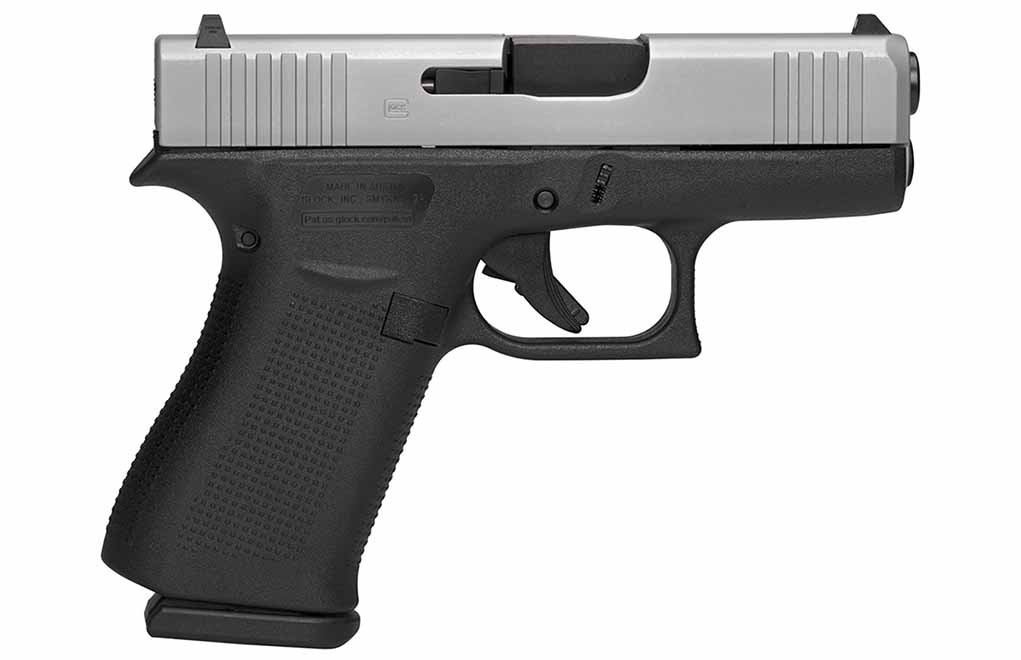
Glock Slimline Series Adds G43X And G48

0

Glock extends its single-stack line with enhanced-capacity G43X and G48.

How the G43X and G48 upgrades Glock’s single-stack 9mm lineup:

  • 10+1 capacity
  • Narrow width, just over 1 inch
  • Increased grip real estate
  • Front and rear cocking serrations
  • 4-inch barrel on compact G48
  • Two-tone

G43X G48 2

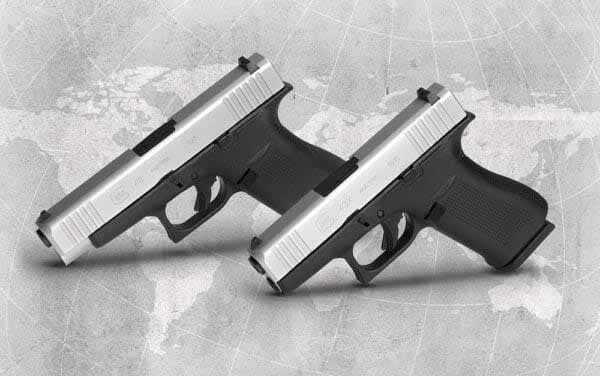
Tight-lipped until the turn of the year, Glock has cause some rumbling with its renewed focus on its Slimline Series in 2019. Recently unveiled, the G43X Sub-Compact and G48 Compact are the newest additions to the Glock arsenal and offer some interesting twists to the gunmaker’s single-stack catalog. Essentially updated versions of the G43, the pistols are more than aesthetic upgrades to the 9mm. With more firepower and potentially easier to manipulate, the slender polymer-framed pistols are a step forward in what has already proven a popular line of guns.

So what’s new?

G48 Barrel Length

Given they both call the G43 their parent, what exactly is the difference between the G43X and G48? If you didn’t catch it from the pictures, it’s barrel length. The G48 is essentially the same gun as the 3.41-inch barreled G43X, except with a 4.17-inch barrel. The additional length should potentially make the gun easier to handle, given it is a few ticks heavier than its compatriot. Furthermore, it should have more accuracy potential, given its longer sight radius. Glock isn’t the only one that has gone this route the past decade, with other popular polymer-framed pistol makers also turning out 4-inch compact versions of their sub-compact models.

G43X And G48 Capacity

G43X G48 1
G48

When the G43 hit the scene in 2015, shooters loved its concealability, but were left somewhat up in the air with its slightly-better-than-revolver 6+1 capacity. The G43X and G48 solve this, bringing the Slimline Series close to standard compact pistols’ capacity. Granted, you get the 10+1 loadout in a much leaner frame size, an advantage over the sometimes bulky double-stack configuration.


More Glock Posts:


That said, there is a piper to pay to squeeze in those additional rounds, and that is grip length. In both the G43X and G48 cases, the pistols have a 5.04-inch height with the magazine inserted, .79-inch greater than the original G43. While this modification increases firepower and grip real estate, it also increases the overall profile of the pistols. It’s not a deal-breaker for most armed citizens, but will most likely still prove a consideration among those who concealed beneath lighter attire on a regular basis.

G43X And G48 Slides

Perhaps the most noticeable aspect of the new pistols, they’re not pure black. Making them stand out among their peers, Glock has gone two-tone with the G43X and G48 outfitting them with nPVD coated silver slides. Though, that’s really secondary to the other notable on the slide – front cocking serrations. A nice addition, it should enhance manipulating the pistols, whether it’s racking the slide or press-checking the chamber.

G43X And G48 Width

G43X G48
G43X

At 1.06-inch in width, the original G43 still comes in as Glock’s slimiest 9mm. However, that doesn’t mean the G43X and G48 are beefed up beyond recognition. The pistols are thicker by the narrowest of margins, .04-inch. For the most part, the difference is notable on paper, but not the hip.

Price And Availablity

The G43X and G48 are set for release on January 21 and both have an MSRP of $580.

Glock G43X Specs

Caliber: 9mm
Overall Length: 6.5″
Slide Length: 6.06″
Barrel Length: 3.41″
Overall Width: 1.1″
Slide Width: 0.87″
Height (including mag): 5.04″
Trigger Distance: 2.64″
Magazine: Slim 01 mag
Capacity: 10+1
Weight (loaded): 23.07 oz.

Glock G48 Specs

Caliber: 9mm
Overall Length: 7.28″
Slide Length: 6.85″
Barrel Length: 4.17″
Overall Width: 1.1″
Slide Width: 0.87″
Height (including mag): 5.04″
Trigger Distance: 2.64″
Magazine: Slim 01 mag
Capacity: 10+1
Weight (loaded): 25.12 oz.

For more information on the G43X and G48, please visit: us.glock.com.

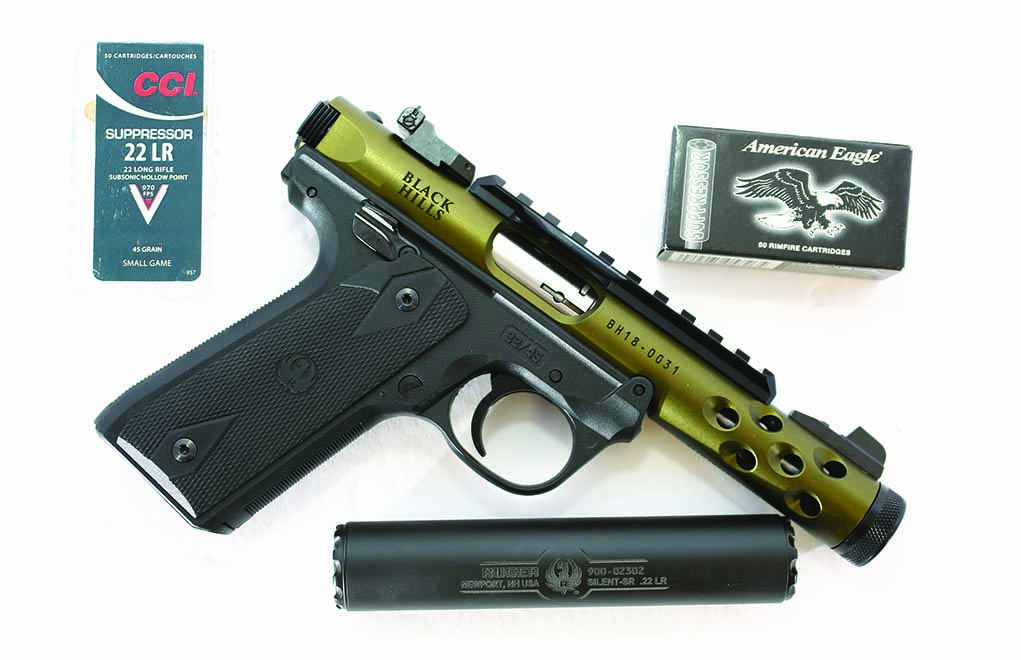
Inside The Ruger Silent-SR

1

Versatile and affordable, Ruger’s Silent-SR makes going suppressed simple.

How the Silent-SR out performs other rimfire suppressors:

  • Compatible with .22 LR, .22 WMR, .17 HMR and 5.7×28 FN.
  • Manuverable 5.37-inches long.
  • Durible titanium tube.
  • Snap-together stainless-steel baffle stack.
  • Pig-nose baffles increase noise reduction.

You have no idea of the changes we old shooters have had to go through lately. New shooters, perusing the racks of gear, haven’t a clue of the past. Oh, old timers will moan about the loss of “quality craftsmanship,” but for most applications, a CNC machine is better than a silver-haired craftsman.

Ruger Silent SR 7

And the choices? If you had told me, back when I was learning gunsmithing, that someday Ruger would be making 1911 pistols, AR-15 rifles — and holy cow, suppressors — I would’ve laughed so hard I would have squirted coffee out of my nose. Back in those days, that possibility didn’t even appear on the horizon.
And yet, here we are.

At the moment, Ruger (they are not free and easy with rumors, hints or leaks about what’s coming, so always pay attention) offer two suppressors, both for rimfires. One is a super-cool, super-trick integrally-suppressed Ruger 10/22 Takedown rifle. But it only works on the 10/22 Takedown.

The other is a “regular” threaded suppressor for use on any properly threaded .22 or other rimfire firearm. The Silent-SR (you all saw what they did there, right?) is, at first glance, just another rimfire “can.” From the outside, it looks like any other.

Well … appearances can be deceiving.

On The Inside

The Silent-SR is a basic design: a tube with baffles and end caps. However, it’s rated for an impressive list of the small stuff. It can take .22 LR and is full-auto rated for that. (Those lucky enough to take advantage of such an option, please keep it to yourselves. The rest of us are jealous enough as it is.) It can handle .22 WMR, .17 HMR and the big one here, the 5.7×28 FN cartridge. That means you 5.7 fans can now get a suppressor on your favorite tiny centerfire blaster, one that will stand up to the extra work over normal rimfires that the cartridge puts on a suppressor.

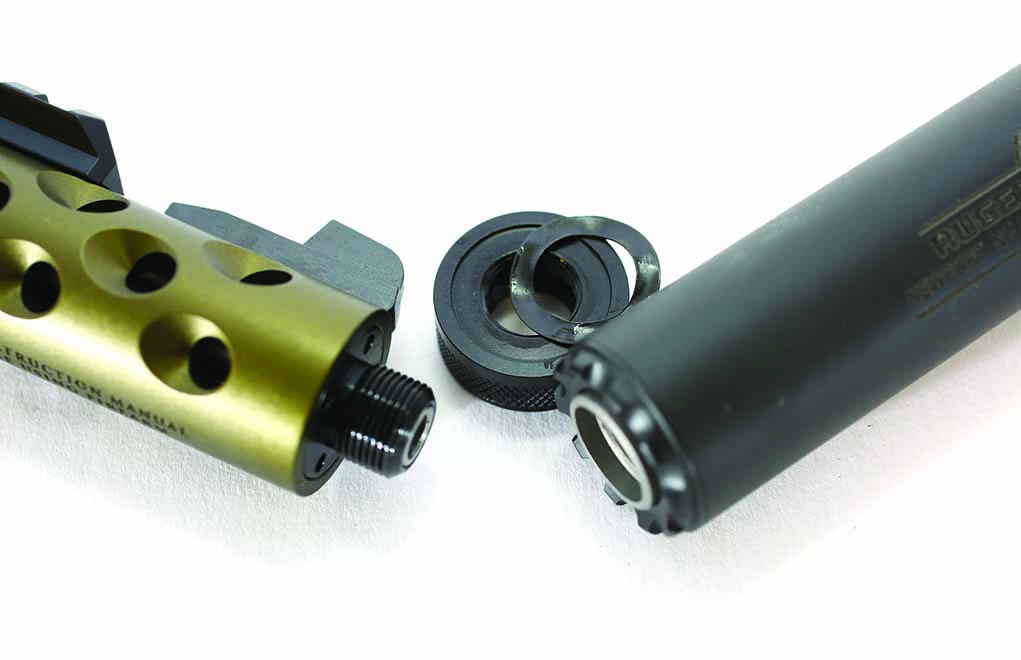
The muzzle of the author’s Ruger is threaded by the factory, and it comes with a thread protector and spring washer. Unscrew those, screw on the suppressor — and get to the fun.

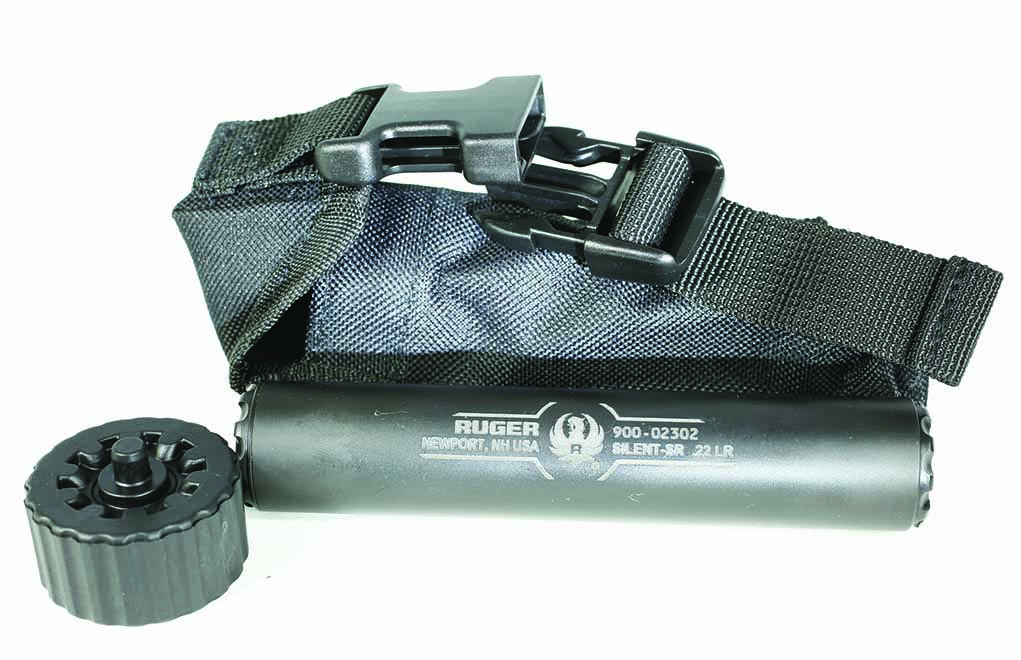
Lightweight and compact, the Silent-SR is 5.37 inches long, the slightest whisker over 1 inch in diameter (1.06 inches) and weighs 6.3 ounces. Finished in flat black Cerakote, it will fit in with pretty much any rimfire firearm you care to park it on. It comes in the Ruger box, with a nylon carry pouch, with owner’s manual and a disassembly tool.


Get More Suppressor Info:


The mount is a vanilla-plain ½-28, that is, a half-inch thread twenty-eight of them to the inch, which is the common thread pitch on all threaded rimfires — and that includes a bunch of centerfires as well.

Which brings me to a minor point: Rifles chambered in .22 LR and .223 Rem./5.56 NATO will both have threaded muzzles with a pitch of ½-28. If you’re taking a bunch of friends to the range and they’re new at this, do not let them assemble suppressors and firearms unsupervised. They won’t know not to do it, and you will be quite unhappy with the results of a .223 Rem. /5.56 NATO rifle combined with your .22LR rated suppressor.

However, in a rimfire, you’ll all have a blast. (Or not, so to speak.)

Proven Design, With A Twist

The Silent-SR is constructed the old-fashioned way, with an outer tube, internal baffles in a “stack” and front and rear end caps. But, the old-fashioned approach has been given some new twists by Ruger, and the end result is greater than the sum of the parts.

The Silent-SR, complete with carry pouch and disassembly tool.

First, the tube is made of titanium. The traditional material for the external tube of a rimfire suppressor has been aluminum. Aluminum is light, easy to machine, durable enough and inexpensive. However, Titanium is much stronger, while giving up a small but acceptable amount of weight. It’s also a lot more forgiving of heavy-handed cleaning and use, which is the one downside of an aluminum tube. Why do we worry about cleaning? Simple: Short of blackpowder cartridges, rimfire ammo — especially the lowly .22 LR — is the dirtiest ammunition you will ever shoot.

A rimfire suppressor, left uncleaned, will collect an impressive amount of powder residue, wax lubricant and flakes of metallic lead in short order. Building up range session after range session, it will soon “carbon weld” your suppressor into a single lump. That is, the buildup of gunk will make it impossible to take the suppressor apart, and the buildup will also add weight and cut down on your suppressor’s efficiency. That’s why all rimfire suppressors are made to be disassembled and cleaned.

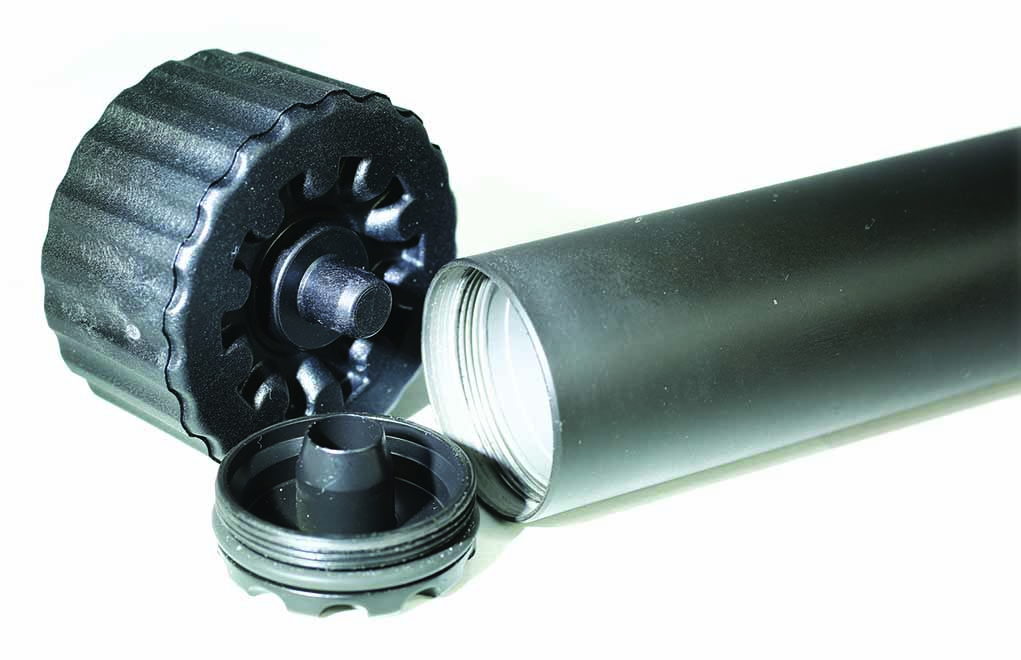
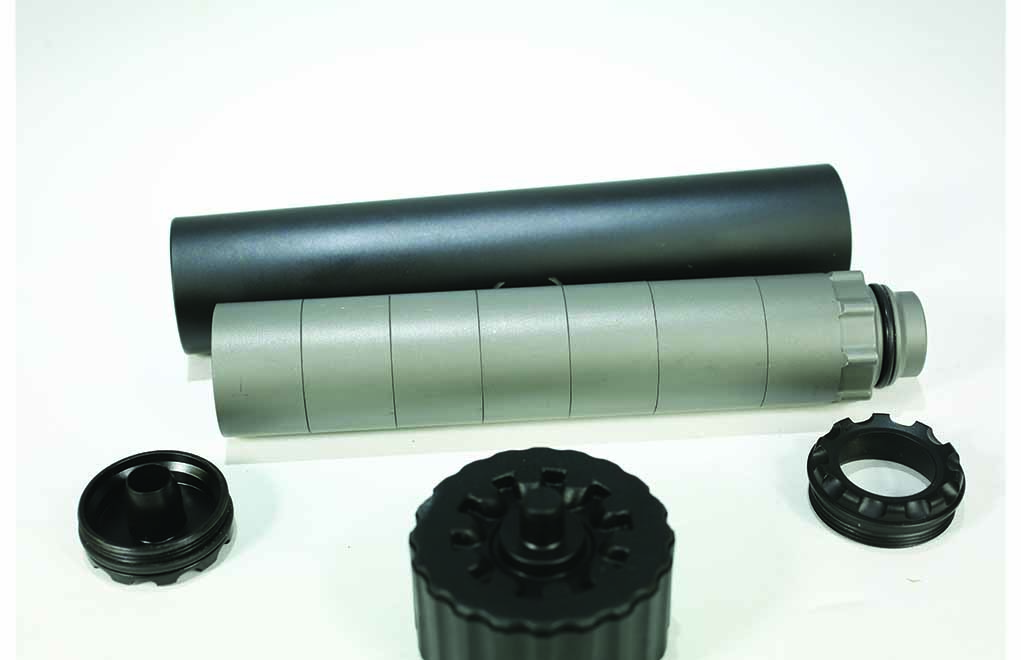
Taking the Ruger Silent-SR apart is easy. Remove the Silent-SR from whatever firearm you’ve been using it on. Use the included disassembly tool to unscrew both the front and rear caps. Push the baffle stack out of the tube to the rear. One extra detail of the Silent-SR is that the rear cap — the mount end — has been designed so that when you wrestle the Silent-SR off of your firearm, you can’t inadvertently disassemble it.

And the extras continue: The baffle stack has been designed so each of the components snaps into the one behind it. The stack comes out as one piece, and you have to snap each baffle off of the stack to get it apart. And when you go to reassemble, you snap them back in. If you don’t snap one in, it remains misaligned with the stack, a clear indication that you are doing it wrong.

Along with the snap-apart and snap-together design, the Ruger engineers also gave you another boon. The skirt of each baffle, which is the cylindrical part that rides in the outer tube, is as close to the ID of the tube as possible. Combined with the snap-together design, it prevents the vast majority of the powder residue and other gunk from getting to the outer tube. Older designs that did not do this as well (or some, at all) meant that the powder residue was acting to lock the baffle stack inside the tube. The Silent-SR design removes almost all of that. You only get what few gases and residues that can squirt through the tiny gap between the baffle snap joints.

The disassembly tool is a simple plastic molded part, and it provides all the torque you need to loosen or tighten the caps.

So, as a result, pushing the stack out of the Silent-SR for cleaning is a lot easier.

The baffles, just like the thread mount part of the rear cap and the entire front cap, are made of 17-4 stainless-steel so you can really scrub them clean. In fact, if you want to dump them into an ultrasonic cleaner, they won’t care. (Use the correct, recommended solution, of course.)

Reassembly is also easy: just snap the baffles together. You have three types: the rear cap, the blast chamber and all the rest. The rear baffle, obviously, has to go into the rear cap, because the baffle is the thread mount. Next, you have to place the blast chamber into the mount baffle. You can tell which is the blast-chamber baffle because it’s the one that has a simple central hole through it. The rest all have what are call a “pig-nose” shape, which is meant to induce turbulence in the powder gas flow, and as a result, increase noise-dampening. All the rest can be assembled in any order.

Ruger made this easy: If you get it wrong, the assembly won’t fit. If you have to force something, stop. Needing force is a big clue that something is wrong. Find out what, correct it, and get back to proper assembly. You might notice in reassembling the stack that the rear baffle — again the mount baffle — also has a rubber O-ring on it. This is more cleverness, and it’s there to keep the gases from leaking back out of the stack, getting into the threads of the cap and seizing it to the external tube.

Installing the Silent-SR in a firearm is also easy. Make sure you have the suppressor aligned with the barrel, and rotate it until you feel the threads catch. Then spin it on until it stops, give it a snug by hand to tighten it, and get to shooting. After the first couple of magazines, check tightness again. The heat and vibration of shooting might have loosened it a bit. Snug it up again and spend your day shooting.

Silencing The Range

Unless you’ve been living in a cave someplace, you know that Ruger also makes firearms. In fact, they were making firearms with threaded muzzles before they were making suppressors, so it should come as no surprise that they can also provide you with a firearm on which to mount your Silent-SR, should you so choose. They list eight firearms families that can readily accept the Silent-SR.

Here is the stack, out of the tube but snapped together as a single unit.

I have both a 10/22 threaded for suppressors and an array of Ruger pistols, so I took the 10/22 and a new Mk IV pistol off to the range to test with the Silent-SR.

What resulted was yet another uneventful and fun day of plinking … just expending ammo. I took a bit of time to shoot some targets, but the results were pretty boring: the same size groups, and in the same location, as groups fired without the Silent-SR in place. And the best part: Even if you don’t have a threaded-muzzle Ruger rimfire, if your current rimfire is threaded and properly aligned, you can put your Silent-SR on any other rimfire.

How-To Obtain

How much is the Silent-SR? The list price is $449. Now, buying a suppressor is a bit more involved than buying a firearm (unless you happen to live in some horrible place like New York City or Southern California. New Jersey we will not even speak of.) You have to find a dealer in suppressors, and not every gun shop is licensed to do so. You’ll need to fill out an application called a Form 4 with the assistance of the dealer and mail it to the ATF, along with a check for $200. This is the transfer tax. Then you wait.

Once the transfer is approved, you then fill out the 4473 (the Silent-SR is considered a Firearm by the Feds, and thus requires a 4473 for the purchase) and then you can take it home.

Now, you may have heard of the “HPR” or Hearing Protection Act. This is proposed legislation that changes the status of suppressors at the Federal level and makes them just firearms. No $200 tax and no long wait — just the NICS check and take your suppressor home. This is proposed legislation, and until it has actually been passed, it’s no reason to delay your application and purchase.

When the Hearing Protection Act was first proposed, a lot of people just put their suppressor purchase plans on hold, waiting for the law to pass. Well, it hasn’t yet, and only a fool defers fun waiting for Congress to do the right thing.

So, we see that progress can be good, and that change might not need to be avoided. Ruger is hard at work making your plinking and other shooting less work. Such efforts should be rewarded. Get out there now and buy what you want. The fun you are otherwise putting off is your own.

Silent-SR Specs

Overall length: 5.37 inches
Net length added to firearm: 5 inches
Diameter: 1.06 inches
Material: Titanium tube, aluminum rear cap, stainless mount, baffles and front cap
Weight: 6.3 ounces
Finish: Cerakote
Calibers: .22 LR, .22 WMR, .17 HMR, 5.7×28
Full-auto rated: Yes
Mount system available: Direct thread, ½-28
MSRP: $449

Smith & Wesson Adds Lasergrip Performance Center Model 442

0

Outfitted with Crimson Trace LG-105 Lasergrips, the Performance Center Model 442 is ready for low-light duty.

How the Model 442 is set up for concealed carry:

  • 1.875-inch barrel
  • Lightweight aluminum alloy frame
  • Crimson Trace LG-105 Lasergrips
  • .38 Special +P rating 

Smith & Wesson Model 442

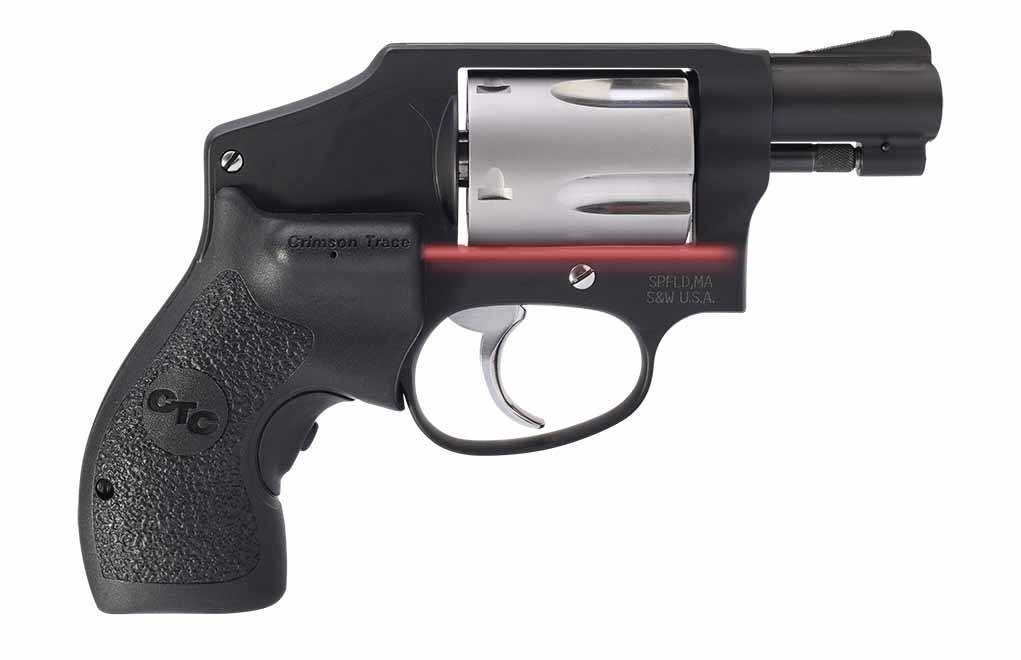
Smith & Wesson has expanded its dog faithful J-Frame revolver line, introducing the Performance Center Model 442 with Crimson Trace LG-105 Lasergrips. The five-round .38 Special’s laser sight is as intuitive as can be, activating with normal grip pressure and providing fast target acquisition in low-light situations. This is the second 442 to make its appearance in the Performance Center and comes with everything you’d expect out of a pro-level revolver, including lightweight aluminum alloy frame, 1.875-inch stainless steel barrel, carbon steel cylinder, enclosed hammer and +P rating. It’s also a bit of a looker, given its two-tone finish. The MSRP of the Performance Center Model 442 with Crimson Trace LG-105 Lasergrips is $742.

More from the company:

SPRINGFIELD, Mass., (January 10, 2019) – Performance Center announced today that it has added a new, lightweight J-frame revolver to its growing line of unique concealed carry revolvers. The new Performance Center Model 442 revolver features the popular internal hammer design that is ideal for every day carry, providing a snag-free draw and quick holstering. This new revolver includes a number of hallmark Performance Center enhancements, including a sleek two-tone finish, high-polished features, Crimson Trace LG-105 Lasergrips, and a Performance Center Tuned Action.

Tony Miele, General Manager of the Performance Center, said, “For over 50 years, the J-frame revolver has provided firearm owners with an excellent personal protection firearm, designed to be lightweight and well suited for concealed carry. The new Performance Center Model 442 builds upon that heritage while delivering Performance Center enhancements designed to enrich the shooting experience. Shipping from the factory with Crimson Trace Lasergrips, the Performance Center Model 442 is a fantastic choice for concealed carry.”

Designed for concealed carry, the Performance Center Model 442 includes a Crimson Trace LG-105 laser grip with red laser for quick target acquisition in less-than-ideal lighting conditions. Chambered in .38 S&W Special +P, this new revolver is double action only with a five round capacity. Additional features include a stainless steel cylinder with high-polished cylinder flutes; a high-polished thumbpiece, plate screws, and trigger; and a Performance Center tuned action for a smoother, lighter trigger pull.

The Performance Center Model 442 revolver has an MSRP of $742.

Model 442 Specs:
Caliber: 38 S&W SPECIAL +P
Capacity: 5
Barrel Length: 1.875″ / 4.8 cm
Overall Length: 6.3″
Action: Double Action Only
Grip: Crimson Trace LG-105 Lasergrips
Weight: 15.0 oz / 425.2g
Cylinder Material: Stainless Steel
Frame Material: Aluminum Alloy

For more information on the Performance Center Model 442, please visit: www.smith-wesson.com/.


More .38 Special Information:

Video: Choosing A Big-Bore Revolver Holster

0

When it comes to a big-bore revolver holster, choosing the right one depends on how you hunt.

Choosing a holster, for a gun owner, there are typically no more chilling words. Those who have done it likely have plenty of reminders of the process, characteristically a shelf or drawer full of also-rans that just didn’t fit the bill. For the most part, this is due to the nature of the holster’s main job nowadays – keeping a gun concealed, relatively comfortable, yet at the ready when trouble rolls around. But what about a holster for other applications?


More Gun Digest Videos:


Most likely, if big-bore revolvers have caught your fancy, you plan to take them out into the field. And like all handguns, you’ll need a way to transport yours from point A to point B safely, while keeping it at the ready. Given the nature of its application, a big-bore revolver holster doesn’t have as many duties to hold down as one meant for concealed carry, but this doesn’t mean there aren’t considerations.

Above all, you have to determine your needs. A deer hunter in a stand with a scoped revolver will require a much different rig than someone chasing down a black bear behind a pack of hounds. A shoulder holster might work better for one and a belt holster for the other, depending on the hunter. But there are some common needs that any holster should address:

  • Retains revolver until drawn.
  • Completely covers trigger and trigger guard.
  • Rugged enough to withstand the great outdoors.
  • Keeps revolver at the ready and works with other gear.
  • Easily reholsters revolver.
  • Comfortable to wear.

The .357 Magnum Colt King Cobra: Making Its Return

5

Thanks to the Colt King Cobra, the gunmaker will once again have a .357 Magnum double-action revolver in its catalog.

How the King Cobra is geared toward carry:

  • 3-inch barrel
  • Brass bead front sight
  • 28-ounces in weight
  • Corrosion resistant stainless steel frame and cylinder
  • Controllable Hogue Overmolded grips

Alas, it’s not the rebirth of the iconic Python. Nevertheless, Colt will once again have a .357 Magnum double-action revolver in its catalog.

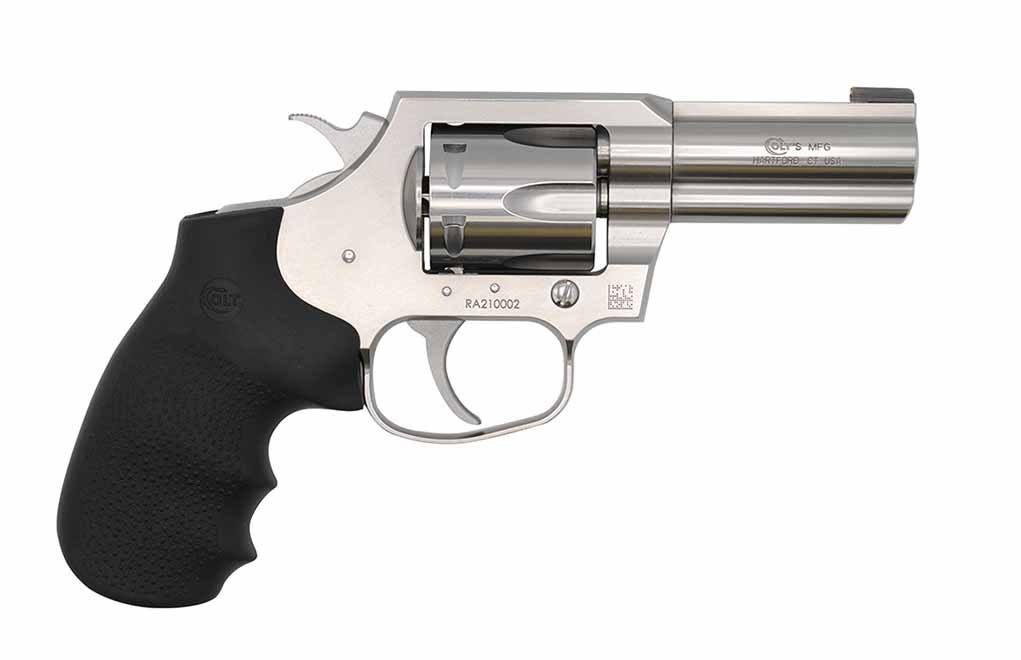
New Colt King Cobra with 3-inch barrel.

Bone Up On Legendary Colt Firearms

With a planned unveiling at the upcoming 2019 SHOT Show in Las Vegas, the Colt King Cobra marks the fifth gun in the company’s rebooted revolver line and the first DA .357 Magnum it’s produced in a spell. Up to this point, the Cobra line, introduced in 2017, has focused on snubbie .38 Special revolvers. Though, since its inception, the guns have sparked hope a magnum chambering would someday be in the works.

Unveiling the Greatness of the .357 Magnum

Released in 1986, the original King Cobra had a fitful production run that came to an end in 1998. While it looked and was named like it was spawn of the mighty Python, in actuality, it was based off an older revolver design – the Trooper Mark V. In essence, the medium-sized “V” frame King Cobra was the same gun as its parent, except made from stainless steel and boasting an upgraded barrel; this included a thicker solid rib on top and a full-length ejector rod housing below. Despite a relatively short run, the 6-round revolver made a name for itself as extremely strong, with a fast and short hammer drop. Recently, like most Colt revolvers, the original King Cobra has enjoyed a price spike as collector’s interest in anything snake gun has peaked.

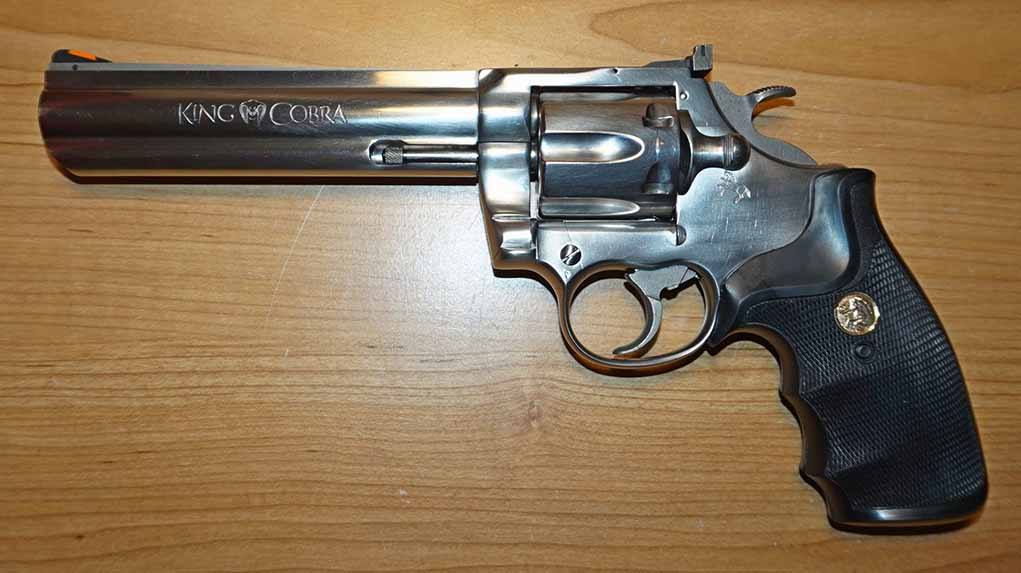
Orig King Cobra
Original Colt King Cobra with 6-inch barrel. Photo: Wikipedia — Picanox

Staying fairly true to its namesake, the new Colt King Cobra has many of the appealing points of its predecessor, yet is updated to appeal to modern revolver enthusiasts. Where this is especially evident is it’s exclusively a 3-inch barrel gun and has what appears to be an integral rear sight (the original had an adjustable white outline rear). Most definitely, its terse size is meant to increase the 28-ounce .357’s appeal with the concealed carry crowd, which the rest of the Cobra line is also geared. Other notables of the King Cobra include Hogue Overmolded grips, brass bead front sight (user replaceable), 6-round capacity and the Cobra line’s Linear Leaf spring trigger.

The Colt King Cobra leans to the more expensive side of the market, though not drastically so, with an MSRP of $899. However, it’s hard to believe price will prove much of hurdle for shooter’s looking to drop the hammer on a Colt .357 Magnum. Except, maybe, souls hopefully holding out for the re-release of the Python.

Colt’s press release:

WEST HARTFORD, CONN – Following Colt’s successful re-entry into the Double-Action

Revolver market in 2017, Colt introduces the all-new King Cobra in .357 Magnum. The King Cobra will be available in January 2019 through Colt stocking dealers.

The all-new King Cobra features American Stainless Steel construction, a heavy duty frame with a full lug 3 in. barrel, and the 6-round capacity that differentiates Colt small frame revolvers from the competition. The King Cobra also features the same user-replaceable front sight and Linear Leaf spring trigger (LL2™) as the rest of the Cobra family. MSRP for the all-new King Cobra is $899.

“Our customers started asking for a .357 version of our Cobra immediately after the release, and at that moment we knew we had to prioritize this great addition to the Cobra family” said Justin Baldini, Product Director at Colt. “We couldn’t be more excited to add the power of .357 Magnum back into Colt’s Double Action Revolver lineup.”

Colt King Cobra Specs:

  • Barrel Length: 3 in.
  • Capacity: 6 rounds
  • Sights: Brass Bead Front
  • Frame Material: Stainless Steel
  • Frame Finish: Brushed Stainless
  • Grips: Hogue Overmolded
  • Action: Double-Action
  • Weight: 28 oz.

Find Out More About Iconic Colt


How To Overcome Cross-Eye Dominance When Shooting

1

When a shooter’s dominant eye and dominant hand don’t align (cross-eye dominance), the result can be a major blessing — or a horrific curse.

How do you determine eye dominance:

  • Form triangular aperture with forefingers and thumbs.
  • Look at a target with both eyes through the aperture.
  • Move hands back to your face.
  • The eye left peering through the aperture is the dominant eye.

The human animal is bilateral. There are two sides, with a bit of redundancy — and the design is to have one side support the actions that the other side does. Which side is which … and of what relevance is “dominance?”

Should those who are left-eye dominant simply shoot left-handed? Sure. With a long gun, it can be critical to do so. With a handgun, it’s an option.

According to trainer/physiologist/cop Vince O’Neill, the problem is a “physical intelligence” issue — not a cognitive issue. Part of the body has ascendency across perceptual and motor activities. Hence, dominance.

But does that reach across physical skills as well?

That depends on a range of inputs. In my case, my visual dominance was left, but fine motor skills were trained on the right. I’m not sure how or why that happened. At this late stage in life, it’s hardly relevant. It just is.

And I’m not alone. A large portion of the population can be determined to be “cross-dominant,” where the dominant physical skills side meets with a different perceptual side. I’m primarily right-handed, but my left eye is dominant.


More Handgun Info:


If you’re not a shooter, it may be of limited interest. I’ve noticed when shooting photos through a single lens reflex camera, I tend to gaze through the viewfinder with my left eye. That’s not my intent. When I raise the camera to eye, I’ve noticed I favor left.

Shooting A Gun

Eye dominance is a thing when you seek to accurately shoot a gun. The more precision required, the more one tends to emphasize the visual. It’s a natural tendency. Humans, overall, are visual creatures.

When you raise a pistol into view while keeping both eyes open — and if you see two guns — you lack significant visual dominance. The good news is that you can sight with either eye. The bad news is that you have to shut off some visual information by “dimming” one eye.

This simply means to partly close the eye opposite the hand that’s controlling the trigger.

Some cross-dominant shooters will cant the gun toward the dominant eye. It’s doable but not optimum.

If you raise the gun to eye level and are looking through the sights at the target with both eyes open, you’re on the master eye — but which one is it?

Using a remote camera at the range, I got photos of me shooting from the target’s view. I took an image I wasn’t using commercially and posted it on social media. The aforementioned Vince O’Neill saw the photo and said, “Oh, you’re cross-dominant.”

Looking again at the image, I could see that the gun, held in the right hand, was squarely in front of the left eye.

Busted.

Why Dominance?

According to Vince, perception plays a huge part in the joint psycho-physical enterprise. Humans have a body that’s perfectly symmetrical, but sometimes motor activity can become “jumbled,” making it seem asymmetrical. If one is truly ambidextrous, the brain and body don’t determine dominance in carrying out bilateral assignments.

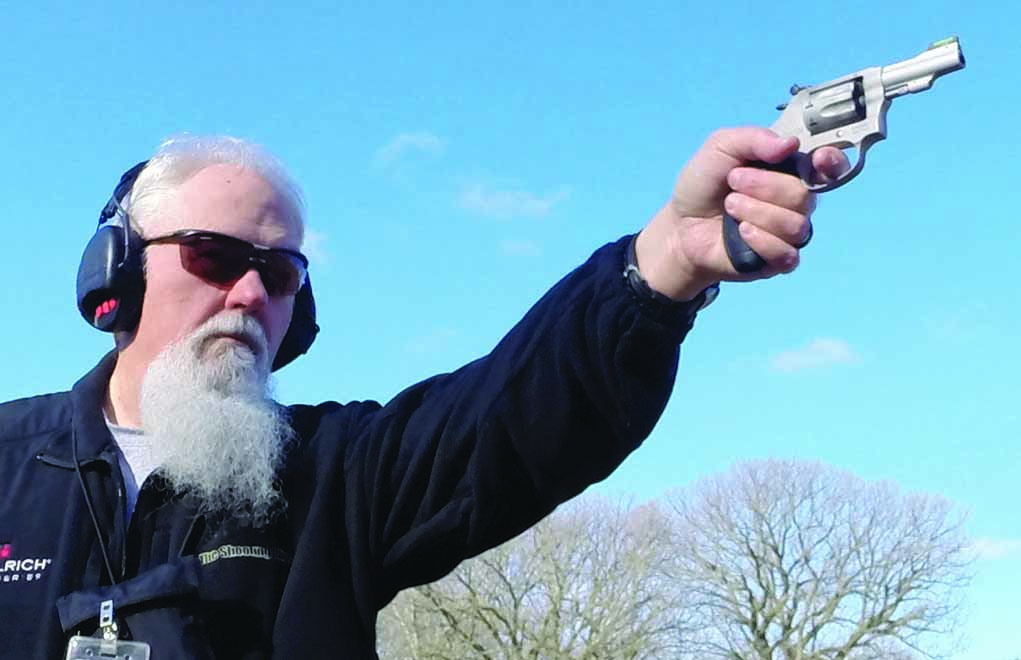
When you close the dominant eye, you see the side of the gun.

The human design is that one side of the body/mind has to dominate the action, as one side “supports” the dominant side, in both fine and gross motor movements. One side needs to dominate while the other assumes a supporting role.

In a normal right-hander, for instance, normal laterality is found in the right side, contra-laterality is found in the left, like plus and negative poles of a magnet. Very few right-handers can carry out “executive” functions with their left hand, unless, of course, they consciously train it to do specific movements until those movements become pre-programmed — like writing your signature on a check. That assumes that your support hand holds the check down so that the master (or dominant hand) can write — a division of labor. You don’t think about it; you just do it.

Because of all the practice, you overcome the uncertainties of spatial and linear applications.

“This division of labor can be affected by brain damage, or some structural/organic problems not realized in everyday activities — not even for the person afflicted,” said O’Neill. “Humans adapt rather well, even to the point of camouflaging the problem, without even knowing it. Just ask anyone who has suffered some kind of trauma to the head, like those afflicted with dyslexia.

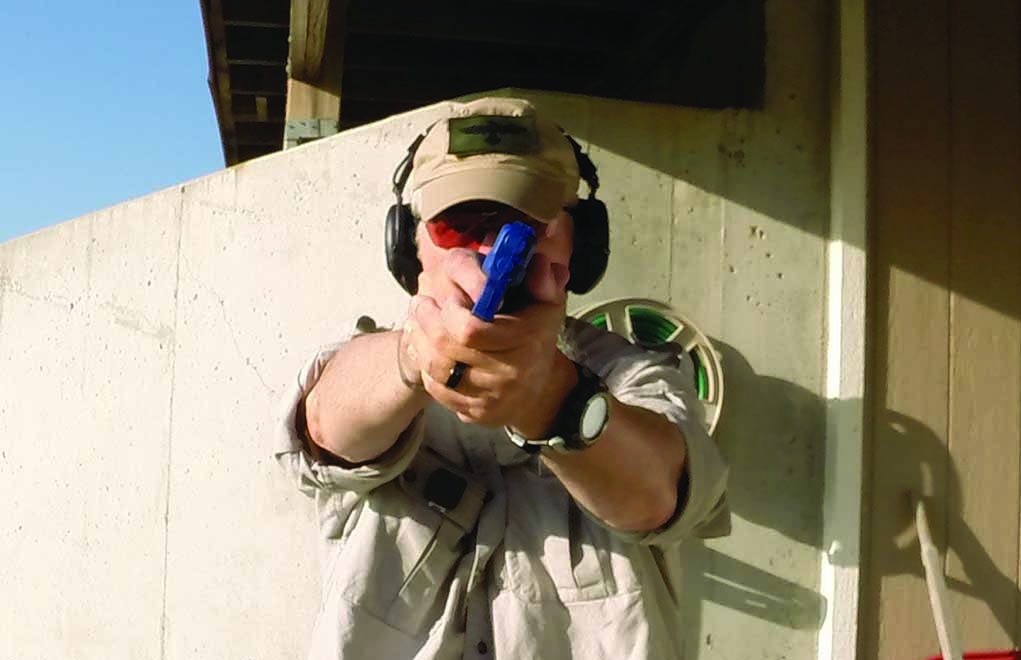
Looking over a rubber training gun with the dominant eye shows the back of the gun. Closing the non-dominant eye gives the same view.

“Anyway, it’s a fact: There is overriding tendency for the left hemisphere of the brain to dominate motor activity,” O’Neill added. “Yes, genetics play a role in the overall scheme of things, and, yes, it has much to do with our ability to understand language and symbols. Just as normal people will have their language capacities housed in the left hemisphere, so, too, will their left hemisphere dominate motor activities. And, left-handedness (or right-handedness for motor activities) seems to run in families.”

For people teaching shooting, some understanding of the physio-psychological aspects of motor skills learning can be helpful.

Determination Of Eye Dominance

Determining eye dominance is easy to check, though some tend to make it complicated. Simply lining one thumbnail up with a light switch on the wall across the room and closing one eye, then the other, will tell you all you need to know.

We’ve also used forming the hands into an aperture made by holding the hands up, finger tips touching and thumbs forming the base of the triangle. Peer through the aperture at a target, then move the hands back to your face.

Sight 11

Which eye is peering through the aperture? That’s the master eye. What about cross-dominance? Well, what about it?

Simply stated, if you’re shooting a handgun with iron sights, it doesn’t matter. There are some things you’ll never be able to do, but you can still achieve a remarkable level of skill. Simply put the sights in front of your master eye. You can still use your dominant hand.

For any gun with a reflex sight, red-dot optic or holographic sight, simply put the optic in front of your face and gaze through the reticle at the target.

As to wing-shooting with a fowling piece or shooting a rifle with iron sights — well, there are personal decisions to be made. Sheriff Jim Wilson tends to shoot long guns from the left side and handguns from the right. I often will do the same as well, again depending on sighting arrangements. Some people can’t seem to reconcile use of the non-dominant hand in dominance-requiring motor skills.

I prefer to “let those who ride, decide.” It usually works out for the best.

As to shooting that handgun with iron sights, I follow Jeff Cooper’s advice: As the pistol is presented, I turn my master eye to the front. It takes over and life goes on. Some people will tilt the pistol inboard, as I do when I shoot quickly up close with a single hand (either one). Turning the gun in brings the sights in front of the master eye. Up close, that’s fine. As distance increases and/or the target gets smaller, I prefer to keep the gun upright.

The remaining option is to simply change hands. For a few, like me, that’s a possibility that exists. My right arm was broken when I was young. This gave me the opportunity to learn some routine dexterity based skills with the “wrong” hand. When it came time to learn to shoot guns, it was about as easy for me with the left hand as is was with the right.

I was one of the few who took to “best use of cover” in police training when they had us move the gun from right hand to left. That does make it better when keeping in out of incoming gunfire and shooting around a left-side cover item.

In any event, you can adapt as needed if you’re cross-dominant. It just takes a little coaching and a bit of dedicated practice.

Editor’s Note: This article originally appeared in the September 2018 issue of Gun Digest the Magazine.
Walther Q5 Match Steel Frame Joins The Game

0

A heftier version of the original, the Q5 Match Steel frame is race ready.

How the Q5 Match Steel frame is optimized for competition:

  • 41.5 ounces
  • All-steel construction
  • Ported slided
  • .4-inch trigger travel
  • 5.6-pound trigger pull
  • Wrap-around grip panel
  • Optic-ready slide
  • Ambidextrous slide stop
  • Reversable mag release

Weight is always a consideration when it comes to handguns, but, contrary to popular belief there occasions where more is better. Competition is definitely one of them. A bit more heft means a tad less recoil, thus shoot’n and scoot’n get a little more accurate and faster.

Walther-PPQ-Q5-1

Walther applied this elementary physics and performance lesson to its popular race gun, and the results should turn competitive shooters’ heads. The Q5 Match Steel frame has all the bells and whistles of its polymer compatriot, but tips the scales at a beefy 41.5 ounces. That’s nearly twice the weight of the original Q5 Match.

Built for performance, the German-made 9mm has all the enhancement you’d expect from a pistol starting at $1,500. A few of its notables include ample porting, optic-ready milled slide with interchangeable mounting plates, 5-inch match barrel and crisp 5- to 6-pound trigger.

Walther’s press release:

(Fort Smith, Ark.) – Walther Arms, Inc. is proud to offer the highest level of Quality and Precision on the market with the Q5 Match Steel frame.

Combining the industry leading PPQ Quick-Defense Trigger, superior accuracy, and unmatched ergonomics found in the popular Q5 Match model, while adding in a high-quality precision-machined frame, the Q5 Match Steel Frame has raised the bar in pistol performance. The pistol comes standard with LPA Fiber Optic front sight, LPA Adjustable rear sight, and optic mounting plates to accommodate most micro red-dot optics available. The Q5 Match Steel frame will initially be available in two models: the standard model with three fifteen-round magazines, and the PRO model with new Walther Performance accessories including a low-profile magwell and aluminum magazine extensions that increase the capacity to 17 rounds.

“Walther’s goal was to take our existing high-performance PPQ, the Q5 Match, and push the boundaries of performance further than anything offered on the market,” said Bret Vorhees, Director of Product Development for Walther Arms. “The Q5 Match Steel Frame exceeds all expectations in terms of performance, quality, and attention to detail. This new product line shows what Walther is really capable of, and it’s just the beginning.”

MSRP for the Q5 Match Steel Frame starts at $1,499.00 and are available for purchase immediately.

walther q5

Q5 Match Steel Frame
Caliber: 9MM
Barrel Length: 5 inch 1/10 TWIST
Trigger Pull: 5.6 LBS
Trigger Travel: 0.4 inch
Capacity: 15 Rounds
Overall Length: 8.7 inch
Height: 5.4 inch
Safety: 3 AUTO
Width: 1.3 inch
Weight Empty: 41.6 ounces

More Competitive Shooting Posts:

For more information on the Q5 Match Steel match, please visit: www.waltherarms.com.

Video: Timing Your Shots For Wingshooting Success

1

Don’t rush! Taking your time to set up your shot when on the hunt will lead to more birds in the bag.

As the old saying goes, “Time is of the essence.” Nowhere is this truer than tramping grassland for birds.

Even when you have a dog working, you have precious few seconds to make the shot happen once that chukar or pheasant hits the blue. Such a narrow window, the first instinct is to get your shotgun to your shoulder and your finger on the trigger. Understandable as this urge is, you’re doing yourself a disservice. Preposterous as it might sound, taking a few extra moments before you take your shot can make your success rate skyrocket beyond expectations.

There are a couple things at play here. Initially, by taking your time you’re giving yourself a better opportunity to evaluate the direction of the bird’s flight. Often times, a bird might start off in one direction, then veer another, leaving your muzzle trailing him and you scrambling for the shot. Furthermore, putting some distance between you and the bird gives your shotgun the opportunity to do the work. Think of it this way, something pheasant sized, do you have a better chance hitting it with a golf ball or beach ball? Let your pattern optimize. Finally, taking your time you’ll inevitably relax. This can’t be stressed enough, the more comfortable you are when you shoulder your gun, the more naturally you’ll track the bird and, come the end of the day, the more you’ll find in your bag.

Slowing down your shot and milking time for all it’s worth is tough, especially with the fast action of wing shooting. But disciple yourself to do so and you’ll put a load more meat on the table.

For more information on the CZ-USA Supreme Field Over-Under, please visit: www.cz-usa.com/.

For more information Aguila Ammunition, please visit www.aguilaammo.com.


More Shotgun Videos:

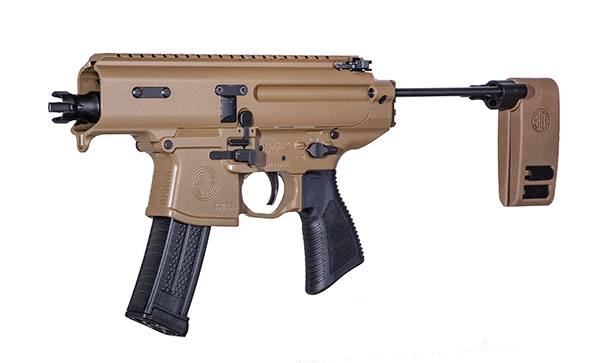
Video: Going Small With The SIG Sauer MPX Copperhead

1

Shaved down to minuscule proportions, SIG Sauer’s MPX Copperhead cuts the AR pistol down to size.

How the MPX Copperhead shrinks the AR platform:

  • 3.5-inch barrel
  • 2.4-inch width and 14.5-inch overall length
  • 4.5 pounds in weight
  • Slim Rattler grip
  • Rapid deploy Pivoting Contour Brace

Since the introduction of the AR-15 pistol, the style of firearm has tended consistently in one direction – smaller. While gunmakers have made leaps in this direction in the past, shaving an inch here and an ounce there, their efforts seem to pale with what SIG Sauer cooked up for 2019. Making a sizable jump to the petite, the MPX Copperhead shrinks the AR-15 nearly down to the magnitude of, well, a regular old pistol.

copperhead 2

Where this is most notable is the 9mm’s barrel, which is a minuscule 3.5 inches long, the size found on many traditional pistols’ sub-compact models. In the MPX Copperhead’s case, it’s barely enough tube – even with the aid of a muzzle brake – to extend past its monolithic Elite Series upper receiver. And it’s short enough, most interested parties will mumble a word of thanks SIG had the foresight to incorporate an integral hand stop, especially since the pistol is sans a handguard. Anything less might have flirted with disaster.

SIG has seen the svelte dimensions through to all aspects of the MPX Copperhead, including a slim 2.4-inch width and 14.5-inch overall length. The gas-piston operated pistol is outfitted with SIG’s new Pivoting Contour Brace, an adaptive addition that not only swivels to match a shooter’s body position, but also rapidly deploys in a moment’s notice. If the PCB doesn’t fit the bill for you, SIG has engineered an element of flexibility into the Copperhead with a rear Picatinny rail that makes it compatible with all other MCX and MPX stocks and braces.


More AR Info:


Other notables on the MPX Copperhead include Rattler grip, ambidextrous controls, Rem DLC trigger, upper Picatinny rail for optics, Cerakote Coyote finish and 4.5-pound weight. In line with other MPX models, the Copperhead’s $1,835 MSRP comes in on the pricey side when measured against the rest of the AR pistol market.

MPX Copperhead Specs
Operating System: Gas Piston
Caliber: 9mm Luger
Overall Length: 14.5 inches
Overall Width: 2.4 inches
Height: 8 inches
Barrel Length: 3.5 inches
Weight: 4.5 pounds
Twist Rate: 1:10
Mag Type: MPX

For more information on the MPX Copperhead, please visit: www.sigsauer.com.

Perfect Pairs EDC Knife and Gun Combos

0

Looking for an EDC knife and handgun combo? More companies than ever offer both in one place.

Who offers the best Knife-Gun combos:

Marketing experts will tell you that many consumers purchase products based solely on brand recognition and loyalty. From breakfast cereal and bread to clothes and cars, we tend to gravitate toward particular companies whose products we feel are inherently superior. Gun owners are particularly loyal, and when a company provides a high-quality product at a fair price, remaining faithful and supporting your favorite brand is a wise decision.

Many gun companies now offer their loyal customers the opportunity to purchase their firearm and all accessories in one place. For concealed carry and personal defense, one of those accessories almost certainly includes an EDC knife. Carrying a sharp knife is a luxury for some, but there are plenty of real-world scenarios where having a sharp blade close at hand is a matter of life and death.

If you’re a true loyalist, here’s a look at six of the best EDC gun and knife combos from some of your favorite brands.

Wilson Combat

Knife: Wilson Combat Les George Eagle 40th Anniversary ($599.95)
Gun: Wilson Combat CQB ($2,865)
WilsonCombat.com

Wilson Combat CQB and Limited Edition Eagle EDC

Wilson Combat makes world-class 1911s, and the company’s CQB is one of their most popular pistols. It isn’t cheap at $2,865, but you’re not going to find a custom 1911 of this build quality for any less. The CQB features a carbon steel slide and frame, a five-inch stainless match barrel and match bushing that are hand-fit, G10 Starburst grips, a light, crisp 3.2-4.5-pound trigger — and much, much more.

The frame-to-slide fit is seamlessly smooth with minimal tolerances, and no detail of this pistol has been overlooked. It’s among the most accurate pistols I’ve ever shot, and the gun I fired has zero issues. No, it isn’t cheap, but it’s one of the most affordable life insurance policies available. Plus, 1911s offer both a grip and manual safety, so you can feel confident carrying this gun cocked and locked. Since this is a Wilson Combat pistol, there are plenty of optional custom touches you can add to make your own gun one-of-a-kind.

A gun like the CQB demands a knife to match, and that’s what you’ll get with the 40th Anniversary Wilson Combat Eagle Framelock Titanium Flipper based in Les George’s famed Eagle model, a standard among carry knives. This knife comes with a Carpenter XHP “Super Steel” stainless 3.6-inch blade equipped with a trigger finger flipper for rapid deployment. The handle features fiber laser engraving with a special 40th anniversary motif, and the weight is minimal — just 4.8 ounces. If you want one of these knives to complement your CQB pistol, don’t wait around, though: Only 40 will ever be made and they’re selling quickly.

Ruger

Knife: Ruger Follow-Through ($41.99 at Gun Digest Store)
Gun: SR1911 Officer-Style .45 ACP ($979)
Ruger.com

Ruger EDC

This Ruger combination isn’t in the same price class as the Wilson Combat combo, but this gun and knife combo actually offer a lot for the money. The new-for-‘18 SR1911 Officer-Style .45 is CNC machined for smooth and reliable operation — and with a 3.6-inch barrel, an overall length of 7.25-inches and a weight of just 31 ounces, this compact .45 carries seven rounds in the magazine and offers the added safety of the Model 1911 design features. The slide and frame come with a low-glare stainless finish, the sights are drift-adjustable Novaks and G10 grips are some of the most stylish and functional you’ll find on any production 1911. The SR1911 Officer-Style offers plenty of stopping power in a conveniently-sized pistol package.


More EDC Articles:


Ruger’s an old name in the gun world, but the company recently began offering an expanded line of knives that includes a number of great EDC options, including the versatile and affordable Follow-Through. The 3.75-inch drop-point, flat-top blade is made from 8Cr13MoV 58-59 HRC stainless-steel, and this Matthew-Lerch designed knife also comes with a locking liner and blade flipper as well as Ruger-inspired diamond-checkering glass-reinforced nylon handles. Even if you aren’t looking for a new carry pistol, the Follow-Through is a heck of a deal with an MSRP less than $80.

Read More: Ruger Adds SR1911 Target Model

Browning

Knife: Browning Vortex Drop Point ($29.99)
Gun: Browning 1911-380 Black Label Pro W/Rail ($829.99)
Browning.com

Browning EDC

If there’s a company that knows about brand loyalty, it’s Browning (have you visited their “Show Us Your Buckmark” page and seen the number of people with the brand’s logo tattooed on their body?). Indeed, Browning has developed something of a cult following, but that didn’t happen by accident. Innumerable companies have cloned the Colt 1911 pistol design over the years, but Browning did something truly bold and ingenious and created an 85 percent scaled version of the world’s most famous single-action semi-auto pistol.

Chambered in .380 ACP and dubbed the 1811-380, these guns come with composite frames with fully machined 7075 sub-frames and rails and a stainless steel slide. It’s plenty powerful to handle the mild .380 ACP round, yet it’s lighter and more compact than competing 1911s with standard-sized component parts.

How portable is it? The Black Label Pro version with a 4.25-inch barrel measures just 7.5-inches long but weighs a scant 18 ounces and holds 8 rounds in the magazine. The 1911-380 Black Label has three-dot sights that are perfect for close-range shooting — even in low light. And, there are plenty of nice additions to this pistol, like G-10 composite grips and an accessory rail for attaching add-on accessories such as lights or lasers.

The Browning Vortex Drop Point is a functional and very affordable EDC knife that features a 440 stainless-steel titanium-coated, 3.4-inch blade with partial serration and a black G-10 scaled handle. The blade has a 56-58 Rockwell rating, and when folded, the knife measures just 4.5-inches long. It’s also an extremely affordable option and remains a good value at under $30.

Learn More: Browning 1911-380 Review

Smith & Wesson Performance Center

Knife: M&P Oasis
Gun: Smith & Wesson Performance Center Ported M&P 9 Shield ($510 for the Combo Kit)
Smith-Wesson.com

Smith and Wesson EDC Combo EDC

Smith & Wesson is another company with a dedicated following, and their new Performance Center Every Day Carry Kit makes buying an EDC pistol and an EDC knife as simple as possible since they both come as part of a single package. Making this offering even more appealing is that fact that Smith & Wesson also throws in a pistol portfolio and an M&P Delta LED flashlight as part of the package price. What’s all this run? Just over $500 MSRP.

The M&P 9 Shield needs no introduction. These pistols are among the most popular carry guns in the country, and more than one million of them have been sold. These striker-fired pistols come with 7- and 8-round magazines, a stainless slide and barrel and HI-VIZ fiber optic sights. The Shield has a 3.1-inch barrel and weighs just 18 ounces. Its narrow design and roughly 6-inch overall length make these guns easy to conceal, and the durable black finish stand up extremely well to the abuses of daily carry. Breakdown and maintenance of these guns is extremely simple, and the Shield has an enviable reputation for durability and reliability. The ones I’ve shot have also been accurate, and the grip design manages recoil effectively.

The Oasis folding knife features a 3.25-inch 7CR17 high-carbon stainless drop-point blade that’s titanium coated. It also features dual thumb studs, a Linerlock locking system and a skeletonized handle that minimizes weight and simplifies cleaning. At just 4.75 ounces, this lightweight knife is easy to tuck inside a pant pocket, and it’s easy to open for rapid deployment. The Performance Center EDC Kit is a superb value from a trusted brand.

Wilson Combat

Knife: Wilson Combat X-TAC OTF Automatic ($384.95)
Gun: Wilson Combat EDC X9 ($2,895)
WilsonCombat.com

WTK-XT-A-CB-B EDC

Wilson Combat gets another mention on this list because they offer so many great carry gun/EDC knife combinations. The EDC X9 pistol is a double-stack 9mm 1911 that offers match-grade accuracy in a portable, lightweight package. The 4-inch stainless cone barrel features a cool flush-cut reverse crown and this gun’s double-stack design holds 15 rounds of 9mm ammo on-tap. The barrel and chamber are both fluted, and carry cuts and ball endmill cuts are standard. The grips are made of G-10 with a Starburst design, and this pistol lacks the traditional grip safety found on most 1911s — but it does have a Bullet Proof thumb safety.

Despite its impressive capacity, this gun measures just 1.4-inches wide and weighs an impressive 29 ounces unloaded, making it an ideal carry pistol. Is it accurate? Very. I tested this gun recently and found that it held its own against other custom 1911s with longer barrels during 25-yard accuracy test protocols.

The EDC X9 comes with X-TAC front and rear cocking serrations that match those found on the X-TAC OTF Automatic Wilson Combat/Hogue knife. Before purchasing, it’s important to check state laws regarding auto-open knives, but this knife is perfect for EDC where legal. The 3.5-inch clip point blade is made from CPM-154 stainless-steel with a black PVD finish, so it can withstand the rigors of hard use and the total weight is just 5 ounces.

Kimber

Knife: Kimber 3.25-Inch Folding Knife by Kershaw ($64.99)
Gun: Kimber K6S DC Revolver ($1,155)
KimberAmerica.com

Kimber K6S and Kershaw EDC

Here’s one for all the revolver fans out there. Kimber is widely-regarded as one of the world’s top production 1911 manufacturers, and they offer many great semi-auto pistols that are ideal for carry. But, the K6S, introduced a few years ago, moved to the head of the class among compact carry revolvers.

The DC (Deep Cover) model features a stainless-steel frame and stainless 2-inch barrel with Black DLC overbrushed finish, which stands up well to abuse. This DAO .357 Magnum comes with a six-round cylinder and weighs just 23 ounces unloaded. Overall length is 6.62 inches, which makes this an easy gun to conceal — and the black and gray G-10 grips are well-designed and offer a secure grip on the pistol, even when firing heavy magnum loads. Night sights come standard, but the feature that really sets this gun apart from competing revolvers is the smooth trigger pull. If you’re a fan of carrying a revolver for personal protection, then the K6S is a superior choice.

The Kimber 3.25-inch Folding Knife is built by Kershaw, a name that’s familiar to even the casual knife enthusiast. The thumb stud and blade flipper make this an easy knife to open and close, and the blade and body are made from high-quality steel with a durable black finish. I’ve had a chance to carry this knife for over a year and it has become my go-to EDC carry blade, perfect for just about any task that you can imagine. It’s lightweight, robust and easy to clean — and the blade holds an edge very well.

Editor’s Note: This article originally appeared in the September 2018 issue of Gun Digest the Magazine.
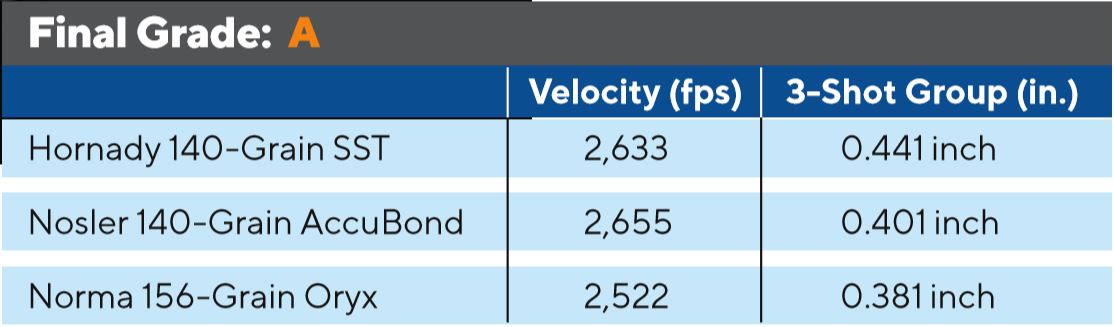
FN Introduces Trimmed Down 509 Midsize Model

0

Right-sized for concealed carry, the 509 Midsize is trimmed down, yet still optimized for superior performance.

How the 509 Midsize is optimized for carry:

  • Grip reduced in size.
  • Barrel length maintained at 4 inches.
  • 10- and 15-round magazines standard.
  • Compatible with standard 17- and 24-round 509 magazines.

Born from the Army’s Modular Handgun System competition, the FN 509 has made quite a splash in the civilian market. And the Belgian-based gunmaker has expanded the offerings of the polymer-framed, striker-fired pistol by two for the new year.

The weightier release, the FN 509 Midsize is a trimmed down iteration of the original 9mm, aimed at making the pistol more wieldy for carry. Wisely, FN kept the barrel length the same (4-inches) and focused on shortening the grip. Overall, this should make it more concealable, yet maintain a longer sight radius. Though, the 509 Midsize may not appeal to some, given its terse grip affects one of the appealing features of the original — capacity. The Midsize version comes with 10- and 15-round magazines, a significant reduction from the 17- and 24-round mags of the earlier iteration. But if you need that sort of firepower, never fear, the Midsize 509 is compatible with the standard magazines.

Alongside the FN 509 Midsize release, the company has introduced a matte black finished model of its optics-ready 509 Tactical. Originally, the polymer-framed pistol came in Flat Dark Earth. Outside of a color upgrade, the 509 Tactical comes with everything on the original, including optics-ready mounting system with co-witnessing suppressor-height night sights, 4.5-inch threaded barrel and 24-round magazine.
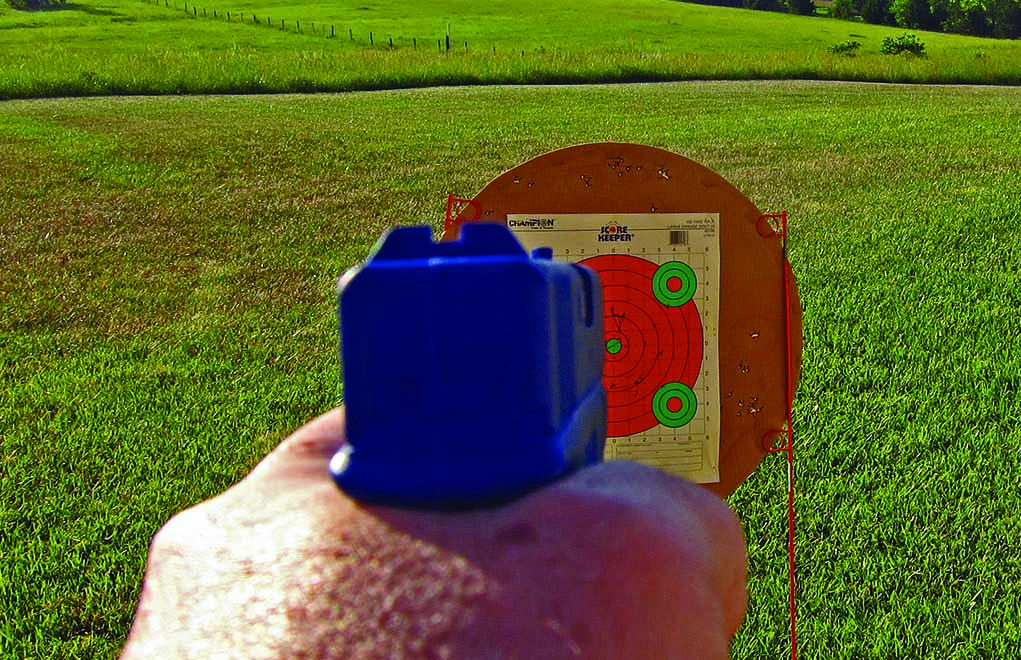
From FN:

(McLean, VA – January 7, 2019) FN America, LLC is pleased to announce the release of the FN 509 Midsize, a new carry option in the FN 509 series of striker-fired pistols. Additionally, the FN 509 Tactical is now available in a matte black finish. These line extensions further FN’s commitment to offer a full line of options in the FN 509 series that meets all customer expectations.

FN 509 Midsize 1

“What truly sets FN products apart is the quality. When customers pick up the FN 509 in comparison to other striker-fired 9mm’s, they instantly notice the ergonomics, premium finishes and price point that is competitive,” noted Chris Cole, Vice President of Sales and Marketing for FN America, LLC. “With the FN 509 Midsize and FN 509 Tactical in black, customers will now have four additional FN options in the 9mm striker-fired category to choose from. We believe that options are always a good thing and we’re proud to provide them to our loyal customer base.”

The new FN 509 Midsize pistol is chambered in 9mm and features a four-inch slide and barrel, frame with shortened grip and 15- or 10-round magazine capacity, backward compatibility to higher capacity FN 509 magazines with use of a grip sleeve and fixed three-dot luminescent sights. From individuals seeking a do-it-all range, home defense and carry pistol to law enforcement use as a back-up duty pistol or carry model for plain clothes officers, the FN 509 Midsize is the ideal solution.

The pistol also features various upgrades including new sculpting around the magazine release for easier activation, a flatter-faced trigger for a more controlled trigger press and improved slide stop lever and texturing. FN 509 Midsize MSRP $649.

The FN 509 Tactical, the industry’s leading optics-ready 9mm striker-fired pistol, is now available in a matte black finish. The pistol features the company’s patent-pending Low-Profile Optics Mounting System that enables the platform to accept more than ten commercially-available miniature red dot (MRD) optics that co-witness with the suppressor-height night sights and remain adaptable to future optics releases with no requirement of direct milling of the slide.
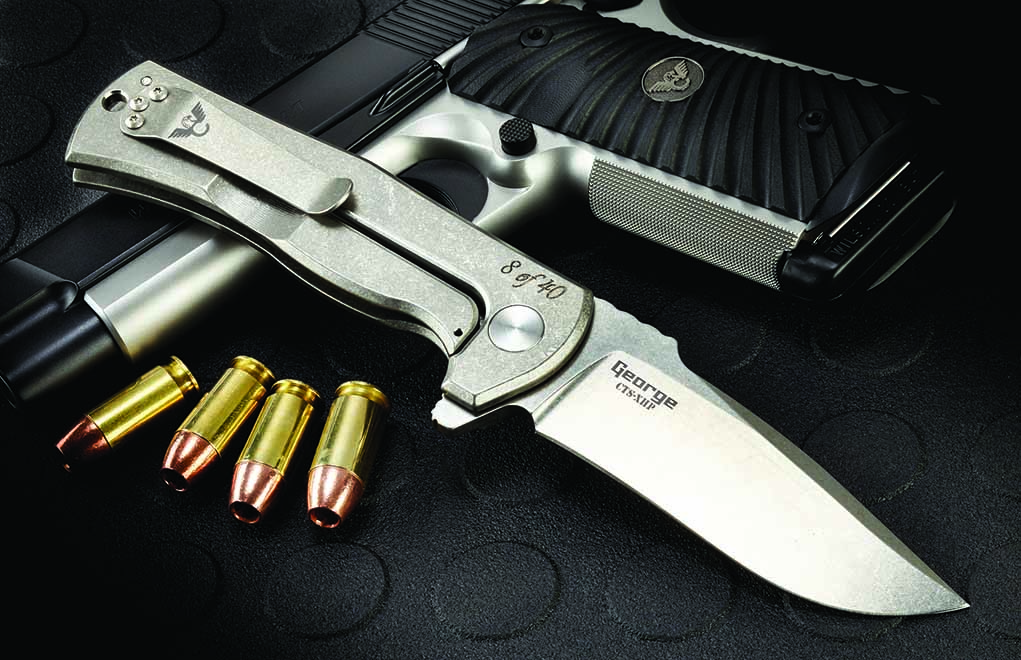
FN 509 Tactical 1

The slide cap, for use when not shooting with an optic, has raised sight wings that protect iron sight alignment if the pistol is dropped or jostled, and provides a textured ramp for racking the slide against a belt loop, pant pocket or boot. An FN-signature 4.5-inch, cold hammer-forged, stainless-steel barrel with target crown, ½” x 28 threads that accept the bulk of 9mm suppressors available and thread cap with integrated O-ring to prevent loosening during use.
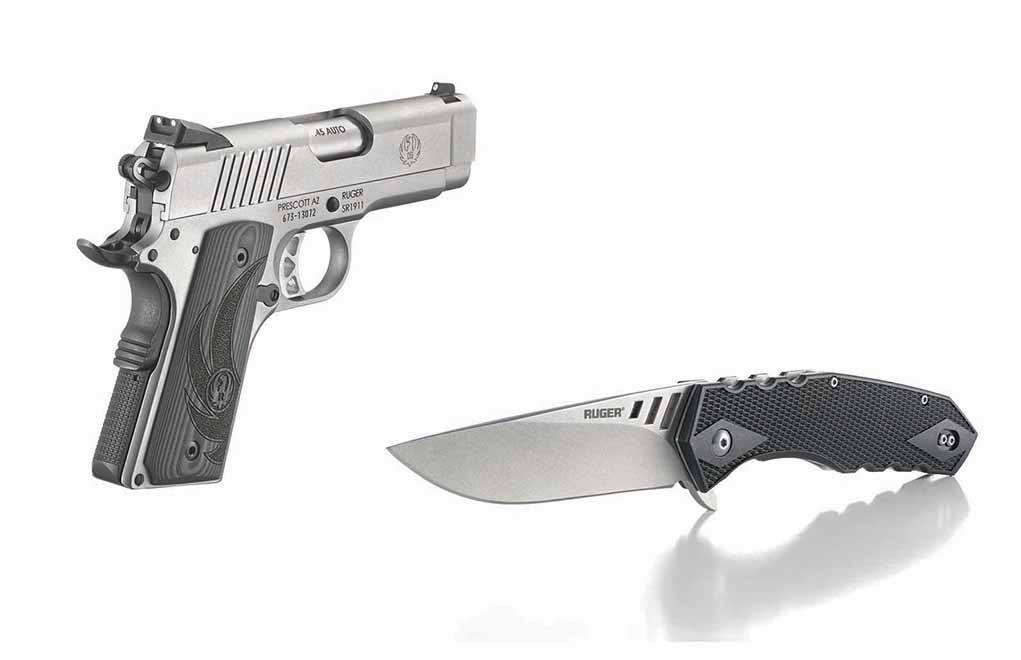
Lastly, the 24-round magazines, nearly identical in length to the pistol’s slide, maximize ammunition capacity without impacting carry convenience. FN 509 Tactical Black MSRP $1,049.

509 Midsize Specs
CALIBER: 9mm
OPERATION: Double-action
MAG CAPACITY: 10 or 15 Rd.
WEIGHT: 26.5 oz.
BARREL LENGTH: 4.0″
OVERALL LENGTH: 7.4″
TWIST RATE: 1:10″ RH
HEIGHT: 5.2″
WIDTH: 1.35″
TRIGGER PULL: 5.5 – 7.5 lb.
SIGHT RADIUS: 5.79″

509 Tactical Specs
CALIBER: 9mm
OPERATION: Double-action
MAG CAPACITY: 10 or 17/24 Rd.
WEIGHT: 27.9 oz.
BARREL LENGTH: 4.5″
OVERALL LENGTH: 7.9″
TWIST RATE: 1:10″ RH
HEIGHT: 5.75″
WIDTH: 1.35″
TRIGGER PULL: 5.5 – 7.5 lb.
SIGHT RADIUS: 5.79″

For more information on the 509 Midsize and 509 Tactical, please visit: www.fnamerica.com.


Bone Up On FN Guns:

MUST READ ARTICLES