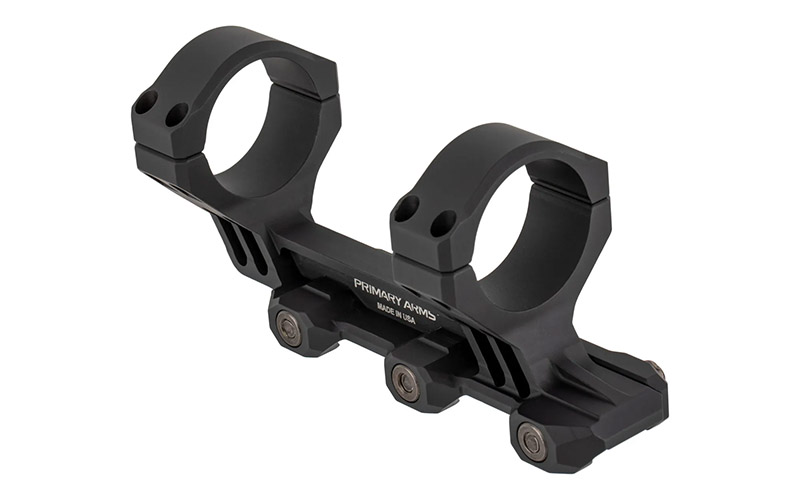
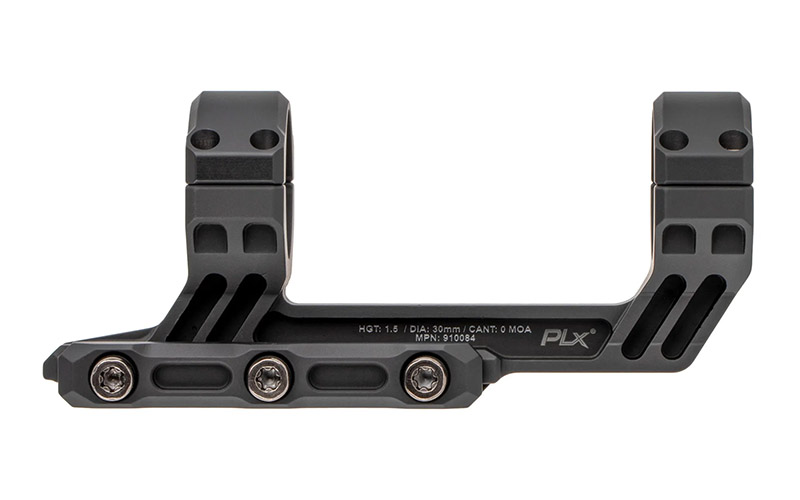
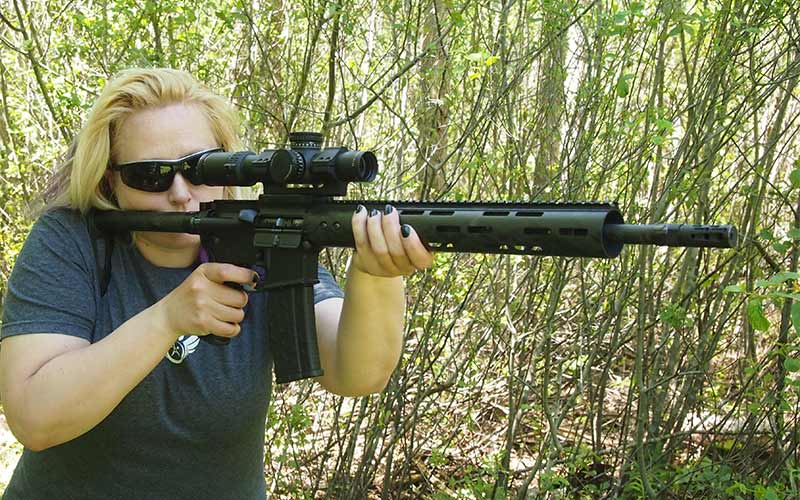
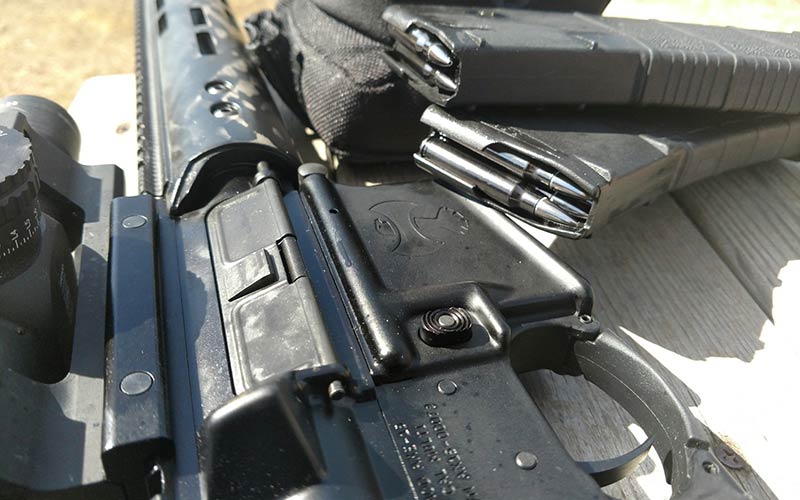
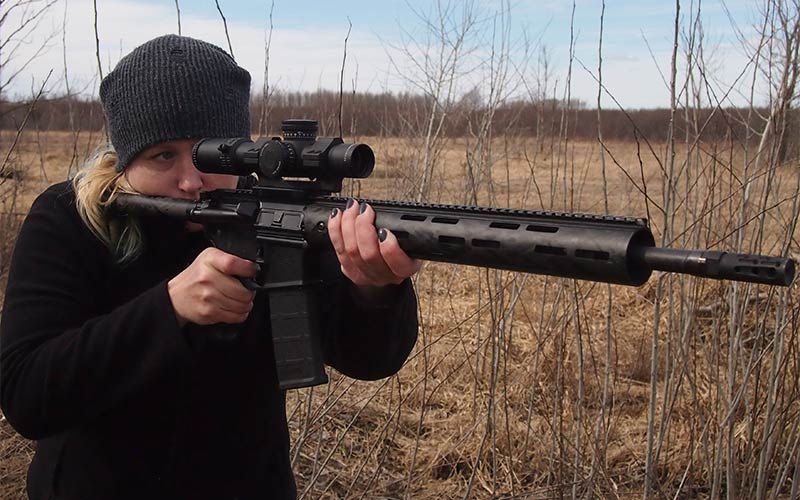
Designed for professional use, Primary Arms’ new PLx scope mounts are lightweight, durable and capable of sustaining major impacts without shifting zero.
Primary Arms has just announced two new professional-grade PLx scope mounts that will become available by late January or early February 2022. The PLx cantilever mounts will be available for both 30mm and 34mm scopes, and Primary Arms claims that they were specifically designed to withstand the rigors of professional use.
Stephan Morgan, Director of Product Marketing at Primary Arms, said this about the new cantilever mounts:
In the field, a scope is only as good as its mount. That’s why we designed our new PLx scope mounts, which put quality materials and engineering above all else…PLx mounts are 100% made in the USA and feature high-strength steel hardware, so you can trust their reliability when you need it most.
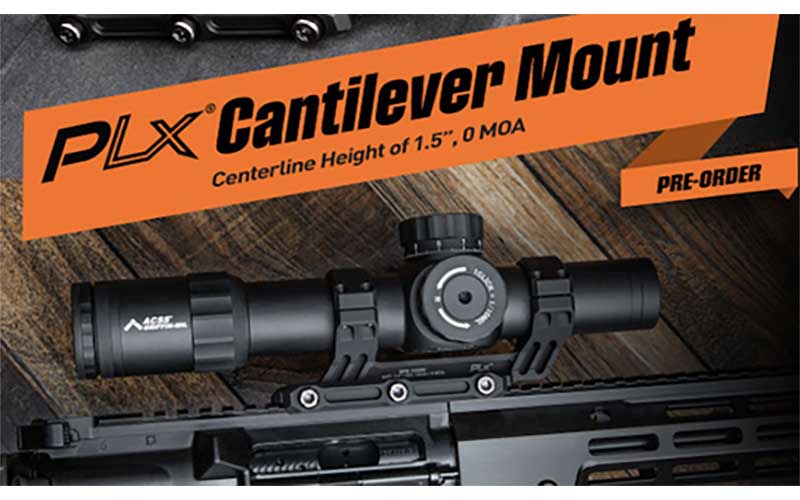
The PLx scope mounts are made in America using 7075 aluminum and 12.9-grade steel hardware, and they’re finished with a black electroless nickel coating. They attach to one’s rifle using three bolts that evenly distribute recoil throughout the system, and each mount includes two machined recoil lugs as well as three cross-bolt lugs. These features combine to provide scope mounts capable of withstanding a high volume of fire and major impacts without ever losing their zero. Both mounts have a centerline height of 1.5-inches and Primary Arms claims they hold the scope in place with 6,500 pounds of clamping force.
Both PLx cantilever scope mounts are available for pre-order now and have a shared MSRP of $249.99, and they appear to be very solid new options for those looking for a light, compact and durable scope mount.
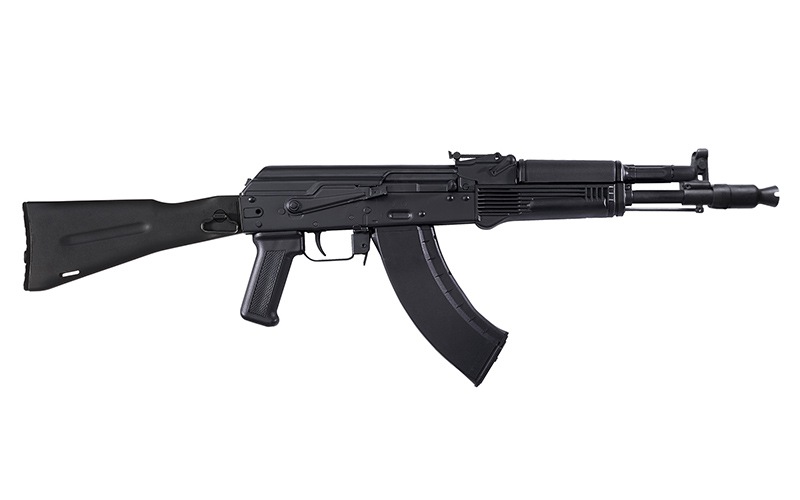
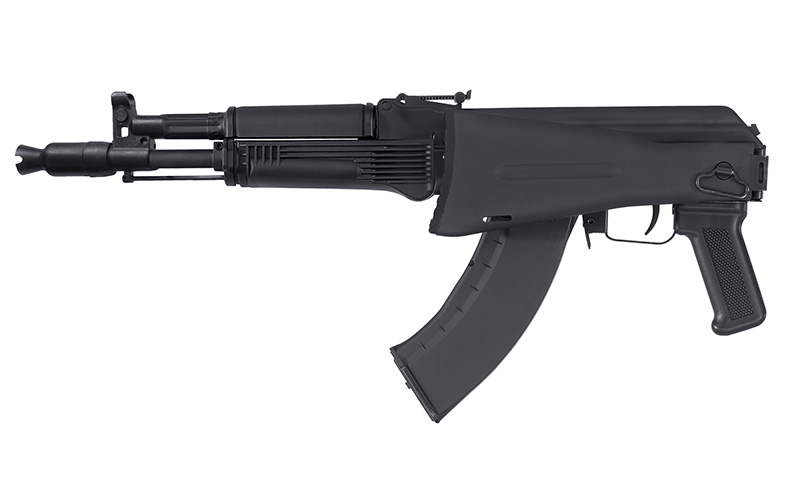
Modeled after the Russian AK-104, KUSA’s new KR-104 SBR is about as close as you can get to an original in the U.S.
Designed for export in the mid-1990s, the Russian AK-100 series took the proven AK-74M and modified its manufacturing process to facilitate greater interchangeability of parts and new configurations. One of the most beloved designs from this family is the AK-104, a carbine version chambered for 7.62x39mm with a 12.25-inch barrel. Both compact and ballistically competent, many AK-lovers consider this to be one of the best Kalashnikov variants ever made. Americans who wished to own one of these in the past were mostly limited to custom-built guns, but they’ve just become far more obtainable with KUSA’s release of the KR-104 SBR.
Without getting lost in the weeds of debating AK build quality, Kalashnikov USA is generally considered to be the best domestic producer of AK-type firearms. Compared to an original AK-104, the only real differences between the two are their markings and the original’s select-fire capabilities. As a factory SBR, the KR-104 even includes the proper side-folding stock out of the box. The only potential downside of this is that as an NFA item, one must file and receive approval on an ATF Form 4 before taking it home with you. With the recent addition of Form 4 to the eForm system, however, the waiting times will hopefully soon be similar to that of Form 1s.
The KR-104 features a forged bolt carrier and front trunnion, and its barrel is hammer-forged and chrome-lined as well. It accepts standard AKM-pattern pistol grips and handguards, and it includes a cleaning rod and side optic rail. Additionally, each rifle includes one 30-round polymer KUSA magazine that was also modeled after the original Russian pattern.
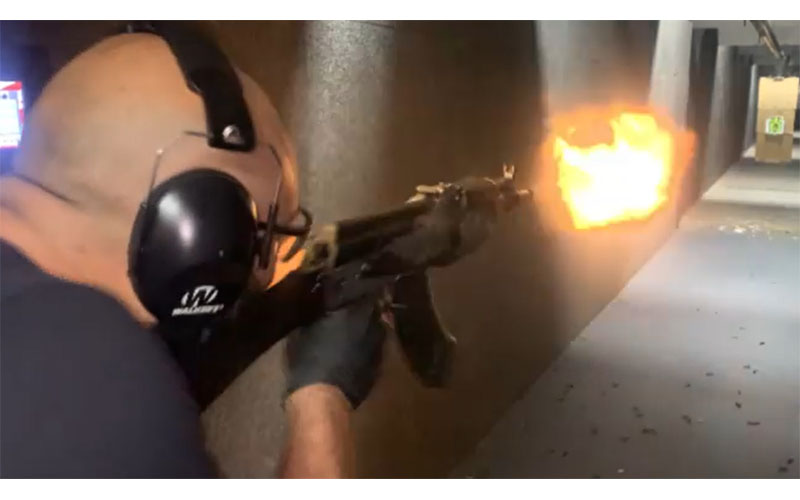
Screencap from video of KR-104 being fired from KUSA’s Instagram.
The KR-104 SBR has an MSRP of $1,399 and offers an excellent balance between size and performance, with its short barrel being just long enough to not compromise 7.62x39mm’s ballistic efficacy. The SBR version is available now, but many are hoping that KUSA will eventually release a pistol version as well for those who don’t want to deal with the NFA. Others still are waiting for the eventual release of KUSA’s AK-105 clone, which would be the same as the KR-104 only chambered for 5.45x39mm.
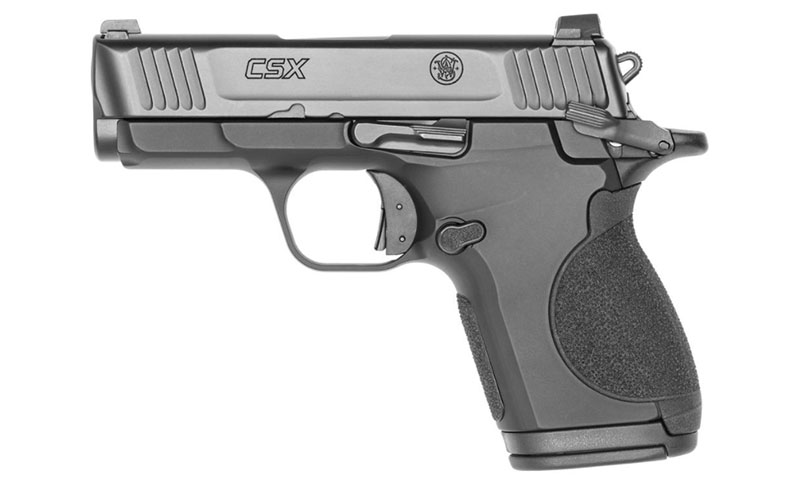
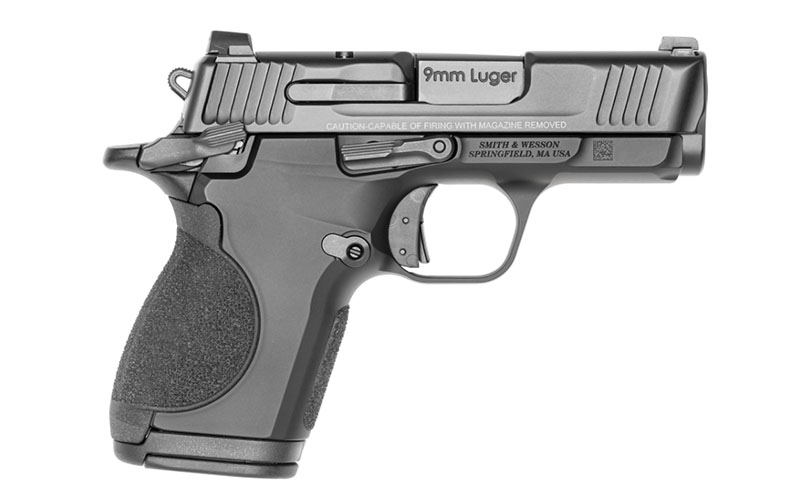
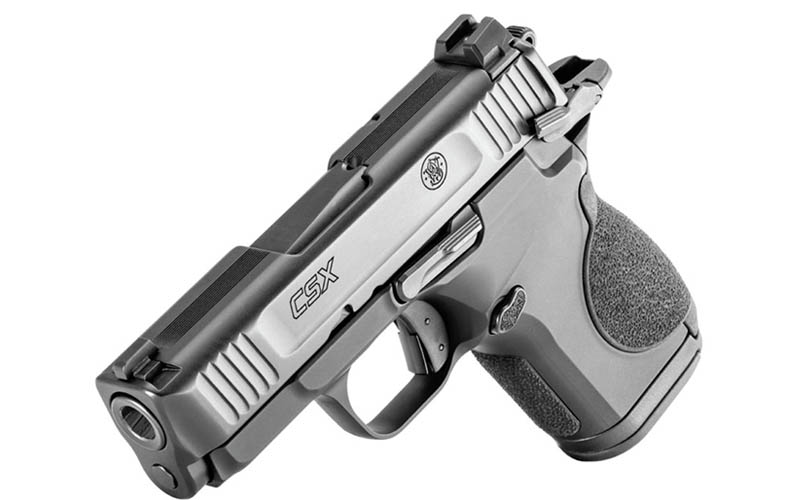
Smith & Wesson has just silently released the new 9mm CSX pistol for concealed carry, and it’s finally breaking the mold of the played-out micro-9 concept.
This last year has seen a slew of new “micro-9s” hit the market. Designed for concealed carry, these pistols were typically polymer-framed, striker-fired and had double-stack magazines, and manufacturers were mostly competing to see who could make the smallest gun with the highest capacity. Excluding the original model that started this trend, the market has been saturated with copycat designs, some of which innovated upon the concept while others brought nothing new to the table. Perhaps sensing that the market couldn’t handle yet another generic micro-9, Smith & Wesson’s newest gun has finally broken the mold and brought something different to the CCW pistol market. Silently released only weeks before SHOT Show, possibly by accident, the new S&W CSX 9mm is here to rock the boat.
If you couldn’t tell by looking at it, the S&W CSX pistol’s greatest departure from standard micro-9s is the fact that it is hammer-fired rather than striker-fired. There are pros and cons to each system, and it ultimately boils down to personal preference, but with the current handgun market dominated by striker-fireds the CSX pistol is a nice breath of fresh air. The CSX is a single-action-only gun, and like the 1911 it has a manual thumb safety that facilitates carrying “cocked and locked”. This feature alone should inherently give the CSX a better trigger than any striker-fired pistol on the market today. The thumb safety is ambidextrous, and the flat-faced trigger also has an integrated blade-style safety.
The next feature on the CSX that sets it apart from existing micro-9s is its aluminum alloy frame. This should help increase the pistol’s durability while also mitigating recoil due to the extra weight, but at less than 20 ounces the CSX pistol should still be comfortable to carry. It also features textured polymer inserts in the form of front and backstraps, the latter of which are interchangeable for different sizes. These help the user find a proper balance between ergonomics and concealability.
Chambered for 9mm, the CSX pistol can feed from either flush-fitting 10-round or extended 12-round magazines, and the gun includes one of each. It has a 3.1-inch barrel and is about .95-inches thick at its widest, making it competitively compact compared to other micro-9s. Other features on the CSX pistol include front slide serrations and metal 3-dot sights.
The CSX pistol currently has no provisions for mounting accessories or optics, but these features will likely be added in future iterations. These guns are in the wild at this point, and you may find one for sale, but they likely won’t be a common sight on store shelves until after this year’s SHOT Show. It has an MSRP of $599, and its release is hopefully a sign that we will be graced with more innovative small arms designs in 2022.
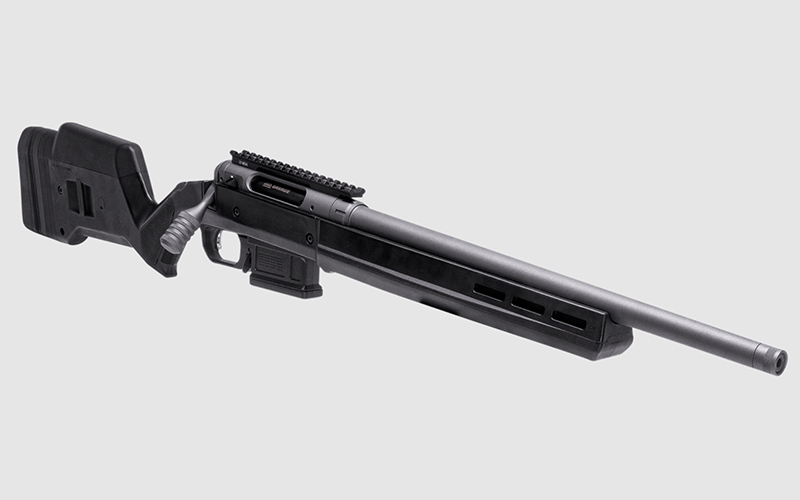
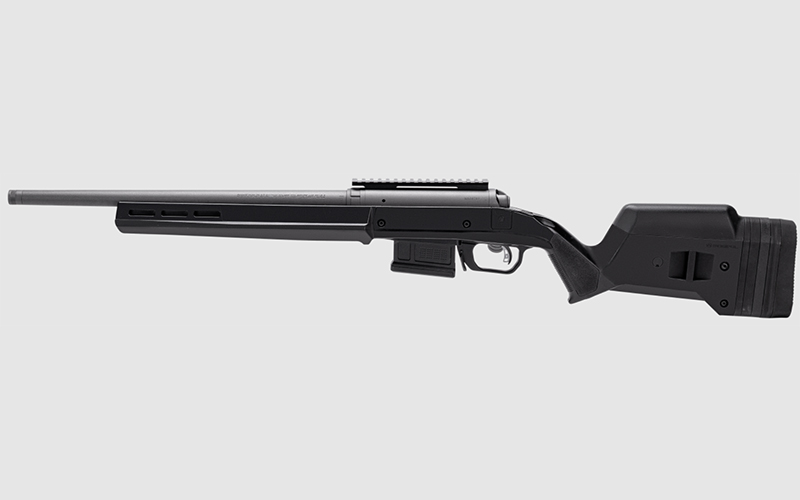
The Savage Model 110 is now available with a special upgraded furniture package in the form of the 110 Magpul Hunter.
Savage Arms and Magpul have joined forces to bring the 110 Magpul Hunter, an upgraded Savage Model 110 action bedded in an aftermarket Magpul stock. The new pairing combines the 110’s legendary accuracy with the ergonomics and functionality of Magpul’s polymer furniture. The 110 Magpul Hunter is available in both right and left-handed configurations with two choices of caliber.
Jessica Treglia, Senior Brand Manager for Savage, had this to say on the new 110 Magpul Hunter:
Magpul builds incredible accessories…Their Hunter Stocks are a solid compliment for the versatility of the 110 action and barrel. But this is much more than an aftermarket stock. We’ve designed a 110 with a heavy barrel and durable coatings that match the look and feel of the Magpul Hunter Stocks.
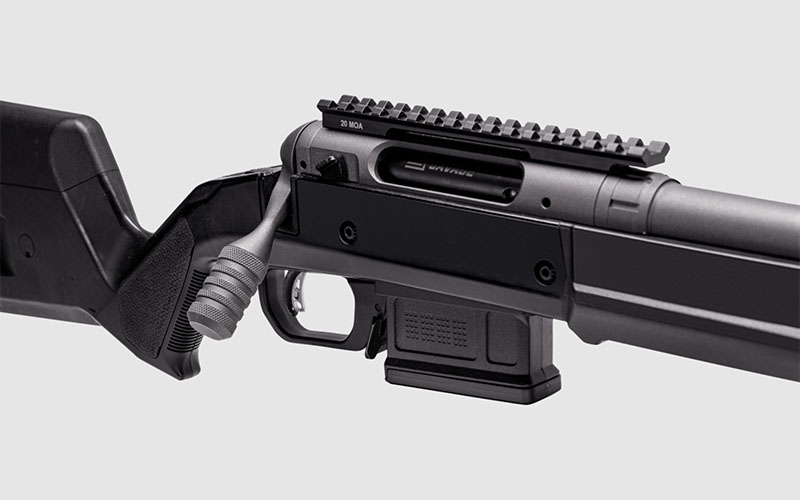
The 110 Magpul Hunter is currently available chambered in .308 Winchester and 6.5 Creedmoor, both in either left or right-handed configurations. All models come with an 18-inch, heavy carbon steel barrel that’s threaded 5/8×24”. The barrel, receiver and the rifle’s knurled bolt handle are then all finished in a grey Tungsten Cerakote, and the package also includes a 1.5 to 4-pound adjustable AccuTrigger.
The rifle also has a 20 MOA rail segment attached to its receiver for mounting optics, and the whole package feeds from 5-round AICS magazines regardless of caliber.
The real new features on the Magpul Hunter come from its Magpul stock. The stock includes an aluminum bedding block for reducing the action’s movement and increasing accuracy, and the forend has M-LOK slots for attaching bipods or other accessories. The Magpul stock is also adjustable for length of pull and comb height, and it features several ergonomic improvements over Savage’s standard 110 stock.
All four Magpul Hunter variants have an MSRP of $1,045 and are available now.
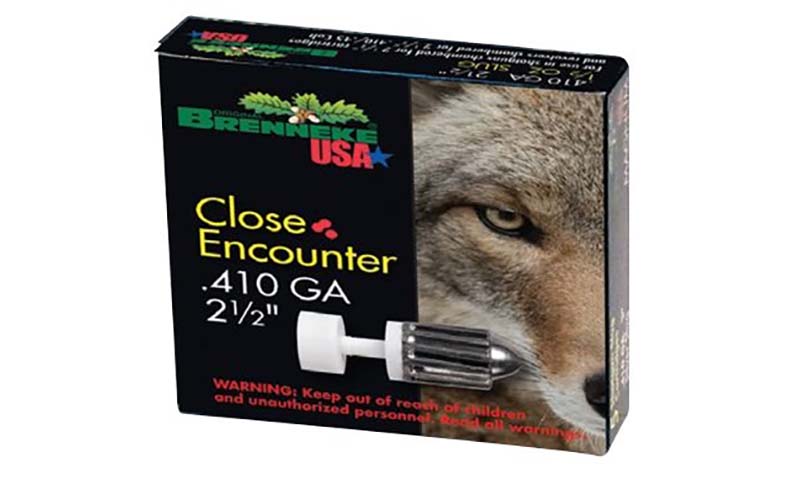
Inadequate for self-defense, .410 slugs’ primary use is for hunting, so what are the largest animals and the longest ranges they can be used for?
Having already discussed that any load of .410 is a suboptimal choice for defending against humans, it raises the question of what exactly this cartridge is good for. The answer is obviously hunting, but because .410 slugs are the most effective load type for this purpose the next logical question is what’s the largest sized animal that could be effectively hunted with a .410 slug? Let’s take look at their ballistic properties to find out.
.410 Slug Ballistics
If you’re considering hunting with a .410, before looking at its ballistic efficacy its important to check one’s local laws and regulations. Depending on where you are, .410 bore shotguns may or may not be legal to hunt with. Assuming that they are legal for you to use, what’s the biggest animal one could reasonably expect to hunt with a .410 slug? Part of this question pertains to how humanely the kill can be achieved as well, as one would not want to use ammunition that would only wound an animal and give it the chance to flee and succumb to its wounds later on. Good hunters know that both for the sake of efficiency and out of respect for the animal, one should always aim to harvest their game as swiftly as possible. The smaller the projectile used and the less energy it imparts on the target elevate the importance of shot placement. While a 12-gauge has enough energy to drop most deer even with an imperfect shot, .410 requires greater care to achieve the same result.
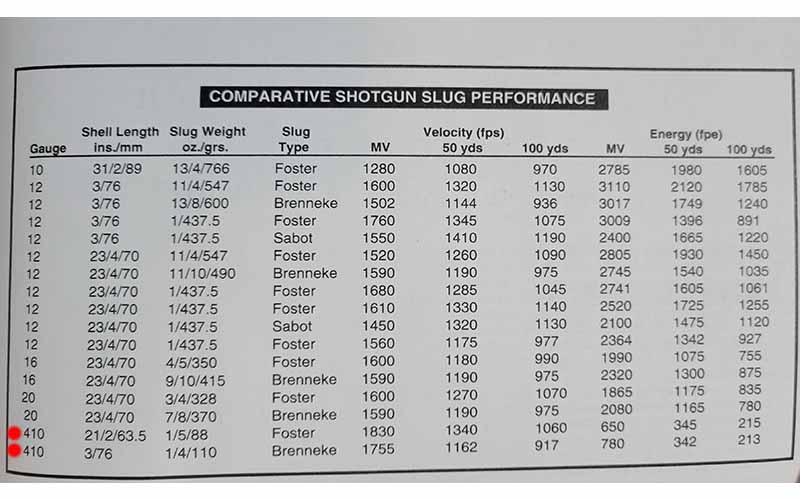
As this chart from Frank Barnes’ Cartridges Of The World shows, while .410 slugs exit the muzzle with velocities higher than most 12 or 20-gauge slugs, they lose that velocity at a faster rate than the larger mass projectiles do. The .410 slugs also deliver less foot-pounds of energy on target even at the muzzle, and again with a greater rate of loss as the range increases. What this data translates to is that while .410 slugs may provide sufficient energy within 50 yards, beyond that its efficacy begins to drop dramatically. In fact, according to some ballistician’s recommendation of a minimum 1,000 foot-pounds of energy to ethically kill a deer, the .410 is inadequate even at the muzzle. This doesn’t mean that ethical kills can’t be achieved with .410, even beyond 100 yards, but it does mean that one’s shot placement becomes massively more important in order to achieve it.
.410 Slug Selection
Not all slugs are created equal, and when it comes to .410 that seems to be doubly true. The two primary slug types one will find for a .410 (or any shotgun) are Foster and Brenneke. You can see on the previous chart that both kinds were tested, and the results show similar performance between the two save for the Foster’s slightly higher velocity and energy at most distances. This may lead you to believe that Fosters are the superior .410 slug, but results on soft targets paint a different story.
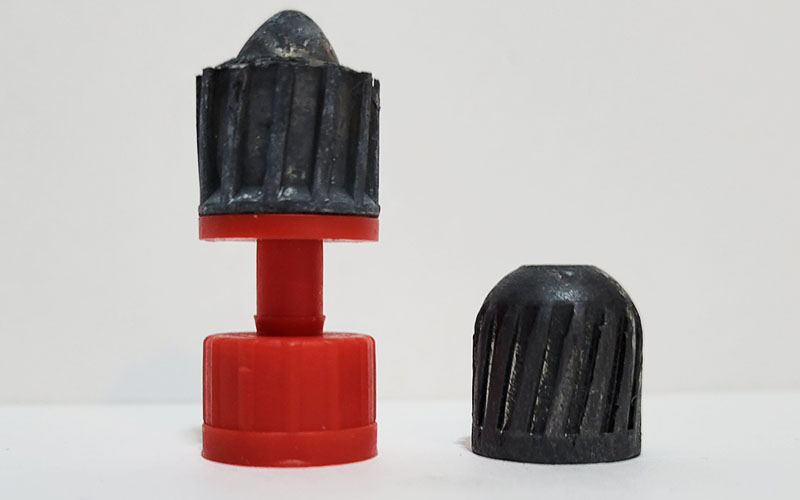
A 20-gauge Brenneke slug (left) vs a 20-gauge Foster slug (right).
The main difference between the two kinds is that Brenneke slugs’ wads stay attached to the projectile throughout the slug’s travel. Where Foster slugs use their hollow base to create negative air pressure to stabilize themselves, Brenneke slugs use their wad to do so. It would take a better understanding of physics than I possess to explain exactly why this is the case, but the result of the slugs’ differences makes the Brenneke far more effective on target.
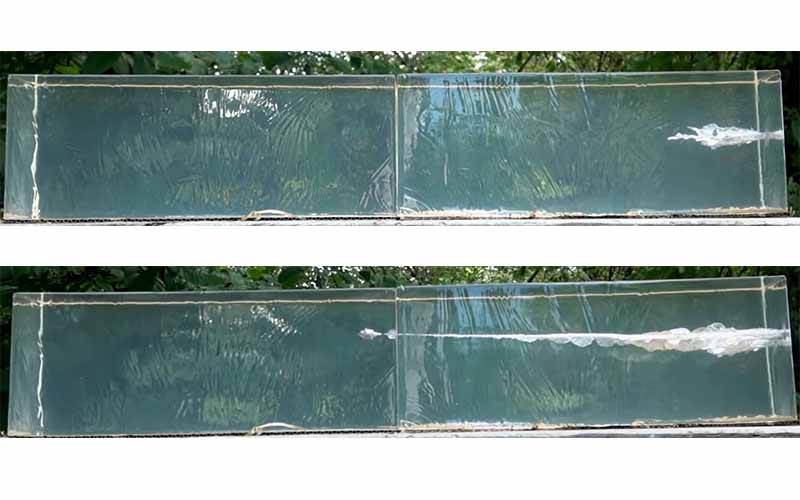
Ballistic gel test comparing a Foster .410 slug (top) vs a Brenneke slug (bottom). Photo: Buffalo’s Outdoors on Youtube.
Perhaps due to the Foster slug’s higher velocity, the construction of the projectile or some combination of these two factors, Foster slugs typically disintegrate upon impact and provide very little penetration. While this may be adequate on smaller game, the importance of proper penetration depth on something like a deer is far more vital. To have the best chances of dropping a larger animal with a .410 slug, always choose a Brenneke over a Foster.
Should You Hunt Deer With .410 Slugs?
Firstly, a deer is probably the largest animal one should consider using a .410 to hunt with. Anything larger and the requirements for precise shot placement would become prohibitively difficult. People often recommend that the maximum range one should attempt to use a .410 slug to take a deer is 100 yards, but some even say only 40 or 50. It all boils down to shot placement. There are shooters out there with the skill to make a 100+ yard shot on a deer with a .410 and drop it, but it raises the question of why one would want to. If you’re seeking to challenge your marksmanship skills, it seems that it would be more ethical to practice that on a target that would not suffer as a result of your mistakes. If you insist on testing your marksmanship while hunting, however, a rifle will provide a more consistently accurate projectile that can reach out further than a shotgun slug ever could.
The lighter weight of .410 shotguns and their ammo combined with the cartridge’s lower recoil impulse make them appealing to the small-statured, the disabled and parents searching for their child’s first gun. If one of the traits of .410 appeals to you and you want to use one for deer hunting, there’s nothing wrong with that, but as Dirty Harry said, “a man’s gotta know his limitations.” In this case, one must know their own limitations of marksmanship as well as the limitations of their weapon. While on a hunt with a .410, spotting a deer should make you ask yourself “is it close enough for .410 to effectively drop it?”, and “is it close enough for me to reliably hit its vital organs?” If you have any doubt about either answer, you should probably think about trying to get closer. These are all considerations that are less important with 20 or 12-gauge, so unless one of the .410’s traits specifically benefit you, you’re likely better off sticking to one of the larger gauges.
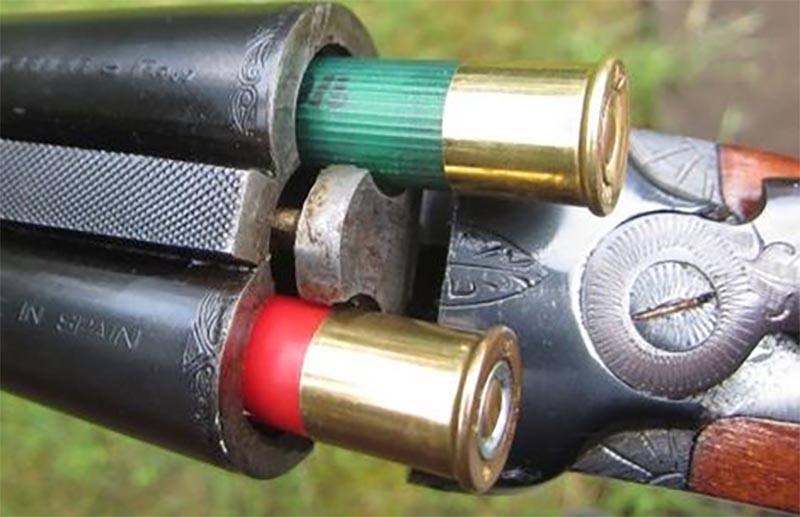
Two .410 shells loaded in a double-barrel. Photo: Wikipedia.
So, do .410 slugs serve a purpose? They are absolutely viable for hunting, but the larger the animal and the greater the distance the less effective they become. For those considering using .410 slugs for deer, you should really have a valid excuse as to why you’re using that over 20-gauge at the least, and you must remain very cognizant of both your and your weapon’s limitations. For the average shooter, this probably means sticking within 50 yards for a deer-sized animal and placing extra care on one’s shot placement. While plenty of deer have been bagged using .410 in the past, in 2021 it only offers some niche advantages that most individuals would not benefit from. While .410 has gained some popularity with hunters in recent years, most people would still be better off with a 12 or 20-gauge.
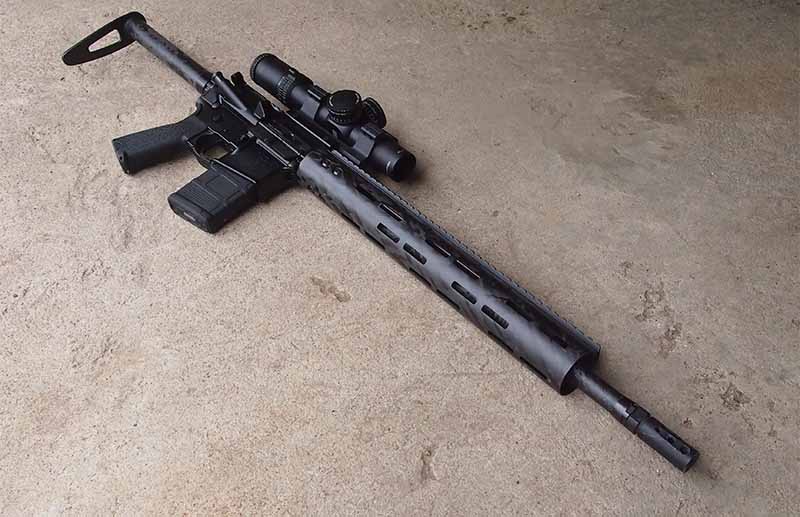
A closer look at the custom-quality Axelson Tactical Black Pearl AR-15.
ARs are not created equally. There are degrees of differences among the various AR-platform rifles from near-indecipherable nuances to impossible-to-miss distinctions; some variations are only Cerakote-deep while others become clear on the range. With the market inundated by black rifles, manufacturers must find a way to stand out. One manufacturer working to distinguish themselves is Axelson Tactical and they’ve reached new heights with the Black Pearl.
The Axelson Tactical Black Pearl Competition Rifle comes chambered in .223 Wylde for superior precision but is also available with a 5.56 NATO barrel for shooters who prefer the latter.
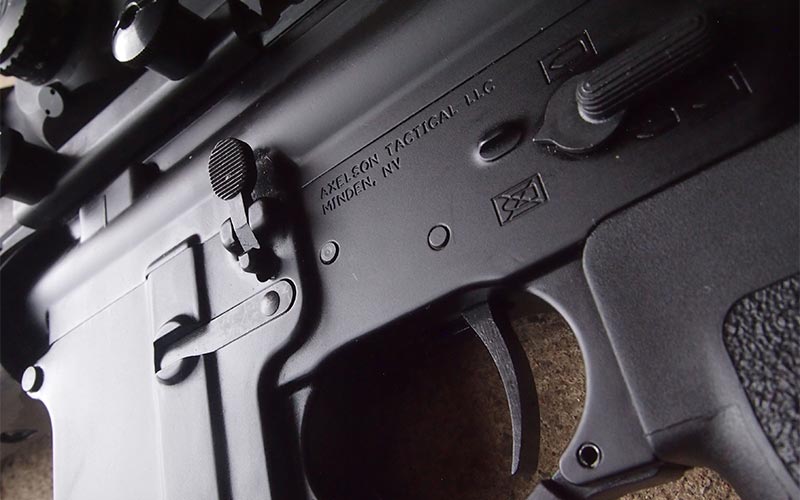
Axelson Tactical may be a relative newcomer to the gun world but in the handful of years they’ve been designing firearms they’ve made an indelible mark on the industry. The company was founded by Jeff Axelson, surviving brother of STG2 (SEAL) Matthew Axelson who was killed in combat during Operation Red Wings, the ill-fated mission made public through the book and subsequent movie Lone Survivor. Jeff Axelson and his family decided to shift their focus solely to firearms in part as a legacy to the late SEAL. To date AR platforms have been their priority.
Secrets Of The Pearl
Since Axelson Tactical began designing rifles I’ve been fortunate to run almost every model they’ve produced both on the range and in the field, dropping everything from hogs to Blackbuck. And while all their guns certainly get the job done with quality and style, the Black Pearl stands out. It was designed as a lightweight multi-purpose rifle with an edge: precision. It’s important to remember that just as there are differences between rifles there is a difference between accuracy and precision: put simply, accuracy is hitting the general vicinity of the bull’s eye with loosely grouped shots while precision is consistently striking an exact spot, creating a tight group. Looking for precision? Look at the Black Pearl.
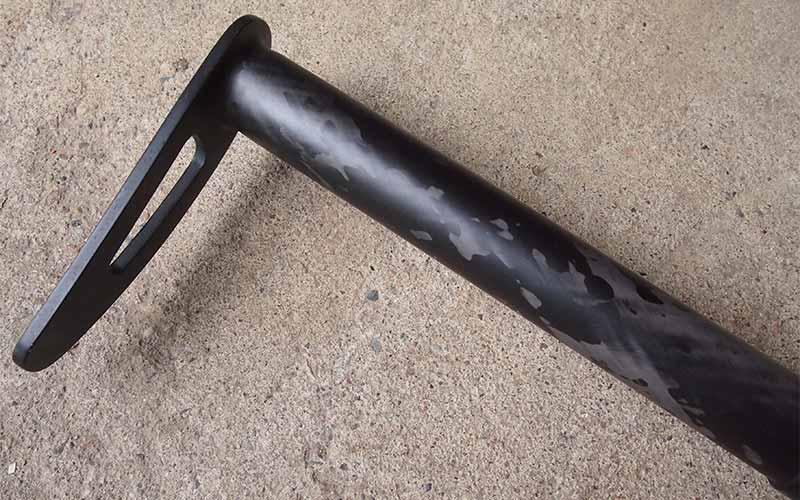
The Black Pearl is a custom-quality AR-15 built by Axelson gunsmith Dave Bischoff who gives each rifle his undivided attention. Many of its specifications reflect its being designed to be competition-ready out of the box including its .223 Wylde chambering and 16” Proof Research carbon fiber barrel with a 1:8 twist rate. Carbon fiber furniture was used throughout the gun including the company’s own Ultra Lightweight Carbon Fiber Fixed Stock and 15” Carbon Fiber M-LOK Compatible Rail. Its lighter weight is absolutely one of the benefits of carbon fiber but it is neither the only nor the best reason to use it in firearms. Carbon fiber has incredible tensile strength and depending on the composite used can be up to ten times stronger than steel and eight times stronger than aluminum while also boasting superior fatigue properties and corrosion resistance. This means not only does the Black Pearl weigh in at a scant 5 pounds, 4 ounces, it’s tough.
The slim-profile carbon fiber stock is lightweight yet allows a solid cheek weld and nicely balances out the rifle’s equally lightweight handguard and barrel.
Of course, the model includes more traditional metals, too. The upper and lower receivers are 7075-T6 Forged Hard-Coat Anodized Aluminum; forging is believed to increase a receiver’s strength due to its continuous grain structure and the electrochemical process of hard-coat anodizing improves wear-resistance. Other components include a mid-length direct impingement gas system and BCM gas block; the length of the former softens recoil and the latter is manufactured within tight tolerances. The trigger, which is an Axelson Drop-In Adjustable Single-Stage with a slightly curved blade, can be adjusted between 2 pounds, 5 ounces and 7 pounds, 5 ounces.
The Axelson Drop-In Single Stage Adjustable Trigger has a smooth pull and clean, crisp break that continued to deliver at multiple pull weight settings right down to its lightest of 2 pound, 5 ounces.
The high quality of components continues with the Diamond-Like Carbon Coated (DLC) Bolt Carrier Group (BCG). There are a number of BCGs on the market with such a wide variety of finishes it can be difficult to know which is best, and DLC is currently one of the least common. However, it’s a long-established coating in other industries, specifically those where high temperatures and friction are issues. DLC is a nanocomposite coating with properties similar to those of a natural diamond such as high hardness, low friction, and extreme resistance to corrosion. Axelson Tactical chose the DLC BCG for the Black Pearl because it enables the rifle to function at a higher level. The coating is applied to the bolt, bolt carrier, and gas key, and the BCG is HPT and MPI tested.
Testing and Accuracy
“Test to break.” Those were Jeff Axelson’s words regarding my testing the Black Pearl, and I took him at his word. I put the rifle through it all – rain, snow, sun, and the accompanying dust and mud – and fed it ammunition until the crates of spent brass reached astounding heights. It was dragged, carried, and knocked over (the latter being an accident caused by my 90-pound Lab, Puck). It was used until friend and gun store manager Tylar Coe dubbed it “Dirty GaGa”. This is what I found.
At 5 pounds, 4 ounces (empty) the Black Pearl’s lighter weight makes it easier to shoulder and balance for extended periods and significantly simpler to carry on spot-and-stalk hunts.
For the review I mounted Trijicon’s latest, the 1-8x28mm AccuPower, to the Black Pearl’s full-length Picatinny rail. The only downside to this pairing was the scope’s weight of 25 ounces – almost one-third of the rifle’s weight. Shooters interested in taking full advantage of the rifle’s lightweight build should use a lighter optic. Weight aside, the AccuPower is a stellar scope with a first focal plane reticle offering exceptional clarity and nice field of vision.
I shot from various distances but spent the most time at 100 yards. For accuracy testing I shot from the bench, stabilizing the rifle using Brownell’s sandbags, but during my sessions behind the trigger I also shot off-hand, prone, and kneeling. The Black Pearl ate thousands of rounds ranging from Sinterfire Greenline .223 Remington 45-grain Frangible to Hornady Match .223 Remington 75-grain BTHP. To cover my 5.56x45mm NATO bases I used Federal 77-grain OTM and Barnes VOR-TX 62-grain TSX HP.
Who says black guns aren’t hot? The Black Pearl isn’t just a precision performer, it’s a good-looking AR-15.
The Black Pearl’s slim 3/8” thick buttstock mounted snugly to my shoulder although I did have to adjust my usual support-hand grip while shooting from the bench due to there being nothing to rest against the web of my hand. A pad is available as a custom option; the fixed stock can also be ordered with a closed rather than open configuration. The tube has a diameter of 3.5” which facilitated a solid cheek weld and despite my long length of pull I was able to position myself comfortably behind the fixed stock.
Felt recoil was negligible which might not seem noteworthy due to the rifle being chambered in .223 Wylde but is worth mentioning because it was softened beyond what was expected from experience with countless other AR-15s. Zeroing went quickly, as did the moments I needed to re-zero for different loads, the simplicity of which can be partially attributed to the trigger. My Lyman Trigger Pull Gauge showed the rifle shipped with a trigger pull weight of 4 pounds, 13 ounces which is around what many shooters prefer. Since I, myself, enjoy a light pull weight I chose to make an adjustment although I did spend time shooting beforehand.
Making the adjustment was simple: I confirmed the rifle was empty, slid the takedown pins free, set the upper receiver aside, and held the lower receiver in my left hand (a cradle or vise could also be used). A single 1/16” Allen head screw was immediately visible atop the disconnector. Using the corresponding Allen wrench I turned it counterclockwise to lighten the pull weight, periodically using my trigger pull gauge to monitor my progress. At 2 pounds, 5.3 ounces, I stopped adjusting; it’s possible to overturn screws and doing so can cause problems with a trigger’s functionality. At both the aforementioned pull weight of 4 pounds, 13 ounces and the lightest setting the trigger was smooth and had a clean, crisp break with a short reset. One of the greatest benefits of lightening a trigger is increased precision, something the Black Pearl excelled at to begin with.
It was immediately clear the Black Pearl does indeed perform well as a precision rifle. Loaded with Hornady .223 Rem 53-grain Superformance Varmint V-MAX the rifle nailed Shoot-N-C targets with sub-MOA groups with a best five-shot group from the bench of .530”. It didn’t just linger above half-an-inch, though; Browning .223 Rem 50-grain BXV Varmint Expansion delivered numerous sub-half MOA groups with a best five-shot group of .428”. The rifle seemed to like heavier loads, too: DRT .223 Rem 79-grain Elite provided a best five-shot group of .595” and Federal’s latest, .223 Rem 73-grain Gold Medal Berger BT Target did nicely at .619”. Overall, accuracy testing went quite well with the Black Pearl proving itself as a sub-MOA rifle with sub-half MOA leanings.
A quality rifle is a vital component of truly precise groups but quality ammunition matters, too. Hornady .223 Rem 53-grain Superformance Varmint V-MAX was one of the Black Pearl’s favorites and delivered this five-shot group of .530”.
Through thousands of rounds of various brands and loads the Black Pearl experienced no failures of any kind. My goal to run the rifle to failure failed in itself; the ammo ran out before the gun did. In the end it was filthy and in need of a thorough cleaning but as long as I kept it well lubed with the SEAL 1 CLP Plus I keep in my range bag it cycled consistently. Its precision can be credited to a variety of factors including its Proof Research carbon fiber barrel, light, crisp single-stage trigger, and Axelson ROC Competition 10-Port Tunable Muzzle Brake. With the trigger at 2.5 pounds and the muzzle brake tuned – a task accomplished with an Allen wrench and a little time spent on minor adjustments – the rifle proved itself as a reliable tack-driver. Sub-half MOA groups speak for themselves.
Axelson did solid work with the Black Pearl. According to founder and owner Jeff Axelson, the team “wanted to design a lightweight, strong, deadly-accurate rifle. By combining the Proof Research barrel, our newly-designed carbon fiber furniture, DLC BCG, and single-stage trigger we created an ultra-lightweight speed demon.” Gunsmith Dave Bischoff added that they wanted to create a lightweight race gun. It would seem they accomplished all that and more.
The author ran the Black Pearl in freezing weather, rain, and snow, finding it continued to cycle reliably in spite of the weather.
To paraphrase Captain Jack Sparrow of Pirates of the Caribbean fame – the rifle is, after all, his “nigh uncatchable” black-hulled ship’s namesake – it’s not just a receiver and a barrel and a trigger; that’s what a rifle needs, but what a rifle is – what the Black Pearl really is – is freedom.
For more on Axelson Tactical, please visit axelsonusa.com.
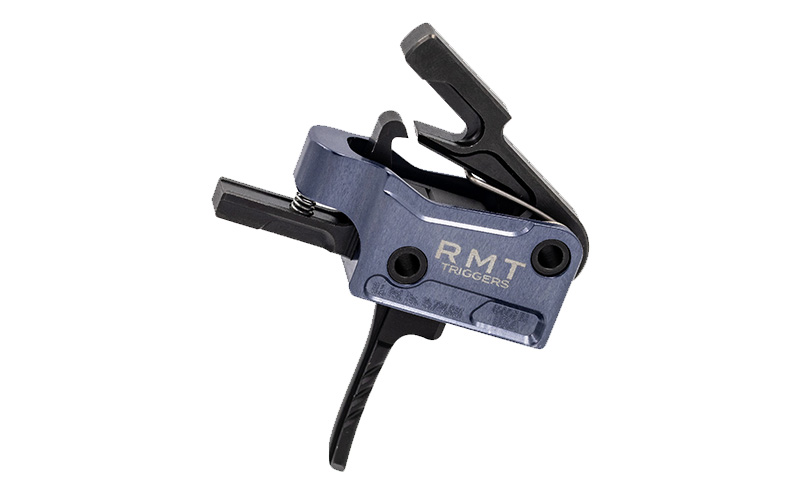
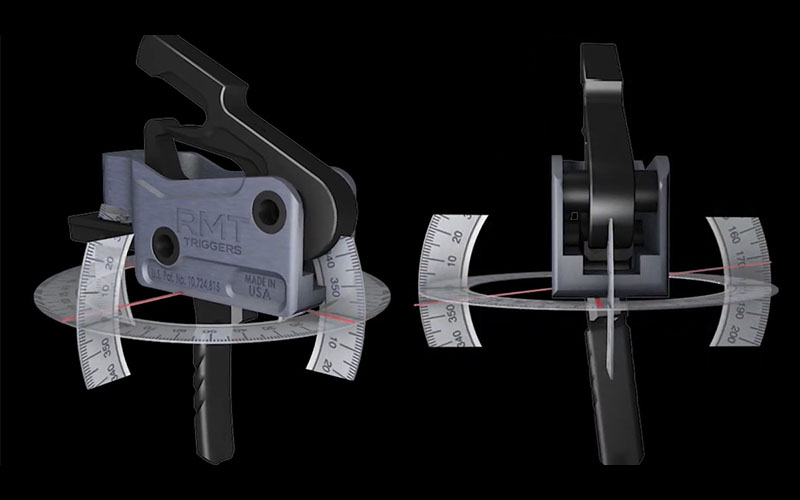
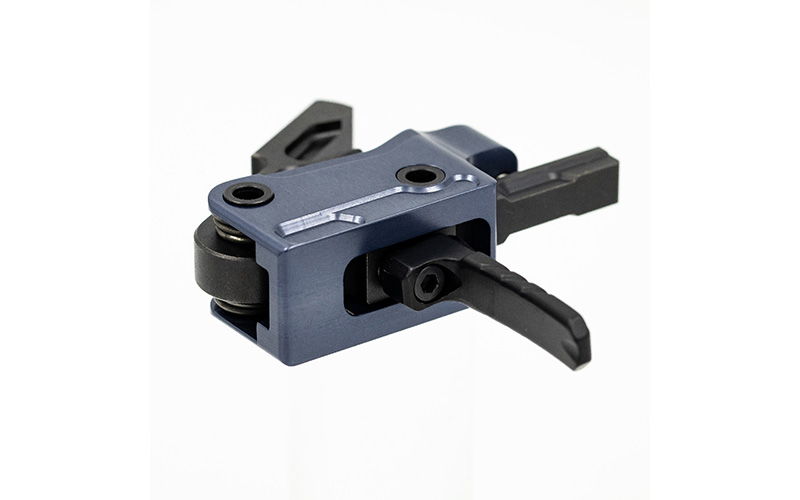
RMT has just introduced an innovative new concept with the Nomad trigger for AR-15s, engineered to freely adjust to the shooter’s position.
It’s not every day that a new AR-15 trigger does something to really stand out. Most new models simply compete to see which can have the lightest break, smoothest pull or shortest reset. All are areas of improvement that can be appreciated when compared to mil-spec triggers, but in the end, they all essentially function the same way. The new RMT Nomad trigger, however, is based on a truly novel and innovative concept.
The heart of the RMT Nomad trigger concept is its ability to freely adjust to the shooter’s finger position and grip. Whether you’re shooting at an awkward angle or just grasped the pistol grip in a suboptimal way, the Nomad trigger will follow whatever pull vector that your finger provides. It accomplishes this by allowing 6-degrees of rotation and pivot in its design, letting the trigger naturally position on the shooter’s finger throughout the firing process. The benefit of this is that when shooting in dynamic environments, whether on the range or in the field, the Nomad trigger can provide greater consistency and stability in a variety of shooting positions.
If one were to attempt to pull a standard trigger at an angle, there’s a high chance that the force would twist the rifle in the process and negatively impact accuracy. Attempting the same with the Nomad, however, one would find that their weapon stays far more stable regardless of how they actuate the trigger.
Besides the innovative pivoting feature, the RMT Nomad trigger also has the qualities of more standard drop-in AR triggers. Namely, the Nomad features a smooth pull that breaks at three pounds and has a very short reset. These improvements not only aid in increasing accuracy but help to increase one’s rate of fire as well. The trigger is not adjustable, and three pounds may be a bit heavier than some competition-shooters may prefer, but because RMT views the Nomad as having potential for defensive and tactical use as well, the slightly heavier weight makes more sense for the sake of safety.
The RMT Nomad trigger is drop-in style and extremely easy to install. It has an MSRP of $279 and will begin shipping at the end of January 2022.
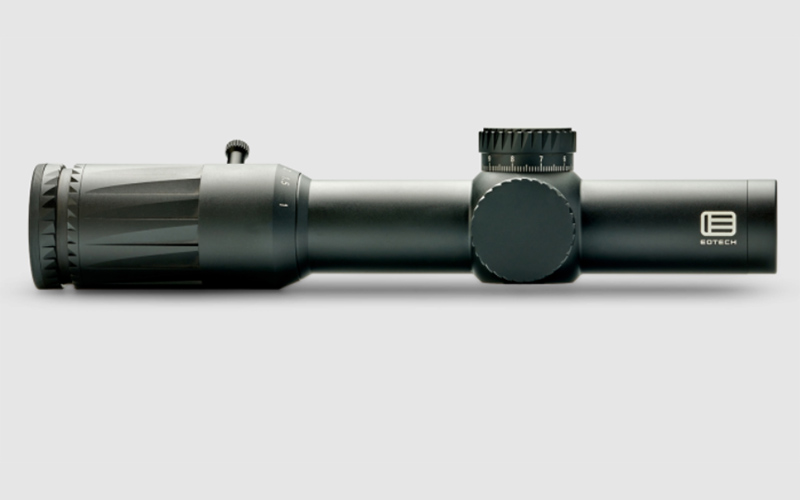
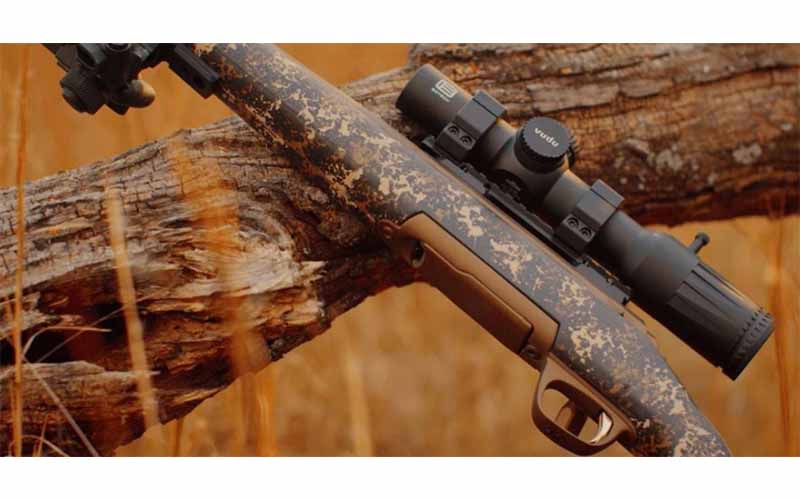
EOTech’s newest riflescope is the Vudu 1-10x FFP, and its versatile nature makes it ideal for dynamic environments with changing engagement distances.
When it comes to selecting an optic for one’s rifle, it can be difficult to determine which style is best for your particular setup. Specializing a rifle for either CQB or long-range shooting is simpler, but finding an optic for a do-it-all carbine can be more challenging. While one school of thought achieves versatility with their rifles by using a red dot/magnifier combo, others prefer scopes with a magnification range that starts at 1x. The new EOTech Vudu 1-10x FFP belongs to the latter, and its features allow for both rapid shooting in close quarters as well as precision shooting at greater ranges.
Vudu 1-10x FFP Features
Like previous Vudu scope models, the Vudu 1-10x FFP has an aircraft-grade aluminum body and is sealed against the elements. EOTech advertises the new scope as being resistant to shock, fog and water, enabling its use in even the harshest environments.
At the lowest magnification level, the Vudu 1-10x FFP has a generous 83-99mm eye relief. Combined with the illuminated Speed Ring reticle and 28mm objective lens, the scope’s user can quickly and accurately engage targets at close range. As a First Focal Plane (FFP) scope, the reticle scales with the magnification level, allowing the reticle to remain useful even at 10x zoom for longer distance shooting. The scope includes a throw-lever for easy magnification adjustments, and the turrets have a re-indexing feature for quickly returning to zero. The scope’s elevation turret also has a lock to prevent unintentional adjustments, and a button on the scope’s side is used for controlling the reticle’s brightness.
Vudu Reticle Options
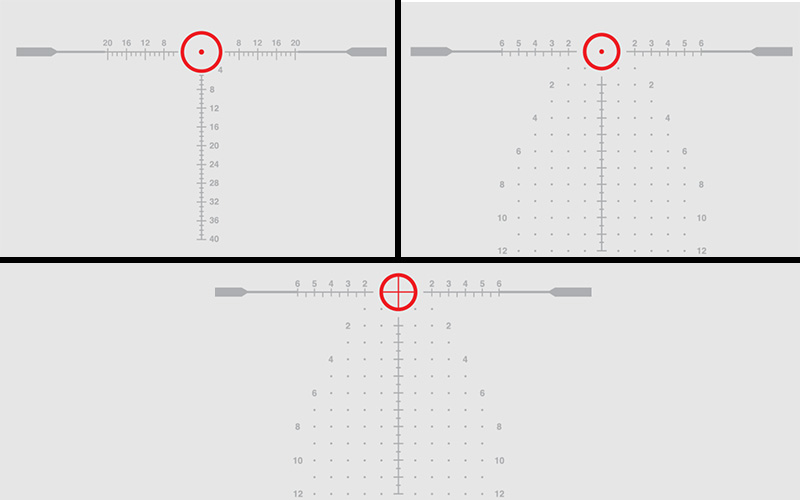
The Vudu 1-10x FFP currently has three available reticle options, the SR-4, SR-5 and LE-5. All the reticles include EOTech’s illuminated Speed Ring, but their other features make some better-suited for precision than the rest. The SR-4 is the only option that uses MOA subtension lines while the SR-5 and LE-5 use MRAD. The SR-4’s center reticle is also larger than the other options, providing greater visibility but making it less ideal for longer-range shooting than the other two.
All three versions have an MSRP of $1,799 and will begin shipping in March of 2022. Each Vudu 1-10x FFP scope will include a throw lever, two manuals and the necessary CR2032 battery.
The Marlin 1895 SBL lever-action rifle is once again available, and for the first time since the company was acquired by Ruger.
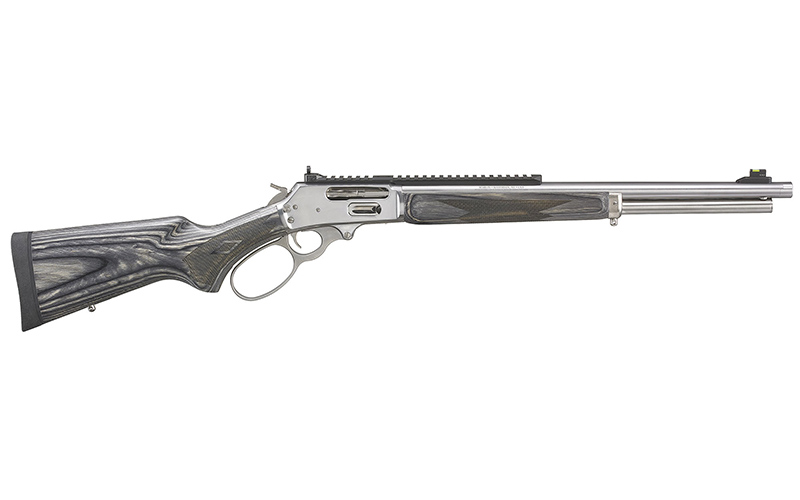
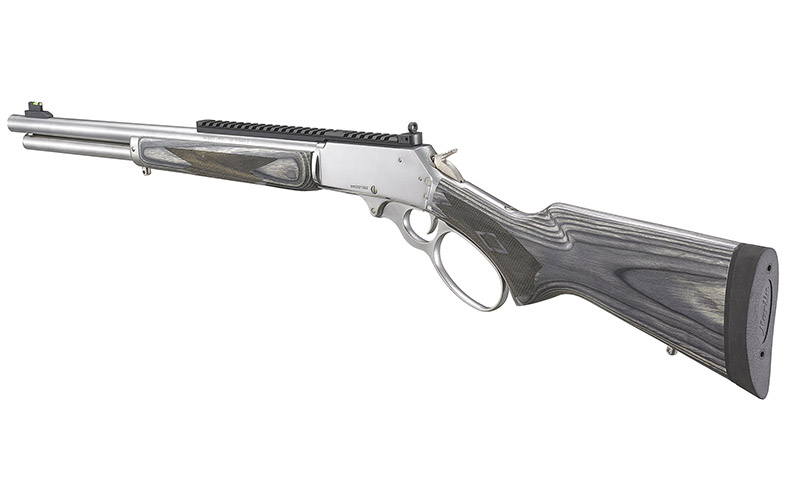
Marlin is back, and 1895 SBL lever-action rifles are now shipping again for the first time since the company ceased production in August of 2020. Many lever-gat fans retained hope for the company’s future since Marlin was acquired by Ruger amid Remington’s declaration of bankruptcy, but they were left waiting for any news all of this year. Luckily for them, their patience has finally paid off, as Ruger and Marlin have recently announced that the 1895 SBL lever-action will soon be seen on store shelves once again. Now produced in Ruger’s North Carolina facility, the 1895 SBL lever-action will have the same features as previous examples from Marlin, only now they will be made using revamped manufacturing methods.
President of Ruger, Chris Killoy, said this on the new 1895 SBL:
We are excited to officially flip the switch and let our customers know that Marlin is back…Since the move of over 100 truckloads of equipment and inventory back in November 2020, our engineering team took the 1895 through a complete design and production review focused on achieving the highest quality, accuracy, and performance standards. The end result is a quality rifle, produced using modern manufacturing methods, that consumers will be sure to enjoy and proud to own.
The 1895 SBL in .45-70 Gov’t is the first Marlin lever-action to be produced by Ruger, but the company says it has plans to eventually expand into new models and calibers including the Model 336 and Model 1894. As of now, besides the overhauled manufacturing process, the only real differences on the new Ruger-made 1895 SBL are its markings. The 1895 SBL has an MSRP of $1,399 and models should start hitting store shelves soon.
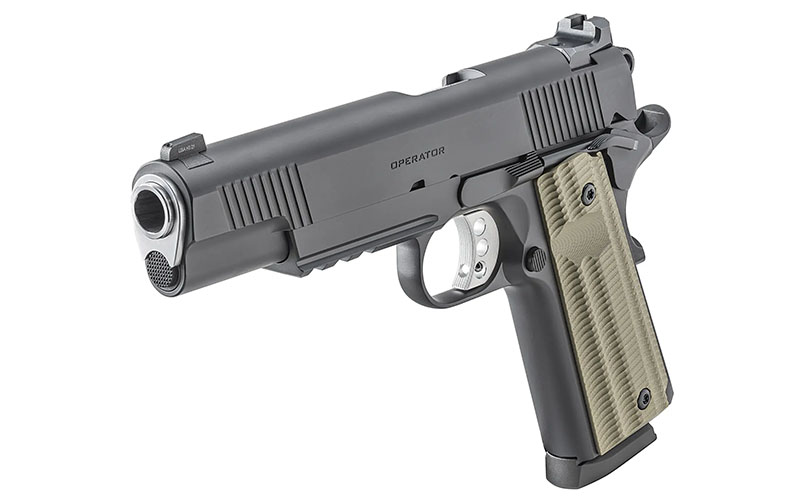
Springfield’s new Operator 1911 pistol is a duty-grade full-size .45 with some subtle upgrades that help keep this old warhorse in the fight.
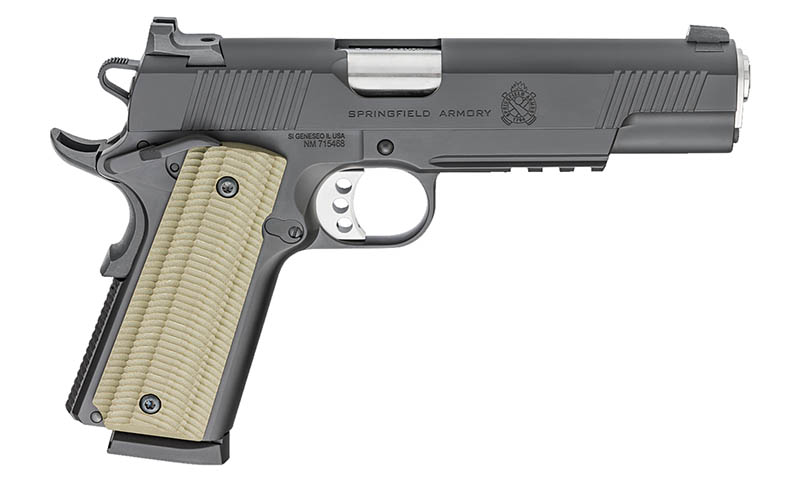
If laser guns ever became available for purchase, many Americans wouldn’t be interested unless they were single-action, all-steel and came with a .45 caliber diode. Even then, most would probably stick with their 1911. Over 110-years-old and counting, the 1911 isn’t going anywhere anytime soon, and lucky for those devoted to this old warhorse there are plenty of modern options to choose from. The newest of which is from Springfield Armory and is called the Operator 1911, and it’s a full-size .45 that stays true to the original design while incorporating small changes that better orient it for defensive use.
Same Old Quality
As one of the oldest and most iterated upon firearms designs, there’s much of the Operator 1911 that is standard, at least for a Springfield. The pistol uses forged steel for its frame and slide, and its 5-inch barrel is match-grade and constructed from forged stainless steel. It’s all held in place using a traditional-style barrel bushing, and the whole gun is finished in black Cerakote.
New Features
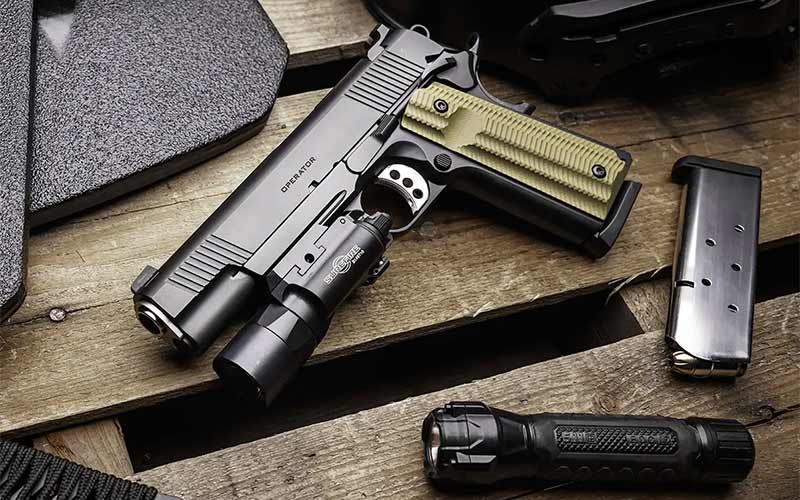
The Springfield Operator 1911 also comes with some modernizations and upgrades to help keep it viable in the 21st century. Some of those changes include an ambidextrous safety, forward slide serrations and an accessory rail beneath the barrel for mounting a weapon light. The pistol also includes G10 VZ grips, a Tactical Rack rear and tritium front sight as well as two eight-round magazines with bumper pads.
The new Operator 1911 from Springfield is nothing earth-shattering, but it seems to be another solid option for those who choose to stick with a full-size .45 for self-defense. The Operator 1911 has an MSRP of $1,159 and is available now.
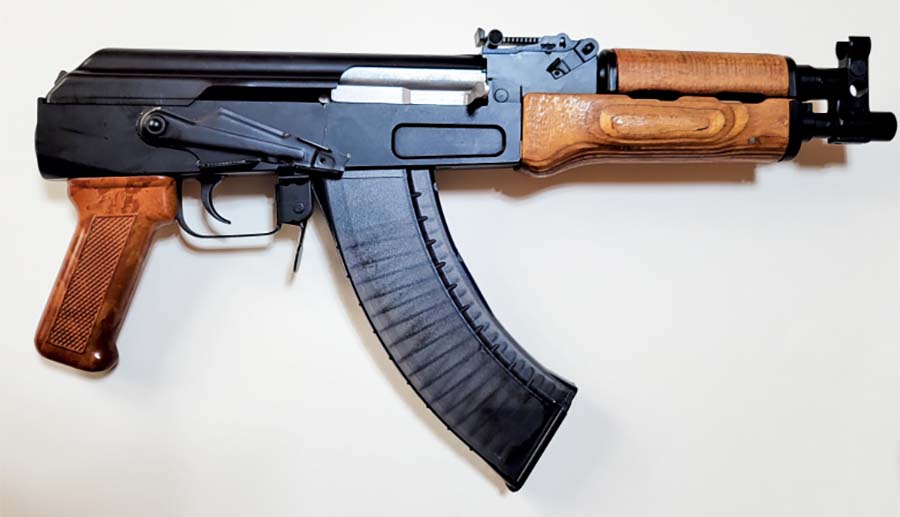
Rugged and formidable yet handsome and small, the new milled Mini Jack from WBP Poland is innovating on the AK in ways most haven’t considered.
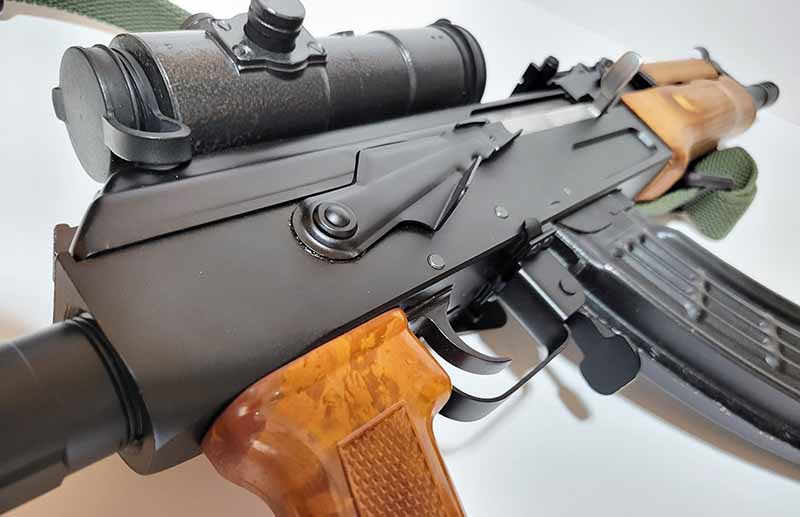
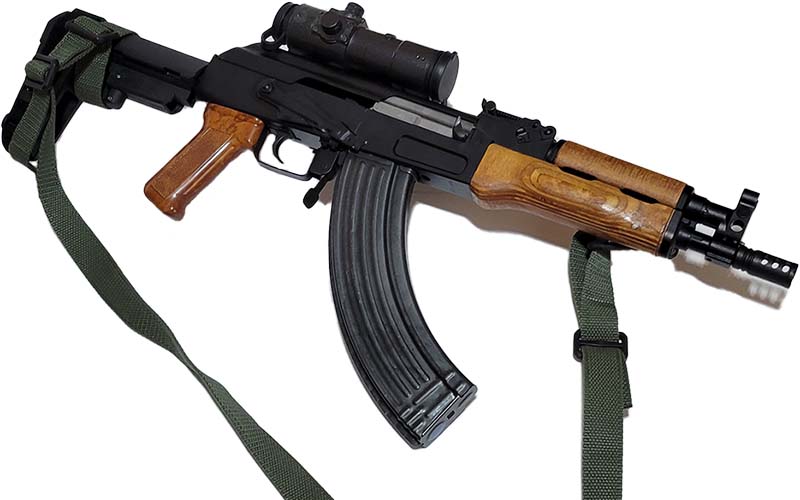
Thanks to the arbitrary and capricious legislation that controls our nation’s firearm laws, braced pistols have become the hottest thing since sliced bread. And thanks to the AR-15’s supreme popularity in the United States, the aftermarket of pistol braces has been dominated by AR buffer tube-style designs. With far fewer options available for AK pistols, WBP in Poland went back to the drawing board. The result was the new Mini Jack AK pistol, now featuring a milled receiver capable of accepting AR-15 buffer tubes and compatible braces and stocks.
The Milled Mini Jack as it comes out of the box, with WBP mag inserted.
Milled Mini Jack Features
If you don’t know about WBP, they’re one of the newer names in the AK game. Based in Poland, they lack the tenure of established state military factories like Cugir and Arsenal, but they do have a working relationship with FB Radom who have been cranking out AKs longer than anyone outside of Russia.
So far, WBP AKs have seen success on both the international commercial market as well as in the defense industry, having sold their guns to some undisclosed military and police groups around the world. Despite not having the same experience level as factories like FB Radom, WBP has managed to build guns that live up to the Kalashnikov’s famed reliability. Besides being great shooters, WBP AKs look good while doing it too. Featuring what I would consider the best factory furniture of any current AK import, and possibly the best finish as well, WBP’s guns have been turning heads of those in the know since the first models started hitting American shores.
The wood palmswell handguards on the Mini Jack are Polish laminate and feel as good as they look.
Once the guns have been imported, they’re distributed stateside by Atlantic Firearms and Arms Of America. While these guys have to do some conversion work on AK rifles after they come in, due to the idiosyncrasies of our import laws there is very little they need to do to pistols like the Milled Mini Jack. Coming into the country essentially just as they’re sold, as pistols Milled Mini Jacks are not subject to 922R regulations and can be comprised of entirely foreign-made components. That means that parts that are typically American on imported AKs like the trigger, piston and furniture are all 100% Polish on the Mini Jack pistol. That of course also includes the pistol’s 10-inch hammer-forged chrome-lined barrel from FB Radom. The Milled Mini Jack is currently only available in 7.62×39, but more caliber options may be seen in the near future.
The new Mini Jack also features a milled receiver, making it the only other milled AK pistol on the market besides the Arsenal SAM7K. Many people argue over whether a milled or stamped receiver is best, but the truth is that both styles have their pros and cons. The short of it is that milled receivers are typically durable enough to outlast the barrels they’re attached to, but the extra strength comes at the cost of a higher weight (and also a higher price tag). WBP also has a stamped AK pistol that they also call the Mini Jack, and while it’s lighter and cheaper than the new milled version it’s also missing several of its nice features. Those features include an extended magazine release and safety selector, a beveled rear receiver and the ability to easily mount AR-style buffer tubes.
The extended safety and mag release along with the beveled receiver.
Setting Up The Mini Jack
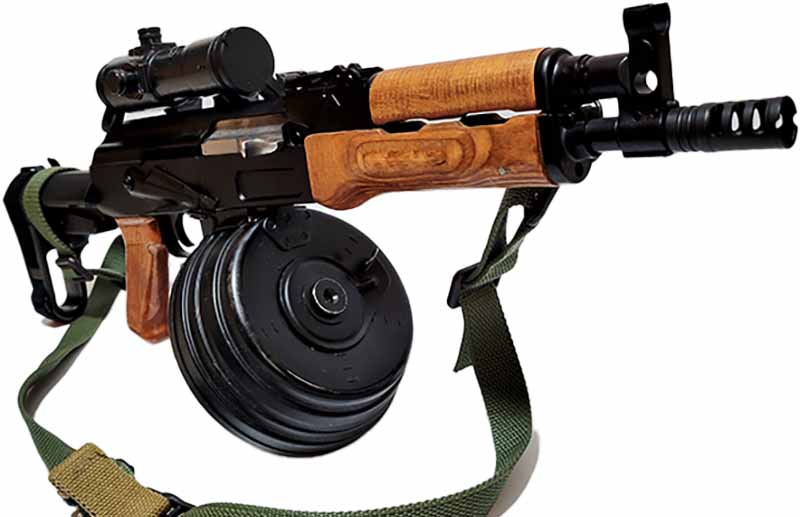
The most innovative new feature on the Milled Mini Jack is its ability to accept AR buffer tubes, and it would be a waste not to take advantage of it. There are some AK-specific pistol braces that exist, but they’re typically designed to be mounted on AKs that have no provisions for mounting anything to begin with. Because of the abundance of options for AR-style pistol braces, retrofitting the Milled Mini Jack to accept AR buffer tubes greatly expands one’s choices.
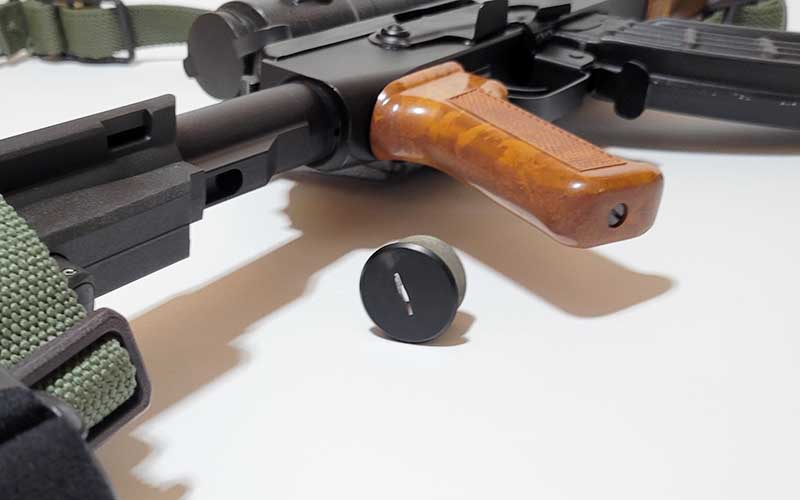
The buffer tube installed next to the plug it replaced.
As the pistol comes out of the box, the buffer tube hole in the rear of the receiver is occupied by a threaded plug. By cutting a notch in the plug using a Dremel, one can use a screwdriver to back the plug out. Once completed, any standard AR buffer tube can then be threaded into the rear of the receiver. Doing so allows one to mount any compatible pistol brace, or after paying proper dues to the ATF, a real stock. The whole process is quick and easy and will net you one of the most comfortable-shooting AK pistol setups available.
Atlantic sent me an SBA3 brace to go along with the Mini Jack, a popular and good quality choice, but if I were configuring my own Jack that I didn’t have to send back I would have gone a different route. Since AKs do not require a buffer tube to function, there is nothing stopping the Mini Jack from having a folding brace, something that a standard buffer tube/brace setup will not accommodate. Using something like a KNS buffer tube to Picatinny rail adaptor instead, one could mount a folding brace without issue and reduce the gun’s overall length by another six inches (when folded).
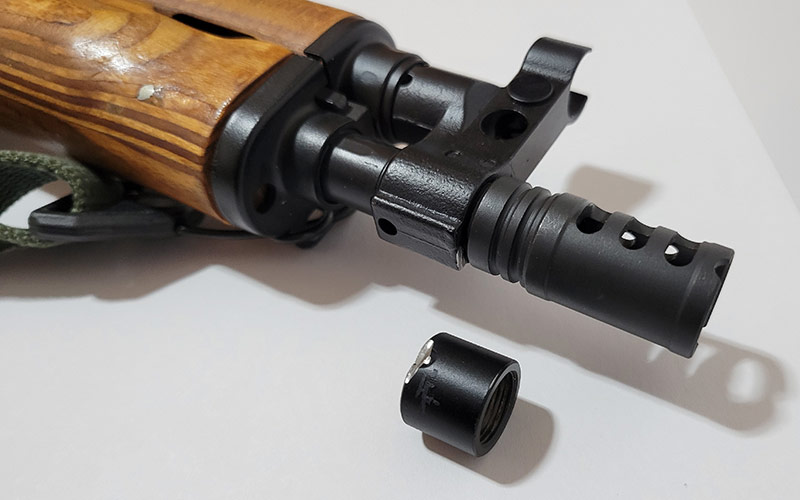
The next modification required as part of the trick-out process is to remove the welded-on muzzle cap thread protector. As a pistol, the Milled Mini Jack is not allowed to be imported with a threaded muzzle, but this is worked around by “permanently” covering the threading with the welded-on cap. Thankfully, however, once purchased it is fully legal to break the weld and remove the protector, giving access to standard AK 14×1 LH threads. The weld can also be broken using a Dremel. Once you have access to the threading any standard AK brake of your choosing can be attached. I tried the Mini Jack with both a Definitive Arms Fighter Brake and a Tapco 74-style brake for the sake of variety. I also tried attaching a standard slant brake, but interestingly the Jack’s detent pin would not index it in the proper position. This was the only device I was unable to mount to the Jack, and I’m unsure whether it’s a quirk of the gun or of my specific brake.
The removed muzzle thread protector cap and installed AKM Fighter Brake.
The Milled Mini Jack also comes with a standard AKM-style side rail for mounting optics, and the pistol can accept standard AK handguards and pistol grips. The furniture that came on the Jack was so nice, however, that I opted not to change those parts. If you’re looking to make your Milled Mini Jack as tactical as possible though, it will have no problem accepting Zenitco or other modern AK accessories.
The final nice feature on the Milled Jack, and another small departure from the original design, is its beveled rear receiver. What would normally be left square, the edges near the gun’s pistol grip have been shaved and rounded to not only save weight, but to provide a more comfortable shooting experience. It’s a minor change, but it feels great in the hand.
Impressions Of The Mini Jack
The Milled Mini Jack performed great at the range. I was unable to test a high volume of ammunition, but I was able to test a wide variety of different kinds. Steel-cased or brass, FMJs or hollow points, fancy lacquered stuff or cheapo grey Tulammo, it cycled it all without a hiccup. That was from feeding from a variety of magazines too, including the polymer WBP mag it came with as well as a plethora of old surplus ones. No fitting was required for any of the magazines, and all had a great, positive lockup. The extended magazine paddle release made reloads much smoother than normal as well. This WBP mag release can actually be purchased separately, and it would make for a great upgrade to any kind of Kalashnikov you may already have.
The Mini Jack at the range with PK-A red dot mounted.
I zeroed the red dot at home with a bore laser and got it dialed in enough to ring steel out to fifty yards with ease. The gun certainly has enough mechanical accuracy to be utilized beyond that distance, but its short length makes it more ideal for CQB-oriented work. It’s compact and handy, it transitions between targets without any overtravel and it’s still lightweight enough despite having a milled receiver. While I appreciate how short the Mini Jack is, for optimal ballistic performance I would have preferred a 12.5-inch barrel instead. That being said, 7.62×39 out of a 10-inch barrel is still nothing to scoff at.
This caliber fired out of a barrel this short does produce a lot of concussion, however, and a brake should be considered an almost necessary addition. I tried firing the Milled Mini Jack with no brake installed for a few shots, and while very fun, was also loud and disruptive enough for one to not want to use it like this in an indoor defensive scenario.
Final Thoughts
Admittedly, when I first saw the announcement for the Milled Mini Jack, my first thought was “who asked for this?” The SAM7K is another popular AK pistol option, but the fact that it has a milled receiver seems more because that’s just what Arsenal does rather than it being what the market demanded. Regardless, there are plenty of people out there who prefer their AKs milled and also want an AK pistol, and the Milled Mini Jack accomplishes that for over $500 less than the Arsenal ($1,799.99 MSRP vs. $1,249 MSRP). Besides the better price, the WBP also comes with more versatile features out of the box, as well as having better furniture and an arguably better finish. The Jack also has greater compatibility with standard AKM components.
Some have complained that the receiver’s lightning cut shape, beveled rear-end and ability to accept AR pistol braces are too much of an aesthetic departure from classic milled AKs, but classic isn’t what WBP was trying to accomplish with the Milled Mini Jack. If you want your AK pistol to look as “classic AK” as possible, then this gun probably isn’t for you. Even the stamped Mini Jack would do a better job of that. The Milled Mini Jack prioritized function over form and still managed to achieve both handily, it just has its own unique, slightly modernized style instead. For anyone looking for a completely solid new-production AK that can be easily modified into a formidable defensive tool or impressive little range toy, the Milled Mini Jack is currently one of the best choices on the market.
Picking the right carry gun is a tricky proposition, one made simpler if you perhaps put your gun choice last.
I get calls, emails and messages on social media all the time, wanting my advice on which carry gun someone should buy. Sometimes the requests are serious; other times those asking are just looking for me to validate a choice they’ve already made.
In every case, I try my best to offer some helpful advice, but the notion of letting someone else select your carry gun is about as absurd as letting someone else arrange your marriage; selecting a handgun that might save your life is too important of a task to trust to someone who won’t be using it to save their own.
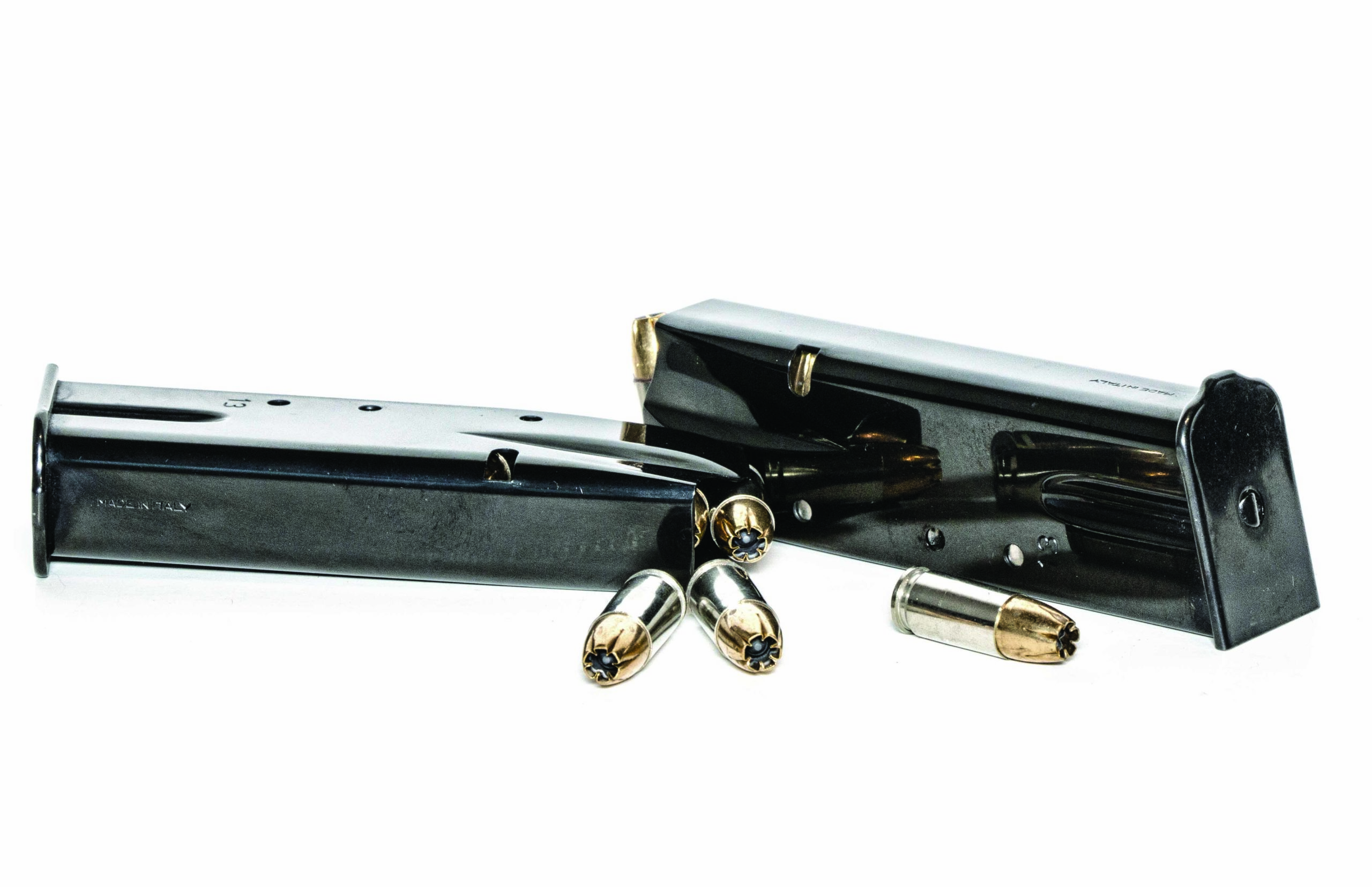
If you’re tired of the magazines in your Browning HiPower rattling when you walk, get a couple Mec-Gar magazines and there’ll be no more jingle-jangle in your life.
The thing is, just because a handgun works well for me and my lifestyle doesn’t mean it’ll do the same for you. Sure, I’ll freely comment on my experiences with handguns, such as if they work or function well. But to tell you what handgun is best for you is something that I nor anyone else has any business doing. What I can do is offer some practical advice to help guide you through the selection process.
However, I’ll bet few really want to hear it. Most want to know if they should get a Glock or an XD, M&P or something else.
Carry Gun Fundamentals
The first thing you should consider with regard to a concealed-carry handgun is how you’re going to carry it. This is often an afterthought for many; most buy the gun and then try to solve the carry puzzle.
Carry Position
If, given your lifestyle and manner of dress, you believe ankle carry is best for you, the last thing you want to do is buy a full-size 1911. On the other hand, if inside the waistband (IWB) carry seems to fit your way of life, you might want to avoid the thicker guns or guns with large grips likely to print. Are you getting the picture?
Holster Selection
Once you do decide on how you will carry a defensive handgun—and you might find that you’ll carry it in multiple ways depending on the season and occasion—you should then start looking for holsters that allow you to carry in those ways, in the most comfortable fashion.
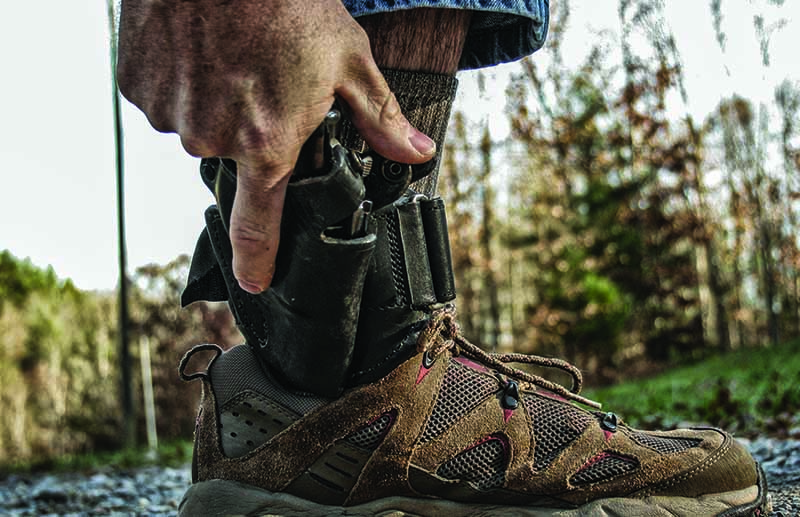
Ankle carry is a great way to carry concealed, but it might not fit your lifestyle.
Your dress and daily activities might signal that ankle carry is the ideal solution. But, have you ever carried more than 20 ounces on your ankle all day? Get with other gun owners and check with your local gun shop to find sample holsters that’ll allow you to try what you think might work. You might find it doesn’t work worth a damn for you.
Handgun Fit
Once you think you’ve discovered how you can carry comfortably, then you can start looking at handguns that fit your agenda. You might shoot a Glock G34 Gen4 exceptionally well, and you might think it would be a super-cool pistol to carry on a daily basis. However, you might find that it’s just too long to work with the OWB, IWB or appendix carry method you’ve found most comfortable.
One very important thing you need to remember is that it doesn’t matter if your carry gun is a top-of-the-line Wilson Combat 1911 or a super-slick revolver from the Smith & Wesson Custom Shop. If you don’t have it with you when you need it, it’s no better than a bodyguard who failed to come to work.
Pick the carry method and the holster first, then find a carry gun that’ll dovetail into that system and your lifestyle. Otherwise, you might be looking for a new handgun sooner than you think. Or you might be just pointing your finger at the bad guy because you left your uncomfortable-to-carry pistol at home.
Magazine Considerations
My favorite defensive handgun is the Browning Hi Power. Admittedly, I carry my Wilson Combat EDC X9 as much or maybe more often, but there’s just something about the HiPower that makes it my favorite, especially the rare lightweight specimen I have that has been fully worked by Novak’s Inc.
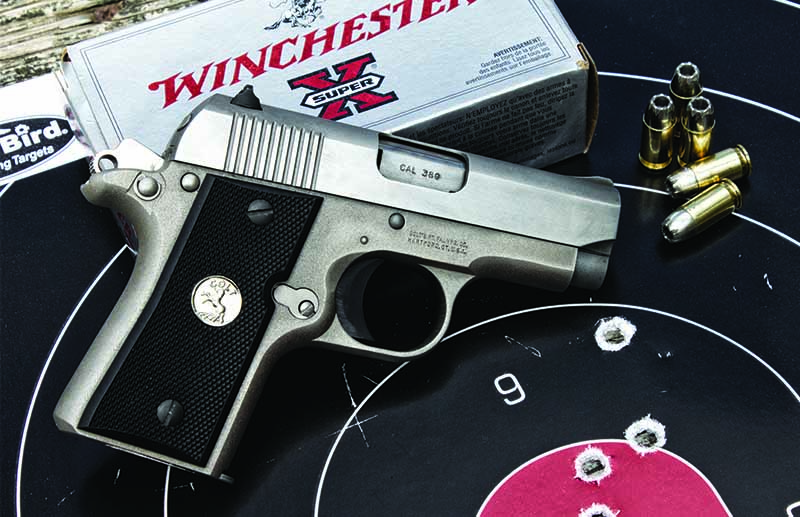
No, the .380 Auto isn’t the ideal cartridge for stopping fights. On the other hand, if you need an ultra-compact and easily concealable handgun, it might be the best option for you.
However, there’s an issue with the HiPower that’s as irritating as a boil on your backside. Many, if not all, factory HiPower magazines rattle when they’re filled with more than eight rounds. Now, a rattling magazine in a fighting pistol might not seem like a big deal, but when you’re trying to carry concealed and with every step you hear the rounds in the magazine rattling around, it’s annoying. I’ve even had folks ask me, “What’s that rattling noise when you walk?” Maybe they think my pockets are full of money. If that’s the case, they obviously don’t know how much gun writers get paid. The thing is, though, these rattling HiPower magazines function flawlessly!
Well, I’ve finally found a solution. The 13-round blued and stainless Browning HiPower magazines from Mec-Gar (item numbers MGBRP13B and MGBRP13N) don’t rattle at all. And, even more importantly, in all three of my Browning Hi Powers, they function perfectly. They retail for about $30, and I now have several. I’ve regulated all of my factory Browning HiPower magazines to range duty, but when I carry a HiPower it has a Mec-Gar 13-rounder inside it.
Editor’s Note: This article originally appeared in the February 2021 issue of Gun Digest the Magazine.
Doing more than simply protecting your hearing, Tetra AlphaShield also give you an edge in the field amplifying sound.
I’ve had the benefit of a father who understood hearing protection. Having spent a fall, winter and spring engaged in Uncle Sam’s European Tactical Hike, he knew how loud firearms could be. Then, as an engineer for the auto companies, loud factories were a known quantity. Even as kids, shooting “only” a .22 LR rifle, he insisted on us wearing hearing protection.
I continue this today, having spent my entire life and shooting career wearing earpro. A lot of them were uncomfortable, expansive, poorly protecting and awkward. But that was a long time ago. Electronic protection is a leap forward, and now you can get affordable in-the-ear electronic protection from Tetra.
Why Tetra AlphaShield
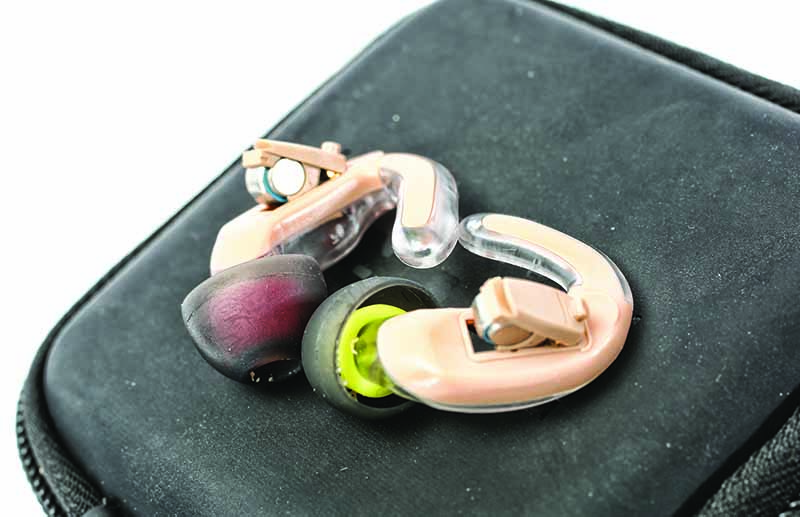
The Tetra AlphaShield series are electronic in-the-ear protection. And the AlphaShield series comes in four different options, pre-built to provide a particular kind of sensitivity and hearing boost. What? How? Simple. The sounds you’re trying to discern while hunting deer aren’t necessarily the same ones you’re trying to hear when scanning the skies for ducks and geese. So, they make Multi-Pursuit, Range, Upland and Waterfowl versions of the AlphaShield.
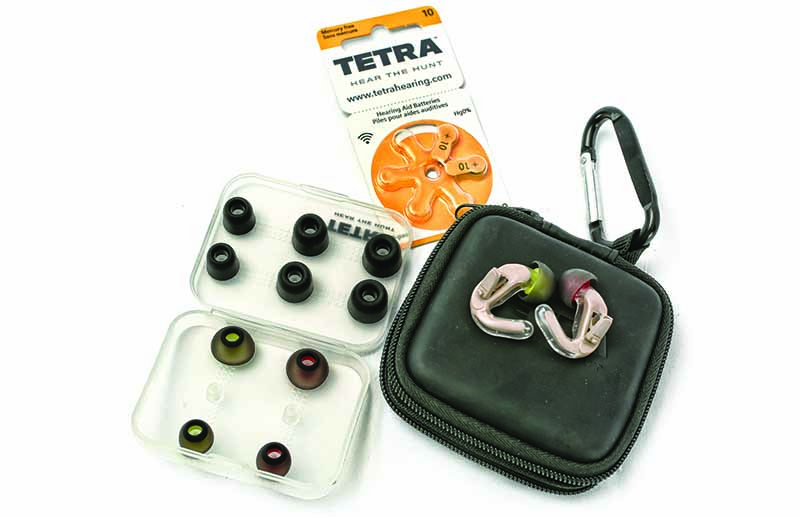
Now, one of the great marketing lies of the modern era is “one size fits all.” So how does Tetra make it possible for all of us to have in-the-ear protection? Simple: The AlphaShield of your choice comes with five pairs of ear buds, flexible skirts for the protection of different sizes. You simply use the size that fits that ear. The AlphaShield units are a left and a right pair, and if your ears take different sizes (mine do—my left ear is very contrarian that way), you simply use different-sized skirts.
The AlphaShields use your basic bog-standard No. 10 battery, which you can buy a bale of for a few bucks at the local big-box store. And buy a bale of them. The beautiful thing about electronic protection is that they’re fail-safe. That is, when they quit, you’re safe. If the batteries go dead (and that’s the annoying thing about No. 10 cells), then you still have earplugs in.
While they’re in, you have protection but electronic amplification. I keep the case the AlphaShield comes in—with batteries—in the top compartment of my camera bag. If I’m going to the range, then I’m taking my camera; that way I always have protection with me and electronic protection.
Ear Protection In The Field
My ears have survived something on the order of a million and a half rounds (maybe five or six unprotected) and most of a decade in radio broadcasting; they still work just fine, and I intend to keep them that way.
My father? He spent from the fall of 1944 to the end of the war in the front, and was the only man in his rifle company not to receive a Purple Heart. “Not from lack of the Germans trying” was his comment on that. He worked for GM and then Ford for 35 years, kept his hearing and spent a long retirement afterward. In all, a good teacher of safety.
Don’t for a moment believe the old hunter’s myth that the stress of hunting causes your “ears to shut down” and protect your hearing. BS. You might be so focused on the game that the shot sounds like a little “pop,” but your ears still take the full hit.
Protect them.
Editor’s Note: This article originally appeared in the February 2021 issue of Gun Digest the Magazine.
A comparison between two popular PCCs from Ruger: the PC Carbine and the PC Charger.
The idea of a pistol-caliber carbine (PCC) extends back—well before the turn of the 20th century. The appeal was the ability to share ammunition between a rifle and a handgun. From about 1873 until the dawn of the smokeless cartridge, this practice was common with cartridges such as the .32-20, .38-40 and .44-40 Winchester. Ironically, those cartridges were rifle cartridges that became popular in handguns.
With the introduction of rifle cartridges such as the .30-30 Winchester and pistol cartridges such as the 9mm Luger and .45 Auto, especially after World War I, this practice began to wane—partly because rifles could then dramatically increase reach and effectiveness and partly because the pistol began to replace the revolver as the preferred sidearm. Also, at about this time, shoulder-stocked pistols and the submachine gun became popular.
The first notably successful, commercially available PCC was the Marlin Camp Carbine. Introduced in 1985, it was a 16-inch-barreled, semi-automatic rifle chambered for either the 9mm Luger or .45 Auto. An aspect that made this carbine so appealing was that the .45 Auto version used 1911 magazines, and the 9mm Luger version used Smith & Wesson 59-series pistol magazines.
The gun possibly responsible for the Ruger PC Carbine concept was the now-discontinued Marlin Camp Carbine.
Both were popular at that time. The Camp Carbine was marketed for use in hunting camps and for survival. Interestingly, it might have become more popular after it was discontinued in 1999. Then, Americans began to become more tactically or survival minded, and the little, 6½-pound Camp Carbine seemed like a very practical implement.
To fill this gap, manufacturers who made AR15s began building 16-inch-barreled carbines designed for the 9mm Luger and other pistol cartridges, and the modern pistol-caliber carbine was born. Recently, we’ve seen this concept evolve into pistols with shorter-than-16-inch barrels that’ll accept what’s become known as an “armbrace.” This is intended to be strapped to the shooting arm to better help control these rather heavy carbines-turned-pistols.
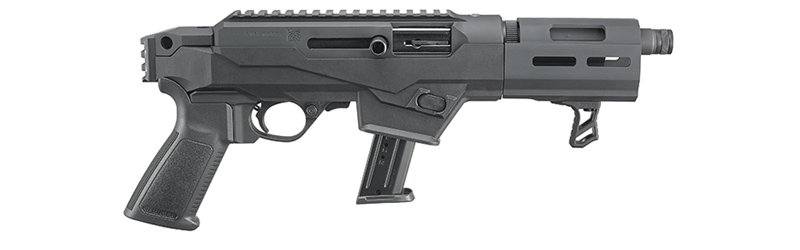
Although it’s not an AR15-type design, a perfect example of this evolution is the Ruger PC Carbine. Originally introduced in 2017 as a carbine that fired a pistol cartridge, it’s now evolved into a pistol—the Ruger PC Charger. This Ruger PC platform, in either the Carbine or Charger version, is getting a lot of attention; and some might be wondering which is the best option.
Ruger PC Carbine
Counting distributor-exclusive models, Ruger currently offers 19 variations of the PC Carbine. The original version has a traditionally styled polymer stock and somewhat resembles the discontinued Marlin Camp Carbine in looks, shape and size. For those looking for a handy carbine with minimal recoil for camp use, survival applications or just for fun at the range, this little, 6.8-pound carbine is ideal.
The base model of the Ruger PC Carbine has a common synthetic stock and adjustable sights. It still retains the ambidextrous features of the full line of PC Carbine and Charger weapon systems.
The most recent version uses a chassis-like system with a modular design. It has the look of a weapon that might be used in some sort of tactical environment and comes with a free-floating handguard that’ll accept M-Lok accessories. It could also be used in the same ways as the standard version, but with the ability to accept a collapsible buttstock and various handguard-mounted accessories, it’s a bit better suited for, well … fighting.
There are three features that really set the PC Carbine apart from AR15-style PCCs and the Marlin Camp Carbine.
For starters, the PC Carbine is a takedown rifle. Just forward of the receiver on the underside of the forend are a recess and a button. After loosening the adjustment ring around the barrel (which is just forward of the receiver), when this button is pressed, the forend and barrel can be rotated and removed. Assembly is in the reverse order. The process takes fewer than 10 seconds. This permits the PC Carbine to be stored in a compact pack or case.
The second cool aspect of the PC Carbine is its ability to accept several different pistol magazines. Due to the ingeniously designed magazine well module, in a matter of a few minutes, you can convert the PC Carbine to accept either Ruger American, Ruger SR Series or Glock magazines. This can be important if, as in the spirit of the Marlin Camp Carbine, you want to use the PC Carbine as a sort of survival-/tactical-type firearm and be able to share magazines between your handgun and long gun.
The third appealing feature of the PC Carbine, and the one I liked the most, was the ability to move the charging handle from the right side of the action to the left. This might seem unimportant but, in conjunction with the reversible magazine release, it allows a right- or left-handed shooter to run this rifle through multiple magazines and even through stoppages—should they occur—without rotating the gun or ever removing their shooting hand from the grip/trigger area.
I’ve worked a good bit with what might be called the “hybrid” version (Model #19115) of the Ruger PC Carbine. This particular rifle has the conventionally styled polymer stock, but instead of a polymer forend, it’s fitted with the free-floating handguard. The carbine comes with an aperture-style rear sight and protected-post front sight. Both are barrel mounted. But, it also has a 16-slot Picatinny rail that’s integral—not screwed to—the receiver. I found that with a compact reflex sight, I could quickly and reliably hammer a torso-sized target at 100 yards, and even make precision head shots at half that distance.
Ruger PC Charger
In the spirit of how Ruger transitioned its 10-22 rimfire carbine into the .22 Charger pistol, it did the same with its PC Carbine. Ruger took the base chassis version of the PC Carbine (Model #19122) and shortened the barrel to 6.5 inches. It also removed the buttstock, which was attached via a vertical Picatinny rail section on the rear of the chassis. This reduced the overall length from 35.50 inches to 16.50 inches and the weight from 7.3 pounds to 5.2 pounds. As opposed to the 13.5-inch handguard on the PC Carbine, it’s only 4 inches long on the PC Charger.
The Ruger PC Charger is, in fact, a pistol that—when paired with a single-point sling, folding armbrace, and light and laser—becomes a very versatile weapon system.
One stark difference between the Ruger PC Carbine and the PC Charger is that the PC Charger doesn’t come with any sort of sights. It does have the integral Picatinny rail, but you’ll have to install some sort of optical sight—or at minimum, a laser—in order to reliably hit anything more than arm’s length away (three versions of the Ruger PC Carbine also come without sights). Other than that, along with the addition of a handstop (to keep your support hand from inadvertently slipping in front of the barrel), everything else is essentially the same on these two firearms.
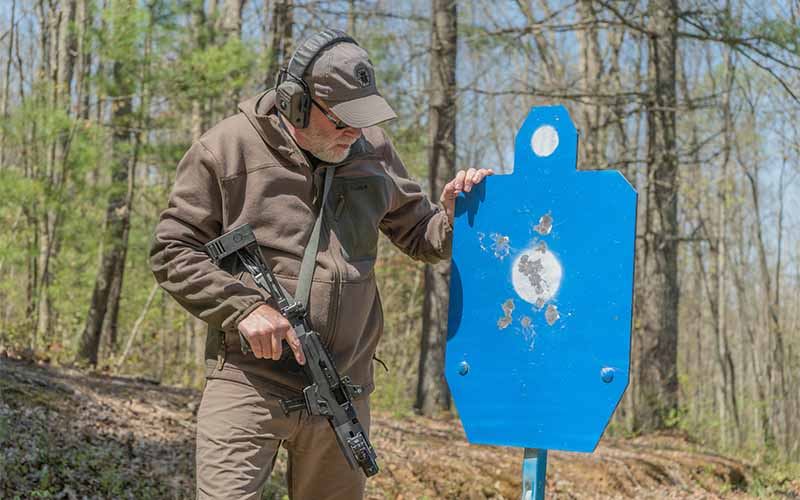
In a previous Gun Digest article, I discussed in detail the many different ways you can effectively and legally shoot the Ruger PC Charger or similarly styled pistol. I won’t rehash that here, but I will say that the best way I’ve found to shoot this pistol is with the addition of an armbrace…or, at least with a single-point sling and sling tension. A 16-inch, 5-pound handgun is simply nearly impossible to shoot with precision, speed and comfort in any other fashion.
This target was hammered with the Ruger PC Charger at 100 yards. It was easy to keep a full magazine on target, even at a relatively fast shot cadence.
PC Carbine Or PC Charger?
When it comes to a camp gun, home-defense firearm or some sort of survival weapon, the question used to be “Carbine or handgun?”
With the rise in popularity of PCCs, you can now have a carbine and pistol that share the same ammo and even magazines. That makes a lot of sense: A rifle-like gun is easier to control and easier to get hits with at longer distances than a pistol. There’s an obvious reason gunmen prior to the turn of the 20th century liked the idea of a handgun and rifle that used the same ammunition.
Where things now get a bit muddled is with guns such as the Ruger PC Charger. By definition, it’s a pistol. It’s also—by any observation—not a pistol you can carry around comfortably on a belt holster (there’s a reason the PC Charger has a single-point sling attachment point). Pistol or not, with the attachment of an armbrace to the PC Charger—particularly a folding version—you might find yourself torn between it and a PC Carbine.
Which Is The Better Option?
Many might find my opinion controversial on this matter. However, it’s based on practical application, common sense and ballistics. Neither the PC Carbine nor the PC Charger are long-range weapons; putting a 16-inch barrel on a 9mm Luger will only give you a velocity advantage of about 200 fps. In some cases, this increase in velocity can decrease the penetration potential of self-defense ammunition. Some personal protection loads for the 9mm Luger aren’t designed to be fired at carbine barrel velocities. These higher-impact velocities can result in overexpansion, sometimes fragmentation and less penetration. Of course, this isn’t an issue with non-expanding, full-metal-jacket ammunition. From a terminal performance standpoint, bonded bullets are the best option for carbine-length barrels.
Additionally, while a longer barrel with conventional sights might help with accurate shooting, from a practical standpoint, both of these guns need an optical sight, such as a reflex or red-dot, for optimal performance and, with it, any sight radius advantage is lost. I could only squeeze an infinitesimal amount of additional precision out of the PC Carbine’s longer barrel at distance; and considering that you can zero either gun any way you like, the difference in trajectory between the two barrels/velocities was of no real consequence.
Besides the fact that the least-expensive model of PC Carbine costs $150 less than the PC Charger, I see no reason not to opt for the Charger. It is much more compact and lighter, and if you intend to carry this gun in a vehicle or even an UTV, the more-compact Charger is much more suited to the task. (By the way, both the PC Carbine and PC Charger are offered in state-compliant versions.)
I’ll add that if you own a PC Charger (Model #29100) and a PC Carbine (Model #19115), you can remove the barrel from the PC Carbine and put it on the PC Charger, effectively turning the PC Charger into a PC Carbine. (Disclaimer: I’m not suggesting this is something that Ruger recommends. I’m only saying that it’ll work. This is also completely legal and gives you even more options.) However, you can’t do the reverse and make the PC Carbine (rifle) a pistol by installing the shorter PC Charger barrel—that’s a go-to-jail-and-do-not-pass-go action!
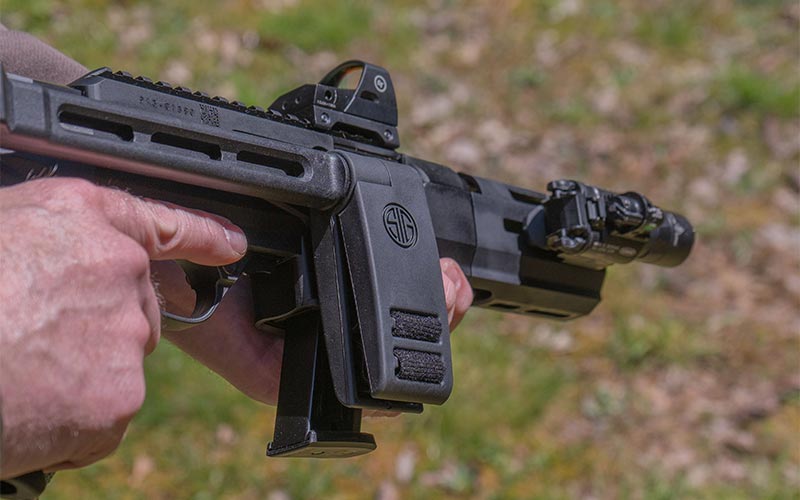
A folding armbrace can be attached to the Ruger PC Charger and to some models of the PC Carbine.
I find it hard to conceive of many situations for which the PC Carbine is a better option than the PC Charger—unless you intend the weapon to always and only be fired and used as a rifle. For a basic, utilitarian, ranch-type gun, the PC Carbine might have more appeal. If, on the other hand, you plan for the weapon to serve in a home-, camp- or vehicle-defense roll, the PC Charger, with its compactness and the many ways it can be effectively employed, seems the better option.
For more information on Ruger’s pistol caliber carbines, please visit ruger.com.
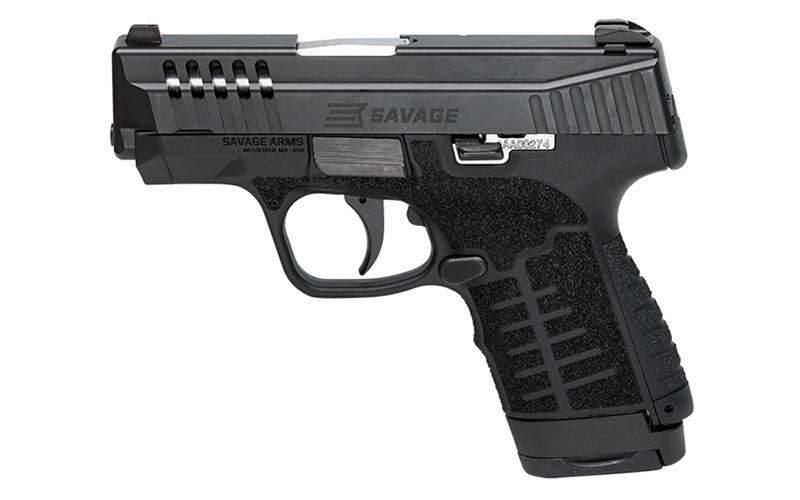
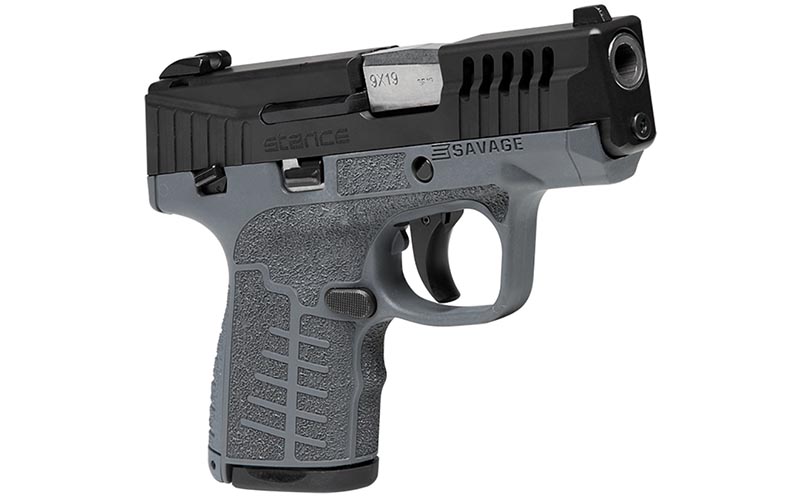
Savage Arms has just announced the release of the Stance pistol, the company’s first micro-compact 9mm handgun for concealed carry.
Micro-compact 9mm carry pistols are the hottest thing on the market right now, and it seems that every company out there wants in on the action. Even Savage, a company that has not made a traditional handgun in over 100 years, has now decided to throw their hat in the ring as well. The newly announced Stance pistol has some features that make it a strong competitor to existing micro-9s on the market. A few variations are already available, and Savage claims that the company will be expanding the Stance into a whole new family of pistols as time moves on.
Chambered for 9mm and sporting a 3.2-inch barrel, the Stance pistol has some features that distinguish it from other popular micro-9 models. Prioritizing concealability and comfort of carry over magazine capacity, the Stance pistol holds a few rounds less than its competitors in order to have a slimmer profile. It can accept either 7, 8 or extended 10-round mags, and two are included with each pistol (one 7 and one 8-round).
The Stance pistol likely gets its name from its grip angle. Set for the popular, natural-pointing 18-degree angle, the grip also comes with two interchangeable backstraps to accommodate different hand sizes. The grip features aggressive stippling all the way around as well.
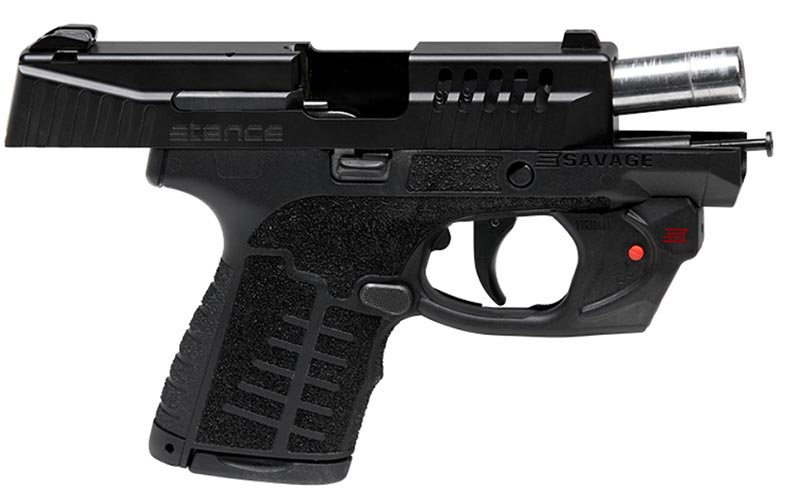
It has ambidextrous magazine and slide release buttons, and it uses an internal chassis as the serialized component to allow for switching grips without the need for extra transfers. The gun is also available without a manual safety. Other features on the Stance pistol include a ported slide, a wide, short-reset trigger and snag-free sights.
Currently, package options for the Stance pistol include a choice between night sights or standard 3-dot sights, a manual safety or no safety, and either a black, grey or FDE finish. It is also available with a Viridian laser. The laser attaches via the trigger guard, as the Stance has no under-barrel Picatinny rail. MSRPs for the new Stance pistols range from $479 at their most basic to $561 with the included laser. The Stance looks like a solid new CCW pistol, but the lack of an optics-ready option already puts it behind the curve of most of its competitors. Savage will almost certainly be releasing an optics-ready version in the future, so if that interests you it may be worth waiting.
A couple decades ago, I bought a rifle which would become—and remain—my dedicated varmint rifle. It’s a Ruger Model 77 MKII in .22-250 Remington, with a sporter-weight 22-inch barrel, a Hogue over-molded stock and Timney trigger. While the accuracy wasn’t terrible with factory ammunition—though the factory trigger was a different story—I wasn’t getting exactly what I wanted from handloads, predominately using IMR4064 and IMR4320. Both of those powders were chosen because I had them on hand from years of loading for my .308 Winchester and because they sat in the middle of the burn rate choices for the .22-250 case.
Speaking to some guys who I knew were serious about the .22-250 as a target cartridge, they enlightened me. “Look no further than Hodgdon H380; anything else and you’re wasting your time.” Well, alrighty then.
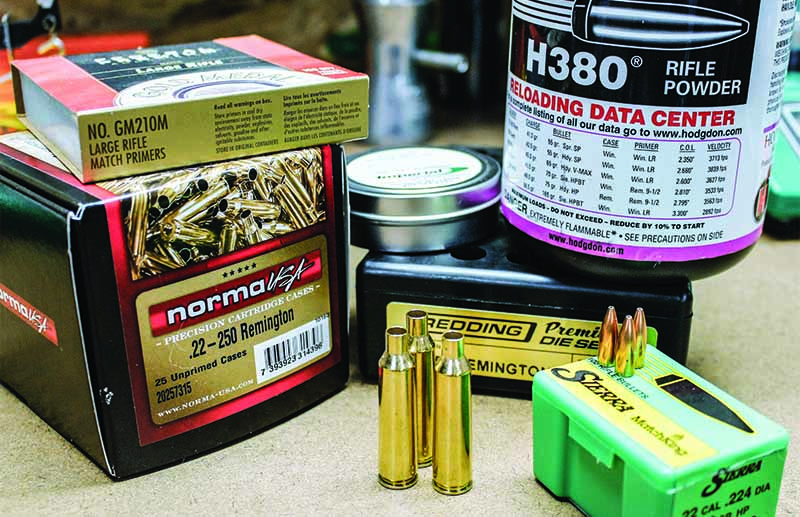
Off I went to purchase a pound of H380. Their recommendation made sense, as H380 was named for Bruce Hodgdon’s 38-grain load in the .22-250 with a 55-grain bullet. I immediately saw a huge accuracy improvement, but more importantly, it was my introduction to ball powders and how useful they can be.
Powder Geometry
There are predominately three powder shapes: flake, extruded stick and ball, or spherical. The flake powders are generally reserved for shot shells and pistol cartridges, and among rifle cartridges, the stick powders greatly outnumber any of the ball powders. There are some times where a ball powder comes in very handy, solving some problems where case capacity is limited.
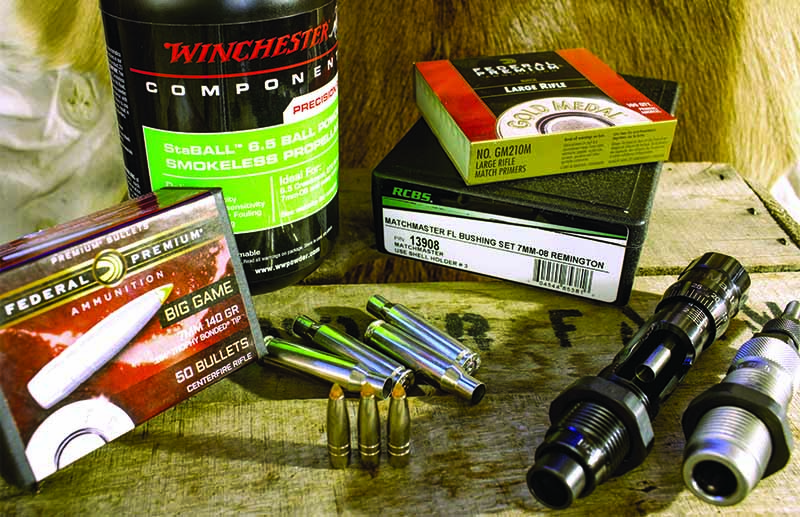
Massaro’s 7mm-08 Remington loved the 140-grain Trophy Bonded Tip bullet over Winchester’s StaBall 6.5 powder, giving a load with low velocity spreads and good accuracy. Photo: Massaro Media Group
I remember loading for my dad when we were heading to Tanzania for Cape buffalo and having trouble getting his .458 Winchester Magnum to reach anything close to what the velocities were supposed to be. With 500-grain A-Square Dead Toughs and Monolithic Solids, real estate inside the case was assuredly at a premium.
After several unsuccessful attempts with stick powders, it was finally Hodgdon’s H335 that got me where I needed to be: 2,080 fps, and groups hovering around 1½ inches at 100 yards. While normally associated with the .222 and .223 Remington, it works well in the larger, straight-walled cartridges as well.
Speaking of dad and his straight-walled cartridges, I leaned on a ball powder for his .45-70 Government when we headed to South Dakota to hunt bison. His rifle is a Browning 1886—definitely a strong action—and we wanted to take advantage of that fact. Using a 400-grain Swift A-Frame and 58.0 grains of Hodgdon’s BL-C(2), that 26-inch octagon barrel gave a muzzle velocity of just over 1,800 fps; Dad took his bull cleanly with a well-placed shot.
That load, while on the stout side, is plenty accurate for the iron-sighted lever gun. BL-C(2), pronounced ball-see-two, was designed for the 7.62 NATO, so the .308 Winchester is a natural candidate for this ball powder, but it also works very well in the smaller cases like the .204 Ruger, .223 Remington and even the .17 Remington.
Hodgdon’s H414 is a slower-burning ball powder with a burn rate similar to H4350 (though not interchangeable), which is ideal in the .30-06 and similar cases; I’ve had fantastic results in the 9.3x62mm Mauser and in the .375 H&H Magnum. Some folks say this powder (which is very, very close to Winchester 760) is sensitive to temperature change, though that hasn’t been my experience: It has been rather consistent in summer and fall temperatures.
Getting back to good ol’ H380, that powder has been good to me, though I can testify to the temperature sensitivity … to the point where I use a summer load and a winter load. In spite of the temperature issues, it’s accurate, not only in the .22-250 Remington, but in the .308 Winchester — my rifle loves H380 and a 165-grain Sierra GameKing hollow-point boat-tail — and in the .375 Ruger.
Winchester has long been famous for their ball powder lineup, with W748 and W760 being highly popular. A friend has a Remington 700 Classic chambered in the now-obscure .350 Remington Magnum, and if any cartridge is cramped for space, it’s that one. Having gone through a number of powders, W748 came to the rescue for that gun, and under a 220-grain Speer Hot-Cor bullet it has MOA accuracy, and velocities with an extreme spread of around 20 fps.
The New StaBALL
Winchester has released a new ball powder, the StaBall 6.5 powder, which is well-suited to a number of cartridges. Named for the 6.5 Creedmoor—the burn rate sits comfortably between H4350 and Reloder 19, making it a perfect choice for the Creedmoor family. Plus, this powder is engineered to be insensitive to temperature swings.
Hodgdon’s H380 is actually named for the 38.0 grain load in Bruce Hodgdon’s then wildcat .22-250, and is also a sound choice in the .308 Winchester and .375 H&H. Photo: Massaro Media Group
Winchester (Hodgdon) offers data for a wide range of cartridges, including classic varmint cartridges like the .22-250 Remington, .220 Swift and .257 Roberts, up to the mediums like the 7mm-08 Remington, 7×57 Mauser and .30-06 Springfield, up through the big bores like the .375 Ruger, .375 H&H, .416 Remington Magnum and .416 Rigby.
I wanted to see how it would perform in a couple of different cartridges. My pal, Mike Buser has a great 6.5 Creedmoor—a Masterpiece Arms Custom—so we loaded up some StaBall and a pair of bullets we knew the rifle liked: the 140-grain Berger Hybrid and the 135-grain Hornady A-Tip. The Winchester load data claims velocities higher than most other powders, and we found that claim to be true, though the test barrel was 2 inches shorter than Mike’s barrel. We drove that 140-grain Berger to an average velocity of 2,745 fps, with 100-yard group sizes between 0.51 and 0.70 MOA. The 135-grain A-Tip left the barrel at 2,840 fps, averaging 0.65-MOA, with extreme spreads hovering around the 20-fps mark.
My Tikka T3X Lite in 7mm-08 Remington likes StaBall also. The 140-grain Federal Trophy Bonded Tip, over a charge of 47.5 grains of StaBall, gave 2,835 fps into just under 1-MOA groups. With a bullet of this construction and conformation, there aren’t too many species that are off the menu. The load data indicates that the 7mm-08 can push the 175-grain Nosler Partition to over 2,600 fps with StaBall 6.5; I got 2,615 fps with three-shot groups printing 1.1 inches at 100 yards. Those 175s are certainly long and can eat up a bunch of room inside the case; using a ball powder will help combat that fact.
Bat or Ball?
Do ball powders beat the extruded stick powders? Because there are so many more choices in stick powder, I feel pretty confident saying that they’ll remain at the top of the heap. However, there are many instances where they can provide the answer to the problem of limited case capacity.
When space is limited, and the load density exceeds 100 percent, you can break the grain structure of stick powder due to over-compression. This can have negative effect on consistency, where using a ball powder will give less air gaps and reduce the space occupied by the powder column. If you like the smaller cases, give one of the ball powders a try … you might just develop a new favorite for you and your rifle.
Editor’s Note: This article originally appeared in the January 2021 issue of Gun Digest the Magazine.
Looking to go armed, but are stuck in the weeds as to what to arm yourself with? Here are 20 of the best concealed carry gun options that will keep you on the defensive.