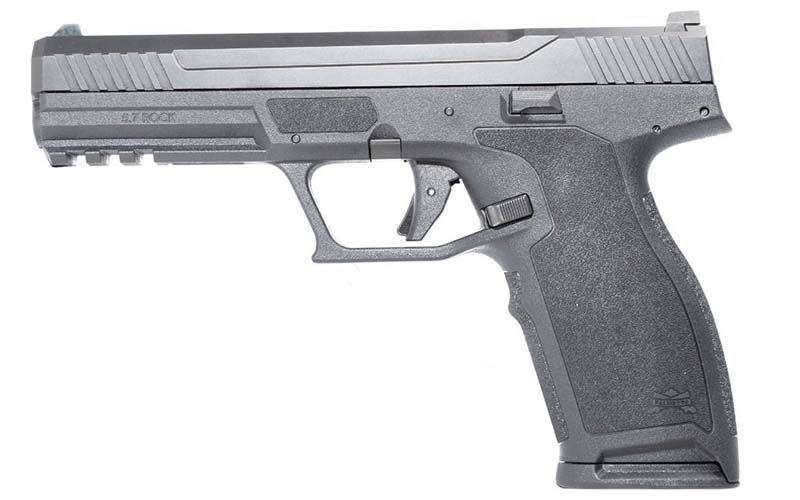
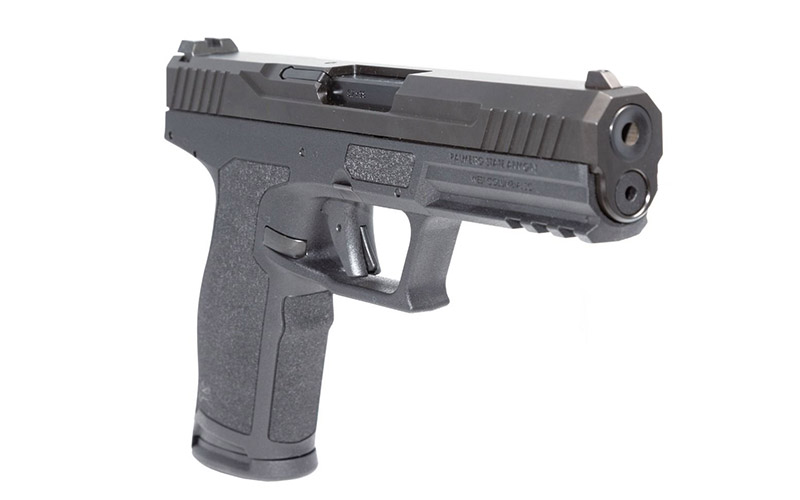
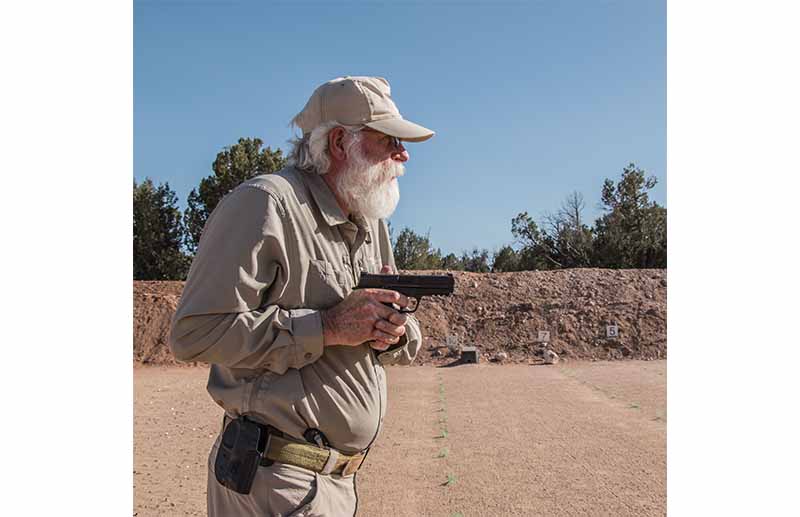
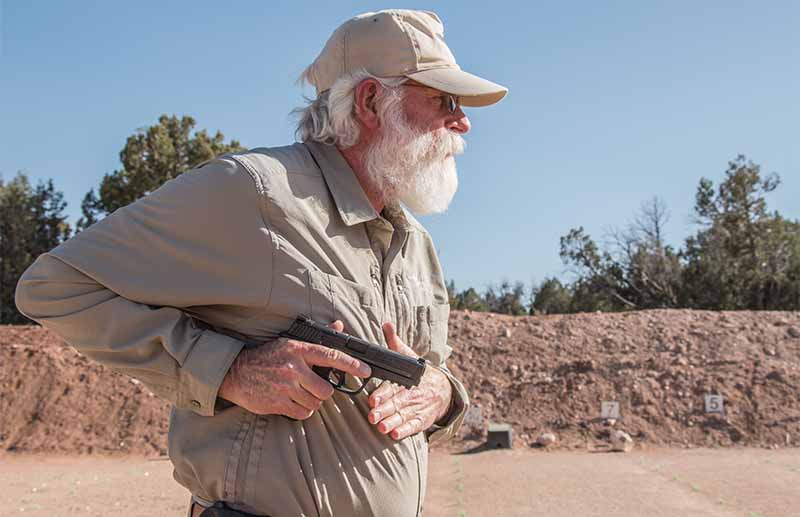
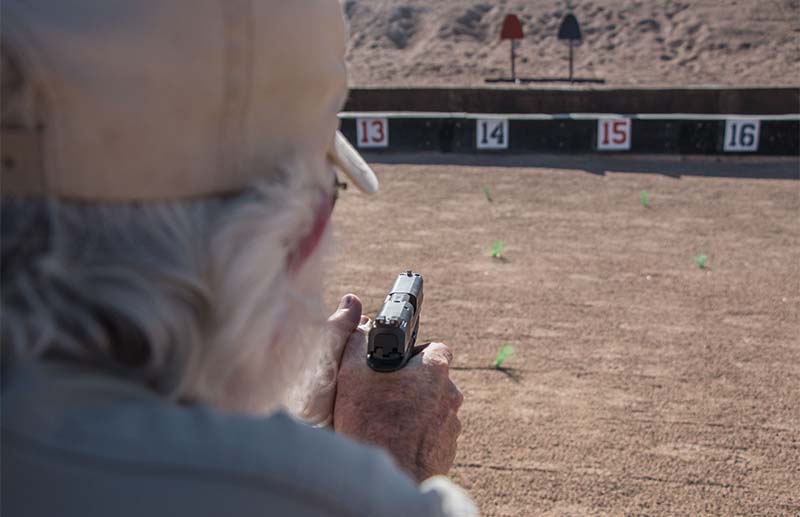
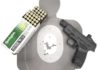
Palmetto State Armory just hopped on the 5.7x28mm train with the release of their new, affordable 5.7 Rock pistol.
The 5.7x28mm cartridge was invented by FN, as well as the original Five-seveN pistol to go along with it. Ruger joined the party with their own design in 2019, and now Palmetto State Armory has too with the release of the 5.7 Rock pistol.
Because the original FN pistol carries an MSRP of above $1,300, it only makes sense that other companies have been competing to release more economical options for the unique cartridge. Ruger managed to give their model an MSRP of $869, and while much more affordable than FN’s, it still couldn’t be considered a true budget gun. With PSA’s 5.7 Rock having an MSRP of $499.99, it is now the most affordable way to get into the 5.7x28mm cartridge. The ammo is still plenty expensive, but at least there’s finally a more economical gun to shoot it with.
PSA’s description of the 5.7 Rock:
A full-sized polymer-framed pistol, the PSA 5.7 Rock introduces game-changing ergonomics and controllability. Made from high-quality 416 stainless steel and advanced polymers, this pistol lives up to today’s highest expectations while maintaining the unmatched Palmetto State Armory value. Chambered in 5.7x28mm, the PSA 5.7 Rock is fed from a supplied 23 round magazine and operated by a smooth single-action striker-fired trigger mechanism. The carbon steel fluted barrel and 416 stainless steel slide have a QPQ finish for a smooth finish that also offers maximum corrosion protection to ensure longevity in the life of your pistol. This pistol is designed to work with Glock compatible sights.
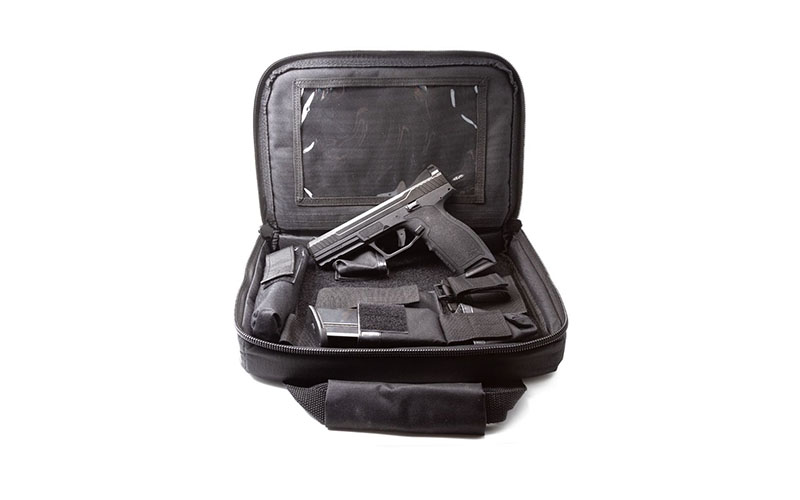
Each PSA 5.7 Rock pistol includes two 23-round magazines and a soft case. As mentioned, it has an MSRP of $499.99 and it’s available now.
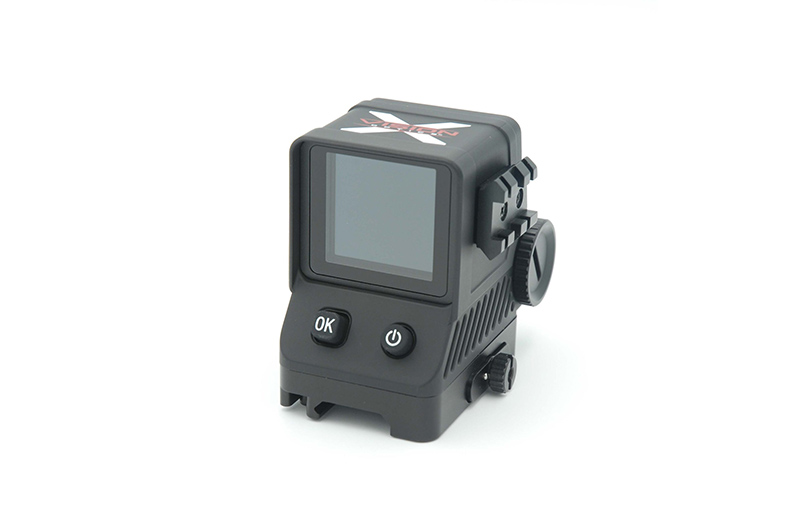
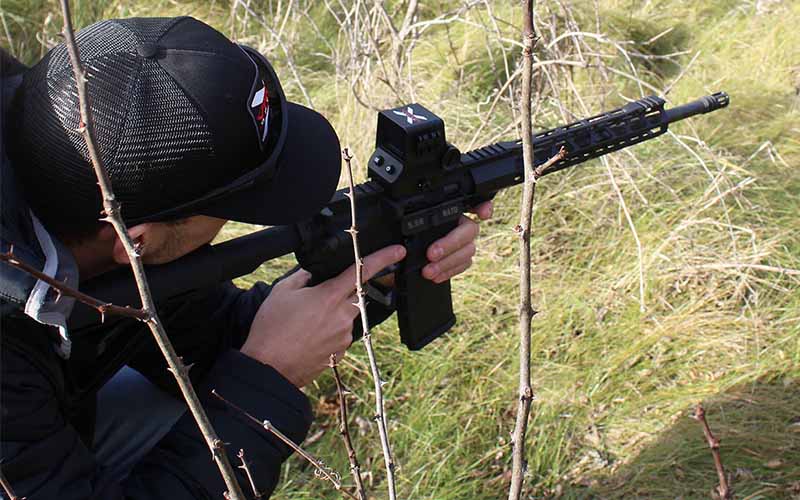
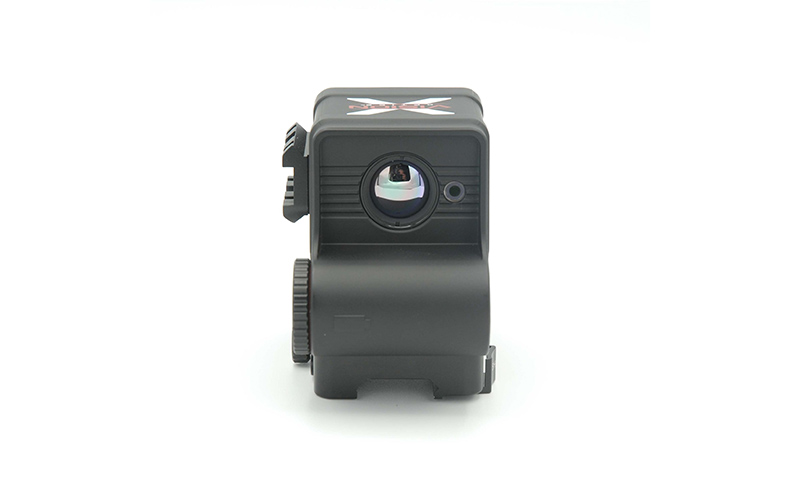
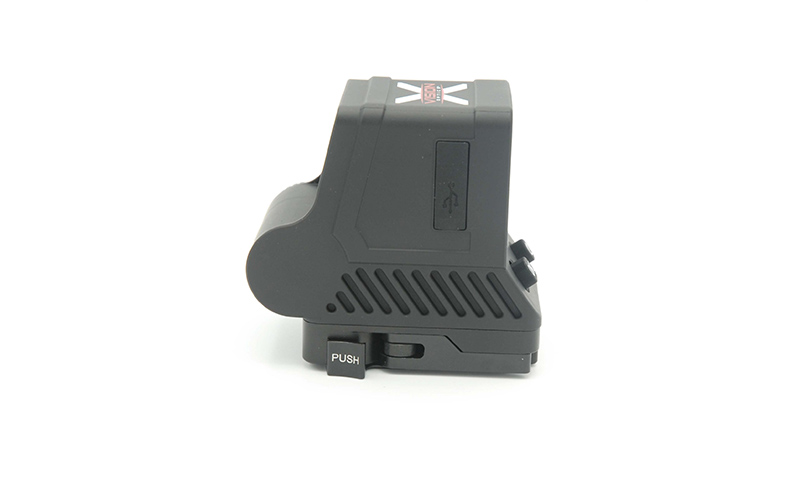
X-Vision Optics has just released the TR1, the company’s first thermal reflex sight.
X-Vision Optics recently began to dabble in thermal technology, already having released a thermal scope and monocular earlier this year. Now, the company has just released the TR1, a thermal reflex sight that’s suitable for both hunting and tactical applications.
The TR1 has a detection range of up to 1,000 yards and a recognition range of up to 500 yards depending on weather conditions. It also has a 1.63-inch AMOLED display with a 25 Hz frame rate, allowing it to smoothly track motion even at distance, an extremely important feature when engaging a moving target. To take advantage of the thermal reflex sight’s maximum detection range, the TR1 also features 1-4x magnification capabilities with unlimited eye relief, something that’s not possible with true, non-digital reflex optics. The image can be displayed in one of five color palette options as well.
Designed for field use, not just to be an expensive toy, the Thermal Reflex Sight was also built tough. It has an IP67 weatherproof rating and is dust and water-resistant, and the sight can withstand up to 53 foot-pounds of recoil energy. The TR1 also features a visible laser to assist with target acquisition and identification.
Other features of the Thermal Reflex Sight include its four different reticle styles and color options and its ability to save four different sets of zero data. These features combined with the TR1’s quick-release Picatinny mount make it possible to rapidly swap the device between four firearms (or crossbows) with different ballistic properties.
The whole unit weighs just over a half-pound, runs off a single CR123 battery and has a battery life of 3.5 hours. It has an MSRP of $1,999.99 and is available now.
Looking for a new iron or piece of kit to enhance the one you already own? Check out these 7 new bits of guns and gear to grow your firearms wish list.
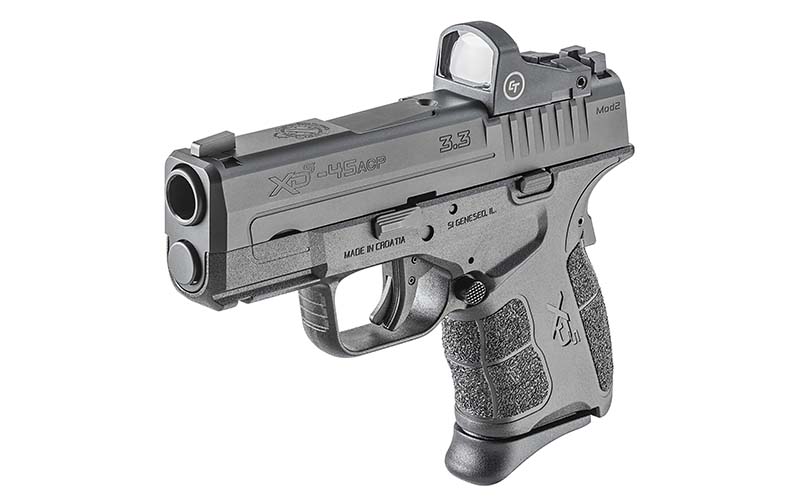
Springfield Armory XD-M Elite 3.8 Compact OSP .45 ACP
Shooters who still swear by the .45 ACP to protect their six should like the news coming out of Springfield Armory. Keeping the big-boy cartridge relevant for self-defense, the company has introduced its XD-M in a pack perfect for EDC. The Elite 3.8-inch Compact OSP in .45 ACP combines big-bore power with cutting-edge performance to provide concealed carry users with an extraordinary option. In addition to 10+1 capacity, ambidextrous controls and top-notch META trigger, the pistol is also optic ready, allowing for the addition of a red-dot sight. In fact, Springfield is even offering a factory package with its HEX Dragonfly 3.5 MOA red-dot optic. Though, you can still buy the gun as a standalone. MSRP: Optic Package, $843 ; Standalone, $653
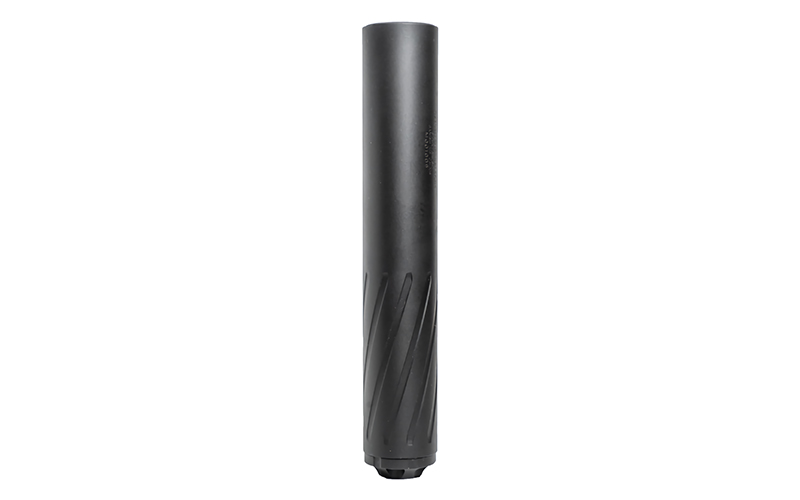
Silencer Central Banish 338
Large bore cartridges aren’t just good at poking bigger holes: They’re also excellent at going the distance. Silencer Central aims to make one of the most renowned options in this category—the .338 Lapua—all the more controllable upon launch. The quietest and most compact .338 suppressor on the market, the Banish 338 offers a little something to take the edge off the long-range specialist. Made of titanium and Inconel, the durable option keeps a rifle relatively svelte, adding only 17.5 ounces and 9.1 more inches in length. Additionally, the can offers 33 dB of noise reduction, not to mention does a number on felt recoil. MSRP: $1,600
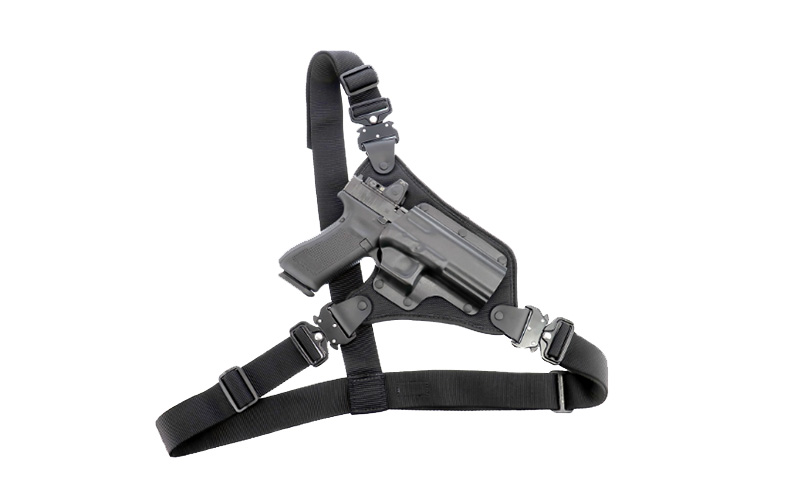
Galco High Ready Chest Holster
For folks who take to the woods with a big-bore pistol in hand, Galco has the perfect addition to your kit. The company’s new High Ready Chest Holster is the latest in an expanding line of torso-mounted hunting and outdoor holsters. Very comfortably carrying a large-frame semi-auto in an easily accessible chest position, the rig is ideal for protection when hunting, fishing, camping or hiking in bear country. The holster’s comfort comes from its innovative backing plate, composed of a ballistic nylon front over a closed-cell foam body. The back portion of the plate that rides against the wearer’s chest is lined with Galco’s Comfort Cloth, an adaptive performance mesh that provides padding and wicks moisture. MSRP: $169
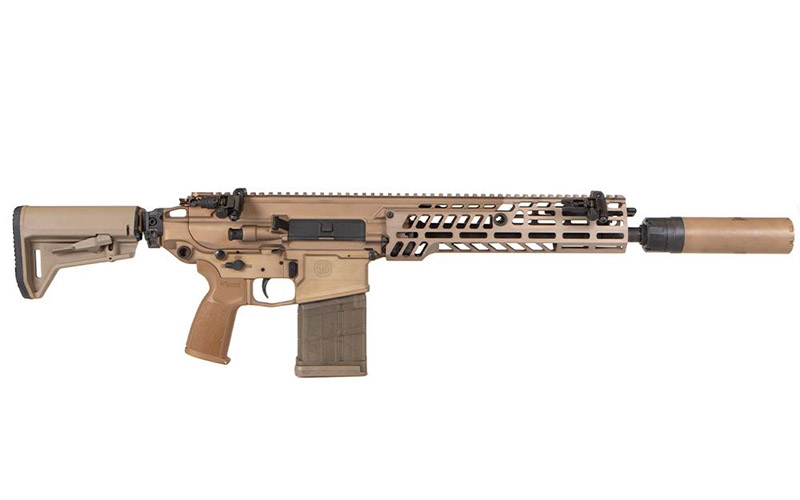
Sig Sauer MCX-Spear
An expansion of the company’s legendary MCX line, the Spear brings a twist to the series of semi-auto rifles, putting the power of the .277 Sig Fury in shooters’ hands. The rifle itself was developed with war fighting in mind, offering an option that improves the power, accuracy and range of the platform. The .277 plays into this, a commercial variant of the 6.8x51mm hybrid military round with excellent external and terminal ballistics. It’s quite a package, and one that comes with plenty of extras such as a slew of QD attachment points, threaded muzzle, the inclusion of the SLX Suppressor and ambidextrous controls. MSRP: $8,000
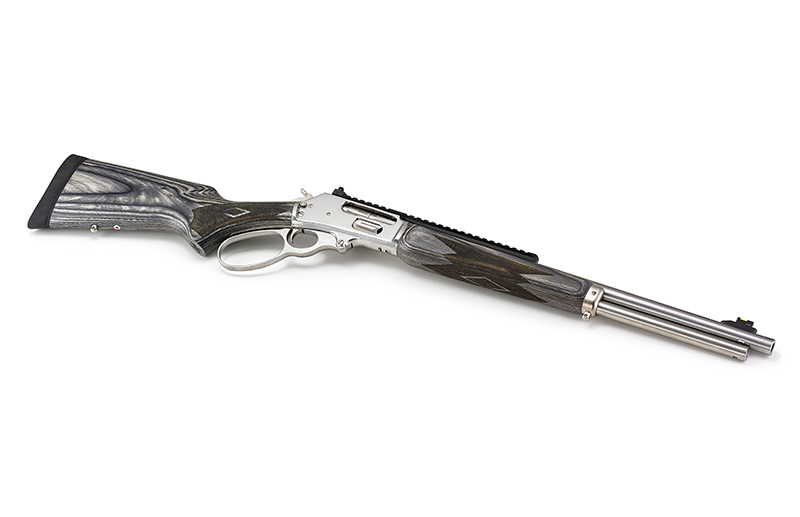
Ruger Marlin 1895 SBL Lever-Action Rifle
Marlin is back, and 1895 SBL lever-action rifles are now shipping again for the first time since the company ceased production in August of 2020. This is the first gun produced since Ruger acquired the company, and there seems to be plenty to like about the .45-70 Government-chambered gun. First and foremost, Ruger hasn’t tinkered where it counts—the milled steel receiver and internals. This should keep the ’95 as reliable as ever. But the company has left its mark with a few upgrades, including a threaded muzzle, laminate stock and Picatinny rail that includes a ghost rear aperture. Time will tell if these and some other enhancements hit the mark with shooters, but no matter what, it’s nice to have Marlin back online. MSRP: $1,400
Federal Ammunition HammerDown
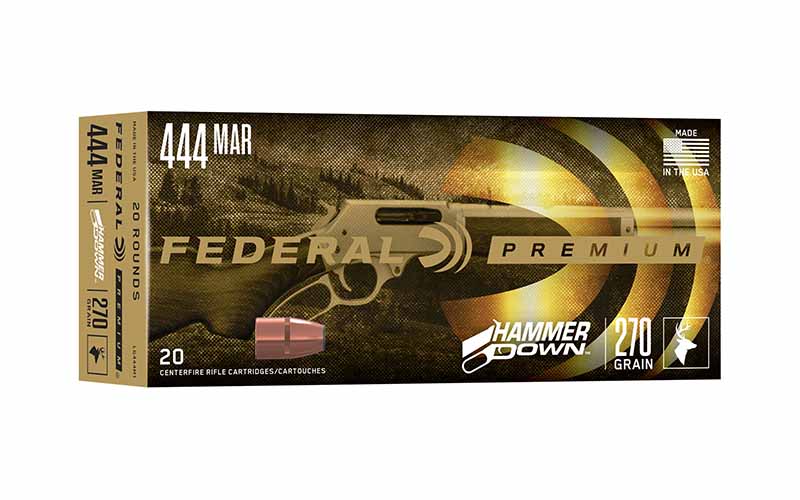
Federal Premium tackled the lever-gun market in 2020, launching what has turned out to be the popular HammerDown line of ammunition. Building off its success, the ammo maker recently expanded the line to include three big-bore options that are sure to turn hunters’ heads: .45 Colt, .35 Remington and .444 Marlin. The .45 Colt is topped with a 250-grain bullet, the .35 Remington a 220-grain and the .444 Marlin a 270-grain. In all cases, cartridges boast a flat-tipped bonded-core bullet, safe for use in tubular magazines and built to retain a maximum amount of material upon impact, creating devastating wound channels. The cases are chamfered to ensure clean feeding and nickel-plated to make sure they extract smoothly. MSRP: .45 Colt, $38 box of 20 ; .35 Remington, $52 box of 20 ; .444 Marlin, $63 box of 20
Fiocchi Golden Turkey TSS
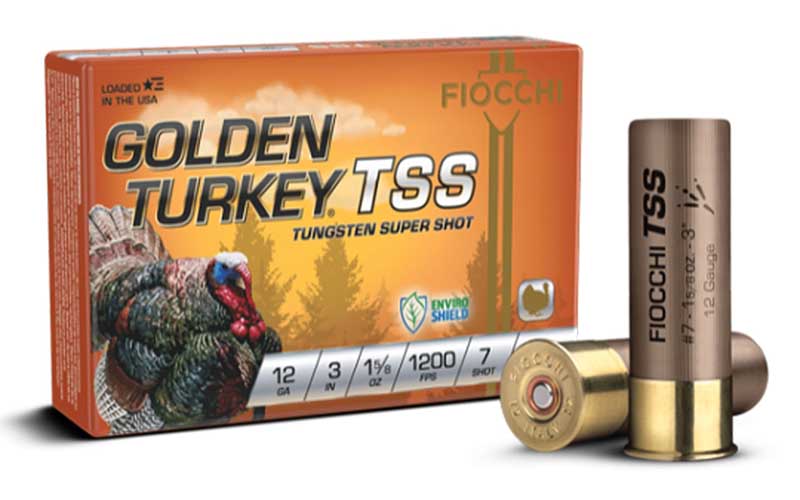
Fiocchi has turned its skilled eye to providing premium fodder for hunting irons in recent months. The newest addition to what’s dubbed the Golden Series is its high-performance Golden Turkey TSS loads. Loaded with Fiocchi’s ultra-dense Tungsten Super Shot, the shell provides a deep-penetrating option guaranteed to extend the range of your turkey gun. The loads also create the tight patterns hunters expect from superior metal. Fiocchi is blitzing the market, offering two 12-gauge loads (No. 7 and 9 shot), 20-gauge (No. 9) and .410 bore (No. 9). As with all Fiocchi high-quality shotshells, Golden Turkey TSS uses precision-manufactured hulls and wads, combined with top-notch primers and carefully selected powder, to achieve predictable and dependable results. MSRP: Load-Dependent
Editor’s Note: This article originally appeared in the May 2022 issue of Gun Digest the Magazine.
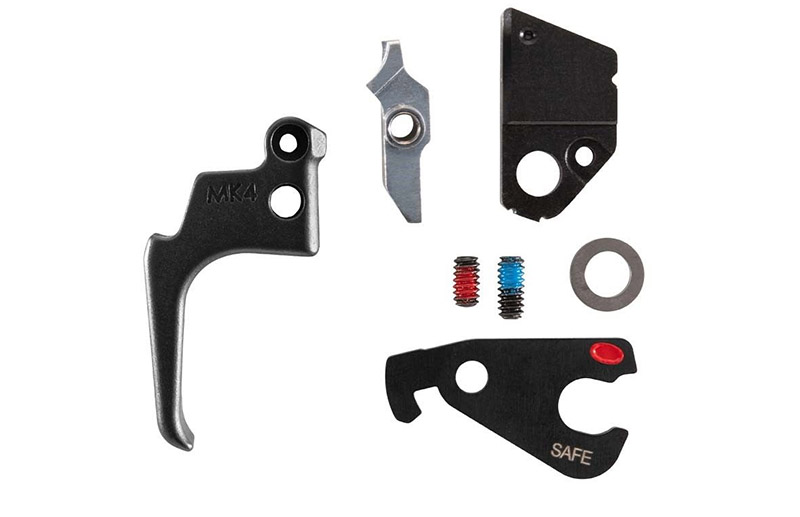
Apex has just released a Competition Trigger Kit for Ruger Mark IV pistols, designed to increase the performance of the popular .22 handgun.
Apex specializes in trigger upgrades for handguns. Previously, the company only offered kits for Glocks, Sigs, Smith & Wessons and other duty/defense-oriented centerfire pistol models. Now, the company is adding its first dedicated rimfire trigger to the lineup with the release of the Apex Competition Trigger Kit for the Ruger Mark IV.
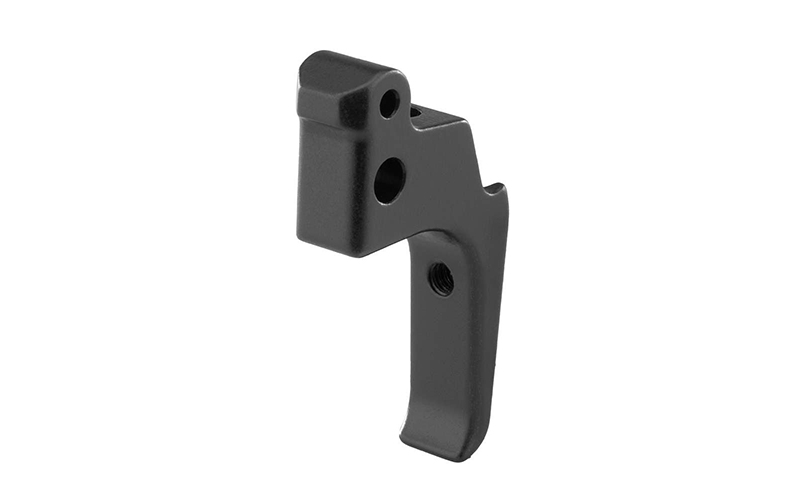
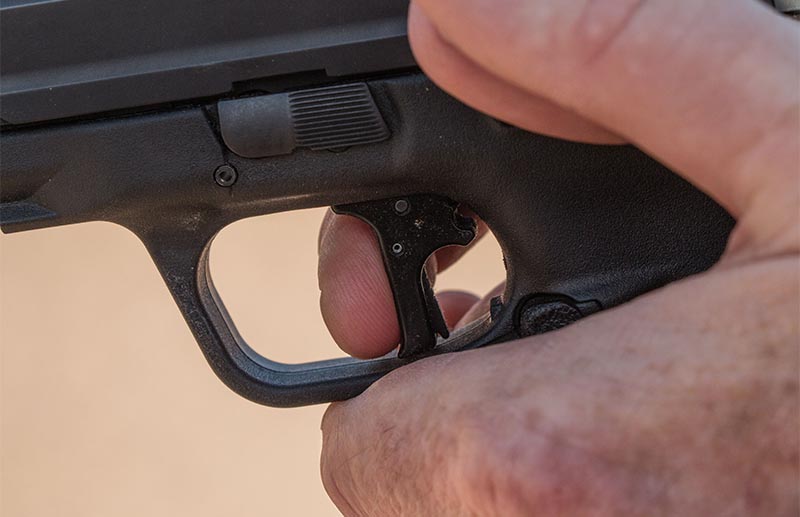
Like all of Apex’s trigger upgrades, the Ruger Mark IV Competition Trigger Kit is easy to install, only requiring the replacement of three factory components with Apex ones. Those parts are the hammer, sear and flat-faced trigger, and once installed Apex claims that they will reduce travel by 25 percent, reduce the pull-weight to about 3 pounds and drastically lessen over-travel. These features should all combine to dramatically improve a Ruger Mark IV’s trigger and enable better precision for shooters whether they enjoy competing or just plinking at the range.
The Competition Trigger Kit also includes a safety plate that’s guaranteed to match the Ruger factory safety standards, and Apex assured this to be true by drop-testing the design on concrete. Each kit also includes an optional magazine safety delete for those who would still like to be able to fire their Ruger Mark IV with the mag removed.
This Apex Competition Trigger Kit is compatible with both standard Ruger Mark IVs and Ruger Mk IV 22/45s, and it should provide a much crisper, lighter and shorter pull regardless of which model it’s installed in. The trigger is available with either a red or black finish and the kit has an MSRP of $160.
Reloading big-bore cartridges from .416 Rigby to .505 Gibbs.
The big-bore cartridges have such a wide variation in design, construction and birth dates that it requires a bit of examination to best understand how to approach them as a handloader. For example, the .416 Rigby dates from 1911, the revered .375 H&H from 1912, the .470 NE from 1907, the .458 Winchester Magnum from 1956, the .416 Remington Magnum from 1988 and the .450 Rigby from 1994. Spanning the majority of the 20th century, these cartridges saw the transition from cordite to smokeless powder as the propellant du jour, yet the geometry and pressure levels of these cartridges vary greatly.
The .416 Family
Looking at the .416 Rigby, a proprietary design in both cartridge and bore diameter, it remains a popular choice to this day based on field performance, nostalgia and quite a bit of adoration from Robert Ruark.
The .416 Remington Magnum is based in the belted H&H case and mirrors the ballistics of the much-older Rigby, in a smaller package, albeit at a higher pressure. That pressure—in the Remington Model 700—nearly cost the .416 Remington its life. With the powders available three-plus decades ago, excessive pressure posed a real issue in the hottest parts of Africa. Simply put, the Model 700 action couldn’t reliably extract the cartridge in the 120-degree temperatures of areas. Thankfully, a good number of folks tried the .416 Remington in controlled-round-feed actions and saw the wisdom of using it as an all-around African game cartridge, as well as an Alaskan brown bear cartridge.
If, quite like yours truly, the cost of these big cartridges plays a role in selecting which you’ll be purchasing and using, you’ll see a savings in factory ammunition when buying the .416 Remington Magnum or .416 Ruger in comparison to the .416 Rigby. You’ll also see the former pair of young upstarts are far more economical in the powder department, not to mention the cost of new brass cases. All three share ballistics so similar that no target will ever know the difference.
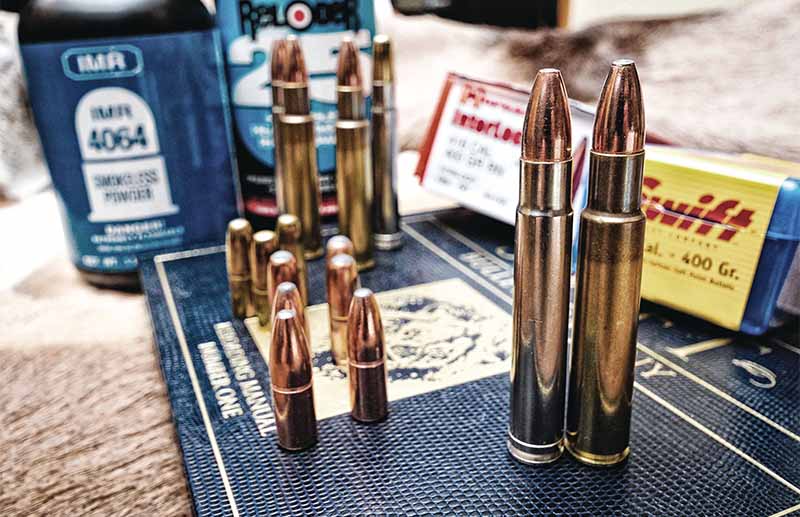
The belted .416 Remington Magnum (left) and the rimless .416 Rigby (right); the Remington delivers the same ballistics in a higher-pressure package.
Though the pressures are undoubtedly higher in the younger cartridges, I’ve always found the Rigby case offers a higher level of recoil—probably due to having to burn a considerable volume of powder to attain the same volume in the larger case—when all three are delivering the 400-grain bullets at 2,400 fps. I chose the .416 Remington Magnum; it gave that 2,400 fps without pushing the pressure boundaries too far with a load of 78.0 grains of IMR4064 sparked by a large-rifle magnum primer and pushing a 400-grain bullet. I’ve had no issues with high pressures or sticky extraction in my Winchester 70.
Some may make the case that the oversized Rigby case is easily capable of exceeding 2,500 or even 2,600 fps with a 400-grain bullet. While this is a true and valid statement, I also know I don’t need to drive a 400-grain bullet any faster than 2,400 fps to take any game animal, anywhere. In fact, I’ve found that the 2,275- to 2,300-fps range offers the same killing power but is much easier on the shoulder.
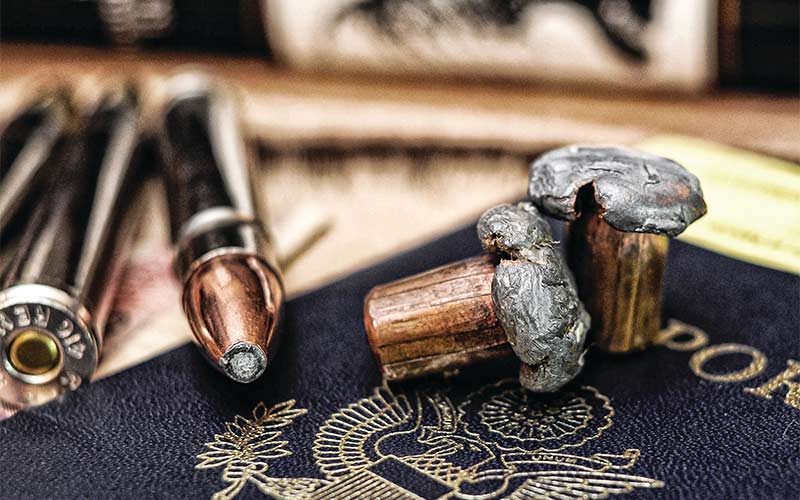
A pair of recovered 400-grain Swift A-Frame softpoints found against the offside skin of a Zambian Cape buffalo bull; they were hand-loaded in the .416 Remington Magnum.
The .458 Family
The .458s remain a popular choice, with John Rigby’s 1898-designed .450 NE being the benchmark for performance at driving a 480-grain bullet to 2,150 fps. The big-rimmed cartridge was a huge success; however, the British ban on .45-caliber ammunition in the Sudan as well as India gave rise to the .470 Nitro Express, .475 Nitro Express and many more, which would greatly diminish the .450’s popularity.
Winchester used a shortened, belted H&H case to develop their .458 Winchester Magnum in 1956 to mimic the .450 NE’s ballistics, albeit with a 510-grain bullet. However, it didn’t measure up. The velocities rarely exceeded 2,000 fps, sometimes far less, and penetration issues soon reared their ugly head.
.458 Lott.
Modern ammunition for the .458 Winchester seems to have been corrected, and handloaders have a few powders at their disposal—namely Hodgdon’s H335 and Accurate 2230—which can help give the proper velocities without being overly compressed. Those who prefer the longer Lott case—and I see nothing wrong with choosing it—can get to 2,150 or 2,200 fps without much effort. The 0.300-inch case extension also gives the reloader a bunch more room, helping to avoid over-compression of the powder charge. While I definitely like the ball powders in the .458 Winchester, as they maximize the limited real estate, the .458 Lott is happy to be loaded with powders like Hodgdon’s Varget, IMR4166 or IMR4064, and I’ve had great results with that case pushing a 500-grain bullet at 2,200 fps or so.
Going Really Big-Bore
Looking into the bigger cases, the .470 Nitro Express has become one of my personal favorites in a Heym Model 89B double. The big, 3¼-inch case has all sorts of capacity, though, like the .416 Rigby, you really don’t need to use it all. While I had both accuracy and proper velocity using H4831SC and a 500-grain bullet (double rifles are regulated for a specific bullet weight/velocity), I got the same ballistics when using a charge of Reloder 15 compressed by a Kynoch foam wad, although the recoil dropped off considerably. My rifle loves 88.0 grains of RL-15 with that wad and several different 500-grain slugs, including the Federal Trophy Bonded Bear Claw softpoint and Sledgehammer Solids, Peregrine BushMasters, Swift A-Frames, Barnes TSX and Banded Solid, and Hornady’s duo of DGX Bonded and DGS solids.
.505 Gibbs.
Based on the success of the .470 NE with the Kynoch foam wad, I tried it with a .505 Gibbs, and the same rule applied to that soul-crushing cartridge. I got the velocity I was after, using a 525-grain Barnes TSX softpoint and Woodleigh Hydro Solid at a significantly reduced recoil level.
The point here is that reloading for the big-bore cartridges can truly change the way you view and feel about one of these intimidating thumpers, and it will definitely affect how you shoot the classics. The factory loads might be suitable, but I like the customized effect of handloading when it comes to these big-bores.
Editor’s Note: This article originally appeared in the May 2021 issue of Gun Digest the Magazine.
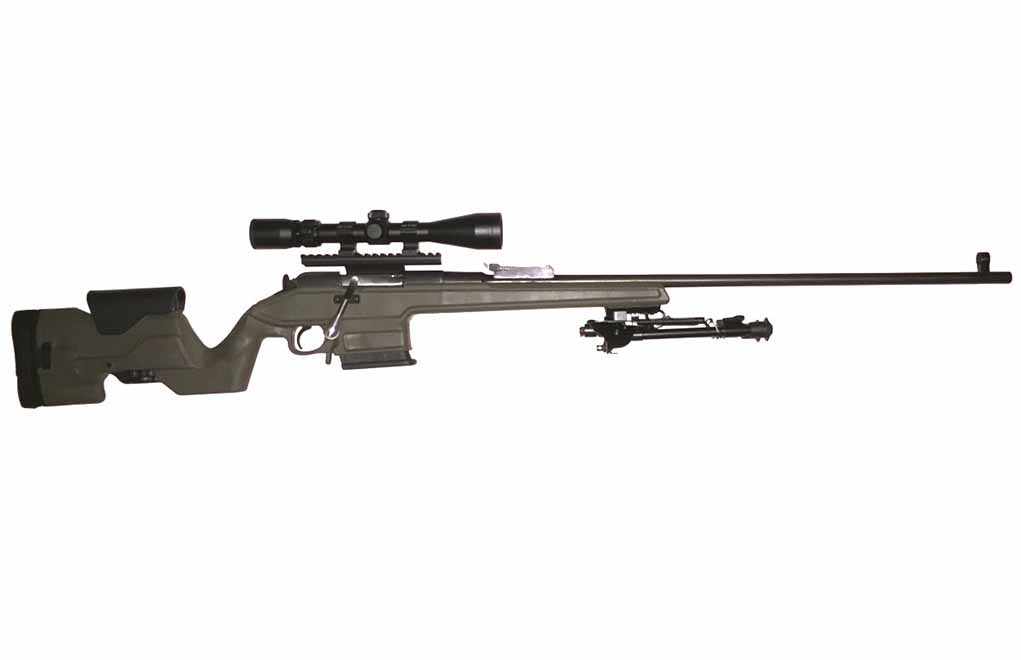
While not the top candidate for a Night Force ATACR or other high-end glass, adding a scope to your Mosin-Nagant proves worthwhile. Similar to any rifle, an optic vastly enhances your accuracy potential behind the trigger and certainly proves beneficial if you plan to use the Russian icon for anything other than range toy. Hunting and any sort of Sisyphean accurizing project you have in mind for your Nagant are two that come to mind.
This raises the question: How exactly do you go about getting a scope on a more than 100-year-old design that was most certainly not engineered for the addition of glass?
It’s a dicey row to hoe, rife with some serious considerations before jumping in. It’s not simply potentially the drilling and tapping that makes this ride bumpy, but the fact the rifle must be modified to even work with a scope. Good news, once you’re over some of those hurdles, there is a slew of Mosin-Nagant scope mount options that not only provide rock-solid mounting platforms but also do a bang-up job of modernizing the rifle. But before we get to them, we first must consider what stands in between marrying your rifle with a scope.
Bolt Throw
Minted in 1891 with the common infantry soldier in mind, neither Sergei Mosin nor Émile Nagant put much thought into an optic ever being added to their creation. This is fairly obvious, given the Mosin-Nagant’s bolt. Its handle sticks out at 90 degrees when in battery and throws 90 degrees in operation. What that adds up to is a bolt handle that comes into major conflict with most traditionally mounted scopes.
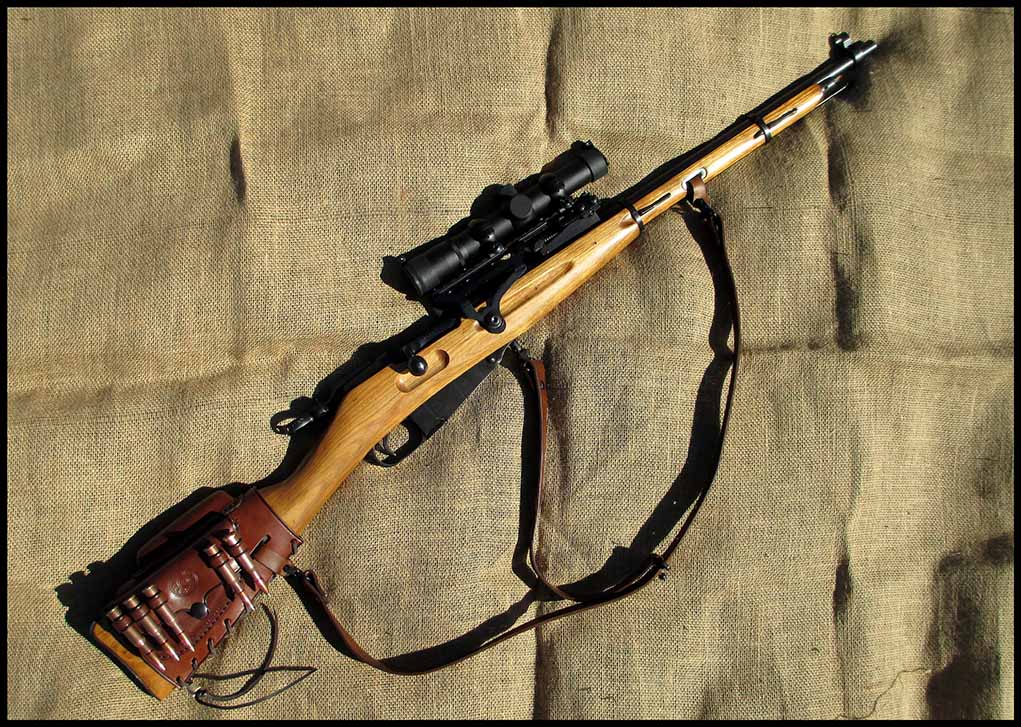
M44 Photo: Jaybe Militaria
By and large, there are only two ways around this conundrum. You modify the bolt handle, bending or replacing it completely—either the handle or the bolt itself—so it doesn’t run smack dab into your scope. Or, you settle upon mounting your scope in a more non-traditional position.
Drill and Tap
Mosin-Nagant scope mounts have to be, well, mounted. While some options require minimal modifications to get in place, others are quite a step up in gunsmithing, particularly those that require drilling and tapping. Unlike most modern rifles, the Mosin doesn’t come with this convenience as part of the package, which means you’ll have to do it yourself. Though, the real question should be: Should you do it yourself?
For those who have spent time learning the basics of gunsmithing and have some machine-shop knowledge, the answer is a resounding yes. For those who fall outside this sphere, a moment of reflection before charging into the Dunning-Kruger Effect might prove valuable.
While drilling and tapping a rifle isn’t gene editing, it does take a certain amount of know-how, finesse and safety goggles. You might fly blind into the task and pull it off smashingly or you could go down in flames with a real Bubba tabletop gunsmithing fiasco. The argument could be made there’s no better rifle to FUBAR than a Mosin-Nagant, given their relatively economical price. But if you love yours and don’t have the mechanical aptitude to do the job right, swallow your pride and take it to a gunsmith.
The Controversy
Time was few folks would have raised a ruckus about modifying a Mosin-Nagant. Slews upon slews or home gunsmithing jobs fandangled some rifles into near Frankenstein’s monsters. When the supply of sub-$100 Mosin seemed endless nobody except historical purest seemed to raise an eyebrow over the projects. Now with the rifle becoming more expensive and cherished for its place in world events, mangling one up for the sake of a “tacticool” experiment is frowned upon.
Does the Mosin-Nagant scope mount count as tarnishing a classic? I suppose that all depends on who you are. From my perspective—especially with systems that allow you to revert the rifle to its original state—not so much. These provide the best of both worlds, the rifle’s integrity is preserved without the shooter having to be a slave to convention. Other scope mounts, however, require more radical modification to function—such as cutting off and reconfiguring the bolt handle— which might require a bit more consideration before commitment.
Ultimately, it’s your rifle and you can do what you like with it in the bounds of the law. But, before you break out the hacksaw and oxy-acetylene torch you should be plum certain you want to cross that Rubicon—because there’s no going back. To digress to another historic military rifle, some love their sporterized war-trophy Mausers, others wish they had the original 98K. With this in mind, a few years down the line where do you think you’ll stand with a Mosin-Nagant?
Top Mosin-Nagant Scope Mount Options
Brass Stacker Universal Fit Scout Scope Mount
Photo: Brass Stacker
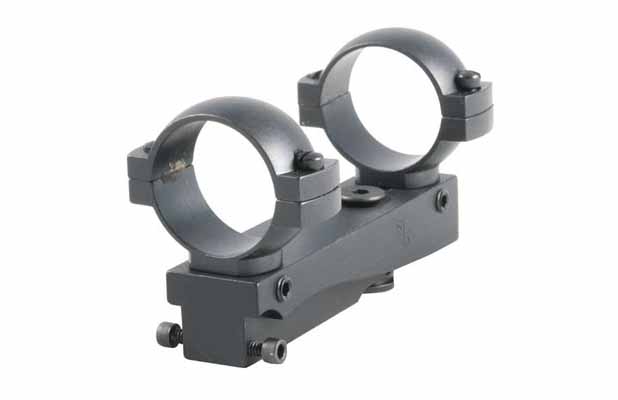
If you want to retain the integrity of your Mosin-Nagant, yet step up its aiming system, Brass Stacker’s Universal Fit Scout Scope Mount is the way to go. What makes it attractive is you don’t have to drill and tap your rifle, yet you still get a rock-solid platform for your long eye-relief scope.
Brass Stacker pulls this off with an ingenious mounting system that utilizes the Mosin’s rear sight block and recoil lug attachment point. The only gunsmithing involved is knocking out the ladder sight’s retention pin, which sometimes is easier said than done. Nevertheless, it’s a more streamlined process than many other options. What you get out of the deal, aside from ease of installation, is a Rigid all-steel 5/16” x 8” MIL-STD 1911 Picatinny Rail, fit for most any long eye-relief optic. As a bonus, if you want to return to iron sights, the Universal Fit mount allows you to do so with ease. MSRP: $125
S&K Mosin-Nagant Scope Mount
Photo: S&K
With an extensive history of whipping up scope mounts for old military rifles, S&K has a solid handle on creating workable systems. And few options out there function to the same level or with the same ease as its Mosin-Nagant Scope Mount. Again, this is an option that allows you to revert your rifle to the original form if you wish, given it attaches via the rear-sight base.
The only complex matter—in some cases—is getting the ladder sight pins out, but with patience (a blowtorch if they’re soldered in) it can be done. It also stays in place well, especially if you follow instructions and use Loctite Blue to ensure there’s no creep in the screws. Needless to say, this is a scout-scope configuration, and the accompanying right accommodates scopes with 1-inch tubes. Aside from the simplicity of installation and maintaining the originality of Mosin-Nagant, S&K’s scope mount is also small, and thus overall unobtrusive. MSRP: $88.50
Rock Solid Industries Mosin-Nagant Scope Mount
Photo: Rock Solid
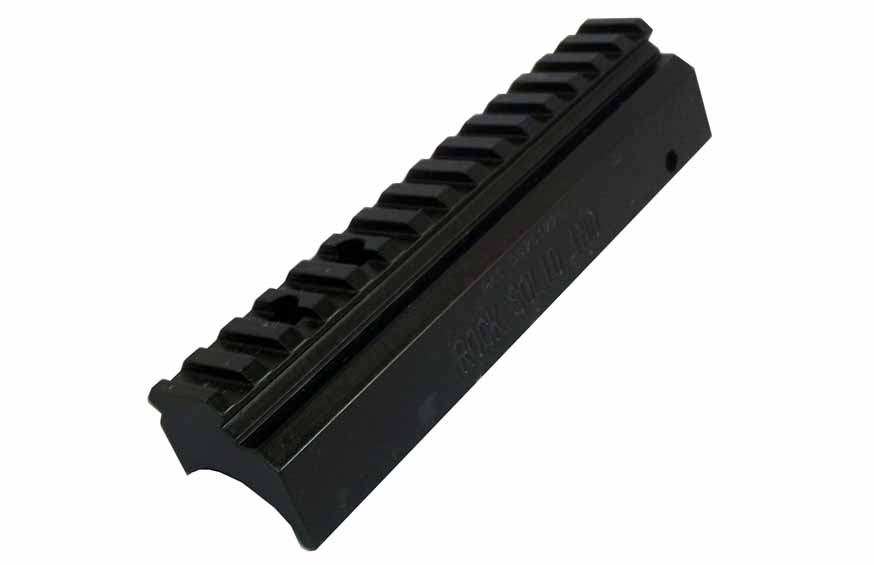
Plain and simple, Rock Solid Industries Mosin-Nagant scope mount more than lives up to the company’s name. Plus, it opens up your optics options. A full-length rail, it can handle nearly any scope you mount with any eye relief you desire. Even better, it will keep it right in place.
This is thanks to a hardy three-point attachment system and the use of the rear sight base as a support. Yes, the unit requires a bolt handle modification (they sell upgrades) and drilling and tapping the rifle, which is fairly involved. But the effort is well worth it, especially if you want something certain to keep your scopes zero in the roughest of conditions. Rock Solid makes models for both round and octagonal receivers, so make note of which you have when you order—one does not work with the other. MSRP: $50
Crazy Ivan Mosin-Nagant Scope Mount
Photo: Crazy Ivan
As robust as the day is long, the Crazy Ivan Mosin-Nagant Scope Mount allows for a traditional above-the-receiver scope placement. The price paid, however, is the effort required to get the unit attached. The base itself is a down-the-line drill-and-tap job, with the mounting plate screwing onto the side of the receiver. Where things get a bit trickier is modifying the bolt handle.
The good news, Crazy Ivan sells several top-quality upgrades. The bad news, it requires cutting off your Mosin’s original bolt handle and welding on the replacement. Though, the company does sell one no-weld option that is attached via epoxy. A nice touch, the Picatinny rail is mounted on a Weaver-style quick detach system, making it simple to switch between optics and iron sights. MSRP: $74
Sniper MG4X20 Scope And Mount
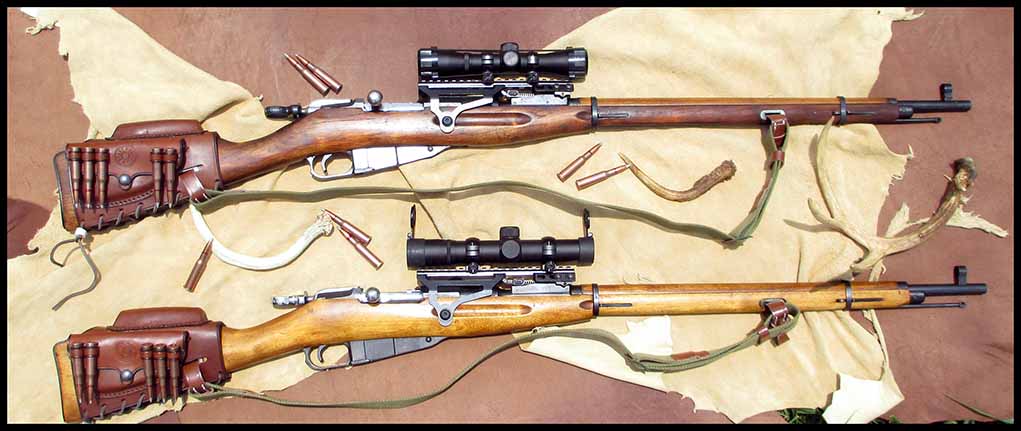
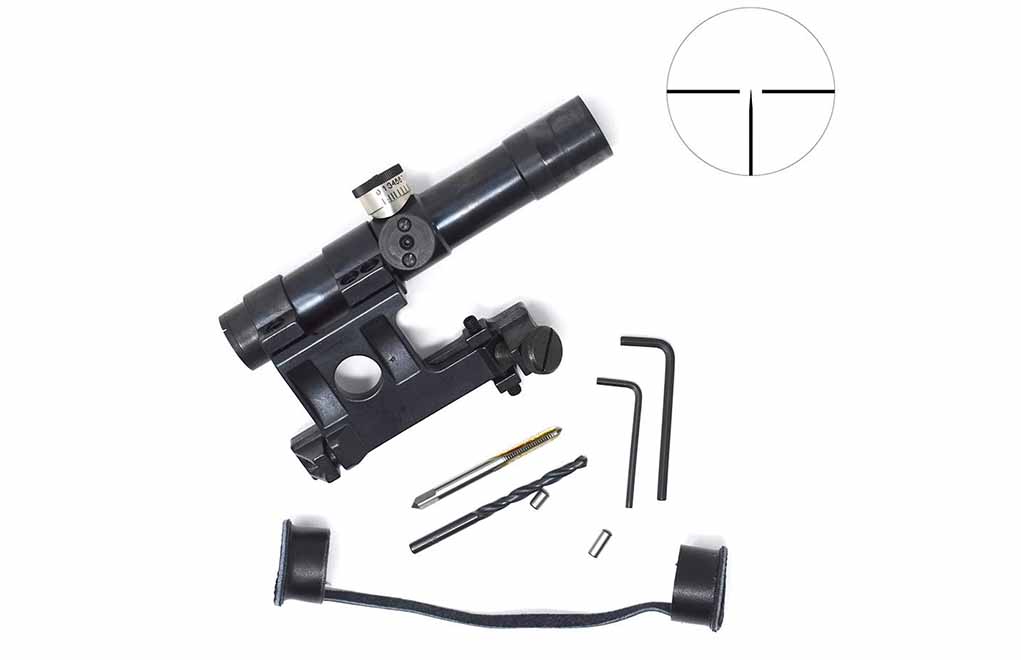
The Mosin-Nagant M91/30 PU Sniper Rifle was perhaps the most successful sniper-rifle system of the Second World War. And while authentic specimens are still available they tend to command top dollar. A sidenote, fraudsters are more than aware of this and churn out knockoffs like the dickens, so if you go this route, buyer beware. However, you can avoid these turbulent waters with Sniper’s MG4X20 scope and mount, which gives you everything you need to turn your M91/30 into a replica of the historic sharpshooter.
Overall, the system—mount and scope—are fairly faithful recreations of the original and perform up to snuff. Though, the optic is 4X, whereas original wartime scopes were 3.5X—that’s should prove a small detail for many. The scope mount is made of steel and is a dead ringer for the real McCoy—side mount, removable, with gross elevation screws and the like. Sniper even sends everything you need to drill and tap the receiver. However, the system—similar to any that replicates the sniper rifle—requires extensive modification of the rifle, including extending and bending the bolt handle and inletting the stock, in addition to drilling and tapping. Make sure you’re up to the job. MSRP: $398.99
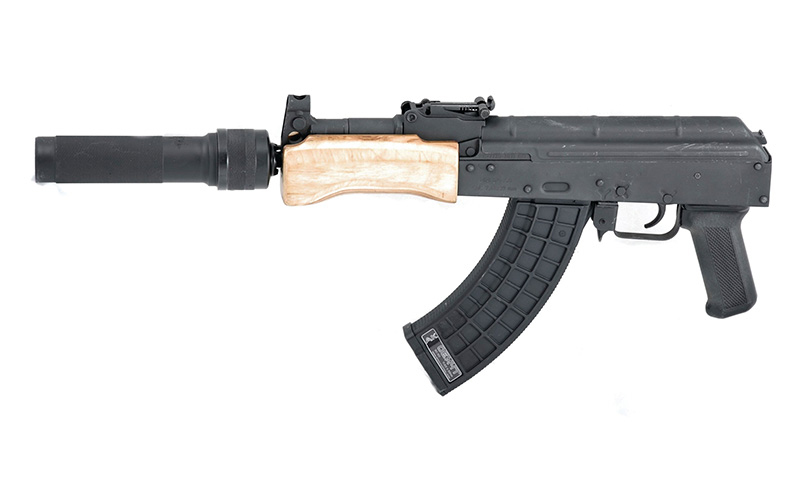
The Mini Draco is a Romanian-made AK pistol and, like its namesake, the mini barrel spews forth fire.
Sometimes you just want as much firepower as you can get in the smallest package available. Forget all the talk about 9mm, .45 ACP, .357 Magnum or even 10mm—those are all pistol calibers, and as the axiom goes, “The only good use for a pistol in a firefight is to fight a path to your rifle.”
No, what I’m talking about is rifle calibers. If things go south, most people would prefer a rifle; it’s just not practical to carry one. So, we resort to handguns with all of the limitations of handgun calibers.
But what if your pistol is your rifle? It’d negate the limitations that handguns possess. That’s the intent behind the Mini Draco from Century Arms. It’s an AK pistol chambered in the AK’s legendary cartridge: the 7.62x39mm Soviet.
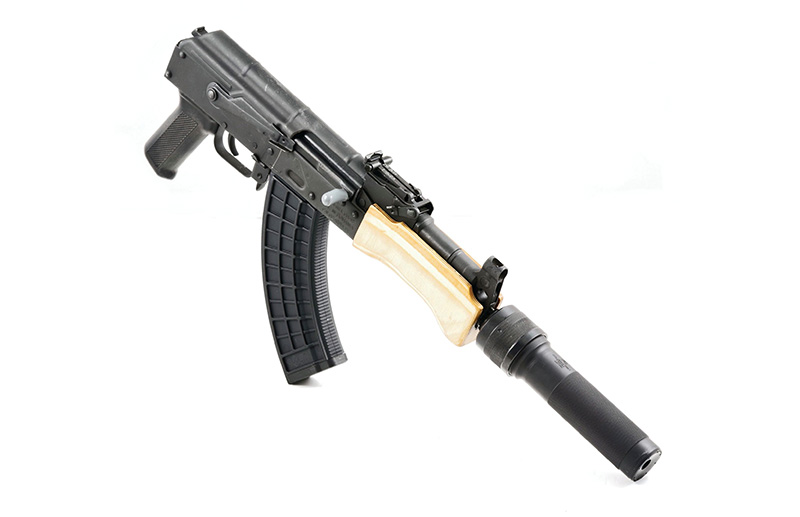
The Mini Draco is Built in Cugir, Romania, and imported by Century Arms. Equipped with the Wolverine PBS-1 suppressor, it’s a fun plinker.
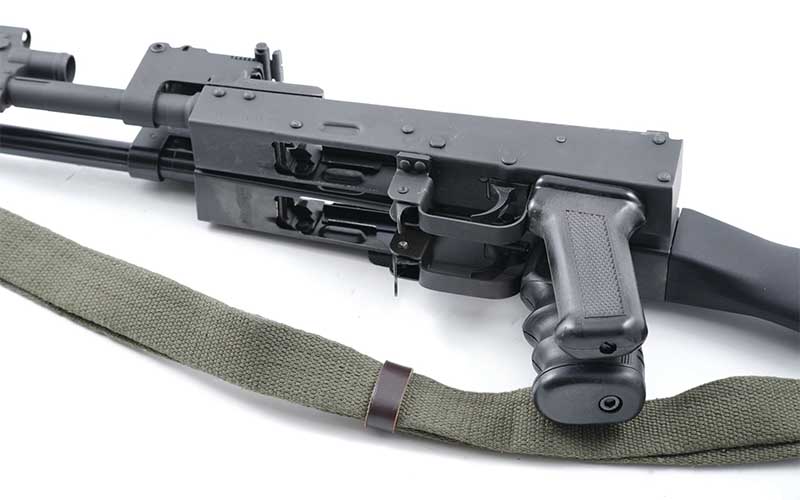
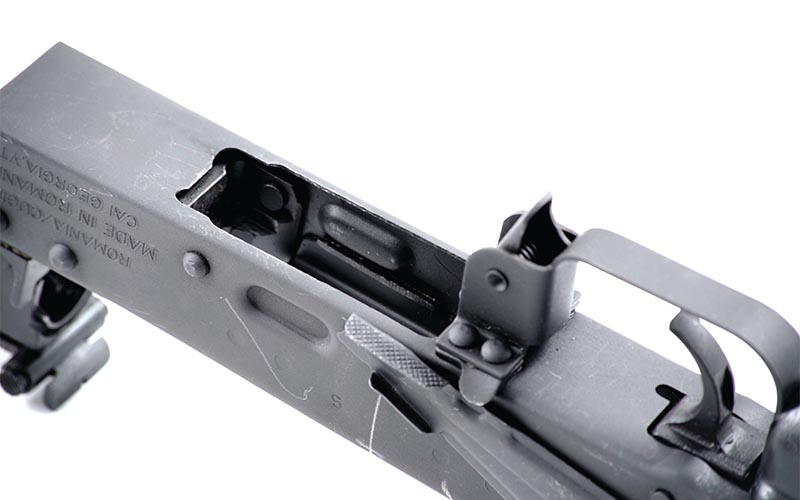
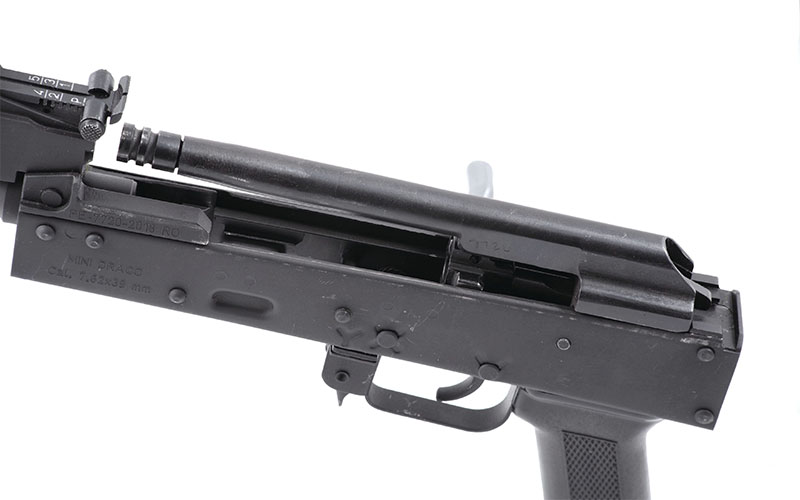
The Mini Draco is a Romanian-made AK Pistol—made in the Cugir Arms Factory that’s famous for the WASR series rifles—a close copy of the Russian AKM. Per the original Kalashnikov design, it has a stamped sheet metal receiver and incorporates rivets to secure the front and rear trunnions in place. Overall length is 17.5 inches, and it weighs 5.6 pounds without a magazine. Despite the small size of the Mini-Draco, the receiver is the same size as a standard AK.
Despite being mini size—and classified as a pistol by the ATF—the Mini Draco (top) has the same receiver as a full-size Kalashnikov rifle.
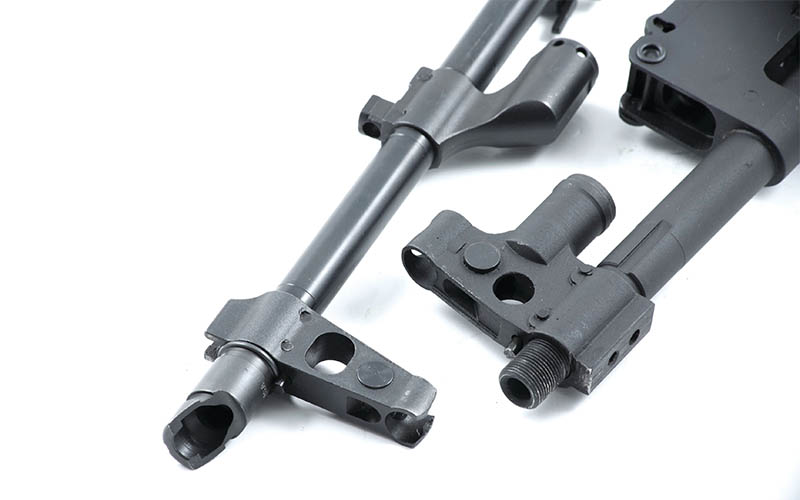
The rear sight block looks the same as those found on standard-sized AK rifles, but aside from that, everything forward of the receiver is different from the norm. And that’s expected from an AK variant that’s so small. Naturally, the barrel and gas tube are shorter, but to make up for the lack of real estate up front, the front sight and gas block have been combined into one piece. It’s longer (measuring fore to aft), so many AK front sight windage adjustment tools will not work with this.
The gas block and front sight from a full-size AK rifle (left) have been combined into one part for the Mini Draco.
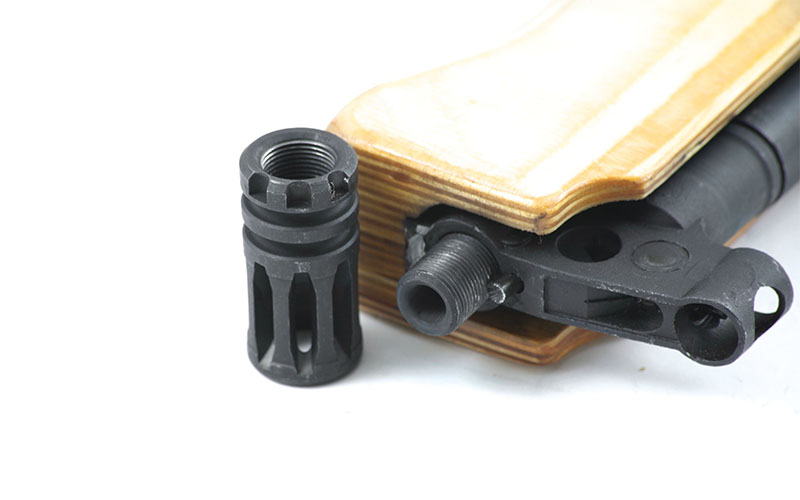
The muzzle device isn’t the typical slant brake found on an AKM rifle, but it’s instead a compensator (though the Century Arms manual calls it a flash hider) of the same basic design as the government-issue one used on an AR-15, except with different thread (14×1 LH, common to AK rifles) and with three notches at the base.
The Mini Draco comes with an AR-15-style compensator, but it has different threading and three notches at the base. The notches secure it onto the muzzle via the front sight spring-loaded retaining plunger. Which notch you use determines the direction the muzzle blast is directed.
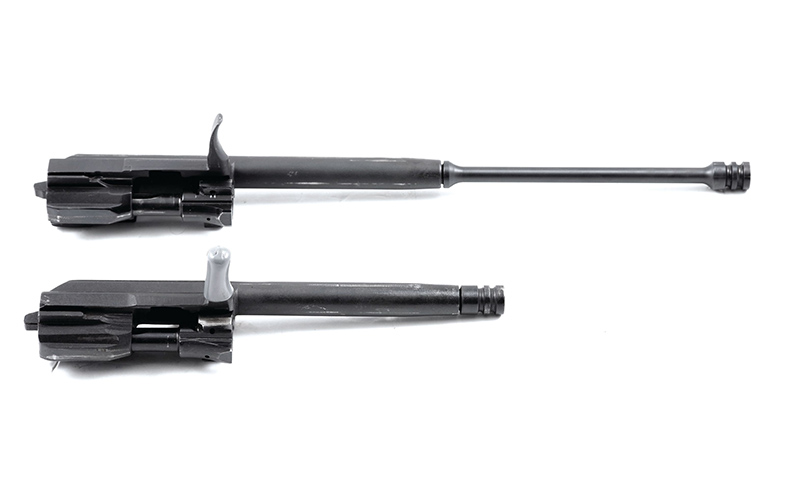
The receiver internals are standard for an AK of Romanian design, with the exception of the modified rear trunnion and the gas piston (which I’ll get into in a moment). The bolt carrier, bolt assembly and recoil spring assembly are the same as a standard-length AK rifle. To compensate for the short gas tube, the gas piston rod has been removed and only the piston rod head remains. In design, the head has been cut from the piston rod and attached directly to the bolt carrier. In reality, the head isn’t actually cut from the piston rod; it’s a separate machined part.
The Mini Draco has the same size bolt and bolt carrier (bottom) as a full-size AK rifle, but the gas piston rod is gone, only the head of the piston rod remains.
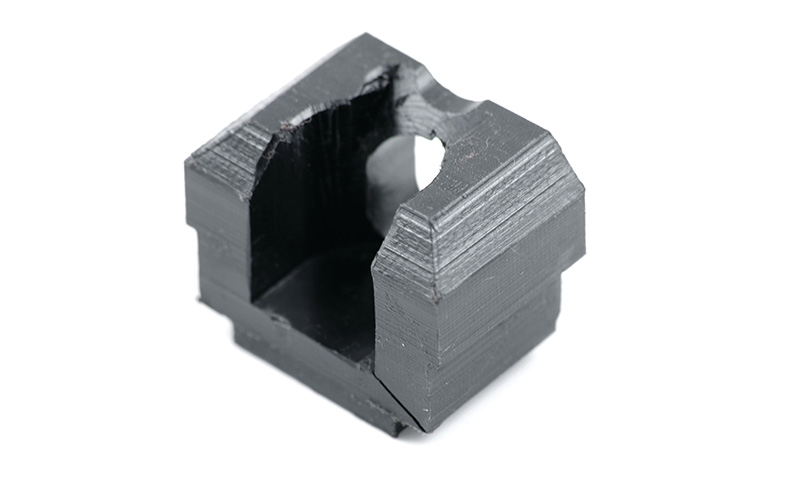
A hard polymer part called the recoil buffer is positioned in front of the rear trunnion to dampen the impact of the bolt carrier during cycling. Probably the most important function, though, is that it keeps the bolt carrier/gas piston from over-stroking. The recoil buffer looks like it’s from a 3D printer and is a little rough around the edges, so to speak. A piece of hard rubber would’ve probably had better longevity. During disassembly, the recoil buffer will need to be pulled out (it’s not attached) before the bolt carrier can be removed from the receiver.
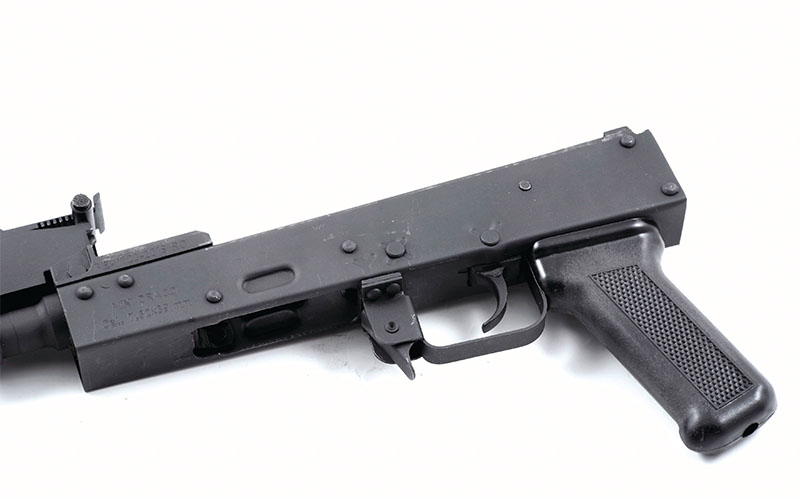
Century Arms usually uses U.S.-built Tapco triggers in its AK rifles, in part because they’re better than what comes stock, but mostly for 922(r) parts compliance. The trigger in this Mini Draco doesn’t read Tapco, so it looks like a Romanian “government” trigger. It’s pretty good for being a stock trigger, though. It averaged a 5.1-pound pull weight, and it had a crisp break. I’ve pulled many worse Combloc triggers.
There’s no stock since it’s classified as a pistol, so the only furniture is a polymer pistol grip and the front handguard. The handguard is made of blond plywood and has a pretty nice-looking finish, in an industrial kind of way. It doesn’t have a top portion of handgrip, like most AKs, only the bottom.
The Mini Draco is an AK pistol with a 7.75-inch barrel. Here it’s sporting a Wolverine PBS-1 suppressor from Dead Air Armament.
Build Quality
Century Arms has taken some dings in the past on the roughness of their Romanian AKs, and in general, Romanian AKs have taken some online bashing for being “entry level.” They can be a little rough, but I’ve heard excellent things about reliability, which is the hallmark for AKs.
The Mini Draco that I have has pretty decent build quality. The rivets look good; they’re flush with the receiver surface. I don’t see any creases or bends in the sheet metal. There are no machining marks on the exterior surface of any parts, and even the internal parts/surfaces appear to be pretty good. The magazine well doesn’t have any burrs, nor do any of the other sheet metal edges. The safety selector on mine is very tight and hard to take off safely; it’s the tightest I’ve found on an AK. But hey, any problem that can be solved with a bench vise and a hammer isn’t a problem at all.
The Mini Draco magwell is unadulterated by Century Arms since as a pistol it is allowed to be imported from the factory with a standard double-stack magwell, as opposed to the WASR rifle’s single-stack one that must be opened up.
There are, however, three things I can see that are negative. The first is the receiver end plate has sharp corners, right where the web of the grip hand rests when shooting. The second is the finish. The finish has a semi-course feel to it that’s typical of what I’ve seen on AKs from the Cugir/ROMARM factory, which is fine with me, but it appears to show wear pretty easy. I haven’t had mine for very long, and there’s quite a bit of wear already. It doesn’t bother me, but it might bother some people, especially those who like to keep their “safe guardians” looking mint.
The Mini Draco has a stamped sheet metal receiver, like the AKM it was derived from.
All of those things are forgivable—the AK was never meant to be pretty. But the most egregious issue is the use of the fragile recoil buffer that broke on mine. It goes against the entire ethos of the AK rifle to have a fragile 3D-printed polymer part. I’m pretty sure Mikhail Kalashnikov is rolling over in his grave. As much as I don’t like this fragile part, it’s inexpensive and easy enough to replace. It definitely isn’t a deal breaker.
For such an important part, the Recoil Buffer is fragile. It looks like it’s from a 3D printer and is very brittle. It’s cracked all the way through (bottom right), and the top is chipping away. The author hasn’t even put 300 rounds through it.
Performance
In regard to performance, the Mini Draco isn’t going to replicate or replace a rifle. For starters, it’s only going to be effective at close ranges—think 50 yards.
In the accuracy department, it has a lot working against it. The barrel is only 7.5-inches-long, not much longer than a competition-length handgun such as the Glock G34 with a 5.31-inch barrel.
Despite these factors, the Mini Draco was more accurate than expected. Between the five different loads tested at 50 yards, they averaged 4.74-inch five-shot groups. Red Army Standard was the best with a 3.0-inch group, and G2 Research was the worst with a 6.0-inch group. (Incidentally, the G2 Research improved significantly at 25 yards, with a 2.01-inch five-shot group. I didn’t include this in the data set for this article, because I couldn’t test all of the loads at this distance).
In addition, three upgrades would drastically improve accuracy: night sights, a red-dot optic and some sort of stabilization, like a sling or pistol brace. These upgrades would make it a pretty accurate little AK.
I was a little surprised I had some malfunctions with the Mini Draco, but all were magazine related. I had ten malfunctions during my testing phase, and then a buddy had eight malfunctions in the 30 rounds he fired using a South Korean-made steel magazine (I’ve never had issues with this magazine prior to this). All were instances where a round was loaded, it’d fire, but the next round wouldn’t feed properly. My feed issues were from the South Korean mag and one of the X-Tech magazines. I’ve used other magazines, including Tapco, Polish surplus and Russian steel surplus, and had zero issues with those.
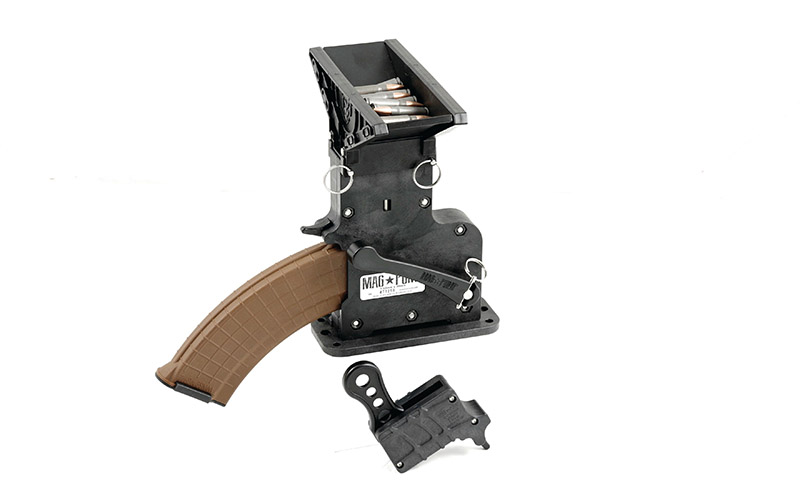
MagPump magazine loaders have become almost a necessity for the author, especially for range trips during winter months. This one is the AK magazine model and includes a magazine “unloader.” It loads magazines effort-free, prevents sore and/or frozen fingers, and the best part: It doesn’t matter which way the cartridges are loaded into it.
The Mini Draco is more shootable than one would initially think. For me, the AK recoil impulse is fairly mild, and it’s more of a slower recoil that’s spread out over time, whereas other rifles, such as the AR, even though recoil is milder, it’s more of a sharp crack.
The Final Scoop
The Mini Draco is a very fun gun to shoot, and from the “fun gun” aspect, there’s not a lot of downsides. In fact, range time doesn’t get much more fun—the 7.5-inch barrel means it’s loud, and it shoots flames like it’s a vintage WWII flame thrower. If you’re looking for a practical reason to buy one … don’t. If you like AKs and you like to have fun, it’s hard to beat the Mini Draco. It’s small, it’s loud…and it weighs only about a pound more than a Desert Eagle.
Editor’s Note: This article originally appeared in the March 2021 issue of Gun Digest the Magazine.
The 6.5 Grendel. If you’re looking for more downrange performance and a harder-hitting option for your AR-15 than run-of-the-mill 5.56 NATO, you’ve found your cartridge. And, if you already own America’s favorite rifle, it’s extremely simple to get into. Designed specifically for the platform, all you need is a 6.5 Grendel upper (and magazines) to convert over.
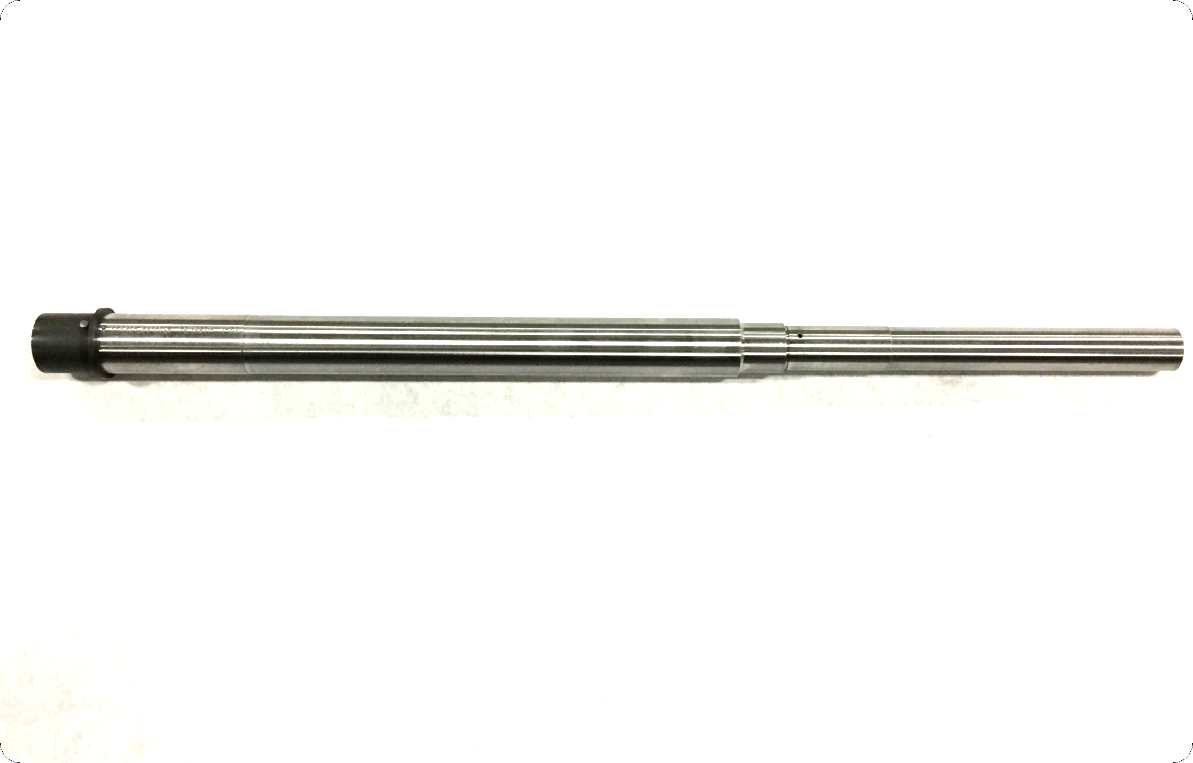
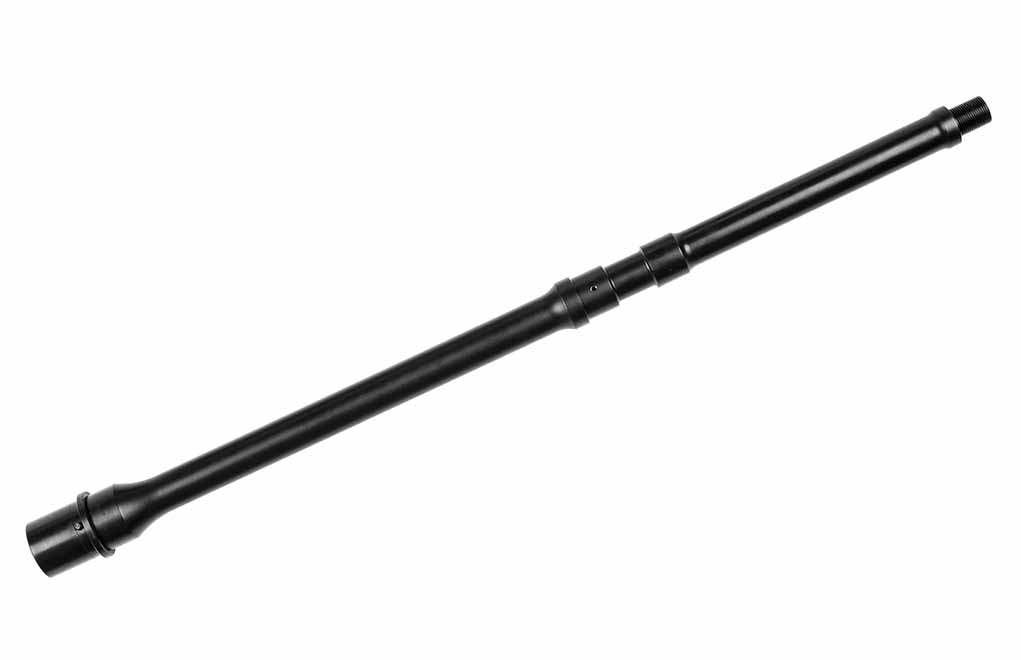
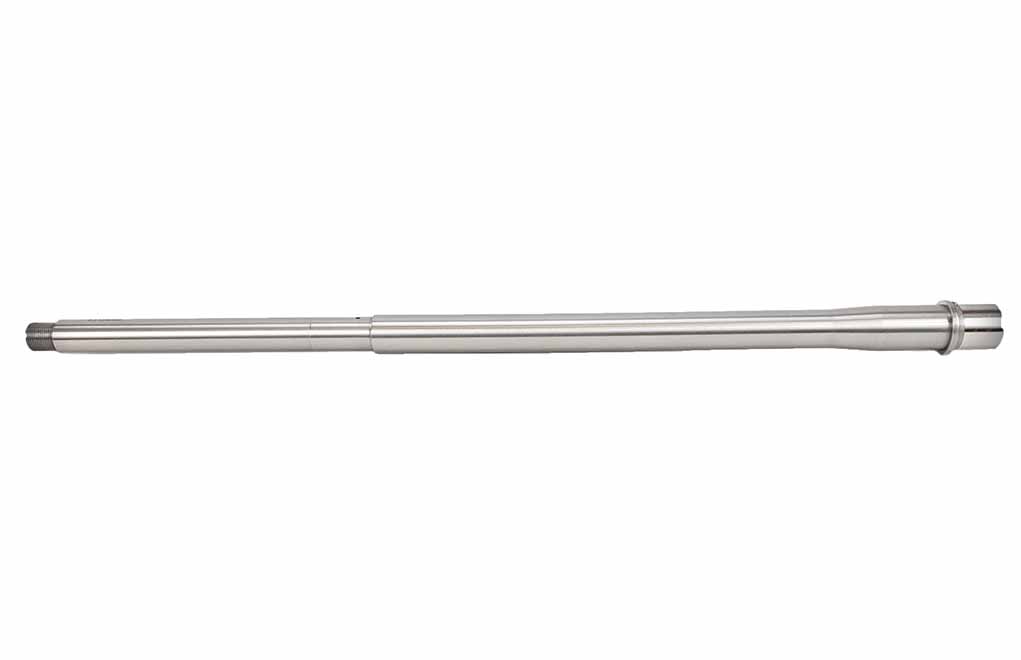
Perhaps that’s too simple for you. If off-the-shelf makes your stomach turn and you aren’t truly shooting unless you’re shooting your own build, we get it. In that case, you need to start shopping 6.5 Grendel barrels to piece together the rifle of your dreams. We’ll look at some of the best here. Given no two shooters are alike, we’ll stay away from barrel length suggestions (well, almost stay away) and home in on manufacturing quality, convenience (all drop-in) and economics. So, without further ado, here are four top 6.5 Grendel barrel options to create a precision AR-15 that packs a punch.
Lightweight: Proof Research
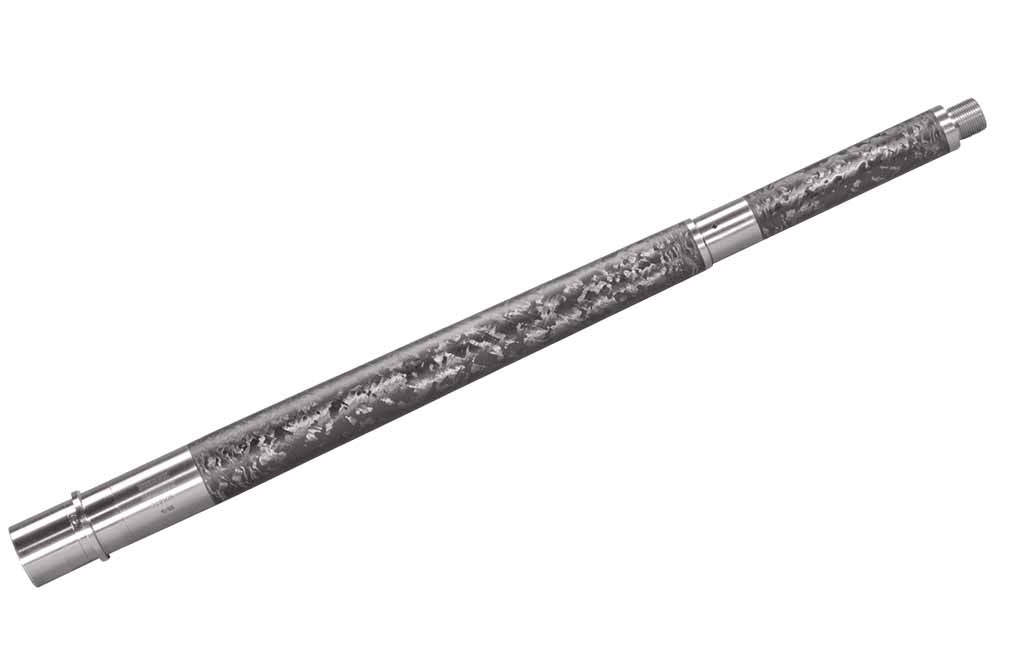
If you survey the gun world presently, there are a lot of companies mating their actions to Proof Research barrels. There’s a good reason behind this—they’re at the top of the heap when it comes to carbon-fiber wrapped tubes. The company gives shooters four configurations of 6.5 Grendel barrels to choose from. Basically, their selection consists of 20- and 18-inch barrels, each length with two gas journal diameters: .750 and .875. No matter the length, they all have a 1:8 twist (the predominate rate), 5/8-24 muzzle thread and are incredibly lightweight. Regardless of length, Proof Researches barrels are more than 60-percent lighter than their steel counterparts. The 20-inch 6.5 Grendel barrel comes in at a hair over 2 pounds and the 18-inch option is 1 pound, 13 ounces. These are just the ticket for a featherweight tactical build or a mountain hunter. MSRP: $979, proofresearch.com
Kreiger is one of those names that inspire awe. Some of the best shooters in the world turn to the Wisconsin barrel-smith to keep them on target. There’s no doubt if supreme accuracy is your ultimate goal, their VarMatch will do the same for you. There’s a rub in going this route for a 6.5 Grendel barrel, not only is it fairly expensive, but you’re a bit constrained with their drop-in option. All their finished barrels are headspaced to appropriate JP Bolts. This means you have to already run one or get one, which you can from Kreiger. On the plus side, this is a custom barrel, with every spec in your control, from barrel length to twist rate and muzzle diameter. To boot, all Kreiger barrels have single-point cut rifling, which creates nearly perfect concentricity between bore and groove, as well as twist rate. It doesn’t get much better than this. MSRP: $465 (base price for a 6.5mm AR10/DPMS 20-inch barrel), kriegerbarrels.com
Carbine Length: Alexander Arms
We aren’t tying this article down to specific barrel lengths, except in this one instance. When it comes to a 6.5 Grendel barrel, carbine length takes some consideration, particularly twist rate. This is where Alexander Arms 16-inch Incursion Barrel gets it right. Boasting a 1:7.5 twist, the shorter pipe is capable of stabilizing heavier bullets—which can be an issue with carbine Grendels. The nice thing, you generally can run lighter bullets at this rate in a Grendel without worrying about jacket failure. As you’d want with a carbine, the barrel is light—1.5 pounds and button-rifled, a solid process that produces very uniform grooves. Best of all, Alexander Arms makes it easy to get into an Incursion Barrel. MSRP: $304.95, shopalexanderarms.com
Budget: Sanderson Armory
Sanders Armory provides a lot of value for the price they charge. Their 6.5 Grendel barrel options are no different. The company offers five barrel lengths, from 13-inch pistol all the way to a 24-inch match. In all cases, the bore is hand lapped to ensure uniformity and the removal of any imperfections. And each features 5R rifling. The style of rifling opposes the lands and grooves, causing less bullet deformation, thus maintaining your projectile’s ballistic integrity. The one down point, every barrel has a 1:8 twist, which might not be optimal for every length. MSRP: $165-$575, sandersarmoryusa.com
Is it sacrilege to install aftermarket upgrades on a classic gun? Or do the potential benefits make it worth it?
The definition of a classic firearm isn’t written in stone. It could be considered any firearm once very popular and beloved, but no longer manufactured. A perfect example would be the Model 12 Winchester shotgun. However, a classic could also be a firearm that has been in manufacture for a long time and is even still being manufactured.
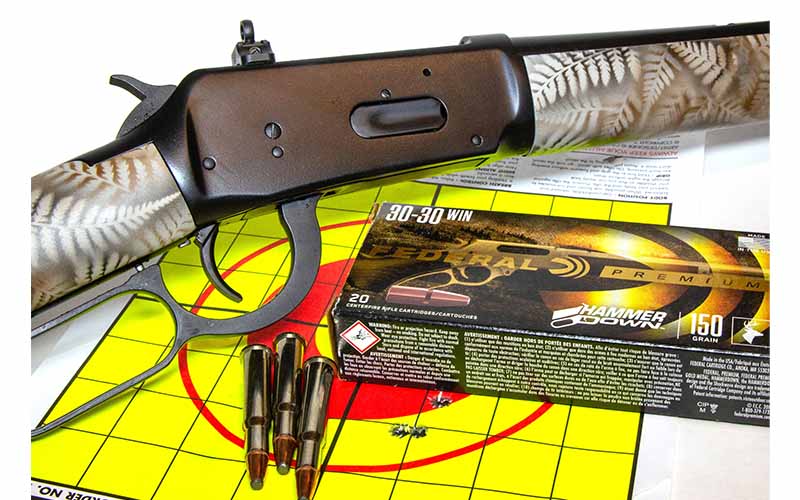
Though not the wood and blued-steel look of a classic Winchester 94, the upgrades to this rifle modernized its appearance, improved the sighting system and increased its value.
An example would be the Colt Single Action Army. I don’t think anyone would disagree that either of these are classics. Another firearm I believe is for sure a classic is the Winchester 1894 chambered in .30-30 Winchester.
The Winchester 94 was an immediate success, especially those chambered in .30-30 Winchester. In 1894, a 160-grain .30-caliber bullet at almost 2,000 fps was big news. It extended the lever gun’s effective range, allowing for lethal hits with a dead-on holdout beyond 150 yards. Not only did the 94 become a favorite with deer hunters, but it also became a staple on farms and working ranches from coast to coast. It was the first deer rifle for many and has accounted for an untold number of deer over the last 127 years, whether in neophyte or veteran hands.
Up until 2006, Winchester Model 1894 (94) rifles were made in New Haven, Connecticut. Between then and 2010, none were made until Winchester’s celebrated the 200th anniversary of Oliver Winchester’s birthday. Part of that celebration included a limited run of 1,000 Winchester 94s that were made in Japan by Miroku.
This upgraded 1970s Winchester 94 shoots great. So, too, will most well-worn 94s, at least those with a good bore, because few if any are ever fired very much at all.
Giving New Life
Today, you can buy a new Winchester Model 1894, and they’re fine rifles, but aren’t made in America. You could argue that one of the new 94s isn’t a “classic,” but I think it’s settled science that an American-made 94 is.
I’ve owned a couple 94s over the years but mostly preferred its Marlin competitor, the 336. However, the 94 is a trimmer and lighter rifle. And, too, it’s one classic that any real, red-blooded American should own. I have a massive stock of .30-30 ammunition and, with all the pandemic stupidness, thought I ought to have a working-grade 94 to go with all those bullets.
Though the original wood stock didn’t look terrible, it would have not matched the rifle very well with its new and flawless Cerakote finish.
I picked up a 1976, 94 for $500, which is about the going price for a well-used Winchester of this vintage. After toying with the gun, I decided I couldn’t live with it the way it was. I liked it and wanted to shoot it, but felt it needed some tweaking.
Now some would claim a classic like this ought to be left alone. I guess there’s some validity to that opinion. I’ve written about my father’s old Model 12 Winchester in these pages before, and about how I almost had it reworked to its original glory by Tyler Gun Works. However, the nicks, gouges and worn bluing on that shotgun were made by my father’s hands, and I just didn’t want to hide all that character.
With my 94, there was no personal connection to the rough handling or abuse it had received. Yeah, it’s a classic rifle, but of no sentimental value to me and, at best, even with gun prices the way they’re now, a $600 gun.
The custom-painted stock and the black Cerakote go together well on this upgraded Winchester 94.
So, I figured I could invest a few dollars and not only make my 94 more user-friendly, but also make it better looking and better outfitted for shooting, while at the same time doubling its current value. The first thing it needed was bead blasting and refinishing. For that, I chose gunsmith Jerry Dove at Dove’s Custom Guns. Dove is a master with lever guns—Marlin and Winchester—and I refer to him as my “personal gunsmith.” Not because that’s what he is, but because it sounds really cool to say you have a “personal gunsmith.”
This is a good place to add that every gun guy needs a personal or regular gunsmith, just like they need a doctor. I visit Dove more frequently than I do a doctor. He improves my guns and keeps them healthy. Also, with a gunsmith you use on a regular basis, you’ll get preferential treatment; gunsmiths like good customers. If you don’t have a good gunsmith who can handle the gun work you need and have them on speed dial, get one.
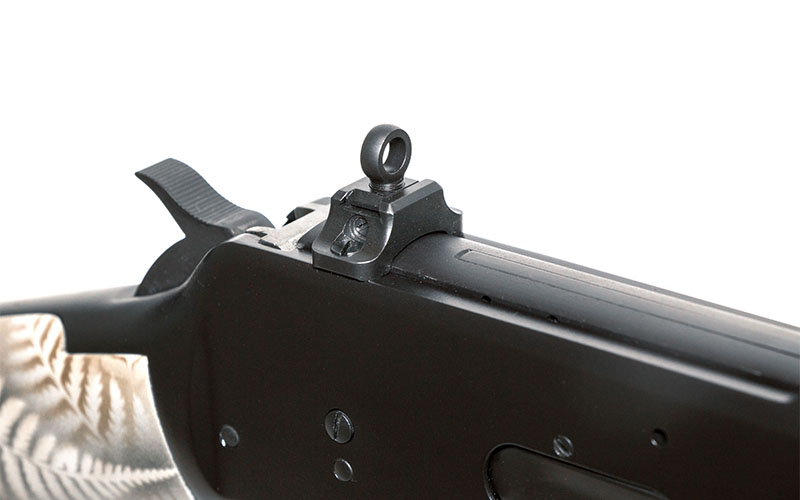
While Dove was refinishing my 94, I ordered a set of XS Sights ($104) for the rifle. I wanted an aperture sight because they’re faster than the stock, blade rear and bead front sights that come standard on 94s, and because my older eyes see them better. Just a note on installing XS Sights on a Winchester 94: This is a tedious job because the receiver must be drilled, and if it’s not done perfectly, you can weaken or punch through the side of the receiver. Don’t try this at home; get a talented gunsmith to do that work.
The installation of a rear XS Sights aperture sight on a Winchester Model 94—one that isn’t of the Angle-Eject variety—requires a talented gunsmith to drill the action.
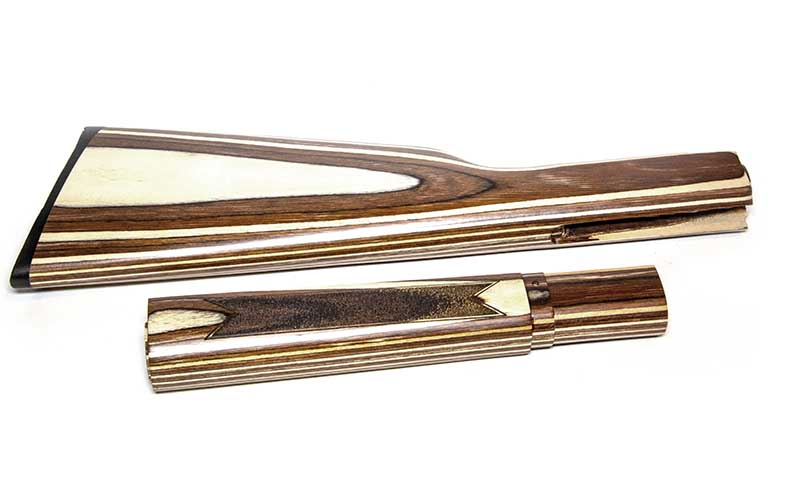
The stock on the rifle was a bit rough and I thought if I’m going to have the steel refinished, I might as well make the stock look good too. I started to refinish the stock but decided on a replacement stock from Boyds. I ordered one of their laminated stocks and opted for the stippling on the forend. As an important point, the stock is the weak link on this firearm. It’s not uncommon for them to crack, splinter, or break at the wrist. This makes the laminated Boyds stock a more rugged option, especially for a hard-use gun like I was building.
Boyds makes excellent aftermarket stocks for a wide variety of classic rifles, to include the 94. They’re a great source when upgrading any firearm.
However, I was telling my friend Melvin Forbes of New Ultra Light Arms about my project, and he offered to paint the original stock to match a rifle he’d built for me. Now, this isn’t a service he offers; I got the friend favor. Still, painting a wood stock is something you can do on your own, and your imagination is the limit.
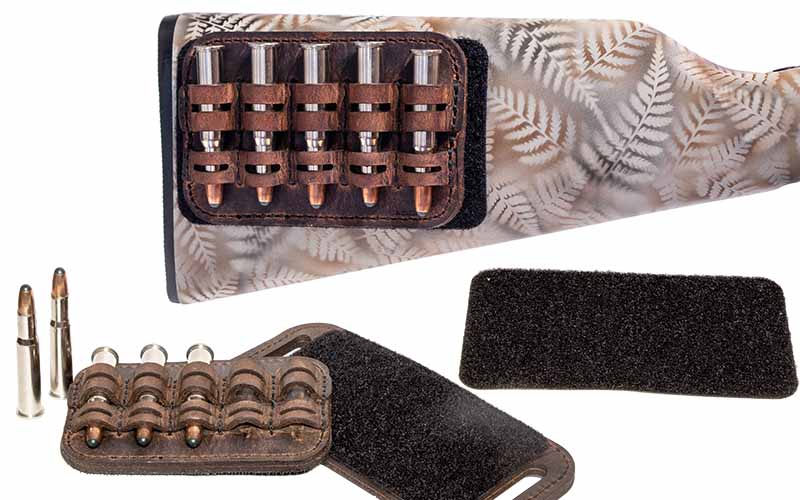
The final tweak the rifle needed was some mechanism to hold either the initial load or additional ammunition on the stock. This is a critical accessory for most any rifle, especially lever guns. It allows you to store them unloaded in a handy location and not have to look for a box of ammo if you need the rifle in a hurry.
Lace-on leather butt-cuffs are the traditional way to make this happen. Though they look classy, they’re expensive. The simplest and best solution I’ve found is a Versacarry Ammo Caddy ($69.99.) With it, the leather ammo holder is held in place by industrial strength Velcro that adheres to the stock via a super sticky adhesive pad that won’t damage the finish of your stock.
Versacarry’s AmmoCaddy is a great way to carry ammo on a rifle stock. It comes with everything needed to install it and a belt pad if you’d prefer to carry the ammo there.
Still … Should You?
I think the rifle turned out nice. It now has a Cerakote finish on all metal parts. If you’re refinishing a gun that’s to be used and that has no real collector value, Cerakote is a better choice than bluing—with it comes endless color options and corrosion protection.
The XS Sights are superior to the factory sights, and the stock not only matches another custom rifle I own, but it also gives a modernized good look to this old-timer. If my mood changes, I can always install the Boyd’s stock. Realistically, it’s more likely that as much as I enjoyed this project, when I find a good deal on another 94 that’s where the Boyd’s stock will go.
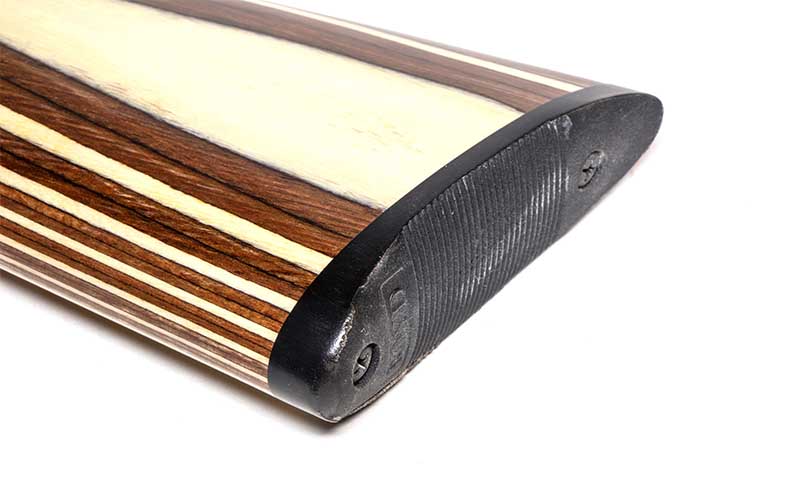
Boyds stocks, like this one for a Winchester 94, can be ordered with a butt-plate/pad already installed.
So, should you upgrade a classic? The answer is a firm: It depends. Had this been my father’s or grandfather’s rifle, or a rare or mint condition 94, I’d have left it alone. But while this rifle is undeniably a classic in terms of its manufacturer and model designation, it’s as common as post hole diggers or double-bladed axes, at least here in West Virginia. My upgrades only made this rifle better in terms of practical application and value; it’s at least worth double what I paid for it.
If you have any question about upgrading a classic or any gun for that matter, seek some professional advice; you’d hate to ruin a rarity. This is another advantage of having a personal gunsmith on call. They’ll tell you what the gun you have is worth and if your intended modifications will decrease or increase its value. Regarding sentiment, that’s a question only you can answer.
What would it cost you to create a similar-looking lever gun on the Winchester 94 platform? Dove’s charges $225 for a full Cerakote job on a lever gun. It’s worth every penny because he does such excellent work. All told, including the purchase price, I have about a grand in my rifle. It’s now a one-of-a-kind, and a rifle I can proudly show. I’ve already had on offer to buy it for more than I have in it. It shoots pretty damn good too.
Editor’s Note: This article originally appeared in the December 2021 issue of Gun Digest the Magazine.
The 6.5 Creedmoor, heard of it? If you haven’t, well, we’d like to see the rock you’ve been under for the past decade. The long-range wunderkind has taken the shooting world by storm, vastly extending the rifleman’s reach. But did you know you can supersize the 6.5?
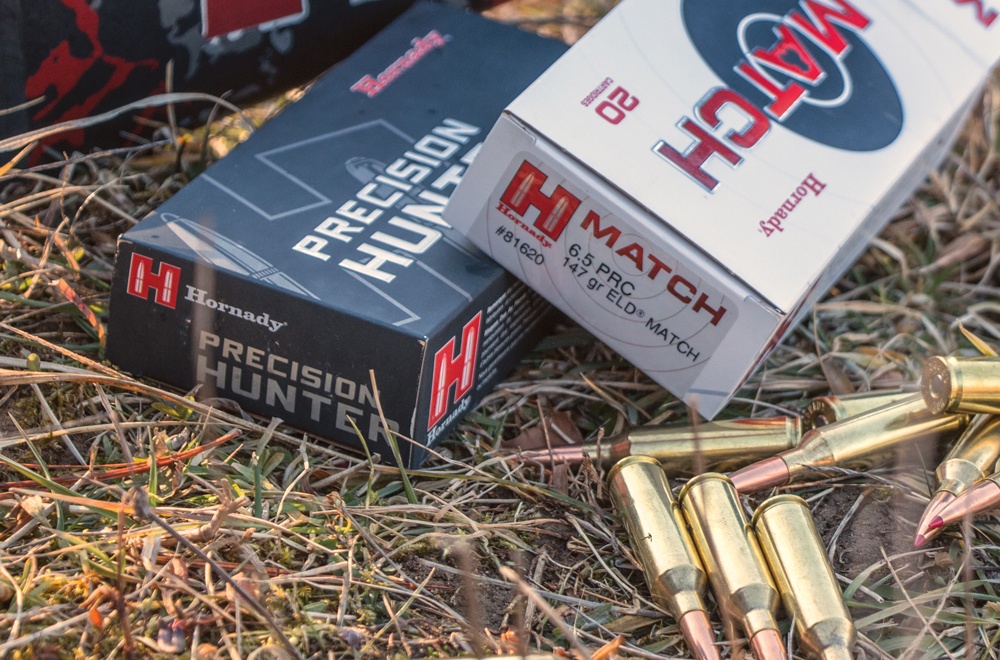
A few years back, the mad ballistic scientists at Hornady set out to surpass their Creedmoor creation. The results, the 6.5 Precision Rifle Cartridge (PRC). Just think of it as the King Kong of the six-and-a-half world, and you get an idea of what they created.
The beltless magnum cartridge hasn’t been quite as popular as the 6.5 Creedmoor, but it’s more than earned the respect of those in the know. Many of those residing in the hunting world, dubbing the 6.5 PRC the ultimate hunting round in the caliber.
This has been a blessing and a curse. The blessing part of the equation, there’s been no shortages of gunmakers jumping on the bandwagon turning out 6.5 PRC rifles. The curse, most are configured for hunting. Well, duh.
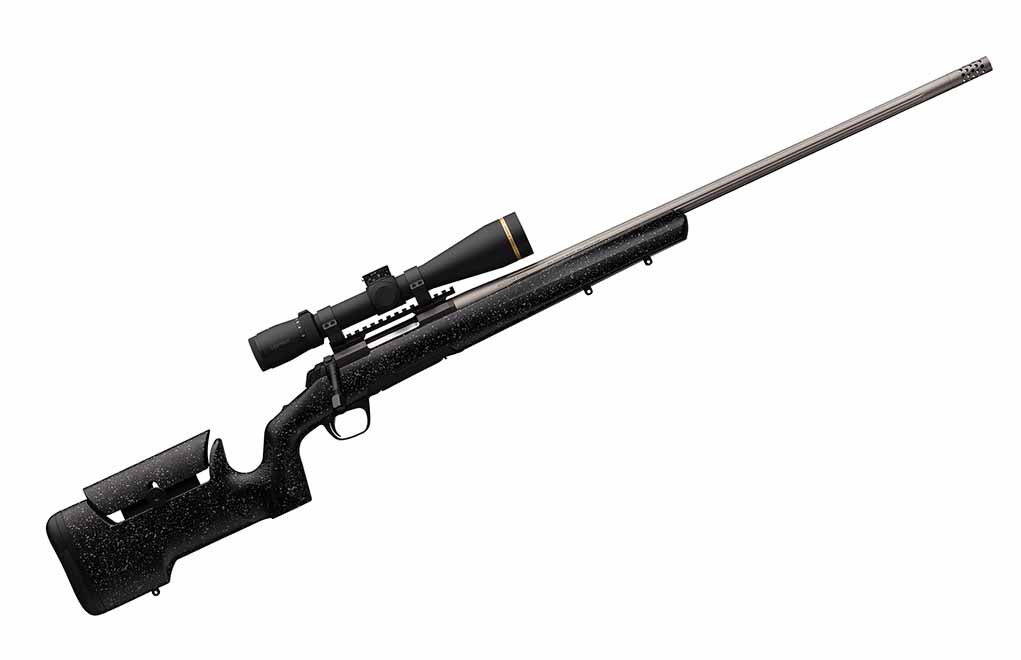
Don’t get me wrong, there are precision rig chambered 6.5 PRC. But the selection isn’t quite as vast as their hunter cousins and on top of that many start teetering into the obscene price-wise. But there are options for long-range specialists in the caliber. We rounded up eight of them.
Why A 6.5 PRC Rifle
The answer to that is why the heck not? The caliber, for the charge it holds, is very mild-mannered, thus easy to shoot. And it more than surpasses its heralded cousin the Creedmoor in ballistic potential.
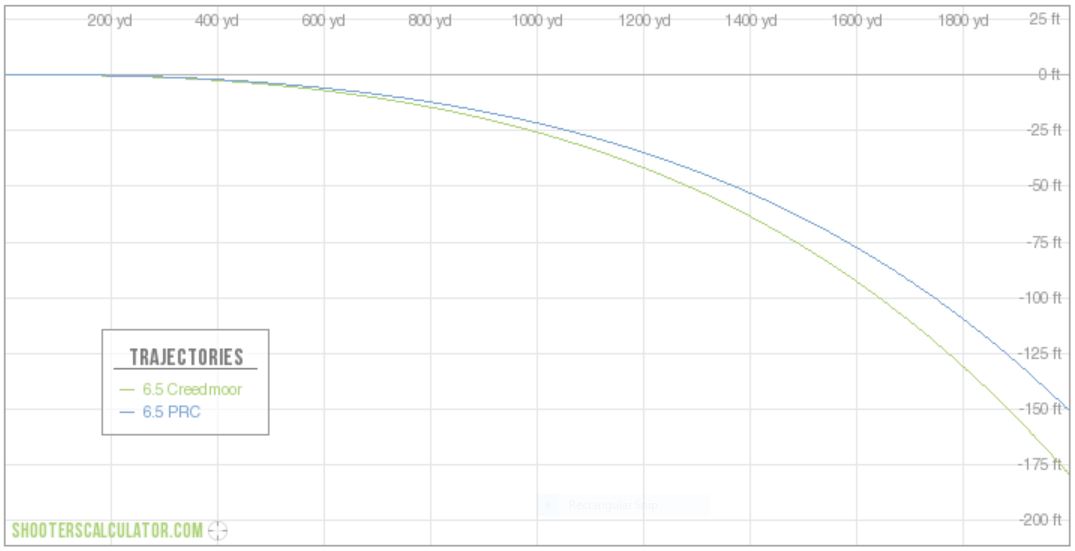
By how much? Consider this, the 6.5 PRC has 28 percent more capacity than the 6.5 Creedmoor, which adds up to an 8-percent increase in velocity. Side by side the cartridges, loaded with the same bullet, you’ll deal with nearly 50-inches less drop at 1,000 yards and push the mark at which the bullet goes sub-sonic by another 250 or so yards with the PRC.
Trajectory comparision between Hornady’s 6.5 Creedmoor 147 gr ELD Match and 6.5 PRC 147 gr ELD Match. Both have identical bullets, with an identical .697 ballistic coefficent. Yet, thanks to a greater velocity, the 6.5 PRC outperforms the Creedmoor downrange.
Is it worth it for everyone? Naw. But for those who live to push limits, there plenty appealing about making the jump to a 6.5 PRC rifle.
CVA Cascade
Among the most counterintuitive rifles in this buyer’s guide, the Cascade nonetheless deserves consideration. Yes, it’s angled at hunting and yes, it’s made by a muzzle-loader first company. Still, what CVA has produced hits the mark as a precision 6.5 PRC rifle. One of the most surprising aspects of the Cascade is its trigger. It’s no match switch, but the single-stage unit has zero take-up or creep and breaks like thin ice. Additionally, a three-lug fat bolt cycles smoothly and locks tight as a drum in a beefy and ridge action. Though threaded, the sporter barrel doesn’t lend it to a dedicated precision-shooting role, neither does the rifle’s light weight (7 pounds). But, for those on tight budgets, it more than suffices. MSRP: $745, cva.com
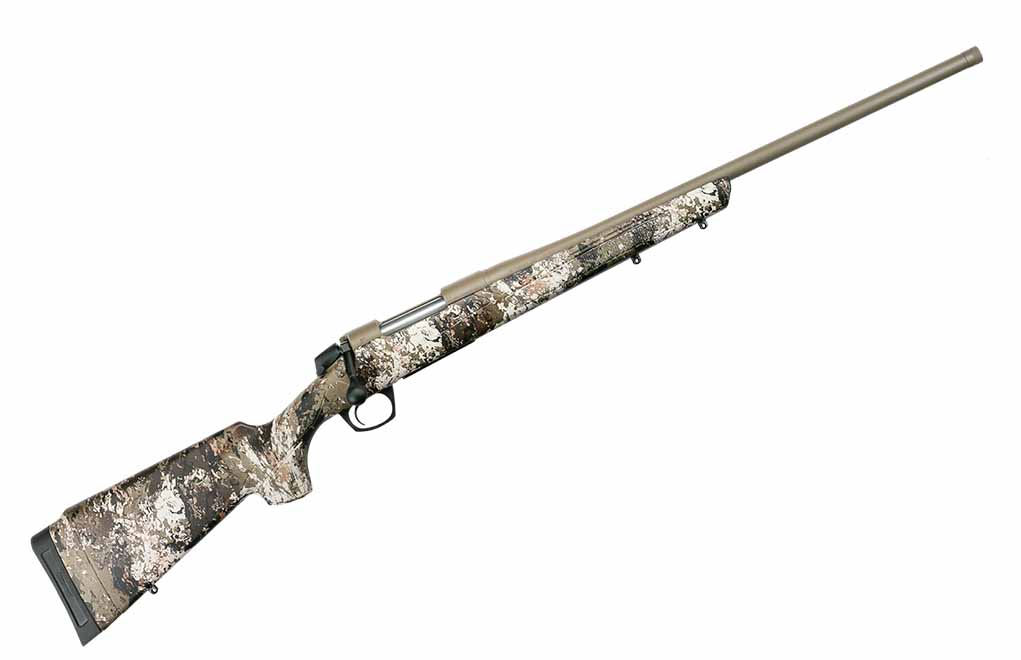
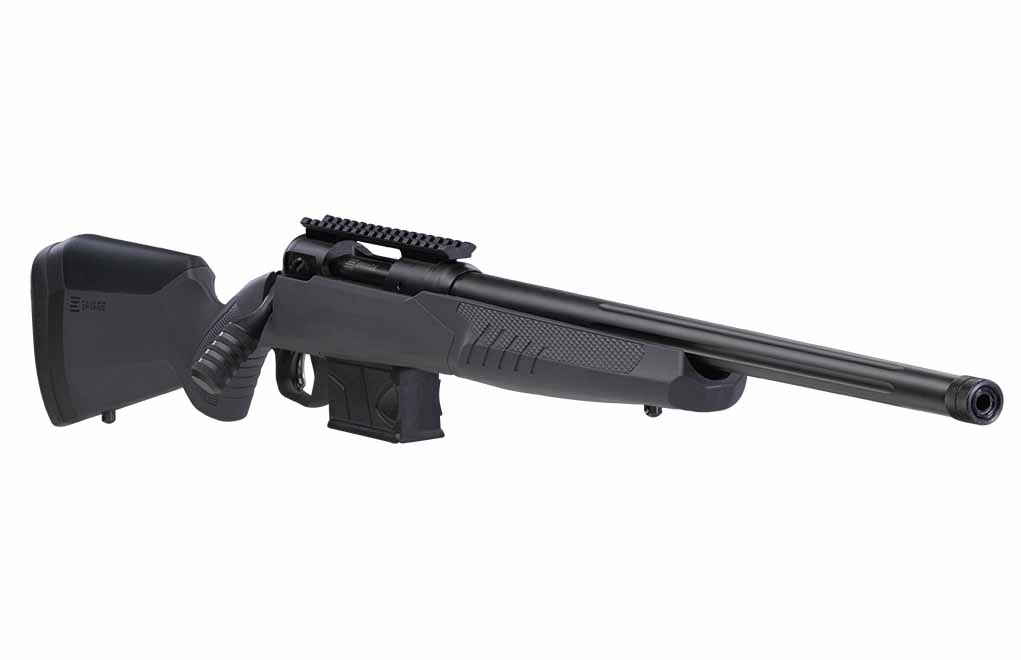
Savage 110 Tactical
As for a dedicated precision 6.5 PRC rifle, Savage offers the most affordable option by far. Decked out with some nice features, the 110 tactical more than has what it takes to send the magnum 6.5 flying. Chief among these—aside from the proven 110 action—is a 24-inch heavy carbon steel barrel. Endowing superior heat dispersion properties and additional rigidity, the threaded firetube ups the rifle’s overall ballistic potential. The same can be said of Savage’s AccuFit adjustable stock system. Yeah, it isn’t push-button simple to adjust, but nevertheless you can personalize the fit so the rifle consistently mounts. Combine with the company’s adjustable AccuTrigger and internal frame AccuStock, the Tactical is a solid long-range platform. Nice extras too—oversized bolt handle, AICS magazine compatibility, 20 MOA EGW rail and much more. MSRP: $889, savagearms.com
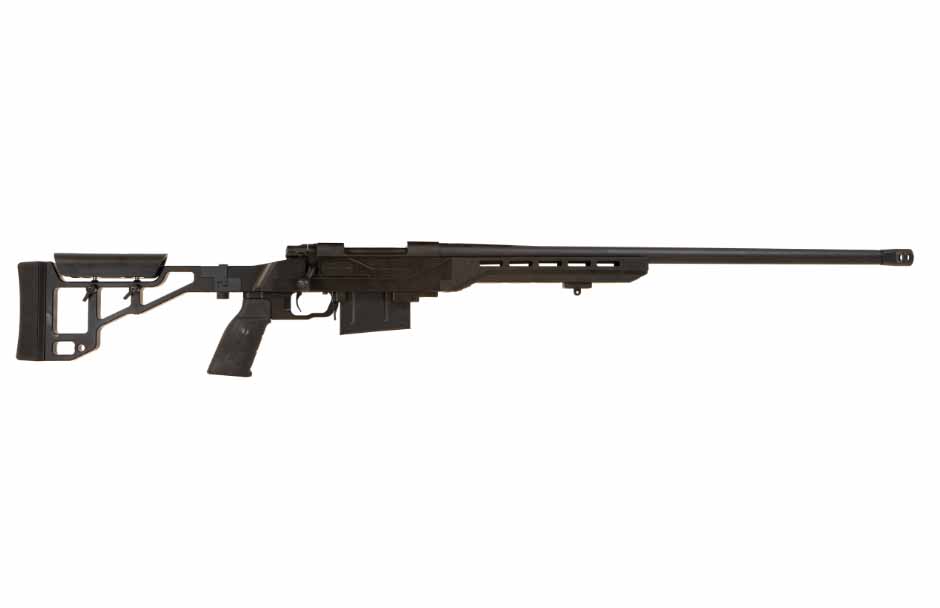
Howa TSP X
Yes, we’re talking 6.5 PRC rifles here. But in all truth, the TSP X is among the best values in chassis rifles no matter what it’s chambered. Mating Howa’s renowned 1500 barreled action with Modular Tactical Shooting Platform from Australia’s Southern Cross Small Arms, you get a versatile and accurate rig. It’s light, thanks to modular chassis’ all-aluminum construction, but it maintains the accuracy-enhancing rigidity require in precision set-up. There are some nice features to the TSP X too boot, including 24-inch #6 heavy contour barrel, folding stock, M-Lok slots at 3-, 6- and 9-o’clock, ambidextrous magazine release and four QD sling cup positions. Additionally, the stock is completely adjustable for length of pull and comb rise. A solid buy, few are disappointed with. MSRP: $1,159, howausa.com
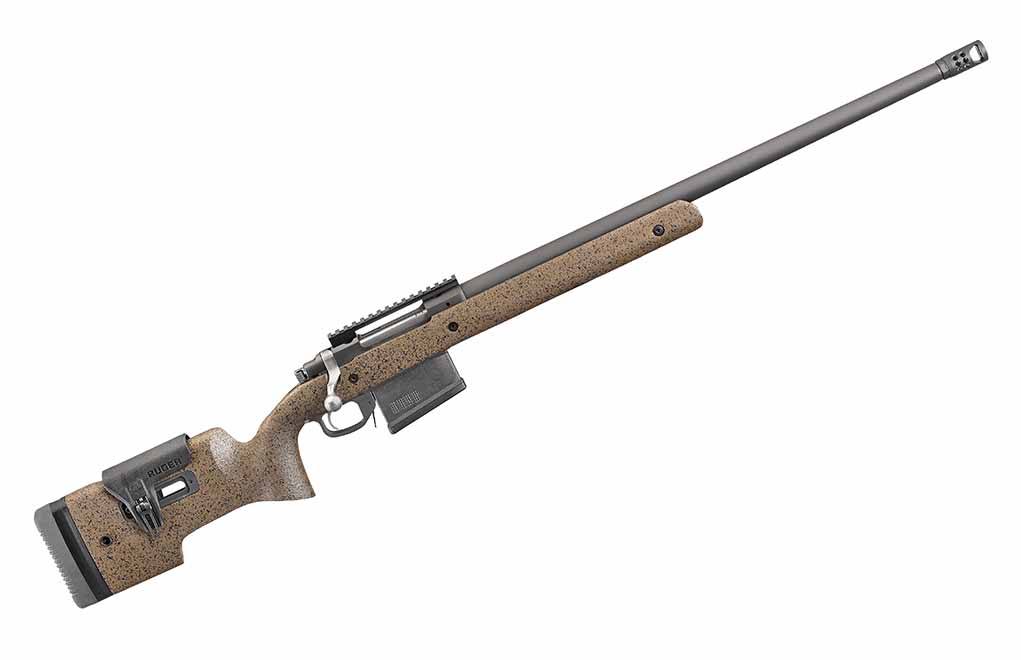
Ruger Hawkeye Long-Range Target
A cruiserweight precision rig, originally released in .300 Win. Mag, the Hawkeye Long-Range Target is perfectly tailored to the 6.5 PRC. Chambered thusly, it might be among the smoothest shooting of the lot. Much of this is thanks to the rifle’s target stock, a hefty 11-pound stick of laminate wood that soaks up the relatively mild magnum cartridge’s recoil. Additionally, the stock’s two-way adjustable comb and adjustable LOP ensures a perfect fit for every shooter. Built around Ruger’s famous controlled-feed M77 action, the rifle boasts a lengthy 26-inch heavy contour stainless-steel barrel. It’s topped off with a responsive two-stage adjustable target trigger and Ruger’s Precision Rifle Hybrid Muzzle Brake. It’s safe to say this 6.5 PRC rifle is capable of ½-MOA at any range. MSRP: $1,569, ruger.com
Browning X-Bolt Max Long Range
Fairly dedicated to top-notch hunting rifles, Browning isn’t the first gunmaker that comes to mind when discussing out-and-out precision irons. But the company outdid itself in this niche with the X-Bolt Max Long Range. Much of this is due to the excellent bedding work Browning does mating up its composite Max stock with the X-Bolt barreled action. Similar to a custom rifle, each is glass bedded around the tenon, recoil lug and front action screw as well, as around the rear action screw or impeccable fit up and positively no wiggle or yawl. The stock itself ensures perfect eye-to-scope alignment through a knob-adjustable comb rise and perfect fit to spacer-adjustable length-of-pull. A stark and ergonomically-correct pistol grip tops it all off. Space prohibits listing all of the 6.5 PRC rifle’s assets, but it performs well above its price point. MSRP: $1,319.99, browning.com
Bergara B-14 HMR
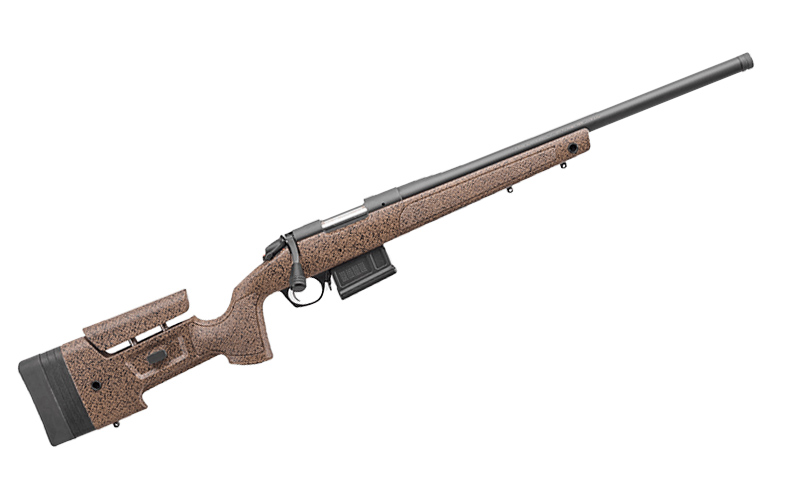
Simply put, Bergara’s Hunting & Match Rifle (HMR) is about as tightly built a precision rifle as one could expect, without going custom. Like much of what the Spanish-American company’s wares, the core of the system is an absolute gem barrel. Bergara made its name through exceptional firetubes, and it shows with this precision button-rifled, heavy-barreled 26-inch* iteration. Mated to the smooth, two-lug B-14 action, this system proves as accurate as it is quick. As much care is put into the stock, which offers much more than a benchrest buttstock, vertical grip and the usual length of pull and comb adjustments. Strip away the polymer and you’ll find an aluminum skeleton running from the grip to the forend. In addition to free-floating the barrel, what Bergara calls its mini-chassis gives the 6.5 PRC rifle the stiffness for precision to connect at a country mile. MSRP: $1,249, bergara.online/us
Savage GRS
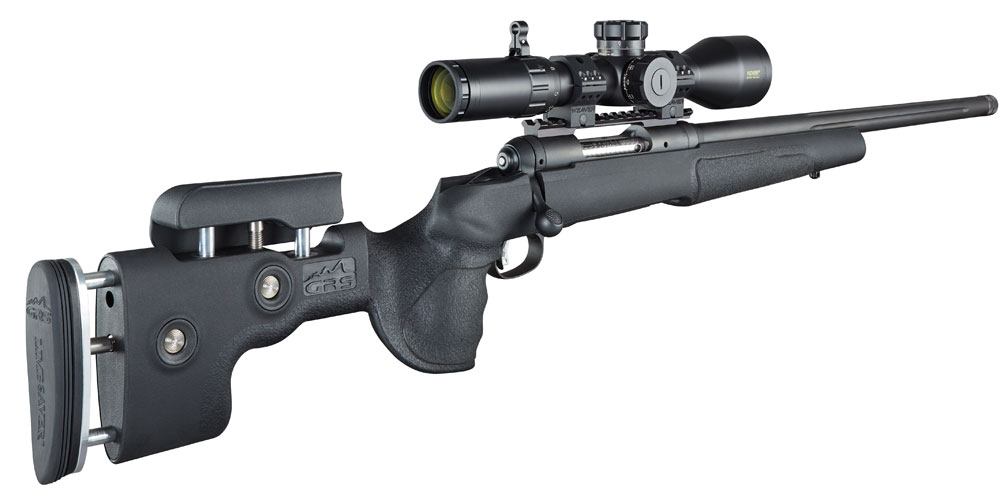
For production rifles, Savages have always had a reputation for being tack drivers. However, the company outdid itself with its Model 10 GRS. Marrying its proven Model 10 action with the Norwegian GRS stock has created a precision 6.5 PRC rifle ready to tackle the greatest distances. The GRS stock especially is second to none. With fiberglass-reinforced nylon and bosting pillar bedding blocks, it provides the rigidity and stability required for long shots. Better yet, it is fully adjustable on the fly, thanks to push-button controls for length of pull and cheek rise. Of course, it comes with Savage’s adjustable AccuTrigger, which rounds out what can only be described as a top-shelf rifle. MSRP: $1,639, savagearms.com
Ruger Precision Rifle
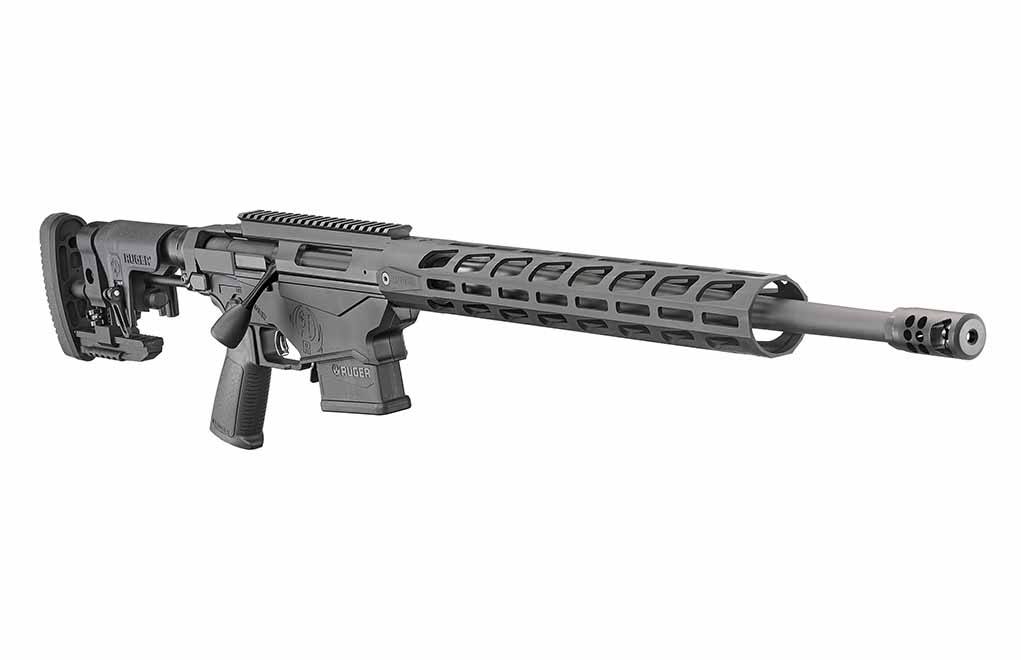
What list dealing with the long-range wunderkind 6.5 PRC would be complete without Ruger’s Precision Rifle. Hey, it’s the iron responsible for the present precision shooting craze, and for good reason. For the money, there’s no more advanced rifle on the market today. Those who know the rifle, know its chassis is the bell of the ball, providing an absolutely rock-solid platform for precision shooting. But the good stuff doesn’t stop there. A 26-inch cold hammer-forged medium contour barrel, 5R rifled gets the most ballistic potential out of the PRC. Ruger’s Marksman Adjustable trigger (2.5 to 5 pound) offers a spotless break for repeatable accuracy. And the rifle’s in-line recoil path tames the felt recoil, upping your potential for fast, precise shots. There’s a reason why the Precision Rifle still turns heads.MSRP: $1,879, ruger.com
Unconventional firearm designs are legion, but none quite stir emotions like the Bullpup. Those sentiments generally are abject hate or relative indifference in most, undying love in a select few. Those who pledge their hearts to this ugly dog do so without reservation.
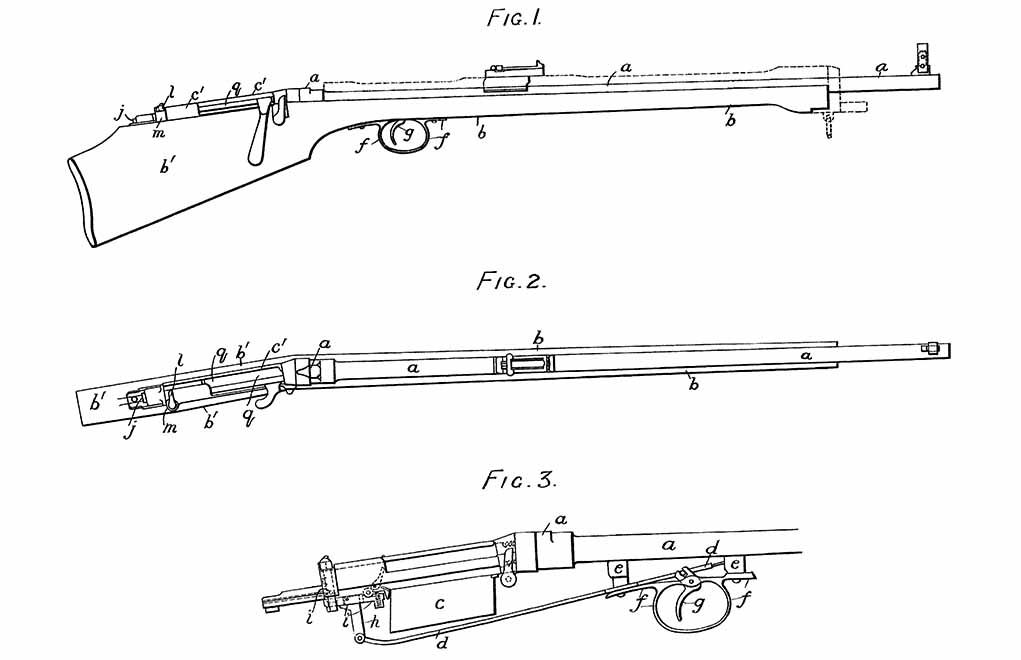
While the Bullpup has never come to equal its more traditional counterparts in popularity, it has built a dedicated enough following to keep kicking for more than 120 years. Yes, you heard that correctly. The concept of moving the action behind instead of above the trigger wasn’t some spawn of a Buck-Roger’s addle mind. Roughly pegged, the Bullpup is an early 20th-century concept with the Thorneycroft Carbine considered the first flesh-and-bones example. To be fair, others also played around with the idea before the bolt-action .303 British made its appearance in 1901.
It’s also safe to say, with material and mechanical advancements over the past 100 years the concept has come into its own. Other than stature, the Thorneycroft had everything it took to make the Bullpup concept a dusty novelty. Though, it did accomplish the one thing it aimed at—shrinking down the overall length of a rifle.
Why Go Short?
Overall the system is more compact than traditional configurations and, in many cases, retains a full-length or near full-length barrel. That’s a potent combination. Not only is the gun more deft in close quarters, but has the ability to go long if need be.
Size is one gold star for the bullpup, but the design has other assets. Arguably it’s nimbler and more controllable than more traditional designs, a function of hand position nearer to muzzle. And, in some opinions, easier to manage over longer periods given the mass of the rifle is closer to the body, instead of in front of it. Pretty solid points in the design’s favor.
The Thorneycroft Carbine look to be a bear to manage, though it was shorter than anything else available at the time.
Not Always A Good Dog
Despite these admirable qualities, the Bullpup isn’t all peaches and cream. Tradeoffs are the name of the game in firearms and there are some with the compact rifle.
Historically, poor triggers—with a load of creep—have plagued the design. Conversion kits for standard configuration rifles are notorious for this trait. Utilizing linkages and extensions to connect everything up, the extra parts subsequently make the trigger squishy.
Lefties also tend to get the shortened of the stick with Bullpups. By and large, most are configured for right-handers, with brass ejected that direction. For southpaws, the matter is further complicated due to many examples ejecting spent brass downwards. This means a face or, perhaps, a shirt full of hot brass. Some more recent designs have dealt with this, angling the ejection upwards and away from the shooter.
The final issues walk hand in hand. Bullpups are tail heavy since the magazine is located behind the trigger, thus the design tends to enhance muzzle rise. Furthermore, the mag well placement makes these rifles slower to load. Though, familiarity with the weapons system goes a long way mitigating both.
Best Bullpup Rifles
Steyr AUG A3 M1
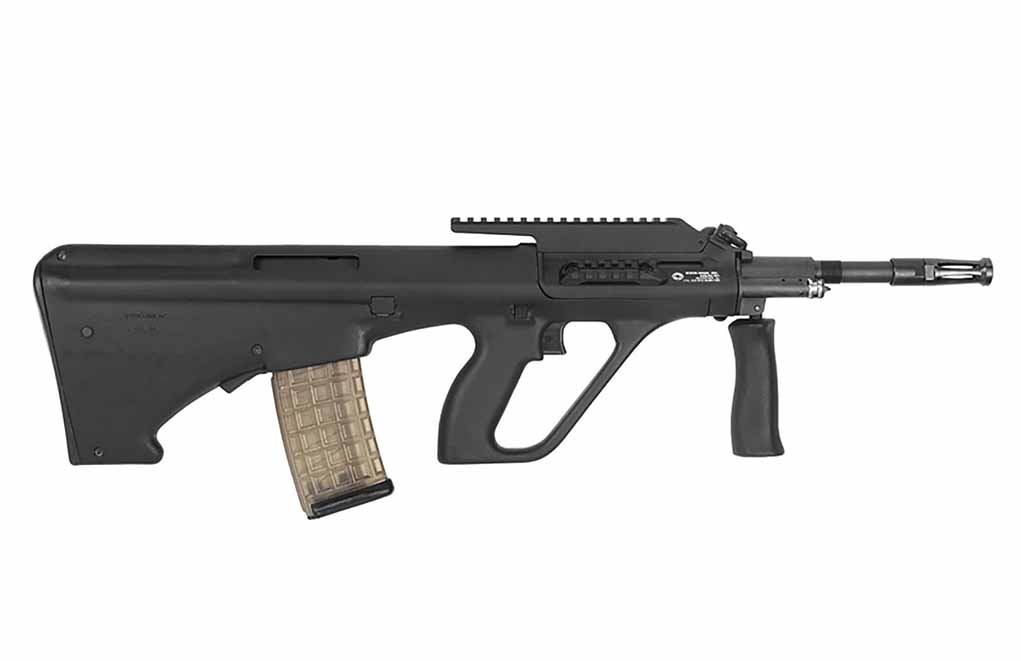
No bullpup rifle list is complete without the Steyr AUG. Among the most widely adopted rifles in this configuration, the space-aged iron has more than proved its worth in militaries and law enforcement worldwide.
The AUG A3 M1 is the semi-automatic civilian version of Steyr’s military rifle and a tidy package. A very compact rifle, the 5.56 NATO A3 M1 measures in a tick over 28-inches in overall length, with a carbine-length 16-inch barrel. Longer aftermarket options are available if you look to extend its range. Additionally, the short-stroke piston operated rifle tips the scales at a very manageable 7.7 pounds.
The recognizable rifle has a few advantages, not the least it can be configured for left-handed shooters. Big plus. Furthermore, Steyr has excellent optics mounting options, including a long or short Picatinny rail and 1.5x or 3x integrated optics.
The controls of the AUG are very intuitive as well, safety above the grip, mag release behind and charging handle at the fore. It’s different if all you’ve run is an AR, but easy to learn.
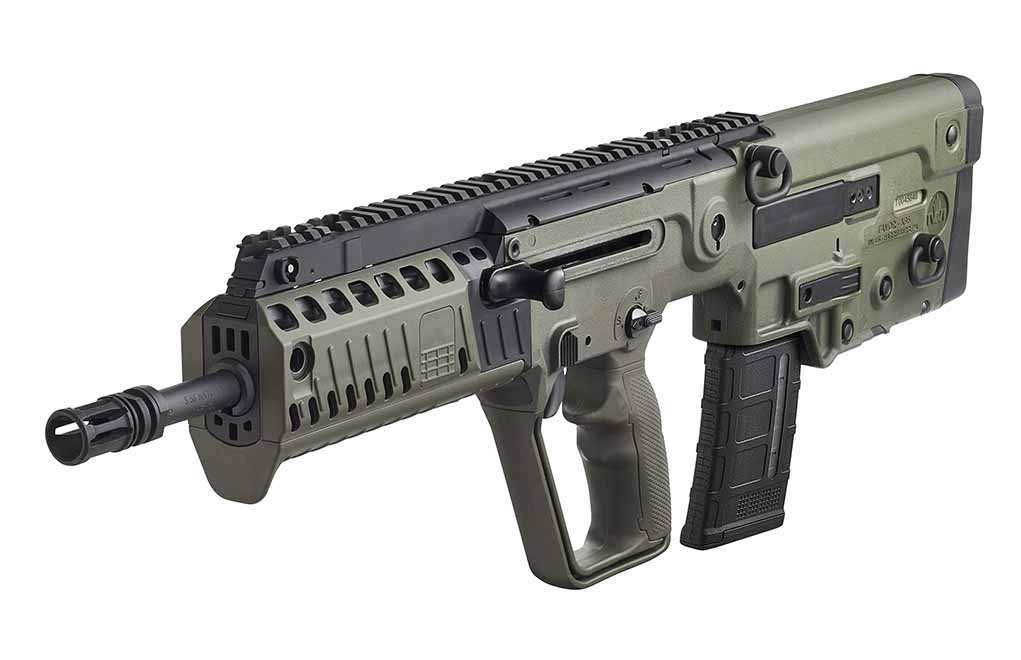
When shooters think about modern Bullpup rifles, Israel Weapons Industries’ Tavor is probably what comes to mind. Among the most popular options on the civilian market, the Tavor X95 is decked out for top performance by anybody who gets behind its trigger.
Starting there, the rifle has a downright excellent trigger, breaking at a crisp 5 to 6 pounds. For Bullpup fans, this is worth the price of entry alone. But the 5.56 NATO rifle has more to offer, including ambidextrous controls, ample optics rail as well as rails at the 3-, 6- and 9-o’clock positions, STANAG magazine compatibility and plenty of sling mounting points.
Ergonomics are right on the money too. An ample fore-end facilitates the utmost control and makes transitioning targets frighteningly quick. Given the Tavor is a kitten in the recoil department, you can make its nimbleness pay off.
As to the tale of the tape, the rifle boasts a 16-inch barrel and is a compact 26-inches in overall length. The long-stroke operated X95 weighs in a very comfortable 7.9 pounds. Hefty enough to make it extremely manageable, particularly shot to shot. Overall, there are few nits to pick with what IWI offers up in the X95.
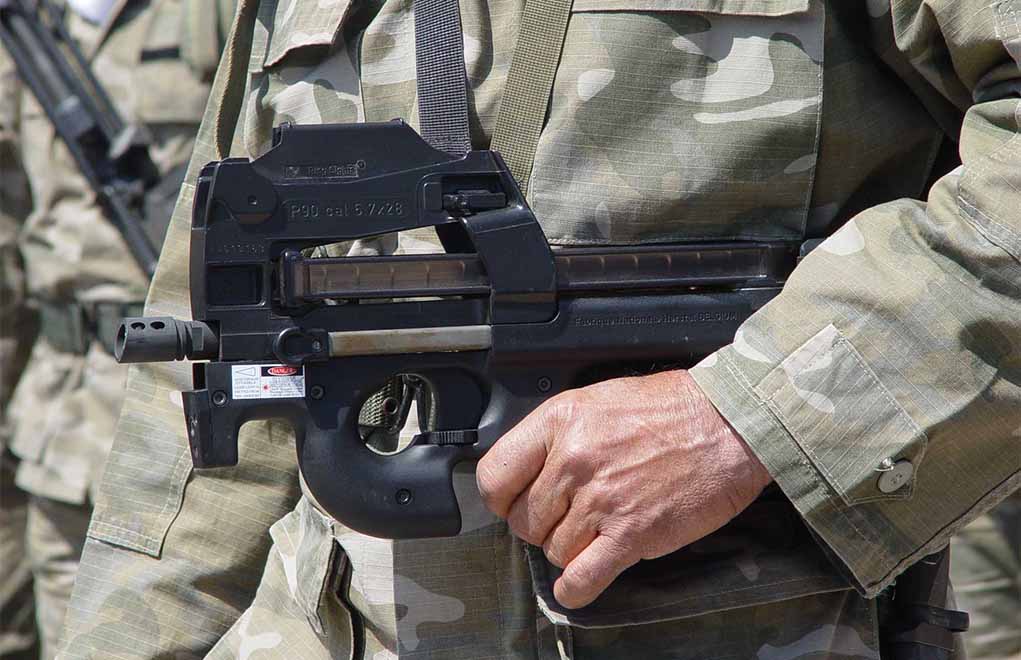
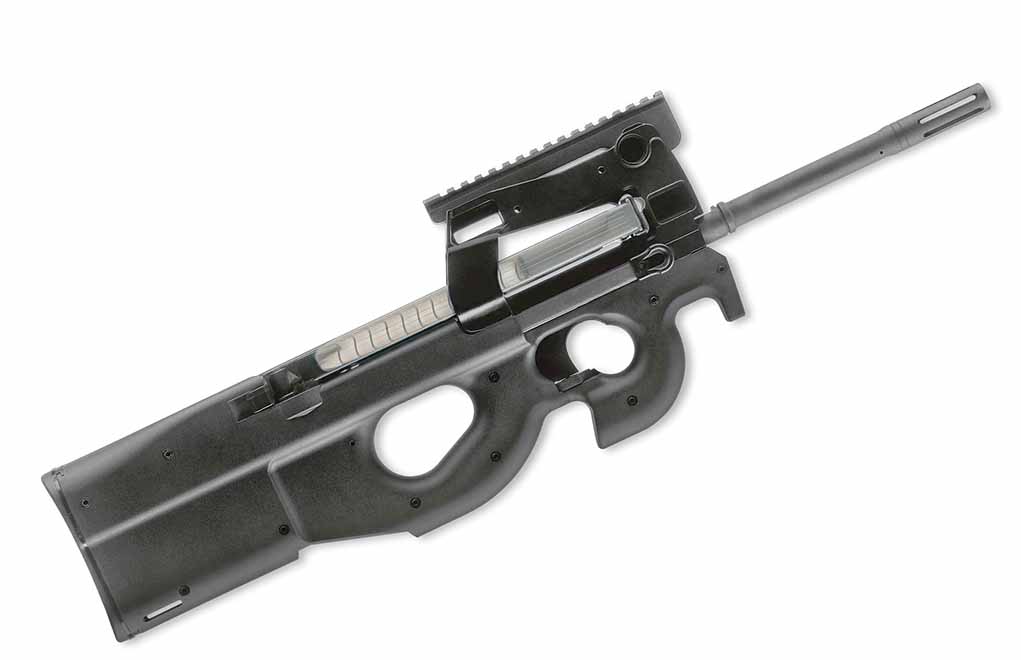
FN’s little bullpup might be the cutest rifle on the list. But don’t be fooled. It has teeth! True enough, chambered 5.7x28mm, the rifle might not be the top-choice for self-defense. Nonetheless the cartridge is deadly as a Mohave rattler when hits are precise. And the PS90 gives you plenty of chances to hit, loading 10 and 30-round magazines.
If compact is the key asset you’re searching for, the FN Bullpup has it in spades. A scant 26-inches in overall length, the 16-inch barrel rifle is ideal in close quarters and plenty quick at the shoulder. It’s also light, weighing in at just over 6 pounds. That said, given the 5.7 is a tame cartridge to begin with the PS90 is substantial enough to all but eliminate any recoil. Read, it’s a fast and accurate shooter.
Ergonomics of the PS90 are a sticky point for some—especially the grip rake on the thumbhole stock. It works but is such a marked break from what’s considered typical comfort can take time.
Reloads require similar adaptation too, given the magazine loads on the top of the rifle. Strange as it might sound, this potentially makes the rifle quicker than traditional Bullpup systems, given the greater access. Unique as all get out, the PS90 is both fun and deadly serious.
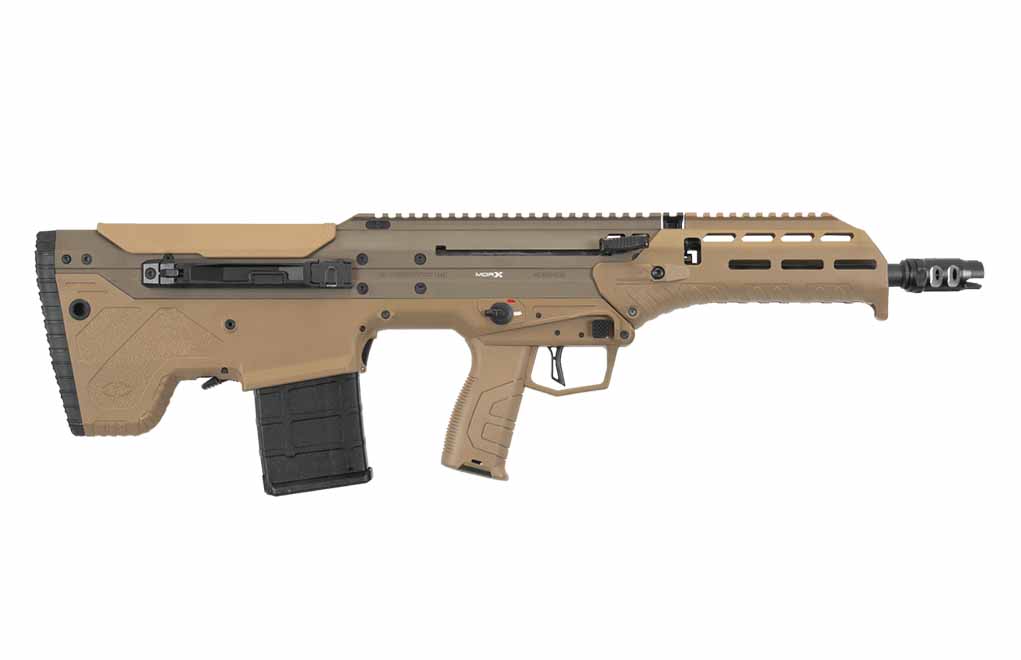
Desert Tech made its name with long-range rifles, but has shown more than proficient with carbines since the release of MDRX. A top-dollar option, the Bullpup rifle proves value to those who not only want performance, but also versatility. Where that plays out is the MDRX’s ability to jump calibers. Requiring only minutes to convert, the platform puts four calibers in your hands—.223 Wylde, .308 Winchester, .300 Blackout and 6.5 Creedmoor.
The rifle tends on the heavy side, weighing in at a hair under 9 pounds with a 16-inch barrel. Still it proves extremely trim in size. At 26-inches in overall length, the MDRX is agile, particularly with plenty of real estate upfront for the support hand. It’s also manageable, even in a .30-caliber configuration. An absolute kitten? No. But the rifle is more than capable of quick and accurate follow-up shots in skilled hands.
Desert Tech has improved the trigger over the years, striving for crispness and predictable. And the company has included all the amenities you’d expect in a modern rifle system: ambidextrous controls, plenty of optics rail space, threaded muzzle (it comes with a brake) and STANAG magazine compatibility.
Even more appealing, depending on the caliber, you have the option to choose the MDRX’s ejection style—front or side. This proves a bonus for lefties who don’t care for hot brass in their face.
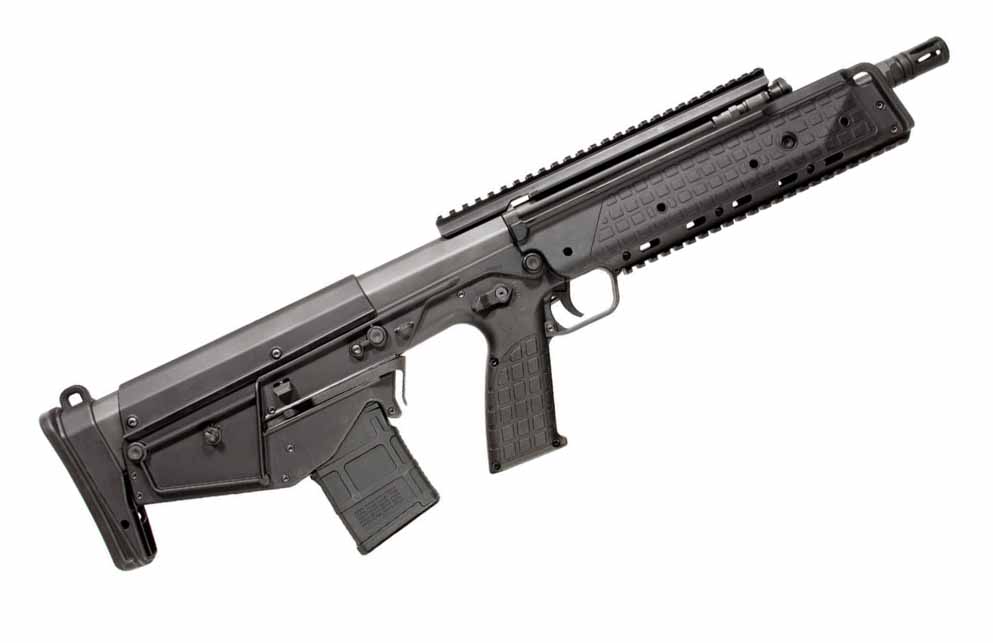
Kel-Tec has always had a different take on firearms, which makes it a natural to take on the bullpup. The RDB line is the result, though we tend toward the standard model RDB17. What makes the rifle appealing is the flexible configuration and downright affordable price tag compared to much in the niche. An excellent combination.
As to what you get in the bullpup, a short and stout 5.56 NATO with some extras that make the rifle particularly appealing. In addition to STANAG magazine compatibility, it boasts an adjustable short-stroke piston system, top and bottom Picatinny rails and very intuitive controls. The safety mimics the AR-15’s in placement and the magazine release is very quick to operate via a paddle behind the grip.
The rifle is fully ambidextrous, including how the rifle spits spent brass. Ejecting spent case below the buttstock, the system eliminates what is typically the greatest bullpup bane for lefties.
As to size, the RDB17 hits all the right notes. The 16-inch barreled rifle comes in just north of 27-inches in overall length and tips the scales at 7-pounds flat. Ample foregrip aids in getting the most out of the compact package, endowing the gun with an abundance of agility. And the mild nature of the 5.56 cartridge lets you take full advantage of its fast target transitions.
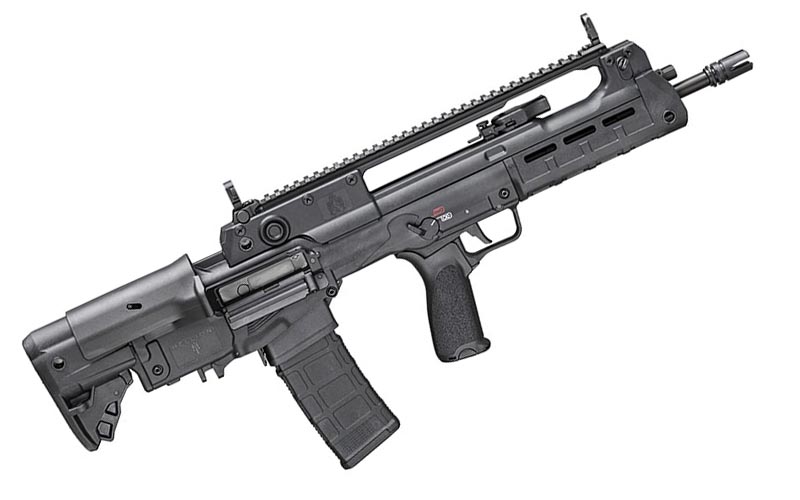
While the Springfield Hellion may have only become available Stateside in early 2022, the rifle already has a well-proven track record. This is because the Hellion is made by HS Produkt of Croatia, and it’s merely a semi-auto, U.S.-legal configuration of the company’s VHS-2 rifle. The design has been tested and refined through military trials and has been adopted by several groups of armed professionals around the globe. Because the core features of the Hellion are the same as the VHS-2, it should prove to be an incredibly reliable and durable rifle, but a few changes have been made to make it better suited for the U.S. market.
One of those changes was adding compatibility with STANAG AR-15 magazines, which are a little more plentiful in the U.S. than the original VHS-2’s G36 mags. Regardless of what feeding device is used, the Hellion is a 5.56x45mm rifle with a 16-inch barrel in a package that’s only 28.25-inches-long. It uses a short-stroke gas piston system with two settings of adjustment, and it weighs 8 pounds unloaded. Other features include an ambidextrous charging handle and safety, an adjustable stock with a cheek-riser and QD-sling points on both sides of the rifle’s stock and handguard. The case ejection system is reversible too, making the Hellion a great choice for lefties.
As for mounting accessories and optics, the handguard has M-LOK slots and a generous amount of Picatinny rail spanning the top portion of the rifle. Flip-up iron sights were integrated into the design as well. While it may be new to us here in the U.S., the Hellion is quickly gaining traction and it wouldn’t be surprising to see it become one of the most-popular bullpup rifles on the market.
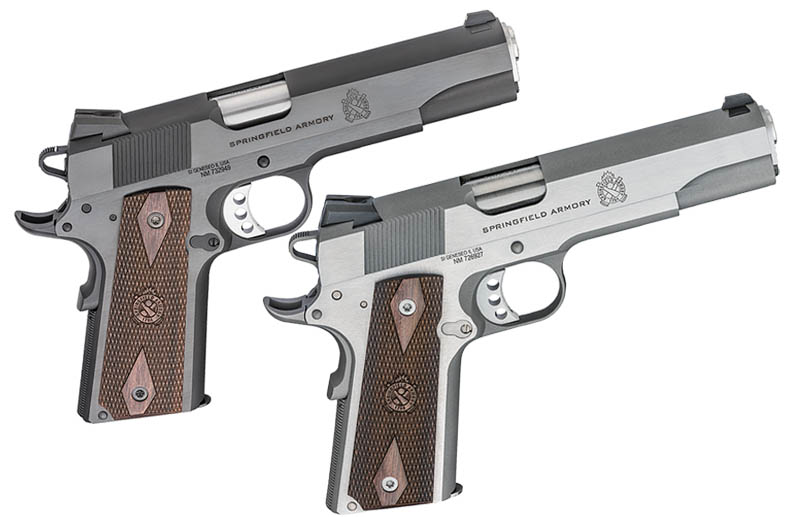
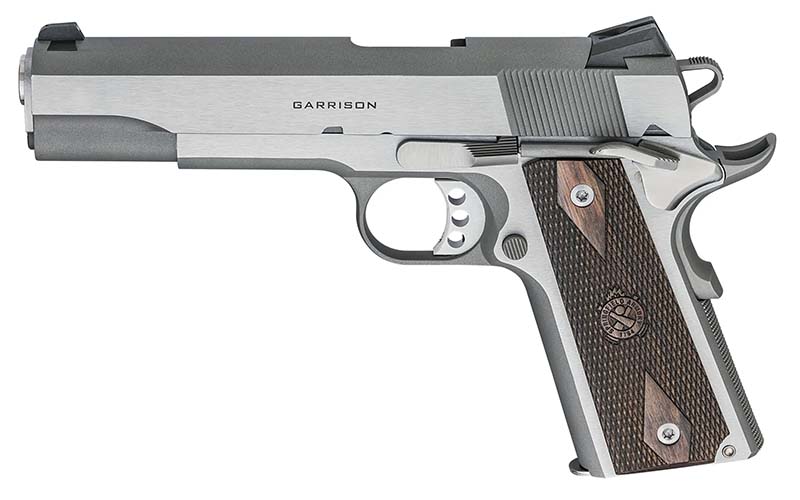
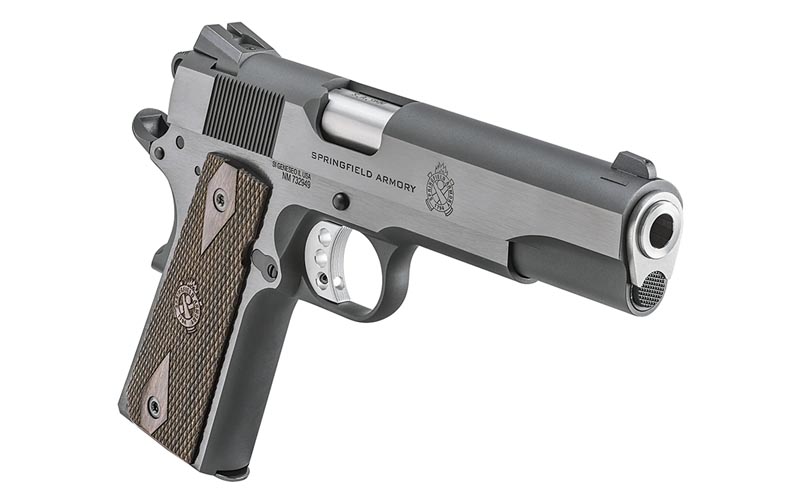
Springfield Armory has just announced the expansion of their Garrison line with the addition of two 9mm Garrison 1911 models.
Springfield Armory released the Garrison 1911 in .45 ACP in late 2021, and since then the pistols have been regarded as a solid 1911 option that offers a good balance between features, quality and price. While .45 ACP may be the only choice for a true classic 1911, many fans of the platform have also begun to accept the advantages offered by 9mm. For these shooters, Springfield has just announced the 9mm Garrison 1911.
Besides the different chambering, the new 9mm Garrison 1911s have essentially the same features as the .45 versions. Available with either a hot salt-blued carbon steel finish or a stainless-steel finish, both 9mm Garrison models feature 5-inch barrels and 9-round magazines. The slides, frames and barrels are all forged for extra durability, and the stainless-steel barrel is match-grade as well.
Steve Kramer, Springfield Armory’s Vice President of Marketing, said this on the new 9mm Garrisons:
The Garrison in 9mm is designed to appeal to those who respect tradition and appreciate the flat-shooting aspects of a full-size 9mm 1911…With a forged steel foundation for strength and heirloom-quality construction, this is a pistol that offers a modern take on a proven classic.
Other features on the 9mm Garrison 1911 include a skeletonized hammer, extended thumb safety, extended beavertail with a memory bump, wood grips and high-visibility 3-dot sights. The MSRP for the blued model is $849 and $899 for the stainless version.
Learn to shrink your groups, improve your marksmanship and increase success by expanding your confidence.
I fondly remember the first time I saw a deer in the field. Granted, I’d seen deer my entire life by the side of the road or in the woods, just not like this. It was the first year I was with my now-wife, and I had been invited by my future father-in-law to come deer hunting. I was 19 or so, and it occurred to me that I’d never aimed a rifle at a deer when one came out. I started shaking almost immediately.
That day I was armed with the only deer-legal gun I had in my possession, a 1950s-era Sears & Roebuck .45 bore caplock that my great-uncle found still in the box at a barn sale. He gave it to me, and I refinished it. However, that day, in the fading light of a late September evening in southeastern Michigan, I watched a silent, reddish shape emerge from the tall grass behind my stand, and I couldn’t tell if my eyes were deceiving me.
My heart rate immediately went up, my palms sweaty and breath ragged. I lined up, distance unknown—perhaps 75 yards. I fired, and the deer was gone amidst the plume of smoke. I had just taken a shot at my first deer. After some initial tracking, we failed to locate it, and it was determined that I had missed clean.
In the 13 years since I’ve become a hunter, I seldom get a rush of adrenaline when I see a deer, mostly because I know what I’m looking at and the behavior of my game. I take them now with a .45 ACP 1911 if I can. My skill as a rifle shooter has improved, but then again, so has my confidence. I came to realize that the half-dozen years of shaky encounters were necessary for my steady hand today. The only way I could gain confidence was to go to the field and accept mistakes.
The Confidence Course
When I began, I never imagined being able to wait until a deer was within handgun range. I just lined up, fired and missed—sometimes it wasn’t even in that order. I was clumsy and consistently surprised when a deer would walk out. Their appearance and movements were ghostly to me; I was never ready. Confidence has been earned by failure.
A shooter takes aim from a pack at a laying-down buck silhouette some 200 yards uphill between trees and foliage.
Enter Two Hats Ranch and their Confidence Course. Two Hats is located in Michigan, and it’s both an idyllic venue for events, such as weddings, and a world-class shooting and hunting facility. Not only is there excellent deer hunting available on-site, the facility also boasts a 1,000-yard known-distance steel plate range and, of great interest, a completely unique unknown distance life-size game course.
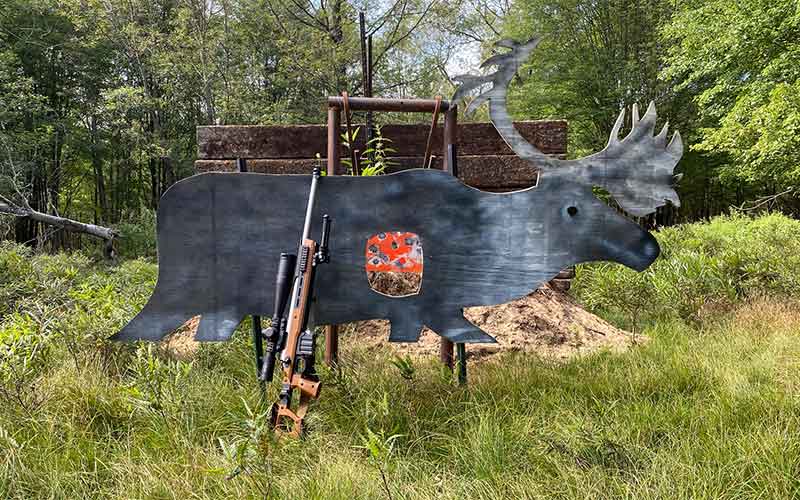
This course is spread out all over the range. You could perhaps think of it as something similar to sporting clays or a walking shotgun course simulating gamebird hunting. Instead of simple clays, the Confidence Course puts the hunter through real-world scenarios using detailed true-to-scale bears, moose, elk and even wolf, among others. The animal replicas are scattered, and there are shots across wide spaces, downhill and uphill angles, close-distance encounters and multiple engagements.
The best part of this is that the animals have steel plates the same size as the vital zones, meaning you’ll be honing your skill using immediate feedback. This is a critical feature for building confidence in your gear; dialing or holding your dope is just part of it, other things like magnification setting and field of view come into play in ways that you just don’t get on a standard range. You get to know your gear in a way that not only shows you how well it performs but also weak points of your setup.
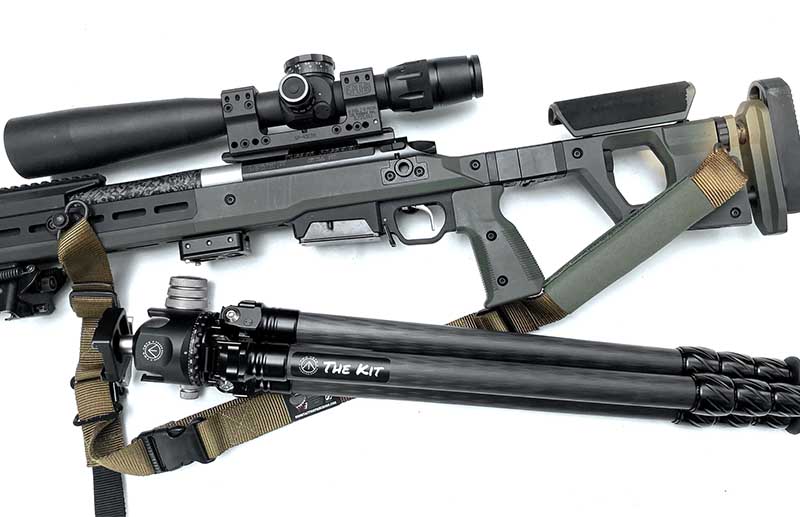
There are no benches or rests out there. You have to use the stability gear you bring, be it a sling, pack or even a tripod. Few hunters challenge themselves like this until they’re already aiming at that trophy elk—and that isn’t the time where you want to start trying new things.
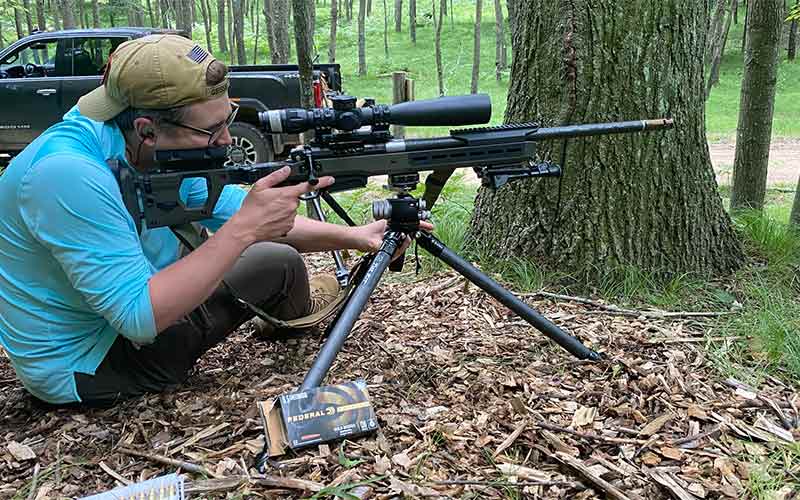
The author fires from the tripod in a sitting position on the Confidence Course at an elk target. The ammunition fired that day was Federal 130-grain Berger Match out of a custom Tuebor rifle.
The sobering thing about this course is the fact that the targets are life-size, and some shots are remarkably challenging and true to life, such as a deer laying down, antelope in deep grass and a massive elk hidden far back in the trees. On that shot I remember being told, “There’s an elk down there. Can you see him?”
I set up my tripod in the direction he was in and couldn’t see anything—until I saw the bone-colored rack and my eye followed to the body. He was much bigger than I thought. I told myself there was no way he was at 350-plus yards. He was too big; it had to be like 200. It was a telling moment for me, having such an eye for deer. I was intimidated by the size of the elk, and it put me, at least for a blink, back in that state of surprise when that first deer popped out all those years ago. It was much different than in my imagination.
If you’ve got your ideal rifle and gear, put it to the test prior to a hunt. I’ve made changes after completing this course. This place offers a consequence-free environment to make these changes. Missing a 430-yard shot on a fake moose is better than a 430-yard botched shot on a real one. We all make mistakes, and at least in this case you can learn from them without adrenaline pumping.
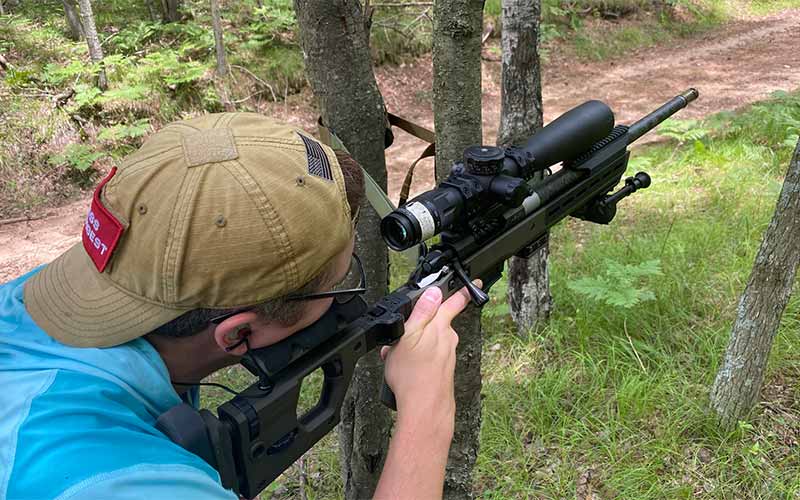
Using a tree as a support with a cinched sling is practical for stability but takes a minute to get set up.
From Support Comes Stability…And Confidence
I fired two custom Tuebor Precision 6.5 Creedmoor bolt actions that I used on the course, both firing Federal 130-grain Match loaded with Berger bullets. My rifles were well-suited to this situation, and I shot the course improvising with a Short Action Precision sling or a tripod from Two Vets Sporting Goods.
Two Vets makes some of the best tripods for rifle shooting that I’ve used in my years of hunting and precision rifle work. My guns are set up for a fast-release ARCA dovetail, and I’ve transitioned all my main rifles over to use this mounting system. For rifles without ARCA rails, I use the original saddle-style mount from Saddle Mount Dude. This is a clamp-style used with any rifle. ARCA takes longer to set up but is more precise; however, the clamp-style is substantially faster to get into action.
ARCA interface rails allow mounting of tripods and accessories at any point along their length and offer fast deployment.
The Two Vets “The Kit” tripod is a work of art and can be deployed in virtually any terrain; it can lay so flat you can shoot from prone. This is great due to the fact that you can run the legs all the way out and actually bridge terrain features, thus creating a “benchrest” in the field.
The main use of the tripod is seeing over terrain and foliage. When I first began hunting, I was stupefied by the fact that I had to stand there braced against a tree in order to see over stubble corn and leftover beans. I have, to date, made exactly one prone shot deer hunting. I made a 500-yard stalk in a low gully to avoid being seen and went prone in the snow at the top of the ridge to make my shot. The number of shots I made upright with or without tripod is more than I can remember now.
Carbon fiber tripods like The Kit are becoming more common in the field, but I haven’t seen much schooling on their use beyond basic theory. The modern field tripod may very well be the greatest hunting accessory to date, and I’m a strong advocate of their use, especially if you have time to set up a strong position.
Slings have also come a long way from a basic strap. Every single one of my rifles has its own, and my view of slings is that they’re a crucial part of the rifle—not an afterthought. Think of a good sling as a multi-tool that can be used to create a stable position in a bind.
I don’t think that a sling should be your long-term primary support to replace a bipod or tripod. It’s best treated as a backup option should you find yourself unable to get into a good position for a shot. The ability of the SAP sling to be cinched down like a tow strap is the main feature I like it for. This sling was originally designed for PRS matches and the like, but as a hunting sling, it’s just about peerless. The loop feature is meant to be something of a quick-cuff; when placed around the upper bicep of the support arm it can be pulled tight and you can brace against the rifle.
Life-sized elk and caribou targets on the Confidence Course are much bigger up close.
Neither a tripod nor a sling will make snap-shooting faster. I recommend leaving the tripod in front of you in the direction game will most likely originate. You’ve realistically got about 90 degrees from your position in which to pan a mounted rifle, a narrow window if you’re in the middle edge of a field with 180 degrees of view ahead of you.
If game comes over your weak shoulder, you’ll want to get your sling in action or keep your eye on the game as it enters your field of fire while on the tripod. You just never know what’ll happen, so I hedge my bets against the most likely circumstance and keep in mind a plan for the less likely option.
The best-laid plans…well, you know.
Editor’s Note: This article originally appeared in the November 2021 issue of Gun Digest the Magazine.
The days when we used one shotgun for everything are long past. Your granddad and Uncle Bill might have owned a Browning Auto 5 or a Model 12 Winchester and used it for anything with feathers or fur.
Times change. Today, hunters want specialized tools to bag their particular quarry. To that end, we’re looking at the top upland bird hunting shotguns available today. Light and fast in the brush, these smoothbores are tailor-made to knock flushing roosters out of the sky.
Browning Citori White Lightning
In 1973, Browning gave us the Citori as a less expensive alternative to the superposed shotgun—the last project of firearms icon John Moses Browning. Now, among the various versions of the Citori, we have a “white” version, meaning the receiver is not blued or color case-hardened, and the natural-colored steel receiver and trigger guard are protected from corrosion by a durable coating process called a “nitrided” finish, which offers similar protection to bluing.
The 16-gauge has enjoyed something of a revival, especially with upland hunters. New for this year is a 16-gauge version of the White Lightning model. With pretty walnut wood, polished-steel, engraved receiver and extended choke tubes, the White Lightning Citori is a sexy devil. MSRP: $2,839.99; Browning.com
CZ-USA Bobwhite G2
Upland hunters have a thing for side-by-side shotguns; there’s no denying it. Every shotgunner wants at least one nice double-barrel in their arsenal. The Bobwhite G2 could be it. CZ improved the original Bobwhite in several ways, including a new, durable finish, internal coil springs instead of leaf springs (they last longer and retain elasticity better) and a CNC-cut receiver with internal workings that work slicker than a greased lizard.
This little gun weighs in at only 5½ pounds and will be the envy of your bird-hunting buddies the minute you pull it out of the case. The Bobwhite G2 ships with five interchangeable chokes, has 28-inch barrels and a somewhat remarkable price. MSRP: $709; CZ-usa.com
Established in 2010, the Italian Firearms Group (IFG) is the importer of four respected Italian firearms manufacturers: F.A.I.R., Sabatti, Tanfoglio and Pedersoli. Manufactured in Italy’s Lombardy region by Fabbrica Armi Isodoro Rizzini (F.A.I.R.), the SLX 600 Black is an upland hunting shotgun with some surprises. First, this gun weighs fewer than 7 pounds—even in the model with 30-inch barrels.
As I’ve said before: You carry a shotgun a lot more than you shoot it. F.A.I.R.’s trademark bright-black bluing on the barrels is impressive, as is the select European walnut stock and forend, which is adorned with fine-pitch laser checkering at 25 lpi. This is old-world Italian craftsmanship … and it shows.
The SLX600 Black can also be purchased with multiple barrel sets, allowing hunters to change out barrels to different gauges as conditions warrant. A 20-gauge set is available for 12-gauge frames, and 20-gauge, 28-gauge and .410 bore are available for 20-gauge frames. All barrel sets come with complete choke tube sets for the corresponding model. If, like me, you are prone to covet a shotgun whose manufacturer’s name you can’t pronounce, the F.A.I.R. SLX 600 Black might be for you. MSRP: $1,675; ItalianFirearmsGroup.com
Benelli 828U Performance Shop Upland
Upland bird hunters want a shotgun to be light and fast—as in light to carry in the field and fast to point and get on target. Based on the popular 828U, the Performance Shop Upland features upgrades from Benelli’s Performance Shop to produce a shorter, fast-swinging gun. Benelli shortened the length of pull on this shotgun to 14¼ inches and the barrels to 24 inches. Its weight is only 6.4 pounds.
This gun was made for use in the brush. As with the original Benelli 828U, the Progressive Comfort stock with Quadra Fit customizing system offers less felt recoil and the ability to easily adjust drop, cast, comb height and length of pull for a custom fit. The stock and forend are AA-grade satin walnut, along with an anodized bronze/matte-blue receiver and carbon-fiber stepped rib. The 828U Upland retains the revolutionary breech design with a steel lockplate opening system, eliminating wear and tear on the aluminum receiver.
This shotgun is a looker and has some souped-up ergonomics (that is, how the gun feels when you pick it up, handle it and shoot it) that many bird hunters are going to like. MSRP: $3,499; BenelliUSA.com
Savage 555 16-Gauge
As noted earlier, the 16 is back in vogue, mostly because of the demands of grouse and woodcock hunters. Savage has answered the call with a nice, little, over-under in its 555 line that won’t require a co-signer at the bank. An aluminum receiver is scaled to gauge and incorporates a steel insert that reinforces the breech, thus minimizing weight and maximizing strength.
The enhanced version of the 555 features an imperial walnut stock and forend, auto shell ejector and a silver, scroll-engraved filigree ornament receiver. Standard features include a manual safety and a single, selective mechanical trigger. Chrome-lined barrels and a tang-mounted safety are part of the package. This shotgun weighs in at 6½ pounds. MSRP: $768 (standard model); $937 (enhanced version); SavageArms.com
TriStar TT-15 Field
Available in 12-, 20- and 28-gauge as well as .410 bore, this shotgun features a top tang barrel selector and safety, steel mono-block barrel construction and Turkish walnut stock and forearm. The TT-15 Field comes with five interchangeable Beretta/Benelli Mobil-style choke tubes (SK, IC, M, IM, F), choke box and choke wrench.
The primary safety on the TT-15 is located on the top tang. When engaged, the safety is designed to block the trigger, hammer lever and hammer, which makes the firing mechanism immobile. This shotgun boasts robust ejectors—items not usually found on economy-priced guns, and they’re also backed with TriStar’s five-year mechanical warranty. MSRP: $945 (12- & 20-gauge); TristarArms.com
Neither a grip safety nor a manual thumb safety should ever be the primary safety on a defensive handgun.
I’ve always been a fan of defensive handguns equipped with a manual thumb safety. I like them because, when used properly, they eliminate the possibility of a negligent discharge when a handgun is holstered. They can also reduce the potential for negligent discharges when you’re running or handling a handgun during movement.
As important as I feel a manual thumb safety is to a defensive handgun, a manual thumb safety isn’t the primary safety. The primary safety is always your trigger finger.
Trigger finger discipline should be one of the first skills that’s perfected with a defensive handgun.
In most every case where a negligent discharge occurs, the shooter’s finger was on the trigger. This applies to discharges while holstering, moving or handling handguns. There have been some recorded instances where the lip of a heavily worn holster, a tie on the bottom of a hoodie or some other object found its way into the trigger guard and caused the gun to fire, but these are rare. It’s the trigger finger that’s most often the culprit.
Because of this, there needs to be a conscious effort on the part of the shooter to exercise trigger finger discipline. A shooter needs to know when to place their finger on the trigger, when it should be removed from the trigger, and where it should be placed when it’s not on the trigger. Let’s address each of these situations so you’ll know where your trigger finger should be at all times, so you can substantially reduce the possibility of a negligent discharge.
Finger On The Trigger
If you’re not going to fire a handgun, there’s no need for your finger to be on the trigger. The third rule of firearms safety gives us clear guidance here: “Keep your finger off the trigger until your sights are on the target.” Some shooters believe this directive means that unless you’re looking across your sights at the target, your finger shouldn’t be on the trigger.
This shooter cannot 100 percent confirm his “sights are on the target,” but he’s certain his handgun is orientated toward the target. If he intends to shoot, it’s OK for his finger to be on the trigger in this instance.
This literal interpretation of the rule is incorrect because sometimes you’ll engage a target with a defensive handgun when you’re not looking at the sights, such as when shooting from the retention position. (Technically, it could be assumed that if your handgun is pointed at the target, your sights are on the target.)
A more accurate interpretation of this rule would be to keep your finger off the trigger until your handgun/firearm is pointed at the target. This means that when you’re drawing a handgun from the holster you wait until your handgun is pointed at the target before you place your finger on the trigger. Your finger can then remain on the trigger until you point your handgun at something you don’t intend to shoot, begin moving or when you’re satisfied that shooting is no longer necessary.
Finger Off The Trigger
This should be self-explanatory with the simple restatement of Rule 3: “Keep your finger off the trigger until your sights are on the target.” However, just for clarity’s sake, let’s look a bit closer.
This shooter may have just completed an engagement or might be in the process of beginning an engagement. Either way, because his handgun isn’t pointed toward the target, his finger is off the trigger.
When you’ve determined you won’t need to shoot, take your finger off the trigger. Anytime you’re moving and not shooting, take your finger off the trigger. When handling a handgun for any reason other than shooting, such as when reloading, clearing a stoppage or cleaning, keep your finger off the trigger. And maybe, most importantly, anytime you’re attempting to holster or draw a handgun, make sure your finger is off the trigger.
What Does ‘Off The Trigger’ Mean?
After more than a half a lifetime of teaching soldiers, cops and civilians to shoot handguns, it’s clear to me that “off the trigger” doesn’t mean the same thing to everyone. Some think “off the trigger” means the finger isn’t touching the trigger. Others think “off the trigger” means your finger isn’t touching the trigger but it’s still inside the trigger guard, or maybe even resting on the trigger guard. Regarding firearms safety, the term “off the trigger” means your finger isn’t touching the trigger, isn’t inside the trigger guard and is nowhere near the trigger guard.
So, where should your trigger finger be if it’s “off the trigger.” Most firearms instructors will advise that you keep your trigger finger straight along the frame just above the trigger guard. This has been the accepted placement for “off the trigger” in training for a long time.
Firearms safety Rule 3 requires your finger to be off the trigger until your sights are on the target. Because we sometimes engage targets with handguns without looking at the sights, it’s acceptable to have your finger on the trigger when your handgun is pointed at the target, and you intend to shoot.
More recently, to further help diminish the instances of negligent discharges, some instructors are now suggesting that when your finger is “off the trigger” you should index it on the slide so that you can feel the ejection port on a semi-automatic or the cylinder on a revolver.
I’m not so sure that increasing the “off the trigger” distance of your finger is totally necessary, but it’s not a bad idea and it doesn’t negatively impact your ability to swiftly place your finger on the trigger if the need arises. One thing it does do is provide you with a tactile feel and reference point of where to place your trigger finger when it should be “off the trigger.”
If you don’t exercise good trigger finger discipline and keep your finger “off the trigger” when you’re supposed to, there’s probably a greater likelihood that you’ll have a negligent discharge than there’s a chance that you’ll have to use your defensive handgun to save your life. Manual thumb safeties, and even grip safeties on defensive handguns, can be good things, but in their absence and even with them, the best safety you have is your trigger finger. Keep it where it’s supposed to be when it’s supposed to be there. Always!
Editor’s Note: This article originally appeared in the November 2021 issue of Gun Digest the Magazine.
Before the 7mm Remington Magnum and certainly the 6.5 Creedmoor, American shooters were typically shy of metric cartridges. Let them across the pond fiddle with those. Except, maybe, the 8mm Mauser.
Certainly, the old Teuton military cartridge (AKA the 8×57mm) never scrabbled up the support of the all-American .30-06 Springfield. The .30-caliber outperforms the 8mm in most ways, so it’s understandable. Even so, the Mauser had enough allure it developed a respectable and enduring following stateside.
More frontal area on its bullets than .30-calibers, the 8mm hits like a bone-rubbed hickory stick. The trait also gives its projectiles excellent expansion characteristics. What many found that added up to a cartridge fit for nearly all North American game, shy of coastal brown bears and such.
Things have only gotten better for the German standby. Advancements in powders, bullets, cases and primers have improved ammunition across the board. And 8mm Mauser fodder hasn’t been immune.
Before We Talk 8mm Mauser Ammo
For the most part, European ammunition names are fairly straight forward—bullet diameter followed by cartridge length. The 8mm Mauser is the noted exception, starting with its popular name. Technically it’s not 8mm (7.92mm) and wasn’t designed by Mauser. No sir.
As Jay Pinsky points out in his excellent exploration into everything 8mm, Mauser is a misnomer, given “the cartridge was developed by a German military commission at Spandau Arsenal for a forerunner of the famous Mauser rifle, which was adopted in 1898.” Rationally, the Mauser moniker stuck because of the Mauser-designed rifles chambered for it—most notably the Karabiner 98k.
The naming confusion doesn’t stop there. At times and places the 8mm Mauser has been known as the:
Patron 88
M/88
7.9mm
7.9mm Mauser
7.92mm
7.92mm Mauser
Cartridge SA, 7.92
7.92×57mm
7.92×57mm Mauser
8mm
8mm Mauser
8×57mm
8×57mm Mauser
8 × 57 I or J
8 × 57 IS or JS
8 × 57 IR or JR
8 × 57 IRS or JRS
Even its modern designations make things clear as barrel fouling. American SAAMI calls the cartridge the 8mm Mauser or 8×57mm and European C.I.P. the 8×57 IS.
Yes, there’s a rimmed version of the 8mm Mauser.
IS? The letters often following the cartridge’s name, there’s another nut to crack. You see there is more than one bullet diameter for the 8mm Mauser and style of case. The thumbnail on diameter, the Germans tweaked the original .318 to .323 in the early 20th Century. Both are still made. Furthermore, given the Teutons propensity for break-action drillings and double rifles, the 8mm Mauser comes in both rimless and rimmed flavors.
Here’s how the letters shake out:
J: .318 rimless
JS: .232 rimless
JR: .318 rimmed
JRS: .323 rimmed
Hold up, what about C.I.P’s IS? Sigh. Figures you’d catch that. I’ll let Pinsky explain: “The ‘J’ in the name stands for ‘Infanterie.’ The ‘J’ is due to a mistake resulting from the previous use of gothic letters in Germany and has no significance regarding bullet size.” Font confusion early on stuck in some parts, not in others. Keep it simple, remember “J” equals “I” when shopping around and Bob’s your uncle.
To our ends, we’re only concerned with one particular variation of the cartridge, what we Yanks know as the 8mm Mauser—what across the pond is known as the 8×57 IS. The kind that will run in a turn bolt with the most common bullet diameter. If you own a drillings rifle, sorry, this isn’t the article for you.
8mm Mauser Hunting Ammo
Nosler Custom Partition
Those who know Nolser know the tale. Company founder John Nosler had a devil of a time putting down a moose with old cup-and-core bullets. They just wouldn’t penetrate. In turn, Nosler built a better mousetrap so to speak—the Nosler Partition bullet.
Running a copper partition two-thirds of the way through the lead core of a soft-point bullet, Nosler concocted what many consider the ultimate hunting projectile. It expands at low velocity, but doesn’t shatter at high velocity. Peace of mind achieved.
Nosler still turns out 8mm Mauser ammo with the wunderkind bullet. Unfortunately it’s in their small-batch Nosler Custom line. Thankfully, the 200-grain load (.426 BC, 2,474 fps MV) comes in relatively affordable compared to other offerings in that corner of the catalog.
The handloaded stuff is a bit much for whitetail, but just about perfect for short to medium range shots at elk and moose. Great option if you hunt dark timber.
Prvi Partizan Grom Thunder
Prvi Partizan (PPU) has made plenty of headway in the American marketplace over the past few decades. Lucky for the American shooters, the Serbian gun fodder is generally affordable, accessible and features interesting engineering twists. None more so than one of its predominant hunting bullets.
The Grom Thunder is a majority copper alloy projectile, but not lead-free. Instead of going the polymer-tip route, PPU tips it with a soft lead, running a narrow channel of the metal into the heart of the bullet. The results are impressive. Even a low velocity, compression of the malleable core ensures the bullet expands to create wound channels that put game down. The stuff is tough as nails to boot.
As far as 8mm Mauser ammo is concerned, Grom Thunder is available only in 185-grain loads (2,161 fps MV). However, given the bullet’s construction, it punches above its weight and comes in as a do-all against most North American medium to large game. One drawback, it’s not exactly brimming on ammunition shelves.
Chances are your granddaddy harvested some backstraps with this stuff. Not 8mm Mauser, but Power-Point. Developed around 60 years ago, the bullet has perhaps put more deer down than any other projectile. Safe to say, it has time-tested writ large on its resume.
Essentially, you get a “traditional” hunting bullet with Power-Point—an improved cup-and-core design. Nope, not bonded. But never fear, cannelure holds its jacket to the lead core, keeping the projectile from coming apart at its terminal destination. It expands like the dickens and dumps a ton of energy quickly, too.
Given these traits, especially with the weight Winchester loads its 8mm Mauser ammo, it’s probably not appropriate for larger North American game. But for deer and pronghorn, the 170-grain Power-Point (.205 BC, 2,360 fps MV) will do its job … and well.
It’s also common as Kentucky bluegrass. This is a great advantage over some of the other ammo picks; not only is it effective, but it’s also accessible and generally affordable.
Federal Power Shok
Another steak-and-potatoes deer-season option. What Power Shok lacks in bells and whistles it more than makes up for in performance. Chances are you don’t need a premium bullet to fill your whitetail tag—or mule deer tag for that matter. You simply need something that works … every time. That’s Federal’s cornerstone hunting ammunition.
Again, we’re talking cup-and-core bullets that hang tough versus deer, hogs and other medium game. What sets Federal’s blue-collar bullet apart is its reputation for accuracy. It’s well deserved as most find out when dialing in their rifle. Given most shots at deer come 200-yards in, hair-splitting accuracy isn’t exactly a must. But having it at hand does provide a heap of confidence.
With the 170-grain (.354 BC, 2,250 fps MV) 8mm Mauser ammo, hunters get a best-in-class BC and velocity to spare, making it an ideal medium-range load. And one you won’t lose your mind rounding up. It’s available nearly anywhere that sells ammo.
Sellier & Bellot SPCE
So, let’s talk about those bullets. There a concoction of Wilhelm Brenneke, German firearms and ammunition inventor, whose company still bears his name. (You might know their shotgun shells.)
The idea is the kind-of-sort-of semi-wadcutter design cuts a sharp edge in whatever it passes through—meat or paper. Dubious perhaps. The soft-point should mushroom back to the ledge, thus mooting the feature. What’s not debatable, is the design’s superior mechanical lock-up between jacket and core compared to most other cup-and-core bullets.
What the Czech ammo-maker calls a semi-jacketed soft-point (SPCE) flies well, too. Certainly, it’s not a match option by any stretch of the imagination, but is streamlined enough to hold steady for medium-range shots. At 196-grains (.328 BC, 2,592 fps MV), the 8mm Mauser ammo is tilted toward large game, but closer in.
8mm Mauser Target Ammo
Hornady Vintage Match
Entering and in World War II, Germany was dedicated to the sniper concept. Thus, the Wehrmacht outfitted its sharp-shooters with ammunition that could go the distance—a 198-grain load topped with a bullet with an impressive .593 ballistic coefficient. Hornady’s 8mm Mauser match ammunition just misses this mark, but not by much. Loaded for a 2,500 fps muzzle velocity and boasting a respectable .525 BC boattail hollow-point, the stuff can reach out to the limits of the caliber and print small.
Sellier & Bellot FMJ
Want to stretch your 98K’s legs or just punch paper for the afternoon? Sellier & Bellot has you covered with its 196-grain FMJ (.509 BC, 2,550 fps MV). It’s not quite as ballistically adept as Hornady’s 8mm Mauser ammo. Then again, the Czech company doesn’t bill it as a match option. The nice thing about S&B’s option, it’s fairly available. On top of that it certainly won’t break the bank.
Looking to go armed, but are stuck in the weeds as to what to arm yourself with? Here are 20 of the best concealed carry gun options that will keep you on the defensive.