Home Blog Page 154

Breakdown On The Savage Arms 64 Takedown

0

Priced right, Savage's 64 Takedown offers a solid entry point for this style of rifle.

What the 64 Takedown brings to the table:

  • Reliable, semi-automatic takedown 22 LR.
  • 16 ½-inch matte black carbon steel barrel.
  • Barrel nut allows easy disassembly.
  • Includes Uncle Mike’s Bug-Out Bag.
  • 10-round detachable box magazine.
  • Black matte synthetic stock.
  • Drilled and tapped receiver for scope mounts.
  • Available in right and left-hand models.

Historically, one of the most affordable rimfire rifles, the Model 64 has also proven among the most popular. Really, Savage Arms offers a deal most can’t refuse, pricing the semi-auto well under the $300 mark. Honestly, nearly any shooter can afford to add one to their collection, and still have ample funds for a mountain of ammunition.

64 Takedown 1

If price alone hasn’t turned your head to the 64, the latest addition to the line might do the trick, particularly if you have an itch for a takedown rifle. Recently introduced, the 64 Takedown offers shooters a convenient and affordable option in this handy style of rifle. Coming in with an MSRP of $249, it easily ranks as one of the most affordable takedowns presently available. But it doesn’t stand on its near rock-bottom price alone.


More Takedown Rifle Resources:


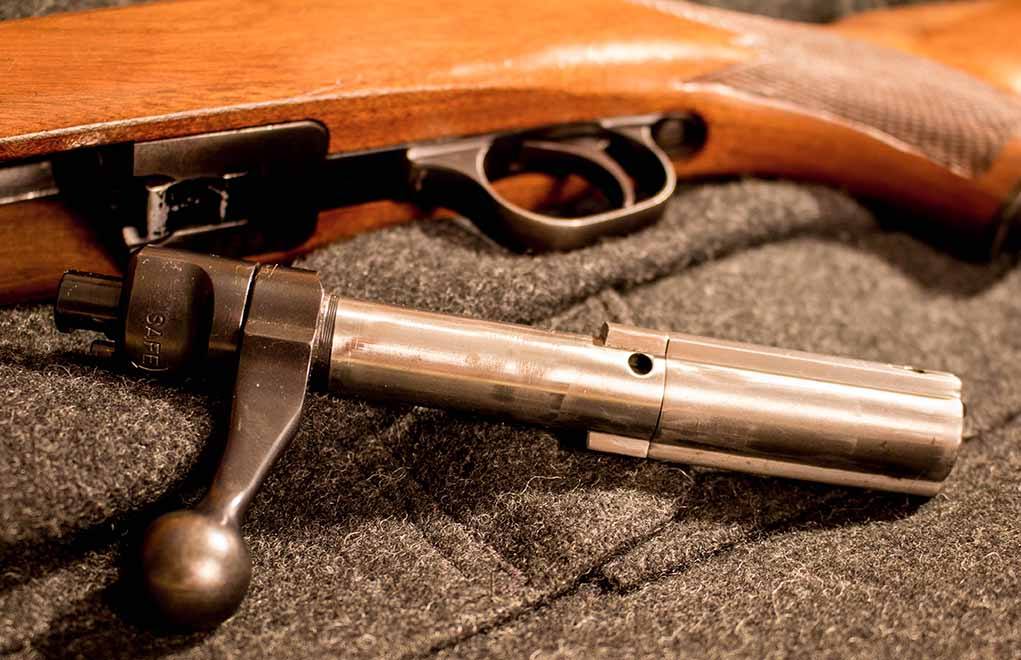
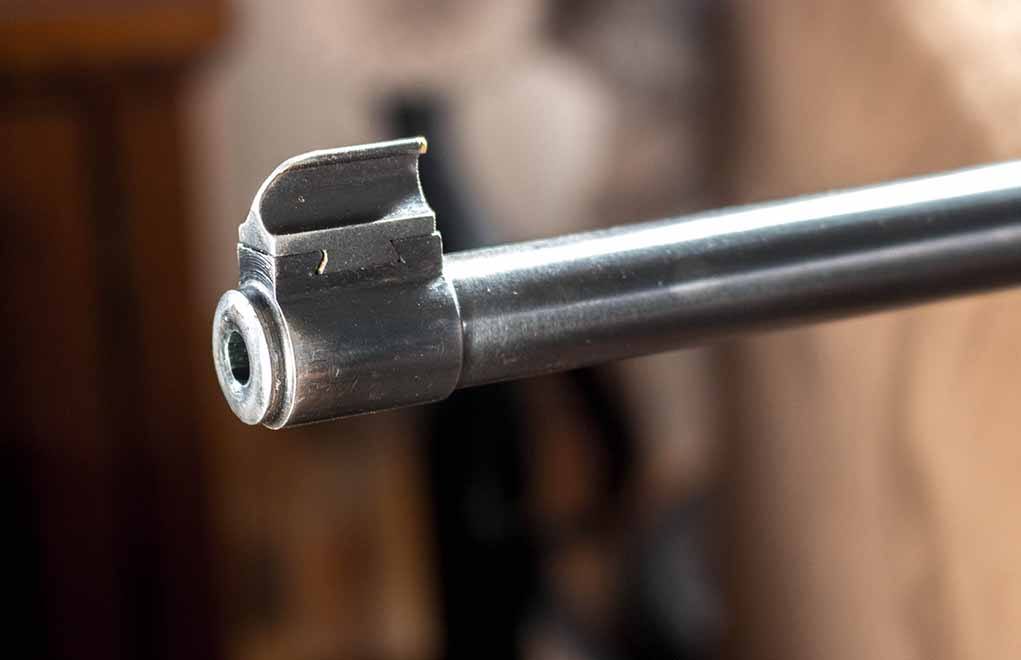
Savage Arms has whipped up what appears a solid system in the 64 Takedown, with the rimfire hitting all the right notes for this style of rifle. Chief among its assets, a straightforward and reliable takedown system. Taking down the rifle is simplicity itself, thanks to a well-knurled barrel nut, which only requires a couple twists to remove or install the 16.5-inch barrel. Furthermore, the gunmaker has made the 64 Takedown ready for action the minute the barrel goes on, placing both the front and rear sights on the barrel, so you never lose your zero. Same goes if you scope it, as it is drilled and tapped completely on the receiver.
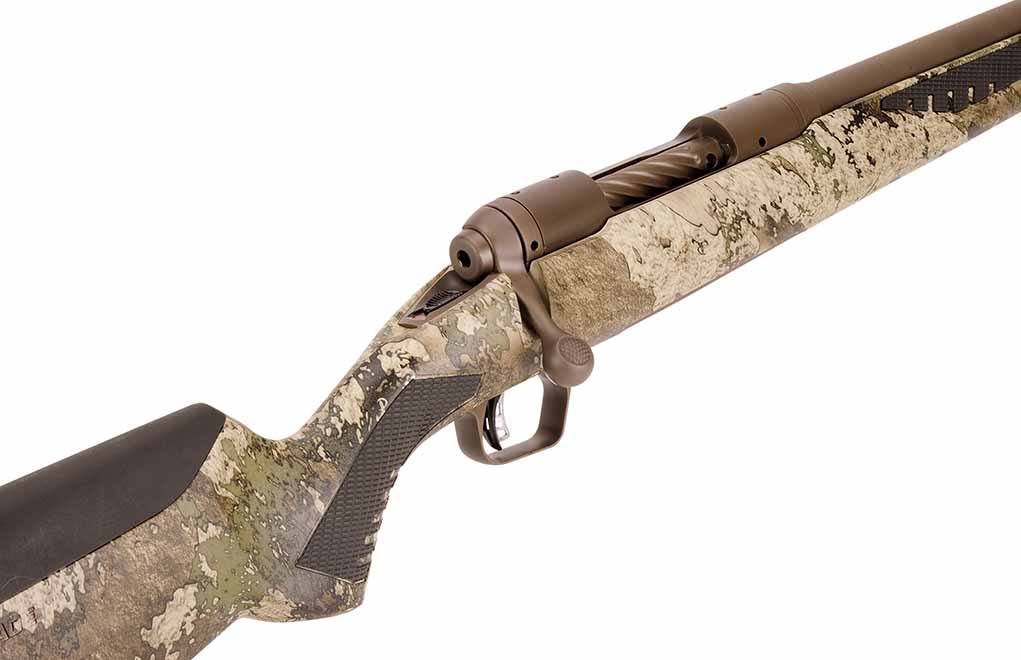
When together, the rifle measures 36.25-inches long, and takes down to half that size, which is ideal. At this size, the 64 Takedown is a legitimate backpack gun for your next backcountry adventure or the perfect little something at the ready in your truck cab. But for the sake of simplicity, Savage includes an Uncle Mike's Bug-Out Bag with the gun, just in case you don’t have anything handy to tote it around.

64 Takedown 2

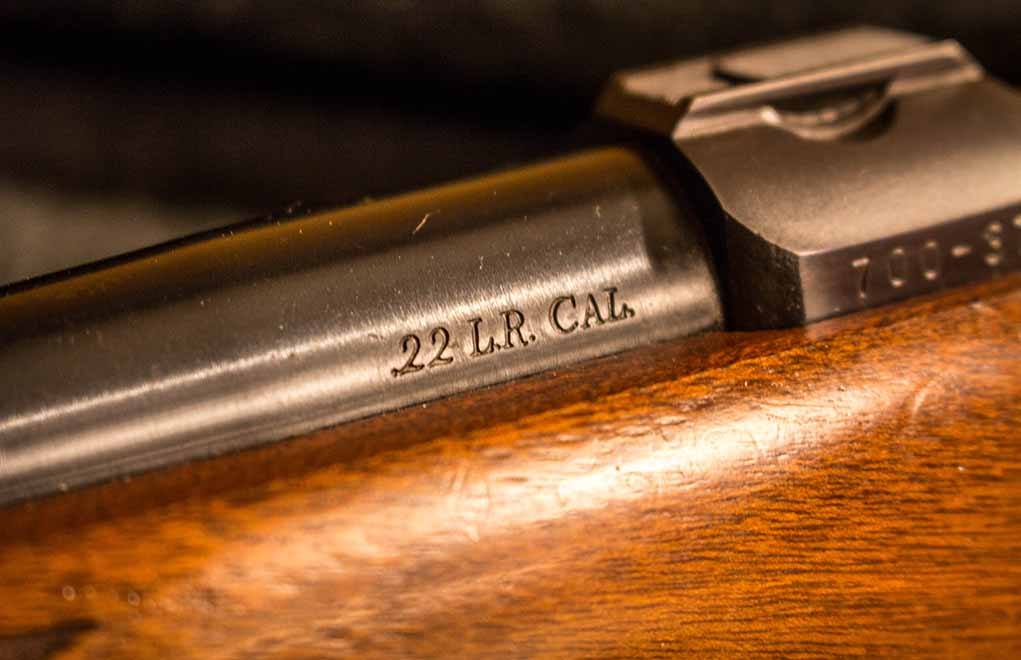
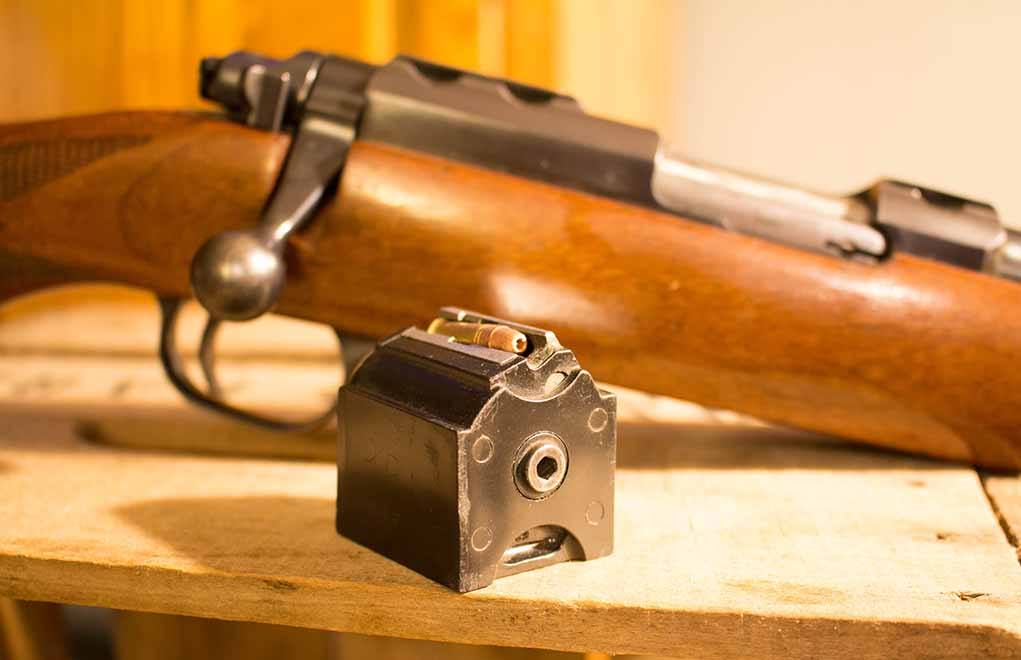
Presently only offered in .22 LR, the rifle feeds off Model 64 detachable box magazines, nice given their availability. Additionally, it’s available in both left- and right-hand models.

For more information on the 64 Takedown, please visit www.savagearms.com.

Video: SIG Sauer MPX Proves One Cool Customer

0

An advanced operating system and fully modular, the SIG Sauer MPX remains a top AR-style pistol option.

When you think about it, AR-style pistols make a world of sense. Nimble, shootable, in potent calibers, with plenty of firepower on tap, the platform outguns nearly any other pistol it might run up against in a close-quarters situation. About the only hitch in its giddyap is concealability, there’s always a tradeoff somewhere.

The market for these short and wicked guns has flourished in the recent decade, with a multitude of configurations available to suit any number of operations. But, by far, SIG Sauer’s MPX Pistol proves one of the coolest – not to mention most practical – out there. A rock-solid operating system and an intuitive design, the AR-style pistol is meant to milk the most out of the platform, with the utmost ease.


More Gun Digest Videos:


At the heart of the original MPX and next-generation Copperhead MPX is a short-stroke gas-piston operating system. Rare among pistol-caliber carbines – the MPX is a 9mm – it tames the recoil to a mere suggestion, compared to a simple blow-back gun. In turn, even without a brace, the pistol maintains incredible shot-to-shot accuracy that, for the most part, is presently unparalleled. Not to mention, the system fires fully closed with a locking rotating bolt, as you’d expect from a modern gun.
Furthermore, SIG took the time to make the MPX as shooter friendly as possible. Obviously, there are the familiar AR controls, making it second nature to operate if you have any familiarity with the long gun. But a bit more nuanced are the little extras, such as a hand stop – which should be standard issue on any AR-style pistol, but sadly isn’t.

Overall, the SIG Sauer MPX takes the AR-style pistol to another level – both the original and Copperhead. The only question remains is, do you have what it takes to get the most out of the gun?

For more information on SIG's MPX, please visit www.sigsauer.com.

Uberti USA Revolvers Honor Legendary Gunslingers

0

Uberti USA pays homage to two of the greatest gunslingers of the Old West with the Bonney 1873 Cattleman and Wild Bill 1851 Navy Conversion.

How Uberti USA's new revolvers bring the Old West alive:

  • Bonney is a replica of the 1873 Single-Action Army Billy the Kid favored.
  • Wild Bill is an 1851 Navy Conversion, close to what Hickok carried.
  • Both have color-case hardened frames.
  • Each shoots modern smokeless ammunition.

The Old West continues to capture the imagination, especially if you’re a gun guy. Certainly, we’ve come a long way since the single-action army revolver and black powder, most definitely for the better. That said, those old six-shooters still get the heart thumping.

Uberti USA Bonney 1873 Single-Action Cattleman

That’s certainly the case with two revolvers Uberti USA introduced recently to its limited-edition Outlaws & Lawmen Series. An homage to two of the West’s greatest gunslingers – William Bonney (AKA Billy the Kid) and Wild Bill Hickok – the Bonney 1873 Cattleman and Wild Bill 1851 Navy Conversion are lookers and shooters. To boot, they’d likely be favored by their namesakes, if they were around today. After all, Billy was known to carry a Colt Single-Action Army and Hickok’s Navy Revolvers were famous – though he favored the original cap-and-ball model.


More Old West Gun Posts:


Built to handle modern ammunition, the Bonney is chambered .45 Long Colt and the Wild Bill .38 Special. The revolvers come in relatively affordable, the Cattleman with an MSRP of $799 and the Navy $809.

More from Uberti USA:

ACCOKEEK, Md. (January 22, 2019) – The history of the Old West is filled with tales of wild gunfights, mid-day robberies and romance that still captivates us today. Uberti USA brings these memories to light with the extension of their limited-edition Outlaws & Lawmen Series.

Uberti USA pays homage to two of the most famous gunfighters of the Old West with the introduction of the Bonney 1873 Cattleman and Wild Bill 1851 Navy Conversion replica revolvers. The revolvers draw inspiration from William “Billy the Kid” Bonney and James Butler “Wild Bill” Hickok.

The legend of Billy the Kid has been a cornerstone of Old West lore since Bonney met his demise at the hands of Lincoln County Sherriff Pat Garrett in 1881. Throughout most of Bonney’s notorious life as a gunfighter, the young shooter carried an 1873 Colt Single Action Army revolver. This ubiquitous revolver was holstered on Bonney’s belt in the only known image ever taken of the outlaw. Known as The Peacemaker, the iconic revolver is known as “The Gun That Won the West.”

Uberti USA Wild Bill 1851 Navy Conversion.

Chambered in .45 Long Colt, the Bonney 1873 Cattleman features a simulated bison horn bird’s head grip, color case frame and blued steel barrel measuring 5 ½ inches. The six-shot weighs in at 2.3 pounds and has an overall length of 11 inches. The Bonney 1873 Cattleman gives Old West fans a way to relive the wild times of the West with a revolver that looks as good as it shoots.

Wild Bill Hickok made a name for himself as a soldier, scout, lawman and expert marksman. He was rarely seen without his two muzzle-loading, ivory-handled 1851 Navy Revolvers. Uberti USA pays tribute to the legacy of Wild Bill Hickok with the 1851 Navy Conversion, which is more practically chambered for the easily available .38 special.

The Wild Bill 1851 Navy Conversion captures the romance of the Wild West with a simulated ivory grip, 6-shot engraved cylinder, color case frame and 7 1/2-inch blued steel barrel. Overall length comes in at 13 inches and with a weight of 2.7 pounds. The form and function of the Wild Bill 1851 Navy Conversion delivers nostalgia of the days where a dependable revolver might be the only thing between life and death during the harsh days of the Old West.

Uberti USA Outlaws & Lawmen Series Extensions

Bonney – 1873 Single Action Cattleman
Caliber: .45 Long Colt. Barrel Length: 5.5 inches. Overall Length: 11 inches. Overall Weight: 2.3 lbs. Grip: Simulated bison horn bird’s head. Finish: Blued steel/color case. Cylinder: 6-shot, fluted. Number of Grooves: 6. Rate of Twist: 1:16 RH. Warranty: 5 years. MSRP: $799.

Wild Bill – 1851 Navy Conversion
Caliber: .38 special. Barrel Length: 7.5 inches. Overall Length: 13 inches. Overall Weight: 2.7 lbs. Grip: Simulated ivory. Finish: Blued steel/color case. Cylinder: 6-shot. Number of Grooves: 6. Rate of Twist: 1:18.75 RH. Warranty: 5 years. MSRP: $809.

For more information on the Bonney and Wild Bill, please visit www.uberti-usa.com.

Reviving The Hard-Charging MEUSOC 1911

0

The history and building of one battle-tough pistol — MEUSOC 1911.

What went into the original Variant 1 MEUSOC 1911:

  • Introduced in 1987 and manufactured by the 2112s.
  • Receivers are USGI M1911A1.
  • First slides used were System “hard” slides.
  • King's thumb safety.
  • Wilson 66 beavertail grip safety.
  • Videcki solid stainless-steel trigger.
  • Maryland Gun Works (MGI) commander hammer.
  • 18.5-pound recoil spring provided by Bar-Sto.
  • Primarily Bar-Sto barrels were used.
  • Accompanied by Wilson 47 magazines.

Given that I’m a certified 1911-a-holic and I love history, I’m interested in just about every variation of the 1911 pistol out there. Back in the early 2000s, I came across several articles and photographs of the Marine Expeditionary Unit Special Operations Command (MEUSOC) 1911, and I was immediately intrigued. What is this pistol? Who made it? What’s the real-life story behind it?

MEUSOC 1911 6

I kept reading and researching the MEUSOC pistol, and I eventually met retired Marine KC Crawford, who happened to be a former 2112 Armorer in Quantico — and he actually built these pistols. Not only is Crawford an accomplished gunsmith, but he had insight on the inner workings of the 2112 Marine Corps Armorers in Quantico — and he was willing give me a history lesson.

MEUSOC Parts And Variations

Crawford worked at the Quantico Shop in 1987 when the first MEUSOC pistols were introduced and manufactured by the 2112s. He was also fortunate enough to be one of the guys who built those first pistols for the special units that wanted to maintain the 1911 in .45 ACP, instead of the then-new M-9 Beretta 9mm.

The 2112s listened to what the SOC guys wanted, including durable fixed sights, a long trigger, a beavertail grip safety, an ambidextrous thumb safety and an accurate barrel. There were many discussions on what aftermarket parts to put into the new guns, but above all, it had to be a no-BS-bet-your-life-on-it pistol that could stand up to the rigors of combat. After all, it was common for a pistol to have more than 10,000 rounds shot down the tube in training before the gun ever left to go into harm’s way.

After all was said and done, a basic list of modifications was put together — and the build was finalized.

The receivers were all USGI M1911A1. Over the course of time, some Caspian receivers were used, but that was later on in the production cycle. The first slides used were System “hard” slides to ensure a solid platform to work with. The standard GI thumb safety was replaced with an ambidextrous thumb safety. There were a few ambidextrous models made, but the King’s 201 was selected because of the extended hammer pin retention feature that no other manufacturer was using.


More 1911 Posts:


Because of the hard-use nature of the pistol and the thumb safety being activated and de-activated thousands of times, the armorers believed that the hammer-pin retention would give a more positive feel of the safety. It also allowed any set of grips to be used because there was no need for the ambidextrous cutout on the right-side grip.

Although the MEUSOC lineage saw four major variations, countless one-offs exist due to a lack of consistent access to high-quality parts.

The safety was a cast part, as were most parts back in the day. And, of course, the safeties started having issues rather quickly. While the right lever did stay in place, the joint holding the left and right side together developed a great deal of play and made the safety very sloppy. Many of them eventually broke, leaving the safety inoperable until a new unit could be fit to the pistol.

The beavertail grip safety chosen was the Wilson 66, which used a compound radius, making it more difficult to fit than other options available at the time. There was no such thing as a “memory groove” on a grip safety at that time period, and it became a common practice to tape the grip safety so the gun could shoot without having a perfect grip. The armorers tried to set the grip safeties so they would function with just the slightest depression yet still pass a safety check — sometimes they were successful, and other times not as much. Trying to give the shooters what they wanted while providing a safe and serviceable pistol was their ultimate goal.

The trigger used initially was the Videcki solid stainless-steel unit. The hole for the over-travel screw was welded so there was no over-travel screw to work loose and stop the pistol from firing. This created its own problem by having so much over-travel that some of the pistols had hammer follow issues — and the trigger was so heavy that it was believed to cause sear bounce, creating another set of problems. It was common practice when building the guns to rack the slide, letting it slam forward as many as 15 times in a row. If the hammer followed during this “test,” the gun was sent back.

The trigger pull weight was kept between 4 and 4.5 pounds. It was the shop’s belief that if 4 pounds was good enough for a national match hardball gun, then it should be good enough for the MEUSOC pistol as well. Of course, there’s a big difference between a match pistol that can have maintenance done as needed and a hard-use gun that may not see maintenance for 6 months.

To complete the trigger group, a Maryland Gun Works (MGI) commander hammer was chosen. Disconnectors were system GI and sears were a collection of many different manufacturers. The first sears used were again GI, and as time progressed, various manufacturers’ “hard” sears were used. The belief at the time was that the feel of the trigger should be a “glass rod break.” However, that kind of release normally doesn’t last very long, especially when the trigger components are not the best.

Along that same line, the standard recoil spring was an 18.5-pound unit provided by Bar-Sto. This was a very heavy-duty recoil spring designed to take the abuse and survive a training cycle without having to be replaced. The recoil spring was a stainless-based product that did hold up very well to the rigors presented by the team members in every environment.

(above) For his build, the author used a 1943 Colt frame with a seven-digit “hard” slide.
For his build, the author used a 1943 Colt frame with a seven-digit “hard” slide.

Throughout the early history of the MEUSOC pistol, Bar-Sto barrels were the primary choice. As time progressed, other barrel manufacturers were used. The Bar-Sto barrels the armorers first used were oversized, gunsmith-fit barrels. That didn’t last very long because of the time and training required to fit a barrel, bushing link and pin to a gun that needed some tolerance to remain fully functional.

The armorers then went to the “drop in” barrel offered by Bar-Sto. Of course, we all know that drop-in parts for a 1911 always fit — not. So, the armorers quickly learned that while it was nice to have most of the work done via drop-in parts, many things needed to be checked and properly fit.

Another component requested by the SOC team was a flat mainspring housing. While there were aftermarket flat mainspring housings available, the decision was made to modify and manufacture those springs in-house. The arched housings were cut down to a flat housing configuration and then serrated to give a gripping texture to the back of the pistol. This made it easier for another requirement, a lanyard loop, to be retained from the original housing.

The Variant 1 pistol consisted of a System “hard” slide with standard sight cuts. Many of these slides were the seven-digit 7790314 slides, though a few of the Drake NM7791435 slides were also used. The front sight was a Millett stake-on front using the existing tennon sight cut. Problems were identified early on with the staked front sights shooting loose. Millett soon released the “dual crimp” front sight, which were introduced to the build. This process also failed, and front sights were soldered to ensure complete retention.

The pistols were finished in manganese phosphate, and the stainless-steel Bar-Sto barrels were blackened with bluing salts to create a uniform matte finish. Pachmayr grips accentuated the pistol with a non-slip grip that was easy to maintain. Seven Wilson 47 magazines were the standard accompaniment with each new pistol.

Variant 2 Pistols

These pistols were the start of the rebuild process as guns came back to the shop after a deployment rotation. The pistol remained basically identical to the Variant 1 configuration, with the exception of a Videcki three-hole speed trigger and Springfield Armory slides being introduced as replacement. The manufactured rear sight and soldered Millett front sights were retained.

(below) The author’s reproduction pistol features a Millett front sight and a RTE manufactured rear sight.
The author’s reproduction pistol features a Millett front sight and an RTE manufactured rear sight.

The slides in use had a variety of markings because of availability at the time of need. The first slides had only vertical rear cocking serrations and “Springfield Armory” stamped on the right side. The left side was marked “MODEL 1911-A1.”

Other slides had forward-slanted, rear-only cocking serrations, crossed cannons to the rear of the ejection port and “Springfield Armory” stamped on the right side. The left side was marked “MODEL 1911-A1,” and centered below that “CAL .45” was stamped. Later slides also had the forward slanted cocking serrations (rear only), “Springfield Armory” stamped and the crossed cannons to the right of Springfield Armory with a lowered ejection port. The left side of the slide was marked “MODEL 1911-A1,” and centered below that “CAL .45.”

Variant 3 Pistols

The bottom end of the Variant 3 pistol remained identical to the original design; however, the slides were upgraded to the Springfield Armory double-serrated forward-slant design with the in-house custom rear sight and the Millett soldered front. “Springfield Armory” was stamped with crossed cannons on the right side, and the slide featured a lowered ejection port. “MODEL 1911-A1” and “CAL .45” was stamped on the left.

By early 2003, the armorers started to Magnaflux all receivers, and any that came back from the fleet were coded out — all the guns built from that point on had an Ed Brown grip safety. At the same time, new Springfield slides with a Novak sight cut were put into service.

Variant 4 Pistols

Variant 4 marks the biggest change to the MEUSOC pistol since its introduction in the late ‘80s. The slide remained the Springfield Armory design with the Novak low-mount sight cut in the rear and a dovetail front. Flat, forward-slanted cocking serrations adorn the front and rear of the slide, as does a lowered and flared ejection port. Markings on the slide remain the same as Variant 3.

At the start of this variation, the King thumb safety was still being used, and a very small amount of Variant 4 guns had been built with Wilson drop-in barrels — all others featured the Bar-Sto semi-drop in barrel. There were also some guns with a Nowlin barrel that came in for maintenance. Nowlin was the barrel chosen when they started the product improvement, but there’s no evidence of them ever being used in mainstream production. Again, there were times that the armorers had to use what they could get to keep the pistols running.

The ambidexterous thumb safety remained constant among all variations.
The ambidextrous thumb safety remained constant among all variations.

This variation was built until early 2007, when the gunsmiths switched to the Ed Brown thumb safety. There were a few of the variations that used the King safety built with Caspian receivers early on, and toward the end of production the switch was made to the Ed Brown safety. There were also a small number of both variations that were built using Caspian slides.

The Caspian slides had Novak sight cuts, front and rear flat-slated serrations, a Marine Corps emblem on both sides behind the rear serrations, and “USMC” stamped on the ejection port side. In mid-2004, the gunsmiths switched to a Caspian flat serrated mainspring housing.

At some point, an order of Springfield slides came in that were marked “OPERATOR, CAL .45” on the non-ejection port side. They also switched from the GM-45C Pachmayr to the GM-45 toward the end of this variation. C&S fire-control components replaced the MGW set with a new hammer, sear and disconnector. Night sights were never “officially” authorized for the pistol, but many of them came in for maintenance with night sights because of operator preferences.

Reliving The MEUSOC History

Like I said before, I was fascinated with the MEUSOC 1911 and, knowing I couldn’t have the real thing, I started making plans for a faithful reproduction.

The first thing I needed was an original USGI frame, so in 2005 I purchased a 1943 Colt pistol for a whopping $12.50. The frame had been sanded and cold-blued, it had an equally sanded and cold-blued Remington Rand slide — neither part had any collector value at all — so I sent the frame to Crawford and he managed to scrounge up the rest of the parts.

Crawford used my USGI receiver and added a seven-digit “hard” slide, Millett front sight, RTE manufactured rear sight, Kings 201-A ambidextrous safety, Wilson 66 beavertail, Bar-Sto semi-fit barrel and bushing, Videcki “speed” trigger, MGW commander hammer, Pachmayr grips and Wilson 47 magazines. Crawford also manufactured the mainspring housing by converting an arched USGI mainspring housing to flat and serrated, complete with a lanyard loop.

MEUSOC 1911 4

The balance of parts are a combination of multiple manufacturers, and we didn’t think we needed to be that specific for the internal parts that couldn’t be seen. After the pistol was properly fitted with the same specifications Crawford used while serving in the Marine Corps in Quantico, the pistol was finished in a manganese phosphate bath. The pistol was delivered to me with seven Wilson 47 seven-round magazines and an official USMC Weapon Record Book, where I have kept an official log of every single round fired through the pistol since I received it.

For more information on KC's Kustom Creations, please visit www.kcskustomcreations.com.

Editor's Notes: This article originally appeared in the September 2018 issue of Gun Digest the Magazine.

Brownells BRN-Proto Takes On The Earliest AR-15

0

Based on the AR-15 Serial Number One, Brownells BRN-Proto throws the rifle back to its earliest roots.

How the BRN-Proto recreates the early AR-15:

  • Utilizes AR-10 sized handguard.
  • Trigger-like charging handle situated at the top of the receiver.
  • Slick-side upper receiver.
  • Duckbill flash suppressor.
  • Brown polymer furniture replicates original's fiberglass.
  • Matte gray anodizing give spot-on coloration.
  • A1-profile barrel.
  • 25-round steel bodied magazine.

If you haven’t heard, new-retro is sweeping the AR world. It sounds a little convoluted at first. After all, if you want a vintage specimen of Eugene Stoner’s masterpiece, why not invest the time and money to track one down? Sounds simple enough, but there are a few hitches to going this route.

BRN-Proto 1

This system only works with the variations that made the transition to the civilian market. If, on the other hand, it remained strictly a select-fire affair, then it’s a no-go. Not to mention, even without this hurdle, some would still remain out-and-out impossible to procure.

Brownells tackled both of these in its eighth addition to its Retro line of AR rifles. A step back to the earliest days of the AR-15, the BRN-Proto is a faithful and functional replica of the first prototype of the rifle — an adaptation of Stoner’s AR-10 by L. James Sullivan. And Brownells really drilled down into the minutia to pull off the primitive beauty, based on the 1959 AR-15 Serial Number One.


More AR-15 Articles:

  • AR Essentials: Vintage And Retro ARs
  • How To Extend The Life Of Your AR
  • How To: Creating A DIY AR Paint Job
  • How To Choose The Right Tactical Rifle Sling

The most striking and notable feature of the BRN-Proto — like the No. 1 — is its handguard. If it looks oversized, that’s because it is. The original prototype used an AR-10 handguard; similarly, the BRN-Proto is outfitted with the BRN-10’s handguard — Brownells' throwback of the larger-caliber rifle. Furthermore, the handguard, stock and pistol grip are made of a brown polymer that does a pretty good job of mimicking the No. 1’s fiberglass furniture. As Brownells puts it, the polymer “replicates the look — but not the weaknesses.”

BRN-Proto 3

Brownell’s stayed true to a number of other aspects of the No. 1, including a “slick-side” upper receiver, skinny A1-profile barrel, top trigger-like charging handle, “duckbill” flash suppressor and a front sight that mirrors the original’s. All that and the throwback AR is built to chew through 5.56 NATO with the precision of a modern rifle.

The BRN-Proto is still presently on pre-order, due out later this year. And the rifle comes to market with an MSRP of $1,500. It’s certainly not the original — what is? But for serious AR-15 fans, the BRN-Proto is a must have for a collection.

BRN-Proto Specs

Action Type: Direct Impingement
Barrel Length: 20″
Capacity: 25+1-Round
Cartridge: 5.56 mm NATO
Finish: Brown
Front Sight: A1
Length: 40″
Magazine Included: 1 x 25-Round
Magazine Type: Removable
Muzzle: Flash Hider
Rear Sight: A1
Stock Material: Polymer
Weight: 7.5 lbs
MSRP: $1,500

For more information on Brownell’s BRN-Proto, please visit www.brownells.com.

Easy Rifle Upgrade With Boyd’s Gunstocks

0

Got an old friend that needs a facelift? Boyd’s Gunstocks builds upgraded replacement stocks for more than 1,200 different firearms.

How Boyd's Gunstocks upgrades a rifle:

  • Use top-grade hardwoods, dried to exacting specifications.
  • Sealed with chemical-resistant finishes for durability in all weather conditions.
  • Replacement stocks for 1,200 different firearms.
  • Prices start below $100 dollars.
  • Options range from standard walnut stocks to full-adjustable laminates.

Tools have handles, and a lot of tool handles are made of wood. Back in the day, the replacement handle business was big business: I helped my grandfather re-handle many a hammer, hoe and axe. Today most folks just buy a new tool when the wood handle on the old one breaks. Rifles are tools too, and their handles — wood stocks — get worn. Fortunately, and mostly because of Boyd’s Gunstocks, shooters who break or wear out a rifle handle don’t have to buy a new rifle.

Boyds Gunstocks 14

Boyd’s Gunstocks has been offering replacement stocks for more than 35 years. By using the latest manufacturing machinery and techniques, the engineers at Boyd’s Gunstocks can deliver very high-quality rifle stocks for not very much money. The stocks they manufacture are designed to perfectly fit the gun. They only use top-grade hardwoods, every stock is dried to exacting specifications and then they’re sealed with chemical-resistant finishes for long lasting durability in all weather conditions. Currently, Boyd’s stocks offers replacement for 1,200 different firearms, with prices ranging from less than $100 to four times that — and average delivery time runs an impressive 10-14 days.

I’ve been a rifle guy since my father took me on my first squirrel hunt, where I shot a box of 410 shotshells and didn’t hit anything but trees and leaves. On our next trip I carried a .22 rifle and have never looked back. I use my rifles hard and the wooden handles get worn. I also like used rifles and am continually scavenging for older models to take hunting or shooting.

The buttstock of the Boyd’s At One stock offers an easily adjustable length-of-pull and comb. Both are paramount when it comes to getting right behind a precision rifle.

But, I’m like most other hunters and shooters: I prefer my firearms to look good, and sometimes even unique. This makes me and a lot of other folks the perfect customer for Boyd’s Gunstocks. Here are two examples that illustrate the versatility and quality Boyd’s delivers.

Custom Lever-Action Stocks

My love affair with lever guns started early and has progressed to an obsession — an expensive obsession. One of my favorites is the Marlin 336 chambered for the .35 Remington. A friend in Florida found me a great deal on a used Model 336 in this chambering, and I had him send it to my custom gunsmith, Jerry Dove, at Dove’s Custom Guns.

Dove Custom Guns fit the Boyd’s stock to this customized Marlin. They also shortened the length of pull and added a contoured butt pad.

When it arrived, I told Jerry I wanted him to turn it into a very compact takedown rifle. We discussed the details and decided the rifle would need a new handle in place of the plain grain walnut it was born with. I went directly to the Boyd’s website and used their dropdown menu to locate my rifle.


More Gunsmithing Articles:


The options were quickly displayed, and I was able to choose between a pistol grip or straight buttstock, and between a banded or non-banded forend. I was also shocked to see that they offered 16 different patterns, including plain walnut, a variety of colored laminates — and even XX walnut. I selected the pepper laminate because I thought it would pair well with the matte black Cerakote finish we’d chosen for the metal. The stock and forend cost me $148.

A takedown lever-action rifle, like this one built by Dove’s Custom Guns, is not inexpensive. But prices can be kept reasonable with an affordable replacement stock from Boyd’s.

It took about a week for the stock to arrive, and in that time Jerry smoothed the action and trigger, converted the gun to a takedown and Cerakoted all the steel. The stock required minimal fitting for that precision fit Jerry demands, and I also had him shorten the length of pull and add a contoured butt-pad. When all this was done, he added some clear-coat and handed me a gorgeous and distinctive-looking lever gun.

You can refurbish your Model 336 with the same or a similar stock. It’ll take a bit of tweaking to get the fit just right, but if you can put a new handle on a hammer, you should not have any problems.

Boyd's Stocks For Bolt-Actions

One of the newest offerings from Boyd’s is what they call their “At One” stock. This is a wicked, space-age-looking stock that combines some metal and polymer components, which make it very compatible with about any shooter. Made from laminated hardwoods, the At One stock weighs about 3 pounds and has a length of pull that’s adjustable from 12.5 to 14 inches. The comb can also be raised more than a half-inch — and a half-inch, over-molded rubber recoil pad is standard. It’s also available in 11 color patterns, including a cool camo-style Forest pattern and a radical, bright green, Zombie Hunter version.

The Boyd’s At One stock is inletted to perfectly fit the barreled action of your rifle. You order the stock for the exact variation of your specific model.

Other cool features include three single-point push-button sling attachment points, replaceable polymer grip and forend sections, and dual traditional sling swivel studs on the underside of the forend for bipod attachment. It’s essentially a laundry list of all the popular elements most precision shooters desire in a rifle stock.

I discovered this option at Boyd’s Gunstocks while shopping for a new handle for my Marlin 336, and I was intrigued by its features and affordable price. With all the new interest in long-range shooting, lots of folks are looking to swap out their traditional rifle stock for something better configured for the long-range game. To see just how this very affordable — $189 — stock might perform, I ordered one for a Remington Model 700 Mountain Rifle that was lying around not getting used.

Like with the modularity of the forend, on the Boyd’s At One stock you can also order different grip panels.

Installation was easy. In fact, the barreled action just dropped in. A slight tap on the floor plate with a rubber mallet was required, but this resulted in a tight and nice-looking fit. The barrel channel was a perfect match for the thinly tapered barrel; there was plenty — but not too much — room around the barrel to prevent any contact. When you select the Boyd’s At One rifle stock you wish to order, you also select the exact model rifle it will be used for. This is how Boyd’s Gunstocks makes sure the barrel channel is properly relieved to fit your rifle.

The re-stocked rifle shot just as well with the new Boyd’s At One stock as it did with its original handle. I’m confident that with a little bedding work it would shoot even better. You can purchase a professional bedding kit direct from Boyd’s for $14.95. You can also choose from a wide multitude of screw-on At One stock accessories that include many different patterns and colors.

Rifle Renovation With Boyd's Gunstocks

It’s true that most modern rifle stocks are not made from wood. Polymers and plastics, Kevlar and graphite — as well as fiberglass — are the most popular rifle handles of the new millennium. But wood has a long established track record as not only a reliable material for rifle stocks, but one that looks good. With the At One stock, Boyd’s has taken the modularization and adjustability of the modern synthetic and even chassis-style stock, and married it with laminated wood, to offer an affordable and attractive alternative. And, it’s available for retrofit on many different firearms.

One distinguishing aspect of the At One stock is the modularity of the forend. You can order different forends that attach by two screws to best suit your needs.

Precision-style aftermarket rifle stocks is a growing industry, and some can be very expensive, with some models costing four times what this Boyd’s stock sales for. Similarly, if you’re retrofitting an old classic, a custom stock maker will ask for a hefty down payment. Before it’s over, it will seem like he wants your first born and a night on the town with your wife. Like with my lever-action project, Boyd’s stocks can greatly reduce the cost of revitalizing a rifle. They even have a variety of checkering patterns to choose from, which allows a bit of true customization and uniqueness to your gun.

Just the other day I was visiting my friend, who runs a local pawnshop. On the rack he had a Marlin 336 in 30-30 Winchester. The metal was in great shape and the bore was pristine, but it looked like the previous owner had used the stock for a fence post. The other customers were ignoring that rifle because it looked so rough, but I walked out of there with it and only spent $146. With another $148 to Boyd’s, I’ll have me a great-looking lever gun that cost less than $350.

Grandpa knew what he was doing all along. The handle wears out long before the tool, and with a little sandpaper, a file and some bedding compound, new handles are affordable to come by, and easy to install. Well, at least the ones from Boyd’s are.

For more information on Boyd's Gunstocks, please visit www.boydsgunstocks.com.

For more information on Dove's Custom Guns, please visit www.doveguns.com.

This article originally appeared in the 2018 Shooting Is Fun issue of Gun Digest the Magazine.

Winchester Model 52: Still Sweet After 100 Years

0
This was the classic rimfire target rifle for most of the 20th century, the Model 52, dubbed the “greatest small bore rifle ever.”

Celebrating its 100th anniversary, the Winchester Model 52 remains among the rimfire royalty.

Why the Winchester Model 52 Still Remains Highly Desirable:

  • Highly accurate rimfire that, early in its history, dominated small-bore competitions.
  • Original design included receiver machined from a forging, a non-rotating bolt, a 28-inch heavy-contour barrel.
  • It also had a unique button magazine release.
  • Extremely fast lock time, contributing to the rifle’s already excellent accuracy.
  • Among the rarest and most collectible version is the Model 52 Sporting Rifle.

The 100th anniversary of the “King of .22 Caliber Rifles,” the Winchester Model 52, is upon us. Although it didn’t go into production until 1920, in August of 1919, six pre-production samples of the Model 52 were issued to several shooters at the National Rifle Matches in Caldwell, New Jersey. Soon, the Model 52 was dominating the world of small-bore competition. Winchester ads called it “the greatest small bore rifle ever placed on the market.”

Following World War I, Winchester recognized that American shooters were showing a preference for bolt-action rifles. Work began on designing a new rifle for rimfire match shooting. Winchester engineer, T.C. Johnson, received most of the credit for coming up with what became the Model 52, but he was assisted by another designer, Frank Burton.

Features of the original design included a receiver machined from a forging, a non-rotating bolt, a 28-inch heavy-contour barrel with target sights and a barrel band, a wing-type safety on the left side of the receiver, and a unique magazine release consisting of a button on the right side of the stock adjacent to the magazine.


More Gun Collecting Info:


The Model 52 was made in several variations over the 60 years it was in production, between 1919 and 1979. Winchester advertised that the Model 52 with its 28-inch barrel had the “same feel” as the Springfield military rifle, directing that claim to the veterans of WWI. In 1929, the finger grooves were eliminated and a new trigger and firing pin design called the Speed Lock was introduced, replacing the two-stage military-style trigger of the original model. Designed by Frank Burton, it reduced the lock time between the pull of the trigger and ignition of the primer, contributing to the rifle’s already excellent accuracy.

Receiver sights were often included on both Target and Sporter 52s, like this one.

In the early 1930s, a reinforced receiver and locking lug were added, and the model became the Model 52A. Minor changes came in 1935, including a single-shot adapter and adjustable sling swivels, and the model designation became the Model 52B. After World War II, the Model 52C was unveiled with a new vibration-free trigger mechanism that was easily adjustable. Other changes came along including single-shot models, extra-heavy bull barrels, free-style stocks (including a thumb hole) and adjustable buttplates and forends.

The rarest — and what later became the most highly collected version of the Model 52 — was introduced to the shooting public in 1934. Winchester president John Olin was a big fan of the 52 Target rifle, and when a friend showed Olin his rifle that had been mounted in a handsome “sporting” stock, he was very impressed. Olin quickly authorized the development of the Model 52 Sporting Rifle, or Sporter. It had the look and feel of a “big game” rifle with its highly figured hand-checkered walnut stock complete with cheekpiece, high comb and black forend tip. The 24-inch lightweight barrel had a Lyman 48 receiver rear and a hooded ramp front sight, though sights from other makers were also available. The initial price for the Sporter was $88.50, which was a rather hefty amount in the middle of the Great Depression.

Winchester Model 52 Price

Approximately 125,200 Model 52s of all variations were made. Each improvement and upgrade in the M52 Target Rifles were also included in variants of the Sporter model. The Sporter was a variation of the Model 52 Target Rifle and its serial numbers were not a separate series: They were mixed in with those for the target models. This makes it impossible to know how many Model 52 Sporters were made. I have seen estimates in the 5,700 to 5,800 range but these are based on guesses from various sources.

The only series with an accurate number is the Model 52C, the last ones produced. According to Herbert Houze’s excellent book, The Winchester Model 52 — Perfection In Design, there were 1,314 Sporter C models made between 1954 and 1960, when the model was discontinued. The C series is generally considered by collectors to be the finest of the Sporting models.

Winchester was lobbied for years by shooters and outdoor writers to bring back the Model 52 Sporter. In 1991, the FN/Herstal Group, parent company of Winchester and Browning, introduced a “reissue” of the Model 52B, made by Miroku in Japan. It was first made under the Browning name from 1991 to 1992, and then under the Winchester brand from 1993 to 2002. These are excellent rifles and approximate the look and feel of the original 52 Sporter, but they are replicas and not exact copies of the original.

Editor's Note: This article originally appeared in the November 2018 issue of Gun Digest the Magazine.

Strasser RS14 Evolution Gets Straight To The Point

0

The Strasser RS14 Evolution wears a creatively unique design with a long list of excellent features tucked into each nook and cranny.

How The RS14 Evolution Advances The Straight-Pull Rifle:

  • Extremely fast straight-pull bolt-action.
  • Modular system for a multi-caliber rifle.
  • Single-set trigger's pull weight adjust by small lever in trigger housing.
  • Magazine works with multiple cartridges.
  • Walnut or Tahr stock options.

The bolt-action rifle has been in the hands of shooters and hunters since the late 19th Century — the Mauser 98 and its clones still reign as the most popular. Known in Britain as a “turn-bolt” action, the operation is simple and effective: The bolt handle is raised — disengaging the locking lugs — and the bolt is worked rearward and then forward to load a cartridge into the chamber. Fire, rinse and repeat.

Strasser RS14 Evolution 9

There are those who have sought to create a faster bolt-action rifle by eliminating the need for the upward turn, and thusly designing the straight-pull action: The bolt is simply pulled rearward and pushed forward to operate the firearm. The design has become popular of late, and it’s very fast indeed, even if it may seem to go against the instincts of the older turn-bolt mechanics. I recently had an opportunity to spend some time with Strasser’s RS14 Evolution, a straight-pull rifle, chambered in .308 Winchester.

Unique Design Of The RS14 Evolution

The Strasser RS14 Evolution is a clever modular system: Barrels, bolt heads and magazines can be interchanged to create a multi-caliber system, using the same stock and receiver for a number of different cartridges. The trigger housing is easily removed via a small button under the bolt at the rear of the receiver, and in that trigger housing is stored a small Allen key which is used for assembly.

The Strasser receiver is capable of handling both long-action and short-action cartridges.

The barrel is attached by sliding it rearward into the receiver, ensuring that the barrel indexing pin is inserted in the hole in the barrel flange. A lever is then rotated to lock the barrel into place. The forend is then slid onto the receiver and locked down with the 4mm Allen key. Replace the key into the storage clip at the front of the trigger housing, insert the trigger housing back into the receiver, and the rifle is fully assembled.

Iron sights may be screwed onto the barrel should the shooter prefer them, but the RS14 comes with an integral Picatinny rail on top of the receiver. A detachable steel magazine snaps into the receiver and is held in place by two small round buttons on either side of the receiver.

The RS14 breaks down quickly, either to switch barrels or for compact travel.

The Strasser RS14 Evolution uses a rotating mechanism in the bolt to seal the chamber. Essentially, the bolt is rotated at the end of the forward stroke, instead of being done by hand as it is on the downstroke of a traditional bolt-action rifle. The bolt handle pivots forward and back, cocking the bolt during the natural motion of cycling the action. A red cocking indicator at the top rear of the bolt shroud pops up when the rifle is cocked, letting the shooter know the rifle’s condition at a glance.

The bolt — with its angular body — is released by a small button on the left side of the receiver, underneath the bolt shroud, and revealed when the bolt is pulled rearward. Simply depress the button to reinstall the bolt.

As proven at the bench with the RS14, the author discovered exceptional accuracy in addition to stunning beauty.

The RS14 trigger is an adjustable, single-set trigger — there are three “normal” trigger pull weights to choose from, and pushing the trigger forward sets it to a very light weight. The main trigger weight is adjusted between the three settings by moving a small lever inside the trigger housing between one of three detents, and the set trigger weight can be adjusted by rotating a tiny knurled knob on the weight selector lever. If you wish to un-set the trigger, simply work the action.

All in all, the RS14 trigger assembly is well designed, easily adjusted in the field without the need for tools. Should you want a truly crisp and light trigger, it’s easily possible with the RS14 design, yet it may be easily set to traditional hunting weights — the choice is up to the shooter.

Of the loads tested, Norma’s EcoStrike and Federal’s Edge TLR gave the best accuracy — right at 1 MOA.

The Strasser rifle comes with a safety located at the rear of the bolt, which can be operated ambidextrously, with the trigger-hand thumb. A lever, with a silver-colored button in the center, is pushed upward to put the rifle in the ‘fire’ position, revealing a bright red space, and it’s pushed downward to put the rifle on safe. That silver button in the center will release the bolt while keeping the rifle on safe, for unloading purposes.


More Rifle Articles:


The RS14 Evolution comes with two stock options: the Standard (tested), which is a checkered walnut, two-piece stock, or the Tahr, which is a laminate wood design with an adjustable cheekpiece. The test rifle I received had a very nice piece of walnut, both front and back, and a European profile to it, in that the comb is a long sweeping curve, dropping at the butt.

The bolt face of the RS14, with typical push-feed configuration, and a plunger ejector.

The forend is reminiscent of the Schnabel design, and there are sling studs and swivels at the front of the forend and at the bottom rear. A ½-inch black rubber buttpad keeps the Evolution firmly on the shooter’s shoulder, and the crisp, pressed checkering affords a good grip on the rifle, even while wearing hunting gloves. A squared-off cheekpiece creates a comfortable feel, and the comb — while perhaps a touch low for the higher mounted riflescopes — gave no issues under recoil, even from the bench.

The RS14 has a length of pull of 14 ½ inches — common to many European rifles, and longer than our American 13 ½- to 13 ¾-inch models — which fit me well, but it might feel a bit long for the average shooter. I prefer a longer length of pull because it allows my shoulders to relax. I also think every shooter should be properly measured at one point in their shooting career … you may be surprised to find what actually fits best. The RS14’s forend is slim, even narrow, and feels much like a vintage lever rifle; I like the way the stock feels, especially shooting offhand.

RS14 Evolution At The Bench

To test the Strasser RS14, I mounted a Leupold VX-3i 3.5-10x40mm scope, in a set of Talley rings — yes, they’re making them for a Picatinny rail now, and they’re excellent — and grabbed an assortment of hunting ammunition. Strasser uses one magazine length for both the .30-06 Springfield and .308 Winchester family of cartridges. Though there was a bit of play in the magazine for the .308 Win. and its offspring, the rifle fed all the cartridges without issue.

Norma’s 150-grain EcoStrike ammo created sub-MOA accuracy from the RS14.

It’s actually a smart design: One magazine length will serve a good number of cartridges. Should a hunter want to use a .243 Winchester for varmint and deer, a .30-06 Springfield for elk, caribou and larger game, and a 9.3×62 for grizzly and moose, one magazine will suffice. Different barrels, same magazine, same receiver and stock — what’s that saying about a man who owns but one rifle?

At any rate, both feeding and extraction in the Strasser were flawless, no matter how fast I worked the bolt. I spent a half-hour trying to get the rifle to fail by loading different bullet profiles, as well as loading the cartridges at different points in the magazine, as one might do in a hurried hunting situation. Alas, I couldn’t get it to fail to feed. The three-shot magazine worked perfectly, no matter the number of cartridges in the magazine. The polymer magazine follower keeps the cartridges at the slightest uphill angle, helping to feed the cartridges reliably, and the magazine is tight enough to keep the cartridges properly aligned.

Federal’s 175-grain Edge TLR gave 1-MOA accuracy, and it makes a great choice for quickly anchoring big game.

That single-set trigger was a dream from the bench. According to my Lyman digital trigger scale, it breaks with just 6 ounces of pressure. In the lightest hunting mode, it broke at 2 pounds, 5 ounces, and at the heaviest it broke at 4 pounds. There was no creep or over-travel; it behaves just as a trigger should behave.

Of the loads I tested, the RS14 absolutely loved the 175-grain Federal Edge TLR and the 150-grain Norma EcoStrike, putting them at or just below 1 MOA. The Browning BXC 168-grain load printed at 1¼-inch at 100 yards, and while that level of accuracy isn’t eye-opening, it certainly will suffice for any sane hunting range. Norma’s TipStrike gave 1½-inch groups, which isn’t exactly horrible.

Undoubtedly, the RS14 is a perfectly adequate hunting rifle. Velocities — measured on my Oehler 35P — ran pretty close to the advertised velocities of each load, with the Norma and Federal stuff moving at 15-20 fps faster, and the Browning ran 15 fps under, the stated 2,820 fps. There was not a single issue with feeding or extraction, and the recoil was not even mentionable: I like the Strasser stock design from the bench. Given that the rifle offers a ton of versatility to begin with, the fact that even with all those moving and removable parts it delivers accuracy of this magnitude is a testament to the design.

Deciding On RS14 Evolution

Strasser RS14 Evolution 10

Is a straight-pull rifle for you? That’s going to ultimately be a personal decision; I know I have the bolt throw of a Mauser-based design ingrained in my psyche, but that doesn’t mean I couldn’t spend a season with a straight-pull rifle in-hand.

Strasser is based out of Austria, and the driven hunt is extremely popular throughout Europe. The speed of a follow-up shot on a driven hunt makes or breaks the taking of multiple animals, and in more than a few countries autoloading rifles are outlawed. So, with firepower being paramount on a driven hunt, the speed of a straight-pull rifle is appreciated.

Mix that style of hunting with the numerous spot-and-stalk opportunities, as well as stand hunting (it’s referred to as a “high seat” in Europe), and you can see where the flexibility of the Strasser RS14 is appreciated. I can easily see it being a wise choice for the hunter who wants the precision capabilities of a set trigger for longer shots on elk, pronghorn and caribou, yet something fast-handling for a deer drive or a running buck in the dense woods.

The Strasser design is not, by any means, the first straight pull rifle. I’ve shot others, by Blaser and Heym, which gave excellent performance. That said, the Strasser exhibits excellent construction — the fit and finish were consistent and lines were clean — and it’s as good a straight pull rifle as I’ve used. It offers the flexibility of multiple calibers, extreme adjustability of the trigger, and a sensible yet attractive look. If the switch-barrel rifle appeals to you, take a long look at the Strasser RS14. It’ll serve you well.

Editor's Note: This article originally appeared in the October 2018 issue of Gun Digest the Magazine.

Federal Premium Adds 10mm Auto HST To The Lineup

0

Loaded for respectable velocity, Federal’s 200-grain HST self-defense ammo should prove potent.

How Does The 10mm HST Measure Up As A Self-Defense Round:

  • 1,130 factory-recorded muzzle velocity.
  • Reliably expands even when passing trough a variety of barriers.
  • Superior weight retention and excellent penetration.
  • Superior performance in FBI test protocol.

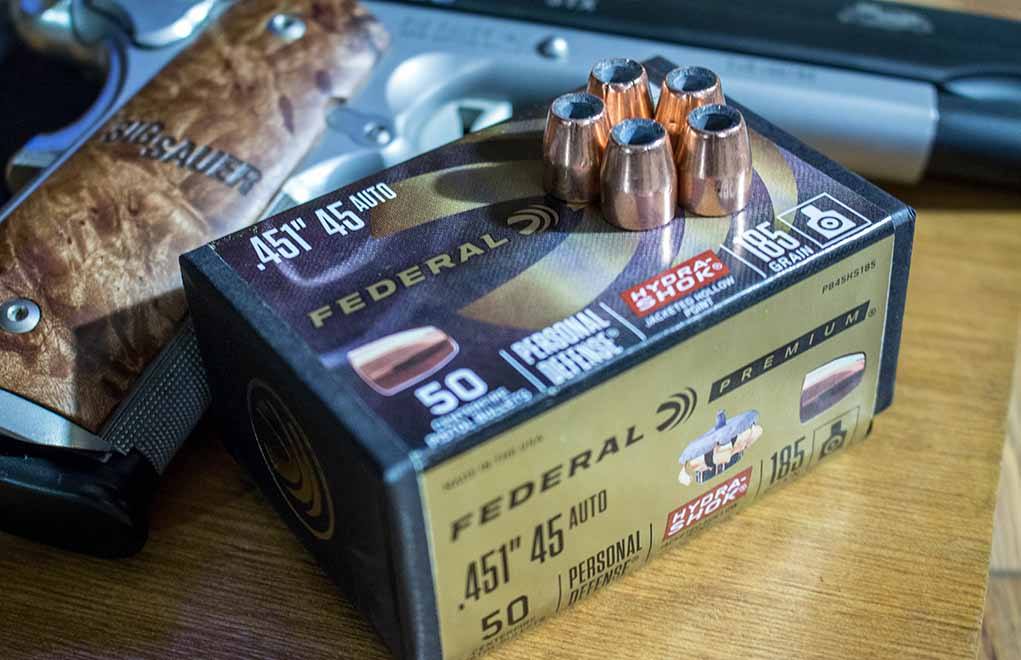
It’s already proved a busy year for Federal Premium Ammunition. Early in the year, the company expanded its Hydra-Shok line with the additions of .40 S&W and .45 ACP loads. Now, it’s turned its sights on its premium and fairly acclaimed line of HST ammunition. And this expansion is a doozy, especially if you’re a fan of Col. Jeff Cooper’s little gem.

Federal HST 2

Federal is adding a 200-grain 10mm load to the hollow point ammunition line, and it boasts some respectable ballistics. With a factory-recorded muzzle velocity of 1,130 fps, the round should live up to Federal’s assertion it performed well all FBI Protocol tests. According to the company, the first stock has shipped to dealers. Presently, it has an MSRP of $34.95 for a box of 20.

ANOKA, Minnesota — Federal has combined the ultimate self-defense bullet and cartridge in its new Federal Premium 10mm Auto HST load. Shipments have been delivered to dealers.

10mm HST 3

Full-power loading makes the most of the HST bullet design, providing large, consistent expansion, optimum penetration and superior terminal performance. Its specially designed hollow point won't plug while passing through a variety of barriers, and the bullet jacket and core hold together to provide nearly 100 percent weight retention through even the toughest materials.

Features & Benefits

  • 1130 fps muzzle velocity
  • Specially designed 200-grain hollow point expands reliably through a variety of barriers.
  • Expanded diameter and weight retention produce the desired penetration for self-defense situations without over penetrating.
  • Superior performance in FBI test protocol used by law enforcement officials to assess and select duty ammunition.
  • Bullet nose profile, nickel-plated case and Federal’s unique primer provide the ultimate in function and reliability in semi-automatic handguns.


More Ammo Posts:


For more information, please visit www.federalpremium.com.

Overlooked Powders That Can Get Your Handloads On Target

0

Sometimes, lesser-known powders are exactly what a rifle needs to transform from ‘goat’ to glorious.

What Are The Overlooked Powders That Perform:

We all have our favorite powders, just as we have our favorite bullets. Yet, just as bullet technology changes — and a new release might prove to be a panacea for a supposedly problem rifle — sometimes using a powder that doesn’t have the long-term reputation of the more famous varieties can be a real problem solver.

The .375 H&H is well served by Norma 200 powder, especially with light bullets.

Yes, I’m a huge consumer and devotee of the IMR, Hodgdon, Alliant and Winchester powders, but there have been numerous times where the lesser-known powders have saved the day. I’m talking about Ramshot, Accurate, Norma and Vihtavouri powders. While often overlooked, they have quite a bit to offer the handloader, and I’ve relied upon them for some fantastic performance.

Norma Powder

Norma Powder

Norma powder is the product of the ammunition company of the same name — famous for its excellent component brass in reloading circles, as well as the performance of their ammo — and is excellent stuff. Their 203B, URP and MRP give a wide spectrum of burn rates and applications, but the Norma 200 and I became fast friends.

I was looking for a powder to drive the light-for-caliber 230-grain Cutting Edge Raptor bullet in the .375 Holland & Holland case, specifically for a plains game safari. When I began trying different powders, I was getting lukewarm accuracy — probably tight enough for hunting but certainly not inspiring — until I reached for the can of Norma 200. I watched three bullets print a ¾-inch group at 100 yards, and I had what I was looking for.

Cruising along at just over 2,800 fps, this combination has made several safaris in the hands of a number of friends as well as my wife, having accounted for zebra, blue wildebeest, sable, warthog, impala and more. It has performed here in the States on whitetail deer in temperatures well below freezing, as well as in South Africa in November where temps exceeded 110 degrees.


More Reloading Info:


Norma offers a powder for nearly every cartridge, from the faster-burning 200 and 201, through 204 and the slow-burning 217 and MRP. The entire Norma African PH line — famous for its accuracy and consistency — is handloaded in Amotfors, Sweden, with Norma powder. When you see the .404 Jeffery, .416 Rigby and .470 Nitro Express print those excellent groups, you’re seeing the performance of Norma powder.

Ramshot Powder

Ramshot Powder

Ramshot also offers some great powders, which are too often overlooked. My buddy, Mike Buser, has his grandfather’s Savage Model 99 in .300 Savage that absolutely giggles at factory ammo — you could sense that the old lever gun took pleasure in printing shotgun patterns instead of groups.

He’d nearly given up on the gun until we tried some handloads. We brought things down under 2 inches, but it was Ramshot’s spherical TAC powder that caused us to take pause. The first group printed 7/8-inch, which we thought may have been a fluke, but the next three groups proved us wrong. Topped with 165-grain Sierra GameKings, this rifle went from goat to hero, and it now sees the deer woods each fall.

This powder has given life to more than one .300 Savage; it just seems to be perfect for the old cartridge. It works with traditional cup-and-core bullets, such as the aforementioned Sierra, as well as the monometals. I loaded up a box of .300 Savage for Craig Boddington when he took a vintage Model 99 pig hunting in California — where lead core projectiles are forbidden by law — and he neatly rolled a good-sized boar with a 165-grain Hornady GMX.

Ramshot has many rifle powder offerings, including their new LRT — designed for the voluminous cases that need the slowest burning powders. It’s perfect for the Weatherby cases, as well as the .338 Lapua, .300 and .338 Norma Magnums. I’ve begun load development with LRT in my 6.5-284 Norma with several longer bullets, and while I’m seeing promising results, it’s still a work in progress.

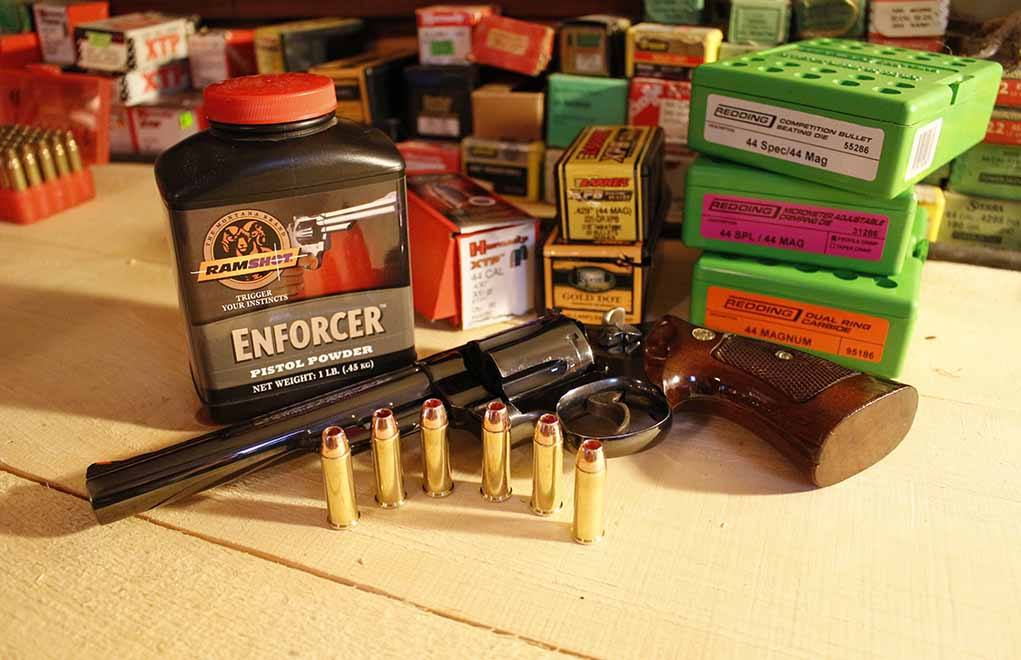
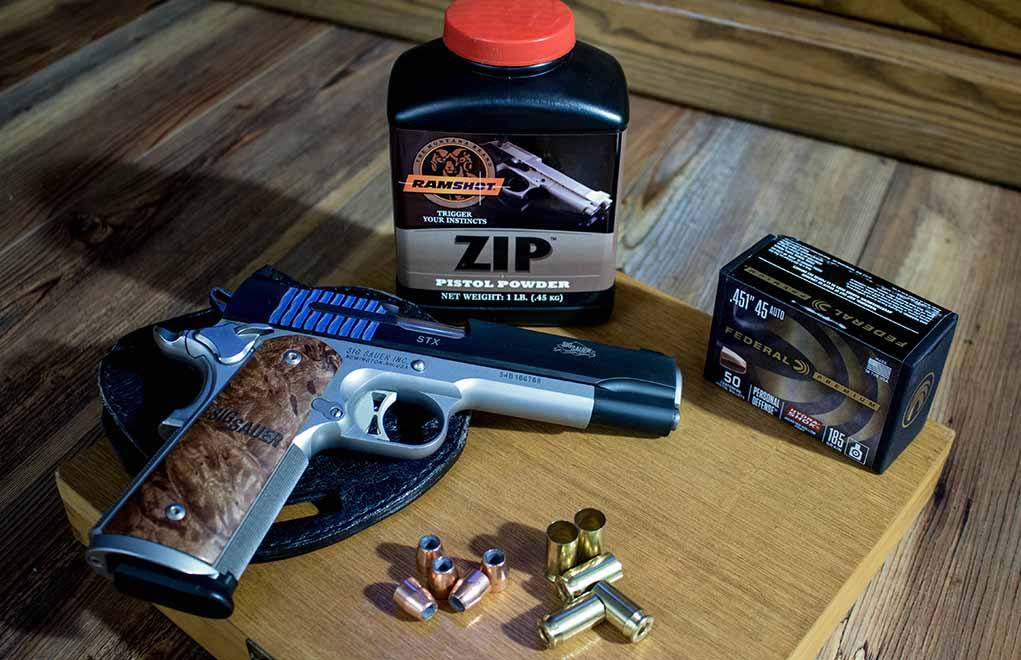
On the handgun side, Ramshot’s ZIP powder has been a great choice for 9mm Luger, .38 Special and .45 ACP. It burns clean — much cleaner than some old standby pistol powders — and it gives good velocity with low charge weights, extending your shooting dollar. Enforcer is another good pistol powder from Ramshot, being slower burning it makes a solid choice for the .44 Magnum, .454 Casull and the big .460 Smith & Wesson.

Accurate Powders

Accurate Powder

Accurate Powders has a full line of powders, some with familiar designations for rifle, pistol and shotgun. Accurate No. 9 mates up with the .357 Magnum and .44 Magnum just perfectly, especially for those who like the lead-free copper hollow-points. Both the Barnes HPB and Cutting Edge Handgun Raptors were giving unprecedented results when loaded over a suitable charge of Accurate No. 9.

Their rifle powders are equally useful, with 5744 being the darling of the older cartridges that started out being fueled by blackpowder, such as the .45-70 Government and .50-90. Accurate 4064 and 4350 — while not being interchangeable with the same designation of Hodgdon or IMR powder — offer a similar burn rate to their similarly named counterparts and are equally diverse.

Among their slower burning powders, I’ve had great results with Accurate MagPro in the .25-06 Remington, putting 110-grain Nosler AccuBonds into groups measuring less than ½-MOA. Extreme spread was less than 20 fps, and that Tikka T3 rifle has put many deer in the freezer with that load.

MagPro is a spherical powder, which can help out in those cartridges that have limited case capacity, especially when using the longer copper bullets. It takes up less room in the case and avoids the over-compression that might otherwise break the extruded powder’s grain structure; broken grains of powder will have a different burn rate and can drastically affect velocities, pressures and accuracy. Add in the fact that I personally love the way the spherical powders behave in a powder thrower or digital dispenser, and you can understand why I’m enamored with them.

Vihtavouri Powders

Vin Powder

The Vihtavouri line of powders is the one I have the least amount of experience with, but what I have used, I liked. Vihtavouri is part of the Norwegian NAMMO Group, which includes Lapua and now Berger Bullets. They have three series of powders, the N100 series for rifle cartridges, N300 for pistols and shotshells, and the N500 series is what Vihtavouri calls its High Energy series for enhanced downrange performance.

I have several friends who’ve had excellent results with Vihtavouri powders, giving excellent accuracy and velocity. I intend to explore these options in the near future; you never know when you’ll find that magic combination that your barrel absolutely loves.

Thankfully, we have almost as many powder choices as we do bullet choices. The more common powders were, are and shall be very good choices, but the essence of handloading is the ability to control our shooting via choice of components. Having a wide selection of powders — and the competition for your shooting dollars which arises between the companies that produce them — can only benefit us. The next time you start thinking about a new bullet or cartridge, maybe it’s worth a bit of experimentation with some of the lesser-known powders. After all, diversity is the spice of life.

Editor's Note: This article originally appeared in the November 2018 issue of Gun Digest the Magazine.

Is It Worth The Time And Effort To Buy A Suppressor?

1

If you're looking for greater accuracy, on of top noise suppression, then the answer is an emphatic “yes.” A suppressor will pay you back tenfold in results.

What Are The Benefits Of A Suppressor:

  • Noise reduction, particularly for indoor operations.
  • Most can be swapped between calibers.
  • A high-quality suppressor can increase the accuracy of your rifle.
  • Most modern suppressors are simple to maintain.
  • Properly built, a suppressor will last you two lifetimes.

I’m a huge proponent of suppressors. I’ve been collecting them since 2001, and needless to say, I have amassed quite a collection. Suppressors are one of the best muzzle brakes you can get for your rifle.

There are a lot of choices out there. Understand the differences and learn what it is you really want from your suppressor.

Suppressors are a tool, and like any tool, they should be used in the proper context. They’re broken down into niche applications, from precision rifles models to those meant for sub-guns with high rates of fire used in close quarters. In other words, you don’t want to mix applications. That doesn’t mean you cannot crossover a suppressor from one system to another: The results may vary, and the basic principle of sound suppression — not as much.

Coming from a precision rifle background, I covet accuracy and precision. Because of this focus in my shooting discipline, I’m a bit more discerning in my choices. Not all suppressors are created equal in this application, and the goal is understanding and recognizing what’s essential to the application and to the end user.


Get More Suppressor Info:


The most prominent example I can give is in regard to straight-up sound suppression. The effectiveness of a suppressor’s sound suppression is based on the volume of air created by the superheated gasses. How the can captures the gases helps to mitigate the gunshot. In other words, all things being equal, a bigger can will sound quieter than a smaller one.
But with a precision rifle, sound is a secondary consideration.

Suppressors For Precision

With a precision rifle, we’re shooting supersonic projectiles, so the suppressor only goes so far in the sound department. Most suppressors of equal size meter within a few decibels of each other. I have been to several suppressor tests, and the average spread is only about 3dB. It’s true that 3 decibels can be noticeable, but really what the human brain responds to is tone — a low tone versus a higher tone. These differences tend to follow the design more so than straight dB readings. And this is the subjective part of a suppressor’s effectiveness.

Adding a 9-inch magnum-rated suppressor to a .300 Norma Magnum tames the rifle. Reduce recoil and knockdown the sound with the right suppressor.

If I’m shooting a sub-gun inside a building, I want to focus on sound suppression as well as durability with the high rate of fire. Superheated gasses get super-hot, super-fast. It doesn’t take much to heat them over 300 degrees — the point at which they’ll melt just about anything they touch, including you and your gear.

Likewise, a precision rifle suppressor can get very hot, but you want to meter out the build-up of heat to prevent problems. For example, we use a suppressor cover to block the mirage. The heat coming off a suppressor is only a few inches in front of the high-power optic, and that mirage causes a lot of problems with accuracy. Using a cover is a must to block the mirage, thus giving the shooter a clear view the target.

Also, we all know that heat is not a friend of the precision rifle shooter. Adding a layer like a suppressor introduces both temperature and a channeling factor. We’re moving the gasses, which in turn moves the bullet. A poorly designed or assembled suppressor will cause fliers in your groups — if not worse — and by worse I mean a bullet strike somewhere inside the suppressor. It could be a baffle strike or an endcap strike, and both have adverse effects on accuracy.

So, with all that said, only accurate cans are interesting to me.

Suppressed Accuracy

Given these variations we might be subject to, how do we decide what precision rifle suppressor to buy?

If you want to know the gold standard for a precision rifle suppressor, look to ThunderBeast Arms (TBAC) out of Cheyenne, Wyoming. That crew has created the best precision rifle suppressor on the market. Sure, they have many competitors that come incredibly close, but I consider them the gold standard. The team at TBAC consists of shooters, and their development of suppressors are based on actual shooting — not just sound tests, but actual accuracy testing. I compare most suppressors to the TBAC brand and move forward from there.

Due to heat retention and mirage, a cover is key to maintaining accuracy with a precision rifle while shooting suppressed.

Also note that switching a suppressor rated for one caliber and stepping it down to a different caliber is very common. You will not lose much in the way of sound suppression; in fact, it may increase when shifting to a smaller caliber. You can shoot a .308 suppressor on a 6.5 caliber rifle. You can also shoot it on a 5.56 rifle. This is one of the benefits of a quick-detach mount — the ability to move the can from rifle to rifle with ease.

We can get very deep into the weeds with suppressors. From baffle design to welds, it’s all important. By choosing a high-quality product from a reputable company, you reduce the concerns. And most importantly, don’t always focus on the sound numbers — but the accuracy. If your rifle shoots ½-MOA groups and your suppressor opens that up to ¾-MOA groups, you’re not doing yourself any favors. A high-quality suppressor should reduce the group’s size, not increase it.

Don’t wait for the rules to change. I highly doubt we will see a change in the laws anytime soon. It’s best to get started today on your path to civilization.

Lastly, a suppressor should last you two lifetimes, and maintenance on a centerfire suppressor is very easy. When you first get it, weigh it. Monitor the weight, and as carbon builds up, you can clean it out. You can find a host of cleaning solution recipes on the internet, but brake cleaner works very well. Spray it inside, cut the carbon out and then rinse. I have several cans with more than 15,000 rounds through them. They look dirty, but they shoot the same as the first day out.

Editor's Note: This article originally appeared in the 2018 Long-Range Shooting issue of Gun Digest the Magazine.

Henry-Turnbull Rifle Available Exclusively At Top Shot Armory

0

Turnbull & Henry Now Partnering With Top Shot Armory On The Special Edition Henry-Turnbull Rifle.

It looks as good as it shoots and is certain to be the pride of any collection.

Editor’s Note: This article is sponsored content from Turnbull Restoration.

Turnbull Restoration is proud to announce a collaboration with Henry Repeating Arms and Top Shot Armory to produce and bring to market a customized version of the well-known and popular Henry lever action rifle. Henry has long been the standard for American-built lever guns, and now Turnbull is joining with them to produce a limited-edition known as the “Henry-Turnbull Rifle.”

Henry-Turnbull Rifle 1

“Working with the amazing people at Henry and Top Shot has been a pleasure. It’s our shared dedication to preserving the legacy of great American lever guns that’s brought us together,” said CEO and Founder Doug Turnbull. “Henry rifles have been beloved American-made rifles for as long as I can remember, and we’re proud to be able to work with them on this offering.”

The rifle, American-made to Henry’s precise standards, is finished with the distinctive Turnbull bone charcoal color case hardened receiver, lever, hammer and forend cap. This limited-run rifle is available only through Top Shot Armory and its network of dealers.

Henry-Turnbull Rifle 3

“Top Shot Armory is a great retailer and distributor that shares our love for iconic lever guns, as well as our dedication to making sure these rifles stay part of the American firearm story,” Turnbull emphasizes. ”Henry Repeating Arms and Turnbull Restoration are partnering up with Top Shot to bring the consumer an instant classic.”


Learn More About Turnbull:


The Henry-Turnbull Rifle is available in .30-30 Win, .41 Rem Mag., .44 Rem Mag, .45-70 Govt., .45 Colt, .327 Fed and .257 Mag. There will only be 250 of each caliber produced. Recognizing the demand for this rifle, Turnbull, Henry and Top Shot Armory took the opportunity to raise some much-needed funds to support Hunting Heritage Trust. Serial number one of each caliber was specially laser-engraved and dubbed “The President’s Collection.” The Collection was auctioned off on GunBroker.com’s website at the recent NSSF SHOT Show in Las Vegas, raising more than $17,000 for this vital cause.

Henry-Turnbull Rifle 2

“This is an All-American effort by three great American companies – Tunrnbull Restoration, Henry Repeating Arms and Top Shot Armory– to produce and deliver an instantly-collectible example of one of America’s most beloved classic lever rifles,” explained Turnbull. “We’re looking forward to more such projects with the great folks at Top Shot throughout 2019.”

The Henry-Turnbull Rifle is only available through Top Shot Armory and its network of dealers. They can be found online at www.topshotarmory.com, by phone at (574) 288-4867,and at their location in South Bend, Indiana.

Turnbull Restoration Co., Inc. is known globally for the ability to take even the most damaged collectible firearm and return it to its original look, feel and function. Founder and CEO Doug Turnbull is renowned for his period-correct metal finishes which stand out as the most striking and authentic. The company offers a line of new production firearms that incorporate the same quality look and feel as the collectibles they are famous for restoring. Also available are authentic vintage firearms of many iconic brands from private collections that Turnbull has purchased and inspected, cleaned and restored where needed. Please visit www.turnbullrestoration.com for more information.

Video: How The Glock 43X And Glock 48 Advance The Slimline Series

0

Glock's extremely popular Slimline Series took a big step forward with the enhanced-capacity Glock 43X and Glock 48.

Undoubtedly, Glock has been among the top players in the concealed carry pistol market. Outside of their long-slides, there’s a case to be made that nearly every model in the legendary gunmaker’s catalog is a potential undercover option, at least for some armed citizen out there. In recent years, however, the company has turned its studied eye to producing pistols optimized to the hilt for everyday carry.

The Glock Slimline Series is the gunmaker’s response to consumer demand for single-stack options. This year the line got a couple upgrades that make it hard to deny Glock is hitting its groove with this configuration. The Glock 43X and Glock 48 not only offer enhanced capacity over the original Slimline G42 and G43, but greater shootablity. Actually the two walk hand-in-hand for the 9mms.


More Information On Glock:

  • Glock 17: How The Full-Sized Striker-Fired Set The Standard
  • Glock 19: The Perfect Compromise 9mm Double-Stack
  • Test Driving the Glock 43 Single-Stack 9mm
  • “Baby Glock”: Is The Glock 26 The Best Carry Double-Stack?
  • What Makes The Glock 34 A Top Competitor?

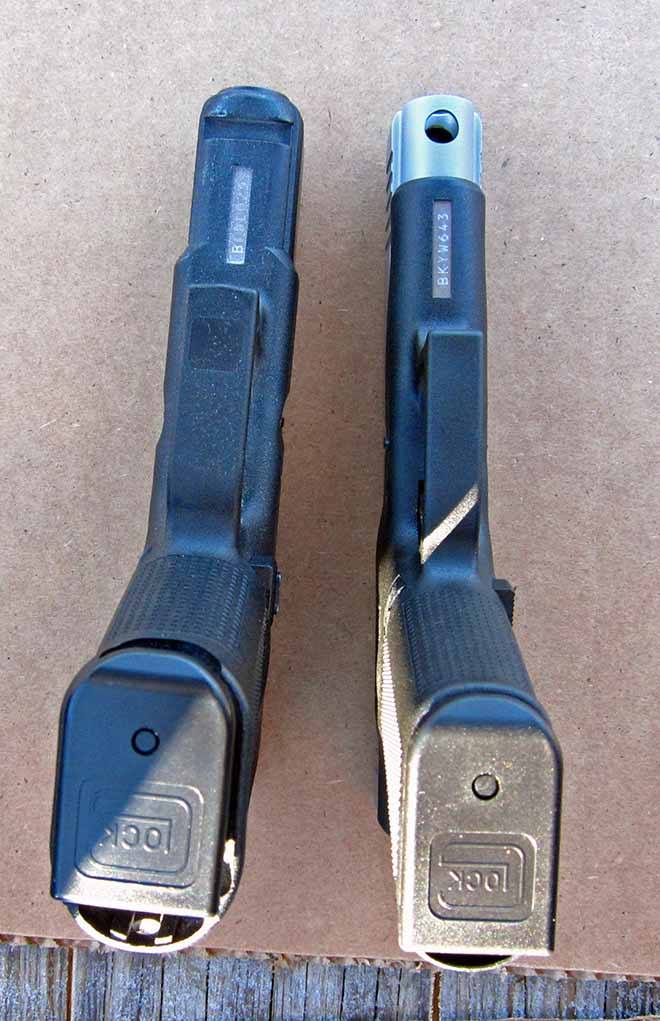
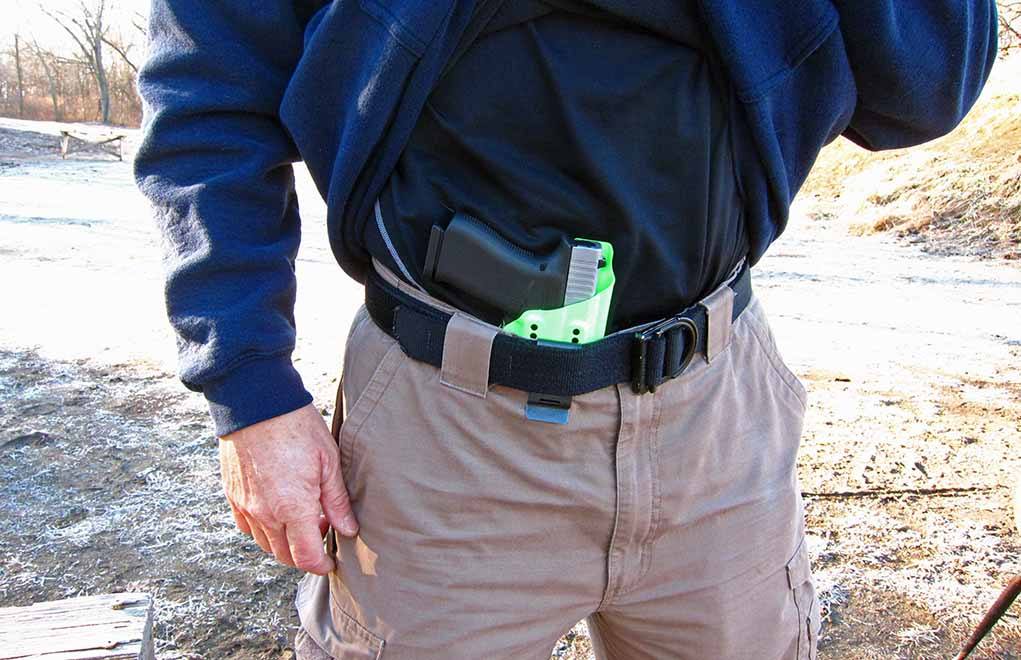
To squeeze in more rounds for 10+1 capacity, Glock had to extend the grip of the pistols. Given its mastery at packing rounds into limited real estate, the lengthening wasn’t by leaps and bounds. With a magazine, the Glock 43X and Glock 48 both have a height of 5.04 inches, which is around ¾ of an inch greater than the Glock 43. This shouldn’t make them a bear to conceal, at the same tick, most shooters will have enough grip to get their entire hand on the pistols. It makes a difference.

Not satisfied with simple capacity and shootablity upgrades, Glock also decked out the Slimline Series additions with a few other notable features. The most prominent are the fore and aft cocking serrations and a rather striking silver-finished slide. Definitely a different look for a factory Glock. Also, the G48 is a bit of a break as well. While the G43X, predictably, mirrors the G43, the G48 is built along the Glock 19’s dimensions. If you carry the tried and true double-stack, the Glock 48 might prove the perfect warm-weather complement.

For more information on the Glock 43X and Glock 48, please visit www.glock.com.
For more information on The Modern Sportsman, please visit www.themodernsportsman.com.

Glock 43X Specs

Caliber: 9mm
Overall Length: 6.5″
Slide Length: 6.06″
Barrel Length: 3.41″
Overall Width: 1.1″
Slide Width: 0.87″
Height (including mag): 5.04″
Trigger Distance: 2.64″
Magazine: Slim 01 mag
Capacity: 10+1
Weight (loaded): 23.07 oz.

Glock 48 Specs

Caliber: 9mm
Overall Length: 7.28″
Slide Length: 6.85″
Barrel Length: 4.17″
Overall Width: 1.1″
Slide Width: 0.87″
Height (including mag): 5.04″
Trigger Distance: 2.64″
Magazine: Slim 01 mag
Capacity: 10+1
Weight (loaded): 25.12 oz.

Is A .22 LR AR-15 Your Best Bet To Achieve Tactical Competency?

0

Generations past learned to shoot behind a .22 LR bolt rifle. Today, the .22 LR AR-15 is that perfect learning tool.

How the .22 LR AR-15 is the perfect tool to learn the platform:

  • It’s reliable caliber, no matter the ammo you run.
  • Given its light recoil, it's easy to shoot.
  • It is extremely accurate.
  • Ammo is very affordable.
  • Hands down, its plain fun to shoot.

I was raised on guns. There are pictures of Dad holding a .22-caliber rifle in my shoulder so I can fire it. I can’t remember not shooting, but I do remember is that it all started with a .22 LR single-shot rifle and firing from prone. In those days, you were expected to learn how to shoot a .22 from prone — one accurate shot at a time — before ever progressing to anything else.

The .22 LR is available in a variety of types. You buy bulk ammo for plinking, and match ammo if you’re working on marksmanship. With a .22, you’ll need to experiment until finding the right ammo for your gun. 22 LR AR
The .22 LR is available in a variety of types. You buy bulk ammo for plinking, and match ammo if you’re working on marksmanship. With a .22, you’ll need to experiment until finding the right ammo for your gun.

And the same is true today. Regardless of age, learning how to shoot begins with the fundamentals. The AR is a lot like a .22 LR many of us grew up on: It’s reliable, easy to use and extremely accurate — it’s an “if I can see it, I can hit it” kind of rifle. It’s the perfect platform to use on your way to becoming a rifleman or woman. But, this journey is about a lot more than just acquiring the gear.

Learning how to use the AR, or any other firearm, starts with the fundamentals of marksmanship: Aim, hold, press and follow-through. The cool thing about the AR is that you can still do this with the .22 caliber, buying a dedicated .22 LR AR — my favorite is the Smith & Wesson M&P 15-22 — or using a conversion kit with a .223 Rem./5.56 NOTA AR. And prone is still the best position to start with.

What You Should Work On With Your .22 LR AR-15

Finding NPOA

You start by learning about natural point of aim, or NPOA. This is a firing position that relies on bone support as opposed to muscle tension. You get into position with the sights on target. Shut your eyes, and inhale and exhale several times. Now, open your eye and note where the sights are. While breathing, your body settles into its “natural” position — you’re not using muscles to hold the sights on target. If the sights shifted left or right of the target, then reposition your entire body instead of muscling the sights back on target.


More AR Articles:


Using your bone structure to keep the rifle on target is always more consistent than relying on muscle tension, and shooting accurately is always about consistency. You do the same thing — the exact same way over and over until achieving the desired results — which is the ability to place your shots exactly where you want them.

Before ever firing a shot you check, establish and confirm your NPOA. This is true for every firing position — even standing or offhand. Eventually you get to the point where you can line up the target, assume your firing position and you’ll have a solid NPOA. This is the true “aiming” part of marksmanship.

In the beginning, it’s best to start with the basics, both for equipment and learning the skills needed to become a rifleman. Dummy ammo is mandatory: It allows you dry practice, logging in the repetitions necessary to learn how to manipulate your AR.

But there’s a lot more to NPOA than getting the first shot to land where you want it: NPOA helps “hold” that position as the shot is fired and in-between multiple shots.

Sight, Breath And Trigger

Your visual hold with iron sights is achieved by focusing on the front sight. If you’re a pistol shooter, you already know this. Our eyes don’t have the ability to focus on the target, the front sight and the rear sight all at the same time. So, you focus on front sight — the middle of these three objects. The target will be blurry, but you can still tell if the front sight is holding where it should be. The rear sight is blurry — a ghost ring sight is perfect for this because your eye naturally wants to center the front sight in its rear ring or aperture — but again you can hold the front sight stead in its center.

Hold also involves breath control. If you’re breathing while pressing the trigger, the front sight and muzzle will be moving, which is going to cause vertical separation in your shots. You have to stop breathing to hold the sights steady, and the best place to stop breathing is after you exhale. Empty lungs are always more consistent than “half” full, which will vary according to physical stress. Plus, there’s a natural pause that occurs between exhaling and when you start to inhale. You’re just trying to extend that natural pause out a little longer than normal in order to press the trigger.

Pressing the trigger smoothly is mandatory for shooting accurately as well. Think about it this way: Your job is to hold the sights on target and smoothly press the trigger. It’s up to the rifle to decide when to fire the shot. When the shot does break, it should be what Jeff Cooper called a “surprise” break. Otherwise, you’ll anticipate the shot, muscling in behind the rifle in anticipation of the recoil that’s coming – and this will throw your accuracy way off. Hold it steady, pressssssss the trigger and let the rifle fire the shot.

AR 22

Once the shot fires, you follow through … which consists of recovering from the recoil, reacquiring the sight picture and resetting the trigger. This sequence ensures you don’t disturb the harmonics of the rifle, which will affect your accuracy. You concentrate on recovering from the recoil as opposed to attempting to control it. You’re focusing on the front sight before, during and after the shot, and then returning it to the target.

Trigger reset, of course, means keeping it pressed to the rear and then — once the sights are back on target — you release the trigger, but only far enough until you feel the internals of the AR “click,” which means the disconnector has released the hammer so the trigger is holding it back. If you let your finger fly off the trigger after the shot, it will certainly affect accuracy … and not in a good way. Plus, follow through prepares you to shoot again if necessary.

Today’s Best Learning Tool

Eventually, you start working with other positions, such as sitting and variations of kneeling, and learning how to manipulate the AR — loading, unloading and reloading, and clearing malfunctions. Again, the AR is a great platform for this. All its controls are in exactly the right place for both right- and left-hand shooters.

A rifleman should also know how to maintain an AR. Keeping it clean and lubricated ensures a lifetime of service. It’s usually a simple task to replace a broken or worn part, which doesn’t happen often.

At some point, you start to develop an understanding of ballistics and trajectory. You learn what’s necessary to make a shot at distances multiple-hundreds of yards and beyond.

Rifle work is like a religion, with a little “r.” You have to practice it regularly … otherwise it does you no good. You study and research. It’s something you never master; you’re always striving to improve. The AR is a great firearm to take this satisfying and rewarding journey with.

Editor's Note: This article originally appeared in the February 2018 issue of Gun Digest the Magazine.

Does The Howa KRG Bravo Hit The Mark?

0

Combined with a Nightforce ATACR 4-16×42 F1 Scope, the Howa KRG Bravo smashed expectations.

How the Howa KRG Bravo is set up for long-range shooting success:

  • Howa’s 1500 barrel-action.
  • Stock has a full-length aluminum spine that gives it rigidity.
  • Ample M-LOK slots on the forend for accessories.
  • Grip hook to pull the rifle snugly into your shoulder.
  • Adjustable cheek riser and LOP.
  • 3 lbs., 10 oz., trigger-pull.
  • KRG Bravo bridges the gap between tactical and hunting.

My first long-range rifle took a chunk out of my savings to the tune of nearly $6,000 buckaroos, and so did the second one I had built. These custom rifles also took better than six months to complete from the time ordered. Since those days — just a few short years ago — the cost of entry into long-range shooting has come way, way down.

The Nightforce ATACR 4-16x42 F1 scope is an ideal match for the KRG Bravo in .308 Win. Thanks to its cavernous 34mm tube it has a wide range of internal adjustment — up to 26 mils or 89 MOA — and its ZeroHold elevation turret lock lets you set your zero but also adjust below zero.
The Nightforce ATACR 4-16×42 F1 scope is an ideal match for the KRG Bravo in .308 Win. Thanks to its cavernous 34mm tube it has a wide range of internal adjustment — up to 26 mils or 89 MOA — and its ZeroHold elevation turret lock lets you set your zero but also adjust below zero.

It’s benefitted from the repeatability of CNC machine tools and innovations in stock-to-action fit that promotes accuracy. Partnerships between rifle makers and the burgeoning aftermarket stock industry help, too. Expectations of sub-minute-of-angle (MOA) precision are now assumed. The message from the shooting public: Make my groups small and keep my rifle around a thousand dollars. And companies like the Japanese concern Howa, imported and distributed by Legacy Sports International of Reno, Nevada, have delivered. Case in point: The Howa KRG Bravo.

Howa KRG Bravo .308 Review

Built on Howa’s 1500 barrel-action, which has come to be regarded as one of the best in the industry, the KRG Bravo was introduced at the 2018 SHOT Show and features the Kinetic Research Group (KRG) Bravo stock. Clearly competing with crossover models like the Bergara HMR (Hunting Match Rifle), Howa’s KRG Bravo bridges the gap between benchrest, tactical, law enforcement, Precision Rifle Series (PRS) competition and hunting. All polymer, the stock is not really a true “chassis” type, but more of a hybrid design with just enough modularity so you can customize to your heart’s content. Yet, it still feels like a traditional stock. The stock has a full-length aluminum spine that gives it backbone rigidity while keeping the weight down. Since I’m accustomed to bedded rifle actions in heavier fiberglass stocks, like those from H-S Precision and McMillan, I found the Howa KRG to have a somewhat top-heavy feel, but I quickly got used to it.

The Howa KRG Bravo is a fusion between chassis-style precision rifles and field guns. It’s fully capable of hunting or long-range tactical applications.

The Howa 1500 KRG Bravo is available in black or Flat Dark Earth (FDE) color schemes and is packed with features. For one thing, the barrel comes threaded to accept a muzzle brake. The KRG Bravo stock has an in-built grip storage compartment that would be a good spot for small tools and a Bore Snake-type cleaner. A removable section under the buttstock comes off with the turn of an Allen screw and reveals a grip hook to pull the rifle snugly into your shoulder while shooting. In addition, M-LOK slots adorn the forend section for even more customization. The stock also includes a quick-release stud that fits into a milled recess near the top-right side of the buttstock, just in front of the recoil pad. I took advantage of this feature and installed a Magpul quick-detach sling swivel. That made it simple to attach a Rhodesian sling from Andy’s Custom Leather to support field operations (hunting). The system was flawless.

Speaking of the recoil pad, the modular system includes three spacers to customize the length of pull (LOP). The rifle came without them installed, and the out-of-box 12.5-inch LOP was way too short for me. To rectify this, I simply removed two Allen screws accessible via holes in the recoil pad, added the three spacers and put it all back together for a final LOP of 15 inches. The adjustable cheek riser gives you an instantly perfect cheek weld and eye alignment through the scope.


More Long-Range Shooting Info:


The Howa’s action and bolt throw are remarkably smooth for a factory rifle. The two-position safety is located next to the action and is operated easily with your thumb. The trigger is exceptional, breaking cleanly at an average 3 lbs., 10 oz., as measured with the Lyman trigger-pull gauge.

Optics and Accessories

When it comes to optics, there are two ways to think about a “budget” precision rifle build. There are now a lot of excellent riflescopes in the $500–$800 price range that would make an ideal and affordable match for a rifle system such as the Howa KRG Bravo. Indeed, many shooters go this route and it’s a winning combination — even in competition. The other way to think about it is to use the money saved on the rifle and put it into high-end optics. That was my thinking behind contacting Nightforce, which supplied an ATACR 4-16×42 F1 scope with the Mil-C reticle. They also sent along the excellent Nightforce TS-82 spotting scope, which allows you to count nose hairs on flies at 500 paces (and spot black holes on black targets at 300 yards or more — exceptional resolution).

Saving money on the affordable Howa, you can put more into best-of-class optics, such as the Nightforce ATACR 4-16x42 F1 scope. The first focal plane scope uses extra-low dispersion (ED) glass and has a massive 34mm tube to suck light in like a black hole. It offers a total of 89 MOA or 26 mils of elevation adjustment.
Saving money on the affordable Howa, you can put more into best-of-class optics, such as the Nightforce ATACR 4-16×42 F1 scope. The first focal plane scope uses extra-low dispersion (ED) glass and has a massive 34mm tube to suck light in like a black hole. It offers a total of 89 MOA or 26 mils of elevation adjustment.

The ATACR scope’s features would require a full dedicated review to even begin to do it justice. This first focal plane scope has glass that stands with any of the premier German makers in edge-to-edge clarity, resolution and light transmission. Clicks are solid and precise and the built-in illumination — activated by a simple push of the gold button on the left parallax turret — makes this military-grade optic extremely versatile for any tactical application one might face.

While there have been many advancements in bipods in recent years, the gold standard remains the Harris S-BRM 6-9 in. notched model, which provided all the support and adjustment needed for bench and field shooting.

Howa KRG Bravo Benchrest Test Results

One note about the Howa 1500 barreled-action: While it is often compared to the Remington 700 (it is indeed very similar), the scope base hole pattern on the receiver is uniquely Howa and you will need a Howa base.

A new addition to Federal’s lineup, the Law Enforcement 168-grain Tactical Tip MatchKing load took top prize in the 100-yard accuracy test with a .98-inch average and .49-inch best group.

I tested four selections of ammo from 100 yards. Those included the Federal Gold Medal 185-grain Berger Juggernaut OTM, Federal LE 168-grain Tactical Tip MatchKing, Federal Gold Medal Match 175 grain and Hornady TAP in 168 grains. The table below details the results; averages came in around 1 MOA or under from a pre-broken-in barrel. I am quite certain those groups would shrink further after a barrel break-in period. Best groups ranged from .49 to .83 inch — meeting Howa’s .5 MOA guarantee.

Range Results Howa KRG Bravo

During shot strings, groups remained consistent as the Howa’s heavy barrel shrugged off heat. From the bench and prone positions, the Howa KRG Bravo came to shoulder quickly and printed tiny groups as the action spit spent brass like a champ. What didn’t I like? The AICS steel mag gouged brass as rounds were fed, and it was rougher to feed than a rusty old military bringback caked in Cosmoline. Thankfully, the solution was easy. A switch to the Magpul PMAG AICS 5-round polymer magazine slicked up round extraction and ejection, made it feel like a completely different rifle.

Parting Shot

On the range and in the woods the Howa KRG Bravo is an impressive rifle system for the price. Its affordable accuracy was a nice break from the custom rifle option costing several times more. My only complaint is that, due to time constraints, I didn't have a chance to really wring the system out to 1,000 yards. It would have been nice to let the Howa's accuracy and the Nightforce scope's exceptionally high-resolution glass flex their combined muscle while perched on some western draw. Even so, at the modest distances found here in the Midwest, the combination of Howa KRG Bravo, Nightforce ATACR and Federal match ammo made drilling bullseyes as easy as shooting fish in a barrel.

Howa KRG Bravo Specs:

MODEL: Howa KRG Bravo
CALIBERS: 6mm Creedmoor, 6.5mm Creedmoor, .308 Win.
BARRELS: 20-, 24-, or 26-in. heavy barrel
BARREL TWIST: 1:7.5 (6mm CM); 1:9 (6.5 CM); 1:10 (.308 Win.)
MAGAZINE: 10-round AICS
COLOR OPTIONS: Black or Flat Dark Earth (FDE)
STOCK FEATURES: Built-in buttstock grip hook for rear bag use; grip storage compartment; M-LOK compatible fore-end
LENGTH OF PULL: 12.5–15 in.
WEIGHT: 9.9–10.2 lbs.
MSRP: $1,279–$1,339

Editor's Note: This article is an excerpt from the Tactical Gun Digest book, available at GunDigestStore.com.

Game On With The Bergara Premier Series Ridgeback Rifle

0

The Premier Series Ridgeback Rifle shows Bergara's first foray into precision competitive rifles is right on target.

How the Bergara Premier Series Ridgeback Rifle is configured for long-range success:

  • Fully adjustable Grayboe Ridgeback stock.
  • Embedded anti-cant level.
  • Available in six of the most popular precision calibers.
  • Bergara's Premiere action.
  • Trigger Tech trigger standard.

Still perhaps not at the levels of trap and practical pistol shooters, competitive long-range shooting has ballooned in recent years. Just check out a Precision Rifle Series schedule, in all likelihood, there’s a country-mile event within a reasonable drive of where you live. And compared to when custom rifles ruled the roost, it's easier than ever to put your chips on the table at a match given the surge in production precision shooting irons. Case in point, the Bergara Premier Series Ridgeback Rifle.

bergara-ridgeback-1

Released during the 2019 SHOT Show in Las Vegas, the company’s first competition specific bolt-action is decked out with everything to get you on target at the longest of ranges. This includes a relatively affordable price, though it’s a big “relatively.” The Bergara Premier Series Ridgeback Rifle has an MSRP of $2,000, which doesn’t exactly qualify it as an economy shooter. But in a game that can demand a magnitude more cash to play, the rifle isn’t cost prohibitive.


More Long-Range Shooting Info:


Bergara outfits you fairly well with the gun, which boasts the company’s Premiere Action, 20- to 26-inch stainless steel barrel (depending on caliber), Trigger Tech trigger and Grayboe Ridgeback stock, among other features. The 10-pound rifle’s stock is especially intriguing, by Bergara’s telling, the first composite stock that fully supports the M-Lok system, with 12 slots running the forend. Fiberglass, the stock also has a fully adjustable cheek rest, adjustable length of pull and an embedded anti-cant level. The Bergara Premier Series Ridgeback Rifle is available in 6 of the most popular precision calibers: .223 Rem., 6.5mm Creedmoor, 6mm Creedmoor, 6.5 PRC, .300 Win. Mag. and .300 PRC. And it feeds off an AICS-style detachable magazine.

More from Bergara:

Lawrenceville, Georgia – BPI Outdoors / Bergara Rifles is pleased to announce the release of the Bergara Premier Series Ridgeback Rifle the 2019 S.H.O.T. Show in Las Vegas, NV during January 22-25, 2019.

Bergara Premier Series Ridgeback Rifle

The Bergara Premier Series Ridgeback Rifle is Bergara’s newest offering, geared towards precision rifle shooting. This rifle features Bergara’s Premier action mated with a Medium Palma tapered, stainless steel Bergara barrel. The new Grayboe Ridgeback is the first composite stock to fully support the M-LOK system. It comes with a total of 12 slots to which you can attach any M-Lok compatible accessory. Another first in its class is the embedded bubble level in the stock to ensure the rifle is level to the ground when shooting at long distances. The weight is 10.5 lbs.
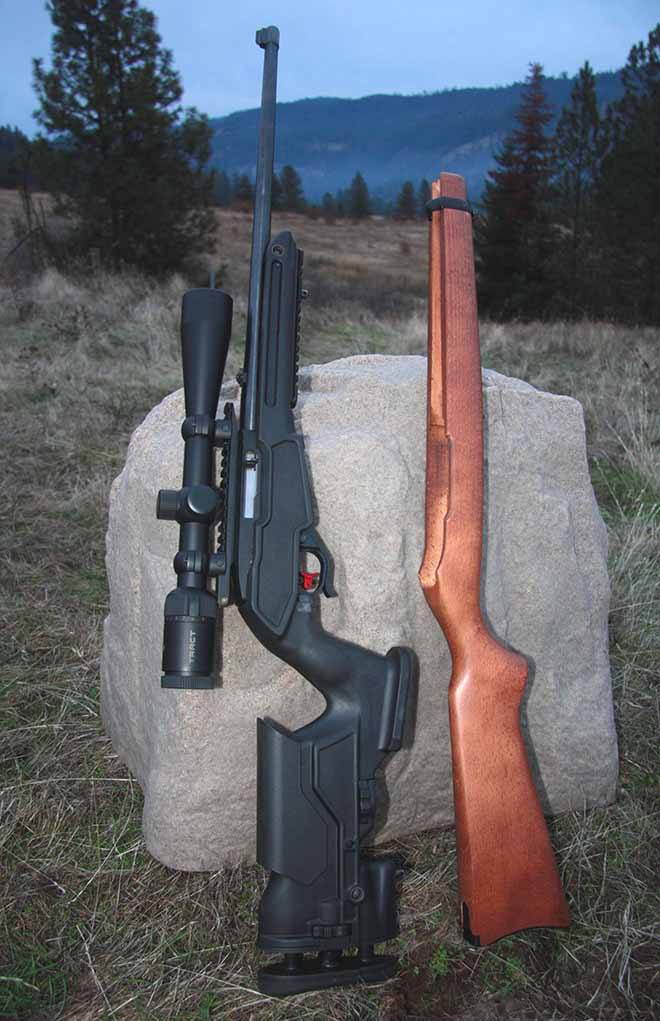
Nate Treadaway, CEO of BPI Outdoors, which is the parent company of Bergara stated, “From the moment we laid our hands on the Ridgeback stock in early 2018, we knew it was destined to cradle a Premier barreled action.” He continued with, “Our only question was how fast we could work it into the production schedule. It truly has everything that a serious PRS shooter wants and needs in a production-class qualifying rifle.”

All Premier Series rifles are built around legendary Bergara barrels and feature world-famous TriggerTech® triggers among other industry-best components. All are personally qualified for accuracy by the Bergara rifle builders prior to shipment and are guaranteed to produce sub-MOA groups using quality factory ammunition.

The Premier Series as an extension of our Custom Series, but with standardized features for greater efficiencies in parts production and assembly – providing near custom performance at prices that are affordable to serious shooters.

Available calibers: .223 Rem, 6.5 Creedmoor, 6mm Creedmoor, 6.5 PRC, .300 WM, .300 PRC

MSRP $2,100.

For more information on Bergara, please visit www.bergararifles.com.
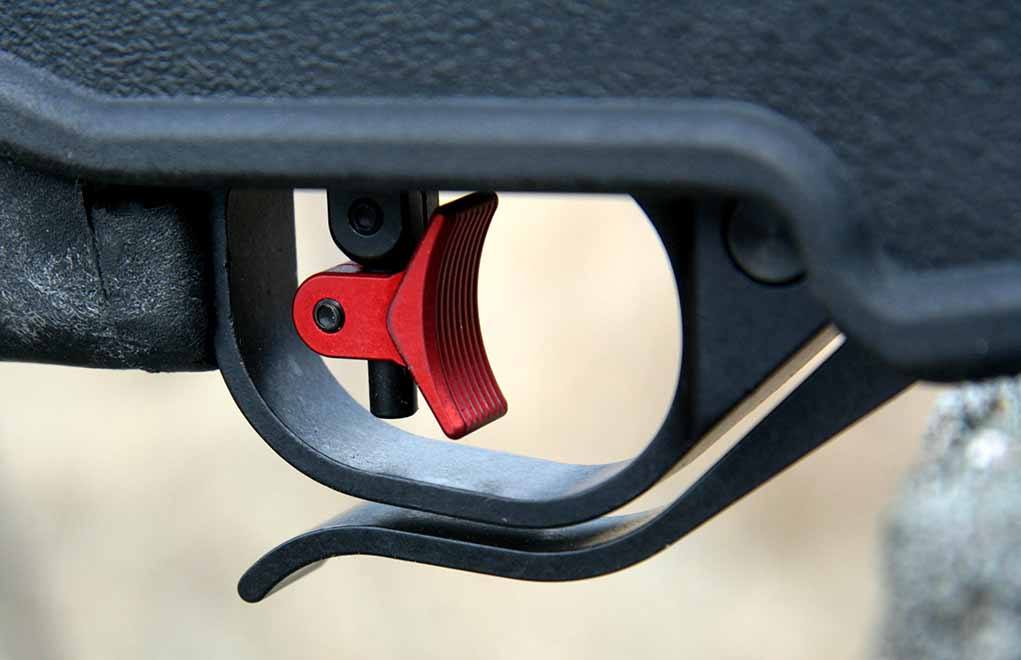
MUST READ ARTICLES