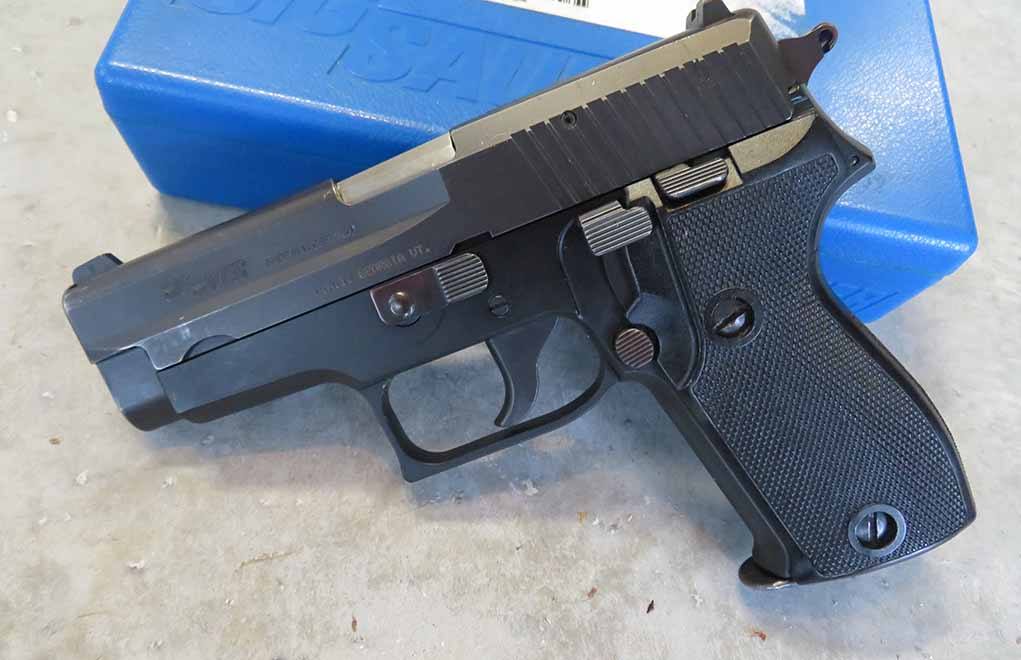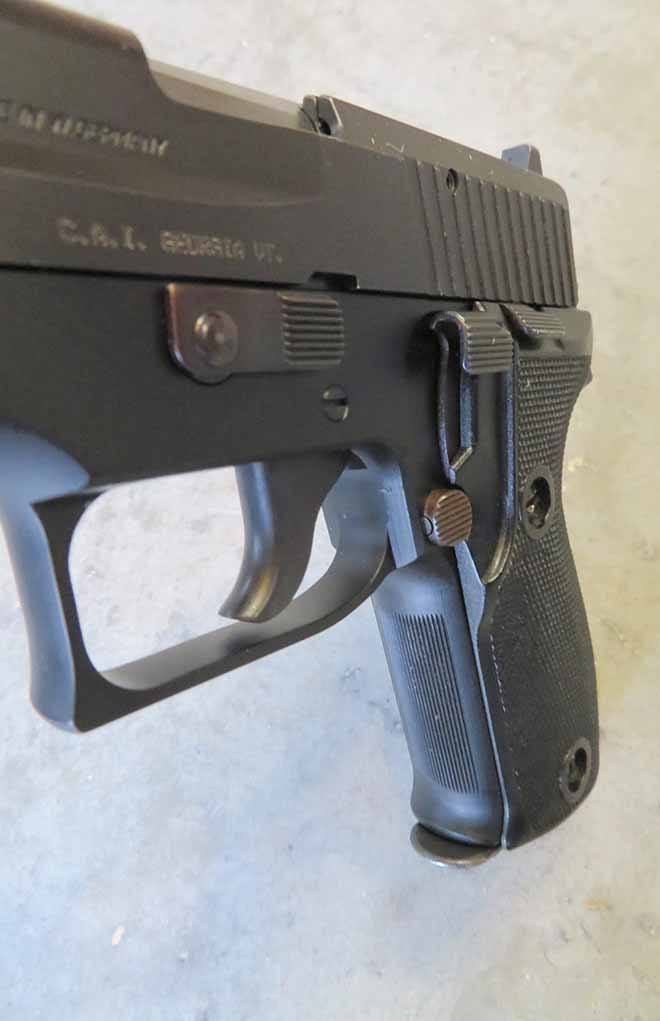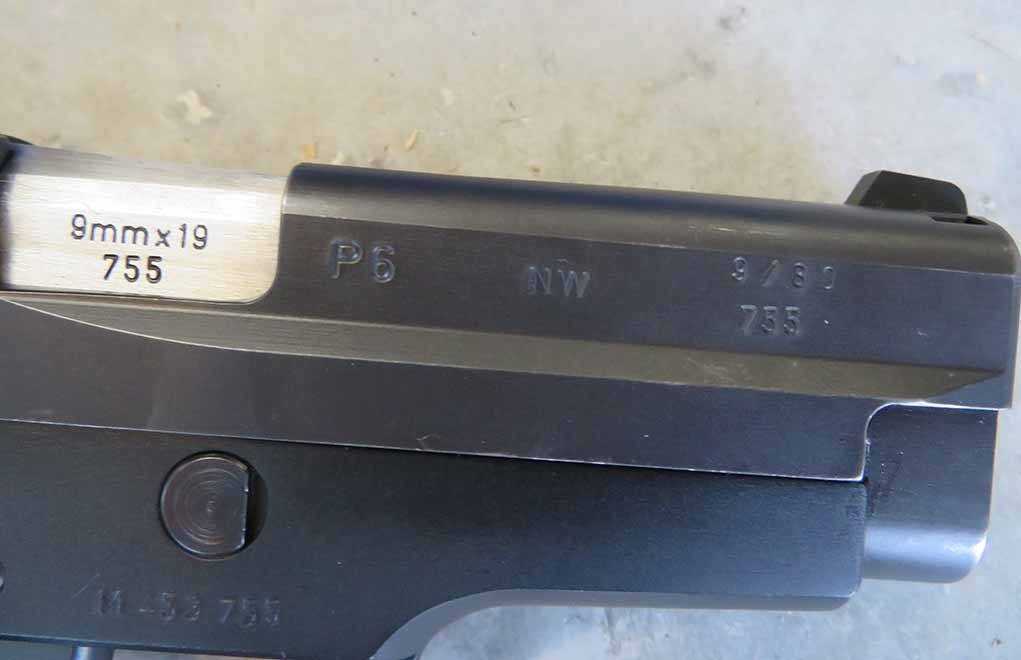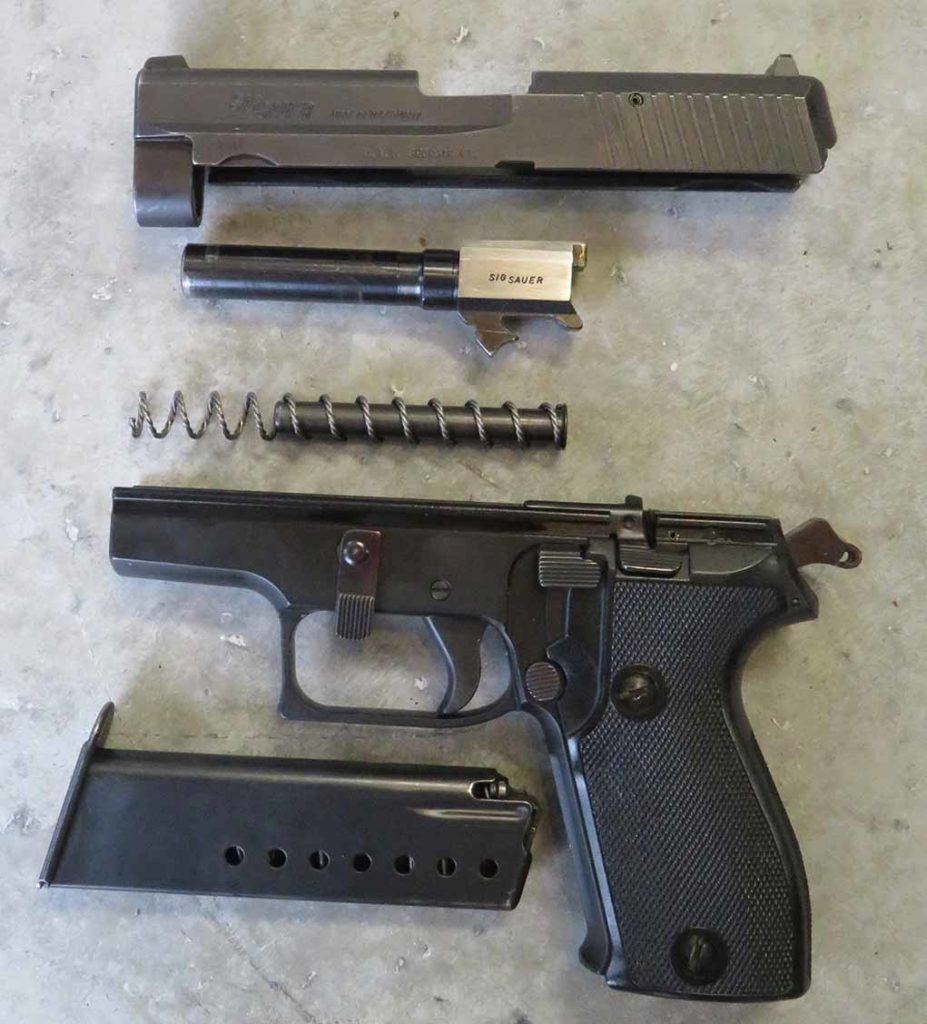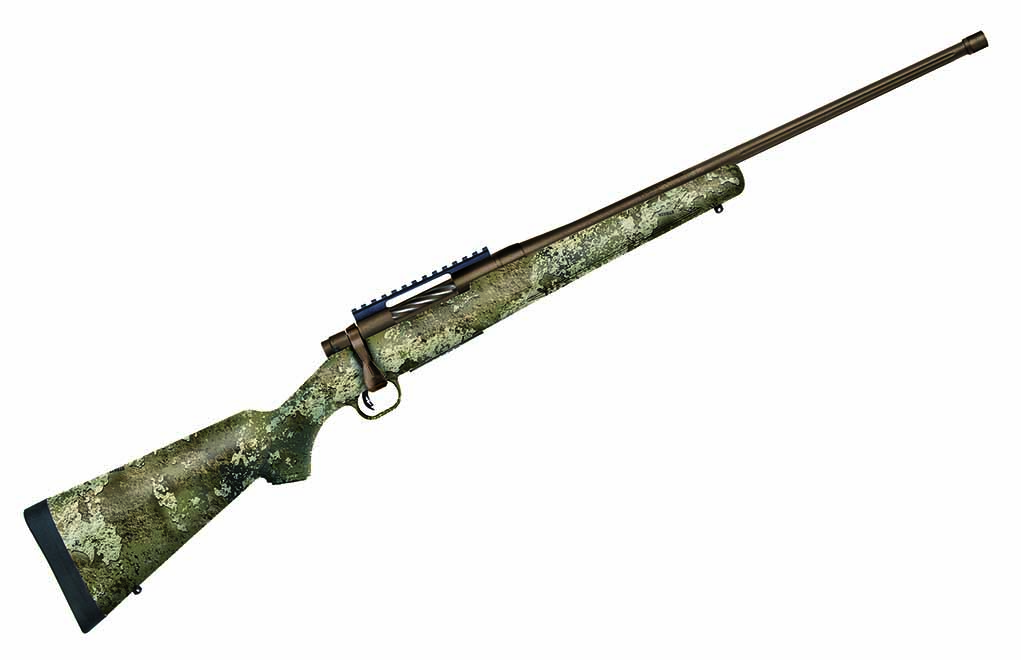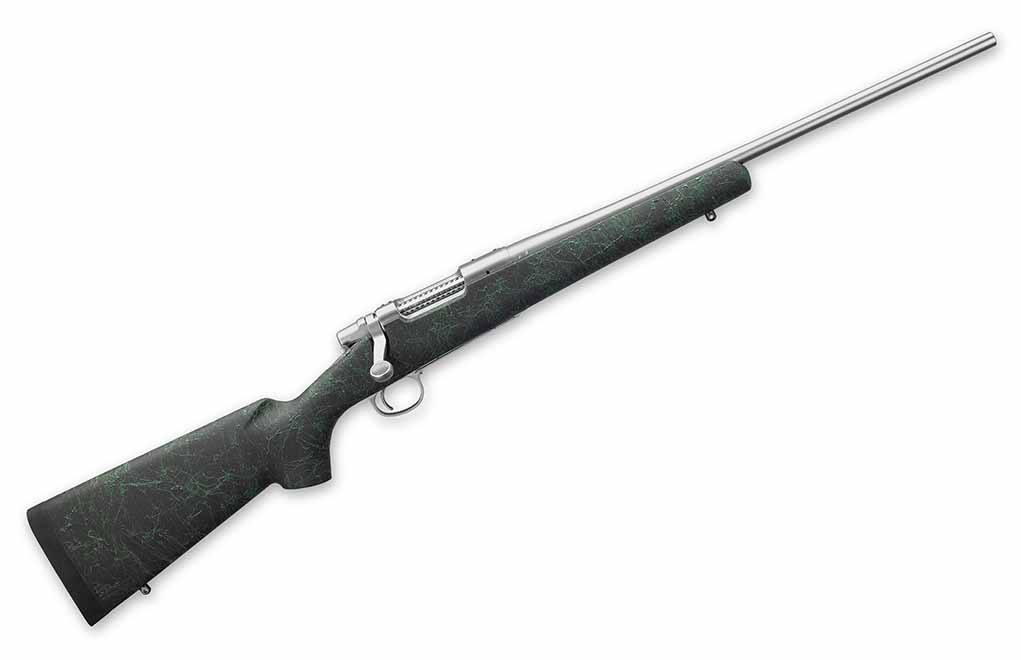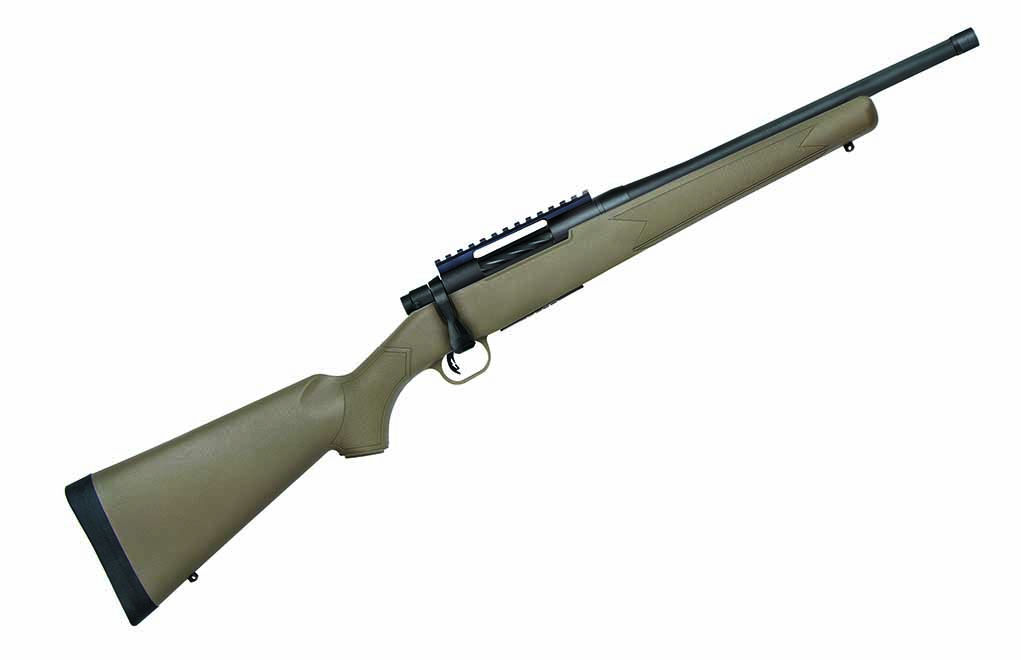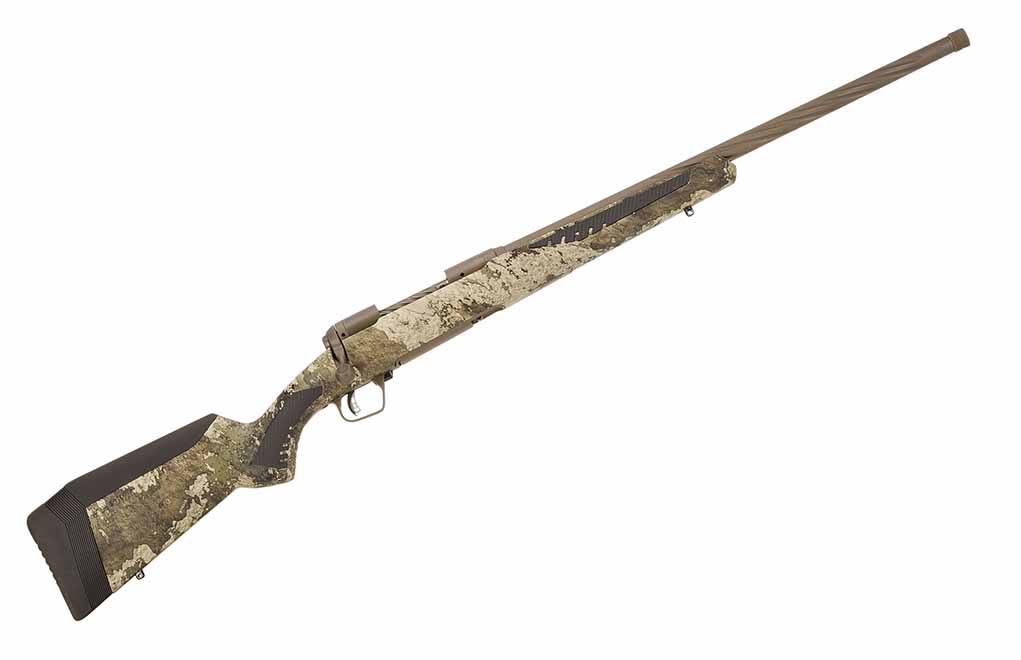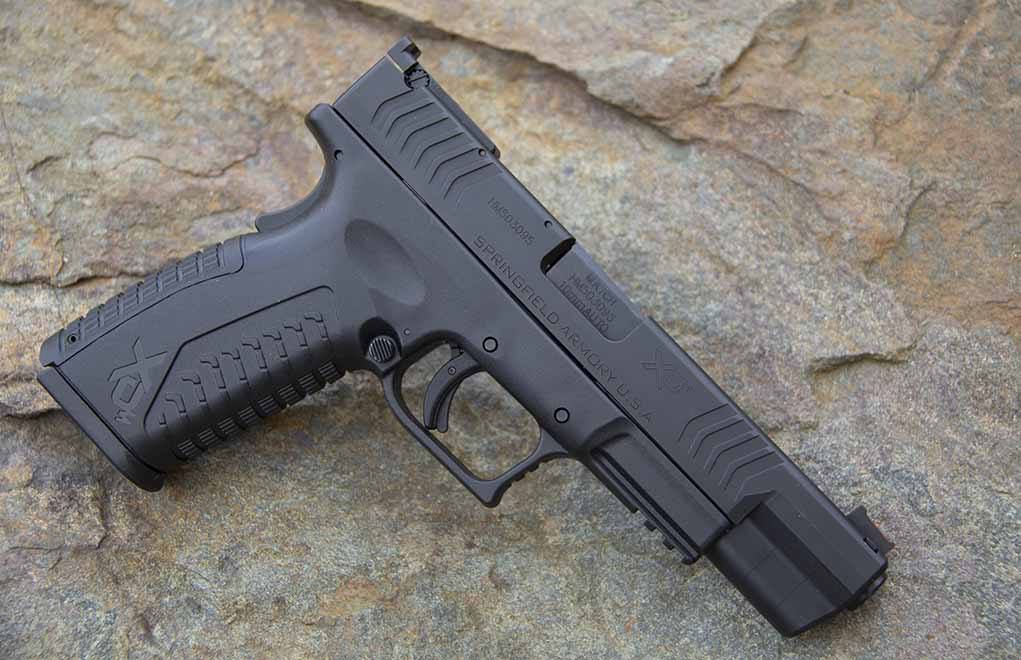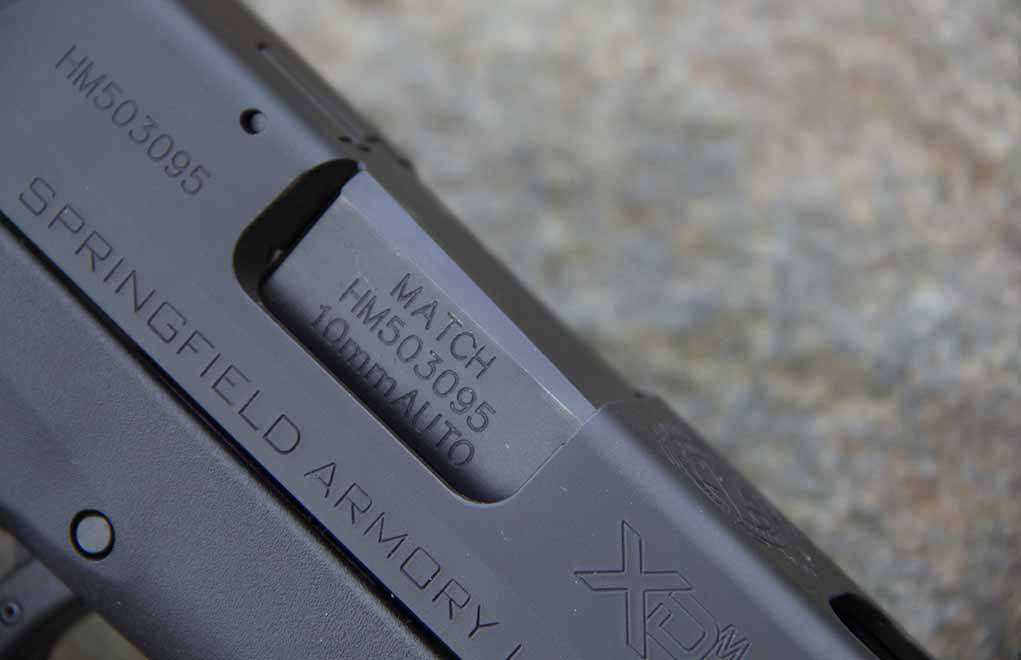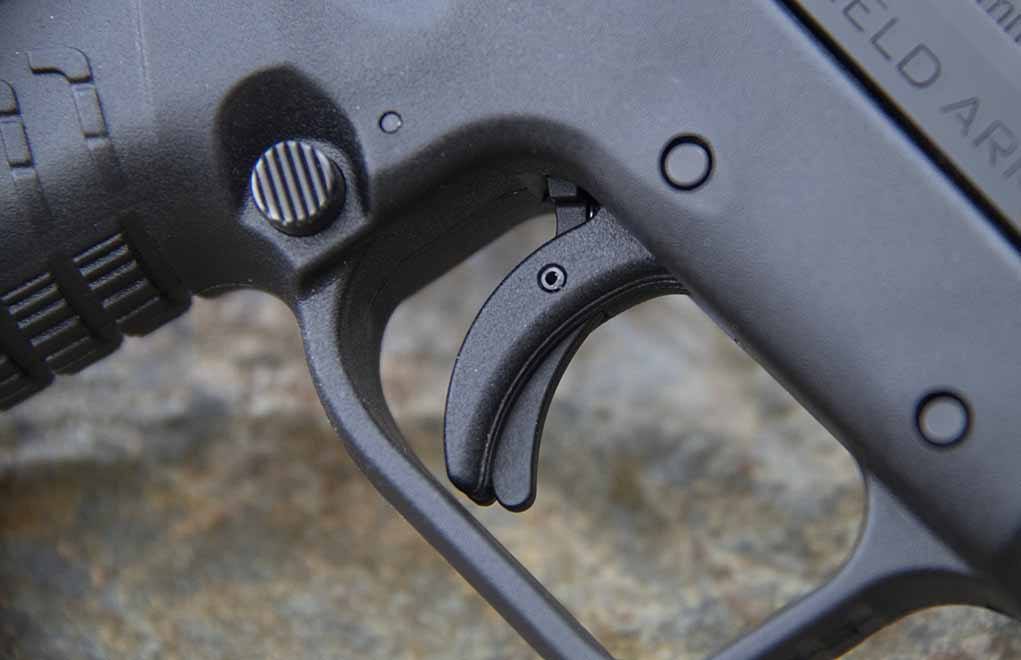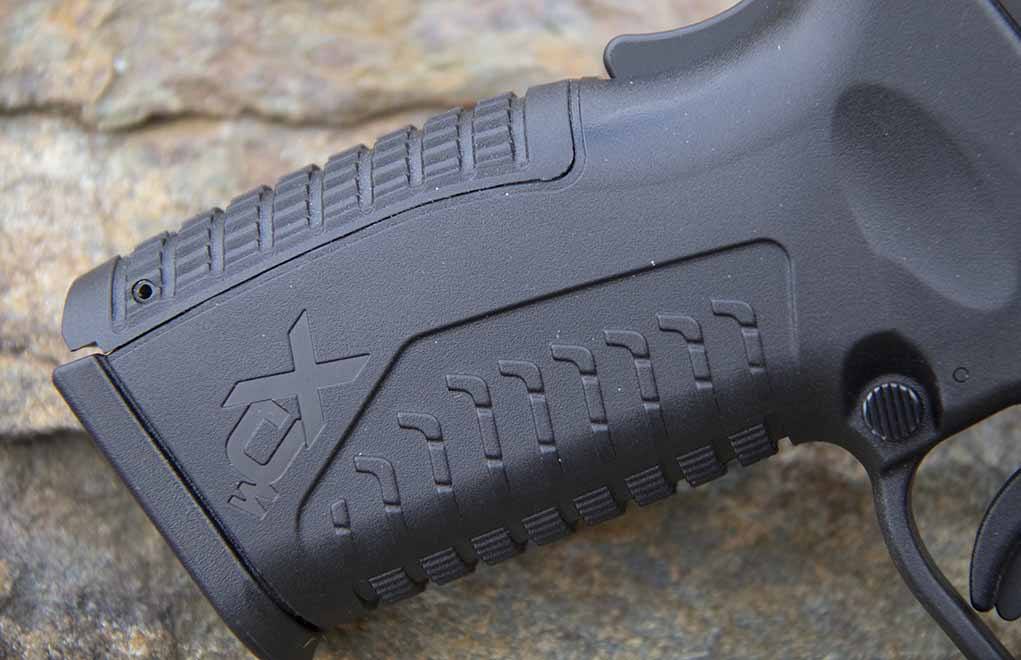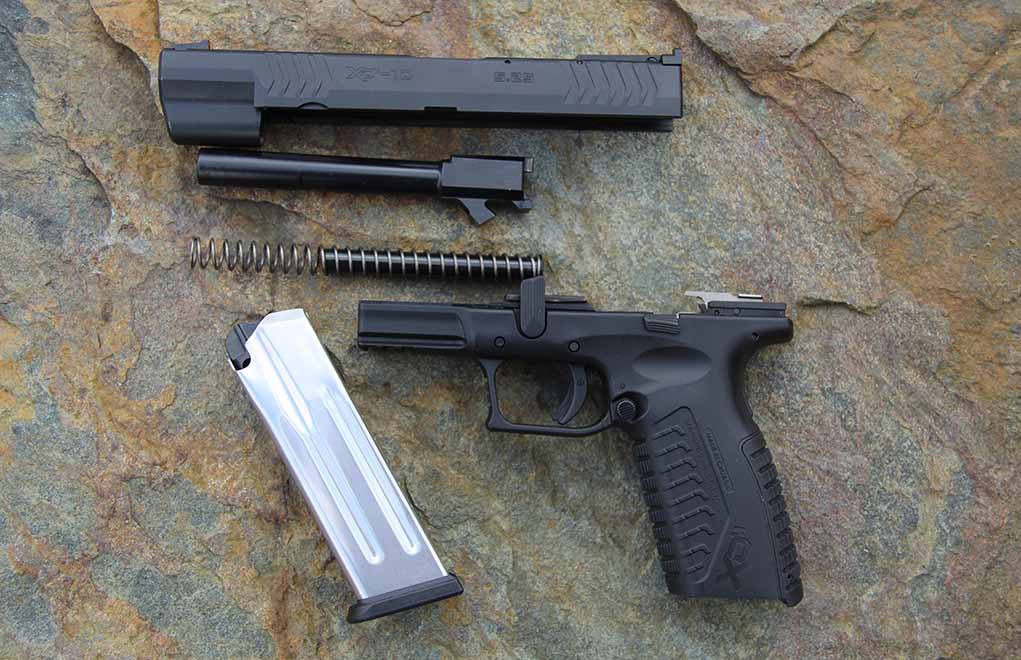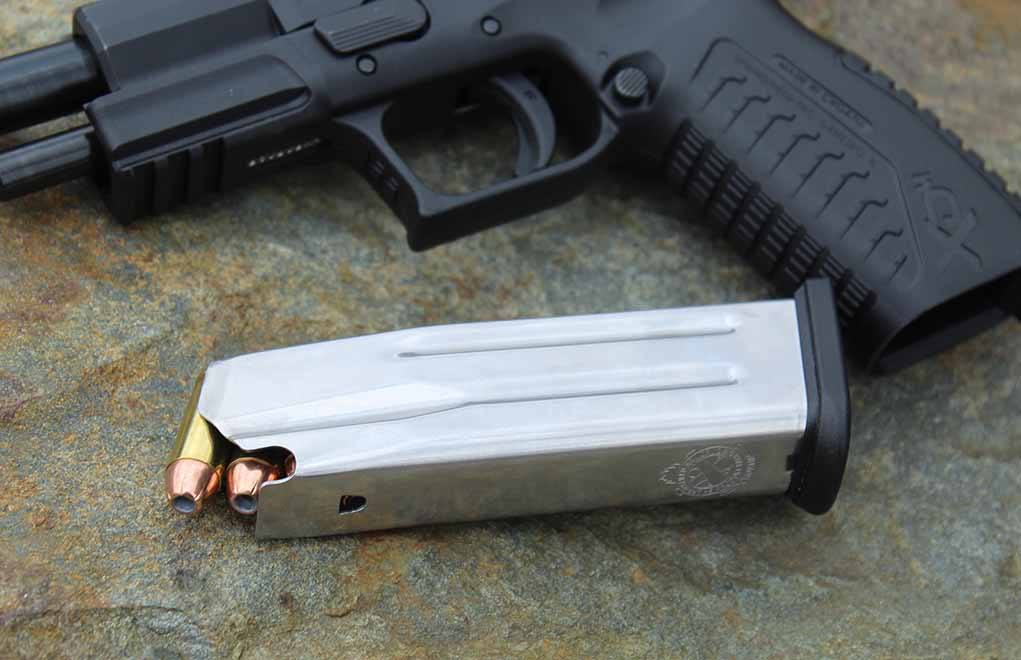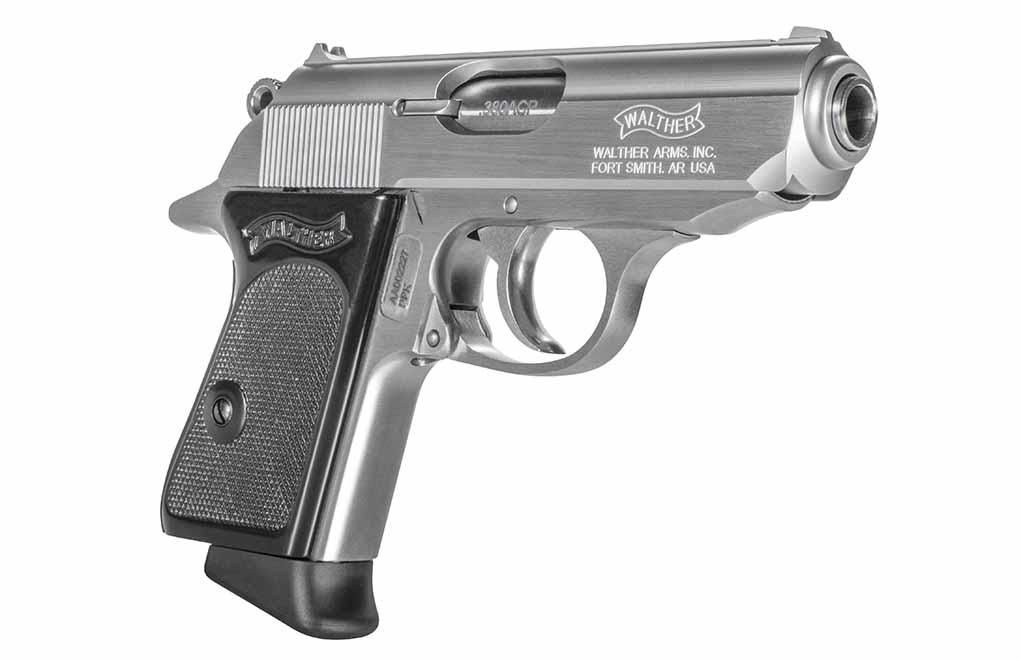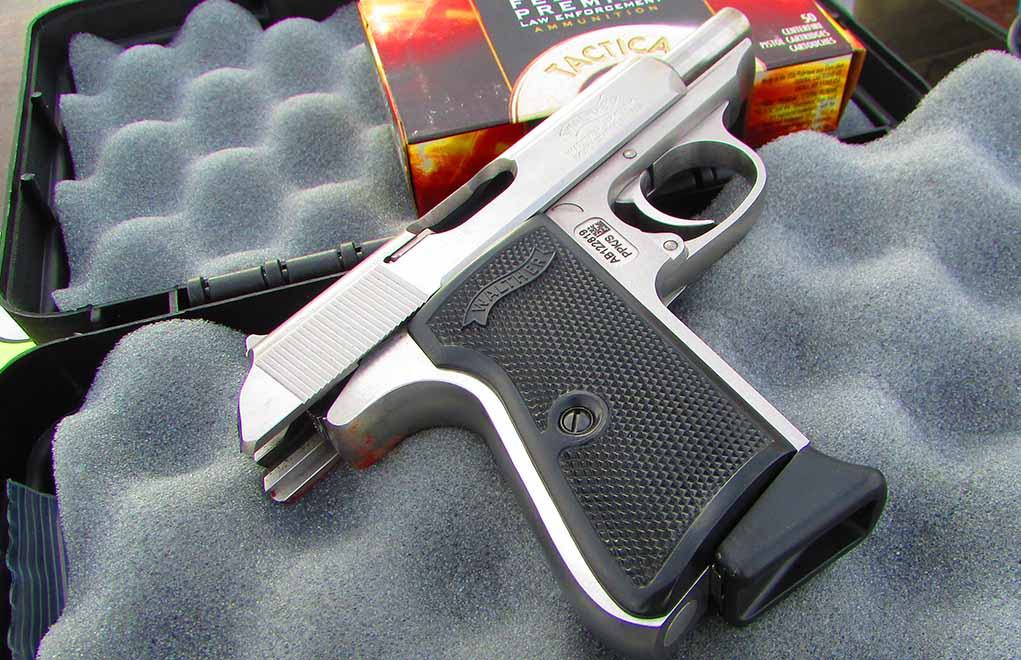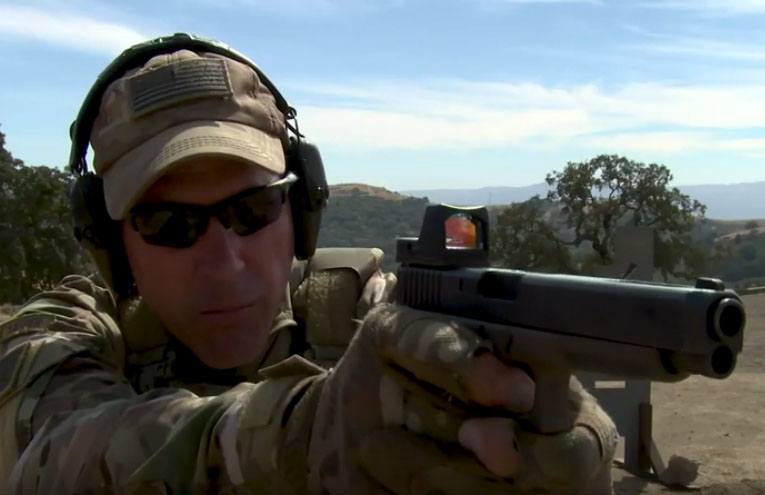
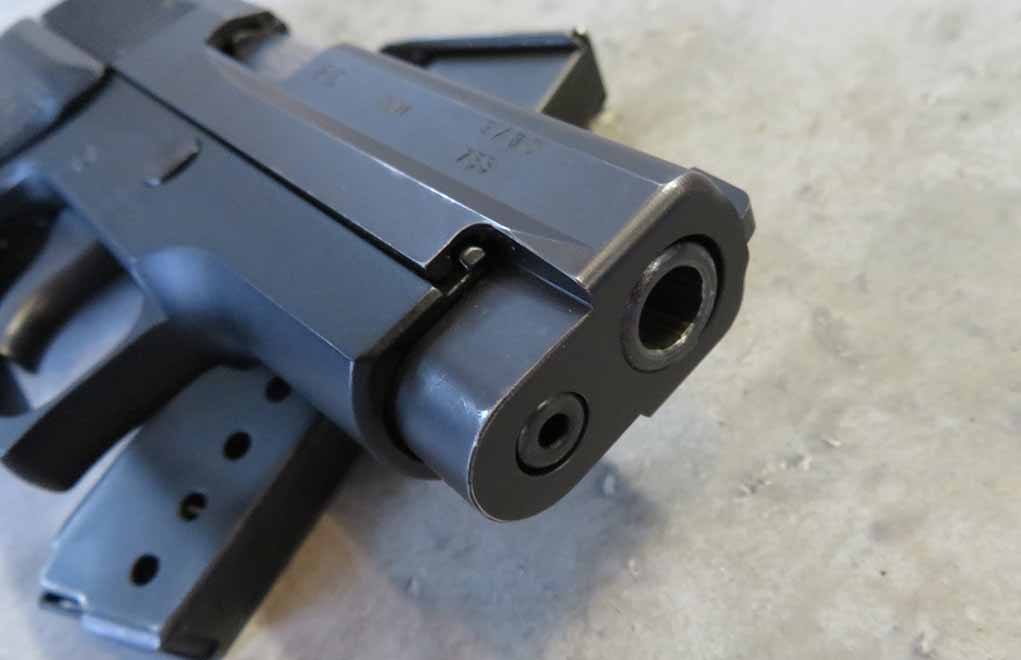
Compact and decked out, the M&P Shield remains a top choice for concealed carry.
Smith & Wesson came somewhat late to the striker-fired pistol game. Nearly all the big names already had staked their claims by the time the historic American gunmaker jumped into the market. But taking their time joining the herd hasn’t equated to playing catchup. Not with what their line of polymer-framed pistols bring to the table.
Arguably, the company’s M&P line has become a trendsetter in the popular style of pistol and among the top choices in a self-defense gun. This especially goes for the M&P Shield, when talking concealed carry. The demure single-stack pistol offers the same excellent performance of its larger kin, but in a smaller, easier-to-conceal package.
Tune In More Gun Digest TV:
Video: Pro Series Model 986 Puts A Different Spin On The 9mm
Take the M&P 9 Shield, for instance. The 9mm pistol measures at less than 1-inch in width and tips the scales at around 20 ounces, unloaded. By most accounts, that’s a fairly light and tidy load to carry. Even if the sub-compact surrenders some capacity, boasting a 7-round flush-fit magazine.
Smith & Wesson has kept shooters well-armed with the M&P Shield, offering a host of configurations, including some fairly decked out models as well. The Performance Center Shield is among the tops. Its features include Hi-Viz sights, factory installed Crimson Trace red dot, Performance Center tuned action and ported barrel and slide to control for muzzle flip. Quite a rig.
M&P 9 SHIELD M2.0 Manual Thumb Safety Specs Caliber: 9mm Capacity: 7+1, 8+1 Safety: Thumb Safety Barrel Length: 3.1” (7.9 cm) Overall Length: 6.1″ Front Sight: Steel – White Dot Rear Sight: Steel – White Two-Dot Action: Striker Fire Grip: Polymer Weight: 18.3 oz / 518.8g Barrel Material: Stainless Steel – Armornite Finish Slide Material: Stainless Steel – Armornite Finish Frame Material: Polymer MSRP: $479
Performance Center M&P 9 SHIELD M2.0 4” Ported Barrel & Slide Specs Caliber: 9mm Capacity: 7+1, 8+1 Barrel Length: 4″ / 10.2 cm Overall Length: 7.0″ Front Sight: Fiber Optic Green Rear Sight: Fiber Optic Red Action: Striker Fire Grip: Synthetic Weight: 22.9 oz / 649.2g Barrel Material: Stainless Steel Slide Material: Stainless Steel Frame Material: Polymer Slide Finish: Armornite Frame Finish: Matte Black MSRP: $854
Remington introduced this medium-capacity rifle cartridge to the marketplace in 1980. The 7mm-08 Remington is based on the .308 Winchester case necked down to 7mm and was loaded with a 140-grain bullet at 2860 fps.
Why the 7mm-08 Remington is a top short-action choice:
A direct copy of the 7mm/.308 wildcat dating back to 1958 and earlier.
Remington Model 788 and 700BDL Varmint Special were originally chambered for the cartridge.
Given 7mm bullet shape, slightly outperforms the .308 Win. downrange.
Very flexible hunting cartridge, suitable for anything from varmints to elk.
Remington advertised this cartridge as the “… first modern 7mm round designed for use in short-action rifles.” This is an interesting claim, in view of the fact that the .284 Winchester, designed for the same purpose, arrived on the scene in 1963. Furthermore, the 7mm-08 is a direct copy of the 7mm/.308 wildcat dating back to 1958 and earlier. This is not meant to denigrate a fine cartridge, but to demonstrate that there really sometimes isn’t much new under the sun, despite advertising claims. The 7mm-08 is chambered in exactly the same actions as the .284 Winchester, but cannot equal .284 ballistics.
Original rifles chambered for the 7mm-08 were the Remington Model 788 and 700BDL Varmint Special bolt actions. Current Remington catalogs list the 700 series and Model Seven bolt-actions as available in this chambering. Other makers have also chambered it.
Remington has hung its hat on the 7mm caliber, and with considerable success. It now offers six chamberings: 7mm BR, 7mm-08, 7x57mm Mauser, 7mm Express (.280 Remington), 7mm Remington Magnum, and 7 STW. The 7mm BR originated as something of a semi-wildcat based on the .308×1.5-inch necked down. Remington has contributed more than any other company to the belated recognition of the ballistic advantages of the 7mm caliber by U.S. shooters.
Owing partly to a more pointed bullet shape, the 7mm-08 140-grain load surpasses the .308 Winchester 150-grain load downrange, according to Remington tests from a 24-inch barrel. This appears to be true. At 500 yards, the 7mm-08 bullet has an edge of 238 fps and 750 ft-lbs of energy over the .308 bullet. This would make quite a difference in potential killing power and also help in better bullet placement at unknown distances. There is not sufficient difference to cause owners of .308-caliber rifles to rush down and trade them off for 7mm-08s, but it does illustrate the ballistic advantages of the smaller caliber loaded with more streamlined bullets.
The 7mm-08 is a great favorite with many metallic silhouette shooters, and there are many glowing reports regarding its accuracy on the range, particularly with handloads. It is also building a good reputation as a long-range deer and antelope cartridge. When handloaded with bullets heavier than 140 grains, it is also suitable for heavier game, such as elk. Unfortunately, the two factory bullet weights do not make for a very flexible big-game cartridge. On the other hand, by handloading, this cartridge can be adapted to anything from varmint shooting through elk.
Case capacity of the 7mm-08 is slightly less than the 7x57mm Mauser, and performance with the heavier bullets of around 175 grains is about 100 to 150 fps less, which is not anything to get really excited about. The fact of the matter is that the 7mm-08 is adequate for most North American hunting, though handicapped by only two commercial bullet loadings. Remington has been joined by Federal in offering factory loaded ammunition in this caliber.
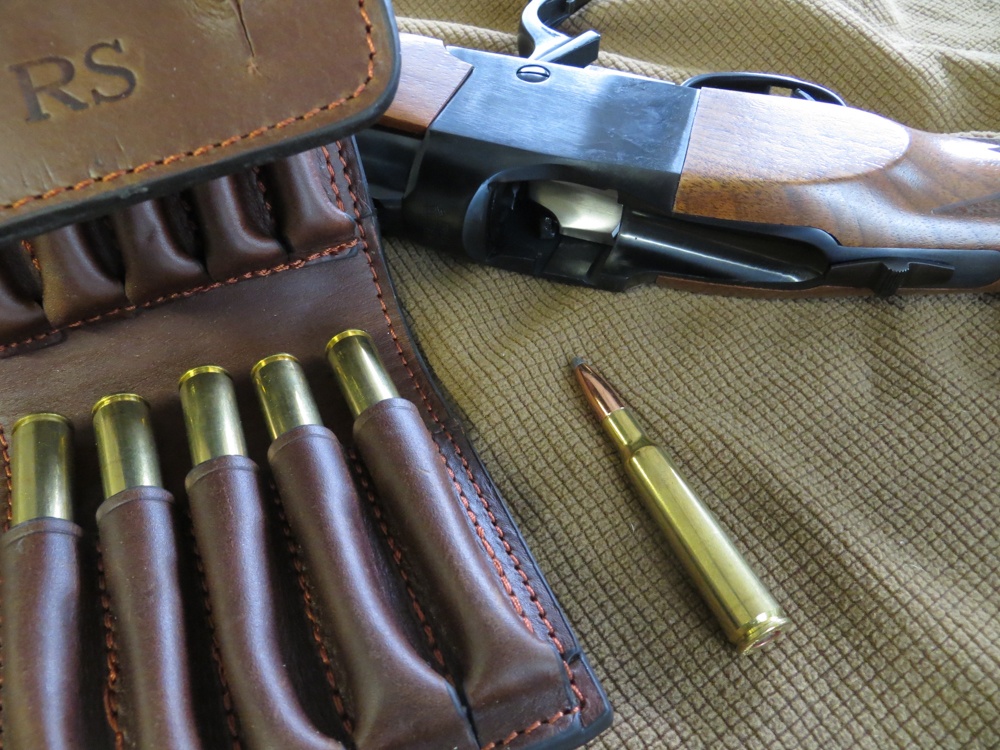
Ruger’s bolt-action .44 Magnum Rifle, the 77/44, has all features to make it a modern-day classic.
What Sets The 77/44 Apart From Other .44 Magnum Rifles:
Receiver has milled notches that permit the attachment of proprietary Ruger rings.
Comes equipped with a set of very good iron sights — the rear folding and fully adjustable.
Utilizes a flush-fitting, detachable rotary magazine that holds four rounds.
Boasts a three-position wing-type safety located just behind the root of the bolt handle.
Weighs only 6 pounds and measures in at 18.5 inches in overall length.
It’s hard to explain what makes a rifle so appealing, but there can be no doubt that esthetics are an important consideration when selections are made. To me, the quintessential favorites are the lever-action Winchester Model 94 and the bolt-action Model 70. However, any classic bolt-action model that is complete with sights mounted on the barrel is appealing. I have scopes on most of my rifles, but even so iron sights are a real plus for any rifle that I have to depend on in remote areas.
Short, light and handsome, the Ruger 77/44 is an excellent choice for roaming forests or short-range hunting.
Not long ago, I read an article written by one of my favorite authors on selecting the walkabout rifle. After giving the general characteristics about portability, power and availability of ammunition, he discussed sights. The conclusion was that a scope might not be attached and that the open sights would be sufficient.
Moreover, after discussing several rifles as possibilities, the selection was a Ruger, either the 77/44 or 77/357. That author’s preference was for the latter, but mine is for the former so I am suddenly the proud owner of a Ruger 77/44.
As all general purpose rifles should, the Ruger 77/44 is provided with excellent open sights.
The Ruger 77 Series of rotary magazine rifles was introduced in 1983 with the .22 LR version. I got one in the first or second year of production and thus started my devotion to the rifles. Dual locking lugs located on the rear section of the two-piece bolt of the 77/22 mate in recesses in the steel receiver, making the action of the rifle very robust for a rimfire.
As a result, the rifle was subsequently offered as the 77/22M in .22 WMR, 77/17 in .17 HMR and 77/22H in .22 Hornet calibers. In 1998, the slightly longer action of the .22 Hornet was modified to accommodate the .44 Magnum, and thus was formed the 77/44. Later, the version in .357 Magnum came along. From the beginning, the .44 and .357 versions wore iron sights in keeping with their intended use as short- to moderate-range hunting arms.
A Welcomed Homecoming
Like the 77 Series rimfire and .22 Hornet rifles, the 77/44 utilizes a rotary magazine.
In late 2016 came an email indicating that most models of the rotary magazine rifles were being discontinued. This was unwelcome news to those of us who are very fond of the series, but about a year, several models were reintroduced, including the 77/44. Currently, four versions of the 77/44 are listed on Ruger’s website. These include two that have blued steel barrels and actions with either walnut (MSRP $999) or black (MSRP $939) synthetic stocks.
Also available are versions that feature stainless-steel with either black or a camo synthetic stock, both with MSRP of $999. Barrel length on the Ruger 77/44 is 18.5 inches and the .44 Magnum rifle weighs approximately 6 pounds. Most of the walnut-stocked specimens that I’ve seen have very attractive wood and crisp checkering.
Feeding of cartridges having a variety of bullet styles was flawless.
Several clever and functional features are to be found on the Ruger 77/44.
First, the receiver has milled notches that permit the attachment of proprietary Ruger rings and, therefore, no separate bases are needed in order to attach a scope.
Second, all versions of the 77/44 are equipped as they should be with a set of very good iron sights.
Third, the .44 Magnum rifle utilizes a flush-fitting, detachable rotary magazine that holds four rounds — making it a five-shot rifle.
Fourth, a three-position wing-type safety is located just behind the root of the bolt handle. If the safety lever is moved fully to the rear, it forces a pin into a recess in the bolt handle, which prevents the bolt from being opened. Therefore, when the safety is in that position, the bolt cannot be opened and the rifle cannot be fired. Moving the safety to the mid position allows the spring-loaded locking pin to move backward out of the recess in the bolt handle, permitting the bolt to be opened, but the rifle cannot be fired. When the safety lever is in the forward position, the bolt can be opened and the rifle can be fired.
Options, Through Ammo
But, “pretty is as pretty does” goes the old saying. When it comes to a .44 Magnum rifle, the “does” is enhanced by a very wide choice of factory ammunition. All of the major loading companies offer .44 Magnum loads that feature 240-grain jacketed bullets that are either soft or hollow-points. Some of the sources are Remington, Winchester, Federal, Hornady, CCI, PMC, Magtech, Buffalo Bore, Armscor, Fiocchi, Swift and others.
The Ruger's .44 Magnum rifle employs a three-position rotary safety.
It would require a long article just to give the details about the various .44 Magnum loads that are available. However, there are a great many choices other than those with the typical 240-grain bullets. For example, Hornady offers a load having a 240-grain XTP bullet, but it also loads with 200- and 300-grain XTP bullets.
One of the most unusual .44 Magnum loads is the 225-grain LEVERevolution from Hornady. It features the FTX bullet that has a flexible tip so it can be used in rifles having tubular magazines. From a rifle, the advertised velocity is 1,870 fps, giving a muzzle energy of 1,750 ft-lbs. From the 18.5 inch barrel of the Ruger 77/44, the velocity measured 1,768 fps. One of the interesting aspects of this round is that having a pointed bullet means that it retains velocity better than the typical hollow- and blunt-pointed bullets. However, this is not much of a factor at the relatively short ranges at which a .44 Magnum rifle is used.
The rear sight on the Ruger 77/44 is of the folding type and is fully adjustable.
The Winchester 240-grain jacketed soft-point gave a measured velocity of 1,722 fps. Sometimes, one hears criticism of the hollow-point bullets regarding penetration, but the soft-points usually avoid that problem. The issue of insufficient penetration can really be solved by use of some of the loads such as those from Buffalo Bore that utilize 270-grain Speer Gold Dot bullets.
For use where both penetration and expansion are required, it’s difficult to imagine a more effective round than that from Swift, which utilizes a 300-grain A-Frame bullet. Of the factory ammunition in .44 Magnum caliber that I’ve tested, the real screamer is the 180-grain soft point from Remington that gave a measured velocity of 2,244 fps from the Ruger 77/44. Of course, such a short, blunt bullet would lose velocity rapidly, but it should produce dramatic effects on predators. The point is that there are plenty of ammunition options to allow the shooter of a Ruger 77/44 to be equipped for many uses.
This three-shot group was obtained at 50 yards with the Ruger 77/44 and shows that the .44 Magnum rifle is plenty accurate for use at 100 yards.
By any standard, the Ruger 77/44 is a trim, elegant little .44 Magnum rifle. When I obtained mine, I envisioned some uses of it for which I would rather not have the beautiful stock subjected. Accordingly, I immediately ordered a black composite factory replacement stock from Midway USA for the very reasonable price of $59.99. Now, I can configure the rifle with either wood or composite stock holding the blued barrel and action.
Editor's Note: This article originally appeared in the December 2018 issue of Gun Digest the Magazine.
A modular design that allows you to swap fore-ends and buttstocks, Choate's C. Mod. system helps make bolt-action rifles more adaptable.
How does the C. Mod. make bolt-actions more adaptable:
Buttstock and fore-end are removable and replaceable.
Action and barrel are held firmly in place through chassis system.
Choate offers two different fore-end and three buttstock styles.
Wiggle room, usually not good on a bolt-action. Unless you’re talking adaptability, in which case, more often than not, there’s almost none. The issue – the action.
Unlike the AR-family of rifles, to pull off its duty a bolt-action must be firmly bedded into its stock, otherwise, bad things happen. Minute-of-barndoor bad. In turn, you’re fairly set with your rig once you’ve chosen its stock, particular applications be damned. While most riflemen have accepted this limitation given the precision payoff, it’d be nice to have some options open to modifying a turn bolt. That is, without making it a complete weekend project.
The same notion must have occurred to the folks at Choate Machine & Tool because they’ve cooked up what might prove the answer. The Choate Modular Stock (C. Mod.) allows you to swap the buttstock and fore-end, all without disturbing the fit of the action into the stock. In turn, the chassis system puts multiple configurations at your fingertips, allowing you to adapt your rifle to the task at hand. Handy to say the least.
The heart of the C. Mod. system is a solid-aluminum chassis, precision machined to tight tolerances. The rigid skeleton keeps the action and barrel in place, providing a solid shooting platform. From there the buttstock and fore-end simple detach and replace with the style that best fits your needs at the moment. There is a catch. You can use any buttstock or fore-end you want, as long as it’s from Choate Machine & Tool. Yup, proprietary, so we’re not quite at a Mil-Spec equivalent for the bolt-action yet.
Get On Targert With Long-Range Shooting Posts:
Gun Review: Ruger’s Updated Precision Rifle In 6mm Creedmoor
As of writing, Choate Machine & Tool has two styles of fore-end – target/varmint style and sniper/tactical. In both cases, they come with T-rail and bipod adapters. As far as buttstocks, there are three in all – basic tactical, target/tactical (adjustable LOP and cheek piece) and C. Mod Rifle Stock. The last features a telescoping AR-style buttstock (compatible with any AR buttstock) and a pistol grip folding stock.
Other notable of the C. Mod., include AR-style magazine release and compatibility with cartridges with an overall length up to 2.86 inches – including .308 Win., 6.5 CM and .260 Rem. It also comes with two magazines and the required action screws. Though, Choate Machine & Tool had no note on compatible actions. And the C. Mod. – if you’re dying for a modular bolt-action – doesn’t exactly ring up cheap with an MSRP $710. Though, if adaptability is your thing, it’s probably a value.
The New York-based company — known for generations as the American standard in firearms — not only isn’t terminal, but it’s vibrant after coming out of bankruptcy in spring of 2018. And that goes the same for its sister brands, including DPMS, Marlin, Bushmaster and Dakota Arms.
Yeah, rumors are rumors, but I had the privilege of spending 3 days with the Remington staff at one of their ammunition facilities in Lonoke, Arkansas — where the invigorated group of men and women proudly showcased some new and innovative firearms.
Here, rolling out new and shiny for 2019, are some of the new Remington rifles — its own and its subsidiaries — for 2019.
Remington Model Seven Stainless Steel HS
The under-appreciated Model Seven compact rifle has long been the answer to hunters looking for lightweight, compact and accurate rifles for small geometries, tight places or weight-conscious vertical ascents. The folks at Remington are refocusing on the fact that the Model Seven works on many levels in today’s smaller, lighter rifle category.
The new partnership between HS Precision and Remington, featuring the Seven Stainless Steel HS, is proof of this. The Model Seven gets a state-of-the-art premium HS Precision stock with an aluminum bedding block and a free-floated barrel. It comes with an ultralight 20-inch barrel, the X Mark Pro adjustable trigger, and in your choice of .308 Winchester, 6.5 Creedmoor, 7mm-08 Remington or .243 Winchester. MSRP: $1,149
Remington Model 783 Varmint
The Model 783 has proven itself to be a good choice for cost-conscious Remington gun owners. Now, Remington has expanded the Model 783 line to include a rifle built for shooters who want the long-range, fast-action qualities found in a varmint-style rifle.
The Model 783 Varmint offers shooters a 26-inch heavy contoured barrel, black oxide finish, laminate stock with a beavertail forend, a handy oversized bolt handle and — of course — a Picatinny rail. It comes in .223 Remington, .22-250 Remington, .243 Winchester, .308 Winchester and 6.5 Creedmoor. MSRP: $625
Remington Model 783 HBT
Another new flavor in the Model 783 rifle lineup is the HBT, which stands for Heavy Barrel Threaded. The suppressor-ready rifle comes with a 24-inch barrel, which tapers to .760-inch at the muzzle. The muzzle is threaded and comes with a thread protector in place. It has a Picatinny rail, black oxide finish, FDE laminate stock, a detachable box magazine, oversized bolt handle and a Crossfire adjustable trigger. It comes in .223 Remington, .308 Winchester and 6.5 Creedmoor. MSRP: $459
Remington Model 783 Mossy Oak Break Up Country Camo
The 783 line of Remington rifles now offers Mossy Oak lovers the perfect look: The rifle comes with a synthetic stock decorated in Mossy Oak’s Break Up Country Camo. The stock is pillar-bedded, which makes the 22-inch rifle barrel completely free-floated. It comes with the Crossfire adjustable trigger and a 3-9x40mm riflescope. It’s available in the wildly popular 6.5 Creedmoor. MSRP: $465
Remington continues its fine tradition of limited-production rifles in the CDL SF line of Model 700s with the ultra-flat-shooting .25-06 Remington for 2019, which celebrates its 50th year (1969) of being a commercially-available cartridge as well. The Model 700 features a 24-inch stainless, fluted barrel with a satin finish, an American black walnut stock, engraved floorplate and “Limited” marked on the barrel of each rifle. MSRP: $1,225.95
Remington Model 700 Magpul Enhanced
Magpul and Remington teamed up to bring Model 700 lovers a terrific combination of tactical readiness in a bolt-action rifle. Available in two cartridges — the 6mm Creedmoor (20-inch barrel) and the .300 Winchester Magnum (24-inch barrel) — the Magpul-enhanced rifle features a threaded heavy barrel with LTR flutes. The Model 700 sits in a FDE Magpul Hunter stock, comes with a 10-round Magpul magazine, a Magpul M-Lok bipod mount and bipod, and a 20-MOA Picatinny rail. MSRP: $1,249
Marlin Model 1895 444 Marlin
Lever-gun lovers … rejoice! Marlin has brought the .444 Marlin back with a new 22-inch barrel with a 1:20-inch twist! The classic lever-action Marlin Model 1895 is chambered in the hard-hitting .444 Marlin, and it features a standard loop, is finished in a high-polished blue, has a four-round tube capacity and adjustable semi-buckhorn rear sights. MSRP: $769
Marlin Model 336 Curly Maple
Marlin’s renowned Model 336 is now offered with a B-grade curly maple (with fiddleback) stock and forend. The Model 336, offered in the classic .30-30 Winchester cartridge, features a standard loop, 20-inch barrel, polished blue metal, a gold-plated trigger, six-round capacity in the tube and adjustable semi-buckhorn rear sights. MSRP: $949
DPMS 6.5 Creedmoor Hunter
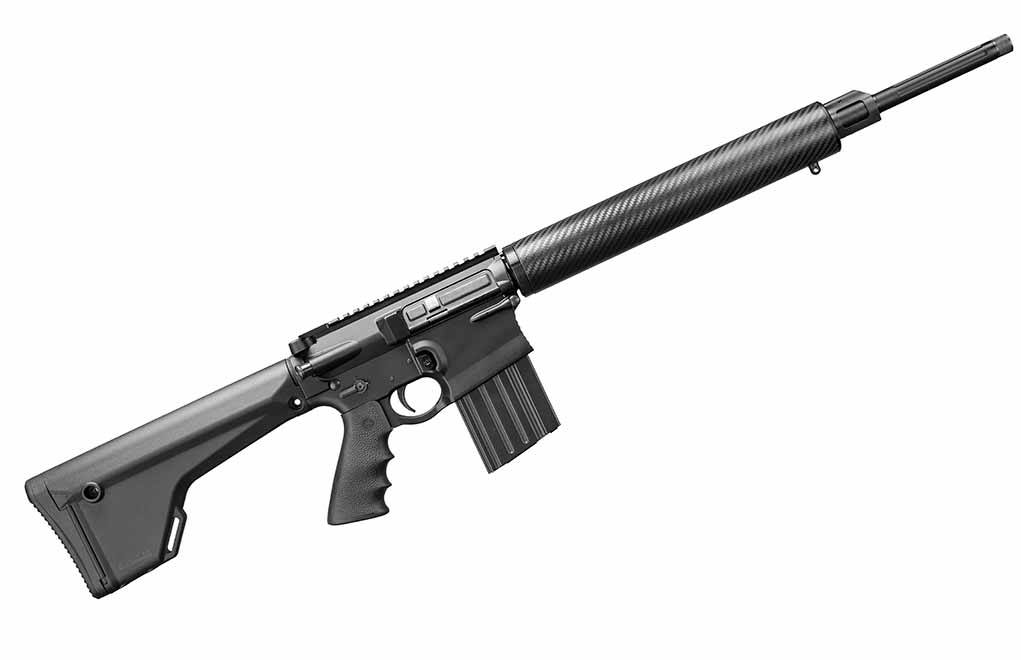
The DPMS GII platform now comes chambered in the 6.5 Creedmoor. The MSR platform features a 20-inch stainless, Teflon-coated threaded barrel with a carbon-fiber free-floated handguard, two-stage match trigger, Magpul MOE rifle stock and a Hogue over-molded grip. MSRP: $1,599
DPMS Prairie Panther
DPMS’s popular lightweight hunting MSR, chambered in .223 Remington, is now available in Kuiu Verde and True Timber Strata camouflage patterns. The rifles feature a 20-inch 1:8 twist Teflon-coated threaded barrel, carbon-fiber free-floated handguard, a Magpul MOE rifle stock, two-stage trigger and ships with a 20-round P-mag. MSRP: $1,249
Bushmaster ACR
The ACR platform isn’t new. However, Bushmaster has added a few wrinkles to the ACR lineup, which deserve mention here. The gas-piston semi-automatic rifle now comes in some interesting cartridges, including the .450 Bushmaster, 6.5 SPC II and a 10.5-inch 5.56 NATO pistol version. The .450 Bushmaster comes in a 16-inch-barreled carbine and an 18.5-inch-barreled rifle version. Both have muzzlebrakes. The 6.8 SPC II comes in a 16-inch barrel configuration. MSRP: $2,249 in .450 Bushmaster and 6.8 SPC II; $2,149 in 5.56 NATO pistol
DPMS LCAR
DPMS gives MSR users an affordable 5.56 NATO chambered rifle in their LCAR. The basic MSR platform gives users a 16 -inch barrel with a 1:8 twist, a mil-spec six-position M4 stock, M4-type Glacier Guard handguard, an F-marked front sight, and a Magpul Mbus rear sight. MSRP: $749
Editor's Note: This article originally appeared in the January 2019 issue of Gun Digest the Magazine.
Decked out, the Smith & Wesson Pro Series Model 986 milks the utmost speed and accuracy from the 9mm.
Generally, when we think of a 9mm handgun what comes to mind is a semi-automatic pistol. Logical, given the cartridge was developed for this style of gun and for most of its history has remained in its original field of play. There are, however, exceptions. Here and there revolver-smiths have chambered guns for the rimless cartridge, often to good effect. One such example is the Smith & Wesson Performance Center Pro Series Model 986.
Quite a piece of work, the seven-round revolver is a grand option for competition or target shooting for those who want to pitch 9mm in something other than a semi. And it’s a looker to boot. The Model 986 has the alluring lines you expect from a Performance Center gun, but there’s more to it than just aesthetics. It’s built to perform.
Tune Into More Gun Digest TV:
The Elegant Power Of The Ruger Blackhawk Bisley .45 Colt
Hand-cut and fitted, the revolver is tight as a drum and has the little extras that ensure it gets the most out of the 9mm. In addition to a precision crowned 5-inch stainless-steel barrel and fluted titanium cylinder, the handgun also features an adjustable rear sight and full lug, tapered at the fore for a smooth draw. One catch, since it shoots a rimless cartridge you’ll have to become accustomed to using moon clips. But overall that’s a boon in most cases, making reloading quick and easy.
This level of performance doesn’t come on the cheap, however. The Pro Series Model 986 runs a pretty penny, with an MSRP of $1,149.
Pro Series Model 986 Specs Caliber: 9mm Capacity: 7 Barrel Length: 5″ Overall Length: 10.5″ Front Sight: Patridge Rear Sight: Adjustable Action: Single/Double Action Grip: Synthetic Weight: 35.0 oz Cylinder Material: Titanium Alloy Barrel Material: Stainless Steel Frame Material: Stainless Steel Frame Finish: Matte Silver MSRP: $1,149
There’s a major nostalgia factor to blackpowder shooting in general and the cap-and-ball revolver in particular, and an appreciation for just how far things have come.
How To Load A Cap-And-Ball Revolver:
Make certain there are no burning embers in the cylinder.
Pour the appropriate measure of powder into the chamber.
Place wad on top of powder charge in chamber.
Seat ball or bullet via revolver's built-in rammer or separate tool, leaving no air gap.
Seal the mouth of the chamber with suitable grease or seal made for the purpose.
Fit percussion cap on the nipple at the rear of the chamber.
Many shooters today have never handled an old firearm that’s loaded one chamber at a time with blackpowder, ball and percussion cap. Yet, when introduced, these guns were state-of-the-art and were a great step forward in weaponry. They were used to put food on the table, for fighting wars, for self-defense and in sporting contests.
While old cap-and-ball firearms can still be found, many should not be fired because of their historical value or deterioration due to age and the effects of corrosive blackpowder that was used to propel projectiles. But some modern manufacturers make replicas of the old guns, which today’s shooters enthusiastically use for enjoyment, competition, hunting — and for a taste of how things used to be.
I recently had the opportunity to revisit and reexamine the techniques involved in shooting a cap-and-ball revolver. While there are many replica blackpowder firearms made these days, I’ve been impressed by one imported by Traditions Performance Firearms and made in Italy by Pietta. It’s based on the 1858 Army cap-and-ball revolver that fires a soft, round lead ball of .454-inch diameter, although the caliber is designated as .44. During testing, it performed flawlessly.
Cap-and-ball, also called blackpowder guns, must have components loaded into the charge holes or cylinder, one at a time. Included here is loose Pyrodex R propellant, a Pyrodex pellet, a percussion cap, a felt wad and a round lead ball.
Some may say that cap-and-ball shooting is a lost art, but that’s not true: It’s alive and well, though the inner circles of aficionados has certainly subsided. That said, the Single Action Shooting Society (SASS) sanctions blackpowder shooting events where competitors use guns of old design.
Critical Components
To make the old model gun go bang, a propellant is ignited by a percussion cap. But because blackpowder creates a great deal of residue when burned, some sort of lubricant or softening agent is also needed to keep the barrel and mechanism from fouling so badly that accuracy is completely degraded — or the gun will not function.
Shooting blackpowder guns is messy. Here, the powder residue is clearly visible on parts. The gun needs to be disassembled and then soaked in hot, soapy water or sprayed with commercial cleaner, and then wiped down and oiled.
The lubricants used by old timers were natural lubricants, such as animal fat, which served to soften fouling. Today, we have modern commercial lubricants like Wonder Lube. Not only does lubricant serve as a softening agent, it also, when placed on top of the ball in a loaded revolver cylinder, decreases the likelihood that a spark from one chamber will jump to another chamber and ignite it. That’s called a chain fire — and it’s not a good thing.
Blackpowder is a concoction of charcoal, sulfur and potassium nitrate, also called saltpeter. It creates a great deal of smoke when ignited and, as mentioned before, leaves much fouling. Fortunately, it’s no longer necessary to use blackpowder in the old or replica firearms; instead, substitutes like Pyrodex are available.
Shooting blackpowder guns is messy. Here, the powder residue is clearly visible on parts. The gun needs to be disassembled and then soaked in hot, soapy water or sprayed with commercial cleaner, and then wiped down and oiled.
While Pyrodex and other substitutes have approximately the same amount of stored energy per volume as blackpowder, and they behave similarly, they generally leave somewhat less residue. They’re also not subject to the strict storage and shipping regulations that blackpowder is, and therefore retailers are more likely to carry substitutes — which make them easier to find on store shelves.
Bullets, then and now, are soft lead round balls or conical bullets. People used to make their own by melting lead and pouring lead into molds, but today it’s easier to purchase them off the shelf.
Long-Form Loading
This cylinder loading stand available from Traditions allows the cylinder to be loaded while off the gun. It’s particularly useful if a spare cylinder is carried.
Loading a blackpowder firearm is simple, but it’s time-consuming. First, make sure there are no burning embers in the cylinder that could ignite the powder. Next, pour powder into the chambers. Some people will dispense powder into each chamber before moving onto the next step, and others will completely load a chamber before moving on.
It’s your choice, but I found that, although slower, I was more certain that powder would not be forgotten if each chamber was loaded fully before going to the next. My shooting partner at Gunsite forgot to put powder in one chamber and had to pull the ball by hand. That can happen to the best, experienced shooters, of which he is one.
Traditions offers this stand, which can serve for displaying the gun or holding it in a stable position for loading.
Blackpowder or similar substitutes are measured by volume, not weight. Pyrodex R is for revolvers, and the manufacturer, Hodgdon Powder Company, says it’s designed to be a direct replacement by volume for blackpowder. So, when loading, follow the manufacturer’s recommended loads which, for the sample revolver, Traditions says is between 22 grains and 30 grains by volume. And don’t load directly from an open canister. Use a field flask or a dipper from a small container of powder. Remember, a spark ignites this stuff easily.
The next step is to seat the projectile, be it a round ball or a conical bullet. When doing so, use the revolver’s built-in rammer, or a separate tool that can be used to load a cylinder while off the gun. Seating the ball will take a bit of force, but this is good because if the projectile is of the correct size, a slim ring of lead will be shaved off to indicate a tight seal between the projectile and the chamber. You want this. And the projectile should be resting against the felt wad or powder so there’s no air gap.
Then, seal the mouths of the chambers with suitable grease or some type of seal made for that purpose. This is supposed to prevent chain fires. Loose grease can be used, but it’s easier, although more expensive, to use Wonder Seals or an equivalent. Smash the Wonder Seals down a bit so they seal the chambers.
Touch off a cap-and-ball gun and you get noise … and a good deal of smoke.
Finally, a percussion cap is fitted to the nipple of each chamber on the cylinder. The Pietta revolver called for either No. 10 or 11 caps, with No. 11 caps being slightly larger. I also found the No. 11s to be more user friendly because, although the sides of the caps needed to be pinched a bit to stay on the nipples during recoil, they were easier to fully seat. With No. 10 caps, the fit was so tight that they had to be forced onto the nipples. Too much force could cause them to ignite, and too little would result in a misfire or delayed firing.
Spare cylinders are also available for some revolvers. While some may need to be fitted, others, like those for the Pietta 1858 Army, can be bought off the shelf and dropped in. Carrying a spare loaded cylinder — minus the caps, which should be put on after the cylinder is in the gun — saves loading time.
Shooting With Style
The nipple wrench is a useful tool that’s used for installing and removing nipples. A nipple pick is conveniently stowed in the end of the tool and is used to clean residue from nipple holes.
While it was customary in the 1800s — and most of the 1900s, for that matter — to shoot handguns with one hand, it has now become standard to shoot with two hands. A single-action revolver must have the hammer cocked before the trigger is pressed, and the most efficient way to do this is with the support-hand thumb.
Opinions vary, but everyone agrees that a cap-and-ball revolver should never be carried with the hammer resting on a loaded chamber: It’s too easy for a bump to the hammer to ignite the percussion cap. So, most manufacturers advise carrying the hammer down on an unloaded, uncapped chamber. Others say to carry with the hammer down on the safety notch between chambers that’s found on some revolvers.
If projectiles fit correctly in the cylinder, a slim lead ring is shaved off to indicate a snug fit when the ball is seated.
After the gun is fired and before reloading the cylinder, the used caps need to be removed from the nipples. However, at least with caps by CCI and the test gun, the caps ruptured when fired, and if the hammer was cocked quickly, flew off the nipples due to centrifugal force. This eliminated the need to remove them by hand.
Recoil with the Pietta, while present, was very mild and in no way a nuisance. And accuracy was satisfactory with groups off-hand at 7 yards being easily covered with an open hand. The sights, while not very good by today’s standards, were a narrow front blade and a trough along the top strap.
Copious Cleaning
These No. 11 caps were found to work very well on the test gun, but they’re slightly too large for the nipples so they needed to be squeezed a bit for a snug fit.
Cleaning is best done the same day after shooting so that the metal doesn’t corrode. And black-powder or the residue from substitutes is cleaned using lots of hot water and detergent. Commercial cleaners, like Easy Clean from Traditions, is also good.
First, remove the cylinder, then the stocks — or grips — and in the case of the Pietta, the brass trigger guard, then soak all in hot water and detergent or spray liberally with Easy Clean until the fouling is softened. Swab out the bore and cylinder, wipe everything down and apply a thin coat of oil to prevent rust.
It was found that, upon firing, percussion caps split, and if the hammer was cocked quickly, centrifugal force caused the spent caps to fly off the nipple, eliminating the need to remove them by hand.
A blackpowder revolver will definitely slow down the shooting process and allow more time for enjoyment while you learn to appreciate what the old timers had to do to put food on the table, and to protect themselves and those they love.
This article originally appeared in the December 2018 issue of Gun Digest the Magazine.
Now with more than 30 models in six calibers, the Pietta 1873 Single-Action Army Series has something for everyone.
What the 1873 Single-Action Army Series offers:
Available in 45 Long Colt, .357 Magnum, .44/40 Winchester, .44 Magnum, .22 WMR and .22 LR.
Barrel length varies from 4 3/4 to 16 1/2 inches.
Finishes include nickel plated, color case hardened and blued steel.
Laser engraving unique to that model.
No firearms collection is complete without at least one Single-Action Army revolver. Sure, the design is archaic compared to today’s polymer semi-automatics. Yet, few other firearms stir the imagination to the same lengths as these historic six-shooters and their modern-day replicas. Luckily, the market is growing for these classics, with Pietta Firearms recent announcement of the expansion of its 1873 SA series. In all, the line now boasts more than 30 configurations of the Single-Action Army revolver, available in six chamberings, including .45 Long Colt, .357 Magnum, .44/40 Winchester, .44 Magnum, .22 WMR and .22 LR. The company didn’t list MSRPs for the models, but they can be found retailing from the mid-$300 on up online.
(Gussago, Italy) Pietta Firearms, manufacturers of the finest historical and modern firearms, known for its craftsmanship, quality and dependability announce its headlining new product of 2019, the 1873 Single Action series of firearms. As part of the company’s trending firearm initiative, Pietta is aggressively developing and offering to the U.S. market new, replica models and modern firearms and has continued to build a reputation for some of the best replica and innovative, modern firearms on the market. The 1873 SA Series is the next step in the company’s evolution.
Since its first pistol debuted over 30 years ago, Pietta has been known for providing its customers with the most dependable and accurate replica firearms on the market, with the new 1873 SA series, the company is now providing the next series of historical firearms to answer the demands of the modern cowboy. Designed for long-lasting reliability & accuracy and able to easily interchange with the “old-west” originals, the 1873 SA Series from Pietta will undoubtedly become a classic.
“We pride ourselves on always staying ahead of the competition with our products,” said Alessandro Pietta, Vice President of Pietta Firearms. “All of us at Pietta have worked painstakingly hard to create the 1873 Series, we believe that this series will become a staple within our product line and we believe our customers will see the quality and accuracy after the first shot.”
The 1873 SA Series can be considered some the most “true-to-original” firearms on the market. This series is available in 45LC, 357MG, 44/40W, 44MG, .22MG and .22LR and a multitude of design options.
And now some gratuitous shots of Pietta's SAA models.
No other cartridge has captured shooters' imagination in the 21st Century like the 6.5 Creedmoor. And the long-range marvel looks to continue to hit the mark in the future.
Why the Creedmoor will stay on top:
The 6.5 Creedmoor is arguably America’s most successful metric cartridge.
It was specifically designed for long-range performance and shootability.
Dave Emary, Hornady senior ballistics scientist, was the main mover in the 6.5’s design.
The Creedmoor’s parent case is the .30 TC.
The cartridge took off with the introduction of affordable long-range rifles.
The 6.5 bullet is uniquely suited to long-range shooting, with excellent ballistic coefficients.
The Creedmoor is highly efficient, requiring less powder to do the same job as other 6.5s.
While the cartridge has spiked in popularity, given its capabilities, it should continue to be among America’s favorites.
The New Kid in Town
If you’re an American shooter, in all likelihood you have a love affair with the .30 caliber. It’s only natural, almost a birthright. Since the advent of smokeless powder more than a century ago, the medium-bore caliber has captured the nation’s imagination. Even if the .30-06, .308 or .300 Mag., wasn’t your cartridge of choice, you most likely measured your pick against them.
Uniquely, Hornady provides reloading information on all boxes of its 6.5 Creedmoor ammunition.
However, something funny happened in the last decade, the conversation shifted from the .30s to a completely different caliber — 6.5mm. In some respects, Yankee firearms chatter going metric was as shocking as the local barbershop boys talking up soccer strikers instead of utility infielders. The change chagrined traditionalist, and there was one cartridge to thank for the broken taboo — the 6.5 Creedmoor.
Born from a conversation, proven on the field of competition, embraced by a wide swath of the shooting public, it is arguably the first metric cartridge to gain widespread American acceptance. (The 7mm Rem. Mag. must be green with envy.) And there’s a good reason why — the dang thing performs.
Supersonic past the 1,200-yard mark, some of sexiest ballistic coefficients in the business and trajectories as flat as the central-Nebraska landscape it hales, the cartridge has helped average shooters reach further and group tighter than ever before. And for the foreseeable future, marksmen will continue to tap the 6.5 Creedmoor for all it’s worth.
Development Of The 6.5 Creedmoor
The conception of the 6.5 Creedmoor is a bit of an odd thing — a bull session at the National Matches at Camp Perry, Ohio. As the story goes, Dave Emary, senior ballistics scientist at Hornady, and Dennis DeMille, a two-time NRA High Power Rifle Champion, were going over the shortcoming of the then hot long-range round.
The 6.5 Creedmoor was originally a Hornady affaire, but its popularity has spurred other prominent ammunition manufacturers to add the cartridge to their catalog.
The 6mm XC was great, but a wildcat, so it required handloading, and since there was little reloading data available the cartridge’s performance varied from rifle to rifle. There was no guarantee a shooter could always capture lightning with the cartridge.
It sure would be great if there were a commercially loaded cartridge to bring some consistency to long-range shooters, both agreed. So the ballistic brain trust set to back-of-the-envelope engineering the ideal ammunition for long-range competition. The characteristics they came up with were:
Good ballistic coefficient to buck wind and gravity
Deliver higher velocity than other 6mm and 6.5 rounds
Low chamber pressure to extend case and barrel life
Low recoil
Easy to reload
Fit in an AR-10 and short-bolt action
It was quite a wish list, to say the least. But it was one Emary, aided by Hornady’s assistant director of engineering, Joe Thielen, delivered in full in 2008 when their company debuted the 6.5 Creedmoor we know today. And what an elegant piece of ballistic alchemy the duo turned out, not simply in performance but design.
The unsung hero of the 6.5 Creedmoor story might be the .30 TC (Thompson Center) case. Released in 2007, the .30 TC never gained widespread acceptance, though it had admirable qualities in its own right. Based on the .308 Winchester, the case has a few key aspects that made it ideal to neck down and become the 6.5 Creedmoor.
Three 6.5 Creedmoor factory loads from Hornaday (left to right) 120-, 129- and 140-grain bullets. Note the company does not polish out the discoloration from annealing.
It’s slightly shorter than its parent case, in turn, it had wiggle room to fit in an AR-10 or short-bolt action. More importantly, minimal body taper and a 30-degree shoulder angle gave vital capacity to the 1.920-inch case the Creedmoor required. Even with long 6.5mm bullets seated to the maximum COL (cartridge overall length) of 2.80 inches, powder wasn’t displaced; in turn, velocity wasn’t eaten away.
Through initial testing, some done by DeMille himself, the cartridge proved a winner. Everything was set in stone, except the name, that is. Hornady initially suggested the “6.5 DeMille.” Sporty as it might sound, the shooter demurred and offered up something a bit closer to his heart — Creedmoor. It was the name of the company he worked for — Creedmoor Sports — but more importantly it was an homage to the site of America’s first national rifle match on Long Island New York.
The 6.5 Creedmoor’s Slow Start
With a thoroughbred’s pedigree and firearms manufacturers taking notice, the 6.5 Creedmoor should have broken from the gate and run right into the American marksman’s heart. But it foundered a bit at the start.
Competitors immediately recognized the benefits of the ballistically-gifted cartridge, and it won matches right off the bat. The general shooting public, at the time not so in tune to the specialized long-range shooting niche, had either never heard of the 6.5 Creedmoor or was skeptical of its practical potential. Really, wasn’t it just a super-charged whitetail round that could double on coyote later in the season, à la the under-loved 6mm Remington?
Perhaps no cartridge has been more quickly embraced by firearms manufacturers than the 6.5 Creedmoor. Savage's Long-Range Hunter is one of a slew of makes and models chambered for the ballistically talented cartridge.
Then a funny thing happened, long-range shooting became as hot as the AR-15 a few years prior. And new long-range shooters crowding Precision Rifle Shooting competitions took notice of what was gunning down gold — 6.5 Creedmoor.
Fanning the flames further was a slew of new and economical long-range rifles that began flooding the market in the early years of the decade. Their accuracy potential, true tack drivers, was nearly unheard of outside custom-built rigs. Suddenly, rifles such as Ruger’s Precision Rifle opened sub-MOA performance well past 100 yards to the average shooter, all without having to take a second mortgage on the house.
From there, gun companies fell like dominos, each producing their own relatively budget-friendly long-range rifle — Savage the Model 10 BA Stealth, Howa the HCR Chassis Rifle, Bergara the B-14 BMP and more recently Mossberg the MVP Precision. On top of that, there were flocks of more tactical-practical long-range rifles that swamped the market, too numerous to list here. While many came in old favorites, such as .308 Win. or .300 Win. Mag., it was sure as tomorrow’s dawn each and every gun company offered their precision rifle in a 6.5 Creedmoor chambering.
The fever has yet to break on the rifles or the cartridge. The 6.5 Creedmoor is the second-best selling cartridge made by Hornady, only overshadowed by the .223 Rem. And the caliber is among the most sought after in new guns, with some manufacturers reporting the 6.5 as their No. 1 seller, if not accounting for a majority of their overall sales.
The Creedmoor Advantage
The magic of the 6.5mm wasn’t just discovered upon the advent of the Creedmoor. Hunters and soldiers have embraced the flat-shooting caliber going all the way back to the turn of the 20th Century. Perhaps the most noted early adopter was the Swedish military, which selected the venerable 6.5x55mm as its service rifle round back in 1894. Since, there’s been more than one roe deer put on the spite across the pond thanks to a well-placed 6.5 bullet.
What makes this caliber so gifted are the bullets themselves. Boasting high ballistic coefficients (up in the 900s under the G1 model), they have the ability to slip through the air more efficiently, thus minimize the effects of gravity and wind. This characteristic alone is what has caught most shooters’ eyes, given it leaves standby American favorites, such as the .308, in the dust. But the 6.5 has another facet, sometimes overlooked, but highly practical — exceptional sectional density. In short, has the weight-to-diameter ratio to penetrate things, things with much tougher hides than deer. Case in point, the Creedmoor has become a favorite with many African hunters for the continent’s sturdy plains game — impala, wildebeest and the like.
That’s all and good, but what exactly does the 6.5 Creedmoor offer the .260 Remington or the 6.5-284 Norma doesn’t? They’re all pitching the same copper-jacketed lead after all. Good point. Line the 6.5 Creedmoor up against the .260 or 6.5-284 with a 200-yard zero, each shooting 120-grain bullets and all move at approximately 2,500 fps at 200 yards and remain within 50 fps of each other at 500 yards. Additionally, the 120-grain bullets each maintain roughly 1,700 ft-lbs of energy at 200 yards. It seems by these numbers this vaunted Creedmoor is simply a reinvention of the wheel. But push your seat back from the ballistic table and the cartridge starts to shine among its peers.
Efficient to the hilt, the 6.5 Creedmoor requires less powder to get the same job done — the magic of its short squat case. With less powder comes less recoil, in turn it’s a milder cartridge shoot and potentially more accurate shot-to-shot, since a marksman can recover more quickly after pulling the trigger. Additionally, it’s more economical, not only in the powder it burns but also in the barrel wear department. Given its judicious appetite for propellant, the Creedmoor just isn’t going to erode the throat of a bore at the drunken pace of its blistering-hot 6.5 brethren.
On top of all that, the 6.5 Creedmoor arms shooter with the ability to harness everything cutting-edge VLD (very low drag) bullets have to offer. The 6.5 Creedmoor’s slight body taper and relatively steep shoulders allow the case to accept these exceedingly long projectiles without compromising capacity. And if that’s not enough, and as mentioned before, it’s sized to fit in an AR-10 or a short-bolt rifle, which means shooters have a wide variety of firearms to choose from. In short, it’s armed to go the distance and then some.
Ammo And Reloading Considerations
Initially in 2008, Hornady offered the 6.5 Creedmoor in two loads, with either a 120- or 140-grain A-Max bullet and reloading information on the box. Out of a 24-inch barrel, the light load moved 2,910 fps, the heavier 2,710. They were kind of midline velocity catchalls meant to whet the market’s appetite. Since then, the cartridge’s factory-loaded options have exploded.
Hornady alone offers 19 loads tailored for everything from match shooting to reaping hogs on the trotter. And, overall, the ammunition market has embraced the Creedmoor with everyone from Federal Premium to Nosler — each boasting their own home-cooked long-range pet incidentally — getting in on the game. At the time of writing, Midway USA listed 51 different 6.5 Creedmoor loads for sale with options ranging from 95- to 160-grains and topped with everything from classic round-nosed bullets to next generation of VLDs.
Handloaders, ever at the vanguard of the accurate and precise, have also flocked to the 6.5 Creedmoor. With a medium to medium-slow-burning propellants, such as RL-15, Hodgdon Varget, IMR 4895 or IMR 8208 XBR they have achieved consistent sub-MOA bliss once only believed possible through luck. H4350 has gained such popularity because of its performance in the cartridge many reloading suppliers can barely keep it on the shelf due to demand.
You’ll see it often when talking about the 6.5mm family, most likely in a gun forum. “Yeah, but what about barrel life?” Cogent point. There is more than one six-and-a-halfer that burns as hot as the Sonoran Sun. A narrowish bore combine with the All-American pursuit of more speed, power and distance have a tendency to scald precious metal away. But should shooters expect the same short, yet glorious life from their 6.5 Creedmoor’s fire tube?
There’s a bit of dangle to the answer. Certainly, folks highly sensitive to gnat’s-ass accuracy and tend toward hotter loads might notice a quicker deterioration. Say, competitive precision shooters. They generally talk about getting between 2,000 and 3,000 rounds through before swapping a barrel. But, no slide against them, they’re not average shooters with average accuracy expectations. Most likely they own a borescope, use it regularly and break out in a cold sweat at the first sign of fire cracking. That’s not average.
As for the everyday marksman, one with a Creedmoor for deer season and the occasional run at a gong 1,000-paces out, he can expect much more. Given the overall sober case capacity of the cartridge, bore damage per trigger pull is minimal. It’s not a firebreather like the 26 Nosler or 6.5-300 Weatherby Magnum and others. In turn, it doesn’t tend to blister out the throat and leade in an excessively short amount of time. Master gunsmith and author Fred Zeglin figures you’ll have to send between 3,000 and 5,000 rounds down range before you’ll notice any change in accuracy.
“Essentially it is the same as the 260 Rem, 6.5×55 and the Ackley versions of those two. Ballistically, there is very little difference between them. I know that will cause today’s competitors to have a heart attack…” He said. “Naturally, if you have a reloader who is hot-rodding, barrel life is likely to be less. However, it is tough to get the Creedmoor to that point before you hit excessive pressures.”
Also, you have to consider how badly your accuracy is suffering once barrel ware becomes apparent. Is a sub-MOA rifle that begins to shoot MOA or 1.5 MOA really fit for the ash heap or worth re-barreling? If you plan on squeezing the trigger at the “Grand Master Of The Universe Precision Shooting Cup” then perhaps. Otherwise, you still have in your possession a fairly viable rifle for many applications, including hitting a deer’s vitals 500-yards out with little worry. Plus, getting to that point for the usual shooter could take years, if not a lifetime.
Parting Shot
There are some shooters not convinced with the 6.5 Creedmoor potential long-range prospects. Their belief is, once the interest in long-range shooting ebbs or the gun world’s next hot ticket comes along, the round will once again slip into obscurity. While understandable, this viewpoint is a mistake.
Part of the original design points for the 6.5 Creedmoor was it had to work with an AR-10, which it does nicely.
The Creedmoor continues to prove itself competitively match in and out. It keeps putting meat on the table one deer, elk and antelope season after another. And the almost-cheating ballistics excel no matter if a shooter is aiming a country mile or typical hunting ranges. Best of all, the rifles chambered for it are downright kittens to shoot.
That’s everything a cartridge needs to hit the mark with the American shooting public. And for those reasons, 6.5 Creedmoor will remain right on target for the foreseeable future.
A revolutionary new field suture system, ZipStitch replaces needle and thread with zip-tie technology.
How ZipStitch works:
Attach the two hydrocolloid adhesive strips on either side of the wound.
Adjust medical grade zip ties to pull wound together.
Trim excess zip ties to length so they do not catch on clothing.
Return to what you were doing with the peace of mind your injury is has been appropriately attended to.
Gun owners generally pride themselves for their preparedness. Chances are, we’ll never have to use a firearm to defend our lives (thankfully). Yet, if the time comes, we know we’re covered. It’s just like using a seatbelt in a car. But there’s one facet even the most vigilant tend to neglect—emergency medical care.
A simple and effective system, ZipStitch stitches up a wound in the field without needle and thread.
It’s a strange disconnect, but it’s one with dire consequences. Neglecting emergency medical equipment can lead to loss of life. To this end, I long ago added a tourniquet to my everyday carry kit. Along with this, I stash them in strategic locations—vehicles, hunting pack, boat, wife’s purse, etc. God willing, I’ll never have to break one out, but they’re there if I need one.
The same should hold true for lesser lacerations, because toughing them out isn’t a smart move. While not immediately pressing, such wounds can have long-term consequences—scarring, infection, etc. This is why I’ve found it wise to keep ZipStitch within reach at home and out and about. For minor to moderate lacerations, the system outdoes everything else on the market, in my opinion.
ZipStitch System
Even if you’re not familiar with the ZipStitch laceration kit, you’ve most likely seen it in one form or another. Around for some time, medical professionals have used it to close wounds as major as surgical incisions. You might have even had a stitch-worthy gash patched up with the cutting-edge sutures.
Conveniently sized, the suture system will fit into any first aid kit.
If you haven’t caught wind of them, this is how they’re laid out: ZipStitch consists of two strips of hydrocolloid adhesive, embedded with a micro-adjustable closure system. That system is where things get pretty cool and clever, given they’re four medical-grade zip ties. Yup, you heard right—zip ties—about the handiest thing next to duct tape and baling wire. Except, instead of MacGyvering your bumper back on, you use them to patch up your wound.
It’s pretty profound how effectively the tie system works, closing you up as tight as if you were stitched with a needle and surgical thread … except at a fraction of the time, trouble, cost and know how. Honestly, ZipStitch is band-aid easy to apply. Simple and effective, that’s a powerful tool.
ZipStitch Advantage
I can hear you now: “So, it’s pretty much a glorified butterfly suture, right?” While the age-old wound treatment still has its place, it doesn’t hold a candle to ZipStitch. In fact, it comes off as little more than tape next to the medical device.
For me, among ZipStitch’s most impressive attributes is its longevity after being applied. On clean skin, the adhesive lasts up to seven days, keeping the wound closed and impervious to outside contaminants. I’ve even gotten them soaking wet fording streams without so much as a corner curling up. Impressive, given it not only saves your skin, but your adventure. When the elk are moving, the last thing you want is to break camp for stitches.
ZipStitch also doesn’t impede your movement, but rather it flexes with your body. Yes, the zipper locks protrude enough that working a sock over one is a bit of a task. But once you’re geared up, the suture is a second thought … if that.
Though, when it comes to wound treatment, both of those aspects play a distant second fiddle. ZipStitch’s greatest benefit is how it closes a wound, which is like a battleship bulkhead. It’s a custom closure, similar to traditional stitches, with just enough tension and pressure in just the right places. Once again, a cheer for the zip tie—that’s the secret. Moreover, when applied correctly, it doesn’t impede blood flow around the injury, ensuring it heals properly.
Compared to the traditional stitches, ZipStitch is dramatically easier. And by the company’s account, stronger—eight times, from their numbers. I’ll have to take their word for it; I personally don’t plan on putting it to the test. But I’ll vouch, ZipStitch is dang sturdy and more than rugged enough for backwoods medicine.
How To Use ZipStitch
No medical training is required, but you have to have a few fundamentals in mind when using ZipStitch.
The ZipStitch Kit comes with everything you need to tend your wound, including: ZipStitch, alcohol wipe, gauze and bandage.
As in any trauma case, the first step is evaluation. While ZipStitch is useful on common wounds, it’s inappropriate for major lacerations or ones that run a major risk of infection. An animal bite or gunshot wound are good examples. These and similar wounds require immediate medical attention.
If a wound doesn’t fall into these categories, using ZipStitch is a simple four-step process:
Clean and dry the wound. Making certain the wound is completely dry is imperative for the adhesive to stick properly.
Remove ZipStitch from its liner, center on the wound, press firmly on and remove its paper frame.
Once in place, adjust the zip tie tension straps, making certain you close the wound without over tightening.
Trim each tie as short as possible to the lock housing.
The ZipStitch laceration kit comes with everything you need to treat a wound. This includes: one 1.5-inch ZipStitch, one alcohol wipe, one gauze and one bandage. The bandage is a nice extra, allowing a little more protection in the early stages of the healing process.
Parting Shot
ZipStitch retails for $29.99 per kit, which might sound spendy. But when you think about it, it’s a great value and an exceptional means of keeping you trudging forward.
The best part of ZipStitch, aside from saving your skin, it saves your adventure.
In addition to saving you from ER and insurance fees, it also keeps you in the field in most cases. Most useful of all, it allows you to treat a stitch-grade wound like any other bump or bruise. A big leap from even a few decades ago.
Given this, it makes sense to have ZipStitch on hand. Just like a self-defense gun or a tourniquet, these do-all sutures have the potential to save your skin.
For more information on ZipStitch, please visit www.zipstitch.us.
Canik and Salient Arms team up to produce the high-performance TP9 Elite Combat Executive 9mm pistol.</h2
TP9 Elite Combat Executive Specs:
Caliber: 9mm Luger
Capacity: 14+1 (+3 extension incl'd)
Barrel Length: 4.73”
Overall Length: 7.88”
Height: 5.96″
Width: 1.45″
Weight: 25.8 oz. unloaded
Canik and Salient Arms International – a match made in, err, heaven? Apparently so, as the Turkish purveyor of economically-priced pistols and the custom handgun specialist have teamed up on a new(ish) 9mm – the TP9 Elite Combat Executive.
Basically, it’s Canik’s popular TP9 Elite Combat striker-fired polymer, dolled up with a bunch of Salient Arms International upgrades. These include a fluted and gold PVD-over-nitride coated match-grade barrel (threaded), black nitride-coated slide, aluminum Speed Funnel magazine well and fiber optic sights. Also, it looks to have a pretty nice flat-faced aluminum trigger and a 15-round magazine with a plus-three extension for a total of 18-rounds.
The TP9 Elite Combat Executive is a limited run, though there was no word on how many were made. They ship this month and have an MSRP of $749.
More from Canik:
Delray Beach, Fla. – – Canik, manufacturer of handguns and accessories used around the world and imported to the U.S. exclusively by Century Arms, is proud to announce the all-new TP9 Elite Combat Executive.
Based on the 2019 TP9 Elite Combat utilizing performance upgrades designed by Salient Arms International, the Executive features a distinctive gold barrel by Salient, fluted, match-grade, and PVD-over-nitride coated, and a black polymer frame topped with a nitride-coated jet black slide. The Executive is suppressor ready with 1/2 x 28 RH threads.
The TP9 Elite Combat Executive includes the new flat-face aluminum trigger with a black full-face safety. The optics-ready slide comes with an optics mounting plate and charging handle. A side-reversible, extended magazine release and additional backstrap for customizing the fit is included in addition to a new retention holster with Slide Lock Release.
The slide, barrel and small steel parts are nitride-coated while internal components are nitride or high-wear nickel-coated. The Salient collaboration includes the barrel and thread protector, an aluminum Speed Funnel magazine well, and sight set with fiber optic front sight. A 15-round magazine with a +3 extension for a total of 18-rounds is included.
A limited quantity of the TP9 Elite Combat Executive is being produced. This exceptional handgun has an MSRP of $749.99 and is shipping in early May.
For more information on the TP9 Elite Combat Executive, please visit www.canikusa.com.
Built to bring .30-30 ballistics to the AR platform, the .300 Ham'r is on-target as a modern-day hunting cartridge.
What Makes the .300 Ham'r Such A Potent .30 Caliber:
The parent case is .223 Remingtion necked up to accpet a .30-caliber bullet.
Designed to Handle bulletweights from 110 to 150 rgains.
Has an COL of 2.260 inches, so it functions in an AR-15 magazine.
Capable of pushing a 150-grain bullet 2,240 fps at the muzzle.
In 2018, Bill Wilson of Wilson Combat announced the .300 Ham’r to match or better .30-30 Winchester performance in an AR magazine-length round. Thus, the cartridge was hatched to compete with the 6.5 Grendel, 6.8 SPC, 7.62×39 and .300 Blackout, with an eye toward killing wild pigs, thus the nod to “ham” in the name.
Wilson himself says, “The project originally started way back in 2005, when J.D. Jones sent me one of his .300 Whisper uppers and a set of dies. Being an avid hunter, my primary interest was terminal performance, and the .300 Whisper just didn’t get the job done for me. So, at that point, I moved on to the 6.8 SPC and did a lot of work with it, and I killed a lot of hogs and deer.”
Then, in 2008, Remington came out with the .30 Rem. AR, and Wilson started getting the terminal performance on game that he was after. However, that caliber has its share of issues, such as a proprietary upper receiver, bolt carrier group and magazine. Also, shortly after Remington brought this cartridge to market, it quit supporting it.
Wilson was also familiar with the 7.62×40, originally the brainchild of Kurt Buchert. Wilson Combat brought that round to market as the 7.62x40WT, a well-balanced cartridge that accepted virtually every .30-caliber bullet in the 110- to 135-grain weight range. However, to achieve this with the long-pointed bullets, the case length had to be limited to 1.565 inches, which wouldn’t allow the 7.62x40WT, in a rifle utilizing a 5.56/.223 bolt, to equal the legendary and time-proven .30-30 Winchester in terminal performance.
Wilson then selected bullets he wanted to use and reverse-engineered the case length to fit within the AR magwell, determining he could get .040-inch more case length than the 7.62×40 and .260-inch more than the .300 Blackout. Ron Reiber of Hodgdon Powder Company then recommended Hodgdon’s new CFEBLK powder, which improved accuracy and velocity with less pressure. A 1:15 twist rate for the barrels finished the equation.
General Comments
The .300 Ham’r has noticeable velocity and energy advantages over factory .300 Blackout rounds at the muzzle. With a 16.25-inch barrel, the .300 Ham’r sends a Sierra 110-grain hollowpoint to 2,600 fps with 1,651 ft-lbs. of energy, compared to the Hornady Black 110-grain V-Max at 2,395 fps MV and 1,401 ft-lbs. of energy. Likewise, the .300 Ham’r beats the 7.62×39 in a 16.25-inch barrel.
The Ham’r shoots a Hornady 150-grain SST to a muzzle velocity of 2,240 fps with 1,671 ft-lbs. of energy. The factory 7.62×39 in the same barrel length and bullet weight (Winchester 150-grain Razorback XT) develops 2,056 fps and 1,408 ft-lbs. Out of a compact .30-30 lever-action with a 16-inch barrel, the shooter can expect to push a 150-grain bullet to about 2,250 fps.
Wilson Combat supports the handloader with Lee and RCBS reloading dies, a Wilson Combat headspace/bullet seating gage, “WC 300 Ham’r” headstamped cases, and .308-caliber bullets. Wilson Combat has also introduced five AR-pattern rifles for the new chambering: Bill Wilson Ranch Rifle package, Tactical Hunter Model, Ultralight Ranger Model, Lightweight Hunter Model and the Ranger Model.
Tired of hearing about the 6.5 Creedmoor? Then it’s time to meet its hard-punching little brother, the 6mm Creedmoor, in a platform designed to highlight its skillset.
How Wilson Combat Created A Superior 6mm Creedmoor:
22-inch Wilson Combat Recon tactical match-grade barrel.
1:8 twist rate bring out full ballistic potential of the 6mm.
Light recoiling rifle-length gas system with an SLR Rifleworks gas block.
Wilson Combat's snappy 4-pound single-stage Tactical Trigger Unit (TTU).
Rock-solid S7 tool steel bolt stops.
It’s pretty easy to identify Superman in a crowd. The dude wears a cape.
Chances are, however, it won’t be quite as simple to pick out a “super sniper” among a field of accurate rifles, which is too bad because Wilson Combat’s latest semi-automatic rifle platform is far more useful than a comic book hero.
While the new Super Sniper has all the looks of a 2019 rifle, the foundation is built upon the long-standing principles of what an accurate rifle needs to be: balanced weight, mild recoiling and quick to point.
I’m no stranger to Wilson Combat rifle platforms, and I have the taxidermy bills to prove it.
So, when I found an opportunity to review Wilson Combat’s latest creation — the Super Sniper — I was optimistic to say the least. After all, Bill Wilson and his team of gun-slinging machinists, engineers and shooters have never failed to deliver a high-quality firearm each and every time I have used one. Still, when you name anything “super,” you’re setting up your customer base for some very high expectations. Add the word “sniper” and, well … it better be the gun that gets Carlos Hathcock to crawl out of his grave.
The day the WC-10 Super Sniper arrived at my FFL didn’t seem much different than any other day. There was no report of a meteorite crashing near the storefront with an alien-configured WC-10 style rifle wedged in a space rock. The rifle didn’t present itself with a clean-cut Clark Kent style, nor was there any hint of a cape.
The Super Sniper configuration is available in both the WC-15 and the WC-10 platforms. Cartridge choices include the .223 Wylde, .244 Valkyrie, .260 Remington, 6.5 Grendel and the 6mm Creedmoor.
However, the rifle did turn heads, raise eyebrows and initiate drool from more than a few Earthlings who happened to see the bronzed-finished gun slip out of its soft gun case and onto the countertop. For an AR-10 sized rifle, it was slim, light and quick to point. It looked accurate. It looked menacing. It looked expensive — and was with an MSRP of $3,145.
Learn More About the Creedmoor 6.5
Gun Review: Ruger’s Updated Precision Rifle In 6mm Creedmoor
Still, in a store full of high-quality MSRs, it was obvious to everyone that this rifle was not of our world — well, it wasn’t from Virginia at least. No. You see, Wilson Combat weapons are designed and built in Arkansas, which is a bit closer than Krypton and, just like the Wilson Combat Super Sniper, very real.
This Super Sniper was more than just a work of cosmic Arkansas firearms art, it was chambered in the super sexy 6mm Creedmoor.
The Super Sniper platform is designed to give long-range competition shooters and hunters a reliable, accurate and fast MSR platform chambered in today’s most popular cartridges, such as the 6mm Creedmoor.
No, not the 6.5 Creedmoor. The 6mm Creedmoor: a smaller, faster, flatter Creedmoor family member, for which Hornady tightened the ballistic belt on their superb 6.5mm Creedmoor case from 6.5mm (.264 inch) to 6mm (.243 inch) to help take PRS matches to a whole new level. It’s also a 6mm cartridge, which has escaped the lower bullet weight BC curse of the classic .243 Win. and 6mm’s 1:9 twist. That’s previously been the long-range death of the superbly designed .243 Winchester and 6mm Remington, but most 6mm Creedmoor rifles, including the Wilson Combat Super Sniper, are being built from scratch in the far better suited 1:8 twist rate.
Anyway, the idea worked. The peppy short-action cartridge pushes high ballistic coefficient bullets like Hornady’s ELD Match 108-grain, ELD-X 103-grain and Barnes LRX 95-grain bullets near, at or slightly over 3,000 feet per second for ultra-flat, low-recoiling and extremely accurate performance.
Does the lighter, slightly faster 6mm Creedmoor punch as hard as its beefier brother, the 6.5 Creedmoor? No. But it doesn’t have to because its pings are loud enough and the critters it hits can’t be deader than dead. It’s superbly accurate, soft to shoot, easy to load for and it loves the high BC bullets being made these days for the 6mm long-range shooting crowds at PRS matches — and for long-range hunters. It’s an ideal partner to the Wilson Combat Super Sniper rifle.
Behind The Cape
Before we talk about the Super Sniper rifle, let’s talk about the super elephant in the room. Wilson Combat firearms aren’t cheap. Some folks might even say they’re not reasonably priced. Wilson Combat firearms cost more to buy because they cost more to build — because they’re built better than most guns.
An exploded view of a Wilson Combat Super Sniper rifle shows the upper and lower receiver, the bolt carrier group, magazine and riflescope mounting system.
In my opinion, there truly is a difference in the fit, form and function of a Wilson Combat weapon — and the Super Sniper platform is no different. I’ve seen it, and I’ve felt it both on the range and in the field. If you spend any reasonable amount of time talking to Bill Wilson about his firearms, you’ll quickly understand just how much of a perfectionist he is, and perfection is expensive because things always have to be just right.
One example of this in his WC platform development is the fact that Wilson Combat uses S7 tool steel for their bolt stops, proudly proclaiming they’ve never had one break, despite AR-10 bolt stops industry wide being notorious for doing just that. “We have spared no expense in development, testing and production of these rifles,” said Bill Wilson. “If we could build a better one, we would!”
With that said, let’s get back to the Super Sniper. It was designed and built to enable the very thing the 6mm Creedmoor was designed to do — win competitions. Now, there are two kinds of competitions you’ll likely find a 6mm Creedmoor at: one involves shooting steel, and the other ones having nerves of steel as hunters. I can and do see the Wilson Combat Super Sniper doing well with both tasks.
The Super Sniper follows a long line of successful competition and hunting rifles designed and used daily by Bill Wilson himself. Never far from the product, the lifelong hunter and world-class competitive shooter is constantly tinkering with rifle configurations, cartridges and barrel twist rates to give his shooters the maximum advantage in the field.
A Wilson Combat WC-10 carries like many other manufacturer’s AR-15s in their size and weight, which is a big plus. I think I could carry a Super Sniper anywhere I’d carry any other hunting rifle, from the swamps of North Carolina after feral hogs, to the hills of central Virginia after Eastern white-tailed deer, to the steep and unforgiving mountains of the Frank Church Wilderness in Idaho after muleys.
Fit, Finish And Firepower
Once you get past the gorgeous bronze finish, you’ll find that Wilson Combat built the 6mm Creedmoor Super Sniper with a 22-inch Wilson Combat Recon tactical match-grade barrel, billet upper and lower receiver, a rifle-length gas system with an SLR Rifleworks gas block, a Wilson Combat M-Lok rail, and of course Wilson Combat’s own trigger — known as their Tactical Trigger Unit (TTU), which is a single-stage with a 4-pound pull.
The 22-inch 1:8 twist Wilson Combat Super Sniper rifle was fed a steady diet of three 6mm Creedmoor factory loads, which included Hornady’s 103-grain ELD-X, their slightly heavier match-grade 108-grain ELD Match, and a Barnes 95-grain VOR-TX LRX — from 100 to 300 yards. MidwayUSA lists at least nine factory loads as of December 2018, and I’m sure as the cartridge grows in popularity, more ammunition manufacturers will join the rat race to manufacture 6mm Creedmoor loads. Optically, I used a Leupold VX-3i 4.5-14x40mm riflescope to test the rifle.
The Super Sniper can be configured to meet the demanding needs of today’s top competition shooters in long-range precision matches, which require the very best rifles, cartridges and effort from today’s shooters. Paint schemes, barrel lengths, stock designs and of course cartridge choices can all be customized at Wilson Combat.
I got the following data from my five-shot groups for accuracy at 100, 200 and 300 yards. The 100-yard zero work was done indoors, and the 200- and 300-yard work was done at an outdoor range.
Throughout the entire battery of tests, the gun never failed to function, fire or deliver equal performance behind the trigger. I have always been very happy with the TTU triggers Wilson Combat uses on their rifles, and this Super Sniper was no different. It broke at 4 pounds consistently using my mechanical RCBS trigger gauge.
There are a lot of little things about the Super Sniper that contribute to it being an easy gun to shoot well. The trigger is one big reason because it’s so consistent. Other key factors are the gun’s slim build, its light and evenly distributed weight, and its adjustability in the stock.
I’m a small guy so I need small guns, and the ability to adjust the length of pull helped me get comfortable behind the trigger. That’s a must these days. The rifle’s light but even weight helped me point and maneuver the rifle smoothly and quickly before, during and after the shot, so it certainly lives up to the “sniper” designation. The 22-inch barrel and overall gun mass helped dampen recoil, so I watched the impact of shots fired at 100, 200 and 300 yards. As a hunter, this is a big deal because ethical follow-up shots are much easier to make if you never lose sight of the prey in your riflescope.
The Consensus
In the end, if I was a shooter looking for a semi-custom PRS rifle in 6mm Creedmoor, then the Wilson Combat Super Sniper would answer a lot of questions I’d likely spend some wasted dollars on answering in other ways. It’s built properly all the way through, and that’s evident from the moment you unbox it.
As a hunting platform, it’s an easy choice for the well-funded hunter. I can and will hunt with the rifle, and I’d be lying if I didn’t admit to hoping I see a nice buck or even a black bear out past a decent poke just so I can conjure up my inner “sniper” fantasies. Though, I am a self-admitted “get as close as I can” kind of hunter, so I’d see a long shot I could have gotten closer on as a cop-out.
Do I think this is the rifle that Carlos Hathcock would crawl out of his grave to shoot? No. No, I don’t. That’s not to say I don’t like the rifle, but just because it’s made to ring steel at out of this world distances doesn’t mean it deserves to wear the red cape of a superhero amongst a crowded field of pretty good rifles.
If you decide to spend the money a Wilson Combat rifle commands, I know you won’t regret investing in the Super Sniper — just note that the cape costs extra.
Americans have an infatuation with bullets of .308-inch diameter, and we love just about any cartridge that will launch them. And while the moderate .30-caliber cartridges — like the .30-30 Winchester, .308 Winchester and .30-06 Springfield — are certainly among the undeniable classics, the faster .30s, the magnum cartridges, have intrigued shooters for the better part of a century now.
Make no mistake about it: The .30-06 Springfield set the bar in the first decade of the 20th century, and that mark remains to this day; all other .30-caliber cartridges are compared to it, and it remains a very effective choice for the hunting field. But less than 2 decades after the release of the .30-06 Springfield, it was a British company that would put the first official “magnum” moniker on a .30-caliber cartridge.
Since that point in time, we’ve had magnums that are long and lean, short and fat and almost everything in between, and that story continues to this day. Let’s take a look at the wide selection of .300 magnums, a bit of their history — and predict what the future holds.
.300 Holland & Holland Magnum
The one magnum that started it all, the .300 Holland & Holland Magnum.
Based on the success of the British firm’s universal .375 H&H Belted Magnum, Holland & Holland necked the case down to hold .308-inch caliber bullets, and in 1925 released Holland’s Super .30, or as it’s known in America, the .300 Holland & Holland Magnum.
Launching a 180-grain bullet to 2,925 fps, the .300 H&H betters the velocity of the .30-06 by more than 200 fps. It has the same 2.85-inch case as the .375 H&H, requiring a magnum-length action, but it also has plenty of case capacity. At the time of its release, the .300 H&H represented the highest velocity attainable by a factory loaded .30-caliber cartridge, and until the advent of the .300 Winchester Magnum, when you saw “.300 Magnum” on a barrel, it referred to the .300 Holland.
To this day, the .300 H&H makes a fantastic hunting cartridge, giving a great blend of flat trajectory, accuracy, striking energy and manageable recoil. Factory loads are still available, as are some affordable rifles, but the largest influence the Super .30 had would be the offspring it produced.
As a note of interest, the .300 Holland & Holland Magnum would be the only belted cartridge of this lot to rely on the belt for headspacing. The belt on all the other cartridges is simply a carryover from the H&H design, and it serves no real purpose.
.300 Weatherby Magnum
Roy Weatherby began experimenting with the .300 H&H case during WWII, releasing his now-famous .270 Weatherby Magnum and .257 Weatherby Magnum. With a signature double-radius shoulder, his name became synonymous with speed, and his .300 Weatherby was no exception.
Using that same 180-grain bullet as an example, because I feel it makes one of the best all-around choices for hunting with the .300 magnums, you’ll see that the Weatherby drives that bullet to 3,150 fps, providing a definite increase over the .300 H&H. While it took some time for the Weatherby line to come to the forefront, the .300 Weatherby has fervent followers to this day, and with good reason: It’s accurate, it certainly hits hard, and it shoots very flat out to sane hunting ranges.
That velocity does come at a price, however; the recoil of the .300 Weatherby can be nasty, especially from the bench. With its 2.85-inch-long case, it requires a magnum-length action and remains a popular choice among those who hunt open ground.
.308 Norma Magnum
The .308 Norma Magnum was the first to match the .300 H&H ballistics in a long-action rifle.
The 1950s saw a return to peace, and hunters began travelling the globe again. Winchester started experimenting with a shortened H&H case, releasing their .458, .338 and .264 Magnums in the middle of the decade. Everyone expected Winchester to release the .30-caliber variant, but it was the Swedish firm of Norma that beat them to the punch. Wildcatters had necked down the .338 Winchester Magnum to hold .308-inch-diameter bullets for a few years — the .30-338 remains a viable wildcat — but Norma made it legitimate in 1960 with their .308 Norma Magnum.
Using a 2.56-inch case, the .308 Norma Magnum was designed to mimic the performance of the .300 H&H, in a .30-06 length action, and it did that wonderfully. Pushing a 180-grain bullet to 2,950 fps, the .308 Norma Magnum is, perhaps, my favorite design of the lot, especially considering the modern bullet designs.
.300 Winchester Magnum
The .300 Winchester Magnum probably has the widest ammunition selection of .30-caliber magnums, and the author doesn’t see that changing anytime soon.
Having released three other shortened magnums, Winchester added the fourth in the series in 1963: the .300 Winchester Magnum. Though the three previous cartridges used a 2.50-inch case length, Winchester changed things up with their .300 — presumably because Norma had come so close with their .308 Magnum — and used a 2.62-inch case, with the shoulder moved forward to maximize case capacity. The resulting design left a neck-length of 0.264 inches, less than one caliber, and the cartridge has been criticized for that feature.
It gives identical performance to the .308 Norma Magnum — driving a 180-grain bullet to 2,960 fps — and can be housed in a standard long-action rifle. It’s extremely accurate, being one of the favorite choices among military snipers, and it makes a good choice for both the target range as well as the hunting fields. Due to the successful marketing on Winchester’s part, the .300 Winchester took the stage and won the hearts of shooters quickly. It’s readily available and sits comfortably at the head of class when it comes to the .30-caliber magnum cartridges.
.30-378 Weatherby Magnum
The behemoth .30-378 Weatherby is the largest of the .300 magnums.
In response to an Army contract, Roy Weatherby necked down his behemoth .378 Weatherby Magnum to hold .30-caliber bullets, and the result was a seriously fast cartridge. The .30-378 Weatherby Magnum will drive a 180-grain bullet more than 3,300 fps. It was designed in the late 1950s, yet it wouldn’t be released commercially until 1996. I’ve spent a considerable amount of time with this cartridge, and it can be seriously accurate. Sub-MOA loads are a regularity, though burning 105-grains of powder — sometimes more — isn’t easy on the wallet or shoulder. This cartridge begs for a muzzle brake and some really good ear muffs.
House Jeffery, And Its Descendants
The beltless .404 Jeffery is one of the unsung heroes of the African safari world; it was the workhorse of the bush while the .416 Rigby got all the glory. However, at the end of the 20th century, there would begin a wave of cartridges based on the Jeffery case that would have a serious impact on the shooting world.
It began with the .300 Remington Ultra Magnum, a full-length blown-out .404 Jeffery case with a rebated rim, which is fully capable of equaling the velocities of the .30-378 Weatherby. My father, Ol’ Grumpy Pants, absolutely loves this cartridge, and he has taken it around the world for all sorts of game. It, too, can digest a healthy amount of powder, and like most .300s it’s capable of excellent accuracy, pushing a 180-grain bullet to 3,250 fps — and I’ve added 100 fps to that figure with handloads.
Winchester used the Jeffery case for its .300 Winchester Short Magnum, released in 2001, giving .300 Win. Mag. velocities in a short-action rifle. This caught on like a wildfire, and among the WSM family, the .300 is, was and will be the most popular of the lot. The .300 WSM has its drawbacks, namely magazine space and feeding issues in some of the rifles I’ve shot, but it is accurate and fully capable of taking all of our North American game. Some believe a short, squat powder column gives more consistent (and therefore accurate) results, and while there is some merit to the theory, I’ve not seen any dramatic improvement in group size when using the WSM case.
Remington countered shortly after the release of the .300 WSM with its own .300 Remington Short Action Ultra Magnum (SAUM), giving identical performance to the WSM cartridge. But alas, Winchester got the drop on the SAUM as far as marketing goes, and the WSM far exceeded the success of the .300 SAUM. Nonetheless, no animal will ever tell the difference between the two cartridges.
Lastly, Nosler’s proprietary line of cartridges includes the .30 Nosler, a .404-based cartridge designed for a long-action, giving velocities between the .300 Winchester and .300 Weatherby, without a belt and the case-stretching associated with the belted design. The .30 Nosler is a fantastic cartridge, boasting an efficient design capable of serious accuracy. Of the lot of .404-based .300 Magnums, I like this the best because it offers external ballistics that are useable in the field without beating the snot out of the shooter.
.300 Norma Magnum
The .300 Norma Magnum is a fast and accurate cartridge, adopted by the US Army SOCOM.
In an effort to best adapt a cartridge to the use of the high BC bullets that perform so well at extreme ranges, Norma took the .338 Lapua case — revered by snipers and long-range shooters — and shortened it. This was not to use a shorter receiver; it was done to effectively seat those really long, sleek bullets without having magazine issues.
The .300 Norma Magnum is a great choice for those wanting to ring long-range steel because it pushes a 230-grain bullet to 2,950 fps, but there aren’t many hunting loads available unless you were to handload the cartridge. I’ve spent a bit of time with the .300 Norma at Norma’s factory in Amotfors, Sweden, and I can tell you it’s a seriously accurate cartridge. The U.S. Special Operations Command must agree with me; they’ve chosen the cartridge for their new Advanced Sniper Rifle Cartridge.
.375 Ruger-Based .300s
The Hornady and Ruger collaboration on 2008’s .375 Ruger made some definite waves in the safari industry — as it’s the only real threat to the hugely successful .375 H&H — and those waves made it all the way down to the .300 magnums. Designed for a long-action receiver, the .375 Ruger uses a body diameter equal to the dimension of the belt on the .375 H&H case; this allows for greater case capacity without unnecessary length.
The first of the .30-caliber offspring was the rather unnoticed .300 Ruger Compact Magnum; the short-action cartridge can equal the ballistics of the .300 WSM and .300 Winchester Magnum. Unfortunately, the short/fat designs were on the wane, and what part of the market those cartridges held onto was gobbled up by the .300 WSM. But, the new Hornady .300 PRC (Precision Rifle Cartridge) may have a chance to make a serious impact on the market.
Hornady .300 PRC
Hornaday's .300 PRC
Using a 2.580-inch case, the .300 PRC uses the H&H standard 0.532-inch case head diameter, without a rebated rim. The maximum cartridge overall length (COL) is listed at 3.70 inches, which is considerably longer than the 3.34-inch COL of the .300 Winchester, or even the 3.600-inch length of the .300 Weatherby and .300 Remington Ultra Magnum.
I wonder what advantage this design will give over the .300 Norma Magnum, which will require the same action/magazine length; they are both designed on the “shorter case/longer bullet” theory. In testing, Hornady has claimed that the velocity spread for the .300 PRC has been considerably lower than that of the .300 Norma. The PRC beltless design uses a 30-degree shoulder for positive headspacing and it attains respectable velocity, driving a 225-grain ELD Match to 2,810 fps, and the 212-grain ELD X to 2,860, making a dual purpose cartridge suitable for both long-range shooting and hunting at longer ranges.
Will the .300 PRC catch on? Well, that remains to be seen, but the paper formula seems sound.
Characteristics Of The .300 Magnums
I’ve found that cartridges generating magnum velocities are best served by a heavy bullet. In the .300 magnum class, this usually means 180-grains and heavier, though I’ve had good results with some of the 150- and 165-grain monometal bullets. Perhaps bullet bearing surface has a significant role in getting the faster .30s to deliver the best accuracy.
The author with a good South African kudu bull, taken cleanly with a Legendary Arms Works .300 Winchester Magnum.
I’ve also found that buying a .300 magnum is no cure for poor shot placement; a .308 Winchester is much better than any .300 magnum in the wrong place. That said, they are much easier to use in truly windy conditions, and their ability to send the heavier bullets — especially those of premium construction — take the bore diameter to the next level.
As bullets and ogives grow longer, the need for more room in the magazine increases, hence my reasoning that the .308 Norma Magnum is a better long-range cartridge than the .300 Winchester. The shorter .308 Norma case makes seating the longer bullets within the confines of a long-action magazine easier. But, the .300 Winchester has an undeniable marketing advantage, and that makes all the difference in the world sometimes.
Do We Need More .300 Magnums?
Including the Dakota, Lazzeroni and other boutique cartridges, my tally comes to more than 15 magnum-class .300s. Is that too many? I personally think it is. There’s a ton of overlap, though there are many sound designs.
I predict that the .308 Norma Magnum and .300 Remington SAUM will fade further than they already have, taking the .300 Ruger Compact Magnum with them.
I feel the .300 WSM has the greatest chance of survival of the WSM lineup, and that — rather unfortunately — the .300 Holland & Holland has seen its heyday come and go.
The .300 Weatherby will always have its following, but the larger .300 RUM and .30-378 Weatherby have already begun to fade, as the slower velocity/higher BC bullet combination gains ground.
I am also confident in saying that the .300 Winchester Magnum, in spite of its belted design and short neck, will remain at the top of the heap for years to come. Many of our modern designs have simply been a reinvention of the wheel, with one niggling change or another, yet in the grand scheme offering a performance level that already existed. Still, we hunters and shooters remain intrigued by the .300 magnums, and I know that’s not going to stop anytime soon.
Editor's Note: This article originally appeared in the January 2019 issue of Gun Digest the Magazine.
The Mossberg 500 Centennial is a dazzling addition to the gunmaker's anniversary collection.
What are the specs on the 500 Centennial:
Gauge: 12 gauge
Chamber: 3 inches
Barrel Length: 28 inches
Barrel Finish: High-Polished Blue
Receiver Finish: Nickel-Plated
Sights: Twin Bead
Chokes: Accuset
Overall Length: 47.5 inches
Length of Pull: 13.87 inches
Stock: Walnut (High-Polish Finish)
Weight: 7.5 pounds
MSRP: $910
Even with a new iteration of the shotgun, you can’t say much about the Mossberg 500 that hasn’t already been said. Well, it’s possible to squeeze a little extra verbiage in about this one … it’s a looker!
Nickel-plated receiver, jeweled bolt, gold-plated trigger, high-polished blued metal finish on the barrel and high-gloss finished walnut – all stops were pulled for the Mossberg 500 Centennial 12 Gauge. On top of that there’s plenty of engraving, always a nice touch on a field shotgun. This includes Mossberg's 100th Anniversary logo on the right side and a flushing ruff grouse on the left, each accented with 24-karat gold. Plenty of bling for a scattergun with an MSRP of $910.
More from Mossberg:
NORTH HAVEN, CT – O.F. Mossberg & Sons, Inc., a leading American firearms manufacturer, continues the celebration of the company’s 100th anniversary with the introduction of a limited edition Mossberg 500 Centennial pump-action shotgun, chambered in 12 gauge. This commemorative model features a nickel-plated receiver engraved with the Mossberg 100th Anniversary logo on the right side and a pair of flushing ruffed grouse on the left, highlighted in 24 karat gold. This model will be limited to 750 units, each with a special serial number that incorporates a unique prefix, used only for this production run.
The Mossberg 500 pump-action shotgun is designed for reliable, smooth operation with the combination of non-binding twin action bars; dual extractors; a positive steel-to-steel lock-up; anti-jam elevator; anodized aluminum receiver for added durability; and universally-recognized, ambidextrous top-mounted safety. And with over 12 million sold and over 50 years in production, the 500 platform has proven to be one of the most reliable shotgun designs available.
Mossberg 500 Centennial 12 Gauge (50100) – A Talo Group distributor exclusive, this attractive field pump-action features upgrades that distinguish it from our extensive line of 500 special purpose and hunting guns. The traditionally-styled, high-gloss walnut stock and forend has fine checkering on the pistol grip and wrapping around the underside of the forend and the stock is fit with a classic red rubber recoil pad. Distinctive jeweled bolt, gold-plated trigger and attractive high-polished blue metal finish on the barrel complement the high-gloss wood finish. The 28-inch vent rib barrel comes with Mossberg’s interchangeable ACCU-CHOKE™ choke tubes (Full, Modified and Improved Cylinder). The nickel-plated receiver is engraved with the Mossberg 100th Anniversary logo (right side) and flushing ruff grouse (left side), both highlighted with 24 karat gold accents, and each gun has a special serial number. MSRP: $910
For more information on the 500 Centennial, please visit www.mossberg.com.
Even with all the options available to the sporting optics shopper, one major question persists: Which is better, Euro optics or Asian-made optics?
What are some defining features between European and Asian optics:
Most European optics are engineered to be the best product possible, regardless of cost.
Asian manufacturers have the opposite approach, starting with price-point and building to meet that particular criterion.
Overall, you generally get what you pay for, regardless of what region the optics originate.
The conundrum expands when you know there are some very good “hybrid” binoculars and riflescopes — products designed in Europe and manufactured in mainland China.
Euro optics have set the standard for generations. World-class glass and meticulous engineering made for high performance and big price tags, and they continue to blaze the trail of optics innovation. But optics technologies in Asia have advanced by leaps and bounds as of recent, so asking which continent produces the best optics is a legitimate question.
It’s an apples vs. oranges comparison of sorts. While manufacturers on the two continents both make awesome sports optics, each comes at the market from an entirely different perspective. To accurately resolve an answer, you first have to understand how the various brands approach the manufacturing process.
Worth Every Penney
The famous European brands start with a list of specifications and performance benchmarks they want in a specific product, and they leave little room for compromise. The engineers do the math on what it will cost. The cost is the cost, and they cipher the retail price from there. Their goal is to build the best product possible — damn the cost.
In optics, you get what you pay for — but do you need everything that you’re paying for? Leica optics are in a quality class above many, but so are the accompanying price tags.
Brands sourcing optics in Asia approach product development from the other direction: They start with a price-point and build from there, and their list of specifications and performance standards are subject to hacking once the engineers plug in the numbers. Ultimately, they come up with a binocular or scope that reaches the desired price-point, but it might be something slightly less from a performance perspective.
So, the answer is: You get what you pay for. If you demand the absolute best of everything in your optics, the Europeans have it locked. You will pay accordingly, however, but they will be worth every penny.
The Best Tactical Red-Dot Performance-to-Price Option?
Shifting Winds: SIG BDX Changing Shooting For The Better
Consider, for example, Leica’s spectacular HD-B 10X42 Geovid 3000 range-finding binoculars. They feel good in your hands and their profile is downright sexy. The majority of big game guides in the West carry one permutation of the Geovid or the other. The fluoride glass is as sharp as a pin and delivers superb color fidelity. The integrated laser rangefinder provides dead-on distance measurement out to 3,000 yards with the stroke of a button.
Non-Euro glass and mediocre quality do not go hand-in-hand. The new Bushnell Forge line of binoculars and riflescopes utilize Asian-sourced glass, offer exceptional quality and wear an attractive price tag.
Shooting long range? Another stroke of the button and you get ballistic measurements in three output formats: holdover, click adjustment and equivalent horizontal range. Barometric pressure, temperature and angle are also included in the measurements and calculate the correct point of aim with the highest precision. With a microSD memory card and the Leica ballistic calculator, users can import individual ballistic data to their Geovid HD-B 3000 to receive data perfectly adjusted to load and caliber.
The German-made binocular might be best you can buy, and with a suggested retail price of $2,949, they should be.
Digital Targeting
Swarovski Optik’s new ds riflescope takes state-of-the-art to a whole new level. The amazing design combines the optical features of a conventional riflescope with digital targeting technology, meaning the 5-25x52mm scope requires integration with a smartphone. Exchanging data is simple and straightforward via a Bluetooth, and the personal data supplied when sighting in the target are input directly into the app and transmitted to the scope.
Bushnell Forge Binoculars
What exactly does that mean? When you look through the dS, the correct aiming point is displayed automatically in the riflescope. With the press of a button, the dS measures the exact distance to the target, having factored in the magnification setting, air pressure, temperature and angle. This takes into account the personal ballistic data for your firearm/ammunition combination you’ve uploaded via your smart phone.
Important ballistic data — distance, bullet energy and other information — shows in the heads-up display. The windage mark intervals are calculated based on the distance measured, the wind speeds set, and the ballistic data. All that with the push of a button.
There’s virtually nothing that compares to the Austrian-made dS, but prepare yourself: This wonderful slice of optic and ballistic technology will set your trust fund back about $4,400.
Finding Middle Ground
If you’re searching for the best optical clarity money can buy, complete with cutting-edge technology, the Swarovski ds 5-25x52mm riflescope with digital targeting technology is it — but there might be some sticker shock.
Asian-made optics, however, are no slouches. In fact, with some of them you will be hard-pressed to detect a performance difference between them and comparable European products — and you will spend a fraction as much to acquire them. Lower labor rates and more favorable exchange rates allow manufacturers in the Far East to excel in producing volumes of high-quality products at modest prices.
Once upon a time, Bushnell was a mid- to low-level sports optics brand. Today, they are a major player in the industry’s upper tier with scopes and binoculars sourced in Asia.
The new Forge 10×42 binocular is as sharp, bright and color correct as almost anything comparable. The coatings on Forge glass repel water, oil, dust and debris. Sure, the Forge lacks some of the bells and whistles of the Euro binoculars, but you might not need all that technology — or, honestly, you might not be able to detect the difference in terms of optical performance. Street price on the Bushnell 10x40mm Forge binocular is just over $400. The difference between that and the price of the high-end glasses will pay for a lot a taxidermy.
What’s important to you in optics will dictate the price you’ll have to pay. You can have top-end glass in an optics featuring all the bells and whistles, but you can also get high-quality glass without paying for all the extra features.
The scopes in the Forge line trade on much of the same technology. Designed for a variety of precision shooting applications with 21 variations on the theme, the line ranges from a versatile 2.5-15x50mm to a 1,000-yard gong-ringing 4.5-27x50mm. And none of them break the $1,000 mark at the sales counter.
The European manufacturers can rightfully claim the high ground when it comes to innovation and performance, budgets be damned. Optics manufactured in China, Japan and Korea have mastered techniques and technologies to produce high-performance binoculars and scopes that most shooters will be happy with because, for most people, cost must be a consideration.
Price-To-Performance Ratios
As another example, ponder Weaver’s Class K Series scopes. No digital displays or smart phone interfaces here: Just fabulous glass and a crisp crosshair in a lasts-forever tube. Available in two fixed focal lengths (4x and 6x) for well over a half-century, Asian-sourced Class Ks are as efficient and effective as they’ve ever been. Mount one on just about any modern rifle and you will never feel under equipped — which is pretty amazing because they both come with street prices of well under $200.
And don’t overlook American-made glass. Leupold keeps 500 people busy in their Oregon factory kicking out some amazing scopes and binos, and they’ve been doing it for a very long time. Their performance-to-price ratios are very good, sometimes great, and their commitment to customer service has been as steadfast as their product quality. If you insist on buying American, you would not sacrifice performance even slightly and would probably save a few bucks.
Manufacturers east, west and here at home have been very responsive to trends in the optics marketplace. They’ve engineered all kinds of precision bells and whistles — which is good, if that’s your thing. But simplicity has a nice ring to it, too. Keep in mind that you don’t have to pay for features you will never use. There’s enough variety in the market that you can locate binoculars and scopes to match your needs precisely with little effort.
Looking to go armed, but are stuck in the weeds as to what to arm yourself with? Here are 20 excellent concealed carry gun options that will keep you on the defensive.