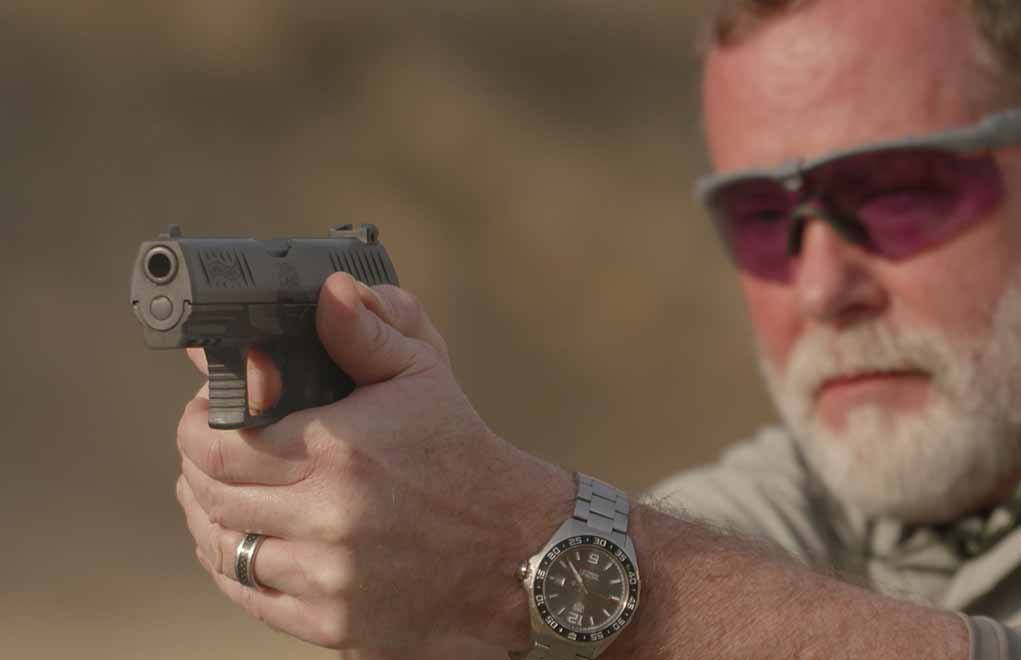
Clearing corners is no time to lose your nerve or go charging into the unknown.
Unless you’re Grizzly Adams, living off the land and sleeping under the stars, you most likely live in some structure. In that structure, there are walls and where those walls meet or open to another room there are corners. And defensively speaking, those corners are plumb deadly. Not knowing what lies beyond them can put you in peril enough to cost you your life.
Plain and simple, this is why learning to clear or pie corners is an imperative skill and not the easiest to master. In addition to demanding the intestinal fortitude to plumb the unknown, it also requires mastery over your nerves to execute it in a slow and deliberate manner. It isn’t a 1980s cop show where you leap out and yell, Stick ’em up!
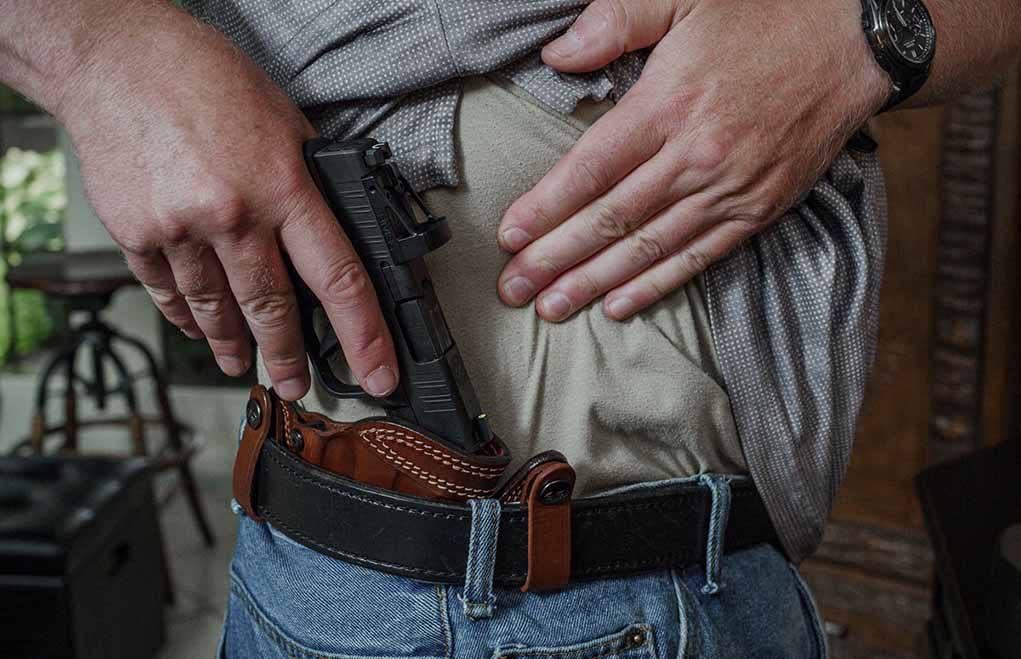
Quite the contrary, the challenge with clearing a corner is incrementally getting a view of what’s behind the blind spot while limiting how much of your body you expose. Not an easy balance to achieve and a skill that takes time and patience to execute properly (a little professional training doesn’t hurt either). Though there are some initial fundamentals you can keep in mind to better prepare yourself to become fundamentally sound at the matter.
Much like working behind any cover or concealment, you must fight the natural urge to hug it. Too close and you do yourself a great disservice, limiting your operating space, particularly if you have your handgun fully presented. Furthermore, staying back gives you the ability to move your entire body while maintaining a proper stance. You don’t have dangle out to get a gander.
As important, you need to develop the mindset of clearing slices around the corner. This is the most difficult aspect, with high-octane adrenaline pumping through your veins, but imperative. In addition to keeping your profile to a minimum, working a slice at a time also allows you to process data more clearly. There’s always a chance there’s an innocent behind the corner your working, you want the cognition to recognize this.
Tying it all together, learning to move your handgun with your eyes. If the two work independently, you run the potential of your arms and hands freezing up if you’re taken by surprise. Operating in tandem, you’ll always be sure the moment you spot a threat you also have the means to deal with it.
If utilizing a punt gun sounds like a dangerous proposition—firing an oversized shotgun from a fragile craft in frigid conditions at night—it was.
What Exactly Is A Punt Gun:
Generally, an oversized blackpower shotgun with a bore from 1½ to 2 inches.
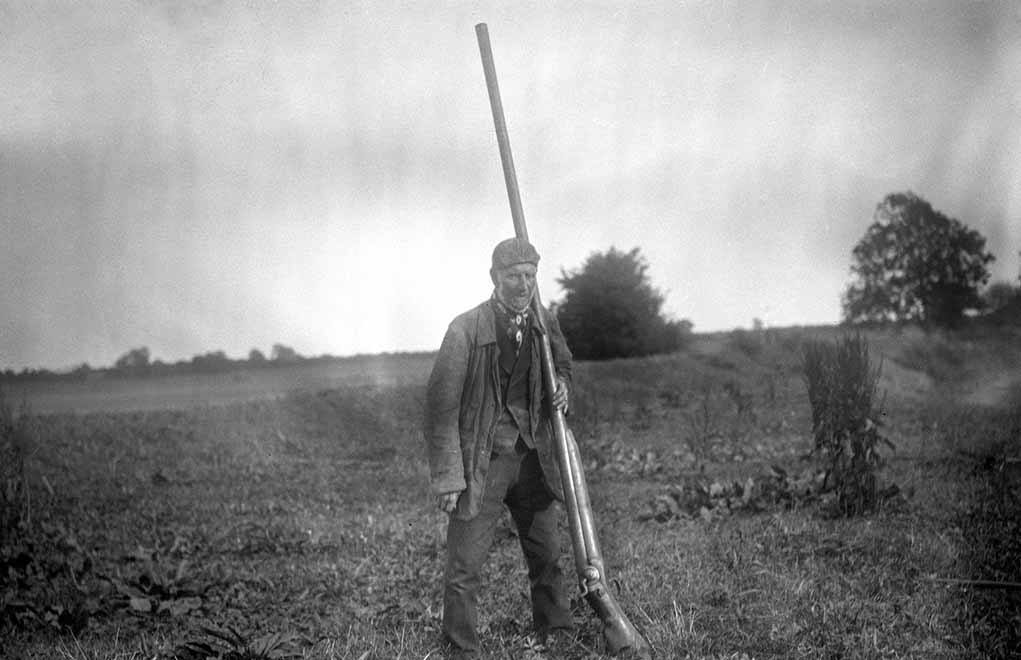
Most specimens weight 100-plus pounds and could measure up to 12 feet in length.
Typically used in conjunction with a small skiff (or punt) for waterfowling.
Used around the heyday of the market-hunting era around the turn of the 20th Century.
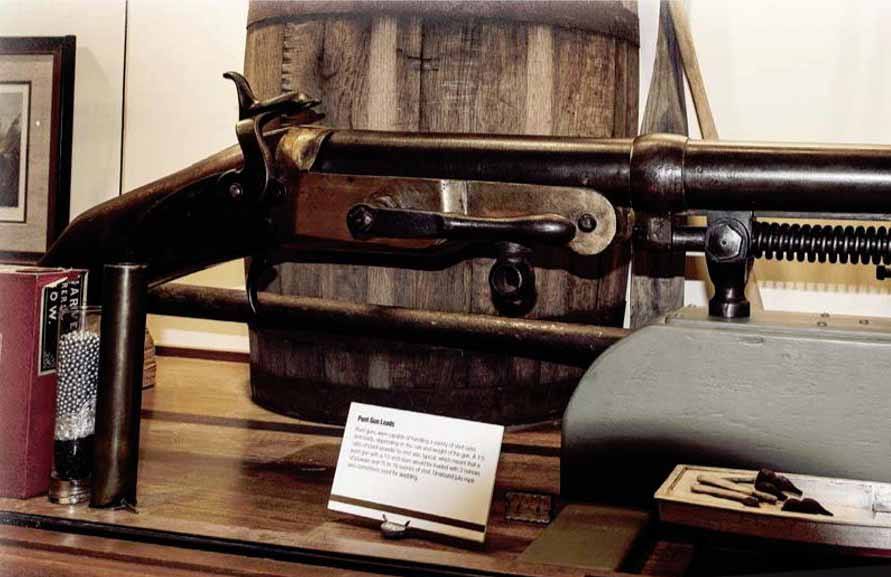
Punt guns were oversized black-powder shotguns used by market hunters in the late 1800s and early 1900s. They were capable of downing scores of ducks with a single shot. However, to impugn them is to misunderstand the purpose, economic demands of the time and the world in which market hunters lived.
These were specialty guns, relatively rare, singular and deadly effective in purpose in the hands of skilled hunters plying their trade in a time of flocks of ducks so thick they darkened the sky.
A 1914 listing of “owners of big guns in the vicinity of Susquehanna Flats, Maryland,” listed 16 owners, three of them with two big guns each, for a total of 19 guns.
A description of the guns stated, “These guns are all about the same weight—100 to 125 pounds; length, 12 feet; diameter of bore from 1½ to 2 ins [inches].”
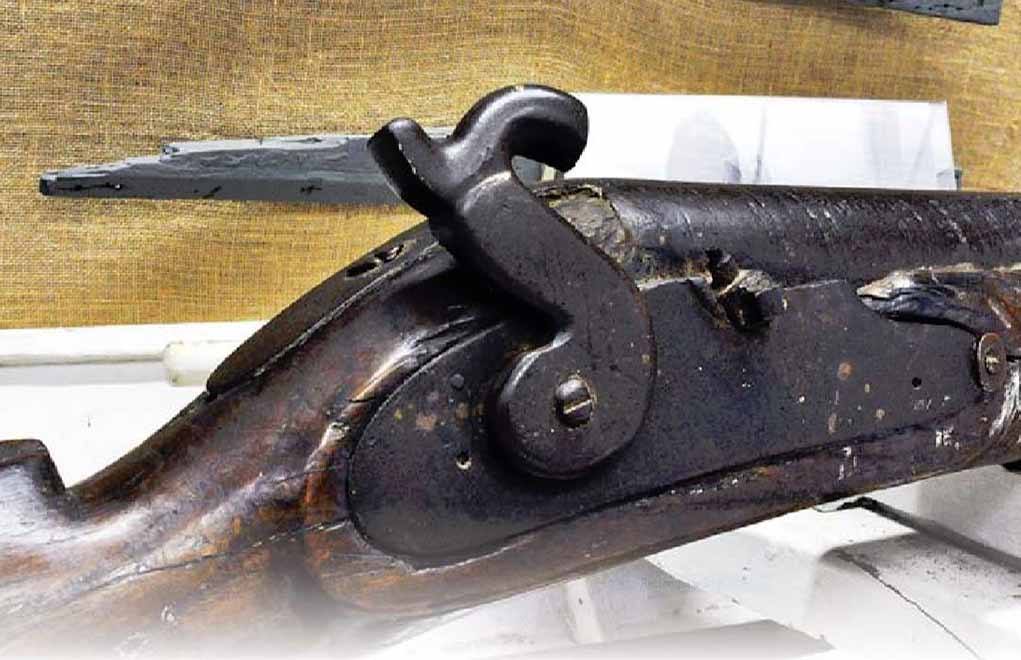
An up-close view of a typical flintlock punt gun. Early flintlock punt guns were usually converted to fire percussion caps as firearms improved. (Photo: Lori Burskey Bouchelle, Upper Bay Museum)
These guns of awesome dimensions are often associated with Chesapeake Bay and the Atlantic seaboard, where many were employed in feeding the seemingly insatiable demand for wildfowl in the finest restaurants in the East.
The listing of big-gun owners is published in one of two definitive works on marketing hunting. The Outlaw Gunner by Harry M. Walsh (1971; Tidewater Publishers) focuses on the Chesapeake Bay area, home of the market-hunting heyday. The second book, Texas Market Hunting: Stories of Waterfowl, Game Laws and Outlaws by R.K. Sawyer (2013; Texas A&M University Press), covers the rise and fall of market hunting along the Texas coast.
Although the punt gun was more common with hunters on the Atlantic seaboard, some Texas market hunters, quick to pick up on successful tactics of the Chesapeake Bay watermen (shooting from sink boxes was another), manhandled cumbersome punt guns. As Sawyer states, the punt gun “was the most infamous, considered ‘the deadliest weapon known to waterfowl bagging.’”
Walsh said that even in the heyday, around the turn of the century, there were probably fewer than 100 guns in operation around Chesapeake Bay— more than on the list because, undoubtedly, many went unreported.
Market Hunting Heyday
The culinary demand, along with the market hunting trade, picked up after the Civil War, thanks to post-war advances in technology—particularly advancements in rail and water transportation.
Market hunting developed, or at least was perfected, around Chesapeake Bay, located relatively close to large population centers to which rail and water routes provided ready transportation. As rails connected other parts of the country, such as the Texas coast, the market hunting trade sprang up. Hunters filled thousands of barrels with ducks bound by train for northern cities and, with the advent of refrigeration aboard steamships, Europe.
You can see just how huge these punt guns were and how much support they required to do their duck market-hunting job. Pulling the trigger set off a charge that could be heard far and wide, and the boat would be forced backward 40 feet or more. (Photo: Lori Burskey Bouchelle, Upper Bay Museum)
To be sure, when pump and semi-automatic shotguns (many side-by-sides served as well) came onto the scene, market hunters were quick to set aside their muzzleloading fowling pieces: Rapid-firing and rapid-reloading firearms that could be held to the shoulder had obvious advantages over a punt gun.
PUNT BOATS
Many punt boats were brought to the United States from England, where market hunters employed them with similar results, according to Jack Manning, curator of the Upper Bay Museum in North East, Maryland.
The name comes from the type of boat, a sneak skiff called a “punt” in England. It was a shallow-draft, flat-bottom craft designed particularly for getting the big gun in position to kill as many ducks as possible with one shot, he explained.
In his book, Walsh describes these boats. They were usually custom made by the watermen who understood the requirements.
Punts were generally one-man boats (although some two-man boats were used) from 16 to 18 feet long and with a 3½- to 4-foot beam, with boards running the length of the boat to reduce friction. Both bow and stern were sharp, Walsh said, to prevent gurgling in dead water as the hunters silently paddled toward a raft of sleeping or feeding ducks.
If it sounds like a dangerous proposition—firing an oversized shotgun from a fragile craft in frigid conditions at night—it was. “Here, one thin plank and 6 inches of freeboard were all that separated the hunter from eternity,” Walsh wrote.
The Punt Gun
Everything about a punt gun is oversized—the barrel, the hammer, the trigger and the stock. Stocks, Manning said, “were pretty crude, because they were just a tool,” not fine hunting pieces. Many were homemade, but some, such as the one in the Upper Bay Museum, show touches of gunsmith craftsmanship, such as a tapered, 1½-inch barrel and a “pretty well-made stock, with a dip in it; made almost like a real gunstock.”
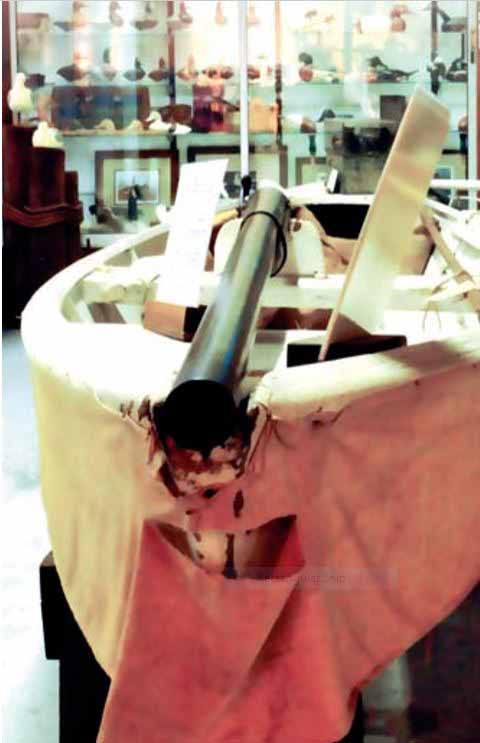
This front view of a punt boat shows a huge punt gun’s barrel resting in chocks on the bow. Burlap bags filled with sea grass were positioned to absorb recoil and (hopefully) not take the stern out of the boat. (Photo: Upper Bay Museum)
Manning pointed out that they were nicer than many of the crudely fashioned ones. And, he added, stocks often had a drilled hole through which the hunter could run a rope tied to a cork so if a game warden showed up, he could throw the gun overboard. If he wasn’t caught with the gun, he wasn’t charged. The hunter would come back later to look for the floating cork and pull up the gun.
One gunner went a step further to foil game wardens wise to this practice, Manning said. He tied on a heavy block of salt, which kept the cork submerged until the salt melted away. This allowed the cork to bob to the surface a couple days later, when the hunter would row out and retrieve his gun.
Market hunting was legal—a respected profession of watermen who made their living on the bay, fishing and crabbing in season. These men would hunt during the waterfowling months; and many of them guided sport hunters by day and then market hunt at night. Night hunting, however, was illegal. And because punt gunning required carefully approaching a large raft of ducks, it was most effective just at last light, when the gunner would silently slip into range.
“The best time to get on them was just before a storm, because they feed really heavy and don’t hear you sneaking up—because they make so much noise when they’re feeding,” Manning said (not that he knows from first-hand experience; although he did make a non-firing punt gun from patterns of the gun used by a local gunner).
Aiming was accomplished by shifting body weight to lower or raise the muzzle, which protruded over the bow. There was no need to finely sight the gun; just point it in the direction of the thickest part of the flock. There were tricks to get into range for what was mostly likely one shot a night.
Once rowed or push-poled to the vicinity of the resting flock, the hunter lay atop the big gun and, using short hand paddles, worked his way toward the flock, often guided by the sound of thousands of feeding and murmuring ducks. Some hunters used kerosene lamps in a reflective box on the bow, which produced a “duck-in-the-headlights” effect. White was the most effective camouflage, blending better in faded light on the water than a dark silhouette, which would stand out.
The gun muzzle protruded a few inches past the bow, the barrel resting in chocks on the bow and about mid-barrel. Burlap bags filled with sea grass were positioned to absorb recoil and “hopefully not take the stern out of the boat,” Manning said. Kickerboards provided reinforcement to “keep the gun from going out through the side of the boat,” he explained. When in position, the gunner would slap the side of the boat, causing ducks to raise their heads and some to take wing. Pulling the trigger set off a charge that could be heard across the bay, and the boat would be forced backward 40 feet or more.
Manning cited an example of a punt gunner who once slid his skiff across ice, pulling it forward with ice hooks toward an opening packed with ducks. Upon firing, the recoil of the big gun spun the boat three or four revolutions. The shot killed 80 ducks.
The Load
There are accounts of punt gunners loading their guns with as much as a pound of powder and 2 pounds of shot, but Manning believes this, like many stories of past gunning exploits (such as hundreds of ducks being killed with one shot, when 40 to 60 were more likely), is an exaggeration.
Definetly not a shoulder-fired scatter gun.
“A pound of powder is way more than what you’d put in one of those guns,” Manning pointed out. “More likely, the load was a pound of shot propelled by a like volume of black powder. So, whatever the volume of a pound of shot—usually No. 4s—was the volume of powder; maybe one-third of a can of powder. As big as they were, the guns could take only so much pressure.”
Over the powder, the gunner rammed wadding to compact the powder and build pressure as the powder ignited. Oakum—teased-apart rope fibers—was used, Manning said. (He also heard of cork balls wrapped with oakum being rammed down on the powder charge.) Then came the shot, over which was placed a cardboard disk cut to fit tightly and hold the shot in place.
Early flintlock punt guns were usually converted to fire percussion caps as firearms improved. Some didn’t bother with a trigger and hammer mechanism; they were fired by striking the cap with a common hammer, Manning said.
Ducks were bringing $2 to $3 per pair—except for the highly prized canvasbacks, which would bring $8 to $9 a pair. That was good money for a waterman trying to keep his family fed. (In fact, during the Depression, “The people who made money around here were the market gunners and moonshiners,” Manning said.)
The End Of Market Hunting
The passage of the Migratory Bird Treaty Act of 1918 effectively put an end to market hunting. It was followed by additional conservation legislation well into the 1930s.
Bear in mind, however, that market hunters weren’t the only hunters racking up large daily kills. Sport hunters were also shooting hundreds of ducks a day, many of which undoubtedly were bound for restaurants. The combination of sinkboxes and easily reloaded cartridge shotguns (both pumps, such as Winchester’s Model 1897, and semi-autos, such as John Browning’s Remington Model 11s), was taking an enormous toll in the hands of market gunners and sport hunters alike.
Even though it could bag up to 50 birds with one shot, a punt gun still had to be sighted in for maximum effectiveness.
Manning said sportsmen in New York and other Eastern states first sounded the alarm of declining duck populations, and states began clamping down with limits outlawing the sale of wildfowl and other regulations, but enforcement was sparse.
However, restrictions on bore size meant the end of the punt gun, many of which were confiscated and destroyed (the result was that surviving punt guns became highly sought-after collectables). Sawyer’s book admirably details the fight for game laws in Texas and the push for federal legislation.
And it would take federal legislation, in the form of the MBTA, to put real teeth and resources behind the new laws. “Practically,” Sawyer summarizes, “the most essential part of the MBTA was allocation of federal funds for enforcement.”
Market gunners were forced into an outlaw existence that lasted for years—well through the Great Depression—but the death knell of market hunters and punt guns had sounded.
We haven’t even talked about other market-gunner tools, such as swivel guns, multi-barreled battery guns and pipe guns made of ½-inch-thick boiler pipe … but that’s another story.
Editor’s Note: This article originally appeared in the June 2019 issue of Gun Digest the Magazine.
If you take a few minutes to scroll through the component bullet section of any major retailer’s website, you can find a near-dizzying array of available projectiles. Which best suits your needs? With modern bullet designs (ballistic coefficient [BC] values keep getting higher), adding more choices to the mix for the hunter and shooter, there’s a huge selection from which to choose.
Target Bullets
For target rifle shooters, there’s much to be excited about. The Sierra MatchKing is still the benchmark, but the Tipped MatchKing gives the option of a polymer tip. Berger’s Extreme Outer Limits Elite Hunter series, although actually designed as a hunting bullet, makes a great long-range target bullet; they’re heavy for caliber and offer unprecedented BCs. They do require a faster-than-normal rate of twist, but for those serious about long-range shooting, they warrant an audition.
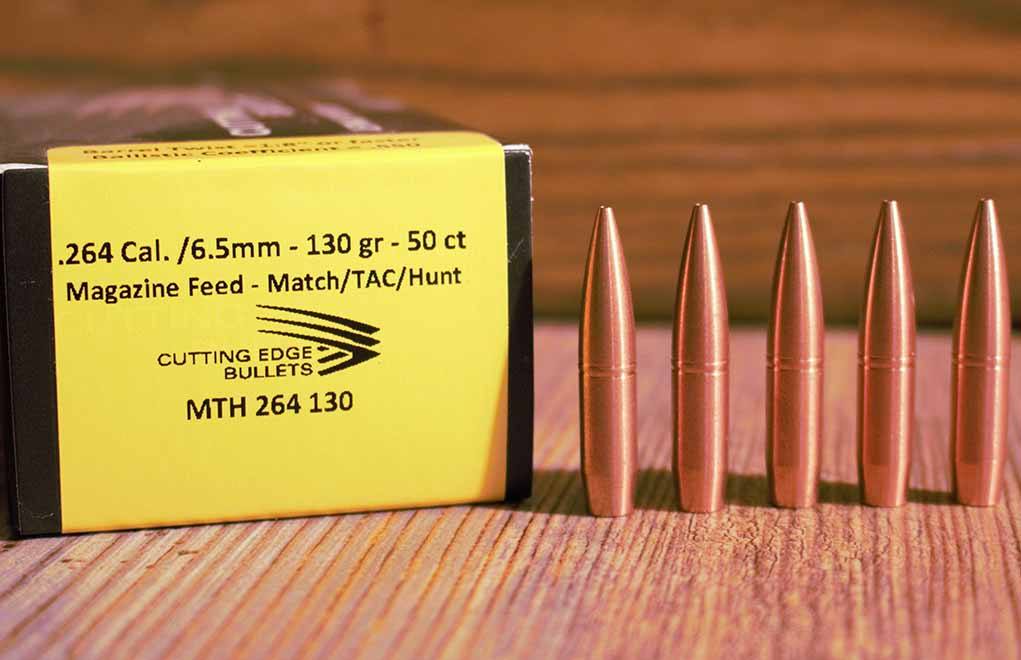
The Cutting Edge MTH (Match Tactical Hunting) bullet is consistent, uniform and devastating. It’s a fantastic all-around bullet that serves a multitude of applications.
Hornady’s ELD Match is still a perfectly viable choice, as is Nosler’s Custom Competition. Cutting Edge Bullets offers its MTAC (Match-Tactical) lathe-turned, all-copper bullets in both standard configurations and a single-feed option for those loaders wishing to exceed standard cartridge overall length and the magazine length constriction. The point is, with the popularity of long-range shooting, it can be fun to load up some match-grade bullets — just for the price of a box of projectiles.
Hunting Bullets
Hunting bullets continue to evolve, and the component bullets available to the reloader give us plenty to choose from. Don’t get me wrong: Classic bullets, such as the Sierra GameKing, Nosler Partition and Hornady InterLock, still work perfectly in a good number of situations, but there are almost more choices on the market than any one of us would actually have an opportunity to test in a lifetime of hunting.
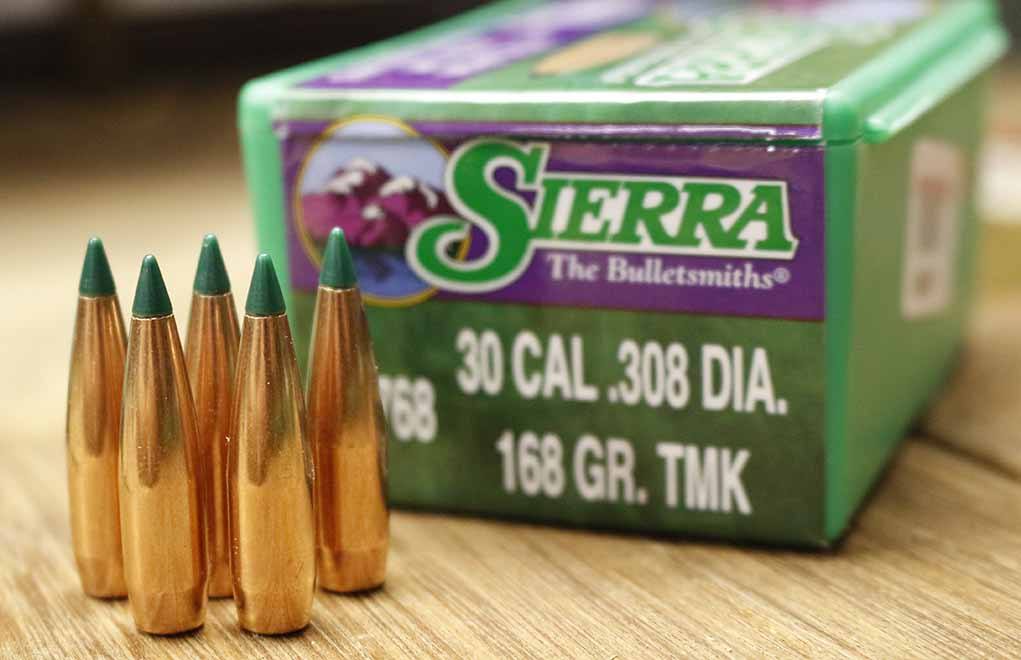
There are many hunting bullets that will approach the accuracy potential of the match-grade target bullets, and that’s a good thing. I’ve had the Swift Scirocco II print under ½ MOA in some rifles, and the Hornady ELD X has been equally accurate. Nosler’s AccuBond and AccuBond Long Range have printed some amazing groups, as well as giving the terminal ballistics desired across a wide range of impact velocities. I also like the new Sierra GameChanger. While it’s nothing more and nothing less than the Sierra GameKing with a translucent green polymer tip, it has shot very well in my rifles.
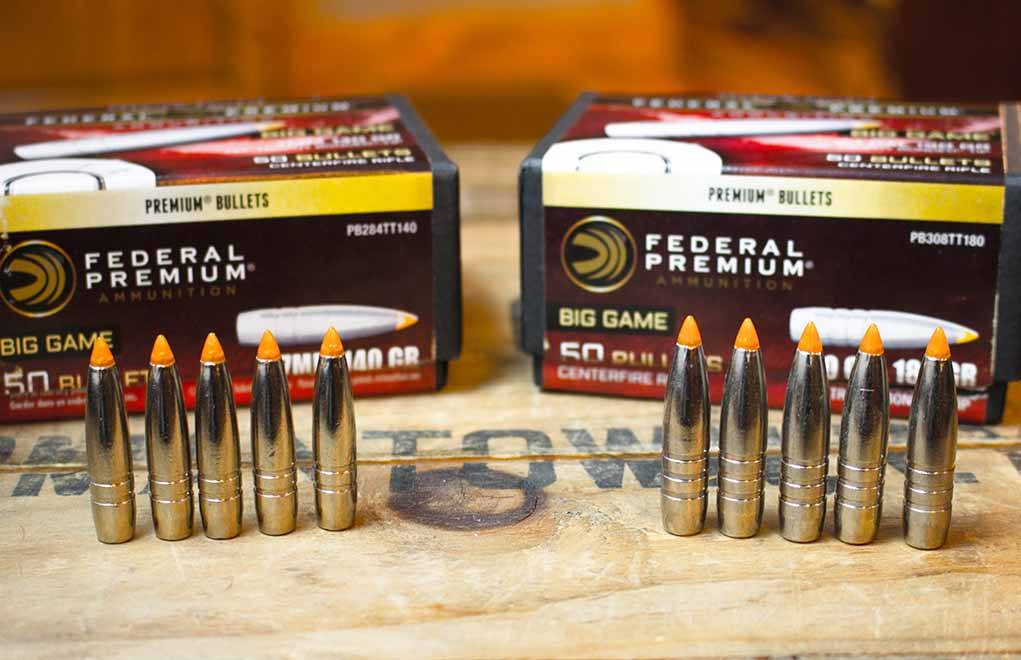
Federal’s Trophy Bonded Tip bullet is now available as a component. That’s very good news for reloaders.
Federal has introduced many of its best designs available in component form, such as the Edge TLR and Trophy Bonded Tip, Fusion, and the Trophy Bonded Bear Claw and Trophy Bonded Sledgehammer solid. South Africa’s Peregrine Bullets has an intriguing lineup, offering a unique design that has served me very well in a number of calibers. These are just a few of the designs that can make the choice so confusing.
A hunting bullet has to fill several roles. First, it has to be accurate enough to hit the animal where needed. Second, it needs to be tough enough to withstand a wide range of impact velocities. Third, it needs to expand enough to cause massive hemorrhaging, yet not so much that it will be stopped shy of reaching the vitals. The traditional cup-and-core design (a lead core inside a copper jacket) with a certain degree of lead exposed at the meplat to ensure expansion is still in use, and in moderate cartridges at common ranges, it will still work well.
Copper Considerations
The lead-free monometal designs — which started with the Barnes X — are required by law in some areas and continue to gain popularity. When loading these copper bullets, keep in mind that the center of gravity is located rearward in comparison to the lead-core designs, and that will keep the bullet weight on the lighter side. Unless the twist rate is increased, the longest bullets won’t be stabilized properly, especially in those designs with the longer ogives and higher BC values. Shorten the bullet’s length, and that issue can be resolved.
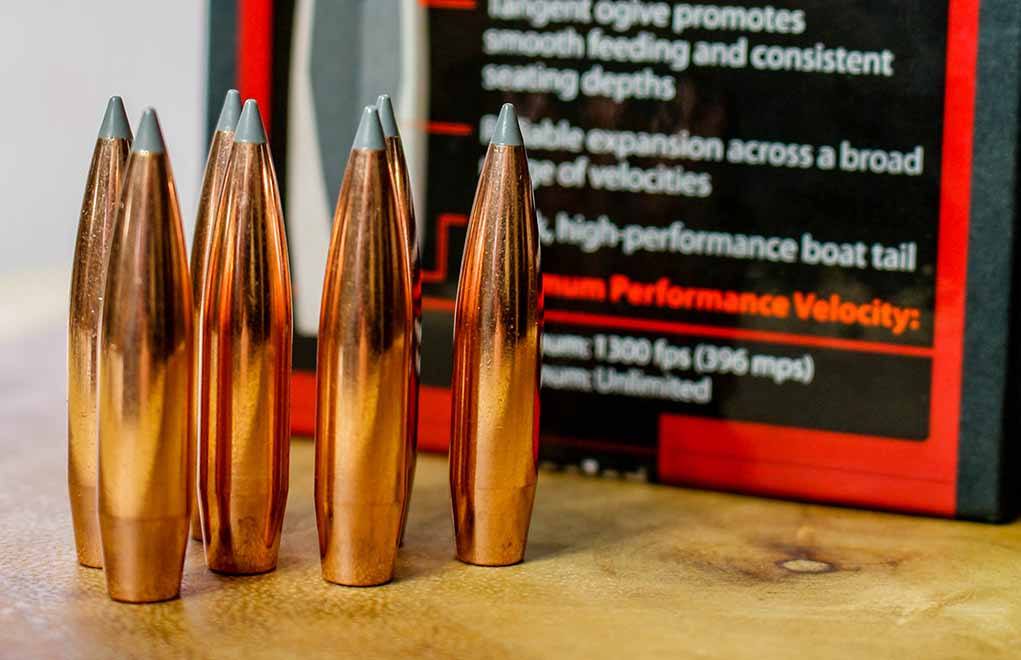
Nosler’s AccuBond Long Range combines the sleek performance of a match bullet with the bonded-core performance of a strong hunting bullet
For example, the Peregrine BushMaster is an all-copper bullet with a flat meplat, using a brass plunger over a hollow cavity. Because air isn’t easily compressed, the brass plunger causes the bullet’s sidewalls to blow outward upon impact, giving reliable expansion every time. Yet, because of the conformation, Peregrine can usually offer its monometal at standard weights.
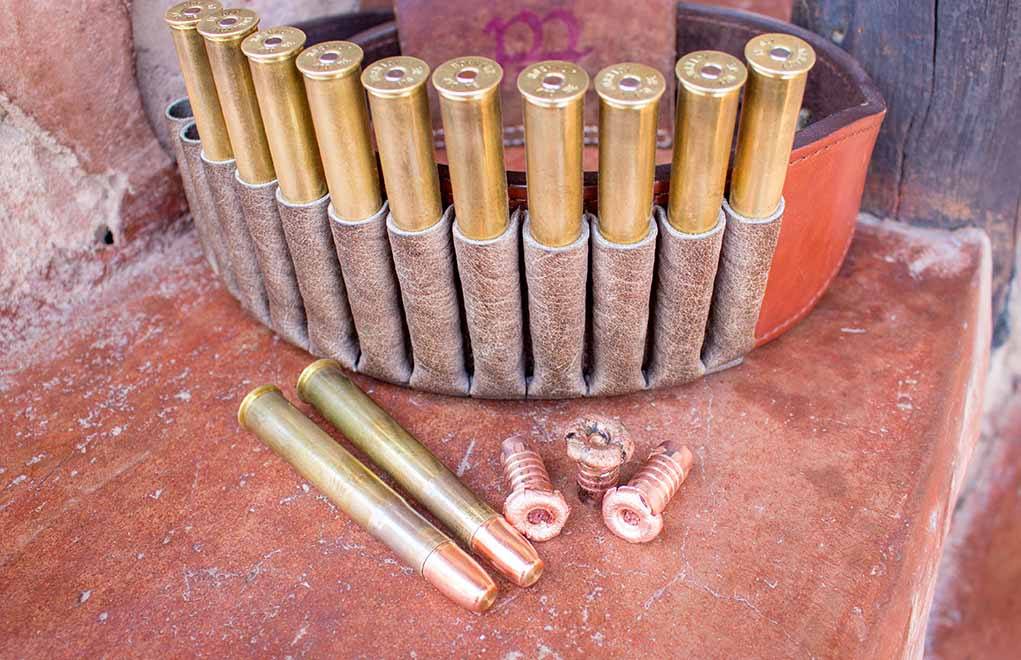
I’ve used this bullet at 400 grains in both the .450/400 3-inch NE and .404 Jeffery, as well as the 500-grain bullet in my .470 double. Because they’re lathe-turned, the consistency is certainly there, and their design gives reliable terminal ballistics. Look at the Peregrine Plainsmaster or a Cutting Edge MTH (both have a boattail/long ogive configuration), and you’ll see the lead-free construction limits the useable weight in a standard-twist barrel. It’s just the nature of the beast.
Federal’s Trophy Bonded Tip and Trophy Bonded Bear Claw designs use a smaller lead core at the front of the bullet and copper shank at the rear, moving the center of gravity forward. The lead core is chemically bonded to the copper jacket, so both of these bullets can withstand the highest of impact velocities; however, especially in the case of the Tip, they will also expand at lower velocities further downrange.
The Sierra Tipped MatchKing gives the same uniformity as the classic MatchKing, but it sports a green polymer tip for a more consistent meplat.
Federal’s Edge TLR takes the concept of a small lead core up front just a bit further, because it is engineered with the long-range hunter in mind. According to Federal, the Slipstream polymer tip helps give reliable expansion to velocities as low as 1,400 fps. I’ve used the Edge TLR bullet in factory loads, and while my shots were inside 200 yards, I’ve seen some recovered bullets from 400 yards that expanded just fine.
Narrowing the Field
So, for the hunting reloader, which of these designs will best serve you? That’s going to depend upon several factors, including your chosen cartridge, intended quarry and hunting distances. Read the reviews, look at photos of correlative upset bullets that have been recovered from game animals, and base your decision on real-world experiences. Ballistic gelatin will only tell part of the tale, but the hunting fields will show what happens to a bullet when it hits hide, bone and flesh from varying angles.
Find a bullet that meets your needs, research the correlative load data, and I’m sure you’ll have it shooting well before long. As a reloader, I find little else as satisfying as choosing a proper bullet for a particular hunt, developing a load in my rifle and placing it well on the animal I’m hunting.
Editor’s Note: This article originally appeared in the May 2019 issue of Gun Digest the Magazine.
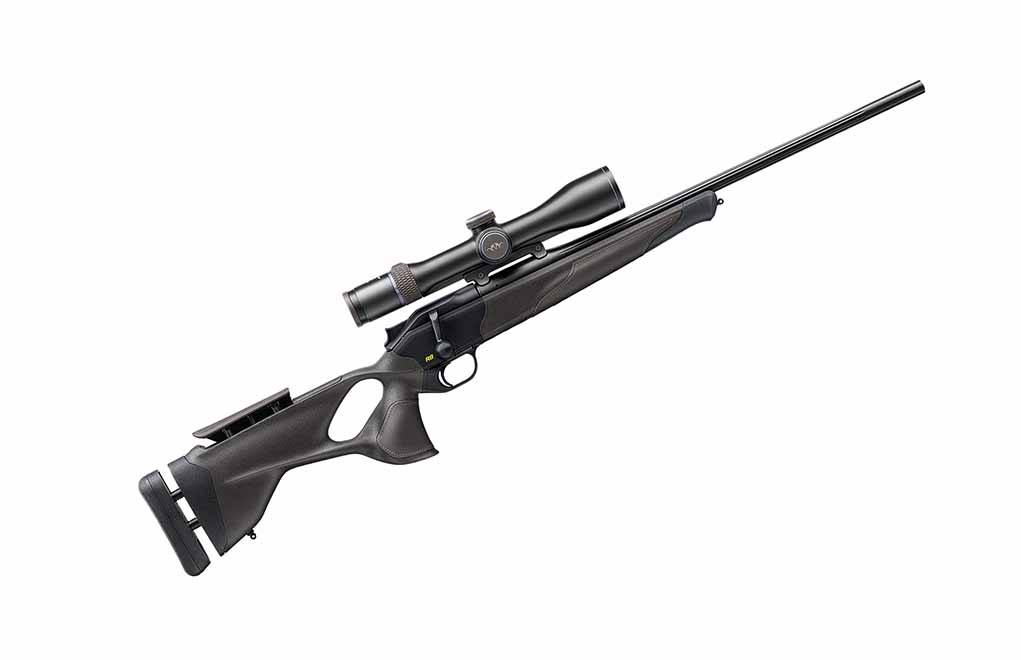
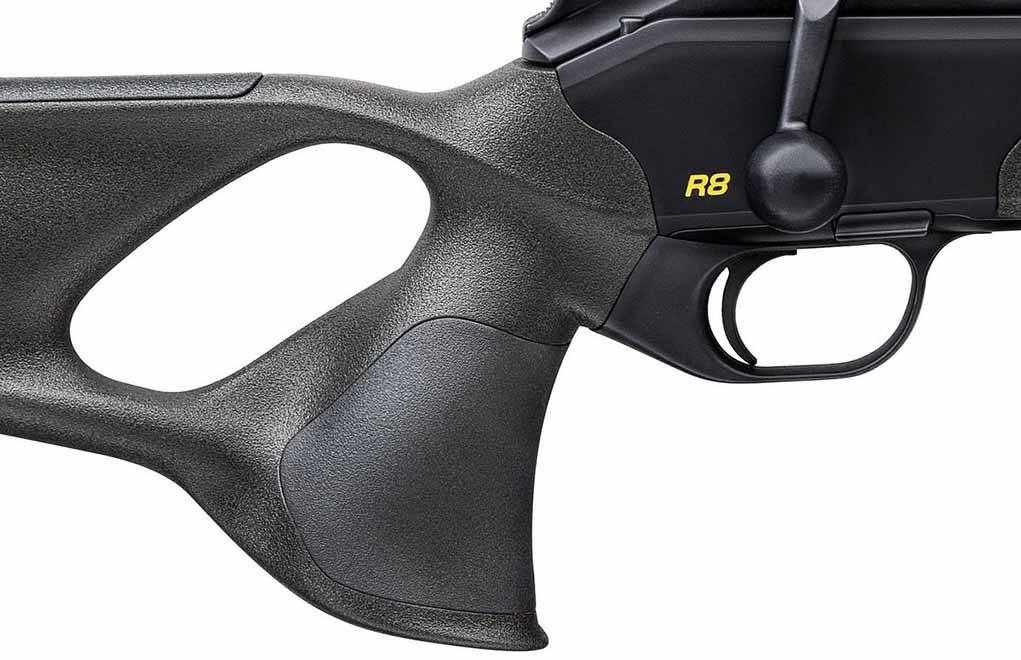
Decked out with a cutting-edge thumbhole stock, the R8 Ultimate takes the straight-pull bolt-action to a new level of accuracy.
How The R8 Ultimate Is Configured To Improve Accuracy:
Lightweight thumbhole stock for utmost control.
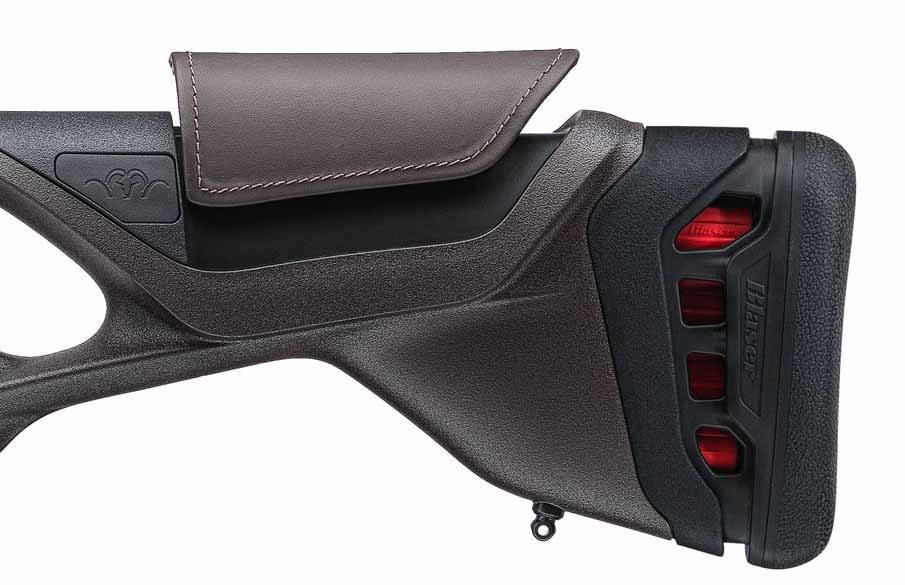
Adjustable and programmable comb and LOP deploy to fit you exactly.
Modifiable recoil pad system improves shot-to-shot accuracy.
Americans generally turn the same cocked eye at straight-pull bolt-action rifles they do other European staples, such as mayo and French fries or room-temperature beer. They might like it over there, but it’s not for me. Despite this, the unusual middle ground between speed and accuracy has made inroads Stateside in recent years.
Blaser has piqued particular interest with the now nearly decade-old R8, which continues to show strength in this niche of the market. Need proof? Look no further than the German gunmaker continuing to release models to meet demand of focused areas of shooting. The most recent, precision marksmen and rimfire aficionados.
Hot off the presses, so to speak (they were released late summer) are the Blaser R8 Ultimate and a .22 LR conversion kit. A bit about both.
Configured for precision shooting tasks and long-range shots in the field, the R8 Ultimate includes many of the features marksmen hunt out in a practical tack driver. Right up in your face, its outfitted with a synthetic thumbhole stock that, if you study carefully, is fully adjustable for cheek height and length of pull.
Saving you from hair pulling, both systems are numbered, so if you happen to lose your setting for whatever reasons it’s a piece of cake to dial them back in. Though you shouldn’t. Both have a memory function, returning them—at the push of a button—to your specs once programmed in. Handy, if you want to keep the stock streamlined while hiking into your happy hunting grounds.
Recoil mitigation also got the once over on the R8 Ultimate, which could pay big dividends in improving accuracy while milking the rifle’s speed factor. The twist here, the recoil pad inserts into the butt and is available in several hardnesses to match a shooter’s personal preference. It’s a logical step for Blaser, since the R8 is also a switch barrel. This small wrinkle makes the rifle more responsive to caliber swaps.
Speaking of jumping between calibers, the gunmaker has made a major leap with its .22LR conversion. Similar to other switches within the system, it involves little more than a swap of barrels, bolt heads and magazine inserts. Standard fare with the R8. From the start, the gun has been everything from a varmint to a dangerous game rifle all in one tidy package.
So as they’d say in overnight infomercials: What would you pay for all this? Those who keep an eye on European firearms know that German engineering comes with a Teutonic price tag. In this case, the R8 Ultimate runs a hefty $4,519 and the .22LR conversion $1,450. Though, you do get a whole lot of gun for your money.
For more information on the R8 Ultimate and .22LR conversion kit, please visit www.blaser.de/en.
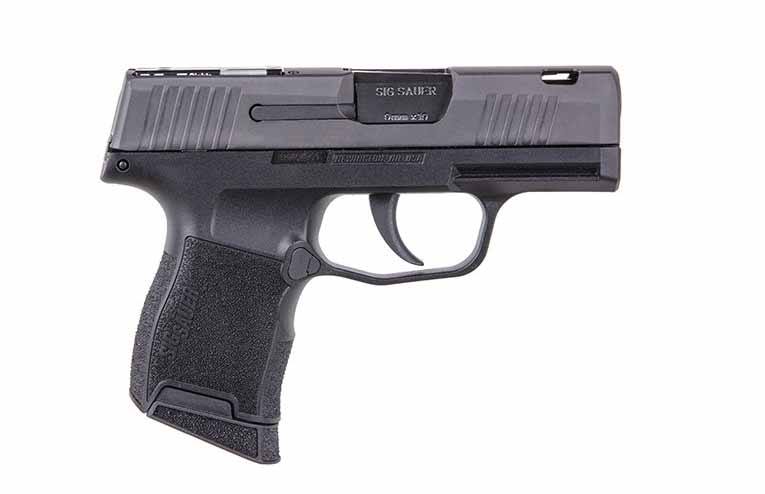
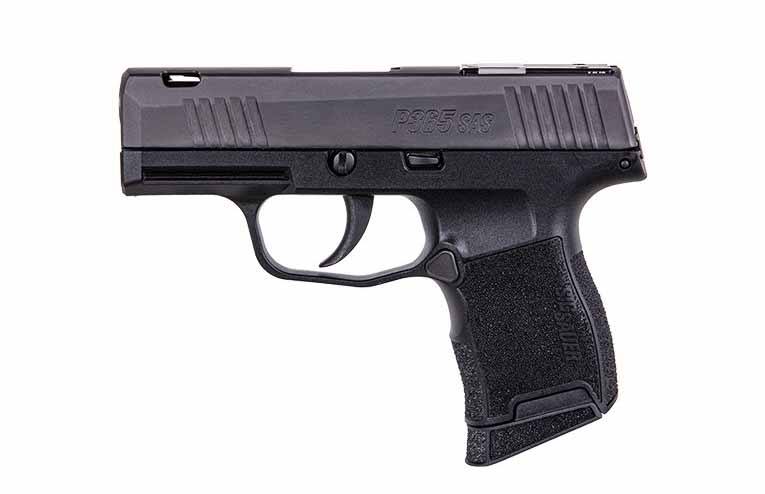
Boasting a unique gutter sight in the slide, the P365 SAS promises to eliminate all potential snags on the draw.
How Sig Has Made the P365 SAS Fast On The Draw And Shot To Shot:
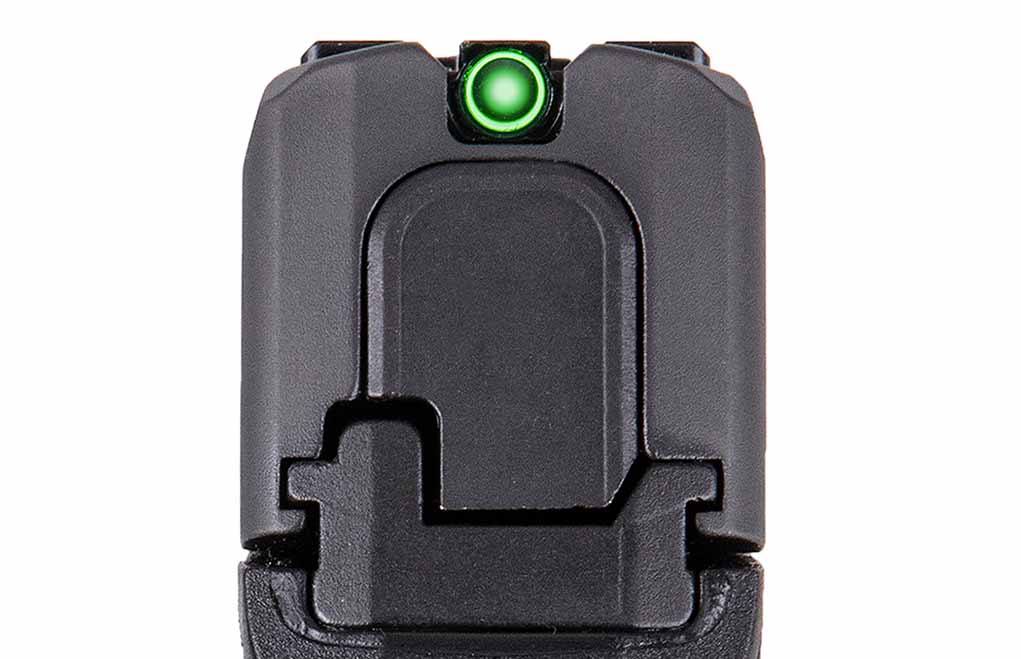
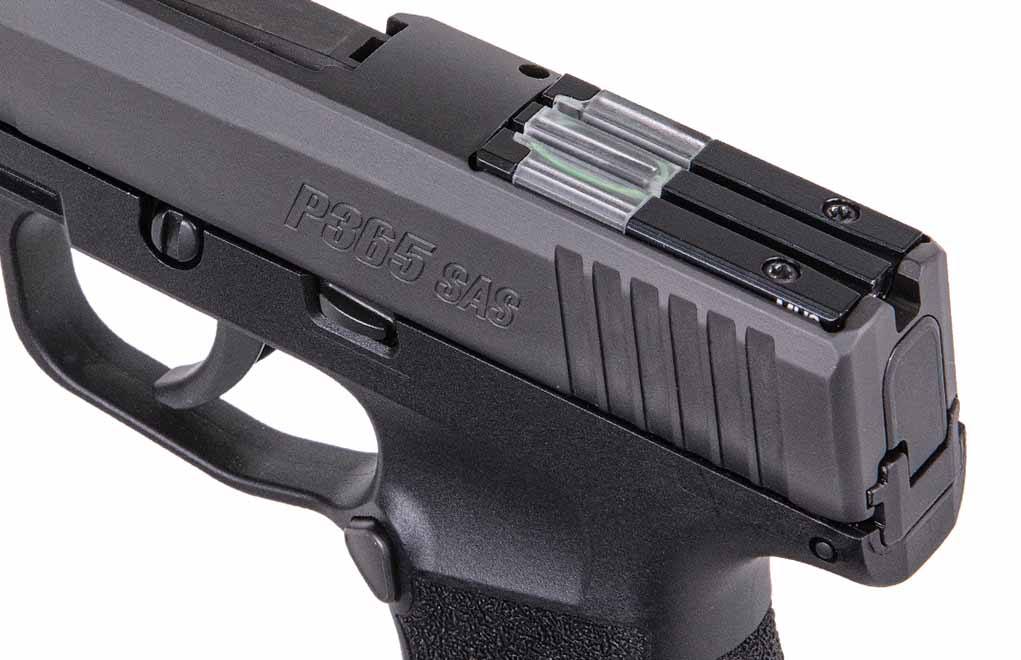
Low-profile gutter sight eliminates the main feature that causes snags—the front sight.
All the edges of the slide and frame have been smoothed to make them hitch-free.
Controls are flattened to make it more concealable.
Slide ported at the front to reduce muzzle flip.
When it comes to sighting systems for defensive handguns, the wind has decidedly been blowing toward optics. Though, Sig Sauer has gone an entirely different direction with the newest variation of popular P365 pistols. At first blush, it’s even difficult to even discern if the P365 SAS has a way to aim, short leveling the top of its nearly featureless slide at the target. Get on the business end and it’s an entirely different view.
There, what Sig calls its Flush-Mounted FT Bullseye Fiber-Tritium Night Sight, pop like a bottle rocket at midnight. Unorthodox yes—reminiscent of the gutter sight found on Paris Theodore’s ASP pistol—but there’s a method to the gunmaker’s madness. The SAS in the pistol’s designation stands for Sig Anti Snag, which certainly seems the case, given the lack of iron sight protruding from the side and the banishment of every sharp edge. Given these, theoretically, your draw should suffer nary a hitch.
As for the rest of the pistol, there are two other design points in which the P365 SAS breaks from the line. First, Sig has ported the barrel to reduce muzzle flip, thus make the pistol potentially more accurate and quick shot to shot. And the controls are flattened to make the pistol more concealable.
NEWINGTON, N.H. – SIG SAUER, Inc. the market leader in concealed carry pistols, is pleased to announce new innovation to the award-winning everyday carry, high capacity, P365 pistol with the P365 SAS (SIG Anti-Snag).
“When it comes to innovation in firearms, SIG SAUER is the leader in the marketplace. With the introduction of the P365 we took the market by storm to quickly become the top selling concealed carry pistol. With the P365 SAS, we have remained true to our core mission of innovation by once again raising the bar, and setting the standard, for concealed carry,” said Tom Taylor, Chief Marketing Officer and Executive Vice President, Commercial Sales, SIG SAUER, Inc. “Our proprietary SAS technology removes all the snag points from the pistol, by integrating the sights directly into the slide with a flush mounted FT Bullseye sight that’s intuitive, and easy for the untrained eye to pick-up for fast target acquisition whenever the need arises. The P365 SAS has no sights raised above the slide, and the takedown lever and slide stop are flush fit for ultimate smoothness and no snag risk. Once you see this innovation, you simply will not look at handgun sighting systems the same.”
The SIG SAUER P365 SAS is a 9mm, polymer, striker-fired pistol with a Nitron finish. The pistol features the SIG Anti-Snag technology slide treatment with a flush-mounted FT bullseye fiber-tritium night sight, flat controls, a ported slide and barrel for less muzzle flip, a high-capacity, patented modified double-stack magazine for a 10+1 full size capacity, and ships with (1) 10-round magazine, and (1) 10-round extended magazine (12-round and 15-round magazines available separately.)
Sig P365 Specs:
Caliber: 9mm Luger Action: Semi-Auto Grip: Blk Polymer Grip Color: Black Frame Size: Micro-Compact Frame Material: Stainless Steel Slide Finish: Nitron Slide Material: Stainless Steel Barrel Material: Carbon Steel Accessory Rail: N/A Trigger: Striker Trigger Type: Standard Barrel Length: 3.1 in Overall Length: 5.8 inches Overall Width: 1.0 in Height: 4.1 in Weight: 17.8 oz
For more information on the Sig P365, please visit www.sigsauer.com.
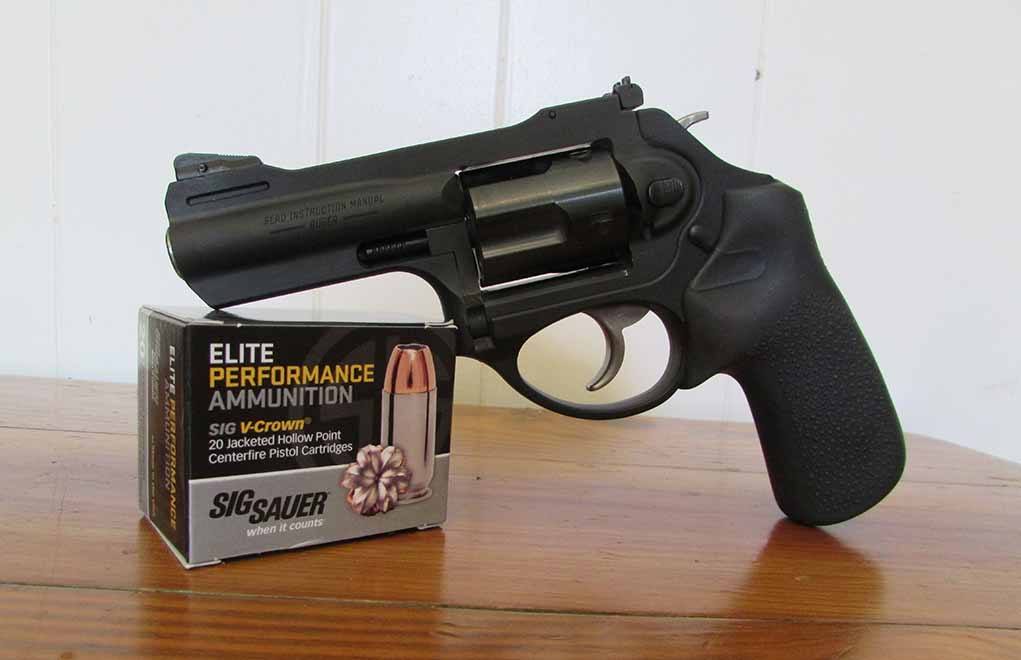
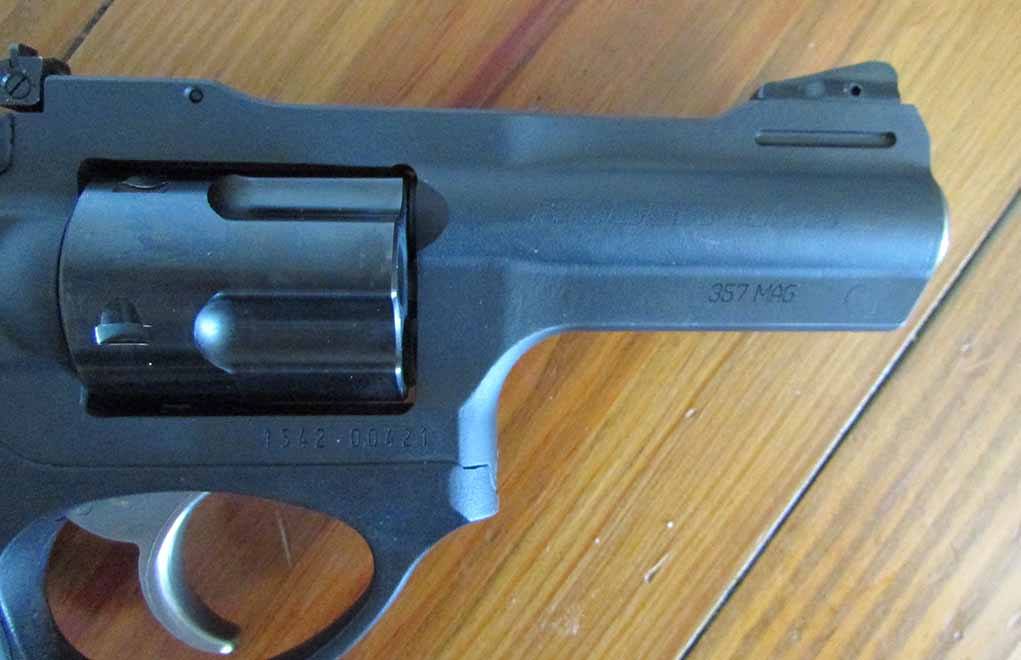
Ruger’s new 3-inch barrel LCRx in .357 Magnum strikes the right balance between concealability and performance.
How The 3-Inch Barrel LCRx Enhances The .357 Magnum:
Longer 3-inch barrel improves the .357 Magnum’s ballistics, while keeping the revolver concealable.
Built with a stainless-steel frame, the LCRx still only tops out at 21 ounces.
Hogue Tamer grip goes a long way in reducing the light revolver’s recoil.
Friction-reducing cam does much to mitigate the revolver’s heavy pull in double-action.
Going on a century ago, Elmer Keith and Phil Sharpe were really onto something by hot-rodding the .38 Special. Arguably, their tinkering in the all-American pursuit of “more muscle” produced perhaps the greatest revolver cartridge of all time. At the very least, the .357 Magnum is the king of the 20th century. What other hand-cannon caliber is, in the same breath, both manageable and devastatingly powerful?
Certainly not the bucky .41 Magnum and the downright cranky .44 Mag. And while the newish .327 Fed. Mag. has the virtue of eminent shootability, it’s ballistically a small fry compared to the granddaddy Magnum.
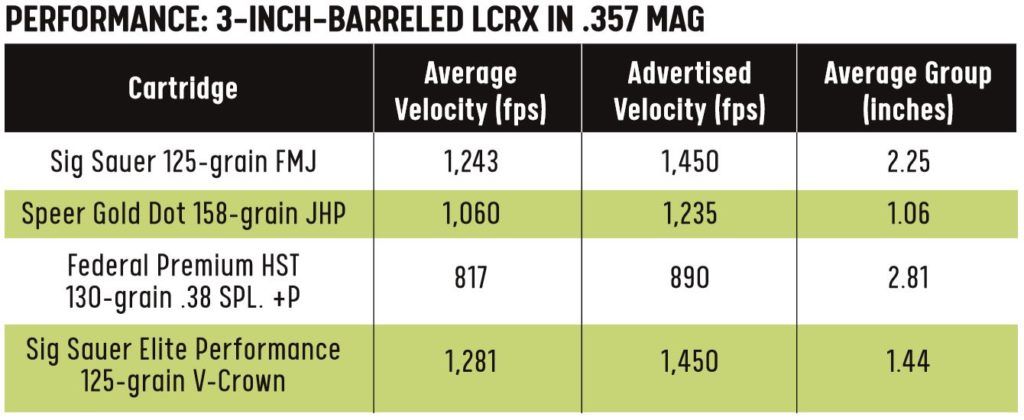
Although it wasn’t to the advertised 1,450 fps, Sig Sauer’s 125-grain V-Crown performed well out of the LCRx’s 3-inch barrel with an average velocity of 1,281 fps.
It’s thanks to the .357 Magnum’s nearly perfect middle ground that the defensive revolver continues to soldier on. Despite the platform being dated in this era of semi-automatic pistols, a man or woman wielding a gun chambered for this cartridge is well armed—perhaps even more so, given the recent advancement in revolver design; and even more with Ruger’s latest addition to its easy-to-carry, ultra-lightweight line of revolvers.
Like the .357 Magnum, the 3-inch-barreled LCRx released at the 2019 SHOT Show strikes a perfect balance. Setting the fulcrum almost exactly between concealability and performance, Ruger has created a dandy wheelgun that flirts with being a nearly faultless carry revolver; one that’s certain to keep the age-old Magnum as relevant as ever in the 21st century.
That Extra 1.13 Inch
For some time now, Ruger has offered a .357 Magnum in both its hammerless LCR and exposed hammer LCRx lines. However, up to this point, these have featured the popular 1.87-inch barrel configuration: snubbies. It makes sense, given that when most folks go in search of a concealed-carry revolver, they generally poke around for the tersest model they can find. However, you can make the argument that they do themselves a disservice by going so small.
The revolvers front sight is pinned, meaning it’s easily removed and upgraded. However, the ramp sight that came installed served quite well in testing.
I can hear you now: Lord, he’s going to talk about recoil. Physics dictates nothing less in a lightweight gun. But for me, it’s not so much the knuckle-buster reputation that causes pause … it’s the muzzle blast and, more importantly, what that represents that raises flags.
The snubby .357 spits fire akin to a dragon for the simple reason that it doesn’t burn all its powder in the bore. This adds up to a gun that keeps the magnum’s bark and does away with some of its bite. By many accounts, a 1.87-inch-barreled revolver will neuter the .357 Magnum considerably—perhaps not to .38 Special+P velocities, as some gun-counter guys are apt to tell you, but well below what you expect or want out of a magnum.
Thankfully, a little goes a long way. While not topping out the .357 Magnum’s ballistic potential, extending the barrel to 3 inches revives a good deal of the cartridge’s magnum characteristics. It certainly did so in my time with the LCRx.
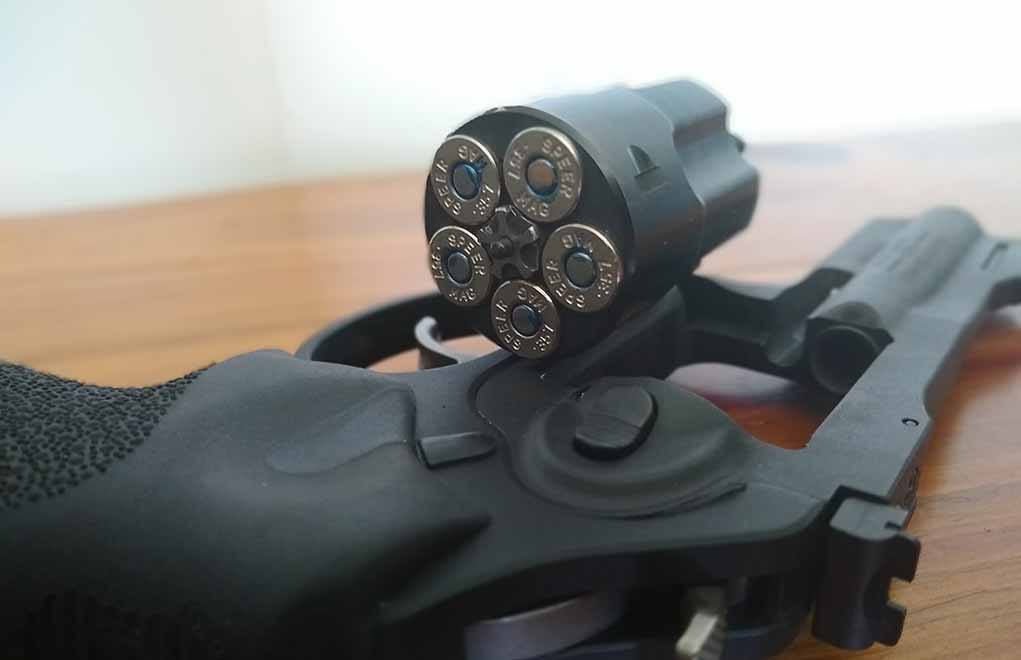
Like all revolvers, the LCRx is limited in capacity. Even so, you could do a lot worse than to have five rounds of .357 Magnum on tap.
For example, the hottest round I shot was Sig Sauer’s 125-grain Elite Performance V-Crown, which clocked in at an average 1,281 fps, as measured by my chronograph 6 feet from the muzzle. Twice, the round topped out at 1,307 fps. Definitely, this is off the company’s numbers of 1,450 fps of muzzle velocity. Nonetheless, it was well within the bounds of .357 Magnum performance, which is what you want when you purchase a revolver with that roll mark.
The LCRx Package
The LCRx, for the most part, is meant to live a clandestine life. It was designed specifically for concealed carry, so Ruger did not spend time on shiny aesthetics that many have come to expect in modern revolvers. This isn’t to say the matte-black gun isn’t beautiful in its own right; it is, just in a different way. It’s attractive along the lines of a well-worn Carhart jacket, because it’s meant for work—hard work.
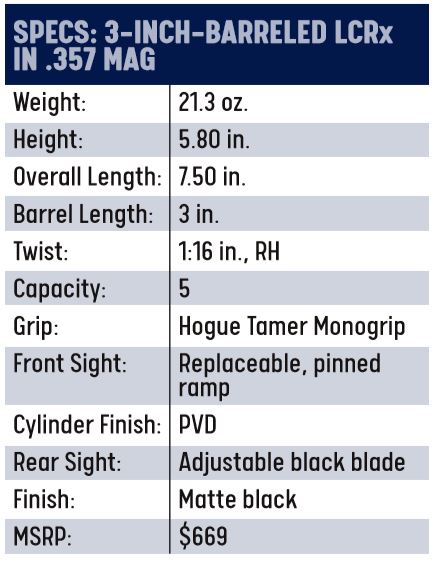
To that end, the most notable departure from its LCR and LCRx cousins is its monolithic frame’s upgrade to 400-series stainless steel. Aluminum has been the go-to material for a majority of the guns, but it just wouldn’t fit the bill for the abuse a .357 Magnum doles out.
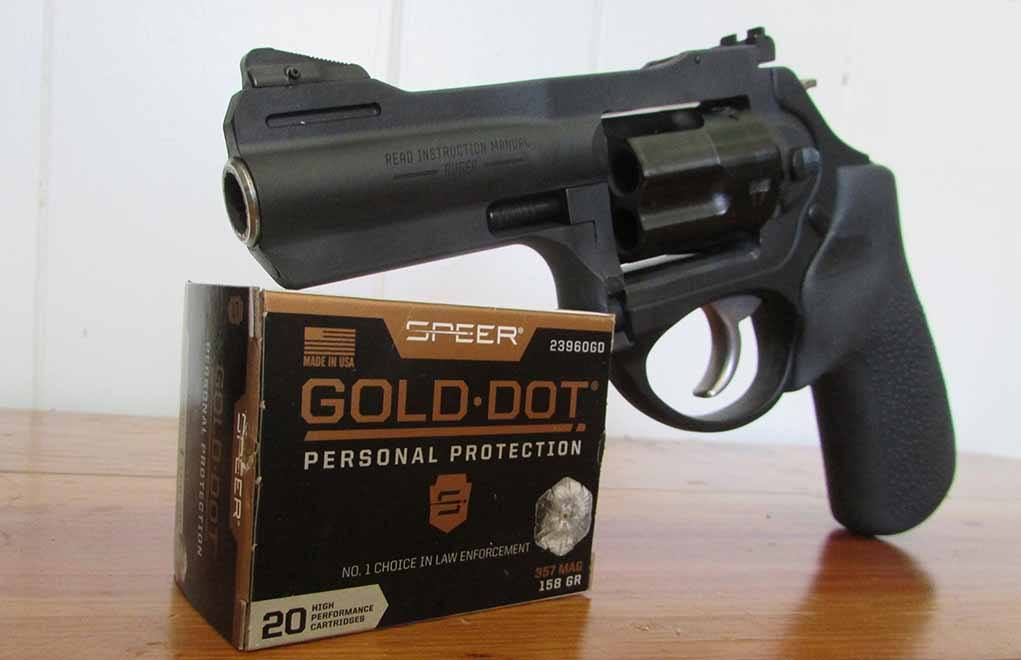
Speer Gold Dot 158-grain JHP was the most accurate ammunition out of this revolver, producing a 1.06-inch group at 15 yards.
While this pushes the five-round revolver’s weight up to around 21 ounces, the heft is welcome. First, because it’s far from prohibitive for carry. The .357 LCRx comes in lighter than most double-stack polymer pistols, even subcompact models. Yet, it’s enough weight to absorb the magnum’s recoil better than ultra-lightweight revolvers—snubbies or otherwise.
With a 3-inch barrel, the revolver has a decent sight radius. And Ruger gives shooters the tools to take advantage of it. The rear sight is an adjustable black blade. You can tune both drift and elevation with a small screwdriver. I packed my small set of drivers when I tested the LCRx, but the Ruger smiths were on their game and had it dialed in. While some might wring their hands about a potential snag, the sight is low enough so that it would take some doing to catch a shirttail or other garb.
In addition to this, the revolver boasts a pinned front ramp sight, meaning it’s replaceable—perhaps with a tritium night sight if you foresee trouble at dusk. However, if you stay stock, the inset white stripe proves highly visible, even in the gray and hazy conditions I used it in.
Like all revolvers, the LCRx is limited in capacity. Even so, you could do a lot worse than to have five rounds of .357 Magnum on tap.
Famously, it’s extremely easy to change the grips on the LCR and LCRx: There’s only one retention screw to remove. However, I found the Hogue Tamer that came installed quite comfortable. The rubber grip’s pebble texture was akin to a coat of stick’um on the palm and kept the gun where I wanted it. Furthermore, it made the LCRx less punishing and more accurate, at least shot to shot, allowing me to maintain greater control on follow-ups.
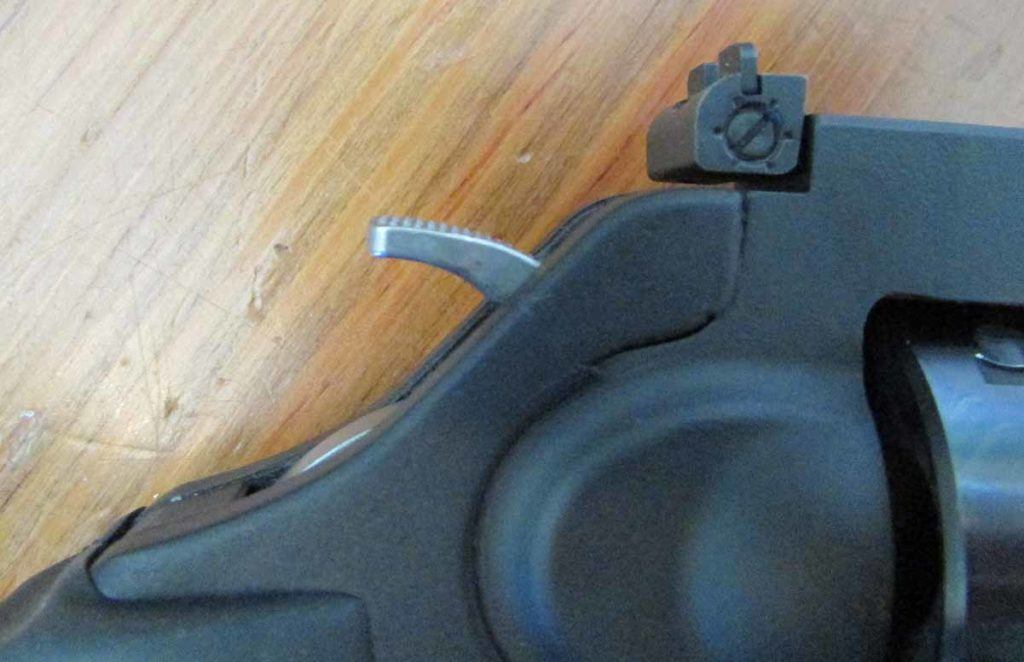
The gun’s controls are also very intuitive. The hammer spur is laid back flatter than you will find on many revolvers. I’m certain that the reason is to streamline its draw. Even so, it’s easy to find when you want to cock it for a single-action shot. The cylinder release is push-button and situated for thumb operation, which I found second nature and fast on reloads—although the ejection rod was another matter.
Despite a full-length barrel lug, the ejector is short and only pushes spent cartridges halfway from the cylinder. Therefore, you must keep in mind to tilt the revolver back to clear it completely (a review of Massad Ayoob’s “stressfire” technique to clear the gun might be in order).
The LCRx’s exposed hammer is a nice addition, allowing for single-action. At the same time, it lays flat enough to avoid causing a snag on the draw.
Finally, the LCRx has an ample trigger guard, which was a godsend for my testing. With the last throws of winter blustering across the prairie, I wore gloves for my range time and was completely unimpeded.
Expand Your Knowledge on the Legendary .357 Magnum
For my range test of the 3-inch-barrelled LCRx, I shot three different defensive rounds—including one in .38 Spl +P—and a full metal jacket round. These included Sig Sauer 125-grain Elite Performance V-Crown, Federal 130-grain HST .38 Spl. +P, Sig Sauer 125-grain FMJ and Speer 158-grain Gold Dot JHP.
In all cases, the ammunition/gun combinations proved highly accurate, perhaps more so than my numbers reflect. The elements might have squeezed in a fraction of an inch here or there; nevertheless, from 15 yards off a rest and in single-action mode, I was capable of groups 2.25 inches or under across the board with .357 ammo.
The best performance, however, came from Gold Dot. The heaviest round punched a tidy, five-round group just off center mass that measured 1.06 inches—more than accurate, given the conditions and for self-defense.
The revolver’s single-action trigger is solid, breaking at about 6 pounds. It’s certainly not a polish job by any stretch of the imagination, but for an out-of-the-box carry gun, it is very nice.
The 10-pound double-action, however, is what caught my attention. Much has been written about Ruger’s friction-reducing cam in the LCR and LCRx revolvers; that is, how smooth it is and how there’s never a second thought about the trigger stacking. I’m here to say that it’s all true.
Yes, it’s a heavy pull (what did you expect in double-action?), but—my goodness—it’s like silk! And, I saw the results in the accuracy I achieved on rapid-fire strings from 7 yards. Consistent and smooth go a long way in overcoming heavy.
Parting Shot
A barbecue gun it is not. The 3-inch-barreled LCRx in .357 Magnum is all business and meant to excel in a cutthroat world. Because it maintains the dimensions of a neat, little (it still qualifies as this) carry gun while bringing out the best in the powerful cartridge, the LCRx is just about everything you’d want out of a defensive .357 Mag. If you go this route, as did nearly a century of Americans before you, you won’t be under-gunned.
It might go against everything you’ve been taught when it comes to handgun marksmanship, but impeccable sight alignment isn’t called for when you’re aiming to save your life.
It’s drilled into your head the first day you pick up a gun and reiterated ever after: sight alignment is key to effective marksmanship. It goes almost without saying, doesn’t it? Get cockeyed here and you’ll send your round way out into left field, not doing anyone any favors.
All of that said, there is some wiggle room when it comes to sight alignment, particularly where it pertains to defensive handguns. When the action is fast and furious, you’ll likely not have the time nor the position to line up your sights perfectly the way you do at the range. But in the scheme of things, close up—10 yards and in—a bit of imperfection won’t stop you from pounding center mass.
As long as your front sight remains in the notch of the rear, you can eat up a lot of the space to either side and remain on target. Richard Mann gives a solid demonstration in the above video. At 7 yards, he puts plenty of play in his sight alignment, yet, if it were a real-life lethal-force event, would mitigate the threat.
So, don’t worry about sight alignment? Far from it. Getting the front sight into the rear notch is still imperative, otherwise, you’ll hit everything and everybody except the assailant. You need to practice developing a proper and fast alignment to truly be effective with your defensive gun. Simply, you don’t need to trip yourself up by building the perfect sight picture to place life-saving hits.
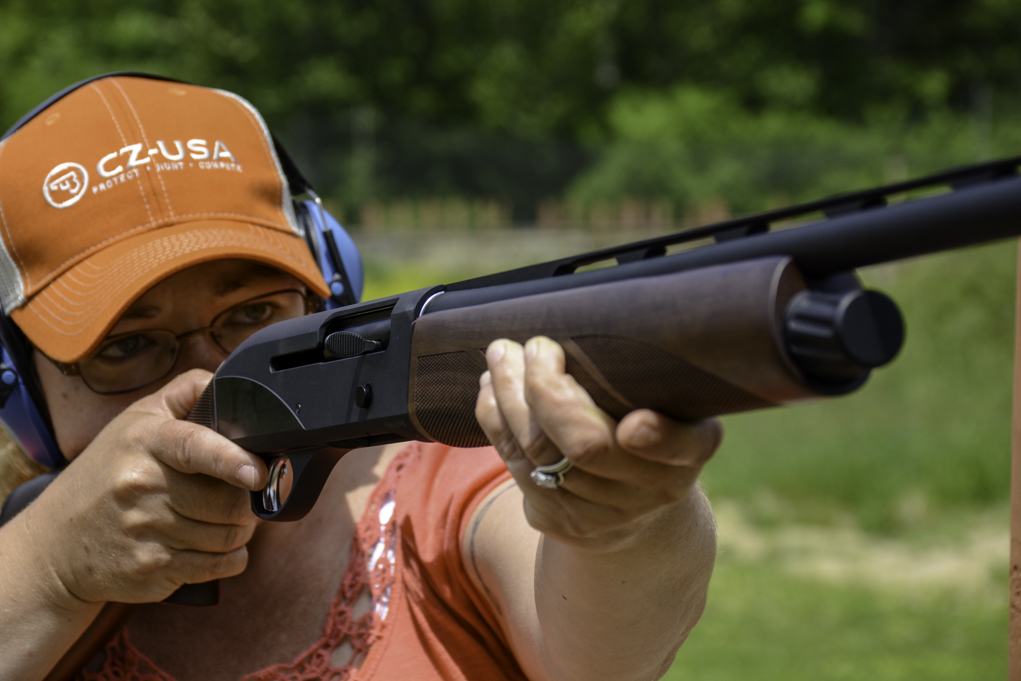
Young and female shooters found the CZ Model 720 Reduced Length 20-gauge autoloader easy to shoot, getting those critical first hits on clay.
A handy little 20-gauge autoloader, the CZ 720 G2 Reduced Length is designed to win over first-time shooters.
Why The CZ 720 G2 Reduced Length Is Perfect For Small-Frame Shooters:
Its 24-inch barrel is long enough for new shooters to point effectively to get those first critical hits.
A whisker over 43 inches and an honest 6 pounds in weight, this special Model 720 is ideally designed for youth and female shooters.
The shotgun has a 4+1 capacity when the included waterfowl plug is removed.
Its trigger is responsive, though it trips at about 9 pounds.
What shotgunner can forget his or her first time touching off a round from a big, bad 12-gauge? For some new shooters, the experience isn’t too unpleasant (much like eating a frozen dinner: it’s edible, but you do it only when you must) while others seem to suffer deep emotional scars from the surprising snap to the shoulder. The way they tell it, it’s as if they’ve been punched by Evander Holyfield himself. Thankfully, some companies offer reduced-length shotguns in light-recoiling 20 gauge to make that first shotgunning experience go more smoothly. One such shotgun is the 720 G2 Reduced Length youth model from CZ-USA.
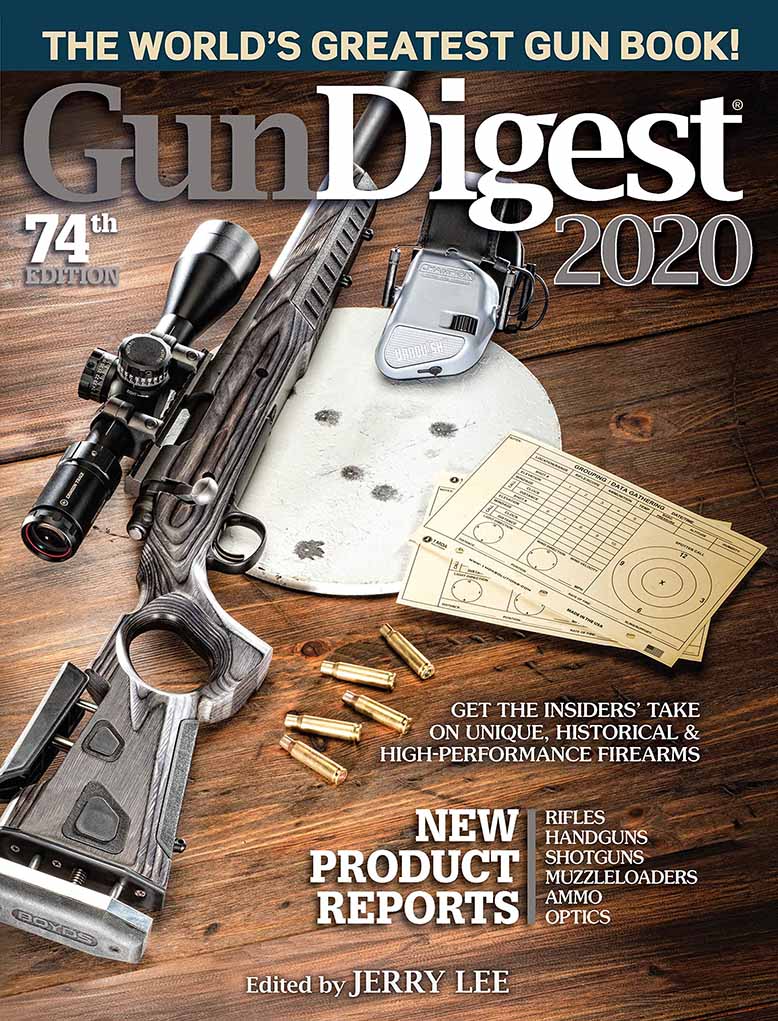
This post is an excerpt from Gun Digest 2019, now available at the Gun Digest Store. Get Your Copy of “The World’s Greatest Gun Book.”
The foundation to successful shotgunning starts with stock fit, and the Model 720 Reduced Length comes in a comfortable 13-inch length of pull. Its 24-inch barrel is long enough for new shooters to point effectively to get those first critical hits on clay to keep up their interest, yet not so long as to be unwieldy. That barrel sports a black hard chrome exterior finish that shrugged off scruff marks from shooting. The 720 comes with five choke tubes (F, IM, M, IC, C). At just a whisker over 43 inches and an honest 6 pounds in weight, this special Model 720 is ideally designed for youth and female shooters. Its trigger trips at about 9 pounds. The shotgun has a 4+1 capacity when the included waterfowl plug is removed.
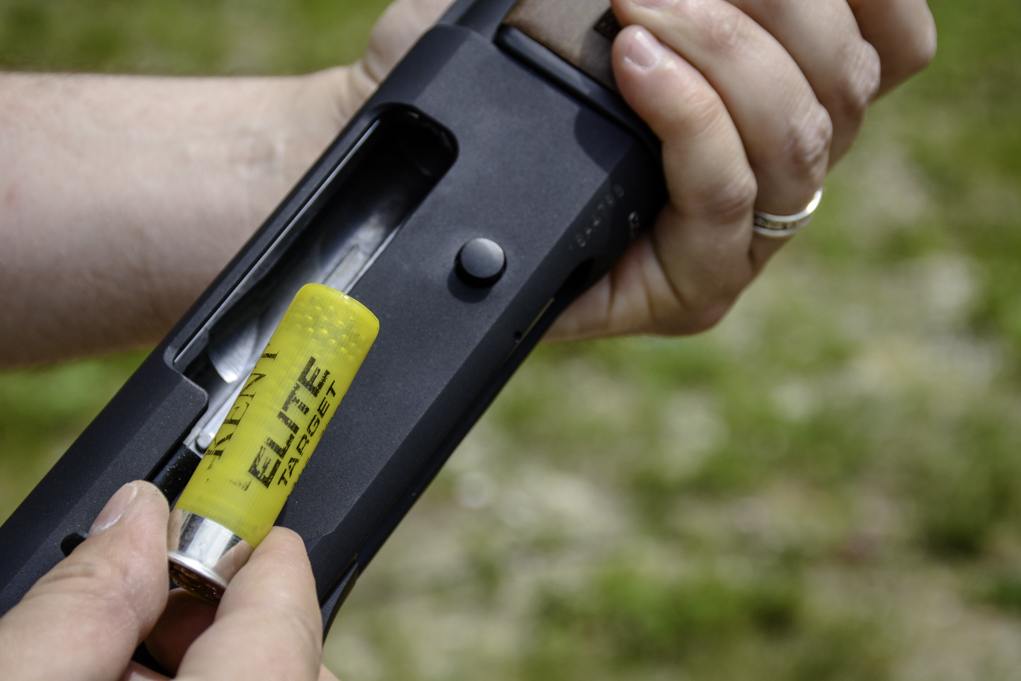
We tested the 720 Reduced Length this summer with help from my wife Michelle, and daughter Aria, both of whom shot it well. However, because I’d neglected to clean the shotgun from the box, we initially had about a 30 percent jam rate on its first outing. After cleaning the shotgun — it was apparently gummed up with storage grease and cardboard dust — it ran like a Toyota (no issues). Shooting Kent’s Elite Target 20-gauge shells (7/8 oz. at 1,200 fps), the little autoloader ran perfectly.
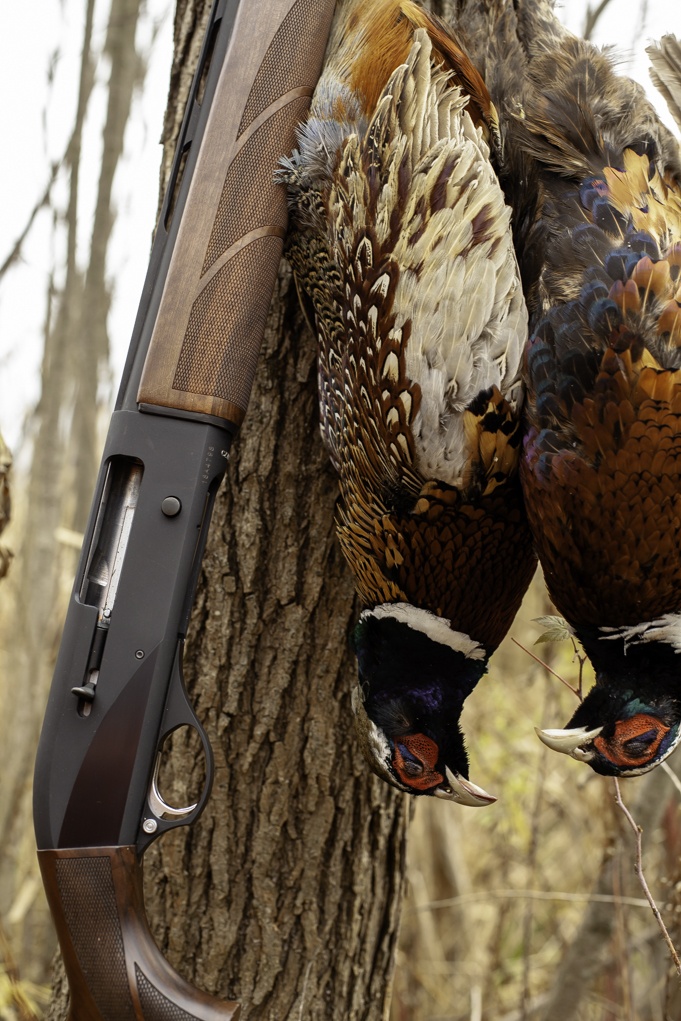
Everyone who tested the shotgun agreed that it was a nice-looking firearm, with a two-tone finish between a polished section of the receiver that transitions to a matte black aluminum alloy portion. The Turkish walnut wood was nice, albeit basic, as has been my experience with previous CZ shotguns.
Kent’s new Elite Target 20-gauge loads, which use 7/8 oz. of 7.5 shot at 1,200 fps, gave consistent performance and helped first-time shooters break their first clay.
But not all is ferries and pixie dust in Wonderland. Both Michelle and Aria lacked the hand strength to push the bolt release button and had to set the shotgun on the sporting clays stand and leverage downward with all their body weight to release it. Testers also found the cross-bolt safety difficult to push. CZ would do well to lighten up both to improve ease of use for beginners. In the meantime, a trip to a gunsmith would be money well spent and would make a good shotgun great.
Clean up duty with the Model 720 went better than expected. I found it simple to disassemble; there was no guessing which way the gas piston or action arm components needed to be aligned. It was as a no-brainer, fit together intuitively.
The CZ Model 720 is covered in a tough, hard-chrome black exterior finish that will give years of service in the game fields as new shooters dish out the abuse.
The gals found the classic-style stock to be of marginal fit; females tend to have outward curved shoulder pockets and longer necks, and the 720’s straight stock made it somewhat awkward for our new shooters to acquire a natural cheek weld. I’m convinced that, had there been some adjustability in the buttstock angle and cheek weld height, they would have broken more clays and had even more fun.
But fun they did have. First-time shooters won’t soon forget their first shotgunning experience — and that’s not because it involved a scary whack to the shoulder. With a street price around $350, CZ has delivered a memorable first shotgunning experience at a price point everyone can afford to share.
CZ 720 G2 Reduced Length Specs
Model: CZ 720 G2 Reduced Length Gauge: 20 Barrel: 24 in. Magazine Capacity: 4+1 Max Shell Length: 3 in. Chokes: Includes 5 (F, IM, M, IC, C) Stock: Turkish Walnut Length of Pull: 13 in. Barrel Finish: Matte Black Chrome Rib: 8mm Flat Vent Overall Length: 43.5 in Weight: 6.3 lbs. Comb: 1.4375 in. Heel: 2.25 in. Safety: Crossbolt Behind Trigger MSRP: $499.00 USD
For more on the CZ 720 G2 Reduced Length, please visit cz-usa.com.
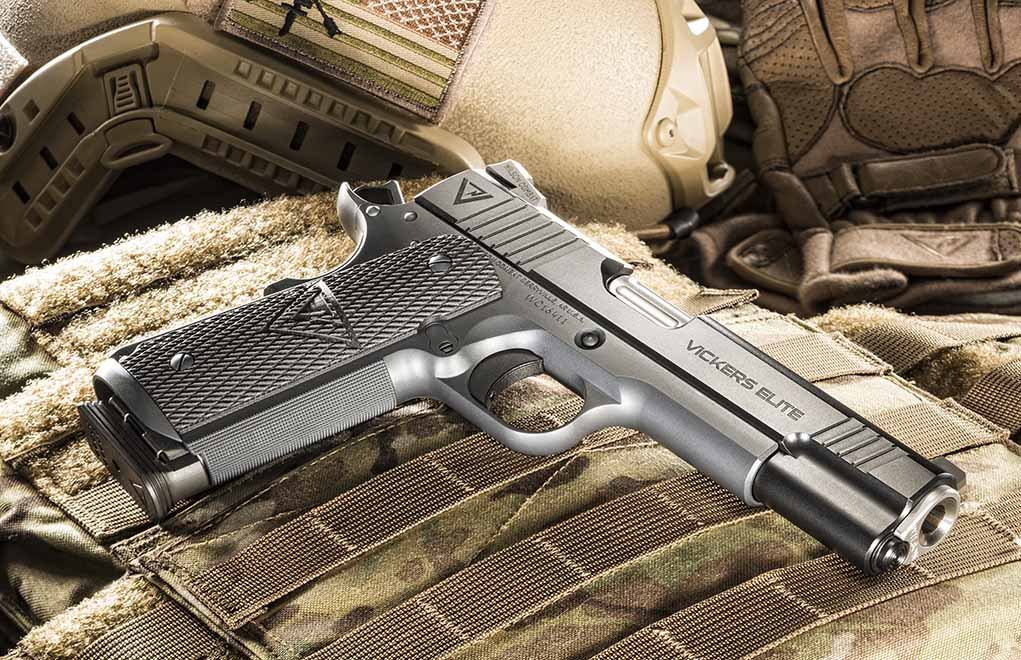
The name, Wilson Combat, is well-known throughout shooting circles. It elicits images of fast and accurate shooting.
Now, combine that legendary name with that of 1st SFOD-Delta (1st Special Forces Operational Detachment-Delta) combat veteran Larry Vickers, and the result should be something worth noting.
Well, in the case of the Wilson Combat Vickers Elite 9mm 1911, that’s the theory, but will it become reality in testing?
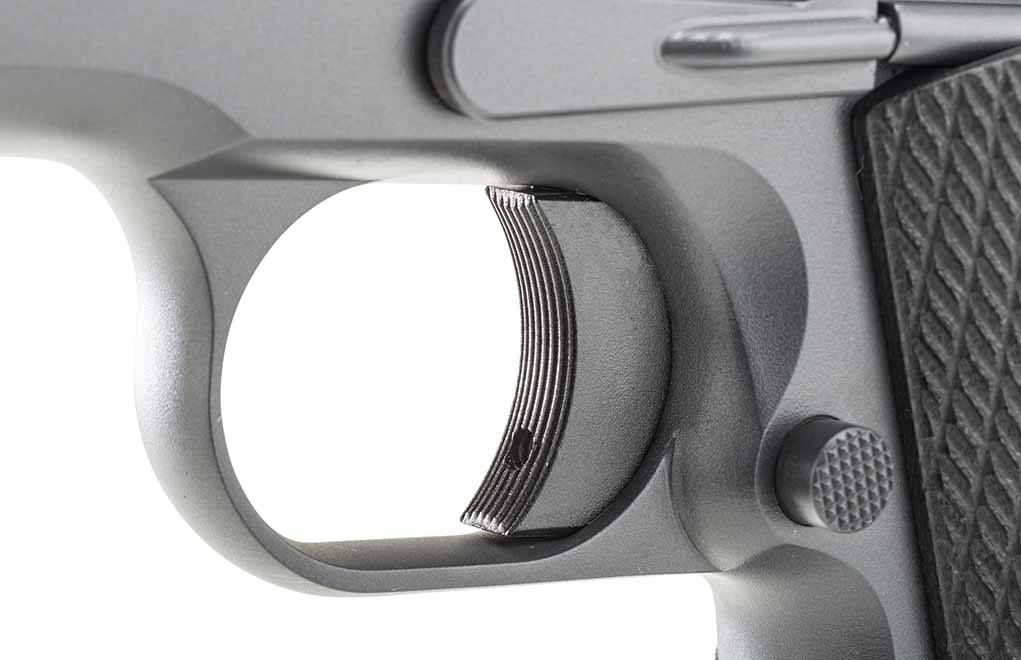
The medium-length, solid-aluminum trigger allows the shooter to get a much better position on it. This, in turns, helps the shooter’s performance. The extended tactical magazine release allows for faster and more effective magazine changes.
That’s what I set my sights on — no pun intended (well, yes, I did mean that).
When I called Wilson Combat, I found out that the company is trying to keep its most popular firearms in stock and available for immediate delivery. And I applaud Wilson Combat for that. As a result, my only decisions were caliber and color … meaning, I had plenty of options. Decisions, decisions.
Suitable Selections
Although these pistols are available in either .45 ACP or 9mm, I always wanted a reliable, custom 9mm 1911. And that’s where I started. Next came my decision on which finish to go with.
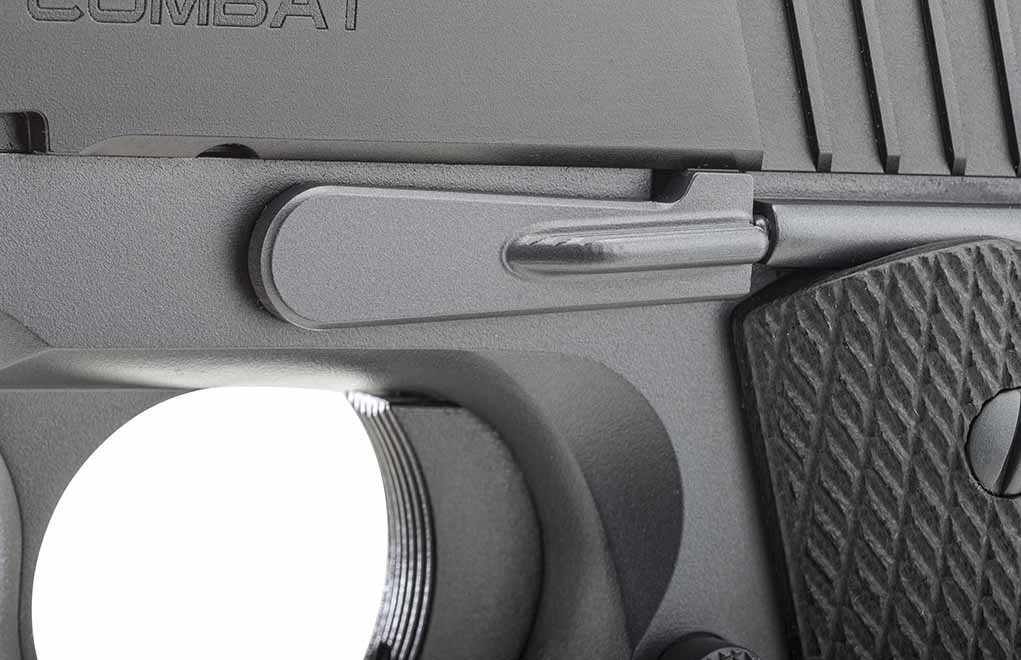
The Elite’s slide stop is not only the strongest in the industry, it is also the most ergonomic.
Even though I love the classic look of a blued 1911 (who doesn’t?), Wilson Combat had more than a few color options in stock. I decided to go with my personal favorite color combination, black and gray, and selected a model with a black slide over a gray frame featuring Wilson Combat’s proprietary Armor-Tuf finish.
Once the pistol was ordered, I sat back anxiously, awaiting its delivery. When it finally arrived (and let’s admit it, it can never arrive fast enough), I had to sit back and simply take time to admire the work done by Wilson Combat.
The fit and finish were spectacular. The slide-to-frame fit is both precise and tight — but also smooth as silk. I know that’s a cliché, but it applies here. The barrel fit is also very precise but not overly tight. The barrel locks and unlocks smoothly and consistently.
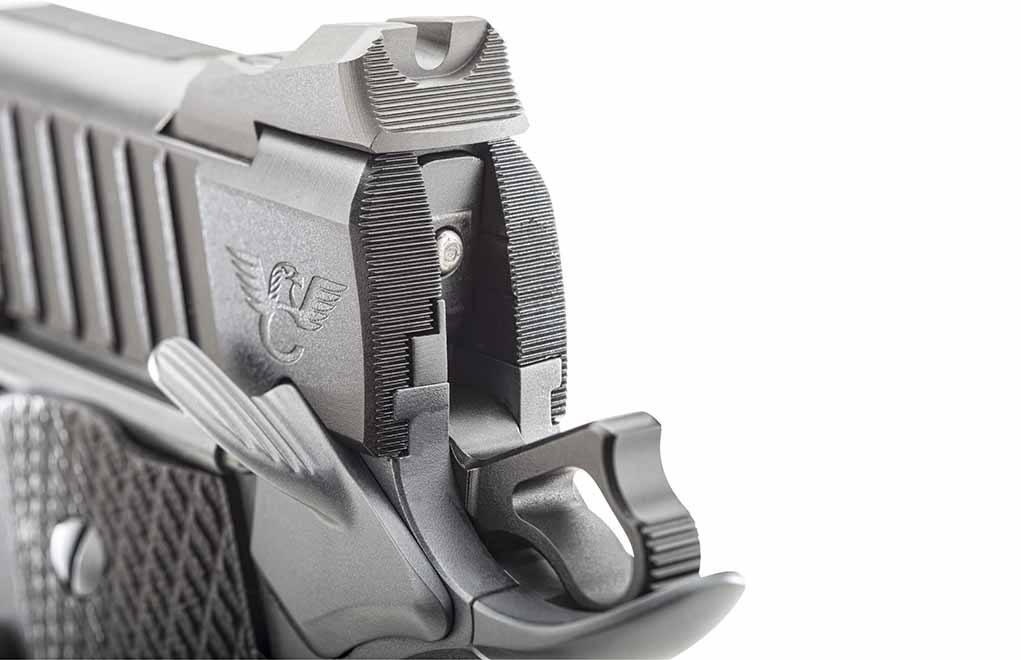
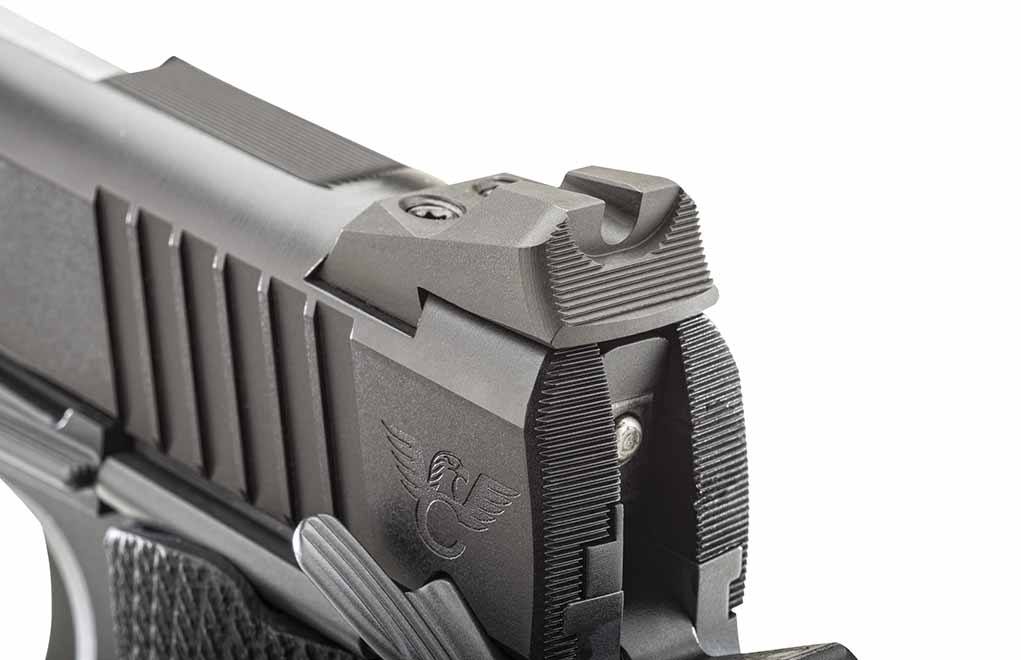
The back of the slide is expertly checkered to 40 LPI. This exemplifies the care taken by the Wilson Combat gunsmiths to create a functional and beautiful tool.
Finally, the trigger pull was just perfect — crisp, but not too light — which is, of course, great for self-defense or general shooting. Every part of this pistol is expertly fitted together for a great end product. Here’s another fitting cliché: You get what you pay for.
Hugging the Corners
When it came time to take the new pistol for a “test drive,” I selected a range of seven types of ammunition to use for my accuracy testing. To truly test this gun (or any gun I plan to use for self-defense), I had to be thorough: 124-grain Colt Competition ammunition (by DoubleTap) in FMJ, Colt Defense ammunition JHP (by DoubleTap), Federal HST and Remington +P Golden Saber BJHP. For 115-grain ammo, I brought along CCI Blazer Brass FMJ, Hornady Critical Defense FTX and Barnes +P Tac-XPD.
I set up a shooting rest to test accuracy at my local indoor range. I set the test target at 10 yards, which is the average distance for most practical pistol matches and a good test for self-defense applications. These are the main uses for this pistol. My testing protocol was to fire five-shot groups with each of the seven types of ammunition.
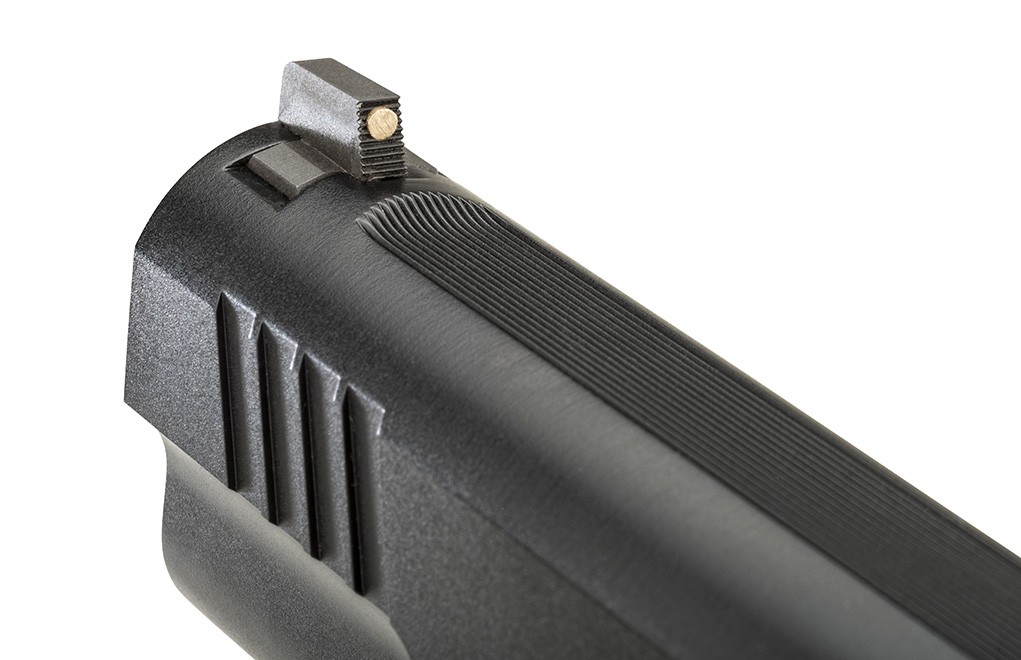
The rear sight is serrated to cut down on reflections, but it has a “U” notch to aid in aligning the sights.
The Wilson Combat Vickers Elite 9mm 1911 did not disappoint. This pistol really shone in the accuracy department, with all the ammunition I tested grouping right under 1.00 inch. However, my best grouping was with the Barnes 115-grain +P Tac-XPD, which measured right at 0.65 inch. One thing I noticed was that even though the Barnes 115-grain Tac-XPD ammunition is rated +P, it was the smoothest-shooting load of the seven I tested.
With the accuracy testing completed, I decided to broaden the gun’s horizons a bit: a Bill Drill was in order. I set up a standard IPSC silhouette target at 5 yards and fired six rounds as fast as I could, trying to keep them in the A zone. That was not a hard task, because the Vickers Elite didn’t miss a beat.
Taking on the 250
With my visit to the local indoor range complete, I thought I was done with my testing. However, opportunity came knocking: It was Arizona’s Gunsite Academy.
(bottom) The gold-bead front sight aids in a perfect sight picture and puts this pistol on a higher level of craftsmanship and beauty. The serrations on the top of the slide also add to the pistol’s overall esthetics.
What better place to run my new custom 1911 than at Gunsite in one of its famed 250 handgun classes? For those unfamiliar, the 250 class is Gunsite’s introductory 1-week handgun class that includes lectures, night shooting, outdoor and indoor simulators, and a whole lot of shooting. We’re talking more than 1,400 rounds throughout the week.
I quickly picked up 1,500 rounds of Federal American Eagle 115-grain FMJ ammunition; and, to complete my kit for the Gunsite class, I ordered a Davis Omega Gunsite holster and two single-mag pouches.
We shot between 250 and 350 rounds every day during the 1-week class. I know what you’re thinking: a brand-new 1911 in the desert in a shooting class and with a high round count? Certainly, I’d have to go elbows deep into a detailed cleaning of the 1911 every night, right? Wrong.
The chamber is fluted for ease of cleaning and prevents the accumulation of unburnt power, carbon or debris.
Despite all the shooting, the only cleaning I performed was a casual wipe-down with Break Free CLP Disposable Wipes and minor lubrication with Gunfighter Gun Oil. Even after this minimal lubrication and all those rounds fired, the Vickers Elite didn’t experience a single malfunction. Think about that for a moment, because the same probably can’t be said for a large number of 1911 pistols.
The more I shot the Vickers Elite 9mm 1911, the more I loved it. And although you can’t teach an old dog new tricks, this pistol is becoming my number-one match pistol for both USPSA and IDPA events.
I told you I had always wanted a reliable custom 1911 in 9mm. Well, that search is over.
I just returned from a week-long project with Panteao Productions, with which we were filming a new handgun training DVD, “Defensive Pistol Fundamentals.” It’ll be available soon for streaming, digital download and direct purchase.
That video is the reason for this column, but it’s not the topic. You see, I used Walther handguns during all 30-plus chapters. Those pistols are worth talking about.
Walther was founded in Germany by Carl Walther in 1886, and this company is probably best known for its P38 and PP/PPK pistols. The P38 was created to replace the Luger as the service pistol for the Unified Armed Forces of Nazi Germany. It was a fantastic pistol and has become highly sought by collectors. “Bond, James Bond” made the PP/PPK one of the most iconic and recognized pistols in the world. It first appeared as his main gun in the 1958 novel and subsequent 1963 movie, Dr. No. (As a side note, Bond was briefly armed with a Walther P38 in the movie Goldfinger.)
In fact, Walthers have remained tethered to Agent 007, even in modern times. In the 1983 film Never Say Never Again, Bond carried a Walther P5, and in Tomorrow Never Dies (1997), he holstered a Walther P99. Although the current Bond continues to use various Walthers, apparently, some fool was put in charge of weapon selection and began breaking the tradition, arming him with Glocks, SIGs and H&Ks. James Bond would never carry anything but a Walther!
During DVD production, I used a variety of Walthers and put a lot of rounds downrange. While running a wide selection of Doubletap Ammo .380 ACP and 9mm ammunition, there was not a single stoppage experienced with any of the guns.
In case you’re not familiar with Walther pistols, here’s a look at those I used over the course of that week.
Walther PPKs
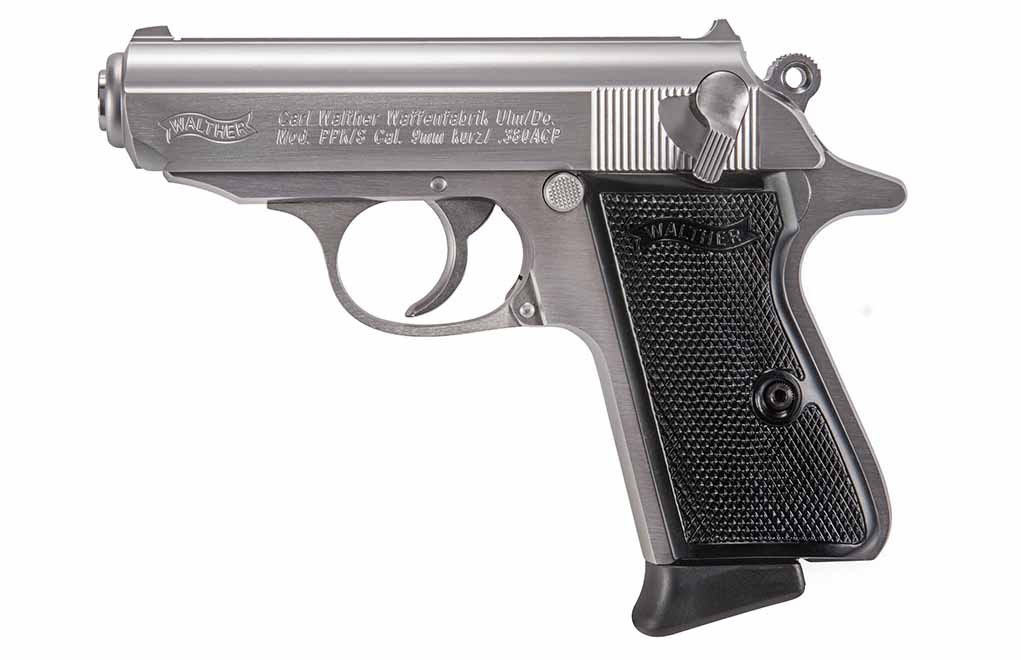
Maybe better known as “Bond’s Gun,” the PPKs is chambered for the .380 ACP. This is a steel-framed gun; and, at 23.6 ounces, it’s heavy for its size by any modern standard. When I first became a police officer, I carried a PPKs as an off-duty gun. It never made me feel like a secret agent, but I knew it as a trustworthy sidearm.
The PPKs is a double-action pistol with a slide-mounted de-cocker/safety. During handgun presentation, the safety should be flipped up/forward with the thumb of the shooting hand. When it’s time to holster, you use the same thumb to press the lever down; the hammer is de-cocked, and the pistol is put on “safe.” These, now- made-in-America iconic works of art, retail for about $750.
Walther PPS M2
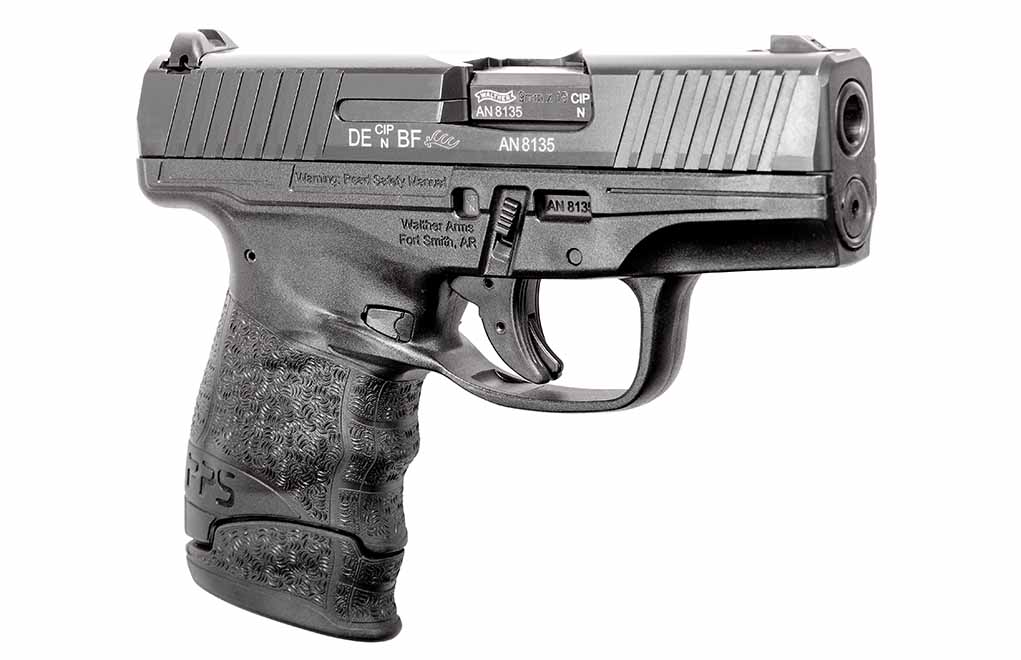
I look at the PPS as a more modern, more powerful version of the PPKs. The PPS is a compact, polymer-framed, single-stacked pistol chambered for the 9mm Luger. It weighs less than the PPKs and, depending on the magazine it’s paired with (some have extended base pads ), it’s almost the same size. Easily concealable and comfortable to shoot, the PPS is a great option for concealed carry.
In addition to the standard version, which has a suggested retail price of $449.99, Walther offers a model with a miniature red-dot sight for $699. There’s another version that comes out of the box with a Crimson Trace LaserGuard. You should be able to purchase this one—which might be the best PPS of the bunch — for about $500.
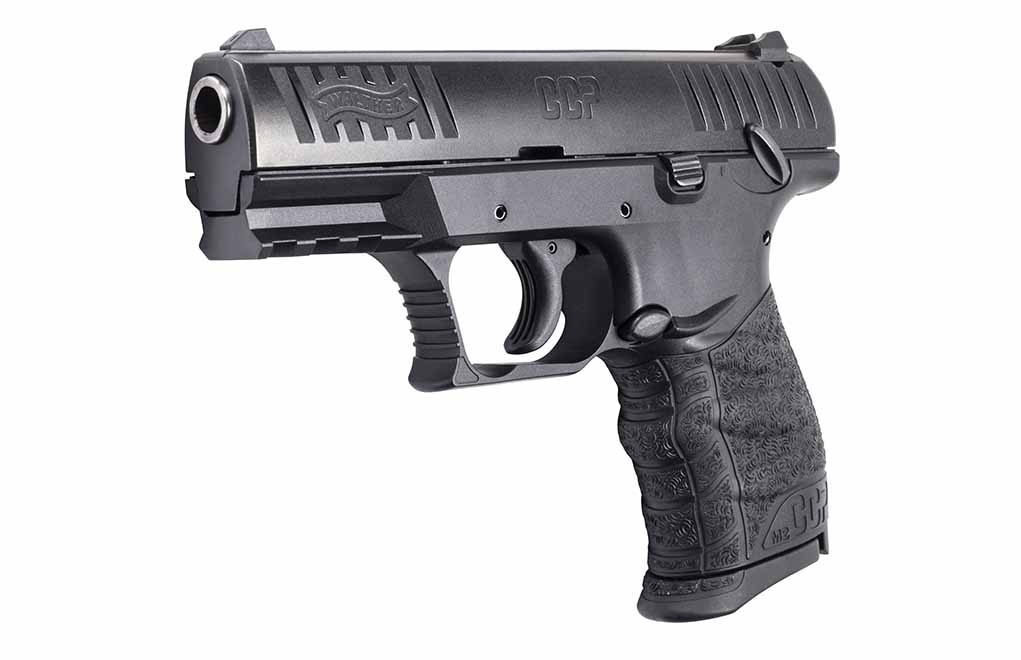
The surprise for me was the Walther CCP, because prior to filming the DVD, I had no experience with it. This gun felt the best in-hand of any of the Walther pistols; when you pick it up, it’s the same sensation you experience as when you grip a Browning Hi-Power. During filming, I handed it to each of the crew members, and they all echoed this sentiment.
Two features set the CCP apart: The first is the Softcoil gas-delayed blowback recoil system. This pistol has a fixed, non-tilting barrel, but it uses gas pressure from the ignited cartridge by directing it through a small port in the barrel to slow down and delay rearward motion of the slide. It’s a unique system that makes for a very comfortable-shooting pistol. The other feature is the frame-mounted thumb safety. Being a 1911/Hi-Power kind of guy, I liked it and found its manipulation intuitive. Street prices are only about $400.
Walther M2 PPQ4 and PPQ5
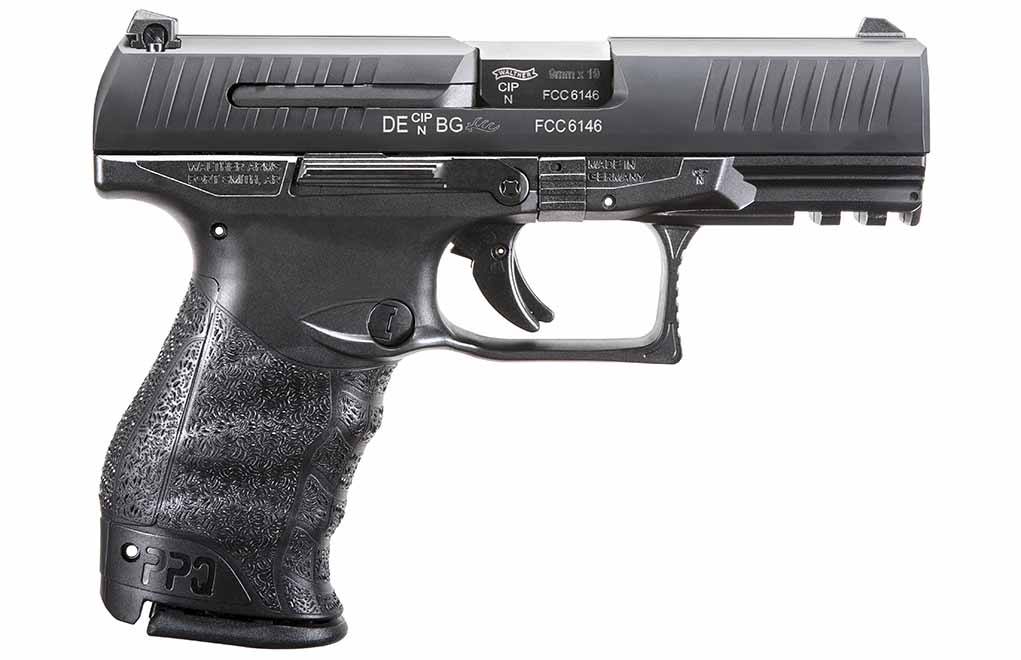
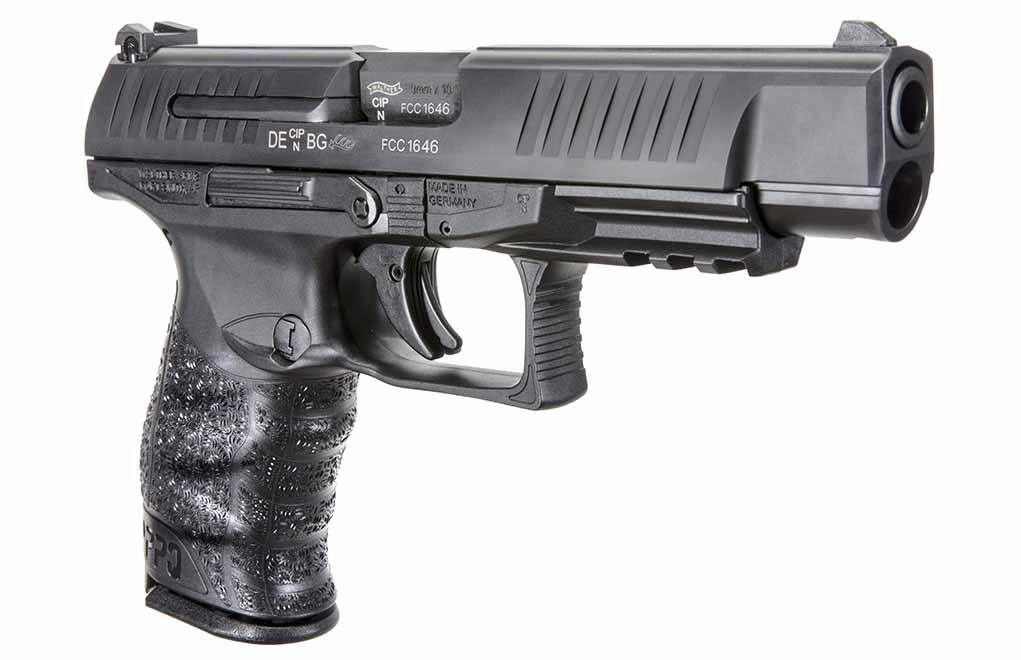
Although not as comfortable in my hand as the CCP, the PPQ pistols interfaced well with me, much better than any Glock I’ve ever held. The PPQ 4 has a 4-inch barrel, and the PPQ 5 has a 5-inch barrel. Both weigh about 25 ounces and offer a 15-round capacity. A variety of colors and finishes is offered, and each pistol comes with three interchangeable backstraps. Walther even offers a version with XS Sights’ new F8 sights. Suggested retail starts at about $650.
Most of the shooting I did during preparation and filming was with the PPQs. The triggers were excellent for a striker-fired handgun; and, to be honest, I’ve pulled some 1911 triggers that were not as good.
The only issue I had was with the ambidextrous and extended slide stop. For those who like to release a slide with the slide stop, this is an excellent feature. For those who are accustomed to riding a thumb safety with their thumb, it might not be.
Because I instinctively placed my thumb on the slide lock (to me, it felt like a safety), the pistols would not lock open after the last round in the magazine was fired. Yes, this is a training issue on my part, but it’s something to consider.
This is, of course, just a cursory review of a few of Walther’s handguns. I offer it here because I think these excellent pistols often get overlooked. In addition, after working with them for a week, I was impressed. One thing’s for sure: You’ll be seeing more about them here in the future.
For more information on Walther Arms pistols, please visit www.waltherarms.com.
Rugged and unassuming, the Riton X3 Taxtix PRD is the perfect CQ aiming solution for your pistol or rifle.
Long a staple in competitive shooting, reflex sights are almost like cheating. Learn to catch sight of that little luminescent red dot, the rest of getting hits is simply good old trigger control. But this raises the question, if these optics are such hot stuff under the clock, then why not carry that advantage over to self-defense? The answer, more and more are.
Quietly, gunmakers have configured many of their pistols for optics ready service, milling the top of the slide to create a solid, low-profile mounting platform. Optics companies, to their credit, have responded as well, producing ever so slight reflex options, rugged enough for defensive use, without obstructing vital movements. Given this, it figures Riton has jumped into this arena.
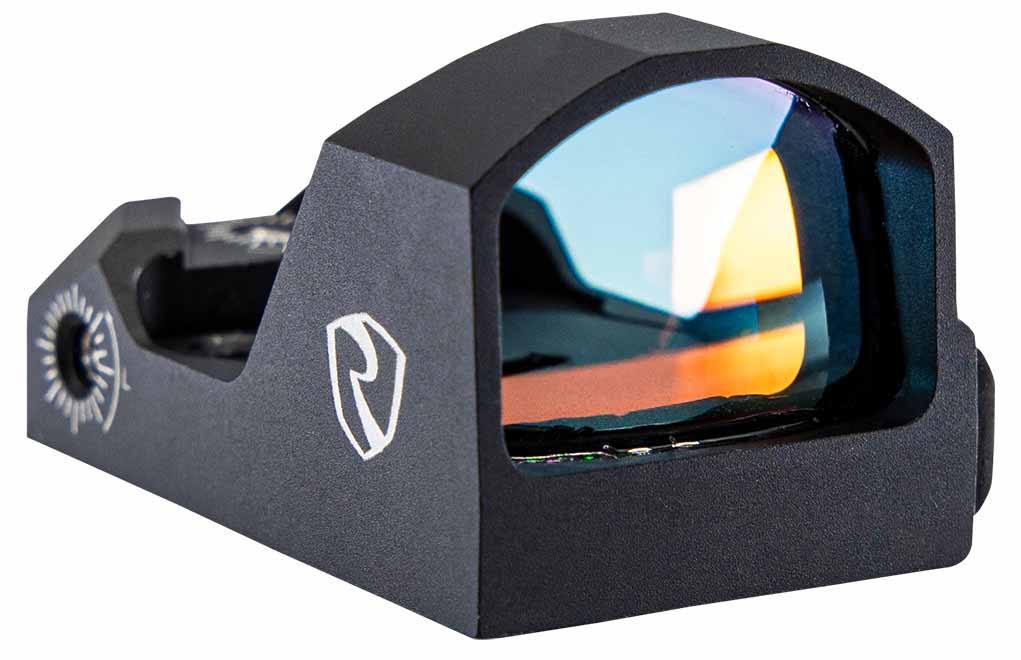
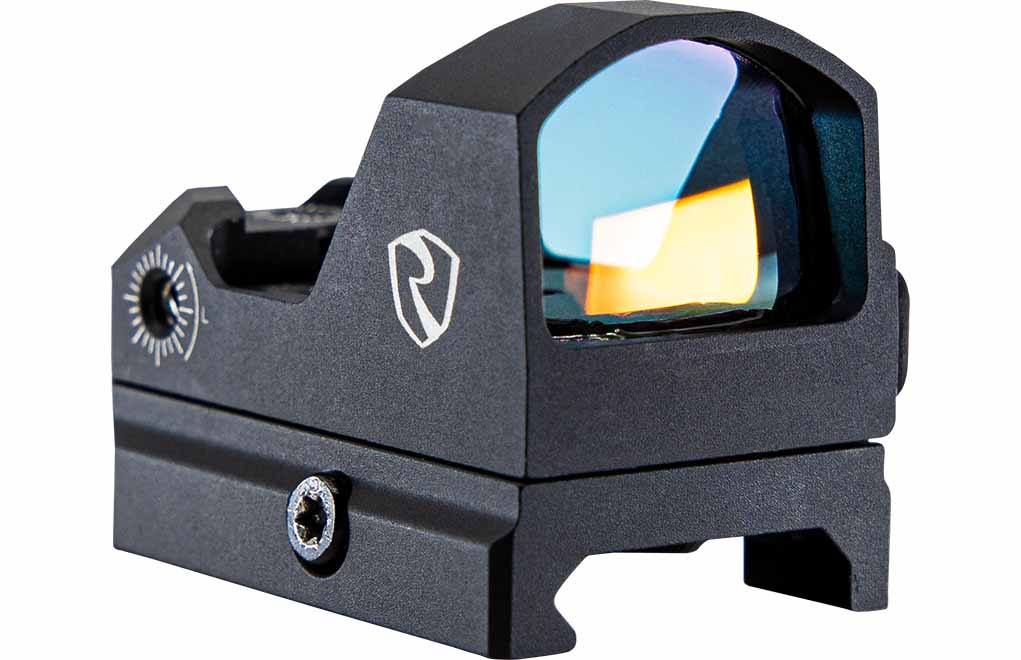
A somewhat new company, Riton has made a name with its top-shelf AR-focused scopes, but has thrown its hat into the red dot ring with the introduction of the X3 Taxtix PRD. And all in all, it appears to have the goods to make it a solid aiming solution whatever gun you run it on. What makes it a bell of this ball is its relatively small size, just about 1-inch in height, which should keep it fairly snag-free, even on the vital draw stroke. Also, it would be a rather unassuming CQ option on a scoped AR, one that doesn’t junk up your carbine in the slightest.
The Best Tactical Red-Dot Performance-to-Price Option?
Shifting Winds: SIG BDX Changing Shooting For The Better
As far as target acquisition, the optic is lightning fast thanks to a highly visible 3-MOA dot and is fit for any lighting situation with six brightness settings. Riton also runs good glass in their optics and the X3 Taxtix PRD is no exception. Fully multi-coated, high-definition lenses transmit more than 99-percent of light, delivering images akin those you see with your naked eye. This should also make co-witnessing your iron sights simple, if you happen to run out of batteries—though that would be a feat, given the sight gets more than 40,000 hours out of its CR2032 battery.
As far as durability, Riton engineer all it could into the X3 Tactic PRD. An aircraft-grade aluminum body makes the optic waterproof and shockproof up to 800 Gs of impact force. So yes it can take a licking and survive and keep its zero. Speaking of zero, you don’t have to worry about losing yours every time you change the battery, since Riton put the access point on top, so you can keep it mounted when you do so.
In all, when you buy the X3 Tactix PRD you also get a Picatinny base plate, protective cover, lens cloth and a hex wrench for adjustment. And, God forbid, something happens to it, Riton backs it with a lifetime warranty. For an MSRP of $299.99, that’s a fairly tidy package, certainly, for the advantage it allots your gun, defensive or otherwise.
For more information on the X3 Tactix PRD, please visit www.ritonoptics.com.
From 1920 until 1963, .300 Savage owners never had to wonder about the .300 Winchester Magnum. After 1963, they did. Or did they?
Hunting, How Do The .300 Win. Mag. And .300 Savage Measure Up Againt Each Other:
Under 200 yards the cartridge have similar results hunting.
Take a 600-yard poke at an elk, you want a .300 Winchester Magnum at your shoulder.
The .300 Winchester Magnum has the ability to deliver around 40-percent more energy than the .300 Savage.
Overall, the .300 Savage is more pleasent to shoot due to its mild recoil.
Yes, the .300 Win. Mag. can, and does, take a 165-grain bullet and push it more than 550 fps faster than the .300 Savage—a short-action cartridge old enough to be going through a mid-life crisis when the Winchester .30-caliber magnum was born.
To most .300 Savage owners, however, it simply doesn’t matter. Not even a little bit. Why?
Because, generally speaking, .300 Savage shooters aren’t interested in crunching numbers; they’re focused on crunching bones. Pedestrian ballistics aside, from 1920, when the .300 Savage was born, all the way until the all-world .375 H&H-inspired .300 Winchester Magnum debuted in 1963—and every day since then—the .300 Savage continues to work on deer, elk, moose, bears and everything in between.
It’s Not About the Cartridge
Despite the fact that I’m about to ink a thousand or so more words debating the merits of both cartridges, you’ll likely come to the same conclusion I did. Ultimately, the choice between a .300 Savage and a .300 Winchester Magnum isn’t about which cartridge works better: They both give hunters an honest day’s work for an honest day’s wage. No; your answer to the .300 Savage versus .300 Winchester Magnum question won’t tell us anything we don’t already know about either of these two proven cartridges. It will tell us a bit more about you though.
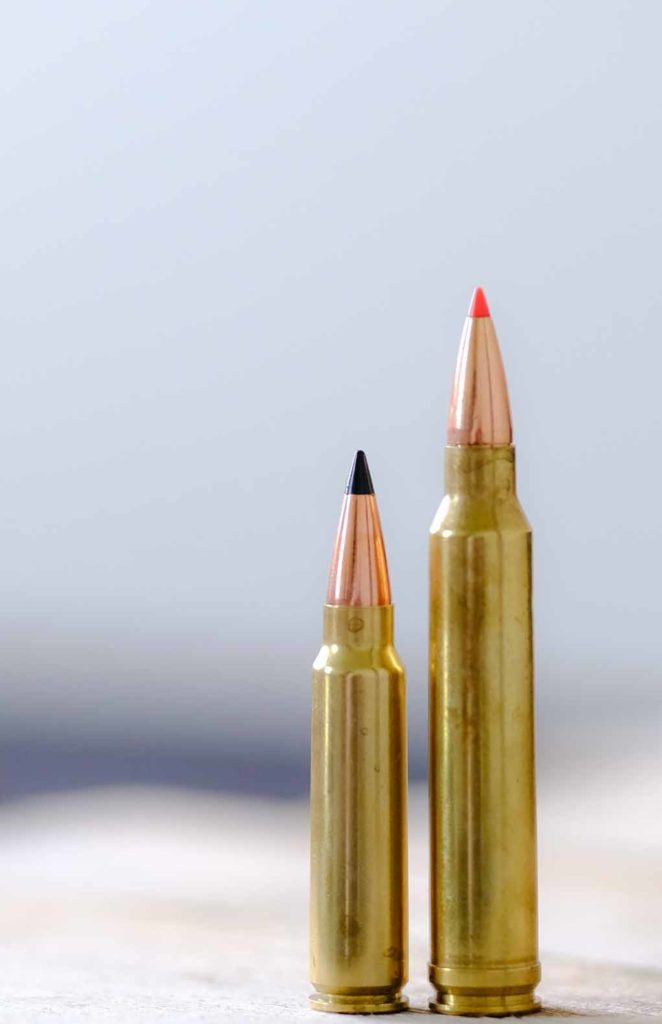
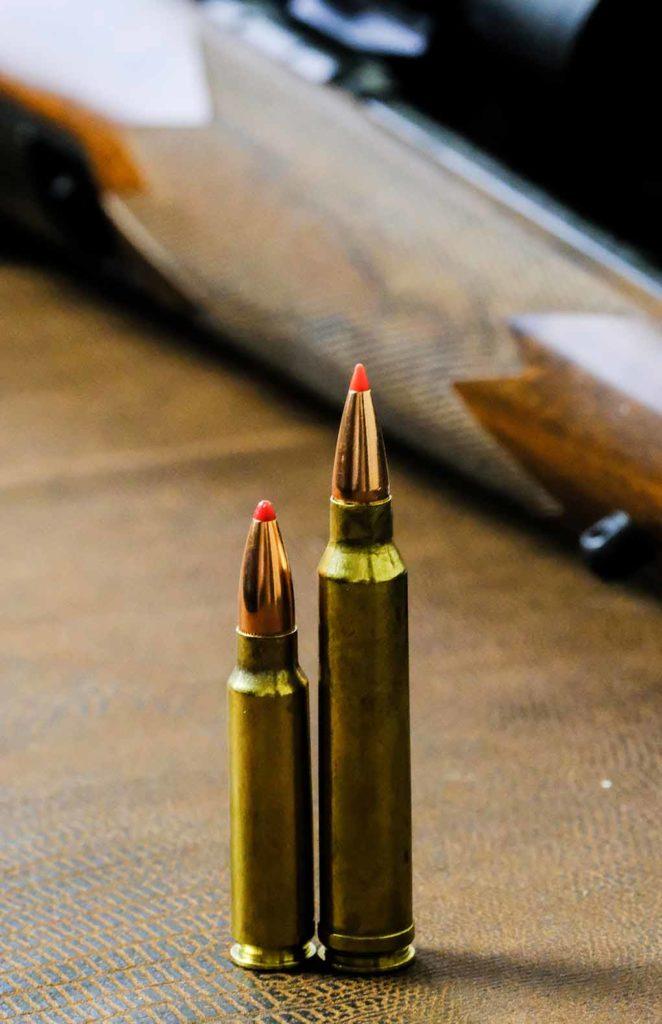
The 300 Savage (left), shown here in a DoubleTap custom-loaded, 165-grain Swift Scirocco II, is a very capable cartridge. However, the 300 Winchester Magnum (right), shown here with a 150-grain Hornady SST bullet, flies faster and delivers more downrange energy.
Is the .300 Savage going to anchor that 6×6 bull elk sitting out at 600 yards for you like a .300 Winchester Magnum can? No. It’s not, but a .300 Savage shooter isn’t the hunter who wants to take that shot—with any rifle—in the first place. You see, the .300 Savage has always been a good enough cartridge for a good enough hunter. The .300 Winchester Magnum is just better. What you have to ask yourself is, Am I a cunning enough hunter, a patient enough hunter, a disciplined enough hunter to use a .300 Savage?
Allow me to get a little more honest with you: Under 200 yards, is there anything a .300 Winchester Magnum does on wild game that a .300 Savage can’t? Nope. But, don’t take my gun writer-biased word for it. Listen to the answer Remington ballistics expert Nick Sachse gave when I asked him.
“Nick, under 200 yards, is there anything a .300 Win Mag does on wild game that a .300 Savage can’t?”
“Not anything useful I can think of,” said the man Remington pays to think about ballistics all day. He added a little Southern perspective to drive home his point: “It might pass through three pigs lined up in a row instead of just two.”
Nick speaks the truth. I took a Savage bolt-action rifle to South Africa last year and killed a red hartebeest, duiker and quite a few warthogs with it using rather simple Federal 180-grain soft-point bullets. Of course, I limited my shots to 200 yards or under, but it wasn’t because of the cartridge. My backup rifle was a 24-inch 6.5×55 Swede, which could put plains game critters to sleep at distances well beyond my shooting capability. No; the 200-yard limit was because I told my PH I wanted to hunt as closely as possible on my safari, even if it meant failure.
Results, Indeed
Still, not every hunter likes limits; and not every ballistics expert feels the same way about which cartridge they like.
Barnes bullet guru Michael Painter answered the same question as Nick Sachse did—but from a different perspective.
“Yes, the .300 Win. Mag. transfers substantially more energy,” he said. “For example, the Remington factory Core Lokt ammunition in .300 Savage would deliver approximately 1,462 foot-pounds of energy, whereas the same weight of bullet loaded in .300 Win. Mag. at 200 yards delivers around 2,311 foot-pounds of energy. In my hunting experience, there’s no such thing as ‘too dead.’”
Still, speed and power aren’t everything (Uh, yes, yes, it is, Jay).
Decreased .300 Savage Recoil
Despite the simple fact that a .300 Winchester Magnum can, and does, shoot faster, farther and hit harder than the .300 Savage, it doesn’t win in every category critical to successful shooting.
The author is fortunate enough to own two Special Order Savage rifles—one in the classic 300 Savage and another one in the much more powerful 300 Winchester Magnum.
According to Sachse, “Delivering less recoil is one thing the .300 Savage can do, which results in a more pleasant shooting experience; and, most importantly, it decreases the probability of a flinch in anticipation of recoil—which can, of course, make all the difference when it comes to good shot placement. It can still get the job done very well inside 300 yards with proper bullet selection.”
We can all agree that no matter how fantastic your rifle, cartridge and optic are, if you can’t—or won’t—shoot your rifle accurately because you’re afraid it’s going to mule-kick you, there’s no bullet on Earth that works when you miss.
Speaking of Accurate Shooting
I hear you .300 Winchester Magnum fanboys all hollering about shooting much, much farther than 200 to 300 yards. So, for hunters who can’t get closer, or won’t (yes, I said it), the .300 Winchester Magnum can do things the .300 Savage shouldn’t.
Sachse spoke up for the marvelous .300 Winchester Magnum. “Past 300 yards or so, the .300 Win. Mag. can deliver the energy, accuracy and trajectory vital to increasing the probability of a hit in the vitals and delivering the level of bullet terminal performance needed at those extended ranges for a clean kill.”
Truth be told, the .300 Winchester Magnum is one of the most accurate long-range cartridges ever created. As a result, it has been one of the top choices for 1,000-yard competition shooters ever since it was developed.
Furthermore, there are countless law enforcement and military agencies around the world that insist upon the .300 Winchester Magnum as their cartridge-of-persuasion when human lives are on the line. Finland, Germany, Great Britain and the United States all have .300 Winchester Magnum sniper rifles in their batteries of long-range tools. No one is using the .300 Savage as a sniper rifle these days (although the .308 Winchester/7.62x51mm NATO, which was a direct result of the genius of the .300 Savage case design, is one of the most popular and beloved military cartridges of all time).
Perennial Favorite
The .300 Winchester Magnum has earned a reputation for being accurate and always delivering enough terminal performance to complete its mission, whether it’s punching tight groups at a 1,000-yard rifle match, putting down a trophy bull elk well past .300 Savage ranges or being the final word whispered by a military sniper to his vanquished foe.
In fact, the .300 Winchester Magnum’s immense popularity gives us another reason to choose it over the .300 Savage.
“An additional reason I would choose the .300 Win. is ammunition availability,” said Painter. “All firearm and ammunition dealers will carry .300 Win. Mag. ammo. Many mom-and-pop shops, gas stations, etc. will also carry .300 Win. Mag. But with the .300 Savage, you won’t be so lucky, and ammo availability will likely be scarce.”
Which Bullet for Which Cartridge?
Outside of how well you can shoot your rifle—regardless of which cartridge you choose—the most influential choice you can make to maximize your success rate with either cartridge comes down to your choice in bullets. Which bullet do you choose for which cartridge?
“The bullet that possesses the accuracy, trajectory and terminal performance needed to effectively harvest the intended target at the intended range is always the best kind,” said Sachse. “To be more specific, with the .300 Savage, and limiting shots to, say, 300 yards or so, BC is less of a factor. So almost any accurate hunting bullet designed to reliably expand and penetrate out to 300 yards, yet not over-expand and under-penetrate at near point-blank range, will suffice. When stepping up to .300 Win. Mag., BC becomes more of a factor on shots beyond 300 yards or so. Thus, that bullet really needs all the terminal performance requirements the .300 Savage-appropriate bullet has, with the added benefit of higher BC (sleeker profiles, boattails, ballistic tips, etc.) for maintaining the flatter trajectory at long range, without blowing up on game up close or penciling through at long range.”
On the Other Hand …
Ultimately, there is no fair comparison between the .300 Savage and the .300 Winchester Magnum. The .300 Savage is a short-action, yes. It kicks a lot less. It kills plenty within its intended range of up to about 300 yards, and it’s accurate enough to hit what you aim at, critter-wise.
On the other hand, the .300 Win. Mag. is a magnum long-action with fire and brimstone at both ends of the rifle. It can, and has, hunted the world’s most dangerous bears, been used to win high-powered rifle matches and saves lives on the battlefield. No elk or moose guide will snicker at your cartridge choice if you bring it into camp, and you’ll find ammo for it just about anywhere you find ammo for anything.
It’s not a fair debate. In fact, people who like to debate .30-caliber cartridges will more likely ponder a .300 Savage versus a .30-30 Winchester or a .300 Winchester Magnum versus a .30-06 Springfield. In the end, hunters who choose the .300 Winchester Magnum will do so because they don’t want to have any doubts about the rifle. Hunters who choose the .300 Savage, however, do so because they don’t want to have any doubt about themselves.
Magpump now makes a model for the AK. How fast can you make your handguards burst into flames?
Get a Magpump. Your watch and your thumbs will thank you.
How Does The Magpump Make Magazine Reloading Quicker:
Originally in 9mm, it can now be had in 7.62×39 and .223/5.56.
Adapters allow you to load different company’s 9mm magazines.
Hooper indexes the rounds, so you don’t have to face all your ammo one way.
Can load up to 60 rounds in less than a minute.
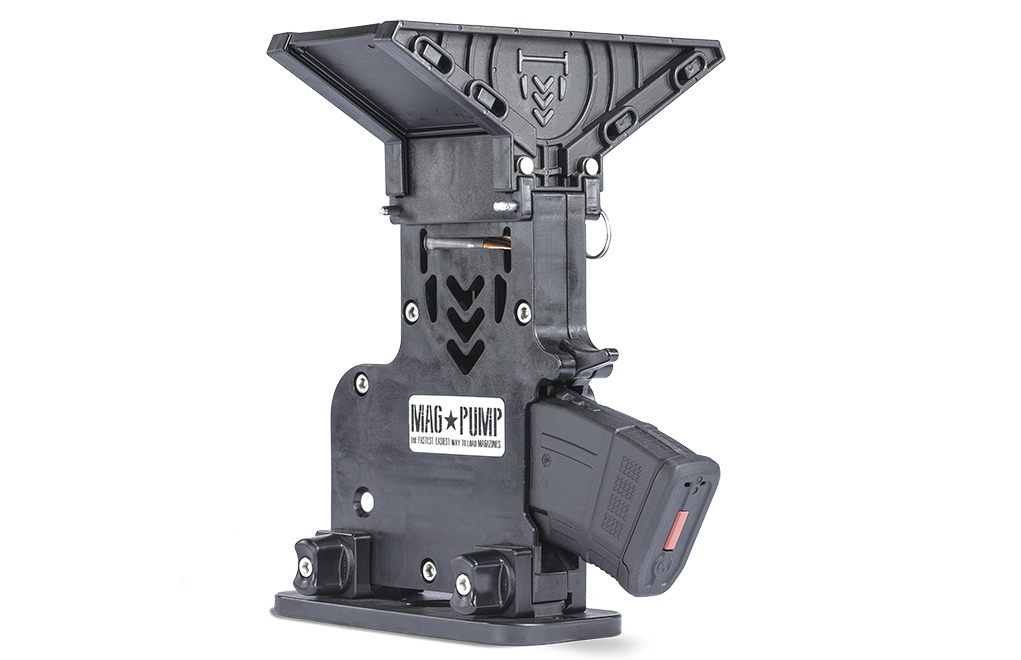
Magpump. You’ve no doubt seen it advertised, and maybe you’ve even had the chance to see one in the flesh. If not, here’s the short description: This is a tank-like mechanism for loading magazines.
Over the course of my lifetime, shooting has changed. Back when my dad, brother and I went to the range, the common shooting volume was one box each. Yes, that’s right: a mere 50 rounds. As kids, we’d shoot our 50 rounds of .22 LR and be happy. Later, we’d shoot 50 rounds of centerfire, or a 25-round box of 12 gauge, and that was that. Dad, a WWII European theatre combat vet, could still hit what he aimed at, and he found shooting boring after a bit, so my brother and I would divide up what ammo he left.
This amount of shooting was common, and it was understandable. I recall one instance of being at the range and watching a shooter as he got out of his car. This was the early 1970s, and he was wearing a three-piece suit, carrying a box of ammo in one hand and an S&W box in the other.
He proceeded to shoot his 50 rounds of .44 Magnum ammo (no hearing protection, that I recall) and, somewhat dazed from the experience, headed back to his car to drive home. It was the state range where no brass-picking was allowed, but we did it anyway. Hey, back then, picking up 50 once-fired .44 Magnum empties was like finding a sack of gold. Honestly, 50 rounds was probably more than he should’ve shot that day.
When I began International Practical Shooting Confederation (IPSC) competition, the shooting volume for me got upped, but it was still only 200 rounds or so per range session. When I stepped it up from 200 rounds on a weekend of practice (10,000 rounds a year, max) to 200 rounds 2-3 times a week, I had to also step up from a single-stage press to reloading on a progressive.
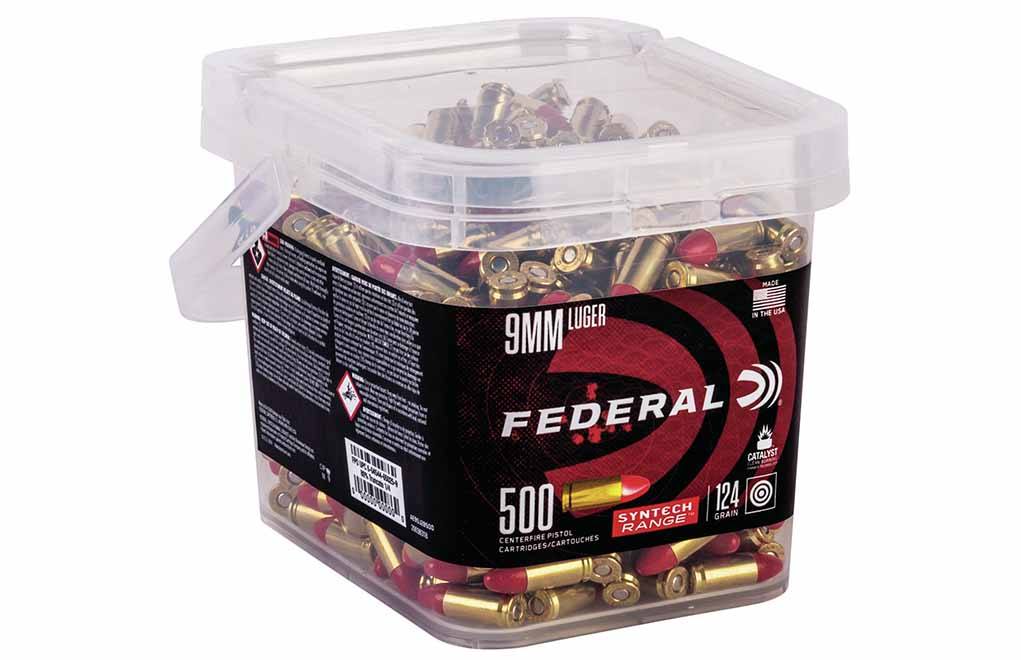
And these days? Well, to give you a hint, one of the things that Federal unveiled at the SHOT show was an additional packaging option for their Syntech ammo: a plastic bucket of 500 rounds. It has been common to be able to buy .22 LR in bulk, up to 500 rounds in a box or plastic tub. But now you can get 9mm in such volumes, too.
Expedited Mag Feeding
Enter the Magpump. This is a device simple in concept, and I would have to think it’s fiendishly difficult to design. Simply put: You plug a magazine into it, pour ammo in the hopper and then pump the handle. It loads your magazines.
The AR Magpump takes the drudgery — and the thumb pain — out of loading magazines.
Available originally in 9mm, it can now be had in 7.62×39 and .223/5.56. You can now speed-load magazines for AKs and ARs, and depending on which 9mm adapter you put into it, any of a slew of different brands of 9mm hi-cap pistols. (The AR, AK and 9mm are each separate machines. Only the 9mm can be changed from one pistol to another.)
It’s not available yet for the Browning Hi-Power, which is where I really could have used one some years ago. I was endurance testing a P-35, built by Wayne Novak. I had enough magazines on-hand to start with 200+ rounds loaded, and I would spend the evening before a range session loading those magazines. The next day I’d go to the range, shoot the ammo, load the mags back up, and then shoot them empty again. By then the Browning was too hot to handle, and I would move on to the other testing for the day.
In the course of endurance-testing that Browning, I got thoroughly sick and tired of loading magazines.
These days, a practice session for some people means a routine like that. However, they don’t start with a bushel basket full of loaded mags. Instead, they’re loading the same 3-5 magazines over and over again, for a day of 400+ rounds of practice.
And that’s where the Magpump comes in. With the correct insert (I counted 16 different brand/model inserts on the list, with more on the way) in the pump, you simply plug in a magazine, pour a box of ammo into the hopper … and pump. It’s still a good idea to count so you don’t try to jam that 18th round into your Glock 17-round magazine. The magazine won’t appreciate it.
“But, $150 is a lot just to load magazines faster,” you say. OK, fair enough. But how much does range time cost you? Think of this in the terms you think of your progressive reloading press: time saved. If it only saves you a half-hour each range trip, in range time rental costs, how many times do you have to shoot to earn back the investment?
We’re shooting like never before, and magazine loading has to keep up. The Magpump helps with that. “Honey, I’m going down to the store to pick up a bucket of ammo. You need anything?”
I don’t know what range time costs you, but one range near me charges $14 to $29 an hour, depending on time of day and other factors. If the Magpump only saves you $7 per range trip, that comes to 25 trips to pay off the Magpump, meaning that your weekly range trips get you the Magpump cost back in less than 6 months.
And it saves your thumb. The two hardest parts of the test program (I ended up shooting 23,000+ rounds through that pistol) was the loading — and the picking up of brass. I could spread a tarp to make the brass pickup easier, but back then there was no Magpump.
And now they make it for ARs and AKs. The idea of a Magpump for an AR or AK is a little scary. You can load magazines for them with a Magpump fast enough to crush your wallet or melt your barrel. But hey, restraint is for the timid, right?
What I’m looking forward to in the near future is hauling the AR Magpump to an LE Patrol Rifle class — not just for my magazines, but for anyone else who wants to give it a try. I figure I can grind 10,000 rounds through that Magpump in short order. I’m proud of being able to break anything, but I suspect the Magpump designers have heard me coming.
A fast and effective reload is an essential skill to master, but there are fine points to consider to make sure you aren’t dropping the hammer on an empty chamber.
When it comes to defensive pistol reloads, you need to execute them effectively, swiftly and tactically. Fail to do so and you’ll be left virtually empty-handed. That’s no place to find yourself in a life-or-death situation.
When it comes to keeping your defensive pistol fed, there are essentially three types of reloads:
Administrative—deliberate loading of the pistol as you would do at the range. Speed—dumping the spent magazine and replacing it with a fresh one in the shortest time possible, executed with the slide locked back or in battery. Tactical—removing a partially-spent mag and replacing it with a full one, generally with the pistol in battery.
Each of them is an essential operation you need to master to become proficient with your defensive pistol. However, the speed reload deserves a bit more comment, given improper execution—especially when the gun is in battery—gums up the works. In particular, it’s easy and natural to assume there’s a round in the chamber in this circumstance, thus expect the gun to go bang after you’ve inserted a new magazine. This can prove foolhardiness.
Not an often occurrence, slides can fail to lock back after the last round, in turn you can find yourself with a full magazine and an empty chamber while the gun is in battery. Talk about something that should send a cold chill racing up your spine. But it’s easily avoided. The prudent maneuver, rack the slide after you reload, even if you’re 110-percent sure there’s a round in the chamber. Yes, you might cut yourself one short, but that’s far less of a detriment than finding out you’re dropping the hammer on air.
In any case, you should work on every type of reload routinely. As important as marksmanship, ensuring your pistol is fully loaded, quickly could save your life.
Intuitive U-notch sight makes getting hits second nature.
Compromise. Like it or not, going armed is defined by this characteristic more than any other. About a million little facets are weighed against each other, and yourself, to compose an everyday carry kit that’s efficient and effective. The most bedeviling nearly every armed citizen runs into is a balance between handgun size and capacity. The two never quite mash up, unless you downgrade in caliber, until perhaps now.
The Springfield Armory Hellcat takes an impressive leap forward in the world of micro 9mm pistols, providing a gun that’s concealable in every sense of the word, yet offers firepower well beyond its size. How much? With its flush-fit magazine, the Hellcat has 12 on board and its extended grip 14. That’s teasing the capacity of some double-stack service models, but in a gun that’s decidedly a micro-compact—1-inch width, 3-inch barrel, 4-inch height and an extremely manageable 17.9 ounces. Quite a feat.
While the size and firepower of the +P rated Hellcat are the Croatian-made pistol’s most notable assets, by far they aren’t the only areas in which Springfield tinkered. Keeping pace with armed citizen’s tastes, the company offers not only a standard model, but also an optic-ready OSP (Optical Sight Pistol) option. Becoming a more common configuration on defensive pistols, the OSP’s slide is milled on top giving you the ability to directly mount a reflex sight, while maintaining the lowest possible profile. Though, if you aren’t up for an optic, the Springfield boasts a solid set of sights.
Veering away from the striker-fire common three-dot configuration, the gunmaker opted for an outlined U-notch at the rear paired with a high-visibility dot on the front sight, with a tritium insert. The system is simple and intuitive, giving shooters the ability to quickly develop a sight picture and deliver hits where they need to go. Furthermore, the dovetailed iron sights are practical. What Springfield calls its ‘Tactical Rack’ rear sight is stout enough to rack the slide, and the entire system provides a co-witness arrangement when running an optic on the OSP. That means if your reflex poops out, you can still get on target with your irons.
Springfield has always paid close attention to the minute features of its pistols, and the Hellcat is no different. Among the most gripping (pun intended) is the pistol’s Adaptive Grip Texture. Pressure activated, the material provides a strong, positive grip when in your hand, but remains smooth and snag-free otherwise. Plus, there’s no ‘Grip Zone’ verbiage emblazoned across the grip.
The pistol also boasts front and rear cocking serrations, a flat trigger body with nickel boron coated trigger group, undercut trigger guard, extended beavertail, forward indexing point and reversible magazine release. Also, the Hellcat has a stand-off device at the front of the frame, ensuring the gun does not go out of battery if it’s pressed up against something. A nice insurance policy to have on a defensive pistol.
The Springfield Hellcat looks to have a lot going for it, including price. The standard model’s MSRP is $569 and the OSP $599, which puts them in nearly every shooters’ budget. It’s definitely one of those guns you can’t wait to get your hands on to see if it lives up to its billing. If it does, it certainly has the potential to take a lot of compromise out of concealed carry.
PCP air rifle that can be topped off with integral pump.
Built-in regulator ensures all shots achieve the same velocity, even as pressure deminishes.
Onboard pressure gauge and automatic over-pressure air release assure you don’t over-pump.
Feed off a 10-round rotary magazine.
Air Venturi’s latest introduction, the Aspen, combines the best of pre-charged pneumatic and pump air rifles. This means you can shoot, shoot, shoot to your heart’s content without being tied to a compressor or air tank.
The Aspen can be pressurized with compressed air from a compressor or tank but is quickly topped off with the built-in pump. As a result, you can keep a consistent pressure level. This means consistent velocity and performance from shot to shot to shot.
The Aspen (MSRP $429.99) also features a built-in regulator (a big deal in air guns), so all the shots go out under the same amount of power; and velocity and point of impact won’t change as onboard pressure diminishes—as they can in some PCP air guns. Essentially, impact won’t change from shot to shot as long as there is sufficient pressure on board to meet the regulated minimum.
Pumping up the Aspen does add to the air supply, but it won’t increase velocity, because the built-in regulator controls the actual pressure behind the pellets. In addition, there’s an onboard pressure gauge and automatic over-pressure air release to assure you don’t over-pump—no matter how enthusiastic you get.
Depending on the caliber (and power setting), you’re likely to get eight to 10 consistent shots in .177- and .22-caliber Aspens and about 20 overall before needing to replenish the air supply. In .25-caliber, figure on fewer shots. Nevertheless, the shot count goes up if you switch to low power for, say, practicing in your basement or shooting short range.
You can load the Aspen one pellet at a time or switch to a 10-shot rotary magazine (eight shots for the .25-caliber) for faster follow-up shots. And it comes with a 4×32 AO scope.
Looking to go armed, but are stuck in the weeds as to what to arm yourself with? Here are 20 of the best concealed carry gun options that will keep you on the defensive.