Home Blog Page 88

PSA Tooling Up For Domestic Steel-Cased Ammo Production

3

Palmetto State Armory is working to begin domestic production of steel-cased Soviet calibers, set to help offset the Russian ammo ban with hopes to be fully operational by 2023.

Russian ammo banner

The word is out, whether they were ready for it or not. Multiple sources in the past week shared information regarding Palmetto State Armory’s intention to begin domestically producing three popular calibers of steel-cased Russian ammo, and now PSA has confirmed it themselves.

The CEO of JJE Capital, the company which owns PSA, posted the following on AR15.com:

7.62×39, 5.45 and 54R will be manufactured in the US under our soviet arms brand. This project is a very large construction and manufacturing project that has been going on for about a year. Our current timeline has the first steel cases rounds coming off of the line in 2023. Of course any project this large can see delays. We should be able to make up for most of the missing Russian imports.

PSA has already made a substantial investment into the project, which according to Atlantic Firearms was used to purchase the tooling and know-how from an unnamed Eastern European ammunition manufacturer. It will be interesting to eventually find out the origin of Palmetto’s new machinery and knowledge.

With an undertaking this large, some are understandably skeptical of its chances of success, but it’s a noble endeavor that could help millions of Americans continue training on the cheap. The company may have lucked out by making the deal before the Russian ammo ban was announced, but they now have a prime opportunity to help offset this recent attempt at backdoor gun control.

By 2023, the full effects of the Russian ammo ban will finally have been felt by the masses, and the old supply of cheap, reliable steel-cased ammo will be sorely missed. 7.62×39 has become a very popular cartridge in the United States over the past few decades. Besides the millions of Commbloc guns that use the stuff, there are now ARs, bolt-actions and even Rugers that are chambered for it. 7.62x54r and 5.45×39 are more niche than the ubiquitous 7.62 Soviet, but there are still plenty Mosins and AK-74s out there that need love too. A steady flow of 5.45×39 is especially important for PSA, as they’ve already made substantial investments into their domestic AK-74 development, a project that began when supplies from Russia were still going strong. A 5.45 drought would certainly hurt the PSAK-74's popularity, so it only makes sense that they would work to ensure the supply chain can never be interrupted by import restrictions ever again.

For the American shooter, this undertaking will be a success if PSA manages to deliver a high volume of ammunition at a consistent quality and competitive price. The dream scenario would be if someday the price and quality of PSA’s stuff is indistinguishable from what we used to get from Russia. Price, quality and volume are the priorities, but if they manage to achieve all three without issue there are some further interesting opportunities that they could capitalize on.

There was a period when surplus Soviet 7n6 ammo was being imported by the boatload. Genuine, Russian-made military 5.45 packed in spam cans was the norm, and it was cheap too. This was the golden era of being an American AK-74 owner, but unfortunately, the party came to an end when a company without foresight sought importation approval for a 5.45 AK pistol from the ATF. Permission was granted, but it simultaneously recategorized 7n6 as “armor-piercing pistol ammo”, instantly banning it from further importation. While imported 7n6 may never come again, nothing is stopping domestic producers from mimicking the load. It would be wonderful to see PSA produce not only cheap training ammo, but also steel-cored copies of military loadings like 7n6 and M43.

The deal between JJE/PSA and the mystery Eastern European firm is still in the works, and setting up large-scale manufacturing is difficult. There is still plenty that could go wrong before we see the first PSA steel-cased roll off their line at competitive prices, but for the sake of the American gun community at large let’s all hope that their 2023 prediction proves true.

For more information on PSA, please visit palmettostatearmory.com

More On Ammo Bans And 2A Rights:

Beretta’s Feline Family Of Pocket Pistols

4

Smaller than their Cheetahs, but with more bite than a housecat, the Beretta Tomcat and Bobcat can still make for good backup guns.


Beretta’s history of making pocket pistols is longer than most know, and their current production models often seem to be overlooked. The Beretta Tomcat, Beretta Bobcat and the pistols they descended from have consistently been staples of the pocket pistol world, but they’ve never been at the top of the list either. Beretta’s original pocket pistol, the M418, never reached the popularity of guns like the Colt 1908 Vest Pocket, and their 950 series typically proved to be less popular than contemporary double-action offerings. Despite this, Beretta’s current feline family of pocket pistols are still in production and feature some interesting design choices that can still prove desirable for those in search for their perfect backup gun.

Beretta tomcat main
Beretta Tomcat 3032. Photo:Rock Island Auction Company.

Beretta Pocket Pistol History

Designed around the first world war, the Beretta M418 was the company’s first major attempt at a pocket pistol. Chambered for .25 ACP and utilizing a striker-fire mechanism, the M418 only has its size and caliber in common with Beretta’s later pocket pistol designs. It was used by some Italian officers during WWII, and some know it as James Bond’s first pistol that he used in the first five books before transitioning to his famous Walther PPK. Near the end of the pistol’s production, it was sold in America under the name “Panther”, foreshadowing the company’s habit of naming their small handguns after predatory cats.

Beretta M418
Beretta M418. Photo:Rock Island Auction Company.

Understanding the dated nature of the M418’s design, by the 1950s Beretta had begun work on their next pocket pistol series—the Beretta 950. Now available in .22 Short as well as .25 ACP, the 950 series introduced many features that would come to define Beretta pocket pistols. Hammer-fired and now sporting a tip-up barrel, this design is the true father of the Beretta Tomcat and Bobcat pistols, with only its lack of a cat-centric naming convention distinguishing itself from its progeny. The final obsolescent feature found on the 950 (or Jetfire) series is its single-action trigger. The design stayed in production for a surprisingly long time until 2003, as Beretta had already been offering an improved DA/SA pocket pistol model since 1968 called the Model 20.

Beretta
Beretta 950 Jetfire. Photo: Wikipedia

The Model 20 was produced until 1985 following the introduction of its improved model—the 21A or Beretta Bobcat. This is one of the two remaining Beretta pocket pistols that are still in production, with the other being the Beretta Tomcat 3032. The Tomcat can be thought of as just a scaled-up Bobcat, identical besides its larger .32 ACP chambering.

Modern Offerings

The Beretta Tomcat 3032 and Beretta Bobcat 21A are still in production, with a few different variants of each available. They come in black, stainless steel (Inox) and FDE finishes, and each has a “covert” model as well that features a threaded barrel. The standard 21A Bobcat is still available in .25 ACP and .22 LR, but all other Bobcat variants come in .22 LR only. The Beretta Tomcat, as always, is chambered only for .32 ACP. All of these guns are fed by 7-round magazines.

The threaded models have been poplar suppressor hosts since their release earlier this year, but they mostly have utility as range toys and weapons for wannabe wetworkers. Because we’re looking at these Berettas as pocket pistols for concealed carry, we’ll be sticking to the standard, unthreaded models.

Beretta Tomcat inox
Beretta Tomcat 3032 Inox, new production.

Carrying A Cat

When it comes to carrying a Beretta Tomcat or Bobcat, they have pros and cons like any other pocket pistol. Slightly larger than a Colt 1908 Vest Pocket, the Beretta Bobcat is on the slightly bulkier side of the pocket pistol spectrum, but its aluminum alloy frame brings it in at about an ounce lighter than the iconic Colt. The .32 ACP Tomcat is naturally a bit larger and heavier as well. Despite these facts, both the Bobcat and the Tomcat are just as pocketable as any other pistol in their class, they just aren’t the best choice for those seeking the smallest or lightest gun possible. That being said, they are still very small and concealable.

Beretta Bobcat in hand
Beretta Bobcat compared to an average hand. Photo: Wikipedia

Beretta’s pocket pistols compensate for their relative bulk in other areas—namely reliability, shootability and safety. The obvious benefit of these guns’ extra size and weight is that they positively impact ergonomics and felt recoil. The more gun you have to grip, the easier it is to shoot, and more mass results in less recoil even when discussing calibers as anemic as these. This should all contribute to a gun that’s easier to score good hits with, both on and off the range. The Beretta Tomcat is obviously the gun of choice for those willing to trade some concealability for stopping power, but when it comes to the Bobcat the choice is less clear. Between .22 LR and .25 ACP, there are pros and cons to each, and those in the market for a Beretta Bobcat will have to determine what’s best for them.

These guns’ simple blowback actions contribute to their reliability, but many pistols in small calibers operate this way as well. It’s these two cats’ simple designs that both help and hinder their potential for reliability. They feature no extractors, instead use the pressure from a fired cartridge to eject the spent shell. The catch with this system is that while not all loadings may reliably cycle through it, once you find one that does it should run like a top. When it comes to selecting a Beretta Bobcat, keep in mind that centerfire ammo will always be more reliable than rimfire.

The real stand-out feature on Beretta’s pocket pistols are their tip-up barrels that were introduced with the 950. Beretta wasn’t the first to come up with the concept, but they’re the only ones to stick with the design into modernity. A couple of very old pistols featured it as well, but otherwise, only Berettas and some Beretta clones incorporate the unique idea that has several noticeable advantages. Firstly, the tip-up barrel eliminates the need to ever manually rack the slide. This can be appreciated by those with hands too weak or large to easily manipulate one of these guns’ slides, as it allows for a round to be directly dropped into the chamber. This system also allows for the gun to quickly be made safe or opened up to clean its chamber or clear a jam. The ability to quickly disengage the barrel combined with its exposed hammer, double-action trigger and manual safety all help to make the Beretta Tomcat and Bobcat two potentially very safe pocket pistols.

Beretta Tomcat tip up
Beretta Tomcat 3032. Photo: Wikipedia

Traditionally known as mouse guns, Beretta’s two currently produced pocket kittens still have plenty of desirable features for those interested in backup guns, deep concealment or comfortable pocket carry. The Beretta Bobcat and Tomcat both have high potentials for reliability, modern DA/SA triggers and an old-world style that most other contemporary pocket pistols just don’t have.

For more information on the Beretta Tomcat or Bobcat, please visit beretta.com.


More Pocket Pistols:

Stop A Crime In Progress … Think Again Armed Citizen

3

While best intentions might spur an armed citizen into action, the potential legal ramifications of trying to stop a crime in progress should give the good Samaritan pause.

On January 30 of this year, 45-year-old Nya Reyes was arrested for aggravated assault when (according to news reports) she allegedly shot at a fleeing shoplifter, missing the shoplifter and hitting an innocent bystander. This occurred outside an Ace Hardware store, in Phoenix, Arizona. Fortunately, the bystander, an Ace Hardware employee who was chasing the shoplifter at the time, wasn’t seriously wounded, so instead of being arrested for murder or manslaughter, she was only arrested for aggravated assault.

While good intentions might spur an armed citizen into action, intervening in a crime in progress could very well end in legal troubles for the good Samaritan.

As the outcome of the case is still pending and we don’t know all the facts, an examination of her specific actions wouldn’t be prudent, but we should look at the legal ramifications of trying to stop a crime in progress.


Know Your Rights:


Deadly Force And A Crime In Progress

Generally speaking, the use of deadly force (shooting at another) is only justified to protect innocent life. A person must possess sufficient facts that would lead a reasonable person to believe that absent the action by the shooter, an innocent life would be endangered. When I say “innocent life,” that means anyone the shooter might be protecting couldn’t have started the altercation, or otherwise participated in a criminal act.

While there’s sympathy for the person who loses a valuable object to a thief, American courts universally don’t condone stopping that theft with deadly force. The anomalous exception is the State of Texas, which allows the use of deadly force to stop property crimes under a very narrow set of circumstances. The Texas reader should get with an attorney to go through this facet of Texas law.

Otherwise, just because someone cannot use deadly force to stop an escaping thief, it doesn’t mean they have to simply say sayonara to their property.

Again, depending on the jurisdiction but much more likely justified, is the right to make a “citizens’ arrest.” And the law gives that person the ability to use “reasonable force” when making the arrest, which in practical terms means holding the person for the police. When a person confronts a burglar in their home, they can hold the suspect at gunpoint awaiting the police. In public, the person might (check your local laws) be able to draw their gun to request compliance (as cops do in many circumstances) but if the person flees, they cannot shoot.

What they could do is use non-deadly force to stop the escape, but only the amount of force a jury would conclude was reasonable? Confused yet? I know, it’s complicated.

This is why most police recommend simply allowing the individual to leave and becoming the best witness for the police.

Personal Perspective On Intervention
Which brings me to an incident that happened to me a few years ago, and which was remarkably similar to the incident in question. I was leaving a large hardware/lumber store in my city, when I heard a screech of tires behind me. I turned and saw a person run from the store with a hand tool in a case, throw the tool in the back of the pickup, climb in the truck and speed off.

I assumed the store would be contacting the police concerning the crime, so I jumped in my truck to follow and track the thieves, calling into the police. As the guys quickly left me in the dust (I wasn’t going to break the law to follow), I then decided to just head to the police department and give them a good description of the truck. Upon making the report to police, I found the store didn’t even bother to report the theft! This raises the question, is it worth getting involved in a third-party theft?

One place where you might want to get involved in attempting to stop an escaping criminal, even to the possibility of using deadly force, is if that criminal killed someone in front of your eyes and, without your intervention, he would likely escape. Of course, if he were close enough for you to shoot him, you would likely be able to reasonably claim that your life was also in danger, as would be the case inside a store during an armed robbery and then witnessing the murder of the clerk.

Another scenario would be if you came upon an active shooter incident, where you see the individual killing innocents. While the shooting might be difficult for someone of basic skill using one of the small compact concealed carry guns, a person with advanced skill and a full-sized handgun would have a reasonably likely chance of stopping the escape of the mass killer and/or stopping the killing rampage.

A last incident where intervening with deadly force to protect a third party would be if you happened to come across a uniformed police officer struggling with more people assaulting that police officer. The history of police being assaulted is rife with examples of the officer being disarmed and killed with their own weapon.

When I pass a law enforcement officer on a roadside traffic stop, I routinely slow way down to get my eyes on the cop, making sure he or she is OK. Of course, if you do the same and the cop is in a life-threatening encounter, be sure to ask the police officer if he or she needs assistance before you draw your gun. Otherwise, you might just be mistaken for another armed criminal at the very moment the cop wins the fight with the first one. You can imagine what could happen.

Touchy stuff. The more skill you have with your firearm and the more training you have in the legalities of use of force, the easier these decisions would be. But in all cases, the use of deadly force to stop a shoplifting in progress wouldn’t be a wise move.

Editor's Note: This article originally appeared in the April 2021 issue of Gun Digest the Magazine.

Cimarron Announces 1897 Trench Gun Replica Is In The Works

7

Cimarron Firearms, known for their replicas of classic American guns, have begun working on their next project: the 1897 Trench Gun.

The 1897 trench gun, a pump-action 12-gauge first designed by John Browning and manufactured by Winchester, is a true American icon. It’s been one of the most recognizable weapons from America’s arsenal since it was first fielded in the Philippines in 1899, and it’s been winning hearts and minds ever since. The design saw action in the Old West, WWI, WWII, Korea and even the early stages of Vietnam. Frequently featured in movies, television and video games, it’s no wonder why the 1897 trench gun is sought after by so many. Unfortunately for the average American gun owner, this classic shotgun has been nearly unobtainable for years. Original Winchester trench guns are collectible and expensive, and Chinese Norinco clones haven’t been brought in for years either.

WWI Trench Gun RIA
Original U.S. WWI Trench Gun. Photo:Rock Island Auction Company.

Thankfully, a glimmer of hope has just shone through for those who have been wishing to own one of these American staples themselves. In a video published in September, Cimarron Firearms CEO Mike Harvey announced that he’s chosen the 1897 trench gun as Cimarron’s latest project to bring to market. The news was delivered as he displayed his personal Winchester 1897 trench gun from WWII, a very well-maintained example featuring a U.S. property mark and flaming bomb stamp. Mike stated that this gun was going to serve as the basis for their reproduction model moving forward.

Cimarron 1897 trench gun
Cimarron CEO Mike Harvey with his WWII trench gun.

The project is still in such early stages that many details remain unknown. As of now, there is no announced release date or price, and Cimarron is seeking feedback from customers to help further guide the development process. Details like whether you’d prefer their 1897 trench gun to be a takedown model or capable of slam firing are still in the air, and your opinion could influence what Cimarron decides to do. With such a classic design, there will undoubtedly be many individuals waiting to hear updates on Cimarron’s progress, but in the meantime, all we can do is hope that the final product will be sturdy, reliable, historically accurate and reasonably priced.

For more information, please visit cimarron-firearms.com.


More American Classics

Arrowhead Tactical Apparel: Comfortable Concealed Carry

0

The concept of “dressing around your gun” is disappearing as companies like Arrowhead Tactical introduce clothing that allows you to carry concealed without sacrificing comfort.


Many Americans enjoy staying armed as often as possible, some because of where they live and others simply out of principle. Regardless of your reasoning, it can sometimes be difficult to achieve. Many daily activities require clothing that isn’t conducive to carrying a firearm, and these days many people simply prioritize comfort over style when it comes to their usual wardrobe. For years, CCW experts have promoted the concept of “dressing around your gun”, the idea that your concealed weapon of choice takes priority over what you’re going to wear, and if that means wearing a jacket on a hot summer day to conceal your Desert Eagle then by golly, that’s what you’re going to do. As CCW culture explodes around the nation, however, companies like Arrowhead Tactical Apparel are finding ways for concealed carriers to have their cake and eat it too. Purveyors of “tactical apparel” geared towards concealing a firearm, Arrowhead Tactical has several comfortable, innovative and stylish options that can help to ensure you stay armed anywhere you go.

How They Do It

Whether they’re going to the gym, running around the block or just trying to stay comfortable, athletic-style clothing is what many people choose to wear on a daily basis. Unfortunately for concealed carriers, however, the elastic waistbands found on clothing of this style combined with the lack of belt loops make carrying anything heavier than a cellphone almost impossible. To solve this, Arrowhead Tactical has designed what they call the Carrier Rapid Clasp Retention Belt—an internal and removable belt system that enables traditional IWB carry with Arrowhead Tactical athletic shorts, sweatpants and joggers. The internal belt is strong enough to support the weight of full-sized handguns and is compatible with multiple styles of IWB holsters. These tactical apparel options can provide their wearer with the comfort and look of athletic-style clothing while still easily supporting a duty-sized pistol with a weapon light and spare magazines.

arrowhead tactical belt

The Options

The three main concealed carry clothing options from Arrowhead Tactical are their carrier shorts, sweatpants and joggers. All garments are constructed from a breathable cotton and polyester fabric blend and feature a comfortable and loose athletic-style fit. Each of the different styles is available in a few color options and they feature minimal branding. They do a good job of remaining subtle yet stylish, blending in with other generic athleticwear without screaming “I am carrying a firearm.” The shorts and joggers also have internal magazine pouches in their zippered rear pockets, as well as pockets designed to carry a knife on each hip.

Arrowhead shorts and sweatpants

Arrowhead Tactical also offers what they call the standoff hoodie. The standoff hoodie's standout CCW feature is its internal, buttonable pocket that can facilitate a concealed, preemptive draw. The pocket functions as normal when buttoned, but can quickly be bypassed to give access to one's waistline while still appearing to have one's hands in their pocket. This can give the edge in a defensive scenario where the element of surprise may be important.

Arrowhead standoff hoodie

The Arrowhead Tactical carrier joggers, sweatpants and shorts have MSRPs of $99.99, $84.99 and $64.99, respectively. The standoff hoodie has an MSRP of $64.99 as well. All of these options appear to be extremely functional and comfortable, and they enable more people to carry more often. As companies like Arrowhead Tactical bring more CCW-oriented clothing to the market, the less concealed carriers will have to dress around their gun.

For more, please visit arrowheadtacticalapparel.com.


Get More Concealed Carry Info:

5 Unconventional Calibers For Concealed Carry

7

When the gun store ammo shelves go bare, these five unconventional calibers for concealed carry still keep you shooting.

What Are The Legit Unconventional Calibers:

It seems that ammo shortages are now the new thing. Every few years, kind of like the plagues of Egypt, we find ourselves scrambling to find ammo. (Those of you who hadn’t stocked up in one of the in-between periods, that is.)

One way to deal with this is to have backups (or main guns) chambered in calibers that aren’t so popular. I know, I know—you don’t want to be subject to the scorn of your fellow gun club members when they catch you packing something chambered in a “mouse gun” caliber, but when it’s that or harsh words, which is better?

The choice of an alternative ammo source depends on a few things. One, it has to be popular enough that gun shops and other retailers will actually stock it. An example from another shooting segment: The 7mm Remington Magnum and the .280 Ackley Improved deliver pretty much the same performance. Which do you think your local gun shop is going to have on the shelves? What, you’ve never heard of the .280 AI? I rest my case.

At the same time, it has to be a cartridge that doesn’t pop to the top of the list of “I need more … ” when people think of splurging on emergency ammo. So, that leaves out all the usual suspects: the 9mm, .38 Special. ,357 Magnum, .40 S&W and .45 ACP. It also eliminates the common backups, like 10mm, .44 Magnum and .380 Auto.

Now, in a full-blown we-need-ammo-now panic, there won’t be anything left in any caliber. But you can stretch things with some unconventional calibers, and not all of them are bad.

9mm Makarov

A Makarov is reliable, rugged, not expensive and shoots 9mm Makarov ammo. That’s not .380 Auto, although just as powerful. When the .380 has all been swept off the shelves, there’s probably still some Mak left.

The Mak is a derivative, both cartridge and pistol, of the German PPK in .380 Auto, one that was used extensively on the Eastern Front. Replacing the legions of Nagant revolvers and Tokarev pistols, there have since been shiploads of them imported after various communist countries fell or were sold by the Chinese back when we were more-or-less friendly with them. In regard to power, it’s the exact equivalent of a .380 Auto, and the Makarov pistols are traditional double-action pistols with blowback actions.

If you want inexpensive FMJ practice ammo, you can select from a slew of imported ammo, and CCI makes their aluminum-cased FMJ ammo in 9mm Makarov. Their test barrel lists velocity as 1,000 fps, but repeated range trips to chrono it has seen it deliver just over 900 fps out of various Maks.

.38 Super

Take a 1911 in 9mm or Super and fit a barrel of the other. You’ll have to swap magazines, but otherwise it’ll run just fine. A lot of .38 Super ammo is the same power as 9mm, but some loads can be better than 9m+P, or even +P+.

You’re only ever going to see pistols in .38 Super that are 1911s or clones. However, if you do pack a 1911, then this is a viable option. You could even have a two-barrel gun with magazines for each: 9mm Parabellum and .38 Super. Stash away a goodly supply of Super, which isn’t hard to do in good times, and then do all your practice with cheap (relatively speaking) 9mm ammo. Carry it as a 9mm when the ammo is available. And when ammo gets tight, you have your stash of Super to fall back on.

Some Super is hotter than 9mm, but much of it is in the same league. When a factory listing for 9mm shows a 115-grainer at 1,175 fps and the same company makes .38 Super with 115s at 1,180 fps, what’s the difference?

That said, if you want the difference, then you can always invest in ammo that’s hot, like CorBon, which carries a 115-grain JHP at 1,400 fps, or a 125-grain JHP at 1,350 fps. That’s the book spec from the old days of a .357 Magnum loading, which it rarely actually delivered.


Get More Concealed Carry Info:


.357 Sig

This Springfield XD has barrels for both .40 S&W and .357 Sig. It works like a champ with either and, best of all, you don’t even have to swap magazines to go from one to the other.

Once the wunderkind that was going to be the new 9mm Magnum, the .357 Sig has fallen a bit out of favor—in part, because of the ferocious blast and recoil in compact guns. However, if you use a full-sized sidearm, the recoil and muzzle blast aren’t much more than a 9mm, on par with a 9mm +P and the velocity boost is significant.

Speer Gold Dot offers a 125-grain JHP at a listed 1,350 fps, and I can tell you that out of a 5-inch Government model it gets all of that. I’m not exactly a Glock fan, but a G31 gives up a half-inch of barrel to the 1911, while gaining a 15-round magazine.

You could, like the 9mm/.38 Super example, have a pistol with two barrels, one in .40 S&W for the easy ammo times, and a spare .357 Sig barrel to use when ammo supplies are tight. Unlike the 9mm/Super pairing, you won’t even need to have different magazines for each caliber.

.41 Magnum

OK, we’ve gone from the barking .357 Sig to the real thumper, the .41 Magnum. You can have this only in single-action or double-action revolvers; no pistols here, but if you can handle the recoil then you can get the performance.

After the shelves have been stripped bare of .44 Magnum ammo, there will still be some .41 Mag. there—just because the gunmakers sell .44 Mags. to .41 Mags. at a better than 10-to-1 ratio, but the ammo makers do better. Checking various retailers and online sites, I find that despite all the .44 being gone, there’s still .41 to be had.

.44 Special

While a somewhat uncommon caliber nowadays, the .44 Special has ample ammunition options. Plus, it makes big holes.
While a somewhat unconventional caliber nowadays, the .44 Special has ample ammunition options. Plus, it makes big holes.

Now this is a—if you’ll pardon the pun—a Special case. If your choice is a .44 Magnum revolver for defense or EDC, say an S&W M29 classic or something like that, you can always find .44 Special to feed it. And, unlike the downloaded .45 Colt ammo for cowboy-action shooting, .44 Special is readily found in loadings that are realistic defensive loadings.

A 180-grain JHP, leaving the muzzle at 900 fps, is equivalent to a .40 S&W. Or, if you want something a bit more traditional, the Federal “Training” (they call it that, but this isn’t just target ammo) load is good stuff. That one is a 200-grain lead semi-wadcutter hollow-point at a listed 870 fps, and you can expect a solid 825 fps out of a 4-inch barrel.

That’s like the old FBI .38 Special load, but with a larger-diameter bullet and 25 percent more bullet weight.

Unconventional Caliber On The Cusp

Then, there’s the .45 Colt. Yes, there are excellent EDC carry options in that cartridge. But the ammo choices? A headache. You have excellent choices, such as the Sig JHP, but you have to be careful once you start perusing the options other than JHP or JSP.

An all-lead “cowboy” load might or might not be the ticket. A lead hollow-point of 250 grains at a real-world 890 fps is an excellent thumper. But the “cowboy” load next to it on the webpage you’re perusing might be a 255 conical lead bullet with a tiny flat point and exit your immediate vicinity at the casual pace of 690 fps.

I’ll readily grant you that it’s a lot better than the 100-grain Makarov load we started with at its 900 fps, but it isn’t what you were expecting, nor what you want to be delivering, considering it comes out of a revolver that weighs close to 3 pounds.

So, if you’re going to go the cowboy route, you have best do your homework before the panic times come.

Unconventional No Longer

Some might come to mind as alternatives. The 10mm, for example … well, fuggedaboudit. The 10mm fans are so voracious that they’ll snap up all the 10mm ammo to be had even when there isn’t an ammo-buying panic.

The .45 GAP? Besides only ever being chambered in Glocks and never loaded by many ammo makers, it’s seldom seen in gun shops—either as pistols or ammo. If you do find ammo, it’s usually dust-covered and has been there since someone mistakenly ordered it years ago. And you can’t ever count on finding much. If you do ever have to use it, anyone who knows guns, who sees the caliber listed, will look at you with something between pity and disbelief.

So, there you have it: unconventional options for unconventional times. And, given the current world we live in … these are definitely unconventional times.

Editor's Note: This article originally appeared in the 2020 Everyday Carry issue of Gun Digest the Magazine.

The Top 5 Most Common FAL Rifles

1

“SLR”, “L1A1”, “right arm of the free world”, the FN FAL has had many names and even more variants, but here are the five most common examples you’ll likely find spread throughout the world.

Top 5 Most Common FALs:

The FN FAL became known as the right arm of the free world due to its widespread adoption by NATO-aligned countries during the Cold War. While the entire goal of the FAL project was for NATO to standardize on one small arm and cartridge, the amount of variation that existed between the member states’ rifles was great enough to consider the effort a failure. That isn’t to say that the project didn’t result in a mighty fine rifle and cartridge that were used and loved by millions, but it is to say that there’s nothing standard about a British L1A1 compared to an original FN when it comes to parts interchangeability. The FAL and its variants have been produced under license by at least eleven different countries since its inception, but here are the five makes you’re most likely to still see being used in the wild around the globe.

Belgian-Made FN FAL

The original cold warrior, straight outta Liège, Belgium. As the first designers and producers of the rifle, Fabrique Nationale de Herstal has made more FAL rifles than any other single nation or factory. While official production numbers from any of the manufacturers are hard to obtain, it’s safe to say that FN-made examples were and continue to be the most abundant. This is in part due to the fact that while several other countries made the FAL, they primarily did so to supply their own armed forces. Some of these nations also sold and distributed rifles abroad, but not on the same level as FN. From 1953 until 1988, FN was churning out FAL rifles to equip armies all around the world. Even most of the countries that would go on to produce their own FAL variant got started by ordering a batch from Belgium.

FN FAL
Pre-ban Belgian FN FAL import. Photo:Rock Island Auction Company.

Because many FN-made FALs were sold to poorer governments in less stable regions, many Belgian FALs have fallen into the hands of non-state actors over the decades. Guerrilla fighters from the Middle East to Africa to Asia who are seen using FALs more often than not have an original FN example. The only countries where an encountered FAL will most likely not be made by FN are in nations that produced their own copies or in Commonwealth member states that adopted the L1A1 pattern of FAL.

Commonwealth L1A1 SLR

There was a time when the sun never set on the British Empire, and that means there was also a time when the sun never set on an L1A1. First adapted from the FN metric-pattern rifles by Canada in the mid-1950s as the C1, this laid the foundation for the inch-pattern commonwealth FALs that would become standard in nations loyal to the British crown. From Hong Kong to Halifax, Bombay to Brisbane, it was the L1A1 that reigned supreme. L1A1 pattern rifles typically have a few distinct features that differentiate them from their metric-pattern older brothers, such as the folding charging handle and different rear sight.

Lithgow L1A1
Australian Lithgow L1A1 rifle. Photo:Rock Island Auction Company.

Also known as the SLR or self-loading rifle, L1A1 FALs saw plenty of action before their production ended in 1999. Used by ANZAC forces in Vietnam, by the British during the Falklands War and even by some United Kingdom Special Forces in Iraq, the L1A1 has shown that it’s just as capable of a battle rifle as FN-made models are. Some minor modernization attempts integrated into the L1A1 also have led some to hold this pattern in higher regard than Metric-pattern models, regardless of their country of origin. Most L1A1 rifles were made in the UK, but some Australian, Indian and Canadian-produced models were spread around the world to some degree as well.

The proliferation of L1A1 rifles throughout the world has also resulted in their common use with non-state actors as well, especially in regions that were once under the British sphere of influence. There were also nations of “mixed influence” that at some points used both L1A1 and FN-pattern FALs such as Rhodesia.

L1A1-SLR-Vietnam
ANZAC troops in Vietnam with L1A1 rifles. Photo: Wikipedia

Argentine FM FAL

No, “FM FAL” is not a typo. When Argentina made the switch from purchasing FALs from FN to producing their own under license, they changed the acronym to reflect their own production facility—Fabricaciones Militares. FM FALs mostly saw action during the Falklands War where they were pitted against the Brit’s L1A1 FAL variants, but Argentina also produced them for exportation. They were mostly sold to South and Central American nations and likely comprise the majority of FALs found in that region, but some made their way overseas as well during the Balkan conflicts of the 90s when some were sold to Croatia.

FM FAL
FMAP-made select-fire FM FAL. Photo:Rock Island Auction Company.

The FM FAL is still Argentina’s standard service rifle today, although it is in the process of being phased out. Over the years FMAP produced most FAL variants that FN did as well, including machinegun, sniper and folding-stock variants. Some Argentine FALs were imported into the U.S. as sporting rifles for a period, and many original military examples are in British possession after being captured in the Falklands.

Croats Argentine FM FAL
Croatians training with Argentine FM FAL rifles. Photo: Botswanac on Youtube

Brazilian IMBEL FAL

Like Argentina, Brazil licensed the FAL to equip their own armed forces, but unlike Argentina, they did not export them in any significant numbers. Most IMBEL FALs either remain in Brazil or were sold as parts kits, primarily to America where they were commonly used to build FAL rifles. Some were used by Century Arms in conjunction with L1A1 parts kits to make Franken-FALs, which received mixed reputations of reliability due to the crossing of metric and inch-pattern parts. The better quality IMBEL FALs in the U.S. were imported as semi-auto sporter rifles by Springfield Armory under the name SAR-48. Otherwise, the majority of IMBEL FALs remain in use by some Brazilian army and police units.

Brazil-IMBEL-FAL
Brazilian troops training with IMBEL FALs. Photo: Wikipedia

Israeli “Romat” FAL

The Israelis initially liked the FAL well enough to purchase the licensing rights to produce it on their own, but their negative experiences with it led to the development of the Galil which replaced it in 1972 after only 17 years of service. The Israeli’s biggest issue with the FAL, and the platform’s greatest weakness in general, is sand. In the jungles of Asia where the FAL was first combat tested, this issue obviously didn’t expose itself, but once brought to the Middle Eastern desert the problem quickly became apparent. IMI, the producers of the Israeli FAL, attempted to borrow the “sand cuts” concept from the L1A1 to improve reliability but the platform was ultimately abandoned. Today, Israeli-made FALs mostly live on outside of Israel, frequently appearing in the hands of both state and non-state actors throughout the Middle East.

Israeli FAL
Israeli FAL parts kit build. Photo:Rock Island Auction Company.

More On Battle Rifles:

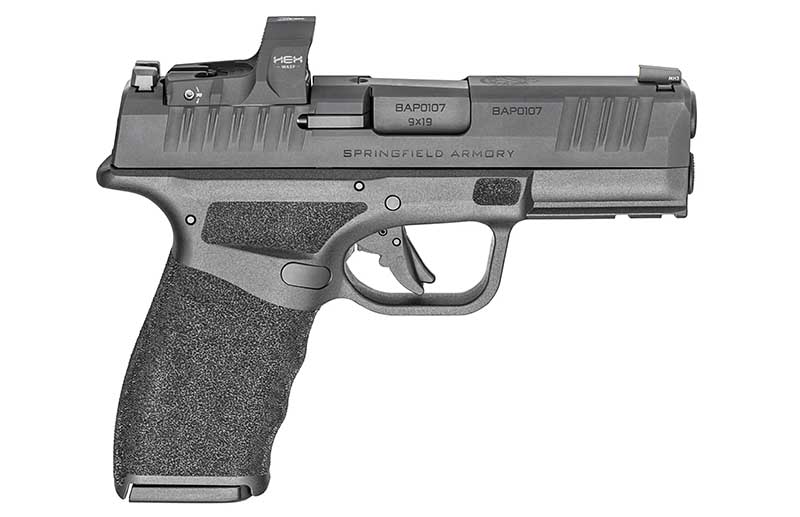
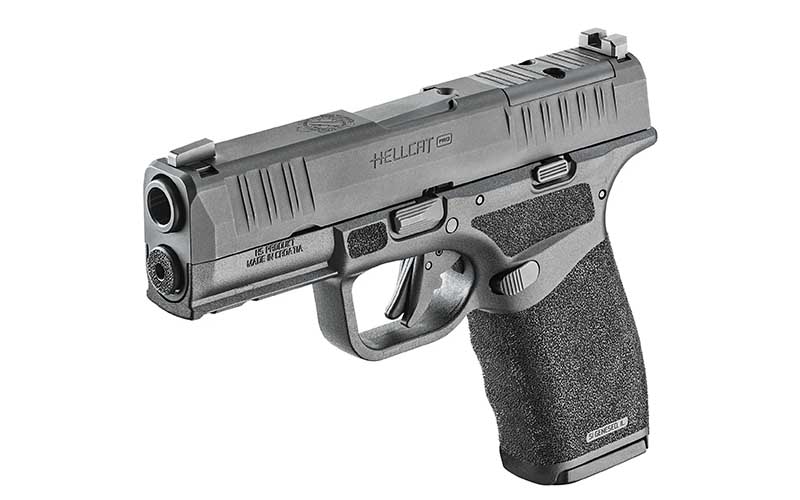
XS Night Sights Now Available For Springfield Hellcat OSP

0

XS Sights have just expanded their popular night sight line to include the Springfield Hellcat OSP, giving you an edge in any lighting condition.

As one of the most popular new carry pistols on the market, it's only logical that XS Sights would expand their line of night sights to include the Springfield Hellcat OSP. Despite being optics-ready, plenty of those who carry a Hellcat OSP choose to do so without a red dot sight. Whether you carry yours with an optic or not, the addition of night sights could provide a big advantage in any lighting condition.

XS Sights hellcat feature

Despite what their name implies, night sights can benefit their user regardless of the time of day or ambient light level. XS Sights night sights are powered not only by tritium, but by their proprietary “glow dot” technology that further aids visibility. This feature combined with the choice of different sight styles make XS Sights a definitive upgrade over the stock irons and will result in faster target acquisition for most shooters.

Even those who carry their Hellcat OSP with a red dot could benefit from the addition of XS Sights. They are low-profile sights that provide a 1/3rd co-witness when used with the Shield SMSc optic. The addition of tritium rear sights in front of the red dot can again lead to faster target acquisition by assisting the shooter to find their red dot faster upon drawing.

XS Sights hellcat RD3

The night sights available for the Hellcat OSP come in two different styles with two color options for each. Depending on your preferences, you could equip your Hellcat with either a DXT2 Big Dot in yellow or orange, or with an R3D in orange or green. The DXT2 uses a dot-the-“i” sight picture where the rear sight has a single vertical line that must be aligned with the front sight’s dot, and the R3D is a just traditional 3-dot sight.

XS Sights hellcat DXT2

MSRP ranges from $110 to $132 and all models include a 10-year warranty.

For more information, please visit xssights.com.


More On Handgun Sights:

What To Know When Buying A G3

0

Everything you need to know about buying, modifying and owning an H&K G3 rifle in the current gun market.


The H&K G3 and FN FAL are the two most iconic, prolific and functional battle rifles to come out of the Cold War. While the FAL managed to reach a more symbolic status, the G3 rifle managed to stay in wider service for longer, and with a higher average satisfaction level from its users. Their rugged reliability and relatively low cost have kept G3s in service with many large but less wealthy nations like Turkey and Mexico, while the platform’s inherent modularity has also prolonged its lifespan with groups like the Swedish Home Guard. Whether you’re interested in a G3 rifle as a historical novelty or as a serious shooter, there are options available, but there are some important things to know before diving headfirst into the platform.

GI PTR 100
GI PTR 100. Photo: PTR.

Collecting The G3 Rifle

For those looking to round off their Cold War small arms collection with a G3, there have been several enticing options imported over the years. Like with many firearms, however, their authenticity directly scales with their price. In the early 1960s, shortly after the G3 was put into military service, semi-auto H&K rifles were made for export to the United States and elsewhere. They were imported first by Golden State Arms Co., then SACO and eventually H&K themselves before the model was banned by executive order in 1989. The rifles imported during this period and by these companies were the only H&K-made G3s to enter the United States, and whether they’re marked as a G3, HK41, HK91 or SAR9, these rifles are about as authentic as they come, and they all bear price tags to match.

Early HK G3, RIA
First-batch H&K G3 import. Photo: Rock Island Auction Company.

Collectors who appreciate authenticity but aren’t quite rich enough to afford a German-made example can turn to other licensed imports. Still expensive, but not as much as genuine H&Ks, there are Portuguese and Greek-made G3 rifle imports known as the FMP G3 and SAR-3, respectively. The largest difference between these guns and the German-made ones is the roll mark, so you decide how much that is worth to you.

When it comes to collectible G3 imports in this category, the further back you go the closer it will be to the original military pattern, with incremental changes and updates having been made along the way. The only examples in the States that are more authentic than the early 60s semi-auto HK imports are genuine military G3s registered under the NFA.

Greek SAR 3 G3
Greek SAR 3 G3 Rifle. Photo: Rock Island Auction Company.

Buying A G3 Rifle To Shoot

Some very dedicated H&K fans in America would cringe at the thought of shooting some of the rarer models mentioned above. With their collectability relegating most authentic G3s to safe queen status, it falls onto other G3 clones to be shooters.

The bulk of the rifles in this category will be dedicated to PTR Industries, the company responsible for keeping the G3 platform alive in America. Built using HK-licensed tooling purchased from Portugal, the company really took off after the Assault Weapon Ban was allowed to sunset in 2004. Finally able to produce and sell clone-correct semi-auto G3s, PTR eventually transitioned from using a mix of imported surplus and new parts to their guns being 100% made in-house.

PTR makes several G3 rifle and pistol variants to suit different needs. The GI PTR 100 is their most historically accurate G3 clone, featuring no optics rail, an original “SEF” steel lower receiver and surplus green German furniture. Other variants feature a welded-on top Picatinny rail, black furniture and polymer “navy” lower. Barrels are available in either the original 18-inch configuration, 16-inch or even 8.5-inches in a pistol format. These options from PTR give the freedom to choose between a classic Cold War-style setup or a G3 rifle that’s ready to be brought into the 21st century.

FR PTR 102
FR PTR 102. Photo: PTR.

The only other shooter-grade G3s in the States worth mentioning are the scantly imported Zenith clones from Turkey and the pseudo-G3 C308 builds from Century Arms that use a combination of CETME and PTR-made components.

Modifying The Rifle

The G3 rifle platform is praised for its high level of modularity despite its design dating back to the 1950s. That being said, it is still not as modular as an AR and some considerations must be made before purchasing a base rifle. Based on the direction of modification and intended use of the gun, the user will want to consider the barrel length, welded optics rail and lower receiver style before committing to a specific model. Even when only considering the options available from PTR, this can enable the user to configure their G3 into everything ranging from a CQC weapon to a designated marksman rifle.

Due to its longevity of service in different armed forces across the world, the G3 has more modern upgrade options available to it than the FN FAL. There are modern free-floated handguards that enable the mounting of bipods, lights or lasers, as well as modern stocks that can majorly improve the ergonomics when the rifle is used with an optic. Some models of PTR come with modernized handguards straight from the factory, but the company leading the charge of G3 modernization is Spuhr out of Sweden. Their products have been purchased by the Swedish government on a large scale for modernizing their home guard’s issued G3s. Spuhr furniture is quite expensive, but it's also the objectively best upgrade package for the G3 currently on the market. For those who plan on running an optic on their G3, the addition of a Spuhr stock would be enough to majorly overhaul the platform’s ergonomics and usability.

Spuhr G3
G3 rifle with optic and Spuhr stock and handguard. Photo: Spuhr.

Whether you want a classic Bundeswehr beauty to hang on your wall or a serious fighting rifle, there’s a G3 rifle out there for you. As shooters, understand that they will likely never beat a modern AR-10 in any metric besides perhaps reliability, but that doesn’t mean they aren’t worth considering. Surplus G3 magazines are still abundant and cheap and the rifles are known for eating any ammo you feed them, no matter how dirty. Whether you find yourself an original German, Greek or Portuguese example or an American-made PTR, expect it to be a very enjoyable gun that will likely stay in common use for quite some time.


More On Battle Rifles:

SilencerCo Launches The Hybrid 46M Big Bore Suppressor

0

SilencerCo’s newest suppressor, the Hybrid 46M, brings modularity to an already versatile design and is ready to be thrown on just about any centerfire gun.

Building off of their already popular Hybrid 46 universal suppressor, SilencerCo has just released the new and improved Hybrid 46M. Offering the same caliber and platform versatility as the original as well as ruggedness, the Hybrid 46M is ready to mount to nearly any centerfire rifle or pistol to bring down its sound signature. While the standard Hybrid 46 could also be used on handguns, its lack of modularity left it quite long and heavy. The greatest advantage of the Hybrid 46M is its even greater level of versatility, now capable of being configured in either a long or short configuration. This allows the 46M to excel regardless of the intended host platform.

Hybrid-46M-short-and-long

The versatile nature of the Hybrid 46M means it has a bore large enough to accommodate popular big bore calibers ranging from .45 ACP to .460 Weatherby Magnum. This means that while the Hybrid 46 series can be used on a wider variety of weapons and calibers, it won’t be as efficient at suppressing the smaller ones. A .30 caliber front cap is also included, however, to help reduce noise as much as possible when firing smaller projectiles.

Dewie Vieira, Senior Product Development Specialist at SilencerCo, had this to say on their newest can:

The Hybrid 46M is the perfect tool for shooters hoping to suppress a variety of calibers on both pistols and rifles with only one suppressor…It’s the first modular big bore suppressor ever; it’s the answer for those who want to suppress every small and large bore caliber.

Compatible with virtually all popular suppressor mounts, the Hybrid 46M can likely be be mated to every centerfire weapon in your arsenal. It comes with a Charlie ASR mount in the box, but can also be attached via direct thread, pistons, muzzle devices or a tri-lug.

Hybrid-46M-AR

Constructed using titanium, Inconel and heat-treated steel, the 46M is rated for fully automatic fire and can be expected to be as durable as SilencerCo’s other similar offerings. With an MSRP of $1,117, this may now be the most enticing option for the prospective one-can-man.

For more information on SilencerCo, please visit silencerco.com.


Get More Suppressor Info:

Handi-Racker: Lending A Third Hand

1

A Little Extra Help: Handi-Racker.

Back when I was in martial arts, we worked hard to improve hand strength. Knuckle push-ups, fingertip push-ups and tossing bags of sand back and forth were standard practice, and we were dedicated. Not everyone can do that, and not everyone has the option of increasing hand strength. For a lot of people, what they have is what they have. And if that isn’t enough to reliably cycle the slide on a pistol, they have a problem.

Slide the slide into the Handi-Racker, place against a safe, immovable object and push. Instead of depending on hand strength, you use body mass to cycle the slide.

Well, there’s a solution.

Handi-Racker to the rescue. The idea is simple: The Handi-Racker, which comes in three sizes to match your pistol, acts as a third hand. There’s a slot in the bottom edge with a pinched-in middle. The two ends are different widths, so you can match pretty much any slide size with one or another Handi-Racker. There’s even one for the oddly shaped Beretta slide.

To use it is simple. Place the Handi-Racker, groove-side down, over the front of the slide, parallel to the barrel. Hold it in place with your left hand (left-handers, you know the drill, use your right) and with your right hand on the pistol as if you were shooting (but finger off the trigger, remember!) push the pistol forward.

The big advantage here is dual: You can put your weight behind getting the slide cycled, unlike pulling. And, you have a full grip of the pistol, unlike the fingertips-grab that the usual methods afford you. You use body mass, not grip strength, to cycle the slide.

You can use a wall, a post, a tree … anything that keeps the muzzle in a safe direction. And then, to fully chamber the round you’ve gotten up from the magazine, just hold the pistol in place and lift the Handi-Racker.

The process also works to unload. Drop the magazine first, and then use the Handi-Racker the same way. Once you’ve picked up the ejected round, insert an empty magazine, repeat and voila, the slide is locked to the rear.

The Handi-Racker comes in sizes color-coded for your pistol fit. The bright yellow is the one for full-sized pistols.

There’s still one more bonus to be found using the Handi-Racker. You can cycle the slide, load or unload, and not risk having any part of your hand in front of the muzzle. Also, you don’t point it at anyone else, as long as you select an appropriate surface to rack on. You can even cycle it vertically, muzzle-down, using a sturdy table.

Too many times I’ve seen new shooters, or those with low hand strength, struggling with a pistol at the range, inadvertently pointing the muzzle to the side, to get more leverage. The Handi-Racker provides the leverage for you.

For someone who wants a defensive tool but finds themselves in the pistol-shooting limbo of being strong enough to shoot, but not entirely confident in hand strength to cycle for loading or unloading, the Handi-Racker is perfect. Not everyone who is limited in hand strength is all that comfortable depending on the effectiveness of a .32 or .380. This isn’t just the elderly, if that’s what you’re thinking; someone with repetitive motion injury might be strong enough to shoot, but not have enough grip strength to grab a slick steel slide, even with cocking serrations machined into it.

And for those who were thinking of the elderly, consider this: We all get old. What force I used to be able to grip with (almost tear your skin off) I can’t do now. A half-century can do that.

Handi-Racker solves the problem many already have—and for not much coin at only $25.

For more information on the Handi-Racker, please visit handi-racker.com.

Editor's Note: This article originally appeared in the January 2021 issue of Gun Digest the Magazine.


Find More Gun Gear:

Steiner Releases H35 Nighthunter Handheld Thermal Monocular

0

Durable and capable of producing crisp images on the darkest of nights, the Steiner H35 Nighthunter lives up to its name.

When it comes to optics, glass or imaging devices, Steiner knows their stuff. Familiar with making products that are tough and functional enough to be used by first-world militaries, Steiner Optics of Germany understands that those who purchase their gear expect it to work well and for a long time. Their H35 Nighthunter handheld thermal monocular is no different. Designed to withstand the utmost abuse in the field and still produce crisp and clear images in the darkest conditions, anyone who hunts in the night would appreciate what the H35 Nighthunter has to offer.

H35 Nighthunter

Good Software


When Steiner claims that the H35 Nighthunter has “Quantum Vision”, what they’re trying to say is that the device is powered by some very sophisticated software. The device’s 640×512 thermal sensor feeds into a high-resolution 1280×960 LCOS display. The H35’s ultra-fast computing and refresh rate allow the user to see clear images of moving targets with no lag, even in changing thermal conditions. The output is also customizable, with various choices of modes and color palettes. This means that unlike with lower-end thermal devices, the H35 Nighthunter can display smooth, real-time images while maintaining a high resolution output.

It’s powered by a long-lasting and rechargeable internal battery and can record and store videos with its 16 GB of built-in storage. The H35 Nighthunter can also be paired with the Steiner Connect app on a smartphone for an added level of control.

Steiner H35

Good Hardware


Good software is worthless on a device like this in the field unless it is protected by some equally impressive hardware. Built to be military-tough, the H35 Nighthunter housing is made using Makrolon. This means that it’s water-resistant, shockproof and capable of operating in temperatures ranging from 14 to 122 degrees Fahrenheit.

The optic is controlled by a few simple buttons on top that have been molded into the housing to protect against the elements. The buttons are used to power the device on and off, control the digital zoom and begin recording the display. The objective focus can also be manually adjusted.

H35 Nighthunter feature

For those in need of a rugged and capable thermal imaging device, the Steiner H35 Nighthunter should be a serious contender. It has an MSRP of $4,799 and is available now.

For more on Steiner Optics, please visit steiner-optics.com.


More Thermal Optics

First Look: Big Daddy Unlimited’s Wide Open Trigger

3

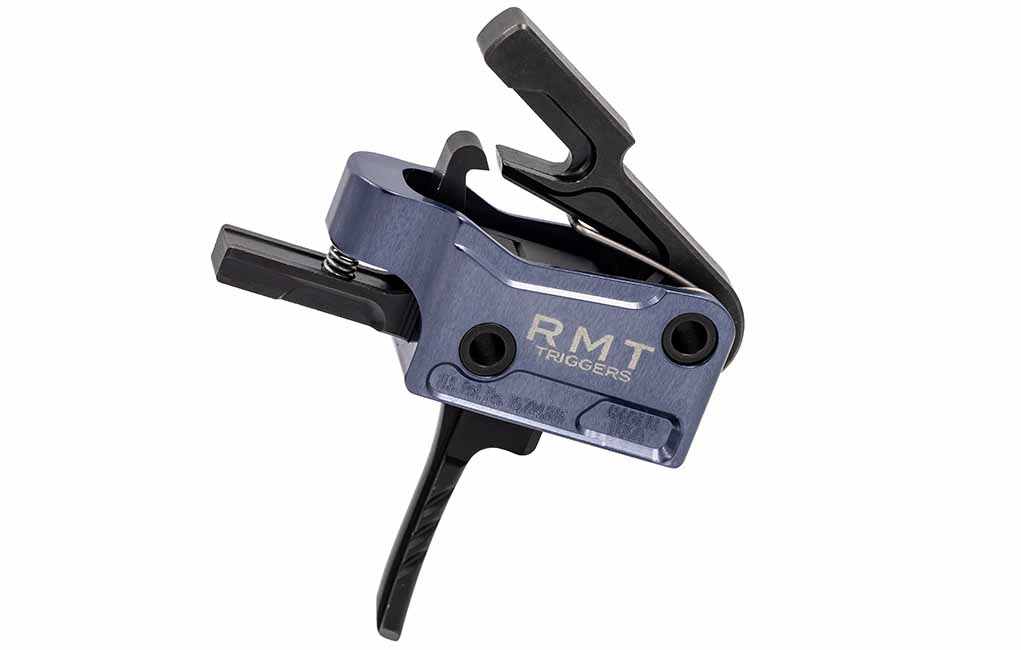
Big Daddy Unlimited’s Wide Open Trigger is a drop-in, plug-and-play fire control group that can raise your AR’s fire rate to controversial levels.


Whether you call it hard-reset or forced-reset, the end result is mostly the same—an AR-15 that can fire as fast as the gun can cycle. Rare Breed Triggers has already been taken to court over accusations of their own similar device being a machinegun, but the facts seem to be against the ATF’s claims. This is because despite the massively increased rate of fire enabled by triggers of this style, there is still only one shot fired per pull of the trigger—falling under the government’s own definition of a semi-automatic firearm. Big Daddy Unlimited’s Wide Open Trigger accomplishes this by using the energy of the bolt to compress a “spring carrier” which in turn forces the trigger forward into a neutral position. In practice, this means that a shooter can apply force to the trigger with their shooting finger and achieve a rate of fire similar to a fully automatic rifle while still complying with the law.

BDU WOT

Co-founder of Big Daddy Unlimited, Tony McKnight, had this to say about the WOT:

The Wide Open Trigger is yet another revolutionary new product taking the firearms industry by storm as the first true plug-and-play, drop-in AR-15 hard-reset trigger. It’s extremely rugged and reliable, and it’s been tested and warrantied for more than 10,000 rounds.

BDU claims that the Wide Open Trigger can be dropped into and reliably used in any existing AR-15 that has an M16 bolt carrier group and an H2 or H3 buffer. No other fitment or smithing is required. Once installed, this two-stage trigger should offer a very smooth and crisp pull. The Wide Open Trigger was designed for use with .223 Rem/5.56 NATO, but it can also be made to work with 300 BLK and 9mm as well.

BDU WOT

The trigger was engineered using incredibly durable Hardox steel, making it extremely rugged and long-lasting. This has allowed the WOT to be tested and warrantied for up to 10,000 rounds—something that can’t be said about similar products on the market. The Wide Open Trigger is available and shipping now.

For more information on Big Daddy Unlimited, please visit bigdaddyunlimited.com.


More On AR Triggers

Palmetto State Armory Spotlight: Keeping AKs Accessible And Interesting

0

Palmetto State Armory continues to expand their PSAK-47 and PSAK-74 lines with interesting rifles, pistols and parts that won’t break the bank.

Palmetto State Armory AKs have been a topic of debate in the gun community since they were first announced over six years ago. Between testing data, anecdotal evidence and pure hearsay, everyone has their own opinion on the quality PSA’s products. Regardless of what side of the spectrum you fall on, it’s objectively true that the quality of PSAK-47 rifles has gone up since their initial release in 2015. Their constant attempts to improve, innovate and respond to market demands show that PSA truly is dedicated to the AK platform, making them a worthy company to keep an eye on for any Kalashnikov enthusiast. Here are just a few of PSA’s interesting new and upcoming AK products:

Romanian PSAK-47 Kit Builds

While the quality of PSA AK rifles is a contentious topic, all sides seem to agree that they have substantially improved over the years. The first couple generations of PSAK were as rife with issues as any other 100% American-made Kalashnikov, but their more recent examples have garnered a dedicated following who believe that their quality is now up to snuff. Regardless of your opinion on the matter, few would disagree that original Commbloc military factories like Cugir can make parts of even higher quality due to their lineage and cumulative experience. For those who are looking for an AK in the current market that offers a good balance between quality and price, PSA’s new Romanian kit builds are worth looking at.

PSAK Romanian

Having purchased and imported a large quantity of Romanian PM md. 63 and 65 parts kits, PSA is now working to build them into complete rifles. Offered in a variety of configurations at different price points, the Romanian PSAK-47 kits feature almost all Romanian-made parts. The MSRP for the Romanian PSAK-47s starts at $849 and goes up depending on the furniture, barrel and trigger group options.

DIY PSAK-47 Build Kits

For those who trust the quality of all of PSA’s components and are interested in completing a build themselves, they have some new options available for that as well. They have several rifle kits and one AK pistol kit ready to purchase and assemble, and unlike traditional AK build kits that require things like pressing barrels and installing rivets, these kits are pre-barreled receivers that any layman can finish with ease. All these require to complete are a fire control group and a set of furniture. PSA has several different packages of furniture sets and trigger groups available to complete one of these kits, but surplus or other aftermarket parts could be used as well. MSRP for the kits starts at $549.99 and goes up to $849.99 depending on options.

PSA DIY kits

Russian PSAK-47 Kit Builds

In a similar vein to their Romanian kit builds, PSA has recently announced that they will be selling original Soviet Russian AK parts kit builds as well. Given the rarity of genuine Russian AK kits in America, when PSA finally releases these they will undoubtedly be more expensive and in shorter supply than their Romanian options. Dubbed the SA-47, these kits will be using Tula parts kits on American-made PSA receivers along with a few other minor components. These rifles will certainly be more appealing to collectors than shooters, but it would still be sad to see pieces of history like this ruined by the subpar build quality. Here’s to hoping that PSA does these rare kits service by turning them into some beautiful but also functional rifles. The MSRP or release date are still unknown.

A bonus from their recent importation efforts includes some original collectible Russian AK mags that are currently for sale as well.

PSAK-SA47-Tula

PSA AK-105

Despite the shaky release of their first AK-74 and a very uncertain future regarding 5.45 availability, PSA is still going all-in on their PSAK-74 project. Fans of the platform were worried that the recent Russian ammo ban would be the final nail in the coffin for 5.45×39, but PSA is hedging their bets on another country picking up the supply to keep the caliber alive. AK-74s still have quite a bit of interest in the States, and as long as ammo is available one can expect that people will want the rifles as well. With virtually no 5.45 guns being imported at the moment, it really does seem to be up to PSA to fill that void. Hopefully, the mistakes seen on their first batch of AK-74s that were released last year have provided them with insight on how to make the necessary improvements. While the future of PSA AK-74s remains uncertain, the company recently teased on social media that their AK-105 pistol clone is set to release “VERY soon”.

PSA AK 105

Despite some speculation following the Russian ammo ban, it seems that AKs aren’t going anywhere in the American firearms market. PSA has demonstrated their dedication to the platform through their continued release of new and interesting AK rifles and accessories, and it doesn’t look like they plan on stopping anytime soon. From simple accessories like reproduction furniture and magazines to complete rifles, PSA likely has something of interest for every AK enthusiast out there.

For more information on PSA, please visit palmettostatearmory.com.


More AK Stuff

Precision Rifle Upgrade: From Stock To Sniper Superstar

0

No need to go top shelf out of the gates. Invest in the right precision rifle upgrades you can take a base model and go the distance.

What Are The Main Precision Rifle Upgrades You Should Focus On:

I look at my rifles like a 350 Chevy—tons of aftermarket parts and the ability to modify it to my heart’s content. I have no problem replacing, modifying and adjusting the weapon system to meet my personal needs. After all, everyone is different; our needs change, so adjusting the rifle to fit the mission is essential in my mind.

Precision Rifle Upgrade 4

I have a lot of videos on YouTube that demonstrate this very fact. If you look at the comment section, you’d think nobody ever burned out a barrel or decided to change a factory stock. Sure, I tend to modify the rifles all at once versus over time. But I have the luxury of access (getting precision rifle upgrades for me is very easy). I’m not saying you have to change everything all at once— heavens, no. You can make any amount of changes over time, so let’s look at the top-line elements that don’t require a gunsmith.

Trigger

Factory triggers can be an obstacle. They often have limited adjustment and are set very heavy for liability reasons. Getting an aftermarket trigger is a quick and straightforward way to improve your rifle accuracy. Trigger control is a fundamental of marksmanship. Having a crisp, no-influence break is vital to proper shot execution. Better triggers give you more adjustability; more adjustments mean it suits the shooter better.

I look at rifle set up the same way I look at my car. I see the stocks as the car seats and the scope as my mirrors. The more adjustability in those I have, the more comfort on those trips.

Stocks

We save money by purchasing factory rifles. Those factory rifles often ship with very basic stocks. The stock design favored by companies focuses more on hunting and shooting standing. Very few of us want to shoot unsupported standing anymore. We want to maximize accuracy, so we need to support the rifle. For many, that means a bench; others tend to go prone. The standing stock is a compromise in these positions.

More adjustability means more comfort. I want to fit the stock to the shooter’s body. I want to look at my mission to maximize those adjustments. Will I be shooting positional? I might want to shorten my length of pull. Is this designed for F Class? Maybe I need a flat bottom.

I set the stock up before mounting my scope with me in position. I choose stocks with tool-free adjustments so I can manage them on the fly.

Aftermarket triggers are an easy way to change the feel of the rifle with minimal cost and relative ease.

Bedding is no longer a top-line consideration, thanks to internal chassis systems and computer fitting. You can buy a well-made barreled action from a famous gunsmith and drop it in a stock at home. This saves a ton of time and money.
Do your homework; study the features and understand how those features add or subtract from your mission.

Bipods

I know it’ll sound like a broken record here, but bipods matter. Don’t look at them as an afterthought. They control a lot; bipods adjust the system for the shooter. If you have a pain in your neck, odds are your bipod is too low. If you’re canting the rifle, a proper locking bipod will stop that action from taking place. We have different levels of cost and features, because it matters.

Choose the bipod based on the intended use. If you’re hunting in the thick brush, a bipod is a secondary consideration. The prone shot is the rare shot, so have something light just in case it will work.

But consider accuracy. We want a bipod large enough to support the rifle system, broad enough in its stance to give us lateral stability, and finally, a locking feature to prevent the rifle from canting.

The better the bipod, the easier it is to be stable and dependable behind the rifle. It focuses our effort on trigger control and sight picture because the negative consequences of a loose, poorly adjusted bipod are gone.

When it comes to shot-to-shot accuracy, the follow-up shot is critical. If the bipod doesn’t support the recoil pulse in a straight line, you cannot have consistency behind the rifle.

Barrels

This precision rifle upgrade can require a gunsmith to change. That said, we’re in the 2020s, and much of that has changed. You can buy pre-fit barrels, letting you swap both barrels and calibers at home.

Adjust the rifle to support the firing task. Choose upgrades and additions that support the shooter.

I admit it; my go-to rifles are switch barrel capable. I favor rifle systems that let me change barrels on the line in seconds. I don’t need a vice or a torque wrench; I can do it all with a 4mm Allen wrench.

Many modern rifles are moving to user-swappable systems. I see barrels the same way I look at the tires on my car. Tires are expendable and so are barrels.

A lot of new shooters want one caliber to last a lifetime. That was the mindset behind the 308. The odds of average Joe shooting 10,000 rounds are pretty rare. Today, with our 6.5s, burning a barrel out is going to happen closer to 3,000 rounds. You’ll change barrels at some point.

In terms of an upgrade path, I recommend new shooters fire 2,500 rounds from your 6.5 Creedmoor and then upgrade that factory barrel. That’s plenty of rounds to learn the caliber and few enough to know you’ll have to upgrade.

I’ve changed tires at 7,000 miles, because I didn’t like the ride. They weren’t cheap and I hated doing it, but new tires gave me a more comfortable ride and improved my mileage. Barrels are the heart of the system. They control accuracy beyond anything an action can do. The action is just a delivery device; the barrel controls the results.

More adjustability means more comfort. Aftermarket stocks fix the limitations of factory ones.

Aftermarket barrels are everywhere; a decent gunsmith using modern equipment, who isn’t months in demand, should be able to spin you up and mount a new one in less than 30 days. It’s a simple process. The days of waiting months or even years are over.

Time is Your Friend

Nobody is saying to follow my YouTube lead and swap out every part imaginable. You can change small things over time as money becomes available. I have a higher degree of access so that I can swap the kitchen sink without any penalty. I recommend you pick and choose your battles, but never fear replacing something that’s falling short.

Base factory rifles are just that: a base. You can build off that base at any point. Different models have different availability to aftermarket parts, so keep that in mind when choosing a brand. Fast, flat calibers put more stress on the base system. Aftermarket parts fix the shortcomings and give the end-user greater flexibility.

In this off-season, explore the precision rifle upgrade options available to you.

Editor's Note: This article originally appeared in the January 2021 issue of Gun Digest the Magazine.


Zero In On Precision Rifles:

The H&K G3: The World’s Most Successful Battle Rifle
5

H&K’s G3 Rifle is a rugged and reliable battle rifle that’s seen serious use since its adoption throughout today.

 
In many ways, Heckler & Koch’s G3 rifle may be the real “AK of the West.” While the FN FAL received the moniker “right arm of the free world” and reached a similarly symbolic status in the West as the Kalashnikov did in the East, mechanically speaking they are not so similar. Things like the FAL’s adjustable gas system and non-interchangeable parts between patterns make it far too finicky of a system to truly be compared to the AK, but the same can’t be said about the G3. More widely adopted, more reliable and simpler to produce than the FAL, the H&K G3 may be the battle rifle truly deserving of that comparison.
Military HK G3
Select-fire military H&K G3 rifle. Photo:Rock Island Auction Company.

Development


The roller-delayed blowback action that is at the heart of the G3 rifle was born in Germany, but it had to spend some time in France and Spain before finally returning home. You can read our history of the CETME Model 58 to learn about the team of Mauser engineers who eventually brought the platform to fruition.

The short version is that the Germans discovered the concept of roller-delayed blowback almost by accident while working on developments for the StG 44 and StG 45(M). The Mauser engineers responsible were not the only ones who saw this new system’s promise, so when Germany lost the war and their technology and knowledge were redistributed amongst the allies, the roller-delayed blowback action was saved from dying on the vine. The system’s original inventors were able to continue their work first in France under CEAM, and then in Spain under CETME. While the CETME saw some limited success, it wasn’t until its design was allowed to return to its homeland that the concept was fully realized under the roof of Heckler & Koch.

Those familiar with the CETME will know that the original design intention was to use an intermediate power cartridge as the StG 44 did to continue development of the assault rifle as a concept, but just like the FAL and M14, the final iterations of the CETME ended up being chambered for the new NATO standard—7.62x51mm. While it was America’s influence that led NATO to adopt the full-power cartridge, it was the Bundeswehr’s interest in the CETME platform and their insistence on NATO compliance that led to the most prolific CETME Model C variant.

In the early 1950s, German armed forces expressed interest in the Spanish-made CETME over the FAL, which they had recently adopted as the G1. Unable to procure the licensure from FN to produce FALs themselves, however, West Germany’s Bundeswehr began a new trial to find their next service rifle. It was here where the CETME was put to the test against not only the FAL, but the AR-10 and Sig SG 510 as well. For reasons ranging from technical to political to financial, the CETME was declared the winner. Troop trials were conducted, H&K continued development, and in 1959 after some minor upgrades and modifications, the Bundeswehr adopted the CETME 58 Model C under the name G3.

Early HK G3
Early H&K G3. Photo:Rock Island Auction Company.

Variants And Changes


When the G3 rifle was first adopted by the Bundeswehr, it was nearly indistinguishable from a Spanish-made CETME. This was mostly due to the initial use of wood furniture on both guns, something that would change to polymer on the G3 in the early 1960s. Other changes on the G3 from the CETME include the addition of classic HK-style drum sights and new fire control group internals.

Over the years H&K would continue the G3’s development, leading to variants with bipods, folding stocks and shortened barrels. The G3 rifle would also serve as the basis for the iconic PSG1 sniper rifle and HK21 general-purpose machine gun.

HK 91A3
H&K semi-auto G3A4 variant. Photo:Rock Island Auction Company.

Around the Globe


Like the AK, perhaps the biggest marker of the G3’s success comes from the sheer number of rifles that have been produced and proliferated over the years. Besides being made by H&K in Germany, licensed copies have also been produced by twelve other nations including Greece and Turkey. Over the years it has been adopted by more than 80 national armies and several non-state actors as well. While the FAL may have been initially adopted by more countries than the G3 rifle, the G3 has more active users today. Besides managing to stay in widespread service for longer than the FAL, recent photos from the world’s conflict zones also tell us that the G3 is still more prevalent amongst guerrillas as well.

Since at least the 1960s, the G3 rifle has made an appearance in most of the world’s significant conflicts. From various African bush wars, conflicts in Northern Ireland and the Global War on Terrorism, G3s have played a part.

portuguese G3
Portuguese soldier with G3 rifle during NATO training exercise. Photo: Wikipedia

The G3 rifle is still widely used today, whether it be by professional armies, insurgent forces or civilian sports shooters. The former two still do mostly due to their abundance and relative affordability, but they’re still regarded as being incredibly durable, reliable and decently accurate. Contemporary hobby shooters also appreciate the platform’s modularity and dirt-cheap magazines. Between old imports and commercial models, picking a G3 to own yourself can be complicated, but they still can make for an excellent battle rifle choice if you know what to look for. Between its practical qualities and historical charm, this classic .308-thumper would still be right at home in anyone’s arsenal today.


More On Battle Rifles:

MUST READ ARTICLES