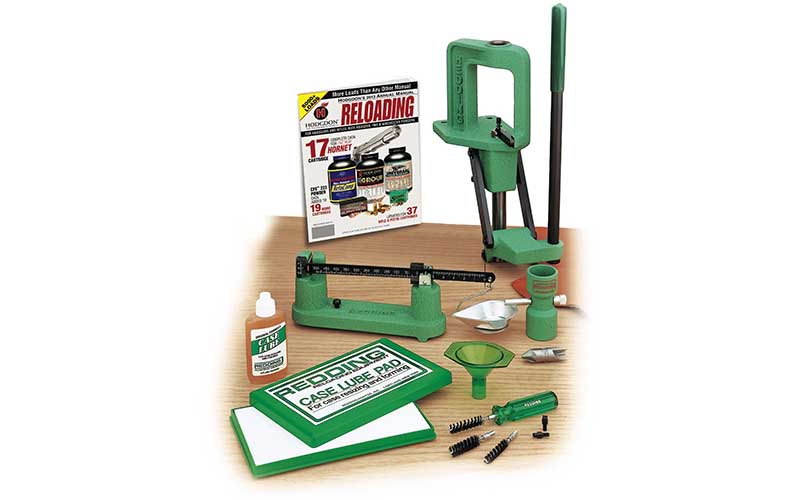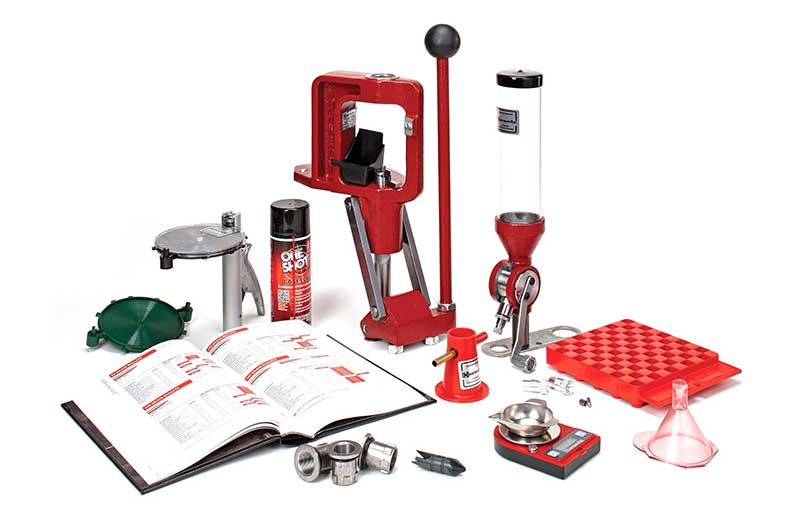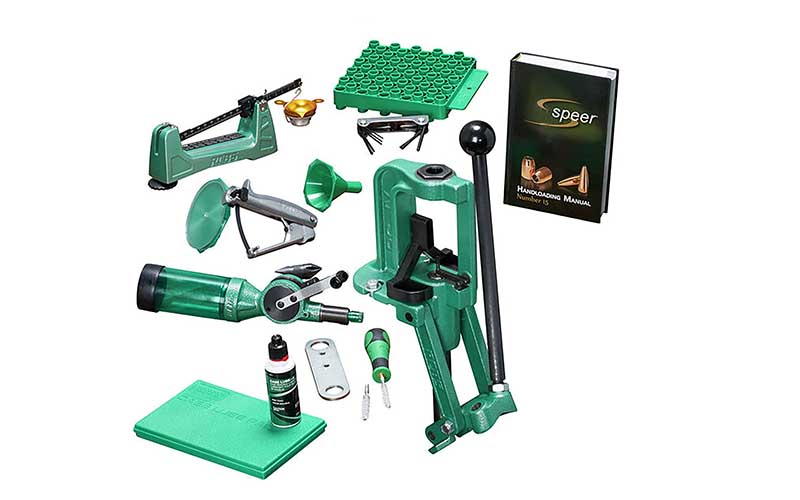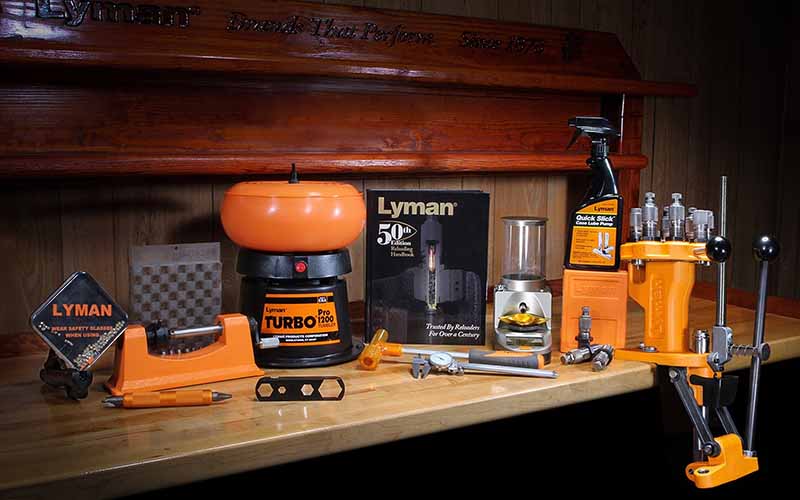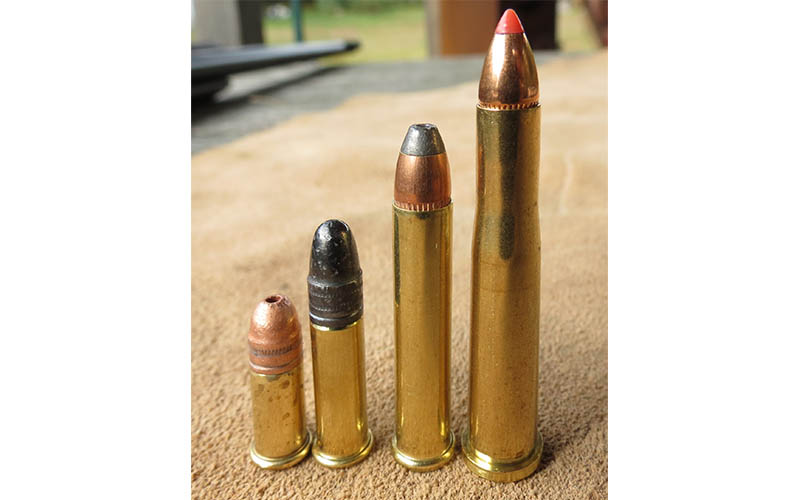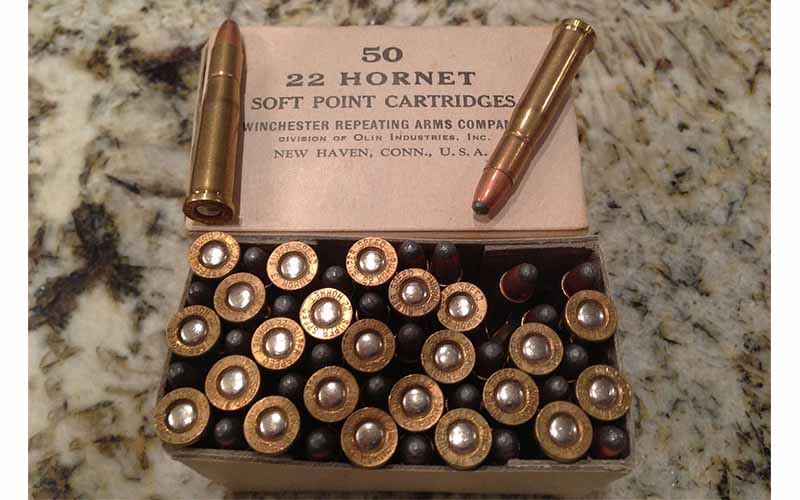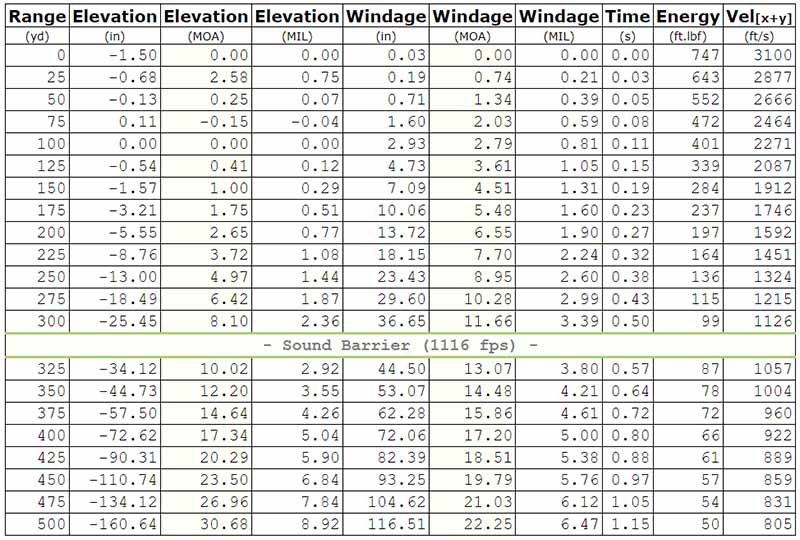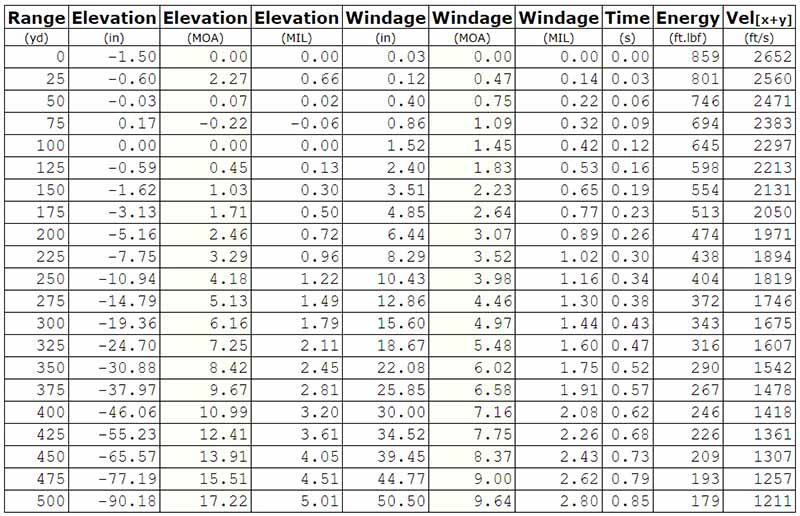
Regardless of how fancy your case trimmer is, here's why it's crucial that you trim cases to the exact proper length.
Bring fired cases back into spec for reloading, trimming cases can often seem like a chore. Without trimming the cases, things can go awry, and trimming your cases is an important part of keeping things as uniform as possible.
Our cases are made of brass for the malleable qualities of that metal; it’s strong enough to handle the rigors of day-to-day handling, yet soft enough to be able to be reformed. However, over the course of multiple firings and resizing, brass will stretch. Our cases tend to see the brass flow from the base of the case toward the mouth, lengthening the case. In many instances, that length will need to be trimmed to a uniform dimension.
Photo: Massaro Media Group.
Case Specifics
For the pistol cases, trimming is paramount. In most instances regarding the auto-loading cartridges, the case mouth is used for headspacing. While it doesn’t happen often, the potential is there to have the cases of the .45 ACP, .40 S&W, 9mm Luger and their ilk to stretch to the point where the case length is too long for the chamber. If I’ve used my pistol cases for a number of firings, I’ll often check the length to see if they need a quick trim.
Revolver cases, on the other hand, definitely need to be trimmed to a uniform length, as they’ll use a roll crimp to keep the bullet firmly in place, more often than not. That roll crimp is usually applied via a small shelf in the inside of the seating die. As that die will be set in a stationary position, you can easily envision how a case that’s too short will give a very light crimp and how a case that’s too long will put an excess crimp, rolling the case mouth much too hard. But once you’ve got your cases trimmed to a uniform length, the roll crimp can be set to give the perfect amount of crimp to hold the projectiles with the same amount of force each time.
The same principle outlined above for the revolvers can be applied to the straight-walled rifle cases, as the bullets will need to be crimped in place to prevent them from either pulling out of the case mouth under recoil in the magazine or being pushed further into the case. This can be crucial with those cartridges destined for lever-action rifles with tubular magazines, as the bullet of one cartridge is pushed against the base of the cartridge in front of it and if that bullet isn’t properly crimped, you’ll see it move further into the case after being loaded several times. Uniform case length equals a uniform roll crimp and that can make a big difference in pressures and velocity.
Trimming Tools
Looking at the tools available for trimming cases, you’ll see a diverse selection, from the simplest hand tools to motor-driven, micrometer-adjustable machines. Among the simplest—and yet wonderfully effective—is the Lee Case Length Gauge and Trimmer (street price less than $25), which uses a cartridge-specific shell holder and a length/caliber-specific gauge, combined with a cutter to trim your case to proper SAAMI-approved case length. It requires a bit of elbow grease, though the unit can easily be adapted to an electric drill to make life easier. The length gauge is piloted through the case’s flash hole, so you get a nice, square cut.
There’s also a hand-cranked case trimmer, looking much like a conventional pencil sharpener. The base of the case is held by a collet, and the case mouth is held against a cutter. The user can adjust the setup to give a specified length; the case mouth is trimmed when the user cranks the handle. I like the Redding 2400 Match Precision Case Trimmer (street price about $205)—though there are numerous models from different reloading manufacturers—for both its precision and ease of use.
Redding 2400 Trimmer. Photo: Massaro Media Group.
The motor-driven trimming tools are quite fancy and can trim a lot of brass without wearing out your wrists and fingers. I have a micrometer adjustable RCBS Universal Case Prep Station (street price about $550) with a variable speed motor that has more than earned its keep over the years. It comes in handy when I’m converting brass from one cartridge to another. The spring-loaded jaws will handle most cartridges.
And the micrometer allows the user to quickly dial in the amount to be trimmed off. A caliber-specific pilot keeps the case as square to the cutter face as possible for the most uniform cut, and the motor is cut off when the handle is depressed to release the cartridge from those spring-loaded jaws.
While these are just three examples of different types of trimmers—and there are a good number of models to choose from—it should illustrate what’s available. Think about the volume of reloading you intend to do; if it entails just a couple of different calibers, the simpler setups might be the wiser investment. If you end up loading for all sorts of guns, one of the faster units might make complete sense.
A Note on Length
One last thing: There’s often a debate about what length to trim your cartridges. You may see the SAAMI-specified length listed as one dimension and then a “trim to” dimension, which will be a bit shorter. I generally stick with the (longer) SAAMI dimension, as I often use new cases and don’t like heavily trimming new brass. In some instances, it reduces the neck length of a case (think .300 Winchester Magnum) with an already short neck. If you prefer to trim a bit shorter, in order to keep everything uniform—both new and previously fired cases—I won’t argue, but realize it can have a minor effect in some instances.
Editor's Note: This article originally appeared in the December 2021 issue of Gun Digest the Magazine.
Sometimes, more is less, and it can mean using big bore rifles for small pursuits.
The sun was still plenty bright, in spite of my watch indicating it was after 10 p.m. Such is the way of Alaska in June. The marten, which had been completely intrigued with my presence in the blind had abruptly decided it was time to split, indicating to me that something else was coming along.
In a matter of seconds, a good boar black bear came into the bait, in that silent mode that bears possess. I looked over at my guide, whose thumbs-up told me it was time to go to work. I settled the forend of the Bansner rifle over the railing of the blind, steadied the crosshairs just behind the boar’s shoulder and broke the trigger of the .404 Jeffery, sending a 450-grain Woodleigh Weldcore into the bear’s vitals. He didn’t go more than 30 yards.
An Alaskan black bear taken cleanly with a Bansner & Co. .404 Jeffery and Norma’s 450-grain Woodleigh Weldcore load. Photo: Massaro Media Group.
When I relate that story to other hunters, their eyebrows—often involuntarily—cock at the mention of the .404 Jeffery or the 450-grain Wood-leigh load. “You don’t need a .404 Jeffery to take a black bear!” That statement isn’t incorrect, but I was hunting coastal Alaska and had tags for both black bear and brown bear in my pocket. While that .404 might seem a bit much for a black bear, it’s perfectly acceptable for a brown bear.
Stretching out the .404 Jeffery at the SAAM shooting school in Barksdale, Texas. Even with a 2.5x scope, the author was able to routinely hit the 250-yard plate. Photo: Massaro Media Group.
I’m an unabashed fan of big-bore rifles and cartridges, especially those cartridges between the .375 H&H Magnum and the various .500s, with my favorites lying in the middle of that range. Most folks would associate those cartridges with African safari, or hunting the largest game species on Earth. But, if you spend any amount of time with them, you’ll realize they’re actually rather flexible and aren’t regulated to just the big bears, elephants and buffalo.
I’ve used the .375 H&H, .450-400 3-inch Nitro Express, .404 Jeffery, .416 Remington Magnum and .470 Nitro Express on the largest species, but I’ve also used almost all of them on species you’d regularly hunt with a .25-06 Remington, .270 Winchester or .30-06 Springfield. Sometimes, it was intentional, but most of the time it was because I was hunting in a dangerous game area, or because I took an animal as a target of opportunity.
The author at the bench, zeroing one of the most flexible combinations ever made: the Winchester Model 70 chambered in .375 H&H Magnum. Photo: Massaro Media Group.
When More is Less
While on safari in the Nyaminga block of Zambia’s Luangwa Valley—a huge concession teeming with elephant, buffalo and both the big cats—I carried my Winchester Model 70 in .416 Remington Magnum for the entire trip, which included a Cape buffalo and several plains game species. I could’ve easily used that .416 for the buffalo bull, and a .300 magnum or the like for the lighter species, but because of the makeup of the concession, your odds of seeing a diminutive bushbuck or impala are just as good as bumping a buffalo herd or a bachelor group of elephant. While I can take a warthog, kudu or impala with a .416 Remington Magnum, stopping a charging bull elephant with a .308 Winchester isn’t exactly a situation I want to be in.
The same situation occurred in Mozambique’s Coutada 11, when I was asked to cull a half-dozen reedbuck for the local village. My Heym Express .404 Jeffery was the only scoped rifle I had with me, so I made the best of the situation. Six reedbuck and a warthog couldn’t have cared less what cartridge I was using. My hunting buddy Mike McNulty was on safari with me in the Chirisa block of Zimbabwe, carrying his beloved Heym .505 Gibbs in pursuit of Cape buffalo, when an absolutely ancient bushbuck ram presented a brief opportunity. There wasn’t enough time to swap rifles—Mike’s tracker was carrying his .318 Westley Richards—so he had to use the big bore to make the shot.
The author used his Heym Express, in .404 Jeffery, to take this reedbuck ram at just under 200 yards. Photo: Massaro Media Group.
Other times I’ve carried a big bore for no other reason than I really enjoyed hunting with the rifle. Just last season I carried a Heym Model 26B over/under double rifle in .45-70 Government, as my hunting ground in the Catskill Mountains holds good numbers of both whitetail deer and black bear. The rifle balanced well, shot even better and I’m certain that the 300-grain bonded-core Federal bullet would handle the largest of either of those species. I took a dark-antlered mountain deer with a single shot, and the meat damage was less than what I’ve seen with common deer/bear cartridges.
The Heym Model 26B in .45-70 Government was light to carry, easy to shoot and plenty accurate. Photo: Massaro Media Group.
I’ve used the .375 H&H for common species with great effect. I used my old Model 70 Winchester for caribou in Quebec, and my pal Dave deMoulpied uses his Luxus Arms single shot for deer on a regular basis. In both instances, lighter bullets—250- and 235-grain bullets, respectively—were employed, and the .375 H&H shoots flatter than most folks would think.
The .375 H&H comes topped with a wide variety of bullets, from heavyweight round-nosed to light spitzer bullets. Photo: Massaro Media Group.
Taking a look at the Federal 250-grain Trophy Bonded Bear Claw load, which is a flat base spitzer with a middle-of-the-road G1 BC value of .340, and a muzzle velocity of 2,670 fps, you’ll get a feel for the performance of a cartridge which is absolutely suitable for elephant, yet can take deer, antelope, bear and elk. Using a 200-yard zero, yet will strike 9.6 inches low at 300 yards and 28.6 inches low at 400 yards, still cruising at 1,728 fps at that distance, retaining over 1,650 ft-lb of energy.
Compare that with the Federal .30-06 Springfield 200-grain Trophy Bonded Bear Claw load, which has a bit better B.C. (.395) and a muzzle velocity of 2,540 fps, and you’ll see the .30-06 drops about an inch more than the .375 H&H at the 300- and 400-yard marks, yet the .375 load has 300 more ft-lb at 400 yards.
Accuracy, Versatility and Flexibility
Does a .458 Lott make a good choice for a 400-yard elk rifle? Probably not. Should you choose to use a big bore in a situation that might not normally call for one, you’ll have to make some changes in bullet shape or weight, or simply realize the limitations of the rifle/cartridge combination. And, you’ll need a level of accuracy suitable for the species you’re hunting; while a double rifle that prints two bullets 3 inches apart at 75 yards might be perfectly suitable for elephant or buffalo, it might not be the optimum choice for 200-yard shots on feral hogs. So, being completely honest with yourself, make sure the accuracy level you can achieve with your big-bore rifle is compatible with your hunting situation.
The Cutting Edge Bullets 325-grain Safari Raptor in .416-inch diameter is a great lighter-weight bullet for the Rigby, Ruger or Remington Magnum. Photo: Massaro Media Group.
My Heym Express rifle, in .404 Jeffery, is currently topped with a Leupold fixed 2.5x scope, yet I’ve taken that rifle to the SAAM training course at the FTW Ranch in Barksdale, Texas, and repeatedly hit a 6-inch plate at 250 yards. The point being that the big-bore cartridges and rifles are often much more accurate than most people would believe.
The 9.3x62mm, .375 H&H Magnum, .375 Ruger, .404 Jeffery, .416 Rigby and .416 Remington Magnum—and there are others—can all deliver sub-MOA accuracy with a number of bullet weights. These rifles are often topped with a low-power scope for use on dangerous game animals at close ranges, as those scopes offer a wide field of view, but can benefit from a bit more magnification.
Where there are a good many round-nose or flat-nose bullets available for the big-bore cartridges, there are also many good spitzer designs, which will help flatten the trajectory and maximize the velocity of the big bores. A .375 H&H with a 300-grain spitzer bullet is actually rather flat-shooting—on par with a .30-06 Springfield with a 180-grain bullet—and one of the .416s with a 400-grain spitzer isn’t all that much worse.
The Barnes 235-grain TSX and Nosler 260-grain AccuBond are two great lighter bullet choices for the .375s. Photo: Massaro Media Group.
Should you have the inclination to use your big bore on lighter species without the possibility of encountering the larger species for which they are so well-suited, look to the light-for-caliber bullets within each cartridge.
For example, the 235-, 250- and 260-grain bullets in the .375 H&H, .375 Ruger and .375 Weatherby Magnum cartridges can greatly extend the versatility of these cartridges. The Barnes TSX 235-grain, the Sierra GameKing 250-grain and the Nosler AccuBond 260-grain bullets come immediately to mind.
The .416s can take full advantage of the 325- and 350-grain bullets—like the Cutting Edge Raptor, Woodleigh Weldcore and Swift A-Frame—and the .404s (Jeffery and Dakota) can do the same.
The Remington 350-grain Swift A-Frame load for the .416 Remington Magnum is a great choice for those wanting to use the big bore on lighter game like black bears or elk, or for moose and brown bears in Alaska. Photo: Massaro Media Group.
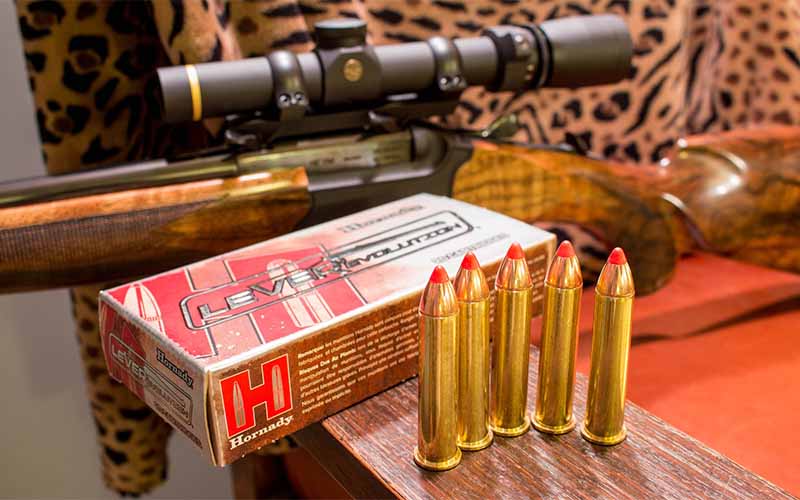
The .458s can use those 300-grain bullets that function so well in the .45-70 Government, though because of the higher velocity, I’d recommend bullets like the 300-grain Federal Fusion with its bonded core, or the Hornady 325-grain FTX bullet used in their LeveRevolution ammo, which is available in component form and can be loaded in the .458 Winchester Magnum, .458 Lott, .450 Rigby Magnum and .450 Nitro Express.
Is it Worthwhile?
In the grand scheme of things, what are the benefits of using what some consider to be a “shoulder-fired cannon” on smaller game? Well, I’m not about to tell you that the larger cartridges are necessary, but I do feel that dead is dead, and I’ve never seen an animal too dead.
The 325-grain Safari Raptor bullets from Pennsylvania’s Cutting Edge Bullets loaded to 2,500 fps in the .416 Rigby cartridge. Photo: Massaro Media Group.
But the true benefits of the practice are that you gain a whole lot of experience with your big-bore rifle long before you head off on an expensive safari or Alaskan hunt, no matter the destination. When you spend a considerable amount of time hunting with a particular rifle—including the loading, feeding, extracting, handling, etc., which happens each time you go afield—handling that rifle becomes almost second nature.
The feel of the trigger, the location and manipulation of the safety, the feel of the stock, sight picture, balance, swing, the operation of the optic on board; all these little points add up when it comes time to hunt dangerous game and use that rifle as if it were an extension of your body.
Editor's Note: This article originally appeared in the May 2021 issue of Gun Digest the Magazine.
Savage Arms has just announced the A22 Takedown, a new semi-auto .22 LR rimfire rifle that’s ready to be taken anywhere.
The Savage Arms A22 is a very popular semi-auto rimfire rifle. It’s been available in a few different configurations for some time now, but Savage has finally decided to introduce a more portable model with the release of the A22 Takedown.
Savage is calling the A22 Takedown a “go-anywhere rimfire rifle,” and its features suggest the same thing. The rifle’s barrel can be quickly and easily attached or detached with nothing more than a twist, breaking the package down into two pieces roughly 18 inches long. When assembled, it has an overall length of 36.875 inches and a weight of 6.3 pounds. Other features that are conducive to the A22 Takedown’s portability include general storage space in the pistol grip, magazine storage space in the buttstock and low-profile iron sights. The rifles are fed with 10-round rotary .22 LR magazines, and each gun also comes with a Picatinny rail segment for mounting optics and a user-adjustable AccuTrigger.
Beth Shimanski, Director of Marketing at Savage Arms, said this about the new rimfire:
No other rimfire rifles bring the versatility and flexibility of the A22 Takedown…Weighing in at only 6lbs and available in 22LR, this rifle is specifically designed to improve your outdoor adventures with the ability to easily transport it in your pack. Savage is thrilled to bring the A22 Takedown to the market this upcoming year.
Looking for your first handgun? New to concealed carry? We break down all the major types of pistols and revolvers to help find what’s best for you.
If you're new to handguns, trying to make sense of all the different kinds can make your head spin.
So, let's break down almost everything you might need to know, starting with an overview of all the major types of pistols and revolvers and finishing up with some awesome picks for the new shooter or concealed carrier.
Semi-Autos/Pistols Vs. Revolvers
Most handguns can be classified as either a semi-automatic pistol or a revolver.
Semi-auto pistols function by feeding bullets into the chamber of the barrel by taking them out of a magazine, a box with a spring in it that pushes the bullets up. The slide goes back over the magazine, the next bullet pops up into place, and the slide pushes it into the chamber as it goes back into battery. When a cartridge is fired, some of the energy works to send the slide rearward, ejecting the spent case while simultaneously picking up and loading a fresh round. In the past, weapons like these were often referred to as self-loading or autoloading, but today the most accepted term is semi-automatic.
A Dan Wesson TCP 1911 next to a J-Frame revolver.
A revolver has a cylinder attached to the gun, which spins as the hammer is cocked and/or the trigger is pulled. The cylinder holds the cartridges, and when it stops, aligns one of the bullets with the barrel. Revolvers majorly differ from semi-automatics in a couple of ways. Firstly, revolvers store their ammunition inside of a cylinder rather than a box magazine, with each cartridge independently held in its own chamber that is rotated in line with the barrel. Secondly, revolvers load their next round through mechanical actuation rather than through the energy of a fired cartridge. Depending on the exact type of revolver, the cylinder is rotated by either pulling the trigger or cocking the hammer.
Regardless of the type of pistol in question, however, something’s got to make it go bang.
Hammer-Fire Vs. Striker-Fire
What defines the “action” type on a handgun is what the internal parts do before igniting the bullet.
In all cases, the part that hits the bullet—the firing pin—is powered by spring tension, kind of like a mousetrap. That firing pin is launched into the primer of the bullet either by some manner of hammer (whether internal or external) or a striker.
Now, the key difference between all these systems is how much work the trigger does to compress that spring (if it compresses it at all).
Single-Action
Regardless of whether it’s a semi-auto or a revolver, single-action-only (SAO) hammer-fired guns need to be cocked before they can shoot. This is because, as the name implies, the triggers in these guns only perform a single action—releasing the hammer. When the hammer is cocked, the relevant spring is fully compressed and held in its place by a mechanical block called a sear.
When you pull the trigger, the sear releases the hammer into the firing pin and the primer detonates.
Some common single-action-only handguns you’re likely to still see include the 1911, the Browning Hi Power and the Colt SAA revolver.
A Colt SAA cocked and ready to fire.
Striker-Fire
Striker-fired guns don't have a hammer, but instead use a firing pin with an extra part on the end called a striker. The slide cycles and captures the firing pin, which is under full or partial (depending on the model) spring tension. Pulling the trigger trips the firing pin, which goes forward and detonates the primer. Striker-fired handguns are the most common type of pistol made today, and you’ll find the system in everything from Glocks to Sigs to Rugers.
A Mossberg MC1sc with its striker plate removed, giving access to the striker.
Double Action
In any double-action handgun, including both revolvers and semi-autos, the spring that powers the firing pin (or the hammer that hits it) is not compressed when the hammer is down, so there's no spring tension in the system. The force of pulling the trigger also compresses the spring, making the gun ready to fire. Because triggers in this type of gun perform two actions—cocking and releasing the hammer—they are called double-action.
A DA/SA SIG P226.
Most double-action guns are both double- and single-action (DA/SA), meaning they can be fired double-action when the hammer is down or single-action when it’s cocked. These include most modern revolvers and many semi-autos, especially the legacy Wonder Nines such as the Beretta 92, HK USP, CZ 75 and Sig Sauer P226 pistols.
There are also some double-action-only (DAO) handguns that don’t allow for the hammer to remain cocked. You have to fire every shot in double-action mode with a full press of the trigger.
Each of these action styles results in a different feeling trigger, and which one you will like best mostly comes down to personal preference.
Revolvers
Revolvers all started out as single-action systems, but today most revolvers are either the double-action type, or double-action-only with a shrouded hammer that's hidden inside the frame. DAO revolvers are typically compact, with the idea being to make them easier to draw from a pocket without snagging.
A Smith & Wesson Model 638 Bodyguard Airweight Stainless with a shrouded hammer.
While single-action revolvers are still in production, they’re generally either collectibles or for sports shooting or hunting. Any modern revolver designed for defensive use will be either DA/SA or DAO.
Safety Devices
Safety devices are either active—meaning you have to perform an action to disable the safety device—or passive, meaning the safety is deactivated as part of the normal course of firing the gun.
Active Safeties
Many types of pistols have a manual safety, also known as a thumb safety, which are pushed on or off. Some people don't care for them, but others prefer having positive control of the firing system.
Traditional DA/SA guns often have a control lever that acts as either a decocker—which safely lowers the hammer when the pistol is loaded—or a decocking safety which decocks the pistols and engages a safety device.
A CZ P-09 equipped with a decocking lever.
Active safeties add a layer of complexity, as you must put in sufficient practice time to be able to deactivate them reflexively as you draw. This doesn’t mean that guns with a manual safety are a bad choice, it’s just something to be aware of while browsing.
One more style worth mentioning is grip safeties, but they exist somewhere between active and passive. Grip safeties, like those found on the 1911, must be depressed before the gun can fire, but this is accomplished simply by grabbing the pistol with a normal firing grip.
A grip safety and manual thumb safety on a 1911.
Passive Safety
Passive safeties (such as those found on Glock triggers) are linked to the trigger system, rendering the gun incapable of being fired without pulling the trigger. These include firing pin blocks—literally a metal cylinder that blocks the firing pin—and the trigger bar system of striker-fired pistols.
Modern revolvers have a transfer bar, a tilting bar that sits between the firing pin in the frame and the hammer to prevent a possible slam-fire.
When a striker-fired pistol is at rest, the trigger bar doesn't connect to the sear. However, when you press the trigger, the trigger bar connects with the sear at the end of its travel, allowing the sear to release the firing pin and striker.
This makes striker-fired pistols inherently safer than some believe, but it's also the case that the trigger can be pulled if it snags on something, such as clothing. As with everything else, there are pros and cons to each style of safety.
Handgun Sizes
Another important consideration while browsing handguns is their size, as they can range from being truly tiny to genuine hand cannons. The following classifications are hardly scientific, but provide a general understanding of the different size categories out there.
Pocket Pistols
Pocket pistols include everything from tiny derringers to pocket .25, .32 and .380 autos. Barrel length is typically 2 inches or less.
Subcompact pistols are likewise small guns that are designed for easy concealed carry, but are more shootable than pocket pistols too. Barrel length is typically around 3 inches, and they are usually chambered for at least .380 ACP if not something larger. If it’s a new 9mm subcompact pistol with a decently high capacity, it may be described as a “micro 9” as well.
Popular examples of subcompact pistols include single-stack semi-autos like the S&W Shield and Glock 43, double-stack subcompacts like the Springfield Hellcat and Sig P365, and snubnose revolvers.
Compact Pistols
Compacts are just big enough to run like a service pistol, but just small enough to be relatively comfortable to carry. Common dimensions are a barrel length of 3.5 to 4 inches. This includes 3-inch medium frame revolvers, double-stack compacts like the Glock 19 and some traditional double-action compacts like the Sig Sauer P229.
Full-Size Pistols
Full-size pistols and revolvers have a 4-inch or longer barrel, and varying dimensions that are larger than compacts. While not impossible to conceal, they present the most difficulties for everyday carry but are the easiest to shoot well.
Examples abound in every action type and caliber, but frame size is a good starting point for finding the right handgun for you.
Picking The Right Sized Pistol
Micro and subcompact pistols are the easiest to carry but require diligent practice to build and maintain proficiency. It's been said more than once that a J-frame snubby revolver is a master's weapon.
Compact pistols are a happy middle ground, but even the light and svelte Glock 19 can be a bit much to have on you all day and can present some challenges concerning concealability.
Shoulder holsters are one way of concealing larger handguns, such as this Smith & Wesson in a DeSantis rig.
Full-size pistols are the easiest to shoot well and are the easiest for beginners to learn on, but are challenging for daily concealed carry. It takes a lot of experimentation to get your holster, belt and clothes all in sync to conceal a large pistol really well.
For those looking to get their first handgun, it would be wise to test some out at a rental range before purchasing. Most will have at least one of each major type of pistol to choose from, and you could test several to see which size, caliber, action type and style of safety suits you best.
Entry-Level Options For Each Type Of Pistol:
Full-Size Semi-Auto Single-Action
Rock Island Rock Standard FS 1911
The Rock Standard series by Rock Island Armory (a brand of Armscorp, an arms manufacturer based in the Philippines but with some US-based manufacturing) is a good choice of entry-level 1911, with some niceties such as beavertail grip safeties, modern sights and ambidextrous thumb safeties.
While fit and finish is what you’d expect from a budget model, what makes Rock Island a great entry-level 1911 is that they're known for punching far above their weight in terms of reliability and performance. The price of entry is low (street prices are often less than $500) and you can always have a gunsmith upgrade the parts.
Rock Standard FS 1911 Specs:
Caliber: .45 ACP
Capacity: 8 Rounds
Action: SAO
Barrel Length: 5 Inches
Weight (Empty): 2.5 Pounds
Compact Semi-Auto Striker-Fired
Glock 19
There’s a reason why the humble Glock 19 is the standard by which all striker-fired polymer-framed pistols are judged. It's small and light enough to be technically categorized as a compact, making it good for concealed carry, but still large enough to be very shootable as well.
Lightweight, rugged, reliable, accurate and simple to learn and operate. If you could only pick one handgun to own, there's almost no reason to pick anything else.
Glock 19 Specs:
Caliber: 9x19mm
Capacity: 15 Rounds
Action: Striker-fired
Barrel Length: 4.02 Inches
Weight (Empty): 23.63 Ounces
Compact Semi-Auto DA/SA
Beretta PX4 Storm Compact
The PX4 Storm Compact is a modern compact double-action/single-action pistol, with a polymer frame for a lighter carry weight. Capacity is 15+1, a rail is included if you want to mount a light and the overall dimensions are similar to the Glock 19.
The PX4 Storm Compact gives you a different option of firing system in a compact service pistol but with modern features like a light rail, polymer frame and better sights.
PX4 Storm Compact Specs:
Caliber: 9x19mm
Capacity: 15 Rounds
Action: DA/SA
Barrel Length: 3.27 Inches
Weight (Empty): 27.2 Ounces
Subcompact Semi-Auto Striker-Fired
Sig Sauer P365
The Sig P365 is the subcompact/double-stack micro of today. It holds 10+1 of 9mm (12+1 with an extended magazine) and is the same size as other subcompact guns that hold only 7 rounds. It has good sights for a tiny gun and a very decent trigger.
The P365 set the handgun world on its ear for a time, and today is still one of the most popular pistols in production. If you wanted a slim, light, easy-to-carry gun that had respectable capacity…it's still arguably the best of that kind.
Sig Sauer P365 Specs:
Caliber: 9x19mm
Capacity: 10 Rounds (Flush-fit mag)
Action: Striker-fired
Barrel Length: 3.1 Inches
Weight (Empty): 17.8 Ounces
Snub-Nose Revolver
Smith & Wesson 642
The Model 642 is a 5-shot .38 Special compact revolver with a DAO firing system. It has a top strap notch rear sight and front ramp sight, rubber grips and an aluminum frame to make it light.
The 642 lacks an external hammer, designed for a fast draw from a pocket or from under clothing.
While this revolver’s light weight will make it a dream to carry, definitely try shooting one before deciding to purchase. These guns aren’t fun to shoot, and yet they require a lot of practice to be used effectively. The 642 definitely isn’t for everyone, but its longstanding reputation as a go-to carry gun earns it a spot on the list.
A closer look at four sorely underrated concealed carry guns, from the CZ P10C to the IWI Masada.
We’re a long way from 1980. Our manufacturing capabilities have seen light-years of advancement, not only in the past 40 years but also in the last five. Computer-controlled manufacturing and new software tools no longer solely serve the realm of Big Auto with billions backing them. Thanks to the inevitability of economies of scale and price reductions from competition, ever-smaller companies can afford access to tools once relegated to only the largest. And still more can stand on the shoulders of giants. As soon as one company figures out a complex problem, others will follow.
This is happening in every industry, COVID-cutbacks notwithstanding, and firearms are no different. The cheapest and most inexpensive guns produced in 2020 are more reliable than nearly everything else produced 30 years ago. The quality gap is rapidly shrinking.
One of the side effects is that we simply break fewer guns, and heaven only knows we try to do this in every issue. This increase in reliability is directly passed onto consumers.
Partially due to the rush to fulfill the U.S. Military’s Modular Handgun System (MHS) competition, and a big chunk due to these new capabilities, American consumers have access to higher quality, more robust handguns than any other time in human history—by an extremely wide margin.
A Sig Sauer M17, the winner of the U.S. MHS competition.
The Gen 3 Glock is now a completely plug-and-play pistol, with endless parts and pieces available. And Sig Sauer has taken the chassis-system crown with their P320. But that doesn’t mean other pistols aren’t just as capable. There was a time when simply running for over 1,000 rounds sans malfunctions would essentially guarantee the success of any given handgun. But now the bar has been raised. Even with a bevy of modern options, such as OEM optic-cut slides, ambidextrous controls, and standardized accessory rails, the timing of a product release is still everything.
With empty shelves at your local gun store, you’re more likely to come across one of these less-popular pistols. Sure, you might not find a drop-in trigger for them on Amazon and your holster selection may be more limited, especially if you aren’t carrying with a weapon-mounted light, but many can and will do the work.
Over the next few pages, we highlight some standouts that didn’t make it “big” for one reason or another. We’ve found all of them to be more accurate and reliable than their circulation numbers would otherwise imply, with advanced features like such as optics-cut slides. We’d gladly carry any of them on our hips.
Top Four Underrated Carry Guns:
CZ P10C
The CZ P10C is, in our opinion, a tragically underrated carry pistol. It’s almost the least expensive pistol on this list, with a suite of well-thought-out features that outrun some of its competitors who’ve had generations of pistols to fix their oversights—and still haven’t. For example, the P10C comes out-of-the-box with steel sights featuring a tritium front dot and plain serrated rear unit, equipped with a hard ledge suitable for one-handed slide racking.
This pistol also has one of the best (if not the best) striker triggers from the factory that we’ve ever tested. Our sample gun consistently broke between 4 and 4.5 pounds with absolutely no modification whatsoever. It was designed from the outset to be compatible with Glock 19 holsters, though we experienced hit-and-miss results with this feature. Some brands of G19 sheaths fit the CZ P10C like a glove. Others … not so much. This was a handy work-around at launch, but the P10C has been around long enough that at least a handful of holster makers now produce models specifically for this pistol. The stock frame texture is effective, the ergonomics a noticeable step up from other guns in this class, and the second-generation P10C introduced a swappable magazine release.
To be honest, we’re not really sure why the CZ P10C isn’t more popular, especially now that there’s an optics-ready model. It checks all the major boxes for a modern CCW pistol, from a Picatinny rail frame to interchangeable backstraps, on up to ambi/swappable controls and an impressively refined stock trigger. For shooters looking to purchase a carry or bedside pistol that’s ready to go from the register, who have little or no aspirations of playing around in the aftermarket, the CZ P10C is often our first or second recommendation.
CZ pistols have long carried a sort of gun-hipster reputation. They’re the sidearm you carry when you want a thoroughly modern, high-performing handgun but also want to buck the trend in a sea of boxy black pistols. Well-appointed and competitively priced, the CZ P10C unfortunately remains a second-class citizen in a world of ever-more-widespread concealed carry.
IWI combined some of the best features of its competitors, intentionally or not, and incorporated them into the Masada. It’s the mating of the Sig Sauer P320, FN 509 Tactical and Glock 19X. All these guns have something in common—versions of each were submitted for the U.S. Army’s 2015 XM17 Modular Handgun System solicitation.
While the truly ambidextrous FN 509 was announced in 2017, the red-dot-ready 509 Tactical wasn’t released until 2018; the main difference was that the 509T was optics-ready and came with a threaded barrel. As for Sig, one of the coolest features of the P320 is the serialized chassis, which can be removed from one frame and popped into another without any special tools.
The Masada has all of that too, though you’ll have to shell out a few more bucks for the threaded barrel. It’s truly ambidextrous with magazine release buttons and slide stops on each side—no need to disassemble the pistol to swap the mag release to the other side. Interchangeable backstraps accommodate small, medium or large hands.
The Masada ships with mounting plates for the Trijicon RMR, Leupold DeltaPoint Pro, Sig Sauer Romeo1 and Vortex Venom, as well as a blank plate if you don’t want to run an MRDS.
As for plussing up on spare mags, it looks like your only option is to pick up factory IWI mags at $30 each. There’s no aftermarket or common-design mag out there that fits the Masada.
The Masada has many of the features of better-known, field-proven pistols, and it performs just as well. With so much potential for growth amid the hopeful release of different frames, the Masada could give the Sig P320 a run for its money.
And with the Masada’s $480 price tag—lower than any of the other pistols mentioned—we think the new offering from IWI is surely worth it.
The Beretta APX was designed and built as a contender for the Army MHS program, taking a bit longer to come to the civilian market than the other competitors. This was likely the fatal flaw for it. Though the first variant offered to civilians didn’t include an optics-ready slide or a threaded barrel, they’re now available.
For a striker-fired plastic fantastic, the APX’s trigger is pretty good. For 1911 fans, that falls somewhere between a custom-fit light trigger and an old-school USGI trigger that actually works. Call it better than a stock Gen3 Glock and a hair behind the new Gen5. That is to say, totally acceptable. The reduced-power spring drops the trigger weight to just over 4 pounds.
One wart to the slightly smaller Centurion and Compact models relative to the full-size is that the most popular WMLs simply won’t fit. No double CR-123 SureFire or Streamlight here, unless you want to rely solely on tension because none can reach the front lug. The Insight APS-C works out of the box though.
The APX has a striker release so the pistol can be taken down without pulling the trigger. Undoubtedly, this is in reaction to some law enforcement agency concerns about the need to pull the trigger on Glocks for a basic takedown. In practice, using this feature is cumbersome; you must hold the slide back slightly out of battery while simultaneously using a tool to depress the plunger. Better yet, just ensure it’s clear and pull the trigger in a safe direction.
Another nuance of taking down the APX that may seem unconventional to those accustomed to some other plastic fantastics is that you don’t lock the slide back to engage the takedown lever. However, if you’re familiar with the Beretta M9/92, you’ll be right at home. You simply release the striker, push in the takedown lever from the left, and rotate it down on the right. The slide comes right off. Once again, we’re seeing some of those Italian genetics.
We first got our hands on a Canik TP9SA at the end of 2014. At the time, it set the new standard for a budget-friendly pistol, but we still had some complaints, namely a quasi-decocker button built into the top of the slide—exactly where you’d want to mount a red dot. With the next revision, the TP9SF remedied that issue, along with several other ergonomic upgrades such as extending the ambidextrous slide stop and enlarging the magazine release.
Though Canik had an optics-ready pistol with the longer-slide TP9SFX and an OEM threaded-barrel variant in the TP9SF, it wasn’t until 2017 that they released what we’d consider their pinnacle pistol: the TP9 Elite Combat.
To make and design the Elite Combat, Canik teamed up with Salient Arms International. Starting with a TP9SFX, SAI contributed a nitrided, fluted barrel, a carry-conscious magwell, and fiber-optic sights. Canik also added a new aluminum flat-faced trigger with zero creep which cleanly breaks at 5 pounds, new +3 magazine extensions, and either nitride or nickel-coating on all internal components and small parts.
Unlike the other pistols mentioned here, Canik was thoughtful enough to include an OWB retention holster as part of the package deal—but we recommend skipping it as it features a trigger-finger-to-release system à la Blackhawk’s Serpa.
A minor complaint we have is that the barrel is threaded in metric 13.5x1LH as opposed to 1/2x28mm. Sure, it’s a pistol from overseas, but even Glock and CZ now have ’Merica options from the factory.
The TP9 Elite Combat ships with four different adapter plates that easily accommodate most MRDS on the market, sans the Aimpoint Acro or brand-new Trijicon RMRcc. A standout feature of the Canik plates is that a small charging handle can be attached to either side; while normally we’d relegate that for gaming, it’s pretty handy. However, the plate doesn’t allow for iron sights of any kind, likely one reason it didn’t hit the market as hot as it deserved.
A review of the near-fool-proof 1911 Drop-In Trigger System from Nighthawk Custom.
It used to be hard to get a good 1911 trigger. Then, in the 1980s, it got a lot easier. And in the early 1990s, it got even easier. Now, it’s dead simple.
We used to stone parts. Then, we bought better parts. Later, we bought the best. Now, we don’t even have to time the parts.
Enter the Nighthawk Custom Drop-In Trigger System (DTS). They took the packet trigger idea and perfected it for the 1911.
The idea is simple: The relationship of the hammer and sear to each other depends in no small part on the locations of the hammer and sear holes in the frame. If they’re off by a few thousandths or crooked to each other, your sear and hammer engagement won’t be what you think it is. That’s where we spent our time, fitting and stoning.
So, Nighthawk Custom takes the hammer and sear, makes them to exact dimensions and fits them on pivot tubes that are in precise locations. Then, they wrap the whole thing in a sleeve and fix it together, so the precise engagement they worked so hard to create isn’t changed.
How does this fit into a 1911 frame, then?
Simple. The holes for the packet have just enough give in their size (they’re a smidgen larger than the pins they’ll ride one) that it can “float” in the frame. Their relationship to each other never changes. The packet rides in the frame, and everything is fine.
Well, almost everything. The packet design can’t use a regular three-finger sear and grip safety spring, so Nighthawk provides a special one that works the grip safety. The rest of the spring action is handled by the internals of the packet itself.
And, you’ll still have to fit a thumb safety to the packet. It’s drop-in as far as trigger pull is concerned, but the thumb safety still needs to be fitted. Compared to the work we went through in stoning sears and hammer hooks, that’s easy. And a small price to pay for a drop-in clean and crisp trigger pull.
A Good Trigger Job
Now, cutting-edge technology doesn’t come cheap. And good trigger jobs aren’t common nor cheap. The Nighthawk drop-in at $300 seems steep, but I just priced the full set of parts needed for a 1911 trigger job (that’ll still require some fitting and tuning), and they easily ran $100. Not a lot of people are willing to take $100 in precision parts and experiment with installing and tuning them, especially if it risks turning their 1911 into a runaway.
Hand those parts and your pistol over to a competent pistolsmith, and it’ll come out just fine, but that eats into the cost difference … and then there’s the time waiting. I’m reminded of a radio commercial I heard a long time ago, and I can’t help but change it a bit for this: “It’s my trigger job, and I want it now.”
With the Nighthawk Drop-in Trigger System (DTS), you can have it 5 minutes after you sign for the delivery from Nighthawk.
The hardest part is waiting.
Editor's Note: This article originally appeared in the December 2021 issue of Gun Digest the Magazine.
President Theodore Roosevelt’s Smith & Wesson New Model No. 3 revolver is going up for sale in Rock Island Auction Company’s December Premier Auction.
America and firearms are intrinsically linked, yet there are only a handful of presidents who we commonly associate with their use. President Theodore Roosevelt is certainly one of them, and his Smith & Wesson New Model No. 3 single-action revolver will soon be up for grabs in Rock Island Auction Company’s December Premier Auction.
The revolver remains in excellent condition, sporting classic Smith & Wesson factory engraving and a blued finish. Unlike most S&W New Model No. 3 revolvers, however, this example is chambered for .38 Long Colt instead of .44 Smith & Wesson Russian. This makes it unique even beyond its historical provenance.
An included factory letter proves that the Smith revolver was sent to a “Colonel Roosevelt” on May 12, 1898, as he was departing to San Antonio to train the Rough Riders. After his passing, corroborating evidence implies that the gun was then given to James Amos, President Roosevelt’s former valet and bodyguard. Amos reported that the president routinely kept the Smith & Wesson on his nightstand when sleeping in the White House. The revolver was likely passed down through Amos’ family until being sold.
Now, if you have deep pockets, President Roosevelt’s Smith & Wesson New Model No. 3 could be yours. It will be listed in Rock Island Auction Company’s December Premier Auction (Dec. 9 through Dec. 11) and is estimated to fetch between $800,000 and $1,400,000.
For more information on the revolver or the upcoming auction, please visit rockislandauction.com.
Streamlight has just released the TLR-8 Sub weapon light series, featuring two models of compact weapon lights with integrated lasers.
Constantly seeking to expand its catalog, Streamlight has just released the TLR-8 Sub and TLR-8 G Sub. These two new sub-compact weapon lights feature integrated laser aiming modules and are compatible with several popular concealed carry pistol models that have limited room for accessories.
Before the TLR-8 Sub and TLR-8 G Sub, the existing models of TLR-8 light/laser modules were only compatible with handguns that featured a full-size accessory rail. The only previously available Streamlight combo device compatible with short accessory rails was the TLR-6, but its small size resulted in a light with a weak beam and suboptimal battery life. With the introduction of the TLR-8 Sub and TLR-8 G Sub, subcompact pistol users now have an improved light/laser combo device from Streamlight to consider. The two new devices differ only in the color of their laser and their price, with the “G” model having a green laser instead of red.
Both models are available with one of four mounts—Sig P365, Springfield Hellcat, Glock or 1913. While the first two are self-explanatory, the Glock mount is designed to fit Glock 43X and 48 pistols (MOS or Rail) and the 1913 mount is designed for handguns with a short 1913 rail such as the Smith & Wesson M&P M2.0. A full handgun fit compatibility guide is available on Streamlight’s website.
Other notable features of the new lights include their 5,000-candela/500-lumen output with a 141-meter beam distance. The devices are powered by a single CR123A battery and have three settings to choose from, either light-only, laser-only or a combination of both. In combo or light-only mode, both TLR-8 Sub models have a run time of 1.5 hours. In laser-only mode, the red model has a run time of 60 hours while the green model has a run time of 11 hours. For activatating the device, users can also choose between two styles of interchangeable rear paddle switches.
The Streamlight TLR-8 Sub has an MSRP of $389.55 and the TLR-8 G Sub has an MSRP of $477. Both are available now.
A look at the U.S.-Mexico border, the historical firearms that helped shape America and the men who carried them.
Firearms have been carried out of necessity along our southwest border with Old Mexico long before the Rio Grande River and the (once imaginary) surveyed line that runs west from it, all the way to the Pacific Ocean, even existed. In 1519, Alvar Nunez Cabeza de Vaca waltzed into Texas, armor clanging, near present day Presidio, so the first records of gun bearers to the region dawn with expeditions by the Spanish Conquistadores who armed themselves with early muskets, lances and swords in the 1500s and 1600s. It stands to reason that the existence of firearms grew as European colonization increased over time.
Remnants of a Spanish wall canon that found its way to Lajitas, Texas, on the Rio Grande. These guns were mounted on fort walls for defense … and even used as punt guns for shooting ducks. It’s believed this gun could’ve come from the Alamo. (Photo: Courtesy of Museum of the Big Bend)
Many years ago, an old mountain lion hunter I know was running his hounds along the rugged Sierra Vieja Rim southwest of Valentine, Texas, when he saw what he thought was an old piece of metal pipe sticking out of some rocks. This got his curiosity up, so he dug around and eventually found it was actually the remnants of a 1700s French Trade Gun, along with the remains of its owner, buried under a rock overhang. The rifle barrel was badly bent, and the assumption is that the man’s comrades buried him with his belongings and made the rifle inoperable so anyone finding it couldn’t use it.
Fast-forwarding to the 1800s, when “The River” (as West Texans refer to the Rio Grande) became an international boundary, the region saw the continued and growing need for guns as tools for survival. Early settlers needed their weaponry not only to provide wild meat for their family’s hungry bellies, but for protection from Mexican bandits and marauding, and hostile natives—who were a constant threat to the livelihood and safety of those pioneers who dared to venture into the great Southwestern United States.
The first folks to cross the briny Pecos River and forge a living in the harsh Trans-Pecos region and Big Bend country of far West Texas had to be stout, or they wouldn’t last long. The remote, arid region breeds tough, resolute people. These determined souls, many whose relatives still live and ranch here, brought with them whatever firearms they had at the time, and bought or traded for the best as soon as they could.
Old blackpowder muzzleloaders were replaced by cartridge-firing rifles, preferably Winchester repeaters. Cap-and-ball six-shooters were stowed in grandma’s cedar chest, replaced by Colt’s Single Action Army, Remington’s 1875 and the Smith & Wesson revolvers. Old photographs show an array of Winchester lever actions representing popular long arms of the times. The Colt SAA wasn’t the only sixgun carried by any means, but it was the most prolific.
The Natives
Native peoples have lived in this region for thousands of years. To the trained eye, their ancient cooking middens are found at cave mouths and along canyon rims and dry arroyos that obviously once ran with cool, life-giving water. The more “modern” tribes, whose names we recognize as Apache and Comanche, came along long after these prehistoric groups. As soon as the Spaniards brought steel into the scene, the natives began using it for the tips of their arrows.
It’s a safe assumption that they incorporated the firearm with equal enthusiasm, beginning with the front-stuffers and continuing into the cartridge-firing weapons as soon as they became available. As time progressed, the native tribes accumulated, by various means, the same guns as the settlers, ofttimes adding unique design in the form of stock carvings, brass tacks and other unique decorations.
The Mexicans, the Revolutionaries and the Bandits
The hard-fought Mexican Revolution from 1910 to 1920 saw the use of any gun that could be gleaned by the determined fighters. Everything from muzzleloaders to machine guns were used in those bloody battles. Period photos depict a wide representation of rifles, such as Remington rolling blocks, Mauser bolt actions, lever guns from Savage and Winchester, and anything else the fighters could get their hands on. Handguns followed the same unscripted assortment from Colt, Remington, and Smith & Wesson.
Smuggling on the Border
There’s a certain type of criminal who capitalizes on our border with Mexico to practice their evil trade: the smuggler. What’s outlawed or restricted in one country is trafficked into the other. History shows this has been everything from merchandise and candelilla wax, to livestock, liquor, weapons, illegal drugs and humanity. While conducting their smuggling business, these contrabandistas run back and forth to the assumed, even though unfounded, security of the country from which they reside.
When the United States enacted the 18th Amendment—prohibiting alcohol manufacturing, distribution and sales in 1919—the Southern region saw continued violence along the border. Many of the Mexican liquor smugglers (tequileros) were former soldiers of the Mexican Revolution. They were a salty lot that didn’t hesitate to fill the air with hot lead when confronted by our equally dangerous U.S. lawmen.
My grandpa knew Tom Heard, a Texas Ranger who worked the South Texas brush country during that era. When Ranger Heard periodically visited the ranch where my granddad and his father cowboyed, he would tell him tales of gunfights along the river. An old photograph shows Ranger Heard with a Winchester Model 94 Trapper Carbine in his hands and a Colt SAA on his hip.
The Cavalry
The mounted cavalry troops stationed along the border to keep the bandits at bay in that era were armed with the Springfield 1903 bolt-action in 30-06. The Colt 1911 .45 ACP was the sidearm carried by many of those who wore handguns, although I’ve also seen photographs of soldiers wearing revolvers, including one of Captain Leonard Matlack with what appears to be a Colt SAA in his gun belt.
Cowboys and Lawmen: Colts, Winchesters, a Whitney and a Few Stories
I am intrigued by historical firearms with stories. There’s just something different about holding a blue-worn, wood-chipped rifle, or an old single-action with stocks worn slick from constant use in your hand and knowing where it came from, who owned it … and the history that goes with it. Some of these tales are written—some are not—but they’re all special in their own way.
A Sharps “Old Reliable” .45-caliber rifle. (Photo: Courtesy of Museum of the Big Bend)
Winchester 1866
Winchester’s first lever-action rifle, the Model 1866, was tremendously popular. Firing the .44 Henry Rimfire, called the “Yellow Boy” because of the brass receiver, was even ordered by foreign governments to arm their soldiers. The one I examined came out of Mexico long ago. Too bad historical firearms can’t talk.
Top, a Winchester “Yellow Boy” model 1866 in 44 Henry Rimfire from Ojinaga, Chihuahua, Mexico, and an 1894 Short Rifle in 30 WCF from far west Texas. (Photo: Courtesy of Colby Brandon)
Winchester Model 1894
The Model 94 in .30 WCF (.30-30 Winchester) is a classic lever-action. This is another rifle favored by lawmen, outlaws, cowboys and hunters. It’s still a viable candidate for hunting and personal defense.
Winchester 1873
Texas Ranger James B. Gillette’s M73 carbine was carried by him during his time in the Texas Rangers. He purchased it in 1875, and it’s estimated that he traveled 10,000 miles on horseback during his six years as a Ranger (1875 to 1881). He used the carbine to kill a train-load of game for sustenance on patrol, and in every engagement with Native Americans and “desperados.”
Winchester 1876
After Gillette’s successful law enforcement career, he turned to raising cattle in the high-desert country west of Marfa, Texas. At some point, he acquired a Winchester 1876 King Improvement model in .45-60 Winchester with a 28-inch barrel. From the looks of it, this rifle was well used.
This Winchester Model 1876 Kings Improvement in .45-60 Winchester with a 28-inch barrel belonged to Texas Ranger Jim Gillette, who, later in his life, ranched west of Marfa, Texas, on the Barrel Springs Ranch. (Photo: Courtesy of Museum of the Big Bend)
Winchester 1886
Texas Ranger James Putman closed the Murder Steer Case in the Glass Mountains north of Marathon, Texas, with his Winchester ’86 in .45-70 when he head-shot Fine Gilliland after a rancher had been killed and a deputy sheriff wounded by Gilliland.
Winchester 1892
The M92 is probably one of the most recognizable to the general public, due to its use in Western movies. A Model ’92 carbine is still one of the slickest long guns around and a great defensive weapon. I have mildly customized Browning 1892 designated as my go-to defense rifle.
Winchester 1895
Winchester’s solid ’95 was very popular during the Bandit Wars along the border. Chambered in .30-06, these rifles were favorites among the old-time Texas Rangers. The one I examined in .30-03 Government was developed to replace the .30-40 Krag and was the predecessor of the .30-06.
Two classic Winchesters, top to bottom: 1895 30 Govt. ’03 and 1894 Saddle Ring Carbine made in 1898. (Photo: Courtesy of Colby Brandon)
Savage Model’s 1895 and 1899
The Savage M95 and M99 were also popular rifles of the day. One of the rarer lever-actions I was able to photograph was the Whitney Arms Model 1886 in .44 caliber. Its history is unknown, only that it found its way to West Texas and into the museum on the Sul Ross campus.
Whitney Arms Company’s .44-caliber lever-action that found its way into west Texas. (Photo: Courtesy of Museum of the Big Bend)
Colt Single-Action Army
Colt’s SAA is a perfect handgun in my eye, and old photographs show I’m not alone in that assessment. The SAA was a popular sidearm along the border by those who violated and those who enforced the law, as well as cowboys and ranchers.
A classic Colt SAA revolver. (Photo: Courtesy of Museum of the Big Bend)
Brewster County Sheriff Ronny Dodson owns a unique old Colt SAA 45 with a 4¾-inch barrel that was shipped to Del Rio, Texas, around 1918. It was purchased by a rancher south of Dryden who bought it for protection against bandits … and to protect his livestock from the thieves as well as predators. The Colt was his sole firearm, and the honest wear shows he carried it often.
Not all revolvers along the border were Colts. Here is an 1875 Remington in .44 caliber … although it has seen better days! (Photo: Courtesy of Museum of the Big Bend)
Modern-Day Guns of the Mexican Border
These days, the revolver and lever-action have mostly been abandoned by law enforcement—but not entirely. Jeff Davis County Sheriff Bill Kitts keeps a stainless Marlin 1895SBL in .45-70 handy in his work truck and wears a SIG P220 Elite in 10mm on his hip.
Brewster County Sheriff Ronny Dodson usually wears a Kimber 1911 in .45 ACP and keeps a couple Winchester Model 94s, in .30-30 Winchester and .357 Magnum handy for long gun situations.
Today, the battle-proven 1911 can still be found holstered in leather on the gun belts of deputy sheriffs and Texas Rangers who work tirelessly along the border.
It hasn’t been all that long ago that gun writer Jim Wilson used a slick, short-barreled Browning 1892 in .44 Remington Magnum as his long arm during his tenure as a West Texas Sheriff, all the while with an engraved Colt .45 Government Model stuffed in the waistband of his starched Wranglers.
A Winchester model 1892 Saddle Ring Carbine in .44 WCF, a gun with West Texas lineage. The cartridge belt came out of Old Mexico. (Photo: Courtesy of Colby Brandon)
Texas Ranger Joaquin Jackson carried his handy, brushed-chrome-finish Model ’94 Winchester in .30-30 most of his long career, usually accompanied by a Colt Light Weight Commander in .45 ACP with engraved silver and gold grips, or a good Smith & Wesson revolver. Jackson also wore a Colt SAA at times as well.
Another old border patrol inspector I once knew patrolled The River below Sanderson, Texas, decades ago with his custom Winchester ’92 in .357 Magnum. I don’t know if he ever used it on bandits, but I’m confident a decent amount of javelina fell to the little carbine.
The U.S. Border Patrol recently transitioned to Glock’s Models 47 and 19 for uniformed carry. Texas Parks and Wildlife Game Wardens have been wearing Glocks for many years and now issue the Model 17. Texas Department of Public Safety Troopers are issued the SIG Sauer P320. All of these pistols are chambered in 9mm. Various AR platform rifles are very popular and are carried by most law enforcement and chambered in 223 Remington.
Even though some of the guns found along the southwest border have changed dramatically in design and composition in recent decades, one basic fact remains the same: You still need one!
Author’s Note: A special thanks to Museum of the Big Bend’s Curator of Collections, Matt Walter, for his assistance in gathering information on guns from the museum archives and for allowing me to photograph them. And to the Archives of the Big Bend, located in the Bryan Wildenthal Memorial Library at Sul Ross State University in Alpine, Texas, for allowing me to copy a few photographs from their treasure trove of history. And to my amigo, Colby Brandon, who not only makes top-shelf 1911s, but who owns some of the neatest old lever-actions in Big Bend country.
Editor's Note: This article originally appeared in the 2021 USA special issue of Gun Digest the Magazine.
Advanced Armament Company has just launched the Ranger 5 and Ranger 7 suppressors, two new cans designed for 5.56 and 7.62 NATO AR-pattern rifles.
Advanced Armament Company has been known to make some pretty nice cans, and the two models just added to the new Ranger line appear to follow in that trend. Designed specifically to function well with AR-pattern rifles, the AAC Ranger 5 and Ranger 7 are rated for 5.56x45mm NATO and 7.62x51mm NATO respectively.
AAC Ranger 5.
The AAC Ranger suppressors were made to be compact and lightweight while still providing ample sound suppression. Constructed using Inconel 718 high-strength nickel alloy and stainless steel, the Ranger 5 weighs 15.2 ounces and is 5.825 inches long while the Ranger 7 weighs 17.2 ounces and is 6.75 inches in length. Finished with a high-temp Cerakote, both AAC Ranger suppressors are rugged and ready for harsh environments and high volumes of full-auto fire. The Ranger 5 has an advertised 32dB of sound reduction with M193 5.56 NATO ammo, and the Ranger 7 offers 30dB when using M80 .308 Winchester (or 24 dB with .300 Winchester Magnum).
AAC Ranger 7.
Both cans come standard with a direct-thread mount (1/2×28 for the Ranger 5 and 5/8×24 for the Ranger 7) but are compatible with HUB adaptors as well. They also both feature a built-in muzzle brake and have a removable end cap for easier maintenance and cleaning. MSRP for both AAC Ranger suppressor models is $899.99 and they’re available now.
Wilson Combat has just released several new front and rear sights for 2020 Colt Python and Anaconda revolvers.
Wilson Combat is well known for its handgun upgrades, offering several different accessories for everything from 1911s to Berettas to Sigs. The company’s newest handgun-enhancing products include several models of front and rear sights for 2020 Colt Python and Anaconda revolvers.
Because Colt’s 2020 rerelease models of the Python and the Anaconda both use the same dovetail sight pattern, all six new models of Wilson Combat sights will fit them. There are two rear sights and four front sights to choose from.
Made of hardened chromoly steel with a black oxide finish, the Wilson Combat rear sights are rugged. Both models are also click-adjustable for windage and elevation. The two versions differ only in their sight pictures, with the square-notch option advertised as the target model and the U-notch option designed for tactical use. Both models are also partially serrated and have radiused edges to help fight glare. The rear sights share an MSRP of $109.95 and Wilson Combat also promises that they are easy to install.

Of the front sight options, there are two fiber optic versions and two gold bead versions. The fiber optic models are available in either red or green and have an MSRP of $39.95. The bead sight models are available with either a gold or a white gold bead and have an MSRP of $75.95. All four have also been designed to be snag-free.
Installation instructions are available on Wilson Combat’s website and all six sights are 100 percent American-made and available now.

Looking for a new iron or piece of kit to enhance the one you already own? Check out these 7 new bits of guns and gear to grow your firearms wish list.
Best known for its offerings in the hunting end of the market, German Precision Optics has plied its expertise in the realm of red-dots … and the results are impressive. The SpectraDot proves to be a tough little optic with features that make it competitive with the best red-dots have to offer. What really catches the eye on the 3-MOA aiming solution is its extremely efficient power management system, which milks out 50,000 hours of run time from a battery. Additionally, it offers up six-day and five-night brightness settings and sensitive 0.5-MOA per click adjustments for windage and elevation. Complete with a Picatinny mount, the SpectraDot is ready to rock out of the box and is certain to please. MSRP: $421
EOTech EFLX
A master of holographic sights, EOTech broadened its horizons in 2022 with its first red-dot. Perfect as a primary pistol sight or a backup on your carbine—and everything in between—the EFLX is a dandy addition to the company’s catalog. And the American-assembled red-dot is priced where most shooters can afford to add one to their arsenal. The mini reflex sight is built to the Leupold DeltaPoint’s footprint; in turn, it fits plenty of slide cuts … although you can order it Picatinny rail compatible, too. Additionally, the red-dot, available in 3 and 6 MOA, comes with a litany of assets any shooter will appreciate: 20,000 hours of battery life, night vision friendly, large window and lightweight (1.4 ounces). MSRP: $389
Fenix HM60R Rechargeable Headlamp
Flashlights are vital gear, as are weapon lights. But in certain circumstances—say dressing a deer or troubleshooting a broken-down car at night—it’s best to have both hands at your disposal. Fenix more than delivers on this with its well-thought-out HM60R headlamp. In addition to a rechargeable power source, the headlamp delivers enough light for any task, kicking out 1,200 lumens on its highest setting. Furthermore, it boasts a spotlight for long-distance illumination, a floodlight with neutral white light for better color rendering, and a red light to preserve your night vision and use for up-close tasks. Perhaps best of all, the headband system is engineered to stay on your noggin and keep the light where you need it. MSRP: $106
Crimson Trace RIG (Rapid Illumination Grip)
Honestly, this is one of the most clever accessories to hit the market in a spell. Instead of bogging your carbine down with a load of necessities, Crimson Trace condensed a few into one handy add-on. The RIG is essentially a forward hand stop dolled up with a 500-peak lumen flashlight. Pretty slick and very intuitive. Compatible with M-Lok systems, the RIG is wicked simple to install and comes with an optional pressure switch—if you happen to roll that way. Best of all, it de-clutters your carbine in one fell swoop. MSRP: $205
Sightron S6 1-6x24mm IR4A
Not exactly a bargain-basement pick for LPVO—but one that certainly is a value—Sightron’s S6 way over-delivers in performance, features and options. The most noteworthy is the Japanese glass that the scope sports, giving it an absolute crystalline field of view and making intermediate work as precise as if it were close quarters. The scope’s low profile is also a plus, keeping your carbine nimble and manageable. Also, the choice of first- and second-focal plane reticles—with drop compensation and lead marks on the FFP—offers an aiming solution for nearly any shooter. Finally, waterproof and shockproof, Sightron has made the S6 ready for the long haul. MSRP: Starting at $1,300
Aimpoint Duty RDS
Budget and Aimpoint—rarely are those words uttered in the same sentence. That changed this year with the introduction of the Duty RDS … sort of. Face it, the 2 MOA sight is still spendy relative to the rest of the market but is priced right for those willing to shell out for a genuine Aimpoint. Overall, the investment is worth it, as the red-dot is as battle tough as any other of the company’s offerings and dead-on target. The regular Aimpoint rigmarole applies to the duty—30,000 hours of battery life, 10 brightness settings (four of which are night vision compatible), crystal-clear glass and more rugged than most require. Plus, Aimpoint throws in a mount and spacer. Nice. MSRP: $499
Leica 32mm Geovid Rangefinding Binocular
Truth be told, the Geovid binos do about everything except kill and dress your deer. In addition to delivering absolutely knockout images, the optic is also a first-rate rangefinder and includes geo-tracking technology. That’s a lot of data, all served up each time you survey the field. A few notes on these features: The rangefinder makes readings out to 2,500 yards and the GPS capabilities communicate via Bluetooth to Leica’s ballistic app as well as integrate with third-party mapping apps. Perhaps best of all, the entire Geovid system weighs a scant 28 ounces, making it no trouble in the field. MSRP: $2,900
Editor's Note: This article originally appeared in the November 2022 issue of Gun Digest the Magazine.
MDT has just released the TIMBR Frontier stock, featuring two models made for Remington 700 SA rifles.
MDT is known for its long-range shooting accessories, offering rifle upgrades ranging from bipods to magazines to full chassis systems. The newest product to be added to the company’s catalog is the MDT TIMBR Frontier stock, a laminate wood/aluminum micro-chassis made for rifles with a Remington 700 short action.
Developed over the course of a 24-month period, the MDT TIMBR Frontier stock was designed to pack your rifle full of modern features and ensure a perfectly rigid platform. The stock is made from Birch hardwood laminate and features an aluminum micro-chassis at its core. The wood is available with either a Charcoal or a Green Mountain Camo finish.
The entire TIMBR Frontier stock system weighs only 4 pounds, helping to keep your setup lightweight. The length of pull and cheek riser height can both be adjusted without the use of tools, and each stock also includes two sets of interchangeable rubber grips. The internal aluminum V-block micro-chassis free-floats your barrel while keeping everything solidly in place, and the stock’s bottom metal, forend and buttstock all feature M-LOK for adding accessories. The TIMBR Frontier stock also uses AICS-pattern magazines and features a large, ambidextrous mag latch.
Both versions of the Remington 700 SA TIMBR Frontier stock are available now and have a shared MSRP of $899.95, but MDT promises to release a model compatible with the Tikka T3x SA soon as well.
There’s a wide variety of .270 Winchester ammo out there, contributing to the cartridge’s reputation for versatility, but it’s only useful if you know how to pick the right load.
There are only a few cartridges as common or as versatile as .270 Winchester. It can be found virtually anywhere, has bagged game all over the world and remains a top seller amongst the full-power rifle cartridges … for good reason.
Today we’ll be going over just what makes this cartridge so great, its best applications and a few top-notch loads of factory .270 Winchester ammo.
.270 Winchester Development
The .270 Winchester, or under its original name .270 Winchester Center Fire or WCF, was first released in 1925 with the (then) new Winchester Model 54 bolt-action rifle, in the time-honored industry tradition of inventing a new gun and a new bullet to shoot with it.
The cartridge was devised by necking down the .30-03 Springfield (not .30-06, although .30-03 is the parent case of both) to accept a .277-inch diameter (6.8mm) bullet.
The original factory load was a 130-grain bullet at 3,140 feet per second (around 3,060 fps is more common now) and it was soon noted for kicking less and dropping a little less at longer range (especially between 300 to 500 yards) as the more popular .30-06.
Those qualities endeared it to the hunting gun writers of the day such as Townsend Whelen and most certainly Jack O'Connor.
The buying public took a little while to catch on, but eventually, rifle hunters in the U.S. (especially in the western states) and elsewhere noted its qualities. O'Connor's tireless advocation for the cartridge and for the Winchester Model 70 rifle (which replaced the Model 54) certainly helped as well.
Today, it's still one of the most common hunting cartridges worldwide. It's found on every continent besides Antarctica and has harvested pretty much every game species you can name.
What's So Great About .270 Winchester?
The only real ding against .270 Winchester is that it has poor (almost zero) support in semi-autos. Primarily used in bolt-actions, however, the cartridge is great at doing bolt-action things.
Even when zeroed at 100 yards, it drops less from 100 to 400 yards than .30-caliber stalwarts like .308, .30-06 and .300 Winchester Magnum.
Some common “all-around” cartridges (left to right): the .30-’06 Springfield (still the king), .308 Win., .280 Rem., .270 Win., .300 WSM, 7mm Rem. Mag., .300 Win. Mag and .338 Win. Mag.
The 130-grain loads of .270 Winchester ammo (historically the most popular) produce about 16.5 foot-pounds of recoil in an 8-pound rifle, marginally less than a 150-grain .30-06 bullet fired from a rifle of the same weight. Although it’s also about 4 foot-pounds less than the 165- and 180-grain loads of .30-06.
The difference is enough to notice, but not dramatic.
The bullet shape (long and thin, but just substantial enough) gives the bullet a slightly higher sectional density and ballistic coefficient compared to a larger diameter bullet of the same grain weight. For instance, a 150-grain Sierra Game King in .277 caliber has a G1 BC of .483 and sectional density of 0.279, compared to 0.226 and .368 (respectively) in .308 caliber.
Four different styles of .270 Winchester bullets. From left to right: 100-grain HP, 115-grain FMJBT, 130-grain SP, 150-grain RN. Photo: Wikipedia.
However, modern heavy-for-caliber bullets can provide an even higher BC for .270 Winchester ammo. Examples include Sierra's Tipped Game King 175-grain bullet with a nominal G1 BC of 0.560, Nosler Accubond LR 150-grain bullets with a G1 BC of .625 and Berger's 170-grain EOL bullet with a G1 BC of 0.662.
In other words, it overcomes air resistance better compared to .30-caliber bullets of the same grain weight. This results in a greater potential for penetration into vital areas.
While .270 Winchester ammo excels at distance, the 6.5mm and 6mm cartridge families still rule long-range shooting and high-power rifle events. While modern, high-BC heavy bullets can narrow the gap considerably, match .270 Winchester ammo doesn’t exist unless you load it yourself.
So, it may be one of the best medium-game cartridges ever made…but it’s not necessarily the best at everything.
Hunting With A .270 Winchester
There are arguably few finer cartridges for game hunting in open spaces. Besides a reputation for excellent accuracy and tolerable recoil, the other benefit .270 Winchester brings to the table is its only moderate drop at distance.
For the eastern U.S., where shot opportunities are usually well within 200 yards and game is smaller-bodied, it's a bit much. In the West, where shot opportunities can very easily be upwards of 400 yards, that's where .270 shines.
The cartridge has long-held a stellar reputation for accuracy.
Add manageable recoil, broad factory support (lots of companies make ammo) and favorable ballistics for medium to long-range shot opportunities, and it’s no wonder that .270 Winchester is still a go-to choice everywhere from the plains and mountains of the Western U.S. to the African savannah.
.270 Winchester Ballistics
To gain a better understanding of how .270 Winchester ammo actually performs, we compared the ballistics and trajectories of two loads to those of similar bullets in other calibers. Made using ShootersCalculator.com, all the following tables and graphs were calculated using a 200-yard zero, a 1.5-inch sight height, a 10-mph crosswind and no corrections for atmosphere. Keep in mind that elevation, temperature, humidity and pressure can all impact true performance in the field.
First, here are the ballistic charts comparing Remington’s 130-grain Scirocco II load of .270 Winchester with the 150-grain Scirocco II load of .30-06.
As you can see, the .270 Winchester load begins with a higher muzzle velocity than the .30-06 and retains its lead at 800 yards. The data also shows that .270 Winchester has less drop, is less affected by wind and reaches its target faster than .30-06 at every range listed.
When comparing modern, heavy-for-caliber, high-BC bullets, the equation starts to change. Here’s a comparison between Winchester's Expedition 150-grain Nosler AccuBond LR load of .270 Winchester and Remington’s 150-grain .300 Win. Mag. Core-Lokt load.
These tables show that while the two cartridges experience a similar amount of drop out to 500 yards, beyond that .300 Win. Mag. starts to sink like a stone in comparison. .300 Win. Mag. is significantly more affected by wind as well, and that starts happening much sooner than the difference in drop rate.
As you can see, some loads of .270 Winchester ammo are capable of doing everything that .300 Win Mag can…and more.
It shows that when using good quality bullets, even smaller caliber projectiles can hit as hard if not harder than average ones of bigger calibers.
So, let's say you already had a .270 Winchester rifle and wanted to shop for some ammo. What are the best loads to get?
5 Outstanding Choices Of .270 Winchester Ammo
Federal Premium Nosler Partition 130-Grain
Classics become classics because they just work too darn well.
Jack O'Connor's favorite handload was a 130-grain Nosler Partition loaded to 3,100 fps, and he harvested game all over the world with it. This load is a game-getter without question and will do what you need it to do as long as you do your job as a marksman. Perhaps a little light for elk, moose or black bear, but easily one of the finest deer, sheep and pronghorn loads ever made.
Bullet type: Jacketed soft point
Grain weight: 130
Muzzle velocity: 3,060 fps
Muzzle energy: 2,703 foot-pounds
G1 BC: 0.416
SD: 0.242
MSRP: $58.99 per box of 20
Hornady 145-Grain ELD-X
The ELD (Extremely Low Drag) bullet is a modern, aerodynamic bullet designed for longer-range hunting. The 145-grain load in .270 Winchester is a good choice for a do-it-all hunting load. While on the light side for moose or black bears, you will have no issues with good placement.
Bullet type: Tipped hollow point
Grain weight: 145
Muzzle velocity: 2,970 fps
Muzzle energy: 2,840 foot-pounds
G1 BC: 0.536
SD: 0.270
MSRP: ~$50 per box of 20
Remington Core-Lokt 130-Grain
Good ol' Core-Lokt is about as cheap as .270 Winchester gets. Cheap range ammunition is few and far between in this caliber unless you roll your own. It may not be the best long-range cartridge out there, but inside of 400 yards, Core-Lokt has always performed admirably.
Bullet type: Jacketed soft point
Grain weight: 130
Muzzle velocity: 3,060 fps
Muzzle energy: 2,702 foot-pounds
G1 BC: 0.336
SD: Unadvertised
MSRP: $35.99 per box of 20
Winchester Expedition Big Game Long Range 150-Gr Nosler AccuBond LR
Another modern hunting bullet that makes a good case for itself as a do-it-all load with serious legs is Winchester's Expedition Big Game Long Range (could they use more superlatives?!) load. It's loaded with 150-grain Nosler AccuBond LR bullets, with an insane G1 BC of .625. If you wanted a long-range hunting load for everything short of grizzly bears…this is it.
Bullet type: Tipped hollow point
Grain weight: 150
Muzzle velocity: 2,900 fps
Muzzle energy: 2,801 foot-pounds
G1 BC: 0.625
SD: 0.279
MSRP: ~$52.00 per box of 20
Federal Fusion 150-Grain Bonded Soft Point
If you wanted a more premium bullet without as premium a price tag, Federal Fusion is a good candidate. The 150-grain bonded soft point load will provide good expansion, making it a good pick for most types of game.
A relatively simple accessory, a suppressor cover goes a long way to shooting more accurately with a can, while protecting the muzzle device. Find out the top choices.
After dropping a few hundred dollars on a suppressor, a couple hundred more on a tax stamp, filling out a mountain of paperwork and waiting months for it to get processed, you finally get your can. Alleluia, pass the ammo! You're now free to shoot away in quieter and more accuracy bliss. Almost.
True enough, as long as you have a suppressor and a rifle properly threaded to accept it, you’re set for reduced-decibel marksmanship. Though, if you’re serious and dedicated to the popular muzzle device you’ll most likely find out you need one more piece of gear to complete your kit—a suppressor cover.
I hear some of you out there: What exactly? And why?
Yup, outside of dyed-in-the-wool suppressor aficionados ‘can wrap’ is a bit of mystery or bordering on frivolous. Yet, get to popping away without one and you’ll wish you’d investigated the accessory sooner. They’re not there for looks, suppressor covers are vital to safe and effective shooting with the noise reduction device.
Why A Suppressor Cover
You needn’t have a suppressor to understand the need for a suppressor cover. To illustrate I’ll pose a simple question: What happens to your barrel after a few shots? If you brushed up against it after a string, you know that bugger gets hot Depending on its profile and its caliber, scalding in many cases. And that’s a relatively thick tube of metal, even with a sporter profile and especially measured against a suppressor tube (or baffles, if it’s tubeless). Aluminum, stainless steel or titanium, cans heat up and quickly, causing a couple of major issues.
First off, hot suppressors are an outright menace to your person. Not an issue if you’re the type of shooter who never takes his or her rifle off the bench. But if you’re more dynamic behind the trigger you and those around you run a chance of receiving a blistering kiss. Like motorcycle and dirt bike enthusiasts, legs are particularly susceptible to getting burned.
Uncomfortable as singed flesh might sound, there’s a more undesirable outcome to a suppressor hovering around blow-touch temperatures—accuracy deterioration. No, it has nothing to do with barrel harmonics or any finite issue you generally deal with when a gun runs hot. Its heat mirage, and plenty of it. Downrange, the thermal phenomenon is downright handy—allowing you to read wind direction and magnitude; up close, it’s an entirely different story. Cooking off a can, heat mirage makes the image through a scope about as clear as the back of a cataract.
Finally, get a suppressor too hot by shooting too many rounds in too short a space of time you can damage your precious device. It’s a rarity, but not unheard of and less than desirable. They're not exactly cheap and, besides, who wants to go through the same song and dance to replace a damaged one.
When made correctly, with the proper material, a suppressor cover mitigates these issues. But you’ve got to know what you’re looking for, because not all wraps are equal.
What To Look For In A Suppressor Cover
The polar opposite to the device they enhance, suppressor covers are a simple affair—to evaluate and purchase. Uncomplicated as they are, they still have a little nuance worth considering so you get the right jacket for your can.
For the most part, suppressor covers consist of two parts: inner core and outer jacket. Each is important. The inner core is made of a fire-proof material, such as Nomex or Kevlar, that absorbs and dissipates heat. The jacket is generally a synthetic fabric that secures the core to the suppressor and, in some cases, provides camouflage for the device and further heat protection. There are some recent twists to this formula—such as MagPul’s coreless cover and the silicon grippable covers—but for the most part, a great deal of the market consists of the aforementioned configuration.
The important factors to consider when shopping for a suppressor cover are heat rating and fit. The latter first.
Suppressors come in all shapes and sizes, so there isn’t a one-size-fits-all cover. You’ll need to know the length and diameter of your can to get the right system, and you need to read how manufacturers measure their suppressor covers. There isn’t a lot of uniformity in this, so it’s worth your time to understand what dimensions are important.
As to the core, heat rating is what is important. Some of the extreme covers are rated for 3000-degrees Fahrenheit, which covers some pretty radical use. But before you go, That’s the one for me! you need to consider what such a model entails. Material and plenty of it. The short and the quick of it, that’s how suppressor covers operate, relying on core bulk for heat resistance. In turn, the higher the rating, generally the larger the cover and the more weight you’re attaching to your pistol or rifle.
For someone running hot on the range or the like, the extra weight might not be that big a deal and even an advantage. The more insulation potentially means longer strings. But if you’re moderate in fire volume and need to maintain your firearm’s balance, a lighter, thinner option might make more sense.
Top Suppressor Cover Options
Burn Proof Gear Suppressor Cover
A traditional jacket-core configuration, Burn Proof Gear’s suppressor cover is straightforward and effective. Available in three configurations, Heavy for rifles, Medium for pistols and rifles and Custom for anything not covered by the first two. Across the board, the base units—made of Nomex and Kevlar—handle up to 1000-degrees Fahrenheit of heat, which translated means a fairly large volume of fire in a short amount of time. You also have the option to beef any of them up to 2000-degree rating with an optional fiberglass insert. There are five cover color options to choose from as well MSRP: $150-200
Magpul Suppressor Cover
Arguably, Magpul’s offering is one of the most unique in this corner of the market. Consisting of a heat-resistant sleeve and a raised stainless steel heat shield, the unit keeps exterior temperatures up to 1000-degrees Fahrenheit cooler than the suppressor’s surface. It’s pretty ingenious in execution, clamping directly onto a can to provide ample airflow to cool the muzzle device. A bit heavy at 9.6 ounces, nonetheless, the suppressor cover is the ideal addition to any AR you happen to run suppressed. MSRP: $100
Cole-Tac HTP Suppressor Cover
If you’re searching for the most heat suppression with the least hassle, it’s difficult to do better than Cole-Tac’s High-Temperature Python (HTP). The suppressor cover uses a three-layer system, the inner tube rated for 3,000-degrees Fahrenheit, middle layer 1,800-degrees and Denier Cordura Nylon 600-degrees. Cole-Tac even uses Kevlar thread for stitching. What you get is an incredibly resilient system, perfect for maintaining your rifle's accuracy no matter how many rounds you put down range. The suppressor cover is also incredibly simple to use thanks to its highly intuitive Velcro locking system. The exact length and weight can vary because these covers are made-to-order, offering a lot of protection with little impact on your rifle or silencer regardless of what model you're using. When purchasing, users have a choice between 12 cover colors, 9 strap colors and 3 buckle colors, and they can also input their suppressor's exact dimensions to ensure a perfect fit. MSRP: $95
Rifles Only HAD Suppressor Cover
Rifles Only MAD cover is a strong option, but is outdone by the HAD for overall performance. The difference, a heat-abatement outer jacket that ups the overall performance of the suppressor cover system. The inner core is rated for 3,000-degrees Fahrenheit and the shell 2,500—that’s a lot of protection and all but eliminates any mirage. Rifles Only offers a wide selection of shells for the suppressor cover, letting you match your operational environment. The only drawback, its traditional lace-up system doesn’t make switching the fastest procedure known to man. MSRP: $95
Armageddon Gear Mirage Cover
This system has been around for a spell and remains one of the top choices for mirage mitigation. One of the great features is Armageddon Gear makes the suppressor cover for more cans than perhaps any other company. Even if you can’t find yours in the chart, they’ll make a custom model if you send in your spec. However, this isn’t the choice for running your rifle (or pistol) suppressor red hot. Armageddon Gear had precision shooters in mind, thus it’s rating is a bit more pedestrian than some of the more extreme example—around 800-degrees Fahrenheit on its hi-temp model. MSRP: $87
Manta Defense Suppressor Cover
There’s more than one super simple silicon option out there, but Manta Defense offers a great option with some of the best features. Manta’s suppressor cover is ribbed, which helps increase surface area to disperse heat more efficiently while also being easy to grab. The one advantage or drawback, depending on what type of suppressor you run, it’s only sized for 1.5-inch diameter cans. Basically, you get a 7-inch suppressor cover you carve down to length. Great if you have a can that fits those dimensions, but it leaves everyone else out in the cold. MSRP: $78
Mossberg has just added two new Patriot Predator models to its bolt-action rifle lineup, both chambered for Hornady’s new 7mm PRC.
Answering the call for rifles ready to shoot Hornady’s newest cartridge, Mossberg has just announced two Patriot Predator models chambered for 7mm PRC. The rifles differ only in their stocks, finishes and prices.
The 7mm PRC Patriot Predator features a free-floated and fluted carbon steel barrel that’s 24-inches long, has a 1:8 twist and an 11-degree match crown. The barrels are also suppressor-ready, sporting 5/8×24 threaded muzzles and included protective caps. Other features include the standard receiver-mounted Picatinny rail for optics, the oversized bolt handle/spiral-fluted bolt and Mossberg’s adjustable Lightning Bolt Action trigger.
Like previous Patriot Predator models, the new 7mm PRC variants use Mossberg’s reliable twin-lug push-feed action and are fed from flush-fitting polymer magazines. The 7mm PRC models have a 3-round capacity. Including their 6.5-pound weights, the two new models are identical except for their stock patterns and the finish on the metal. The standard 7mm PRC Patriot Predator has an FDE synthetic stock and a matte blue metal finish, whereas the fancier model has a TrueTimber Strata camouflage synthetic stock and a Patriot Brown Cerakote job.
MSRP for the standard model is $519, and MSRP for the camo model is $616. Both 7mm PRC Patriot Predator rifles are available now.
Looking to go armed, but are stuck in the weeds as to what to arm yourself with? Here are 20 excellent concealed carry gun options that will keep you on the defensive.