Analyzing the growing demand for pistol red dot sights and handguns ready to accept them.
The rapid proliferation of pistol red dot sights has truly been something to watch. Not many years ago, the first attempts were made (usually by tinkerers) to integrate compact optical sights into pistol slides. The Trijicon RMR was probably the first of these “micro” dots that was added to pistol slides directly … not as part of a frame “race gun” mount. In doing my research, a few people can claim to be among the first to try it, but I couldn’t find any evidence that it was the unique idea of any one individual.
In fact, the RMR models at the time weren’t expressly designed to go on pistols, and some, including my own dual illuminated model, ended up back at the factory for repairs from being battered. What I can say now is that the trend in the industry is decidedly in favor of dots on handguns.
Closed Vs. Open Emitter Pistol Red Dots
Many types of dots exist on the market today. For the sake of simplicity, I’m not going to get too technical here and use all the marketing jargon to describe these products. Electronic sights, mini reflex, compact weapon aiming display, space laser, etc.—for our purposes, I’ll refer to them as “dots” from here on out. Basically, it’s what we’re dealing with: All of these sights accomplish the same goal at the end of the day.
At this point, we have two basic styles of dots.
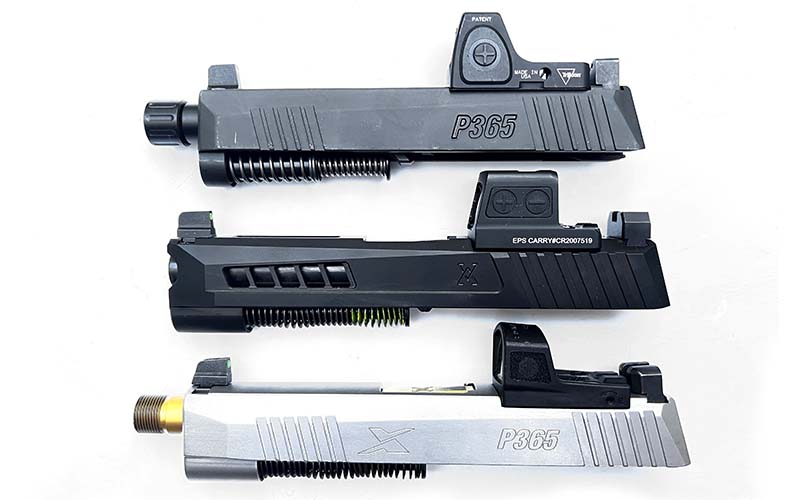
The mainstay for a long time has been the “open” emitter style. This is a forward lens that has a dot projected onto it. The emitter projecting the dot, usually a small LED or the like, is literally open to the air. Examples of this type of dot include the RMR. Despite being common and more minimalist in approach, I don’t think they’re the “best” ones out there today, as more technology has become available in this smaller footprint.
The next type is closed emitter. As you can probably deduce, the emitter is enclosed within the body of the sight; front and rear lenses completely protect the internals. Now, this is a relatively new type of sight coming to handguns … and not everyone is excited about them. For starters, these sights tend to be blocky and large. The RMR is such a common sight on pistols that we have become collectively used to seeing it, and it can be a bit jarring to see something so large and industrial looking on the slide of a handgun. Trijicon recently released the RCR, and while I like it, it’s chunky and a little clunky … despite being the same footprint as the more svelte RMR.
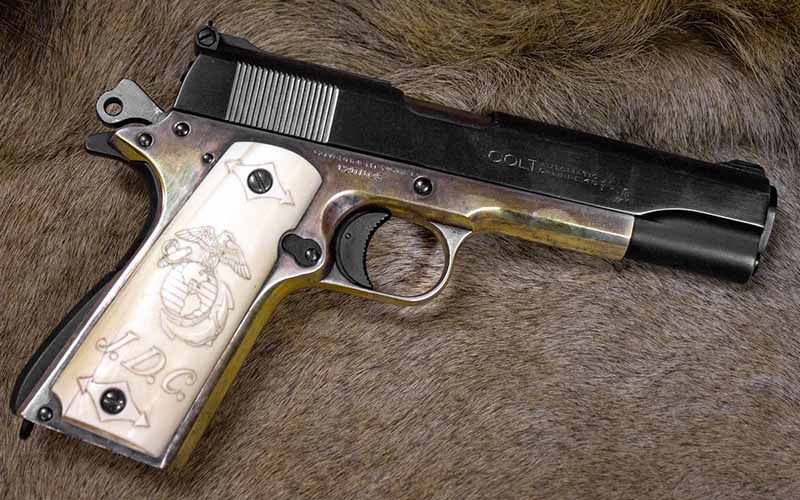
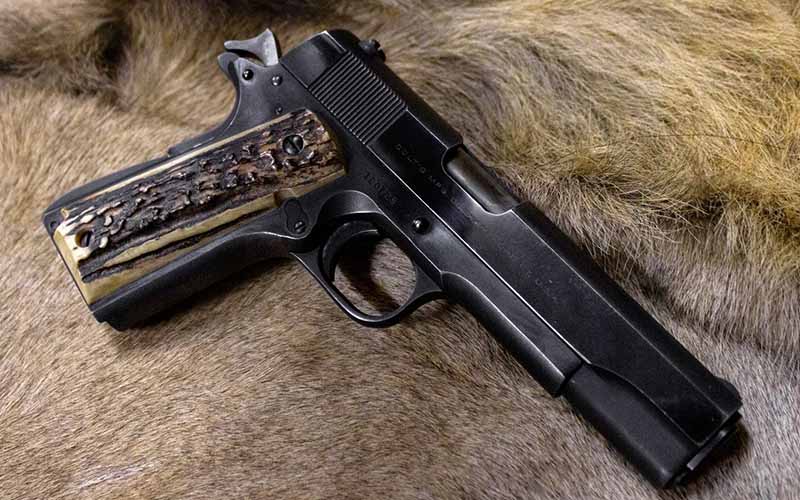
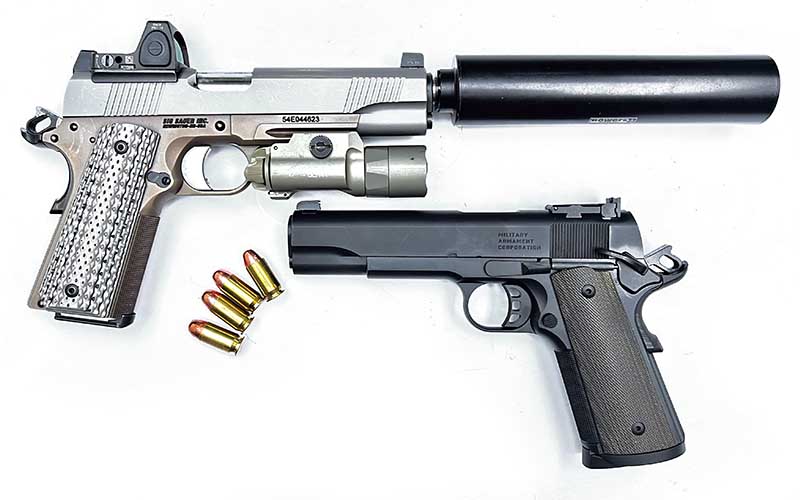
I’m not really hung up on traditionalism here, if one could call the open emitter style “classic.” Somehow, my favorite 1911 looks and feels strange with a closed-emitter sight. The blocky appearance doesn’t flow with the lines and it seems out of place; however, we’re talking about an over 100-year-old design that’s also dressed up with a flashlight and suppressor. I leave the aesthetic quandary here to the better qualified, but I may just have to get used to it: Closed-emitter dots are, in general, superior to their open-emitter brethren.
A major and constant issue I have with open-emitter sights is cleanliness and reliability. Functionally, I’ve never had an issue with an RMR. In the field, well, that’s another story. You could argue that the RMR wasn’t designed as a pistol hunting sight—but it is to me and many other people. I find it to have changed my handgun hunting game at 50 yards and in, and the tiny 1 MOA dot I use is both fast and precise.
For concealed carry, I have also moved to an enclosed-emitter sight. In years past, Holosun had a bit of a “cheap” reputation and a somewhat iffy appearance as opposed to the clean, refined lines of the RMR. But that has changed, and there are some significant advances being made, such as cost for features. I like things that work at any price point, and yes, the new RCR is a staggering $849 suggested retail price.
The EPS line from Holosun is half the cost across the board, and for general-carry-gun use they are very solid and reliable. Closed emitters in carry guns are excellent choices in that they protect the emitter from sweat and lint, as well as have a better degree of protection against fogging. An added bonus is that the lens surfaces are easy to wipe clean—you don’t have to go digging around in the sight to wipe the interior lens or try to get crud out of the emitter so you can see the dot.
Dots And Lighting
Another real and distinct advantage of a closed emitter is that it’s much easier to use in low light. This is subjective, so don’t quote me here as gospel. I find that the “tube” style is easier to align and is significantly less prone to washout from external light sources than an open-emitter dot. I also find that, while it does somewhat obscure more of your visual area while aiming, I rarely have to “hunt” for the dot. This all depends on circumstances, but having done a lot of night shooting with artificial lighting I can say that dots can be very finicky.
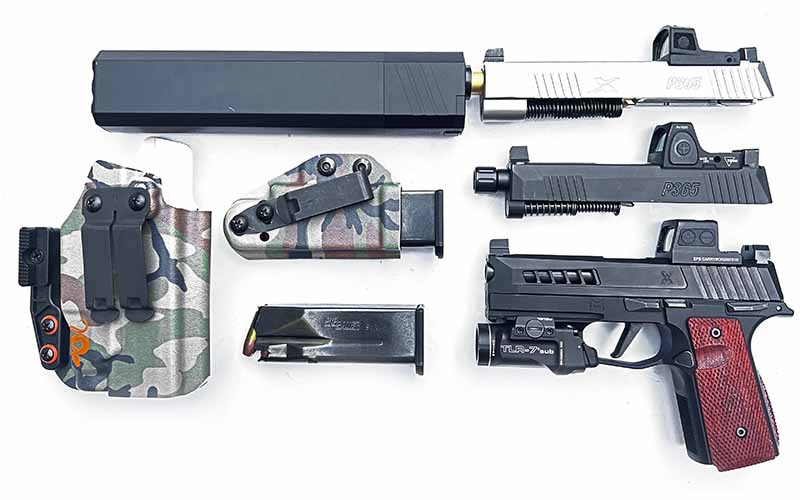
A main consideration for all dots is washout, and I fervently believe in complementary irons on a self-defense pistol. If you have a bright light on your pistol, in a closed space that light projecting on the wall is enough to wash out your vision, making the dot seemingly disappear. If you have a bright dot for daytime use, it may be so bright in the dark that it completely obscures your lens. Doing drills with various dots in various light conditions has shown me that they can be a liability when you don’t have the right brightness settings or various external lighting conditions.
50,000 Rounds Of Hard Lessons
I’ve shot the absolute heck out of my pistol dots, and I was an early adopter of this type of pistol sight mostly because I wanted an edge in pistol hunting. It turns out you can stretch these sights pretty far. I’ve landed hits (but not consistently … that’s a long shot) at 400 and 500 yards with dot pistols. That said, 200 yards on an IDPA silhouette is possible with a decent pistol with a 1-3 MOA dot. You don’t have to be a trick shot these days to take advantage of off-the-shelf equipment. In fact, it’s stunningly easy to do.
Confidence building is something that dot sights are, without a doubt, great at cultivating. The learning curve of iron sights can be steep, and having a very easily adjustable floating dot in place of irons cuts down the learning curve exponentially.
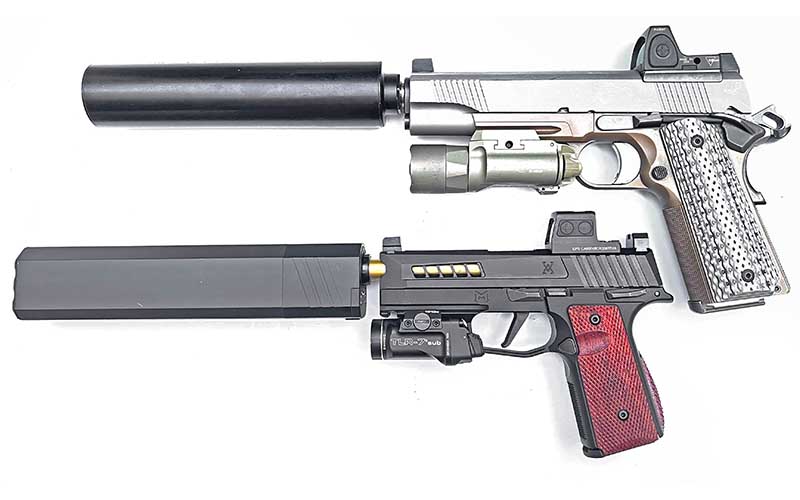
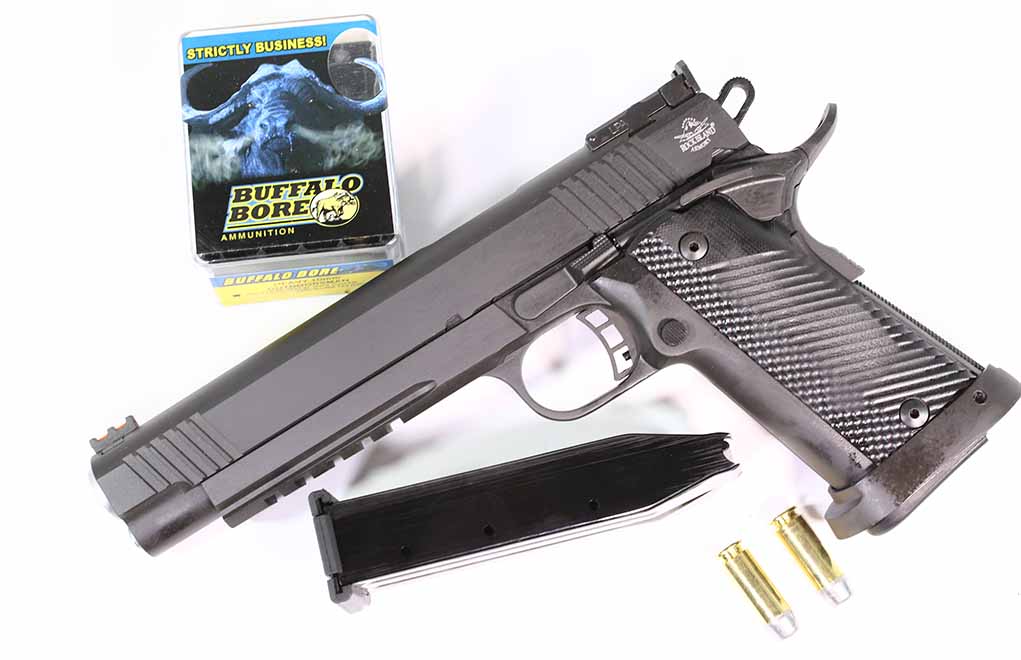
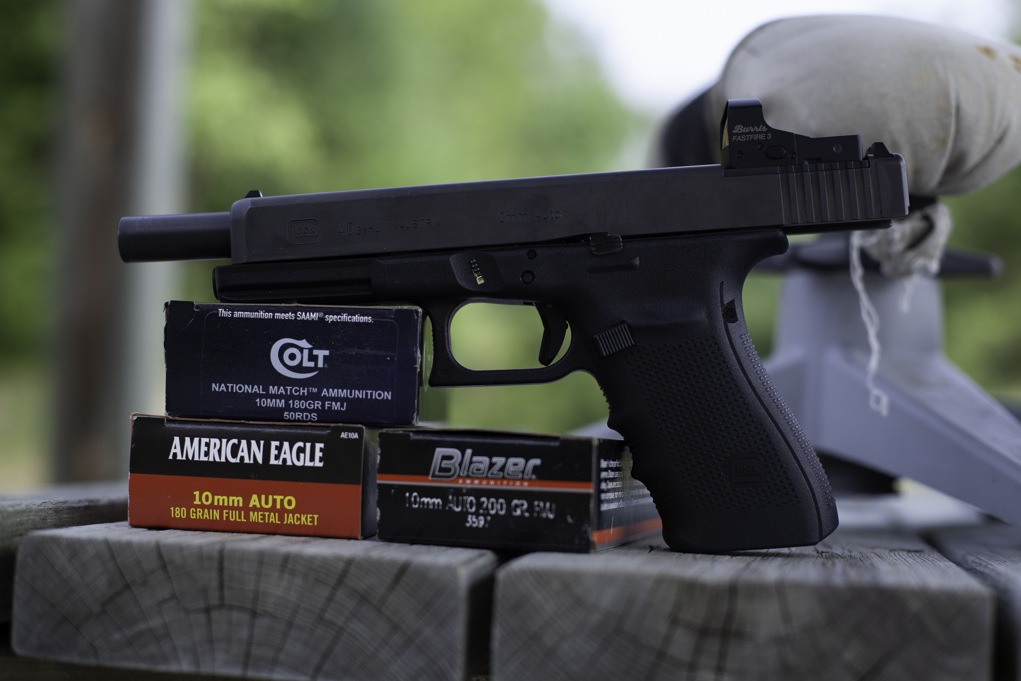
Younger people are now growing up with this type of sight as commonplace, which was the same with iron sights a couple generations ago. Virtually all of my friends now carry with dots on their pistols, and many have integrated them into their hunting pistols in place of traditional tube scopes. The 10mm Auto is still gaining popularity as an outdoor chambering, and dot sights are helping to turn people on to look in its direction. Something about a 6-inch 1911 in 10mm with a dot sight zeroed for 100 yards just makes me giddy … and that’s coming from an avowed .45 ACP man. Irons will always have their place, but I can’t deny how quickly people gain proficiency on any gun using a simpler aiming system.
Trijicon RMR
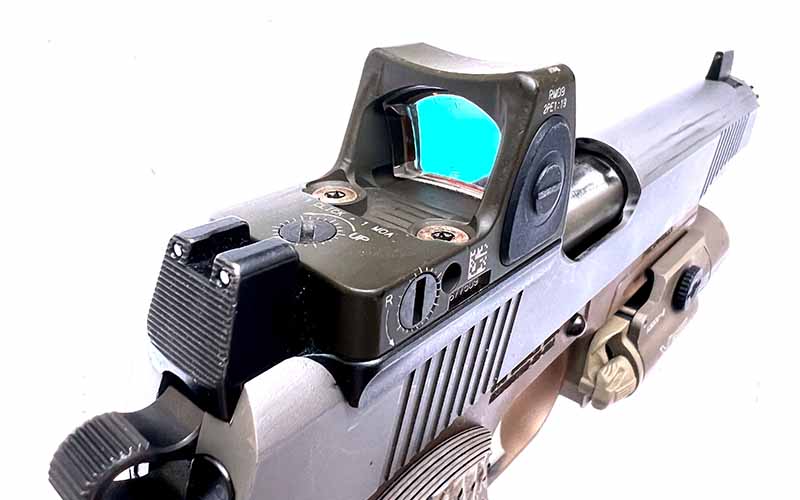
I began using the open-emitter style in the RMR years ago. I have the most rounds on the RMR, and I’ve owned four: one dual illuminated, two LED versions and one RMRcc. In that time, I’ve fired a combined total of about 35,000 rounds with them mounted on both pistols and as a piggyback on a rifle. I’ve carried the RMRcc daily on my P365.
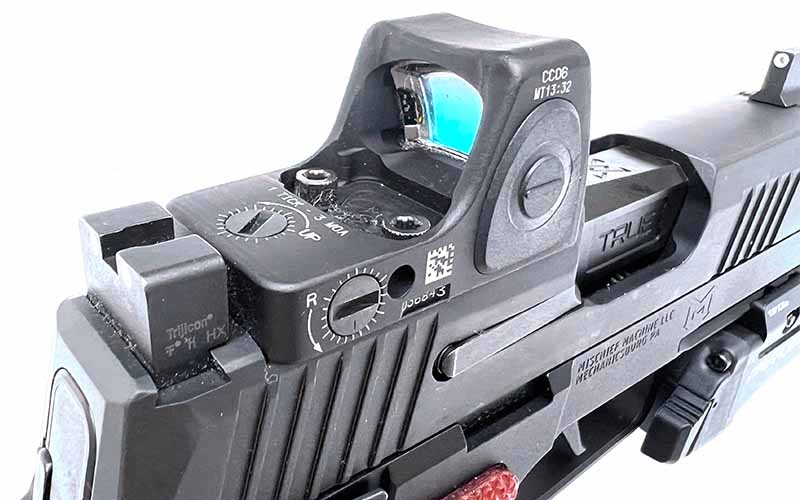
The main RMR use I have under my belt is on the 1911 in .45 ACP, both suppressed and with all sorts of ammo types. In years past, I shot this gun heavily, mostly with handloads. I’ve had to replace the recoil spring twice, but every other part has held up to the abuse. The RMR has held up to some severe abuse. I’ve bounced it against rocks and it’s worn some mud, got it rained and snowed on, shot it in classes spending 500 rounds a day nonstop—and I’ve come to completely trust its reliability. The RMR is the real deal, and while it’s an open-emitter sight, it’s just so damn good that I can’t bring myself to say it has any disadvantage, despite it wearing arguably outdated technology as compared to closed-emitter functionality.
Sig Electro-Optics RomeoZero
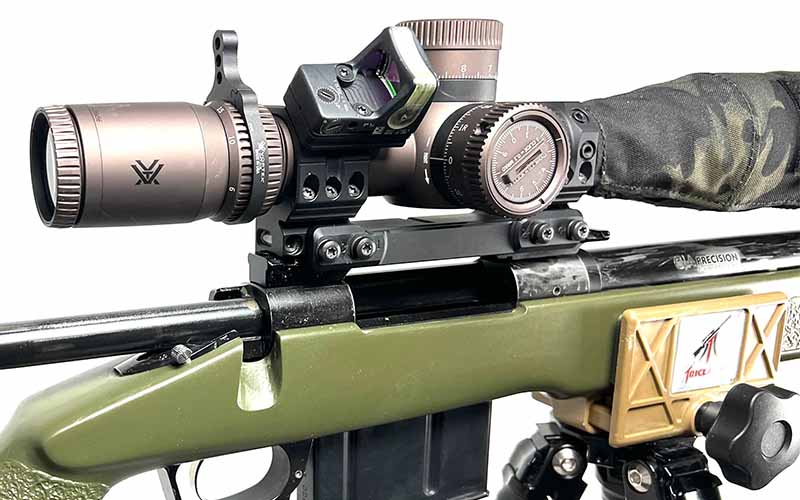
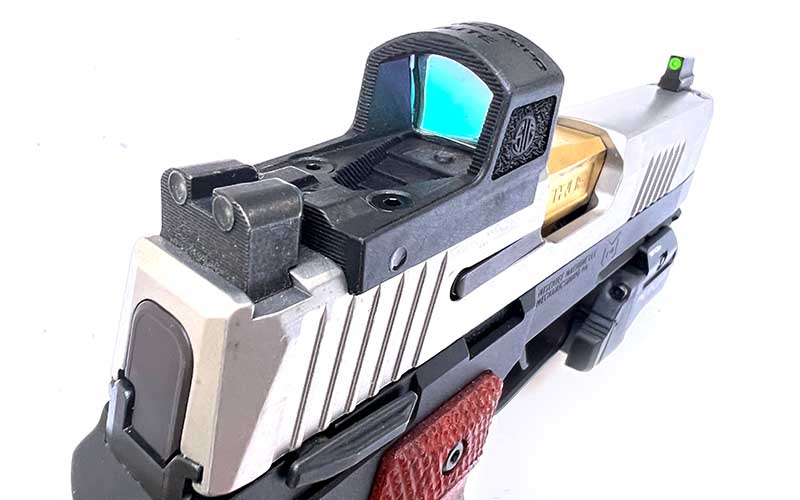
Sig Sauer has been pushing the limits on many of their designs these days and have come out with some really nice stuff, but based on some of the features, beware that it’s not for everyone. I shot the RomeoZero on a P365 slide as shown in the accompanying photos, and I promptly put 2,000 rounds through. I’m not a fan of the “tap to program” feature, nor do I like the “shake awake” style of activation … but for some shooters, I realize it’s a major asset. I prefer buttons in my car; I’m not a man who enjoys touch screens, and I got the same feel with the RomeoZero. I want to choose the controls manually—I came to realize this really wasn’t the sight for me, but it might be for you. At this point I have about 5,000 rounds under it, and it has presented no problems outside of personal preference.
Holosun EPS Carry
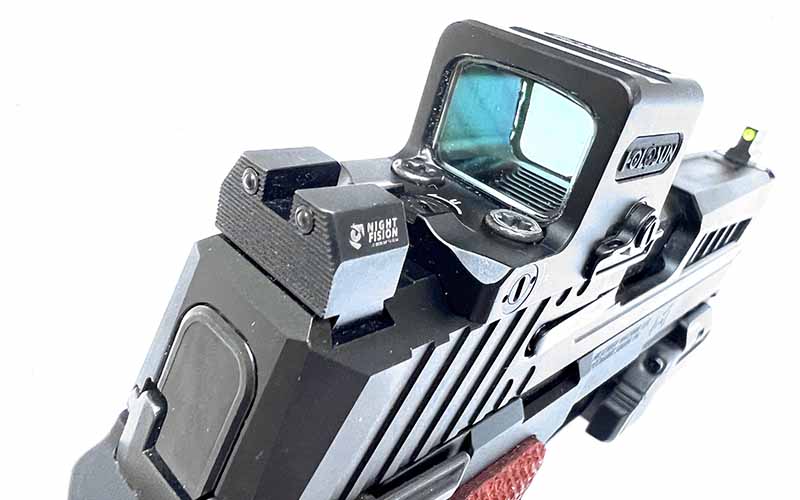
The Holosun EPS Carry is an enclosed emitter sight, and it has become my favorite carry pistol optic. I have it mounted on a True Precision slide, and it’s my daily carry sight. The only thing I did to it was replace the factory screws with some that were a bit beefier, but that was a personal choice. So far, I’ve ran about 5,000 rounds with this sight, and I practice with it at every range trip to keep my skills up. It is, hands-down, the most easy-to-use micro dot I’ve shot. On a small gun like the P365, it speeds up my shooting by providing a more tube-like image—my eye is drawn to the center like a big ghost-ring sight. I won’t say my groups have improved when shooting fast, but my time to get on target in most lighting situations is dramatically faster, as is my hit rate shooting one-handed or weak-handed.
Editor’s Note: This article originally appeared in the March 2024 issue of Gun Digest the Magazine.