We take a quick look at 6mm ARC, a cartridge that’s ballistically superior to 5.56 NATO in almost every way.
The 6mm ARC (Advanced Rifle Cartridge) SAAMI cartridge (and chamber specs) was introduced in January 2020 and revised in June 2020.
Hornady ballistician Jayden Quinlan said, “The 6mm ARC began with a simple question: What can we do with today's technology to maximize the performance of the AR-15 platform? We subsequently modeled and tested a variety of designs in different calibers until we were able to produce the most flexible cartridge possible within the limits of the AR-15 system.”
The 6mm ARC was engineered using a long, high-B.C. bullet in modern autoloading rifles. The SAAMI maximum average pressure is 52,000 psi. The twist rate should be 1:7.5 to stabilize 105- to 108-grain high-B.C. bullets and 1:7 twist to stabilize the 115-grain Berger VLD.
According to an article by Richard A. Mann on June 18, 2021, “Hornady … identified a need for an ‘unnamed' Department of Defense entity and a concept cartridge was discussed. The entity showed extreme interest, so Hornady began development. Ultimately, the result of that collaboration is what's now known as the commercially available 6mm ARC.”
“However, the 6mm ARC isn't really new. In about 1975, Dr. Louis Palmisano and Ferris Pindell took the .220 Russian case, which is based on the 7.62x39mm Soviet cartridge, necked it up to 6mm (0.244 inch) and changed the shoulder angle to 30 degrees. Even though the 6mm PPC never gained SAAMI approval, it found great popularity in the bench-rest competition circuit. Most shooters made their own brass and loaded their own ammo.”
“However, note that there are several versions of the 6mm PPC. Though they're minutely different, this results from a cartridge not having SAAMI approval. While some believe the 6mm ARC is based on the 6.5 Grendel cartridge, it's really nothing more than yet another variation of the 6mm PPC.”
Quinlan said it delivers less felt recoil than larger short-action-based cartridges. However, it also uses modern, heavy-for-caliber 6mm bullets that provide excellent accuracy and ballistic performance at an extended range. The 6mm ARC delivers better ballistics than the 5.56 NATO with similar recoil. It delivers comparable ballistics to the .308 Winchester with 30 percent less weight on the firearm platform and ammunition.
General Comments
The maximum cartridge overall length is 2.26 inches, the head diameter is 0.441 inch, and the case capacity of the 6mm ARC is 34 grains. With Hornady's 108-grain ELD-Match, the 6 ARC drops and drifts less than any .223 Rem. bullet. The 6mm ARC is available in: 105-grain BTHP Hornady Black, 108-grain ELD Match, and 103-grain ELD-X Precision Hunter. Hornady lists reloading information for gas guns (52K max pressure) with bullets as light as a 58-grain V-Max.
6mm ARC Factory Loading Data And Factory Ballistics:
We take a quick look at the Galco Hawkeye for the SIG P365 XL, a leather IWB holster designed for optic-equipped pistols.
Who says you can’t have a classy leather holster for your red dot-equipped carry pistol? The Galco Hawkeye makes that possible, and the company has just added a new fit for the popular SIG Sauer P365 XL.
The Galco Hawkeye is made from reinforced premium steerhide and is available in tan or black for right-handed fits. Unfortunately for lefties, no left-hand options are currently available. The design features snap-on belt loops so the holster can be attached or removed without taking off one’s belt, and each will come standard with 1.75-inch belt loops. However, 1.25- and 1.5-inch replacement belt loops are also available for purchase separately.
SIG P365 X-Macro model shown.
If you couldn’t tell from the name, the Galco Hawkeye was designed to accommodate pistols with compact, carry-style red dot sights installed, and as such it features a protective leather optic shroud. The holster also features an open-top design with a butt-forward cant to help facilitate a full firing grip when drawing.
SIG P365 X-Macro model shown.
The Galco Hawkeye for SIG P365 XL pistols is available now and has an MSRP of $149. Other available fits for this holster model include the SIG P365 X-Macro, the SIG P365 XL Spectre Comp, the Smith & Wesson M&P Shield 3-inch, the Smith & Wesson M&P Shield Plus and the Taurus 856 T.O.R.O. 3-inch.
We discuss some of the best aftermarket parts for upgrading a SIG P365, one of America’s most popular carry pistols.
SIG Sauer’s P365 is one of the most popular carry guns in the country. Since it was introduced, it has quickly outpaced the sales for other guns in the same category and has inadvertently created something of an arms race all its own.
Why? Well, it’s extremely tiny, but it has an onboard capacity of 10+1 rounds standard. Not only did this completely upset the balance of power in the micro-compact world, but it also set the stage for a reinvention of what we know when it comes to accuracy and reliability in the size class. It could be said that the P365 completely redefined the carry gun.
Modular Madness
However, we as a people rarely leave well enough alone. In many cases, this hubris results in “upgrades” that are anything but. We’ve seen it time and time again—some type of gimmick becomes all the rage but ends up offering no real benefit for the shooter in the end.
I remember that feeling of coming home with a blank slate whenever I picked up a new Glock, Beretta or 1911. I can’t tell you the number of times I’ve permanently altered something because of the words of an instructor I saw on YouTube, or the creeping sensation that if I didn’t have the right stippling on my grip I was at a serious disadvantage.
Most guns on the market today are fine just as they are. Even though many people regard the standard Glock sights, for example, as merely dovetail protectors, they’re, in fact, quite functional and perfect for most end uses. Yet, it’s very hard to find somebody at competitions, carry classes or even the range who shoots with stock sights. The culture of “customizability” has infiltrated every aspect of shooting, and up until now, you had to take a gamble on your gun’s value if you wanted to increase certain aspects of its performance.
It took the shooting public quite a while to realize the potential of SIG’s modular handgun systems. The original attempt to add such a design wasn’t well received, and I wonder as I write this how many shooters even remember the P250, the progenitor of the P320. While not a reinvention of the handgun wheel, the P250 was a step in the right direction when it came to treating a user to a customizable pistol that could be quickly and easily converted between full-size and subcompact on one internal chassis. This design was eventually discontinued.
However, the stage was set and, while not a groundbreaking design in its own years of production, the P250 is owed the credit of being an important design. In the following years, the P320 and subsequent P365 have dominated the national scene. Unlike some others, SIG has embraced the aftermarket and even endorsed the use of third-party parts on their guns. While this might seem insignificant in the world of modular everything, this is really the first time in the commercial history of arms production that small shops have the ability to supply a major manufacturer with custom parts … and have those parts assembled out of the factory for shipping to the customer.
The Mischief Machine Omega module has 1911-style grip panels that allow you to change textures and colors quickly and easily.
P365 Barrels
My top recommended brands for P365 barrels are True Precision and Faxon. I’ve shot these brands extensively with zero issues. They are, in my direct experience, slightly better in terms of on-paper accuracy than SIG factory, Grey Ghost Precision and ZEV.
In the author’s opinion, True Precision makes some of the more accurate barrels for the P365, though by merit of size alone the gun is limited on long-distance accuracy.
How much better? Well, True Precision and Faxon average about 1 inch at 10 yards for five shots, the others 1.5 to 2 inches. At 25 yards, True Precision offers the best across the board, about 3.5 inches for five shots of any given load. The sights on the P365 aren’t exactly fine, but they’re precise enough. The sight radius is the real limiting factor, and at a point you just can’t expect to be shooting dimes with a micro 9mm.
A threaded barrel isn’t a requirement on a modern pistol, but since there’s the affect length of the flashlight to consider, a bit more barrel won’t hurt.
Luckily for you, all the above brands are readily available online. These barrels are great, but the stock P365 barrel is very accurate. Most of these barrels are a cosmetic upgrade, and if you want added function, you’re looking at a threaded model. I’d consider the cost of the threaded models to be worth it simply if you want to buy yourself an additional 50 fps on most loads.
P365 Grip Modules
Because the serialized part of the P365 is the internal chassis (fire control unit), you’re free to swap out your grip style as much as you like. Polymer versions are pretty nice and can be had for relatively cheap. If you want to practice your own stipple patterns, SIG sells OEM grip modules. If you mess up, you aren’t out a gun. SIG makes these in several styles, including 10- and 12-round sizes, and in a few colors.
Aluminum modules are all the rage now, and there are a growing number of companies that offer them. Icarus Precision has several variations encompassing any finished size and barrel length currently made. These are very well-made pieces; however, I find them to be too slender in the grip and have some uncomfortable bumps on the trigger guard. You might feel differently. SIG offers Icarus models on the P365 build studio.
Mischief Machine makes a variety of grip modules, such as the manual safety version here and variants for the XL models. The author prefers a manual safety on his guns, having spent so much time with 1911s.
Mischief Machine is another company that’s hitting the aluminum module market quite hard. These are very clean designs that mimic the shape of the stock unit. They work with all of my normal P365 holsters. Available in both a single-piece and with grip panels, the Mischief Machine designs are very well made and have some nice, subtle performance-enhancing touches, such as a 4140 steel recoil lug and bushings for the grips. Not only does this grip module have a tangible impact on accuracy, but it’ll also likely outlast the rest of the parts with just how well it is made.
Wilson Combat's P365 grip module.
Wilson Combat makes an excellent polymer grip module that’s an affordable, functional upgrade over the SIG stock module. At a retail price of about $65, it offers quite a bit, including an undercut trigger guard, optional weight channels to balance the gun, an extended beavertail and comfortable texturing. For the money, this is a very good P365 upgrade, and it’s a fraction of the cost of an aluminum module.
Optics
Optics are starting to appear on all types of pistols these days, and SIG was one of the first companies to offer optically equipped pistols from the factory. Grey Ghost makes a great optics-ready slide that’s at the top of my list. I’ve put many rounds down range with one, and it was a clean and well-made upgrade. If you prefer something a bit flashier, ZEV has their Octane slide with RMSC optics cut, and it has about as much serration as the Emerson knives I carry. While it may appear to be overkill, the P365 is a very small gun, and extra traction never hurts.
Last on the list is the True Precision Axiom. Like the others, it’s a drop-in proposition and allows for a couple different types of optics to be mounted. I wasn’t a huge fan of the cosmetics and the ports cut in the sides—while it might a be a moot point, I don’t like places where lint can collect, but to each his own.
Small P365 Upgrades & Parts
The nice thing about the P365 is that you can order most of the small parts direct from SIG. They have a parts shopper on their website that’s very helpful. A growing number of companies are also producing small parts, such as triggers and enhanced springs. But, at that point, you might just want to invest in a SIG FCU and build up your gun around it.
Sig Sauer stocks a large number of small parts. The flat trigger upgrade came directly from Sig.
The P365 is a relatively easy gun to work on—though there are more things going on in that small gun than you’re probably aware of. If you want to make some changes, make sure you educate yourself or watch enough tutorial videos on how to navigate the inner workings.
Editor's Note: This article originally appeared in the 2022 Everyday Carry special issue of Gun Digest the Magazine.
We tested CR920X vs CR920XP to see which compact Shadow Systems came out on top–the compensated XP or non-compensated X.
In general, I’m a fan of Shadow Systems and what they’re doing. It’s innovating, it’s putting out new products that meet market demand quickly. It’s dropped 4 new pistols in less than a year. Three of them have integrally compensated barrels that fit into readily available holsters.
Most recently the company released the CR920X, its most requested pistol, akin to a Glock 43x or Glock 48. I say “akin” because it’s cross-compatible with Glock holsters and has the slim profile of a single stack. However, it boasts a 15+1 metal magazine in addition to all the trimmings we expect from Shadow Systems: stippled frame, optics ready, cross-compatibility and accuracy.
Then last month, they released an integrally compensated CR920XP. While it boasts many of the same features of the X, it has a slightly longer dust cover and most importantly an integral compensator machined from steel with a tool-less novel locking mechanism. This last feature makes it quite a different animal.
We will examine both of these offerings and compare and contrast them.
CR920X Overview
ECR920X vs CR920XP, it doesn't matter, either case you get a pistol with an attractive spiral-fluted barrel.
The CR920X is a slimline, single-stack width 9mm pistol, but it contains a double-stack steel magazine that holds 15+1 or 18+1 with a plus 3 extension. The magazine has an enhanced spring to ensure proper feeding and all the trimmings we expect from Shadow Systems. Ergs
The ergonomics on this pistol are second to none in the sub-compact space in the writer’s opinion. My natural point of aim and indexing of this pistol allows me to line up the sights quickly and effectively which is mission critical with a carry pistol, in addition to the additional grip of real estate making it controllable. I own and have shot the standard CR920 and CR920P quite a bit (these are the true subcompact offerings—think Glock 43 size). While it’s definitely a less-snappy sub-compact, with a flush-fit magazine it’s near impossible to get all 4 fingers on the grip.
The grip also has a nice magazine well, with some sloping and geometry that makes magazine changes a breeze. From a capacity and dimensions standpoint, it’s a double-stack Glock 48 with more ammo onboard. Since it’s a subcompact, it will only fit a handful of lights, like the TLR7sub.
CR920X Reliability
In the CR920X vs CR920XP the non-compensated model wins in the size department. Seen from above, the CR920X (bottom) most definitely offers a more compact package.
As mentioned, unlike my other Shadow Systems pistols that require a break-in period to function reliably. The manual recommends 500 rounds—and I urge this to pressure check any pistol—before it’s broken in. I’ve even had some front-end malfs with other Shadow Systems pistols. That said, I had zero failures from shot one with the CR920X. It has been 100 percent reliable with various ammunitions and incredibly accurate despite its 3.4-inch barrel.
CR920X Fit & Finish
The machining on the pistol is yet again what I expect from the company’s guns—flawless. The pistol has ample serrations, as well as lightening cuts in the slide to reduce the “coupled mass” of the slide as it cycles.
The CR920XP is built on almost the exact frame as the CR920X. As I mentioned, it has a longer dust cover, but this keeps the compensator hidden. For those familiar with Shadow Systems, it’s similar to how the XR920P (their integrally compensated crossover that’s roughly the size of a Glock 17) is set up.
This design, I think gives the pistol a more refined aesthetic. Though from a size point of view, it does make the gun more a compact and less of a sub-compact. The CR920XP in this respect is essentially the same size, albeit slimmer, as the MR920 or Glock 19 but it’s compensated and has the same capacity (15+1).
CR920XP Ergonomics
CR920X vs CR920XP is a draw in ergonomics. Both models have excellent grip texturing, plenty of grip real estate and flared mag well for fast reloads.
To the quick, the grip frame is the same as the 920X and it points similarly, but the compensator makes the pistol’s balance different. The device adds a touch of weight to the front of the gun. This adds balance to the gun you feel when you point it initially and also under recoil. Not that I don’t like the way the CR920X points, but the XP’s heft in the front, in addition to the downward force from the compensator, helps you get on target and stay on target.
CR920XP Reliability
Typically I’m leery of compensated guns because I’ve experienced reliability issues with some models, especially in the beginning. And I did have some issues with CR920XP, but nothing that raised red flags. The pistol suffered a failure to extract and failure to battery in my first 10 rounds shooting my 125-grain handloads. However, after switching to 147-grain factory ammo I had no issues—including with my handloads when I went back to them.
CR920XP Shootability
I’ll admit, I didn’t expect there to be as stark of a difference between the pistols from a recoil mitigation perspective. I find 9mm to be incredibly controllable and never felt like it needed to be compensated. Then I shot the CR920X next to the 920XP. The difference in both perceived recoil and muzzle flip between the pistols is not only palpable but significant.
Do I have a problem controlling the CR920X? Not in the slightest, it’s pleasant to shoot for as light as it is at 19 ounces. The CR920XP however is more controllable, flatter, and faster, with minimal muzzle rise and is only 2 ounces heavier with the steel compensator.
Point shooting with the 920XP is a breeze and the rounds land in basically the same hole with minimal effort at high speed. As with most comped guns, if your grip isn’t strong, you can get some feeding issues, but if you hold it like you mean it, this problem disappears.
I ran both of them on a plate rack, and the XP shoots flatter ergo faster, but not by an insane margin. My fastest clean run of a 6”x6” plate rack at 15 yards with the 920X was 3.63 seconds, with the 920XP posting a 3.31-second time. I’m not winning the match with these, but I’m putting accurate fire on multiple targets quickly—a big need with a carry gun.
CR920X Vs CR920XP Accuracy Test
Ammunition
Pistol
Average Group Size In Inches
147gr Winchester
CR920X
0.95
147gr PMC
CR920X
1.61
125gr RN Reloads
CR920X
1.87
147gr Winchester
CR920XP
1.09
147gr PMC
CR920XP
1.43
125gr RN Reloads
CR920XP
1.49
The average is taken from four groups of five shots from a rest at 10 yards.
Parting Shots On The CR920X Vs CR920XP
The CR920XP proved a very controlable and accurate pistol–especially for one tailored for concealed carry.
Both of these guns are home runs in my book—from a size-to-feature ratio, value for the money ($800-900 MSRP), innovation, and cross-compatibility with Glock holsters. Naysayers will ding them for the proprietary mags, but they’re $30 or less and made of steel with reliability in mind. Furthermore, the ergonomics are amazing, and these guns point naturally where your natural point of aim will indeed be your point of impact: a critical function of a carry gun.
From a holster point of view, that’s one area where I personally need to get a new holster; this gun needs a Glock 48 holster. My T-Rex Arms Sidecar for a 43x MOS that fits all my other CR920s could not accommodate the CR920XP, as the compensator is much blockier than the CR920P.
The pistols are modular and accurate—especially for a 3.4-inch barrel—and Shadow Systems’ customer service is top-notch. What’s more, in the event you use your gun in self-defense, the company replaces it. Oh, and they’re made right here, stateside, in Plano, TX.
Step Into the Shadows: Explore Shadow Systems Insights
We take a quick look at Charter Arms’ new Coyote line of .380 ACP snub-nosed revolvers.
You don’t see .380 ACP revolvers every day, but anyone interested in owning one has just been given another option in the form of the Charter Arms Coyote.
Because .380 ACP is a rimless cartridge that was designed for use in autoloaders, Charter Arms Coyote revolvers must be loaded using moon clips. Each gun will ship with two TK Customs moon clips to feed the 5-shot cylinder. Additional moon clips are available for purchase separately as well. Sporting 2-inch barrels, these are double-action/single-action guns with exposed hammers and standard snub-nosed revolver sights. One trick up the Coyote’s sleeve is that the barrels are also ported to help reduce recoil.
Charter Arms Coyote revolvers are relatively lightweight at 14 ounces, mostly thanks to their aluminum frames and the lightening cuts in their underlugs. They’re available with either a standard metal-colored frame or with a pink or lavender finish, but all three versions will ship with checkered rosewood grips. The MSRP for all Coyote models is $448.14 and they’re available now.
Here we take a deep dive into the development, history, function and use of the German Gewehr 43 self-loading rifle.
The Gewehr 43, or G43, was an excellent semi-automatic combat rifle produced late in World War II by Germany. Nobody can say for sure, but if the Germans had G43 rifles at the onset of the war, the outcome may have been different. At the very least, the Allies likely would have lost more men were they forced to contend with this rifle’s impressive firepower.
The increased use of semi-automatic rifles during World War II changed the concept of the combat rifle from manually operated bolt actions to fast-firing semi-autos. This change didn’t happen overnight, but the writing was on the wall that self-loading rifles were the way of the future and virtually every major player of WWII was investigating how to get more of them into the hands of their armed forces.
At the turn of the 20th century, armies around the world were experimenting with semi-automatic combat rifles. The French, in an effort to replace their Lebel bolt action rifles, adopted the Fusil Automatique Modèle 1917 and put it into service in the latter part of the First World War. It used a gas-operated system with a long-stroke piston with a rotating bolt and fed off an internal 5-round magazine. Troops found the rifle heavy at over 11 pounds, too long, the magazine was too fragile, and the rifle difficult to maintain in the trenches. Bolt action rifles were still more reliable in the mess of war and cheaper to produce on a mass scale, but that did not deter further development of other semi-automatic rifles.
The next significant self-loading rifle came out of Russia in 1915 with the Avtomat Fedorov. This also saw limited use in WWI. It was a short-recoil operated, locked-breech rifle that was actually a select fire weapon capable of both full-auto and semi-auto fire. Later models had a 25-round detachable magazine. This rifle had reliability issues, was difficult to maintain and when used in automatic mode it heated up too quickly.
M1 Garand
The first truly successful self-loading military rifle arrived in 1936 with the American M1 Garand. It not only lacked the bugs and reliability issues that plagued previous designs but was also able to be mass-produced and widely issued to American armed forces. While older self-loading rifles had seen action before, their numbers paled in comparison to how widely the Garand would end up being issued.
The Garand was the first standard-issue self-loading rifle adopted by the U.S. military, and it proved to be a great advantage when facing troops mostly armed with bolt-action rifles like the German Karabiner 98k.
The Soviets were also determined to replace their bolt-actions, but their efforts weren’t as successful as the American’s given they never managed to produce enough self-loading rifles to make them standard-issue equipment by the war’s end. Soviet efforts to produce one seriously started in the 1930s and resulted in designs like the AVS-36 and the SVT-38, but both designs had many issues and neither was truly combat-ready. That changed with the adoption of the improved SVT-40 rifle in 1940, and while it still saw widespread use during the war, too few were produced to replace the Mosin Nagant.
The Road To The Gewehr 43
Well aware of the existence of the SVT-40 and M1 Garand in the hands of their enemies, Germany realized that a self-loading rifle was sorely missing from its inventory. The response was the development of the Gewehr 41 in 1941. Or, more accurately, the Gewehr 41s considering there were two of them: the G41(W) and the G41(M).
The German Army provided specifications for a semi-automatic rifle to several firearms manufacturers. Two of the design criteria seem odd by today’s standards. One specified that no holes were to be drilled into the barrel to port gas into the operating mechanism, as they believed the gas port could cause premature erosion of the bore and lead to accuracy issues. Another design feature the German Army requested was a manual bolt action backup in case the auto-loading system failed.
Walther and Mauser submitted prototypes, and both designs employed a cone-shaped gas trap at the muzzle that deflected gas into a long-stroke piston that operated the mechanism. The rifles were chambered for the same cartridge as the Karabiner 98k, 7.92x57mm Mauser, and were loaded via the same stripper clips used with the bolt action. The new Walther and Mauser designs, however, used fixed, 10-round box magazines. Both designs were adopted by the German Army as the G41(W) which was the Walther design and the G41(M), the Mauser design.
The Mauser G41 followed the German Army’s design specification criteria to the letter and as a result, it looked a lot like a Mauser bolt-action rifle. It even incorporated a traditional bolt handle that automatically disconnected the bolt assembly from the recoil spring if the rifle was used in manual mode. The controls and sights were also similar to the Karabiner 98k bolt action.
Walther ignored some of the specifications sent to them, and they were better off for it. The Walther G41(W) design did not include the manual bolt-action backup system and was the better of the two G41 designs. But—there’s always a but—neither the Mauser nor the Walther Gewehr 41 were very successful.
Like many semi-automatic combat rifles before them, they were a nightmare to maintain in field conditions, were too heavy, hard to disassemble and frankly didn’t work all that well. Gas fouling issues plagued both designs and both rifles required intricate machining that was time-consuming and expensive to build. The Walther, being the better design of the two G41s, was built in larger numbers but still saw very limited use. Given the many issues with both G41 versions, Germany’s journey to a semi-auto combat rifle was not yet over.
Rise Of The Gewehr 43
In June of 1941, Germany invaded the Soviet Union, and in combat, they encountered small numbers of Soviet troops armed with SVT-38 and SVT-40 rifles. All’s fair in love and war, so some captured examples of these were sent back to Germany for evaluation. After looking under the hood, it was clear that the SVT-40 was a superior design to either G41 variant.
As a result, Walther copied and refined the SVT-40’s short-stroke gas system and combined it with some elements of the G41(W) to produce the Gewehr 43 in 1943. The G43 used a simpler and more reliable ported gas system to operate the bolt. Many of the machined parts were replaced with stamped metal parts which helped cut manufacturing costs and production time.
The Gewehr 43 action used an improved gas-operated short-stroke piston taken from the SVT alongside a flapper-style locking bolt borrowed from the G41(W). In a flap-locking system, a pair of flappers on the sides of the bolt lock into the receiver when the bolt is in battery. The flappers unlock and pivot into the bolt when a shot is fired, sending the bolt backward to cycle the rifle.
The G43, like the G41, was chambered for 7.92x57mm Mauser. However, unlike the G41, the feed system on the G43 was again inspired by the SVT as it was given a 10-round detachable box magazine that could be recharged while installed in the rifle via 5-round stripper clips.
Just over 400,000 Gewehr 43s were produced between 1943 and the end of the war in 1945, a truly impressive amount for such a short time and given the state of the German industry that late in the war. That said, the later-production rifles often look noticeably rougher around the edges than the earlier production models. As Germany became more desperate for arms, the priority shifted from making fine weapons to merely functional ones.
It's also worth noting that in 1944 the Gewehr 43 was redubbed the Karabiner 43 or K43, however, the guns are identical besides the name they were stamped with.
The general consensus on the G43 is that it was an excellent combat rifle for its day. Its only real issue was that it arrived too late and in too few numbers to become the standard-issue infantry rifle.
Gewehr 43 Sniper Variants
Much like the SVT-40 that helped inspire it, the Germans also attempted to use the G43 as a sniper or designated marksman rifle. Also like the SVT-40, it was found to be more effective as an infantry rifle and was used far less by snipers/designated marksmen than the more accurate optic-equipped bolt actions of each respective nation. That said, about 50,000 Gewehr 43s were equipped with 4-power magnified ZF-4 scopes for sniping roles.
Essentially, the G43/K43 is only for serious collectors, truly dedicated to owning this piece of history. Even with production numbers of over 400,000 rifles, the G43 is relatively rare and commands a high price. The prices vary based on condition and other factors, but at the time of writing, the rifles are generally selling for between $3,000 and $5,000. For a shooter-grade example with some condition issues or one sporterized or rechambered for a different cartridge, you may be able to snag one for closer to $2,500. Any way you skin it, these are expensive rifles to buy today.
If you’re fortunate enough to own a Gewehr 43, there’s something you need to be aware of if you plan on shooting it. Like the M1 Garand which can be damaged by using modern ammo, so too can the G43. The gas port of G43/K43 rifles was made quite large to compensate for heavy fouling, but this means that shooting some types of ammo through it can result in excessive wear. To prevent damaging the rifle or potentially injuring yourself, it’s a good idea to install a modern, aftermarket shooter’s kit that’s designed to ameliorate this issue. Kits like this enable you to adjust the amount of gas flow to a low enough level to safely cycle a G43/K43 without hurting the gun.
Legacy Of The Gewehr 43
The G43 may not be the most iconic or influential rifle of WWII, but it’s nonetheless historically significant. While it wasn’t the first or the best self-loading rifle to be fielded during the war, the story of its development is an important chapter in the transition between bolt-action and self-loading military rifles that occurred during this period. Germany may not have entered the war with a semi-auto rifle, but it certainly tried to end it with as many as it possibly could.
An IRA member armed with a G43.
Of course, the Gewehr 43’s story doesn’t end with WWII. It went on to see some minor, mostly peacetime use by countries like France and Czechoslovakia after the war, as well as some action in the hands of non-state actors such as the Provisional IRA. Today, they’re mostly historical relics to be enjoyed by private collectors and displayed in museums, but with over 400,000 made, likely, they’re still being put to practical use somewhere.
In the eyes of a jury, your choice of carry pistol could be the difference between murder and acquittal.
What you carry everyday can affect the outcome of your self-defense trial. You might even be found guilty of murder because of the carry pistol you chose.
How could that be so, you ask? The jury. The jury will be either 6 or 12 citizens from your home county, all of which have clean criminal histories, and typically middle aged or older. Occasionally, younger folks get on, but not often. And, when deciding your guilt or innocence, they’ll take into account all the facts presented at trial, including the type of gun you used.
Case in point: I worked as an expert in a Tucson, Arizona, case, where the prosecutor made a big deal about the Glock 19 pistol the defendant used, and the number of rounds it held. He did so in an attempt to sway the jury against the defendant, at one point calling him a “gun nut.” Did it work? Not really, because the trial ended with a hung jury, with the majority voting to acquit and the minority to convict.
As with many hung juries, the Pima County prosecutor decided to prosecute again. This time, I advised the defense attorney to ask each police witness what gun they carried (Glock 17s) and how many bullets were in the gun. This time, there was no mention by the prosecutor about the gun the defendant used. Interestingly, the second jury also hung, and the judge eventually dismissed the case.
Another case where the prosecutor (again in Arizona) made a big deal about the type of gun used was when a retired school teacher, Harold Fish, was hiking and forced to shoot and kill an attacker. Fish used a 10mm 1911 pistol, and during trial the prosecution made a big deal about the power of the 10mm. The jury came back with a guilty verdict.
Your Carry Pistol As Evidence
You see, when a person uses a gun in self-defense, the gun will be confiscated by the police as evidence in the shooting, and if you’re prosecuted, it’ll become a lead witness in your case. Typically, the gun will be introduced in court, waived around in front of the jury and, absent a cogent and logical argument from the defense, might just prejudice a member or two of the jury against you.
However, in most cases, skillful work by the defense can nullify or even turn the argument into a positive one for your side. Let me explain, using myself as an example, with a hypothetical cross-examination in a hypothetical court case. I personally carry a 10mm 1911 pistol for daily carry, and a line of questioning might go like this:
Prosecutor: Mr. Hayes, the 10mm pistol you used in this shooting was a powerful gun, right?
Me: Yes, it is.
Prosecutor: In fact, the FBI carried it for a little while, but it proved too powerful for their agents, right?
Me: That is what they claimed, but as I understand the issues, it was more about the gun they chose rather than the power of the 10mm cartridge.
Prosecutor: Can you explain your answer? (Note, the prosecution, by asking an open-ended question, they do not know the answer to have just sealed their fate in this issue.)
Me: They chose the large-framed Smith & Wesson 1076 pistol which, being a large-framed pistol, was simply too large for many agents to use effectively. The large frame resulted in the agents with small hands having to shoot the gun by grasping the pistol and having the backstrap of the pistol recoil against the knuckle of the thumb, instead of the web of the hand. This can be very painful and eventually cause injury to the shooter’s hand. Additionally, that particular gun was heavy, and since most agents wore suits and ties instead of a duty belt in uniform, the agents also found it difficult to conceal.
Prosecutor: I see. Well, then, isn’t this an issue for you?
Me: Absolutely not. You see, if I carried the Smith & Wesson 1076, I too would find it difficult to conceal. Instead, I carry a Nighthawk 10mm Commander, which is both lighter and smaller. It is, in fact, easy to carry.
Prosecutor: (Not knowing when to stop.) OK, Mr. Hayes, what about the extreme power of the 10mm pistol?
Me: Being a firearms instructor early in my professional career, and now as an expert witness myself, I have both heard of and seen cases where less powerful ammunition resulted in an armed citizen or law enforcement officer needing to fire several shots in order to stop their attacker. The more times a person has to shoot to stop an attacker, the more chances there are to miss and hit innocent individuals. Additionally, I have seen many cases of the person being shot twisting and turning and taking shots in the back, resulting in an indictment for an otherwise justifiable shooting.
Prosecutor: Thank you, Mr. Hayes, no further questions.
Note: I would make sure the defense counsel brought up the issue again, where I could explain more in depth about my level of expertise and the selection of the ammunition I choose to use. In a normal self-defense trial, this role would be for the expert witness the defense hired to explain these issues to the jury.
In addition to the gun and ammunition you used, there are other issues to consider. One is the name on the side of the gun and the name of the ammunition. If both these marketing decisions are implemented to tickle the imagination of the purchaser, to make them feel like a “badass,” then it’ll also perhaps persuade the jury you are a “badass.” Names like “persuader,” “ultimate kill machine,” “the assassinator,” etc. would probably work against you, not for you.
Take Law Enforcement’s Lead
So, what to choose and why? The safest gun and ammunition to choose is what your local cops choose. And since it’s a concealed carry pistol, a smaller version would be fine. As far as ammunition, avoid the boutique ammo makers and stick with the make law enforcement regularly use.
Every choice I make regarding what I use for self-defense is filtered through the eyes of my potential jury. I would recommend you do so, too.
Editor's Note: This article originally appeared in the 2022 Everyday Carry special issue of Gun Digest the Magazine.
We check out Warne’s new line of HyperLite Scope Rings, made using a lightweight yet very durable alloy.
Ultra-lightweight rifles have been incredibly popular recently, with manufacturers incorporating materials like titanium and carbon fiber to shave off every extra ounce possible. Well, light rifles need light accessories when the goal is keeping the setup’s weight at a minimum, and Warne’s new line of HyperLite Scope Rings will help with that.
Made out of Warne’s MagnaFusion alloy, the company says that HyperLite Scope Rings weigh up to 35% less than comparable aluminum models while retaining the same level of strength and stability. The rings are made in America and are precision CNC machined before being given a Cerakote finish. They feature integrated recoil lugs, dual-screw clamps and a STANAG 4694 mounting interface that makes them compatible with both Picatinny and Weaver-style bases.
Brian Motland, CEO of Warne, said this about the new rings:
Our new HyperLite Scope Rings represent a significant advancement in the world of lightweight shooting accessories … By incorporating our advanced MagnaFusion Alloy, we’ve created a product that not only reduces weight but also maintains the exceptional durability and reliability that Warne is known for.
Warne’s HyperLite Scope Rings are currently offered in low, medium and high options for 30mm, 34mm and 1-inch tube sizes. MSRPs range from $109.99 to $119.99 and they’re available now.
We take a quick look at .224 Weatherby Magnum, the smallest belted case commercially manufactured.
The Weatherby line of proprietary cartridges was somewhat incomplete for lack of an ultra-velocity .22. The previous .220 Weatherby Rocket was actually an Improved wildcat based on the .220 Swift case, and Weatherby never manufactured this cartridge. The .224 Varmintmaster was introduced in 1963, but, according to the late Roy Weatherby, development work went back 10 years prior to that.
Introduction of the cartridge was delayed because of lack of a suitable action. The cartridge was offered in a reduced-size version of the Weatherby Mark V rifle, but the gun is no longer available. Weatherby continues to sell the ammunition.
The .224 Weatherby lies ballistically between the .223 Remington and the .220 Swift. It’s a belted case with the advantages and disadvantages inherent in this type of construction.
For the handloader, it mitigates certain headspace and case-stretch problems and should provide maximum case life. It’s an excellent long-range varmint cartridge with performance similar to the .22-250 Remington. Its popularity was determined largely by economic factors. One could buy a Remington, Ruger or Winchester bolt-action in .22-250 for much less than a .224 Weatherby.
It was the smallest belted case manufactured commercially.
.224 Weatherby Magnum Loading Data And Factory Ballistics:
When it comes to your reloading recipe, the technique is just as important as the ingredients.
I attended a cookout late last summer, spending a wonderful afternoon with some friends and acquaintances well versed in reloading. Over a couple of cold beers, the conversation turned to reloading gear and techniques. I’m always intrigued by how other people reload, the habits they form and how what can seem normal to one reloader can seem completely foreign to another.
As an example, something as innocuous as charging your cases can become a source of controversy. I’m the guy who will pour the powder charge into the case and then immediately seat the bullet, while many of my colleagues will fill up all the cases in the loading block before seating a single bullet. To further complicate matters, a couple of guys weighed in that it depends on whether the case could potentially be double charged before they decide which way to go.
I can’t really argue for any method. Rather, I’ll explain that I feel most comfortable with my charge-load sequence because I can visually check that the case is empty before pouring powder into it, and by seating the bullet immediately, I avoid the chance of a double charge. Again, this technique works for me.
The method of priming cases also became a point of interest. For years, I’d prime only from the press—until I realized how I could get much more consistent results using a hand primer. (I feel the press generates too much pressure and can have an adverse effect on the primer.) Some of the guys agreed with me, in that the hand-priming tool is the only way to go, while others insisted the Dillon progressive presses—which prime the case on the press—make wonderfully accurate ammunition.
I can see it both ways, yet I still prefer the feel of the hand-priming units. Ultimately, I’d like to end up with one of those tools I saw in the Norma ammunition plant that measures the depth of the primer, and then I could adjust my primers to a more uniform depth, as I feel this plays a role in uniform velocities.
Measure Twice
Measuring powder also stirred some emotion. I use an automated powder dispenser—the RCBS ChargeMaster Link, to be specific—and check every 10th load or so on a balance beam scale; Redding’s Model No. 2 has been a favorite of mine for years, and it’s built like a tank. Some of the guys are still completely untrusting of the digital scales—in spite of the fact that in the course of thousands of cartridges I can’t find any serious fault with any of the RCBS units—and will weigh all their charges.
Balance beam scale or digital scale? The author uses both, but readily admits the modern digital scales are nearly flawless. Photo: Massaro Media Group.
I can’t disagree with the idea of weighing every powder charge; it certainly makes sense this would be the most consistent means of establishing a uniform powder charge. Some go the route of using a good powder thrower, like one of the Redding models, and trickle the difference. There’s no right or wrong answer, so long as you get a uniform charge for each case. For me, I like the speed and convenience of the RCBS machine. I’ve heard of a Canadian product called the AutoTrickler, which is supposed to throw accurate charges within 10 seconds, with a margin of error much lower than any of their competitors.
The choice of press varied a bit among us, with the majority preferring a single-stage, traditional press, like the RCBS RockChucker or the Redding Big Boss. I like them, but I’m especially fond of the Redding T7 turret press and also appreciate the extra room of the Redding Ultramag. Lyman’s Brass Smith has garnered some attention, and one or two of the guys were fans of the Hornady Lock-N-Load Iron Press.
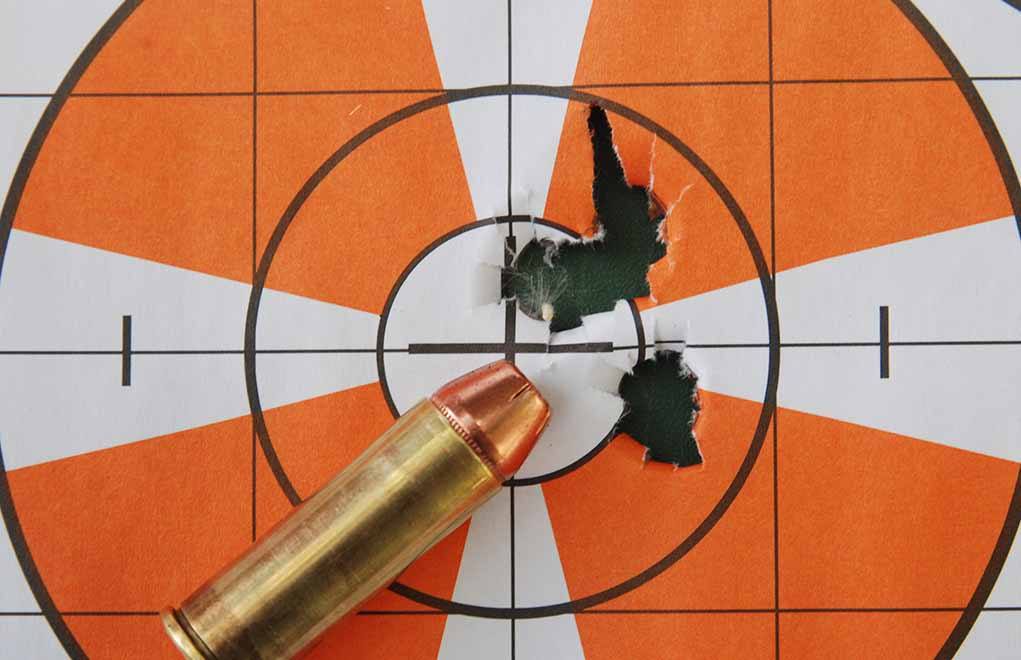
The consensus seemed to be that serious rifle ammunition was made on the single-stage or turret presses, and the high-volume pistol or plinking ammunition was handled by the progressive press, with a couple of guys insisting that the .223 Rem. and .308 Win. ammo made on a progressive was as good as that made on a single stage. So many good presses are on the market; if you find one that works for you, go with it. I’ve made consistent ammo on a Lee three-hole turret press with all sorts of wiggle and movement, but I feel much more confident on my Redding T7.
Though there are many good single-stage presses on the market, the author likes the strength, ruggedness and flexibility of the Redding T7 turret press. Photo: Massaro Media Group.
Just In Case
Regarding case preparation, I was surprised to find out the different ideas or points of concentration. Some guys were extremely concerned with neck thickness and were obsessed with turning the necks religiously; others weren’t as obsessive. I like to keep primer pockets and flash holes as uniform as possible, as I feel that consistent ignition is an important factor in keeping velocity spread as low as possible; others paid little attention to that.
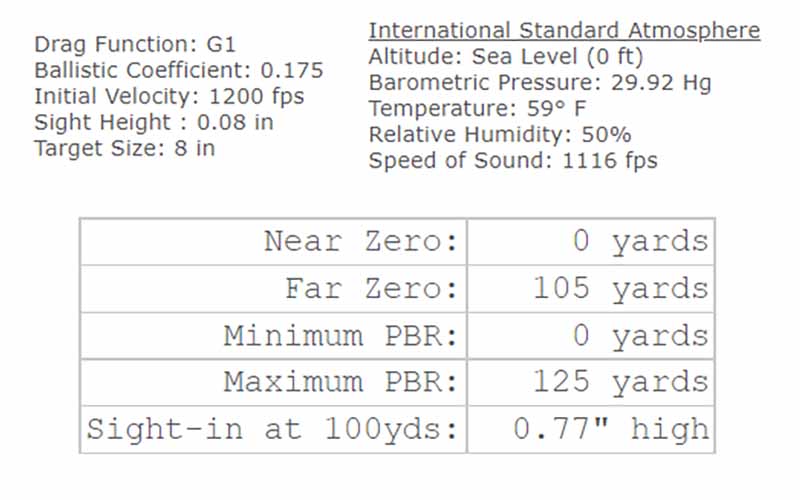
Most of us liked the option of the VLD chamfer tools and prefer the powered trimmers to keep case mouths good and square. We did differ on the idea of when—during the case preparation process—to clean the cases. Some preferred to tumble their brass first thing, with the mindset being that only a savage would run dirty brass into a resizing die, and they also wanted to avoid any potential dents in the case mouths during tumbling. Others wanted to resize first, as the tumbling process would clean the primer pockets and remove any lubricant that remained after a wipe down.
I use a combination of both ideas, but I incorporate a universal decapping die, in order to pop out the spent primer first and then tumble my brass, running clean cases into my resizing die. I don’t suppose it’d be detrimental to resize before tumbling—though it may require you to clean your sizing die a bit more often. We were all split on case lubricant choices; I generally prefer the Imperial Sizing Wax, while many others like the Hornady One Shot lubricant in the aerosol can. Among the lot of us, there were only a couple who annealed their brass cases.
We were nearly unanimous on the idea of micrometer adjustable seating dies, with everyone agreeing they give those finite adjustments that make a big difference, especially with the latest crop of long-ogive bullets.
Talking Shop
I got a chuckle when the conversation turned to pet loads, as we all had our own secret recipe, and when we compared notes for the more popular cartridges, there was no shortage of cocked eyebrows. “You’ve got to try Powder X in the .300 Winchester; it’s the best!” Now, Powder X was a different choice for almost all of us, as was the “bullet that worked best.” Cell phone photos of targets showed each of us was telling the truth, yet got to the accuracy result from a different direction.
Monometal bullets often have multiple grooves cut in the shank of the bullet to reduce pressure, and a powder on the faster end of the spectrum can keep velocities higher and more consistent. Photo: Massaro Media Group.
All in all, the techniques we discussed weren’t all that different, though each of us had his own little quirks and habits. It was quite obvious that reloaders love talking shop, and while there was a lot of experience amassed in that backyard, we were all open to hearing new ideas and techniques. I’m always open to hearing someone else’s experiences—it was nice to have my theory of monometal bullets liking powders on the faster side of the burn rate chart validated by others—as it helps me learn and saves me time. As my grandfather used to say, “Life is too short to make all the mistakes yourself; learn from the mistakes of others.”
There are plenty of good books written on the basic reloading process—and I’ll unabashedly include my own A-B-Cs of Reloading, 10th edition—and each might offer a slightly different technique. I’ll leave it like this: As long as it’s safe and it feels comfortable to you, there are many correct answers to the same question.
Editor's Note: This article originally appeared in the November 2022 issue of Gun Digest the Magazine.
We take a quick look at Weatherby’s new lightweight Mark V Backcountry Guide and Guide Ti hunting rifles.
Weatherby is continuing to expand its Backcountry line, this time with two models of lightweight mountain hunting rifles. Called the Mark V Backcountry Guide and the Mark V Backcountry Ti, the two models are available in 12 different chambering options, and 6 of those are available in left-handed options as well.
The greatest appeal of the new Backcountry Mark V Guide rifles is how lightweight they are, making them ideal for being carried for long distances. The standard models range from 5.4 pounds to 6.6 pounds depending on their chambering, and the titanium-action Ti models range from 5.1 pounds to 5.9 pounds. Chambering options include .240 Wby Mag., .243 Win., .257 Wby Mag., .280 Ackley Improved, .300 PRC, .300 Wby. Mag., .300 Win., .308 Win., 6.5 Creedmoor, 6.5 Wby. RPM, 6.5-300 Wby. Mag. and 7mm PRC.
Designed to be handy in the field, Backcountry Mark V Guide rifles feature shorter barrel lengths than usual. They also feature Peak 44 Blacktooth carbon fiber stocks that are durable, lightweight and come with two factory-installed Spartan Precision Gunsmithing adapters on the forend as well as a Blacktooth 3D Hex recoil pad. Other notable features include threaded BSF carbon fiber barrels, adjustable TriggerTech triggers, Accubrake ST muzzle brakes and their Cerakote finish.
The standard model Weatherby Backcountry Mark V Guide has an MSRP of $3,299 and the Ti version with a titanium action has an MSRP of $3,799.
We take a quick look at the .480 Ruger cartridge, Bill Ruger’s handheld namesake.
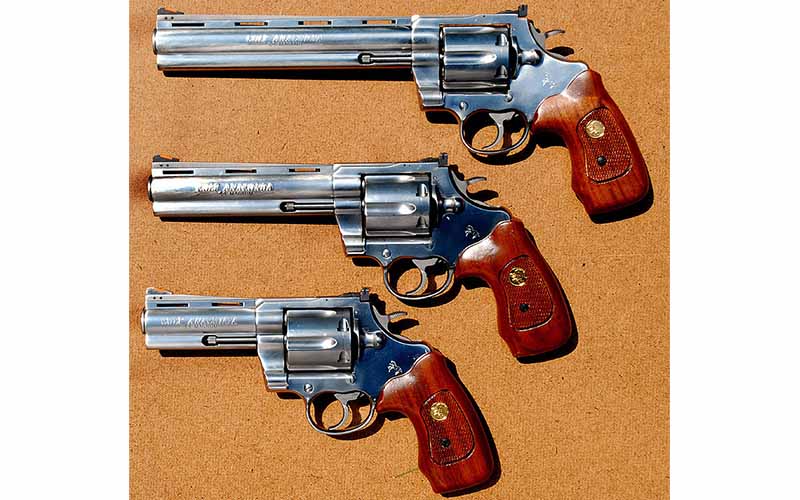
After a half-century of production, millions of shooters use Bill Ruger’s firearms—but only one very special pistol cartridge bears the man’s name. The .480 Ruger was never intended to be the biggest and heaviest-recoiling handgun cartridge on the block. It splits the difference between the .44 Remington Magnum and .454 Casull cartridges.
Using a Hornady 325-grain XTP Magnum bullet (diameter 0.475 inch) and Hornady brass, the .480 Ruger offers a significant velocity and energy increase over the .44 Remington Magnum cartridge, but without the recoil disadvantage of other super-powered handgun cartridges.
The key to delivering the two-thirds of a ton of muzzle energy is a well-reasoned balance among bullet weight, velocity and operating pressure, in a cartridge derived from the venerable .45-70 case.
The cartridge is chambered in Ruger’s rugged double-action six-shooter, the Super Redhawk, which wears an integral scope mounting system on the top strap. It has served big-game handgun hunters and metallic silhouette target shooters with distinction.
We discuss the development, design, history and use of the FN FNC, an oft-forgotten Cold War military rifle.
It took years for NATO to agree to standardize on the 7.62x51mm cartridge only for the U.S. to turn around and lobby for the adoption of the 5.56x45mm cartridge instead. This made many European countries in the NATO alliance feel as if the U.S. was trying to force them to buy American equipment, and they weren’t happy about it.
Many of these nations were using 7.62 FN FAL rifles at this point, and while they’re excellent guns, NATO leadership saw the writing on the wall that 5.56 was the next logical progression in cartridge choice.
FN had developed the FN CAL (Carabine Automatique Légère), a rifle that was essentially a scaled-down version of the FAL chambered for 5.56 that was designed to replace the FAL, but the CAL fell short of its big brother’s reputation. Part of the design intention for the CAL was to be a cheaper rifle to produce, but it ultimately proved to still be too complicated and expensive among other issues. FN knew that a new design was needed, and by the early 1970s, FN introduced the FNC (Fabrique Nationale Carabine)—the heir apparent to the FN FAL.
For the most part, its reception was crickets. NATO countries did not jump at the chance to adopt the FN FNC.
The FNC was an excellent rifle design, but it never approached the popularity of the FN FAL during its lifetime. By the 1980s when the FNC design was refined and improved, many countries were already looking at more modern rifle designs like bullpups or had simply embraced the M16 platform. Never quite in the right place at the right time, the FN FNC is truly an underappreciated Cold War military rifle.
FN FNC Development
As mentioned, FN’s first attempt at a 5.56 version of the FAL was the CAL, but it ultimately just wasn’t a good design and never really went anywhere other than the sale of a few small batches. Besides some problems with the rifle itself, the goal of this endeavor was to make a gun that was very inexpensive to manufacture. While cheaper and simpler than the FAL, it was still too complicated and expensive to produce.
The story of the FNC really starts in the early 1970s when the French military was interested in a carbine-length rifle chambered in 5.56, and the French were already internally developing the FAMAS to fill that need. The French were open to adopting a foreign design, however, as they had tested the FN CAL in earlier trials. They rejected the CAL, however, and this inspired FN to go back to the drawing board and refine it into the FNC in hopes that they could still get a piece of the military contract pie. The French didn’t end up biting as they adopted the FAMAS instead, but the story doesn’t end there for the FNC.
By 1976, the design had been improved and the new prototype rifle was called the FNC 76. This version took part in some Swedish military trials, but newly discovered issues resulted in FN going back for some further development. By 1980, it was dubbed the FNC 80, and this is essentially the final version of the original FN design.
The FNC did not experience the widespread NATO adoption that FN hoped for, but it was still a relatively successful product for the company. A few countries purchased rifles outright, and two of those would go on to license production from FN so they could build their own. Indonesia adopted the FNC in 1982, and later the firearms manufacturer PT Pindad licensed the design to produce a modified version called the Pindad SS1. This licensed copy was tweaked for the tropical environments of Indonesia and Indonesian armed forces have relied on the SS1 and the updated SS2 ever since.
In the meantime, the Swedish military conducted trials and adopted a modified FNC design into service in 1986 as the Ak 5. Sweden is the only other country besides Belgium and Indonesia to build the rifles themselves. Belgium, the home of FN Herstal, would also adopt the FNC as a replacement for their aging FN FALs.
Some smaller nations like the Democratic Republic of Congo, Tonga, Sri Lanka, El Salvador and others also adopted the FNC, and it continues to see service around the world today.
An El Salvadorian soldier with his FNC. Photo: Wikipedia.
How The FNC Works
The FNC was designed as a select-fire rifle with a gas-operated long-stroke piston system with a rotating two-lug bolt. Sounds a lot like an AK, doesn’t it? Well, the engineers at FN went with simplicity when designing the FNC and it resulted in some fundamental similarities with the Kalashnikov system. That said, the two designs are still very different and have zero parts compatibility between them.
The FN FNC carbine has a barrel length of 14.3 inches and an overall length of 35.9 inches with the stock extended. One nice feature of the FNC is that the stock folds to the right of the receiver and it can be fired with the stock folded. The overall length of the carbine model with the stock folded is 26.3 inches and it weighs 8.2 pounds. A rifle version with a 17.7-inch barrel was also produced.
As for magazines, the FNC is compatible with STANAG M16 mags, but they’re not entirely identical. While both types of mags will function in both rifles, the FNC does not lock open after the last round is fired so the follower of its magazine has no bolt-hold-open feature like those of M16s/AR-15s.
The FNC’s sights are reminiscent of the FAL and consist of a rear sight with flip apertures, one for 250 meters and the other for 400 meters, and an adjustable post front sight protected by two sturdy wings. The FNC could be equipped with an optic, but it was designed in an era when optics were not the norm on military rifles.
Cost was a large consideration when developing the rifle, hence it is built with less expensive components. The lower receiver is aluminum, similar to an M16, and the upper is stamped steel similar to many other military rifles of the era like the AK. Stamped steel is more cost-effective than machined aluminum, though it does add weight to a design. Despite having a barrel that’s just over 2 inches longer, an M16A1 weighs about 2 pounds less than the rifle variant of the FNC, though that also has to do with their different operating mechanisms.
Controls on the FNC are similar to the M16. On the right side of the lower receiver is a familiar-looking magazine release button. On the left side is a 4-position fire-selector that allows the user to flip between automatic, 3-round burst, semi-auto and safe. One interesting feature of the FNC is its moving dust cover for the reciprocating charging handle. The spring-loaded dust cover is positioned over the charging handle slot in the upper receiver and as the charging handle moves rearward when cycling, it moves to cover the slot when firing, keeping the internals protected at all times.
Here you can see the dust cover to the left of the charging handle. It moves out of the way when the action is cycled, keeping the system closed at all times. Photo: Rock Island Auction Company.
The FNC’s gas regulator is another good piece of design worth discussing. This is because unlike being located on the gas block on the muzzle-end of the barrel like on most guns with adjustable gas, the FNC’s is instead found on the top of the barrel at the breach end next to the receiver. This allows for the regulator to stay cool to the touch so it can be operated with your fingers after firing enough to heat up the system. The FNC regulator has just two positions, one for normal firing mode and one for adverse mode which directs all the gas into the piston in the event the rifle is fouled and needs more gas to cycle. A gas cut-off lever is also built into the front sight base for launching rifle grenades.
An image from FN's FNC operator's manual. Notice how its upper and lower receivers mate similarly to an AR, but its bolt carrier is attached to the long-stroke piston like an AK.
The FNC field strips similarly to an M16, with two captured pins holding the upper receiver to the lower receiver, but it also strips a bit like an AK as the bolt carrier/piston assembly is a single component.
Legacy Of The FN FNC
While the FNC has been used in many smaller conflicts across the globe, it never became a notable gun that was very strongly associated with any of them. As a Cold War rifle, it was always overshadowed by AKs, M16s, and battle rifles like the G3 or even the FN FAL that inspired it. Interestingly, the conflict that the FNC may become the most strongly associated with is one that is still ongoing: the Russo-Ukrainian War. This is because Belgium donated a large number of rifles as aid to Ukraine and they’ve been seen in the hands of many Ukrainian soldiers since then. This donation garnered some attention within the gun world and brought the oft-forgotten FNC back to the minds of many shooters.
A Ukrainian soldier with an FNC. Photo: mil.gov.ua.
That said, it’s highly likely at this point that the most lasting legacy of the FN FNC will be from Hollywood rather than any real-world conflict. This is because the FNC was prominently used by Al Pacino’s character in the most famous scene of Michael Mann’s iconic heist movie Heat. The film is a must-watch for any gun guy, and it provided some of the best footage of the FNC in action that exists. Is it a rifle that a Los Angeles detective in the 1990s would actually have? Of course not, but the rule of cool trumps realism every time.
Al Pacino in Heat (1995) firing an FN FNC carbine. Photo: imfdb.org.
Owning An FNC Today
About 6,000 semi-automatic sporter FNC rifles were imported into the U.S. before the 1989 ban. The importers were Steyr, HOWCO and Gun South, and between them, they brought in a few variants with different barrel lengths and stock configurations.
If you want to own an FNC today, be prepared to drop some big bucks. Of the roughly 6,000 rifles imported before 1989, a large number of those were legally converted to transferable machine guns before the registry closed in 1986. This means that of the relatively few that were imported, even fewer of them are still standard semi-auto rifles, resulting in their value going up quite a bit. For a normal, used semi-auto model, online prices are currently hovering at around $7,000. For a transferable machine gun FNC, average prices are closer to $30,000.
The high price of the semi-autos is further explained by another complicating factor: transferable auto sears. To make a long story short, because the upper assembly of the FNC is what’s legally classified as a firearm in the U.S. (as opposed to the lower receiver on an AR), it makes it legally possible to modify an FNC's lower to accept a registered auto sear. On an AR-15, because the lower is legally the firearm, it's been impossible to do this since the registry closed in 1986 as it requires modifying the lower which counts as manufacturing a new machine gun.
S&H Arms realized this before the registry closed in 1986, so they manufactured and registered as many FNC auto sears as physically possible. The result is that there are almost certainly more registered FNC auto sears in the U.S. than FNC rifles themselves. For many years, this meant that the FNC was one of the easiest and most affordable machine guns to acquire post-1986, as all one needed to do was buy a semi-auto FNC alongside one of the abundant registered auto sears and put the two together. This, of course, raised the desirability of semi-auto FNCs along with their prices, and today they’re very expensive regardless of whether you want one as a machine gun host or not.
The Pindad SS1-C pistol.
If you still want to own one but don’t have very deep pockets, don’t despair just yet. At SHOT Show 2024, Pindad of Indonesia had some interesting guns on display, including a semi-auto FNC variant called the SS1-C. For importation reasons it appears that they will legally be pistols and brought in without stocks, but registering one as an SBR would allow you to add one. These are yet to hit U.S. shores and no price has been announced, but if these are successfully imported they’ll almost certainly be less expensive than any of the FN-made guns currently available on the second-hand market. Here’s to hoping that Pindad’s efforts will help bring about a small FNC renaissance in the States. We’ll be eager to review one if they ever become available.
More Classic Military Guns:
Why The Mauser C96 “Broomhandle” Still Looms Large
We check out the Walther WMP, a versatile and capable semi-auto .22 WMR pistol that has all the makings of an excellent modern kit gun.
Walther has always been an iconic brand, whether you go back to the early 20th century with the PPK or P-38, or fast-forward to the ’90s when James Bond upgraded to the P99. A few years ago, they released the WMP (Walther Magnum Pistol), a semi-automatic .22 WMR (Winchester Magnum Rimfire) pistol, and It’s proving itself to be an accurate and capable handgun in several ways.
One of my favorite rimfire rounds has always been the .22 WMR, otherwise known as the .22 Magnum. When you find a cartridge you love, you typically want to shoot it in as many different firearms as possible. For .22 Magnum, that’s typically bolt-action and lever-action rifles, often paired with an accurate revolver.
Sadly, semi-auto rifles and pistols are rarely found chambered in this cartridge, but the Walther WMP is setting out to change that.
It’s not the first semi-auto firearm to go this route. Many shooters remember AMT’s ill-fated Automag II or Ruger’s attempt at a 10/22 in .22 Magnum. Historically, this cartridge doesn’t play well with others in semi-automatic platforms. However, there are reasons those firearms weren’t successful and why they’re not being made anymore.
Its power factor is such that a simple blowback action will not safely contain the recoil and pressure unless the action is ridiculously heavy. The long, skinny profile and the rim of the cartridge don’t lend themselves inherently to feeding properly or extracting and ejecting consistently, especially when fouling is present.
Walther tackled these challenges in a few interesting ways in order to bring this pistol to market. Firstly, they adapted the styling of the Walther PPQ-M2. There are two sets of ambidextrous magazine releases—a button and a paddle on either side. Unlike most Walther designs, there are no interchangeable backstraps. The magazine makes for a long grip due to the length of the .22 Magnum cartridge.
Walther’s WMP is extremely easy to take apart and reassemble thanks to a takedown lever on the frame.
Its barrel is a bull type and is solid. I was hoping for threads, but no joy there. It may seem futile to suppress .22 Magnum out of a 5-inch-barreled pistol like a .22 LR, but sometimes you just want to take the edge off. Hopefully we see this in the future.
The top of the slide is vented for aesthetics … and to lighten it. You might think it’s porting at first glance, but this isn’t the case. It’s capable of having a red-dot sight mounted should you choose to go that route. Like the rest of Walther’s line, the polymer frame of the WMP is richly textured for a solid and secure grip on the pistol. It’s a handful for sure, but it’s still much slimmer than a Desert Eagle. A five-slot Picatinny rail rounds out the frame for attaching lights, lasers and similar accessories.
The ventilated slide of the Walther WMP may give the illusion of a ported barrel, but is only there for lightening and aesthetic purposes.
The trigger pull is a nice 4 to 4.5 pounds of pressure, and the pistol is hammer-fired instead of striker-fired. I’m told by Walther that this was how they were to engineer the delayed blowback action with just the right combination of spring pressure.
Why .22 WMR?
Walther didn’t make this pistol just because they could. There’s a genuine interest in the .22 Magnum in a semi-auto host. It might be an evolution of the old kit gun concept as a rimfire pistol to keep in the range bag, tackle box or just to tote in the woods for use against raccoons, skunks and coyotes.
The .22 Magnum debuted in 1959 as a more potent rimfire loading than .22 LR. It was primarily intended for use in bolt-action, lever-action, slide-action and single-shot rifles. In the 1960s, manufacturers of single-action (and a few double-action) revolvers began offering interchangeable cylinders for their handguns to accommodate .22 Magnum.
The grip frame is on the longer side to accommodate the length of the 22 Magnum cartridge
In 1965, the late Bill Jordan wrote in No Second Place Winner that a S&W Airweight in .22 Magnum would be “an ideal backup piece” and called the .22 Magnum a “wicked little cartridge,” more than likely because it matched the ballistics of a .22 LR when fired from a rifle as opposed to the spotty results from a carry pistol.
Unlike the .22 LR, which has a reputation for being dirty, the .22 Magnum runs much cleaner and seems to be loaded to a higher standard. That might be a trade-off: .22 Magnum has always reflected a higher price and, over the years, I’ve had hundreds of .22 LR rounds that never went bang. I cannot recall a failure with a single round of .22 Magnum.
Walther WMP For Self Defense?
At one time, you would’ve been laughed off the instructor circuit for suggesting a rimfire round for self-defense. Sure, it’s always been better than nothing, but for some folks it might be the only option at-hand. Recoil is light and makes it suitable for older people or folks with disabilities, such as carpal tunnel syndrome, arthritis or neuropathy in their hands. As times change, ammunition has improved and become more effective.
The WMP not only has fully ambidextrous controls, but it has two mag releases (button and paddle) on both sides. This gives you four ways to drop a magazine.
This is a key point to make in regard to the .22 Magnum: As companies like Ruger and Smith & Wesson produced full-size revolvers in .22 WMR; other companies like Bond Arms, North American Arms and High Standard made Derringers and mini revolvers with sub-1-inch barrels capable of launching the .22 Magnum. The problem here is that all these guns had much shorter barrels than their long-gun counterparts. Thus, the ammunition was poorly optimized, and while Derringers and revolvers had the reliability factor, much of the potential for power and accuracy was reduced … although you might’ve gotten an impressive fireball display at every range session.
Ammunition companies like Federal and Hornady saw this need and answered the call with new lines like Hornady Critical Defense and Federal Punch. Using improved powders and projectiles, these rounds excelled at penetration, reduced flash and threw 40-grain slugs at 1,300 or 1,800 feet per second. Having 15 rounds on-hand, as you do with the Walther WMP, is a huge advantage over revolvers and Derringers, which limit you to single-digit rounds before having to reload.
WMP At The Range
We took the WMP to the range plenty of times for target work: The accuracy is amazing; it shoots flatter than a .22 LR for a longer distance. At 25 yards, Federal Punch routinely gave a sub-2-inch group. Velocity out of the WMP averaged 1,760 fps.
The Critical Defense was somewhat slower at 1,300 fps and about as accurate. However, the lower velocity means less penetration, and Hornady Critical Defense is intended more as an expanding projectile.
We tried some 30-grain CCI Maxi Mag rounds as well. This ammo wouldn’t be my first choice for a revolver or Derringer, but the WMP is a hammer-fired, delayed blowback semi-automatic, and it needs that extra velocity to cycle the action. Accuracy with the Maxi Mag rounds wasn’t the best, but the velocity was averaging 1,875 fps … and it was throwing some serious flame.
Walther advises against using any of the polymer-tipped ammo, such as V-MAX or any of the lower-powered selections, or snake shot—they will not cycle the action reliably. It certainly fits the bill in this regard, but it has a weak link in the armor here due to the cost of ammunition. While no ammo is truly cheap anymore, .22 Magnum is almost double the cost of its .22 LR counterparts.
Hunting With A WMP
With .22 Magnum, you get more power than the .22 LR and certainly more capacity than any revolver. This doesn’t necessarily translate to success in most hunting situations, as the penetration will ruin the meat on most small game. If your bigger concern is predators around the ranch or barn, such as coyotes, skunks, raccoons, feral dogs and the like, it’ll be more effective at making short work of these types of varmints than a .22 LR will.
Verdict
Walther’s WMR is a solid entry for a semi-automatic pistol in .22 Magnum. It might be more expensive than the competition, such as KelTec’s PMR-30, but it’s a more accurate and better-looking pistol overall. The ability to mount a red-dot is a good one, and there are a number of companies offering leather and Kydex holsters for the WMR.
If you have the misfortune to live in a state that limits your magazine capacity, 10-round magazines are available from Walther, but note they’re still marked as holding 15 rounds even though they are blocked to limit 10.
This is ideally the equivalent of a 21st century kit gun as a semi-auto.
Editor's Note: This article originally appeared in the October 2024 issue of Gun Digest the Magazine.
We hit the range to test out Wilson Combat’s compensated EDC X9 2.0.
Not only is the 1911 pistol iconic, but it’s also a timeless design that’s more popular a century after Colt introduced it than it ever has been. But that doesn’t mean the 1911, with its linked barrel, single-action operation and non-pivoting trigger, hasn’t been improved on.
These improvements—at least for 1911-style pistols chambered in 9mm—go way beyond an enhanced grip and thumb safeties. Wilson Combat’s introduction of the EDC X9 pistol marked a significant shift in the 9mm 1911. In 2017, I declared it the best self-defense pistol ever made. I still believe that.
I also believe the new EDC X9 2.0 is an upgraded version of “best.”
The compensated model allows for faster, more accurate follow-up shots
New grip panel options can provide improved ergonomics
Cons
Very expensive
Compensator can blow gas back at the shooter in certain positions
Compensator adds additional length and weight
The EDC X9
Wilson Combat machines the EDC X9’s slide from 416R stainless steel, with a weight reducing, trimmed down, tri-cut-like top. It comes standard with a Wilson Combat Battlesight rear sight and a fiber-optic front sight. The pistol also utilizes the Wilson Combat Enhanced Reliability System (ERS). This is a proprietary system designed to optimize functioning with the varying power levels of 9mm ammunition. The pistol feeds from a double-stacked magazine, but the EDC X9’s real 1911 innovation was the grip frame, which includes a one-piece backstrap that replaces the common 1911 grip safety.
The Wilson Combat Concealment Battlesight is a highly visible but snag-free rear sight.
I was so smitten with the EDC X9 when I evaluated it in 2017, I purchased it immediately. Since then, that pistol has spent a lot of time on my side, and I’ve fired thousands of rounds through it. I’ve also recommended the pistol to several others who ended up purchasing one and loving it just as much as I do. When I’ve let people shoot my EDC X9, the most common reaction is an audible, “Wow!”
EDC X9 2.0 Upgrades
You might say the 2.0 upgrades to the EDC X9 are subtle … but substantive. The EDC X9 2.0 features an all-new solid aluminum X-Frame frame design. This change makes the pistol more versatile because now it offers interchangeable grip panels much like with original 1911 pistols. Wilson Combat currently offers six different grip packages for the EDC X9 2.0, and it comes standard with the Wilson Combat Concealment Battlesight rear sight, and a green or red fiber-optic front sight.
The compensator option for the EDC X9 2.0 is an expensive upgrade to an existing EDC X9 but an affordable option on a new EDC X9 2.0.
Another notable option is for a compensated barrel: You can add it to an existing EDC X9, or even one of the SFX pistols, but the cost is a bit steep at around $1,800—the retrofit requires a new slide. If you’re ordering a new EDC X9 2.0, the upgrade to a compensated barrel is only $257.95, and the option is available on either a 3.25- or 4.0-inch pistol. The comp does add a bit of length and weight to the pistol. With a comp, the 3.25-inch EDC X9 2.0 essentially becomes the same size as the original 4-inch EDC X9 without a comp.
The 3.25-inch barrel Wilson Combat EDC X9 2.0 with a compensator is nearly identical in size and weight to the 4.0-inch barrel original EDC X9.
You can purchase a base model EDC X9 at various dealers, and some come with what I call standard options, like an accessory rail, a frame-integrated magwell with 18-round magazines, a compensator and an ambi-safety. However, if you order directly from Wilson Combat, the options are almost endless and include a True Zero optics mount, suppressor height sights, short trigger, flat trigger, Tritium front sight, slide engravings and various color options. Of course, Wilson Combat adjusts the price for these additional goodies accordingly.
Reliability
If there’s one area where Wilson Combat pistols are generally impeccable, its reliability; they tend to run flawlessly. So, I was a bit surprised that the EDC X9 2.0 comped pistol was initially giving me some problems.
Just to get familiar with the pistol, I began my range time using re-manufactured Wilson Combat 135-grain HBFP ammo at 950 fps. These were light loads, and I was having some cycling issues. Sometimes the slide would capture the empty case in the ejection port—a stove pipe—and sometimes the pistol would fail to feed.
Ordered direct from Wilson Combat, you can dress the EDC X9 2.0 up just about any way you like. This version has an ambi-safety, suppressor height sights, an integrated magwell and an 18-round magazine, a compensator, and the True Zero optics mount with a Trijicon SRO reflex sight.
I thought the load might have not had enough gas to drive the compensated slide, but I found it hard to accept the fact that a Wilson Combat pistol was out of the box unreliable. I had a little can of Ballistol in my range bag, and thinking a bit of lubrication might help, I gave the pistol a couple squirts.
Afterward, it ran perfectly with everything I put through it, which amounted to an additional 450 rounds using 10 different loads, which included everything from CCI Blazer to Federal HST. After the juicing, the gun never hiccuped.
Precision
I evaluated six loads for record out of the EDC X9 2.0 pistol, and the exercise was more a measure of my marksmanship than a test of how accurately the pistol shot. If I did my part while shooting five-shot groups from a sandbag rest at 10 yards, you could cover every group with a quarter.
Sometimes I didn’t do my part, and a single stray would open the group a bit. The test target supplied with the pistol was a three-shot group fired at 15 yards that measured 0.58 inch. Most of the first three shots I fired for every group were about that size.
Shooting Results
LOAD
MV
SD
ENG
PRECISION
Lehigh Defense 90-grain XD
1,293
18
334
0.97
Wilson Combat 115-grain TACXP +P
1,098
11
308
1.12
CCI 115-grain Blazer FMJ (brass)
1,125
9
323
1.37
Nosler 115-grain ASP JHP
1,081
9
298
1.14
Federal 124-grain HST
1,123
5
347
1.07
Wilson Combat 124-grain XTP HP +P
1,123
16
347
1.31
NOTES: Average muzzle velocity (MV), standard velocity deviation (SD), and muzzle energy (ENG), were established by firing 10 shots over a Caldwell G2 chronograph with the screens positioned 10 feet from the muzzle. Listed precision was established by firing three, five-shot groups with each load from a sandbag rest at 10 yards.
I’m betting the guy who does the accuracy testing for Wilson Combat can shoot better than I can, but I’ll also bet this pistol can shoot better than you can. It comes with a 1.5-inch accuracy guarantee at 25 yards—unfortunately, your humble correspondent does not. I might better represent the precision this pistol is capable of with the two-shot strings I fired after drawing from the holster at 25 yards. More often than not, at that distance I was getting two hits on an 8-inch steel plate in—on average—about 4 seconds.
The Compensated Advantage
Why a compensator? A comp on a pistol reduces muzzle rise by diverting gases upward at the muzzle. In theory, this allows you to make follow-up shots faster. But how much of an advantage is it really?
While performing the step back drill, the Wilson Combat EDC X9 2.0 (comped) performed better than any open sighted pistol the author has attempted this drill with.
Since I already own an original uncompensated EDC X9, I was able to do some side-by-side comparisons to measure this advantage while also testing the new EDC X9 2.0. I ran both pistols through two of my most-used shooting drills, and to prevent getting too familiar with each pistol during the process, I’d run each drill twice with each pistol … and then switch.
On the Forty-Five Drill, which requires you to draw and fire five shots into a 5-inch circle at 5 yards in less than 5 seconds, I failed to get all five hits four times with each pistol. Overall, it looks like I shot the original EDC X9 better—I got more hits with it—but you must look at the times to get the clear picture.
With the original EDC X9, if I didn’t run the drill in less than 3.0 seconds, I was able to get all my hits. With the comped EDC X9 2.0, I had to keep my times slower than 2.6 seconds to get all my hits. If we look a little deeper, and only compare the clean runs, we find that the EDC X9 2.0 (comped) pistol was 4/10ths of a second—almost 13 percent—faster.
Forty-Five Drill Results:
ATTEMPT
EDC X9 (original)
EDC X9 (original)
EDC X9 2.0 (comped)
EDC X9 2.0 (comped)
TIME
HITS
TIME
HITS
1
3.28
5
2.99
5
2
3.03
5
2.79
5
3
3.07
5
2.58
3
4
2.79
3
2.62
5
5
2.92
4
2.65
5
6
2.89
4
2.40
2
7
3.14
5
2.59
4
8
3.15
5
2.55
4
9
2.96
4
2.63
5
10
3.07
5
2.65
5
AVERAGES TOTALS:
3.03
45 of 50
2.65
43 of 50
Here you can see how much a compensator can help when you’re trying to get multiple hits as fast as possible.
The Step Back Drill, which you could also call the “hammers,” “double-taps” and “controlled pairs” drill, is more dependent on accuracy than speed. In this drill, you start at 5 yards and draw and hit an 8-inch plate twice. You then “step back” to 10, 15, 20 and 25 yards and repeat the two-shot string at each distance. You also time each segment separately, with the goal of getting 10 hits in less than 20 seconds.
There wasn’t enough difference in the hits and misses to really matter, and though the compensator was less of an advantage, its benefit was still apparent. Average times with the EDC X9 2.0 were three-quarters of a second—about 5 percent—faster. Also, I had six clean runs with the comped pistol and only four with the original EDC X9.
Step Back Drill Results:
ATTEMPT
EDC X9 (original)
EDC X9 (original)
EDC X9 2.0 (comped)
EDC X9 2.0 (comped)
TIME
HITS
TIME
HITS
1
15.22
8
13.09
8
2
15.79
10
13.99
9
3
16.32
10
14.58
9
4
16.70
10
15.77
10
5
16.12
8
16.30
10
6
14.88
9
16.22
10
7
15.18
9
14.60
10
8
15.55
10
14.77
10
9
15.04
9
14.12
8
10
15.15
9
15.55
10
AVERAGES TOTALS:
15.60
92 of 100
14.90
94 of 100
Though a compensator offers its best advantage during fast-paced high-volume shooting, it’s also beneficial when firing hammers, double-taps or controlled pairs.
The Verdict
I think it’s safe to say that the 3.25-inch comped EDC X9 will let you shoot just as accurately—and measurably faster—than you can with an original 4.0-inch EDC X9. I also think the grip panel upgrade on the 2.0 EDC X9 makes for a better and slightly more comfortable pistol in-hand.
All that said, I’m still not exactly sure how I feel about a compensator on a carry gun. It does add to the length and that gas blowing up your chest near your face is a bit disconcerting when you’re shooting from the retention position.
However, I’m still convinced the EDC X9—original or 2.0—is the best self-defense handgun currently offered by any manufacturer. No doubt, the damned thing is expensive, and you’ll have to decide if its base price of $3,307, and then the additional cost of the compensator, is worth it. That’s a lot of money to spend for a pistol, but reliable, accurate and easy-to-shoot perfection doesn’t come cheap—never has, never will.
Also, knowing you’ve finally found the gun is very comforting. It means you can finally quit shopping and pontificating … and start concentrating on training.
Editor's Note: This article originally appeared in the October 2024 issue of Gun Digest the Magazine.
Looking for a new iron or piece of kit to enhance the one you already own? Check out these 7 new bits of guns and gear to grow your firearms wish list.
At this point, it’s safe to say the B-14 is a stone-cold classic. Precision, affordability and quality—the rifle is about everything shooters or hunters seek. However, Bergara is upping the ante of its keystone iron with the introduction of a lightweight precision Crest Carbon. Featuring a 100-percent carbon-fiber stock, Bergara’s Cure Carbon Barrel and their proven B-14 action, the rifle is tailored for those deep-woods hunts at 6.2 pounds. It’s also a lights-out shooter, with the Cure barrel offering the exceptional rigidity required for consistent accuracy. Other features include AICS detachable magazines, an omni-directional muzzle brake, a sniper gray Cerakoted finish and six chamberings. MSRP: $2,100
Colt CBX Hunter in 6.5 Creedmoor
Colt’s history with bolt-action rifles is on-again, off-again. But since being acquired by CZ, the company has made a big push into this niche and continues to tread forward. The latest addition to its stable is a 6.5 Creedmoor chambering of its intriguing sporter: the CBX Hunter. This should prove a match made in heaven, given the original release in .308 Winchester proved very accurate and the 6.5 has more than proven to go the distance. To boot, the rifle has some desirable qualities besides its ability to hit distant targets, including a modular synthetic stock, a very manageable 7-pound weight, a snappy trigger and a silky-smooth action. MSRP: $999
Taurus Expedition
Who had Taurus hunting rifle on their 2024 bingo card? Likely few people, but the Brazilian company recently released its first foray into this style of firearm with the Expedition. The bolt-action is interesting, smartly built on a 700-series footprint action, allowing easy stock and trigger upgrades. And, Taurus has done a solid job on the former, offering a hybrid precision/hunting synthetic stock with M-Lok bipod attachment points on its wide flat fore, as well as a pistol-style grip. It comes outfitted with a fully adjustable trigger and a spiral-fluted barrel. Available in .308 Winchester and 6.5 Creedmoor, Taurus is ready for the hunt with the Expedition. MSRP: $985
Rossi Lightweight Carbine
Single-shot rifles aren’t everyone’s cup of tea, but with the style of the rifle’s inherent accuracy and nimbleness, it’s easy to see why many fall for them. Rossi has jumped into this end of the market with a wicked little number—its Lightweight Carbine (LWC). Weighing in at just a tick over 5 pounds and boasting a 16.5-inch barrel, the carbine is right-sized to tote along on any adventure. Additionally, the muzzle is threaded, thus suppressor ready. The hammer-fired break-action comes outfitted with a Picatinny optics rail, lightweight polymer stock and a respectable trigger. Available in .350 Legend, .300 Blackout, 5.56 NATO, 6.5 Creedmoor, .357 Magnum, .44 Magnum and 8.6 Blackout, the LWC is chambered for nearly any conceivable hunt. MSRP: $334
Ruger American Generation II
A generation of new hunters have cut their teeth on the Ruger American Rifle. With some welcome freshening up to the rugged and affordable design in the Gen2 update, it’s likely a fresh group of sportsmen will do the same. The most notable enhancement to the bolt-action is its new ergonomic stock that accommodates a removable comb riser and length-of-pull spacer. Furthermore, Ruger includes a three-position tang safety, threaded barrel with radial muzzle brake, Cerakoted barrel, receiver and bolt handle, adjustable trigger and a factory-installed one-piece Picatinny rail. Ruger plans on releasing the Generation II rifle in a slew of calibers and three configurations—standard, ranch and predator. MSRP: $729
Federal Ammunition HammerDown .45 Colt
The venerable .45 Colt didn’t blow away with the dusty boulevards of the Old West. It’s alive, kicking and arguably better than ever, thanks in part to the work of companies such as Federal. Focusing on the .45 Colt as a straight-wall hunting option, the ammunition manufacturer recently released the cartridge as part of its HammerDown line of ammo. Tailored for lever-action rifles, the .45 Colt ammo is not only engineered to work flawlessly in this class of rifle’s actions and loading gate but also ballistically. By Federal’s numbers, the 250-grain load has a blistering 1,025 fps muzzle velocity, giving it an excellent operational range on medium game. Plus, the bonded hollow-point bullet guarantees consistent and devastating terminal performance once at the target. MSRP: $39.99, box of 20
ATN Corp Blaze Seeker Thermal Monocular
Whether seeking out hogs in the twilight or following a blood trail at dusk, hunters need something to cut through the night. At one point, ATN Corp brings thermal imaging to the masses with one of the most economical monoculars presently available: the Blaze Seeker. Budget priced, the optic doesn’t skimp in performance. Its workhorse 256×192 sensor boasts a NETD rating of <35mK, ensuring exceptional sensitivity to temperature variations and delivering unparalleled image quality. Plus, the Blaze Seeker features a built-in rechargeable battery, providing up to 9 hours of operation time along with an external power supply option for extended usage in the field—and the ability to record pictures and video.
MSRP: $529
Editor's Note: This article originally appeared in the September 2024 issue of Gun Digest the Magazine.
Looking to go armed, but are stuck in the weeds as to what to arm yourself with? Here are 20 excellent concealed carry gun options that will keep you on the defensive.