Home Blog Page 188

Handgun Snapshot: Getting A Grip With Walther’s PK380

0

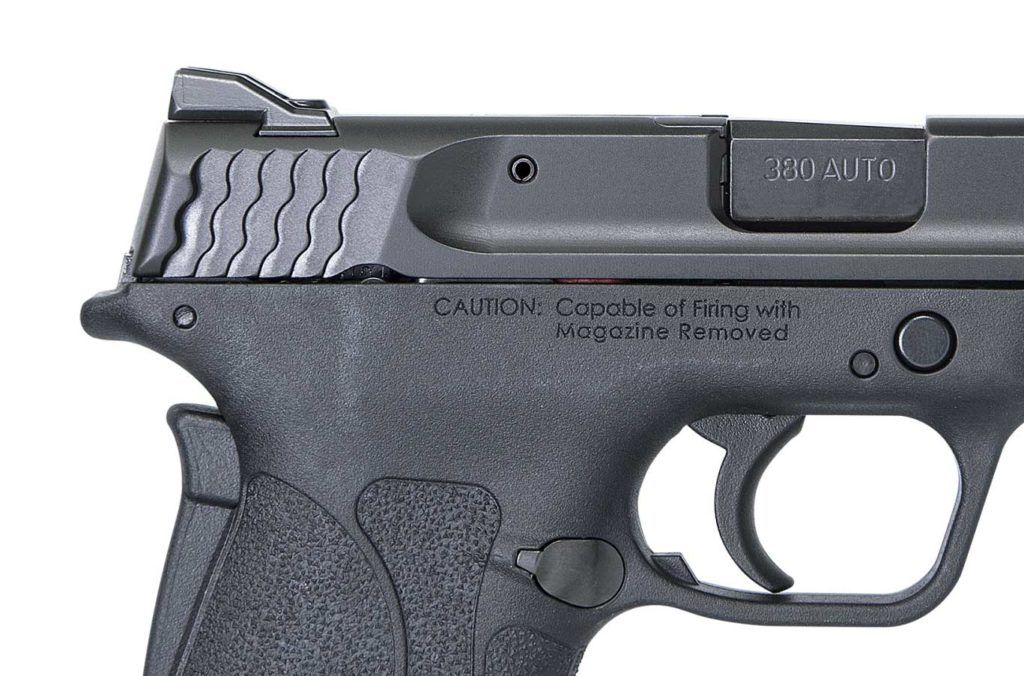
Rightsized, the Walther PK380 is small enough to slip into a pocket, but has the performance of a much larger self-defense handgun.

What does the PK380 have to offer those who carry?

  • The Walther PK380 hits a sweet spot when it comes to carry.
  • It's smaller than a subcompact for easy concealment.
  • But it's also large enough to offer a longer sight radius and more capacity.
  • The gun is well balanced in hand, has a good fit and feel and is a comfortable shooter.
  • Given its ease of use and ergonomic design, the Walther PK380 is a great choice.

Walther-lead PK380

Walther’s PK380 is a ‘tweener of a carry gun — not as small as the subcompact .380s that slip in your pocket but not quite as large as most 9mms. That just-right size means you get a light, portable gun with a longer sight radius and more capacity.

One thing that Walther has figured out is how to make guns that are well balanced and comfortable to shoot, and the company takes pride in building guns that fit well and feel good.

“Like all Walther pistols, the PK380 features an extremely comfortable ergonomic grip,” says Vice President of Marketing for Walther Luke Thorkildsen. “Walther has become synonymous with grip and trigger because we have found that there is confidence in comfort.”

When faced with a life-and-death situation, you need to have complete faith in your gun, and that faith is developed by long sessions on the range. You’re far less likely to spend time shooting a gun that hurts your hand or leaves you cringing with every trigger pull, so finding a pistol with a good grip is more critical than it might initially seem. Walther’s PK380 has an ergonomic design that’s slightly larger than some of the other guns in this article, yet it’s still easy to conceal. In addition, having those extra .380 ACP rounds on tap offers a level of comfort all its own.

Editor's Note: This article originally appeared in the September 2017 issue of Gun Digest the Magazine.
.380 Ammo For Defensive Use

2

Let’s look at what the facts say about the .380 ACP and its capabilities as a defensive option.

  • .380 ACP bullets averaged 9 to 18 inches of penetration at distances less than 30 feet.
  • This is according to data the author gathered.
  • Some deep penetrations were due to bullets not expanding upon reaching their target.
  • The author advises care in choosing the proper .380 defensive round
  • But he states there are many solid options that will perform, even at lower velocities.

Based on ballistic gel data that I gathered from multiple sources, the .380 ACP bullets averaged somewhere between 9 and 18 inches of penetration in ballistic gel at defensive distances under 30 feet (with 12 inches of penetration with proper bullet expansion being considered effective for personal defense).

380-self-defense-sixth

In large part, the deeper penetration results were a result of bullets that did not expand and retained their profile as they passed through the test. Failing to expand is good for producing deep penetration on ballistic gel, but it’s bad news in real-life defensive situations because a bullet that doesn’t open properly doesn’t create as much hydrostatic shock or tissue damage. Only a portion of a bullet’s kinetic energy is transferred to the target if the bullet passes through, and unless that bullet strikes a bone or nervous tissue, it might not stop the attacker immediately, which can be disastrous.

Bullet expansion results from a combination of factors. First, the bullet’s construction plays an important role. Second, the velocity at which the bullet is traveling is critical. Lastly, any barriers to the target will affect performance. You can’t choose the wardrobe your attacker will be wearing, but you can choose your bullet and gun.

There are a number of great personal defense .380 loads, and they vary in construction. Some expand reliably at lower velocities, while others require a stronger push to initiate expansion. Based on my personal tests, both Federal’s HST and Hornady’s Critical Defense will expand when fired from light, compact pistols at close range into bare gel, and I’m sure that there are several other loads that will do the same. Pistols with longer barrels have an edge in terms of velocity, and that ups the odds of expansion.

From Pocket Pistols to Perfect Loads: .380 ACP Insights


Editor's Note: This article excerpt originally appeared in the September 2017 issue of Gun Digest the Magazine.
10 Custom Guns From Gun Digest 2018

2

Our annual review of the finest examples of beauty and artistry in the world of custom guns.

Custom Guns, from Gun Digest 2018. Gary Goudy Custom Winchester Model 70

My latest rifle from the shop of Gary Goudy in Dayton, Washington. I started the project with a pre-’64 Winchester Model 70 action that I sent to Danny Petersen, superb barrel maker from Prescott, Arizona, who fitted the action with one of his cut-rifled barrels and chambered it for the .300 Win. Mag. cartridge. When he finished, I sent the barreled action and my very best stick of English walnut to Gary for stocking. I obtained the super stick of English from Jim Bisio of Colorado Springs, Colorado. Gary whittled out the stock and when it was finished, sans checkering, he sent the metal to Bruce Farman for finishing with his lovely slow-rust blue job. While he was doing that, Gary checkered my stock with his fleur-de-lis pattern.

Custom Rifle From The Past

Custom Rifle From The Past

The author’s first sort of commissioned custom rifle. He provided a pre-’64 Model 70 barreled action, chambered for the .270 Winchester cartridge, to a gunsmith in Germany, to do the metalwork. This included making and fitting a quarter-rib with one standing and three folding leafs and a new front sight ramp. He also slicked up the action and adjusted the trigger to a nice crisp 3-pound pull. As instructed, he returned it to me in-the-white for stocking. I then gave the barreled action to one of Germany’s best stockmakers with instructions to shape and bed the stock using a blank of French walnut that I provided, including fitting a rosewood fore-end tip, grip cap and Pachmayr recoil pad. I asked that he deliver the stock back to me finish-sanded, but otherwise unfinished. I then finished and checkered the stock myself. While I was finishing the stock, I returned the barreled action to the metalsmith for finishing in a nice glossy blue, which was in vogue at the time. If I were to build this rifle today, I would change a bunch on it, but it has served me very well as my primary hunting rifle just as it is for several years. Photo by Tom Turpin.

Gun Engraving From The Past

Gun Engraving From The Past

Here is a floorplate engraved by one of my favorite engravers, Lynton McKenzie. Australian-born McKenzie moved around a fair amount during his life, spending his final years in Tucson, Arizona. He engraved this floorplate, part of an extensive engraving job he did on a David Miller Co. rifle. Sadly, he did this engraving toward the end of his life and much too early, as he was diagnosed with cancer not too long after finishing this work. The engraving was very distinctive and easily recognized as his work immediately by those very familiar with it. Photo by Tom Turpin.

Gun Engraving From The Past

Erich Boessler engraved and gold inlaid a mountain goat head on this Model 70 triggerguard. It adorned my hunting rifle for a few years.

Robert Strosin Custom Parker Shotgun

Robert Strosin Custom Parker Shotgun

This Parker shotgun, engraved by Robert Strosin, won the Best Engraved Shotgun award at the recently completed Firearms Engravers Guild of America (FEGA) Exhibition in Las Vegas. Photo by Sam Welch.

Reto Buehler Granite Mountain Arms .300 H&H Magnum

Reto Buehler Granite Mountain Arms .300 H&H Magnum

One of the younger members of the American Custom Gunmakers Guild (ACGG) is also one of the best, Swiss-born Reto Buehler. The rifle shown here is a perfect example of his exceptional talent as a gunmaker. This magnificent rifle began with a Granite Mountain Arms small-ring long action. Chambered for the .300 H&H cartridge, Buehler did all the metal and stockwork on this rifle, including shop fabricating H&H-type scope mounts. Charles Lee did the lovely engraving and Doug Turnbull did his magic color case-hardening on the action. As some wise person once stated, it just doesn’t get any better than this. Photo by Brian Dierks.

Mike Dubber Custom Colts

Mike Dubber Custom Colts

Mike Dubber Custom Colts

Hoosier engraver Mike Dubber has done a lot of engraving on Colt pistols over the years as a Colt Master Engraver. As such, it should come as no great surprise that a couple of his latest engraving canvasses for his artistry are both from Hartford – a Python and a Single Action Army. At the 2017 FEGA Exhibition in Las Vegas, the Python won the Best Engraved Modern Firearm Award. Not to be outdone, the SAA won an Engravers Choice Award of Merit. Photos by Sam Welch.

Keith Heppler Peter Noreen Action .460 Weatherby

Keith Heppler Peter Noreen Action .460 Weatherby

This rifle is an excellent example of the work of gunmaker Keith Heppler. Keith has been turning out exquisite rifles from his California shop for a very long time. This one, built on a custom action from Peter Noreen, is chambered for the massive .460 Weatherby cartridge. He used a magnificent stick of English walnut to craft the stock. He had to watch his P’s and Q’s in selecting the blank for this rifle as the recoil of the .460 is pretty fierce. This one is great with the wonderful figure in the butt and nice, straight grain through the remainder of the stock. Also, please note the detail sculpting around the cheekpiece. Photos by Steve Heilmann.

Lee Griffiths Custom Colt Model 1911

Lee Griffiths Custom Colt Model 1911

This Colt Model 1911 was engraved by Lee Griffiths utilizing a World War I motif. It won the Best Engraved Handgun Award at the recently completed FEGA (Firearms Engravers Guild of America) exhibition in Las Vegas. Photo by Sam Welch.

Editor’s Note: This article appeared in the Gun Digest 2018 annual available exclusively at GunDigestStore.com

How To Attach Your New Suppressor

0

If you make a mistake mounting your new suppressor, you might not get a second chance. Putting the right one on correctly, and putting the right one on a compatible rifle, will avoid a busted suppressor, perhaps a broken rifle, and maybe even injuries to you or bystanders.

  • While not overly complex, properly mounting a suppressor is important to get right.
  • Centering the suppressor with the rifle's bore is key.
  • If it's not centered, shooters run the risk of damaging the baffles or caps.
  • A Geissele alignment rod can be among the most important tool for this procedure.
  • Once mounted, care must be taken to evaluate how flush the can sits on the muzzle.

Let’s start with two pieces of advice that I hope you take: buy a Geissele alignment rod in the caliber of your suppressor. That means a 5.56 or a 7.62 rod or both. And second: read the instructions. No, I’m not kidding, actually read them. They all come with instructions, and while we joke about deductions to our man-cards for reading them, do you really want to risk it?

I’m telling you this before we even begin the process of mounting your suppressor because, while the risk of misalignment might be small, the cost of it will be great if the odds go against you. The Geissele alignment rod will either be the best $60 you ever spent, or the biggest waste of $60 I’ve ever recommended. Either way, it is only $60, less than the cost of two weeks of over-priced coffee beverages on your way to work.

The Geissele reaction rod saves a lot of wear and tear on the rifle, and also makes the job a lot easier.

The use of the rod is simple; once you have your rifle and suppressor, hand-assemble all the parts (that means a muzzle device also, if you have a QD system) on the unloaded rifle. Do this with the rifle in a vise or other holding fixture, with the barrel horizontal. Then poke the rod down the bore. Let it rest flush with the front cap of the suppressor, and look at where the rod sits in the clearance hole of the front cap. Where it sits determines the future of your rifle/suppressor combination.

Geissele Alignment Rod: Pass Or Fail

Geissele rates the alignment by a set of pass-fail standards: centered, not centered but not touching, touching, not exiting, and one I call Epic Fail.

The instructions direct you to insert the rod into the barrel from the breech end and see how it fits as it passes out the bore. Some rifles won’t allow that, and it is just as easy to poke it in through the muzzle, so that’s the way I check.

Mounting-Suppressor-second
Top: You want the alignment check to end up with the rod going dead-center through the opening in the front cap. Middle: You want the alignment check to end up with the rod going dead-center through the opening in the front cap. Bottom: Epic fail. The rod won’t even get out of the suppressor without binding. There’s no chance this will work, you either have to re-thread the barrel or try another firearm.

Centered

When centered, the rod sits perfectly centered in the exit hole of the suppressor. This is what you want, and you will not have any problems with this alignment provided you are using the correct ammunition for your rifle. As an example, even a centered alignment won’t help if you have a 1/12 twist and are firing heavy bullets in a .223/5.56 rifle. Those bullets will yaw, and baffle strikes will be a certainty.

Not Centered But Not Touching

Not centered but not touching means you have a less than perfect setup, but you will in all likelihood be just fine. I can’t guarantee that, because I don’t know how far “not centered” your rod is, and you may find that it works for you. Off a little, maybe barely noticeable? You’re probably just fine, and as good as perfectly centered. Really off-center, and almost touching the front cap hole, but not touching? Hmm, I think I’d fail that one.

Not Centered And Touching

Not centered and touching the front cap is not good, and you probably should not shoot this combination. There are guys who will, and have done so not knowing this is what their rifle/suppressor combo would gauge. I would not shoot such a combo.

This can be the result of trying to get by with “good enough” suppressor alignment. Good enough, really?

Not Exiting

This is where the rod stops on a baffle somewhere inside of the tube and won’t come out. This is obviously a bad arrangement, and you should not fire it. (Do I really have to tell you that? I hope not.)

Epic Fail

I encountered this when I was measuring some AKs for suppressor mounting. The commies hadn’t ever considered the muzzle threads for more than a slant brake, and so the threads can be wildly off-center and not aligned. I had some combinations where, having poked the alignment gauge up into the suppressor, it bound in place so tightly that I was worried I’d bend it getting it back out. One suppressor was even visibly tilted on the barrel. I didn’t even bother trying to poke the alignment rod into that one.
This should be, as they say in police work, a clue.

AKs are notorious for having off-center, crooked, awful threads on the muzzle. Don’t be surprised if your AK fails the alignment gauge, many do.

What Does All This Mean?

It means that short of an epic fail, a visibly tilted suppressor on our muzzle, there is no way to eyeball the alignment of a suppressor. If you don’t have an alignment rod, then you are just guessing. And unlike the lottery, where guessing a set of numbers just risks losing the dollar you put on the counter, guessing wrong about the alignment of your suppressor on a given rifle risks losing you the cost of your suppressor, the tax you paid, and the time spent waiting for it. If someone ever asks, “Can I try your suppressor on my AK?” the answer should be an immediate and emphatic NO.

Suppressor Attachment Instructions

You’ve all probably worked with mechanical devices before. If you’ve overhauled an engine for your lawn mower, if you’ve changed oil, recharged the air conditioner compressor gas in your car, you know that there was a learning curve. You didn’t do it right the first time, and sometimes you had to go back and do it over again.

Read the instructions. This is no time for misplaced manly pride, read the bleeping instructions.

If you make a mistake mounting your suppressor, you may not get a second chance. Putting the right one on incorrectly, or putting the wrong one on an incompatible rifle, will lead to a busted suppressor, perhaps a broken rifle, and maybe even injuries to you or bystanders.

It will only take a few minutes, it may remind you of a step you had forgotten, and the manufacturer might have a slightly different approach to the process, required by their design, a process that you’d never think of.

Read the instructions. Pay attention. Benefit from the mistakes of others.

What if you forget that your barrel has a slow twist, and use bullets that are too heavy? Expect something like this in your future.

Mounting, Direct Thread

Let’s assume for the start that your rifle came with a threaded muzzle. In the case of an AR, this usually means there is a flash hider already there. So, remove the flash hider. If it is secured with a thread-locking compound, this may require some wrenching, maybe even an application of heat from a propane torch. Remove the flash hider and any/all washers that might have been used to time the flash hider.

It might be a good idea at this point to recommend you use another Geissele product, their reaction rod. This is a steel bar that engages the locking lug slots in your barrel extension. You use this to put the torque of wrenching off the flash hider into the barrel extension and reaction rod. Otherwise, the little pin in its slot in the upper receiver takes the gaff. Forcing off a flash hider, you can damage the slot and make your rifle less accurate.

You must have clean threads and a clean bearing shoulder for the mount or suppressor to tighten up against.

You do not want the old washers, and you must not use them, either the old ones or new ones.
This is an important detail that will hold for all suppressor mounting applications: do not ever use the standard washers that come with, or are used with, flash hiders, muzzle brakes or other doodads on the muzzle. None of them.

If you ever do have need of some sort of shim or spacer to get a mount, device or other suppressor gizmo properly timed on the muzzle, you should only use whatever washers that manufacturer supplied. They will be guaranteed flat, something other washers cannot be.

With the flash hider off, clean the threads. You can brush them with a nylon bristle cleaning brush, you can use a wire brush, you can even get out a dental pick and pry the residues out of the threads. But get them clean. It would not be beyond reason, if you have one available, to use a tapping die to chase the threads and make sure they are clean.

While you’re at it, also pay attention to the bearing shoulder, the surface at the back of the threads, the one your suppressor is most-likely to stop against. Clean all the gunk off of that surface, also.

Hand-spin your suppressor onto the barrel (you’ve done all this after making sure the rifle is unloaded, haven’t you? Haven’t you?). Then insert your Geissele alignment rod. Look at the alignment, and don’t kid yourself. What is it, really?

Judgment Time

This part applies to all suppressor mounting systems and applications. So, when I later in the book say “check alignment,” I mean go through this whole process. It thought it would be just a bit pedantic, and perhaps even a bit insulting, to throw all of this next part into each and every section where I put “check alignment,” so it is here for all those times. Pay attention, the suppressor you bust may be your own. (And probably will be, when the owner insists you pay for its replacement.)

No Joy

If it is Fail, or Epic Fail, then you cannot use your suppressor on that rifle. You may only have the one rifle and the one suppressor. I feel for you, but having only one of each is not going to change the results or the future. If you mount that suppressor on that rifle, there will be an unpleasant surprise, and very soon.

Your choices are simple: buy another rifle, replace the barrel on this rifle, or have a gunsmith/machinist re-thread the barrel so it is correct and not too short. This last one won’t be much of an option if what you have is a carbine with a 16.1-inch barrel. There really won’t be much a gunsmith can do with it. A 20-inch rifle can be trimmed back an inch, re-threaded, and be a one-off rifle. But there aren’t many other options.

Careful Joy

If it is off-center but not touching, then you have to decide how much risk you are willing to take. A very slightly off-center but not touching situation is no big deal. But if it is off-center and not touching but almost touching, then the risk increases.

One thing you can try here is remove the suppressor, re-clean the threads and try again. Also, you can use a torque wrench or an open-end wrench and an educated arm to tighten the suppressor to its correct working torque. You might get lucky. You might find that there was some un-noticed bit of grit or left-behind Loctite that caused your suppressor to tilt slightly.

Also, you might find that the bearing shoulder has a slight high point, and when you tighten the suppressor it evens out, straightens up, and your suppressor now passes the test.

In a rare instance, there might be a left-behind tool mark on the bearing shoulder, and carefully stoning this flush removes the suppressor tilt.

Joy, Joy, Joy

Your suppressor tightens on with the alignment rod, centered. Then make sure it is torqued to the correct limit and plan for the next trip to the range.

Mounting, Muzzle Device

The process here involves more steps because you are assembling more gear. As before, remove the old gear and clean the threads. Take the muzzle device (your QD mount for your suppressor) and hand-spin it onto the barrel, making sure it fits and comes to a proper stop.

The muzzle device must come all the way back to the bearing shoulder and tighten down properly, unless (and this is important) the designer intended it to stop on the crown of the barrel and not the bearing shoulder. If yours stops short of the bearing shoulder, you have some problem-solving to do.

First, read the instructions again. Is it supposed to stop on the muzzle? Or the bearing shoulder? Is this the correct-caliber muzzle device?

If everything checks out, spin the device off and take a quick measurement of the length of the threaded portion of your muzzle. Then, phone the manufacturer. Explain the situation, and when they ask, you already know the length of the threaded portion of your barrel. It may well be in your situation that whoever threaded it didn’t know (or did it so long ago, no one knew) the standard length for suppressor mounting. Yours may be too long. You’ll have to take it to a gunsmith or machinist who can shorten it, and also check to see that it is correctly centered, before you move on.

Assuming the device threads on properly, attach the suppressor to the hand-tight muzzle device.

Fair warning here: when you attach the suppressor to the hand-tight muzzle device, they may stay attached when you go to remove the suppressor. If this happens, stop. Find a wrench to hold the muzzle device in place while you remove the suppressor, as you proceed to the next step.

With the muzzle device hand-tight and the suppressor correctly mounted on the muzzle device, use the alignment gauge to check clearance. Follow the process above of observing and correcting any problems.

If you have alignment problems, the solutions will be much the same as with the direct-thread mounting process, since you are threading the QD mount onto your barrel.

This article is an excerpt from The Suppressor Handbook by Patrick Sweeney.

5 Questions To Ask Before Buying An AR

0

A lot of options on the tried and true AR can be both a blessing and a curse.

What to consider when buying an AR:

During the past decade, there has been an explosion in the number of manufacturers and, as a result, the production of AR-type rifles. Thanks to an anti-gun presidency that lasted almost a decade and a firearms market that grew in response to it, for a while it seemed there were as many different AR options as there were garages to build them in.

Buying-ar-lead

This growth has been seen not only with specialty, custom-type shops that design and build premium rifles, but also among larger manufacturers that are now producing cost-friendly versions in both AR-10 and AR-15 platforms. Traditional long gun makers such as Savage and Mossberg, for example, have even jumped into the fray with a wide variety of ARs, from tactical models to long-range predator thumpers.

On the plus side, it means there have never been more calibers and configurations of the AR-type rifle than there are today. There’s literally an AR for every budget and intended use, from 3-gun competition and 1,000-yard steel banging to predator hunting and home defense.

The downside? There’s an awful lot of options to sift through when putting together your next rifle budget or build, and it can be altogether confusing to know where to start. To help with your next purchase, here are the top five questions to ask before you buy your next AR.

What Is My Intended Use?

AR-type rifles have come a long way during the past decade, making them capable of nearly every task imaginable. Buying or building one to suit your needs is the simple part — deciding exactly what those needs are is often the challenge.

The most important question you need to ask and answer before purchasing your next AR is what you intend to use it for. While some rifles are inherently more versatile than others, there isn’t really one rifle that can cover every application. As a result, it’s best to narrow down intended use to a couple of categories.

Do you intend on using your AR for home defense? If so, you’re probably going to want a carbine- or mid-length gas system, which will allow you to run a shorter barrel (roughly 10-20 inches) and overall rifle setup, a definite benefit for close-quarters rumblings. Lighter, generally more compact, and more recoil friendly, the AR-15 is going to be the most likely platform of choice for home defense.

The same will be true for competition rifles, in which lightweight maneuverability is a non-negotiable and the AR-15 excels. Competition guns, which typically run on custom or match ammo and feature higher-end triggers, are ideally equipped with an adjustable gas system that maximizes accuracy and minimizes recoil for fast follow-up shots. While competition guns are equally well suited for predator hunting, they generally require fine-tuning for different loads and cost quite a bit more.

If you plan on hunting with the rifle, you’ll likely want to go with a mid- or rifle-length gas system, which gives you a barrel generally between 14-24 inches. It also depends which type of hunting you want to do — while the AR-15 is great for predator and small deer hunting, the big game and hog hunter will probably consider the AR-10 for larger calibers, most prominently the .308 Winchester. Since the AR-10 is heavier, it’s not as ideal for maneuvering in a house-clearing, home-defense situation, and bullets tend to over-penetrate through walls and human targets at close ranges.

Long-range competitors will likely settle on an AR-10, too, because weight is less of an issue and caliber selection is everything. The AR-10 can house the .260 Rem., .308 Win., and the hot new 6.5 Creedmoor, among many others, all favorites among the long-range crowd.

Which Caliber Best Suits My Needs?

Lead_AR-15-223-vs-556-8-0411

Related to the decision between AR-10 and AR-15 is caliber selection. One of the reasons the AR-15 is well-suited for home defense, for example, is that the .223 Rem./5.56 NATO round is available in many home defense loads that are highly effective on target and minimize penetration through walls and other in-home barriers. That same rifle, depending on twist rate of the barrel, can generally double as a good coyote gun because there is an endless supply of high-quality loads for hunting in the .223 Rem.

If you do want to hunt larger-bodied game with the AR-15, there are some great options by way of caliber selection. One is the 6.5 Grendel, which can capably take larger game out to several hundred yards and was pioneered by Bill Alexander of Alexander Arms. Hornady produces the 6.5 load with a 123-grain SST bullet, which is ideal for deer and bear.

There is a wide variety of AR-15 chamberings that will do the trick, including 6.8 SPC, .300 BLK and, for small game, several rimfire variants such as the .17 Winchester Super Magnum (WSM) and both the .22 long rifle (LR) and magnum (WMR). If you’re looking for something outside the box and want to stretch your distances, the 22 Nosler might just be the ticket. With 25 percent more case capacity than the .223, the 22 Nosler is 300 fps faster and is available in several different 55-grain loads.

Built with a beefier bolt carrier group and buffer tube components, the AR-10 can handle the abuse of larger rounds such as the .308 Win. and is better suited for larger animals and longer distances. This is where most long-range shooters will live, given caliber choices that go all the way up to .300 Win. Mag.

What Can I Upgrade Later?

Buying-ar-fifth
Modularity is the best part about any AR-style rifle. From upgrading handguards to adding flash suppressors, you can buy low and build your dream gun.

Just like vehicles, AR-type rifles go up or down in price based on the quality of accessory packages and components. The chassis itself is more or less always the same — either a direct gas-impingement system, as Stoner envisioned, or a slightly modified gas-piston design, with upper and lower receivers, a buffer tube system, bolt carrier group and handguard. One of the key points of the AR design, after all, was modularity and interchangeability of parts. This means, if you’re working with a tight budget, you can buy a base AR and upgrade parts — of which there are literally thousands of different designs — and upgrade down the road.

Your base model AR will come with the world’s grittiest Mil-Spec trigger, generally in the 5- to 9-pound range, and is usually the first thing I’d swap out. A good drop-in trigger will run you $150-200. For competition, this is an absolute must. The same is probably true for hunting, whereas you can get away with the standard trigger for general home defense purposes.

Beyond the trigger, you can add handguards that are lighter and more accessorizable, pistol grips, adjustable gas blocks, muzzle devices (suppressor/compensator/brakes) and buttstocks. And you thought women were bad about accessorizing — just hang out with a diehard AR aficionado. You can spend hundreds of dollars on the accessories alone, but that also means you don’t have to spend all your money right away.

One thing to keep in mind is that the AR-15 is generally much more standardized than the AR-10. As a result, a lot of AR-10 parts won’t fit on different models, a problem generally not had with the AR-15. The one standardization for the AR-10 you can kinda sorta rely on is the “DPMS” designation, which most retailers will list.

Which Components Are Functional vs. Cosmetic?

Depending on the use of the AR, one man’s necessity might be another’s luxury. Regardless of duty, the right optics and a high-quality trigger are a must — handguard accessories generally less so.

Of all the AR rifles I’ve tested, I can honestly say the biggest difference between a $2,000 gun and a $1,000 gun is, in many cases, cosmetic. Spiral fluted barrels, artfully machined billet aluminum receivers, flared mag wells and posh paint jobs.

While I’m as much of a sucker as the next guy for something that just downright looks cool, it’s important to realize that most of these cost-heavy features don’t actually add anything to the functionality of the firearm.

If you have the extra cash and the cool factor is a good enough justification, great — feel free to dump your dollars into a custom paint job or spiral fluted barrel. But realize that your gun isn’t necessarily going to perform any better than a plane Jane, black barrel. Also in the cosmetic category goes CNC-machined billet receivers.

Yeah, sure, they might be slightly more durable after the 50,000th round, but that is negligible for something like 99 percent of shooters. In all reality, they look nice.

Other components, however, greatly impact the actual functionality of the rifle and are, in my opinion, the things I’d upgrade or add to my build first. As I said before, the first is the trigger. Timney and Geissele are two names that come to mind for excellent drop-in, match-grade AR triggers. A good trigger will make for improved accuracy and is imperative for quick follow-up shots. A good barrel with an adequate twist rate to match your intended bullet weight is second to none, while a high-quality adjustable buttstock will greatly improve accuracy, too, especially for the long-range shooter or hunter. And yes, most standard A2 buttstocks are wobbly and worth replacing.

Which Type Of Optics And Shooting Aids Do I Intend To Use?

AR-Optics-Options-5
Most ARs will come with a Picatinny top rail that’s adequate for mounting any number of riflescopes, red dots or ACOG-style combat optics. Beyond that, there are a number of options for scope mounts — two piece, one piece, quick detach, lightweight and different height options for more or less elevation (helpful for the long-range guys). There’s also a case to be made for the full-length Picatinny rail on the top of the handguard, which gives you even more mounting options.

For home defense or predator hunting, I prefer a handguard with 3, 6 and 9 o’clock attachment points, either in M-LOK or Key-Mod, for whatever light and laser combinations I want to add. The same handguard will work just fine for the long-range or hunting rifle, and allows for the addition of things such as a bipod or sling attachments. If you don’t intend on adding lights or lasers, you can also find a handguard without attachment cutouts.

Editor's Note: This article originally appeared in the Winter 2017 issue of Gun Digest the Magazine.
New Rifle: Smith & Wesson’s Economical M&P10 Sport

0

Smith & Wesson is giving budget-conscious shooters plenty to consider with the release of the M&P10 Sport.

Why should shooters consider the S&W M&P10 Sport?

  • The Smith & Wesson M&P10 Sport has an incredible $1,049 MSRP.
  • This makes the Sport more competitively priced than other AR-10s on the market.
  • The rifle has a 16-inch medium-contour barrel and 5R rifling.
  • It also features a mid-length gas system and ambidextrous controls.
  • The A2-style handguard and M4-style buttstock are more Spartan but still functional.

It’s indisputable that the AR-15 has captured the fancy of a wide swath of the greater shooting public. And while the semi-automatic provides a deadly accurate and very manageable system (especially in .223 Rem/5.56 NATO), it is not a panacea for every situation a shooter might encounter.

There are operations that demand riflemen go big. And when faced with these larger tasks, the AR-10 platform is usually the solution — at least when it comes to semi-autos.

M&P10 Sport -Lead -1

Beefier in receiver and bolt, the bigger brother of the AR family opens up larger calibers, including the popular and ubiquitous .308 Win/7.62 NATO. Whether it’s tracking big game that require a larger bullet coming out of the bore to bring them down or a fast-shooting sniper rifle that reaches out, the AR-10 is generally the preferred platform.

Since 2013, Smith & Wesson has offered a solid selection of AR-10 options, and it recently continued to show its dedication to the platform with the introduction of the new M&P10 Sport.

At an initial glance, the new rifle does not appear to veer drastically from the original M&P10. Outside of a medium-contour, 16-inch barrel (with 5R rifling), the Sport boasts nearly the same features as Smith & Wesson’s original .308 Win/7.26 NATO. But there is one other important spec on the new model that should catch shooters’ eyes almost immediately: price. With an MSRP of $1,049, a price that should be below the $1,000 mark coming off a store shelf, it is by far the most economical AR-10 the company offers.

“The M&P10 SPORT rifle offers consumers a top performing modern sporting rifle at a competitive price,” General Manager of Smith & Wesson and M&P brands Jan Mladek said in the rifle’s press release. “[It] is well suited for target, hunting and competitive sport shooting.”

M&P10 Sport -Feat

Common to S&W’s AR-10s, and handy as all get out, are the M&P10 Sport’s ambidextrous controls. The company has gone the extra mile, making not only the magazine release and safety right- and left-hand friendly, but also the bolt catch/release. And with a mid-length gas system, the M&P10 Sport should prove a very manageable shooter, with less felt recoil.

Helping along in this direction is a nifty A2-style flash suppressor, which should also work as a compensator with the way it’s designed. The muzzle device does not have bottom porting; in turn, it should mitigate barrel rise, thus making the .308/7.62 more accurate shot to shot.

The handguard and furniture are Spartan, yet enough to get those who aren’t looking to doll up the gun on target. The M&P10 Sport is dressed in a standard mid-length A2-style handguard and handgrip. It also boasts Smith & Wesson’s six-position M4-style telescoping buttstock.

M&P10 Sport -First

The rifle comes without sights, but is optics ready with a Picatinny top rail and gas block. The rifle is finished with Armornite on the exterior and interior of the barrel. And the M&P10 Sport ships with one 20-round PMAG.

Smith & Wesson’s M&P10 Sport doesn’t really break any of the rules or blow shooters away with bells and whistles. But from all appearances, given the price, it should intrigue many who have been tinkering with making a jump to the AR-10 to go ahead and add one to their gun safe.

Specifications:

M&P10 Sport
Caliber: .308 WIN/7.62×51 NATO
Capacity: 20 (ships with PMAG)
Safety: Ambidextrous Manual Safety on Lower
Barrel Length: 16 in.
Overall Length: 34.0 in.
Front Sight: None
Rear Sight: None
Action: Gas Operated Semi-Auto
Stock: 6-Position Telescopic
Grip: Synthetic
Weight: 128.0 oz. / 3,628.7g
Barrel Material: 4140 Steel
Barrel Twist: 1 in 10 in. – 5R Rifling

Classic Guns: The Ithaca Model 37 Shotgun

1

A survivor of 80 years on the shotgun scene, the Model 37 remains a dependable and classic option for hunters and sporting shooters.

What to know about the classic Ithaca Model 37 pump-action shotgun:

  • The Ithaca Model 37 has had the longest production run of any pump-action shotgun.
  • The Model 37 was based on a patented John Browning design.
  • More than two million Model 37s have been produced over its 80-year history.
  • This pump-action, bottom-ejecting shotgun is available in a number of configurations.

The pump-action shotgun has been the favorite choice of many American hunters for well more than a century. Its popularity is widespread with all types of shooters and for any shotgunning applications, including hunting, competitive shooting, self-defense, law enforcement and the military. The pump, or slide-action, can do any job well.

Generation after generation, the pump-action remains a favorite scattergun for a variety of reasons. It’s the go-to gun for those shooters who prefer its simple design over the more complicated autoloaders and the pricey doubles and over/unders. Many shooters prefer the sighting plane of a single-barrel shotgun. America has been called a nation of riflemen, and those who learned how to shoot with a rifle are likely to be more comfortable sighting down the rib of a shotgun with one barrel.

Ithaca Model 37 Shotgun -policeThe same can be said for the semi-auto, but the self-loading guns aren’t for every shooter. There are several different types of semi-auto actions, but all have a more complicated operating system that can be more troublesome than a pump. They tend to be heavier and are not as easy handling in the field. Gas-operated actions are dirtier due to the burnt powder that accumulates and they generally require more maintenance and cleaning. The recoil-operated autos are cleaner but some, especially the older long-recoil designs, have more of a kick than either the gas guns or pumps.

Some shooters prefer the manually-operated pump because they want to be more in control of the gun’s operation. They may not truly trust a semi-auto and are comforted by the simplicity of a pump. And it’s a safety concern with some shooters. Fire a pump gun and the chamber isn’t reloaded until you “rack the slide.” Fire an autoloader and, if there’s ammo in the magazine, you instantly have another round in the chamber ready to go — with your finger on the trigger. This is not always a good thing, especially with an inexperienced shooter.

At one time, there were predictions that the autoloader would someday replace the pump gun. That obviously hasn’t happened, and today, some 120 years after the first successful slide-action went on the market, the good old pump still plays a big role in the shotgun sports.

Ithaca Model 37 Shotgun -1The Dawn Of The Pump
That first successful pump-gun was the Winchester Model 1897, which was an improved variant of the Model 1893. It should come as no surprise to a reader of this publication that both designs came directly from the fertile mind of John M. Browning.

The 1893 was caught between two eras in firearms history, the end of black powder and the beginning of smokeless powder. It was designed to be used only with black powder, and after it was on the market for a short time, Winchester had John Browning beef up the receiver and make several internal changes to enable the gun to handle the smokeless propellant’s higher pressures.

By 1897, Winchester had made and sold about 30,000 Model 1893s. With the growing popularity of smokeless powder, and to avoid any injuries and lawsuits, the company did what might have been the first recall by a firearms manufacturer. Ads were bought in outdoor magazines asking owners of 1893s to send their shotguns to Winchester and be replaced by a new one, the Model 1897. This was free of charge and, while exact numbers aren’t available, many Model 1893 owners took advantage of the offer.

The Model 97, as it was later known, became the most popular shotgun in the country. More than one million were produced over its 60-year life-span between 1897 and 1957. It was made in several variations, including a riot-gun model with a 20-inch barrel that became popular with many law enforcement agencies. A similar model, known as the Trench Gun, was made for the military during WWI. This rare variation is very popular with collectors.

Ithaca Model 37-20-ga-featherlightThe 97’s first serious competition in the pump gun category was its sibling, the Winchester Model 12, introduced in 1912. It was one of the streamlined “hammerless” (internal hammer) designs that soon took over the pump-action shotgun world.

The next pump gun to give both the Model 12 and the 97 serious competition was the Ithaca Model 37. It, too, was based on a John Browning design. He had patented a pump shotgun in 1915 that was somewhat radical because its ejection and loading port was located beneath the receiver. This feature gave the gun a solid receiver that protected it from the elements and prevented twigs or other debris from getting into the action. Since the loading port for the magazine was at the bottom of the receiver and the spent shells ejected from the same location, the design appealed to both right- and left-handed shooters.

Browning sold this patent to Remington, and the plan was to put the new gun on the market in 1917 as the Model 17. However, due to interruptions of civilian gun production during the First World War, it was 1921 before Remington could begin manufacture of the new gun. About 48,000 Model 1917s were manufactured by the time it was discontinued in 1933 and replaced by the side-ejecting Model 31, which later evolved into the Model 870.

The Rise Of The Model 37
Meanwhile, the Ithaca Gun Company wanted to get into the slide-action shotgun business. Well known for its line of high-quality side-by-side doubles, the company saw a bright future for the less expensive pump models. The Winchester Model 12 had become very popular and was setting the standard for pump-action shotguns. The management at Ithaca wanted to give the Model 12 some competition. They were intrigued with Remington’s Model 17 and wanted to produce a similar gun.

The decision was made to wait until the patent for the Model 17 expired in 1933, at which time Ithaca would introduce a new bottom-ejection slide-action to be known as the Model 33. However, plans changed when Ithaca became aware of a patent obtained by designer John Pedersen for an improved version of the Remington Model 17, which was due to expire in 1936. Ithaca once again pushed back its plans for a pump gun.

There was time to have gun designer Harry Howland make some changes to the firing pin and ejector mechanism and, by 1937, Ithaca was ready to introduce the Model 37 to the shooting world. The Model 37 was a big success and went on to have the longest production run of any pump-action shotgun, surpassing that of the Winchester Model 12 — which had inspired the 37’s very existence. More than 2 million Model 37s have been produced over the gun’s 80-year history.

Ithaca Model 37 7-100th-Anny-catalogLike most of the old-line gunmakers of the 19th century, Ithaca has an interesting and complicated history. The company was founded in Ithaca, New York, in 1880 by partners William Henry Baker, Dwight McIntyre, John Van Natta and Leroy H. Smith. Mr. Smith was a brother of L.C. Smith, founder of the legendary double-barrel shotgun company that bore his name. When Leroy Smith died in 1902, he left his share of the company to his son, Louis, who for 17 years was Ithaca’s only salesman. He worked his way up to become president of the company and later was mayor of the city of Ithaca, New York.

Ithaca soon established itself as a major player in the firearms history. By 1924 Ithaca was making more than 50,000 guns per year, which was a lot for that period. During World War II, the government contracted with Ithaca to produced 1911A1 pistols, and at one time the company was making more than 2,000 pistols per day. More than 300,000 of the .45-caliber guns were made by Ithaca during the war.

In the 1960s, changes began to occur at the company. A Colorado company, Baldritch & Associates, bought Ithaca in 1967. It later became General Recreation Inc., which added general sporting goods, outdoor clothing and catamarans to its line. At that point, Ithaca was no longer a gun company.

In the early ‘70s the company went public and within a few years ran into financial troubles, sold off everything except Ithaca, and filed for Chapter 11 bankruptcy in 1978, closing the plant for several months. General Recreation again filed for bankruptcy in 1985. Ithaca Acquisition took over the company and moved all the manufacturing to King Ferry, New York.

In 1987, the name of the Ithaca 37 shotgun was changed to the Model 87. Other than the name change, it was the same gun. The company changed hands again in the mid ‘90s, which changed the name of the pump gun back to the Model 37, and moved Ithaca Gun Co. LLC to Upper Sandusky, Ohio, where it remains today, turning out high quality Model 37s, 1911s and several variants of a high-grade rifle.

Ithaca Model 37 -Shotgun-takedownEvolution Of The Model 37
The Model 37 operates in much the same way as other pump-action shotguns. After loading the shells into the magazine and pressing the slide release located in the forward part of the trigger guard, rack the slide and push it forward, loading the chamber. Firing the gun by pulling the trigger releases the fore-end slide so it can be pulled to the rear to eject the spent shell and then pushed forward to quickly load another round into the chamber.

In the current catalog, you will find the Featherlight, Defense Gun, Deerslayer II, Deerslayer III, Turkey Slayer, Waterfowl, Trap Model, Women’s Stock and 28 Gauge. Other special models over the years have included the Military & Police, English Style with a straight grip, Sporting Clays, Grouse Special, Hogslayer, Home Defense, Rifled Deluxe with a rifle barrel for slugs, Magnum, Bicentennial and others.

Several big-city police departments, including New York City and Los Angeles, issued the 12-gauge, 20-inch barrel Military & Police Model to patrol units for many years. The M&P Model served our troops well in World War II, the Korean Conflict and the Vietnam War.

In addition to those mentioned, there have been various high-grade models with hand-engraving gold inlays and highly figured walnut stocks. There is significant collector interest in some of the above models, especially the high-grade presentation and military-marked tactical guns.

The receivers of today’s Model 37s are made the way they were made years ago, from a solid block of steel. Modern CNC technology means that the machined parts are made more precisely than ever. Ithaca likes to make it clear that every part is made and assembled in the U.S.A.

Another feature of today’s Model 37 is that no soldering or brazing is used in the manufacture of the barrel. Lugs that are machined out of the barrel’s original steel block create what Ithaca calls the “truest, strongest barrel you will ever shoot.”

Stocks and fore-ends have laser-cut checkering and a nice red/brown stain, which brings out the grain of the fancy walnut. Grades are available in Fancy A, Fancy AA and Fancy AAA levels. Comb and length dimensions differ for the various models, and if specific measurements are needed, the Ithaca Custom Shop will provide. Standard dimensions are a 1.5-inch drop at comb, 2.25-inch at heel and a 14.25-inch length of pull, reduced to 14 inches for the 28 gauge. Each stock has a black Pachmayr Decelerator recoil pad.

Ithaca Model 37 -Shotgun-beautyToday’s Model 37 is available in 12, 16, 20 and 28 gauge. The 28-gauge guns are built on a smaller receiver, which gives the model the easy handling and trim appearance one would expect for the gauge. Barrel lengths for 12-, 16- and 20-gauge guns are 26, 28 or 30 inches, and for the 28 gauge, 26 or 28 inches, all with lengthened forcing cones for better patterns and reduced recoil.

All barrels are steel-shot compatible, and current Model 37s come with three Briley choke tubes in full, modified and improved cylinder; a red TruGlo front sight; gold-plated trigger; and a five-round magazine capacity, with a plug to reduce it to 2+1 where required. Weights are listed at 7.6 pounds for the 12 gauge, 7.4 pounds for the 16, 6.8 pounds for the 20, and 6.1 pounds for the 28 gauge.

Suggested retail prices start at $784 for the Home Defense models, $895 for the standard hunting models, $1,020 for the trap guns, $1,145 for 28 gauges, and $1,150 to $1,350 for the Deerslayer models, depending on features.

I’ve owned quite a few shotguns over the years — over/unders, side-by-sides, autoloaders and pumps. In my safe I still have my 20-gauge Model 37 from 1960, which was my first shotgun and is still my favorite.

Editor's Note: This “Collector's Corner” column is an excerpt from the November 2017 issue of Gun Digest the Magazine.
Ballistics Basics: Bullet Efficiency And Ballistic Coefficients

0

How aerodynamic a bullet is certainly has an appreciable effect on that bullet’s speed on its way to the target.

  • The more efficient a bullet is, the better it will maintain its speed.
  • And this means it will also be less affected by external variables.
  • A bullet's ballistic coefficient is calculated by a model based off its density and shape.
  • A bullet's BC will differ depending on whether the G1 or G7 drag model is used.

We have discussed how gravity and wind are the two main variables that affect your bullet’s path. The longer they have to act on your projectile, the more of an effect they’ll have. For example, your bullet doesn’t fall more at farther distances because of the distance (the bullet doesn’t know how far it is traveling), but rather because it takes longer to reach a farther target, and therefore it has more time to fall due to gravity.

Ultimate-Predator-Rifle-1024×682

There are three variables that determine a bullet’s speed on its way to the target:

  1. The initial speed of the bullet
  2. The efficiency of the bullet
  3. External/environmental variables

We explored the first variable, the initial speed of the bullet, in the last column. Simply, the faster one starts out, the more remaining velocity it will have at the target. Although a faster bullet isn’t necessarily more accurate, it’s affected less by gravity and wind.

Time To Slow Down

All bullets start to slow down the moment they leave the barrel. This is because of drag caused by wind resistance. How much a bullet slows down depends on the density (thickness) of the air and the efficiency of the bullet.

External/environmental variables, such as air pressure, temperature, altitude and humidity can change the density of the air. These variables, which we’ll discuss in the next column, can change each time and location you shoot. Therefore, these variables are mostly a concern when you’re trying to determine the change in your bullet’s speed from the last time(s) you went shooting.

Efficiency Matters

A more efficient bullet will maintain its speed better, and it’s not affected as much by the environmental variables.

Think about it this way: An arrow is more aerodynamically efficient than a tennis ball. Both can be launched at the same speed, but an arrow will fly farther because it doesn’t slow down as much due to wind resistance and therefore maintains its speed better. They are both going to fall at the same rate due to gravity, but the arrow will travel farther in the amount of time it takes both objects to fall.

4_Star-Rifle-Review

If we change the density of what the two objects are traveling through, the less-efficient tennis ball will be affected by the change more. As an extreme example, let’s use water because it is easy to picture how much denser it is than air. Both objects will slow down much faster in water, but the arrow won’t slow down as much from its original speed in the air as will the tennis ball. Conversely, if we launched the two objects in a vacuum (no air resistance), then both would continue to fly at the same speed.

These hypothetical examples show us two things: 1) A more aerodynamically efficient bullet won’t slow down as much on its way to the target, and 2) efficiency doesn’t matter as much when the air density is low (thin air).

Bullet Efficiency

A bullet’s efficiency is measured by its ballistic coefficient (BC). The higher the BC, the less drag on the bullet.

The BC of a bullet is a ratio calculated by a mathematical model based off of its density and its particular shape. The best styles for long-range shooting will have high density and aerodynamically efficient shapes. Bullets for hunting, however, might benefit from not having an aerodynamic shape. For example, a lead round-nosed bullet can sure pack a punch! It doesn’t pass through the air, or the animal, easily.

A bullet’s density is a ratio of a bullet’s mass and its cross-sectional area. Simply, large and light bullets are less dense than small and heavy ones. For example, a ping-pong ball is less dense than a marble.

For BC calculations, the shape of a bullet is compared to pre-determined “drag models.” The two most common drag models are G1 and G7. The G1 drag model is based off of a stereotypical spitzer bullet (pointed nose) with a flat base. The G7 drag model, which is gaining popularity, is based off of a more aerodynamically shaped options with a boat-tail base (it tapers back).

A particular bullet will have a different BC depending on whether the G1 or G7 drag model is used. This is because the value for the shape of the bullet is determined by how close its shape is to the drag model. A decent BC for a bullet based on the G1 drag model is in the 0.5-0.6 range, whereas the same bullet’s BC based on the G7 drag model will be in the 0.2-0.3 range.

Bullet-efficiency-first

This difference in the two BCs for the same bullet is because an efficient bullet’s performance will be much better than the G1 model and only slightly better than the G7 model. If a bowling ball was used for the drag model, the BC would be very high because the bullet would be much more efficient as it flew through the air.

Be careful here. Manufacturers might be tempted to advertise high BCs for their bullets, and the comparison to the drag model is more complicated than I made it out to be and actually changes with speed.

Does the actual BC matter? Absolutely not. Instead, the BC is best used as a comparative number between different bullets. Don’t chase a particular BC. Instead, when you’re making the decision on which one to use for the best long-range performance, choose the one that shoots well in your rifle first. If more than one bullet shoots equally well, then choose the one with the higher BC.

This article originally appeared in the Fall 2017 issue of Gun Digest the Magazine.
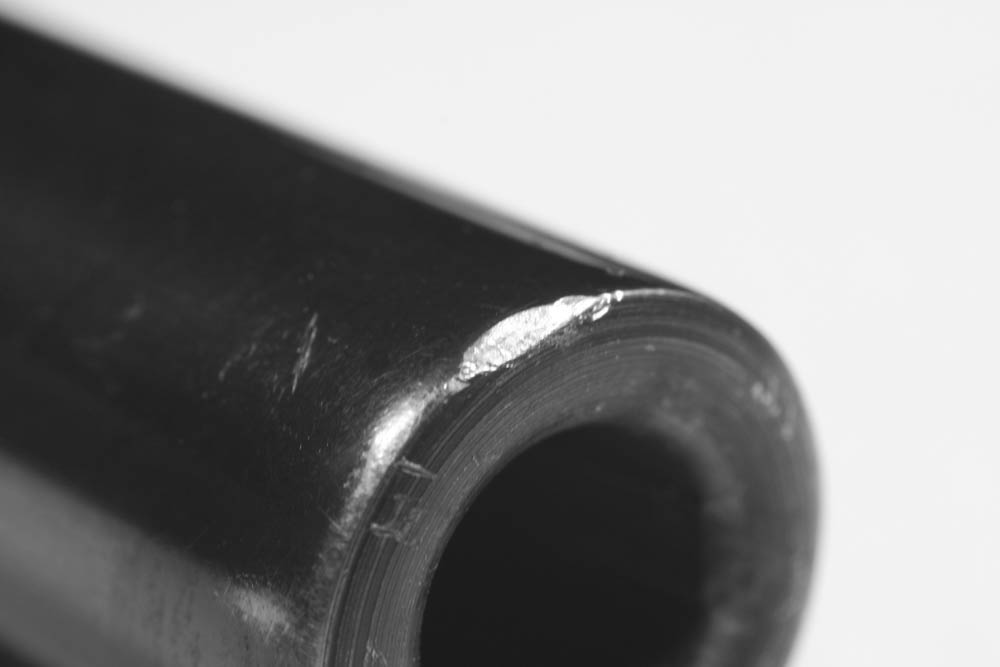
Gun Review: Nighthawk Border Special 1911

0

The Nighthawk Border Special 1911 does whatever you ask of it, and it does it well. It is designed by former peace officer Jim Wilson.

What to know about Nighthawk's Border Special 1911:

  • Retired peace officer Jim Wilson issued design specs for the Nighthawk Boarder Special
  • It is a 1911 tailor made for concealed carry and personal defense.
  • Built on a Commander-sized frame, the Border Special has a 4.25-inch barrel.
  • The .45 ACP has a shorter trigger than most 1911s and no noticeable overtravel.
  • Each Border Special is hand-fitted by one gunsmith, ensuring each is tuned to near perfection.

Not many shooters had ever heard of Nighthawk Custom when it began making 1911 pistols in 2004. Started by four individuals, more than a decade later it now employs about 65 people and specializes not only in custom 1911s, but also in fighting shotguns, and most recently in revolvers. It produced a few models of a freakishly accurate bolt-action rifle for a short while but discontinued that line, resulting in a sharp increase in the value of those previously purchased.

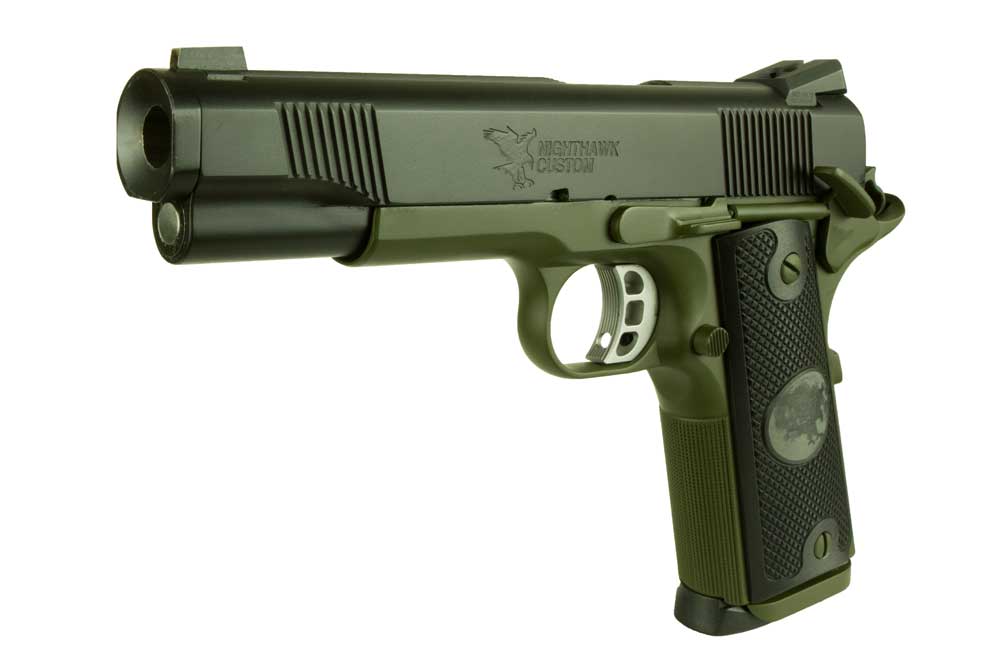
A striking, deep and smooth Cerakote Elite Midnight finish applied to the frame and slide promotes abrasion resistance, and highly polished double-diamond cocobolo grips with custom grip screws provide a solid gripping surface during recoil. Border Special 1911
A striking, deep and smooth Cerakote Elite Midnight finish applied to the frame and slide promotes abrasion resistance, and highly polished double-diamond cocobolo grips with custom grip screws provide a solid gripping surface during recoil.

But Nighthawk has always made high-end 1911s, and one of the most recent additions to the line is the Border Special, which was designed by Jim Wilson, a retired peace officer with nearly 30 years of experience and who also served as the Sheriff of Crockett County, Texas. Wilson has lived in the Southwest border country for many years, where gunfights happen all too regularly. He’s also a well-known gun writer and has applied his accumulated knowledge and experience in selecting the features for the Border Special. His good taste and insight about what works shows in every feature of this gun.

Simple And Functional Elegance

The Border Special is a gun designed for carry and personal defense, so it was built on a Commander-size 1911 frame that has a standard-length grip — with a shorter slide and a 4.25-inch barrel instead of a 5-inch barrel. A little muzzle velocity is sacrificed, but the gun is easier to carry. Besides, the Border Special is chambered in .45 ACP, a cartridge with a good reputation for ending violent criminal behavior, even from the shorter 4.25-inch barrel.

A striking feature that’s immediately obvious when the Border Special is first seen is the beautiful, deep and smooth Cerakote Elite Midnight finish applied to the frame and slide. Traditional Cerakote is a thin film ceramic coating that’s extremely hard and corrosion resistant, but the Elite series of coatings is even harder, more abrasion resistant and has a low coefficient of friction that provides lubricity.

The rear sight is a Heinie Slant Pro Black, and up front Nighthawk installs its own gold bead front sight — complemented by glare-reducing serrations that run between the sights. Border Special 1911
The rear sight is a Heinie Slant Pro Black, and up front Nighthawk installs its own gold bead front sight — complemented by glare-reducing serrations that run between the sights.

The highly polished double-diamond cocobolo grips with custom grip screws contrast nicely with the Cerakote and provide a good gripping surface to anchor the gun in the hand during recoil. Nighthawk has also applied what it calls a “concealed carry cut scallop” to the front strap and mainspring housing to enhance the grip. These scallops are not only good looking, they also provide a slip-resistant surface that doesn’t have the sharp edges associated with traditional checkering that can cut hands after repeated draws in a long training class.

In order to reduce telltale printing through a garment worn over the gun to carry it discreetly, Nighthawk bobbed the heel of the grip. Basically, the heel is lopped off, which requires a cut to the frame and the mainspring housing. Despite the loss of a little of the real estate at the back of the gun, it’s still a comfortable gun to shoot and provides plenty of gripping surface.

Trigger Technicalities

These days, most manufacturers install a long-reach trigger on 1911s, but the Border Special has a short trigger with an overtravel adjustment screw and serrations on the front. There was no discernible over-travel, and the trigger broke cleanly after just a bit of take-up. Reset was distinct for those who are overly concerned with this feature.

Many people are going to like the trigger because the finger doesn’t have to be extended as far as with the normally seen long trigger. It’s a subtle difference, but the shooter will find it easier to apply a steady, firm pressure. When the finger is not extended as far, leverage changes, and a heavy, steady pressure can be more easily applied, resulting in a smoother stroke and more trigger control. And shooters with shorter fingers will definitely appreciate it.

Subtle Details

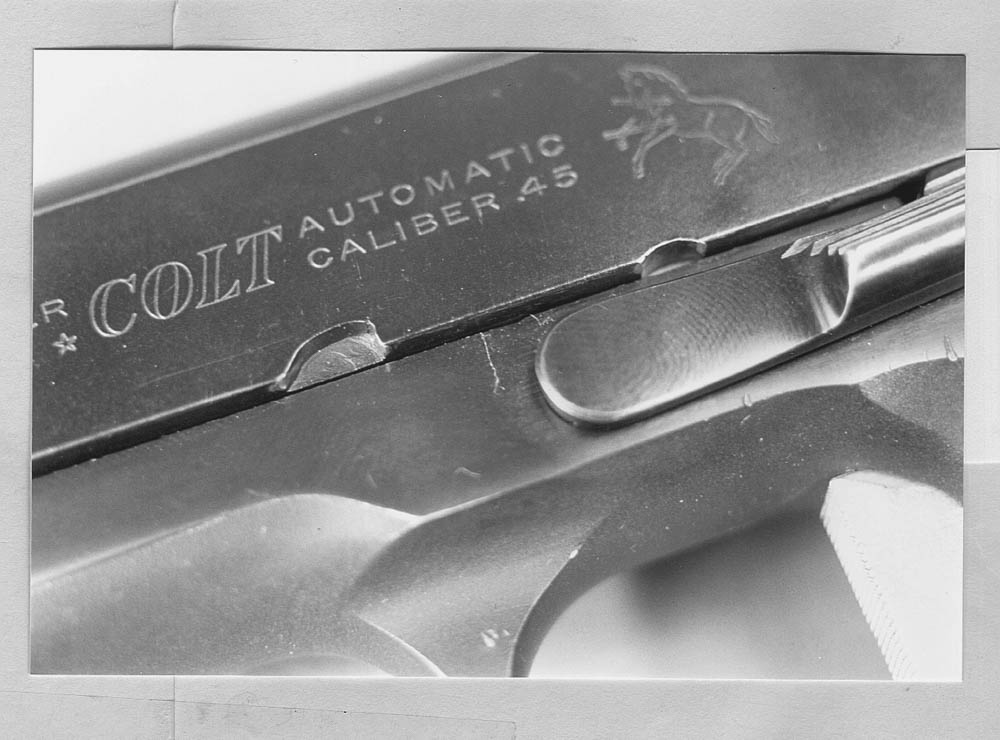
The nicely checkered magazine release is a little longer than a stock release, but not so long as to be prone to accidental activation. The magazine well is slightly beveled to easily accept the two eight-round magazines supplied. The slide stop has a fairly wide shelf to make it easier to manipulate, and Nighthawk has added a special touch — a groove or notch cut into the back that contacts the plunger tube pin during assembly. The groove pushes the pin back into the plunger tube, allowing the stop to be pushed straight into the gun, reducing the possibility of scratching the frame. It makes assembly a bit easier and is a nice touch.

Although not visually obvious, the shooter’s trigger finger doesn’t have to be extended as far as with the normally seen long trigger, which changes leverage and results in a smoother stroke and more trigger control. Border Special 1911
Although not visually obvious, the shooter’s trigger finger doesn’t have to be extended as far as with the normally seen long trigger, which changes leverage and results in a smoother stroke and more trigger control.

The thumb safety is also a bit wider than normal, making it easier to manipulate, and it worked positively during testing. The hammer is skeletonized, and the beavertail grip safety has the familiar palm swell to assure positive activation.

Up top, the slide has rear cocking serrations with the Nighthawk logo behind them on both sides of the slide. On the right side of the slide, the gun sports the words “BORDER SPECIAL” in front of the ejection port, but on request, Nighthawk will omit them. The ejection port is wide, flared and lowered, and there was no evidence of ejected brass contacting the slide on the test gun.

Nighthawk-Accuracy

On the upper surface of the slide, Nighthawk has cut glare-reducing longitudinal serrations that run between the front and rear sights. The rear sight is a Heinie Slant Pro Black with a square notch and horizontal serrations on the backside. There are no dots on it. Up front, Nighthawk installs its own gold bead front sight. The front blade is all black except for a genuine gold dot that draws the eye, encouraging a front sight focus. Gold bead front sights have been around for a long time, but fell out of favor when white dots, fiber optics or night sights became popular. But the old-timers knew something about sights when they used a gold bead because it does not tarnish, is tough and reflects what little light there might be, making the front sight easier to see. Gold glitters.

The Border Special’s match barrel has a fluted hood that gives it a distinct look. The barrel and bushing fit tightly — but not so tightly that it degraded reliability of the test gun. The bushing fit snugly in the slide, but disassembly and turning the bushing were still possible without the aid of a bushing wrench. And the guide rod and spring plug are shortened for use in a Commander-size gun.

One-On-One Attention

Nighthawk-specs
All this attention to detail and hand fitting by one gunsmith — Nighthawk lets one gunsmith build each gun instead of having several gunsmiths work on a single gun — resulted in the test gun being very accurate, with some groups off the bench at 25 yards being less than 1 inch. The slightly extra weight of the all-steel frame compared to a lightweight aluminum frame sometimes found on Commander-size 1911s helped absorb felt recoil, making the Border Special pleasant to shoot and easy to get back on target quickly. Sheriff Jim Wilson obviously put a lot of thought into designing this gun, and it delivers.

Editor's Notes: This article originally appeared in the October 2017 issue of Gun Digest the Magazine.
7 Greatest Lever-Action Rifles To Ever Sling Lead

1

Nothing puts low-down varmints in their place or meat on the table with more style than the All-American lever-action rifle.

What are the great repeaters?

By any stretch of the imagination, the lever-action rifle should have been consigned to the ash heap of history long ago.

By most accounts, it’s not as accurate as most bolt-actions, and at the same tick it most certainly is not as fast shot to shot as almost all semi-automatics. It might bend some shooters' noses out of place, but the lever-action is an anachronism in comparison to today’s technology. Almost any job you’d demand is done better by a more contemporary design — and almost certainly taxes your wallet less.

Yet, there’s no way these repeaters are going the way of the dodo any time soon. Too intertwined with our country, its history and mythology, this particularly American rifle will not go quietly into the good night. And as sure as Henry rifles out-shot rifled muskets, the 19th-Century design remains too fun and too cool and, for certain situations, too useful for relegation to strictly a nostalgia-gun role. Besides, lever-action rifles have what Wayne van Zwoll would call “soul.”

So, kickback and take a gander at 7 of the greatest lever-action rifles to ever sling lead in high volumes. These are war winners, nation builders and deer slayers, one and all. And they are more than enough proof as to why technology dating to before the American Civil War continues to light a flame in shooters’ hearts today.

Spencer Repeating Rifle

Spencer Rifle Lever-Action
Photo: Rock Island Auction Company

Perhaps the most sought after gun in the Civil War, the Spencer Rifle (and carbine) gave soldiers a decided edge in battle. With seven rounds of .56-56 Spencer rimfire on tap, the rifle could lay down a higher volume of fire than nearly anything it was likely to meet on the battlefield. Unique in design, it was among the first repeating rifles adopted by any military in the world, and was the second-most used carbine — behind the Sharps — in the War Between the States.

In addition to being fast firing, it was also quick to reload. The tubular magazine in the buttstock made it easy to reloaded on horseback, particularly with the aid of a Blakeslee cartridge tube. While not as common today as other rifles on this list, the Spencer is still alive and kicking. The fascinating lever-action is often rattling off shots at Cowboy Action shoots, and replicas are available in more common chamberings, such as .45 Colt.


Raise Your Lever-Action IQ:


Henry Model 1860

Henry 1860 lever-action rifle
Photo: Rock Island Auction Company

For all intents and purposes, the Henry Model 1860 is what kicked off America’s love affair with the lever-action rifle. But it did plenty to spur the romance, tipping the scales for the Union soldiers lucky enough to take them into battle during the American Civil War.

Able to spit out 16-rounds of .44 Henry rimfire in the blink of an eye meant few soldiers armed with a brass-receiver beauty would be outgunned. Unfortunately, there were relatively few soldiers who got their hands on the iconic lever-action rifle, given they had to spend their own hard-earned pay to procure one.

Its popularity continued after the war, a staple of cowboys and settlers throughout the American West. And still today, originals and replicas are among some of the most sought after lever-actions around. It’s not hard to understand why. Aside from history, the Henry 1860 is an absolute knockout in the looks department.

Winchester Model 1873

Winchester 1873 Lever-Action Rifle
Photo: Rock Island Auction Company

Outside of the Colt Single Action Army revolver, few firearms encapsulate the American Frontier more than the Model 1873. After all, it was “the gun that won the West.” That is a vast overstatement of the lever-action’s role in history; nevertheless, with more than 720,000 manufactured over a 50-year production run, it was among the most ubiquitous and useful rifles of the era.

Similar to the Henry 1860 in design and operation, the rifle had some notable design enhancement. Its iron receiver was it most weighty. This simple change in material allowed the rifle to digest the more powerful loads available at the time. On top of that, chambered in .44-40, .38-40 and .32-20, the rifle gave its owner plenty of flexibility in the sparsely populated American West, since the cartridges were also popular revolver rounds.

Today, the Model 1873 is as popular as ever, and not just the highly collectible originals. Uberti USA, Cimarron and good old Winchester all produce the iconic rifle. And it’s safe to say, as long the Cowboy mythology lives on in America, so will the ’73.

Winchester Model 1894

Winchester 1894 Lever Action
Photo: Rock Island Auction Company

As is apt to happen on any gun list, John M. Browning’s name is going to be dropped sooner or later. In this case, it’s in conjunction with perhaps the most prolific lever-action rifle of all time. The Model 1894 was the first sporting rifle to sell more than a million. And now, more than a century into production, that number is right around the 7.5 million mark.

What brought it to such prowess was the lever-action’s power, with Winchester embracing the emerging firearms technology of the time — smokeless powder. Originally chambered for blackpowder cartridges — while kinks were worked out in the smokeless powder variations — the rifle would go on to be chambered for the high-pressure rounds. Chief among these was the .30-30, which when matched with the ‘94 produced one of the most prolific deer rifles of all time.

But the Model 94 also had its role in the Wild West. For better or worse, the likes of Tom Horn, Jr. wielded the mighty lever action. And there was more than one rustler run off with a well-aimed shot from an 1894.

Savage Model 99

Savage-Model-99-main
Of all the lever-actions on the list, the Savage is the one that holds my heart. There’s a simple reason for this: I have one in my gun safe, given to me by my father, who was gifted it from his. But the 99 needn’t have a family lineage to be appreciated.

Among the finest and forward looking production guns to ever come down the pike, the lever-action is at the same time well made and elegant. Aside from the hand fitting and the hand checkering on pre-1965 models, what catches the eye on the Savage 99 is its innovative rotary magazine (though there are late models with detachable box mags). Simple as it might sound today, this revolutionized lever-actions, allowing them to harness the ballistic advantage of spire-point bullets — a dangerous no-no for tubular magazines.

Additionally, the 99 is hammerless. This means its coil mainspring had a lightning-fast lock time, comparable to the ascending bolt actions of the day. If all of that weren’t enough, the rifle came in a slew of chamberings in its 100 years of production, including the revolutionary cartridges of Charles Newton and Arthur Savage himself. While not true across the board when it comes to 99s, with the right cartridge, and a steady hand, it is among the most accurate lever-actions ever produced.

Marlin 336/1895

Model-1895
While many of the guns discussed on this list saw their heyday more than a century ago, these Marlins are different. Advancing the lever-action design in 1948 with the introduction of the 336, the company kept the style of rifle relevant to hunters seeking more than simply nostalgia afield.

Boy howdy, did they ever. The .30-30 and .35 Remington 336s are more than competent deer rifles, able to accept scopes and a dandy in thick timber, where maneuverability is key. To boot, the 336 was more reliable than ever, with an entirely new rounded bolt design, enhanced extractor and modified cartridge carrier.

The 1895, which utilizes a 336 action tweaked to handle the .45-70 cartridge, did the same, but in a chambering meant to handle more substantial game. With devastating short- and medium-range potential, the 6-round ’95 has become a trusted insurance policy in bear country and a staple on antlered game from moose on down.

Browning BLR

Browning-BLR-Lightweight-Stainless-with-Pistol-first
The Browning BLR is truly a different bird. While it looks like a modern iteration of a lever-action rifle, its operation and action are anything but.

The BLR’s action is almost more bolt-action than it is lever. This is due to a rotating bolt head that secures locking lugs in the breech, similar to a good old turn bolt. The result is a rock-solid action, stiff enough to enhance the overall accuracy of the rifle. This means the BLR isn’t just for short- to medium-range work, giving shooters the ability to reach out on those long shots many would be hesitant to take with some other lever-actions.

But the BLR’s accuracy isn’t the only aspect that makes it a jewel. Its operation might be among the best in the lever-action world. Browning accomplished this with the rifle’s rack-and-pinion design, which allows the trigger to move with the lever. This all but eliminates the dreaded finger jam, the bane of follow-up shots with lever-actions.

The BLR may not have the nostalgia of most other lever-actions, but given the performance of its modern design, that’s not exactly a bad thing.

3 Semi-Auto Pistol Drills To Perfect Your Skills

1

Most handgun drills are universal, applying to both semi-automatic pistols and revolvers. But there are a few more facets that need to be mastered when becoming proficient with a pistol.

The essential training drills for your semi-auto pistol.

Drills used to improve or test your ability with a defensive handgun are generally universal in nature. Most are structured to apply equally, whether you’re shooting a revolver or semi-auto pistol. Skills such as sight alignment, trigger control, tactics and basic safety practices are, for the most part, general in nature.

The big difference with the semi-auto pistol relates to firearms manipulation, or “weapon-craft.” Shooting speed and accuracy are critical, but you must be able to run your gun. Here are a couple drills to help you become faster and more accurate with your semi-auto pistol.

The Reload Drill

You can reload your handgun at any time, or you can take advantage of all the ammunition on board and reload when it runs dry. There isn’t a single right answer that covers every situation.

You’ve probably heard the old gunfighter advice to count your rounds in a gunfight so you know when to reload. Considering that top-level professional shooters often have trouble with simple math in high-stress situations, after the shooting starts, you’ll be lucky if you have any idea how much ammunition is in your gun at any given point. This drill will help you keep your gun in the fight.

Fully load two magazines. Load your pistol, and place the other magazine in your mag pouch. Using a shot timer, at the start signal, fire one shot at a target positioned at about 3 yards. (We’re testing reloading speed, not accuracy.) After the shot, immediately reload your pistol while letting the discarded magazine drop to the deck. Once reloaded, fire another round at the target. The time between shots — your split time — is how long it took you to reload your weapon.

How fast should you be? The answer: as fast as possible. No matter how fast you can do it, it’s not fast enough. Keep track of your performance and work to improve during every trip to the range. A 50-round box of ammo will give you 25 iterations of this drill, and you might consider doing it as frequently as every other time you’re at the range. (Editor’s note: For more information on reloading drills, see “Rules For Record-Time Reloads” in the Fall 2017 issue of GDTM.)

Tactical Notes

Many firearms instructors have overcomplicated the entire reloading process. They have speed reloads, tactical reloads — and they even argue about the circumstances that dictate when each should be performed. When I was the firearms instructor at my department, I only got to work on the range with the officers twice each year. That was sad, but so is the fact that most carrying for personal protection get about the same range time. Given that, I developed doctrine to keep it simple. After all, simple solutions are always good in stressful situations.

Too many defensive handgun shooters focus all their efforts on shooting, but weapon-craft — the ability to run a pistol — matters, too.pistol-drills-feat
Too many defensive handgun shooters focus all their efforts on shooting, but weapon-craft — the ability to run a pistol — matters, too.

I didn’t try to teach officers to count shots. Our Glocks held lots of ammo, so our protocol was to shoot until you thought you needed to reload or shoot until you had to reload. Either way, any time you inserted a new magazine into your pistol, you racked the slide. The beauty of this approach is that if your gun quit working because of a stoppage, a reload and slide cycle would most likely sort the problem out. If it stopped because it was empty, the reload would most definitely correct the problem.

Yes, if you’ve conducted a reload with a live round in the chamber, you’re sacrificing that round to ensure your gun is ready to run. But keep this in mind: Just because your gun is not at slide lock does not mean it has a round in the chamber. You could have possibly inhibited the proper action of the slide lock when the last round in the magazine was fired, or it might have malfunctioned. Unless you train on a weekly or at least monthly basis, consider keeping the reloading process simple. If you dedicate the necessary time, there’s a place for a more comprehensive approach, but it’s not a necessity.

One-Hand Manipulation Drill

Once the magazine is inserted into the pistol, you must release or rack the slide. You do not need a special ledge-type rear sight for this; simply press the slide against your boot and forcefully push.

You might end up injured during a fight, or maybe you only have one arm or one functioning hand to begin with. Or, you might be using one arm or hand to navigate with a light or usher family members to safety. Either way, you’re at a disadvantage, and, like everyone in Africa says, you need to, “make a plan.” You can shoot and tend to a semi-automatic pistol with one hand; it’s just something that takes a good bit of practice.

Like the previous drill, fully load two magazines: Load the gun, and place the other magazine in your mag pouch. Now, using one hand, fire a shot at a target and then eject the magazine in the pistol. Next, holster the pistol, retrieve the other magazine, and insert it into the mag well. Now you must establish a shooting grip, draw the handgun, and then, using your belt or the heel or sole of your shoe, cycle the slide and engage the target.

Tactical Notes

If you have to load your semi-auto pistol with one hand, secure it in your holster first. This is much safer and more secure than trying to use a body part other than your hand to hold the pistol.

Some instructors will argue this is a great reason for using your thumb on the slide lock to release the slide, but there’s a problem with this approach: If the pistol is in your strong hand, you might be able to execute this technique. However, if you’re manipulating the pistol with your weak hand — your strong hand could be the injured hand — and because most slide locks are on the left side of pistols, you’ll likely struggle to depress the slide lock. Additionally, the reason you might need to be fiddling with your pistol at all is because of a stoppage, not an absence of ammo. In that instance, you’re going to need to cycle the slide to help ensure clearance of the stoppage.

High-Cap Hammer-Time Drill

One of the main advantages of a semi-auto pistol over a revolver is capacity. Unless you’re dealing with an ultra-compact handgun or one with a single-stack magazine, you’re likely to have as much as 12 to 16 rounds on board. This is a good thing when you’re trying to stop a meth-crazed fiend from filleting you with a rusty blade. So, let’s take advantage of it.

Pistol-drill-fifth

Most defensive handgun training drills utilize some rendition of the double-tap — two quick shots to center mass — or two shots to the body and one to the head. I’m not suggesting anything is wrong with either, but might it be a good idea to continue to shoot the threat until it is no longer a menace?

If you were faced with a charging lion, I’ll guarantee you’d not shoot twice and then consider your situation — you’d shoot until you were sure those teeth and claws were no longer bound for your body. This drill will help you to continue to accurately pour lead into your target as you also create or reduce distance.

Place a target at about 2 yards. At the start signal, draw and begin shooting as you quickly move backward. You should be able to cover between 3-4 yards by the time you’ve fired six to eight shots. Once at that distance, slip behind cover, step back out the same side or the other side, and repeat the exercise in reverse, firing six to eight shots as you advance on the target, only reloading after the drill is complete.

Tactical Notes

It’s important to keep this drill in context. It might or might not be something you’d ever replicate in a real life situation. Of course, predicting what will happen in a hostile encounter is even less accurate than weather forecasts. However, it’s hard to dispute the need to be able to deliver multiple rounds on target fast, potentially while moving forward or backward to create distance or obtain cover.

As one of my professional hunter friends in Africa likes to say, “The big thing is,” semi-auto pistol cartridges like the 9mm, .40 S&W and .45 Auto are not reliable fight stoppers. So, the more internal damage you can inflict, the likelier it is a “stop” will result. Remember, shooting the bad guy is not enough — you have to stop them.

Editor's Note: This article originally appeared in the September 2017 issue of Gun Digest the Magazine.
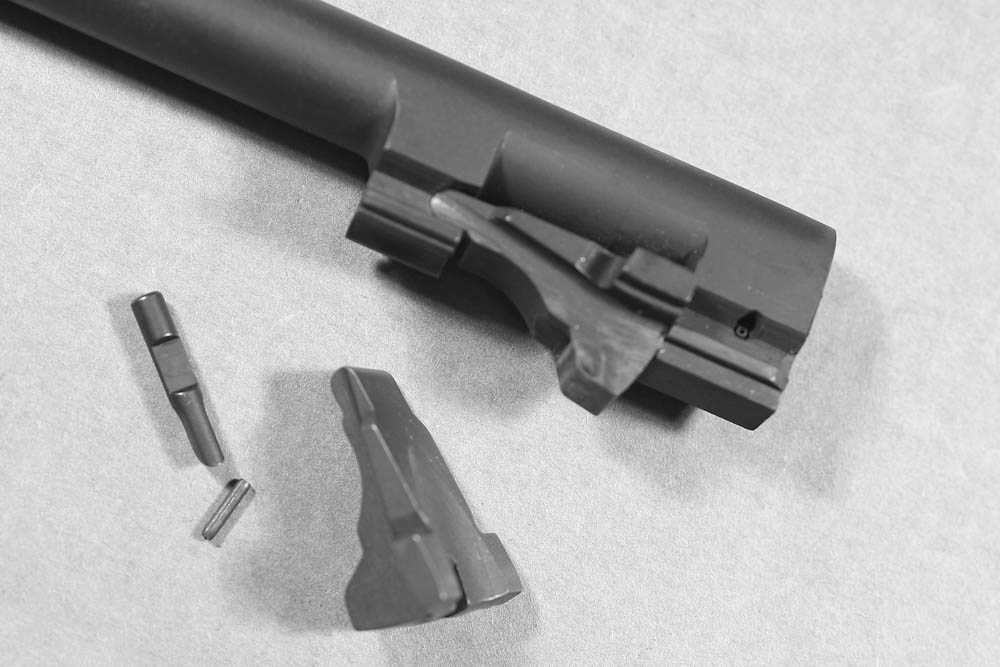
7 Concealed Carry Myths Busted

0

There’s a lot of information out there regarding concealed carry. How much is fact and how much is fiction?

What are the concealed carry myths?

One of the hottest trending topics in the firearms industry is concealed carry and the issues that surround the concept of daily carry of a firearm for personal defense. Like all other topics relating to firearms, there are almost as many opinions out there as there are CCW permit holders.

7 Concealed Carry Myths Busted

While I’d never suggest a single-action revolver as a daily carry gun for defense, I have no doubt there are those for whom it’s a viable choice, based on their life experiences, living conditions and personal preferences. Likewise, a full frame .45 Auto might be the perfect fit for one person, and a micro .380 for the next.

The following represents my views, based on my research for a recent book, The Gun Digest Guide to Concealed Carry Handguns. Obviously, what works perfectly well for one person is totally unsuitable for another. Personal preference — and your ability to use your gun of choice — is paramount.

Size Really Does Matter

There’s no doubt that a person armed with a full-sized, high-capacity handgun is better off in a deadly force event than someone armed with a gun that’s compromised by small size and light weight. Of course, that same person would be still better equipped with a shotgun or carbine.

 7 Concealed Carry Myths Busted

The reason we normally choose handguns for personal defense is their compact size and relative comfort to carry. In my experience as an instructor who always asks questions, those who choose full-sized guns are much more likely to leave the gun at home, and the first rule of a gunfight is to bring a gun.

Based on this, my general recommendation for a carry gun is for guns with a relatively small profile and a weight of 20 ounces or less. Guns larger than this are difficult to hide in warm-weather clothing and impose a greater burden, making them much more likely to be left at home. Smaller guns admittedly have less capacity and are more difficult to shoot well, but the average number of rounds in a defensive situation is less than three and average distance is less than 9 feet.

Because They Don’t Make A .50

In a deadly force event, power is important — but for many, the trade-off is simply too great. One trade-off is that larger-caliber guns weigh more and are larger. Another trade-off is that many people simply can’t handle the recoil of a 20-ounce .45 Auto with any sort of consistency to be effective in a gunfight situation.

7 Concealed Carry Myths Busted

Modern ammunition is a vast improvement over what was available just a couple of decades ago, and in most cases, the additional capacity and manageability of the 9mm make it a better choice. If you can shoot fast with a 20-ounce .45 Auto with defensive loads, go for it. But as Clint Eastwood said, “A man’s got to know his limitations.”

I Shoot Well Enough, Right?

There’s no doubt that most who choose to carry a concealed carry handgun can acquire speed and accuracy with almost any gun they choose to carry under range conditions, but a true life-or-death confrontation is a lot different from simply shooting on a range or in a competition. The laws concerning the use of deadly force require a life-threatening situation, and fear and surprise degrade performance. Under extreme pressure, we don’t rise to the occasion as happens on TV; we fall back on our training and conditioned responses. Heard that one before?

You should shoot your carry gun every time you go to the range. Controlled slow fire is good for learning to shoot and building confidence, but real defensive training involves gear manipulation. You should draw from your concealment method, fire an accurate fast shot and repeat the process until it becomes something you can do without thinking about the process.

7 Concealed Carry Myths Busted

Under the pressure of a deadly force event, you want to be thinking about what’s happening — not where the safety is located on the gun. Train until the acts of drawing, getting a proper grip, lining up the sights and managing the trigger all become one process, not a series of actions. If you carry a semi-auto, practice clearing malfunctions until the tap/rack happens automatically.

Under The Hammer

If you can’t feel comfortable carrying a round under the hammer, you’ve chosen the wrong gun. I think the Israeli military guys are tough and smart, but carrying a defensive pistol with nothing in the chamber is dumb. Defensive situations for civilians can occur instantly and at arm’s length. Under those circumstances, it’s unrealistic to think you can fend off an attacker while racking the slide quickly enough.

 7 Concealed Carry Myths Busted

The reaction-to-shot times for concealed carry are already remarkably slow, and adding the process of chambering a round makes them even slower. Few clients I train are able to get an accurate shot off in less than 3 seconds from real concealment, and 3 seconds is a long time. Add the time to chamber a round, and we need a sundial rather than a stopwatch to time you.

Concealed Carry Guns Must Have A Manual Safety

Based on my experience with the average concealed carry citizen, there’s a strong possibility a manual safety might cause an under-trained and frightened defender problems. While many who read this will scoff, I can assure you that dealing with getting off an accurate shot under the pressure of a life-threatening event isn’t like the pressure of out-shooting your buddy at the range or similar to getting a good time in an IDPA match.

Most concealed carry citizens get a permit, buy some rounds and a gun and begin to carry. I suspect less than 10 percent do enough regular training to allow them to draw and accurately fire a gun as a conditioned response. Don’t forget that with guns that rely solely on a manual safety, it’s really easy to accidentally disengage the safety in the tight confines of concealed carry, creating a potentially dangerous condition.

A better plan is to buy a gun you feel is safe for carry without a manual safety. This eliminates all single-action trigger systems that rely on a manual safety. It encourages use of double-action and striker-fired guns. If you don’t feel safe relying only on a striker-fired trigger, the best alternative is a double-action system. Another advantage of double-action guns is second-strike capability, negating the need for extended tap/rack training.

A Revolver? Really?

Remember the numbers mentioned above? Average number of rounds fired — less than three. Average shooting distance — less than 9 feet. In researching my book on concealed carry, I failed to find a report of a single incident where a concealed carry citizen needed to reload. Yes, it’s possible, but primarily, it only happens in the movies and on TV.

7 Concealed Carry Myths Busted

Revolvers have the simplest manual of arms of any other system, and they’re the only defensive handgun system that operates totally on the energy contributed by the user, correcting a malfunction involves pulling the trigger again. Nothing is totally reliable, but revolvers don’t rely as much on the performance of the ammunition chosen as semi-autos. It’s true that revolvers are more difficult to shoot, but everything is a trade-off. Revolvers aren’t for everyone, but don’t rule them out.

The Choice Is Yours

No matter which gun you prefer, I can dream up a scenario where it will let you down. If you live in Alaska or never wear light, warm-weather clothing, a big double-stack service pistol is likely a great choice for you. If you’re nervous about appendix carry with a striker-fired gun, maybe a revolver or double-action semi-auto is the gun for you.
Remember, you get to decide which gun you choose.

Editor's Note: This article originally appeared in the Winter 2017 issue of Gun Digest the Magazine.
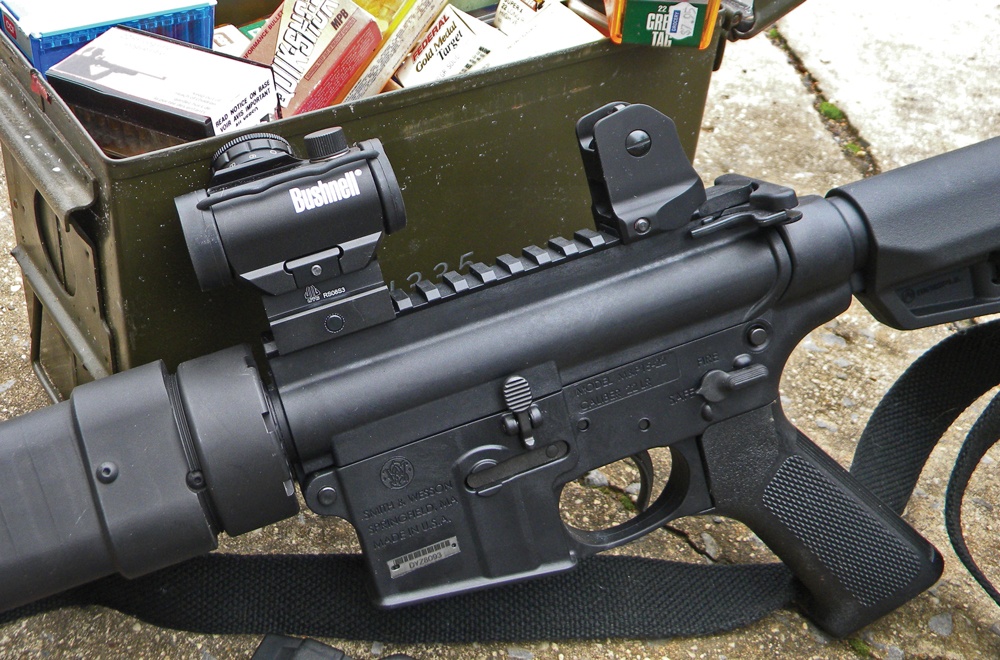
Gun Review: Remington 870 Tac-14

1

The new Remington 870 Tac-14 works around NFA regulations and offers a potent defensive option for home defense or as a truck gun — or for just plain fun.

What should you know about the Remington Tac-14?

  • Remington's short and wicked-looking 870 Tac-14 is based on its classic 870.
  • Despite boasting a 14-inch barrel, the 870 Tac-14 doesn't run afoul of NFA regulation.
  • This is due to its factory outfitting of the Raptor grip.
  • The pump gun has a cylinder bore, is topped with a bead sight and has a 4+1 capacity.
  • The author believes the 870 Tac-14 is a highly viable home defense or truck gun.

With its bicentennial in the rearview mirror, the Remington Arms Company opted for a new take on an old classic, the Remington 870. The 870 is the model most often cited by gun owners as their favorite model from Big Green’s vast catalog; it seems more shooters have owned or do own the classic pump shotgun than those who do not.

Remington - 870 Tac-14 -1

The real question was how to make it new. After all, more than 11,000,000 have been sold since the model was launched in 1951, and there are literally dozens of configurations already available. In the end, the answer was simple, really: the Remington 870 Tac-14, a non-NFA shotgun with a 14-inch barrel and a pistol grip.

The key phrase here being “non-NFA.”

Since the National Firearms Act (NFA) was enacted in 1934, buying certain firearms has involved jumping through a variety of hoops, including a lengthy wait period. Shotguns of a certain type fall under the purview of the Bureau of Alcohol, Tobacco and Firearms (ATF), the federal agency responsible for enforcing the contents of the NFA.

According to 26 U.S. Code §§ 5845(a)(1)-(2), (d), “The NFA defines shotgun, in part, as a weapon designed or redesigned, made or remade, and intended to be fired from the shoulder and designed or redesigned and made or remade to use the energy of the explosive in a fixed shotgun shell to fire through a smooth bore either a number of projectiles (ball shot) or a single projectile for each pull of the trigger. A shotgun is a firearm subject to the NFA if the shotgun has a barrel or barrels of less than 18 inches in length. A weapon made from a shotgun is also a firearm subject to the NFA if the weapon as modified has an overall length of less than 26 inches or a barrel or barrels of less than 18 inches in length.”

So, how is Remington’s newest model a non-NFA firearm? It has a pistol grip rather than a shotgun stock and has an overall length of 26.3 inches, meaning it’s a “firearm” and therefore not subject to additional Federal regulation. Translation: no tax stamp, no NFA registration, no worries. (Well, state and local laws do apply, but most states are Tac-14 friendly.)

The factory-installed Shockwave Technologies Raptor bird’s head grip helps place the Tac-14 outside of NFA regulations. 870 Tac-14
The factory-installed Shockwave Technologies Raptor bird’s head grip helps place the Tac-14 outside of NFA regulations.

I have a confession. I love all things NFA — SBRs, SBSs, full-auto, the list goes on — and I also have a soft spot in my gun-loving heart for firearms capable of creating bigger booms. This means a non-NFA 12-gauge with a pistol grip and 14-inch barrel was met with unabashed interest. I even treated the selection of test ammunition with the kind of reverence typically reserved for religious leaders. And when the firearm arrived, I opened the green box with glee, sitting down to look it over from grip to muzzle and back again.

From Head To Tail

The Remington 870 Tac-14 features a Raptor pistol grip, which is constructed from glass-filled polymer, a composite with far greater strength and rigidity than straight polymer. The Raptor is manufactured by Shockwave Technologies and has a bird’s head grip that’s designed to maximize recoil control. Also promising improved control is the Magpul MOE M-Lok Forend. This particular Magpul forend is a bit longer than standard and has front and rear hand stops.

The Tac-14 might be smaller, but it’s sturdy; the receiver is milled from solid steel, as expected for a firearm from the 870 line, and has a black oxide finish. The 14-inch barrel is a cylinder bore, meaning it has no choke, and is topped by a bead sight. Capacity is 4+1 when the 12-gauge shotshells in question are the common 2¾-inch length. And again, overall length is 26.3 inches.

Testing And Accuracy

At the range, I decided to bow to the 870 Tac-14’s size and most likely use by firing it at 10 and 25 yards, although mostly at 10 or less. The majority of shooting was done standing and off-hand; however, I did spend some time at the bench and kneeling. Because I wanted to be thorough, I fed the gun everything from Fiocchi’s Exacta target load 2¾-inch 7/8-ounce No. 7½ shot, to Remington’s Managed Recoil buckshot, to Federal’s 3-inch magnum 00 buckshot — for a start.

The author tested a wide variety of defensive and target loads through the Tac-14. A true utility gun must flawlessly handle all applicable types of ammo. 870 Tac-14
The author tested a wide variety of defensive and target loads through the Tac-14. A true utility gun must flawlessly handle all applicable types of ammo.

Starting with a relatively light load seemed wisest, so the first dozen shotshells through the 870 Tac-14 were the aforementioned Fiocchi Exacta target loads. Recoil was negligible — a term sometimes thrown around casually — but in this case, felt recoil was so minimal it was surprising. The Raptor grip allowed for a firm grip even when wet, and the trigger was relatively light with a clean break.

The gun’s initial performance was encouraging, so I promptly loaded it with Federal 3-inch TruBall rifled slugs and blew away a row of Birchwood Casey Shoot-N-C targets. Recoil remained well within my control, which was a pleasant surprise following the sometimes-significant recoil of the half-dozen 12-gauge shotguns I’ve reviewed in the past few months. Even better, I nailed the targets where I was aiming, an important detail given the method of shooting.

Aiming the 870 Tac-14 took some fine-tuning, but I quickly realized shooting off-hand from the hip was best executed by stabilizing the gun against my hip so it bore some of the brunt of the recoil. The upward or downward angle of the gun necessary for an accurate shot changed according to range, but that was easily mastered. The gun can, of course, be raised to eye level and held out so the bead sight can be used, and I did so several times before deciding I preferred shooting from the hip.

The gun ate every standard-sized shotshell I fed it. Remington’s Ultimate Defense 00 buckshot performed well in both standard and Managed Recoil loads, nailing targets with more precision than many others.

The real buckshot front-runner was Hornady’s Critical Defense 2¾-inch 00 Buckshot, a load packed into black hulls that recoiled a little more than the other 00s — although with less muzzle rise than one might expect — and patterned quite well considering the gun’s cylinder bore. At 10 yards, Critical Defense consistently struck the bull’s-eye with an average spread of 2.75 inches. At 25 yards, that spread broadened to 12 inches, reinforcing this gun’s close-range specialty.

Its short overall length makes the Tac-14 compact and highly maneuverable — perfect qualities in a truck gun.

If recoil is a concern, there are a number of workable options. I’ll preface this by saying there was only one load with recoil that got my attention — No. 4 buckshot, across the board — but even that was not a problem.

For slugs, Fiocchi’s Low-Recoil 2¾-inch 7/8-ounce Aero slugs were softer-recoiling and made follow-up shot placement simpler (the tightest group with slugs was created with these). Remington’s Ultimate Defense buckshot in managed recoil — eight 00-buck pellets rather than nine — checked the boxes for a lower-recoiling 00 buck option.

The shotshells the gun didn’t enjoy cycling were Aguila Minishells. Although it would fire them without hesitation, it seemed no amount of finessing the pump action would consistently chamber the next Minishell. If you’re shooting for fun, a few hiccups aren’t life-threatening, but if you’re using this gun for self-defense it’s another story altogether.

Real-Life Use

Remington officially launched the 870 Tac-14 at the NRA Annual Meetings 2017 with the prominent tagline, “The shortest allowable distance between powerless and prepared.” This brings up an important point: Is the 870 Tac-14 for fun or self-defense?

My first thought upon seeing the 870 Tac-14 was that it would make an excellent truck gun, and it does. However, it’s also a viable option for home defense. It has one significant benefit a full-size 870 doesn’t have: greater maneuverability, which is something you should never discount when it comes to close-quarter shooting like you’ll find in a house packed with furniture. The gun’s size also makes threat-focused shooting — also known as point-shooting — quicker and likely more accurate, not to mention flat-out doable when the threat moves from social to personal space.

While I don’t recommend shooting the 870 Tac-14 single-handed unsupported unless you absolutely must, it’s reasonably accurate with one hand as long as it’s supported. That said, the recoil creates enormous muzzle rise without the use of your off hand. Its weight makes it unwieldy and difficult to aim with nothing beneath it, but if you rest the forend on a surface it gets the job done. You can even cycle the pump with a sharp motion against said surface.

The Tac-14 is all utility and features a Magpul M-Lok forend and a fixed cylinder bore barrel with a simple and effective front bead sight.

One caveat: Take care which load you use for self-defense. As awesome as it is watching 00 buck utterly annihilate a watermelon, it’s also eye opening watching it blow through multiple sheets of drywall. There’s a reason our service members use 12-gauge shotguns to breach doors and walls; this is a load capable of incredible destruction, and it neither knows nor cares what lies beyond said door or wall. Stick to loads less likely to over-penetrate, such as No. 4 buckshot — which, yes, did recoil more noticeably — and practice. Find out what your chosen load can do before you make a long-term decision.

Bottom Line

870-tac-14-specsOverall, the Remington 870 Tac-14 seems to be a well-made, resilient firearm. It brought a smile to my face and, I’m not ashamed to say, more than one exclamation of “Sweet!” to my lips. It ate every 2¾- and 3-inch shotshell I fed it without a single failure, and when I was done, the pile of spent shotshells was quite substantial. It delivered solid accuracy with a broad range of loads, even when firing the Federal Black Cloud 3-inch 1¼-ounce BBs I ran through it just because. And while it was fun, it was also reliable. It’s my new truck gun, and there’s every reason it should be yours as well.

This article originally appeared in the November 2017 issue of Gun Digest the Magazine.
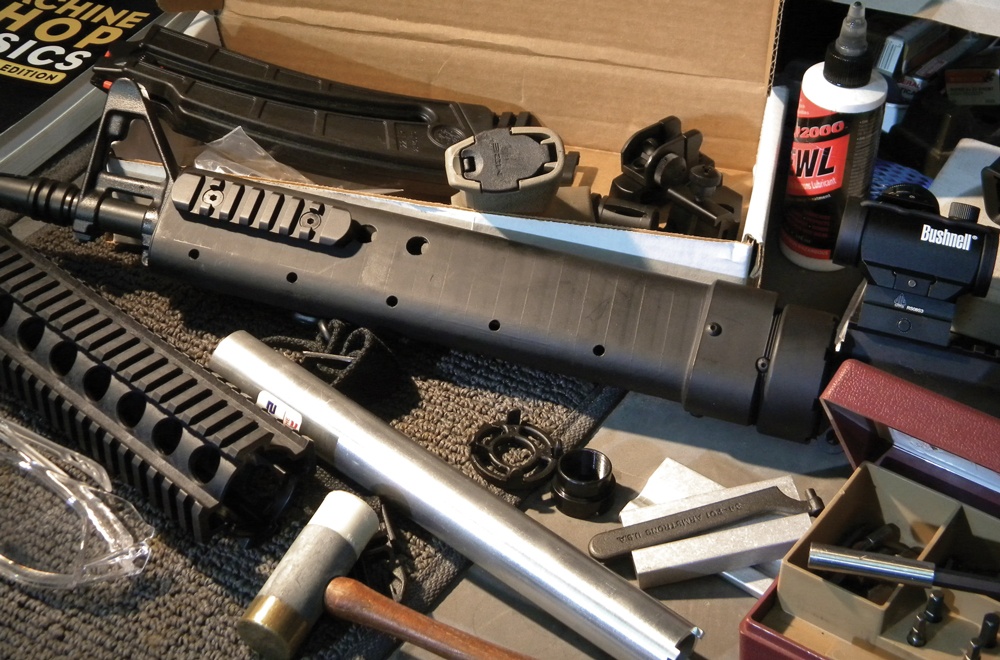
Concealed Carry And Traveling Armed

0

Given the lack of national reciprocity, armed citizens must be aware of other states' concealed carry laws if they travel. Ignorance to other states' firearms laws when traveling armed can set you on a course for serious trouble.

What you need to know about traveling with a concealed carry handgun:

  • Each state has different gun laws pertaining to concealed carry.
  • Some may not recognize your state's CCW permit.
  • Handgunlaw.us is a great, up-to-date resource for individual state gun laws.
  • It's unwise to trust printed resources on concealed carry law.
  • This is because laws are often changed with little or no public notice.

It is imperative that the lawfully armed citizen know the laws of the given jurisdiction. Let’s say that you are a resident of New Hampshire, the “Live Free or Die” state. If while carrying a gun you cross the southern border into Massachusetts, which does not have carry permit reciprocity with any other state at this writing, you will be committing a felony the moment you cross the state line. However, if you have obtained the difficult-but-not-impossible-to-acquire Massachusetts non-resident carry permit, you will be fine.
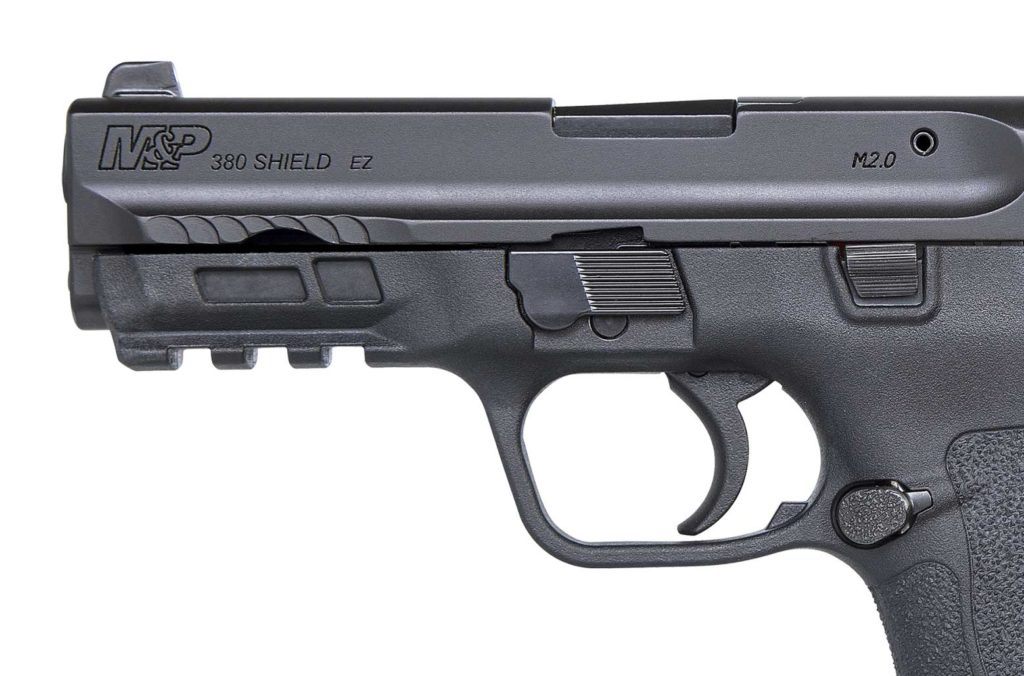
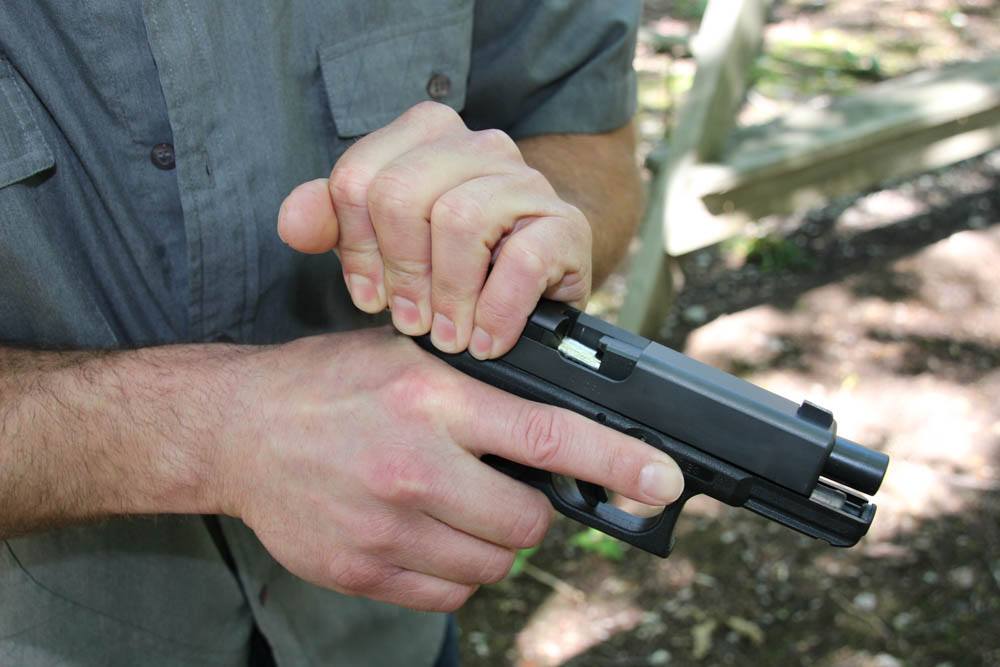
Concealed Carry and Traveling Armed

And if you instead drive west into neighboring Vermont, you will also be fine because for longer than anyone reading this has been alive, the Green Mountain state has allowed any law-abiding citizen regardless of their state of residence to carry without a permit, and merely forbidden anyone to do so if they have been convicted of a felony or adjudicated mentally incompetent. Indeed, for many decades Vermont was the ONLY state that allowed permitless carry, which some prefer to call Constitutional carry, though it has now been joined in that by several other states.

“We don’t have to like reality. We do have to face it.” ~ Jim Fleming

But if you continue your journey through Vermont and cross that state’s border with New York, things change. New York offers neither any reciprocity with any state, nor any option for a non-resident to be permitted to carry a gun. First offense illegal concealed carry is a serious felony there, with mandatory prison time.
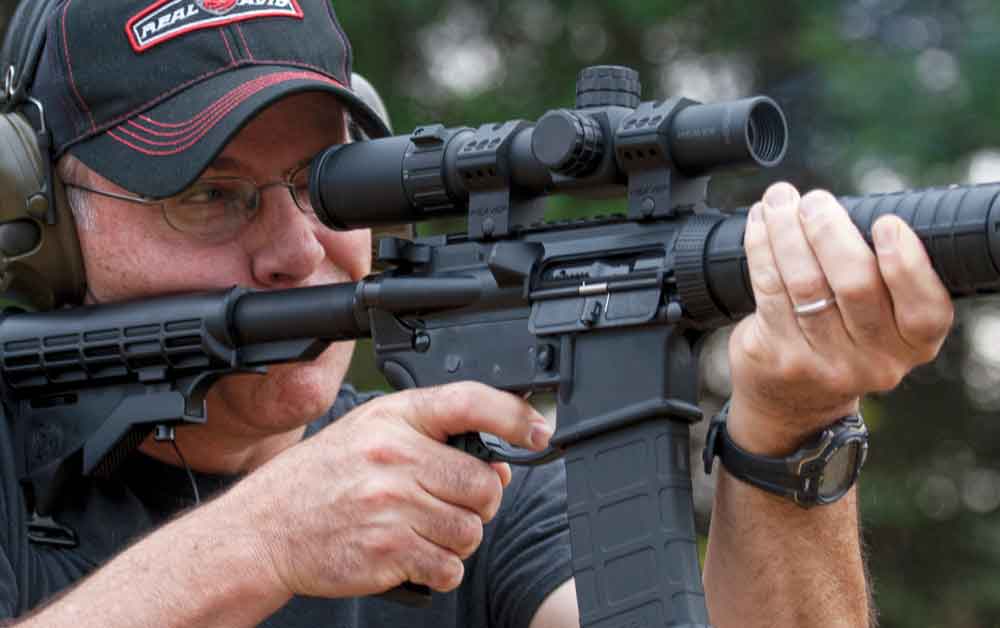
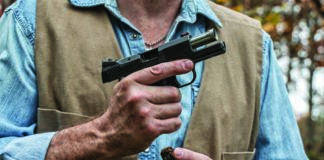
It’s a classic example of what lawyers call malum prohibitum, which means in essence “it’s bad because we passed a law against it.” This stands in contrast to malum in se, which translates to evil in and of itself: “we passed a law against it because it’s bad.” Much gun law follows this pattern. As famed defense attorney and firearms instructor Jim Fleming likes to say, “We don’t have to like reality. We do have to face it.”

At this writing, the best resource by far on the topic of gun laws is the website handgunlaw.us. It is unwise to trust anything in print on the topic, because the reciprocity agreements between state Attorneys General change regularly, often without widespread public announcement.

Concealed Carry and Traveling Armed

For example, the state of Nevada for many years recognized the home-state carry permits of Florida residents. However, when Florida for administrative reasons extended the longevity of their carry permits, Nevada authorities decided that was a longer period than they liked and ended their reciprocity with Florida. This was not widely announced, and visitors from the Sunshine State who routinely visited Las Vegas every year and carried their guns where legal there did not realize that doing as they had always done had now criminalized them. When Nevada subsequently chose to recognize Florida again, that wasn’t widely publicized either.

Handgunlaw.us maintains constant contact with all the states’ AG’s offices (and with gun owners’ civil rights groups in the various states) and thus stays current with things. It is strongly recommended that the armed citizen do a here-and-now check at handgunlaw.us before crossing state lines. For a smartphone app in the same vein, consider Legal Heat.

Editor’s Note: This article is an excerpt from Straight Talk on Armed Defense.

8 Pieces Of Shooting Gear To Build A Top Range Bag

2

You need a bunch of extra gear to ensure quality trigger time when you head to the shooting range, which means you need to kit up a range bag.

What makes the foundation of a range bag?

A beautiful day or even a crappy one, the conditions are always ideal to head to the shooting range. All you need is your guns and ammo and you're ready to roll, right?

Well, almost.

If you’ve spent any time around firearms, you know a day plinking away at paper, poppers or tin cans requires quite a bit more gear than just the bare necessities. There’s safety, maintenance and even a shooting setup to consider.

That’s where the tried and true range bag comes into play. These all-purpose marksmen satchels are the ticket to make a day behind the trigger enjoyable, safe and right on target. As an added benefit, it gives you the appearance of actually knowing what you’re doing.

With that in mind, here are 8 Pieces of Gear To Build Your Own Top-Notch Range Bag. This, by no means, is an exhaustive list, but it should get you on solid footing to make the most of your shooting time.

We know we’re not infallible, tell us in the comments what you think are the foundational pieces of gear in a range bag.

Range Bag

Range-Bag
Photo: LTD Commodities

Yeah, when you’re putting together a range bag, it’s pretty obvious you need a bag. And for all intents and purposes, anything short of a plastic grocery bag will tote your gear (if you don’t mind being pointed at and mocked). But if you’re serious about shooting, you should spend a bit of coin on your range bag and get something that suits your needs and will last you a few trips.

A couple considerations when you shop for a range bag are space and durability; you definitely want both in spades. And there are many fine brand-spanking-new examples tailored just for the range from BlackHawk, VooDoo Tactical and G Outdoors.

But don’t think you’re hemmed into a piece of gun luggage specifically engineered for that job. If you’re willing to hunt around a bit at the military surplus stores or sites, you can typically scratch up a first-rate range bag, even if that wasn’t its original purpose. For 20 years or so, an old gas mask bag has toted my cartridges, tools and what have you fairly nicely and on the cheap.

Ear & Eye Protection

eye-ear-protection
Photo: Caldwell

Unless you hate yourself or your head holes, you’ll need to kit up with some shooting glasses and ear protection. Besides, any self-respecting shooting range west of Uzbekistan isn’t going to let you within a country mile of its firing line without this essential safety gear.

As for the hearing protection, earplugs and earmuffs are both viable options and, like concealed carry holsters, you’ll have to experiment to find out what’s right for you. With either option, what you’re concerned about is their NRR rating. By law, all hearing protection equipment must have this rating, which is typically printed on the package. The highest you can purchase is 33 NRR. The CDC recommends using earplugs and muffs in conjunction, which can increase the effectiveness of hearing protection an additional 5 to 20 dB of peak protection.

Concerning eye protection, there are plenty of ranges that will let shooters get away with just sunglasses. But that probably shouldn’t be your standard. A good set of shooting glasses that meets or exceeds the ANSI z87 + standard is your aim.

Tested for impact resistance, these will take the worry out of having to invest in eye patches in the future. Besides, you can literally purchase glasses that are up to that level of protection for less than a dollar. Wrap around frames or lenses are also a good idea — you know what I mean, if you’ve ever had a Mini-14 shooter a lane over.

From there it’s all about comfort and what will suit your needs. That said, if you plan on doing a lot of indoor shooting, perhaps smoked lenses shouldn’t be your top choice.

Cleaning Rod

Photo: Real Avid.

In our imperfect world, stuck brass happens. And few things can bring an enjoyable day behind the trigger to a screeching halt quicker if you don’t have the right tools.

A good old cleaning rod is just the medicine to remedy the situation and, no matter if you’re shooting pistols, revolvers or rifles, you should definitely have one in your range bag.

A single-piece rod is the best for cleaning, but not for range work. A solid takedown cleaning rod is just the ticket for stubborn brass and convenience. But shoot small when outfitting your kit — .22 caliber is always a safe bet. This ensures the rod is universal, an especially important factor if you plan on taking multiple guns to the range.

Though if you’re a precision shooter and have a slew of perfectly tailored handloads begging to rip apart the 10-ring, then something caliber specific to swab your bore is perfectly acceptable. Of course, if that describes you, you already knew that and probably have one in the metric ton of gear you drag to the range.

Shooting Rests

 I am a strong advocate of getting off the bench to shoot. Deer and bad guys rarely set themselves up for a precision shot off a benchrest, so you might as well get use to shooting (if your range allows it) in different positions.

Even with this in mind, there are times you require the bench — sighting in a scope, working on trigger control, lethargy. For these situations, you should have some sort of rest to help you get into the most stable position possible. Many ranges provide something, but being prepared is better than discovering they have nothing.

Of course a HySkore Dual Damper Machine Shooting Rest isn’t practical for a range bag. Instead, something simple such as a fabric or leather front and rear rest will do the job nicely. Caldwell, Protktor, Champion and many others make a full range of portable shooting rests that are far from a burden to load up into your bag.

Pro tip (if there was actually anything remotely close to that anywhere near where I’m writing): Make friends with someone who reloads for their shotgun. They’ll have a ton of canvas bags their shot came in. Add a bit of sand to an empty one and you’ll have a dandy rest that costs next to nothing.

Spotting Scope

Vortex-Razor-HD-Spotting-Scope-3 Honestly, you needn’t go SEAL Team Six on this bit of gear. You aren’t ranging for a sniper team.

Your aim is to save yourself time and energy, not to mention giving yourself instant feedback on the shot you just took. Otherwise you’re looking at a lot of waiting and walking just to find out how you’re grouping. Even if your range has spotting scopes, owning your own is a heck of a lot more convenient.

The best news, there are plenty of decent offerings in the spotting scope market that fall under the $100 price. Barska, Konus and Simmons (there are others) all have great entry-level models at entry-level prices

If you can’t live without top of the line, you can always upgrade to $1,000-plus glass later.

Gun & Scope Tools

scope-mounting-kit
Photo: Real Avid

Ever seen a scope come out of its rings? Not a pretty sight and one heck of a way to ruin a day. How about being around a rifle that has an action screw come lose to open its groups as wide as a canyon? That happened to a buddy of mine on a brand new, out-of-the-box rifle. It goes without saying, he was not too pleased about the situation, but didn’t stay steamed long since he had the tools for the job.

You should, at the bare minimum, have a scope mounting tool (Leupold and Real Avid make slick ones) and a set of screwdrivers made for working on guns (Wheeler's one of the tops).

Yeah, these screws should be checked before heading to the range. Again, this is an imperfect world and screws come loose. Better a boy scout and prepared, than sulk home two rounds into a session because your scope is rattling like a diamondback.

Duct Tape

Duct-tapeHanging targets. Fixing recoil pads on the fly. Remounting your tailpipe savaged from the parking lot’s speed bump.

Honestly, you never know what life will throw at you — even at the shooting range. But if Duct Tape can’t fix it, well you’re in real trouble. I’d throw in baling wire as a necessity, but that’s harder to obtain in some of the more tony corners of the country.

Pen & Note Pad

Range Bag Essential Pen and Note PadIf you’re serious about shooting and shooting well, you should be serious about note taking. Accuracy and precision is about controlling variables, and you’ll never remember them all without spilling a little ink.

I prefer steno pads and mechanical pencils for convince, but whatever works for you works for you. Knock yourself out. Just get into the habit of recording the factors (conditions, ammunition, etc.) to figure out what’s going right and wrong. You’ll thank yourself later when the former outweighs the latter.

Bullet Trajectory: Angle Shooting With Precision Rifles

0

Shooting downhill or on an incline requires an adjustment in trajectory. Here’s what you need to know to connect on those tricky angled shots.

What do you need to know to adjust trajectory on angled shots?

  • The longer the range to target, the more critical incline and decline become.
  • Today’s shooters have many ballistic apps and BDC calculators for angled shooting.
  • Know field calculations you can use on the fly when faced with high- or low-angle shots.
  • Develop a system with your BDC reticle for angled shooting and practice, a lot!

R1638-Shooting-Downhill-1 - trajectory

Shooting Downhill, Shooting Uphill

If you raise or lower the target, the amount of drop necessary will appear to change.

Let’s say I’m using my .300 Winchester to shoot at a target 400 yards away, but at a downhill angle of 20 degrees. The above information will indicate that I need to hold 19.1 inches above the bullseye, in order to allow for the drop in trajectory over that distance.

However, I’d hit the target about 4 inches higher than I aimed. Now, perhaps that would still be a lung hit, or maybe it would not be a vital hit at all. Why?

The Bushnell 1 Mile rangefinder helps establish the shooting angle. Trajectory
The Bushnell 1 Mile rangefinder helps establish the shooting angle.

When measuring the effect of gravity on a bullet’s trajectory, it needs to be done on a level line, perpendicular to the line of gravity. When shooting uphill or down, you need to know the level distance.

It’s not hard to calculate this difference; simply observe the angle of deviation from level (in our instance, 20 degrees), and take the cosine of that angle. Multiply those results by the slope distance (like you’d observe on some laser range finders) and you’ll have the level distance.

In the case above, where my .300 Winchester was 19.1 inches low at 400 yards, I should’ve held for 375 yards — the level distance — where the bullet will strike 15.5 inches low. Here’s the math:

Cos (20 deg.) = 0.939 0.939 x 400 yards = 375.8 yards.

As the shooter, you need to know both the distance (again the range finder is your friend), and angle, either up or down to adjust the trajectory.

Laser Rangefinders And Ballistic Apps

There are a couple of methods I recommend. Many of today’s smartphones provide an app that will act as a level, providing a measurement of the angle up or down from level; I use one that acts as a clinometer (I’m a mild-mannered land surveyor by day) and is rather accurate.

If I have a severe uphill or downhill shot, especially at the distances where the reduction in range becomes significant, I should have time to use my phone to observe the angle and make the necessary adjustment to the trajectory.

A good laser rangefinder is an invaluable tool for shots that require a specific amount of holdover. - trajectory
A good laser rangefinder is an invaluable tool for shots that require a specific amount of holdover.

Many of today’s laser rangefinders, such as the Bushnell Elite 1 Mile, also provide either a level distance to the target, doing the mathematics for you, or will provide the angle from the shooter to the target.

If you don’t like the electronic gizmos, you can spend some time in the field judging some severe slopes where the level distance to the target will be affected most, and develop a good idea of what a 10-degree slope looks like in comparison to a 20- or even 30-degree slope.

When things get to 30 degrees and more, you’ll usually find climbing requires a hands and knees position. It’s very common for most folks to judge a slope as more severe than it truly is, so some practice will come in handy for reducing those distances to level.

Many smartphones offer an app for measuring slope angle. - trajectory
Many smartphones offer an app for measuring slope angle.

While few of us carry a cosine chart around in our heads, here’s a good reference piece to give you the amount of reduction necessary, in percentages.

5-10 degree slope = 98% of slope distance
15-20 degree slope = 95% of slope distance
25-30 degree slope = 90% of slope distance
35-40 degree slope = 80% of slope distance
45 degree slope = 70% of slope distance

For the rifle, where we have the benefit of using sleek, sharp bullets that resist gravity’s effects efficiently, the gravitational drop in the trajectory is a manageable figure, especially within common hunting distances.

For the handgun hunter, where velocities are significantly lower — coupled with using projectiles that traditionally have a much lower BC — knowing the distances even within 150 yards becomes paramount.

For personal defense guns, the distances at which you are likely to shoot are close enough to negate the major effects of gravitational pull. That said, I like to take my carry guns out to distances where I see a definite drop in the trajectory of my group, so I know what’s going on. The same principals we discussed for rifle bullets apply to handgun bullets, except the scale shrinks a bit.

Long-Range Shooting

R1638-Shooting-Downhill-3 - trajectory

As a side note, while all of this mathematical wizardry probably won’t make much of a difference to the hunter whose shots are taken within 200 yards (which I feel represents a great deal of the shots taken at game annually), there is a movement in the hunting world to take shots at game at distances that seem to increase with every television season.

While I realize that shots out past 500 yards can certainly be executed by a shooter who is highly experienced and knows his or her gear inside and out, the portrayal of routine shots taken out past 700 yards, at unwounded game, is not only unethical, but will result in a multitude of wounded game.

As I demonstrated with the drop figures alone — saying nothing of the effects of wind deflection — a misjudgment in distance of as little as 25 yards can result in a wounded and/or lost animal.

I highly suggest you find your own personal limits with respect to distance, based upon your own shooting abilities, and stay true to that figure. It’s one of the instances where you’ll have to police yourself. Should you realize that the distance is too great to make a confident hit, simply say no to the shot and get closer.

Purchasing the best long-range optics, and a cartridge/rifle combination that is theoretically capable of connecting, does not make it a wise decision to take the shot. I don’t want to sound like I’m preaching, but I’m not comfortable with the way some outdoor personalities act blasé about shots past 500 yards at game; there’s an awful lot that can go wrong.

So, with an accurate drop chart available, how can you make those shots that require a certain amount of holdover? Gravity is relentless, and you need to fight that effect, even at 250 or 300 yards.

Ballistic Drop Compensated (BDC) Reticles

R1638-Shooting-Downhill-2 trajectory

In this great technological age you’d be foolish not to take advantage of electronic calculators. However, a ballistic drop compensated (BDC) reticle in a riflescope is another means.

This is a reticle with more than just crosshairs, but a series of smaller horizontal lines on the lower vertical wire at a predetermined interval, providing a specific aiming point out at certain distances.

For example, my 6.5-284 Norma wears a Swarovski Z5 3.5-18x44mm riflescope, with the BRH reticle. This optic features a duplex reticle on three of the four wires (up, left and right) and a ballistic compensated reticle on the lower vertical wire.

In addition to the crosshair point, which I use for a 200-yard zero, there are five additional, smaller crosswires, and four small dots on that lower wire, as well as a point where the thin wire thickens.

In that rifle with 140-grain handloads, it works like this: my traditional crosshair is set to hit at 200 yards (and at any range shorter than that I’ll confidently hit an animal’s vitals), using the next lower crosswire it will hit at 270 yards, and the dot below that will impact at 330 yards. Should an even 300-yard shot present itself, I simply hold between the first crosswire and first dot.

R1638pg112-147_CH8BBB.indd - trajectory

Holding at the next crosswire down causes the rifle to hit at 390 yards (I use this for 400, calling it close enough) while the next dot lower is for 450 yards.

Continuing down the line, the next line is an even 500 yards, and the dot below that will strike at 550 yards. The fourth wire down strikes at 590 yards (so close to 600 it’ll scare you) and the dot below impacts at 640 yards. The lowest crosswire is designed to hit at 680 yards, but we’re already considerably past my hunting ranges.

I much prefer to stay within 400 yards, but certain hunts may require a longer shot. However, it sure is fun to play with steel plates and paper targets at those distances.

Now, I’ve found this reticle works within reason at these distances, and Swarovski has put a considerable amount of research into it.

And while this is only one of their available options, I think it makes a good choice for a hunter whose ranges concur with my own, or don’t plan to take shots much past 600 yards (where things can get tricky due to the winds, but that’s for later).

This article is an excerpt from the Big Book of Ballistics.

MUST READ ARTICLES