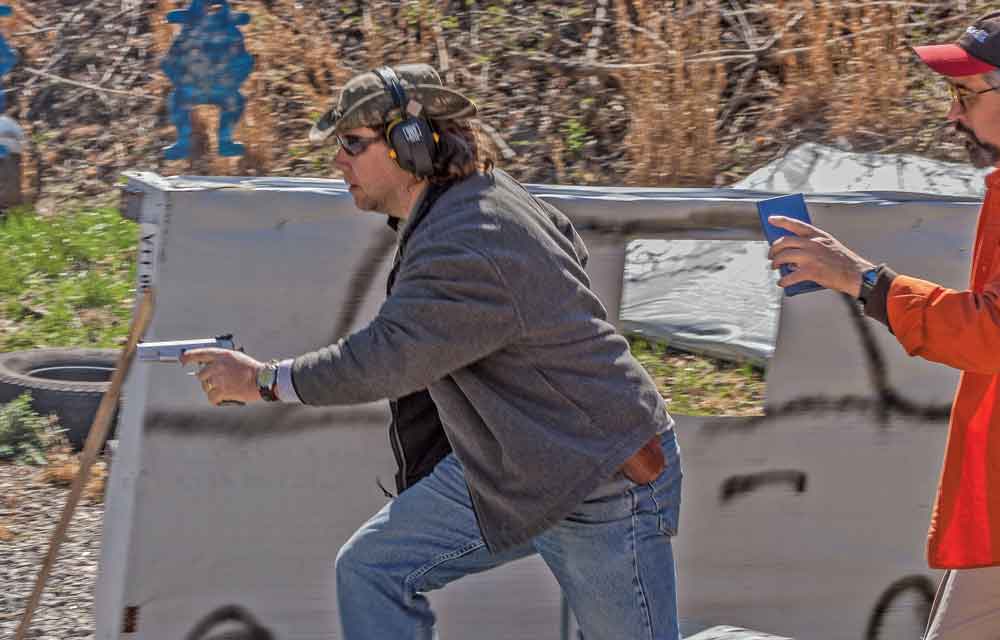
Competitive Shooting definitely can help advance handgun skills for self-defense, within reason.
The pros and cons of competitive shooting:
Plain and simple, shooting is good for the shooter, competitive or not.
Many basic defensive shooting skills can be master with it, such as the draw.
An inability to separate a competitive from defensive mindset can set you up for failure.
For defensive training, it might be advisable to run a match in a more tactical manner.
You won’t win the match, but it will provide better training.
There’s a long-running debate about whether competitive shooting is good for the defensive handgunner. I think this is somewhat of a silly argument: Shooting is good for shooters. Anytime you can get time behind the trigger and have your performance measured it’s a good thing. Of course, the defensive handgun practitioners argue that during combat or IPSC-style pistol matches you’ll do things that would be stupid during a real gunfight. Well, no kidding. When I play laser tag with my kids, I do a lot of stuff that would be stupid to do during a real gunfight.
When I was a police officer, I shot a lot of competition. I did it for two reasons. First, I did it because it helped me become more proficient with a handgun. I got better at drawing it from a holster, better at hitting targets faster, and better at clearing stoppages and reloading it. Secondly, I did it because it was fun. The notion that you cannot have fun when you shoot the pistol you carry to protect yourself with is completely ludicrous.
Granted, if you become so ingrained in the competition mindset that you cannot separate the two, well then you might be setting yourself up for failure. For that very reason, when I shot competition I sometimes ran the course in a more tactical manner. You cannot win when you do this, but you can take advantage of the intricate and cool stage setups, and simply approach the match from a tactical standpoint. In some matches you can shoot stages twice, once for score and once for fun. Sometimes I would also do this by running the stage the first time with my competition setup and then running the stage again with my duty gun and duty gear.
Don’t knock competitive shooters or competitive shooting. Some of them are the best shooters in the world, and you’d be a fool to call one out in the street at high noon. Regardless, if you’re going to play that game to improve your defensive handgun kills, keep the right mindset, and when possible, play the game like you mean it — and like the targets could really shoot back. In the end, that’s the real difference: No matter what color a target is and no matter what you paint on it, it will never be a real threat.
Editor’s Note: This article originally appeared in the May 2018 issue of Gun Digest the Magazine.
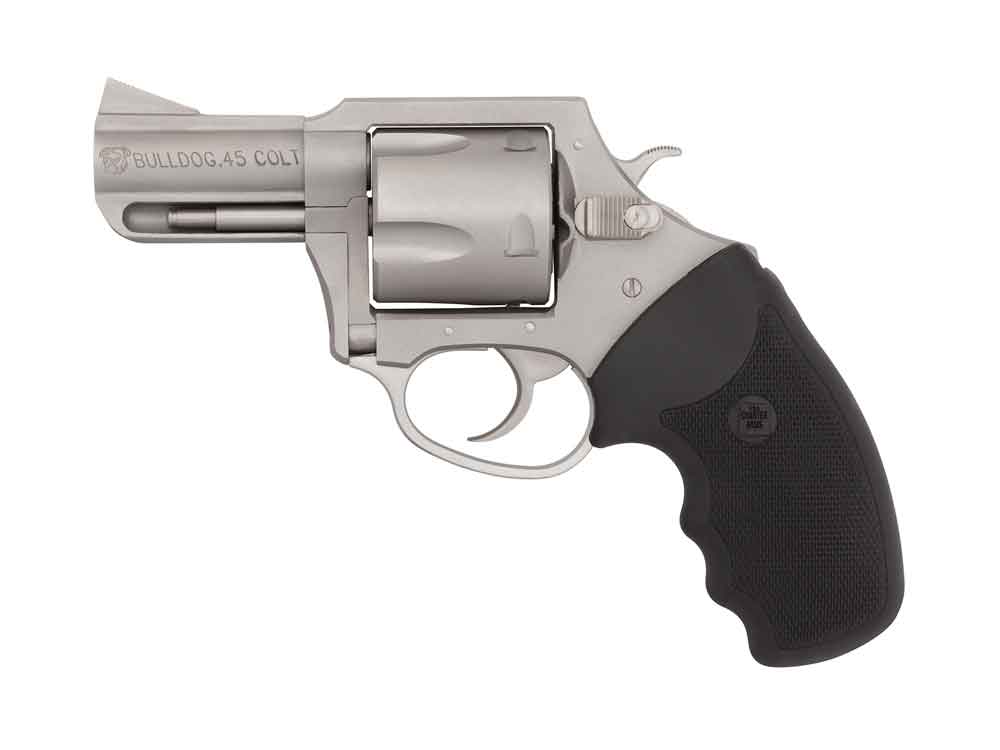
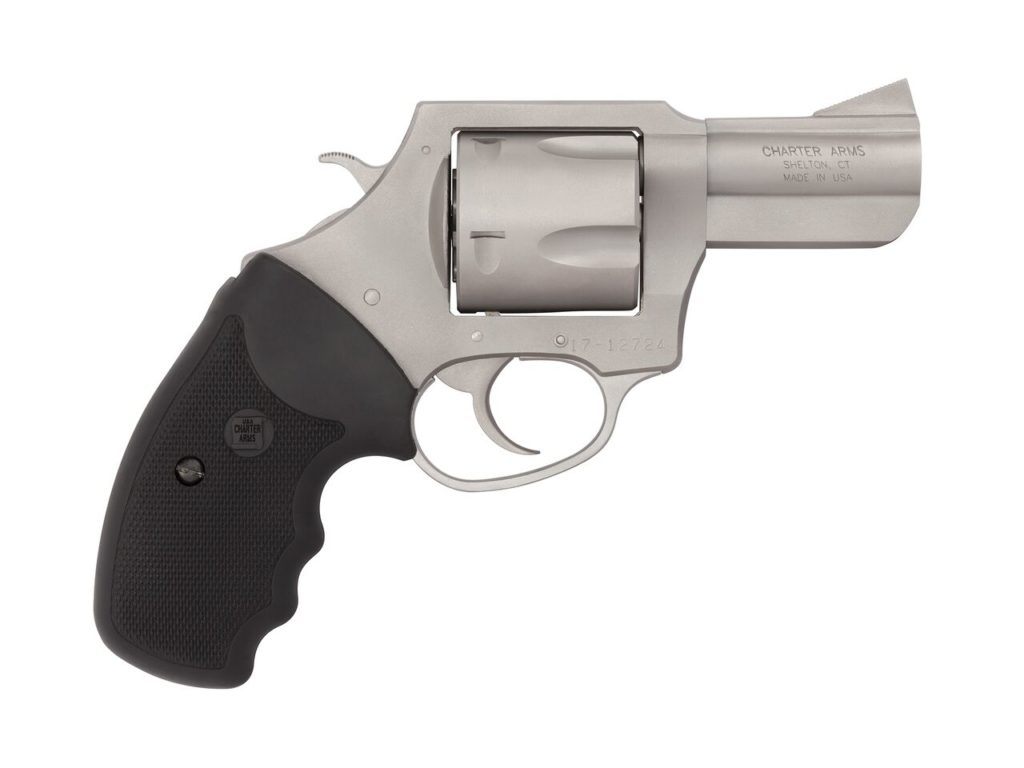
Charter Arms goes big, introducing the Bulldog XL in .45 Long Colt and a Mag Pug in .41 Rem. Mag.
The word on these new revolvers:
The XL is a new configuration of the Bulldog with a large frame.
Both 5-round revolvers have 2.5-inch barrels.
The Bulldog XL weighs in at 22 ounces, the new Mag Pug 23.
Each is outfitted with full-sized rubber grips, fixed sights and a standard hammer.
The MSRP on the revolvers is $433.
Life in the 40s is difficult if you’re a revolver fan. There are some downright dynamite cartridges when it comes to these big-bore brutes, at the same tick, there are some nasty catches when it comes to gun selection. This is particularly apparent if you want to carry one for self-defense.
Charter Arms Bulldog XL in .45 Long Colt.
Generally, revolvers in this caliber decade are a hefty lot and typically configured for chasing game or banging steel. The ones designed for concealed carry, in recent years at least, are more and more hitched to the .45 ACP. A solid choice, but one with a lot of semi-auto competition.
Charter Arms is the noted exception in this large-caliber muddle. The Connecticut wheelgun maker cut from the herd long ago and made the .44 Special one of its premier chamberings. And after all these years, its very concealable Bulldog continues to catch eyes among those who want a bit more lead to get the job done. Though this year, the faithful old watchdog might get a run for its money, from its own kin nonetheless.
A break from the ordinary, Charter Arms has dusted off a pair classic .40-caliber rounds to expand two of its popular lines of 5-round revolvers. As its name implies, the Bulldog XL is a large-frame version of Charter Arms’ popular wheelgun and comes chambered in .45 Long Colt. And the Mag Pug gets what can only be classified as a red-hot addition with a new .41 Rem. Mag. model. Slinging that kind of lead, there little arguing Charter Arms’ latest big-bores have stopping power in spades, but not at the expense of concealability.
With that said, the 22-ounce Bulldog XL and 23-ounce Pug will likely be handfuls, particularly the .41 Mag. with hotter loads. The cartridge is renowned for its snappiness, even out of heavier guns. Charter has taken mercy on shooters in both cases, designing the guns with full rubber combat grips, so there should be plenty to hang on to.
Charter Arms Mag Pug in .41 Rem. Mag.
Self-defense ammunition is potentially also a tricky proposition when it comes to the .41 Mag. There are rounds out there and not hidden on the back shelf, but by no means is there a cornucopia like you’d find for the .357 Mag. or .38 Spc. Given its extensive fan base, he .45 Colt should prove easier to feed. Ammo for it runs the gambit, from mild cowboy loads to hard-hitting defensive rounds.
There aren’t many surprises in either revolver, outside a few minor tweaks to optimize them to their chamberings. Outside of its large frame, the Bulldog XL is configured like its more established predecessor including a 2.5-inch barrel, fixed sights, stainless steel frame and cylinder, and standard spurred hammer. On the .41 Mag Pug the only notable change is a slightly longer barrel, 2.5 inches compared to the 2.2-inch standard .357 Mag. But the lines have proven winners for Charter Arms for some time, so it’s logical the company would keep what works. That includes price. Charter remains one of the most affordable American gunmakers and doesn’t change course with its recent releases, each with a MSRP of $433.
For more information on the Bulldog XL and the new Mag Pug, please check out: www.charterfirearms.com
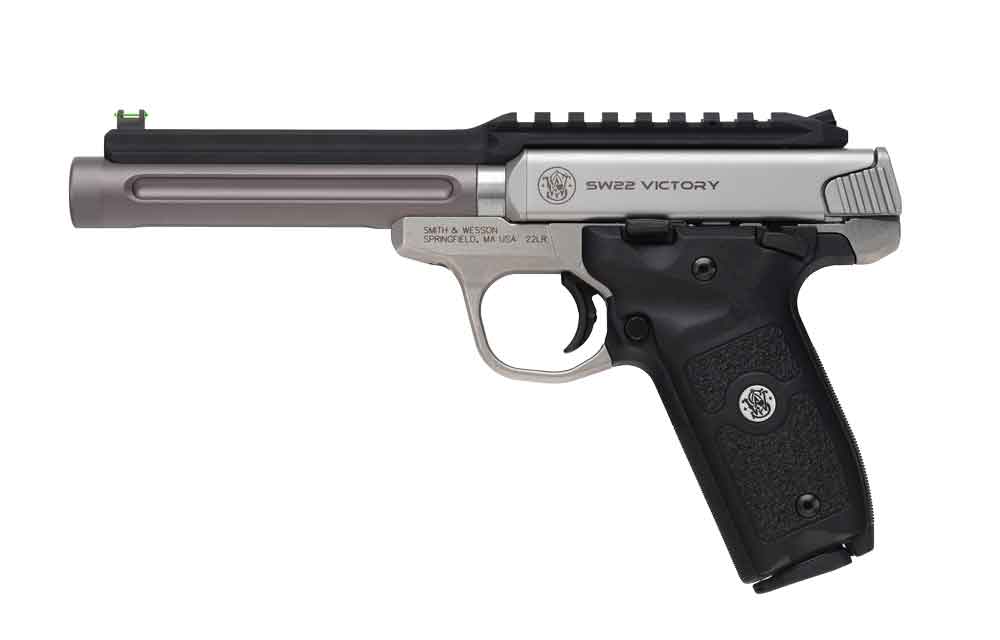
Looking to upgrade your Smith & Wesson SW22 Victory’s barrel? Look no further than TacSol’s RIDGE-LITE Barrel. The upgraded barrel kit comes equipped with a fluted barrel, a stainless steel shank, an aluminum picatinny rail and fiber optic sights, which are fully adjustable for windage and elevation at the rear. The new barrel weighs 8 ounces and has a length of 6 inches. The barrel itself is manufactured from 6061-T6 aluminum and features a chomoly steel liner. MSRP: $355
CCI .17 HMR VNT
This new load from CCI is tailor made for taking down varmints at longer ranges. At the center of the .17 HMR VNT is a 17-grain Speer bullet with an extremely thin jacket and precision-built polymer tip. The result is a projectile that offers a very flat trajectory for accuracy as distances stretch and explosive terminal performance on soft tissue. MSRP: $18/ Box of 50
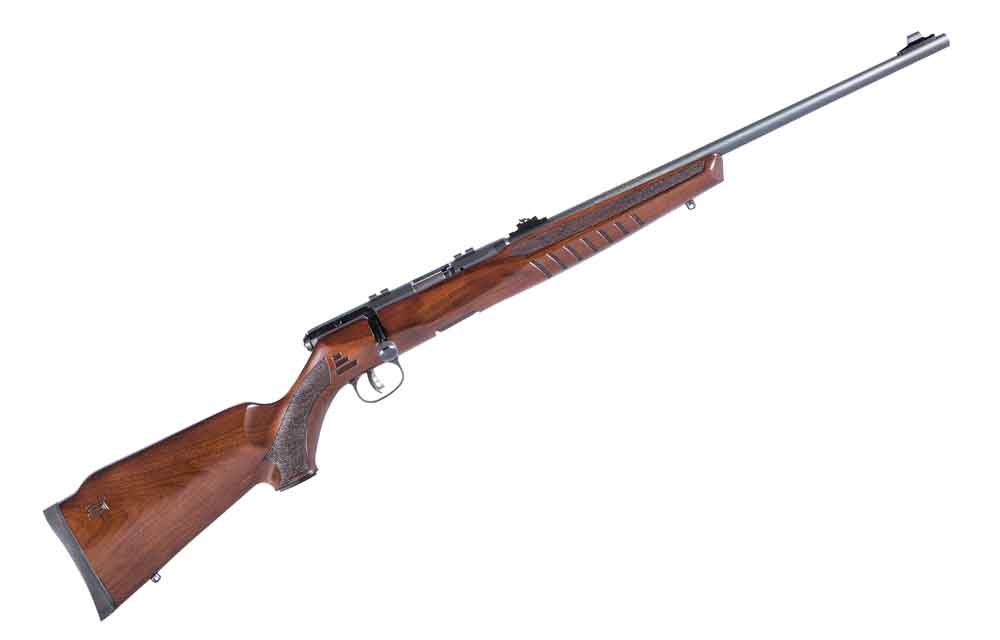
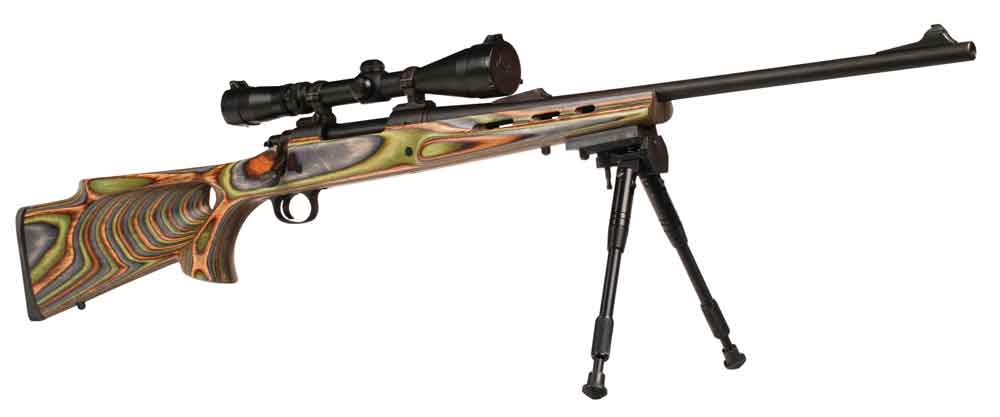
Savage B-Series Hardwood
In 2017 Savage debuted its new B-Series line of bolt-action rimfire rifles with a number of composite-stocked models chambered in .22 LR, .22 WMR and .17 HMR. This year, Savage has expanded the B-Series with three new models featuring a Walnut-stained hardwood stock with unique, modern checkering on the grip and forend. All models feature a 21-inch barrel, a top tang safety and Savage’s renowned adjustable AccuTrigger. MSRP: $439-$459
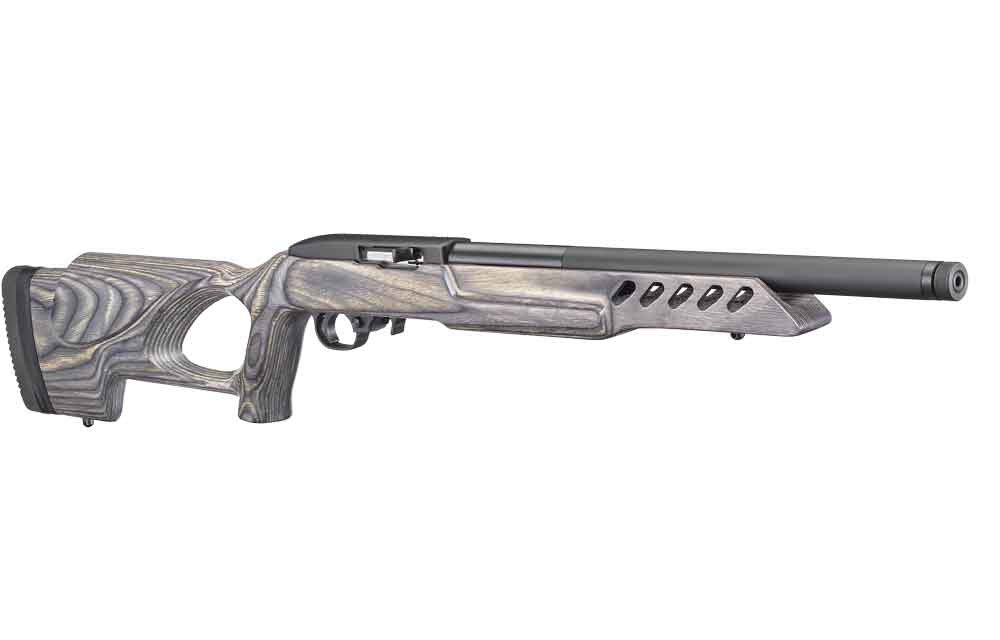
Ruger 10/22 Target Lite
This new Target Lite version of Ruger’s classic 10/22 features a black laminate thumbhole stock with a rollover comb, a flat forend and swivel studs for mounting a sling if needed. It utilizes a 16.13-inch cold hammer-forged barrel tensioned in a black-anodized aluminum alloy barrel sleeve. The rifle also features Ruger’s BX-Trigger, which offers a crisp pull between 2.5 to 3 pounds, minimal overtravel and a positive reset. MSRP: $649
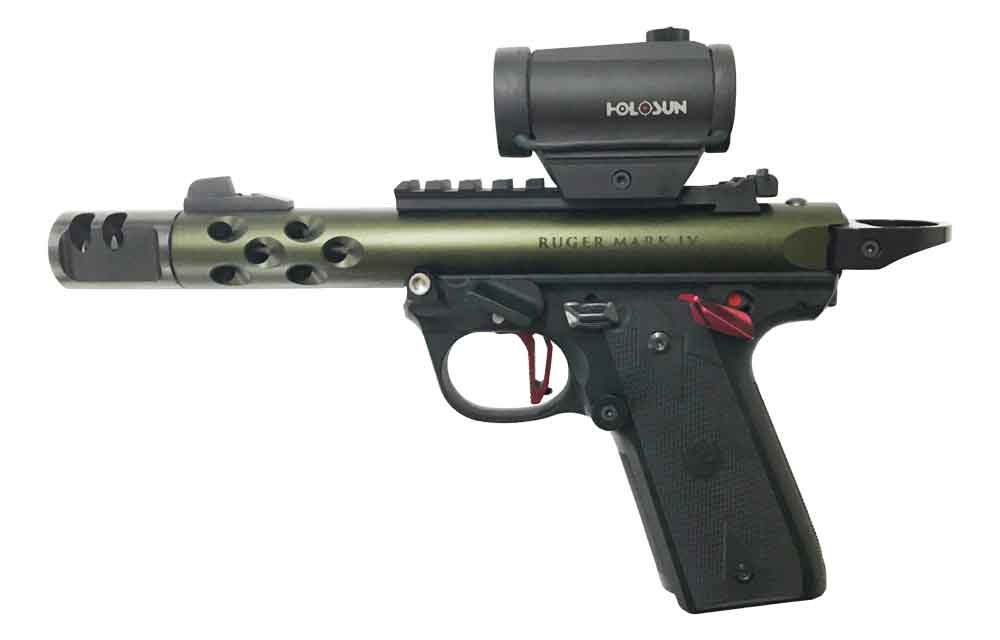
Tandemkross ‘Cornerstone’ Safety Ledge
Tandemkross makes a number of aftermarket upgrades for popular rimfire platforms, such as Ruger’s Mark IV 22/45. One of the latest is the “Cornerstone” Safety Ledge, which provides shooters with an oversized 1911-style safety ledge that aids in faster shooting and operation of the pistol. This aftermarket safety can be added without making any modifications to the gun’s internal components and requires no tools for installation. MSRP: $60
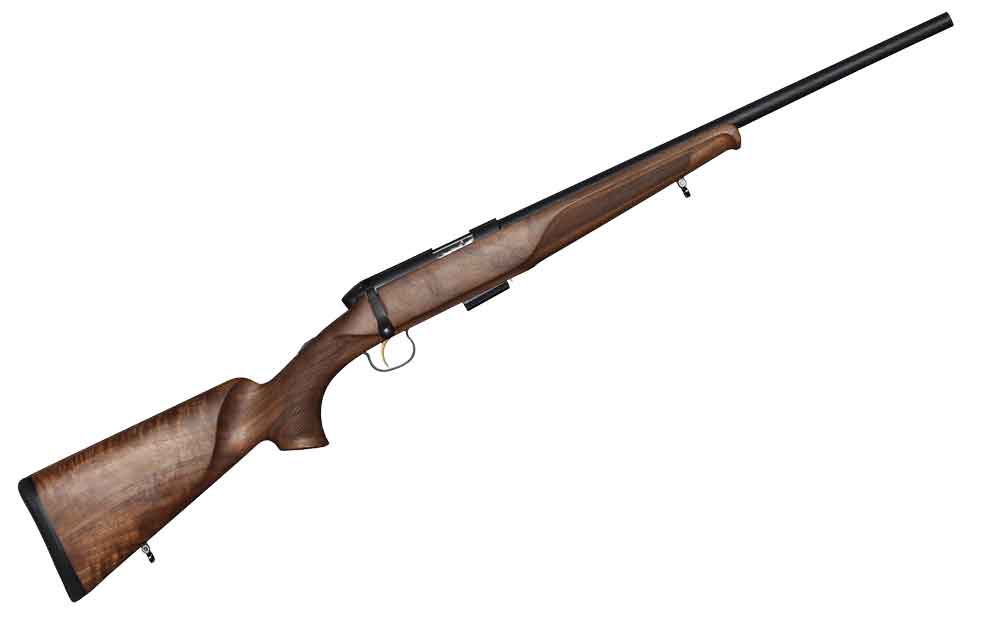
Steyr Zephyr II
A renewed take on Steyr’s original Zephyr rifle produced from 1955 to 1971, the Zephyr II is classic in appearance and perfectly suited to hunting pursuits. The rifle utilizes an elegant European walnut stock with a Bavarian cheek piece and fish scale checkering. The cold hammer-forged barrel is 19.7 inches in length, and the gun weighs 5.8 pounds total, making it a handy hunting companion. The rifle feeds from a detachable five-round box and is available in .22 LR, .22 WMR and .17 HMR. MSRP: $995
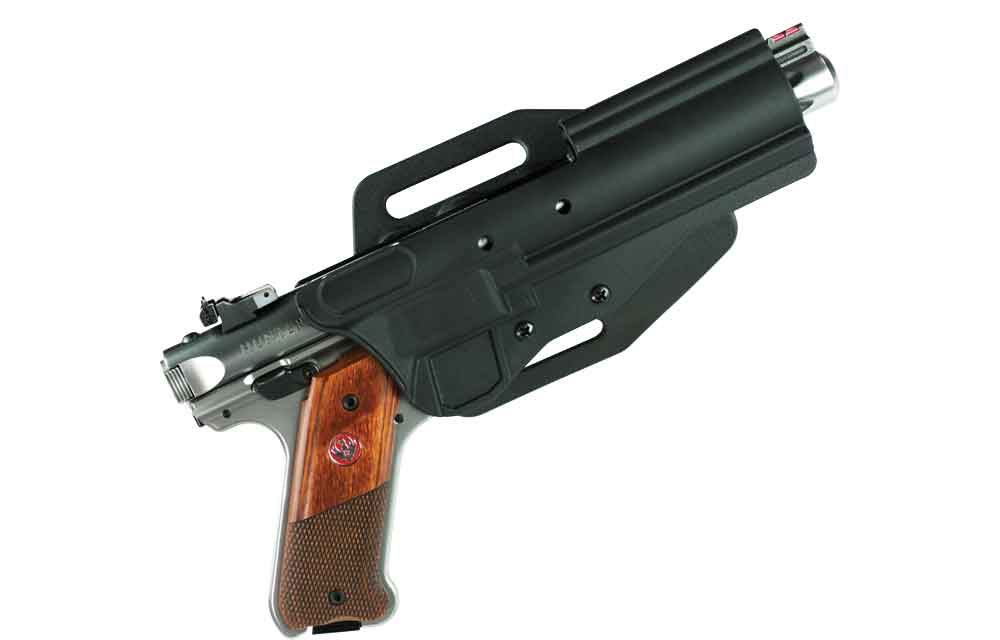
Tactical Solutions PAC-LITE Holster
The TacSol PAC-LITE Holster is engineered to fit the Ruger Mark series of pistols, ranging from the earliest models up to the new Mark IVs, with or without an optic. The holster’s design is ambidextrous, so it is friendly to both left- and right-handed shooters, and it has adjustable retention for improved flexibility. It’s also built to accommodate most suppressors and any length of barrel. The PAC-LITE is designed to fit belts up to 2 inches in width and is available low- or high-ride versions. MSRP: $40
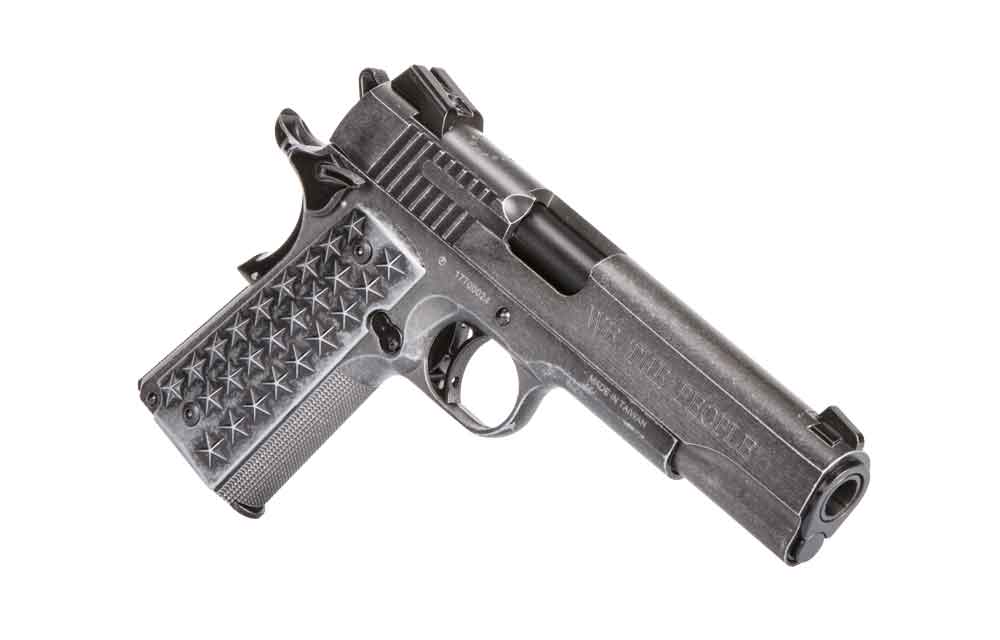
SIG Sauer 1911 We The People BB Pistol
One of SIG’s newest semi-automatic, CO2-powered airguns is the 1911 We The People BB Pistol. Like SIG’s We The Pistol centerfire handguns, this BB Pistol features a distressed finish on the stainless steel slide and frame, along with patriotic engravings. The airgun has a realistic blowback action, with a slide that holds open after the last BB is fired. It also has a 17-round drop magazine that holds 4.5mm steel BBs and a functioning grip safety, and it conveniently fits current 1911 holster systems, which makes it a great training option. MSRP: $120
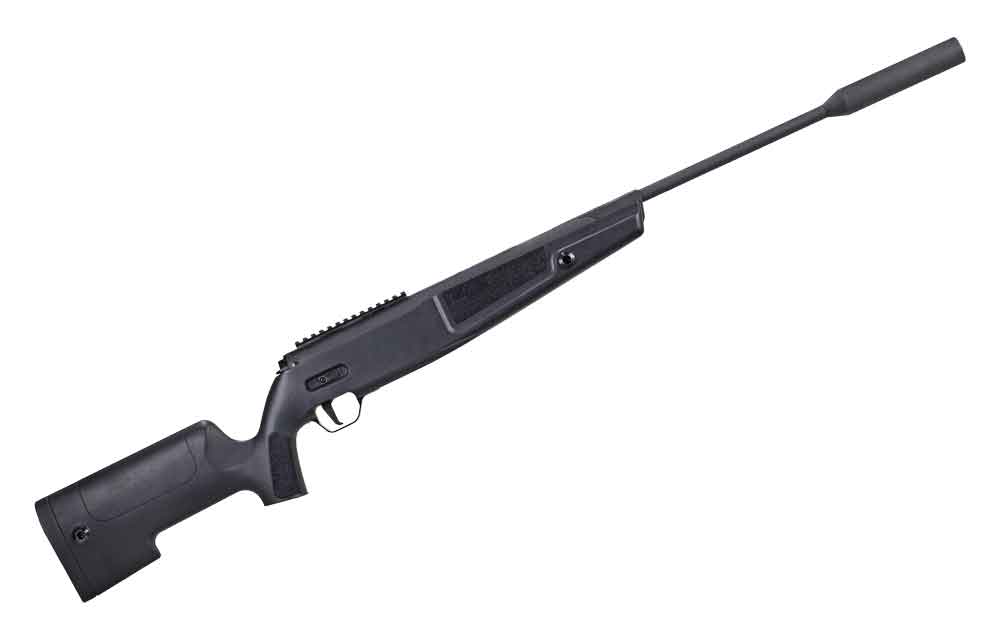
SIG Sauer ASP20 Break Barrel Air Rifle
The new ASP20 is SIG’s first entry into the break barrel air rifle category. The suppressed, single-shot break barrel rifle is available in .177 and .22 caliber and features the lightest cocking effort in its class (33 pounds) due to its GlideLite cocking mechanism. It also utilizes one of the airgun industry’s most advanced trigger systems with its ASP MatchLite adjustable trigger, which allows users to alter the weight from 2.5 to 4 pounds. The .177-caliber version delivers 20 foot pounds of energy and a muzzle velocity of 1,021 fps with an 8.64-grain pellet, while the .22-caliber version offers 23 foot-pounds of energy and a velocity of 841 fps with a 14.65-grain pellet. MSRP: $360-$490
Editor’s Note: This article originally appeared in the February 2018 issue of Gun Digest the Magazine.
The unlikely tale of how laminate stocks went from curiosity to commonplace, changing the shooting world along the way — for the better.
How did laminate stock storm the firearms world?:
Prior to 1987, there wasn’t a single American manufacturer that offered a wood laminate stock.
Jack Barrett and his company, Rutland Plywood, changed this in the mid-1980s.
Utilizing special epoxies, the company layered extremely thin veneers of birch to create stock blanks.
In many cases, stock blanks consisted of 30 to 36 1/16” veneers.
The advantage offered by laments are blemish-free material, greater strength and better action fit.
Additionally, they do not swell or warp due to environmental conditions.
For those of you who might be either too young or too new to the world of firearms, the colorful wood laminated stocks you see in the catalogs of literally every rifle manufacturer are a fairly recent development. Prior to 1987, there was not a single wood laminated stock being offered by an American production rifle manufacturer. Today there’s not one that doesn’t offer several among its various sporter and varmint/target models. Seldom can a trend that has become so broad and pervasive be traced to a single company, but in this case it can: the Rutland Plywood Corp. of Rutland, Vermont, and its owner and CEO, Jack Barrett. Unfortunately, RPC burned to the ground in late August of 2014, but that doesn’t change the story.
Humble Beginnings
It was at the 1987 SHOT Show that Winchester, Ruger and Savage all exhibited for the first time examples of their flagship bolt-action rifles wearing laminated stocks machined from blanks furnished by RPC. It created quite a stir! My appreciation for laminates, however, goes back to the early 1960s; by then, I was stocking my own rifles using the shaped and semi-inletted stocks as offered by Reinhart Fajen, E. C. Bishop & Sons, and Herters, which were the largest retail sources at the time.
It didn’t take me long to realize after dealing with a couple of traditional walnut stocks that warped enough between the dry winter and humid summer conditions of Pennsylvania, which had them constantly changing zero, that there had to be a better, more stable stock medium. At that time, what few synthetic stocks that existed were crude at best, in their infancy technology-wise, and pretty much used only by the benchrest crowd.
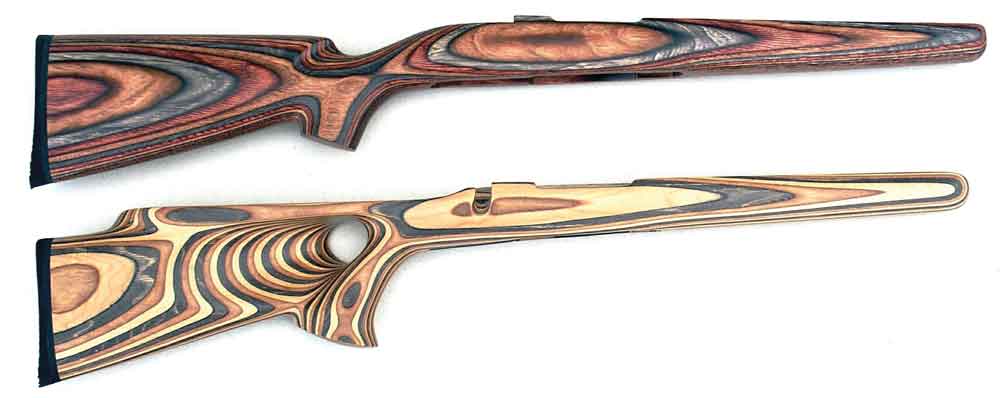
A few examples of the almost limitless color combinations possible. Some examples have as many as five colors.
Back then the most appealing stock to my eyes was the Regent by Fajen. It was a racy-looking thing with a high, straight comb line that was actually slightly higher at the heel of the butt than it was at the point of the comb. What made this stock look so streamlined was that the upper left quadrant of the pistol grip was not rounded off. In other words, in silhouette, the top line across the grip area was almost a straight line from the receiver tang to the point of the comb (Here is where a picture is worth a thousand words).
Anyway, the Fajen people offered the Regent in an all-walnut laminate of 5⁄16-inch laminations, which they turned from blanks purchases from a furniture manufacturer. That meant there were only six layers of wood in a typical stock, so the multi-layer look we see in today’s laminates was very subdued.
The Birth Of The RPC Laminate
By the time I became a full-time gun writer in 1970, I owned three rifles stocked in Regent laminates and wrote about why I liked them on a regular basis — a fact that did not go unnoticed by Jack Barrett. Jack was a gun enthusiast and hunter who, in the mid-1980s, had begun developing a birch laminate specifically for rifle stock applications. At that time, RPC had been in business for more than 30 years and was one of the largest manufacturers of specialty wood laminates and plywood for industrial use, so the technology and wherewithal were already there.
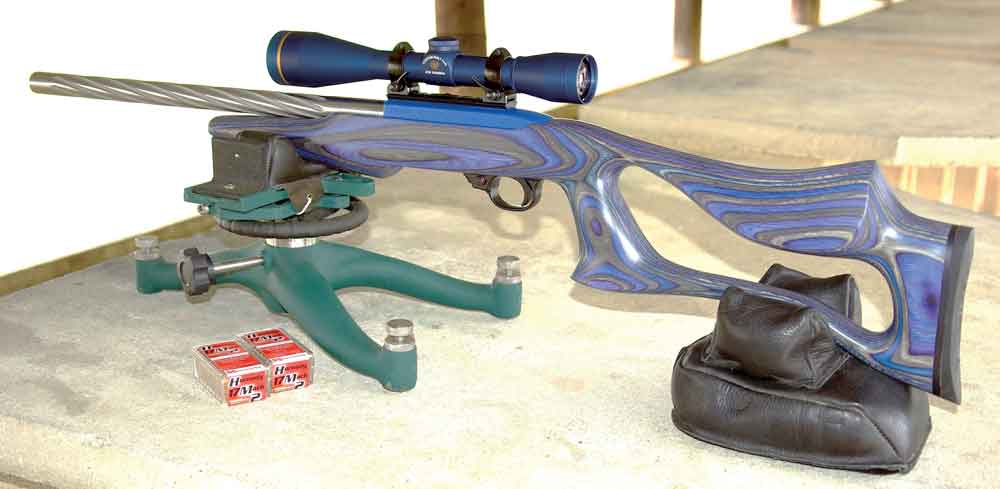
The author built this rig using a Ruger 10/22 action, an E.R. Shaw spiral-fluted barrel and a Boyds stock. The receiver was colored using an oven-baked spray-on enamel, and the matching scope came out of Leupold’s Custom Shop.
To make a long story short, after seeing several of my articles, Jack got in touch with me and invited me to visit his plant; that was in 1986 when they had just finished more than two years developing the special epoxies and production processes to make an absolutely stable, warp-free gunstock that would never de-laminate. Moreover, it was comprised of the thinnest possible layers of white birch — veneers actually, each only 1/16” thick. The result was a blank consisting of 30 to 36 individual layers of wood, depending on the stock style to be turned from it. Couple that with the ability to dye the veneers any color and assemble them in any combination, and you’ve got what we’ve all come to take for granted as the wood laminated stock.
How The Magic Happens
The actual process to arrive at a blank ready for shipment to firearm and stock manufacturers is a fascinating one. Logs are first debarked and cut to length — about 40 inches. These log sections are then placed in a huge steam room for a couple of days where they soften and become easier to machine.
Next comes the turning process that actually produces the veneers. The logs are placed on a lathe where they are spun at high speed against a huge blade. The logs, of course, are never perfect cylinders at the start, so the first few revolutions against the inward-moving blade come off as irregular sheets.
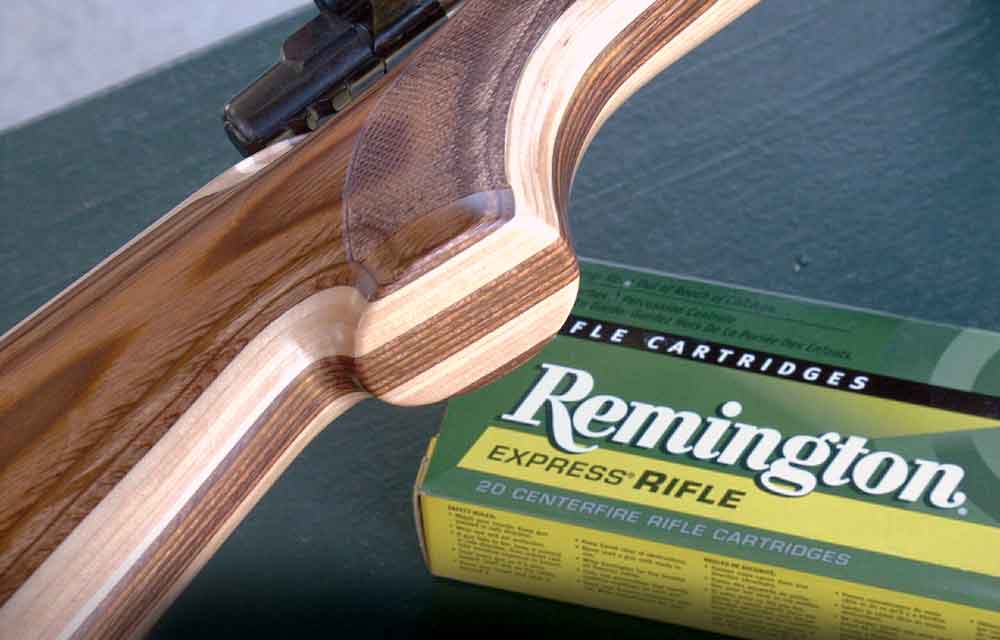
Remington’s Model 673 Guide Rifle was unlike other laminates in that it consisted of five, 5⁄16-inch layers to emulate the original Model 600 Carbine of the mid-1960s.
Once the log is trued up, however, one continuous veneer comes peeling off at about 15 mph. The spinning log is reduced to the diameter of a broom handle in less than a minute. As the sheet comes peeling off on a large conveyor belt, it passes beneath an optical comparator that triggers a vertical blade, which cuts out any section having knots, voids or other imperfections.
Once the veneers, which at this point are virtually wet to the touch, are cut to size — about 12×35 inches — they go into a huge conveyor oven. Because the sheets are so thin, by the time the veneers come out the other side, their moisture content has been reduced to just 4 to 5 percent, which is lower than a homogeneous stock can be dried.
The processes described thus far afford two more advantages over a single piece of wood. Because the 30-plus veneers that go into each stock are blemish free, that ensures that as the blank is machined into a gunstock, no knots, voids or other flaws will be revealed. With one-piece walnut stocks, the rejection rate for such “surprises” can be as high as 8 to 10 percent.
Seen here is the pressurized autoclave where the veneers are dyed to the desired color, in this case, black.
The next step is the coloring process, which is done by putting stacks of veneers in a huge autoclave where color dye is introduced and the atmosphere is reduced to a vacuum that enables the dye to fully penetrate each sheet. After coloring, all that remains is for the veneers to be run through rollers, which deposit a proprietary epoxy to each side, then stacked by hand in the desired color combination. From there they are placed in a gigantic, multi-layer hydraulic press with heated platens that accommodate 20 blanks at a time. The stacks are compressed under 20 tons of pressure, while the heated platens speed the curing of the epoxy.
The Laminate Advantage
As touched upon earlier, laminated stocks are not only highly distinctive and colorful, but are far stronger and more stable than one-piece stocks. You can, for example, take a wood chisel, orient it parallel with the layering of the veneers, and whack it all you want with a hammer; the stock will not split along a seam. I’ve also seen a laminated stock that was turned and treated by Boyds with its standard stock finish, submerged in a swimming pool for 5 days, after which there was no measurable swelling or warping.
Once the log is trued and the blade is making total contact with the spinning log, the veneer peels off in an unbroken sheet at 15 mph.
Bottom line: A laminate is just flat-out better at being a gunstock than the traditional one-piece chunk of wood. Not only is it much stronger and stable, it has a tactile warmth about it that no synthetic can match. It feels like wood because it is wood. Me, I like them as much as ever.
Editor’s Note: This article originally appeared in the April 2018 issue of Gun Digest the Magazine.
Determining your hold point at a sporting clays station gets you in position for success.
Lacking the symmetry of skeet and the orderliness of trap, the ambiguity of sporting clays is among its most daunting aspects. Even on a course where you’re an old hand, you can never quite feel like you have a complete handle on where that blue rock will fly. The real twist to this all, to consistently gun down doubles and regularly mark improvement, you need the ability to anticipate your shot.
Knowing where you’ll initially acquire a clay before smashing into a hundred glorious pieces would make things plenty easier on this front. Luckily, David Miller has a trick up his sleeve that eliminates much of the guesswork in determining where to position yourself for the greatest success. It’s simply a matter of finding the thrower and where you’ll shoot the clay, then dividing up the field to determine your hold point — where you’ll actually start tracking a clay with your gun.
It sounds like a mouthful in digital ink, but the Aguila Ammunition pro-shooter and World Record holder for most clays broken in an hour gives a quick and dirty method for fractionalizing a station in the above video. On the front end, this sort of analysis seems like using a cannon to kill a mosquito. But in action, it simplifies breaking blue rock to the level of near intuition. And that’s what you want.
Sure, it takes time to read a station, order it in your mind’s eye and determine your hold point. But if you do, you’ll be the one dealing chaos, not the station.
For more information on Aguila Ammunition, please check out: www.aguilaammo.com
A thing of beauty, Turnbull’s custom ROCS Mark IV is set to turn heads on and off the range.
If rimfires are why you head to the range each week then in all likelihood you have some series of Mark pistol in your gun safe. Ruger’s wickedly simple and frighteningly effective handgun has wowed shooters for more than a half-century now. Rightfully so, what the semi-automatic is capable of is a thing of beauty. In fact, you’d be hard-pressed to find a way to make any Mark pistol more attractive to a true-blue .22 fan. Well, almost.
Leave it to Doug Turnbull to take exceptional and make it exquisite, and he’s done nothing short of that with his latest creation — the Ruger Owners & Collectors Society Mark IV. Gun Digest Editor-in-Chief Luke Hartle caught up with the man behind the legendary Turnbull Restoration and Manufacturing at the NRA 2018 Annual Meeting and Exhibits in Dallas to get a first-hand look at this beauty. And, surprising no one, the limited-release pistol sparkle like the gem it is.
Produced to celebrate the fifth anniversary of the society’s founding, the Mark IV is available in a rich blued finish or Turnbull’s trademark color-case hardening. The pistol boasts a 5-inch flat-side barrel and is marked as factory finished since Ruger gave the small firearms concern its complete blessing to create these masterpieces. Seriously, the only thing potentially better than admiring Turnbull’s functional art is running it at full tilt.
There is, however, a catch. If these unique customized renditions of one of America’s all-time favorite rimfire pistols have captured your eye — there’s no dawdling in getting one. The run for each finish is only 125; so, even at a premium price — $695 for color-case hardened, $595 for blued — the Mark IVs are likely to move faster than they can shoot.
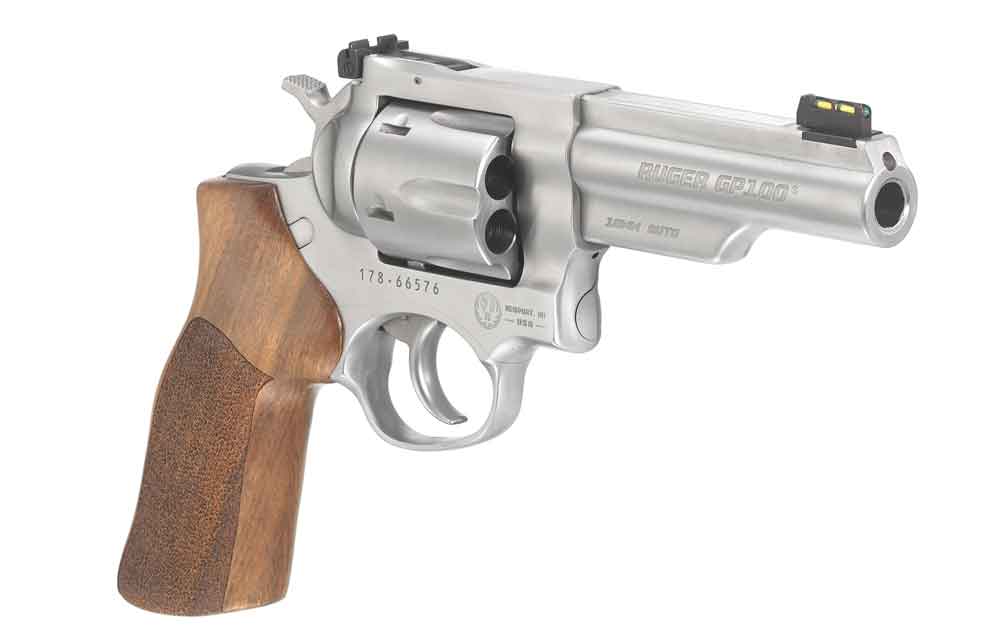
Ruger expands its 10mm revolver selection with the GP100 Match Champion.
What’s the story on the new 10mm revolver?
The GP100 Match Champion follows last fall’s release of the Super Redhawk in 10mm.
The gun is the optimized version of the company’s popular double-action line.
The 10mm holds 6 rounds and comes in lighter than other Match Champions, due to larger chambers.
The revolver utilizes moon clips to headspace the semi-automatic cartridges.
The gun has a 4.2-inch barrel, 11-degree target crown and half lug.
Its MSRP is $969.
Had enough 10mm? Ruger thought not. But the New Hampshire gunmaker continues to take a different spin in building an arsenal for the hottest old pistol round on the market today.
It’s another wheelgun! But unlike its first 10mm offering from last fall, the Super Redhawk, it has the potential to appeal to a greater swath of the revolver-shooting public. The GP100 Match Champion is the decked out iteration of the company’s popular double-action revolver line, and should provide a rather versatile platform to launch Col. Jeff Cooper’s snappy and resurgent round. If anything, it gives 10mm pistol fans a carry and competition option if they have a yen for cylinders over magazines.
This isn’t the first semi-automatic pistol cartridge Ruger has moon clipped up (incidentally it ships with three). For the past decade or so, the gunmaker invested big in 9mm revolvers with the caliber making an appearance in a great swath of its wheelgun catalog. The GP100, however, is virgin territory for semi-auto rounds, previously strictly a home for rimmed cartridges. Technically, it’s a twofer for the line, given the 10mm will also safely shoot the .40 S&W.
For those who know the line, there isn’t much surprise in the new 10mm — it’s a GP100 Match Champion through in through. Like its .357 Mag. brethren, the 6-round 10mm has polished and optimized internals, a centering boss on the trigger and centering shims on the hammer. It boasts a 4.2-inch barrel with an 11-degree target crown to improve accuracy and a half-lug. The cylinders and ejector are chamfered for quicker loading and it’s outfitted with attractive Hogue hardwood grips, complete with fine stippling. Topping it off, an adjustable rear sight and quick-change fiber optic front sight.
It might sound like the same old song, but the all stainless-steel revolver does hit a few new notes. The larger chamber of the GP100 Match Champion 10mm makes it lighter — 37 ounces opposed to 38 ounces — than the other revolvers in the line. Though, the lack of material means the triple-locking cylinder has not being radiused. In turn, it might not slide into a holster quite as easily, though the point is debatable. The GP100 Match Champion is priced the same as the rest of the line with an MSRP of $969.
For more information on the 10mm GP100 Match champion, please check out: www.ruger.com
While classic 1873 Colt Single-Action Army revolvers are cost prohibitive, there are a number of modern-day replicas that look great, shoot well and are priced affordably.
Who makes some of the best 1873 Colt Single-Action Army replicas?
The LOOK! Maybe that’s one of the many factors that make the 1873 Colt Single-Action Army (SAA) so enduring. Hardly a gun nut anywhere doesn’t know the LOOK. Such guns can be picked out under the glass at local gun shops — with only the slightest glance. The reason for this article is that so many Peacemaker replicas have sprung up — made both in this country and abroad — and those old-time/new-time guns are selling well. Obviously, we will be covering a lot of them here in solid detail.
The Holy Smoker Cimarron worn by Russel Crowe in “3:10 to Yuma.”
Despite the Colt Single-Action Army being born in 1873, it pays to go back to earlier Colt models, for these were the guns that set the universe in motion to produce one of the most iconic revolvers ever. The Colt Walker model might be the handgun that started the LOOK. At the time of its introduction in 1847, the Colt Walker was the most powerful handgun ever. Each of its six chambers fired a .454-caliber round ball ahead of as much as 60 grains of black powder. Glance at any Colt Walker and you will see a bit of the LOOK.
The Walker weighed all of 4.5 pounds, so this one was not for quick draw work. Not in 1847. In 1851, Colt came out with the Navy model in .36-caliber. This one fired a lead round ball in the .375- to .380-inch diameter range with a much-reduced black powder load compared to the Walker. Obviously, weight compared to the Walker was significantly reduced. With lower weight and smaller size, the Colt Navy of 1851 was ideal for carrying in the holster, or even pocket carrying, though the latter might be a stretch. The .36-caliber ball was still able to go out the muzzle at about 1,000 feet per second (fps).
The next step toward the 1873 SAA was the Colt 1860 Army model. Look at the Walker, the Navy and the Army models, and maybe you, too, can see the emergence of the 1873 coming. The 1860 Army’s receiver was the same size as the 1851 Navy. Due to a different rebated cylinder design, the “Army” was able to fire those .44-caliber round balls.
If you purchased a real Colt 1873 SAA in the late 1950s and/or early 1960s — you did or have done very well financially. However, it’s still possible to own a piece of this Colt history through the many SAA replicas that are available today. Though the following isn’t meant to encompass all the replicas available, we’ll try to cover as many as possible or as many as this writer knows about — which is a good many.
Ruger
In 1953, Ruger introduced its Single-Six model — in .22 rimfire — a small version of the SAA, but which retained the LOOK. Two years later, Bill Ruger introduced his Blackhawk — again, with the LOOK, but with the addition of an adjustable rear sight. No doubt due to the popularity of TV Westerns, Blackhawk sales took off. Years later and they’re still going strong in popularity.
The Single Action Shooting Society (SASS) was formed in 1987 — a sport of fun competition involving shooting with old-time guns — only with firearms of the Old West’s earlier times, and one of the rules was no open sights. Thus, in 1993, Bill Ruger came out with his Vaquero model — perhaps mainly to accommodate those SASS members who didn’t own or couldn’t find original Colt Single-Action Army six-shooters at a reasonable price.
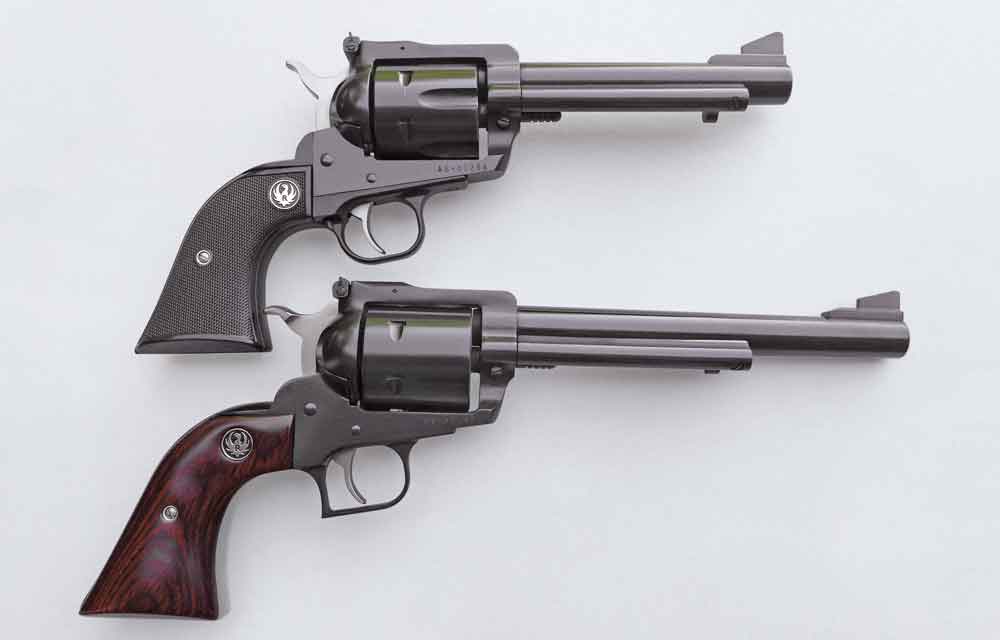
Predating the Ruger Vaqueros were the Ruger Blackhawks, like these with adjustable rear sights.
The first Vaquero had a 7.5-inch barrel, and I had the good sense to buy one. This one has a case-colored receiver, wood grips, blued steel barrel, cylinder and trigger guard. Only offered in .45 Colt originally, this long-barrel rendition was next offered with a 5.5-inch barrel, later still a 4.62-inch barrel. The Vaquero is still available today, though not with the 7.5-inch barrel — only 5.5 and 4.62. However, stainless steel Vaquero versions are available. Recently, I bought a 4.62-inch barrel Vaquero in stainless. It’s one lovely gun to look at, and one great gun to shoot. This one is still available in .45 Colt and .38/.357. Calibers .44/40 and a few others have been discontinued. There’s also a Bisley Vaquero with tighter reverse to the grip and the SASS model — a matched pair of .45 Colt revolvers with a 5.5-inch barrel or a matched pair of .38/.357 4.62-inch barrel revolvers — both in the matched pair series with consecutive serial numbers. Many Cowboy Action Shooters wear and use two SAA types when practicing or competing. Check photos of my 7.5-inch blued and 4.62-inch stainless Vaqueros.
Cimarron
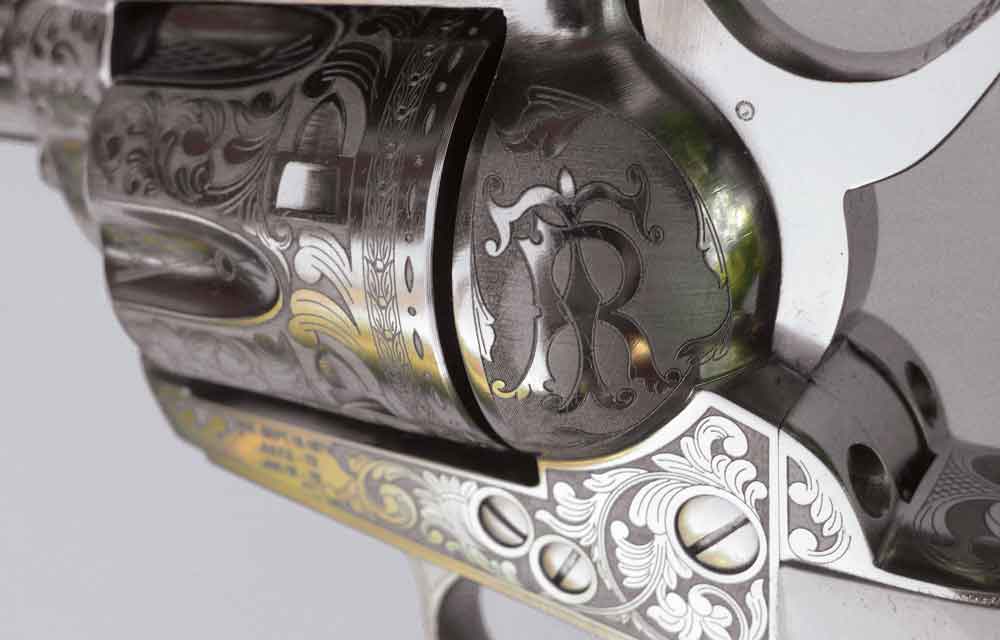
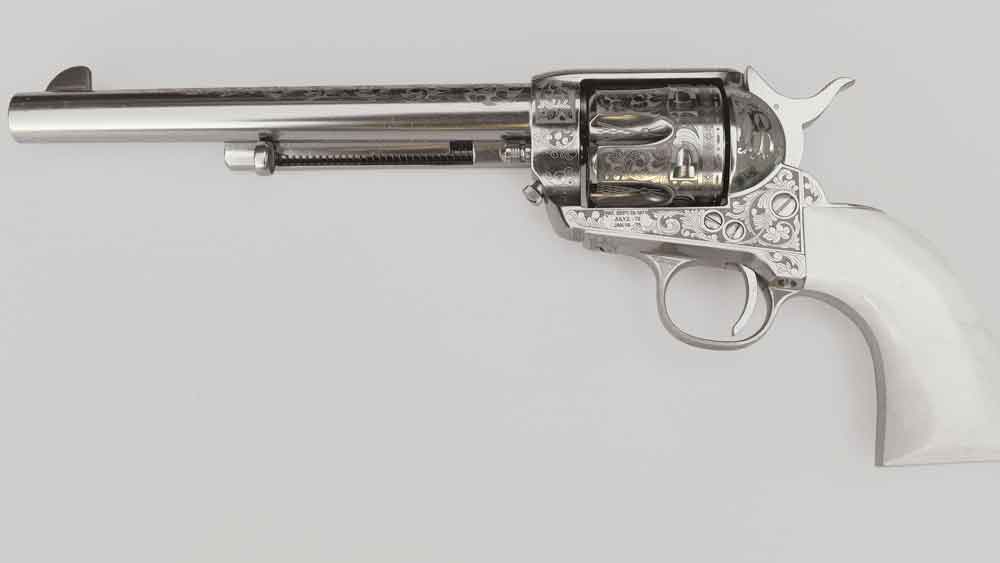
When I saw the Cimarron Teddy Roosevelt Commemorative online, I had to have one. This is a Single-Action Army 1873 replica with 7.5-inch barrel, all metal parts nickel plated, mock ivory grips and deeply etched engraving all over. The “T.R.” initials are engraved on the frame to the left of the hammer. Since this one is a “commemorative,” I shouldn’t have shot it — but I couldn’t resist. The trigger is creep free and goes off at 3 pounds! When I got to the range and started shooting, I discovered this one to be extremely accurate. “Commemorative” or not, I’m going to keep shooting this great-looking replica.
This is a good time to point out that many of these replicas are built with better, more modern steels than the original Colts. Further, sophisticated CNC machines are capable of extreme close milling tolerances — compared to the 1870s, even through into the mid 1970s.
Cimarron Teddy Roosevelt Commemorative model — nickeled, mock ivory grips and deeply etch engraved all over. The “T.R.” initials are clearly seen engraved on this Teddy Roosevelt Commemorative revolver.
Going back to the Cimarron Teddy gun … like the original Colts, you can bring the hammer to half cock so the cylinder can be spun for loading and unloading once the loading gate has been opened. With the Vaquero — just open the loading gate — the cylinder can be spun (turned).
Cimarron’s basic Single-Action Army model is called the Model P (Pre-War 1896–1940). These guns have case-colored receivers with blued barrels and cylinders. The company’s best seller in the P Model wears the 4.75-inch barrel, but 5.5-inch and 7.5-inch barrels are offered. Stocks are walnut with the Cimarron medallion.
Stainless-steel seems appropriately common for Cimarron customers as there’s a Stainless Frontier in .38/.357 with a 4.75-inch barrel, the same with a 5.5-inch barrel — as well as a 7.5-incher. Ditto for all these in .45 Colt. Suggested retail is listed at $740. This is for top steels and guns made to tight tolerances, as well as the LOOK.
The Man with No Name from Cimarron, worn by Clint Eastwood in more than one of his “Spaghetti Westerns.”
At less than $550 suggested retail, in the Cimarron Value series is the El Malo, Big Iron and Pistolero. All these models are available in more than one barrel length, and in most cases .38/.357 and .45 Colt. There’s also the blued version of the stainless Frontier.
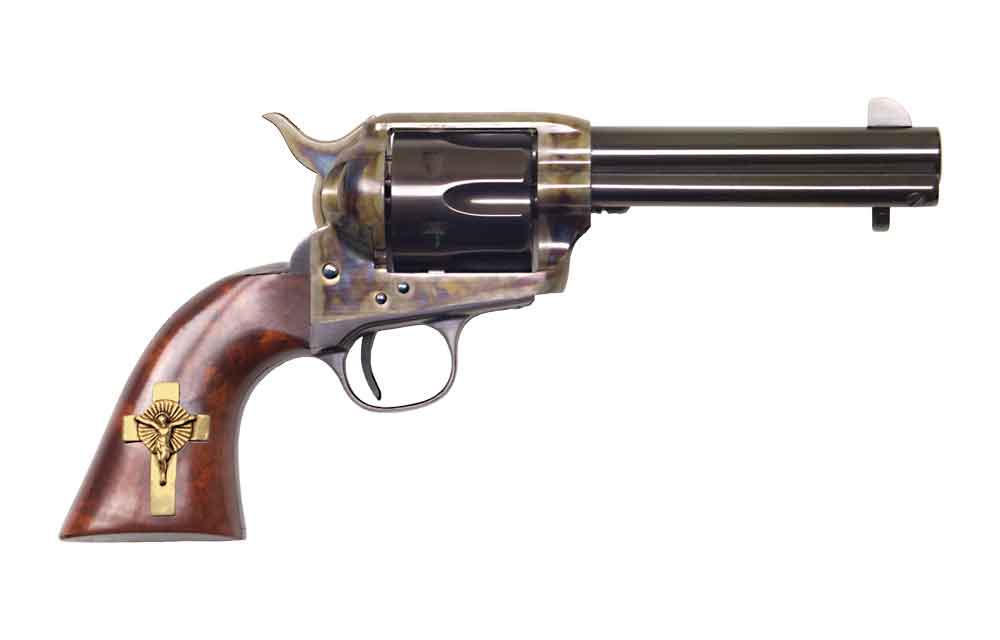
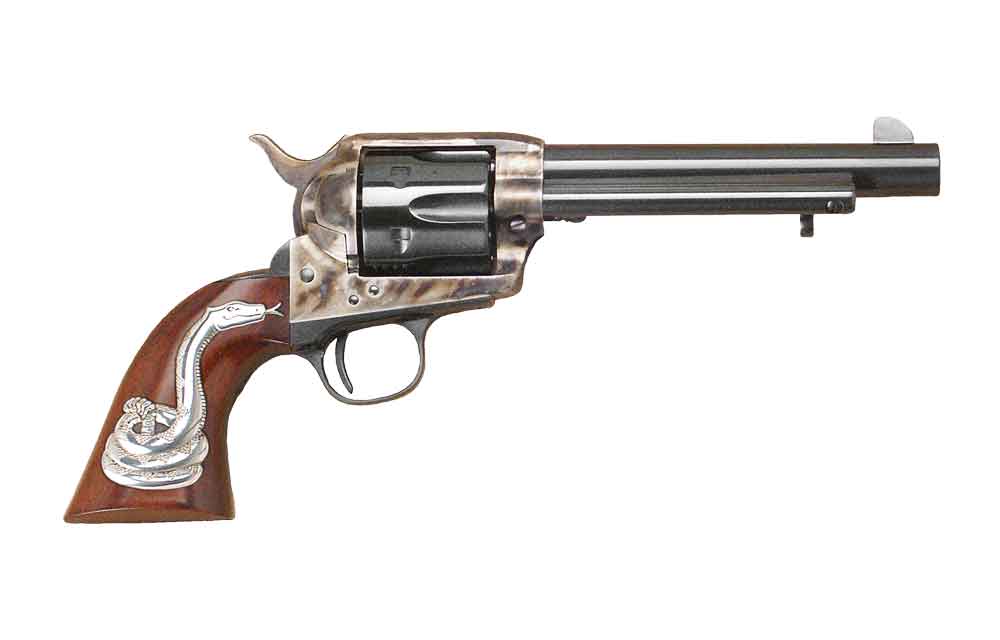
A most interesting Cimarron series is the Hollywood line. Start with “The Man with No Name” model. This is a facsimile of the six-shooter Clint Eastwood carried in “A Fistful of Dollars” and “For a Few Dollars More.” A silver snake adorns the right side of the grip. Select from a 4.75- and 5.5-inch barrel — .45 Colt only. There’s also the Holy Smoker model with a gold cross on the grip — this one carried by Russel Crowe in the movie “3:10 to Yuma.” Barrel is 4.75 inches, and chambered for .45 Colt. The Cimarron Wyatt Earp Buntline wears a 10-inch barrel. On the grip is a silver panel with Earp’s name and more — another .45 Colt. The Rooster Shooter was carried by John Wayne who played Rooster Cogburn in “True Grit” — a 4.75-inch barrel in .45 Colt with grips turned yellowish. These Cimarron SAA replicas are imported from Pietta in Italy.
Uberti
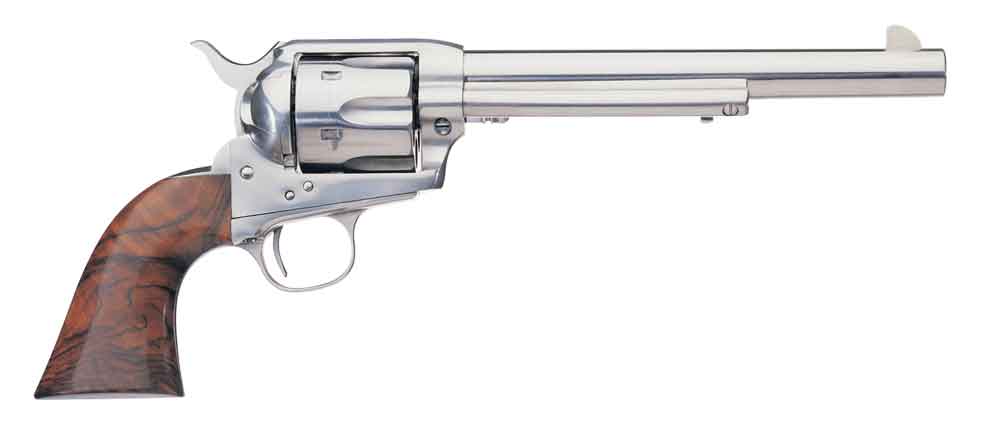
Also from Italy comes the SAA replicas from Uberti. These days Uberti — at least the imports — are under the control of the company that owns Benelli, Franchi, Stoeger and perhaps others. My first Uberti is called the Cattleman. The Cattleman is right out of 1873 Single-Action Army history with a case-colored receiver, blued barrel and cylinder with walnut grips — in .45 Colt. Mine wears a 5.5-inch barrel. Like the originals, open the loading gate, and bring the hammer to half cock to turn the cylinder for loading and unloading. The trigger is excellent. It goes off at 3 pounds on my Lyman Digital Trigger Pull Scale. Mike Crevar has done superb triggers on both my Vaqueros and other handguns.
The Uberti Cattleman also comes in stainless — here with a 7.5-inch barrel.
The Cattleman does not have a safety transfer bar, so load it with five cartridges, then let the hammer down on the empty cylinder. Normal procedure is load one, skip a cylinder, and then load the remaining four. Cock the hammer from half cock to the empty chamber. In Cowboy Action Shooting competition, only five cartridges can be loaded — and the hammer must rest on an empty chamber. Recommendation: Load any Single-Action Army with five, whether the gun has a safety transfer bar or not.
If you were ever wondering about the popularity of Single-Action Army replicas, consider that Uberti offers 13 different Cattleman models, ranging from Charcoal Blue, Nickel, Stainless, plus a Chisholm, Cody, Desperado, Matching Pair, Frisco, Old West, Hombre, Callahan, Callahan Target (with adjustable sights) and an engraved Cattleman. Many of these are offered in multiple barrel lengths — all in .45 Colt, a few in other calibers. The number of SKUs in just the Cattlemen Uberti models is thus staggering. In most cases, there are minor changes in these above models, like brass trigger guard, steel back strap, blued frame with casehardened hammer and more.
But the Cattlemen only touches the surface of what’s available in the Uberti SAA line. The .22 rimfire SAA-type six-shooters are not being covered here, but the Stallion is in .22 rimfire but also .38 with 5.5-inch barrel — the same with the Stallion Target, which features adjustable rear sights. The Cattleman II has a retractable firing pin — again — lots of different II models. There are also several different El Patron models from Uberti.
Parting Shots
The author’s own Cimarron Teddy Roosevelt Commemorative model — nickeled, mock ivory grips and deeply etch engraved all over.
But by now you have the picture. An entire gun-making industry has arisen from the death of the old Single-Action Army. As already covered, these replicas can be excellent, in some cases even better than the original 1873 model Colts — due to better steels and tighter machining tolerances. Most of us can’t afford a real 1873 Single-Action Army Colt. Even for those who can, those guns are most often stored and not shot due to their value. The 1873 replicas are not only shooters, they’re top shooters!
Editor’s Note: This article originally appeared in the April 2018 issue of Gun Digest the Magazine.
Springfield introduces its second production 10mm, the TRP 10mm RMR decked out with a Trijicon reflex sight.
The skinny on the new Springfield:
The TRP 10mm RMR is Springfield’s second production 10mm.
It is available with a 5- or 6-inch barrel.
The 1911 comes outfitted with a Trijicon Ruggedized Miniature Reflex sight.
It features tritium rear and front sights that can be utilized through the reflex sight.
It is built on a forged steel National Match frame and has a stainless-steel slide.
The pistol has Springfield’s Gen 2 Speed Trigger.
The MSRP on the 5-inch barreled model is $2,507; the 6-inch runs $2,558.
Like the Phoenix from its ashes, the 10mm continues to rise. Springfield is among the latest to further the resurgent round’s cause, announcing Thursday yet another 1911 chambered for Col. Jeff Cooper’s pet.
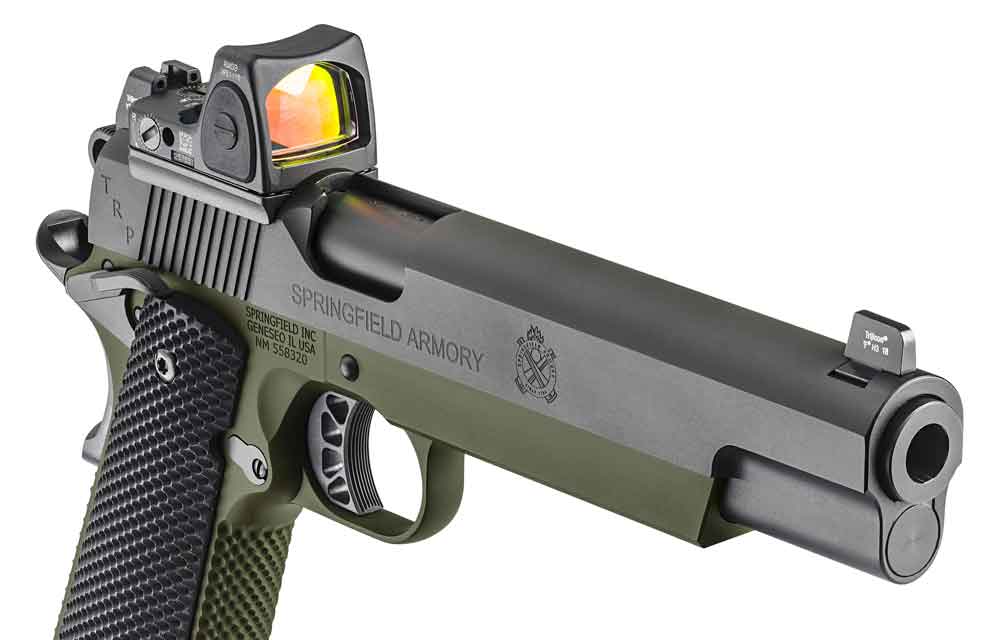
The company now offers the TRP 10mm RMR, available in two configurations — 5- and 6-inch barrel — and complete with a Trijicon Ruggedized Miniature Reflex sight. The move is not without precedent, but just barely. The new pistol is actually the second production model 10mm the company has offered, following on the heels of last fall’s introduction of the TRP Operator in the caliber. However, the new model is quite a bit more dolled up than Springfield’s attractively Spartan initial offering.
In particular, the company has turned a studied eye to the sight system; it’s not a fly-by-night affair, where a reflex is simply included in the purchase. Milled directly into the slide, the Trijicon RMR is situated to endure the abuse of the high-pressure round’s recoil, as well as provide a seamless backup aiming solution in worst-case scenarios. The gun boasts tritium rear and front sights, designed for use through the reflex sight if the situation ever called for it. The reflex sight itself is optimized for rugged use, fashioned from 7075-T6 aluminum and engineered to absorb impacts and divert stress away from the lens.
Both the 5- and 6-inch barreled TRP 10mm RMR models are built on forged National Match frames and feature precision-fit match-grade slides made of stainless-steel. Springfield has beefed up the operating system in the shorter-barred model with an 18.5-pound recoil spring (16-pounds on the long slide), which goes a ways in taming the kick. Furthermore, the company has given shooters plenty to hang on to, with G10 VZ grips and ample Posi-Lock checkering on the front strap and mainspring housing.
The 1911 is outfitted with Springfield’s Gen 2 Speed Trigger, tuned to break at 4.5- to 5-pounds. It features a TechWell Magwell/Grip System that facilitates rapid and efficient magazine changes. Springfield wraps it all up with its durable Black-T Finish.
The pre-mounted reflex sight system has become more common in recent years, especially with the 10mm. Typically it adds a bit more appeal to handgun hunters, but, in general, it doesn’t come cheap. In the case of the 5-inch barreled TRP 10mm RMR the MSRP is $2,507, the 6-inch is $2,558. That’s plenty of coin, even in the world of 1911s. However, it’s competitive with some other high-end 10mms with pre-mounted optics.
In handgun training, learning to maximize your field of view is as key as proper trigger discipline. After all, you can’t hit what you can’t see.
Shooting, particularly in a self-defense situation, can sometimes involve all five of the senses. But one reigns supreme — sight. Without it, there’s no identifying the target, proper sight alignment, aiming — there’s no shot.
Given its importance, then why in training is it so common to find shooter’s looking away from a target or have their handgun out of their view? They drop their head, hands and gun to execute a reload. They don’t maneuver the pistol with their head when they scan for another target. And they relax their pistol out of sight after making a shot. They’re taking their eyes off the ball, so to speak.
For Mark Redl, there are few nastier habits to develop in practical pistol shooting then not keeping a field of vision where it will do the most good. Frustrating — and in self-defense, potentially life-threatening — as it is, the pro shooter for Aguila Ammunition promises it’s simple to fix. Like everything in shooting, it requires conscientious consistency when running through drills and that means keeping the gun and eyes in what Redl calls the “headbox.”
What that you ask? Easy as pie, it’s the area roughly around your head with you’re eyes looking straightforward. Learning to manipulate the pistol up high in this zone means a shooter can watch not only what’s happening with his handgun, but beyond to a potential threat or the next target in a competition. Furthermore, the gun should never leave the headbox, even when turning side to side. This keeps it at the ready and provides life-saving movements to get the pistol in a fight once a danger is recognized.
There’s a lot of minutiae that must be considered any time you head to the range. One of the most important is keeping your eyes and your gun where they’ll do the most good.
For more information on Aguila Ammunition, please check out: www.aguilaammo.com
Wonder why red dot optics have stormed the gun world? They just plain work.
There’s always a case for iron sights. They’re simple, effective and, perhaps best of all, tough as whang leather. The buggers can take a beating and still deliver the goods shot after shot.
That said, the dependability and simplicity of the traditional aiming solution is no excuse to wed yourself exclusively to the system. There’s a lot of technological wizardry available to shooters today and, honestly, iron sights are more than happy playing a backup role.
Phil Massaro, a man who fully appreciates classic guns and established methods of getting them on target, even has to admit there’s something to the newfangled optic. The Gun Digest author and custom ammo manufacturer puts a Smith & Wesson M&P15 through its paces in his trip to New York’s Double Eagle Training in this week’s Modern Shooter. And topped off with a SIG ROMEO4H red dot, Massaro pounds a steel plate with the carbine until sings like it’s in a choir.
What particularly wows Massaro about the red do is the speed of its target acquisition. Banging the gong, especially at close quarters, is a point-and-click affair. Additionally, he’s able to keep both eyes open throughout the entirety of the drill, giving him better situational awareness. In real life this would deliver a decisive upper hand, permitting him to identify and neutralize multiple targets with greater ease.
There’s a reason why red dot optics have stormed the shooting world — they just plain work. And if you haven’t tried them, they’re well worth investigating. Don’t worry, your iron sights will always be there if you need them.
Catch the rest of the action of this heart-pounding episode of Modern Shooter 10:00 p.m. EST Friday on the Pursuit Channel. The episode rebroadcasts Monday at 12 p.m. EST and Tuesday at 11:30 a.m. EST.
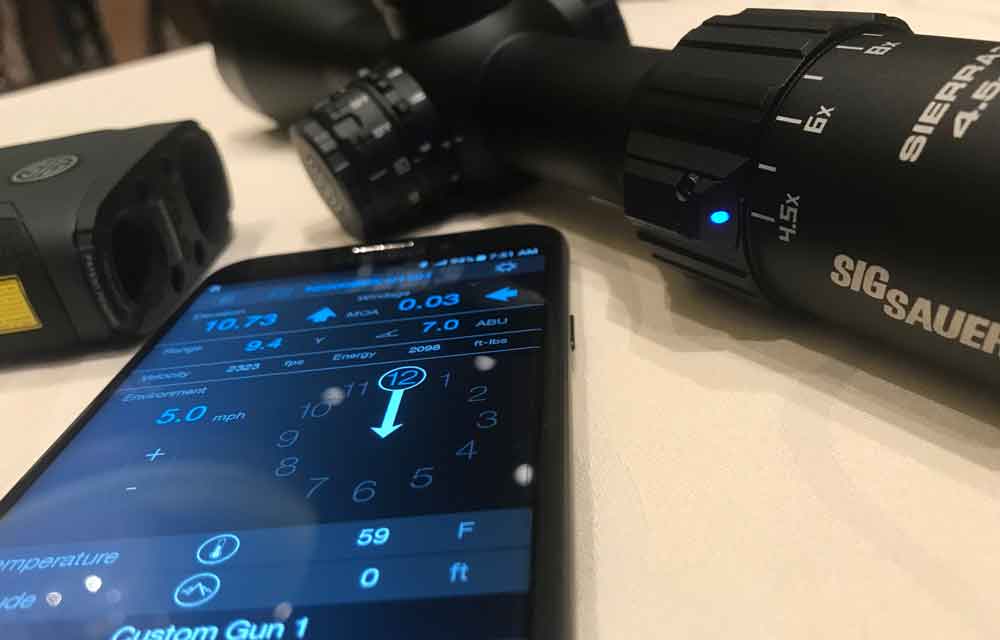
Holdover, windage, cant… SIG’s new SIERRA3BDX scope accounts for everything but how to get your elk out of the backcountry.
Every so often, a product comes down the line so innovative you can actually feel the ground shift under your feet. The automobile certainly shook terra firma in horse-and-buggy days and in the 21st Century there was tectonic movement with the smartphone. Now, if you’re a shooter, you should feel some pretty notable tremors starting up because SIG Sauer is set to do the same to precision optics, perhaps shooting itself.
Unveiled Friday at the NRA 2018 Annual Meetings and Exhibits in Dallas, the SIERRA3BDX is perhaps the most groundbreaking riflescope to come down the pike since Mil Dot met reticle. With the ability to calculate holdover, cant and — with the right equipment — windage the scope all but erases the margin of error from each and every shot.
It’s almost unfair to call it an optic, a “smartscope” seems more fitting. Yet it’s as unassuming as your run-of-the-mill glass.
SIG’s Peter Howell gets into the brass tacks of the SIERRA3BDX in the above video, explaining the ins and outs of the technology. Essentially, it boils down to the scope chatting up your range finder and smartphone to give you the straight dope.
Bluetootch capable, the scope pairs to iOS and Android smartphones, giving it the ability to download ballistic tables, draw from range-finding data and account for environmental conditions. You simply range with a KILO BDX rangefinder, the SIG BDX app does the thinking and the scope get you on target. All you have to do is hold steady where the illuminated reticle points and your bullet is drops in precisely on target.
The SIERRA3BDX, which goes on sale in July 2018, is innovative not simply for the power it puts in front of shooters’ eyes, but also how it’s constructed. Unlike the big, boxy and heavy rangefinder scopes of the past, SIG’s beauty is a lightweight — dang near like any traditional riflescope. Additionally, it’s affordable, Howell pegging it at below $1,200. Plain old first-focal plane scopes can leak into that price range.
Presently, SIG offers the SIERRA3BDX 3.5-10x42mm, 4.5-14x44mm, 4.5-14x50mm, and 6.5-20x52mm. They feature HD glass for superior resolution and optical clarity, 30mm main tubes, side-focus parallax adjustments, and the LevelPlex digital anti-cant system. The BDX-R1 Digital Ballistic Reticle is the evolution of holdover, providing a ballistic solution out to 800 yards with 1 MOA of accuracy
The scope pairs with any of BDX family of rangefinders includes KILO1400BDX, KILO1800BDX, KILO2200BDX, KILO2400BDX, and KILO3000BDX rangefinder binocular. These rangefinders include many of the legacy features that the KILO name was built on Lightwave DSP digital rangefinder engine, Hyperscan with 4 times per second scan rate, RangeLock, and the Lumatic auto-adjusting display.
The SIERRA3BDX should have a lot of appeal to a lot of marksmen — whether hunting or banging distant steel. And like the car change the way we travel and the smartphone the way we communicate, SIG just might have advanced the way we shoot.
For more information on the SIERRA3BDX, please checkout: www.sigsauer.com
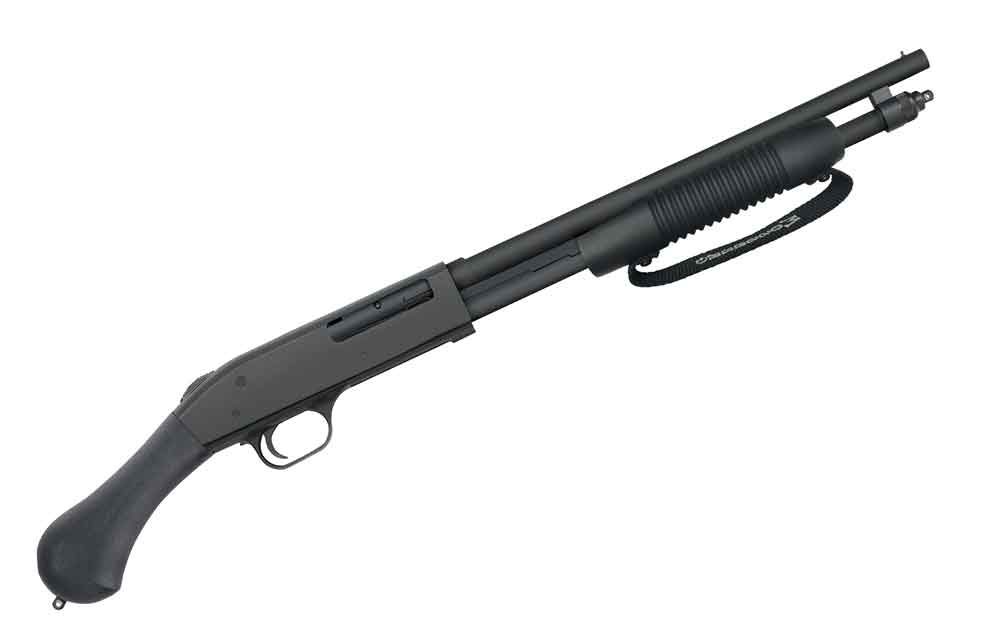
Mossberg rounds out its 590 Shockwave line with a model chambered for the highly manageable and potent .410.
Like other 590 Shockwaves, the .410 bore is not NFA regulated.
The smoothbore has a 14-inch barrel and is 26.37 inches in overall length.
It’s outfitted with a Shockwave Raptor pistol grip.
The new 590 can chamber 2 1/2- and 3-inch shells and in both cases has a 6-round capacity.
Presently the 590 Shockwave .410 has an MSRP of $455.
If gun owners were polled on the best home-defense firearm it’s a fair bet the tried-and-true pump-action shotgun would end up near the top. The design ticks like a clock and delivers a devastating payload in close quarters. It’s definitely not what a felonious meathead wants to stare down when he creeps through the backdoor.
Even with a laundry list of pluses, there are some obvious drawbacks to most shotguns — chief among them size. And going small with a scattergun has in most cases been a quandary, since short-barreled shotguns are NFA regulated and Uncle Sam demands a tax stamp and a pound of paperwork to own one. But this changed in a big way about a year ago.
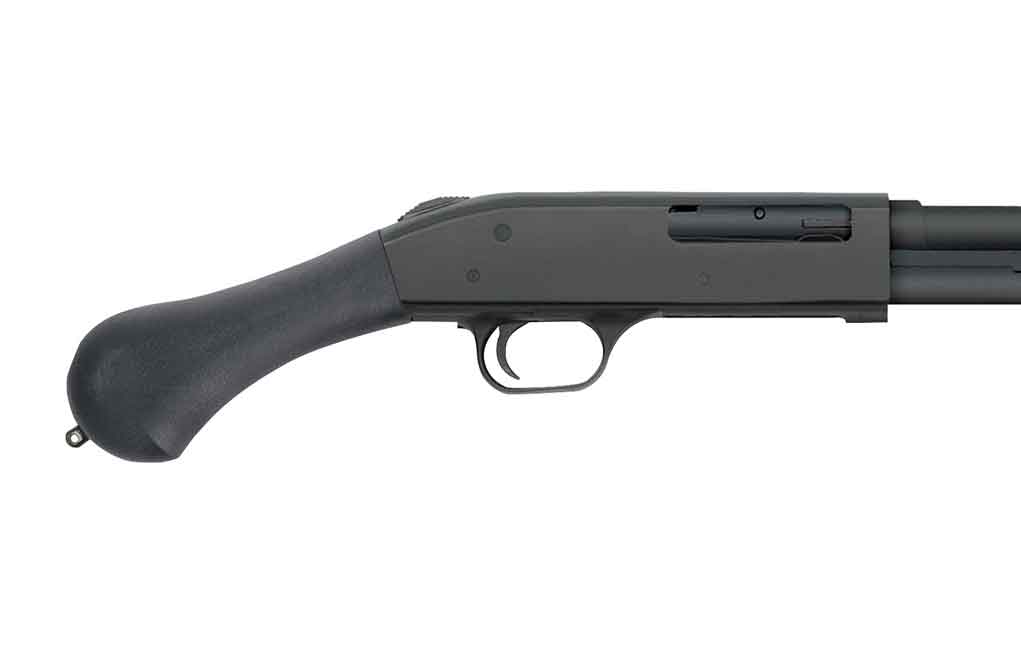
The introduction of the Mossberg 590 Shockwave ushered in a new era of small shotguns that do not require jumping through the Federal Government’s hoops to obtain. Given its factory-installed bird’s head grip, and an overall length of 26.37 inches, the 14-inch barreled smoothbore is classified as a firearm and not a SBS. In turn, it is not controlled by the NFA.
The company today rounded out its selection of 590 Shockwaves, adding a .410 bore to its 12- and 20-gauge options. This has a lot of potential, given the platform should prove ideal chewing through the light recoiling, but highly potent ammunition, making it a wiz-bang home-defense or truck gun. And in addition to shooters who desire a more manageable gauge, the new chambering could also open the doors for those who shied away from the larger bores guns due to weaker hands or infirmity.
Given the resurgent interest in the .410 as a defensive option, the new 590 Shockwave should have plenty to graze on, given it’s capable of chambering 2 ½- and 3-inch shells. In either case, it arms shooters with ample firepower with a 6-shell capacity.
For those familiar with the line, the new 590 Shockwave should prove familiar. It has a 14-inch heavy-walled, cylinder bore barrel with single bead sight; and sling swivel studs. The Shockwave Raptor pistol grip, constructed of durable polymer, has an enhanced textured finish and “bird’s head” shaped-profile, allowing for greater control while lessening felt recoil. The cob-styled, synthetic forend is strapped for safety, greater control and smoother operation. The grip and forend feature a black finish and exposed metalwork has a complementing matte blue finish.
Presently the MSRP on the 590 Shockwave .410 bore is $455.
590 Shockwave .410 Specs Gage: .410, 3 inch Capacity: 6 Finish: Matte Blue Sight: Front Bead Choke: Cylinder Bore Overall Length: 26.37 Forend: Cob with Strap Grip: Shockwave Raptor Grip Weight: 4.25 unloaded MSRP: $455
I would never think of Bart Simpson in the same way again. Bart was displayed on a red T-shirt, and he wasn’t looking too good. The guy wearing the shirt was even worse. He had just taken a load of No. 6 shot in the upper left chest from roughly 15 feet away. He was justifiably shot while armed, invading an occupied home.
People see the AR as a true firearm “platform” due to its ability to be customized, but there are plenty of tactical upgrades for a range of different shotguns. Or, you can get the upgrades straight from the factory with the Mossberg Scorpion (pictured above).
Working as a DNR Officer, I had stopped by to offer assistance when I heard it all on the radio. Now the guy in the T-shirt was slumped against the wall, head slightly tilted upward with a look on his face like he wanted to say something. But he was done talking in this world; he had just been shown that the shotgun is the best gun for home defense.
Why The Shotgun?
Why is the shotgun the best firearm for home defense? Two big reasons: range and firepower. Range is the distance between you and your aggressor — and home defense confrontations will sometimes be measured in feet, not yards. For our purposes here, firepower means how much hot lead we can bring to bear on the target in the shortest amount of time. No firearm yet invented is capable of protecting us better from anyone who has entered our home uninvited and intends to bring harm to you and yours.
How so? In short, it’s the type of ammunition fired by the shotgun. A typical 2¾-inch shotshell loaded with 00 buckshot will contain 8 to 9 .33-caliber pellets. If you fire three rounds in a home defense situation, you could be offering your assailant as many as 27 .33-caliber projectiles to consider. If you can deliver that much devastation in the same amount of time with a handgun or rifle, your name must be Jerry Miculek, and in that case, you certainly don’t need any advice from me or anyone else.
Another reason for using a home defense shotgun for this work is that many of us have a general familiarity with the weapon. Unless you’ve had adequate training with a handgun, most of us cannot hit the broadside of a barn with it, even if we are standing inside the barn. Hitting our target is simply easier with a long gun, more so with the shotgun. Patterns are tight at close range, even with short-barreled, tactical-style shotguns with little or no choke in place.
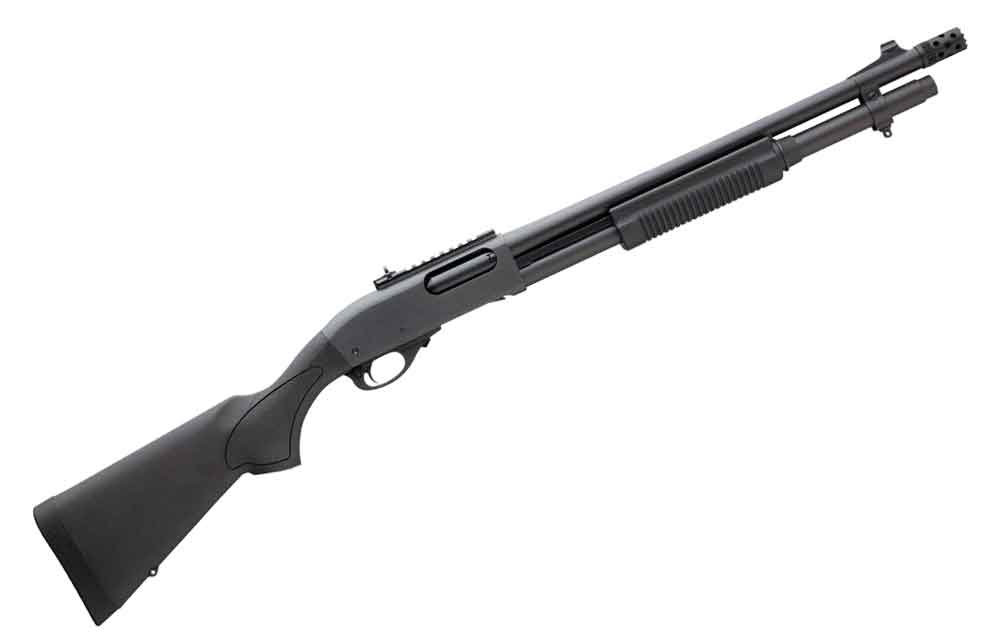
The gun the author keeps by the side of his bed is a Remington 870 Express Tactical.
Still, the shotgun is more forgiving than the pistol or rifle in stressful home defense scenarios. A greater percent of the population has had some experience with the shotgun; you shot clays one time with a buddy, went pheasant hunting with Uncle Ed back in the day — maybe you handled the Model 12 Grandad kept in the corner at this house. The point is there are more of us, untrained, that feel more comfortable picking up a shotgun than a handgun. This makes all the difference when that thing goes bump in the night.
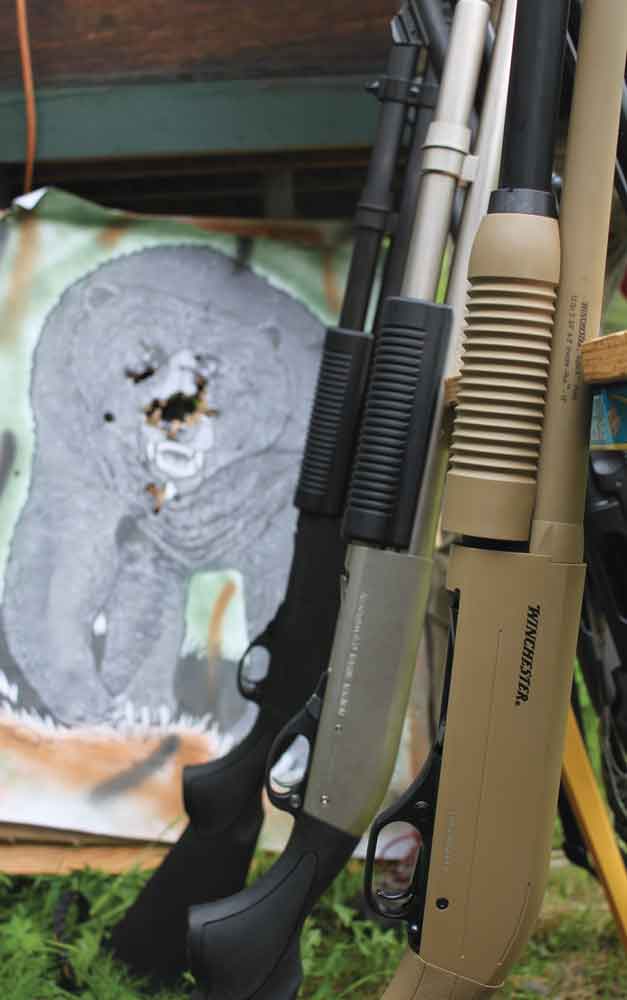
Remember, home defense might not necessarily mean confronting two-legged problems. Whether you live in the wilderness or the suburbs, having unwelcome animal visitors pay you a visit is fairly common. A rabid fox or raccoon can be easily dispatched with 00 buckshot. Black bears are abundant in many parts of the country now, and having one stroll through the yard or try to get in your house is not unheard of. Believe me when I tell you that a 12-gauge slug is great medicine on bears at short range.
Last summer I spent a week training with Alaska DNR, Fish and Game, USGS and others in a bear defense and awareness class. It was interesting to me that these Alaskans, who would often be working in remote areas, usually chose the same weapon many of us would for home defense: a 12-gauge pump shotgun with a short tactical-style barrel and extended magazine. The reasons for choosing this weapon are the same for the homeowner and the guy in the Alaskan bush — dependable operation, and massive firepower at short range if you need it.
In short, what the shotgun does better than any other firearm in a close-range confrontation is end the fight. Neither the rifle nor the handgun can do this as well in a home defense situation. The two drawbacks of the shotgun — limited magazine capacity and time needed to reload — are more than made up for with the superior firepower it delivers. (Reload time might now be a moot issue with the advent of the Remington 870 DM and the Mossberg 590M, both with detachable box magazines.)
The Defensive Shotgun: A True Platform
Depending on where you live, two-legged predators might not be the only thing you’re forced to encounter. A 12-gauge pump shotgun is also perfect bear medicine.
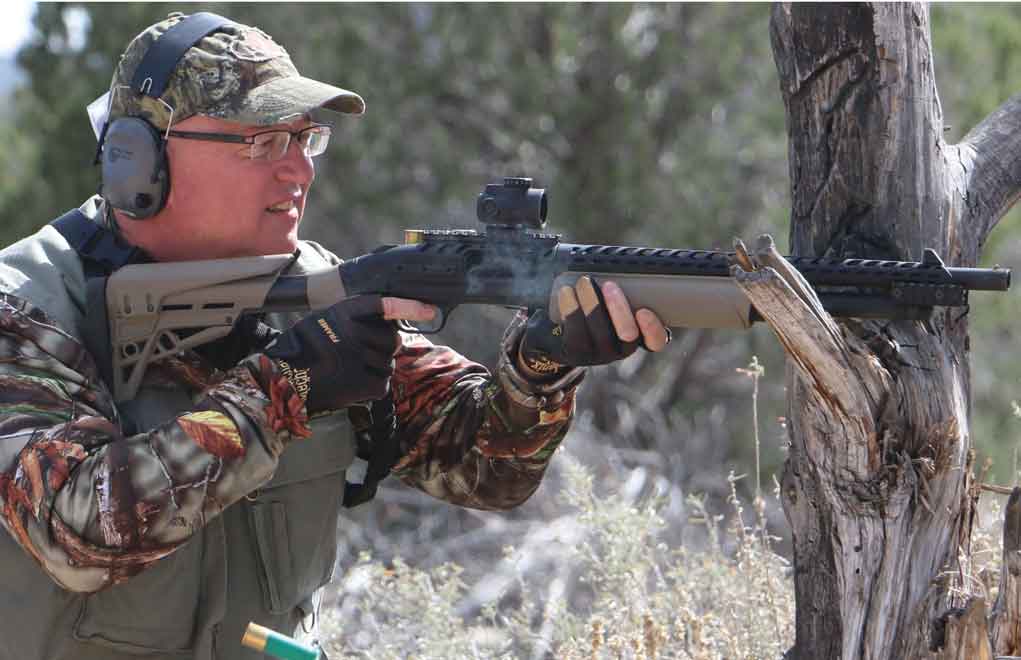
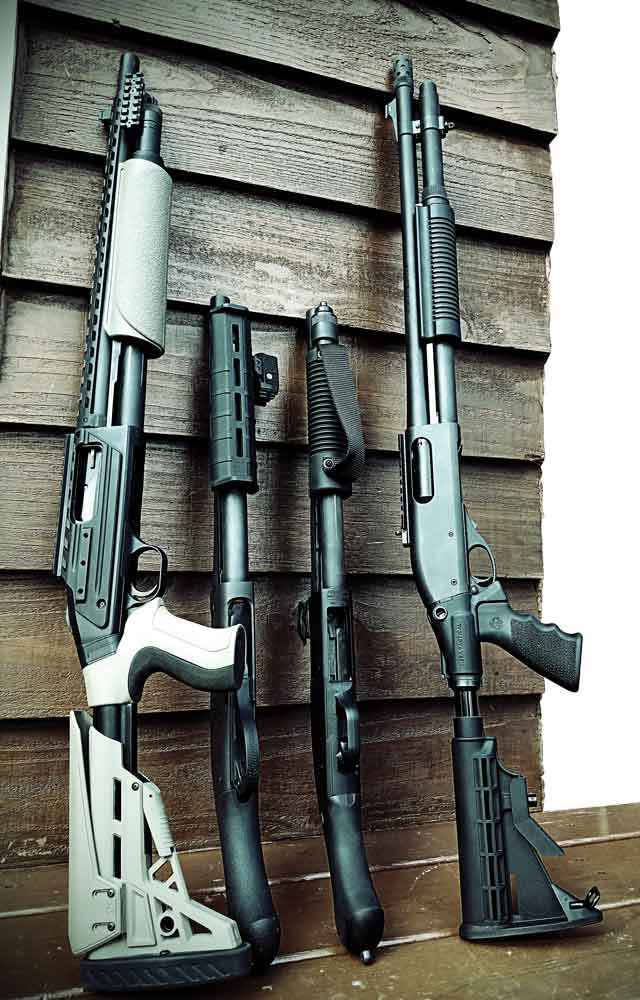
It seems many of us think only the AR-style rifles can be considered a firearm “platform.” The defensive shotgun in its simplest form might be a plain Jane pump-action 12-gauge. Think about a Remington 870 or Mossberg 500, standard stock, one simple bead on the barrel, bare bones — no frills. The shotgun in this form is absolutely capable of handling a bad situation with an intruder at your home. Can we make it better? Yes we can. Personal preferences and your wallet are the only factors limiting how far you want to go with additions and upgrades.
The stock on the shotgun is the place to start to make the shotgun a better fighting tool. Very few of us fit the standard, off-the-rack production model shotgun stock. Some form of adjustment to make the shotgun fit us better, which makes the gun more comfortable to shoot, (this gives us better accuracy) is usually in order. Many defensive shotgun instructors will advise you the stock on the fighting shotgun should be a little shorter than the one you use for wing shooting. We shoot these two shotguns differently. The fighting shotgun is aimed like a rifle, and a shorter stock gives you better control of the weapon and allows you to stay down on the gun easier.
Sweetening Up The Stock
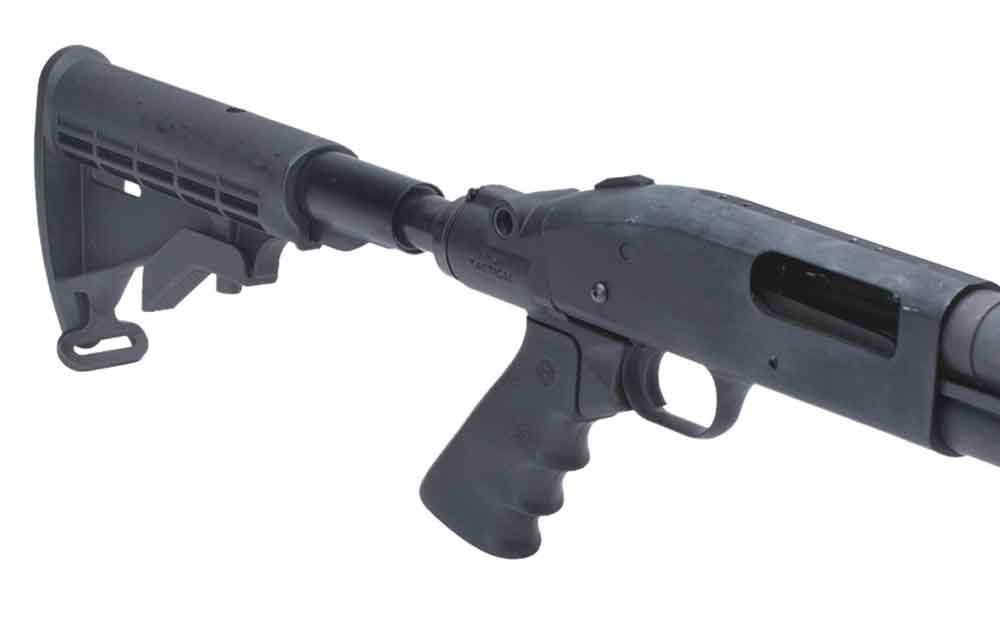
An AR-style adjustable stock can be the answer. Mesa Tactical makes several versions; one is the LEO Telescoping Stock conversion kit, which gives the shooter a collapsible, AR-style stock with a pistol grip and an optional hydraulic recoil buffer. Another is the High Tube Stock Kit, which includes a Picatinny Rail that mounts directly from the stock adaptor to the top of the receiver, giving a platform to mount whatever type of optic you might choose.
Enhancing The Sights
After the stock, sights on the shotgun should be the next consideration. As noted before, the defensive shotgun must be aimed, and XS Sights offers Tactical Shotgun Ghost Ring sights. This set includes a green tritium front sight and two, interchangeable, fully adjustable, rear ghost ring apertures to accommodate long- and short-range shooting. Steel wings give added rear sight protection. The dovetailed front sight fits the factory sight ramp with minor fitting. For a defensive shotgun, mount the larger aperture ring for short range and forget about the smaller one. These sights are available with and without the wings on the rear sight; I prefer the one without wings for faster target acquisition.
Building Up Body Armor
In reality, gunplay in a home defense arena will rarely entail more rounds than what your shotgun will hold, but do you want to bet your life on that? A sidesaddle on the gun ensures the additional rounds will be there if you need them. ATI (Advanced Technology International) sells a wide array of aftermarket add-ons for shotguns, including a TactLite Shotshell carrier, which holds five shells, attaches to either side of the stock and has a Military-Grade Synthetic construction.
The Gun Beside My Bed
I’m not one of those people to expect everyone else to like what I like. Preferences in food, politics, music and guns are entirely up to you. I also think it is best to keep things simple, and the shotgun I’m going to grab if the Boogie Man comes around is a Remington 870 Express Tactical model. An 18 ½-inch barrel, an extended magazine allowing seven rounds in the gun and XS Ghost Ring sights give this shotgun all the essentials I want on a home defense shotgun. If you said you would want basically the same gun but it would have to be a Mossberg Model 500 or 590, or a Benelli Nova, I would very much understand. To each their own.
My preference for the 870 is not hard to figure out. Years of hunting with the 870 and then having one issued to me for many years as a police officer gave me a lot of familiarity with the Remington. The key here is having confidence in your weapon, knowing that it’s up to the task you’re going to ask of it and being familiar with the gun. You should know where the safety, action release, trigger and loading port are and be able to work the action of the shotgun, load and unload it blindfolded.
A Word About Ammo
Like any firearm, shotguns are only as effective as the ammunition you feed them. In matters of home defense, whether to load birdshot, buckshot or slugs has been debated more than where Jimmy Hoffa is hidden and has paid the rent for several gun writers. Our greatest concern with firing a shotgun in the house is, of course — too much penetration.
Your choices of factory defensive shotgun loads are many. Do your homework and load up with what gives you confidence.
If we have to pull the trigger, we want to penetrate the intruder but not go through a wall and strike a family member. The list of variables in these situations is endless, and you can “what if” yourself to death. Let’s try to keep things simple.
Unless you find yourself in some extreme circumstance — like dealing with a grizzly bear that gets in your house — for anything inside the home let’s take slugs off the table. Have a slug in your ammo carrier if you want. Now you must choose between buckshot — usually 00 size or something like No. 4 buck — or birdshot, say No. 6s or No. 7½. If you’re very concerned about penetration to other rooms, go with the birdshot. Why? Because at short range, it’s not going to make much difference. If you don’t believe me, try this:
Measure the length of your living room or bedroom. Go to the range and post a target based on those measurements, and fire away with a load of 00 buckshot. Now do the same with a 7½-shot dove load. Unless you have a really big house, the patterns are going to be very similar at short, in-home distances.
The lesson is this: At short range, birdshot is very devastating. In a typical 2¾-inch 12-gauge load of No. 7½ shot, there are about 350 pellets. At close range, these pellets are tightly bunched and hit with an effect more resembling a slug than birdshot. Once the shot starts to spread a little, the small pellets are less likely to penetrate walls.
The addition of a Mesa Tactical LEO Collapsible stock is just one of many customizations that can be made to a home defense shotgun.
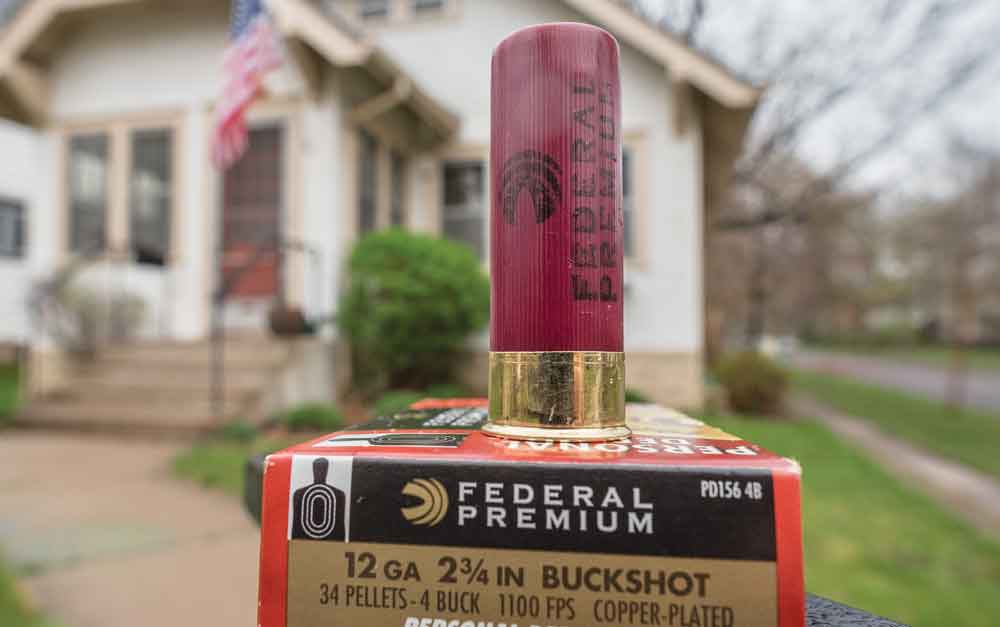
Remington’s Ultimate Defense buckshot load comes in a managed recoil version and less recoil will always result in better accuracy. Federal makes two buckshot loads in its Premium Personal Defense line — the 00 load has 9 pellets in the 2¾-inch shell, and the No. 4 buckshot load has a whopping 34 pellets. Again, pick your poison.
Thankfully, most home defense confrontations end without shots being fired. Many perpetrators flee or simply give up when they see the homeowner is armed. If you ever find yourself in this predicament, I hope you’re armed with a home defense shotgun — and I hope your guy doesn’t have on a Bart Simpson shirt.
Editor’s Note: This article originally appeared in the March 2018 issue of Gun Digest the Magazine.
You can still practice the majority of your draw stroke even at ranges that don’t allow you pull from your holster.
You needn’t be a High Master marksman to figure out the shooting range isn’t real life. In some terms, it’s about as far away from practical shooting as “Call of Duty” is from actual combat. And it further hamstrings shooters — particularly armed citizens and competitive pistol shooters — with limitations on important aspects of training.
If you haven’t figured it out yet, I’m talking about drawing a handgun. If you’re lucky enough to have a range in your hip pocket that allows you to go through the full range of motion — from holster to shot — hang on to it (also thank the management). For most of us, given space and liability constraints, these little slices of paradise are few and far between. But even if you can’t draw completely at your local run-of-the-mill paper-punching palace doesn’t mean it’s devoid of all practical preparational potential.
Even in the most restrictive environments, handgun shooters can still execute a good amount of a draw stroke while obeying house rules. The secret, as Mark Rahl points out in the above video, is to punch out before every shot. By the Aguila Ammunition pro shooter’s estimates, pressing the handgun from the chest accounts for nearly 50 percent of a draw stroke. And it might be argued it’s the more important half, given shooters hack away a consistently bringing the handgun to their natural point of aim, as well as develope a fast and precise sight picture.
You bet, working to get a handgun from gun leather is as vital as a smooth trigger press. But just because your range nixes drawing isn’t an excuse to neglect the other part of putting your gun into action.
For more information on Aguila Ammunition, please check out: www.aguilaammo.com
Steiner’s TOR Mini and TOR Mirco offer handgunners powerful aiming solutions in small packages.
What’s the story on these sights:
The laser sights are less than 1-inch in height.
They are housed in military-grade aluminum tested to IP54 standards.
Both are available with the choice of red (635 nm) and green (520 nm) lasers.
They have ambidextrous power buttons.
The TOR Mini has adjustable laser power and turns on upon drawing a pistol.
The TOR Micro’s MSRP is $199, the TOR Mini $299.
An understanding of aiming solutions comes naturally to rifle shooters. Generally, their operational distances are such that dropping a round on a target without a couple of slabs of precision-ground glass and a sensitive adjustment system would dang near be an impossibility. Or at a minimum, it would be highly demanding.
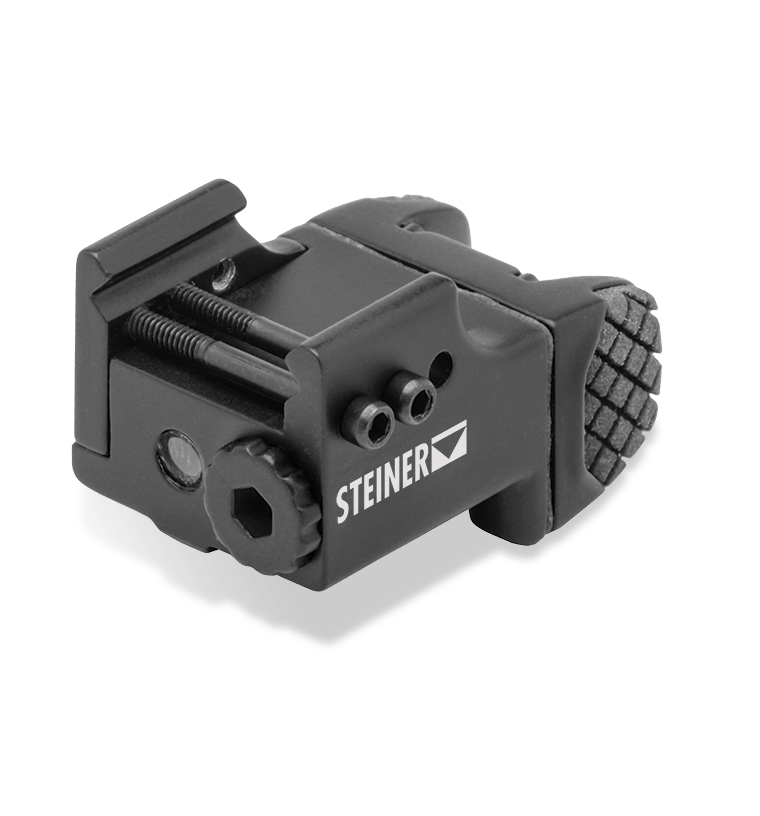
TOR Micro
Pistol shooters, well that’s a different story. Given handguns are, for the most part, close-range weapons that excel in fast target acquisition and transition, iron sights continue to reign supreme. But there are options that have the potential to enhance the handgun’s tried-and-true aiming system.
Laser sights have become among the most popular over the years, due to their low-light capabilities and ease of use. Additionally, the devices, given their size, don’t modify how a pistol operates or feels in the hand. Steiner eOptics most certainly looked to hit all these notes with the release of the new TOR Micro and TOR Mini laser sights.
Specifically designed for pistols, the devices almost appear part of the handguns on which they’re mounded and are small enough to fit in the majority of commercially produced holsters on the market. Each with a height a tick over 1 inch, the only thing that appears slimmer is their price tags. The MSRP of the TOR Micro is $199, while the TOR Mini runs $299.
Constructed with a military-grade aluminum housing and rail mount, the sights are up to rugged use — both dust-proof and splash-proof to IP54 standards. And the TOR Micro and TOR Mini are each available with the choice of red (635 nm) and green (520 nm) lasers. Even here, Steiner has ensured the sights perform when called into duty, opting for direct diode type lasers, known for their ability to operate in extremely cold weather. Additional shared features include an ambidextrous power switch, constant power drive that ensures the lasers’ output remains constant throughout the life of the battery, low battery indication, as well as windage and elevation bore-sight adjustment screws.
The universal rail mount on the TOR Micro and TOR Mini fits all pistols with a Picatinny or Weaver style rail forward of the trigger guard. The design of the TOR Mini and TOR Micro allows optimum positioning of the laser so that the fire button is easily accessible for a wide range of users.
The TOR Mini has additional functionality, most notable is its adjustable laser power with multiple settings (low, medium, high and high pulse). It also remembers the chosen setting until it is reset, even if the battery is removed or replaced. Finally, the sight has an internal accelerometer that senses pistol position and automatically activates the laser when the pistol is drawn.
For more information on the TOR Micro and TOR Mini laser sights please check out: www.steinter-optics.com
Looking to go armed, but are stuck in the weeds as to what to arm yourself with? Here are 20 of the best concealed carry gun options that will keep you on the defensive.