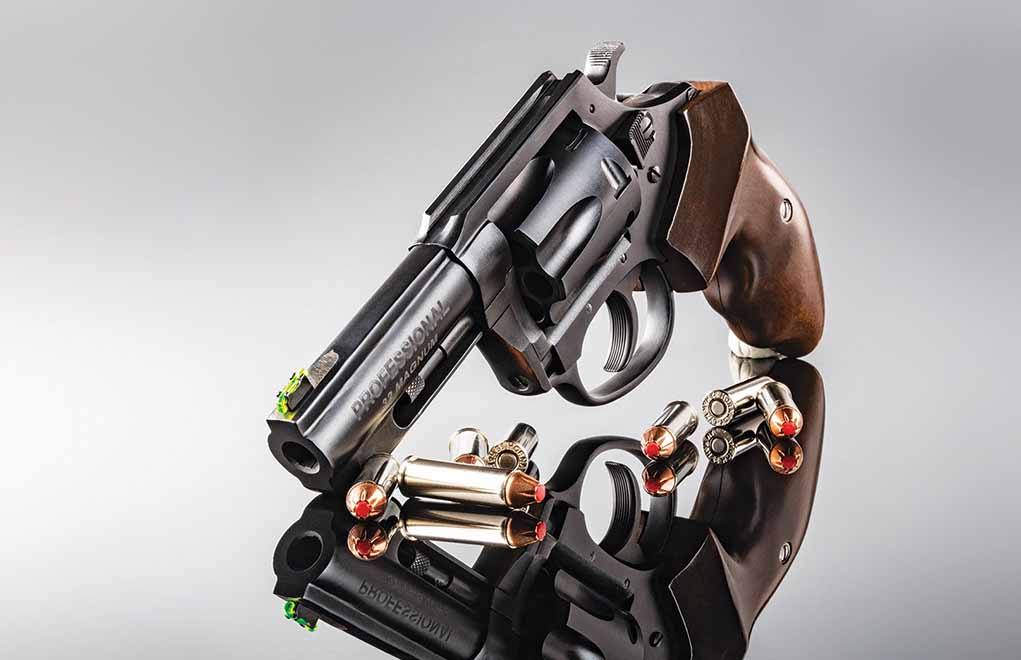
Chambered in .32 H&R Magnum, the Charter Arms PROFESSIONAL puts a new twist on the carry revolver.
How the Charter Arm PROFESSIONAL is made for carry:
Chambered in powerful, yet manageable .32 H&R Magnum.
Seven-round capacity.
Light 22-ounce weight.
Three-inch barrel maintains cartridge’s ballistics, while keeping revolver wieldy.
Generally speaking, many defensive firearms experts draw the line at the .380 ACP. Any lesser caliber and you’re playing with fire. Though, in this conversation, often lost in the mix is the newer generation of .32-caliber cartridges that have come about in the past 30 or so years. These magnum 32s might have the same diameter of their predecessors, but more than makes up for this with the energy they deliver on target.
One of the originals, the .32 H&R Magnum, is finding new life in the self-defense world with the introduction of the Charter Arms PROFESSIONAL. The ominous looking seven-round revolver is set for release at the May 17-19 Concealed Carry Expo in Pittsburg, Pa. And for armed citizens who tend toward wheelguns for everyday carry, the revolver looks to have what it takes to send their eyebrows north.
Next to capacity, excellent for a revolver, the Charter Arms PROFESSIONAL’s dimensions appear right on target for an easily concealable revolver. The stainless-steel framed revolver tips the scales at a very manageable 22 ounces (unloaded) and boasts a 3-inch barrel, which should help the .32 H&R Magnum live up to its ballistic potential, without making the gun unwieldy. The PROFESSIONAL is finished off with a satin Blacknitride+™ finish, contoured walnut grip and a green light-pipe front sight and integral rear.
The PROFESSIONAL, designed with input from Concealed Carry Magazine’s editorial staff, isn’t Charter Arm’s first foray into the .32 H&R Magnum. The company’s 2-inch barreled, 5-round Undercoverette has also been available in the chambering for some time. In either case, the revolvers feed on a powerful cartridge, which, according to Cartridges of the World, 14th Edition can push a 90-grain bullet 1,150 fps at the muzzle and deliver 13-percent more energy than a .38 Speical.
Charter Arms PROFESSIONAL Specs Capacity: 7 rounds Caliber: .32 H&R Magnum Finish: Blacknitride+™ Weight: 22 ounces, unloaded Barrel: 3 inches Length: 7 13/16 inches Front Sight: Green LitePipe Grips: Contoured Walnut MSRP: $438
For more information on the Charter Arms PROFESSIONAL, please visit www.charterfirearms.com.
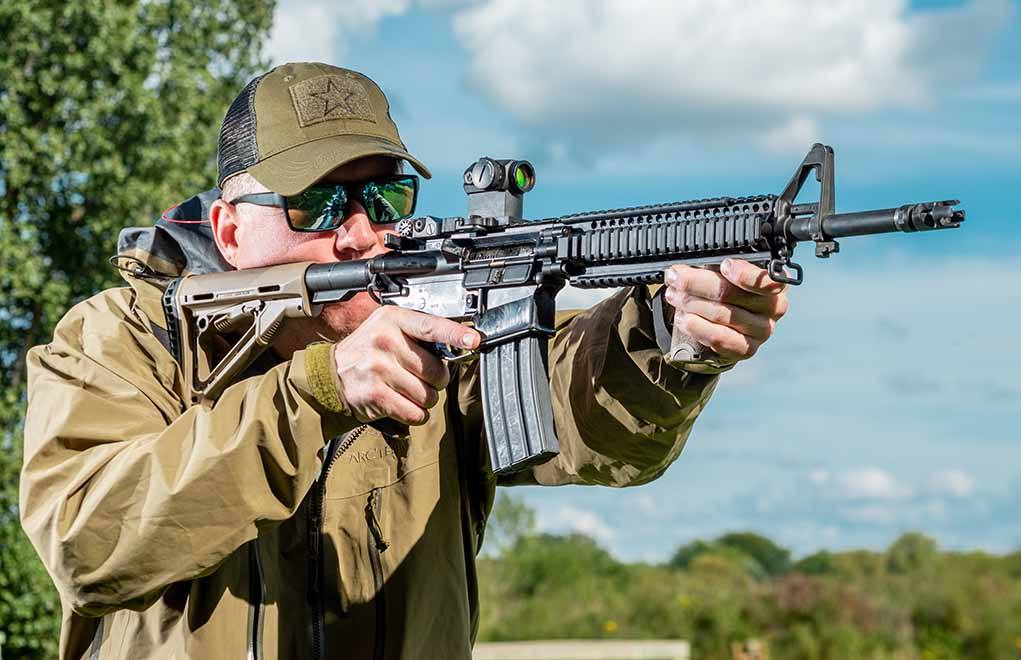
AR-15 maintenance doesn’t have to be expensive. A quick update to the bolt can breathe new life into your go-to gun.
Why you should pay attention to the bolt and BCG with your AR-15 maintenance:
Relatively inexpensive upgrade
Only takes minutes to replace parts
Eliminates most common failure — failure to extract
Bolt and BCG ware quickly giving exposure to heat, friction and contamination
When it comes to guns, it seems there’s always something on the horizon newer, lighter, faster, made from an exotic metal — or even just a different color. Sometimes the changes are innovative, and sometimes it’s just marketing hype. Either way, new features and their new price tags often mean more money that might be better spent on practice ammo or killing a credit card bill.
But for those of us who take our personal safety seriously and are mindful of the importance of a well-maintained firearm, a few simple checks and a change-out of inexpensive replacement parts in your bolt can keep your AR running reliably — and prevent one of the most common stoppage issues experienced by AR shooters: a failure to extract.
Just so we’re on the same page, the plain meaning of the term “failure to extract” is when the spent cartridge casing will not properly exit the rifle upon firing. Simple enough to identify. A combination of factors can create this problem, but the causes — other than a dirty action and an out-of-spec magazine — are most commonly an issue with the extractor, extraction process or gas system.
Either the extractor — a hook-shaped, spring-tensioned part located on the front of the bolt at approximately the 10 o’clock position as viewed from the bolt face — is failing to grab the rim of the casing and pull it from the chamber, or the gas system isn’t supplying the force necessary to enable the bolt to cycle.
The extractor is actually part of the AR’s bolt head, and when installed it has a locking lug on the outside and a round, claw interior that completes the circle of the bolt face. The extractor sits opposite the ejector pin, and the two parts work in tandem, with the extractor anchoring the base of the cartridge case and the and ejector pin pushing the opposite side to send the spent case out of the action when the weapon cycles.
The bolt carriage group in general, and the bolt, specifically, are exposed to a great deal of heat, friction and contamination. Each time a round fires, this system of parts experiences forceful movement, friction and spring compression, as well as linear and rotational forces. Like any machine, the parts wear with use. In particular, the springs are repeatedly compressed and the metal parts heat and cool. The inevitable results are the springs get weaker and eventually provide resistance beneath their manufacturer’s specifications, and metal parts can chip, shear or shatter.
Like brakes on our vehicle, heading downhill into a traffic pile-up is not the time to consider the last time you replaced worn parts. The good news for you and your AR is that a simple and inexpensive upgrade exists that takes only minutes and a few dollars to complete.
The Extractor And Extractor Spring
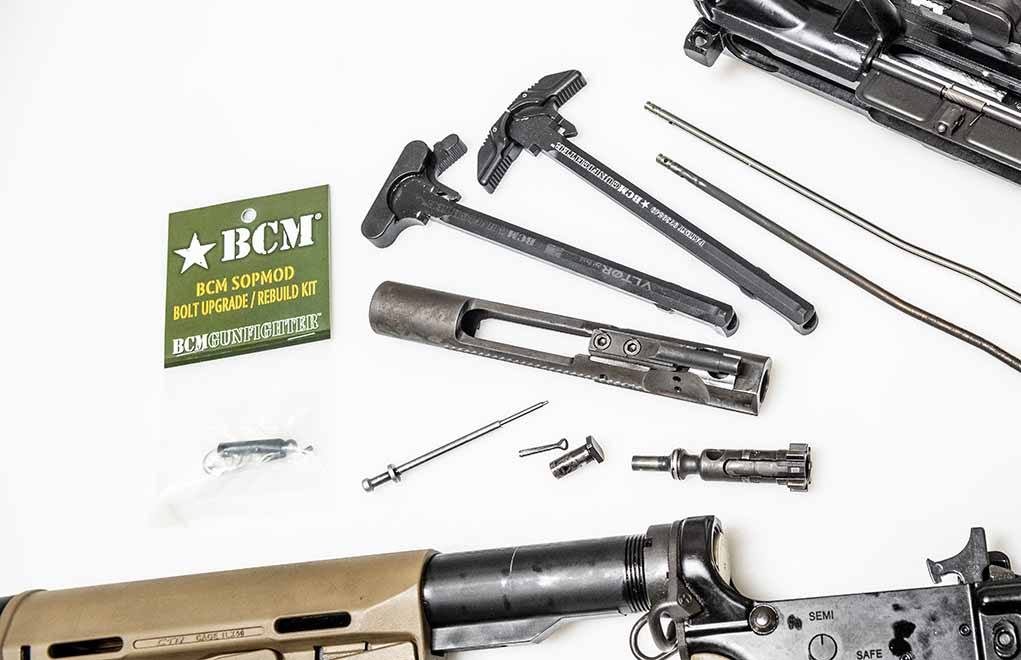
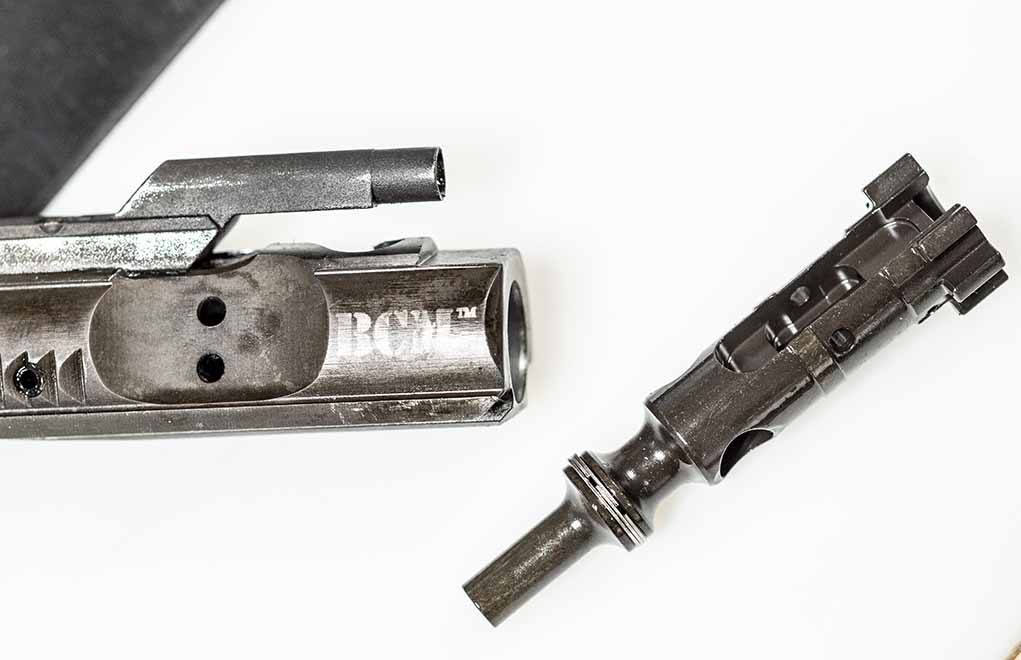
My preference for bolt maintenance is the Bravo Company Manufacturing (BCM) SOPMOD Bolt Upgrade/Rebuilt Kit. The kit may be purchased in two ways: The basic package is an Extractor Spring Upgrade Kit that includes the extractor spring, extractor insert and Crane Industrial mil-spec O-ring — with a miniscule MSRP of $4.95. The full Bolt Upgrade/Rebuild Kit also includes the Extractor Spring Kit along with a BCM extractor, an extractor pin and three USGI gas rings for only $29.95.
I prefer the BCM kit; I have first-hand experience with the obsessive quality control Paul Buffoni and the BCM team puts into their parts. BCM’s high standards for specifications and tolerances have the reputation of the highest OEM part reject rate in the industry. My first and favorite AR is a BCM, and after more than 12,000 rounds with minimal issues, I finally conceded to follow my own advice and give the bolt a rebuild. After thousands of rounds, ammo types, external conditions and heavy use, it was still as reliable as the day it came out of the box.
The extractor is a critical element to the proper functioning of the AR’s gas impingement system. Its function is to grab the base of the cartridge casing and mechanically escort it into and out of the AR’s action during the firing sequence.
But nothing lasts forever.
Having started with a BCM, I was replacing an old part with a new one of the same quality. But for those who are not sure of the provenance of their ARs parts, installing a shot-peened USGI spec extractor is likely a step-up in quality and reliability, given the standards some manufacturers tolerate. Additionally, the extractor spring is chrome silicon, heat treated, stress-relieved and shot-peened, which means it’s made of the best components available and manufactured such that it will continue to perform long after lesser components fail.
The change-out requires only a punch to push out the extractor pin, a quick clean of the bolt’s surface beneath the extractor and replacement of the new spring and extractor insert in the same manner they came out. Note the orientation and thickness of the spring relative to the bolt, and be certain to replace the two parts in the same order. Press and hold the extractor in place and replace the pin.
When working with a new spring, it might take more pressure to line up the extractor with the holes in the bolt, but just take your time. Upon inspection, my extractor claw showed minimal wear for the number of rounds cycled through the AR. It by no means looked new, but it was far better than other sad examples I’ve seen where the claw is worn to a humble nub, or where the claw actually snapped off — which is a catastrophic failure.
I have omitted mentioning the mil-spec O-ring because many consider it superfluous and an early fix to a design flaw in the extraction timing. The historical arguments are many, but the ultimate answer is that it’s optional with modern extractor springs, so decide for yourself — or try it both ways and see which works better for your AR. It’s unlikely that you’ll notice a difference.
The Gas Rings
The second element of the bolt rebuild is a replacement of the three gas rings on the tail-end of the bolt. The rings modulate the amount of gas that passes through the bolt carriage group and form a seal that pushes the bolt forward as part of the firing sequence.
Do you need the newest flashy add-on, or would your time and money be better spent on ensuring your AR functions reliably? The author’s go-to AR had functioned well through 12,000 rounds of hard use, but it got a bolt upgrade that include a new extractor to reduce the likelihood of stoppages and keep the rifle healthy — all for less than $30 bucks.
Some shooters argue that an AR will function without these rings, and they may be correct. But purposely or negligently creating gas imbalances in your ARs system where reliability is your primary concern is a silly idea, so treat the gas rings as maintenance items and replace them regularly. A BCM ring three-pack will cost you $2.95 — so, other than a good cleaning, it’s the least expensive way to improve the reliability of your AR.
A practical but unscientific test is to press the bolt into the carrier, hold the bolt carrier group (BCG) in the air by the bolt and observe whether it slides down. The opposite approach works by pulling the bolt out and setting the BCG on the bolt head: If the bolt can hold the carrier in either direction, your rings are still in good shape. The rule of thumb is to change them out every 5,000 rounds. Again, my rifle was at 12,000 rounds and the rings passed the test, but I changed them out anyway.
Removing the O-ring is most easily accomplished with the help of a dental pick to spread the ring at its respective split and slide it off the body of the bolt. The first ring is tricky; the second and third are easy. Install the new rings by sliding them down over the tail of the bolt making sure they don’t overlap.
Back In Action
I put the AR to work the next day in a two-day carbine course with Kyle Defoor’s Proformance Shooting. Through 600 rounds of Black Hills Ammunition 77-grain OTM between two shooters, we experienced zero fails, just like before, along with the added confidence that a potential extraction problem was further away.
All in, the most expensive approach to this maintenance exercise was less than $30, but you can still improve your system by choosing the gas rings or extractor springs, both of which are less than $5. The entire rebuild process took about 15 minutes.
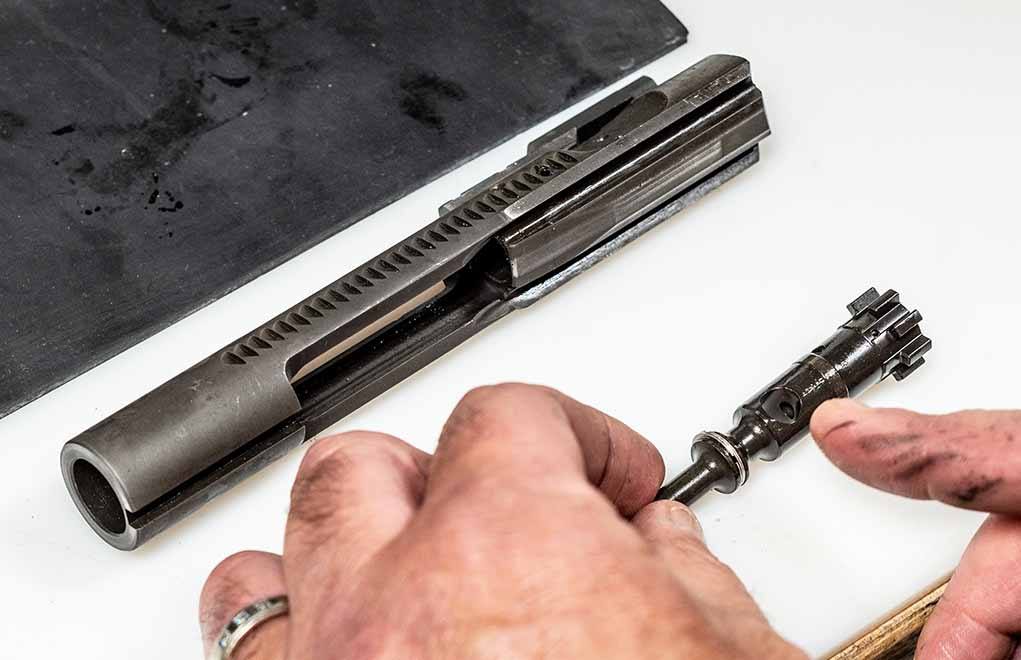
The extractor sits at the 10 o’clock position on the bolt (shown here removed). It has a lug on the outside, and a round claw on the inside that completes the circular bolt face.
If this process sounds complicated but you’re still concerned about your bolt’s maintenance, a brand new bolt from BCM is $79.95. Additionally, if your existing bolt functions normally and you choose to replace it as a matter of maintenance, keep it as a backup.
In many of today’s aftermarket pistol grips, there’s a locking cover that turns the hollow grip into a small storage compartment, and most will accommodate a bolt. Give it a light lube and wrap it in a small Ziploc bag to waterproof it and keep it quiet, and a back-up will never be far away.
Editor’s Note: This article originally appeared in the December 2018 issue of Gun Digest the Magazine.
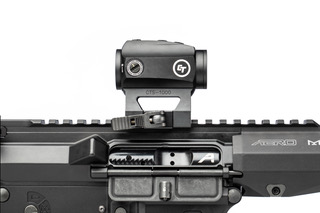
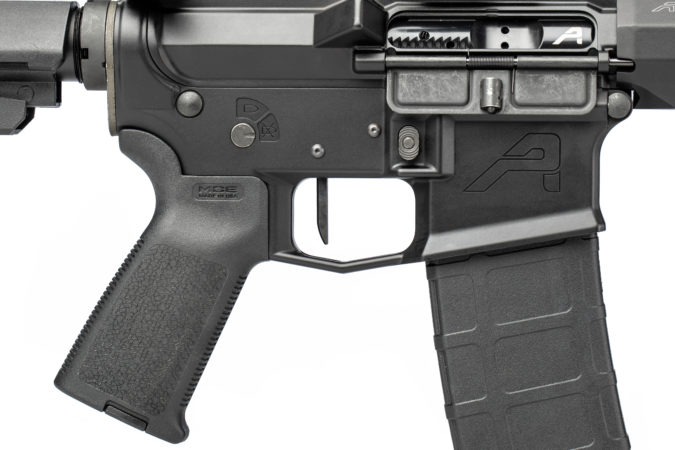
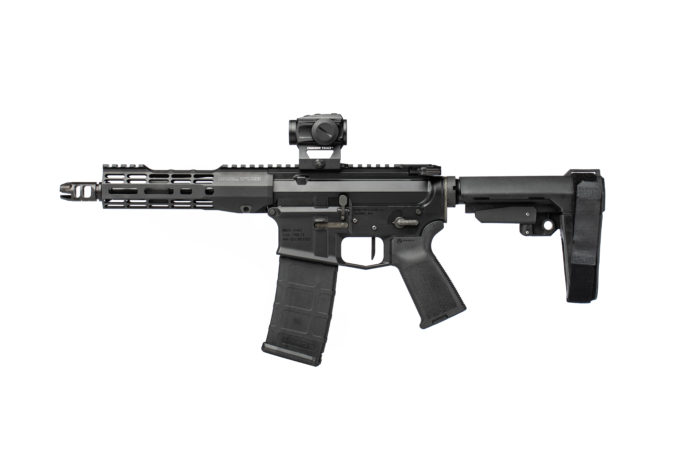
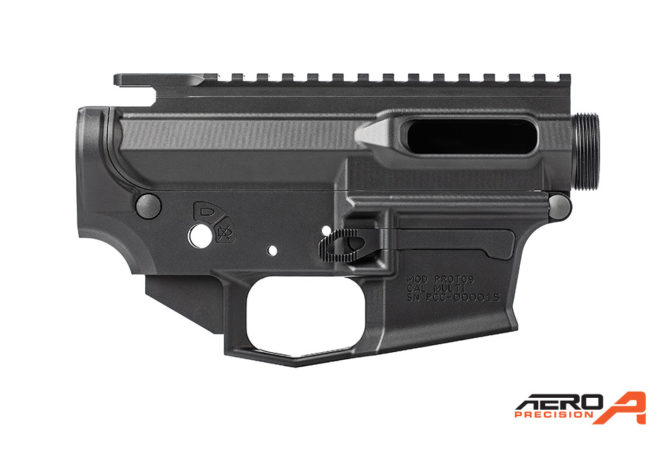
This Aero Precision pistol build features an M4E1 Lower Receiver and an M4E1 Non-Forward Assist Upper Receiver.
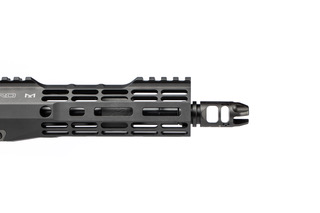
This build is chambered in 5.56 Nato and features a 7.5″ barrel with a 7″ ATLAS S-One handguard. A VG6 Epsilon 556 muzzle device finishes the upper receiver giving the build a compensator as well as a flash hider right out of the gate. The internal components of the upper feature an Aero Precision Black Nitride Bolt Carrier Group and the all-new Aero Precision BREACH Ambidextrous Charging Handle.
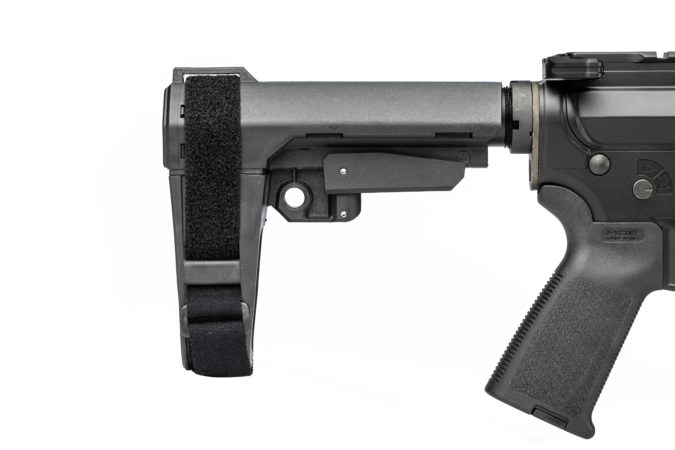
The lower receiver features a Rise Armament Rave-140 single-stage 3.5 lb flat trigger, a Magpul MOE® grip, and an SB Tactical SBA3 pistol brace. A 2 MOA Crimson Trace CTS-1000 Red Dot Sight finishes off this pistol build perfectly, giving you everything you need to hit the range. All Aero Precision parts and components are engineered from the ground up and built on the foundation of superior American quality and precision manufacturing you have come to expect from all Aero parts and components. The parts and components used in this pistol are offered in a variety of different configurations giving complete power and control to the builder. To learn more visit aeroprecisionusa.com.
Aero Precision PCC
Aero Precision introduces their new line of pistol-caliber carbine (PCC) products. Available calibers include 9mm, 10mm, .40, and .45. Those familiar with Aero Precision AR-15 and AR-10/LR308 products will be excited to explore the options of building a pistol-caliber AR with Aero quality and affordable pricing.
The Aero Precision PCC product line includes two different lower receiver options: one for 9mm/.40 builds and the other for 10mm/.45. The upper receiver features a tried and true last round bolt-hold-open device that works with Glock compatible AR9 lower receivers. Pair this with our custom designed bolt for a dependable build that won’t break the bank.
Like other Aero Precision platforms, the upper and lower receiver are the heart of the build. The MSRP for the Aero PCC Receiver Set comes in at a reasonable $249.99. We machine our receivers from custom designed forgings and include smart features for the at-home builder. The PCC receiver designs are based on the popular M4E1 (AR-15) lower receiver, providing a sleek billet-like design with a forged price. When you buy the receiver set, it will be delivered with the proprietary components installed to make the at-home build process as easy as possible.
Those looking for some assistance with the build process can choose from a selection of complete upper receivers and complete lower receivers — let our certified armorers do the work for you! Our complete uppers span across four calibers with length options ranging from 5.5 to 16 inches. Our complete lowers cater to individuals looking to build pistol, rifle, or SBR configurations. As with all Aero Precision offerings, you can buy the components stripped and build it from scratch as well, integrating other AR-15-compatible components to give you a one-of-a-kind firearm that you can rely on.
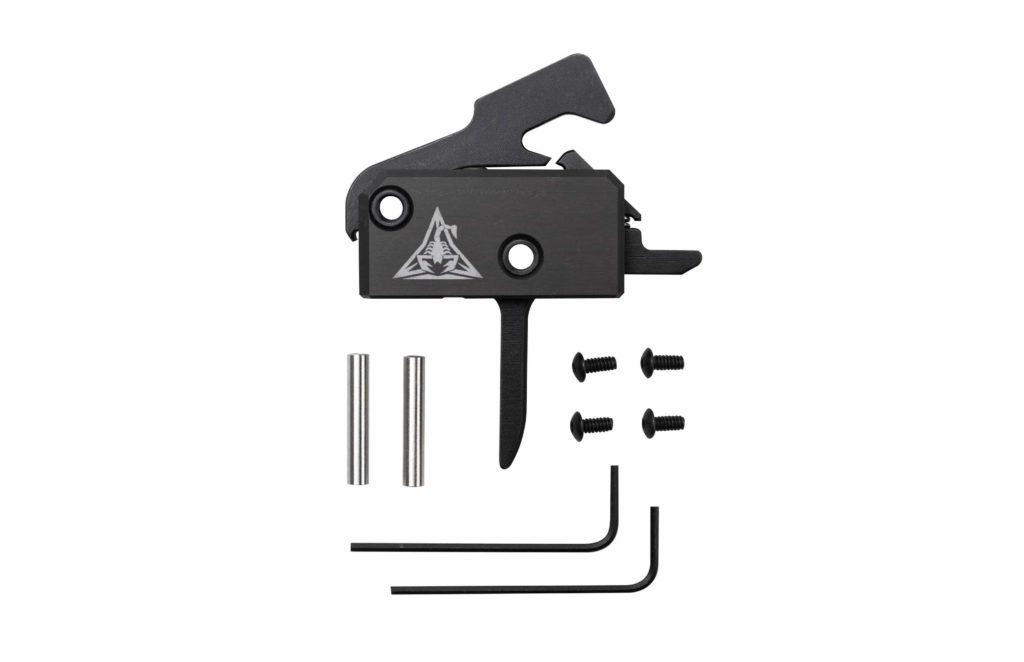
Giving a new feel to an old favorite, RISE introduces the RA-140 Flat Super Sporting.
How RA-140 Flat compares to other triggers:
Single-stage, drop-in trigger
3.5-pound pull weight
Made of CNC machined tool steel and aircraft-grade aluminum
2.6-ounce weight
Comes with anti-walk pins standard
Study the cut of a company’s jib for any spell and you’ll see where it puts the emphasis of its engineering and manufacturing expertise. It’s pretty simple to deduce with RISE Armament, it always comes back to the bang switch. You can’t hold the gunmaker’s target intensification on the trigger against them. Few other facets of an AR play as big a role in overall accuracy and performance than that little thing dangling at the bottom of the lower.
RISE continued to cater to shooters’ tastes recently, expanding its RA-140 Super Sporting line of single-stage triggers with a flat trigger option. Becoming more common in recent years, flat triggers are generally heralded as providing more real-estate for the trigger finger, thus facilitating more control and a cleaner pull. Furthermore, they create a longer reach, in turn, shooters – especially those with big mitts – don’t have to scrunch their hands into an arthritic claw to get on the trigger.
“We’ve had a lot of customer requests for a low-cost, high-performance straight trigger, so we’re excited to provide that with the RA-140 Flat,” said Matt Torres, president of RISE Armament. “Everyone has a style and feel they prefer when it comes to triggers, so we want to make sure we’re giving customers what they want.”
Like the rest of the series of drop-in triggers, the RA-140 Flat Super Sporting comes in at a relatively affordable price – MSRP $139. By factory specs, the 2.6-ounce unit has a 3.5-pound pull weight and comes with anti-walk pins, to keep the unit tight as a drum. The drop-in trigger works with any AR-15 or AR-10 platform and is made of CNC machined tool steel and aircraft-grade aluminum.
For more information on RA-140 Flat Super Sporting trigger, please visit www.risearmament.com.
While it takes time, coaching and practice, learning to read mirage will help you own long-range shooting.
Why it’s important to read mirage:
Gives you not only wind speed, but also value.
You can better estimate the wind’s effects down range.
Requires less reliance on technology to make an accurate shot.
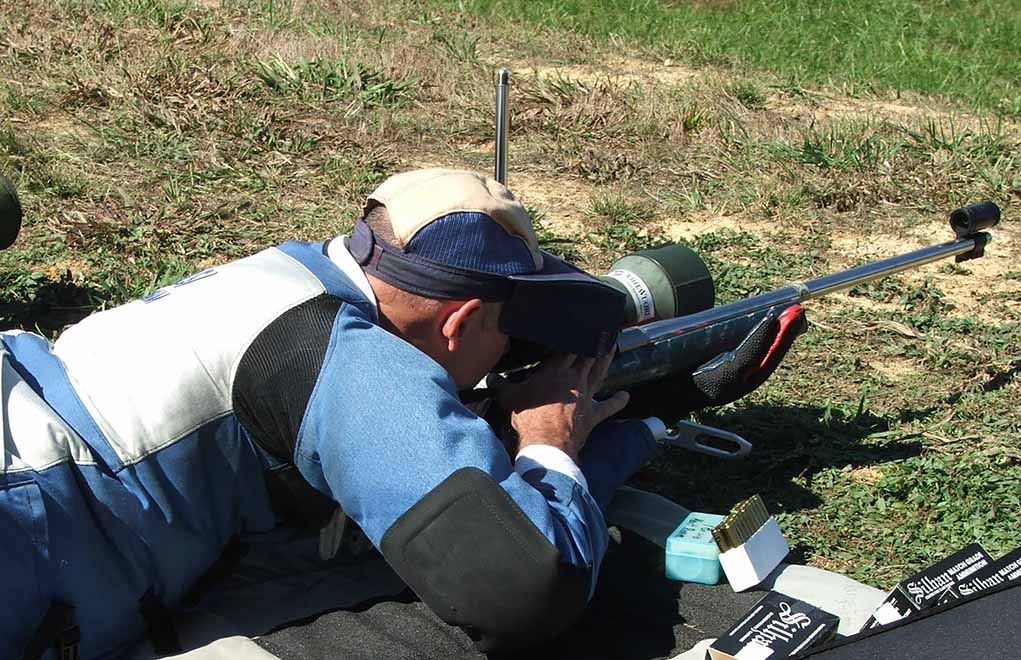
Reading wind is truly as much art as it is science. While a wind meter can’t always give you the correct windage for a long-range shot, if you read mirage in conjunction with a wind meter it can do as much to teach you how to read wind as years of shooting experience. Learning to read mirage normally requires spending time with someone who can read mirage and is willing to share it, or you can spend a lot of experimental shooting time.
Reading mirage involves observing light waves as they’re disturbed by heat, and using the amplitude and frequency of those light waves to determine the required amount of windage to hit center. The great thing about using mirage is that it shows wind value as it shows speed. An 8 mph wind blowing straight up or downrange appears as a no-value wind, and it looks almost the same as a zero-wind situation. A half-value 8 mph wind looks almost exactly like a full-value 4 mph wind. The reason for this is that wind speed is only observable as to its relative speed perpendicular to the line of sight.
Mirage How-To
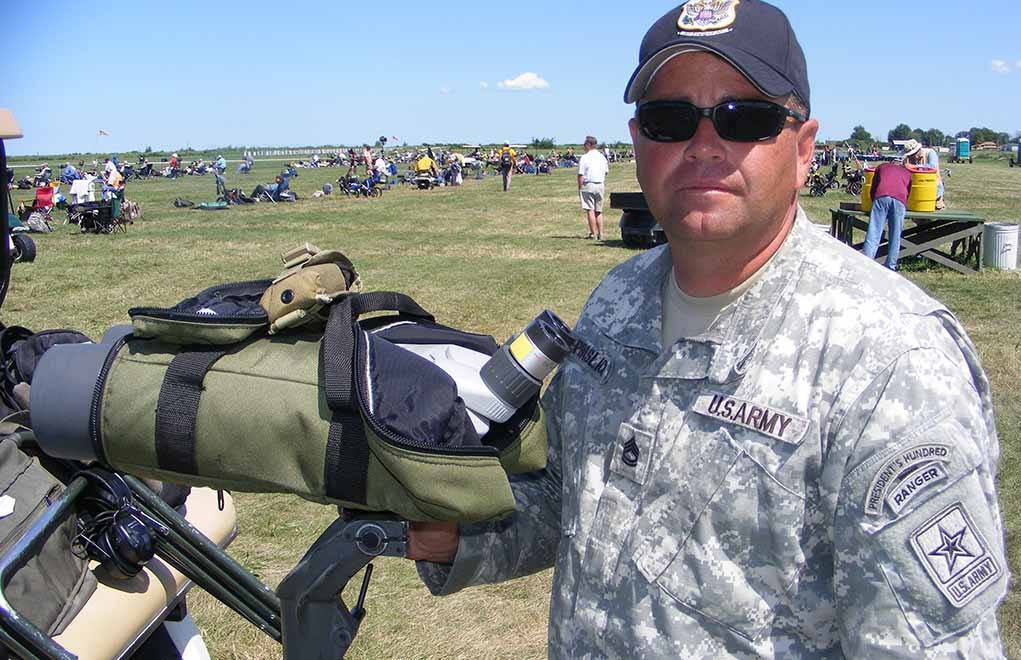
To read mirage, focus your spotting scope about halfway between you and the target. The amplitude shows up better on a horizontal line, so if there is one, look for the mirage as it distorts that line. In high power, I focused on the top of the target frame at 600 and 1,000 yards, and the bottom of the frame at 300 yards. The faster the wind speed, the faster the mirage will appear to move. At zero wind value, it appears to not move from left or right, but rather it appears more as a boil. The slower the wind, the greater the amplitude of the waves, and at wind speeds above about 10 mph it almost fl attens out. Above that speed I think in terms of frequency: Imagine a sine wave that flattens as it speeds up.
Mils vs. MOA: Which Is The Best Long-Range Language?
Your ability to learn from experience is limited to your ability to shoot. If you can only hold within 2 MOA, your ability to judge your wind calls will be limited to that level. Learning from experience is best accomplished by coaching, or by listening to a good coach while he or she coaches an excellent shooter on the line. Under those circumstances, you can instantly see if the wind call is good or not. When shooting with a coach, the shooter needs to advise the coach if he calls a shot left or right because a shot that comes up right of the coach’s estimate will make the coach believe the wind has more value than is being seen.
Learning Mirage From A Wind Meter
To use a wind meter to learn to read mirage, find a large, flat area unobstructed by fences, buildings or trees. Read the wind speed with the meter, factor in the value that’s based on wind direction, and observe the mirage. Rotate the scope directly into and away from the wind and notice how a boil appears. Observe the difference between a half- and full-value wind. I suspect you’ll learn to read mirage much faster that way than from experience.
It’s also important to receive instant feedback on your results. This can be done where a dust signature can be observed, though spotting hits in dust can be deceiving. Obviously, it works very well on known distances, in ranges with pits or when shooting electronic targets, but there’s another affordable option in the form of remote target cameras. With a remote target camera, you can instantly see the results of each shot and most will indicate the location of the most recent shot. They’re a great aid to learning to read wind without the assistance of another person.
The ability to reliably read wind for long-range shooting requires time, and a lot of range time, but there’s nothing more satisfying than making the wind call on a long shot in a crossing wind — and nailing it.
Editor’s Note: This article originally appeared in the December 2018 issue of Gun Digest the Magazine.
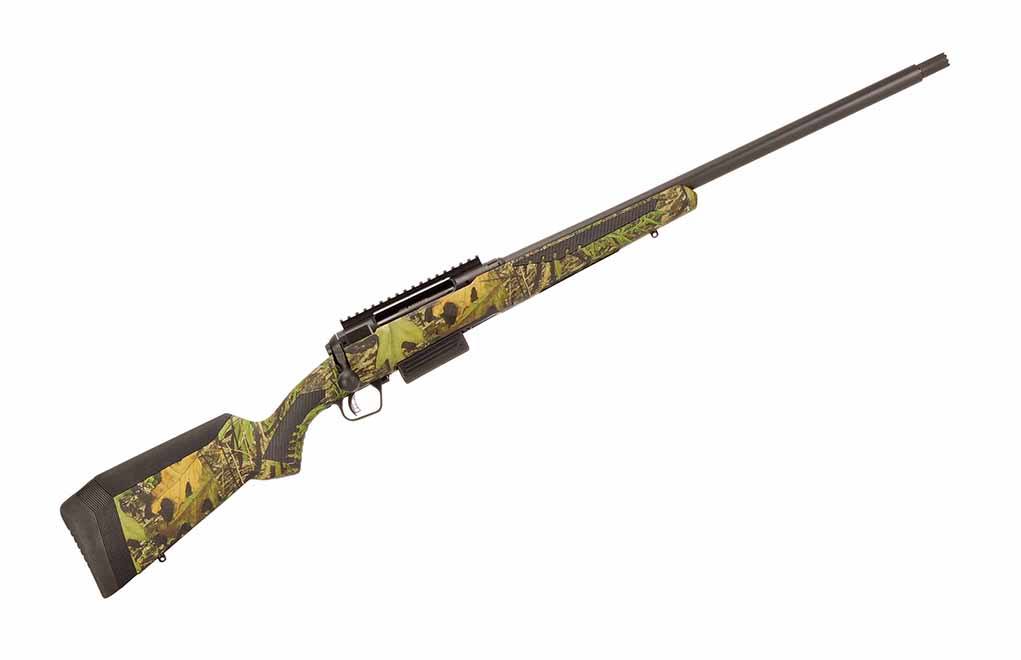
One-piece synthetic stock with Mossy Oak Obsession camouflage
One-piece rail for easy optic mounting
Best known as slug guns, Savage Arms has turned out Model 212 and Model 220 shotguns tailor-made for gobblers for a few years now. Yet, it took some doing to get one in the hunt, given the turn-bolt smoothbores were only available through special order directly from the gunmaker.
Not anymore. Moving the Model 212 and Model 220 to general distribution, the turkey guns are now available from Savage dealers and just in time for most regions’ impending spring season. The shotguns should catch turkey hunters’ eyes, not simply for their familiar and reliable Model 110 rifle action, but also their upgraded stocks. The shotguns boast Savage’s proprietary AccuFit fully adjustable buttstock and AccuStock internal aluminum rail system. The company also outfitted them with AccuTrigger adjustable triggers.
Both shotguns are available in 12- and 20-gauge and with Mossy Oak Obsession camouflage stocks. The Savage Model 212 and Model 220 has an MSRP of $695 in 20-gauge and $779 in 12-gauge.
More from Savage:
WESTFIELD, Massachusetts – March 13, 2019 – Savage unveils the Model 212 and 220 turkey guns, designed to give serious gobbler hunters maximum performance and adjustability. Shipments have been delivered to dealers.
Originally only offered through the Savage Special Order Office, the Model 212 and 220 bolt-action turkey shotguns are now available everywhere. Both are built around the Model 110 rifle action, which is machined from steel bar stock and secured three-dimensionally along its entire length by the AccuStock internal chassis. Their blued, 22-inch carbon steel barrels are free-floating and secured to the receiver using a Model 110-style locking nut that ensures shot-to-shot consistency.
The user-adjustable AccuTrigger provides a light, crisp pull, and the AccuFit system allows hunters to customize length-of-pull and comb height for precision that shooters won’t find in any other turkey gun. The detachable, two-round magazine enables quick loading, and the oversize bolt knob helps operation with gloved hands.
Features
Smoothbore bolt-action shotgun platform built like a rifle
AccuFit system lets hunters adjust comb height and length-of-pull
AccuStock rail system secures the action three-dimensionally along its entire length
Three-position safety to lock the bolt, an load and unload with the safety engaged.
Cold hammer-forged barrel.
Patented integral scope mounts machined directly on the solid-steel receiver.
Soft rubber buttpad with spacers — three ½-inch spacers included.
One-piece, stainless-steel bolt and studs for mounting sling swivels.
The Ruger Muzzle Brake System.
MSRP: $1,269
Why whisper? I whispered because that’s about as loud as the ping was from the steel I hit at 1,500 yards with the 6.5 Creedmoor during a 2-day Sportsman’s All-Weather All-Terrain Marksmanship course (SAAM) taught at FTW Ranch in Texas.
OK — I’ll admit, the cocky silver-haired Ruger Hawkeye FTW Hunter rifle did have a few upgrades. The stock is adjustable, the barrel is 24 inches and at the end sits a brake. Still, this rifle can be ordered as a catalog item from Ruger, and minus the German optic and a few cases of Hornady ELD-X ammunition, you’d get the same gun if you ordered it from Ruger today. Sounds off-the-shelf to me.
[Whisper] … ping.
Now, some of you may think putting a muzzle brake on a polite cartridge like the 6.5 Creedmoor might be overkill. I disagree. Why? I’ll let an engineer “brake” it to you: “Nobody likes to get punished by heavy recoil, and hunters normally shoot better when not in pain,” said Amund Skoglund, Commercial Director North America, RUAG Ammotec USA, Inc.
While most hunters might recoil from such an admission, the truth is recoil impacts a hunter’s ability to shoot confidently, whether we admit it or not. On top of recoil, brakes help keep muzzles down, so follow-up shots can be made just as accurately as the first. A tiny flaw in our technique, often masked at 100 yards or even 200 yards, becomes a miss — or worse, a wounding shot — at the kinds of distances the 6.5 Creedmoor or its beefier big brothers were designed for in the first place.
Logic, Applied
I learned this over and over again at SAAM, a course that’s not shy about teaching hunter shooting ethics in addition to skills. I also learned that marksmanship is as much about common sense as it is ballistics.
What do I mean? Well, it makes sense that the most accurate shot is always the steadiest shot, yes? One of the big ideas SAAM instructors try to get across to hunters is to not just try to find a steady rest, but to insist upon it — or not to take the shot.
Since its introduction, the 6.5 Creedmoor was scooped up by long-range target shooters and has thus garnered the reputation as a go-to target cartridge. But all the major ammo companies — as well as some smaller ones — have embraced the 6.5 Creedmoor, and the birth of some very good hunting bullets has been the result, making it a very capable long-range hunter.
This idea is delivered in three simple rules:
1. The more skin on the ground, the better. Always get as low to the ground as possible. 2. Stability is the key to good shooting. Always get at least two points of contact to rest your weapon if possible. 3. Be an uncompromising shooter. If you cannot hold the crosshairs in the inside 50 percent of the vital zone, get the where you can or get positioned to where you can.
These truths helped me to learn, and then accept, my personal shooting limit was and is about 400 yards on live game. If the critter I’m after is farther, I get closer — or all it gets to see is me tip my ball cap toward it for getting the best of me that day.
The 2-day course explains this common sense in a lot more detail. In fact, it covers it in a 24-chapter, 110-page book that takes students down to this philosophy: “It’s the hunter’s job to kill an animal instantly with the first shot. Hunters owe it to the animal to accomplish that. If not 100 percent certain, get closer or don’t shoot.”
The Long-Distance Hunter
Back to that Ruger Hawkeye FTW Hunter: The one I shot at SAAM, and the identical one I have in my gun safe here in Virginia, is chambered in 6.5 Creedmoor. For those of you new to the Grand Island, Nebraska, inspired .264 block party, it’s because the cartridge is very accurate, doesn’t recoil much, shoots slicker-than-whale-snot 6.5mm bullets — and did I mention it doesn’t kick much?
When building out a rifle that has serious long-range capability, you limit yourself — and that rifle — if your scope isn’t designed for the same tasks.
Hornady’s Neal Emery goes into even more detail about the 6.5 Creedmoor’s success over some other 6.5mm bullet pushers.
“The Creedmoor has quite a few things going for it,” he said. “It’s a true short-action cartridge that allows long, heavy bullets to be seated out. The .260 Remington requires the same long, heavy bullet to be seated further into the case or the use of a long action. The 6.5×55 is even longer. The Creedmoor also benefits from close adherence to both the chamber design spec and the ammunition spec — everyone essentially makes it the same.”
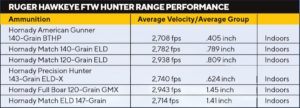
During the SAAM course, which by the way featured a lot of different manufacturers’ 6.5mm Creedmoors, we all shot the same ammo: Hornady. There are a lot of choices for bullets these days, and that’s especially true for the 6.5 Creedmoor cartridge.
The introduction by Hornady of the ELD platform gives target shooters and hunters a choice they think they need to make. But, according to Emery, the genius of the ELD design is that its aerodynamic qualities benefit both paper and paleo gatherers.
“In both bullets, it creates the perfect meplat (point)” said Emery. “They are the same, time after time. Manufacturing BTHP bullets with the exact same tip geometry doesn’t happen. For the ELD Match bullets, it’s all about consistency and maximizing the ballistic potential.
“On the hunting side (ELD-X), the tip is quite important for the terminal effect,” he continued. “Upon impact, the tip gets pushed into the hollow cavity in the nose, forcing expansion. BTHP designs are dependent on what they hit to dictate how or if the bullet expands. Tipped bullets are far more consistent in their expansion.”
The Ruger Hawkeye FTW Hunter is a rifle accurate enough to take advantage of a long-range capable cartridge like the 6.5 Creedmoor, and it’s a rifle you can haul up a mountain, scratch, get muddy, cuss at (I don’t want to talk about it) and, like your trusty dog, it still loves you enough to be there when you need it.
Sure, there are more accurate rifles, which might shoot tighter groups for longer engagements, with less recoil, less muzzle rise and more pop from the muzzle, but if you’ve ever hunted where every direction to and from camp is up, up higher and then keep climbing — then the true beauty of a hunting rifle you can and should carry, which can and does hit steel at 1,500 yards all day long isn’t just your buddy … it’s your very best friend.
Among the most import fundamentals of pistolcraft is executing a timely and efficient reload. Here’s how.
Mastering your pistol isn’t simply a matter of how consistently you hit the mark. Equally as vital is how competently you manipulate your handgun. Operate the slide, clear malfunctions and, of course, reloading – all must be executed in a timely and efficient manner. These might sound easy as pie, but accomplishing them with any semblance of aptitude takes know-how and practice. Especially if you inject any sort of adrenaline into a situation.
Perhaps one of the most import skills and one of the earliest to focus on is the reload. Champion shooter Mark Redl focuses on reloading in a competitive situation in the above video, however, the points he hits upon are applicable to most circumstances. Particularly, his emphasis on working within the headbox.
For more information Aguila Ammunition, please visit www.aguilaammo.com.
This is a challenge for many new shooters since holding a pistol in front of the face feels unnatural. Early on, most have a tendency to drop their arms and execute a reload at or below chest level. This is a detriment for a couple of reasons. Foremost, you can’t see what you’re doing as well down low as you can up high. In turn, you run a chance of slowing down or fudging the reload. Either way, not good. A little more nuanced disadvantage, working outside the headbox takes your eyes away from the target. Whether you’re talking competition or self-defense, this is a bad habit to fall into, one that can cost you dearly.
While it might not be as thrilling as drilling center mass over and over, pistol reloads and other fundamental pistol manipulations are key to becoming a better shooter. It’s well worth your time to make sure sharpening these skills are part of your practice routine.
Power, speed, accuracy, capacity, ease of use, versatility and reliability all go into making an ideal survival gun, and the AR-15 has these assets in spades.
Why the AR-15 is an ideal survival gun:
Mid- to long-range accuracy
High-velocity cartridge
Lightweight
Common and inexpensive ammunition
Large magazine capacity
Easily configured
Abundant parts
Light Recoil
Relatively simple maintenance
When it comes to survival, the best choice is a rifle that combines power, speed, accuracy, capacity and reliability, ease of use, versatility, accessories, and lightweight. To me, there is only one choice: the AR rifle. Its popularity ensures the availability of plenty of spare parts for repairs. Its modularity makes it easy to repair and work on. This modularity allows the versatility to change barrels and cartridges within a certain range.
The AR is the single most versatile rifle available. It can be adapted to fire over a dozen different rifle and pistol calibers. The design makes it easy to install optics and scopes; the collapsible stock allows the length to be adjusted so different-stature shooters can comfortably use the same rifle. All of these features help explain why it is so popular.
The AR serves primarily for self-defense, used to quickly and accurately engage multiple assailants should the need arise. You could certainly use other rifles for such tasks, and I will recommend many, but the AR stands above them all. It is true that the AR may not be the best firearm to use in all defensive situations. Sometimes a shotgun or a pistol will be better suited for specific jobs.
The AR is traditionally chambered in the 5.56x45mm NATO (interchangeable with the .223 Remington caliber) cartridge. Some have questioned the effectiveness of this cartridge, but the U.S. Military has been using this round as their primary rifle caliber for 60 years, through many wars and other interventions. If it were not effective, we would not still have it. As with any firearm, the weight and type of bullet can be easily changed to deliver better performance, and while not all loadings may be ideal for hunting, many are used effectively on deer, feral hogs, coyote, and other game animals.
Some have argued that a 5.56mm AR is bad for home defense because the round will over penetrate and pass through walls, endangering other occupants or neighbors. Yet Police SWAT teams are increasingly switching from 9mm submachine guns to 5.56mm ARs exactly because they penetrate less than the 9mm, especially with proper ammunition selection.
The AR is extremely weather resistant and was designed that way from the start for military use. The receiver is aluminum, the stock polymer, the barrel and bolt carrier chrome lined and phosphate finished. The rifle is not completely rust or corrosion resistant, but it is almost as close as it gets. It was designed to be lightweight at about 6.5 lbs. The carbine version is very compact and can be easily broken down into two parts for ease of transport.
More Survival Gun Articles:
5 Best Scout Rifles To Seriously Consider For Survival
When it comes to parts and accessories, manufacturers are busy producing almost anything you can imagine. It is very easy to take a 6.5-lb. AR carbine and turn it into a futuristic 11-lb. powerhouse. There are many AR manufacturers, and most of their guns are built to Mil-Spec, meaning that they have complete parts interchangeability. I will include a few full reviews below, but first I’ll give a round-up of some of the popular AR manufacturers.
Note: When it comes to survival, don’t try to get fancy. Many ARs are sold specifically for competition, varmint hunting, in odd calibers, or with non-standard features to appeal to select shooters. That is not what you want. You want the standard Mil-Spec AR carbine. Keep it simple. When it comes to accessories, add only what you think you really need and will actually use. Special coatings or treatments are fine and even the use of custom drop-in trigger kits is OK, as these can be easily replaced with Mil-Spec trigger kits.
Making you more effective in competition and self-defense, learning to shoot on the move should be a part of every shooter’s toolbox.
Dynamic shooting, above and beyond basic marksmanship, it’s imperative it’s part of your toolbox. The ability to shoot on the move is invaluable, whether you’re talking about self-defense or competition. But to shoot and scoot properly, maintaining accuracy, takes some consideration and a good handle on technique.
The tricky part of staying on target while moving is keeping your handgun level, thus preserving your shot-to-shot accuracy. It doesn’t take a practical pistol champion to figure out the simple motion of walking jostles your aim point wildly, so much so it becomes difficult to even hit the broadside of a barn. Countering this, however, is counterintuitive. Namely, because it depends on the appendages furthest from your handgun – your legs.
Simple as it sounds, putting some bend in your knees goes a long way in maintaining accuracy while shooting on the move. Think of it as making them shock absorbers. The more bend, within reason, the more give your knees will have, in turn, the more stable a platform you’ll provide your torso and arms. Watch the above video of champion shooter Mark Redl for a top-notch example.
Similar to everything concerning guns, shooting on the move isn’t something you’ll master overnight. It requires patience and dedication to hone your technique and see the skill through to perfection. But a willingness to improve your dynamic shooting ability pays you back, whether in a match or a self-defense situation.
For more information Aguila Ammunition, please visit www.aguilaammo.com.
Knowing how to shoot isn’t everything. When it comes to self-defense training, the whole package is essential — physical, mental and legal training.
What sort of self-defense training should armed citizens strive for:
Dynamic firearms training, i.e. shooting on the move
Low-light shooting
Threat recognition
Threat avoidance
Legal employment of deadly force
Sure, you know how to shoot a gun. Perhaps you have even taken a basic class to get your concealed carry license. You go to the range a few times a year and shoot. So, you ask yourself, “Why do I need training? I know how to shoot.”
Proper firearms training is about far more than mechanics. The good courses include as much mental work as they do trigger work.
My answer, as a 30-plus year professional firearms instructor, is: “Sure, you know how to shoot, but can you actually use your skills to defend yourself? And, just as importantly, once you defend yourself, can you prove that your actions were legal?”
You see, just knowing how to shoot a handgun alone is not sufficient for keeping a gun at home for self-defense, or for carrying one when you’re out and about. Consider this …
Law Enforcement Vs. Civilian Training
Society demands that its protectors (law enforcement) be well trained, both in the physical use of the many different implements they might use to protect you and also in the legal use of force, both deadly and otherwise. This takes the typical police academy more than 80 hours to train the techniques and learn the decision-making lessons necessary for the recruit to go out and successfully perform on the street. After all, they know the officers will be going up against burglars, rapists, robbers and perhaps even killers. You know — the dregs of society.
But, knowing how dangerous it might be, police typically have patrol partners, instant two-way radio communications so they can summon even more back-up officers and are issued bulletproof vests. And, if that wasn’t enough, they also get continuing training (known as in-service training) to keep their skills sharp.
Society — through their state legislatures, which fund the basic recruit academies in the many states of the union — has demanded that police receive this training. If the training isn’t sufficient, then the courts have stepped in and made the police agencies step up their training. Case in point, Popow v. City of Margate, 476 F. Supp. 1237 (D.N.J. 1979).
Popow v. Margate was a 1979 civil suit by the widow of a gentleman (Popow) who was shot and killed by a Margate, New Jersey, police officer during a running gun battle down the streets of Margate. Popow was on his front porch, an innocent bystander, when one of the bullets the police fired hit and killed him. At the time, training for police officers was limited to simply standing still on a shooting range and firing a qualification course twice per year. They received no training on how to move and shoot, no training on how to shoot in the dark and no training on how to shoot at moving targets. Thus, when all the facts of the case were presented, the 3rd Federal Court of Appeals, said:
“The only continuing training was shooting instruction approximately every 6 months at a range in Atlantic County. However, there was no instruction on shooting at a moving target, night shooting or shooting in residential areas. Margate is almost completely residential. The possibility that a Margate police officer will, in the course of his duties, have to chase a suspect in a residential area at night is not in the least remote; therefore, a finder of fact could determine that the City of Margate’s training of officers regarding shooting was grossly inadequate within the Leite Standard. Furthermore, the officers viewed no films or participated in any simulations designed to teach them how the state law, city regulations or policies on shooting applied in practice.”
To clarify what the Leite Standard is, we must refer to another Federal District Court case, in which the City of Providence, Rhode Island was sued over the issue of deficient police training. That opinion stated in part:
“In light of the responsibility, authority and force that police normally wield, a municipality is fairly considered to have actual or imputed knowledge of the almost inevitable consequences that arise from the nonexistent or grossly inadequate training and supervising of a police force. If the plaintiff’s injury results from the complete lack of training or grossly inadequate training of a police force, such an injury is not the result of mere negligence but the result of a deliberate and conscious indifference by the city. The training and supervising of these police officers must be so inadequate and the resulting misconduct so probable, that the city can fairly be considered to have acquiesced in the probability of serious police misconduct.”
You might be wondering, Okay, but I am not a police officer, so how does all this apply to me?
Plan For Peace, Prepare For War
As the president of the first “Post Self-Defense Assistance” program, the Armed Citizens’ Legal Defense Network, Inc., I’m very much concerned about whether or not one of our members might be sued for wrongful death if they mistakenly use deadly force.
Proof of regular firearms training will favor you heavily in the event of a legal battle after a gunfight.
When a Federal District Court uses the label “grossly inadequate,” coupled with the term “gross negligence” to refer to police officer training, it gets my attention. If a court can find a police agency culpable for the death of an innocent person because they failed to properly train their officers, might not the same thinking prevail in a lawsuit against an armed citizen who did not bother to train with their self-defense firearm, who is responsible for mishap?
The courts will recognize a mistake, and in fact in most jurisdictions there is a statutory construct known as “accidental homicide” where a person kills another, but without any malice, even though the deceased had not been acting in a manner which would allow for the use of justifiable deadly force. But, if the individual shooter had no documented training and the mistake occurred, then I can see the logical leap from a civil rights deprivation claim in the case of a law enforcement case, to a gross negligence claim in a non-law enforcement case.
How do we combat this issue?
Well, first off, if the armed citizen wants to prevail in a negligence suit against them, then they will be far ahead of the curve if they can show proof of training (documented training), which indicates that they trained on occasion to be able to confront an anticipated violent criminal attack against them or their family. This means, occasionally training on gun manipulation, marksmanship and, because we don’t live on a static shooting range but instead in a world that’s constantly moving about, we need to train on moving targets and shooting on the move. And additionally, because our world is also in low-light half the time, we need to do this in the dark, too.
Cognitive Conditioning
Additionally, there’s the psychological aspect of being trained and prepared. The well-trained individual, who has participated in self-defense training courses with other like-minded people and who knows that his or her skills are at the top of the class, are much less likely to encounter violent situations. Why? There are two reasons.
First, self-defense training with firearms often includes training in observation and awareness skills, and it has been my experience that the well-trained individual will oft times identify and avoid possible conflicts before they become critical. Secondly, highly skilled individuals carry themselves just a little differently, and when a criminal is choosing a potential victim, they will often say to themselves, “No, that’s not an easy target.” You will be deselected for criminal attack, and you didn’t even know you were being considered.
Ongoing training for CCW permit holders is not mandatory, as it is for law enforcement personnel. That responsibility falls directly on you.
So, how does one find such training? In this day and age of the Internet, it’s very easy to find competent training. But don’t just sign up for the first local class you discover. Do your research, including calling and talking to the instructor. Explain your concerns and what you want to learn. Be specific. Also, see if you can find referrals and or reviews of the course in which you are interested before enrolling.
Additionally, there are several itinerant instructors, who are top notch and travel, and who incorporate this type of training in their class offerings. And, there is the opportunity to travel to access self-defense training if you have the money to do so. I know that at my own school, The Firearms Academy of Seattle, we have purposely included low light, moving targets and shooting and moving into the curriculum at a very early stage in order to address the issues I have been discussing.
But, if attending self-defense training is not in your future, you can accomplish a lot of the documented shooting skills mentioned above by attending IDPA matches. There’s likely an IDPA club or two within an hour’s drive of your front door, and IDPA welcomes all safe and legal shooters. Find a club near you by going to the IDPA Web site, at IDPA.org.
One caveat though: You will have to be your own documenter of the stages and type of shooting you will be doing. Keeping a written journal of the stages and videotaping the different stages will go a long way toward meeting the requirements to show you participate in realistic training exercises. You don’t have to win the matches, just show that you’re safely participating.
The good news, though, is that you’ll likely improve your shooting skills, too, if you stick to it. And there’s nothing wrong with that.
Editor’s Notes: This article originally appeared in the 2018 Concealed Carry issue of Gun Digest the Magazine.
A primer to moving your pistol from one hand to another quickly, safely and efficiently.
For one reason or another, circumstances may force you to shoot with your support hand. Outside the truly ambidextrous, it’s not the easiest task, requiring a fair amount of practice to become proficient. Equally important, the ability to transfer your pistol to your support hand safely and quickly. If you’re in a situation where support-hand shooting is called for, it’s no time to fumble.
Few know this better than shooters who fight the clock in practical pistol matches. And in most cases, they have worked out efficient methods to pass their handgun off when a stage demands support-hand shooting. As champion shooter Mark Redl demonstrates, the process isn’t mindboggling, but, like a handoff in football, requires attention to minutia to execute it without a hitch.
More than anything, in Redl’s system, transferring a pistol between hands requires ensuring your fingers – mainly the thumb – don’t get in the way. It might sound counterintuitive, what else are you supposed to grab your pistol with? But often times, the thumb of the hand holding the gun proves an impediment to the one it’s being transferred to, costing precious seconds in a match … maybe worse in real life.
Realistically, Redl’s technique might not prove directly transferable to self-defense. In a situation calling for support-hand shooting, generally, you won’t be able to work in your headbox. That said, some sort of game plan and drilling to get a pistol to a hand that can shoot is advisable, no matter what discipline you’re honing.
For more information Aguila Ammunition, please visit www.aguilaammo.com.
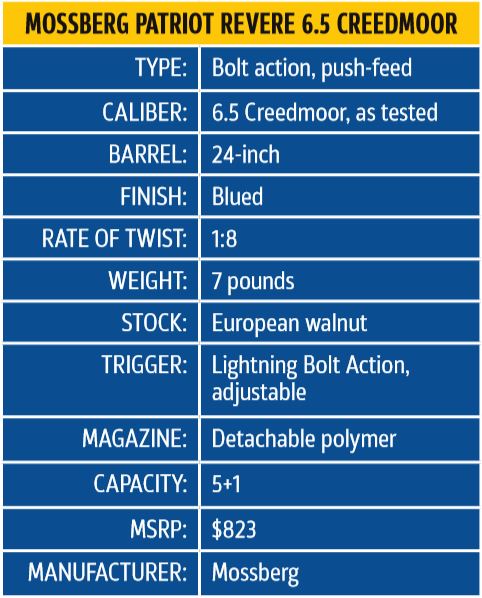
Chambered in 6.5 Creedmoor, Mossberg’s Patriot Revere rifle combines old-school good looks with high-ballistic-coefficient performance — at a price the masses can afford.
What makes the Mossbert Patriot Revere Stand Out Among Bolt-Actions:
European walnut stock.
Laser-cut checkering.
Rosewood grip cap and forend tip.
Flutted bolt.
Lightning Bolt-Action trigger.
MSRP of $823
There’s something special about hunting rifles made of polished, blued steel and high-grade walnut stocks executed in the classic fashion. That combination goes together like a warm campfire and a fine, single-malt whisky, and it’s increasingly difficult to find in factory production rifles.
In a market dominated by ubiquitous black synthetic stocks and a rush to embrace all things tacticool, such rifles evoke a more genteel time when custom stock makers were much in demand and their products were viewed not just as functional tools, but as works of art.
Today, regrettably, such rifles often come with hefty price tags. Mossberg has challenged that status quo with the Patriot Revere, one of the newest — and nicest — versions of the company’s affordable Patriot line of rifles. The Revere has been around for a couple of years now, but it was newly chambered for the 6.5 Creedmoor for 2018, creating what may be a nearly perfect blend of old and new. Perhaps the most remarkable thing about the eye-catching Revere is the fact that Mossberg brought it to market at a price that’s well below the cost of most similarly appointed guns — and below the price of wood-stocked flagship models from the likes of Remington, Ruger and Winchester.
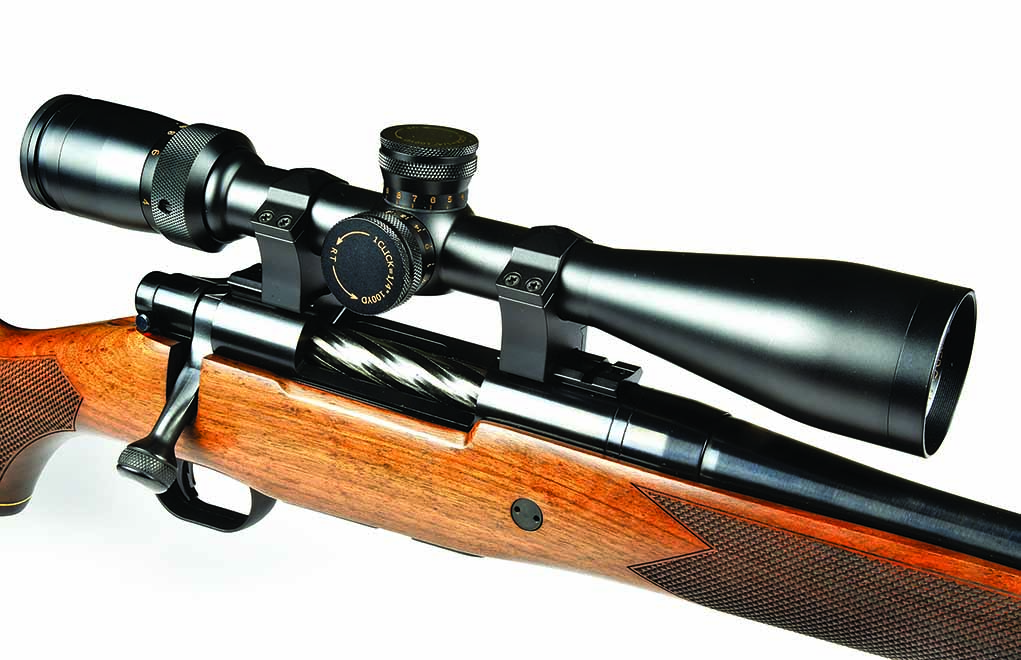
The rifle’s design is a mix of old-school good looks and contemporary features, such as a spiral-fluted bolt and detachable magazine.
While Patriot rifles are generally thought of as economy rifles, with a MSRP starting at $441 for the synthetic-stocked Predator model, the Revere represents the top of the line. Even a cursory glance tells you the Revere is a cut above the norm, and a rifle that any hunter should be proud to own. It has a MSRP of just $823. With a real-world price below that, here’s a closer look at what you’ll get for your money.
Head-Turning Good Looks
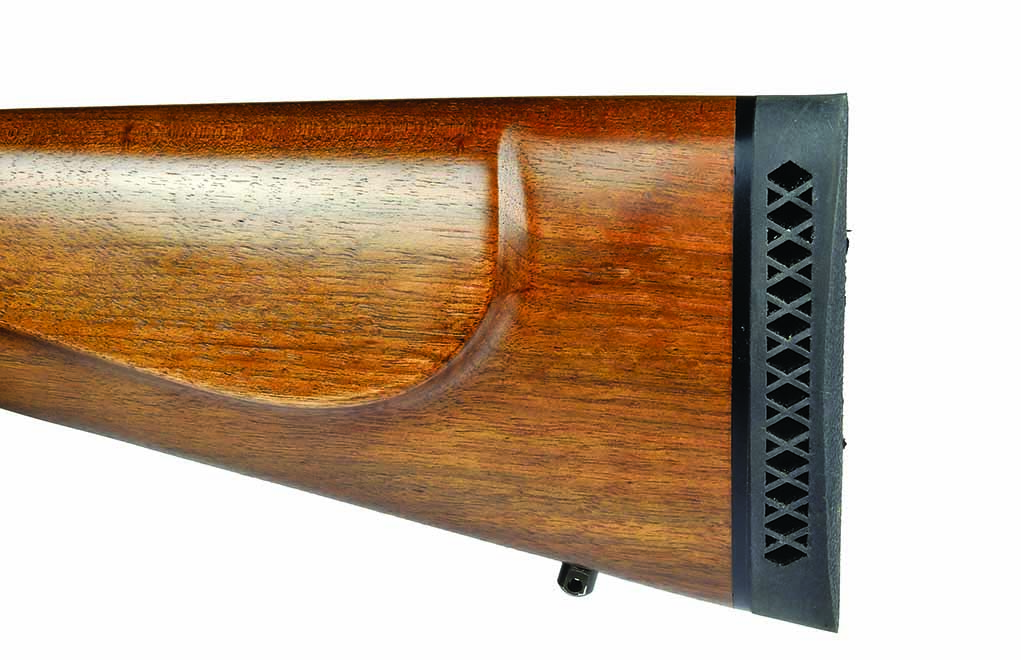
The first thing you’ll notice about the Revere is its oil-finished European walnut stock, of a grade Mossberg calls Premier 2.0, which is a definite step up from wood stocks found on most factory production rifles these days. It has fine-line, laser-cut checkering on the grip and forend, and it’s adorned with a rosewood grip cap and forend tip. These are nicely set off by thin, contrasting maple spacers. It also has a very well-fitted ¾-inch recoil pad set behind a black spacer.
A two-position safety does not lock the bolt down when the safety is engaged.
The net result is a decidedly retro look matched to a stock design with clean, straight lines. In this regard, it seems to borrow a bit from Winchester, Weatherby and Remington rifles of yesteryear. If those firearms contributed their DNA to a bullet-slinging offspring, I imagine this is what it would look like.
A machined, tubular receiver is mated to a 24-inch sporter-profile barrel. Both have a lustrous, deep blue finish. The barrel has a recessed target-style crown not always seen on rifles in this price category. Mounting scopes is a cinch because the rifle ships from the factory with Weaver-style bases already installed.
For testing, the author used a Weaver Super Slam 2-10X42mm riflescope. It was a cinch for the author to mount as the rifle came with Weaver-style bases installed.
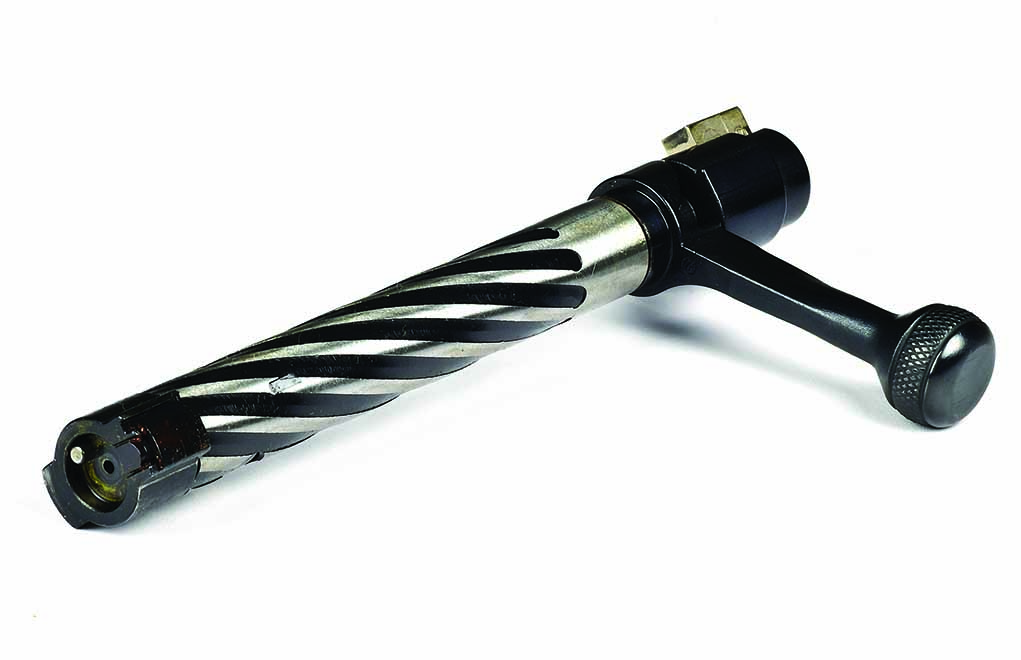
In a nod to contemporary styling, the bolt has deeply cut, elegant black spiral flutes. The bolt fluting is aesthetically pleasing to my eye, but it also has a couple of practical benefits: Reducing weight is one, and the other is an exceptionally slick-cycling bolt. It is, in a word, smooth. The bolt is not a one-piece design. Rather, it is assembled from three components: the handle, body and head. The bolt head, which uses two substantial locking lugs, has a traditional plunger ejector and Sako-style extractor. The bolt handle is knurled for a firm grip.
This brings us to one component of the rifle I was somewhat less-than-pleased with: The bottom metal isn’t metal. It’s polymer. I know that’s part of the reason Mossberg can price the rifle so affordably, but I found myself wishing the company could have gone the extra step and used metal, even if it did add a bit of cost and weight to a 7-pound rifle.
A two-position safety does not lock the bolt down when the safety is engaged.
You’ll also find a polymer component sliding into the bottom of the action in the form of a detachable box magazine. While I would’ve been perfectly happy with a hinged metal-floorplate magazine design, I generally prefer detachable magazines to be of the metal variety. Lest I be accused of succumbing to grouchy old hunter syndrome, I do recognize the weight-saving properties and durability of current-generation polymer magazines. I just prefer metal as a purely personal preference.
The magazine clicks firmly into place in the magazine well and drops freely into the hand when you operate the magazine release lever, which is protected against accidental tripping by being recessed into the bottom of the stock.
The bolt, assembled from three pieces, has two substantial locking lugs and deep spiral fluting. Cycling is exceptionally smooth.
The magazine well is also made of polymer, and extends on its top side into two tabs, which actually form part of the bedding system for the rifle as the action screws pass through these tabs to secure the action to the stock of the rifle.
The Savage-esque LBA (Lightning Bolt Action) trigger on the Revere had just a hint of barely-noticeable creep, but it didn’t bother me because it was predictable and consistent. Don’t take that as a criticism, for it’s still a much nicer trigger than many found on guns in this price range. Although you can adjust the trigger within a pull-weight range of 2-7 pounds, I left it as it arrived from the factory for testing. Dry-firing it for the first time, I discovered, with what might have been the sound of the Hallelujah chorus playing in my head, that the trigger broke at an average pull weight of 2 pounds, 9 ounces. I’ve tested far too few factory rifles in the past several years that come with a trigger this good.
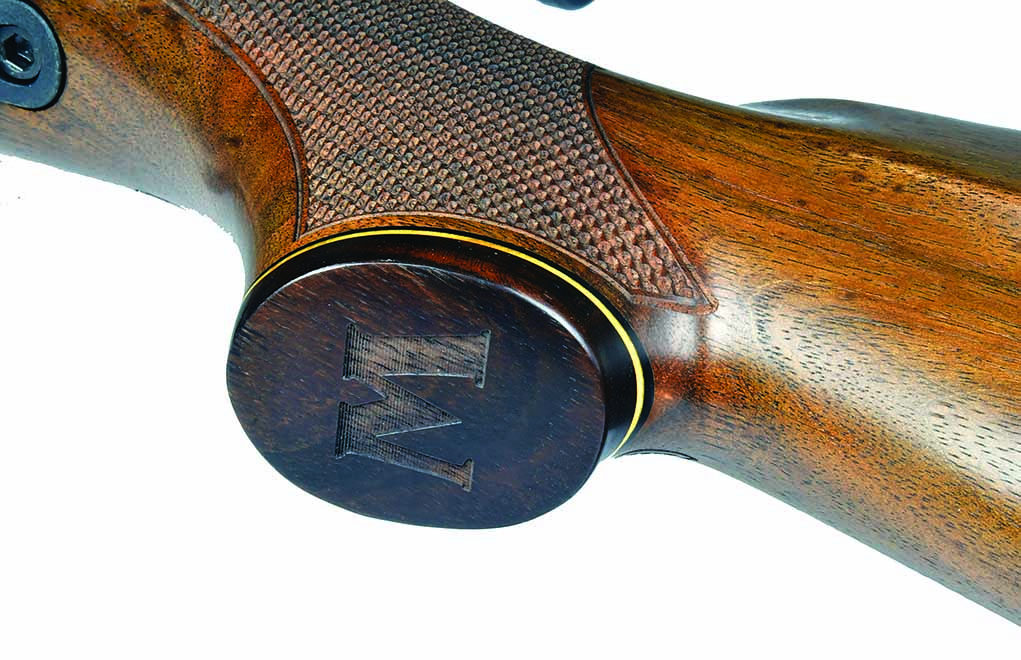
A rosewood grip cap, adorned with an “M,” is fitted to the bottom of the grip.
You’ll find the rifle’s safety lever located on the right side of the receiver just behind the top of the bolt handle, within easy reach of the thumb when the rifle is gripped in a shooting position. The safety is a two-position design and is disengaged when pushed to the forward “fire” position. When the safety is engaged, in the rearward position, the bolt is not locked down. This allows you to cycle rounds through the action with the safety in the “on” position.
Functionally, everything on the rifle worked exactly as it should. Operation was instinctive and automatic, as it should be with any good rifle. I found it easy to load rounds into the magazine, and they fed, fired, extracted and ejected without skipping a beat.
Performance When It Counts
All things considered, the Revere is a great-looking rifle that you can buy at a great price. But would its beauty prove to be more than skin-deep? To find out, I mounted atop the rifle an old favorite, a Weaver Super Slam 2-10x42mm rifle scope, which I’ve long favored for testing rifles with great confidence that the scope will hold up to sustained shooting sessions.
A ¾-inch recoil pad, bordered by a black spacer, is precisely fit to the stock of the rifle.
Since the rifle is purely designed for hunters, I tested it with five different 6.5 Creedmoor factory hunting loads, measuring velocities over a Competitive Edge Dynamics M2 chronograph. Velocities were quite close to factory advertised velocities with one exception: The Federal Big Game Trophy Copper 120-grain load stepped out 103 fps faster than the factory number. This was the only load tested with an all-copper bullet, and the Revere didn’t seem overly fond of it, turning in average five-shot groups of 1.70 inch.
The rifle did better with the other four tested loads, producing average groups of under an inch and a half, with best groups running just slightly over an inch. The best performance was with the hottest round tested, Hornady’s Superformance load with a 129-grain SST bullet, which clocked in at 2,953 fps. Average groups with this load were 1.23 inch, with a best group of 1.13 inch. Two other tested loads matched that best-group size exactly.
But these five-shot groups only tell part of the story. The rifle had a pronounced tendency to group the first three shots in a string tightly, with shots four and five opening groups up a bit, which is to be expected with a sporter-weight barrel as it heats up.
To satisfy my curiosity, I took note of where the first three shots went in each group. Measuring only these, four out of five tested loads produced sub-MOA average results, with best groups for those loads running under half an inch. That’s the kind of accuracy I’ve come to expect with good rifles chambered for the inherently accurate 6.5 Creedmoor cartridge, and it’s all the accuracy you should ever need in a hunting rifle.
In a lifetime of hunting, I can’t ever recall encountering a deer dumb enough to hang around while someone shot at it five times. It’s the first shot that counts, and sometimes the second — but if you haven’t dropped that buck with the third shot, I’d wager you won’t do it with the fifth.
With a competent shooter behind the trigger, the Patriot Revere will perform when it counts, and look great doing so.
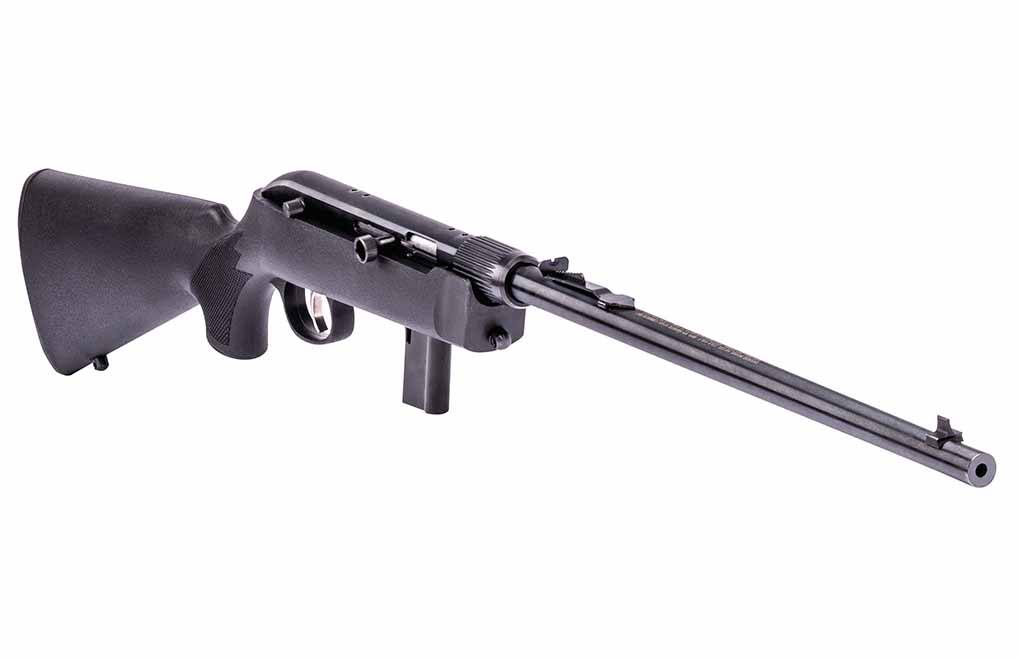
Priced right, Savage’s 64 Takedown offers a solid entry point for this style of rifle.
What the 64 Takedown brings to the table:
Reliable, semi-automatic takedown 22 LR.
16 ½-inch matte black carbon steel barrel.
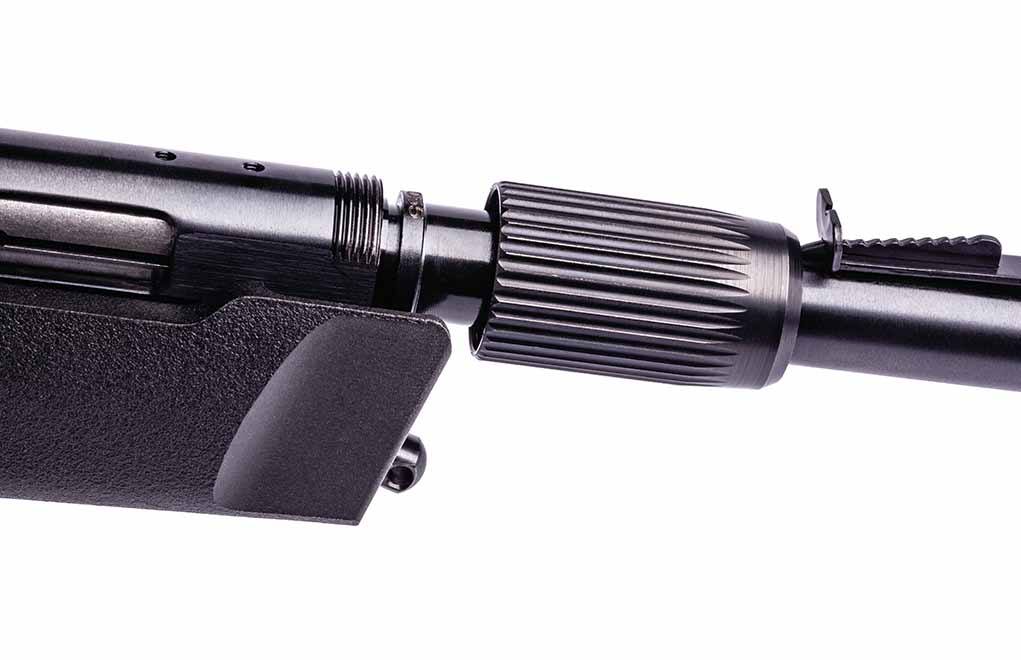
Barrel nut allows easy disassembly.
Includes Uncle Mike’s Bug-Out Bag.
10-round detachable box magazine.
Black matte synthetic stock.
Drilled and tapped receiver for scope mounts.
Available in right and left-hand models.
Historically, one of the most affordable rimfire rifles, the Model 64 has also proven among the most popular. Really, Savage Arms offers a deal most can’t refuse, pricing the semi-auto well under the $300 mark. Honestly, nearly any shooter can afford to add one to their collection, and still have ample funds for a mountain of ammunition.
If price alone hasn’t turned your head to the 64, the latest addition to the line might do the trick, particularly if you have an itch for a takedown rifle. Recently introduced, the 64 Takedown offers shooters a convenient and affordable option in this handy style of rifle. Coming in with an MSRP of $249, it easily ranks as one of the most affordable takedowns presently available. But it doesn’t stand on its near rock-bottom price alone.
Savage Arms has whipped up what appears a solid system in the 64 Takedown, with the rimfire hitting all the right notes for this style of rifle. Chief among its assets, a straightforward and reliable takedown system. Taking down the rifle is simplicity itself, thanks to a well-knurled barrel nut, which only requires a couple twists to remove or install the 16.5-inch barrel. Furthermore, the gunmaker has made the 64 Takedown ready for action the minute the barrel goes on, placing both the front and rear sights on the barrel, so you never lose your zero. Same goes if you scope it, as it is drilled and tapped completely on the receiver.
When together, the rifle measures 36.25-inches long, and takes down to half that size, which is ideal. At this size, the 64 Takedown is a legitimate backpack gun for your next backcountry adventure or the perfect little something at the ready in your truck cab. But for the sake of simplicity, Savage includes an Uncle Mike’s Bug-Out Bag with the gun, just in case you don’t have anything handy to tote it around.
Presently only offered in .22 LR, the rifle feeds off Model 64 detachable box magazines, nice given their availability. Additionally, it’s available in both left- and right-hand models.
For more information on the 64 Takedown, please visit www.savagearms.com.
An advanced operating system and fully modular, the SIG Sauer MPX remains a top AR-style pistol option.
When you think about it, AR-style pistols make a world of sense. Nimble, shootable, in potent calibers, with plenty of firepower on tap, the platform outguns nearly any other pistol it might run up against in a close-quarters situation. About the only hitch in its giddyap is concealability, there’s always a tradeoff somewhere.
The market for these short and wicked guns has flourished in the recent decade, with a multitude of configurations available to suit any number of operations. But, by far, SIG Sauer’s MPX Pistol proves one of the coolest – not to mention most practical – out there. A rock-solid operating system and an intuitive design, the AR-style pistol is meant to milk the most out of the platform, with the utmost ease.
More Gun Digest Videos:
The Elegant Power Of The Ruger Blackhawk Bisley .45 Colt
At the heart of the original MPX and next-generation Copperhead MPX is a short-stroke gas-piston operating system. Rare among pistol-caliber carbines – the MPX is a 9mm – it tames the recoil to a mere suggestion, compared to a simple blow-back gun. In turn, even without a brace, the pistol maintains incredible shot-to-shot accuracy that, for the most part, is presently unparalleled. Not to mention, the system fires fully closed with a locking rotating bolt, as you’d expect from a modern gun.
Furthermore, SIG took the time to make the MPX as shooter friendly as possible. Obviously, there are the familiar AR controls, making it second nature to operate if you have any familiarity with the long gun. But a bit more nuanced are the little extras, such as a hand stop – which should be standard issue on any AR-style pistol, but sadly isn’t.
Overall, the SIG Sauer MPX takes the AR-style pistol to another level – both the original and Copperhead. The only question remains is, do you have what it takes to get the most out of the gun?
For more information on SIG’s MPX, please visit www.sigsauer.com.
Uberti USA pays homage to two of the greatest gunslingers of the Old West with the Bonney 1873 Cattleman and Wild Bill 1851 Navy Conversion.
How Uberti USA’s new revolvers bring the Old West alive:
Bonney is a replica of the 1873 Single-Action Army Billy the Kid favored.
Wild Bill is an 1851 Navy Conversion, close to what Hickok carried.
Both have color-case hardened frames.
Each shoots modern smokeless ammunition.
The Old West continues to capture the imagination, especially if you’re a gun guy. Certainly, we’ve come a long way since the single-action army revolver and black powder, most definitely for the better. That said, those old six-shooters still get the heart thumping.
Uberti USA Bonney 1873 Single-Action Cattleman
That’s certainly the case with two revolvers Uberti USA introduced recently to its limited-edition Outlaws & Lawmen Series. An homage to two of the West’s greatest gunslingers – William Bonney (AKA Billy the Kid) and Wild Bill Hickok – the Bonney 1873 Cattleman and Wild Bill 1851 Navy Conversion are lookers and shooters. To boot, they’d likely be favored by their namesakes, if they were around today. After all, Billy was known to carry a Colt Single-Action Army and Hickok’s Navy Revolvers were famous – though he favored the original cap-and-ball model.
Built to handle modern ammunition, the Bonney is chambered .45 Long Colt and the Wild Bill .38 Special. The revolvers come in relatively affordable, the Cattleman with an MSRP of $799 and the Navy $809.
More from Uberti USA:
ACCOKEEK, Md. (January 22, 2019) – The history of the Old West is filled with tales of wild gunfights, mid-day robberies and romance that still captivates us today. Uberti USA brings these memories to light with the extension of their limited-edition Outlaws & Lawmen Series.
Uberti USA pays homage to two of the most famous gunfighters of the Old West with the introduction of the Bonney 1873 Cattleman and Wild Bill 1851 Navy Conversion replica revolvers. The revolvers draw inspiration from William “Billy the Kid” Bonney and James Butler “Wild Bill” Hickok.
The legend of Billy the Kid has been a cornerstone of Old West lore since Bonney met his demise at the hands of Lincoln County Sherriff Pat Garrett in 1881. Throughout most of Bonney’s notorious life as a gunfighter, the young shooter carried an 1873 Colt Single Action Army revolver. This ubiquitous revolver was holstered on Bonney’s belt in the only known image ever taken of the outlaw. Known as The Peacemaker, the iconic revolver is known as “The Gun That Won the West.”
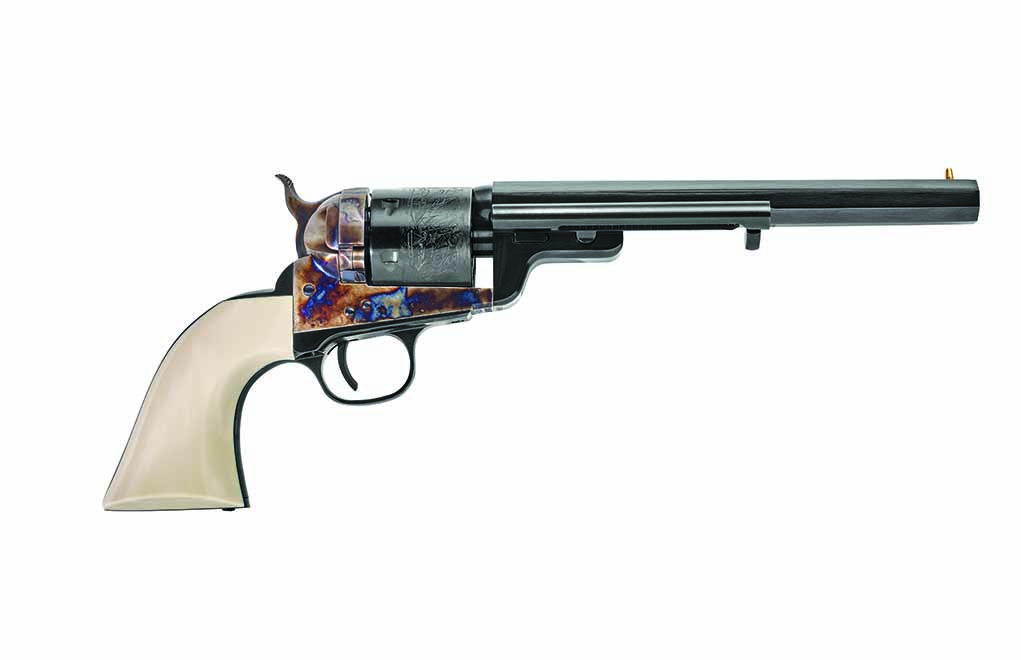
Uberti USA Wild Bill 1851 Navy Conversion.
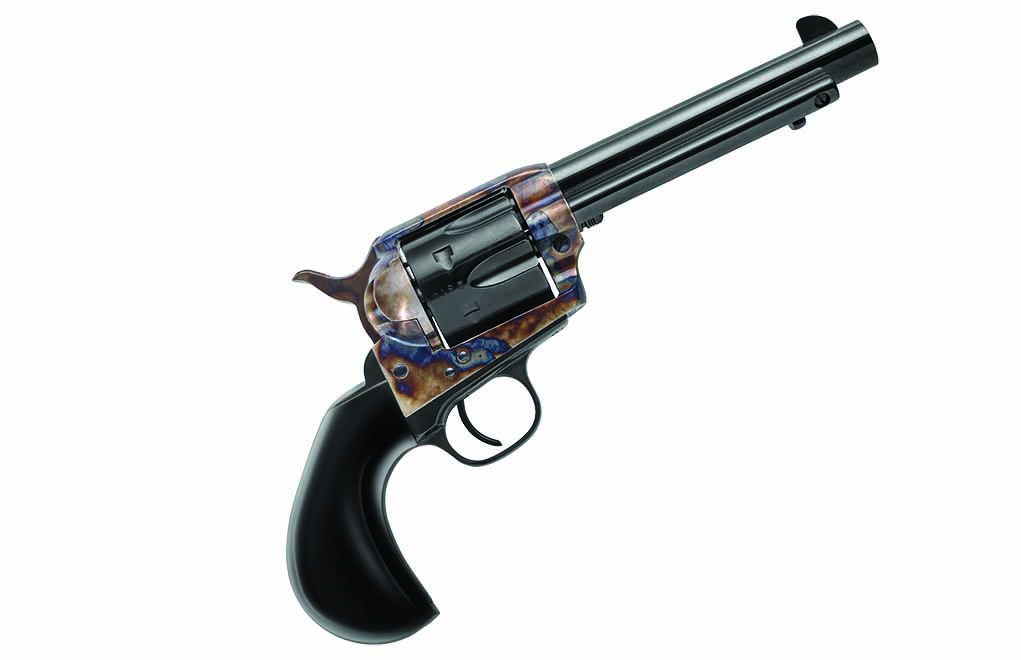
Chambered in .45 Long Colt, the Bonney 1873 Cattleman features a simulated bison horn bird’s head grip, color case frame and blued steel barrel measuring 5 ½ inches. The six-shot weighs in at 2.3 pounds and has an overall length of 11 inches. The Bonney 1873 Cattleman gives Old West fans a way to relive the wild times of the West with a revolver that looks as good as it shoots.
Wild Bill Hickok made a name for himself as a soldier, scout, lawman and expert marksman. He was rarely seen without his two muzzle-loading, ivory-handled 1851 Navy Revolvers. Uberti USA pays tribute to the legacy of Wild Bill Hickok with the 1851 Navy Conversion, which is more practically chambered for the easily available .38 special.
The Wild Bill 1851 Navy Conversion captures the romance of the Wild West with a simulated ivory grip, 6-shot engraved cylinder, color case frame and 7 1/2-inch blued steel barrel. Overall length comes in at 13 inches and with a weight of 2.7 pounds. The form and function of the Wild Bill 1851 Navy Conversion delivers nostalgia of the days where a dependable revolver might be the only thing between life and death during the harsh days of the Old West.
Uberti USA Outlaws & Lawmen Series Extensions
Bonney – 1873 Single Action Cattleman Caliber: .45 Long Colt. Barrel Length: 5.5 inches. Overall Length: 11 inches. Overall Weight: 2.3 lbs. Grip: Simulated bison horn bird’s head. Finish: Blued steel/color case. Cylinder: 6-shot, fluted. Number of Grooves: 6. Rate of Twist: 1:16 RH. Warranty: 5 years. MSRP: $799.
Wild Bill – 1851 Navy Conversion Caliber: .38 special. Barrel Length: 7.5 inches. Overall Length: 13 inches. Overall Weight: 2.7 lbs. Grip: Simulated ivory. Finish: Blued steel/color case. Cylinder: 6-shot. Number of Grooves: 6. Rate of Twist: 1:18.75 RH. Warranty: 5 years. MSRP: $809.
For more information on the Bonney and Wild Bill, please visit www.uberti-usa.com.
Looking to go armed, but are stuck in the weeds as to what to arm yourself with? Here are 20 of the best concealed carry gun options that will keep you on the defensive.