Home Blog Page 185

Which Focal Plane Is Right For You?

0

Choosing the right riflescope can be challenging. One of the first decisions you must make is deciding between a first or second focal plane scope.

What are the fine points of focal plane selection?

If you’ve been shopping for a new scope, you’ve likely been bombarded with terms and features that you never knew existed — or at the very least, you’re not sure which options are right for you. Don’t fret: While gun-mounted optics have gotten very good the past few years to keep pace with the precision rifle trend, the terminology has certainly gotten a bit out of hand.
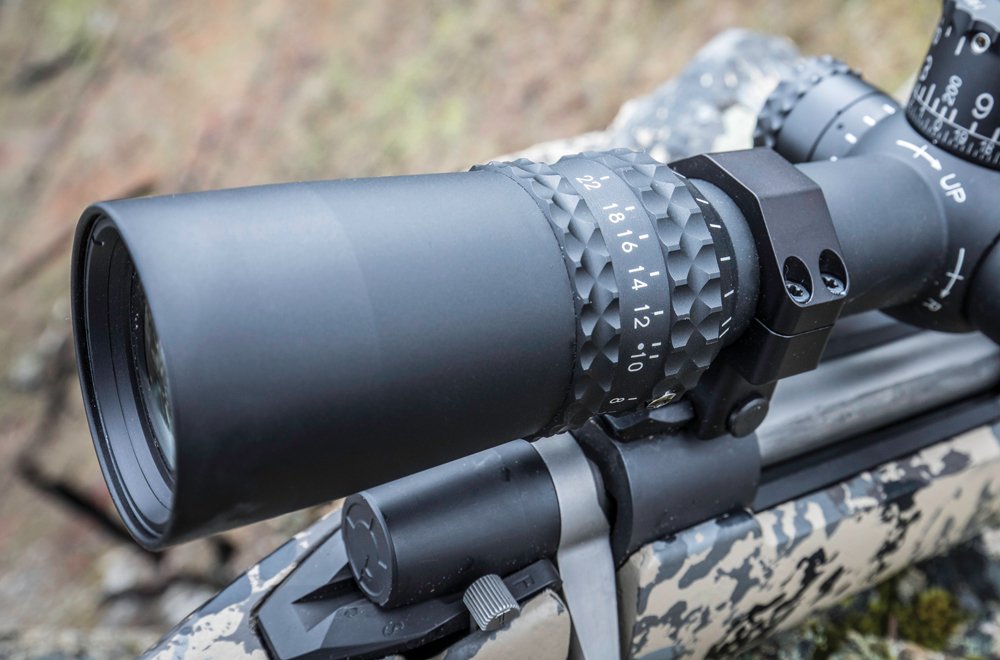
focal plane -first

One of the more common options available that causes some confusion for shooters is determining which focal plane scope you should get — either first focal plane (FFP) or second focal plane (SFP).

What Is The Focal Plane?

If the scope you’re looking at has an adjustable magnification, then the scope’s reticle appears either in the first or second focal plane. This will make a difference in how the reticle appears with different image sizes as the magnification changes. It’ll also affect the overall construction and cost of the rifle scope.

Second Focal Plane

Let’s start with the second focal plane classification first — after all, it’s the most common option, and it has been around the longest. Yes, second was first.

A second focal plane scope’s magnification adjustment changes only the size of the target’s image inside your scope. Put another way, the reticle stays the same size throughout the magnification range.

If the scope’s features don’t list which type of scope you’re looking at, then it’s very likely a second focal plane scope, as these are the most common. This is how most scopes adjust — especially consumer-grade hunting scopes.

This is a very popular option these days for two main reasons:

First, the scope is easier, and therefore cheaper, to make. With the reticle’s image staying the same size, there are fewer moving pieces inside of the scope. This not only makes it easier because there are fewer parts to worry about, it’s also easier to make the riflescope more consistent and robust.

Second, the reticle can be finer/thinner at high magnification. A finer/thinner reticle is preferred (as long as it’s thick enough to be seen, obviously) because it doesn’t obscure the target and it can allow for a more precise aiming point.

A fine/thin reticle at a high magnification setting might be too small to see if it also adjusted smaller with the target’s image. This kind of scope’s reticles are simple: What you see is what you get — regardless of the magnification setting — because it stays the same size/thickness throughout the magnification range.
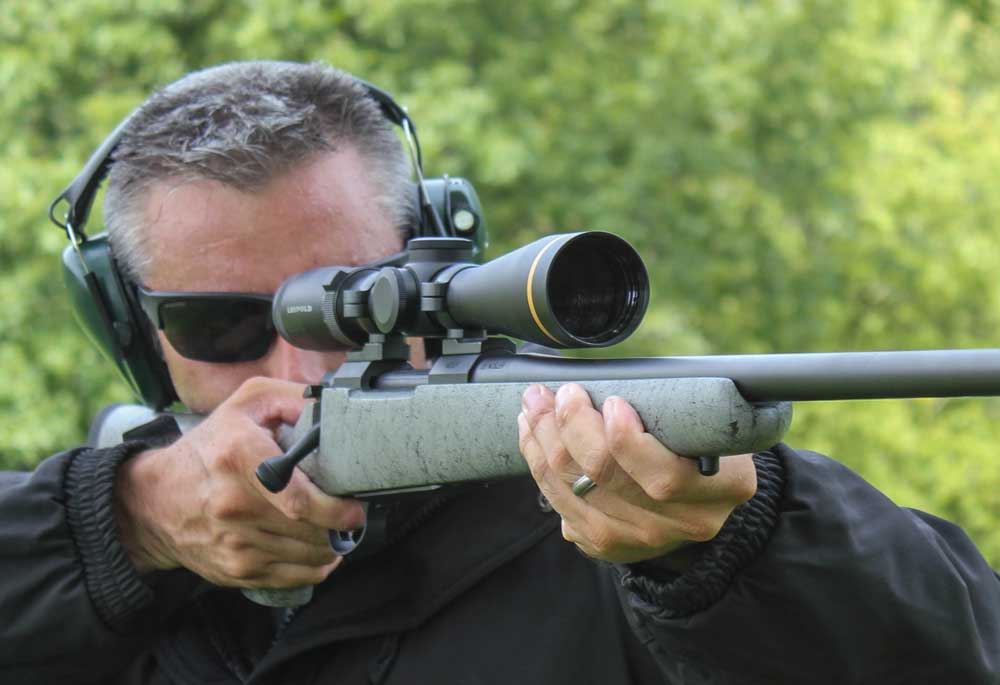
Riflescopes-1 - focal plane

All that said, this feature is also a drawback with certain reticle designs.

If you’re using a simple crosshair or duplex-style reticle, a second focal plane riflescope is preferred. However, if you have a reticle with markings that correspond to certain measurements or adjustments at certain distances (holdover or windage hashes), you might want the reticle to adjust in size along with the target so that the markings are accurate at any magnification setting you use.

You can still use this type of scope with a reticle with markings; however, you must be very careful to ensure that you are only using the markings on the “correct” magnification setting to maintain their calibration.

On most second focal plane scopes with graduated reticles, the markings only equate to certain measurements at the scope’s highest power. After all, that’s the power setting that you’ll likely be using when trying to measure a target or when using “holds” for a long shot.

However, you must read your scope’s manual. Some second focal plane scope’s markings are set to a specific power that isn’t the highest available and is instead marked with a dot (or other marking) on the scope’s adjustment ring.

Also, some manufacturers do the math for you and will let you know what the markings on the reticle equate to at lower settings. Here’s a hint: The smaller the image is in relation to the static reticle, the larger amount each marking will cover.

First Focal Plane

First focal plane scopes are becoming more popular all the time, especially with advanced reticles that have multiple markings for measurement and adjustment.

A first focal plane scope adjusts both the reticle and the target image together with changes in magnification.

It’s a safe bet to assume that this style of scope will be more expensive than its second focal plane counterpart. This is because greater tolerances and care are needed to make the first focal plane riflescope function properly.

There is simply no need to have this kind of scope unless your reticle has markings that should correspond to a certain size at a certain distance. And, even if you do have a marked reticle, a first focal plane scope isn’t necessary, although it sure can be handy.
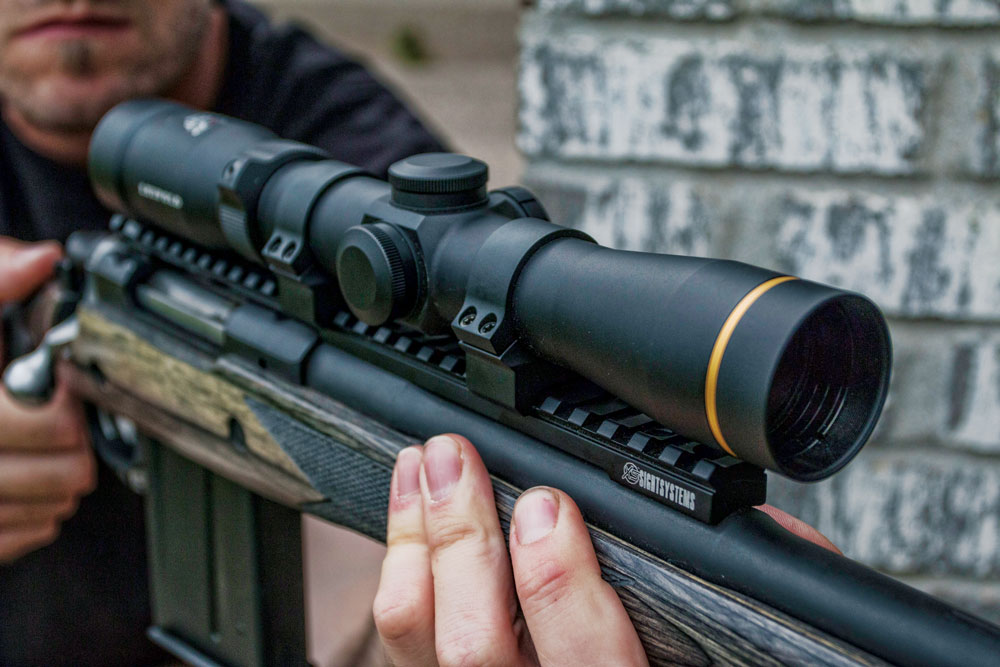
Leupold-Scout-Scope-FireDot-1 - focal plane

Regardless of the magnification setting, a 1-mil mark (for example) will always be 1 mil on the target. This is a nice feature because I’m a fan of shooting at lower magnification (try it sometime and watch your groups get better). Lower magnification can not only help with better shooting, it can also allow you to see more of what’s going on downrange and make shots at moving targets easier. I’ve also seen shooters forget what magnification setting they’re on and miss an otherwise easy shot because they held too far for elevation or windage.

In addition to cost, another potential issue with first focal plane scopes is the thickness of the reticle lines. If they are thin enough to not obscure the target at high magnification, then they can be too thin to clearly see at low magnification. Typically, first focal plane scopes have reticles that are slightly thicker than most shooters would prefer at high power, and conversely, the reticle can be nearly impossible to see at lower power.

Which Is Right For You?

If you’re looking to save money and/or don’t want a reticle with measurement/reference marks (e.g. mil-dot reticles), then you should go with the more common second focal plane riflescope.

However, if you’d like to use marks on a reticle to measure the size of a target when estimating distance or “holding” for elevation and windage, then you might want to consider a first focal plane scope.

If budget is an issue, please consider getting the highest-quality second focal plane scope you can afford, and spend your time mastering shooting your rifle. You’ll be better off doing that than getting a “lesser” scope just to get a first focal plane and skipping spending money on training and practice ammunition.

This is not to say that a first focal plane scope is necessary with reticles with measurement marks. Even if you have a mil-dot reticle, for example, a second focal plane scope might still be right for many people.

If you adjust the magnification down on a second focal plane scope, you simply must remember that the marks will no longer equal the predetermined measurements and instead will be much larger relative to the target.

Editor’s Note: This article originally appeared in the January 2018 issue of Gun Digest the Magazine.
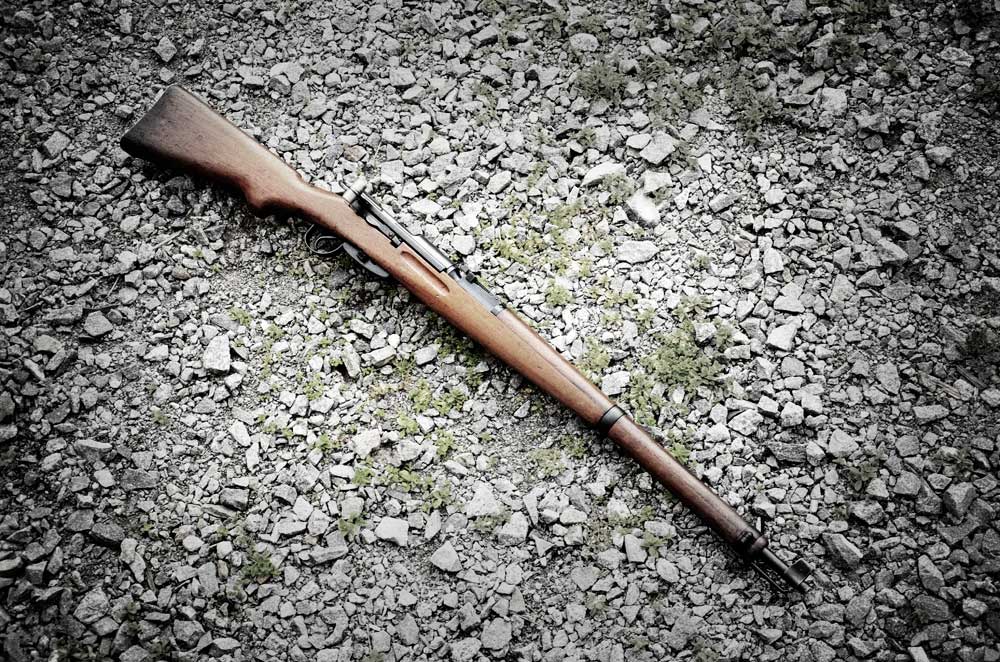
KRISS USA Launches Edelweiss Arms Branch For Antique And C&R Guns

0

KRISS USA has launched a new division — Edelweiss Arms — focused on importing and selling C&R and antique firearms from Switzerland.

What to know about Edelweiss Arms:

  • Launched by KRISS USA on March 1
  • Specializes in the import and sale of Swiss C&R and antique firearms
  • Offers a host of Swiss surplus military rifles (K11, K31 and Schmidt-Rubin)
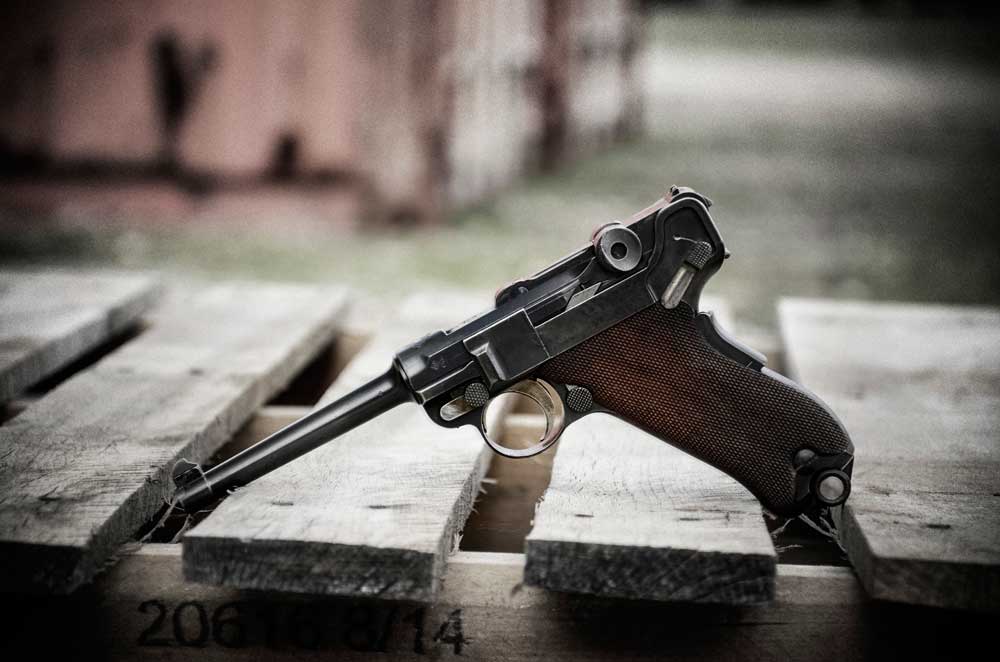
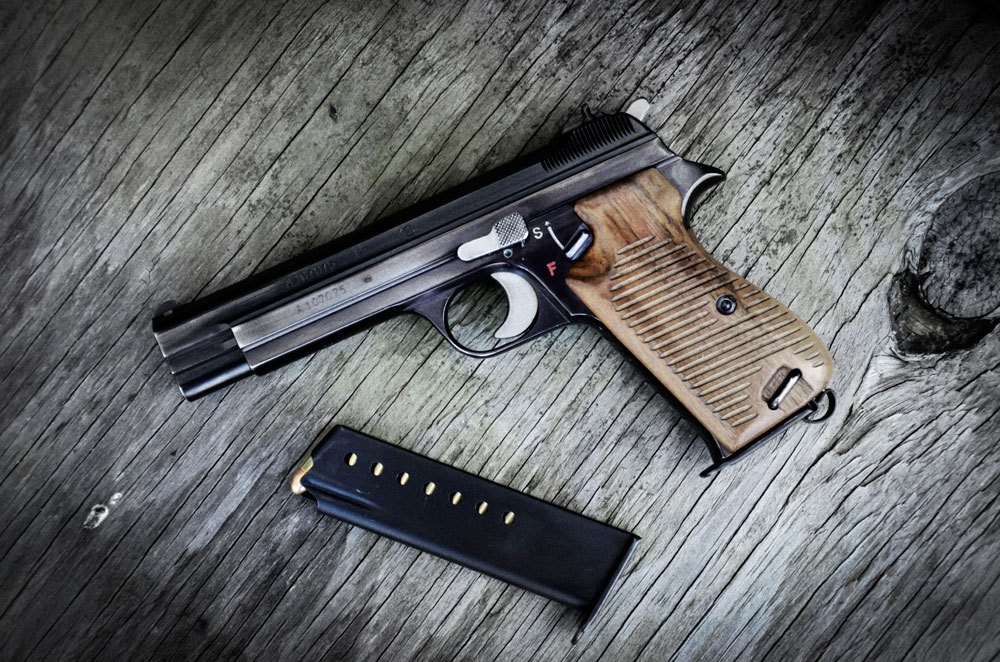
  • Has a number of Swiss pistols and revolvers (Sig P210, P49 military pistols and Lugers)
  • Sources only high grade and historically significant collector firearms
edelweiss arms rifles
Photo: Edelweiss Arms

Fans of classic military firearms are always on the hunt for new sources of collectible rifles, handguns and shotguns. The amount of “new” old guns coming into the U.S. isn’t what it once was, and the prices for some firearms on the surplus market sometimes reflect this. Luckily, these classic firearms fans will now have a new source for curio and relic (C&R) and antique firearms: Edelweiss Arms.

On March 1, KRISS USA, which manufactures the innovative KRISS Vector family of firearms, launched Edelweiss Arms, a new division focusing on the import and sale of C&R and antique firearms — with a special emphasis on Swiss firearms — to collectors in the U.S. According to a release, the direct-to-consumer e-commerce company has a number of strategic partnerships in Switzerland, and throughout Europe, that allows it to source only the highest grade and most historically significant firearms to collectors.

edelweiss arms -03
Photo: Edelweiss Arms

“This is an exciting new venture for our business, and we’re looking forward to providing some value to the collector’s market in the United States,” said KRISS USA Marketing Manager Tim Seargeant. “Edelweiss Arms is positioned to provide the discerning collector in the United States unprecedented access to some of the most pristine condition antique and C&R firearms from Europe. Additionally, our Edelweiss Arms website is designed to streamline the decision making and ordering process to reduce the guess work that is traditionally associated with shopping for collector’s pieces.”

edelweiss arms -01
Photo: Edelweiss Arms

The new Edelweiss Arms website currently lists a host of collectible Swiss firearms. There are a wide variety of K11, K31 and Schmidt-Rubin rifles, as well as collectible Swiss pistols (Luger models, Sig P210s and others). A few revolver models are also listed, as is an impressive Vetterli 1878 .41mm carbine.

For more information, and prices on some of these firearms, check out the Edelweiss Arms website.

New Gun: Daniel Defense Goes Small With DDM4V7 P

0

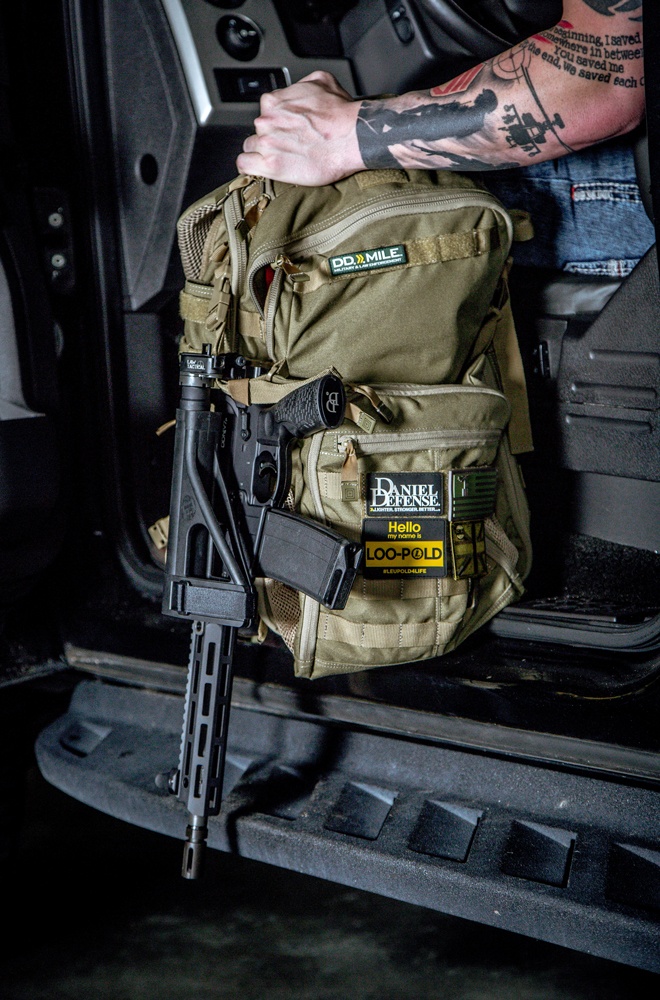
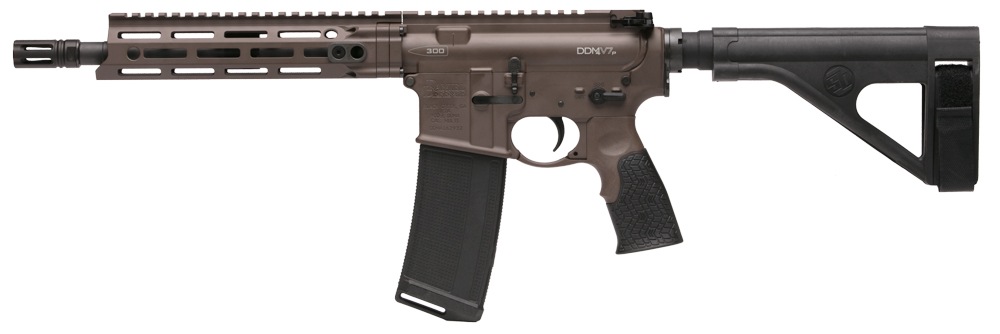
Daniel Defense goes small in a big way with the release of the extensive DDM4V7 P AR-15 pistol line.

What’s the big deal with these new little DDM4V7 P AR pistols?

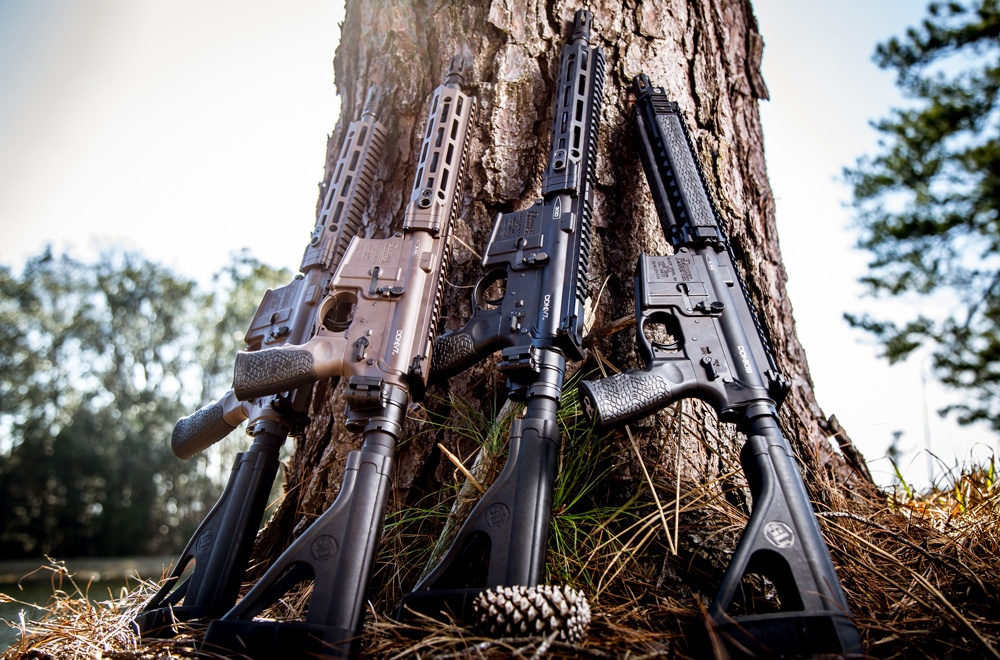
  • The DDM4V7 P measures 28 inches in length.
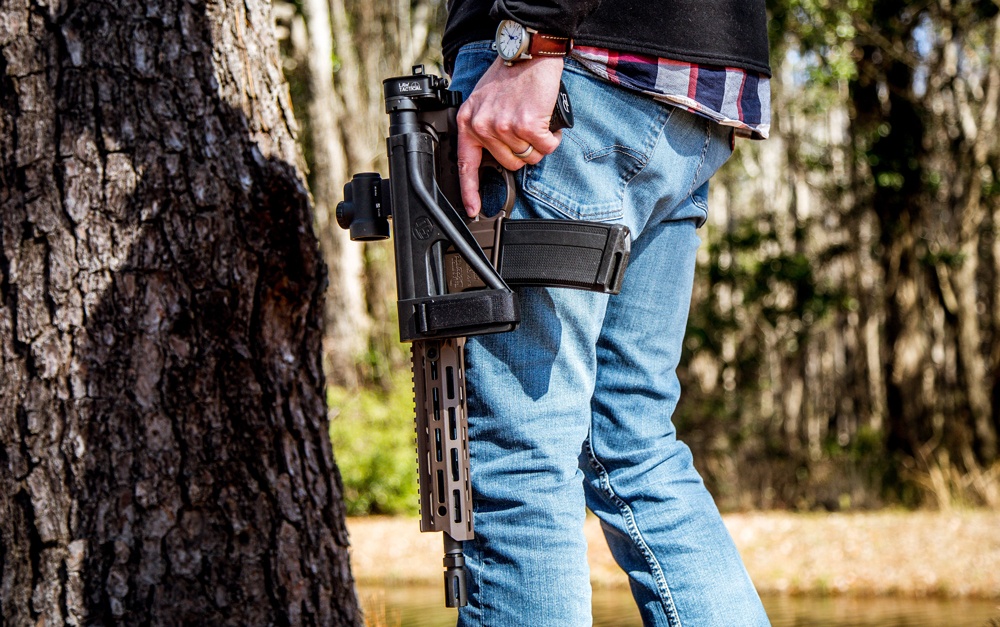
  • It is outfitted with SB Tactical’s SOB Pistol Brace.
  • The pistol has a 10-inch chrome-moly-vanadium barrel.
  • The DDM4V7 P is available in 300 BLK and 5.56 NATO.
  • The Law Tactical models have folding stocks.

The carbine is short, shout and able to dish out hurt even in quarters close enough to give a straightjacket the willies. But is it as good as it gets when it comes to maneuverable rifle-caliber guns, simple as pocket change to tote along?

For the longest time, yes, it was.

DDM4V7 P -fourth

Outside of the odd custom job, if a shooter wanted rifle power in a portable package, the carbine was the way to go. But old Mother Necessity found a way to cater to the select groups who demanded greater compactness than the age-old configuration offered. All the while, skirting those nasty NFA regulations.

It comes as little surprise the answer lay in the gun of a thousand faces — the AR-15. Tinkers and smithies banged together pistol varieties of the platform until the market could no longer ignore the mighty mites of the black-rifle world. Now, it seems, there isn’t a maker worth his salt who doesn’t have at least one pistol model or, at the bare minimum, has flirted with the idea.

Daniel Defense has had dalliances with the design and is again going small in 2018 with the introduction of the DDM4V7 P. Based on the DDM4V7 rifle (the first gun from the company to utilize M-Lok technology), the pistol variation has all the makings of a top-notch truck, backpack or supremely agile home defense option.

Daniel Defense is offering seven variations of the DDM4V7 P, in both 5.56 NATO and 300 Blackout. And while there are some superficial differences between most of the models, at heart they are configured the same, including their defining feature — the pistol brace.

DDM4V7 P -second

In this case, the company has turned to aftermarket specialist SB Tactical for the anchor point. And true to the pistol line’s ethos, Daniel Defense opted for one of the most unobtrusive options — the SOB Brace. This particular model is found on a number of other commercial builds, earning favor with its lightweight and slight width.

The DDM4V7 P itself has the identical 7075-T6 aluminum upper and lower receivers, M4 feed ramp, ambidextrous safety selector and flared magazine well as the rifle series. Additionally, and as expected, the pistols also boast M-Lok handguards — Daniel Defense’s CNC-machined MFR 9.0. The accessory attachment system offers mount points over its entire length of the handguard and at all but the 12 o’clock position. That’s where the full-length rail takes over, ready for the shooter’s choice of optics.

The DDM4V7 P’s barrel is where it parts paths with its rifle brethren, sporting a compact 10-inch cold hammer-forged tube. The chrome-moly-vanadium steel barrel has a S2W profile, is chrome lined and has an 1:7 twist for 5.56 models and 1:8 for 300 BLK. The whole affair is topped off with Daniel Defense’s flash suppressor.

DDM4V7 P -third

While many of the DDM4V7 P variations are twins separated only by finish, there is a notable exception. The Law Tactical models have the added benefit of a folding stock courtesy of, you guessed it, a Law Tactical Folding Stock Adaptor. The system retains the buffer assembly and allows it to swing to the left, downsizing the pistol substantially while retaining access to the trigger.

While the overall AR market (for the moment anyway) has moderated, Daniel Defense still resides at the upper end of the price range. Depending on the variation, the DDM4V7 P models run from $1,679 to $2,110.

Nobody ever claimed small meant cheap.

DDM4V7 P -sixth
Specifications:

DDM4V7 P
Caliber: 5.56 NATO; 300 BLK
Barrel Material: Chrome Moly Vanadium Steel
Barrel Type: Cold Hammer Forged
Barrel Profile: S2W
Rifling Twist: 1:7 in 5.56; 1:8 in 300 BLK
Muzzle Device: DD Improved Flash Suppressor
Overall Length: 28 5/8”
Weight (unloaded): 5.4 lbs
Rail System: MFR 9.0

New Gear: Safariland Releases Two New Holsters

0

Safariland’s newest holsters look to add a level of utility and comfort.

A couple new holsters Safariland has on tap:

At the outset, gear appears fairly straightforward when going armed. Gun, holster, belt — ready to roll. Right? Not always.

Everything from the right gun to proficient ammo to comfortable clothing bedevils armed citizens. These choices are persistent. It’s not uncommon for a seasoned carry veteran to begin tinkering with their everyday rig and end up starting over from scratch.

Of the whole carry rigmarole, holsters are generally the toughest nuts to crack. Even when light-years away from the flimsy nylon gun-show specials, they still might end up in a pile of also-rans if they don’t conceal or aren’t comfortable. It’s a sad truth; no one holster can be all things to all armed citizens.

Luckily, the world does not want in holster options, and thanks to Safariland grew a bit larger recently.

Model 17 and 17T

Safariland Model 17T Holster - holsters
Safariland Model 17T Holster

Ultra-thin and flexible, the Model 17 and 17T offer lightweight and comfortable inside-the-waistband carry. Made of Safariland’s thermo-formed plastic (SafariLaminate), the holsters retain their shape even after the gun is drawn, facilitating safe and quick draw and re-holstering.

The models are identical save one feature, how they attach to a belt. The Model 17 secures via a spring steel clip, while the Model 17T utilizes a cant-adjustable J-Hook. This attachment makes the 17T tuckable, giving shooters another level concealment, especially in lighter clothing. The holsters are also designed to provide excellent retention through a deep contour in the trigger guard.

The Model 17 and 17T have black STX finishes and have fits for Colt, Glock, Ruger, SIG Sauer, Smith & Wesson and Springfield pistols. The holsters are extremely well priced with MSRPs of $38.50.

Model 557 Open-Top

Safariland Model 557 Holster - holsters
Safariland Model 557 Holster

Generally, if a gun is outfitted with a light, it needs a holster tailored to this extra gear. Remove it, then a whole new rig is required.

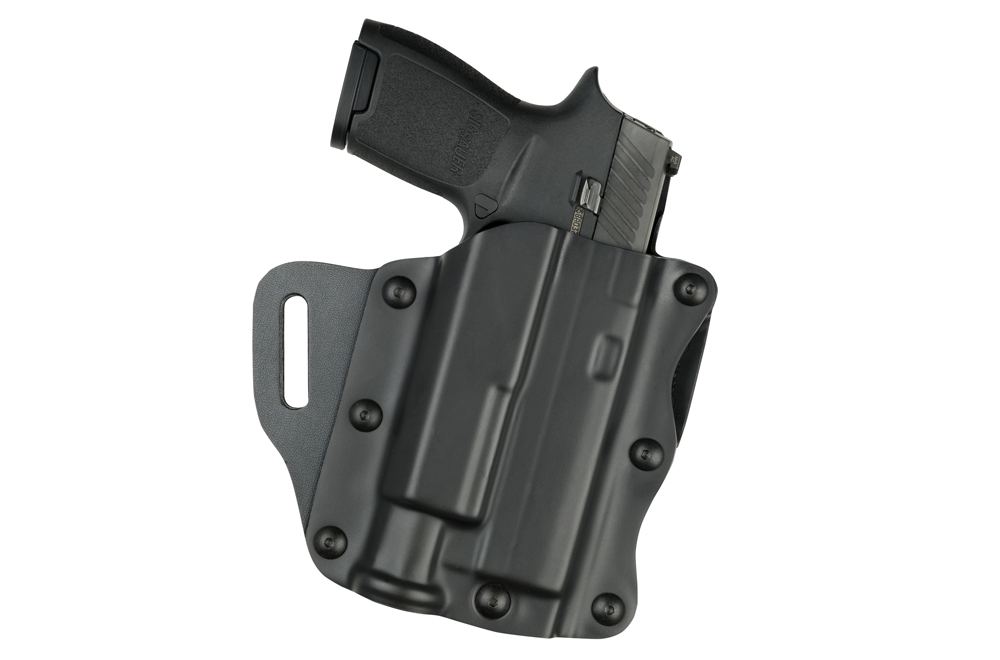
Safariland appears to solve much of this problem with the 557 Open-Top Belt Slide Holster. Constructed from Safariland’s thermo-molded plastic (SafariLaminate), the holster safe keeps a gun with or without its light, without rattling around.

Its low profile makes the outside-the-waistband holster a viable concealed-carry option. And its winged design molds comfortably to the body while providing excellent weight distribution. The holster also features an ejection-port detent that keeps the gun in place when not in use.

The Model 557 works with gun belts 1.5 to 1.75 inches in width and is compatible with a number of popular makes and models of defensive handguns and lights, including: Glock 17/22, 19/23, 34/35, Heckler & Koch P30, Sig Sauer P320, Smith & Wesson M&P 9/40 and Walther P99Q handguns with TLR-1, TLR-1HL, Surefire X200, X300, X300U lights and red dot equipped handguns. The holster is moderately priced with an MSRP of $50.

Gun Review: Walther’s Scaled Down PPQ SC Still Packs A Punch

0

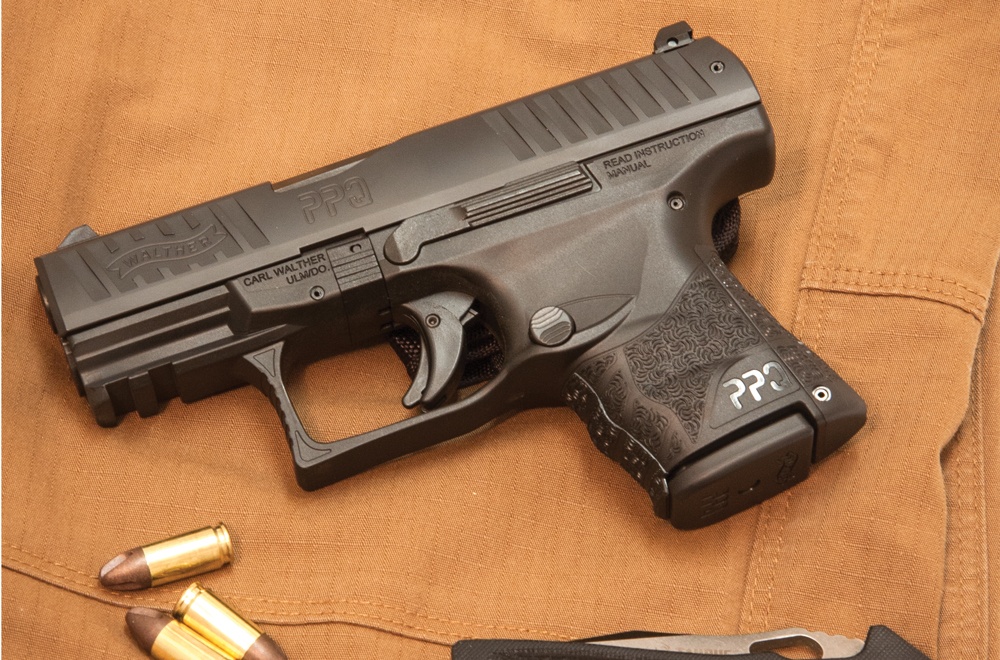
To the delight of Walther fans, the manufacturer has brought out a subcompact version of its classic pistol for 2018 — the PPQ SC.

The big story on the subcompact PPQ SC:

  • The PPQ SC is a scaled-down version of Walther’s popular full-sized PPQ.
  • It has a 3.5-inch 1:10 twist barrel; it’s a full 3 ounces lighter than the PPQ at 21 ounces.
  • It’s overall length is 6.6 inches, height 4.4 inches and width 1.3 inches.
  • It is outfitted with Walther’s exceptional Quick Defense Trigger.
  • The PPQ SC’s MSRP is $649.

Concealed carry has been, and remains, an incredibly hot topic and a very popular segment of the larger overall firearms market. The number of those who carry concealed has continued to grow in recent years, and with the passing of a national concealed carry reciprocity measure in the U.S. House of Representatives in December of last year, the country has perhaps never been closer to seeing such legislation become law.

PPQ-SC-Sixth

This year’s new gun introductions from manufacturers strongly reflect this continued emphasis on the concealed carry market. And Walther Arms is no exception.

At the 2018 SHOT Show, the largest annual trade show for the firearm industry, Walther debuted its brand new PPQ SC (Sub-Compact). As the name suggests, this is a subcompact variant of the manufacturer’s popular striker-fired PPQ pistol. A subcompact PPQ is something fans of the Walther brand and fans of the PPQ have been excitedly anticipating for some time, and it’s sure to carve out a space within an already crowded concealed carry handgun market.

Although its official launch was ahead of the SHOT Show, Walther also held a private media event in Utah back in October of 2017, during which it introduced the PPQ SC to a small group of industry writers and editors. I was fortunate enough to be among those invited to get a firsthand look at the new gun and to participate in a training course put on by Deliberate Dynamics, a veteran-owned tactical gear and equipment company based out of South Salt Lake, Utah, that also offers a host of training programs ranging from basic pistol courses to extreme long-range shooting.

Over the course of 2 days in an old abandoned mining town, which Deliberate Dynamics has repurposed into a full-fledged training ground suitable for a number of disciplines, trainers had us doing everything from basic shooting drills on a static range to live-fire CQB house clearing drills and shooting around cars. But more on that later. For now, a closer look at Walther’s new PPQ SC.

Trimming The Fat

Of course, the major observable change with this pistol — and the one that will be most obvious to shooters — is that it takes the full-size PPQ down to a subcompact level. This is to the benefit of those who carry or those simply looking for a more compact PPQ.

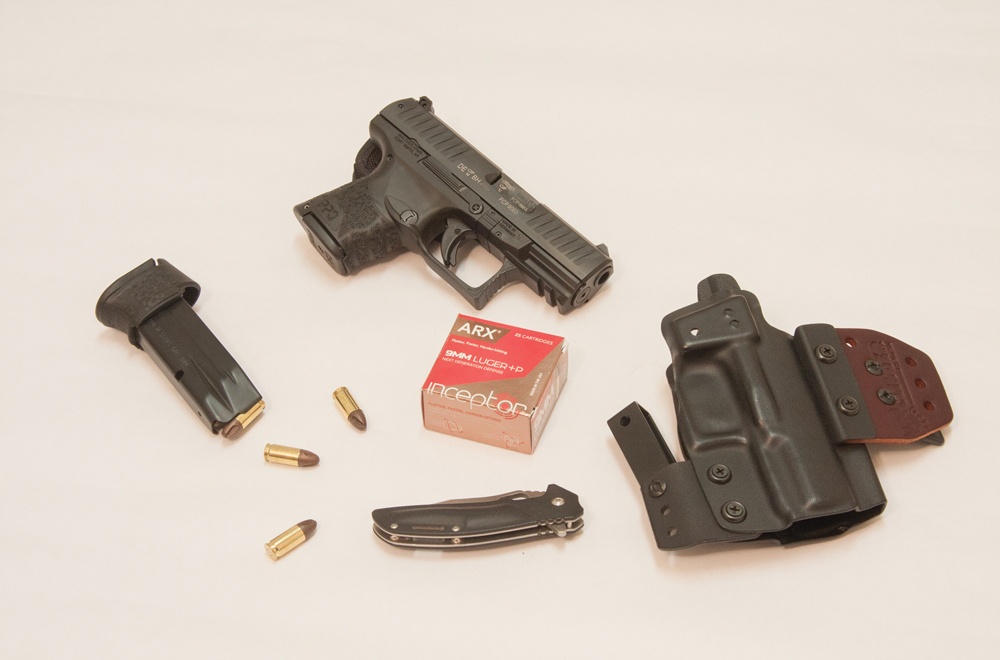
Walther’s new PPQ has the dimensions and the performance capabilities to make it an excellent carry piece. Shown here with Inceptor Ammunition ARX ammo and a Clinger Holsters concealment holster.

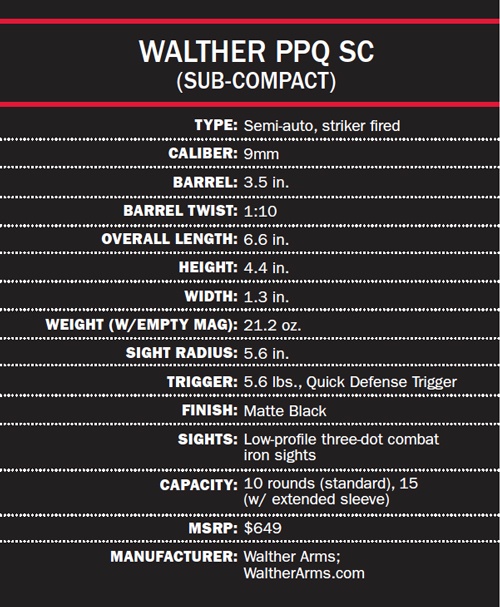
The new PPQ SC has a 3.5-inch barrel with a 1:10 twist rate. It has an overall length of 6.6 inches, a height of 4.4 inches and a width of 1.3 inches.

This shaves off roughly a half-inch in length and about an inch in height from the 9mm PPQ M2 with a 4-inch barrel. The width remains the same across both models. That might not sound like a lot of difference, but any little bit helps when it comes to concealed carry, and the reduction in height is perhaps the most important to prevent printing and keep the gun’s appearance concealed. Obviously, if you compare these figures to the longer 5-inch PPQ M2, they look even more impressive.

In terms of weight, the SC is also cut down here as well. The PPQ SC offers a weight reduction of a little more than 3 ounces, taking the 4-inch PPQ M2 from 24.5 ounces down to 21.2 ounces. Again, it’s not a huge margin, but any weight taken off is good for those carrying a gun all day, every day.

For the sake of comparison, let’s briefly look at some other common subcompacts. The Glock 26 Gen4 is 6.41 inches in overall length, 4.17 inches in height, 1.18 inches in width and weighs 21.71 ounces. The Springfield XD Mod.2 3-inch subcompact is 6.25 inches in length, 4.75 inches in height, 1.19 inches in width and weighs 26 ounces. The Sig P320 subcompact is 6.7 inches long, 4.7 inches in height, 1.3 inches in width and weighs 24.9 ounces.

The PPQ SC falls right in with these figures. It’s the lightest among those listed, and it’s shortest in height with the exception of the G26. The SC is longer than two of those examples, but then again length isn’t always a bad thing, as it also corresponds to a longer sight radius. The PPQ SC’s is 5.6 inches, which is pretty good for a gun designed for carry. I appreciated this during the training event in Utah and in my own independent testing, and I firmly believe it helped me shoot the gun more accurately than I have some other carry guns.

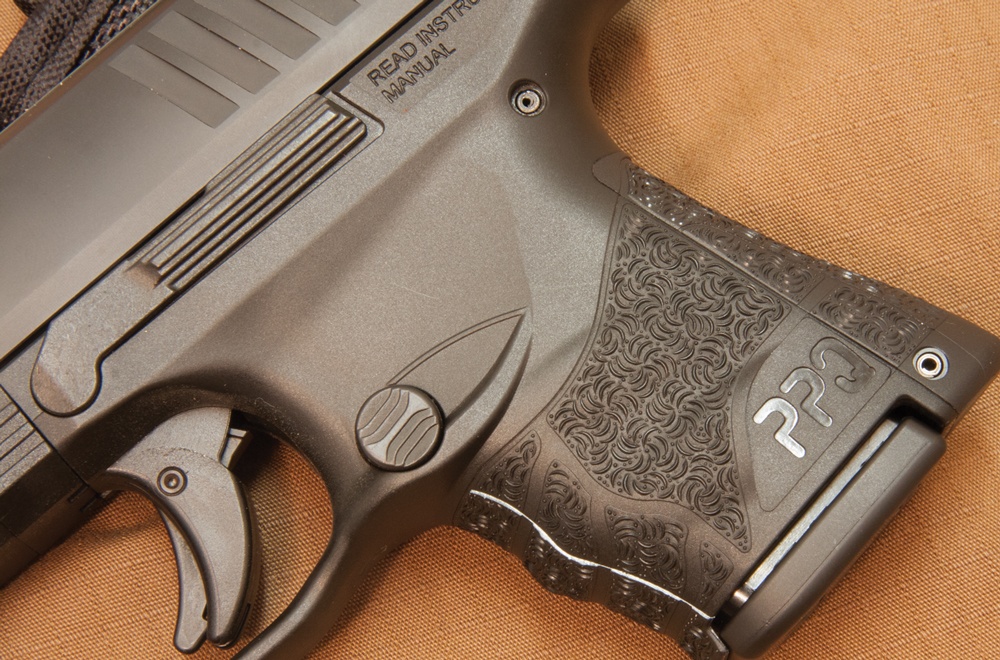
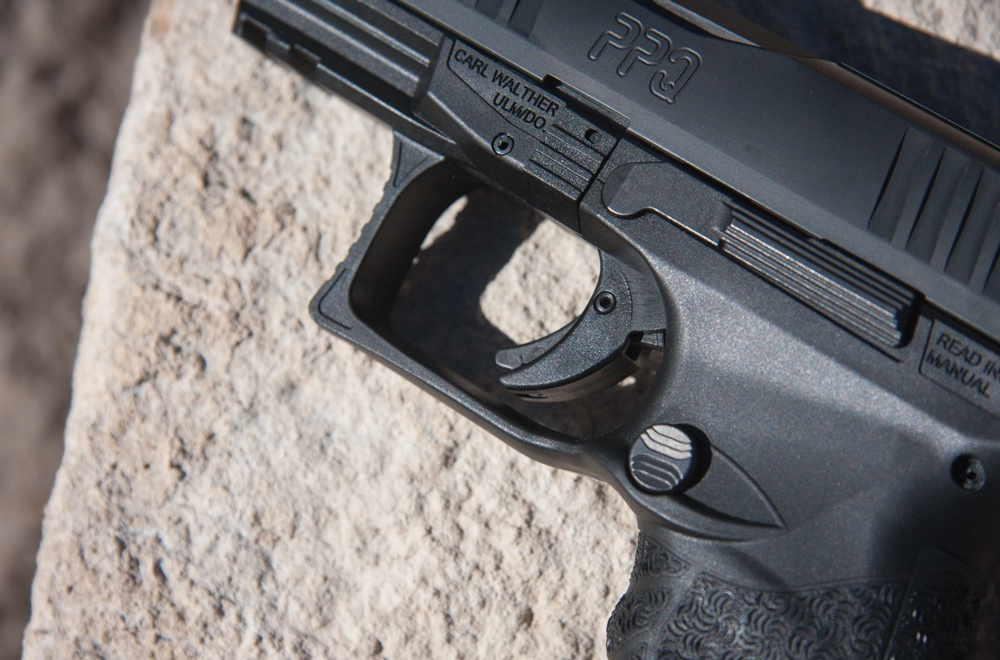
The PPQ SC features Walther’s signature non-slip cross-directional surface texturing on the grip.

Width is also at the higher end of these example guns. Again, this isn’t inherently a bad thing. Guns that are too thin or too small can have a tendency to wiggle about a bit for me. I don’t have ridiculously large hands, but I’ve generally found that I tend to shoot better with guns that more fully fill out the palm of my hand. And I found this to be true with the PPQ SC.

In terms of capacity, Walther’s PPQ SC is also competitive with other double-stack subcompacts. It offers a standard 10-round capacity with a flush-fitting magazine. Walther also provides a 15-round magazine with an extension sleeve. Of course, with that option, you do sacrifice some of the gun’s concealability.

A Strong Family Resemblance

The dimensional changes listed above are great, but it’s also important that they don’t come at the cost of quality or features. From what I can tell having put many hundreds of rounds through the PPQ SC, they have not.

A lot of the things that shooters have come to love about the PPQ are also present in the SC. Probably at the top of most people’s list is the trigger.

Walther’s classic PPQ is renowned for its exceptional trigger in a striker-fired pistol. That same great Quick Defense Trigger is on full display in this new subcompact version.

Like the original PPQ, the Quick Defense Trigger on the new PPQ SC is fantastic.

The PPQ SC’s trigger pull is listed at 5.6 pounds, and the trigger’s travel and reset are stated as 0.4 inch and 0.1 inch, respectively. During testing, this seemed to be more or less confirmed. The trigger pull was smooth, with predictably little travel, and the reset was quick and audible following a shot. As performance figures illustrate, the trigger certainly didn’t seem to hurt my accuracy, and it felt very similar, if not identical, to my experiences shooting a full-size PPQ.

Another one of my favorite things about the PPQ — and something other Walther fans appreciate — is the signature Walther grip ergonomics. This, too, is foremost with the new SC version.

As with the standard PPQ, the subcompact’s grip features a comfortable shape and the signature non-slip cross-directional surface texturing. The texturing makes the gun easy to hold securely, and it avoids moving from “grippy” territory into “abrasive” during those long days at the range. This might just be me, but the PPQ — and the new PPQ SC — also seems to fill my hand perfectly. The finger grooves line up in just the right spot and the texturing feels heavy where it’s needed.

I recognize this may not be the case for everyone, but it’s still something that should be felt for one’s self. And, it’s worth noting that, like the PPQ, the SC’s backstrap is also interchangeable should you find the one from the factory doesn’t fit right.

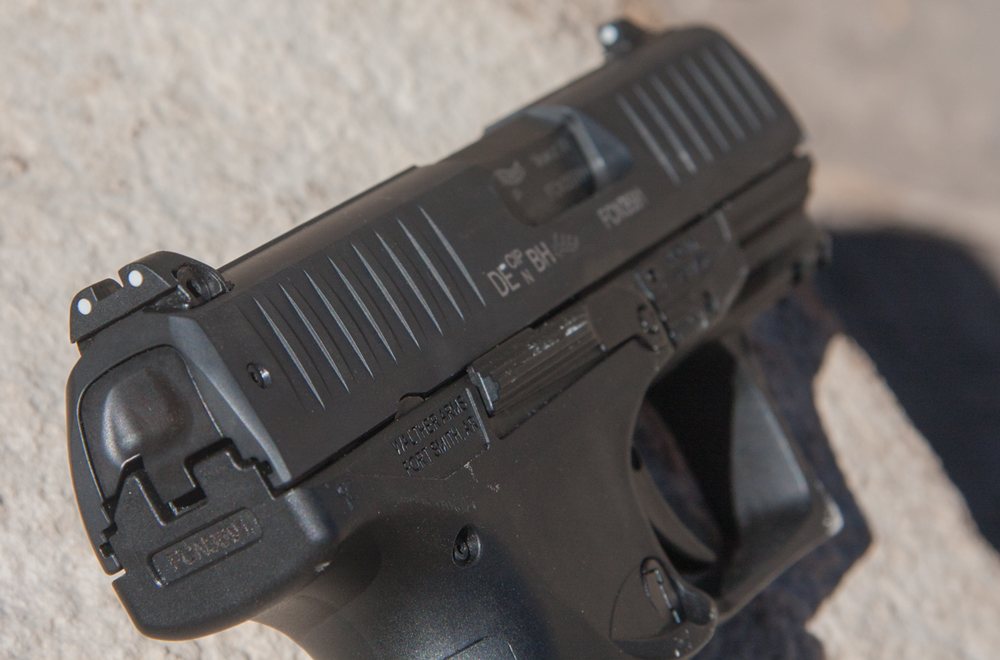
Other shared features found on the PPQ SC include a reversible, ambidextrous, thumb-activated magazine release button; an ambidextrous slide stop; front and rear cocking serrations on the slide, a Tenifer coated slide, barrel and internal action parts; and a forward accessory rail for mounting attachments. Like the standard PPQ, this new gun too wears a matte black finish. And sights are low-profile three-dot polymer combat sights, which are plenty effective for carry and less apt to snag on the draw.

The PPQ SC utilizes low-profile three-dot polymer combat sights. These are somewhat minimalist but plenty effective.

The basic disassembly process is also virtually identical, and just as quick. As with a lot of striker-fired designs, this pistol requires the user to pull the trigger during takedown.

After ensuring the gun is unloaded — both visually and physically — pull back the slide. Then, pointing the muzzle in a safe direction (the gun is still unloaded), depress the trigger. While keeping the trigger depressed, pull down on both the takedown levers on each side of the frame, releasing the trigger after they are pulled down. The slide should then slide freely off the frame, and then the recoil spring and then the barrel can be removed for cleaning. Assembly is simply the reverse. Both processes take mere seconds.

There are some differences between the internals of the standard PPQ and the PPQ SC, but these don’t seem to affect reliability or performance in any way. The PPQ SC uses an internal extractor instead of the PPQ’s external extractor, and there are a couple changes in the trigger bar and the slide’s internals. But over the course of testing, I came across no functional issues.

Range Time

Walther-performance

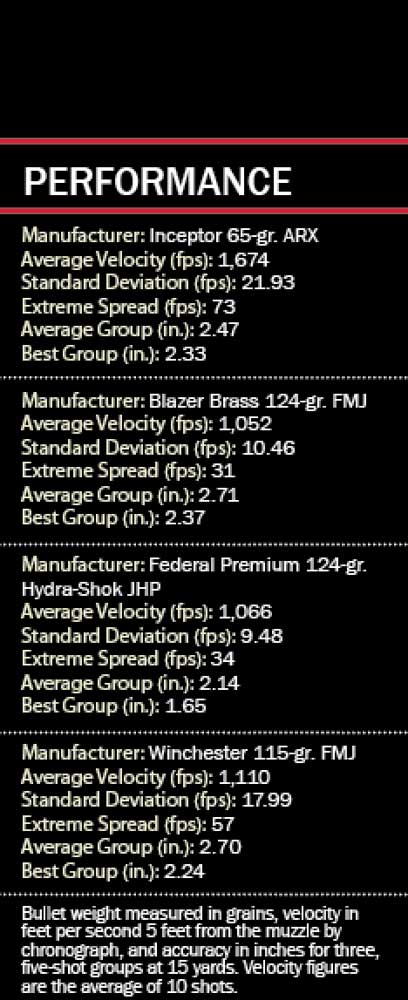
Although I got plenty of range time with the new PPQ SC at the training event in Utah running through drills and casually shooting at steel using Inceptor Ammunition ARX and RNP loads, I also wanted to conduct some accuracy testing in my independent review. I set up with four different loads to use in testing: the Inceptor Ammunition 65-grain ARX 9mm Luger +P, Federal Premium 124-grain Hydra-Shok JHP 9mm Luger, Blazer Brass 124-grain FMJ 9mm Luger and Winchester 115-grain FMJ 9mm Luger.

I measured muzzle velocities with a ProChrono Chronograph from Brownells placed roughly 5 feet from the muzzle. Accuracy data for each load was the result of three, five-shot groups fired at a distance of 15 yards from a Caldwell Matrix rest, also from Brownells. The Matrix rest is nice in that, in addition to being a rifle rest, it’s also configurable for use as a pistol rest as well.

Some might state that pistols are supposed to be tested at 25 yards, but I know of many who test concealed carry handguns at 15, or even 7 yards, as those are more in line with the distances at which they’ll be employed. In fact, in his book, Straight Talk on Armed Defense, concealed carry expert Massad Ayoob provides statistics that suggest the vast majority of shootings — for both law enforcement officers and responsible armed citizens — occur within 21 feet.

In any case, I was able to achieve decent enough groups with the PPQ SC, and I don’t confess to being any sort of great marksman. My best five-shot grouping came with Federal’s 124-grain Hydra-Shok JHP and measured 1.65 inches. And it accounted for the best average group at 2.14 inches. Incidentally, and perhaps not coincidentally, it also had the lowest standard deviation in terms of velocity among all loads tested.

I also had a few four-shot groups that — minus a single flier — would’ve been quite good. A four-shot group with Winchester’s white box FMJ load measured right around a half inch, while two of the four-shot Blazer Brass groups measured 0.77 inch and 1.17 inch, respectively, without the fliers. So, the gun is certainly capable of excellent accuracy if the shooter does his or her part.

In terms of reliability, I had virtually no issues with the PPQ SC, both in training in Utah and in my own testing. There was a tendency for the slide to not lock back on empty sometimes, but I quickly discovered this was due to my thumb placement interfering with the slide stop. There were no failures to feed, extract or eject.

Parting Shots

PPQ-SC-Specs

In a market that’s hot and trending hotter all the time, I think Walther’s new PPQ SC certainly has a place. It has the dimensions to be a great — and comfortable — carry gun. And it’s got all the great features from Walther’s full-size PPQ that shooters have come to expect.

It has been made quite concealable without becoming difficult to shoot in the process. The gun’s length keeps it shootable with a relatively long sight radius for a carry gun, and the low-profile three-dot sights are unobtrusive yet perfectly functional. Add to that the excellent ergonomics that Walther is known for, and the German manufacturer might have a true winner on its hands in the concealed carry market.

Editor’s Note: This article originally appeared in the March 2018 issue of Gun Digest the Magazine.
Get More Concealed Carry Info:

New Gear: Crimson Trace Rail Master Pro CMR-300

0

With four lighting and aiming functions, the Rail Master Pro CMR-300 gives long guns a tactical advantage.

What the Rail Master Pro CMR-300 brings to the table:

    • The Rail Master Pro CMR-300 attaches to any Picatinny rail or similar system.
    • The flashlight provides 300 lumens of illumination.
    • It projects a .5-inch green laser dot at 50 feet.
    • The functions can work in unison, independently and as strobes.

Tactical experts and self-defense trainers typically preach simplicity when it comes to self-defense guns. It’s solid advice, given the fewer accessories you have to rely on, the fewer weak links you have in your chain.

Where they typically veer from this mantra is low-light situations. Generally speaking, something that gets you on target when the sun is down and shadows are long is a must. And when it comes to long guns, tritium sights just aren’t the answer. Even if a shooter has a natural aversion to lights and laser sights, they are advisable to ensure efficient and safe self-defense with a carbine or shotgun.

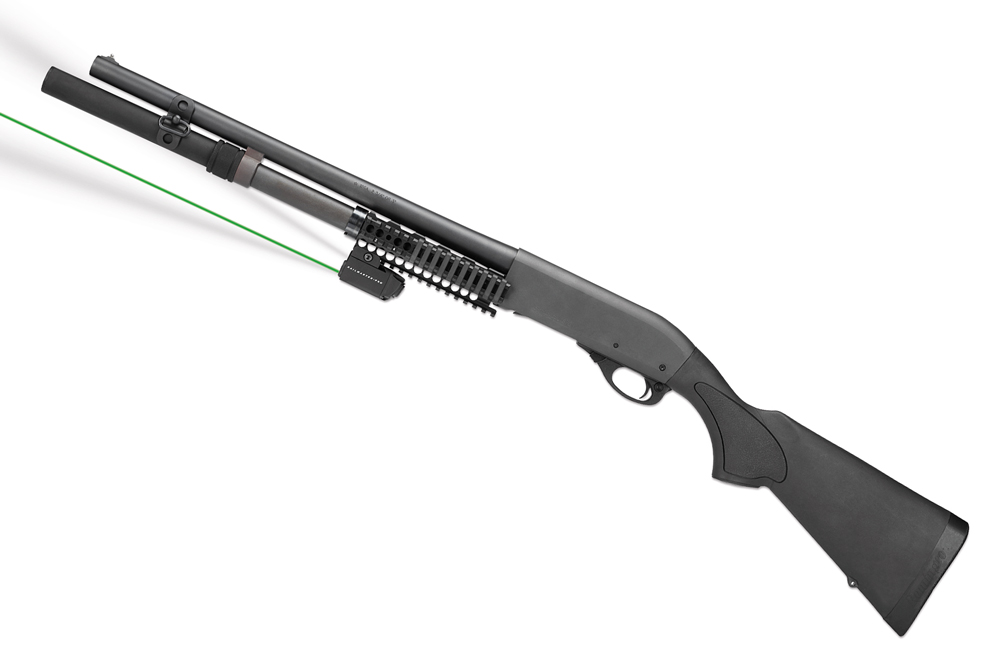
Rail-Master-Pro-CMR-300-first - Rail Master Pro CMR-300

Crimson Trace has taken this situation to heart and has cooked up an elegant and unobtrusive solution for just such scenarios. The Rail Master Pro CMR-300 provides superior lighting and aiming with a long gun while remaining nearly a second thought the rest of the time.

Compared to other laser sight-flashlight systems, the Rail Master Pro CMR-300 goes above and beyond aiming and providing vital light. In all, it offers four functions: laser + light, laser only, light only and laser + light strobe. The last setting is an intriguing one, giving the ability not only to identify potential assailants, but discombobulate them as well.

And it should do a heck of a job doing so. With 300 lumens, the flashlight alone is enough to set a person on their heels if switched on in the pitch black.

The laser sight is optimized for low-light operation, given it is green — which is easier to acquire when light is scarce. It projects a .5-inch dot at 50 feet, arming the user with the ability to make precise shots. And it has plenty of juice, with the unit operating for two continuous hours on one CR123 lithium battery. Additionally, the laser is fully adjustable for windage and elevation.

Built with a water-resistant aluminum and polymer chassis, Crimson Trace designed the Rail Master Pro CMR-300 for the toughest duty. And it made it as intuitive as a trigger squeeze to operate, with a rear Instant Activation toggle pad.

The Rail Master Pro CMR-300 is easily mountable at home; all that is required is a Picatinny rail or similar system 2 ¾ inches in length. In turn, almost every popular defensive long gun — AR, AK, shotgun — is a candidate to host the device.

Crimson Trace did not release an MSRP or date it would hit the stores.

Unconventional Shotguns For Defensive Use

0

There’s more to shotguns than pump actions and tube magazines. Check out these two unconventional shotguns perfect for defense, or fun at the range.

Different takes on the shotgun:

  • The Kalashnikov variant Saiga is a popular semi-auto, box magazine shotgun option.
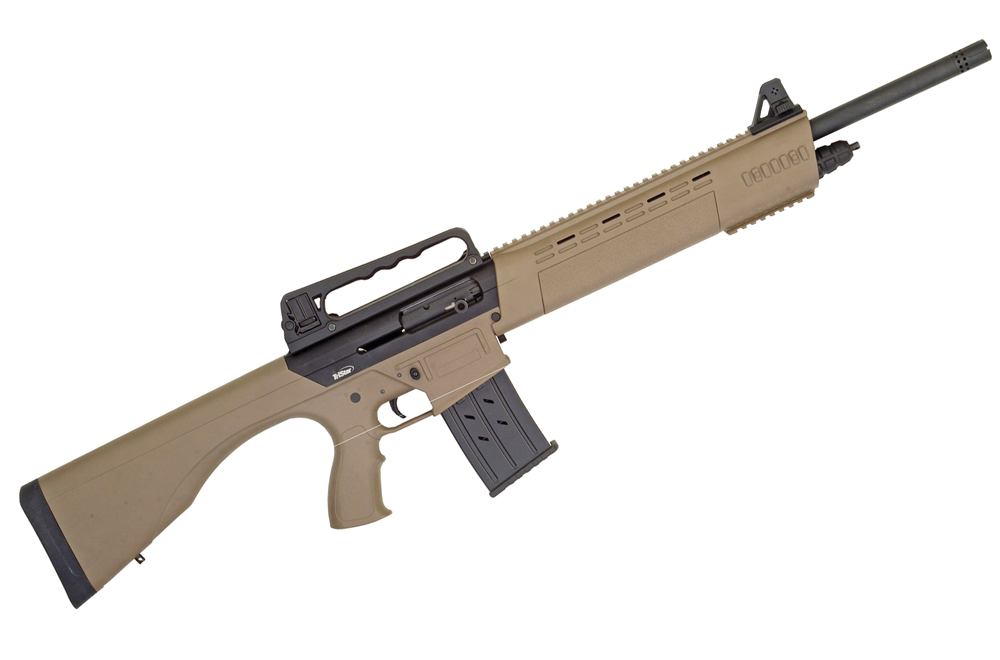
  • The TriStar KRX is based off the AR and is as familiar as the beloved rifle.
  • While both are solid options, a good ol’ pump will still do the job with the right training.

While Remington and Mossberg have recently come out with detachable magazine versions of their revered 870 and 590 shotguns, there are plenty of other unconventional shotguns on the market that are magazine fed. Some have been available for a while, whereas others are more recent developments. Here, I’ll highlight two specific shotguns: the Saiga 12 and the TriStar KRX.

The Russian-made Saiga 12 is one of the most popular box magazine semi-auto shotguns currently on the market. Named for the Saiga antelope of the Russian Steppes, it’s a variant of the Kalashnikov rifle series, maybe one reason for its popularity. The Saiga is known for eating ammo whether the gun is clean or dirty (like the AK-47 rifle) and has a following in the 3-Gun world. My own two cents on the Saiga is that it’s ugly as hell but goes bang when you need it to. A buddy of mine who works with Alaska DNR carries a Saiga 12 for bear defense. He’s a Marine (there are no former Marines) and knows his firearms, so he must have confidence in this shotgun.

Unconventional shotguns -Lead
TriStar KRX

The TriStar KRX Tactical Shotgun is a semi-auto shotgun with a detachable magazine in an AR platform. The TriStar people knew what they were doing; those familiar with the AR rifle will automatically know where the safety selector and magazine release are, and it will “feel” like your AR rifle when you pick it up. For a defensive shotgun, this might be the pick for those who want to stay with the AR configuration.

In the end, the choice between a conventional tube-fed shotgun and a detachable-magazine variant lands on the individual shooter. Back in the day, motor heads loved to argue the Ford versus Chevy debate, and box magazines opposed to tubes is much the same. What’s important is finding the shotgun that fits you and that you shoot best. After that, you spend your hard-earned money on the best training you can find and then shoot as much as possible. Now you have done all you can to be prepared when the feces hits the fan. You might not believe in the Easter Bunny, but you have to believe in your shotgun.

Editor’s Note: This article originally appeared in the February 2018 issue of Gun Digest the Magazine.
Video: Hands-On Look At The Springfield 911

0

Like a structurally sound foundation fortifies a house, a solid grip underpins pistol marksmanship. Without it the front sight breaks into a dance, recoil becomes a fistfight, and target transition devolves to Federal Government-level efficacy.

Steeping yourself in the basics of building a solid grip, learning the push and pull of dominant and off hand and where exactly to place all those digits is the key that unlocks much of this cornerstone skill. But lost in the minutia of body mechanics is an aspect as easy to overlook as the pavement under your feet — pistol fit.

As Luke Hartle deftly observes in in the above video, rare is the gun that fits large hands and small. But Springfield Armory might have hit the sweet spot for a great swath of the shooting public with the 911. The new 1911-style .380 ACP pistol is Momma Beared to provide superior handling, no matter if a burly man or a petite woman is behind the trigger.

The Gun Digest Editor-in-Chief gets a rundown of this purpose-built concealed carry gun from Springfield’s Stefany Reese. And in the process, he learns that, above and beyond superior handling capabilities, the Springfield 911 has a deck worth of aces up its sleeve. Muzzle to beavertail, not only is the pistol designed to shoot like a star, but operate like one as well.

A great deal of this is due to the manufacturer needling in on the fine points that make the Springfield 911 second nature to get into the fight. Where the company really puts its thinking cap on is the safety and keeping it large and easy to find, not always the case with diminutive pistols. And in a critical scenario, when fine motor-skills melt under the heat of adrenaline, shooters will be glad there’s ample safety for the thumb to catch.

The other aspect, difficult to perceive on a glimpse, is the pistol’s frame-to-slide-to-trigger guard relationship. Tinkered to an optimal layout, the pistol handles like a larger 1911, rather than the near mouse gun it is. This is always a welcome attribute in this generally snappy class of handguns.

With an MSRP of $600, it’s at the affordable end of the metal-framed pistol market. Which might give shooters plenty of reason to look to the new Springfield 911 to help handle emergencies.

Modern Shooter: Becoming A Tactical Athlete

0

Pulling the trigger, yeah, it’s part of the game. But if you’re gunning for the pinnacle of shooting, there’s a lot more blood, sweat and tears involved. Whether running and gunning in a practical pistol competition or executing tactical movements in a training class, mastering a firearm requires mental and physical preparedness.

The Modern Shooter team travels to MAST Solutions in Houston, Texas this week to get a firsthand look at exactly the kind of training required to become a tactical athlete. And we get a take on the process from a man who should know — Jason Castro. The Minnesota Twins catcher trades his mask and glove for an AR-15 and loads of ammo in the off-season, sharpening his skills behind the trigger.

While the equipment changes for Castro, the mindset he takes to the diamond remains. For the professional athlete, it’s dedication to the craft and willingness to put in the work that moves a shooter to exceptional. And he and the rest of the MAST students take dust in the face, race for cover and keep eyes peeled through it all to prove their commitment to raising their shooting game.

Find out what else it takes to become a tactical athlete in this episode of Modern Shooter 10:00 p.m. EST Friday on the Pursuit Channel. The episode rebroadcasts Monday at 12 p.m. EST and Tuesday at 11:30 a.m. EST.

Video: Phil Massaro On The New .224 Valkyrie

1

The gun industry is guilty of peddling its share of snake oil. Clunky reticles that promise to get you on target from the next county over. New gun finishes constituting new gun models. And rail accessories that would have been better left in the imagination of a 12-year-old.

Thankfully, it’s not all tire deflator attachments and magazine butt plate knives. Every year there are products that cut through the white noise of the silly and useless and truly appear like they’ve got the chops to take the ball and run. Federal Premium’s newest cartridge — the .224 Valkyrie — most certainly looks to fall in this category.

The purpose-built long-range cartridge was dreamed up as a small-bore answer to the 6.5 Creedmoor, promising less recoil and a better fit in the AR platform. And from Phil Massaro’s first experience with the shortened and necked down .30 Rem/6.8 SPC cartridge, the hubbub about the .224 Valkyrie proved more than just carnival barking. After pitching a bit of copper-jacketed lead down range, the Gun Digest author and custom ammunition manufacturer walked away with eyebrows raised over the cartridge’s performance.

Obviously, as a fella who spends the better part of his day crushing handmade rounds at his press, the .224 Valkyrie’s ballistic minutia captivated Massaro — high BC bullets, exceptional velocity potentials, flat trajectory. But, as the above video shows, it’s after firing pin meets primer that he really learns what a sweet tune the Valkyrie sings. As he points out, the recoil is so mild you can track the bullet’s vapor trail as it races 1,000 yards and beyond. Slick.

The .224 Valkyrie certainly performs like it has staying power. Now it’s just up to the greater shooting public to prove whether or not Federal actually has a winner.

AR Basics: Home-Defense Carbine Considerations

1

There are some specific factors in play when choosing an AR for home defense. Here’s what to consider.

What sort of AR do you need for home defense?

When choosing a firearm for home defense, there are a lot of different areas to consider. Stopping power is a primary concern, but you also have to be concerned about over penetration. And you need a weapon that’s easy to use for all members of the family. Most people immediately think about pistols and shotguns; however, the AR platform has a lot of advantages over both of these and might be your best choice for home defense.

Home-Defense-Guns-AR15-Lead

The Power To Stop

The first category to examine is stopping power. If forced to shoot, you need to stop the attacker as efficiently as possible … and handguns come up short in this category. Handgun rounds almost always require multiple hits — in the right locations — to stop an attacker. The numbers and stats you see most often in defensive pistol shootings are three and four shots fired. The only advantage of pistols is that they’re small, easy to conceal and light to carry. Inside your home, concealment is not an issue.

On the other hand, shotguns have excellent stopping power. But, even with typical defensive loads — buckshot, slugs or even birdshot — over-penetration is a major concern. Plus, no matter how good you are, surgical shots with a shotgun — for example, dealing with a hostage situation — are extremely difficult.

Rifle cartridges also have excellent stopping power, but the problem with most rifle rounds is over-penetration — except for the .223 Rem./5.56 NATO, a lightweight bullet moving at high velocity. Once that round hits anything denser than air, it begins to tumble, fragment or expand, dissipating and dumping its energy quickly.

The .223 Rem./5.56 NATO — as long as you’re not using one of the penetrator rounds designed to punch through material — will penetrate less material than most handgun, rifle or shotgun rounds. There is plenty of research on this to study, but just keep in mind there are always exceptions.

You’ll also want to avoid rounds designed for long-range shooting, which are heavier in order to maintain accuracy at extended distances. Your best bet is a round specifically designed for self-defense, which have excellent stopping power and have a very minimal chance of over penetrating. Another advantage of the .223 Rem./5.56 NATO is that it’s light in recoil, which means almost anyone in the family can handle it.

Integrated Intuition

In addition to light recoil, the AR is user-friendly. Stoner was a genius when it came to ergonomics, and all the controls for the AR are in just the right place. It’s one of the easiest weapons to operate, and the AR works well for both right- and left-hand shooters — as long as you have the right techniques.

home-defense-ar-first

My favorite ARs are lightweight, at about 6 pounds. This makes them easy to handle, especially indoors, and anyone with normal upper body strength can use it properly. Plus, you can set the AR up with adjustable stocks and other goodies, allowing you to “custom” fit it for whoever is using it. In short, the AR is one platform that will fit everyone.

Length Lamentations

One concern voiced by a lot of shooters contemplating the AR for home defense is the overall length. Try this: Have one person mount up an AR carbine with a 16-inch barrel, and have another person stand next to them holding a pistol extended out at arm’s reach. The location of the muzzles will be about the same. And if the carbine is a little bit longer, it’s more than worth it for the additional stopping power.

Still, if length is a worry, you have a couple of options. There are SBRs, or short-barrel rifles, readily available with a barrel less than 16 inches in length, but an SBR requires approval from the ATF and a fee for a tax stamp.

Today we have AR pistols. An AR pistol uses the same parts as the rifle or carbine and shoots the same rounds, but it has a short barrel — all without filing Federal paperwork, waiting on approval and paying the tax fee. Plus, with an AR pistol, you don’t have to get approval to travel out of state with it like you do an SBR. (Keep in mind that it’s your job to adhere to all local, state and federal laws when it comes to any firearm.)

Lighting Them Up

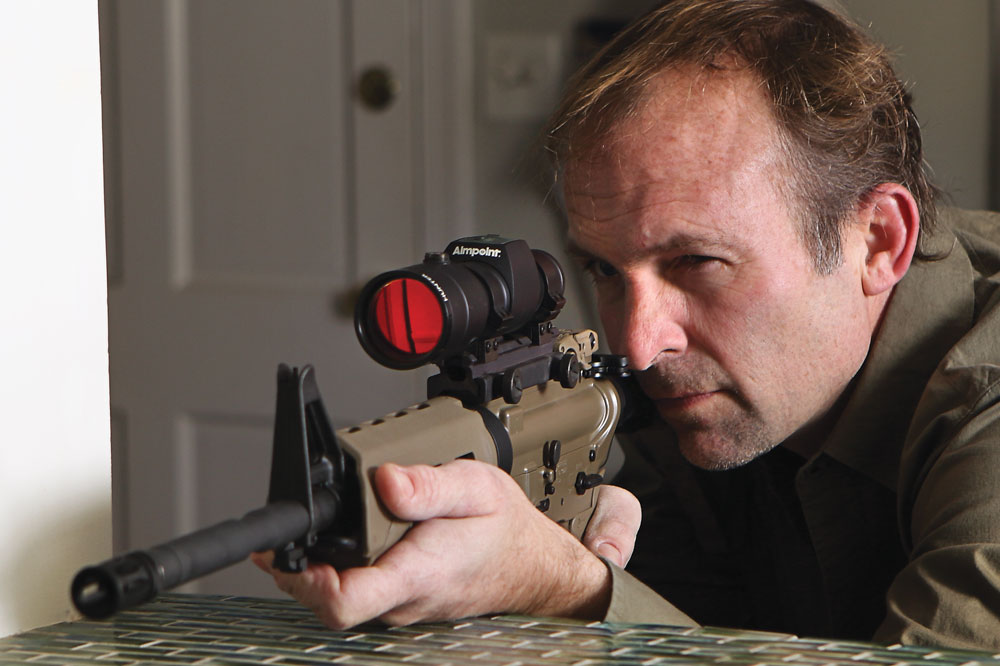
All firearms for home defense should have a light on them, and the AR is no exception. The light is needed to locate, identify and, if necessary, accurately engage the threat. With the AR, this is easy: Regardless of the type handguards your AR has, there’s a mount to attach a light to it … plus anything else you want.

I’m right handed, so I prefer the light in an 11 o’clock position and as far forward as possible. This positions the light in the right place for working right- and left-hand corners, or over the top of an object. (Left-handed shooters will want a 1 o’clock mount.) I use a push-button tail cap, with momentary and constant on, and I easily operate the light with the thumb of my support hand while the rifle is shouldered.

Add a red-dot sight — and maybe a laser — and you’ve got a lightweight, ergonomic home defense weapon. Yes, you’ll lose a little velocity due to the length of the barrel, but it’s still a lot better than any handgun round, and, again, with limited penetration concerns.

Psychological Advantage

The final category to think about is the psychological advantages of the AR for home defense. In the “me” category, the AR provides a warm, fuzzy feeling. I know it will stop the threat efficiently; that’s definitely a plus in the confidence department.

home-defense-ar-second

We also can’t discount the psychological effects on the threat. I’ve seen numerous people that had pistols pointing at them and weren’t too worried about getting shot. I’ve never seen someone facing a rifle that said, “Go ahead and shoot me.” I’m sure it’s happened; I’ve just never seen it.

Equipping yourself with a firearm for self-defense is all about finding the right weapon to fit your needs. Maybe the AR isn’t for you, but don’t dismiss it without giving it serious study and consideration. When faced with a violent attacker, your job is to stop the threat as efficiently as possible. This is especially true inside your home, where avoidance or escape might not be an option. With the proper training and practice, the AR platform in .223 Rem./5.56 NATO will serve you exceptionally well.

Editor’s Note: This article originally appeared in the March 2018 issue of Gun Digest the Magazine.
Inside Look: The Benelli 828U Shotgun

0

The 828U is loaded with features that set it apart from all other double barrels.

What to know about the new Benelli 828U:

  • The new 828U is ultra-lightweight at just 6 1/2 pounds.
  • It utilizes Benelli’s innovative Progressive Comfort Stock.
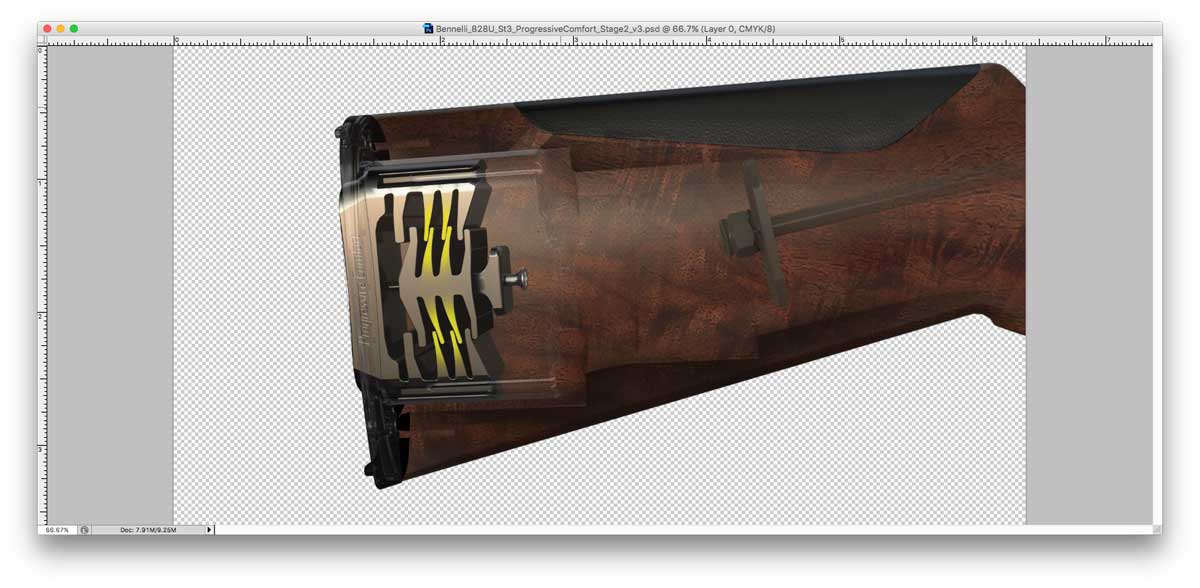
  • This system has a set of interlocking polymer leaf springs in the stock to reduce recoil.
  • Instead of a hinge-and-pin system, the 828U has a free-floating steel locking plate.
  • This offers added durability and eliminates the need for a steel receiver, which is heavy.

Since 1967, Benelli, the company that revolutionized autoloading shotgun design with its Inertia Driven system, has sold more than 4 million guns.

Benelli has never let up when it comes to introducing eye-popping, uniquely designed shotguns — the Ethos and Vinci to name a couple of the more recent innovations — but it was the Super Black Eagle that established Benelli as the leader in the waterfowling world. Its ability to reliably cycle 2 ¾-, 3- and 3 ½-inch shells with no adjustment was a game-changer. Today, the SBE is in its third iteration and is as popular as ever.

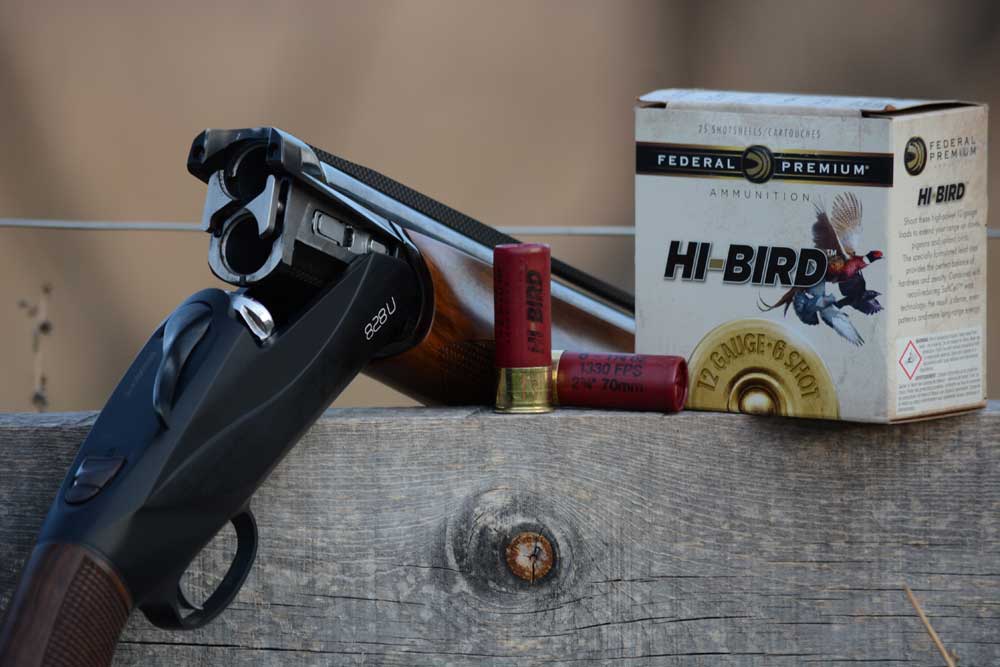
Benelli 828U -1With this track record of autoloader success, it came as a huge surprise to most shooters when the company introduced its first over-and-under model in 2015. The Benelli 828U is a sleek 12-gauge double barrel that tips the scales at a wispy 6 ½ pounds. One might wonder why Benelli would bother bringing yet another o/u to the upland hunting market, a space that’s pretty crowded with excellent makes and models at all price points. The short answer: Because they could, and because they could do it differently.

The 828U was 5 years in development, according to George Thompson, Benelli’s Director of Product Management. Thompson shared some background about the gun while we hunted at Brett Waibel’s Bad River Bucks & Birds ranch this past October. The central South Dakota setting provided the perfect opportunity to burn several pocketfuls of shells on the prairie’s abundant pheasants, sharptails and prairie chickens.

I’d been wondering about the reason for such a radical departure from Benelli’s autoloader lineup, but as time went on I realized the 828U has more in common with the rest of the Benelli line than one would think.

Benelli 828U -3Lightweight And Simple

To get to that skinny 6 ½-pound weight, the 828U features an aluminum receiver, open mid-rib and carbon-fiber rib. “We like lightweight, and we like simple,” Thompson said. “The inertia system in our other guns allows us to trim weight because there’s no need to accommodate a gas system. Well, in this over-and-under, we found ways to incorporate features that go with that lightweight and simple theme, while still maintaining our core value: reliability.”

The trade-off for an easy-carrying gun is obviously felt when you pull the trigger. We all know lighter guns kick harder, and Benelli has waged a war on recoil since the beginning. The company has offered various ComforTech stock designs over the years, the latest being the ComforTech 3 found in the Super Black Eagle 3. Benelli mitigates recoil in the 828U (and the Ethos) with a Progressive Comfort stock.

“There is no such thing as eliminating recoil, and we don’t claim it (the 828U) is the lightest-kicking gun,” Thompson said. “Our goal was to create a gun that weighs less and kicks the same or less as a heavier gun. We’ve been able to reduce felt recoil by approximately 30 percent with the Progressive Comfort stock.”

As you would expect, the 828U sports a nicely sculpted, cushiony recoil pad, but there’s more to the recoil-reduction strategy. Inside the stock is a removable set of interlocking polymer leaf springs, which compress to absorb recoil. The heavier the shotshell load, the more the springs come into play to take some of the rearward punch out of the shot. To address the fact that perceived recoil has as much to do with the shotgun jumping up into your cheek, the 828U’s stock also has a replaceable air foam pad insert to soak up some more of the kick.

Benelli 828U -2Locked Up

The 828U’s receiver is built in opposition to the way other over-and-unders are designed. Rather than a hinge-and-pin system, which starts to wear from the very first time you open and close the action, the 828U uses a free-floating steel locking plate that seals up tight at four contact points behind the chambers. This eliminates the need for a steel receiver, and it also means that the lock-up will have the same strength and reliability after 10,000 shots as it did on day No. 1.

Benelli 828U -4In The Field

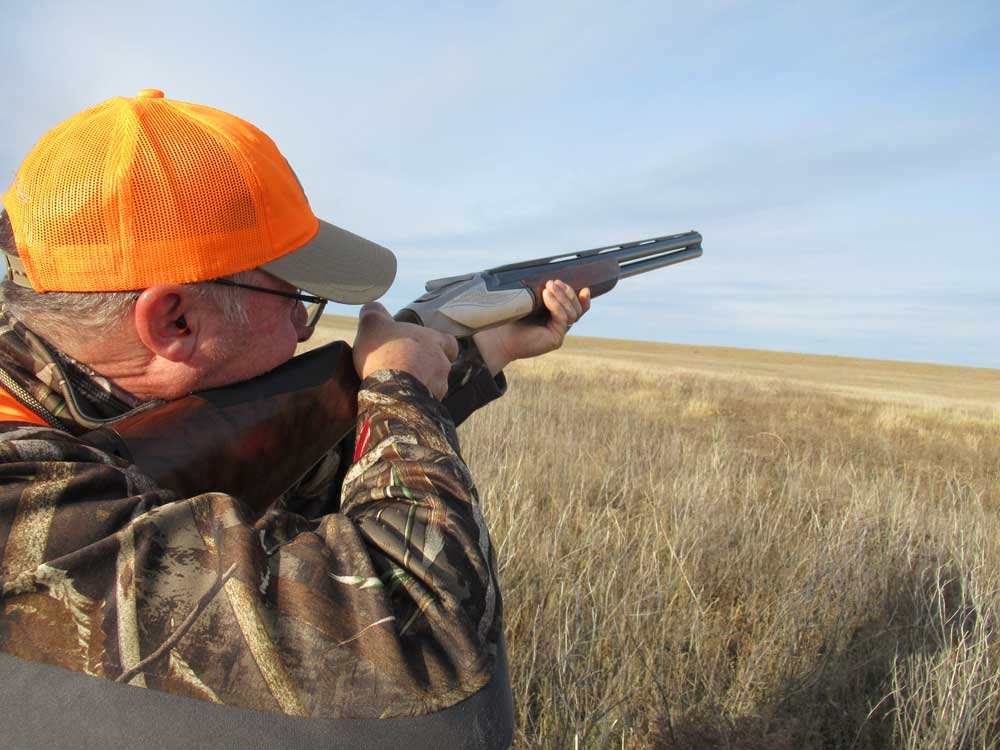
My first introduction to the 828U was a fast one. We went right to the field with no practice shooting beforehand. I opted to use a 28-inch barrel model, the length I tend to prefer on all of my over-and-unders. While the gun is incredibly pleasant to carry, as advertised, and it helped me jump on birds quickly, it did take me a few rooster flushes to get the hang of swinging properly. I was just coming off of a week of grouse and woodcock hunting in Wisconsin where snap-shooting can sometimes be the difference between a hit or no shot at all. It didn’t take me too long to diagnose my misses, and things began shaping up rather quickly after that.

I typically shoot a variety of 1 ¼-ounce loads of No. 4s or 5s on pheasants. On this trip I was using Federal’s Hi-Bird 1 ¼-ounce loads of No. 6s, which have an advertised muzzle velocity of 1,275 feet per second. Although shooting in the field doesn’t typically allow for the same type of analysis you can afford yourself out on the clays range, recoil was mitigated to the point where I didn’t really think about it much, which is how it should be.
Because I just had to try it, I spent one day hunting with a Hi-Bird in the first barrel and a 3-inch, 1 5⁄8-ounce Federal Prairie Storm No. 5 in the second. All of the 828U’s recoil-reducing features are irrelevant when it comes to taming the wallop that a Prairie Storm shell delivers. I think that would be the case in any fixed-breech gun, so I’m not inclined to mark down the new Benelli because of it. (Hey Federal, any chance you could offer Hi-Bird in No. 5? Please?)

Benelli’s 828U is more expensive than a lot of over-and-unders, but it’s also a whole lot more affordable than many of the highly decorated imports that are available. It’s offered with 26-, 28- and 30-inch barrels at a full retail price of $3,000 for the engraved nickel-plated receiver model and $2,500 for the black anodized receiver model.

This article is an excerpt from the January 2018 issue of Gun Digest the Magazine.
Reloading: Cup-And-Core, The King Of Deer Bullets?

0

There’s no need to overthink deer bullets. While a number of intriguing new designs now exist, classic cup-and-cores still do the job.

Are cup-and-core designs the ultimate deer bullets?

  • Cup-and-core bullets have lead cores and copper jackets.
  • A bit of lead is exposed at the nose to aid expansion.
  • Given a deer’s thin hide, the bullets perform exceedingly well.
  • Cup-and-core bullets are economical, so they allow for ample experimentation.
  • And they don’t face the issues common to the newer, more radical projectile designs.

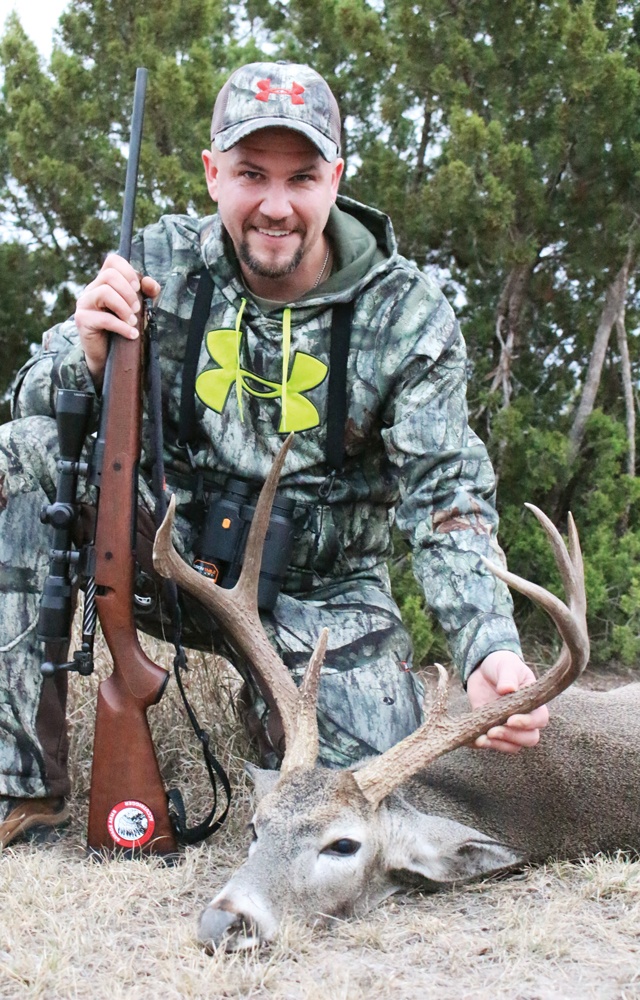
I don’t know if there’s anyone who loves heading on a hunt in foreign lands more than Yours Truly; it represents adventure to me on many different levels. However, there is a certain solace that comes with the local deer season, being a part of the traditions that started it all for me, and enjoying the areas where I cut my teeth as a hunter.

Deer Bullets -second
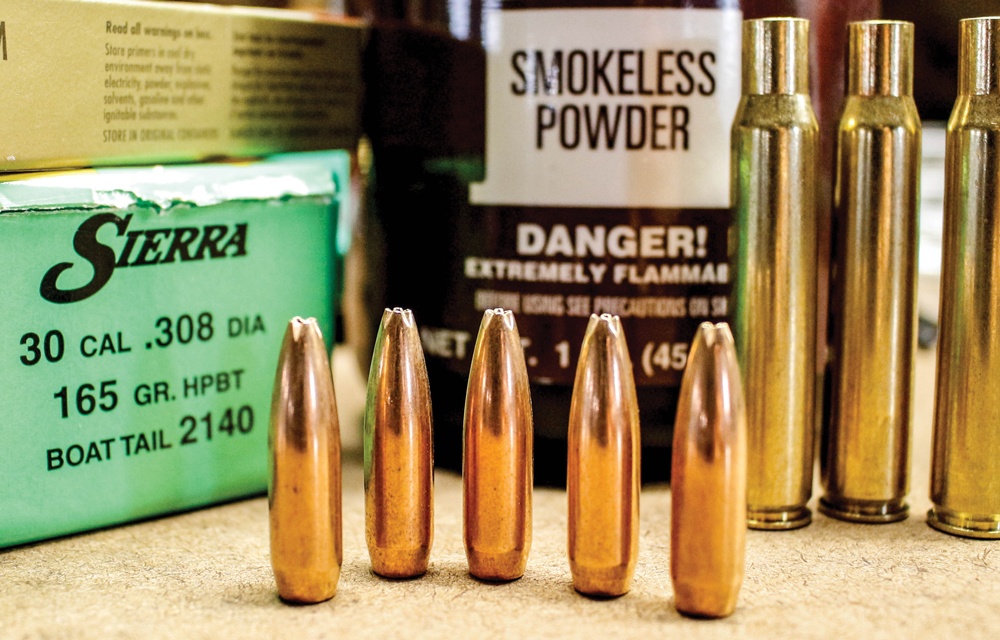
The author’s first truly accurate handload, and one responsible for quite a bit of deer meat in the freezer, utilized Sierra’s 165-grain Game King BTHP bullet.

In addition, I’m the guy who has and will continue to embrace advancing bullet technology; I find the premium bullets to be intriguing, and I enjoy testing them on large beasts. That said, there are times when a plain old traditional bullet suits the situation perfectly, and deer camp is a shining example of just that.

The cup-and-core bullets that hunters used for nearly every species of game throughout the first-half of the 20th century certainly needed an update, at least with regard to the larger game species. That said, they have been, are, and will continue to be absolutely perfect for hunting deer.

However, as we reloaders tend to learn early on, not all bullets are created equally, no matter what category we’re discussing. Let’s take a look at some good, great and not-so-great traditional deer bullets — and how they relate to your reloading bench.

Deer Bullet Basics

What is a cup-and-core bullet? Well, it’s a bullet with a lead core with an outer jacket of copper that forms a cup around the bottom and sides of the bullet, leaving a bit of lead exposed at the nose to allow the bullet to expand upon impact. That copper jacket is harder than lead — soft enough to be influenced by the rifling, yet hard enough not to leave the amount of residue in the barrel those pure lead bullets will. So, while these bullets have had questionable results against heavy hide and bone, they are, undoubtedly, perfect for deer hunting.

Deer are not hard to kill; they are soft skinned and their bones are not especially large. Hit them wrong, however, and they will show you a different side, taking what seems to be a pounding and still going much farther than anyone would believe. As it is with any game animal, shot placement trumps all, but for deer you want the consummate blend of expansion and penetration, and the cup-and-core bullets will give just that.

Humble Beginnings

For years, the only serious big game rifles I owned were a classic Winchester Model 94, in .30-30 Winchester — with all of its blessings and limitations — and a Ruger Model 77 Mark II in .308 Winchester. Both of them have moderate velocities, and both of them run well on standard cup-and-core bullets. And, both have their own special place in the deer woods, possibly among the top of the heap as far as deer cartridges are concerned. The .30-30 was, in living memory, one of the staples of deer season, though that is changing. But, the .308 Winchester is among the do-all cartridges, offering all sorts of flexibility.

For deer, bullets weighing from 150 to 180 grains have been the historical choices, with the tradeoff being the flatter trajectory of the 150-grain bullets versus the heavier bullet weight and energy figures of the 180-grain slugs.

Deer Bullets -fourth
Deer, with their soft skin and bones — and not being as thick and large as some big game species — are not especially difficult to kill. A decent cup-and-core bullet and good shot placement are usually enough to do the job efficiently.

I preferred to stay in the middle, especially for deer, with 165-grain bullets. My first handloads were built around the Hornady InterLock Spire Point bullets, and they served very well. The InterLock is a bullet I’ve used in many different situations, and while I usually don’t take advantage of the cannelure for crimping, as the .308 Win. offers enough neck tension that I don’t feel the need to crimp my loads, the terminal performance is excellent on deer.

In those early days of reloading — as the distances at which the Northeast deer woods allowed were short — if my loads were of 2 MOA accuracy or less, that was fine. Shots over 60 yards were a rarity, and they got the job done. But, if nothing else, they planted the seed for a reloading nut, and I was eager to load and test many different deer bullets for both accuracy and terminal performance.

Ample Options For Deer Season

I ended up feeding that .308 Winchester what I consider to be one of the best deer bullets on the market: the 165-grain Sierra GameKing hollowpoint. This bullet was part of the equation that resulted in what was my first truly accurate handload, as well as resulting in a considerable amount of meat in the freezer.

It has a hollowpoint crimped to look like the letter X — for reliable expansion — yet has a thick jacket to keep that expansion rate in check, and a boat tail for longer ranges. I’ve loaded this bullet not only in the .308 Win., but also in the .30-06 and .300 Winchester Magnum, and it stood up to all three. No crimping groove, just a plain old bullet built right, and one that continues to serve to this day.

The Nosler Ballistic Tip is another good choice when it comes to deer bullets that has served well in many different situations. It’s certainly accurate, though it has developed a reputation for being overly frangible on game larger than deer. However, on deer and deer-sized animals, if of sufficient weight, the Ballistic Tip is lights out. My little .308 Win. loves the 165-grain BTs, and there’s enough bullet there for good penetration in addition to the expansion and resulting wound channels that deer hunters love. It’s sleek with a good ballistic coefficient (BC), but not so sleek as to require a longer-than-normal seating depth.

Deer Bullets -thrid
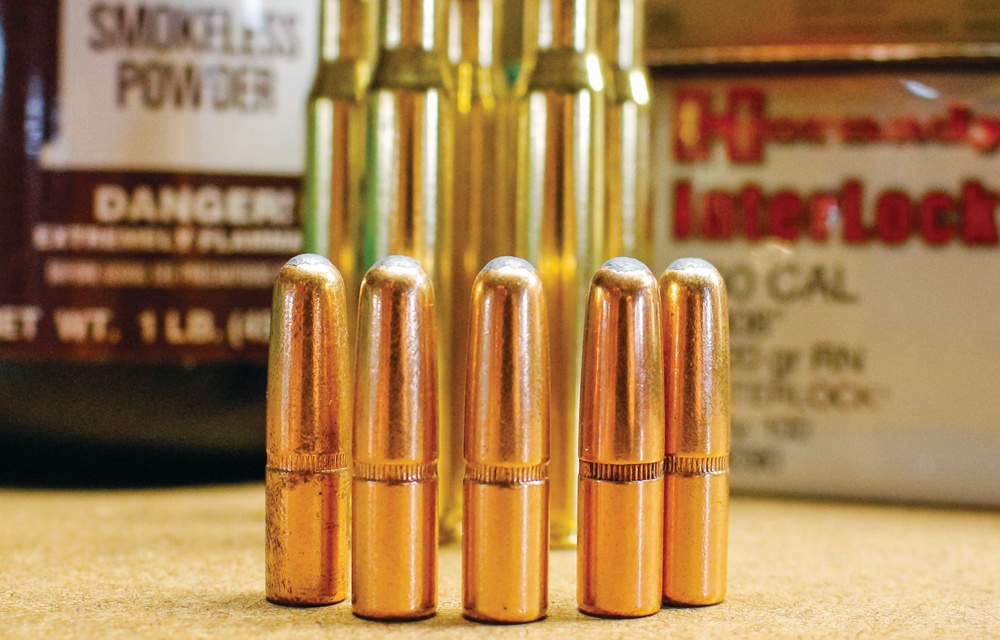
Round-nose bullets are valid options when shots run fairly close. These Hornady 220-grain InterLock RNs are perfect for large game at reasonable distances.

The Speer softpoints, as well as the Remington Core-Lokt, have received mixed reviews over the years, but I’ve used both to take deer. They aren’t the strongest of deer bullets, and when I use them I do my best to keep two ideas in mind: I want a bullet in the middle to heavy end of the spectrum, and I want to keep the velocities mild. Quite obviously, they’ve worked for decades, but I have found some of the Speer line to be damned near explosive.

Reloading Considerations

What do these all have in common for the reloader? Well, a couple of things:

First, they are an affordable means of developing your handloads — and handloading skills — allowing for quite a bit of experimentation without breaking the bank. Second, they are usually of simple design and will avoid some of the more complex reloading ideas associated with the more radical developments. They take up considerably less room in the case than the monometals and really high BC bullets do, making life a bit easier for the reloader. The ogives of the spitzers tend to be more rounded, making bullet seating a bit easier as well.

And, one last point: If you hunt in the forests and woodlands where shots tend to be a bit closer, don’t overlook the old round nose designs; I use the Hornady InterLock quite regularly, and the Sierra round noses are equally dependable. They impart their energy wonderfully, and keeping their weight forward, they give all sorts of room in the case, making loading for the .308 Winchester, .250-3000 Savage and other shorter cases a breeze.

Here’s to a great deer season!

Editor’s Note: This article originally appeared in the November 2017 issue of Gun Digest the Magazine.
7 Great Western Movie Shootouts

2

We round up the greatest movie shootouts to ever roam the West.

Which Westerns had the best movie shootouts?

Movie shootouts have been a cinema staple since, well, there were cinemas. And no other genre has produced more memorable gunfights than Westerns.

The reluctant gunslinger, the lone lawman, the brazen outlaw roaming the dusty West, surviving with wits and a six-shooter have captured generation after generation of American moviegoers’ imaginations. Think about it for a second. It’s almost certain that one of your favorite movie quotes, one you can recite from heart, comes from a Western. If you can’t, why “You’re no daisy at all.”

Like any flicks, Westerns are not free of the sins of Hollywood when it comes to guns and scenes that create cringe-worthy moments for firearms enthusiasts. From infinite ammunition to the non-stop racking of a shotgun’s action without firing a shot, movie shootouts can go from entertaining to arduous in the time it takes to eat a Milk Dud. Some tether to reality must remain.

Authenticity was a factor in the seven Western movie shootouts chosen for this list, but it certainly wasn’t the lone criteria. Some wriggle room is allotted for a movie’s notoriety, the overall quality of the story and “cool factor” to let some of the more entertaining, though less true-to-fact choices land on this page. After all, movie shootouts are exactly what they bill themselves as — entertainment.

What do you think? Is this Western movie shootouts list rodeo slick or a real bum steer? Let us know in the comments. Also, heads up, there is some adult language peppered in the clips.

Shane

Quote: “I’ve heard you’re a low-down Yankee Liar”

The tale of a gunfighter who, no matter how hard he tries, can’t escape trouble, Shane is the quintessential Western. A quiet movie overall, the final gunfight is sheer dynamite. Tense in buildup and lightning fast in action, the 3-against-1 shootout is heart racing and iconic. The speed of the fight (gunfights then and now are typically quick affairs) keeps the scene grounded, as does Shane’s mortal wounding, but admittedly it is a bit overwrought. The movie earns bonus points for one of the greatest Western villains of all time. Jack Wilson (Jack Palance) is among the wickedest men to ever holster a six-shooter on the silver screen. He’s sadistic, arrogant and more than deserving of his spot on boot hill.

Guns: Colt Single Action Army Cavalry Model, Colt Single Action Army, Winchester Model 1873.

Unforgiven

Quote: “Any man who don’t want to get killed better clear on out the back.”

In any Western worth its salt, the hero must overcome long odds. And William Munny (Clint Eastwood) certainly faces them in the final shootout of this dark Western. Vastly outnumbered, the grizzled gunslinger reaps revenge on Sheriff Little Bill Daggett (Gene Hackman) and his men for the killing of his friend. Needless to say, Big Whiskey, Wyoming was never the same. At first, the scene seems somewhat farfetched, given the long odds Munny faces squaring off against an entire posse fixing to hunt him down. But upon reflection, it does have an element of realism to it in the great majority of men are unwilling or unable to draw their guns. Even the orneriest desperados had to contend with fight, flight or freeze. Additionally, there’s a striking true-to-life scene earlier, where the once-deadly Munny struggles to shoot a can, his skills deteriorated from years of domesticity.

Guns: W. Richards 10-Gauge Side-by-Side, Spencer 1860 Saddle Ring Carbine, Smith & Wesson Schofield Model 3, Single Action Army, J. Stevens & Company 1878, Starr 1858 Army.

Tombstone

Quote: “Get to fight’n or get away!”

There is no more famous gunfight in the West or cinema than the O.K. Corral. The 30 shots in 30 seconds has been recreated in one form or another nearly two dozen times in films over the years. But the 1993 rendition starring Kurt Russell as Wyatt Earp is perhaps the most iconic. Historically accurate, well, that’s another story. But that’s an aside, because it’s a great scene with memorable one-liners, non-stop action and incredible pistol work by Val Kilmer as Doc Holiday. There’s plenty of artistic license taken — it’s a full three times as long as the actual fight. But the performance isn’t through-the-roof improbable. Good and bad are wounded. It requires more than one round to stop a cowboy from fighting. And the fliers — there’s no shortage, as would be expected in tense, close-quarters conflict, steeped in adrenaline. The gunfight is what it is — which is great by movie standards.

Guns: Colt Single Action Army Quickdraw Model, Colt Single Action Army Cavalry Model, Colt Buntline Special, Colt Lightning, Meteor 10-Gauge Side-by-Side, Winchester Model 1873.

High Noon

Quote: None. Marshal Will Kane just glares at you in disgust.

Better known for its underlying themes of honor, duty, cowardice and hypocrisy, this 1952 classic nonetheless wraps-up with a solid shootout. Tame by today’s standards, Marshal Will Kane (Gary Cooper) successfully facing down four outlaws is captivating. A decisive break from the over-dramatics of that age (and ours), Kane stands his ground in what can only be called a logical fashion. Maneuvering and intelligent use of concealment and cover are as much his weapons as his six-shooter. As satisfying as it is to watch Kane overcome the men who mean to do him harm, it’s what happens afterward that makes the scene. No town deserved a loathing scowl more than Hadleyville.

Guns: Colt Single Action Army Artillery Model, Colt Single Action Army Quickdraw Model.

The Good, The Bad and The Ugly

Quote: “You see, in this world, there are two kinds of people, my friend: Those with loaded guns and those who dig. You dig.”

Yes, it’s perhaps as unlikely a Western gunfight (or any gunfight for that matter) as is committed to film. But ask yourself this: do you really care? Of all the times Clint Eastwood held a gun in his hand, the final shootout of this 1966 Spaghetti Western is perhaps the most memorable. What beats it? Maybe Dirty Harry, maybe. Blondie (Eastwood), Tuco (Eli Wallach) and Angel Eyes (Lee Van Cleef) square up in the perfect Mexican standoff. The moment is only heightened by one of the most iconic Western soundtracks of all time. Sometimes you can’t split hairs about the realism of a scene, you just have to sit back and enjoy it.

Guns: Colt 1851 Navy Cartridge Conversion, Remington 1858 New Army.

Wild Bunch

Quote: “No Pike … Pike!”

Director Sam Peckinpah brought in this movie what was sorely missing in most Westerns up to 1969 — a water-cooled Browning M1917. The machine gun becomes the centerpiece of what might be the most brutal shootout in all movie history. And there’s nothing stylized about the movie’s final scene, it’s as gritty as desert dust. As for the realism quotient, it’s fairly on target. It’s utter bedlam as Federales, rebels and outlaws sling hot lead under the baking Mexican sun. No one and nothing is spared. Though, one wonders how long a frontal assault into the .30-caliber teeth of the 1917 would go on. At some point, don’t you regroup and say, “Guys, this isn’t working.”

Guns: Browning M1917, Colt M1911, Colt Single Action Army, Luger P08, Springfield M1903A3, Colt New Service, Smith & Wesson Model 10, Winchester Model 1897, Winchester Model 1912.

Appaloosa

Quote: “That happened quick.”

Underrated and compelling, Appaloosa is among the best recent Westerns to hit the box office. Essentially about friendship and corruption, it would be fair to say the the 2008 movie has some of the most realistic gunfights on the big screen. The fight at the jailhouse is one such example; by the time you hear the first revolver’s report the scrap is almost over. Given most shootouts (again, then and now) take a matter of seconds, this is true to form. Additionally, the heroes of the story don’t stride through the West impervious to lead. They, like the bad guys, wither when mortally hit. Even though brief, the jail scene is action packed and shows to some extent how quick and chaotic gunfights tend to be.

Guns: Colt Single Action Army Artillery Model, Colt Single Action Army Cavalry Model, Colt 1871-72 Open Top, Steve Karnes 1878 8-Gauge Side-by-Side

New Rifle: Phoenix Weaponry’s Integrally Suppressed .338-06 A-Square

0

With a rifle built from premium parts and materials, Phoenix Weaponry quietly sneaks the .338-06 back into the spotlight.

What to know about the new integrally suppressed .338-06 rifle:

  • The integrally suppressed .338-06 is built as a medium- and large-game hunting rifle.
  • The rifle is outfitted with a custom-tapered 21-inch Douglas Barrel.
  • The suppressor core and sleeve are made of lightweight titanium.
  • The custom Bell and Carlson stock is inlet and glass bedded.
  • The .338-06 is built around a Remington 700 action and has a $4,600 price tag.

Despite the regulatory hurdles, the suppressor market has been running red hot for some time. Cans of every shape, size, caliber and color dot gun store shelves, virtual and brick-and-mortar alike. And, as is typical when a gun or accessory heats up passions, more and more twists come about catering to every possible shooter and shooting style — no matter how niche they might be.

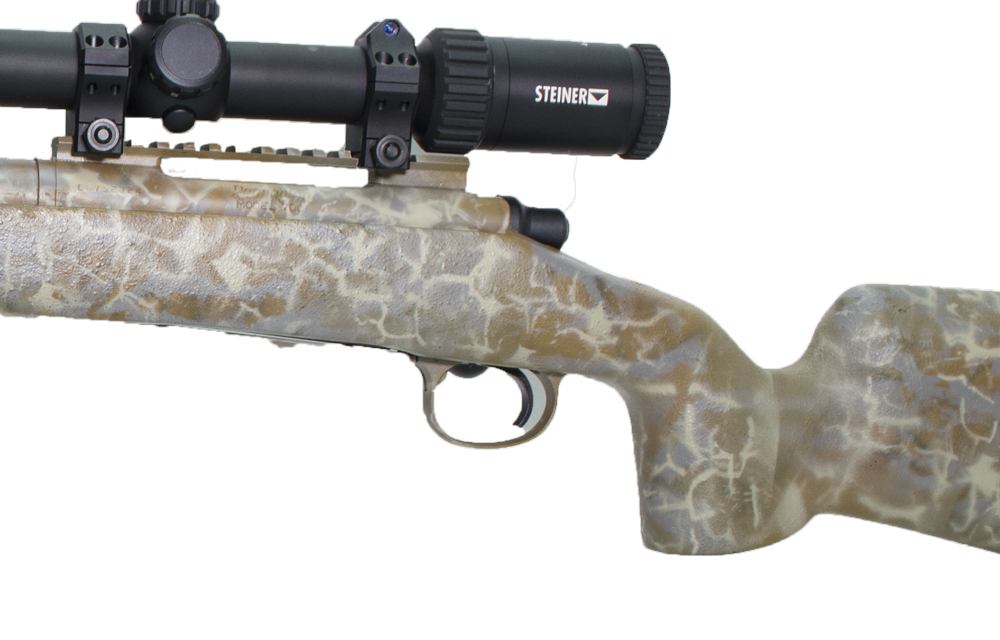
338-06-first

Along these lines, integrally suppressed firearms have gained a foothold, particularly with more traditional segments of shooters. There is a distinct advantage totting, say a rifle, on a hunt that doesn’t have the extra inches at the end of the barrel and is inherently more tightly constructed. The latter facet is particularly important when a gunsmith is miles (maybe hundreds of them) away.

Phoenix Weaponry certainly had this style of shooter in mind with its latest creation — an integrally suppressed rifle meant to tackle some of the globe’s biggest game. And like most of the Colorado gunmaker’s handy-works, this one has quite a twist, even aside from its suppression system. Namely its chambering — .338-06 A-Square.

The almost-famous round has been around almost since the .338 Winchester Magnum made its debut in 1958. Simply a .30-06 Sprg. necked up to accept a .338 projectile, the one-time wildcat offers the best of both medium-caliber worlds. It’s a solid downrange performer, capable of tackling everything up to moose and similar large game. But it’s much more forgiving than its belted-magnum brethren, allowing the recoil sensitive a shot at more competently pitching heavier bullets downrange.

Action of the Phoenix Weaponry Integrally Suppressed .338-06 A-Square

While rarer than .308 Win. to be sure, the chambering is not so uncommon as to make it a quest for the Holy Grail when ammo runs low. A number of notable manufacturers produce factory loads, though namely the premium brands — Nosler, Weatherby, Norma. And home brewing the .338-06 is a snap. Dies are available from nearly every reloading company, and .338 bullets are legion. And it almost seems like .30-06 brass actually grows on trees.

Without the worry of having to fiddle with custom ammunition — the case for some other Phoenix firearms — the company zeroed in on the .338-06’s overall engineering. And, as expected with the Centennial-State concern, it executed the rifle with a flare it has become known for.

The heart of the hunting rifle’s system is its custom tapered 21-inch Douglas barrel mated with a titanium suppressor core and sleeve. While certainly adding to the final price tag, the use of the lightweight metal keeps the rifle highly manageable and easy to maneuver — exactly what a hunter would want out of his gun. And it endows the gun with some highly desirable qualities, such as superior heat and corrosion resistance.

Overall, the .338-06 weighs in at a very practical 8 pounds — more than reasonable, even for those who push deep into the backwoods. Along with the titanium, Phoenix’s use of a custom Bell and Carlson stock helps keep the rifle svelte slung on a shoulder. Furthermore, the featherweight composite stock is inherently rigid and is inlet and glass bedded to free float the barrel, a process that ensures a nearly seamless mating between barrel and stock.

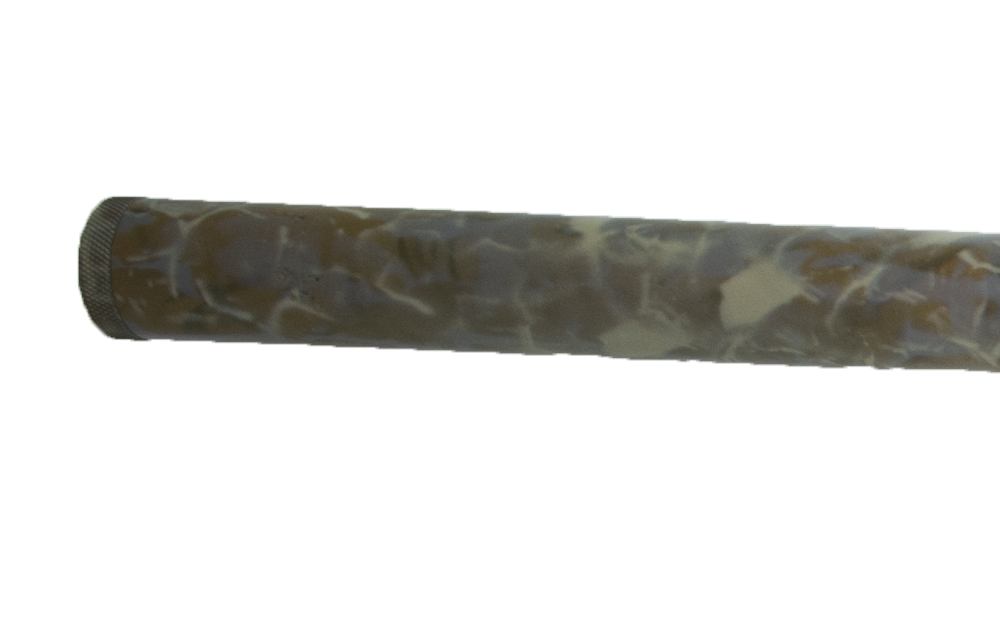
Suppressed barrel of the Phoenix Weaponry Integrally Suppressed .338-06 A-Square.

Built around the tried-and-true Remington 700 action, the rifle will prove very familiar to a majority of shooters, as well as strong. But even there Phoenix couldn’t leave well enough alone. The integrally suppressed .338-06 comes with a PTG fluted bolt with an oversized tactical knob and custom Remington 700 trigger standard.

Other notables on the rifle are a Warne 20 MOA rail and single and multi-colored paint and graphic options for the finish. Additionally, while the integrally suppressed rifle off the shelf (or as close as you can get at a custom shop) is .338-06, it is available in any chambering upon request. Have a yen for 8x60mm S or a .318 Westley Richards with a toned down report? Phoenix will build it for you, and that goes for any other tweak on the rifle — action, trigger, etc. The sky, your imagination and your wallet are the limit.

That last limit — wallet — might be the only point of contention for most shooters intrigued by the integrally suppressed .338-06 A-Square. With a hefty $4,600 starting point on a stock rifle, Phoenix Weaponry isn’t exactly giving them away. On top of this, there is the paperwork and a tax stamp to consider, since the rifle is NFA regulated. In turn, unless you’re a Silicon Valley oligarch, the rife is not exactly an impulse buy. But like most of Phoenix’s wares, all heavy on customized features, its .338-06 wasn’t built on a whim and most likely was not meant to be bought that way either.

Gun Review: Ruger’s Updated Precision Rifle In 6mm Creedmoor

1

Ruger’s newly updated Precision Rifle has the goods to go the distance.

Some basics on the Ruger Precision Rifle, available in the exciting new 6mm Creedmoor:

  • Ruger’s Precision Rifle was purpose-built for long-range shooting.
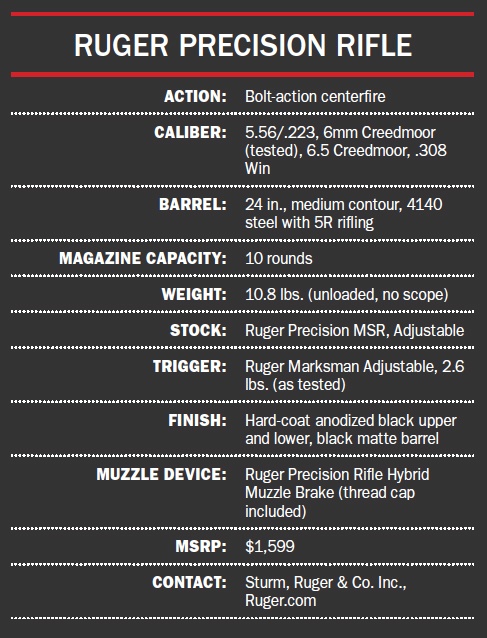
  • It’s offered in .308 Winchester, 5.56 NATO/.223 Rem., and 6 and 6.5 Creedmoor.
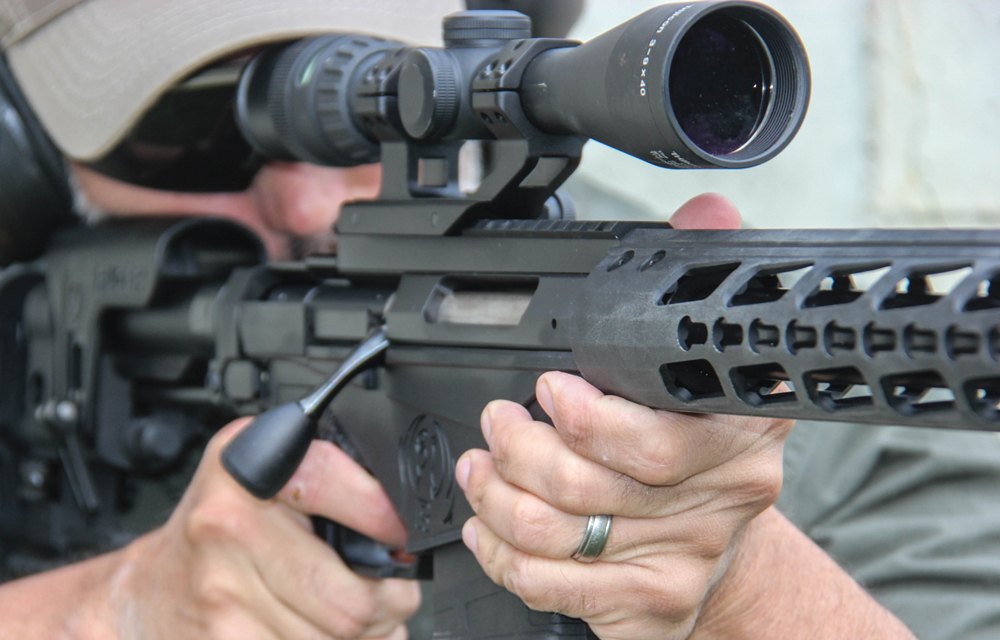
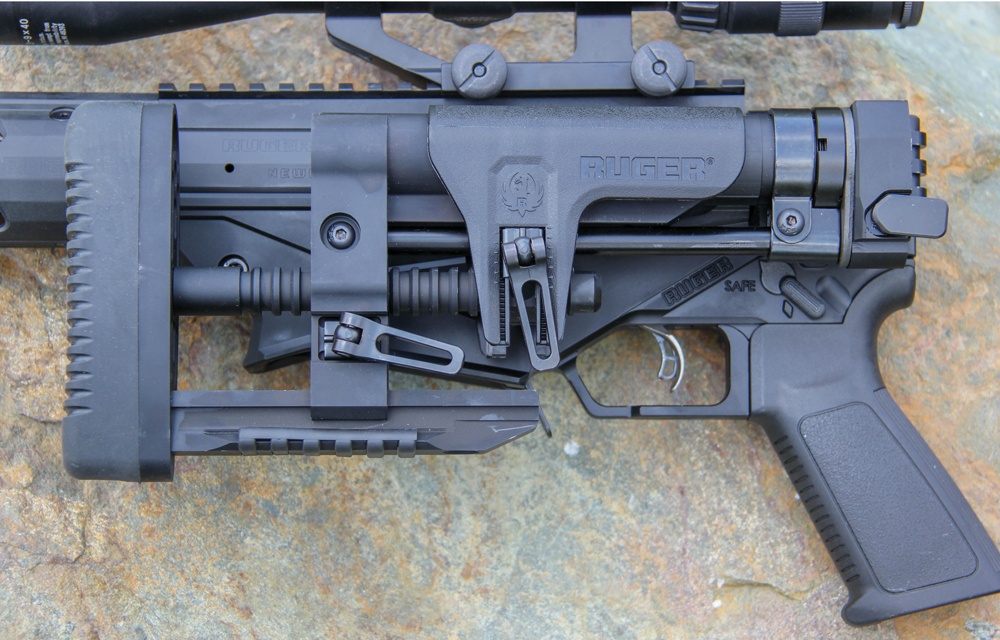
  • The rifle is outfitted with the Precision MSR Stock.
  • The stock folds to the left and features adjustable comb height and length of pull.
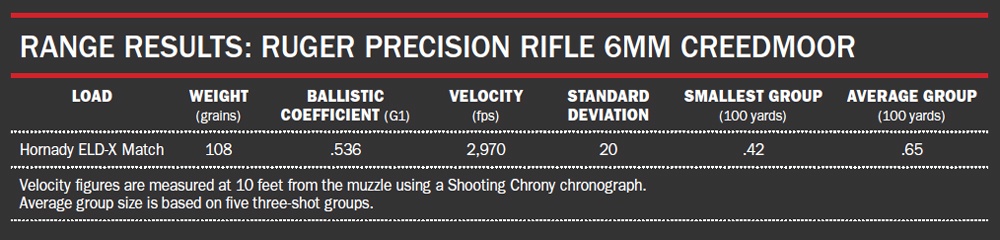
  • At 100 yards, the smallest group went .42 inches with Hornady ELD-X Match ammo.
  • The MSRP of Ruger’s Precision Rifle is $1,599.

I was not a great physics student in either high school or college, but I do remember one key fact from those classes (probably because the lesson was taught on the first day): precision and accuracy are different. Accuracy describes measurement to a standard or true value. Precision is a measure of the proximity of values to one another. In shooting terms, tight groups are a result of precise shooting. Accuracy has to do with how close those bullets are landing to your intended target.

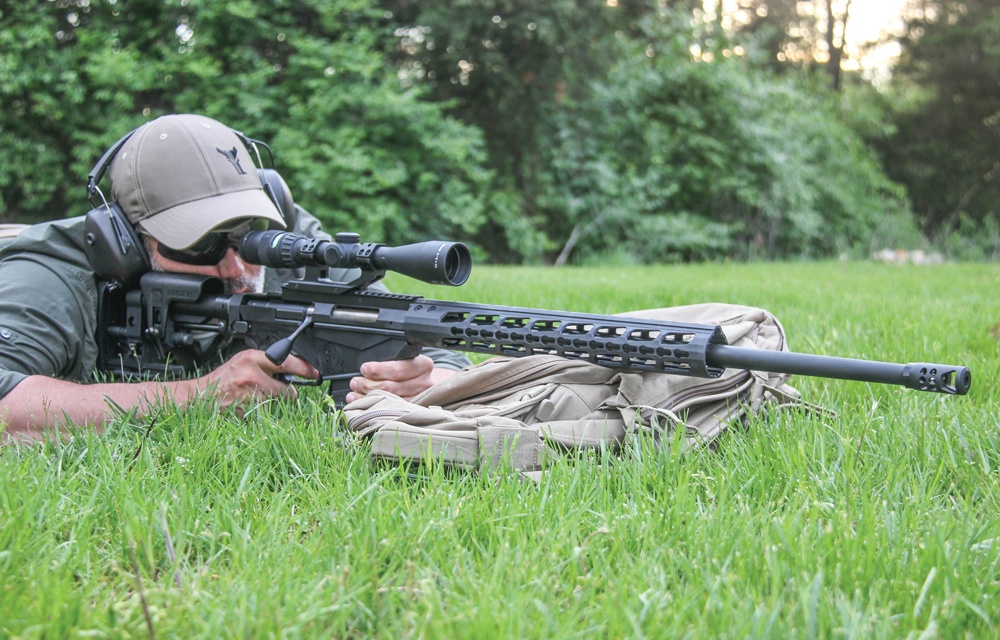
Ruger- Precision Rifle -First
The 6mm Creedmoor is a sweet shooter, offering plenty of long-range capability without beating up the person behind the trigger.

Serious long-range accuracy demands both accuracy and precision. When you’re asking a rifle to reach beyond the limits of average sporting firearms — let’s say 400 yards or more — you need a gun up to the task. And while there are many rifles that serve well for close to mid-range shots, once you move targets to a quarter mile or more, the pool of rifles capable of consistently printing tight groups — say MOA or better — starts to thin. Push that to a half-mile and you’re talking about a small class of weapons indeed.

Find Out More About Ruger Firearms

Ruger’s Precision Rifle was purpose-built for long-range shooting, and it has the features to compete in the rarified world of half-mile-plus target guns. For years, precision rifles were primarily produced by custom riflemakers who specialized in this class of weapons, but with the growing popularity of long-range shooting (both recreational and competition), more and more shooters want to push their limits. Ruger decided to build a factory rifle with all of the features and capabilities normally found on more expensive competition guns without the high price tag, and the Precision Rifle does just that.

Ruger- Precision Rifle -Second
The Precision Rifle proved highly accurate, printing sub-MOA groups on average.

For starters, Ruger began with an “upper” and a bolt made from pre-hardened 4140 chrome-moly steel. That helps minimize distortion, and CNC machining keeps tolerances tight. The lower magazine well halves are machined from 7075-T6 aluminum and are type III hard-coat anodized for durability. The Precision Rifle’s one-piece bolt has three locking lugs, which allow for a fast and smooth 70-degree bolt lift. It also features a long billet aluminum bolt shroud, and there’s a bolt disassembly tool stored in the shroud for quick disassembly and cleaning as well as a wrench to adjust the Marksman bladed trigger. The Precision Rifle’s upper has a minimized ejection port that improves rigidity, which, in turn, aids in accuracy, and the 20 MOA Picatinny rail is held in place with four #8-40 screws, so there’s plenty of room for mounting large scopes.

The heart of any real long-range rifle is its barrel, and the Ruger’s cold hammer-forged 4140 chrome-moly steel pipe features 5R rifling. Traditional rifling uses four or six lands (smallest bore diameter) and grooves (widest bore diameter) that have 90-degree edges. The lands and grooves are positioned opposite one another, and the lands contact the projectile and force it to spin. 5R rifling, by contrast, uses five lands and grooves with sloping edges on the lands. This accomplishes several things. First, the opposite lands/grooves reduce bullet deformation, and that leads to improved accuracy (er, precision), especially at long ranges.

Second, the sloped land design doesn’t trap fouling like traditional rifling, so it’s easier to keep the bore clean and uniform. The barrel has minimal headspace measurements and a centralized bore. All Ruger Precision Rifles come with medium-contour barrels topped with the company’s Hybrid Muzzle Brake that reduces recoil without the excessive noise and muzzle blast that accompany the use of other brakes. The brake can be removed and replaced with an included thread protector. The barrel’s design, which is completely free floating and attaches directly to the receiver, eliminates bedding, and recoil force moves rearward in a straight line, further enhancing accuracy potential. The Precision Rifle is offered in .308 Winchester and 5.56 NATO/.223 Rem. with a 20-inch barrel and 6 and 6.5 Creedmoor with a 24-inch barrel.

Taking Stock

Ruger outfitted this rifle with the Precision MSR Stock, which folds to the left at the touch of a button, and comb height and length of pull are adjustable by flipping latches on the stock’s right side. One latch releases the comb so it can be raised or lowered; the other moves the stock fore and aft for perfect alignment. Many competition rifles have adjustable stocks, but Ruger’s setup is robust, simple and requires no tools. That’s an important consideration for long-range rifles; time-consuming stock adjustments don’t permit quick changes afield. This system is much simpler. The folding stock hinge is mated with an AR-style buffer, so you can swap stocks if you desire, and there are QD sling attachments and a short accessory rail on the bottom of the stock. The top of the comb is nicely rounded and comfortable, with light texturing for a comfortable cheek weld.

Ruger- Precision Rifle -Third
Ruger’s highly adjustable Precision MSR stock.

The texturing is about all that’s light on this rifle, though. The rifle that I tested weighed 10.8 pounds and measured 43.25 to 46.75 inches overall, making this a gun that you won’t want to carry when still-hunting whitetails. For a dedicated target rifle, though, the Precision Rifle’s weight and length aren’t a hindrance. The four cartridges this rifle is chambered in are all relatively light kickers, and this in a gun that will weigh over 12 pounds scoped with a loaded magazine. With a built-in brake, the 6mm Creedmoor hardly stirred the rifle when firing. This helps prevent flinching and allows shooters to keep the target within the field of view when firing. The Precision Rifle’s straight-line recoil lifts the muzzle slightly, but there’s very little movement on the bags, so you can deliver follow-ups in a hurry. That’s not usually necessary when target shooting, but it’s one advantage of the Ruger’s design that’s good for Precision Rifle Series shooters who are timed.

The Precision Rifle’s controls and grip design mimic an AR to some degree. There’s a safety selector that is reversible that looks much like what you’ll find on most ARs, but where this gun differs from black guns is that the selector moves just 45 degrees from safe to fire. The pistol grip design is similar to an AR, and the aluminum Short Action handguard has a low-profile design that allows you to mount long-range scopes with large objectives without worrying about clearance issues. Ruger designed this rifle to be compatible with AICS and M110/SR-25/DPMS/Magpul mags as well as some M14 magazines, so there are lots of options available. The gun that I tested came with a 10-round PMAG that fit securely in the magwell, and the release lever rides just behind the magazine. The front of the magwell is also contoured to allow it to act as a brace when firing or to comfortably accommodate your non-shooting hand.

Six Appeal

It was impossible to attend this year’s annual SHOT Show in Las Vegas without appreciating the impact the 6.5 Creedmoor has had on the shooting industry. Originally conceived Hornady as a low-recoiling, highly accurate target round, the 6.5 has permeated every facet of the rifle-shooting world. It is now chambered in ARs, serious long-range tactical bolt guns as well as light mountain rifles for big-game hunting. And it didn’t take long for the 6.5 to produce an attention-grabbing offspring, the 6mm Creedmoor.

Ruger was one of the first companies to start churning out production rifles in 6mm Creedmoor, and the Precision Rifle was the first gun I fired chambered for the necked-down cousin of the 6.5 Creedmoor. Traditionally, 6mm/.243 bullets have run from about 55 to 100 grains, but with longer, heavier bullets with higher ballistic coefficients, the 6mm Creedmoor is a dedicated long-range cartridge also quite capable of taking a variety of game. The ammo I tested — the very first 6mm load to come to market — was Hornady’s 108-grain ELD Match load. There’s little question that Precision Rifle Series competition helped bolster interest in the cartridge. That event requires shooting from 100 to 1,300 yards, so the rifle must be accurate to long range yet must not beat the shooter up too badly (and there are velocity limitations).

Ruger-Precision-Rifle-Seventh

The Ruger Precision Rifle is a serious competition and long-range rifle, and the 6mm Creedmoor is a perfect match. The 108-grain ELD Match bullet from Hornady has a ballistic coefficient of .536 — a natural choice for long shots. For comparison to something more familiar, let’s look at Hornady’s 117-grain interlock .25-06 load. That .25-06 bullet has a muzzle velocity of 2,990 feet per second (fps), which is close to the 6mm Creedmoor’s 2,960 fps figure from the same length barrel. At the muzzle, the .25-06 load has about 200 foot-pounds (ft.-lbs.) more energy, but at 500 yards, the 6mm, with its higher BC, is traveling 250 fps faster than the .25-06 load and carrying more than 150 ft.-lbs. more energy. The telling figure, though, is bullet drop. At 500 yards, the .25-06 bullet has dropped 4.5 inches farther than the smaller 6mm bullet. The 6mm Creedmoor is plainly a long-range cartridge, and it’s one that won’t abuse the shooter.

On the Range

The Ruger Precision is a dedicated long-range rifle and has all the features serious competition shooters demand, but how does it perform? At 100 yards — a virtual chip shot for this rig — the smallest group went .42 inch with the Hornady factory ammo, so small in fact that I had to check the backing board to be sure I was indeed looking at a pattern printed from three bullets and not two. But it was legitimate. In fact, the largest three-shot group of the five groups I shot with this ammo went .925 inch, and the average was .65 inch — well below MOA. Average velocity was 2,970 fps, besting Hornady’s promised velocity figure by 10 fps.

Ruger-Precion-Rifle-Fifth

All those features Ruger packed into this rifle make it a very user-friendly long-range gun. For starters, as mentioned earlier, it’s easy to adjust the stock’s fit. Second, the Ruger Marksman Adjustable trigger makes producing tight groups easy. It’s adjustable from 2.25 to 5 pounds, and the one I tested came set at 2.6 pounds according to my Wheeler gauge. It’s a bladed trigger, and you quickly learn that once the blade is depressed, you’re within a hair’s breadth of the trigger breaking. Other features also aid in bench shooting, including the contoured magazine well that offers a solid rest for the hand and the oversized bolt handle. There were no feeding, extraction or ejection issues.

With a bit of dialing on the Trijicon scope, I was producing groups that were precise and accurate — tight clusters in the center of the bullseye. Shooting this rifle well is easy, and Ruger has succeeded in doing what they claimed: building a factory rifle with the kind of features that make it a worthy competitor against many custom guns. With an MSRP of $1,599, this isn’t a budget rifle to be sure, but when you consider all of the Ruger Precision Rifle’s capabilities, this gun is actually something of a bargain. So, if you want a rifle that can go the distance and don’t have the money or time to invest in a custom build, this is a legitimate factory alternative. If you do your part, the Ruger will perform, and it performs splendidly.

Editor’s Note: This article originally appeared in the June 2017 issue of Gun Digest the Magazine.
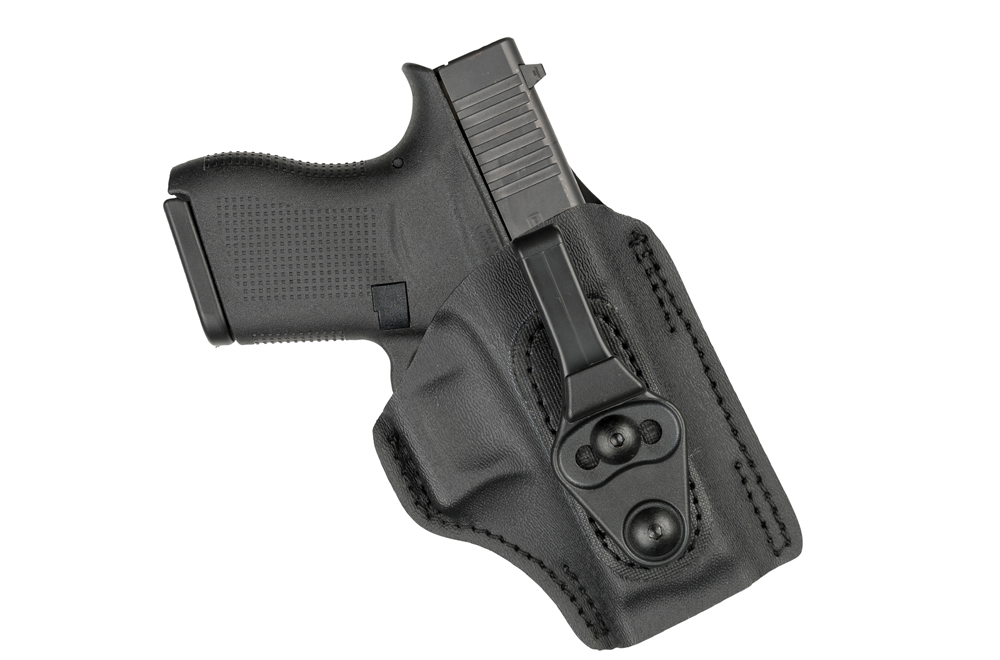

Get More Ruger Info:

MUST READ ARTICLES