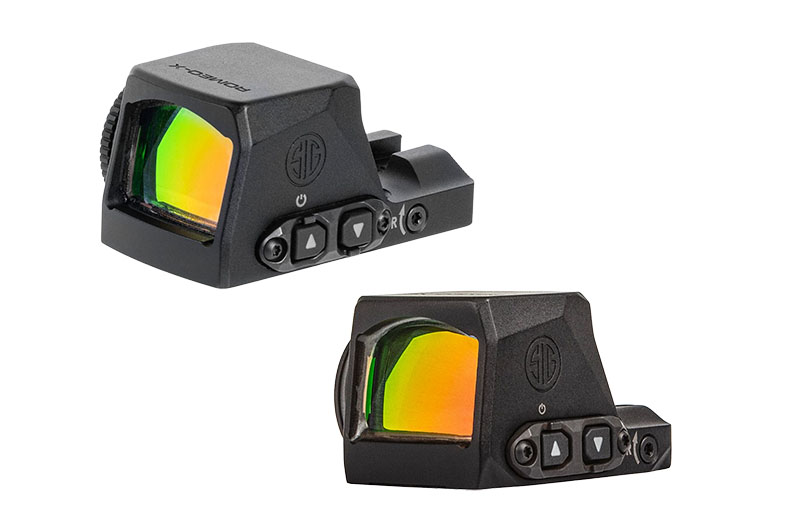
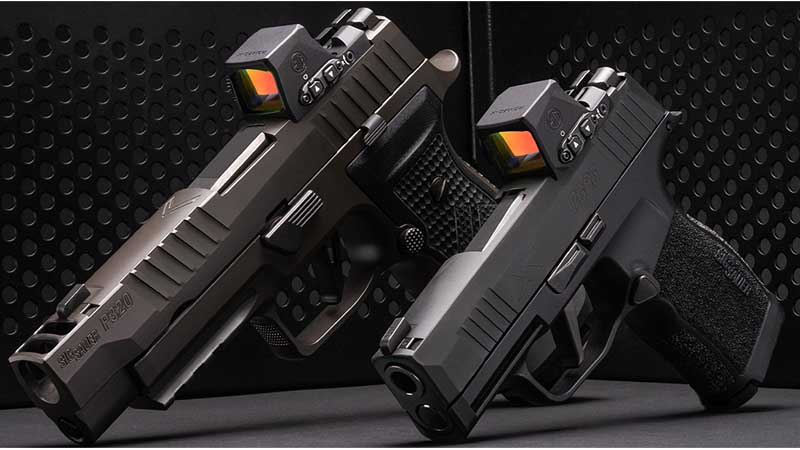
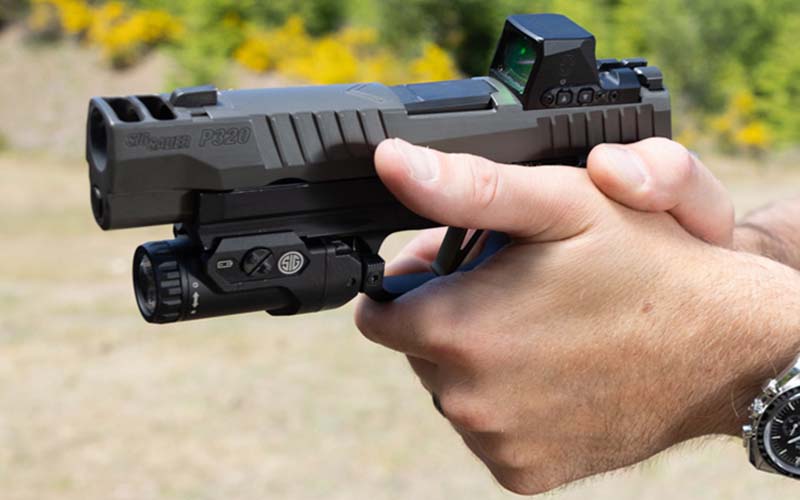
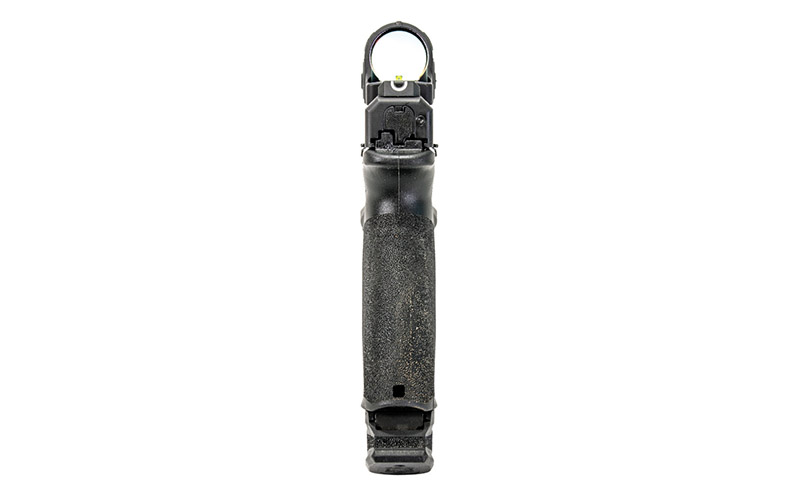
Sig Sauer has just announced the ROMEO-X optic series, featuring two sizes of pistol red dots.
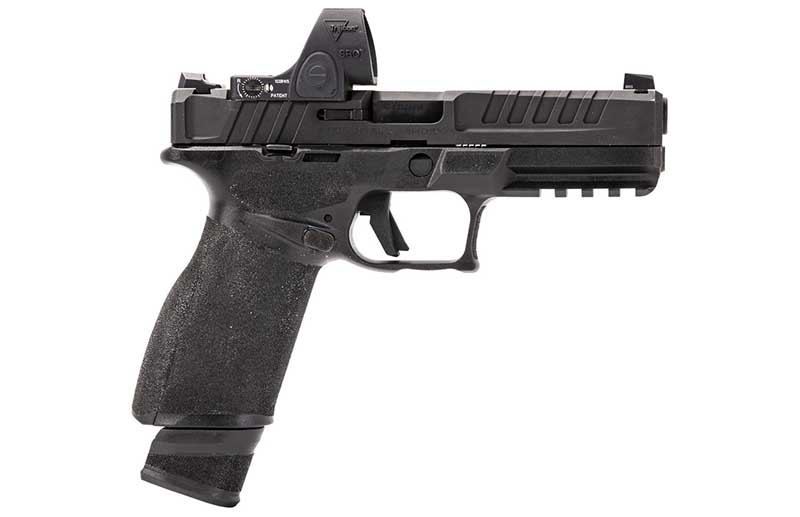
Sig Sauer recently showed off the Romeo-M17, the red dot developed for the Army’s new Sig M17 pistols. However, that exact model is not available to civilians. For non-military shooters who were interested in its design, Sig has just announced a new optic series inspired by it called the ROMEO-X. The new line of pistol red dots is commercially available and offered in two different sizes.
The two versions are called the ROMEO-X Compact and the Romeo-X Pro, the former being for smaller handguns like the Sig P365 while the latter is intended for full-size pistols such as the Sig P320. The Compact model used a Shield RMSc mounting footprint and the Pro model uses a DeltaPoint Pro footprint. Besides their sizes and mounting footprints, the two ROMEO-X red dots mostly share the same features. Those include 7075 aluminum housings, side-mounted CR1632 battery compartments and distortion-free aspheric glass.
Other commonalities are the optics’ advertised continuous runtime of 20,000 hours (at a medium brightness setting), 15 brightness settings (12 for daytime, 3 for night vision) and red 2-MOA dot/32-MOA circle reticles. The red dots also have motion activation technology, magnetic activation technology and are capable of co-witnessing standard-height iron sights.
Andy York, President of SIG SAUER Electro-Optics, said this about the new red dots:
The ROMEO-X family of red dot sights is completely optimized for everyday carry and built using the same technology and testing standards of our mil-spec optics that are designed to withstand the rigors of the battlefield … The ROMEO-X Series is designed for ease of use beginning with the side battery placement leading to an overall low deck height of the sight. This profile gives the optic an extremely low position when mounted to the slide for a full sight picture and co-witness with the existing standard-height iron sights. The ROMEO-X Compact and ROMEO-X Pro are engineered, tested, and built-in Oregon to be the ultimate aiming solution for EDC.
MSRP for the Sig ROMEO-X Compact is $519.99 and MSRP for the ROMEO-X Pro is $589.99.
Imported 5.45x39mm rifles have been scarce and expensive lately, so we’re taking a look at the more affordable American-made PSA AK-74.
If you had told me five years ago that I’d be recommending an American-made AK, I probably would have laughed. But both Palmetto State Armory and the AK market have changed a lot since then. While I used to unwaveringly promote imported AKs over domestically produced ones, the value that Palmetto’s AKs now offer is too good to ignore.
When the company’s AKs first came on the scene, they had plenty of issues and used materials that are widely considered to be subpar. Other American companies that have attempted to make Kalashnikovs have traditionally balked at criticisms like these, but PSA proved to be different. The company accepted feedback and made incremental improvements with each rifle generation, eventually resulting in a totally solid yet very affordable line of 7.62×39 AKs.
While I already own plenty of 7.62 AKs, I’d been thinking about adding an AK-74 to the safe for some time. Unfortunately, the availability of imported 5.45 rifles has been low in recent years, resulting in prices inflating to above what I was willing to pay. So, when Palmetto announced the PSA AK-74 in 2020, I was intrigued given it would undoubtedly be more affordable than an import.
Much like the company’s 7.62 rifles, however, its 5.45 line started life with some hiccups. Now that PSA has had the time to address them, I asked for a review copy to take a closer look at the revised product.
Generation 1 PSA AK-74 Issues
When talking about the PSA AK-74, the elephant in the room is Garand Thumb’s initial review from 2021. You can watch his video for the full breakdown, but in a nutshell, his rifle experienced early and excessive wear on the front trunnion and bolt, broken firing pins and popped primers.
PSA asked him to send the rifle back to them for further testing, and it resulted in internal changes made to the design. Garand Thumb did a follow-up review with the updated rifle and found no more issues after putting thousands of additional rounds through it. Of the AK-74s that PSA has sold since then, the issues seem to have been successfully remedied given the lack of user complaints online.
Would it have been preferable if the PSA AK-74 was perfect from the get-go? Sure, but new firearms rarely are. What’s more important is PSA has—more than once—proven its ability to competently respond to feedback and implement improvements with each generation of AK it releases.
First Impressions And Rounds Downrange
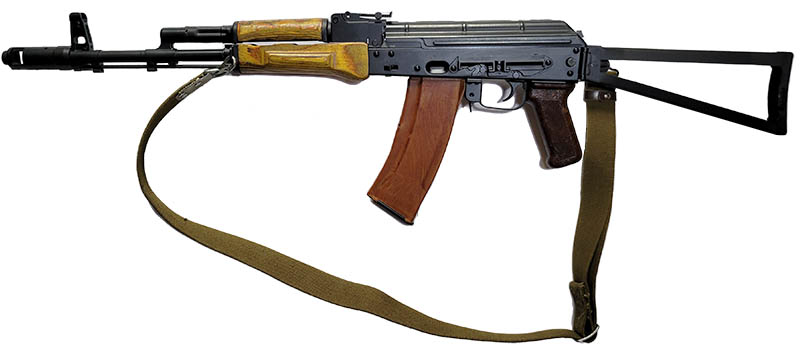
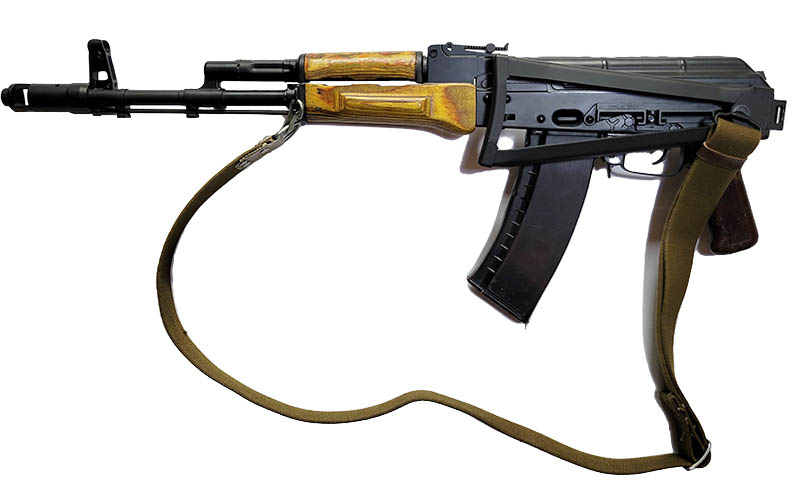
From the first time I laid eyes on it at my FFL, I was impressed with the PSA AK-74. The metal finish is an attractive glossy black, the action was noticeably smoother than average and the folding stock worked like a dream.
Over the course of a couple of range sessions, I put a total of about 500 Golden Tiger 59-grain FMJs through it. Not a torture test by any measure, but 5.45×39 is expensive these days. Regardless, I didn’t experience a single malfunction of any kind throughout my testing.
That’s almost surprising because the rifle felt under-gassed compared to other AK-74s I’ve shot. AKs are heavy and 5.45 is a light round, so AK-74s are already known for being soft shooters, but PSA’s had essentially zero recoil. Taking aimed shots with it felt more like directing a laser, and during rapid fire, it stayed so still that it just made me wish the third selector position was actually functional.
Despite this, the rifle’s flawless reliability with both live ammo and blanks proves that it’s been gassed perfectly. Perhaps the enhanced potential reliability of military-gassed AK-74s has some appeal in muddy trenches, but for the range, the PSA AK-74 couldn’t be better.
Continuing with the laser beam analogy, the rifle’s irons were also perfectly zeroed from the factory. While I didn’t use it to put any groups on paper, it rang a half-torso steel target at 100 yards all day long with minimal effort. The trigger feels like a standard AK trigger, but that’s just fine with me.
Based on what I was able to test, the PSA AK-74 also has good magazine compatibility. It came with a PMAG which worked without issue, but that should be expected since it’s likely the magazine PSA designed the gun around. New-production Bulgarian steel-reinforced polymer mags worked perfectly as well.
My rifle had no issue accepting or feeding from surplus mags (both Russian and East German), but all were quite tight to remove. This could easily be fixed with a bit of file work, however.
The only magazines I tried to test that my rifle absolutely would not accept were AK-12 mag clones from AC-Unity.
In a word, this gun is fun. When you level your sights on a steel plate, squeeze the trigger and hear that first ring, it takes enormous self-control to not keep blasting as fast as you can. Just like when you get behind the wheel of a sports car and can tell it’s begging to go faster, you can tell this rifle wants to shoot more ammo than you can afford to feed it.
Customizing The PSA AK-74
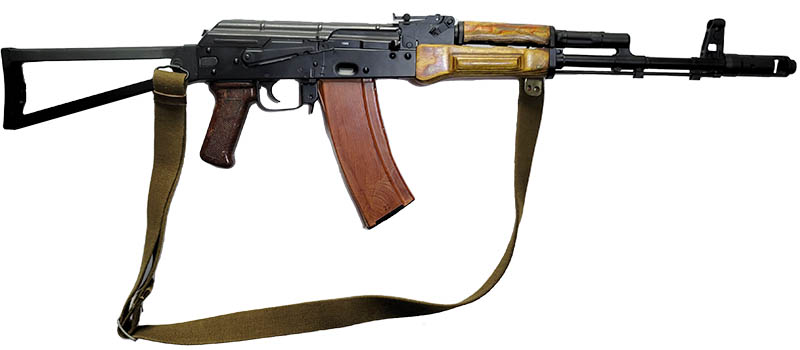
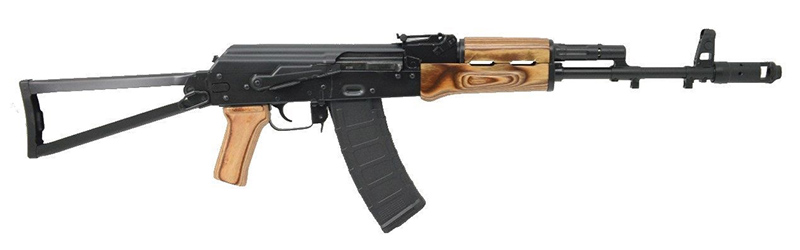
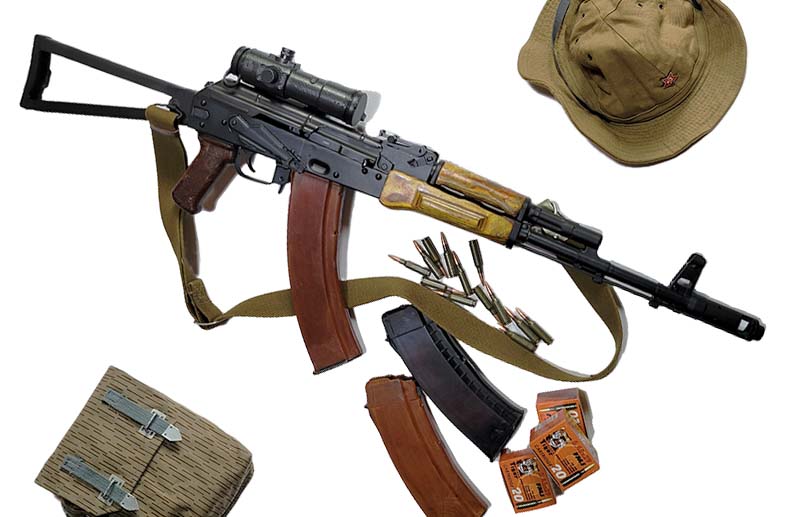
While the rifle did look great right out of the box, I couldn’t resist the urge to start swapping parts. The factory nutmeg wood furniture will surely appeal to some, but AKs just look wrong to me unless they’re dressed in original surplus. On that note, the first thing I did was replace the handguards with a set of Soviet blonde laminate and the pistol grip with surplus bakelite. I also added an original AK-74 sling.
The PSAK-74 as it comes from the factory.
Palmetto sells a wide variety of AK-74 variants ranging from basic to classic to tactical, and although the model I chose would definitely be considered a classic, PSA makes no promises of historical accuracy. For AK pedants like me, there are a couple of small parts that I wish were different.
Firstly, the rifle comes with a smooth dust cover, the appropriate style for newer models like the AK-103. Since the model I received has a triangle stock like an AKS-74, however, it should really be ribbed. Thankfully that was an easy and cheap part to swap.
These rifles also come sporting an enhanced selector lever with an extended shelf. This isn’t true for the original either, but it is a nice feature to have. Speaking of the selector, PSA’s is probably the smoothest I’ve ever felt on any stock AK.
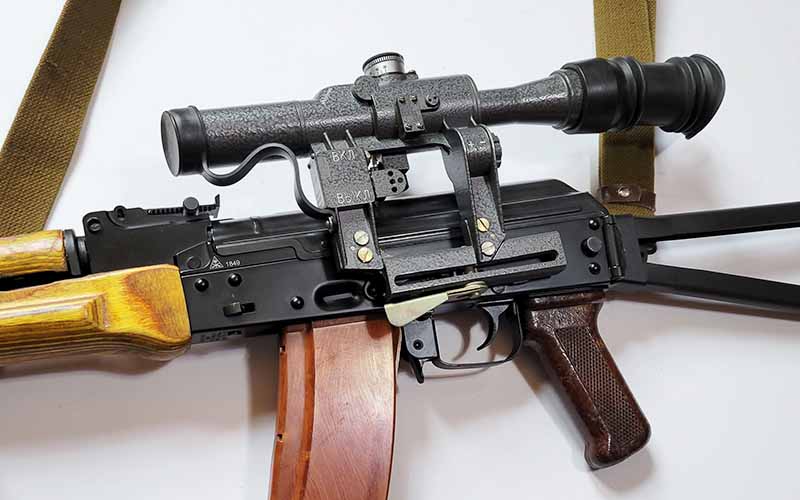
PSA also includes a side optics rail on its AK-74, something that has become pretty standard on AKs sold in the U.S. While I don’t plan on utilizing mine, I tried mounting various optics and all went on without a problem. That includes both original Eastern Bloc optics as well as aftermarket mounts from RS Regulate.
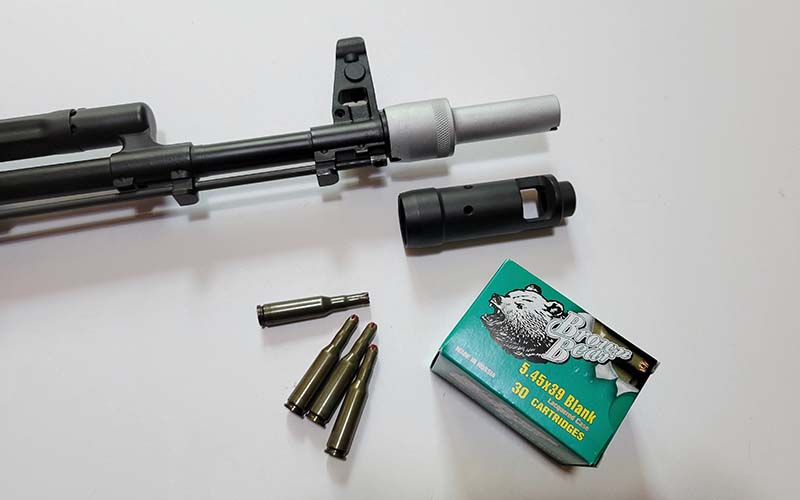
Finally, I mentioned earlier that I also tested the rifle with blank ammo. That required the installation of a surplus blank fire adaptor and it screwed on flawlessly. This shows that PSA did the threads correctly and that you should be able to install any M24x1.5 RH muzzle device that you desire.
In short, this PSA AK-74 is close enough to spec that it had no issue accepting original Soviet furniture, optics, muzzle devices or magazines. Some minor fitting was required along the way, but that’s typical for all Kalashnikovs.
Should You Buy?
If you’ve been in the market for a 5.45x39mm rifle, I’d definitely recommend the PSA AK-74. For the money, I don’t believe there’s a better option out there. Are imported models better on paper? In many ways, sure, but they also cost substantially more. Plus, as far as I’m aware, there’s currently just one other domestically produced AK-74 available and it only costs marginally less than PSA’s despite being generally accepted as using worse quality components.
If you’ve been wanting an AK in general but aren’t particular about the chambering, then this rifle isn’t the one for you. As great as 5.45 is, the cartridge will simply never be as affordable to shoot in the U.S. as 5.56 NATO. PSA makes 5.56 AKs too, but I haven’t had the chance to play with one personally. It, unfortunately, seems that due to things like the Russian ammo ban, all Soviet calibers are on the decline stateside.
That said, if 5.45 appeals to you specifically, there is some hope still. That’s because Palmetto is in the process of setting up a domestic ammo plant for Soviet ammunition, including 5.45×39. When the factory comes online, it will hopefully be able to churn out enough affordable ammo to let these PSA AK-74s get the range time they truly deserve.
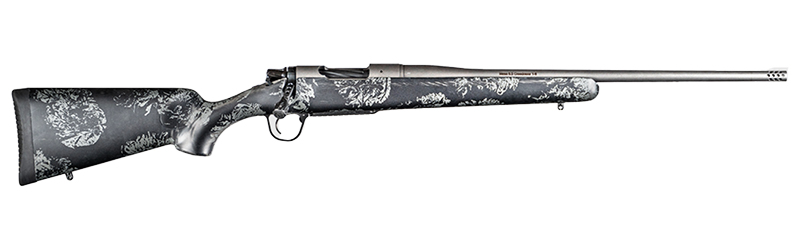
Springfield Armory has just announced the Model 2020 Redline rifle series, lightweight and compact bolt-actions ready to hunt in any environment.
There was a time when the only major selling point of a hunting rifle was its accuracy, but those days are long behind us. Now with the growing popularity of backcountry hunting and similar expeditions into rough terrain, things like weight, size, ergonomics and the ability to mount a suppressor are paramount considerations. Springfield Armory’s new Model 2020 Redline bolt-action rifle series was built with that in mind.
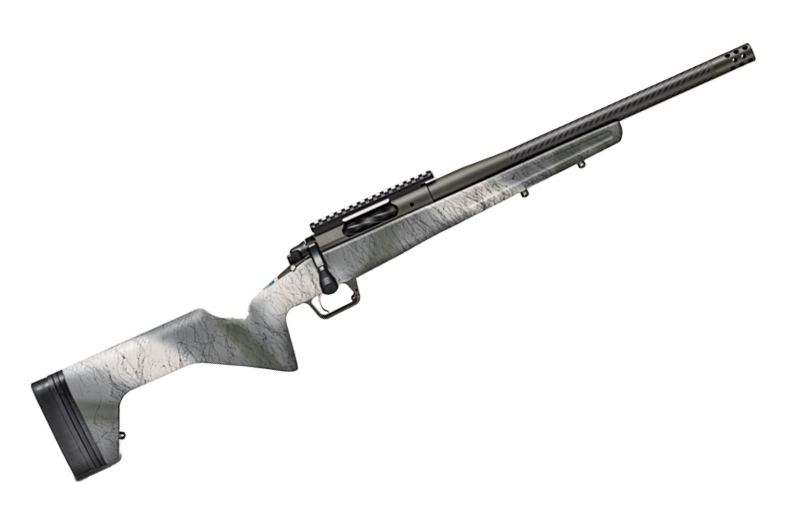
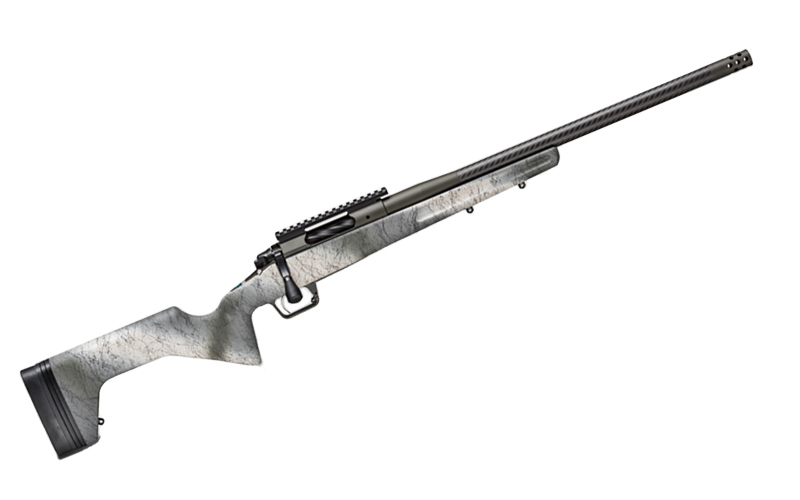
16-inch 6.5 Creedmoor 2020 Redline model.
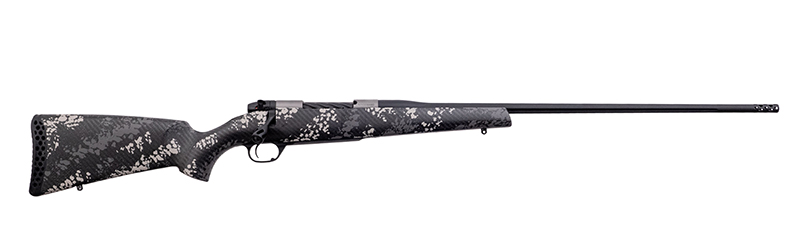
Built on Model 2020 actions, the Springfield Armory 2020 Redline series is initially launching with four models to choose from. Caliber options include .308 Winchester and 6.5 Creedmoor, and barrel options include 16 and 20 inches. All barrels are also free-floated and feature roll-wrapped carbon fiber sleeves. The 16-inch barrel option was offered primarily with suppressors in mind to provide hunters with a more maneuverable package in the field. To help promote the use of suppressors with Redline rifles, purchasers will also receive a $200 discount if they buy a Banish 30 from Silencer Central. If suppressors aren’t your bag, each rifle comes equipped with a SA Radial Brake.
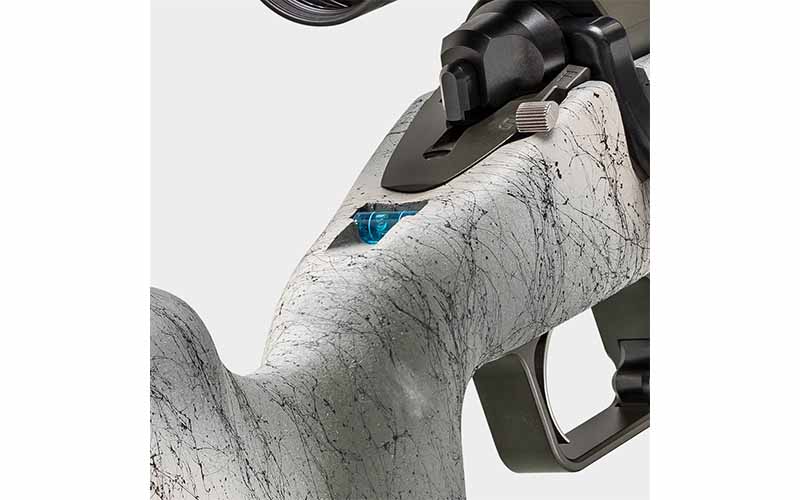
All 2020 Redline rifles also come with a skeletonized Greyboe Trekker stock. Not only is the stock lightweight at 28 ounces, but it also features an adjustable length of pull, three sling studs and a bubble level/thumb rest at the rear of the action. Other noteworthy features include an adjustable TriggerTech trigger and a .75-MOA accuracy guarantee (for a 100-yard, 3-shot group using match-grade ammo).
Steve Kramer, Vice President of Marketing for Springfield Amory, said this about the new rifles:
The Model 2020 Waypoint set the standard for precision manufacturing, performance and accuracy from a premium, American-made rifle … The new Model 2020 Redline continues that tradition by offering backcountry hunters a rifle perfectly suited to their demanding needs.
20-inch .308 Win. 2020 Redline model.
All four Springfield Armory Model 2020 Redline variants come with a rifle case and share an MSRP of $2,299.
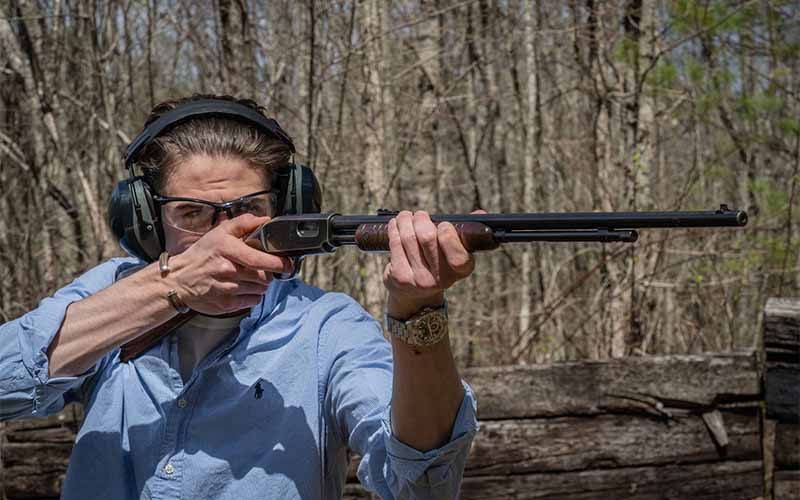
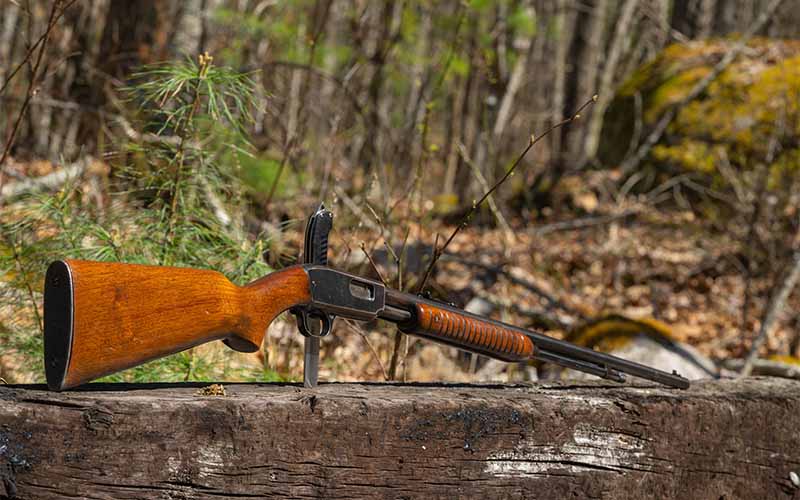
There’s nothing like a first rifle, especially if that rifle is a Winchester Model 61.
After my father was released from the Army hospital in Fort Pickett, Virginia, he used the G.I. Bill to go to college. He and my mother were married soon after, and Dad worked odd jobs to stay in school. They never had much money, but they loved to hunt, and grandpa gave them a Winchester Model 61. After Dad got his degree and began teaching, they finally saved up enough money to buy matching Winchester Model 12 shotguns. They were then, as they say, “living high on the hog.”
When I finally came along, Mom and Dad still didn’t have a lot of money, but they did have that Model 61. When I wasn’t much more than stirrup high, I used that rifle to kill my first critter; I shot a raccoon out of a tree with about half the family watching. Our family enjoyed hunting raccoons with hounds, and when the dogs treed one, we took turns shooting at it—youngest to oldest. I was the youngest and learned right quick that if I didn’t get the hit, the gun would never make its way back to me. Eventually, I got so good at shooting ’coons, they’d skip me and let the older young’uns shoot first.
The author with the rifle that taught him how to shoot. It’s still teaching him lessons.
That rifle and I grew up together, but there was a brief time when a shotgun tried to intervene with our relationship. Mom also had an old single-shot Model 37 Winchester .410 bore she’d hunted with up until she and Dad acquired their Model 12s. (In case you’ve not figured it out, we were a Winchester family.) After that, she had let my older cousins use her Model 37 as their first hunting gun. So, Mom expected me to follow form.
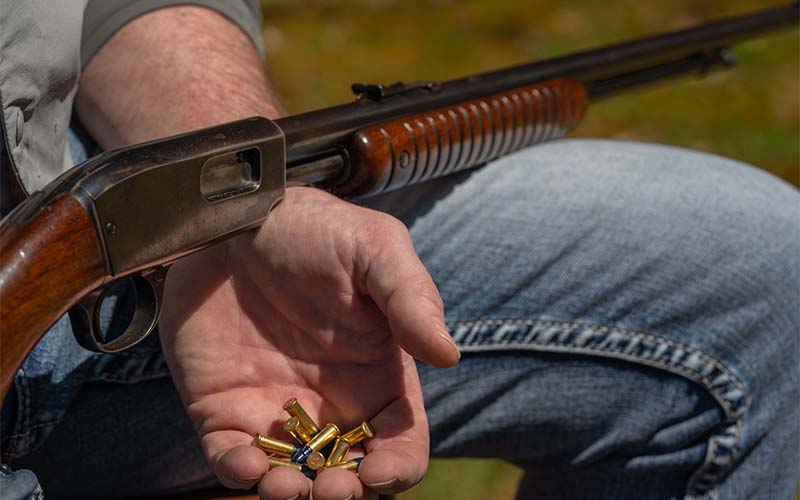
One can only wonder how many rounds this author’s dropped down the magazine tube of his old Winchester Model 61.
Dad took me squirrel hunting and, after about an hour under a hickory tree and a complete box of .410 shells, there were no dead squirrels. On the way back to the house, I asked if I could use my .22—the Model 61—for squirrel hunting. Dad seemed a bit dejected, but agreed, and that was the beginning of the rifleman I am today.
Unlike Any Other
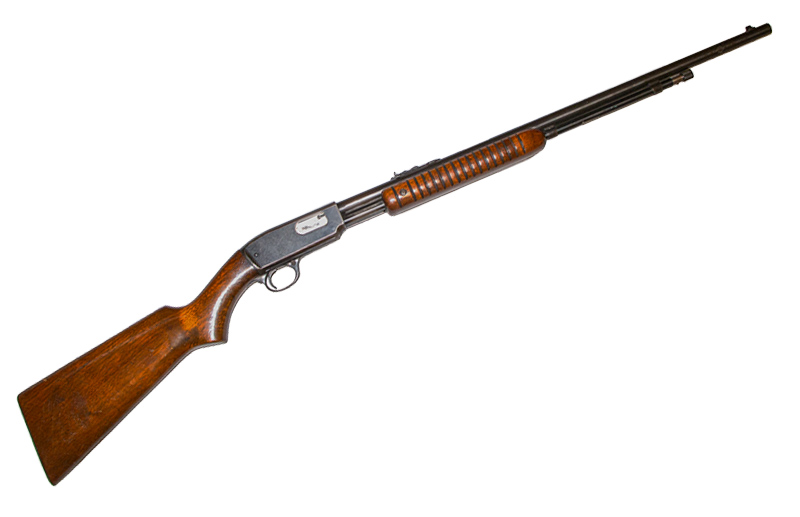
The Winchester Model 61 was introduced in 1932. It was a lean and trim pump-action .22 that was capable of handling .22 Short, .22 Long and .22 Long Rifle cartridges. Unlike modern .22 rifles with abbreviated barrels, the Model 61 had a full-length, 24-inch tube, and it was available in either an octagonal or round configuration. Surprisingly, it could even be ordered with a Routledge smooth-bore barrel, where after about 12 to 17 inches the bore opened to 0.375-inch diameter to stop the spinning of shotshell payloads. These special 61s were a favorite of exhibition shooters.
The amount of joy that can be found with a handful of cartridges and a good .22 rifle by a young boy or an old man is immeasurable.
There were three versions of the 61: a Pre-War, Standard and WMR. The Pre-War version had a straight grip and a steel butt plate. The Standard version had a larger circumference forend and a pistol grip stock. The WMR version, as you might have guessed, was chambered for the .22 WMR cartridge. All were loaded and fed by a tube magazine, and one of the coolest features of the 61 was the large thumb screw on the left side of the action that made the gun a takedown.
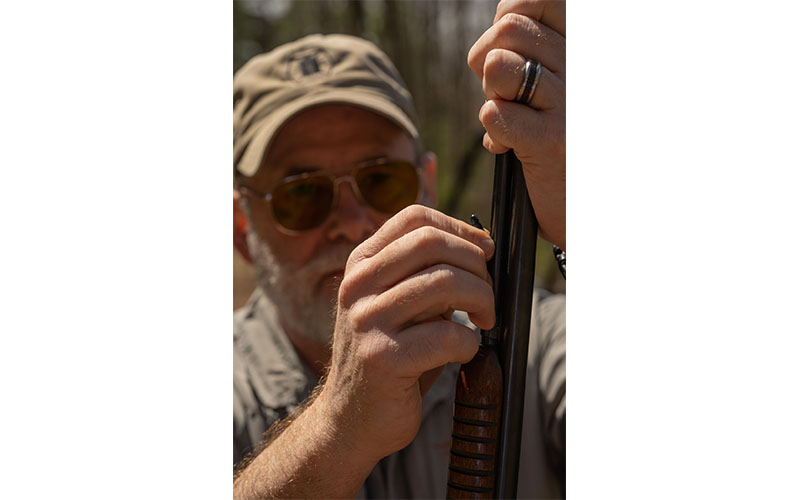
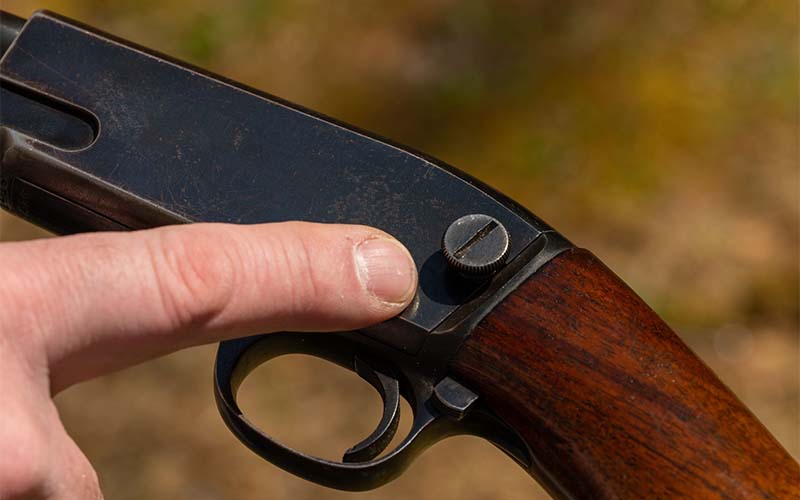
The Model 61 was a takedown rifle. This screw on the left side of the action is what held it together.
Many considered the Model 61 a rimfire companion to Winchester’s iconic Model 12 shotgun. It may have been the impetus that inspired my mom and dad to get their Model 12s. Operation of both were identical; the action release and safety were in exactly the same place. Model 61 production ceased in 1963, and there were about 342,000 61s made during its 31 years of manufacture. Used—shooter condition—Model 61s will sell for about a grand, but 61’s with the Routledge barrel can break a wallet or cause a divorce.
These little rifles were amazingly good shooting guns. Over the course of growing up with my 61, I made some shots that were better than brag worthy. And by the time I was in my teens, that rifle and I were unbeatable; no one in my family shot it as well as I did—that includes my father, who was deadly with open sights.
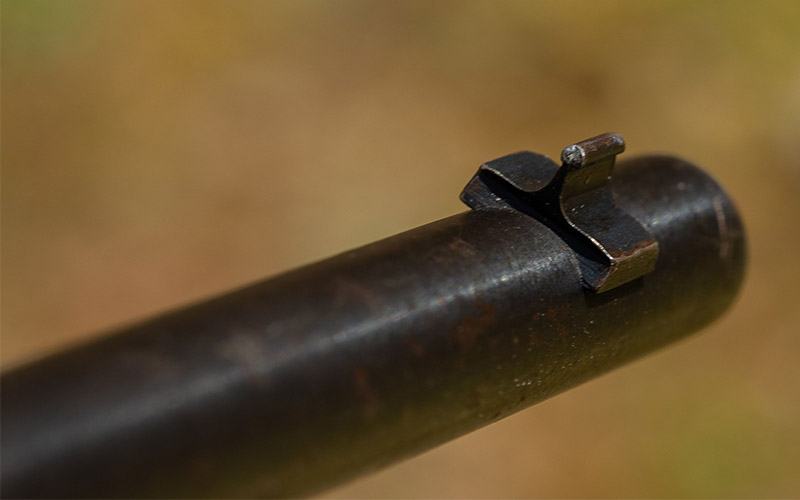
Though equipped with rudimentary sights, with a good eye and a fine bead, this Winchester Model 61 put a lot of squirrels in the pot.
Of course, nothing lasts forever, and I eventually had to have a .22 Magnum, one that was compatible with a scope. About the same time that I kissed my first girl—and meant it—that old Model 61 was handed down to my sister.
Time Marches On
As it is with many early relationships, mine with that old Model 61 began to fade. New adventures with my scope-sighted .22 Magnum and a new Remington Model 700 made my time with the 61 seem juvenile and less important. By the time I was in my 20s, that old rifle had been mostly forgotten.
But a few years ago, my sister surprisingly gifted my son with my father’s old Winchester 100, my oldest daughter with my mother’s Model 12 and my youngest daughter with our family’s old Model 61. A better Christmas gift would be hard to imagine, but of course my kids have been exposed to much more modern guns all their lives. The gesture was mostly one of nostalgia as opposed to something that generated exciting expectations at the shooting range. However, and again, few things stay the same forever.
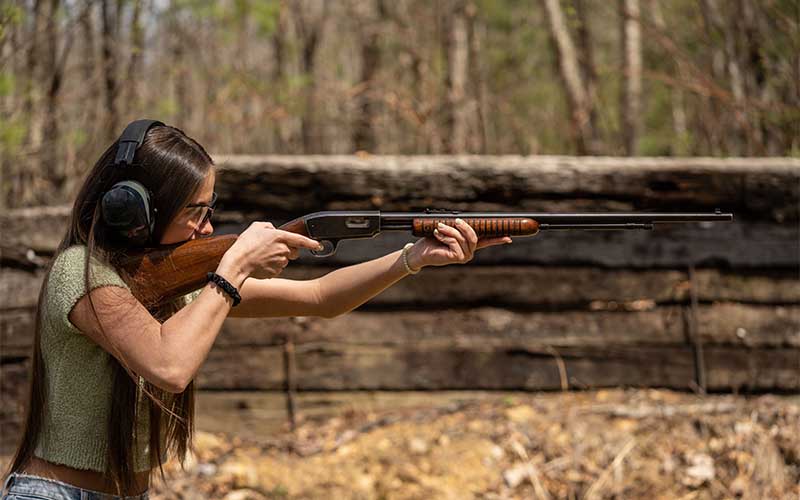
Though back in the day it was the rifle many youngsters learned to shoot with, the 61’s 24-inch barrel made the rifle a bit muzzle heavy for youths. Here, the author’s oldest daughter is plinking away with his family’s old 61.
Last year, my son used his grandfather’s old 16-gauge Model 12 to take his first spring gobbler. I think this accomplishment, along with the nostalgia it carried with it, sort of inspired him to ask about that Model 61 that’d been hiding in the gun safe. We took it out to the range, and after a bit of plinking, he said, “Let’s have a little shootout.” Remembering my relationship with that rifle and the things we’d been capable, I readily agreed, with the full intention that I was going to show him a thing or two.
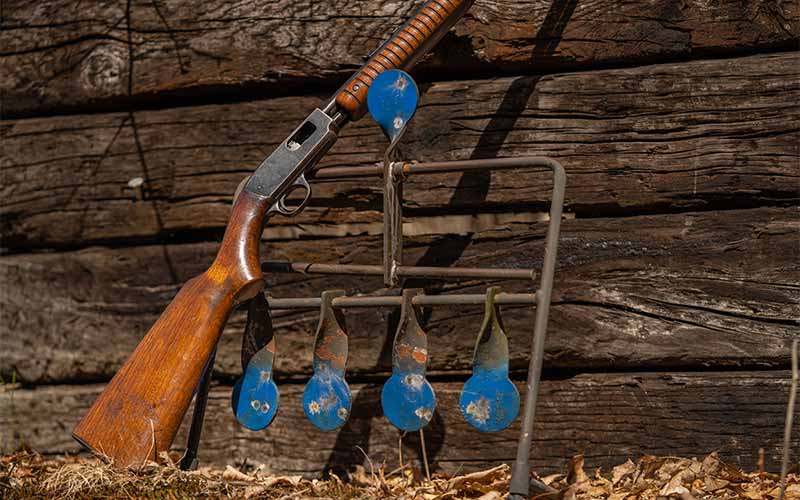
This Winchester Model 61 might’ve seen its last days afield, but it’s still capable of ringing steel or capping squirrels.
I’m not sure, but maybe my memory isn’t as good as I thought it was. Or, maybe, my old eyes just can’t see as good as they used to. The old rifle and I performed pretty darn well, but it seemed to find the target better and more often in my son’s hands than it did in mine. Was I not as good as I once was? Or, possibly, was my son just a better shot? It couldn’t be that I couldn’t shoot as good now as when I was younger. I’m a much better shot now and have proved it on numerous occasions. I’ve also been trained by some of the best rifle shooters in the world. I still—routinely—outshoot my son when we have these little competitions. Oh, he’s good, but rarely good enough. So, what was going on?
Maybe what was going on didn’t have a great deal to do with my shooting skill at all. Maybe what was going on was that a fourth-generation rifle was passing the torch.
A good rifle never lies. It will let you know when it’s time to pass the torch.
I remember sitting by the campfire with my father many, many, years ago. We were using that Model 61 to shoot clothes pins off the clothesline—while Mom and Grandma weren’t watching, mind you. About 10 pins in, I think the score was Dad 3, me 7. That’s when he said he thought ought we ought to stop. That might’ve been the last time dad and I had one of those little shooting competitions. It’s also about the time he began bragging about what a good rifle shot I was.
Atta Boy, Son
As I put that old Model 61 back into the safe after its first outing to the range in many years, I realized that maybe it’s time I took something else from my father. I should probably quit trying to outshoot my son and start bragging a bit about the rifleman he has become. In fact, I’m certain that’s what I should do. I’m certain because one of my childhood friends, a friend who I’d not spent any time with in a long, long, time, just told me so. When a rifle you’ve trusted talks, you should listen.
So, let me tell you about how this boy of mine shoots a rifle …
A true classic, the Winchester Model 61 was like the Ruger 10/22 of its time.
Editor’s Note: This article originally appeared in the July 2022 issue of Gun Digest the Magazine.
A simple case gauge or case-check tool will drastically reduce ammo-related stoppages.
Some mistakes you make only once.
If you want to practice more, you reload your ammo. If you want the best-possible ammo for a given competition, you reload your ammo. And, sooner or later, when vacuuming up the range, you’ll pick up a piece of brass that won’t chamber after you’ve gone to the trouble of cleaning, sizing, priming and loading it. Usually that happens in a match. Murphy’s Law and such.
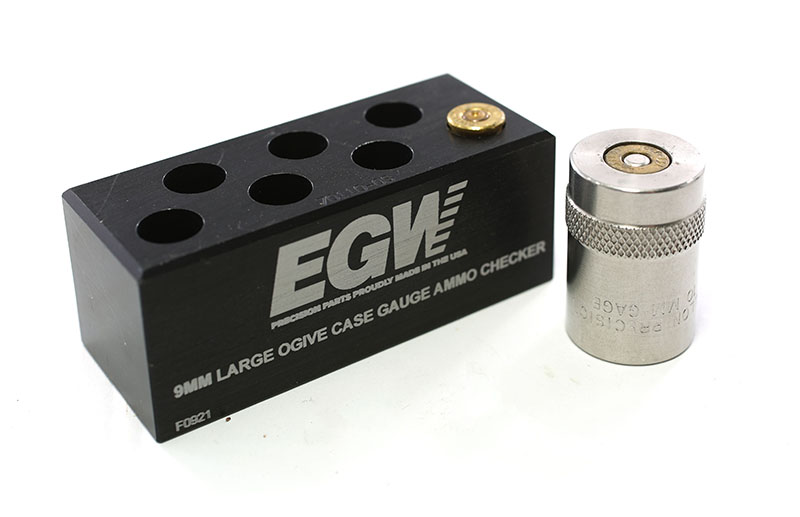
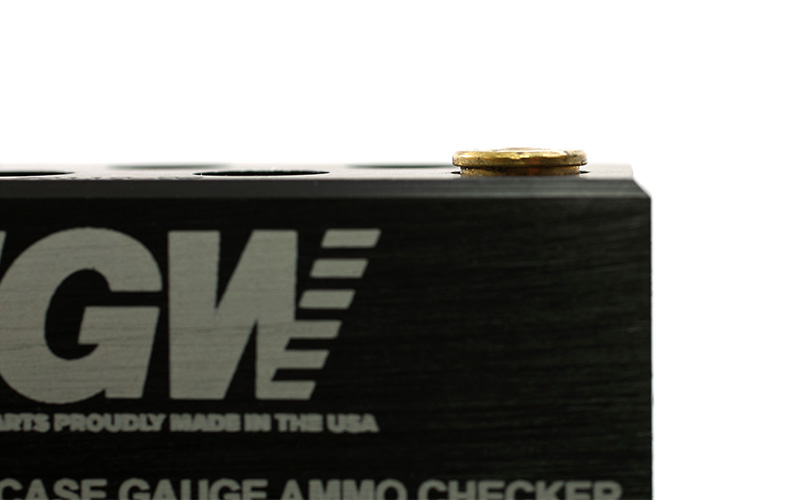
That night you’ll be searching out case gauges online. Save yourself the match hassle and do it now. Case checkers are simple—a steel or aluminum block with the chamber reamed to absolute minimum chamber dimensions. These are used in rifle reloading to check the “shoulder bump,” the setting back of the shoulder you check so you have a proper headspacing setup in your reloading. You use them a bit differently for handguns.
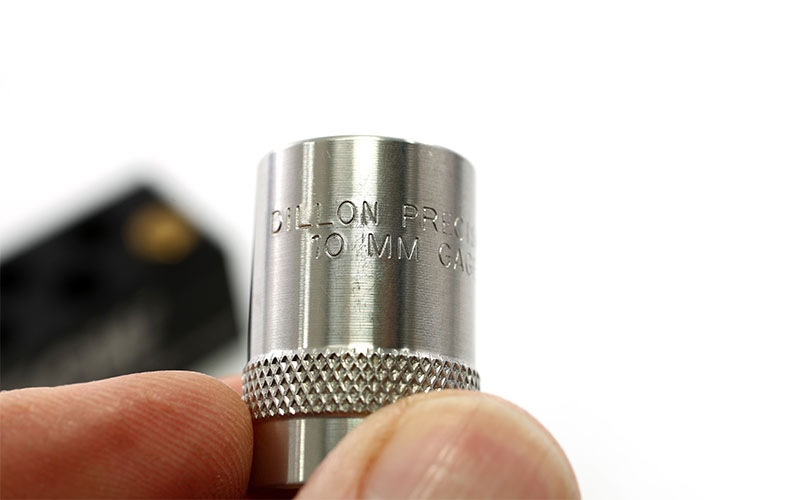
Many people make case checkers: Just get the caliber you need … and use it. These are from EGW and Dillon.
After you’ve sorted and cleaned your brass (and checked for cracked ones as well), load your ammo. Once you have a batch or several loaded, simply spend some boring alone time dropping each loaded round into the case gauge. Then, turn the gauge over to let it fall out. If this is your match ammo, you’d be wise to also look at and touch the primer on each one to make sure it’s properly seated (not sideways, upside down or crushed) … and below flush.
If a round won’t drop completely of its own weight, it fails. If it won’t drop out of its own weight when you turn the case gauge over, it fails. Set the fails aside.
What passes is your good ammo, and you can practice or compete with it with complete confidence. What do you do with the fails? Learn. First, inspect them. Do they appear normal? Good. Keep them. The ones where the bullet caught the case mouth and crumpled the case, slipped sideways and did the same, or other case-mangling errors are discards. You might not be belling the empties enough, or you might be ham-handed in setting bullets or pulling the press handle.
Case checkers are caliber-specific. There’s no “one size fits all,” so buy the calibers you’ll be loading.
Learn what you’re doing wrong and correct it.
When you practice, take along the box of fails. If you’ve been paying attention, they won’t be many, and they’ll probably be cases that are slightly swelled at the base and won’t pass case-check. Shoot your normal practice session.
Now, pick up all your brass (and whatever else you’re in the habit of hoovering up at the gun club). Load a magazine with the fails and shoot them. If they all work, then you know your case gauge is more discriminating than your chamber. So, unless a checked round sticks halfway out of the case-checker, it’s probably still good to go. (Keep them as practice rounds anyway, not as match rounds.)
You have to learn if your chamber and the checker are in agreement. This round is just barely not-passing, but it’ll probably work fine in most pistols. Learn about yours; test-shoot the rejects.
If more than just one or two fail in your handgun, then you know the checker and your chamber are in close agreement, and anything that fails the case gauge is “end of practice” ammo only. In that case, you now pick up those empties and deposit them in the trash. You’re performing a public service to fellow club members by getting oversized brass out of circulation.
Where does this brass come from? Some is just bad brass. A quick search will uncover the names and headstamps of brass to avoid. But some of it comes from one of your own club members, who either has a grossly oversized chamber or is running his pressures too high and over-expanding brass.
Don’t let his situation become your problem. Check your ammo and make your practice good, not just malfunction-clearing afternoons.
Editor’s Note: This article originally appeared in the May 2022 issue of Gun Digest the Magazine.
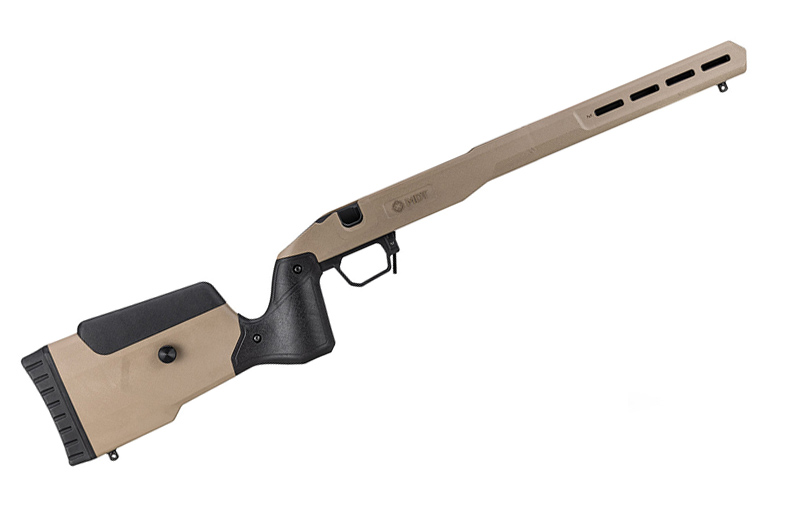
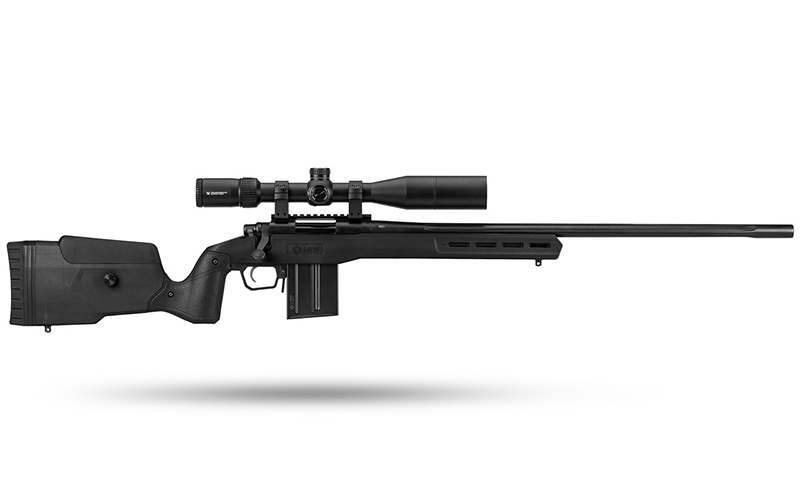
If you have a Remington 700 SA-pattern rifle and have been looking for an affordable upgrade, the new MDT Field Stock has a lot to offer.
Whether you’re a competitive long-range shooter, a serious hunter or just someone who enjoys shooting paper at the range, there’s a good chance you have a rifle that features the ubiquitous Remington 700 Short Action. If so, and you’re in the market for an affordable upgrade, the new MDT Field Stock is worth a look.
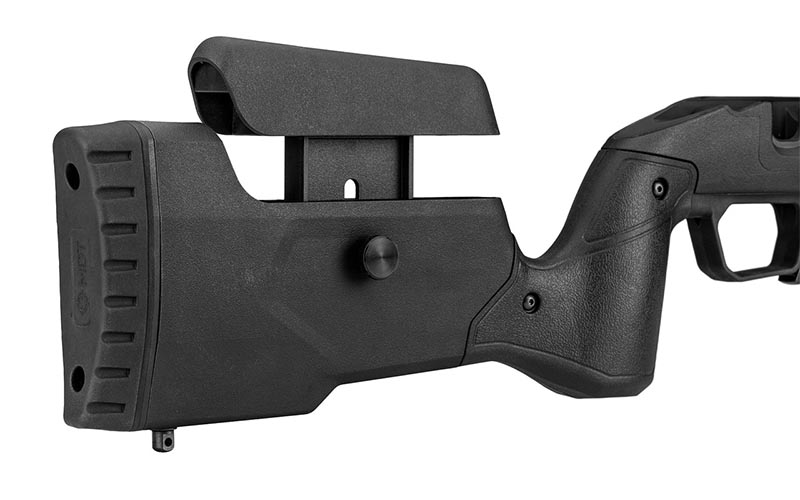
MDT describes its new Field Stock as being entry-level, but it still has quite a few features for the price. Firstly, accuracy is improved by aluminum v-block bedding and a free-floated barrel. The injection-molded polymer body is lightweight at only 3.1 pounds, making it easy to carry, and MDT says that the grip remains warm to the touch in any weather condition. Furthermore, length of pull spacers and an adjustable cheek riser allow for a perfect fit with any shooter.
Other features of the MDT Field Stock include sling studs on the buttstock and forend for attaching a sling or a bipod, compatibility with AICS-pattern magazines and M-LOK slots on the forend’s bottom and sides for installing other accessories. Each stock also ships with all necessary mounting hardware.
The MDT Field Stock is currently only offered in black or FDE for Remington 700 SA-pattern rifles, but fits for other actions will be added in the future. MSRP is $299.95 and it’s available now.
A look at the history of Weatherby and its uncompromising commitment to ballistic innovation, top-notch manufacturing and the American dream.
Roy Weatherby started his company’s namesake in 1945. Now, three generations of Weatherby leadership later, there are no signs of Roy’s vision slowing down—just like the cartridges he designed more than 75 years ago.
Much has been written about the gregarious Roy E. Weatherby, and how one of the most prolific and innovative firearms manufacturers of all time began. Fans and competitors alike know well the story of how Roy started his sporting goods company right after World War II, building one rifle at a time. Some may even know that Roy’s inspiration for his need for ballistic speed was a less-than-stellar Utah hunting experience he had early (1942) in his career. He wanted a better cartridge for the hunter to be successful—and the game hunted to suffer less.
So, Roy tinkered. He innovated. He pushed successful cartridges well beyond their comfort zones, and when his wildcat cartridges needed a stronger firearm, he built one with the Mark V action in 1958. As Roy’s customer base increased, so did their want and need for firearms. In 1967, Roy added shotguns to his arsenal. In 1970, he added the Vanguard line of rifles to cater to Weatherby fans who wanted his firearms in non-Weatherby cartridges.
Weatherby’s outgrew its space, and, in 1951, relocated to Firestone Boulevard just around the corner from the original store. It housed the store, gun shops, offices and even a 100-yard underground rifle range. Sportsmen and women came from far and near to visit Weatherby’s. (Photo credits: Weatherby).
What About Today?
Philosophically, not much has changed since 1945, because the Weatherby family has mastered remaining the same while being different.
“As I look at Weatherby today, there are three main things that set us apart,” said Adam Weatherby. “One: ballistic superiority. Two: quality craftsmanship. And, three: brand prestige. These three things have largely got us to where we are today.”
And it appears that a thirst for velocity, ballistic innovation and firearm craftsmanship are hereditary. First observed in Roy in 1945, the Weatherby way was evident in his son, Ed, when he took over in 1983, and again in his grandson, Adam, who took the helm of Weatherby in 2017.
“My grandfather started Weatherby Inc. in 1945 as a result of his passion for ballistic superiority and ultra-high velocity,” Adam said. “His drive to deliver quality craftsmanship and superior service created a multi-generational firearm and ammunition business that I get the pleasure of running today.
Roy Edward Weatherby founded Weatherby, Inc., in 1945.
“My father taught me the ethics of shooting and hunting from a young age, and I’m very grateful for that,” Adam continued. “I have had the opportunity to share many hunts and experiences with some incredible folks in the industry over the years. Since I was brought up in the family business, I could rely on industry professionals I’ve had the pleasure of meeting along the way. Honestly, Bruce Pettet (CEO, Leupold) has been one of those guys for me. Having been a CEO for the last couple of decades, he provides me with insight and advice from an outside perspective that has been very influential.”
Still, there’s another layer to Adam that few may know, which has helped evolve Adam and the Sheridan, Wyoming, company into what they are today.
“Many people may not know this, but I left the family business for several years as I worked in full-time Christian ministry,” Adam said. “I would not go back and trade those years for anything. As I spent that time focusing on peoples’ lives and the things that matter the most, it helped prepare me to lead the business I now find myself in. I truly have a passion for firearms and the outdoors, but that doesn’t compare to the importance of caring for people and seeing them pursue what is most important.”
While Roy Weatherby’s cartridge development was driven by speed first and foremost, in the 6.5 RPM Adam Weatherby sought to maximize speed while staying in the smaller, lighter six-lug Mark V action. The result was the fastest 6.5 that could be made to fit, allowing for a hunting rifle weighing just 4.9 pounds.
Lofty Goals Of Excellence
What exactly should today’s Weatherby customer expect under Adam’s leadership?
“When a customer chooses a Weatherby, they’re getting a firearm from a multi-generational, family owned U.S. business that has provided a premium product for decades,” Adam said. “That heritage and history is combined with a drive for innovation, delivering a unique, premium product line within the shooting and hunting space.”
Looking forward, Adam focuses on what he wants the Weatherby brand to be to ensure the brand lives on generations from now.
“I hope that Weatherby will always be a premium brand in the outdoor space,” said Adam. “The risks involved with relocating the business a few years ago were taken on to ensure the brand’s ability to thrive as we look toward the future.”
One of Adam Weatherby’s innovations is the Mark V Backcountry 2.0 Ti. Weighing 4.7 pounds, and 4.9 pounds in magnum chamberings, this is the lightest in the Backcountry 2.0 family.
While well-built firearms and super-fast cartridges are synonymous with all of the Weatherby’s, what may stand out as Adam’s pivotal business triumph wasn’t a ballistic decision—but a geographic one.
“My grandfather and father were able to lay a foundation for a world-renowned firearm and ammunition brand,” Adam continued. “I now have the incredible privilege of building on that foundation. Our move to Wyoming in 2019 has helped propel us into the future as we pursue not only innovation, but also vertical integration in what I would consider the most gun-friendly and business-friendly state in the country. We have grown and established an incredible team in Sheridan, Wyoming, that not only love what they do but have the unique opportunity of living at the feet of the Bighorn Mountains.”
In 2019, Weatherby officially moved from Paso Robles, California, to Sheridan, Wyoming, creating more than 70 jobs.
Adam’s Weatherby isn’t without its unique challenges, however. The ongoing COVID-19 troubles spared no one—even the firearms industry.
“Whereas some companies are highly affected by the boom/bust of political spikes, those market fluctuations affect our brand less because our product line differs from many of those companies,” Adam said. “Without a doubt, the largest external influence this past year has been the supply chain challenges we have faced.”
Pandemics aside, Adam and Weatherby have continued to navigate the firearms manufacturing community differently than many. Adam said an example of a different direction for Weatherby is their decision to continue providing a premium product regarding their rifle offerings.
“During the past decade, there was a race to the bottom to provide the rifles at an incredibly low price,” Adam said. “Although some of our competitors were able to do this and increase volumes successfully, it was a strategic decision for us to not go below a certain price point. We used that opportunity to ‘feature up’ our products to add more value. In the end, it has worked very well for our brand.”
Adam Weatherby with the first animal ever taken with his new cartridge, the 6.5 RPM.
What does the future hold for the firearms community and, more specifically, Weatherby?
“As for the firearms industry, I wish I knew,” Adam said. “These past couple years have been some crazy ones, and the answer to this question takes some excellent crystal ball reading skills. As for Weatherby, we will continue to take advantage of our recent brand momentum and look toward the future with innovation and new product launches, while paying attention to the quality and service that our company was founded upon. I sure would love to think that Weatherby’s best years are still to come.”
Editor’s Note: This article originally appeared in the February 2022 issue of Gun Digest the Magazine.
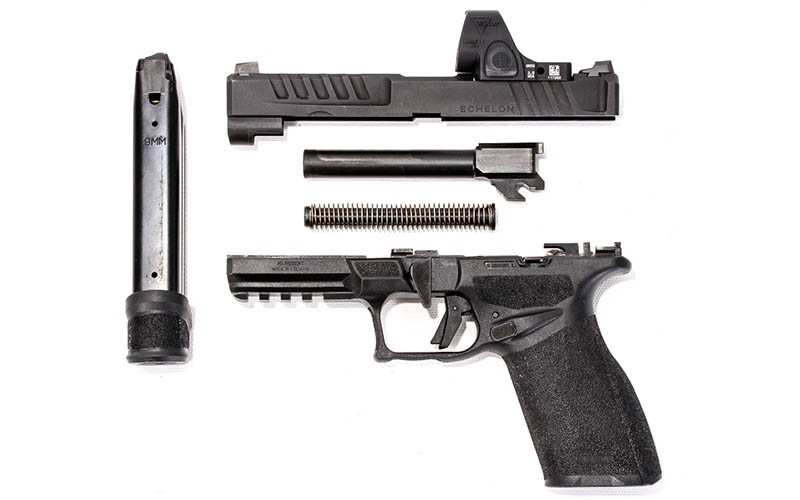
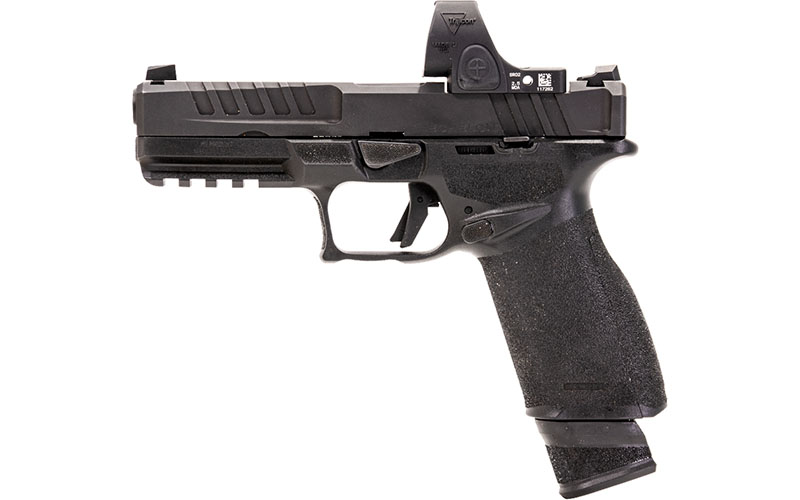
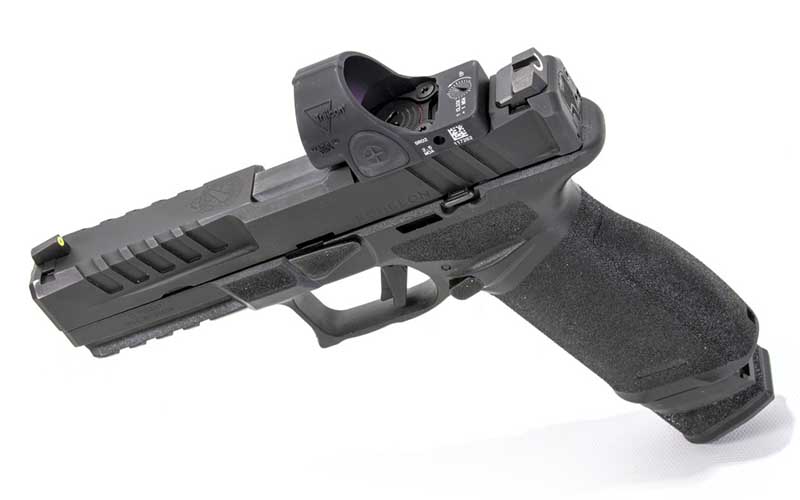
The new Springfield Echelon duty pistol may seem unassuming on the surface, but it has some interesting tricks up its sleeve.
You’re probably looking at this and thinking, “Man, what the gun world really needs right now is a 9mm, polymer-framed, striker-fired handgun.” Because no one is making those, right? Normally, we’d tend to agree with you, but because this pistol was developed with help from one of the greatest shooters the world has seen, we’re not that jaded. Yet.
We first clapped eyes on Springfield’s newest offering about two years ago at a range in Croatia. Back then, it didn’t have a name, but representatives from the company had great hopes for it, as did their local partners at HS Produkt.
Springfield’s existing polymer handgun line, built around the venerable XD, was looking a bit long in the tooth, and it was way past time for a refresh. One of the people directing the project was Springfield’s pro staffer, competitor, trainer, and all-round good guy, Rob Leatham. And when you have a multiple-time world champion driving the train, little details tend to get noticed.
Nuts & Bolts Of The Springfield Echelon
Think of a generic striker-fired handgun, and now think of any progress in design that’s been made in its development over the past 40 years. Let’s take grip texturing, for example.
When the Gen 1 Glock 17 came out, it had a lightly textured grip surface, which when placed in wet or bloody hands, was about as secure as a bar of soap.
This led to the next generation of perfection, which confined the same texturing to side panels, while adding deep checkering to the front and backstraps. The third gen added finger grooves, which hindered as many people as they helped.
Gen 4 gave us a uniformly rougher texture all over the grip but kept the finger grooves. And finally, in the fifth iteration, Glock listened to their customers, got rid of the finger grooves, and came out with a Goldilocks texture.
Springfield has vaulted right past all of that bullsh*t and endowed the Echelon with a fine, uniform texture applied to all contact surfaces, which provides plenty of traction, but won’t tear up your shirt or skin when carried IWB.
And while figuring out where to place your hand might be more difficult as a result, Springfield decided in this case to forgo the grip zone.
Now think of every other aspect of pistol design, how it could be improved on any given model, and you’ll probably find it here.
Like the SIG P320, the Echelon is a chassis gun. This provides numerous benefits to the user, including the ability to swap out grip modules should it become damaged and, usually, a more consistent trigger pull.
Unlike SIG, Springfield chose to equip the Echelon frame with replaceable backstraps in order to tailor the gun to the shooter, but there’s also an option to replace the entire frame. The medium-sized backstrap will probably accommodate 80 percent of users, but it’s good to have alternatives if you fall outside this percentile.
Aftermarket frame surgeons will go hungry if they base their business around the Echelon, as it already has a double undercut trigger guard and stippling every place you can think of, including the magazine basepads. Hell, the factory even textured the end of the recoil spring guide rod, but what function that might perform is anybody’s guess.
Lefties will rejoice, as the pistol is fully ambi, including the magazine catch. That’s right, there’s no need to swap the button from left side to right, as there’s already one in place, well shielded from accidental operation but still easily accessible.
The slide release looks kind of small, but we had no problem either finding it during an emergency reload or using it to lock the slide open for administrative handling. It, too, is shielded with a small fence molded into the grip. The other vital control, the one which makes loud noises, has a conventional blade safety in its face, which when depressed sits perfectly flush with the trigger’s surface.
Pull weight on our sample came in at 5.5 pounds, and there’s about a ¼ inch of take-up before reaching the wall, followed by a 16th of an inch rolling break and almost zero overtravel. Is it as good as a Walther or Canik? No, but it probably wouldn’t be too hard to bring it up to speed, and for a handgun aimed squarely at the LE market, it’s a good, duty-style bang switch.
Due to advances in manufacturing, particularly stamping, HS Produkt is able to hold much tighter clearances than before, which translates into a very solid-feeling pistol with almost no play between slide and guide rails.
Anyone who’s dry-fired a 320 with an MRDS is familiar with “dot jump” as the sear slips off the striker — don’t worry, it’s harmless and disappears with a loaded mag, but it’s due to slop caused by guide rails that aren’t bent at a 90-degree angle. In the Echelon, this phenomenon is almost completely absent.
Like a lot of modern striker-fired handguns, the Echelon makes extensive use of metal injection molding (MIM) in its small parts. Curmudgeon traditionalists will no doubt shudder and reminisce longingly over the days when billet-machined components were the norm, but a) forget it, those days aren’t coming back, and b) MIM is an excellent way to make stuff, so long as the part is designed with the process in mind.
When we visited their factory, HS Produkt’s engineers proudly showed off their new Hot Isostatic Pressing machine, which decreases the porosity of MIM parts and greatly increases their strength. It does so by placing the components inside a large pressure vessel filled with argon gas, which is then heated, and the internal pressure increased to up to 30,000 psi.
If that sounds like a good way to level a small town in the event of something going wrong, you’d be correct (and one of the engineers joked to us that it was the reason he had a 20-minute commute).
One component definitely not MIM’d is the barrel, which is hammer forged in-house. While some might bag on the Springfield XD series for their grip safety (and let’s get in another dig at the grip zone, while we’re at it), no one complains about accuracy. We have a 5.25-inch barreled XDm in the collection, which is one of the most accurate handguns we’ve ever shot, and used it to place in Production class at the Bianchi Cup.
The Echelon’s barrels come from the same place, and given Leatham’s fanaticism, we expect run-of-the-mill guns coming off the line to have the same kind of potential. Certainly, our preproduction sample left nothing to be desired, turning in 1.2-inch groups at 25 yards with its preferred ammo. That was Norma’s 108-grain MHP, in case you were wondering.
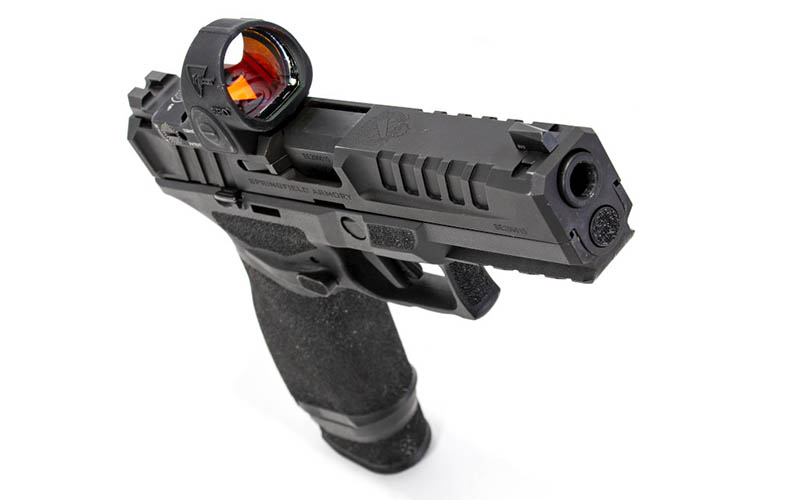
These days, it’d be notable if a handgun’s slide wasn’t cut for optics (looking at you, Dan Wesson), and the Echelon doesn’t disappoint. If you look at the underside, there’s an aha! moment when you realize the striker safety plunger has been moved from the usual position so that there’s no chance it can interfere with optics mounting screw locations, and the optics cut can be made as low as possible.
With an RMR bolted up, the red dot’s body sits low enough that standard-height iron sights will cowitness easily, but the slightly thicker SRO means only the top of the front sight is visible through the glass but is still usable in an emergency. For anyone who doesn’t want to avail themselves of the wonders of technology, a cover plate takes care of the unsightly hole, the front sight is bright, green, and tritium-illuminated, while the rear sight is a wide, white-lined U-notch.
Aggressive front and rear cocking serrations adorn the slide’s surface and also serve to reduce reciprocating mass. At the rear is a tapered notch that provides an additional nonslip contact point for anyone slingshotting the slide into battery.
If you’re an XD owner looking to upgrade with another Springfield, then we have a bit of bad news for you: The mags you collected along the way don’t work in the new gun. While they look almost identical, the mag catch slot sits a little higher in Echelon magazines, which makes us believe someone will proudly show off their Dremel skills on Reddit the day after getting their paws on the new gun.
Rounds Downrange
What can we say? It works. When you combine every proven design feature that’s surfaced in duty guns over the past four decades, it’s safe to assume the resulting mix will be pretty damn good. And so it is with the Echelon.
We wish we could find something about it that really grinds our gears, but other than the trigger being about a pound heavier than we’d like in a duty gun, there really isn’t anything negative to say about it. Recoil management is excellent, thanks to its grip shape and texture, and it shoots like a laser beam due to the tight lockup between barrel and slide, aided by minimal slide to frame fit.
Optics users will rejoice at the slide interface, which makes suppressor-height sights utterly redundant and fits the widest range of MRDS options. After a long wait, Springfield has a serious contender in the crowded duty gun market and will no doubt sell a metric asston of them. Or at least they would, if only there were some way to figure out where to place your hand…
If you’ve been looking to build or upgrade an AR, between KeyMod vs. M-LOK handguards, which is right for you?
If you don’t want to use quad rails or a traditional handguard on that next AR build (or if you’re looking to put more modern furniture on your current rifle), your two options are either KeyMod or M-LOK.
Is one generally better than the other? Do either offer any niche advantages? What are the best handguard models for each style?
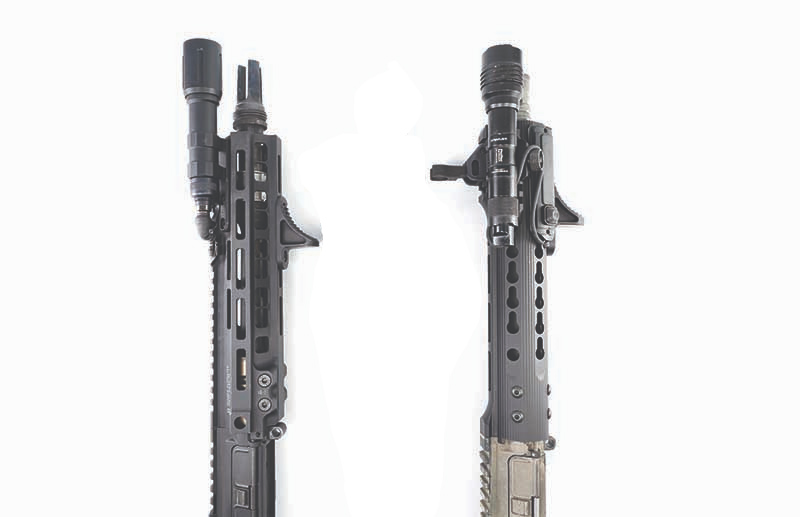
M-LOK (left) vs. KeyMod (right).
What Are KeyMod And M-LOK?
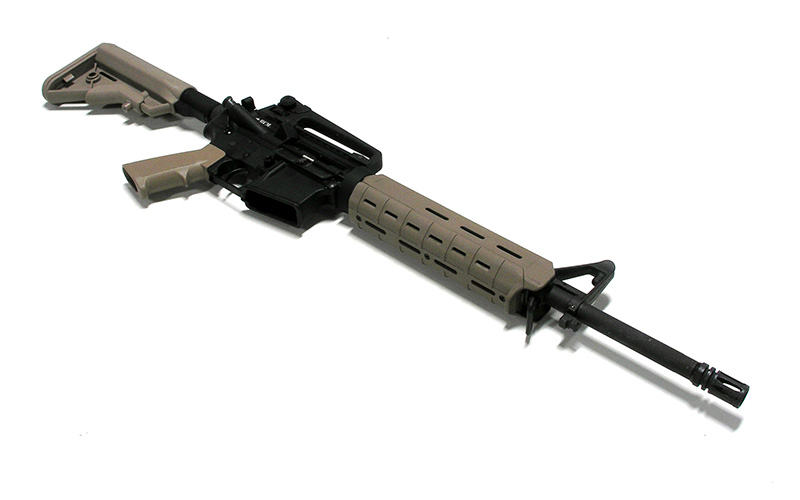
KeyMod and M-LOK were both invented to mount various accessories to an AR-style rifle without the bulk and weight of a quad rail “cheese grater” handguard.
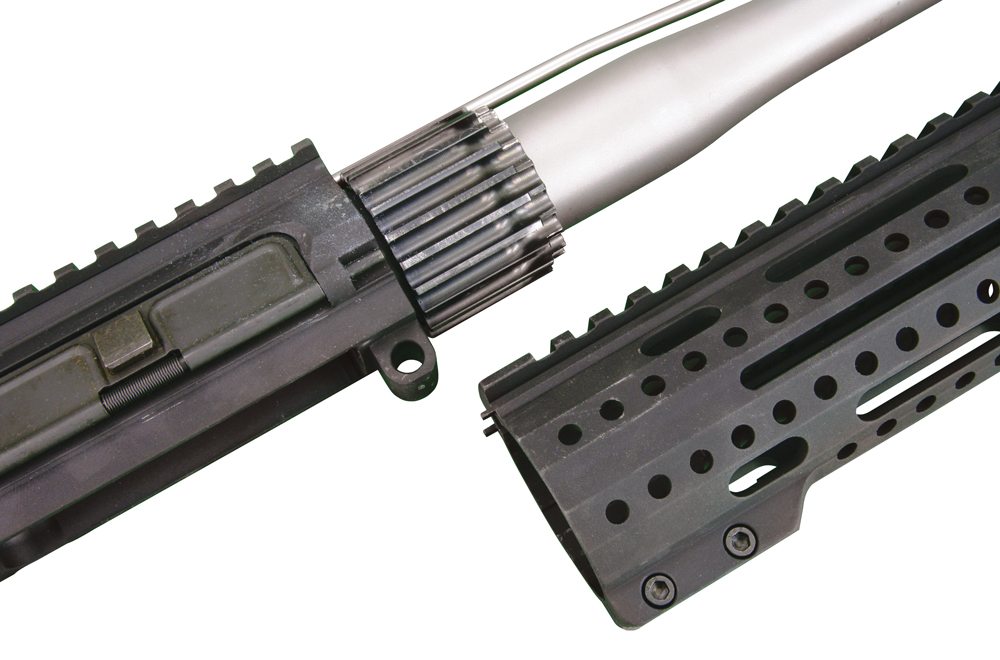
Besides offering more attachment points for accessories, both styles of handguards often provide another key advantage: free-floating. Because most M-LOK and KeyMod handguard models attach to the barrel nut rather than the barrel itself, they improve a rifle’s potential for mechanical accuracy. This is opposed to traditional handguards that also attach to the barrel, meaning that force imparted on the handguard can transfer to the barrel and affect the point of impact. Because of this, some people opt to run a KeyMod or M-LOK handguard not because they want to attach any specific accessories but because they just want their barrel to be free-floated.
A free-float M-LOK handguard and the barrel nut to which it attaches.
While free-floating has undoubtedly become the more popular and available style, be aware that not all M-LOK or KeyMod handguards are free-floated. Some of the less expensive and simpler handguards that feature these attachment systems are still installed the traditional way.
Who Created KeyMod And M-LOK?
Both rail systems started life in the private sector before eventually becoming noticed and subsequently adopted by various armed organizations around the globe.
While M-LOK technically came first, the design we know today is predated by KeyMod. Designed by VLTOR Weapon Systems, KeyMod was released by Noveske Rifleworks in 2012 and then published as an open-source design so it could be utilized freely by the rest of the industry. The name comes from the design’s distinct keyhole-shaped slots.
M-LOK (Modular Lock) was invented by Magpul Industries, with the proto-M-LOK design emerging as the MOE handguard in 2007.
An original Magpul MOE handguard. Photo: Wikipedia.
The original MOE system used a series of slots (much like M-LOK) but had the drawback of requiring the user to install a T-nut behind the handguard. Doing so required either taking the handguard off every time you wanted to mount something or trying to find a way to drop it in place.
The limitations were obvious, so Magpul released a revised scheme in 2014 which is what we know as M-LOK today. M-LOK is still owned by Magpul Industries, but it allows other companies to use it as a sort of “conditional free license” rather than a true open-source design.
How Do They Work?
In the cases of both rail systems, the magic has less to do with the handguards themselves and more with the mounting systems integrated into them. Both KeyMod and M-LOK use negative space (i.e., holes) for attaching accessories, and because you’re putting the mounting hardware into rather than onto the handguard (as with Picatinny), it allows for a sleeker and more streamlined design.
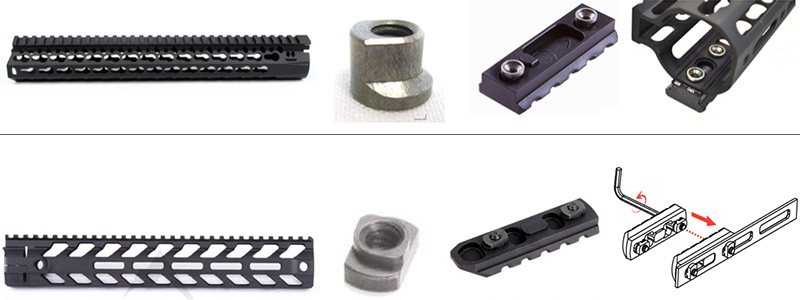
As for KeyMod, the attachment is a flared bolt that goes into the big hole and slides forward into the little hole. The user then tightens the bolt to secure it and attach whatever accessory they were trying to install. Typically, KeyMod accessories will occupy at least two holes for the most secure attachment.
M-LOK uses a series of rectangular slots. Attachments have T-nuts that are rotated parallel to the slot, inserted, then tightened to turn the T-nuts perpendicular to the rail slot, locking it in place.
In the broad strokes, KeyMod is a little more user-friendly and intuitive to use, but not so much that it makes a huge difference.
Does The Military Use M-LOK Or KeyMod? What Are The Pros & Cons?
Rails selected for use by various groups in the U.S. military include the Geissele Super HK rail and Geissele Super Modular Rail. The new Sig Sauer M5 rifle, of course, uses an M-LOK handguard as well.
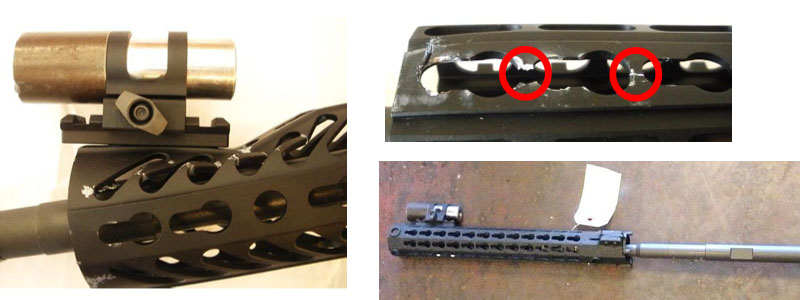
Testing by Crane compared three different handguards offered with both M-LOK and KeyMod slots from Aero Precision, Midwest Industries and Seekins Precision. While no handguards suffered any failures withstanding recoil, stress testing found that KeyMod was the most fragile of the bunch.
KeyMod handguards suffered more failures in drop testing and load testing, with the common failure being a stress fracture between slots. Usually, the mounting bolt would crack the handguard. Several handguards also came free of the barrel nut in drop tests.
Some of the failed KeyMod handguards from Crane’s KeyMod Vs. M-LOK study. Photos: Crane.
Part of the testing included zeroing an IR laser, taking the unit off the handguard, then reinstalling and checking for POA (Point of Aim) shift, with the idea being to establish which mounting system will hold zero better. Again, M-LOK emerged as the clear winner.
So…what does this mean for the pros and cons?
For the typical user, they won’t notice any appreciable difference.
Most people aren’t repeatedly dropping their rifles on concrete or using an IR laser aiming device. KeyMod only failed in Crane’s testing when subjected to abuse far beyond what the typical civilian owner will ever subject their rifle to.
The much more noticeable drawback in the current year is the availability of compatible accessories. M-LOK has established itself as the more popular option of the two, meaning that most accessories today are offered primarily with M-LOK or Picatinny mounting hardware. There’s plenty of KeyMod-compatible stuff too, just not quite as much. The continued availability of KeyMod accessories is probably helped by the system’s higher popularity in Europe.
KeyMod Vs. M-LOK: Which Is Best For You?
As mentioned, military testing revealed that the two shortcomings of KeyMod in comparison to M-LOK are durability and its ability to retain zero with laser aiming devices.
This means that for most people in most situations, KeyMod will work just fine. If, however, you’re someone who wants to run your rifle with night vision and/or make it as bomb-proof as possible, an M-LOK handguard will be the better choice. If you plan on using an IR laser, just ensure that the handguard model you choose has a good track record for maintaining zero.
The 6 Best M-LOK And KeyMod Handguards
M-LOK
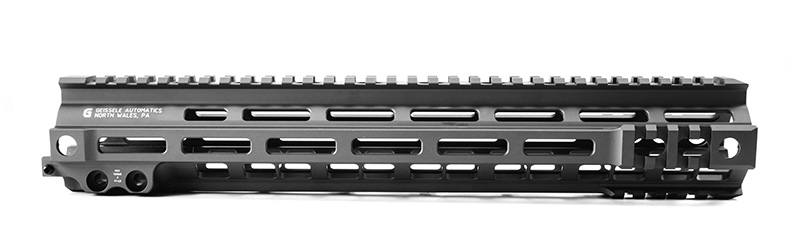
Geissele Super Modular Rail MK4
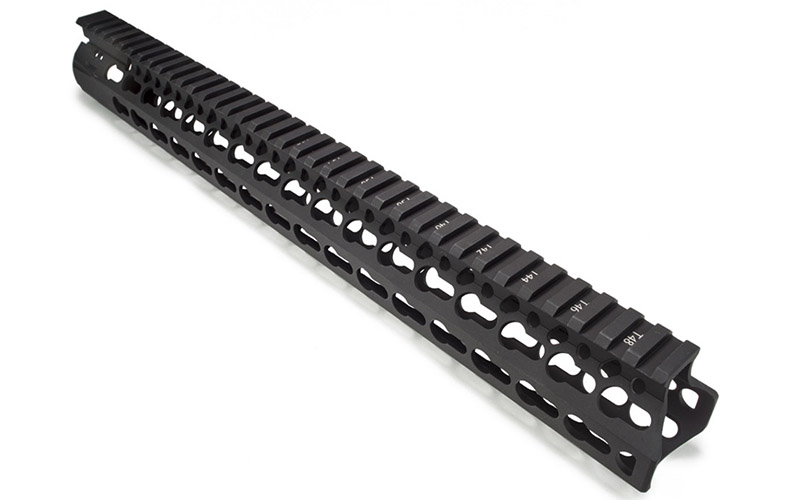
Geissele was one of the first companies to design an M-LOK rail with the use of a night vision sighting system (and therefore the need to minimize rail flex to preserve zero) as a priority. The Super Modular Rails are free-floated and made to mount a PEQ-15, MAWL or similar device at the forward end of the handguard.
Geissele Super Modular Rails are a buy-once, cry-once item, with MSRP ranging between $275 and $350 depending on the length and finish selected.
Aero Industries Quantum M-LOK Handguards
Aero Industries’ Quantum M-LOK handguards are a fantastic middle-ground free-floated M-LOK handguard option. They’re durable enough to survive what most users will put them through and can securely mount accessories.
These handguards feature some Picatinny rail on top with M-LOK slots at 3, 6, and 9 o’clock and QD slots at the rear of the handguard. There are multiple lengths and finishes available and MSRP starts at $110, but they can be found for under $90 with some hunting.
Magpul MOE M-LOK Handgaurd
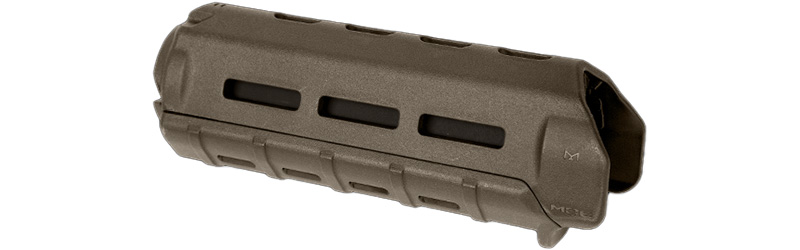
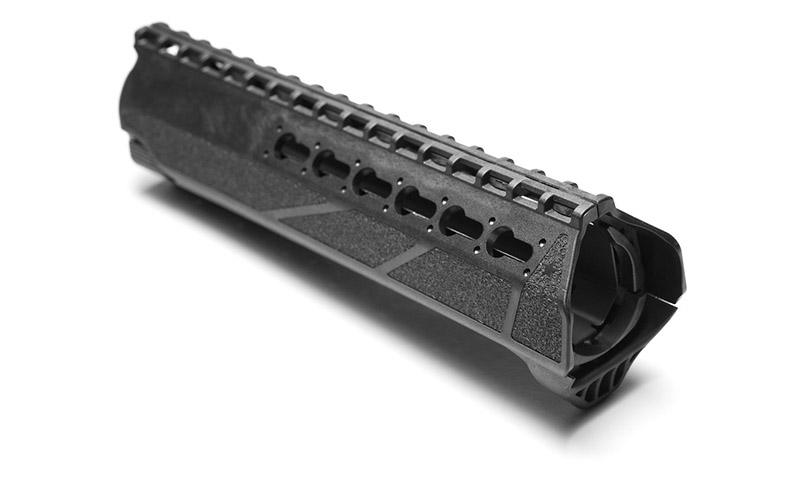
Want to add a bit of M-LOK to your budget-friendly M4 clone? The go-to handguard is (and has been for some time) Magpul MOE handguards. These two-piece handguards drop in on any rifle with a front sight block (circular or triangular handguard caps both work) and a D-ring. They are durable, functional, and cheap. The tradeoff to the simplicity and low price is that these are not free-floated.
These are available for carbine, mid-length and rifle-length gas systems and feature M-LOK slots at 3, 6 and 9 o’clock. You can choose between black, FDE, grey and OD green colors and they can easily be found for less than $40.
KeyMod
Bravo Company KMR Alpha
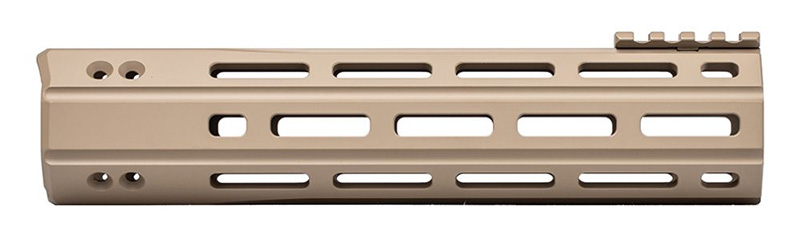
The KMR Alpha is a free-floating, fully-railed aluminum handguard with KeyMod slots at 3, 6, and 9 o’clock. They’re available in either black or FDE and come in lengths ranging from 7 to 17 inches. Bravo Company is one of the better manufacturers of AR-pattern rifles and accessories, so this is about as good as it gets for a KeyMod handguard.
MSRP varies by length, starting at $180 for the 7- and 8-inch rails and topping out at $235 for the 17-inch, but you can usually find them for much cheaper through third-party retailers.
Leapers UTG Super Slim KeyMod Handguard
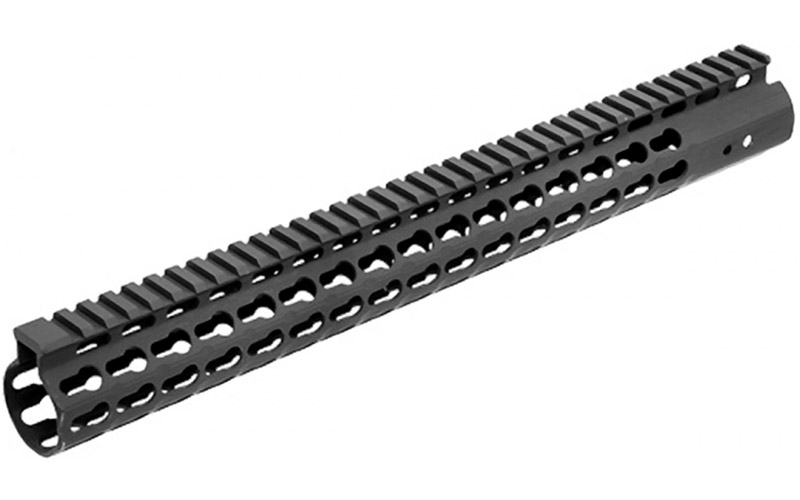
Only offered in 15- and 17-inch lengths (15-inch for AR-15 and Ruger Precision Rifles, 17-inch for select AR-10 variants) the Leapers UTG SuperSlim is a good mid-tier offering to get someone a decent free-floated KeyMod handguard without busting the bank.
A fully railed top with KeyMod slots at 3, 6, 9, 10, 2, 8 and 5 o’clock, it features a slim profile for low-profile gas blocks and built-in anti-rotation tabs for secure mounting. MSRP is $140, but they can usually be found for around $100 through third-party retailers.
Bravo Company PKMR
The PKMR (Polymer KeyMod Rail) is the KeyMod equivalent of Magpul’s MOE handguard. They’re available in FDE or black and are offered for carbine (round end cap only) or mid-length (triangle end cap only) gas system rifles. MSRP is $40 but they can usually be found for around half that price, making these a great option for someone who just wants a cheap way to add some accessories to their rifle’s handguard.
Catch the gun gear deals going off during Amazon Prime Days, stock up and save some cash.
Amazon isn’t the top destination for most shooters’ gun-buying needs. True enough, you can pick up air guns there, including the dead-serious pre-charged pneumatics. But that’s about the extent of the mega-retailer’s arsenal. No shotguns, no rifles, no handguns, no ammo.
That said, Amazon does tend to offer a pretty decent array of firearms accessories and gunsmithing tools, not to mention other odds and ends shooters find handy. Riflescopes, torque drivers, ear pro, among other offerings are fair game and generally come in at a passably fair price. This is particularly true if you are a Prime member and get to take advantage of that sweet, sweet free shipping. And there’s no better time to put that membership to use and load up on firearms gear at Amazon than Prime Days.
We came up with some of our top picks of Amazon gun gear for the sale, which if you’re impatient, you can just jump forward to. But if you’re unfamiliar with the retailer’s annual summer sale, we’ll give you a quick primer below.
What The Hell Are Prime Days?
Basically, the stretch—running July 11-12 this year—serves up some of the best deals Amazon puts forth in the calendar year. Of course, there is a catch—you must be a Prime member. Like it or not, that’s many of us if not most of us anymore. But if you aren’t, don’t let this dissuade you from checking out the gear below or the sale itself—there is a work arounds if you find something you can’t live without. Namely, Amazon offers a free 30-day Prime trial—which you can cancel anytime. No fuss, no muss.
Amazon Prime Day Gun Gear Picks
ATN Thor LT Thermal Rifle Scope 160 3-6x
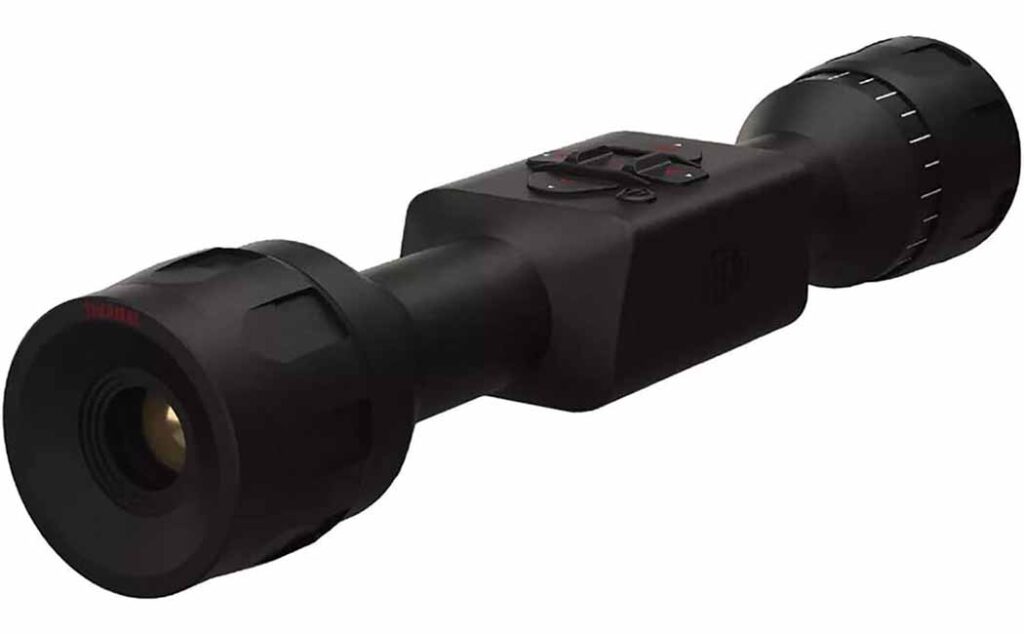
Thermal rifle scopes have been pretty hot lately, but not everyone can afford to buy one at their typical prices. If you feel that you’ve been missing out and want to dip your toe into the thermal optic world too, this heavily discounted ATN Thor LT may be the most affordable way for you to accomplish that. Will it be the best thermal scope you can get? Probably not, but if all you want to do try some night hunting, the 3-6x magnification and 475-yard maximum detection range should get the job done. The scope mounts via traditional 30mm scope rings, has a rechargeable battery with an advertised 10-hour runtime and it features both black hot and white hot color palettes.
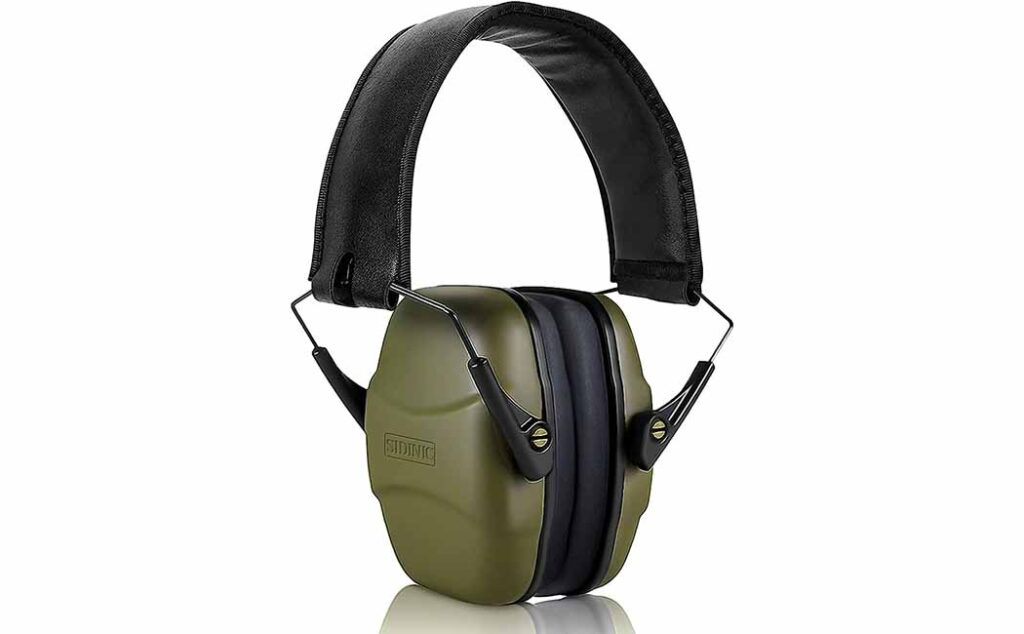
Are these Chinese knockoffs of Howard Leight Impact Sport earmuffs? Undoubtedly. Are they worse? Almost certainly. But when the originals have an MSRP of $95, it’s understandable why not every shooter has a pair. If you’ve been looking for the most affordable set of electronic shooting hearing protection that you can buy, this is it. They have an advertised Noise Reduction Rating of 34dB, which is great assuming it’s an accurate measurement, but above all it’s hard to argue with the price if you’ve just been wanting to give electronic hearing protection a try.
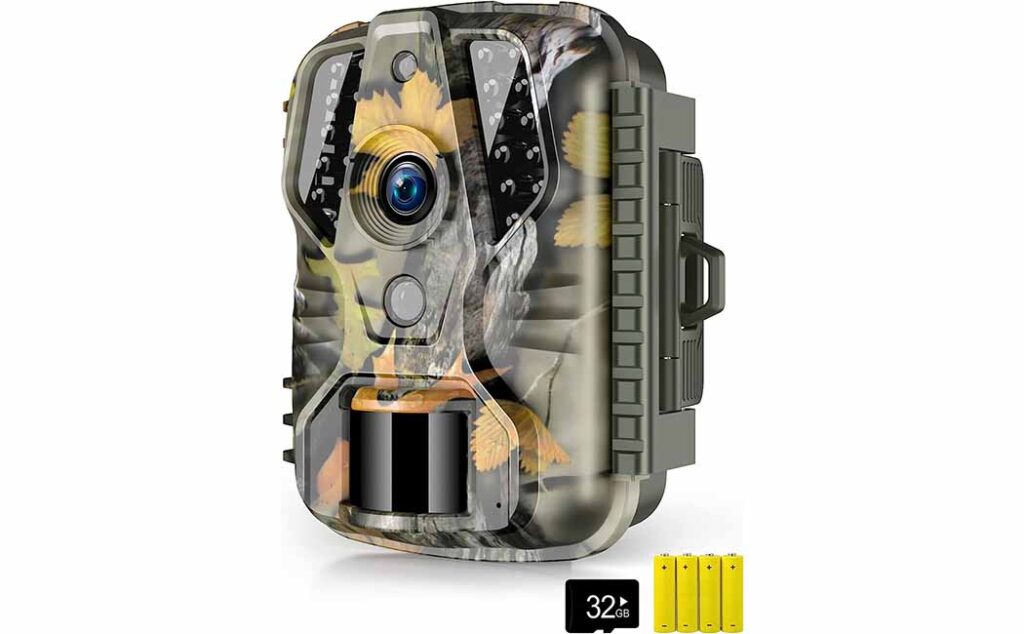
There are lots of great uses for trail cameras, and it can be a good idea to have one lying around even if you’re not an avid hunter. This Vikeri Mini is on a pretty decent discount and seems to have all the features one would want in a trail camera. The camera is motion activated and only has a 0.2 second delay once triggered. It monitors in a 120-degree wide angle and can detect motion from up to 65 feet away. It’s also capable of capturing either 20MP HD pictures or 1080P videos. Whether you’re trying to find game or you just want to keep an extra set of eyes on your property, this is a good tool to have.
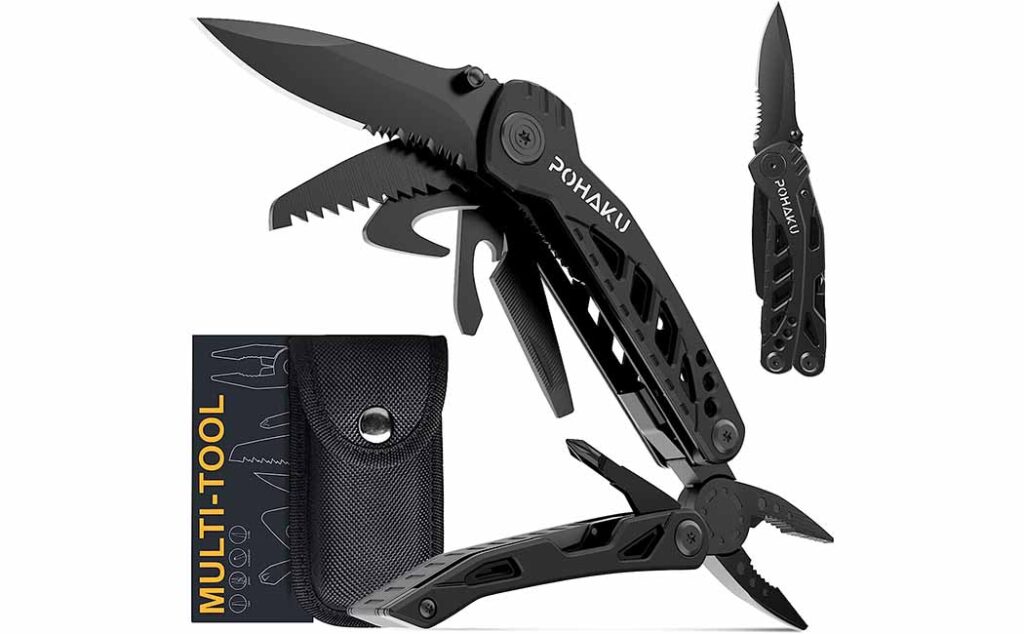
A multitool is always useful to have around, but the best ones are quite expensive. If you’ve wanted one that you could beat up, throw around and lose without worrying about it, this deal is worth a look. Besides having a typical pocket knife blade, the Pohaku also features needle nose pliers, standard pliers, wire cutters, a can opener, two files, three screwdrivers, a rope cutter, a saw and a serrated knife. Not bad for $14, and it even comes with a storage pouch and can be operated by just one hand.
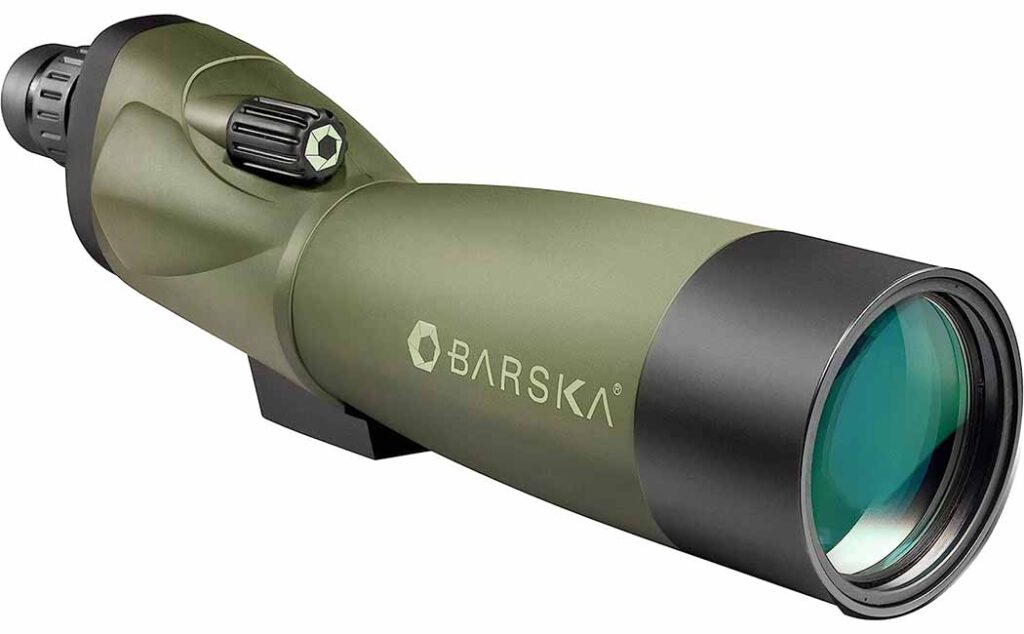
If you do any kind of target shooting at ranges beyond what the naked eye can see, you’re going to be walking downrange to check your hits more often than necessary. The remedy is a spotting scope, and if you don’t already have one, this deal is a good time to change that. For a reasonable price, this Barska offers just about everything you’d want in a basic spotting scope. It has a generous objective lens of 50mm, a magnification range of 18-36x and is completely waterproof and fog proof. It also comes with an extendable sunshade, a tabletop tripod, a lens cover and a carrying case.
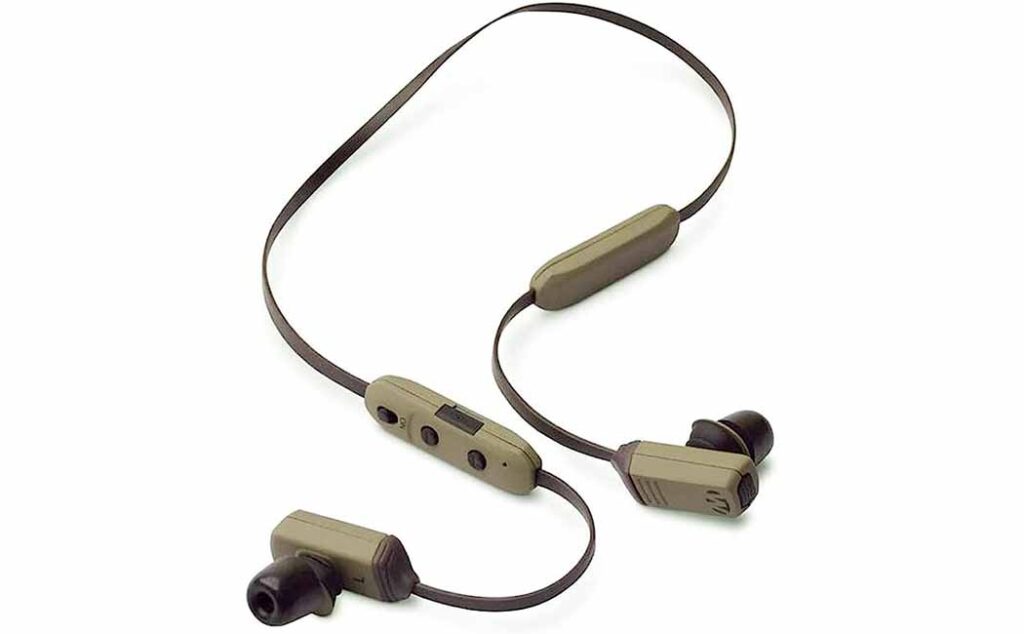
Walker’s Shooting Training Protection 29 Db Omni-Directional Microphone Rope Hearing Enhancer Earbuds
Combine the best of both worlds and grab some in-ear hearing protection that is also electronic! Never miss range commands or your range buddy’s excuses for missing. Walker’s in-ear electronic ear pro features a 29Db rating, 3 pairs of foam tips for the perfect fit, and omni-directional mics to pick up all the sounds around you. Micro USB charging with a 10-hour battery life. Big sale right now on the Walker’s makes them a great buy.
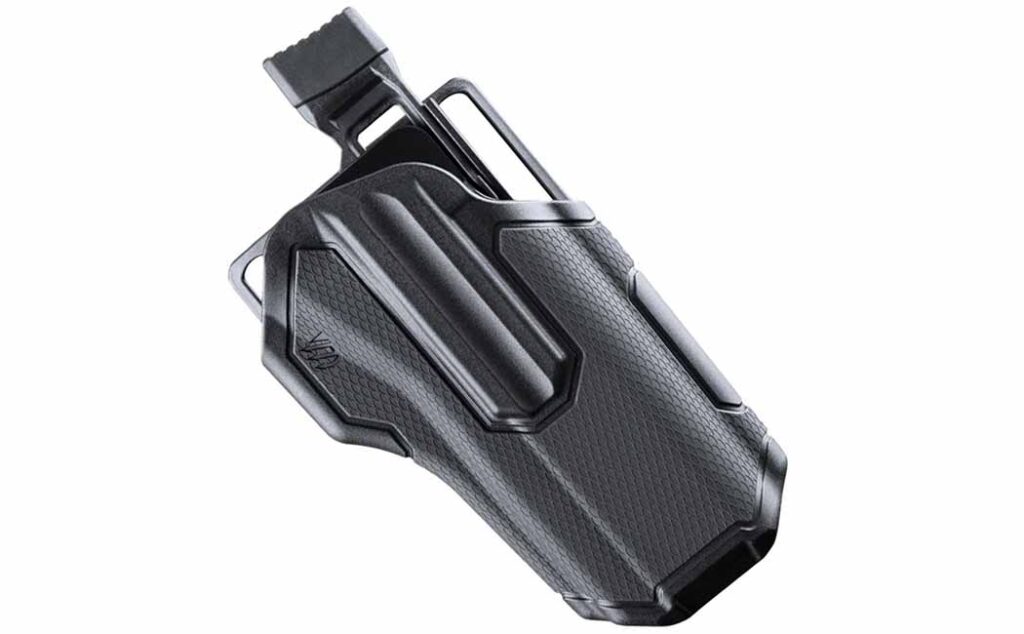
Maybe not the perfect holster for everyone, but the Blackhawk Omnivore makes having multiple pistols a lot easier. Designed to fit almost any pistol, the Omnivore comes in three styles – built for pistols with 1913 Picatinny rails, pistols with SureFire X300 lights, and pistols with Stream Light TLR 1 & 2 lights. Built to use the railing or lights for the locking retention, the Omnivore can eat almost anything and keep it secure. Dedicated holsters are generally a little better, but this is a great “do all” that wildly reduces the number of holsters you need to have on hand to shoot your armory.
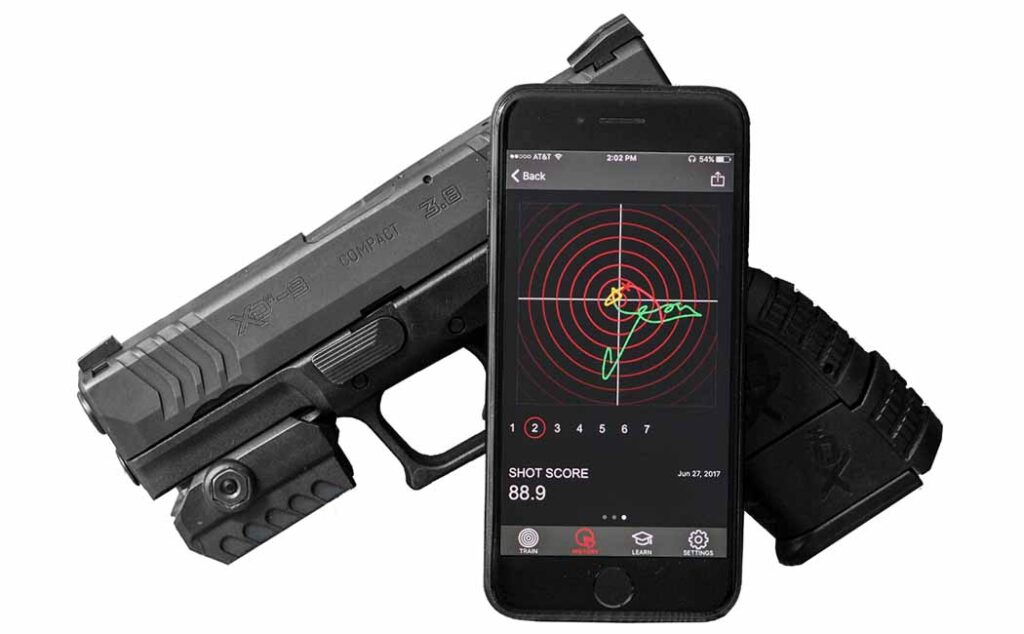
Training is not optional, but it can be expensive and hard to find time for. Dry fire is a great way of improving and maintaining skills without having to go to the range or spend ammo on money. But there is a way to make dry fire even more useful, that is the Mantis X3. Combined with the Mantis app, this system senses and tracks everything your firearm does during dry fire and live fire. This gives you a complete record of your grip, handling, aim, recoil, follow-through, and a ton more. Works with iOS and Andriod, the Mantis X3 is a huge step forward for anyone looking to improve their skills.
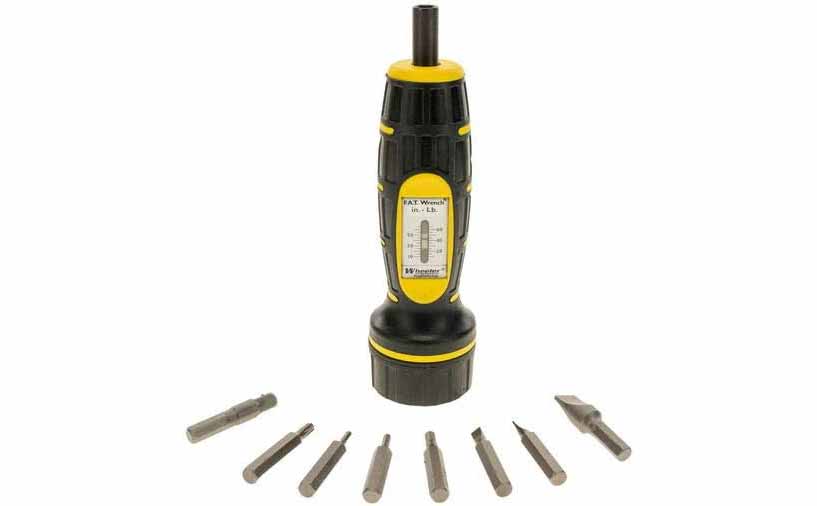
Just about every screw on every firearm has a torque rating. You might not always know what that rating is, but at some point, someone gave it one. This is especially true for mounting optics on rifles and pistols. Those little screws are sensitive, and the difference between goodly tight and stripped is smaller than you might think! One of the first fundamental tools a gun owner should have after a cleaning kit is a decent torque wrench measured in inch-pounds. Wheeler’s F.A.T. Wrench is a great buy. You get the wrench, some common bits, and a nice little plastic case that will keep your new tool safe at the range or in the shop.
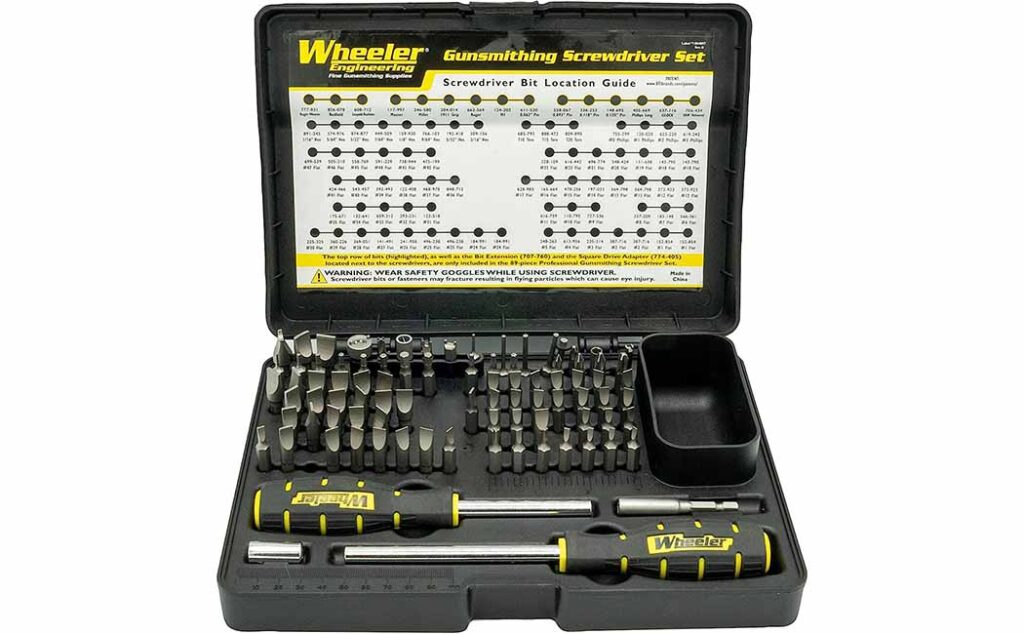
Most of us already have at least some tools, but those aren’t always the same as gunsmithing tools. First off, tools built for guns are hollow-ground for a better fit in the parts. Not as big of a deal with most modern guns, but a huge deal for anything made 30ish or more years ago. Secondly, there are a lot of common firearms that take special tools. Not all of them, but a good number. Ever try working on a revolver without the right tools? It’s not fun! Wheeler’s set of 89 bits is a great place to start that should cover most bases, even some of the less common but still widely made firearms like S&W and Ruger revolvers.
Among the world’s historic gunmakers, Sig Sauer has delivered some all-time classic pistols. Though, early on, not the most conducive to concealed carry. Sig Sauer pistols made their name as militaries and law-enforcement sidearms the world around. But that doesn’t mean they’re strictly relegated to service duty and those who don’t mind toting what feels like a metric ton. There are many fine concealed carry Sig Sauer pistols, ones that live up to the company’s sterling reputation and are easy on the gun belt. Here are six of the company’s best that are currently available factory new to keep your eye out for.
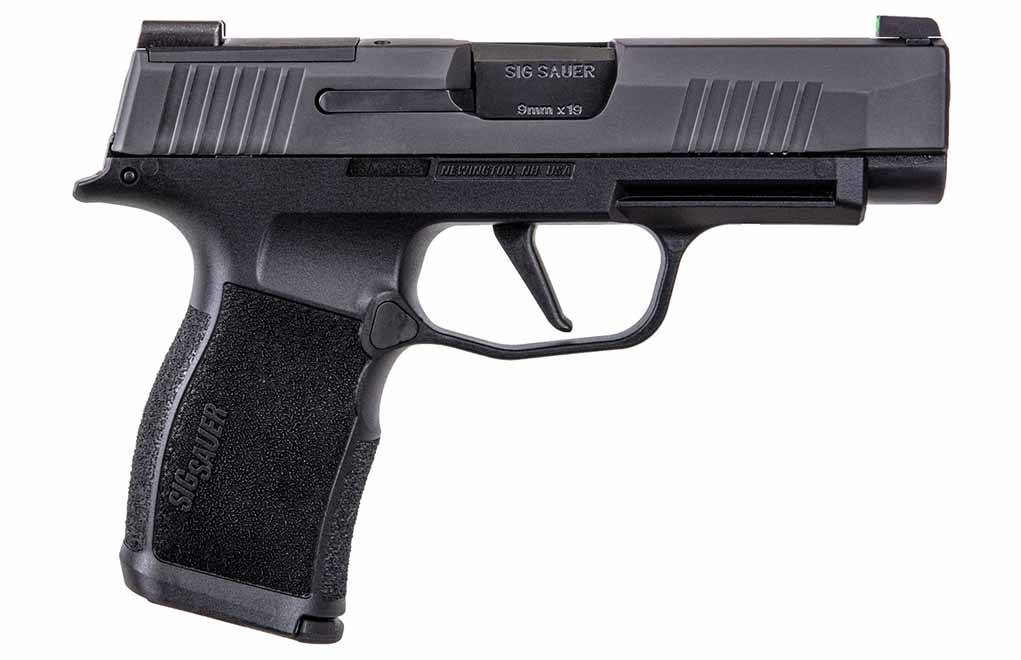
P365 XL
P365 XL
To say the P365 hit a nerve with the greater shooting public would be an understatement akin to saying the Titanic struck a piece of ice. The micro-compact 9mm absolutely set the carry world on fire when it introduced in 2018. And why not? The Sig Sauer pistol has about everything you’d want in a low-profile, high-performance sidearm—including price.
Breaking from Sig’s typical premium pricing, the striker-fired is downright competitive with an MSRP of $599. Yet, the gunmaker didn’t skimp, making it look, feel and shoot up to Sig standards. But what really catches attention is the P365 XL’s capacity, which is nearly up to snuff with service models. At 12+1 with its flush fit mag, there are few other micro-9s offering the same firepower.
Amazingly, Sig’s half-staggered magazine doesn’t up the capacity at the expense of carry ease. The P365 is as slim (around 1 inch) and light (between 17 and 20 ounces unloaded) as all get out. Though, carry wise, the little extra bulk of the XL model might be worth it. Only upping the height of the pistol .7 inch over the original P365, it delivers full 15+1 capacity (with extended mags) and a grip that’s a little more conducive to handling and accuracy. No matter what model you chose, the P365 definitely qualifies as a game-changer.
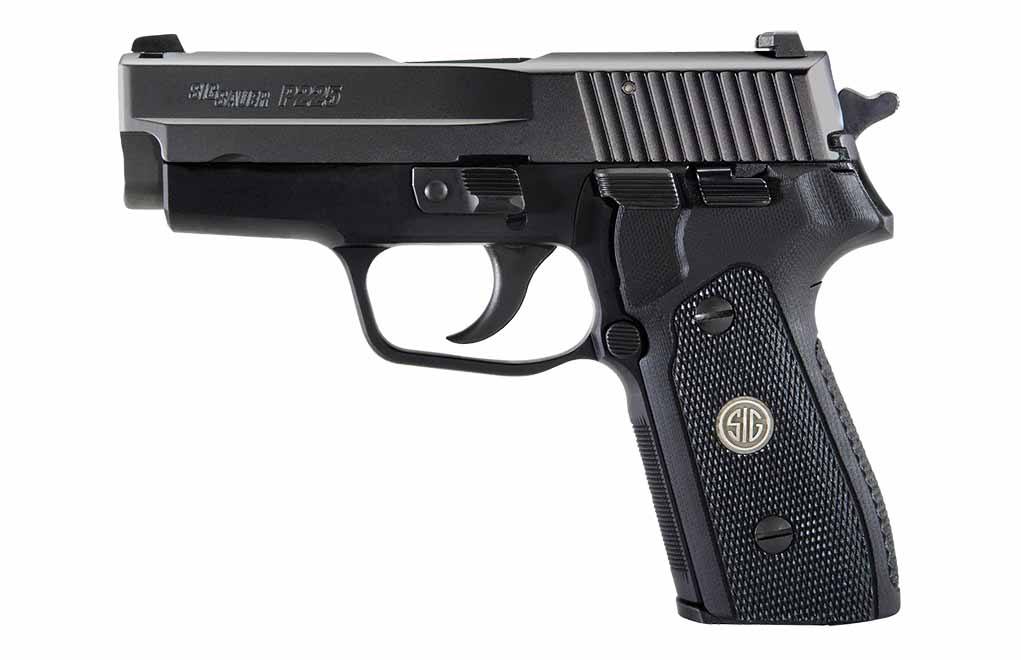
P225-A1 Nitron Compact
P225-A1
For a long time, many Sig Sauer pistols lagged in the concealed carry market. A reputation as boat anchors, its metal-heavy catalog was seen as only fit for duty—military, law enforcement or otherwise. That’s not an entirely fair standing, however. The P225 is a testament to this fact.
Swinging from holsters since the mid-1970s, the single-stack (8+1) DA/SA gave shooters everything they wanted out of a Sig—reliability, rock-solid construction, metal. At the same tick, it did so without making them haul around the Rock of Gibraltar. The 9mm still does today, with the P225-A1 Nitron Compact offering an exception ‘Mama Bear’ option, particularly for those with large mitts.
Yeah, 30 ounces might not cut muster for some, but it’s far from out of bounds—akin to many 1911 commander models. Plus, it’s a crack shot due to its heft—even on its double-action trigger pull—and especially for a 3.6-inch barrel pistol. Outside of weight, the P225-A1 is relatively unassuming, with an 1.26-inch width and 5.2-inch height. Furthermore, it’s damn dashing in the looks department.
The hitch in many shooters’ giddyap with the P225-A1 is that it’s been discontinued by Sig, and those available on the used market typically run north of $1,000. That’s more than some allowances can handle. But for those who lay their hard-earned cash on the counter, they usually don’t regret the purchase.
P365-380
There isn’t much to say about this pistol that we didn’t already cover when discussing the P365 XL. The P365-380 is essentially just a standard P365 but chambered for .380 ACP instead. It even shares a capacity of 10 rounds with flush-fit mags.
If this supremely popular carry pistol appeals to you but you prefer something with less recoil and required racking force than 9x19mm, this is the one to look at. It even fits in standard P365 holsters and shares compatibility with other standard P365 accessories.
Other notable features include its night sights, its accessory rail and its optics-ready slide with a ROMEOZero Elite footprint. As a bonus, its MSRP is only $499.99, making it a bit more affordable than the 9mm versions.
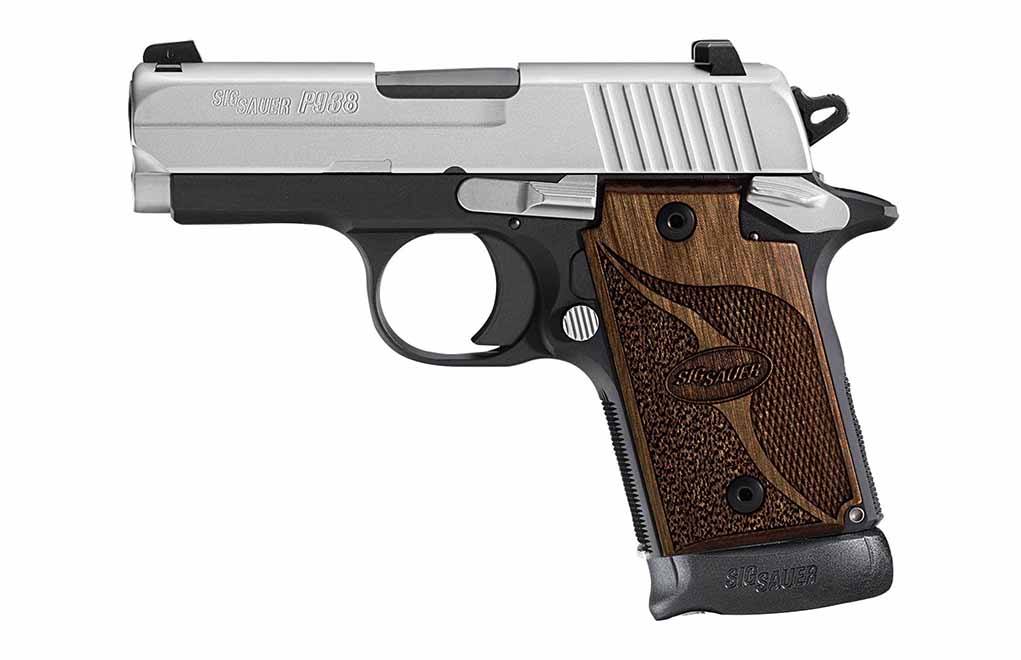
Most certainly, those whose lifestyles call for a demure carry piece, but don’t want to compromise power, have a solid option in the 9mm P938 SAS.
Outside one more ounce in weight and .3 inch in barrel length, the dimensions of the 9mm are the same as the .380. It also operates the same as the P238, which is to say a 1911—single-action only trigger, thumb safety, etc. And it’s all-metal, stainless steel slide and aluminum frame, so there’s peace of mind it’s up for rugged treatment.
Similarly, the pistol also comes in a host of variations to meet the style and carry preferences of nearly any shooter. Though, for the purposes of going armed, it’s difficult to beat the P938 SAS (Sig Anti Snag that goes for the P238 too), which has all sharp edges round off to offer the smoothest draw possible. Two-tone, the micro 9mm is also a looker, even if it spends most its time tucked away. Starting at around $700, it demands a Sig price, but also delivers Sig performance.
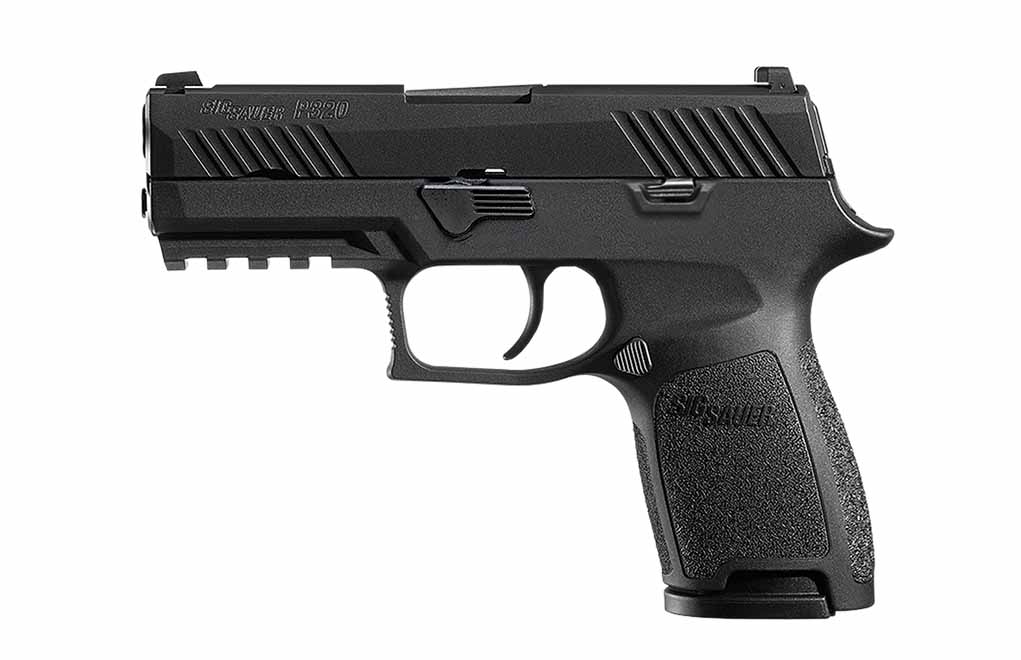
P320 Compact
P320 Compact
One of the top modern carry guns, the P320 is as flexible as they come. Modular in design, the Sig Sauer pistol jumps between frame sizes and barrel lengths with a quick switch of the trigger group. In turn, you potentially have everything from a sub-compact to a full-sized option at your disposal. Handy as all get out.
If you’re new to the line, the P320 Nitron Compact is an excellent choice, given outright you can pick from 9mm and .45 ACP chamberings. The striker-fired is also competitively priced, with street prices of the line averaging just over $500. Though, if you’re looking for something as minimal as possible, the striker-fired might not fit the bill.
Overall manageable in size—3.9-inch barrel, 26-ounces unloaded—the double-stack is a bit wide at 1.3-inches … though not prohibitively.
To touch on the elephant in the room, early iterations of the P320 had issues with drop safety, which the company said it has since addressed. But if you go shopping in the P320 resell market, best to inquire if the pistol in question had its trigger upgraded.
1911 Fastback Nightmare Carry
Fastback Nightmare Carry
Sig Sauer made its way on the back of DA/SA pistols, but has proven more than adept at turning out other top-notch designs. The 1911, for instance. Over the years, the company has built a reputation of turning out among the finest production 1911s around. And they have one for nearly any occasion.
When it comes to concealed carry, the cream is the Fastback Nightmare carry. The wicked-looking Sig Sauer pistol is optimized in every conceivable way for the most unobtrusive carry possible. This especially goes for its ‘Fastback’, the rounded rear of the butt that not only reduces printing, but facilitates a very intuitive and comfortable grip on the pistol. Sig didn’t stop there, outfitting the Fastback Nightmare with aggressive Houge G10 Double-Dimond grips, Sig Light Night Sights and one sweet trigger pull. The single-action trips at 5 pounds and feels like it was made for competition.
Top to bottom stainless steel, the Nightmare is on the hefty side at 38 ounces unloaded and a bit bulkier than some other 1911, at 1.4-inches in width. Yet, neither precluded it as a rock-solid carry option, if you’ve got the gun belt to keep it in place. As 1911s go, the Fastback Nightmare runs right around many of the most established makes, with an MSRP of $1,429.
Here are some top self-defense flashlight techniques for using a handheld light in conjunction with a pistol.
It wasn’t all that long ago when a flashlight was just a flashlight. You picked one up at the Dollar Store, shoved some D-cells in it and went on your way. About 25 years ago, one of the best flashlights you could buy was the standard, old, Maglite. This was the heavy and long aluminum flashlight that was preferred by cops because it was moderately bright and, well, stick-like.
Today, hundreds of bright, durable, compact flashlights are designed with personal protection in mind. When selecting one for use with your handgun, you can start by applying the rule of the four Ls. It should provide a minimum of 100 lumens, be powered by lithium batteries, have a LED bulb and come or be compatible with a lanyard. The light should also have tailpiece activation.
With a good, reliable light source in hand, the next question is: How do you use it in conjunction with your handgun? There are several techniques, and they all have their pros and cons. There’s no best answer other than, maybe, becoming proficient with them all and employing the one that best fits the situation.
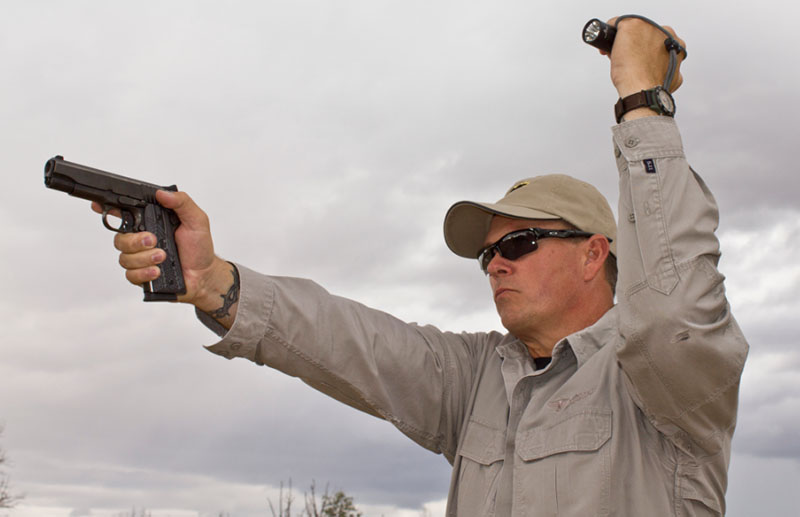
With the FBI technique, you hold the light away from your body with your non-shooting hand. It’s a good technique for searching, but not very effective for shooting.
The FBI Technique
Thinking that bad guys might shoot at your light because they think that’s where you are, the FBI developed this technique. You hold the flashlight away from your body—out to the side and up—in your non-shooting hand as you search for and engage targets. This is a tactically sound method for searching, but once you start shooting, it sort of negates the need to hold the flashlight away from your body. Also, shooting with one hand isn’t the best way to get hits.
Neck Index
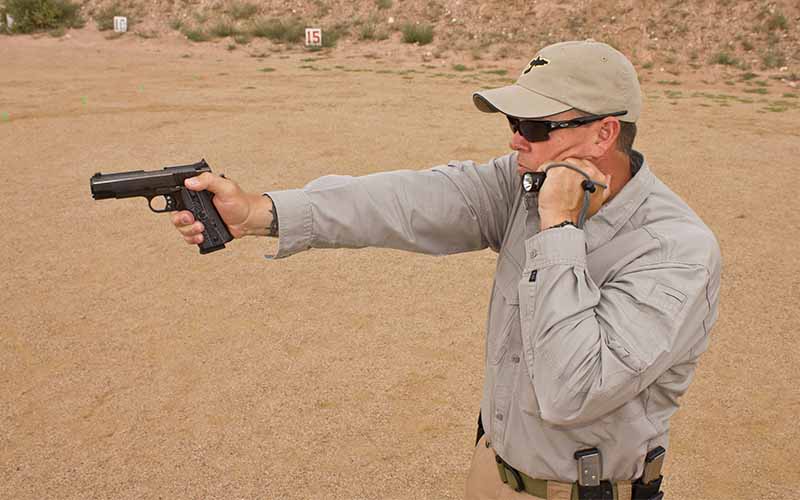
Maybe best thought of as a progression technique, the neck index method lets you transition from looking to shooting. Let’s say you’re using the FBI technique to search, and you see a threat. You can pull the light to the neck index method as you start weapon presentation.
With the light indexed at your neck, it’s similar to your support hand being at the center of your body during normal weapon presentation. All you do is pull your flashlight hand up to your chin with the bright end oriented toward the threat. One your gun is oriented toward the threat, it’s probably best to transition to one of the next two flashlight methods.
The neck index method offers no support to your shooting hand, but it’s a good place to locate the flashlight during handgun presentation. Ideally, after presentation, you should transition to a technique that offers some support to your gun hand.
The Harries Technique
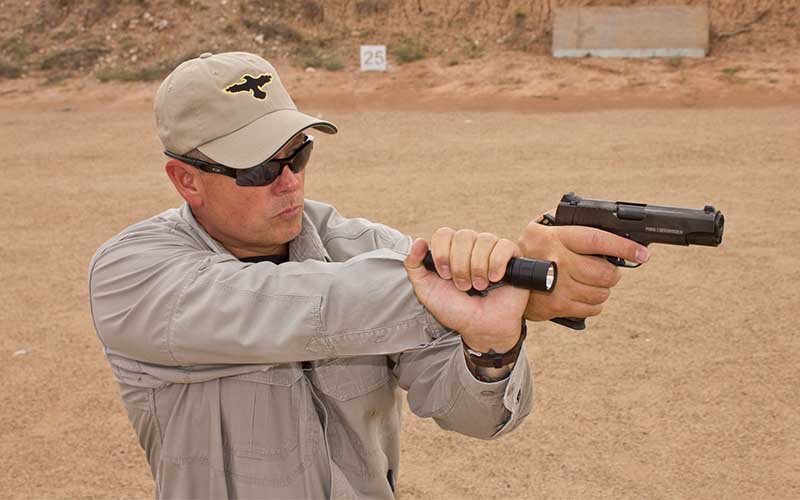
Embraced by Gunsite, this technique is likely the most often taught technique at law enforcement academies. Why? Partly because it works just as well with flashlights that have the activation button on the end or on the flashlight body, partly because it’s easy to use—and partly because it allows for two-hand support of the handgun.
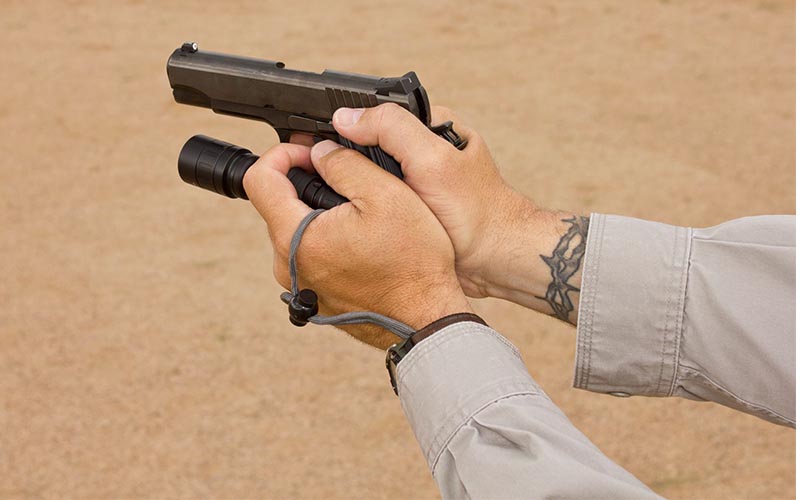
With the Harries technique, you lock the backsides of your hands together. To employ, slip your flashlight hand under your shooting arm and then lower the elbow of your flashlight arm. This applies pressure against the backside of your gun hand and makes for a relatively stable shooting platform.
The Harries technique has become sort of the default method for shooting with a handheld light. However, as good as it is for shooting, it’s not ideal for searching. This is because where your light goes, so does your handgun.
SureFire Technique
This is arguably the safest and fastest method to assume of any of the flashlight techniques, but it’s also possibly the most difficult to master. You’ll need a small flashlight with an activation button on the end of the tailpiece and, ideally, a rubber grommet positioned just a few inches forward.
SureFire used to manufacture lights just for this purpose, but at last check they’d all been discontinued. Hold the flashlight like a syringe between the index and the middle finger of your shooting hand, and use your bottom two fingers to help grip the gun. The trick is learning to orient the light with the handgun. Most commonly, shooters tend to point the light toward the ground. This isn’t all that bad. Generally, there will be enough light splashing off the ground to light up the target.
The SureFire technique requires a specially equipped flashlight, and unfortunately, SureFire no longer offers one. However, it’s very fast to assume and provides shooting hand support.
In General
The Harries and SureFire self-defense flashlight techniques offer the most stable shooting platforms, but they have a major drawback: If you’re searching your home, backyard or anywhere else using either technique, whatever you point your flashlight at you’re also pointing your handgun at. Alternatively, if you select a light with a wide flood beam, you can search using these techniques while holding the handgun at the low ready and looking with the edge of the beam. Just let the light splash up from the ground. Still, the potential for problematic response is there, and it’s not always a good idea to have your handgun out if you don’t know exactly what you might be facing.
A safer approach would be to keep the handgun in the holster, at your side or tucked in tight against your body at the close ready with the muzzle pointed in a safe direction. If you encounter a threat, you can immediately transition to the neck index technique, point your pistol and assume the SureFire or Harries technique or just transition right into either. The best solution is a handheld light used in conjunction with a weapon mounted light—we’ll cover that here in the future.
Finally, a lanyard on your self-defense flashlight is always a good idea. It keeps the light close at hand if you accidentally drop it … or if you need to let go of it to open doors, call 911, perform a reload or if you’re using it in conjunction with a weapon light and want to shoot with the common two-handed grip.
By itself, a flashlight is a powerful self-defense tool that can and should be used independent of the handgun. You can use it when you’re walking across a parking lot or even when on the sidewalk to check alleys or suspicious characters.
I spent my honeymoon in the French Quarter of New Orleans and carried a compact, tactical flashlight and a Colt Lightweight Commander during every excursion on Bourbon Street and beyond. I never had to use the Colt, but the flashlight got a lot of use.
Editor’s Note: This article originally appeared in the November 2022 issue of Gun Digest the Magazine.
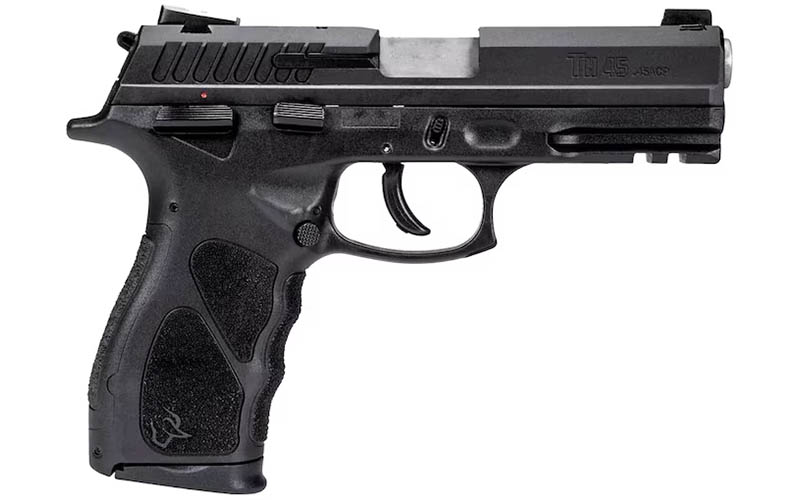
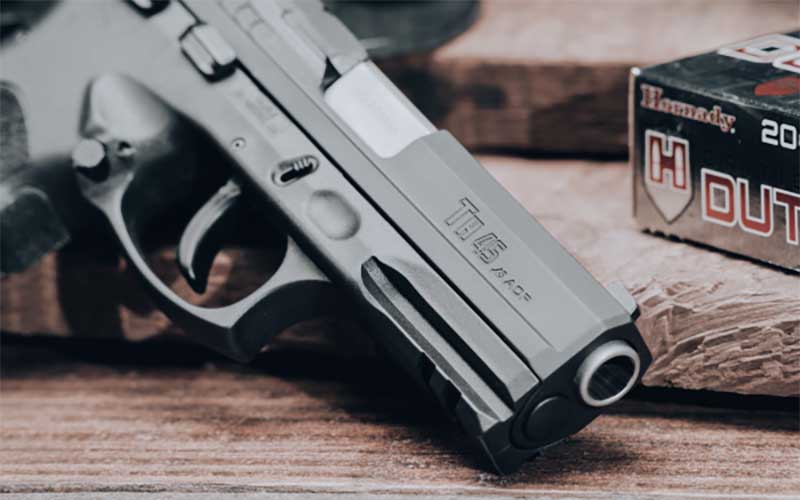
With the announcement of the Taurus TH45, the company’s TH pistol line is now available in .45 ACP.
The Taurus TH-series are polymer-framed, hammer-fired handguns with double-stack magazines and double-action/single-action triggers. Previously, the TH pistols were only available as either a full-size or compact model chambered for either 9mm or .40 S&W. With the release of the TH45, however, a full-size option will now be available in .45 ACP as well.
As a beefed-up, full-size Taurus TH pistol, the TH45 has most of the same features as its little brothers. That means it has the same DA/SA trigger, a thumb safety that doubles as a decocker and a 4.25-inch barrel. The safety also enables cocked-and-locked carry for those who prefer it. Other notable features of the TH45 include its 13-round capacity, its replaceable dovetail sights and its accessory rail for mounting accessories.
Caleb Giddings, Brand Marketing Manager at Taurus, said this about the new pistol:
I can’t think of anything better than launching a 45 ACP the same week as Independence Day…The 45 ACP is a quintessential American cartridge, and the TH45 is the perfect platform from Taurus to expand into this particular caliber.
The Taurus TH45 has an MSRP of $529.99, but product listings from online retailers indicate that street prices are already going to be much lower once they become available.
The skills, gear and legal considerations to keep you prepared for the possibility of encountering an active shooter.
At this very moment, it’s likely that someone is thinking about becoming the next headline, the next person to grab a gun and go into a school, shopping mall or sporting event—and start shooting. If you’re in the same proximity, are you prepared to stop him? We’re talking legally, morally, tactics, equipment and skills.
Legally
Every jurisdiction allows the use of force in defense of self or others, if you have reasonable grounds to believe lives are in danger. In an active shooter situation, when blood has been shed and continues to be shed, you will not be held culpable for any law violation, unless you shoot the wrong person or persons.
And, yes, if you pull up to the school and hear shooting and screaming, with kids running away from the sound of the shooting, you can enter that gun-free zone to save kids’ lives. It’s called the doctrine of competing harms; if you do not understand that term, look it up.
Morally
There’s no question that putting yourself in harm’s way to save innocent lives is the moral thing to do. Let’s move on.
Tactics
Most instructional shooting schools teach a variety of tactics first designed for law enforcement, and if you’re fortunate, they’ve been correctly adapted for the civilian sector. But they likely don’t cover teaching what to do in an active shooting scenario, except the mention of running away.
I’m not a hero, and I don’t plan on placing my life in danger for no serious reason. But if I see innocent lives being taken, I’ll attempt to intervene, and if I get taken out doing so, it was God’s will. With good health, I have another 30 or so years left on this planet. If I go early, that’s fate. If I go because I was trying to save innocent school children, I can’t think of a better way to go.
There’s one firearms training school that will teach you how to even the odds a little—retired Lt. Col. Ed Monk’s Last Resort Training. Monk has been studying the active shooter problem for years and is now teaching many courses around the country regarding facing the active shooter threat. He’s easy to find; Google is your friend.
Equipment And Skill
The armed citizens’ world is being overrun with tiny polymer pistols shooting a dozen or so 9mm rounds. That’s great news, as so many more people are actually carrying guns for defense, as opposed to storing their blaster at home in their underwear drawer.
But is that tiny polymer wonder up for the job of stopping the body-armor-wearing, AR-15-toting killer?
Sure, if you get close enough for a head shot—but in my world, closing on a hard target isn’t the optimum strategy. Instead, I’d like to take that shot from behind hard cover from at least 25 yards away. That means using a full-sized pistol, not a mini.
You see, while baby 9s are great for concealed carry and should do the job nicely at the counter of your local convenience store, the short sight radius and smaller sights make that headshot between 25 and 50 yards more luck than skill. I’d rather tip the scales in my favor by having a 4-inch barrel or greater and a good set of combat sights. According to Monk’s research, once you engage an active shooter, he’ll either turn the gun on himself or return fire upon you. It takes a little more work to carry a full-sized gun concealed, but it’s a trade-off worth considering.
However, along with the equipment to engage an active shooter at long distance, one also needs the requisite skill. If you don’t have access to competent training, you can teach yourself … once you have the basics down. An 8-inch steel target at 25 yards that you can ring consistently will work great.
But some people don’t have access to that distance of shooting range, and they have to settle for the commercial indoor range. No problem: Practice shooting inside a 2-inch circle at 7 yards. That equates to a 6-inch group at 25 yards. If you can do that consistently, you should be well on your way to active shooter interdiction competency.
Editor’s Note: This article originally appeared in the August 2022 issue of Gun Digest the Magazine.
Whether you’re a precision shooter or a hunter, these are among the best 6mm Creedmoor rifles on the market.
6mm Creedmoor is a fantastic precision shooting and light game hunting cartridge, with all the benefits of .243 Winchester and 6.5mm Creedmoor rolled into one. In practiced hands, it’s one of the flattest-shooting and most accurate moderate- to long-range cartridges available.
Essentially, it’s a modernized .243, and there are plenty of great rifles chambered for it.
Here we’ll go over what 6mm Creedmoor excels at, why you may want to own one and finally our picks for the best 6mm Creedmoor rifles currently available.
Wait…There’s A 6mm Creedmoor Too?
The origins of 6mm Creedmoor started with a 2007 article in Outdoor Life, wherein editor John Snow talked about how to design a wildcat cartridge. His idea was to neck the 6.5mm Creedmoor down to 6mm, creating a supremely accurate long-range cartridge that had less recoil.
Snow talked Hornady into making the brass, and it initially was going to be called 6mm Hornady Outdoor Life Express or 6mm HOLE, but Hornady quickly shot that down for obvious reasons. As for the rifle, Snow had a Sako action built on a McMillan stock by George Gardner at GA Precision.
The original 6mm Creedmoor load Snow worked up was a 105-grain Hornady A-Max bullet on 43.2 grains of H4831SC (loaded to around 3,000 fps) which he found exceptionally accurate and very effective on game out to 500 yards.
The idea caught on, and within a few years, it became the cartridge du jour in PRS events. Despite the popularity of 6mm Creedmoor having diminished since then, it’s clear that the cartridge has found a niche in the market and isn’t going anywhere anytime soon.
From left to right: .308 Winchester, 6.5mm Creedmoor and 6mm Creedmoor.
6mm Creedmoor Vs. 6.5mm Creedmoor Ballistics
When it comes to comparing the ballistic properties of these two Creedmoors, the most significant difference is obviously between the size and weight of their bullets. The smaller and lighter 6mm Creedmoor has a slight edge in drop over distance due to its higher velocity (even despite its marginally lower ballistic coefficient). For the same reason, however, the 6mm is more affected by wind.
The typical 105-grain 6mm CM load (the most popular weight) has an average muzzle velocity of about 3,050 fps. Compared to the typical 130-grain 6.5mm CM load with an average muzzle velocity of about 2,950 fps, we see there’s only a difference of about 100 fps.
Here are some 1,000-yard trajectory tables comparing 6mm CM, 6.5mm CM and .243 Winchester. All tables were made using Shooter’s Calculator with a 100-yard zero, a 1.5-inch height-over-bore, a 90-degree 10 mph crosswind and no corrections for atmosphere.
First, the 147-gr 6.5mm CM ELD Match load with a G1 BC of 0.697:
And here is the 108-gr 6mm CM ELD Match load with a G1 BC of 0.536:
As you can see, the 6mm bullet has dropped 20 fewer inches at 1,000 yards but has drifted 13 inches more in the wind. Also, while the 6.5mm CM load stays supersonic until just after 1,600 yards, the 6mm CM only stays supersonic until about 1,400 yards.
Now let’s compare it to a typical .243 Winchester load, in this case, represented by Winchester’s 100-grain Power Point that has a G1 BC of 0.356:
As you can see, 6mm Creedmoor absolutely buries old .243 Winchester hunting loads people have been shooting for ages like Power Point, CoreLokt and PowerShok. However, keep in mind modern ammunition exists for .243 as well.
One benefit of 6.5mm Creedmoor is that it does carry more energy for longer distances. At 1,000 yards, the 6.5mm load has more energy than a .357 Magnum at the muzzle and satisfies the 1,000-foot-pound minimum that some states mandate for big game hunting all the way out to 800 yards.
However, 6mm Creedmoor also puts less hurt on your shoulder as a result. Depending on various factors (rifle weight, exact load, etc.) it has about 10 foot-pounds of recoil, about 3 foot-pounds lighter than the average of its larger brother.
What Is 6mm Creedmoor Good For?
6mm Creedmoor excels at precision rifle competitions, although fewer top shooters are using it these days compared to 6mm BR, 6mm Dasher and 6.5mm Creedmoor. However, that doesn’t inherently make these other cartridges a better choice for all pursuits.
For instance, PRS only goes out to 1,300 yards. That’s well within 6mm CM’s purview and it can do it with less drop and lower recoil than 6.5mm CM.
Also, while 6mm BR and 6mm Dasher are better represented in the top echelons of the precision rifle sport, few factory loads exist for them. 6mm Creedmoor has ample factory support, from hunting to match ammo, and is relatively reasonably priced.
So, if you wanted an out-of-the-box way to get into precision rifle events, it makes an excellent choice.
As a hunting cartridge, it’s a fantastic choice for medium game at moderate to long ranges. It has light recoil, excellent accuracy and very modest drop over distance. While not alone in those qualities (again, modern .243 Winchester still exists, so does 7mm-08 and others), you could literally start shooting 6mm CM as a kid and use it your whole life.
It makes a deer, pronghorn, sheep and mountain goat cartridge par excellence, and would certainly be a great pick for lighter plains game in Africa, red stag in Europe and Himalayan tahr.
Larger game like elk, moose and black bear would not be beyond 6mm CM’s capabilities (all have been taken with .243 Win.), though judicious shot placement is obviously very important. Not that it ever isn’t, but even more so with smaller bullets on bigger animals.
If any or all of those pursuits interest you, then 6mm Creedmoor may suit you very well. The next step is choosing a rifle.
The 6 Best 6mm Creedmoor Rifles
Ruger American Predator
Ruger’s American rifle series is a fantastic entry-level bolt gun with an excellent diversity of options. The Ruger American Predator, a lightweight, simple rifle with a synthetic stock, is offered in 6mm Creedmoor at a very attainable price point.
Action: Bolt
Barrel: 22 inches w/ threaded muzzle
Twist Rate: 1:7.7
Magazine Capacity: 3
Overall Length: 42 inches
Overall Weight: 6.6 pounds
Sight Mounting: Picatinny rail
MSRP: $669
Patriot Ordnance Factory Revolution DI 6mm Creedmoor
The POF Revolution DI puts an AR-10 in an AR-15-sized receiver by revising receiver geometry, ultimately creating a sleeker, slimmer and lighter rifle. Along with the Gen 4 receiver, you get ambidextrous controls, a 14-inch M-LOK handguard, an adjustable gas block, a stainless fluted barrel with muzzle brake and rifle-length gas system, an adjustable stock (LOP and cheek riser) and POF’s EPT trigger.
Action: Direct Impingement
Barrel Length: 22 inches w/ threaded muzzle and brake
Twist Rate: 1:7.5
Magazine Capacity: 20
Overall Length: 41 inches (collapsed)
Overall Weight: 8 pounds
Sight Mounting: Picatinny rail
MSRP: Starts at $2,903
Christensen Arms Mesa FFT 6mm Creedmoor
If you wanted one 6mm Creedmoor rifle to do it all, the Christensen Arms Mesa FFT would be a stellar candidate. Its carbon fiber stock and carbon fiber wrapped barrel keep the setup very lightweight, while its muzzle brake helps to keep the recoil manageable. Given Christensen’s sub-MOA guarantee, it’s accurate enough for competition and light and handy in the field.
Action: Bolt
Barrel Length: 20 inches w/ removable brake
Twist Rate: 1:8
Magazine Capacity: 4
Overall Length: 39.5 inches
Overall Weight: 5.5 pounds
Sight Mounting: Picatinny rail
MSRP: Starts at $1,599
CZ 600 Range
The CZ 600 Range would be a good choice for an entry-level precision rifle for competition or benchrest shooting. It has a heavy target barrel, an adjustable cheek riser stock and multiple sling attachment points. CZ guarantees ¾-MOA accuracy with factory match ammunition.
Action: Bolt
Barrel Length: 24 inches w/ threaded muzzle
Twist Rate: 1:7
Magazine Capacity: 5
Overall Length: 44.9 inches
Overall Weight: 10 pounds
Sight Mounting: Drilled and tapped for Rem. 700 bases
MSRP: $1,299
Bergara Premier Competition
The Bergara Premier Competition is one of the last stops before a custom competition rifle. It takes Bergara’s 700-based action and beds it in a Masterpiece Arms chassis with a Trigger Tech competition trigger and Arca Swiss rail for mounting a bipod. You just need to add a bipod and a scope and you’re ready to go.
Action: Bolt
Barrel Length: 26 inches w/ threaded muzzle
Twist Rate: 1:7.5
Magazine Capacity: 10
Overall Length: 46 inches
Overall Weight: 12.7 pounds
Sight Mounting: Picatinny rail
MSRP: $2,750
Savage 110 Tactical Desert
The Savage 110 Tactical Desert would be a solid entry-level competition gun that’s just slicked-down enough to use in the field too…though it’s a bit heavy for a field gun. Savage beds its venerable 110 action in their AccuStock with an adjustable LOP and comb height, a heavy barrel (with threaded end cap) and AICS magazine compatibility. Since it’s part of the Savage 110 family, it also comes with the AccuTrigger, one of the best factory triggers in mass-market rifles.
Rock River Arms has just released the BT3 Predator HP 65C, a precision AR chambered for 6.5mm Creedmoor.
Whether you’re a competitive long-range shooter or a hunter who favors semi-autos chambered for 6.5mm Creedmoor, the latest AR from Rock River Arms is worth looking at. Called the BT3 Predator HP 65C, the rifle was designed with precision in mind.
The BT3 Predator HP 65C rifle’s upper and lower receivers are CNC-machined from aerospace-grade aluminum billet, providing extra rigidity for improved consistency in shot-to-shot performance. It also features a 24-inch match-grade stainless steel fluted barrel with a 1:8 twist and a 5/8×24 threaded muzzle. Additionally, the barrel has been cryo-treated, features a rifle-length gas system and comes sporting an RRA Operator muzzle brake. To further improve its out-of-the-box accuracy potential, the BT3 Predator ships with RRA’s adjustable two-stage match trigger as well.
For its furniture, the BT3 Predator comes with a 17-inch RRA lightweight free-floated handguard with M-LOK slots for mounting accessories. It also features an adjustable 6-position Operator CAR stock and a Hogue Rubber pistol grip for added comfort.
The BT3 Predator HP 65C is available now, and each rifle ships with a magazine, a case, a manual and RRA’s warranty information. MSRP is $2,095.
Looking to go armed, but are stuck in the weeds as to what to arm yourself with? Here are 20 of the best concealed carry gun options that will keep you on the defensive.