The Sig Sauer P320 is an excellent defensive handgun option — mostly because of its many great features.
In the few short years since its introduction, the Sig Sauer P320 has established itself as an outstanding choice for a defensive handgun. It's simple to use and operate, easy to field strip and has proven to be both a reliable and accurate shooter. Nowhere is this fact more evident than in the U.S. military's recent selection of the P320 as the winner of its XM17 Modular Handgun System (MHS) competition.
Sig Sauer started producing the striker-fired P320 back in 2014 with a standard 9mm pistol. Since then, however, it has brought out a whole host of variations ranging from guns designed for carry to full-size race guns. And, as the manufacturer has expanded into other markets, such as optics, it has even introduced versions that come optic-equipped straight from the factory.
All of these newer models have been built with the same dedication to quality and reliability as prior ones. And they all share features that have made the original so popular.
One of the most prominent of these features is its impressive modularity — both in terms of caliber and configuration and in terms of comfort to the shooter. The Sig Sauer P320 can be relatively easily converted between its available calibers. It also is designed to fit the hands of virtually any shooter, and, due to its ambidextrous controls, it's a friendly platform for both right- and left-handed shooters.
Of course, there's a lot of other things to like about the P320. For more on this excellent platform, check out the video above, in which Gun Digest columnist and contributor Richard Mann covers some of the gun's key features.
Editor's Note: This video is one of several that were created during a torture test of Sig Sauer P320 series pistols. Stay tuned for more videos, and keep an eye out for Richard Mann's full article in an upcoming issue of Gun Digest the Magazine.
Sig Sauer is perhaps best known for some of the most forward-looking gun designs available today. But did you know, they also teach users to get the most out of them — and any gun for that matter?
Modern Shooter heads to New Hampshire this week and the Sig Sauer Academy, one of the nation’s finest firearms training facilities. With plenty of room to shoot and scoot, the academy offers advanced self-defense and shooting instruction from seasoned law enforcement and military experts.
Basically, it’s shooting graduate school, complete with some of the most testing courses you’ll find. Using cover properly, working corners, clearing rooms and fine-tuning holdover techniques, Sig Sauer aims to get you shooting like a pro.
Gun Digest’s Luke Hartle puts his skills to the test in this action-packed episode. But the Editor-in-Chief also takes time to check out some of the company’s sweet new guns. It is Sig Sauer after all. In the above clip, Hartle investigates one of the gunmaker’s most heralded introductions in recent years — the MCX Virtus. If you want one gun to do it all, you definitely need to check out this video.
Catch the rest of the action at the Sig Sauer Academy in this episode of Modern Shooter 10:00 p.m. EST Friday on the Pursuit Channel. The episode rebroadcasts Monday at 12 p.m. EST and Tuesday at 11:30 a.m. EST.
The first problem was a beautiful viper — this cottonmouth could have starred in an episode of Animal Planet — was determined to nest in my brush pile. It was dusk, and my German shorthaired pointer trotted right past it. All I could imagine is her striking out at Cooper or clamping down on my big toe. As I trotted back to the house in my flip-flops, I was thinking about the second problem: How was I going to shoot this snake without invoking the ire of my neighbors? A gunshot in my neighborhood either goes completely ignored, or Camp Lejeune deploys the Marines.
Shoot! And then do it again. And again. The 22 LR shortage is long over and the ammo remains inexpensive and diverse. It’s a tough argument to claim there’s a better training option available.
The solution was Aguila Super Colibri .22 Long Rifle cartridges. Ultra quiet — even without a suppressor — the Aguila round solved the neighbor issue and the 20-grain bullet with a 420 fps muzzle velocity and 8 fpe of muzzle energy was plenty to send that chic viper to the other side.
The Colibri cartridges won’t cycle in my Ruger 22/45, and that was the compromise for using a quiet round to dispatch a snake and not disrupt the neighbors. Three shots later, the snake was history. Problem solved.
An Abundance Of .22 Varieties
That’s the thing with the .22 LR: With so many different specialty loads, this cartridge solves problems while offering an embarrassment of choices. If I had screwed a can onto the muzzle of the 22/45, I could’ve used Aguila’s .22 LR Subsonic on the snake, which launches a 40-grain solid lead bullet at 1,025 fps and a muzzle energy of 93 fpe.
Federal American Eagle Suppressor ammo loads a 45-grain copper-plated round nose to 970 fps. I like this round because it’s clean burning and quiet. Winchester, Remington, Sellier & Bellot, and Norma also all produce excellent subsonic loads, and these rounds offer far more power than the Colibri round, but a suppressor is required to keep the noise down.
The 20-grain Colibri from Aguila is a great option for quietly dispatching pests or for training new shooters, as there is little recoil and noise.
If noise were not the issue, I would’ve opted for my standby snake round, the CCI .22 LR Shotshell. This is loaded with No. 12 shot and creates a pattern the size of a paper plate at 8 feet out of my .22 LR pistols. Federal and Winchester use a crimped brass case in lieu of a shot capsule like CCI, and I have had good luck with these, though when the Federal and Winchester rounds are fired and blow out the crimp you need to be sure you manually cycle the bolt all the way rearward with a semi-automatic to ensure it ejects the empty case cleanly.
The Aguila Colibri round also makes a great choice when introducing a new shooter to firearms. The low report and minimal recoil can help acclimate a new shooter. Rounds such as the CCI .22 CB Short have a report like a .177-caliber pellet rifle and are darn accurate with the 29-grain bullet at short distances. Sure, this ammo makes your rimfire a single-shot firearm because they won’t cycle properly in semi-automatics, but at 710 fps, they’re fun for plinking tin cans. Once shooters become acclimated to the feel of the firearm, they can effortlessly move up the .22 rimfire food chain with more powerful cartridges.
What many rimfire shooters forget to explore are .22 Short and .22 Long ammo. Rounds like the .22 Short might seem obsolete, but Remington, Aguila and CCI are all still producing them. If you hunt squirrels, .22 Short ammo in 27- and 29-grain hollow-points offer good power for tree rodents and rabbits without the over penetration of a .22 LR round. Hunting squirrel with my son’s Henry lever-action loaded with .22 Shorts offers super fast follow-up shots with less muzzle blast. If any .22 rimfire is on the verge of extinction, it’s the .22 Long. As you might guess, it has power between the .22 Short and .22 LR. I typically shoot .22 LRs if there’s a need for more distance and more power.
Precision .22 Ammo
Aguila offers a wide variety of mission-specific .22 ammo for a host of duties.
With target ammunition, there are numerous choices for small-bore handgun and rifle shooters — almost too many choices. From weekend bulls-eye shooters to Olympic athletes, .22 LR target ammo like that from Eley set the standard in consistency and performance. The nice thing about .22 LR ammo is that it doesn’t cost a lot, so you can purchase different loads and test the accuracy in your firearm.
You would think that the ubiquitous 40-grain .22 LR rounds that are burned up by the hundreds by plinkers in one session could not be enhanced. Not the case. Eley’s Tenex ammo uses a flat-nose projectile designed to cut through the air as it pulls the center of pressure forward to aerodynamically stabilize the projectile and increase accuracy at the target.
As manufacturers have tightened up manufacturing techniques, .22 ammo has evolved into precision ammo due to more uniform cases and better case material, as well as propellants that burn in a way to deliver consistent energy to each projectile.
RWS is another manufacturer that offers excellent target ammunition. I particularly like the RWS R-50 rounds loaded with a 40-grain lead round nose. It produces stellar accuracy out of my pal’s bolt-action Remington Model 37 Rangemaster. He has an original Unertl scope mounted on the classic rimfire rifle, and splitting playing cards with the rifle and R-50 ammo made me feel like a trick shooter.
More varmint shooters are appreciating the low-cost lethality of a fragmenting .22 LR cartridge.
When it comes to pistols, I was brought up shooting High Standards. If you know anything about High Standard pistols, you certainly know what I mean. As you probably guessed, I’m kind of a .22 LR pistol snob. I have a Texas-made High Standard Supermatic Citation 10X, which can do things those other rimfire pistols can only dream of.
For example, Remington Viper 36-grain truncated-nose bullets zip out the 10X at 1,060 fps. My best five-shot groups at 25 yards measured 0.28 inch. With 40-grain round-nose bullets in ammo like Aguila’s Super Extra, CCI’s Mini-Mag, and PMC’s Target, the groups ranged from 0.58 to 0.88 inch. If your pistol or rifle isn’t shooting minuscule groups and is designed to do so, buy an assortment of ammo until you find the brand and bullet weight it likes, then hoard as much of that ammo as possible.
Game Getting .22s
When it comes to hunting rounds, small game should worry. CCI Quik-Shok uses a 32-grain segmented hollow point. Loaded to a muzzle speed of 1,640 fps, when this round hits, it fragments, and that can be devastating on small game. In similar fashion, CCI recently released the ever-popular MiniMag in a segmented bullet as well.
Browning BPR ammo uses a 37-grain fragmenting hollow point. I like Winchester Super X 37-grain copper-plated hollow points and Federal Game-Shok with 38-grain plated hollow-point bullets. These have a muzzle velocity of 1,330 fps and 1,260 fps, respectively. They have a bit more of the velocity I need when I’m shooting across an open field at a woodchuck.
Delightful .22 Plinkers
As manufacturers tighten up techniques, .22 ammo has evolved into precision ammo due to more uniform cases and better case material, as well as propellants that burn in a way to deliver consistent energy to each projectile.
And then there’s plinking. Sometimes the least expensive ammo is the best because you get to make more noise and holes for less money. I run cheap ammo when tin cans and rubber targets are on the agenda. Be forewarned, however, because some inexpensive ammo will gunk up your firearm fast. Buy more gun cleaner when purchasing cheap plinking ammo.
I’ll openly admit that I can’t resist the cost of some foreign-produced .22 LR ammo like Wolf’s. Sure it smells like Putin’s dirty socks when you shoot it, but with this type of ammo, I’m not looking for supreme accuracy. What this ammo is perfect for is plinking. It won’t break the bank to shoot all of this ammo. Of course, I also use a lot of American-made Federal, Winchester, Remington (really like Thunderbolt) and others.
Rimfire .22 ammo is some of the most versatile ammunition there is, with plenty of specialty loads designed for specific shooting situations. So don’t make the mistake of examining a bunch of similar-looking .22 cartridges and assuming they’re all the same on the inside.
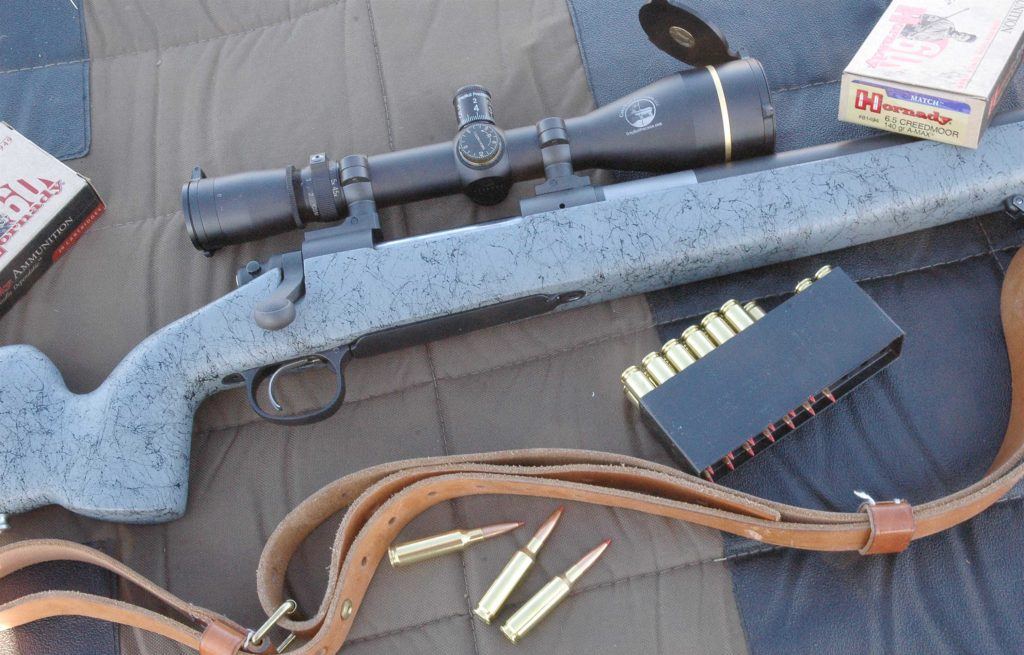
The 6.5 PRC is Hornady’s new hot shot and looks to have ballistic chops to be be the No. 1 six.
How does Hornady’s new 6.5 PRC measure up?
It is based on the Ruger Compact Magnum case.
The 6.5 PRC has 28 percent more capacity than the 6.5 Creedmoor.
This adds up to an 8-percent increase in velocity.
The round performs best out of its SAAMI specified 1:8 twist barrel.
It offers a great balance between power, trajectory and recoil.
Riflemen continually look to extend their reach with better ballistics. In fact, if we look at rifle cartridge development during the past century, the ability to deliver more power on target, with bullets that shoot flatter, has been the driving force. The ultimate expression of better ballistics comes when additional power and flatter trajectory are balanced with tolerable recoil. This is why the new 6.5 PRC cartridge from Hornady is such a big deal.
Many consumers and wannabe gun experts only think new cartridges are a means for manufacturers to sell more guns and more ammo. About the same number of shooters are also so emotionally attached to a certain cartridge that they cannot accept — nor will they acknowledge — something better has come along.
And, too, there’s this thing called neophobia, which is an extreme or irrational fear or dislike of anything new, novel or unfamiliar. For all of these reasons, some shooters are completely ignoring or bashing the 6.5 PRC.
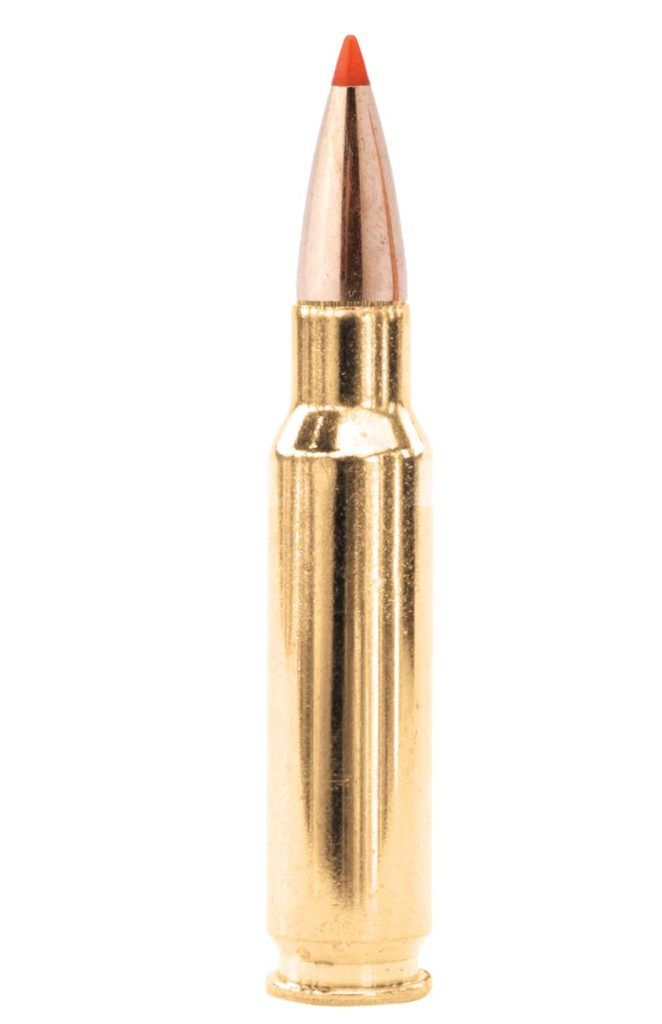
The 6.5 PRC cartridge is based on the Ruger Compact Magnum case. It has a 0.532-inch rim diameter, a 2.030-inch case length, a 30-degree shoulder and an overall cartridge length of 2.955 inches. Its case capacity is about 28 percent more than the 6.5 Creedmoor, and the 6.5 PRC will push a 143-grain ELD-X bullet to about 2,960 fps. This is 260 fps faster than the 6.5 Creedmoor, which is an increase of about 8 percent. Given its 65,000 psi operating pressure, as compared to 62,000 for the Creedmoor, this is consistent with a velocity gain of about one-fourth the percentage of capacity increase.
To understand the significance of the new 6.5 PRC cartridge from Hornady, you must first understand the history of 6.5mm cartridges. Until the Creedmoor, a 6.5mm (0.264-caliber) cartridge has never gained widespread popularity in America. Even then, it took nearly a decade for shooters to understand the subtle but important advantage the Creedmoor offered. Here’s a chronological look at the most well-known and mostly unloved, 6.5mm rifle cartridges.
The 6.5 Timeline
Chronological list of 6.5 caliber rifle cartridges. (Muted cartridges are not to scale.)
1894: 6.5×55 Swedish Mauser
Jointly developed by Norway and Sweden as a military cartridge, up until the mass acceptance of the 6.5 Creedmoor, it was the most popular 6.5mm cartridge worldwide. It will drive a 140-grain bullet to 2,540 fps and has probably killed more Scandinavian moose than anything else. However, being a long-action cartridge, it’s ballistically inferior to the .270 Winchester, which was well established before the Swede found its way to America.
1900: 6.5×54 Mannlicher Schonauer
Originally a Greek military cartridge designed for the 1903 Mannlicher, this cartridge and its 140-grain bullet at 2,250 fps became popular in Africa. It was even used there successfully by elephant hunters. It’s been obsolete longer than most readers have been alive.
1958: .264 Winchester Magnum
Based on the belted .458 Winchester Magnum case, the .264 was originally available in a 26-inch barreled Winchester Model 70. Capable of pushing a 140-grain bullet to 3,150 fps, it was initially a hit as a Western hunting cartridge. Ultimately, it could never compete with the milder, more efficient and very popular, .270 Winchester.
1966: 6.5 Remington Magnum
Introduced for Remington’s excellent Model 600 carbine, the rifle’s short barrel would not allow the cartridge to reach its potential. With a longer barrel, you can expect a 120-grain bullet to do 3,025 fps. Its case is long for a short-action cartridge and is not compatible with modern, high ballistic coefficient (BC) 6.5mm bullets in those short actions.
1997: .260 Remington
Supported by the great gun writer Jim Carmichel, this Remington offering found a following with long-range shooters. And, with a 140-grain bullet at 2,725 fps, it sort of bridges the gap between the .243 Winchester and 7mm-08 Remington for hunters. However, in the short-action it was designed for it cannot handle the longer 6.5mm bullets.
1999: 6.5-284 Norma
Based on the excellent .284 Winchester case with its hated rebated rim, this popular and longtime wildcat was legitimized by Norma. However, when loaded for best performance at long range, it needs a 3-inch or longer action to push high BC 140-grain bullets to anything near 3,000 fps. Affordable, non-custom rifles are essentially nonexistent.
2003: 6.5 Grendel
Steadily gaining in popularity, the 6.5 Grendel was specifically designed for the AR-15 platform, where it shines. Based on the 7.62x39mm cartridge case, it only has the capacity to push a 123-grain bullet to about 2,580 fps. These ballistics are exceptional for an MSR, but lacking when compared to other 6.5s.
2007: 6.5 Creedmoor
It took the Creedmoor about 10 years to really catch on. A near ballistic twin to the .260 Remington, the Creedmoor’s shorter case allows for the loading of the longer and higher BC bullets, which makes it, with a high BC 140-grain bullet at about 2,700 fps, superior to the .260 at any real distance.
2013: 26 Nosler
This was the first post-Creedmoor attempt to offer a high performance 6.5mm rifle cartridge. Based on the .404 Jeffrey case, it will drive a 140-grain bullet to a blistering 3,300 fps. It could be considered a .264 Super Magnum, and it kicks and sounds like one.
2016: 6.5-300 Weatherby
The fastest 6.5mm cartridge on the planet, this recent offering by Weatherby can push a 140-grain bullet to almost 3,400 fps. It has a horrid muzzle blast and will eat a barrel’s throat at a rapid rate. As fast as the Nosler and Weatherby are, sales have only been so-so, and ammo is not cheap.
It’s In The Twist
What’s not referenced above, and something that’s most always missed by consumers who immediately damn the introduction of any new cartridge, is twist rate. Granted, twist rate is not a feature of a cartridge — it’s a barrel specification.
Currently, Hornady offers only two loads for the 6.5 PRC. In truth, they’re really the only two loads you need for this cartridge.
But, what many do not know is that when a cartridge is standardized for commercial production and approved by the Sporting Arms and Ammunition Institute (SAAMI), a twist rate is stipulated along with cartridge dimensions and pressure limits. This standardization is what allows any manufacture to build ammunition to work in any commercially produced — SAAMI approved — firearm.
With the exception of the 6.5 Creedmoor, the fastest commercially available twist rate in mass-produced rifles for any of the cartridges listed is 1 in 9, with twist rates for some cartridges even slower. This means those cartridges — when chambered in firearms built to SAAMI specifications like most commercial firearms are — are not capable of handling the newest and very slender, high BC 6.5mm bullets. Yes, a .264 Winchester Magnum can generate higher velocities than a 6.5 PRC. But, unless it has an aftermarket — faster twist — barrel, it will not stabilize those bullets as well.
Built On Balance
Now, you might be getting the picture. While the 6.5 PRC might not be the fastest 6.5mm cartridge on the planet, it’s the current best commercial offering because not only does it have a mandated fast twist-rate (1:8) to handle bullets with a high BC, it offers a great balance between power, trajectory and recoil. And, that balance is something that long-range shooters and hunters are continually trying to find. Like a virgin riding a unicorn, ideal balance is found somewhere in the realm of unobtainium.
For example, Weatherby’s 6.5-300 Magnum can generate about 25 foot-pounds (ft-lbs) of recoil when fired from an 8-pound rifle. That’s very similar to the recoil impulse produced by a .338 Winchester Magnum! By comparison, the 6.5 PRC generates only about 17 ft-lbs of recoil, or 32 percent less. In fact, the 6.5 PRC recoils less than a .30-06 with its flattest shooting loads, but at 1,000 yards will drop about 25 percent less! Impressive stats for sure.
I first got to shoot a 6.5 PRC while whitetail hunting with a friend in Nebraska. We had some downtime and spent it whacking a steel plate at 400 yards. From a 100-yard zero, I only had to dial in 5.5 MOA of correction. Had I been using a 6.5 Creedmoor, I would have needed 7.0 MOA of correction. And, with a .308 Winchester, I would’ve needed 7.75 MOA of adjustment. That’s just an example of the flatness of trajectory offered by a cartridge that can utilize the highest BC bullets available, remain supersonic past 1,400 yards, but recoil like a .308 Winchester.
After deer season, I borrowed a Gunwerks rifle in 6.5 PRC with a 24-inch barrel from Hornady. I used it to test the two currently available factory loads. The 147-grain ELD Match load has an advertised velocity of 2,910 fps. Out of the 24-inch barrel, it averaged 2,875 fps for 10 shots. Three-shot 100-yard groups averaged 0.81 inch. The 143-grain ELD-X load from Hornady is advertised at 2,960 fps and my average for 10 shots was spot on, with three-shot groups nearly as small as with the Match load.
The cartridge lives up to advertised performance, and a number of new rifles, such as the Sauer Model 100 — which sells for well under $ 1,000 — are already available for it. I see the 6.5 PRC possibly becoming one of the best cartridges for precision rifle matches and for hunting wide-open spaces where shots can be long.
Though some shooters will not get it, and others will refuse to accept it, thanks to Hornady, we now have two excellent rifle cartridges ballistically superior to many cartridges Americans have trusted for years. And, it looks like they’re here to stay, even if their bullets are in that non-American diameter of 6.5mm.
Editor's Note: This article originally appeared in the March 2018 issue of Gun Digest the Magazine.
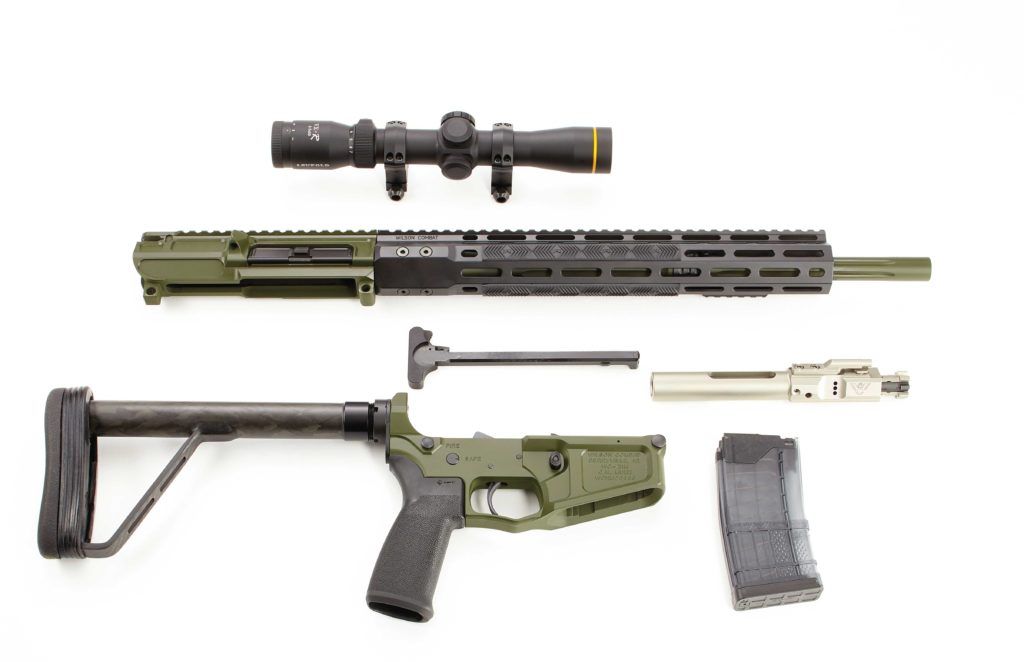
If you’ve been shopping for a new scope, you’ve likely been bombarded with terms and features that you never knew existed — or at the very least, you’re not sure which options are right for you. Don’t fret: While gun-mounted optics have gotten very good the past few years to keep pace with the precision rifle trend, the terminology has certainly gotten a bit out of hand.
One of the more common options available that causes some confusion for shooters is determining which focal plane scope you should get — either first focal plane (FFP) or second focal plane (SFP).
What Is The Focal Plane?
If the scope you’re looking at has an adjustable magnification, then the scope’s reticle appears either in the first or second focal plane. This will make a difference in how the reticle appears with different image sizes as the magnification changes. It’ll also affect the overall construction and cost of the rifle scope.
Second Focal Plane
Let’s start with the second focal plane classification first — after all, it’s the most common option, and it has been around the longest. Yes, second was first.
A second focal plane scope’s magnification adjustment changes only the size of the target’s image inside your scope. Put another way, the reticle stays the same size throughout the magnification range.
If the scope’s features don’t list which type of scope you’re looking at, then it’s very likely a second focal plane scope, as these are the most common. This is how most scopes adjust — especially consumer-grade hunting scopes.
This is a very popular option these days for two main reasons:
First, the scope is easier, and therefore cheaper, to make. With the reticle’s image staying the same size, there are fewer moving pieces inside of the scope. This not only makes it easier because there are fewer parts to worry about, it’s also easier to make the riflescope more consistent and robust.
Second, the reticle can be finer/thinner at high magnification. A finer/thinner reticle is preferred (as long as it’s thick enough to be seen, obviously) because it doesn’t obscure the target and it can allow for a more precise aiming point.
A fine/thin reticle at a high magnification setting might be too small to see if it also adjusted smaller with the target’s image. This kind of scope's reticles are simple: What you see is what you get — regardless of the magnification setting — because it stays the same size/thickness throughout the magnification range.
All that said, this feature is also a drawback with certain reticle designs.
If you’re using a simple crosshair or duplex-style reticle, a second focal plane riflescope is preferred. However, if you have a reticle with markings that correspond to certain measurements or adjustments at certain distances (holdover or windage hashes), you might want the reticle to adjust in size along with the target so that the markings are accurate at any magnification setting you use.
You can still use this type of scope with a reticle with markings; however, you must be very careful to ensure that you are only using the markings on the “correct” magnification setting to maintain their calibration.
On most second focal plane scopes with graduated reticles, the markings only equate to certain measurements at the scope’s highest power. After all, that’s the power setting that you’ll likely be using when trying to measure a target or when using “holds” for a long shot.
However, you must read your scope’s manual. Some second focal plane scope’s markings are set to a specific power that isn’t the highest available and is instead marked with a dot (or other marking) on the scope’s adjustment ring.
Also, some manufacturers do the math for you and will let you know what the markings on the reticle equate to at lower settings. Here’s a hint: The smaller the image is in relation to the static reticle, the larger amount each marking will cover.
First Focal Plane
First focal plane scopes are becoming more popular all the time, especially with advanced reticles that have multiple markings for measurement and adjustment.
A first focal plane scope adjusts both the reticle and the target image together with changes in magnification.
It’s a safe bet to assume that this style of scope will be more expensive than its second focal plane counterpart. This is because greater tolerances and care are needed to make the first focal plane riflescope function properly.
There is simply no need to have this kind of scope unless your reticle has markings that should correspond to a certain size at a certain distance. And, even if you do have a marked reticle, a first focal plane scope isn’t necessary, although it sure can be handy.
Regardless of the magnification setting, a 1-mil mark (for example) will always be 1 mil on the target. This is a nice feature because I’m a fan of shooting at lower magnification (try it sometime and watch your groups get better). Lower magnification can not only help with better shooting, it can also allow you to see more of what’s going on downrange and make shots at moving targets easier. I’ve also seen shooters forget what magnification setting they’re on and miss an otherwise easy shot because they held too far for elevation or windage.
In addition to cost, another potential issue with first focal plane scopes is the thickness of the reticle lines. If they are thin enough to not obscure the target at high magnification, then they can be too thin to clearly see at low magnification. Typically, first focal plane scopes have reticles that are slightly thicker than most shooters would prefer at high power, and conversely, the reticle can be nearly impossible to see at lower power.
Which Is Right For You?
If you’re looking to save money and/or don’t want a reticle with measurement/reference marks (e.g. mil-dot reticles), then you should go with the more common second focal plane riflescope.
However, if you’d like to use marks on a reticle to measure the size of a target when estimating distance or “holding” for elevation and windage, then you might want to consider a first focal plane scope.
If budget is an issue, please consider getting the highest-quality second focal plane scope you can afford, and spend your time mastering shooting your rifle. You’ll be better off doing that than getting a “lesser” scope just to get a first focal plane and skipping spending money on training and practice ammunition.
This is not to say that a first focal plane scope is necessary with reticles with measurement marks. Even if you have a mil-dot reticle, for example, a second focal plane scope might still be right for many people.
If you adjust the magnification down on a second focal plane scope, you simply must remember that the marks will no longer equal the predetermined measurements and instead will be much larger relative to the target.
Editor's Note: This article originally appeared in the January 2018 issue of Gun Digest the Magazine.
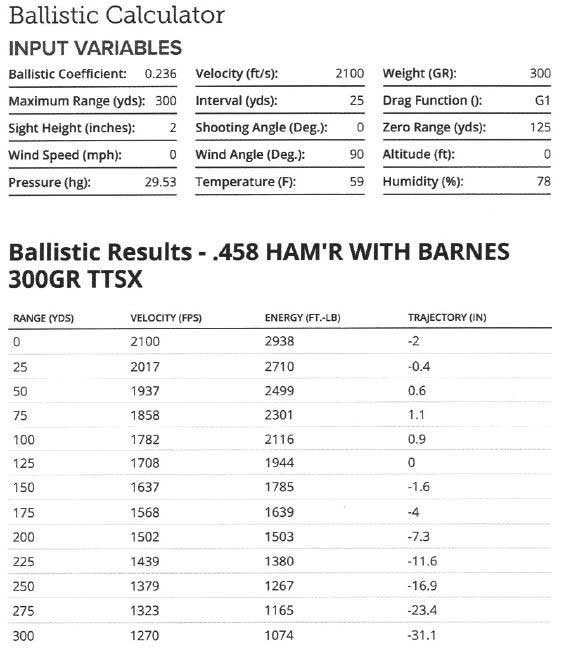
KRISS USA has launched a new division — Edelweiss Arms — focused on importing and selling C&R and antique firearms from Switzerland.
What to know about Edelweiss Arms:
Launched by KRISS USA on March 1
Specializes in the import and sale of Swiss C&R and antique firearms
Offers a host of Swiss surplus military rifles (K11, K31 and Schmidt-Rubin)
Has a number of Swiss pistols and revolvers (Sig P210, P49 military pistols and Lugers)
Sources only high grade and historically significant collector firearms
Photo: Edelweiss Arms
Fans of classic military firearms are always on the hunt for new sources of collectible rifles, handguns and shotguns. The amount of “new” old guns coming into the U.S. isn't what it once was, and the prices for some firearms on the surplus market sometimes reflect this. Luckily, these classic firearms fans will now have a new source for curio and relic (C&R) and antique firearms: Edelweiss Arms.
On March 1, KRISS USA, which manufactures the innovative KRISS Vector family of firearms, launched Edelweiss Arms, a new division focusing on the import and sale of C&R and antique firearms — with a special emphasis on Swiss firearms — to collectors in the U.S. According to a release, the direct-to-consumer e-commerce company has a number of strategic partnerships in Switzerland, and throughout Europe, that allows it to source only the highest grade and most historically significant firearms to collectors.
Photo: Edelweiss Arms
“This is an exciting new venture for our business, and we’re looking forward to providing some value to the collector’s market in the United States,” said KRISS USA Marketing Manager Tim Seargeant. “Edelweiss Arms is positioned to provide the discerning collector in the United States unprecedented access to some of the most pristine condition antique and C&R firearms from Europe. Additionally, our Edelweiss Arms website is designed to streamline the decision making and ordering process to reduce the guess work that is traditionally associated with shopping for collector’s pieces.”
Photo: Edelweiss Arms
The new Edelweiss Arms website currently lists a host of collectible Swiss firearms. There are a wide variety of K11, K31 and Schmidt-Rubin rifles, as well as collectible Swiss pistols (Luger models, Sig P210s and others). A few revolver models are also listed, as is an impressive Vetterli 1878 .41mm carbine.
For more information, and prices on some of these firearms, check out the Edelweiss Arms website.
Daniel Defense goes small in a big way with the release of the extensive DDM4V7 P AR-15 pistol line.
What's the big deal with these new little DDM4V7 P AR pistols?
The DDM4V7 P measures 28 inches in length.
It is outfitted with SB Tactical’s SOB Pistol Brace.
The pistol has a 10-inch chrome-moly-vanadium barrel.
The DDM4V7 P is available in 300 BLK and 5.56 NATO.
The Law Tactical models have folding stocks.
The carbine is short, shout and able to dish out hurt even in quarters close enough to give a straightjacket the willies. But is it as good as it gets when it comes to maneuverable rifle-caliber guns, simple as pocket change to tote along?
For the longest time, yes, it was.
Outside of the odd custom job, if a shooter wanted rifle power in a portable package, the carbine was the way to go. But old Mother Necessity found a way to cater to the select groups who demanded greater compactness than the age-old configuration offered. All the while, skirting those nasty NFA regulations.
It comes as little surprise the answer lay in the gun of a thousand faces — the AR-15. Tinkers and smithies banged together pistol varieties of the platform until the market could no longer ignore the mighty mites of the black-rifle world. Now, it seems, there isn’t a maker worth his salt who doesn’t have at least one pistol model or, at the bare minimum, has flirted with the idea.
Daniel Defense has had dalliances with the design and is again going small in 2018 with the introduction of the DDM4V7 P. Based on the DDM4V7 rifle (the first gun from the company to utilize M-Lok technology), the pistol variation has all the makings of a top-notch truck, backpack or supremely agile home defense option.
Daniel Defense is offering seven variations of the DDM4V7 P, in both 5.56 NATO and 300 Blackout. And while there are some superficial differences between most of the models, at heart they are configured the same, including their defining feature — the pistol brace.
In this case, the company has turned to aftermarket specialist SB Tactical for the anchor point. And true to the pistol line’s ethos, Daniel Defense opted for one of the most unobtrusive options — the SOB Brace. This particular model is found on a number of other commercial builds, earning favor with its lightweight and slight width.
The DDM4V7 P itself has the identical 7075-T6 aluminum upper and lower receivers, M4 feed ramp, ambidextrous safety selector and flared magazine well as the rifle series. Additionally, and as expected, the pistols also boast M-Lok handguards — Daniel Defense’s CNC-machined MFR 9.0. The accessory attachment system offers mount points over its entire length of the handguard and at all but the 12 o’clock position. That’s where the full-length rail takes over, ready for the shooter’s choice of optics.
The DDM4V7 P’s barrel is where it parts paths with its rifle brethren, sporting a compact 10-inch cold hammer-forged tube. The chrome-moly-vanadium steel barrel has a S2W profile, is chrome lined and has an 1:7 twist for 5.56 models and 1:8 for 300 BLK. The whole affair is topped off with Daniel Defense’s flash suppressor.
While many of the DDM4V7 P variations are twins separated only by finish, there is a notable exception. The Law Tactical models have the added benefit of a folding stock courtesy of, you guessed it, a Law Tactical Folding Stock Adaptor. The system retains the buffer assembly and allows it to swing to the left, downsizing the pistol substantially while retaining access to the trigger.
While the overall AR market (for the moment anyway) has moderated, Daniel Defense still resides at the upper end of the price range. Depending on the variation, the DDM4V7 P models run from $1,679 to $2,110.
At the outset, gear appears fairly straightforward when going armed. Gun, holster, belt — ready to roll. Right? Not always.
Everything from the right gun to proficient ammo to comfortable clothing bedevils armed citizens. These choices are persistent. It’s not uncommon for a seasoned carry veteran to begin tinkering with their everyday rig and end up starting over from scratch.
Of the whole carry rigmarole, holsters are generally the toughest nuts to crack. Even when light-years away from the flimsy nylon gun-show specials, they still might end up in a pile of also-rans if they don’t conceal or aren’t comfortable. It’s a sad truth; no one holster can be all things to all armed citizens.
Luckily, the world does not want in holster options, and thanks to Safariland grew a bit larger recently.
Model 17 and 17T
Safariland Model 17T Holster
Ultra-thin and flexible, the Model 17 and 17T offer lightweight and comfortable inside-the-waistband carry. Made of Safariland’s thermo-formed plastic (SafariLaminate), the holsters retain their shape even after the gun is drawn, facilitating safe and quick draw and re-holstering.
The models are identical save one feature, how they attach to a belt. The Model 17 secures via a spring steel clip, while the Model 17T utilizes a cant-adjustable J-Hook. This attachment makes the 17T tuckable, giving shooters another level concealment, especially in lighter clothing. The holsters are also designed to provide excellent retention through a deep contour in the trigger guard.
The Model 17 and 17T have black STX finishes and have fits for Colt, Glock, Ruger, SIG Sauer, Smith & Wesson and Springfield pistols. The holsters are extremely well priced with MSRPs of $38.50.
Model 557 Open-Top
Safariland Model 557 Holster
Generally, if a gun is outfitted with a light, it needs a holster tailored to this extra gear. Remove it, then a whole new rig is required.
Safariland appears to solve much of this problem with the 557 Open-Top Belt Slide Holster. Constructed from Safariland’s thermo-molded plastic (SafariLaminate), the holster safe keeps a gun with or without its light, without rattling around.
Its low profile makes the outside-the-waistband holster a viable concealed-carry option. And its winged design molds comfortably to the body while providing excellent weight distribution. The holster also features an ejection-port detent that keeps the gun in place when not in use.
The Model 557 works with gun belts 1.5 to 1.75 inches in width and is compatible with a number of popular makes and models of defensive handguns and lights, including: Glock 17/22, 19/23, 34/35, Heckler & Koch P30, Sig Sauer P320, Smith & Wesson M&P 9/40 and Walther P99Q handguns with TLR-1, TLR-1HL, Surefire X200, X300, X300U lights and red dot equipped handguns. The holster is moderately priced with an MSRP of $50.
To the delight of Walther fans, the manufacturer has brought out a subcompact version of its classic pistol for 2018 — the PPQ SC.
The big story on the subcompact PPQ SC:
The PPQ SC is a scaled-down version of Walther’s popular full-sized PPQ.
It has a 3.5-inch 1:10 twist barrel; it's a full 3 ounces lighter than the PPQ at 21 ounces.
It’s overall length is 6.6 inches, height 4.4 inches and width 1.3 inches.
It is outfitted with Walther’s exceptional Quick Defense Trigger.
The PPQ SC’s MSRP is $649.
Concealed carry has been, and remains, an incredibly hot topic and a very popular segment of the larger overall firearms market. The number of those who carry concealed has continued to grow in recent years, and with the passing of a national concealed carry reciprocity measure in the U.S. House of Representatives in December of last year, the country has perhaps never been closer to seeing such legislation become law.
This year’s new gun introductions from manufacturers strongly reflect this continued emphasis on the concealed carry market. And Walther Arms is no exception.
At the 2018 SHOT Show, the largest annual trade show for the firearm industry, Walther debuted its brand new PPQ SC (Sub-Compact). As the name suggests, this is a subcompact variant of the manufacturer’s popular striker-fired PPQ pistol. A subcompact PPQ is something fans of the Walther brand and fans of the PPQ have been excitedly anticipating for some time, and it’s sure to carve out a space within an already crowded concealed carry handgun market.
Although its official launch was ahead of the SHOT Show, Walther also held a private media event in Utah back in October of 2017, during which it introduced the PPQ SC to a small group of industry writers and editors. I was fortunate enough to be among those invited to get a firsthand look at the new gun and to participate in a training course put on by Deliberate Dynamics, a veteran-owned tactical gear and equipment company based out of South Salt Lake, Utah, that also offers a host of training programs ranging from basic pistol courses to extreme long-range shooting.
Over the course of 2 days in an old abandoned mining town, which Deliberate Dynamics has repurposed into a full-fledged training ground suitable for a number of disciplines, trainers had us doing everything from basic shooting drills on a static range to live-fire CQB house clearing drills and shooting around cars. But more on that later. For now, a closer look at Walther’s new PPQ SC.
Trimming The Fat
Of course, the major observable change with this pistol — and the one that will be most obvious to shooters — is that it takes the full-size PPQ down to a subcompact level. This is to the benefit of those who carry or those simply looking for a more compact PPQ.
Walther’s new PPQ has the dimensions and the performance capabilities to make it an excellent carry piece. Shown here with Inceptor Ammunition ARX ammo and a Clinger Holsters concealment holster.
The new PPQ SC has a 3.5-inch barrel with a 1:10 twist rate. It has an overall length of 6.6 inches, a height of 4.4 inches and a width of 1.3 inches.
This shaves off roughly a half-inch in length and about an inch in height from the 9mm PPQ M2 with a 4-inch barrel. The width remains the same across both models. That might not sound like a lot of difference, but any little bit helps when it comes to concealed carry, and the reduction in height is perhaps the most important to prevent printing and keep the gun’s appearance concealed. Obviously, if you compare these figures to the longer 5-inch PPQ M2, they look even more impressive.
In terms of weight, the SC is also cut down here as well. The PPQ SC offers a weight reduction of a little more than 3 ounces, taking the 4-inch PPQ M2 from 24.5 ounces down to 21.2 ounces. Again, it’s not a huge margin, but any weight taken off is good for those carrying a gun all day, every day.
For the sake of comparison, let’s briefly look at some other common subcompacts. The Glock 26 Gen4 is 6.41 inches in overall length, 4.17 inches in height, 1.18 inches in width and weighs 21.71 ounces. The Springfield XD Mod.2 3-inch subcompact is 6.25 inches in length, 4.75 inches in height, 1.19 inches in width and weighs 26 ounces. The Sig P320 subcompact is 6.7 inches long, 4.7 inches in height, 1.3 inches in width and weighs 24.9 ounces.
The PPQ SC falls right in with these figures. It’s the lightest among those listed, and it’s shortest in height with the exception of the G26. The SC is longer than two of those examples, but then again length isn’t always a bad thing, as it also corresponds to a longer sight radius. The PPQ SC’s is 5.6 inches, which is pretty good for a gun designed for carry. I appreciated this during the training event in Utah and in my own independent testing, and I firmly believe it helped me shoot the gun more accurately than I have some other carry guns.
The PPQ SC features Walther’s signature non-slip cross-directional surface texturing on the grip.
Width is also at the higher end of these example guns. Again, this isn’t inherently a bad thing. Guns that are too thin or too small can have a tendency to wiggle about a bit for me. I don’t have ridiculously large hands, but I’ve generally found that I tend to shoot better with guns that more fully fill out the palm of my hand. And I found this to be true with the PPQ SC.
In terms of capacity, Walther’s PPQ SC is also competitive with other double-stack subcompacts. It offers a standard 10-round capacity with a flush-fitting magazine. Walther also provides a 15-round magazine with an extension sleeve. Of course, with that option, you do sacrifice some of the gun’s concealability.
A Strong Family Resemblance
The dimensional changes listed above are great, but it’s also important that they don’t come at the cost of quality or features. From what I can tell having put many hundreds of rounds through the PPQ SC, they have not.
A lot of the things that shooters have come to love about the PPQ are also present in the SC. Probably at the top of most people’s list is the trigger.
Walther’s classic PPQ is renowned for its exceptional trigger in a striker-fired pistol. That same great Quick Defense Trigger is on full display in this new subcompact version.
Like the original PPQ, the Quick Defense Trigger on the new PPQ SC is fantastic.
The PPQ SC’s trigger pull is listed at 5.6 pounds, and the trigger’s travel and reset are stated as 0.4 inch and 0.1 inch, respectively. During testing, this seemed to be more or less confirmed. The trigger pull was smooth, with predictably little travel, and the reset was quick and audible following a shot. As performance figures illustrate, the trigger certainly didn’t seem to hurt my accuracy, and it felt very similar, if not identical, to my experiences shooting a full-size PPQ.
Another one of my favorite things about the PPQ — and something other Walther fans appreciate — is the signature Walther grip ergonomics. This, too, is foremost with the new SC version.
As with the standard PPQ, the subcompact’s grip features a comfortable shape and the signature non-slip cross-directional surface texturing. The texturing makes the gun easy to hold securely, and it avoids moving from “grippy” territory into “abrasive” during those long days at the range. This might just be me, but the PPQ — and the new PPQ SC — also seems to fill my hand perfectly. The finger grooves line up in just the right spot and the texturing feels heavy where it’s needed.
I recognize this may not be the case for everyone, but it’s still something that should be felt for one’s self. And, it’s worth noting that, like the PPQ, the SC’s backstrap is also interchangeable should you find the one from the factory doesn’t fit right.
Other shared features found on the PPQ SC include a reversible, ambidextrous, thumb-activated magazine release button; an ambidextrous slide stop; front and rear cocking serrations on the slide, a Tenifer coated slide, barrel and internal action parts; and a forward accessory rail for mounting attachments. Like the standard PPQ, this new gun too wears a matte black finish. And sights are low-profile three-dot polymer combat sights, which are plenty effective for carry and less apt to snag on the draw.
The PPQ SC utilizes low-profile three-dot polymer combat sights. These are somewhat minimalist but plenty effective.
The basic disassembly process is also virtually identical, and just as quick. As with a lot of striker-fired designs, this pistol requires the user to pull the trigger during takedown.
After ensuring the gun is unloaded — both visually and physically — pull back the slide. Then, pointing the muzzle in a safe direction (the gun is still unloaded), depress the trigger. While keeping the trigger depressed, pull down on both the takedown levers on each side of the frame, releasing the trigger after they are pulled down. The slide should then slide freely off the frame, and then the recoil spring and then the barrel can be removed for cleaning. Assembly is simply the reverse. Both processes take mere seconds.
There are some differences between the internals of the standard PPQ and the PPQ SC, but these don’t seem to affect reliability or performance in any way. The PPQ SC uses an internal extractor instead of the PPQ’s external extractor, and there are a couple changes in the trigger bar and the slide’s internals. But over the course of testing, I came across no functional issues.
Range Time
Although I got plenty of range time with the new PPQ SC at the training event in Utah running through drills and casually shooting at steel using Inceptor Ammunition ARX and RNP loads, I also wanted to conduct some accuracy testing in my independent review. I set up with four different loads to use in testing: the Inceptor Ammunition 65-grain ARX 9mm Luger +P, Federal Premium 124-grain Hydra-Shok JHP 9mm Luger, Blazer Brass 124-grain FMJ 9mm Luger and Winchester 115-grain FMJ 9mm Luger.
I measured muzzle velocities with a ProChrono Chronograph from Brownells placed roughly 5 feet from the muzzle. Accuracy data for each load was the result of three, five-shot groups fired at a distance of 15 yards from a Caldwell Matrix rest, also from Brownells. The Matrix rest is nice in that, in addition to being a rifle rest, it’s also configurable for use as a pistol rest as well.
Some might state that pistols are supposed to be tested at 25 yards, but I know of many who test concealed carry handguns at 15, or even 7 yards, as those are more in line with the distances at which they’ll be employed. In fact, in his book, Straight Talk on Armed Defense, concealed carry expert Massad Ayoob provides statistics that suggest the vast majority of shootings — for both law enforcement officers and responsible armed citizens — occur within 21 feet.
In any case, I was able to achieve decent enough groups with the PPQ SC, and I don’t confess to being any sort of great marksman. My best five-shot grouping came with Federal’s 124-grain Hydra-Shok JHP and measured 1.65 inches. And it accounted for the best average group at 2.14 inches. Incidentally, and perhaps not coincidentally, it also had the lowest standard deviation in terms of velocity among all loads tested.
I also had a few four-shot groups that — minus a single flier — would’ve been quite good. A four-shot group with Winchester’s white box FMJ load measured right around a half inch, while two of the four-shot Blazer Brass groups measured 0.77 inch and 1.17 inch, respectively, without the fliers. So, the gun is certainly capable of excellent accuracy if the shooter does his or her part.
In terms of reliability, I had virtually no issues with the PPQ SC, both in training in Utah and in my own testing. There was a tendency for the slide to not lock back on empty sometimes, but I quickly discovered this was due to my thumb placement interfering with the slide stop. There were no failures to feed, extract or eject.
Parting Shots
In a market that’s hot and trending hotter all the time, I think Walther’s new PPQ SC certainly has a place. It has the dimensions to be a great — and comfortable — carry gun. And it’s got all the great features from Walther’s full-size PPQ that shooters have come to expect.
It has been made quite concealable without becoming difficult to shoot in the process. The gun’s length keeps it shootable with a relatively long sight radius for a carry gun, and the low-profile three-dot sights are unobtrusive yet perfectly functional. Add to that the excellent ergonomics that Walther is known for, and the German manufacturer might have a true winner on its hands in the concealed carry market.
Editor's Note: This article originally appeared in the March 2018 issue of Gun Digest the Magazine.
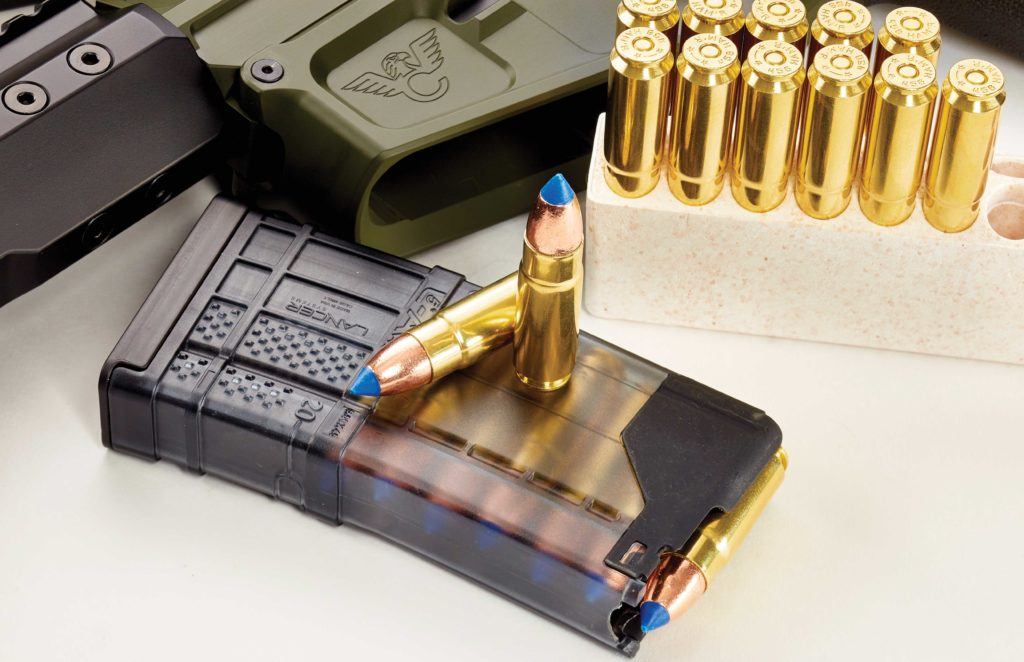
With four lighting and aiming functions, the Rail Master Pro CMR-300 gives long guns a tactical advantage.
What the Rail Master Pro CMR-300 brings to the table:
The Rail Master Pro CMR-300 attaches to any Picatinny rail or similar system.
The flashlight provides 300 lumens of illumination.
It projects a .5-inch green laser dot at 50 feet.
The functions can work in unison, independently and as strobes.
Tactical experts and self-defense trainers typically preach simplicity when it comes to self-defense guns. It’s solid advice, given the fewer accessories you have to rely on, the fewer weak links you have in your chain.
Where they typically veer from this mantra is low-light situations. Generally speaking, something that gets you on target when the sun is down and shadows are long is a must. And when it comes to long guns, tritium sights just aren’t the answer. Even if a shooter has a natural aversion to lights and laser sights, they are advisable to ensure efficient and safe self-defense with a carbine or shotgun.
Crimson Trace has taken this situation to heart and has cooked up an elegant and unobtrusive solution for just such scenarios. The Rail Master Pro CMR-300 provides superior lighting and aiming with a long gun while remaining nearly a second thought the rest of the time.
Compared to other laser sight-flashlight systems, the Rail Master Pro CMR-300 goes above and beyond aiming and providing vital light. In all, it offers four functions: laser + light, laser only, light only and laser + light strobe. The last setting is an intriguing one, giving the ability not only to identify potential assailants, but discombobulate them as well.
And it should do a heck of a job doing so. With 300 lumens, the flashlight alone is enough to set a person on their heels if switched on in the pitch black.
The laser sight is optimized for low-light operation, given it is green — which is easier to acquire when light is scarce. It projects a .5-inch dot at 50 feet, arming the user with the ability to make precise shots. And it has plenty of juice, with the unit operating for two continuous hours on one CR123 lithium battery. Additionally, the laser is fully adjustable for windage and elevation.
Built with a water-resistant aluminum and polymer chassis, Crimson Trace designed the Rail Master Pro CMR-300 for the toughest duty. And it made it as intuitive as a trigger squeeze to operate, with a rear Instant Activation toggle pad.
The Rail Master Pro CMR-300 is easily mountable at home; all that is required is a Picatinny rail or similar system 2 ¾ inches in length. In turn, almost every popular defensive long gun — AR, AK, shotgun — is a candidate to host the device.
Crimson Trace did not release an MSRP or date it would hit the stores.
There’s more to shotguns than pump actions and tube magazines. Check out these two unconventional shotguns perfect for defense, or fun at the range.
Different takes on the shotgun:
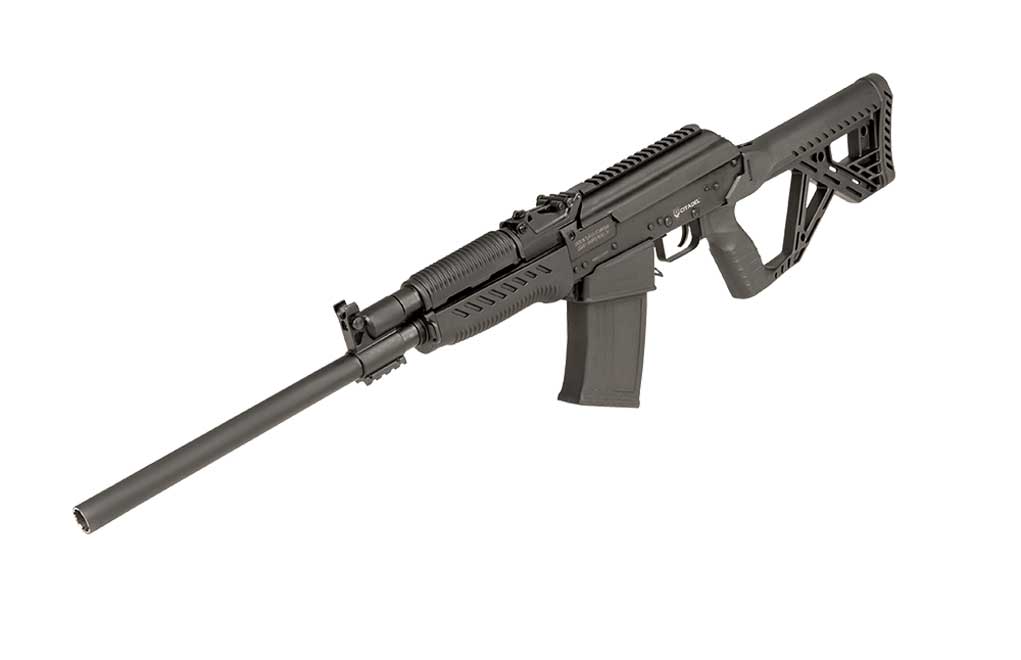
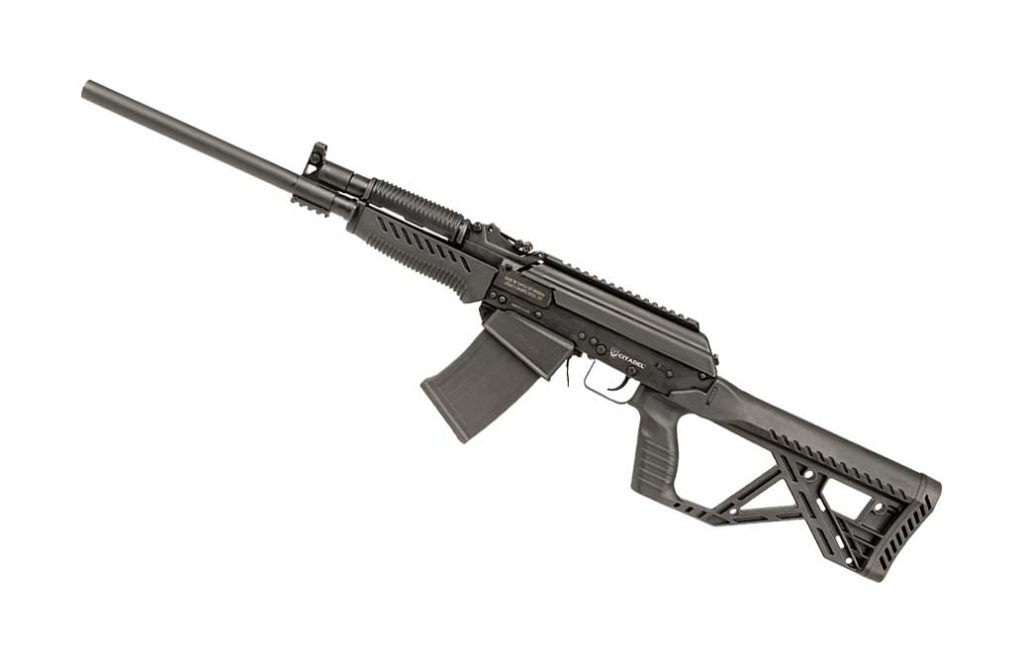
The Kalashnikov variant Saiga is a popular semi-auto, box magazine shotgun option.
The TriStar KRX is based off the AR and is as familiar as the beloved rifle.
While both are solid options, a good ol’ pump will still do the job with the right training.
While Remington and Mossberg have recently come out with detachable magazine versions of their revered 870 and 590 shotguns, there are plenty of other unconventional shotguns on the market that are magazine fed. Some have been available for a while, whereas others are more recent developments. Here, I'll highlight two specific shotguns: the Saiga 12 and the TriStar KRX.
The Russian-made Saiga 12 is one of the most popular box magazine semi-auto shotguns currently on the market. Named for the Saiga antelope of the Russian Steppes, it’s a variant of the Kalashnikov rifle series, maybe one reason for its popularity. The Saiga is known for eating ammo whether the gun is clean or dirty (like the AK-47 rifle) and has a following in the 3-Gun world. My own two cents on the Saiga is that it’s ugly as hell but goes bang when you need it to. A buddy of mine who works with Alaska DNR carries a Saiga 12 for bear defense. He’s a Marine (there are no former Marines) and knows his firearms, so he must have confidence in this shotgun.
TriStar KRX
The TriStar KRX Tactical Shotgun is a semi-auto shotgun with a detachable magazine in an AR platform. The TriStar people knew what they were doing; those familiar with the AR rifle will automatically know where the safety selector and magazine release are, and it will “feel” like your AR rifle when you pick it up. For a defensive shotgun, this might be the pick for those who want to stay with the AR configuration.
In the end, the choice between a conventional tube-fed shotgun and a detachable-magazine variant lands on the individual shooter. Back in the day, motor heads loved to argue the Ford versus Chevy debate, and box magazines opposed to tubes is much the same. What’s important is finding the shotgun that fits you and that you shoot best. After that, you spend your hard-earned money on the best training you can find and then shoot as much as possible. Now you have done all you can to be prepared when the feces hits the fan. You might not believe in the Easter Bunny, but you have to believe in your shotgun.
Editor's Note: This article originally appeared in the February 2018 issue of Gun Digest the Magazine.
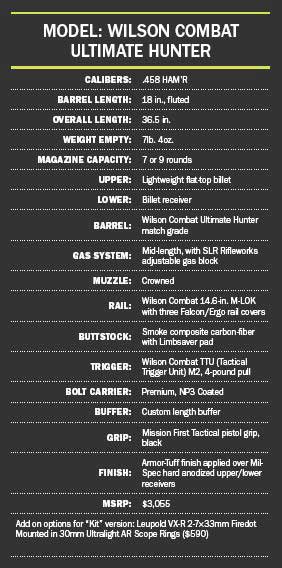
Like a structurally sound foundation fortifies a house, a solid grip underpins pistol marksmanship. Without it the front sight breaks into a dance, recoil becomes a fistfight, and target transition devolves to Federal Government-level efficacy.
Steeping yourself in the basics of building a solid grip, learning the push and pull of dominant and off hand and where exactly to place all those digits is the key that unlocks much of this cornerstone skill. But lost in the minutia of body mechanics is an aspect as easy to overlook as the pavement under your feet — pistol fit.
As Luke Hartle deftly observes in in the above video, rare is the gun that fits large hands and small. But Springfield Armory might have hit the sweet spot for a great swath of the shooting public with the 911. The new 1911-style .380 ACP pistol is Momma Beared to provide superior handling, no matter if a burly man or a petite woman is behind the trigger.
The Gun Digest Editor-in-Chief gets a rundown of this purpose-built concealed carry gun from Springfield’s Stefany Reese. And in the process, he learns that, above and beyond superior handling capabilities, the Springfield 911 has a deck worth of aces up its sleeve. Muzzle to beavertail, not only is the pistol designed to shoot like a star, but operate like one as well.
A great deal of this is due to the manufacturer needling in on the fine points that make the Springfield 911 second nature to get into the fight. Where the company really puts its thinking cap on is the safety and keeping it large and easy to find, not always the case with diminutive pistols. And in a critical scenario, when fine motor-skills melt under the heat of adrenaline, shooters will be glad there’s ample safety for the thumb to catch.
The other aspect, difficult to perceive on a glimpse, is the pistol’s frame-to-slide-to-trigger guard relationship. Tinkered to an optimal layout, the pistol handles like a larger 1911, rather than the near mouse gun it is. This is always a welcome attribute in this generally snappy class of handguns.
With an MSRP of $600, it’s at the affordable end of the metal-framed pistol market. Which might give shooters plenty of reason to look to the new Springfield 911 to help handle emergencies.
Pulling the trigger, yeah, it’s part of the game. But if you’re gunning for the pinnacle of shooting, there’s a lot more blood, sweat and tears involved. Whether running and gunning in a practical pistol competition or executing tactical movements in a training class, mastering a firearm requires mental and physical preparedness.
The Modern Shooter team travels to MAST Solutions in Houston, Texas this week to get a firsthand look at exactly the kind of training required to become a tactical athlete. And we get a take on the process from a man who should know — Jason Castro. The Minnesota Twins catcher trades his mask and glove for an AR-15 and loads of ammo in the off-season, sharpening his skills behind the trigger.
While the equipment changes for Castro, the mindset he takes to the diamond remains. For the professional athlete, it’s dedication to the craft and willingness to put in the work that moves a shooter to exceptional. And he and the rest of the MAST students take dust in the face, race for cover and keep eyes peeled through it all to prove their commitment to raising their shooting game.
Find out what else it takes to become a tactical athlete in this episode of Modern Shooter 10:00 p.m. EST Friday on the Pursuit Channel. The episode rebroadcasts Monday at 12 p.m. EST and Tuesday at 11:30 a.m. EST.
The gun industry is guilty of peddling its share of snake oil. Clunky reticles that promise to get you on target from the next county over. New gun finishes constituting new gun models. And rail accessories that would have been better left in the imagination of a 12-year-old.
Thankfully, it’s not all tire deflator attachments and magazine butt plate knives. Every year there are products that cut through the white noise of the silly and useless and truly appear like they’ve got the chops to take the ball and run. Federal Premium’s newest cartridge — the .224 Valkyrie — most certainly looks to fall in this category.
The purpose-built long-range cartridge was dreamed up as a small-bore answer to the 6.5 Creedmoor, promising less recoil and a better fit in the AR platform. And from Phil Massaro’s first experience with the shortened and necked down .30 Rem/6.8 SPC cartridge, the hubbub about the .224 Valkyrie proved more than just carnival barking. After pitching a bit of copper-jacketed lead down range, the Gun Digest author and custom ammunition manufacturer walked away with eyebrows raised over the cartridge’s performance.
Obviously, as a fella who spends the better part of his day crushing handmade rounds at his press, the .224 Valkyrie’s ballistic minutia captivated Massaro — high BC bullets, exceptional velocity potentials, flat trajectory. But, as the above video shows, it’s after firing pin meets primer that he really learns what a sweet tune the Valkyrie sings. As he points out, the recoil is so mild you can track the bullet’s vapor trail as it races 1,000 yards and beyond. Slick.
The .224 Valkyrie certainly performs like it has staying power. Now it’s just up to the greater shooting public to prove whether or not Federal actually has a winner.
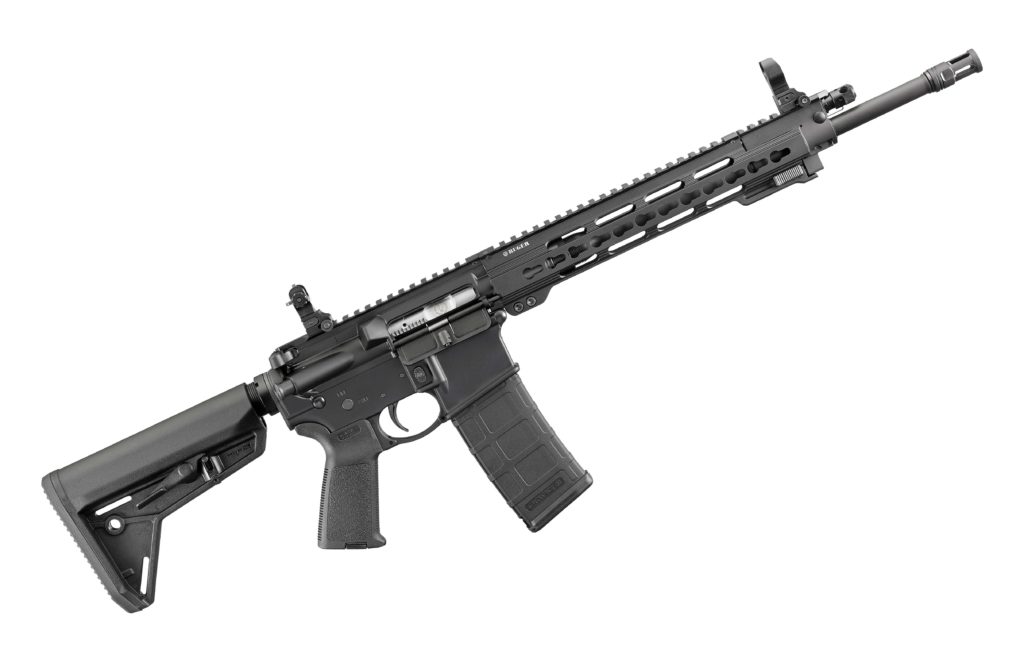
When choosing a firearm for home defense, there are a lot of different areas to consider. Stopping power is a primary concern, but you also have to be concerned about over penetration. And you need a weapon that’s easy to use for all members of the family. Most people immediately think about pistols and shotguns; however, the AR platform has a lot of advantages over both of these and might be your best choice for home defense.
The Power To Stop
The first category to examine is stopping power. If forced to shoot, you need to stop the attacker as efficiently as possible … and handguns come up short in this category. Handgun rounds almost always require multiple hits — in the right locations — to stop an attacker. The numbers and stats you see most often in defensive pistol shootings are three and four shots fired. The only advantage of pistols is that they’re small, easy to conceal and light to carry. Inside your home, concealment is not an issue.
On the other hand, shotguns have excellent stopping power. But, even with typical defensive loads — buckshot, slugs or even birdshot — over-penetration is a major concern. Plus, no matter how good you are, surgical shots with a shotgun — for example, dealing with a hostage situation — are extremely difficult.
Rifle cartridges also have excellent stopping power, but the problem with most rifle rounds is over-penetration — except for the .223 Rem./5.56 NATO, a lightweight bullet moving at high velocity. Once that round hits anything denser than air, it begins to tumble, fragment or expand, dissipating and dumping its energy quickly.
The .223 Rem./5.56 NATO — as long as you’re not using one of the penetrator rounds designed to punch through material — will penetrate less material than most handgun, rifle or shotgun rounds. There is plenty of research on this to study, but just keep in mind there are always exceptions.
You’ll also want to avoid rounds designed for long-range shooting, which are heavier in order to maintain accuracy at extended distances. Your best bet is a round specifically designed for self-defense, which have excellent stopping power and have a very minimal chance of over penetrating. Another advantage of the .223 Rem./5.56 NATO is that it’s light in recoil, which means almost anyone in the family can handle it.
Integrated Intuition
In addition to light recoil, the AR is user-friendly. Stoner was a genius when it came to ergonomics, and all the controls for the AR are in just the right place. It’s one of the easiest weapons to operate, and the AR works well for both right- and left-hand shooters — as long as you have the right techniques.
My favorite ARs are lightweight, at about 6 pounds. This makes them easy to handle, especially indoors, and anyone with normal upper body strength can use it properly. Plus, you can set the AR up with adjustable stocks and other goodies, allowing you to “custom” fit it for whoever is using it. In short, the AR is one platform that will fit everyone.
Length Lamentations
One concern voiced by a lot of shooters contemplating the AR for home defense is the overall length. Try this: Have one person mount up an AR carbine with a 16-inch barrel, and have another person stand next to them holding a pistol extended out at arm’s reach. The location of the muzzles will be about the same. And if the carbine is a little bit longer, it’s more than worth it for the additional stopping power.
Still, if length is a worry, you have a couple of options. There are SBRs, or short-barrel rifles, readily available with a barrel less than 16 inches in length, but an SBR requires approval from the ATF and a fee for a tax stamp.
Today we have AR pistols. An AR pistol uses the same parts as the rifle or carbine and shoots the same rounds, but it has a short barrel — all without filing Federal paperwork, waiting on approval and paying the tax fee. Plus, with an AR pistol, you don’t have to get approval to travel out of state with it like you do an SBR. (Keep in mind that it’s your job to adhere to all local, state and federal laws when it comes to any firearm.)
Lighting Them Up
All firearms for home defense should have a light on them, and the AR is no exception. The light is needed to locate, identify and, if necessary, accurately engage the threat. With the AR, this is easy: Regardless of the type handguards your AR has, there’s a mount to attach a light to it … plus anything else you want.
I’m right handed, so I prefer the light in an 11 o’clock position and as far forward as possible. This positions the light in the right place for working right- and left-hand corners, or over the top of an object. (Left-handed shooters will want a 1 o’clock mount.) I use a push-button tail cap, with momentary and constant on, and I easily operate the light with the thumb of my support hand while the rifle is shouldered.
Add a red-dot sight — and maybe a laser — and you’ve got a lightweight, ergonomic home defense weapon. Yes, you’ll lose a little velocity due to the length of the barrel, but it’s still a lot better than any handgun round, and, again, with limited penetration concerns.
Psychological Advantage
The final category to think about is the psychological advantages of the AR for home defense. In the “me” category, the AR provides a warm, fuzzy feeling. I know it will stop the threat efficiently; that’s definitely a plus in the confidence department.
We also can’t discount the psychological effects on the threat. I’ve seen numerous people that had pistols pointing at them and weren’t too worried about getting shot. I’ve never seen someone facing a rifle that said, “Go ahead and shoot me.” I’m sure it’s happened; I’ve just never seen it.
Equipping yourself with a firearm for self-defense is all about finding the right weapon to fit your needs. Maybe the AR isn’t for you, but don’t dismiss it without giving it serious study and consideration. When faced with a violent attacker, your job is to stop the threat as efficiently as possible. This is especially true inside your home, where avoidance or escape might not be an option. With the proper training and practice, the AR platform in .223 Rem./5.56 NATO will serve you exceptionally well.
Editor's Note: This article originally appeared in the March 2018 issue of Gun Digest the Magazine.
The 828U is loaded with features that set it apart from all other double barrels.
What to know about the new Benelli 828U:
The new 828U is ultra-lightweight at just 6 1/2 pounds.
It utilizes Benelli's innovative Progressive Comfort Stock.
This system has a set of interlocking polymer leaf springs in the stock to reduce recoil.
Instead of a hinge-and-pin system, the 828U has a free-floating steel locking plate.
This offers added durability and eliminates the need for a steel receiver, which is heavy.
Since 1967, Benelli, the company that revolutionized autoloading shotgun design with its Inertia Driven system, has sold more than 4 million guns.
Benelli has never let up when it comes to introducing eye-popping, uniquely designed shotguns — the Ethos and Vinci to name a couple of the more recent innovations — but it was the Super Black Eagle that established Benelli as the leader in the waterfowling world. Its ability to reliably cycle 2 ¾-, 3- and 3 ½-inch shells with no adjustment was a game-changer. Today, the SBE is in its third iteration and is as popular as ever.
With this track record of autoloader success, it came as a huge surprise to most shooters when the company introduced its first over-and-under model in 2015. The Benelli 828U is a sleek 12-gauge double barrel that tips the scales at a wispy 6 ½ pounds. One might wonder why Benelli would bother bringing yet another o/u to the upland hunting market, a space that’s pretty crowded with excellent makes and models at all price points. The short answer: Because they could, and because they could do it differently.
The 828U was 5 years in development, according to George Thompson, Benelli’s Director of Product Management. Thompson shared some background about the gun while we hunted at Brett Waibel’s Bad River Bucks & Birds ranch this past October. The central South Dakota setting provided the perfect opportunity to burn several pocketfuls of shells on the prairie’s abundant pheasants, sharptails and prairie chickens.
I’d been wondering about the reason for such a radical departure from Benelli’s autoloader lineup, but as time went on I realized the 828U has more in common with the rest of the Benelli line than one would think.
Lightweight And Simple
To get to that skinny 6 ½-pound weight, the 828U features an aluminum receiver, open mid-rib and carbon-fiber rib. “We like lightweight, and we like simple,” Thompson said. “The inertia system in our other guns allows us to trim weight because there’s no need to accommodate a gas system. Well, in this over-and-under, we found ways to incorporate features that go with that lightweight and simple theme, while still maintaining our core value: reliability.”
The trade-off for an easy-carrying gun is obviously felt when you pull the trigger. We all know lighter guns kick harder, and Benelli has waged a war on recoil since the beginning. The company has offered various ComforTech stock designs over the years, the latest being the ComforTech 3 found in the Super Black Eagle 3. Benelli mitigates recoil in the 828U (and the Ethos) with a Progressive Comfort stock.
“There is no such thing as eliminating recoil, and we don’t claim it (the 828U) is the lightest-kicking gun,” Thompson said. “Our goal was to create a gun that weighs less and kicks the same or less as a heavier gun. We’ve been able to reduce felt recoil by approximately 30 percent with the Progressive Comfort stock.”
As you would expect, the 828U sports a nicely sculpted, cushiony recoil pad, but there’s more to the recoil-reduction strategy. Inside the stock is a removable set of interlocking polymer leaf springs, which compress to absorb recoil. The heavier the shotshell load, the more the springs come into play to take some of the rearward punch out of the shot. To address the fact that perceived recoil has as much to do with the shotgun jumping up into your cheek, the 828U’s stock also has a replaceable air foam pad insert to soak up some more of the kick.
Locked Up
The 828U’s receiver is built in opposition to the way other over-and-unders are designed. Rather than a hinge-and-pin system, which starts to wear from the very first time you open and close the action, the 828U uses a free-floating steel locking plate that seals up tight at four contact points behind the chambers. This eliminates the need for a steel receiver, and it also means that the lock-up will have the same strength and reliability after 10,000 shots as it did on day No. 1.
In The Field
My first introduction to the 828U was a fast one. We went right to the field with no practice shooting beforehand. I opted to use a 28-inch barrel model, the length I tend to prefer on all of my over-and-unders. While the gun is incredibly pleasant to carry, as advertised, and it helped me jump on birds quickly, it did take me a few rooster flushes to get the hang of swinging properly. I was just coming off of a week of grouse and woodcock hunting in Wisconsin where snap-shooting can sometimes be the difference between a hit or no shot at all. It didn’t take me too long to diagnose my misses, and things began shaping up rather quickly after that.
I typically shoot a variety of 1 ¼-ounce loads of No. 4s or 5s on pheasants. On this trip I was using Federal’s Hi-Bird 1 ¼-ounce loads of No. 6s, which have an advertised muzzle velocity of 1,275 feet per second. Although shooting in the field doesn’t typically allow for the same type of analysis you can afford yourself out on the clays range, recoil was mitigated to the point where I didn’t really think about it much, which is how it should be. Because I just had to try it, I spent one day hunting with a Hi-Bird in the first barrel and a 3-inch, 1 5⁄8-ounce Federal Prairie Storm No. 5 in the second. All of the 828U’s recoil-reducing features are irrelevant when it comes to taming the wallop that a Prairie Storm shell delivers. I think that would be the case in any fixed-breech gun, so I’m not inclined to mark down the new Benelli because of it. (Hey Federal, any chance you could offer Hi-Bird in No. 5? Please?)
Benelli’s 828U is more expensive than a lot of over-and-unders, but it’s also a whole lot more affordable than many of the highly decorated imports that are available. It’s offered with 26-, 28- and 30-inch barrels at a full retail price of $3,000 for the engraved nickel-plated receiver model and $2,500 for the black anodized receiver model.
This article is an excerpt from the January 2018 issue of Gun Digest the Magazine.
Looking to go armed, but are stuck in the weeds as to what to arm yourself with? Here are 20 excellent concealed carry gun options that will keep you on the defensive.