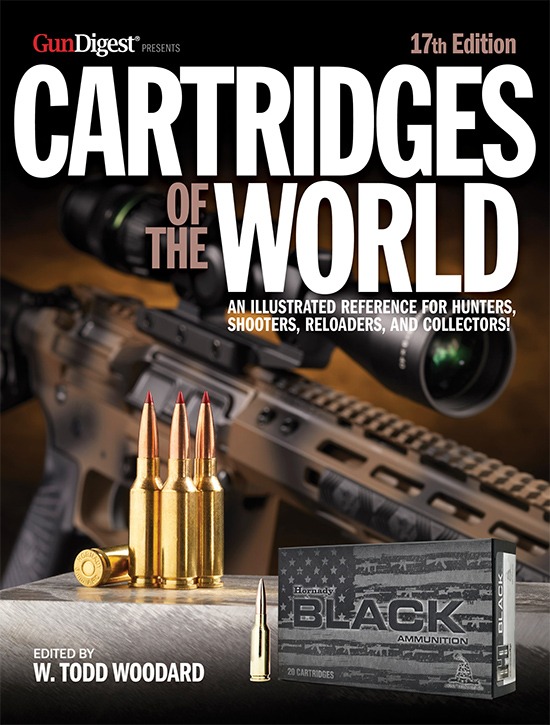
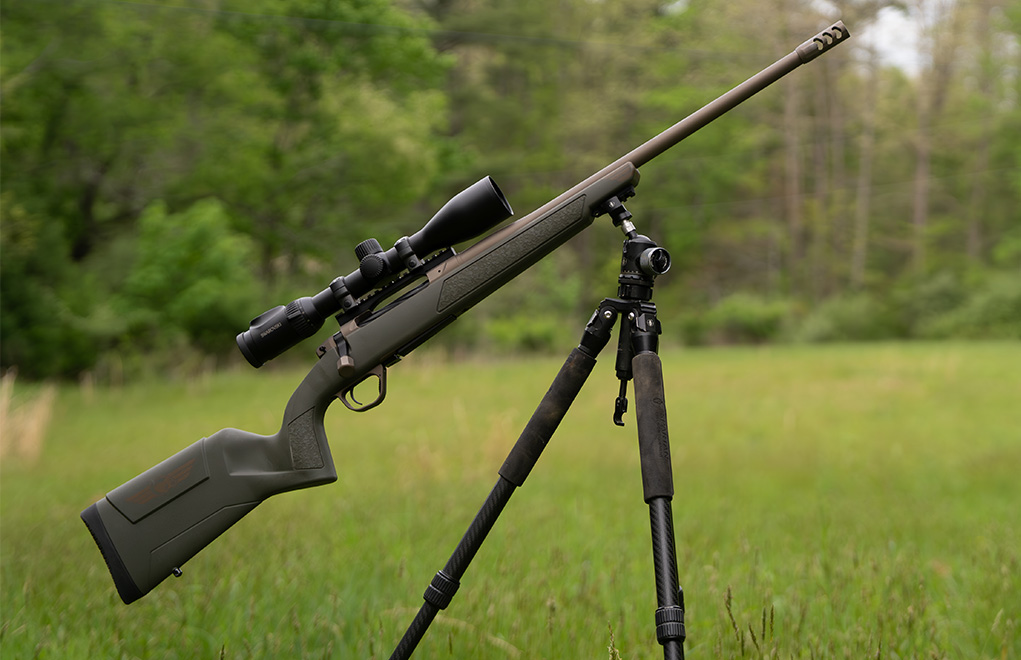
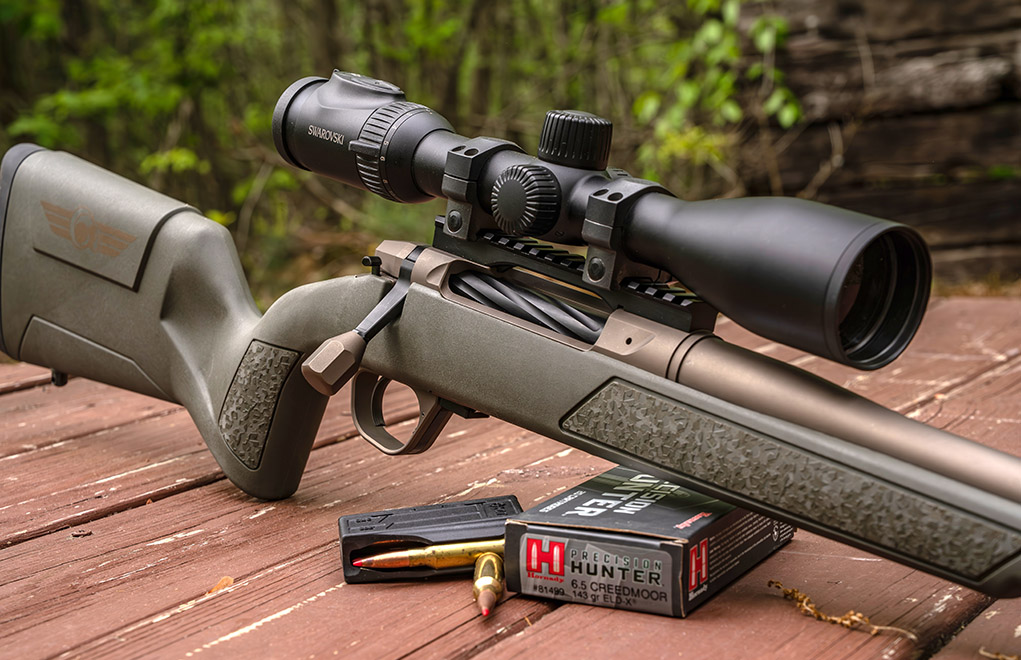
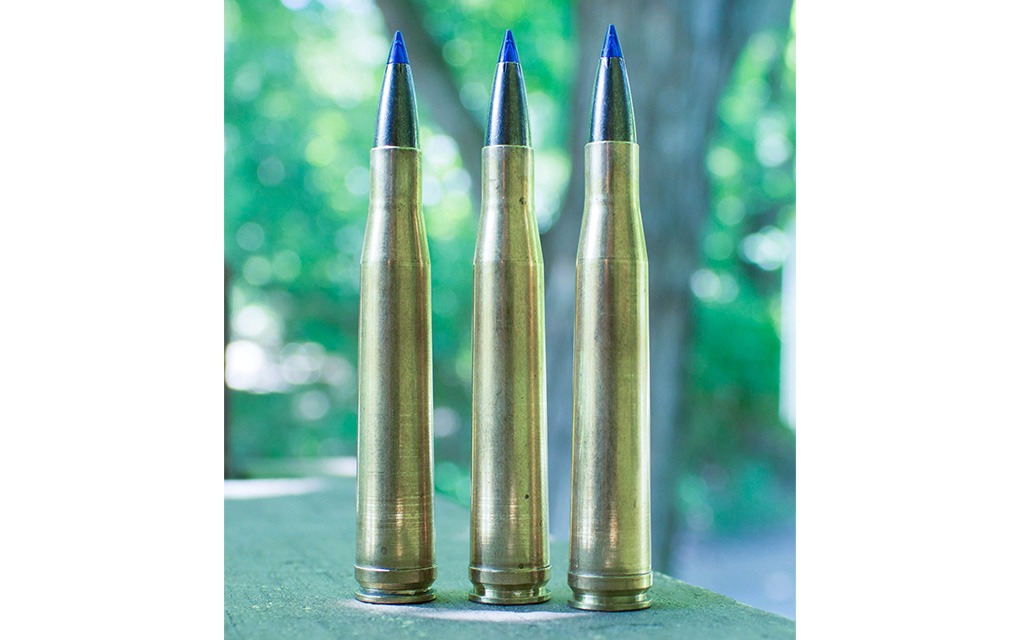
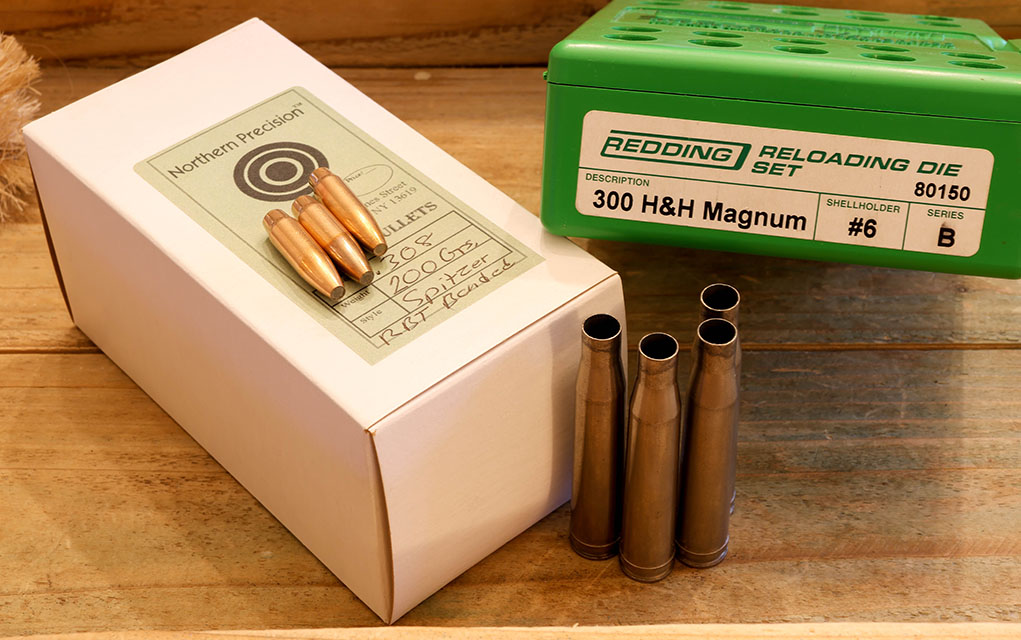
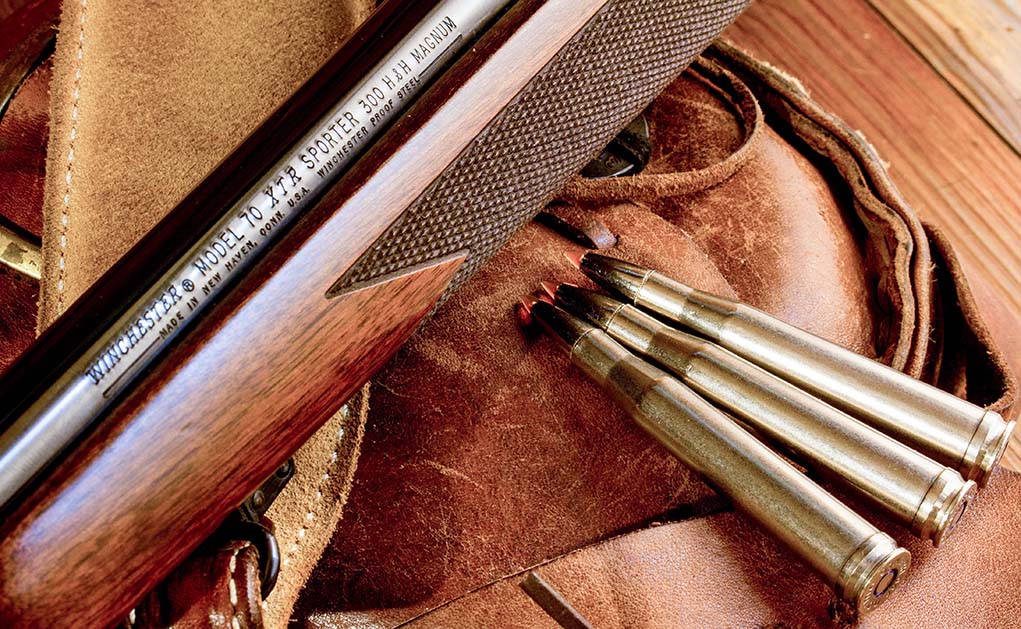
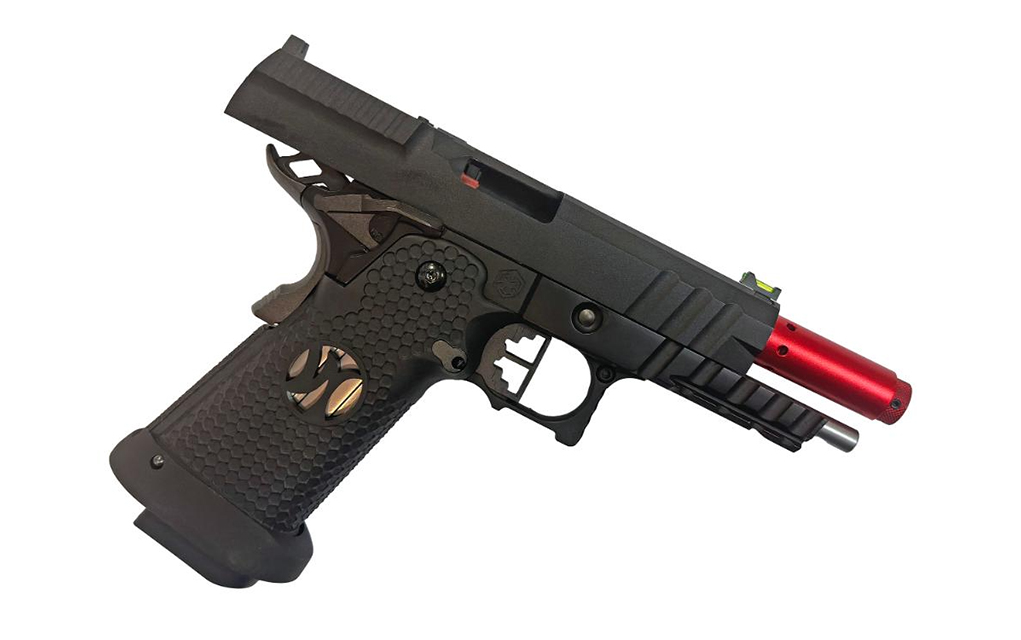
We take a quick look at the oddly proportioned .243 Winchester Super Short Magnum cartridge, aka .243 WSSM.
Announced in 2002, the .243 WSSM was intended to deliver a new level of long-range performance and accuracy to the .243 chamberings. Cartridge overall length is 2.36 inches, a half-inch shorter than the 2.8-inch length of other short-action cartridges. The .243 WSSM appears in super-short rifle actions, which should improve receiver stiffness and accuracy. The Browning Super Short Magnum A-Bolt, which weighs 6 pounds and uses a shorter action for the 2.36-inch length cartridge, and Winchester’s Super Short Magnum Model 70 are currently the only factory-new products available in this round.
The .243 WSSM case does not employ a belt; it headspaces on the case shoulder. For efficient and consistent powder burning, it retains the short-fat cartridge case geometry of the Winchester Short Magnum line. Cartridges were initially available in three bullet types: 55-grain Ballistic Silvertip, 95-grain Ballistic Silvertip and 100-grain Power Point, but only the two heavy weights have survived. The .243 WSSM shares the same basic cartridge case with the .223 WSSM, also announced in 2002. Like its small-diameter brother, it is suitable for long-range varmint shooting and for light, thin-skinned game—a good combination cartridge with light recoil.
The .243 WSSM is a fine cartridge, but it appears that all of the Winchester Super Short Magnum cartridges have peaked in terms of interest and availability.
Screwing parts on guns requires finesse and attention to detail, and that means you need to understand torque.
Assembling guns and optics is one of those things that seems to generate a lot of controversy. There are some right ways and some wrong ways to do things—and this, of course, has led to people performing some rituals bordering on voodoo. Everyone seems to have their own way of doing things.
Assembling bolt guns, AR rifles and optics isn’t magic—though there are some considerations that you’ll want to make as you go about the process. The main factor to consider is proper torque on your parts and screws, something that has eluded many people over the years.
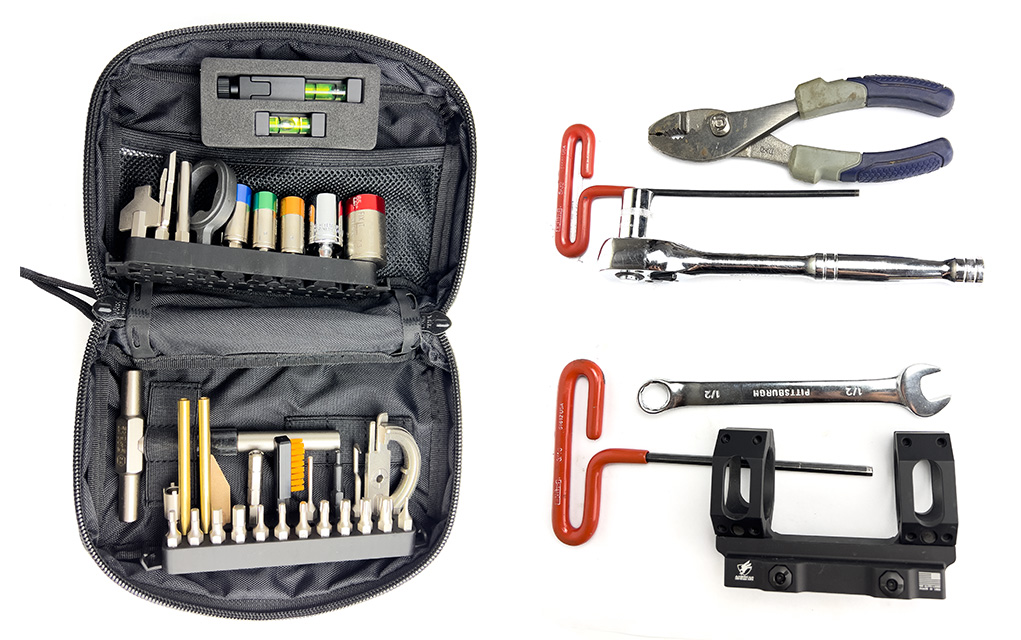
These are some tools that count as dangerous for many guns during assembly. You can generate a lot more force than you may imagine with simple had tools.
The Mystics
Gun culture has bred some very interesting subcultures over the years, and many of these subcultures have become much more intense than just circles of hobbyists. You end up seeing this much more commonly in the old-world way of doing things, where we were working with a limited amount of knowledge and a limited number of available guns. This isn’t to say that the old timers had it wrong; they just didn’t have standardized parts and a massive aftermarket that peer-reviews itself against consumer demand to deliver more and more cutting-edge products.
Yet, the lingering effects of these old days remains.
If you wanted a custom hunting rifle, the fashion of the day was to modify military rifles, mainly Mauser, Enfield and Springfield variants. These guns were cheap, ammo was plentiful, and above all they were reliable. The military features were honestly never a problem for accuracy. I personally own and fire many guns over a century old and in full military stocks and had shot in the CMP National Matches at Camp Perry for over 20 years. The limiting factors are scope mounting and iron sights, not necessarily the potential mechanical accuracy of the rifle.
Nevertheless, the gunsmithing boom of the post-World War II era saw most of what we today call “Fudd Lore” propagate.
Our modern day has seen the end of many so-called necessary processes for both guns and optics: bedding actions and lapping scope rings are functionally unnecessary. Because most of our barrels for pistols, bolt guns and AR platforms come pre-headspaced and ready to use out of the box, we have the luxury of needing a few tools to accomplish our own “custom” builds to suit our needs right on a bench top.
However, there are still tools that the tasks at-hand today demand, namely applying consistency in force and torque for assembly. In this modular era, you still need to have skill to pull off some of these things, and doing it wrong can cause a fair bit of damage to your gear.
Don’t Get Screwed (Literally)
Most rifles today are assembled with several threaded parts that require a knowledge of torque to install correctly. The AR rifle, for instance, has screws all over it, from grip screws to the buffer tube, muzzle and upper receiver. Because the AR is largely aluminum or some blend of metal incorporating it, we need to be really careful to not cause damage to it, as this is not exactly hard metal and is quite easily damaged. Yes, it is fully possible to assemble an AR too loosely, but you’ll notice the wiggle right away.
The only part that I’ve seen come loose more than a handful of times is the buffer tube castle nut. The part that I’ve seen installed far too tight is the barrel nut. People get really upset with this part and sometimes try to force it to index. Don’t do this. There are companies that make shims, and it is very possible to shear the front off of your upper.
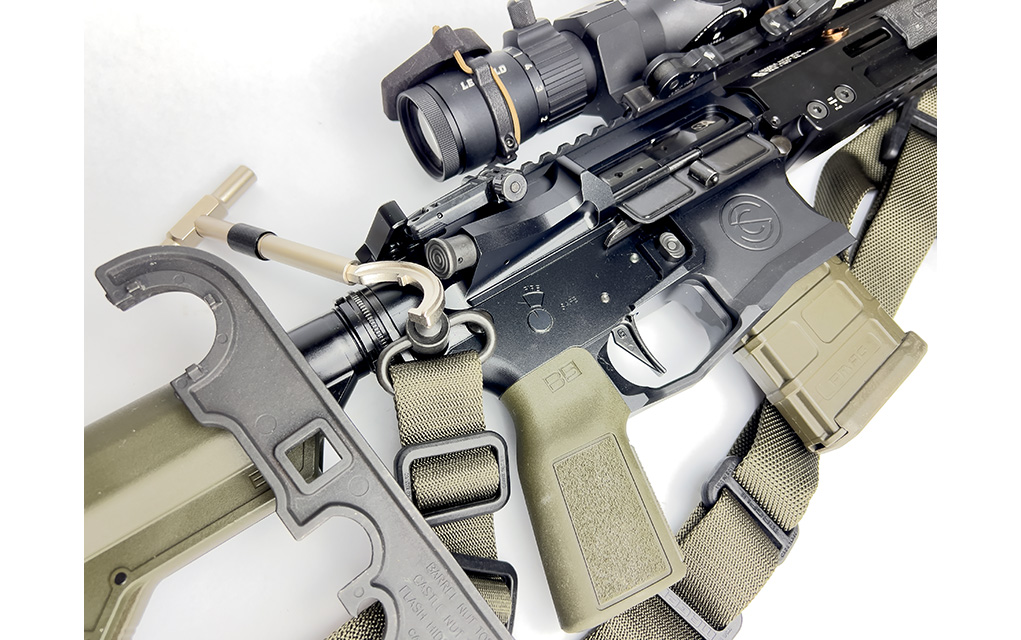
Tightening castle nuts can be done with small tools as well as big ones … although it is far easier to damage parts with more leverage.
In my many years of building AR platform rifles, this is an area in which I have made mistakes. Making the barrel nut tighter doesn’t mean you’re going to make your upper more secure; in fact, you’re putting a lot of stress on a relatively thin piece of metal by cranking too aggressively. The AR barrel is already headspaced to the barrel extension, not the upper receiver. The barrel nut simply holds it in place.
Likewise, the other parts on the AR don’t need to be adjusted with a cheater bar: You don’t need to get most of the threaded parts over hand-tight. For instance, there is no reason to apply 100 ft-lb to the grip screw. When I build an AR, I never apply more than 65 ft-lb to anything. You can break or damage parts very easily, and to make it worse, the harder you go the more deformed the threads can get, making a rebuild or parts swap difficult.
Handguns also benefit from specialized tools, and nowadays as we mount optics to slides, the need to limit torque and keep fine screws from damage is only increasing.
Many people don’t realize you can very easily apply, potentially, hundreds of pounds of force on a screw with just your hands. Crushing things together deforms them, and this will come into play far more as you keep reading.
People who are unfamiliar with guns think they are indestructible, but in reality many guns and optical assemblies are quite delicate. You can damage a $2,000 rifle by over tightening the action screws. If they are specced out for 65 pounds, don’t make it 200 just to make it stronger—that doesn’t work that way.
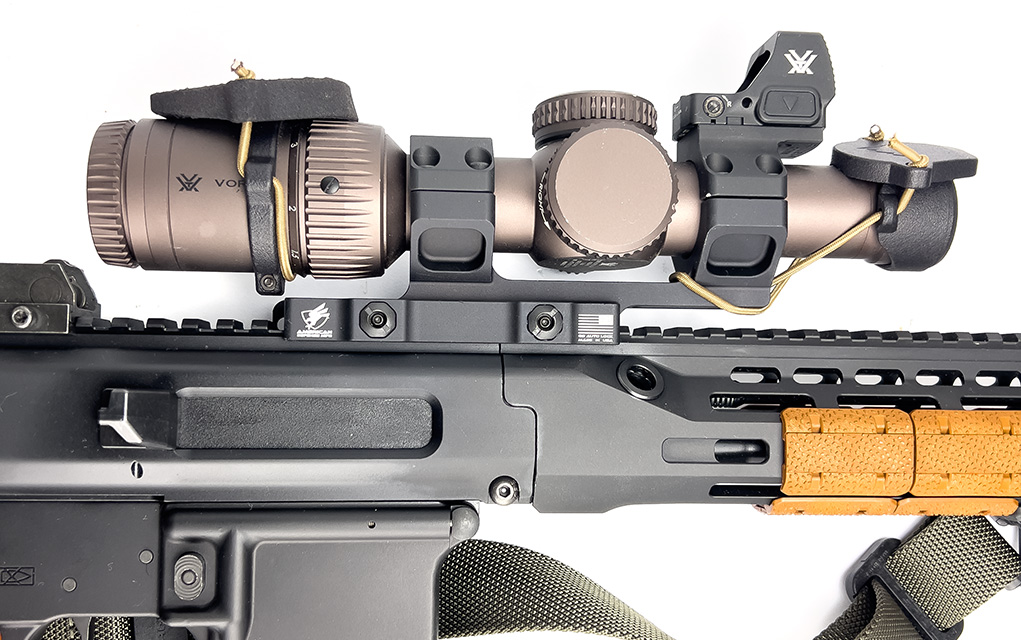
This Vortex 1-6 with a piggybacked Vortex red dot in an ADM mount has several types of screws and levers, all of which need to be adjusted to different specs. Be careful to use the correct torque specs for each type.
In this article, we see an MDT chassis, and it comes with explicit instructions to tighten action screws to 65 pounds. When you tighten to this amount, you can make note that you can obviously go a little more, but don’t. These are hardened steel screws going into a hardened steel action, sandwiching an aluminum chassis. You can, in fact, create crushing damage to all parts involved by going too hard. If things are too loose, you’ll induce damage by simply beating the parts to death under recoil. Scopes are a big one here; a loose scope is typically going to be a broken scope. Withstanding recoil is what they are designed for and should have no movement front-to-back.
Bolt It On
Bolt-action customization is a growing trend for home builders. Where this used to be the territory of the AR, many bench tops are now equipped with barrel vices for installing barrels onto receivers. Several companies offer pre-fit barrels that work with their own receivers and some aftermarket as well. The three main brands I use are Faxon, Aero and Zermatt.
It’s much easier to get involved in the bolt gun trend than ever before. The main accessory you’ll need is a barrel vice, which will bolt to your bench and then clamp around the barrel. I use an off-the-shelf model from Brownells with wooden inserts.
The next things you’ll need are action-specific wrenches. Usually, the company that makes the action has their own wrenches. For instance, I have one each for Faxon and Aero that insert into the receiver, allowing the use of a ratchet to turn the action at its lugs. Do not ever attempt to put a screwdriver or file to pry into the ejection port and tighten it down—this is dangerous. You’d be surprised at how easy it is to bend or break a receiver.
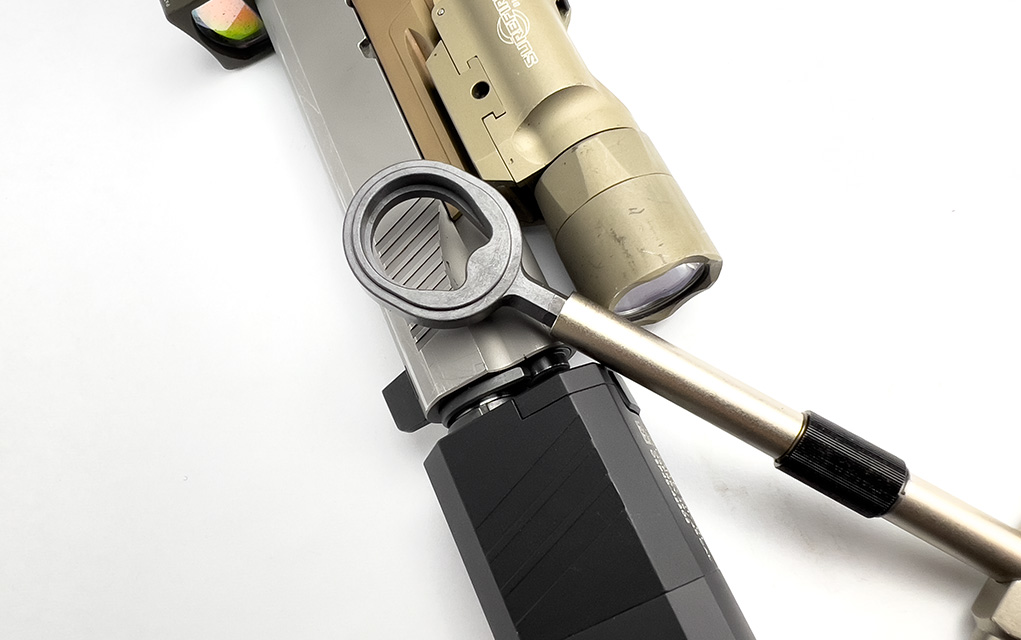
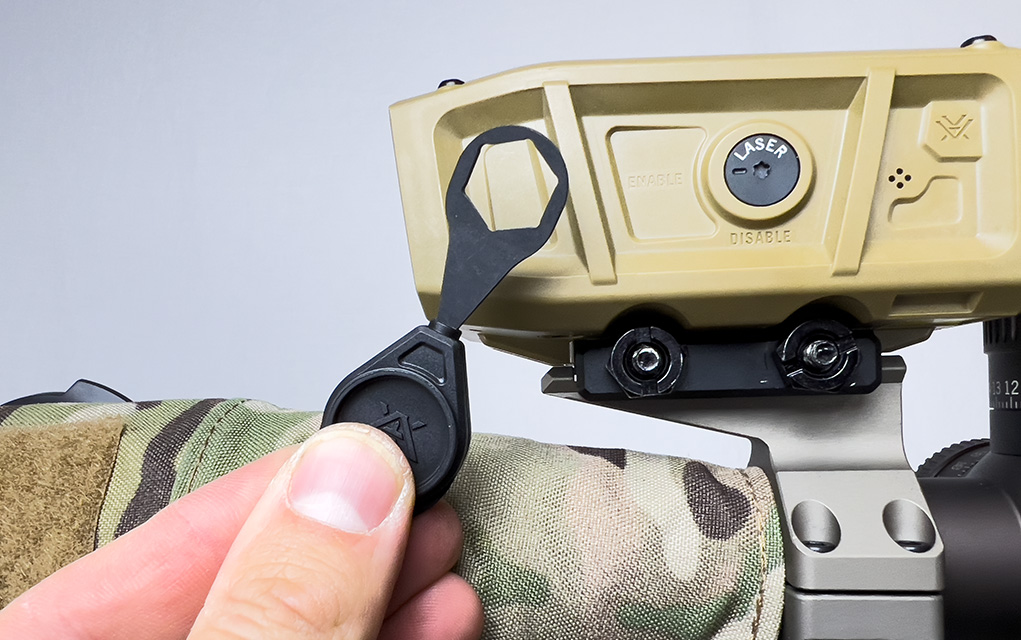
Special products often have special tools. For instance, the Vortex Impact 4000 rangefinder has a special nut key to tighten it on.
Most barrels aren’t held on with a million pounds of force either, usually just around 65 to 70 pounds. This might seem light, but we’re dispelling the old knowledge at the same time as we’re making progress. The old-world guns were sometimes cryogenically bonded with their barrels, meaning the barrels were installed on the receivers after being essentially shrunken in a deep freeze and then timed to the action. As it heated up, it swelled into the receiver … thus bonding them. Getting these barrels off an action was usually destructive to the barrel and not great for the actions either.
About half of my actions have integral optic rails machined directly in. Others like legacy Rem 700 and even new Zermatt actions have a separate scope rail. This isn’t a big deal, but it does also come with some interesting problems. These screws are often very delicate and easily damaged. The very small size and fine thread makes for a bad day if you strip them out. Being careful and closely following recommended torque settings is critical here. This is the one area on a bolt gun that I do use strong Loctite, but that is a personal choice, and I tend to leave my optic bases in place once they are installed. I treat this as a permanent situation. You will absolutely want to use a torque limiter even if you are working with Loctite.
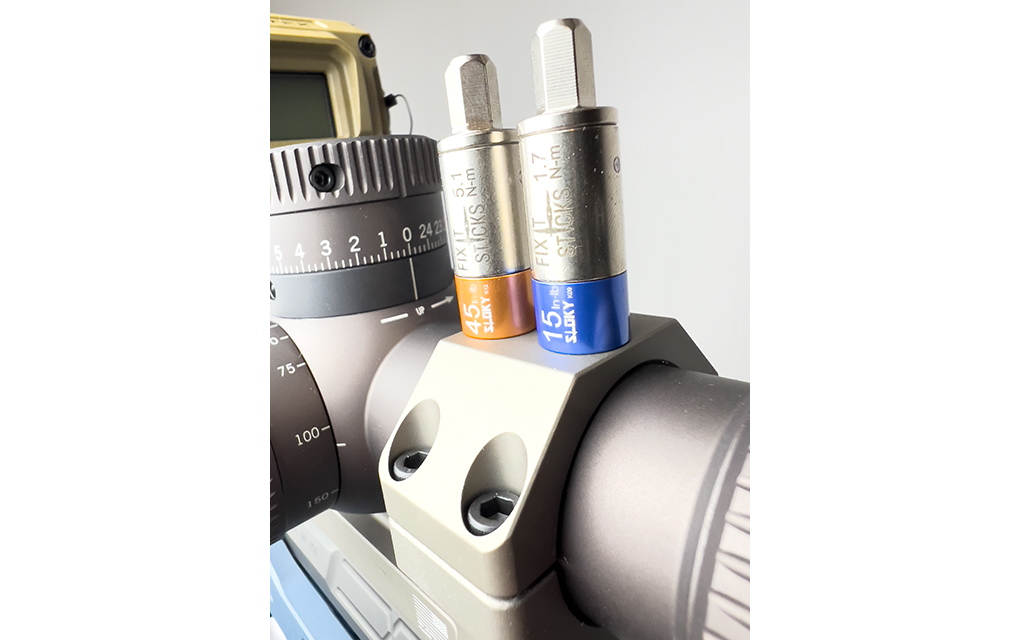
Fix It Sticks torque limiters come in various poundage, and you’ll want to make sure you have the right one for your task.
Scope Mounting Problems
Scope mounting should be done from the ground up. There are schools of thought that say otherwise, but I treat it as radiating from the receiver. Once your base is installed, you need to install the rings to the base—but only loosely. I typically set my scopes where I want on the rail and move the rings to where they look and function best. The ring nuts should be on the same side. Then, I put the ring caps on and again only loosely tighten them to where I can still move the scope to level it. Next, I push each ring forward in its rail slot and tighten them down to recommend poundage. After, I level and finalize placement of the scope and again follow recommended poundage to slowly tighten each screw down. I only do one ring at a time to prevent excess movement. Do not try to “crush” the rings down.
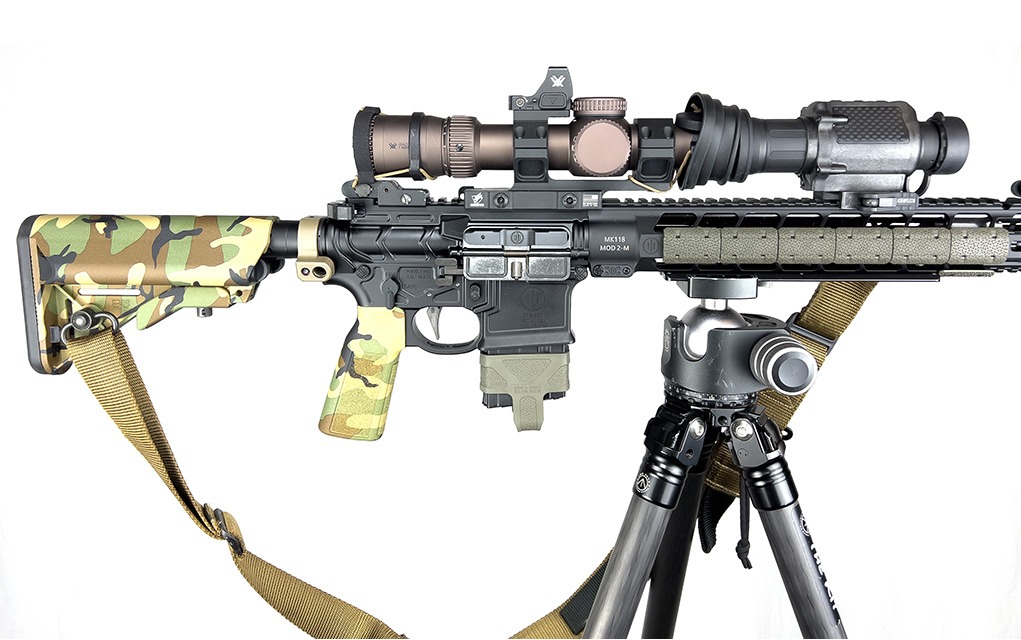
Mounting thermal or night vision, in this case an Armasight Jockey, onto rails and in front of day optics requires high repeatability in mounts and screw tension to achieve the best results. The rifle is a 6mm ARC from PWS and has a slew of advanced features and optics from Vortex.
If you’re using a mount, the same thought processes apply, but you’ll want to install and tighten it to the receiver first, be it with QD levers like on my ADM mounts here or classic nuts like on the Badger Ordnance. I again repeat my ring cap steps after leveling it out. To make things faster for myself, I use an old forend on a tripod to create a perfectly flat, uniform plane for all my QD and one-piece mounts. This has bubble levels all over it and allows me to quickly get a reticle leveled without having to try to put levels on my guns. This is a uniforming method that works really well. All you need is a tripod, little ARCA plate and an AR forend with some rail-mounted bubble levels.
Play It Safe
The main takeaway you should get from this rambling prose is to take it easy with your gear and follow recommendations. Under-tight screws create unsafe situations, loss of accuracy and damage to parts. Over-tight parts are prone to breakage, inconsistent accuracy and damage during both assembly and disassembly.
The middle road here of getting it right is still an art. Sure, some barreled actions may shoot better at a higher level of torque, but don’t assume that you need to go from 65 pounds to 130 just to make it “better.”
When it comes to torque, more is rarely better. Follow the recommended specs on your parts and enjoy the pleasures of building.
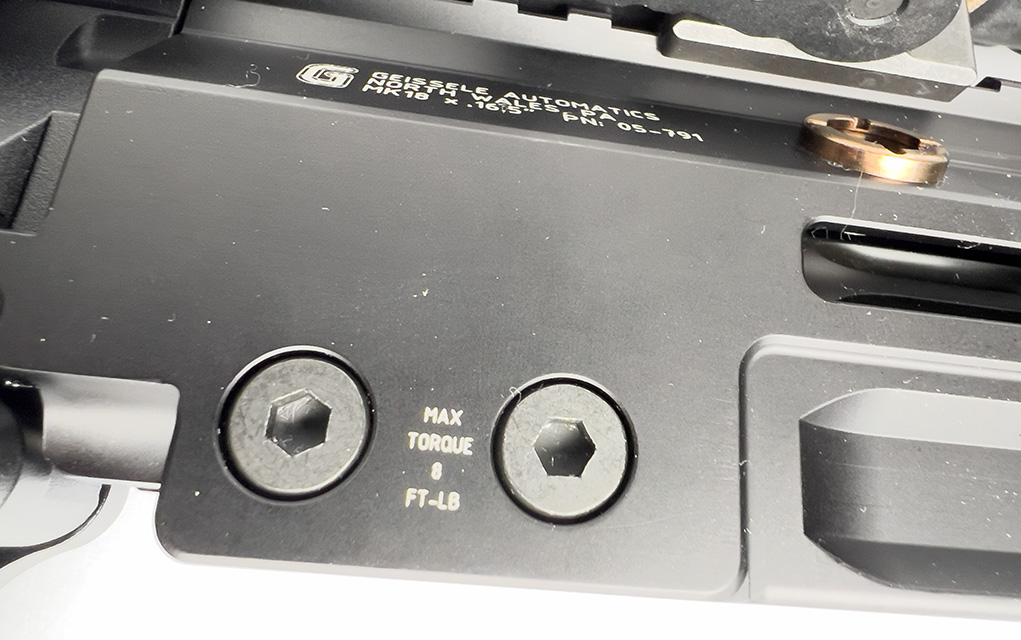
This Geissele handguard has recommended torque specs engraved.
An Aside On Loctite
I get asked a lot about Loctite. A number of thread lockers are out there, but Loctite is the most well-known brand, and I think the best. That said, if you want to seriously damage your guns, start a Loctite crusade. Not every part needs thread locker, and in many cases, people seriously overestimate how few times a properly fitted screw will start to loosen.
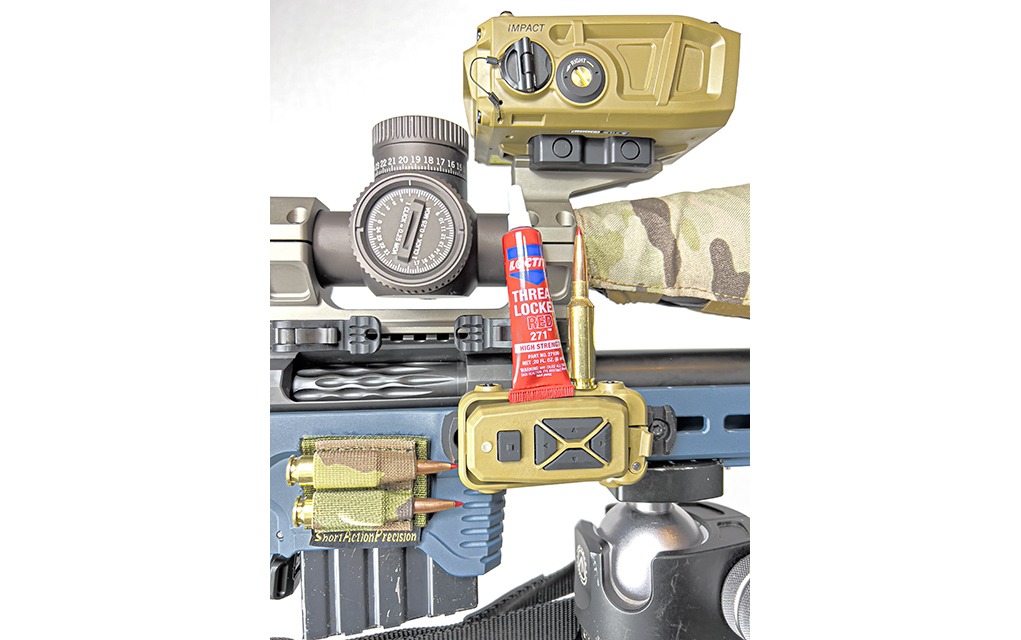
Pictured here is a highly destructive item that can cause serious damage to your property. The other is Hornady 6 GT match
I use Loctite Blue on many parts that are not under heat stress, such as action screws on bolt guns and on occasion a minor dab on ring cap screws, but this is rare. Loctite Red is one that I use only on suppressor mounts and receiver screws for scope mounts I absolutely don’t want moving or being removed. I use Loctite Red on my suppressor mounts because I don’t want to have my mounts come off with my cans, simple as that.
I never use Loctite of any kind on suppressors or anywhere on an AR except installing a muzzle device that will be interacting with a suppressor. Never use it on a bolt-action barrel or on an AR barrel nut. You need heat to get the threadlocker to soften, and the metals used in these places shouldn’t get exposed to a torch.
Play it safe and, if you have a doubt about threadlocker, don’t use it.
Editor’s Note: This article originally appeared in the July 2025 issue of Gun Digest the Magazine.
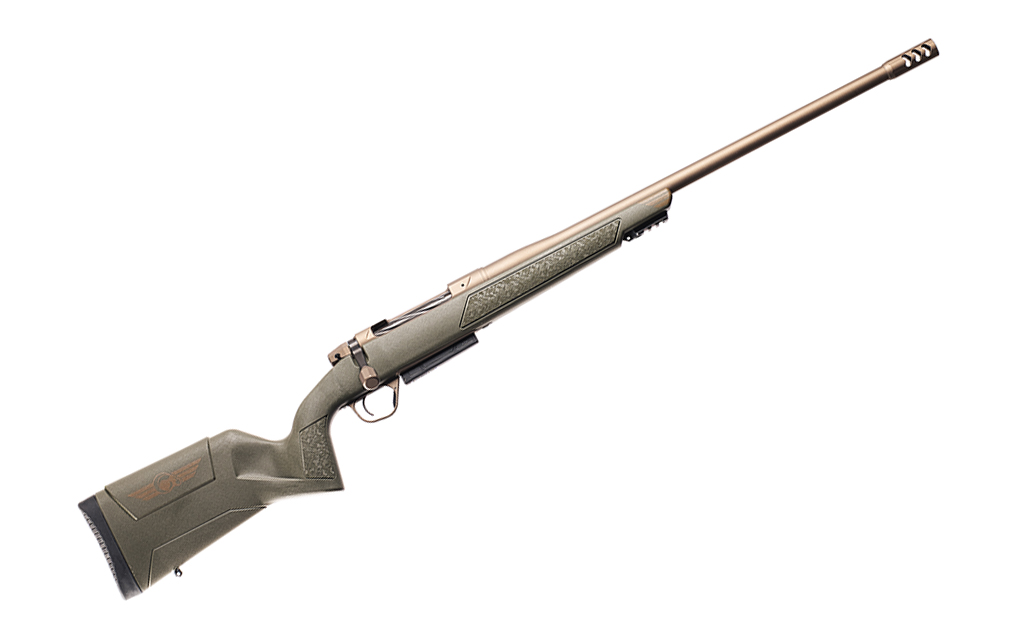
I hit the range to test out the entry-level yet feature-heavy Christensen Arms Evoke Hunter.
In 1979, I purchased my first centerfire rifle. (My dad actually bought the rifle because I was not old enough, but I paid for it with money I earned from a paper route.) It was a brand-new Remington Model 700 ADL, and it cost $223. Based on inflation, today that rifle would cost about $981. That rifle shot well but it was plain-Jane with a walnut stock and blued steel. It did not have any of the modern and cool features hunters want today, like a synthetic stock and Cerakote finish resistant to the elements. It did not have a detachable magazine, a scope rail, a threaded muzzle or brake, or a bipod attachment point. The new Evoke rifle from Christensen Arms has all those things and a retail price of $898.99.
Modern manufacturing techniques have reduced the cost of making firearms, and the demands of hunters have increased the standard features we now expect to see on a new rifle. Christensen Arms has been listening to what hunters want in terms of both features and price, and their new Evoke rifle is a manifestation of that. I recently tested one of the Evoke rifles chambered in 6.5 Creedmoor, and Christensen Arms is clearly onto something.
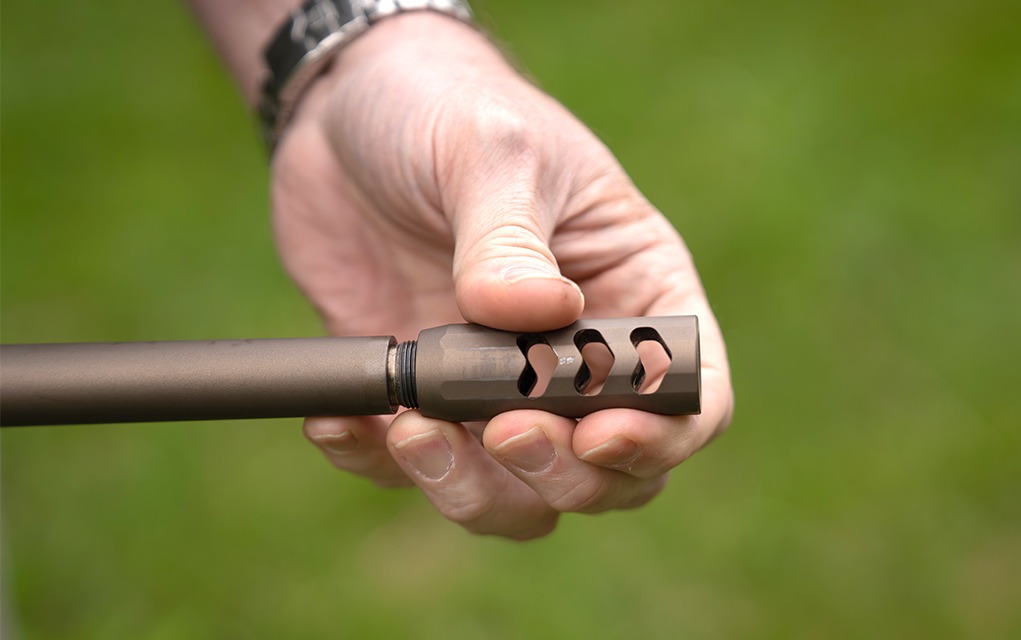
Christensen Arms announced the Evoke rifle in 2024, but samples did not make it out of the factory until early 2025. While visiting Christensen Arms last year, I saw a prototype of the Evoke, but between then and now the design changed just a bit. Christensen Arms pioneered the carbon-fiber-wrapped barrel, and then they perfected it. As an entry-level rifle, the Evoke comes with a 416R stainless steel barrel, but this barrel is button rifled and hand-lapped at the factory. The barrel also has the muzzle threaded at a 5/8×24 pitch and the rifle comes standard with a removable, stainless steel, premium RFR muzzle brake.
In addition to coming out of the box with a threaded muzzle, the Evoke also comes with a removable, stainless steel, premium RFR muzzle brake.
Barrel lengths range from 16.25 to 22 inches depending on the cartridge. The 7mm Backcountry is available with either a 16.25- or 20-inch barrel, and the 6.5 PRC, .270 Winchester, 7mm Remington Magnum, 7mm PRC, .30-06, .300 Winchester Magnum, .300 PRC and .375 H&H all come with a 22-inch barrel. Evoke rifles in .243 Winchester, 6.5 Creedmoor, .308 Winchester and .450 Bushmaster have a 20-inch barrel, and the .350 Legend is the only Evoke with an 18-inch barrel. Regardless of the chambering, all barrels are fully free-floated.
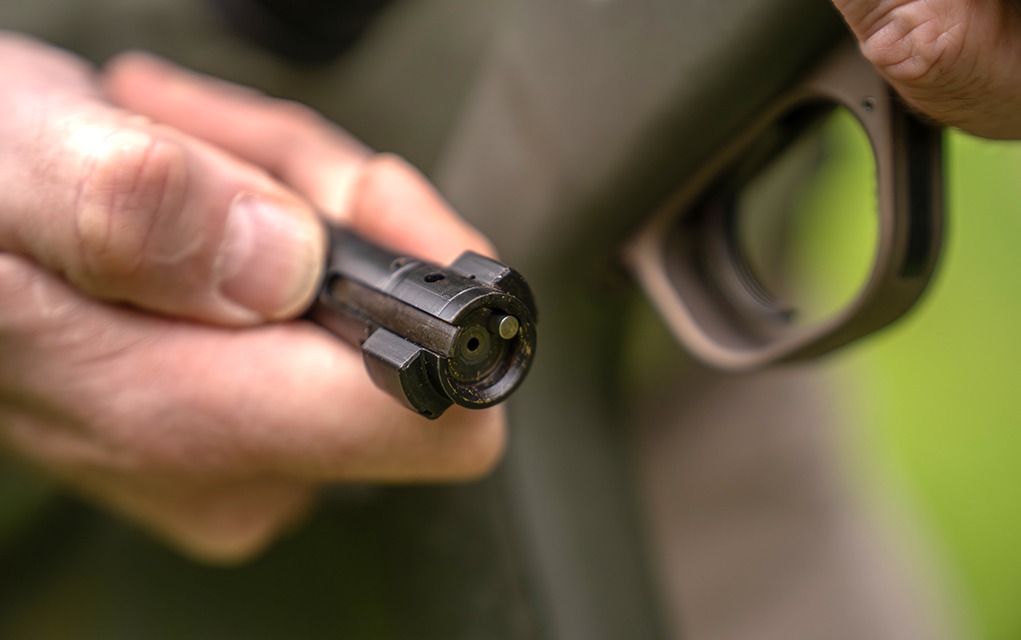
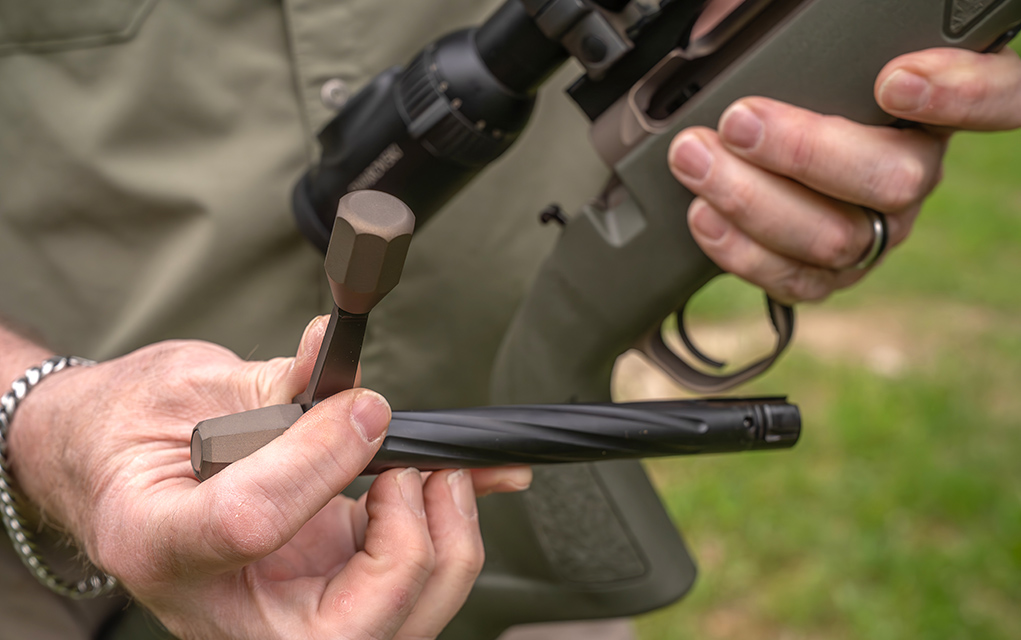
The bolt on the Christensen Arms Evoke has a plunger-style ejector and an extractor that’s kind of a cross between an M16 and Sako-type extractor.
Christensen Arms attaches the barrel to a newly crafted action that they designed in-house at Christensen Arms. It has a bolt with a radially fluted body, two lugs, a 90-degree throw, and a M16/ Sako-style extractor and a plunger ejector like on that first Remington 700 I bought more than 40 years ago. Regardless of the cartridge the Evoke is chambered for, the action is the same size. It does not come in short, long and magnum lengths. This adds weight for short-action cartridges, but it does reduce manufacturing costs. The bolt handle has an octagonally shaped knob that’s a tad bit—but not too much—oversized. It seems just about perfect for fast and positive bolt operation.
The radial fluted bolt on the Christensen Arms Evoke rifle has a bolt handle perfectly sized for positive and fast operation.
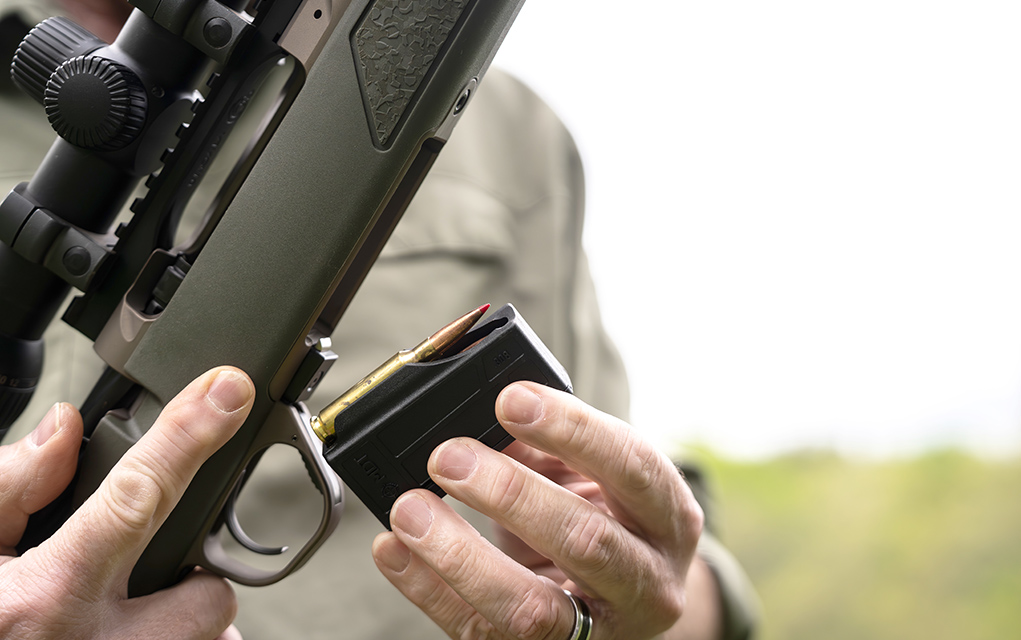
The rifle feeds from a detachable polymer magazine made by MDT, and it has a three-round capacity, regardless of the cartridge. You release the magazine by pushing a lever in the trigger guard. Also, inside the trigger guard, you’ll find an adjustable TriggerTech trigger. The trigger on the test rifle broke crisp and clean at about 3 pounds, and I left it throughout all testing.
The polymer stock on the Evoke rifle features a near vertical grip, finished with a very attractive and useful texturing.
The Evoke’s barreled action is housed inside a synthetic polymer stock. There are actually four versions of the Evoke, and the different stocks are what set them apart. On the standard Evoke, the stock is a flat OD green color. The Mossy Oak version of the Evoke, which has a retail price of $948.99, has a stock with the Mossy Oak Bottomland camo finish. Next is the Hunter version of the Evoke. Christensen Arms finishes the Hunter’s stock with one of their own camo patterns, and it retails for $998.99. The final version of the Evoke is the Precision model. It retails for $1,048.99; it’s the most expensive of the four, but it has Christensen Arms’ hex camo pattern, and it also comes with an adjustable carbon-fiber cheek riser.
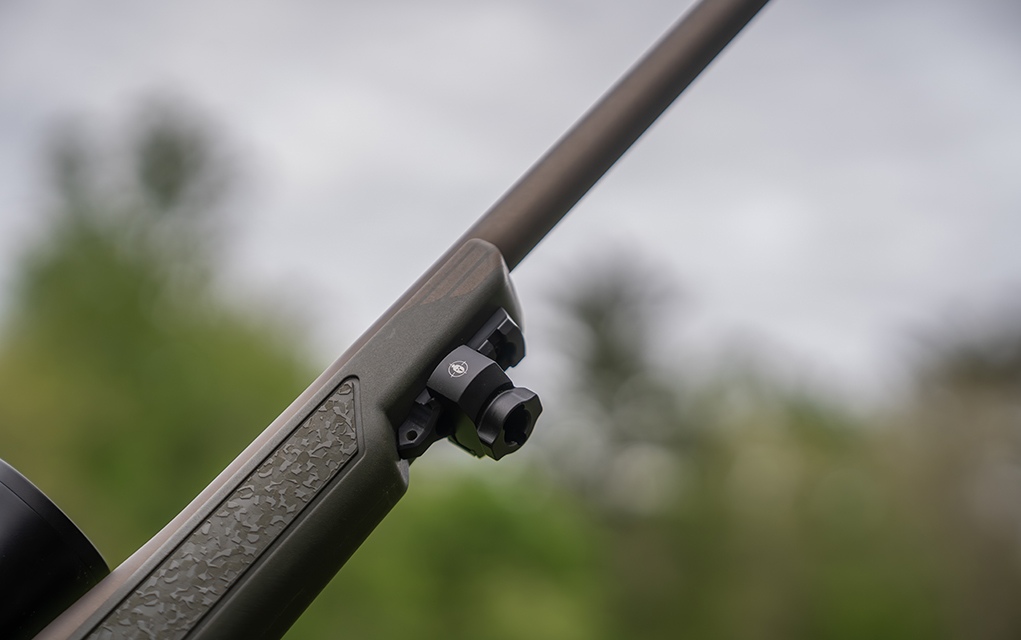
For those who like to shoot from a bipod or tripod, they will really appreciate the integral section of rail on the tip of the Evoke’s forend.
All versions of the Evoke include a short, three-slot, Picatinny rail section at the tip of the forend, and this rail section has an integral sling mount attachment point. All Evoke rifles also have what Christensen Arms calls a hybrid grip angle that’s nearly perpendicular to the barrel. A very neat and attractive feature of the Evoke’s stock is the texturing on the grip panels at the grip and along the forend. Not only does this texturing look good, but it also provides a very sure gripping surface when the rifle is wet. I know this as fact because during the first range session with the rifle, a downpour nearly drowned me and the rifle. Finally, and important is the fact the Evoke rifle—regardless of the version—comes with a three-shot, sub-MOA guarantee and a limited lifetime warranty.
Range Time
Before I get into the shooting, I want to address the only issue I experienced with the rifle. Sometimes I struggled to remove the three-round MDT magazine. I could clearly see when I depressed the release that the latch freed the magazine, but sometimes the magazine was just damned stubborn and did not want to come out. At other times it was easy to remove.
Some magazine removal issues occurred with the test rifle, but only when the magazine was forcefully inserted into the magazine well.
Upon further investigation I discovered that I only had the magazine removal issues when I aggressively inserted it. Then, the front of the magazine went just a tad too far in. However, regardless of how I inserted the magazine, it always fed cartridges without failure. If I gently inserted the magazine, it was easy to remove, but not a drop free. I’m not a fan of a drop-free magazine on a hunting rifle, because I’ve seen that lead to trouble too many times. Is this an issue endemic to all Evokes? I don’t know, but it’s something you can check when handling an Evoke before you buy it.
At nearly 7½ pounds, the Evoke is on the heavy side, but I thought the rifle balanced well with a bit of muzzle heaviness for offhand shooting. The 20-inch barrel on the 6.5 Creedmoor version is suppressor friendly, and, as you would expect, a suppressor made the Evoke even more muzzle heavy. Is a muzzle-heavy rifle a bad thing? Yes and no. Muzzle heaviness can help you when shooting off-hand and seems to help stabilize a rifle a bit when shooting from a rest. The only time it becomes a hindrance is when you’re trying to handle the rifle swiftly or when trying to track a moving animal for a shot. If you have no plans to shoot at moving critters, and if you always at least intend to shoot from a rest, it will not negatively impact your shooting at all.
The new Evoke rifle from Christensen Arms comes with a lot of features modern hunters demand.
Speaking of shooting from a rest, the short section of Picatinny rail that’s integral to the Evoke’s forend was perfect for bipod or tripod attachment. I attached a Spartan Precision Pic rail adapter and did a lot of shooting from their Ascent tripod and their Javelin bipod. If you like to shoot with either a tripod or bipod, you will really, really, appreciate this rail section because it greatly simplifies the process. That short section of Picatinny rail remained solidly attached to the Evoke’s stock throughout all the shooting.
I tested three loads in the Evoke for precision while shooting from a sandbag rest at 100 yards, by firing three, five-shot groups with each load. Two of the loads tested averaged just a bit more than an inch, but the rifle really liked Hornady’s 143-grain ELD-X Precision Hunter load. Every group fired with that load was less than an inch and the average for three, five-shot groups was a very respectable 0.61 inch.
Shooting Results
LOAD
VEL
SD
ENG
PRECISION
Remington 129-grain Core-Lokt Tipped
2,992
27
2,564
1.13
Nosler 140-grain Whitetail Country
2,723
14
2,305
1.21
Hornady 143-grain ELD-X Precision Hunter
2,736
6
2,377
0.61
AVERAGE
0.98
Notes: Muzzle velocity (VEL), standard deviation (SD) and energy (ENG) were established by firing 10 shots over a chronograph. Reported (PRECISION) reflects the average of three, five-shot groups with each load from a sandbag rest at 100 yards.
The Last Word
Like with all rifle manufacturers that offer an affordable, entry-level rifle, I’m sure Christensen Arms hopes that those who purchase an Evoke may someday upgrade to another, higher-end, Christensen Arms rifle like the Ridgeline FFT, which costs about twice as much as the Evoke. That might very well happen, especially since the Ridgeline FFT rifle is noticeably lighter. However, a lot of hunters might very well be content with their Evoke and never purchase another rifle. I think this is a practical possibility, especially if the magazine issue I experienced was just a fluke with the test rifle and not representative of the entire line.
Any way you look at it, the Christensen Arms Evoke is a great representative of how hunting rifle manufacturing has evolved. Christensen Arms has loaded this rifle with many of the features the modern hunter expects, it shoots well, and Christensen is offering it at a fair and reasonable price.
Pros
Shoots well
Lots of practical features
Reasonable price
Cons
On the heavier side
Test rifle had minor magazine issue
CA Evoke Hunter 6.5 CM Deals
Guns.com
$896
EuroOptic
$900
Editor’s Note: This article originally appeared in the August 2025 issue of Gun Digest the Magazine.
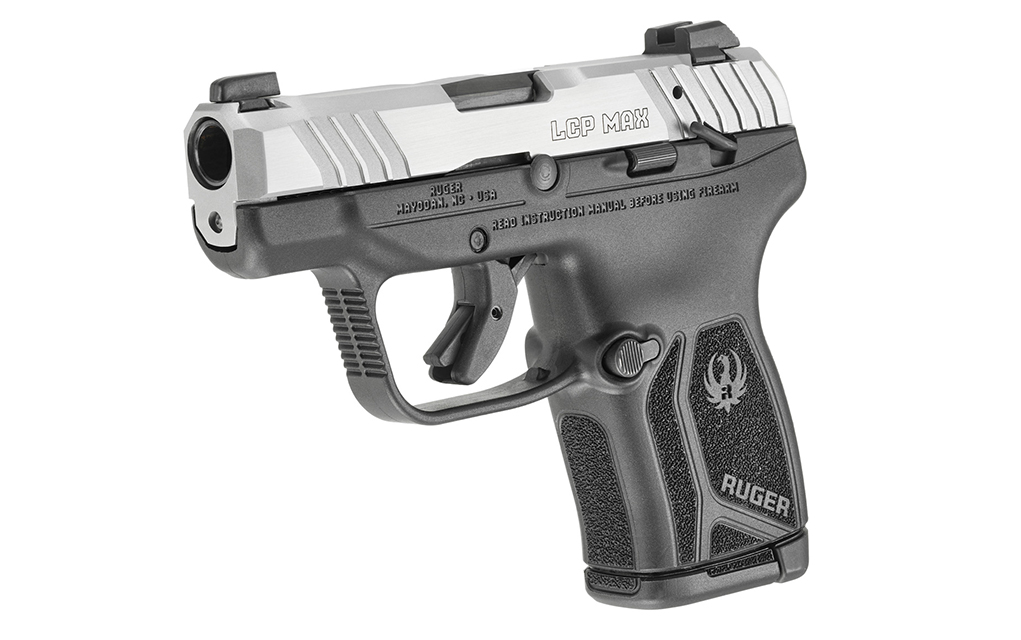
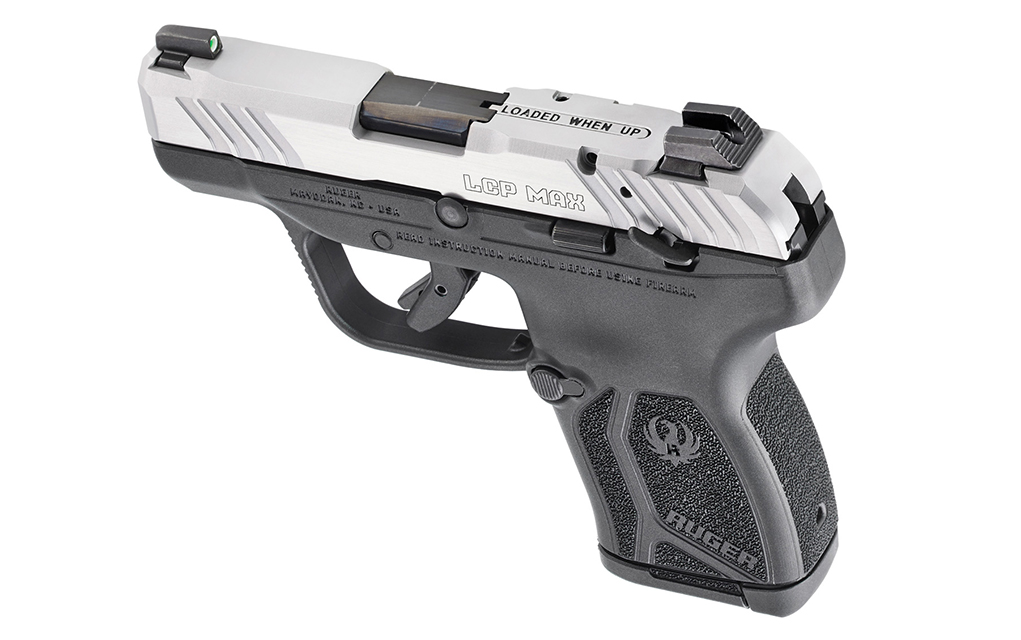
Ruger has just released two new versions of the LCP MAX that feature a manual safety.
A lot of people only feel comfortable carrying a loaded handgun if it has a manual safety. For those individuals, the Ruger LCP MAX is now an option as the company has just released two new models that feature a manual safety.
Model 13749 features a manual thumb safety on its left side, and model 13754 features the same, as well as a magazine disconnect safety and a loaded chamber indicator on top. Whichever version you choose to go with, both are only available with a matte stainless slide. Their other features are the same as standard Ruger LCP MAX models—a 10+1-round capacity of .380 ACP, 2.8-inch barrels, an adjustable u-notch rear sight and a tritium front sight. In other words, besides the new safety features, they’re identical to the original model.
Also like the originals, both new manual safety LCP MAX models ship with one 10-round mag, a pocket holster and a magazine loader, and have an MSRP of $379.
While they don’t get much attention these days, there are a few different .32-caliber cartridges out there that remain far from useless.
A hundred years before anyone thought about a .32 H&R Magnum, Winchester introduced the .32-20 WCF cartridge for their Model 73 lever-action rifle. The year was 1882, the same year Robert Ford shot Jesse James. The .32-20 soon became very popular in a variety of revolvers, especially Colt’s Peacemaker. Elmer Keith even developed an early relationship with the .32-20, shooting cottontails with his granddad and later carrying a 7½ inch Colt in .32-20 while working with a survey crew.
Other 0.32-caliber handgun cartridges, like the .32 Smith & Wesson, .32 Smith & Wesson Long and .32 Colt New Police, were popular with private detectives, cops and target shooters. In 1896, S&W attempted to improve the .32 S&W by lengthening the case by 0.31 inch. The .32 S&W Long was just as anemic as its parent cartridge, but when Teddy Roosevelt was police commissioner of New Your City, he chose Colt’s .32 New Police Revolver as the department’s issue sidearm. Colt’s cartridge was identical to the S&W Long.
Six years later, a 0.32-caliber handgun would make Roosevelt president when McKinley died from complications of his gunshot wound. And, 4 days prior to the assignation, Roosevelt spoke the now famous words, “Speak softly and carry a big stick, and you will go far.” Though it’s doubtful he was talking about a .32.
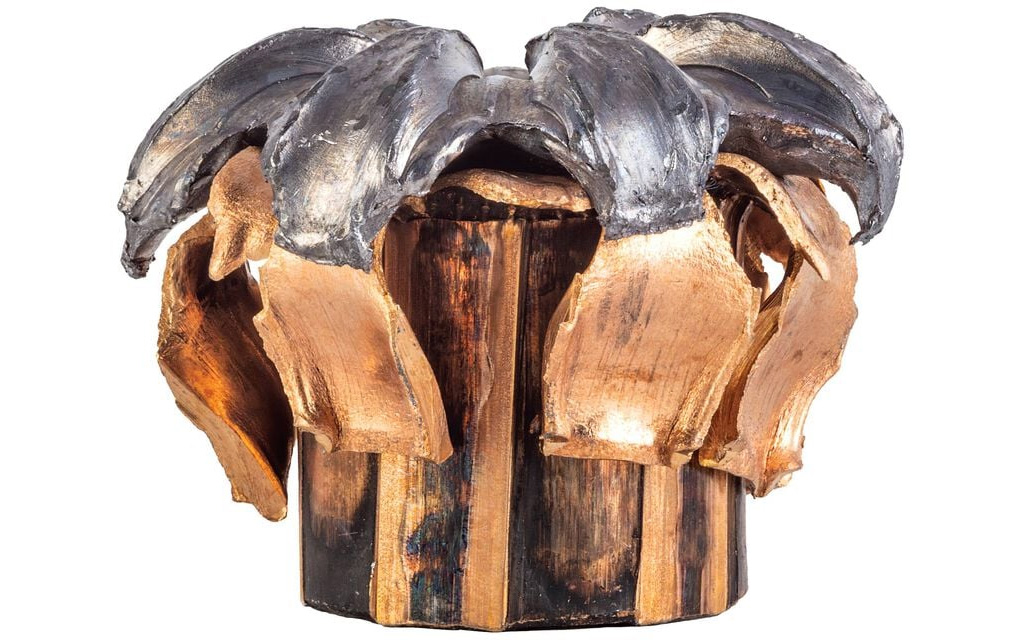
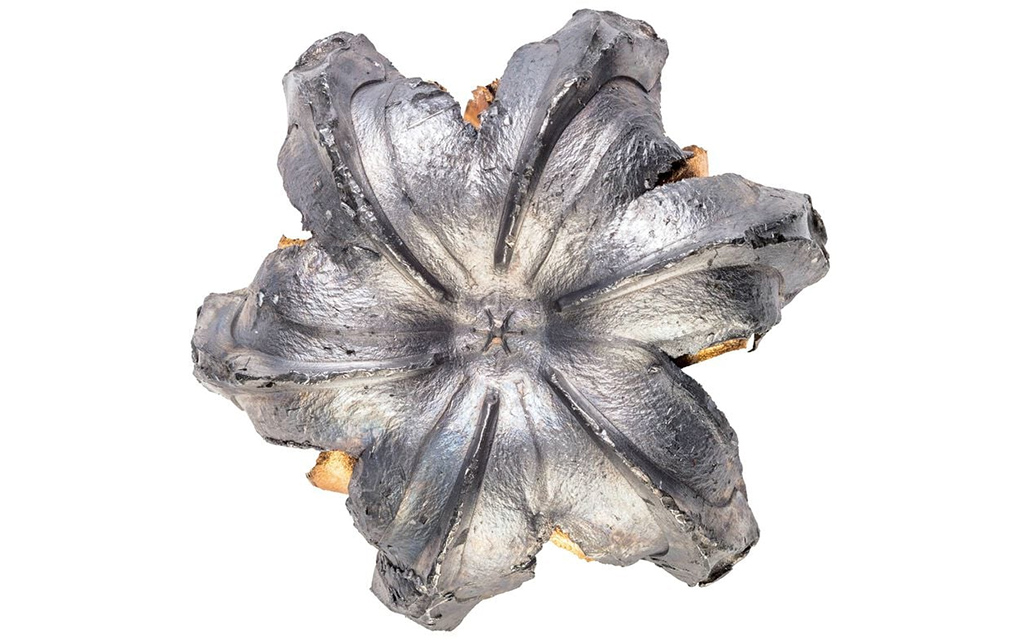
The bullet from this new .32 H&R Magnum load will not upset/expand on impact, but it will penetrate deeply. It’s intended for targets.
Surprisingly, in 1984, Harrington & Richards teamed with Federal and introduced the .32 H&R Magnum for their five-shot model 504, 532 and 586 revolvers. Charter Arms offered the new .32 in their six-shot, Police Undercover Revolver, and, in 1985, Ruger began chambering it in their SP101 and Single Six revolvers. As expected, 0.32-caliber fans were excited by the new cartridge, and as factory loaded, the .32 H&R essentially duplicated the performance of the .32-20.
However, the story line in gun magazines at the time was that the .32 H&R Magnum would outperform standard .38 Special loads. Maybe that’s true on paper, but actual terminal performance testing showed otherwise. Ultimately, in 2007, when Federal introduced the .327 Federal Magnum, all but .32 H&R Magnum devotees forgot about the first 0.32-caliber cartridge with “magnum” in the name.
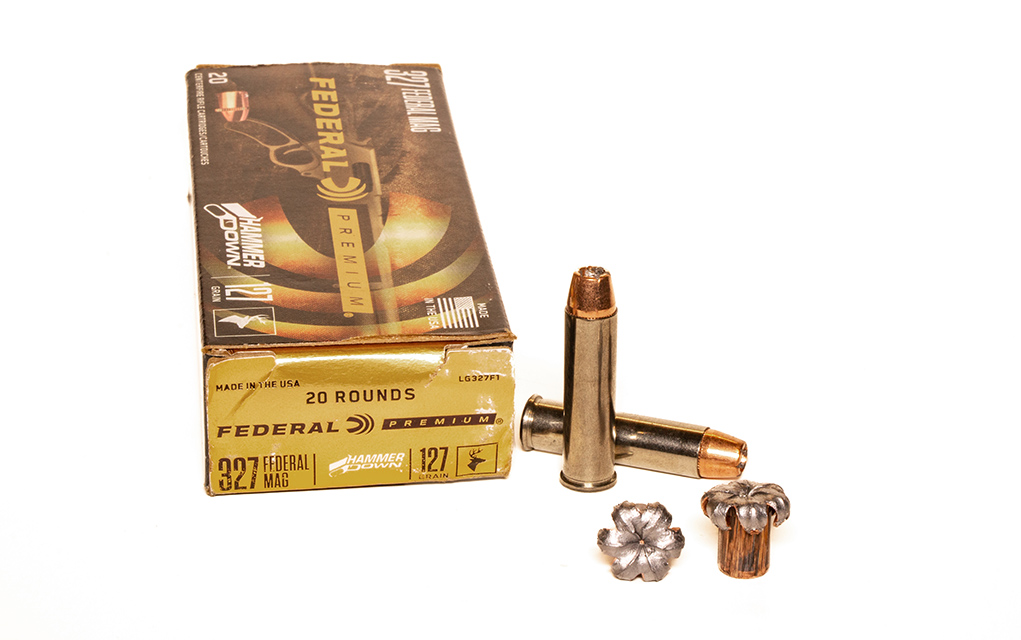
Though intended for deer hunting with a lever gun, the .327 HammerDown Federal load can work well for self-defense.
Far from Useless
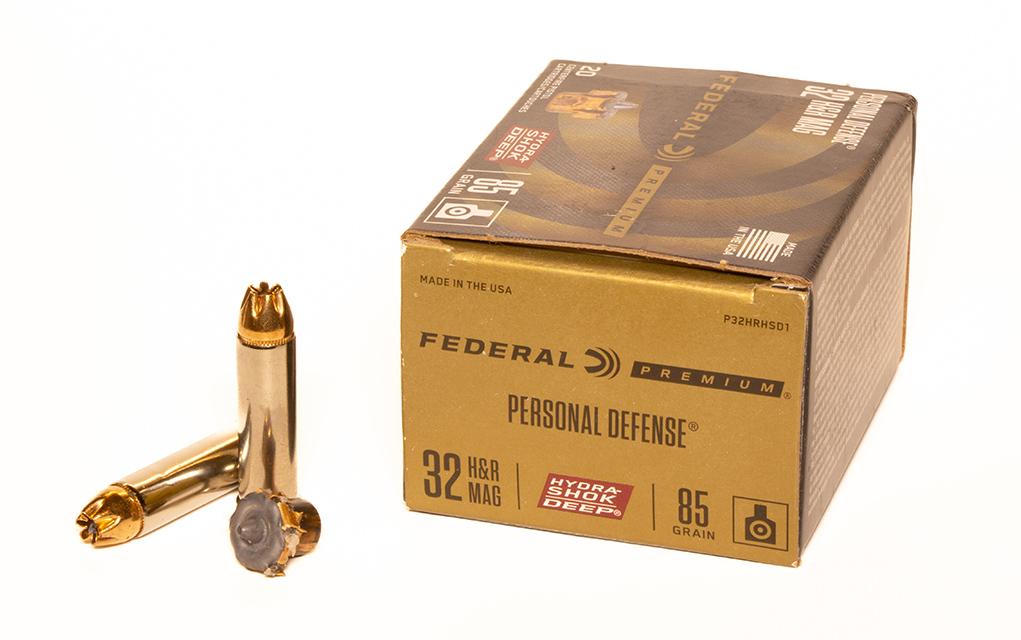
That does not mean the .32 H&R Magnum is worthless or not good. In fact, with the most modern ammunition, like the brand-new Hydra-Shok Deep load from Federal, it’s a capable self-defense cartridge. I recently tested this just-introduced load in blocks of Clear Ballistics from a 4-inch barreled revolver, and it consistently delivered 12 inches of penetration with an upset diameter of nearly a half inch. That’s better than most .380 Auto loads. The Hydra-Shok Deep .32 H&R Magnum load comes 20 rounds to the box, and with a suggested retail price of $38.99, it will cost you about 2 bucks a pop.
The new Hydra-Shok Deep load from Federal for the .32 H&R Mangum will deliver a foot of penetration and upset with a wide frontal diameter.
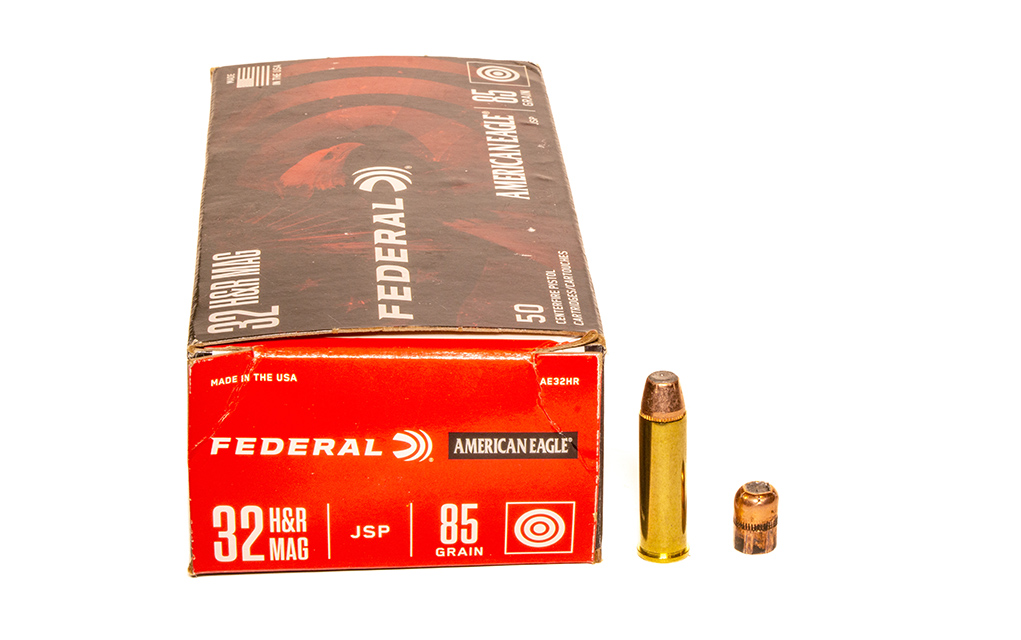
Federal introduced another new .32 H&R Magnum load with the 85-grain HST load, but Federal loads this one with an 85-grain JSP bullet. It will generate velocities that are nearly identical to the Hydra-Shok Deep load, but the 85-grain JSP bullet will not deform/expand. It is a great practice load, and if you prefer deep penetration to bullet upset, it will easily drive to depths beyond 16 inches. The 85-grain JSP load will cost you about a dollar a shot; a box has a suggested retail price of $47.99.
When it comes to personal protection with a revolver, the .32 H&R Magnum is not in the same league as the .327 Federal Magnum. The best .32 H&R Magnum loads generate less than half the kinetic energy of good .327 Federal Magnum loads. In fact, some of the best .327 Federal Magnum loads generate more kinetic energy than some well-respected 9mm Luger, .40 S&W and .45 Auto loads. Federal has recently introduced two new .327 Federal Magnum loads, and I tested those right alongside the new .32 H&R Magnum loads.
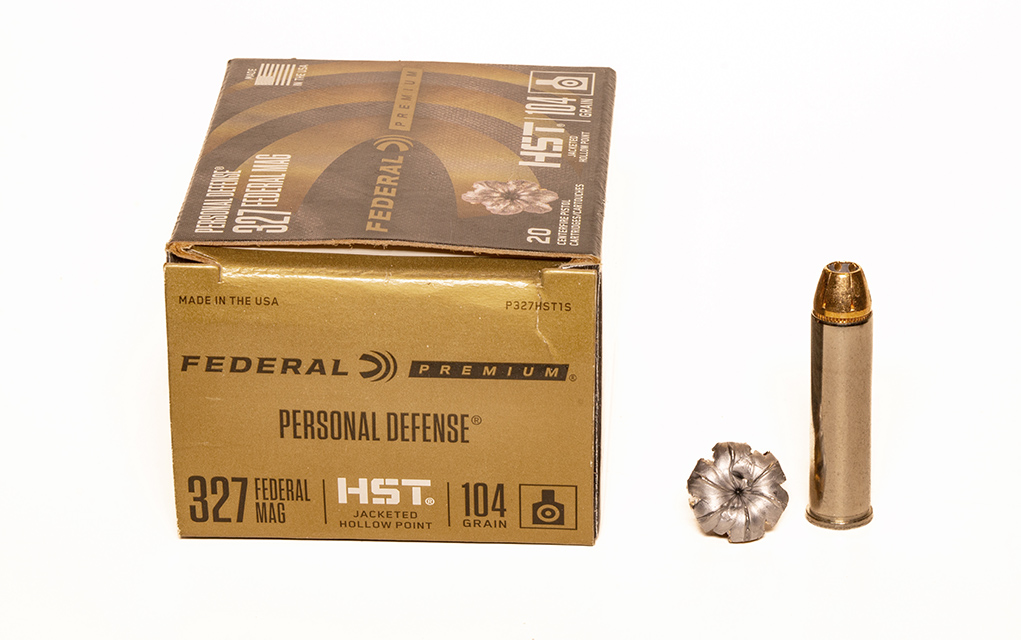
One of the best self-defense loads for the .327 Federal Magnum is the new 104-grain HST load. It has more than 500 ft-lb of muzzle energy.
The first new .327 load is the 104-grain HST. HST ammunition is some of the best self-defense ammo you can find, and the new .327 load did not disappoint. It penetrated to an ideal depth of 14.5 inches, retained 90 percent of its weight, and the bullets had an average recovered diameter of more than a half inch. Based on terminal performance testing, that is stellar performance, regardless of the cartridge. With a retail price of $41.99 for 20 rounds, Federal is proud of this load—and they should be. It’s one of the best I’ve seen for this cartridge.
In all, I tested four new loads for the .32 H&R Magnum and .327 Federal Magnum, and the last load tested was the one that really got my attention. It is the .327, 127-grain HammerDown load. Federal designed HammerDown ammunition specifically for use in lever action rifles. Federal tempered the bullets to work at longer-than-revolver barrel velocities, and chamfered the forward edge of the case rim for smoother feeding in lever guns. However, you can still shoot this stuff in a revolver, and out of a 4-inch barrel it passed through the 16-inch block of Clear Ballistics. I was only able to recover the bullets because a panel of soft body armor stopped them. That’s fantastic terminal performance for a .32.
I’m confident that, though the new Hydra-Shok Deep load for the .32 H&R Magnum is a practical choice for self-defense, it is not a “big stick.” But I’d bet you that if Roosevelt got to see what the new .327 Federal Magnum loads can do—especially the HammerDown load—he might think it would qualify. Remember, he armed New York cops with the anemic .32 Colt.
Editor’s Note: This article originally appeared in the August 2025 issue of Gun Digest the Magazine.
For those who rely on a .44 Magnum for personal protection, Federal has just added a .44 Magnum HST load to its catalog.
Federal Ammunition has just added a .44 Magnum load to its Personal Defense HST line. Described as a “light magnum” load, it features a cartridge-specific 230-grain hollow-point bullet that was designed to provide excellent expansion and weight retention without overpenetration or excessive recoil. The ammo has an advertised muzzle velocity of 1,085 fps, nickel-plated cases and high-performance sealed primers.
Chris Laack, Product Manager for Federal Handgun Ammunition, said this about the new self-defense revolver load:
This new HST loading addresses customer requests for a Personal Defense® option in 44 Mag, offering more power than a 44 Special load but better control and less overpenetration than a full-magnum hunting load … Its cartridge-specific bullet design best utilizes the magnum power available for defense and has more energy than 10mm Auto and 357 Mag yet with a larger 44 Mag projectile. It is incredible … When matched with the HST bullet design, the 44 Magnum provides the energy to achieve both effective penetration depth and significant hollow-point expansion … This HST does exactly what a great hollow-point bullet should. It provides significant expansion and retained weight while achieving optimized penetration depths in tissue with reduced risk for over-penetration.
Federal .44 Magnum HST is shipping to retailers now and has an MSRP of $55.99 per 20-round box.
Still carry the classy way? Here I go over how to properly take care of your leather holsters.
In the 21st century, a polymer pistol in a plastic holster is the norm. They have excellent retention and have gotten quite comfortable. New manufacturing methods and materials are cheap and accessible. Still, the allure of leather remains, perhaps because humans have been using animal skins longer than we’ve been using language. Heck, our earliest evidence of leather comes from processing tools that date back over 100,000 years.
There has actually been a bit of a resurgence in leather holsters in recent years because of the vast increase in available pistol make and models, natural materials lending themselves better to universal fits. Leather can also be extremely comfortable compared to plastic. But the upsides are also the downsides.
Like us, leather has a lifespan. A high-quality, cared-for leather holster gains a personality all its own — a companion to the pistol that rides inside. Leather comes from something that was once alive, and in a way, continues to live on through its bearer. The skin can stretch alongside your own. The colors shift with exposure to sun, warm skin, and hot barrels. Gun oil and sweat work into the pores, building a bridge between pistol and person — which also means you need to inspect it, care for it, and show a degree of consideration you otherwise wouldn’t with a plastic fantastic.
No one needs a leather holster in the 21st century, just like how they don’t need a mechanical watch, vintage Jeep, or custom pistol. Leather is luxury.
What used to be normal — items made from natural materials handcrafted by humans — now represents extravagance in a world that produces piles of plastic. Yes, this article is a bit romantic. No, I’m not saying throw out your PHLster. But there could be a place for some leather in your life, and if you’re looking for a gift for someone who’s hard to buy for, some of the exotic options outlined here might help.
Exotic Leather Holsters
The majority of leather items produced in the United States, holsters or otherwise, come from cows. This isn’t surprising, as cowhide is a byproduct of the beef and dairy industry, and America is the largest producer in the world. Of course, bulls aren’t your only option. Some manufacturers, like Versacarry, use water buffalo even for their mass-produced models. But if you want something truly custom, you may as well go entirely exotic.
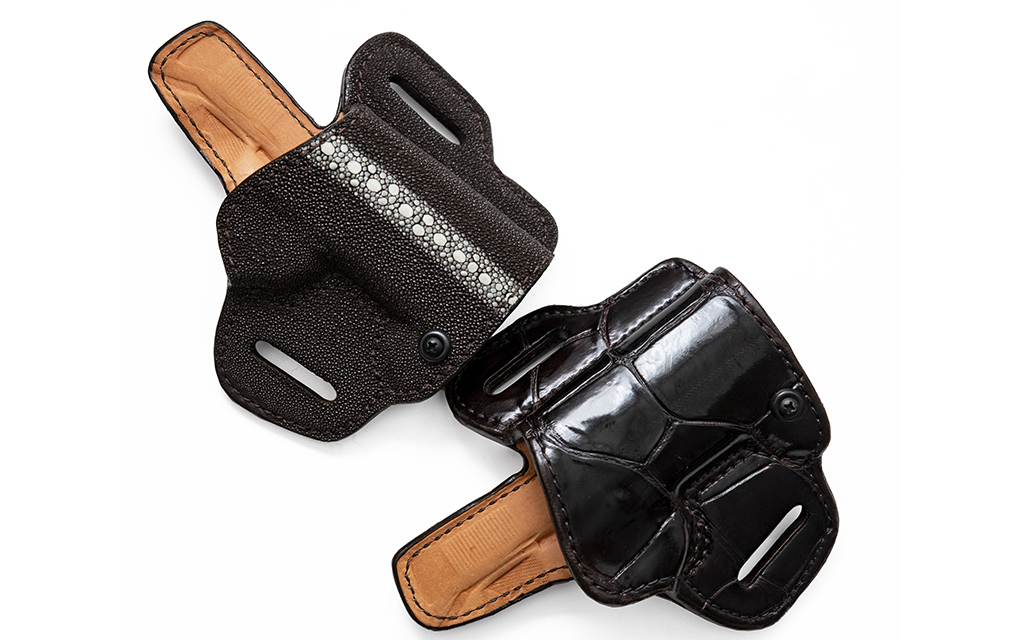
Exotics like the stingray and alligator shown here really draw the eye.
Nestled in the western Carolina mountains is Mayhem Leather Company. This family business specializes in handcrafting custom holsters and other leather items, with a rare eye toward artistry. Mayhem Leather Company not only has some standard holster offerings, wallets, and cowboy rigs, but also 1911 grips formed from the likes of ring lizards, peanut spinal stingray, and gators.
In terms of exotic leathers, they offer a variety of options ranging from hippo, hornback alligator, ostrich, python, pirarucu, shark, stingray, and more. No, you won’t find holsters like these at a regular store, just like how you won’t find bespoke pistols at any old gun shop. And it’s guaranteed that no one is going to have a holster that’ll look exactly like the one you have — even if they buy the same make, model, and material.
Hybrid Holsters
We can’t talk about leather holsters without mentioning hybrids. These designs look for the best of both worlds, the comfort of leather with the retention and rigidity of plastic. Several approaches have been taken with assorted levels of success.
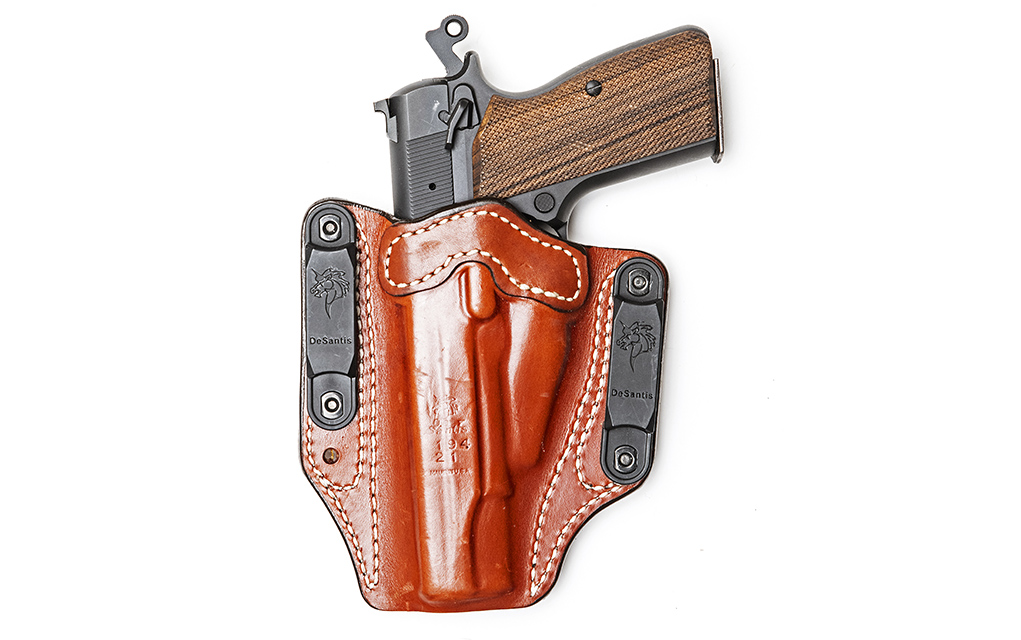
The first generation of the hybrid holster, of which there are still some versions, were plastic shells bolted onto leather backers. There can be issues with backers stretching but the shells staying, affecting retention ability, depending on the quality of construction and type of leather used. Another type is a sort of leather cover for Kydex, like a taco wrap. Most recently, it’s been leather holsters with synthetic internal structures for positive retention, and these have been the most promising in terms of looking and feeling like a traditional leather holster.
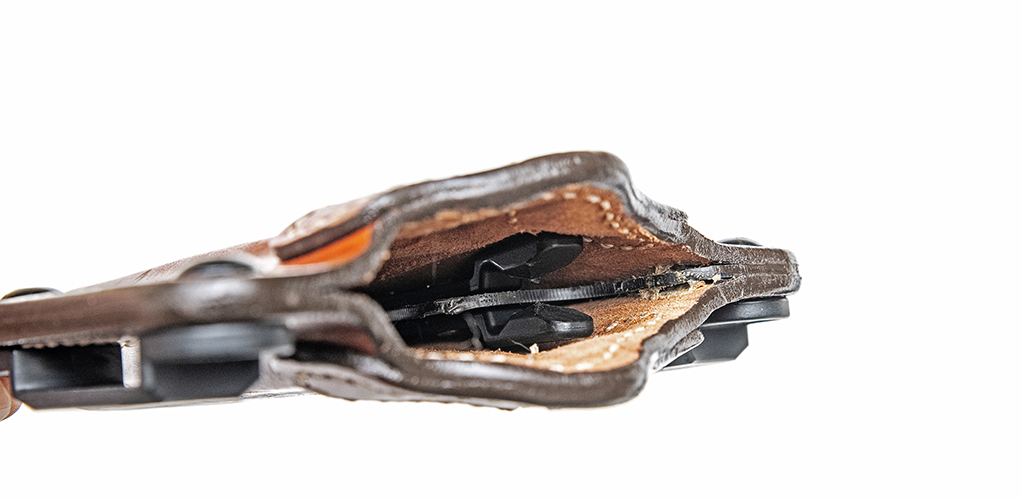
This DeSantis looks like traditional leather, but there’s a synthetic retention yolk inside that clicks onto the trigger guard.
Fitting Leather Holsters
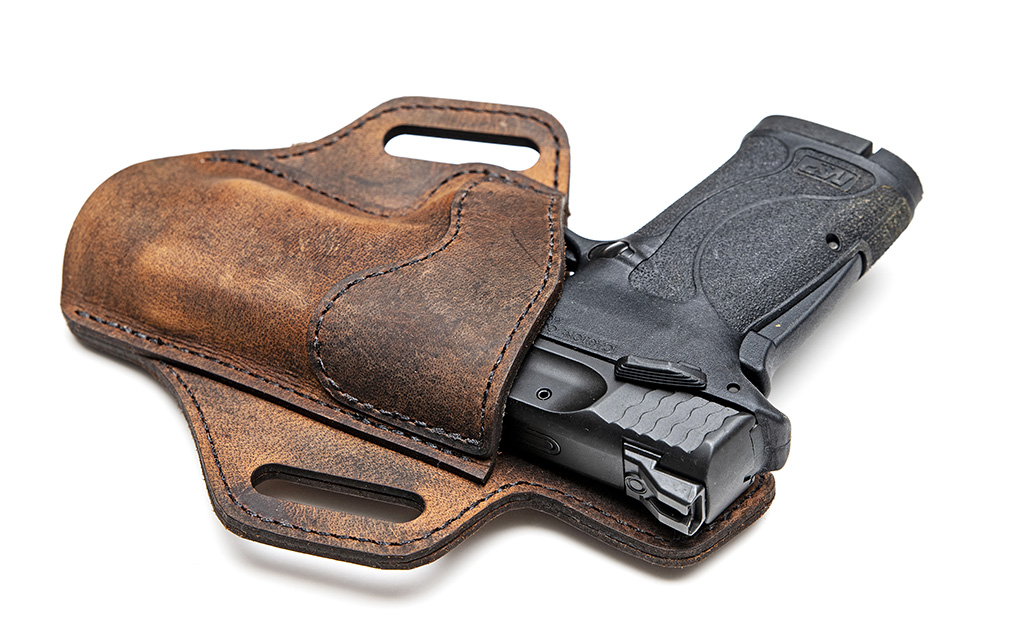
Your pistol needs to fit snugly inside your holster yet still be ready to pull. This is the ever-present problem with concealed carry, and why that “Kydex click” brings so many so much confidence.
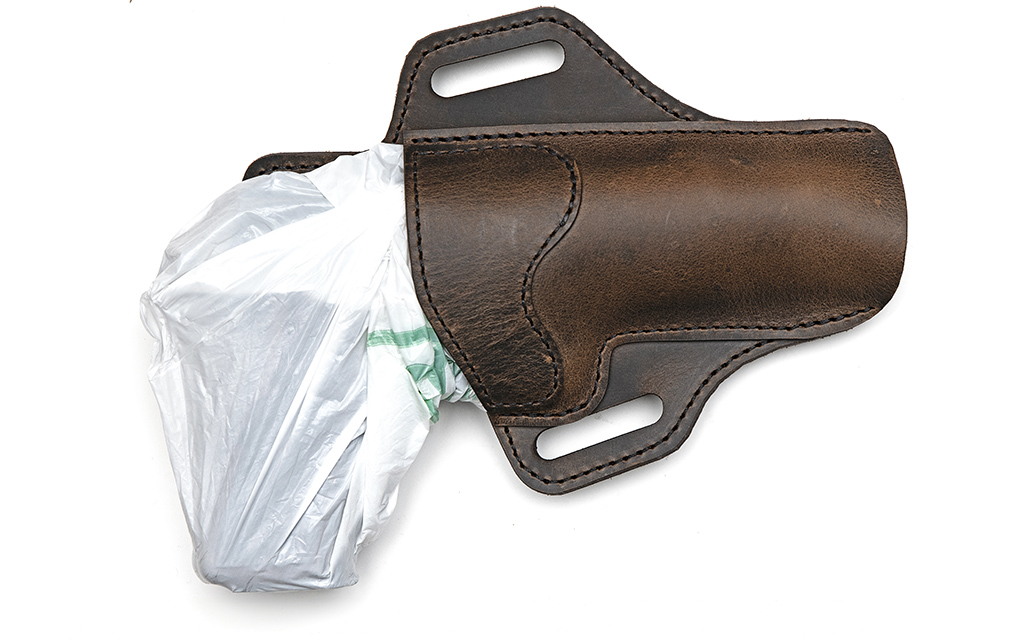
While an inside-the-waistband design can usually have a little more wiggle room because the pistol is pressed between your body and pants by your belt, overall you’re going to want a pistol that fits a little more tightly than you think — that leather is going to stretch with time and use. If it’s too tight, don’t use any saddle soap or other softeners and don’t get it wet. Instead, put your pistol inside a plastic bag, insert it into the holster, and leave it overnight. This will increase the dimensions ever so slightly so it’s just right.
A tight holster can be remedied with a plastic bag, stretching it just a scooch.
Galco Gun Leather sells a product called Draw-EZ to shorten break-in periods, but the very best thing you can do in order to smooth out a leather holster is honest time and repetition.
Care And Inspection
Keep your holster clean. After a long day on the range or running around, a quick wipe down with a clean towel is usually all it needs, but sometimes a little more care is required. The best practice is to only use items recommended by your given maker, lest you weaken the leather by making it too soft. Some light buffing with shoe polish should be A-OK and keep everything looking great. If your holster gets wet, wipe it with a towel, resist the urge to apply heat, and let it dry at room temperature overnight.
Heat and direct sunlight will dry, warp, and crack your leather. Keep your holsters away from windows, sunrooms, and dashboards.
Make damned sure the trigger is properly covered and the leather isn’t soft around the trigger — if the leather is soft enough that the trigger can be pressed through the material, it’s time to retire that holster. Check any retention devices like snaps or attachments like clips for rust.
Editor’s Note: This article originally appeared in the August 2025 issue of Gun Digest the Magazine.
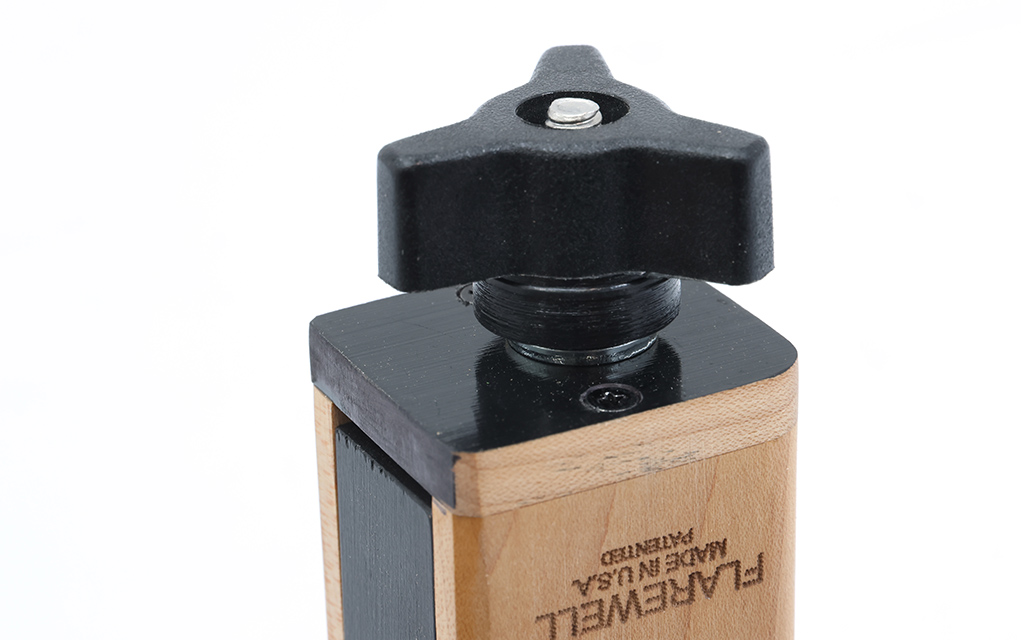
Want to upgrade your Glock with a flared magwell? Here we look at the Flarewell Glock magwell flaring device.
Glocks don’t have much flair … and a whole lot of them don’t have any. Despite being functionally perfect, it took quite a while for there to be any flair, and there still isn’t much. What really caught my attention recently was the comment “Gen 5 Glocks have a magwell flare, not much of one, but there are 24 million Gen 1 through Gen 4 Glocks that have none at all.”
The Glock magwell flaring device, the Flarewell, does exactly that. It flares out the magwell opening of your Glock pistol (9mm and 40 frames only) for a faster reload. I know some of you are thinking, “My Glock mags are tapered at the top. That makes reloads fast.”
Yes, but would you turn down faster?
I thought not.
The process is simple and straightforward. Once you have your Glock apart, and the tools arrayed, heat the bottom edge of your Glock frame. Insert the tool and let it latch onto the magazine catch. Then, use the thumbwheel to move the swaging edge into the magazine well opening until you reach the desired amount of flare. The instructions cover it all.
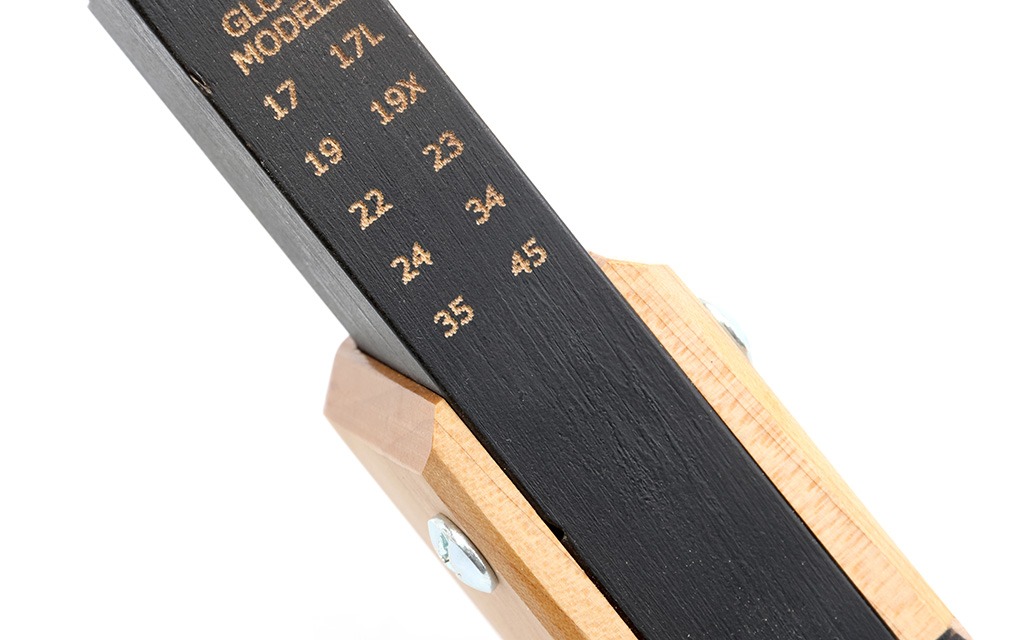
On the back, it lists the magazines the Flarewell is meant to be used in.
The amount of flare you need isn’t great, so take it easy. I can see some heavy-handed users over-flaring because, well, that’s what some people do. Once the polymer cools off it retains the new flared shape, and you are good to go.
Bringing The Heat
As for the heating part, there’s two ways of doing this. One is to use a heat gun, evenly playing it over and around the edge of the magwell opening until it gets hot enough to be moved. The other is to use a hot oil bath. Dip the bottom of the frame into the oil (correct temp, please), and leave it there for a few seconds. Then, pull it out, insert the tool, lock and adjust.
Once the bottom of the frame has been properly heated, you use the thumbwheel to wedge the Flarewell up and flare out the magwell opening of your frame.
One question some might have is if it’s permitted in competition. For that you’ll have to consult the rule book of the particular competition you plan to engage in. I can see some allowing it and others not. And most competitions won’t even notice it—although other competitors might once you start beating them.
The early adopters and clever among the readership might even get a bit of practice in on their own Glocks, and then set up at the gun club some monthly meeting day or match day, offering to flare Glock magwells for a nominal sum. It won’t take too long to recoup your investment in this clever and useful tool.
The investment? It’s $109 for the tool, and shipping is free in the continental United States.
Full disclosure: I’ve known the inventor since we were head-to-head competitors in IPSC in the early days. I don’t have any involvement in this enterprise, but I kinda wish I had—it’s one of those “Why didn’t I think of that?” forehead-slapping ideas. Way to go, Paul.
Now, getting one requires that you be fully conversant in the new digital commerce era. If you have to have it (and I can see a bunch of Glock owners who really do; I have mine), then contact GR9 online. Orders go to [email protected]. You’ll need to have a Venmo account, but once you fork over the digital dollars, your Flarewell tool will be on its way within 24 hours.
Flare on, Glocksters.
Editor’s Note: This article originally appeared in the August 2025 issue of Gun Digest the Magazine.
More Glock Stuff:
Glock 17 Review: How The Full-Sized Striker-Fired Set The Standard
Chiappa has just announced a 10mm chambering option for Rhino 60DS and 30DS revolvers.
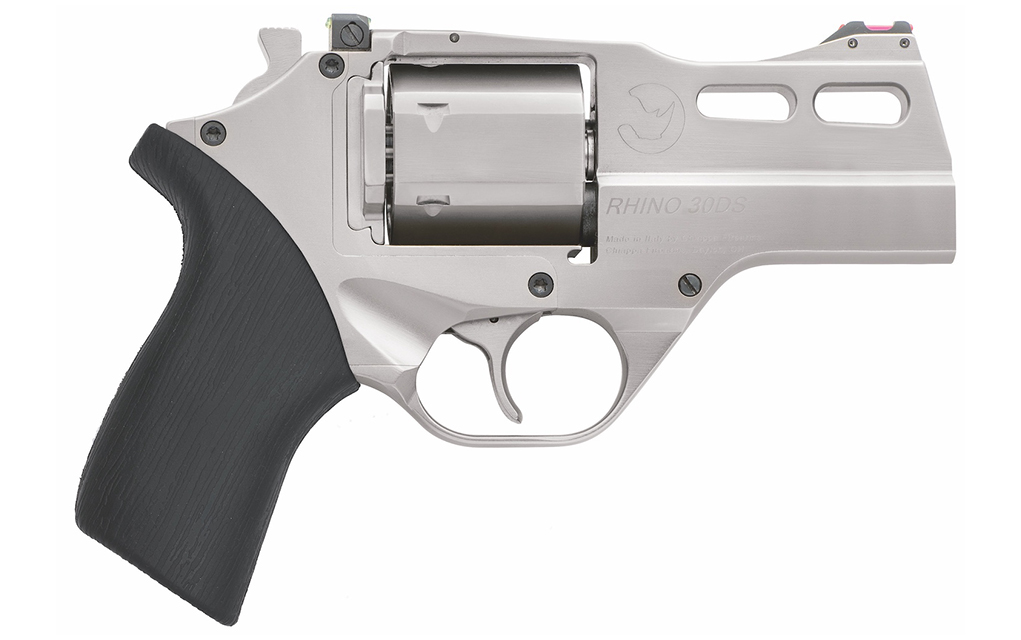
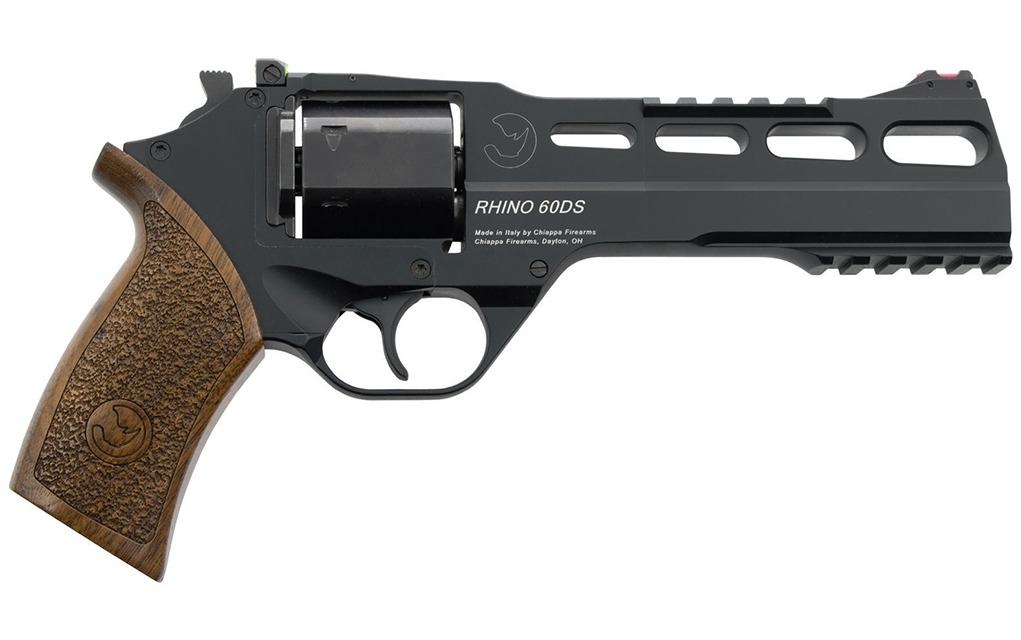
If any revolver makes sense to be chambered for 10mm Auto, it’s probably the futuristic and beefy Chiappa Rhino. Thankfully, Chiappa has just announced that the Rhino 60DS and the Rhino 30DS are going to be available chambered for the big centimeter.
Like other Chiappa Rhino revolvers, the new 10mm models fire from the bottom chamber of the cylinder which results in a very low bore axis. This should do a great job of taming the powerful 10mm cartridge’s recoil. For those seeking that power for personal protection, there’s the Rhino 30DS which features a 3-inch barrel and a nickel finish. For those looking for a field gun, there’s the 60DS with a 6-inch barrel and a black finish. The 60DS also features an optics rail and an accessory rail. Both of the 10mm Rhino models have fiber optic front sights and adjustable rear sights as well.
Chiappa has not yet announced a release date or price for the 10mm Rhino models, so keep an eye out for more news if you’re interested.
Can a high-end, custom .22 LR rifle be practical? When it comes to the Parkwest Arms SD-22, I think the answer is yes.
My buddy Frank writes with a Montblanc pen. I once asked him why. “First and foremost, I like nice things,” he said, “Second, I do sales, and when you hand a client a nice pen to sign the contract with, it helps them feel good about the decision because the act of signing is made into a pleasure and a feeling of success.”
There is no limit on who can enjoy luxury items. That’s how I see Parkwest Arms and, in particular, the SD-22 we are looking at in this article. Parkwest’s guns delight the senses. When the new owners started up the company, they hired as many of the experienced craftsmen as they could from the old Dakota Arms. They have since added even more talented people to their team who have the specialized skills to build heirloom-quality guns.
I think most people can sense the value and quality of any product the minute they handle it for the first time. Certainly, when you handle a nice gun, there are things that jump out at you. Beauty tops my list, then the sounds emanating from the gun when you work its solid action. Custom guns should have clean, crisp lines, pleasing to the eye and hand. These are unlike off-the-shelf guns that must be built with an eye toward minimizing costs. There is nothing wrong with that, it is simply a function of the marketplace that some products must be utilitarian. At the same time, the market demands products for the luxury segment.
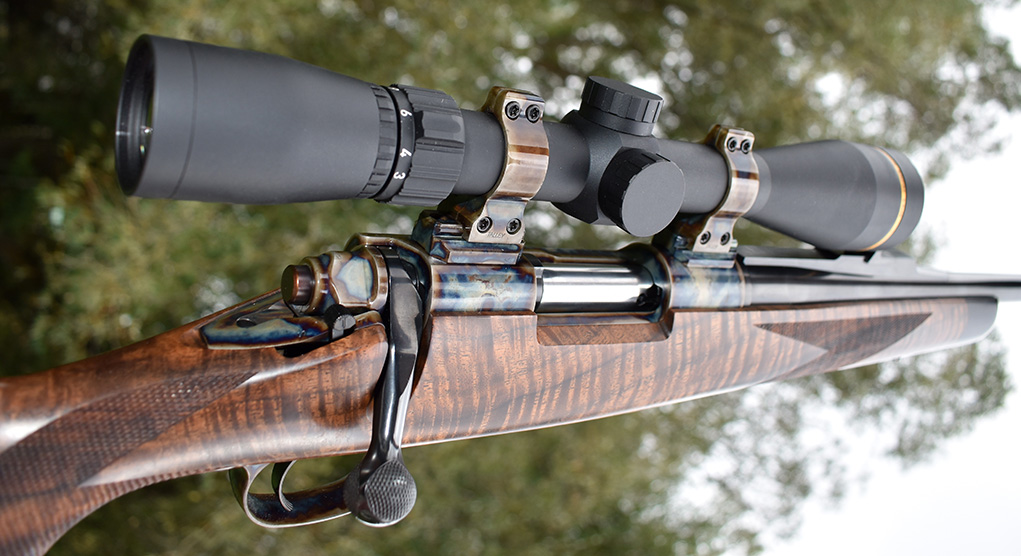
The SD-22 offers the same silhouette as the SD-76 centerfire rifles, so you can practice like you play. Color casehardening is a classy touch.
If the quality of a firearm alone caused small game to drop dead, the SD-22 would be illegal in all 50 States. This rimfire model was new in 2024. Parkwest treats it with all the love, attention to detail, and care that goes into any of its custom hand-built big game rifles.
Steve Rabakoff, one of the owners at Parkwest, tells me that this model is selling even better than they had hoped. It turns out that gun-lovers like to shoot a lot, and this little 22 LR gives them a premium gun that they can shoot everyday if they desire. Ammo is relatively cheap and available, as opposed to some centerfire ammunition. Plus, it’s quiet, easy to share with the kids or grandkids, and has no recoil. I love the idea of introducing the next generation to the sport with a classic rifle design.
Rabakoff wanted me to see one of the new rimfire rifles they were releasing. He was clearly enthused by this project, not just because it’s his company, but because they are offering something unique. The SD-22 is not your grandpa’s .22; unless grandpa had a professional gunmaker for a buddy and got him to build a rifle to match his favorite hunting rifle. We are talking about an adult-sized gun, weighing 7.5 pounds, 41 inches in overall length, with a 23-inch barrel standard.
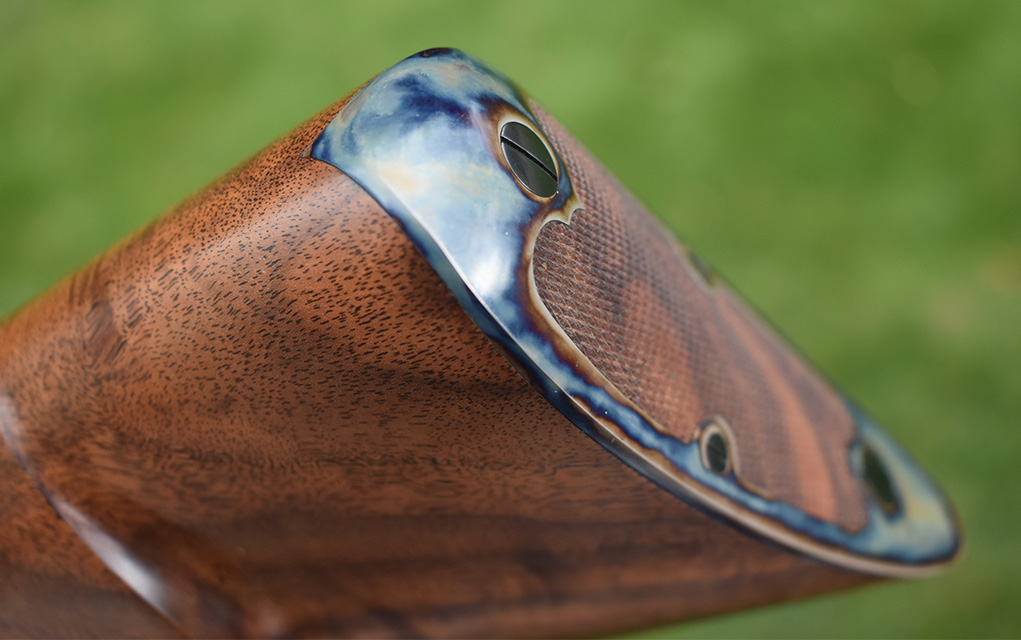
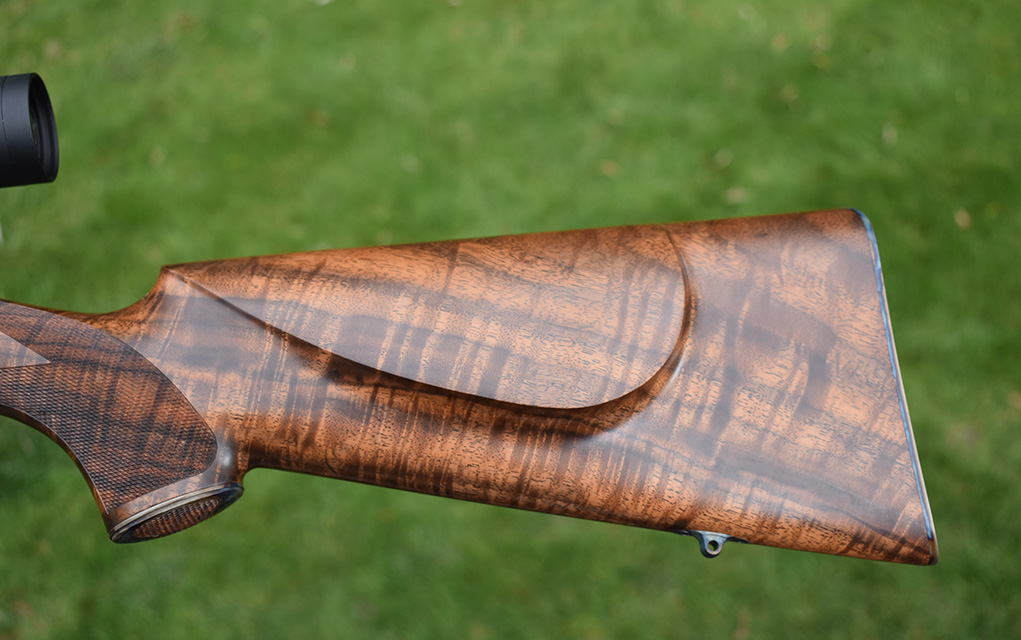
Note the nicely executed skeleton buttplate with a widow’s peak. It looks like the wood grew around it.
An alternative is to switch from a wood stock to synthetic, this drops about one pound from the rifle’s weight. If you are getting ready for a sheep hunt and want a training rifle, this lighter version could be your ticket. Personally, I will not be doing any mountain climbing, so I prefer the beauty of a wood stock.
My grumpy old gunsmith friend Mike Harmon saw this rifle when it came out of the case, and said, “I want to shoot that!” Gunsmiths are notorious for being jaded. They get to handle a wide variety of guns while they ply their trade. So, when gunsmiths get excited about a gun, you know it is something special.
Grumpy and I are both suckers for a nice piece of walnut, and the SD-22 that I received for testing played directly to our weakness—beautiful contrasting colors and copious fiddleback figure. The hand-rubbed oil finish enhanced the figure nicely, giving it the depth it deserves. We stepped out into the sunlight to get the full effect. The light reflecting from the wood provides quite a show, giving the stock depth and character. There is a warmth to wood that no synthetic stock can ever provide (sorry, you will never change my mind). This was a gun I knew would be a pleasure to take to the range or the field.
Howell-style sling swivels and a contrasting tip are two options you can choose on Parkwest’s SD-22 rimfire.
Not all that far in the past, we shooters were all hoarding 22 LR ammunition. At least one good thing came about from that shortage: I now have a broad collection of different brands of .22 LR. Where I live in Northwest Montana, ammunition availability during the shortage was totally random. As a result, I have a little bit of many different brands in my reserves. I went to the cupboard and pulled out a selection of ammo for our accuracy tests.
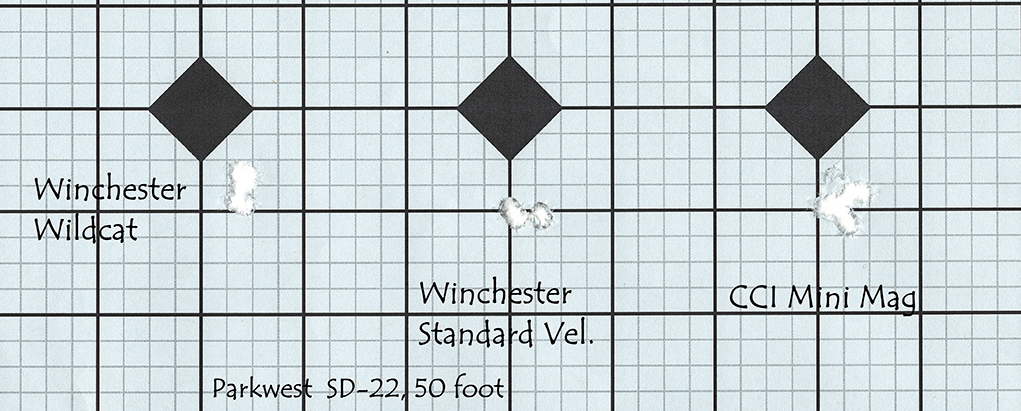
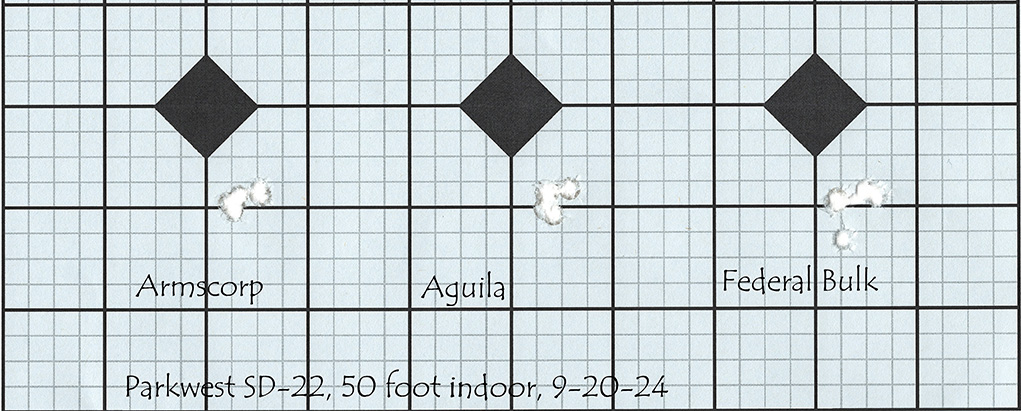
With my arbitrary collection of ammo, it was off to the range to see what this fine rifle was capable of. I’m lucky to have an indoor range in my locale, membership gets you a security code and 24-hour a day shooting privileges. Uniform temperatures and an utter lack of wind make shooting for accuracy a much easier process. I set up on the 50-foot range to do my testing. Each group shown here is five shots.
First, I loaded the magazine with five rounds and shot a group just to see where the scope was hitting and to foul the barrel. With that warm-up group out of the way, I set about collecting groups for the assorted ammunition that I had brought to the bench. All brands produced good minute-of-squirrel accuracy, some much better. The Winchester Wildcat ammo has a 40-grain lead round-nose bullet. The Standard velocity I had is some old “white box” Olin/Winchester and for all the world looks like the same bullet that was loaded in the Wildcat ammo. CCI Mini-Mags use a 36-grain hollow-point with a copper wash.
Parkwest shipped the rifle to me with a Leupold VX Freedom 3-9×40 Rimfire MOA mounted and bore-sighted—an excellent choice for a gun that is intended to have the profile of an American classic hunting rifle. It provided plenty of magnification for a .22 and the glass was clear as you would expect from Leupold. Of course, Parkwest will help you with any optic you prefer on your rifle.
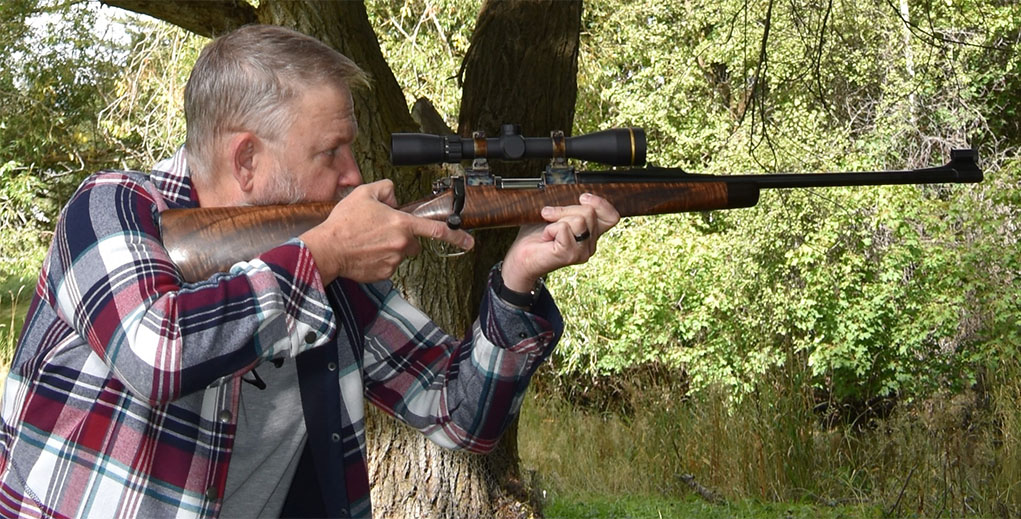
Admiring the SD-22’s details makes the author think of warm evenings by the fire with a good dog sleeping nearby, and great memories of the days afield.
The Armscor ammo was a 36-grain hollow-point coated bullet. Aguila is loaded with a 40-grain round-nose copper-plated projectile. Finally, the Federal Champion bulk ammo bullet was a 36-grain hollow-point, copper-plated. To be fair, the flyer from the Federal ammo could easily have been a result of switching ammo without a fouling shot, as it was the first shot fired with that load. Or it could be old eyes. Either way, the squirrel would still be dead.
Impressions From The Range
A pleasant surprise, it was better than expected; yes, I am gushing. Fun, enjoyable and satisfying. I have shot an untold number of rimfire rifles over the years. I couldn’t even guess at how much .22 ammo I have burned over the decades. This rifle ranks as one of the most accurate sporting .22s I have ever shot. More than that, it was special, and memorable; I don’t say that sort of thing about guns very often.
Hand checkering on the stock is clean and sharp with two panels on the grip and a wraparound pattern on the forend. The wood color and figure shows through the checkering so that the checkering only adds to the rifle’s attractive look—as well-executed checkering should do. In addition, the bolt handle had a nice three-panel metal checkering to match the stock, and yes, there are other options for the bolt handle, so you can make it your own.
Parkwest lists the chamber for the SD-22 as a Bentz, this is typically a popular match chamber for semi-auto guns. Over time, it has become popular in other guns as well. The Bentz chamber falls between the SAAMI Match and SAAMI Sporting chambers for .22 LR. I suspect that Parkwest selected it because it is more versatile than a match chamber and will work with a broader selection of ammo. Match chambers are shorter than the average sporting chamber for .22 LR, but the Bentz chamber features a long-tapered throat compared to most rimfire ones. This chamber is well known for producing excellent accuracy with a wide range of ammunition brands and types. Obviously, Parkwest made a good choice based on our results.
The SD-22 comes with a ½-MOA guarantee for accuracy and is delivered with a target from the factory. Clearly, all my groups met that standard, some by a large margin. Several of my groups were just over 0.250 inch or 50 percent better than promised. I’m betting there is an even better ammo out there; I just ran out of time at the range.
Actions for the SD-22 are available for right- or left-handed shooters. Standard in chromoly (blue) steel, each rifle is supplied with two five-round magazines. That second magazine is a nice thing to have with any gun. For reliable feeding and ejection, the bolt is designed with dual extractors. The gun fed flawlessly with all the ammo we tried. The standard rifle comes with a XXX Claro walnut stock, solid steel grip cap, and ½-inch recoil pad to add to the classic look of the rifle.
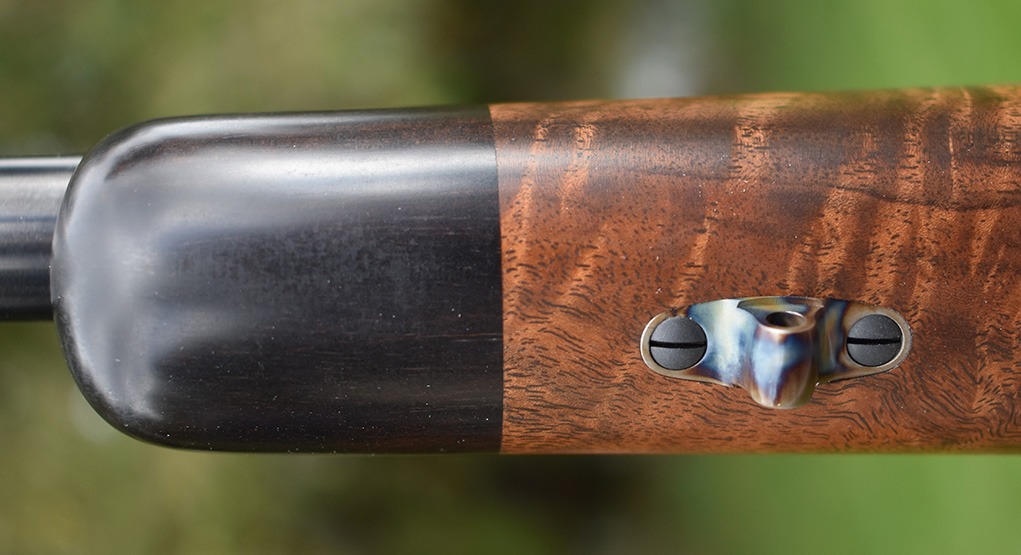
Several of the custom touches include a steel buttplate, skeleton grip cap, Howell swivels, and the cheekpiece and checkering.
Avid shooters will tell you that much of the accuracy potential in a rifle comes from a quality trigger, so Parkwest added a TriggerTech adjustable trigger standard, as well. I appreciated the fine single-stage trigger on the test gun set to about 2 pounds. The release was crisp and repeatable with no perceptible creep.
That seems like an extensive list of features, and it is. Still, Parkwest offers a long list of custom options so you can have exactly what you desire. It’s not likely you will ever see two SD-22 rifles that look alike, unless of course you ordered them to match.
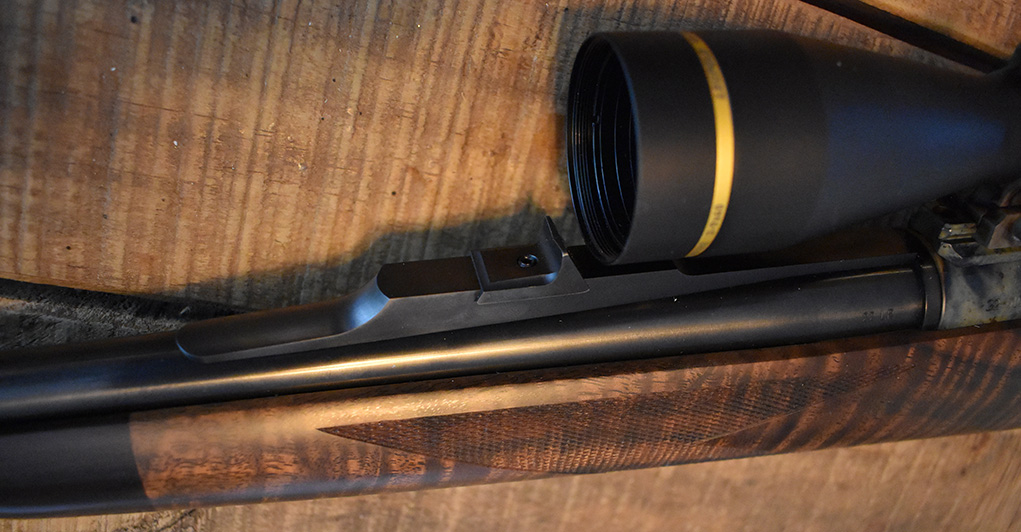
The rifle I tested had many optional features and did a great job of showing off what the experts at Parkwest Arms are capable of. The metal is all hand polished, the standard model is blued, but can be ordered in numerous finish types, including Cerakote or slow rust blue. Note that our test gun had a color-cased receiver and scope mounts along with premium polished bluing on the rest of the gun. The color case is well done; preparation is the key when performing color casehardening. The degree of polish applied to the metal can greatly enhance the resulting colors from the process.
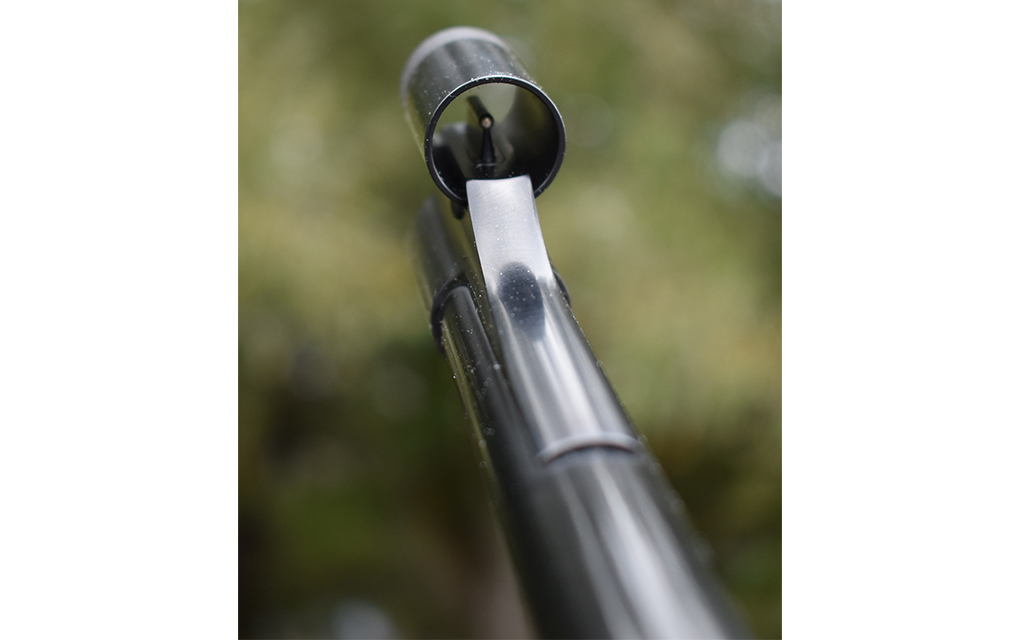
The iron sights on my test gun were also upgraded. The rear sight was mounted on a quarter-rib and a banded front sight completed the set. “Practice like you play.” If I was getting ready for a plains game hunt, practicing with the same sights on my .22 would not be a bad thing.
The banded ramp front sight matches up with the express rear sight mounted on a quarter rib.
Parkwest Arms offers you a particular touch that only a true custom gunmaker can offer, a personalized serial number to make your rifle fully unique. FDZ are my initials; I am thinking of ordering “Fudzy” as my serial number, it’s a nickname of sorts. That way I can tell my grandson, “Shhh, be werwy, werwy quiet, we are hunting wabbits.” It would be worth it just to see the eye roll.
On its website, Parkwest has a build-your-own-rifle feature that allows you to stroll through all the options. Items you can customize include the wood grade, contrasting forend tip, checkering, different types of sling swivels, or cross bolts. We are not done yet; recoil pads, buttplates (solid or skeleton), tip and toe plates, and just as many choices for grip caps. On top of that, you can add engraving, as simple or extensive as you like. In short, you can make it a dream rifle with the features that you want.
Why?
If you must ask … I guess I did a poor job of explaining what the experience of handling a well-executed product like the SD-22 is really like. To be as direct as possible, it is a beautiful handmade rifle of the highest quality, and completely tailored to your personal taste. So, why not?
Editor’s Note: This article originally appeared in the July 2025 issue of Gun Digest the Magazine.
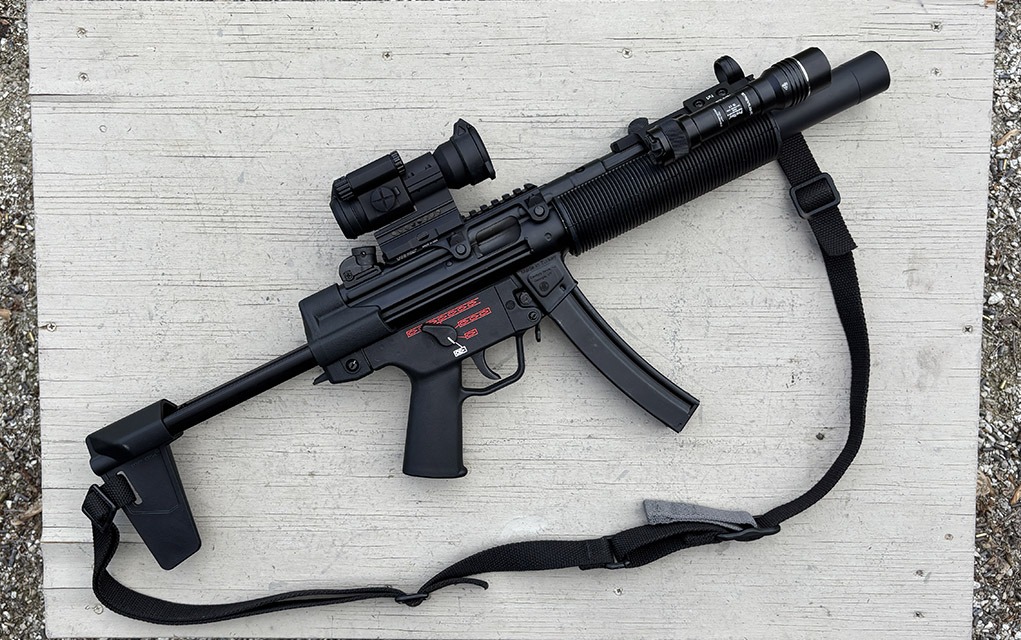
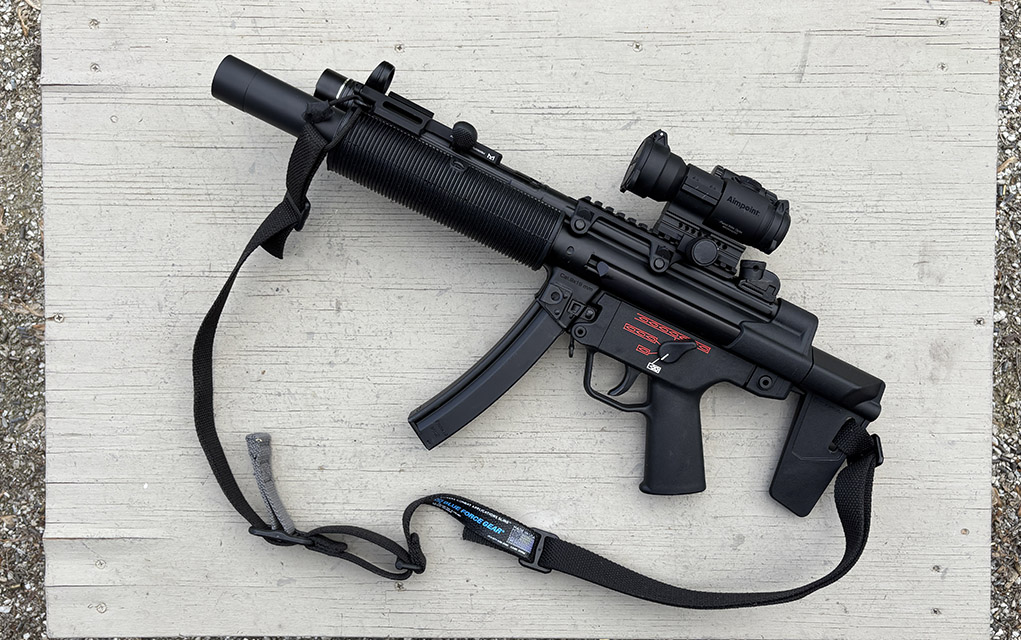
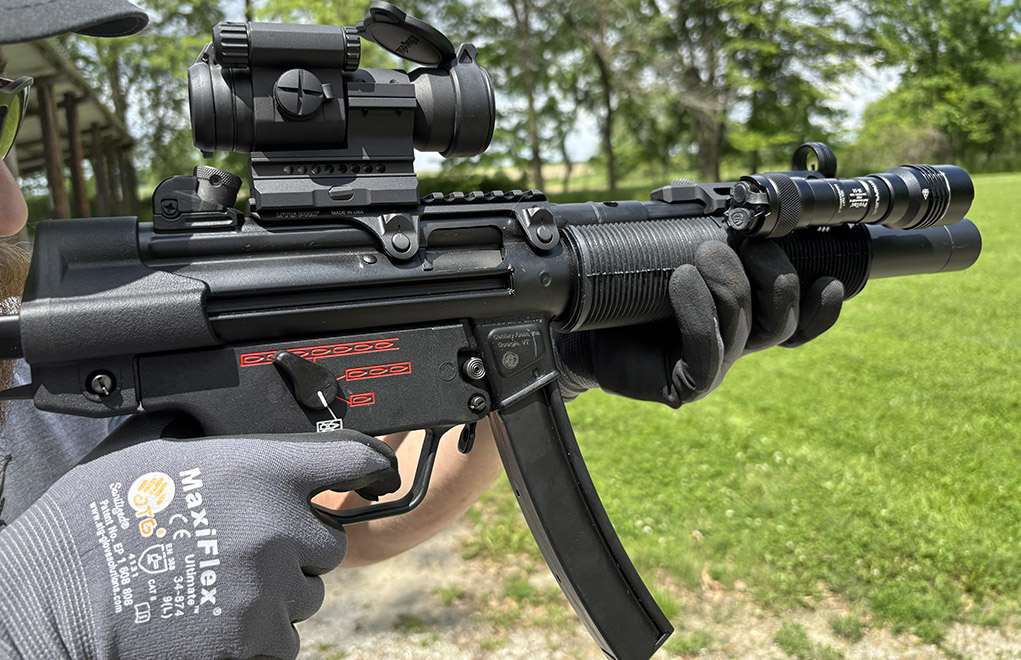
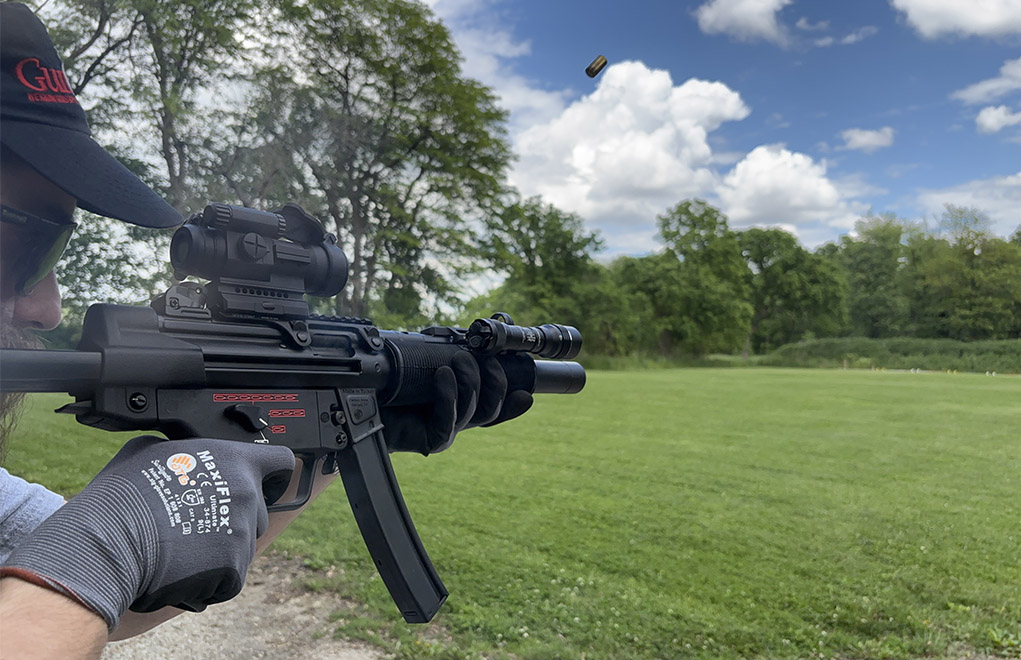
I hit the range to test the AP5SD, Century Arms/MKE’s clone of the famous H&K MP5SD.
Talk about getting your head spun.
I was very excited When I heard rumors about Century Arms importing a new MP5SD-style pistol from MKE in Turkey. Then, I listened to some further details and was disappointed. Then I got one, and my opinion did a complete 180.
Allow me to explain why.
MKE AP5SD Specs:
Country of Origin: Turkey Cartridge: 9x19mm Parabellum Action: Roller-lock delayed blowback Barrel Length: 5.75 Inches Weight: 6.7 Pounds Overall Length (From brace to end of handguard): 19 Inches (collapsed) ; 24.25 Inches (extended) Muzzle: 1/2×28 threads and tri-lug Muzzle Device: Removable faux suppressor Capacity: 30 Sights: Rotating diopter drum (rear) ; Hooded post (front) MSRP: $1,800 (braced model)
Pros
Very soft shooter
Excellent suppressor host
Reliable
Cons
Worse ergonomics than an AR
Slow reloads
Relatively heavy
H&K MP5SD Vs. MKE AP5SD
If you’re not familiar with the original H&K MP5SD, it’s an integrally suppressed variant of the company’s iconic MP5 9mm submachine gun introduced in the mid-1970s. What makes it so special isn’t that it features a suppressor shrouded underneath a purpose-built handguard, it’s that its barrel is ported.
These ports vent off gas to reduce the muzzle velocity of standard-spec 9mm NATO ball ammunition to subsonic levels. The advantage of this is that, unlike most other suppressed 9mm SMGs that require special subsonic ammo to be as quiet as possible, the MP5SD could use just about any ammo and do the same thing. That’s a neat trick.
In turn, when the AP5SD was announced, a lot of shooters were hopeful the Turkish clone would come with the proper ported barrel. As it turned out, it didn’t.
Given this, many early purchasers scrambled to find companies to convert them to true SDs. I considered doing the same, but after further research, I concluded not only that it wasn’t worth the effort, but that the AP5SD is likely the superior configuration for most American shooters today.
Portless
While original ported MP5SDs are still very cool, the design has distinct disadvantages. Namely, it will only function with a special SD-style suppressor. Plus, from what I’ve heard, this configuration gets very dirty very fast.
The AP5SD, on the other hand, features a normal 5.75-inch barrel. That’s about the same length as the AP5-P (MKE’s clone of the MP5K-PDW) and the end of the muzzle is recessed about 1.5 inches inside the handguard. Topped off with both a 1/2×28 threaded muzzle and a tri-lug, the result is that you can install any standard 9mm suppressor that will fit inside the handguard and it will give the appearance of being a true MP5SD (though some suppressors will look more like the original than others).
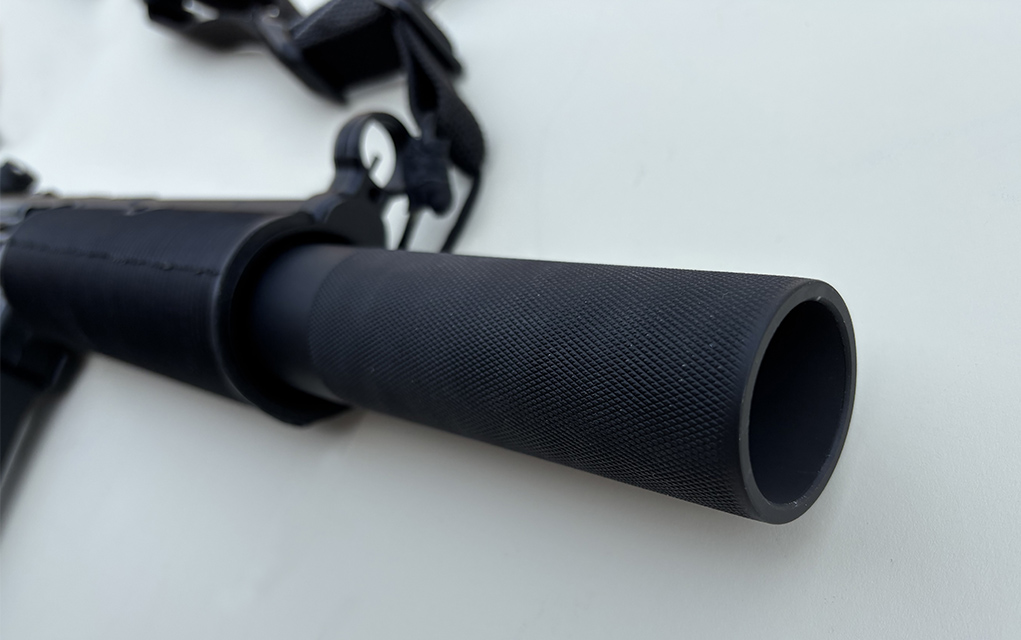
The AP5SD comes with a faux suppressor installed that looks the part. Let’s not kid ourselves, though, if you’re buying one of these, you’re going to put a real suppressor on it.
The AP5SD’s included faux suppressor. It attaches via the 1/2×28 threads and doubles as a thread protector.
That all said, this is why I think the AP5SD’s configuration is better than the MP5SD-style ported barrel–you have a wider variety of suppressors options, a cleaner system and better ammo choices. As civilians, we do not exist within a military supply chain–we can simply buy subsonic ammo when we wish to shoot subsonic.
Another downside of the MP5SD, its porting always reduces a bullet’s velocity, like it or not. Sometimes, faster and louder is better. The AP5SD gives you this control.
Originality is cool, especially for collectors of military small arms, but I’m convinced that for the average American shooter the AP5SD is perfectly designed.
Setting Up The AP5SD
The AP5SD is available with or without a Magpul MP BSL brace. If you order the braced model, it will still come with the original end cap with a Picatinny rail and a sling loop. Two mags, a cleaning kit, a sling and an optics rail are included, all shipped in a hard case to round out the package.
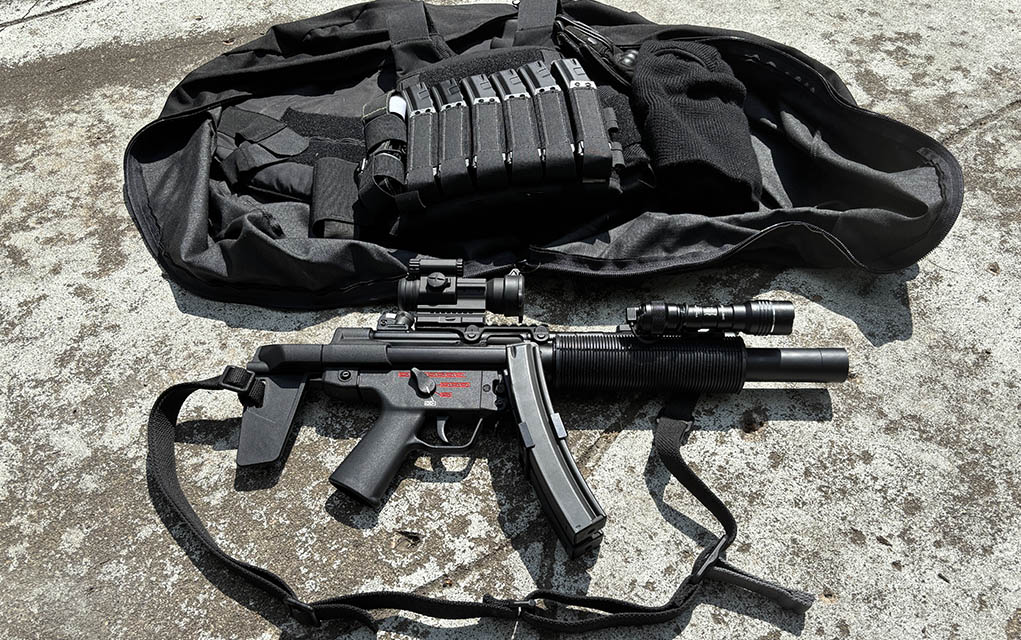
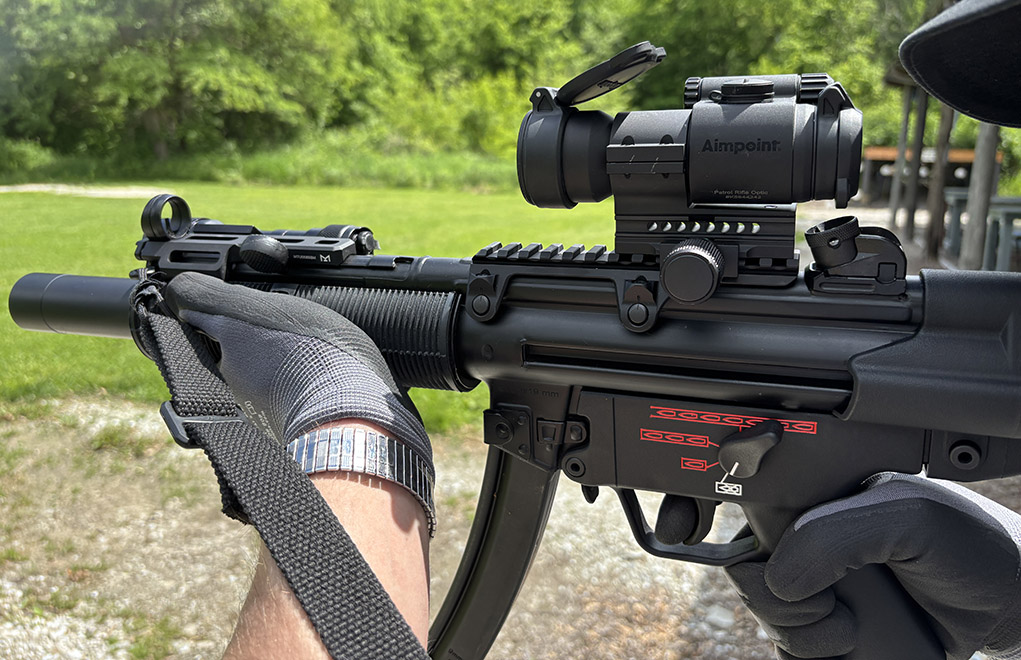
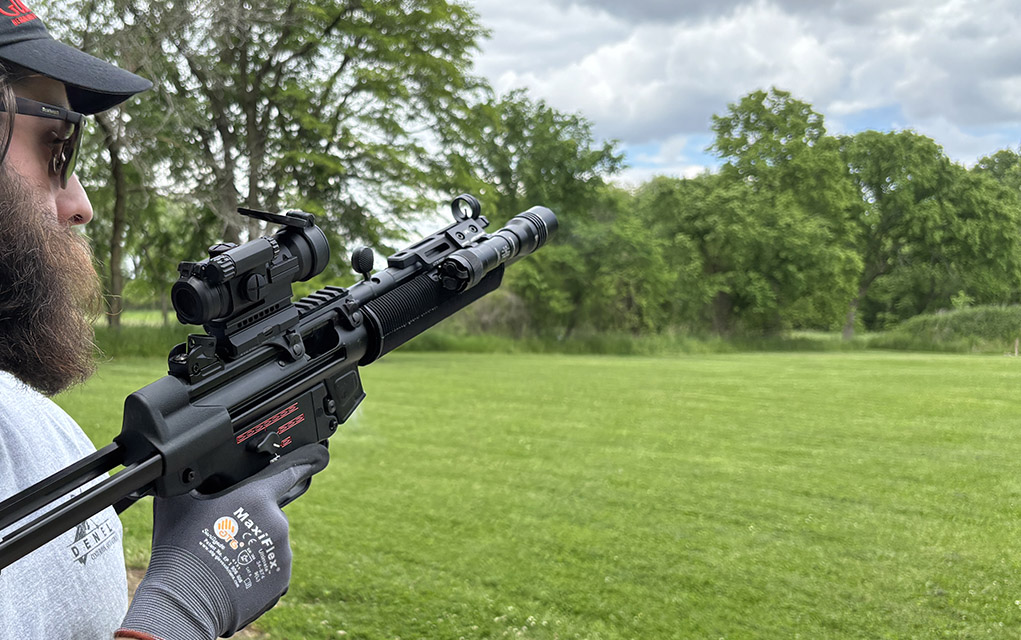
My setup was as follows: Leapers’ new UTG Pro Claw Mount, Aimpoint PRO, UTG Pro M-LOK Light Mount and a Streamlight ProTac Rail Mount HP-X Pro. Shout-out to HKParts for supplying the mounts and other accessories like their dual magazine clamp. The sling is a Vickers SMG sling, a slightly lighter version of my favorite carbine sling.
The most important accessory for the AP5SD was a suppressor. I used a Rugged Obsidian45 on a tri-lug mount for this test, however, I have an Omega 36M on the way that will be this gun’s dedicated can.
Finally, the ammo—I was primarily shooting HSL 147-grain subsonics. It’s remanufactured ammunition, but has so far proven very reliable for me.
On The Range With The AP5SD
I initially put a couple of mags through it with the faux suppressor just to try it out. It shot just fine, but this gun needed the real deal.
With the Obsidian45 installed, it finally felt right. MP5s are already known for being incredibly soft-shooting, but with a suppressor, the AP5SD felt like a BB gun. With the subsonic ammo, it was about as quiet as one, too. While shooting this without ear pro was a pleasant experience, it’s still a good idea to wear them. Hearing damage can be gradual and sneaky.
Needless to say, the AP5SD is an amazing shooter. As a suppressed semi-auto MP5 clone it handles exactly as you’d expect. There’s a reason why the MP5’s reputation precedes it and why so many armed professionals around the globe have favored it for decades.
Regarding reliability, I experienced two failures to extract in the first 100 rounds but otherwise had smooth sailing for the next 400 or so. I’ll chalk those up to break-in.
People have mixed opinions about the MP5 diopter iron sights, but I’m a fan. That said, with the Magpul brace installed, I found it hard to get behind them. The brace is comfortable enough to shoot with, but I found it much easier to aim with a tall red dot installed on a riser.
With the Aimpoint PRO, it was effortless to make hits. The lack of recoil means the point of aim stays solid, making follow-up shots a breeze. Even at 100 yards, it was relatively easy to ring a half-size steel silhouette. Of course, guns like this are designed for closer-range work, and that’s where the AP5SD truly shone.
While practicing target transitions on an array of steel plates, my only complaint was a very common one of semi-auto MP5s—I wished it could go faster.
All MP5 triggers are known for being long and mushy, but it’s not as big of a deal for full-auto models. Those of us stuck with semis can try to squeeze that trigger as fast as possible, all we want, but it will never be as fast as what you can do with even a standard AR-15 trigger. The AP5SD’s safety, again like any MP5 safety, also doesn’t hold a candle to the AR’s ergonomics. While it may not be the fastest or easiest to use by modern standards, the replica 4-position pictogram ambi lower does look really damn cool. A trade some will be happy to make.
Parting Shot
I’m absolutely in love with the AP5SD. It’s my first 9mm roller-lock, and I already feel a growing itch to get one of MKE’s other MP5 clones.
All of my complaints with this gun are either endemic to the MP5 design or are minor nitpicks.
As for the nitpicks, the rubber handguard came with some molding artifacts along the seam. You can clean these up yourself with a knife if they bother you, but it would have been nice if they did a better job removing those at the factory.
Also, while I always like getting extra goodies along with a new gun, the included sling and optics mount aren’t of great quality. I’d recommend not messing with them and just buying better aftermarket replacements. Finally, if you want to attach a suppressor via a tri-lug, it’s a good idea to install a thread protector first for a tighter fit. If there’s one thing I wish the AP5SD came with, it’s a thread protector.
All the other weak spots of this gun are just because it’s an MP5 clone. Namely, the trigger and safety. Thankfully, however, companies are now making MP5 lowers that can take AR-15 triggers, safeties and pistol grips. Being able to shoot the AP5SD faster will be worth sacrificing some classic aesthetics for me, so I plan on trying one of those next.
As most already know, the MP5 reload process is also much slower than an AR’s. A positive aspect of that is it results in the very fun and iconic HK slap, but you should consider that you’ll need to learn a new, slower and more complicated manual of arms before buying your first MP5-style gun.
The AP5SD being reloaded. Notice the bolt has been manually locked back before a new magazine can be inserted.
So, should you get an MKE AP5SD? That depends on what you’re after. If you want the fastest, most tactical 9mm PCC available today, the MP5 isn’t the platform for you. If you want an MP5 but want to be able to modernize it as much as possible, the AP5SD specifically isn’t for you, but a standard AP5 or AP5-P would be what to look at.
If, however, you’re like me and have drooled over the MP5SD since you first saw one in a movie as a kid, there’s no easier way to own one than with the AP5SD. And as you can see with mine, modernizing it with an optic and light is possible. Despite being a bit retro, this still feels like a supremely practical gun to me. With how quiet, compact and easy to shoot this is, I think it will be spending a lot of time next to my bed.
The Charlie Sheen film Navy SEALs famously depicts SEALs using the integrally suppressed MP5SD, but the team in real life also uses standard MP5s and compact MP5Ks. It all depends what the mission calls for.
Why Did SWAT Stop Using The MP5?
People commonly think that SWAT teams around the country have completely stopped using MP5s, but that’s not true. They have been largely replaced by various types of 5.56 AR-15s, but many departments still have MP5s in their inventory that can be taken out for a mission if so desired. Some poorer departments may still use them purely out of necessity, but some SWAT team members with the option will still take an MP5 over an AR due to personal preference. For proof, take a look at recent Annual Military Equipment Reports published by departments in California, you’ll see the MP5 mentioned in plenty of them.
Is A 9mm Carbine Good For Home Defense?
Yes, 9mm carbines (either in the form of an SBR or a braced pistol) make excellent home defense weapons and are a popular choice. They’re small, easy to shoot, pack plenty of punch at close range and can use subsonic defensive ammunition in conjunction with a suppressor to save your hearing. That said, living situations vary, and factors like overpenetration could make a 9mm carbine a less desirable option compared to something else.
What Is The Point Of A 9mm Carbine?
As mentioned, 9mm carbines like an MP5 clone can make for excellent home defense guns. They’re tons of fun to shoot too, so they make for great range toys and are often used in competition as well. 9mm is also cheaper than .223/5.56 ammo, so you can spend more time plinking or training for less money.
More Classic Guns:
Why The Mauser C96 “Broomhandle” Still Looms Large
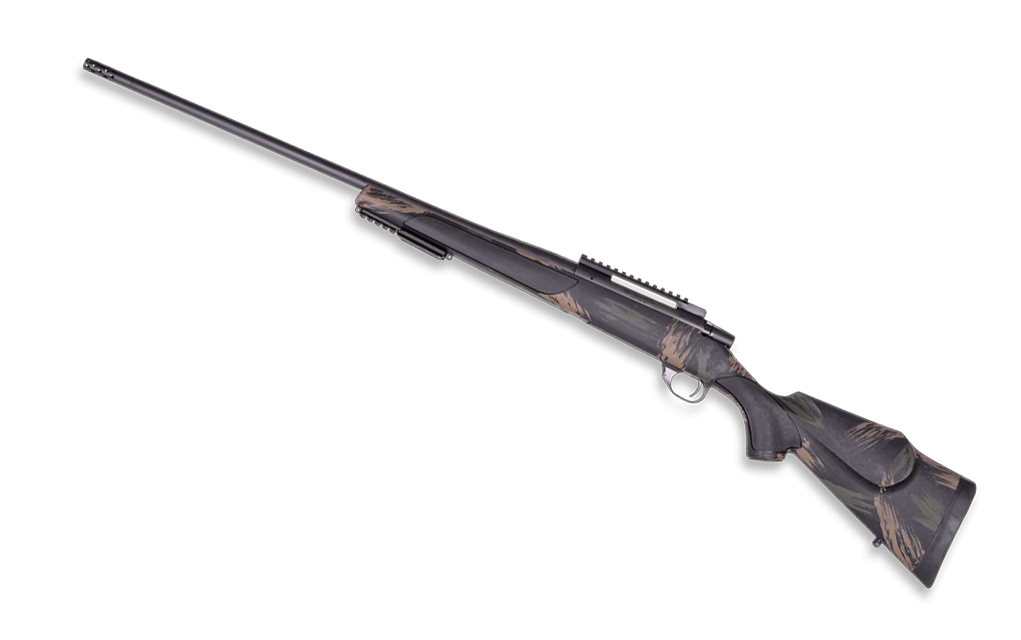
A quick look at the new Weatherby Vanguard Black Hills, a rifle designed to deliver utmost precision in harsh environments.
Named after the rugged Black Hills of South Dakota, the new Weatherby Vanguard Black Hills rifle was built with tough environments in mind. If you require precision on difficult hunts, this model seems quite worthy of consideration.
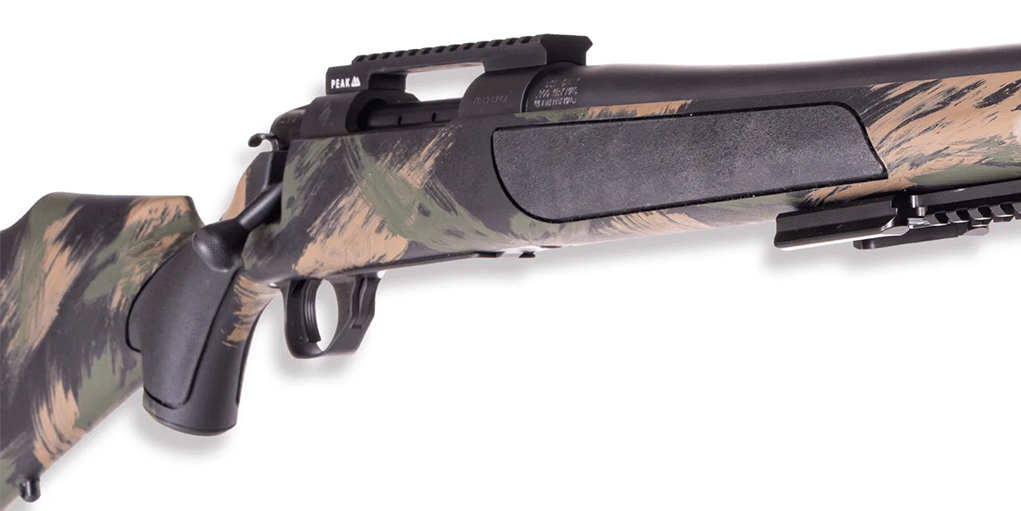
Featuring a cold hammer-forged barrel with either a #2 or #3 contour, a Vanguard action and a match-grade two-stage trigger, Weatherby guarantees that the Vanguard Black Hills is capable of sub-MOA accuracy out of the box (.99” or less 3-shot group at 100 yards with Weatherby factory or premium ammunition). Barrel lengths range between 20 and 26 inches depending on the caliber. The rifle also has a three-position safety, an integral recoil lug and a hand-painted Monte Carlo synthetic stock.
Other features of the Vanguard Black Hills include a Peak 44 Picatinny JRAIL for optics, a Peak 44 Arca/Pic Adapter on the forend for accessories like bipods and a threaded muzzle for suppressors or brakes. Every caliber variant ships with an Accubrake ST except for the 350 Legend model. The full list of available calibers includes .22-250 Remington, .223 Remington, .243 Winchester, .25-06 Remington, .257 Weatherby Magnum, .30-06 Springfield, .300 Weatherby Magnum, .300 Winchester, .308 Winchester, 6.5 Creedmoor, 6.5 PRC, 6.5-300 Weatherby Magnum, 7mm Remington, 7mm-08 Remington, 350 Legend and 7mm PRC.
The Weatherby Vanguard Black Hills has an MSRP of $769 and is available now.
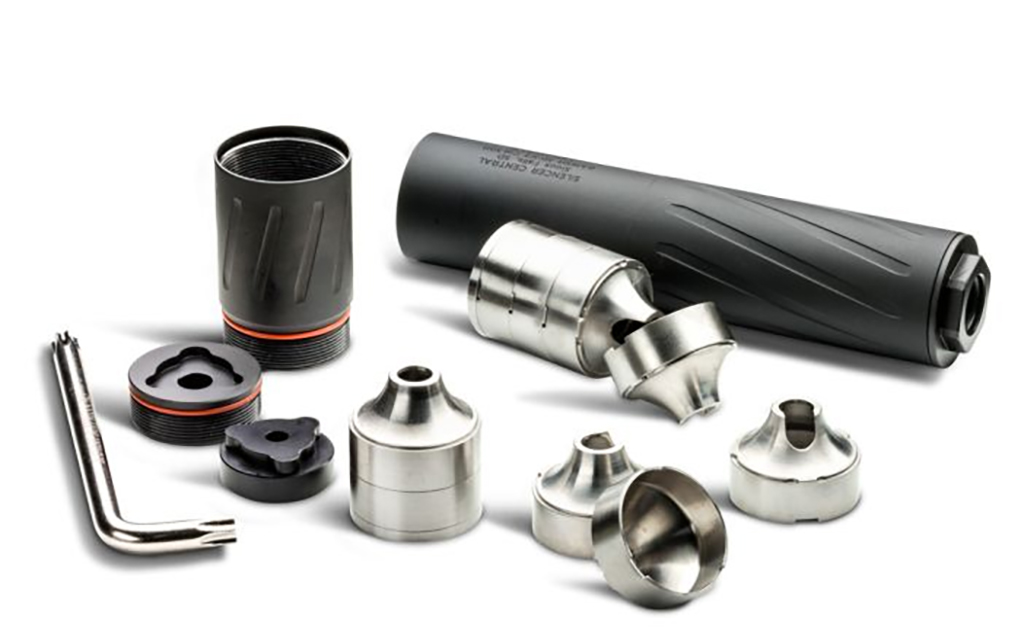
BANISH recently announced the BANISH 30-V2, an updated version of the original BANISH 30 that’s better in every way.
The original BANISH 30 is a good suppressor, but there’s always room for improvement. So, the company set out to do just that with the new and improved BANISH 30-V2. Namely, it now features the industry-standard HUB mount and is shorter, lighter and even quieter than the first version.
How does it accomplish all that? The BANISH 30-V2 features a full titanium construction. That allows it to be 1.8 ounces lighter than the original. Presumably thanks to an improved internal design, the suppressor also manages to be 0.8 inches shorter while being quieter as well. When tested with a .308 rifle, the BANISH 30-V2 had a maximum average decibel reduction of 34.5 dB. It’s rated for .17 HMR through .300 Weatherby Magnum, and like the original, it’s modular as well. This allows you to run it in either an 11-baffle, 8.17-inch-long configuration or an 8-baffle, 6.4-inch configuration.
Lukas VanLaecken, Director of Engineering for BANISH Suppressors, said this about the new can:
The Banish 30-V2 builds upon the great performance of the Banish 30 while keeping it modular and serviceable, giving shooters the choice on overall size and sound performance … The new design reduces the overall length by 0.8 in. and weight by 1.8 oz. while improving performance for an overall quieter shooting experience. The addition of a HUB mount system offers more options and ease of use with multiple mounting systems and firearm configurations.
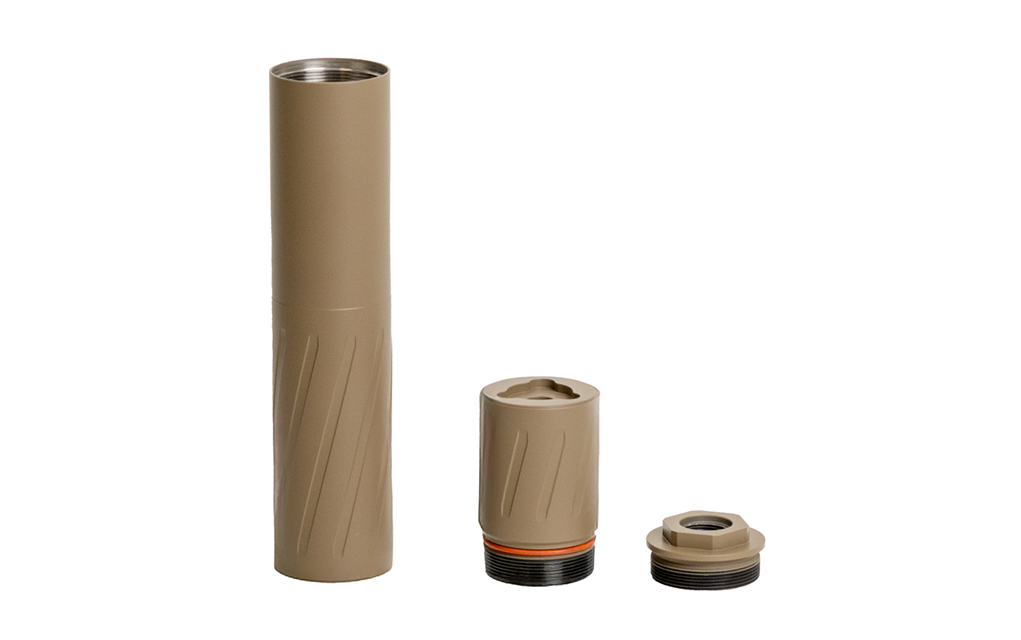
Each BANISH 30-V2 comes with a 5/8×24 direct-thread mount and they can be ordered with either a black or tan finish. They’re available now and have an MSRP of $999.
Two of my favorite cartridges, .270 Winchester and .300 Holland & Holland Magnum, have just celebrated their centennial birthday.
Maintaining popularity for more than a century is quite the accomplishment in the cartridge world. For every one of the “classics” that have made that mark, there are several that fell out of vogue, and many others that have disappeared altogether.
Sure, the .30-06 Springfield, .45-70 Government, .45 ACP, 9mm Luger, .22 Long Rifle and .30-30 Winchester have all made that mark, but the .30-40 Krag, .38-55 Winchester, .300 Savage and .22 Short have lost much of their following of late. And while much of the cartridge market seems to be a popularity contest, a cartridge has to have something substantial to offer to maintain any sort of popularity for more than a century … especially considering the recent advancements in powder and bullet technologies.
Celebrating their 100th trip around the sun this year are two classic cartridges: the .270 Winchester and the .300 Holland & Holland Magnum. One is an undeniable success story that remains a highly popular choice among big game hunters, and the other has a provenance that cannot be denied, even if other cartridges have pushed it out of the limelight.
.270 Winchester
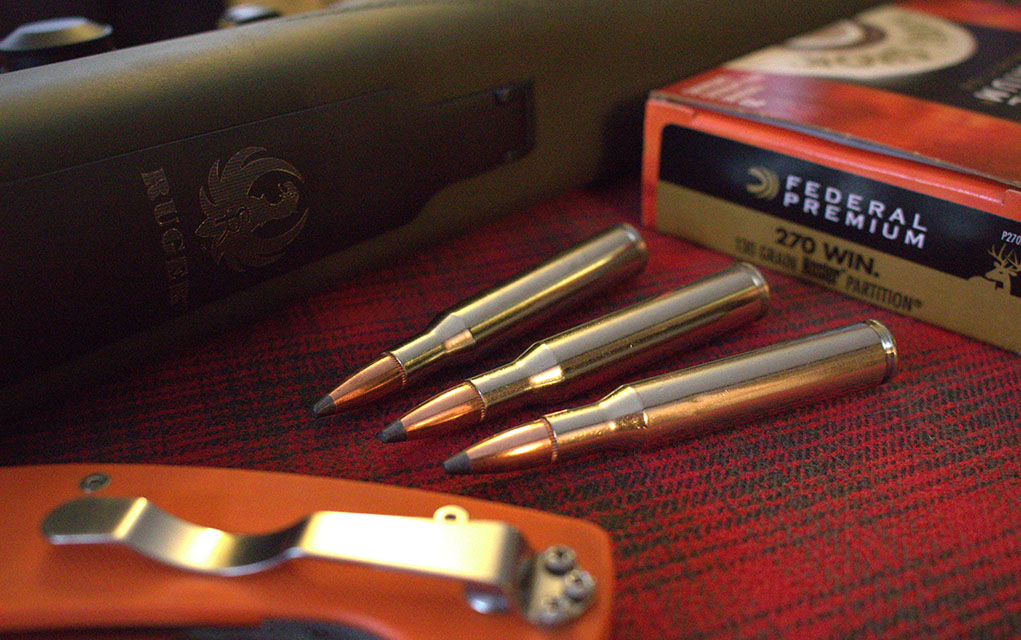
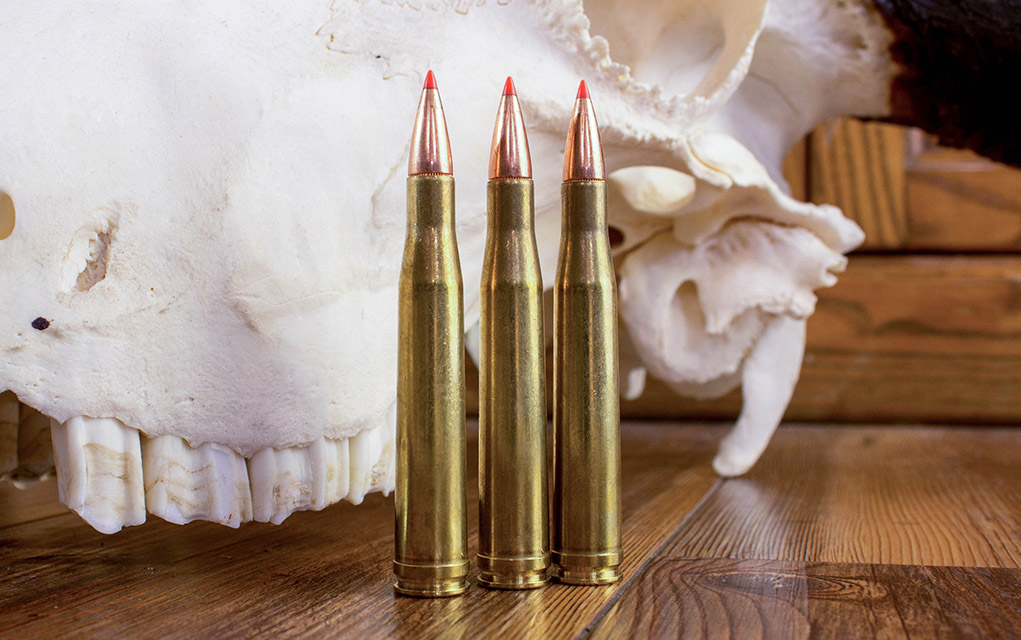
The .270 Winchester was a great choice a century ago, but premium bullets like the Nosler Partition make its performance even better. Photo: Massaro Media Group.
Starting with the more popular of the two—Winchester’s famous .270—you’ll find the most popular of the offspring of the .30-06 Springfield. Or, since we are delving into the history of the birthday cartridges, we might more properly say the offspring of the .30-03 Springfield, which came a bit earlier and has a case length just a bit longer than its much more popular sibling.
The .270 Winchester retains the .30-03 Springfield’s 2.54-inch case length, and the 17½-degree shoulder to handle the headspacing. It has the 0.473-inch case head diameter, which was carried over from the Mauser cartridges and fits perfectly in any long-action receiver.
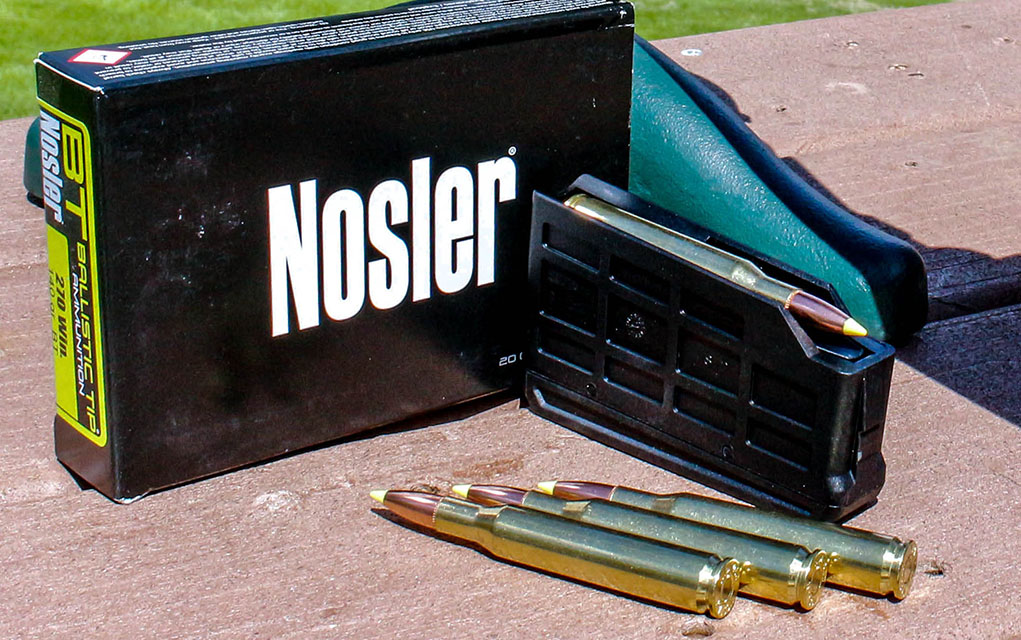
It might be difficult to come up with a better combination for whitetail deer than a Nosler Ballistic Tip and the .270 Winchester. Photo: Massaro Media Group.
Exactly where the .277-inch bore diameter came from is, sadly, lost to history. Some say it was an attempt to bridge the gap between the 6.5mm and 7mm bores, without using a metric denomination; others feel it might have been adopted from the groove diameter of the 7mm/275 Rigby. But, as far as I know, there is no definitive answer. In all my research, it seems that Winchester pulled 0.277 inch out of the air, much like they did with the 0.338-inch bullets of the .33 Winchester, and as Rigby did with their now-famous 0.416-inch bore.
Nonetheless, 1925 saw the release of the new Winchester Model 54 bolt-action rifle, chambered for the newfangled .270 Winchester. While it certainly possessed the velocity that would become so popular over the coming decades, rifle optics weren’t in vogue in that era, and the Model 54 was designed and stocked for iron sights.
Offering an enhanced velocity level in comparison to the majority of the most popular cartridges in 1925, the .270 Winchester offered bullet weights between 100 grains—a sound choice for the larger furbearers and all varmints—and 150 grains, which was considered suitable for an all-around big-game bullet. The 130-grain bullets performed wonderfully on whitetail deer, wild sheep, pronghorn antelope and black bear, while those 140- and 150-grain slugs were employed against moose, elk and other large game.
The .270 Win. Got Jacked
One would think that the flexibility and popularity of the .30-06 Springfield might have killed the .270 Winchester before it even got out of the gate, as the 150-grain ammo was stellar on lighter big- game species, and those massive 220-grain round-nose bullets would neatly handle even the heavyweight coastal bears of Alaska. But Professor Jack O’Connor embraced the fledgling cartridge, taking in from the deserts of Arizona and Mexico to the wilds of Canada, and most places in between. His writings in Outdoor Life—in an era where the opinion of a gun writer carried more weight than it seems to today—propelled Winchester’s cartridge into the annals of history, and O’Connor seemed to guarantee the future success of the cartridge.
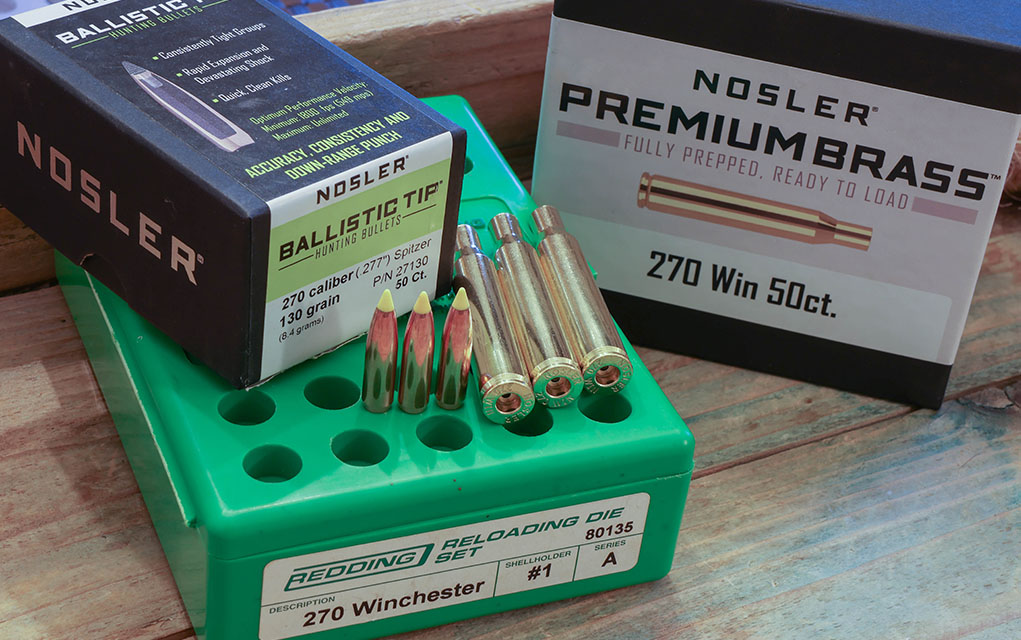
For the handloaders, a .270 Winchester and a 130-grain Nosler Ballistic Tip makes affordable and highly potent whitetail medicine. Photo: Massaro Media Group.
Making good use of the original 130-grain load—with a muzzle velocity of 3,160 fps—O’Connor waxed poetically about the cartridge, ushering in the era of speed, in complete opposition to the heavy-and-slow mentality of the era. Readers followed suit, and it turned out that the .270 Winchester made one helluva whitetail cartridge. The rest is essentially history, because the generation of O’Connor readers took the torch and ran with it. Because it was so popular, it was readily available, and because it was readily available, it remained highly popular.
Truth is, the cartridge is a sound balance of velocity, striking energy and manageable recoil. The .270 Winchester has the attributes desirable for both Eastern deer hunters and Western hunters after mule deer, pronghorn and, yes, despite so many arguments, bull elk. As the cartridge aged, bullet technology only improved the capabilities of the cartridge, and today—in spite of the developments in cartridge, bullet, and optic technology—it still works just fine.
Despite a couple attempts at dethroning the king— namely in the .270 Weatherby Magnum and .270 Winchester Short Magnum—the only real threat to the .270 Winchester is the 6.8 Western, which employs a faster twist rate to utilize bullets heavier than those normally associated with the .277-inch bore.
And, although I’m a big fan of new cartridges, I don’t think the .270 Winchester will ever be unseated.
.300 H&H Magnum
Whether on the African plains, the deep woods of the Northeast or the Rocky Mountains, the .300 H&H is right at home. It makes a great all-around rifle chambering. Photo: Massaro Media Group.
Crossing the “pond,” the prestigious London firm of Holland & Holland announced the arrival of the .300 Holland & Holland Belted Magnum—the Super 30—in 1925. The fourth in the H&H line of belted cases—following the .375 Velopex, the .375 H&H Belted Magnum and the .275 H&H Belted Magnum—it mated the successful .375 H&H Magnum case with the .30-caliber bullets of the .30-40 Krag and .30-06 Springfield.
The first commercially successful .300 Magnum, H&H’s cartridge used the 2.85-inch case and 3.60-inch overall length of the .375 H&H Magnum, best housed in a magnum-length receiver. Factory ammunition saw a 180-grain bullet sent at a muzzle velocity of right around 2,700 fps—seemingly loaded down to the level of the .30-06 Springfield in anticipation of the effects of the heat of the tropics on Cordite—but handloaders could easily beat that figure.
Holland’s Super 30 is immediately recognizable, with its signature belt of brass and slight, sloping shoulder. Photo: Massaro Media Group.
The .300 H&H, like the .375 H&H, was picked up by Winchester, Western, Peters and other ammunition companies, with Winchester and Remington offering American-made rifles. In fact, in 1936 Winchester offered the .300 H&H Magnum in the initial release of the Model 70, and Remington’s 722 was embraced by many hunters as well. Ben Comfort used the cartridge to win the Wimbledon Cup—the Camp Perry 1,000-yard shooting competition—with a custom Griffin & Howe Remington 30-S rifle, proving the capabilities of the belted beast.
In the hunting fields, many successful reports drew attention to the magnum—whether or not that was a placebo effect—and the three initial loads featuring 150-, 180- and 220-grain bullets covered nearly all the bases in the big-game world, save the true heavyweights. As powder technology improved, the .300 H&H just got better, with ammunition seeing the 180-grain slugs pushed to a muzzle velocity between 2,850 fps and 2,950 fps in modern ammo. The slight 8½-degree shoulder allows the cartridge to feed ever so smoothly, while the belt of brass just north of the extractor groove handles the headspacing duties.
With factory ammunition choices quite limited these days, handloading for the .300 H&H sure makes sense. The author’s rifle is fond of these Northern Precision 200-grain spitzer boat-tails. Photo: Massaro Media Group.
For those who might be recoil sensitive, yet are interested in magnum-level performance, the .300 H&H makes a fantastic choice for a hunting cartridge. I have found that, among the myriad choices of .300 magnums, the ,300 H&H is among the easiest on the shoulder, yet offers solid field performance. Yes, John Nosler was carrying this cartridge when the 1940s bullet technology let him down hard on a Canadian bull moose, but modern bullets have done nothing but help the century-old cartridge. I have taken the .300 H&H Magnum across the pond on a couple of safaris, not to mention hunting here in the United States; it has been good to me in a number of different scenarios. From whitetail deer in my native New York, to Hartmann’s mountain zebra, red hartebeest and eland in Africa, the cartridge has yet to let me down.
The author took this respectable red hartebeest bull at 250 yards in central Namibia, putting him down with a single shot from the .300 H&H Magnum. Photo: Massaro Media Group.
I’ve had a couple of rifles chambered for the excellent cartridge, including a 1959-vintage Colt Coltsman bolt gun, which my wife used to take a great blue wildebeest bull, and my current love, a mid-1980s Winchester 70 push-feed with one of the most beautiful pieces of flamed walnut I’ve ever encountered in a factory stock. The latter rifle prefers bullets with lots of bearing surface and will put three Nosler AccuBond 200-grain bullets into ¾-inch groups all the livelong day.
The Athletic Younger Brother
Marketing being a funny thing, Winchester’s own .300 Magnum is what pushed the H&H design out of the limelight. The shorter case of the .300 Winchester Magnum allowed it to be housed in a budget-friendly long-action receiver, while the ballistics of the younger case actually bettered those of the .300 H&H.
In spite of the large number of modern .300 magnums that have come to light in the past quarter century, the .300 H&H Magnum still has that “cool” factor; whenever I pull mine out at a range session or on a hunt, guys look on wide-eyed. I’ve had more than one African Professional Hunter ask to shoot my rifle or beg a cartridge for their collection. Does it make financial sense, being a rarity these days? Probably not, but there are no flies on the ballistic formula, and I will happily attest to the fact that no animal has ever been able to determine whether I was carrying a .300 H&H or a .300 Winchester.
The slight shoulder, the long, tapered case and the history that comes attached to Holland’s little gem all combine to offer an undeniable classic rifle experience, harkening back to an era when “300 Magnum” was inscribed on the barrel, and shooters knew it was a .300 H&H Magnum, as there was no commercial offering before 1963.
The author’s current .300 H&H rifle: a mid-1980s Winchester push-feed Model 70, gifted to him by a friend, and it’s become one of his favorites. Photo: Massaro Media Group.
Whether loaded with modern polymer-tipped boat-tails or a good old round-nosed thumper of a bullet, the .300 H&H is equally at home in the woods of the East in pursuit of whitetails or black bear, as it is on an elk hunt in the Rockies, or in a leopard blind in the Zimbabwean lowveld.
With modern factory ammunition choices being limited, handloading is assuredly the way to keep your .300 H&H properly fed. It seems to be a forgiving cartridge, as you can use a good number of common propellants, and the choices of component bullets are nearly limitless. Grab a good set of dies and source enough brass to keep yourself in business, and you can hunt the rest of your days with a .300 H&H Magnum. I like a 180- or 200-grain bullet for most applications, though the .300 H&H Magnum will handle the 150-grain bullets very well, unlike many other .300 magnum cases.
Time Marches On
So, with all the progress we’ve made over the last century in case, powder and bullet technology, why in the world would a new hunter even consider one of these centennial cartridges? Well, both possess the attributes that any hunter would appreciate, giving a blend of usable features, and both have the pedigree to create that inexorable tie to the past that hunters crave so much.
And, frankly, both of these work—at normal hunting ranges—just as well as anything that has come along in the century since they were introduced. Neither was designed for dedicated target cartridge, though both have the capability to deliver fine accuracy.
Happy 100th birthday to the .270 Winchester and .300 H&H Magnum … and to many happy returns.
Editor’s Note: This article originally appeared in the July 2025 issue of Gun Digest the Magazine.
Laser Ammo has just added a 2011 model to its lineup of laser training pistols based on an AW Custom HX26 Compact Hi-CAPA recoil pistol.
The more you can train with your handgun the better, but bullets are expensive and going to the range takes time. Solution? Laser trainer pistols that allow you to hone your skills at home. Laser Ammo has an extensive catalog of different models, but the company has just added a 2011 as well to meet the demand for this increasingly popular pistol model.
Like Laser Ammo’s other recoiling training guns, they built it by converting an airsoft gun, in the case of the 2011 they used an AW Custom HX26 Compact Hi-CAPA recoil pistol. Powered by green gas, the pistol’s slide recoils when fired. Combined with the full-metal construction, this is about as close as you can get to the feel of firing a real 2011 without gunpowder involved. It’s designed for use with either Smokeless Range or Laser Ammo reactive targets, is available with a red or infrared laser and is adjustable for both windage and elevation so you can ensure that your laser training will translate to shooting your real 2011.
The 2011 laser trainer appears to be optics-ready, but neither Laser Ammo nor AW Custom specify what footprint the mount is. However, the pistol does have an accessory rail and a flared magwell for quicker reloads.
Patrick McMahon, a member of Laser Ammo’s Mil/LE sales team and the head of Laser Ammo’s competition division said this about the new 2011:
After checking various other 2011-style firearms, Laser Ammo chose the HX26 “Match King” specifically, as it was decidedly the best fit for our customer’s needs … The 2011 is a popular gun with competition shooters, as it is red dot ready. The gun delivers an unmatched level of realism when combined with our advanced training solutions. We believe it will exceed the expectations of serious shooters seeking reliable, high-quality training tools and will prove to be the top-tier choice on the market.
The Laser Ammo 2011 training pistol has an MSRP of $440 and is available now.
Recoil Offgrid Undisclosed is a one-of-a-kind immersive event designed to test the participants limits of preparedness, tactical knowledge, and problem-solving under high-pressure scenarios.
Training is Valuable, Experience is Better
Having the access to some of the most respected elite trainers the community during a training single event presents an incredible opportunity for any preparedness enthusiast, but putting that training to the test truly solidifies the lessons!
Undisclosed takes the typical training-followed-by-practice method to the next level by plunging participants into a dynamic, evolving narrative that challenges them to apply what they’ve learned in a high-stakes, real-world scenario that takes place across several days. From the moment they arrive, participants will have no idea what to expect.
Expect the Unexpected
Undisclosed challenges participants to not just use what the skills they learned but also plan, act, and react to an ever evolving scenario packed with all the obstacles that can occur in a real life clandestine mission.
Nothing about Undisclosed will be easy. Participants will face unknown terrain, unpredictable weather conditions, the heat of the day, and the darkness of night to accomplish their goals and that is just the beginning! Participants will be pushed to their limits throughout the scenario. testing not just their hard earned skills but their ability to work as a team, make critical decisions under pressure, and properly execute tactical operations – and failure will have consequences!
The Details are Undisclosed
We have provided a vague description of what to expect at Recoil Offgrid Undisclosed, and that is all you will get until after the event! Not even the chosen participants will have full awareness of the itinerary or when the training ends and the scenario begins.
Every element of Undisclosed including the location, training professionals, support personnel, and equipment has been carefully selected and vetted by our team to not just convey valuable skills, but also provide the most immersive and memorable training experience the participant’s will ever have!
Skills Are Not the Only Reward
Developing valuable skills that can save your life in a real world emergency and participating in a unique scenario with some industry elites is a reward in itself, but there is more! All participants will have their activities featured here at Recoil Offgrid and through our other magazines, social media channels, and video platforms.
Participants will also get their hands on some of the hottest gear from top industry brands, and their may even be some rewards for exceptional performances – but as expected those details are undisclosed!
Your Mission is Undisclosed
The high-level nature of Undisclosed results in an extremely limited participant spots and the competition for selection will be fierce. If you are ready to join the elite and face the unknown, check the link below and apply. Even if you are not selected for this mission there will be opportunities to participate in future Undisclosed Events.
Looking to go armed, but are stuck in the weeds as to what to arm yourself with? Here are 20 of the best concealed carry gun options that will keep you on the defensive.