Home Blog Page 195

Gear: 8 Top Dependable EDC Knife Options

0

Choose your EDC knife with as much diligence as you did when selecting your concealed carry companion.

Top EDC Knife Options:

If you carry a gun for protection, chances are good you want a knife to go with it. While your everyday carry piece serves to protect you and your loved ones from a potentially lethal threat, a knife is there to handle an assortment of other tasks, and it can also be used defensively if circumstances require.

I recently traveled to Atlanta to attend the 2017 Blade Show, an event that’s billed as the largest knife show in the World. Among the vast array of blades, I found eight new knives by some of the top knife manufacturers designed for everyday carry.

Some of these blades represent the cutting edge in blade tech. Others are the newest great buys for the money, and good American manufacturing made the rest.

Whether tucked into your jeans pocket, tossed into your car’s glove box or tucked in your briefcase, here’s what these knives have to offer.

Bear and Son Cutlery Inc. Bold Action V
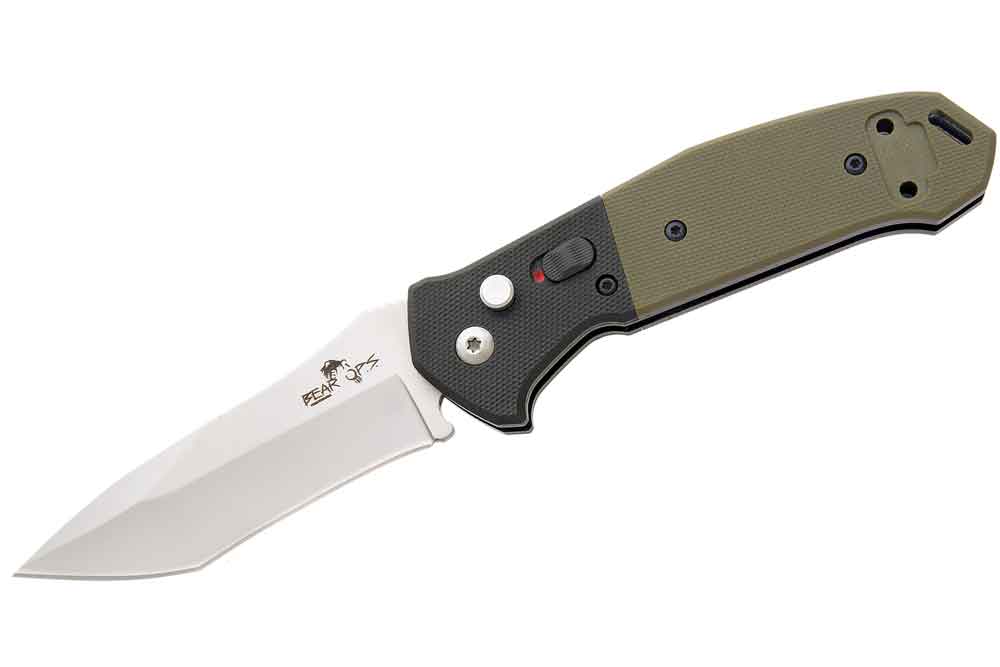
EDC-Bear-and-Sons-Bold-Action-VAutomatic knives will only become more popular thanks to the recent trend of states legalizing the carry of switchblade knives within their borders. Bear and Son’s automatic Bold Action V is the kind of knife that invites everyday use thanks to its subtle tactical features with a price that won’t break the bank. With an MSRP of $149.99 to $154.99, the Alabama-made knife is an inexpensive buy for an automatic, which requires tighter manufacturing to create a mechanism that will fire again and again.

It’s easy to find the button that fires this side-opening auto, and the lock to prevent the accidental discharge of the knife in, say, a pocket, lies millimeters away. With the dual-colored G10, the Bold Action V doesn’t have the full-on tactical look. The one-hand opening knife with tanto blade means that it’s a knife comfortable at home, on the gun range or for a nice night out on the town.

The Bold Action V comes in two sizes: a 3.125-inch blade with a 4.5-inch handle, and a 3.625-inch blade with a 5-inch handle. The smaller model is perfect as a modest tactical folder that chews through everyday tasks and then some, and the larger knife is suited for overtly tactical situations, such as when you’re wearing gloves.

Benchmade Freek
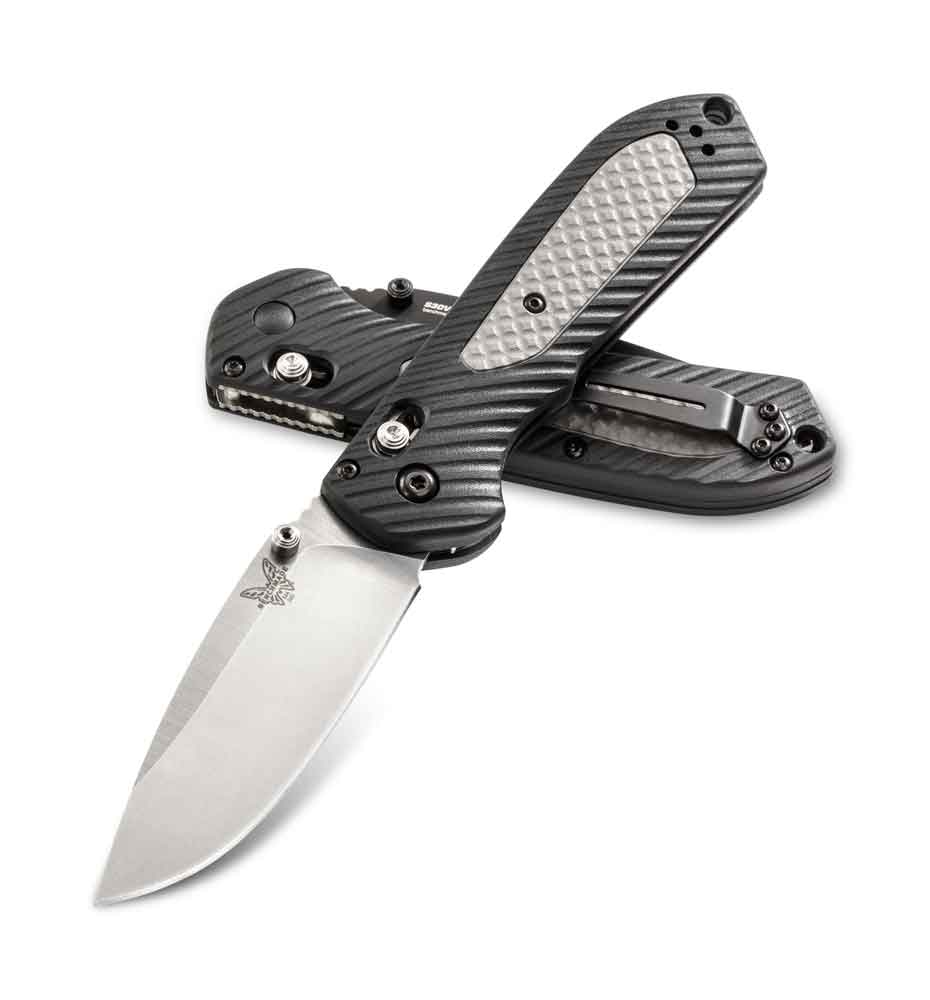
Benchmade-Freek-EDC
Over the years, Benchmade has developed a reputation for crafting high-quality, American-made blades, although some of the manufacturer’s pieces do cost a few Benjamins. But one of the newest knives the company brought to the Blade Show was the Freek, a utilitarian knife with an MSRP of $130 — and a notable handle.

To create the grey Grivory and black Versaflex over-molded handle, Benchmade looked to grease monkeys and their high-end hand tools, nothing that mechanics use those tools for long periods of time in environments that don’t exactly contribute to secure grips.

“We worked with hydraulic mechanics on their preferred ergonomics and materials for tools that are easy and comfortable to use, as well as more durable than the competition,” said Madelyn McGill, marketing coordinator at Benchmade.

Additionally, the 3.6-inch blade on the knife is made from S30V stainless-steel, a metal designed for high-performance knives. Finally, the knife locks up with Benchmade’s proprietary Axis lock, which is as easy for a southpaw as it is for a righty to use.

As a result, “The Freek is 100 percent EDC [everyday carry],” McGill said. “It was designed for someone who regularly uses their blade, looking for comfortable, lightweight performance and a good value.”

Columbia River Knife and Tool Septimo
CRKT-Septimo-EDC
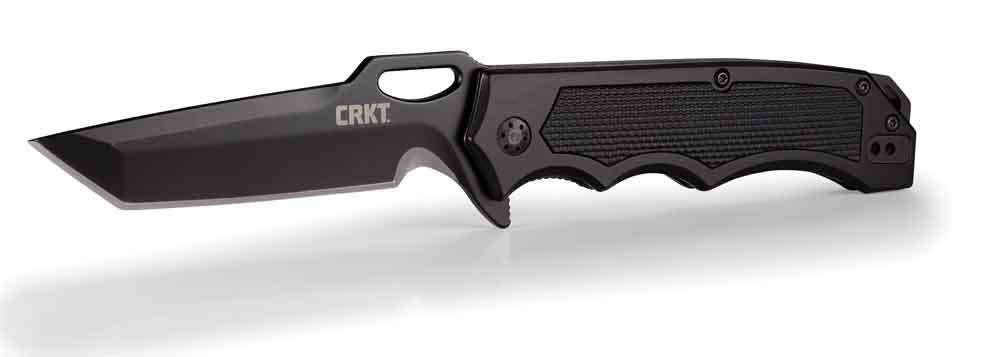
The helicopter crash broke Green Beret Jeremy Valdez’s shoulder and injured his head. It was 2009, Western Afghanistan. Crew and soldiers were still in the burning wreckage when Valdez climbed back in to save as many as he could, according to his bio on the Green Beret Foundation website.

Ten people died in the crash. Although Valdez rescued five lives, the small folder the Green Beret carried didn’t meet the demands of the situation. It failed, according to CRKT. Afterward, Valdez designed the Septimo to create a better soldier’s backup blade, and it’s named Septimo as a tribute to the Seventh Special Forces Group.

The lone serration at the base of the blade is designed to rip through seatbelt webbing. The flipper opening mechanism on the knife allows the 3.622-inch blade to come into quick play and gives a hefty finger guard while in use. An aluminum handle, with an inlay to provide grip combined with a black oxide finish, gives the Septimo a get-it-done attitude. And, the tanto-style blade made from 8Cr14MoV stainless-steel brings a tactical sensibility.

Hogue Inc. EX-A05
EDC-Hogue-EX
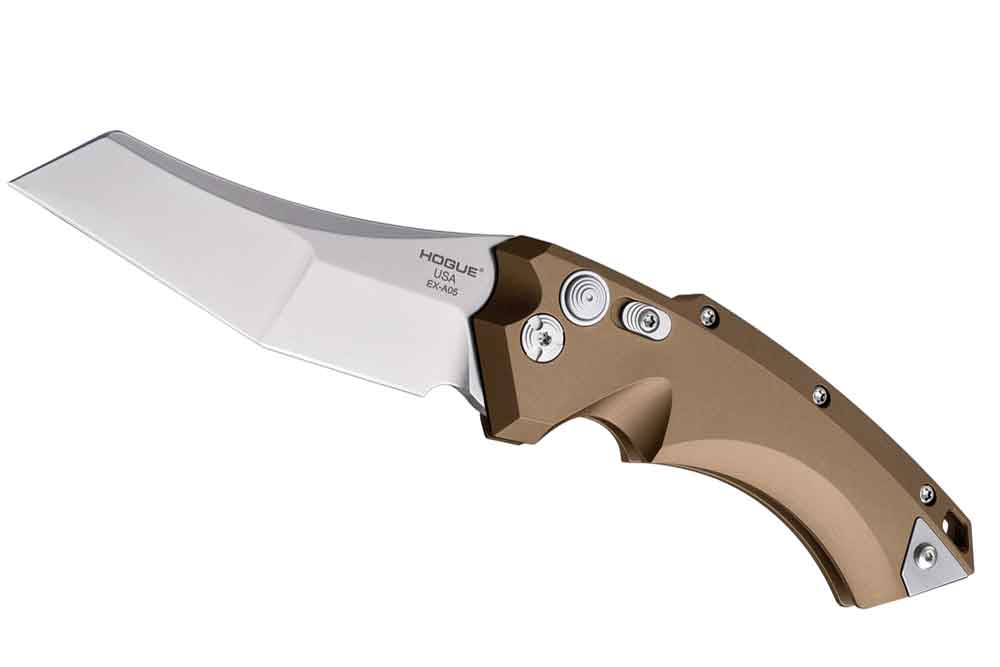
Hogue is already a well-known name in the gun world thanks to its accessories such as pistol grips and stocks. When it rode into the Blade Show, it wasn’t hawking its lineup of great boom-stick products, though. Instead, the company was introducing the world to some of its latest and greatest knives, including the automatic Hogue EX-A05.

The EX-A05 has the feel of some tight designing and even tighter manufacturing behind it. It’s a blade designed by custom knifemaker Alan Elishewitz, and the spear-point blade features the lines of a futuristic shark while the crisp curves of the handle are constructed from 6061-T6 aluminum. Press the large button to the side of the pivot pin and then the blade — either 3.5 or 4 inches, depending on the type of EX-A05 — snaps to attention. Closing the knife is equally as intuitive: Unlock the knife by pressing the push-button lock and fold the blade under spring pressure back into the handle.

Hogue grinds its blades from CPM154 stainless-steel, which is part of the reason why the MSRP on this American-made blade ranges from $229.95 to $279.95. Price all depends on whether consumers want a spear-point or Wharncliffe blade, an insert in the handle or a different color of aluminum.

Kershaw Knives Dividend
Kershaw-Dividend-EDC
For people who only want to pay a few dozen dollars when purchasing their knives and still buy products made in the good ol’ United States, knives that fit their criteria are few and far between. It’s no secret that China and Taiwan have most of that market all locked up.

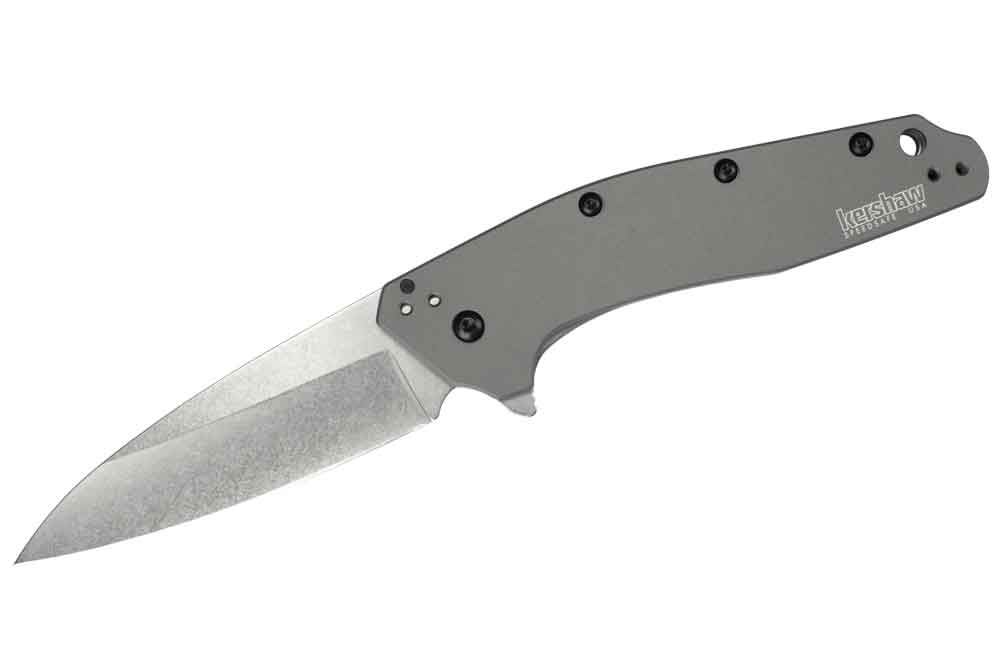
This year, however, Kershaw Knives won 2017 “Best Buy of the Year” award at Blade Show for its American-made Dividend.

“In 2016, we challenged our Kershaw designers and engineers to come up with a knife that we could produce in our Tualatin, Oregon, manufacturing facility — and that could also be built at an affordable price,” said Thomas Welk, director of sales and marketing for Kershaw and ZT Knives.

The result is an aluminum-handled knife with a 420HC blade with a stonewashed finish. Kershaw designed the new Dividend to be light and easy to carry with its 2.8-ounce weight. MSRP for the Dividend is about $70, but it will have “a street price of about $39.99,” Welk said.
To open the knife, simply press the flipper opening mechanism. Once the arc begins to spin, Kershaw’s assisted opening takes over and the 3-inch blade snaps straight.

LionSteel SR-11
EDC-LionSteel
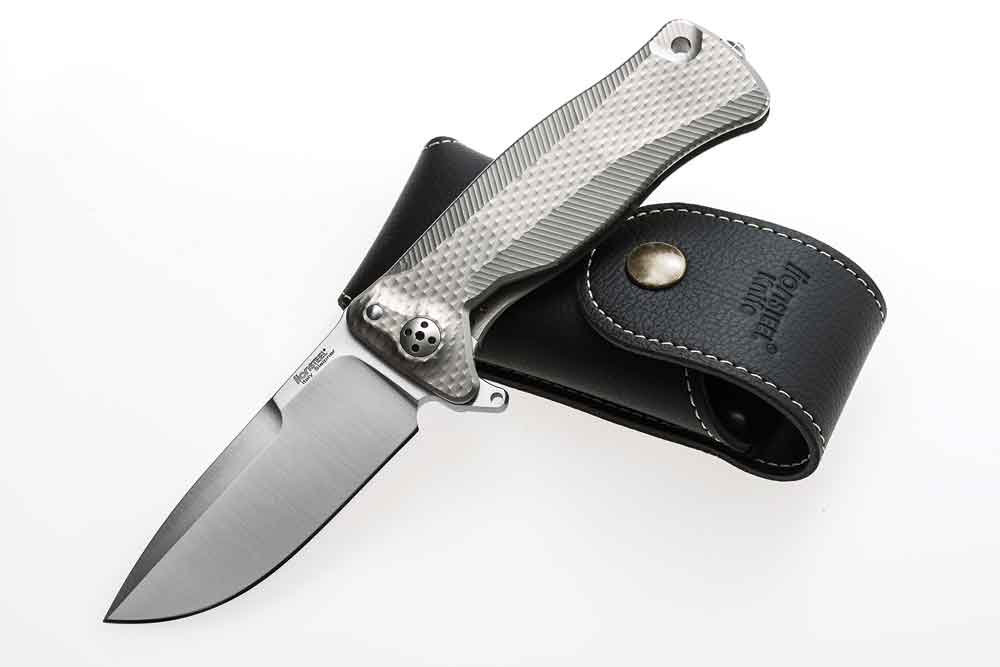
The SR-11 is a Ferrari of a knife. The blade created by Italian manufacturer LionSteel earned the 2017 “Overall Knife of the Year” award at the Blade Show.

The SR-11 is an update to a design that LionSteel took to the 2010 Blade Show. That design won the best overall award then because LionSteel machined the handle from a single piece of metal — one of the first production knives to do so. The SR-11’s lines flow more aggressively than the SR-1, though, and it has a different design machined into the surface of the handle. It also opens with a flipper mechanism.

“Beyond the expensive materials used, the time, precision mechanics and technology needed to work on the solid pieces, what makes a knife high-quality is the attention for the details during every step in the manufacturing process,” said Andrea Mazzoli, who works with the Consorzio Coltellinai Maniago Srl (Maniago Knife Makers Association), which helps represent LionSteel.

The 3.7-inch blade of Sleipner tool steel flies open on a set of IKBS ball bearings, and a tungsten carbide glass breaker sits in the pommel. To make it your constant companion, buying a titanium-handled SR-11 will cost you 330 Euros … or about $370.

Ontario Knife Company Dozier Arrow
Ontario-Knife-Company-Dozier-Arrow-EDC
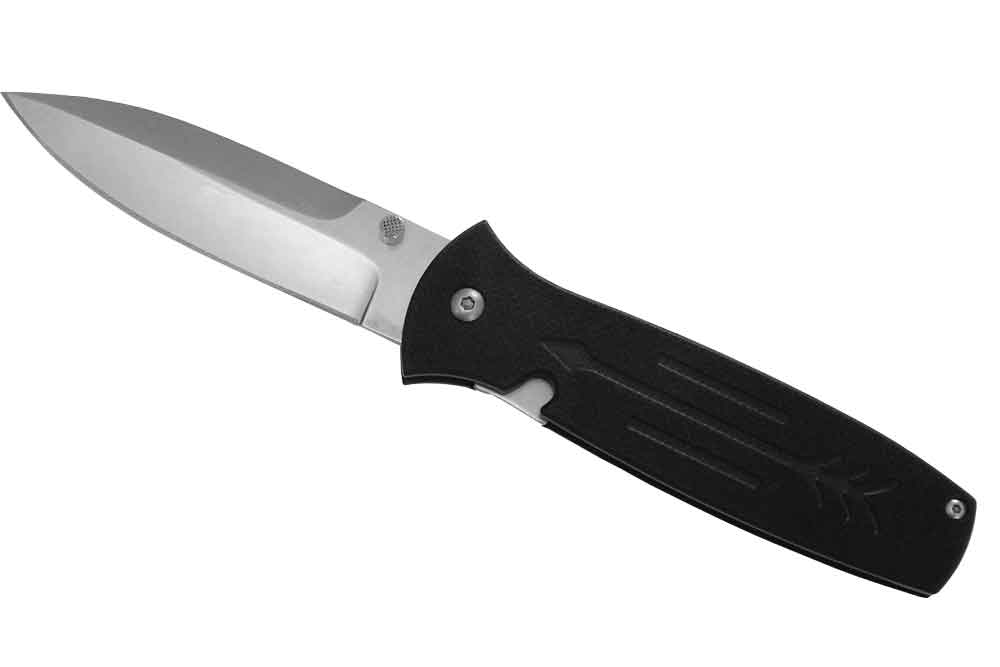
My first impression holding the Ontario Knife Company’s Dozier Arrow was the lightness of the knife. It’s got a slender blade and G10 handles that are not weighed down with metal liners. The result is one of those knives that melt away in your pocket only to reappear when you need something cut.

With its symmetry like a dagger, the Dozier Arrow stands out in a world proliferated with asymmetric knives. Yet this knife designed by famed knifemaker Bob Dozier isn’t double edged — which keeps you on the right side of the law in many locales.

Buying this knife from Dozier’s shop costs more than four times Ontario Knife’s MSRP of $79 for the design. To make it, Ontario Knife grinds the 3.63-inch blade from D2 tool steel, the same steel that Dozier uses because it’s proven to hold an edge. The Taiwan-built knife opens with a thumb stud on the blade, but the stud sits nestled in the handle — almost flush with it — until a push with your thumb guides the blade along its arc.

Spyderco Inc. Police 4
EDC-LionSteel-SR11-SR11-G-fodero
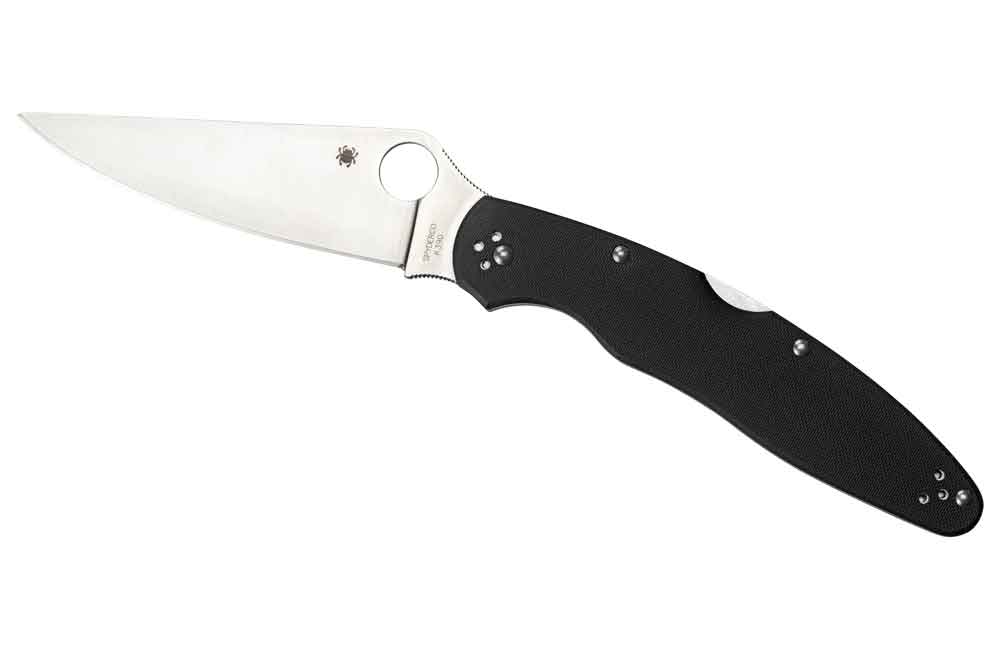
Sometimes, a small knife just won’t do. Most people carry something with a 3- to 3.5-inch blade, and they do so for good reason: Lots of states and cities restrict blade length. But in places where the law allows larger blades, you might prefer to carry something bigger. After all, the Bowie knife was an everyday carry knife in its time. And as the character Crocodile Dundee said in the 1986 movie, “That’s not a knife … this is a knife.”

The first model of the Spyderco Police, issued in the 1980s, was one of the first knives to feature a pocket clip and a hole in the blade so that users could open it one handed. As the name implies, Spyderco designed it for those who walk the thin blue line.

In the updated design, the blade comes in K390 steel. Gone is the stainless-steel handle; instead, the Police 4 comes in a black G10. And although the Police 4 is slightly larger than its predecessor, it loses more than an ounce and a half of weight, coming in at 4.3 ounces. Open, the Police 4 features a 4.4-inch blade and a knife that stretches 9.95 inches overall, which is enough to make Crocodile Dundee proud.

Editor’s Note: This article originally appeared in the Concealed Carry 2017 issue of Gun Digest the Magazine.
Concealed Carry: The .380 Pistol For Self Defense

2

The .380 ACP is little in a lot of ways. But is it big enough where it counts?

Does the .380 ACP stack up?

  • There are plenty of fans and detractors of the .380 ACP as a defensive caliber.
  • Its capabilities lie somewhere in the middle of these two opinions.
  • Much of getting the most out of the .380 depends on finding the right pistol.
  • Optimal barrel length, weight, capacity, price and fit and feel should be considered.
  • Ease of carry make the .380 pistol appeal to many who carry concealed.

Roughly 16 million Americans have obtained permits to carry concealed firearms, and each year more criminals end up on the wrong side of a law-abiding citizen with a personal defense weapon. With the rising tide of CCW permit holders has come a wave of new products to suit their needs, everything from holsters to cleaning kits to sights, to lasers and ammunition. And, of course, there is a whole new crop of defensive auto-loading pistols, too.

380-self-defense-third

One caliber that has gotten a lot of attention in recent years is the .380 ACP. Designed by John Moses Browning and first chambered in the 1908 Colt semi-automatic pocket pistol, the .380 has been cussed and discussed more than just about any other defensive caliber on the market. Fans of the caliber believe that it’s the ultimate concealed carry caliber because it’s small enough to be chambered in ultra-compact pistols and generates moderate recoil while offering plenty of energy to drop an attacker at close range. There’s another camp, though, that believes the .380 is underpowered and overrated.

So, where does the truth lie?

Probably somewhere in the middle, and that’s due to a number of factors. First, not all .380 pistol options are created equal. Some have better triggers than others. Some are striker-fired, while others are double-actions … and barrel lengths vary. Likewise, not all ammo is created equal. The shooting public is learning that bullet performance (or lack thereof) is critical in a personal defense situation. Lastly, many shooters simply decide on whether a cartridge is effective or not based on personal tastes, and they don’t have any real evidence to back their claims.

The Right .380 For You

With the right ammunition, a .380 can produce effective results based on objective test data. Is it as versatile as a double-stack 9mm? No, but it’s also easier to carry, and that’s the limiting factor for many shooters.

So, how do you choose the right .380 for you and your needs?

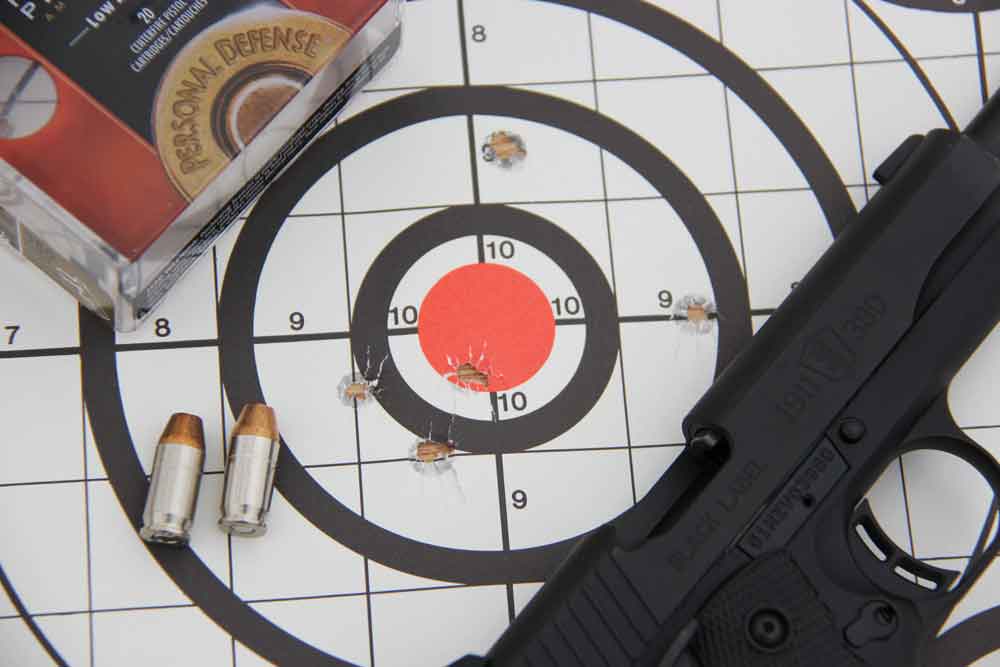
Who says compact .380s aren’t accurate? This is a 25-yard group fired through Browning’s 1911-380 using Federal HST ammo. This level of accuracy isn’t absolutely necessary for personal defense, but it definitely offers peace of mind.

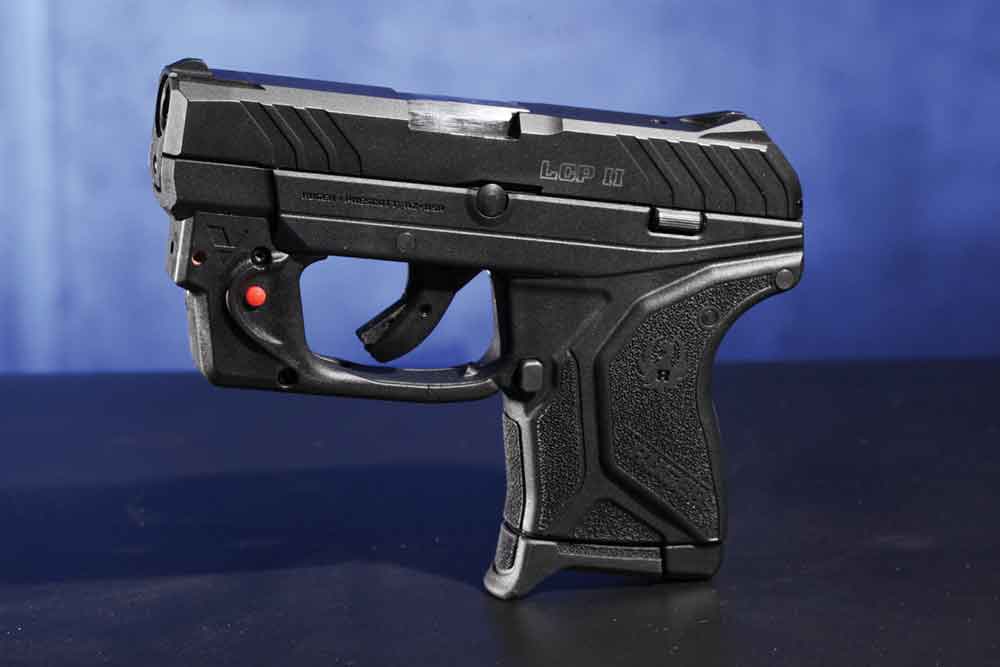
There are a number of different .380 semi-autos available today, including Kahr’s CT380, Ruger’s LCP, Remington’s RM380, Glock’s 42, Smith & Wesson’s Bodyguard 380, SCCY’s CPX-3, Colt’s Mustang, Kimber’s Micro, SIG’s P238, Browning’s 1911-380, Walther’s PK380 and several others. The rise in CCW permits has created a great demand for small .380s, and gun manufacturers roll out new .380 models each year.

Barrel Length

Choosing the one that works for you is largely a matter of personal taste, but there are some important differences among the guns listed above. Barrel length was already mentioned; the LCP, RM380 and Bodyguard all have barrels that are relatively short and make them easy to conceal. At 4.25 and 3.66 inches respectively, the barrels of the Browning (full-size version) and Walther guns offer a longer sight radius. I’ve never found that an extra half-inch of barrel length negatively affects concealability (grip design is more important when choosing a gun that won’t print), but it does help with accuracy.

The Angle On Actions

Gun design and action operation are also important considerations. The guns listed above are double-action, double-action-only (DAO), single-action and striker-fired pistols. And while all of these will work, you’ll need to examine the pros and cons of each when selecting the gun for you.

Striker-fired guns, for instance, offer a consistent trigger pull. Double-actions, though, offer more assurance against hard primers; if a round fails to fire because of a hard primer, you can simply pull the trigger once more, and the hammer will strike again. That’s not an option with striker-fired guns, but, thankfully, hard primers are quite rare. Single-action guns require the shooter to operate the safety before firing, but with some practice that becomes intuitive, especially if you only carry one firearm.

Packing Extra Pounds

No .380 semi-auto is heavy by pistol standards, but there are some real lightweights in this group. Ruger’s diminutive LCP weighs in at a scant 9.6 ounces without an empty mag, and the Remington, Smith & Wesson and Kahr all weigh around 12 ounces. The “heaviest” guns mentioned are the Walther PK380 and Browning 1911-380 (full size), both of which tip the scales at just 18 ounces.

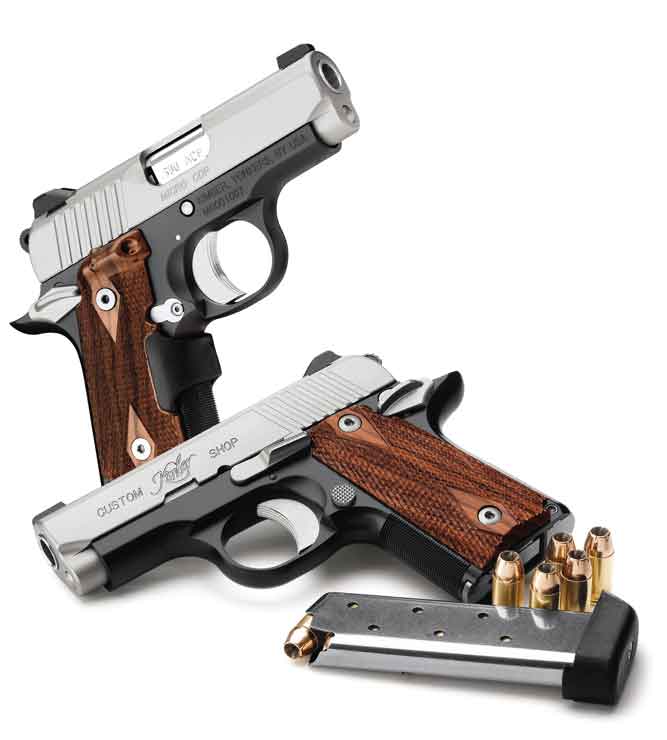
Kimber’s Micro CDP is a lightweight single-action .380 that’s very light and is tough enough to withstand the rigors of daily carry. It isn’t the cheapest gun on the list, but it’s built to Kimber’s high standards.

In short, you can rest assured that none of the guns listed here will be too heavy for daily carry. But a little extra heft isn’t always a bad thing; some people, especially new shooters, are recoil sensitive and don’t like the muzzle flip inherent with short-barreled lightweight guns. The .380 doesn’t produce the kick of larger calibers, but in general terms, the lighter the gun, the less effective it is at handling recoil. The guns on the list measure from 5.1 inches to 7.5 inches long and vary from just under to just over an inch wide. Concealment with any of these firearms is only an issue under the lightest, tightest clothing.

Capacity Considerations

on these firearms runs from six to eight. Again, larger guns such as the Walther and Browning have higher capacities, and that’s important in personal defense. Having two extra rounds offers more time between reloads, which is a serious consideration in a self-defense situation.

Of the many .380 fans I’ve met, only one said they carry a spare magazine, so those two extra shots suddenly become even more significant. One great feature of most .380s is easy slide operation, something not always true of larger-caliber firearms. In fact, I know of at least one individual who has suffered nerve damage, resulting in limited hand strength, and the only semi-auto he can comfortably manipulate is a .380.

The Fit, Feel And Finances

It’s no secret many new CCW permit holders select their new carry gun based on two factors: how the gun feels and the price. You can discuss nuanced features separating one pistol from another, but ultimately a gun that sits well in the buyer’s hand is the one they’ll choose — so long as it is in their budget.

In terms of cost, the guns listed here have MSRPs that range from $229 to $800. Street prices are likely a bit lower, so odds are there’s a pistol in your price range.

The great advantage of carrying a .380 is that these guns are so light and so compact that you can hide them under virtually any clothing. Many .380s weigh 12 ounces or less and are under an inch wide, meaning you can conceal them under the lightest warm-weather shirt and pants.

Deciding which of these is comfortable is largely personal, but because most of the guns listed include a magazine with a finger extension (or offer these mags as an optional accessory), then only shooters with the largest hands will find they don’t have enough grip space. Shooters with really long hands and fingers might find that it’s difficult to keep from “wrapping” the trigger, so it’s best to spend time at the local gun shop handling each of these guns. Better yet, head to an event like the NRA Annual Meetings where you can examine every gun and get expert advice without the pressure to buy.

Is the .380 an effective self-defense cartridge? Evidence says it can be if the distance is close and you choose the right bullet. Compact, lightweight .380s have the advantage of portability and convenience … and any gun that you have with you in a deadly encounter is far better than one that you’ve left at home.

Our Top Articles on .380 ACP Firearms and Ammo

Editor’s Note: This article originally appeared in the September 2017 issue of Gun Digest the Magazine.
Gear: Lighting It Up With A Laser Sight

0

A Laser sight is a powerful aiming tool in low-light defensive scenarios for those trained in their use.

What a laser sight brings to the table:

  • Under perfect conditions, conventional pistol sights are the fastest option.
  • However, in low light, lasers shine, making them great for carry or home defense guns.
  • Lasers shouldn’t be considered for just close-quarters encounters, though.
  • Paired with a scope, a laser sight can paint a target more than 200 yards out.

Several years ago at SHOT Show, at an indoor range on Media Day, I shot an S&W Bodyguard equipped with a laser sight. Out of curiosity, I held the gun at waist level and fired five shots at 10 yards. I put the laser sight on the X in the center of the target and all five rounds went into a ragged hole. I was impressed and decided then and there that any defensive gun I carried would be laser sight equipped. In our house, there are four personal defense/carry guns. All have lasers.

When The Lights Are Down

Viridian offers green laser sighting options for most pistol systems, along with holsters that activate the laser/light when the gun is drawn. - laser sight
Viridian offers green laser sighting options for most pistol systems, along with holsters that activate the laser/light when the gun is drawn.

Under perfect conditions, I can shoot faster with conventional sights. The problem is, most life or death defensive situations don’t happen under perfect conditions. In fact, most personal defense situations occur under poor light conditions, just the time when a laser shines, literally. Under low-light conditions, when conventional sights, or even Tritium sights, are difficult to see, a laser is highly visible and allows faster shooting. In home defense situations that might occur in the middle of the night, your eyes require time to adjust. A laser-equipped firearm aids in visibility and allows you to shoot more accurately and much quicker.

You can now get a laser sight for almost any defensive handgun you can imagine, and while a good laser sight isn’t cheap, it has the potential to be an invaluable aid when you most need one. I prefer the models that activate when the gun is gripped, and for this to work for me, the button must be under my middle finger just under the trigger guard.

Passive Activation

Laser systems for firearms are activated either manually — with a switch or button mounted on the unit — or passively, with switches activated when the gun is gripped or removed from the holster. For defensive use, passive activation is a good idea because concealed carry citizens aren’t accustomed to deadly force events … and the simpler the defense system, the better. If you choose a manually activated laser system, make sure you practice finding and activating it to the point it becomes a conditioned response.

Laser Carry

The Crimson Trace Laserguard Pro is a passively activated system that comes complete with a modular holster. - laser sight 1
The Crimson Trace Laserguard Pro is a passively activated system that comes complete with a modular holster.

When possible, I prefer grip-mount lasers because they allow use with standard holsters. Some of the front-mount units will work in some holsters, but grip-mounted units work with almost any holster designed for that gun. Grip-mount lasers add little or no weight, they’re virtually maintenance-free, and they’re easy for even a novice to install. Normally, one or two screws have to be removed and replaced, just as one would when changing grip panels.

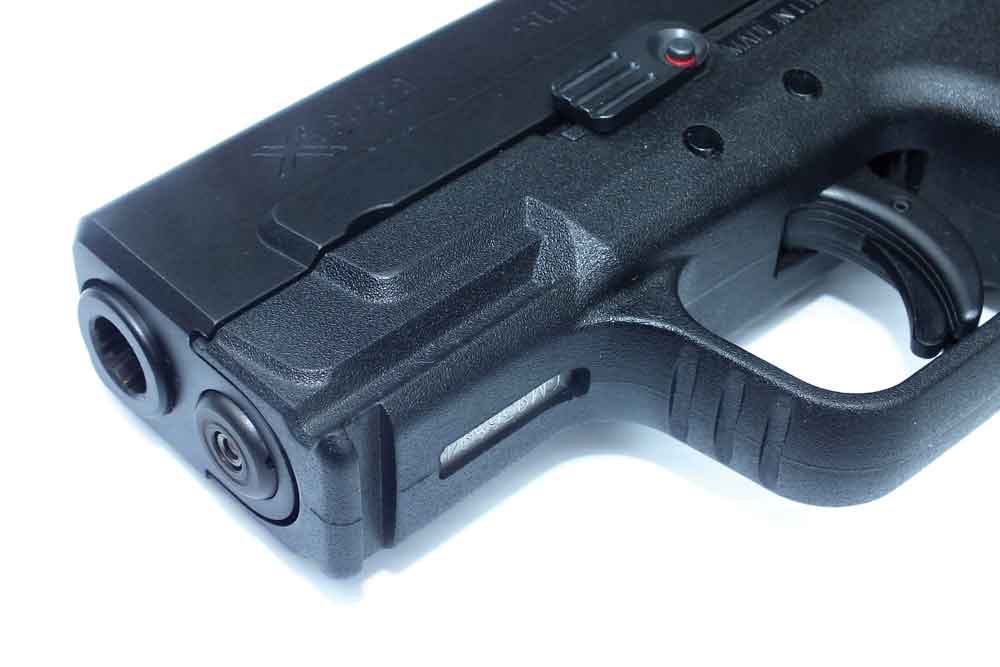
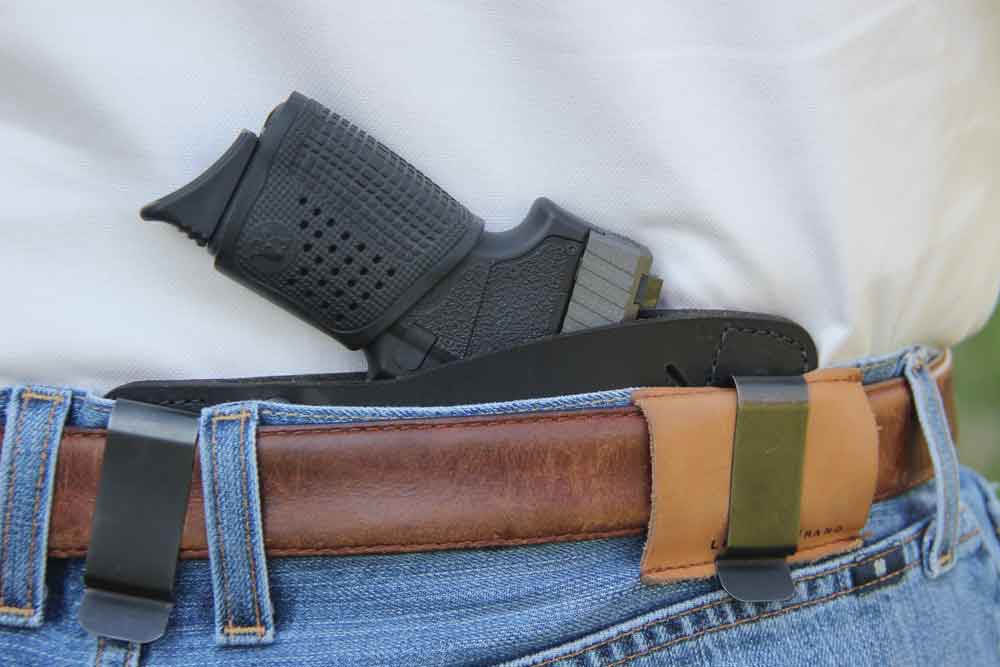
For front-rail-mount lasers, Crimson Trace has resolved the holster situation with the excellent Laserguard Pro system that’s currently available for M&P Shield, Glock 42 and 43, and XD-S semi-autos. The system combines the manufacturer’s laser/light unit, passively activated with the middle finger on the grip, with a Bladetech holster that’s convertible for inside or outside the waistband, and for right- or left-hand use.

This rail-mounted system not only offers a laser, but also a powerful 150-lumen white light and can be programmed for combinations of laser, light, both and flashing operations. It’s available in both green and red laser variants. The standard Crimson Trace Laserguard is less expensive and doesn’t have the light, but it’s also available in green and red.

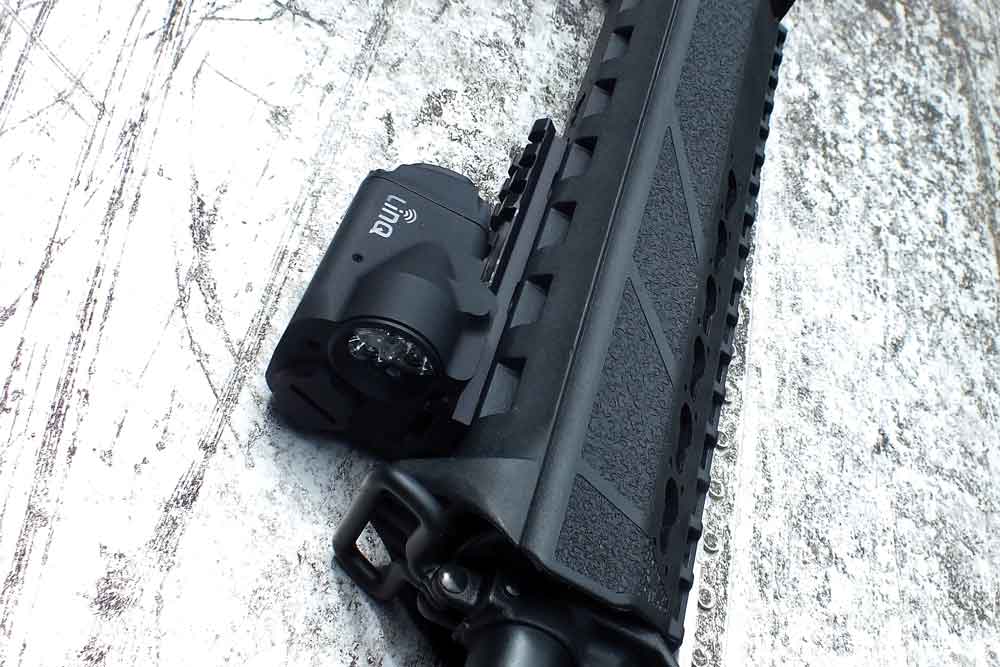
On a purely defensive carbine, the Crimson Trace LiNQ system provides both light and laser as a wireless passive activation system. - laser sight 2
On a purely defensive carbine, the Crimson Trace LiNQ system provides both light and laser as a wireless passive activation system.

Viridian has solved the holster and activation problem by creating a holster system that activates the laser sight when the gun is drawn. The Reactor system is offered for most defensive pistols, and different holster styles are available. The instant-on holster is included with the unit, and the Reactor system is available in both green and red lasers.

The Lasermax solution to the holster problem is to install the laser sight in the guide rod of the pistol. This system replaces the existing guide rod with one with a tiny laser inside the guide rod that’s activated by a switch within the replacement takedown lever. Installation is fairly simple, and it involves only a bit more difficulty than field stripping. The activation switch is ambidextrous, and the one I tested was certainly aligned well enough for defensive use.

Choose Your Color

While red lasers work wonderfully in low-light conditions, green lasers have the advantage of working as well in normal light conditions and might be the perfect solution to shooters with handicaps that prevent getting the sights into alignment with the eyes. Green lasers cost more and have shorter battery life, but the utility of daylight use might make them worth the difference.

Not Just For Short Range

Under low-light conditions, lasers are completely effective at ranges past 200 yards. I learned this several years ago at the Midnight Three Gun Invitational shoot in Bend, Oregon. At longer ranges, with a laser in conjunction with a variable power scope, it was easy to see and hit targets that would have been difficult to define otherwise. Unless there’s dust, fog or smoke, the laser beam is invisible and it paints the target, allowing a shot even when you’re not looking through the scope.

Simple Setup

The Lasermax system solves the holster problem by putting the laser inside the pistol’s recoil spring guide rod. The manual activation switch is in the takedown lever. - laser sight 3
The Lasermax system solves the holster problem by putting the laser inside the pistol’s recoil spring guide rod. The manual activation switch is in the takedown lever.

Once a laser sight is installed, it must be calibrated, and this is accomplished with the hollow head adjustment screws and the provided wrench. Adjustment requires no actual shooting if the sights are properly zeroed because you simply move the laser dot to show just under the front sight when the sights are properly aligned. Adjustments require little movement, and it might take a few tries to get it right, but once you’ve done it once or twice, it’s a 2-minute job.

When aligning a laser, it’s best to align it for a longer distance than normal personal defense distances of less than 7 yards. Like any sighting system, the sight is on a different axis than the bore of the gun, and with lasers, there’s more offset than there is with the sights on top of the barrel.

At short distances with the laser aligned at 25 yards, the offset is of little consequence. An inch or two normally isn’t an issue in a defensive situation. If the laser is aligned at 3 or 5 yards, the offset is exaggerated and can mean a meaningful change of zero at longer range. With the laser aligned at 25 yards, point of impact will be within 2 inches for the first 40 yards or so, providing more accuracy than most people are capable of producing.

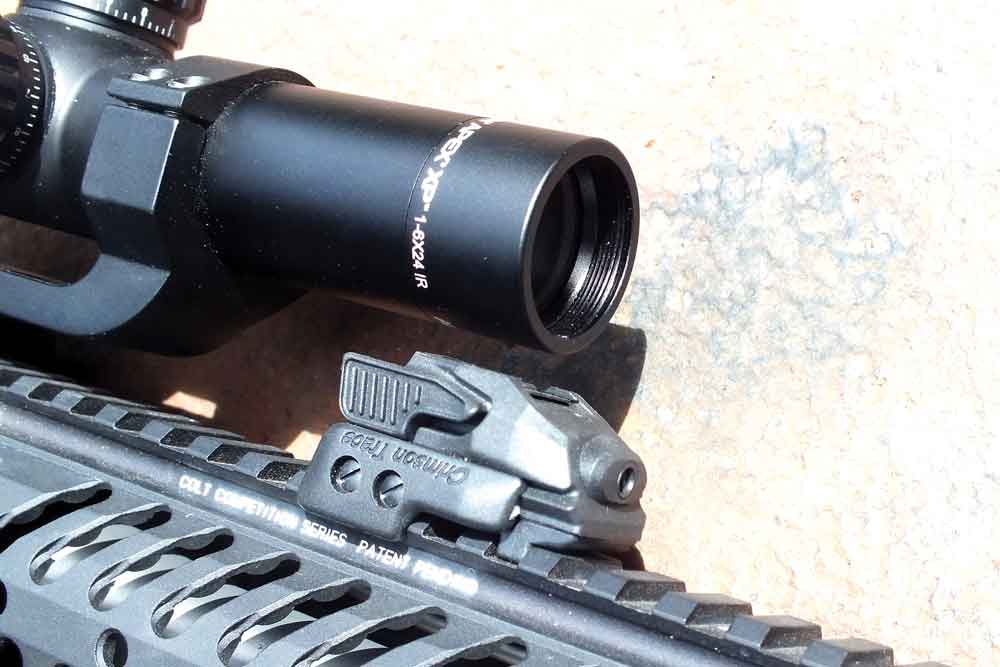
This Crimson Trace CMR 206 laser, mounted on the top rail of this Colt CRP 18, offers a closer bore to laser alignment than traditional bottom rail mounting and allows for cowitness with the scope. - laser sight 4
This Crimson Trace CMR 206 laser, mounted on the top rail of this Colt CRP 18, offers a closer bore to laser alignment than traditional bottom rail mounting and allows for cowitness with the scope.

I align my lasers to be just below the level of the front sight when the sights are properly aligned. This allows the shooter to train with the normal sight picture and have the laser available for instant use should the light be too low for effective sight alignment. As an instructor, I’ve learned some shooters begin to rely on the laser instead of the sights, and I believe everyone should have the capability to shoot well with the iron sights in case the ambient light is too bright for easy laser acquisition.

Narrow Beam, Broad Applications

One of the great things about a laser-equipped defense gun is the ability to utilize the gun in almost any position. At a nighttime, laser-only competition I realized the value of this. Laser-equipped rifles, shotguns and handguns don’t have to be held in a position to see the sights. This can be a huge issue in a defensive situation under low-light conditions. Rather than extending the gun at eye level, you can keep the gun closer and lower, allowing totally unobscured vision of the threat in front of you and keeping the gun close to you when the threat’s in close proximity.

I believe every citizen should be capable of defending themselves, and I believe we all have a moral obligation to those who care about us to do so. I carry every day and in every location I can. I carry a firearm that’s capable of doing the job, and I want every advantage available to me. I know bad things don’t always happen under good conditions … and that’s why my daily carry gun will always have a laser.

Editor’s Notes: This article originally appeared in the August 2017 issue of Gun Digest the Magazine.
Classic Guns: Colt Model 1903 Pocket Pistol

0

As a popularity leader in both the law enforcement and civilian circles, the Model 1903 dominated the early 20th century.

What makes the Colt Model 1903 special and collectible?

  • The Colt Model 1903 and later 1908 were quite popular in the early 20th century.
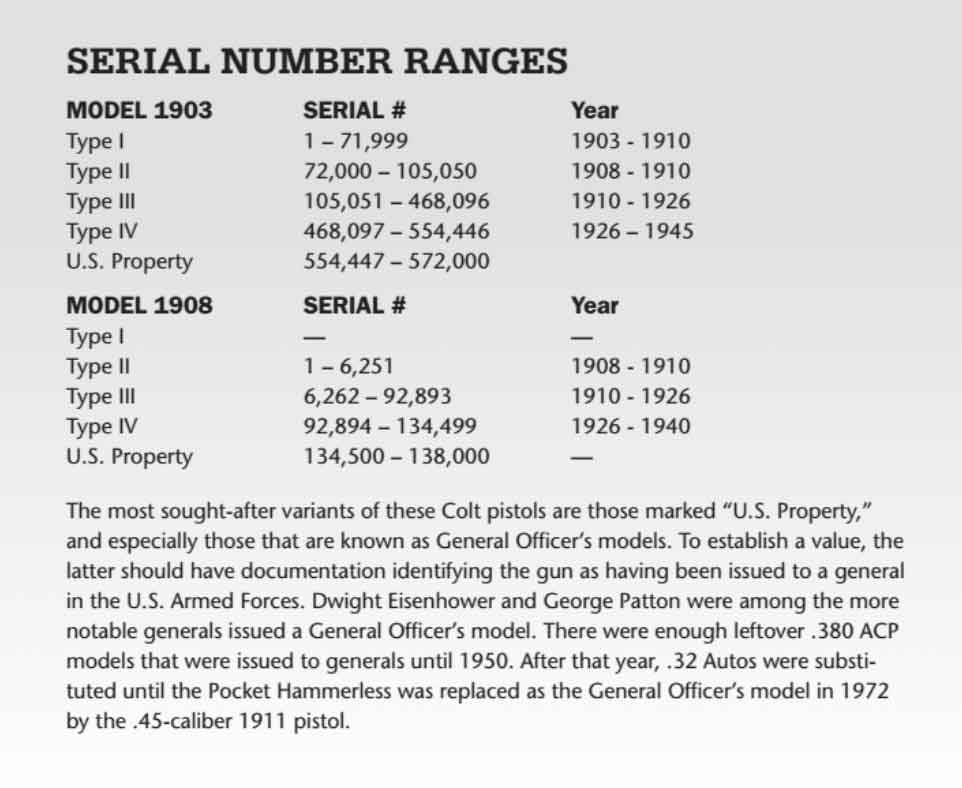
  • More than 572,000 Model 1903 Pocket Hammerless pistols were produced for civilians.
  • An additional 134,500 Model 1908s were produced for the civilian market.
  • The pistols were popular among police, civilians and criminal elements.
  • There are four different variants for both the Model 1903 and 1908.
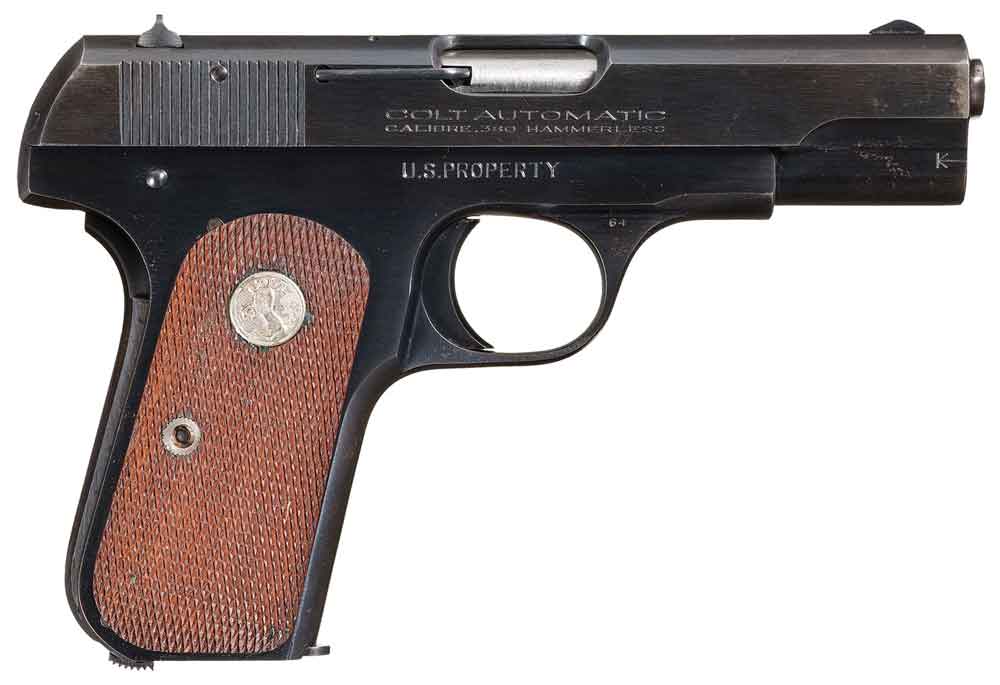
  • Pistols marked “U.S. Property” are especially popular and valuable with collectors.

In the waning years of the 19th century, Colt was the first American gun manufacturer to take the semi-auto pistol seriously. The revolver was king — both single- and double-action variants — and civilian, law enforcement and military shooters of the day had not yet accepted the concept of the new “automatics.” Colt’s management believed that when the designs of semi-autos were perfected and could be counted on to function reliably, the world of handgunning would be changed forever.

Colt Model 1903 -3
Image courtesy Steve Gash.

The legendary gunsmith and inventor John M. Browning had designed several single-shot and repeating rifles in the 1880s and 1890s, some for his own company and some for Winchester, including several of that company’s most famous lever actions. Browning was also interested in the idea of self-loading firearms and, as early as 1889, was working on several designs, both full-auto and semi-auto models. In fact, the first firearm he created for Colt was the Model 1895 Automatic Machine Gun, a full-auto that was known as the “Potato Digger” in the Spanish-American War.

Browning shifted his focus to handguns, and the next design he did for Colt was a semi-auto pistol, the Model 1900, named for the year that Colt put the gun on the market. It was chambered for the .38 Auto, a cartridge developed by Browning. It had a 6-inch barrel, wasn’t very well balanced and not a success on the market. Only about 3,500 were manufactured, including a few hundred for the U.S. Army and Navy. The Model 1900 was replaced by the Model 1902, which had a few improvements, including a rounded butt and a round hammer spur. Next came the Model 1903 Pocket Hammer Pistol. It was essentially identical to the 1902 except for its 4 ½-inch barrel, which led to the “pocket pistol” concept.

Colt Model 1903 -4
Image courtesy Steve Gash.

Going Hammerless … Almost
The next Browning-designed model was the Model 1903 Hammerless Pocket Pistol, which became one of Colt’s most successful handguns of the 20th century. The “hammerless” reference was not accurate of course, but rather it was a marketing term to call attention to the pistol’s streamlined profile. The hammer was enclosed by the rear of the slide. Browning also designed a new cartridge for this model, the .32 Automatic Colt Pistol (ACP) round, which became one of the most popular handgun calibers in the world.

Colt Model 1903 -serialsThe Model 1903 Hammerless was on the market for more than 40 years, from the year of its introduction until the end of World War II. More than 572,000 were made for the civilian market and another 200,000 or so for military contracts, including several thousand for England, Belgium and the Philippines. An additional 134,500 Model 1908s in .380 ACP were manufactured, plus several thousand for military contracts at home and abroad.

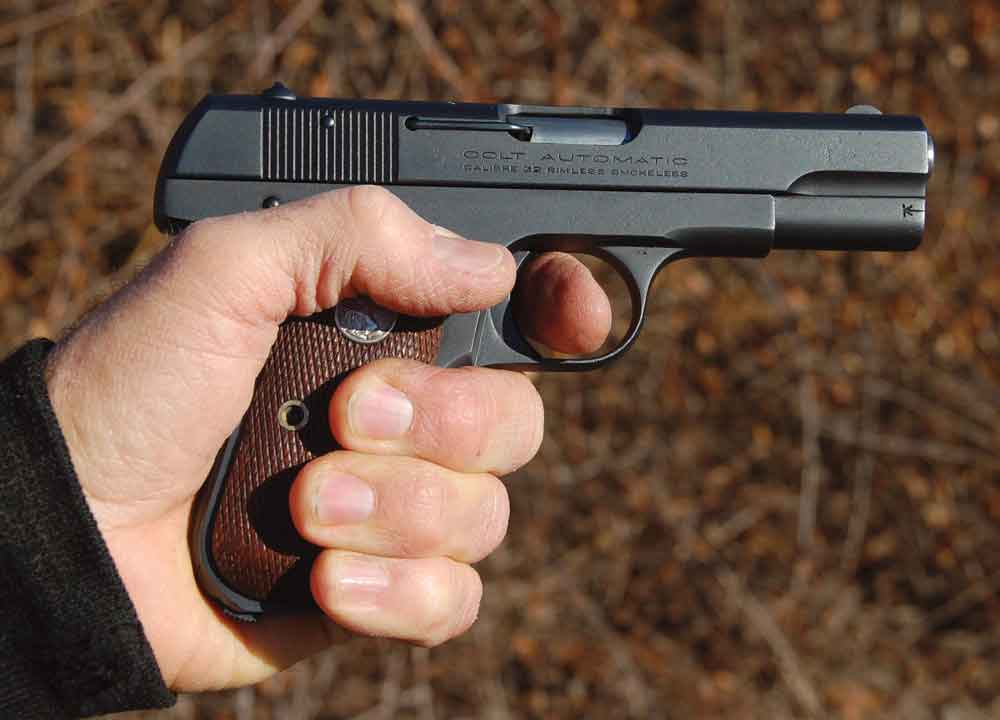
John Browning gave the 1903 and 1908 design a smooth, graceful silhouette that epitomized what was called a “pocket pistol” at the time — today we’d call it a concealed carry gun. It’s a handsome pistol, and I know several writers who have referred to it as one of the best-looking handguns ever. Thanks to the film industry, the 1903 and 1908 Colt is one of our most recognizable pistols. In almost any black-and-white movie from the ‘30s and ‘40s that has a crime/drama theme, sooner or later one of the good guys or the bad guys pulls out one of these pistols.

Colt Model 1903 -1
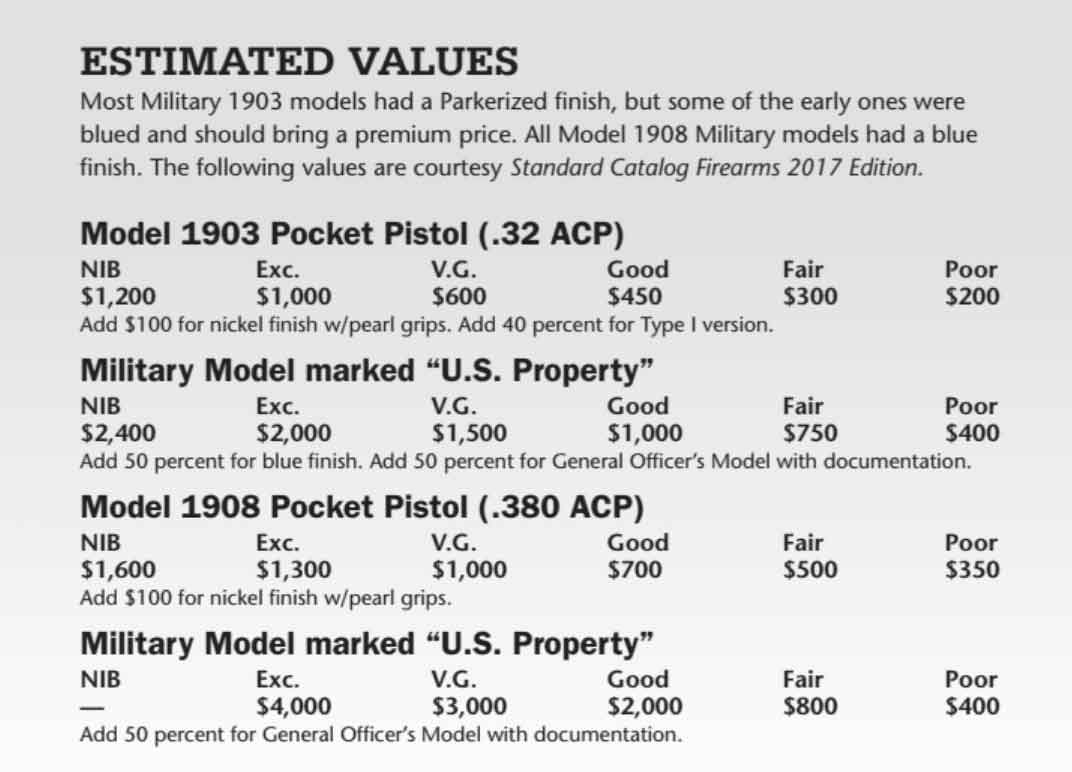
Colt 1903 and 1908 pistols marked “U.S. Property” are popular with collectors. Expect to pay a premium for one of these pieces of history. Image courtesy Rock Island Auction Co.

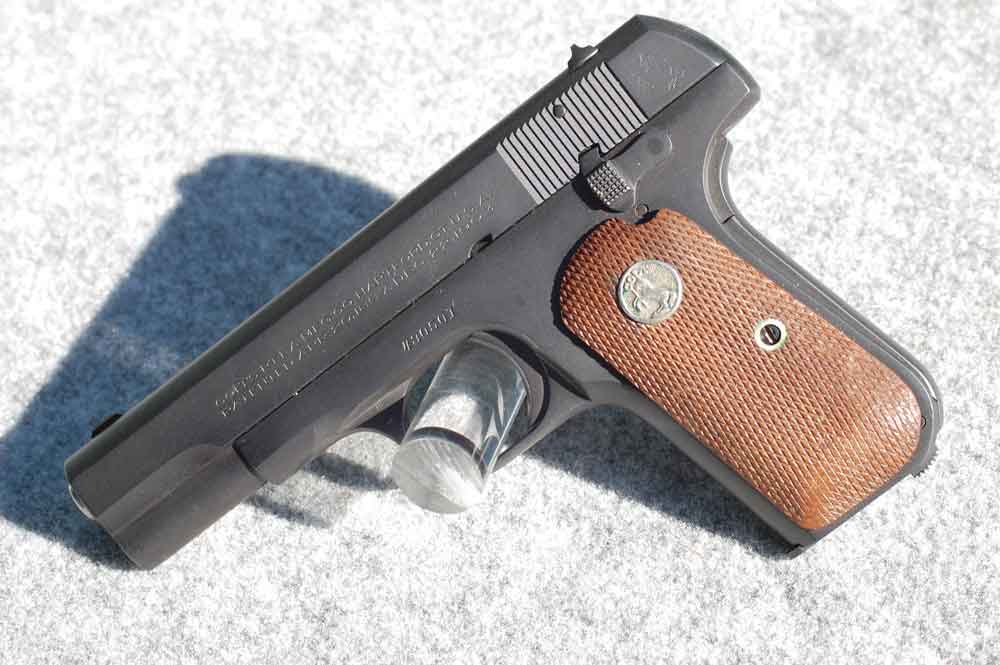
The Pocket Hammerless was also known as the Model M, the official factory designation. It’s a straight blowback single-action design with a fixed barrel. When the gun is fired, the slide moves back, the empty case is ejected and the spring beneath the barrel returns the slide forward and the next cartridge is stripped off the top of the eight-round magazine, seven for the 1908 .380 ACP. There’s a thumb safety on the left side of the frame and a grip safety much like the one found on the Model 1911 series of pistols. The overall weight is a handy 24 ounces, and dimensions are 6.75 inches long, 4.5 inches high and 1.16 inches wide.

In both .32 ACP and .380 ACP versions, these pistols became very popular in police and civilian circles, including the criminal element. Al Capone was known to have carried a Model 1903 and John Dillinger was said to have had a Model 1908 on him when he was gunned down in July of 1934 as he came out of a movie theater in Chicago. It was reported that Bonnie Parker and Clyde Barrow had two Colt Pocket Models in their car when they met their demise a couple of months earlier in Louisiana.

Colt Model 1903 -2
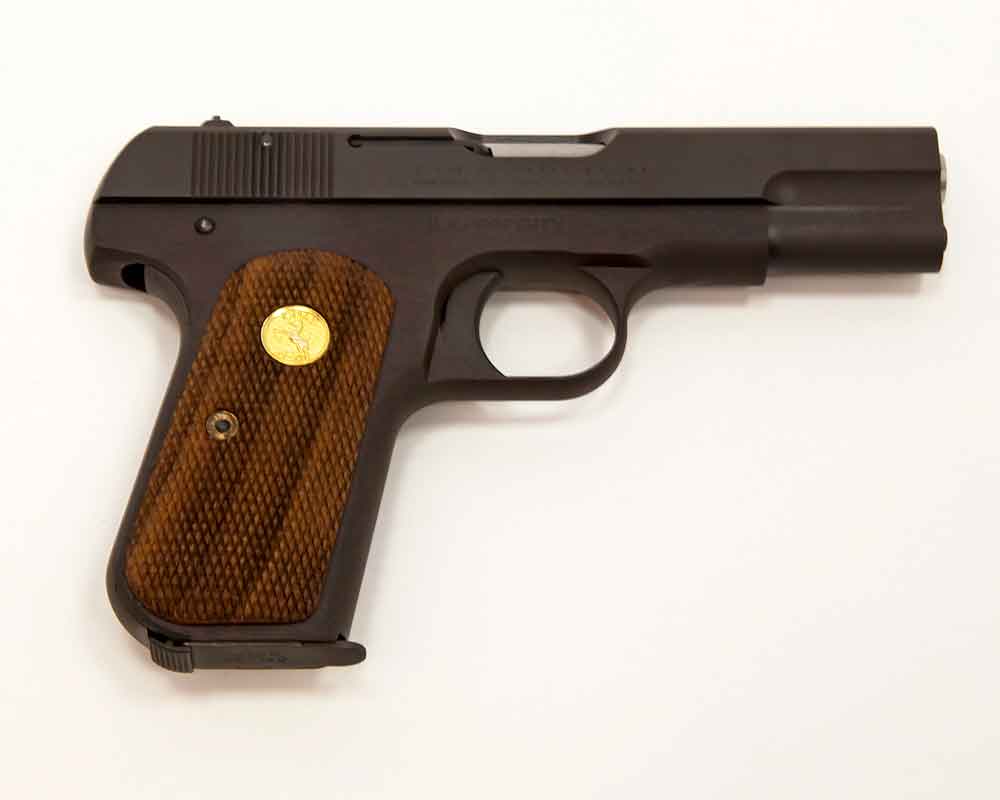
After more than 70 years, the 1903 is back. Colt licensed this series to U.S. Armament Corporation. Image courtesy U.S. Armament Corp.

Variations Of Success
Over its 40-plus-year run, there have been four variants of the 1903 and 1908 pistols with features mostly relating to barrel length and the presence — or lack of — a barrel bushing in the design.

Colt Model 1903 -pricesType I models, made from 1903-1910, have a 4-inch barrel and a barrel bushing. Type II models (1908-1910) have a 3.75-inch barrel with bushing, Type III models (1910-1926) have no barrel bushing and retain the 3.75-inch barrel length, and Type IV models (1926-1945) have the addition of a magazine disconnect safety, meaning the gun will not fire unless the magazine is in place.

For those who have always wanted a brand new Colt Pocket Hammerless, there’s good news: Colt has licensed U.S. Armament Corporation to produce a limited run of Model 1903 General Officer’s Pistols. The project will be limited to 3,500 guns. It’s a well-crafted and faithful replica of a WWII-era Parkerized model. Grips are checkered walnut and wear gold Colt escutcheons instead of the original silver ones. The suggested retail price is $1,395. For more information contact USArmamentCorp.com.

This “Collector’s Corner” column is an excerpt from the October 2017 issue of Gun Digest the Magazine.
Accurate And Affordable Handguns For Any Shooter

0

You will not achieve the best accuracy with a second- or third-rate handgun. Thankfully, there are a number of affordable handguns that still exhibit excellent accuracy.

There are plenty of affordable handguns that are also quite accurate:

  • Handgunners have lots of options when it comes to sidearms.
  • All are not equal, but many will shoot 2 inches at 25 yards for under $1,000.
  • Many accurate and affordable 1911s are being made by popular manufacturers.
  • In terms of hard-hitting, accurate revolvers, don’t overlook some of Ruger’s offerings.
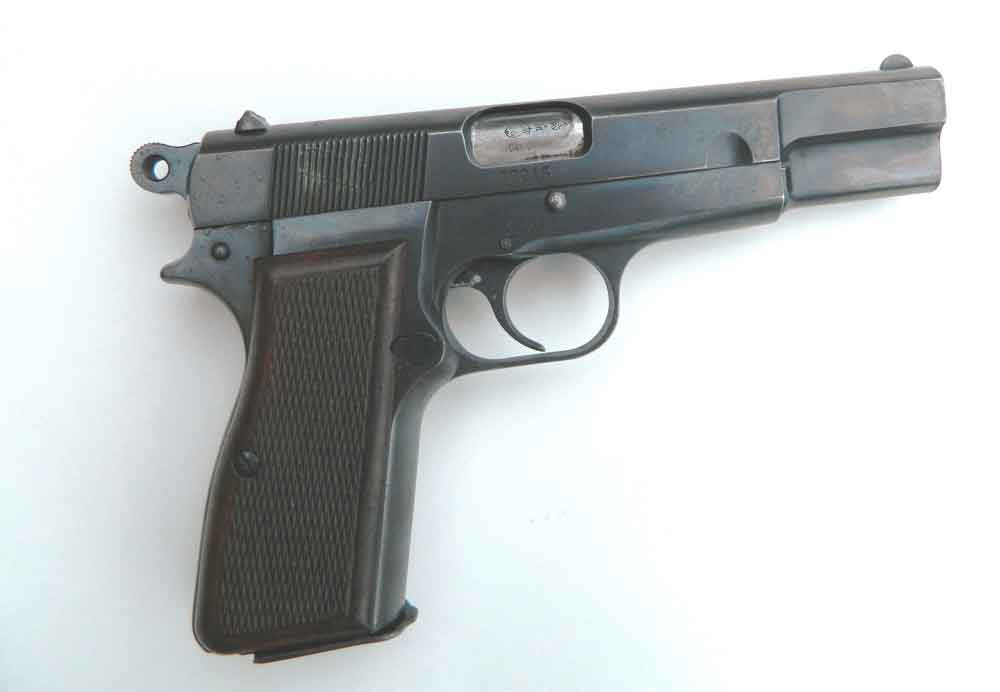
Affordable Handguns Browning-Hi-Power
The Browning Hi Power 9mm was the first “wonder nine” and is a very reliable handgun.

The Most Accurate Handguns

When you consider accuracy you must determine first the use to which the handgun will be put.

A few years ago, I read an article describing how a shooter had a custom-grade Browning Hi Power put together with Novak sights and a Bar-Sto barrel — all great additions. Then the writer, obviously given the wrong assignment to cover, fired the piece at 7 yards and voiced the opinion that a defensive handgun would never be used past that distance!

There are competing demands on the handgun, but the worst case scenario is the one that I consider. I may limit my sure kill range when deer hunting to 35 yards with the .45 ACP, but would 50 yards be too much?

The Ruger Blackhawk .44 Magnum will stretch that range to all of 100 yards if I do my part. On the other hand, if you are going to shoot at Camp Perry, the emphasis will be on accuracy and the piece must be more accurate than most any off-the-shelf handgun.

Affordable Handguns revolvers
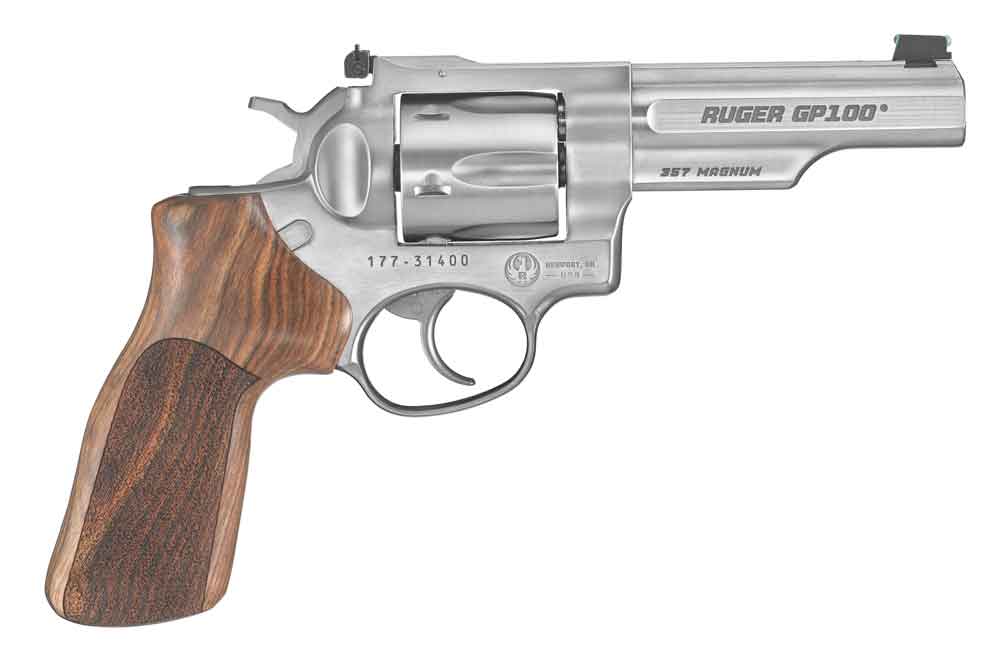
The Ruger SP101 .357 Magnum, top, is a handy, lightweight defensive handgun, while the GP100, lower, is a dandy all-around packing and hunting gun.

There must also be a balance of power and accuracy. The defensive handgun that isn’t going to be called upon past 7 yards may be the pistol on hand when you have the opportunity to stop an active shooter. It should be accurate enough for the chore and it should fire a powerful cartridge.

A target gun need only cut a hole in paper, but it may have to do so at long range. In a defensive handgun, reliability is a million times more important than anything else. In a competition gun, reliability is less important. The occasional malfunction with a .22 is par for the course.

Modern, affordable handguns have stronger, better steel than ever before and tighter tolerances. Modern Smith and Wesson revolvers have tighter throats than ever, resulting in a reduction of the accuracy problems that once dogged the .45 Auto Rim.

Modern Smith and Wesson revolvers in all calibers are more accurate than any previous revolver from this company. Ergonomics and sights are much better than ever before in all quality handguns. Handguns with tighter tolerances simply last longer.

There isn’t much slip or banging of misfit parts when the pistol fires, resulting in less wear. Accuracy and reliability are better, too.

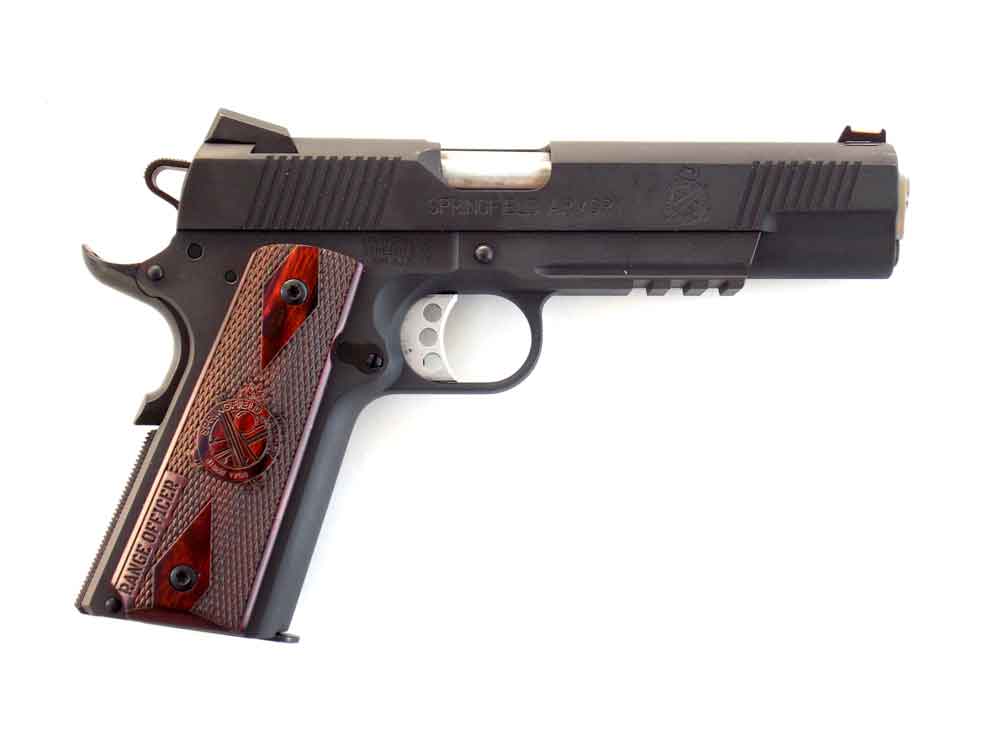
Affordable Handguns Springfield-RO
The author’s go-to 1911 .45 is the Springfield Range Officer Operator. While an affordable handgun, it is also incredibly capable.

Today, we have off-the-shelf 1911 handguns that will deliver accuracy of 2 inches at 25 yards with good loads.

Affordable Handguns -1911Colt, SIG and Springfield 1911s with adjustable sights are available for the serious handgunner. While some experimentation with ammunition is necessary, these handguns are often surprisingly accurate. A modern magnum revolver may be even more accurate.

My personal Ruger GP100 .357 Magnum revolver is the single most accurate handgun I have owned, and I am not alone in this sentiment. The GP 100 has cut a 25-yard group on several occasions of 1 inch or less.

That is an incredible standard and I am certain I cannot shoot up to the capabilities of the handgun on most days, although it appears I have done so on a few occasions.

The better-quality 1911 handguns are among our most accurate pistols, while Magnum revolvers are often very accurate and more accurate, in my experience, than all but the finest self-loading pistols.

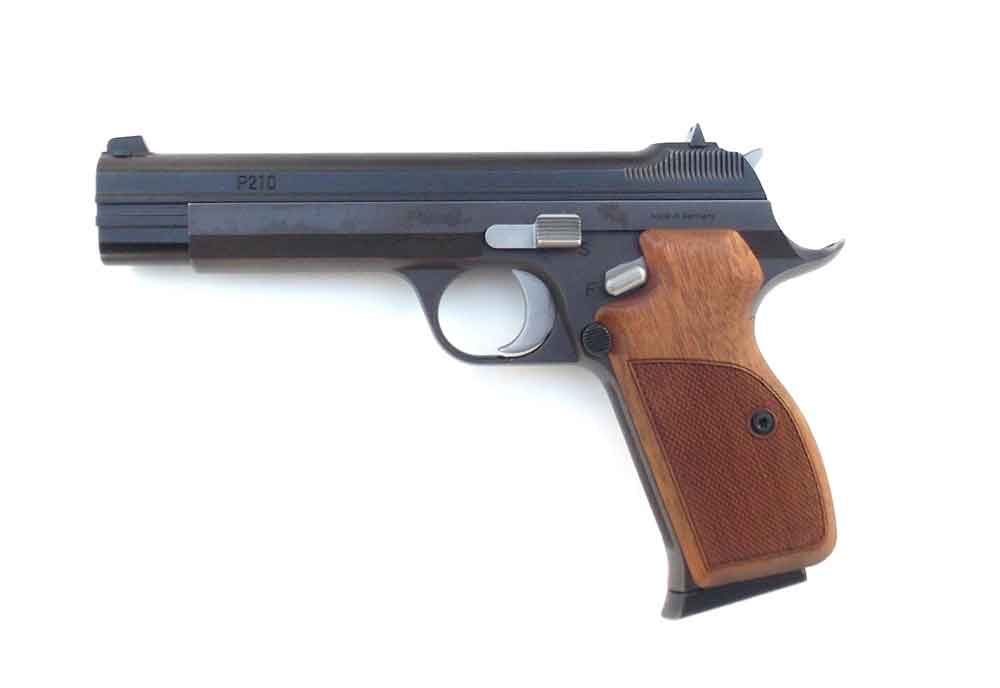
Affordable Handguns SIG-Sauer-P210
SIG’s P210 offers legendary performance. Many regard it as the finest-made 9mm handgun of all time. It is difficult to make an argument against that.

As for my personal testing, I could not fire every handgun and type of ammunition on the market. But chances are, the more quality guns will yield similar performance, as a Springfield Range Officer Target model and a SIG target-sighted 1911 tend to perform similarly. These are among the most useful of all handguns. Reliable, accurate and powerful they convey more than a little emotional attachment.

There are other affordable handguns that I find exceptionally pleasing to shoot and very accurate. The aforementioned classic Browning Hi Power is such a timeless design with many good features. I would not be hesitant to stake my life or a contest on a good specimen of one.

My own Hi Power has been fitted with a Bar-Sto Precision barrel, which made a considerable difference in accuracy. The average Hi Power can be expected to group five rounds of quality ammunition such as the Federal HST into 2.5 inches at 25 yards.

The trigger on the Hi Power is notoriously heavy, although later models are better and early handguns sometimes become much smoother with age.

The Bar-Sto fitted Hi Power will shave an inch off that group given proper fitting and carefully chosen ammunition. The SIG P210 is even more accurate straight from the factory, but very expensive and leaving something to be desired as for the location of its safety and general handling.

Affordable Handguns Ruger-GP100
The new Match Target version of the GP100 has features that make it more ergonomic than the standard model. Accuracy is easier to come by with this handgun.

The CZ 75 is respected for ruggedness and reliability. And it has a good reputation for accuracy. Although the contest is a tight one, in general the CZ 75 will outshoot the Browning Hi Power. It takes a fine shot to demonstrate this — and benchrest accuracy is theoretical when comparing combat guns — but I had rather have the CZ 75 in a fight than any other 9mm handgun. It is that good and the combination of features is excellent.

If you desire an accurate belt gun that is capable of personal defense at long range in the most demanding circumstances, of taking game and engaging in IDPA and ISPSC matches, the list of suitable, affordable handguns gets pretty short.

I have shot most of the available handguns and find that some are more accurate than others. The accurate handgun should also be capable of using a target load with less recoil than the full power service loads. This is very important in bettering your marksmanship skill.

After a long session with the .45 ACP, recoil sneaks up, giving you sore wrists. A good supply of medium-velocity handloads or target loads makes life easier.

In the revolver, target wadcutters or lead semi-wadcutters (SWC) loads are great practice loads. I recommend a diet of ten practice loads for every one full power service load. Both you and the handgun will last longer with this type of ammunition.

I recommend purchasing quality, yet affordable handguns and spending much more on ammunition. In addition, handloading is mandatory for marksmanship growth.

Editor’s Note: This article is an excerpt from The Accurate Handgun, available now at GunDigestStore.com

Ballistics Basics: What Is Headspace?

0

What exactly is headspace, and how is it applied to different cases?

  • Headspace is distance from a case’s base to the point that prevents its forward movement.
  • Different cartridge types use different points on the cartridge case for headspacing.
  • Rimmed cartridges use the thickness of the cartridge rim for headspacing.
  • Rimless bottleneck cartridges headspace off the shoulder.
  • Rimless straight-walled cartridges (most pistol rounds) headsapce off the case mouth.
  • Some belted cases headspace off the belt, while others headspace off the shoulder.

What is headspacing?

Headspace is the distance from the base of the cartridge case to the point on the cartridge case that prevents the cartridge from moving any farther forward in the chamber.

To put this into real-world, appreciable terms, I’ll give some examples.

Headspace 4
Rimmed .45-70 Government cartridges.

A rimmed cartridge, whether straight-walled, tapered, or bottlenecked, uses the thickness of the cartridge rim for its headspacing. It is a positive method of headspacing, resulting in very uniform results, yet these cartridges don’t often feed well in bolt- or pump-action magazine rifles.

They do very well in lever-action rifles and revolvers, as well as single-shot and double rifles. Examples include the .30-30 Winchester, .45-70 Government, .22 Long Rifle, .38 Special and .357 Magnum.

Headspace 2
Rimless pistol cartridges.

The rimless bottleneck cartridges, like the .223 Remington, .308 Winchester, .30-06 Springfield and .270 Winchester, have an extractor groove cut into the base of the case, just north of the case head. As a result, these cartridges use the shoulder of the bottleneck for headspacing.

The shoulder is typically quite steep, upwards of 15 degrees (though there are exceptions like the .404 Jeffery) to prevent the cartridge from moving any farther forward in the chamber.

The rimless bottleneck design works perfectly in almost all repeating rifles, from lever to bolt to semi-automatic, to the military’s fully-automatic, belt-fed machine guns. So long as the firearm is properly headspaced, this bottlenecked rimless design will work as intended. The groove allows for excellent extraction, too; it’s a design common among many of our most famous cartridges.

Headspace 5 .25 automaticThe rimless, straight-walled cartridges comprise the most common choices for the modern, semi-automatic pistols. This style of cartridge uses the same extractor groove as its bottlenecked cousins, but since there is neither rim nor shoulder, it headspaces off the case mouth.

Note that this feature is especially important to those who handload this style of cartridge, as the projectiles cannot be ‘roll-crimped’ into the case; they must be taper crimped, or held in place by the use of a special die which squeezes the side wall of the cartridge around the shank of the bullet.

In this type of cartridge, the case length is of utmost importance as that distance is the sole dimension responsible for setting the headspacing. If you’ve ever picked up a 9mm Luger or .45 ACP that has a rather ‘sooty’ look around the mouth of the case, it is an example of poor (excessive) headspacing, either from the firearm’s chamber being too long, or the ammunition being too short. The .40 Smith & Wesson, as well as the 9mm Luger and .45 ACP, are all examples of pistol cartridges that headspace off of the case mouth.

How Belted Cases Headspace

The belted cartridges, based on the famous Holland & Holland design of the early 1900s, are a hybrid of the rimmed and rimless design. Because the rimmed design gave such fantastic headspacing, but didn’t feed very well from a box magazine, and the London firm didn’t want to rely on a steep shoulder for headspacing (both the .375 H&H and .300 H&H have gentle, sloping shoulders), they built a small shelf, or belt of brass into the case wall, just above the extractor groove.

So, in essence, the H&H belted cartridges use a “rimmed-rimless” case, which feed perfectly in repeating rifles, yet headspace off of the rim. Thus, the shoulder dimension is irrelevant.

While it is commonly thought that the .375 H&H Rimless Belted Magnum — the .375 H&H we all know and love — was the first cartridge released that featured the now-famous belt, that isn’t true.

Headspace 3
Holland & Holland’s .375 rimless belted magnum.

In 1905, Holland & Holland released the .400/.375 Belted Nitro Express, also known as the .375 Velopex, but its performance was poor in comparison to other Nitro Express cartridges of the era, so it didn’t last long.

Additionally, when the .375 H&H was released in 1912 it wasn’t alone. The .275 Holland & Holland Magnum, with a 2.500-inch case length and the same belt was released simultaneously.

Firing a 7mm projectile at some very familiar velocities, the .275 H&H Magnum is, in theory, the 7mm Remington Magnum. It just took 50 years for the shooting world to realize they wanted it!

Since the belt on any belted cartridge is there for headspacing, and has nothing to do with case strength, it’s rather ironic that there are so few belted cases that actually headspace off of that belt. Certainly the .375 H&H and .300 H&H, and I’d definitely include the .458 Winchester Magnum, .458 Lott, and the .450 Marlin, but the plethora of belted magnums (including the .300 Winchester and 7mm Remington Magnum, as well as the entire Weatherby family of cartridges) all headspace off of the shoulder.

Now, I know what you’re thinking: in the last half of the 20th century, no self-respecting “magnum” cartridge would be caught dead without its belt. It’s a very good point, but I think that the .375 H&H case was used as the basis for the brood of offspring ranging from the .257 Weatherby up to the .458 Lott — not for the ‘strength’ of the belt or for headspacing issues, but for the case capacity of the parent cartridge.

Editor’s Note: This article is an excerpt from the Big Book of Ballistics, available at GunDigestStore.com.

Concealed Carry: What Do You Carry?

0

Deciding to concealed carry takes plenty of consideration, particularly determining which is the right gun for you.

How should you go about choosing a concealed carry gun?

  • Concealed carry gives armed citizens the advantage.
  • Potential attackers do not know who’s armed and who’s not.
  • The author will not disclose whether he carries, and suggests others don’t either.
  • There are some basic considerations for carry: climate, training level, concealablity.
  • A sub-compact, single-stack 9mm, for many circumstances, is adequate protection.

Where I live, a lot of people carry discreetly. As such, the bad guy doesn’t know who is armed and might shoot him. That makes every type of attack less likely, which makes everyone much safer. And that’s exactly how it should be.

Concealed Carry Pistol Being Drawn

So, I’m not going to tell you — or anybody — if I carry a gun or not and what that gun might be. And you shouldn’t — unless required by law — let other people know whether or not you are carrying. But I can give you the reasoning I would use if I had to choose a gun for concealed carry in public.

Why should you care what I think? I’m just like many of you, except I’ve had hundreds of hours of training in the use of handguns, rifles and shotguns from some of the best trainers and gun fighting schools in the world. And I’ve done a lot of research on the subject and learned directly from real gun fighters.

All of them have an opinion about what gun or caliber is best, and it’s reflected in what they carry when they have a choice. And the choice each person makes is right for them. So learn, get training and weigh the options. Then make your choice, but obey the law.

It’s hot where I live, so if I had to select a gun for concealed carry, it would have to be easy to carry discreetly in hot weather where a coat looks out of place. So small is better. But with more terrorist activity, the rise in attacks by multiple assailants is increasing, so it would be a good idea to have as much ammo on board as possible. While a double-stack 9mm pistol sounds good, it might not be as easy to hide as a single stack. And the same pistol in .45 ACP won’t hold as many rounds as a 9mm.

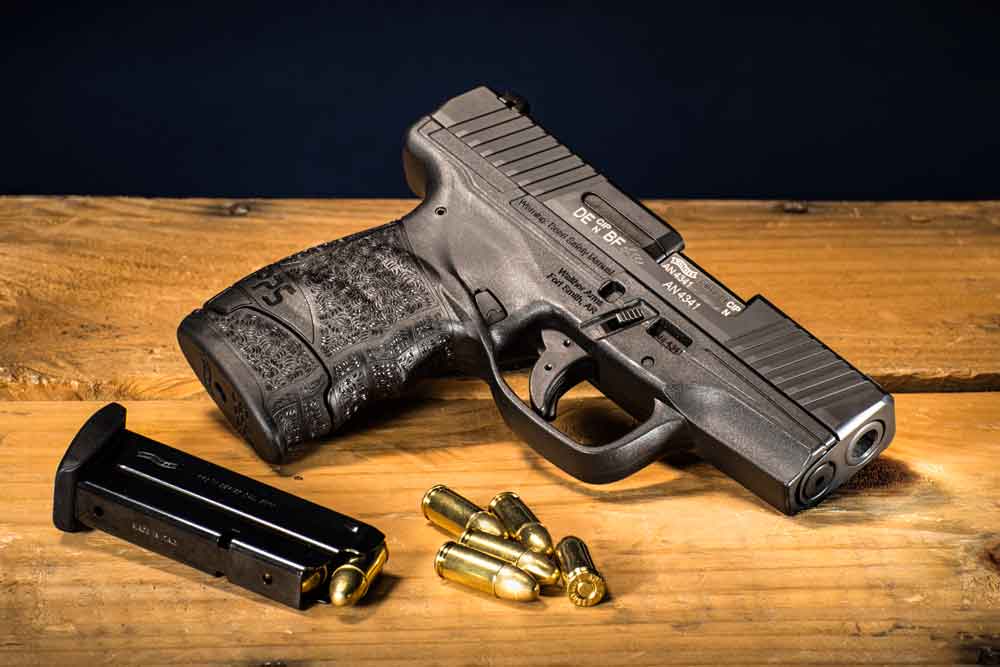
Walther PPS M2 Pistol

I’m getting older, and my bones and joints don’t work as well as they used to. After years of aggressive shooting, especially after shooting a lot of very high-powered handgun cartridges, I find that a gun in 9mm is much easier to control and more comfortable to shoot during long periods of training.

So, if I had to choose, I would not feel under protected by a sub-compact single-stack 9mm semi-automatic. But this is just my opinion, and it’s all hypothetical anyway. You should do what makes sense for you.

How-To: Trick Out Your AR Trigger

0

An AR trigger upgrade should be your first move if you’re looking to enhance the performance and accuracy of your stock rifle.

What sort of trigger do you need in your AR?

The AR is a great firearm. It can be used for almost anything. There are plenty of aftermarket parts to work with, so you can custom configure it to fit any particular application. One of the first areas you should address is the AR trigger group. Regardless of the application of your gun, a good trigger will make getting accurate hits easier.

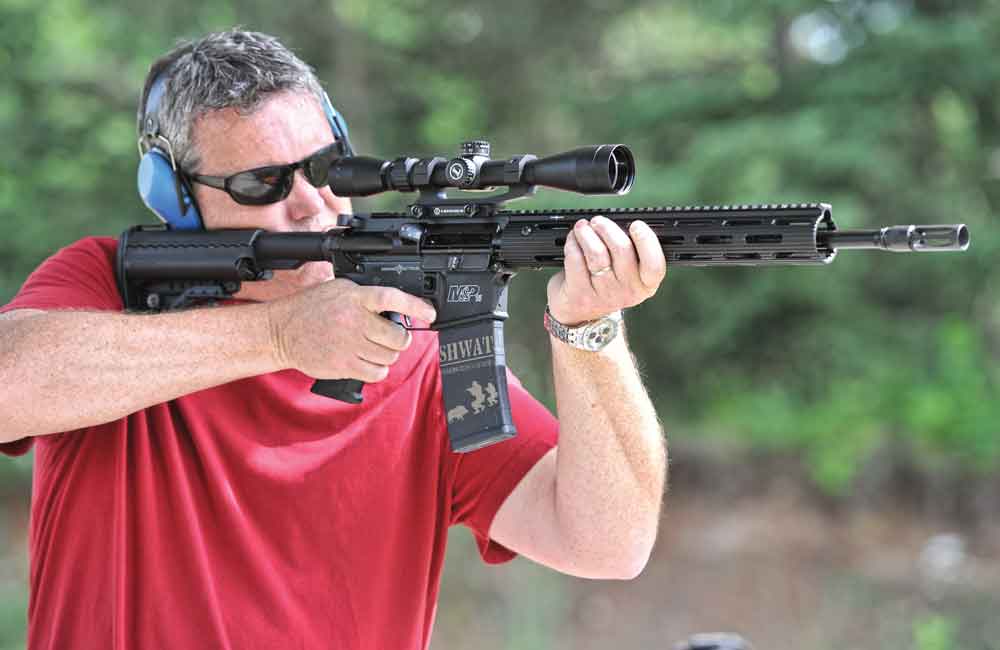
Shooting a AR rifle, finger on the trigger

The typical Mil-Spec AR trigger is pretty rough. It feels gritty. As you press it, it catches and grabs on the rough areas. However, one of the coolest features of the AR is its modular design. It’s simple to swap out various components, often without any special tools. There is no “fitting” required to swap out the AR trigger. As long as your receiver is within spec — which most are — all that’s required is to remove the old parts and install the new. And if you’re not sure about what you’re doing, have a qualified gunsmith address this for you.

Do not, under any conditions, modify the stock AR trigger components. These parts are heat treated, but only on their very surface. Polishing/grinding or removing material will take off the hard surface, leading to rapid wear on these areas. It might work great initially, but you’ll soon experience double-taps, which are shots fired as you reset or release. Sometimes, the result is full-auto fire. Modifying the factory components is dangerous.

Luckily, you don’t have to rework anything. There is a host of aftermarket companies offering great triggers for the AR. Once you decide what you’re going to do with the AR, you can then select the appropriate one.

Match vs. Defensive AR Triggers

The first decision to make is between a competition trigger for matches or a one for defensive and patrol use. Match or competition triggers are usually highly modified, varying in shape and weight significantly from the original designs. Some are adjustable. They have a very smooth action, and normally a greatly reduced pull — the amount of pressure required to drop the hammer. A lightweight AR trigger is fine on the range, or for a rifle set up for specific applications, such as a “special purpose rifle” for hunting or sniping. They are not for defensive or patrol use.

A match or competition trigger should not be used for defensive or patrol work. Under stress you lose dexterity in the fingers. During a violent confrontation, you’ll be moving, using different firing positions and fighting. An AR trigger that’s too light leads to negligent or unintentional shots fired. We see this occur during drills on the range, which means it will definitely be a problem under stress when lives are on the line.

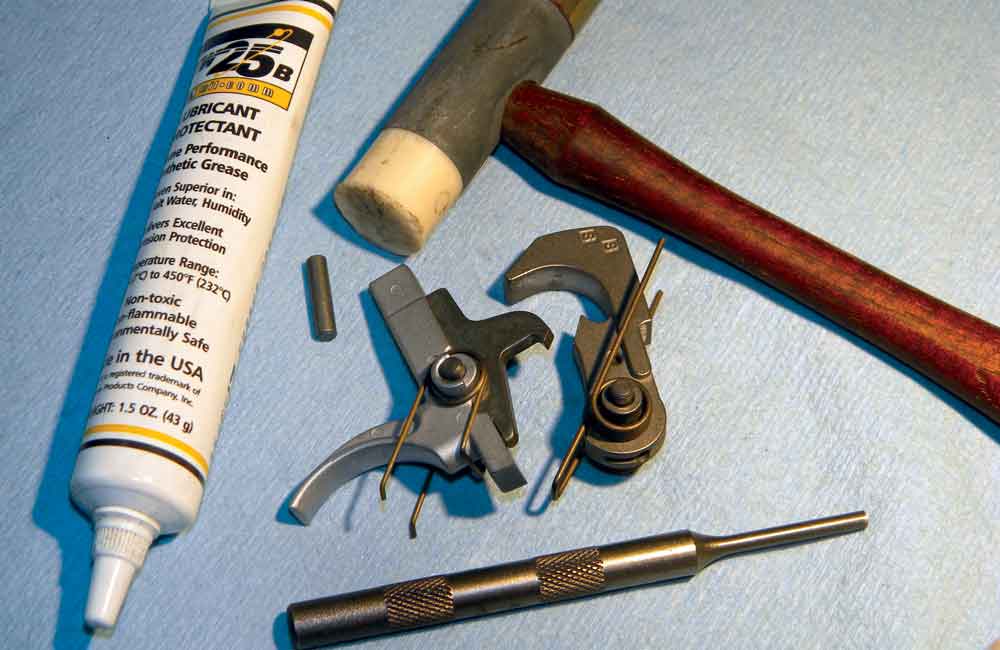
AR Trigger upgrade with instillation tools

A light trigger can be a legal liability. “Common custom and practice” is the key phrase. For the AR, this means a trigger of at least 4.5 pounds or more. Going with one that’s lighter than what is accepted for the purpose has been a major factor in court cases. Mas Ayoob discusses this in his classes, citing a few court cases where “hair” triggers were major factors.

In Ayoob’s first case as an expert witness, Florida v. Luis, the light trigger was critical to the manslaughter charge against Alvarez, a police officer. In Santibanes v. Tomball, the lawsuit “alleged negligence because the officer had created, ‘with the best of intentions,’ a trigger pull lighter than the gun’s manufacturer specs for ‘duty/self-defense use.’” Although these cases involved handguns, the same can be applied to the AR.

If you’ve been following along with this column, or if you’ve been around ARs for a while, you know gear selection is dictated by the anticipated use of your rifle or carbine. This consideration is also mandatory when selecting an AR trigger. The wrong trigger can lead to embarrassing or tragic results. With the right one, however, the AR will do anything you need.

Single- vs. Two-Stage AR Trigger

You’ll also need to decide between a single- or two-stage trigger. The single-stage trigger requires one smooth press, from beginning to end, to fire the shot. You start pressing and, at some point, the shot fires.

A two-stage trigger has two phases. As you press and take out the first stage, you hit a “wall,” which is a distinct point where you start to feel increased resistance. This is where the second stage starts. Apply a little more pressure, and the shot fires. This provides a break point you can feel; you know when the shot is about to fire. For newer shooters, this can cause a flinch, tensing up in anticipation of the shot that’s coming. For an accomplished shooter, this can be an advantage: You’re able to fire the shot exactly when you want.

Drop-In vs. Standard Configuration

Today you have the choice between a drop-in AR trigger group and a “standard” group. Drop-in trigger groups are self-contained units pre-assembled within a housing. You remove the old parts, slip in the new group and install the pins to retain it.

The standard parts are just like the Mil-Spec originals. There are separate components that you assemble inside the receiver. Both types work very well, although the drop-in variety have started to gain popularity, especially with competitive shooters.

For competition triggers, or a “special purpose rifle” for surgical shooting, I recommend Geissele or Timney. Geissele offers several designs for the AR, featuring standard-type components to install. Timney specializes in drop-in units.

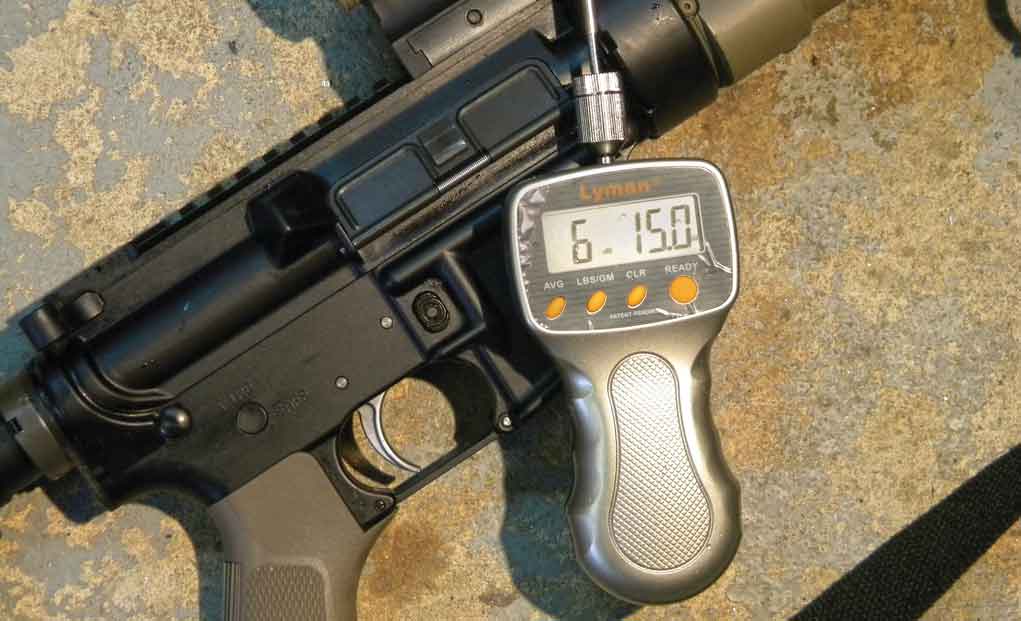
AR with trigger scale

For general-purpose or defensive AR trigger assemblies, I highly recommend ALG’s ACT trigger group. This group comes with all the parts needed — trigger, hammer, disconnector, springs and pins — to install in the AR. The ALG parts are Mil-Spec in size and shape, but they have polished and coated surfaces that provide a smooth action and crisp break. The group comes with two hammer springs: One provides a 4.5-pound trigger pull, and the other a 6-pound pull. This is a great trigger, especially considering the price, which is about $70.

Before you go out and spend a lot of money on a trigger for your AR, research and study not only what’s available, but also determine how you will use your gun. Go to the range and ask other shooters what they use. Whenever possible, test fire them. Eventually, you’ll discover what one best suits your purposes. Once you’ve got it installed, then work dry fire to learn the trigger, and live fire to check your results. While a good trigger won’t make up for insufficient skills, it will make it easier to get consistently accurate hits.

Editor’s Note: The article is from the September 2017 Gun Digest the Magazine.

Rifle Review: Team Never Quit Mk12CF Special Purpose Rifle

1

The new Team Never Quit Mk12CF Special Purpose Rifle is a rugged tack driver fit for a number of purposes.

What to know about the new Mk12CF Special Purpose Rifle:

  • The Team Never Quit (TNQ) MK12CF SPR is a nimbler version of the MK12 Mod-1 SPR.
  • It retains all the excellent accuracy of the prior model.
  • A best group of .431 inch was achieved at 100 yards.
  • The Mk12CF SPR comes in two models, one with a Proof Research carbon-fiber barrel.
  • The other features a more traditional stainless-steel barrel.

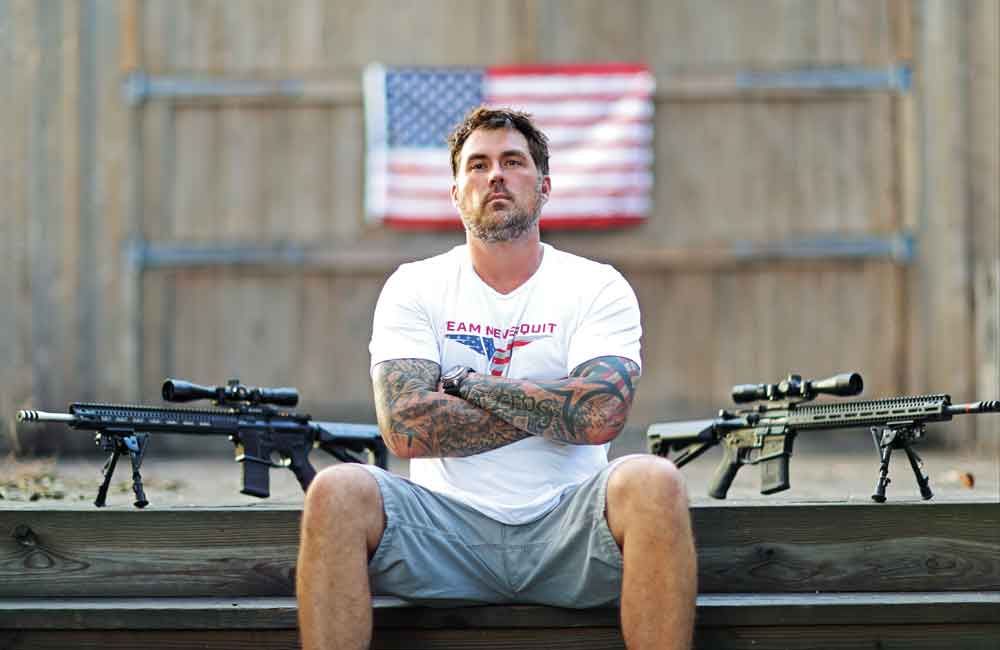
Most Americans know Marcus Luttrell through Lone Survivor, Luttrell’s autobiographical book about his time as a Navy SEAL, and which was later made into the movie of the same name starring Mark Wahlberg. The central action of the book and the movie concerns Operation Red Wings, a mission by Luttrell and three other SEALS to find a top Taliban leader in Afghanistan’s Hindu Kush in June of 2005.

Team-No-Quit-first Mk12CF

Unfortunately, Red Wings did not go as planned, with Luttrell and his compatriots fighting a running battle against Taliban guerillas well before they found their intended target. Greatly outnumbered, the SEALS were killed one by one, except for Luttrell, who escaped by falling down the side of a mountain, literally, and was found and given sanctuary by a local Afghan villager.

When Luttrell retired from the Navy, he returned to his home in Texas and, among other things, continued to participate in three of his life’s passions: firearms, shooting and hunting. This led Luttrell to team up with friend and ex-SEAL Team member Garrett Golden. Golden is co-owner of the gun-making concern G2 Precision of Porter, Texas, and the two went to work on re-designing their duty rifle, the Mk12 Mod-1 SPR rifle. It was a fine rifle — very accurate and reliable — yet it weighed more than 10 pounds.

What they created is the Team Never Quit Mk12CF Special Purpose Rifle (SPR), built by G2 Precision. The Mk12CF SPR concept was to keep all the original rifle’s accuracy, precision and reliability, but with considerably less weight. Plus, Luttrell and Golden added a number of enhancements to increase the original’s functionality.

Team-Never-Quit-Sixth - Mk12CF

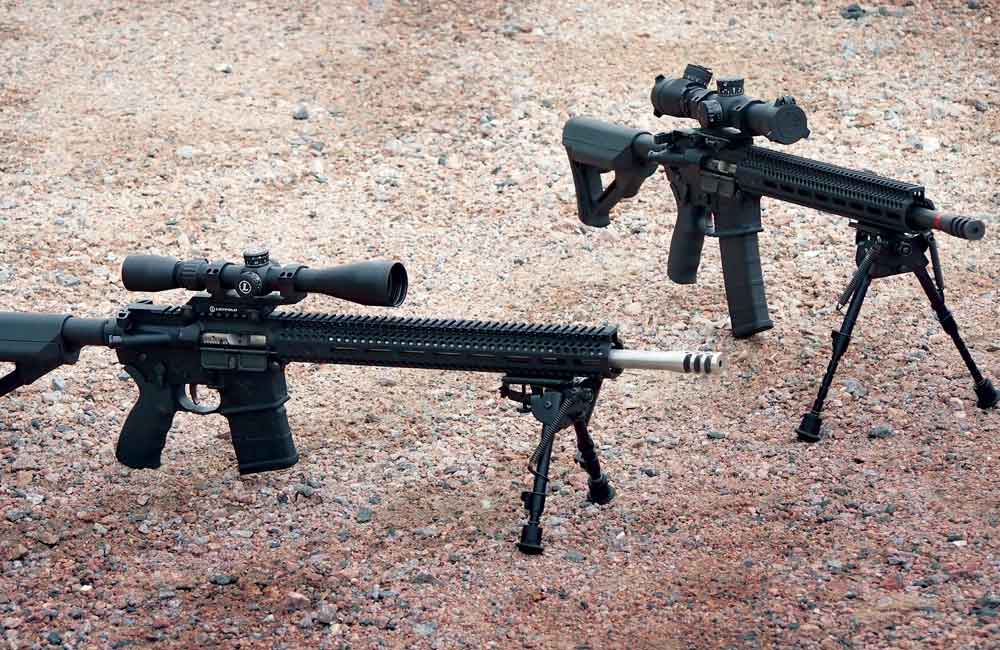
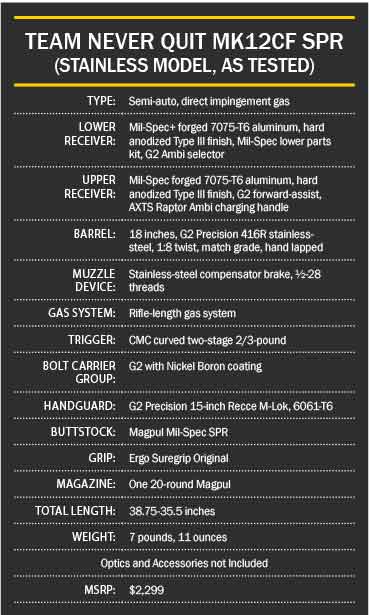
Recently debuted to the shooting public, the Mk12CF SPR comes in two models: a Proof Research carbon fiber-barreled Mk12CF SPR that weighs just 6 pounds, 11 ounces; and an Mk12CF SPR with a stainless-steel barrel that’s exactly 1 pound heavier.

As Luttrell said when the rifle was introduced, “This is the rifle I would want to take with me into battle.”

Less Beef, More Bite
I was fortunate enough to have access to both models of the Mk12CF SPR, among the very first production rifles, and spend a good deal of time with them at the range.

The Mk12CF SPR is chambered in .223 Wylde, so it can fire both .223 Rem. and 5.56x45mm rounds, and it operates on a rifle-length direct impingement gas system. Both models sport 18-inch barrels and feature the same set of controls.

Team-Never-Quit-second MK12CF

Before the end of my first magazine, my initial impression of the rifle was that the Mk12CF SPR just feels right. In hand. On the shoulder. Over a rest. Part of that good feeling has to do with the relative lightness of these ARs, and it’s easy to forget this about the AR-15 rifle as it was imagined and created: It’s supposed to be fairly light.

Somewhere along its evolutionary path, the AR-15 got heavier and heavier, even as it became more and more popular. More metal. Longer barrels. Full-length handguards. Stouter receivers. What had been a standard 6.5- to 7-pound rifle quickly became an 8-pounder. And then a 9-pounder. Today, you can still pick from a rather large selection of 10-pound AR-15s. Often very accurate and fine shooting rifles, these ARs are still a far cry from what Eugene Stoner’s original design sought to accomplish: a reliable combat rifle that was nimble and rugged.

The Mk12CF SPR feels like the rifle Stoner created — with numerous upgrades of course.

For example, the mag release, bolt catch and fire selector on the Mk12CF SPR models each have a dimpled texture on the contact surfaces that makes them easier to use and manipulate than standard Mil-Spec options.

Team-Never-Quit-seventh - Mk12CF

The full-sized Raptor Ambi charging handle lets you pull back the bolt smoothly and without the need for much force. The handle is easily reached, too, even with an optic mounted atop the rifles. The ERGO Pistol Grip molds to your hand, even when that hand is wet, sweaty and dirty, and the CMC Curved Two-Stage trigger snaps off cleanly and easily, and resets very fast.

The Mk12CF SPR also has a forward assist. Many AR makers are foregoing this, but I’m always glad when an AR I’m using has the assist. Shoot any AR long enough and hard enough, and you will find times where you want and need a forward assist. What if you don’t have one and are in a situation where pulling back at the charging handle isn’t an option? Then you invariably find yourself trying to push the bolt forward with all sorts of things definitely not made for the job, including car keys, screw drivers or empty brass cases. Your scratched up bolt will bear witness to what you really needed: a forward assist!

Accuracy In Spades
While in no way qualifying as a torture test, I did run more than 300 rounds through the two rifles without a single failure to feed or eject. I would also note that I used seven different types of .223 Rem. and 5.56x45mm ammunition, some of it made with high quality components, some of it not so much. The rifles handled all of it without a hiccup, and the bolt stayed open at the end of every magazine.

Team-Never-quite-acc

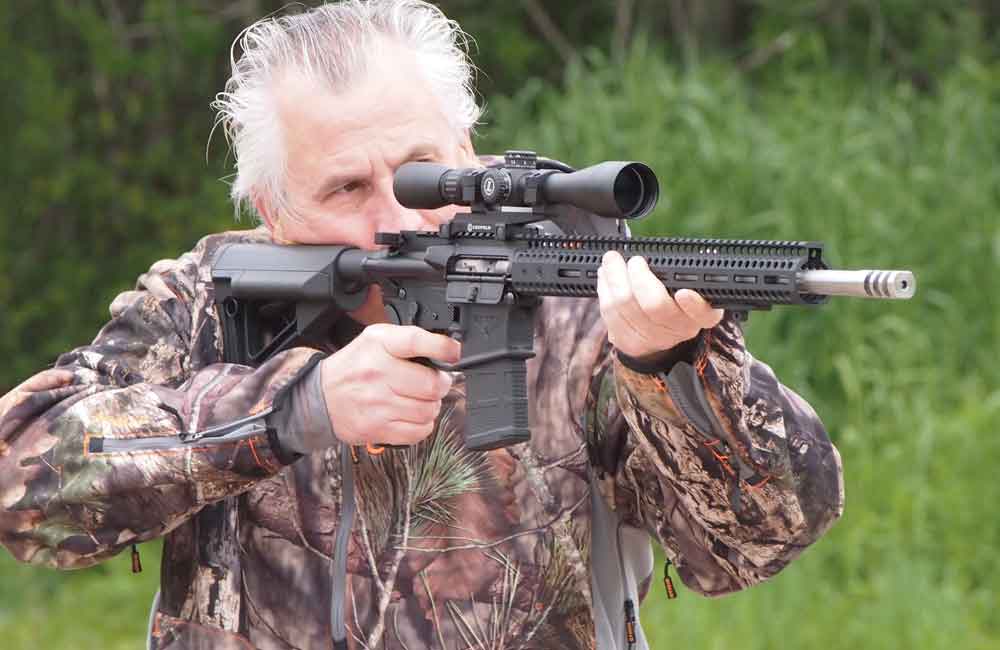
I shot approximately 150 rounds with each rifle, starting with the carbon fiber barreled model. Then, for my accuracy and ballistics testing, I switched to the stainless-steel barrel model and shot another 150 rounds. For an optic, I mounted a Leupold 3-9x40mm Mark AR scope on it, securing it with a one-piece Leupold Integral Mounting System mount.

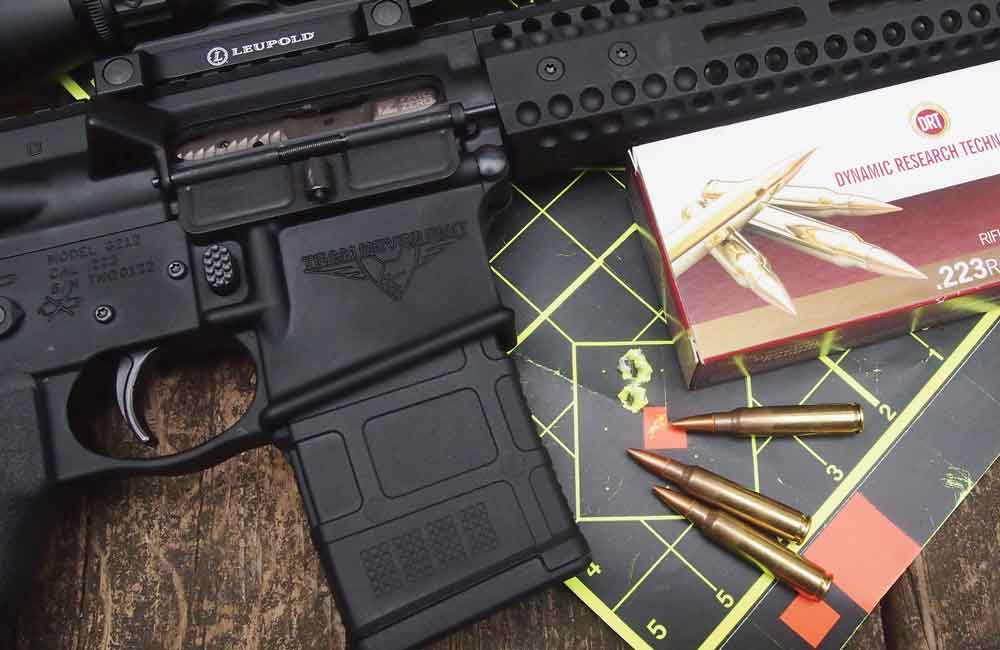
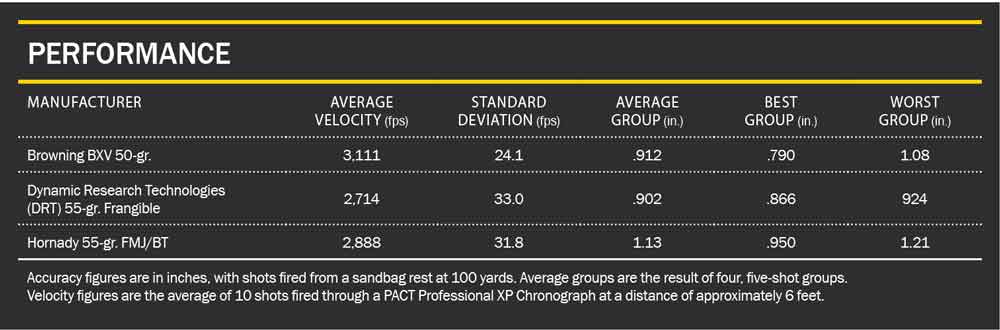
I used three types of ammunition, all in .223 Rem., for my accuracy testing with the Mk12CF SPR stainless rifle: Browning BXV Predator and Varmint with a 50-grain poly-tipped bullet, Dynamic Research Technologies (DRT) Terminal Shock and a 55-grain HP frangible bullet, and Hornady’s 55-grain FMJ/BT load. All groups were fired at 100 yards from a sandbagged rest. The range was located outdoors; the day was sunny, with temperatures in the low 70s, with a light breeze quartering from left to right through the shooting.

For the five-shot and three-shot groups, the DRT ammunition took top honors. My best three-shot DRT group came in at .431 inch, and .866 inch for my top five-shot spread. The other two ammunition brands also posted numerous sub-MOA groupings, including the Browning load that drilled four shots into a group of just .463 inch.

Once the accuracy evaluation was done, I set up my PACT Professional XP Chronograph from Brownells, and fired 10 rounds of each ammo brand through the device. All three brands of ammunition came in right where you’d expect them to be, taking the SAMMI-rated fps velocities recorded with a 24-inch barrel, and adjusting for the somewhat diminished velocities you achieve with the Mk12CF SPR’s 18-inch barrels (see chart).
Team-never-quit-specs
What’s the only thing I wish were different about the rifle? The compensator brakes. While they certainly work to lessen recoil and do direct the muzzle blast away from the front of the rifles, they also tend to direct that blast back toward the shooter. A couple of shots on a hunt won’t be a big deal for the shooter. But when you’re firing dozens of rounds at a time, the smoke and debris coming back into your face — and going into your nose and lungs — becomes quite uncomfortable and distracting.

And what about uses for the Mk12CF SPR rifle? Given its lighter weight and long-range potential, the rifle will be a first-rate predator and varmint rifle, especially for the hunter walking a good number of miles during a day. Those same features make the rifle a good fit for various competitive shooting events, too, and an AR platform is usually a solid all-around choice for home defense.

The Team Never Quit Mk12CF SPR rifles can be ordered from the G2 website at G2Precision.com or through select authorized dealers.

Editor’s Note: This article originally appeared in the October 2017 Gun Digest the Magazine.

New Gear: Bushnell’s New Laser Sight Options For The AR-15

0

Bushnell has taken a different tact in its tactical aiming solutions, releasing three new laser sight options for AR-15s, perfect for close-quarters action.

What are the new laser sight options?

Typically when shooters shop for sighting systems for an AR-15, optics are the first thing to pop into mind. But are scopes and red dots always the right answer for every application? Bushnell is betting they aren’t.

The Kansas-based company recently moved a different direction with its tactical aiming solutions, releasing three laser sight systems. Purpose-built and adaptable to a variety of shooting styles and missions, Bushnell’s AR Optics Haste, AR Optics Chase and AR Optics Rush appear to arm shooters with systems dynamite for drawing a bead at close quarters.

“More and more MSR users are finding the benefits of laser sight systems impossible to ignore,” said AR Optics line manager Bryan Parrish. “Our engineers worked tirelessly to advance these systems, with innovative designs purpose-built for the rifle platform. With high-output lasers and easy, one-button, constant-on operation, the Haste, Chase and Rush outperform the competition and offer users a better way to make the shot.”

AR Optics Haste Laser Sight

AR Optic Haste Laser Sight
The Haste’s unique design not only provides shooters with a class-III laser sight, but also a way to get a better handle on their rifle. The aiming device’s unique housing provides users with an angled foregrip, giving them better overall control over an AR.

The model attaches to any standard Picatinny rail and is engineered to work with both a standard 16-inch AR-15 carbine and AR pistol. As an added benefit, and headache reducer, the Haste will not run afoul of NFA regulations pertaining to the attachment of a vertical foregrip on pistol configurations.

Operated through ambidextrous push-button controls, the unit is an option for both lefties and righties. And its polymer housing is waterproof, making the Haste ideal for shooters who don’t allow inclement conditions to get in the way.

Other features of the Bushnell Haste include a battery charging system that doesn’t require removal from the rail, full adjustment for windage and elevation and red and green laser sight options. The MSRP for the Haste is $248.95 for the red laser and $348.95 for the green, which will be available in January 2018.

AR Optics Chase Laser Sight

AR Optic Chase Laser Sight
The Chase is two sighting systems in one package. At the push of a button, the sight emits a continuous laser, but in a pinch, it also includes a flip-up post for a physical iron sight. The over-the-bore, forward mounting unit is just the ticket for those who need to transition from close range, to medium or long at a moment’s notice.

Designed for the most rugged usage, the Bushnell Chase is completely waterproof and features a strong exterior housing. The unit comes in red and green class-III laser options, both fully adjustable for windage and elevation, and features push-button controls for both sighting systems. The MSRP of the Bushnell Chase is $301.45 for the red laser sight and $401.45 for the green, available in January 2018.

AR Optics Rush Laser Sight

AR Optic Rush Laser Sight

Designed to integrate into an AR’s existing configuration, while providing a laser sight function, the Rush is versatile. The sight is actually a hi-rise mount with an integrated offset laser that saves space on the platform. This gives shooters the ability to seamlessly transition between any Picattinny rail compatible optic and the laser. The push-button control activates the fully adjustable sighting system, which emits a continuous class-III red or green laser. The MSRP on the Bushnell Rush is $275.95 for the red laser and $375.95 for the green version, which is available in January 2018.

5 Great Online Shooting Resources To Up Your Game

0

Load up on the online shooting resources you need to stay on target.

If you’re a gun owner, the Internet is your playground. From solid data for your next loading project to ballistics resources that help you understand a bullet’s flight from ignition to target when shooting, there is a wealth of information. Honestly, it would be fair to say that the everyday average shooter has more resources at his disposal now than perhaps any other time in the history of marksmanship. But the right data is as elusive as the X-ring on a MR-31 target.

Luckily, we’re here to help you find the vital info sure to have you shooting as sharp as ever. With that in mind, here are 5 Great Online Shooting Data Resources that will get and keep you on target.

This is by no means an exhaustive list and there are plenty of other shooting-related sites out there. So, tell us in the comments below where you like to go to crunch your ballistic numbers or research shooting data.

Reloading Data
Shooting Resources Reloading
Nothing can replace a reloading manual when it comes to cooking up a load. And when you take to producing your own ammo, in time you will accumulate a library of these valuable volumes. But for tinkering with new handloading ideas, the Hogdgon Reloading Data center is an invaluable tool.

The website gives you the ability to play around with a number of variables — cartridge, bullet weight, powder — for a potential load and then spits out the reloading data on the other end. Perhaps the best aspect is the side-by-side comparisons of powder performance for each bullet weight, giving a solid handle on what you can expect in the velocity and pressure departments for each propellant.

Of course, there are limitations on what the data center offers. You are strictly limited to Hogdgon’s universe (luckily a large one) of powders — Hogdgon, IMR and Winchester. And, for each weight, there is only a sampling of projectiles. But even with these limitations, the Hogdgon Reloading Data center is a top-notch way to play with new ammo ideas, before you take to the bench.

Ballistics Calculators
shooting-data-external
Aside from your mechanics in making a shot, practical marksmanship is a matter of mastering variables. Gravity, wind, on particularly long shots the coriolis effect all must be accounted for to get that tiny piece of copper-jacketed lead to land where you want it. In the simplest terms, conquering these is an exercise in math.

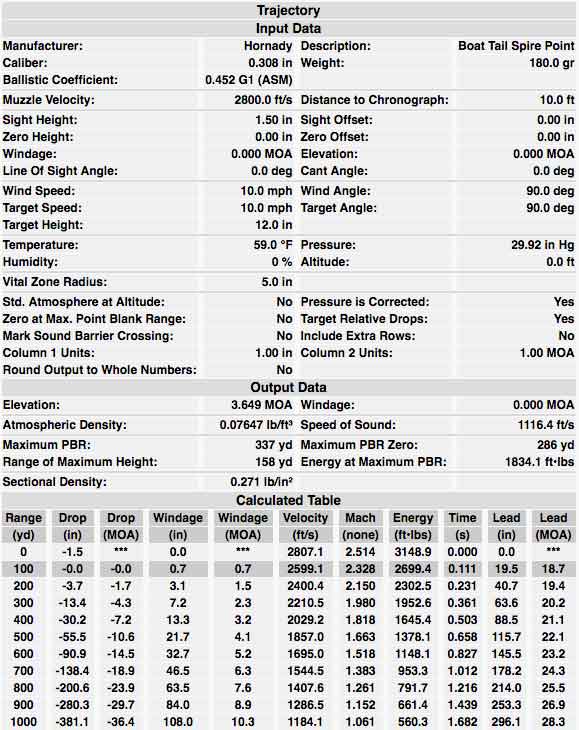
Far be it from me to disparage the pen-and-paper method of crunching numbers, but there are plenty of solid — and free — ballistics calculators online and at your disposal to simplify the process. Perhaps the most extensive is JBM Ballistics, which offers one of the widest selections of calculators on the Internet.

If you’re looking for a bare-bones calculator to get a handle on how your bullet drops for your particular location or if you want one that will account for minutia such as spin drift, this online tool has it.

It comes with a library of pre-loaded ammunition to choose from, but you’re also free to tinker with each variable all the way down to the length of the polymer tip of your bullet. For me, the handiest aspect of JBM Ballistics is its range card calculators, which do exactly what you’d expect — outputs a handy ballistic table perfect for taking into the field.

The site also offers a number of other calculators — recoil, power factor, maximum distance. It is the perfect way to lose hours online, but honestly, you’ll find that at JBM Ballistic it ends up being anything but wasted time.

Internal Ballistics
shooting-data-internal
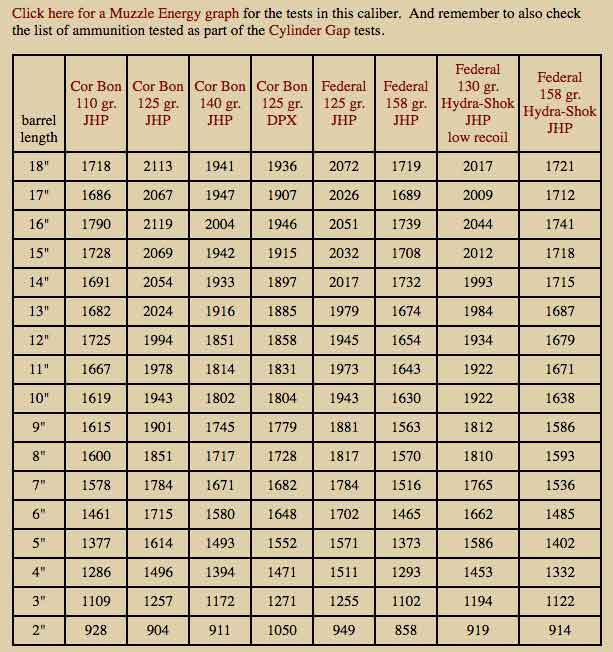
If you’re in the market to buy an AR-15 for varminting, will a .223 Rem. reach out from a carbine-length barrel? Ballistically speaking, does polygonal rifling have any advantage over lands and grooves? There’s an easy what to find out — Ballistics by the Inch.

Originally, the site tested and published the relationship between barrel length and velocity for a number of handguns. Since then, it’s grown into a gold mine of internal-ballistic related data (and perhaps the best FAQ page on the web). And when you dig into the data — a labor of love of the four guys who run the experiments and site — it will smash preconceived notions and truisms you’ve heard about internal ballistics.

Here’s the draw back to Ballistics by the Inch — it’s limited almost exclusively to handgun cartridges. The exception is the .223 Rem. Nevertheless, the site does provide plenty of food for thought and could prove useful in fine tuning your next gun purchase.

Optics Selection
Shooting-Data-Optics
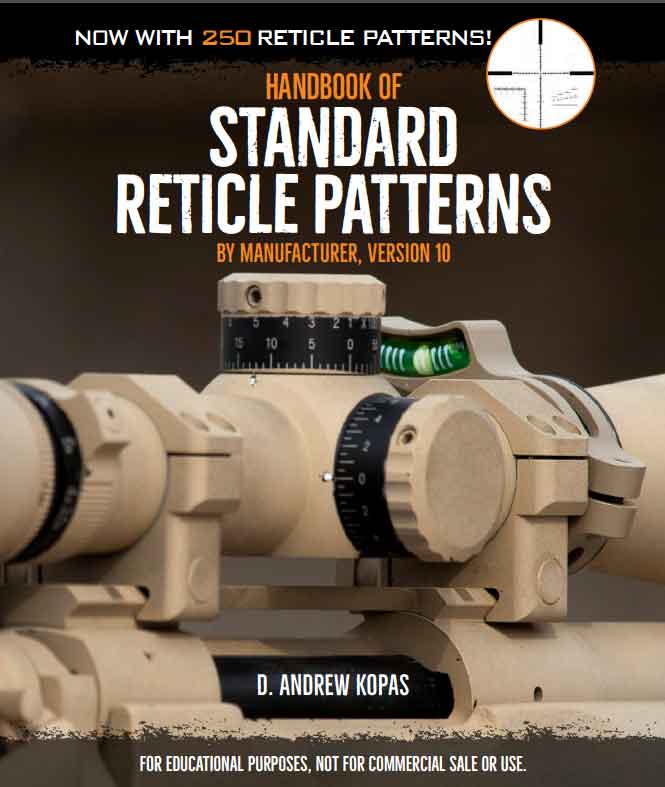
OK, you caught me — this is a blatant shill for a Gun Digest resource. But it’s free and extremely useful. The Handbook of Standard Reticle Patterns is perhaps one of the best resources for researching one of the more overlooked aspects of an optic.

You’re probably thinking — “Reticles? Really?” You bet, since you’re about to shell out your hard-earned money on a piece of equipment that costs as much, or exceeds that of your rifle. You’d better make certain you receive what you paid for and it better be capable of the mission in which it will be applied.

Col. D. Andrew Kopas helps you make certain you will with this 126-page handbook that compiles 250 tactical-style reticle patterns from the most popular optics companies. In many cases, you can drill down on what you’re looking for with the guide, and its ample subtension measurements and other explanatory data.

This is a great resource if you’re in the market for a high-end piece of glass and want to shop for your exact needs. And if you’ll allow me to shill just a bit more, checkout Gun Digest’s entire free resources page — there’s plenty of great info to load up on.

Terminal Ballistics
shooting-data-terminal
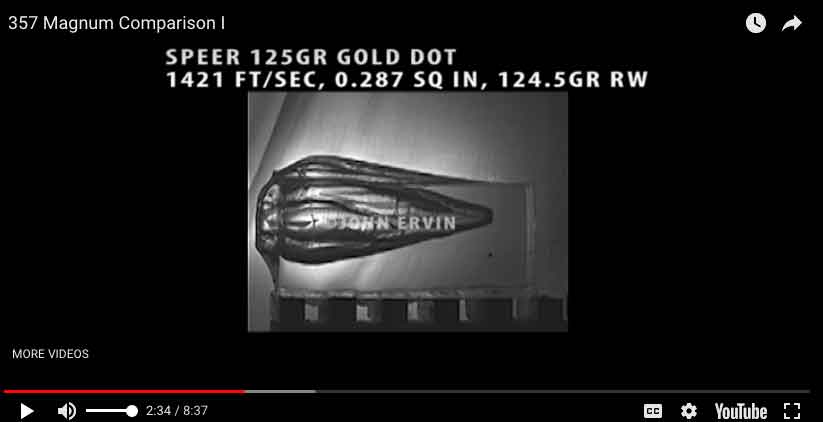
If you are interested in understanding what happens once a bullet reaches its target, then Brass Fetcher Ballistics Testing is for you.

Run by mechanical engineer John Ervin, the site documents the terminal ballistics tests he runs for ammunition developers. It also has some of the best ballistics gel testing footage available on the Internet. From the mild-mannered .22 LR to the behemoth .50 BMG, there are hours of slow-motion footage of Ervin’s experiments. On top of that he supplies plenty of supporting data on each test’s terminal ballistics, at the bare minimum the kinetic energy transfer.

Do you need to see hours of ballistics gel abuse to make you a better marksman or choose the right caliber and ammo? Probably not. But at the same time, it’s a great aid in visualizing what happens when a bullet reaches its target. And a better understanding of what you’re doing when you’re behind the trigger is never a bad thing.

New Ammo: Hornady Announces New 2018 Ammunition

0

As usual, Hornady Manufacturing has been busy rolling out a number of new lines of ammunition and expanding existing offerings to gear up for 2018.

What’s New With Hornady?

As always, when it comes to ammunition, there’s plenty cooking in Grand Island, Nebraska. Home of Hornady Manufacturing, the corn-swept plains is an epicenter of ammo, reloading and security innovation each year. And 2018 is shaping up no different.

Hornady recently released a sneak peek at its new product lineup for the impending year. And there is enough rolling off the company’s manufacturing floor to foul an entire brigade’s rifles.

So, as to keep everything straight, we’ll give a look at each of Hornady’s new categories in turn. Of course, we’ll save the best for first and jump headlong into the company’s mountain of new ammunition.


Critical Defense Rifle

Critical-Defense-Rifle-beauty-shot
Up to now, Hornady’s Critical Defense line of ammunition has been strictly a handgun affair (with the exception of a .30 Carbine load that has been around for a while). But with more shooters turning to tactical rifles for personal and home defense, Hornady saw the opportunity to arm long gun shooters with premium ammunition.

The heart of the round is the Critical Defense FTX bullet that boasts Hornady’s patented Flex Tip. The polymer tip not only helps the bullet expand quickly even at low velocity, but it also keeps the cavity free from clogging.

The bullet’s quick expansion makes the round ideal for short-range engagements, reducing the potential of over-penetration. Hornady has even turned an eye to modern gun designs, with the Critical Defense Rifle line engineered to deliver top performance even out of shorter barrels, which are becoming more and more common.

Available Loads:

  • .223 Rem. 55-gr. FTX
  • .223 Rem. 73-gr. FTX
  • .308 Win. 155-gr. FTX

Hornady Subsonic Ammunition

Subsonic-ammunition
The .300 Blackout has become one of the most popular chamberings for the AR-15, due to, among other things, the fact that the round is eminently capable of being suppressed. With its Subsonic Ammunition, Hornady has attempted to arm Blackout shooters with a stealthy round that still provides accuracy and power.

Hornady has loaded these rounds hot for subsonic, with its data listing the muzzle velocity out of a 16-inch barrel at 1,050 fps. But this allows top performance from the 190-grain Sub-X bullet, especially at close range.

At 1,020 fps, the Flex Tip round meets or exceeds FBI Protocol terminal ballistics test requirements. Optimized for subsonic performance, the Sub-X’s flat polymer Flex Tip and serrated jacket ensure the hollow point expands quickly and violently.

Hornady even went as far as to enhance the powder in its Subsonic Ammunition. The propellant is not only engineered for optimal performance below the speed of sound, it also reduces the flash signature.


6.5 PRC

6-5-PRC—gr-ELD-Match
Hornady is, in part, responsible for the surge in popularity of 6.5mm chamberings. The company did, after all, cook up the 6.5 Creedmoor. Now it’s shooting to push the ballistically gifted caliber even further.

The 6.5 PRC (Precision Rifle Cartridge) offers shooters a stepped-up option for long-range hunting or precision shooting. Designed to operate in short or medium actions with standard magnum bolt faces, the cartridge offers a flat trajectory and minimal recoil. Its case has been tweaked for maximum performance as well, with a long neck and 30-degree shoulders. Hornady has initially offered a Precision Hunter load tipped with a 143-grain ELD-X bullet and a Match offering with a 147-grain ELD Match bullet.

At this point, there are just a handful of rifle makers offering 6.5 PRC chamberings: GA Precision, Gunwerks, Horizon Firearms, PROOF Research, Stuteville Precision and Seekins Precision. But if it follows its little brother’s footsteps, expect many more to come out of the woodwork as time wears on.


Frontier Cartridge

Frontier-Cartridge
Hornady has teamed up with the manufacturing prowess of the Lake City Army Ammunition plant to offer military-grade ammunition at an economical price. Frontier Cartridges are manufactured at the Missouri facility and are tipped with Hornady bullets.

This is not the first time Lake City and the Nebraska manufacture have come together to produce ammunition. The original Frontier Ammuntion, launched by Hornady in 1964, utilized Lake City brass.

Hornady is offering 11 different rounds in its launch of Frontier Cartridges, all in .223 Rem., and 5.56 NATO. The company touts the line as ideal for everything from plinking to target shooting to hunting to law enforcement training.

Available Loads:

  • .223 Rem 55-gr. FMJ
  • .223 Rem 55-gr. Spire Point
  • .223 Rem 55-gr. Hollow Point Match
  • .223 Rem 68-gr. BTHP Match
  • 5.56 NATO 55-gr. FMJ M193
  • 5.56 NATO 55-gr. Hollow Point Match
  • 5.56 NATO 62-gr. FMJ
  • 5.56 NATO 62-gr. Spire Point
  • 5.56 NATO 62-gr. BTHP Match
  • 5.56 NATO 68-gr. BTHP Match
  • 5.56 NATO 75-gr. BTHP Match

Dangerous Game Series

Dangerous-Game-ammunition-DGX-Bondedt
Hornady has deep roots in big and dangerous game hunting. And it has tweaked its renowned Dangerous Game Series to be all the more potent.

The premium hunting ammunition is now being loaded with either DGS (Dangerous Game Solid) or DGX Bonded bullets, providing utterly devastating terminal ballistics. The lead cores of the DGX Bonded bullets, boned to the jackets, expand predictably, while retaining a high amount of mass once traveling through the target.

15 new loads available:

  • 9.3X74R 300 gr. DGS
  • .375 H&H Mag 300 gr. DGX Bonded
  • .375 Ruger 300 gr. DGX Bonded
  • .450-400 Nitro Express 3″ 400 gr. DGX Bonded
  • .404 Jeffery 400 gr. DGX Bonded
  • .416 Ruger 400 gr. DGX Bonded
  • .416 Rem 400 gr. DGX Bonded
  • .416 Rigby 400 gr. DGX Bonded
  • .500-416 Nitro Express 400 gr. DGX Bonded
  • .450 Rigby 480 gr. DGX Bonded
  • .450 Nitro Express 31⁄4″ 480 gr. DGX Bonded
  • .458 Win 500 gr. DGX Bonded
  • .458 Lott 500 gr. DGX Bonded
  • .470 Nitro Express 500 gr. DGX Bonded
  • .500 Nitro Express 3″ 570 gr. DGX Bonded

Expanded Existing Ammunition Lines

Precision Hunter

  • 6mm Creedmoor 103-gr. ELD-X
  • .25-06 Rem 110-gr. ELD-X
  • .257 Wby Mag 110-gr. ELD-X
  • 6.5 PRC 143-gr. ELD-X
  • .270 WSM 145-gr. ELD-X
  • .280 Ackley Improved 162-gr. ELD-X
  • 7mm WSM 162-gr. ELD-X
  • .338 Win Mag 230-gr. ELD-X
  • .338 Lapua Mag 270-gr. ELD-X

Superformance Match Ammunition

  • .223 Rem 73-gr. ELD Match
  • 5.56 NATO 73-gr. ELD Match

Custom Rifle

  • .243 Win 87-gr. V-MAX
  • .30-40 Krag 180-gr. SP

Match

  • 6.5 PRC 147-gr. ELD Match
  • .300 Win Mag 195-gr. ELD Match
  • .300 Norma Mag 225-gr. ELD Match

Varmint Express

  • 6mm Creedmoor 87-gr. V-MAX

LEVERevolution

  • .307 Win 160-gr. FTX

American Whitetail

  • .300 WSM 165-gr. InterLock

4 Types Of Handgun Shooters — Which Are You?

1

You need to give your own handgun skills an honest appraisal. From novice to expert, these standards will encourage the average shooter to excel and present a basis for procedure.

  • Handgun shooters can be classified by novice, beginner, specialist and expert.
  • An honest evaluation of your handgun skill level is necessary to advance.
  • A novice may not win a fight, while a professional should be decisive in a battle.
Note Jessie Duff’s grip and trigger finger position — she gets it right and wins the big money! handgun shooters
Note Jessie Duff’s grip and trigger finger position — she gets it right and wins the big money!

Novice
The novice may be able to safely load, unload and handle his or her personal sidearm with a minimal amount of fumbling. Their level of competence is more broad than deep. This is the beginning level for each of us.

While indeed minimal, it is the common skill level of quite a few non-dedicated service personnel. Shooters at this level may not survive gunfights. It really depends upon their mindset.

At short range, marksmanship problems are not severe, but the combat mindset is questionable. Shooters in this class are likely recreational shooters on the civilian side. Peace officers at this level maintain their marginal skill by yearly qualification.

Many look forward to these qualifications as much as they looked forward to high school fire drills. Their tactical mindset is influenced more by the media than reality. Among this group you will find many that rely upon skills they cannot demonstrate. The single greatest shortcoming among this group is a lack of complete familiarity with their sidearm.

The author demonstrating a good, solid grip with the thumbs forward and proper trigger finger placement. Handgun shooter
The author demonstrating a good, solid grip with the thumbs forward and proper trigger finger placement.

Beginner/Proficient
The beginner may be a product of a personal training program or an agency with quarterly qualifications. Their training is likely to be relatively narrow but perceived as adequate.

Some within this group realize there is room for improvement. It is important to note that this is the highest level of skill sustainable by many with job and family demands. A homeowner who keeps a firearm primarily for home defense has done well to reach this level. A peace officer trained to this level who combines his skill with streetwise tactics will be a formidable shooter.

This is the highest level of skill to which administrative qualifications will lead. While common street thug adversaries are often at the duffer level, some criminals reach the beginner-proficient level.

In my experience, very few of our protein-fed, ex-con criminal class rise past the novice level. The proficient class of shooters is common among those who shoot in IDPA matches. The proficient level of skill is sustainable with monthly practice and not out of the reach of anyone of normal strength and dexterity.

Specialist
This level isn’t one that you arrive at by accident. Hard work is needed.

The specialist is good at a number of skills. He or she will deploy a top-grade handgun and be able to use it well. This person knows the likely threat profile and practices diligently to address this threat.

Well-versed in the tactics and skills likely to be needed in a personal protection scenario, they are able to handle unexpected problems. The specialist is often deeply opinionated, has formal training and often gravitates to training others.

52Colt’s Maggie Reese demonstrates an excellent all-around firing grip and trigger finger placement. handgun shooters
Colt’s Maggie Reese demonstrates an excellent all-around firing grip and trigger finger placement.

The Professional
The professional has a lot of answers dependent upon the situation. He is conversant in marksmanship and gun handling as well as advanced tactics. He is familiar with a number of firearms.

While he has opinions concerning firearms, he regards each as a tool. The professional does not consider training the goal but a means to an end. His marksmanship skills are well-honed and consistent.

He has fewer bad days and brilliant moments than the rest of us, but rather his skill is consistent. He is responsible for his actions and strives to learn new tactics while respecting the tactics and skills that saved his life in the past. His skills are demonstrably superior to most of those he trains but they are hard-won.

While the specialist is a product of official training, the professional may only be produced by diligent effort on his own time — and his own dime. His training time is measured in thousands of hours. I know such men. Three have run my training classes and two were United States Marines. I also attended a class as a student with such a marksman (the only one in his class at the course), and he too was a Marine. I have no military experience and I can only state that the Marines are doing something right.

As for the third I met, he was a U.S. Army veteran that had been injured overseas. Despite muscle tremors that challenged his considerable skill he aced the course and demonstrated extraordinary ability. Very few instructors have the privilege of training such men.

Editor’s Note:This article is an excerpt from The Accurate Handgun, available now at GunDigestStore.com

.45 ACP Vs 9mm: Does The .45 Still Reign Supreme?

2

The .45 ACP has long been one of the most popular for personal defense among those who carry, but is the 9mm starting to edge it out?

In .45 ACP vs 9mm, is the .45 still the top self-defense choice?

  • A key point in choosing self-defense ammo is its ability to quickly neutralize a threat.
  • The .45 ACP, .40 S&W or 9mm are the most commonly argued for calibers.
  • Hornady’s chief ballistician Dave Emery says there’s little difference between them.
  • Terminal performance of modern defensive rounds is relatively similar in ballistics gel.
  • Some stick to the .45 ACP — if technology fails, the round still makes a bigger hole.

While attending a recent event where .45-caliber semi-automatic handguns, double-action revolvers and single-action revolvers were shot at contact to long-range targets in simulated self-defense situations, it brought to mind the United States’ long-standing love affair with the .45-caliber handgun round. Yet, many who carry a handgun as part of their job choose to use other handgun cartridges, such as the .40 S&W and 9mm Parabellum.

The .45-caliber handgun round in America has evolved from the .45 Colt introduced in 1873 (left), followed shortly after by the .45 Schofield (center) to the .45 ACP used in John Browning’s 1911 semi-automatic handgun.

The disagreement about what’s the best handgun cartridge for self-defense never seems to end, and it probably never will until someone invents a handgun that will always stop a felonious assault immediately.

You see, handguns just aren’t very effective fight stoppers. The reason people carry them is because they are easy to keep out of sight and they’re readily available in an emergency. Rifles in almost any caliber and shotguns are much better at stopping an aggressor, but they’re not easy to carry — and, incidentally, they too are not perfect at immediately stopping an attack. So, for the time being, handguns are the method of protection that most people rely on.

But, you say, on TV and in the movies, if a guy gets shot with a handgun, he goes down right away. That’s the movies, and it’s Hollywood, where fantasy reigns. It’s not real life.

In his book, Guns, Bullets, and Gunfights, Jim Cirillo, a real gunfighter and member of the New York Police Department Stakeout Unit, states, “I have seen felons get shot with 158-grain .38 Special, 200- and 230-grain .45 ACP, 115-grain 9mm hollow points, 110-grain .30 Carbine and 12-gauge 1-ounce slugs, and only two of those [many] incidents were one-shot stops.”


More .45 ACP Articles:


Keep in mind that human spirit and determination varies. Some people intent on doing injury to others will be stopped and scared off at the mere sight of a gun. Others will be stopped by a minor injury or thumping them with a fist. But a small number will not stop unless they’re physically unable to continue.

.45 ACP revolver used in target practice
The double-action revolver is not obsolete and is still a viable choice for self-defense if its limitations are realized and the user has the proper training.

For the last group, they must no longer be able to breathe, the blood supply must be interrupted so that muscles and organs can no longer function, a bone must be broken so that the person can no longer control the body, or the nervous system must be disrupted so that the brain can no longer send signals to the muscles.

And even if the air or blood supply is cut off, a person can still function for long enough to continue an attack and kill a victim. So, the goal for a law-abiding citizen, who has no other choice to save his life or prevent serious bodily harm from a felonious attack, is to do as much damage as necessary to quickly stop the attacker. Notice that the goal is not to kill the attacker, but to stop the attack. If the attacker turns and runs, that’s a good outcome, but if the attacker is killed in lawful self-defense, that’s a consequence the attacker assumed when starting the aggressive behavior.

Given these realities of life, it makes sense to carry a handgun chambered in the most effective cartridge available that the shooter can shoot accurately, quickly and can carry discreetly. This is where the argument begins. And the argument has been raging for decades with no clear winner.

It’s All In The Ammo: .45 ACP vs 9mm, .40 S&W

The FBI and other law enforcement organizations are switching to the 9mm Parabellum. Reasons include lower recoil generated by the 9mm round, which makes it easier for many people to shoot accurately and get back on target quickly for follow-up shots. And a 9mm handgun can carry more rounds than the same-sized handgun chambered in .40 S&W or .45 ACP. That’s an important consideration given the rising frequency of group attacks by terrorists or gang members.

.45 ACP and 9mm in ballistic gel
When fired into ballistic gelatin to test the relative effectiveness of handgun rounds, the Black Hills 9mm (top) has about the same penetration as the Black Hills .45 ACP +P round (bottom). The temporary wound cavities are very similar, with the .45 only slightly wider, but not as long.

But probably the biggest reason for the switch is the recent improvement in handgun round terminal ballistics. According to Dave Emery, wizard and senior ballistician at Hornady Manufacturing, an innovative maker of a variety of ammunition, there’s now very little difference in the actual terminal performance in ordnance gelatin between premium self-defense .40, .45 and 9mm projectiles.

Yet the disagreement continues. While some excellent firearms trainers and experts, many who have carried a gun for a living and participated in real gunfights, have switched from .45 ACP to 9mm, others still carry the .45 ACP.

No less than the late Pat Rogers, who I have trained under and who has used a gun while in the U.S. Marines and as an officer with the New York Police Department, switched from a 1911 chambered in .45 ACP to a double-stack, striker-fired 9mm polymer-framed pistol. And many experienced gunfighters have done the same. But others, like retired Sheriff Ken Campbell, who is the Chief Operations Officer at Gunsite Academy, still favor the .45 ACP.

Campbell points out that gelatin blocks are not human and that humans are much more complex and react differently than an inanimate, unmotivated blob of jelly. He recognizes the improvement in self-defense bullet technology that has resulted in better terminal ballistics for the 9mm round, but the .45 ACP bullet has also improved.

“I’ll stick with the bigger bullet,” Campbell says. “Again, when technology fails, the .45 ACP makes a bigger hole. Also, it has a greater chance of hitting something vital since it is wider.”

But Campbell is rational and not married to the .45 ACP just because of tradition. He recognizes that getting multiple, fast and accurate hits in vital locations is more important than bullet performance, and if he ever gets to the point that he physically cannot control the .45 ACP adequately, he will consider switching to smaller bullets. In fact, despite the 1911 .45 ACP heritage associated with Gunsite, the school regularly teaches students how to effectively use other guns in other calibers.

For some, the .45 ACP works best, but for others, the .380 ACP or an even smaller round is the right choice. There is no way everyone is going to agree on this, so the debate continues.

Editor’s Notes: The article originally appeared in the September 17 issue of Gun Digest the Magazine.
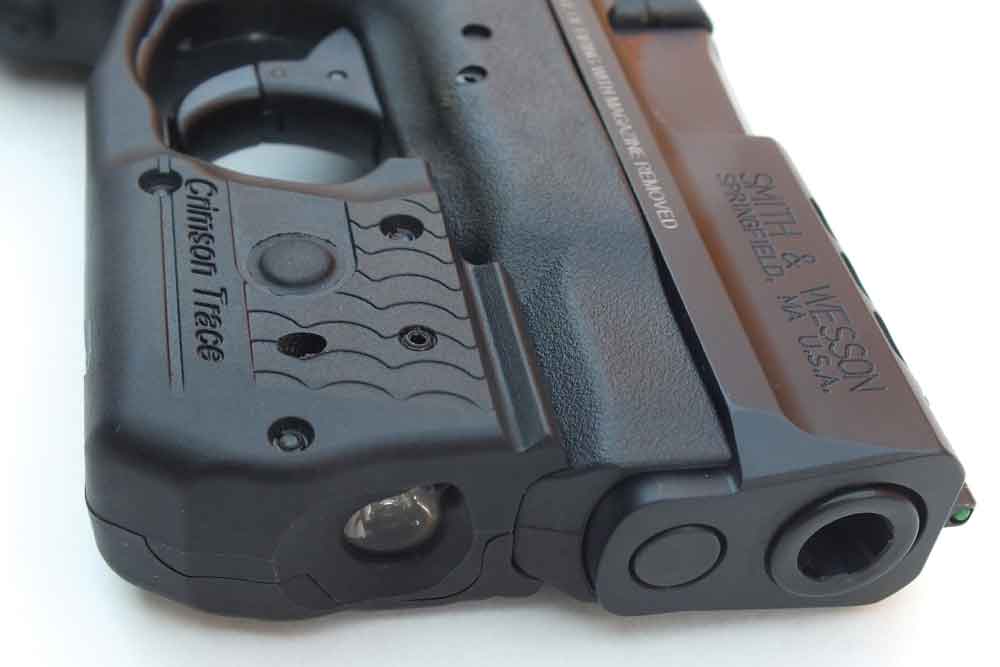
How To Choose The Right Suppressor

0

A suppressor is designed for the caliber it’s meant to handle. Find out how to choose the right suppressor, especially if you want to use it on more than one gun.

Tips to choose the right suppressor:

Suppressors are designed for a specific use. That is, they are made to fit a particular caliber because bullet size, gas flow and pressure matter. I don’t care how good a 5.56 suppressor you own, if you put it onto a .308 rifle you are going to be very unhappy, very quickly. Try as it might, the bullet is not going to fit through the hole in the baffles and will end up making its own holes. Thus, the importance of choosing the right suppressor.

We’re jumping ahead a bit here, but rimfire cans, 5.56 cans and 9mm ones will have the same thread pitch; one-half-inch in diameter, with threads pitched at 28 per inch.

A rimfire suppressor screwed onto a 5.56 rifle will have a short and unhappy life, and it will be even shorter and messier if it is threaded onto a 9mm pistol. If at some point in the future you have any of these combinations in firearms and suppressors, be very, very careful what you put on where. And do not let your friends, relatives or gun club buddies at the range just screw on whatever suppressor fits. If you don’t attach the right suppressor, the results could be very bad, or at least, quite expensive.

Choose Right Suppressor - 1
Suppressors come in a variety of sizes, for different calibers and uses. There is no “one size fits all,” so don’t expect one.
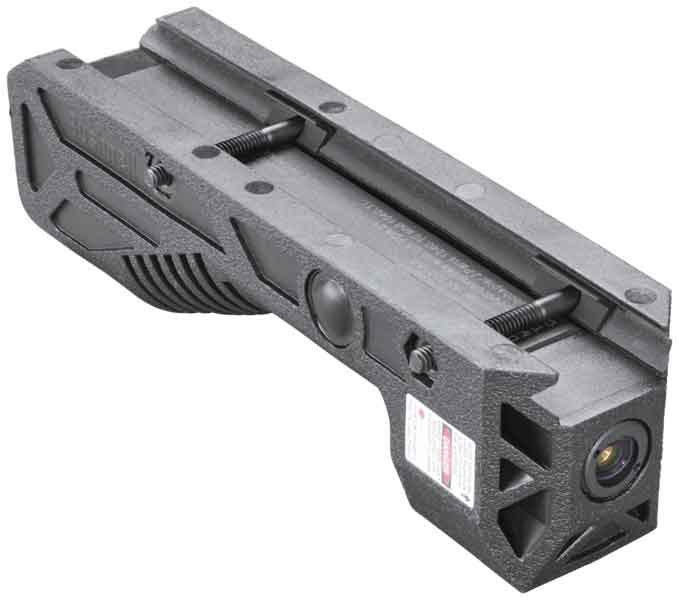
Finding The Right Suppressor By Caliber

A suppressor is designed for a particular volume and strength, according to the caliber it is meant to deal with. As a result, you’ll see limitations from the manufacturer on a suppressor. “Rated for .308 Winchester, barrels longer than 12 inches” is one example. Or, “Rated for .300 RUM down to 16-inch barrel, .300 WinMag to 12 inches and .308 to 8-inch barrel lengths.”
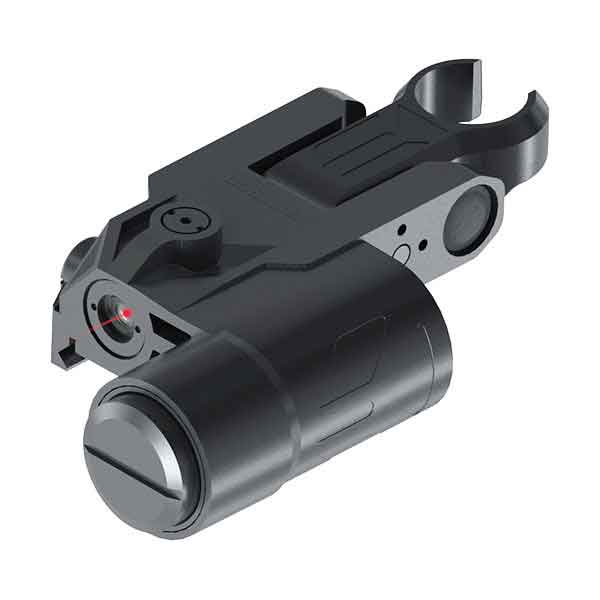
They have designed and constructed a suppressor that can handle a certain amount of pressure and can deal with a certain maximum gas flow volume, and they are being up-front about what their suppressor will take.

Why? Simple, the noise you hear is caused by pressure. When the cartridge is fired, the chamber pressure is at its maximum, then the pressure goes down as the bullet moves forward, due to the increasing volume of the bore, with the bullet as the plug. When the bullet leaves, there is a certain pressure at the muzzle, called the “uncorking pressure,” and that is what causes the noise we are trying to control.

The higher the initial pressure, the greater the residual pressure down the bore. The shorter the barrel, the higher the uncorking pressure, simply because the expansion volume of the bore hasn’t increased enough to drop the pressure.

Choose Right Suppressor - 2
Some rifles are louder than others. A short barrel will be louder, unless the caliber is markedly smaller.

And here’s the important part for those of you interested in putting the right suppressor on your big boomers: the powder you use (or the ammo company uses) also makes a difference. A slow-burning or “progressive” powder acts to keep the bore pressure up as the bullet travels forward. That is part of how it gets you more velocity. (That, and a higher starting pressure.) So, your .300 magnum, of whatever type, is going to not only burn more powder, but a slower-burning powder than a .308 would, and this increases both the volume and uncorking pressure that a suppressor has to deal with.

That’s why suppressors are rated for a minimum barrel length.

As long as you are within the pressure and volume limits the manufacturer lists, and at or under bullet diameter, you are okay.

Your .308-rated suppressor will be just fine, and happy as a clam, if you put it onto your smaller-cartridge-case rifle or smaller-bullet-diameter rifle. That is, the 6.5 Creedmoor, 6.5 Grendel, .260 Remington, 243, etc. It will find a .223/5.56 rifle a piece of cake to deal with, being both a smaller case and smaller bullet.

However, it will not be as happy with a .270 Winchester or .280 Remington, and it will be very unhappy if you put it on a 7mm Remington Magnum.

You have to consider bullet diameter, chamber pressure, case volume and expected burn rate of common powders if you are going to use a suppressor across cartridges and in different firearms.

When in doubt, drop a line to the manufacturer. They’ll be happy to tell you if what you have in mind is okay or not, and if you have the right suppressor for the job. In fact, they’d prefer it if you ask ahead of time.

Choose the right suppressor - 3
Precision firearms need precision suppressors, and that’s why there is such a price range in suppressors. Not just the materials, but the tolerances to which those parts are held.

Rimfire Suppressor Considerations

Rimfires are not just rimfires. There is the common and expected (but surprisingly sharp) .22LR. The Twenty-Two Long Rifle has a chamber pressure of 21,000 PSI, but the expansion ratio (the ratio of the case compared to the case plus bore when the bullet leaves the muzzle) is so great that pressure has dropped to perhaps the firearm’s minimum by uncorking.

Change that to the .22 Magnum and things get more involved. Not because the expansion ratio is so much different, but that the magnum uses different powders and retains more pressure, garnering the extra velocity it is marketed for. Ditto the various .17s.

And then when you go to the 5.7×28, the FN cartridge, the case is a lot bigger, the expansion ratio is much smaller, and the uncorking pressure a lot more. As a result, some rimfire suppressors will be rated for the 5.7 and others will not.

As above, when in doubt, ask. Putting your perfectly fine and happy with your 10/22 rimfire suppressor on your buddy’s SBR’d FN PS90 may make for a bulged or broken suppressor.

Choosing The Best Suppressor For Handguns

The common handgun suppressor is for the 9mm, the most popular. There are others made for the .40 and .45, but they are less common. It is typical for someone who wants one suppressor to fit them all to buy a .45 and have rear cap adapters to fit it onto 9mm and .40 handguns. Yes, it has larger bore holes than would be called for in those applications, and thus will be a bit noisier, but it will amount to a decibel or a few at most. That, compared to the cost savings of having just one, appeals to many.

The Right Suppressor For A Rifle

Most people either get caliber-specific suppressors, or they invest in one or two (or more). The common approach here is to buy a .308 and use it on everything .308 and smaller, including 5.56, and add a second one that will handle the big magnums, like the .300s, or even jump up to a .338 suppressor, which will laugh at the efforts of your biggest .300 magnum.

Choose right suppressor - 4
A well-built suppressor will stand up to a lot, but you can exceed the limits of anything. This suppressor was put on a belt-fed machine gun and left there until it and the barrel were visibly drooping from the heat.

How To Attach A Suppressor: Mounts

You can’t just use duct tape and baling wire to secure a suppressor. There are two types: direct-thread and quick-detach (QD). Some manufacturers have begun making suppressors with a rear cap that is a socket, and you can then thread into the socket either a direct-thread or a QD system.

Why elaborate systems to keep the suppressor on? Simple, each time you shoot, the jet of gases flow out of the muzzle, behind the bullet, and crash into the first baffle, the first surface ahead of them in the expansion chamber. “Big deal,” you say? Let’s do a quick bit of math. If the uncorking pressure of your rifle is only 7,500 PSI, and the impact surface of the baffle in the expansion chamber is only one-half of a square inch in surface, then the suppressor gets hit with a jet of gas that generates 3,750 pounds of impact. Impact that is trying to drive the suppressor off the muzzle.

That’s why you want good, sturdy threads on your barrel.

Pros And Cons Of A Direct-Thread Suppressor

This is exactly what it sounds like. An example would be a 5.56 rifle with the muzzle threaded for 1/2-28. The rear cap of the suppressor would be threaded 1/2-28, and you simply screw the suppressor on (after taking off the flash hider, if any) and tightening it to stay.

The advantages of direct-thread are obvious: It is less expensive, it is lighter and it is durable. The disadvantages are equally obvious: You have to spin your suppressor for as many turns as it takes to get it tight. If the thread pitch is 28 tpi, and you have half an inch of threaded shank, then it will be fourteen turns to tight.

Tight for a rifle suppressor is not just hand-tight. You will want to use a wrench to generate enough inch-pounds of torque to keep the suppressor on tight.

If you have one rifle and you won’t be using your suppressor on any other, then direct-thread is a no-brainer. If you are going to use it on more than one, then it is a decision between you and your wallet as to your choice.

The options are:

  • Buy a suppressor for each rifle;
  • Keep a wrench handy to swap suppressor or suppressors around on your rifles; or
  • Buy a suppressor that uses a QD mount and install those mounts on each rifle so you can quickly swap the suppressor.

Quick-Detach Suppressor Mounts

This also, obviously, means quick-attach. The process is simple. The manufacturer makes a device that threads onto your barrel. This device has a set of threads or a quick-lock system that the suppressor latches onto. You can screw the suppressor onto the mount with a turn and a half. Or, slide it on and turn the locking collar a half-turn to lock on the suppressor.

The advantages are several. First, you can have a flash hider or muzzle brake on your rifle, even when the suppressor is off, if that’s how the mount is made (and many are).

You can swap your suppressor from one rifle (or handgun) to another quickly, without the use of tools. Of course, this supposes the suppressor is cool, as you won’t be swapping a suppressor bare-handed when it is at 700 degrees.

The big deal with this is economics. I just did the arithmetic with a suppressor that happens to be on my desk as I write this, a Sig SRD556QD. Sig makes the same suppressor as a direct thread, the SRD556.

The SRD556QD lists at $695 and mounts are $60 each. The SRD556 is $545. By the time you buy two SRD556 suppressors, you could have bought one SRD5566QD and six extra mounts. If you have that many .223/5.56 rifles, you can swap one suppressor between them.

The downsides are also simple: a QD-built suppressor is going to cost more than a plain direct-thread model. (That is, manufacturer-specific, model-alike.) Also, because of the mount and the rear of the suppressor that has to be machined for it, the QD model will be a bit heavier than the direct-thread version. In the case of the ones just used as a comparison, the SRD556 weighs 11.5 ounces and the SRD556QD weighs 14 ounces.

Editor’s Note: This article is an excerpt from The Suppressor Handbook by Patrick Sweeney.

3 Things You Didn’t Know You Needed For Your Reloading Bench

0

There are some relatively inexpensive extras you can pick up for your reloading bench that will make handloading all the more fruitful.

What are the reloading extras?

Reloading is an extremely satisfying endeavor, whether you’re rolling out precise target rounds or a little something to put meat on the table. And nowadays, given the profusion of pre-packaged reloading kits, it’s a simple passion to pursue.

As you go along, you’ll discover there are little pieces of equipment you can add to your bench that will make the process easier and your ammunition all the more accurate. With that in mind, here are three things you didn’t know you needed for your reloading bench. For the most part, you could get along without these, but overall they’ll make life a bunch easier at your reloading bench.

Lee-Powder-Measure-KitPowder Dippers
Typically, we think of ammunition reloading as a bulk endeavor and really almost all modern equipment is geared that way. But what if you want to whip up a handful of your favorite coyote or deer loads and don’t want to go to the trouble of filling up the hopper on your powder thrower?

Lee Precision has the answer for every small reloading job with its Powder Measure Kit. The 15 graduated dippers are perfect for scratching together 20 rounds or less and makes cleanup a nearly non-existent task.

While the kit comes with a slide card with powder dispensing data, it’s wise to double-check them with your scale, like with all volume measurements. But once you get used to using these little marvels and discover how quick they make little reloading jobs, you’ll fall in love with small-batch handloading.

Canned-airCanned Air
You ever notice that there are always a few grains of cleaning medium that hold fast to the bottom of some cases out of the tumbler? Or that no matter how hard you try, inevitably a few brass shavings from chamfering end up slipping down the neck? As persnickety as reloaders are, that just won’t stand, especially if it gets lodged in the flash hole.

Luckily, there is a simple solution that doesn’t involve bending a paper clip in a vain attempt to fish out debris — canned air. A quick blast in the flash hole and the inside of your case will be as clean as the outside. Honestly, the stuff is like vaporous gold when it comes to custodial jobs at the reloading bench — even beyond case prep.

Hornady has a Quick-Shot Canned Air, but don’t think you have to buy something made by a reloading company. The stuff at your local megastore will do.

My-Notebook_ledeNotebook
You assembled a killer load for your favorite rifle, it grouped like gangbusters at the range, and you can’t wait to put together a whole bunch more. But there were a slew of variables that came together to make that load a success — so many you’ll never remember them all.

That’s why, perhaps next to a quality reloading manual, a notebook is among your most important tools. Meticulous note taking will ensure that you have the right recipe to recreate those deadly-accurate successes that roll out of your press and it acts as a solid reminder of what just doesn’t work.

Don’t lose what came together to make a magic load because you were unwilling to spill ink. Besides, it costs less than anything else you put on your reloading bench.

MUST READ ARTICLES