In addition to being fun to shoot, rimfire guns and airguns are excellent training tools for new and youth shooters. Here are several great new rimfires and airguns for 2016.
[imagebrowser id= 458]
Editor’s Note: This article originally appeared in the Spring 2016 issue of Gun Digest the Magazine.
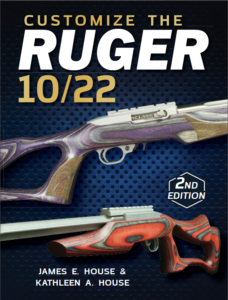
The most comprehensive resource for the Ruger 10/22 available, Customizing the Ruger 10/22 will help you get the most out of your rifle. The book guides shooters through the endless and sometimes confusing array of aftermarket upgrades available. But it goes much further than expanding your wish list, with clear and complete step-by-step instruction on how to modify the rifle. Whether you are shooting to make a first-class plinker or a competition-worthy rifle, Customizing the Ruger 10/22 is certain to have you knocking out the bull’s eye with this iconic rimfire. Get Your Copy Now
The lever-action rifle remains among the most enduring firearms designs, for obvious reasons. The iconic repeating gun combines rapid fire and reliability in one slick package.
Of the companies turning out this historic style of firearm, Henry Rifles offers some of the most desirable specimens. And the New Jersey/Wisconsin-based manufacturer continues to churn them out, recently announcing three new additions to its catalog. Henry has expanded its selection with the Big Boy Silver, Big Boy Steel .41 Magnum and All Weather Lever Action.
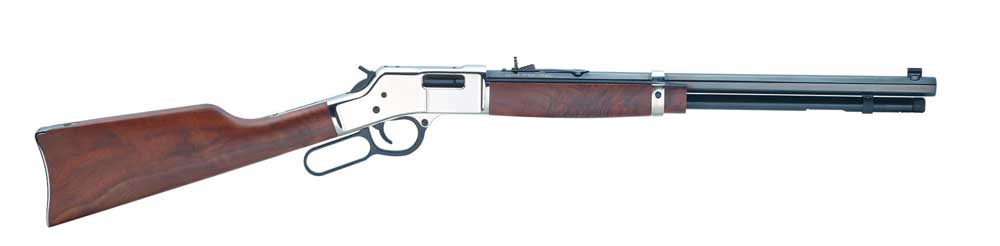
Henry Big Boy Silver.
The new Big Boy Silver is an extension of the company’s striking Silver Series, named so due to the line’s lustrous silver receivers and barrel bands. But the big-bore addition — chambered in .44 Magnum/.44 Special, .45 Colt and .357 Magnum/.38 Special ($990 MSRP on all three) — is a bit different than other rifles in the series. Instead of plating over the base frame material, Henry opted for a solid aluminum-bronze alloy, resulting in a through-and-through silver tone.
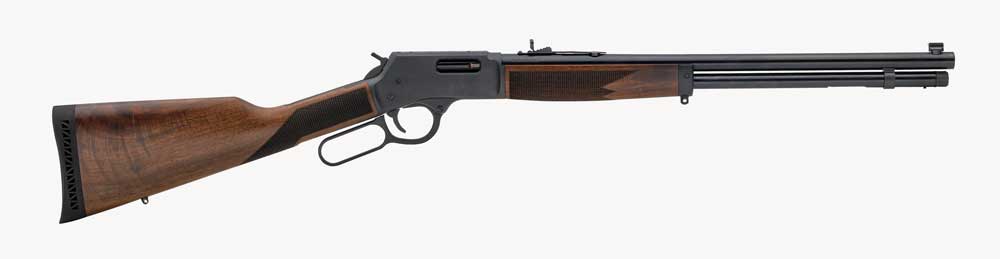
Expanding the Big Boy Steel line with a .41 Magnum is intriguing, giving hunters another solid option. The .41 Mag. has been somewhat obscured by the .357 Magnum on one side and the .44 Magnum on the other. But it has its place, with a lighter recoil and flatter trajectory at long range than the .44.
Henry’s .41 Mag. Big Boy ($850 MSRP) comes in an attractive and practical package. The rifle has a 20-inch barrel and tips the scales at 7 pounds, which should make it easy to lug into the backcountry. It has been outfitted with a finely checkered walnut stock and blued frame and barrel. It has also been drilled and tapped to mount a scope, but it comes with adjustable Western-style sights.
Big Boy Steel .41 Magnum.
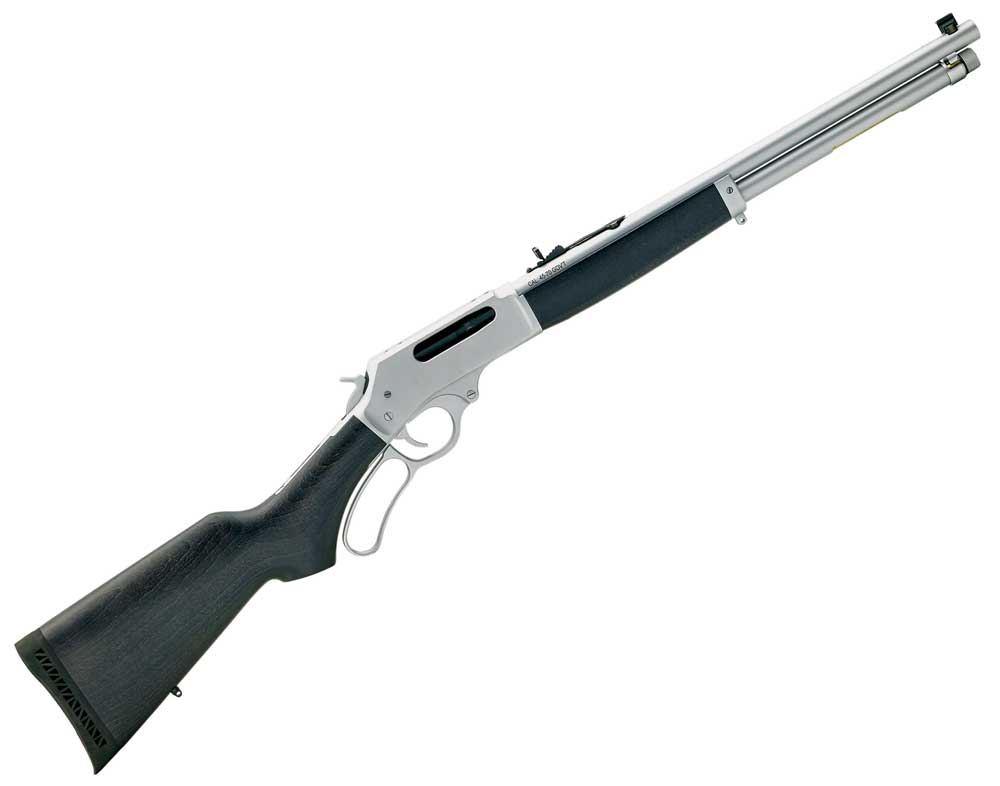
Henry’s new All-Weather Lever Action has been designed for shooters searching for a rugged rifle for, as the company puts it, “everyday life in the truck, on the farm, and through the woods.”
To achieve these ends, the gun maker has chrome plated all the metal surfaces (except springs and sights), helping make the rifle corrosion resistant. And it has finished the gun’s hardwood stock with an industrial-grade coating, making it impervious to the elements and hard use. The All-Weather is presently available in two chamberings, both dear to lever-action fans’ hearts — .30-30 ($850 MSRP) and .45-70 ($950 MSRP).
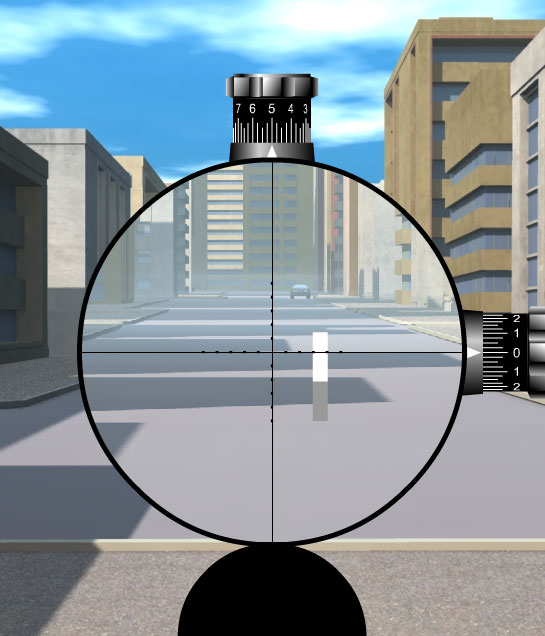
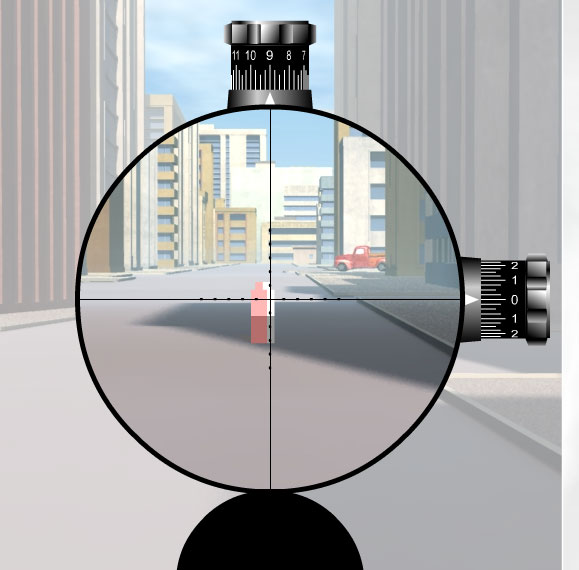
The Shooter Ready long-range shooting simulation allows you to get lots of range estimation practice using your reticle, without burning up any ammo.
One of the biggest challenges facing any long-range rifle shooter is choosing from among what appear to be a trillion different reticle designs, while gaining proficiency with your scope’s ranging features. One of the most common is the Mil-Dot reticle, or at least a reticle with milliradian subtensions. The Shooter Ready shooting simulation reviewed here can give you lots of practice using just such a reticle.
Shooter Ready is not an “app” for your smartphone, nor is it a ballistics program. It is a shooting simulation you can use to get a basic understanding of how to use mil- or MOA reticles to range targets; how to make elevation adjustments and wind holds in either mils or MOA; and then assess yourself and ultimately learn and improve, as actual hit results, ranges and wind drift are displayed after you take the shot.
Most important, perhaps, is that Shooter Ready is not a game. There are no “missions,” and you don’t get to run around pretending you’re some kind of spec ops hero. It is a serious simulator that gives you a chance to get good experience milling targets at various ranges and inputting dope to see how accurately you calculated range.
The Shooter Ready interface is intuitive and easy to understand. You practice ranging targets using the scope and reticle of your choice, then dial your dope and take a shot. Instant feedback tells you how far you were off.
Shooter Ready: What to Expect
The long-range shooting simulation includes pre-programmed calibers—.223, .264 (6.5mm), .308 Win., .300 Win. Mag., .338 Lapua Mag., and .50 BMG—that are commonly used by long-range shooters, and for which there exists a mountain of data. For example, the 77-grain Sierra Match King, 6.5mm 142-grain Match King, .308 Win. 175-grain Sierra Match King, .300 Win. Mag 180-grain Power Point, .338 Lapua Mag. 250-grain Sierra HPBT and the big 750-grain AMAX missile for .50 caliber. Flight characteristics of those cartridges are powered by Sierra Infinity 6 Exterior Ballistic Software.
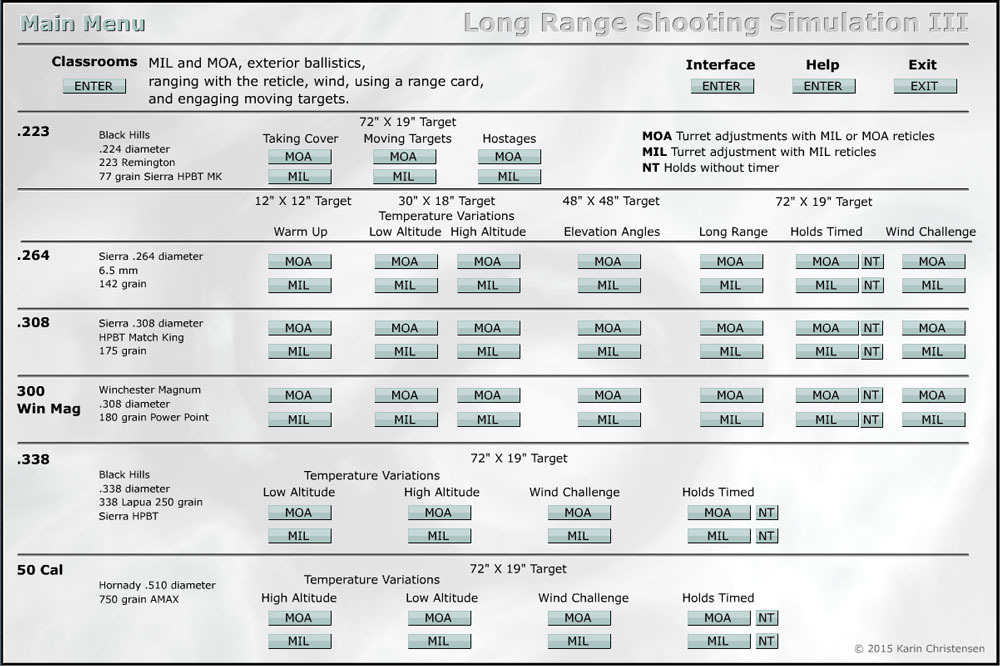
The main menu screen.
Like I said, it’s not a ballistics program, so the loads are not customizable. “The focus of the simulation is an introductory training tool to exterior ballistics as related to long-range rifle shooting,” Developer Karin Christensen told Gun Digest. “The stages were developed to show how different conditions affect the bullet in flight, and this includes how different calibers are affected, not to practice with individual systems. I always recommend to users that they obtain some exterior ballistics software once they have a good grasp of the basics, which they will learn if they practice with the simulation.”
A scientific illustrator and animator by profession, Christensen was new to shooting and had competed in handgun competition, but had no training in long-range shooting. “A gunsmith I knew found that his clients did not know how to use mil-dot reticles, which he was installing on rifles. I created version 1 to teach the use of the reticle partly for the fun of playing around with the animation software.
“In the process, being a scientific sort of person, I ended up becoming fascinated with exterior ballistics, so I included it in the early classroom sections. It also didn’t seem possible to teach use of the reticle without understanding exterior ballistics. I hadn’t shot long range myself until I started working on the simulation. To test everything I had learned, I went out to a range, calculated the distance on a target that was, if I remember, 900 yards away. I hit it on the second shot, and the first was not far off. The first version only used the .308 system and was very simple. It was so popular I developed version 2 with more calibers and stages. The current version was developed to incorporate the mil turret system, and I added three more calibers as well as more challenging stages.”
Interface Display
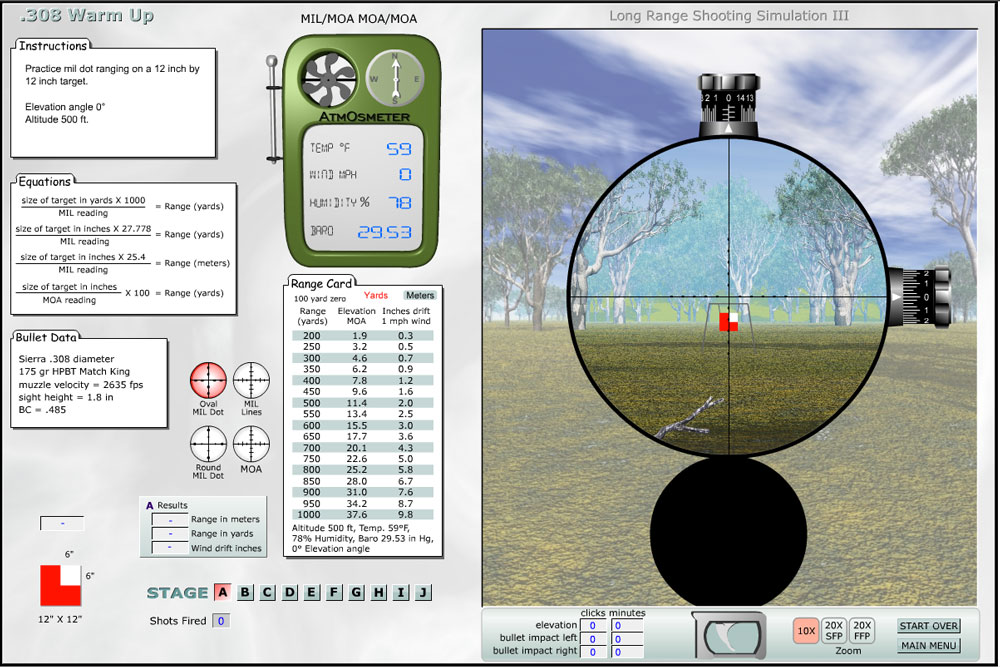
The target depicts where your shot landed, and the Results form shows the actual conditions.
The simulator is intuitive and easy to get started. The main menu screen allows you to choose the caliber and the stage, with options like Warm Up, High Altitude, Low Altitude, Angle Shooting and so forth.
Once you choose a stage, the left side of the interface features an anenometor with temp, wind speed and direction, humidity and barometric pressure. There is a range card, which allows you to choose between mil or MOA measurement systems. You can choose between four reticles—traditional mil-dot, mil-dot with .5 mil subtension lines, mil lines (very much like Leupold’s Tactical Milling Reticle or TMR) and an MOA line reticle.
There is an easy-to-reference equation card so you can memorize your equations—I found this priceless. After spending a couple days in the simulator, I can spit out the mil-ranging equations in my sleep. There is bullet data describing how many grains the projectile is and other info. You get to choose between three scopes: 10x, 20x second focal plane and 20x first focal plane. Since I’m kind of old school and like the fixed 10x optics, I spent most of my time using that option. There are 10 stages (A-J), and once you hit, you move on to the next stage unless you start over. There is no rush to take your shot; you can take your time milling targets and calculating range. Again, the focus here is learning.
The controls are simple. Elevation and windage adjustments are in 1/4 MOA or .1 mil depending upon which simulation you choose. Up and down arrows adjust the elevation turret; right and left, the windage (though I held all my wind calls and didn’t use the turret). The space bar is how you “send it.”
I noticed that the range card tended to be right on in terms of elevation and wind drift during the early stages in each simulation, but as each stage advances the wind shifts and changes, and temperature and barometric pressure vary as well. This requires slight corrections in firing solution. It also seemed like the simulator required headwind and tailwind corrections in elevation; it appeared to behave very much like real life based on my own experiences. Christensen confirmed that these environmental elements are indeed factored into the simulation. That quite surprised me—lifelike details like that make this an experience any shooter will benefit from.
Below is a snapshot look at each of the stages:
The classroom features a number of interactive instructional lessons you can take before trying things out on the range.
Calibers – .223 goes to 700 yards, includes a hostage scene and moving targets. – .264 or 6.5mm and .308 to 1000 yards; 300 Win. Mag to 1200 yards. – .338 Lapua Magnum starts at 700 yards and goes out to 1500 yards. – .50 BMG to 2000 yards.
Warm up stage – Incremental changes in range, starts close. – Light winds. – Stage is not scored. – Uses a 12×12 inch target for milling, with 6-inch square for further milling practice.
Temperature Variation Stage 30X18″ Target – Low alt. and high alt. simulations. – Mid range course. – This stage is scored. – Real wind conditions. – Different scenery.
Angle Shooting Stage – Stage starts at 0 degrees, advances to positive 30 degrees, then back down to negative 40 degrees. – There is a light wind factor to contend with in this stage. – Angle shooting is discussed in the simulator’s Classroom feature.
Wind Challenge – Presents varied winds downrange (no way to see this visually, however it is indicated on screen as “Wind at Target”).
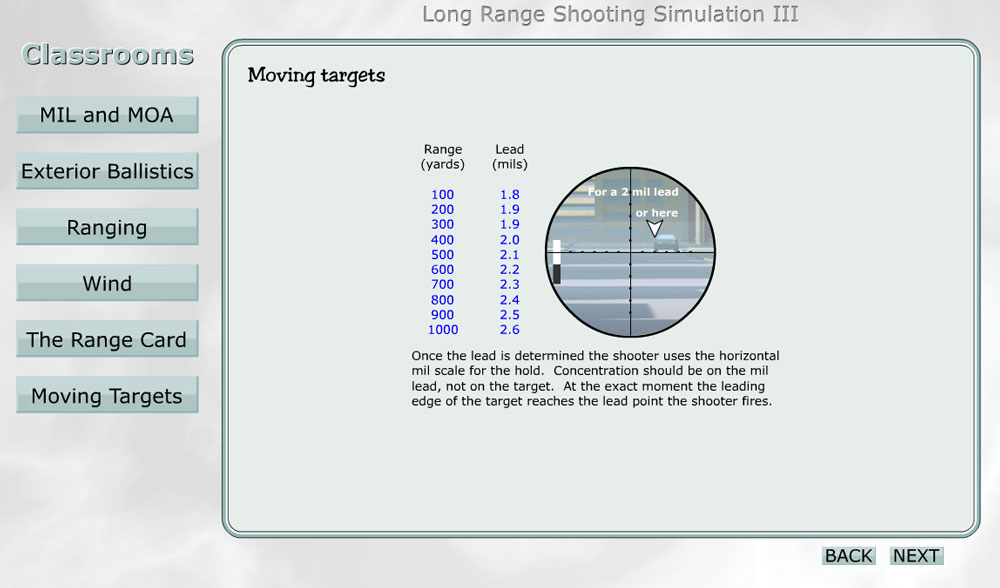
The Moving Targets stage, shot using the .223.
Taking Cover – .223 – A fun stage where targets appear behind building walls and other obstacles. There is no timer, so you can take as long as you need to practice the mil-ranging and scope corrections. – Wind not a factor on this stage.
Moving Targets – .223 – Estimate range and windage on a 19×72 inch stationary target; at the shot, the mover appears—it’s smaller at 12×72 inches. – In this simulation the range card gives you MIL and MOA leads. – The Classroom has a good explanation of how to use a mil-based reticle for engaging moving targets, including the tracking and ambush techniques. – How to dope lead is taught in Classroom based on flight time of bullet and distance traveled by walking or running. – Targets present as running or walking. You get good at converting MOAs into MILs and shooting the result or doubling it based on running or walking target speeds.
Hostage Stage – .223 – There is a red hostage target mostly obscuring your enemy target, which results in a 10 point penalty for any hits on the red. – Wind is a factor.
Any Gripes?
The hostage screen made wind calls especially tricky – excellent practice.
To be as objective as possible, I tried really hard to find something I didn’t like about this simulator, but frankly didn’t come up with much. It would be nice to someday see an advanced version capable of integration with an external ballistics program so my own pet loads could be run through the stages. The ability to customize loads, for the same purpose, could be filed under the “nice to have” column. Perhaps a better graphics engine someday would allow the depiction of mirage between shooter and target for wind estimation, rather than the system telling you what it is.
Conclusion
I found this shooting simulation to be very valuable, on par with dry fire practice. The moving target, hostage and super long-range stages are loads of fun. But at the end of the day the biggest thing I took away was better proficiency with the milling reticle and how to calculate distance using it. Finding range becomes second nature as you get immersed in the various stages of the simulation. You learn how to correct for wind at distance, and you don’t burn up any precious ammo doing it.
Shooter Ready v.3 retails for $43.95 as an instant download here, and it is available for PC or MAC. In my estimation, this tool is worth every penny. A free demo is available here, so give it a whirl and see if you don’t agree.
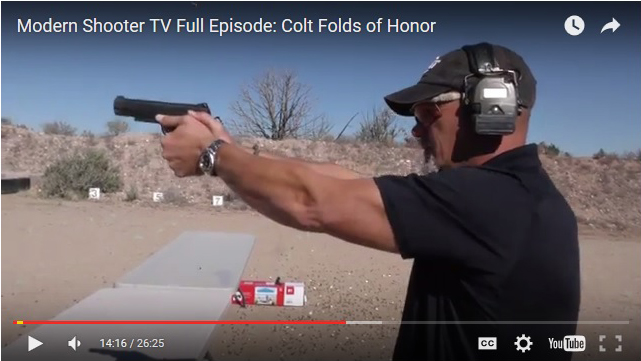
Modern Shooter takes a look at how Colt is supporting the Folds of Honor Foundation, plus the new Colt Competition and Colt Combat Unit pistols.
Colt is not just rolling out new handguns for the commercial market, they’re putting their money where their mouth is by making a contribution to Folds of Honor for every firearm sold. The foundation awards scholarships to families of veterans lost or disabled on the battlefield.
The episode also takes an in-depth look at the new Colt Competition Pistol, a ready-to-run 1911 designed for competition shooting. “You can race it on Sunday, and carry it on Monday,” says Pro Shooter Mark Redl.
Redl gives a close look at the features of the pistol, including its adjustable rear sight and fiber optic Novak front.
The handgun comes with a Colt National Match barrel and the dual recoil spring that was developed for the Marine Corps M45A1, also made by Colt.
Redl explains how the feature extends spring life and reduces muzzle flip, helping you get back on target faster.
Then it’s off to Gunsite, where the 2016 Colt products are unveiled, including the Colt Combat Unit Pistol.
New episodes of Modern Shooter air 8 p.m. ET Monday nights on Sportsman Channel, with an encore showing at 11 p.m. Replays can be viewed 12 p.m. on Thursday and 5 a.m. on Sunday. Clips of Modern Shooter are also available at Gun Digest’s YouTube channel.
Modern Shooter Winter 2016 Modern Shooter is your source for the modern firearms giving you the inside edge on tactics and accessories for the newest ARs, shotguns and handguns. In the Winter 2016 edition we focus on Colt! Instant download
H&H Precision Engineering produces rifles that are capable of nailing bull’s eyes, no matter the distance. Modern Shooter TV takes a look at these precision instruments and the men who make them.
Modern Shooter TV continues to bring shooters high-caliber entertainment and information in its second season on the Sportsman Channel. From tactical training to stalking dangerous game to cutting-edge firearms, the show explores some of the most intriguing facets of the contemporary shooting world.
On the next episode, Modern Shooter TV travels to Oregon to take a look at one of today’s most respected precision rifle makers — H&H Precision Engineering. The gems the company makes have gained renown for their ability to knock out the X-ring from nearly any distance. But the show doesn’t just focus on these highly accurate instruments.
Modern Shooter TV also catches up with the man behind the machine, Ken Hagen. The owner of H&H goes through how he married two passions — tinkering with firearms and match shooting — to build his company.
New episodes of Modern Shooter air 8 p.m. ET Monday nights on Sportsman Channel, with an encore showing at 11 p.m. Replays can be viewed at 12 p.m. on Thursday and 5 a.m. on Sunday. Clips of Modern Shooter are also available at Gun Digest’s You Tube channel.
About Gun Digest Gun Digest is the world’s foremost authority on guns in print and online. In addition to Gun Digest the Magazine, the brand’s portfolio includes the Gun Digest Books line, Standard Catalog of Firearms, the GunDigest.com online community, and ecommerce specialty store, www.gundigeststore.com. For more information, visit gundigest.com, the Gun Digest Facebook page or follow on Twitter @gundigest. Gun Digest is an imprint of Gun Digest Media.
Modern Shooter is your source for the modern firearms giving you the inside edge on tactics and accessories for the newest ARs, shotguns and handguns. In the Winter 2016 edition we focus on Colt! Instant download
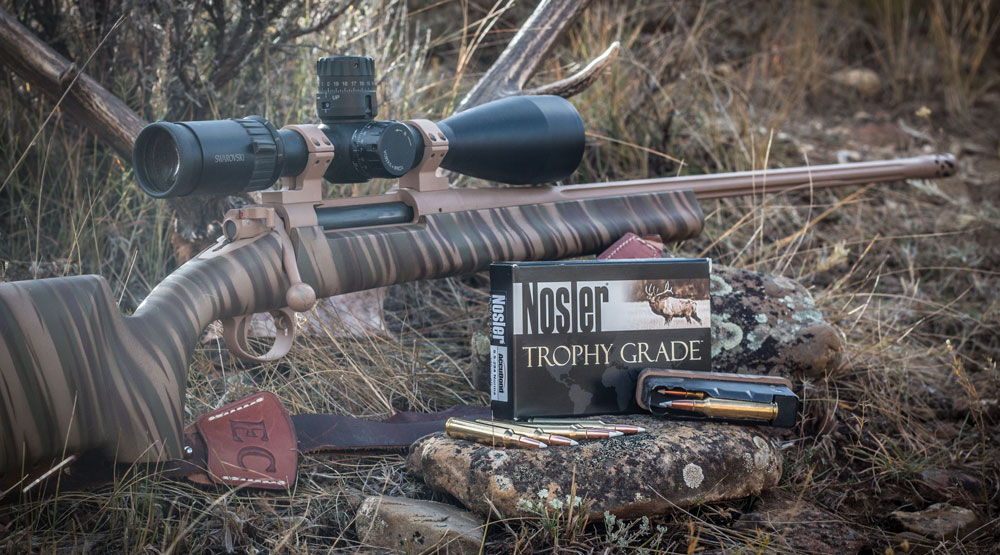
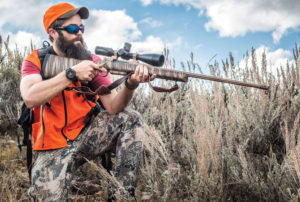
Topped with Swarovski’s X5 scope and launching 140-grain Nosler AccuBond bullets in 6.5-284, the H-S PLR is a long-range machine.
It took a bit of last-minute heroics and a single shot from the H-S Precision PLR to seal the deal on an unforgettable elk season.
“Oh my God, dude, you almost got him! You’re so close! Come up five clicks and right four more!” Adrenaline surged through my veins as Josh Cluff, the nearly-always-animated director of sales and marketing at H-S Precision rifles, called adjustments from behind the spotting scope as we honed in on a prairie dog some 800 yards distant on the South Dakota prairie. The wind rose and fell like the tide as I cranked the windage and elevation adjustments into Swarovski’s new X5 5-25×56 long-range scope.
The summer sun baking and the chiggers biting, I took a steadying breath, put the crosshairs on that tiny black spec of a prairie dog, applied pressure to the trigger and felt the concussion of that H-S rifle chambered in 6.5 Creedmoor. Hornady’s V-MAX bullet sent the dog into the customary triple back flip with a full twist, while Josh erupted in a raucous dance around our encampment of shooting benches and Suburbans, high-fiving and shouting as he went. It’s not every day you nail a prairie dog at 803 yards.
A shot like that is probably out of the question with a middle-of-the-road rifle and low power scope, but for an H-S built VAR chambered in 6.5 Creedmoor and topped with Swarovski’s uber-impressive X5 long-range scope, it was a semi-regular occurrence that made the typical 400-yard shot seem like child’s play.
While H-S builds custom-style rifles off a number of platforms, the VAR features a heavy fluted barrel that dissipates heat, provides additional stability and reduces muzzle jump for consistent follow-up shots. The barrel features H-S Precision’s signature 10X cut rifling, which makes for some of the most accurate, reliable barrels in the industry. According to Josh, each barrel takes about an hour and a half to produce, something the company proudly does in house. In fact, every part on the Pro-Series 2000 rifle is made by H-S, including actions, triggers (2.5-5 pounds, adjustable) and stocks. Even the parts used to make rifle parts are made by H-S; that’s how dedicated the company is to quality production.
As a result of its ability to manufacture top quality barrels, H-S is also a leading supplier of ballistic test barrels worldwide, including applications for the U.S. Marine Corps and major manufacturers like Remington and C.Z. U.S.A. The company has also forged a reputation for producing excellent synthetic stocks for hunting and tactical applications. While it produces about 600 custom rifles a year, H-S makes roughly 30,000 stocks—a testament to the quality behind its design. Each rifle is tested for accuracy at 100 yards in H-S Precision’s world-class underground range and guaranteed to shoot ½-inch groups at that distance.
Optical Superiority
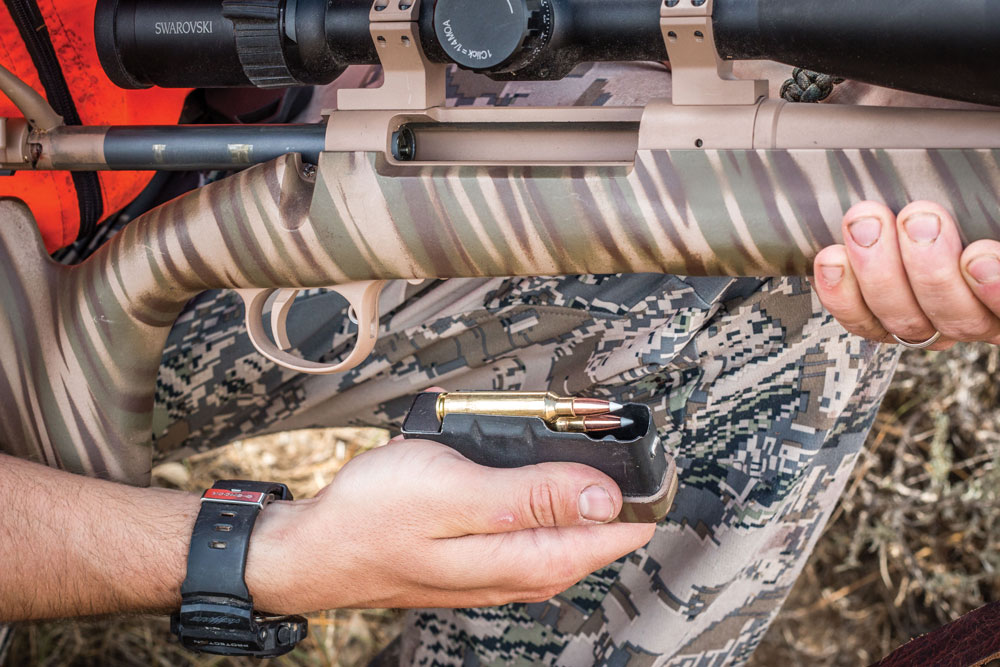
The H-S PLR comes with a detachable box mag.
The other equally important part of the equation is Swarovski’s new X5 scope (also available in an illuminated version). The scope I used in South Dakota was the 5-25x56mm with ¼ MOA adjustments and Swaro’s 4WX reticle (windage and elevation hash marks). The X5 comes with four different reticle options, and for a fall elk hunt in Colorado I went with the 4W because it utilizes thin, sharp crosshairs that don’t obstruct the target and a simple hunting-style reticle with windage hash marks along the horizontal axis. As always, Swaro’s Austrian glass is among the very best in the world: unmatched clarity, superb light transmission in low-light settings, crisp reticles and superior engineering. The main problem with Swarovski? It’s hard to use anything else after experiencing that kind of optical superiority.
The 4W reticle allows the shooter to adjust for elevation utilizing the Ballistic Turret (BT) and compensate for windage either with the BT or more rapidly via the reticle. The elevation turret allows for 20 MOA per full turn, with a maximum of four turns (80 MOA adjustment overall). For windage, the turret rotates 2.5 full turns, 20 MOA per turn and 50 MOA total.
To simplify the process for calculating MOA adjustments, Swarovski has a customizable online Ballistic Program and an app in the App Store that works with iPhone and iPad. While the online program has already been updated for the X5, the new iPhone app should see an upgrade by the end of 2015 that includes ballistic data for the new scope.
Once you’ve entered your scope configuration, ammunition and atmospheric conditions, the app produces a chart with proper MOA adjustments at different ranges based on your zero. Superior glass on a superior rifle, along with a proven long-range cartridge—those Dakota prairie dogs didn’t stand a chance.
Switching Gears
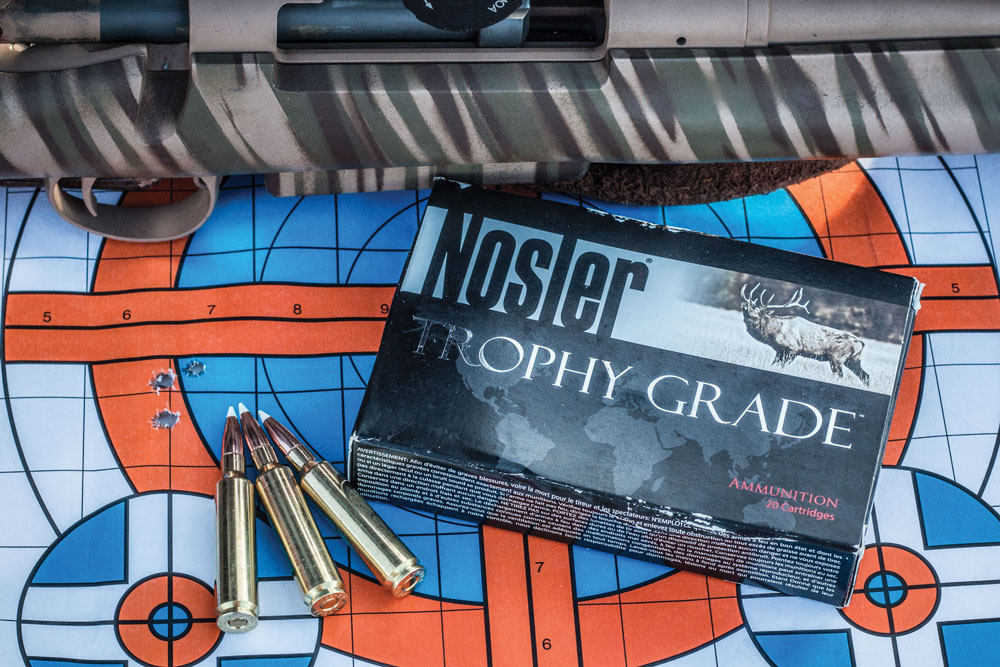
Sub 1-inch groups at 100 yards, not too shabby.
After an impressive showing with prairie dogs, I decided to put an H-S Precision PLR and X5 scope up against an animal on the opposite end of the body-size spectrum: I’d be hunting for a bull elk during first rifle season in Colorado with a PLR chambered in 6.5-284 Norma. A one-time wildcat turned Norma-standardized cartridge, the 6.5-284 is a favorite among long-range shooters and is capable of pushing a 140-grain Nosler AccuBond bullet at 2,750 feet per second (fps) from the muzzle.
At 300 yards, the 140-grain projectile drops roughly 7½ inches and holds about 1,560 ft.-lbs. of energy. By way of contrast, the venerable .270 Winchester in 140-grain AccuBond leaves the muzzle at 2,950 fps with 2,700 ft.-lbs. of energy, retaining 2,162 fps at 450 yards and 1,453 ft.-lbs. of energy. By 400 yards, the Nosler factory-loaded, 140-grain AccuBond has dropped to 2,082 fps and 1,347 ft.-lbs. of energy. With handloads, the 6.5-284 becomes roughly equivalent to the .270 Win. in terms of ballistic performance.
One of the most heated firearms-related discussions you’ll probably ever have is about what qualifies as a viable elk cartridge. Interestingly enough, the elk capital of the world—the State of Colorado—lists in it’s big game guide the minimum requirements for centerfire rifles on elk as: 6mm (or .24 caliber); a 16-inch barrel; expanding bullets no smaller than 85 grains; and at least 1,000 ft.-lbs. of energy at 100 yards. Those are some pretty anemic numbers, for sure, but it does put the conversation in perspective. While you probably can kill an elk with a cartridge like that, it doesn’t mean it’s a great idea. It does mean, however, that the 6.5-284 is more than capable of putting down an elk at reasonable ranges, especially when a quality bullet like Nosler’s AccuBond is used.
When considering the performance of the 6.5-284, I decided before I’d set foot in the woods that 300 yards and closer was ethically viable for me—with a good rest and the animal facing broadside—and that 350 yards would be pushing it. The drop in performance with the 140-grain bullet between 300 and 400 yards is significant enough—dropping roughly 22 inches over those 100 yards and losing about 200 ft.-lbs. of energy—that I opted to stay within the bounds of my own personal maximum effective range. If I saw anything past 350 yards, I’d utilize calls and get closer.
Last-Minute Heroics
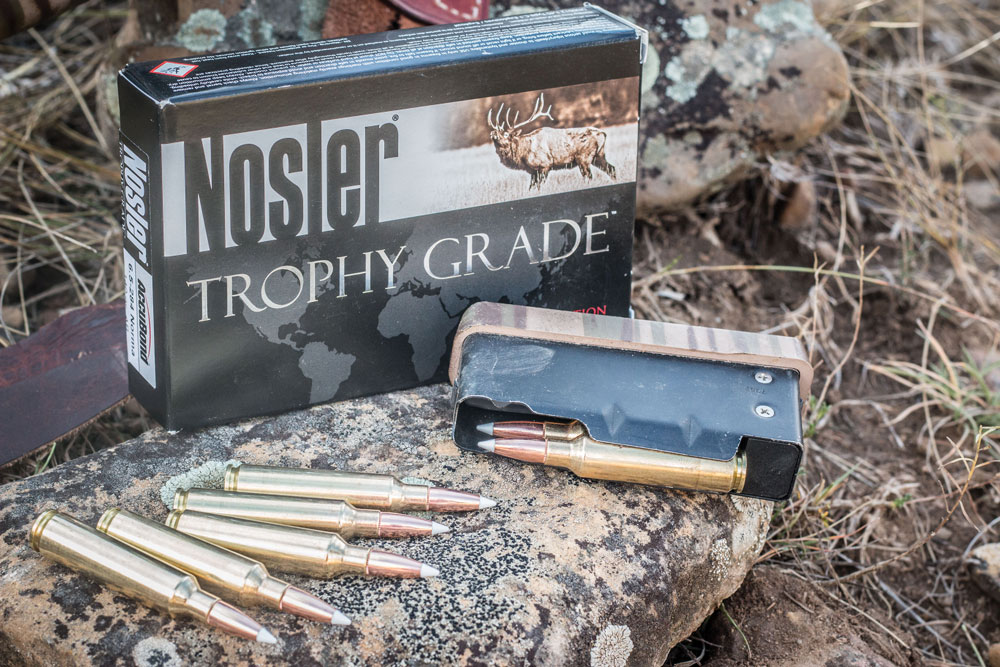
Nosler’s 140-grain AccuBond bullet is an elk stopper.
I spent four days of the five-day season in the wilderness chasing elk with my dad and brother, without any success. We shifted locations for the final two days of the hunt and picked up the expertise of my friend, Toby, a modern day elk whisperer. We spotted several bulls at over 1,200 yards from a ridgeline with Swarovski’s 30-70x95mm ATX spotting scope and strategized with Toby about how to get in position for the last day of the hunt. As Toby, who’s looked through his fair share of glass as a guide and obsessive hunter, put it, “This scope is ridiculous. To say it’s good is the understatement of the century. I feel like it’s ruined me.”
We spent the entire day in the field, and about an hour before last shooting light we located the herd and a big 6×6 bull bugling at least 1,000 yards off. I grabbed my rifle, began cutting through the suffocating oak brush, and found a clear cut around a fence line running along the mountainside. My brother and I ran flat out, packs and rifles in tow, until we’d reached what we thought was the vicinity of the bugling.
“Stop!” my brother whispered frantically. “There’s a bull staring right at us!” About 200 yards behind us a bull stood frozen as daylight began to fail. We’d overrun our mark and stumbled right into the midst of the herd. The bull spooked, but reacting quickly, my brother blew his cow call and stopped that bull and three others—two spikes and a 2×2—at least for the moment giving us another chance. We’d made it to the “X” within the last 15 minutes of the season, and I could hardly believe it.
I worked to a seated position just around the corner of some oak brush and located the 5×5, which was almost directly facing me. I realized it was now or never, and while it wasn’t the ideal shot, it was acceptable given the distance. I touched off a round and watched as the bull crumbled to the ground.
I sat for a moment, the pulse pounding in my temple so hard I thought the sound was coming from something outside of me, trying to fathom the weight of the moment. It was the equivalent of a last-second Hail Mary, a shot and a prayer that connected for a game-winning moment we would remember forever. By the end of the day, which came in the early hours of the next morning after we’d packed just part of that sucker out, I’d walked over 25 miles, every one of which was earned.
Later, when I was butchering the meat around the hindquarter, I found the AccuBond bullet. Most impressively, the jacket and lead core were still intact and the bullet, now weighing 90 grains, had kept about 65 percent of its mass. The shot had struck the bull just to the inside of its right shoulder—almost center chest—had passed through the vitals and ended up in its rump. That’s a lot of penetration from a quality bullet that held together for the entire ride.
Yet another DIY, public-land elk season confirmed what I’ve always found to be true in all my years of hunting: There’s no easy bull. There are, however, custom rifles, world-class optics and unbreakable bullets that make the job a whole heck of a lot easier.
Aguila Ammunition has been a long-time manufacturer of ammo in Latin America, and recently, the company has made its intention to expand its distribution to the U.S. market well known. As the world’s largest producer of .22-caliber rimfire ammo, Aguila Ammunition will bring plenty of offerings to U.S. consumers.
In addition to its incredibly vast rimfire ammunition product line, Aguila will also have centerfire pistol and rifle cartridges as well as a diverse and unique shotshell lineup for shotgunners. The rimfire line includes a variety of .22-caliber options, including subsonic and other specialty cartridges, with a .17-caliber offering and a few 5mm Remington Rimfire Magnum cartridges planned for later in the year.
The centerfire lineup includes common handgun cartridges with bullet options like full metal jacket (FMJ), jacketed hollow point (JHP), semi-jacketed soft point (SJSP) and semi-jacketed hollow point, while the centerfire rifle cartridges are currently only available in FMJ offerings. The shotshell line consists of a full assortment of field and competition options from .410 bore up to 12-gauge, including Aguila Ammunition’s proprietary minishell—a 1-3/4-inch shell with reduced recoil and report—and pigeon load.
The Gun Digest editorial staff caught up with Creed McCaslin, the tactical shooter and director of training for Aguila Ammunition, while at the 2016 SHOT Show in Las Vegas to get a rundown on the company and learn more about its products. Check out the video above to learn more about Aguila Ammunition and the company’s line of .22-caliber ammunition.
Also Check Out:
Understanding Ballistics Tailor your ammunition choice to the task at hand and ensure you’re choosing the right bullet every time with Understanding Ballistics by Philip P. Massaro. Narrow down the vast array of ammunition options with detailed information and expert reviews of available bullets, and come to a better understanding of bullet technology and performance. Plus, learn about the physics of the bullet and its effects once it hits the intended target. Get Your Copy Now
Colt Pro Shooters Maggie Reese and Mark Redl engage in some friendly handgun shooting competition, proving there’s a lot to gain from introducing a lighthearted and fun aspect to your handgun training.
The two pros shoot three stages, taking turns behind the gun and then as impromptu range safety officers.
On the first stage, maximum points are earned by making holes in the A Zone of standard IDPA cardboard targets. Two rounds are fired at each of the near targets, followed by a mandatory reload, and then two rounds fired at each of the far targets.
Shots are timed with after-shot explanation from Redl and Reese as they call their shots and reflect on what worked and what didn’t.
Stage two is also shot under the stress of the timer, and is comprised of six steel plates engaged in a row, followed by a reload and six more shots.
The Modern Shooter crew then takes a break and goes behind the scenes at Colt to see how their legendary 1911s are CNC machined, blued and heat treated — and then onto final assembly and quality control.
Get a look at the new Colt Competition Pistol, which is made ready to run and compete right out of the box.
Then it’s back to the range with Maggie and Mark for stage 3, a run-and-gun challenge, two-shot minimum per target with the added fun of shooting around a wall at targets covered with a “no shoot” sign that poses points reductions. A real nerve rattler.
Who will pull ahead and be declared the official winner of this unofficial competition? Watch the full episode of Modern Shooter TV above and find out.
New episodes of Modern Shooter air 8 p.m. ET Monday nights on Sportsman Channel, with an encore showing at 11 p.m. Replays can be viewed 12 p.m. on Thursday and 5 a.m. on Sunday. Clips of Modern Shooter are also available at Gun Digest’s YouTube channel.
Modern Shooter Winter 2016 Modern Shooter is your source for the modern firearms giving you the inside edge on tactics and accessories for the newest ARs, shotguns and handguns. In the Winter 2016 edition we focus on Colt! Instant download
Modern Shooter TV continues to provide high-caliber entertainment in its second season on the Sportsman Channel. From training with the military’s elite forces to chasing the world’s most dangerous game the program explores some of the most intriguing facets of the gun and shooting world.
This week, Modern Shooter TV looks at the fastest growing group of shooters in America – women. Following Babes with Bullets, a women-focused firearms training program, the program takes an in-depth look at how ladies are going armed. But the show focuses on more than just the firearms, training and trend lines associated with lady shooters. Modern Shooter TV also explores the connection Babes with Bullets has with former Navy SEAL and American hero Marcus Luttrell.
New episodes of Modern Shooter air 8 p.m. ET Monday nights on Sportsman Channel, with an encore showing at 11 p.m. Replays can be viewed 12 p.m. on Thursday and 5 a.m. on Sunday. Clips of Modern Shooter are also available at Gun Digest’s You Tube channel.
Modern Shooter is produced for gun enthusiasts who look for the best in firearms programming and is sponsored by the top names in the firearms industry. Those sponsors include: Colt Manufacturing, FNH USA, Aguila Ammunition and H&H Precision Manufacturing.
About Gun Digest
Gun Digest is the world’s foremost authority on guns in print and online. In addition to Gun Digest the Magazine, the brand’s portfolio includes the Gun Digest Books line, Standard Catalog of Firearms, the GunDigest.com online community, and ecommerce specialty store, www.gundigeststore.com. For more information, visit gundigest.com, the Gun Digest Facebook page or follow on Twitter @gundigest. Gun Digest is an imprint of Gun Digest Media.
Also Check Out:
Modern Shooter Winter 2016 Modern Shooter is your source for the modern firearms giving you the inside edge on tactics and accessories for the newest ARs, shotguns and handguns. In the Winter 2016 edition we focus on Colt! Instant download
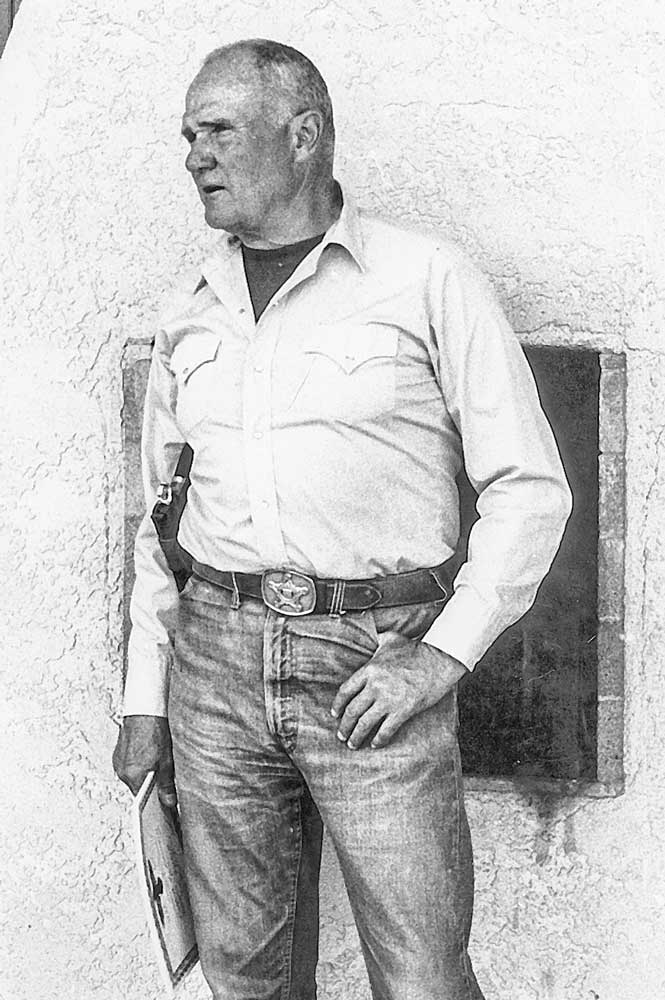
Cooper speaking at the 1979 World Practical Pistol Shooting Championships (IPSC) in South Africa.
Although you may have never considered it, the use of the defensive handgun is a martial art. Martial arts are the codified systems and traditions of combat practices. The term is derived from Latin and means “arts of Mars,” the Roman god of war. The handgun evolved into a true fighting tool about the time of the American Civil War, but it would be another hundred years before anyone truly elevated its application to true martial art status. That man was Jeff Cooper.
Jeff Cooper was a Stanford graduate and a Marine Corps officer who served in WWII and in the Korean War. Between 1957 and 1976, Cooper began writing for Guns & Ammo magazine and started handgun competitions at Big Bear Lake in California. An intellectual and studious man, Cooper began to study the methods of shooting a handgun. He eventually codified its combat application in what is known as the Modern Technique of the Pistol.
Cooper’s observations were very pragmatic and at the time revolutionary. He was soon invited to teach his techniques all over the world. It started in Guatemala for the bodyguards of the newly elected president and continued in El Salvador, Germany, Switzerland, Belgium, South Africa and Rhodesia. Cooper became the professor of the art of weaponry, and his contributions are many.
Jeff Cooper passing out graduation certificates at Gunsite Academy, the firearms training center he founded.
His book, “The Principles of Personal Defense,” was the forerunner to the Cooper Color Code, a system that has become the standard for teaching mental conditioning as it relates to individual combat. He established the four basic rules of firearm safety, which are taught worldwide. And, he coined the acronym DVC. In Latin, this stands for diligentia, vis, celeritas. Translated it means, accuracy, power and speed—a triangular relationship that must be balanced by every pistol shooter.
This triangular concept was the foundation of the International Practical Shooting Confederation (IPSC), which was established in 1976. Cooper was the first president of IPSC, and it became the governing body of practical pistol competition all over the world. IPSC was also the forerunner and guiding light for all of the modern, dynamic combat-type shooting competitions like IDPA and 3 Gun. Without Cooper, it’s questionable if any of these would exist.
But Cooper did not stop there. In 1976, he also established the American Pistol Institute (API) at what he called his Gunsite Ranch in Paulden Arizona. Instituted to allow students to travel to Cooper as opposed to him traveling to them, API was created on the principle of another Cooper triangle: the Combat Triad. The Combat Triad is the equilibrium of mindset, gun handling and marksmanship needed to employ a handgun effectively in a defensive situation.
You might say that Cooper was the prophet of shooting, a sensei of the martial art of firearm combatives, the guru of guns. A very important element of all Cooper’s work related to firearms training was that his school was intended to educate the citizen. Sure, soldiers, sailors and police officers were welcome to attend, but Cooper strongly believed that, as Robert Heinlein put it, “An armed society is a polite society.”
Cooper continued to live on the ranch at API, which became Gunsite, until his death in 2006. His contributions to the application of the firearm are legion and were brought about by observing, learning, experimenting and then codifying what worked. Every year, Gunsite Academy continues to expose thousands of students of good character to the Cooper doctrine. Those interested in perfecting the martial art of the pistol should attend what many consider to be the preeminent introductory course to the defensive handgun: the Gunsite Academy 250 Pistol Class.
The 250 Pistol Class is designed to take a student who’s never fired a handgun and prepare them to defend themselves with it while engaged in a violent encounter. Students are grounded in Cooper’s Modern Technique of the Pistol, which is based on the Weaver stance, proper handgun presentation, the flash sight picture and the compressed surprised break, all with a heavy-duty pistol. They will also be conditioned to the elements of the Combat Triad and DVC.
This is a five-day course during which you will fire in excess of 1,000 rounds from your handgun. You will learn how to shoot a pistol. You will learn if your pistol works. You will learn to perform under stress, how to manipulate your pistol, how to move with a pistol, how to utilize cover and concealment, how to shoot in low light and how to use a flashlight. And, how you think about defensive handguns and street survival will change.
When you walk through the Gunsite gate, leaving as a graduate of the 250 Pistol class, you will have a renewed peace of mind. You will be stronger, more alert and conditioned to respond instantly to any threat. You will believe you can prevail in any encounter, and you will have the skills to do so.
Ladies-only courses are becoming popular at Jeff Cooper’s Gunsite Academy. As more women become interested in personal protection, they are wisely seeking training.
You can read all of the books you like, watch all the DVDs and YouTube videos you want and even attend other handgun training courses. You’ll learn something, but will it be the something that saves your life?
I’ve often said, “The farther you get from Gunsite, the less faith you can have in your training.” This is not meant to defame or degrade other schools; there are lots of talented instructors out there, and many worked under Cooper or trained at Gunsite. What I mean by this statement is that if you want to get the message, the unpolluted sermon, the time proven truth, go to the source. Cooper’s Gunsite Academy is the oldest civilian firearms training school in the world. They’ve been at it for 40 years. You don’t do that by doing something wrong.
Now you know who Cooper was, but to really appreciate his contributions and to understand their importance, you must make the trek to Gunsite Academy. The staff there still teaches as though Cooper is watching over their shoulders, and the message is clearly Cooper.
Jeff Cooper was the founding father of the martial art of the firearm.
Editor’s Note: This article originally appeared in the November 2015 issue of Gun Digest the Magazine.
While Nebraska Gun offers a full selection of new long guns and handguns, owner Jeff McIntyre says his establishment caters to what he terms the “experienced hobbyist” interested in more vintage firearms, often with an eye to using these older guns afield.
“I sell quite a few rifles, like pre-1964 Winchester Model 70 Featherweights, where the buyer tells me he thinks the rifle deserves a little time out in the field on a hunt,” says McIntyre. “They may not use the rifle for the entire deer season, for example. But they think it would be a neat experience to take a deer with the rifle.”
A recent Featherweight in 30-06, for example, sold here for $780.
Similarly, McIntyre recently sold a Belgian Browning A5 Magnum in 12 gauge to a man whose whole goal in buying the shotgun was to use it on Nebraska upland game.
McIntyre has seen a shift in interest in World War Two firearms. M1’s are still quite popular. But whereas German firearms from the war were in strong demand, the collectors he sees today are more interested in Japanese and even Italian military weapons of the period.
Editor’s Note: This brief originally appeared in the Winter 2015 issue of Gun Digest the Magazine.
Those who have gone armed most likely all have something in common — a bunch of holsters sitting around that just didn’t work out. They didn’t hold the handgun correctly, didn’t conceal well or just plain didn’t feel comfortable. While there are certain holsters that aren’t the right match for certain shooters, the gun leather might not have been the problem. Instead, the fly in the ointment might have been the belt leather. Finding the right strap to wrap around your waste and tote your sidearm is the topic of the above video from LuckyGunner.com. The online ammunition retailer does a dynamite job showing the importance of a solid, purpose-built gun belt. While this implement is often overlooked when planning to carry, it shouldn’t be. Truly, a good gun belt is a key element to cinch a carry rig together.
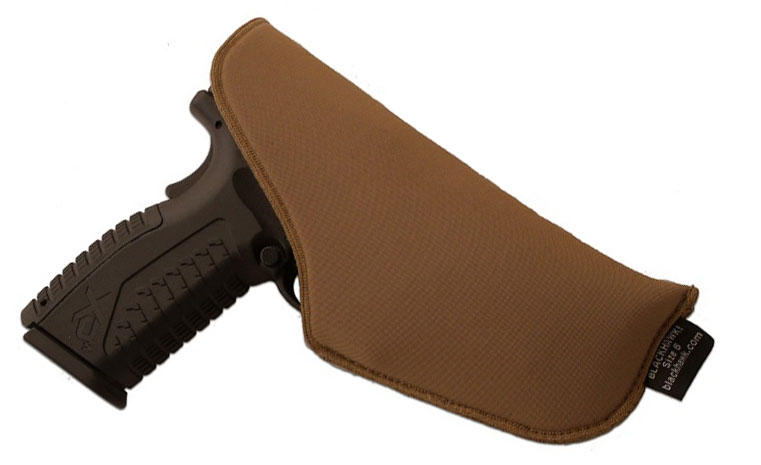
The new Blackhawk! TecGrip holster provides rock-solid carry in pockets or inside the waistband.
The new Blackhawk TecGrip holster is designed for civilian and law enforcement concealed carriers, and it can be used as either a pocket or inside-the-waistband scabbard.
What makes the holster unique is its TecGrip outer layer, which holds tightly to almost any material — keeping your firearm holstered snugly in place. The design is said to promote comfort, thanks to high-density closed cell foam that protects the firearm and conforms easily to your body.
“This is one of the most adaptable holsters I’ve ever carried,” said BLACKHAWK! Product Director for Tactical Accessories Chuck Buis. “It stays in place wherever you put it. It’s the ideal holster for every day carry, and it’s affordable.”
According to Blackhawk!, the TecGrip’s material features microscopic gripping fingers that hold so securely no clip is needed for rock-solid inside-the-waistband carry. Both IWB and pocket models are completely ambidextrous and offered in multiple sizes to fit an array of firearms. The thermal-bonded three-layer laminate construction is hand- or machine washable and maintains its gripping properties through years of use.
TecGrip IWB and Pocket holsters promise to offer premium concealment at an affordable price.
The STAR rifle takes customization to a whole new level, offering a platform that adjusts to fit any shooter.
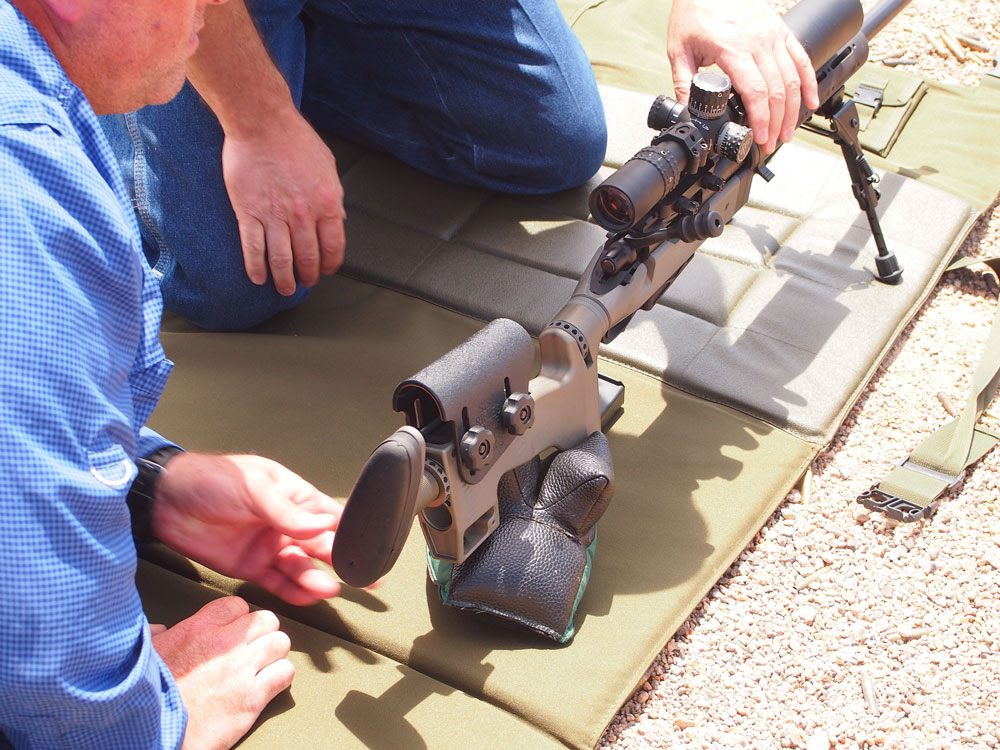
The first time I saw the new Sisk Tactical Adaptive Rifle or STAR up close, my initial thought was, “Another tactical bolt gun—Why?” And then I picked it up. My second thought: “This darn thing’s way heavy!”
Okay, I was not impressed. But then I spent a day shooting the rifle with inventor and gun maker Charlie Sisk himself, followed by a two-day session with the rifle at the Gunsite Academy, one of the country’s premier firearms training facilities. And with those two experiences, I now know that the STAR is actually a very accurate and flexible rifle, has many tactical applications, and can be an effective hunter, too.
Even though, yes, it is still heavy.
Charlie Sisk, of Dayton, Texas, made an impressive name for himself over the years with the custom hunting rifles he built at Sisk Rifles, LLC (SiskGuns.com). But as that market started to peter out several years ago, Sisk turned his attention to more tactical platforms. As he told me, one thing always bothered him about rifles in general.
“You have to fit yourself around the rifle,” Sisk said. “But we all have different builds and different ways we hold rifles. Did you ever get a rifle you couldn’t hit a thing with, but someone else got it to shoot just fine? I’d bet a lot of money it simply didn’t fit that first shooter—and never will.”
Sisk continues, “So, when I was designing the STAR, the big thing I wanted to do was make a rifle you could make fit to you. And re-adjust quickly in different scenarios, if needed.”
Sisk builds his STARs on either a Remington 700 action or one of the Savage long- and short-action receivers. (The STARs I used were all made with Remington 700 actions.) For my intro, Sisk went over the various features with me and—once he was sure I knew how to manipulate the adjustment controls—gave me a simple order.
“Set it up so it feels right—for you.”
I’ve used a rifle with adjustable stocks. But this was quite a different experience. First, I adjusted the buttstock laterally, tilting it from side to side via an adjustable joint at the stock’s wrist. This joint spins and locks into place, allowing a shooter to dial in a custom fit for maximum cheek weld and fit to your upper body structure.
Next, I worked the buttstock adjustment, adding and subtracting length until it felt correct. I also found that—on Sisk’s advice—the butt pad fit my shoulder best when spun around 180 degrees, technically upside down.
I made the comb fit my cheek. Last, I went back over the initial adjustments to make sure it all still fit right. It did.
True, the now-adjusted buttstock had a bent and twisted look to it—like it had been dropped down the side of a cliff and bounced off several boulders! Yet, it fit me like no rifle ever has; I lined up behind the scope at just the right height and distance without having to adjust myself to the rifle.
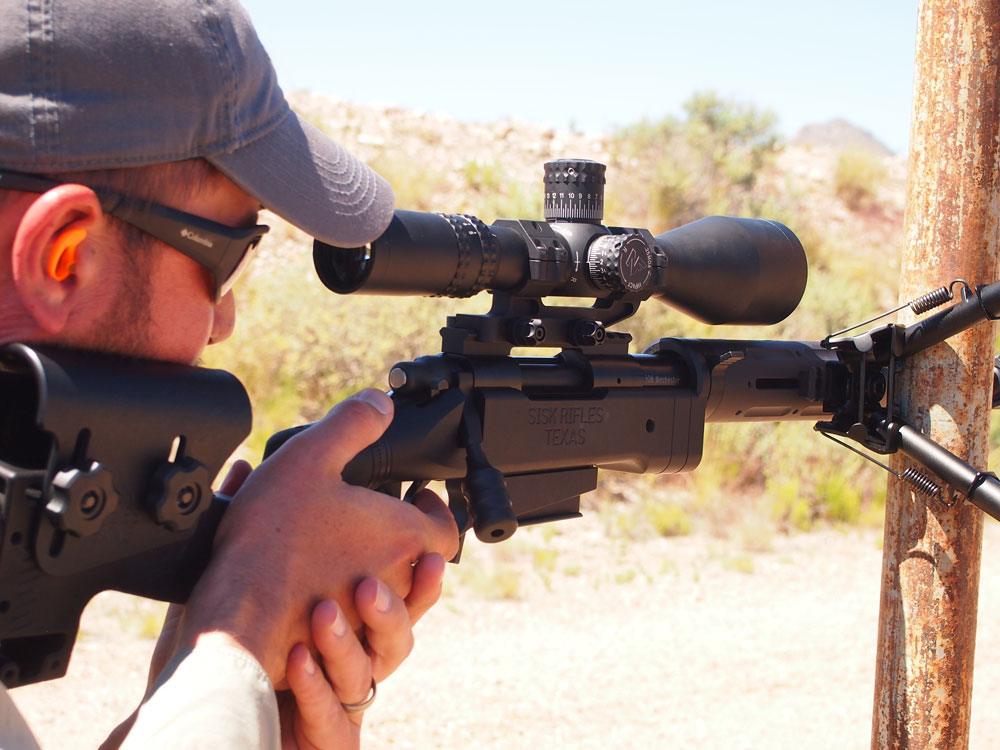
The handguard of the STAR is also extremely adjustable, spinning around 360 degrees, and locking into place at nearly any position. With a bi-pod attached, the handguard allows for all kinds of different braced shooting possibilities—more on that later.
This particular STAR was going to be picked up by a local police officer (Texas police SWAT Teams have bought a good number of STARs already). It was a Remington 700 in .223. This rifle had a #2 contour Lilja barrel, 18-inches long, detachable magazine, outfitted with a SureFire SOCOM 762-RC suppressor and a Nightforce 3.5-15×50 NXS scope with a MOAR reticle. It also had a very smooth and creep-free Timney Trigger, model 517.
Video: Sisk STAR Rifle Review
I first fired several shots at 30 yards on Sisk’s enclosed range to make sure I was on paper, made adjustments and moved to the 100-yard target. My first shot hit the bullseye on the top and left, about 11 o’clock. The second shot touched the first on the edge towards the bullseye. Third shot?
“Damn!” I exclaimed having pulled the shot, blowing my chances for that picture-perfect three-shots-touching group. “I screwed up,” I said to Sisk, who stood several feet next to me, his eye to a spotting scope. “It wasn’t the rifle.”
“Well, you know, that’s not so bad,” Sisk said. “That third shot is less than a half inch from the first two.”
I put my eye back onto the Nightforce. So, that made this grouping slightly over one-half inch, then? Huh!
I then spent several hours shooting the STAR outside at a variety of targets, at ranges out to 280 yards. At Gunsite in Paulden, Arizona, a month later, I put 100 rounds through another STAR, this one also built on a Remington 700 action but chambered in .308 Win.
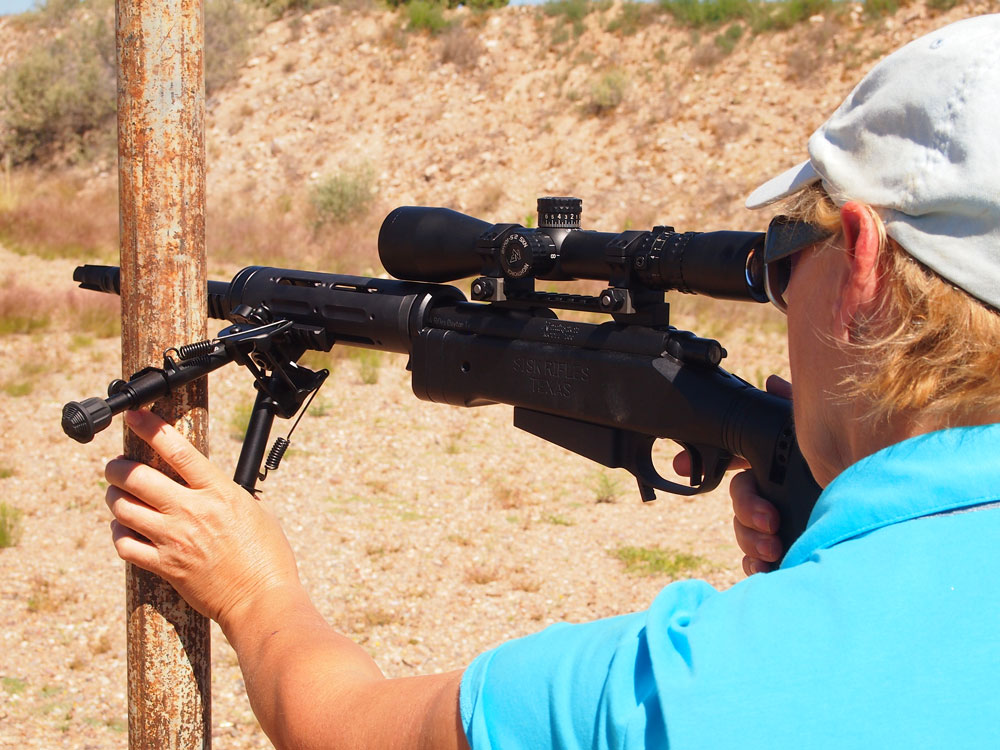
Our targets at Gunsite were steel pop ups and 4- to 6-inch disks, made by MGM Targets, a co-sponsor of the event. I fired from various positions—prone, standing and standing with forearm and bi-pod turned to one side and using the bipod as a brace against a pole. I also shot from hillsides, one bi-pod leg extended farther than the other. That position worked surprisingly well because, by rotating the barrel within the handguard, I essentially removed cant.
I didn’t miss more than a handful of times, and while I’d like to take all the credit for that shooting, the truth is the rifle was a pleasure to shoot and put me on target with a comfortable and very steady rifle platform that can shoot sub-MOA all day long.
I’d always assumed that a tactical rifle for law enforcement would need to be light as movement was key to shooting scenarios. This can certainly be the case. But a couple of officers I talked to also told me that most SWAT-type calls had them setting up in position and waiting—sometimes for hours in a hostage situation or with a barricaded shooter.
In such cases, the officer has to have the rifle on target and ready—again, potentially for hours at a time. Here, the STAR excels. With bi-pod legs extended, handguard turned and locked into place, you can brace the bi-pod legs against a pole or wall, lean into the STAR and keep your rifle on target, essentially hands free if needed.
The ability to offset the stock to one side also has another big advantage: Officers can use the STAR while wearing gas masks.
The STAR has solid hunting applications, but with this large caveat: The STAR I used at Gunsite weighed a good 11.5 pounds without scope, bi-pod and ammunition. This is not the kind of rifle you are taking out West on a hunt that has you climbing up steep slopes. Run-and-gun hunting? Forget it.
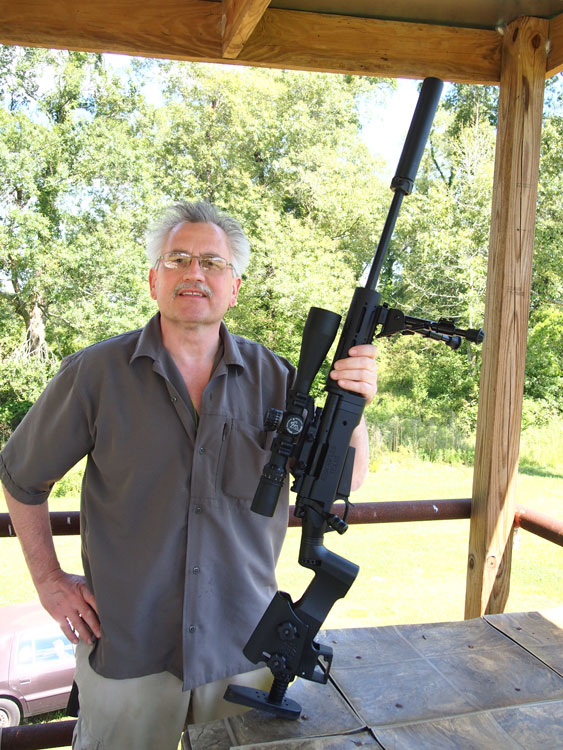
The author with the versatile STAR Rifle.
But in a fixed position, like a shooting house, a stand or prone on a hilltop? The rifle will do a hunter just fine.
Sisk tells me he is looking to incorporate some lighter laminate into the construction of future STAR models and is examining ways to carve some weight out of the receiver. Customers can also order the STAR with a lower profile Lilja barrel, further reducing the weight to less than 10 pounds.
At over $5,000, the cost, of course, is substantial. But take a scan of the current custom-made tactical bolt rifle offerings, and you might be surprised to discover that the STAR is actually about middle of the pack price-wise.
Standard Model STAR Actions: Remington 700 right hand short-action or Savage long- or short-action Caliber: Nearly any centerfire caliber a customer wants. Stock: STAR Tactical stock in black Barrel: #7 Lilja contour barrel, 22 inches long Muzzle: Threaded 5/8×24 with protector Trigger Guard: STAR Trigger Guard with one AICS type mag Trigger: Timney Model 517 Finish: Black matte Cera-Kote on barrel Also, custom STAR Rifles can be made to customer specs. Cost: Prices start at $5,600. SiskGuns.com
Modern Shooter TV keeps scoring a bull’s eye in its second season on Sportsman Channel with a host of new, high-caliber episodes. The show continues to explore some of the most intriguing corners of the shooting world with looks at everything from professional competitive shooting to the tactical training our service members and law enforcement utilize.
This latter area is Modern Shooter TV’s focus in its upcoming episode with an operator’s eye view of the modern shoot house. But, as viewers quickly discover, following military and law enforcement into one of their primary training tools is a heck of a lot more about mindset than trigger pull.
The episode goes in depth into the psychology and the tactical mentality professional operators hone in this intense training arena. The physical and mental fatigue the shoot house demands, however, is well worth it for the military, law enforcement and civilians who step up to the challenge. As Modern Shooter documents, the pint of sweat shed in the shoot house saves a gallon of blood in the real world.
New episodes of Modern Shooter air 8 p.m. ET Monday nights on Sportsman Channel, with an encore showing at 11 p.m. Replays can be viewed 12 p.m. on Thursday and 5 a.m. on Sunday. Clips of Modern Shooter are also available at Gun Digest’s You Tube channel.
Modern Shooter is produced for gun enthusiasts who look for the best in firearms programming and is sponsored by the top names in the firearms industry. Those sponsors include: Colt Manufacturing, FNH USA, Aguila Ammunition and H&H Precision Manufacturing.
About Gun Digest Gun Digest is the world’s foremost authority on guns in print and online. In addition to Gun Digest the Magazine, the brand’s portfolio includes the Gun Digest Books line, Standard Catalog of Firearms, the GunDigest.com online community, and ecommerce specialty store, www.gundigeststore.com. For more information, visit gundigest.com, the Gun Digest Facebook page or follow on Twitter @gundigest. Gun Digest is an imprint Gun Digest Media.
Also Check Out:
Modern Shooter Winter 2016 Modern Shooter is your source for the modern firearms giving you the inside edge on tactics and accessories for the newest ARs, shotguns and handguns. In the Winter 2016 edition we focus on Colt! Instant download
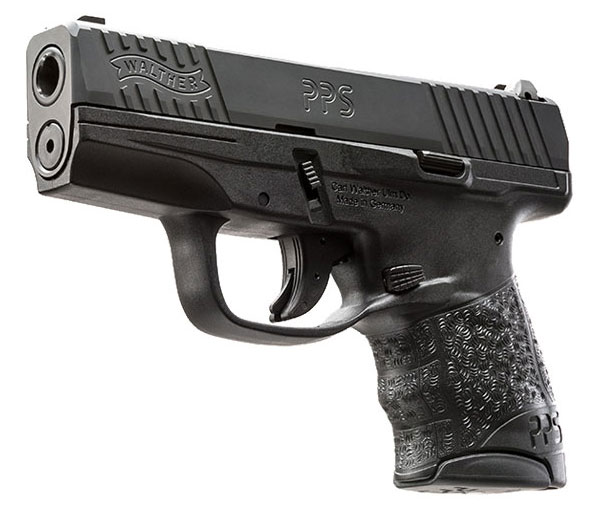
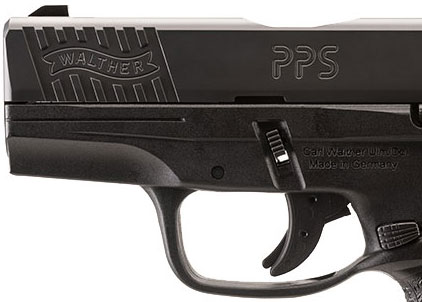
The Walther PPS M2 features a number of refinements to the line that should make it a more user-friendly carry option. Photo Walther
In the realm of concealed carry, one style of handgun has dominated headlines in recent years. To be sure, single-stack, striker-fired, polymer pistols have been all the rage in the shooting world. And why not? The design is a convenient and comfortable option for those who plan to carry everyday.
The slim style of handgun, however, is nothing new, despite the recent buzz – just ask Walther. For around a decade, the German gun maker has been churning out a single-stack polymer that has many of the qualities the market has demanded – the PPS. And this year, the company has worked to take the next step with the line by introducing the Walther PPS M2.
Walther has not reinvented the wheel with its new pistol, available in 9mm and .40S&W. Instead, it has refined the striker-fired pistol’s original design, making it potentially a more familiar, comfortable and user-friendly concealed carry option.
Of the new features on the 1-inch wide pistol there is one that should go over big with American shooters – the button magazine release. Walther jettisoning the paddle release for a style more common to the U.S. market should make the pistol more intuitive for shooters new to Walther’s wares. But opting for the ambidextrous button release does more than make the 21-ounce pistol easier to operate; it also facilitates one of its major ergonomic tweaks.
Doing away with the paddle release has allowed Walther to undercut the PPS M2’s trigger guard. This simple bit of engineering facilitates a more solid purchase on the handgun, giving shooters more real estate on the grip.
This should make the gun more comfortable in the palm, helping to eliminate some of the overhang usually associated with compact pistols. And it should add more control over the gun by putting the bore axis more inline with a shooter’s arm, thus helping mitigate more of its recoil. Given that the original PPS already had a reputation as a soft shooter, this new feature could make the M2 a real kitten.
Along with a number of new features to the grip, the new PPS M2 also has been outfitted with front cocking serrations and a snappy trigger. Photo Walther
Enhancing the PPS M2’s manageability is the addition of Walther’s cross-directional grip surface on a ergonomic grip taken from the company’s PPQ line. However, Walther has bucked some trends with the M2, doing away with the interchangeable backstrap system found on the original PPS, as well as the accessory rail.
Aside from comfort and control, the company has also attempted to add a element of consistency to the PPS M2. In particular, shooters should find the pistol easier to keep on target with the addition of a much snappier trigger. Walther lists the M2’s pull weight at 6.1 pounds and features a short, audible and tactile reset; before, the PPS had a pull anywhere from 6.1 to 10.5 pounds.
Walther did not have a MSRP available at time of writing, but it is being reported that the PPS M2 is retailing for around $469.
Looking to go armed, but are stuck in the weeds as to what to arm yourself with? Here are 20 of the best concealed carry gun options that will keep you on the defensive.