The AK is one of the most robust firearms designs ever conceived. Quite simply put, there are few things – elements, abuse, operator – that can put it out of action. But despite the hardiness of its design, not all AKs are created equal. As is apparent to anyone who has studied the rifle, its quality and performance can vary widely from manufacturer to manufacturer and where its made in the world. But there are some basics rules of thumb that can be followed to help weed out the lemons from the vast selection of AKs available today. Jim Fuller of Rifle Dynamics (a company that specializes in custom AKs) gives a pretty fair rundown of how to evaluate the rifle in the above video from Tactical Life. And while Fuller touches upon a number of points in assessing an AK, one of the most important is making certain everything on the rifle is in line – literally.
The AK Enthusiast collection is as practical and utilitarian as the Kalashnikov itself. If you own or work on variants of the rifle, the DVDs and download will offer you expert guidance to disassemble, customize and assemble the AK. Then you can get swept into the story of the AK with former New York Times reporter and Pulitzer Prize winner C.J. Chivers who traces the tactical rifle from invention to present day. Best-selling author Patrick Sweeney provides tips on building an AK, choosing ammunition and accessories, keeping your AK perking for years to come and much more. Get Your Collection Now
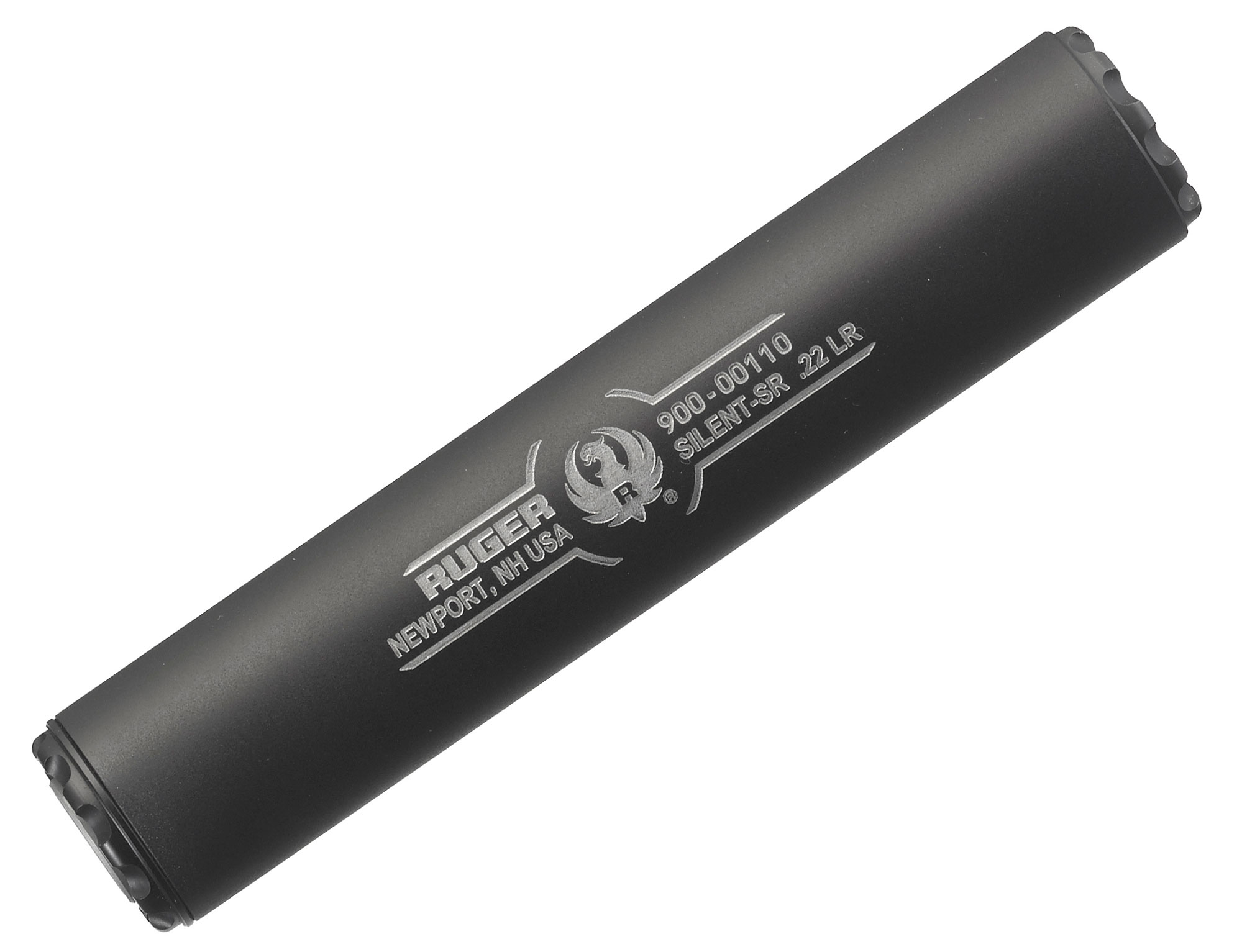
Ruger has jumped into the suppressor game with the Silent-SR, designed to dampen the report of a number of rimfire guns.
As more and more states have moved to legalize suppressors, more and more companies have expanded their catalogs to include the noise-dampening devices. Ruger is among the latest.
The New Hampshire/Arizona manufacturer kicked off 2016 by releasing its very first suppressor and didn’t turn a blind eye to where it would have the greatest impact in its roster of firearms. The Ruger Silent-SR is engineered to hush up every rimfire the company offers.
The 5.37-inch long device is compatible with all pistols and rifles chambered for .22LR, .22WMR and .17HMR. At present time, Ruger has 12 models chambered in those calibers, though, some are not suppressor ready, as they do not have threaded muzzles. But shooter favorites, such as the SR22 pistol and 10/22 rifle, offer versions that can accept the suppressor right out of the box.
Even if a shooter does not have a Ruger, the company has made it simple to utilize the Silent-SR. The suppressor’s milled steel muzzle mount is outfitted with a 1/2”-28 thread pattern, which should make it compatible with most rimfires with threaded barrels. A nice twist to the mount itself is it is designed to lock into the tube, thus making the suppressor simple to remove in one piece without stranding the mount on the muzzle.
Ruger has engineered some ruggedness into its suppressor, using stainless steel for the front cap and opting for titanium for the tube material. Going for titanium for the tube, in particular, is ideal for such duty, given its inherent strength, reduced weight and heat and corrosion resistance.
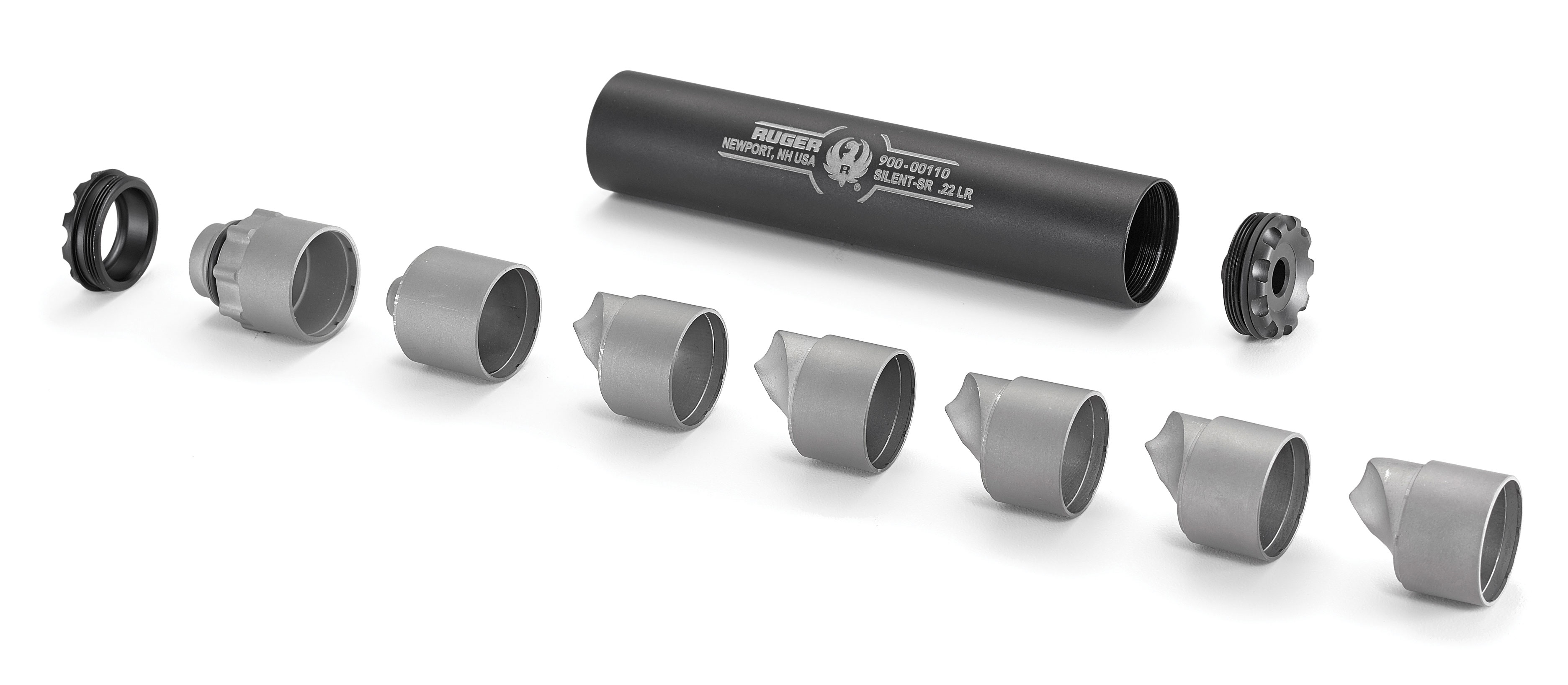
The Ruger Silent-SR utilizes a six-baffle system, housed in a titanium tube.
The Silent-SR utilizes six baffles in total, including a conical blast baffle and five primary baffles with a push-cone design. This asymmetrical cone of the primary baffles, according to Ruger, provides the best arrangement for slowing down the speed of expanding gases, thus muffling a firearm’s report. As to its primary job, the company lists its suppressor’s noise reduction at as much as 40 dB.
Ruger appears to have made the device as low-maintenance as possible, with the company recommending cleaning after 1,000 to 2,000 rounds. One of the ways the gun maker has mitigated house cleaning is by creating a tight fitting baffle stack that does not touch any of the tube’s walls. This design keeps residue in the stack proper, instead of distributing it over the entirety of the suppressor.
Ruger has given its suppressor a corrosion-resistant, matte black Cerakote finish and has provided a polymer disassembly tool to ensure the Silent-SR doesn’t end up with unwanted bumps and bruises.
Presently, Ruger has a $449 MSRP on the Silent-SR. There is an additional tax stamp – $200 – since suppressors are NFA devices.
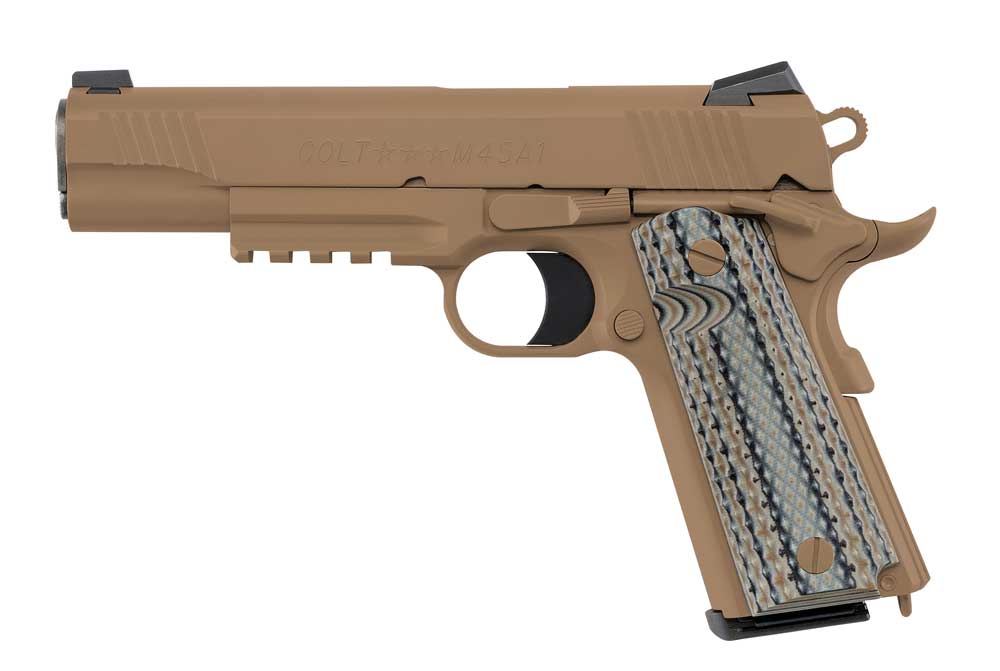
The battle-tested M45A1 gets an even more durable and wear-resistant Decobond Brown coating for 2016
The battle-tested M45A1 CQBP has received a new coat of armor for 2016.
The original 1911 and 1911A1 were the workhorses of the battlefield in their extensive service over much of the 20th century. The 1911 served U.S. soldiers in two World Wars and several other major conflicts, and all the while provided reliable stopping power that could be counted on in the time of need.
While the U.S. military largely moved away from the 1911 in the 1980s, many specialized units preferred—and still prefer—the more potent energy and stopping power of the .45 ACP to that of the NATO standard 9mm cartridge. For this reason, several of these special branches of the military have continued to field the 1911 or at least modernized versions of it.
One of these modern 1911s currently in service is Colt’s M45A1, a tan cerakoted and modified version of the company’s previous Rail Gun. In 2012, after a rigorous selection process, the United States Marine Corps (USMC) selected to adopt the M45A1 as one of its pistols under the Close Quarters Battle Pistol (CQBP) designation.
Today, the M45A1 is still in use with the Marine Corps, and it has also become popular on the civilian market. For 2016, Colt is making an improvement to the already stellar handgun: It is swapping out the tan cerakote coating on the M45A1 for an even more durable Decobond Brown coating that will reduce the signs of wear even more.
This new addition is a running change, and will not alter the price of the gun or its features. The same elements that made the M45A1 a great option for the battlefield or the home will continue to be found on the updated version.
The M1913 Mil Spec Picatinny rail will remain, allowing users to customize their handgun with laser sights, flashlights and other accessories for whatever tactical situations they might encounter or for whatever home defense needs they might have.
Likewise, the M45A1 retains its Novak Tritium Front sight and Novak Low Mount Carry three-dot night sights. The G-10 tan checkered grips are the same, and the frame and slide are still manufactured from stainless steel. The trigger remains set between 4.5 and 6 pounds, and the pistol keeps its ambidextrous thumb safety and upswept Beavertail grip safety.
Importantly, the newly upgraded version of the M45A1 pistol still utilizes the excellent Dual Recoil spring system. This system allows for reduced recoil impulse—an important consideration with the .45 ACP—while also extending recoil spring life dramatically. Recoil reduction with the Dual Recoil spring system is noticeable, and it allows shooters to quickly reacquire their sights and target after firing for improved follow-up accuracy, which is where many shooters may fail with larger caliber pistols.
The updated M45A1 CQBP features a 5-inch polished stainless steel barrel for an overall length of 8.5 inches, and its unloaded weight is 40 ounces. This durable, duty-oriented handgun comes with two magazines and is available for $1,699.
Colt M45A1 CQBP Specs: Type: Semi-auto Caliber: .45 ACP Barrel: 5-in., stainless steel, polished Overall Length: 8.5 in. Overall Height: 5.5 in. Overall Width: 1.25 in. Slide: Stainless steel Frame: Stainless steel Weight: 40 oz. (unloaded) Trigger: Solid aluminum, 4.5 to 6 lbs. Sights: Novak tritium front, Novak Low Mount Carry 3-dot night sights Finish: Brown Decobond Magazine Capacity: 7+1 MSRP: $1,699
FN launched its Military Collector Series in late 2015 to commemorate the manufacturer’s legacy of producing firearms for the U.S military and other militaries around the world. The Military Collector Series, which includes three firearms, was also introduced to bring civilian-legal, semi-automatic versions of these iconic products to the commercial market.
One of the most notable firearms in the new Military Collector Series is the FN M249S, a semi-automatic, functioning replica of the fully automatic M249 SAW (Squad Automatic Weapon) that has been in use with U.S armed forces since the 1980s. The new FN M249S features the same steel frame and integral, mounted folding bipod as the original M249 SAW, but unlike its full-auto counterpart, the semi-auto version fires from a closed bolt instead of an open bolt and, in addition to accepting linked belts of ammunition, it also feeds from standard AR-15 style magazines.
The Gun Digest editorial staff was on hand at the 2016 SHOT Show in Las Vegas to get an in-depth first look at the new FN M249S. Check out the video above to learn more about the FN M249S and see the firearm’s technical specifications below.
Gun Digest Shooter’s Guide to the AR-15 is a comprehensive look at today’s most popular modern sporting rifle. Among a wide variety of topics, the firearms expert and noted author provides helpful ammunition and accuracy tips, an explanation of the AR platform, a wide range of AR-15 applications, and much more, enhanced by 250 photos. Keep up with the increasing popularity of the versatile AR-15 with this indispensable shooter’s guide. Get your copy now.
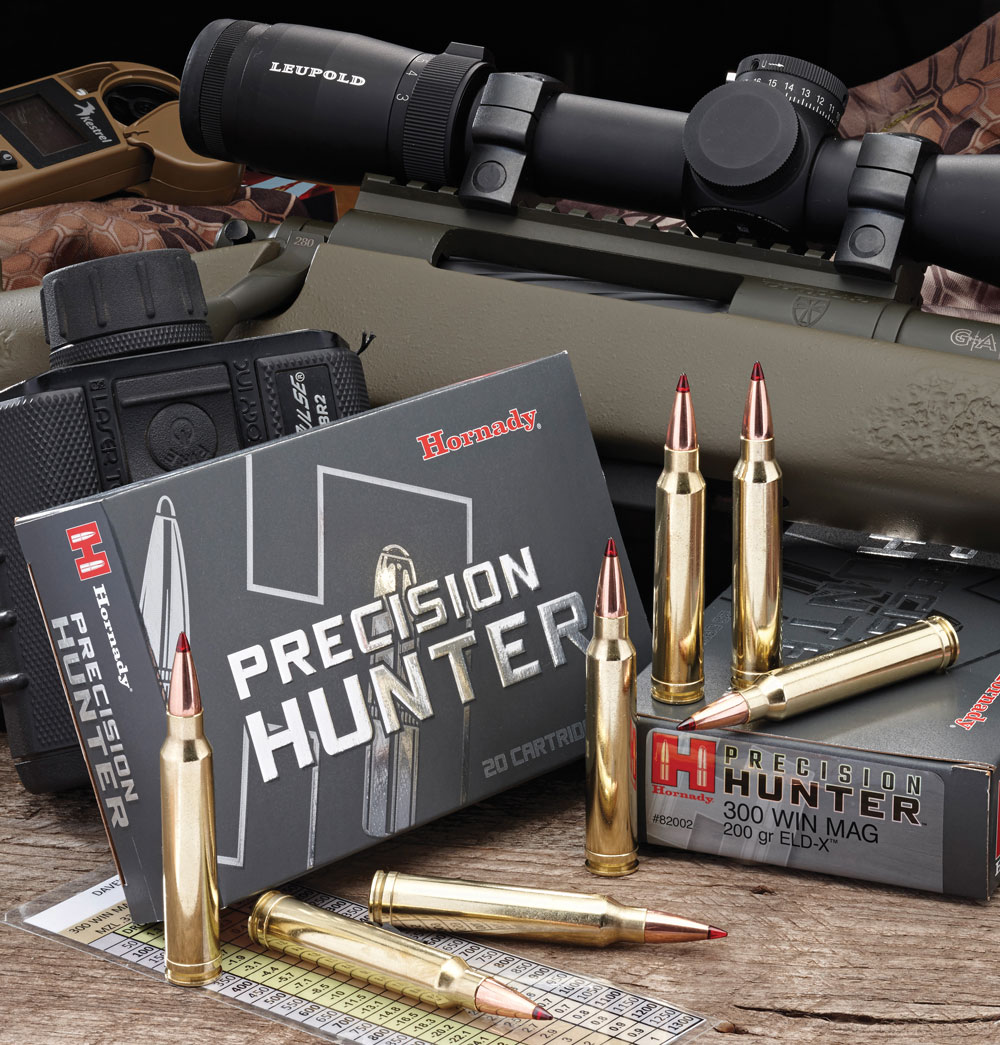
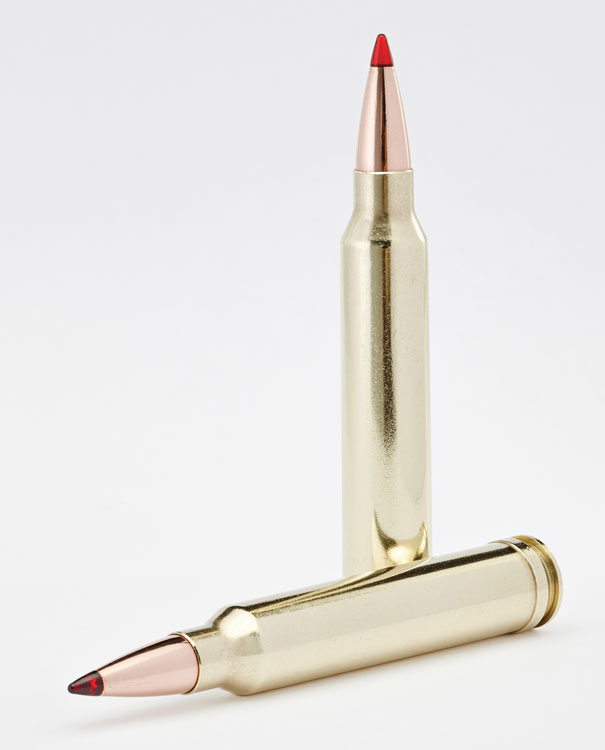
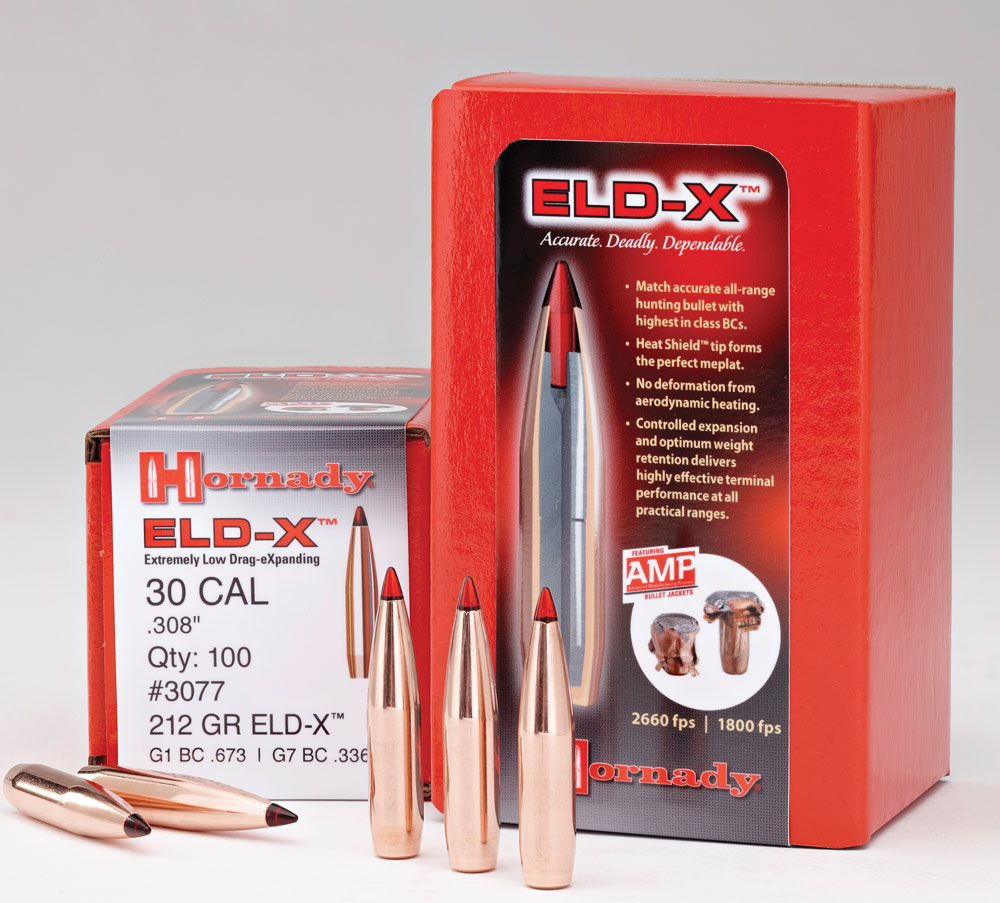
The result of extensive testing with ultra-modern Doppler radar, the new Hornady ELD-X bullet takes long-range shooting to the next level.
The new ELD-X bullets will be available in some of the standard longer range cartridge options at first, with more becoming available over time.
It was mid-winter 2014 as I steadied my CZ American custom .300 Win. Mag. across the end gate of the pickup truck while my mind raced for the exact range, level of movement forward and downhill angle required to make a shot on a nice mule deer buck at just over 325 yards. In my rifle was a new cartridge featuring a prototype bullet Hornady Ammunition had been working on for several years.
Hornady had sent out teams of hunters across the country, even as far as Africa, to gain real-time information on just how effective this new 200-grain big-game bullet was downrange, and I was one of these testers. The new bullet had no name at the time save for the term “experimental,” and my job was to shoot a deer with it and to photograph and make notes of what the bullet did at the exact range it met meat and bone.
With a muzzle velocity of 2,800 feet per second (fps) and carrying a ballistic coefficient (BC) of .598, this heavy game cartridge retained plenty of velocity and energy, and as my rifle turned loose that big, heavyweight bullet, the mule deer lurched forward, covered about 5 yards in the knee deep snow, then dropped stone dead.
This had been the beginning of a major sojourn into the world of industry-directed long-range rifle ballistics. I had spent exactly two rounds of the research ammo, with one round put on my 200-yard zero prior to hunting and the second into that mule deer buck.
The following spring, I tested some of the new prototype ammunition on 1,000-yard steel with my Armalite M-30 A-1 and Savage 110 BA rifles. These long-range rifles sported Steiner military MILRAD optics and Weaver’s new military-grade sniper optic system. The ammo performed very well to say the least, and after several weeks of shooting at our club’s 1,000- to 1,500-yard steel plate range, I knew that Hornady was onto something big.
Sometime later, Hornady’s project came together in Grand Island, Nebraska, with a dozen writers and ballistics engineers getting together on a 1,500-yard range near the Hornady ammunition plant. The task was to take part in educational theory regarding Hornady’s newly named ELD-X bullets.
What made these pills so special in relation to previous projectiles, you ask? Well, hang on because the answer to that question gets a bit involved.
The first thing to note regarding these new bullets is that development stops at or about 6.5mm.
That’s because the 6.5 Creedmoor is the development baby of Dave Emery, Hornady’s top ballistics engineer. In effect, the 6.5mm is at about the bottom of lightweights in ELD-X design because the jacket design requires a bullet of enough material substance so as to allow the jacket to be formed and function correctly. This bullet retains a consistent mushrooming system that works at 100 yards but also expands under control at 800 yards.
In the past, we have seen bullets that are great at 200 or 300 yards but fail at 500 yards when designs don’t allow the jacket and core material to flow back and drive killing kinetic energy in mass. In other cases, some bullet designs are great against steel or paper targets, but lack expansion capabilities when warm target tissue is involved at any range.
Doppler Radar
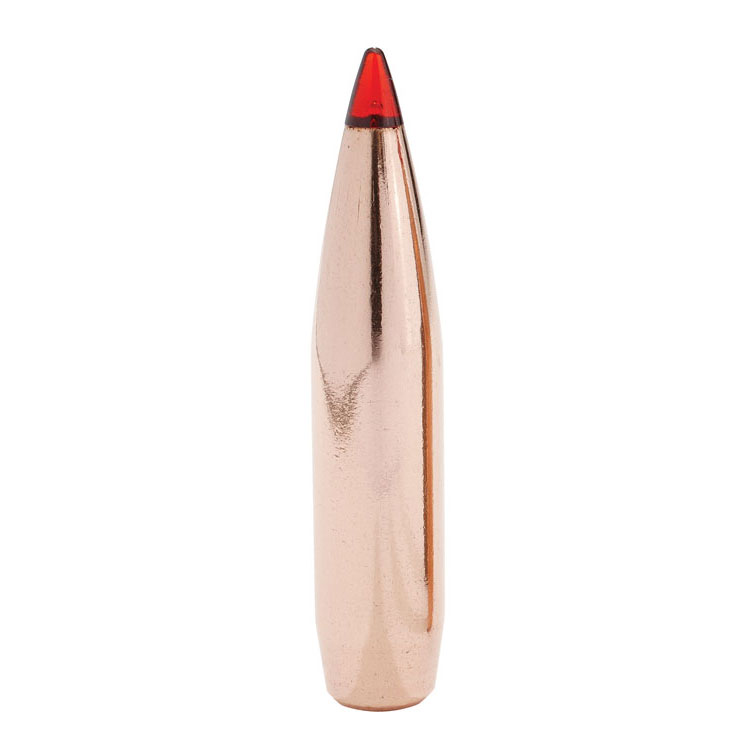
The new Hornady ELD-X long range bullets feature a redesigned poly-blended cone tip that will not burn away at sustained high temperatures.
The second element of note came to Hornady engineers largely through the use of Doppler radar. I was introduced to Doppler about nine years ago during the research and development of some new shotshell designs.
At that time we tracked payloads of shot about 200 yards downrange and, in the process, learned a lot about what pellets were doing as shot strings fell apart. Whereas a pattern board and chronograph gave a few measures of performance, the Doppler system fed back hundreds.
Now I was back using Doppler, but this time observing the performance of a rifle bullet over a couple of miles, with thousands of data entries flowing into the system for future bullet design and development review.
What we could see by actual, hands-on, real-time Doppler test firing with a rifle in .300 Win. Mag. and the ELD-X bullets was that well downrange, as the bullet started to run out of velocity, the actual path of the projectile started to wobble and both rise and fall along the Doppler’s projected ballistic curve. In other words, it was becoming less accurate, and some major energy decay became evident.
While this is expected with the radar tracing (painting) the bullet up to 2 miles downrange, what was a real eye-opener for Hornady engineers was that, when standard hollow point, and even V-Max type bullets were fired, some very different prints were coming back to the radar operator.
Now, small jumps and flight changes were common at what is considered working ranges for the .300 Win. Mag. at 300-plus yards and more. However, when searching for the exact causes for this projectile behavior, Hornady assessed that, as the bullet in a V-Max or any brand of plastic tip pill develops a heat range up to 1,000 degrees F for enough time, the plastic tip actually deforms or melts away in part. Solid jacket bullets with even a slight blemish will also display a similar reaction.
Therefore, the bullet tip and overall projectile condition needed to be further considered in the design of a more accurate and energy saving projectile. This doesn’t mean you’re now required to stop using V-Max, A-Max and related cartridges and bullets. The fast, lightweight varmint bullets are not affected to such an extent because they don’t hang in the necessary heat range very long as they dump velocity and energy very quickly.
During hands-on testing of Hornady’s prototype bullet, I had always thought that everything was being directed toward the actual physical bullet body design, I had never figured the plastic or poly tip needed some major attention as well. The new ELD-X carries a very special poly-blended cone tip that will not burn away, become soft and bend, thus, preventing a deviation in bullet trajectory.
Downrange Performance
While I can give you 5,000 words of theory here, the real world comes together when bullets meet steel or paper downrange. When we tested the new ELD-X bullets on the rifle range near Grand Island, there was a damp, heavy fog, and the wind had started generating a 100-percent crossing left to right value. Luckily, the engineers were first up on the firing line.
The Doppler-based research that went into the ELD-X’s design is set to change the way manufacturers develop bullets. The ELD-X will be a great option for anyone shooting or hunting at long ranges.
Two cartridges had been loaded with the new bullets. First was the 7mm Ultra Mag., and second was my go-to cartridge, the .300 Win. Mag. Both were great long-range cartridges and had proven themselves in previous testing with the prototype bullet.
Doppler produces a trace line indicating exactly what the bullet is doing over its total fight time. Shooting V-Max, A-Max and competitive brands downrange, we observed each wobble and variation in the trajectory line to line, with results saved in the mother computer system built into the Doppler unit.
With these 3,000 or so performance points measured over a mile downrange, it was obvious the study of bullet performance has come a long way over the years.
When it was the writers’ time to get on the rifles, I selected a very nicely built Surgeon action .300 Win. Mag. The rifle featured a NightForce optic with MOA settings and a long-range, oversized turret with MOA adjustments to 1,000 without rolling past the first zero.
My spotter was Dave Emery, and with the ranged targets previously doped for the new cartridge/bullet, we dialed for a 500-yard steel plate as Dave called wind corrections. I hit steel plates at 500 and 600 yards a few times to get a feel for the rifle’s trigger before moving on to the 800-yard targets.
At 800 yards, headshots were the norm with the Surgeon rifle and high-grade optics. I was able to hit a large steel gong at 1,000 yards with ease; a cluster of bullets started forming a group of sorts. The accuracy of the new bullet was obvious as I shot 8-inch steel plates at 1,000 yards, and it continued to impress when I pushed the bullet to 1,200 yards against yet another steel target. While I didn’t head-shoot my iron enemy, I did center mass him consistently.
Dave Emery indicated that this ELD-X bullet paired with a quality rifle will group within ¾ MOA at 1,000 all day long. That is elk, deer and coyote accuracy in spades my friends.
Cartridges for the new bullet will be offered in current standard options at first and move into some of the exotics a bit later. Without question the new 6.5 Creedmoor is high on the manufacturing list, as is the .300 Win. Mag. and heavy 7mm cartridges.
There is little doubt that the advanced development design of the ELD-X is going to be a game changer, and this change in the bullet-manufacturing segment is already taking shape.
This article appeared in the January 2016 issue of Gun Digest the Magazine.
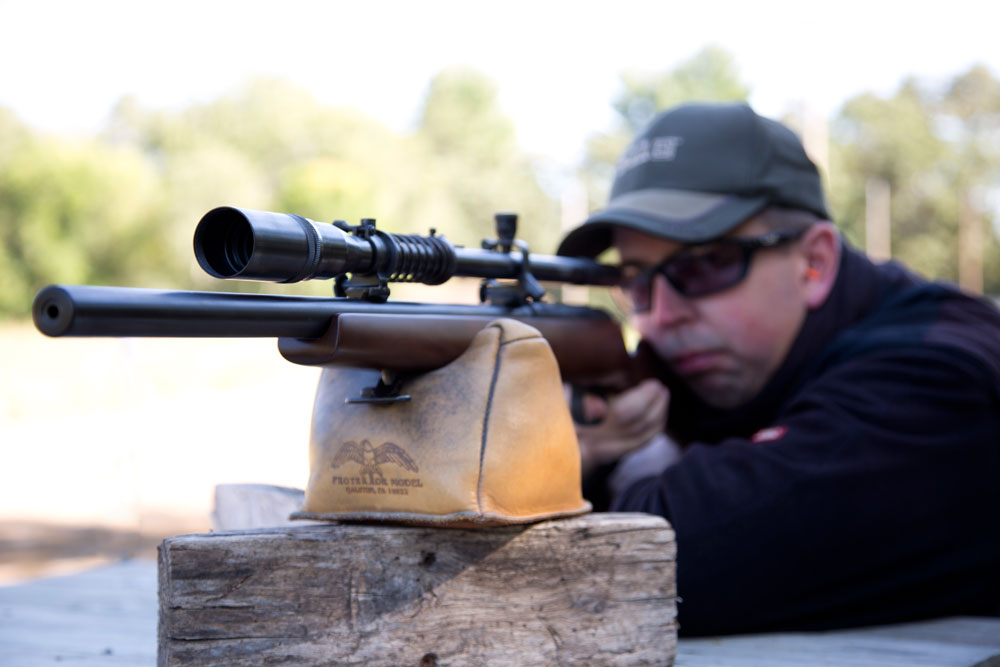
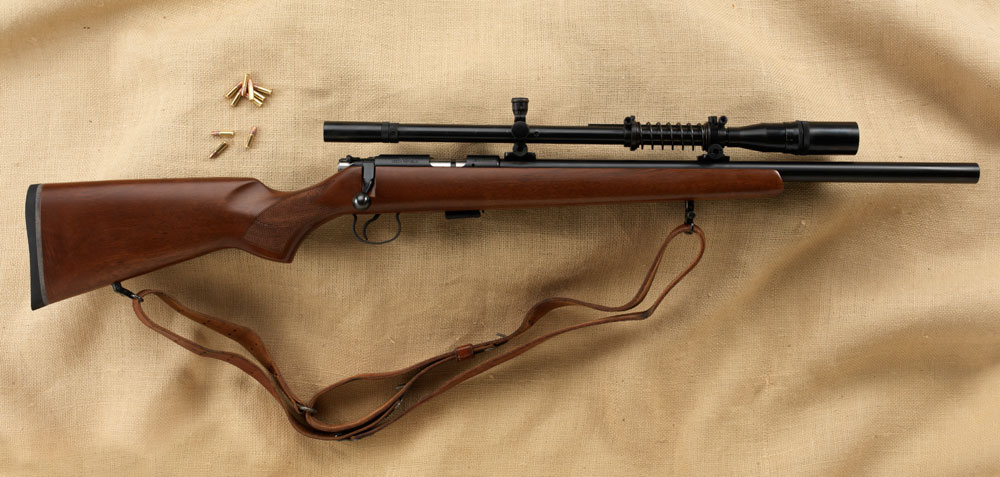
The CZ455 .22LR is a tack driver right out of the box. With the addition of the Leatherwood USMC 8x Sniper Scope, it becomes a real beauty that’s reminiscent of the target rifles of the 1950s and ‘60s. Photos by Kris Kandler.
A modestly priced .22 with exceptional out-of-the-box accuracy is topped with the Leatherwood USMC 8x Sniper scope, making for one classy rimfire.
The flat, wide base of the CZ 455 Varmint’s stock is well-proportioned to its heavy bull barrel, and it is handy for benchrest-style shooting.
It was one of those mornings. The sun was beaming through a canopy of yellow, orange and red leaves, October colors peaking, air hanging motionless, the last warm day. Not a creature was stirring, not even a squirrel.
But there was one defiant tree, left alone in the chainsaw desert. It was Fortress Squirrel—a knotty old Oak with ingress and egress escape hatches, and all sorts of gnarly twists and turns—the compound, the last brave holdout.
We stopped our stalk. Without warning, agitated by crunching leaves underfoot falling silent, the little barker made a break for it. With bushy tail fluttering mid-air like a plane’s rudder, Head Honcho Squirrel bounded with superhero strength onto a branch. He was eye level some 50 yards out and none too happy.
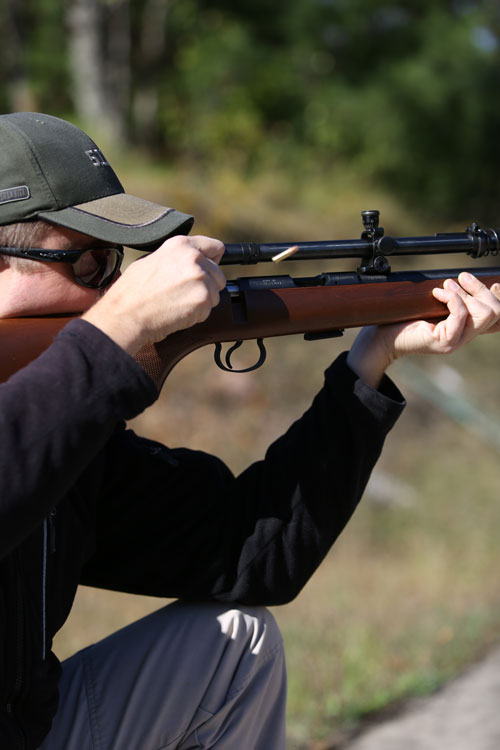
Wood obscured his location somewhat, but the 8x magnification cleared the way as the fine crosshairs of the Leatherwood Sniper Scope locked on—it was a chip shot. The 40-grain Remington ELEY match bullet drilled the gray squirrel mid-ship and launched him like a fur cannonball to the leaf-covered ground below. We carved the first notch in the walnut stock of the CZ 455 Varmint and fired up the rotisserie.
A 1903 style military leather sling was added to practice field sling shooting positions.
CZ 455 Varmint Review
The CZ455’s bolt was a little tight out of the box for rapid shots, but then again, most new stock guns are. There were no feeding issues from the rifle’s five-shot mag.
Among .22LR rimfires, few have as good a reputation as the CZ Model 455, which is the latest incarnation of what used to be CZ’s 452 line. The model’s pedigree is one of modularity, above par craftsmanship and good value.
For those so inclined, the CZ 455’s interchangeable barrel system makes it easy as pie to swap tubes from lightweight and medium to the model I tested, the heavy varmint. Since my only intention was to test the Varmint version, I didn’t take advantage of the modularity, but it is nice to know the option is there.
What you do notice straight away is that this is a stout, well-built little bolt gun. It has a surprising price tag of only $469 MSRP (street price is around $380-$400). The heavy, non-tapering barrel is cold hammer-forged, mics at .863 and is 20.5 inches in length. The 1:16 inch twist rate is friendly with 40-grain match bullets, sending them along with accuracy like a surgeon’s laser.
The rifle’s Turkish walnut stock is good looking, too, and gives the rimfire a classy, vintage feel. The stock’s fore-end is wide and flat, measuring 1.70 inches—making it ideal for benchrest-style shooting off of sandbags and field shooting positions resting on the hand. The weight of the gun naked is about 7 pounds, and it makes one hell of a fine training rifle, particularly now that .22 ammo has been released from secret underground vaults (or wherever they were keeping the stuff).
The only complaint I’ve heard about the gun is its trigger, which some say is a little heavy and a tad rough. However, that wasn’t my experience. Out of the box the test rifle’s trigger measured 2 pounds 8 ounces on the RCBS trigger gauge, and I had no trouble shooting little ragged holes at 50 yards.
Could it use a little smoothing out? Sure, but while I believe a great trigger will help a good rifleman, it won’t overcome a lousy one. That said, the CZ 455 trigger is adjustable even though I couldn’t see any compelling need to tinker with it.
The receiver is milled for CZ’s 11mm dovetail scope mounts built in—so you’ll need CZ scope rings—but I opted to make things interesting by installing a long-tube reproduction scope from Leatherwood Hi-Lux.
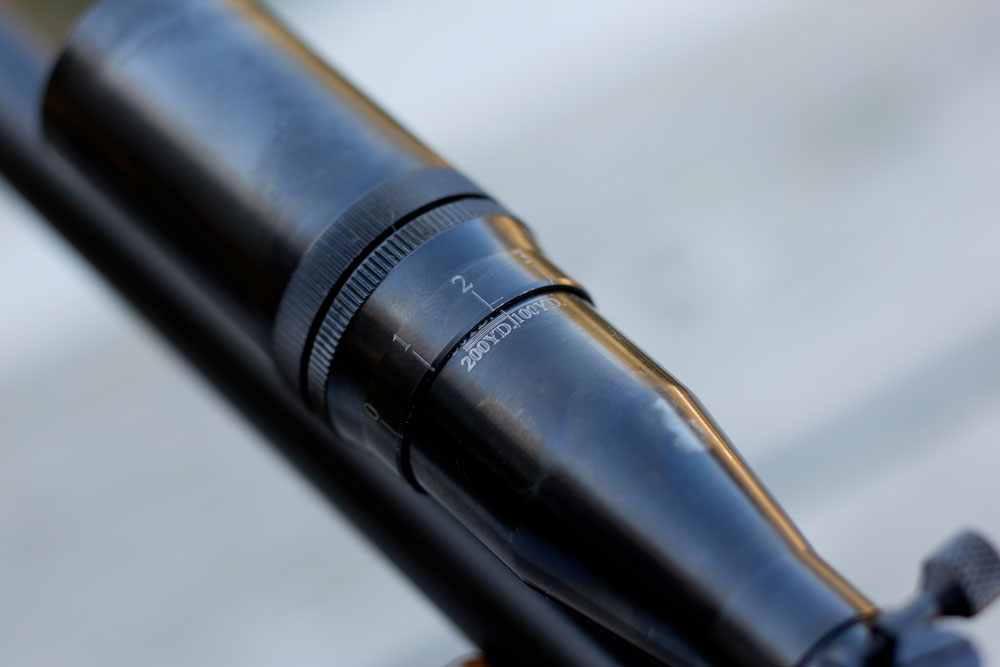
Parallax is adjusted via the Leatherwood’s objective lens. Simply loosen the locking ring and turn the sunshade while checking for parallax.
Leatherwood USMC 8x Sniper Scope
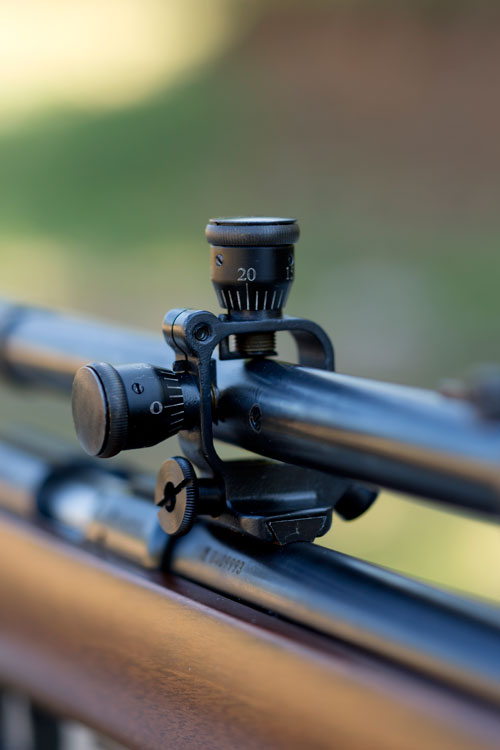
1903-style spring-loaded turrets are included with the Leatherwood USMC, and need to be installed by a gunsmith. Adjustment is ¼ MOA elevation and windage.
Patterned after the early Unertl Target Competition long tube scopes of the 1940s, which were employed by the Marines from WWII through Korea and Vietnam, the Leatherwood Wm. Malcolm USMC 8x Sniper Scope reproduction is every bit as stunning and useful as the old Unertls, only it is built with modern tolerances, really good glass and is something a person can afford, with an MSRP of $549. By comparison, a genuine Unertl—if you can find one—will set you back a grand or more. And most originals are in tough shape.
The optic needs to be installed by a gunsmith, as it requires the barrel to be drilled and tapped. Unertl-style mounts, included, are specified at 7.20 inches center to center. My gunsmith placed the rear one just forward of the receiver on the barrel. It turned out wonderful and garnered many nice words from everyone who saw and handled it.
As an aside, this “old-fashioned telescope” happens to be very popular these days in the Civilian Marksmanship Program (CMP) Vintage Sniper Competition (mounted primarily on 1903 Springfields).
The scope’s .750-inch tube slides in the mount upon recoil—the idea back in the day was to keep the scope away from the shooter’s eye and to buffer its delicate internals during recoil—and Leatherwood provides a spring to return the scope to battery.
Since recoil isn’t much of an issue on a heavy-barreled .22LR, I opted to keep the return spring in place (in the CMP Vintage Sniper match, that spring is disallowed in keeping with the historical accuracy). Shot to shot, the scope kept its zero.
The reticle is a simple fine crosshair. Turret adjustments come out to be about ¼ minute of angle (MOA) per click, and there is a setscrew on the rear mount to lock the turrets into place once sighted in. One full turn of the elevation micrometer turret equals 50 clicks or 12.5 MOA. Note that on this style of optic, the reticle inside the tube is stationary; the tube itself, centered in the three spring-loaded prongs, does the moving.
I found the glass, fully multi-coated lenses to be excellent; there was no discernible aberration out to the edges; its gas-filled tube keeps things clear of fog and condensation in all nasty conditions. Parallax adjustment is via the 31mm objective lens, which is marked with distant gradients you can use as a starting point. I found them to be very close.
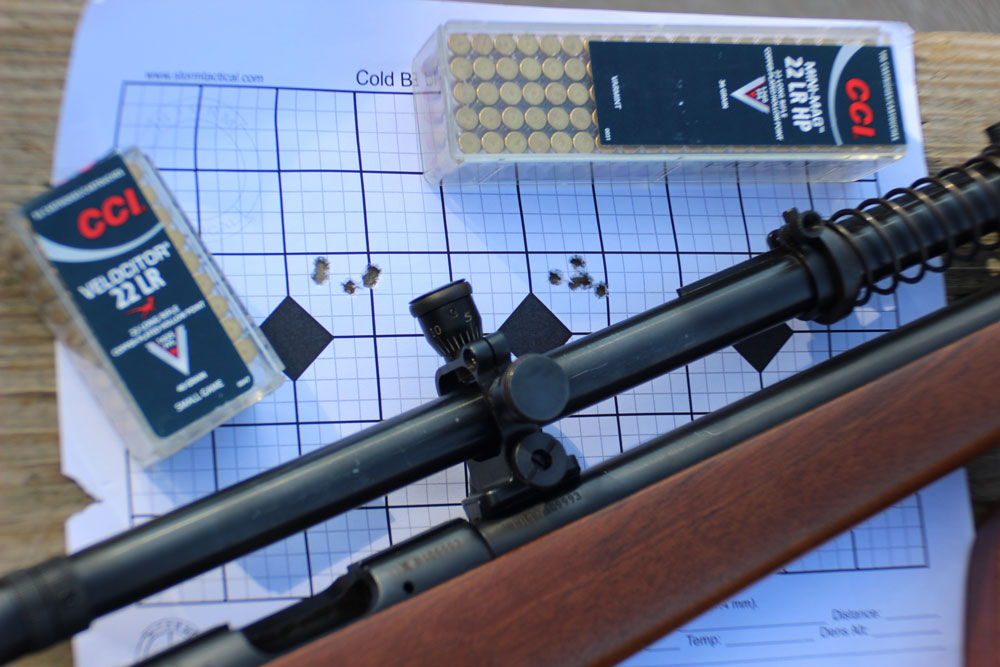
Accuracy with CCI’s 22 LR HP 40-grain Varmint and Velocitor Small Game were very good for 50-yard plus distance shooting.
Shooting the CZ 455 Varmint
Remington Club Xtra and ELEY Match 40-grain ammo provided the tightest groups, precision that truly lives up to the bolt gun’s claim as a “varmint” rifle.
Best 50-yard groups were attained with Remington’s ELEY and CLUB Xtra Match ammo—no surprise there. The ELEY gave a best 5-shot grouping of .465 and averaged .527.
I also shot CCI’s Velocitor copper-plated 40-grain hollow points that truck along at 1,435 fps; Segmented HP 32-grain at 1,640 fps and the company’s new Quiet-22 Segmented HP, the slowest of the bunch at 710 fps. All of the CCI stuff landed in around .750-1.000 inch groups, very good accuracy for plinking and field shooting work. Winchester’s Wildcat 22—a lead round nose 40-grainer going 1,255 fps—yielded about the same accuracy as the CCI, also very good. The bottom line is that the CZ 455 is an out-of-the-box accurate rifle.
Conclusion
If you’re looking for a dead nuts squirrel gun, or one for field shooting practice, you can’t go wrong with the CZ 455. Do one better by topping it off with a Leatherwood USMC 8x Sniper Scope. You’ll get a real head-turner—one that shoots as good as it looks.
CZ 455 Product Name: CZ 455 Varmint, .22 LR SKU: 02140 Firearm Type: Rifle Purpose: Hunting MSRP: $469.00 Chambering: .22 LR Rate Of Twist: 1:16 in Magazine Capacity: 5 Magazine Type: Detachable Stock: Turkish Walnut, Varmint-Style Length Of Pull: 13.75 in Sights: No Sights, Integrated 11mm Dovetail Barrel: Cold Hammer-Forged Barrel Length: 20.5 in Overall Length: 38.75 in Weight: 7.1 lbs Trigger: Mech Adjustable Safety: Two-Position https://cz-usa.com/
This is what it’s all about—a rimfire rifle and telescope combination capable of drilling long-distance shots on small game using real-world field shooting positions.
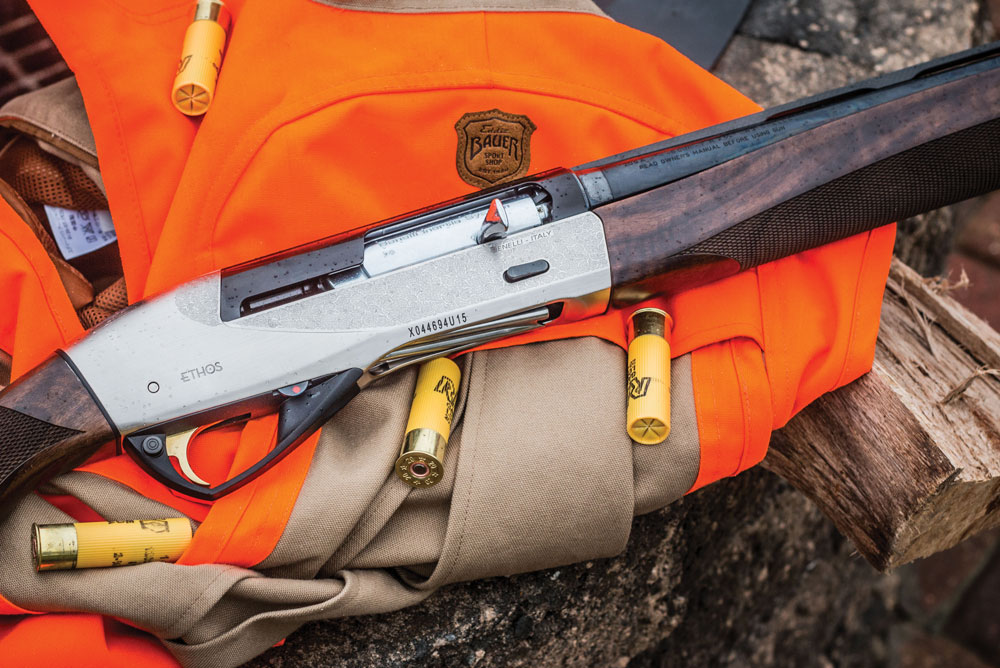
Paired with Eddie Bauer’s amazingly well made Mabton Flats vest ($199), the Benelli Ethos is artwork afield.
Benelli’s new 20-gauge Ethos proves it’s got the moxie for one of the South’s greatest game birds.
“Easy Gal! Whoa! Gal! Easy Gal!”
With Gal, the frenetically paced and bird savvy English pointer, locked on a covey of quail and creeping closer, our guide, Cody, kept her at bay with a few gentle voice commands. One other hunter and I crept up a few yards on either side of the guide but behind Gal and another pointer, and Cody gave the green light to Deke, a Boykin spaniel whose sole job it was to jump the already located birds: “Get ‘em up Deke!”
Half the excitement with quail hunting like this is that you never know how many birds are going to flush out of that point or where they’ll go. Sometimes it’s three; sometimes it’s 10 or 12. Not only is the number unknown, their trajectory is completely unpredictable and can change multiple times in flight. There’s that split second when the covey rises and the birds seem almost frozen in time, only to dart off at breakneck speed and leave you feeling like an uncoordinated buffoon.
This time five birds got up, three to the left and two straight ahead and slightly to the right of us. George, a product manager at Benelli, killed three birds with ease on the left side, while I managed to knock down one bird with two shots. Once those birds get up it’s all about pure reaction; thinking and aiming only slows you down and cripples your shooting.
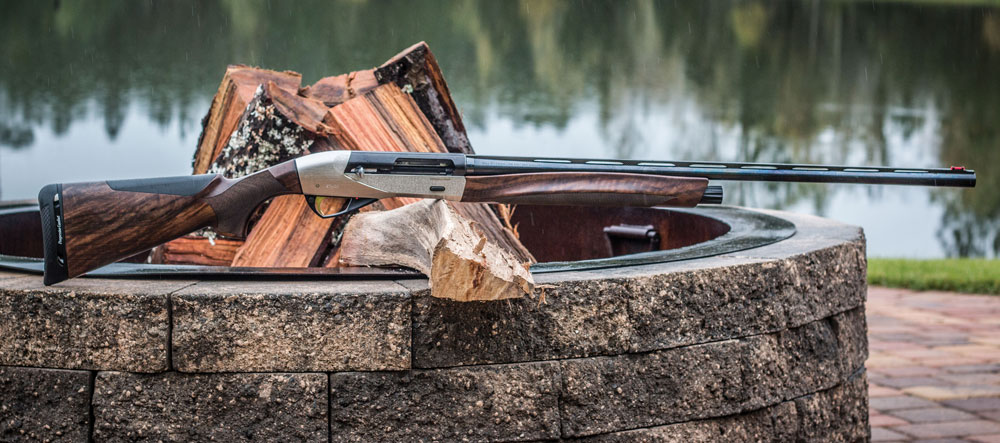
What didn’t slow us down was the Benelli Ethos 20 gauge, a new introduction in 2015 and an addition to the original Ethos 12-gauge lineup. More than that, the Ethos is a sweet-swinging beauty, as graceful in motion as it is to look at. From the first time you throw it to your shoulder it’s got a natural, graceful feel. The AA-grade satin walnut stock is nimble and lightweight, perfect for a full day afield and perfect for fast moving birds and quail-appropriate loads. With a nickel plated and engraved receiver, the Ethos 20 gauge was an ideal complement to an old-world-style hunting experience at SouthWind Plantation near Attapulgus, Georgia.
Benelli’s Ethos 20 gauge, at home on a rainy day in Georgia at SoutWind Plantation.
An Old World Hunt
If you’ve ever hunted Europe, you’d get a good feel for the type of experience created at SouthWind Plantation. The property is located on 3,000 acres of picturesque Georgia pine country, with rolling hills, lakes and tall grasses that provide ideal cover for quail. The plantation also teems with duck, geese, turkey and deer, and the main lodge sits on a massive lake that’s stocked with 10-pound and greater largemouth bass.
There are several smaller lodges around the backside of the lake and a trap and skeet tower in one corner. When you get back to the lodge at night, you’ll eat and drink like a king: prime rib, fried gator tail and bacon-wrapped quail legs with a glass of The Macallan 12, a high-end single malt scotch whiskey, or an ice cold Yuengling from America’s oldest brewery.
SouthWind does offer hunting from Jeeps, but there’s also the opportunity to hunt from horseback while a team of guides pulls the dogs, ammo and water along in a mule-drawn wagon. It’s a slower paced hunt but allows you to take in the scenery at the rhythm of a horse’s trot. When the dogs get on a covey, a quick dismount and a short walk is all that separates you from the birds.
Benelli Ethos 20 Gauge Review
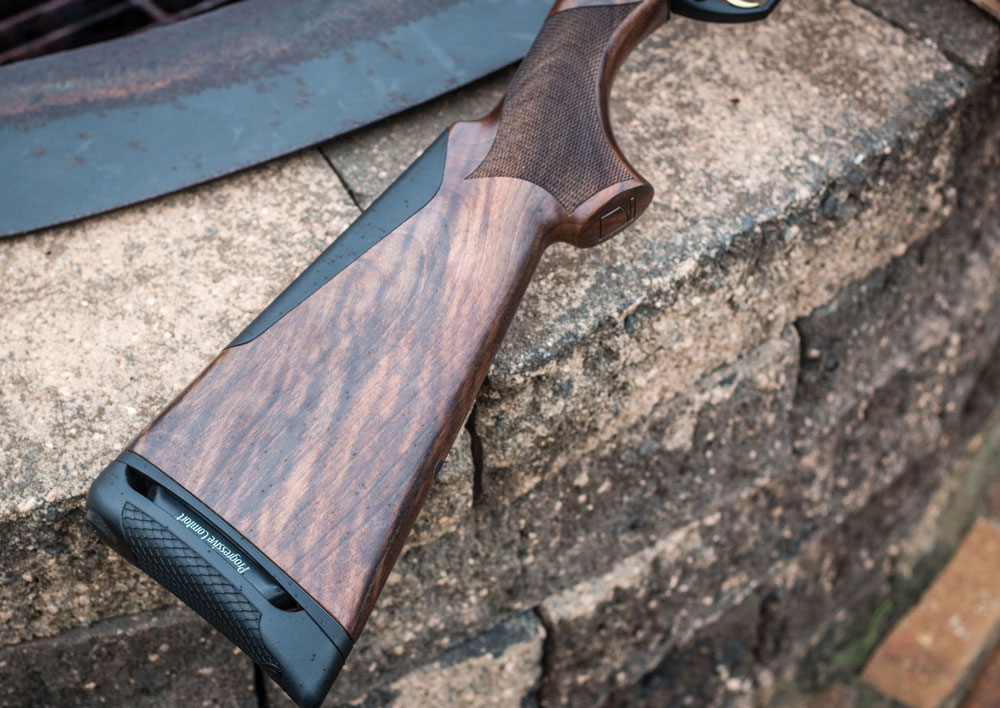
Benelli’s Progressive Comfort Recoil System makes a full day of shooting a breeze.
Except for size and weight, Benelli’s 20-gauge Ethos looks identical to its older 12-gauge brother and is built on the same tried and proven Inertia Driven System. The guns functioned flawlessly all week for us, including quite a bit of time blasting clay pigeons over the lake. The Progressive Comfort Recoil System, which incorporates three sets of interlocking buffers at the rear of the gun, makes a full day of shooting—especially with the 20-gauge—as painless as can be.
A pair of us would typically kill 40-50 quail in the morning and about the same in the evening, so there was plenty of shooting going on. I’d like to say it was a one shot, one bird kind of experience, but quail are a hard target, after all, and we couldn’t keep the ratio even. We didn’t run out of ammo, but we eventually ran out of excuses.
One of the standout features on the Ethos is the ergonomically designed trigger guard, which carries aesthetic appeal and also makes operation with gloved hands a bit easier. The safety is easy to activate with gloves as well. The optic system comes with three interchangeable colors (red, green, yellow) that can be swapped out without a tool and are efficient in all light conditions.
One of the challenges of the 20-gauge platform is making a softer-recoiling gun work efficiently with the Inertia Driven System. Benelli really put in the research and development time with this one, however, which means the gun will function flawlessly with 7/8-ounce to 3-inch loads.
Parting Shots
Just like the original 12-gauge Ethos, the new 20-gauge is a winner. In a world of bargain basement guns that come with no frills, it’s nice to see there’s a company still dedicated to the highest standards of quality, even if that means you pay a little more at the counter.
At $2,199 the Ethos 20-gauge isn’t cheap, but it’s certainly worth the price. It used to amaze me when I’d travel across the country, either for duck or other game birds, and see so many Benellis in the hands of poor college students and working class folks. Here’s the reality, though: When you’re as passionate as many of us are about game birds, a Benelli is an investment worth making.
BENELLI ETHOS 20 GAUGE Type: Semi-automatic, Inertia Driven Stock: AA-grade satin walnut Barrel: 26 or 28 in., Crio System treated Receiver: Nickel plated Weight: 5.6 pounds Overall length: 47.5 or 49.5 in. Buttstock: Progressive Comfort recoil reduction system Sights: Interchangeable, fiber optic (red, green, yellow) MSRP: $2,199 BenelliUSA.com; 301-283-6981
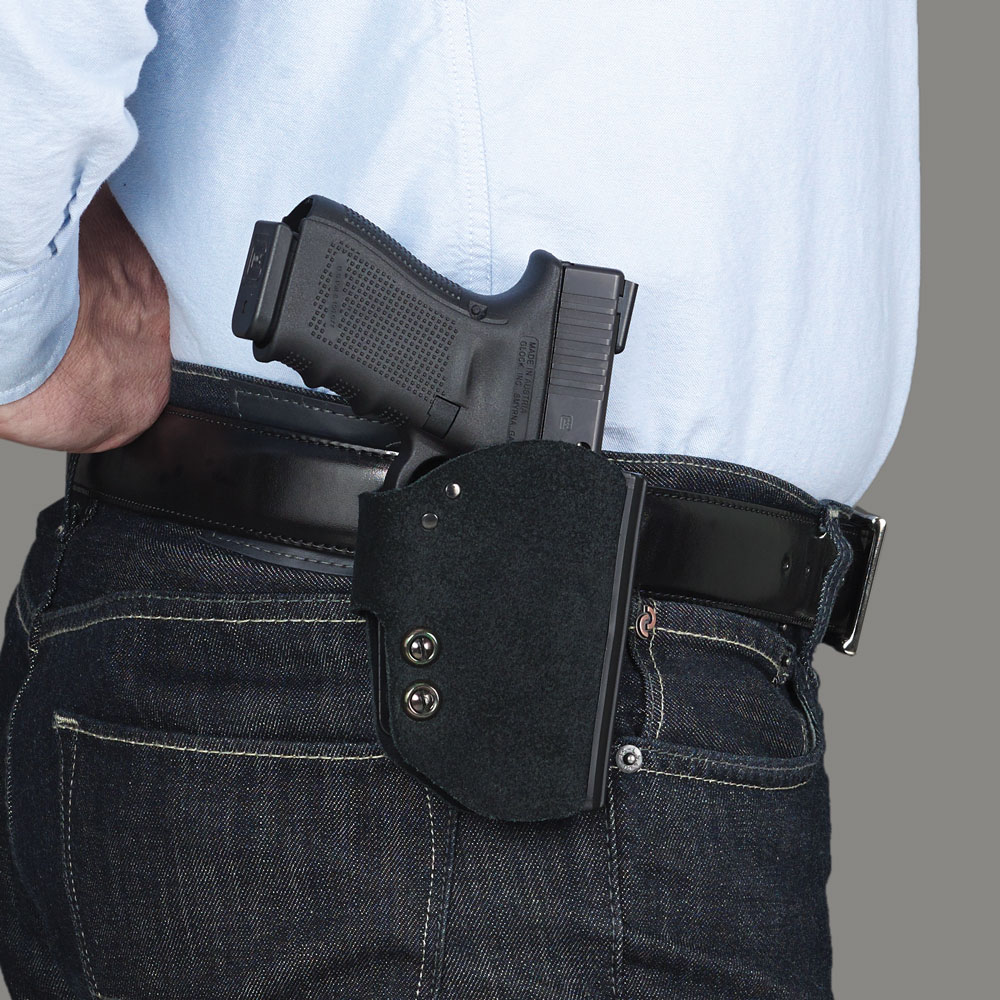
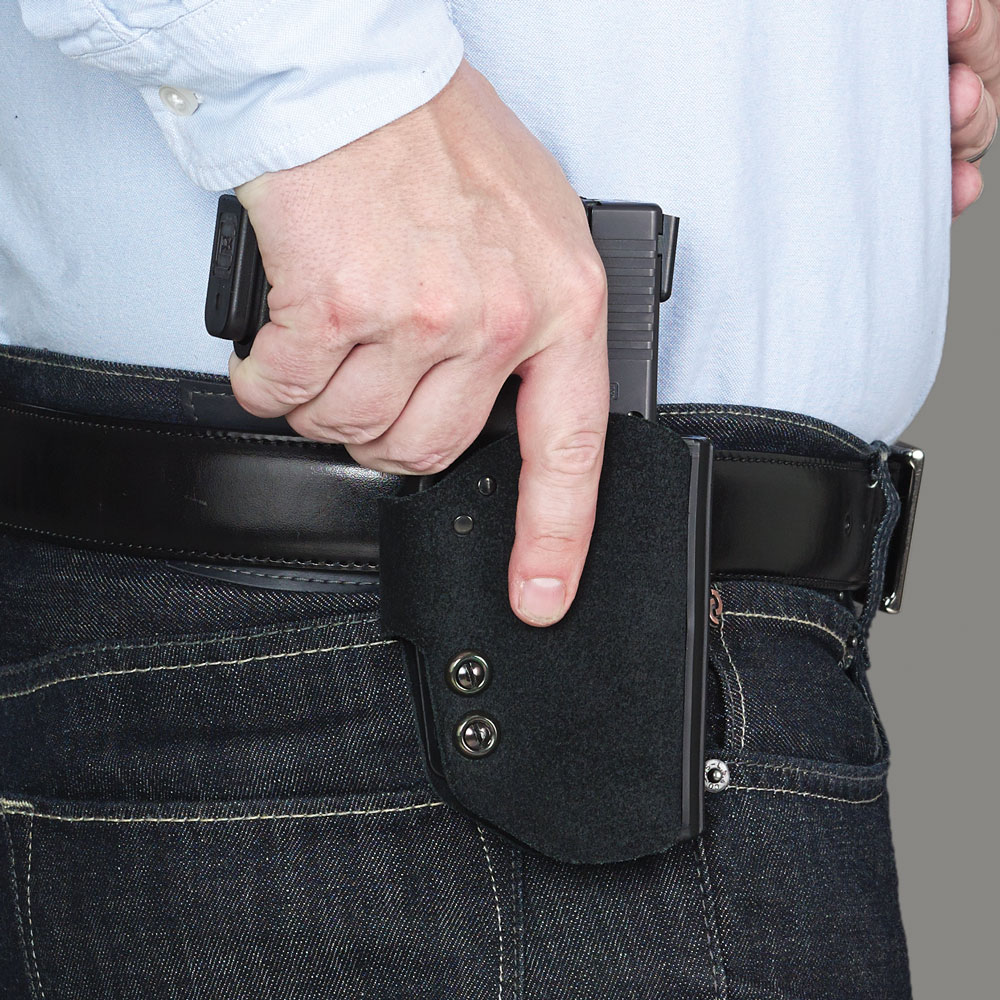
Combining steerhide and polymer, and the ability to hold red dot equipped handguns, the Galco Blakguard Holster is ready for today’s carry guns.
Introduced at SHOT Show 2016, the new Galco Blakguard holster combines what the company calls “premium center cut steerhide” with injection-molded plastic. Quick adjustment is via twin tension units to get the perfect retention and draw. A tension locking unit secures your handgun at the trigger guard.
“The neutral, (vertical) orientation offers the most natural, wrist-locked draw stroke,” Galco says.
The Blakguard’s trench-style sight rail accommodates most suppressor sights and allows a smooth and easy return to holster. The front of the holster is cut low to allow use of many popular reflex-style red dot sights.
A tunnel-style belt loop secures with velcro allowing you to take the rig on and off easily. It fits belts up to 1 3/4 inches wide and is available at this time in black. MSRP is $49.95.
When it comes to concealed carry, firearms training is a must. But just exactly what sort of training regime yields the best results?
There are two types of firearms training: episodic training and immersion training.
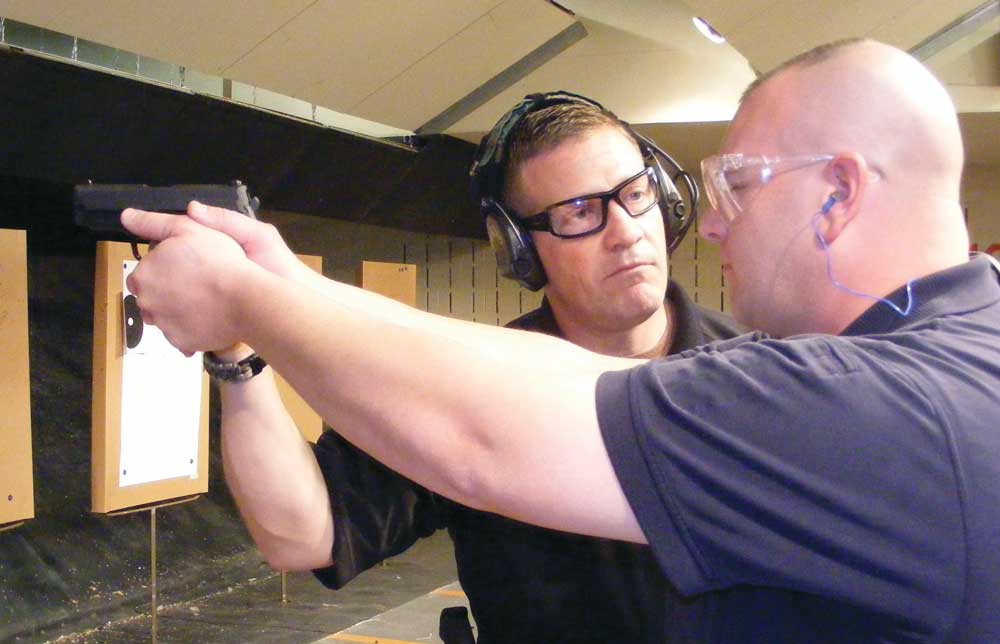
You can become a proficient shooter on your own with episodic training, but only if you learn to shoot properly in the first place. This can be done through videos and text, provided you have the ability to critically analyze your own performance. Many people simply don’t seem to have this ability and as a result, they aren’t able to recognize their shortcomings and plateau at a point well below their potential. A better method is to train with a capable instructor who can critique your problems and help you correct them. Practicing on your own will accelerate your progress, provided you don’t fall back on your shortcomings when you’re not under the watchful eye of a good instructor.
Immersion training involves extended training over a full day or several days. This method will yield faster results, but unless you completely grasp the fundamentals and muscle memory involved, you’ll likely regress later. The best way is to begin with a period of immersion training and follow up with regular practice sessions and occasional episodes of training. Remember that many aspects of learning to shoot don’t require live fire. Almost all national level shooting competitors dry fire and learn gear manipulation skills that don’t involve live rounds.
Concealed carry training should be done with the gun and holster or carry system you carry every day. It should be done wearing the same kind of clothing you wear and be practiced both with winter and summer clothes. While it’s reasonable to say you can develop a high level of marksmanship and gun handling skills on your own, I find this very rarely happens.
You’ll progress much faster by spending time with a reputable trainer who shares a similar philosophy. If you’re committed, after study and consideration to daily carry with a small revolver, you’ll likely be frustrated with trying to learn with an instructor who advocates a full-size, high capacity semi-auto and who considers anything less as lunacy. He may convince you to change, but you certainly won’t convince him your plan is solid.
While the average armed citizen is better equipped to survive a violent crime than an unarmed citizen, a properly trained armed citizen is much more likely to perform well. We can argue forever about what constitutes the best gun or caliber for concealed carry, but there is simply no argument about training: A trained concealed carry citizen is far better equipped to deal with an adversary than an untrained one.
Are you interested in carrying a handgun for self defense, but don’t know where to start? Perhaps you’re already an armed citizen and are looking for a new carry choice? Let the Gun Digest Guide to Concealed Carry Firearms be your complete guide to the fast-growing world of concealed carry handguns. Get Your Copy Now
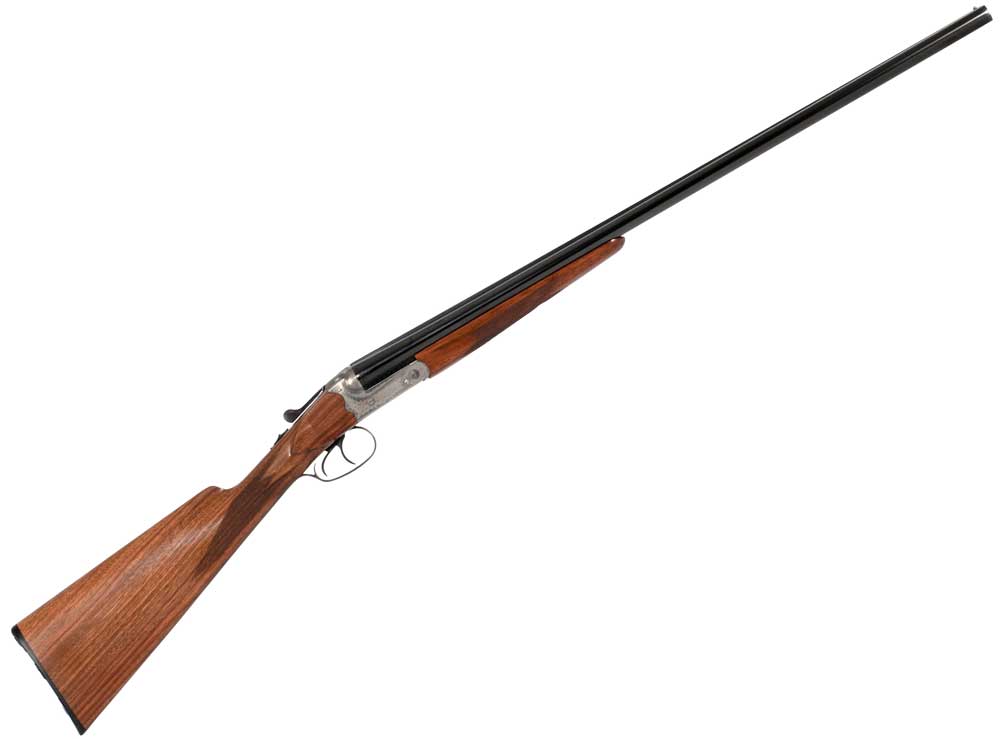
The Merkel 40E, the company’s first new shotgun in nearly a decade.
When it comes to fine double guns, the spotlight typically falls upon Britain. The country, after all, has a long history of producing some of the finest side-by-side shotguns and rifles around, but they are hardly the only nation to turn out impeccable doubles.
Germany has produced its fair share of elegant specimens of this style of gun, with Merkel being among one of the more renown manufacturers. And the gun maker recently gave shooters another choice in double guns with the introduction of a new side-by-side shotgun.
The Merkel 40E breaks a bit of a dry spell for the company, it being the first new shotgun the manufacturer has introduced in nearly a decade. And the smoothbore is also a bit of a departure, at least in the embellishments department, from the rest of the company’s offerings.
Essentially, the new shotgun is the Merkel 47E sans the hand engraving and rich finish. In the company’s words, it’s meant to be a “working man’s” option, but the 40E still boasts a hefty price tag. Some jaws will clench at the $4,595 MSRP, but relative to the rest of Merkel’s guns, which quickly go into five-figures, it is somewhat more accessible.
The gun maker, however, is giving shooters plenty with the 40E. Enough that those looking for a legacy double could find it a value, particularly since the smoothbore is offered with an array of options.
Shooters can choose trigger style (double or single-selective), stock style (English or pistol) and, of course, gauge (12 and 20). There is also a limited run of the 40E in 28-gauge, however it is only available with a single, non-selective trigger.
At the heart of the Merkel 40E is its Anson & Deeley boxlock action, the original hammerless shotgun action design, one continually heralded for its reliability. The action is further strengthened by a Greener cross-bolt locking mechanism and double under-lump locking lugs, creating multiple locking points and an overall solid platform.
The 40E tips the scales at a scant 6.2 pounds, which has the potential to make it a bit of a thumper recoil-wise. This could be particularly true if a shooter takes advantage of the 3-inch chamber of the 12- and 20-gauges.
The possibility of kick, however, should be offset another attribute of the gun’s weight — its manageability. It is light enough that it shouldn’t be a burden, even on the longest and hilliest grouse hunt.
The Merkel 40E features an eye-catching and rock-solid boxlock action.
The Merkel 40E is stocked with oil-finished Turkish walnut fitted to a steel receiver with a silver nitrate finish. And it has been equipped with 28-inch cold-forge-hammered barrels, cold blued and polished. The shotgun also features selective automatic ejectors and is available with choice of two integral choke options — improved cylinder and modified.
Merkel 40E Specs Gauges: 12, 20, 28 Action: Anson & Deeley boxlock (steel with silver nitrate finish) Barrel Length: 28 inches Sights: Front Bead Trigger: Double, single-selective (single non-selective on 28-gauges) Stock: Turkish Walnut (oil finish) Length of Pull: 14.375 inches Drop at Comb: 1.5 inches Drop at Heel: 2.56 inches Weight (empty): 6.2 pounds MSRP: $4,595
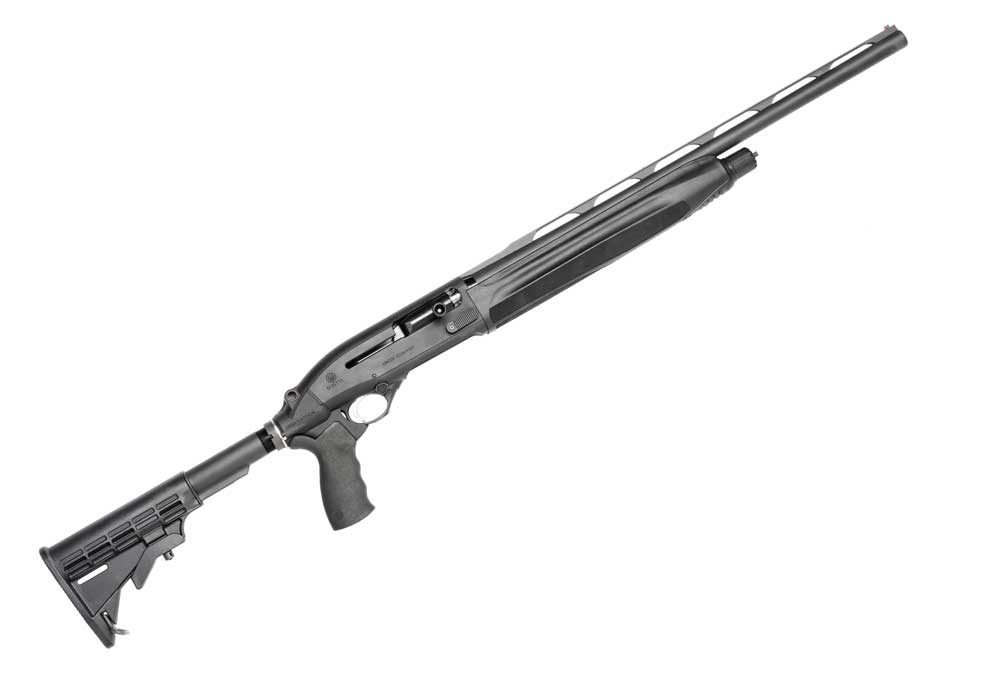
Mesa Tactical is shooting to make the Beretta more user-friendly with the release of its LEO Telescoping Stock system.
Mesa Tactical has released an adapter kit for the Beretta 1301 that allows the addition of a telescoping stock and pistol grip.
In the world of tactical shotguns, Beretta may have taken the cake with one of its newest smoothbores. The semi-automatic 1301 is lightning fast, accurate and long on capacity. Perhaps Robert Sadowski described it best in the pages of Gun Digest the Magazine, when he called it a “surgical brawler.”
With kudos such as that, it doesn’t sound like there’s much room to improve the 1301. But Mesa Tactical is giving it a crack.
The California manufacturer recently released its LEO Telescoping Stock system for the Beretta 1301. And with the ability to add a standard adjustable AR stock and grip, the upgrade has the potential to make the shotgun more user friendly.
At the heart of Mesa Tactical’s LEO Telescoping Stock system is its adapter, which makes any standard AR adjustable buttstock and grips compatible with the shotgun.
In particular, the system should make the scattergun more controllable and help to mitigate recoil by tailoring its dimensions to a shooter’s frame. This also has the potential of making the gun faster on the first shot, as the length of pull can be adjusted to make shouldering it more intuitive.
Mesa has launched the system with an upgrade that should get the recoil-sensitive cheering. The company is offering a kit with its Crosshair Hydraulic Recoil Buffer Tube, an option that the company said will dampen up to 70 percent of the 1301’s felt recoil.
Presently, Mesa is offering three different options for its LEO Telescoping Stock system. The LEO Stock Adapter can be purchased individually and has an MSRP of $80. The company is also offering complete stock kits (MSRP $190), which includes the adapter, a MilSpec receiver extension tube, Hogue AR pistol grip, M4 SOPMOD telescoping stock, AR stock wrench/bottle opener and push-button sling swivel. Mesa also offers another complete kit, identical to the previous, except instead of an extension tube, it comes with a Crosshair Hydraulic Recoil Buffer Tube. The MSRP on the latter kit is $315.
Modern Shooter TV has brought plenty of firepower into its second season on the Sportsman Channel. From exploring the growing segment of women shooters to inside looks at military and law enforcement training, the program continues to score a bull’s eye.
The forth episode of the show stays right on target, as it surveys what it takes to dominate the upper echelons of competitive shooting. And Modern Shooter has dug up a couple of competitive shooting’s brightest stars to show the ins and outs of the game — Maggie Reese and Mark Redl.
The highly accomplished shooters, who compete for Colt, have more than enough hardware to prove they both know how to win. But Modern Shooter challenges them to do more than just give pointers on developing a fast sight picture and correct grip.
The show has the top guns square off to strut their stuff in a little friendly one-on-one competition. To be sure, Reese and Redl keep it cordial in the elite faceoff, but definitely get their competitive juices flowing.
New episodes of Modern Shooter air at 8 p.m. ET Monday nights on Sportsman Channel, with an encore showing at 11 p.m. Replays can be viewed 12 p.m. on Thursday and 5 a.m. on Sunday. Clips of Modern Shooter are also available at Gun Digest’s YouTube channel.
Modern Shooter is produced for gun enthusiasts who look for the best in firearms programming and is sponsored by the top names in the firearms industry. Those sponsors include: Colt Manufacturing, FNH USA, Aguila Ammunition and H&H Precision Manufacturing.
About Gun Digest Gun Digest is the world’s foremost authority on guns in print and online. In addition to Gun Digest the Magazine, the brand’s portfolio includes the Gun Digest Books line, Standard Catalog of Firearms, the GunDigest.com online community, and ecommerce specialty store, www.gundigeststore.com. For more information, visit gundigest.com, the Gun Digest Facebook page or follow on Twitter @gundigest. Gun Digest is an imprint of Gun Digest Media.
Also Check Out:
Modern Shooter Winter 2016 Modern Shooter is your source for the modern firearms giving you the inside edge on tactics and accessories for the newest ARs, shotguns and handguns. In the Winter 2016 edition we focus on Colt! Instant download
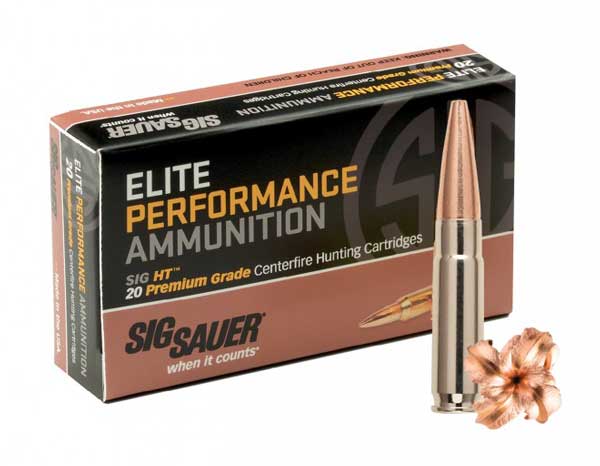
SIG Sauer’s SIG HT line opens the company’s ammo catalog to hunters. First up on the roster is a monometal .300 Blackout round.
In a short period of time SIG Sauer has kicked a fairly sure toehold into the ammunition industry. And the American-European manufacturer has continued to expand the scope of its Elite Performance Ammunition.
This year the company has focused on providing hunters with top-end cartridges, engineered to put meat on the table. Earlier this month, SIG unveiled two rounds destined for the chambers of the growing legion of handgun hunters. And it has now turned its eye to a cartridge growing in popularity with long-gun hunters who have a flare for the modern.
The SIG Sauer Elite Performance Ammunition line grew by a cartridge with the introduction of a monometal hunting option for the .300 Blackout. The 120-grain, solid copper SIG HT round is designed for deep penetration and controlled expansion on medium and smaller big game. In particular, it should prove to be dynamite on deer, pigs and predators of all stripes.
“Given the popularity of the 300BLK, we wanted to offer ammunition truly designed for hunting that expands upon impact,” said Dan Powers, president of the SIG Sauer Ammunition Division in a press release. “The 300BLK is our first offering in this new SIG HT hunting line of premium grade rifle ammunition. The SIG HT 300BLK supersonic hunting round is in addition to our Match Grade subsonic and supersonic 300BLK rounds. In the coming months, we will be introducing a 220gr subsonic 300BLK hunting round in addition to new rifle ammunition in a variety of other calibers.”
SIG HT is the hottest ammunition the company has developed for the 300BLK, outdoing even its Supersonic SIG Match round. From the manufacturer’s specs, the new cartridge has a muzzle velocity of 2,250 fps and generates 1,349 ft-lbs. at the muzzle when fired from a 16-inch barrel. SIG lists the projectile’s expansion at 1.8 times its original size.
SIG HT cartridges are made with newly designed premium nickel-plated 300BLK shell cases, not reworked 5.56 cases. SIG Sauer uses flash-reduced propellant to minimize visible signature while shooting in low-light situations. Premium quality primers are also used to minimize variations in velocity.
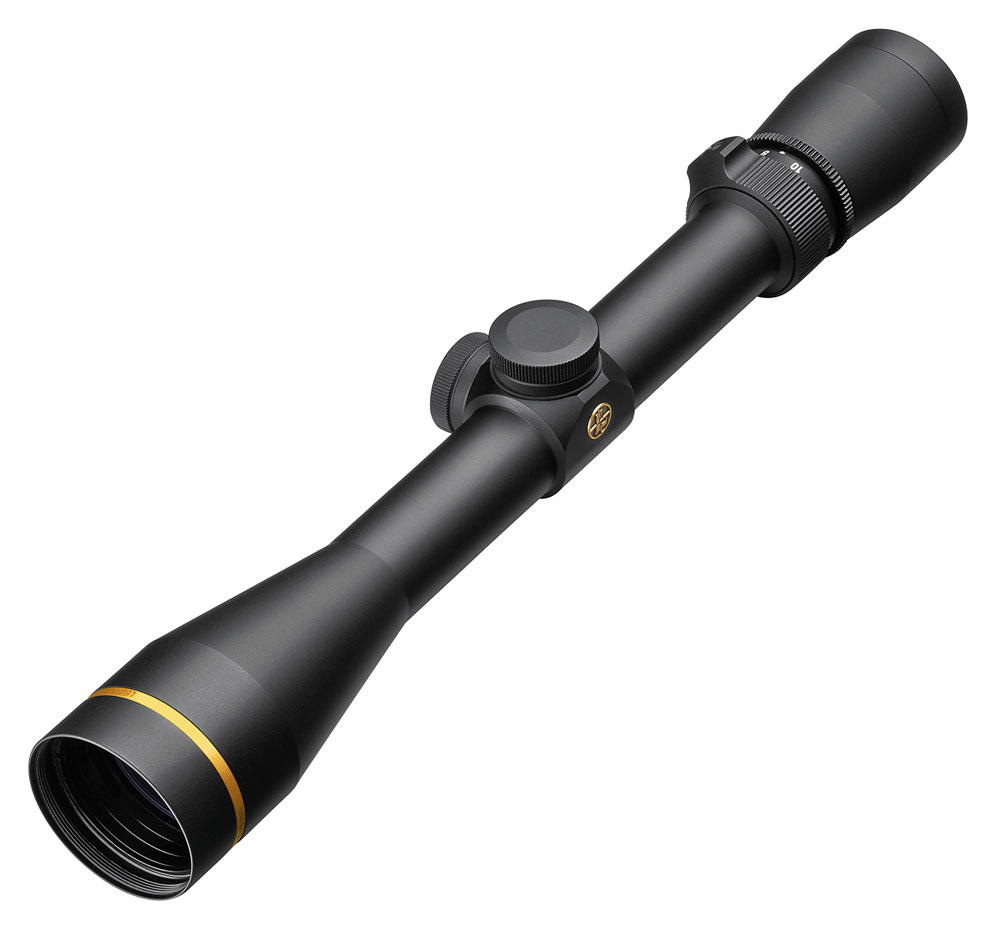
New Leupold Twilight Max technology in the VX-3i line of scopes enhances brightness and clarity in low-light conditions, making them ideal for hunters.
At SHOT Show 2016 there were plenty of new optics offerings for shooters to eyeball, but one refinement at Leupold may give the long-time optics leader an edge, particularly in the hunting scope market.
Leupold Twilight Max
Designed, machined and assembled in the United States, the new Leupold VX-3i is designed to enhance optical performance and keep hunters in the field longer. More than just light transmission, the new system balances light across the visible spectrum, leading to a brighter, crisper image. It also eliminates the washed-out image than can come from direct sunlight.
“Hunters know that those first and last few minutes of legal light are when the monster bucks are moving,” said Tim Lesser, vice president of product development for Leupold & Stevens, Inc. “The VX-3i makes sure hunters can make use of those last few minutes of legal light, which can be the difference between success and an unfilled tag.”
Related Video:
The innovation enhances brightness, color and clarity, especially in low-light conditions. The VX-3i allows for enhanced target acquisition, identification and shot placement in diminished light. From the end of the day, to heavy overcast to deep canyons, the Twilight Max light management system will let hunters see, identify and deliver a precise shot on game animals in low-light conditions.
“Light transmission is an important factor, but it’s not the only factor that matters in optics,” Lesser said. “The VX-3i has excellent light transmission, but we’ve looked at managing light for optimized performance. You can transmit 99.99 percent of available light, but if it’s not managed and properly balanced you won’t have the performance. In fact, the new VX-3i has the highest average light transmission across the visible spectrum, but its true performance lies in the management of that light.”
The VX-3i has other refinements. It features an easier-to-turn power selector, with a more aggressive knurl, making adjustments easy, especially when wearing heavy gloves. A more pronounced power indicator lets you know what magnification the VX-3i is set at, without having to raise your head.
A new dual spring precision adjustment system provides match-grade accuracy adjustments, while maintaining its in-the-field ruggedness and durability. Once hunters have the VX-3i zeroed, they can remain confident that it’s good to go.
As of press time it was not known if Leupold would expand the new lenses to its tactical line of scopes.
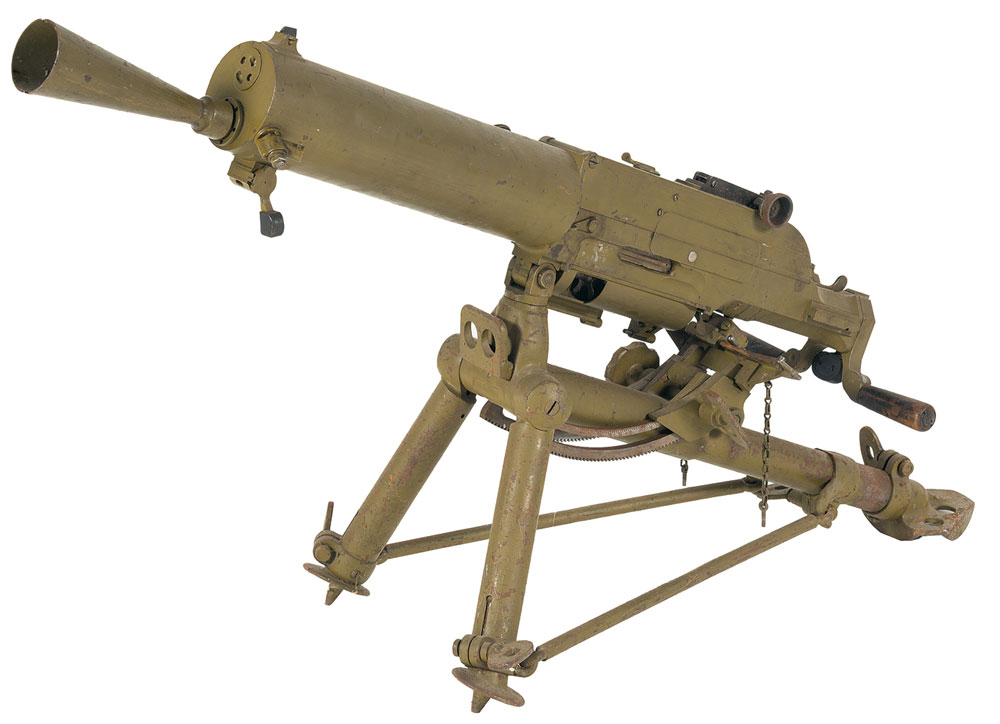
Gun auction: Steyr Schwartzlose Model 07/12 on tripod.
The 2016 February Regional Firearms gun auction promises to be the largest in Rock Island Auction Company history.
Rare German MP3008 “last ditch” submachine gun.
From February 25-28, 2016, the Rock Island Auction Company (RIA) facility will be buzzing with activity as thousands of collector firearms find new owners. Over 23,000 firearms were auctioned by RIA in 2015 and the upcoming February Regional puts the company on pace to far surpass that number in 2016.
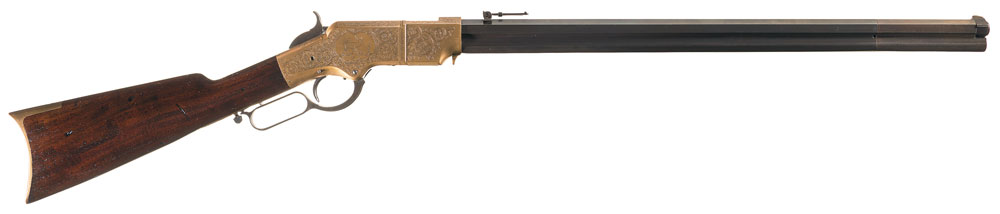
The auction’s top items include an assortment of Henry rifles and early Winchesters in a variety of different finishes and unique engravings, these highly collectible lever actions should have no trouble finding new homes in the auction. Leading the charge is lot 4020, a Henry rifle with incredible scroll work and deer panel scenes on each side of the receiver. After the Henry and Winchester rifles, the rush for second place is a tight one.
Springfield Model 1903 rifle with a rare rod bayonet.
Beautiful Colts, stunning Smith & Wessons, and high condition Remington arms all join the race. An engraved, antique Single Action Army in lot 212 makes a bold statement, as do the rare Smith & Wesson Model 320 revolvers appearing in six separate lots. Too, U.S. military arms are well represented, as shown in lot 2771’s Springfield Model 1903 rifle with a rare rod bayonet.
Unique to this Regional Auction are a large number of Class III / Title II machine guns that are listed as “DEWAT” or “Unserviceable.” For those seeking out representative models for their collections, these are an excellent opportunity to obtain one at a very attractive price. For those willing to do the work to legally restore these terrors of the battlefield, the rewards reaped could be ever greater.
Henry rifle with incredible scroll work and deer panel scenes on each side of the receiver.
Lot 547 contains a Steyr Schwartzlose Model 07/12 on its tripod, and lot 546 holds a rare German MP3008 “last ditch” submachine gun. There are 11 lots containing machine guns and many others with extra barrels, drum magazines, accessories, parts, carriages, tools, belts, and more.
This auction’s size means that more people than ever are going to be bringing home the guns they want for their collection. Not only will there be firearms, but also the always outstanding selection of bladed weapons, military artifacts, ammunition, accessories, books, Western art, parts, and more. Head over to www.rockislandauction.com today to view full color photos of the 4,000+ lots in this huge event. Direct questions to 309-797-1500 or email [email protected].
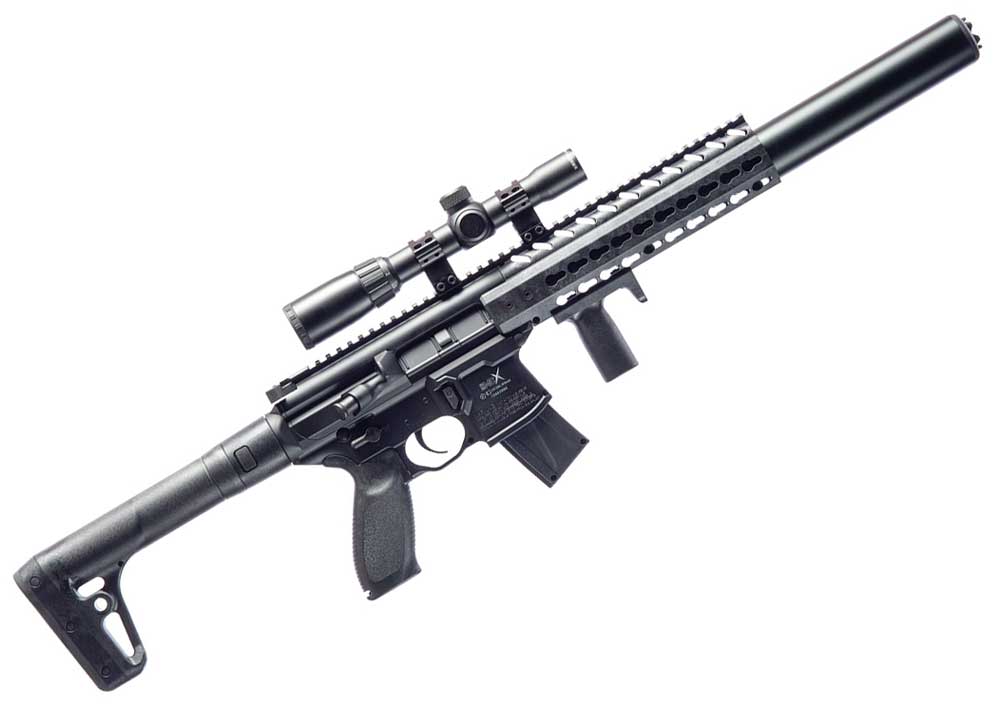
The MCX is one of four firearms SIG Sauer has made air-powered replicas of in its new airgun line. Photo SIG Sauer
One of the more intriguing stories to come out of the 2016 SHOT Show is SIG Sauer’s burgeoning air force.
No, the European-American manufacturer’s catalog isn’t expanding to include F-16s and A-10s, by any stretch of the imagination. Instead, SIG’s air force is comprised of its new line of airguns the company unveiled at the shooting industry trade show in Las Vegas.
And boy howdy, if a shooter is aiming for authenticity in a low-cost plinker, they won’t have to go further than these new additions. SIG lived up to the tagline for its new airguns, creating “Carbon Copies” of four of the company’s favorites, the P250 pistol, P226 Navy pistol, MPX Rifle and MCX rifle.
The .177-caliber, CO2 powered airguns were engineered to closely match the specifications (weight and handling) of the originals. This is a boon for shooters. As the company touts, creating air-powered replicas of their firearms gives shooters an affordable and convenient way to keep skills sharp. This could be an attractive selling point for many, given how sporadic ammo has been — particularly .22 LR.
SIG does not appear to have sacrificed form for function, outfitting the guns with features that should make them a pleasure to shoot. Two that jump out right off the bat are the guns’ rifled steel barrels, ensuring more accuracy, and full mounting options of the originals for optics and accessories.
The air powered P226 Navy, ready for an afternoon of plinking. Photo SIG Sauer
The pistols feature a rotary feed system, with 16 rounds in each magazine. However, the magazine has to be turned around after eight shots to access the next eight pellets. The rifles function off a belt-feed and boast a whopping 30 rounds.
The airguns all are capable of throwing a pellet at 500 fps or grater, however there is some variation in the top-end velocity of each gun. At the bottom is the P250, which has its top velocity listed at 500 fps, while the MCX is listed at 750 fps.
At time of writing, no MSRPs were available for SIG Sauer new airguns.
Looking to go armed, but are stuck in the weeds as to what to arm yourself with? Here are 20 of the best concealed carry gun options that will keep you on the defensive.