ShapeShift Shoulder Holster brings a new level of comfort and utility to the unique carry method.
How the ShapeShift improves on the shoulder holster:
CoolVent neoprene prevents straps from digging into shoulders.
Four-point anchors (shoulders and belt) keep holster in place.
Padded paddle stops gun from bitting into side and protects firearm from body moisture.
Adjusts to any cant angle.
Modifies to any body size in seconds.
Level III retention.
Compatible with exsisting ShapeShift modular holster system for IWB and OWB carry.
MSRP $133.88.
Blame the silver screen. When most of the un-anointed hear the term concealed carry, they conjure up visions of shoulder rigs. You can't fault them, considering the volume of manatee undercover cops and sharp-dressed bad guys who kept their heaters hanging right along their rib cage. Imagine the neophytes' shock when they find the style of carry is somewhat a rarity compared to nestling a handgun at some clock point on the belt line.
Uncommon when measured again inside- and outside-the-waistband systems, shoulder holsters still make sense for many armed citizens. Be it tramping the woods with a hunting revolver or requiring handgun access in a position that makes the tried-and-true 3-o'clock position unwieldy, placement on the upper body is as logical as a mathematical proof. And Alien Gear has made the carry preference all the more practical with the introduction of its rather ingenious ShapeShift Shoulder Holster.
Utilizing the company's cutting-edge ShapeShift modular hybrid system, Alien Gear has cooked up an agile shoulder rig that addresses many of the common complaints of this unique method of carry. Chief among these is comfort.
Anyone who's stepped out with a shoulder rig knows the systems can feel like yoking up to plow the back forty. Not the ShapeShift Shoulder Holster. With advanced light and comfortable materials (CoolVent neoprene), the holster's English bridal leather resists digging into tender spots, remains situated on the shoulders and moves naturally with the user. Furthermore, belt anchors keep the rig in place, even through the most strenuous situations, so a sidearm is where it's expected when it matters most.
The ShapeShift holster itself is a marvel. Designed to modify to nearly any form of waistband carry, the hybrid unit is versatile and well suited to the shoulder system. A vented and padded paddle holds a handgun back from nipping at a shooter's side while remaining breathable and protecting the firearm in a potentially musty carry position. Moreover, it adjusts to any cant and elevation a user desires ensuring it adapts to a particular user's body and carry preferences. If that's not enough, the ShapeShift Shoulder Holster provides Level III retention, including adjustable passive retention, thumb release and a thumb break.
The system modifies to fit any user in seconds can configure to hold a single gun, a single gun and extra magazines or two guns. The ShapeShift Shoulder Holster has an MSRP of $133.88. Those who already own a traditional ShapeShift holster system can buy the shoulder holster expansion pack for $99.88.
The 9mm has become the most used cartridge in the U.S., and now boasts performance on par or exceeding larger-bore pistol options.
How the 9mm became popular:
Smith & Wesson and Colt drove interest in the 1950s with 9mm semi-auto pistols.
An influx of military pistols in the caliber also drove its popularity.
It has become the most used cartridge in the U.S.
Modern bullets and high velocities have improved its performance.
It penetrates as deeply as many .45 ACP rounds.
In many cases, it can expand to a wider diameter than the .45.
The 9mm also has a higher impact velocity than a .45, causing more tissue damage.
The 9mm Luger, or 9mm Parabellum, was introduced in 1902 with the Luger automatic pistol. It was adopted first by the German Navy in 1904 and then by the German Army in 1908. Since that time, it has been adopted by the military of practically every non-Communist power. It has become the world’s most popular and widely used military handgun and submachine gun cartridge.
Although the 9mm Luger delivers good performance, it was not popular in the United States until fairly recently. In 1954, Smith & Wesson brought out its Model 39 semi-automatic in this chambering, and Colt chambered its lightweight Commander for the 9mm Luger in 1951. This, plus the influx of military pistols chambered for the 9mm, greatly increased both popularity and acceptance in this country. Currently, the 9mm Luger is the most widely used cartridge in the United States, though a principal complaint has always been that the 9mm LugerMo lacks stopping power as a defensive cartridge.
Modern bullet engineering, combined with the moderately high velocities obtainable with a 9mm Luger, 9mm Luger +P and 9mm Luger +P+ loads, has changed the performance of the 9mm. Extensive tests have shown that many defensive loads for the 9mm expand to a wider diameter and penetrate as deeply as many .45 Auto loads — and they do this with a higher impact velocity, which translates to more tissue destruction. Anyone armed with a 9mm and good defensive ammo should feel just as safe as if they were carrying a .45 Auto.
Keep it simple, no wiser words have ever been spoken. And they apply not merely to life, but firearms as well. The fancier the gun, many shooters discover to their dismay, the more can go amok. Swimming against this tide, Patrick Sweeney gives us his top 5 affordable AR-15 choices. These aren't simply bargain-basement buys from fly-by-night operations. Far from it. These rifles and carbines are certain to give more bang for the buck than a great swath of present black rifle-dom.
Del-Ton Sport Lite
The DT Sport Lite is your basic no-frills AR carbine of the type known as the “M4gery”. You get a 1/9 twist barrel, carbine handguards and telescoping stock, for a price that’s hard to beat. MSRP $649 www.del-ton.com
S&W M&P Sport II
If you want a handguard for accessories, then the S&W M&P Sport II has MLok Magpul handguards and lots of others extras. With a 1/9 twist barrel that’s Melonite treated for non-corrosion, the Sport II has a gas block with a Picatinny rail for a front sight of your choice, and tele-stock, all built to S&W standards. MSRP $739 www.smith-wesson.com
CMMG Mk4 T
If you want to take a step up, then CMMG in their Mk4 T, offers you a free-float handguard with rail slots, your choice of stainless or nitrided 4140 steel, and a full-length flat top for sight, scope and other extras mounting space. MSRP $1,049 www.cmmginc.com
Core 15 Scout
The Core 15 Scout is a basic M4gery that you can upgrade if you wish. The basic rifle is fully mil-spec, but if you want to add extras, you can get a better stock (still a tele-stock) and a carrier that’s nickel boron coated for easier cleaning. MSRP $724 www.core15.com
Ruger AR-556
If 10 years ago you had said, “Ruger will make an AR-15,” people would’ve pitied you. Now, they make some of the best. They offer their AR-556, complete with iron sights and mil-spec or better, for not a lot of coin. And, it’s hard to beat the Ruger warranty. MSRP $799 www.ruger.com
Editor's Note: This article originally appeared in the 2018 Shooter's Guide issue of Gun Digest the Magazine.
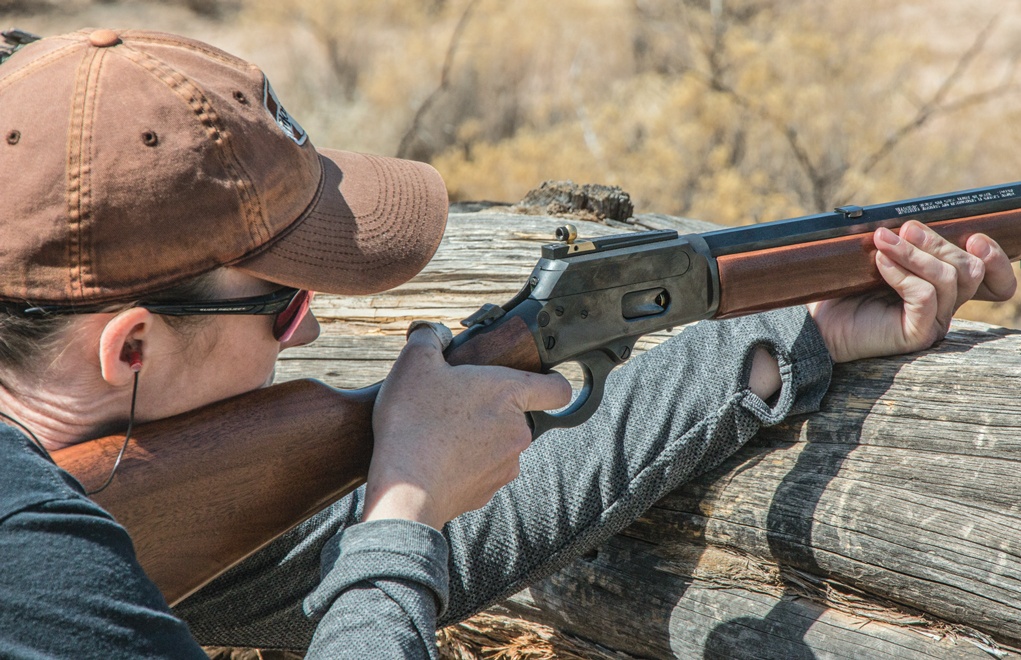
The lazy days of summer are here, no better time for long afternoons burning powder and sharpening shooting skills dulled through the long winter months. As we all know, there are only two things vital for a productive day pitching copper-jacketed lead — guns and ammo. It almost rolls off the tongue as easily as peanut butter and jelly.
Simple as it sounds, rolling to your favorite shooting spot with the bare minimum kit courts trouble. Be it keeping everything in line, having enough rounds or fixing a firearm that breaks down at the most inopportune time, you need to outfit your range bag with the little extras that keep you squeezing off rounds, not fiddling with your firearm.
Luckily, a rash of new shooting accessories has hit the store shelves in 2018 tailor made to keep you plugging away at your passion. From machines facilitating lightning-fast reloads to devices to troubleshoot the most stubborn carbine, they'll just plain make a day punching paper or steel all the more enjoyable. Admittedly, some of these won't squeeze into an everyday range bag, unless you sling a full-sized duff. Nevertheless, they're pretty dang handy kit regardless of size. So, without further ado, here are four pieces of new gear for your range bag that will get the most out of a day on the business end of your favorite gun.
MTM Case-Gard 3-Can .50-Cal. Ammo Crate
Designed for rugged ammunition storage and transportation, MTM‘s 3-Can Ammo Crate won't fit in your range bag, but will keep your powder dry and your rounds in order. The three 13.5″ x 7.4″ x 8.5″ .50-cal. ammo cans are O-ring sealed and water resistant, making them ideal for keeping ammo fresh in between shooting session or out in the elements. The cans nest in a sturdy polymer crate, keeping everything in order and making it a snap to move a mass of ammo to the range for a long day shooting. The crates are stackable, saving space in a gunroom and come with tie-down points on the ends making them ideal for ammo transport on an ATV or the bed of a pick-up truck. MSRP: $44.49 www.mtmcase-gard.com
Butler Creek ASAP Electronic Magazine Reloader
Giving you more time shooting and less reloading, the Butler Creek ASAP Electronic Magazine Reloader is a godsend for shooters who measure their range time in thousands of rounds. Shooters simply insert a STANAG magazine, selects the round count and add 5.56 NATO or .223 Rem. ammo to the 60-round hopper and the ASAP does the rest, orienting the ammunition and feeding it into the magazine. The loader keeps count on a digital screen to let shooters know where they stand in the process. It might not qualify as a range bag essential, but it's worth the investment, giving you more time to concentrate on what counts — your rifle and accuracy. The magazine loader is due out in August. MSRP: $330 www.butlercreek.com
Firefield AR-15 Multi-Tool
Malfunctions and equipment failures can strike any time, the Firefield AR-15 Multi-Tool makes certain you don't miss a shot when they do. A must-have for any AR-15 shooter's range bag, it's armed with a slew of tools to tackle common carbine field maintenance issues — from scrubbing the bolt to setting components. In short, it's a pocket-sized armorer's toolbox. The heart of the system is a pair of spring-loaded pliers, perfect for troubleshooting a variety of issues on an AR. From there, the 4.2-inch long 14-ounce device boasts wire cutters, hammering surface, bolt scraper, bit driver, flat head driver, hex wrench, knife, metal pick and bottle opener. The driver includes four bits, allowing it to work on the most common bolt and screw heads on today's modern guns. MSRP: $39.97 www.fire-field.com
PHLster Flatpack Cat Combo
Accidents happen, even in the controlled environment of a target shoot. With a Flatpack in the range bag, you've got peace of mind you're prepared to handle any eventuality. Outfitted with a North American Rescue CAT model tourniquet, the mobile system deploys at a moment's notice and stays in complete order the rest of the time with rugged electrostatic cord and an injection-molded backboard. Ideally sized (5″x2.5″), it carries as easily on your person as it does in your pack. MSRP: $52.94 www.phlsterholsters.com
Light, compact, manageable and accurate, the AR-15 for home defense has all comers beat hands down.
Why an AR-15 for home defense is the smart choice:
At around 7 pounds it's maneuverable.
The controls — safety, mag release, trigger — are intuitively positioned.
Low recoil makes mastering form and control easier.
Rails allow easy mounting of lights, lasers and optics.
55-grain FMJ is ideal and cheap home defense ammo.
The round will yaw or tumble when it impacts at close range.
20- to 30-round capacity ensure superior firepower.
The manual of arms is simple.
They are as or more affordable as other options.
Handguns are handy. Shotguns are powerful. But when it comes to the defense of one’s castle, the most versatile tool, besides a Secret Service detail assigned to you, is the AR-15.
Why? Simple: It’s light and compact, has low recoil and great accuracy, and can be configured any way you wish. But first, let’s dispense with some of the canards that AR-15 detractors will raise: penetration, appearance and noise.
No, the .223 Rem./5.56 NATO will not shoot through a building. In fact, on interior walls it has less penetration than that of common handgun cartridges, even when those feature JHP bullets. Unless you’re using bonded rifle bullets designed to maintain structural integrity, the bullets of a .223 Rem./5.56 NATO cartridge will yaw in drywall, break apart and not over-penetrate. Oh, they’ll go through a wall or two, but not like a handgun.
A friend of mine is the head honcho of a multi-city SWAT team. His team once had the chance to “test” a neighborhood of houses before they were torn down. They shot every house with everything they could think of. “Patrick, every single handgun bullet left the test buildings, unless it hit a pipe or the building was brick.” The .223 Rem./5.56 NATO bullets commonly would enter the second room, but not leave that for the third room. The lesson for us all is simple: Everything is a hazard to the next room, but the .223/5.56 is less so past that.
The AR-15 is the current poster child for eeeevil gunz. Some will advise you use something less “aggressive” looking in order to make your legal situation less of a problem afterward. The bad guys can be called Problem One. The legal gauntlet can be called Problem Two.
Mounting a light on an AR is simple, and it can even be brutally simple. In a pinch, a hose clamp gets the job done.
Here’s the catch: If you know the law, and you observe the law, and you don’t talk to anyone until your attorney is on hand, then Problem One can be solved. It can be solved in a lawful, moral, safe manner, which then makes the difficulties of Problem Two pretty much not. On the other hand, if you do something stupid, or unlawful, or unwise, you will have legal problems regardless of what firearm you use.
Then there’s noise. Here I have to begrudgingly admit there is some basis for concern. The muzzle blast of a rifle indoors is more than impressive — it can be deafening. However, the magnitude of that noise beyond that of a handgun or a shotgun is not that much. Yes, it’s more, but it isn’t like the other two are exactly quiet.
And, you can mitigate the noise. A suppressor may be a step too far (cost, paperwork, really making the prosecutor salivate), but there are other steps. First, not all rifle ammo is the same. A few practice sessions at an indoor range or on a covered firing line will tell you which loads are more or less noisy. (Test with hearing protection on, please.)
You can also use a Noveske KX3, a blast diverter that redirects the noise away from you without being a suppressor. You can also opt for less-noisy cartridges. An AR-15 in 9mm or .300 Blackout, with subsonic ammunition, for example, is markedly quieter than the same-size carbine chambered in .223 Rem./5.56 NATO.
Handguns are handy. Handguns are compact. But handguns are hard to shoot well, and they only hold a limited amount of ammo. Handguns back up an AR-15.
However, noise can be your friend. If you shoot, the bad guy or guys are on the other end of the noisy tool you’re using, and this can matter. In the Miami shootout with Platt and Mattix, the FBI agents remarked on the difference between the “pop-pop” of their handguns and the much louder .223 Rem. rifle being used against them. That difference now aids you — and not the bad guys.
So, with those out of the way, let’s look at why the AR-15 should be your first choice for protecting you and your loved ones in your home.
Weight And Ergonomics
A “heavy,” standard AR carbine tips the scales at just over 7 pounds. That’s heavy enough to control recoil, but it’s also light enough to not be a hindrance. Almost anyone can heft an AR, and in the ergonomics department — safety location, trigger press, adjustable stock and overall shooter fit — it gets top marks. Even a compact shotgun can be a bit cumbersome, and if you haven’t practiced pumping it, even the “ultra-reliable” pump shotgun can let you down.
An AR-15 with a red-dot becomes even handier. Explaining it to a new shooter is easy: “Put the dot where you want the bullet to go, and press the trigger.” Iron sights are less so, and shooting a shotgun with just a bead on the barrel becomes an arcane episode of divining impact.
Handguns? Hitting with a handgun takes a lot more practice than hitting with a rifle, especially one like the AR.
Light Recoil
Ever watch a new shooter the first time they shoot a handgun that’s too much for them? Or a shotgun? Right there, you can see them deciding: Is this for me, or not?
Red-dot optics on an AR make aiming easy. The bullet hits where the dot is when the trigger is pulled.
The much lower recoil of the AR-15 makes it possible to teach form and control, and not have recoil as a hindrance. And when the chips are down, low recoil is an asset to solving Problem One. The low recoil of the AR-15 means odd positions are not such a problem. Ever try to pump a shotgun while shooting prone? Good luck with that.
Extras — Or Essentials
It used to be a lot harder to mount lights or lasers on firearms. With the proliferation of rails, we now have many choices. Well, shotguns still lag a bit, but handguns can be on-par with ARs. Except, if you want a rail on a handgun, it has to come from the factory with one. Adding one later isn’t an option.
You can add a laser with laser-equipped grips, but handguns still fall behind ARs in this. On an AR-15, if yours lacks rails, it is as simple as swapping out the handguards for a set that has rails built in. And many ARs now come with railed handguards, or handguards that readily accept rail segments.
More than being able to mount lights or lasers, being able to use them gives the definitive nod to the AR-15. With one hand to hold the pistol grip and the other to hold up the rifle and aim, the task of also switching a light or laser on is relatively easy. On a handgun, with both hands right there — and not as much to hold onto — turning on lights or lasers is less easy. Shotguns pose a special situation, as there just aren’t as many options for mounting lights.
Defensive Ammunition
The easy choice for the AR-15 for home defense may surprise you: plain old 55-grain FMJ. Yes, nothing special. Except, it is. At inside-the-house distances, the 55-grain FMJ has not had time to “settle down.” When a bullet is fired, it gets sent down the bore and is spun by the rifling. There, it’s forced to rotate around its center of form.
Barriers are hard on bullets. Unless you have selected a bonded bullet, an AR-15 bullet from a .223 Rem. or 5.56 NATO round will not penetrate as much as a handgun bullet will.
When it leaves the muzzle, it has to adjust to rotating around its center of mass. During that transition, it is particularly susceptible to outside forces. If it strikes an object or target, the bullet will yaw, or tumble. Since you are in-close, it will be doing so with pretty much all of its velocity, and this can lead to impressive results.
You may have heard of soldiers in Iraq and Afghanistan being unimpressed with the performance of the 5.56 NATO. This is due to the bullet they use, the M855, and the distance. The much faster twist of the M4/M16 (one turn in 7 inches) creates more stabilization in the bullet. This means less yaw, especially at distance. And at distance, it has less velocity, so any yaw it does have will not be as effective as up close.
At close range, the 55 FMJ is a stout tool, and the same attribute that increases wounding also decreases over-penetration in walls, as we discussed earlier in the article.
Selecting An AR-15 For Home Defense
So, a relatively plain AR-15, of the type commonly referred to as an “M4gery,” can be just the ticket. With a 16-inch barrel, an adjustable stock, a red-dot sight and a light on it, the full-up, loaded weight is not going to be much, if any, past 8 pounds. Add a sling for extra versatility, and you’ve put on a few more ounces.
Rifles have range — and precision. A precise shot at 25 yards with a shotgun or a handgun is not easy, especially when the shooter is in a high-stress situation. An AR with a scope or red-dot makes it easy to shoot quickly and accurately.
Now you have a compact, lightweight, easy-to-handle carbine, one that holds twenty or thirty rounds. It’s capable of tack-driving accuracy at home defense distances, with low felt recoil. Ammunition is common, easy to find and easy to load. The manual of arms — the handling methods — of the AR-15 are simple and straight-forward, and easy to learn.
And here’s another advantage the AR has, along with the shotgun: learners are less likely to inadvertently point the muzzle in a direction you do not want them to. New shooters with handguns can be a particular problem. It’s so easy to point a handgun “just anywhere” that a new shooter can be “sweeping” or pointing the firearm at themselves or others without realizing it. It can take some work to instill good habits. A long-gun, like a rifle or a shotgun, is long enough that muzzle direction is less likely to be inadvertent, and it’s easier to teach safe habits to new shooters.
As a final bonus, with the current marketplace dynamics, a vanilla-plain AR-15 can be had for the same as, or perhaps a small amount more than, a good-quality 9mm handgun. You don’t have to spend three or four mortgage payments to have a good AR-15.
Editor's Note: This article originally appeared in the May issue of Gun Digest the Magazine.
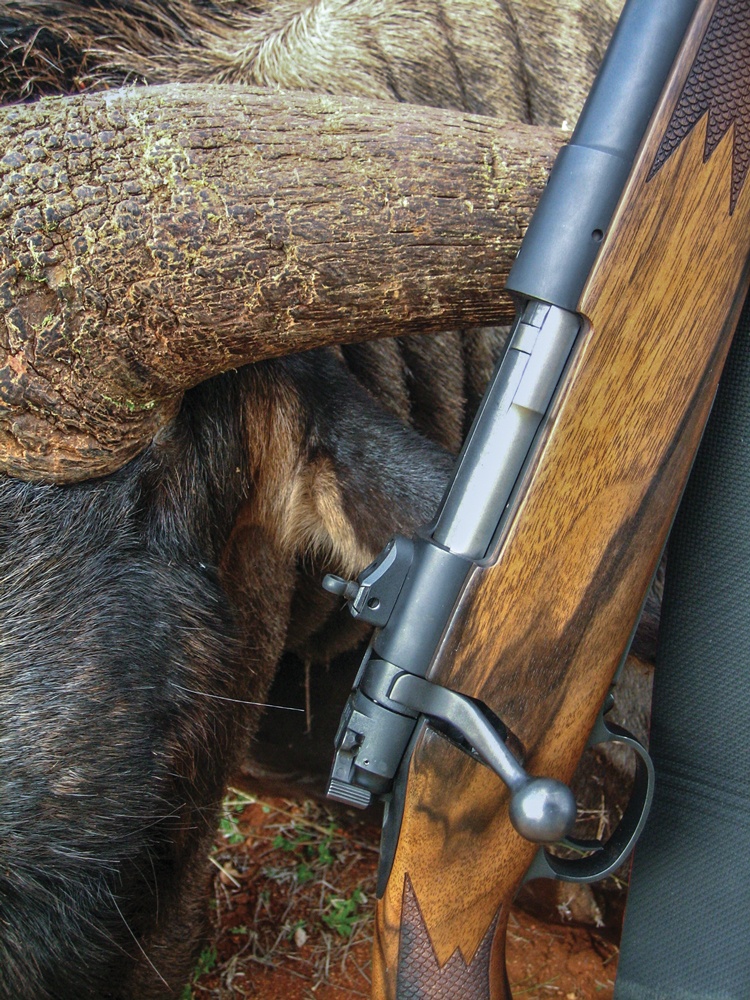
Informal tests might suggest an AR's gas system is to blame for a carbine's issues, but there are false positives that can muck up troubleshooting efforts.
What AR issues mimic gas system problems:
Dirty extractor, bolt face, ejector and bolt carriage group can fail to function.
Underluberication accelerates how quickly components get dirty and malfunction.
Mismatched buffer and buffer spring can make a rifle seem over or under gassed.
Buffer spring weakens and does not eject cases with the force it did when new.
Buffer weight can affect how a rifle cycles.
Editor's Note: This is the third article of four-part series dealing with direct impingement operated ARs and troubleshooting the gas system. Please check out Part 1 and Part 2 of the series.
A direct impingement system is a just that — a system — with multiple factors that can influence performance. Stoppages that might be attributable to a gas issue can be caused by something else, so let’s consider some other major variables that might skew the two previous test results and give you a false positive on the failure of your gas system.
Adequate Bathing Required
When was the last time you cleaned and lubricated your AR? Yes, I know this sounds like the IT guy at work telling you to turn your computer off and back on to fix a software problem. But in this case, examining the cleanliness and lubrication of the action is critical.
The downside of the direct impingement gas system is that it dumps hot, dirty exhaust gas through the action — the specific area that needs to stay the cleanest and most lubricated. Many have likened this design element to “flushing the toilet through the living room” or other such unsavory analogies. The problem is, it’s true.
The hot gases, carbon and unspent powder running through the action are an unavoidable byproduct of the design. Worse, the hot gases bake the carbon onto the metal, ultimately changing the geometry of the parts and impacting how they interact. Add to this any dust and debris the action picks up from wherever you’re firing, and you truly have a “hot mess” on your hands.
The most problematic areas are the spaces between the extractor and the bolt face. If this spring-loaded part cannot get over the rim of the cartridge to gain purchase, the AR will frequently or completely fail to extract the spent casing. The same is true of the ejector. In short, if these parts cannot work nearly simultaneously and in concert with the cycle of the bolt carriage group, the casing will eject poorly, inconsistently or not at all. These two areas must be examined regularly for contamination and carbon build-up.
Excess contamination also creates additional friction that impedes the bolt carriage group from cycling at the proper speed and force, which can prevent the bolt from fully reaching its rear-most point of travel and locking to the rear. It may also just slow the bolt enough to make it look like the ejection is weak. So, before you grab a wrench and go diving into your gas system, thoroughly clean your rifle, and make it a habit to use a high-quality lubricant and keep these parts clear of debris.
Buffer Spring Replacement
The second most common culprit behind a false positive on a gas system failure is a weakened or mismatched buffer and buffer spring. These two parts, depending upon their configuration and condition, can exhibit symptoms of an over- or under-gassed system.
If you have a reliable AR that, over time, starts throwing rounds nearer to the 1 o’clock position in the angle of ejection test, it may just be time to replace the buffer spring. Buffer springs are made to reliably cycle thousands of rounds, but like any metallic part put under stress, they weaken over time. If your rifle has functioned reliably for a reasonable amount of time before showing gas-related symptoms, it’s probably a combination of the spring weakening and the gas port diameter widening slightly over thousands of rounds. The result is higher pressure on a weaker spring, resulting in greater force to the rear and a more violently ejected casing.
Buffer springs can and do break down over time. The size of a carbine-length buffer spring is about 10 1/2 inches and needs replacing if it measures less than 10 inches. A rifle length buffer spring measures 12 3/4 inches and definitely needs replacing as it nears the 12-inch mark.
A buffer spring is a cheap fix, usually $10 or less. Though exact specs can vary, particularly among custom race guns, a carbine-length buffer spring will be around 10½ inches new, and shouldn’t be any shorter than 10 inches after extended use. If yours is, and the gun is running hot — meaning it’s over-gassed — spend the change out of your ashtray and buy the new spring.
Note: Be sure to buy the correct buffer spring for your AR. A carbine length spring will have about 37 coils, give or take — count them as well as measuring the entire spring. In contrast, a rifle-length buffer spring will be about 12¾ inches new and is a candidate for replacement when it shortens through use to less than 12 inches. Also, a rifle-length buffer spring will have about 43 coils.
The carbine and rifle buffer spring lengths are not interchangeable, and it’s inadvisable to try. A buffer spring is a cheap fix, or at least the elimination of a variable, so buy one, test it in your clean AR, and you may likely solve your problem.
Buy A New Buffer
For about twice the cost but still less than $20, you can replace your buffer. Keep in mind, a heavier or lighter buffer can be used to tune the felt recoil of your AR system, and some shooters get picky about this part.
In its simplest form, the buffer is a counterweight to the force of the gas imparted to the bolt carriage group, and it’s a device to compress the spring uniformly and alternatively press the bolt forward. For the average shooter, it’s not a particularly worthwhile place to get fancy unless you’re tuning for subsonic rounds or building a race gun.
A standard buffer, a little lighter or heavier depending on how your new spring performs the angle of ejection test, is OK — but over-doing experimentation with this part of the troubleshooting can be low-yield, if not downright irrelevant for a general-purpose AR.
Editor's Note: The article originally appeared in the May 2018 issue of Gun Digest the Magazine.
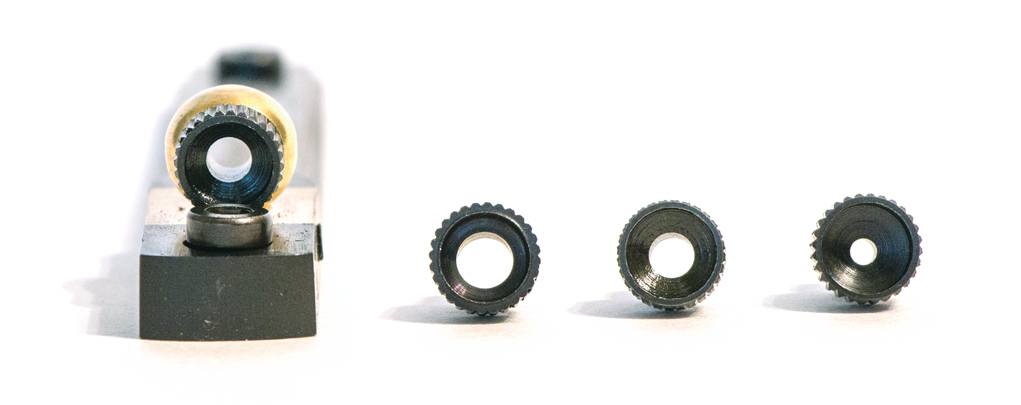
With a tough exterior housing, Aimpoint's new ACRO P-1 is as resilient a reflex optic as there is today.
How the ACRO P-1 is tougher than the other red dots:
A 1x optic with a fully coated lens.
Components enclosed in a tough aluminum housing.
Impervious to rough use, dirt and moisture that plague open systems.
3.5 MOA dot fully adjustable for windage, elevation and intensity.
Fully compatible with night-vision.
Fast and dead-on accurate, there are few complaints about what red-dot optics bring to the close-quarters shooting game. That's not entirely true. Some shooters — tactical operators and civilians alike — are head shy over potential missteps and malfunctions commonly associated with reflex sights. In the heat of the moment, a protruding optic is a perfect candidate to snag clothing or tangle in a sling. On top of that, early examples had a frustrating tendency of losing their zero at just the thought of a stiff breeze. Resiliency wasn't their selling point.
Thankfully, those days are behind us. There has been a revolution in red dots in recent years, with the aiming solutions growing smaller and tougher than anyone could have ever imagined. All the while, they haven't sacrificed a lick of functionality or accuracy, giving shooters everything they expect out of an aiming upgrade. Nobody's arguing they've made iron sights obsolete by any stretch of the imagination. But these new small packages are explosive performers, going a long way at running on par with traditional aiming systems when it comes to convenience and dependability — beyond when talking accuracy.
Aimpoint continues to remain at the cutting edge of red dots and moved the niche forward recently with the release of its ACRO P-1 optic. Tailored for use on pistols, but more than comfortable on carbines, the Advanced Compact Reflex Optic is flint tough, capable of withstanding extreme shock, temperatures and rough use that would rattle more traditional optics to their core. At the same tick, it produces the pinpoint accuracy required for deadly accurate up-close-and-personal shooting.
Elegantly simple, the advancement Aimpoint conjured up with the ACRO P-1 is enclosing the optic, making it impervious to bumps, bangs, dust and moisture. Even with the additional material (high-strength aluminum), the optic remains negligible in size, weighing in at 2.1 ounces and measuring a shade under 1 inch in length. Of its more notable features, the unit has a 3.5 MOA dot (fully adjustable for windage, elevation and intensity), a fully-coated lens and night-vision compatibility. The ACRO P-1 runs off one CR1225 battery and is an energy sipper. The unit was tested for one year of continuous use off one battery. Aimpoint has yet to release an MSPR on the new optic.
For more information on the ACRO P-1, please visit: www.aimpoint.com
ACRO P-1 Specs: Magnification: 1x Dot Size: 3.5 MOA Aperture: .63″x.63″ Battery: CR1225 Power Intensity: 4 NVS, 6 Daylight Length: 1.9 inch Width: 1.2 inch Height: 1.2 inch Weight: 2.1 ounces MSRP: N/A
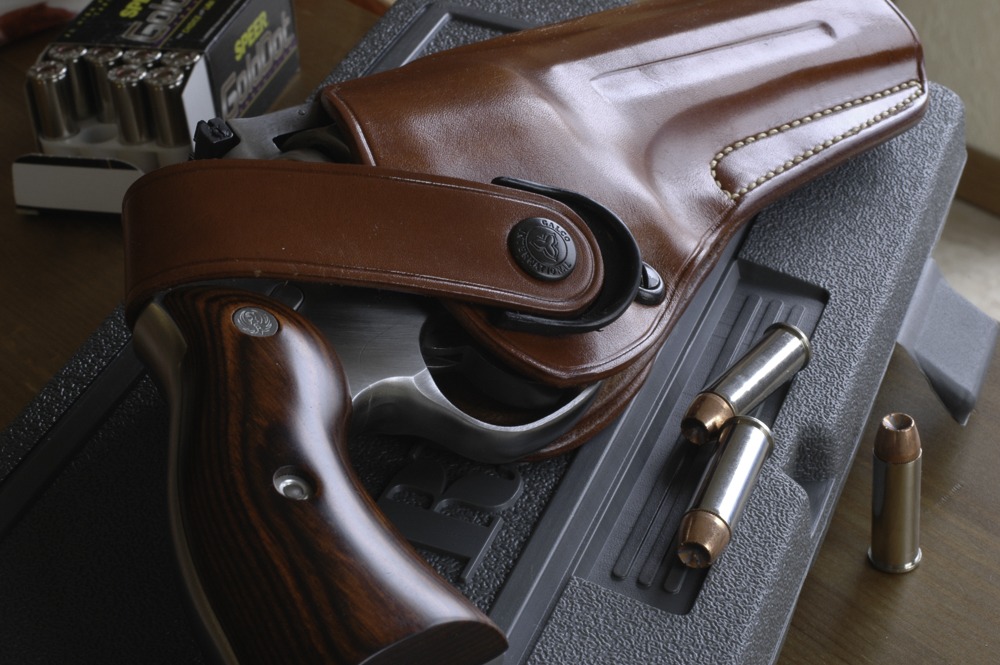
Facilitating multiple carry positions, Galco's Wheelgunner might be the most versatile revolver holster available.
The Wheelgunner advantage:
The Wheelgunner has a unique design utilizing a belt band in which the holster fits.
From there, the holster is held in place by a heavy-duty snap.
Furthermore, the Wheelgunner is ambidextrous with the choice of butt forward or back in either position.
I spent a month in South Africa last summer; it’s a place where an American cannot take a handgun for defensive purposes. Professional Hunter Leon Duplessis was kind enough to loan me his Colt 1911 for the duration of my stay. (It’s good to have friends in African places.) I asked Leon what he was going to carry while I had his Colt, and he said he had a .357 Mag. revolver he could pack. The problem was Leon did not have a suitable holster for his hog’s leg.
A packing holster for a handgun is one you use in a general-purpose manner. The high-riding, versatile and ambidextrous Glaco Wheelgunner is one of the best for a revolver.
I figured I’d return the favor, and contacted my liaison at Galco Gunleather, asking him to send over a Wheelgunner holster and one of the company’s excellent 1.75-inch belts. Galco shipped both to a client headed there to hunt.
The Wheelgunner might be one of the most overlooked holsters in Galco’s excellent line of premium leather. It’s a very unique design that utilizes a belt band the holster is snugly inserted into. The holster is then held in place with a heavy-duty snap. But, the real uniqueness of the Wheelgunner is that it will allow left- or right-hand carry with the butt of the handgun forward or back. This holster is “one-hundred percent,” as they are so fond of saying in Africa, ambidextrous.
Leon was ecstatic with his Wheelgunner holster and used it and the belt to carry his sixgun every day, whether at work as a professional hunter or while executing the duties of his side job as a doctor. One of the features he liked best was the ability to remove the holster quickly by just undoing a single snap. If you’re looking for a good packing holster that offers quick on and off, check out the Galco Wheelgunner.
Savage adds another element of accuracy to its 110 Tactical Rifle line.
Ready to go the distance:
Savage's 110 Tactical rifle line is optimized for precision and long-range shooting.
The AccuStock adds a new dimension of adjustability and a rigid internal rail system.
The rifles are available in 6mm Creedmoor, 6.5 Creedmoor and .308 Win.
Depending on the model, MSRPs run from $769 to $789.
The problem with so-called economy precision rifles, they aren't all that economical. Costing a good bit of coin, it's not uncommon for these tack-drivers to push well above the $1,000 mark, even flirt with $2,000 if a shooter goes the whole hog for all the bells and whistles. Generally, they are often worth the investment for the die-hard long-range fanatic. The everyday shooter with a yen for trying his hand at going the distance, he's left out in the cold.
Though not the sole driving factor in these rifles' price tags, the guns' stocks tend to inflate their costs. Precision designed for rigidity and customization, chassis and precision stocks do a bang-up job getting rifles on target, but can put the firearms out of reach of ordinary marksmen. However, Savage Arms has done its part to make precision a bit more affordable.
Earlier this year, the gunmaker unveiled its rather ingenious AccuFit Stock system and recently added it to its 110 Tactical rifle line. It should prove a match made in heaven, given the rifles come in top long-range calibers and boast many of the features shooters look for when going the distance. Best of all, the 110 Tactical line is highly affordable, with an MSRP of $769 to $789 depending on the model.
The newly revamped precision platforms include the 110 Tactical, 110 Tactical LH (left hand) and 110 Tactical Desert, which are available in three chamberings — 6mm Creedmoor, 6.5 Creedmoor and .308 Win. The AccuFit system itself consists of four spacers to adjust the length of pull and five cheek pieces to raise and lower the comb height. Creating a perfect fit, the stock system ensures shooters have a rifle with the dimensions tailored to their body, making a stable shooting platform second-nature trigger pull to trigger pull. Furthermore, the stock has a rigid rail system firmly embedded throughout the fore-end of the rifle. Rather than uni-directionally engaging the action at one or two points, it engages the action along its entire length.
Common now to nearly all Savage rifles, the 110 Tactical line also features the company's AccuTrigger, an adjustable fire control, which allows users to dial the pull weight between 1.5 to 6 pounds. Additionally, the rifles come outfitted with a number of other features certain to help shooters get on target, including a threaded heavy barrel (20, 24, 26 inches) with an end cap, 20 MOA EGW rail and tactical over-sized bolt handle.
For more information on Savage's 110 Tactical line, please visit: www.savagearms.com
Handgun not running right? Your lubrication regimen may be to blame.
How to keep your gun a well-oiled machine:
Often times, lubrication, or lack thereof, is at the root of a gun that refuses to run.
Even on guns with minimal slide-to-rail contact, such as polymer-framed pistols, proper oiling is imperative.
They may continue to function, however, the lack of lubrication accelerates ware.
A safe rule of thumb is to lube at the first sign of metal-to-metal contact.
Additionally, heavy lubrication in hot weather is advisable.
Lubrication can be defined in many ways: It can be oil to minimize friction. It can be making a process run smoothly. And, it can be making people convivial with a bit of alcohol.
There are many varieties of gun lube on the market; pick one you like. The most important thing is to use it appropriately.
Actually, these all mean the same thing — it’s the act of making things work as they’re supposed to. Handguns, even plastic ones, have metal parts, and those must be lubricated.
Bill Wilson of Wilson Combat might know more about handguns than any man walking. He says, “Just like your automobile, metal-frame guns require lubrication. When I see a student’s pistol that had previously been functioning reliably begin to have failures to function, the first thing I check is to see if it’s running dry.
“At this point, I use my pet phrase for the class ‘Guns will run dirty, but they won’t run dry.’ Granted, some polymer-frame pistols with their minimal frame rail-to-slide contact will often continue to function dry, but continued shooting without lube on these surfaces accelerates wear.
“My basic rule of thumb is: If you see signs of metal-to-metal contact, lube it; if you don’t see any sign of contact, don’t lube it, as all this will do is attract firing residue. On top of this, run light lube when it’s cold and heavier lube when it’s hot.”
Editor's Note: This article originally appeared in the Fall 2017 issue of Gun Digest the Magazine.
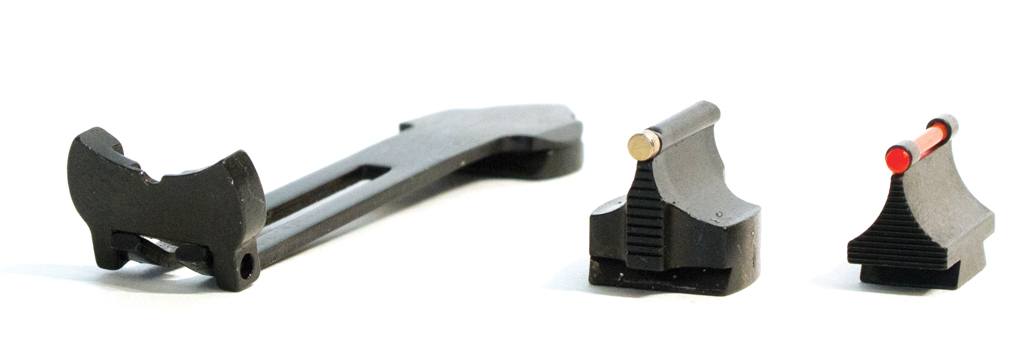
Boasting a tough-as-nails nitride finish, Springfield's new 911 .380 ACP is ready for the toughest duty.
Back in black:
The nitride finish gives the pistol both corrosion and abrasion resistance.
Additionally, the process of applying the finish hardens the gun's frame and slide.
The new model has just been released to retailers and has an MSRP of $599.
Hold a 1911 in your hand and two words can't help but come to mind “rock-solid.” Not only a scrapper, the style of pistol is battle tough, with a metal frame and slide ready to tackle whatever is thrown at it. In short, it's prepared for action the minute it's out of its holster and your finger is on the trigger — rain, snow, muck be damned.
However, there's a hitch to the single-action semi-automatic's giddyap, part and parcel to its tough-as-nails construction. For all its pros, a full-sized 1911 is a bit much gun for some armed citizens, particularly those who require a more streamlined fit to their garb and carry profile. Luckily, Springfield Armory had exactly these shooters in mind with the release of its 911 .380 Auto this past January.
The made-to-carry pistol scales down the 1911, making it the perfect everyday concealment option or a potent backup insurance plan. And the company has gone a step further, recently releasing the 911 in a black nitride finish. The color of pitch, the micro pistol not only has a striking appearance, but also the ability to endure any potential damage — be it rust, dings or scratches.
Tough as the pistol itself, the nitride finish is corrosion and abrasion resistant, withstanding hard wear and tear, while maintaining the 911's function and accuracy. Additionally, the nitriding process improves the stainless steel frame, hardening it, thus making it more resilient to strenuous use and inclement weather. Furthermore, it tacks on an attractive choice to the line alongside the original two-tone model.
The pistol offers impressive features, chief among them a frame-to-slide-to-trigger guard relationship that creates handling characteristics unique among small pistols. Designed to enhance comfort, the Springfield .380 ACP is among the most controllable and easy-to-shoot small pistols to hit the market in recent years.
To boot, the gun isn't short on extras, including a G10 short-reset pivoting trigger (5-pound pull), an extended ambidextrous safety and a hammer. This last point provides peace of mind with both visual and tactile cues for various modes of carry. The pistol also comes with tritium low-profile tactical sights, G10 Octo-Grip on the mainspring housing, Octo-Grip front strap texturing and two magazines (flush 6-round magazine and 7-round extended). The MSRP on the new black nitride 911 from Springfield Armory is $599. The pistol is also available factory outfitted with a green Viridian laser for $789.
For more information on Springfield Armory's 911 .380 ACP pistol, please visit: www.springfield-armory.com
Browning’s X-Bolt Pro gives hunters magnum firepower in an attractive, lightweight, go-anywhere package. It might just be Browning’s best turn-bolt hunting rifle yet.
How this Browning proves a backcountry pro:
The X-Bolt pro, regardless of caliber, comes in at below 7 pounds.
Much of the weight reduction is achieved from its fluted sporter-profile barrel.
Additionally, a spiral fluted three-lug bolt shaves an ounce or two.
Finally, a carbon-fiber stock keeps things light.
Opposed to using strips, the X-Bolt Pro's stock is built by weave wrapping carbon fiber.
The gun comes outfitted with a muzzle brake and its bore is lapped.
The Browning Feather trigger breaks at 3.5 to 4 pounds.
The best group of the .300 Win. Mag. tested was .82 inch with Browning BXR 155-grain loads.
The MSRP of the X-Bolt Pro runs from $2,069 to $2,129 depending on caliber.
Unless you’ve spent the last decade or two in a gun-knowledge-free zone, such as the headquarters of the major American TV news networks, you’ve probably noticed that hunting rifles have been getting lighter. Just as there has been a race to the bottom — in regard to price — between the most economical bolt-action rifle models, there has been a corresponding race to produce guns that are light enough to blow away in anything more than a stiff breeze.
The Pro incorporates high-end design elements and finishing touches typically found on custom rifles costing twice as much.
This is widely heralded as a great thing for those who hunt vertical country, and it is — to a point. As with most good intentions, things can get carried to extremes, and there’s a price to be paid for that. Some manufacturers offer lightweight factory rifles that sacrifice bullet velocity for modest weight savings by the simple expedient of using thin, chopped-off barrels, often paired with flimsy synthetic stocks and cheap components.
At the other end of the spectrum are custom ultralight rifles priced at $4,000 or more. These ultralight rifles can be a joy to carry, but they’re not necessarily a joy to shoot. Many people find ultralight rifles more difficult to shoot accurately due to increased recoil, and that challenge only increases with rifles chambered for the thumper magnums.
To my way of thinking, the nearly perfect go-anywhere, do-anything backcountry rifle occupies the “light-enough” category — meaning it’s light enough to carry all day but not so light that it kicks like a mule on steroids or requires me to modify my shooting technique to place bullets where I want them to go. It should have a barrel long enough to achieve optimal velocities for chosen cartridges, to include magnums, and it should have an excellent trigger to aid in making accurate long-range shots. It should also be nearly impervious to the elements.
The unique Browning bolt-unlock button, situated atop the rear of the bolt handle, allows you to cycle the bolt with the safety engaged.
The good news is that there’s an emerging class of rifles that check all these boxes, and more, by taking advantage of the latest gun-making technologies and materials while refusing to compromise on things that matter most. A great example is the new Browning X-Bolt Pro. It is, as its name implies, a seriously well-designed tool for serious hunters.
Semi-Custom Features
Weighing in at a svelte 6 pounds, 9 ounces, in the .300 Win. Mag. version I tested (rifles chambered in 6.5 Creedmoor shed an additional 8 ounces of weight), the X-Bolt Pro can be thought of as a semi-custom factory rifle. A lot of that has to do with the finishing touches and high-end design elements that elevate the rifle above the level of the already well-regarded basic X-Bolt platform, all while shedding unnecessary weight from the rifle.
With the Pro, a lot of that weight reduction has been accomplished by removing a fair amount of metal from the gun. The rifle has a lightweight sporter-profile fluted barrel, but it still measures a full 26 inches in length in guns chambered for .300 Win. Mag., 28 Nosler, 26 Nosler and 7mm Rem. Mag. It is, happily, adorned with an effective muzzle brake and comes with a thread protector. In another nod to custom guns, the 1:10 twist barrel has been given a proprietary lapping treatment, minimizing the need for break-in. While shooting up a considerable amount of ammo with the rifle, I was amazed at how little fouling accumulated in the barrel.
The three-lug bolt is spiral fluted, as is the bolt knob, cutting additional weight and adding to the rifle’s considerable aesthetic appeal. It proved to be a real head-turner at the range, judging by the number of people who felt compelled to interrupt my testing by inquiring about the rifle.
Considering the amount of .300 Win. Mag. ammo fired during testing, the author was pleased the X-Bolt Pro came equipped with an effective muzzle brake.
That’s partly due to the rifle’s distinctive, true carbon-fiber stock, which is constructed with the carbon-fiber weave wrapped 360 degrees around a sound-dampening foam core. This use of what Browning calls a “second generation” carbon-fiber weave, versus individual strips of carbon-fiber joined at seams, further reduces weight while significantly adding to the rigidity of the stock. It’s exceptionally difficult to make this stock bend. Trust me, I tried.
The rifle’s good looks — and resistance to inclement weather — are further enhanced with a well-executed Cerakote treatment of the stainless-steel barrel and action as well as the bolt and all exterior metal. This rifle shrugs off the elements as a result, and the “burnt bronze” color of the abrasion-resistant Cerakote finish complements the dark brown hues of the stock, which mute any potential game-spooking reflective glare.
Accuracy-enhancing measures include glass bedding of the action to the stock, and the barrel is free floated along its entire length. Fit and finish on this rifle is excellent, right down to the ubiquitous Buckmark logo on the bottom of the trigger guard and the gold-plated trigger blade. The Pro simply exudes quality from the moment you pick the rifle up, in a way that too few factory rifles do these days.
Beyond The Basics
The X-Bolt Pro retains all of the unique characteristics of a standard X-Bolt which, taken together, equate to a lot more than a run-of-the-mill bolt-action rifle. These features include a 60-degree bolt throw, a tang-mounted safety with a cocking indicator, the Browning Feather trigger, a bolt unlock button and the Inflex recoil pad. I especially like the X-Bolt’s signature X-Lock scope-base mounting system, which doubles the standard number of mounting screws from four to eight. It’s a rock-solid base-mounting system like few I’ve ever seen.
The Pro uses a spiral-fluted, three-lug bolt. It cycled smoothly, with a short, 60-degree throw.
The excellent Browning Feather trigger is supposed to be pre-set at the factory to a pull weight of about 3½ to 4 pounds, and I measured the break on my test rifle at a consistent 3 pounds, 9 ounces. The trigger is adjustable within a range of 3 to 5 pounds, but I left it where it was because it broke so cleanly, with absolutely no take-up, no creep and minimal overtravel, that it felt lighter than it really was.
One distinctive feature of X-Bolt rifles is the unique bolt-unlock button, situated atop the portion of the bolt handle that mates into a recess in the action. Engaging the safety locks the bolt down, but you can use this button to unlock the bolt and cycle the action without disengaging the safety. The bolt itself cycles smoothly, with no binding, unlike some spiral-fluted bolts I’ve encountered.
Bottom metal is — wonder of wonders — actually made of metal, while the detachable magazine is a tough polymer design that sits flush with the bottom of the action. The rotary magazine drops freely into your hand when you trip the magazine release lever, which is protected within a recess in the bottom metal, and it feeds rounds straight in line with the chamber. Capacity is three rounds for magnum cartridges and four rounds for standard cartridges.
The rifle is actually made by Miroku, in Japan, but that matters little from a practical viewpoint. Miroku long ago established a very well-earned reputation for producing some excellent firearms, including Browning shotguns and some rifles licensed by Winchester Firearms.
Convincing Performance
Given the rather slender profile of the Pro’s barrel, I wasn’t really expecting tack-driving accuracy from the rifle at the range because groups typically open up as such barrels heat up — and heat up they do in my hands. It’s not that I’m impatient, mind you, but I do have to deal with such pesky things as deadlines, and I often want to see how well a gun shoots when it’s running a little hot and dirty. Of course, you would never run a barrel hot when hunting unless you’re doing something inordinately wrong. It’s the first shot or two that counts, rather than how a gun groups after a lot of ammo goes down the tube.
I found that groups did open up a bit as the barrel heated up, as anticipated, but I was pleased at how well the X-Bolt Pro performed at the range. Most tested loads produced average groups of around 1½ inches, which will convincingly accomplish just about any mission for which you might choose to employ a .300 Win. Mag. cartridge. Interestingly, the rifle showed a bit of a preference for lighter bullets, with the best performance turned in with Browning’s BXR (rapid expansion) 155-grain load. This was also the hottest factory round tested, with the matrix-tip bullet stepping out at 3,257 fps, and it produced an average-group size of 1.12 inch and a best-group size of 0.82 inch. The next-tightest groups were with 180- and 185-grain bullets, which did slightly better than bullets in the 190-200 weight class. Velocities for most of the tested loads exceeded or were quite close to factory-stated velocities, which are, in many cases, achieved with longer barrels.
I consider that excellent overall performance for such a light rifle, let alone one that punches with magnum persuasion. When you consider that it’s also designed to handle the harshest environmental conditions, the rifle’s price tag ($2,099 MSRP for the version tested) starts to look a lot less steep than the mountains you’ll be climbing with the Pro slung over your shoulder.
For more information on the Browning X-Bolt, please visit: www.browning.com
Editor's Note: This article originally appeared in the May 2018 issue of Gun Digest the Magazine.
The Modern Shooter team learns to pick up the pace in a competitive match with Aguila pro shooter Mark Redl.
Popping steel and punching paper, it's the name of the game when we head to the range. To an outsider, it might sound mundane. But for those in the know, whose pulse quickens at the smell of burnt powder, nothing is closer to nirvana. Beating the snot out the bullseye is heart pounding, challenging, satisfying to no end and, above all, what we live for.
Still, there's another level to target shooting that pushes shooters' skills to the razor's edge — competitive shooting. Whether you're talking practical pistol, steel challenge or what have you, shooters have flocked to matches testing the steadiness of their nerves and sharpness of their eyes. And few people who have ever drawn a gun know more about what it takes to succeed under the merciless tick of the timer than Mark Redl. Self-taught and steely as a ball bearing, the pro for Aguila Ammunition knows how to run and gun and has the championships to prove it.
The Modern Shooter team catches up with Redl in this week's episode and take a crack at dethroning the king. No luck, as Luke Hartle learns in the above clip. There's just no keeping up with a shooter whose weekly round count is in the thousands. Humanely, Redl gives the gang a break and lets them in on a few tricks of the trade to shave precious seconds off the clock, while remaining dead on the mark. Be it draw, operating the slide or transitioning targets, the pro has something up his sleeve to make them and you a better shooter.
Find out how you can shoot like a pro on the next episode of Modern Shooter 10:00 p.m. EST Friday on the Pursuit Channel. The episode rebroadcasts Monday at 12 p.m. EST and Tuesday at 11:30 a.m. EST.
For more information on Aguila Ammunition, please visit: www.aguilaammo.com
Following on the success of the 5.56 SAINT Pistol, Springfield has introduced a .300 BLK model.
The pistol's saintly virtues:
Springfield introduced the SAINT Pistol in the fall of 2017 in 5.56 NATO.
Available now in .300 BLK, the line has a versatile medium bore-option.
The new pistol features an SB Tactical SBX-K forearm brace.
It's outfitted with a 9-inch barrel, Melonite treated inside and out.
The SAINT Pistol measures 27.75 inches in overall length.
It also boasts Springfield's Accu-Tite tension system in the receiver.
The MSRP of the pistol is $989.
As expected in a firearm more than a half-century old, the concept of the AR-15 has evolved over the years. From the compact, versatile carbines to decked-out, long-range specialists, the rifle is a far cry from its fixed stock and triangular handguard roots. In recent years, the firearm has made its most radical break from its original design with the new generation of highly condensed, wicked effective AR pistols.
These abbreviated additions to Eugene Stoner‘s spawn have armed tactical operators and everyday citizens with overwhelming firepower, quick handling and top performance all in one sweet little package. They are the epitome of nimbleness and power. And it keeps getting better for the for the abbreviated AR platform.
Most recently, Springfield Armory has taken another step to advance the short and wicked guns with the addition of the SAINT Pistol in .300 Blackout. Coming just a few months after the release of the line's first pistol, in 5.56 NATO, the medium-bore option adds increased capabilities and versatility to the popular line. Additionally, for those who shoot suppressed, it also opens the pistol to a round designed specifically (in its sub-sonic loads) for an optimized signature coming out of a can.
As striking as the original, the new SAINT Pistol boasts many of the same features, including the SB Tactical SBX-K forearm brace. The unique stabilizer keeps the gun at a very manageable 27.75-inches in overall length while enhancing its accuracy potential whether shooting one or two-handed. Additionally, the new SAINT Pistol comes equipped with 9-inch CMV barrel (1:7 twist rate) that's Melonite treated inside and out. This, Springfield claims, is among the more notable features, giving the bore more durability than a chrome lining.
The new SAINT Pistol makes use of the company's revolutionary Accu-Tite tension system, which ensures the ideal fit and reduces movement by increasing the tension between the 7075 T6 aluminum upper and lower receivers. Furthermore, the gun's slender M-LOK compatible handguard is engineered for a fighting firearm, with four anchor points attaching it to the barrel nut, making it ready for rugged use. Not to mention, the slender design allows the utmost control of the rifle's fore, facilitating a full grip.
Rounding out the SAINT Pistol is a multi-mode adjustable gas block (ideal for tuning between sub and supersonic ammo), a nickel-boron coated GI single stage trigger, a heavy tungsten buffer system and a M16 BCG’s bolt that is precision-machined from Carpenter 158 steel, shot peened, magnetic particle inspected and finished in super-hard Melonite. The MSRP of the SAINT Pistol is right in line with the original — $989.
The new tack-driving BT-3 from Rock River Arms performs as good as it looks.
How this AR-10 will have the bullseye begging for mercy:
The BT-3 comes chambered in .308 Win.
The rifled features billet aluminum upper and lower receivers.
It's outfitted with a 20-inch fluted and cryogenically treated stainless-steel barrel.
This is topped off with Rock River's .308 A2 flash hider.
The BT-3's furniture includes a Magpul PRS stock and Hogue rubber over-molded grip.
The fire control is Rock River's 2-stage trigger.
The rifle weighs in at 12 pounds.
The best grouping in testing at 100 yards was .935 inch with 155-grain Hornady TAP Precision.
Let me put this out there right away: I’m not a rifle shooter by trade. I like shooting rifles — it’s fun and it’s challenging — but I certainly don’t feel as though I’m capable of producing the level of accuracy today’s precision rifles are capable of delivering.
But that was the point: I’m a proficient pistol shooter and, as a professional firearms photographer, I know guns as well as anyone. Gun Digest Editor, Luke Hartle, had a brand new gun he wanted reviewed, and he wanted it reviewed from the perspective of a fairly novice precision rifle shooter looking to get into the game.
So, when I was tasked to review the new Rock River Arms BT-3 .308 Modern Sporting Rifle, I decided to meet the challenge head-on.
Assessing The Situation
My first task was to get acquainted with the rifle. The Rock River Arms BT-3 is a .308 modern sporting rifle, featuring Rock River Arms billet upper and lower receivers, fluted 20-inch cryogenically treated stainless-steel barrel, Rock River Arms .308 A2 flash hider, Magpul PRS stock, Hogue rubber over-molded grip, new lightweight M-LOK compatible 17-inch aluminum floated handguard with MS1913 top rail and a Rock River Arms 2-stage trigger. The rifle weighs in at approximately 12 pounds and is fairly easy to carry — but heavy enough to absorb recoil from the .308 Win. needed for precision accuracy at exceptional ranges.
For my scope, I wanted something powerful and sharp. I picked the SIG Optics Tango6 5-30X56mm riflescope with an illuminated MRAD/MOA reticle, and I mounted it on a SIG base and rings. As a rifle-shooting newbie of sorts, I wanted a scope that would mitigate my lack of rifle shooting experience. OK, I wanted a scope that would make me look good — and the Tango6 certainly didn’t fail me in that regard. It took me a bit of time to properly install and set up my scope and rifle for both length of pull and eye relief, but once I had it, I was ready to roll.
Range Tested, Shooter Approved
All that was left was to hit the range. I decided I wanted calm and shade: Spring in Arizona is often unpredictable and weather varies from wet and soggy 60s to hot and steamy upper 90s. I wanted to do this as “by the book” as possible, so waiting for calm winds was my only option.
I settled in on a steady concrete bench and set up my Caldwell “The Rock” rest. I’ve had this rest for more than 15 years and it’s still my favorite.
The first three shots with Remington 168-grain BTHP factory ammunition at 25 yards showed that I was 3 inches low and 1 inch to the right. I already knew that I didn’t want to shoot bull’s-eyes at 25 yards with a 100-yard zero in mind, so I made some minor adjustments and ran the target to the 100-yard mark.
I shot five-round groups at 100 yards with Remington 168-grain BTHP, Lapua 167-grain BTHP, Hornady 168-grain A-Max, Hornady 155-grain TAP A-Max, Hornady 110-grain TAP Urban, and Federal American Eagle 150-grain BTFMJ ammunition. At 100 yards, my groups were a bit to the right, but I was just looking for groups so I didn’t touch the scope. And the BT-3 didn’t disappoint.
I shot this rifle within my skill level, and I think I shot it well. My best 5-shot group was with the Hornady TAP Precision 155-grain A-Max Law Enforcement Ammunition, measuring .935 inch. I didn’t know I was capable of shooting like that, and especially not after a mere dozen rounds.
Think about that for a moment: As a new rifle shooter, I shot a sub-MOA group after pulling the trigger less than a dozen times. In the hands of a skilled rifle shooter, the groups from this rifle will shrink dramatically.
The Initial Takeaways
I was impressed, it’s as simple as that. The construction and fit of the rifle are among the best I’ve seen in years. Keep in mind that, although I don’t shoot a lot of long guns, I’m a professional firearms photographer and I recognize quality and attention to detail when I see it.
The fluted stainless-steel barrel pretty much proves that you don’t need a bull barrel to achieve precision on a rifle. The lightweight handguard is comfortable and has enough M-LOK slots to add whatever accessories you might need or want. The Magpul PRS Stock is one of the best stocks in the market for any precision rifle build; it was easy to set up and, after being set up, nothing moves and it retains its settings after a long day of shooting. These guns can quickly become complex, so I greatly appreciated the furniture being so user-friendly.
I was neither hot nor cold about the Hogue over-molded grip. It was comfortable, but I prefer a little bigger grip. Then again, this is the beauty of the MSR — it’s a completely modular system as long as the foundation is there, and the BT-3 is one heck of a foundation upon which to personalize a precision rifle build. The really nice thing about Rock River Arms is that you can order this specific rifle custom-made to your taste and requirements; you’re not stuck with a rifle only to purchase your favorite parts later.
Last but certainly not least, the trigger was the most impressive part of this rifle. Even though I’ve worked with lots of two-stage triggers in the past, this one was about the best I’ve had the pleasure of shooting. It made all the difference in my performance.
The Final Shot
My ultimate conclusion is that the Rock River Arms BT-3 is a winner for both novice and experienced precision shooters, though I would change a couple of the accessories.
I look forward to hitting the range again, and I’m certain that I won’t need to burn through too much more ammo before this rifle and I approach the ½-MOA mark together.
To troubleshoot an AR gas system, the first step is figuring out if the gas system is to blame.
How to tell your system is straight:
Shooters tend to blame the gas system for issues such as a failure to extract.
It is wise to eliminate other possible causes before turning to the gas system.
Most stoppages are due to magazine problems, a good place to start.
Firing a single round from a magazine is a good diagnostic.
If the bolt locks, you're likely not under-gassed.
To determine the power of your gas system you can observe the direction of ejection.
Brass that ejects forward gets more gas than brass that ejects rearward.
Editor's Note: This is the second article of four-part series dealing with direct impingement operated ARs and troubleshooting the gas system. To read the first article on the DI system, please go here.
The most complicated aspect of diagnosing a gas system issue is determining if the gas system is to blame. Typically, a shooter will experience a stoppage, such as a failure to extract or feed, and begin to wonder if it’s the gas system. Here’s a free piece of advice: Exercise a moment of patience and some basic deduction before blaming the gas system.
The first step in diagnosing an AR problem is to eliminate the most likely culprit: the magazine. Perform the “single-round magazine” test and, if everything checks out, the diagnosing from there.
By this I mean first eliminate as many other possible causes as you can. There are a few tests that can be used to determine if your AR is over- or under-gassed, but the tests should be conducted before and after removing all the non–gas system possibilities. Luckily, these tests are quick and simple to conduct.
1. The Single-Round Magazine Test This test involves nothing more than loading one round into a new or serviceable magazine. Most AR stoppages are due to magazine problems, so start with one that works. Load the magazine into the rifle and fire the round. What does this tell you? The key piece of evidence is whether the bolt locks to the rear after the round fires.
If the bolt locks to the rear, you’re likely not under-gassed. In other words, the direct impingement system has adequate pressure to press the bolt carriage group far enough to the rear to engage the bolt stop/release on an empty magazine. If the bolt does not lock to the rear, it might be your gas system. It also might be a broken bolt stop/release or weak ammo. The next test will help narrow it down.
2. The Angle Of Ejection Test This test allows you to determine the amount of power your gas system is exerting into the direct impingement system by observing the direction the spent brass flies upon firing. This test is best accomplished on a bench beside a table or with extra bench space to the right of the rifle (on the ejection port side).
Imagine the deflector (the triangular profusion of metal just behind the dust cover or opening for the bolt group) is the center of a clock. Mark this position and make sure the AR is placed here for every shot. Perpendicular to the line of the bore (direction of the barrel), directly to the right of the deflector, imagine that’s 3 o’clock.
Each time you fire a round, the AR should be oriented directly down range, and the deflector is in the same place. You can even use a marking device such as blue painter’s tape to mark the 3 o’clock position, as well as the 1 o’clock and 5 o’clock positions for reference. The brass will be moving quickly, so the marking tape will make the visual tracking easier.
The “angle of ejection” test is a simple way to determine if your gun is over- or under-gassed, or if it's right where it should be.
With the AR pointed directly down range and the deflector in the center, fire a single round and watch the path of the brass’ flight. It might help to have a buddy stand to your left and do the spotting. Where does the brass fly? In general, this test measures the strength with which the spent casing hits the deflector — said another way, how much force the gas system is putting into the action.
Presuming all other elements in the system are otherwise functioning properly, brass that flies through the upper half of the arc, between 3 and 1 o’clock, is getting more gas than brass that flies through the lower half of the arc (between 3 and 5 o’clock). Keep in mind, this is a relative measure of the combination of your specific rifle, its level of cleanliness, its age and your choice of ammo.
Editor's Note: The article originally appeared in the May 2018 issue of Gun Digest the Magazine.
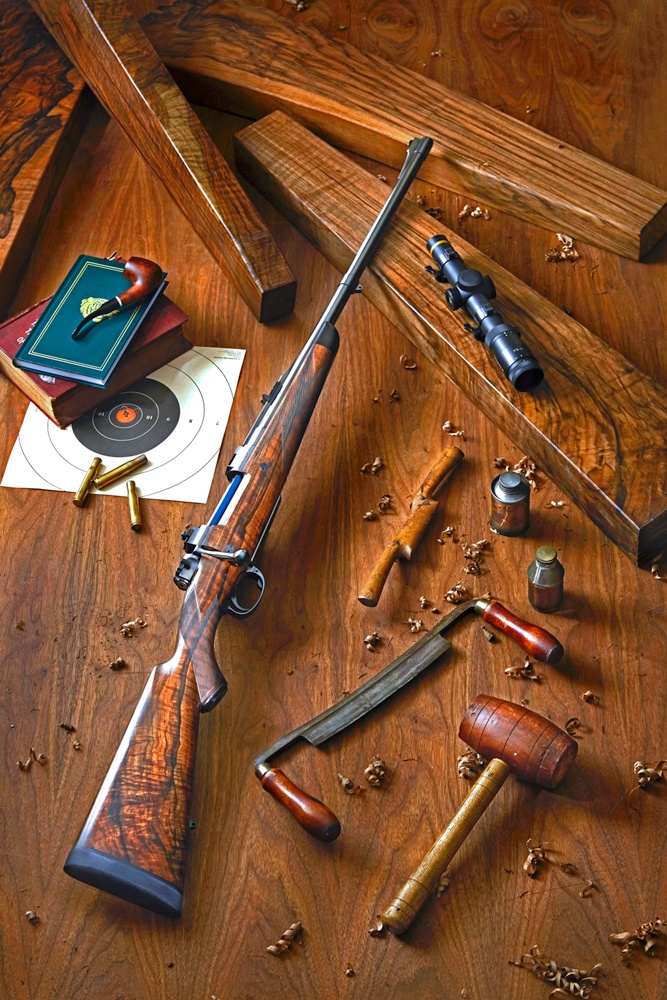
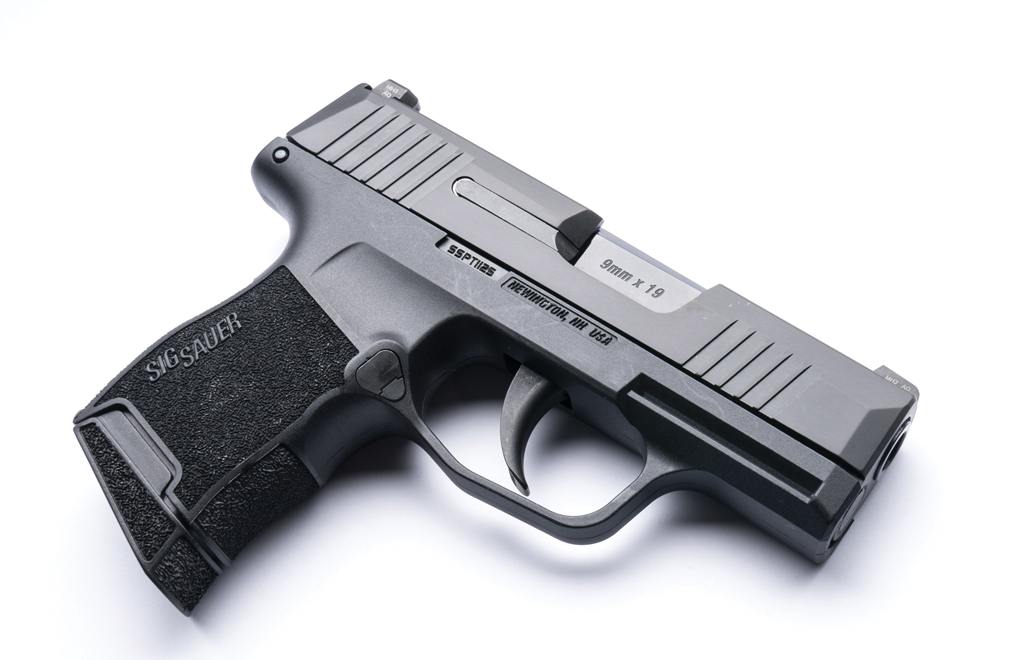
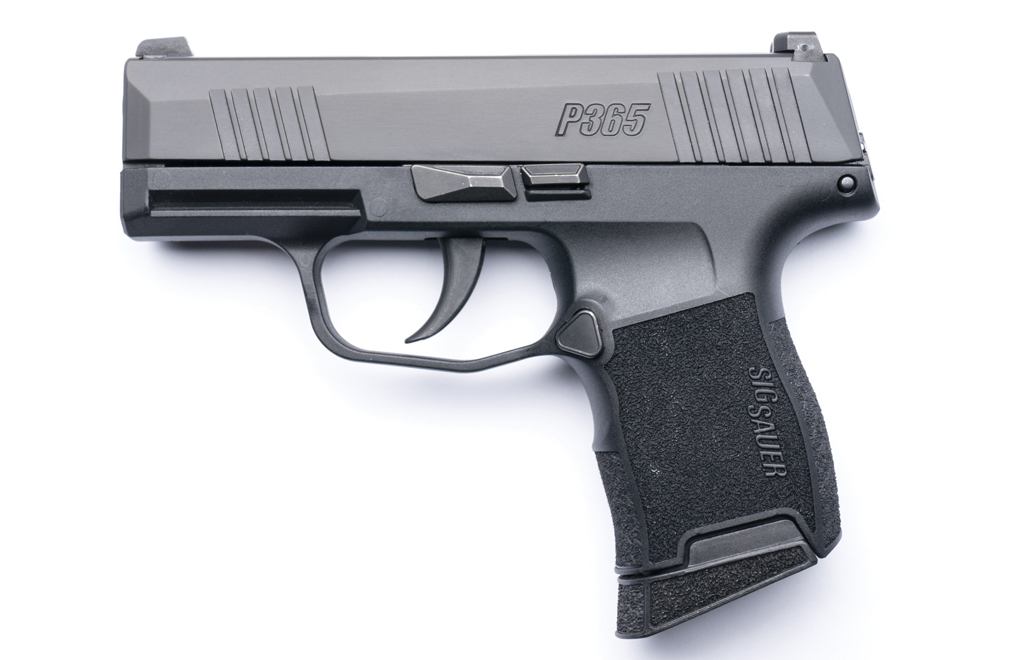
Looking to go armed, but are stuck in the weeds as to what to arm yourself with? Here are 20 excellent concealed carry gun options that will keep you on the defensive.