[imagebrowser id=483] CZ has a vast catalog of firearms, boasting rifles, pistols and shotguns for any occasion. Whether it be for shooting birds on the wing or self defense, the Czech manufacturer has shooters covered. And the company hasn’t sat on its heels on filling every shooting niche out there in 2017; it has a slew of new firearms hitting the market. Here is a look at 10 of the new CZ guns that are certain to hit the bull’s eye the coming year.
Reorganized after the fall of the Iron Curtain from a century-old, communist state-owned gun maker, CZ Firearms has taken the world by storm. Around the globe, the Czech manufacturer’s name has become synonymous with well-crafted and dependable pistols, rifles and shotguns. Gun Digest Book of CZ Firearms pulls back the veil on the iconic company and its guns, arming you with the definitive resource for everything CZ. Get Your Copy Now
[imagebrowser id=482] It’s true: A shooter can never have too many guns. And he can’t have too much gun gear, either. Thankfully, we have an endless supply of new shooting accessories that make our time on the range or in the field a little safer, a little more fun and a little easier. You may not realize it, at least not yet, but you need better hearing protection, a new suppressor, or maybe a new sight system for your favorite AR. Whether you hunt, shoot for fun or want to protect your loved ones, there’s lots of stuff out there that deserves a place in your home or garage. Here’s a look at some of the best new gear.
Make Your AK a Modern Masterpiece With the release of the Gun Digest Guide to the Modern AK, no longer is the Russian-designed AK-47 rifle merely a cobbled clunker pressed into service by dusty rebels in Third-World war zones. Now, author Jorge Amselle presents the AK as a state-of-the-art firearm, with endless accessories and upgrades, used by the most elite shooting schools. Get Your Copy Now
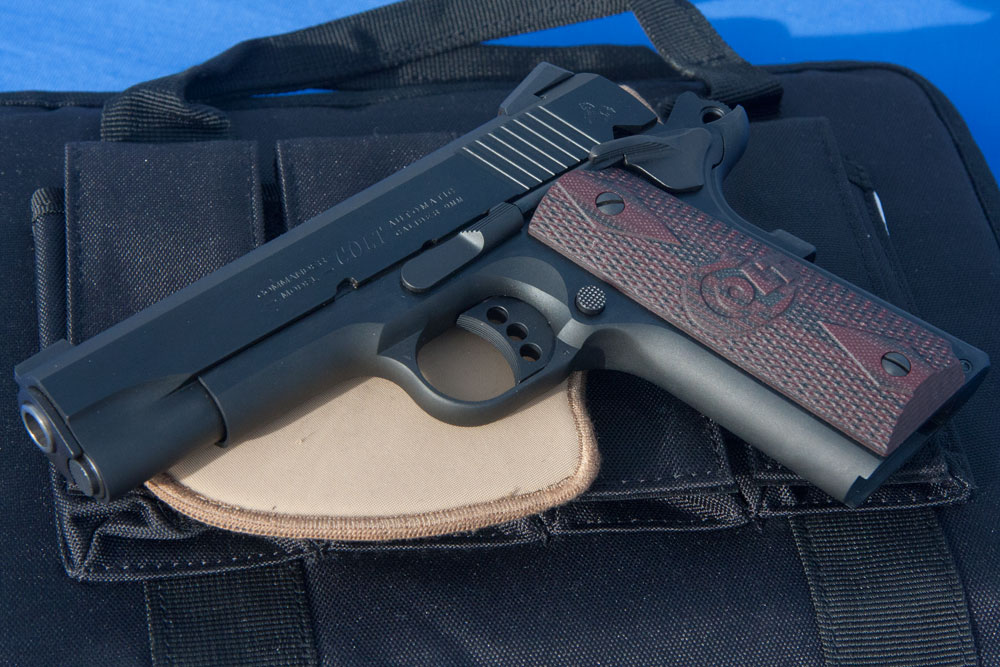
In the years following World War Two, there was a desire to move away from the classic M1911 pistol. The standard 1911 was heavy and slightly unwieldy to some, and the government was looking for something lighter, smaller and, perhaps most importantly, something chambered in the NATO standard 9mm. The Commander was Colt’s answer for a more compact, lightweight 1911 when it introduced the original model back in the ’50s. In the many years since, the company has only continued to improve upon and upgrade that initial concept.
The American manufacturer introduced several different variants of the Commander model, including the Combat Commander in 1970. This was an all-steel version of the typical aluminum-framed Commander, which was re-named the Lightweight Commander.
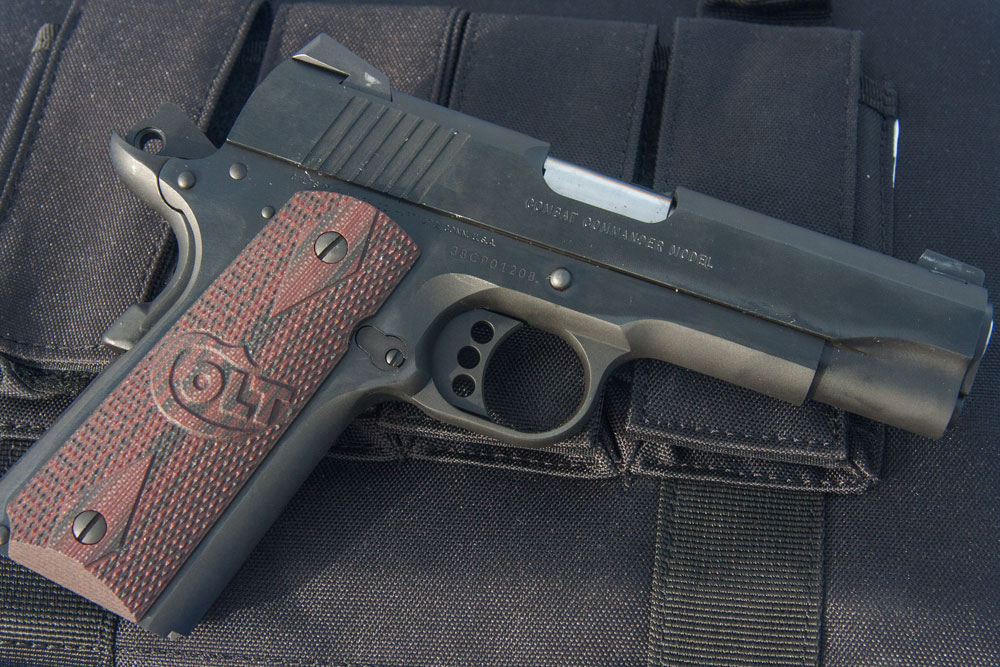
This past year, Colt brought out a new, modernized version of the Lightweight Commander, incorporating the company’s excellent Dual Spring Recoil system, genuine Novak sights and other upgraded features. This year, Colt is giving its Combat Commander a similar treatment to bring it up to date.
Officially announced just ahead of the 2017 SHOT Show, the new Colt Combat Commander made its big debut at Industry Day at the Range and on the floor of the show itself. However, I was lucky enough to be among the media who got to see the gun early at Colt’s Media Day event at Gunsite back in November of last year.
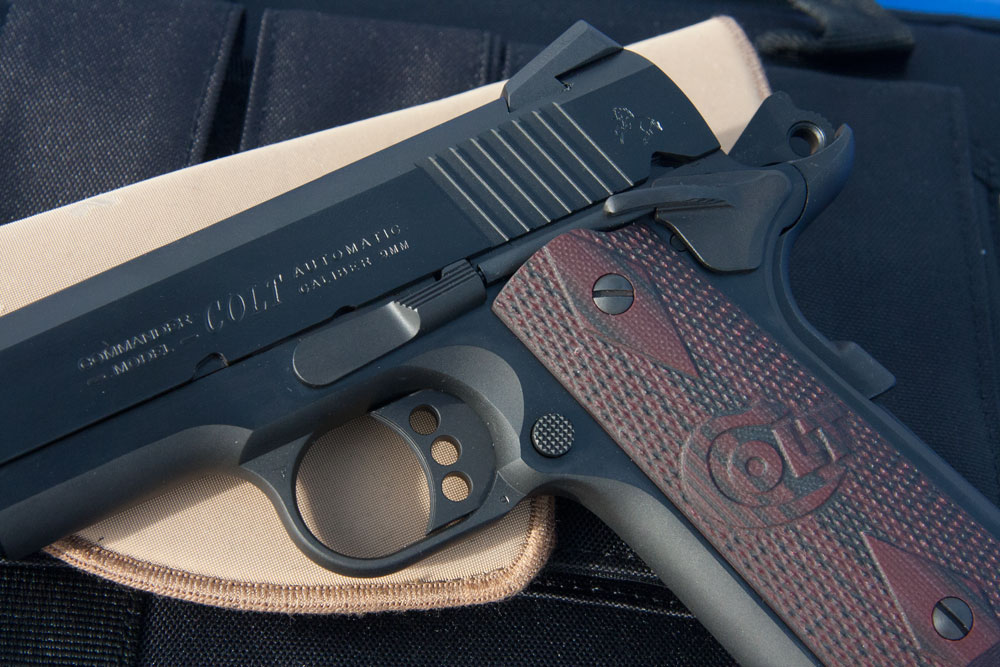
The newly redesigned Combat Commander features a blued carbon steel frame and slide, as well as a 4.25-inch polished, stainless steel barrel. The shorter barrel contributes to an overall length of 7.75 inches, or .75 inches less than a full-size 1911, which makes it a decent option for those who carry.
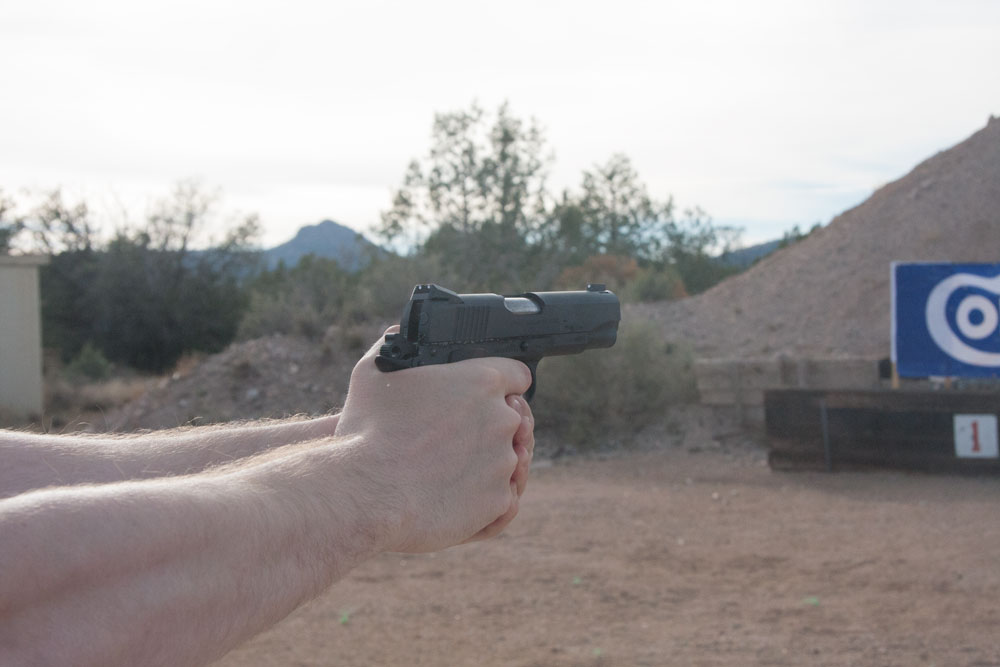
As with Colt’s Competition pistol and Lightweight Commander introduced in 2016, this new Combat Commander utilizes the manufacturer’s impressive Dual Spring Recoil system, which helps reduce felt recoil, improve control and increase recoil spring life. Having shot most of the pistols in Colt’s recent lineup – which incorporate the Dual Spring system – I can say it does feel like there’s a noticeable difference in recoil when compared to other 1911s I’ve shot. This seems particularly true with new Colt pistols chambered in 9mm, which would kick politely anyway, but seem even more tamed with the Dual Spring Recoil system.
Other ergonomic improvements to the redesigned Combat Commander include an upswept beavertail grip safety, undercut trigger guard and custom Colt G10 checkered black cherry grips. The upswept beavertail and undercut trigger guard help ensure a solid purchase on the gun, further improving control and accuracy. Although my time with the Combat Commander was fairly limited at the range, I felt that the gun was very comfortable in the hands, and my hold on the pistol never felt unsteady in any form.
The sights on the new Colt Combat Commander, like the rest of the new Colt 1911 pistols, are genuine Novak sights, and are quite good. Up front is a Novak white dot, while the rear is the company’s excellent Low Mount Carry. These sights, paired with a pretty solid 4.5- to 6-pound three-hole aluminum trigger make for a pistol capable of fairly good accuracy if the shooter does his part.
The newly redesigned Combat Commander is available in 9mm or .45 ACP, with the 9mm model carrying 9+1 rounds and the .45 packing 8+1. Unloaded weight on both models is 33 ounces, and each gun ships with two magazines.
A quality option for those who carry concealed, the Combat Commander is available for $949 in both models, placing it about 50 bucks less than Colt’s Lightweight Commander.
Tactical rifles have been all the rage for more than decade or so. And their rise to the top of the firearms world has pushed the accessories market to keep pace. This impact has been especially felt in the world of optics.
Scope manufacturers have worked overtime producing quality close- to mid-range optics meant to milk the most performance out of AR-style rifles and the like. Bushnell has been one of the manufacturers at the forefront, producing a slew of aiming solutions to keep modern semi-automatic rifles on target, shot after shot.
The Kansas company hasn’t rested on its laurels in 2017, introducing five new optics that should hit a bull’s eye with tactical rifle shooters.
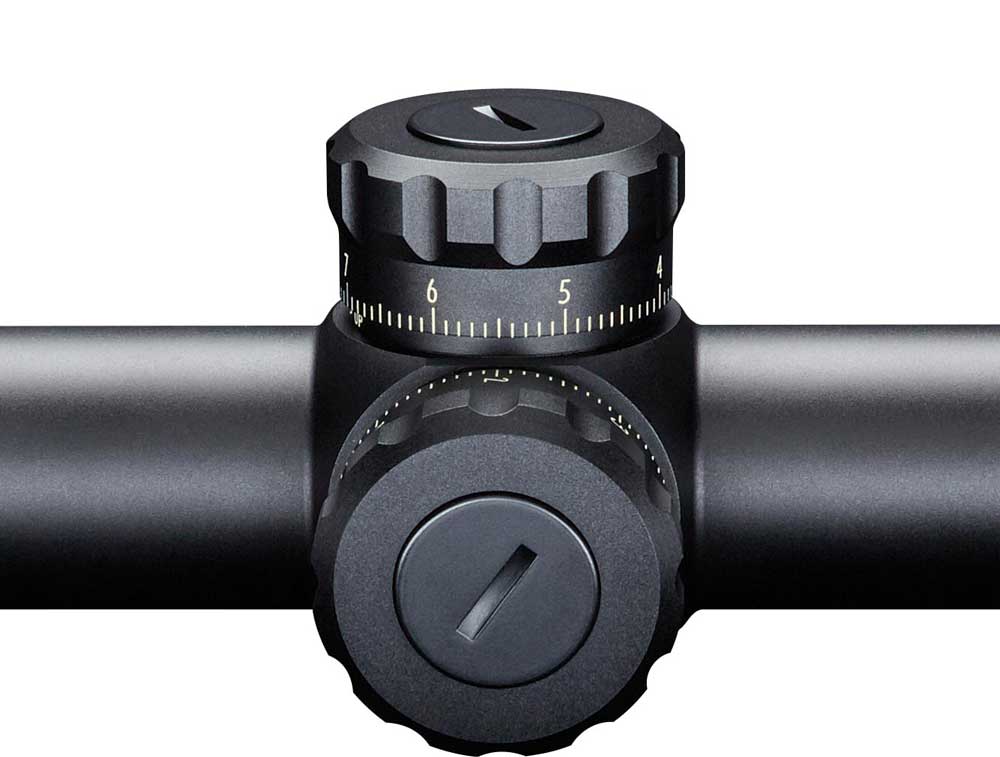
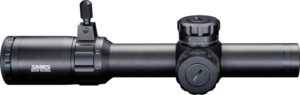
Elite Tactical SMRS Built off the input of military, law enforcement and 3-Gun competitors, the Elite Tactical SMRS (Short Midrange Riflescope) offers shooters a versatile optic. The SMRS is a 1-6.5x variable powered scope, allowing for quick target acquisition for up-close work. However, at its highest setting, the optic is more than competent at handling precision shooting out to most acceptable ranges for a tactical rifle. The SMRS features the ThrowDown Power Change Lever, meant to make fast magnification adjustments on the fly. The lever folds down, to stay out of the way when not needed, and is knurled to ensure that it’s easily manipulated. Bushnell has outfitted the SMRS with its mil-based illuminated BTR-2 reticle on the front focal plane. The red-laser illumination brightness adjustment has an off setting between each level, giving shooters the ability to power down the scope with a single push of a button. The scope features a 30mm forged aluminum alloy one-piece tube, RainGuard HD lens coatings and T-Lock locking target turrets. The MSRP on the Elite Tactical SMRS is $1,822.45.
Enrage Red Dot The Enrage Red Dot boasts the longest battery life of all Bushnell’s red dot optics, ensuring performance no matter how long a shooter is in the field. The optic is ideal for close-range engagements, with the 1x magnification red dot utilizing a 2-MOA illuminated dot. The size of the dot also makes it ideal for mid-range work, especially if the unit is coupled with Bushnell’s new 3X Magnifier, which simply mounts behind the optic. The Enrage features eight brightness settings, allowing shooters to adjust the dot to meet the given lighting situation. The multi-coated optics ensure the sight collects ample light from the environment, giving shooters a clear, crisp view of their target, with plenty of contrast. The MSRP of the Enrage is $239.99.
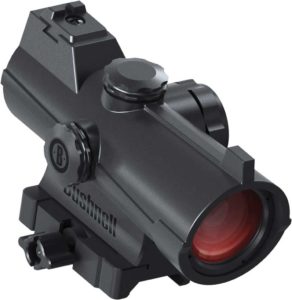
Incinerate Red Dot The Incinerate Red Dot allows shooters to engage targets quickly, featuring Bushnell’s new circle dot reticle. The 25-MOA circle naturally draws the shooter’s eye to the 2-MOA center dot, thus making it ideal for shooting on the fly and engaging multiple targets. The reticle has eight brightness setting, allowing shooters to adjust the illumination to meet the environmental conditions. The 1x magnification optic also has an off setting between each level, giving shooters the ability to power the unit down with a single push of the button. The Incinerate is outfitted with multi-coated optics, giving it superior light gathering capabilities. It includes a hi-rise mount and is compatible with Glock dovetail sights. The MSRP of the Incinerate is $239.99.
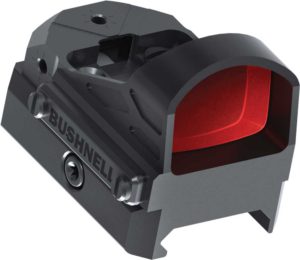
Engulf Micro Reflex Sight When speed is the name of the game, it’s hard to beat a reflex sight. The new Engulf Micro Reflex Sight Red Dot looks to get shooters with close-up work on target, and fast. The demure 1x magnification unit is small enough to fit on a pistol, as the slightest sight in Bushnell’s AR Optics line. But it is rugged enough to be the aiming solution for a tactical rifle, especially ones that will engage multiple targets in quick succession. The Engulf projects a 5-MOA dot through its fog-, water and shock-proof optics, allowing shooters to quickly draw a precise bead on their target. The unit is compatible with Glock Mount Plate No. 1. The Engulf’s MSRP is $254.95.
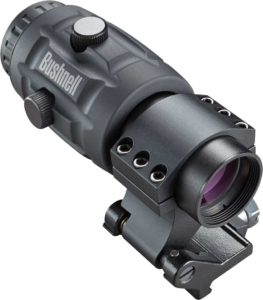
AR Optics 3X Magnifier The AR Optics 3X Magnifier offers shooters the ability to engage mid-range targets without having to veer away from the red dot optics. The Magnifier simply mounts behind any red dot optic, powering it up to 3x magnification. It also features a handy flip mount, which gives shooters the ability to engage the magnifier when it is needed and flip it out of the way when it’s not. The water-, fog- and shock-proof unit is outfitted with fully multi-coated optics, giving the Magnifier superior light-gathering abilities. And it is made to be functional for both lefties and righties with its ambidextrous design. The MSRP of the AR Optics 3X Magnifier is $258.95.
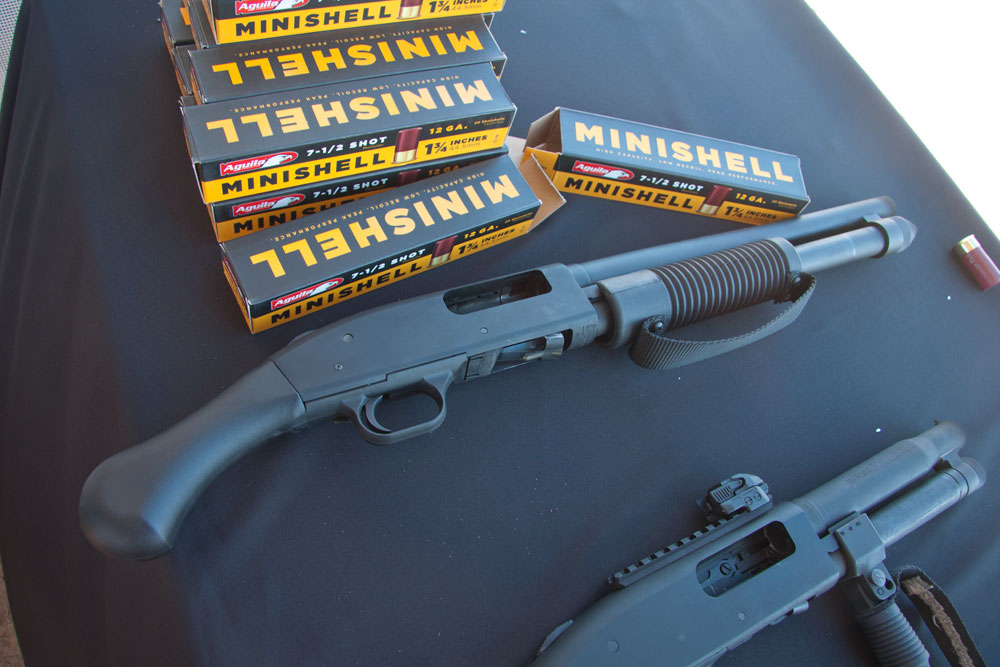
Looking for something similar to a short-barreled shotgun without the NFA hassle? Check out Mossberg’s new 590 Shockwave Non-NFA firearm.
Many people over the years have avoided purchasing or building a short-barreled shotgun (SBS) because of the tax stamp and NFA paperwork required to do so. Well, Mossberg’s new 590 Shockwave represents a way to get pretty darn close without any of the hassle of a typical SBS.
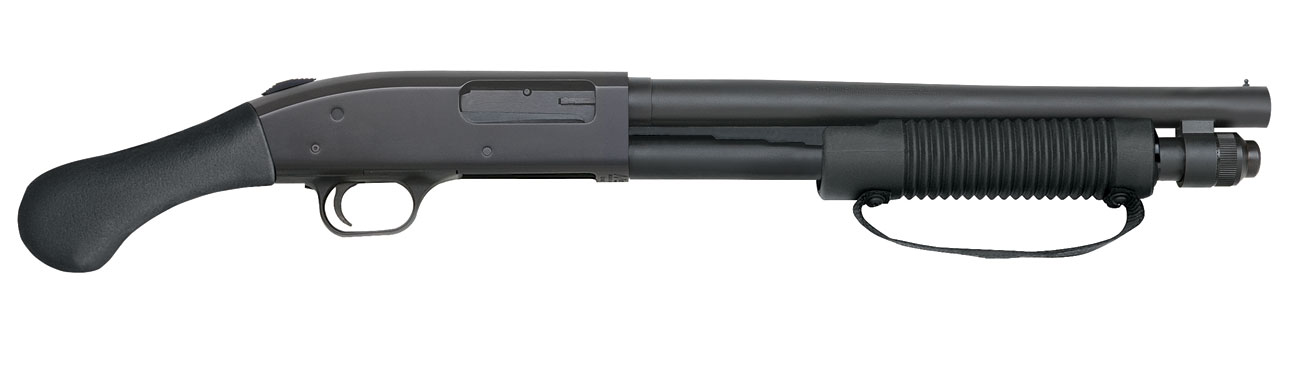
With a barrel length of 14 inches, the Mossberg 590 Shockwave is certainly shorter than most standard 18-inch barreled shotguns. However, this, paired with its overall length of 26.5 inches means that instead of falling into the BATFE’s (Bureau of Alcohol, Tobacco, Firearms and Explosives) SBS category, it actually lands within the organization’s general “Non-NFA Firearm” classification. Because of this, the firearm requires no tax stamps for transfers, meaning less inconvenience for buyers.
At its core, the new 590 Shockwave still relies on Mossberg’s proven pump-action design, which utilizes non-binding twin action bars, positive steel-to-steel lock-up, an anti-jam elevator, dual extractors and the company’s classic ambidextrous top-mounted safety. And of course, the anodized aluminum receiver is lightweight and durable, and as an added bonus, the magazine tube features a clean-out cap.
What makes this gun especially unique, apart from its shorter, 14-inch barrel, is its pistol grip and forend, both made by Shockwave Technologies – hence, the Shockwave name for this model. The grip has an enhanced textured finish, as well as a “bird’s head” style profile. This allows for increased stability and control when firing the 590 Shockwave. Manufactured from glass-filled polymer with a non-reflective black finish, the grip is durable and has a length of 5.25 inches, helping the gun hit that 26.5-inch overall mark. The forend, on the other hand, is a cob-style, tactical design that incorporates a strap, also for improved control and smoother operation. It also helps keep your hand where it should be – on the forend, and not forward toward the muzzle.
The 12-gauge Mossberg 590 Shockwave Non-NFA firearm accepts 2 3/4- and 3-inch shells and has a 6-round capacity. The 14-inch barrel wears a matte blued finish and features a bead sight.
The MSRP on the new Mossberg 590 Shockwave Non-NFA firearm is currently listed at a very affordable $455. For this reason, it should be an attractive option for anyone looking for a compact, capable scattergun option for home defense or fun trips to the range.
In a disclaimer section of its news release on the new 590 Shockwave, Mossberg also encourages potential buyers and users to check their state and local laws to ensure that the firearm is legal in their area. While it’s classified as a “Non-NFA firearm” by the BATFE on a national level, classifications may be different at state and local levels in some locations, which is why the company recommends (and we would second this) checking with local authorities on the legality of the 590 Shockwave in your locality.
For more information on the new Mossberg 590 Shockwave Non-NFA firearm, check out the specifications below, or visit the Mossberg website.
The Shooting, Hunting and Outdoor Trade (SHOT) Show is the largest gathering of its kind. The event is held at the Sands Expo Center in Las Vegas and boasts over 65,000 attendees from over 100 countries. Within this sea of products, we sorted out the good from the bad to bring you the 10 best products of SHOT 2017. And the winners are…..
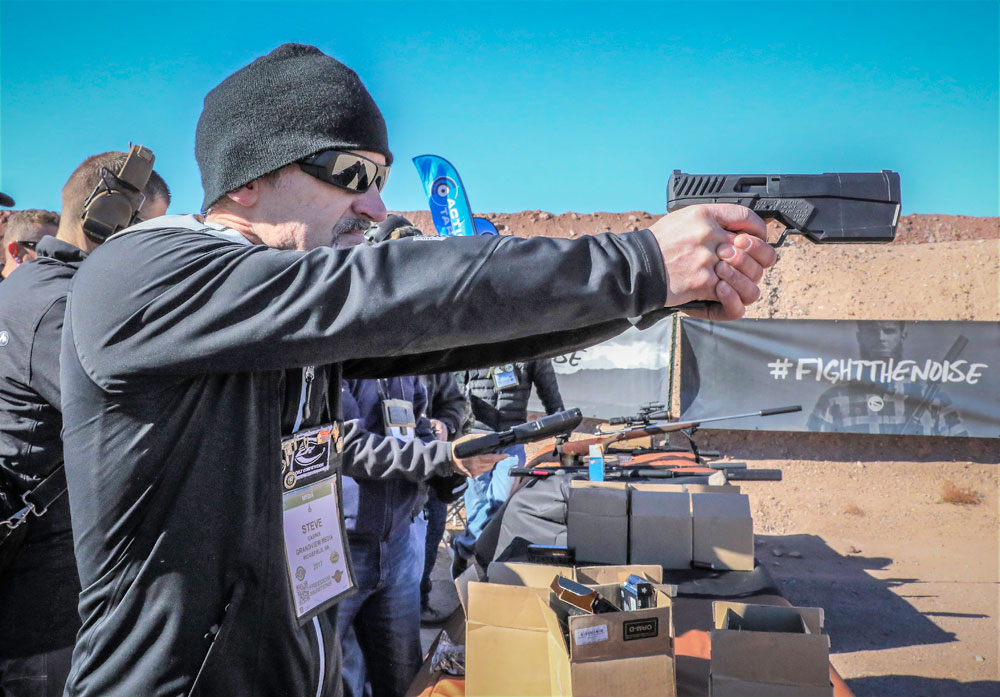
SilencerCo Maxim 9 SilencerCo has a habit of leapfrogging the competition. The company’s products are consistently redefining what is considered leading edge, and this year is no exception. SilencerCo’s integrally suppressed handgun, the Maxim 9, was introduced last year, but it was still in development at that time. This year the Maxim 9 goes into production, and some were available at the SHOT Show Industry Day at the Range for testing.
In a word, the Maxim 9 is stunning. It is well balanced, extremely quiet, and smartly designed—form has followed function. Designers paid attention to details, like the functional, ambidextrous stippling for the support thumb right where it should be. The Maxim 9 can be configured in a short or long version by removing two sections of the integrated suppressor. The trigger pull is crisp, and the pistol’s sound is amazing. It is extremely quiet for the shooter and hearing safe with all 9mm ammunition in the standard configuration (also hearing safe with subsonics in the short configuration).
There were many new pistols at SHOT this year, but there is only one integrally suppressed, production-ready pistol, and that is the Maxim 9. ($1,499; SilencerCo.com)
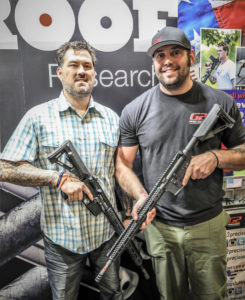
G2 Precision Mk12CF When you mention the name Marcus Luttrell, several things come to mind: decorated Navy SEAL, “Lone Survivor,” and “never quit.” Given Luttrell’s reputation, for him to get behind something makes one take notice. Luttrell and Garrett Golden, a former SEAL teammate, founded G2 Precision and are now taking orders for a precision rifle based on the Mk12 rifles designed and used by SOCOM operators.
“[The Mk12CF] is the gun I would want to take with me into battle,” Marcus said, which is significant coming from someone who made a living as a gunfighter.
While not inexpensive at $2,899 (MSRP), the components are of the highest quality: Proof Research carbon fiber barrel, CMC trigger, a titanium muzzle brake, and more. Each rifle is personally inspected by Garrett Golden himself. Several of the components are serialized and engraved with “TNQ” for Team Never Quit, an organization started by Luttrell. It is rumored there will be a limited run of these rifles, and they are sure to become collector’s items as much as they are competition, defense, or hunting rifles.
Lower/Upper: 7075-T6 Type III hard anodized aluminum, G2 ambi selector, G2 forward assist
Barrel: Proof Research 18-inch carbon fiber wrapped 416R stainless steel barrel in .223 Wylde, 1:8-in. twist, rifle-length gas system, match grade, hand lapped; titanium brake, ½-28 threads
CMC curved two-stage trigger 2-pound take up and 3-pound release, G2 15-inch Recce M-Lok 6061-T6 handguard, G2 nickel boron-coated BCG, Magpul SPR buttstock, Ergo grip, AXTS Raptor ambi charging handle. ([email protected])
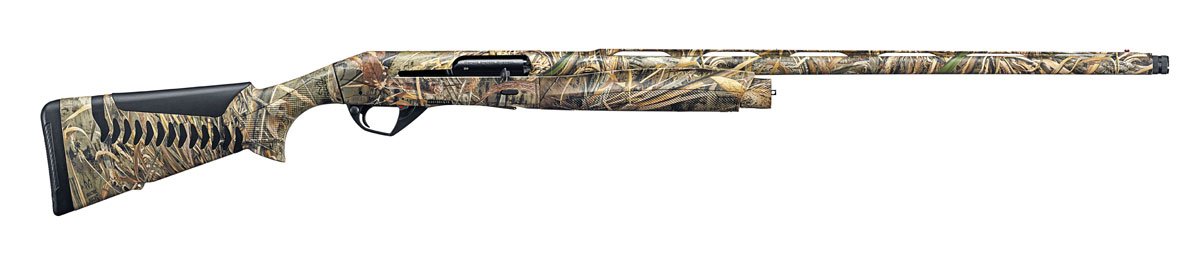
Benelli Super Black Eagle 3 One of the best shotguns of the SHOT Show was the redesign/update of the Benelli Super Black Eagle 3. The SBE was cutting edge 26 years ago when it was introduced, but it was due for another update. All of the refinements to this proven design are well thought out. Benelli had this gun at Industry Day at the Range at SHOT; it handles like an upland shotgun, kicks politely, and looks like a duck gun should (available in several camouflage patterns).
The action locks up better now with a spring assist to eliminate the embarrassment of an open bolt. The safety, bolt release, bolt handle and trigger guard are all enlarged for ease of use with gloved hands. The loading port is also opened up similar to those used in 3-gun competitions for faster loading. A third-generation ComforTech stock and CombTech cheek piece make this a very comfortable gun to shoot. Available in 26- or 28-inch barrels, the new SBE3 only weighs a hair over 7 pounds, and it handles shells up to 3½ inches. ($1,899 in black, $1,999 camo; BenelliUSA.com)
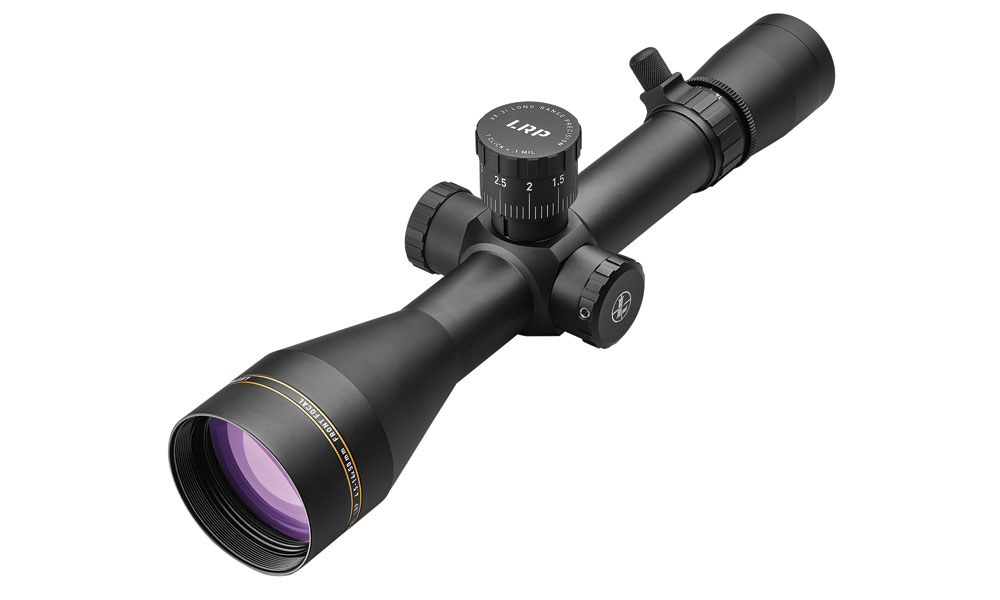
Leupold VX-3i LRP This year at SHOT there were many, many new high-end scopes. While it was tempting to award Best Riflescope there, the fact is they cost a couple thousand bucks and are out of reach for most shooters. Enter Leupold. This made-in-the-USA company has packed its new LRP riflescope with features without breaking the bank.
Starting with its VX-3i scope, Leupold has added an exposed elevation turret with zero-stop and a power ring lever. The capped windage turret has a thread protector for those who want that knob exposed at all times. What makes this the best riflescope of SHOT 2017 is a shooter can pick up a first focal plane mil 4.5-14x50mm zero stop scope with the Tactical Milling Reticle for $1,100 (MSRP). This will get anyone started in precision rifle series matches for a lot less money, and it still comes with the best warranty you will never need. (Leupold.com)
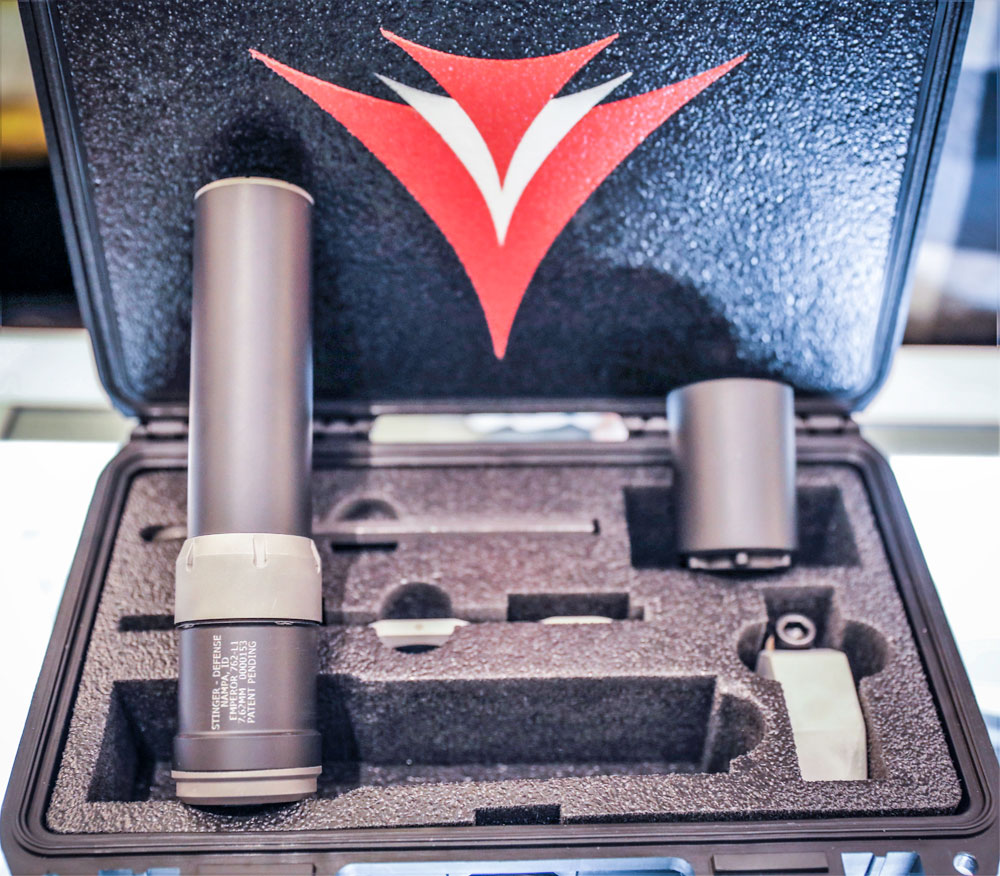
StingerWorx Emperor 556-L2 Suppressors are hotter than ever, and SHOT 2017 was loaded with new models. The one that stood out from the pack was the Emperor 556-L2 by StingerWorx. What’s different about the Emperor 556-L2, and StingerWorx suppressors in general, is the titanium blast chamber design. This patent-pending chamber directs gasses to two chambers, thereby eliminating the need for heavier materials. This design makes it very light. The baffle stack itself is not welded, and the suppressor is full-auto rated.
An Over the Barrel expansion Chamber (OBX) quiets the suppressor even more without adding extra length. They include a tool for removing a suppressor that is “carbon welded” on after extended fire. This is a thoughtful value add because suppressors get stuck and usually become marred in the process of removing them by force. This tool lets you avoid that problem. Finally, the baffle stack is replaceable without having to send serialized parts into the factory. (StingerWorx.com)
MSRP: $995 Length: 7.5 inches Weight: 12.8 oz, 16.7 oz with OBX Diameter: 1.75 inches
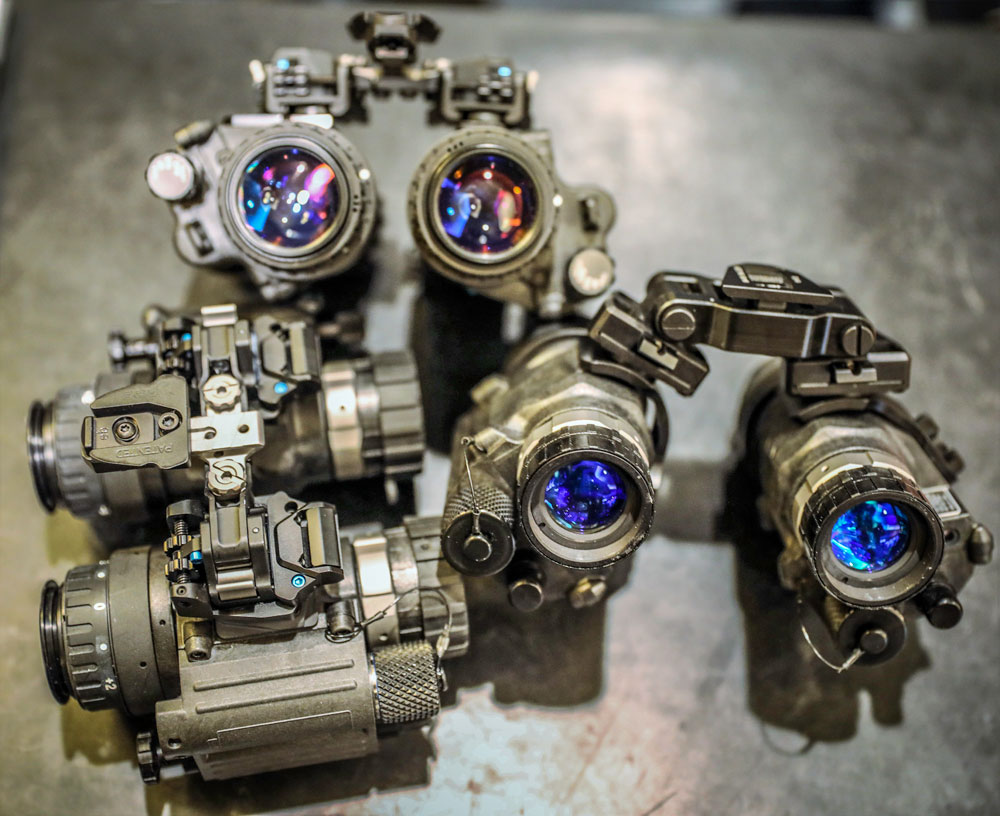
I2 Technologies and Systems Integrations PVS-14 More and more companies are offering consumer night vision as military contracts are drying up. As technology has advanced, crisp night vision images have become more available to nighttime predator and hog hunters. In recent years, however, few true advances have occurred in night vision, but the DEP PVS-14 from I2 Technologies and Systems Integrations changes that.
Peter Lesbo of I2 Technologies had these at SHOT 2017 and the clarity was nothing short of amazing. The image color was blue, similar to white phosphor night vision, but it was much, much clearer. It can best be described as high definition black and white television with a blue tint to it.
The secret of the DEP is the Photonis intensifier tube. It is described by the manufacturer as “a 40 percent improvement in detection/recognition/identification range over any other night vision available,” as reported by an experienced in-theatre operator. We can’t verify this claim, but based on just one session of amazed use, the assertion is likely accurate.
Another feature is the auto-gating speed which protects the unit and the user from temporary blindness in the presence of sudden white light—the day covers can be removed without harming the unit or losing any situational awareness. Seeing is believing, and this unit is very hard to believe in person! All of this goodness will run you $4,750 (MSRP) for a DEP outfitted PVS-14 monocular. (ISquaredNightVision.com)
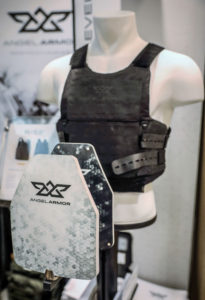
Angel Armor Body Armor Choosing Angel Armor for this “best of” list was easy. Selecting among the manufacturer’s innovative products was far more challenging; it has a lot going for it. The company makes products to preserve the lives of our nation’s police officers. They do so by focusing on effectiveness and practicality. While body armor is not a necessity to everyone, it is for law enforcement and people prepping for when the SHTF.
As a practical matter, body armor is usually heavy, as it is often comprised of heavy metal plates. Angel Armor has brought lightweight composite armor to the market in a package that is comfortable and reasonably affordable. The company’s magnetic snap paired with the Truth Snap plate system is a modular two-plate system that offers protection up to .44 magnum with the thinner plate in place and .308 rifle-level protection with both plates installed.
The 8×10-inch Shooters Cut two-plate system weighs only 2 pounds. The idea is that an officer can roll around with the thin plate all day and, if called into a situation involving a rifle threat, he can simply snap on the additional plate. Although Angel Armor offers an excellent vest of its own (RISE vest), the plates fit in most popular body armor vests out there. MSRP for the two-plate Level III protection in the Shooters Cut is $461. (AngelArmor.com)
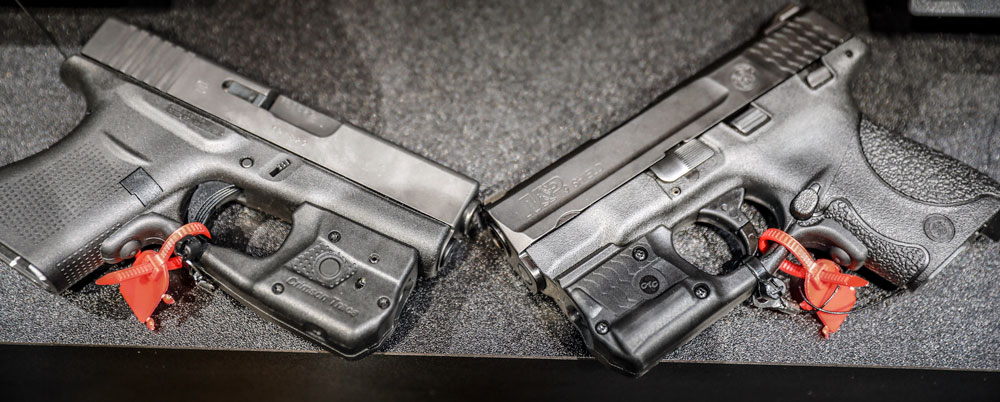
Crimson Trace Laserguard Pro The utility offered by the Crimson Trace Laserguard Pro light/laser combination is hard to beat. Most shooters shoot more effectively in a short period of time when an aiming laser is added to a pistol. The Laserguard Pro’s 150-lumen light integrated with the industry standard Crimson Trace aiming laser is compact, effective and intuitive to use. When installed, the unit looks like it is part of the gun.
The Laserguard Pro is offered in models that fit the most popular compact pistols including Glock, Smith & Wesson and Springfield Armory. Technological advancements allow the red and green laser models to be the same size, which is also a plus. The lasers have windage and elevation adjustments and a master on/off switch. The red version has a 4-hour run time, versus 2 hours for green (if the light/laser were on continuously). MSRP is $279 for red, $379 for green laser, and only an additional $20 for a Bladetech holster. (CrimsonTrace.com)
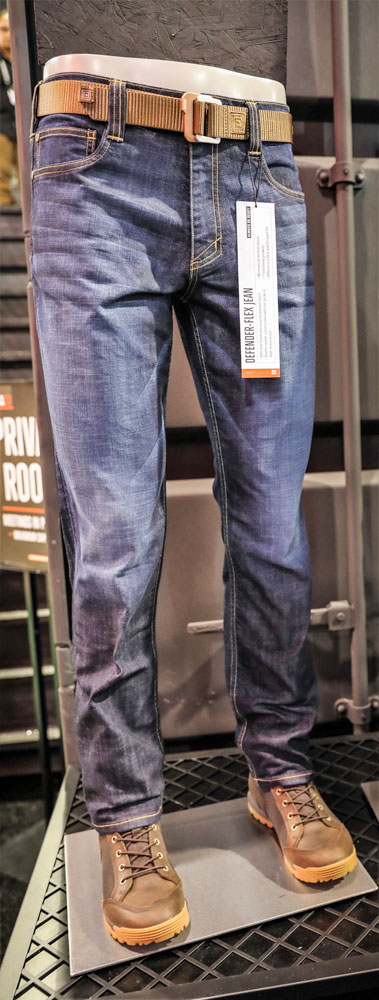
5.11 Tactical Defender-Flex Jeans There were plenty of clothing introductions at the SHOT Show, including camo, tactical, cold weather, warm weather, and on and on. To make the list, clothing has to be practical and innovative at the same time. The 5.11 Defender-Flex jeans fit that bill. Once the decision to carry a concealed firearm is made, people often find their usual clothes just don’t cut it for carrying. After 10 years of research and development, 5.11 Tactical has you covered.
Defender-Flex jeans are good-looking, purpose-designed jeans for carrying concealed. The material is a flexible rip stop cloth that looks good and feels good too. It moves with you, so it doesn’t have to be baggy to be functional. Even the pockets are engineered to perform. The front watch pocket is enlarged to hold a pistol magazine or knife, and there are AR magazine pockets in the back (besides the regular back pockets). Available in men’s and women’s styling and a variety of colors, the Defender jeans are an absolute must for any concealed carry wardrobe. ($69.99; 511Tactical.com)
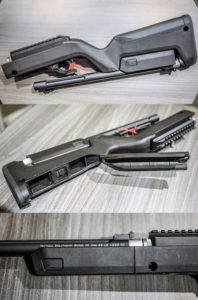
Magpul X-22 Backpacker Stock This is a broad category, and this year’s winner for Best Bug Out Accessory is the Magpul X-22 Backpacker Stock. A takedown 10/22, such as the Tactical Solutions 10/22 Takedown Stock and Barrel, is perfectly paired with this stock. When broken down, the barrel fits into the underside of the stock along with the fore end. Extra magazines or a suppressor may be stowed in a compartment in the top of the buttstock. The entire thing easily fits into a small day pack or bug out bag. ($109.95; Magpul.com)
There’s nothing quite like a precision plinker pistol and a load of .22 LR rounds. Back in the 1980s, Browning captured a good share of this market with the introduction of its Buck Mark pistol. The 10-round semi-automatic, blowback handgun had a way of finding the mark again and again, making it ideal for rimfire target competitions, weekend shooting fun and sending varmints to the great beyond. Browning has continued to build the Buck Mark line over the years, producing a plinker for any occasion. And 2017 is no different, with the Utah-based gun company rattling off eight new models of what many consider rimfire pistol perfection. Here’s a look at the new Buck Marks heading your way.
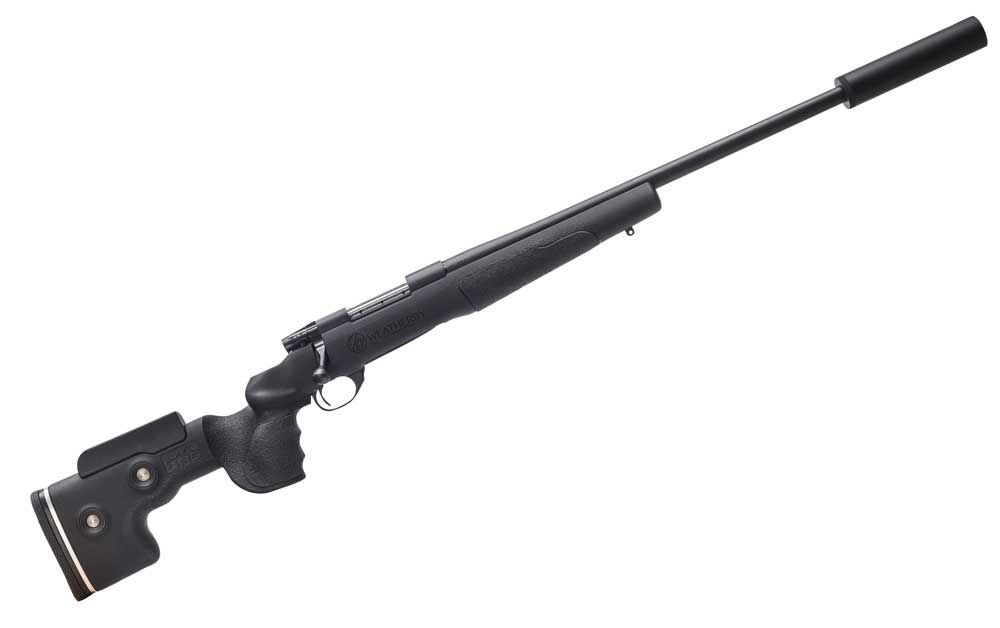
Weatherby’s newest tactical bolt-action, the Vanguard Adaptive Composite Rifle.
Weatherby has been churning out rifles for 72 years, with many of its long guns reaching icon status. The venerable Mark V and other tried-and-true models have trudged after moose in Canada’s great north woods, chased gazelle across Africa’s endless veldt and collected their fair share of American whitetails.
The California gunmaker’s relentless pursuit of quality, wrapped up in handsome burled walnut and rosewood has served them well. But in recent history, Weatherby has turned its studied eye and manufacturing prowess to another, fast-growing corner of the firearms market.
Precision tactical bolt-actions have grown in popularity as more non-hunters have joined the shooting world. In response, the West Coast company has started to make a marked turn the past two years to rifles meant to print sub-MOA cloverleaf groupings from a country mile.
Weatherby’s most recent offering in this niche is the Vanguard Adaptive Composite rifle. This is the manufacturer’s third tactical bolt-action and the second in the Vanguard line of rifles, joining the Vanguard Modular Chassis and Mark V Tacmark. And the rifle — available in .223 Rem., 6.5 Creedmoor and .308 Win. — appears to have the features that should raise the eyebrows of the precision minded.
The VAC not only features a fully adjustable stock, but also a vertical grip for greater control of the rifle.
The heart of the VAC is its composite target stock, featuring a push-button system that makes tailoring the dimensions of the rifle a snap. The stock is fully adjustable, allowing 1.25 inches of play in the length of pull, as well as fully modifiable drop at comb and heel. These are key adjustments for shooters to intuitively shoulder a rifle and hold it on target with a minimum of movement.
The stock features a widened forend, allowing shooters to build a more solid rest when taking a shot. And it has a full vertical grip with rubberized panels to ensure a strong, positive grip, thus, more control over the rifle.
Weatherby has opted for its heavier No. 3 contour barrel for the VAC, 20 inches in length for every caliber. It has also threaded the muzzle, allowing for the quick addition of a suppressor. The .223 Rem., has a ½-28 thread pitch, while the 6.5 Creedmoor and .308 Win., both have 5/8-24 pitch — which opens the rifle, regardless of caliber, to a great selection of suppressors.
The VAC comes equipped to go quiet, with a threaded barrel.
Weatherby has outfitted the VAC with its Vanguard action, which has a one-piece machined bolt body, fully enclosed bolt sleeve and dual front-locking lugs. The rifle features the company’s two-stage adjustable trigger, which can be dialed down to 2.5 pounds.
As far as MSRP, the gun presently has a price tag of $1,269 from the factory — cheaper once at the gun store. This is not a bad deal in the world of precision rifles, which can quickly tax a shooter’s wallet. Only time will tell if long-range marksmen and tactical enthusiasts make Weatherby’s VAC as popular as the company’s previous offerings.
Solving the glass equation can put shooters in one heck of a conundrum. Optics, including rifle scopes, are one of the key accessories that can do more than any other piece of gear to put a shooter on target, and they’re pretty much a necessity for long guns. One of the troubles today is that a good piece of glass can cost more than the rifle it’s mounted on.
What’s the uncompromising marksman to do? One great solution comes from TruGlo and a new, versatile optic that’ll fit the needs of many hunters and shooters alike. The Texas-based company’s TruBrite 30 Hunter offers shooters the precision required to make the shot hit the mark, without breaking the bank along the way.
Gun Digest Editor-in-Chief Eric Conn put TruGlo’s newest piece of glass, which retails for around $100, through its paces in a recent Firing Line episode and was more than impressed.
The scope’s coated optics and 24mm objective lens produced crisp, clear and bright images, but it was its versatility that really set it apart. The TruBrite 30 Hunter is a 1-4x variable power scope, making it ideal for close- to medium-range work. This glass is dynamite, whether you’re drawing a bead on a coyote or plinking away at the range.
The Weaver-style rings (included) make it a snap to mount, while ½-click MOA windage and elevation adjustments make dialing in a breeze.
Mastering the Art of Long Range Shooting by Wayne van Zwoll is a complete guide for long distance shooting, and is perfect for the rifle enthusiast interested in hunting and competitive shooting. Dive into the history of snipers from the Civil War era to present, then explore how to choose the correct hardware for varying conditions. Learn what to expect from the right ammo and bullets for target, military and hunting rifles. Get Your Copy Now
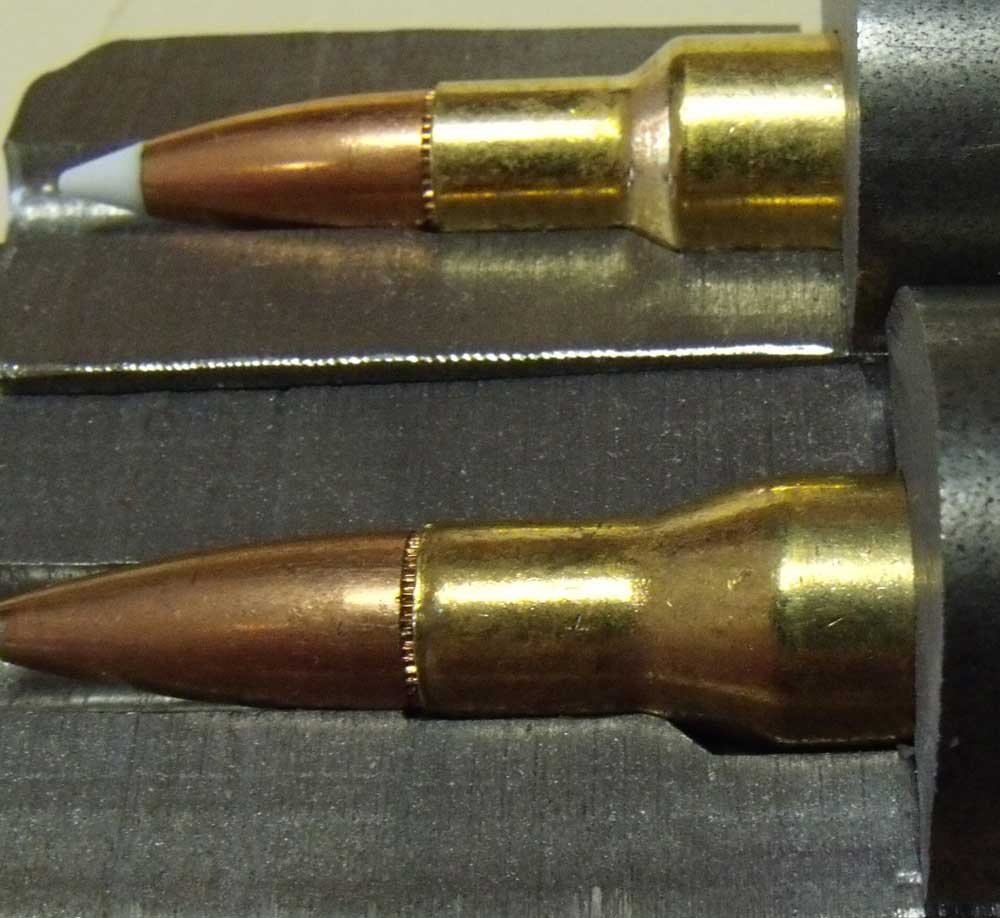
Top is a fully formed case. Bottom is a factory case in the improved chamber.Learn all about P.O. Ackley and his contributions to the firearms world with P.O. Ackley: America’s Gunsmith.
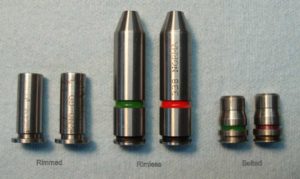
Rimless and rebated cases are easy to fireform for Ackley chambers if the headspace is correctly set as described earlier in this chapter. You can fire factory ammunition for the parent caliber in the chamber with no ill effects. The result will be velocity slightly reduced as compared to firing the same load in a standard chamber. This loss of velocity is primarily as a result of energy being used to form the brass, secondarily because the larger volume of the improved chamber requires more powder to get the same velocity.
Rimmed or belted designs headspace on the rim or belt respectively so you can fire factory ammo and in most cases will produce good results most of the time — even though the shoulder is often blown forward. One exception would be using old fired brass: often it is too brittle and will split during fireforming. So using new unfired cases is recommended for fireforming.
If you happen to have a wildcat that requires a large amount of forming, firing factory ammo will sometimes cause an unacceptable loss of brass, resulting in split cases. This happens because the cases expand so quickly that if there is a flaw or weak spot in the brass it will pop like an overfilled balloon. One example of this would be the .219 Zipper Ackley Improved. If you experience this there are two possible solutions. Try annealing the neck and shoulder down the body to as much as half way along the body. Make sure you do not anneal the case head or the thick web area just above the head. Annealing the head will greatly reduce the case’s ability to handle pressure. Once annealed, load the cases as normal and try fireforming a few. Initially don’t load more cases than you are willing to pull bullets from.
Fireform using corn meal or “Cream of Wheat.” George Nonte, in Home Guide to Cartridge Conversions tells how to develop fireforming loads using no bullet. In Custom Cartridges Ken Howell expanded on the concept.
Standard headspace gauges.
First insert a spent primer (for safety) in an unformed case. Fill the case with Bullseye® pistol powder to the top of the neck (DANGER, never to be fired). Then pour this charge into the pan of your powder scale and weigh the charge. Divide that amount by 10, so that 1/10 of the total volume will become your starting load. Now take that 10 percent load for your case and put it in your normally primed case. It may take some testing to get a load that fully forms the case. Tear a single sheet of toilet paper in quarters, insert one quarter as a wad over the powder charge. Now fill the rest of the case with your inert filler (corn meal, or fine ground hot cereal, etc., dry of course). You will want to place a wad of some sort over the cereal so it does not spill. Bees wax, bullet lube, or toilet paper work, it must be light enough so that the wad can be blown down the barrel without doing any damage.
You are ready to fireform a case. Keep in mind that even without a bullet these loads could be deadly, so use all normal gun safety practices. Pointing in a safe direction fire the first load. If it is not fully formed, bump your 10 percent load by one-half grain at a time until you get a fully formed case. It is possible to generate dangerous pressures if you use too much powder in these inert filler loads, so be careful. The interesting thing about this method is that it will often form cases without any loss to ruptures when a factory load will cause ruptures.
L.R. Wallack wrote this method up for American Rifleman. After describing the method he said, “I then did 10 cases with this load with no splits and all formed nicely. Such success has been practically unheard of, as anyone who has formed cases for this wildcat well knows. I have no hesitation, therefore, in recommending the method.”
The new Hudson H9 from Hudson Mfg., a relatively new, Texas-based manufacturer, made a big splash at the SHOT Show this year. Find out more here.
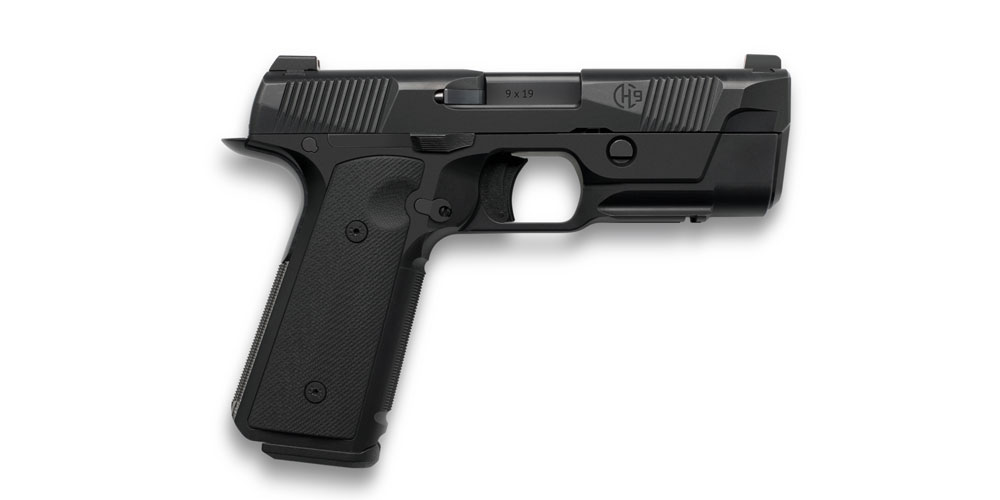
Hudson Mfg., a relatively new, Texas-based manufacturer, made a pretty decent splash at the 2017 SHOT Show with its introduction of the H9 pistol. Something of a hybrid design featuring aspects of a 1911 and characteristics of modern day striker-fired pistols, the Hudson H9 drew a crowd at both the company’s booth at the Industry Day at the Range and its booth on the show floor.
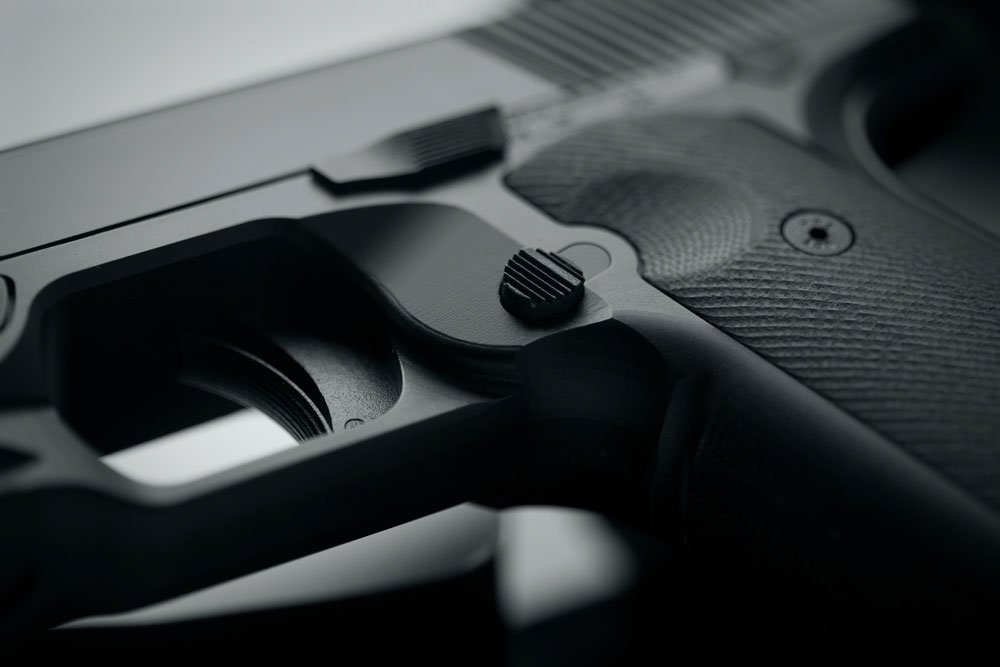
Released just ahead of the show, the new Hudson H9 represents Hudson Mfg.’s flagship product. It features a 1911-style, single axis, straight pull trigger but also incorporates an integrated trigger safety similar to those found on many striker-fired guns. And with a pull weight of between 4.75 and 5 pounds and only 0.115 inches of trigger travel, the gun is slated to be a capable shooter.
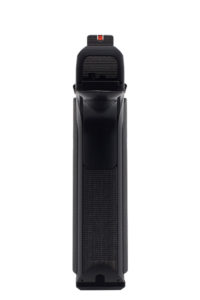
Another truly unique aspect of the H9’s design is its profile. This can be seen clearly just in the gun’s appearance, and the result of this innovative frame is a very low bore axis, which, as many shooters are aware, contributes to less perceived recoil and generally improves accuracy and precision.
The gun’s frame utilizes an insert chassis and the slide is manufactured from stainless steel. The finish is black nitride, which is provided by H&M Metal Processing. These features contribute to a gun that, in addition to being very shootable, is also fairly durable.
The new Hudson H9 design is also user-adjustable, and very friendly to left-handed shooters. The gun features ambidextrous slide stop levers, as well as a reversible magazine catch for right- or left-handed use. For those who prefer a gun with a 1911-style feel, the H9’s trigger can be replaced with a Hudson trigger without the integrated trigger safety, and an external thumb safety can also be added. There is no grip or backstrap safety.
Chambered in 9mm, the H9 comes equipped with a 4.28-inch barrel for an overall length of 7.625 inches. As with a 1911, the width of the H9 is fairly svelte at just 1.24 inches, and the loaded weight is 42.6 ounces.
Other features built into the new Hudson H9 include a Trijicon HD front sight, premium interchangeable VZ G10 grip panels and a textured lower backstrap designed and manufactured by Hogue. Capacity on the H9 is 15 rounds. It also incorporates an accessory rail for mounting things like a laser sight or a flashlight.
Hudson’s new H9 pistol is available now with an MSRP currently listed at $1,147. For more information, check out the specs below or visit the Hudson Mfg., website.
Specifications: Hudson H9 Type: Semi-auto Caliber: 9mm Barrel: 4.28 in. Overall Length: 7.625 in. Height: 5.225 in. Width: 1.24 in. Weight: 36.5 oz. (empty mag), 42.6 oz. (loaded) Trigger: 4.75-5 lbs. Sights:Trijicon HD front, notch rear Grips: VZ G10 interchangeable, Hogue textured lower backstrap Finish: Black nitride Price: $1,147 Manufacturer: Hudson Mfg.
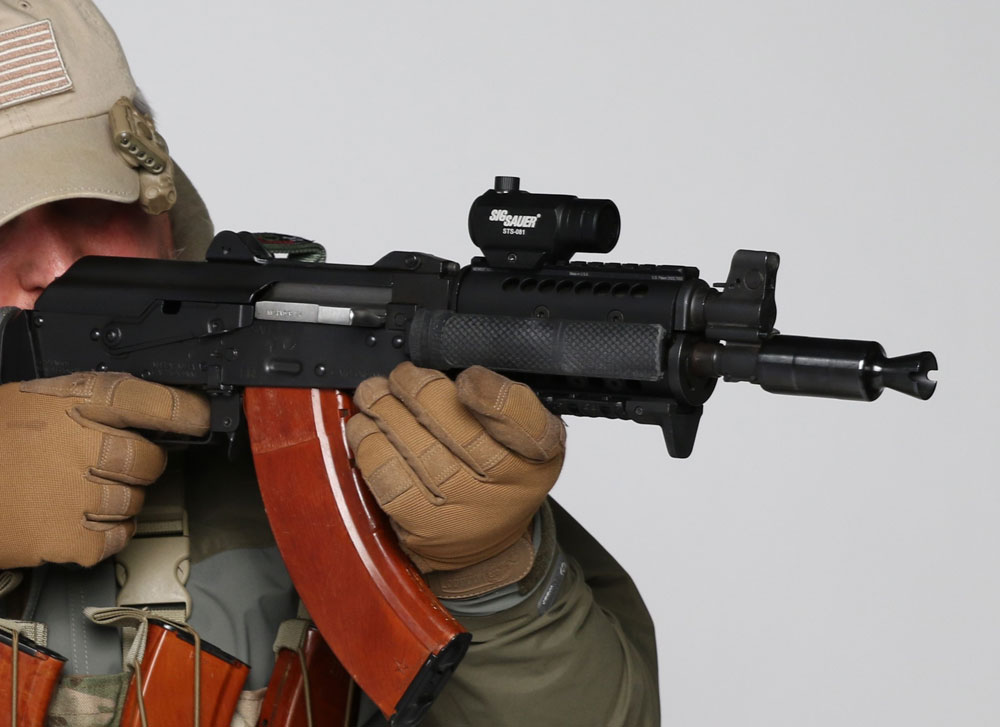
Check out these great aluminum AK handguards to turn your Kalashnikov rifle into a more tactical firearm.
Although the plastic hand guards with Picatinny rails would work fine on just about any AK rifle, the thing to remember is that plastic, like any material, is subject to fatigue and stress when under load. It will break, crack, melt, chip, or disintegrate at much less stress and load parameters than metal, including aluminum.
The reason the original Russian polyamide hand guards could take more abuse is simply because they were steel-reinforced. For AK shooters who would like a more rigid mounting option that still involves the hand guards, there are several products made out of aluminum that offer just that.
Because the lack of elasticity in metal is simply the nature of the beast, almost all metal or aluminum AK hand guards require a mechanical mounting on the gun. They have to be securely bolted in place for a rigid installation because the upper part of the set that replaces the original AK upper hand guard is usually affixed to the lower hand guard with bolts. And since the lower hand guard is bolted to the gun, the aluminum hand guard system, as a general rule, offers a far better platform for mounting optical sights on the upper rail.
I have already highlighted several aluminum hand guard options in the “Mounts” section of this book, but I wanted to describe them in detail so that the reader gets a better idea how to install them and how they fit the AK rifle.
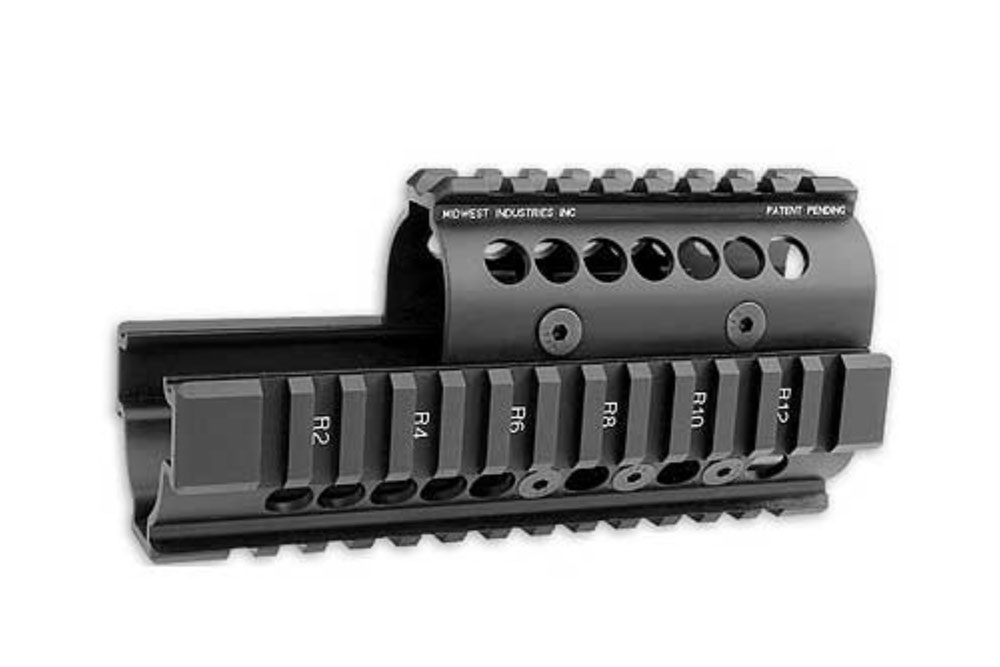
The first handguard I would like to cover is Midwest Industries’ AK47/AK74 Universal Hand guards in Quadrail. I have been using this rail and its variations for years now. It is a solid piece of equipment that once installed, will last for a long, long time.
The lower portion is rigidly attached to the barrel of the rifle and the upper part bolted to the lower. The beauty of the Midwest Industries AK hand guard system is that shooters can choose an optic specific upper instead of the 1913 rail. There are several variations to accommodate the most popular optical or collimator sights and their copies. There are several variations of the original Quadrail hand guards now that the company released over the years. All had to do with different ways to install the “mission specific” 1913 rails instead of the integrated quad rail, thus reducing the weight and size of the hand guards.
There is an SS model that smaller two-inch rail sections can be attached to using screws. The SS model was followed by the more advanced KeyMod hand guard, and later an M-LOK version.
I have tested all of these and they are good-to-go no matter which one is chosen. They all attach the same way and accept the same top covers that are interchangeable. The Midwest Industries AK47/AK74 Universal hand guards do not require any irreversible modification to the gun and can be removed and replaced at will. The AK front sling ring stays untouched. However, most of the Midwest Industries AK hand guards come with built-in QD sling attachment.
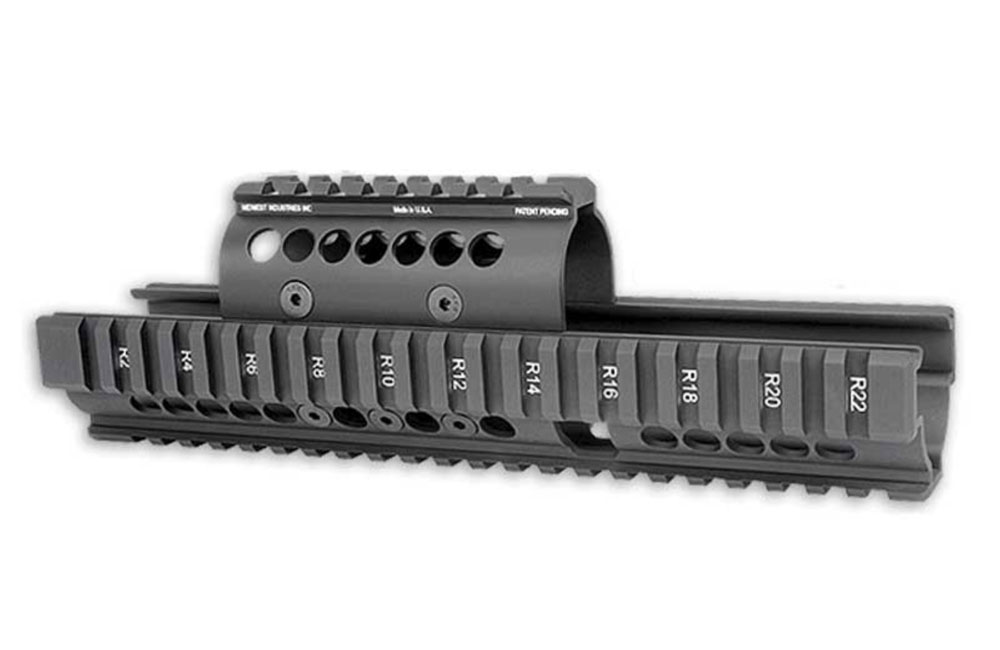
The Midwest Industries’ AK47/AK74 Universal Hand guards offer pretty good flexibility for mounting accessories on an AK. However, their longer AK47/AK74 Extended Hand guards offer even more.
Unlike the Universal hand guards the extended ones do require the permanent modification to the AK’s lower hand guard retainer. Again, it has to do with the front sling attachment that must be removed. I said it before and I will say it again: the benefits far outweigh the small mod to remove a redundant part. Apart from the standard quad rail configuration, the extended hand guards come in SS and KeyMod versions.
In addition, Midwest Industries offers several variations of their AK hand guards to fit just about any AK rifle model that is available on the market today. Having had a chance to work with these I would consider them to be second-to-none and among the absolute best AK accessories.
As I’ve mentioned before, Krebs Custom offers two types of their own AK hand guards. The Krebs Quad-Rail Fore-End for standard AK rifles is similar to aluminum hand guards with integrated Picatinny rails from other manufacturers, but with one exception: Krebs Custom has come up with a very solid attachment to the gun that does not involve the barrel.
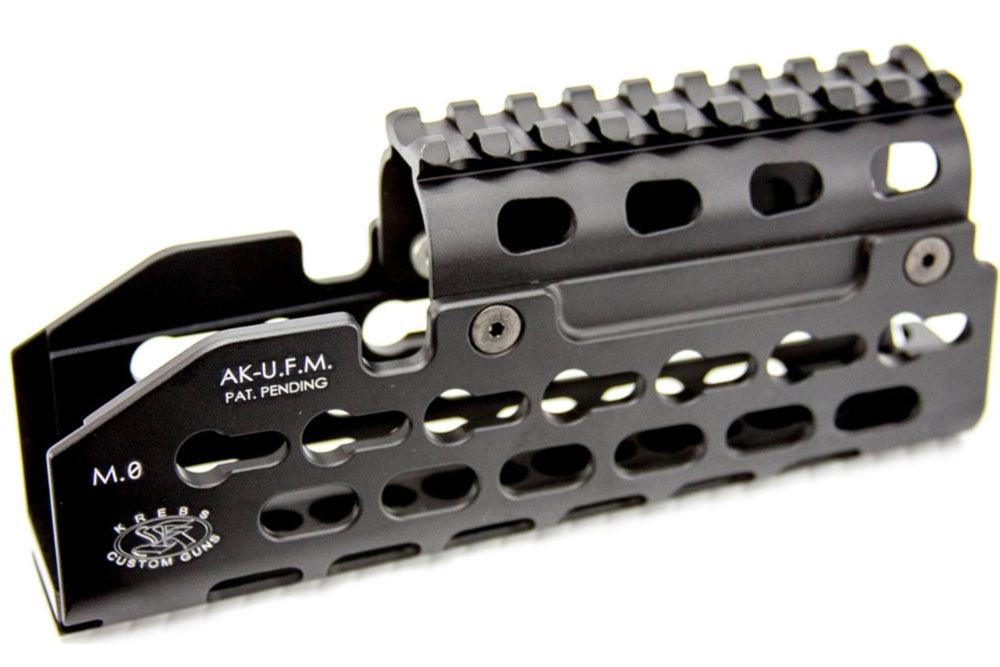
The Krebs Quad-Rail hand guard is a very good option for an AK rifle. However, for those who don’t like the “cheese grater” effect of the quad rail hand guard, Krebs Custom has released their latest AK-U.F.M. AK hand guards. These are perhaps one of the best aluminum AK aftermarket hand guards available today. The AK-U.F.M. hand guards install on the rifle similarly to the Quad-Rail and sits solidly on the rifle. The accessory rails attaches to the hand guards with the KeyMod mounting system on the side and the bottom.
The top part of the hand guard, however, has a four-inch integrated 1913 rail. The new AK-U.F.M. AK hand guards from Krebs have rounded corners and feel just right in the shooter’s hand. The smooth and slick form makes even an ancient AK rifle look like a modern fighting carbine. The hand guards’ KeyMod system offers a necessary flexibility for mounting mission-specific accessories. The Krebs Custom’s AK-U.F.M. hand guards are definitely one of the best aluminum AK hand guard solutions available on the market today.
The last option for an aftermarket AL aluminum hand guard replacement comes from Troy Industries with their AK47 Bottom Short Rail. Troy’s rail is a one-piece replacement for a lower hand guard and works with either the AK’s original upper hand guard or an aftermarket replacement.
I have already described Troy Industries’ AK47 Top Rail as a replacement for the AK’s gas tube in the “Mounts” section of this book. Together, the top and bottom rails make a complete and very flexible hand guard mounting solution for any AK.
The Troy AK47 Bottom Rail is made entirely from aluminum. It is long enough so when installed on the gun it goes from the front of the receiver all the way forward past the gas block covering it. With the added length, this hand guard not only provide an adequate space to mount any combination of tactical implements, but it also gives the shooter more gripping surface, which AKs usually lack to begin with.
The hand guard itself is rounded in its cross section, mimicking (to the point) the longer rounded AR hand guards. The shape and length of it is conducive to improved handling of the rifle, resulting from a better grip. The necessary rail-mounting holes are provided along the entire length of the hand guard. This allows any number of rail sections in different sizes to be installed if the need arises. Although this is a longer hand guard it does not require any permanent modifications to the rifle. It installs in minutes in place of the AK original lower hand guard using the same retention system. It comes with an Allen key wrench to tighten the tension on the hand guard retaining bracket. No other tools are necessary.
There are other options that come from small and large manufacturers of AK accessories. The ones I have described above are the ones I have personal experience with. Whichever option is selected, the shooter must make sure that practicality is driving his or her decision on what accessory to use on the AK rifle.
Editor’s Note: This article is an excerpt from the Gun Digest Shooter’s Guide to AKs.
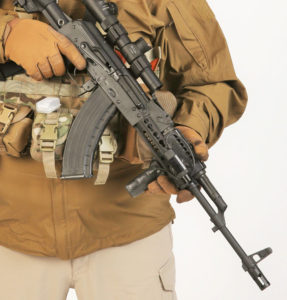
Proper AK use and operation is something anyone who plans on owning one should become familiar with. Learn more about its unique operation here.
All AK-pattern rifles use a long-stroke gas-piston system of operation. The gas bled from the barrel directly impacts a long, chrome-plated steel piston that is permanently affixed to the bolt carrier and charging handle. This carries the rotating bolt, which features two locking lugs on its face. When fired, the operating rod, handle and unlocked bolt move back as one unit, improving the rifle’s reliability in field conditions.
This is nevertheless a lot of mass slamming back and forth, which can increase perceived recoil and shift point of aim, affecting accuracy. Indeed, AKs are not generally admired for their accuracy, although they are capable of achieving very good results. The effect of this system on reliability is undeniable however, and is one of the AK’s key strengths. The rifle’s inherent reliability is attributed to its design and basic method of operation. No need to look for lots of extraneous controls or ambidextrous add-ons — there aren’t any, really.
Loading and Firing
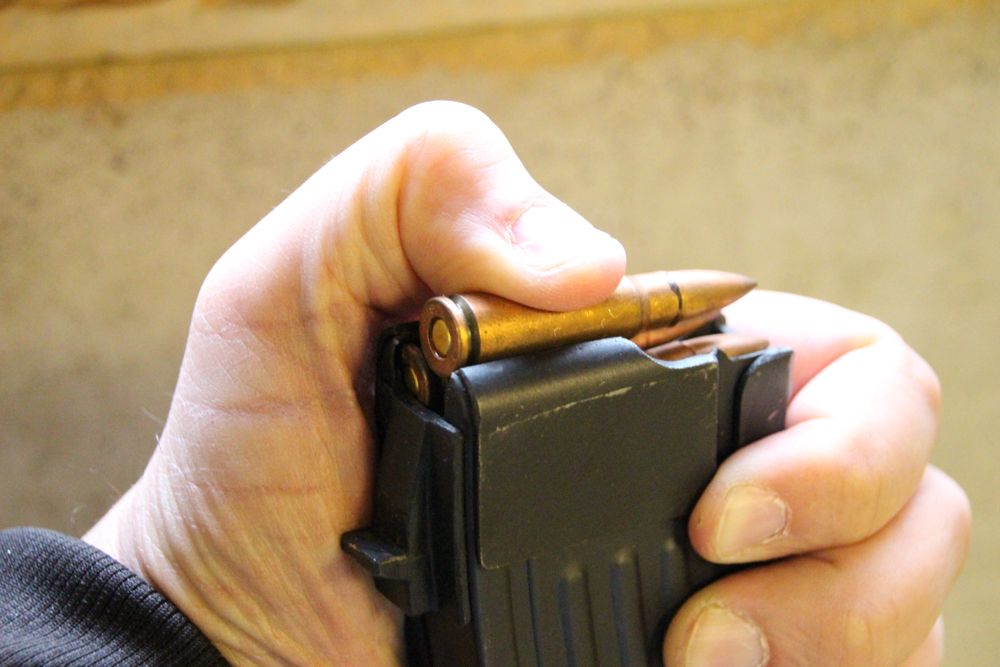
The standard AK magazine uses a staggered column design in which the cartridges sit diagonally one above the other. This maximizes the magazine capacity. The feed lip at the top of the magazine uses this staggered column system to keep the rounds in place until they are pushed forward from the rear. As a result, the opening at the top of the mag is wide enough so that rounds can be inserted straight down and will stay in place.
Unlike a pistol or single-column magazine where the rounds have to be inserted at the front and then pushed down and back under the feed lip, AK magazines load like an AR: just push the rounds straight down. This makes loading easy and allows for the use of various speedloaders — you can load the magazines from a pre-loaded 10-round stripper clip using an adaptor.
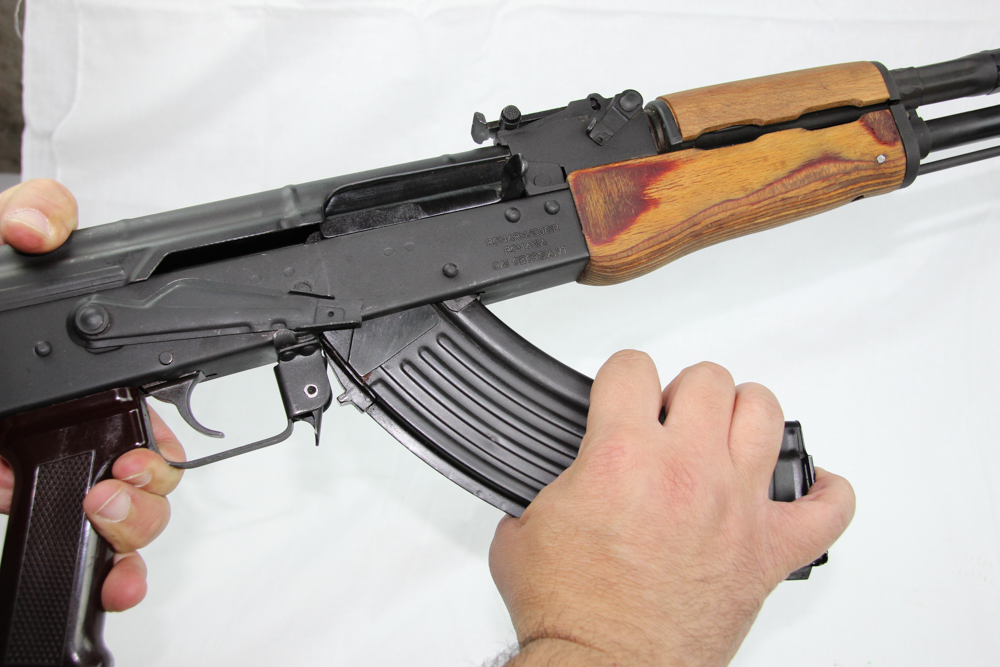
To place the magazine into the rifle, the system is very different than what American shooters are accustomed. The AK mag must by inserted by first placing the front lip inside the receiver and rocking it back so that it locks into place. This can provide a loose or tight fit, depending on the make of the rifle and magazines.
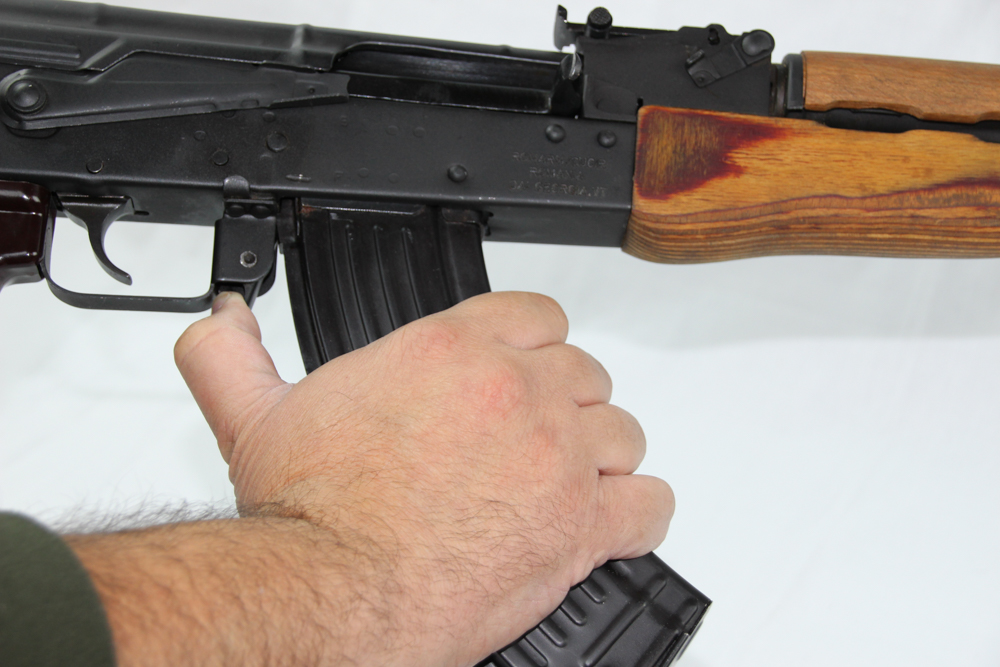
To remove the magazine, simply press forward on the paddle release behind the magazine and rock it forward and out. The mag will not simply drop free when you press the release, as it is still hooked at the front.
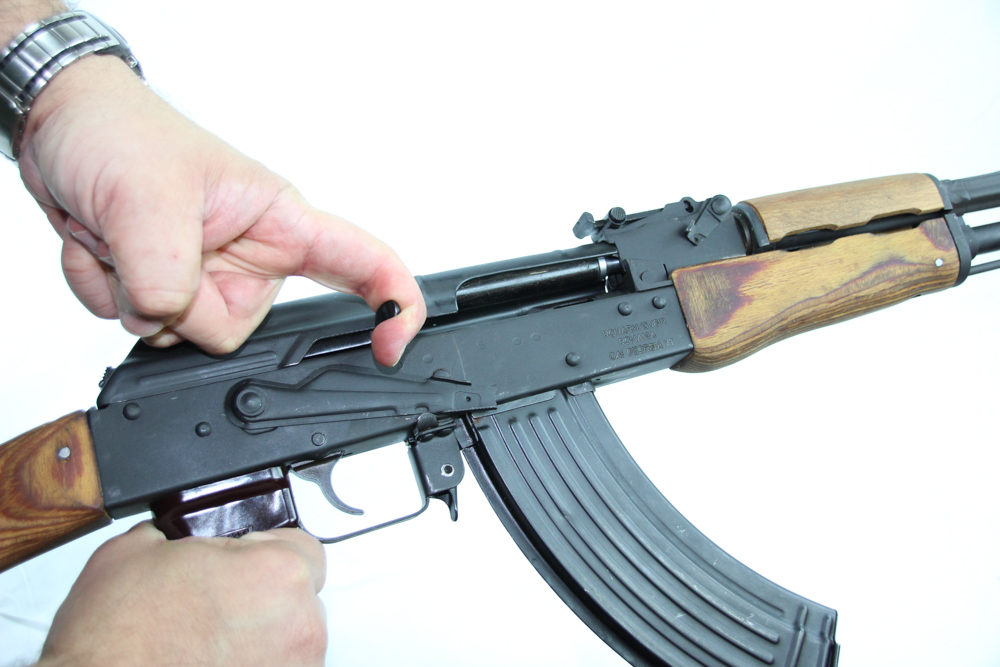
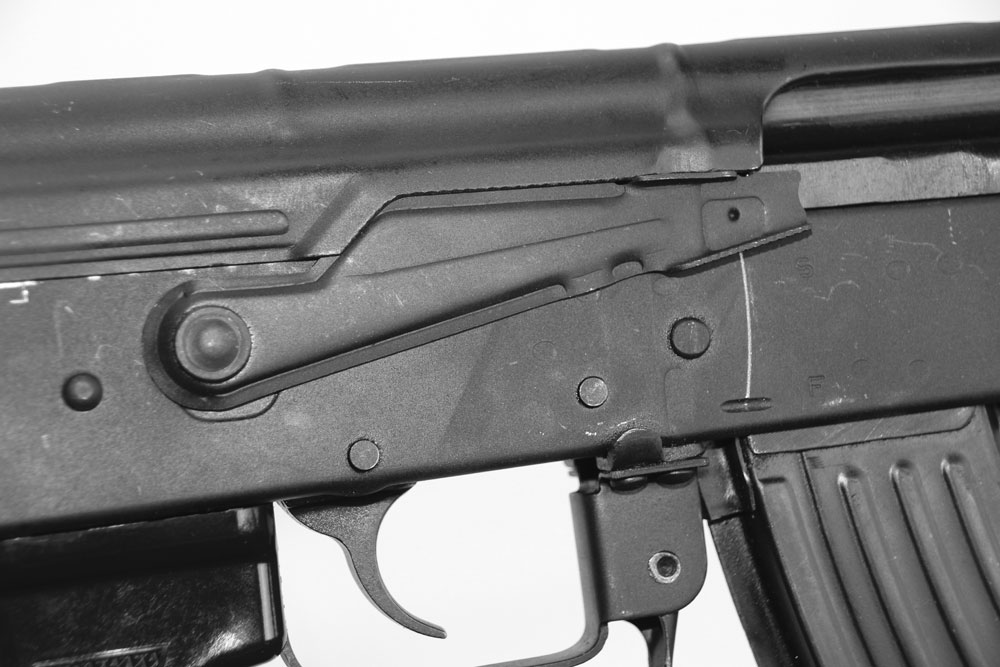
To load a round, make sure that the safety is in the down/off position. When the safety is in the up/on position, it blocks both the trigger and bolt handle. The right-side charging handle protrudes for easy manipulation. Pull it all the way back and release it to load the rifle. As the charging handle is attached to the bolt, it can be used as a forward assist as well. Since it is attached to the gas tube, it will reciprocate when the rifle is fired, so left-handed shooters should beware.
If you are not immediately going to fire the rifle, the safety should be engaged. The right-side safety is a simple latch that you push up to engage, down to fire. There is no bolt hold open device, and the bolt will not remain open on an empty magazine (unless you are using one of those Yugoslavian mags).
The rear sight can be adjusted for elevation using a slide mechanism. The front sight can be adjusted for elevation as well. Actually, the front sight can be adjusted for windage, too, but this requires a special tool, and it should have been at least bore-sighted at the factory, so adjustment should not be needed.
The trigger fires the gun. You squeeze it.
These are all the basic controls on a standard AK. However, some customized AKs and newer variants may include thumb-operated safeties, improved magazine releases and ambidextrous charging handles which may or may not reciprocate. Make sure to become familiar with the operation of your specific rifle.
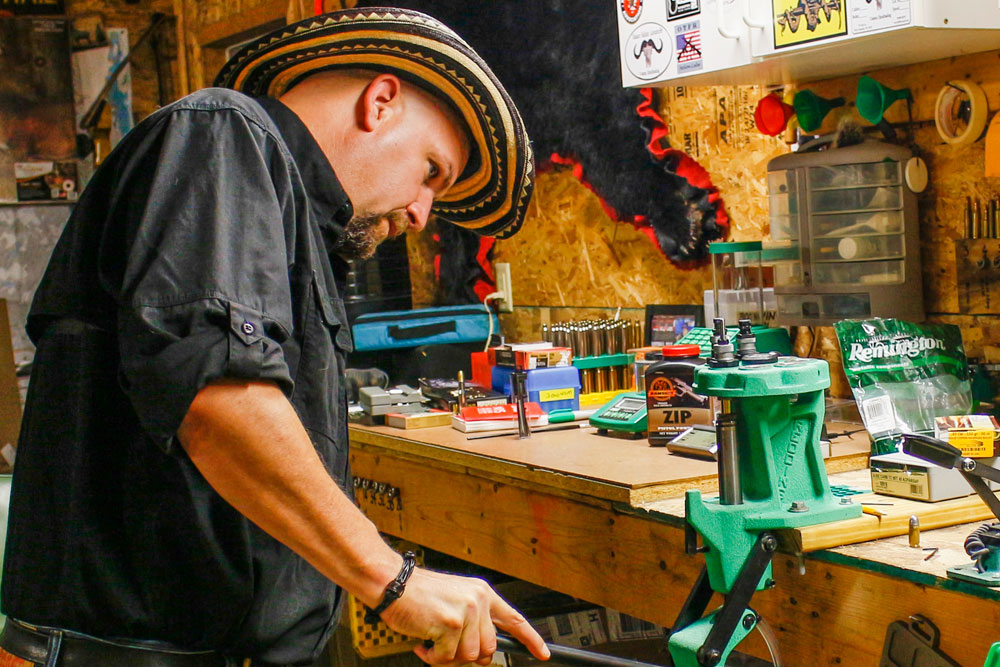
The way you outfit your reloading bench is as personal as the way you reload your ammunition; there’s no true right or wrong answer, so long as it works for you. Invariably, you’re going to need the basic tools to get the ammunition made properly, but there are some newer tools that will definitely make the reloader’s life easier. We’ll take a look at some great options so you can make a better, more informed decision when investing your hard-earned money.
You’ll need a reloading press, a means of trimming your brass cases to length, some reloading dies, a scale to weigh powder charges, and a means of measuring both cartridge cases and the overall length of assembled ammunition. It’d also be nice to have some form of eraser, to disassemble cartridges that may have some sort of flaw, whether it is a powder charge that is over or under the desired weight, or a bullet that is seated too deep. Let’s start with the press, as it is the heart of the operation.
Redding Reloading T7 Turret Press.
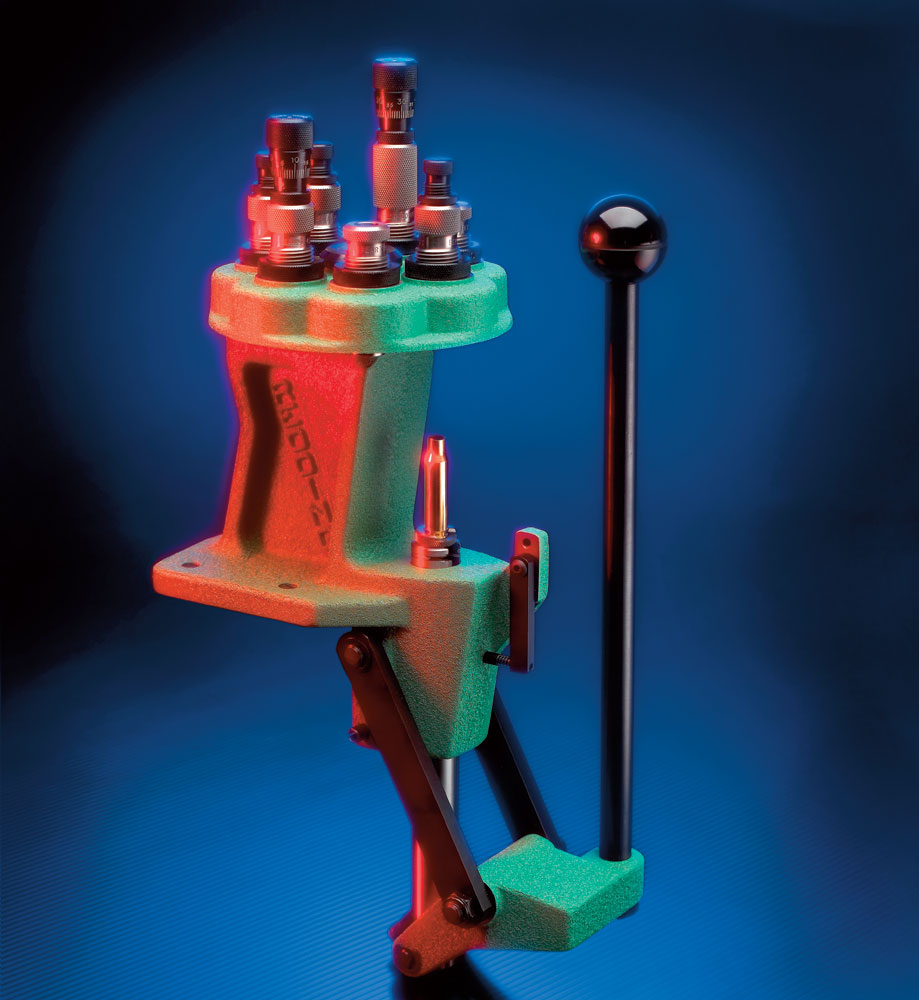
Reloading Presses There are two types of presses available to the reloader: the single-stage press and the progressive press. The progressive performs multiple operations at once, and is usually reserved for the advanced reloader, but you may want to end up owning one if you’re a high-volume pistol shooter; they can save an awful lot of time. Let me offer this piece of advice regarding a progressive press: Be prepared to spend a considerable amount of time setting up and maintaining your progressive; it isn’t difficult at all to throw a progressive into a tailspin and have you dismantling the press in order to realign or clean the machine. If you’re okay with that, don’t shy away from the progressive, but be aware of the level of dedication needed to keep it running smoothly. Among the progressives, I’ve liked the RCBS ProChucker 7 and the Dillon 650; both have given repeatable and accurate results.
The single-stage is a different story altogether, in that once you get it mounted to the bench, it really doesn’t require much maintenance other than a gentle cleaning and lubrication. The beauty of the single-stage press is its simplicity, and there are a number of good models available. Undoubtedly, the RCBS RockChucker was, is, and always shall be a great value, as it offers both affordability and reliability. Holding one reloading die at a time, it is a solid piece of gear that I still have on my bench. However, Redding’s T7 turret press can be a God-send to the reloader, especially if reloading for any straight-walled cartridge in a single-stage manner. Capable of holding seven dies simultaneously, you can easily rotate the turret head to get to your flaring die or crimping die while leaving the resizing die or seating die in place, saving the time spent screwing and unscrewing dies. This press is one very solid piece of gear, and well worth the investment.
Redding Reloading dies.
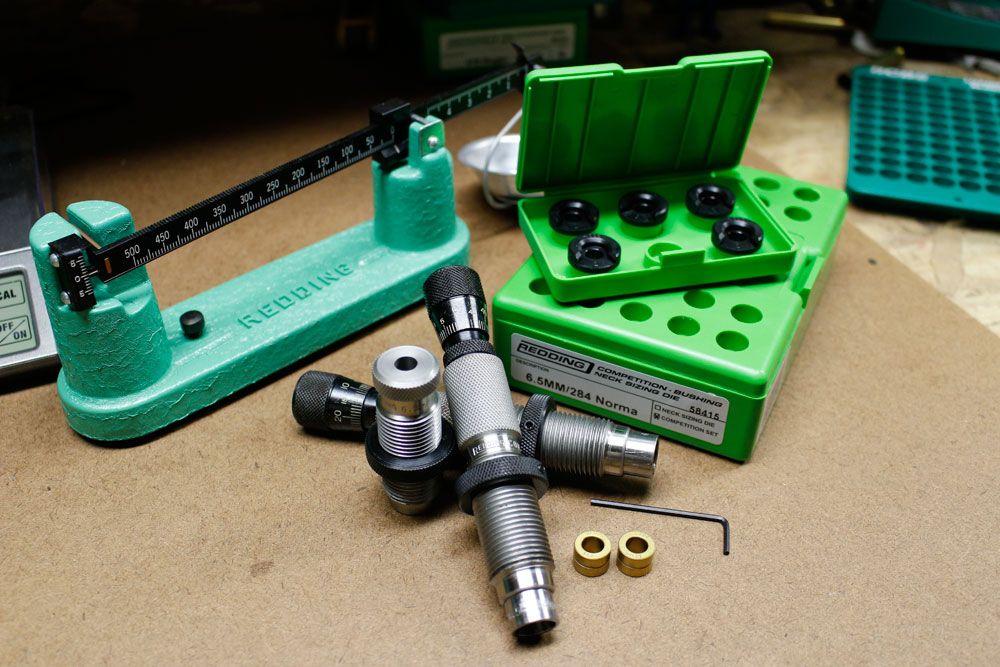
Reloading Dies These are a necessity, and you definitely get what you pay for. I like the best dies money can buy, and I’ve come to rely on both RCBS and Redding dies, as they’ve given me the best results over the years. I’ve used other brands with varying degrees of success, but these two are what I use most. Redding is more expensive, but they have the tightest tolerances I’ve seen, and the RCBS dies offer a great value to the reloader. Both offer the really nice micrometer adjustable seating dies, allowing me to provide slight, yet precise adjustments to my ammunition.
RBCS ChargeMaster 1500.
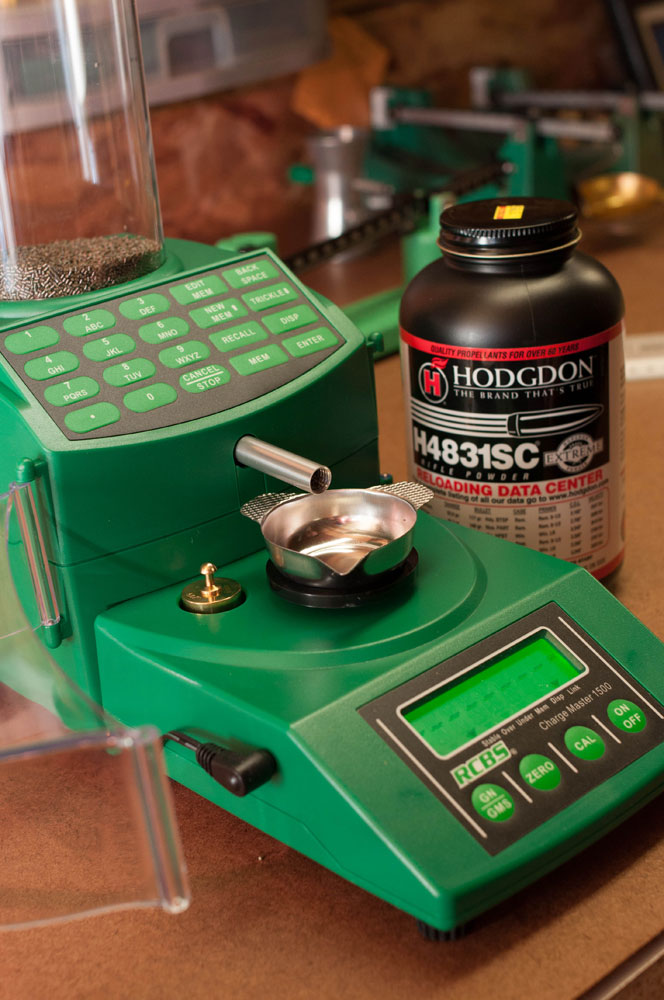
Powder Scales A balance beam scale is an absolute necessity on any reloader’s bench no matter how much faith you place in a digital scale. I like the industry-standard RCBS 505, and the Redding Model 2; both are reliable and sturdy. However, the digital scales are wonderful, and I like both the Lyman Pro-Touch 1500 and the RCBS ChargeMaster 1500. Neither has ever let me down. I have also come to rely heavily on the RCBS 1500 ChargeMaster combination dispenser/scale, as it throws accurate powder charges time and time again, and it saves a heck of a lot of time.
RCBS Case Prep Trimmer
Trimmers Keeping brass cases trimmed and prepped is a must, and you’ll need a dependable means of doing so. I like the RCBS CasePrep Station, as it allows me to dial in a precise case length, and it has a set of universal jaws that holds almost any cartridge. In one unit, I can trim, chamfer, deburr and clean the primer pocket. If you prefer to do the trimming and prep work by hand, the Lee Case Trimmer uses a steel length gauge and cutter in conjunction with a shellholder for an inexpensive, yet accurate means of trimming brass. Combine this with a Wilson dual-sided chamfer/deburring tool, and you’re set. Or, if you’d like a bit more control, pick up a Redding piloted chamfer/deburring tool for a more controlled experience.
Lyman E-ZEE Prime Universal Hand Priming tool.
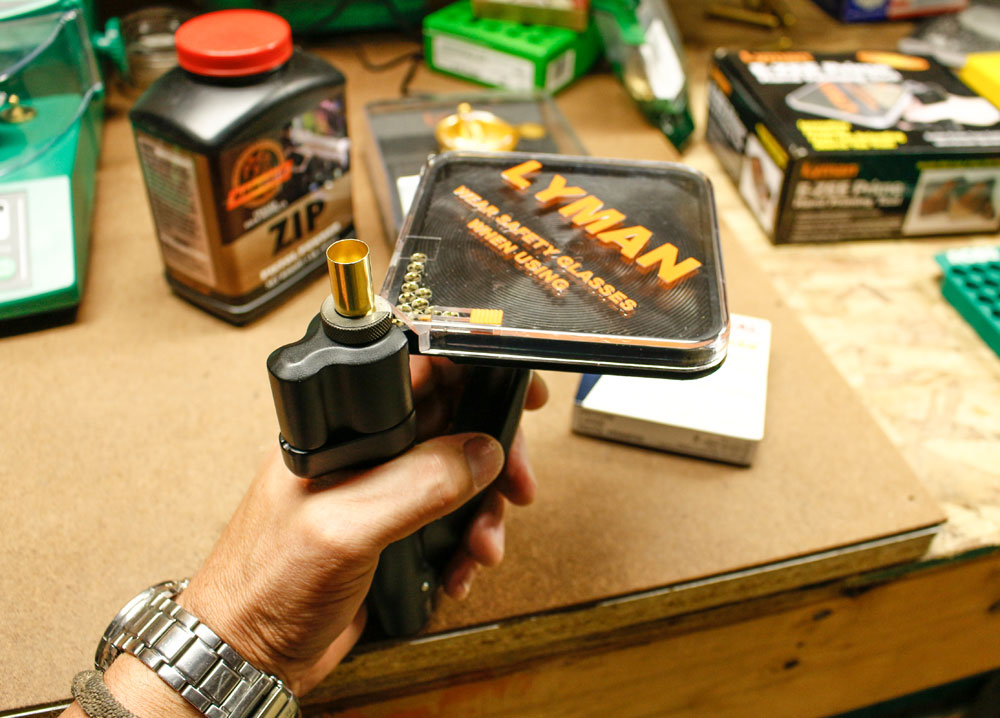
Priming Tools You’ll definitely need to install new primers, and while most reloading presses offer a means of priming, I prefer to use a hand primer. The Lyman E-ZEE Prime universal priming tool is a great choice, as is the RCBS Hand Priming tool; both will give that positive feel that allows for a uniform seating depth for your primers. Both models will install large and small primers. The RCBS model uses universal, spring-loaded jaws, while the Lyman model relies on the cartridge’s shell holder for priming.
Measuring Tools A set of calipers is a definite must for any reloading bench, in order to assure your cases and assembled cartridges are of proper length. I like the RCBS electronic calipers, as they are affordable, yet give reliable measurements. This tool is easy to zero, and even easier to read, which is a nice feature for older eyes. While a micrometer would be a nice feature on the bench, a good set of dial calipers should suffice for almost all of our needs.
Erasers Your bench needs to be equipped with a means of pulling a bullet from a cartridge case. Inertia hammers, like the one I use from Frankford Arsenal work well, but often damage the meplat of the bullet. I prefer the press-mounted RCBS Bullet Pullet, as it uses the power of your press and a caliber-specific collet to safely and neatly pull the cartridge apart without spilling powder all over. You’ll also need a method of removing a stuck cartridge case from a resizing die, and I like the RCBS Stuck Case Remover for just such an emergency; it requires only a drill and an adjustable wrench, and will save your session. Your reloading bench can be as simple or complex as you’d like it to be, but remember this: If you buy the best gear you can afford, you’ll have a much more rewarding reloading session.
Editor’s Note: This article is an excerpt from the December 2016 issue of Gun Digest the Magazine.
The bipod has long been a tool used by shooters to obtain a more steady firing position in the field or on the range. However, in its many years of use, the fundamental design and function of a lot of traditional “stiff” bipods have not changed all that much.
Swagger Bipods, a Nebraska-based manufacturer, has developed a couple of bipods that offer the shooter a ton of flexibility and functionality, all while remaining incredibly lightweight. Using what the company calls Crazy Legs Technology, these bipods afford the shooter a wide array of shooting positions. The flexible, hyper-extending Crazy Legs are shock-corded and are easily adjustable with a simple twist motion.
Gun Digest Editor in Chief Eric Conn had the opportunity to experiment with a Swagger bipod this winter while sighting in for an upcoming predator hunt and came away very impressed with the bipod’s flexibility and ease of use.
For more information on these great shooting aids, check out the video above, or visit the Swagger Bipods website.
Former U.S. President Theodore Roosevelt’s famous “Big Stick Diplomacy” has sculpted much of America’s political and cultural ideologies over the years. The expression, “Speak softly and carry a big stick—you’ll go far,” may have even earned Roosevelt a Nobel Peace prize for his soft-spoken negotiation tactics to end the Russo-Japanese war in 1905. However, there are times when speaking softly isn’t an option and the big stick needs to do the negotiating.
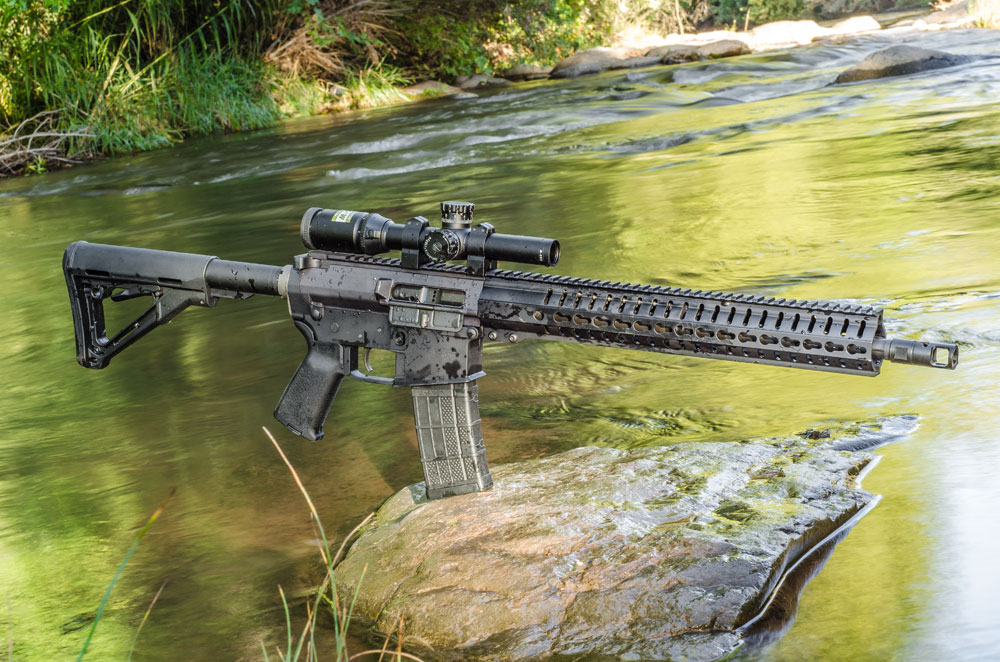
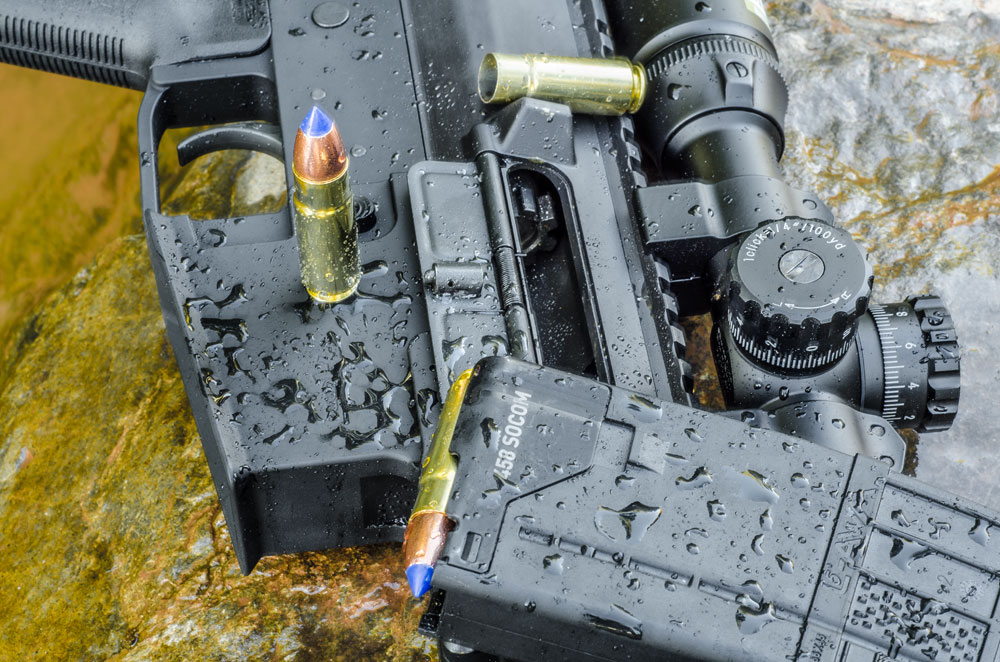
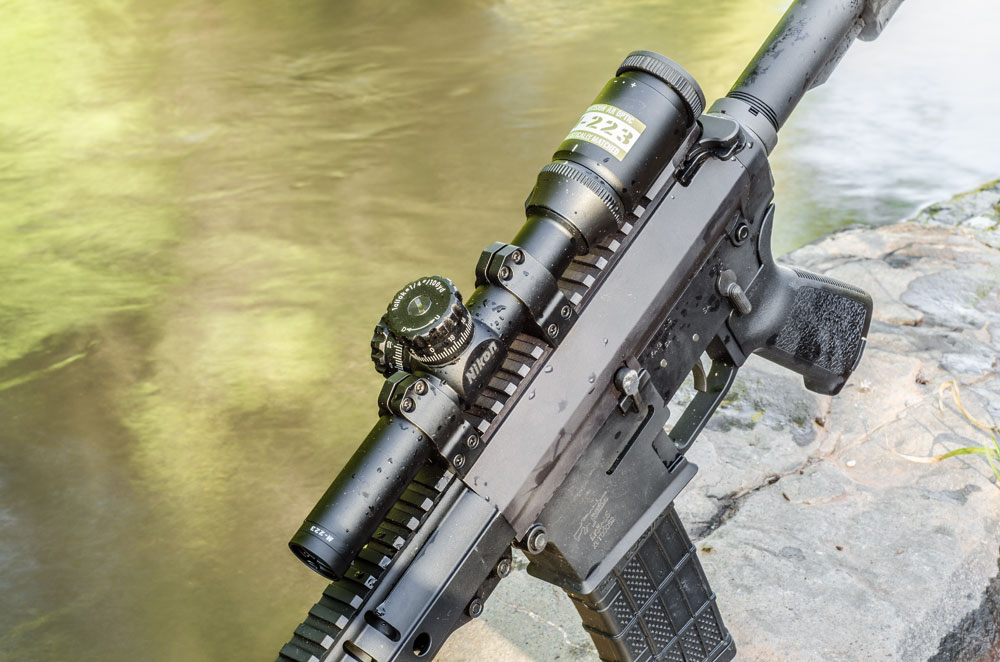
Echoing the latter part of Roosevelt’s ideology is CMMG’s new MkW-15 Anvil rifle, chambered for the beastly .458 SOCOM cartridge. As many know, the .458 SOCOM was designed to give U.S. military personnel greater close-range stopping power than the .223 Rem., while maintaining compatibility with most mil-spec M16 parts. Naturally, the civilian firearms market adopted the .458 SOCOM for the AR-15 rifle. The ability to fire 300- to 550-grain bullets with the simple swap of an upper receiver is an appealing feat for hunting, home defense or vaporizing watermelons.
Like anything, there’s always a trade-off, and firing the .458 SOCOM from a standard AR-15 platform isn’t immune to problems. The bruised shoulders of many shooters provide vivid illustrations of the increased felt recoil of the cartridge. In fact, the .458 SOCOM introduces standard AR-15 parts to physical stresses that they were not originally designed to withstand. Additional forces produced by the cartridge are known to cause mechanical and cycling problems with standard AR-15s such as unreliable feeding, over-gassing, and metallurgical stress on moving parts. Cycling issues are also known to destroy brass, which is inconvenient given the cost and availability of .458 SOCOM brass cases.
The .458 SOCOM is a potent round, and the MkW-15 ANVIL is purpose-built to handle it.
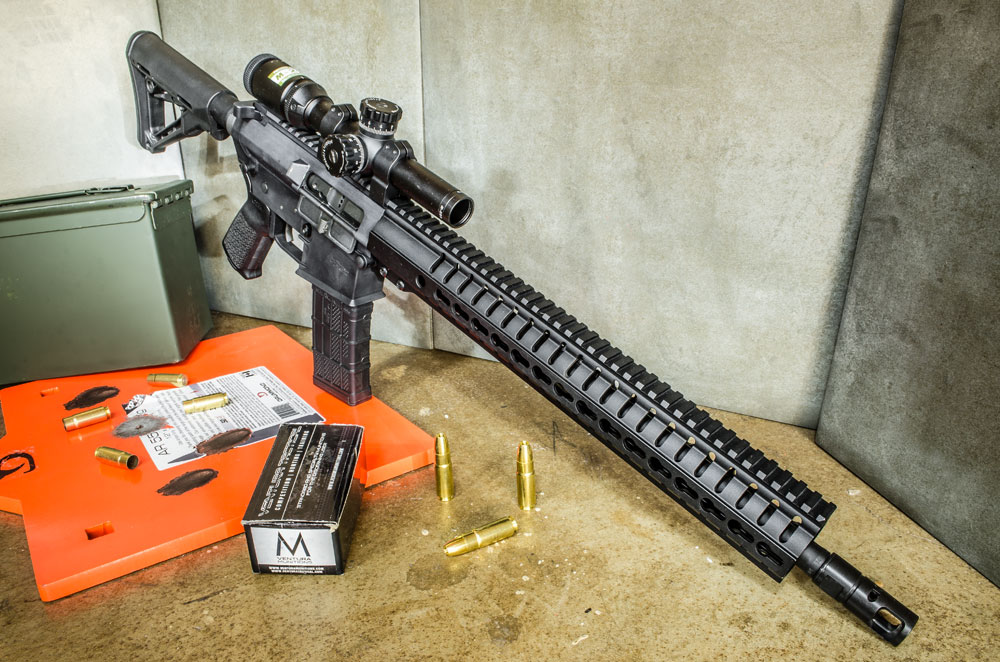
A Bigger Stick Enter the CMMG MkW-15 Anvil rifle, which was specifically engineered to achieve optimal performance and longevity with the .458 SOCOM. From a glance, the Anvil looks like any other AR-15. Pick it up, and it even has the same ergonomics and controls as your favorite .22-caliber carbine. But pull the trigger and you’ll know immediately that you just delivered a bit more lead than a 55-grain XM-193 downrange.
While it looks, wields and operates like a standard AR-15, look a bit closer and you’ll find the direct impingement, gas-operated semi-automatic CMMG Anvil was designed more like a Hummer H1 than a Jeep Wrangler.
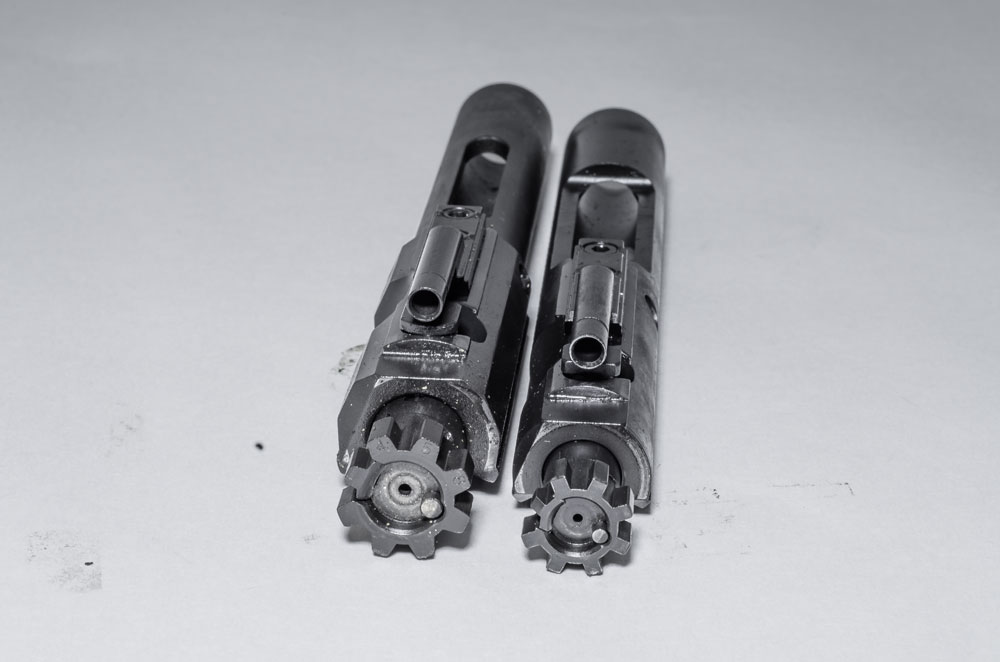
The bolt face on the standard AR-15 bolt carrier looks small in comparison to that featured on the MkW-15.
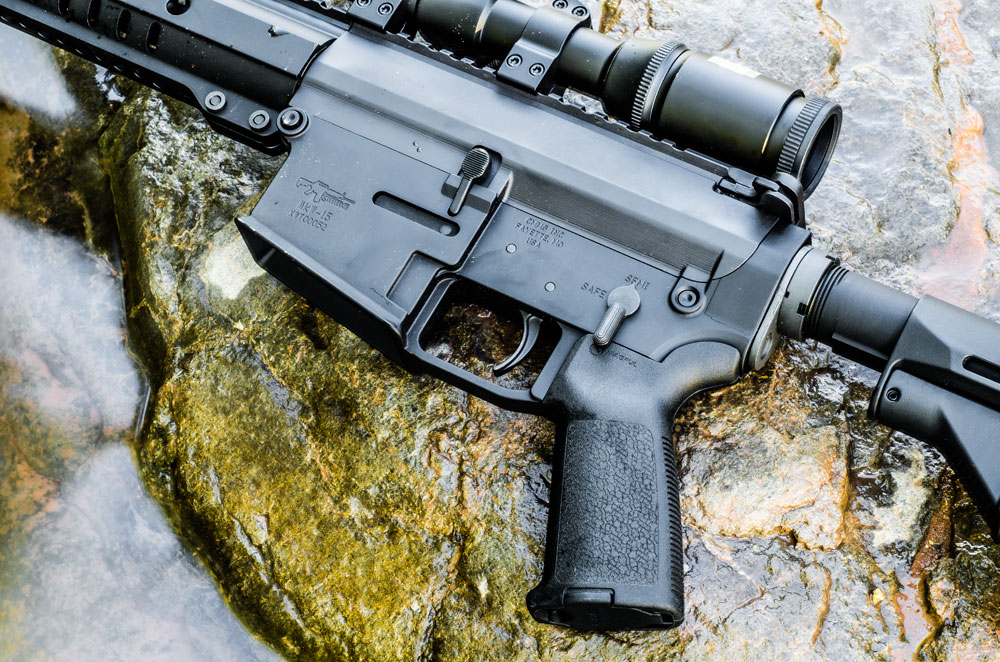
Compared to other Mil-Spec ARs, the Anvil’s parts are beefed up all-around to give it greater longevity. Its receivers and bolt carrier group are significantly reinforced with extra aluminum and steel for added rigidity. In fact, many of the Anvil’s major mechanical parts are not cross-compatible with standard AR-15 components—an intentional engineering decision by CMMG to give the Anvil maximum performance and reliability with the .458 SOCOM cartridge. CMMG utilized a similar beefed-up design with its Mk47 Mutant rifle introduced in 2015, which was built around the 7.62x39mm cartridge.
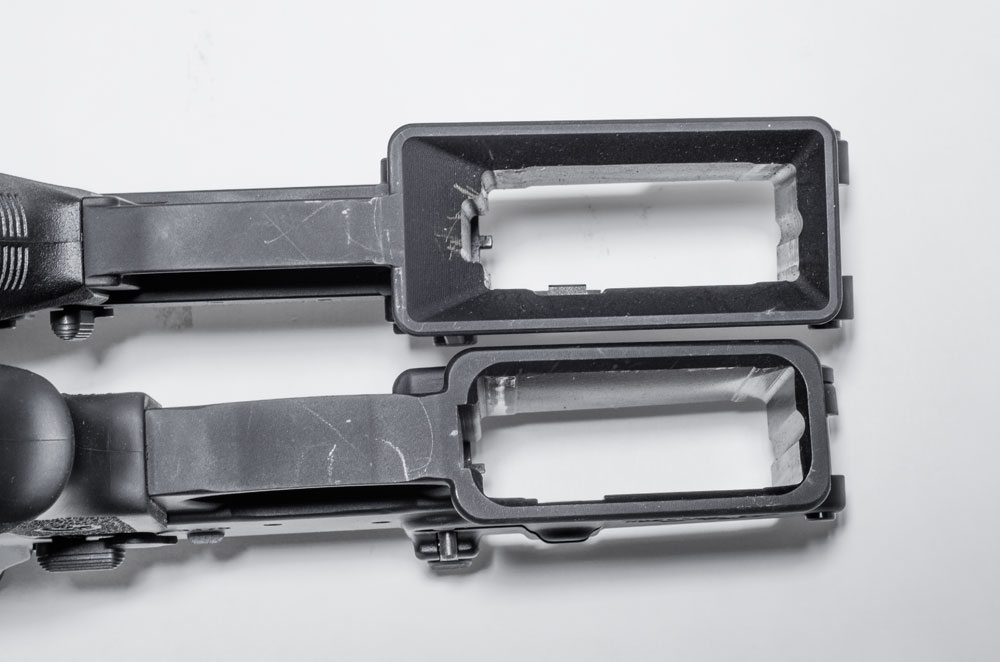
The introduction of the Anvil rifle marks the first semi-auto rifle (that I know of) that was designed from the ground-up for the .458 SOCOM cartridge. Diverting from other manufacturers who simply slap a bigger barrel and bolt onto existing AR-15 hardware, CMMG’s Anvil is actually a bigger hammer entirely. In fact, its billet aluminum upper and lower receivers will not even attach to standard AR receivers. While shooters who desire cross-compatibility may see the proprietary design as a turn-off, the Anvil’s enlarged skeleton enables the rifle to run more reliably, reduces recoil and adds longevity through high round counts. Though its major mechanical components are scaled up to handle the .458, the Anvil maintains compatibility with standard AR-15 magazines and some common parts such as the fire control group, pistol grip and buttstock.
The MkW-15’s receiver is beefed up specifically for the .458 SOCOM, as can be seen here.
Given the Anvil’s compatibility considerations, do the potential risks of using proprietary parts outweigh the performance benefits of its custom-tailored design? In short, absolutely. Even with standard AR-15 rifles that have been converted to fire .458 SOCOM, the parts most prone to failure—the bolt and the barrel—are still relatively expensive and hard to find. Personally, I find greater comfort in the fact that the Anvil’s components were specifically engineered to maximize reliability by minimizing the known failure points of standard AR components at the mercy of the .458 SOCOM.
Like a Wrecking Ball Quite simply, if you had to pick one semi-auto rifle equally capable of stopping a car, a hog and a home intruder on the same day, look no further than the CMMG MkW-15 Anvil.
Thumping out almost 2,400 foot-pounds of muzzle energy, the Anvil is more than capable of delivering serious stopping power in the form of .45-caliber projectiles. Not only that, but the gun is capable of handling the gamut of .458 SOCOM loads on the market. Its adjustable gas block and threaded barrel are also inviting for custom-tuning the Anvil to run smoothly with your favorite loads through a suppressor.
Range Tested, Writer Approved During testing, we found the factory gas block setting was a bit excessive, likely tuned for maximum reliability. Dialing the gas flow down a small amount seemed to reduce felt recoil without affecting reliability.
In terms of accuracy, the Anvil produced average groups of 2.25 inches at 100 yards with a Nikon M-223 1-4×20 scope. Greater magnification would likely increase accuracy; however, the intent of the .458 SOCOM round is not necessarily to offer pinpoint precision but rather superior stopping power at close range.
Among the variety of ammo tested, the MkW-15 took no distinct favorites, making it a very versatile firearm for anything from hunting to home defense. For domestic applications, some may argue the .458 SOCOM is overkill when in fact it is very suitable for home-defense with the right ammunition choice. Projectiles such as the Lehigh Defense Controlled Fracturing copper or the Polycase ARX are likely the best candidates for home-defense applications because they offer reduced penetration and devastating terminal effects on soft targets. When bigger is better—as is often the case with .458 SOCOM—we found the CorBon 300-grain Deep Penetrating Expanding (DPX) to function reliably through the Anvil and perform exactly as advertised.
After firing 200 rounds of various .458 SOCOM rounds through the MkW-15 Anvil, not one mechanical or cycling problem was observed. Firing that many beastly rounds was surprisingly comfortable, especially compared to standard AR-15s converted to fire the mighty .458. While the Anvil certainly doesn’t eliminate recoil, its beefed up design absolutely makes each trigger pull more enjoyable.
CMMG’s MkW-15 ANVIL is a serious option for shooters searching for a dedicated .458 SOCOM AR platform.
Parting Shots With the Anvil, CMMG makes it harder than ever to justify not owning a rifle in .458 SOCOM. The Anvil is clearly capable of delivering 300- to 550-grain bullets with great accuracy. Based off the AR-15 platform, the MkW-15 is ergonomic and has familiar controls that make it easy to shoot well. Its reinforced design offers peace of mind that the major components can handle the .458 SOCOM cartridge. Most of all, this gun is just flat out fun to shoot and follows Roosevelt’s time-tested motto about carrying a big stick. As far as positives, it’s a beast. Accurate. Versatile. Reliable. Ergonomic. Fun to shoot. If there are negatives, it’s heavy (almost 10 pounds fully loaded with scope), and .458 SOCOM ammo is expensive (a great reason to reload!).
Editor’s Note: This article is an excerpt from the December 2016 issue of Gun Digest the Magazine.
Looking to go armed, but are stuck in the weeds as to what to arm yourself with? Here are 20 of the best concealed carry gun options that will keep you on the defensive.