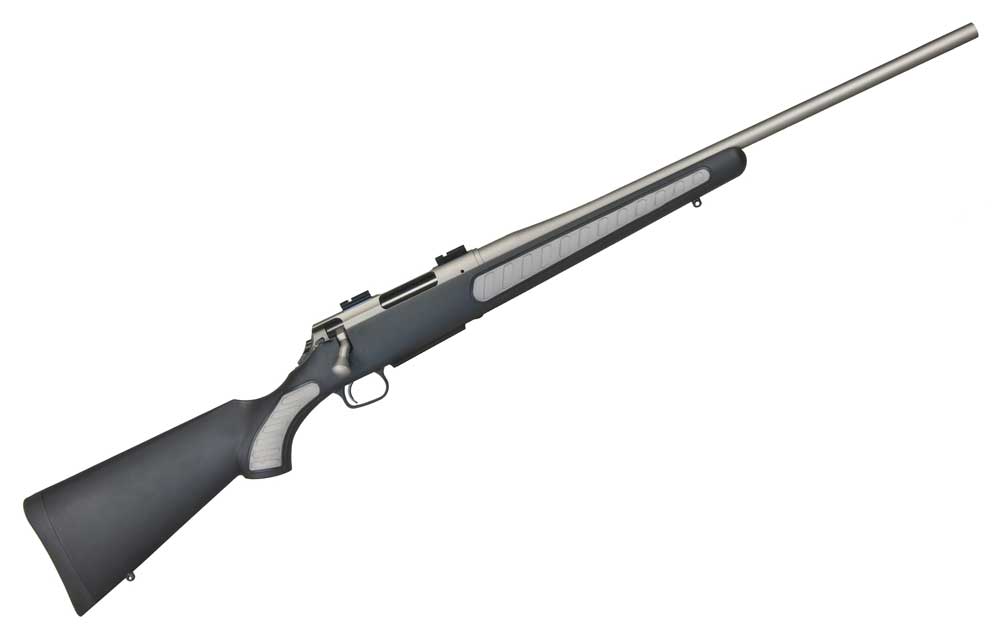
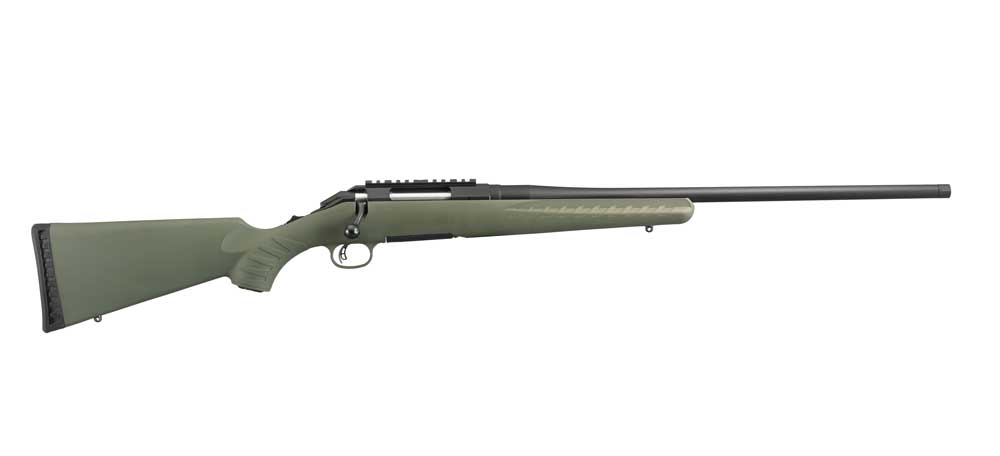
The Venture Weather Shield is one of four Thompson/Center Arms 6.5 Creedmoor rifles.
6.5 Creedmoor for All
Since its birth in the heart of Nebraska a decade ago, the 6.5 Creedmoor has taken the shooting world by storm. What’s not to like about the Hornady-designed round? It’s flat shooting, its bullets offer superior ballistics, and it’s a pussycat to shoot, even for the recoil shy.
With these considerations in mind, it’s been little surprise to see more and more manufacturers chambering rifles for this competition and medium-sized game round. The latest to go Creedmoor — Thompson/Center Arms. And the company isn’t just sticking its toe into the 6.5 waters.
Thompson/Center Arms 6.5 Creedmoor Rifles
The Massachusetts gun maker announced it’s taking a full-fledged plunge into the highly accurate round. Four of the company’s centerfire rifle models are now being offered in the 6.5 Creedmoor, with accessory barrels also being available in the caliber. Thompson/Center’s Compass and Venture Weather Shield are available in Creedmoor as complete rifles, while the Dimension and Encore Pro Hunter can be outfitted with 6.5 accessory barrels. The barrel for the Dimension comes with a magazine kit.
The four new guns will each be rifled with a 1:8″ twist rate, which will give shooters the ability to shoot heavier bullets, 140 grains and up, with confidence the projectiles will stabilize. The barrel lengths, however, differ with the Encore Pro Hunter boasting a 28-inch fluted barrel, while the other models have 22-inch barrels.
The new Thompson/Center Arms 6.5 Creedmoor Compass has an MSRP of $399, while the Venture has an MSRP of $578. The MSRP for the accessory barrels was not available at time of writing.
At first blush, the Vz 58 looks like an AK clone. But get into the guts of the rifle and you’ll discover it’s a much different animal.Become an expert on one of the world’s most popular firearms companies and its guns with Gun Digest Book of CZ Firearms.
While most of the Warsaw Pact countries walked in lockstep with Soviet Union weapons designs, Czechoslovakia went its own way. One of the results was CZ’s Vz 58 rifle.
This gem is nearly as rugged as the AK and on many design points superior to the better known battle rifle from behind the Iron Curtain.
To the casual observer, the 58 looks like a Soviet Kalashnikov. The magazine has the same banana-shaped silhouette. The grips have a similar shape, as does the stock. And the front grips and barrel also have a similar profile. Internally, though, they couldn’t be more different.
The Samopal (Sa) Vz 58 was designed by Jirí Cermák starting in 1956, and the Czech army adopted it in 1958. It was used by the Czechoslovakian army until the dissolution of Czechoslovakia on January 1, 1993. After that it was in use by the Czech and Slovak armies, and continued until the Bren 805 replaced it in the Czech army (though it is still in use by some reserve units). The Slovak Army continues to use it as the standard service rifle, mostly due to financial reasons, though they are also looking at the Bren 805 to replace it eventually (they have purchased 688 Bren 805s).
It is a gas-operated, magazine-fed, selective-fire weapon. It has a short stroke piston gas operating system. It uses breech-block locking systems that include a separate tilting locking piece. In all, the bolt assembly consists of a bolt carrier, bolt, locking piece and striker. The top surface of the bolt carrier (actually the top two surfaces, because it’s two surfaces of the triangle-shaped (loosely) bolt carrier) is exposed, and the cocking lever is machined into it.
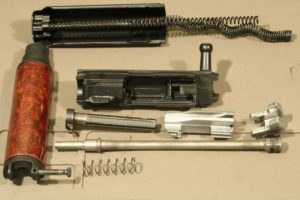
The field-stripped internals of a Vz 58 (top to bottom): receiver cover/spring housing, bolt carrier, (next row, left to right) striker, bolt, bolt locking pivot, (below that) piston, and piston spring. On the left is the top handguard cover.
What serves as the receiver cover is also the housing for the spring units; both the return spring and striker spring are held in place by their guide rods, which are part of the return mechanism base.
The firing group is an interesting design as well. Unlike most military assault rifles and their civilian semi-auto counterparts, which are hammer-fired, the Vz 58 is striker-fired. As the bolt carrier group moves forward and the bolt goes into battery, the striker nose catches on the sear, holding it in place, well behind the bolt. When the trigger is pulled, the sear drops out of the way and the striker spring (which as I mentioned is attached to the receiver cover) pushes the striker forward and into the firing pin, firing the cartridge.
It uses a machined receiver, unlike the original AK design which is stamped (the AK would later change to a milled receiver, and then later back to stamped). The tolerances on the Vz 58 are far tighter than on Russian-made AKs.
The Vz 58 also has a last-round bolt hold open, though of an unconventional design. A rib, or fin, runs the length of the magazine, and inside it is a knob offshoot from the magazine follower. When a magazine is inserted into the rifle, the bolt catch button on the rifle fits inside the rib on the magazine. Upon the last round being fired, the magazine follower knob inside of the rib presses against the bolt catch button, holding the bolt hold open.
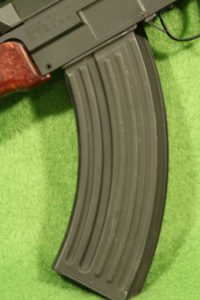
The Vz 58 magazine has the same banana-shape as the AK, due to the same highly-tapered 7.62×39 cartridge.
When the magazine is inserted and the last round has been fired, the magazine follower knob will press against the button and hold the bolt to the rear.
The magazine is lighter than the AK mag, which can be good or bad, depending on your point of view. It’s not as indestructible as an AK mag, but it does cut down on some of the extra weight. It’s more akin to an AR15 USGI magazine.
It uses a more conventional AR15-like selector switch than does the Kalashnikov, but the position of it is horrible. Instead of mounting it on the left side of the receiver to be manipulated by the thumb of the shooting hand, it’s on the right side, to be manipulated by the trigger finger. This is naturally going to slow down engagement time, as the finger has to go from the selector switch to the trigger. It’s also not that comfortable. Modern practice is, when not firing the weapon, the trigger finger is held straight, outside of the trigger guard. This would place the trigger finger just over the lever portion of the selector. Over the long haul, that’s not comfortable.
A short stroke piston gas system — like the Vz 58 — is one in which the piston is not attached to the bolt carrier, and when the weapon is fired, it only moves an inch or two, using a short, strong burst of energy to transfer its momentum to the bolt. This kicks the bolt out of battery, sending it on it’s way where the recoil forces of the cartridge firing do the rest to cycle the bullet. The short stroke system is generally made up of two or three parts, aside from the bolt carrier.
Compare that to a long stroke piston gas system, in which the piston is part of the bolt carrier group and it moves as one unit throughout the entire reloading process. The Kalashnikov is a prime example of a long stroke system.
The downside to the long stroke piston gas system is that there is a lot of extra mass that is moving, which increases recoil and also slows the cyclic rate of fire (though that only affects those shooting select-fire weapons in fully-automatic mode). The short stroke is generally easier to make; however, the downside is that it has more moving parts.
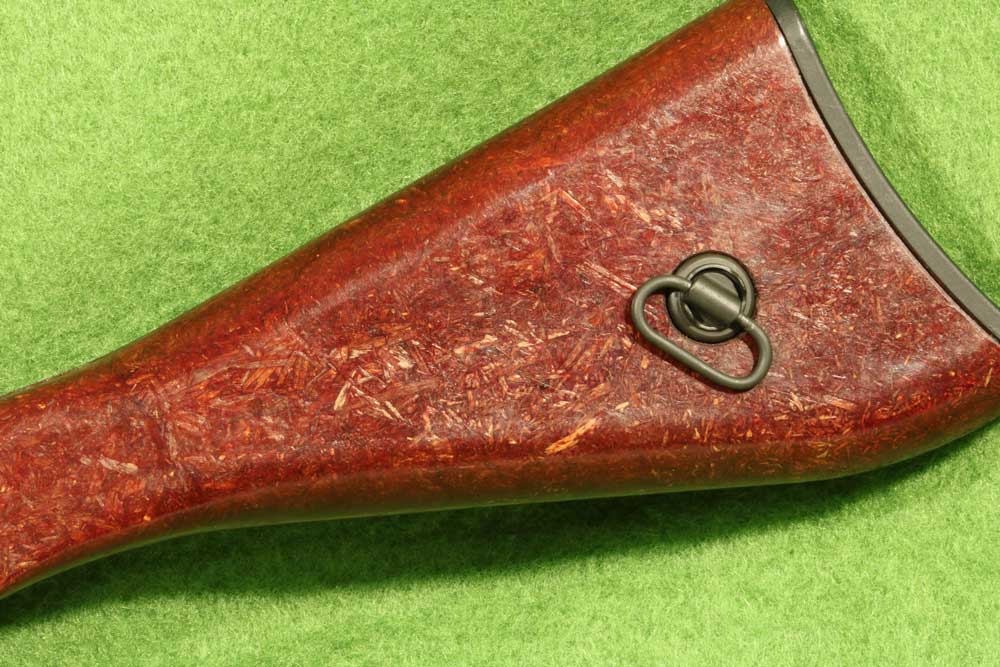
You have to love the furniture — wood chip impregnated plastic resin
Of all the Cold War communist bloc weapons, this is my favorite. My fascination with it started from a shallow perspective — I thought the furniture looked pretty cool, in a communist chic kind of way. I mean, who else would use wood chip impregnated plastic resin?
I really like the simplicity of it, and believe it is a superior weapon to the Kalashnikov. It has higher build quality, is more accurate, and I believe is more reliable. Now, I’ve had one friend tell me that over in the sandbox, he saw allies having issues with the Vz 58 getting sand in it, due to the open receiver design. I can’t verify this, however, as I wasn’t there first hand.
Where it loses out to the Kalashnikov, however, is despite being fielded to some degree by over 20 different user nations, it has never seen large scale use in major combat operations. It’s just not as combat proven as the AK. It’s seen skirmishes and it’s seen limited use in battle, but mostly non-linear combat operations. Never one large army equipped with it, going into battle against another country. It does continue to see service in Iraq and Afghanistan.
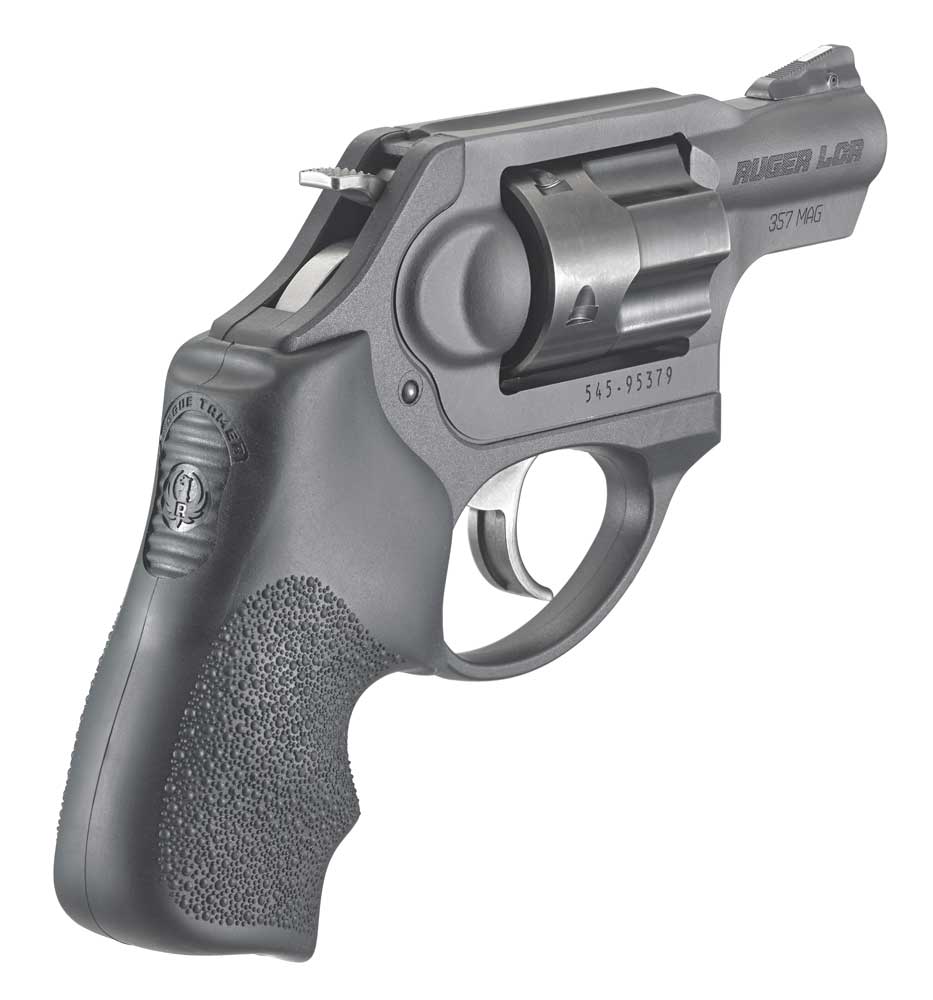
Ruger has introduced the .357 Magnum to its LCRx line of external hammer revolvers.
Next to dependability and potency of caliber, comfort is typically among the top considerations for shooters aiming for a concealed carry piece. The goal is, after all, to have the handgun on person at all times, and that won’t happen with a bulky, awkward sidearm.
Ruger made headway in this department nearly a decade ago first with the release of the LCR line of revolvers, then following up with the LCRx line soon after. Tipping the scales at 13 to 17 ounces, the streamlined wheelguns have been just the ticket for many seeking a reliable and concealable everyday carry piece. And the New Hampshire gunmaker has continued to expand shooters’ options in these models, chambering the revolver in a litany of popular — and some offbeat — pistol calibers.
The latest addition comes in the LCRx line with Ruger introducing the model in .357 Magnum. This was an expected release with the time-tested and extremely widespread revolver round making its appearance in the LCR line in 2010.
The caliber expansion in the newer model should appeal to many, given this line of the lightweight concealable revolver features an external hammer, allowing the gun to be fired in single-action, as well as double-action. This is the first time Ruger has deviated from .38 Spc., in the LCRx, with the company offering three variations of the caliber beforehand — all of them +P rated.
While the dimensions of the .357 are the same as the 1.87-inch barreled .38, the new revolver does come in a bit heftier. The magnum is almost 4-ounces heavier than .38 LCRx, due to its stainless steel monolithic frame. The Special utilizes aircraft-grade aluminum in its frame, but this was not an option for the .357 given the round’s higher pressure.
The new .357 Magnum weighs a tick more than the rest of the LCRx line, given it has a stainless steel frame.
The 5-round revolver measures in at 6.5 inches in overall length and features the line’s polymer fire control housing, which accounts for much of the gun’s reduced size and weight. It is outfitted with a stainless steel barrel and fluted cylinder, and it boasts Ruger’s patented friction-reducing cam in its trigger assembly. This feature is meant to facilitate a smooth, non-stacking trigger pull in double-action. The pull weight in double-action also feels lighter, as it builds towards the end of the stroke.
The LCRx comes with Hogue Tamer Monogrip, which should be a welcome addition with the snappier .357 Magnum round. The grips, however, are easily switched out, held in place by a single screw at the base.
The revolver has an integral u-notch rear sight and a pinned white ramp front sight — the front sight can be removed and replaced. The LCRx .357 Magnum’s external steel components have a matte black finish. Presently, the MSRP of the revolver is $669.
LCRx .357 Magnum Specs Grip: Hogue® Tamer™ Monogrip® Front Sight: Replaceable, Pinned Ramp Barrel Length: 1.87 in. Cylinder Finish: PVD Twist: 1:16″ RH Rear Sight: U-Notch Integral Finish: Matte Black Weight: 17.1 oz. Height: 4.50 in. Overall Length: 6.50 in. Capacity: 5 Grooves: 6 CA Approved: No MA Approved & Certified: No Suggested Retail: $669.00
Every year, the SHOT Show serves as a massive event where firearms manufacturers can launch their latest and greatest new products to an audience of retailers, law enforcement/armed forces and members of the firearms and outdoor media. This year, in addition to the host of rifles and pistols introduced, manufacturers brought out quite a few excellent new shotguns for 2017.
Whether you’re an avid waterfowl hunter looking for a new fowling piece, a dedicated competitive shooter searching for a new over/under or a homeowner looking for a capable home defense scattergun, firearms manufacturers developed something to fit the bill. Here’s a look at some of our favorite new shotguns for 2017.
The Meopta name is one that may be slightly less familiar to U.S. shooters than some of the domestic and other international optics manufacturers, but the company, which has facilities in both the Czech Republic and here in the states, produces some excellent quality glass. While much of its product line is geared toward hunters, in recent years, Meopta has also been making a concerted effort to meet the needs of tactical shooters as well.
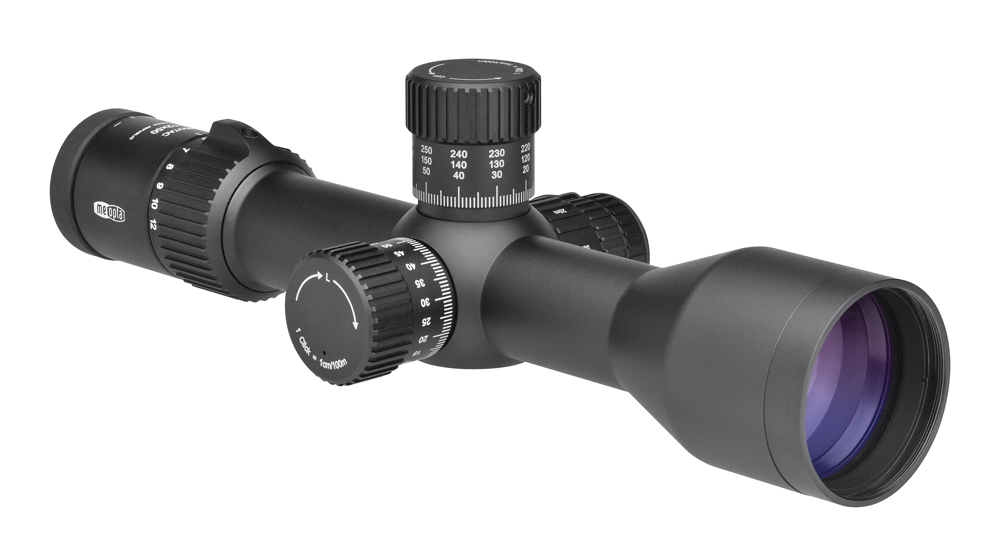
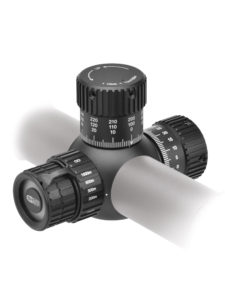
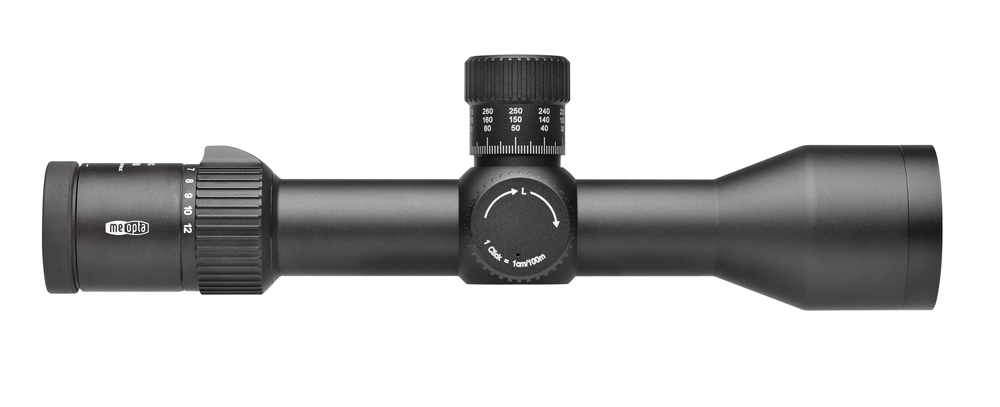
A clear example of this can be found in the company’s newest introduction for 2017, the MeoTac 3-12×50 RD riflescope. Announced just ahead of the 2017 SHOT Show, the Meopta MeoTac scope is engineered for tactical shooters and represents a great option for medium-range engagements.
Built around a solid 34mm aircraft-grade aluminum tube, the new MeoTac 3-12×50 RD utilizes Meopta’s excellent MeoLux lens coating and Schott glass, which allow for 99.8 percent light transmission per lens surface. This permits shooters to see both better and farther, even without ideal light conditions.
The new Meopta MeoTac 3-12×50 RD offers the shooter great flexibility, providing 55 MOA of windage adjustment and 100 MOA of elevation adjustment. Click adjustments are in 1/3 MOA increments via the scope’s precision, tactical-style turrets. The turrets are large, easy to grip, and each click is easily distinguishable. They also feature a zero-stop function for quickly returning to an established zero.
A first focal plane scope, the MeoTac comes equipped with an illuminated MilDot 3 RD reticle that allows shooters to use the rangefinding elements of the reticle on any power setting. The RD illumination system incorporates a highly visible red dot with 16 variable intensity settings, with the illumination control located conveniently on the side of the center of the scope. In between each power setting is an intermediate “off” setting, so users can simply and easily click the illumination off without dialing back down past the lowest setting. The scope also has an auto-off feature, which will automatically power down the illumination after an hour of inactivity.
Additional features include a side-focus parallax adjustment, which ranges from 27 yards to infinity, and Meopta’s MeoQuick fast-focus eyepiece. The scope is 12.6 inches long and weighs just 34.2 ounces, making it a great fit for a variety of tactical rifles.
In terms of durability, the new MeoTac utilizes Meopta’s MeoShield protective lens coatings, an erector system designed to withstand the heavy recoil of larger-caliber cartridges, and an anodized exterior to prevent scratches. The scope is also waterproof and fog proof, and it is covered by Meopta’s North American lifetime transferable warranty for added insurance.
Pricing on the new Meopta MeoTac 3-12×50 RD is currently slated at $2,529.99. For more information, check out the specs below or visit the Meopta Sports Optics website.
Specifications:
Meopta MeoTac 3-12×50 RD Magnification: 3-12x Objective Lens: 50mm Main Tube: 34mm Exit Pupil Diameter (mm): 4.2-16 Eye Relief (in.): 3.5-4.5 Field of View (degrees): 1.77-7.00 Field of View (ft.@100 yds.): 9-37 Focal Plane Position: First Dioptric Compensation (dpt): -1.4 Impact Per Click (inch@100 yds.): 0.36 Windage Adjustment: 55 MOA Elevation Adjustment: 100 MOA Parallax Adjustment: 27 yards to infinity Length: 12.6 in. Weight: 34.2 oz.
Hoope’s might just be the great equalizer in the gun world. Dang near every shooter has or has had the 110-year-old company’s venerable No. 9 cleaning solvent in their kit at one point or another. That sauce is pretty much the dictionary definition of time tested.
Hoppe’s hasn’t wed itself to an “If it was good enough for Granddad” attitude though, as one of its newest lines attests. In fact, Hoppe’s Black has been specifically designed to meet the modern shooter’s cleaning and lubrication needs. In short, it’s meant to slick and shine up gas-operated and tactical firearms that throw a high volume of copper-jacketed lead down range.
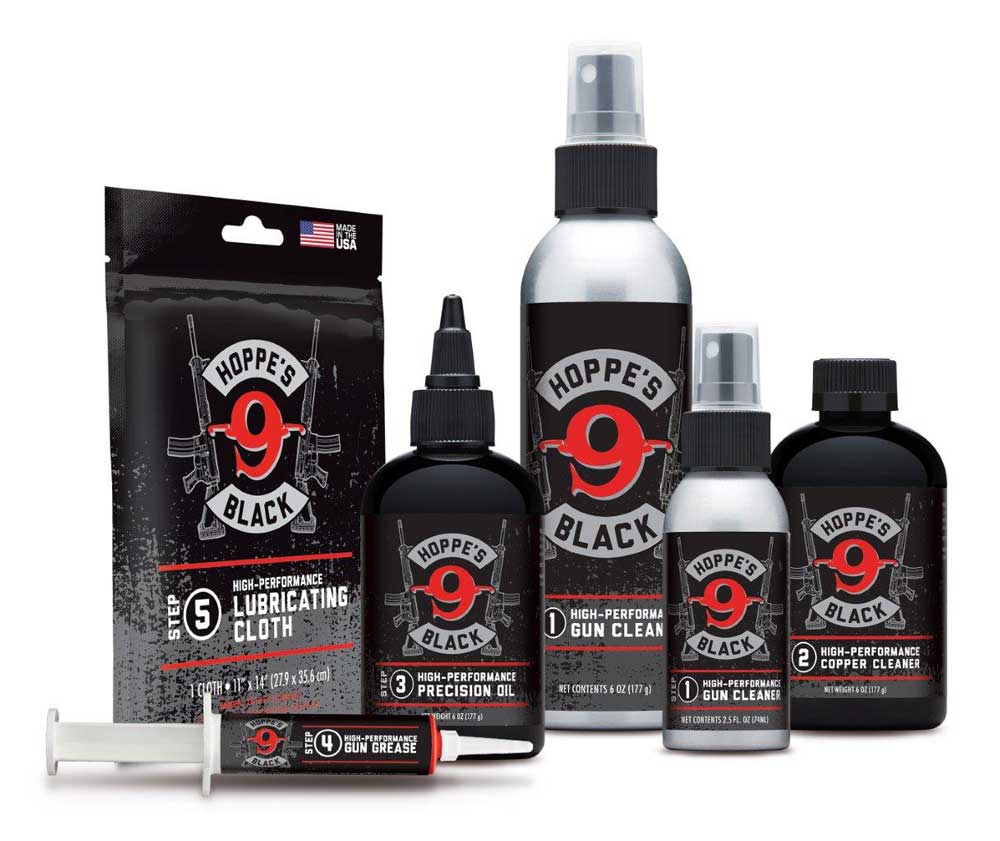
The new Black lineup includes gun and copper cleaner and oil, each formulated to function in temperatures from -65 to 540 degrees Fahrenheit. Basically, there isn’t a temperature or climate these products can’t handle. A grease syringe and lubricating cloth are also available to help in applying the Black products.
Hoppe’s Product Manager Laurie Kokoruda also points out, “The Hoppe’s Black formula is designed for MSRs and other high-volume firearms, but will work with any gun.”
The MSRP on the Hoppe’s Black line is as follows: Black Cleaner, 2.5 oz. $6.45, Black Cleaner, 6 oz. $9.45, Black Lubricant, 2 oz. $6.45, Black Lubricant, 4 oz. $9.45, Black Copper Cleaner, 4 oz. $9.45, Black Grease Syringe, 12 cc. $10.95, Black Lubricant Cloth $6.45.
For more information on the new Black line from Hoppe’s visit the company’s website.
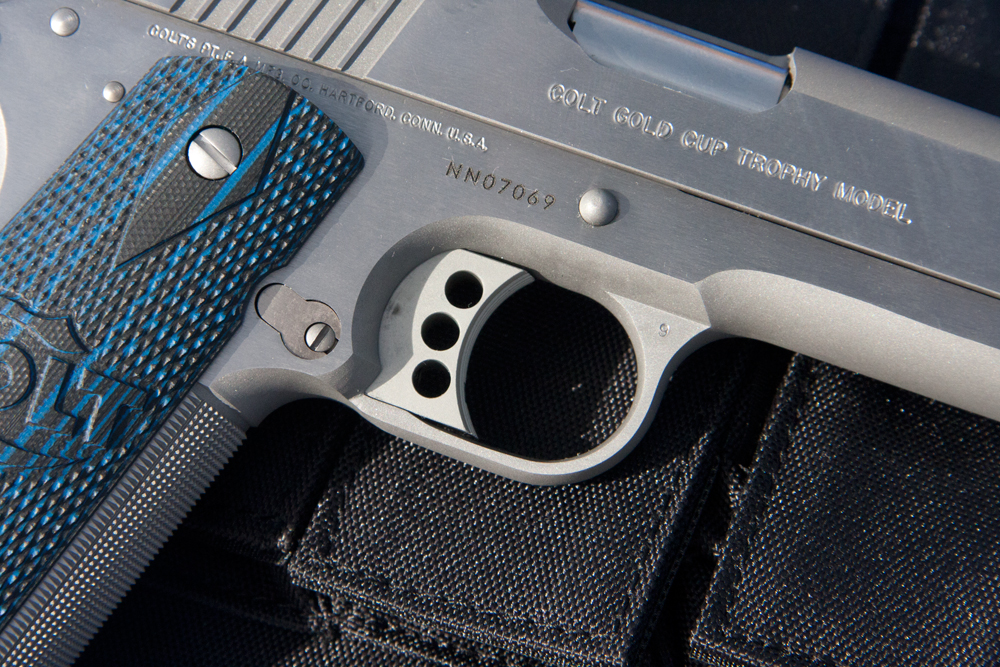
Since its introduction back in the late ’50s, Colt’s Gold Cup pistol has been known as one of the finest-shooting semi-autos available to competitive shooters. In the competitive realm, it has traditionally enjoyed a great reputation, combining an excellent match barrel with a crisp, wide target trigger.
Now, for 2017 Colt is looking to continue upon that tradition with its new Gold Cup Trophy pistol. Although some in the industry have known about it for some time, the American manufacturer went wide with the gun at the 2017 SHOT Show in Las Vegas.
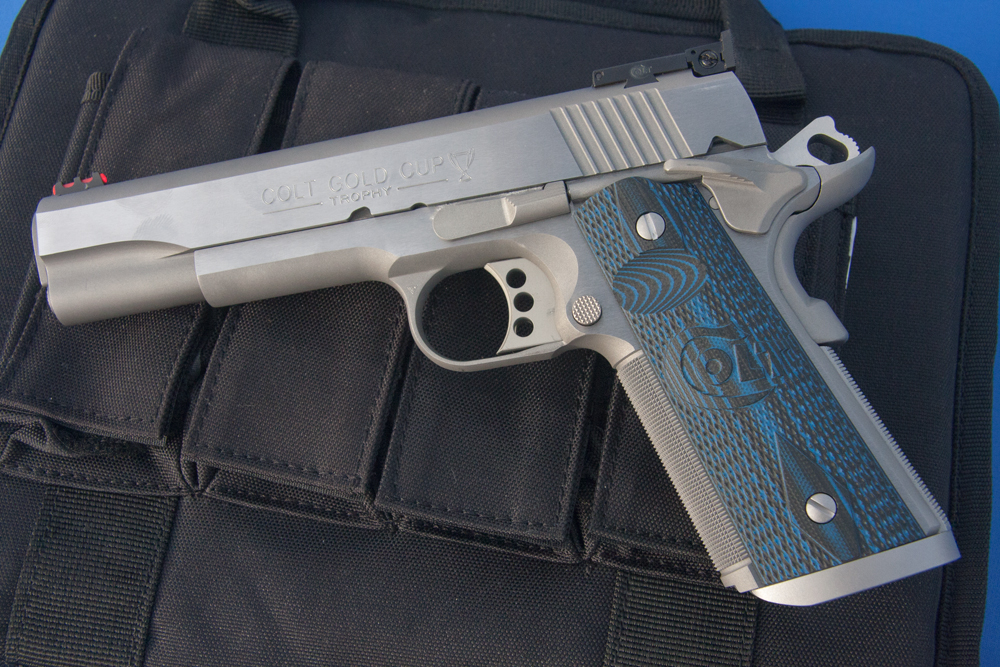
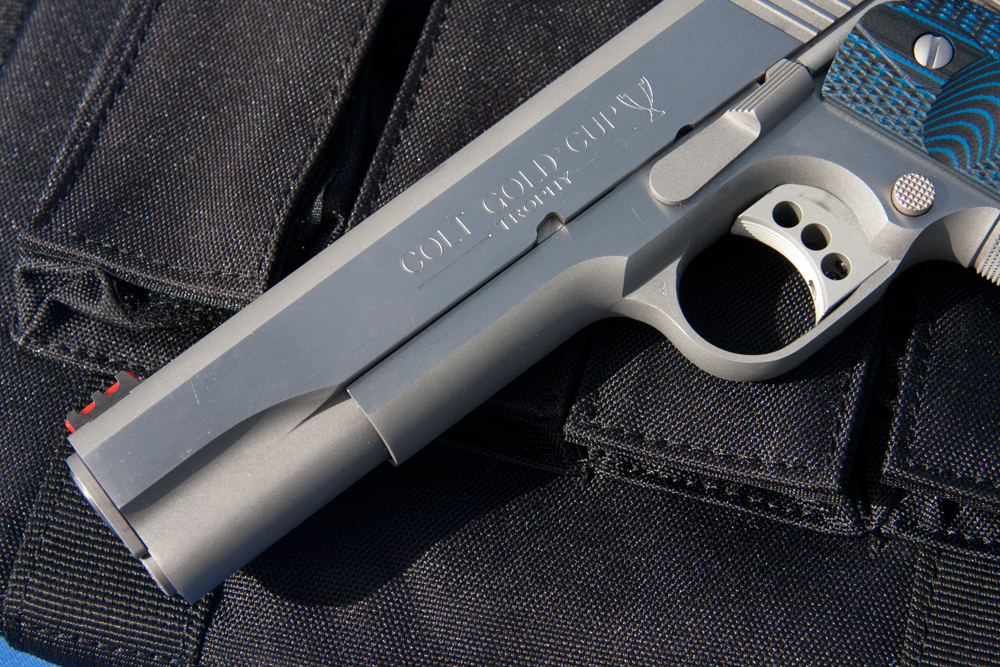
The new Colt Gold Cup Trophy pistol features the well-respected Gold Cup Series 70 Wide Target trigger, set between 4 to 6 pounds, as well as a 5-inch polished, stainless steel National Match barrel. This pairing, as with earlier Gold Cups, results in an incredibly accurate pistol.
Along with a group of other gun writers and members of the media, I was able to shoot the new Gold Cup this fall – a few months before it officially launched – and I was certainly impressed with the gun’s accuracy. The trigger is smooth and breaks cleanly, and I had no trouble hitting the steel the folks at Colt had set up downrange.
The excellent sights also help in that department. The front is a genuine Novak red fiber optic, while the rear is a fully adjustable Bomar-style sight. The fiber optic shows up clearly in a variety of light conditions, and the adjustable rear helps ensure you get the bullet exactly where you want it to go (provided you do your part).
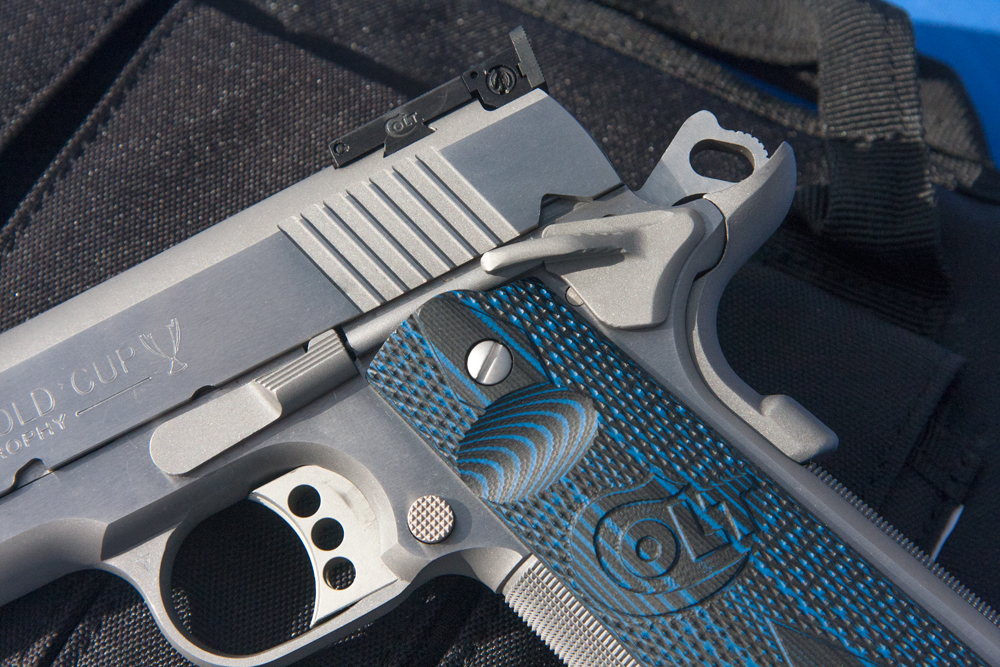
A few other nice features on this new Gold Cup include an integrated magwell and 25 LPI checkering on the front and backstrap. The blue G10 grips are also checkered and incorporate a scallop, and the gun has an upswept beavertail grip safety. The integrated magwell encourages fast and smooth reloads, while the checkering on the straps and on the grips themselves improves control without unnecessarily digging into the hands. The upswept beavertail helps keep the pistol low in the hand, also for increased control.
Slide and frame on the new Colt Gold Cup Trophy are brushed stainless steel, and the slide is of the round-top variety. Simple, but effective, slide serrations at the rear help manipulate the slide without being ostentatious, as some tend to become.
The new Gold Cup Trophy is available in either .45 ACP or 9mm. In the .45, capacity is 8+1 rounds, and the 9mm version adds an extra round.
For more detailed information on the new Colt Gold Cup Trophy pistol, check out the specifications below, or visit Colt’s website.
Specifications:
Colt Gold Cup Trophy Type: Semi-auto, single action Caliber: 9mm, .45 ACP Barrel: 5 in., National Match, polished stainless steel Overall Length: 8.5 in. Height: 5.5 in. Width: 1.25 in. Unloaded Weight: 38 oz. (.45 ACP), 40 oz. (9mm) Frame: Stainless steel Slide: Stainless steel, round top Finish: Brushed stainless Sights: Genuine Novak fiber optic front, fully adjustable Bomar-style rear Trigger: 4-6 lbs., Gold Cup Series 70 Wide Target, three-hole aluminum Grips: Blue G10, checkered with scallop Manufacturer: Colt
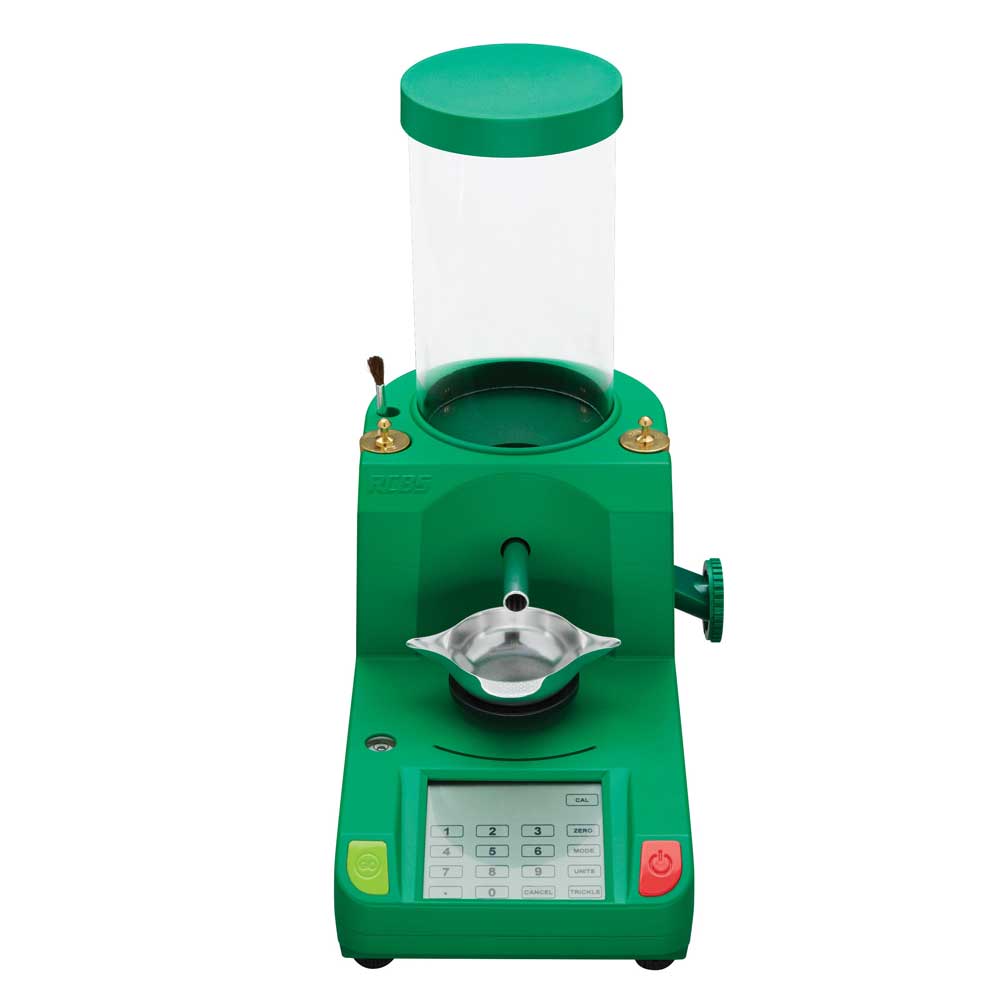
Ammunition reloading has come a long way in the last few years, not just in popularity but also technology.The firearms niche has seen an explosion of new gizmos to get the most performance out of a cartridge and to make handloading all the more precise. RCBS has been at the forefront of this progress, offering some of the latest and greatest reloading bench upgrades. And this year is no different, with the company releasing three new pieces of equipment at the 2017 SHOT Show. Here’s a look at RBCS’s new gear.
ChargeMaster Lite The ChargeMaster Lite is the little brother of the RBCS’ electronic powder measure line. While it holds almost as much powder as the original ChargeMaster (nearly a pound), the unit is much smaller — making it ideal for crowded work spaces. Small in stature, the tool is big in features and performance. The one-piece unit can weigh out charges between 2-300 grains with a +/- 0.1-grain accuracy and is easily programed with its touchscreen LCD display. It can switch between 120 VAC and 240 VAC power, comes with an ambidextrous scale pan, wind cover and features a built in bubble level — to ensure it is dead on. Perhaps most handy of all, it comes with a quick-drain system that makes flushing out the existing powder a breeze. Presently, the ChargeMaster Lite’s MSRP is $299.95.
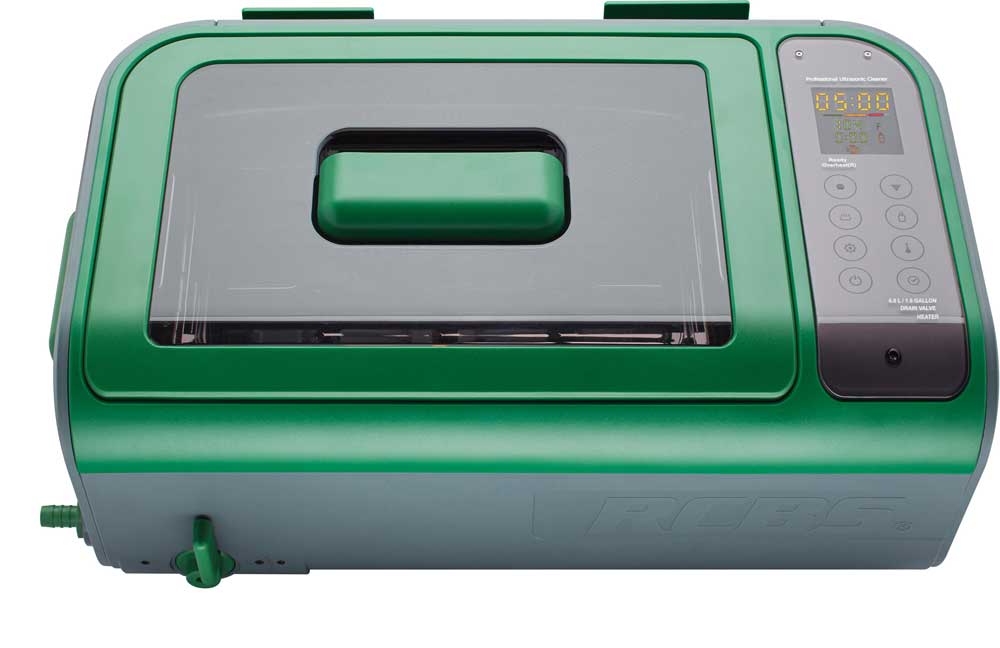
Ultrasonic Case Cleaner-2
Ultrasonic Case Cleaner-2 The Ultrasonic Case Cleaner-2 might be a godsend for those with a lot of brass — or firearms parts — to clean, with little time to see to the task. The new model is nearly twice as large as RBCS’s old case cleaner with a 6.3-quart capacity. The unit has been outfitted with a second heater, making the cleaner more powerful and effective at scrubbing off powder residue and grime. And it is outfitted with simple and easy-to read LED display, making programming a snap. The Ultrasonic Case Cleaner-2 can be set to run up to 30-minutes and comes in a 120 VAC model and a 240 VAC model. The MSRP on the 120 VAC model is $399.95 and the 240 VAC model is $429.95
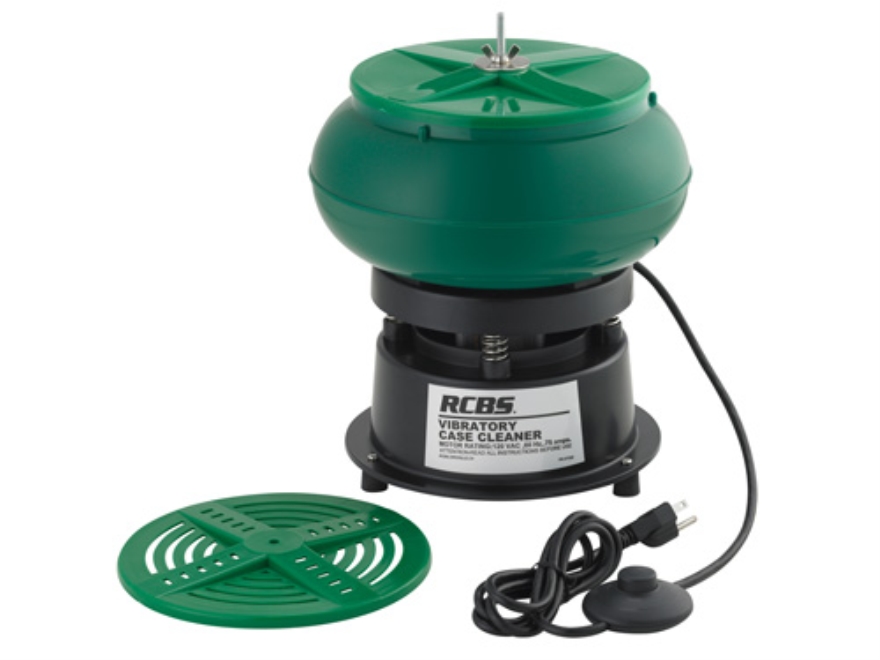
Vibratory Case Polisher
Vibratory Case Polisher Have 14-pounds of brass that needs shining? The Vibratory Case Polisher might be your answer. The extra-large polisher holds a mass of brass with all the medium required to get it spotless. To boot, the unit is designed to run quiet, powered by its 120 VAC thermally protected motor. It also features a sifting lid to help separate the medium and grit from the brass. Present MSRP on the Vibratory Case Polisher is $116.95.
Learn How to Get Loaded Right
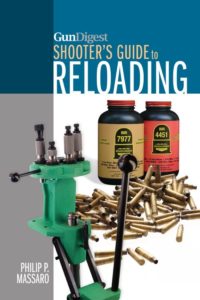
If you’re an avid rifle or pistol shooter, chances are you’ll benefit greatly from learning how to reload ammo. Luckily, the process of handloading or reloading your own ammunition is explained in great detail in Gun Digest Shooter’s Guide to Reloading by Philip P. Massaro. Filled with illustrations and step-by-step instructions, the process of reloading metallic cartridge ammunition for both rifles and pistols is clarified with both a simple overview, as well as specific details of the process. Order Your Copy Now
The annual SHOT Show in Las Vegas serves as a stage for gun companies to introduce new products for the new year. This year’s crop of new centerfires includes a little bit of everything, from light mountain-hunting guns to heavy target rifles with features that appeal to long-range shooters. Here’s a look at some of our favorite new guns for 2017.
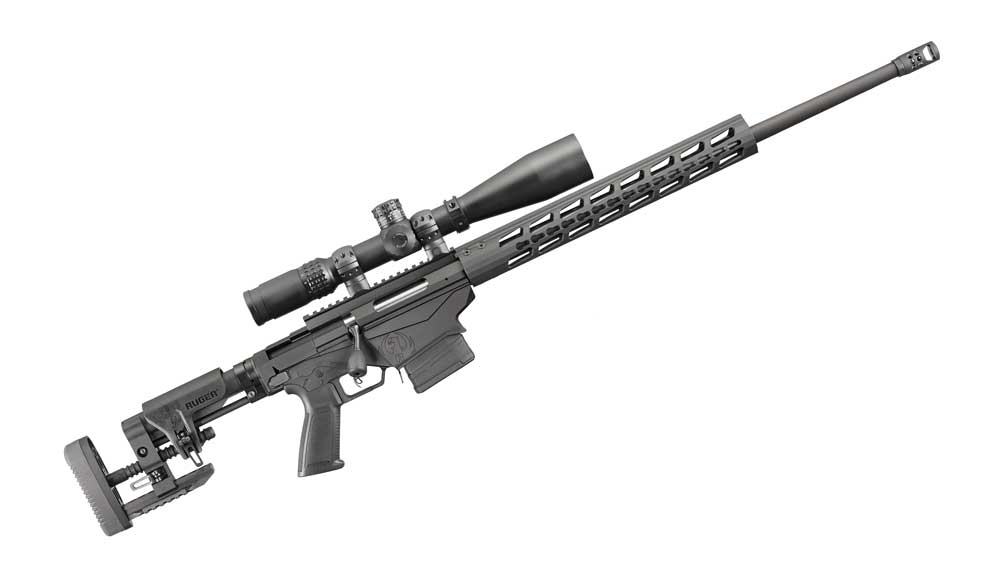
Ruger’s Precision Rifle is now being chambered in the highly accurate 6mm Creedmoor.
Those sexy sixes — what match shooter’s mind doesn’t go to the center of the bull’s eye when they’re mentioned?
For the most part, it’s been the 6.5 Creedmoor that has ruled the roost the past decade when it comes to those passionate about precision. The excellent ballistic coefficients and sectional densities the bullets offer have made the round a knockout when it comes to sub-MOA groups and top-places on the podiums. But a slightly more svelte six has made headway in recent years, capturing more and more match shooters and long-range hunters’ attention.
The 6mm Creedmoor has become a popular choice for competition shooters and is making headway as a commonplace cartridge. At least it is in the Sturm, Ruger & Co., Catalog.
Shortly before the 2017 SHOT Show, the New Hampshire-based gunmaker unveiled both its American Rifle Predator and Ruger Precision Rifle in the tack-tapping round. These new offerings — for the time being — should cover most of the bases for Ruger when it comes to the 6mm Creedmoor. It does, however, come at a cost.
The company has discontinued the Precision Rifle in .243 Win., opting for the 6mm in its place. But the move should go a long way in cementing the bolt-action as a legit long-range rifle, with it now chambered for three of the most poplar competition rounds — 6mm Creedmoor, 6.5 Creedmoor and .308 Winchester.
The American Rifle Predator model is set to extend varmint hunters’ range now that it shoots 6mm Creedmoor.
Matched with the bells and whistles on the Precision Rifle, the 6mm Creedmoor has the potential to be a sweet shooter. The rifle’s free-floated 24-inch barrel, fully adjustable stock and in-line recoil path should milk plenty of accuracy out of the round.
The 6mm American Rifle Predator also has plenty to offer, especially to shooters more comfortable with a traditional shooting platform. The rifle has a 22-inch free-floated barrel with a heavy tapper, which should all but erase the already light recoil of the round. And its threaded muzzle makes the addition of a suppressor a snap.
Presently, the 6mm Creedmoor is not offered in the Predator package — which mates it with a Vortex Crossfire II 4-12×44 scope. But given the 6.5 Creedmoor in this model comes with this accoutrement, it wouldn’t be surprising to see one on the 6mm sometime in the future.
It doesn’t matter if you are a fan of revolvers, semi-autos, classic remakes or improvements on existing pistols and revolvers, there was something for every handgunner at the 2017 SHOT Show, the largest firearms and hunting trade show in the world. Not only did manufacturers unveil a wide variety of new models and new configurations of old models, a handful of custom gun makers even introduced guns that are as beautiful as they are functional.
These days, more and more shooters are recognizing the potential of the AR platform for use in the field. The guns are fairly accurate, offer plenty of power for suitable game species and provide fast follow-up capabilities if needed. Lots of gun manufacturers have been capitalizing on this by developing hunting-specific ARs that are tailor-made for field work.
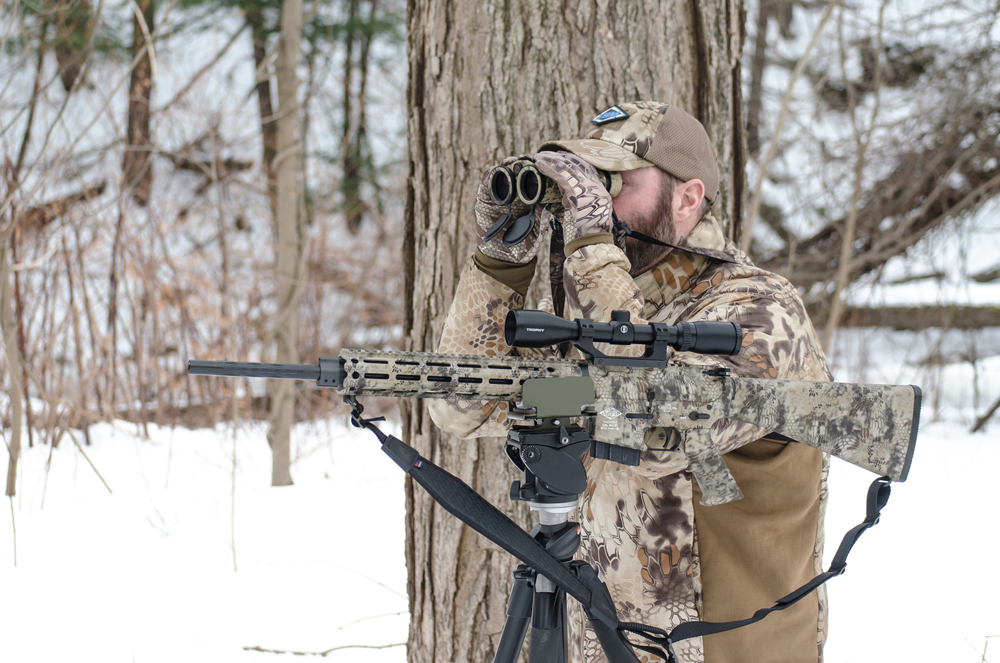
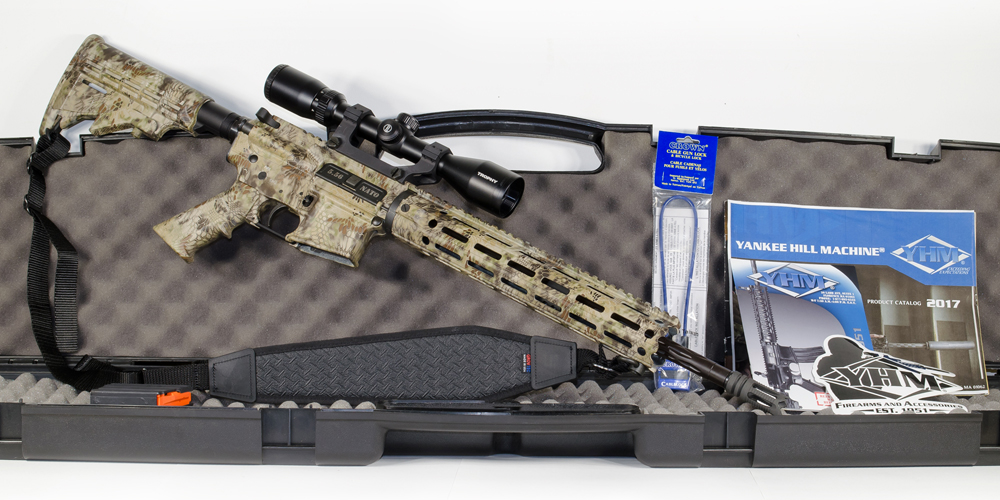
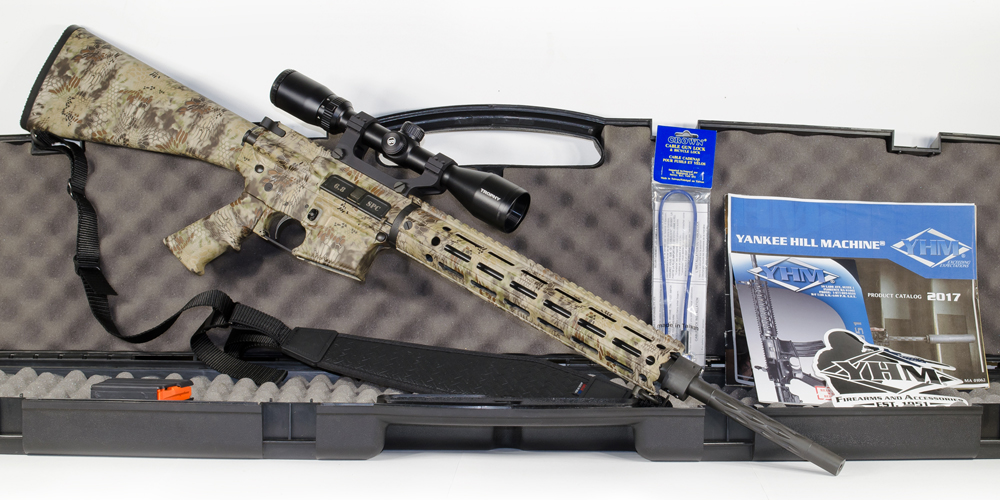
Ahead of the recent 2017 SHOT Show in Las Vegas, the popular AR and accessory manufacturer Yankee Hill Machine, Co. (YHM) announced it was bringing out two new field-ready rifles for the new year. Dubbed the Hunt Ready Rifle series by the company, these two ARs are hydro-dipped in Kryptek Highlander camo, are hand tuned and are topped with a Bushnell Trophy scope that is factory zeroed at 100 yards.
There is a Rifle model and a carbine model in the new Hunt Ready series. The Hunt Ready Rifle utilizes a 20-inch free-floated 4140 steel diamond fluted barrel, while the Carbine’s is slightly shorter at 16 inches. Both have receivers forged from 7075-T6 aluminum, and both are equipped with YHM’s Rifle Length MR7 M-Lok Handguard and YHM’s low profile gas block.
The Hunt Ready Rifle features an A2 trapdoor stock, while the Hunt Ready Carbine wears an adjustable M4-style telescoping butt stock. The Carbine also has YHM’s Phantom 5C2 flash hider/compensator on the muzzle; this is not present on the Rifle model.
The Bushnell Trophy scope featured on both guns utilizes a mil-dot crosshair reticle, and YHM uses its own manufactured one-piece scope mount to hold the Bushnell in place. The YHM mount has been designed to hold the optic at the same height as the rifle’s iron sights.
Each rifle package also comes with a sling from Grovtech. The sling’s length can be adjusted with just one hand, and it incorporates a wide padded, rubberized shoulder area to reduce strain and fatigue on the user’s shoulder in the field, while remaining firmly in place.
The YHM Hunt Ready Rifle will be available in either 5.56 NATO or 6.8 Remington SPC, while the Hunt Ready Carbine will add .300 BLK to that list. MSRP on the Rifle is listed as $1,611 for the two 5.56 NATO models (one has a 1:7 twist barrel and the other has a 1:9 twist barrel) and $1,654 for the 6.8 Remington SPC version. Pricing on the Carbine is $1,579 for 5.56 NATO and .300 BLK models and is $1,633 for the model chambered in 6.8 Remington SPC.
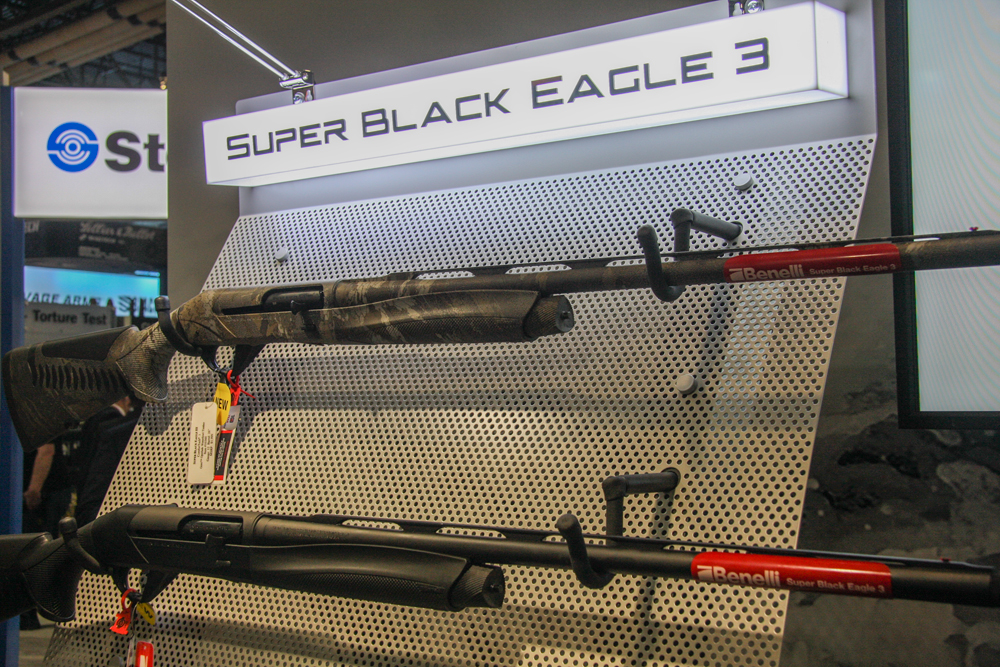
Ever since Benelli introduced its innovative and durable Super Black Eagle semi-auto shotgun many years ago, the SBE name has been somewhat revered in hardcore waterfowl hunting circles. For years, hunters from across the country, and likely the world, have used the original Super Black Eagle, and the second-generation Super Black Eagle 2, to bring down a host of winged critters, from the marshes of the deep south to the vast plains of the far north, and to the salty shores of both coasts. The Super Black Eagle has proven itself rugged, reliable and high-performing in all scenarios.
During the 2017 SHOT Show in Las Vegas, Nevada, Benelli excited fans of this excellent platform and serious waterfowlers everywhere when it revealed that it had brought out the Super Black Eagle 3 for 2017. Impressively, Benelli has managed to further improve on the SBE’s design, incorporating elements that enhance ergonomics, functionality and style.
Obviously, the new shotgun retains an inertia-driven action, but it also receives an upgrade in the Easy-Locking System, an improved breech-closing system that eliminates the potential for shooter error when trying to gently close the bolt and prevents it from slipping out of battery if the gun is hit hard or knocked over. This was an issue that had afflicted earlier Benelli models; when a shooter tried to ease the bolt closed on a shell, proper lockup would not occur, resulting in the inability to fire. Benelli addressed this issue in its Ethos line of shotguns, and it’s good to see that this same technology is now being implemented in the SBE 3.
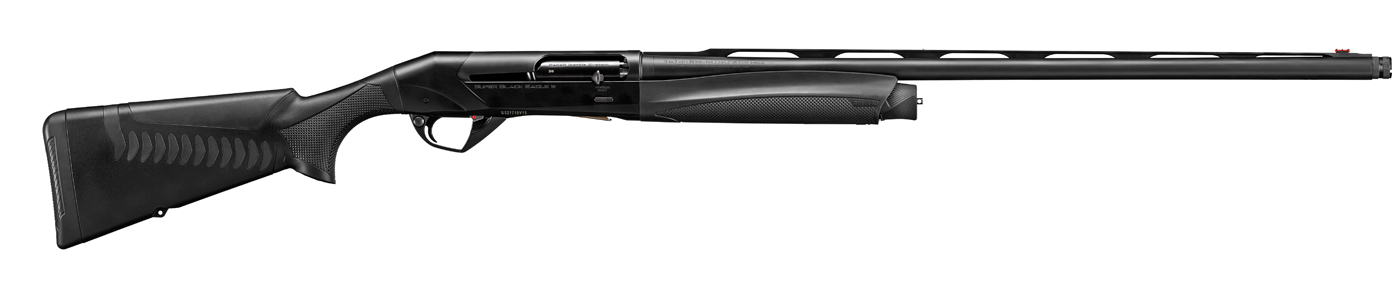
Due to the Super Black Eagle’s reputation as a waterfowl gun designed to be used in any and all conditions – including extremely frigid temperatures – Benelli designed the new SBE 3 to be very user-friendly to those wearing gloves. The new Super Black Eagle 3 incorporates an oversized bolt release on the receiver, an oversized safety and an enlarged loading port for easier loading in less-than-ideal conditions.
Instead of the typical rounded magazine cap at the front of the magazine tube below the barrel, Benelli has also chosen to utilize a triangular cap with a heavy texture. This design helps to facilitate a more secure grip, even when the hands are gloved.
The engineers at Benelli have also worked on improving comfort with the new Super Black Eagle 3. This includes an Easy Fitting System that features a shim kit allowing for up to eight different cast and drop configurations. And a new stock and forend design, plus a rounded trigger, give the shotgun a smoother feel and make it easier to swing.
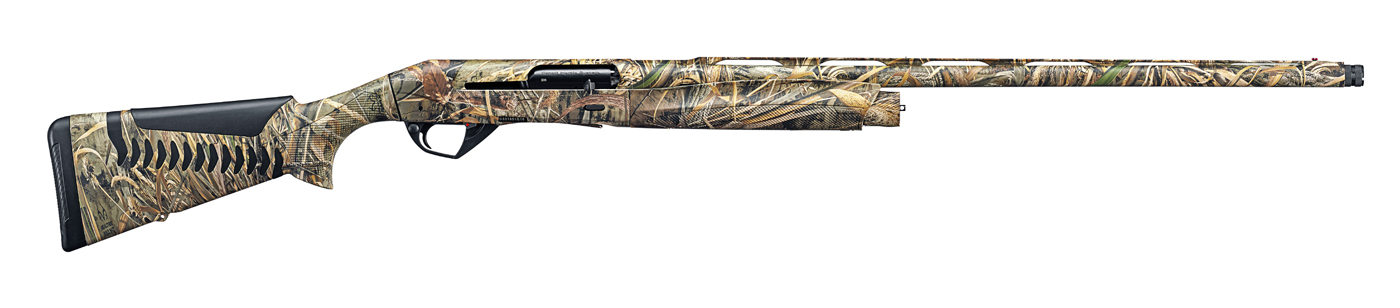
In terms of recoil reduction, Benelli uses its third-generation ComforTech stock, which includes additional shock-absorbing chevrons that have been optimized in terms of size and location. The manufacturer has also developed a new cheek comb pad, which it’s calling Combtech, that’s designed to reduce the impact of felt recoil on the cheek and face. And with some of the heavy 3- or 3-1/2-inch waterfowl loads, any increased reduction in recoil certainly makes a difference.
To meet the distinct needs of hunters, the new Benelli Super Black Eagle 3 will be available in four different patterns: the standard black synthetic, Realtree Max-5, GORE OPTIFADE Timber and Mossy Oak Bottomlands camo. The SBE 3 will also be offered with either a 26- or 28-inch Crio-treated barrel.
The MSRP on the new Super Black Eagle 3 is currently listed at $1,899 for the standard black synthetic and $100 more for the different camo models. For more information, visit the Benelli website, or check out our full specifications on the new SBE 3 below.
Specifications:
Benelli Super Black Eagle 3 Type: Semi-auto, inertia-driven Gauge: 12 Chambering: 2-3/4, 3, 3-1/2 in. Capacity: 2+1 Barrel: 26 or 28 in. Overall Length: 47.6 in. (26-in. barrel), 49.6 in. (28-in. barrel) Weight: 7.05 lbs. (26-in. barrel), 7.2 lbs. (28-in. barrel) Chokes: Extended Crio® (IC, M), Flush (C, IM, F) Sights: Red bar front sight, metal bead mid sight Length of Pull: 14-3/8 in. (adjustable +/- 1/2 in.) Drop at Heel: 2 in. Minimum Recommended Load: 3-dram, 1-1/8 ounce MSRP: $1,899, $1,999 (camo versions) Manufacturer: Benelli
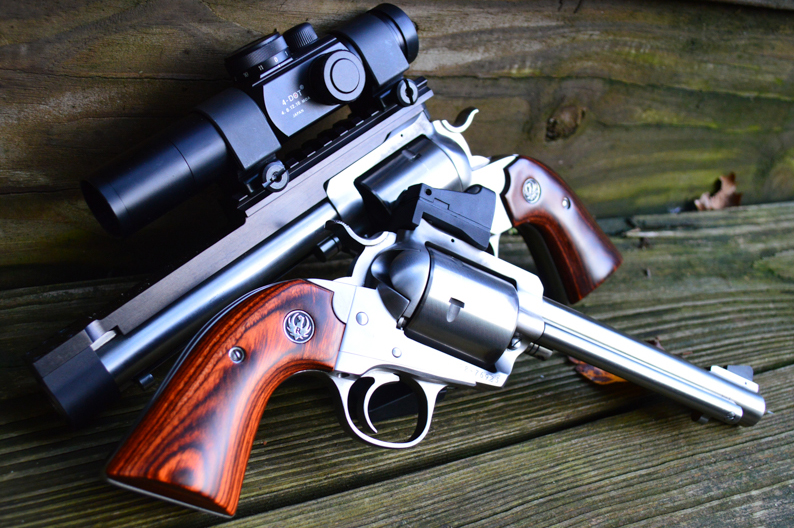
The dot on the better scopes can be adjusted for brightness to compensate for changing light conditions in the field or out on the range. It is probably the best solution for low-light hunting situations, making target engagement easy to attain in a hurry. Some red-dot type sights also feature an adjustable dot size, enabling you to adjust diameter up or down to better serve the conditions. In low light, where black crosshairs may be hard to see, the red dot can be adjusted to shine brightly.
There are essentially two types of red-dot sights: a tube type that resembles a riflescope and is adjusted and mounted in the same manner, and the holographic sight that projects a red dot on a small screen. The holographic-type is quite compact and may not necessarily add any bulk to your hunting rig. However, it may not be the best choice in inclement weather as it can be difficult to keep the screen clean for an unobstructed view of your target. Holographic types also tend not to be as rugged, as much more of the mechanism is exposed and not enclosed in a tube — something else to consider.
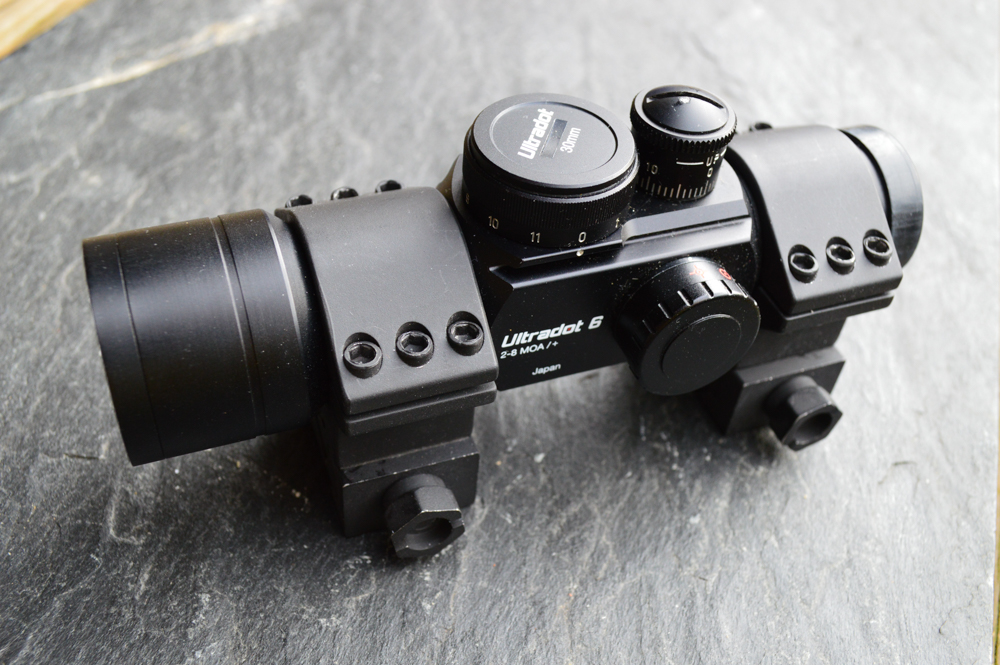
The relatively new Ultradot 6 features four dot sizes and two reticle patterns.
However, there are some very good units available, such as the Trijicon RMR. In general, red-dot sights are light in weight and don’t change the balance of your gun in any significant way. Be sure to speak to the manufacturer prior to spending your money. Make certain the red dot you choose is up to the task of withstanding the recoil of your handgun (a recurring theme here!).
In any case, a good warranty goes a long way in customer confidence. Ultradot produces a whole line of economical and rugged red dot-type sights that come with a lifetime warranty. I am a big fan of Ultradot’s products for a number of reasons, but mainly for the reliability of their products.
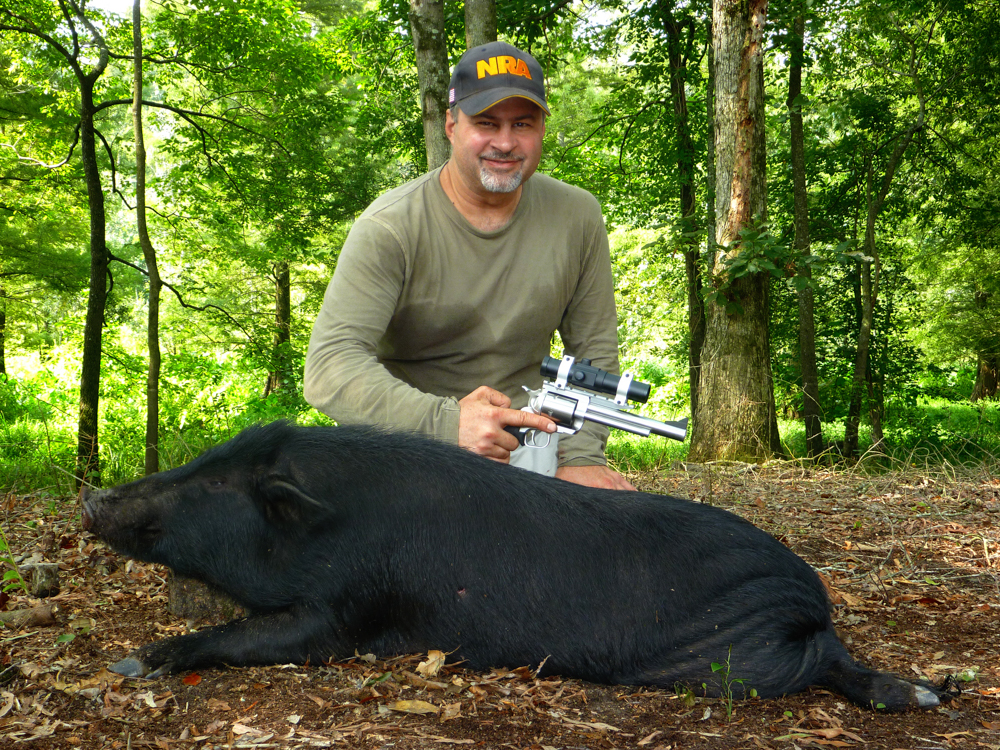
The author took this wild hog in North Carolina with an Ultradot 30 equipped BFR in .500 JRH.
I have had an Ultradot 30 (this is a 30mm tube diameter, hence the designation) on a number of my heavy recoiling revolvers and can report that it has exceeded my expectations by a dozen miles. Thousands of full-tilt .475 Linebaugh rounds (420s at 1,350 fps) and a full complement of heavy load development for my .500 JRH BFR have tested the very integrity of that Ultradot. The poor unit even resided on my ultra-abusive lightweight Ruger Super Redhawk in .500 Linebaugh. The only failure I have experienced was a set of rings that broke from the vicious recoil generated by the .475. But the Ultradot 30 never missed a beat. To add insult to injury, I even mounted that sight on my 8-pound .416 Remington Magnum Mauser (yup, I do own a rifle) for load testing.
I have not been kind to my Ultradot. But like a loyal dog, it keeps coming back, tail always wagging. The only drawback with any red-dot sight is that battery failure can leave you high and dry at the worst moment. Remember to always carry a spare battery and the tools necessary to change it in the field. From supported and unsupported shooting positions, the red dot shines.
Thompson/Center Arms has always marched to the beat of its own drummer. After all, it was the firearms company founded on a single-shot, break-action pistol. And despite turning its attention to more mainstream styles of firearms, little has changed for the 52-year-old gunmaker with an eye for the unique.
Look no further than Thompson/Center’s new Compass bolt-action rifle for proof. For the price point — $399 MSRP — there are few other rifles that are as feature rich.
Gun Digest Editor-in-Chief Eric Conn had the opportunity to discover the over engineering of the Thompson/Center Compass firsthand in his trip to Smith & Wessons’ facilities in Springfield, Mass. What caught Conn’s attention right off the bat was the rifle’s smooth and responsive trigger. The adjustable trigger is preset at the factory to the lowest possible pull weight, but can be customized to any shooter’s needs.
But that isn’t the only trick up the rifle’s sleeve. The Compass, which comes in 11 calibers, has a rock-solid 3-lug bolt, threaded muzzle just crying for the addition of a suppressor and a built in cheek piece — the only firearm in its price range that can boast the feature.
Check out the entire video to catch all the goodies Thompson/Center has integrated into its new bolt-action rifle. It appears shooters have a lot of reasons to set a course for the Compass.
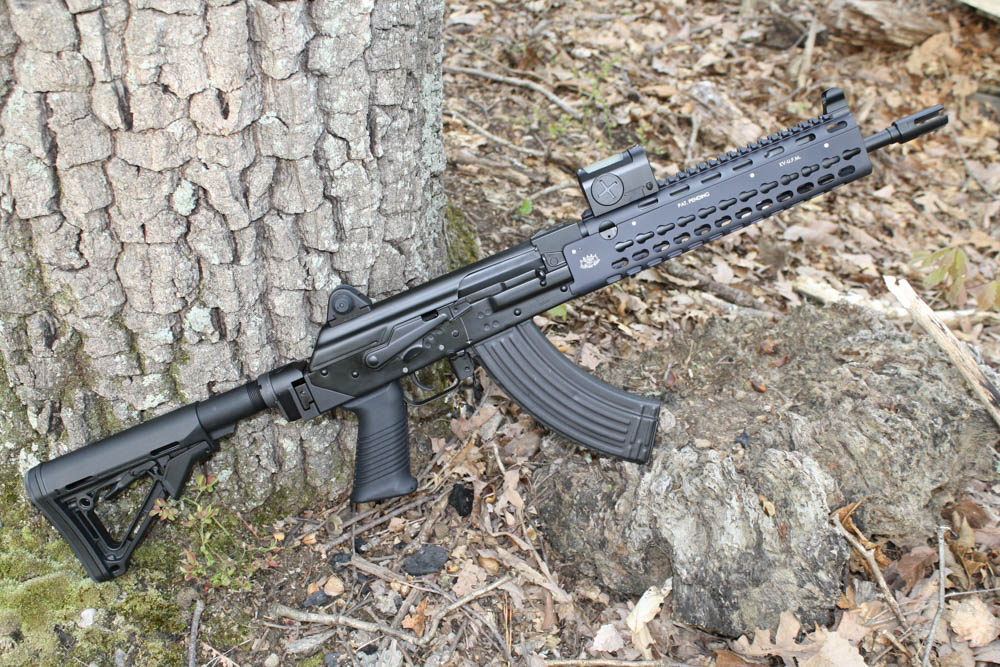
The Krebs KV-13 has 9.5 inches of Picatinny rail on top, ideal for optics, lights and other add-ons.Get the most out of your Kalashnikov with the Gun Digest Guide to the Modern AK.
Marc Krebs from Krebs Custom in Wauconda, IL, is arguably the best custom AK manufacturer around. It seems he’s always experimenting, looking for ways to improve the AK platform. He even manufactures several aftermarket improvements as well as working on customers’ rifles. And makes his own complete rifles, usually from Russian Saiga receivers. His latest, the KV-13, really exemplifies what he has achieved.
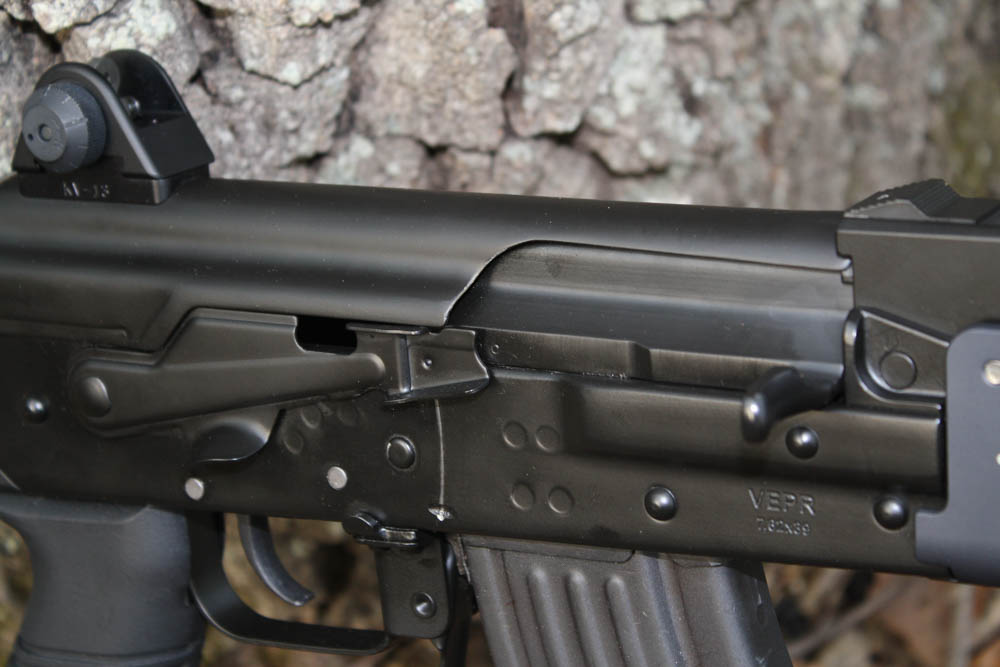
For this build, he selected another Russian AK-pattern rifle: the VEPR made by the famous Molot (Vyatskie Polyany Machine Building Plant) factory. VEPR AKs are rock-solid reliable. What sets them apart is that the traditional gun made by Molot was the RPK squad automatic weapon.
Notably, the VEPR uses a standard stamped receiver that has been beefed up for heavy use and is 50 percent thicker on each side. It uses a heavy duty front trunnion, which is where the barrel connects to the receiver and the bolt locks. This makes the receiver much stronger with less flex when fired. The rear of the receiver has an angled cut that requires the use of an adapter to install different stocks.
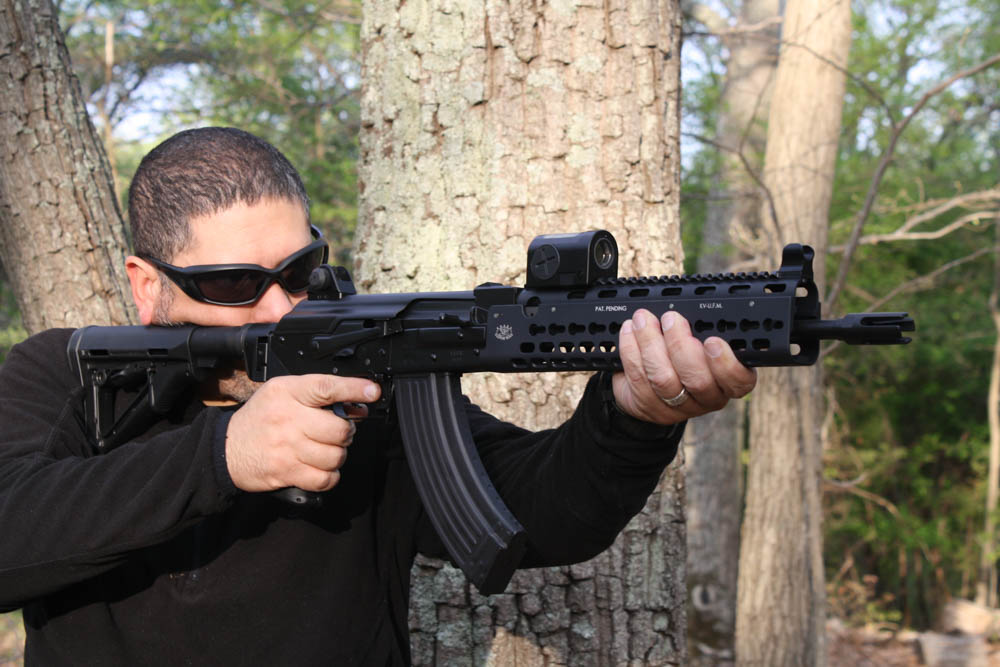
The Krebs Custom KV-13.
Krebs first cuts the barrel down to 14 inches, then adds a permanently attached muzzle brake to bring the legal barrel length to 16 inches. The four-prong brake itself is made by Krebs and very effectively reduces muzzle flash. The gas block is the modern type with a 90-degree angle, but it is hard to see because of the custom KeyMod handguard.
This handguard provides 9.5 inches of Picatinny rail on top between the front sight and the dust cover. The sides and bottom of the aluminum unit feature the KeyMod system, co-developed by Noveske and VLTOR, allowing you to more easily install rails or accessories anywhere along the handguard. It runs 12 inches from the front of the receiver almost to the muzzle brake and facilitates a hands forward grip, while doing an excellent job of dissipating barrel heat.
The Krebs KV-13 is fitted with a four-prong brake that is very effective at cutting down muzzle flash and recoil.
As for the action, Krebs takes this already reliable system and improves it by smoothing and dehorning the edges. The trigger has been tuned and is far crisper and more comfortable than any standard AK trigger I have ever tried. Krebs adds an outstanding safety selector that can operate as a bolt hold open and bolt release using just the trigger finger and a finger extension. This safety selector is an easy upgrade to most any AK.
The sights on the KV-13 are outstanding. Instead of the usual short radius post and notch sights you find on most AKs, Krebs has installed true AR-style peep sights with a 19-inch sight radius. The rear sight is adjustable for windage, the front for elevation. The left side of the receiver has the standard AK optics rail for installing a scope.
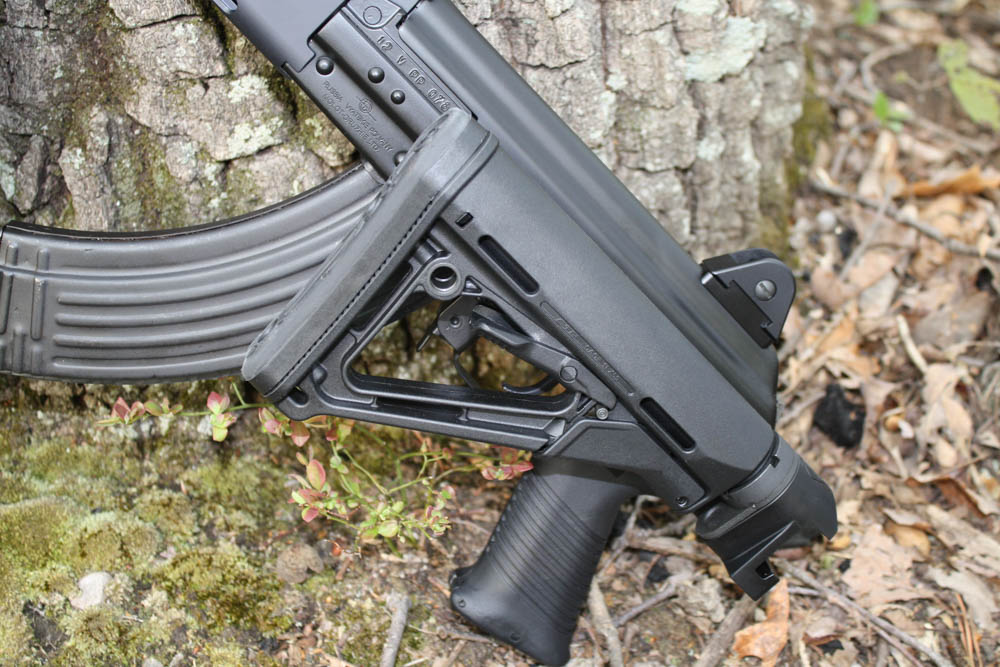
The polymer pistol grip is the TAPCO SAW style, which is large but comfortable and features significant interior storage space. An ACE folding stock adapter has been installed and mated to a mil-spec AR buffer tube so any compatible AR collapsible stock will fit. In this case, Krebs installed the six-position Magpul CTR stock. Folding the stock is fairly easy and really makes this a super compact gun for transport or storage. Of course, it can be fired with the stock folded.
The KV-13’s safety selector doubles as a bolt hold open device.
The KV-13 will accept any standard AK magazine, one steel mag was included. I found the fit to be a bit tight. The fit and finish on the rifle is quite good, using the KrebsKote solvent-proof finish to replace the standard Russian bluing.
On the range, it was very handy and well balanced. Empty cases are ejected brusquely and tended to land about 20 feet away and slightly forward. There were certainly no failures of any sort.
For accuracy, I used a forward-mounted Zeiss Z-Point red dot sight. I tested at 100 yards, which worked fine with the 3.5 MOA dot on the Z-Point. Accuracy was combat-acceptable with groups ranging between 3 and 5 MOA. No one ever claimed that the AK was a target rifle, but it is most certainly reliable and tough. Krebs can build AKs to suit your tastes, so many options abound.
With stock folded, the KV-13 is a compact package with a lot of punch.
SPECIFICATIONS Krebs Custom KV-13 CALIBER: 7.62x39mm BARREL: 16 in. with brake OA LENGTH: 26 in. folded / 33.75 in. collapsed / 37.75 in. extended WEIGHT: 8.5 lbs. empty STOCK: Polymer collapsible folding stock SIGHTS: AR-style peep ACTION: Semi-auto FINISH: Blued CAPACITY: 30-round magazine PRICE: $1,850 847-487-7776 www.krebscustom.com
Looking to go armed, but are stuck in the weeds as to what to arm yourself with? Here are 20 of the best concealed carry gun options that will keep you on the defensive.