Making certain a defensive firearm is in working order is imperative, but simple. They need cleaning, lubrication and, if magazine fed, magazine rotation. What’s that last one, you say? Magazine rotation? Yes, like any mechanical device, a magazine is prone to ware. Particularly, if loaded consistently, the springs can soften and eventually lead to a failure to feed. In turn, it’s important to give the magazines a rest and call a fresh one into action. Firearms instructor and member of Colt Combat Unit Ken Hackathorn goes over a simple magazine rotation system in the above video that ensures they perform when they’re called into duty. Granted, the system costs a little extra money, given it requires having extra magazines on hand. But it will get more life out of each magazine and, more importantly, ensure they function flawlessly if ever called into duty.
A Rifleman’s Rifle: Remington Model 7 LS
 In 1983 Remington introduced the Model Seven. Best described as a compressed model 700, it was sort of a replacement for their discontinued model 600. It had a suggested price of $449.95, and at just a shade more than 6 pounds and less than a meter in length, riflemen immediately adored it. I always thought the LS version with the laminated stock and fixed sights was the best of the bunch. It was discontinued in 2005.
For 2016 Remington revived the model Seven LS. It’s the first Seven in a long time with the short 18.5-inch barrel and iron sights. I ordered one immediately and haven’t put it down since. This is partly because I lusted after a model Seven in 1983 – the year I graduated high school – and partly because this rifle has satisfied my craving for a model 600, like Jeff Cooper built his first scout rifle on.
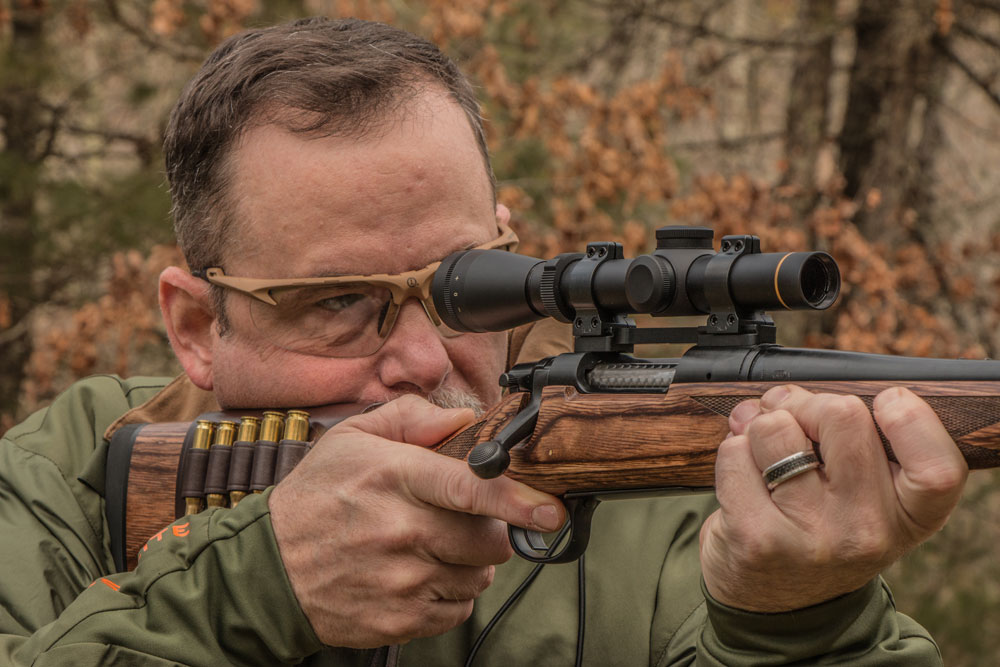
I did not intend to mount a scout scope on this rifle; I wanted to build it with rugged iron sights, making it a general-purpose rifle like the 600 Cooper carried to South America. However, I could not resist installing a traditional riflescope to see how well it would shoot. So, I ordered a set of Talley steel rings and the company’s one-piece base and mounted a Leupold 1-4x VX2. This upped the weight to 7 pounds, 3 ounces.
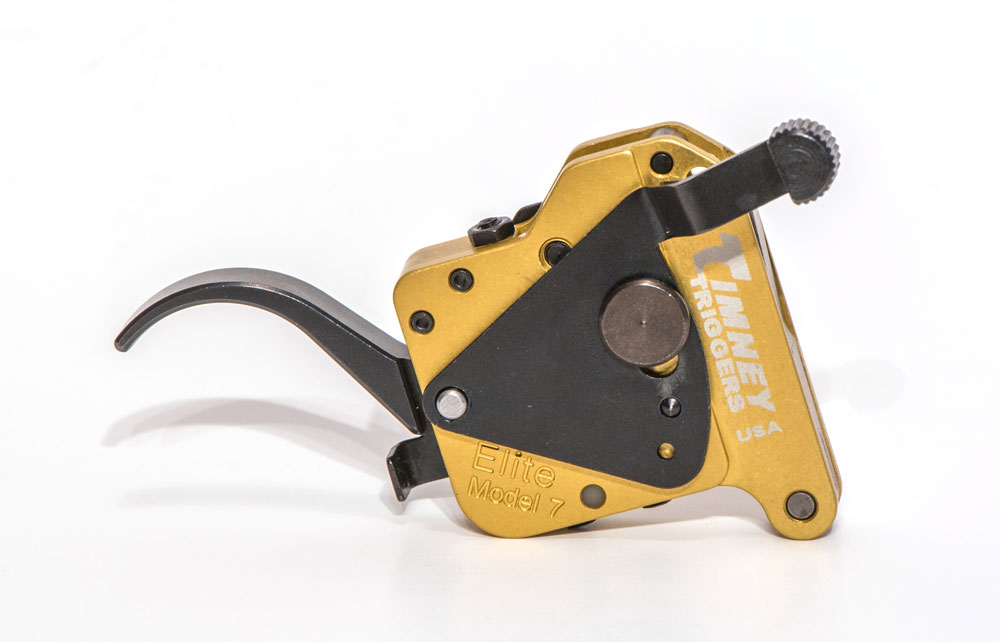
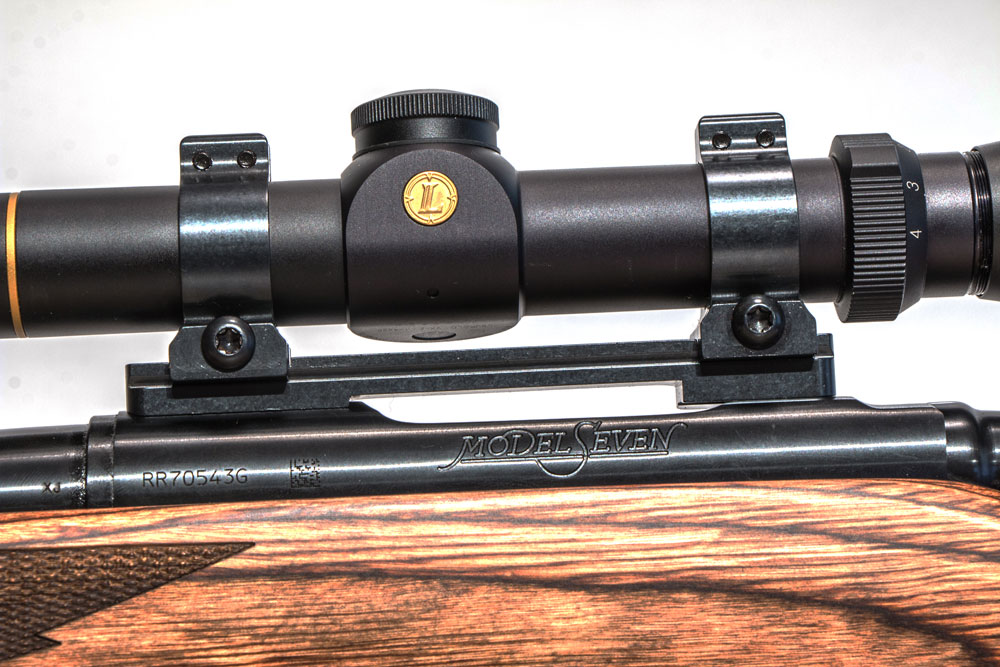 Before any shots were fired, I addressed the only real issue I had with the rifle. The factory trigger broke crisp but at a shade more than 6 pounds. A rifleman’s rifle should never have a trigger pull weight of more than half the rifle weight. I ordered the best replacement trigger I could find, a Calvin Elite from Timney Triggers, and had it set for 2.5 pounds at the factory. (When Timney owner John Vehr asked Calvin Motley – his lead engineer – to build the best trigger he could, Vehr was so impressed with it, he named it after the man who created it.) I installed the Timney in about 15 minutes.
 I was not disappointed. Six loads, firing three, three-shot groups, were tested from a bench at 100 yards. The average group size was 1.67 inches. Fortunately for me, the standout load was Hornady’s new Custom Lite 125-grain SST load. It averaged 1.03 inches, was very comfortable to shoot, and is totally deer or bear capable at any range I can shoot accurately with iron sights.
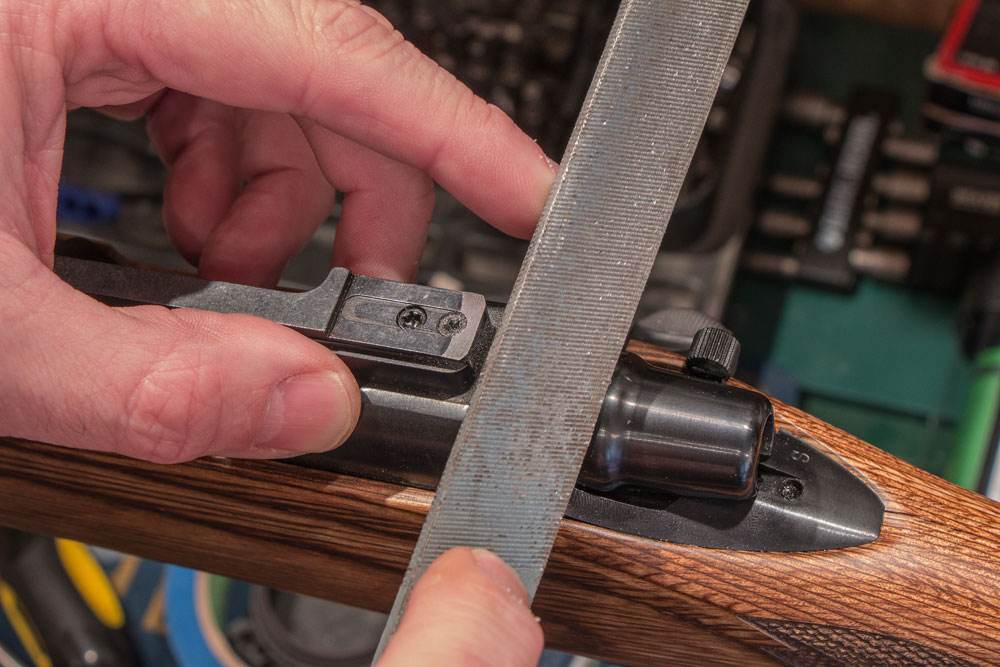
My intent all along had been to install an XS aperture rear sight and the company’s white-striped post front. But before I went there, thinking having the option to mount a scope might be a good thing, I ordered a Talley Back-Up Peep Sight. This sight installs directly on the Talley base, all you have to do is file down the rear lug. The result is a back-up sight option that can be installed in seconds, without loss of zero. Then, I turned my attention to the front sight.
 In the past, it’s been possible to drive the bead out from the dovetail in Remington sights but new Remington front sights are one-piece units. Additionally, instead of using two screws, they’re attached with one screw and a stud that’s molded into the sight base. The XS sight kit for the model Seven comes with only a dovetailed post front sight. I had to order a front base from XS. This worked but I had to shorten the screws provided with it. XS Sights is revamping their model Seven sights to work with the newer rifles.
With the front base and sight installed, I tried out the Talley Back Up Peep sight. Because this sight is mounted a tad higher than the XS rear sight – which is designed to work with the XS front sight – the point of impact was off. To make this sight work I would’ve needed a front sight 0.20 inch taller. In the end, I decided to go with the XS rear aperture sight and forget about the scope. I have plenty of lightweight scoped rifles anyway.
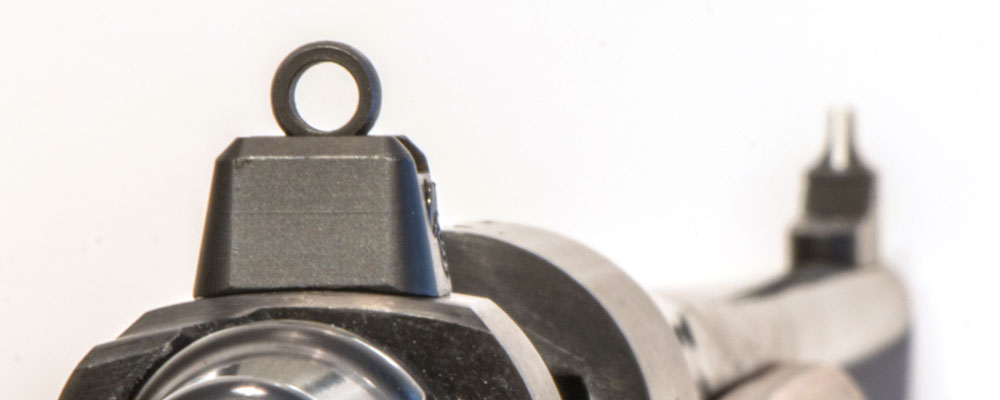 With the XS Sights, my bench accuracy did not suffer all that much. In fact, I managed to shoot some groups just as small as those I shot with the scope. Surprisingly, with a tight sling from the seated position at 100 yards, I shot more than one group measuring less than 1.5 MOA.
The rifle proved to be a jewel from field positions. I could repeatedly drop into the prone position and hit a 6-inch target at 100 yards in about 10 seconds. The action was amazingly smooth and reliable; it was as good as any Remington action I’ve worked, and it was no problem to hit a 6-inch circle at 25 yards three times in about 6 seconds. With the XS Sights and the Galco Gunleather RifleMann sling, the rifle weighs 6.63 pounds.
 To round out the setup, I installed Galco Gunleather’s leather Butt Cuff. With five cartridges inserted, it ups the weight to 7.25 pounds. The idea with the butt cuff was not to provide a means to carry extra ammo, but to serve as storage for the field load of five rounds, four in the magazine and one in the chamber. This way the rifle can be stored or hauled unloaded with a full compliment of ammo on board.
 After a lifetime of lusting for a Remington model 600 and 33 years of yearning for a Remington model Seven, I finally have mine. In 1983 the median household income in the U.S. was $19,000 and a model Seven was 0.023 percent of that. Today, with a median household income of $53,000, the model Seven is a tad more affordable at 0.020 percent. I can’t argue with the price and, I think I ‘ve configured this rifle perfectly for general-purpose use.
You might prefer yours with a riflescope and the Back Up Talley Peep. I take no issue with that, but I’m going for the – Jeff Cooper in South America – old school version.
Specifications:
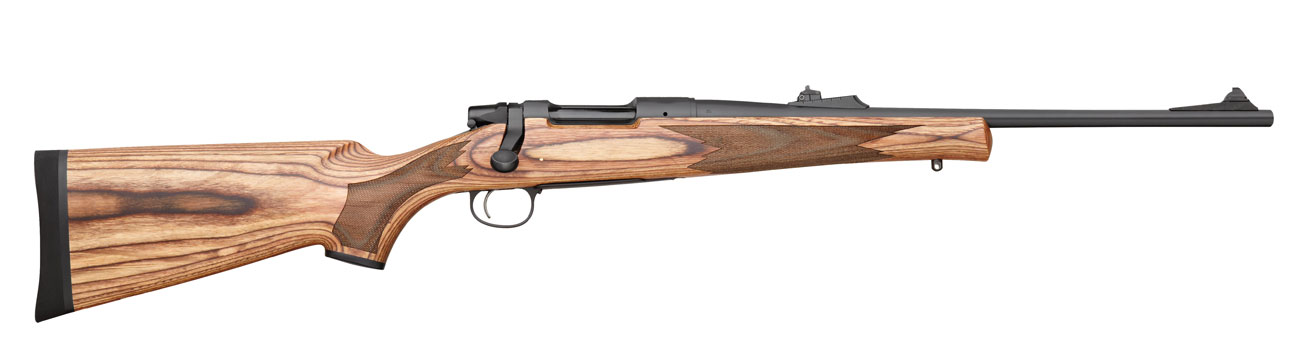 Remington Model 7 LS
Type: Bolt action
Caliber: .223 Rem., .243 Win., 7mm-08 Rem., .308 Win.
Barrel: 18.5 in., light contour
Overall Length: 37.88 in.
Weight: 6.4 lbs.
Stock: Brown laminated hardwood
Sights: Rear notch, ramped bead front
Capacity: 4+1
Price: $1,039
Manufacturer: Remington
Editor’s Note: This article is an excerpt from the January 2017 issue of Gun Digest the Magazine.
First Look: Colt Wiley Clapp Lightweight Commander
 This past November I was able to attend Colt’s Media Day Event down at the legendary Gunsite Academy in Paulden, Arizona. While there, I was able to shoot some of Colt’s new rifle and handgun models for 2017. Unfortunately, I was unable to talk about these new introductions publicly until back in January, just a little bit before the 2017 SHOT Show.
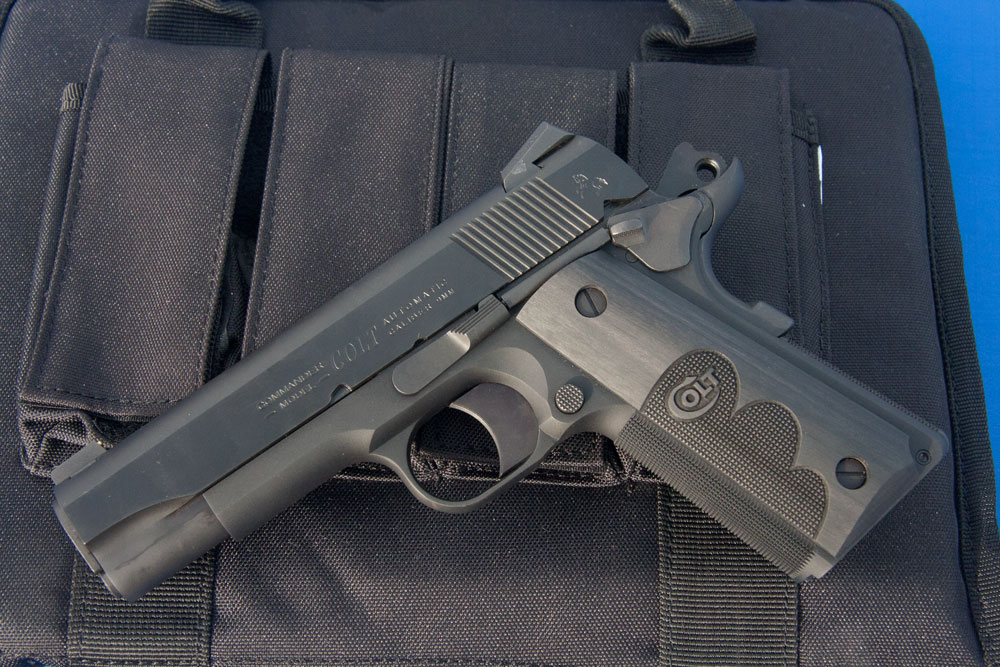
Since that time, I’ve discussed most of the new handguns debuting in 2017. The exception to that is the TALO-exclusive Colt Wiley Clapp Lightweight Commander, a lightweight, carry-friendly, Commander-style 1911 designed with input from respected gun writer Wiley Clapp.
 For those who aren’t familiar with Wiley Clapp, he’s a writer who’s published work in various firearms magazines and has authored and co-authored a number of books, including several for Gun Digest. He also served as a Marine during the Vietnam War and was a deputy sheriff in Southern California for about two decades following his service.
Bone Up On Legendary Colt Firearms
In recent years, he’s been collaborating with Colt on a line of 1911-style pistols bearing his name, and the new Wiley Clapp Lightweight Commander is one of the latest designs he’s contributed to. Clapp’s motto of “Everything you need, nothing you don’t,” shows up all over the page on Colt’s website devoted to Clapp’s namesake pistols, and this new Lightweight Commander definitely lives up to that credo.
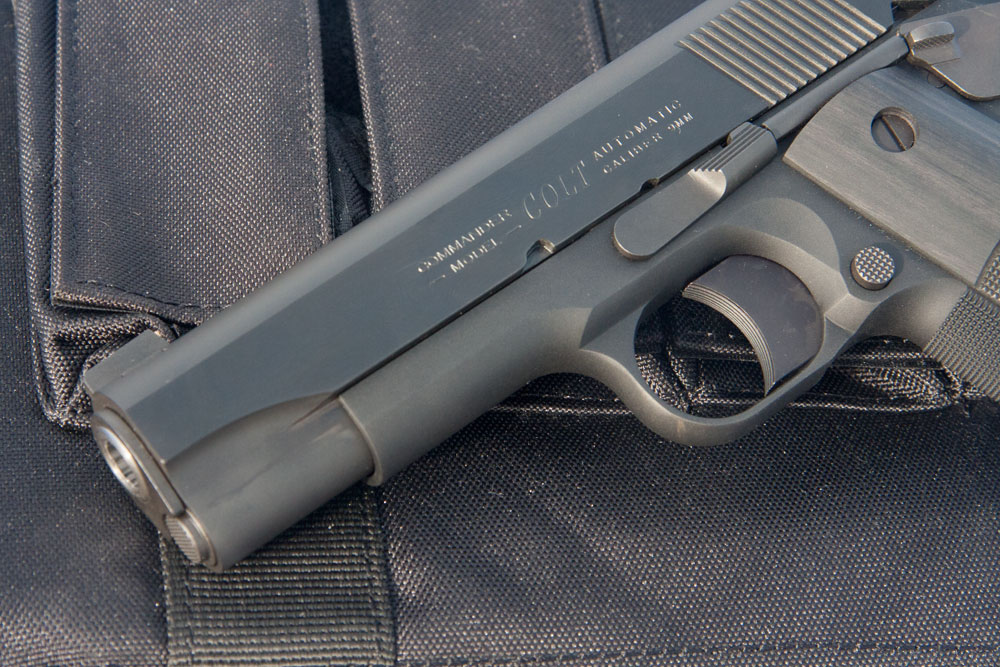 The new Colt Wiley Clapp Lightweight Commander I shot at Gunsite comes with Colt’s excellent Series 70 firing system, and to keep things lightweight, as its name suggests, Colt has gone with an aluminum alloy frame with a black anodized finish and a blued carbon steel slide. Total unloaded weight is right at 30 ounces, which makes it a good fit for all-day carry or for extended trips to the range.
As on some of Clapp’s previous Colt 1911s, the sights on this Lightweight Commander consist of a Novak brass bead front sight and an extra-wide black rear notch for quicker target acquisition. Genuine Novak sights are widely viewed as some of the best in the business, and these were no exception. I generally prefer a bright fiber optic front sight, but I had absolutely no difficulty in acquiring and rapidly engaging the steel targets Colt had set up at the range with the bead/wide rear notch combo.
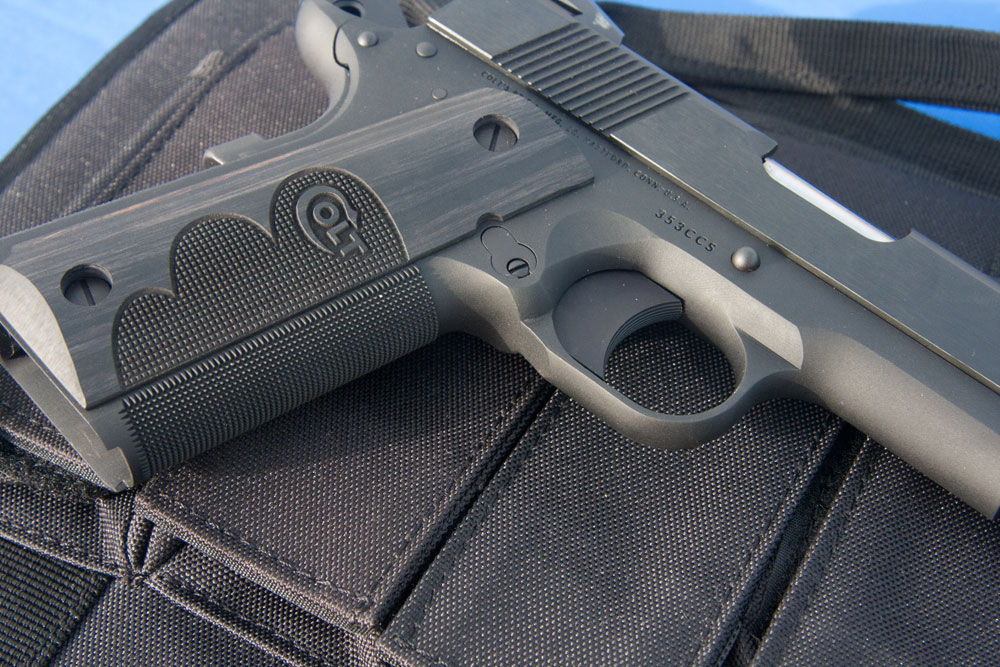
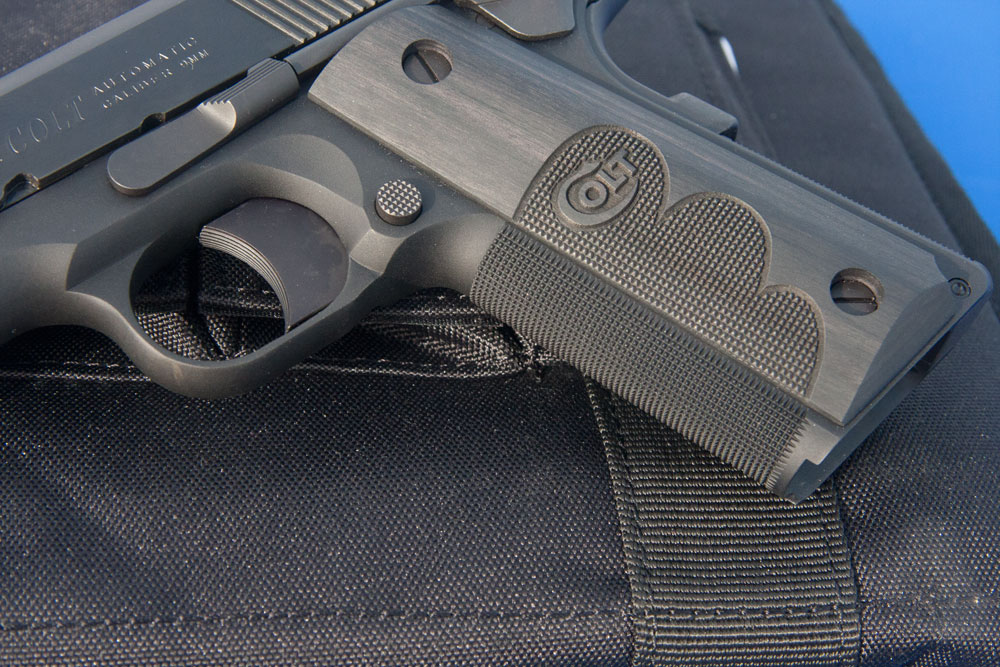 Like with other Colt Wiley Clapp 1911s, this one also comes equipped with oval grips with fingerprint checkering, a comfortable upswept beavertail grip safety and Pete Single’s unique 25 LPI (lines per inch) checkering on the front strap and mainspring housing. These features all combine to result in a 1911 that looks fairly striking to the eye, and fits the hand quite well. Having shot both this new Lightweight Commander and the Wiley Clapp Stainless Commander, introduced in early 2016, I can say that the grips and Pete Single checkering are some of my favorite aspects of both designs, and really add a lot in the comfort department while shooting.
 Being a Commander-style 1911, the pistol utilizes a 4.25-inch polished, stainless steel barrel and has an overall length and height of 7.75 and 5.5 inches, respectively. Width is the standard 1.25 inches, and the trigger pull is plenty sufficient at between 4.5 and 6 pounds. The gun also uses a low-profile thumb safety, similar to those found on other Wiley Clapp 1911s Colt has produced.
For more information on the Colt Wiley Clapp Lightweight Commander visit the Colt website, or check out the specifications below.
Specifications:
Colt Wiley Clapp Lightweight Commander
Type: Semi-auto, single action
Caliber: 9mm
Barrel: 4.25 in., polished stainless steel
Overall Length: 7.75 in.
Height: 5.5 in.
Width: 1.25 in.
Weight: 30 oz. (unloaded)
Frame: Aluminum alloy, black anodized
Slide: Blued carbon steel
Sights: Novak brass bead front, Novak black, extra-wide rear notch
Trigger: 4.5-6 lbs., solid aluminum
Grips: Oval with forward taper, fingerprint checkering, 25 LPI checkering front strap and mainspring housing
Capacity: 9+1
Find Out More About Iconic Colt
- Classic Colt Guns
- Colt 1911
- Colt Python
- Colt Cobra
- Colt Single Action Army
- Colt AR 15
- Colt Defender
- Colt M4
- Colt Delta Elite
- Colt 1903
- Colt 1908
- Colt AR15A4
- Colt King Cobra
- Colt Competition
- Colt Gold Cup
- Colt M16A1
- Colt Combat Unit Carbine
- Colt Detective Special
Nikko Stirling Goes Long with the Diamond First Focal Plane Scope
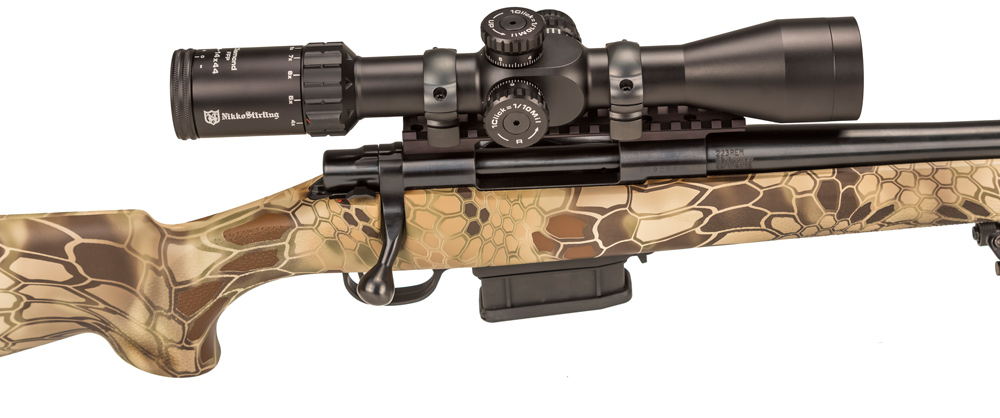
In recent years, the firearms industry has gone long.
From bullets streamlined to slip through the air nearly unimpeded to purpose-built rifles meant to sling copper-jacketed lead a country mile, long-range shooting has been all the rage. The optics end of the market has definitely been riding high on the crest of this wave.
More and more riflescope manufacturers have been turning their eyes to aiming solutions designed to draw a bead on a flea’s behind from 300-plus-yards out. One of the most recent to unveil its high-powered wares was Nikko Stirling, who released an entirely new line dedicated to precisely going the distance.
The company released its Diamond First Focal Plane Scope at the 2017 SHOT Show. And from the looks of it, the 4-16x44mm and 6-24x50mm optics in the line should have the chops to put shooters on target, no matter how many zip codes away it’s placed.
At the heart of the Diamond line is the Skeleton HMD reticle. The red/green illumination reticle delivers a clear sight picture allowing shooters to precisely place the crosshairs no matter the light condition. As the line’s moniker suggests, the reticle is etched on the front focal plane — a must to accurately utilize the .5 MIL subtensions at any magnification. Also, being FFP, the reticle increases in size in the same proportion as the target, ensuring the crosshairs do not blot it out.
The scope is built on a 30mm aircraft-grade aluminum tube and is outfitted with large objective lenses. The 44mm and 50mm lenses should provided excellent light gathering capabilities, always a concern when attempting a distant shot. The scope’s light gathering proficiency is further enhanced with all of its lens surfaces coated with Nikko Stirling’s proprietary Microlux ETE GEN III coating — designed to reduce glare, enhance contrast and sharpen images.
The Diamond First Focal Plane scope features oversized elevation and windage turrets that have tactile and audible clicks, and adjusts at 1/10 MIL increments. The elevation turret is also outfitted with a zero stop, which halts the rotation after one turn turn and allows it to quickly return to zero. The stop can be removed, allowing the elevation turret to rotate freely and adjust to extremely long shots.
The scope is also outfitted with a side parallax adjustment that can be tuned from 10 yards to infinity, ensuring a shot always lands dead in the bull’s eye.
The scope ships with a sunshade, two elevation drop turrets (one blank) and comes with the option of a side-wheel. The MSRP on the 4-16x44mm Diamond First Focal Plane Scope is $459 and the 6-24x50mm is $490.
Kimber Releases New Models of K6s Revolver
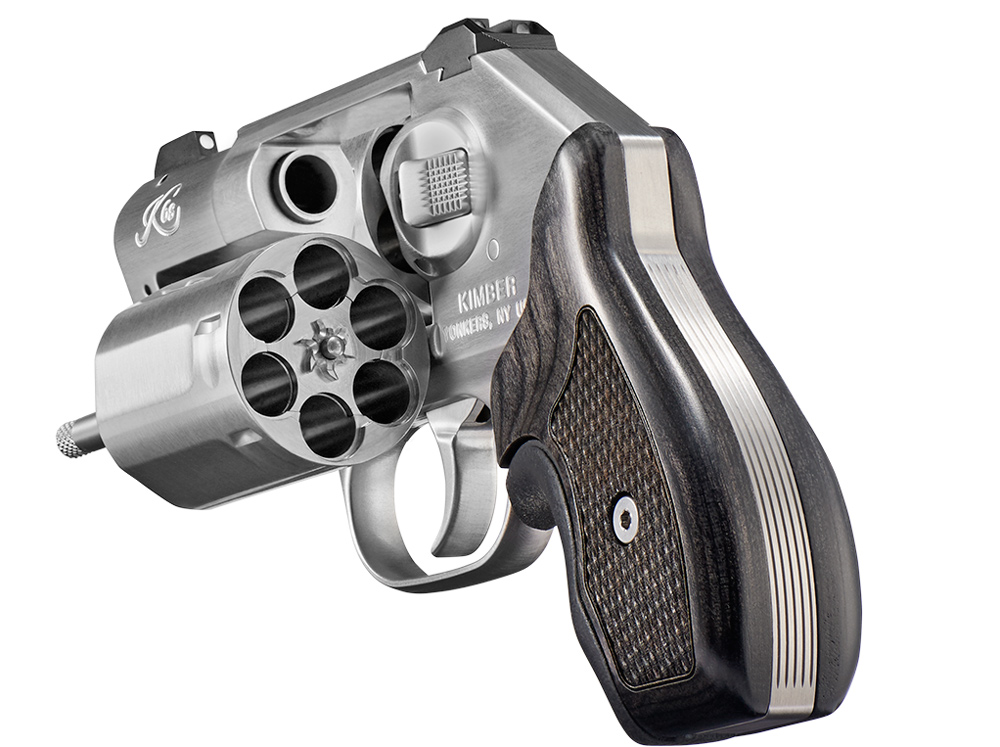
While designed for the utmost performance, there is another aspect shooters can expect with a Kimber firearm — aesthetics. The Younkers, N.Y., gunmaker has shown a knack for producing some of the most fetching 1911s on the market today. But a year ago, Kimber turned its trained eye on another style of handgun with equally pleasing results.
The K6s is a purpose-built concealed carry revolver, configured to slip away unseen at the belt line or ankle and never weigh its user down. At 23 ounces, it is the world’s lightest small-framed 6-round .357 Magnum. But the wheel gun’s design points aren’t the only striking aspects of the gun — it also boasts the clean and impressive lines shooters have come to expect from Kimber.
The Kimber K6s’ design has become all the more attractive, not to mention useful, with the release of five new models for 2017, including three new stainless steel variations, one decked out concealed carry variant and a limited edition model.
The K6s Stainless features a low-glare brushed stainless steel frame and is outfitted with black rubber grips and white 3-dot sights. The grips provide a more positive hold on the pistol, help deaden the recoil and give shooters the piece of mind they’ll have complete control over the revolver no matter the conditions.
The K6s Stainless (NS) has the same features as the K6s Stainless, except its sights are configured for enhanced low-light operation. The white-dot sights have been swapped out for tritium night sights, allowing a clearer sight picture in dark conditions.
The K6s Stainless (LG) takes the revolver’s aiming abilities to the next level with an integrated laser sight. The handgun features Crimson Trace Master Series Lasergrips, which are constructed out of black wood and rubber. The grips are ergonomically designed allotting the shooter more control and automatically activating the laser sight when the pistol is gripped.
The K6s DCR (Deluxe Carry Revolver) has a smooth satin silver frame finish and heavily checkered Millennium Rosewood grips. It is outfitted with a red fiber optic front sight and black rear. Kimber has also released a limited edition of the revolver, the K6s First Edition. The handgun has a high-grade mirror-polished stainless steel frame, Pao Ferro wood grips and limited run of serial numbers.
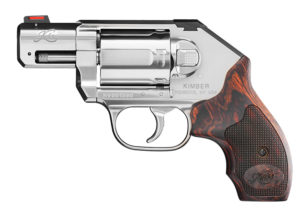
Like the original Kimber K6s, all of the pistols are double-action only and have an enclosed hammer to ensure it never snags on the draw. Presently, the MSRPs on the revolvers are as follows: K6s Stainless $899, K6s Stainless (NS) $919, K6s Stainless (LG) $1,177, K6s DCR $1,088 and K6s First Edition $2,039.
Mossberg Gunning for Gold with MMR Pro Rifle
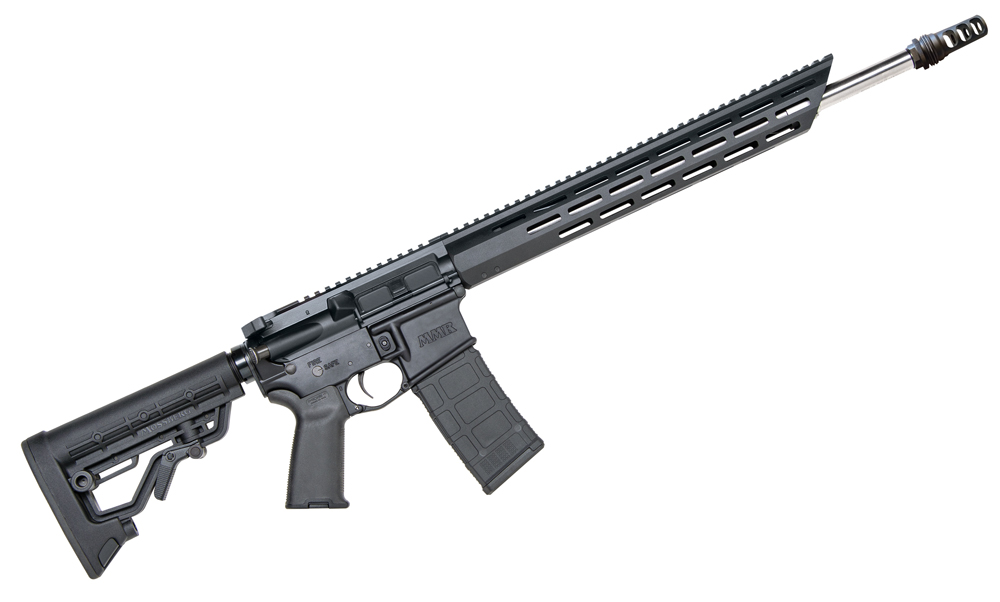
Mossberg & Sons is shooting at another platform in 3-Gun with the release of a rifle tailored for the competition. Here is the Mossberg MMR Pro Rifle.
There are few things that hold a candle to the non-stop action of 3-Gun. The multi-platform competition demands the most out of shooters, requiring a deft mixture of speed, precision and awareness.
Mossberg & Sons has long been a part of this fast-and-furious run and gun, producing the preferred shotguns of many competitors. And the Connecticut-based gunmaker is shooting to stake another claim in the popular and still fast-growing shooting sport with the newest release in its MMR (Mossberg Modern Rifle) line.
The MMR Pro Rifle appears to have all the bells and whistles the competitive minded look for in a rifle that will gun for the gold. Which should come as a little surprise, given five-time 3-Gun Champion Jerry Miculeck had input in the AR-style rifle’s design.
Miculeck’s heaviest influence came in the trigger that bears his name. The JM Pro Drop-In Match Trigger offers shooters a smooth pull that breaks crisp and clean at 4 pounds. It has been designed to eliminate all creep and offers a desirable extra in its user-adjustable overtravel. In short, the trigger should do everything to keep a shooter on target during the shot and get them reset to take the next in a blink of an eye.
The 35.75-inch rifle, chambered in the standard .223 Rem./5.56x45mm NATO, is deck out with Mossberg’s revamped AR furniture. What this mainly pertains to is the company utilizing the M-LOK modular mounting system on its handguard. The cutouts on the slim 15-inch handguard should be a nice addition, given the system tends to hold accessories more firmly, while allowing quick switchouts.
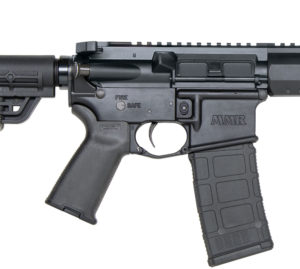
The buttstock of the direct-impingement gas system rifle is adjustable to six positions, providing an ample 3.25 inches of adjustment to length of pull. The LOP can be fine tuned with Mossberg’s FLEX recoil pad system with three different pad thicknesses.
The MMR Pro Rifle is outfitted with an 18-inch stainless steel barrel, bored with an 1:8-in. twist rate, which should stabilize a wide variety of bullet weights. The free-floating barrel is topped off with SilencerCo’s ARS 3-port muzzle break, eliminating muzzle rise and making the rifle more controllable shot to shot. The break can be removed and switched out for suppressors with a 1/2×28 thread.
Mossberg has rounded out the 7-pound rifle with an ambidextrous charging handle, making it righty and lefty compatible. And it has outfitted it with a forward assist, a feature not found on the MMR Carbine (base model).
In the scheme of rifles designed for 3-Gun, Mossberg has made it easy to get behind the trigger of the MMR Pro Rifle, price wise. The gun is a value in terms of competitive rifles, with an MSRP is $1,393.
MMR Pro Rifle Specs
Caliber: 5.56mm (.223 Rem)
Capacity: 31
Barrel Length: 18 in.
Twist: 1:8-in.
LOP: 11 – 14.25 in.
Barrel Finish: Stainless Steel
Weight: 7 lbs.
Length: 35.75 in.
Gallery: Hot New Semi-Automatic Pistols
[imagebrowser id=485]
In a world where striker-fired pistols rule the roost and the number of 1911-style pistols is too many to count, these select manufacturers have debuted new semi-automatic pistol models that offer a new way of thinking with refinement and attention to details. These are the standouts that stand out in the crowd.
Editor’s Note: This article appeared in the Winter 2016 Gun Digest the Magazine.
You Guide to Concealed Carry Handguns
Are you interested in carrying a handgun for self defense, but don’t know where to start? Perhaps you’re already an armed citizen and are looking for a new carry choice? Let the Gun Digest Guide to Concealed Carry Firearms be your complete guide to the fast-growing world of concealed carry handguns. With practical, real-world advice and insight from an author with decades of experience, Gun Digest Guide to Concealed Carry Handguns can help you make the best possible choice for a concealed carry handgun. Get Your Copy
Gallery: Great New Long Guns
[imagebrowser id=486]
Although the market for AR-style rifles and concealed carry guns has exploded in recent years, long guns such as shotguns and more traditional rifles have always been, and remain, a huge sector of the firearms industry. Because of this, manufacturers have continued to devote a great deal of resources toward developing all new rifles and shotguns, and toward improving and innovating existing models. Whether you’re a dedicated hunter looking for a dependable gun for the woods or the open prairie, a hardcore long-range shooter searching for something capable of ringing steel at 1,000 yards, or someone wanting a great new plinker for the range, there’s a firearm for you in this gallery of great new long guns.
Editor’s Note: This article appeared in the Winter 2016 Gun Digest the Magazine.
The Ultimate Predator: SIG Sauer M400 Predator Review
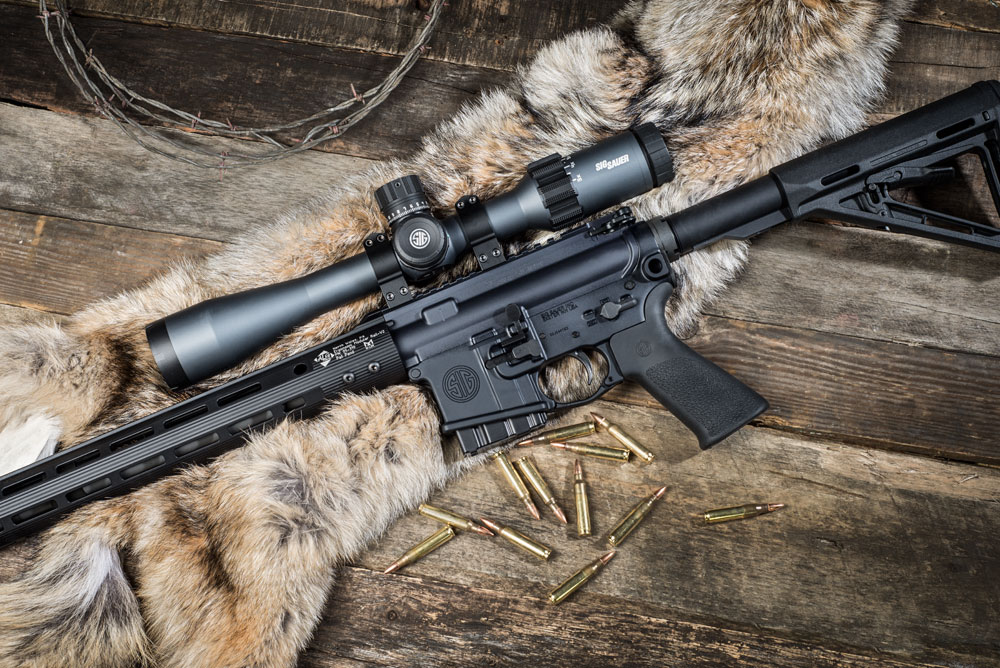 Not so long ago, the notion of bringing a Modern Sporting Rifle (MSR) into the field as a serious hunting tool seemed like a highly foreign concept. Indeed, over most of the 20th century, the hunting woods were almost exclusively the domains of traditional bolt- or lever-action rifles. These rifles sported a classic wooden stock that may or may not have been scratched up, depending on how often they were used; if their owners cared more about practicality than looks, some might also have featured synthetic stocks. And there might have even been a few traditionally designed semi-autos.
But an AR-15 or similar gun used as a hunting rifle? Unlikely.
Of course, this has changed tremendously in recent years. The market for AR-style rifles has flourished over the past decade or so, and in this boom of black rifles, manufacturers and shooters have branched out from the AR’s typical territory as a “tactical” rifle. People using the AR to hunt have begun to realize that the platform’s relatively good accuracy and the ability for a rapid follow-up shot makes for a pretty darn good hunting rifle, especially when paired with the right load. Manufacturers, on the other hand, have been able to market their black rifles to a new, previously unreached segment of the market.
While it’s probably fairly naïve to say that MSRs are anywhere near as commonly used afield as bolt-action rifles or shotguns for hunting, or that they’ve started to eclipse the bolt gun as the preferred hunting firearm, their use in the field has grown dramatically. This is especially true in some of the less traditional hunting spheres, such as hog and predator hunting, where the opportunity for multiple shots is more common and the regulations less restricted.
The AR-15’s standard chambering, the 5.56 NATO/.223 Rem., has always been respected as a highly capable, flat-shooting predator and varmint cartridge, so it makes sense that today’s manufacturers are finding ways to improve other aspects of these rifles to make them even more suitable for hunting use. A perfect example is SIG Sauer’s new M400 Predator.
 Revamped Rifle
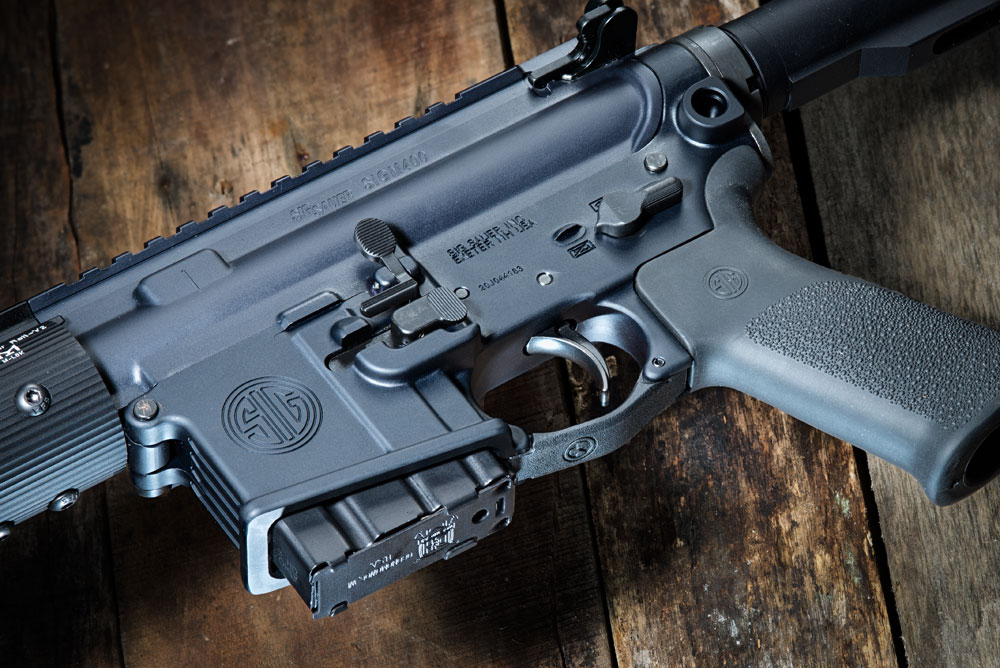
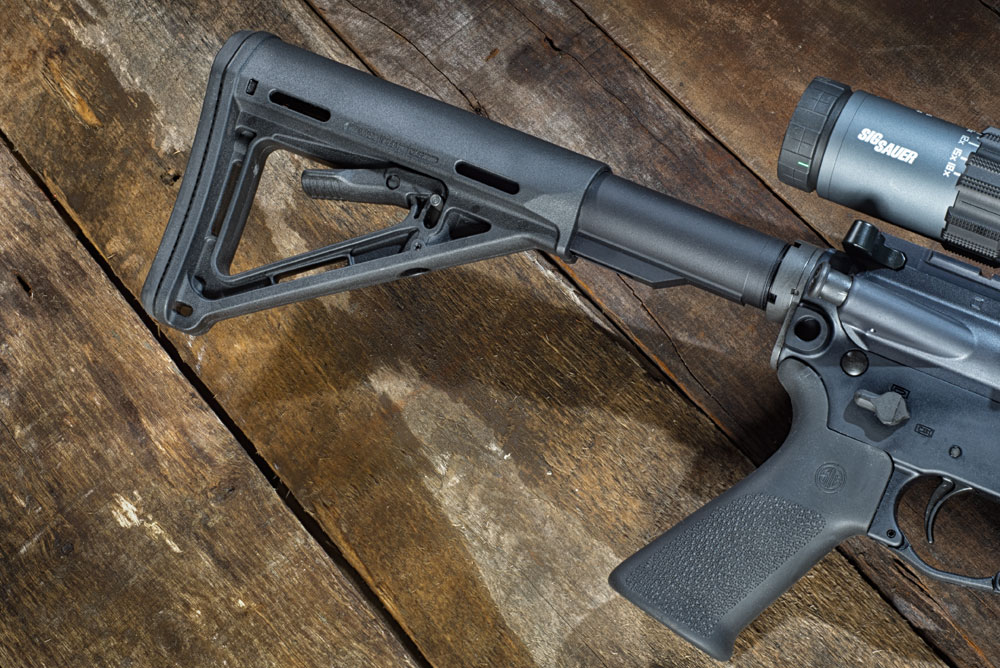
SIG Sauer introduced the original M400 Predator back in 2013, building off its earlier M400 base model. The basic M400 was significant for SIG because the manufacturer was already well known for producing gas piston-operated designs, and the M400 used a more traditional direct-impingement gas system like those found on the majority of ARs. The original M400 Predator incorporated this same system, but came with a longer 18-inch barrel, a fixed Magpul MOE stock, and an aluminum free-floated, tube-style handguard—features designed to aid the shooter in precise shooting at extended ranges, such as those sometimes facing predator hunters.
This past year, SIG went back to the M400 Predator design to upgrade it once more. Most readily apparent, the manufacturer swapped out the fixed MOE stock for a more versatile telescoping MOE Carbine stock and traded the previous forend for ALG Defense’s Ergonomic Modular Rail (EMR) V2, a slim-profile, free-floated aluminum forend with M-LOK attachment points for mounting forward accessories and a small Picatinny rail section near the front for an iron sight.
Both of these changes seem beneficial to the overall rifle. The stock allows shooters to adjust length of pull to fit their needs, which, for a bundled up predator hunter in the middle of winter may be very necessary. The new ALG Defense handguard also seems like a definite improvement, being quite slim and lightweight while offering ample mounting points for things like a light, laser or bipod. Although those accessories may seem inconsequential to some hunters, for those in states that permit hunting predators at night using lights and/or night vision devices, having that capability is certainly appreciated. Not to mention the fact that the forend itself feels very smooth and comfortable in the hand.
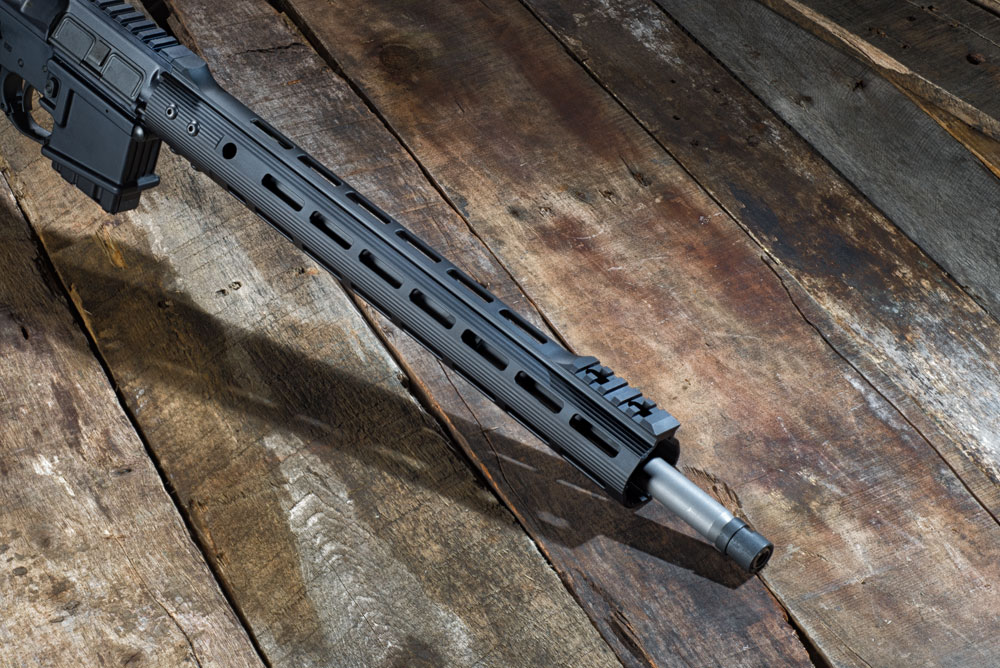
The new and improved M400 Predator also features an 18-inch stainless steel barrel that comes pre-threaded with ½-inch-28 threads for those wanting to run the gun with a suppressor, an increasingly popular addition given the growing number of states permitting the ownership of cans and their use in hunting applications. The rifle comes equipped with a thread protector for when the shooter isn’t using a muzzle device.
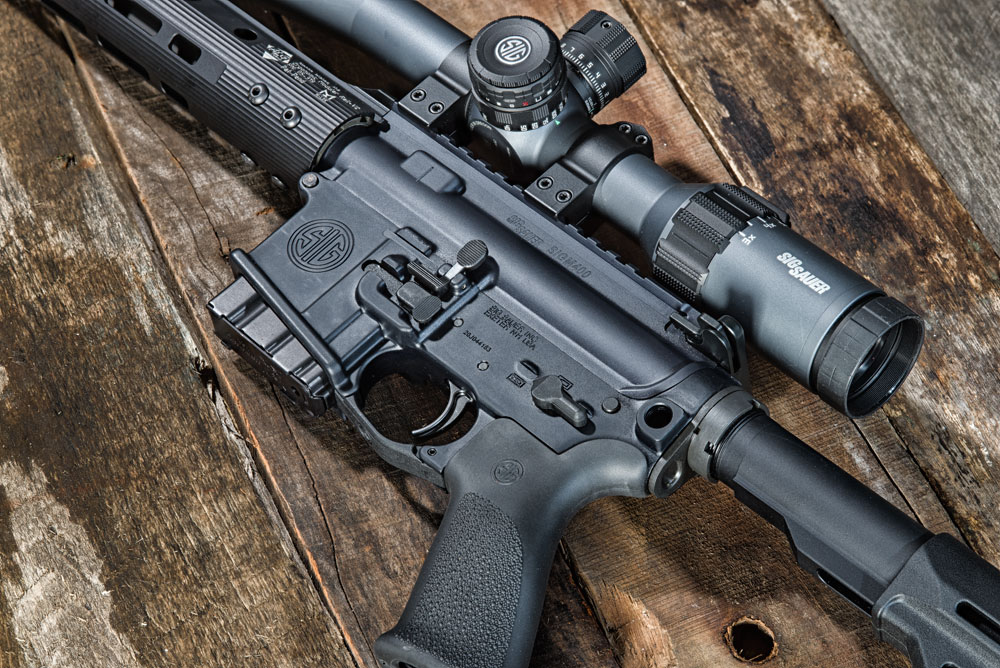
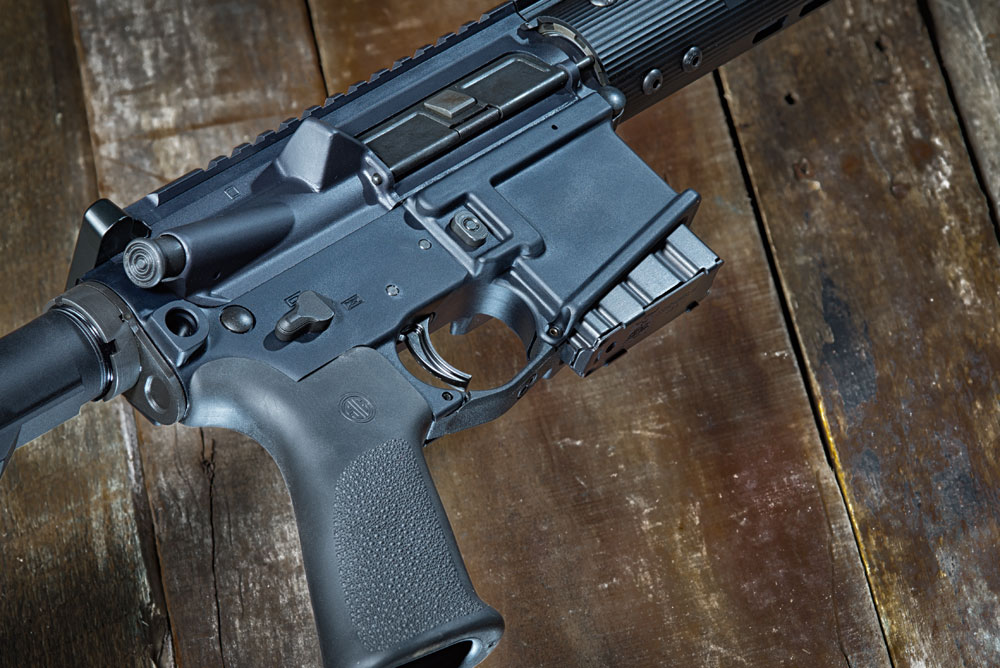
Another accuracy-enhancing feature is the two-stage, match-grade trigger that comes installed on the gun straight from the factory. This is something any predator hunter—or competitive shooter, for that matter —should appreciate as a standard feature. Take-up is smooth, and the trigger breaks crisp and clean at around 4.5 pounds, making for a truly accurate platform. The trigger is one of the most important aspects of any rifle designed for hunting or competition, and the one on this new rifle is quite good, and it pairs nicely with the ergonomic Hogue rubberized grip with pebbled texture.
Like the original M400 Predator, the upgraded gun utilizes durable, hard coat anodized aluminum receivers, with the upper being a flat top design featuring a section of Picatinny rail for optics. No factory iron sights are included. Also similar to the original rifle, this new M400 Predator has a 1:8-inch twist barrel for stabilizing both the lighter bullets, such as those of the 55-grain variety, as well as heavier bullets in the 70-grain range that many hunters prefer.
The new M400 Predator also remains a very lefty-friendly design. The gun retains the ambidextrous controls found on the original rifle, including an ambidextrous safety selector, ambidextrous magazine release and ambidextrous QD sling attachment points. The charging handle and bolt release are non-ambidextrous; however, the bottom of the bolt release does feature a slightly enlarged paddle that makes holding the bolt open easier.
 At the Range
All these features are great, of course, but when it comes time to take a shot on a wary coyote or similar predator, you need a rifle that offers plenty of accuracy afield. There are plenty of instances in which your quarry may hang up at a relatively long range, and if your rifle isn’t accurate at moderate ranges, things certainly won’t improve as the distance stretches. Thankfully, the new SIG Sauer M400 Predator offers plenty in that department.
For testing purposes, I equipped the rifle with another one of SIG’s great products, the Tango 6 3-18x44mm riflescope. The manufacturer has developed a ton of excellent riflescopes, spotting scopes, rangefinders and red dots in its relatively new Electro-Optics line, and the Tango 6 is a shining example. The model I used featured a first focal plane reticle with illuminated milling marks and 1/4-MOA adjustments and came with SIG’s LockDown Zero System turrets. It was a very nice optic, and one well suited for mid- to long-range tactical shooting, as well as hunting.
During testing I used two different loads to measure performance: HPR’s 55-grain FMJ .223 Rem. load and SIG’s heavier 77-grain Elite Performance Open Tip Match (OTM) .223 Rem. projectile. Velocities were measured using a Competition Electronics ProChrono Chronograph from Brownells placed approximately 15 feet from the muzzle. Accuracy data was the result of three, five-shot groups taken at 100 yards using a Caldwell Matrix shooting rest, also from Brownells.
SIG Sauer’s Elite Performance 77-grain OTM load produced the best accuracy overall, with the average group size at 1.63 inches. The best group with the 77-grain OTM load was 1.3 inches. Meanwhile, the 55-grain FMJ HPR load produced a 1.87-inch average group, while its best group was 1.23 inches. These groups probably speak more to my abilities and the conditions present than what the M400 Predator is capable of in terms of accuracy. It was a cold, windy day on Colorado’s Front Range and I had done a fair bit of shooting before I set up to do the accuracy test. Regardless, these numbers are perfectly acceptable for most shooters, and I would feel plenty confident going after coyotes or any other predator with this rifle, especially given the gun’s completely malfunction-free operation during my time with it.
 Parting Shots
The hunting field is no longer the sole domain of the bolt-action rifle. With manufacturers building quality, dedicated hunting ARs, the prospect of going afield with a MSR is looking better and better to many shooters. SIG Sauer’s new M400 Predator is a perfect example of a gun maker building an AR from the ground up to serve the hunting community.
With its two-stage, match-grade trigger, pre-threaded 18-inch stainless steel barrel and slim, extended ALG Defense EMR V2 forend, this rifle is ready for any predator hunting task. And since it ships with a five-round detachable box magazine, it is already compliant with most state hunting regulations. Of course it will also accept standard AR magazines with larger capacities as well for those who want to use the gun for home defense, as a tactical carbine or for competition purposes. Overall, the M400 Predator is a reliable, accurate and sweet-shooting AR that comes with a host of great features, and it comes at a relatively affordable price for what you’re getting at $1,446. If you want a MSR that comes ready for serious hunting or competition right out of the box, look no further than SIG’s M400 Predator. The Tango 6, likewise, is a fully capable optic that performs with other elite glass and carries a price tag to match.
Editor’s Note: This article is an excerpt from the February 2017 issue of Gun Digest the Magazine.
Video: Examining Colt’s New Combat Unit Carbine
Colt’s new Combat Unit Carbine is the Connecticut manufacturer’s first production AR with a mid-length gas system and comes with a host of other upgrades.
Colt has a long and illustrious history with the AR-15, so it comes as no surprise the company continues to cultivate and improve the popular rifle. One of the Connecticut manufacturer’s newest twists on the more than half-a-century-old design is the Colt Combat Unit Carbine. Developed in conjunction with renowned firearms trainers Mike Pannone, Ken Hackathorn and Daryl Holland, the carbine features a number of refinements that should make it more controllable, accurate and dependable. Holland goes over these new aspects in the video above, including the most dramatic upgrade to the platform — Colt’s new mid-length gas system. Moving the gas port closer to the muzzle should make for a better balanced rifle that’s quicker on target transitions, as well as one that produces less recoil. Check out the video to get the entire skinny on the Colt Combat Unit Carbine (MSRP $1,299).
Nikon Introduces New BLACK Riflescope Line
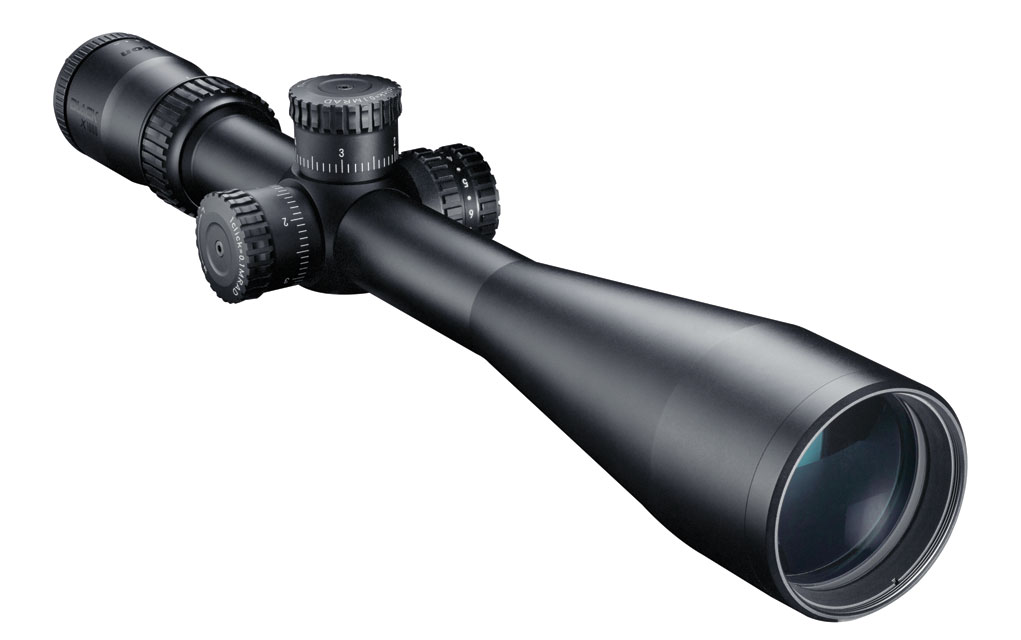 With the incredible boom in the AR market in recent years, lots of optics and accessory manufacturers have been developing products specific to black rifles. Nikon is one of the latest companies to bring out an optic line built for America’s favorite rifle, as well as other tactical-type rifles.
Nikon’s new BLACK riflescope line will consist of five models and is designed to meet the needs of both precision long-range shooters and action-shooting AR enthusiasts. The line is expected to be available to shooters sometime in the Spring of this year.
 BLACK 1000
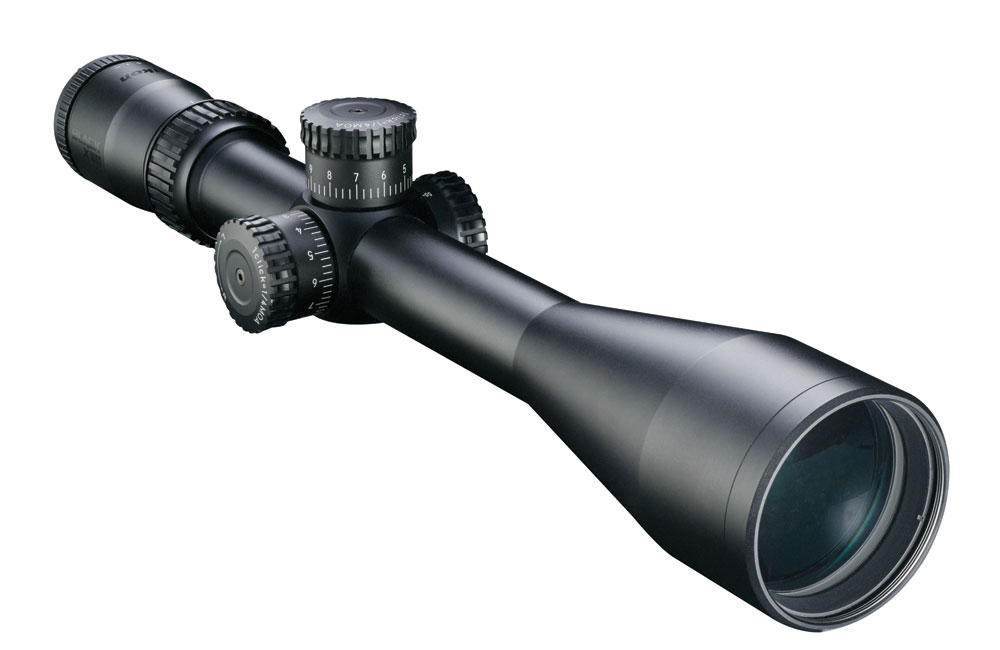
The first offering in the new Nikon BLACK riflescope lineup is the BLACK 1000. Tailored more toward precision shooters, the BLACK 1000 will be available in 4-16×50 and 6-24×50 models featuring either X-MOA or X-MRAD tactical-style reticles synchronized to elevated windage and elevation turrets. These new reticle designs offer clean views, while also providing added functionality to the shooter, and the elevated turrets should make precise dialing for windage and elevation quite easy.
There are three 4-16×50 models available. Two are available with illumination and either the X-MOA or X-MRAD reticle, while the other model features a non-illuminated X-MOA reticle. Meanwhile, the fourth model is the 6-24×50, which comes with an illuminated X-MRAD reticle.
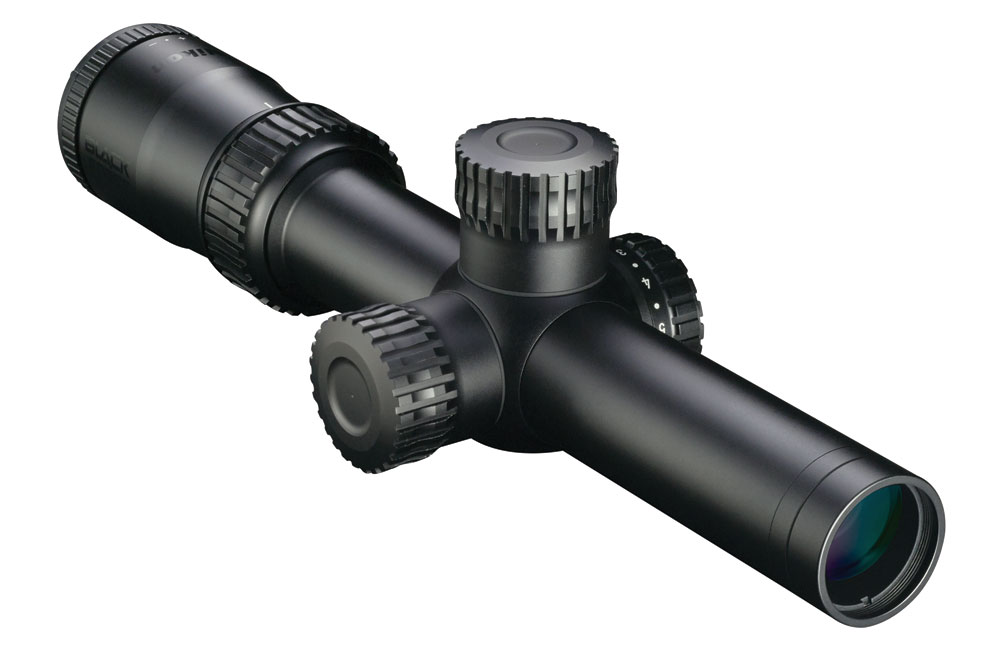 BLACK FORCE 1000
For shooters looking for a riflescope for closer, more rapid engagements or action shooting, Nikon will also be offering its BLACK FORCE 1000 a 1-4×24 riflescope that utilizes Nikon’s unique SpeedForce reticle. The reticle features an interesting, illuminated, double horseshoe pattern in the center, which serves as a speedy reference point in rapid target acquisition and engagement. However, the SpeedForce MOA reticle also incorporates BDC circles and hash marks for accurate and precise intermediate-range holdovers.
All of these models in the new BLACK riflescope line feature a 30mm main body tube constructed from aircraft-grade aluminum alloy with Type 3 hard anodizing, meaning the scopes are rugged and ready for hard use. Other great features across the board include Nikon’s lead- and arsenic-free Eco-Glass lenses, which also sport a multi-layer surface coating; spring-loaded instant zero-reset turrets; and a waterproof, fog proof and shock proof design. Also, each scope is backed by Nikon’s No-Fault policy.
Pricing on the new BLACK riflescopes varies from $399.95 to $699.95, offering shooters several great options for the money. For more on the new BLACK riflescope line, visit the Nikon website.
How To: Addressing Common AR-15 Malfunctions

Understanding how to properly handle and fix common AR-15 malfunctions is a crucial part of operating this tactical rifle, particularly in defensive scenarios.
There are five types of AR-15 malfunctions that can occur. Two are common, a couple will crop up every once in a while, and the last, or Type V, you rarely see. Keep in mind this doesn’t count for jams or breakage.
A malfunction is something that you can apply a corrective set of actions and get the AR firing again, at least for one more shot. (If the AR is having a mechanical problem, such as a broken extractor spring, you’ll have another malfunction to clear after firing the next round.) A jam or breakage is something that takes time and tools to correct.
Some malfunctions are caused by bad ammo. Make it a habit when loading to check the rounds.
Malfunctions are often caused by the shooter, for example not ensuring the mag is seated and locked into place, which means no round in the chamber. We’ll discuss the malfunctions and what causes them, but for clearing them think about it along these lines: When the AR doesn’t fire, you’re going to load it. If this doesn’t work you’re going to unload and then load. A problem that can’t be solved by these actions is going to take time and/or tools to correct.
Basically we’re using a non-diagnostic approach to clearing malfunctions. This is why knowing how to load and unload is important. As with all other skills, consistency provides safety and predictable results from your actions. Practice and repetition is necessary to actually learn these skills, so they can be performed at a subconscious level.
Sometimes, especially with newer shooters or even experienced shooters under stress, people will forget to flip the safety off when they come up on target. Making this a habit is important, but whenever you press the trigger and it won’t be pressed make sure the safety is off. This is done using the same technique as always, a physical confirmation as opposed to stopping, flipping the carbine over and looking to see if the safety is on or off.
Step one for all these manipulations is to take your finger off the trigger and get it clear of the trigger guard. You don’t want to manipulate the AR, or any weapon, with the finger on the trigger or inside the trigger guard. Verbalizing this action, “finger off the trigger,” will help you remember to do this.
 Type I Malfunction
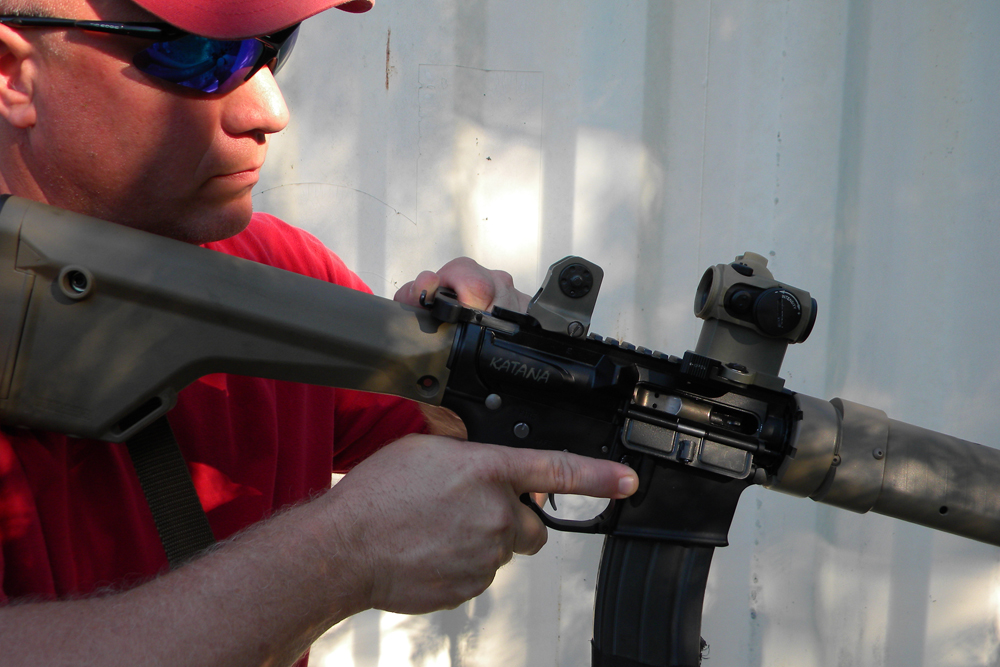
You press the trigger and get “click” instead of “bang.” The Type I malfunction may be due to no round in the chamber; this is why we make sure to tug on the magazine to ensure it’s seated and check the chamber during the loading process to be sure there’s a round chambered. Or, the Type I malfunction can be due to a bad round, for example a faulty primer that doesn’t ignite the powder charge. Ultimately it doesn’t matter, we’re going to treat it the same by loading the AR.
First, finger off the trigger! The muzzle stays on target, just like when reloading, and the eyes maintain visual contact with the target. Next, tap and tug on the magazine to make sure it’s locked in place.
Normally you’ll use the support hand to tap and tug on the magazine, maintaining your grip with the strong hand. The alternative is to take the strong hand off the grip, using it to manipulate the AR while the support hand holds the handguard. Sometimes you may be tempted to skip the process of tapping and tugging on the magazine, but trust me, I’ve seen more Type I malfunctions caused by the shooter not seating the mag than all other malfunctions combined.
After ensuring the mag is seated, cycle the charging handle to load, just like you always do. Tapping and tugging on the mag ensures it’s seated, which may be the source of the problem. Cycling the charging handle loads the chamber. If the malfunction is due to a bad round this sequence will eject the faulty round and load a fresh one. The way the charging handle “feels” when you cycle it will tell you if this action was successful or not. You cycle the charging handle and it comes all the way to the rear and then slams forward. This action feels and sounds right. You’re ready to fire. If the charging handle doesn’t feel right when you attempt to cycle it then it’s time to go to the next step, which is described below.
 Type II Malfunction
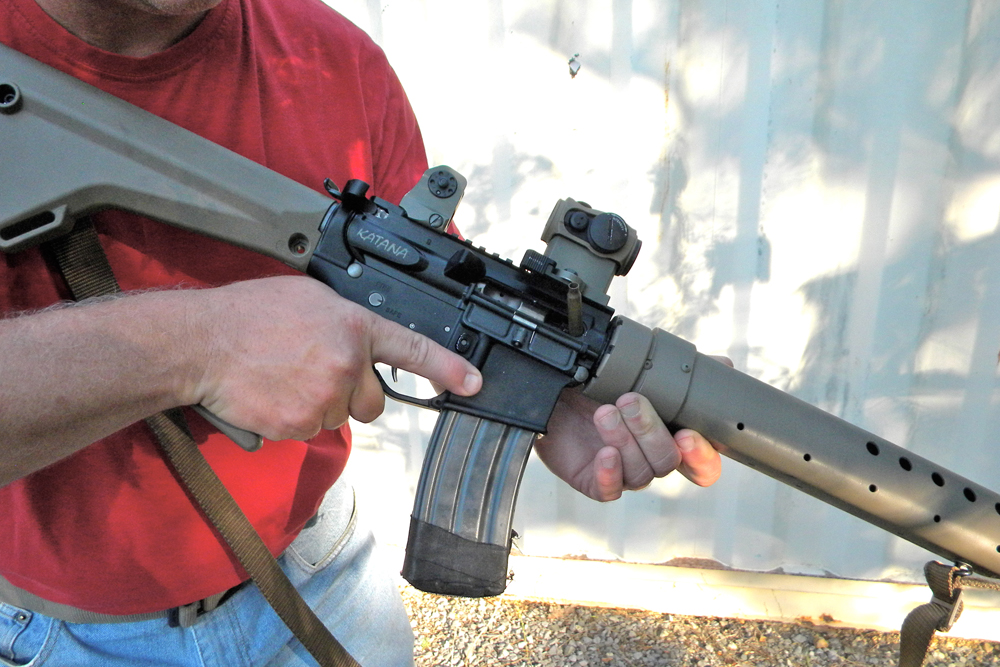
The Type II malfunction is a failure to eject an empty piece of brass. It’s commonly called a “stovepipe” or “smokestack,” which are terms used when this occurs with a pistol and the brass is sticking up like a stovepipe. With the AR they are sticking out to the side, partway in and out of the ejection port.
Although this is a different type malfunction from the Type I, your response is going to be the same. Again, finger off the trigger! Next, tap and tug on the magazine to make sure it’s seated and then cycle the charging handle to load. This action clears the Type I and II malfunctions. Again, you’re loading the AR; it’s just that the mag is already in the receiver.
There may be some times when the case sticking out of the ejection port is wedged or jammed in there, especially after cycling the bolt. When this occurs, you’ll need to lock the bolt to the rear to take pressure off the round. Then work the round clear by pulling it from the outside of the receiver. Again, once it’s clear make sure to cycle the bolt to ensure the chamber is clear, and then you’re ready to load.
 Type III Malfunction
The third type of malfunction is what people normally call a “double feed.” There can be a few different causes for this malfunction. You could have a faulty magazine that allows an extra round to slip out of the magazine and you end up with two rounds trying to occupy one chamber. The extractor or ejector and/or springs could be failing, which means the AR doesn’t eject the empty case and the bolt is trying to feed a fresh round into the chamber. Sometimes it just happens, and there is no apparent reason and it doesn’t occur again.
This is also where the second part of the clearing procedure will come into play. You attempt to load the AR – finger off the trigger, tap and tug on the magazine and cycle the charging handle – but you can tell by the way the charging handle feels that this action did not work, the bolt did not go into battery, so you have to unload the AR and then load.
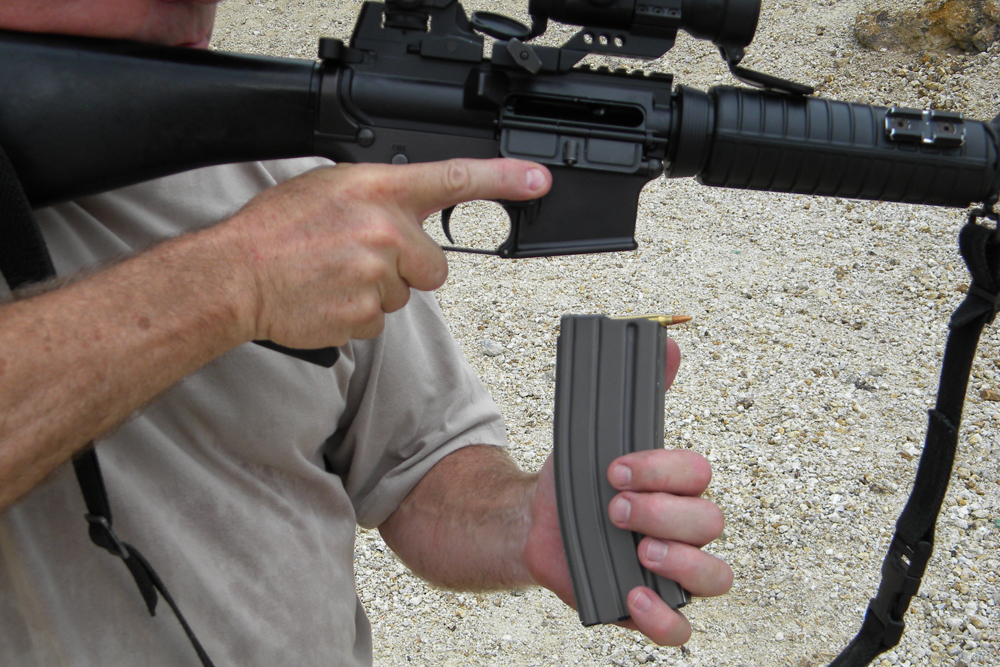 The type problem you have will dictate what steps are required to complete the unloading process. With a Type III malfunction, or “double feed,” the mag will not drop free as it normally does. The bolt is attempting to feed a round out of the magazine, but it doesn’t have anywhere to go. Part of the back portion of the round, the case, will still be in the mag, which prevents the mag from falling free when you press the mag release.
Pull or strip the mag out of the receiver. Continue the unloading process as you normally do, holding the mag in your support hand and cycling the bolt three times, just like always. If cycling the charging handle clears out the trash, and you can tell this by the way it feels, then you’re ready to load the AR.
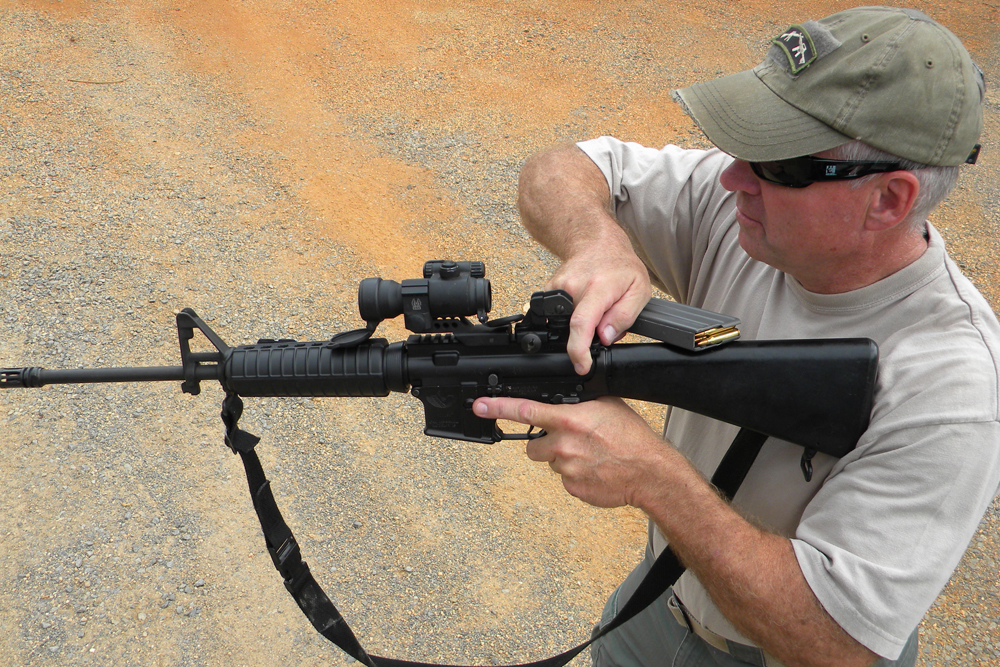 You cycle the bolt three times to clear out the trash but the charging handle is telling you there are still obstructions lodged in the upper receiver. To gain access to this and clear out the stoppage you have to lock the bolt to the rear, taking the pressure off the obstructions.
The support hand, still holding the mag, grasps the front of the receiver to support the rifle. For right-handed shooters this positions the left thumb to depress the bottom portion of the bolt release. Left-handed shooters are using the first finger of the right hand to engage the bolt catch. The primary hand comes off the AR’s grip, and you pull the charging handle all the way to the rear and lock the bolt back.
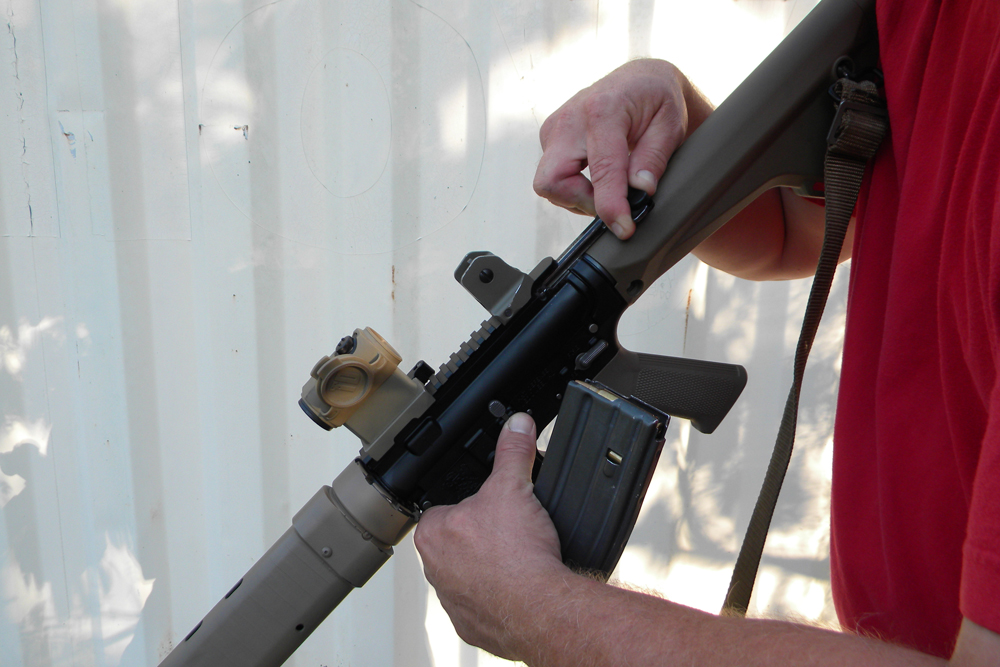 Reacquire your grip to support the rifle and stick your support-hand fingers up inside the mag well, pushing, wiggling and shoving until you feel or see something drop free. Remember, this hand is still holding the magazine. Also be sure to keep the muzzle on target and the mag well vertical. The largest opening in the AR is the mag well, so keeping the receiver vertical allows the trash to drop out the mag well easier, using gravity to assist.
Once you feel or see something drop out of the mag well, remember the AR isn’t unloaded until you cycle the charging handle. There could still be a round or empty case in the chamber, and if you just immediately start to load the carbine all you’ll do is create another malfunction.
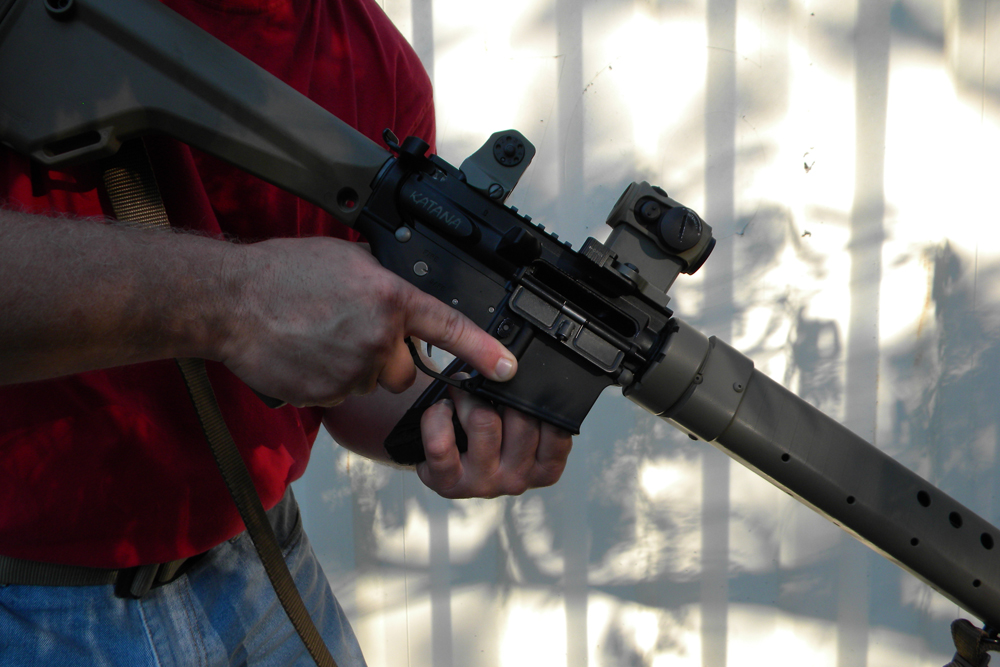 After cycling the charging handle to ensure the chamber is clear you’re ready to load the rifle, inserting and seating the mag and cycling the bolt manually to chamber a round. Remember, this is a functional manipulation, so you’re not going to perform a press or chamber check, you’re just going to have faith the AR is doing what it’s supposed to. You’ll be able to tell this by the way everything feels when you load.
This is why we unload the AR – an administrative action – the same way every time by removing the magazine and cycling the bolt three times. These same actions are used to clear the Type III malfunction, the only difference is that the muzzle is on target, you’ll have to strip the mag free from the receiver, and you’re not going to perform a press or chamber check after loading. In a situation where you have to clear a malfunction but don’t have to fire again, which would tell you immediately if the AR is working or not, you might want to check the chamber, when you have the opportunity.
 Type IV Malfunction
The Type IV malfunction is a case stuck in the chamber. The cause of this could be a couple of different things. The chamber of the AR could be too tight, not honed out to the proper size. A round could be out of shape or size, causing it to stick in the chamber. The extractor or extractor spring might be failing, which means it loses it’s grip on the case as the bolt moves rearward to extract, eject and feed another round.
The rifle will tell you when a Type IV malfunction occurs. Normally the charging handle will not come back at all because the extractor is locked onto the rim of the cartridge case stuck in the chamber. The AR doesn’t fire. You start, as always, by making sure the mag is locked in and then cycling the charging handle. Except in this case, the charging handle will not come back. You need to unload.
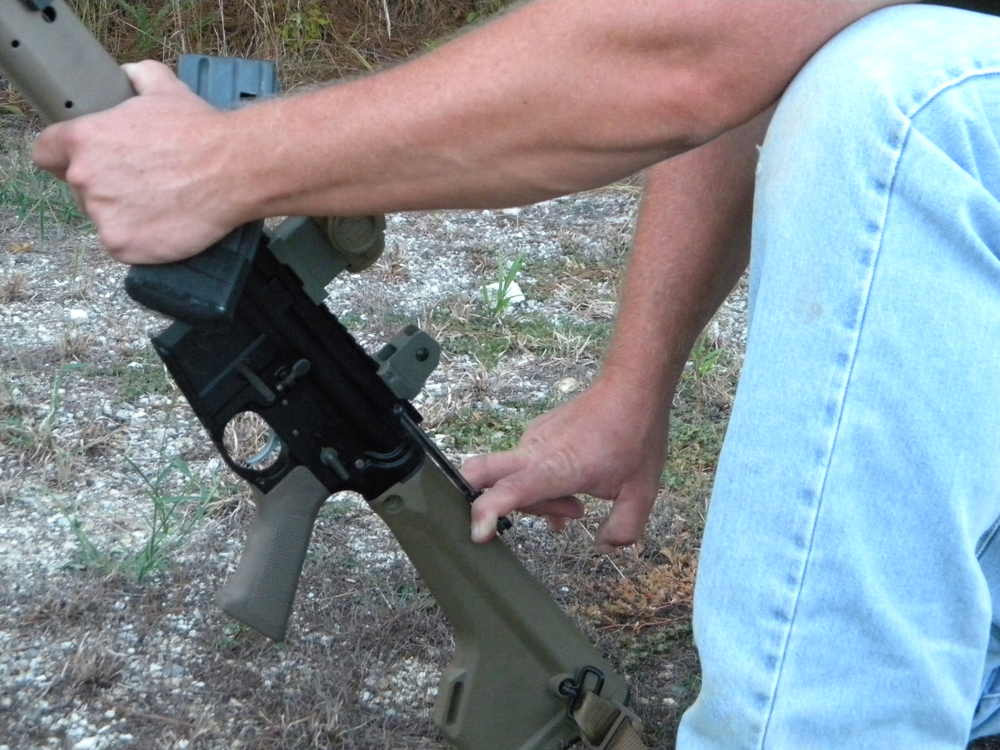
The support hand removes the mag from the receiver, and then goes to the handguard to hold the carbine. To cycle the charging handle you have to get some extra momentum and force, which is achieved by slamming the rear of the stock against a hard surface. This could be the ground or any other object that is solid enough to provide the resistance needed.
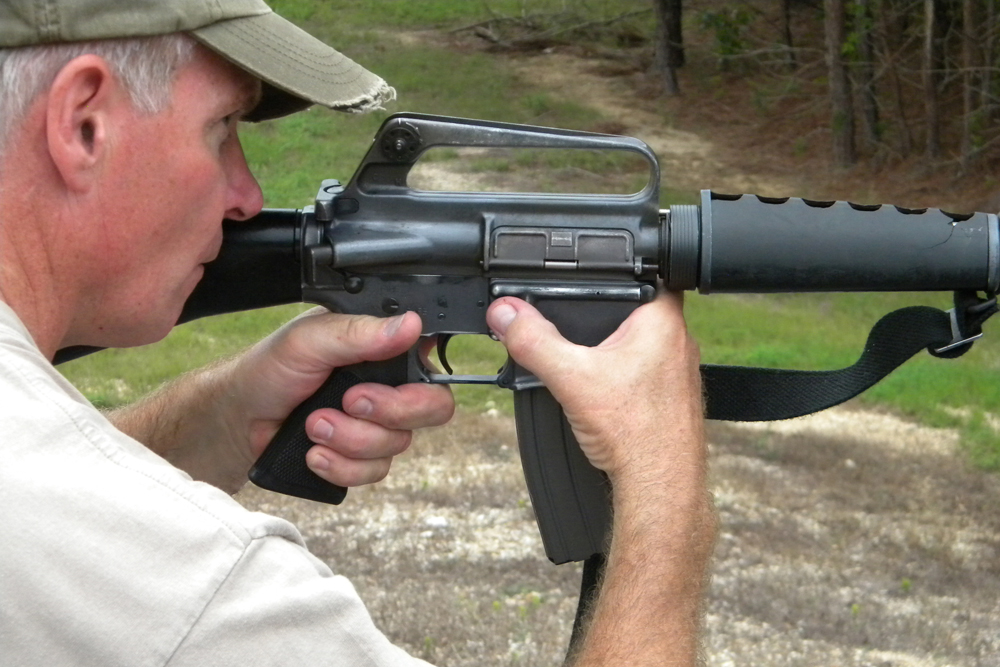 For ARs with adjustable stocks there are a couple of extra steps involved. Before slamming the stock down, or back against some other object, you need to collapse the stock, moving it all the way forward. Failure to do this can cause the stock to collapse permanently, breaking parts; break or bend the extension or buffer tube, which prevents the AR from shooting; or crack/break the upper receiver where the buffer tube is threaded into it. After clearing the case from the chamber, extend the stock back out to your normal working length. With fixed stocks you don’t have to worry about these extra steps.
The support hand is holding the handguard and the primary hand goes to the charging handle. Position your “snake fangs,” the first two fingers of the hand, on each side of the charging handle. This helps ensure you’ll pull it straight to the rear as opposed to one side or the other.
Slam or bang the back of the stock while at the same time pulling the charging handle back. If you’re in a kneeling position, using the ground to slam the stock against, make sure to control the AR with the support hand, keeping the muzzle pointing in a safe direction.
This action will generate enough force to pull the case out of the chamber, or it will rip the rim off the case, in which case now you have a jam which requires time and tools to correct. (When this occurs it normally requires the use of a broken case extractor to remove the case from the chamber.) Come back up to standing, get the stock back into the shoulder, cycle the charging handle to ensure the chamber is clear and load.
 Type V Malfunction
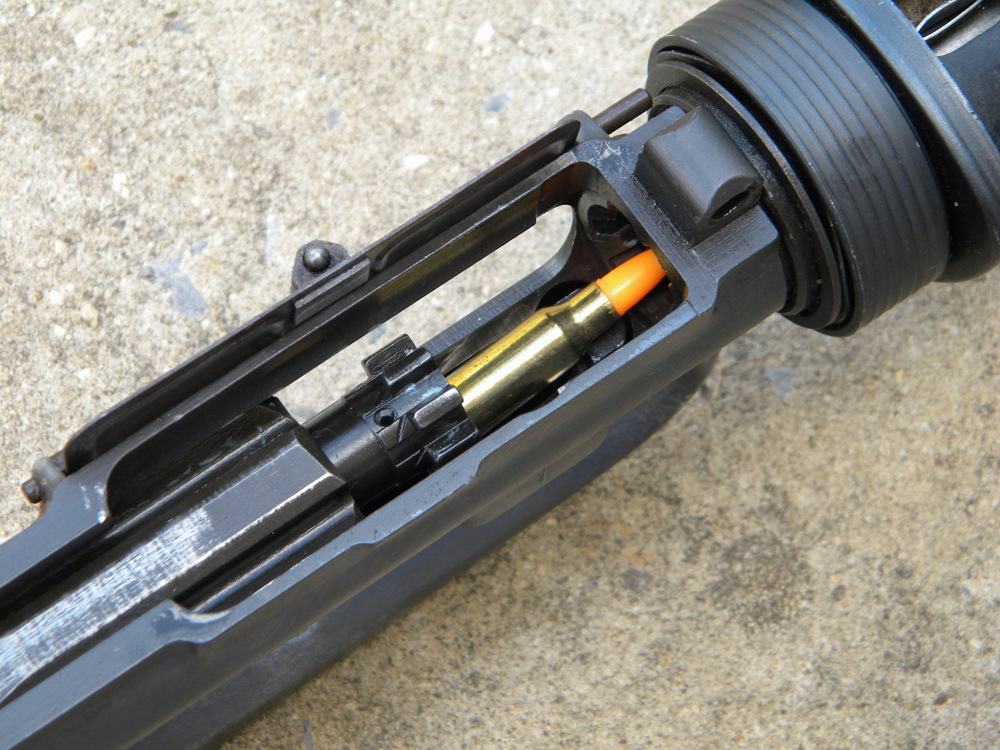
Occasionally you’ll see a bolt over-ride, a Type V malfunction, which is a case or live round on top of the bolt group and wedged into the receiver. The charging handle will normally come back part way, without any spring tension on it, but will come to a sudden stop before it reaches its full extension. Remove the magazine, if you haven’t already.
The support hand goes up the magwell so the first finger can press and hold the bolt to the rear. The primary hand goes to the charging handle. Pull the charging handle back while at the same time pressing the bolt to the rear. Once the bolt is back hold it there with the finger on the support hand and work the charging handle back and forth. The charging handle will dislodge the round or brass so that it can drop out of the lower receiver through the magwell. Cycle the bolt three times to make sure the chamber is clear and load.
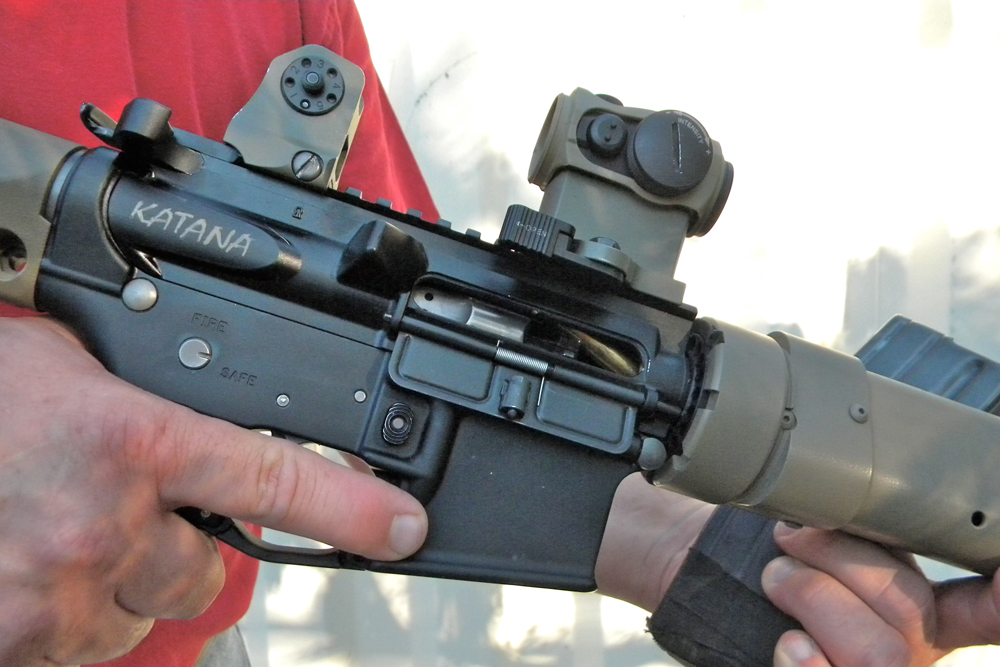 Safely and efficiently operating the AR is the result of consistency. For every action performed there is a correct and proper technique. Deviating from proper technique opens the door for trouble.
Consistency also creates efficiency. Ultimately your goal is to be able to perform all the manipulations required at a subconscious level. The conscious mind says, “reload.” The subconscious mind takes over and performs the reload. The same is true for malfunctions. This level of skill can only achieved through repetition, starting step by step and performing the same action over and over until you can perform it without needing to consciously think about the required actions.
Learning how to manipulate the AR isn’t complicated, but that doesn’t mean it’s easy. The degree to which you need to practice these actions depends on your application. For target shooting, the ability to perform lighting fast reloads might not be necessary.
The skills to reload or clear a malfunction efficiently are mandatory for armed professionals or anyone who may use the AR for self-defense. The best way to practice, getting in the repetitions necessary to learn these skills, is dry practice using dummy rounds to set up the different malfunctions. Whatever task you intend to use the AR for, you’ll get more pleasure and successful results from knowing how to manipulate it properly.
This article is an excerpt from AR-15 Skills & Drills.
Caracal Releases New American Made Firearms
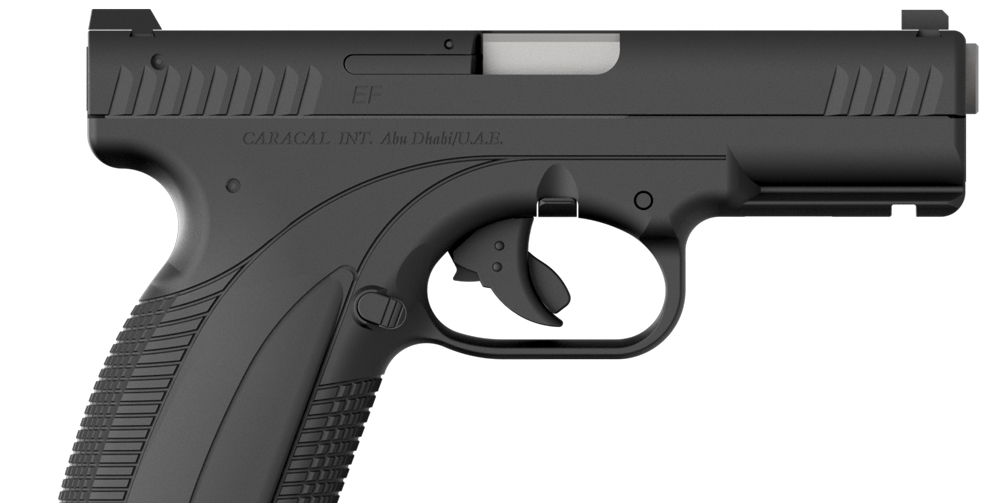
Caracal released three new guns at the 2017 SHOT — each one produced in the heart of New England. Find out more about these new American made guns.
New Hampshire’s already packed gun manufacturing base has become a bit more crowded. In a partnership with Wilcox Industries, Caracal recently moved its manufacturing operations to Newington, N.H. (It also established a U.S. office location in Boise, Idaho). And the UAE-based company hasn’t wasted any time churning out new firearms in its new digs. In all, Caracal showcased three new guns at the 2017 SHOT Show — each one produced in the heart of New England. And while they tend to be a little more traditional in design than expected from the company, they each appear to offer shooters plenty.

 Enhanced F
This striker-fired semi-automatic 9mm offers shooters an extremely low bore axis, facilitated by its truncated slide profile. This aspect alone should make the 4-inch barreled polymer pistol fairly tame in the recoil department. But Caracal didn’t stop there in producing a highly controllable handgun, also outfitting it with an ergonomically angled grip and the manufacturer’s proprietary trigger system. These should add up to a smooth shooter that is able stay on target round after round. The company has also reworked its redundant safety systems for the pistol, arming it with an integrated trigger safety, firing pin safety and drop safety. The Enhanced F marks the return of Caracal’s Quick-Sight system, which features a rear sight machined into the slide and located just in front of the ejection port. This places both the front and rear sights on a single focal plane, allowing shooters to acquire a fast and clear sight picture. The pistol ships with two 18- or 10-round magazines (depending on compliance regulations), cleaning kit, cable lock and plastic carry case. The MSRP of the Enhanced F is $599.
 CAR816 A2
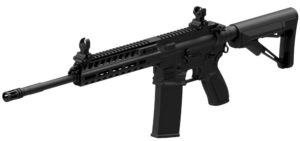
Those expecting to shoot in adverse conditions might turn an eye to the CAR816 A2. The piston-driven AR-style rifle is just the ticket to chew through 5.56x45mm ammo no matter how nasty it gets in the field. A three-position valve allows users to adjust the stroke for normal operation, adverse conditions/low impulse ammunition and normal operation with a suppressor. The rifle is equipped with Caracal’s proprietary handguard, outfitted with M-Lok ports allowing users to customize their accessory configuration. It also features a full length Picatinny rail for the direct mounting of optics and other accessories. The modified M4 contour 16-inch barrel comes outfitted with an A2-style flash hider and is threaded ½-28, making it compatible with most suppressors on the market. The gun weighs a scant 7.4 pounds and ships with a 30-round steel/polymer magazine, front and rear flip-up sights. Presently, the MSRP of the CAR816 A2 is $1,850.

 CAR814 A2
For fans of more traditional AR-style rifles, Caracal’s CAR814 A2 might grab their attention. The direct impingement rifle is chambered for 5.56x45mm and is engineered in accordance to NATO standards. The rifle comes equipped with a Magpul MOE handguard, featuring M-Lok attachment ports, allowing users to configure the rifle to their tastes and mission needs. The modified M4 contour barrel measures 16 inches in length and comes topped off with an A2 Style flash hider. This can be quickly removed and replaced with any suppressor compatible with a ½-28 thread. The rifle tips the scales at a light 7 pounds and measures 36.3 inches in length with the stock extended and 33 with it collapsed. The CAR814 A2 ships with one 30-round magazine, a 2-point Quick Detach sling, flip-up rear sights and a cleaning kit. Presently, the rifle has an MSRP of $1,300.
Gallery: Great New ARs for Shooters
[imagebrowser id=484]
The AR-style rifle is one of the most popular rifles being produced today, and a lot of manufacturers doubled down on their products by producing some outstanding examples this past year. The list below includes ARs along the price spectrum and ARs that defy the norm. Whether you shoot competitively, hunt, or are looking for something for self defense, these rifles have you covered.
Editor’s Note: This article originally appeared in the Winter 2016 Issue of Gun Digest the Magazine.
Want to learn more about the AR-15?

Gunsmithing the AR-15: The Bench Manual
In Gunsmithing the AR-15: The Bench Manual, author Patrick Sweeney covers every component that makes up the versatile firearm — from buttstock to muzzle brake. This is essential information, given that the sea of potential upgrades available today can swamp even veteran AR users. Learn more
Tikka Goes Full-Fledged Tactical with T3x TAC A1
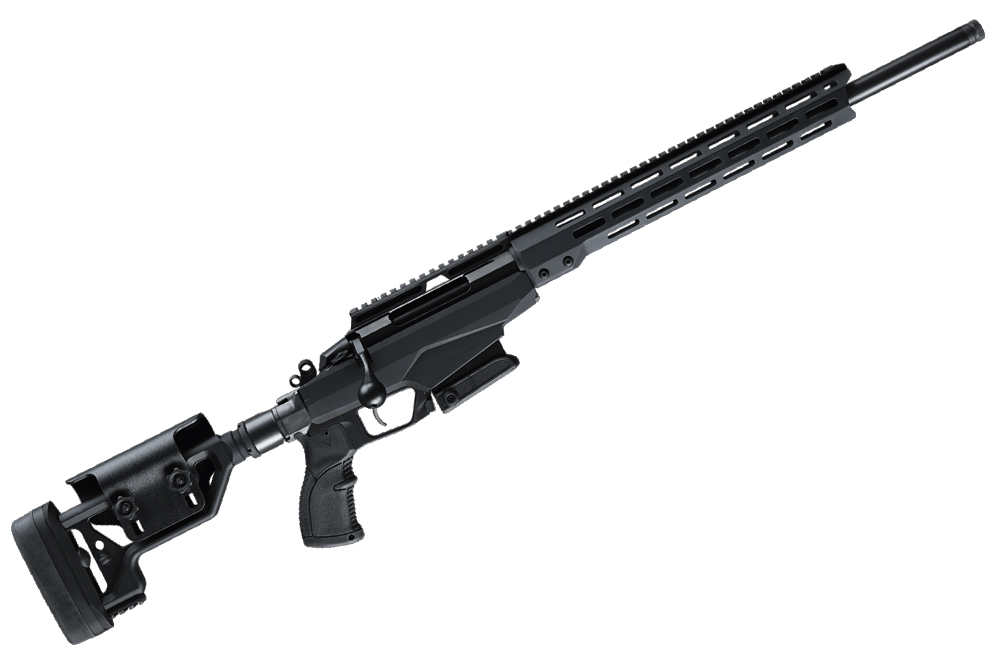
The new Tikka T3x TAC A1 is the Finnish manufacturer’s entry into the tactical, modular chassis rifle arena, and it’s a design full of great features.
Despite being better known in hunting circles, Tikka has produced a number of rifles that have appealed to tactical and precision shooters. The Finnish manufacturer has a knack for creating accurate, reliable and well-made rifles, and that hasn’t gone unnoticed with the tack-tapping crowd. And the company has continued its drift into this neck of the woods with a whole-hog tactical rifle.
The T3x TAC A1, released at the 2017 SHOT Show, is unmistakably a full-fledged tactical bolt-action. And it is one much awaited by many corners of the shooting world with chatter about its arrival starting nearly a year ago.
For the precision minded, there is plenty to like about this new chassis rifle. It is built upon proven Tikka technology, but has a slew of new innovations mixed in to make it a pretty dang impressive rifle at first blush.
As for being tried-and-true Tikka, the T3x TAC A1 boasts the one-piece, reduced receiver-port T3x action (nice and stiff). And it features the company’s cold-forged barrels, available in three lengths (16, 20 and 24 inches) and initially being chambered in three calibers — .308 Win., .260 Rem., 6.5 Creedmoor. From there, it’s a brave new world in rifle design for the company.
As for the assumed features of a chassis system, the rifle has a fully adjustable cheek piece and length of pull, though the latter facet is a bit different than many systems out today. The LOP is modified by adding or subtracting spacers behind the butt pad. The system also includes an aluminum handguard, with 0 MOA Picatinny rail on its 12 o’clock, M-Lok ports across the rest and ample QD sockets and sling clip points.
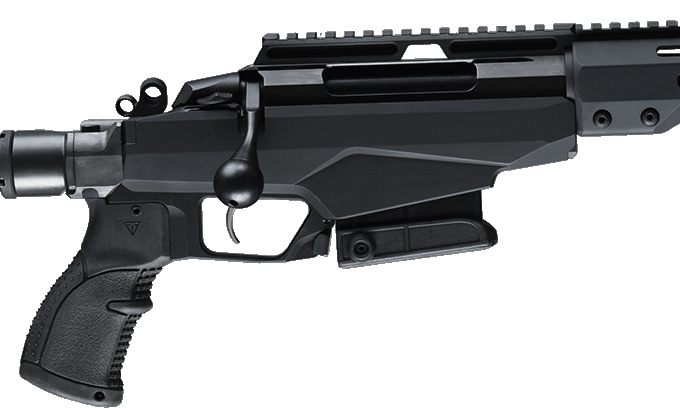
Where things get a bit intriguing is the versatility Tikka has engineered into the rifle. The chassis is compatible with any AR-15-style stock, pistol grip and handguard. This adds a whole new dimension to the T3x TAC A1’s ability to be customized to user and mission.
Tikka has also thrown a few other bells and whistles on the rifle for good measure.
Its two-lug bolt is Teflon coated, making it cycle lightning fast, and it features an oversized bolt handle. It is outfitted with a two-stage adjustable trigger, allowing users to dial the pull weight between 2 and 4 pounds. The muzzle is threaded (5/8×24), for the quick addition of a suppressor or muzzle break. And Tikka is offering a folding stock, making its new gem easier to move in and out of shoots and stow away.
There is a little matter of the money it will take to procure the T3x TAC A1 — it does tend toward the high end of production chassis systems with an MSRP of $1,899. But for those who live to knock out the X ring, that could prove to be a small price to pay.
T3x TAC A1 Specs
Calibers: .308 Win., .260 Rem., 6.5 Creedmoor
Twist Rates: 1:11” .308 Win.; 1:8” .260 Rem., 6.5 Creedmoor
Barrel Lengths: 16” (MIL/LE Only), 20”, 24”
Overall Weight: 10.36 lbs. (16” barrel), 10.80 lbs. (20” barrel), 11.24 lbs. (24” barrel)
Overall Length Stock Open: 35.83” (16” barrel), 39.80” (20” barrel), 43.46” (24” barrel)
Overall Length Stock Folded: 26.57” (16” barrel), 30.55” (20” barrel), 34.21” (24” barrel)
Capacity: 10-round detachable box magazine
Stock: Aluminum middle chassis, modular removable forend, AR-15 buffer tube compatible interface, AR-15 pistol grip compatible slot
Rear Stock: Aluminum rear stock, adjustable (height and angle) cheek piece, LOP adjustable.
Trigger: Two-stage, adjustable pull from 2 to 4 lbs.
MSRP: $1,899
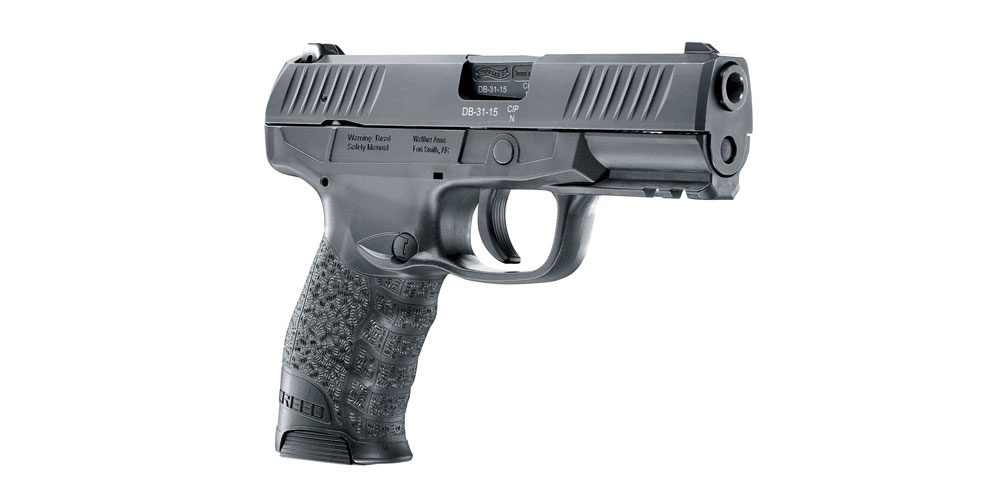
First Look: Walther Creed Pistol
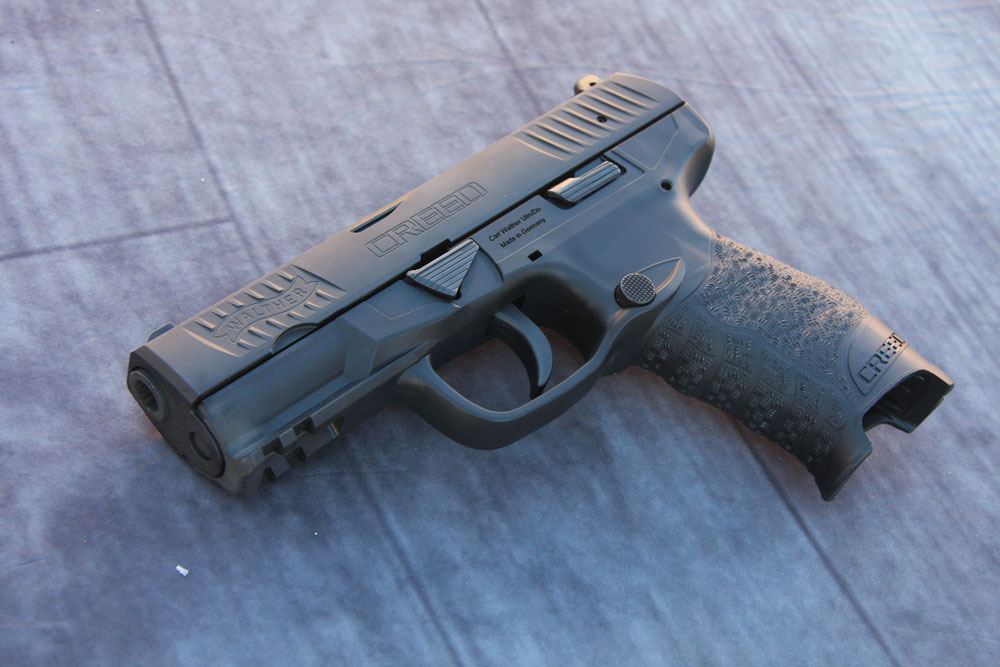 Walther Arms has a fairly lengthy and illustrious history in the handgun world with its development and production of classic designs such as the manufacturer’s PP series pistols, the venerable P38, the P99 and many others. In recent years, however, the company has turned its attention almost exclusively toward polymer-framed pistols and the ever-burgeoning concealed carry market.
It is in that spirit that Walther introduced the Creed pistol back in 2016. The polymer-framed Creed, priced at $399, featured a pre-cocked double-action trigger and most of the features you’d expect on polymer-framed guns costing $100 to $200 more.
During this year’s Industry Day at the Range ahead of the 2017 SHOT Show, I was able to put a few mags through the Walther Creed. I can’t offer a full review, but I can present some general first impressions.
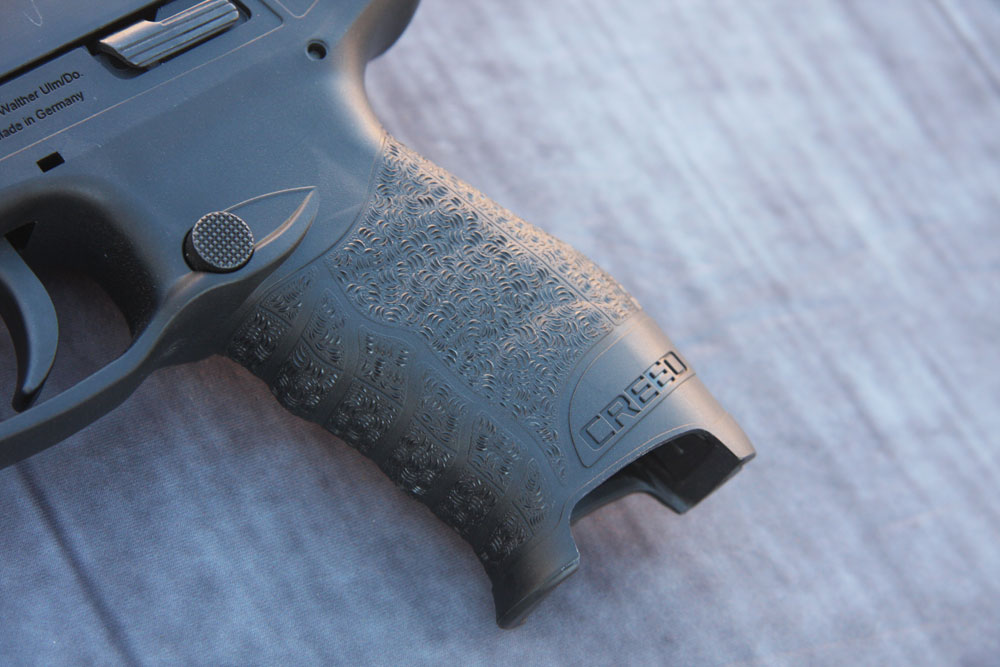 One of the things I’ve always appreciated about Walther pistols is how they feel in the hand, and the Creed is no exception. The ergonomically designed grips on most of Walther’s pistols have always felt grippy to me without being textured to the point where extensive shooting induces discomfort, and the contours generally seem to fit my hands very well. The same is true of the Walther Creed, and although I only ran a few magazines through the gun, I feel confident that I could’ve shot it all day without becoming uncomfortable.
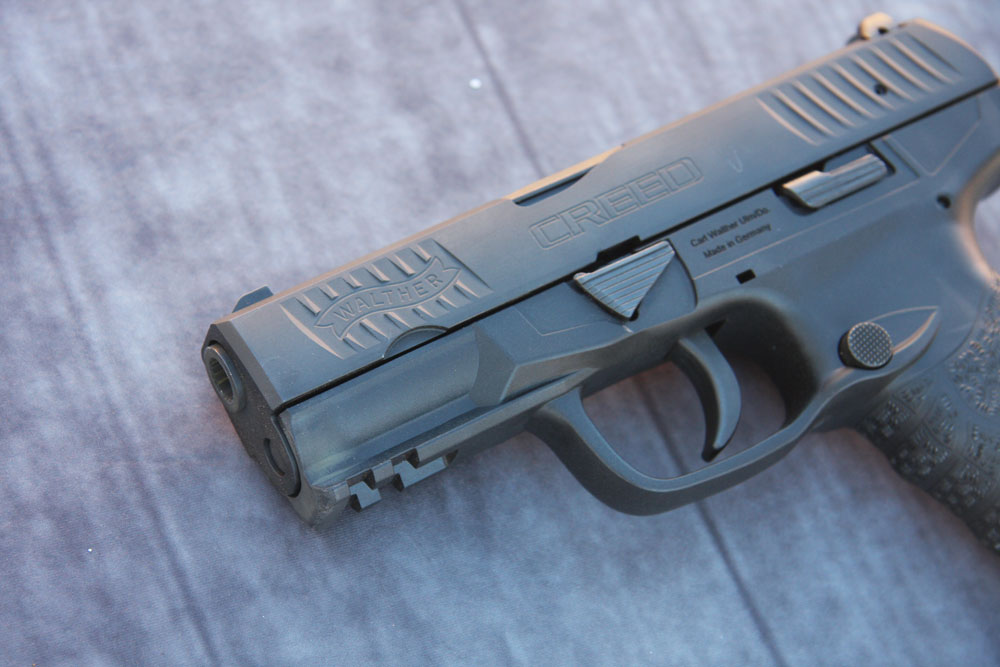 The Creed’s pre-cocked double-action trigger also felt perfectly fine and in line with similar polymer-framed pistols. The pull was pretty smooth, and I didn’t have much trouble hitting the steel targets set up downrange. I wasn’t able to measure the weight of the trigger pull; however, Walther lists it as approximately 6.5 pounds on the company’s website – again, plenty adequate for a pistol designed for carry or general range use.
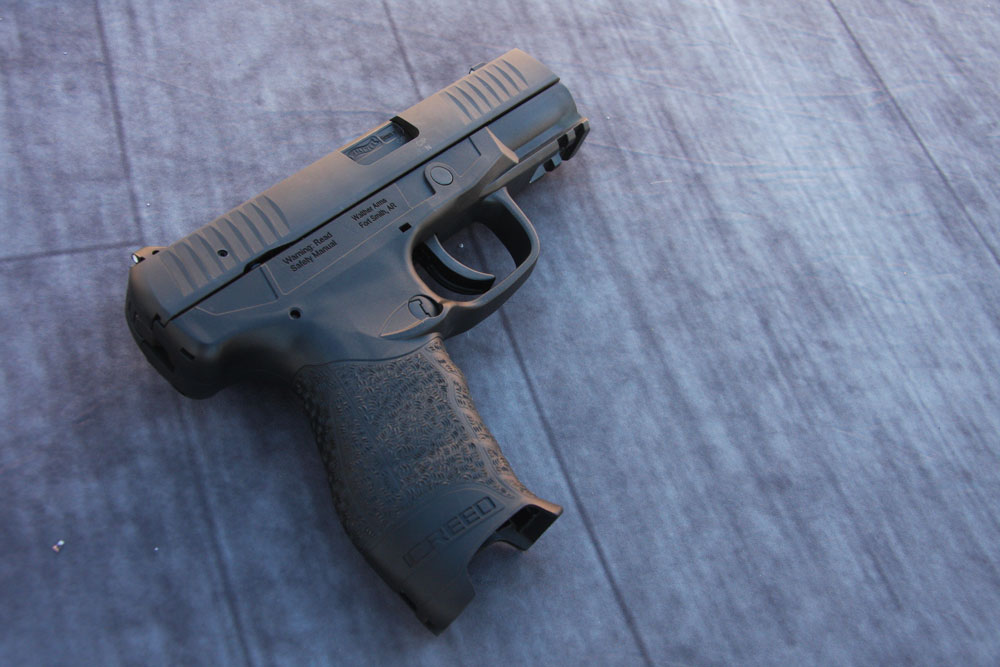 Speaking of carry, the Walther Creed features a bobbed hammer for no-snag drawing from concealment. Obviously, I didn’t get a chance to test this feature, but it should certainly be a consideration for those looking for a carry piece.
 On a similar note, the gun utilizes low-profile, steel three-dot sights, which should also help on the draw. These, too, are plenty sufficient, and I had no trouble using them at the range.
Other features on the new Walther Creed include an ambidextrous magazine release, front and rear cocking serrations for slide manipulation and an extended slide stop lever for easier operation, even when wearing gloves. Every metal component on the Creed is also treated with Tenifer coating for a corrosion- and abrasion-resistant, matte black hardened surface.
The Creed is available in 9mm and comes with a 4-inch barrel with a 1:10 twist. Capacity is 16 rounds, and the gun ships with two magazines. Overall length is 7.3 inches, and weight with an empty mag is listed at 26.6 ounces.
The MSRP on the new Walther Creed is $399. For more information, check out the specifications below or visit the Walther Arms website.
Specifications:
 Walther Creed
Type: Semi-auto, pre-cocked double action
Caliber: 9mm
Barrel: 4 in.
Overall Length: 7.3 in.
Height: 5.6 in.
Width: 1.3 in.
Weight: 26.6 oz. (empty mag)
Sights: Three-dot, low profile
Trigger: 6.5 lbs.
Finish: Tenifer black
Capacity: 16 rounds
Price: $399
Manufacturer: Walther Arms
MUST READ ARTICLES