The 2018 SHOT Show in Las Vegas is wrapped up and the gun world is awash in new gear, ammo and guns. We at Gun Digest have given you a sneak peak at many of the new firearms coming out this year. And in the future will give you much more in-depth reviews and test fires, so you’ll know where to spend your cold-hard cash.
With that said, there were a few guns that jumped out at me over the course of the event. This is not to say, these are the end-all, be-all of the show. Instead, they are new twists on proven designs or fresh concepts by established gunmakers that appear to add something to the overall market — at least from my extremely humble perspective.
Truly, only time — and the shooting masses — will tell if these guns offer what the greater public desires. So, for what it’s worth, here are five guns that caught my eye from 2018 SHOT.
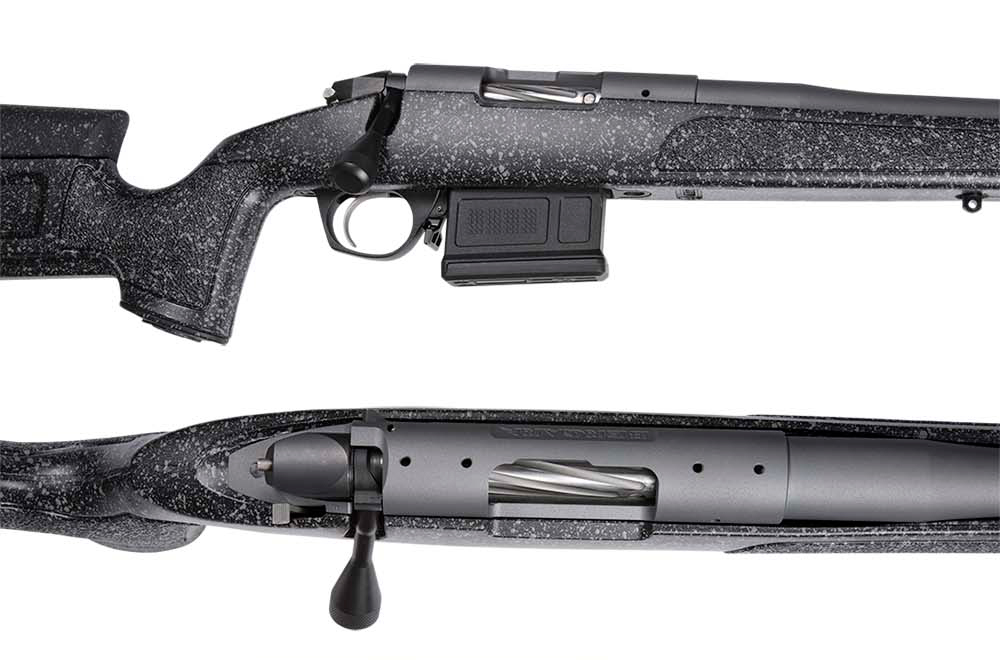
Bergara HMR Pro
Photo: Bergara
Utilitarian design, but precision results, the B-14 HMR made a big splash when it hit the market. And Bergara is shooting to parlay that success with a top-shelf variation of the bolt-action.
The HMR Pro still boasts the fully adjustable internal chassis stock, but it’s mated with the company’s Premium line action and barrel. Hand assembled, the rifle is completely made in Georgia and boasts stainless steel barrel and action and a two-lug floating bolt head. Additionally, the HMR Pro comes outfitted with the externally adjustable TriggerTech trigger.
Perhaps best of all, Bergara’s new rifle comes in a slew of calibers, including: .22-250 Rem., .223 Rem., .308 Win., 6.5 Creedmoor and 6mm Creedmoor. The B-14 variation was only available in .308 and 6.5. The upgraded HMR variation’s MSRP isn’t through the roof; at $1,715 it’s still within reach of shooters who want a precision rifle that’s comfortable in the field and competition.
Savage Fox A Grade
Photo: Savage Arms
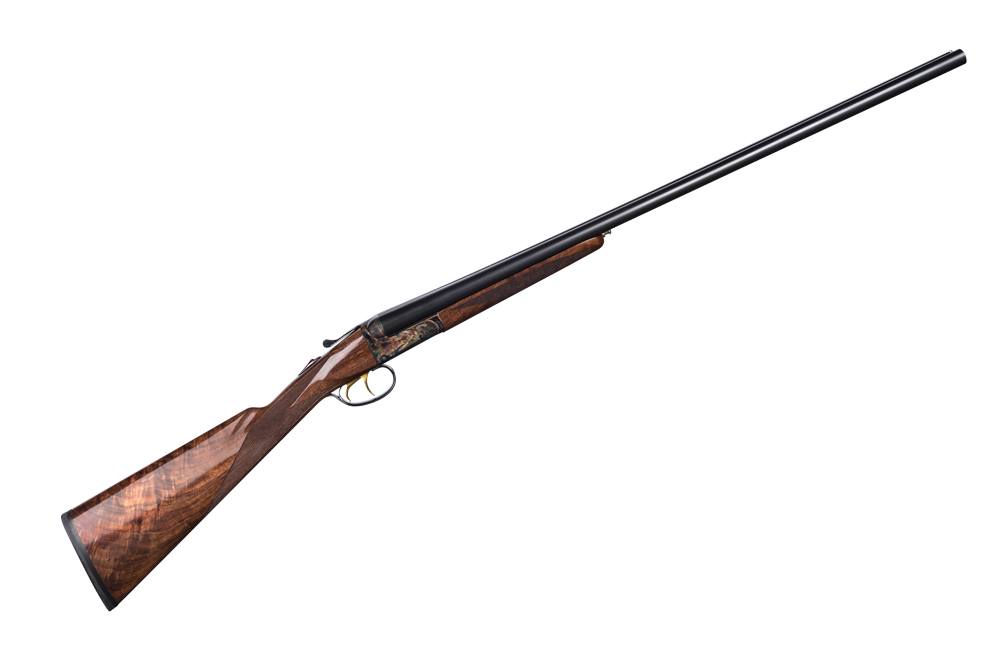
Savage has breathed new life into a truly classic American double gun.
The Fox A Grade Series is the Massachusetts gunmaker’s — actually produced by Connecticut Shotgun Manufacturing Company — take on Ansley Hermon Fox’s impeccable boxlock side-by-side and looks to have all the trimmings.
This includes double triggers, English-style straight grip, oil-finished black walnut stock and, perhaps most eye-catching, a color-case hardened receiver that adds depth to an already attractive gun. Savage has introduced its Fox in both 12 and 20 gauge, with the option of 26- or 28-inch barrels — each with removable chokes.
At $5,000, Savage isn’t giving the Fox A Grade Series away. But given its heirloom quality, the shotgun is certainly a generational investment.
Mauser M18 Bolt-Action Rifle
Photo: Mauser
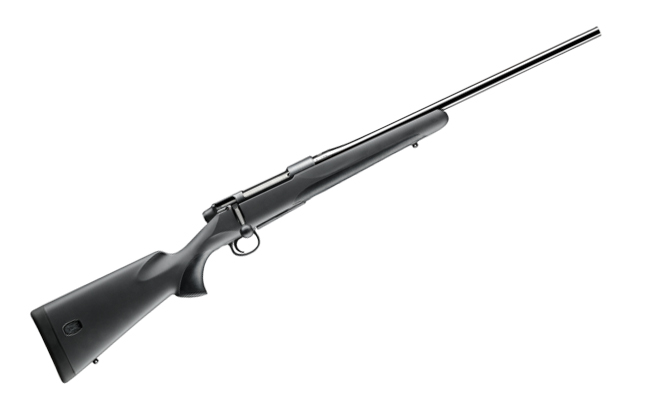
Mausers, at least in their modern iterations, typically run a small fortune. But that’s changing in a big way with the introduction of the M18.
At $699, the bolt-action is by far the most affordable rifle to roll out of the German gunmaker’s factory in a spell. But prepare your chagrin; it does not boast what most shooters want out of a Mauser — the classic action with oversized extractor claw. Instead, it has a three-lug, full-diameter bolt and Sako extractor. Still, it’s a Mauser. And it’s a fair bet the company known for exacting standards has done this more cost-effective design properly.
The M18 — what the company calls “The People’s Rifle” (Volkswaffe) — comes outfitted with a cold hammer-forged barrel, detachable box magazine, adjustable trigger (2.2 to 4 pounds) and polymer stock. The M18 might not stir the imagination like an M98, but, hey, it puts a Mauser within reach of the majority of shooters.
Ruger Super Redhawk 10mm Revolver
Photo: Ruger
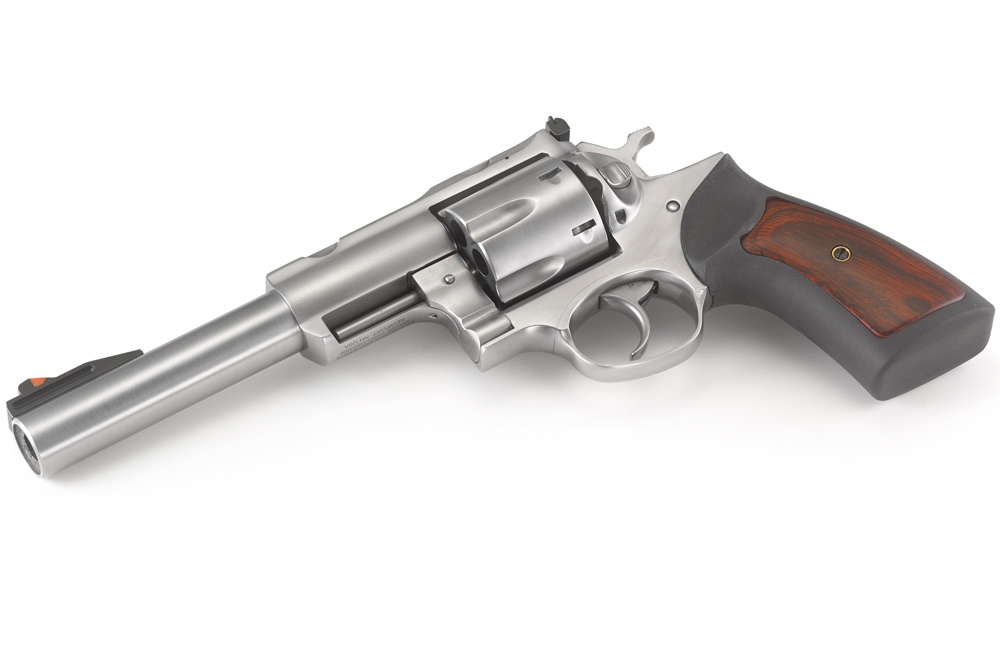
Chambering this size revolver in 10mm Auto might seem like overkill. But, it should produce an eminently shootable gun, with little to no muzzle flip. It makes some sense to see the Super Redhawk go 10mm. The revolver is a favorite of handgun hunters, and the round is in ascendance in that circle. Ruger has the handgun ready to rock out of the box with Ruger rings for mounting a scope and three moon clips to juice this six-shooter with the utmost expediency. The scope mount might be the deal sealer for some when they balance the $1,159 Super Readhawk against a semi-auto pistol.
Mossberg 590M Mag-Fed Shotgun
Photo: Mossberg
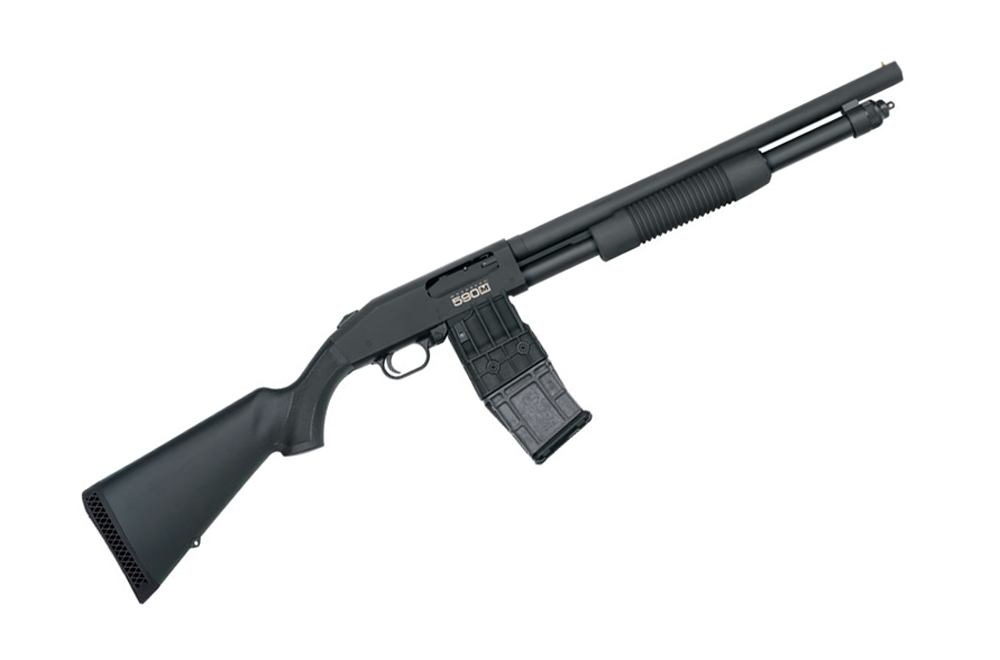
This was inevitable as a canyon echo once Remington released the 870 DM. But Mossberg could steal the spotlight in the detachable box magazine pump-action show with the 590M’s capacity.
Right off the bat, the company offers 5-, 10-, 15- and 20-round magazines, which definitely expands the defensive capabilities of the $721 gun. The magazine release is convenient to boot, directly in front of the trigger guard making it highly intuitive.
Outside of the ability to accept steel feed-lipped double-stack polymer magazines, this 2¾-inch-only chambered shotgun is pretty much the 590 shooters have come to love. It still meets the MilSpec 3443 requirements for a pump-action. It still features ghost-ring sights, plain old 18.5-inch barrel and vented handguard. Only now, this beast is that much quicker to feed.
How close have we come to centerfire accuracy with today’s inline muzzleloaders? Close.
The elements of a precision modern muzzleloader:
Every muzzleloader is different — barrel tolerances, breech plug, bullet, sabot, etc.
Because of this not all guns shoot the same groups with the same load.
Almost any production muzzleloader has a 1:28 twist and a barrel of 22-26 inches long.
The 209 shotgun primer is the standard ignition source today.
Learn your gun’s accuracy potential by swabbing the bore between every shot.
Finding the best load for your muzzleloader often takes more than a day.
Christmas of 1987 was like many before it: We opened gifts, loaded the vehicles and headed to my grandparents’ for two weeks of hunting. The pheasant population was on the decline in southern Iowa, so I found myself riding with my uncle and cousin looking for deer with traditional muzzleloaders.
Think of each muzzleloader as having a unique flavor palate. Find a bullet/powder/primer recipe your particular gun likes, and you’ll be rewarded with impressive accuracy.
After a couple of days and several shots, they had to do the dreaded cleaning routine. In the mudroom of their house, they brought in a 5-gallon bucket with hot, soapy water and started scrubbing. I was accustomed to completely tearing down my Remington 1100 every weekend to clean it, but this was ridiculous.
I told my uncle that I really enjoyed tagging along, but I wasn’t sure about this cleaning deal and hunting without a scope. “Don’t buy one of these damn things,” he said. “There’s a guy in Lancaster, Missouri, who makes one that’s easy to clean, you can mount a scope and they claim it’ll shoot as good as a rifle.” And at the end of my 2-week vacation I was the proud owner of a Knight MK-85.
Don’t scoff: That gun changed my life. I graduated from college and got a job working for Knight Rifles. During the course of more than 20 years, I held a variety of jobs for Knight, and they all involved test-shooting guns … every inline muzzleloader currently being manufactured. I spent hours with the competitors’ rifles — shooting, cleaning and picking them apart.
I was also fortunate to shoot at the National Muzzleloading Rifle Association Manufacturers Match for 3 consecutive years. I learned a lot shooting against the best of the best about doping the wind, fouling the barrel and cleaning during a timed match. We had to use guns that were available for anyone to purchase, scopes couldn’t exceed 10x, and we could use black powder or black powder substitute. One glaring fact: no one ever won shooting pellets. Think about that.
Not Your Uncle’s Smokepole
I honestly believe that, today, all the major muzzleloader manufacturers make good guns for hunting deer-sized animals. Once you hit $400, all are pretty even in accuracy. You may like a specific brand or style, but they’re pretty even — if you put in some work to make them perform.
Every muzzleloader is slightly different due to tolerances of barrel, breech plug, bullet, sabot, etc. Crazy as it sounds, there are no governing rules that say what a .50-caliber muzzleloading barrel dimensions must measure. There are rules for centerfire rifles, but nothing for muzzleloaders. One company can have a .50-caliber barrel that measures .500-inch, another can measure .502-inch or even .498-inch.
The author shot this deer at 296 yards with a Knight .52-caliber Disc Extreme muzzleloader, a 375-grain copper Barnes bullet and 150 grains of ffg Triple Seven powder.
Because of things like this, not all guns shoot the same groups with the same loads. You must try multiple bullets, powder charges and primers to discover the perfect combination for your particular rifle.
Building A Shooter
Optics: Muzzleloaders are hard on scopes, and I’ve found that scopes costing less than $200 usually won’t last long. I’ve also destroyed scopes that cost more than $1,000. I tried many brands and models, and the best fit for a hunting muzzleloader is the Bushnell Elite series. I also have a couple Weaver Grand Slam scopes I like.
Bullets: Nearly every production muzzleloader barrel has a 1:28 rate of twist, and most are 22-26 inches long. This twist rate will stabilize bullets between 250 and 300 grains when shot at 1,600 to 2,100 fps.
I’ve killed more than 300 critters in 17 states, four Canadian provinces and Namibia with muzzleloaders, and I used anything from a patched round ball to 530-grain bore-sized conical bullets. All of those options killed the game, but I’m a believer in Murphy’s Law, so I prefer bullets that will perform in the worst-case scenario.
Any bullet will kill a deer standing broadside in the open at 50 yards on a calm day. But what happens at 200 yards with a 10-mph crosswind and you don’t account for wind drift? (A 10-mph crosswind will move a 250-grain bullet with 150 grains of powder nearly 10 inches at 200 yards.) You either hit a shoulder or the guts, both of which are bad news with a smokepole that requires most guys a full minute to reload.
So, I choose bullets that will expand over a wide range of velocities yet hold together if they hit a major bone. Monolithic bullets meet both of those criteria, so I mainly hunt with Barnes or Hornady Monoflex bullets. They offer both 250-grain and 300-grain options, which yield a minimum of 1,000 ft/lbs of energy at 200 yards when pushed 2,000 fps.
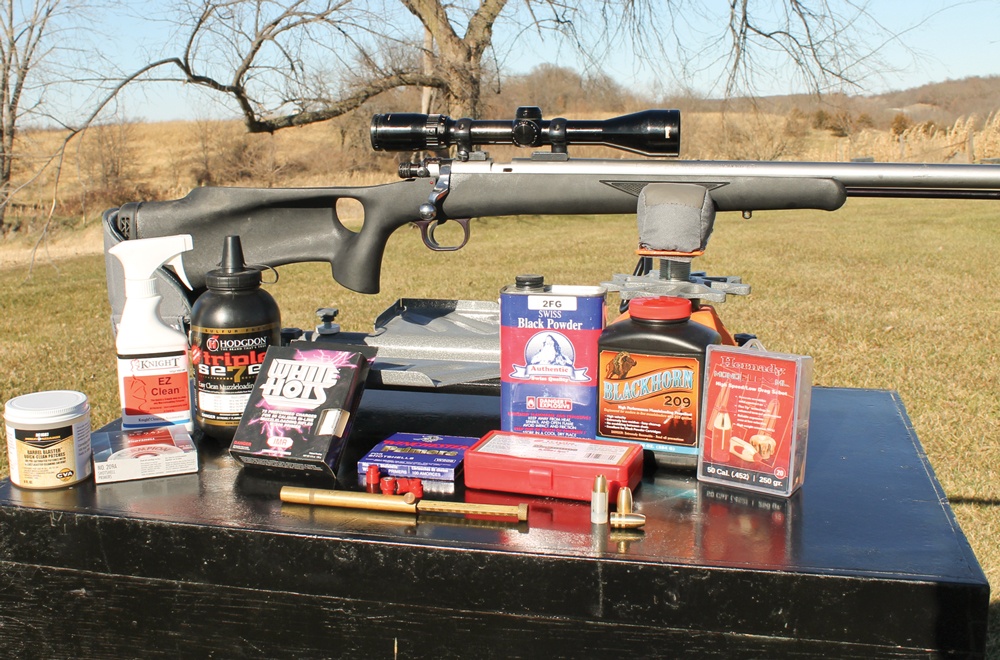
Powder: If you travel to any of the National Muzzleloading Rifle Association championships, the majority of the competitors are shooting blackpowder. Blackpowder is arguably the most accurate powder for muzzleloaders because it produces very consistent muzzle velocities and it has a low ignition temperature, which means it’s more likely to go “boom” with no hesitation. But most hunters don’t use blackpowder because government regulations require special shipping and storage procedures. Blackpowder substitutes are the powder of choice. These substitutes create higher velocities and are easier to clean than blackpowder, but they have a higher ignition temperature. Manufacturers have “fixed” ignition issues by using 209 shotgun primers as the new standard ignition source in muzzleloaders.
There are two types of blackpowder substitutes: pellets and loose powder. Pellets are by far the most popular because they’re easy to use. Drop two or three pellets down the barrel and then push the bullet on top. But, there are only two options: 100 or 150 grains of powder. If your gun “doesn’t like” either option, you must try multiple bullets to find the best accuracy. Loose powder offers more customization and burns most consistently.
Ignition: The 209 shotgun primer is the standard ignition source today. These primers are fairly consistent in size due to SAAMI regulations, but the volume of gas and temperature of flame can vary. How does this relate to accuracy? Well, if you’re shooting a really potent 209 primer in a gun with a large bore diameter, say .503 inches, and using pelletized powder with an easy-loading bullet, it’s possible for the bullet to roll out of the barrel a few yards and the pellets shoot out like balls of flame — been there, done that. Take the same barrel with a less-potent primer and it shoots fine.
Cleaning Between Shots: Consistency is paramount, and that means consistent cleaning. Many muzzleloaders today use button-rifled barrels with a groove depth of .004-.006 inches. Each shot you fire leaves residue that fills up the rifling grooves so the next bullet doesn’t grip as well, and accuracy suffers unless you clean the bore. Some powders do burn cleaner than others, but all leave residue.
The best way to know how well your gun will shoot is to swab the bore between every shot with a damp cleaning patch. Depending on the powder, you can use solvent, water or just plain spit to dampen the cleaning patch. Gradually work your way down to the breech plug, but do not push the patch all the way down the barrel in one motion: The crud will be shoved down the bore and jam the patch and cleaning rod in the barrel.
Creating Your Own Muzzleloader Recipe
Whenever I had a consumer call me and say, “I just bought this gun and the season starts tomorrow. What should I shoot out of it?” My answer was, “Use 110 grains of ffg Triple Seven powder and a 250-grain Barnes MZ Expander bullet.” I’ve never shot a muzzleloader that wouldn’t shoot a 2-inch group or less at 100 yards with that combo. But to find the best load for your muzzleloader often takes more than a day.
As I stated earlier, loose powder is my favorite mainly because I can vary my powder charge from 90-150 grains with a particular bullet. You will find that your gun likes one specific powder charge with your bullet better than others.
If you want to shoot deer out to 200 yards, it’s necessary to shoot higher powder charges: between 110 and 150 grains of ffg powder. If you’re using pellets, you need to either use two Magnum Triple Seven pellets or three 50-grain pellets. With pellets, you might need to try a variety of different bullet weights and styles because you can’t vary your powder charge.
I start by pulling the breech plug and looking down the barrel to ensure there’s nothing visible in the bore. Then I run a few dry cleaning patches to remove any oil. Next, I’ll install the breech plug back into the gun with a little bit of anti-seize grease on the threads.
I’ll then fire a few primers through the unloaded gun. This step shows me that the gun is functioning properly and puts some non-corrosive primer fouling residue in the gun. This residue will help make your first shot out of a clean gun closer to subsequent shots.
Measure out 110 grains — by volume — ffg Triple Seven, or use pellets, and pour it down the muzzle. Take your bullet and carefully center it into the muzzle. Push the bullet down the barrel with your ramrod until it firmly sits on top of the powder charge. Do not tamp on the bullet. The pounds exerted to seat the bullet are not critical, but you must be consistent. Don’t push with all of your weight one time and lightly the next.
Load a 209 shotgun primer (Winchester W209 is my favorite) in the gun and you’re ready to fire. After shooting, make note of where this clean-barrel shot hit, but don’t adjust the scope if you’re on the target — you first need to shoot for group size. Remove the primer, place the butt of the rifle on the ground, take a damp cleaning patch and swab out the bore in a scrubbing motion. Use both sides of the cleaning patch to keep the barrel fouling to a minimum. Reload and shoot again. Repeat this process for a total of four shots.
Increase your powder charge to 120 grains of ffg Triple Seven powder and shoot another three-shot group, but remember to swab the bore between every shot with a damp patch. If 110 and 120 grains don’t give you the accuracy you desire, increase to 130, then 140 and then 150 grains of powder. If all five charges don’t produce good results, repeat with a different bullet weight and style. For instance, start with a 250-grain Hornady and switch to a 300-grain Barnes bullet.
Take the time to lean what your muzzleloader likes, and you will be rewarded with exceptional accuracy.
Editor’s Note: This article originally appeared in the January 2018 issue of Gun Digest the Magazine.
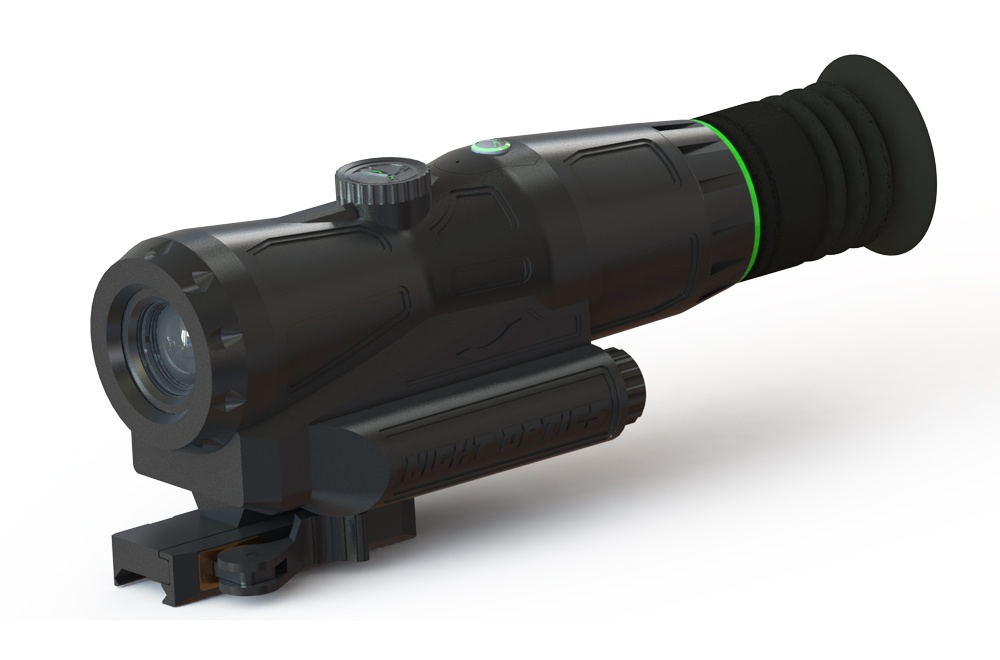
The Night Optics SVTS line of night vision riflescopes offers detailed images and fast target transitions.
What makes the Night Optics SVTS line noteworthy?
The SVTS family includes the SVTS-80, SVTS-320 and SVTS-640.
They are the first scopes featuring continuous calibration in a thermal riflescope.
The scopes’ other notable piece of technology is their Heat Tracker function.
This tool helps direct a shooter to the next potential target outside the field of vision.
Other Night Optics releases are the Night Chase NC50 and the Night Optics FIR-i Focusable IR Illuminator.
The challenge of shooting at night or in low-light situations is fairly obvious — lack of light. The most widespread solution to staying on target in the dark, for the most part, has been rudimentary.
Flashlights in self-defense situations and a spotlight in hunting, while effective, share a disadvantage. Flick on the light and the whole world knows your position. And even in the case of filters, to cast a beam of light in a spectrum undetectable to animals requires toting that much more gear into the field and out again.
Night vision technology has changed much of this, offering a light and effective tool to quickly draw a bead when illumination is scarce. And while still at the upper-end of the optics market price-wise, today’s optics offer more functionality for the money than ever before.
Night Optics has taken this aspect to heart with the introduction of its newest line of thermal rifle scopes. The three mid- to high-priced optics that compose the SVTS line — introduced at the 2018 SHOT Show in Las Vegas — arm shooters with cutting edge optics, more than capable of defending a homestead or stacking up coyotes in the dead of the night.
The SVTS family — SVTS-80, SVTS-320, SVTS-640 — are the first scopes featuring continuous calibration in a thermal riflescope, according to Night Optics. The technology ensures shooters stay on target by all but eliminating one of the most frustrating aspects of night vision — screen freeze. With this exasperating anomaly squelched, Night Optics has created scopes that not only excel in the dark, but also in engaging multiple targets.
Target transition had to have been rattling around in the heads of the company’s engineers with the creation of the SVTS line given the scopes’ other notable piece of technology. Heat Tracker is intriguing because it directs a shooter to the next potential target not visible on the display screen. Detecting the heat signature outside the field of view, the scopes display an arrow directing shooters to its location. This makes a visual scan almost a thing of the past.
The scopes come in three magnifications, with core resolutions to match their intended ranges. The entry-level SVTS-80 is a 1x close-quarters optic with 80×60 resolution; the SVTS-320 is the mid-range optic, with 1x, 2x and 4x magnifications and 320×240 resolution; and the SVTS-640 is Night Optics long-range option, with 1x, 3x and 6X magnifications and 640×480 resolution.
Other standard features include recoil-activated recording that automatically saves 10 seconds before and 10 seconds after a shot is fired, along with Snap Back shot-sensing technology that allows the scope to automatically zoom out to reacquire targets quicker than ever before. The MSRP for the SVTS-80 is $1,200, the SVTS-320 $2,000 and SVTS-64 $3,500.
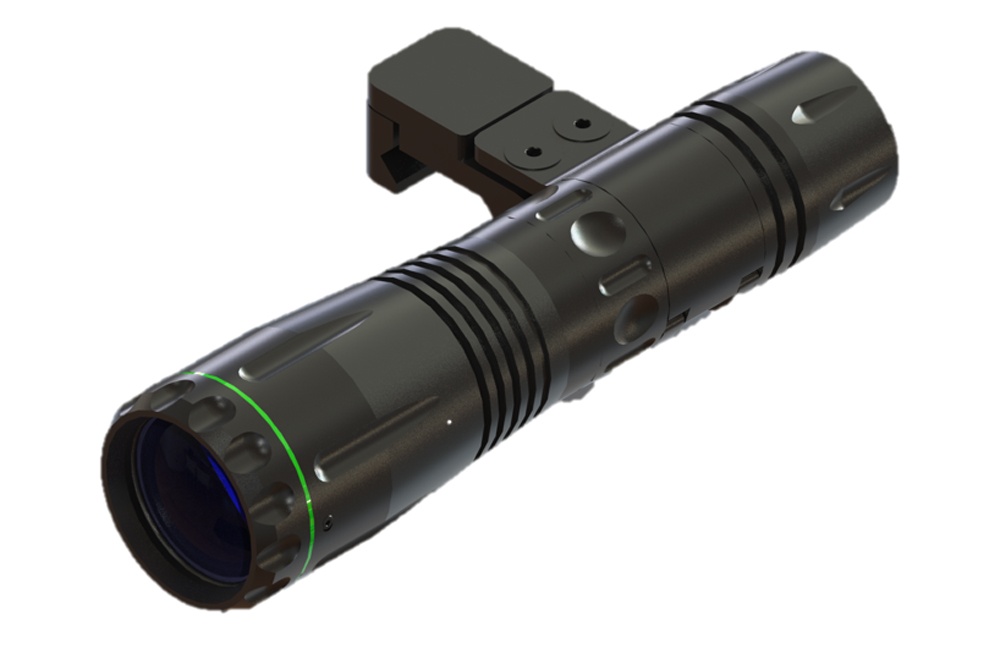
Night Optics also introduced the Night Chase NC50 and the Night Optics FIR-i Focusable IR Illuminator at the 2018 SHOT Show. The company claims the Night Chase is the world’s smallest multi-function IR device, delivering pinpoint accuracy beyond 500 yards with a laser measuring 1mrad at 100 yards. The FIR-i is a 600 mW rail-mounted illuminator capable of flood and spot focus, and it’s effective up to 1,000 yards. The Night Chase is listed with an MSRP of $540 and the FIR-I $300.
Choosing the right, and necessary, gear modifications and upgrades for your AR doesn’t need to be complicated, but it does require some careful thought.
What you need to consider when decking out your AR:
It’s near the first of the year, and we’re all thinking about new gear for our ARs. The temperatures have dropped, the ARs are sitting idle — and we’re staring at them fondly, pondering what modifications or additions we should perform. And SHOT Show is coming up in January, where manufacturers will be presenting their latest wares, adding to an already long list of accessories available for the AR … for your AR.
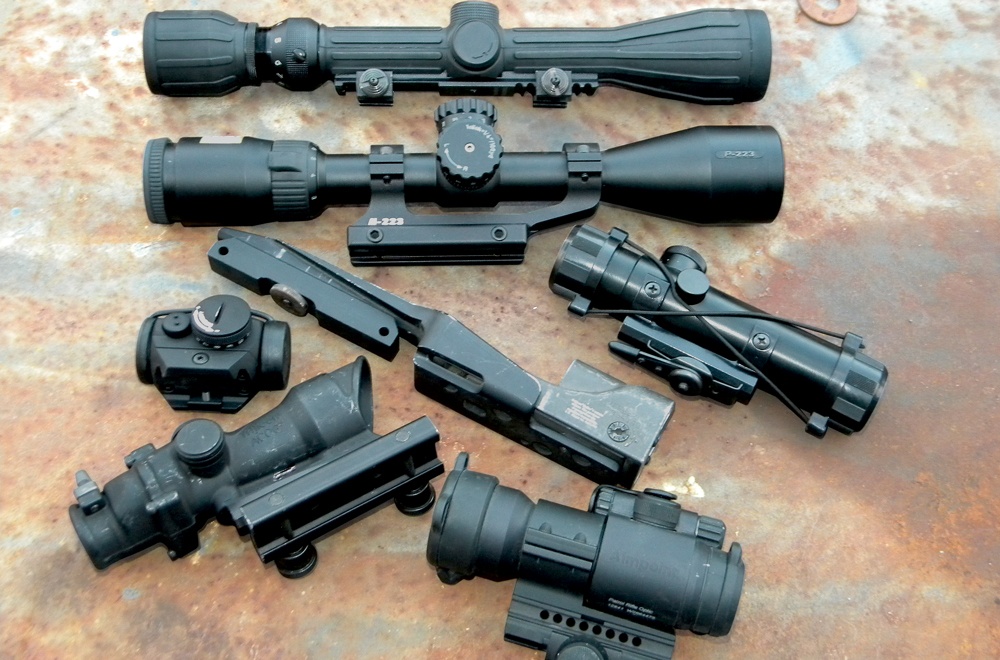
Here are just a few examples of optics available for the AR. To select the proper optic, you need to think about the intended use of your AR. There’s a lot of optics that will cross over from one use to another. For a very specific need, find out what meets your requirements.
With this many options, how do you choose what gear you actually need? The answer is: with careful consideration, research and testing.
When thinking about modifying your AR, first consider the anticipated use of that particular rifle or carbine. (This also includes AR pistols, which are rising in popularity.) Is it for general use, including self-defense? Or is it for a specific task, like a SPR — special purpose rifle — for long-range accuracy? Then ask yourself what parts/modifications are necessary to fulfill that application. Think long and hard about your AR’s “mission statement.”
Building A Winner
My goal with every AR is to make it lightweight, simple and easy to use. For me, weight is always a factor. Whenever you see a gun with a metric ton of accessories bolted onto it, you can bet the owner doesn’t really use it for training, practice or carrying it around for long periods of time. A hardcore AR owner will have things pared down to the absolute minimum.
Whittling Away Weight
There are a couple of areas where you can save significant weight, such as a thin barrel vs. a heavy barrel. The majority of weight savings is achieved by saving a little bit of weight here and there. Obviously, the fewer accessories, the lighter the weapon.
Things got crazy the last time we had bad tornadoes where I live. There was lootin’ ‘n shootin’ in areas near us, so I carried my carbine constantly for three days. I really appreciated its reduced weight factor. Even on an SPR, which usually has a longer, heavier barrel, you can get weight savings by shaving off a little here and there.
Shooting For Simplicity
Simple is always good. Serious work means I’m shooting a living target. It might be harvesting game for the table, a varmint that needs eliminating or a human threat intent on doing harm to my family or me. For these applications I want a weapon that’s easy to operate. The more complicated the gear, the longer it takes to get it ready. The more pieces there are, the higher the chances that one of them will end up malfunctioning or failing. Yes, today we have outstanding, reliable gear, but this logic still applies. Keep it simple, for ease of use and reliability.
Revered Reliability
And reliability is mandatory. In the field or on the street, there are no alibis or mulligans. When you press the trigger, the shot goes where you need it and the weapon functions fully, ejecting and loading a fresh round, every time. How do you find out what works?
There are thousands of gear reviews on the ‘net. Read reviews, especially in different forums. You can find out what hunters think about something, and how that gear has functioned on the range and on the street. Don’t just read the top reviews. Read the ones that rank that product in the middle and those who thought it sucked. The lowest reviews will often reveal a deficiency that is very specific. “Product X didn’t have feature B.” If you’re never going to use feature “B,” then it’s not a problem.
If a few reviews out of a thousand mention a faulty product, it’s not a big deal. Everyone will produce a few duds. The key is understanding how that company dealt with it. If they took care of it immediately, then I’m not concerned. If lots of people had problems with a defective product, then it’s not something I’m going to waste my money on. If you know someone who has that gear or modification, ask if you can test it. Take time to research before spending any money.
Considering Cost
For most of us, cost is always a consideration. At the same time, make sure to spend the money to get what you need. You’re considering a new scope and have narrowed it down to two choices. Both are fairly expensive, one slightly higher than the other. The higher priced one is perfect; it fits your needs exactly. The less expensive one “might” work most of the time. Maybe.
Some lights are just plain lights, while others include lasers. Regardless of what you choose, you must learn how to use it efficiently and discover any weakness that might exist. Ultimately, remember that simple is better.
You decide to save a few bucks and go with the cheaper model. You bolt it on and hit the range, excited about your new gear. It’s a disappointing trip, and now you’re spending more money to buy what you should have purchased in the beginning. Spend the money necessary to get the right gear — it will do what you need and it will likely last a lifetime.
Always think about the pros and cons of a purchase. Does it fit a specific need? Every modification/part has advantages and disadvantages. At my age, a good optic assists me with speed and accuracy. It adds weight, bulk and complexity, but this is a good trade-off to acquire the target quicker, especially under low-light conditions, and improve my accuracy. Easy decision. Before choosing a new accessory or modification, make sure you understand its true purpose. Carefully consider its design, the pros and cons and if it fills your need.
Take Time To Test
After getting the weapon modified, hit the range to test it. Self-defense weapons should be tested under all types of conditions. Testing under perfect conditions might not point out a specific issue: Work with it in the dark, while it’s raining and when it’s cold.
Please do not modify your gear and then go to a training class to test it. Training is the introduction of new techniques. There will be plenty to focus on without being distracted by trying to figure out how something works or experiencing technical problems. Testing should be done during practice, not during training. Practice, which is repetition, is when you learn how your gear works.
If something doesn’t fit your needs or function the way you thought it should, don’t be afraid to start over, regardless of what you paid for it or how cool it might look. Sometimes progress means taking a step back and reevaluating the situation. Research and study will help prevent this, but sooner or later you’re going to make a mistake. Like I always tell people, “If you’re not making mistakes, then you’re probably not doing it right.”
One of the AR’s great features is its modular design. It’s easy to swap parts. Modifications can be simple or complex. One example is installing a Colt “Gold” extractor spring into the bolt for increased reliability. Changing stocks is a great way to make the AR fit your exact needs. You might decide on putting together a new upper assembly with optics to meet a specific application to bolt onto a lower receiver you already have.
Regardless of the modification or accessory, take the time to choose wisely and test it thoroughly. When you do get your AR just so, know that it will provide you with a lifetime of reliable service.
Editor’s Note: This article originally appeared in the January 2018 issue of Gun Digest the Magazine.
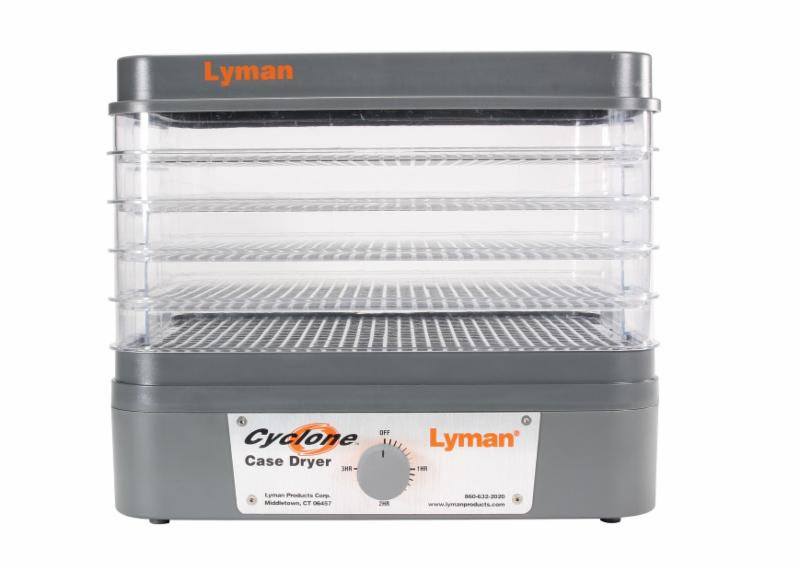
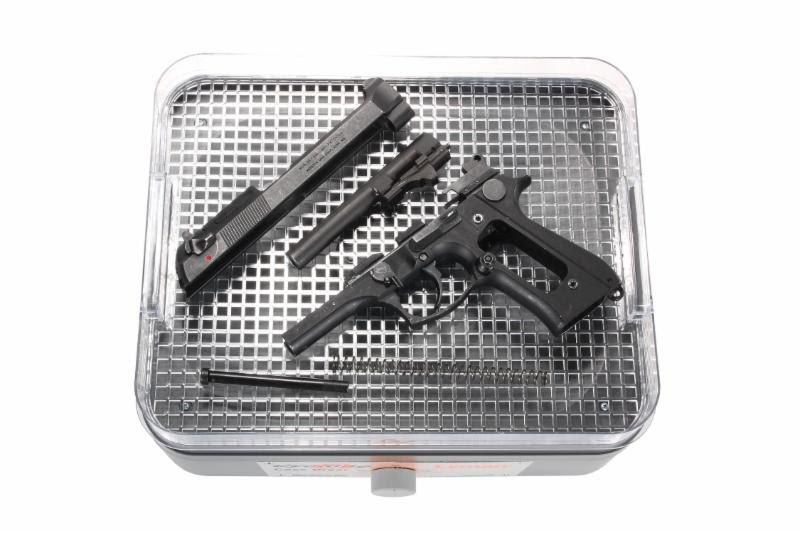
The Cyclone Case Dryer gets shooters to the range or the reloading bench quicker.
The details on the new Cyclone Case Dryer:
The case dryer can hold 1,000 .223 Rem. cases or 2,000 9mm.
It is capable of holding most handgun parts.
The Cyclone Case Dryer can finish most drying jobs in 2 hours.
Gun and case cleaning has advanced by bounds in recent years. In addition to old standbys — bore brushes, solvent, granulated corncob — are cutting-edge instruments that almost guarantee getting every bit of grime and speck of carbon off a metal surface.
Indeed, ultrasonic and rotary cleaners have made firearms housekeeping chores easier and more thorough than ever before. However, given they utilize cleaning solutions, they present a new challenge — drying. In turn, the horizon in finishing a cleaning project has been extended, sometimes to the length of days in the case of brass, as every nook and cranny dries.
Lyman is taking a crack at speeding up this process to a matter of hours with a clever (and obvious) solution it unveiled at the 2018 SHOT Show in Las Vegas. Just like your clothes drier — except without tumbling — the Cyclone Case Dryer harnesses heated forced air to get gun enthusiasts back doing to what they really love — shooting and reloading.
“What is great about the Cyclone Case Dryer is the fact that it is a time saver,” Trevor Mullen, VP of Global Marketing and Business Development for Lyman Products, said. “What may have taken someone days to accomplish is now dry and spot free in just an hour or two. And for gun parts, you can’t beat the time it will take to get your gun cleaned and dry. You can get back on the range in just hours now.”
Configurable, the five-tray unit can dry most handgun parts and a good volume of brass in a fairly short time. Lyman pegs the Cyclone Case Dryer’s capacity of up to 1,000 .223 Rem. cases or 2,000 9mm cases. And while the company claims most jobs can be finished in two hours, the dryer can be run up to three hours. For anyone who uses a fluid-based cleaning system, even at three hours, this is a godsend.
Per usual, Lyman has set a fairly affordable price for the Cyclone Case Dryer, with a MSRP of $64.95. For anyone shooting to get their handgun back in action faster or eliminate bass tarnishing, that could turn out to be a square deal.
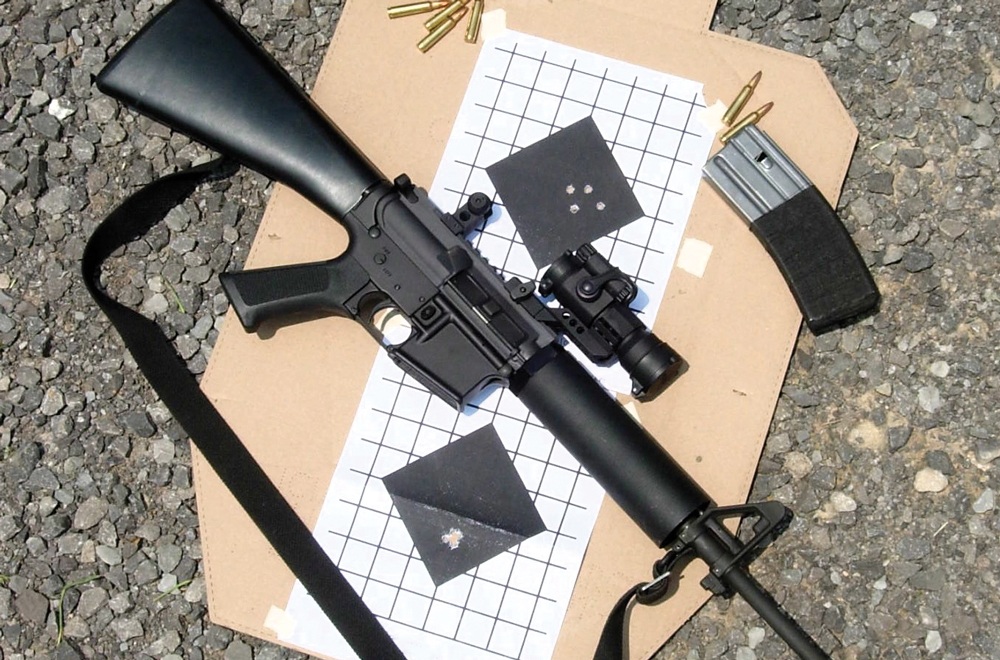
The AR is basically an internal combustion engine. Instead of gasoline, it runs off gunpowder, which burns dirtier than gas. With cleaning and lubrication, the AR will serve you well, always ready for use. Or, if it’s going into the safe for winter, you’ll want to make sure it’s prepped for long-term storage.
To properly clean the AR, you’ll need some specialty pieces of equipment. Can you clean it with your standard packaged kit? In an emergency, anything will probably do. But, the AR is a little different than Granddad’s huntin’ rifle.
Must-Have Tackle
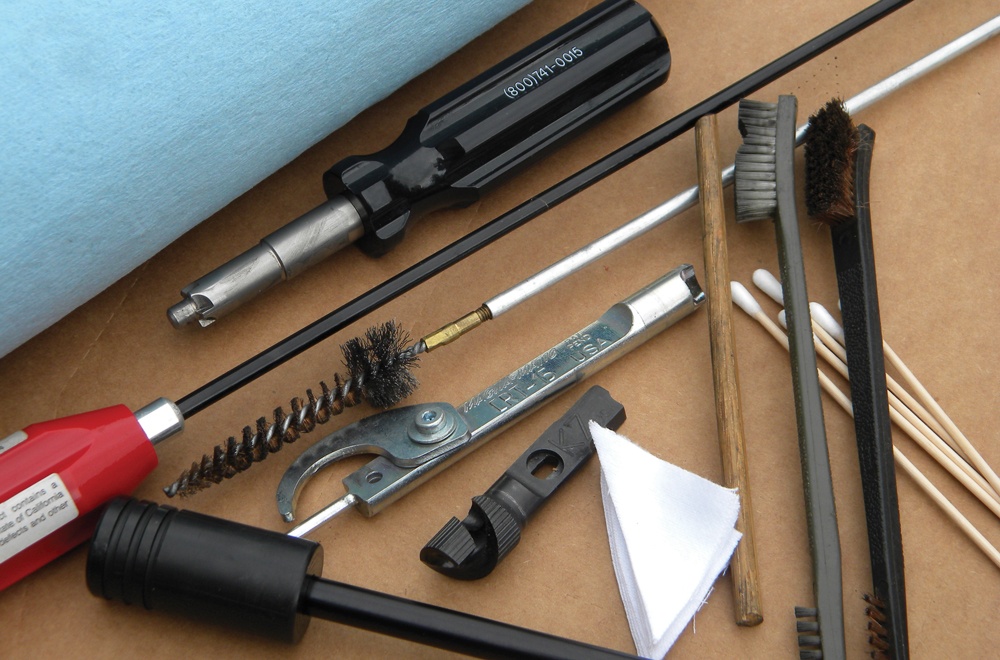
First, get a good cleaning rod. I use Dewey rods, which are nylon coated with a rotating ball-bearing handle. The coating prevents carbon and residue from impregnating the rod, which ends up damaging the barrel. The handle allows the rod to rotate on the rifling as it travels down the bore. Segmented steel or aluminum rods and “snakes” are for field use only.
Use a bore guide. This is a tube that goes into the upper receiver and seats into the chamber. As you push the rod down the barrel — always travel in the same direction the bullet goes — the guide prevents damage to the chamber and throat. I use a jag to hold patches, as opposed to a loop. With a loop — think about the eye of a large sewing needle — there’s a chance the loop will rub against the bore. The patch goes around the jag so there is less chance of this happening.
You’ll also need a chamber brush. The barrel extension — rear of the barrel that contains the chamber — has female lugs that the male lugs of the bolt seat into. This area gets a lot of residue built up and must be cleaned to maintain reliability and accuracy. The chamber brush is the only way to clean it well.
Be sure to get a tool for cleaning the bolt and bolt carrier, too. This is much more efficient than doing it by hand. An upper receiver cleaning kit has a large rod, brush and mop to clean the upper receiver where the bolt carrier rides. High-quality patches and cleaning swabs are a must. You don’t want lint and little strings inside your engine. Over the years, I’ve collected various wood dowels and “sticks” that I put patches on to clean small, tight areas. Eventually, you’ll figure out what works best for you.
Efficient And Effective Cleaning Tips
I start by cleaning the chamber, using the chamber brush and my specialty tools. Cleaning the barrel first and then the chamber will just reintroduce grime back into the clean barrel, and then you have to start over.
Ask 20 shooters how they clean the barrel and you’ll get 30 different answers. Everyone has their way, and almost none are the same. When I clean the barrel, I want to remove all carbon and powder residue but leave the copper in the bore’s microscopic imperfections. The copper build up in the small hills and valleys makes the bore smoother. If you clean that out, it has to build back up once you start shooting again. However, if the gun is going into the safe for a long time, I will use Hoppes to clean out the copper and then heavily lube everything prior to storage.
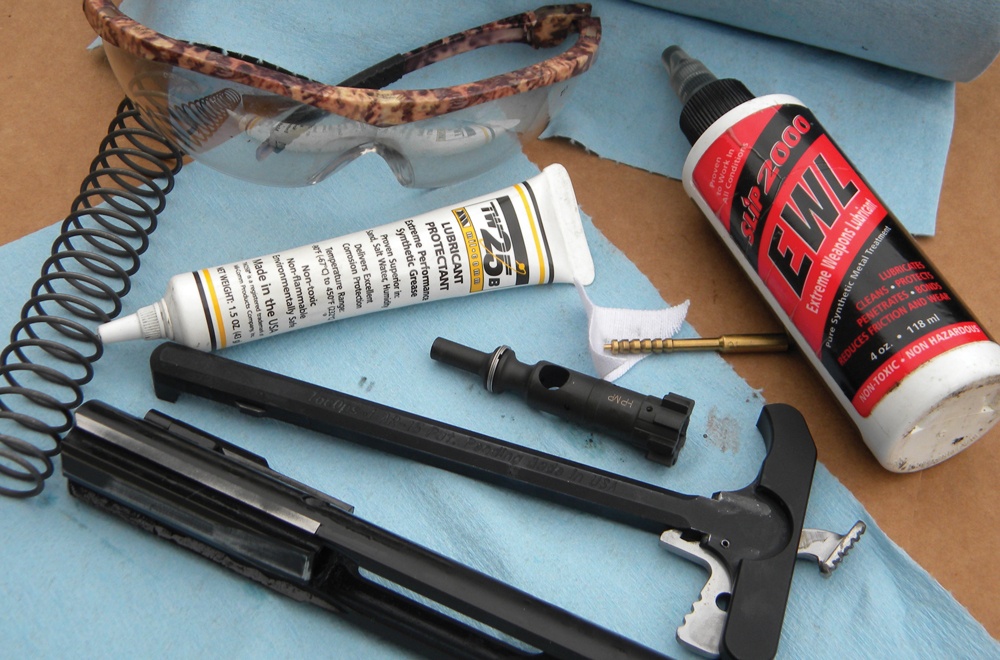
To clean the barrel, I use Break-Free’s CLP cleaner and patches on a jag. I run a wet patch with CLP down the bore, followed by dry patches. After each pass, I pull the rod out and wipe it down. Once the dry patches are coming out clean, I repeat the process several times. Once everything is coming out clean, I lube the barrel with SLIP 2000 EWL oil. If the rifle is going to sit for a while, I’ll leave the barrel “wet” with oil. With my work rifles, I’ll run one dry patch through to collect any excess oil.
Never attempt to clean the gas tube. This gets cleaned when the high-pressure gas travels through it. Trying to clean it will only create more trouble. If it’s questionable, then replace it.
Lube For The Long Haul
Lubrication is critical for the AR. I have an AR — one of the Shootrite Katanas built by MHT — that has more than 20,000 rounds through it without ever having been cleaned, but it does get lubricated regularly. I don’t recommend this for a work rifle; however, it proves that an AR will run dirty but it won’t run dry.
Lubes break down into two categories: grease and oil. Over time, grease will start to gum or cake up. Oil will eventually start to wick whichever way gravity is pulling it and evaporate. I use a combination of both — Mil-Comm’s TW25B grease and Slip 2000 EWL oil. When combined, the oil keeps the grease from solidifying and the grease prevents the oil from wicking and evaporating. I start by putting on grease, working it into the pores of the metal. The SLIP oil goes over that.
You want to lubricate any areas that see friction. On the bolt, the lugs and the raised shoulder about midway back get grease and oil. For the gas rings, ejector and extractor, I’ll put a drop of oil only. A little oil on the back of the bolt, behind the gas rings, will make it easier to clean. The bolt carrier has raised shoulders where it rides in the receiver, the bottom where it resets the hammer and the gas key on top that rides in the channel of the charging handle. Look at the carrier and you’ll see wear marks on these areas. They get grease and oil, as do the cam pin and firing pin.
One area that people tend to forget is the buffer spring. Remove the buffer and spring, clean the buffer tube and lube the spring. On the trigger group, I put one drop of oil on each side of the hammer and trigger pins — where the springs are — a drop on the disconnector and the bottom hook of the hammer. Too much lube on the trigger group will just attract more gunk.
The charging handle is also a big source of friction. Lube the sides and top, which are the areas in contact with the upper receiver, with grease and oil.
General Maintenance Guidelines And Tactics
While cleaning and lubing, always inspect all parts for wear or breakage. This includes checking the extractor and ejector springs, gas rings and making sure the gas key on top of the bolt carrier hasn’t worked loose. The key is staked in place, but if it’s not properly staked it can work loose.
For fieldwork, you should have a small, compact cleaning kit, along with lube. It’s also a good idea to have a few spare parts like the firing pin retaining pin, a cam pin, gas rings, extractor spring and firing pin. These parts are small and easily lost, or if there’s a part breakage, you can get the rifle up and running again very quickly.
How often should you clean your AR? That depends on how many rounds you’ve fired, how dirty the power burns and the temp and humidity. How long should it take to clean your AR? A thorough cleaning takes me about 45 minutes — and that’s to clean, inspect, lube and reassemble.
As the Marine Corps’ Rifleman’s Creed says, “I will keep my rifle clean and ready, even as I am clean and ready. We will become part of each other.”
Take good care of your AR, and it will always be ready for any challenge you ask it to overcome.
This article originally appeared in the December 2017 issue of Gun Digest the Magazine.
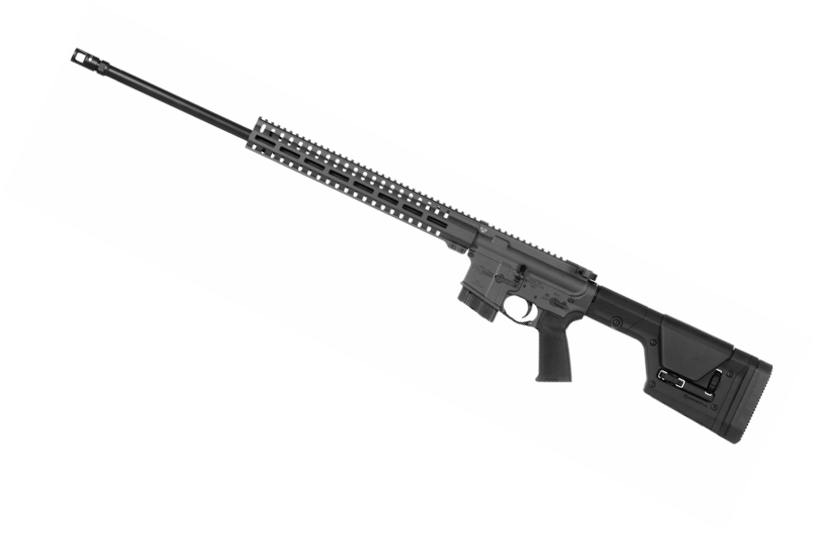
CMMG has jumped on the .224 Valkyrie bandwagon with the Mk4 DTR2, optimized to make the most of the ballistically talented cartridge.
The scoop on the .224 Valkyrie and CMMG’s new Mk4 DTR2:
CMMG is one of eight gunmakers with rifles chambered for the .224 Valkyrie.
The Mk4 DTR2 is optimized for long-range shooting.
It boasts a 24-inch barrel with a 1:7 twist.
It is decked out in Magpul furniture, including fully adjustable PRS Stock.
Mk4 DTR2 build components are also available.
The complete rifle has an MSRP of $1,700.
The .224 Valkyrie is still in its infancy and has plenty of growing pains to endure before it’s cemented as tried-and-true. Despite its youth, Federal Premium’s bundle of long-range joy has already attracted its fair share of admirers.
And why not? The ammo maker hasn’t been shy in ballyhooing the potential of its small-bore hot-rod. The company claims the round maintains supersonic velocities out to 1,300 yards, outperforming nearly everything in its class — 22 Nosler, .223 Rem., and 6.5 Grendel. Additionally, it pegs its performance at the heels of the 6.5 Creedmoor, while producing less recoil along the way.
That’s quite a package, one that hasn’t only turned long-range shooters’ heads, but also gunmakers. With only scant factory-loaded ammunition on the shelves and SAMMI certification expected this month, no less than eight manufacturers have announced rifles chambered for the Valkyrie. And given the .224’s main concept is extending the range of AR-style rifles, it’s little surprise CMMG is among the cartridge’s early adopters.
The Missouri rifle-smith has made a name for itself keeping abreast of the latest trends in the black rifle market. In turn, its Valkyrie offering — the Mk4 DTR2 — fits right into its ethos. And the rifle should have what it takes to end up on many interested shooters’ short lists for something to launch the new round.
More than anything, CMMG has turned its eye to configuring the rifle so it milks the full ballistic potential out of the Valkyrie. A quick gander at the Mk4 DTR2 and it’s obvious what this means — barrel and plenty of it.
In all, the medium-taper stainless steel barrel is 24 inches, capped with CMMG’s SV Brake. This makes it an overall large rifle, especially compared to other AR-15s at 44.5 inches in length and 9.2 pounds unloaded. In size and heft, that’s more the territory of a wood-stocked bolt-action. But, the long barrel has a purpose, allotting plenty of bore for all the powder from the Valkyrie’s necked down 6.8 SPC/.30 Rem. parent case to burn. As an added benefit, it also provides a stable platform for long-range shots, one certain not to produce much recoil — a plus for multiple-shot strings.
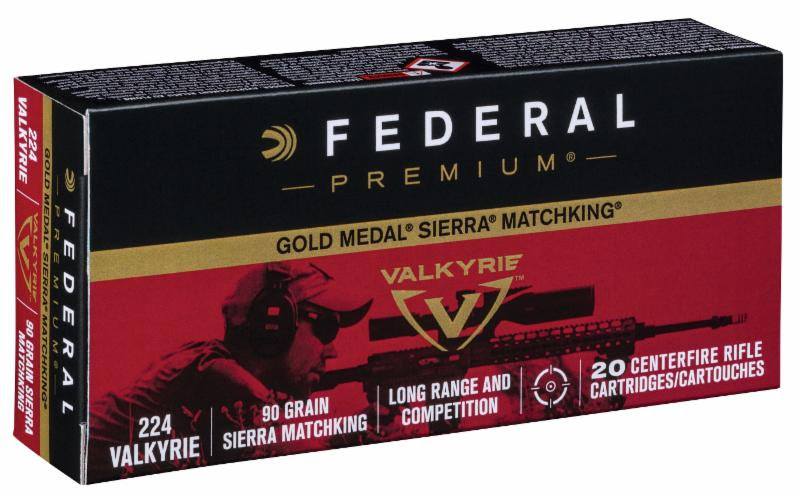
Given the Valkyrie shoots heavy-for-caliber bullets — 60-grain to 100-grain — the barrel also has a faster twist rate — 1:7. And shooters won’t have to wait to run the full spectrum of projectiles through the Mk4 DTR2, since Federal has already released a good selection of ammunition, including: Gold Medal Sierra MatchKing, 60-grain Nosler Ballistic Tip Varmint, 100-grain Fusion MSR and 75-grain American Eagle TMJ.
In addition to the chambering, the Mk4 DTR2 also has a beefed up bolt to handle the larger case and more powerful load. Additionally, the gun utilizes 6.8 SPC magazines — it comes with two 10 rounders — given the wider cartridges do not stagger correctly in a .223 Rem./5.56 NATO magazine. The Mk4 DTR2 comes outfitted with a Magpul MOE pistol grip and a PRS Stock, which is fully adjustable with .8 inches of play in the comb and 1.4 inches in length of pull. The rifle comes with a Geissele SSA 2-Stage Trigger standard and boasts CMMG’s RML14 M-LOK handguard and new Ambi Charging Handle.
The company is also offering a standalone Mk4 DTR upper group, bolt carrier group and barrel for the Valkyrie, opening the door for individual builds. Price-wise, the Mk4 DTR2 is at the upper end of the AR market, with an MSRP of $1,700. The upper group runs $900, carrier group $175 and barrel $260. But given its configuration, the Mk4 DTR2 might be price right for those itching to put the Valkyrie to flight.
MOA accuracy with a muzzleloader is achievable, but requires attention to the smallest details.
Thoughts on how to achieve accuracy with a muzzleloader:
Consistency is the key to accuracy with muzzleloaders.
Every step of loading should remain the same, so the next shot performs like the previous.
Saboted bullets add a level of forgiveness to this process.
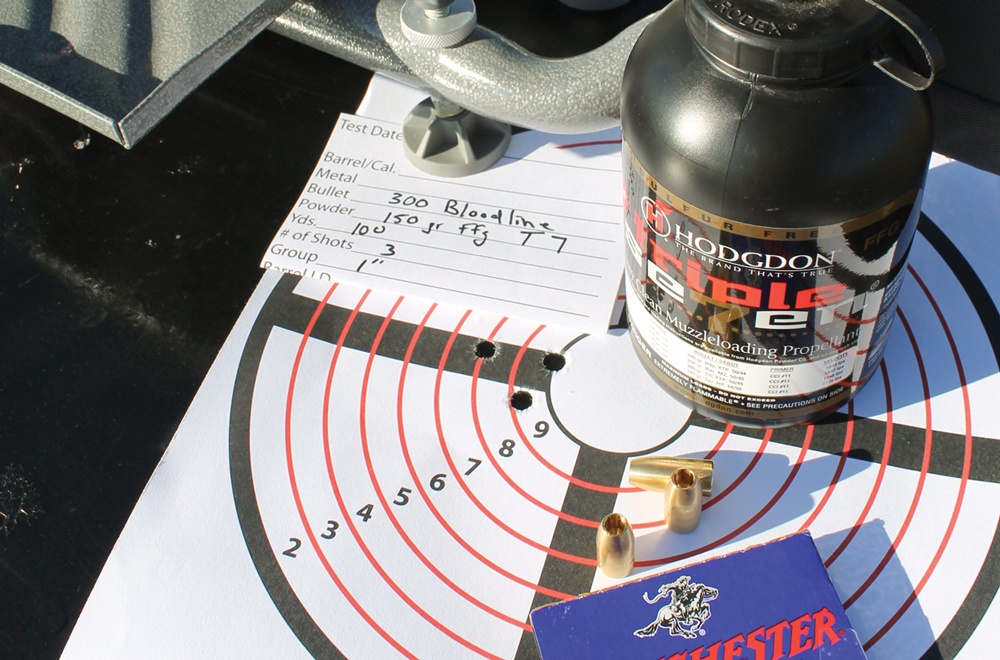
The Holy Grail of muzzleloading is to shoot 1-inch groups at 100 yards. To achieve MOA with a muzzleloader you must be consistent with everything you do.
When you pour powder into your measurer, do you tap on the sides to make it settle? If so, how many taps? Do you scrape the excess powder off of the measurer so it’s precisely full every time? When you swab out the barrel between shots, do you use one side of the damp patch or both sides? Do you follow the damp patch with a dry patch? If you vary your technique you’ll never obtain great accuracy.
I start with a completely clean and dry bore. I run a dry patch down the barrel to remove oil from storage, then I put rubbing alcohol on a patch and swab the bore using both sides of the patch. Then I fire three Winchester W209 primers through the gun to foul the bore with non-corrosive residue.
I always use saboted bullets because they are forgiving, and because every barrel is slightly different. A plastic sabot will compress and take up the difference between a .500-inch bore or a .502-inch bore.
I went out the other day to test a rifle. I started with ffg Triple Seven powder and 250-grain Hornady Monoflex bullets that have shot great for me in other rifles. I shot groups with 110 to 150 grains of powder and the best group measured 2 inches at 100 yards. I then switched to a 300-grain Bloodline Bullet. I started with 110 grains of ffg Triple Seven and worked my way up. Every increase in powder reduced my group size, which is contradictory to what normally happens. Regardless, at 150 grains of ffg Triple Seven, I shot a 1-inch group at 100 yards.
Why that bullet and that powder charge? Because it’s a muzzleloader.
Editor’s Note: The article originally appeared in the January 2018 issue of Gun Digest the Magazine.
With an adjustable comb and length of pull, Savage’s new AccuFit System allow shooters to customize their rifles to their frame.
The skinny on the new AccuFit System:
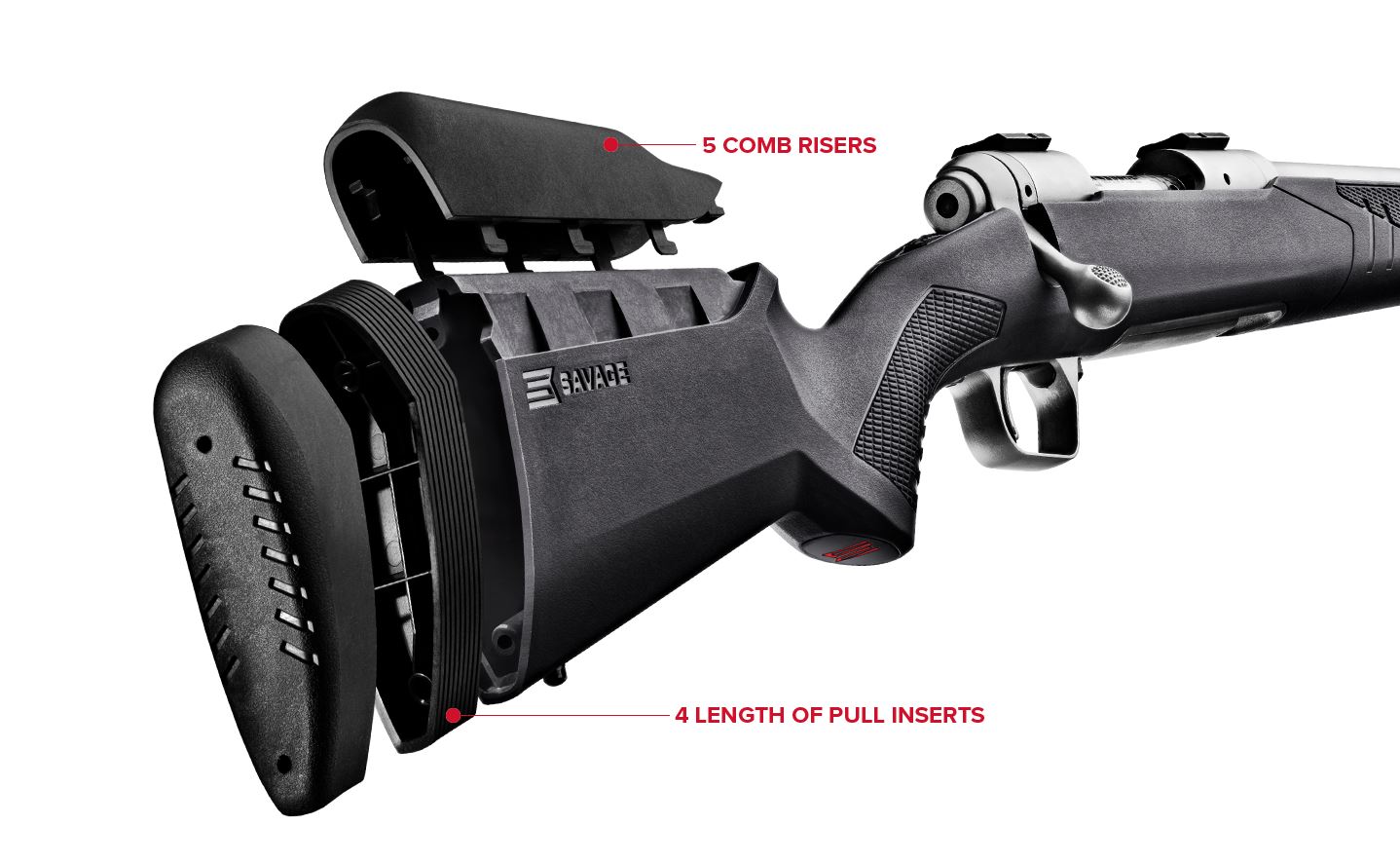
The AccuFit System uses spacers to adjust comb height and length of pull.
Length of pull can be adjusted a full inch in 1/4-inch increments.
Comb height can be adjusted 1/2 inch in 1/8-inch increments.
The AccuFit System will be available on nine Model 110 rifles.
There’s no replacing the bolt-action. The age-old design provides target shooters, competitors and hunters nearly the complete package — relatively decent rate of fire, simple manual of arms and, above all, accuracy.
If there is a sticky point to the design, it’s the rigidness in adaptability — particularly when it comes to stocks. Certainly, at the higher end of things, there are precision stocks available, and there’s always an option to upgrade. But as far as production rifles are concerned, a system adaptable to any shooter has been sorely missing.
Savage is out to change that in a big way. The Massachusetts gun maker is set to launch its fully adjustable AccuFit System at the Jan. 23-26 2018 SHOT Show in Las Vegas. Following in the footsteps of the AccuTrigger adjustable trigger and AccuStock, the system offers another step toward accuracy in a package that does not break the bank.
In essence, the system is a fully adjustable stock, both in length of pull and comb height through the use of spacers. Savage includes five comb risers and four LOP inserts, allowing the stock to adjust to nearly any shooter behind the trigger. The comb is adjustable from ½ inch to 1 inch of elevation in 1/8-inch increments, while there is a full inch of play in LOP, adjustable in ¼-inch increments. This should provide enough flexibility of fit for the greater swath of the shooting world.
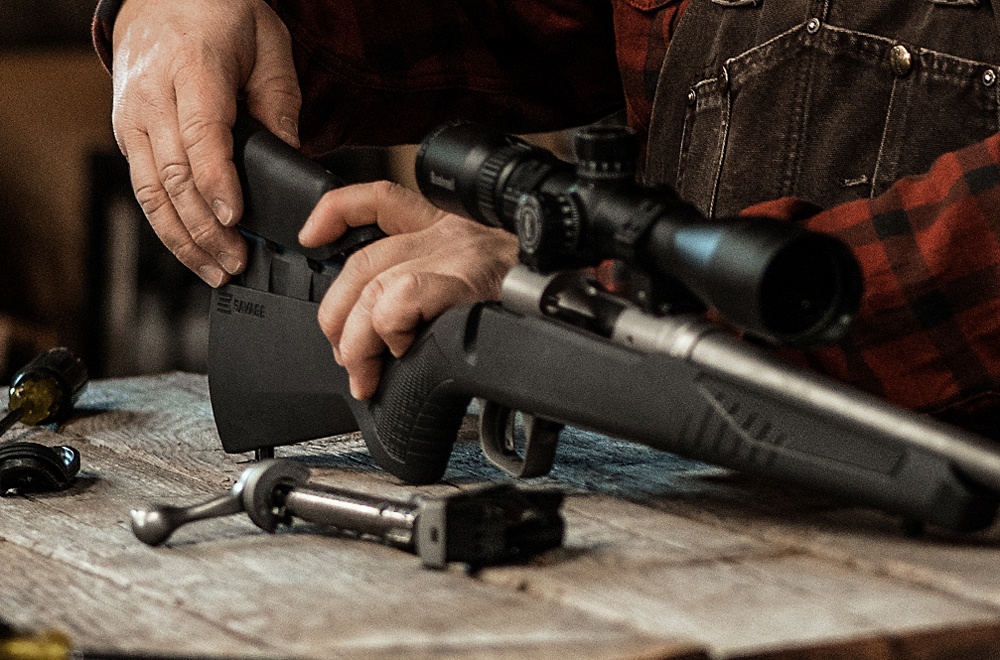
The AccuFit System, however, requires forethought, compared to many of the precision-shooting numbers presently available; it’s definitely not shift-on-the-fly. Customizing the fit requires tools — a Phillips-head screwdriver. But, as long as shooters aren’t sharing a rifle on a backcountry elk hunt, this should not be a huge issue.
There will be a slew of choices when it comes to rifles outfitted with the AccuFit System, given Savage is releasing nine Model 110s outfitted with the stock, including: 110 Hunter, 110 Storm, 110 Long Range Hunter, 110 Varmint, 110 Predator, 110 Wolverine, 110 Bear Hunter, 110 Tactical Desert and 110 Scout. The rifles will also come with the AccuTrigger and AccuStock embedded rail system standard, giving shooters a fairly decked out bolt-action.
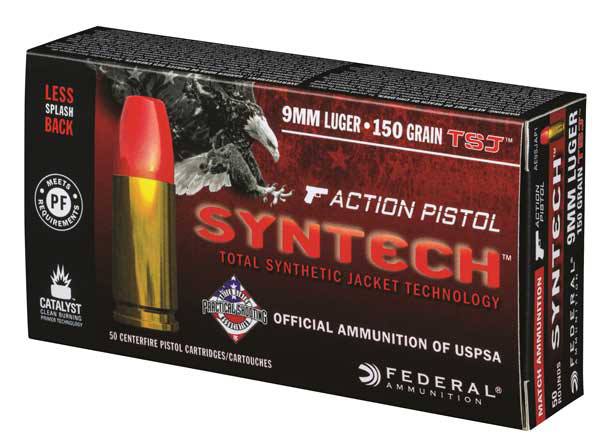
Federal is shooting to help pistol competitors to the top of the podium with the introduction of Syntech Action Pistol ammo.
How does Syntech Action Pistol help gun down gold?
Syntech Action Pistol has a cutting-edge full polymer jacket.
This reduces bore wear and heat by eliminating metal-to-metal contact.
It also produces less friction, thus reducing recoil.
Syntech Action Pistol rounds have been optimized for performance and to meet pistol competition standards.
Whether Steel Challenge, Practical Pistol or what have you, pistol competitions are tough and not only on the competitor. While nerves, reflexes and discipline are all tested on a course, so is the engineering and the stamina of a pistol. And, as is the case in any high-volume shooting situation, fouling and gunk can make that expensive race gun run like a Studebaker.
Federal Premium is shooting to eliminate some of this concern for competitors tuning one of its newest and cutting-edge ammunition lines for those who are gunning for gold. While it’s no substitute for a good old-fashioned bush and solvent, Syntech Action Pistol Ammunition might have what it takes to give shooters an advantage the next time they unholster their pistol.
“Syntech Action Pistol utilizes all the same technology as the standard Syntech ammunition, but is tailored specifically to the competitive pistol application,” said John Swenson, Federal Premium handgun ammunition design engineer. “During extended matches, the reduced fouling and cooler gun temperatures allow competitors to keep their focus on their performance and the match rather than equipment maintenance.”
The edge Syntech Action Pistol Ammunition, which will be released at the 2018 SHOT Show in Las Vegas, brings to a match is its projectile. Replacing the standard copper jacketing on the bullet, the polymer-encapsulated lead core causes less wear and fouling in a bore, given it eliminates all metal-to-metal contact. Additionally, the polymer creates less overall friction; in turn, barrels suffer less heat damage, extending their life, according to Federal. The company even claims the rounds will aid in accuracy, given the design causes less recoil and muzzle flip, thereby making for faster and more accurate follow-up shots.
The particular TSJ (Total Synthetic Jacket) bullets used in Syntech Action Pistol Ammunition produce larger, more defined holes when they hit the target.
“The flatter nose provides a larger-diameter perforation, making scoring clearer for hits that are near the edge of scoring zones rather than having to rely on the grease ring,” Swenson explained.
Syntech Action Pistol Ammunition is loaded with clean-burning powders that minimize barrel residue, and its Catalyst lead-free primer provides consistent, reliable ignition. Federal Premium is offering the line in 9mm Luger, .40 S&W and .45 Auto. Each is configured to meet the accuracy, reliability and power factor requirements of shooters who compete in the International Practical Shooting Confederation (IPSC) and United States Practical Shooting Association (USPSA).
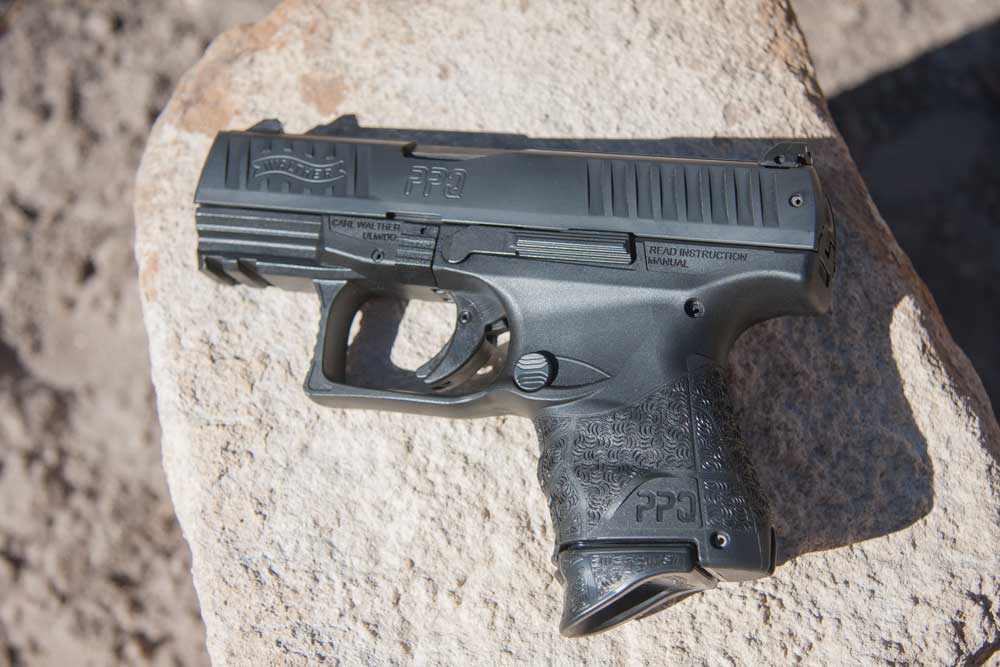
Walther has expanded its handgun lineup with its new PPQ SC, a subcompact version of its popular PPQ.
What to know about Walther’s new PPQ SC:
The PPQ SC scales down the popular PPQ for a more comfortable carry option.
It’s 6.6 inches in overall length, 4.4 inches in height and 1.3 inches in width.
Controls (slide stop and magazine release) are ambidextrous.
It uses Walther’s Quick Defense Trigger, a 5.6-pound trigger with a quick reset.
It’s available with a variety of magazine options and has an MSRP of $649.
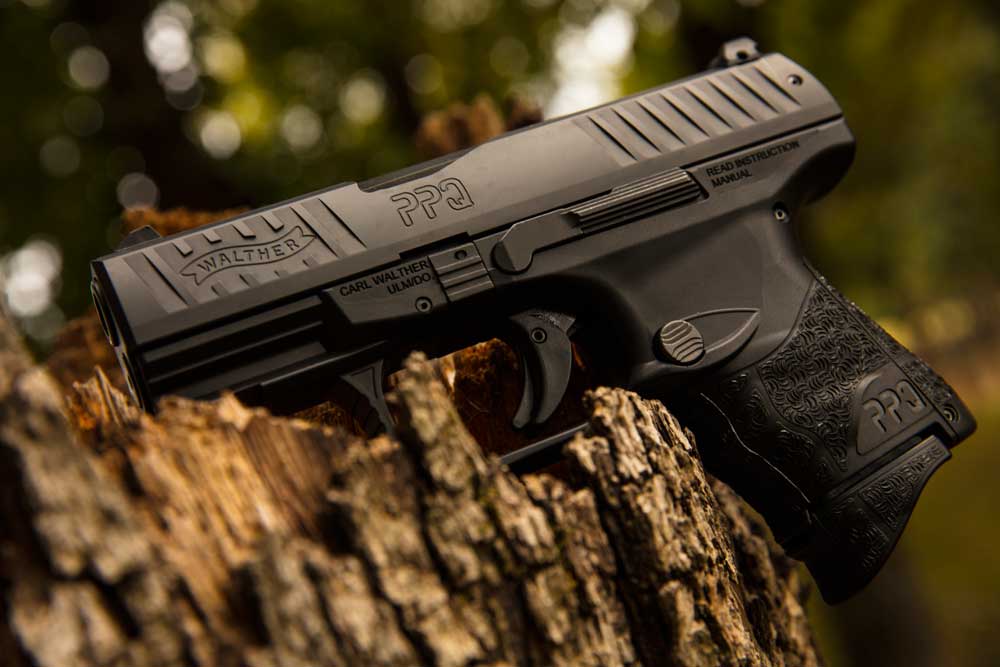
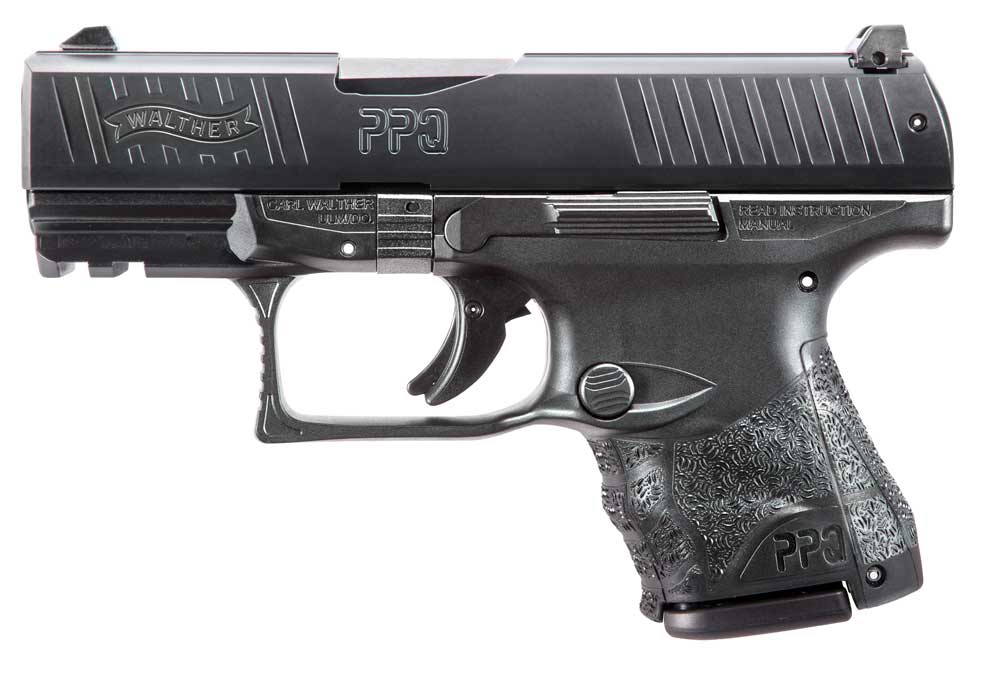
Today Walther has announced its newest addition to its handgun lineup, and it’s something fans of the brand have been wanting for some time — a sub-compact option in the PPQ line. The new Walther PPQ SC (for Sub-Compact) takes the popular PPQ down to a more manageable size for comfortable carry, while keeping all of the great standard PPQ features shooters love.
The new PPQ SC shaves off almost an inch in length from the PPQ M2 and roughly three ounces in weight. In terms of height, the PPQ SC knocks off about another inch, taking it from 5.3 inches to 4.4 inches. Those figures might not sound like a lot, but as most who carry know, an inch or two and a few ounces here and there can make all the difference when it comes to comfort and concealment.
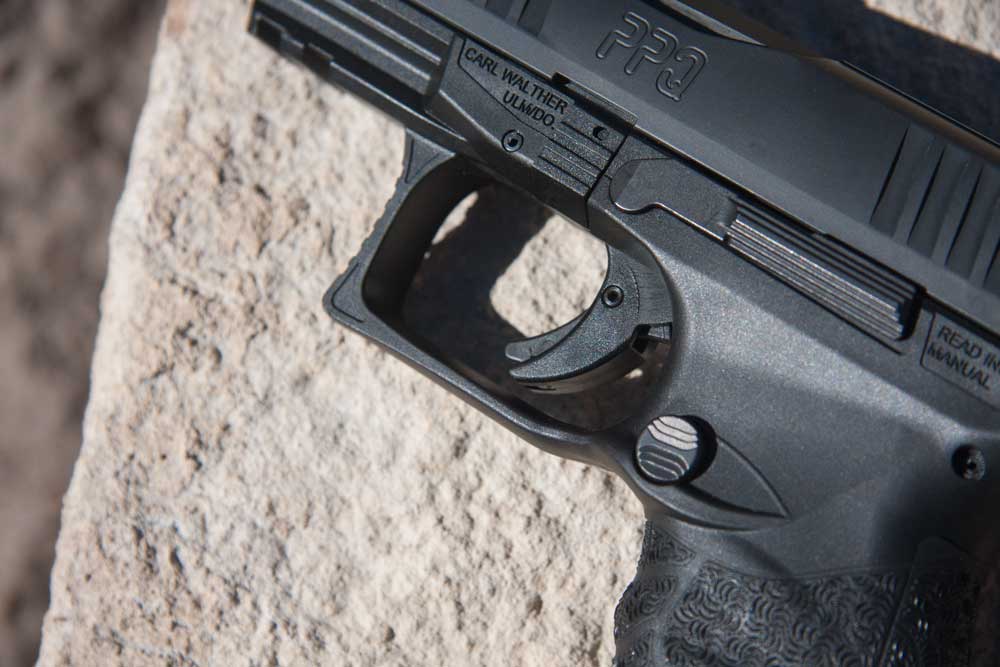
Like the earlier PPQ models, the new PPQ SC features an excellent trigger (Walther refers to it as a Quick Defense Trigger) that breaks cleanly at 5.6 pounds and a short 0.4-inch travel and quick 0.1-inch reset. The trigger guard is also serrated.
As with all of Walther’s handguns, there is still an emphasis on ergonomics with the PPQ SC. This starts with the grip, which features a non-slip, cross-directional surface for improved control, even under quick and repetitive recoil. It continues with the gun’s interchangeable backstraps designed to fit a variety of hands.
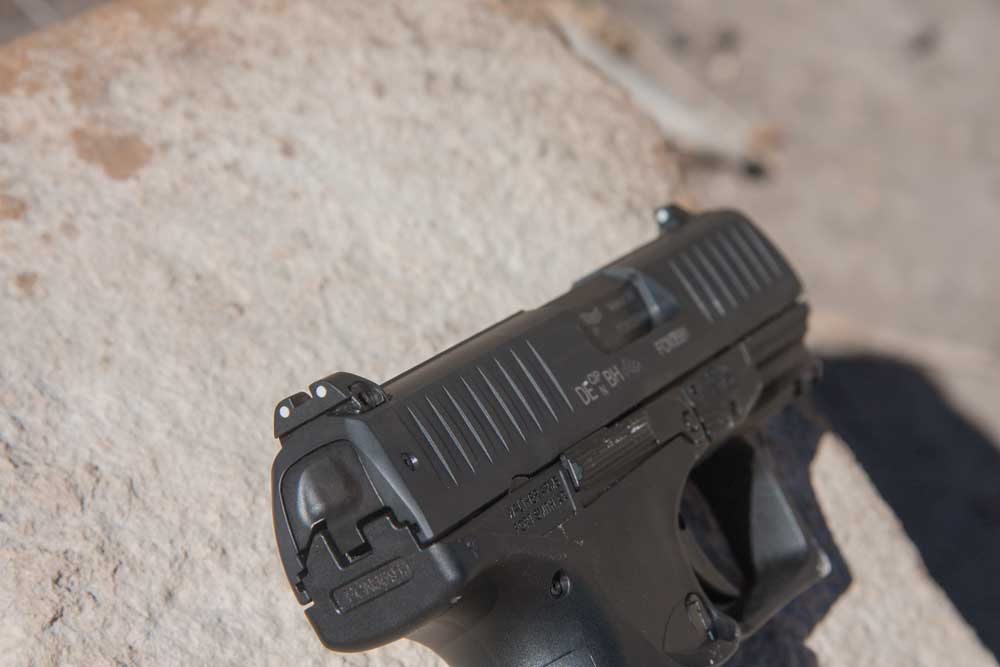
If that weren’t enough, Walther’s PPQ SC also features ambidextrous controls. The slide stop and thumb-activated magazine release are both left- and right-hand friendly. And the slide stop is extended for easy activation, even with gloves. The PPQ SC’s Tenifer-coated slide also wears front and rear serrations for more efficient manipulation.
Sights are simple but effective low-profile three-dot polymer combat sights. The sights facilitate quick aiming, yet remain unobtrusive to prevent snagging on the draw. The rear is also adjustable for windage.
Other noteworthy features include a MIL-STD 1913 Picatinny forward rail for accessories such as a laser or light and a Tenifer-coated barrel and inside action parts. In addition, the PPQ SC will be available with a few different magazine choices, including flush fit, finger extender and extended sleeve options.
I had the opportunity to test the new PPQ SC several months back at a Walther media event, and though I can’t provide a full review here, I can say that it performed very well. The event was a training program at a Deliberate Dynamics facility outside of Price, Utah, and Inceptor Ammunition provided a ton of its ARX defensive and RNP training loads for our use. And Clinger Holsters offered holsters for the event. Our group of writers and industry professionals put a ton of rounds through the guns and they all proved quite reliable.
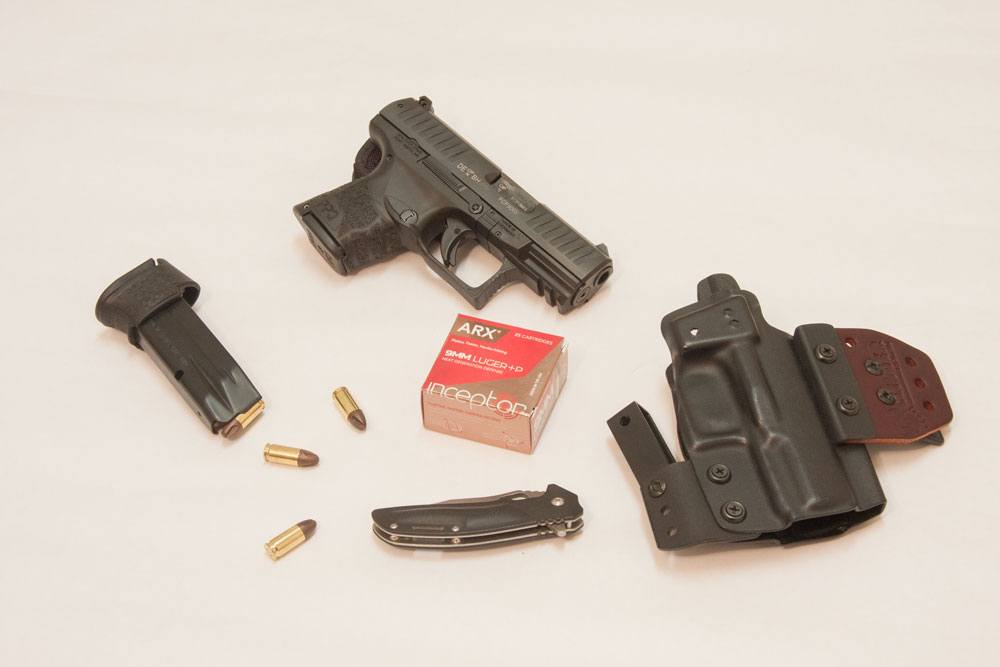
The new Walther PPQ SC has the dimensions and performance capabilities to make it an excellent concealed carry piece. Shown here with Inceptor Ammunition ARX ammo and a Clinger Holsters concealment holster.
The Quick Defense Trigger was pleasant, and the gun handled well, even with the flush-fit magazines, though I did tend to shoot better with the finger extension magazines. The sights were fairly easy to acquire and put on target — perfectly suitable for an everyday carry piece. Operating the gun was also simple, with the mag release activating seamlessly and dropping magazines freely.
I did have a little trouble with the slide not locking back on an empty magazine, not because there was anything wrong with the gun, but simply because of the placement of my thumbs on the slide. Once I made an adjustment, it locked back each and every time.
Overall, I came away very impressed with the gun in my time with it. It’s everything you might need in a daily carry gun — highly concealable, comfortable in the hand and plenty shootable at appropriate distances.
MSRP on the new PPQ SC is currently listed at $649. For more on this new subcompact, keep an eye out for a full review in an upcoming issue of Gun Digest the Magazine.
Specifications:
Walther PPQ SC (Sub-Compact) Caliber: 9mm Barrel: 3.5 in. Barrel Twist: 1:10 Overall Length: 6.6 in. Height: 4.4 in. Width: 1.3 in. Weight (empty mag): 21.2 oz. Sight Radius: 5.6 in. Trigger: 5.6-lb. Quick Defense Trigger Finish: Matte Black Sights: Low-profile, three-dot combat iron sights Capacity: 10 rounds (standard) MSRP: $649
In the ebb and flow of the gun world, pistol-caliber carbines have been on the rise in recent years. But the concept of a long-gun that grazes on handgun ammo is almost as old as America’s love affair with firearms.
As those familiar with this class of firearms know, short rifles chambered for handgun ammo were a staple on the American frontier. Back then it made sense, given you never knew if the next wagonload of ammunition might get bushwhacked. The redundancy of owning, say, a Colt Frontier and a Winchester 1873 not only delivered peace of mind, it probably saved lives.
Nowadays, the viability of pistol-caliber carbines is a topic of fierce debate. Honestly, few subjects in the gun world, short of the best caliber for self-defense, are more heated. To some, the long guns are perfect for penny-pinching at the range, manageable home-defense options, and prepping for TEOTWAWKI. To others, they’re akin to slapping a four-cylinder engine in a three-quarter-ton truck.
No matter where you fall on this spectrum concerning PCCs, there are likely a couple that have caught your eye at one time or another. Admit it. So we’re going to take a gander at six of the coolest pistol-caliber carbines available today. Even if you don’t buy into the pistol-caliber carbine concept, you’ll have to admit these are still some pretty dandy guns.
CZ Scorpion Evo 3 S1
Photo: CZ
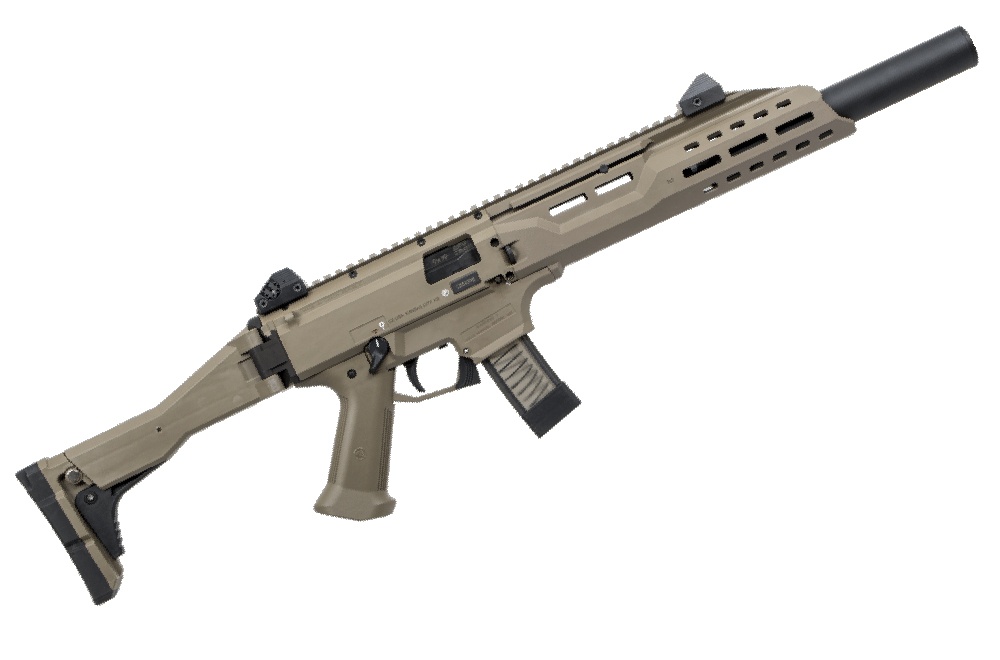
The original Skorpion had a dark mystique about it, fostered by the full-auto’s birth behind the Iron Curtain during the height of the Cold War. This intrigue most certainly added to the clamor when its namesake reentered the market a few years back. And while it might not be a bullet hose like its predecessors, the carbine variation — the Scorpion Evo 3 S1 — still has plenty of sting.
Combined with lightweight, yet durable polymer receivers and stock, the Scorpion provides plenty of firepower from a highly manageable platform. And chambered in 9mm, CZ‘s carbine is simple to feed and has more than enough power to handle most situations. It’s an ideal home defense gun, and given its folding stock, can also hit the road with ease.
The 6-pound blowback semi-automatic also comes with all the features shooters look for in modern carbines as well: M-LOK slotted handguard, ambidextrous controls and capacity to spare (20- and 30-round magazines available).
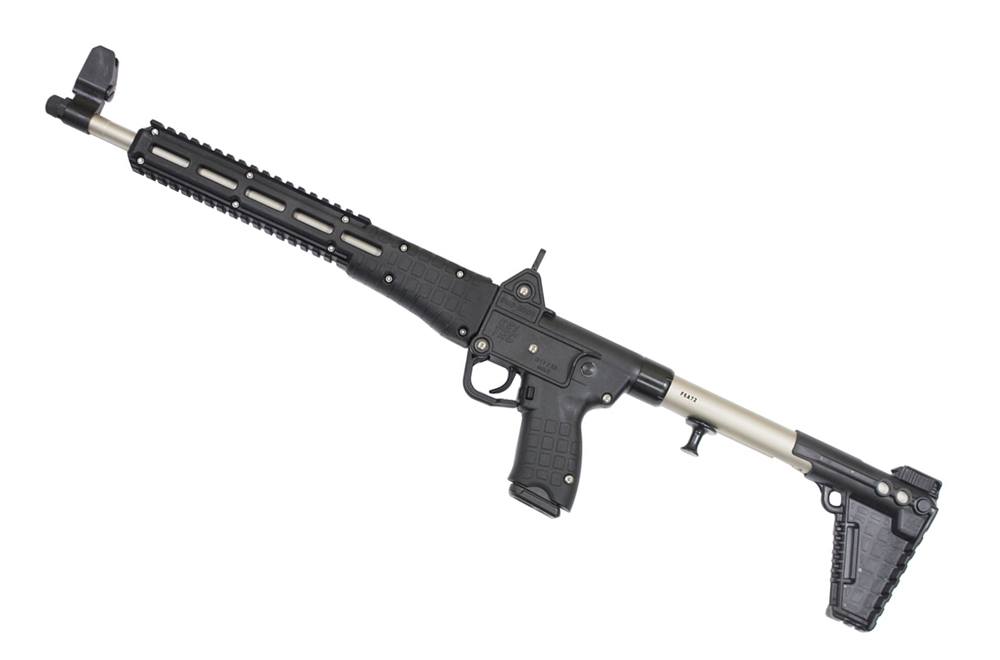
Kel-Tec SUB-2000
Photo: Kel-Tec
Kel-Tec might not have set out to create the ideal backpack gun, but that’s exactly what it did with the SUB-2000. The spindly pistol-caliber carbine wins top marks for its compactness, due in large-part to its unique design. Unlike anything else on the market presently, the gun folds in on itself through a hinge at the fore of the receiver into a neat 16-inch package. And it deploys in seconds through the push of a button.
At around 4 pounds, the SUB-2000 — now in its second generation — is light to boot. This is thanks to the extensive use of polymers (fiberglass-filled nylon) of which the blowback semi-automatic is composed. Available in 9mm and .40 S&W, the carbine is also easily paired with a pistol, given Kel-Tec offers magazine compatibility with Smith & Wesson, SIG Sauer, Beretta and Glock.
Despite its Spartan appearance, the pistol-caliber carbine isn’t short on features: fully adjustable aperture rear sight, plenty of rail real estate, adjustable buttstock and sling mounts.
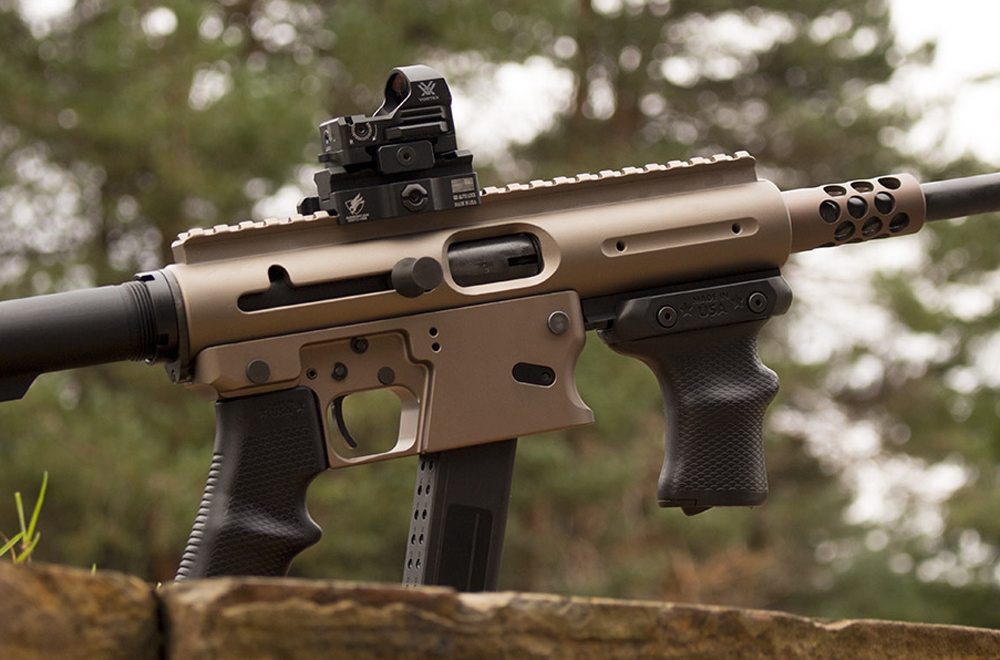
Aero Survival Rifle
Photo: TNW Firearms
Surviving is about adapting to circumstances and TNW Firearms has come up with the perfect tool for the job. The Aero Survival Rifle is among the most flexible pistol-caliber carbines on the market today, and not only in configuration.
Its quick-change barrels open a host of caliber options, including many that are rare in the carbine world: .22LR, 9mm, .45 ACP, .40 S&W, 10mm and .357 SIG. And the Oregon gunmaker has .22 WMR and .17 HMR conversion kits on the way for the blowback semi-automatic.
Adding to the Aero’s versatility is the fact it is a takedown rifle, which makes it a perfect insurance policy in a truck, boat or backcountry. This is especially true if mated with the specially designed case TNW cooked up to stow the carbine and a couple different barrels, to match caliber to application.
The 5.5-pound survival rifles — centerfire models at least — are compatible with Glock magazines, a good thing given their availability and capacity options. Ruggedly built, the carbine boasts milled aircraft-grade aluminum receivers.
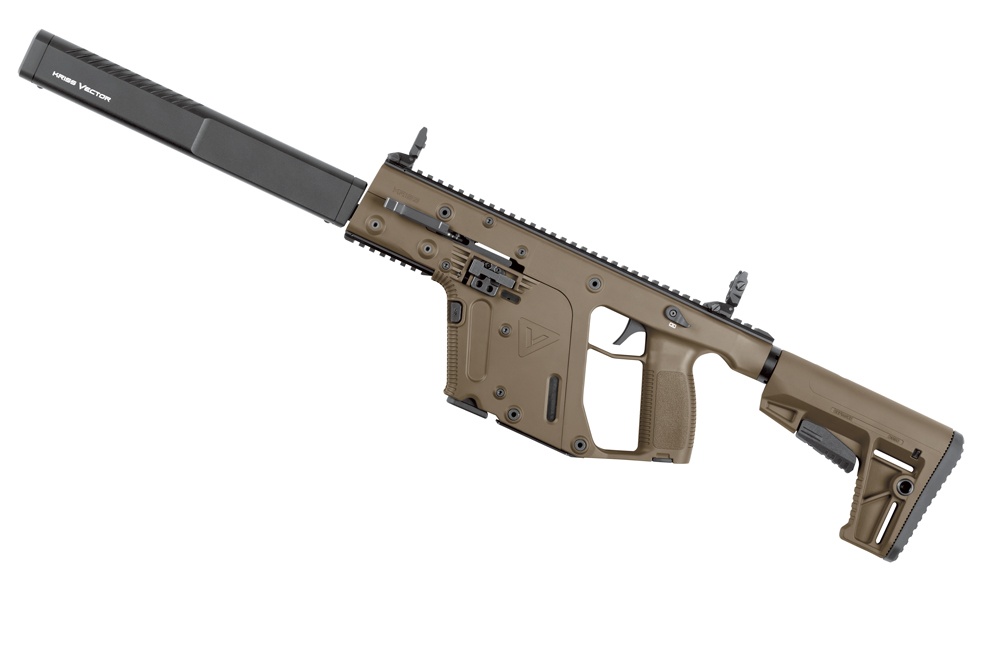
Kriss Vector
Photo: Kriss
The pistol-caliber carbine world brims with oddballs. The Kriss Vector definitely falls in this category, but there is method in this engineering madness. The carbine’s one-of-a-kind designed allows it to jump between calibers with ease and provides a more manageable firearm.
To the former point, the rather pronounced fore contains the action and the barrel and does not require tools for removal. In turn, the assembly is quickly removed and replaced with another fore in one of five calibers: 9mm, .45 ACP, 10mm, .40 S&W and .357 SIG.
To the latter point, the low bore axis and the carbine’s unique toggle action work in concert to mitigate recoil by re-vectoring the energy down and away from the shoulder. This makes it a particularly fast and accurate shooter, in an already very manageable class of firearms.
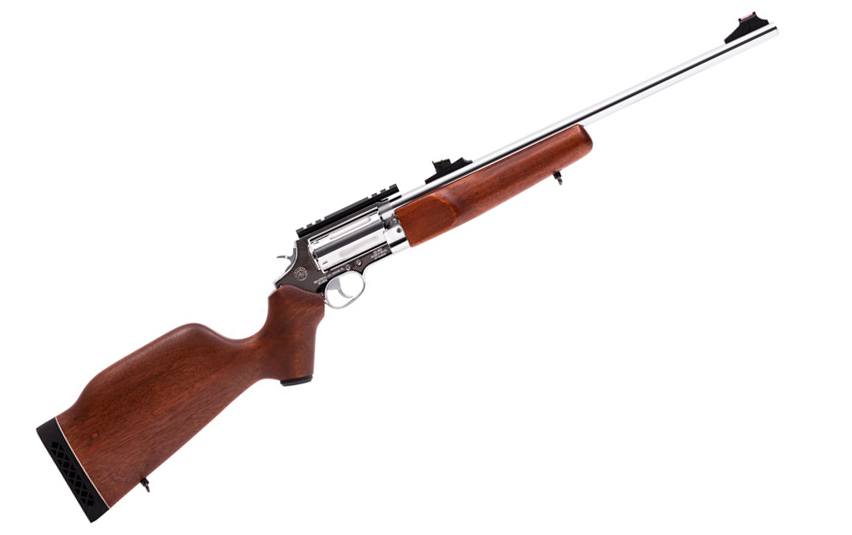
Rossi Circuit Judge
Photo: Rossi USA
Taurus made waves a number of years ago with its .45 Colt/.410 Gauge Judge. But Rossi’s take on the revolver moves the concept to a whole new level, perhaps one that is more useful.
The Italian gunmaker’s Circuit Judge offers the same ammunition flexibility as the revolver, but with an 18.5-inch barrel delivers the bore to make the rounds count. Honestly, small to medium game and fowl should be on the alert if the Circuit Judge holds court. Perhaps only a drillings gun would be more versatile afield. The five-shot cylinder is also a nice touch, endowing the carbine, not only with uniqueness in the modern era, but with the reliability and simplicity of a revolver.
Really, the sky could be the limit with the 5-pound carbine’s applications. Field gun, training firearm for youths or survival firearm are all well within its wheelhouse.
MechTech Conversion
Photo: MechTech
The allure of the pistol-caliber carbine for many is matching their long-gun’s ammo to their pistol’s. But what if that concept could be carried a step further? It can and MechTech has done it, practically marrying pistol and carbine in one platform in what it calls a conversion unit.
The unit is basically an upper receiver, barrel and stock that mates with a pistol’s frame. The switch over is simple, does not require tools and adds a lot of flexibility to a single firearm. A sub-compact “Baby Glock” can be configured into a 16-inch barreled blowback carbine in a matter of minutes.
Additionally, MechTech’s conversion unit is available for a wide spectrum of calibers — 9mm, .40 S&W, .45 ACP, 10mm — and makes — Glock, Springfield XD and 1911s. MechTech also offers some interesting configurations in their units — including one that is somewhat reminiscent of the M3 Grease Gun.
Maybe best of all, the unit is completely paperwork free because it consists of an upper receiver and barrel and is not considered a firearm in and of itself. And yes, it’s all legal — even the all-mighty BATF has said so in extensive legalese.
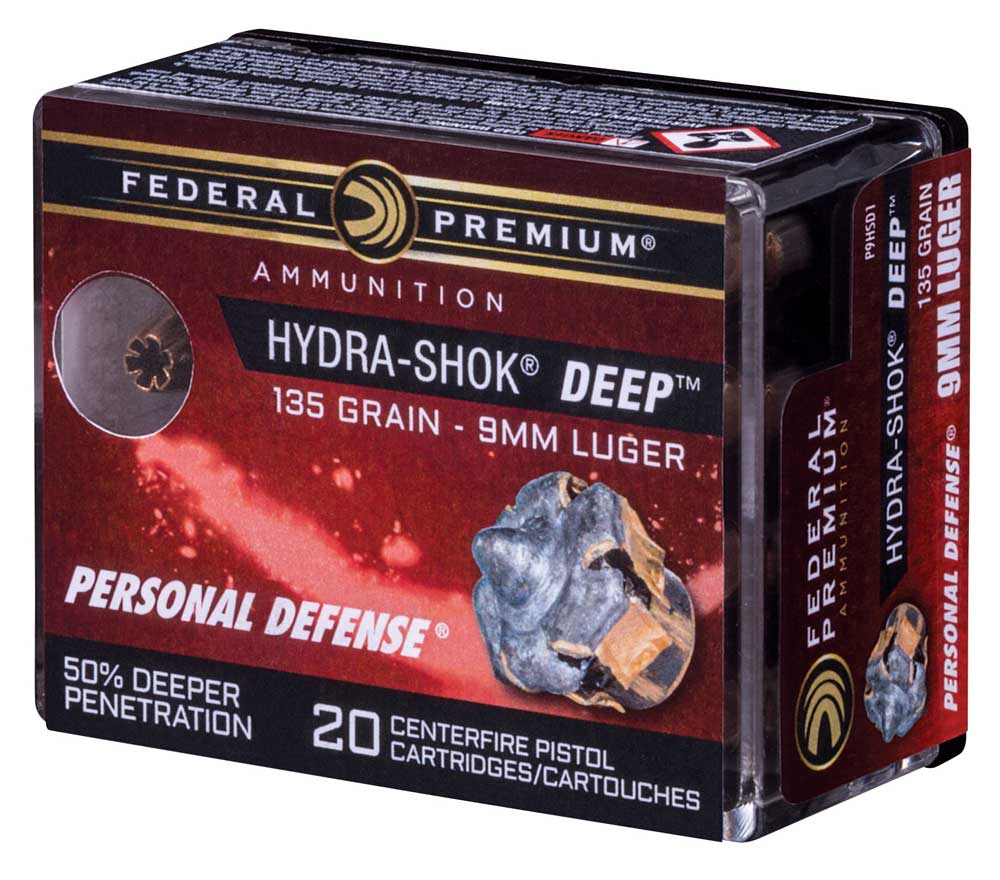
Hydra-Shok Deep provides a defensive round with greater penetration and improved terminal performance.
What Hydra-Shok Deep brings to the table:
The improved core allows for 50-percent greater penetration over the original.
In testing on bare ballistic gelatin, the round penetrates 15 inches.
The round will be loaded with optimized Federal components.
This includes a flash-reducing propellent.
In 1989, the FBI called for a bullet with improved terminal ballistics compared to the old cup-and-core projectiles in use. Federal Premium Ammunition‘s response was the Hydra-Shok.
Since then, the notched jacket, non-bonded lead core, center-post hollow-point has been among the top defensive rounds used by both law enforcement and armed citizens alike. And for 2018, Federal is shooting to make its legendary defensive round even better.
Hydra-Shok Deep is designed to deliver improved penetration and reliability through design modifications to the original projectile. In particular, the core design has been tweaked to provide 50-percent deeper penetration than the original Hydra-Shok bullets. Additionally, the center post is more robust, creating a bullet that retains more of its structural integrity through barriers.
What this adds up to in Federal’s testing is a round that penetrates 15 inches in bare ballistic gelatin, the optimal depth according to FBI standards.
“Hydra-Shok Deep offers consumers a round that results in consistent, reliable performance through typical defensive barriers and penetrates to the depth deemed optimum by the leading law-enforcement agency in the United States,” Federal’s director and chief engineer of handgun ammunition Larry Head said in a press release.
The re-engineering in the Hyrdra-Shok Deep also keeps the projectile up to current professional standards.
“FBI performance requirements and protocol testing have evolved over time,” said Head. “One of the most notable changes has been the desire for deeper-penetrating rounds and more consistency in penetration depths through all intermediate barriers.”
Hyrdra-Shok Deep is slated for release at the Jan. 23-26, 2018 SHOT Show in Las Vegas. Initially it will be offered in a 135-grain 9mm, but other loads for the most popular self-defense calibers are on the horizon. The rounds will feature optimized projectiles and components as well, including premium propellants that ensure optimum performance and reduce muzzle flash.
H&H Precision Rifles has more than made a name for itself as one of the nation’s foremost maker of, well, precision rifles. From exacting tactical rifles customizable down to the magazine to chassis numbers that group in fractions of an inch, H&H Precision Rifles are instruments born of rigor and discipline. With that level of engineering at their fingertips, the company wants to make certain its shooters get the most out of their guns.
In turn, H&H invites every person who buys their rifles to a special weekend class each year to teach them all about their firearms and shooting in general. Modern Shooter got a seat (or range lane) in this year’s class and discovered first hand what these incredible H&H Precision Rifles are capable of, which is plenty. Along the way, we got to meet some of personalities that have made the company a success in the long-range shooting world and with marksmen whose standard is a ¼ MOA group. But, as the above video shows, even with precise tools and steely men and women behind them, there will be the occasional flyer.
Be sure to tune in on Mondays at 12 p.m. EST, Tuesdays at 11:30 a.m. EST and Fridays at 10 p.m. EST on the Pursuit Channel for the newest Modern Shooter episodes and keep your fingers on the pulse of the gun world.
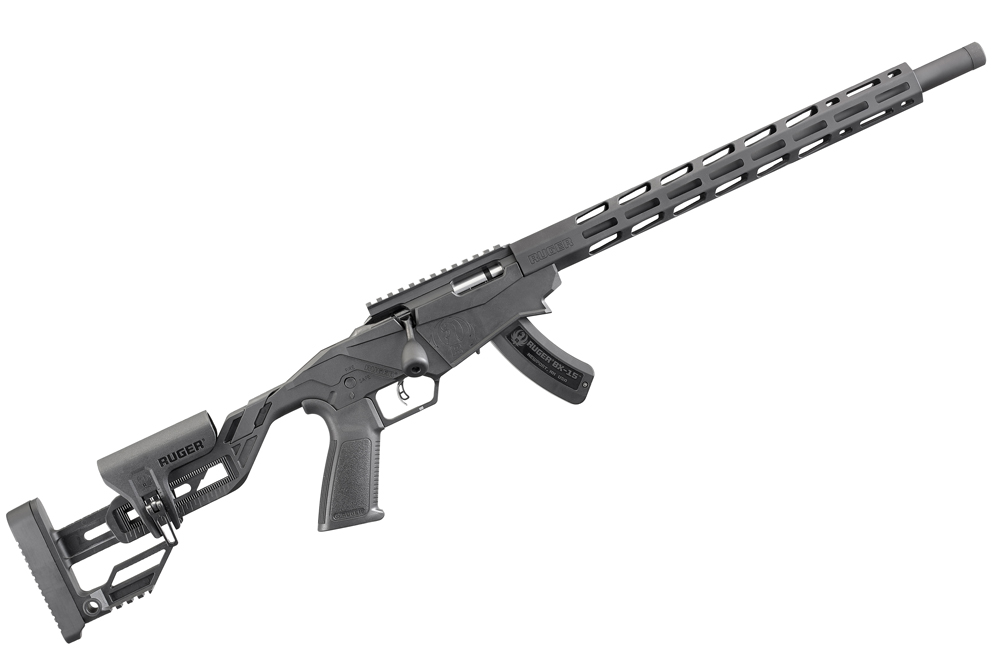
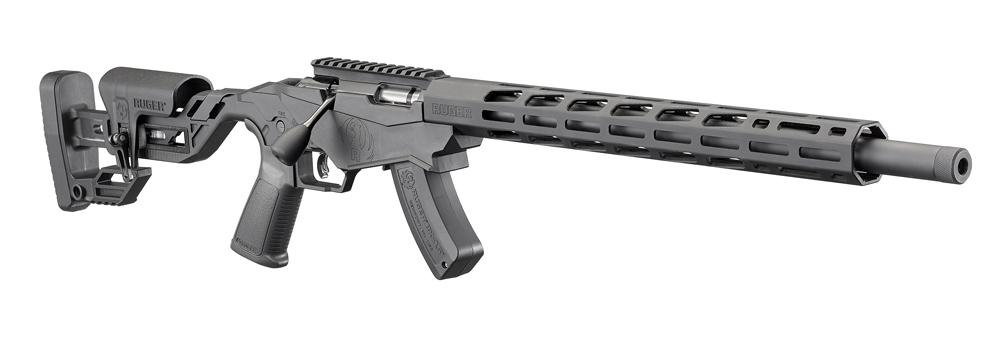
The Precision Rimfire puts a chassis rifle in reach of more shooters and looks to be a slick training tool.
What makes the Precision Rimfire tick:
The Precision Rimfire can adjust to a 3-inch bolt throw.
It has a glass-filled nylon chassis.
This feature trims the rifle’s weight to 6.8 pounds.
The Precision Rimfire has an 18-inch barrel, threaded for a muzzle device.
And it’s outfitted with the Ruger Marksman Adjustable Trigger.
The rifle has an MSRP of $529.
The concept of .22 LR versions of full-sized firearms has played out well in many segments of the shooting market. Consider concealed carry. The plinker models of many of today’s most popular defensive guns have become valuable diagnostic and training tools, not to mention they make practice much easier on the pocketbook.
But does this notion hold over to the arena of precision shooting? Ruger is betting it does with the introduction of a rimfire variant of its popular chassis rifle. And while the Precision Rimfire might not have the pep to place rounds dead on target 1,000 yards out, it certainly looks more than capable of stitching together tight groups within the .22 LR’s range.
Interestingly, Ruger seems to have the idea the rifle will fill a similar role the supplementary .22s have for other firearms — training. Not only has the New Hampshire gunmaker shot for like results to its Ruger Precision Rifle downrange, but also experience.
This is blatantly obvious in one interesting aspect of the Precision Rimfire — its bolt throw. Removing a spring clip, the rifle’s throw goes from a typical rimfire’s 1½-inch throw to 3 inches — the same as the centerfire Precision rifle’s. This emulates much of the operation of the larger gun for a practice routine and, as Ruger’s press release points out, is a feature that reduces the chance of short stroking the bolt in competition.
While extremely similar in design to the centerfire rifles, the Precision Rimfire is scaled down and tweaked for the caliber. But where it’s changed in form, it still retains the function of the Precision Rifle.
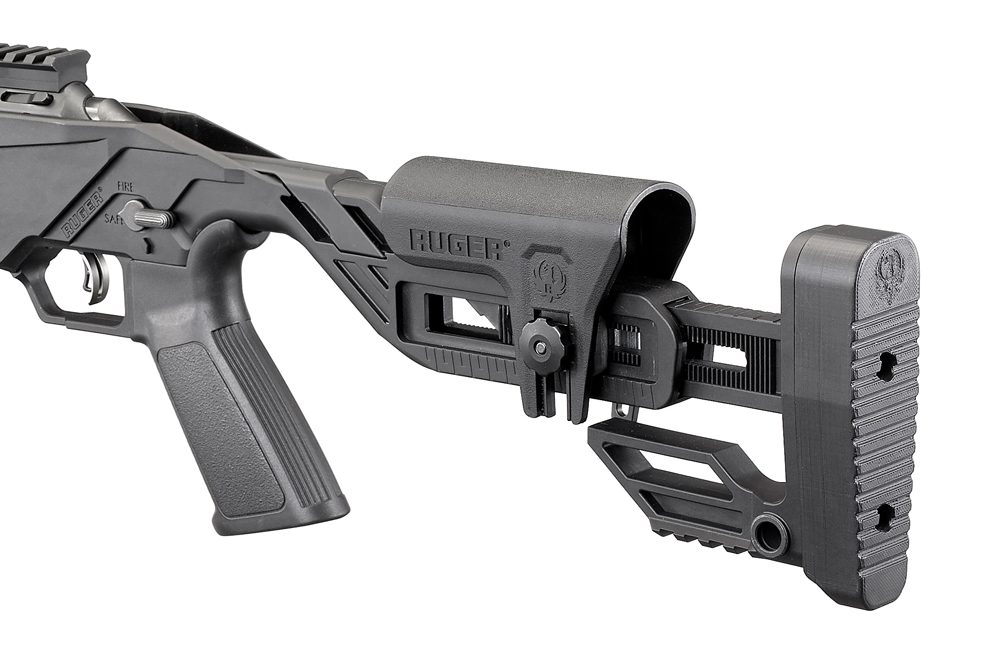
Perhaps the Precision Rimfire’s biggest break from its bigger brother is the heart of the system — the chassis. Freed from the material constraints required to fire a high-powered centerfire cartridge, Ruger has opted for glass-filled molded nylon for this key part of the rifle. The polymer, however, should still provide the stiffness, strength and stability to make it a highly accurate rifle.
Additionally, the chassis makes the rifle featherweight. At only 6.8 pounds, the Precision Rimfire isn’t just bound to target practice and competition, it’s a legitimate field gun. On top of that, its 18-inch barrel (1/2-8 muzzle thread pattern) has the ability to ensure the round itself lives up to its full ballistic potential.
The rifle features a completely adjustable buttstock with 3.5 inches of play in length of pull and ample amendment in the cheek rest. It has a Ruger Marksman Adjustable Trigger, which is user adjustable between 2.25 to 5 pounds. And it’s outfitted with a 15-inch hard black anodized aluminum handguard featuring M-LOK slots on all four sides.
QD pockets, an integral Picatinny rail (30 MOA of elevation), an AR-pattern grip and other small but important features give the all the qualities sought after in a precision rifle on a rimfire platform.
The Precision Rimfire ships with one 15-round BX-15 magazine, but it is compatible with 10/22 magazines. This adds a nice bit of flexibility to the rifle, especially when it comes to aftermarket magazines.
The price of the rifle is also a reason to get excited about what Ruger has brought to the table. With an MSRP of $529, it definitely resides in a tonier neighborhood than most rimfires. However, as a training tool or the entryway to a chassis rifle, the Precision Rimfire could be priced just right for a lot of shooters.
Specifications:
Ruger Precision Rimfire Caliber: .22 LR Stock: Quick-Fit Precision Rimfire Adjustable Capacity: 15 Barrel Length: 18 in. Overall Length: 35.13-38.63 in. Grip: AR-Pattern Handguard: Free-Float M-LOK Aluminum Handguard Finish Hard Black Anodized Thread Pattern: 1/2-28 Length of Pull: 12-15.50 in. Sights: None-Rail Installed Barrel: Threaded Cold Hammer-Forged 4140 Alloy Steel Weight: 6.8 lbs. Twist: 1:16″ RH Grooves: 6 Suggested Retail: $529
A new wind blowing across the sporting rifle landscape is delivering a dominating combination of affordability and accuracy — the rise of the fat-bolt rifle.
What are the fat-bolt rifle’s benefits compared to traditional twin-lug bolt guns?
Bolt thrust or axial forces are more evenly distributed to three points than two.
Components require less machining, so tolerances between bolt and raceway can be much closer.
Tri-lug actions require only 60 or so degrees of bolt rotation.
This makes them faster to operate than standard 90-degree dual-lug actions.
Most fat-bolt rifles are less expensive than standard dual-lug bolt actions.
Unless you’ve been living on another planet, you probably know that the age of the twin lug ’98 Mauser-type bolt-action rifle is history. Now, there is no question that the twin-lug action has had a helluva run these past 120 years — we’ve only to look at the popularity of the Remington 700, Savage 100 series, Winchester Model 70, Ruger M77 or Mossberg Patriot to prove it.
But if starting with a clean sheet of paper, I’m saying that no established or start-up rifle manufacturer is likely to come out with a Mauser-type action because there are simply better and more efficient ways to produce a rifle. As always, there are and will be exceptions — Barrett’s recent introduction of its Fieldcraft rifle is a good example, it being a Remington 700 clone. But like I said, generally speaking, the days of the twin-lug action are over when it comes to new rifle introductions.
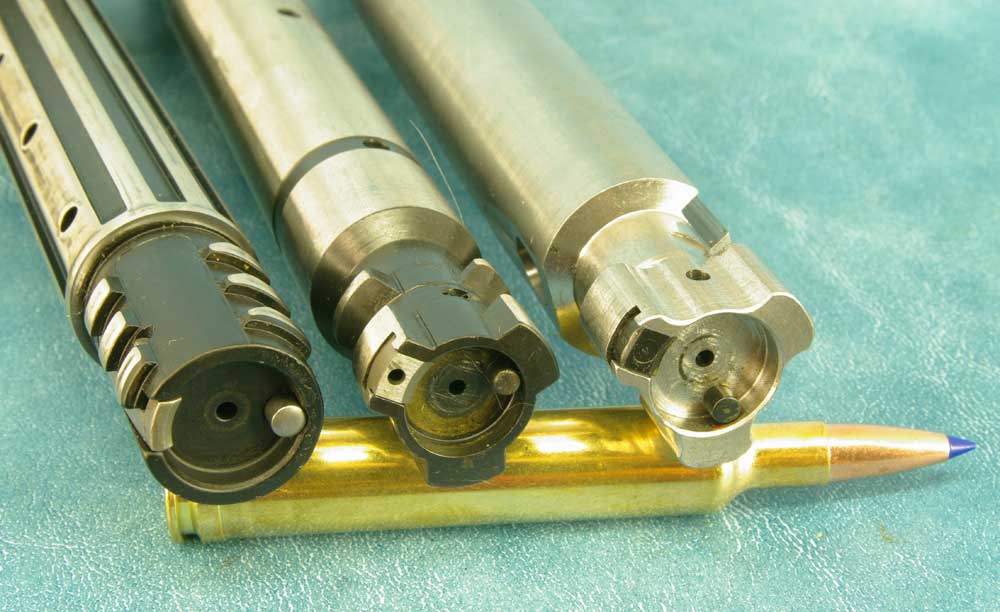
From left to right is the 9-lug Weatherby, the 6-lug Roessler Titan 6 and the 3-lug Ruger American, tri-lug actions all because the lugs are all oriented on 120-degree centers rather than being twin-opposed as on a Mauser-type action.
So what growing trend is it that’s relegating the twin-lug bolt action to the dustbin of history? That’s easy; it’s the tri-lug full-diameter action as exemplified by the Ruger American and Winchester XPR, to name just two of a growing family of turnbolts sharing the same basic design characteristic.
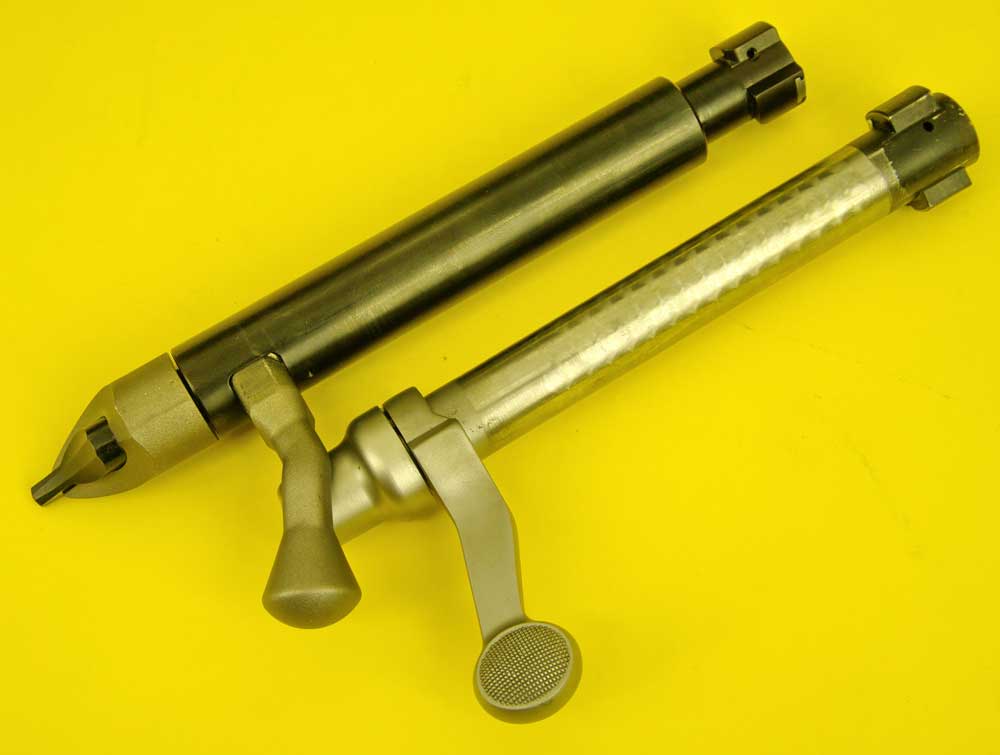
I believe it was me who coined the term “fat bolt” in an article I wrote nearly 50 years ago describing the Weatherby Mark V Magnum, for it was Weatherby who, in 1957, introduced the concept. In a nutshell, the defining characteristic of the fat-bolt tri-lug action is a bolt body that’s large enough in diameter that the three (or multiples of three) locking lugs oriented on 120-degree centers can be formed by removing metal at the head of the bolt.
In other words, the locking lugs do not protrude beyond the outside diameter of the bolt body behind. There can be three rows of three, as in the case of the nine-lug Weatherby, two rows of three, as in the case of the six-lug Sauer 202 and Roessler Titan 6, or just a single row of three lugs as employed by the Ruger American and Winchester XPR. In every case, the lugs are of less depth than on a twin-lug action, but the shear surfaces are greater.
In addition to the five rifles already mentioned — the Browning A-Bolt III, Thompson/Center’s Venture and Dimension, the German Sauer 100 and Steyr SM-12, the Austrian Roessler Titan 3 and 6, and the Australian Lithgow — all comprise the 13-member fat-bolt tri-lug family. And I may have missed a few.
Having no protruding locking lugs for which raceways must be broached or otherwise machined into the inner walls of the receiver, only a round hole is needed to accommodate the bolt. Inherent, however, in all fat-bolt actions is that the bolt stop/release also serves as the bolt guide by engaging a lengthwise slot on the left side of the bolt body.
Without this arrangement, if the bolt stop is disengaged and the bolt out of battery, it would be free to rotate 360 degrees if it were not for the bolt handle hitting either side of the stock. It’s an academic point but one that one must be aware of.
The basic difference between a fat-bolt tri-lug and a Mauser-type twin lug action can be seen here in this pic of a T-C Venture bolt and that of a Remington 700.
Machining Efficiency Well, for one thing, bolt thrust or axial forces are more evenly distributed to three points than two; it better ensures a bolt face that’s square with the barrel bore. Also, there’s less machining of the components required, so the tolerances between the bolt and its raceway within the receiver can be much closer than for a twin-lug action with protruding locking lugs. This translates into smoother bolt glide and less lateral play in the bolt when fully withdrawn against the bolt stop.
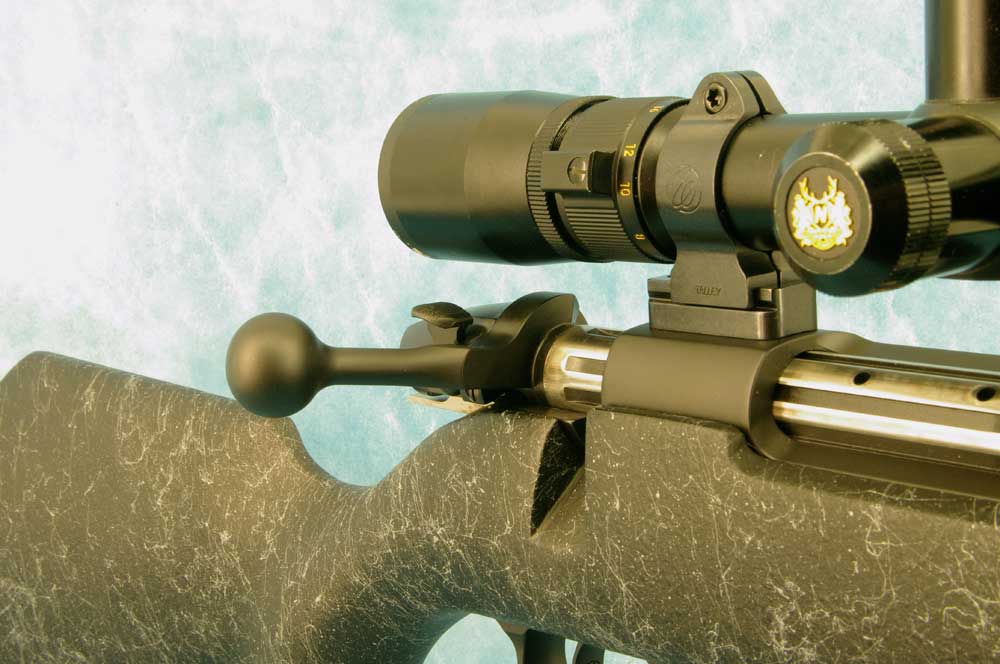
All tri-lug actions have shorter bolt rotations which leaves more clearance between the bolt handle and the ocular bell of a scope. They’re faster to cycle, too.
Quick Operation All tri-lug actions require only 60 or so degrees of bolt rotation (handle lift), as opposed to a twin-lug action which requires 90, so another advantage of falt-bolt rifles is that they are faster to cycle for a follow-up shot, and there’s more clearance for the hand as it slides past the scope’s ocular bell.
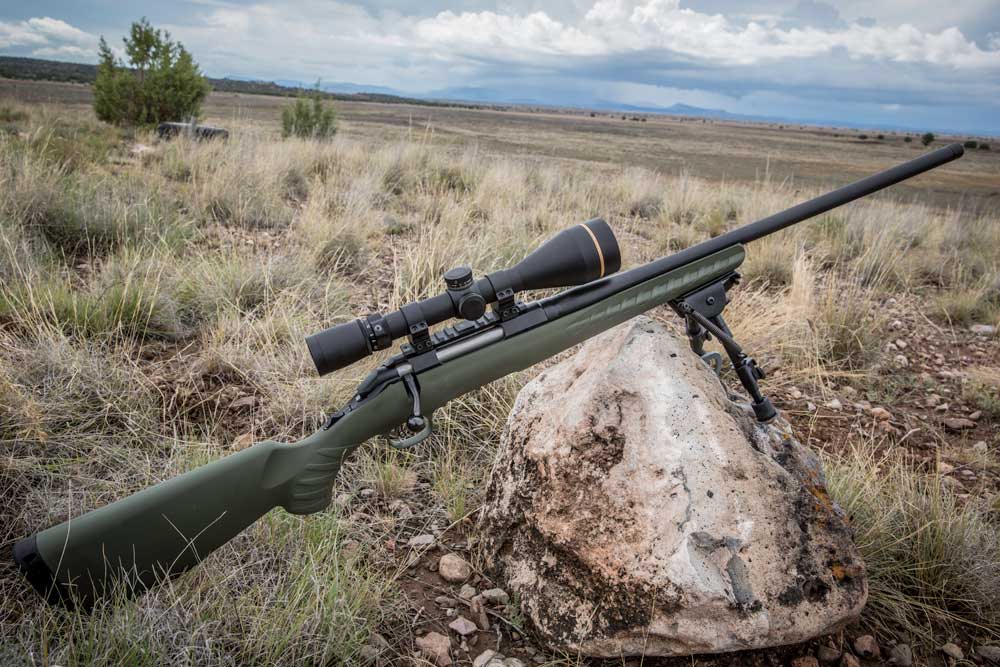
The Ruger American series of rifles is one of the most affordable out there right now — mostly due to its three-lug design and injection-molded stock. Photo by Eric Conn.
Minimized Price Tag Bottom line: When mated to inexpensive injection-molded stocks, the typical fat-bolt rifle like the Ruger American and Winchester XPR can be produced for far less than their pricier siblings, the Hawkeye and the Model 70, respectively.
How much less? Consider: The Ruger M77 Hawkeye Standard rifle has an MSRP of $979, while the American goes for $489! The Model 70 Sporter commands $1,049, while the XPR can be had for $549! I use Ruger and Winchester here as examples because they are the most typical and familiar manifestations of the fat-bolt genre in the American marketplace, but in all other cases the same price disparity exists if a given rifle maker has two distinct lines.
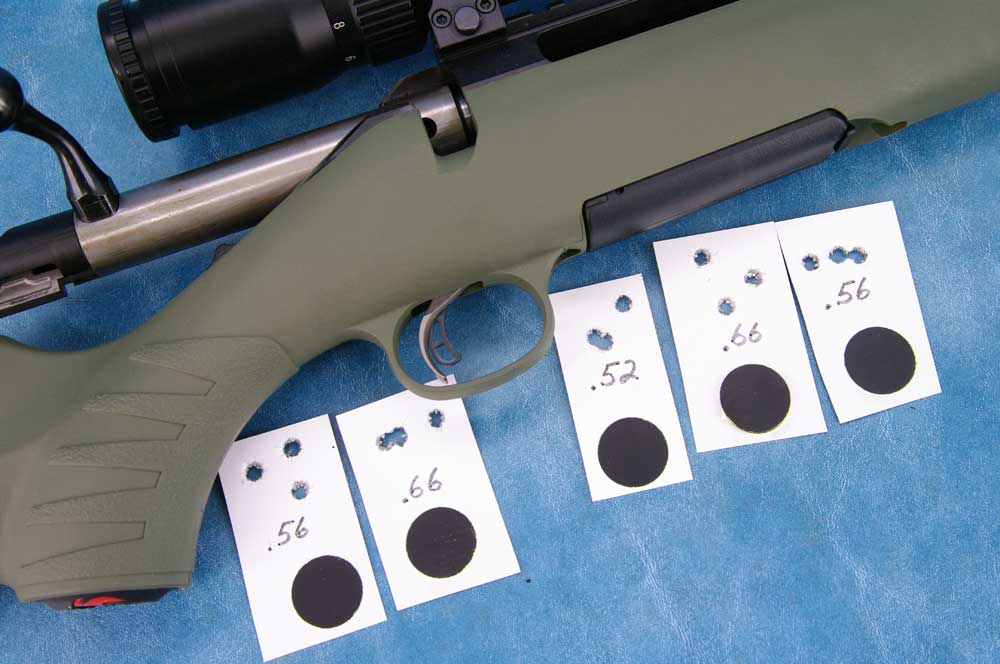
The economy of production makes the new generation of fat bolt rifles far more affordable without compromising performance. Indeed, this Ruger American in 6mm Creedmoor delivered these groups for Sundra using Hornady factory ammo.
Affordable Accuracy But there’s an even better aspect than the affordability of these guns, and it’s that they’re easily as accurate as their more expensive siblings, and in my experience having tested dozens of them, even more so. The only compromises are those of aesthetics. The degree of machining and polish on these $500 guns is a mite less than on rifles costing twice as much, but the growing number of owners obviously could not care less. Ditto for the injection-molded stock, which can be just as elegant of line and dimension as the most classic masterpiece handcrafted in French walnut.
The current Remington Model 700 SPS is a perfect example. Replace the existing rubberized grip panels with a classic checkering pattern (molded of course), and you have a stock that visually can rival that of any custom stockmaker. The only compromise is a tactile one: These stocks do lack the warmth and solid feel of real wood, but again, it’s a compromise value-conscious owners are more than willing to accept.
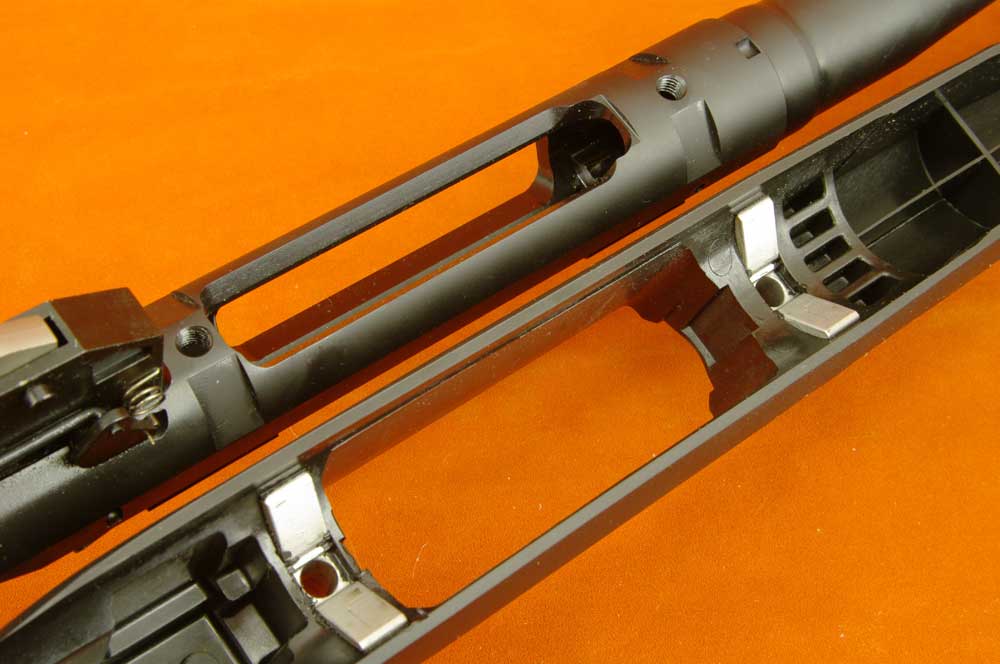
The Ruger American’s “Power Bedding” system is unique, providing consistent bedding that better maintains zero, yet is less expensive to produce.
Impeccable Bedding Consistency One advantage the injection-molded stock brings to the table is one of bedding consistency. Every stock is exactly like every other dimensionally, and in high-volume production, manufacturing tolerances can be held at much higher standards than with wood. Whatever bedding dynamic a manufacturer chooses to employ — pillar, partial or full barrel float, tip pressure, V-block … whatever — every stock is exactly the same.
One of the most innovative bedding systems is found in the Ruger American, where two massive steel V-Blocks are embedded into the stock fore and aft of the magazine mortise to cradle and center the receiver. What’s more, these V-blocks engage grooves milled into the underside of the receiver to double as recoil shoulders. It’s a system that guarantees a perfectly consistent bedding dynamic.
As to how well this system works, I recently tested a Ruger American Predator chambered in the new 6mm Creedmoor that, with factory ammunition, proved to be one of the most accurate sporter-weight rifles I’ve ever tested. Three-shot 100-yard groups with Hornady’s 108-grain ELD Match ammo were incredibly consistent, ranging from .52 to .66 inch, with a five-group average of .59 inch!
More simple variations of the Ruger’s “Power Bedding” as they call it, can be found in T/C’s Venture, the Finnish Tikka and Winchester’s XPR. All employ a steel plate embedded in the stock to mate with a groove on the underside of the receiver ring. It does the job of transferring recoil forces to the stock as well as any other system, and it’s far easier to produce than having a separate washer-type recoil plate a la Remington 700 and the like, or a receiver with an integral lug like on the Winchester Model 70.
Unitized polycarbonate magazines like this Ruger rotary reflects the new technology that is gradually replacing both blind and fixed box types.
Magazine Evolution Another trend we’re seeing is the ascendency of the detachable magazine over the traditional fixed box with hinged floorplate. What has evolved is the virtual one-piece polycarbonate magazine which weighs less than half of a sheet metal version; it can’t rust, it’s virtually indestructible, it has integral feed lips which can’t be bent, and a natural lubricity that makes cartridge feeding incredibly smooth and effortless. Tri-lug rifles have no monopoly on this trend, as there are many excellent examples out there, tri-lugs or otherwise.
The perennial gripes against a detachable magazine is that they can be lost, or due to heavy recoil, release and drop out of a rifle at the most inopportune time — like when you’re being charged by a wounded Cape buffalo! Over the course of my 50 years as a gun writer, I’ve encountered only one big-bore rifle whose floorplate opened during testing.
Today’s detachable magazines are designed so that inadvertent release is virtually impossible. And for sheer convenience, a detachable magazine makes it so much faster and convenient to empty. I swear that with a hinged floorplate, at least one cartridge will likely fall to the ground every time you try to empty the box with one hand. And with a blind magazine, each cartridge must be partially cycled to unload, which is a real pain when you’re hunting out of a vehicle and where the law requires the chamber and magazine be vacant.
A Lot More, For Far Less As I see it, there’s no question but that there’s a new wind blowing across the sporting rifle landscape — a wind that brings better, more advanced designs, a higher level of accuracy, and at prices within reach of more hunters and shooters than ever before. How can that be bad?
Editor’s Note: This article is an excerpt from the Winter 2017 issue of Gun Digest the Magazine.
Looking to go armed, but are stuck in the weeds as to what to arm yourself with? Here are 20 of the best concealed carry gun options that will keep you on the defensive.